Students read an informal email from a cousin in Argentina, focusing on letter conventions and extracting main ideas about family events.
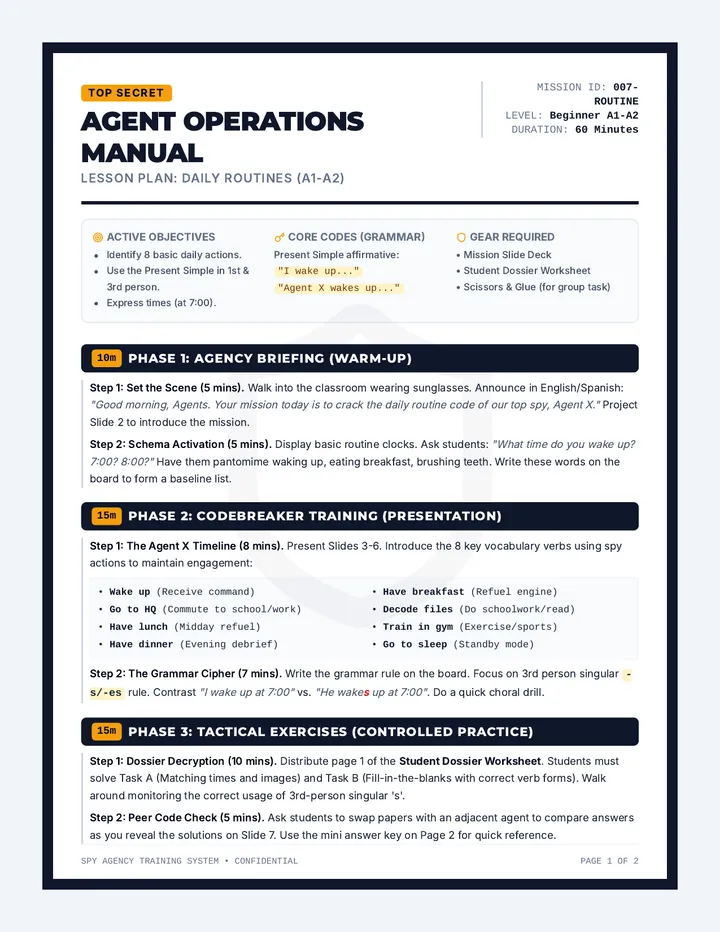
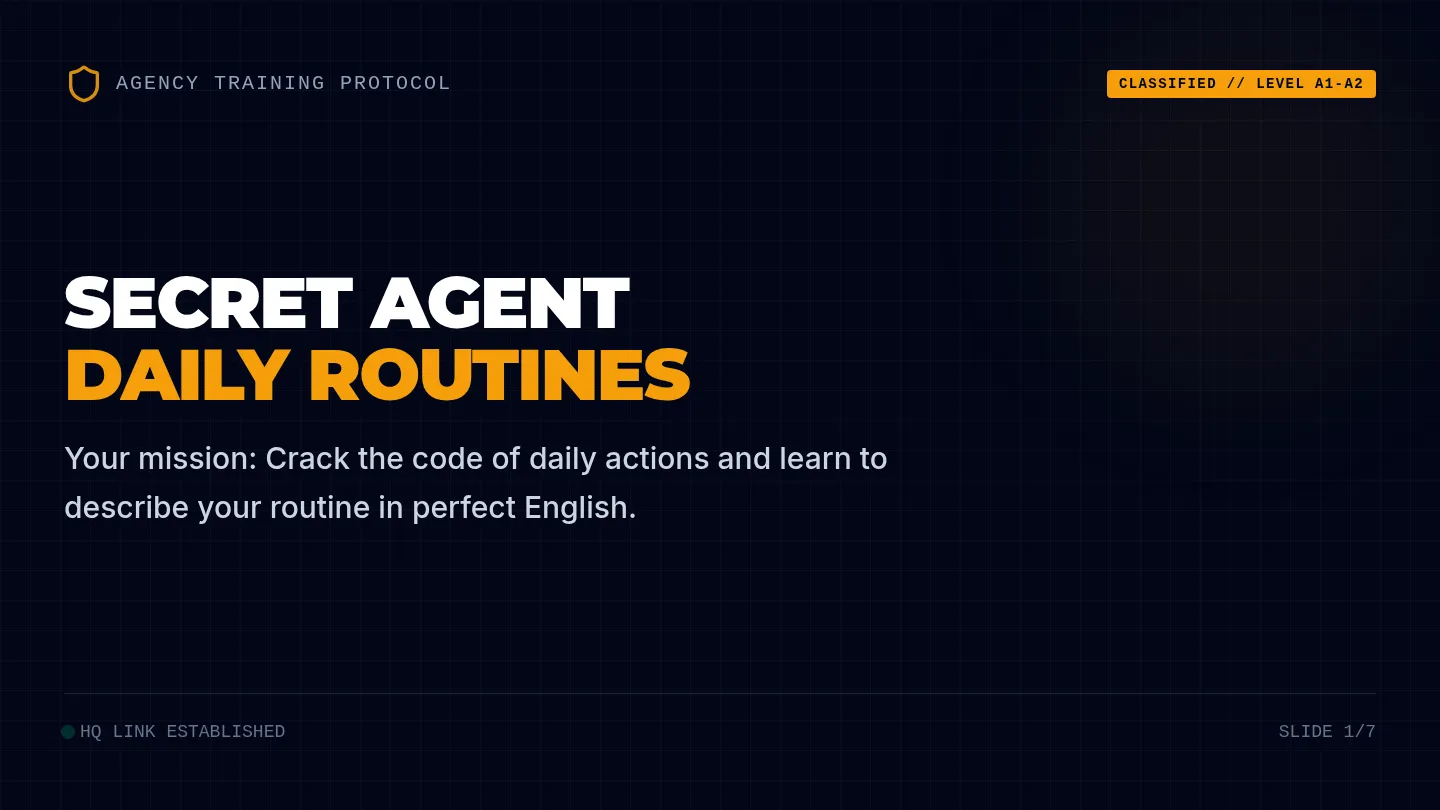
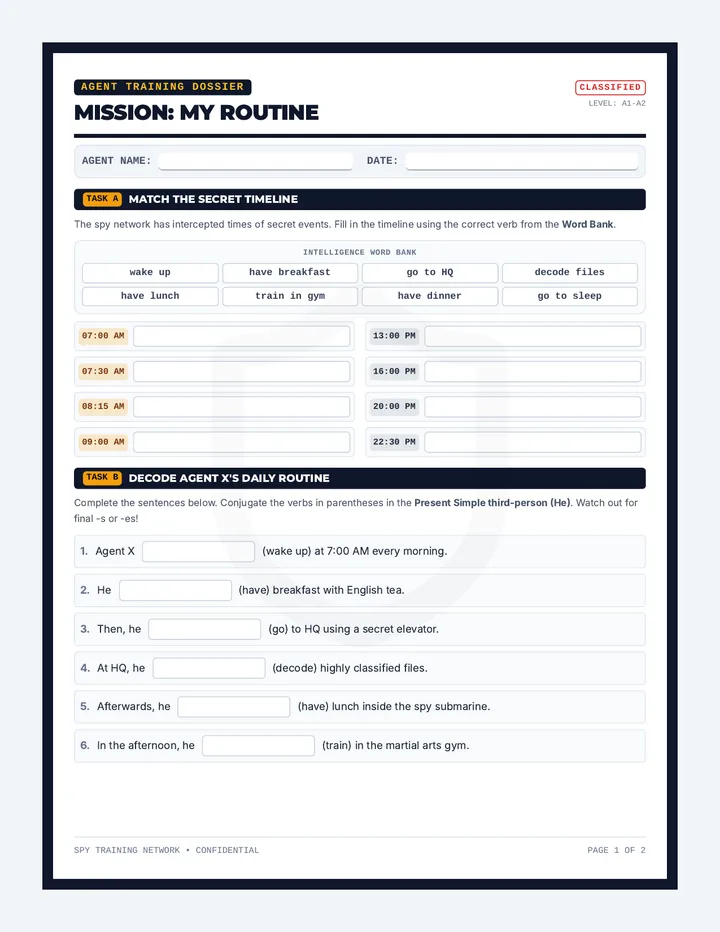
A high-engagement A1-A2 English lesson about daily routines using the exciting theme of secret agents. Includes a comprehensive step-by-step teacher lesson plan, an instructional slide deck, and printable student worksheets with daily routine practice.
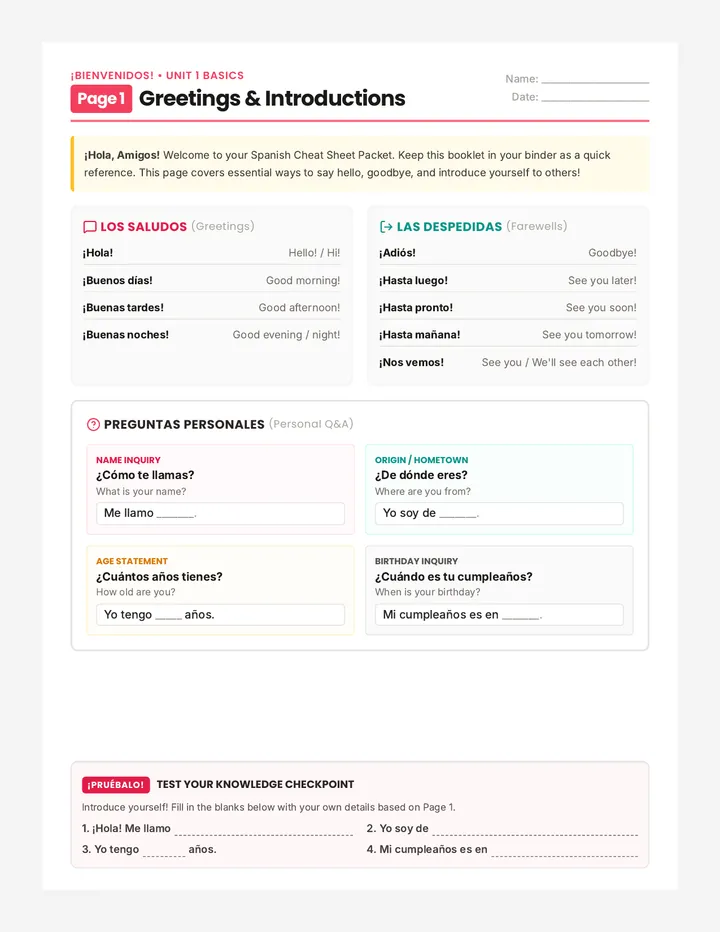
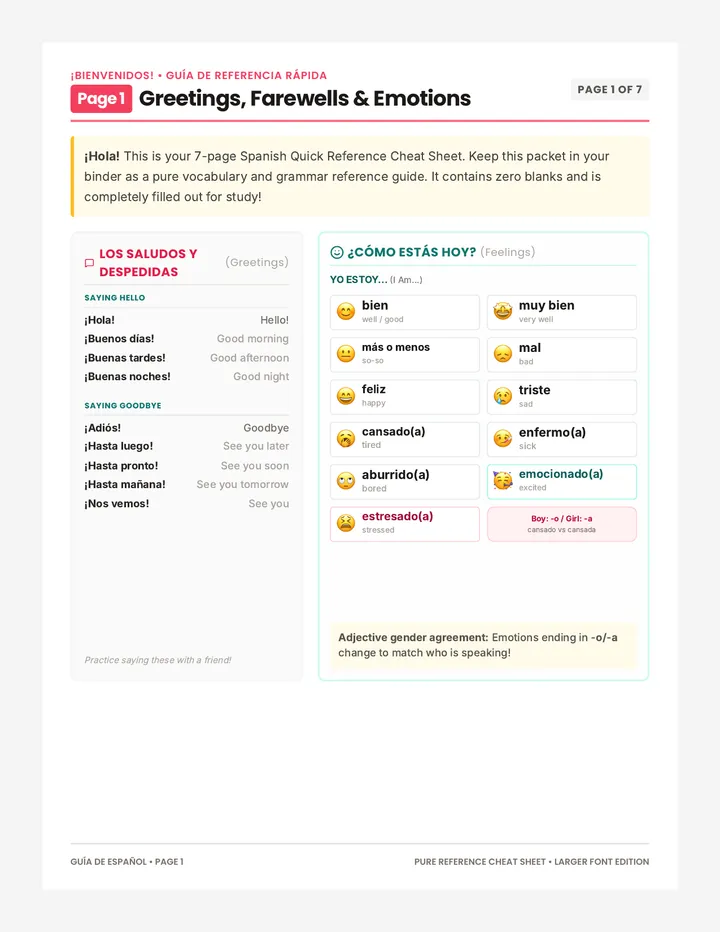
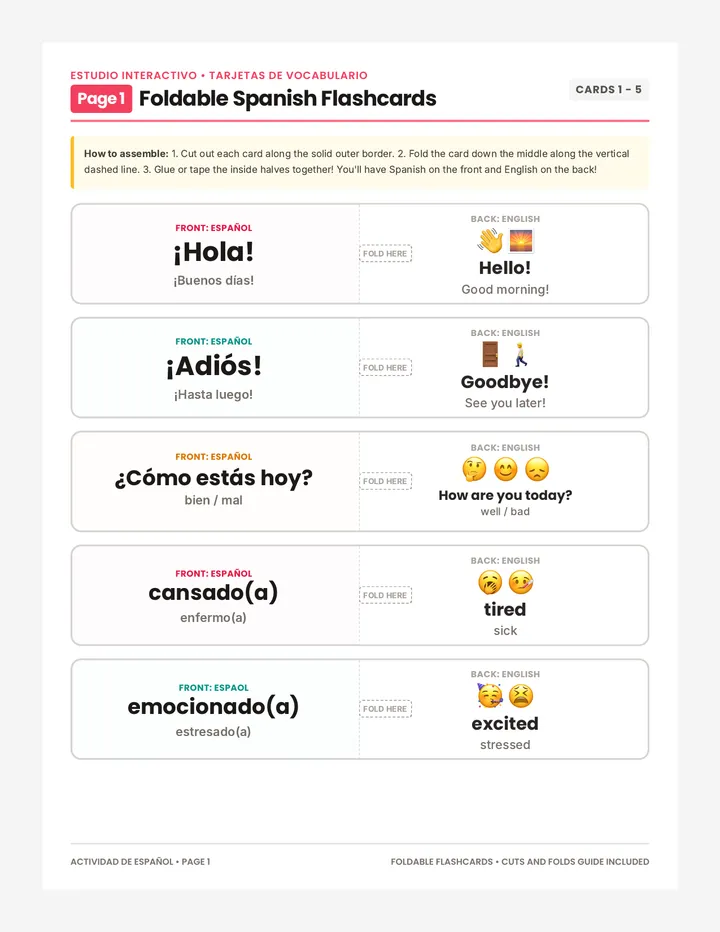
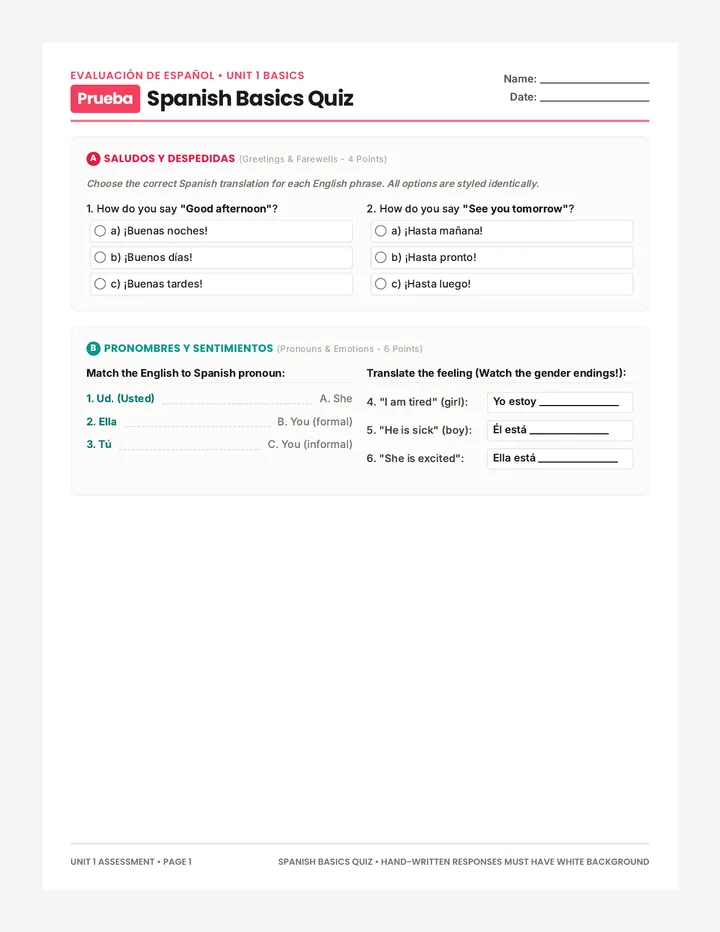
A comprehensive introductory Spanish unit designed for 5th-grade students. It covers greetings, personal information, emotions, grammar essentials (pronouns and articles), numbers, colors, the calendar, weather, and real-world conversations.
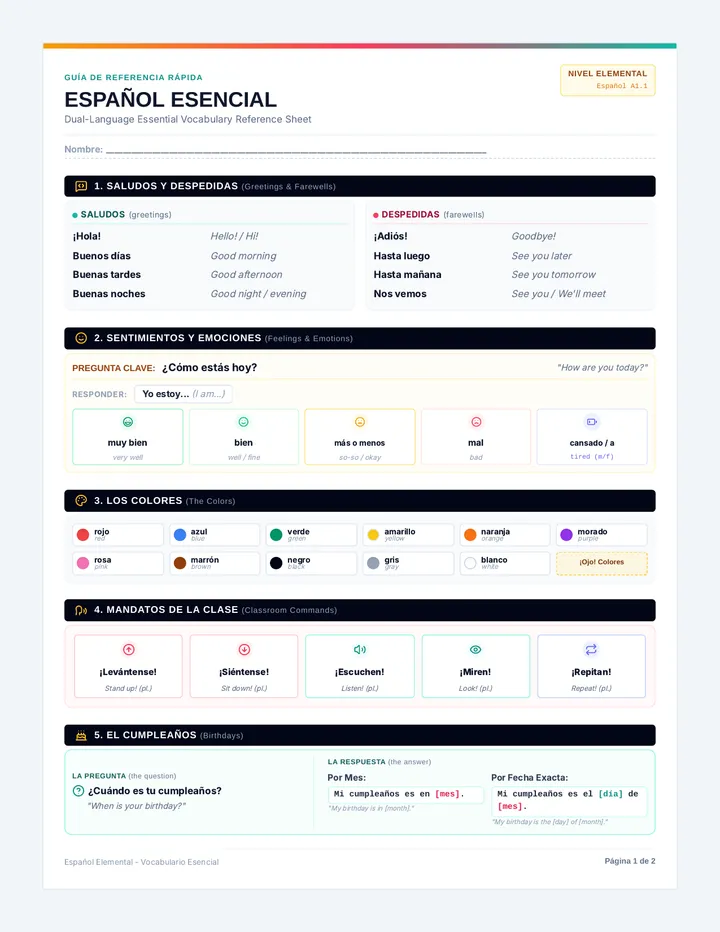
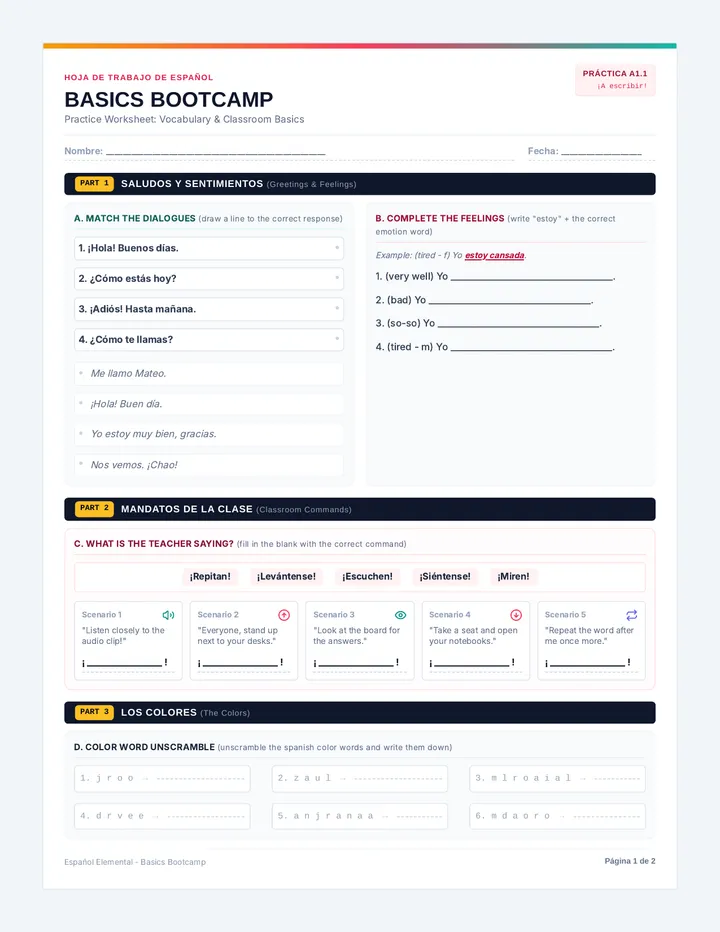
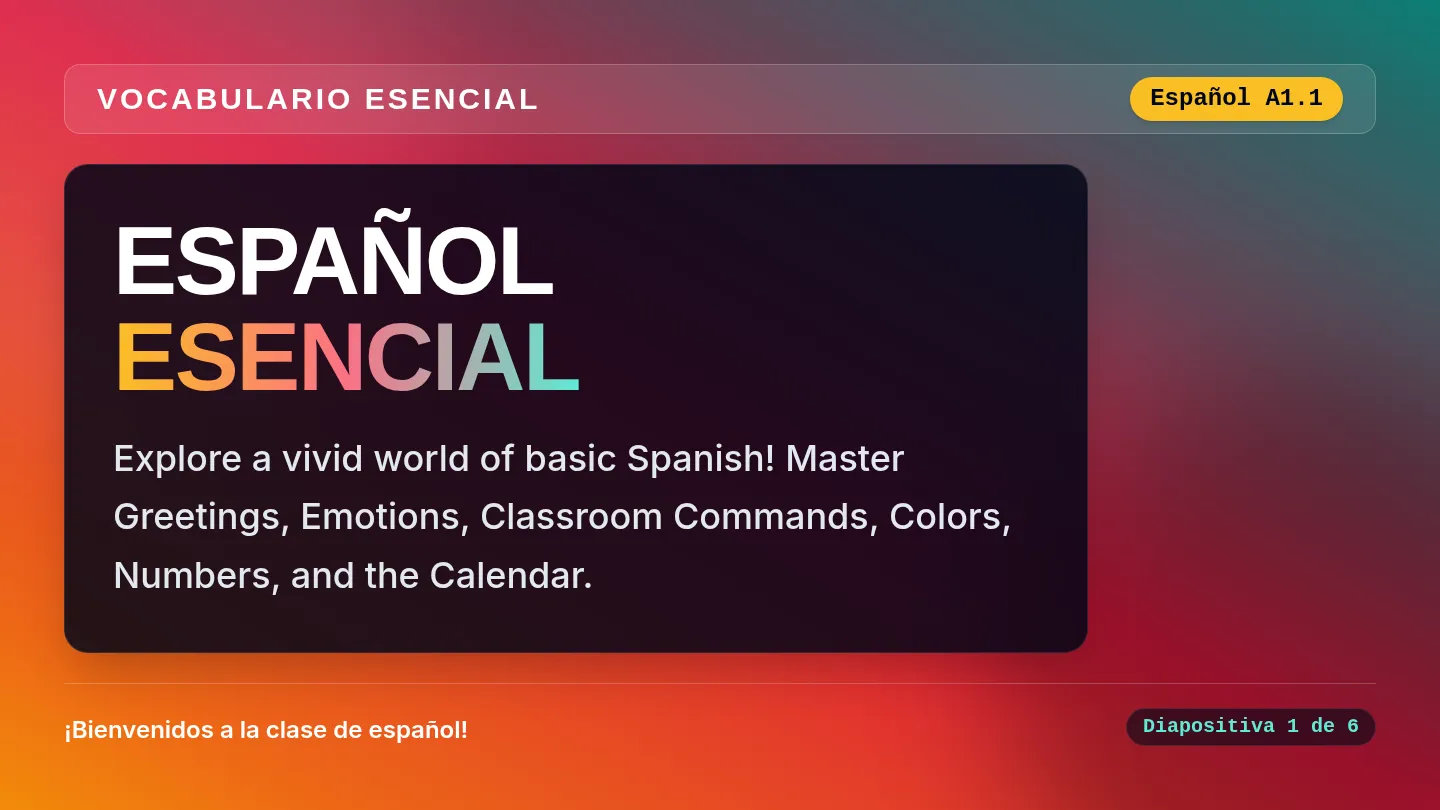
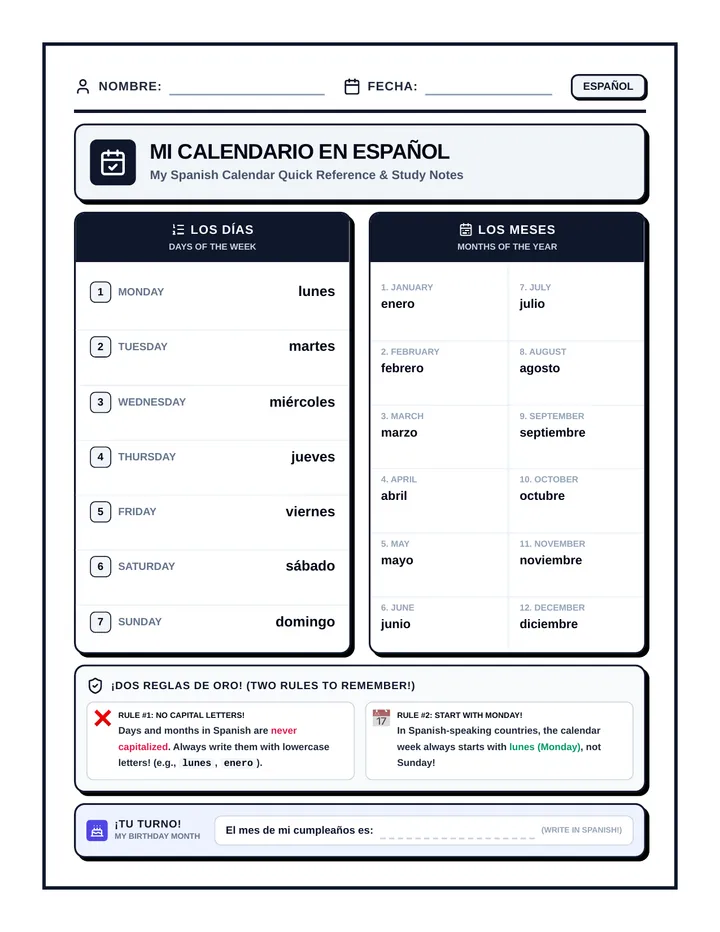
A foundational Spanish lesson covering basic conversational items: greetings, emotions, colors, numbers 0 to 40, and calendar systems (days of the week, months, and birthdays).
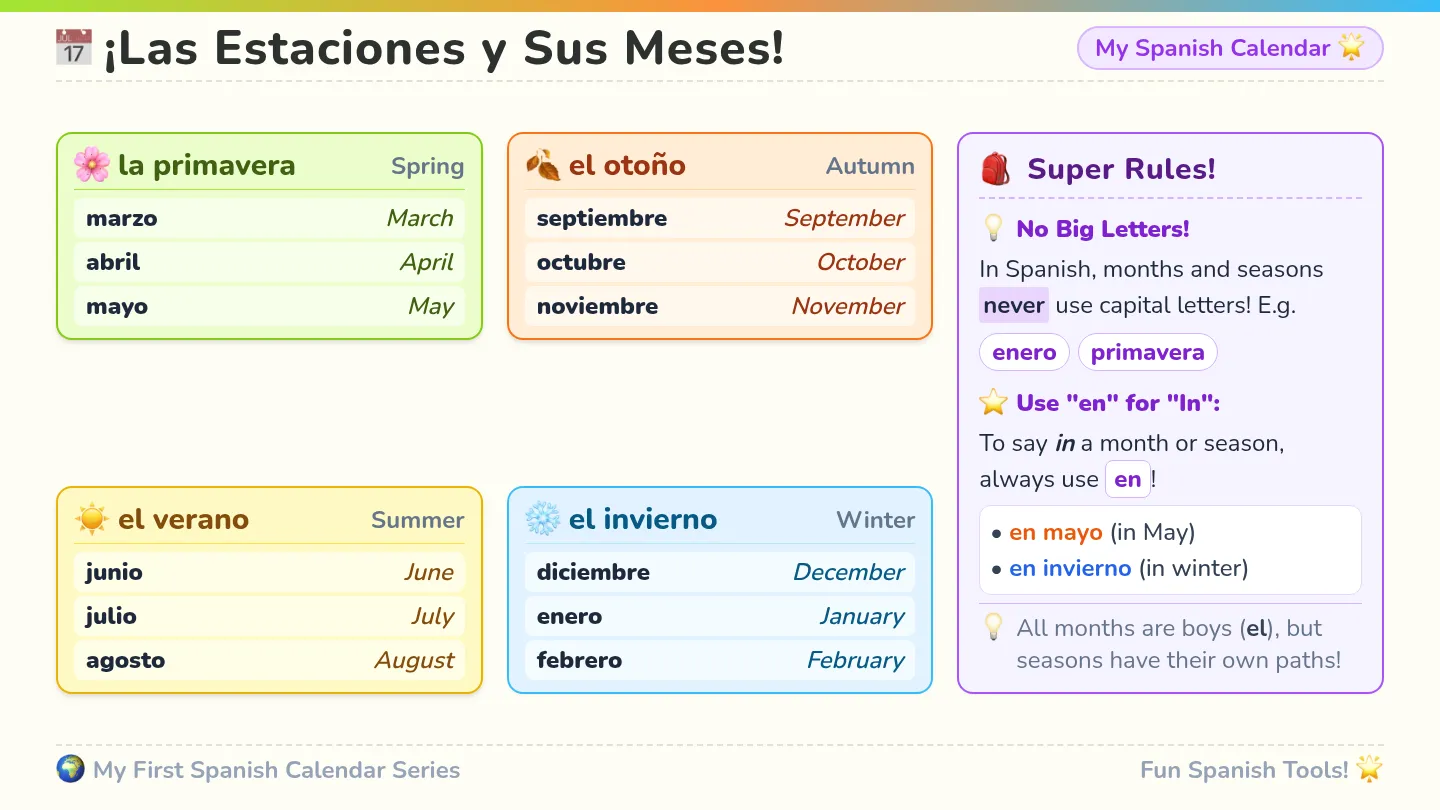
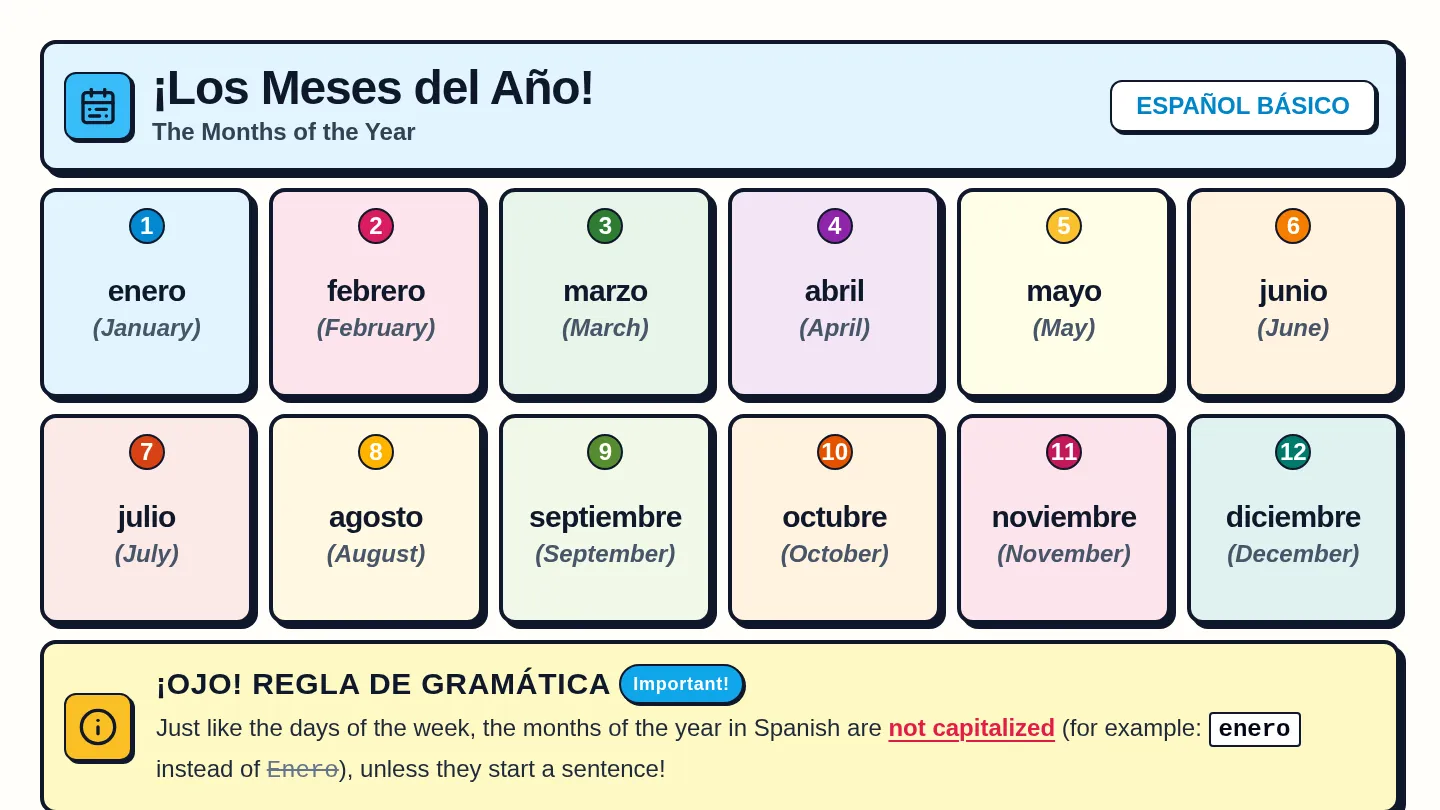
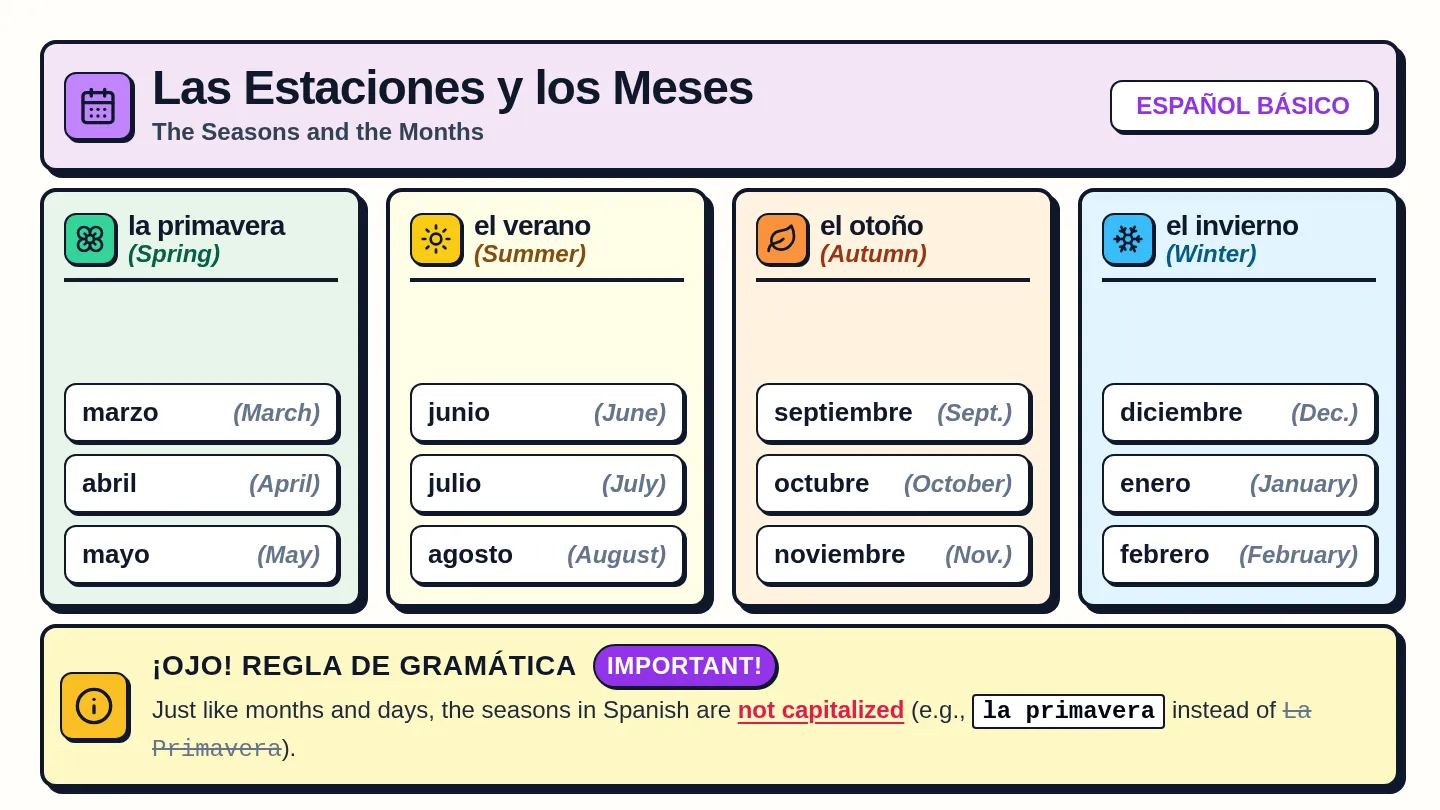
An academic lesson on Spanish months, seasons, and key capitalization rules, tailored specifically for older beginners and adult learners.
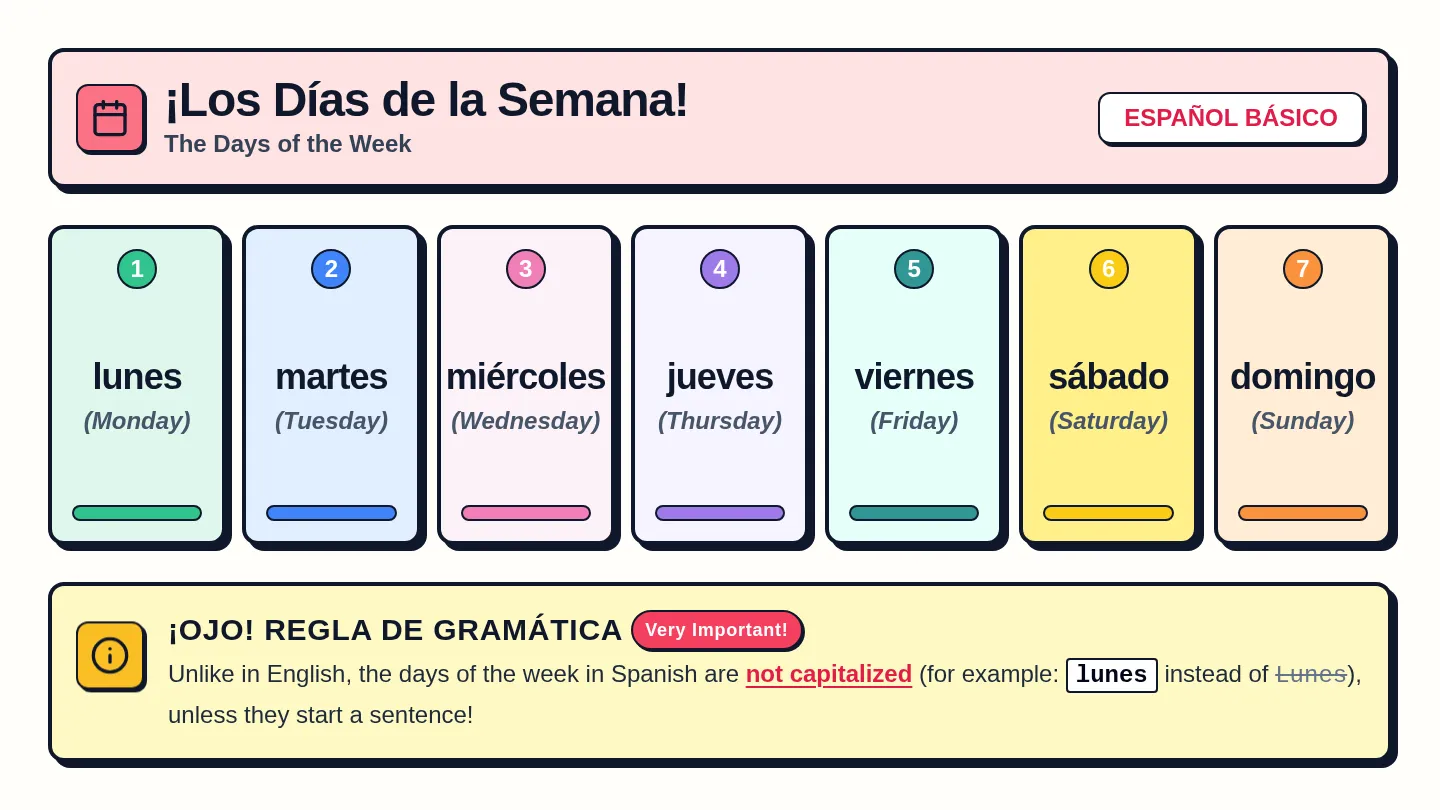
An introductory lesson on Spanish calendar vocabulary, teaching students the days of the week, correct pronunciation, and important capitalization rules.
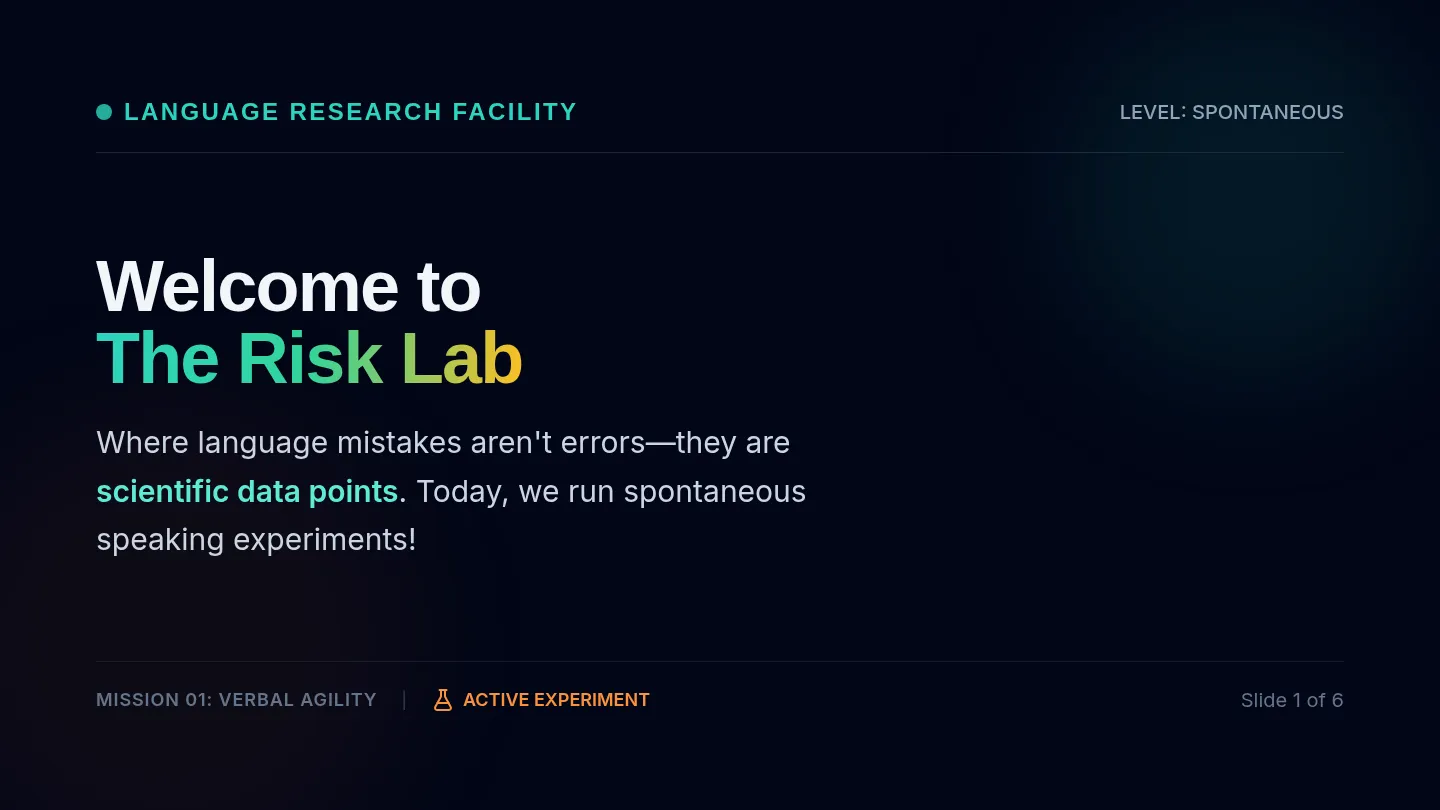
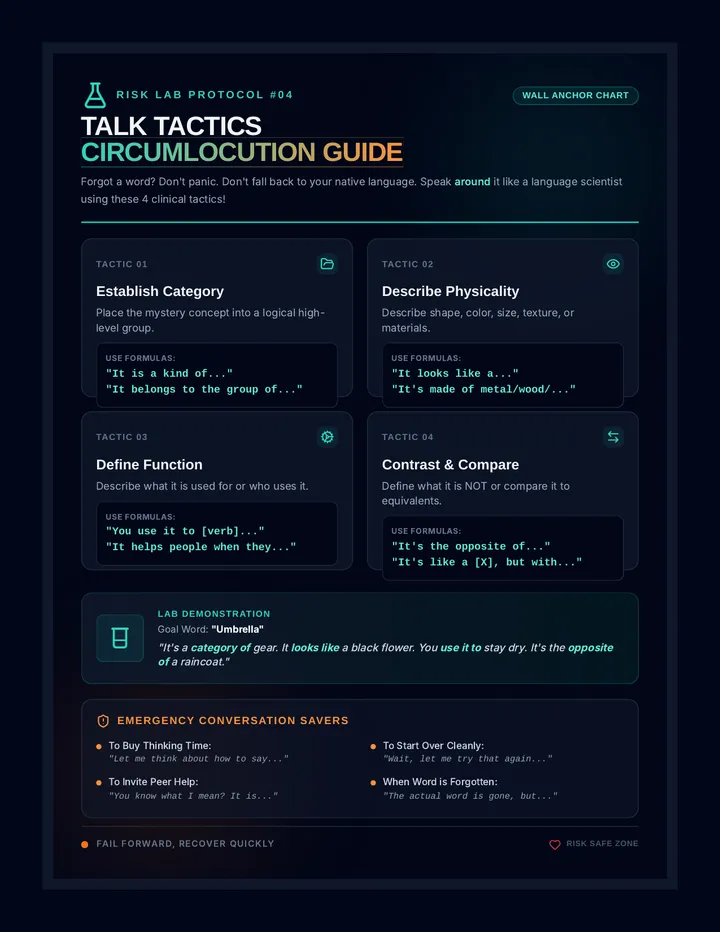
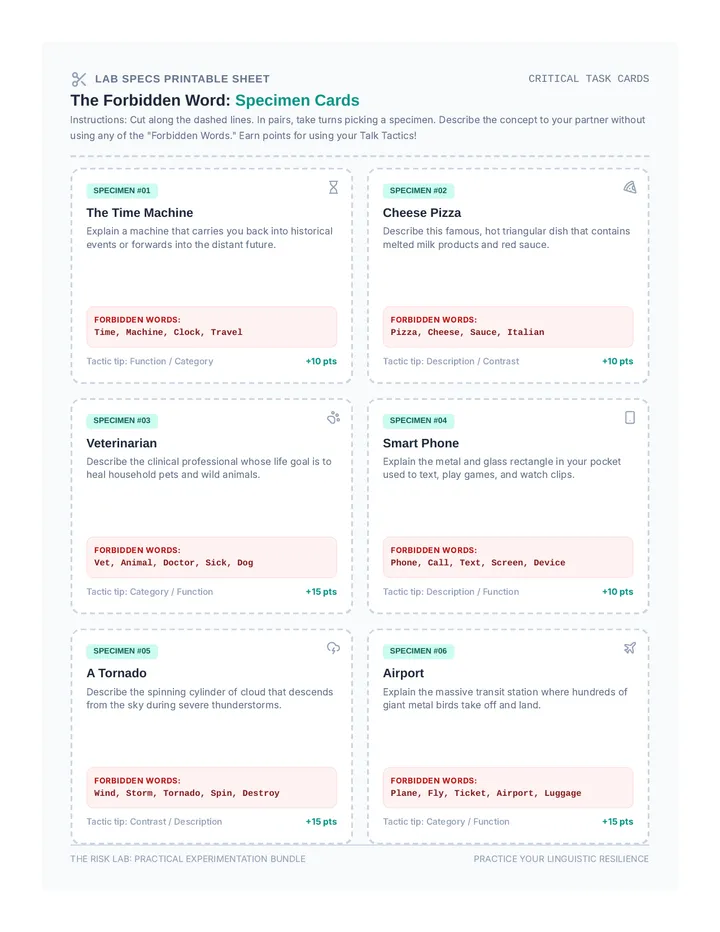
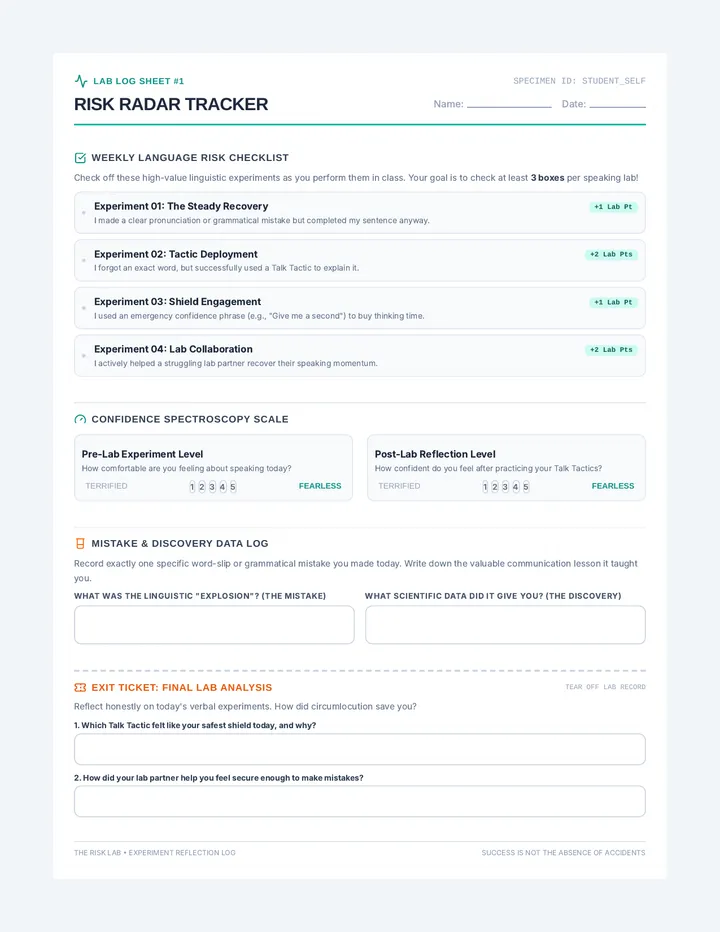
A confidence-boosting speaking lesson that reframes linguistic mistakes as scientific data points, training students in circumlocution and spontaneous conversation through the metaphor of a chemistry laboratory.
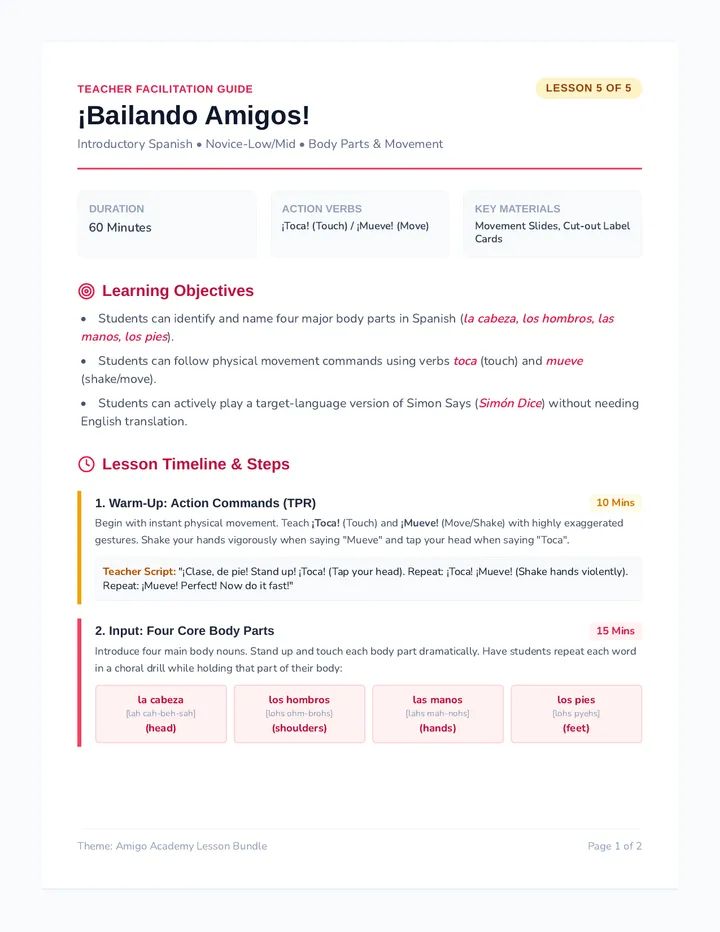
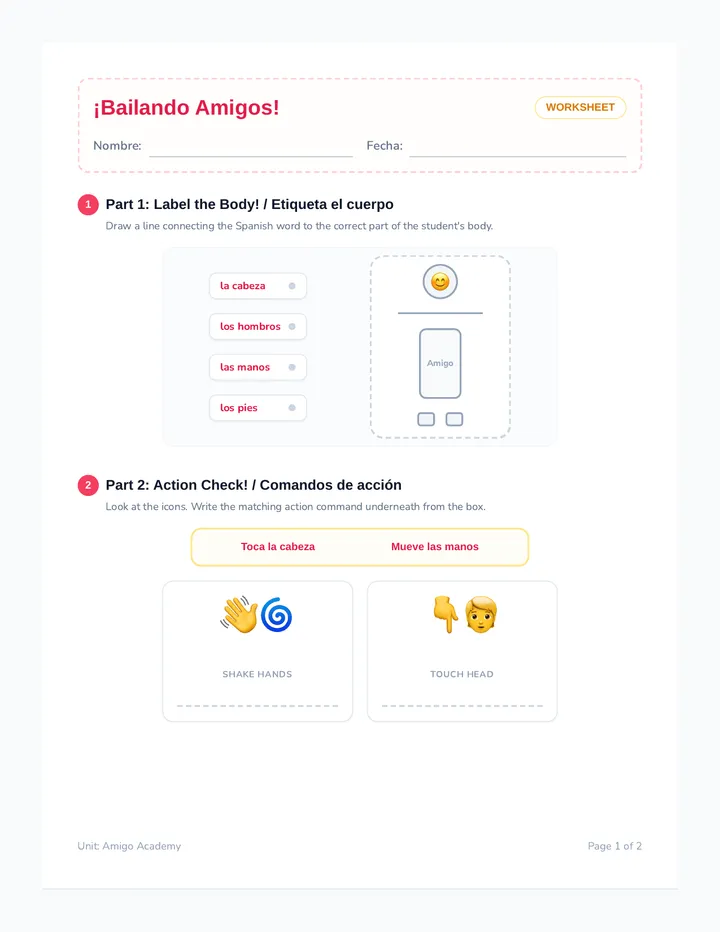
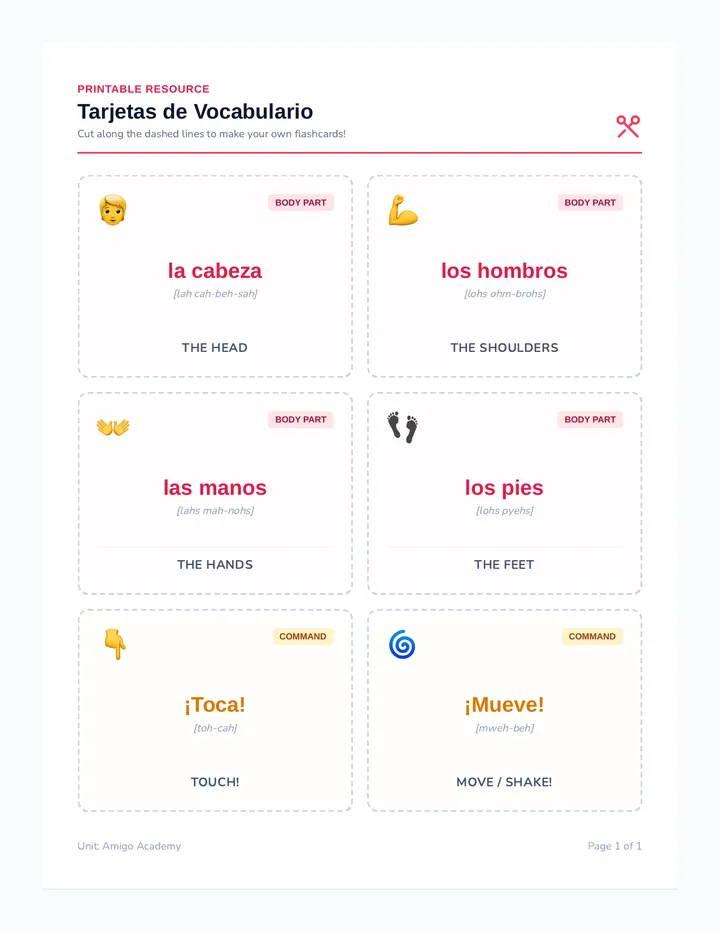
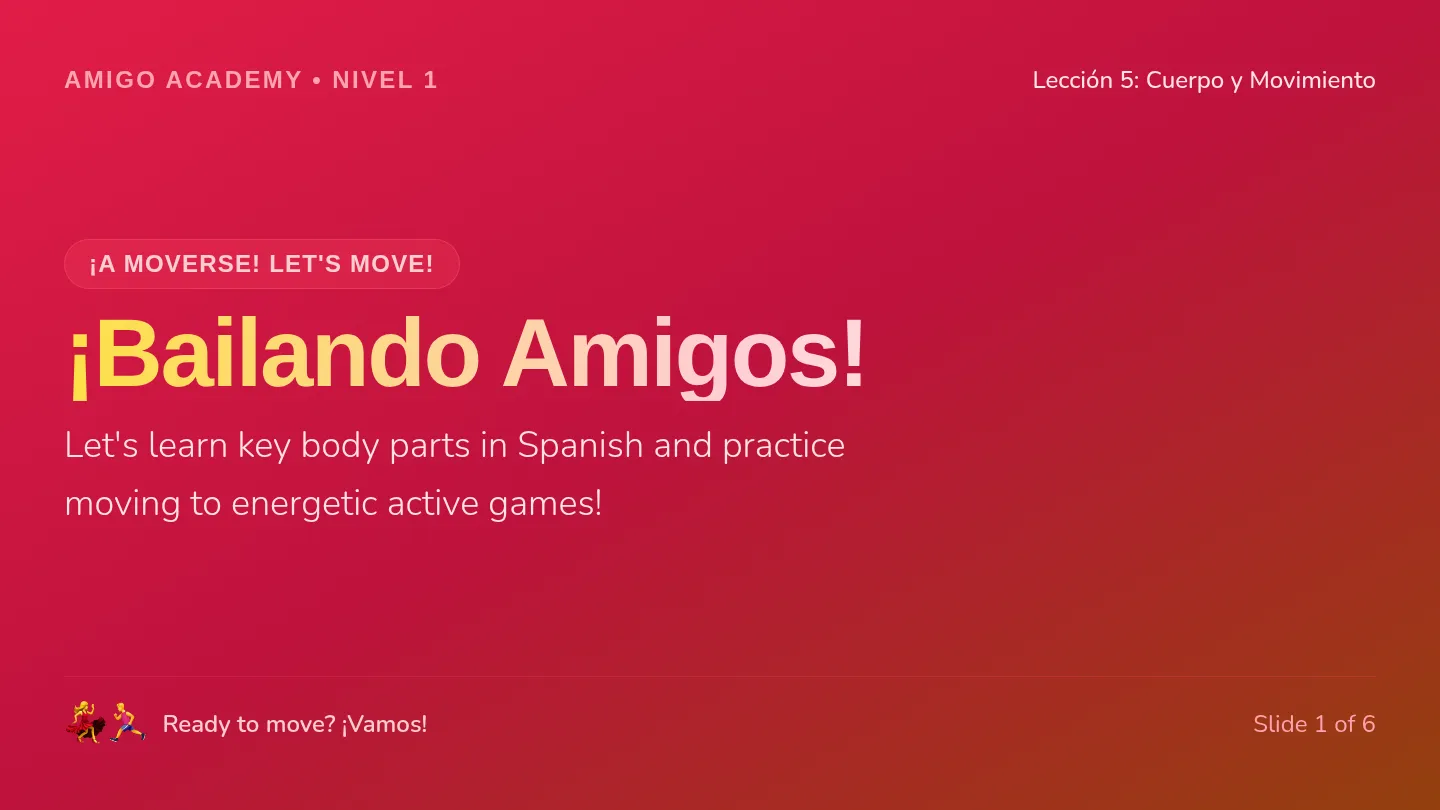
An active, movement-based beginner Spanish lesson teaching high-frequency body parts (cabeza, hombros, manos, pies) and physical action verbs (toca, mueve) through rhythmic dances and interactive 'Simón Dice' games.
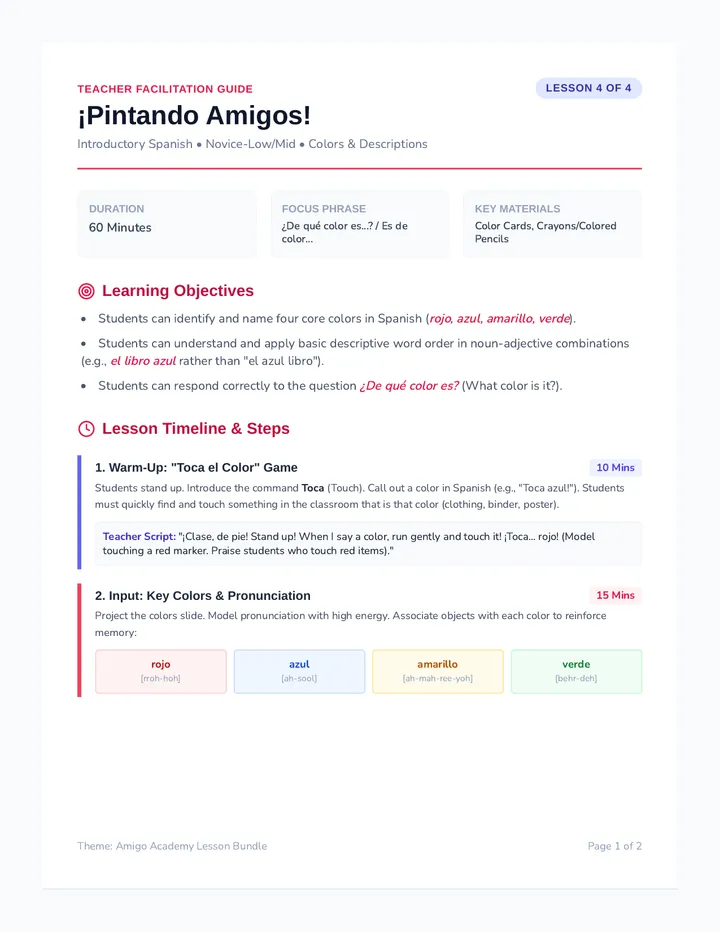
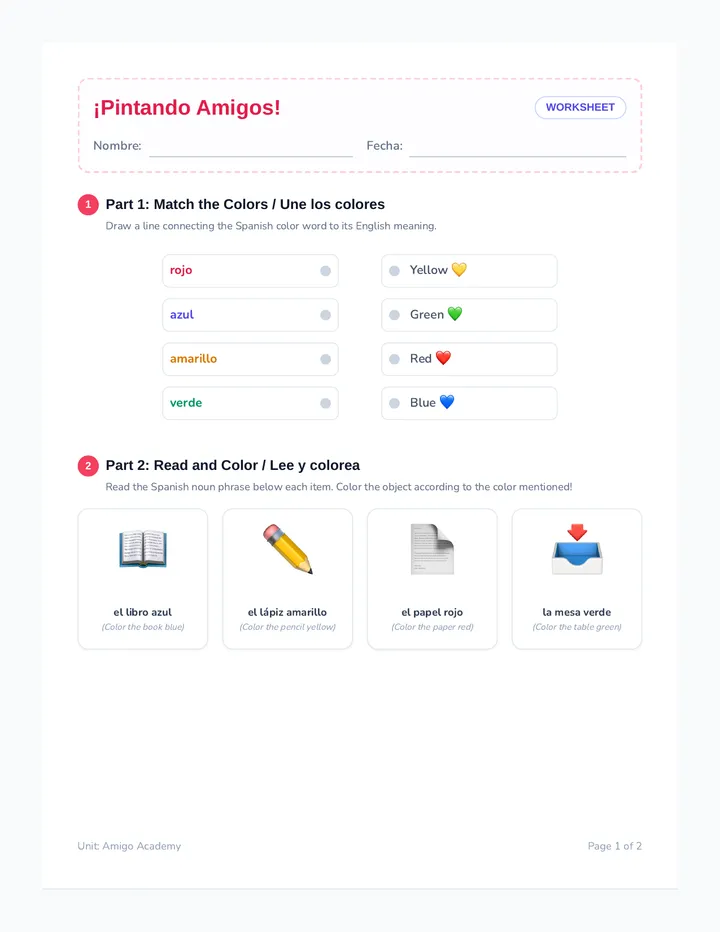
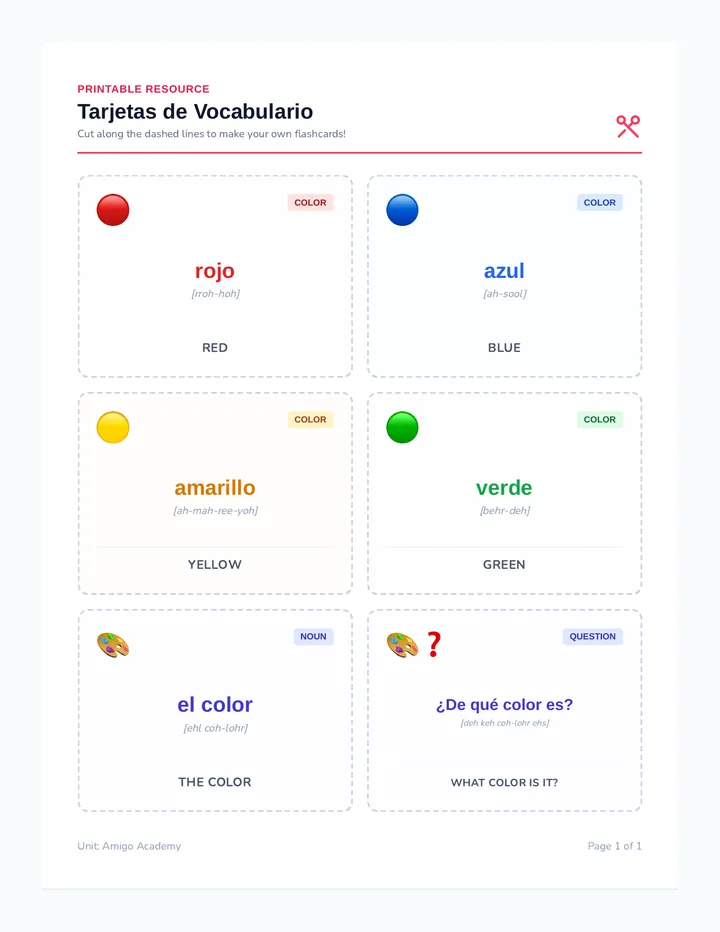
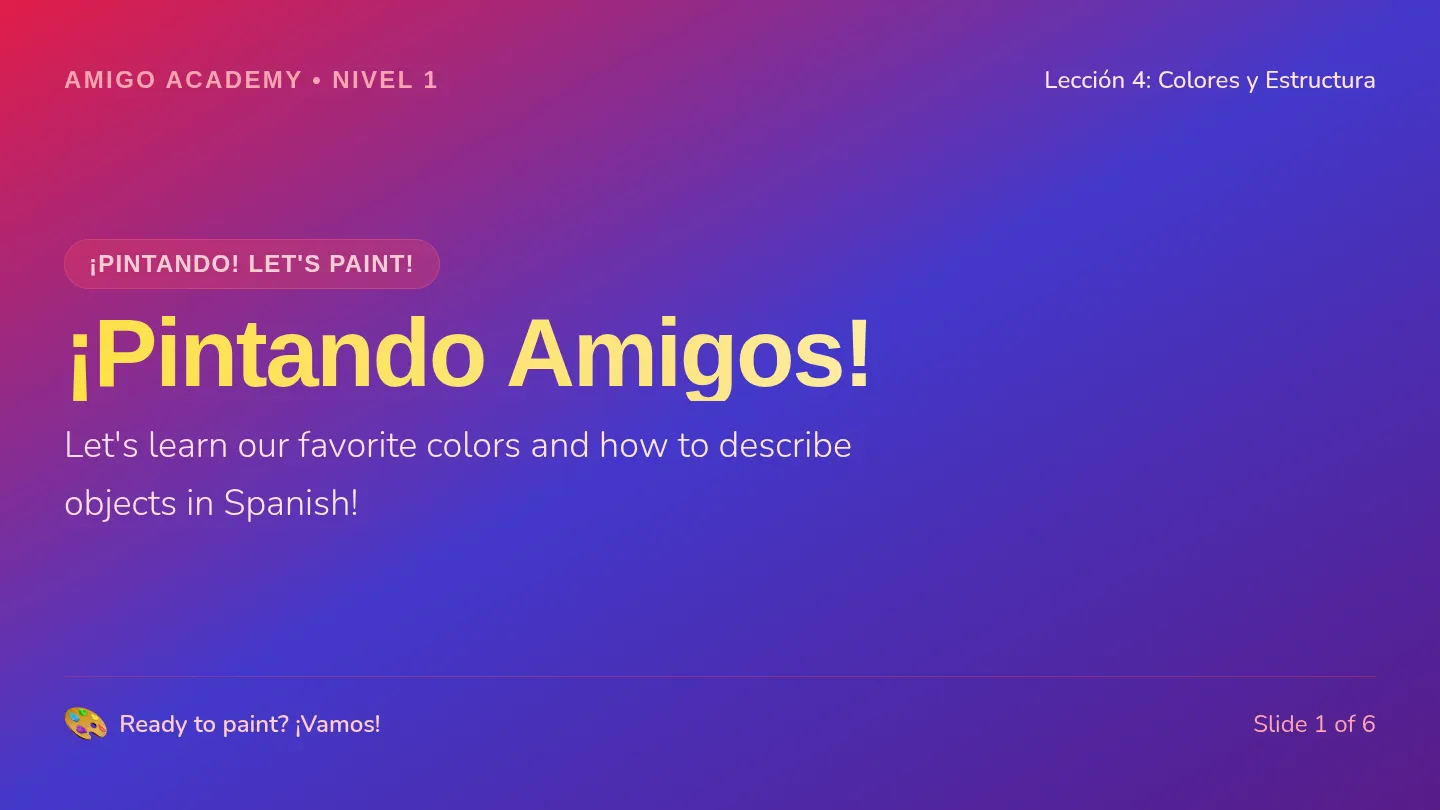
A vibrant beginner Spanish lesson teaching high-frequency colors (rojo, azul, amarillo, verde) and basic agreement/descriptive word order (e.g., 'el libro azul') through active color hunts and creative sorting activities.
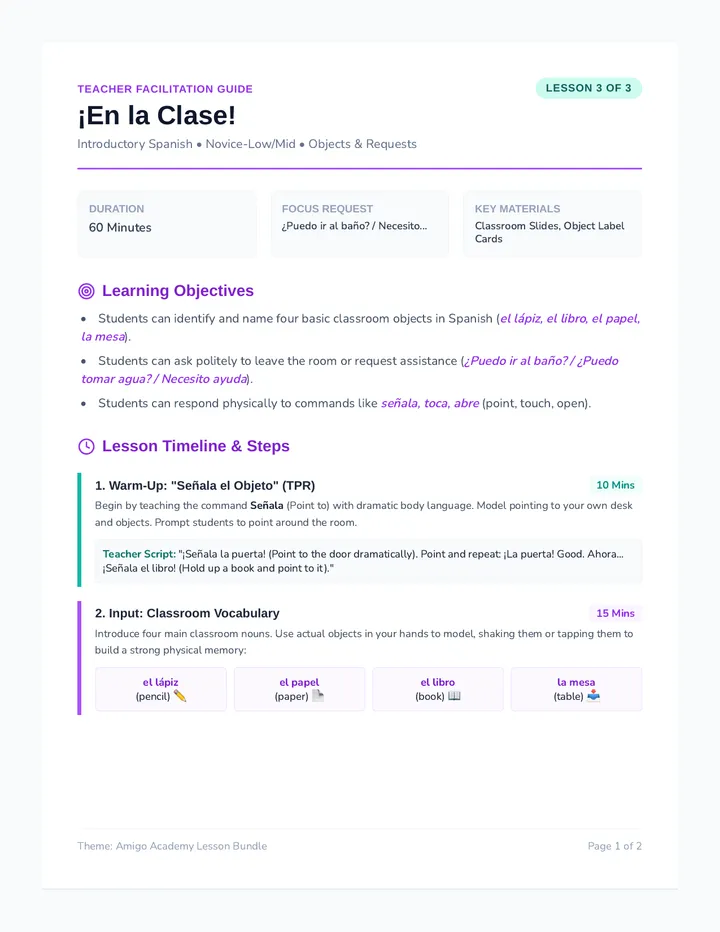
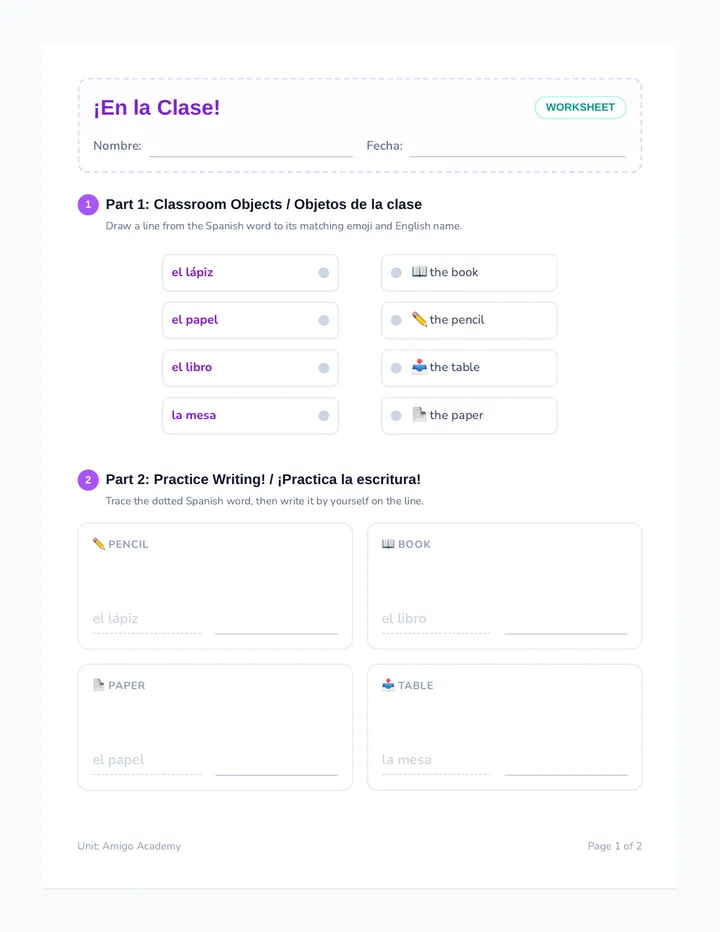
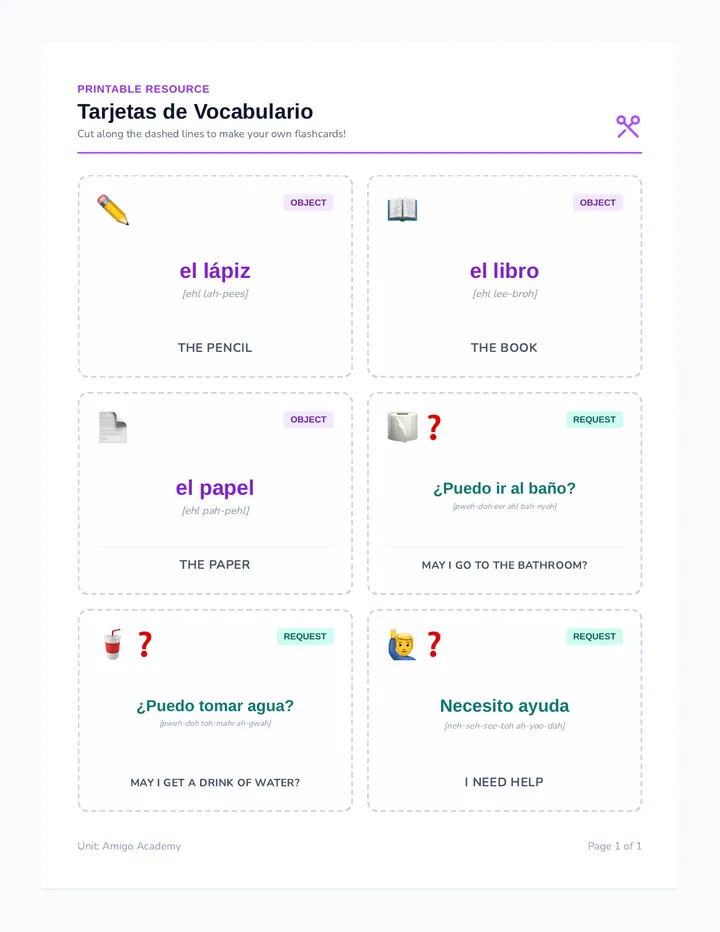
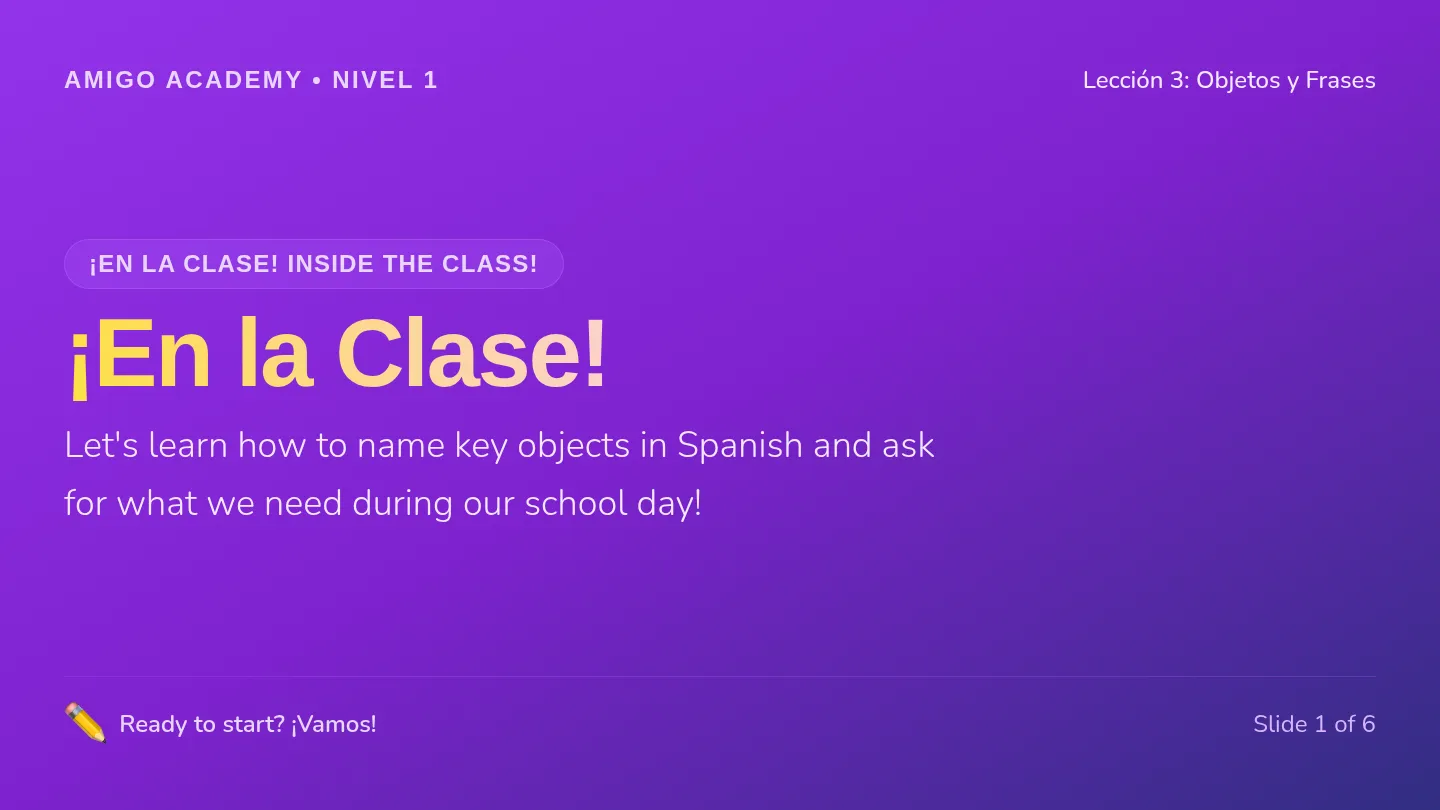
A beginner Spanish lesson teaching high-frequency classroom objects (lápiz, papel, libro) and essential classroom requests (¿Puedo ir al baño?, Necesito un lápiz) using physical pointing activities and visual matching cards.
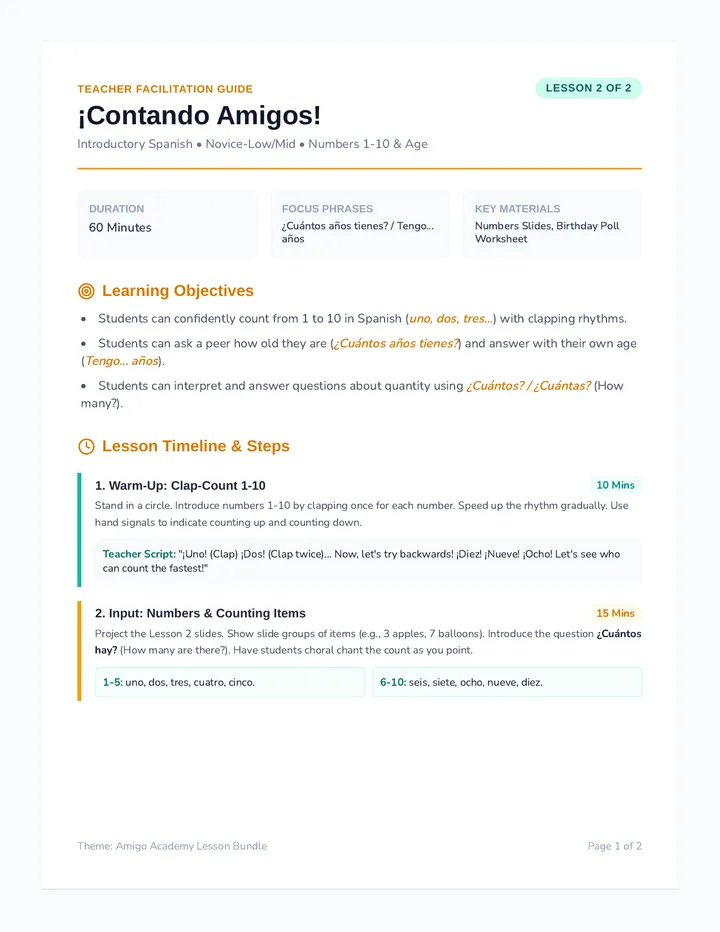
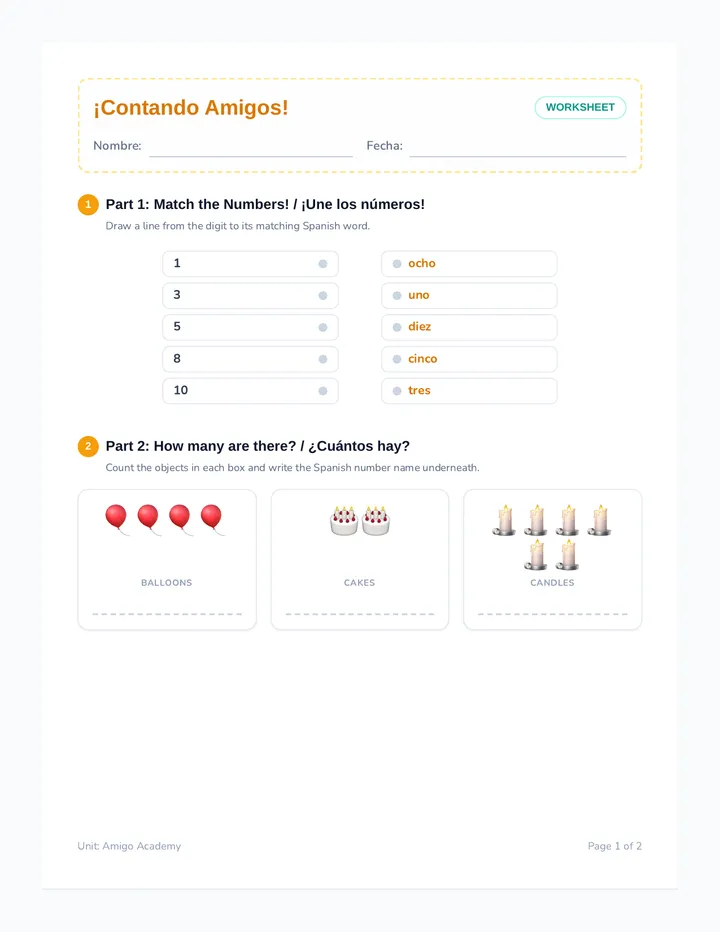
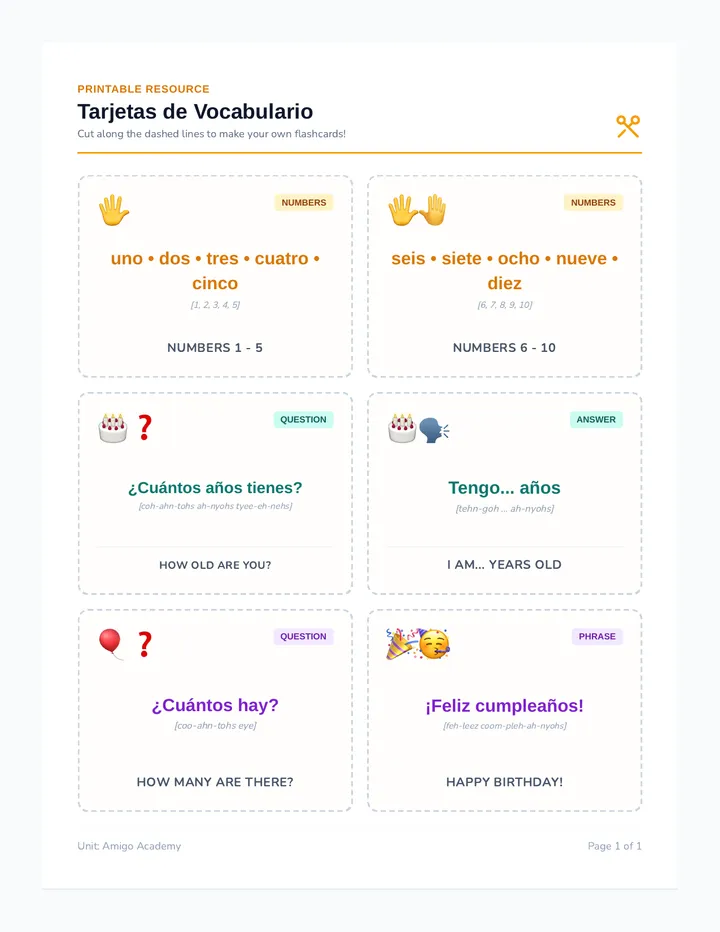
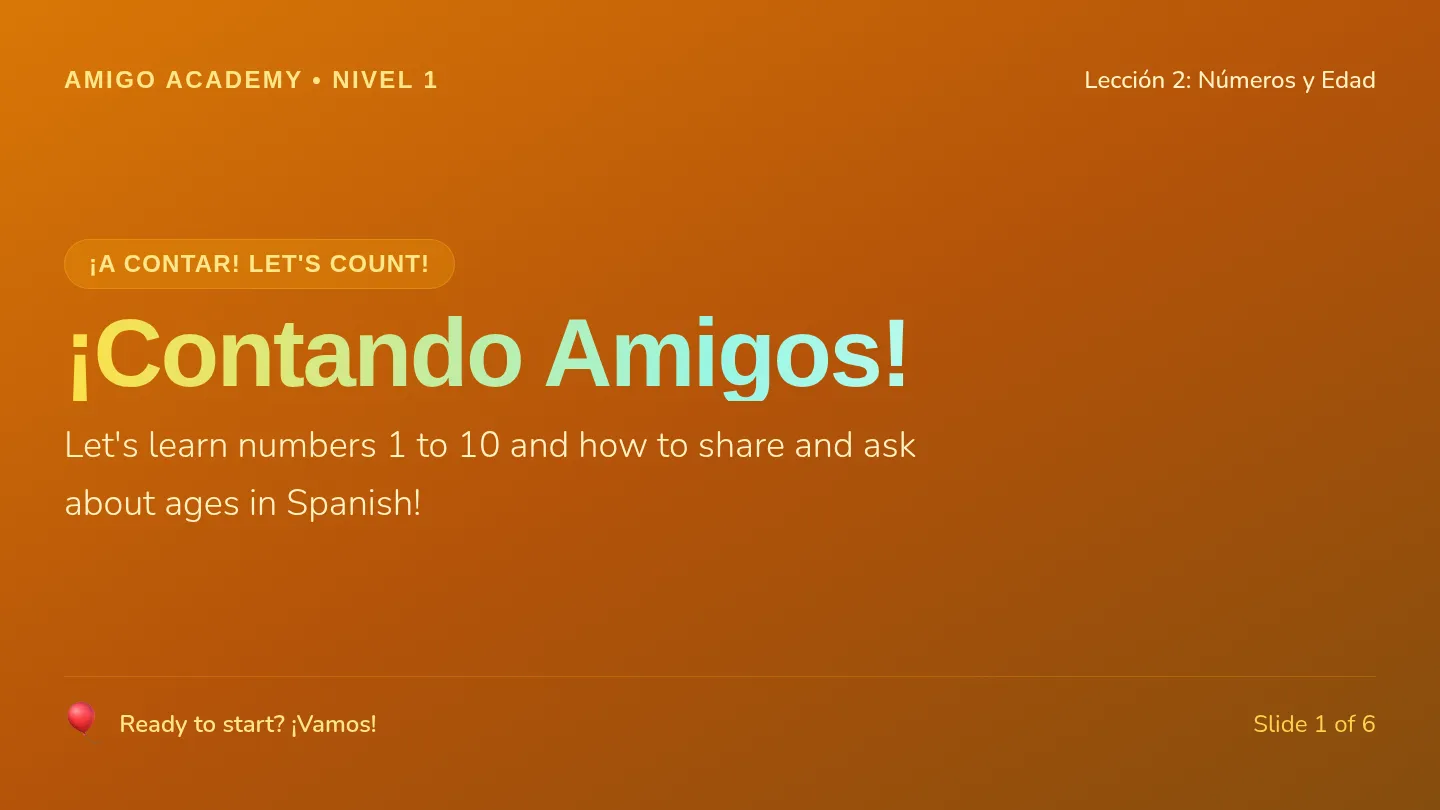
An engaging beginner Spanish lesson focusing on numbers 1-10, asking and answering age questions (¿Cuántos años tienes? Tengo... años), and conducting a classroom birthday/age poll.
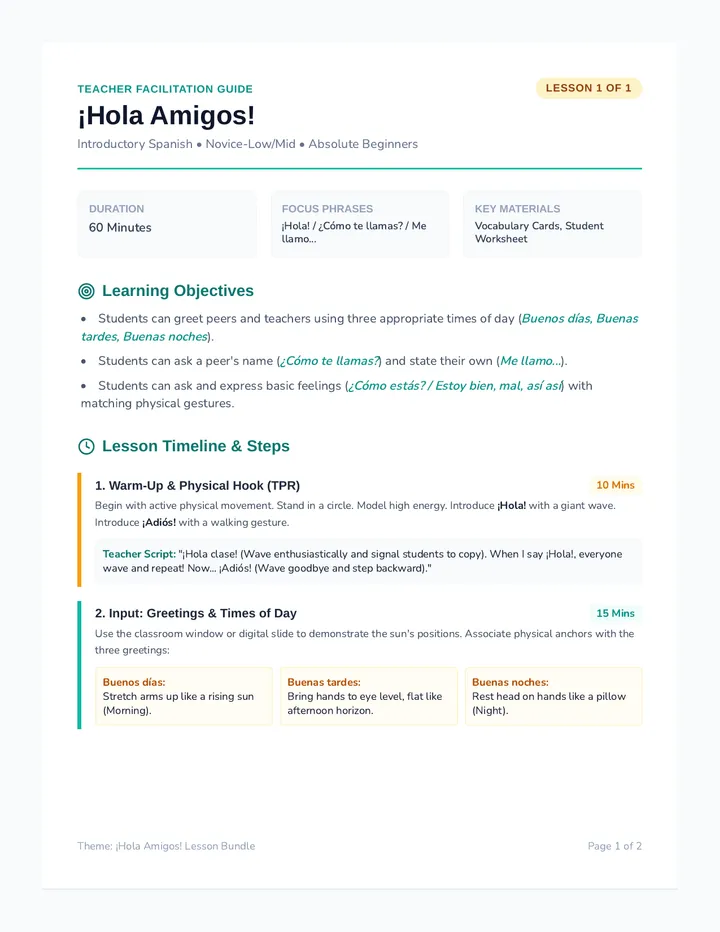
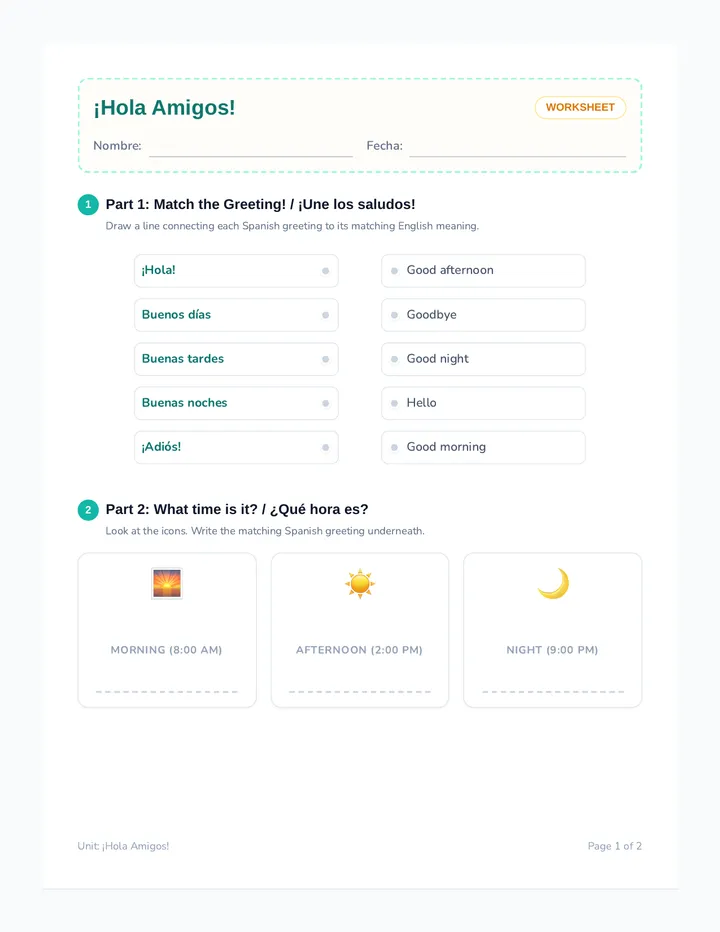
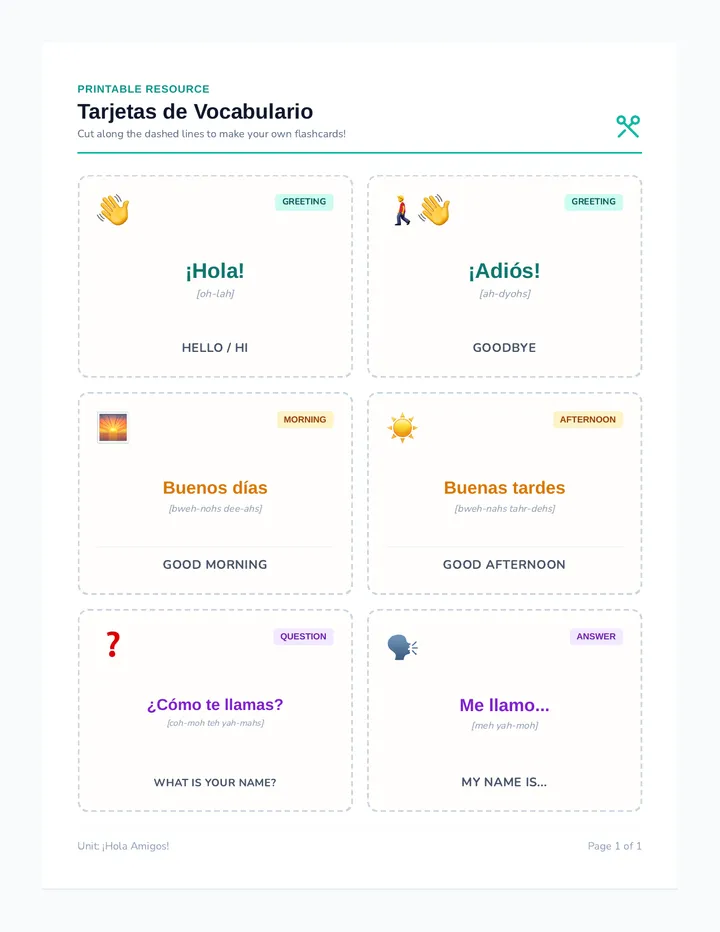
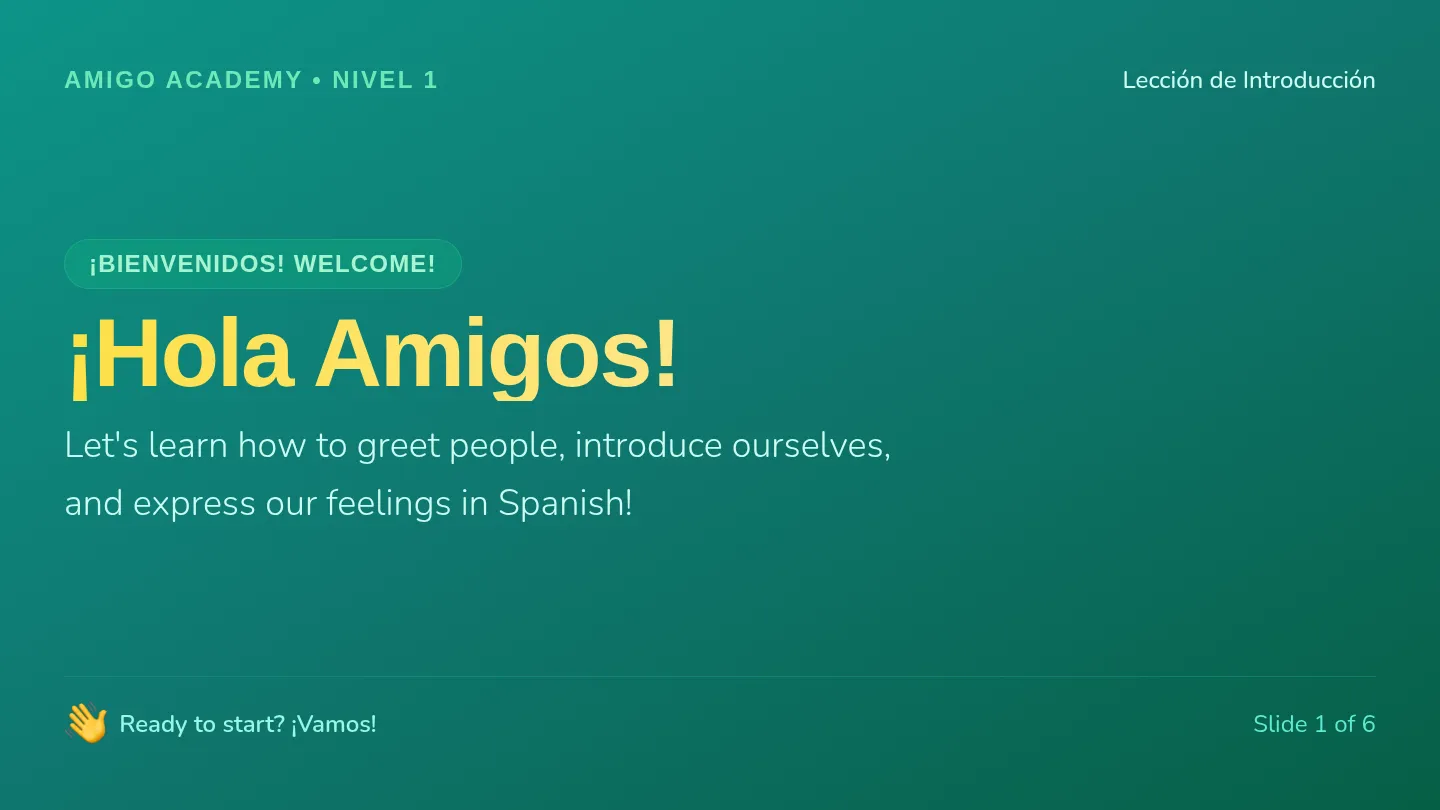
An introductory Spanish lesson for absolute beginners (Novice-Low/Mid) focusing on high-frequency greetings, self-introductions (¿Cómo te llamas? Me llamo...), and basic feelings expression through active physical response (TPR) and collaborative speaking activities.
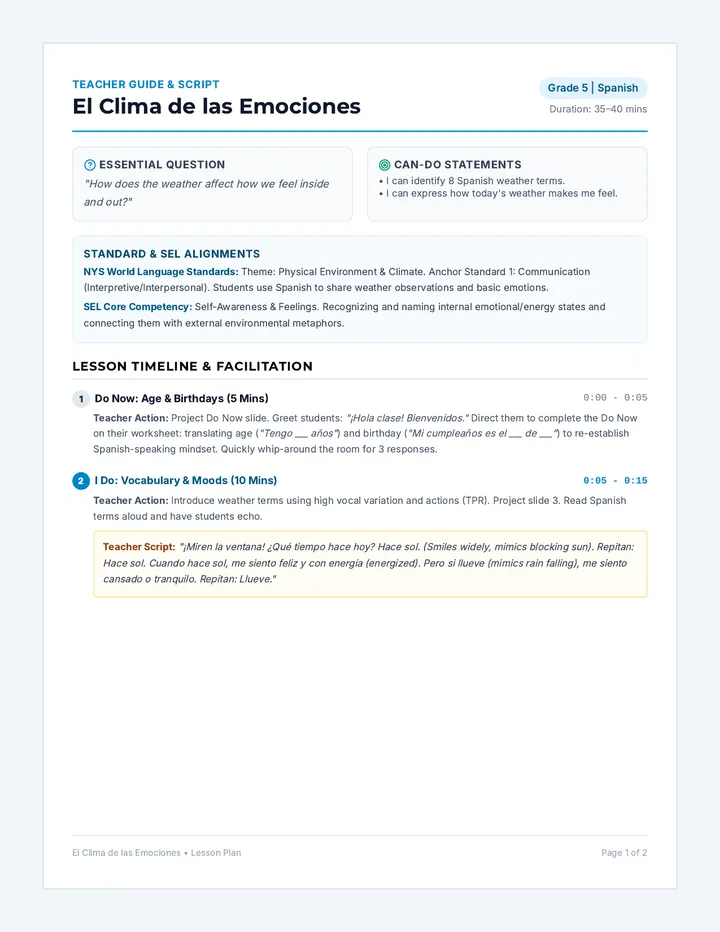
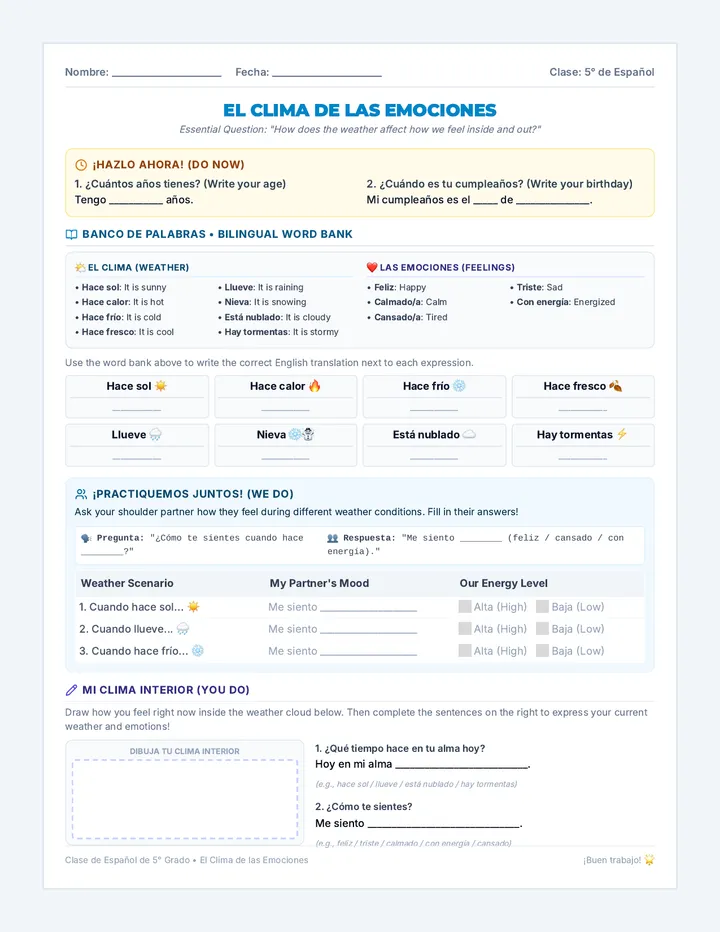
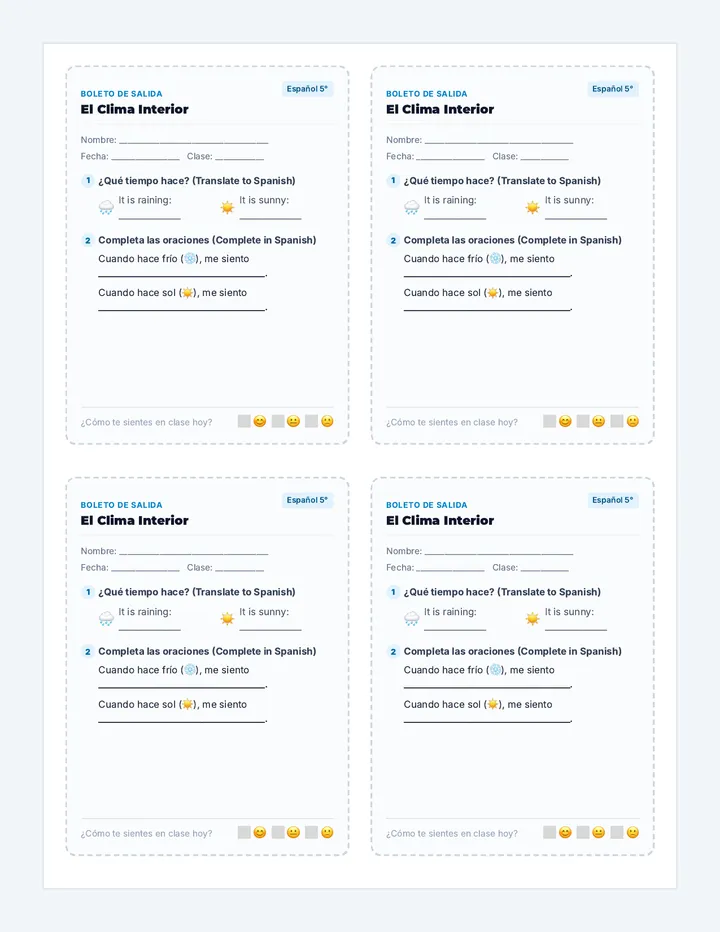
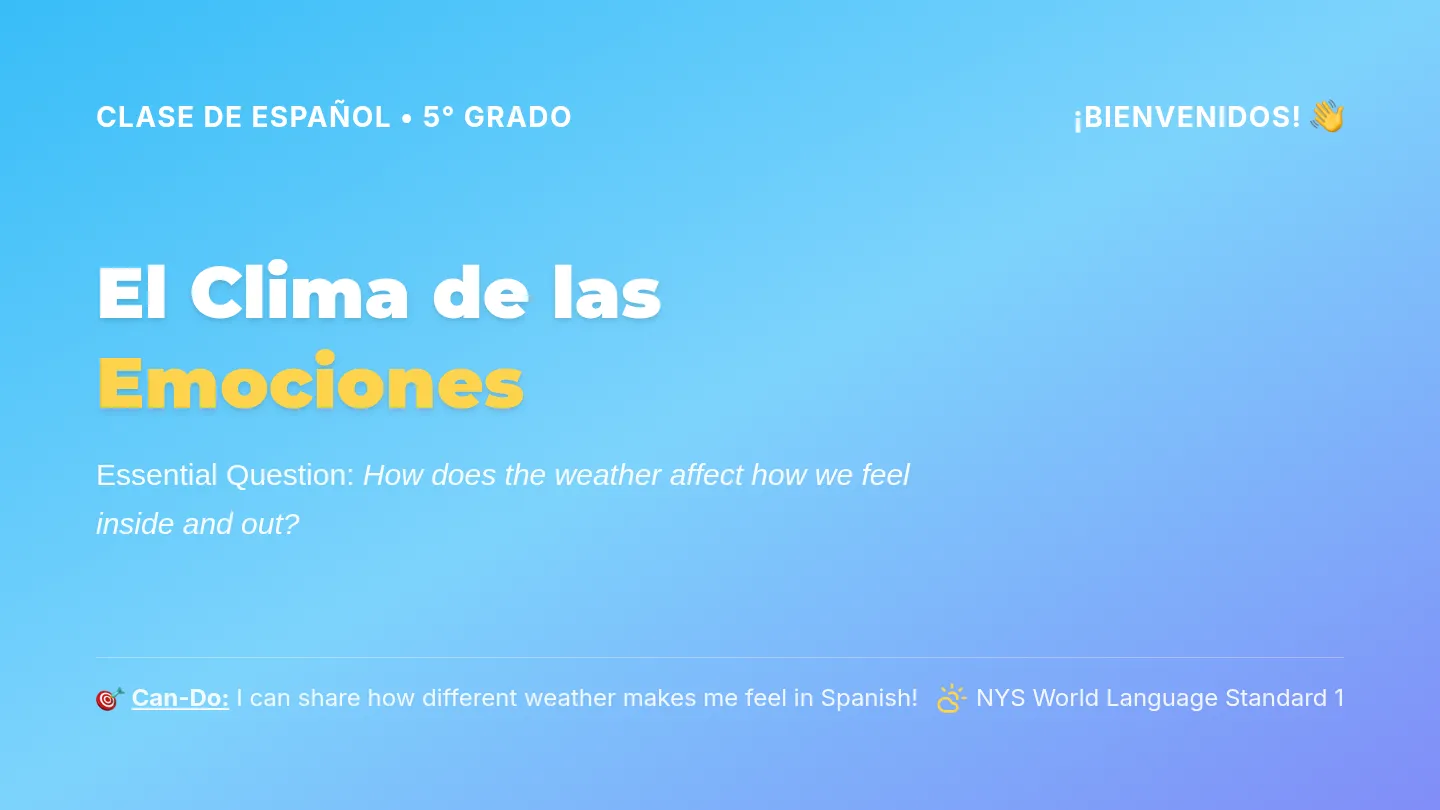
An introductory 5th-grade Spanish lesson exploring weather vocabulary connected with emotional self-awareness. Students practice expressing daily weather and how it affects their mood and energy using the 'I Do, We Do, You Do' model, designed for a 35-40 minute class in a small space.