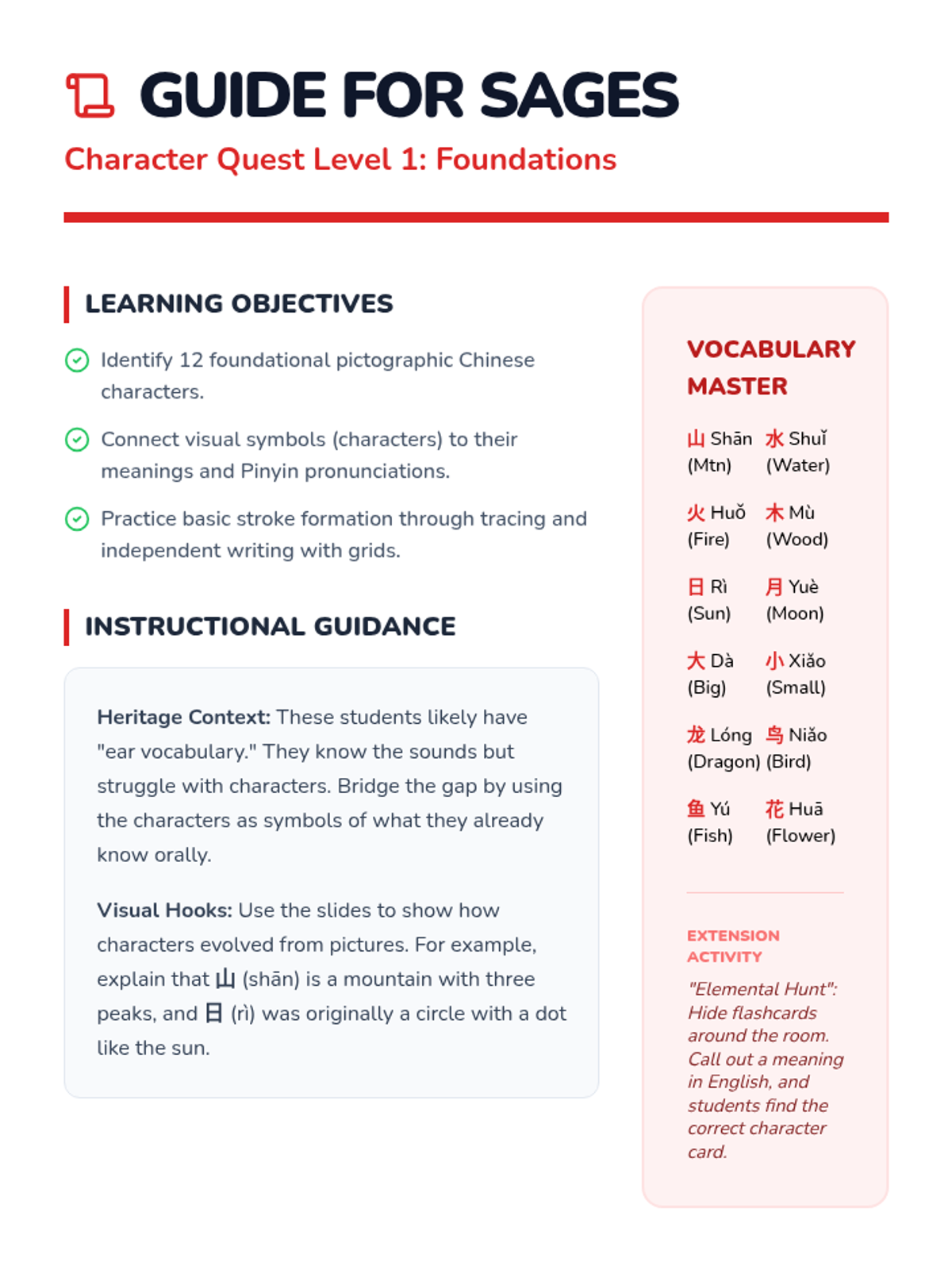
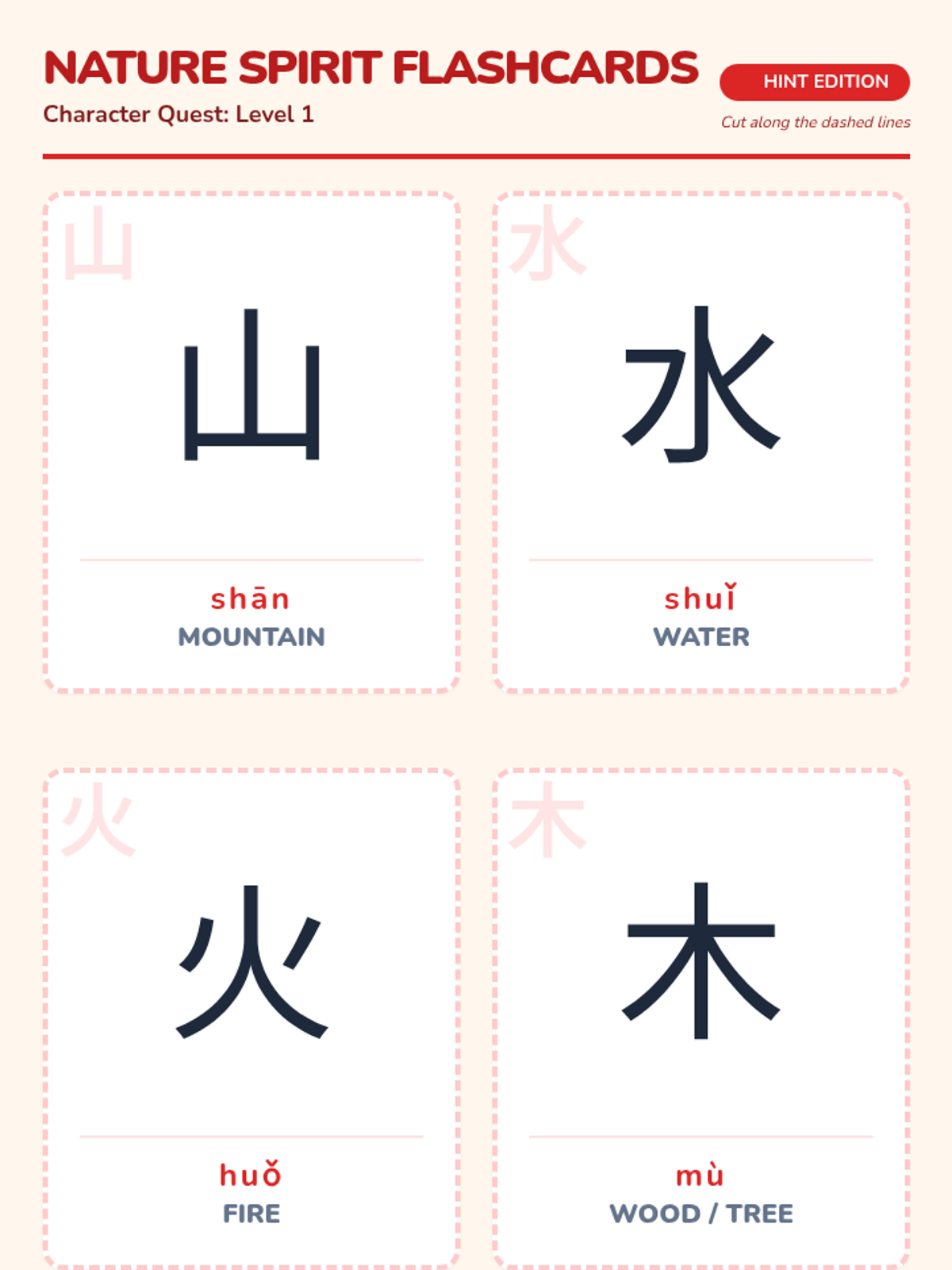
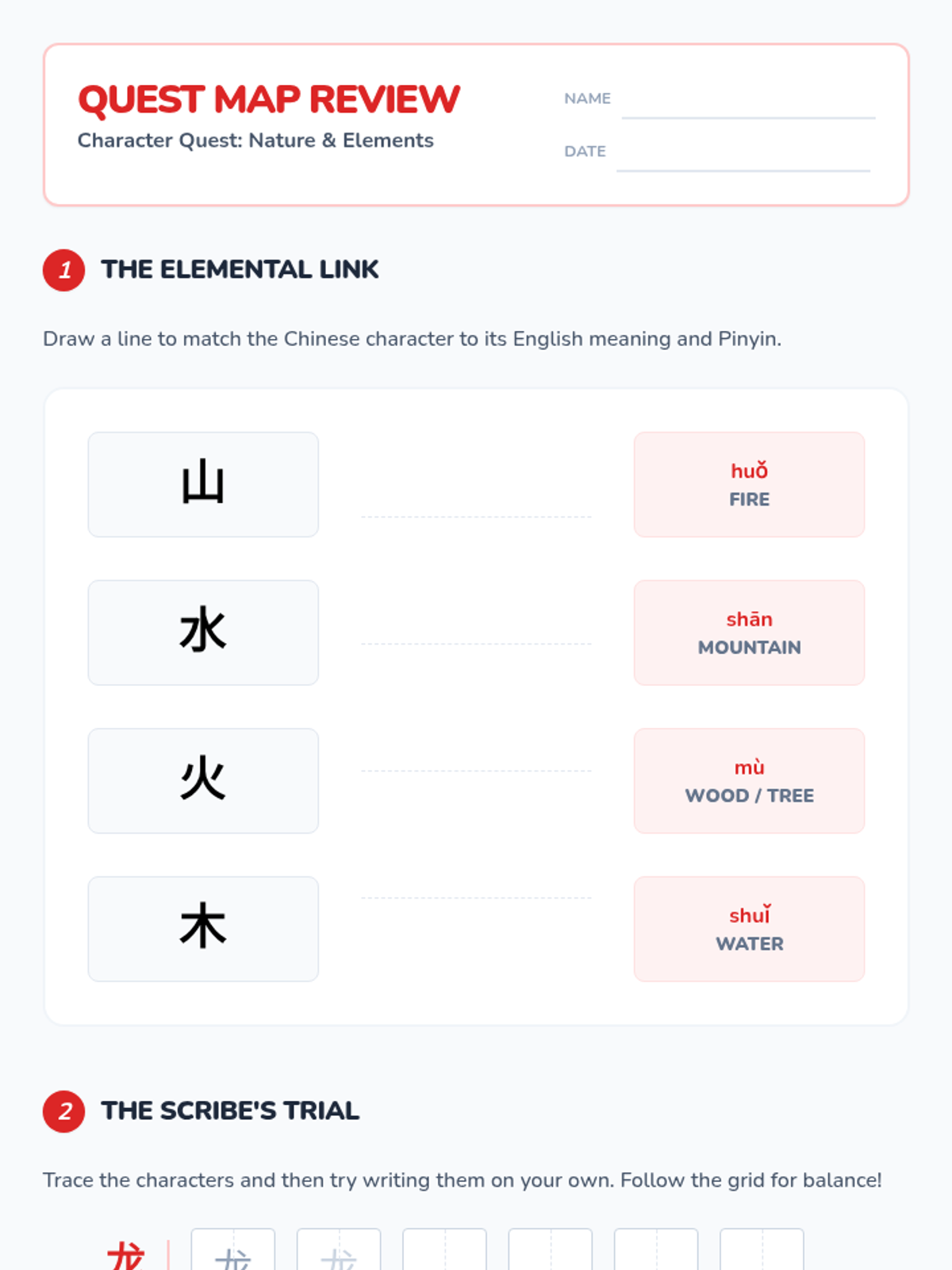
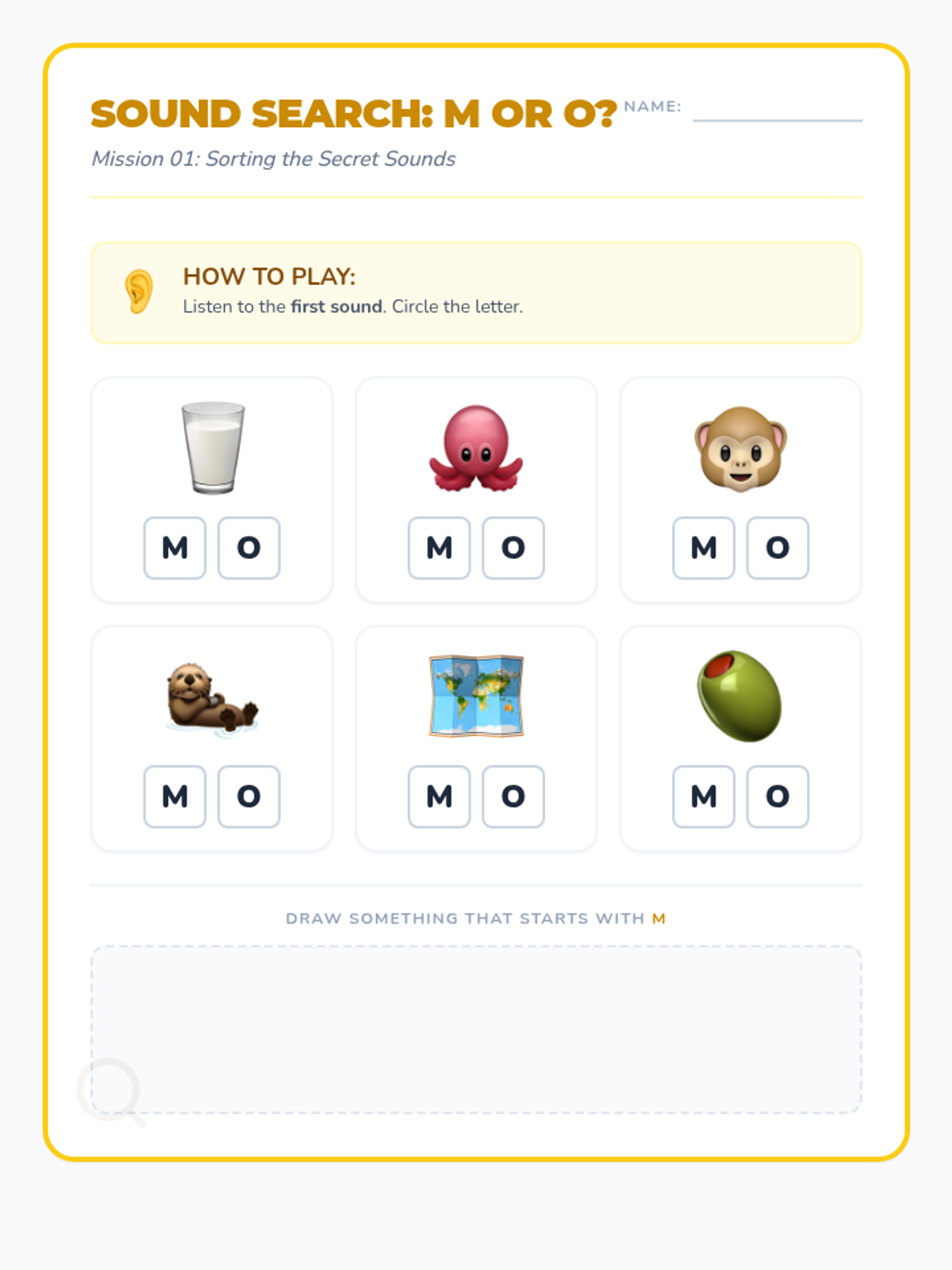
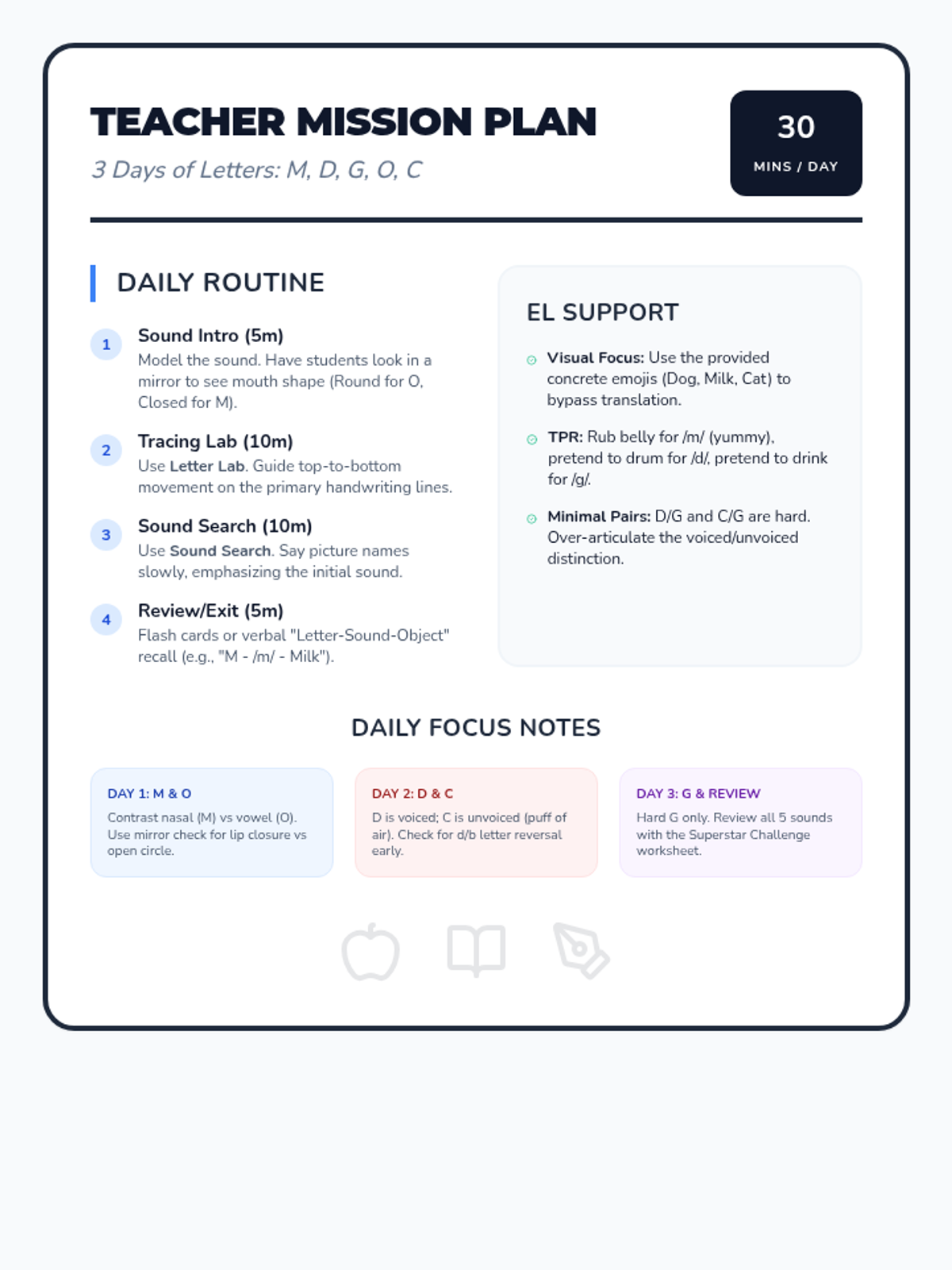
Students learn the character 'Hao' (Good), which combines the Female and Child characters. They explore the cultural story behind this combination and practice writing it as a compound ideograph.
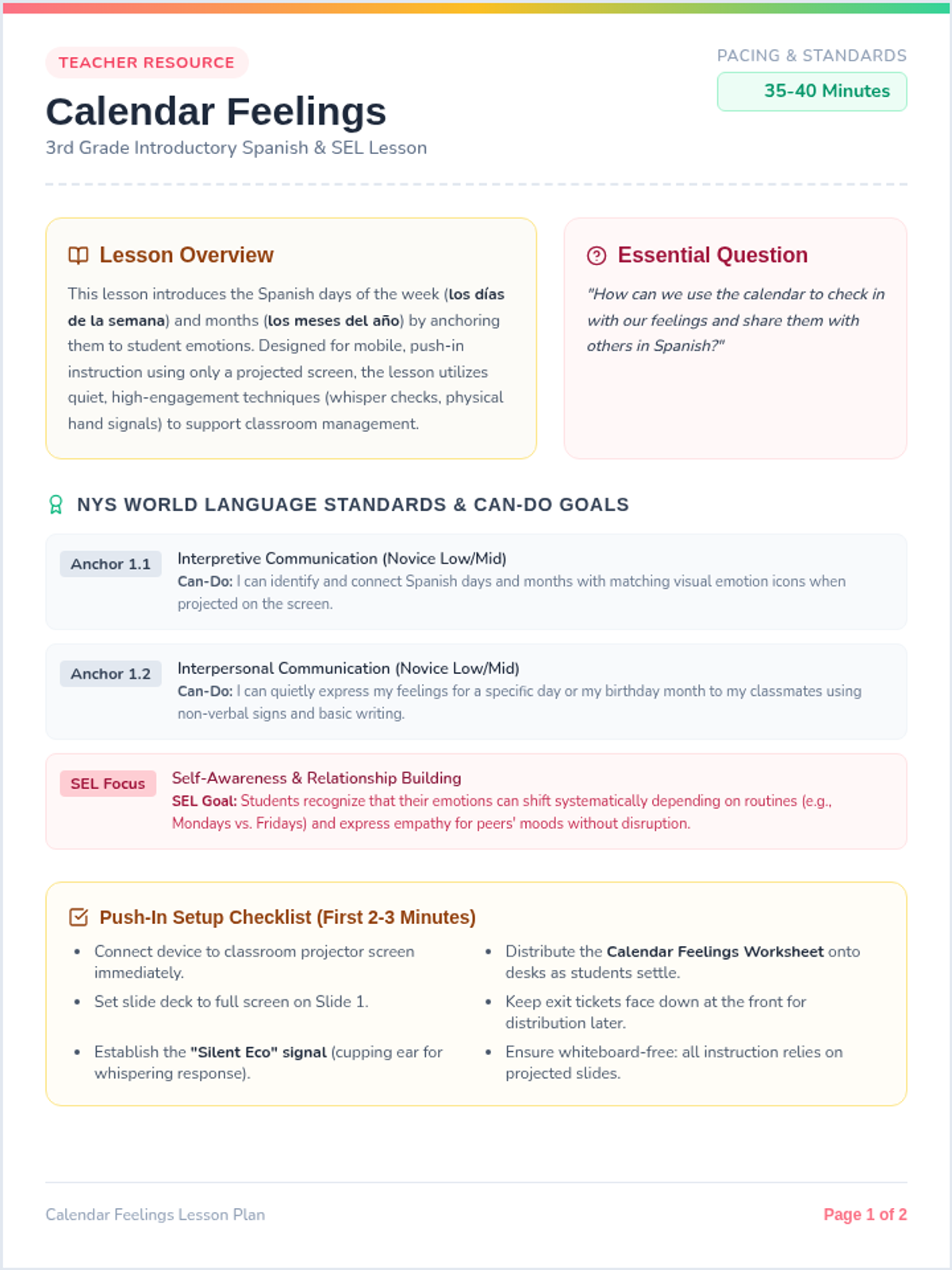
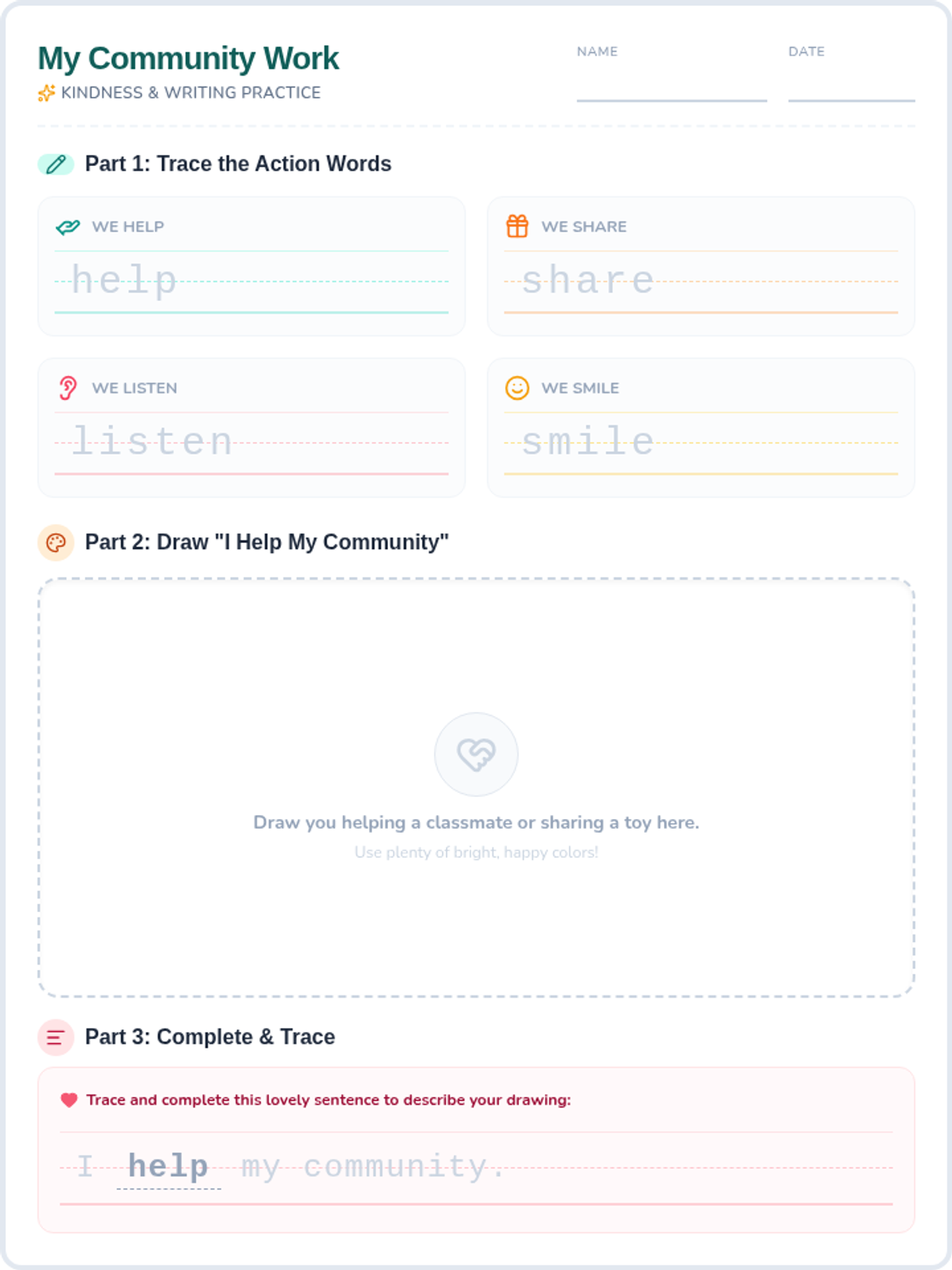
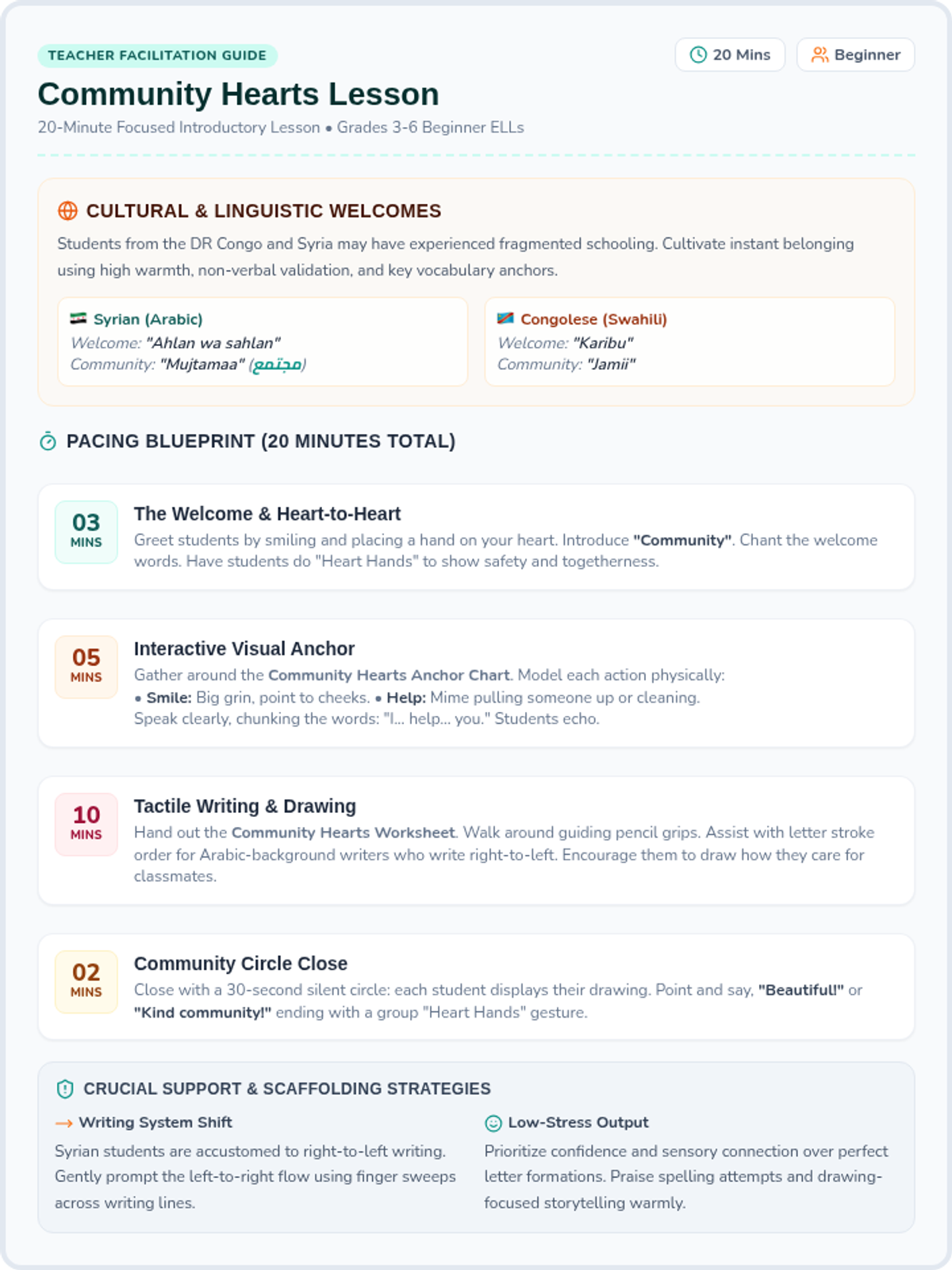
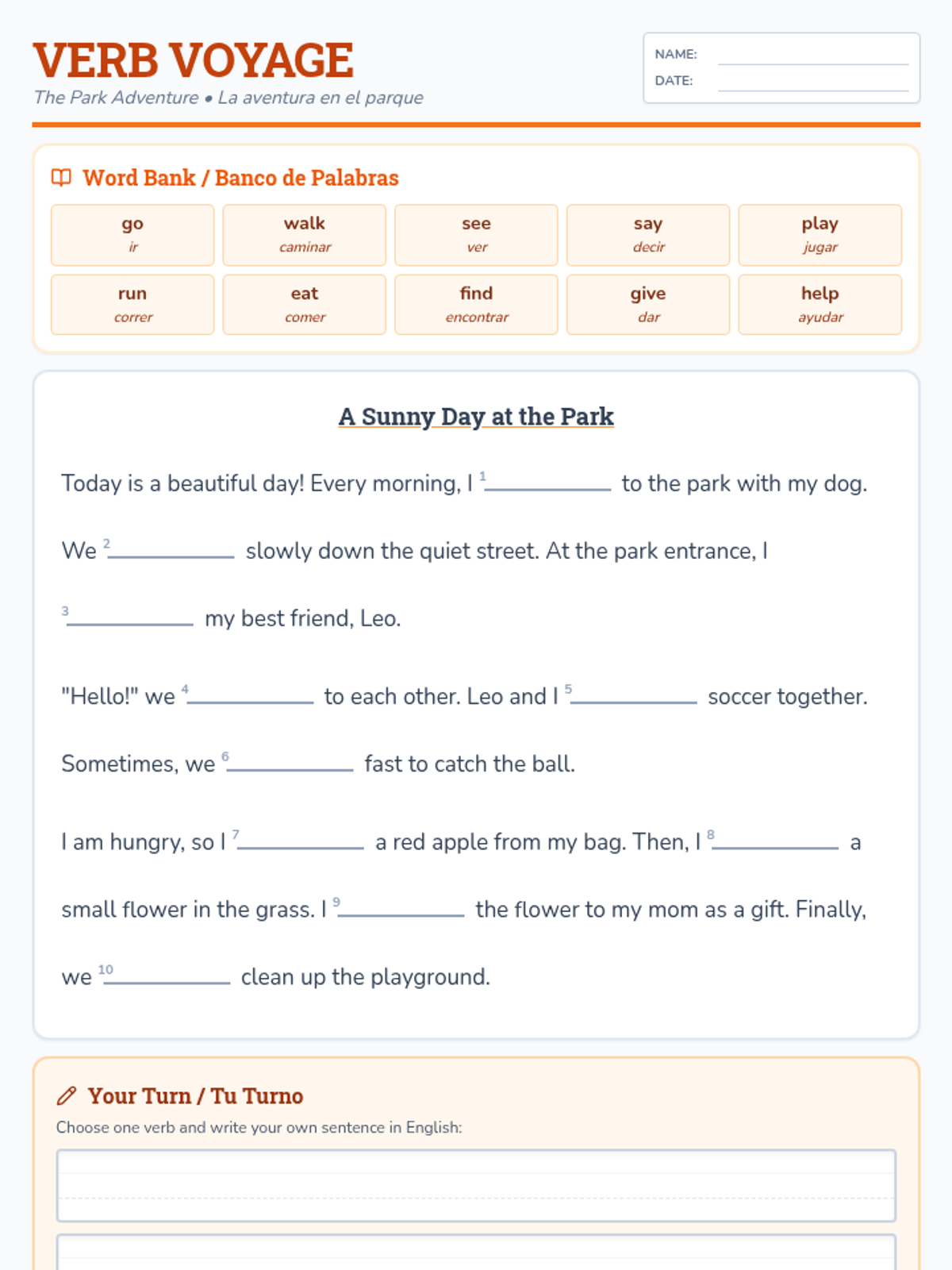
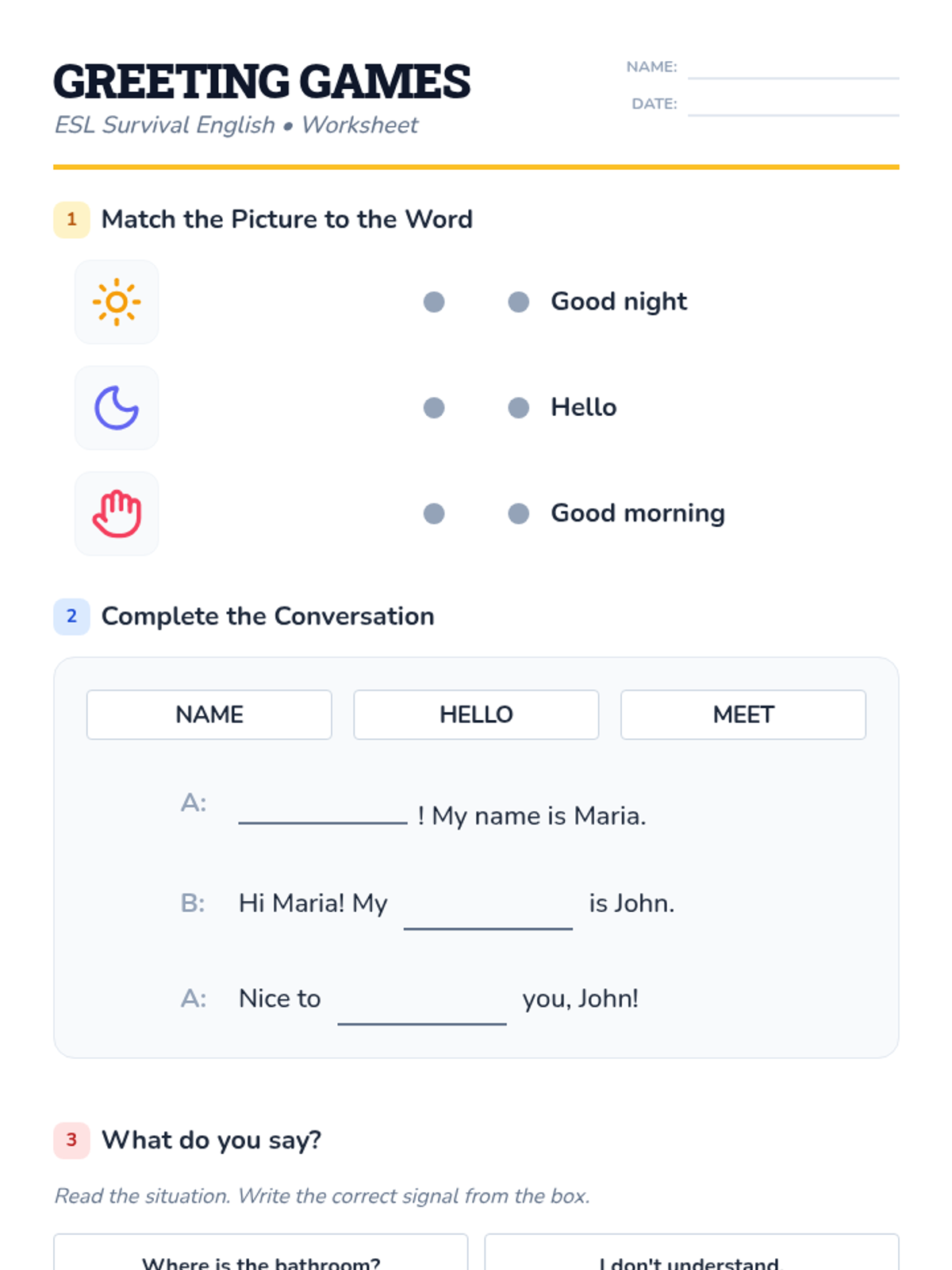
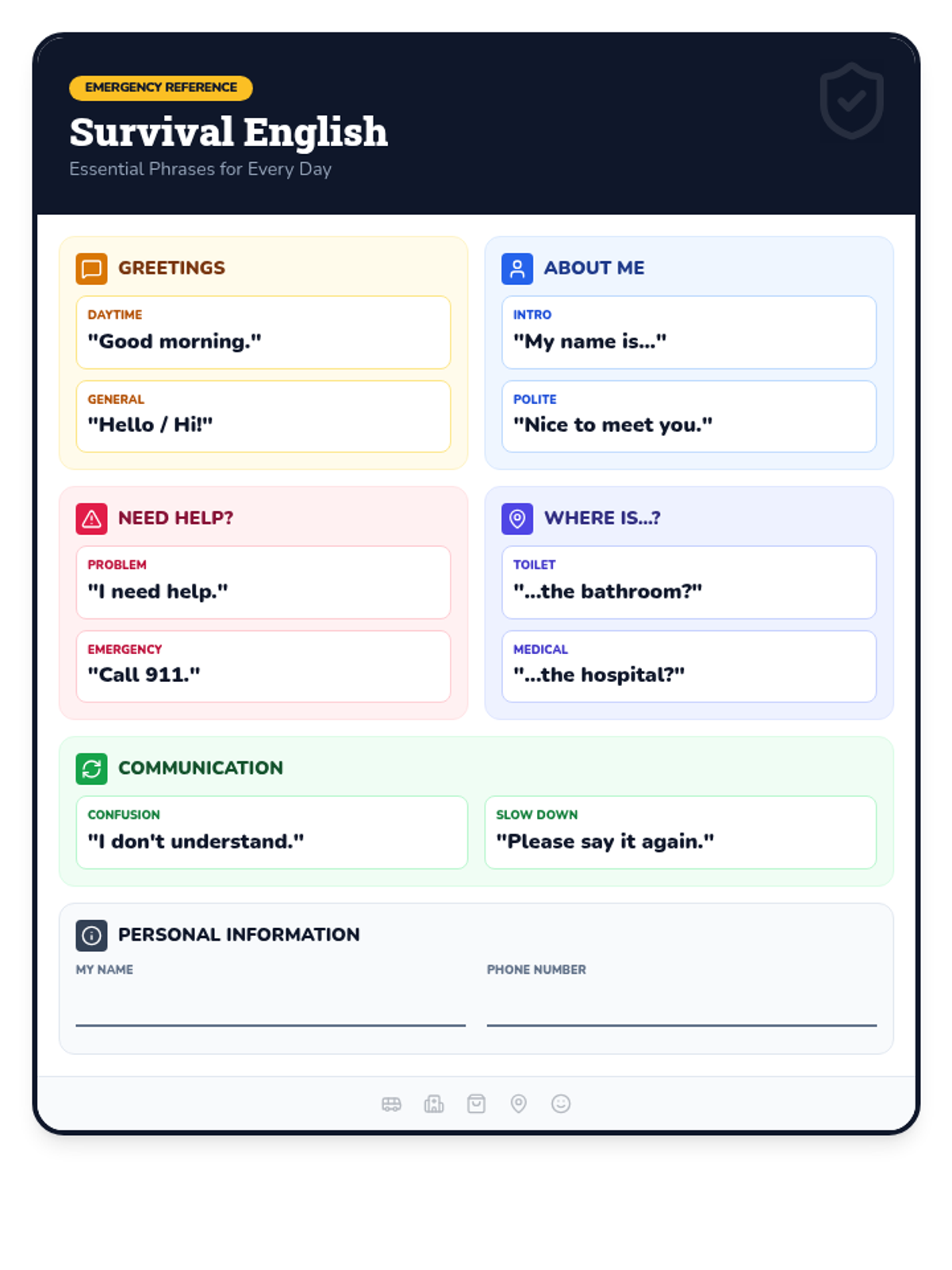
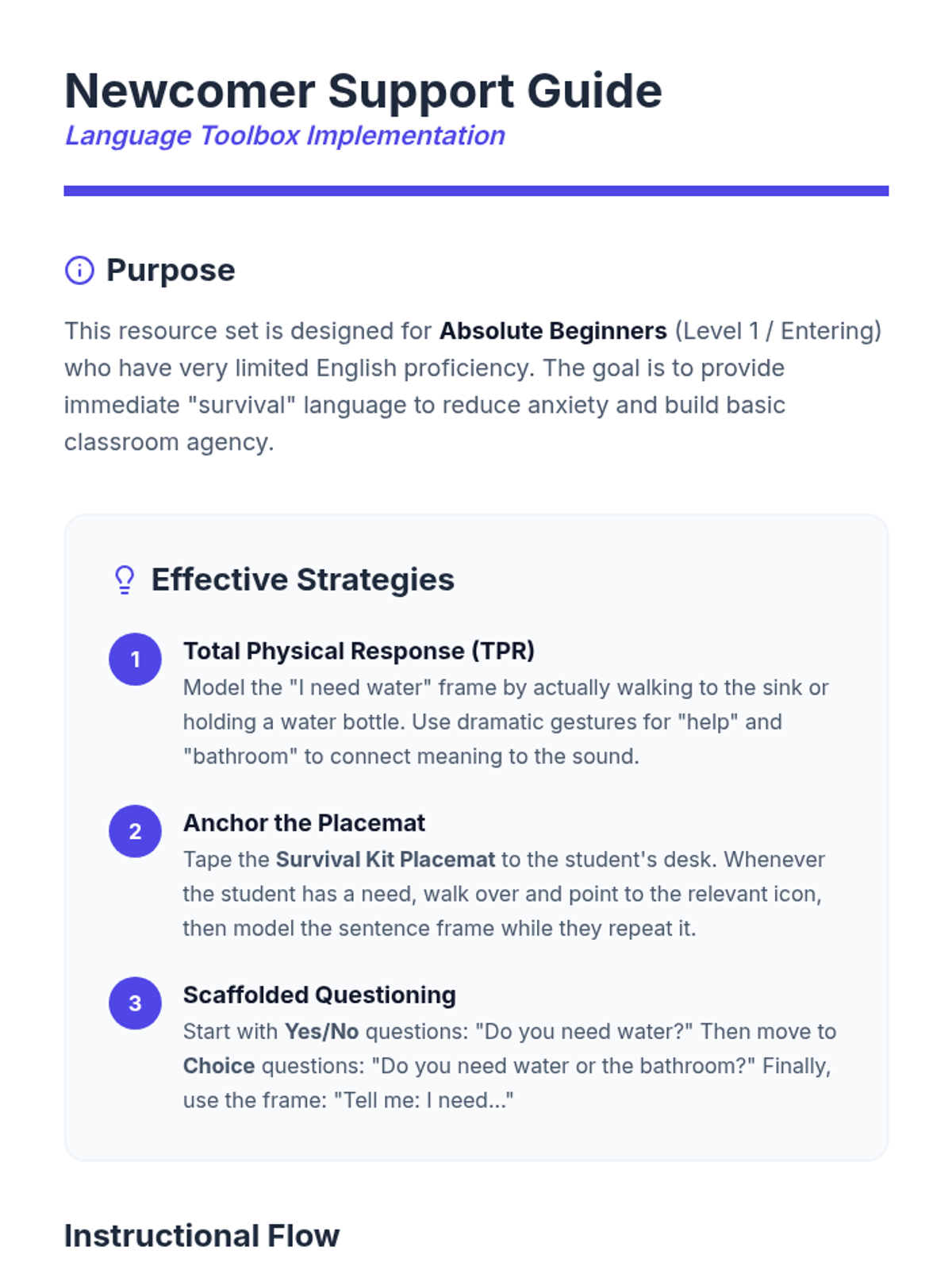
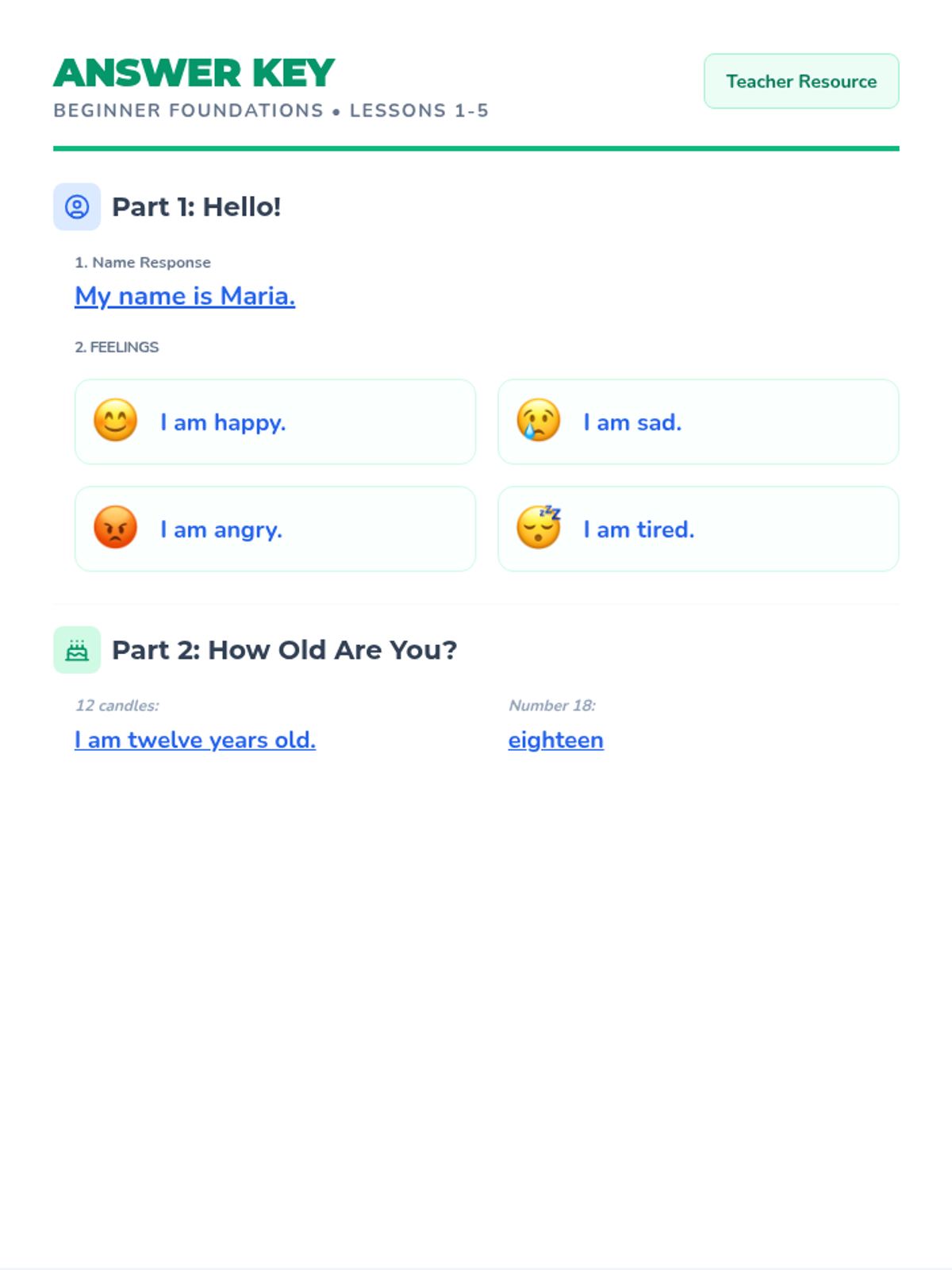
A foundational lesson for Level 1 English Learners to practice constructing simple Subject-Verb and Subject-Verb-Adjective sentences using visual scaffolds and word banks.
The final lesson focuses on animals in motion. Students apply their knowledge to describe animal behaviors and present a 'Nature Live' mini-project.
A lesson focused on traditional community activities. Students describe processes like weaving, drumming, and storytelling in progress.
Students explore weather and seasonal changes using el gerundio. They learn to describe natural cycles like 'lloviendo', 'nevando', and 'brillando'.
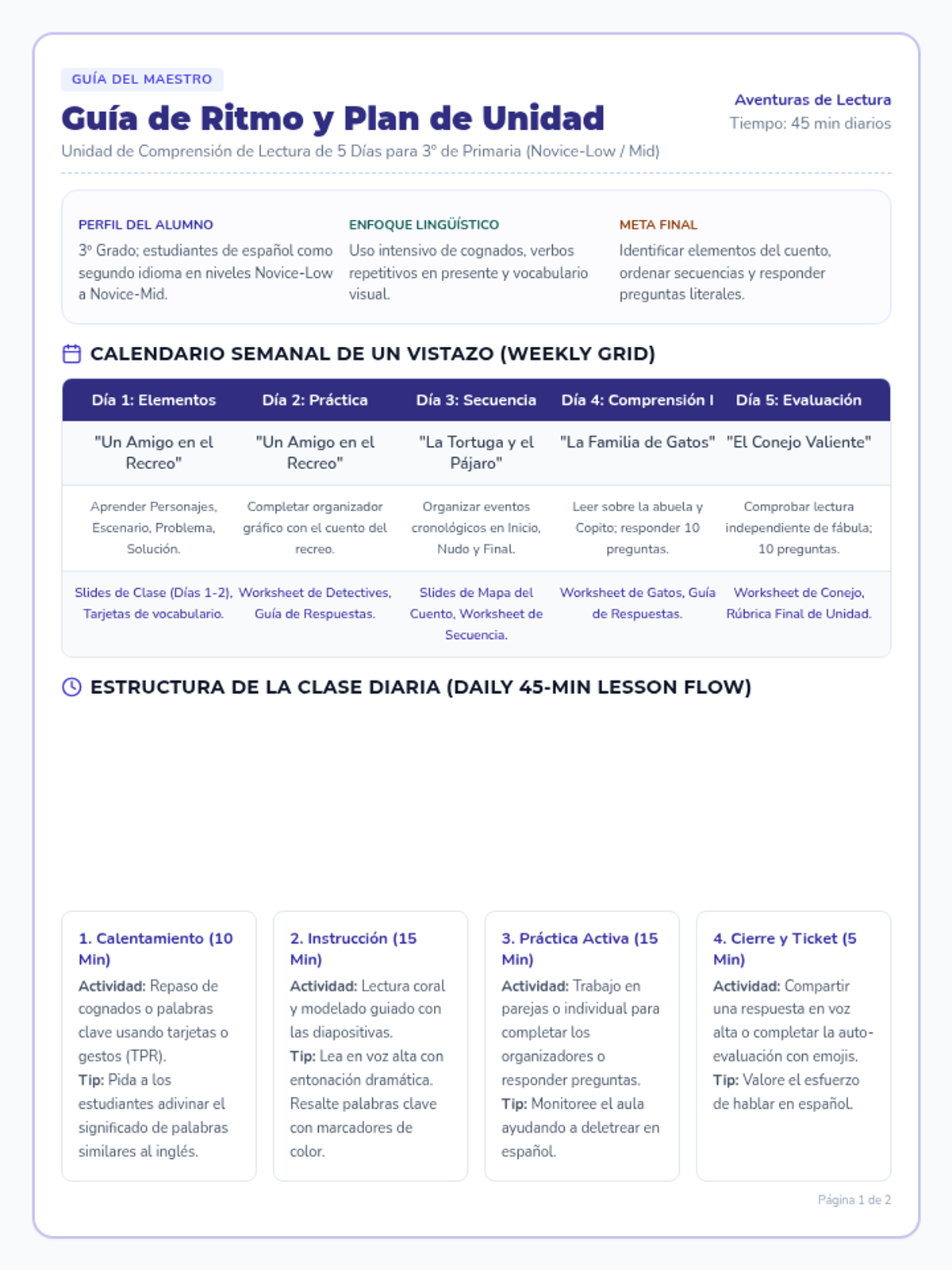
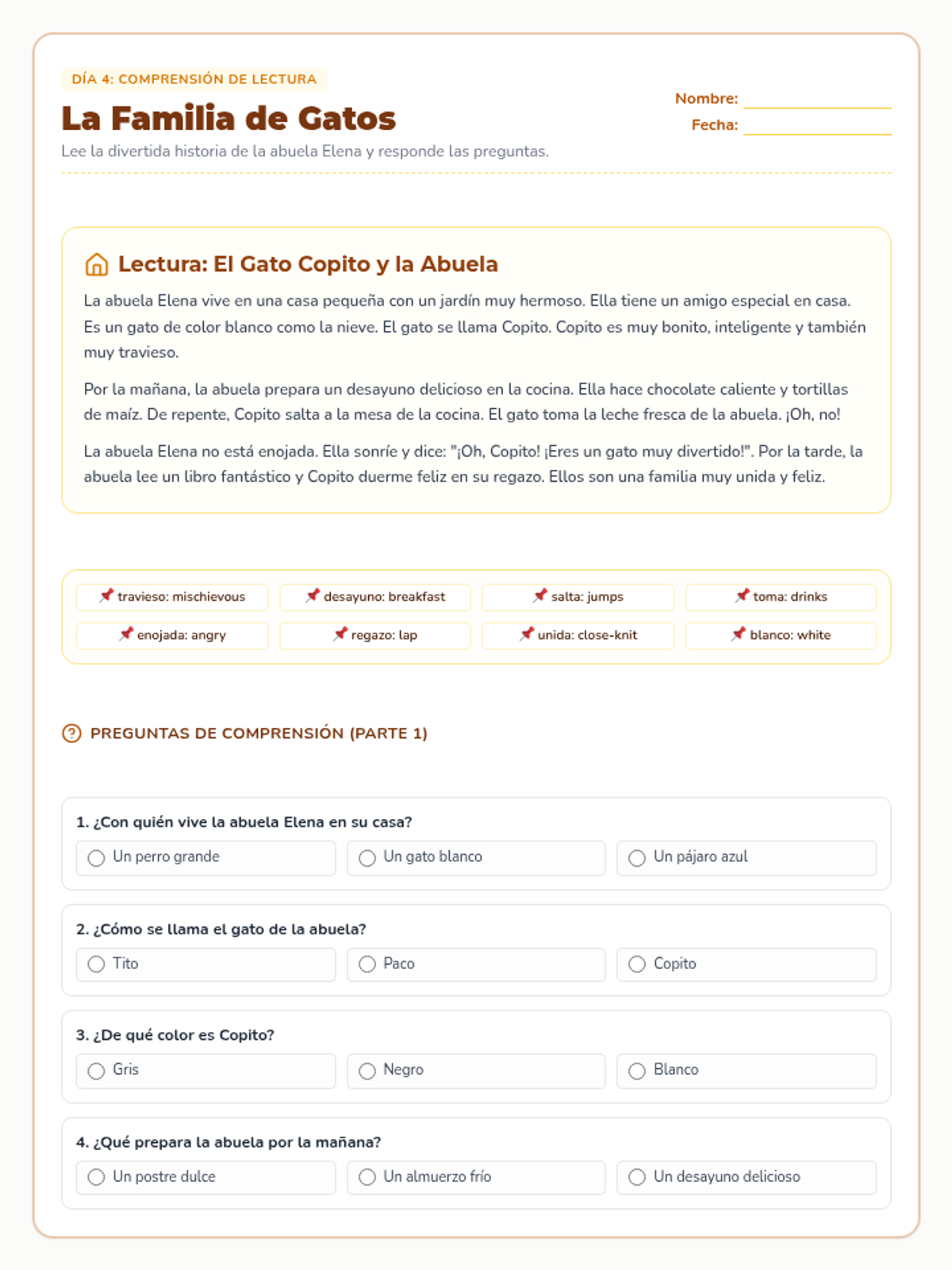
A communicative Spanish lesson for 3rd graders focused on 'el gerundio' (present progressive). The lesson uses themes of nature and community life to teach students how to describe ongoing actions in Spanish.
A lesson focused on the cultural tradition of sending Valentine's Day cards, designed for ESL students to practice functional reading and writing skills.
Students explore the difference between animal imitation and human language through the case study of Alex the Parrot and a communicative roleplay activity.
A beginner ESL lesson focused on identifying and using prepositions of place (on, under, below, in front of, behind, above) through a fun bedroom investigation theme.
A foundational grammar lesson for ESL/ELL students focusing on the four most common irregular verbs (be, have, do, say) and their past tense forms through video analysis and scaffolded storytelling.
A lesson for English Language Learners to identify and practice common American idioms using visual aids and video-based instruction. Students will explore literal vs. figurative meanings and practice using idioms in spoken sentences.
A dynamic lesson for ESL/ELL students to master subject and object pronouns through physical movement and visual examples from Khan Academy. Students practice the 'switcheroo' by tossing a ball and transforming sentences in real-time.
A beginner ESL lesson focused on prepositions of movement through song, character interaction, and physical role play. Students will learn to describe direction using words like into, out of, through, around, toward, past, up, and down.
A beginner-friendly ESL lesson focusing on the simplicity of modal verbs, emphasizing that they never change form (no conjugation). Students explore 'can' and 'will' through a collaborative 'Superpower Circle' activity and reflective writing.
A phonics-focused ESL lesson for 2nd-5th graders practicing the /t/ ending sound in past tense verbs using a Khan Academy video and interactive clapping games.
An introductory lesson using a visual 'tale of two elephants' to distinguish between specific (the) and general (a/an) nouns.
A spooky-themed lesson for 3rd-5th grade ESL students focusing on directional preposition pairs: In/Out and On/Off. Through video analysis, role-play, and visual aids, students master spatial relationships.
This lesson focuses on vowel shifts in irregular past tense verbs, specifically the 'say' to 'said' and 'flee' to 'fled' transitions, helping Elementary ESL students master tricky pronunciations through visual aids, sorting, and partner practice.
A comprehensive lesson for Beginner/Intermediate ELLs focusing on the Simple Aspect (Past and Future). Students will explore the timeline of language through visual aids, a Khan Academy video, and interactive "Will Wall" activities.
In this culminating project, students act as official 'Census Collectors,' interviewing their classmates in Spanish to gather data on ages and birthdays. They synthesize this information into a collaborative classroom data graph.
A synthesis project where students conduct a class wellness survey, collect data, and report findings using third-person conjugations.
Expanding vocabulary with antonyms and intensifiers (muy, un poco). Students analyze character emotions in stories and media.
Moving beyond basic greetings to deep follow-up questions and empathetic responses. Students practice active listening in a 'Speed Chat' format.
Focus on physical sensations using 'tener' idioms (hunger, thirst) and 'estar' conditions (tired, sick). Students simulate a visit to the school nurse.
Introduction to the verb 'estar' for temporary states and high-frequency emotion adjectives. Students practice gender agreement and decode emoji-based sentences.
Bringing all skills together, students practice reading short paragraphs aloud, focusing on flow, linking words, and maintaining correct pronunciation, culminating in a recorded 'voiceover' activity.
Students learn the two basic rules of natural stress in Spanish and how written accent marks (tildes) break those rules. They practice identifying emphasis through rhythmic activities.
Students explore the difference between the single 'r' (tap) and the double 'rr' (trill), learning the physical mechanics of vibrating the tongue. The lesson focuses on distinguishing minimal pairs like 'pero' and 'perro'.
This lesson introduces consonants that function differently in Spanish, such as h (silent), j (aspirated), ll, ñ, and z/c. Students practice tongue placement and air flow to produce these sounds accurately through tongue twister challenges.
Students focus exclusively on the five Spanish vowels (a, e, i, o, u), learning their short, crisp, and invariable nature compared to English diphthongs. Through choral repetition and listening discrimination drills, students practice identifying and producing these core sounds.
Students combine their knowledge of numbers 1-31 with Spanish months to express their birthdays. They learn the proper date format 'el [number] de [month]' and participate in a silent chronological lineup.
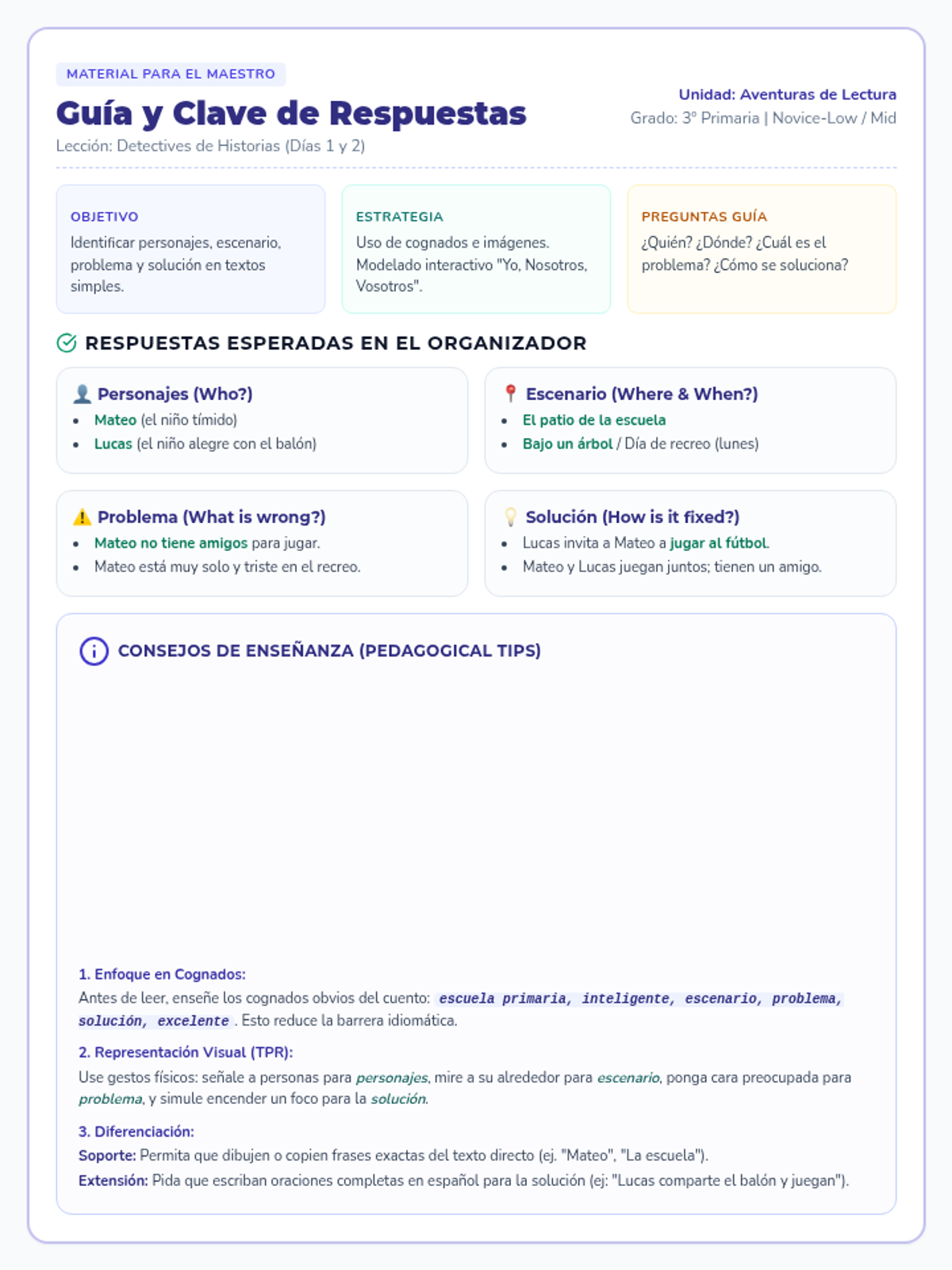
Students learn to ask and answer age-related questions in Spanish. They contrast the Spanish 'tener' (to have) with the English 'to be' and practice their skills by creating and introducing age-specific characters.
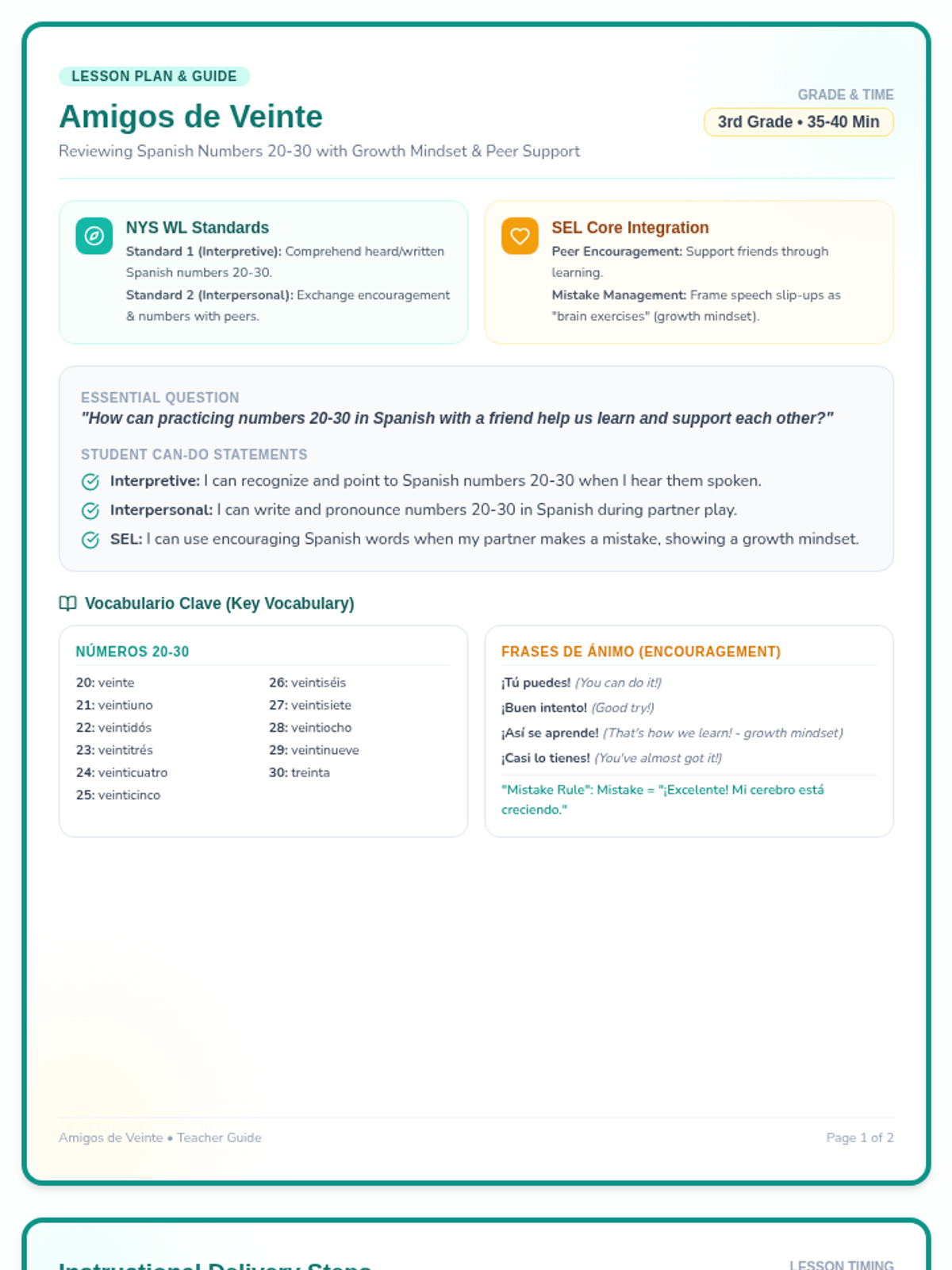
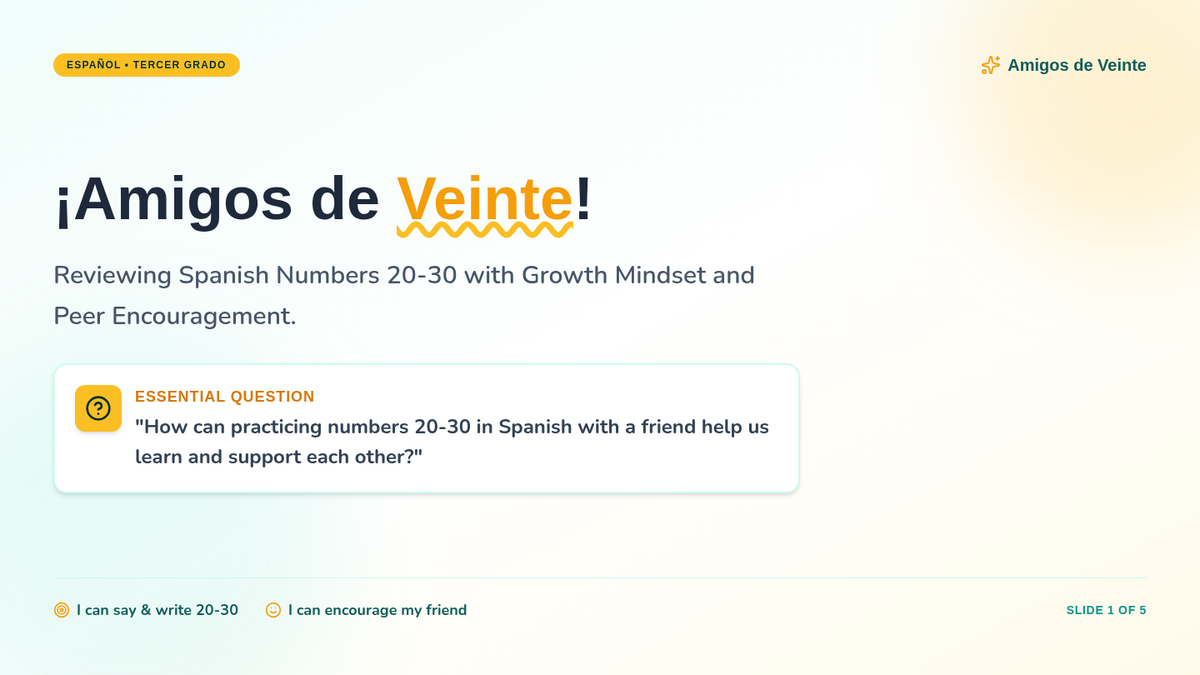
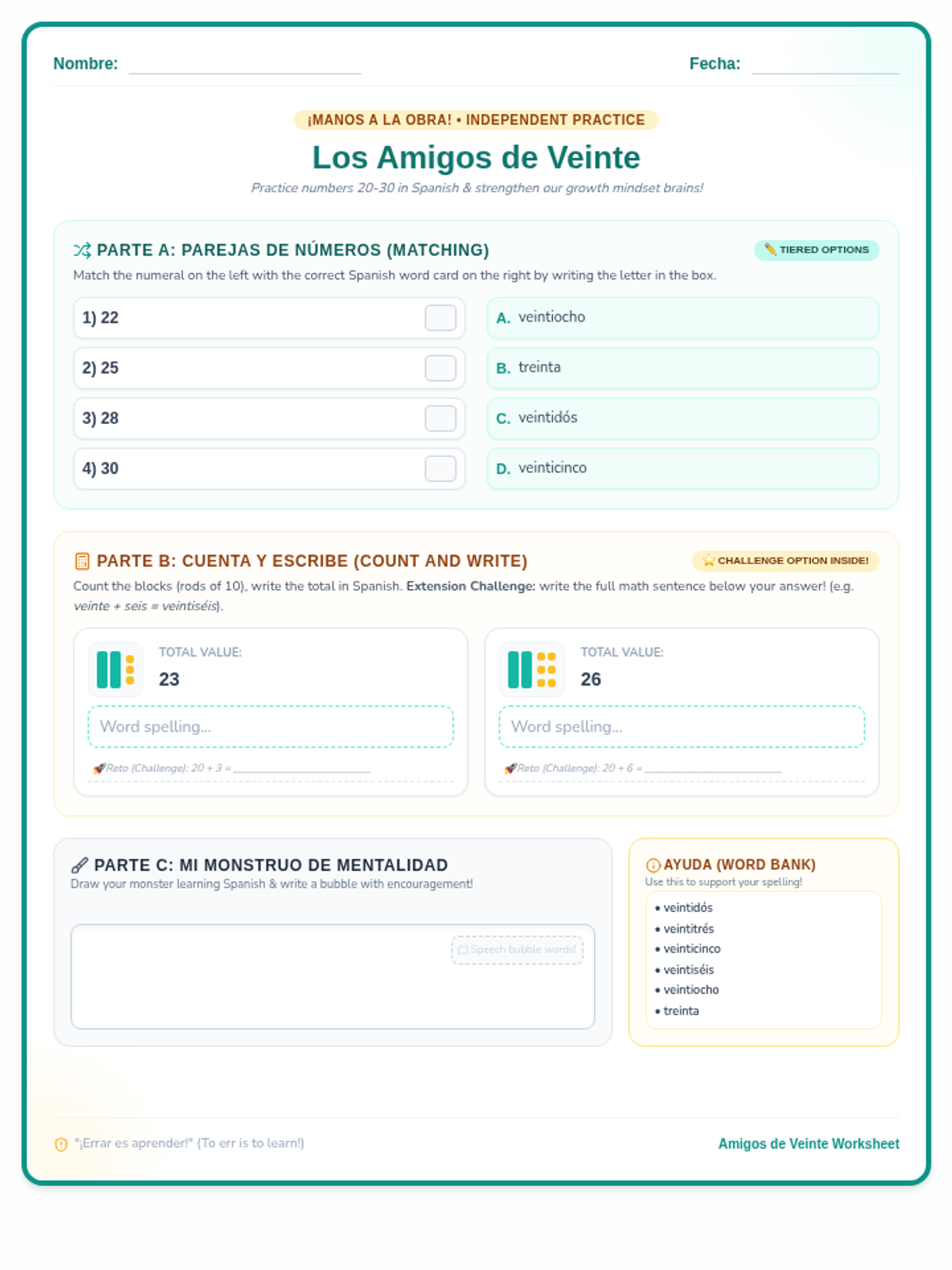
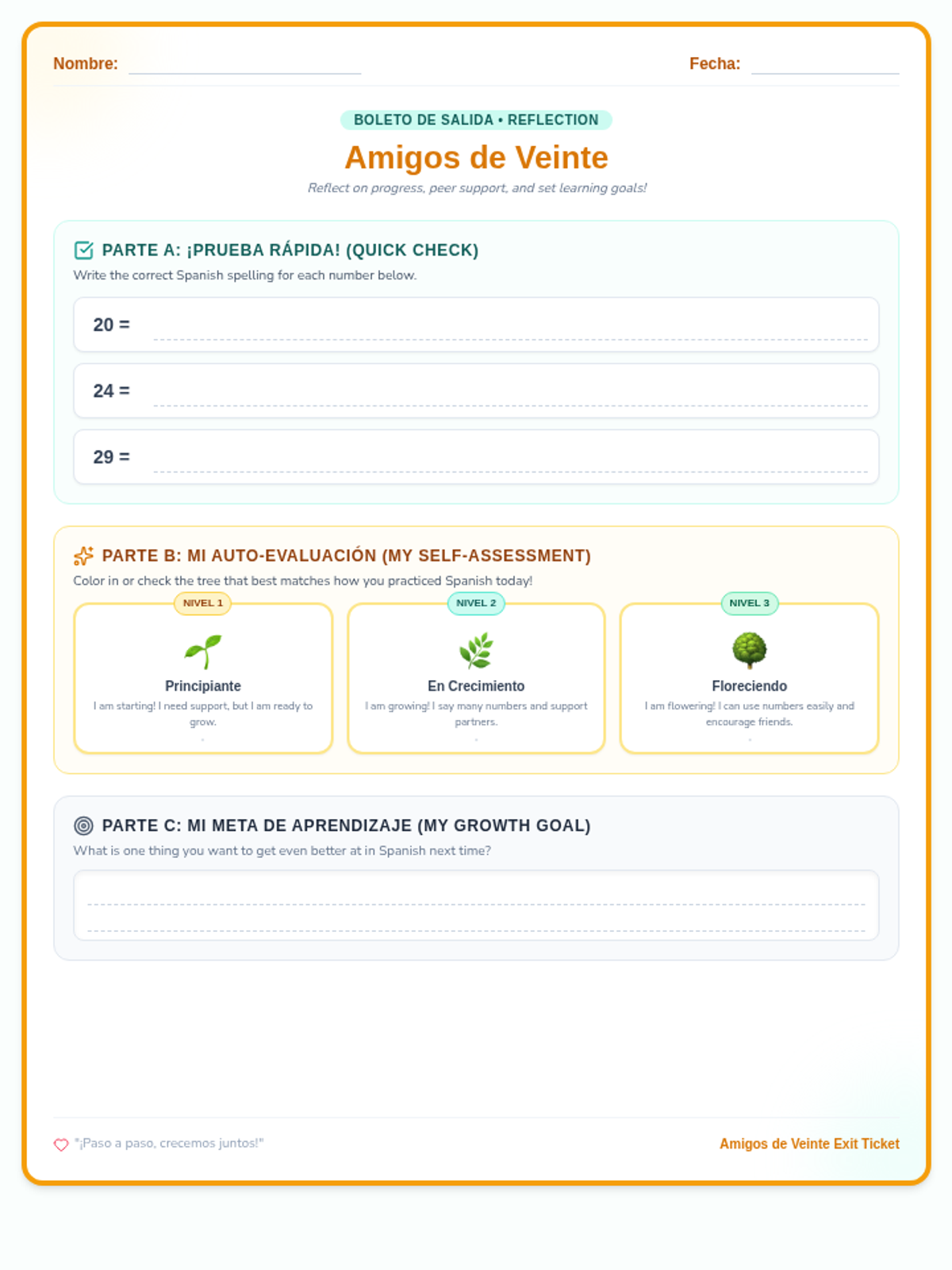
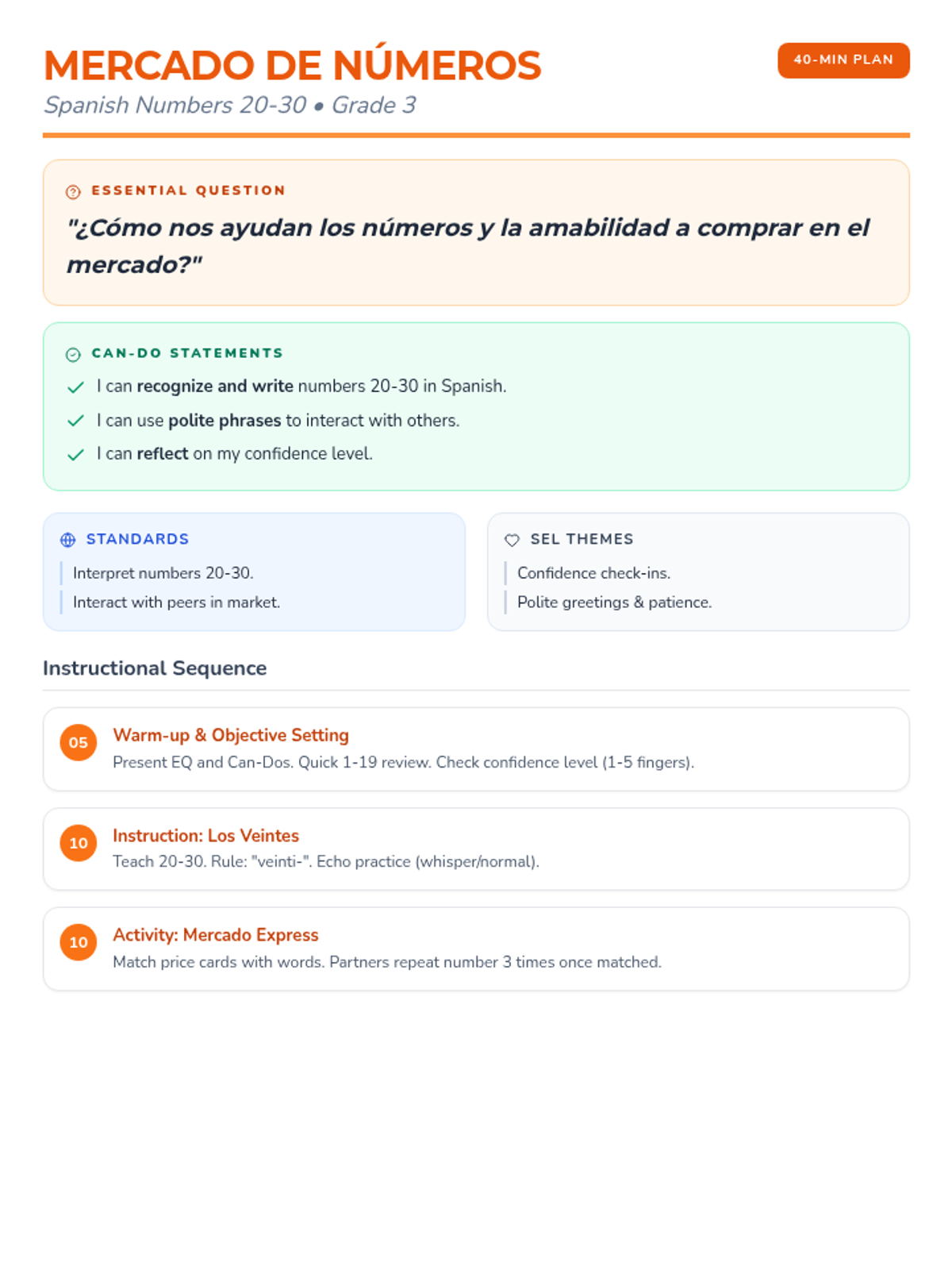
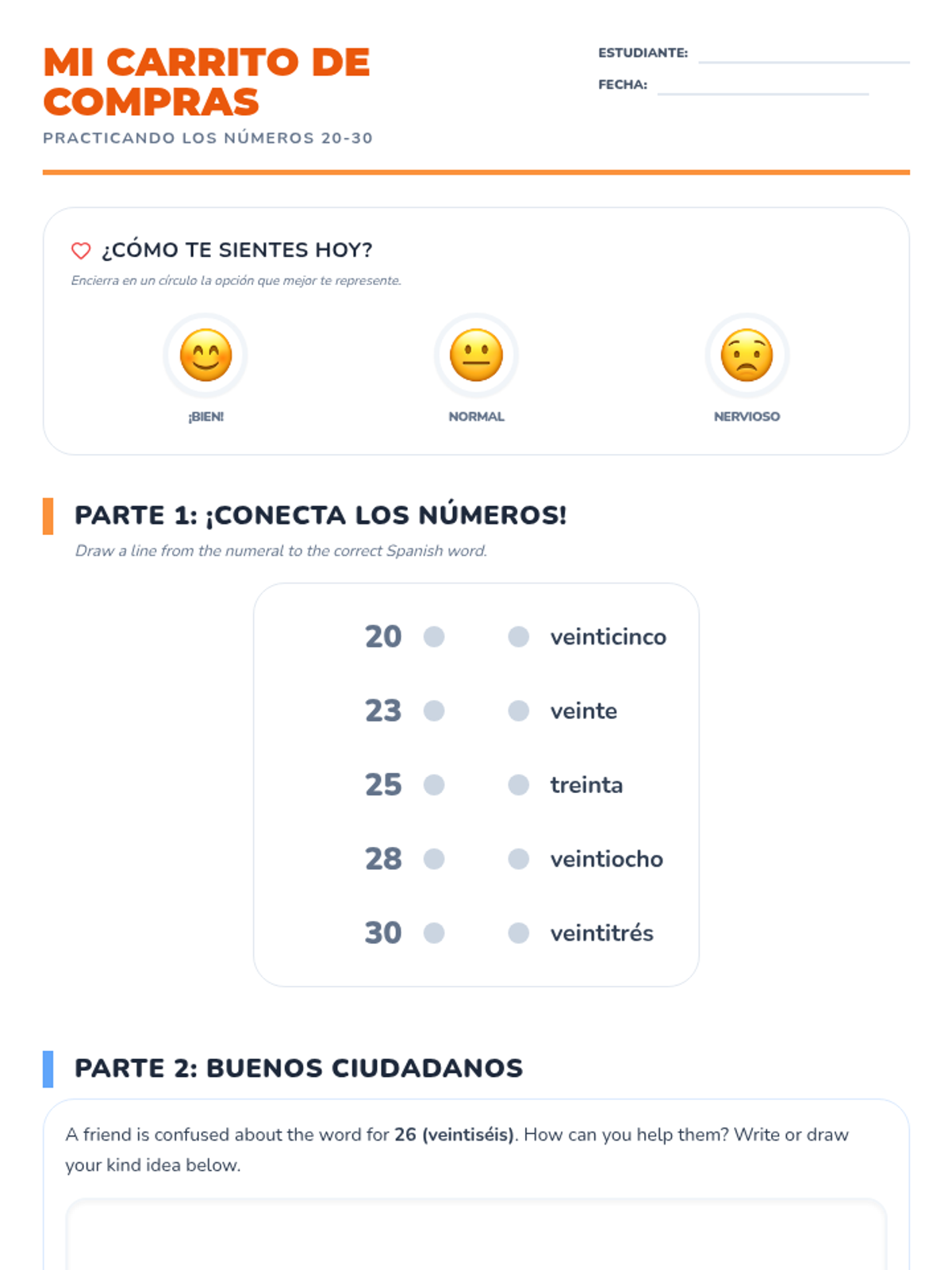
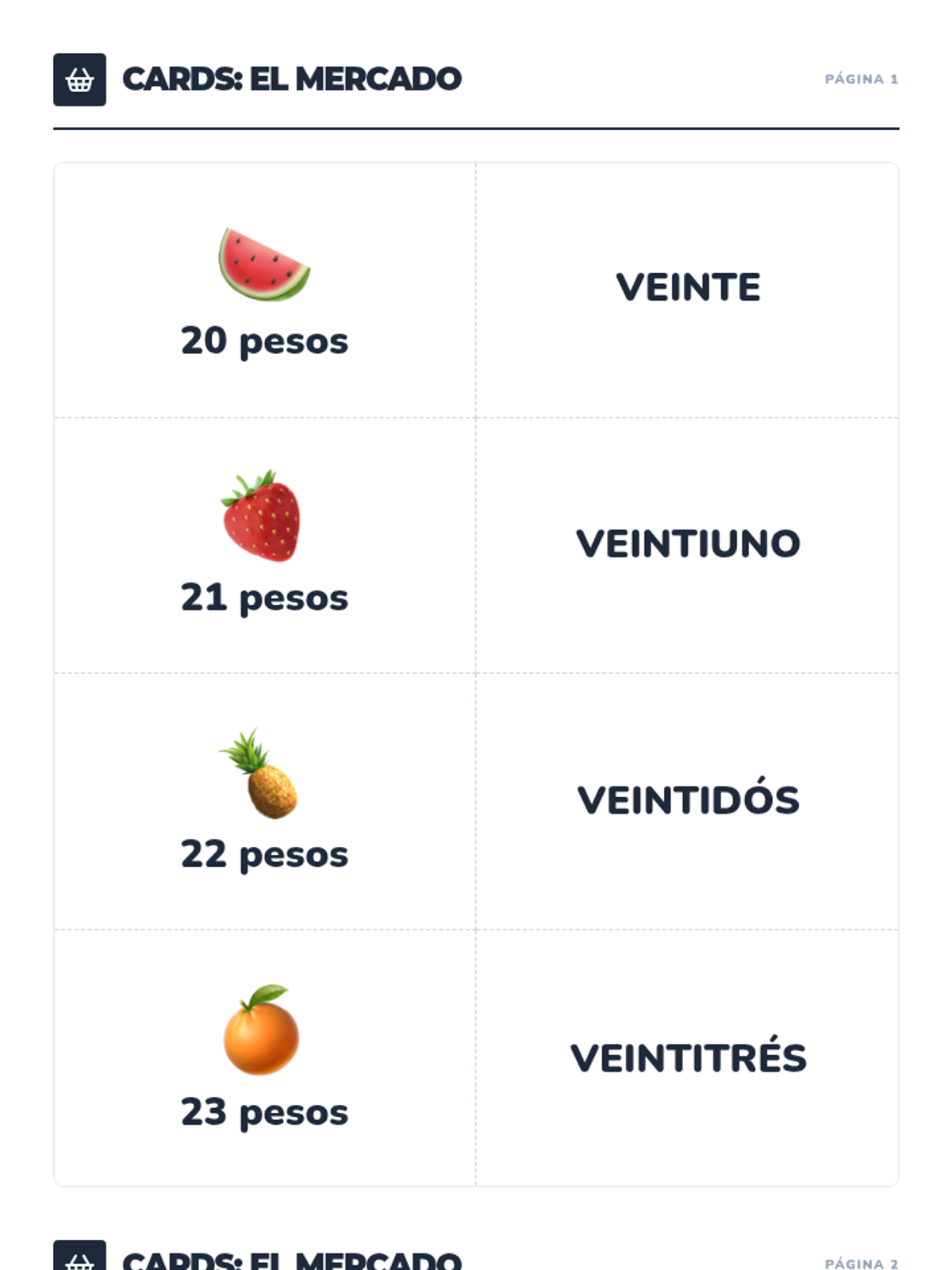
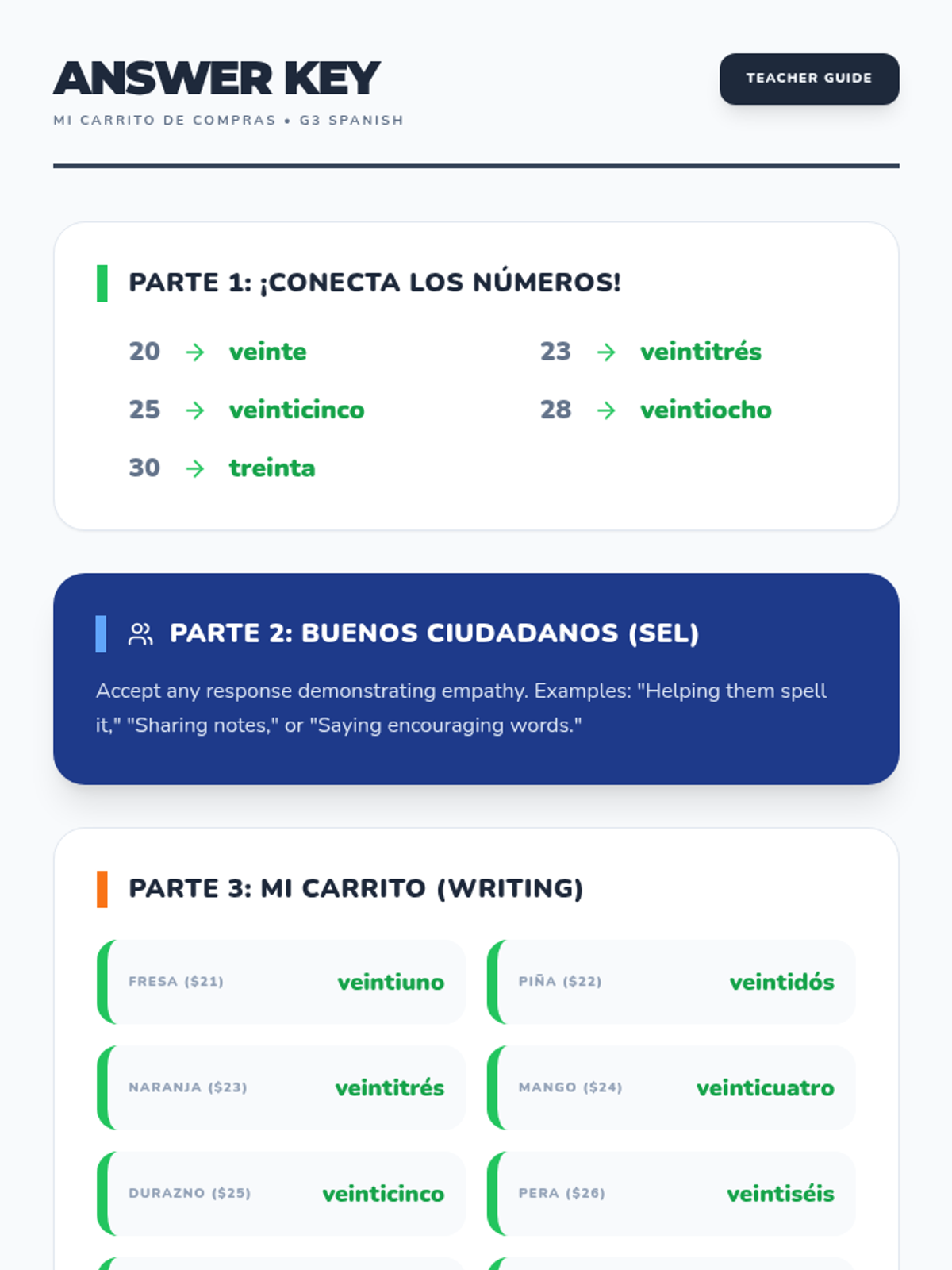
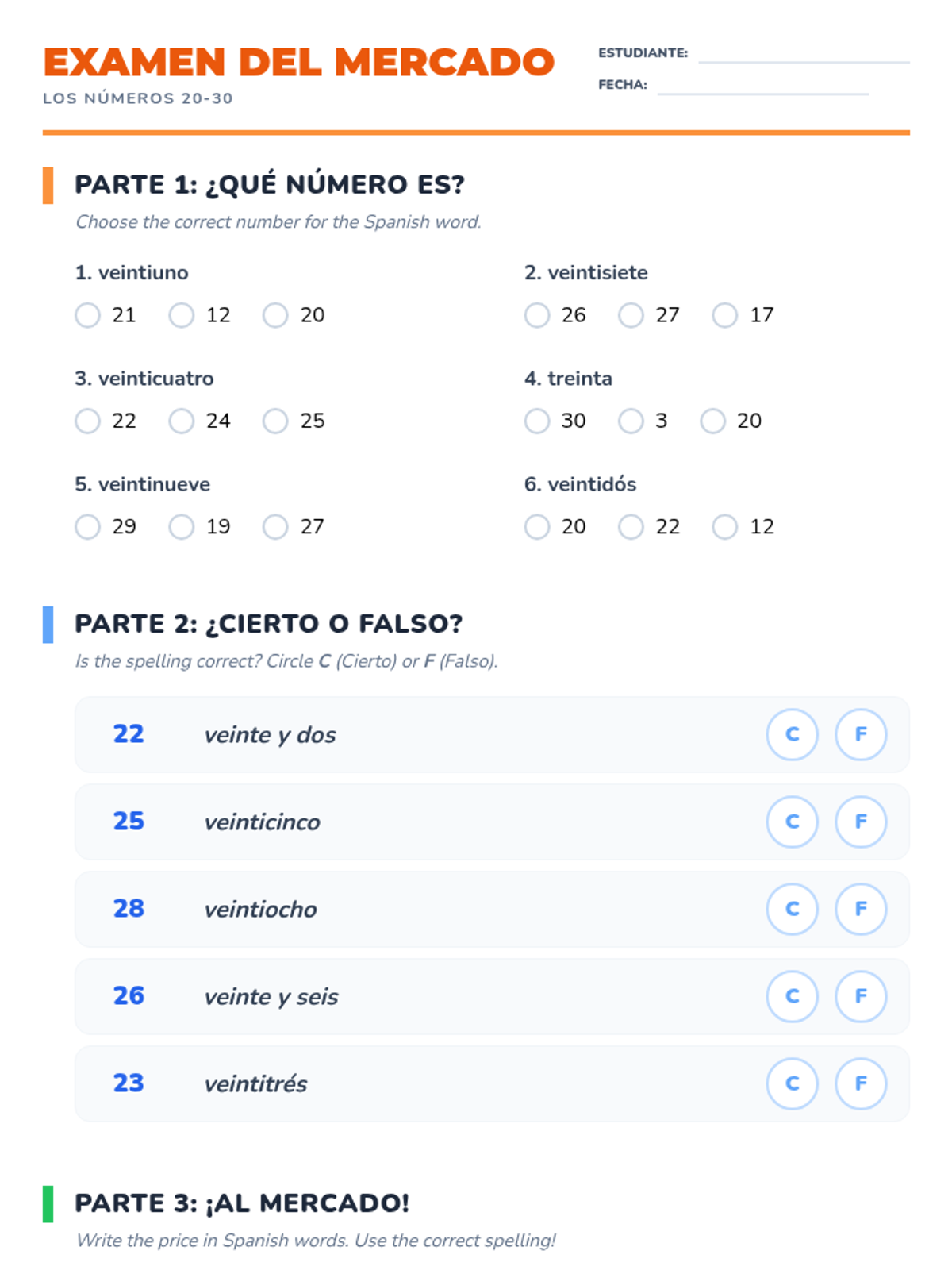
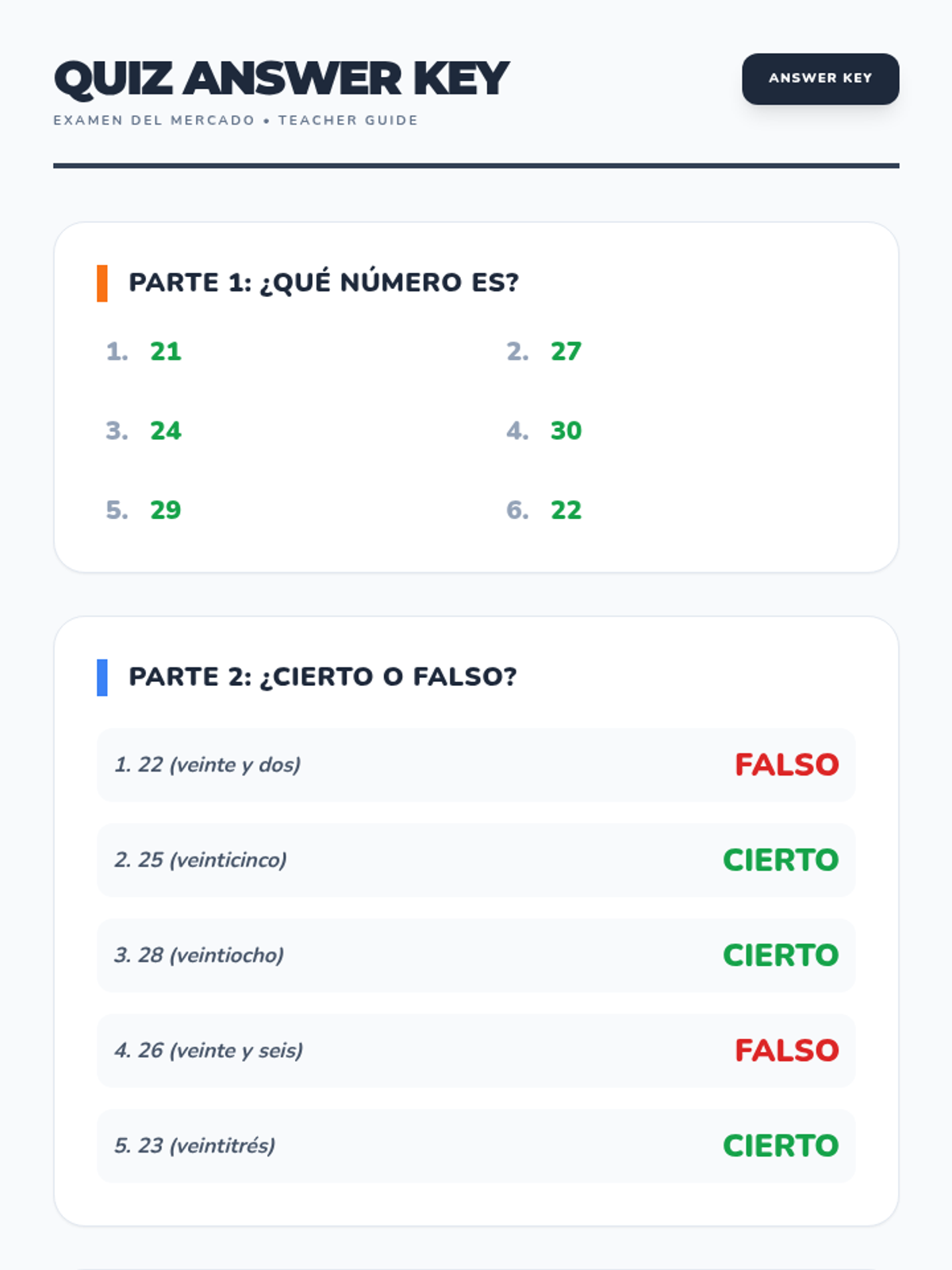
Students master numbers 16-31, exploring the patterns of compound numbers (dieci-) and the change at twenty (veinte). They apply their knowledge through Spanish math problems.
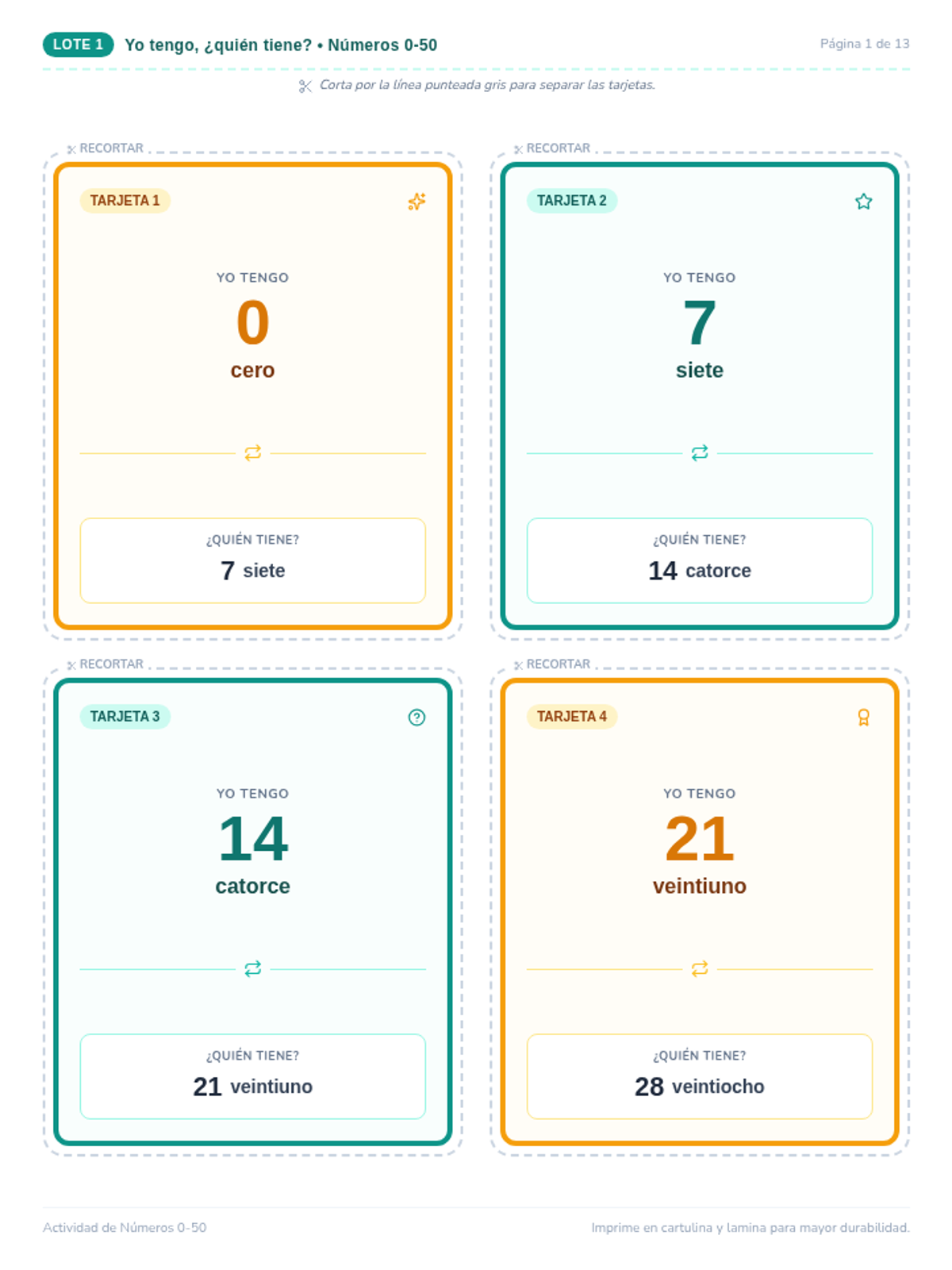
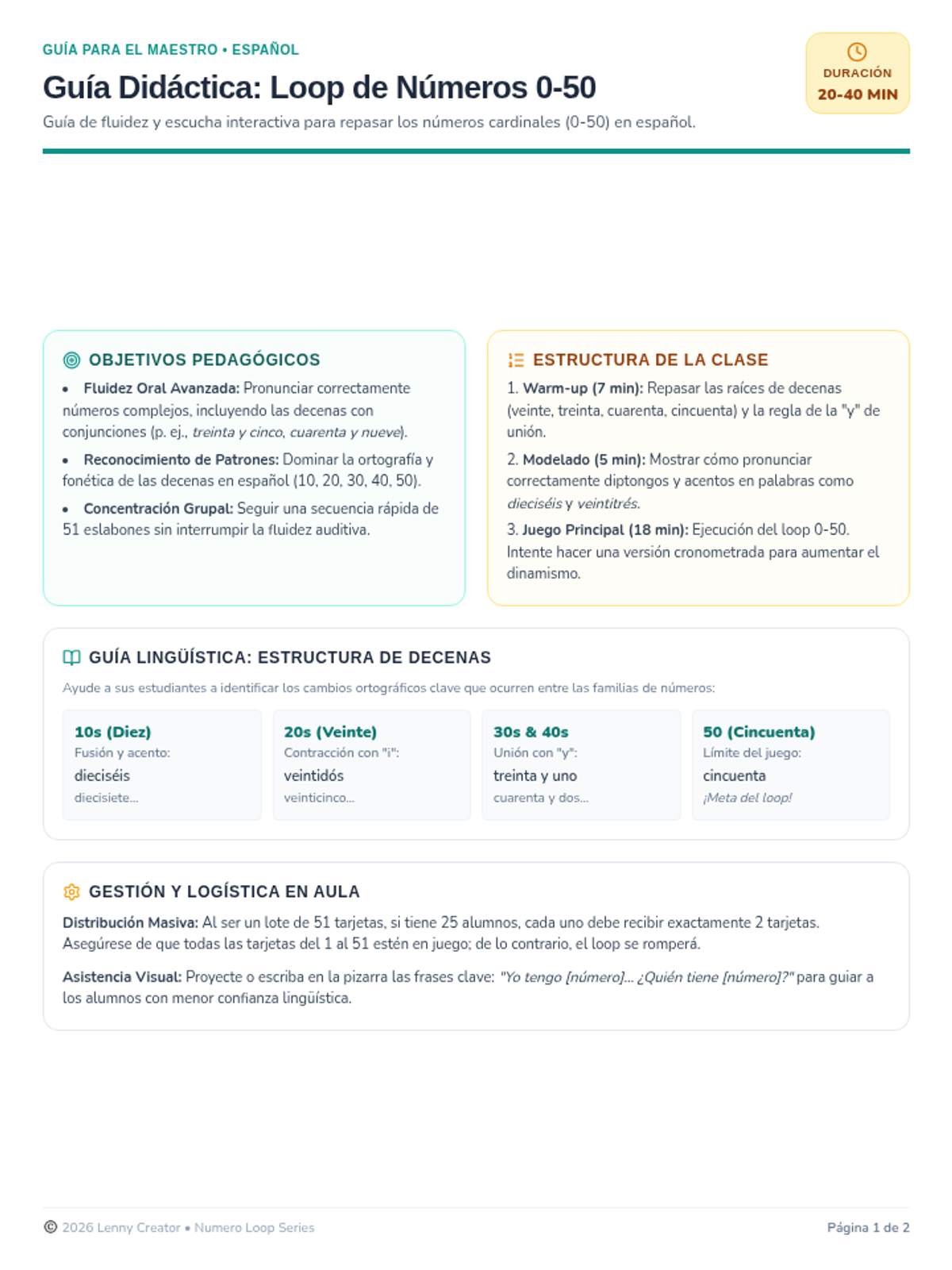
Students learn the first set of numbers (0-15) through rhythmic chanting, visual association, and a game of 'Telephone' to master pronunciation.
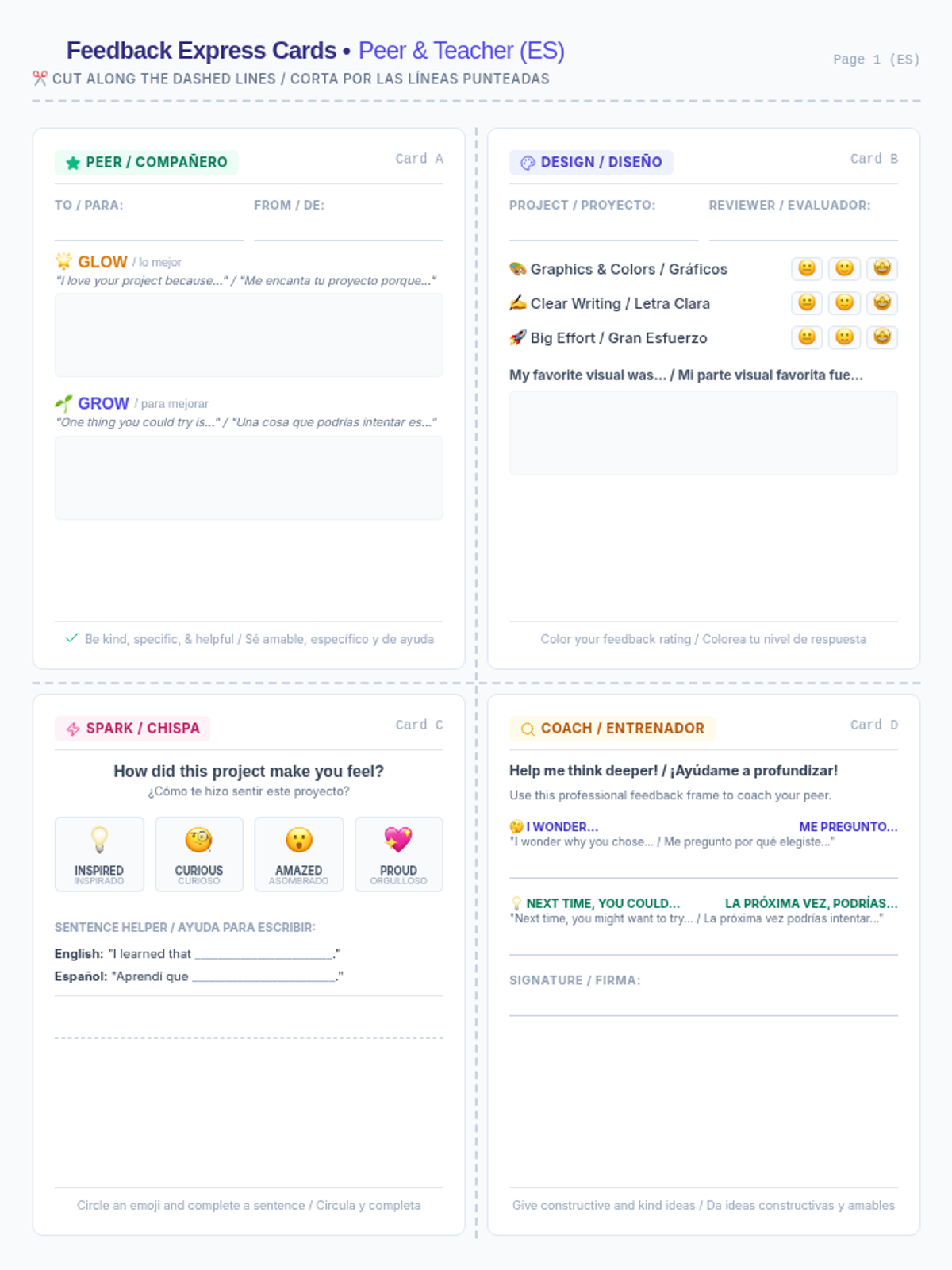
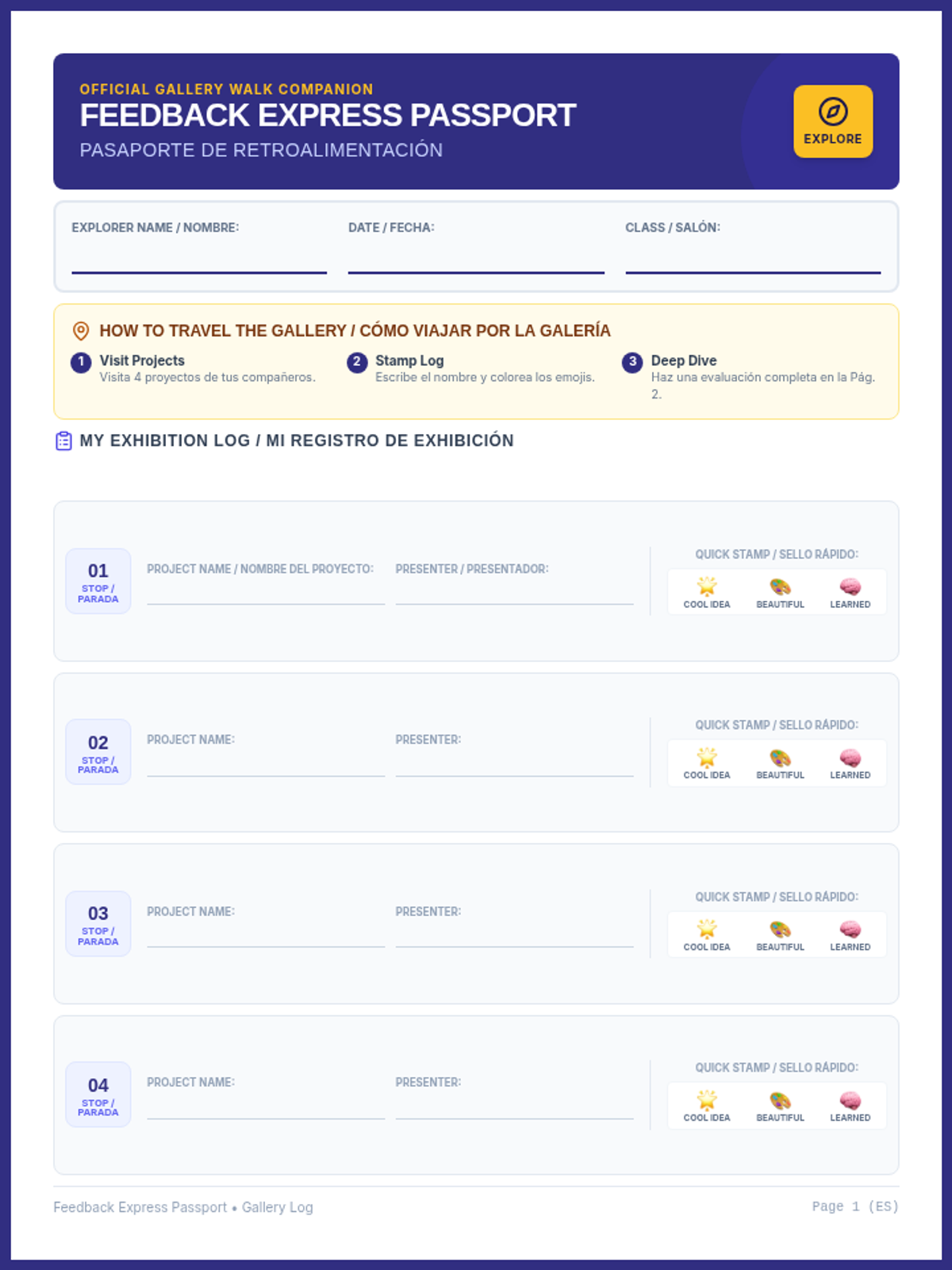
Students present their final 'Star Student' posters in a classroom gallery walk, practicing oral production and listening.
Students synthesize their age, traits, and preferences into a coherent written paragraph in a writer's workshop format.
Focusing on the verb 'aimer', students express their likes and dislikes for various foods and activities.
Learners acquire descriptive adjectives and basic gender agreement by matching traits to diverse characters and superheroes.
Students master numbers 1-20 and the phrase 'J'ai... ans' through rhythmic games and math problems.
A culminating project where students draw from an oral dictation of a 'monster' and then describe their own creations to peers.
Students combine numbers and colors to describe groups of items, focusing on noun-adjective agreement and pluralization (e.g., 'tres manzanas rojas').
This lesson introduces the Spanish word order for descriptions, practicing the placement of color adjectives after the noun (e.g., 'el globo rojo').
Learners explore Spanish color terms (rojo, azul, verde, etc.) through a magic milk science experiment and connections to nature.
Students extend their counting skills to 20 and practice identifying quantities of objects through rhythmic chanting and a 'Price is Right' style marble jar game.
A full-immersion classroom simulation where students apply all learned vocabulary and commands.
Practicing polite requests using 'Necesito' and 'Por favor' through role-playing scenarios.
Engaging with TPR to learn and respond to classroom commands like 'siéntate' and 'escucha'.
Introduction to masculine and feminine articles 'el' and 'la' through color-coded sorting.
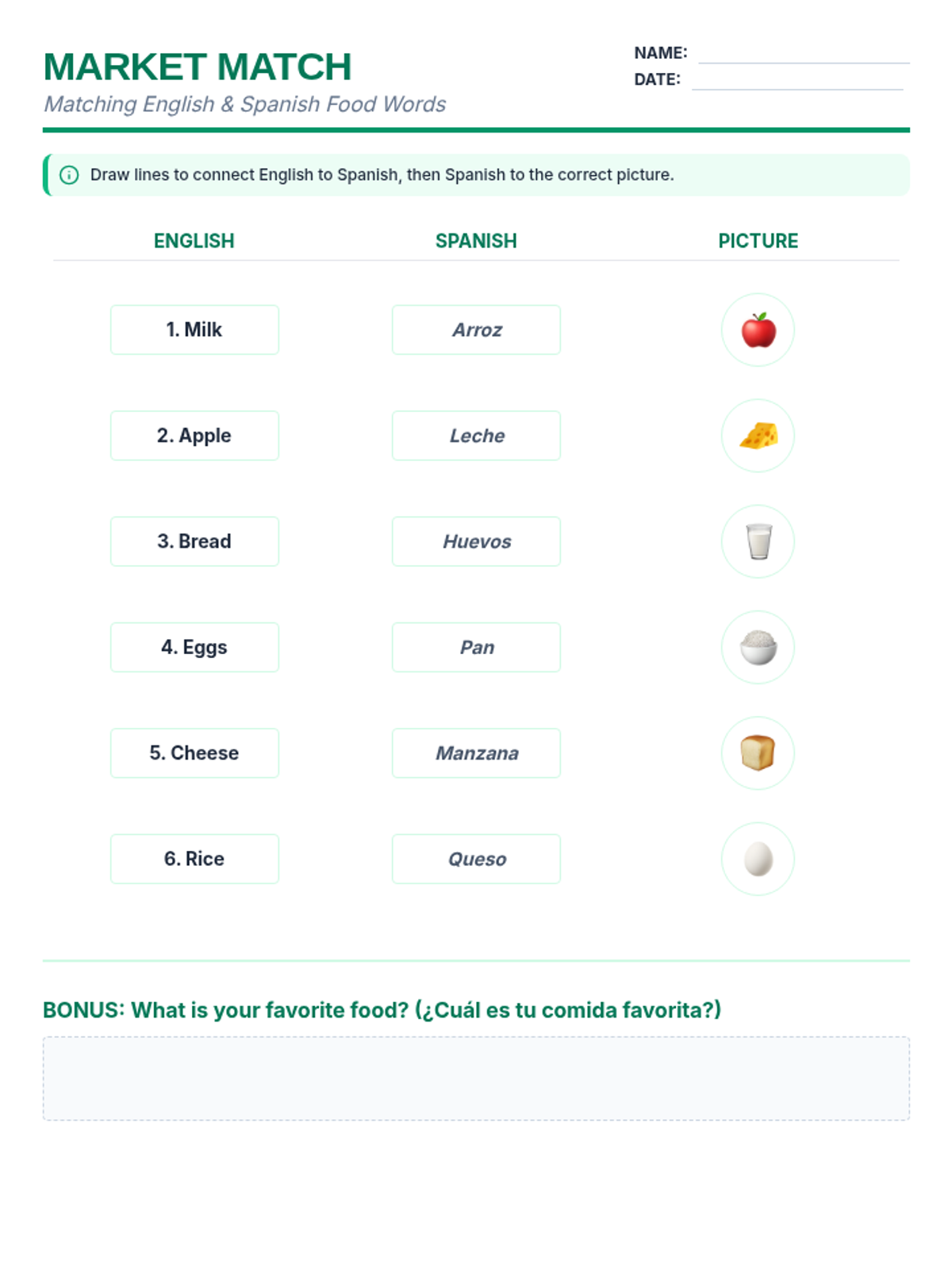
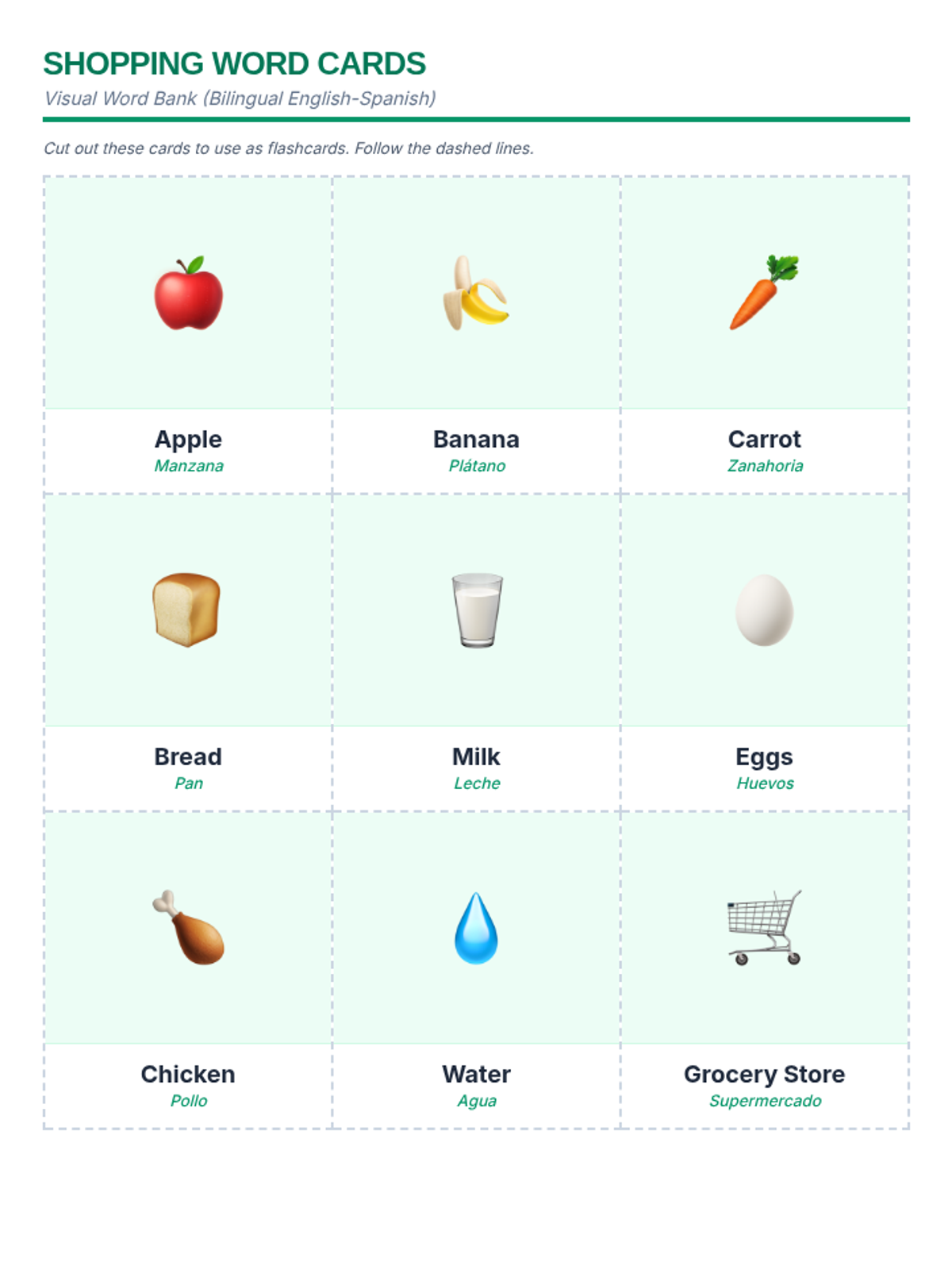
Students label common items and practice phonetic accuracy through a classroom scavenger hunt.
Students synthesize their learning by creating and presenting an 'All About Me' poster in Spanish.
Students learn to express their origin using 'Soy de...' and connect their identity to their city or school.