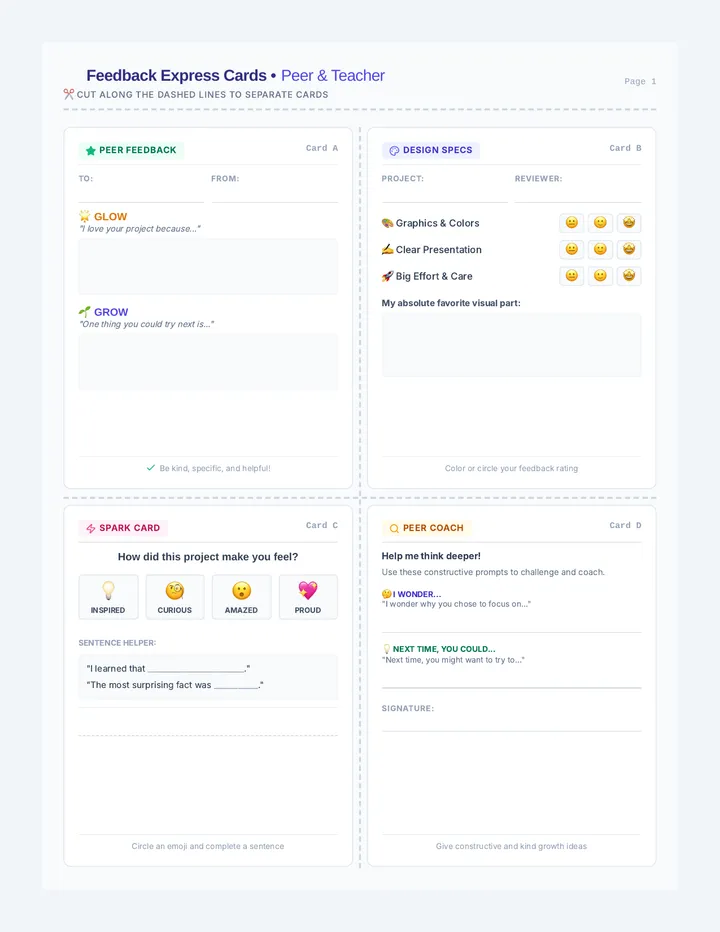
A graphic organizer designed to help students track their initial ideas, record a peer's contribution, and synthesize a final thought in light of the discussion, meeting standard SL.4.1.D.
A quick exit ticket to assess student understanding of interpreting a specific data point and visual icon from a small health-themed infographic. Features scaffolded writing prompts for ESL learners.
A student activity sheet featuring a custom-designed infographic about honeybees. It includes scaffolded questions for title identification, visual interpretation, and data decoding with sentence frames for ESL support.
A visual slide deck designed for ESL Grade 4 students. It explains the anatomy of an infographic (Title, Graphics, Data, Labels) using detective-themed visuals and includes sentence frames for scaffolding communication.
A comprehensive teacher lesson plan for a 45-minute ESL lesson. It includes learning objectives, scaffolding strategies for Emerging/Developing learners, a timed procedure, and key vocabulary definitions.
A peer-reflection checklist for students to assess their own participation and their partner's contributions during a collaborative discussion on community helpers.
A set of discussion sentence frames for 4th-grade ESL students. Includes frames for stating initial ideas and building on peer contributions to satisfy standard SL.4.1.D.
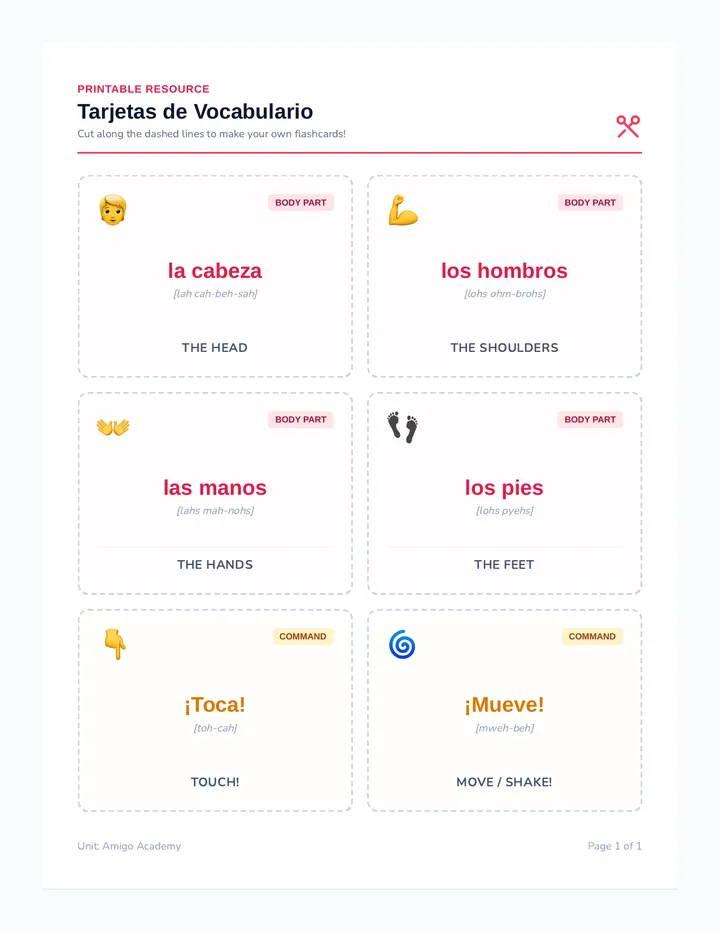
A set of 6 visual vocabulary cards for community helper roles. Each card features a title, large emoji visual, and a brief description of the helper's community impact.
A slide deck for a Grade 4 ESL lesson on community helpers. Includes vocabulary visuals, helper impact highlights, and discussion prompts for collaborative talk.
A teacher facilitation guide for a 45-minute Grade 4 ESL lesson on community helpers, aligned to standard SL.4.1.D. Includes pacing, instructional steps, and differentiation strategies.
A final assessment ticket for Grade 4 ESL students to demonstrate their understanding of might, could, and would using a dinosaur playground scenario.
A worksheet for Grade 4 ESL students with visual scenarios and sentence frames to practice using might, could, and would.
A detective-themed graphic organizer for Grade 4 ESL students to brainstorm possibilities using might, could, and would.
A visually engaging slide deck for Grade 4 ESL students, using a detective theme to teach the modal verbs might, could, and would.
A comprehensive teacher lesson plan for a 45-minute Grade 4 ESL class on modal verbs might, could, and would, featuring a mystery detective theme.
A student worksheet for Grade 4 ESL students with sentence frames and visual prompts to practice 'can' and 'may'. Includes fill-in-the-blank and creative writing sections.
A card-sorting activity where students categorize scenarios as 'ability' (can) or 'permission' (may) using icon-supported cards and category mats.
A bold, high-contrast visual anchor chart distinguishing between 'can' (ability/superpower) and 'may' (permission/academy rule) for Grade 4 ESL students.
A vibrant and engaging slide deck for teaching modal verbs 'can' and 'may' using a Super Academy theme. Features clear definitions, visual icons, and practice scenarios.
A detailed 45-minute lesson plan for teaching modal verbs 'can' and 'may' to Grade 4 ESL students, featuring a 'Super Academy' theme.
A final assessment (Evidence Check Quiz) to evaluate students' mastery of the past progressive tense, including auxiliary verbs, verb endings, and interrupted actions.
A large-format visual reference (anchor chart) showing the past progressive formula (was/were + verb-ing), subject-verb agreement rules, and how to use 'when' for interrupted actions.
A student worksheet featuring a pizza heist mystery scenario where students practice writing past progressive sentences for alibis and combined interrupted actions using 'when'.
A structured graphic organizer styled as a 'Detective's Case Notebook' for students to record subject, auxiliary verb (was/were), and actions observed during the slide presentation.
An engaging 8-slide presentation with a 'Freeze Frame Detective' theme, introducing the past progressive tense formula, the 'was/were' distinction, and interrupted actions using 'when'.
A teacher-facing lesson plan for a 45-minute ESL session on past progressive tense, featuring a 'Freeze Frame Detectives' mystery theme.
A quick formative assessment to check student understanding of key idioms from the lesson. Designed as two per page for easy printing and distribution.
A creative graphic organizer designed like a detective's case file. Students select an idiom to explore by drawing its literal meaning and writing its figurative 'secret code' meaning.
A student worksheet for practicing idioms in context. It includes identification, multiple-choice meaning questions, and a sentence-writing section, all within a detective-themed layout.
A set of matching cards for students to practice identifying idioms. One card features the idiom and a literal illustration, while the matching card provides the figurative definition in clear, ESL-friendly language.
A highly visual slide deck with a detective theme to introduce idioms. Each slide compares the literal and figurative meanings of common idioms with large fonts and bright colors for ESL learners.
A comprehensive teacher's guide for a 45-minute idiom lesson. It includes a step-by-step procedure, materials list, and specific scaffolding strategies for Level 3-4 ESL students.
A quick assessment for students to identify roots and define meanings at the end of the lesson, formatted as four tickets per page.
A comprehensive practice worksheet for students to apply their knowledge of 9 Greek and Latin roots through matching, fill-in-the-blank, and creative drawing/writing exercises.
A thematic graphic organizer for students to visualize word families by placing roots in a tree trunk and related words on branches.
Large, high-contrast visual cards for 9 Greek and Latin roots, featuring icons, meanings, and examples for classroom display.
Visual slide presentation for Grade 4 ESL students introducing 9 Greek and Latin roots through construction-themed visuals, icons, and word examples.
A detailed facilitation guide for teachers to lead a 45-minute lesson on Greek and Latin roots, featuring timed segments, instructional strategies, and differentiation tips for ESL students.
A detailed answer key for the Broad A Lab Worksheet Grade 2, providing correctly marked words and sorted word lists for teacher reference.
A targeted Broad Vowel A sound worksheet specifically designed for Grade 2 students. It includes marking practice for Broad A, a sorting activity to distinguish between Short A and Broad A, and a sentence-level identification task, all within a fun "Lab Report" theme.
A comprehensive reference guide for broad vowel sounds. It details the specific rules and marking conventions for Broad A, O, and U, explains why E and I do not have broad sounds, and provides curated word lists for each phonetic rule.
A fun, detective-themed instructional presentation for kids to learn about broad vowel sounds. Features engaging visuals, simplified language, and interactive-feeling "missions" to identify mouth positions and marking rules for A, O, and U.
A detailed answer key for the Broad Sound Lab Worksheet, providing correctly marked word examples and model explanations for the phonetic comparison between short and broad sounds.
A comprehensive teacher guide for instructing broad vowel sounds. Includes specific scripts for classroom dialogue, phonetic comparisons for mouth positioning, and tips for handling regional sound variations between short and broad vowels.
A detailed instructional presentation for teaching broad vowel sounds (A, O, U). It includes slides for mouth positioning, sound comparisons, specific marking rules for single letters and long vowel variations, and multi-letter phonogram teams.
A comprehensive worksheet for students to practice marking broad vowel sounds for A, O, and U. Includes sections for sorting broad sounds, marking long vowel variations, and reflecting on the phonetic differences between short and broad sounds.
A comprehensive anchor chart detailing the broad vowel sounds for A, O, and U. It includes the number of sounds each vowel makes, phonetic cues for mouth positioning (forward and rounded), and clear marking conventions for single letters, long sound variations, and multi-letter phonograms.
Guía pedagógica en español para el docente. Incluye objetivos de aprendizaje, clave de respuestas detallada para los tres cuentos y consejos prácticos para facilitar la lección sobre comprensión e inferencias.
Hoja de trabajo para estudiantes en español que acompaña a la presentación. Permite a los estudiantes registrar sus respuestas de comprensión e inferencia para cada uno de los tres cuentos. Espacios amplios para escribir y diseño de detective.
Presentación de diapositivas en español diseñada para enseñar comprensión e inferencias a través de una mini-lección y tres cuentos cortos interactivos con preguntas guiadas. Estilo visual de "detective" colorido y amigable.
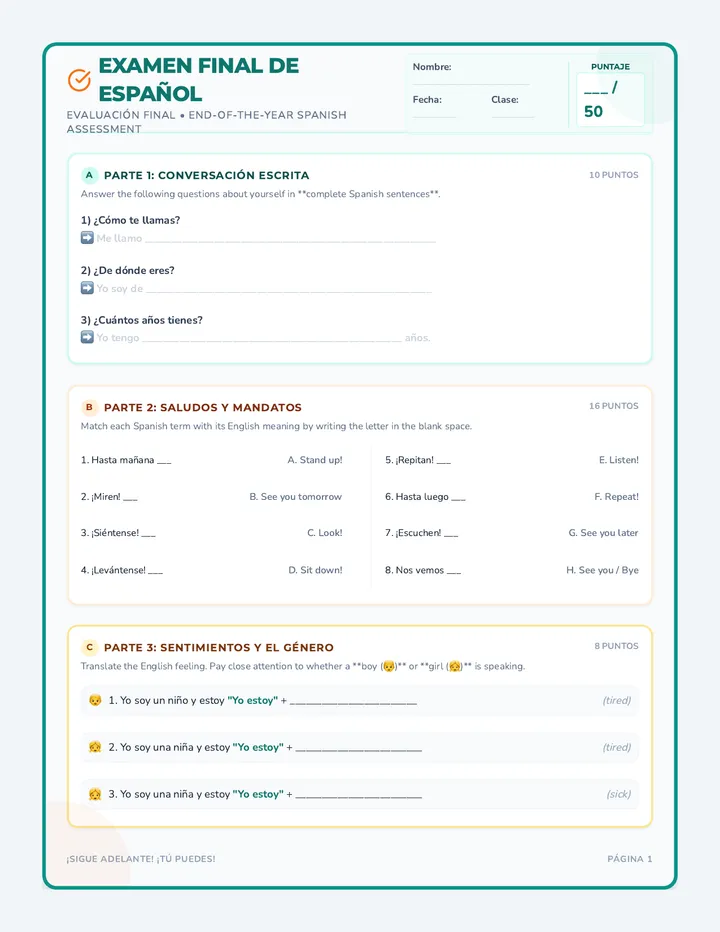
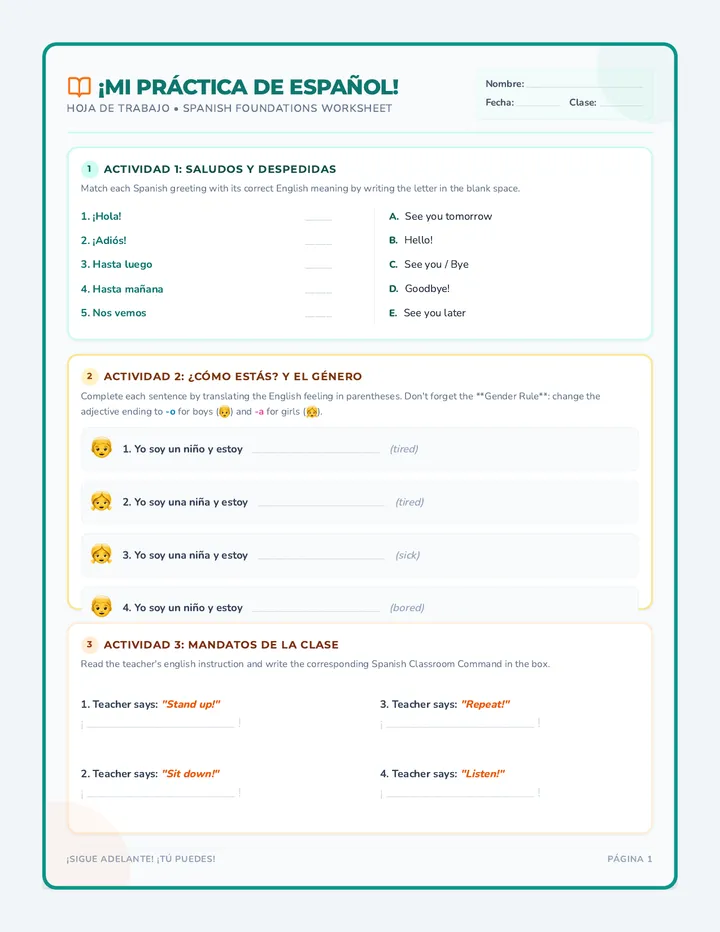
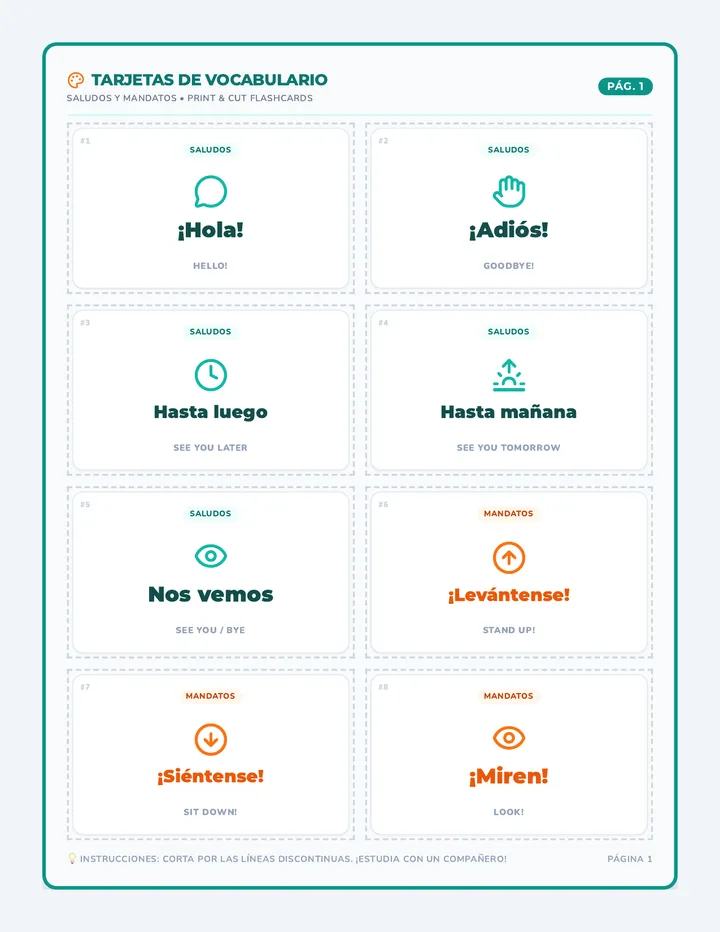
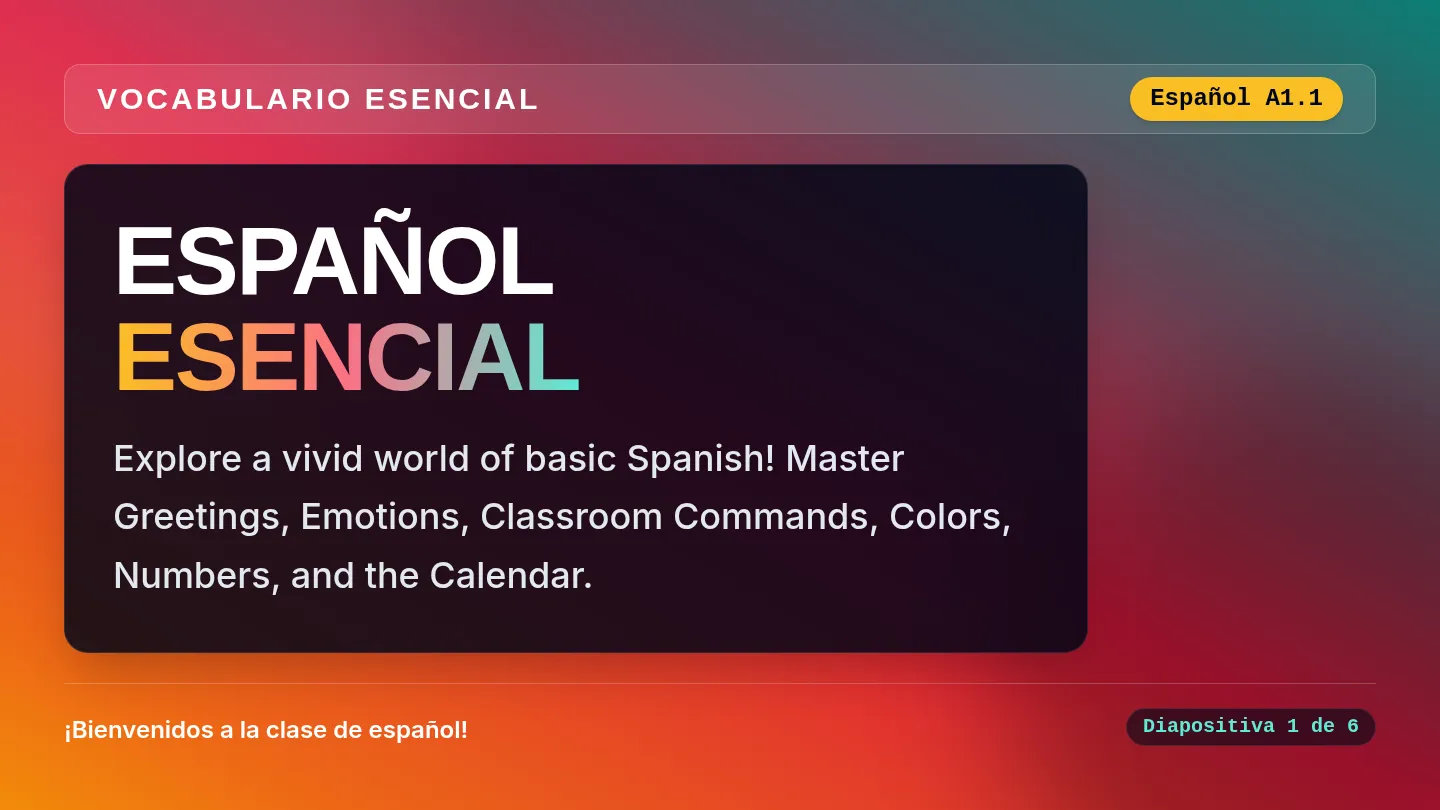
A detailed teacher-facing instructional script with step-by-step prompts, modeling actions, and specific ESL support for teaching the 'i' spelling of the /ee/ sound.