Instructional slides for the Segmenting with Beads lesson, focusing on the use of tactile beads on a pipe cleaner to count phonemes in CVC words.
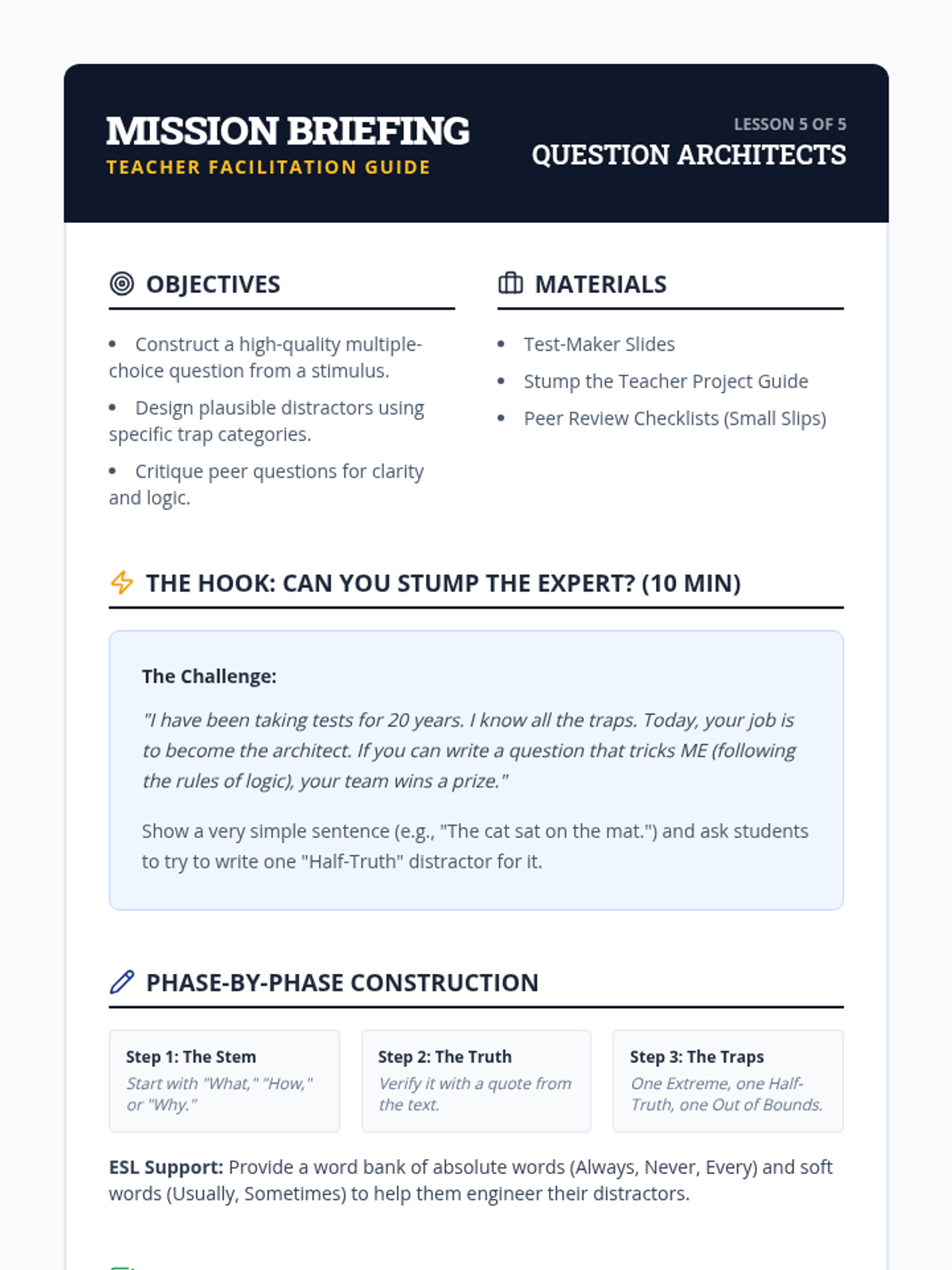
Facilitation guide for Lesson 5, including the "Stump the Expert" hook, phase-by-phase question construction steps, and a peer review protocol.
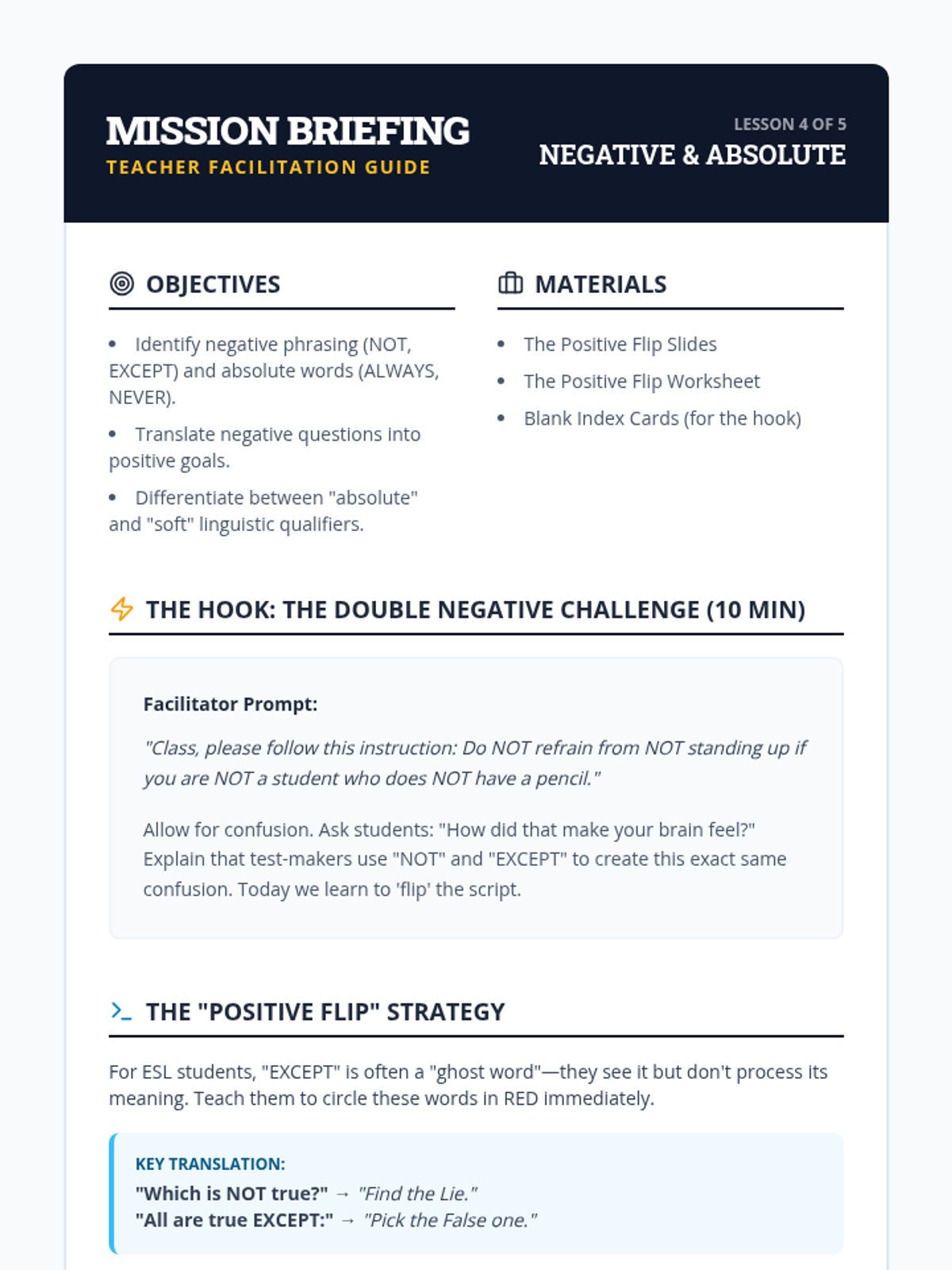
Facilitation guide for Lesson 4, including the "Double Negative Instructions" hook, translation strategies for "NOT" and "EXCEPT," and an answer key for the Positive Flip worksheet.
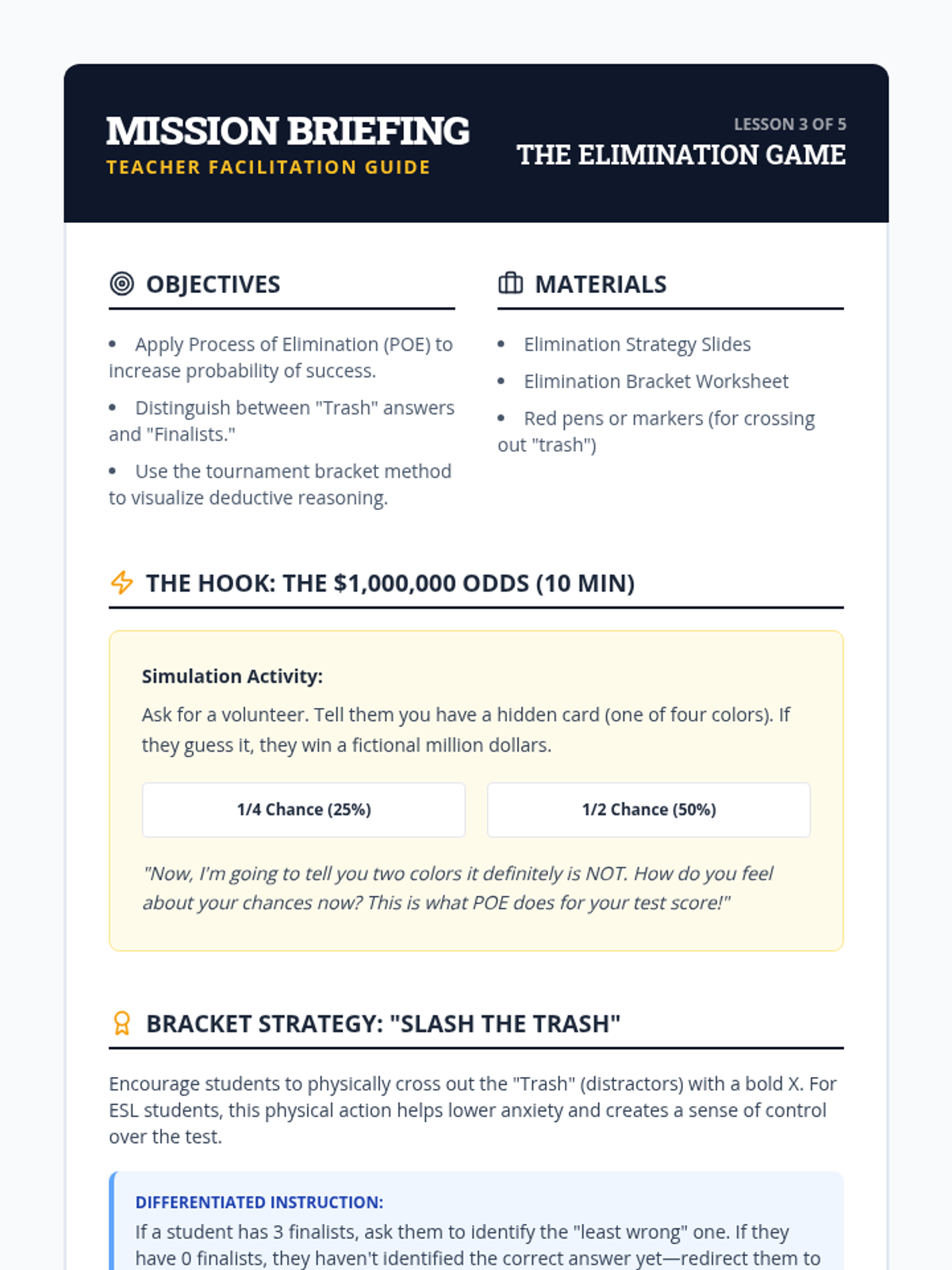
Facilitation guide for Lesson 3, including the odds simulation hook, the "Slash the Trash" technique, and an answer key for the Elimination Bracket worksheet.
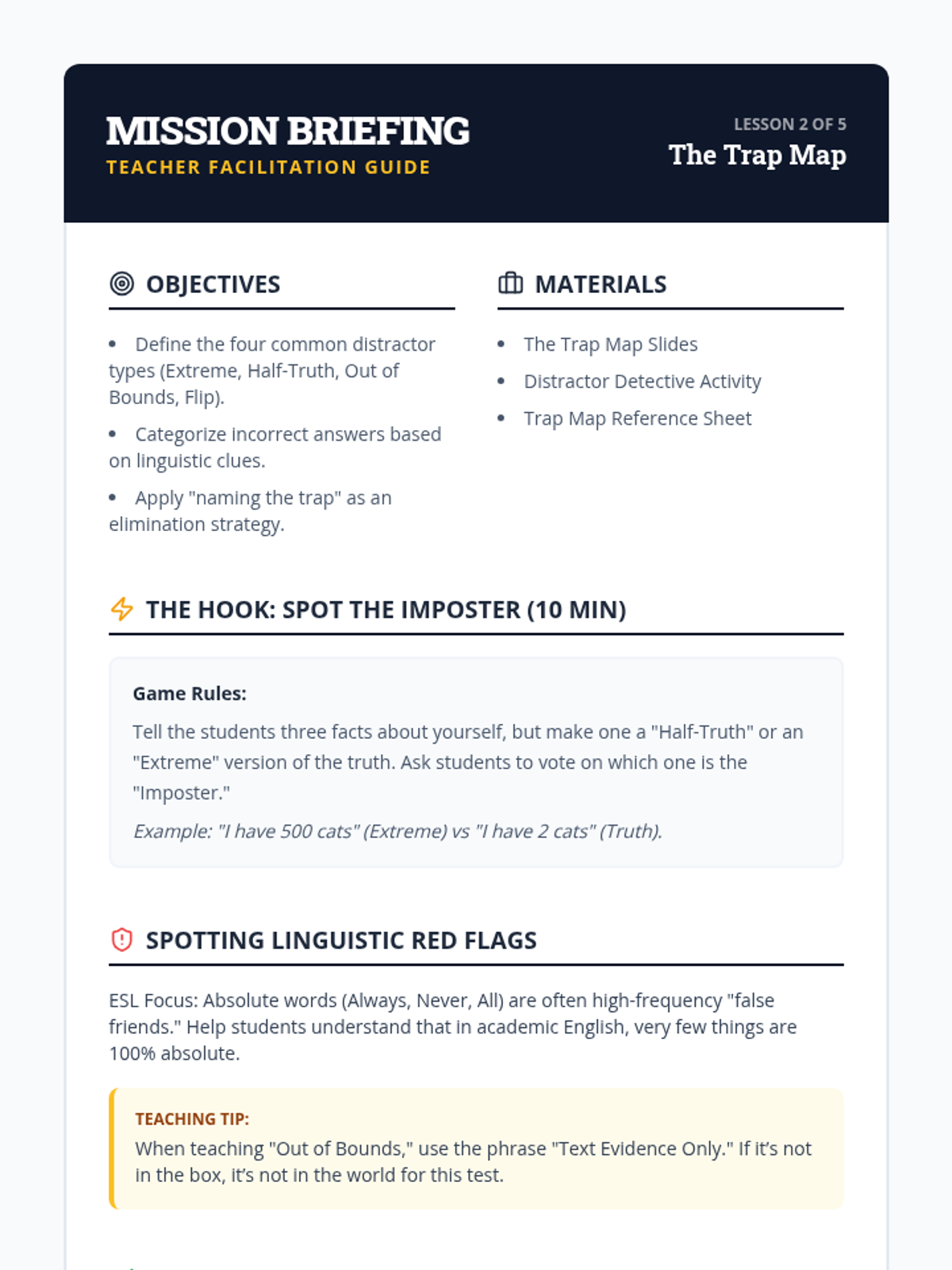
Facilitation guide for Lesson 2, including the 'Spot the Imposter' hook, linguistic red flags for ESL learners, and an answer key for the Distractor Detective activity.
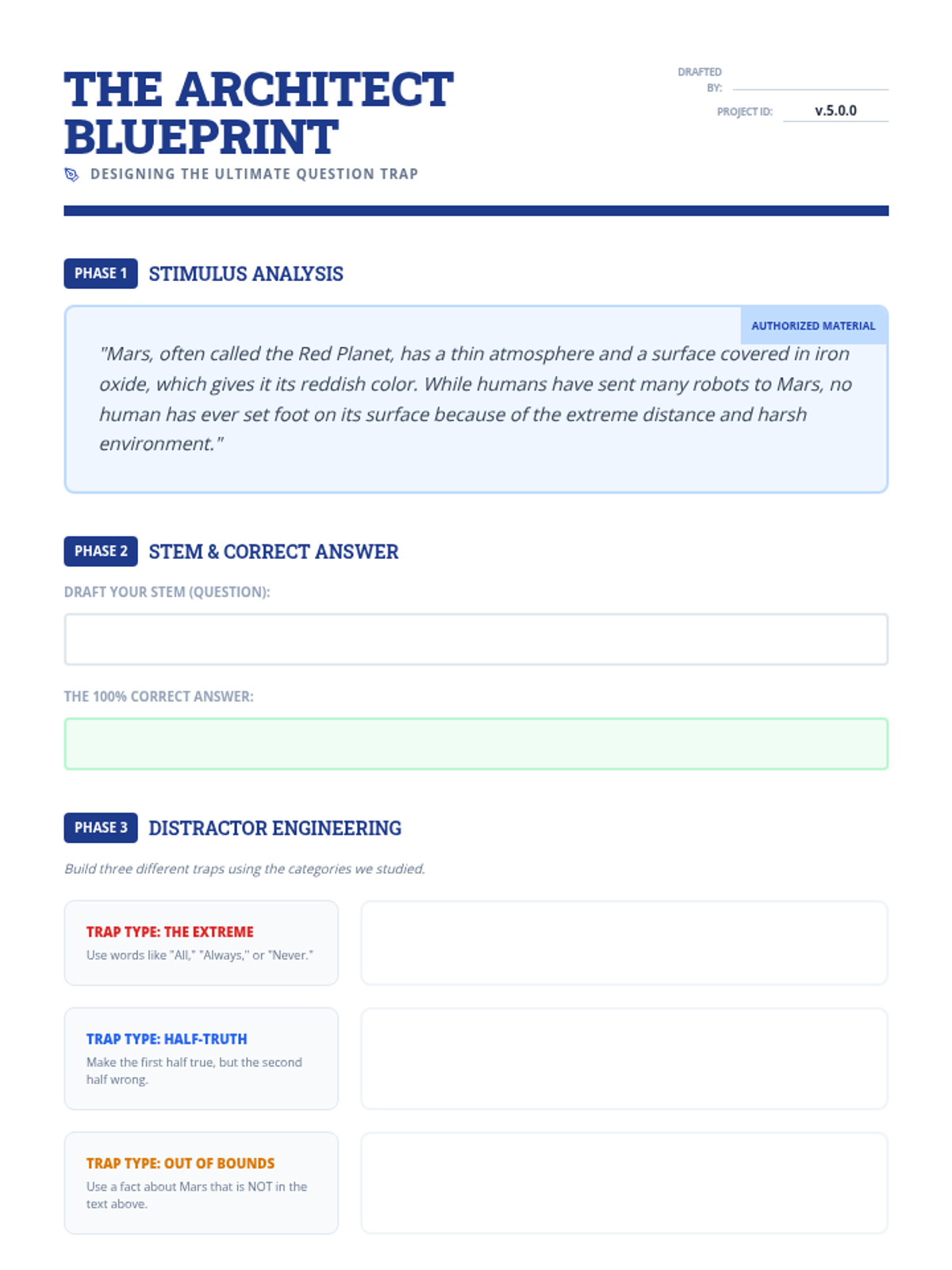
Worksheet for Lesson 5 where students switch roles and become the test-makers. They write their own multiple-choice questions based on a shared text, intentionally creating plausible distractors.
Introductory slide deck for Lesson 5, exploring the mindset of a test-maker and the steps needed to construct a plausible multiple-choice question.
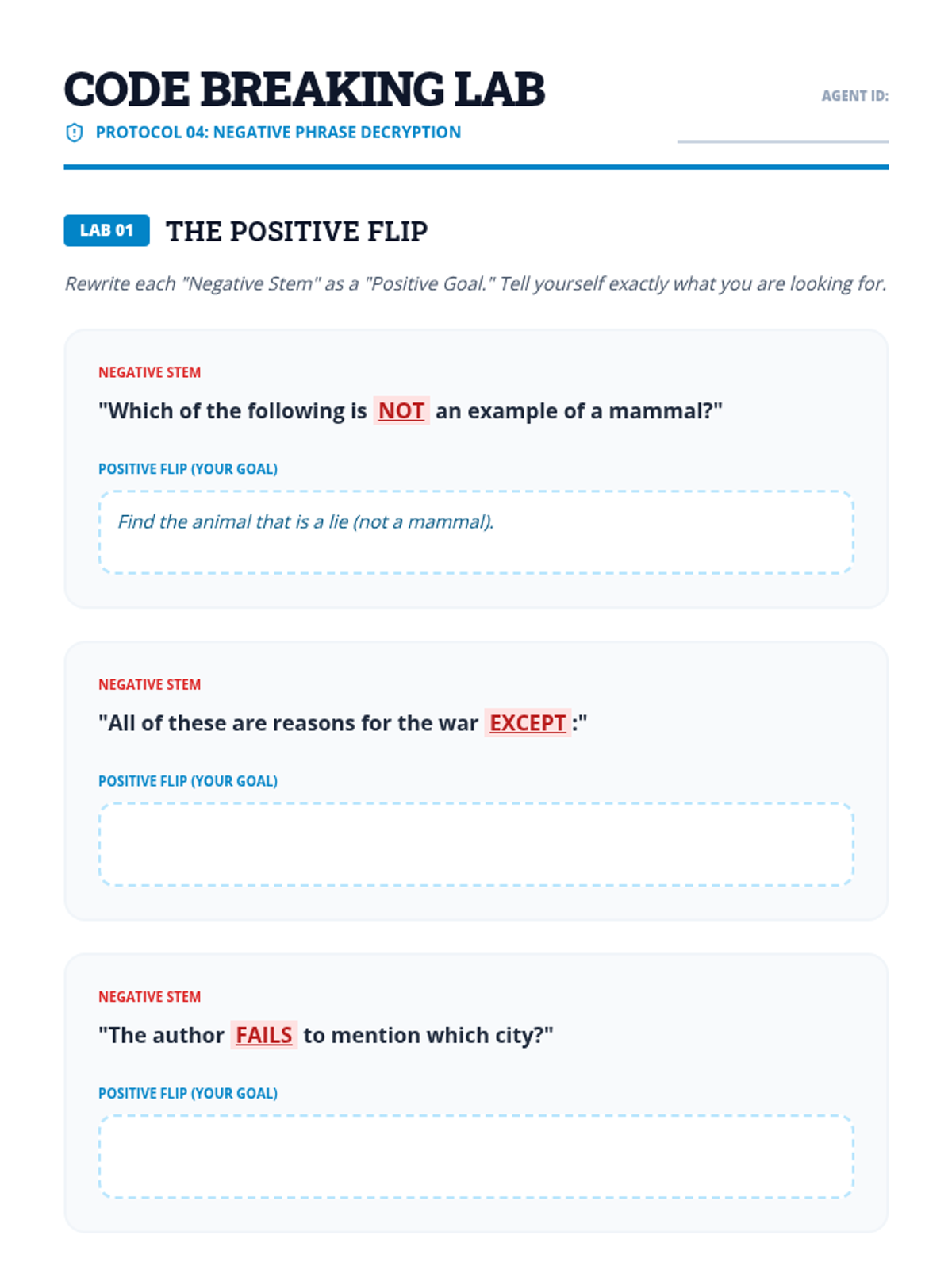
Worksheet for Lesson 4 where students specifically target questions using words like 'NOT,' 'EXCEPT,' 'ALWAYS,' or 'NEVER.' They rewrite these questions in positive terms to clarify meaning. Revised with a light theme for better printability.
Introductory slide deck for Lesson 4, using a code-breaking theme to teach students how to handle negative phrasing (NOT, EXCEPT) and absolute words (ALWAYS, NEVER) in test questions.
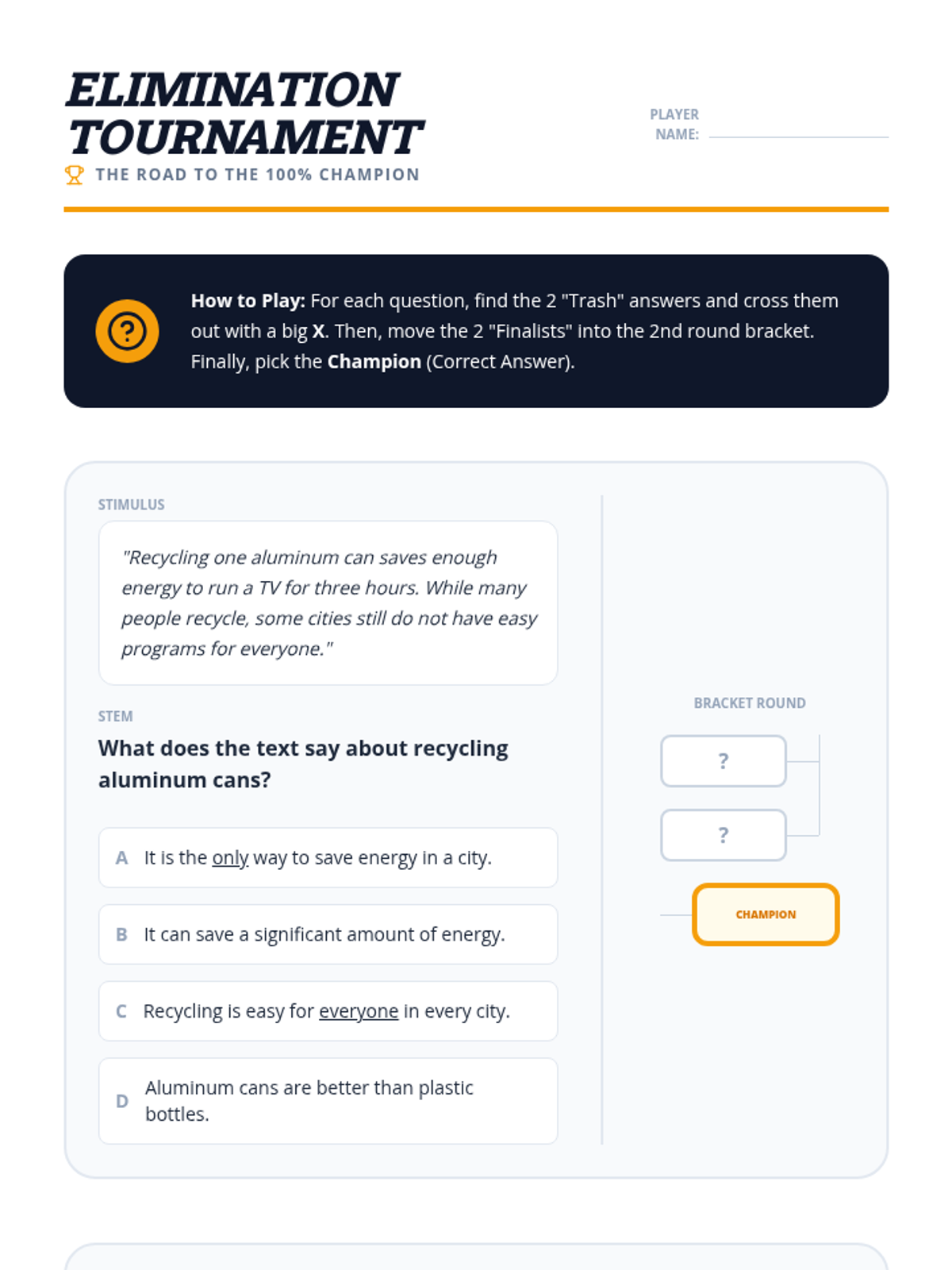
Worksheet for Lesson 3 where students use a "tournament bracket" visual to narrow down multiple-choice options by crossing out "trash" answers and selecting a champion.
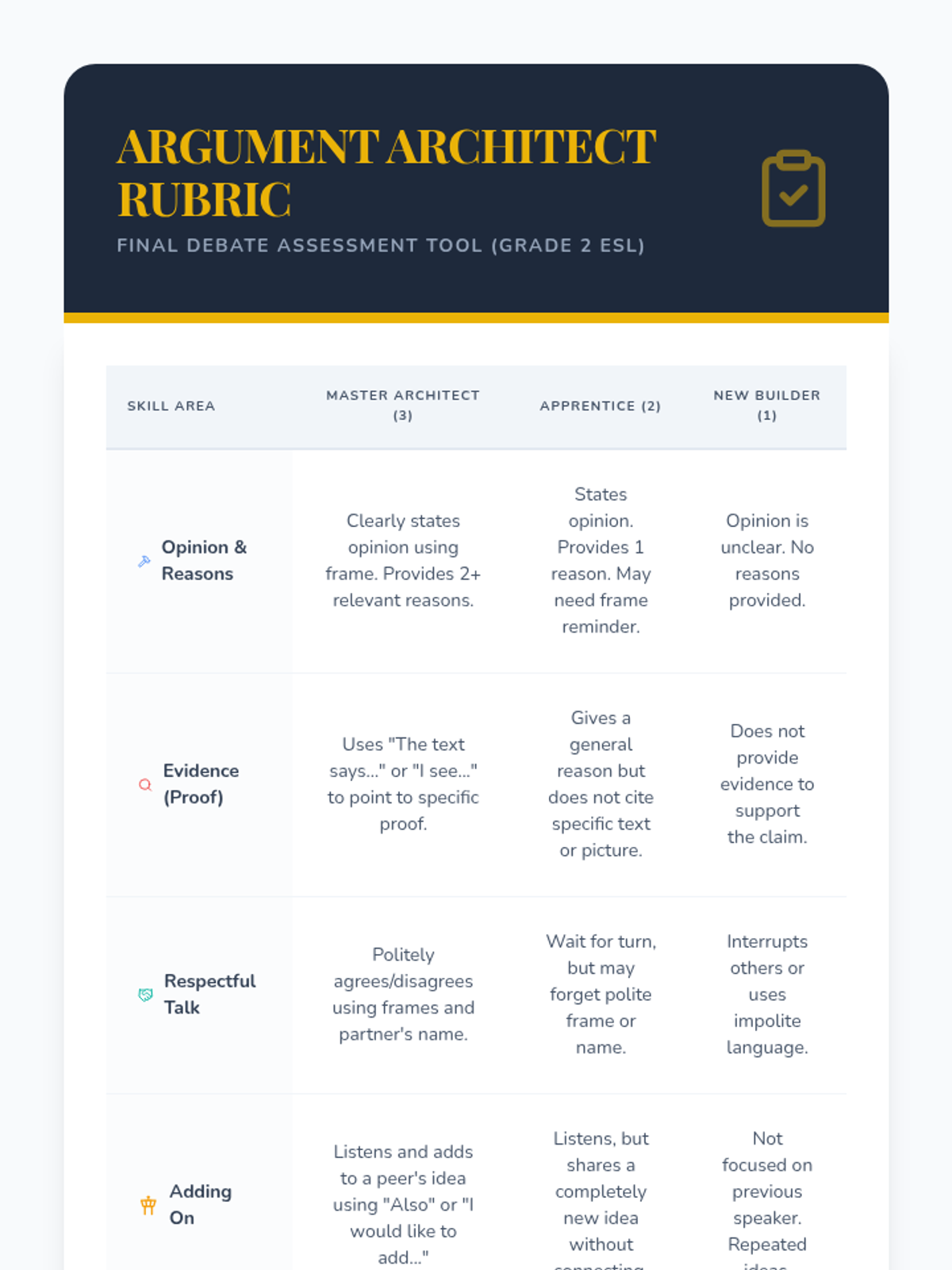
A teacher assessment rubric to track student progress in stating opinions, citing evidence, and participating in respectful academic discourse.
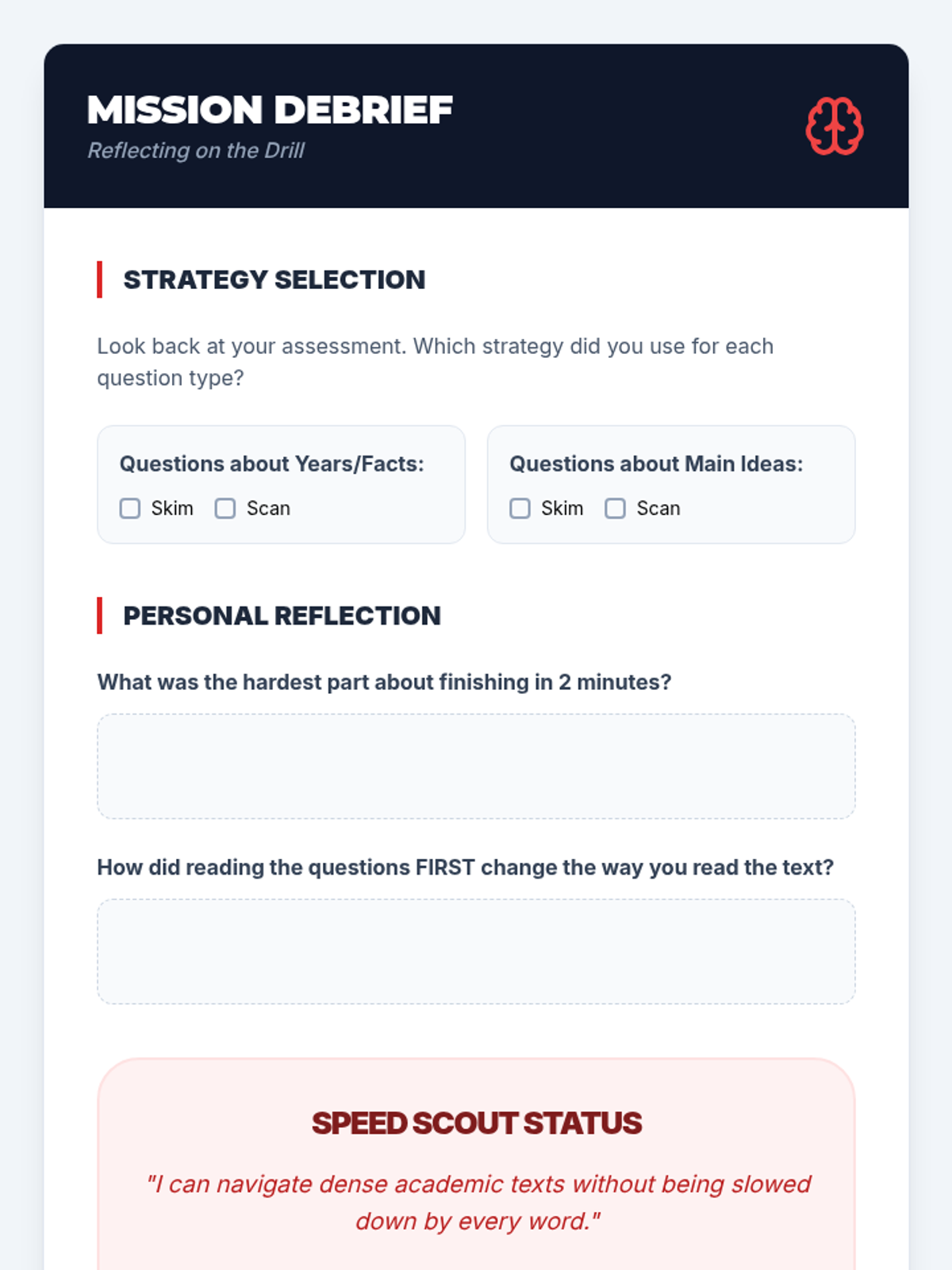
A metacognitive reflection sheet for students to evaluate their strategy use and performance after the timed assessment.
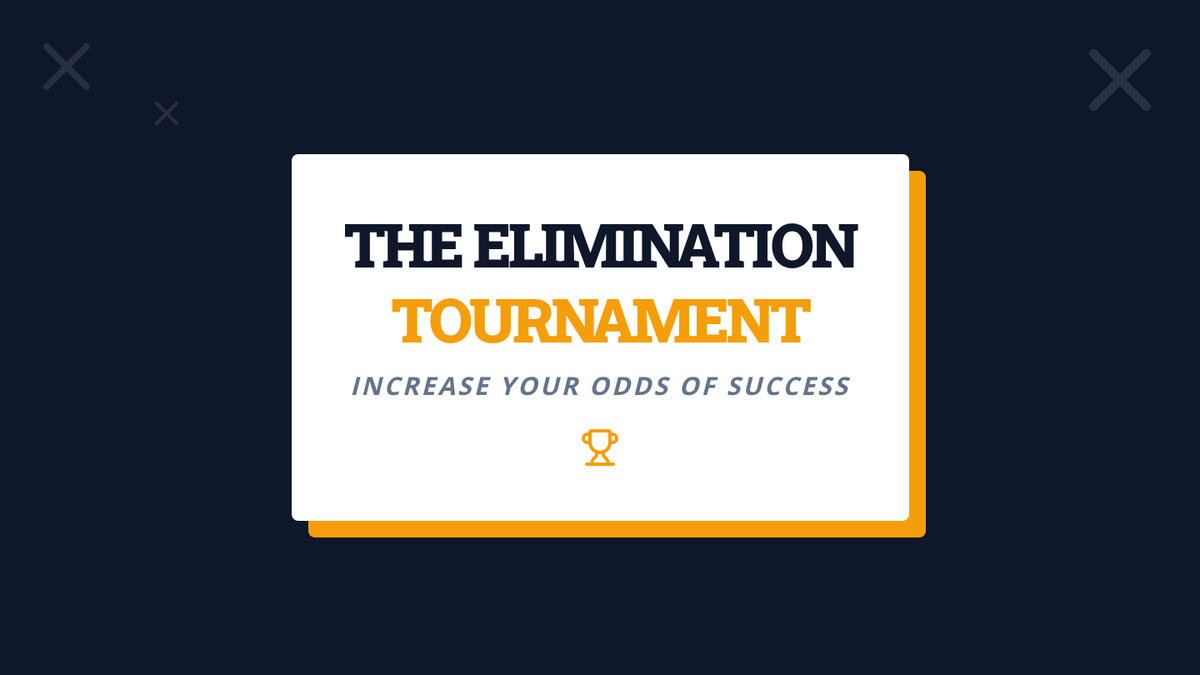
Introductory slide deck for Lesson 3, using a game-show theme to teach the Process of Elimination (POE) and how it increases the probability of choosing the correct answer.
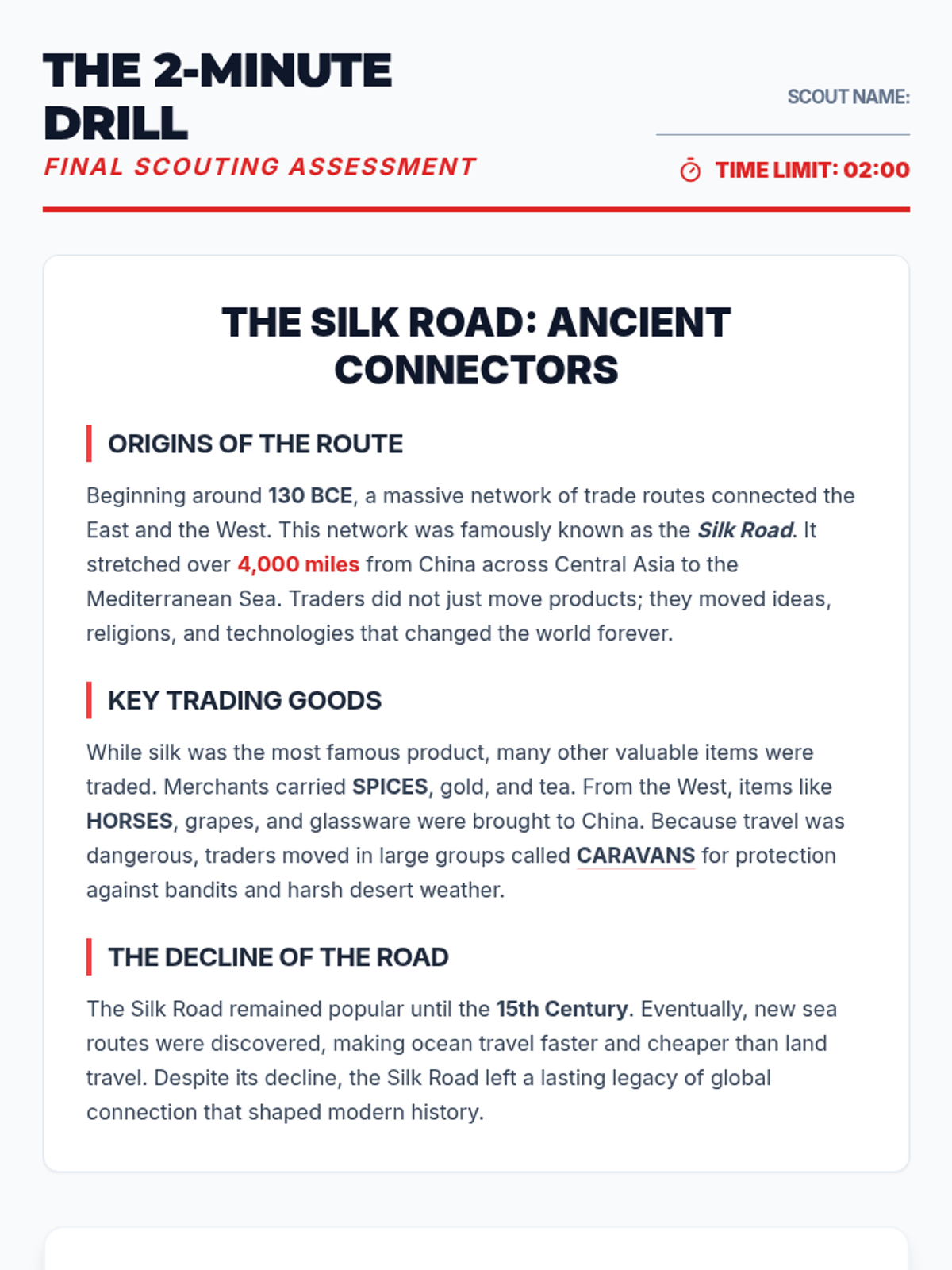
A timed reading comprehension challenge that requires students to apply skimming and scanning techniques to an academic passage about the Silk Road.
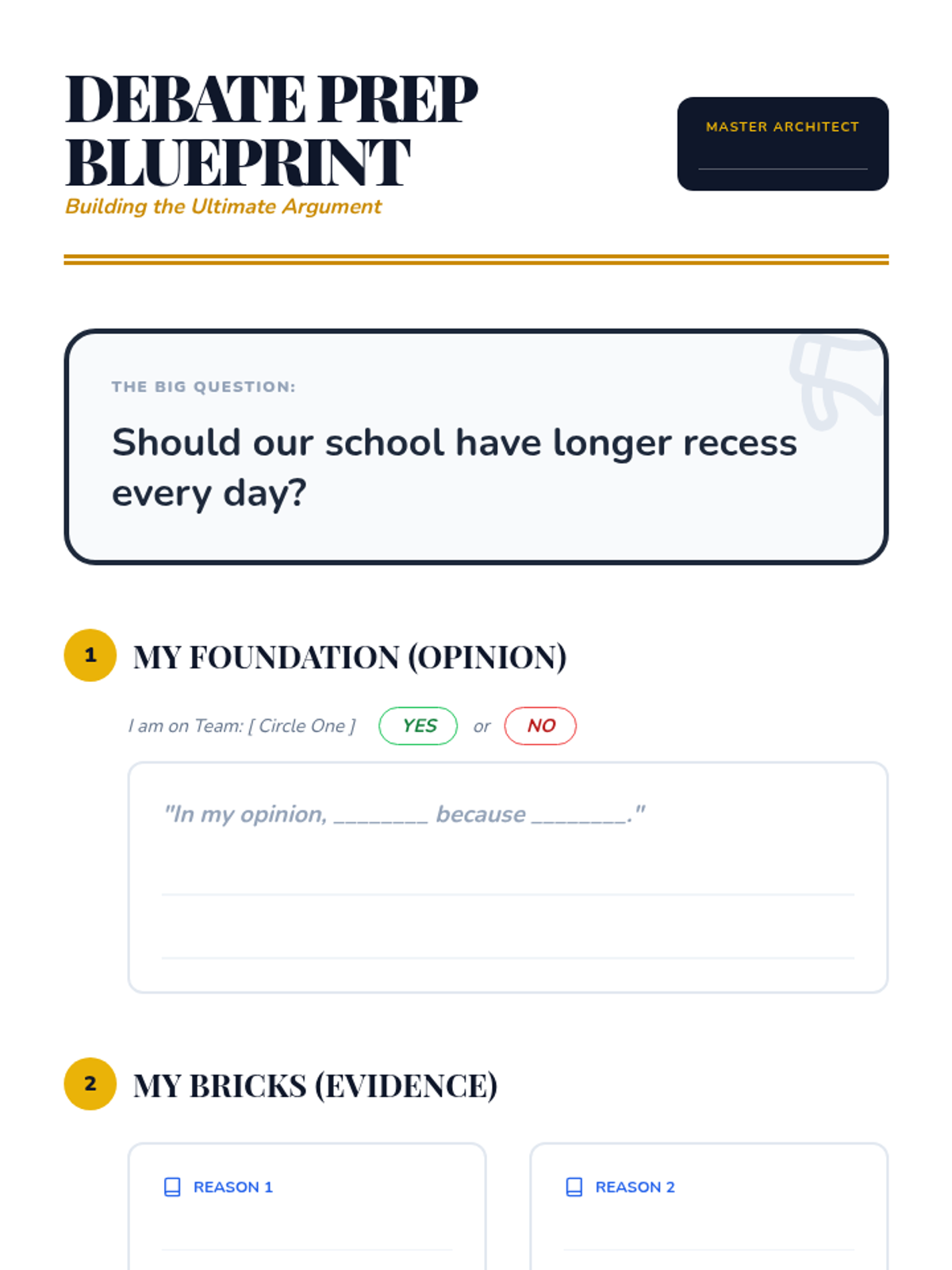
A student planning worksheet to help them prepare their arguments and evidence for the final debate.
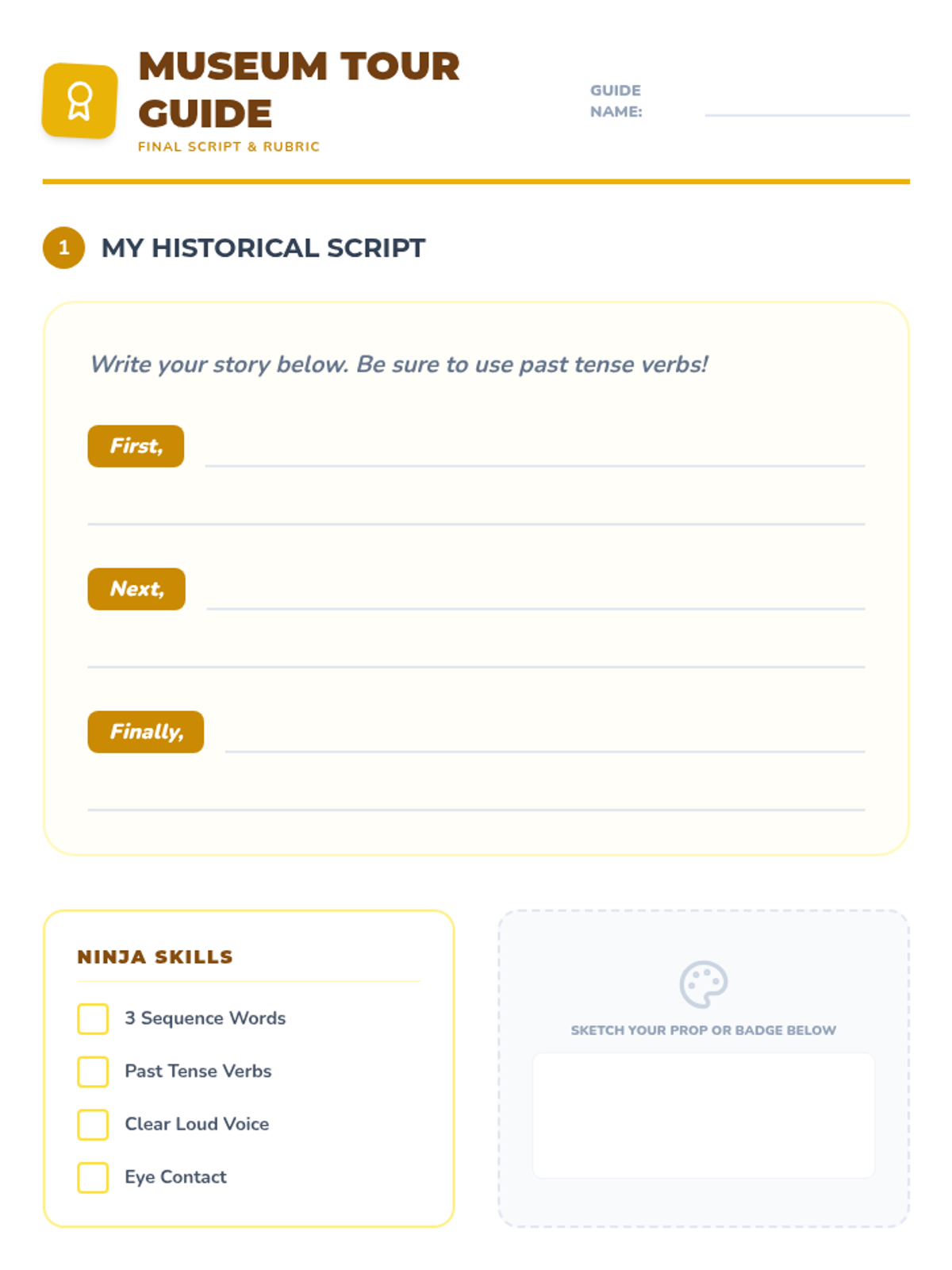
A guide for students to draft their historical narrative script and a checklist for their oral presentation performance.
Culminating slide deck for the final assessment, providing a review of all strategies and the '2-Minute Drill' challenge instructions.
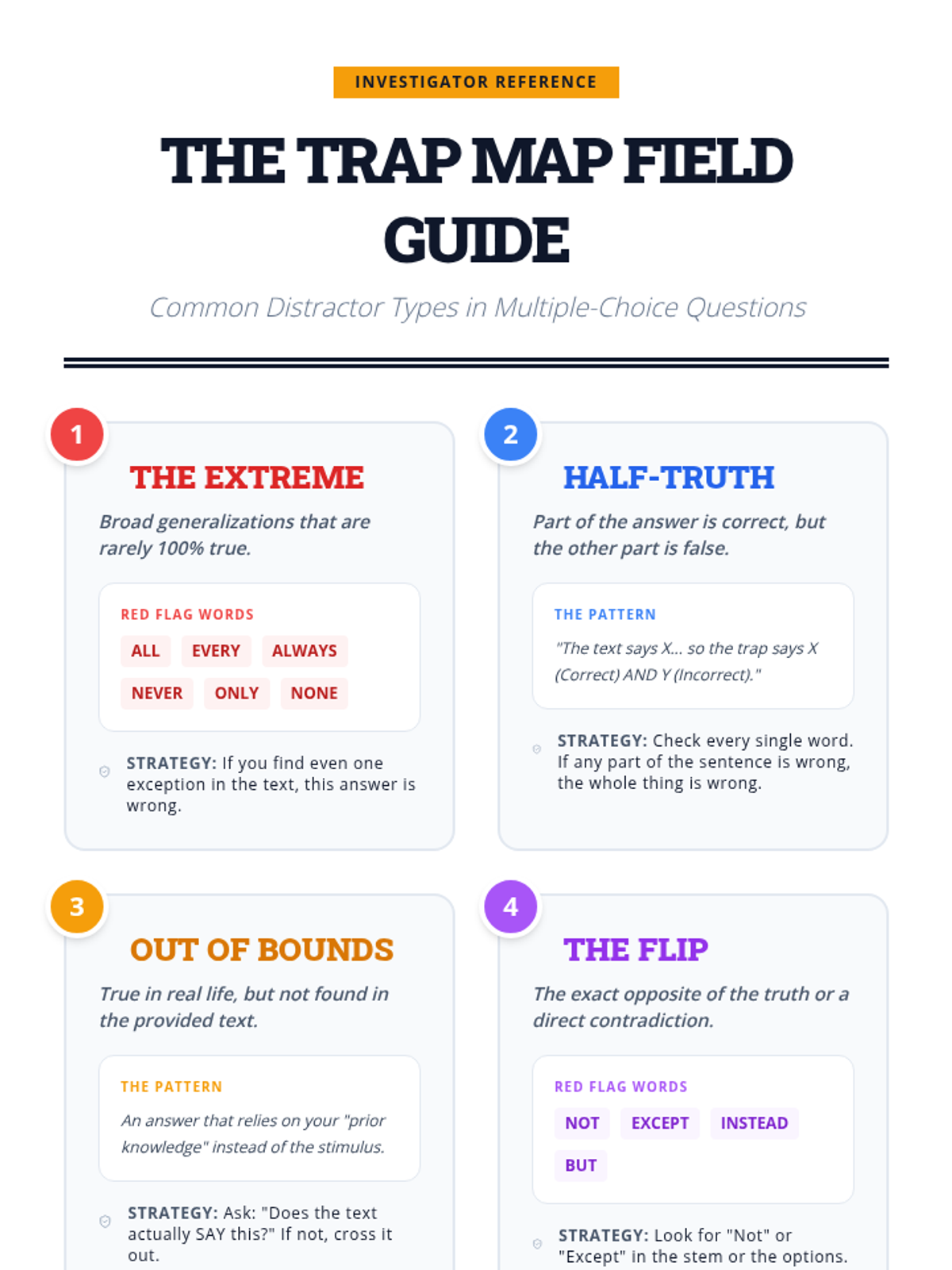
A student-facing reference sheet defining the four common types of distractors (The Extreme, Half-Truth, Out of Bounds, The Flip) with red flag words and elimination strategies.
A slide deck reviewing sequence words and past-tense verbs to prepare students for their final oral historical narrative presentation.
A visual presentation for 2nd-grade ESL students to guide them through their final structured debate, including rules and sentence frame reminders.
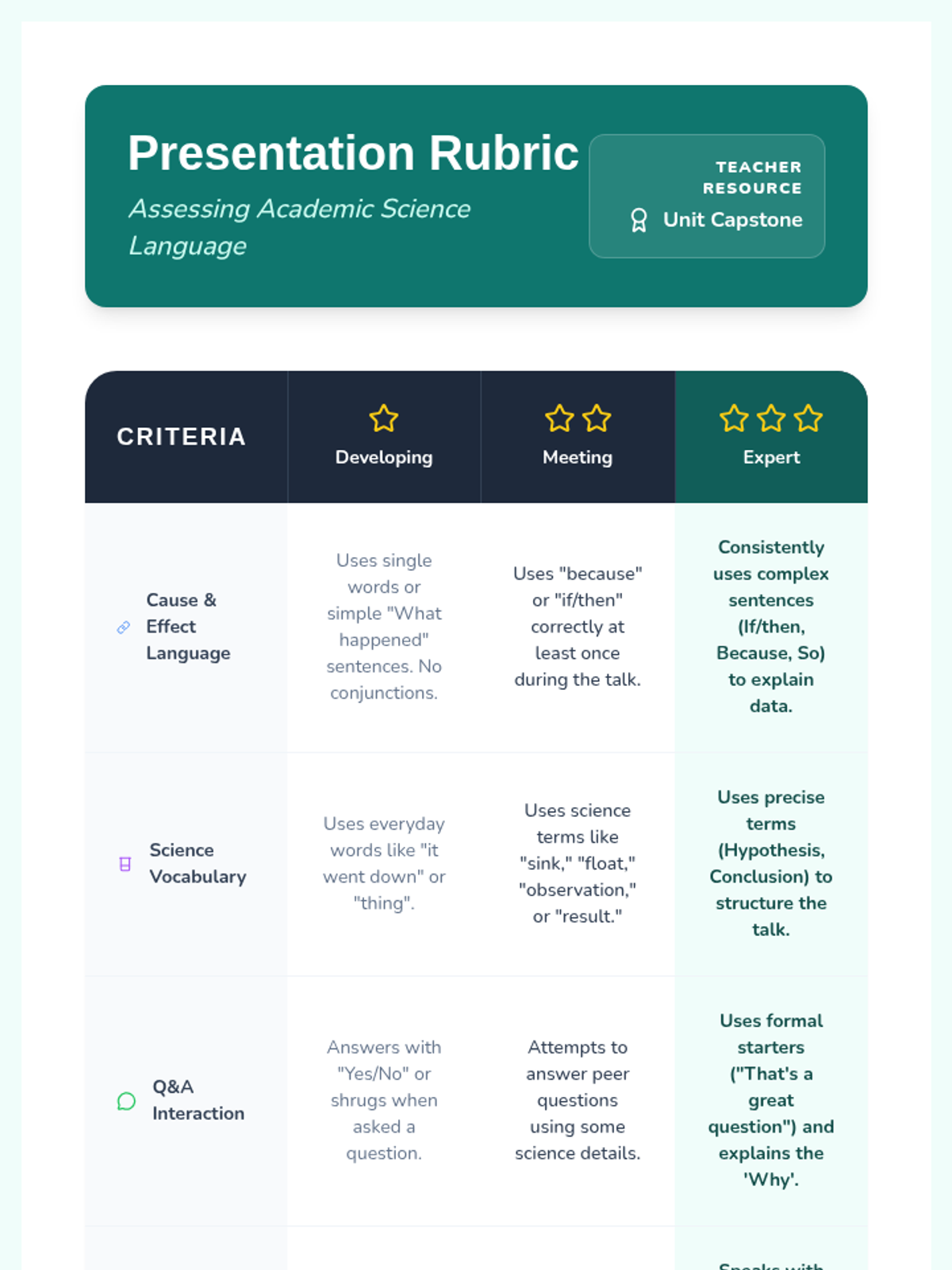
A simplified 3-point rubric for teachers to assess students' oral presentations, focusing on academic language, vocabulary, and presentation skills.
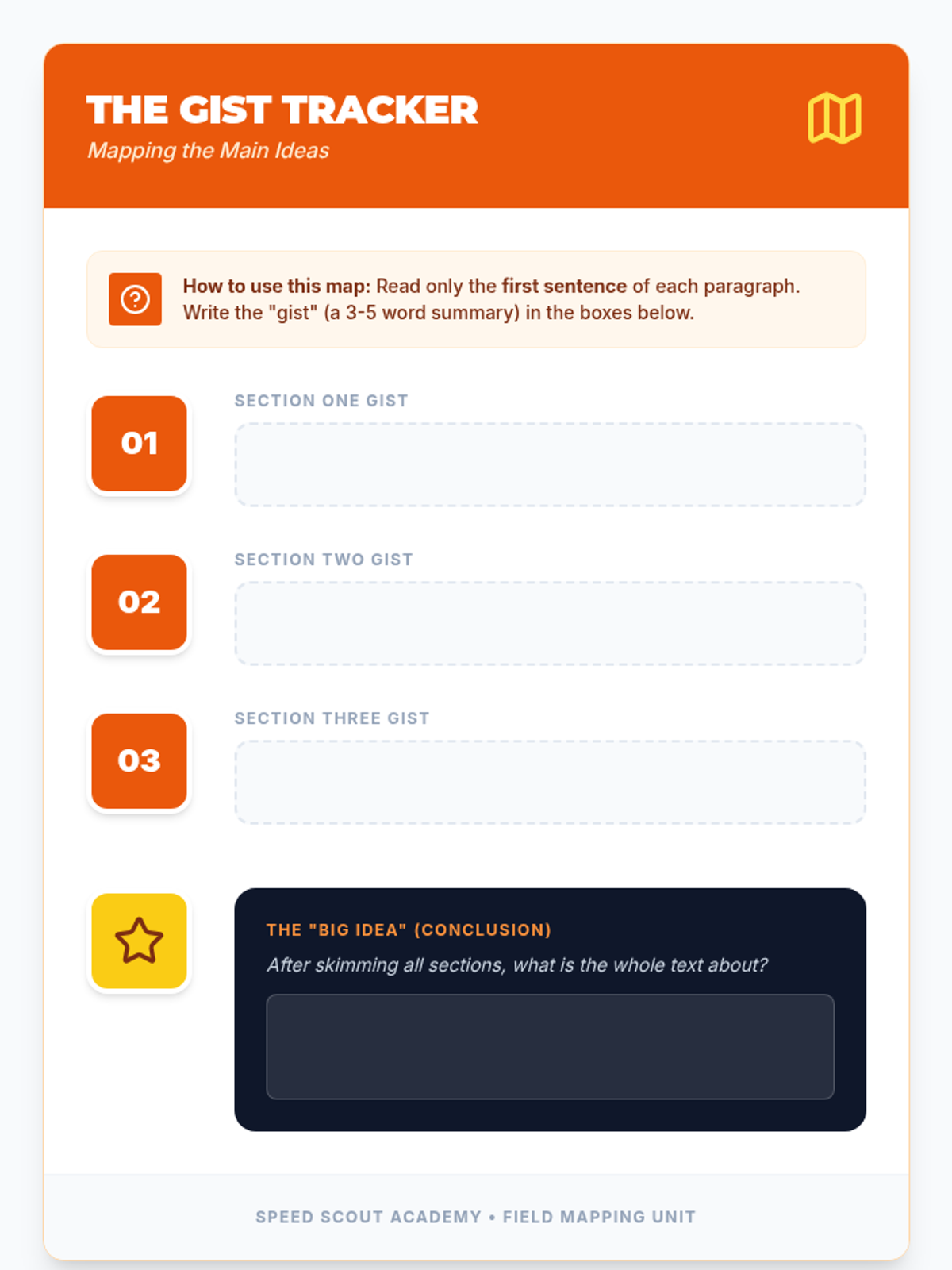
A graphic organizer (Gist Tracker) that scaffolds students in identifying and summarizing topic sentences from multiple paragraphs.
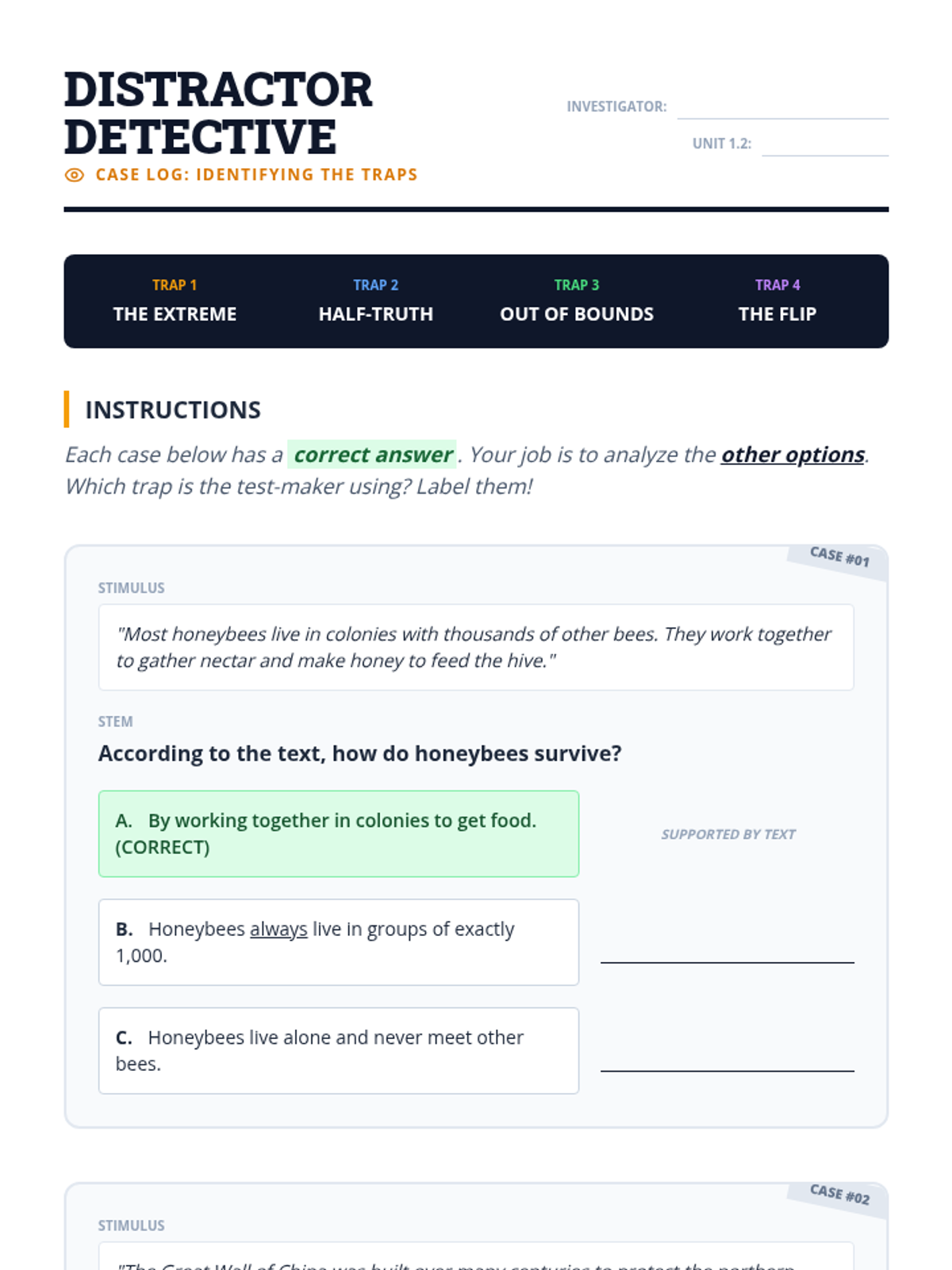
Worksheet for Lesson 2 where students identify which of the four common trap types (Extreme, Half-Truth, Out of Bounds, Flip) are being used in sample multiple-choice questions.
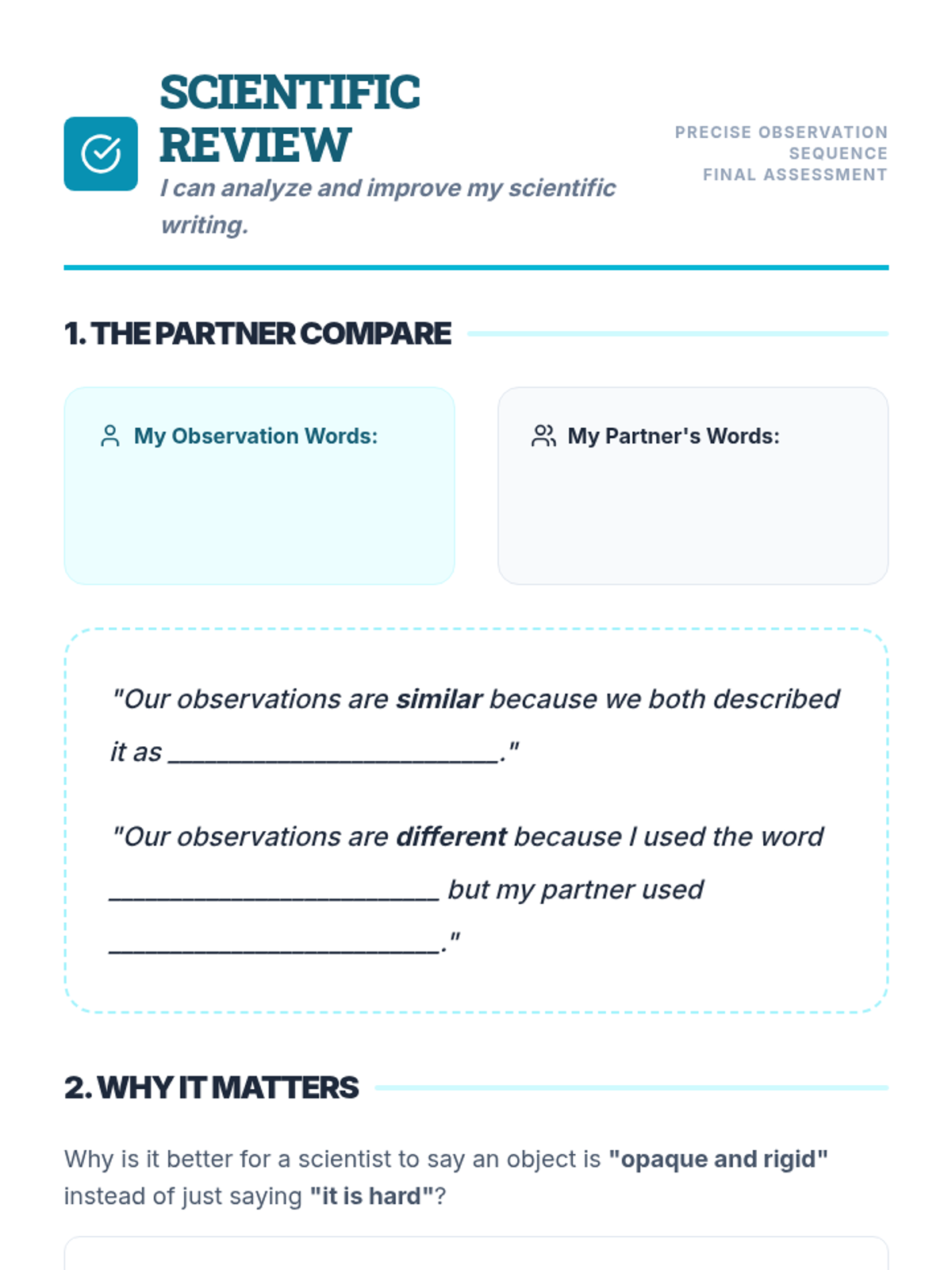
Final review and reflection worksheet for Lesson 5, including partner comparison frames, a justification reflection, and a student self-assessment checklist.
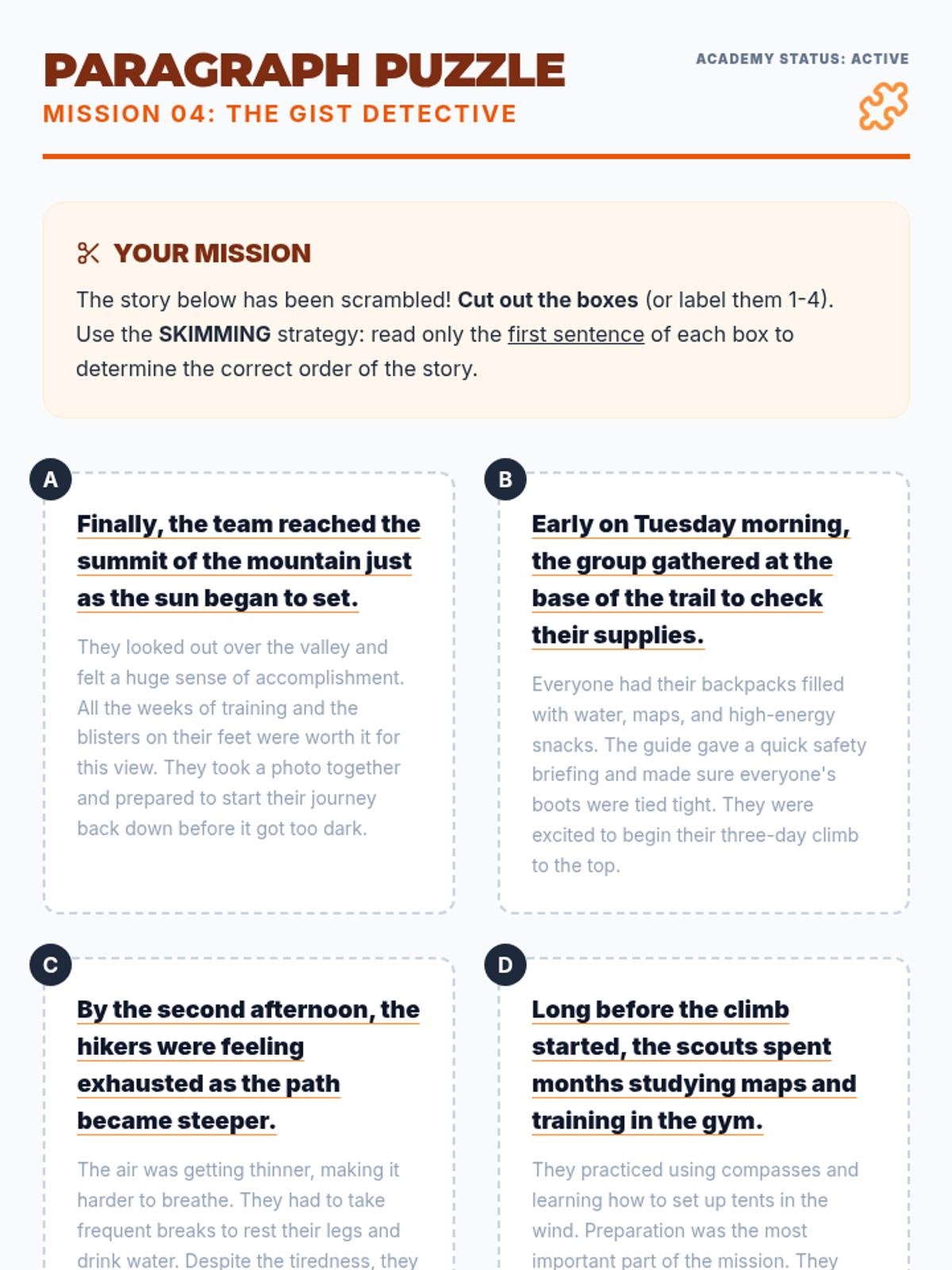
A student activity for arranging scrambled paragraphs in order by skimming only the first sentence of each section.
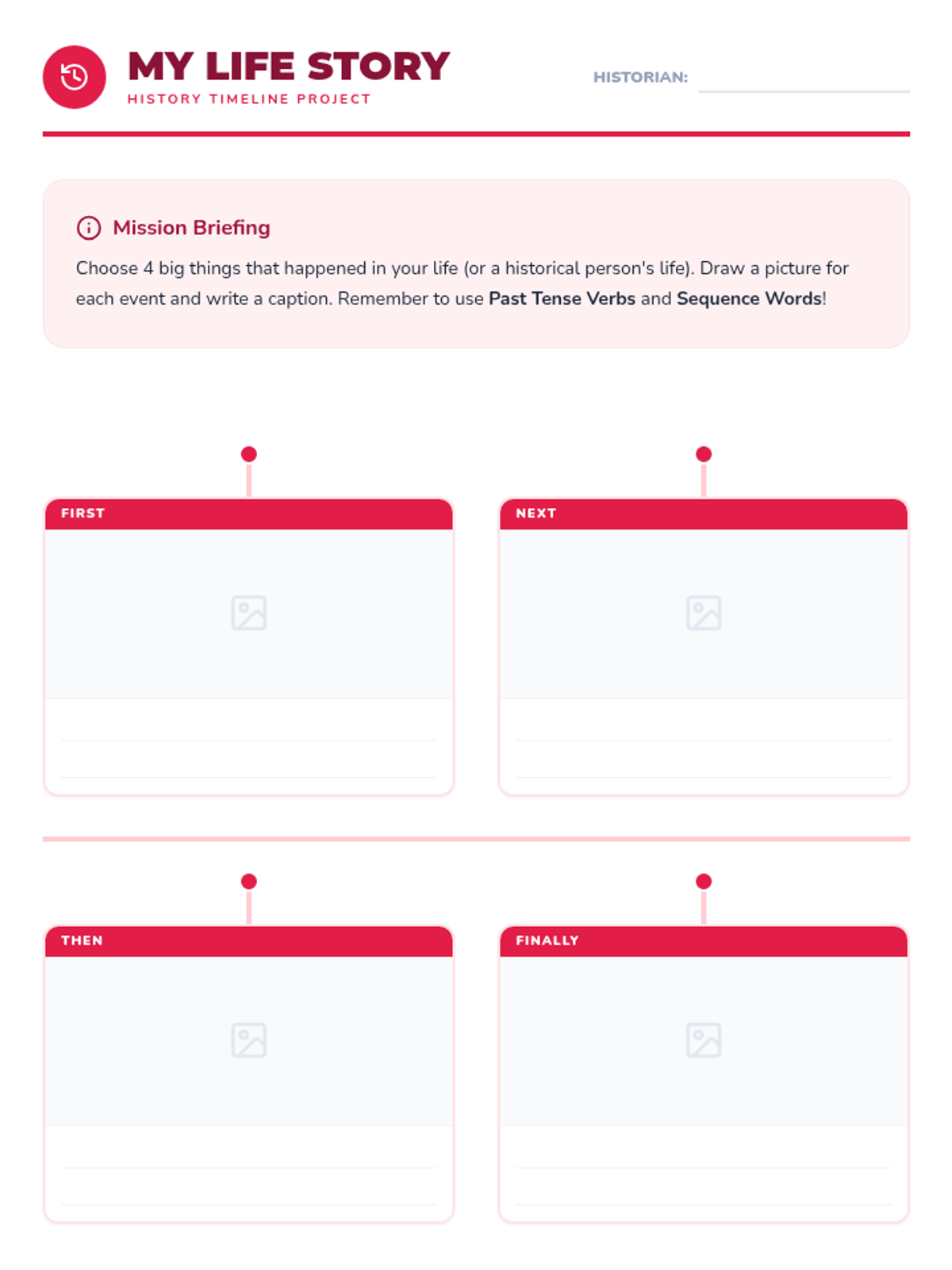
A graphic organizer/project sheet where students create a timeline of their life or a historical figure using drawings and captions.
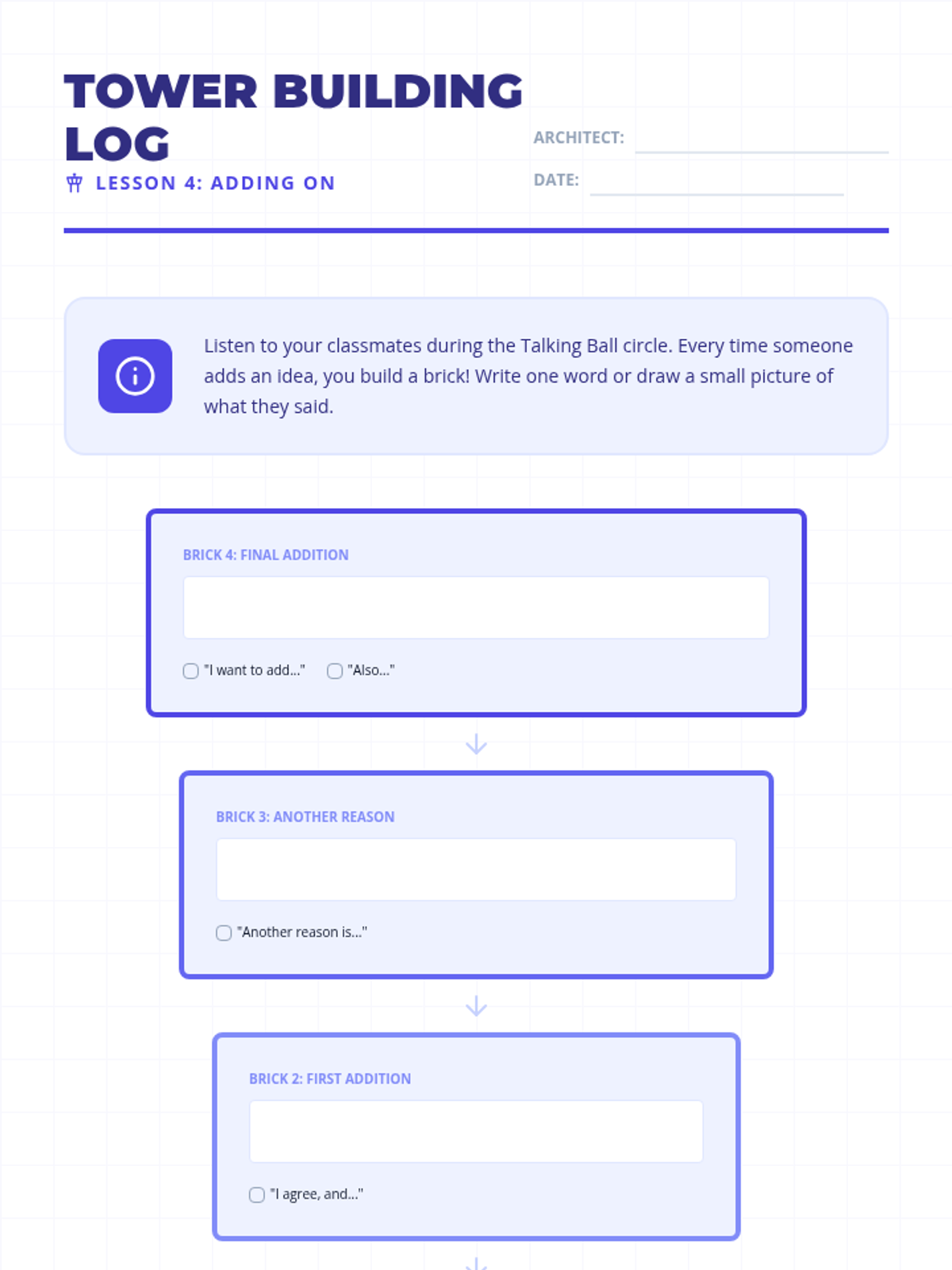
A student recording sheet for the 'Talking Ball' circle activity where they track and build upon peer ideas.