Analytical frameworks for interpreting history, geography, and civic information. Equips learners with tools for chronological sequencing, map literacy, and critical evaluation of primary and secondary sources.
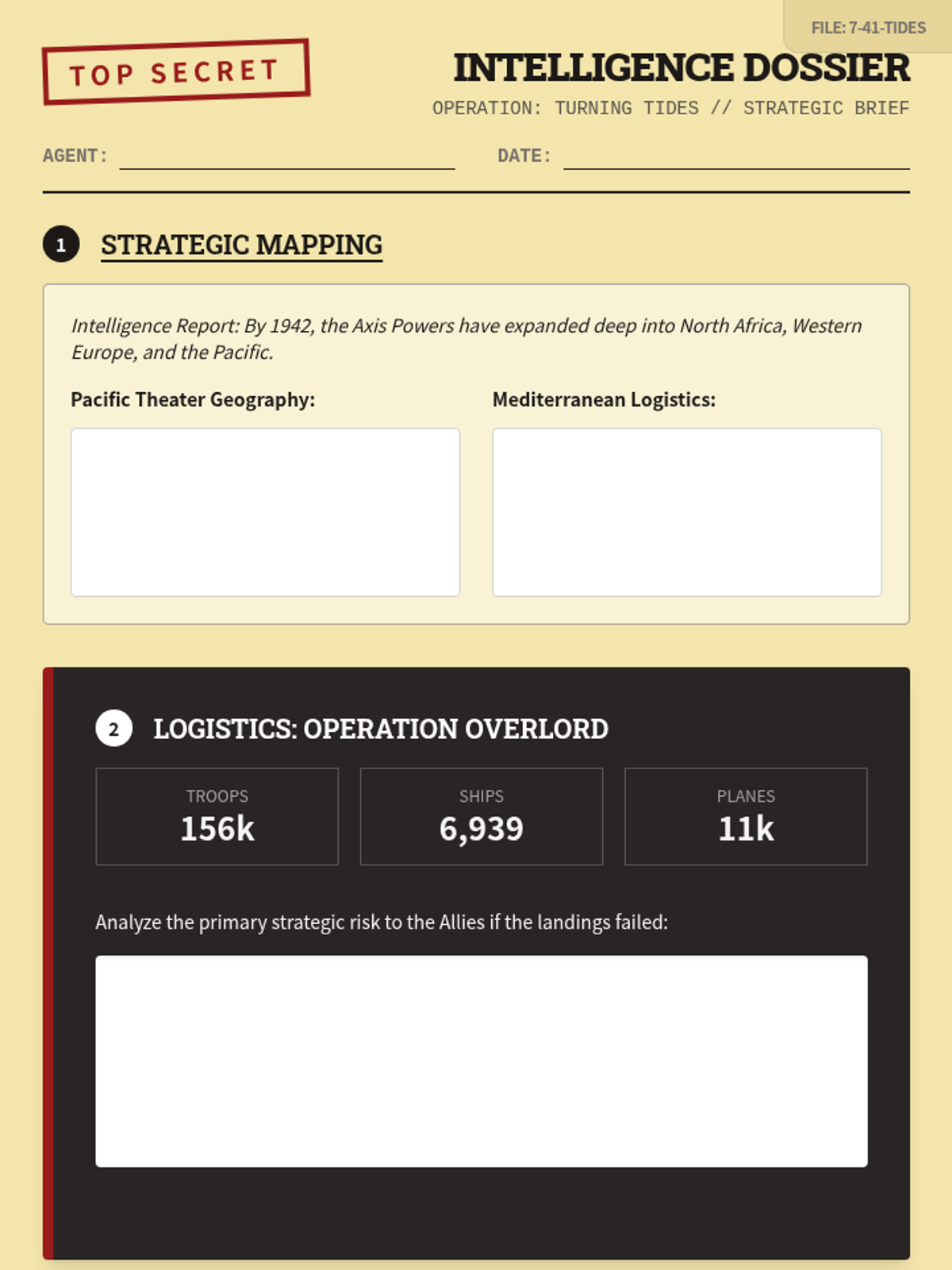
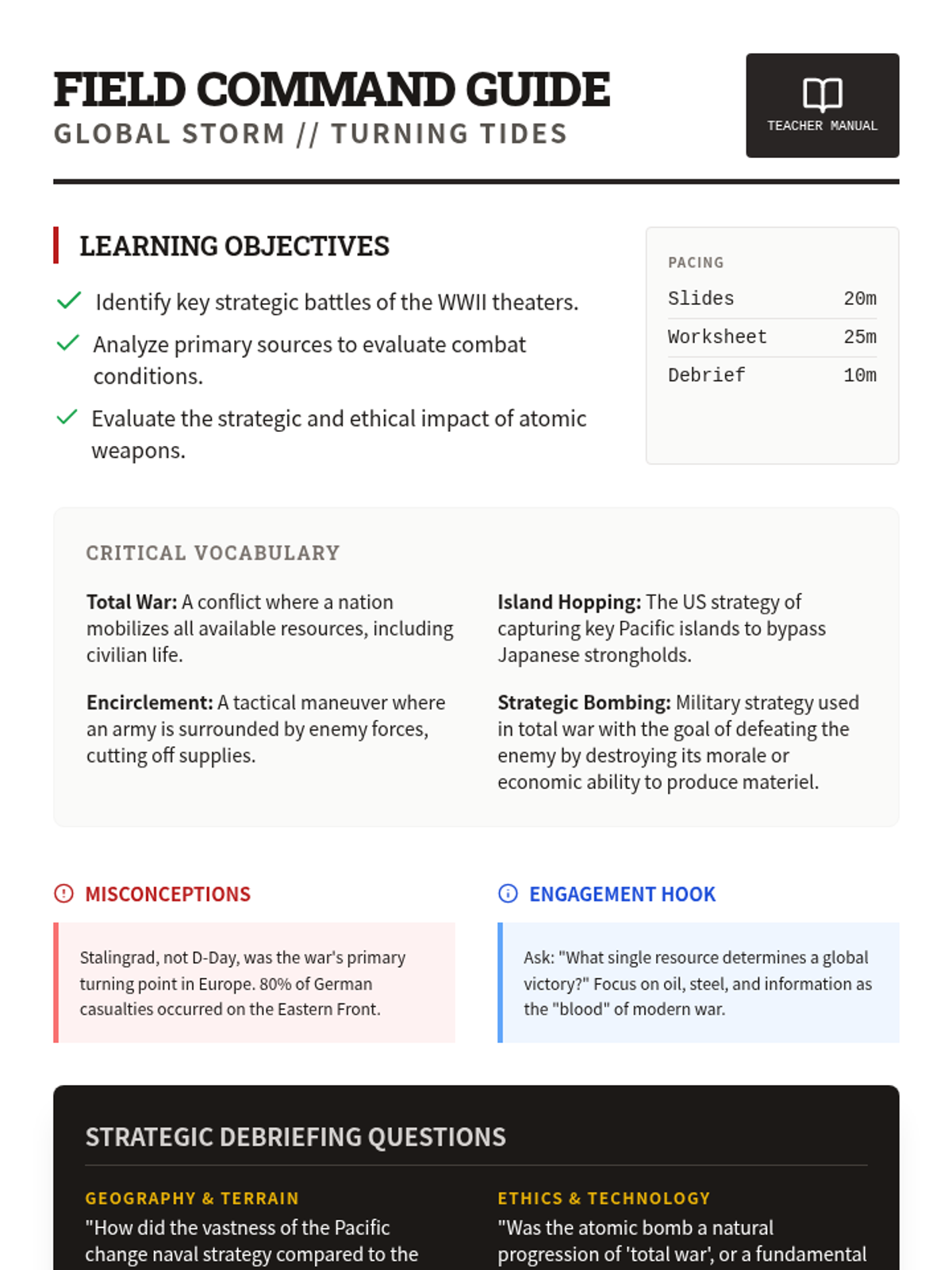
A comprehensive dive into the pivotal moments and global impact of World War II, framed through the lens of military intelligence and historical analysis.
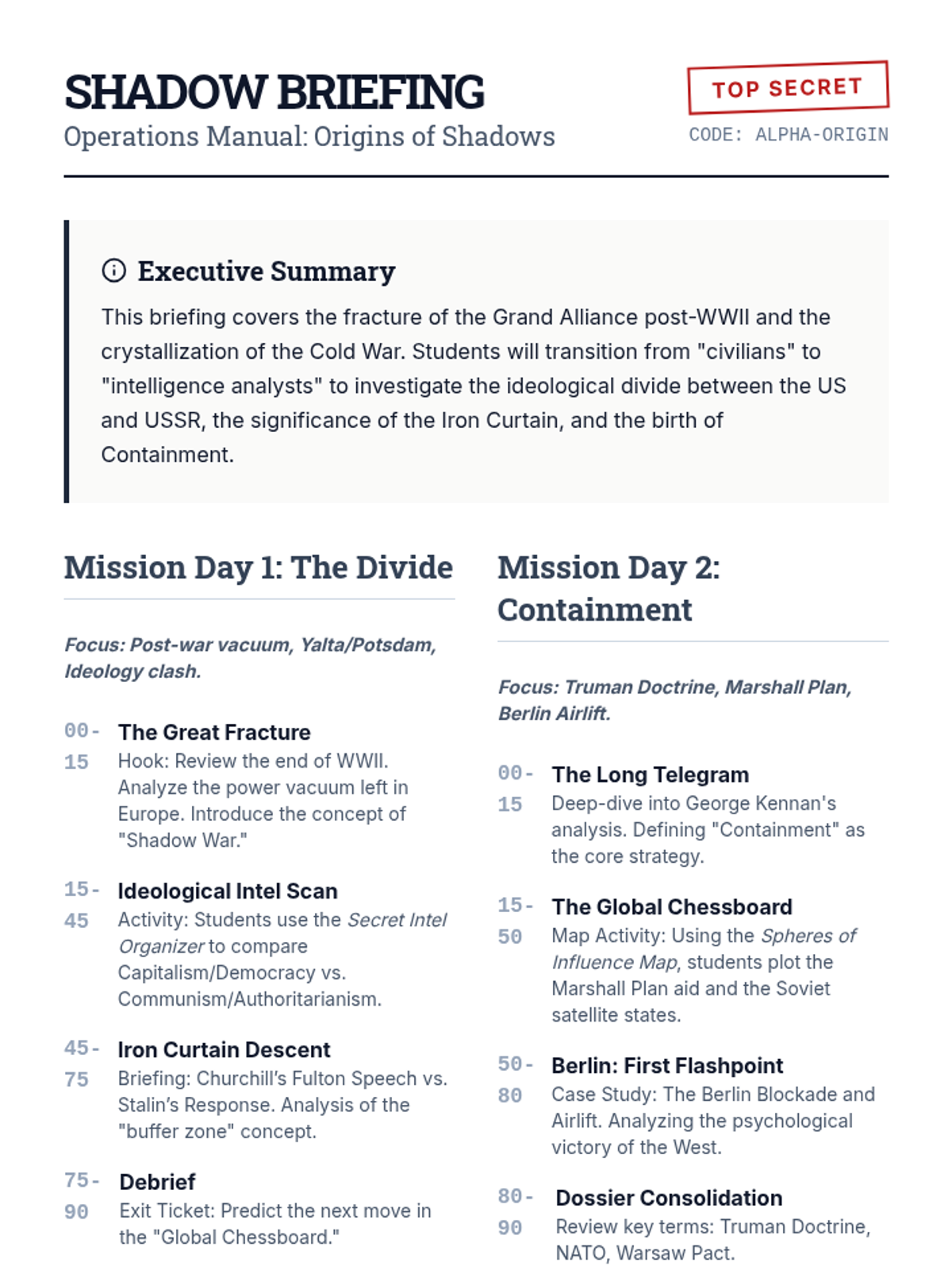
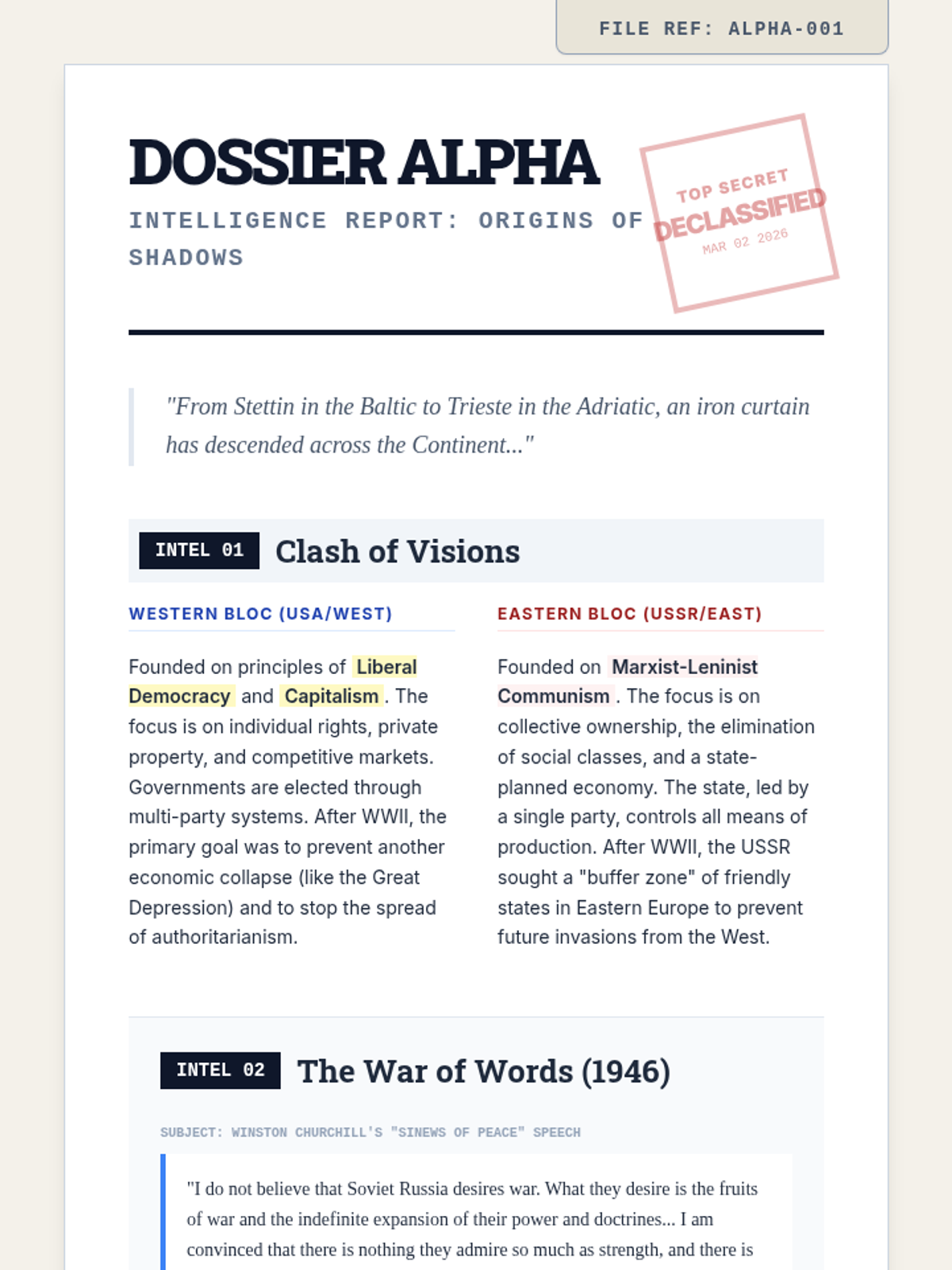
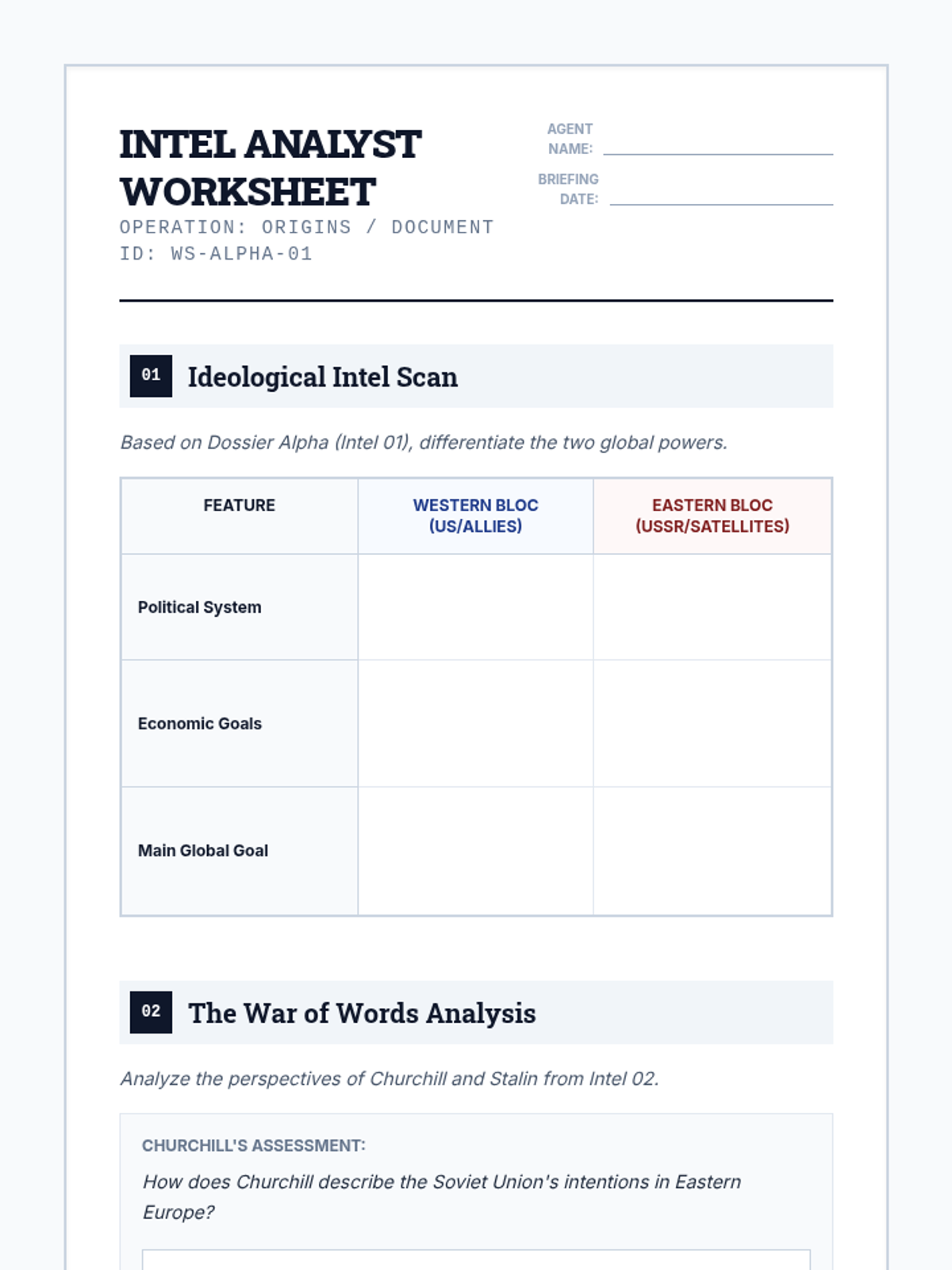
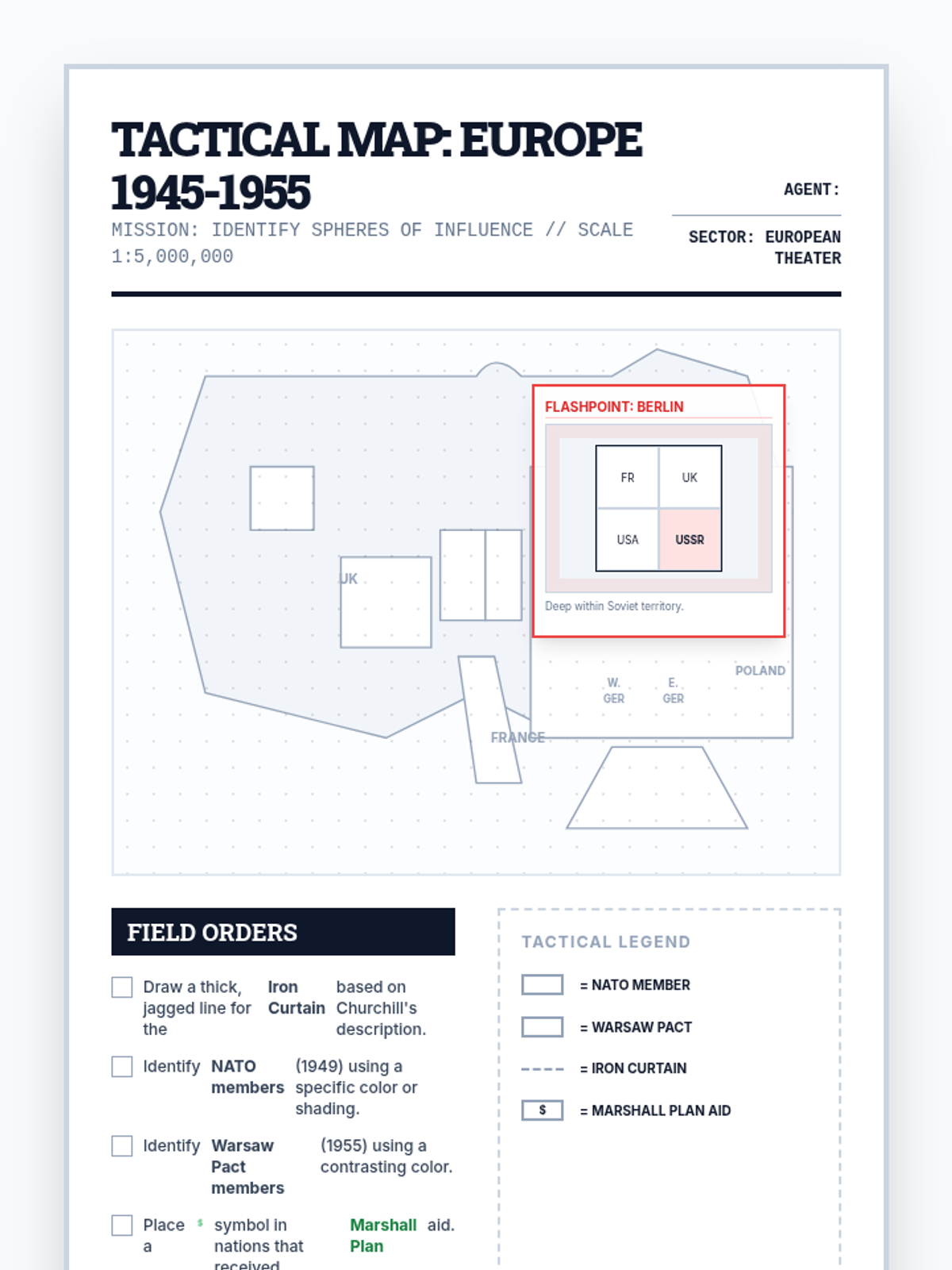
An immersive unit on the Cold War, styled as a series of declassified intelligence briefings exploring the global struggle for power between 1945 and 1991.
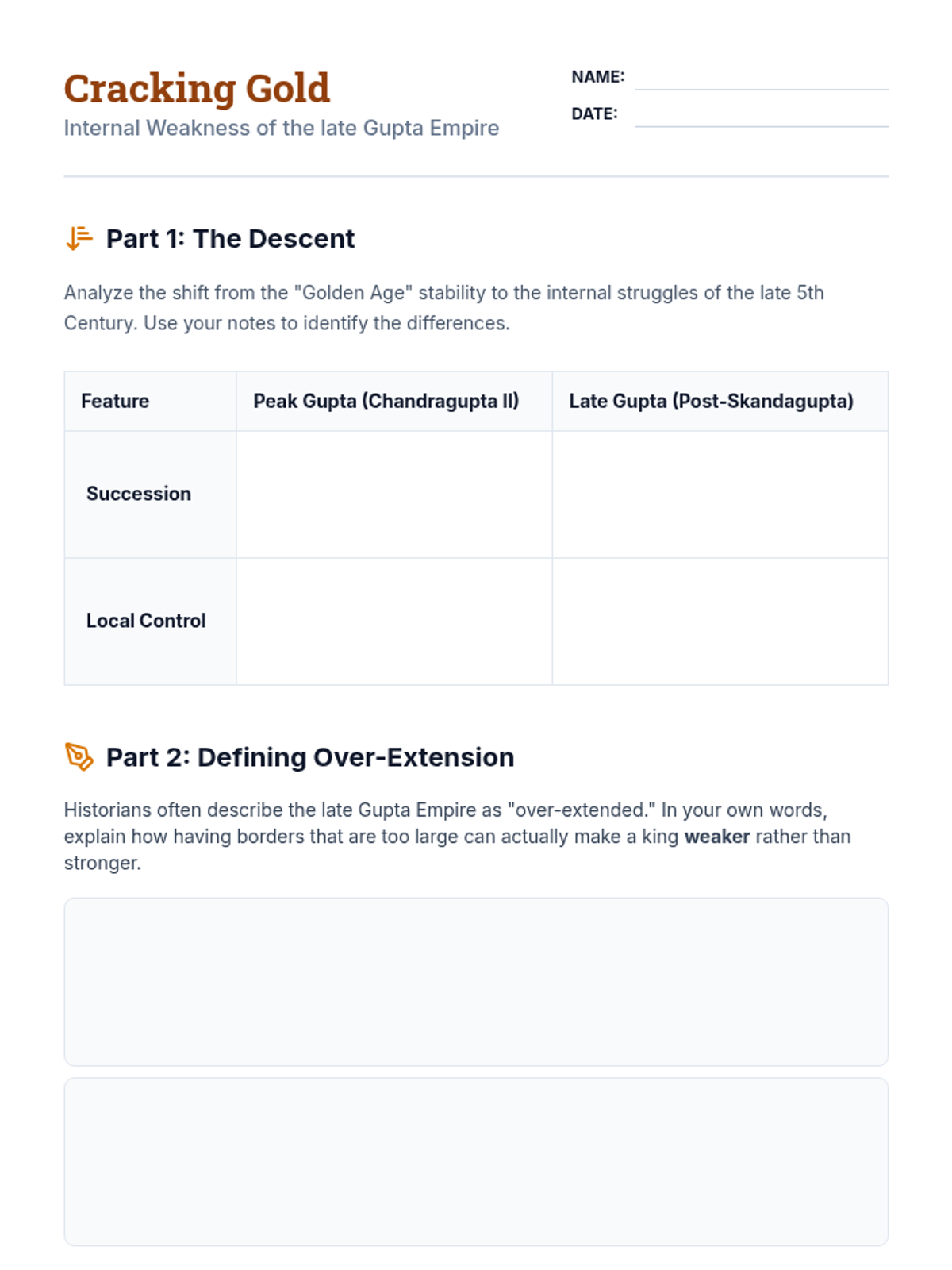
A 5-day unit exploring the multi-faceted decline of the Gupta Empire, from internal structural weaknesses to the devastating Huna invasions and economic collapse.
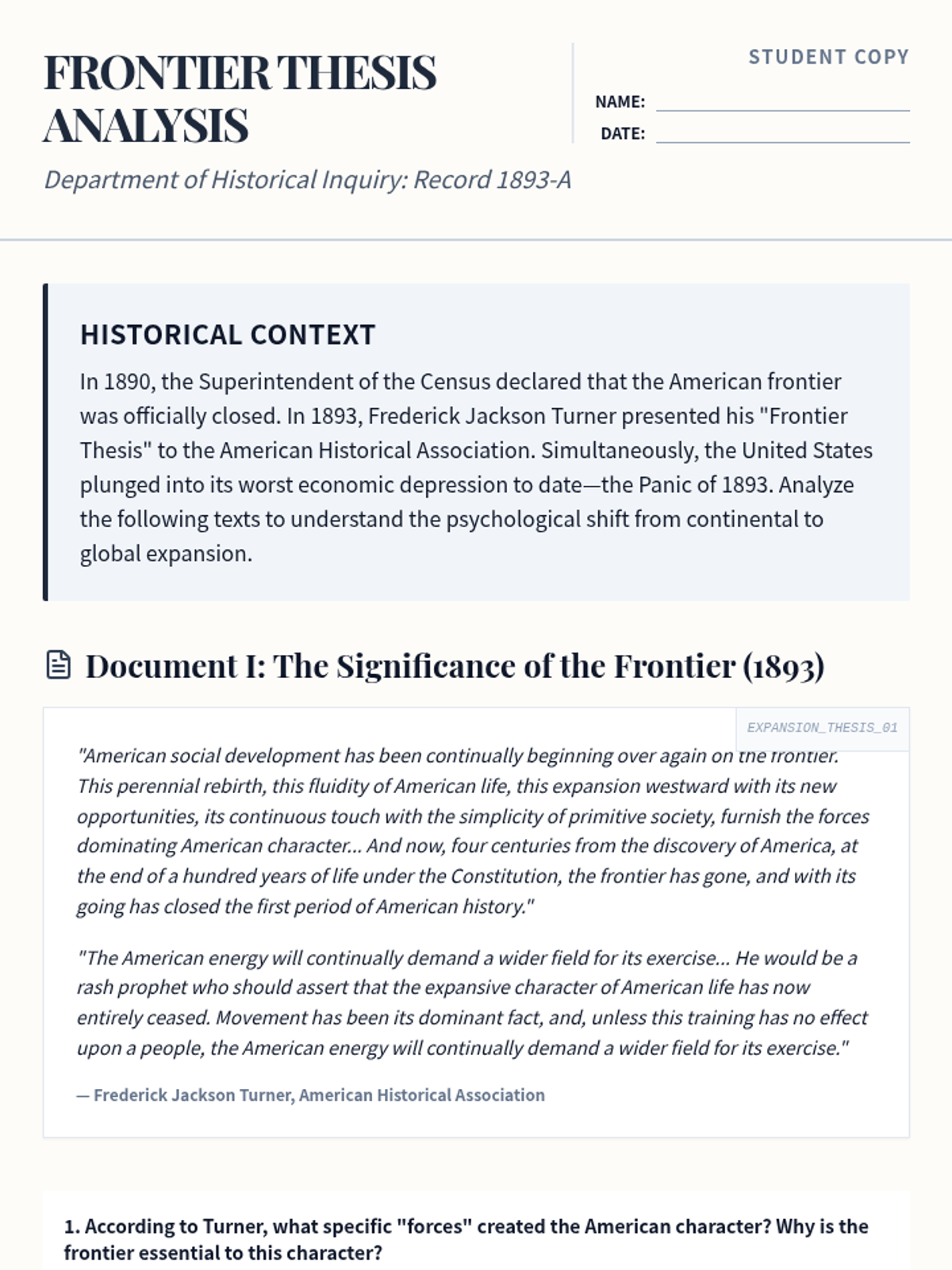
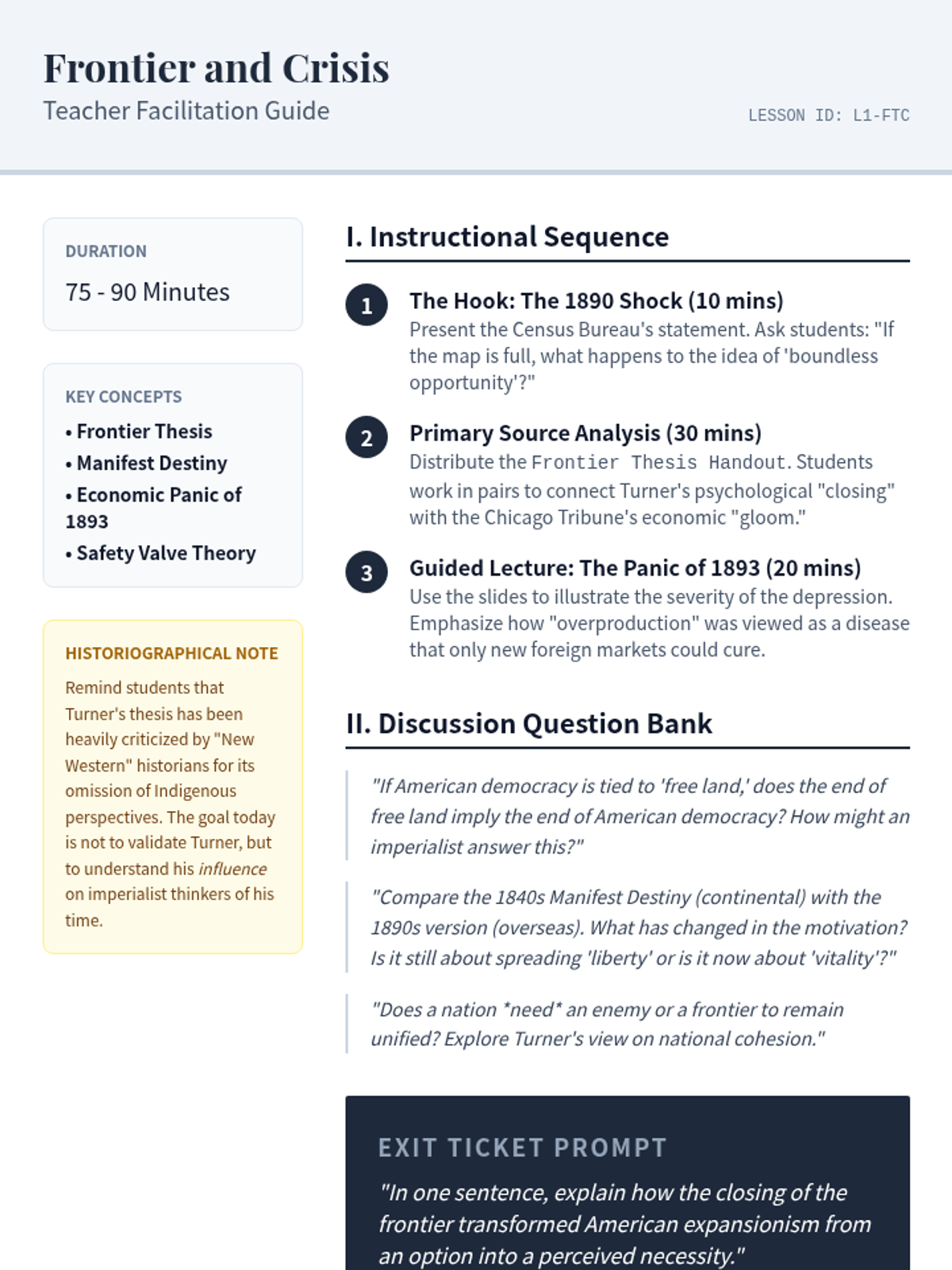
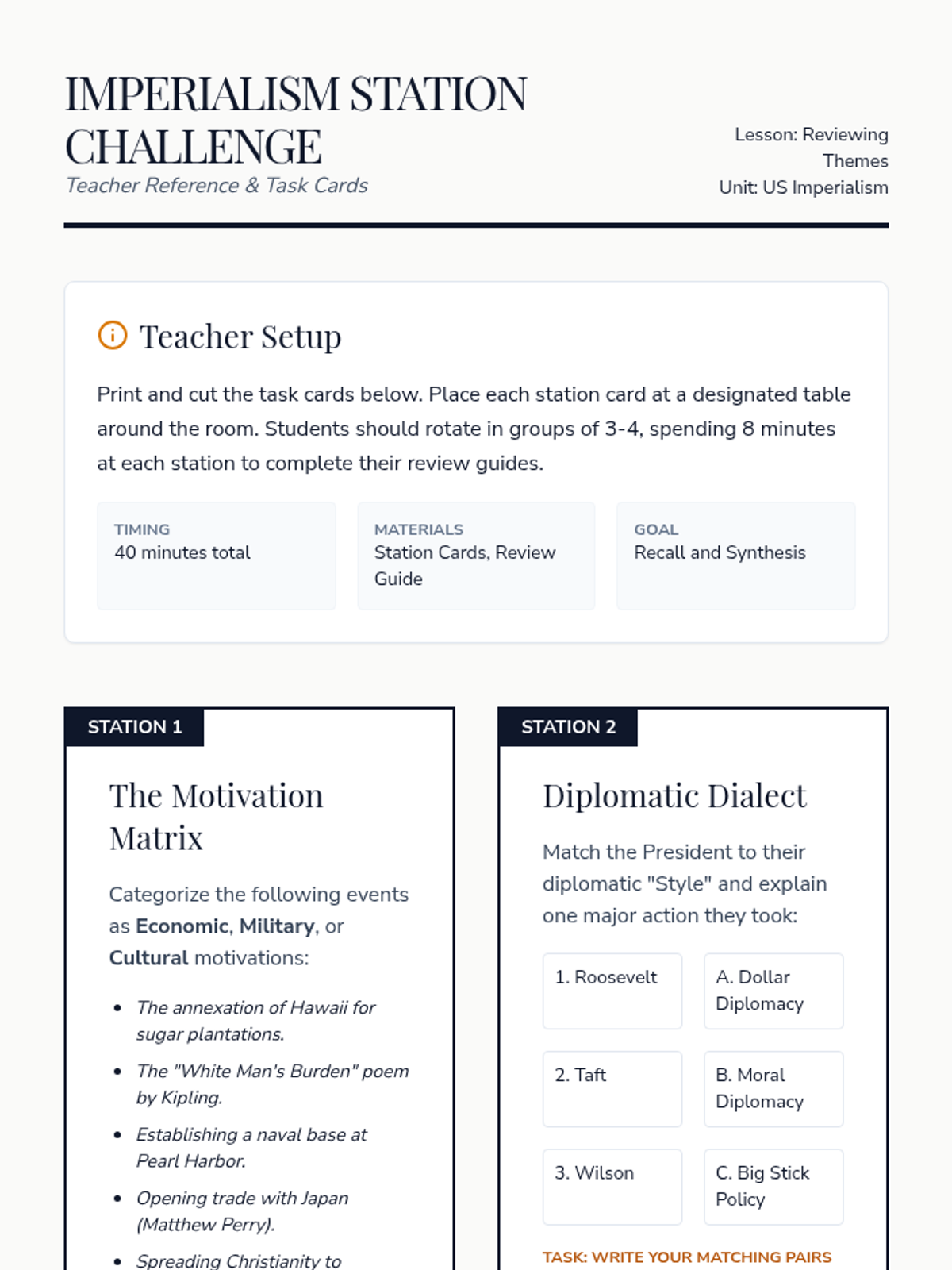
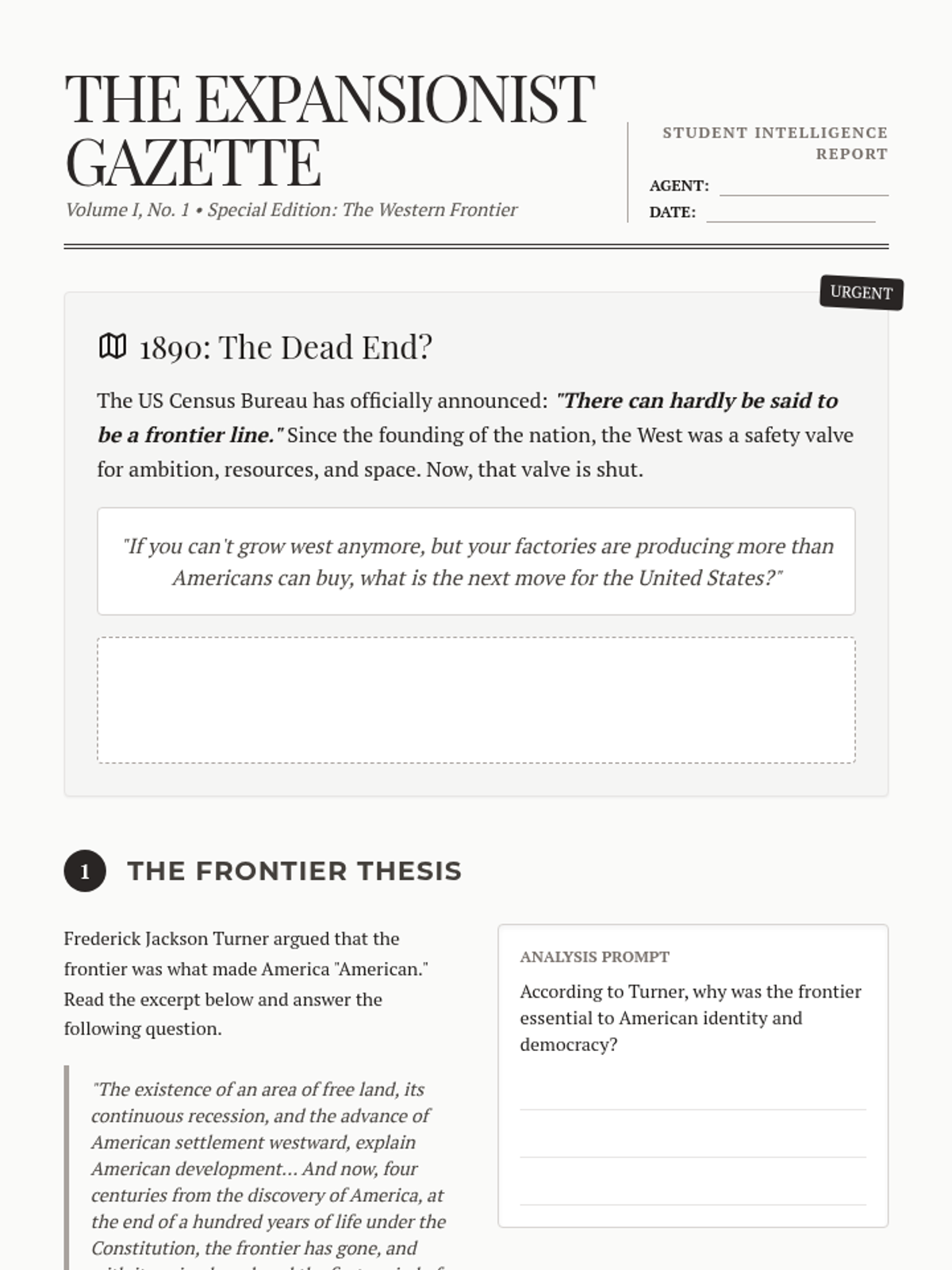
An academic exploration of the intellectual and social frameworks justifying late 19th-century US expansionism, focusing on the Frontier Thesis, naval strategy, and racial ideology.
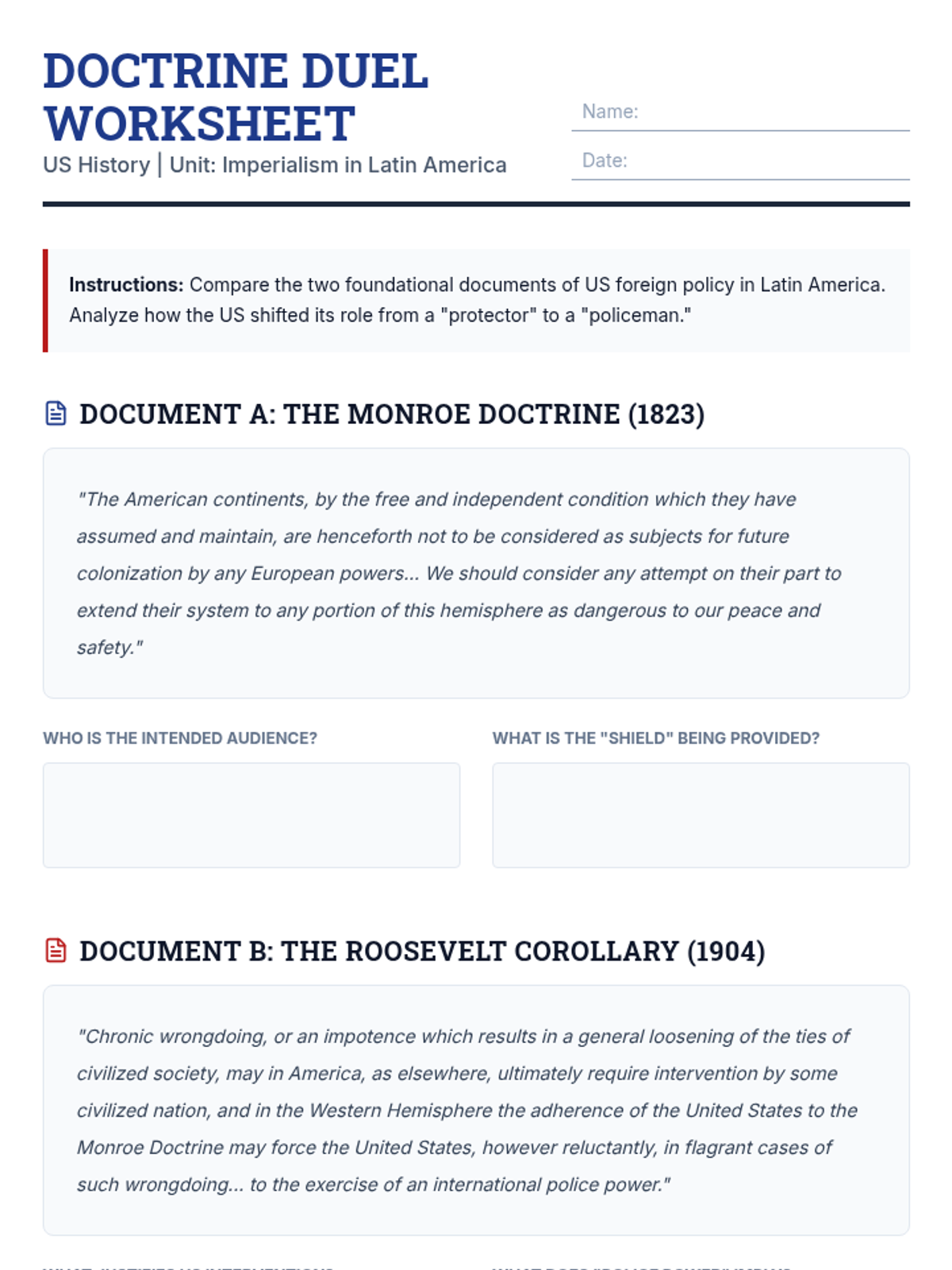
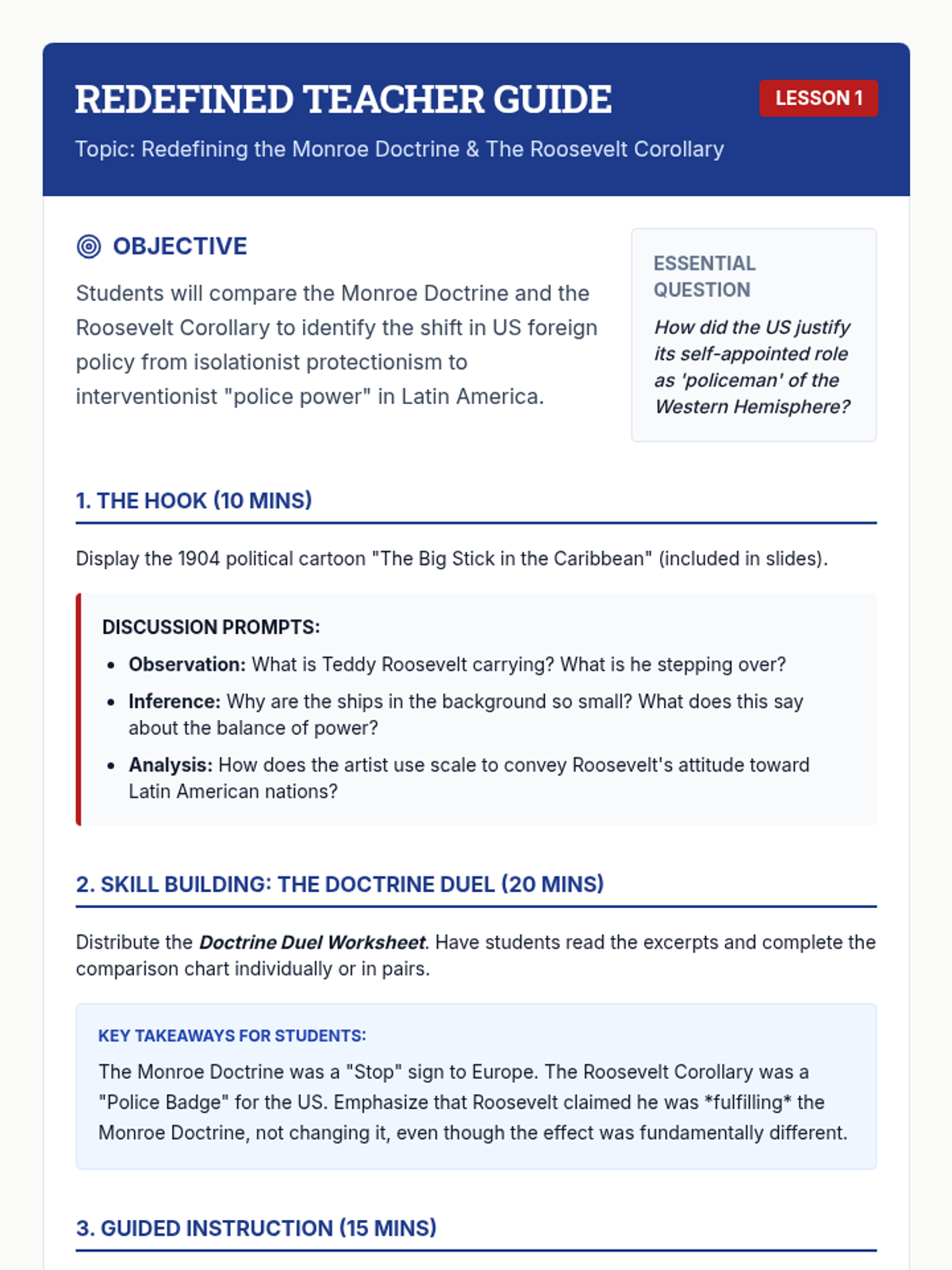
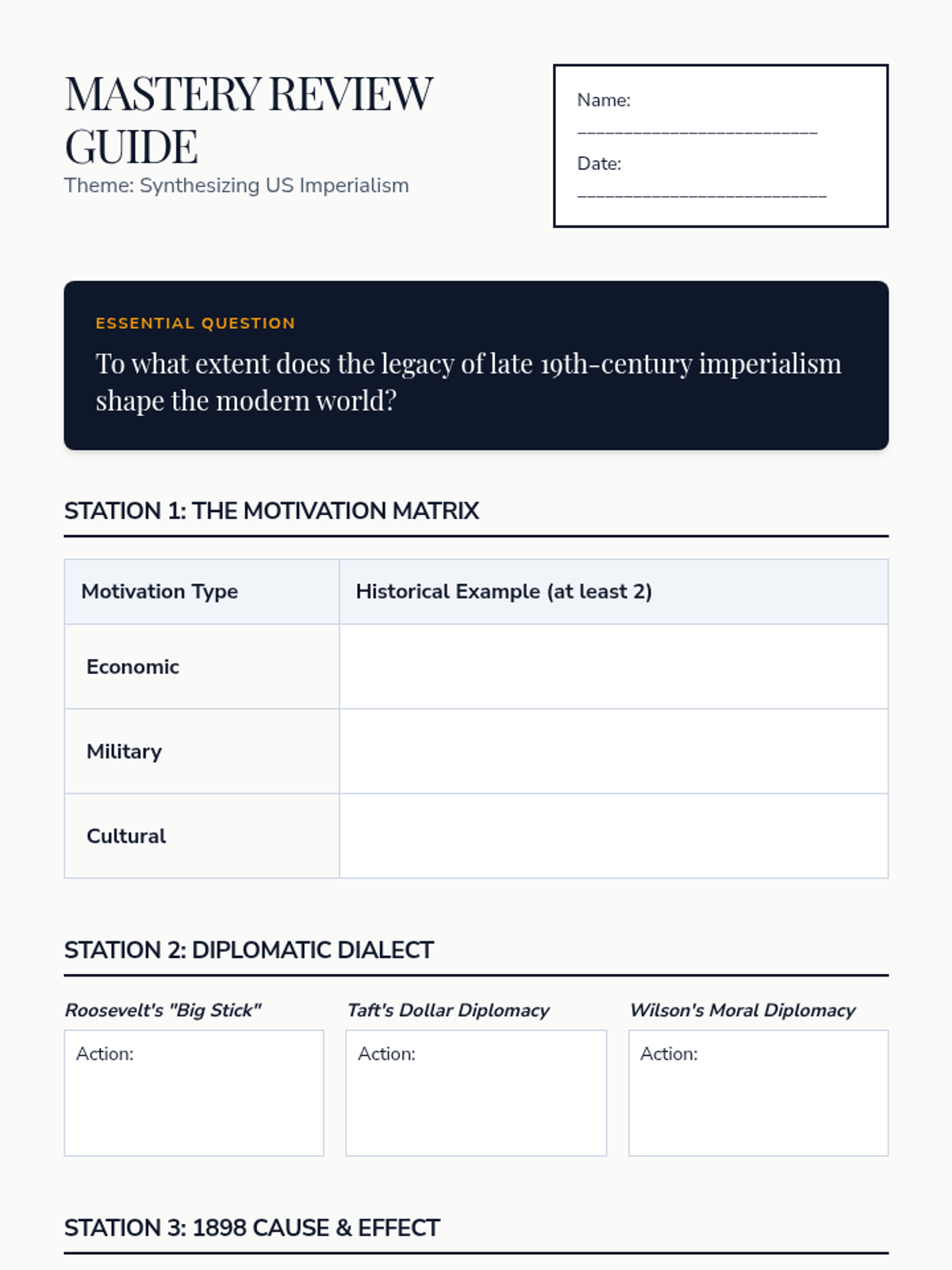
A 5-lesson unit exploring US foreign policy in Latin America from the late 19th to early 20th century, focusing on the shift from protectionism to interventionism through the Big Stick, Dollar, and Moral Diplomacy models.
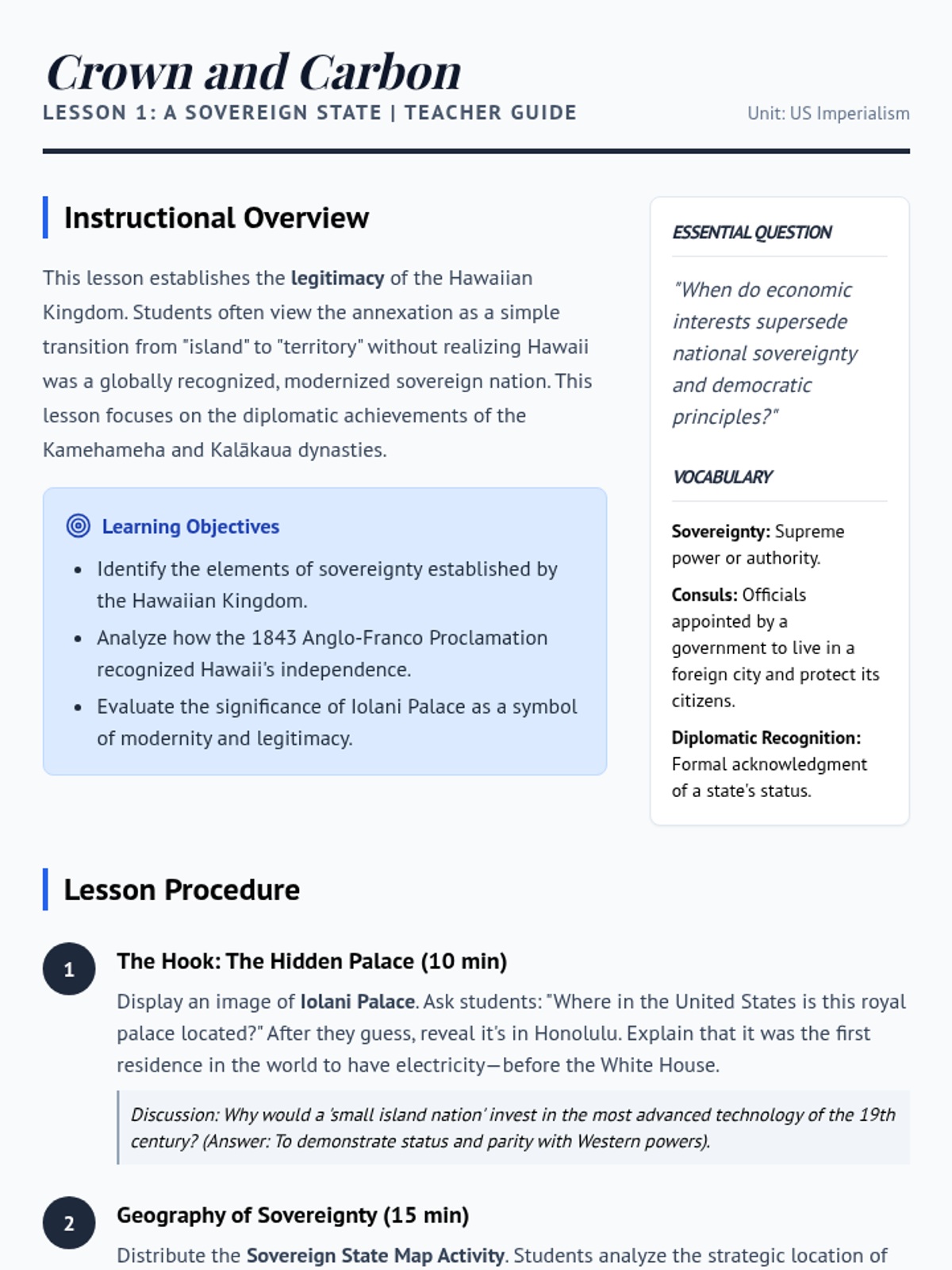
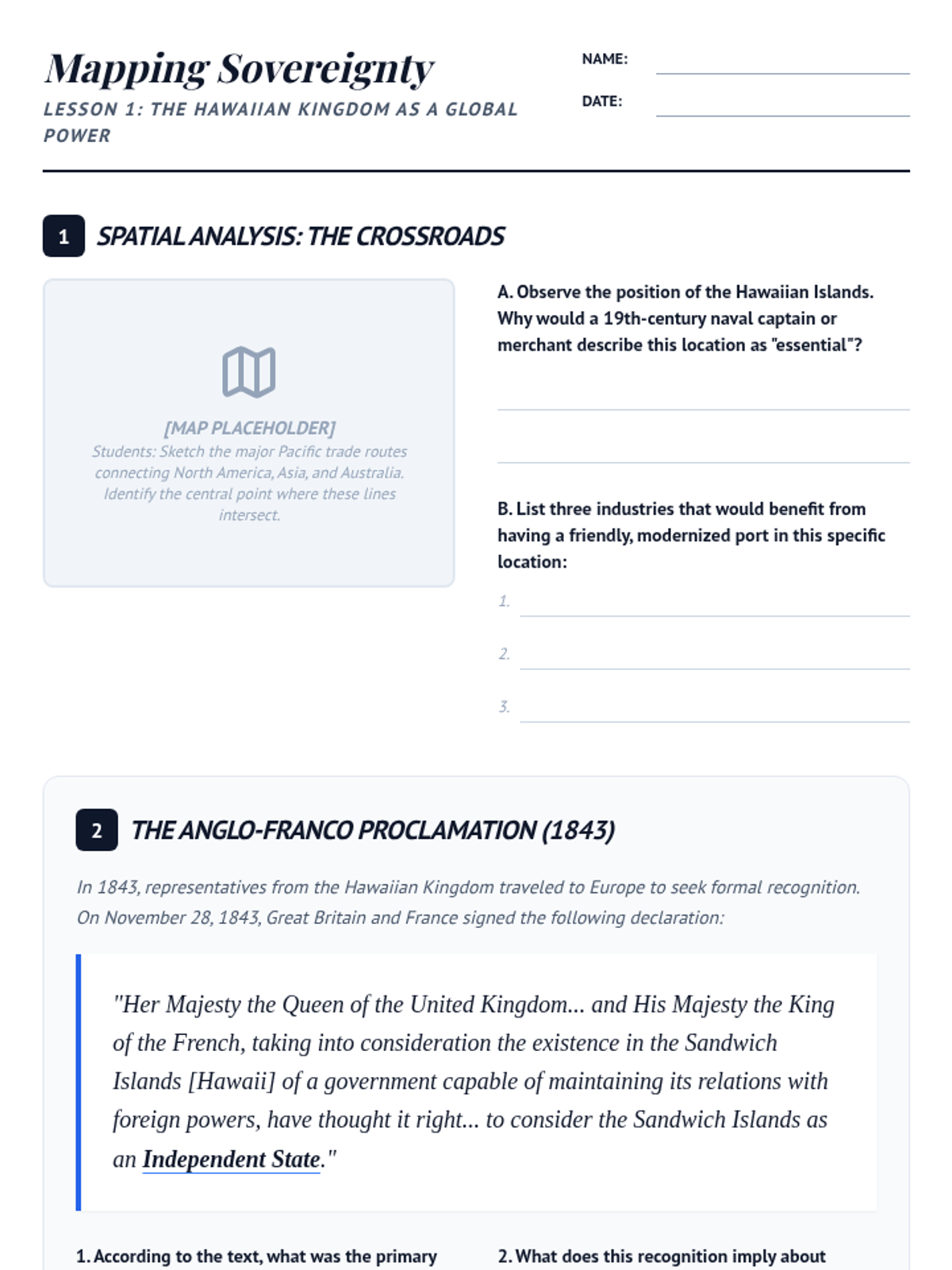
A deep-dive case study into the annexation of Hawaii, exploring the collision of indigenous sovereignty, missionary influence, and corporate interests. Students analyze the transition from a recognized sovereign monarchy to a US territory, evaluating the ethical and political implications of imperialism.
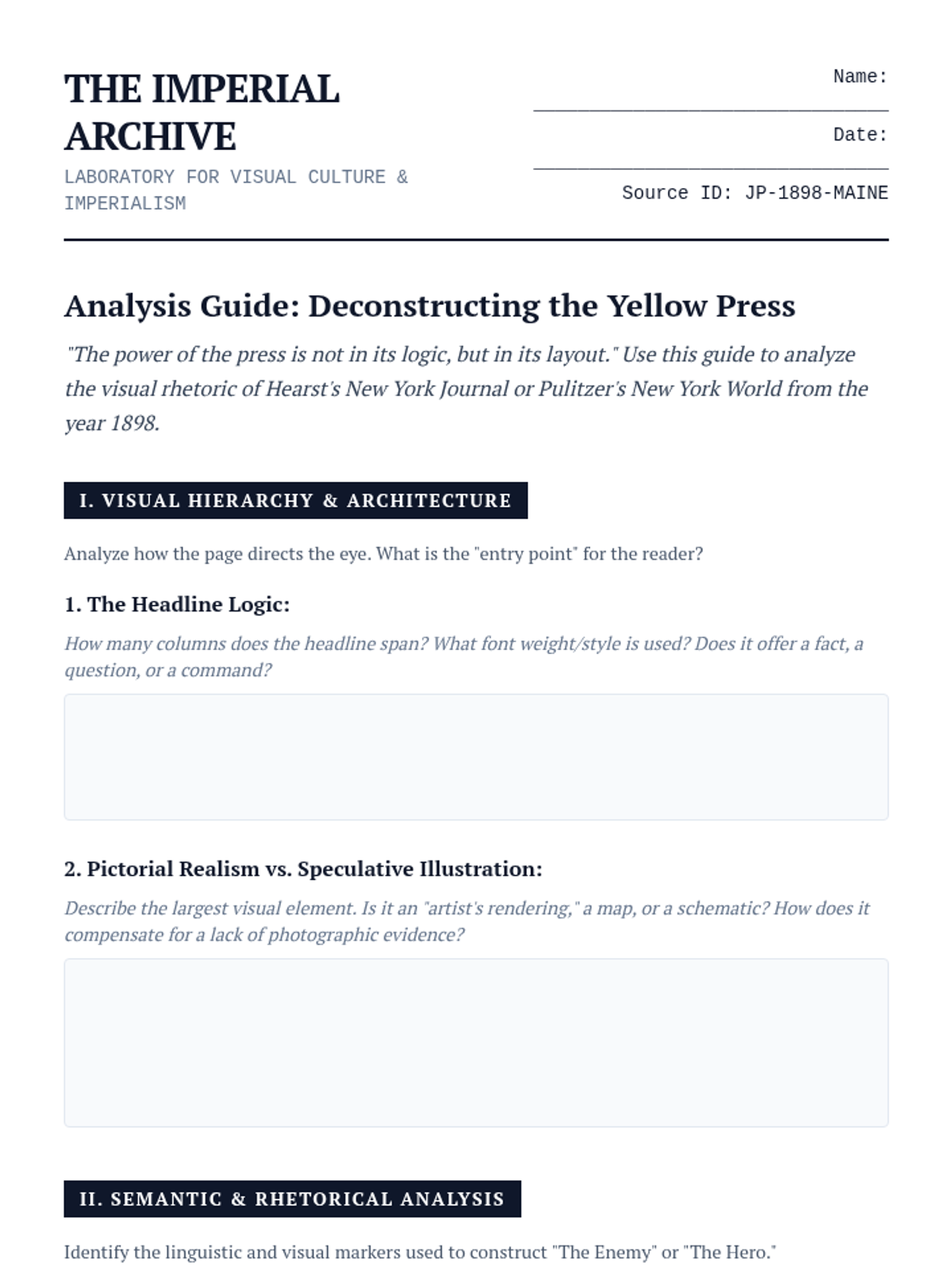
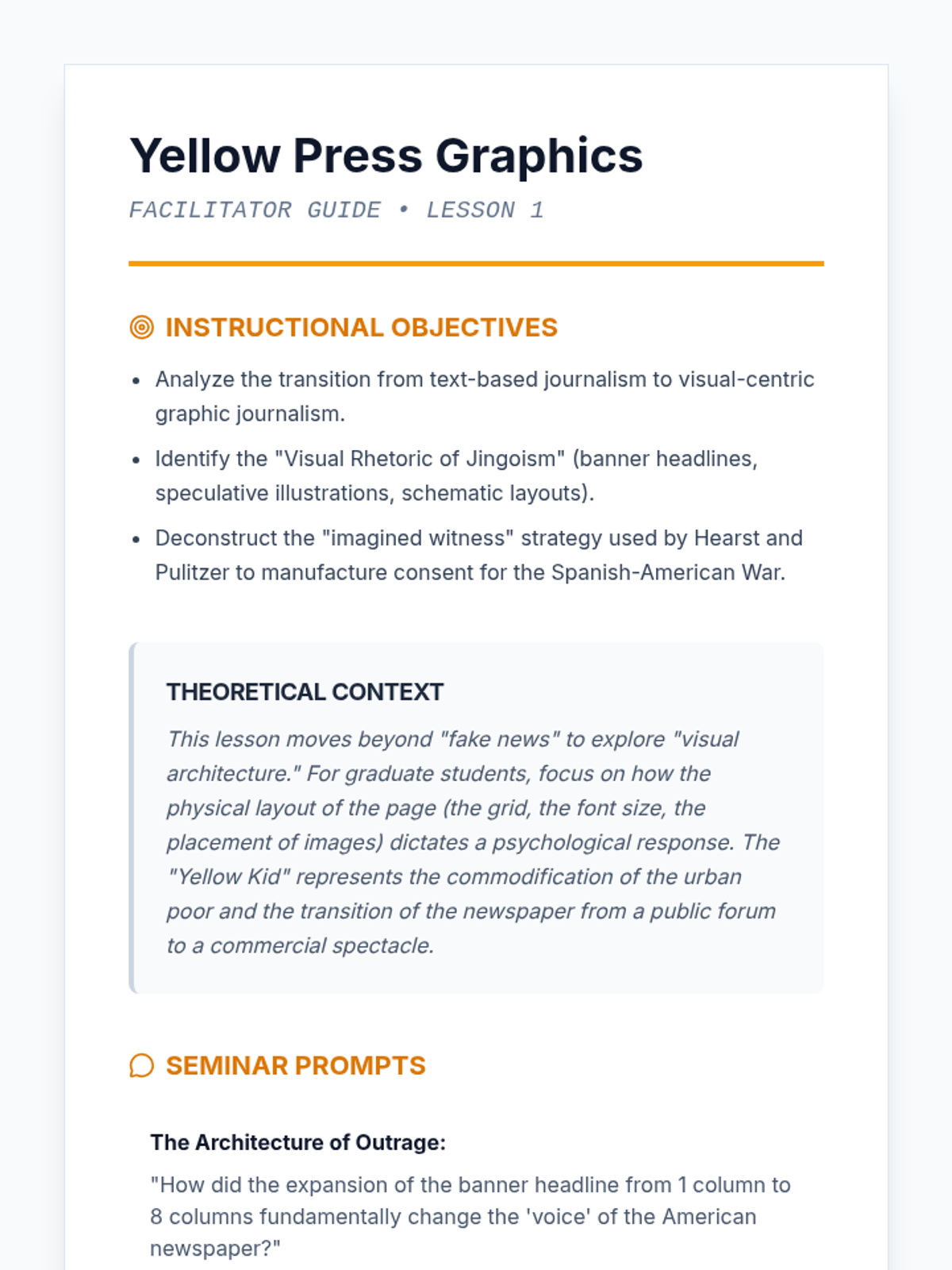
A graduate-level sequence exploring how visual culture, including journalism, cartoons, photography, and exhibitions, was used to construct racial hierarchies and manufacture public consent for US overseas expansion. Students will develop visual literacy and critical archival skills, culminating in a curated digital exhibition project.
Students evaluate the lasting legacy of US Imperialism through a project-based inquiry. They synthesize historical knowledge to create museum exhibits connecting 19th-century events to modern geopolitical realities.
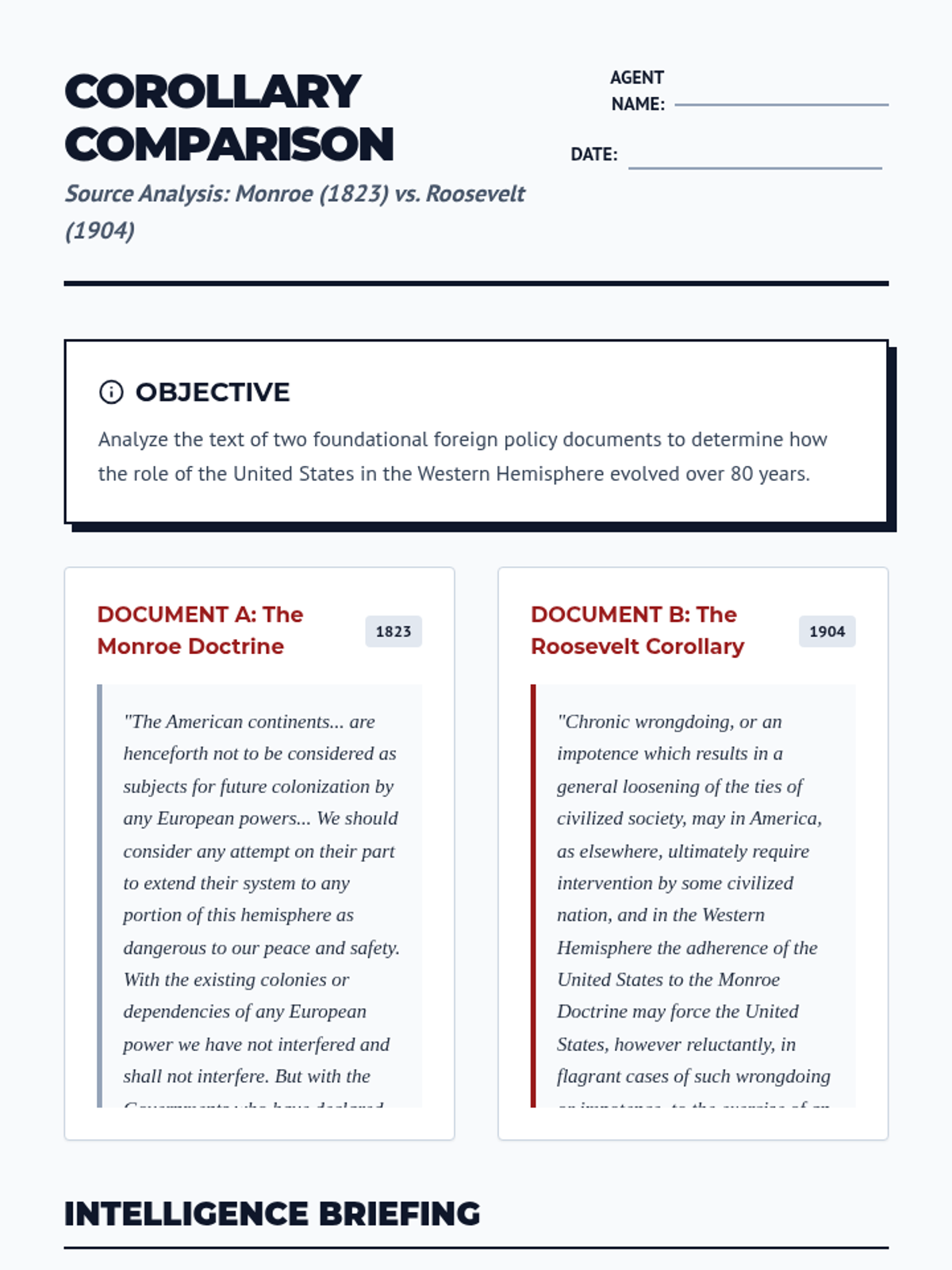
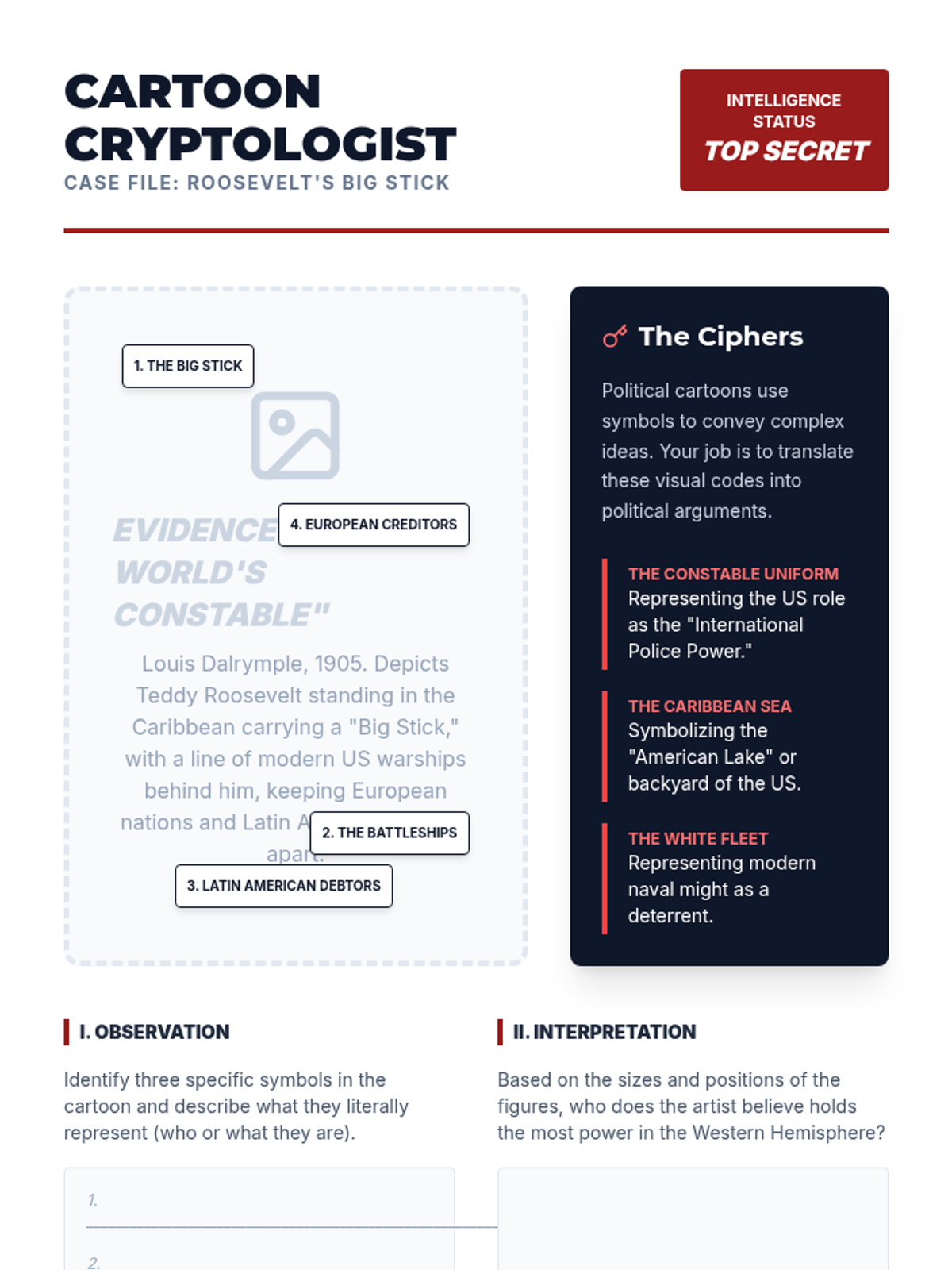
A comprehensive exploration of US interventionism in Latin America during the early 20th century, focusing on the evolution of foreign policy from the Roosevelt Corollary to Wilson's Moral Diplomacy. Students analyze primary sources, political cartoons, and economic data to evaluate the impact of American hegemony.
A deep dive into the intellectual, economic, and strategic foundations of American Imperialism at the turn of the 20th century, exploring the tension between profit and principle.
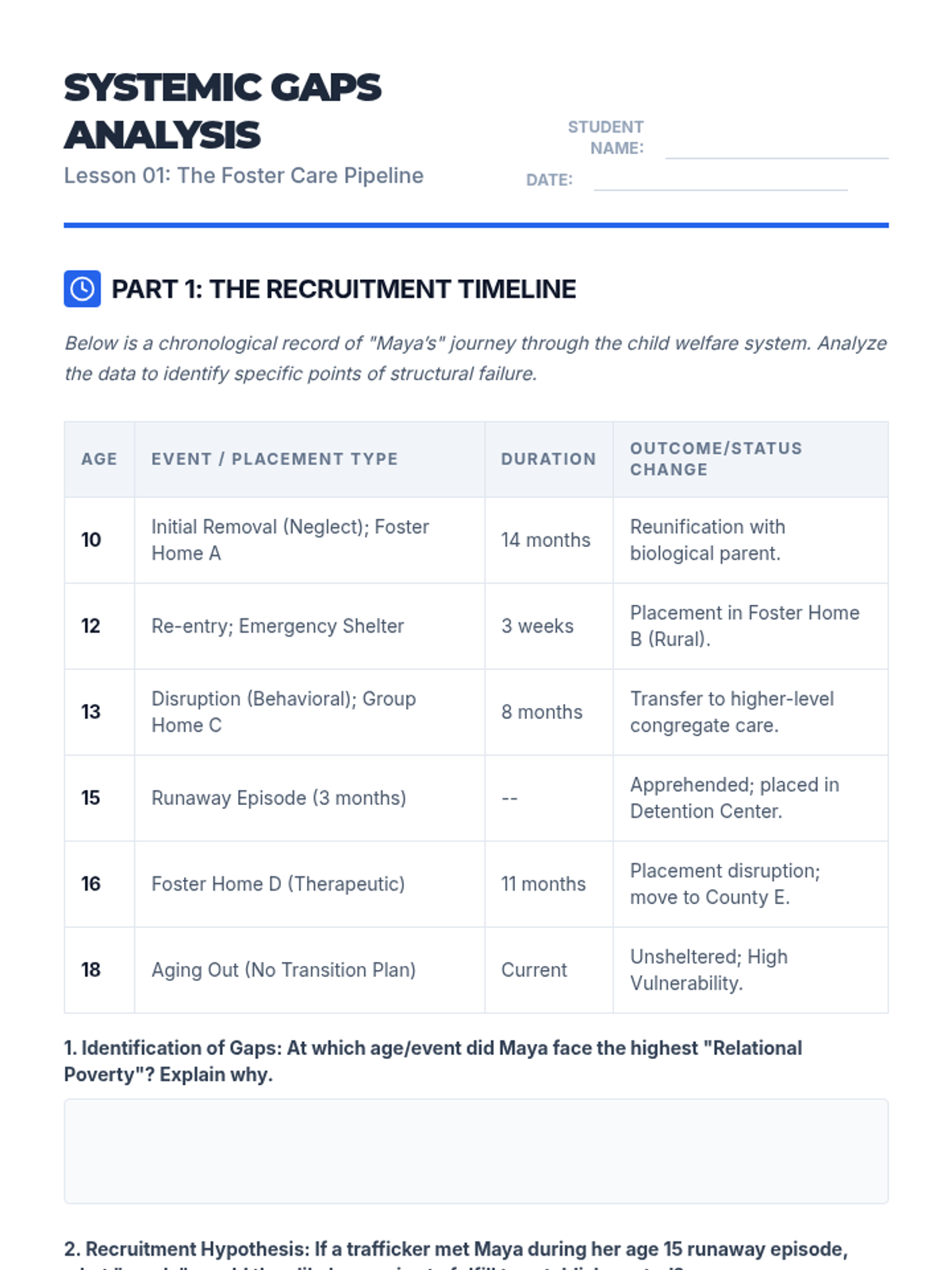
This undergraduate sequence shifts the focus of human trafficking education from individual criminal acts to systemic societal failures. Students analyze how the foster care system, LGBTQ+ rejection, migration policies, and youth homelessness create structural vulnerabilities that traffickers exploit, ultimately proposing public health interventions.
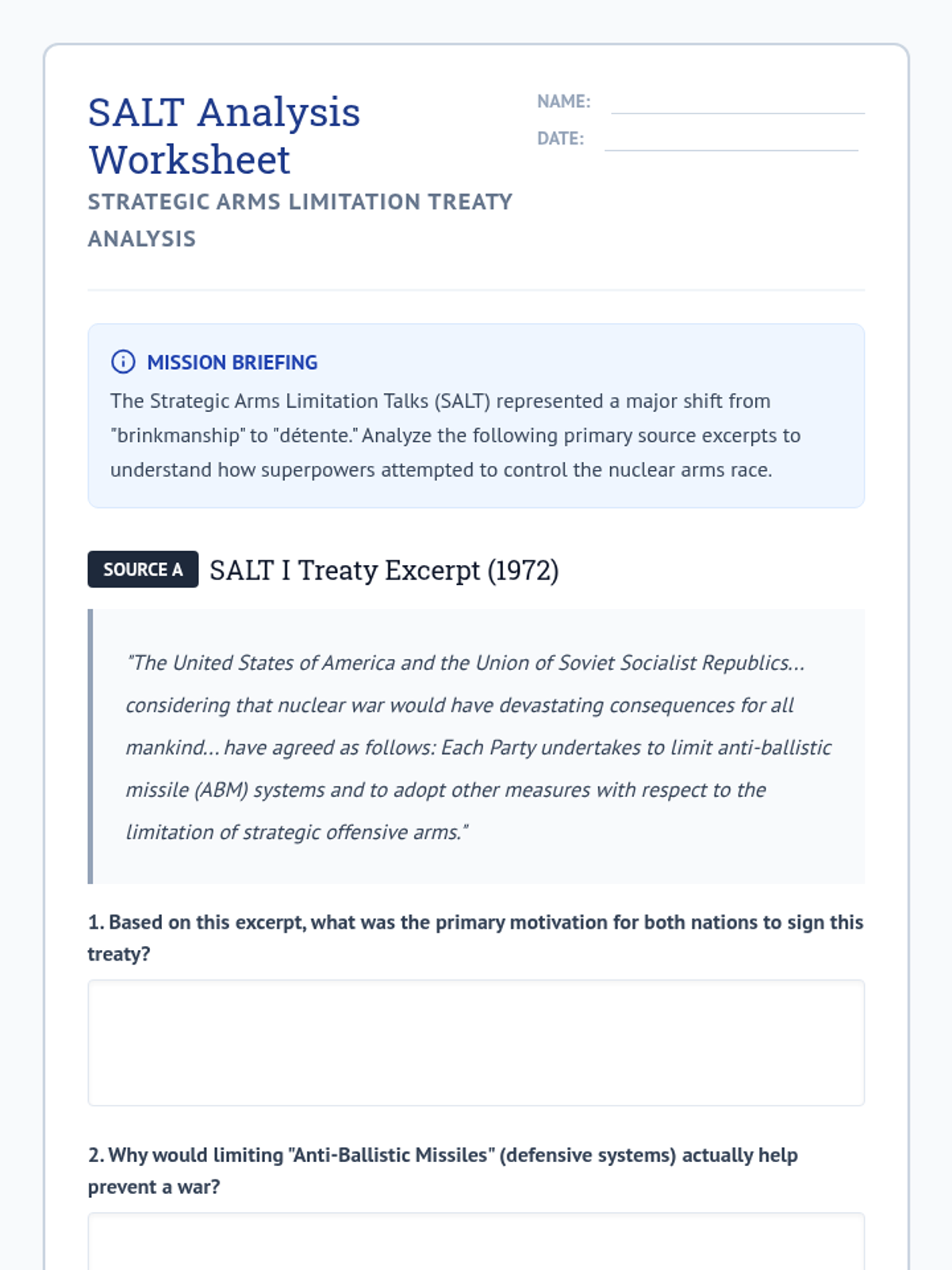
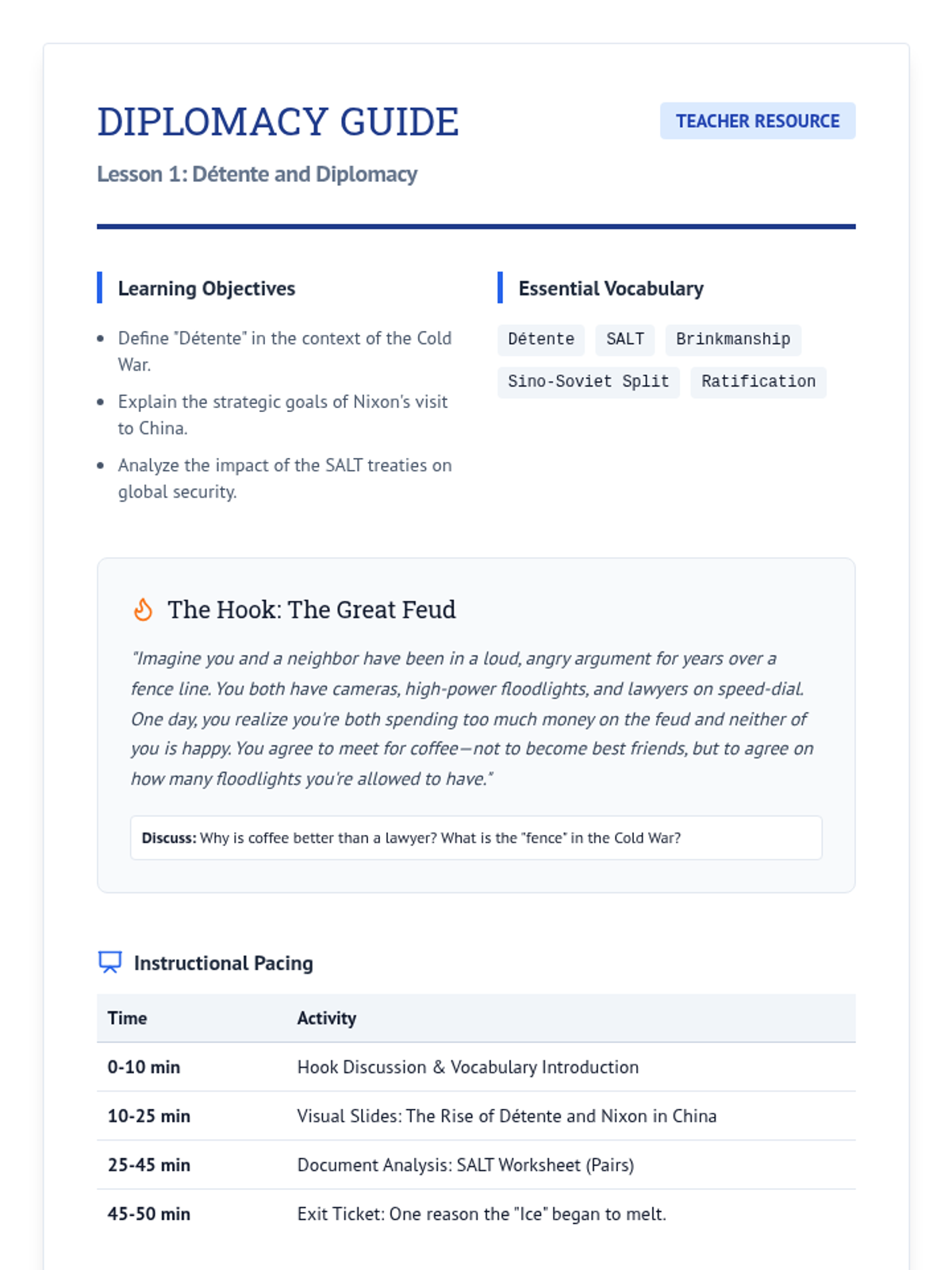
This sequence explores the final chapters of the Cold War, from the diplomatic easing of tensions to the dramatic collapse of the Soviet Union and its lasting impact on modern global politics.
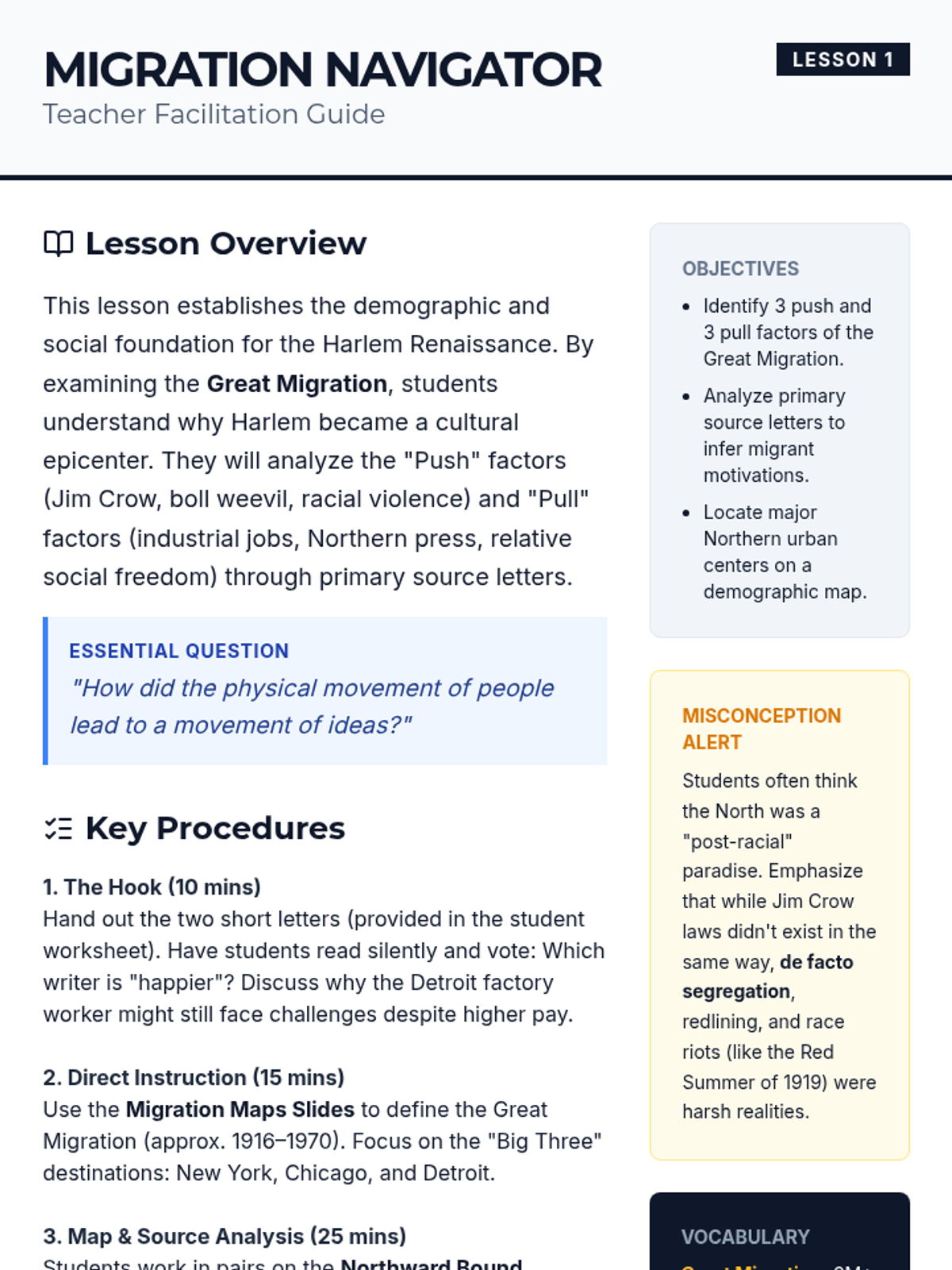
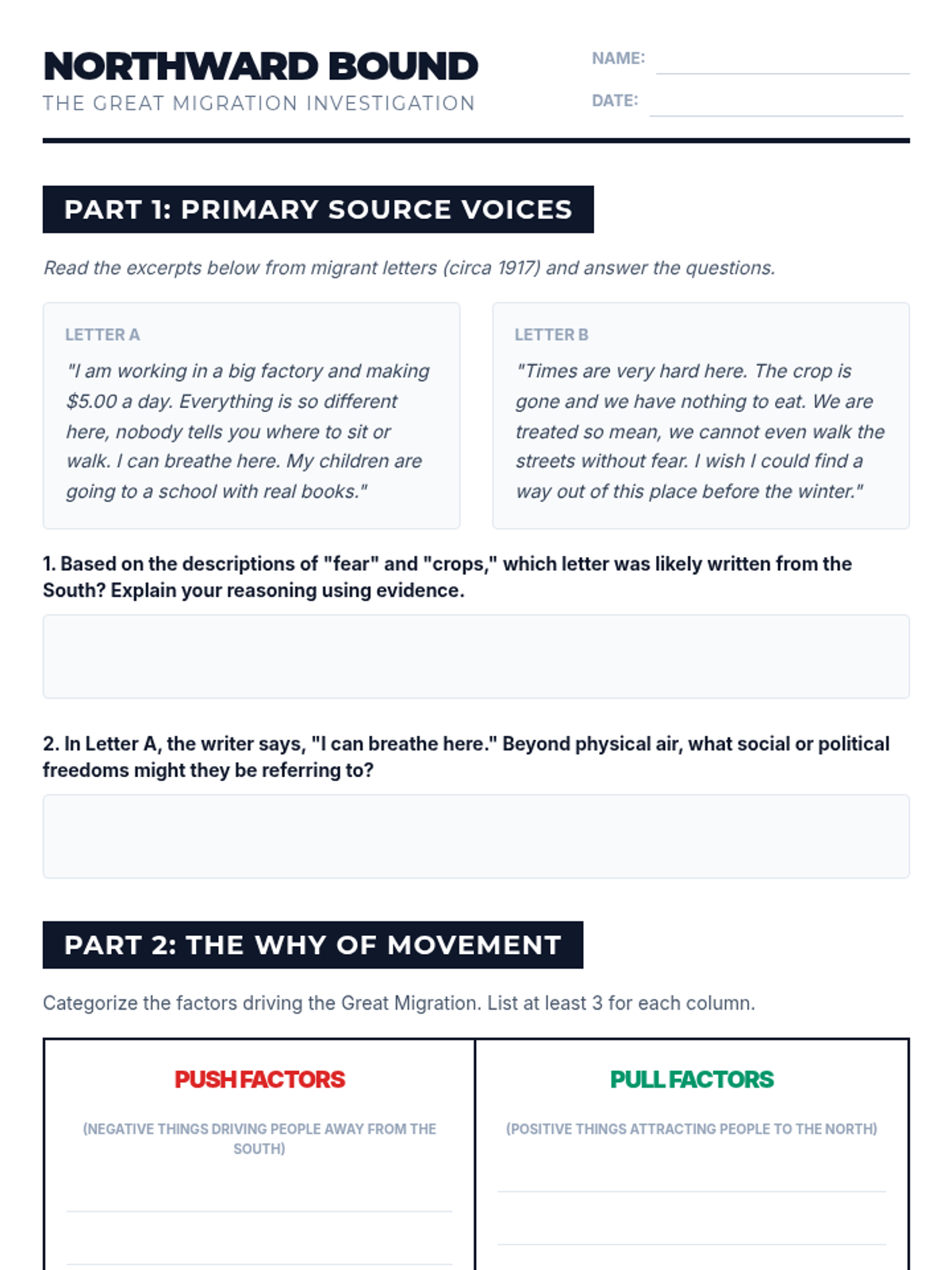
This unit explores the transformative cultural movements of the 1920s, focusing on the Harlem Renaissance and the evolving social roles of women. Students analyze how the Great Migration, jazz, literature, and the suffrage movement collectively redefined American identity.
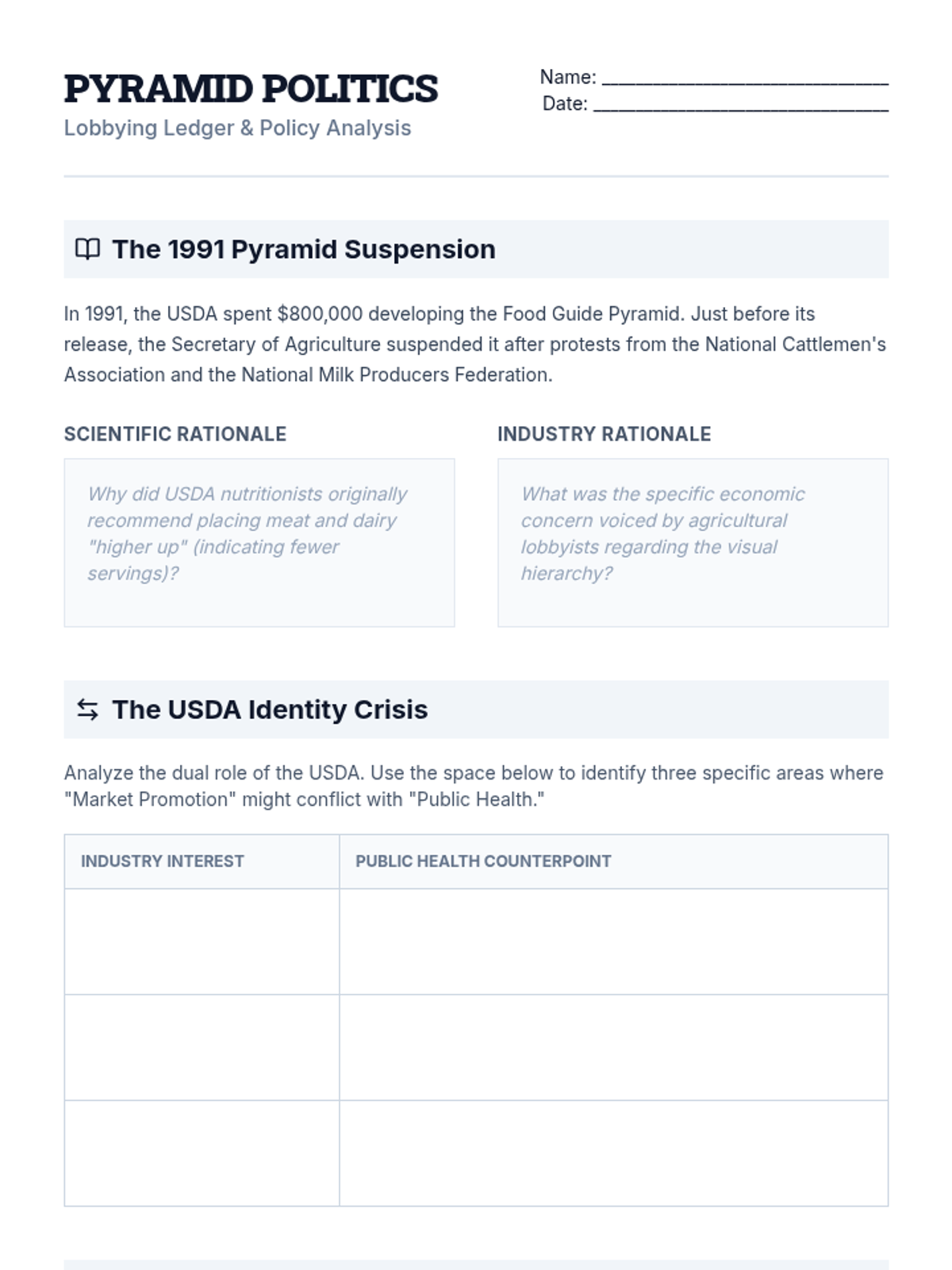
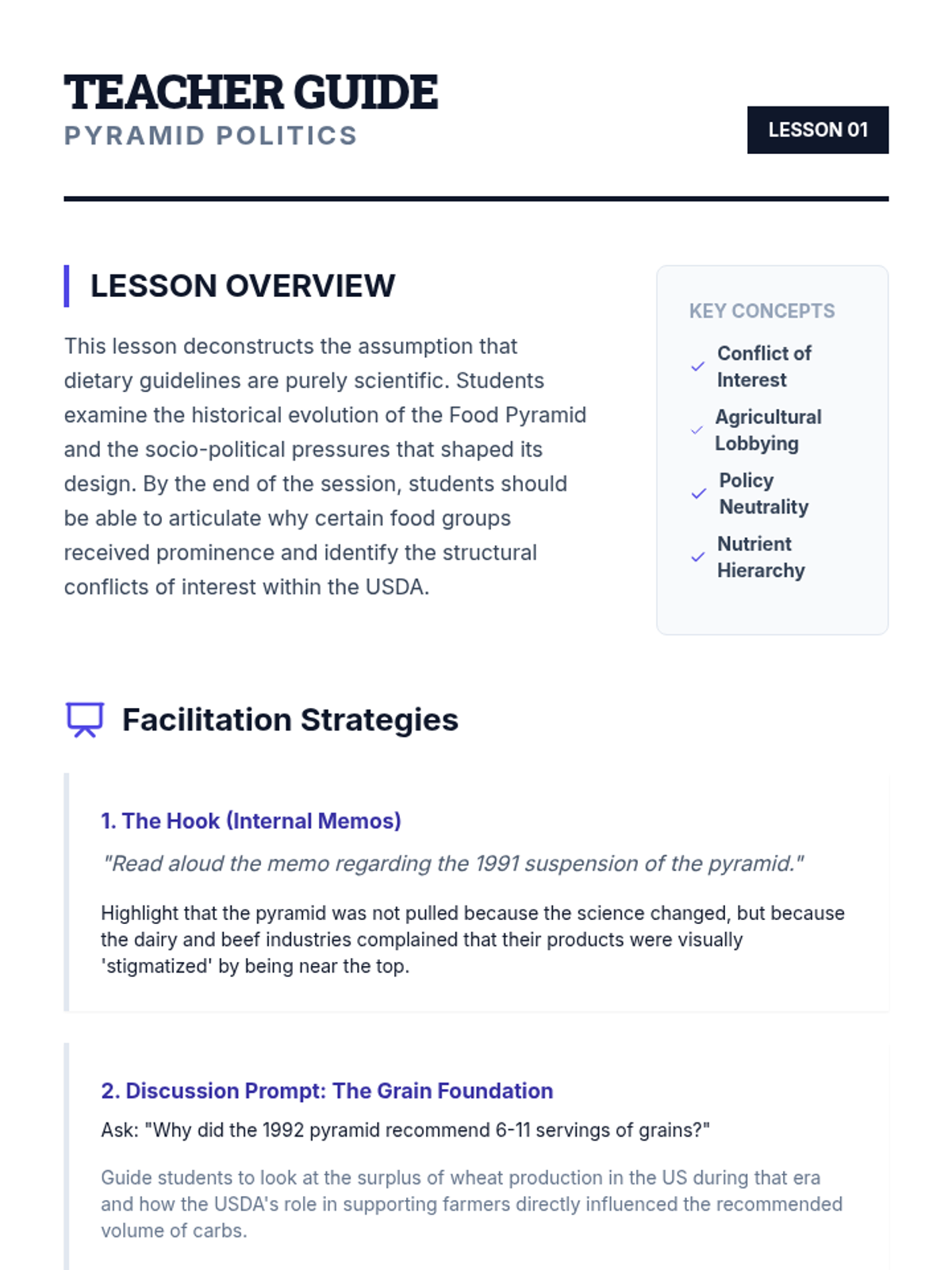
A comprehensive undergraduate sequence analyzing the socio-political, economic, and environmental factors that shape nutrition guidelines and food group accessibility. Students move from historical critiques of the Food Pyramid to proposing modernized, equitable dietary policies.
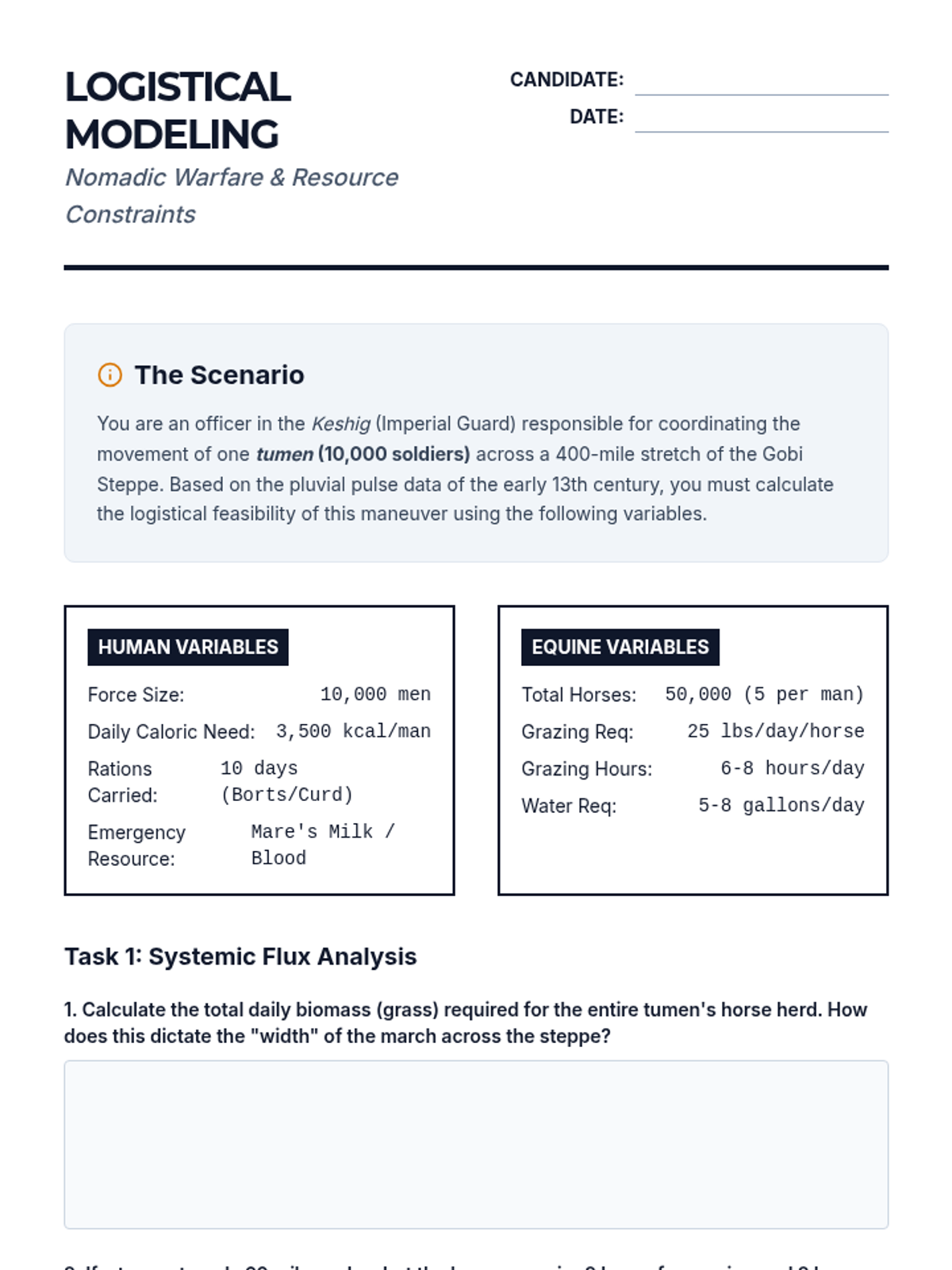
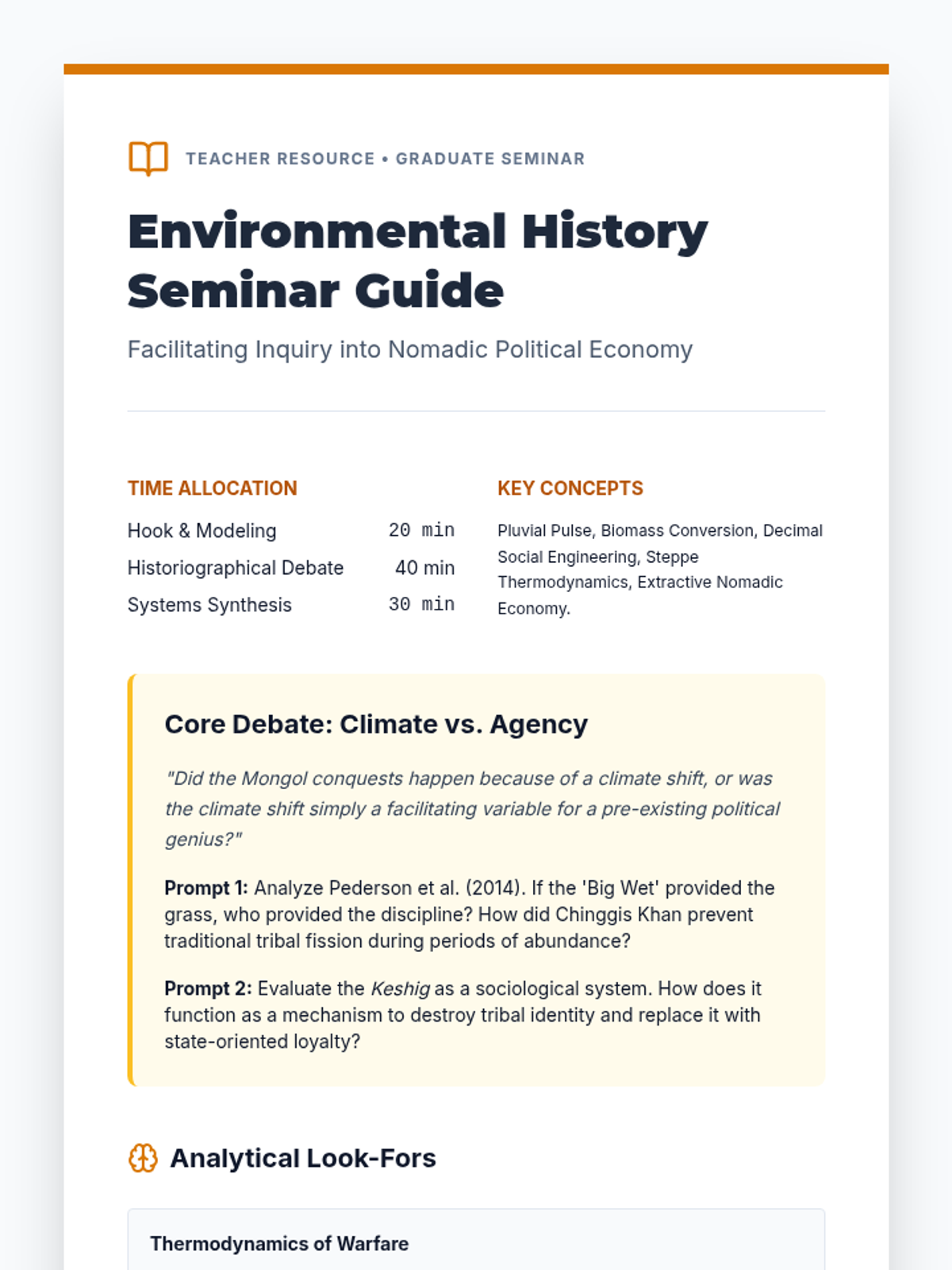
A graduate-level exploration of the Mongol Empire as a precursor to modern globalization, utilizing systems theory, environmental history, and network analysis to understand Eurasian integration.
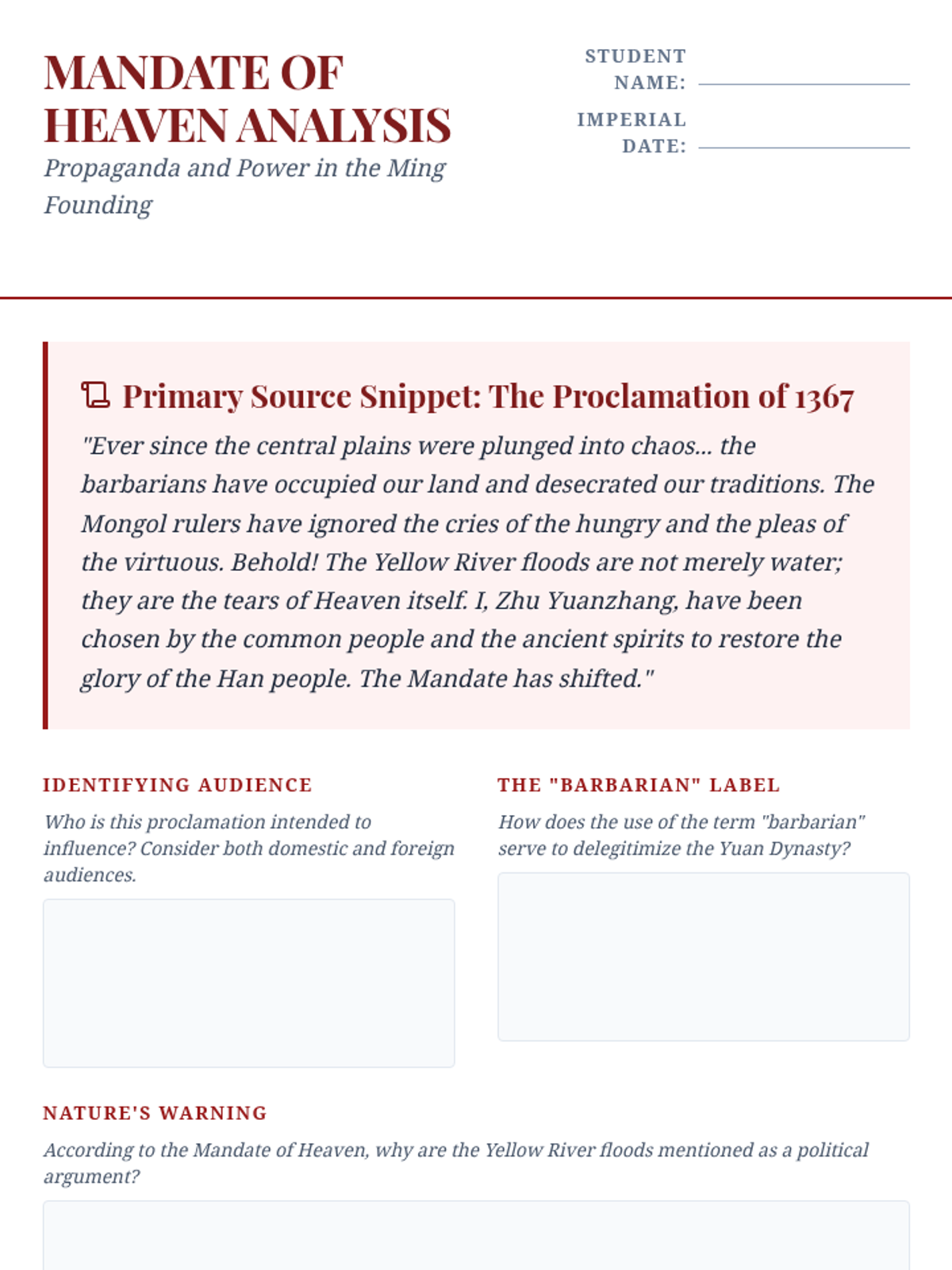
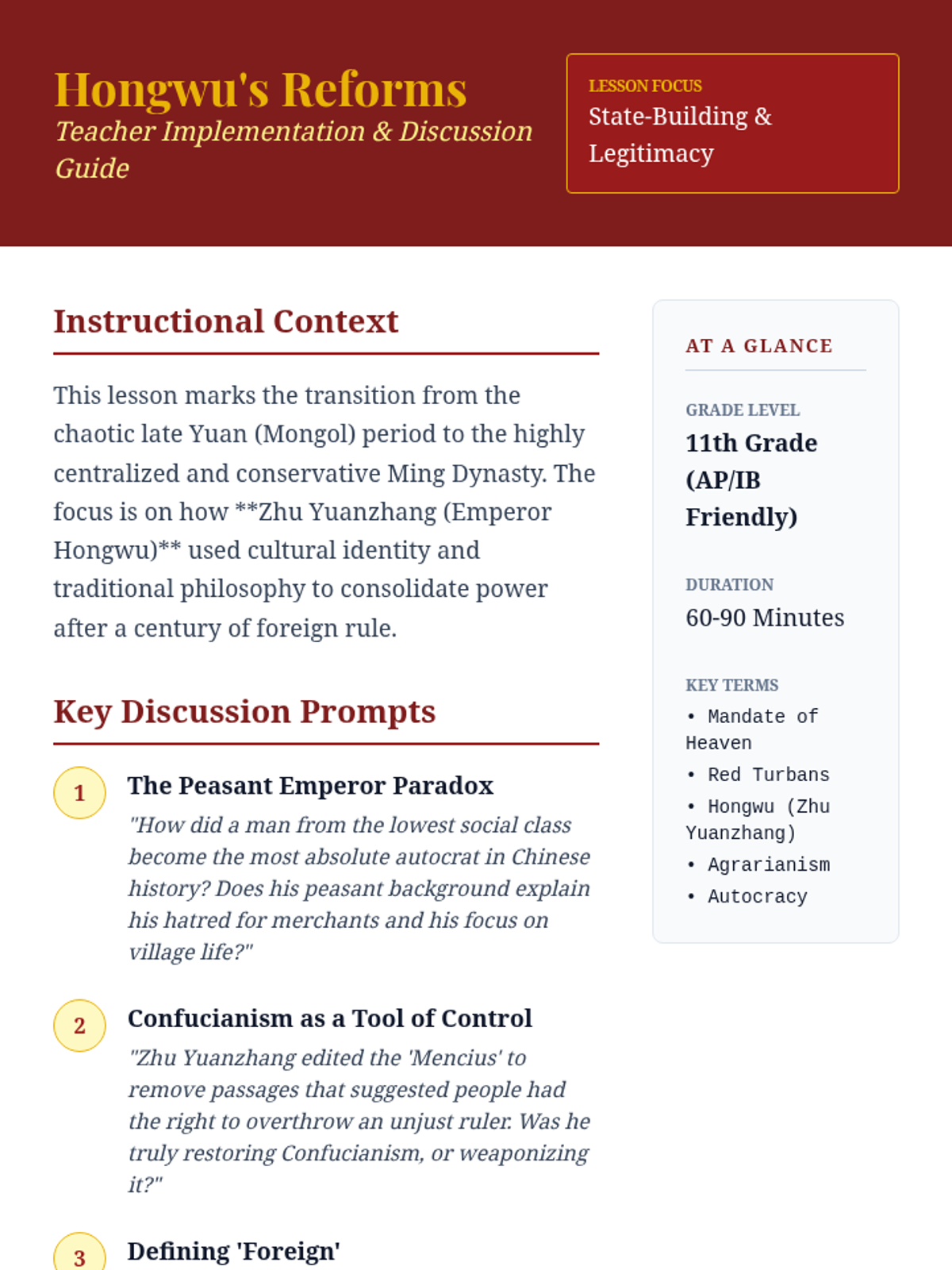
This sequence explores the early Ming Dynasty's shift from unprecedented maritime exploration to strict isolationism. Students analyze the reign of Hongwu, the massive Treasure Fleets of Zheng He, and the internal court conflicts between Eunuchs and Scholar-Officials that ultimately changed the course of global history.
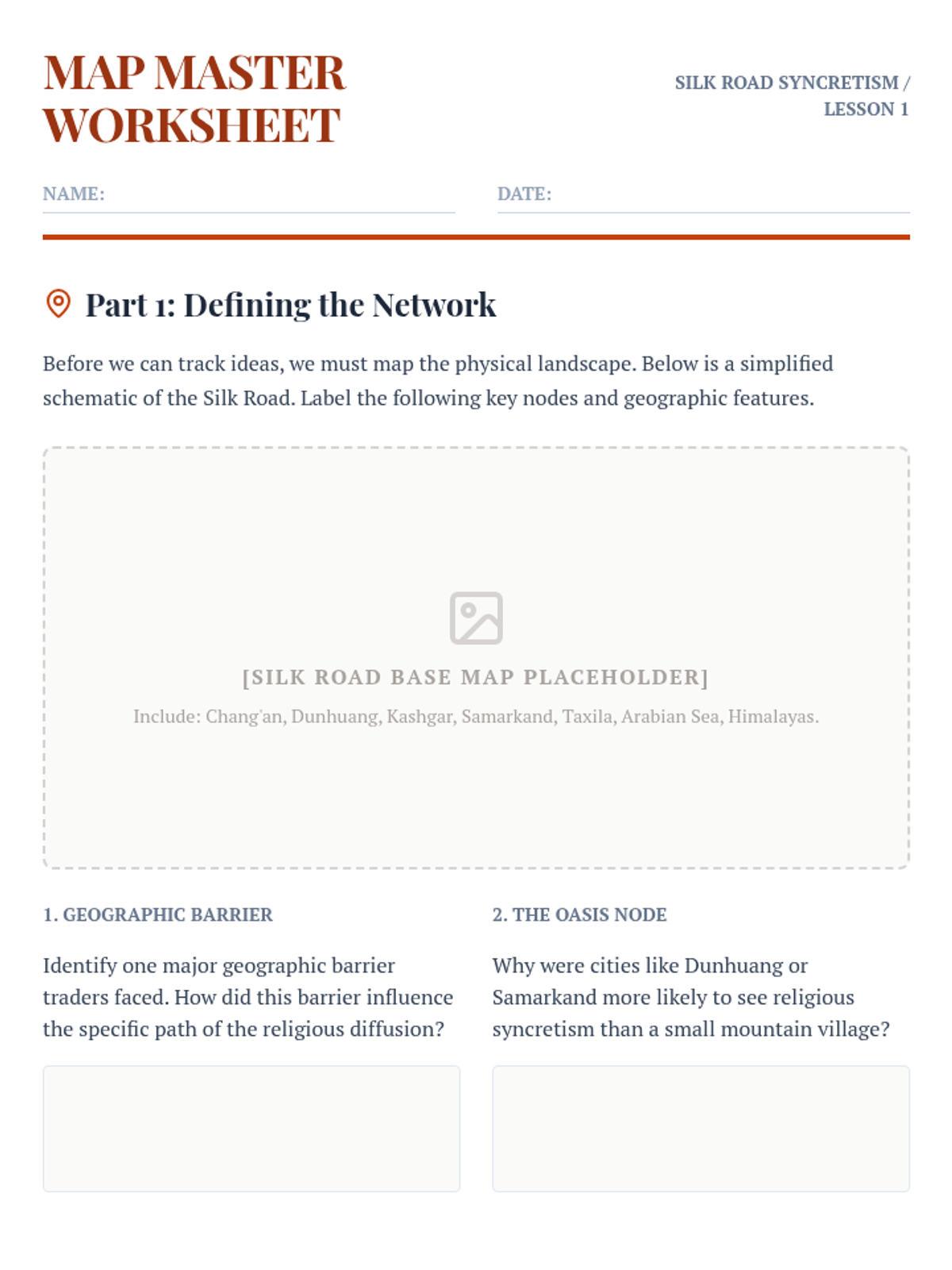
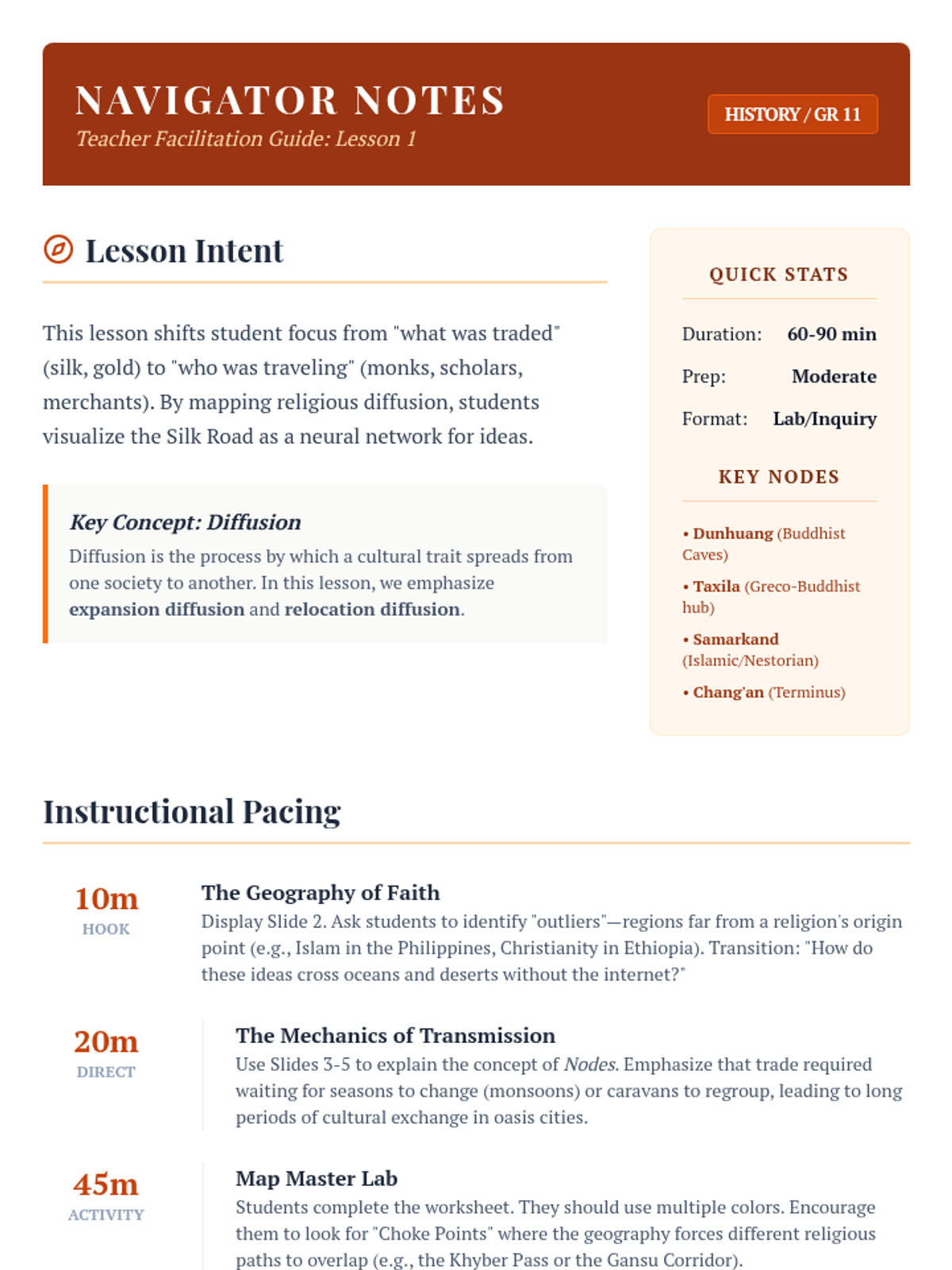
Explore the Silk Road as a vehicle for religious and cultural syncretism. Students track the spread and adaptation of Buddhism, Islam, and Nestorian Christianity across Asia, culminating in a curated digital museum exhibit.
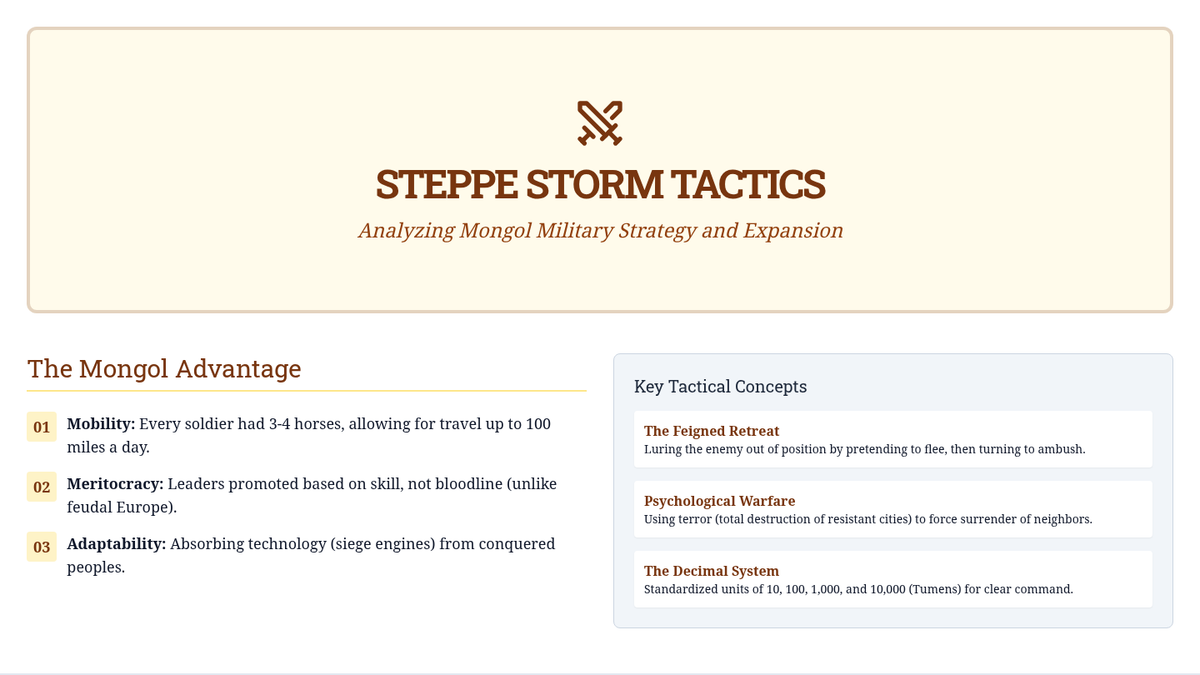
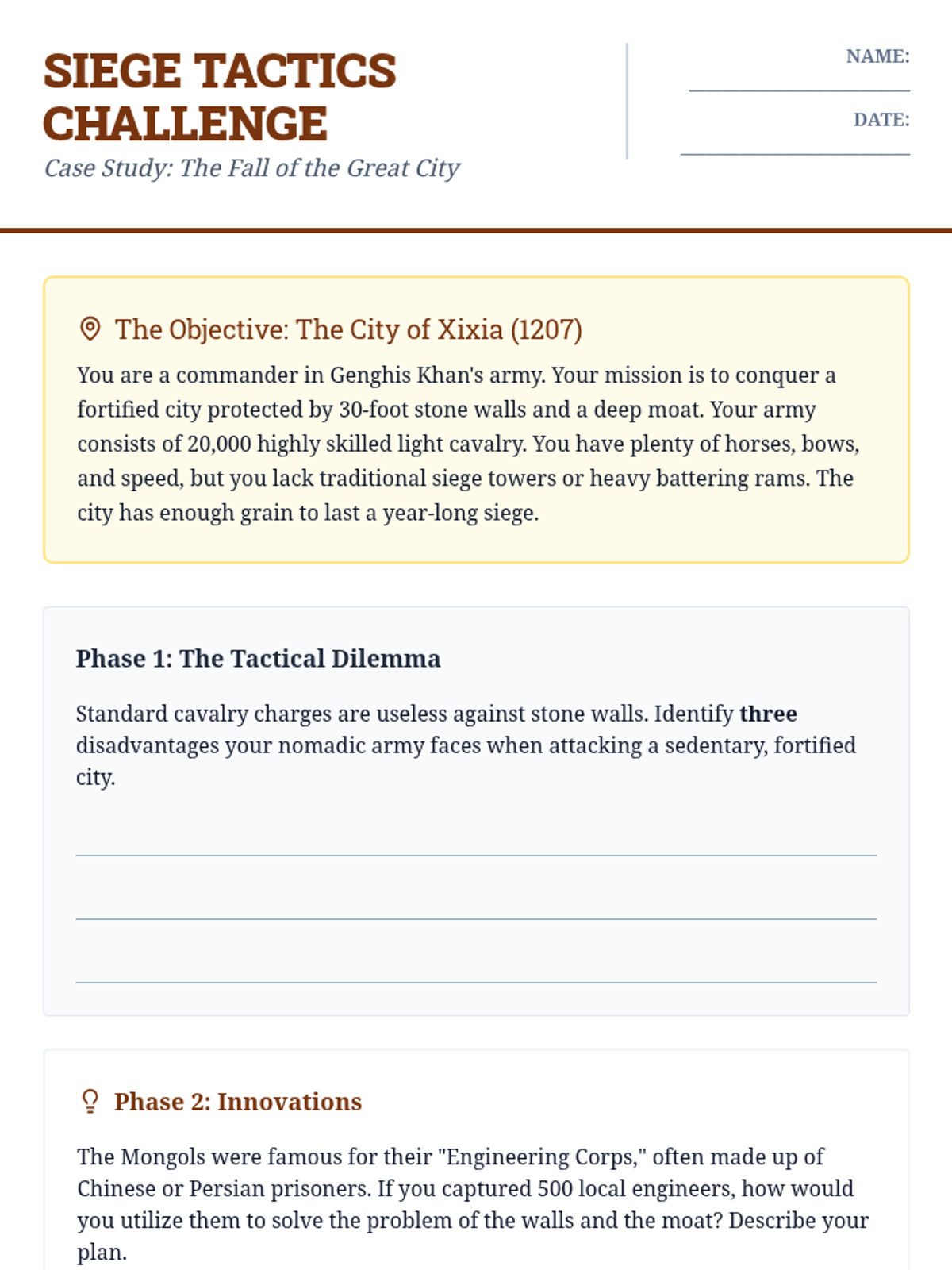
This sequence investigates the rise of the Mongol Empire and its dual legacy of destruction and connection. Students move beyond the stereotype of 'barbarian hordes' to analyze the sophisticated administration, military tactics, and trade networks (Pax Mongolica) established by Genghis and Kublai Khan, culminating in a student-led seminar evaluating historical revisionism regarding the Mongols' role in world history.
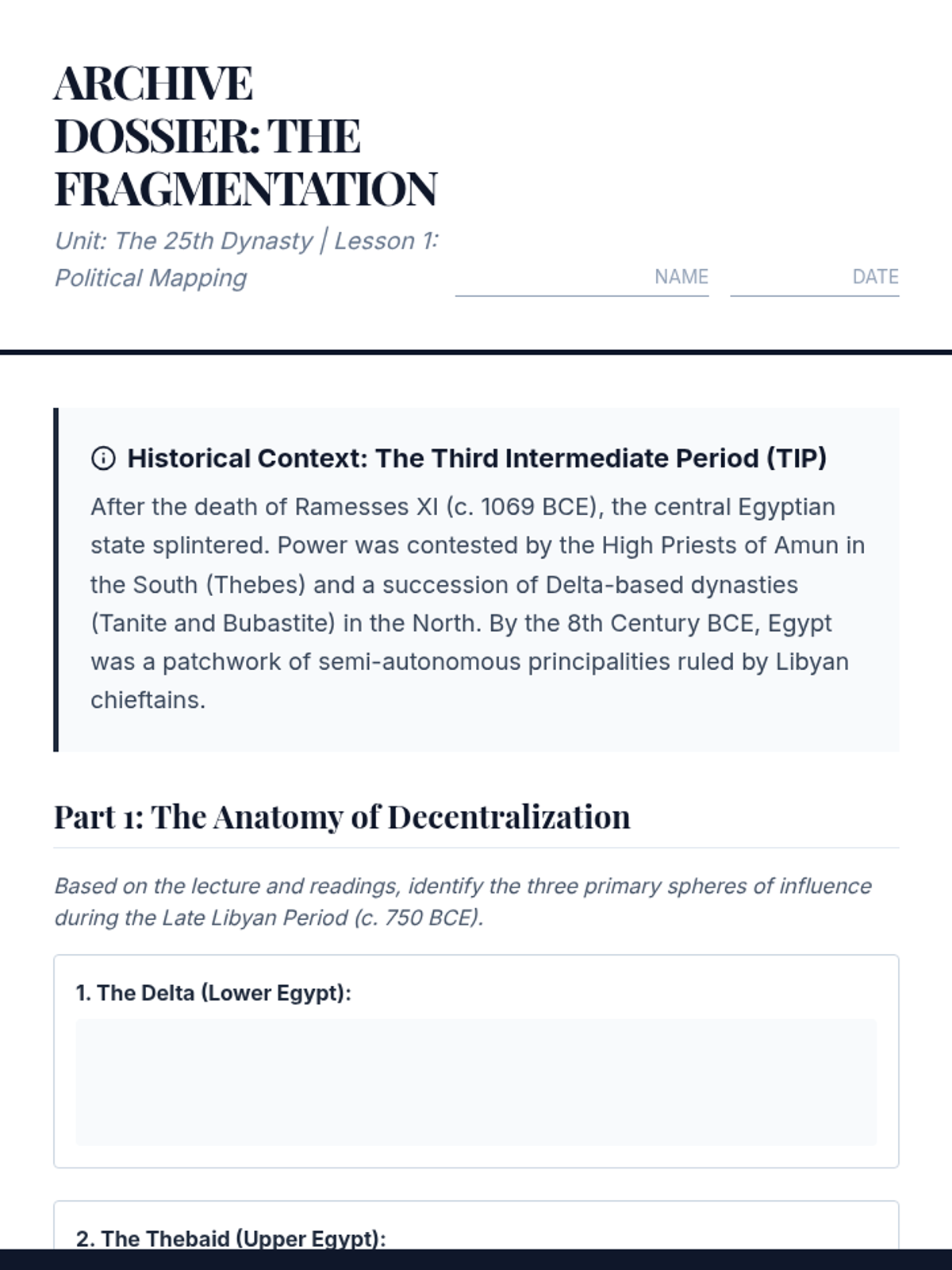
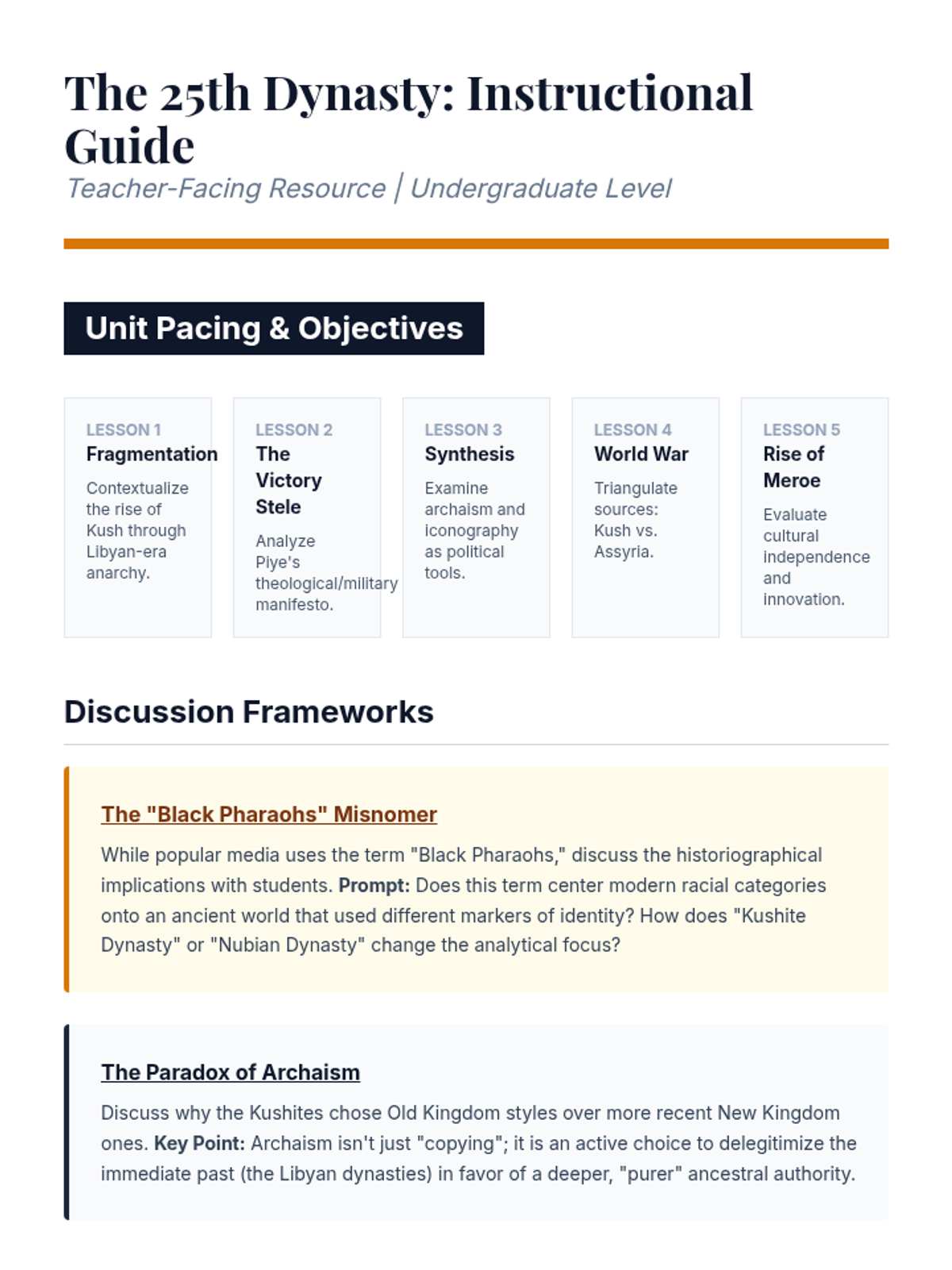
This undergraduate-level sequence explores the 25th Dynasty of Egypt, examining the rise of Kushite power, the conquest of Egypt by Piye, the cultural synthesis of the 'Black Pharaohs,' and the geopolitical clashes with the Neo-Assyrian Empire. Students will engage with primary sources, art history, and comparative historiography.
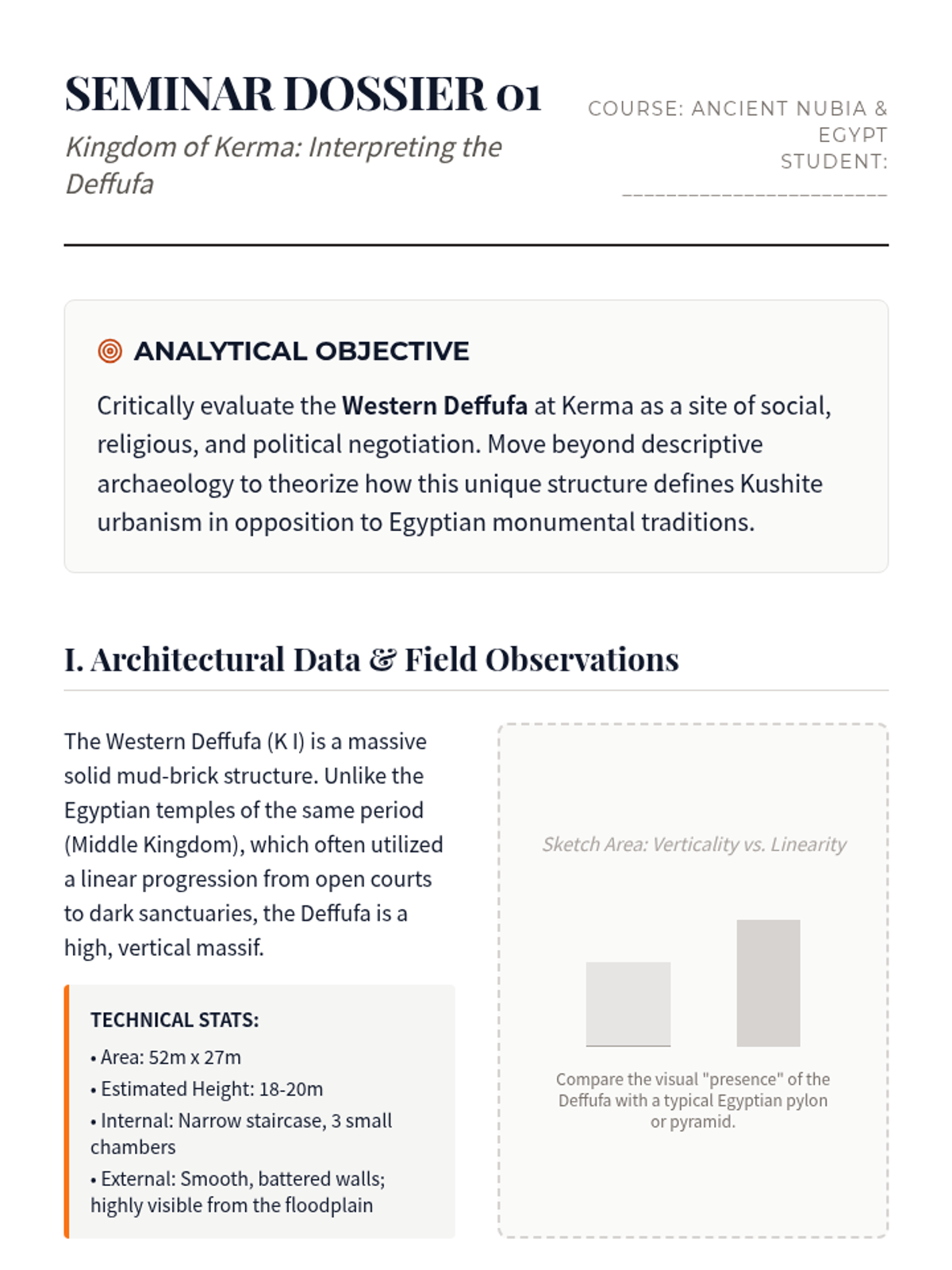
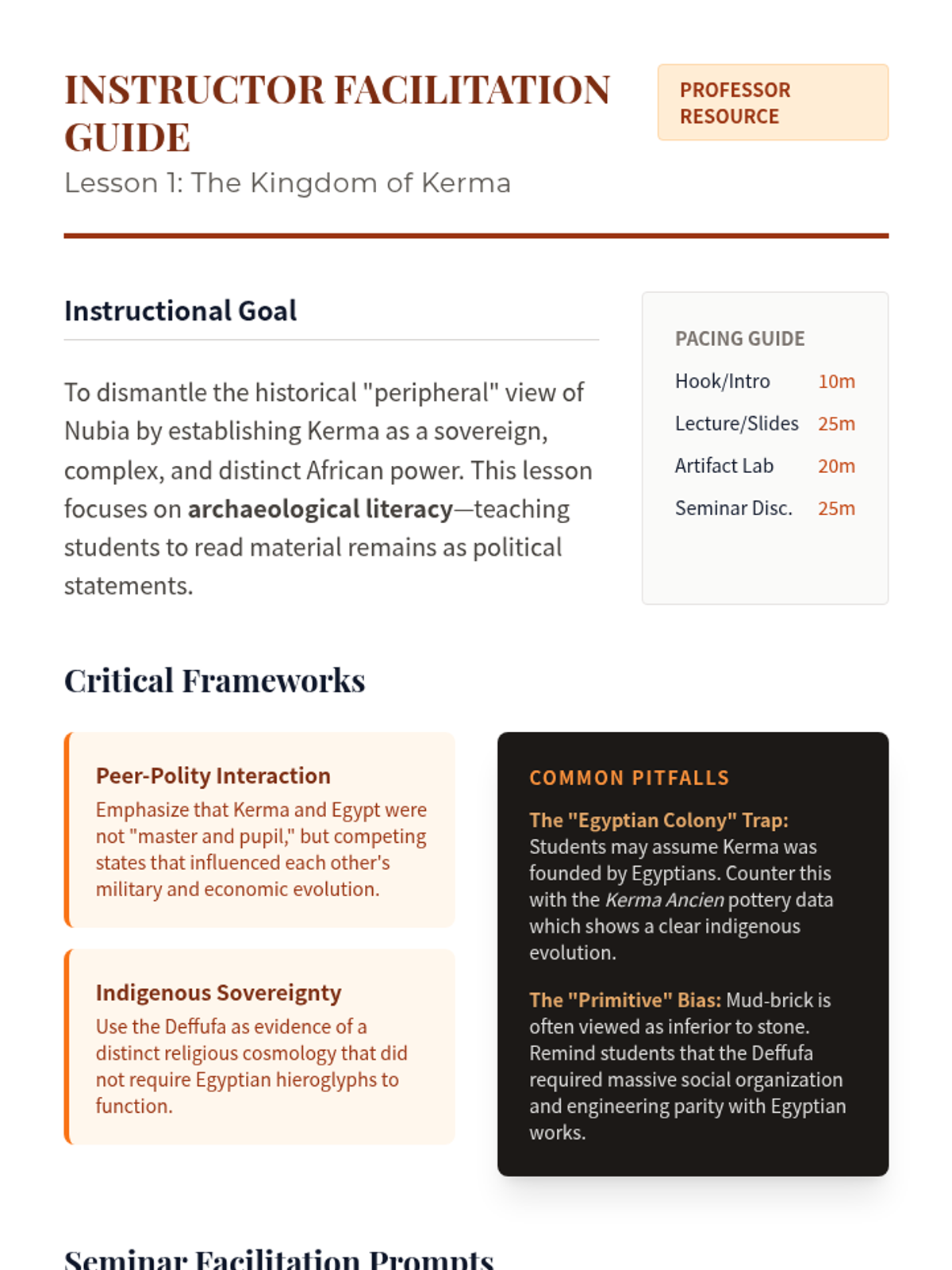
A comprehensive undergraduate-level sequence exploring the complex relationship between Ancient Egypt and Nubia (Kush). This course utilizes post-colonial frameworks to analyze trade, imperialism, and resistance, contrasting archaeological evidence with Egyptian textual records.
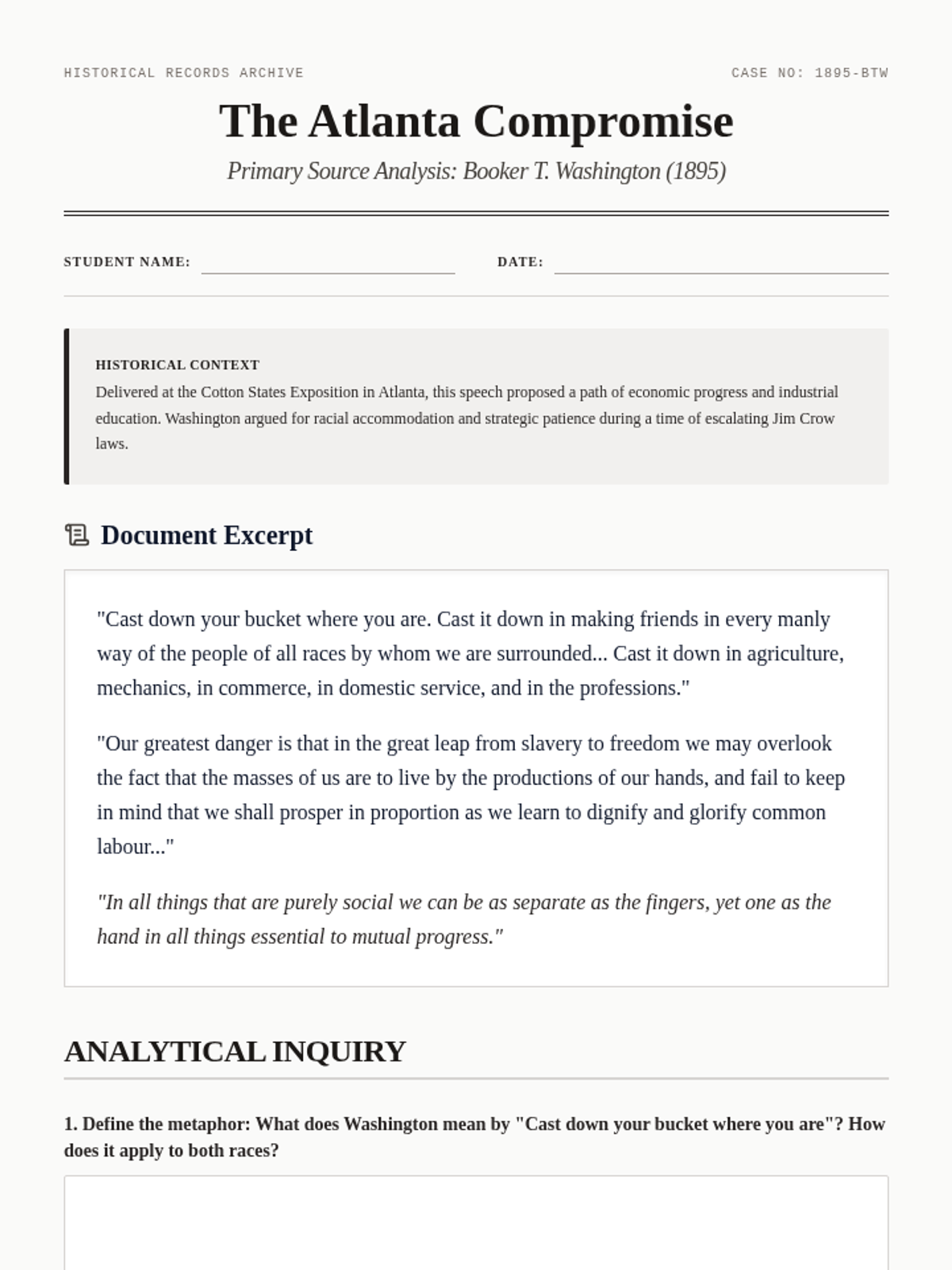
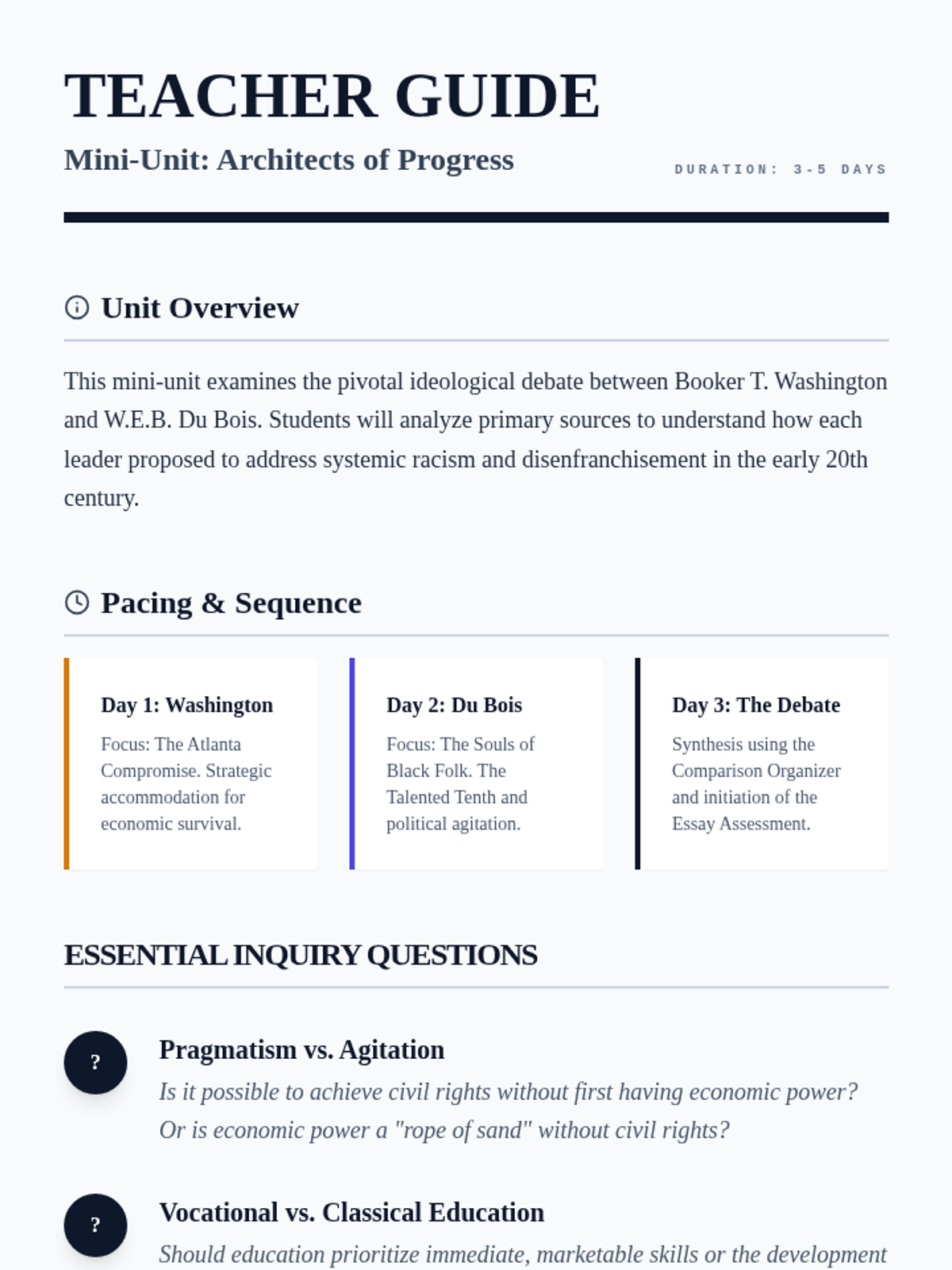
A multi-day mini-unit exploring the contrasting philosophies of Booker T. Washington and W.E.B. Du Bois regarding African American progress, education, and civil rights at the turn of the 20th century.
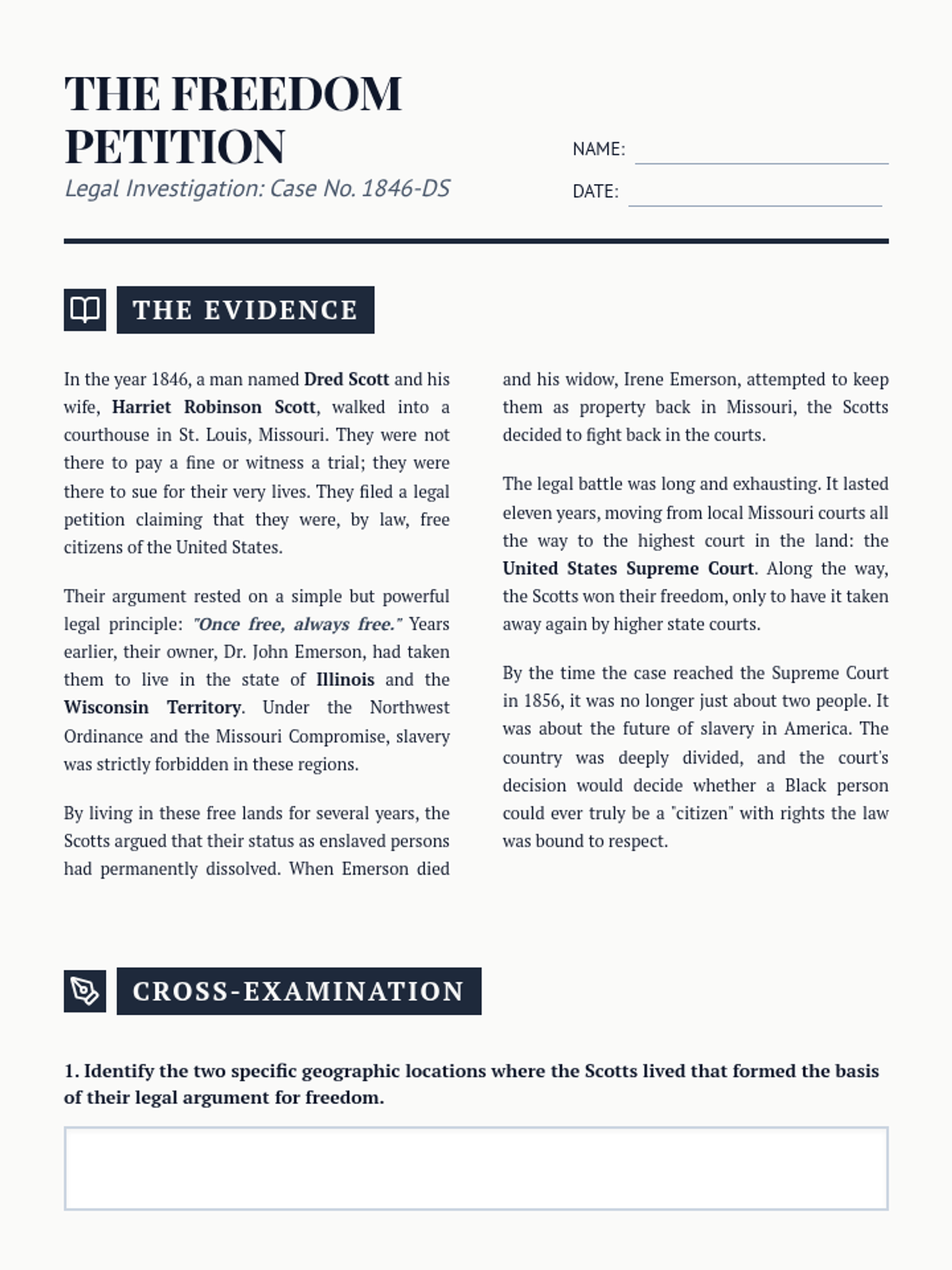
A multi-day investigation into the Dred Scott case, focusing on the shifting definitions of citizenship and the legal battle for freedom in pre-Civil War America.
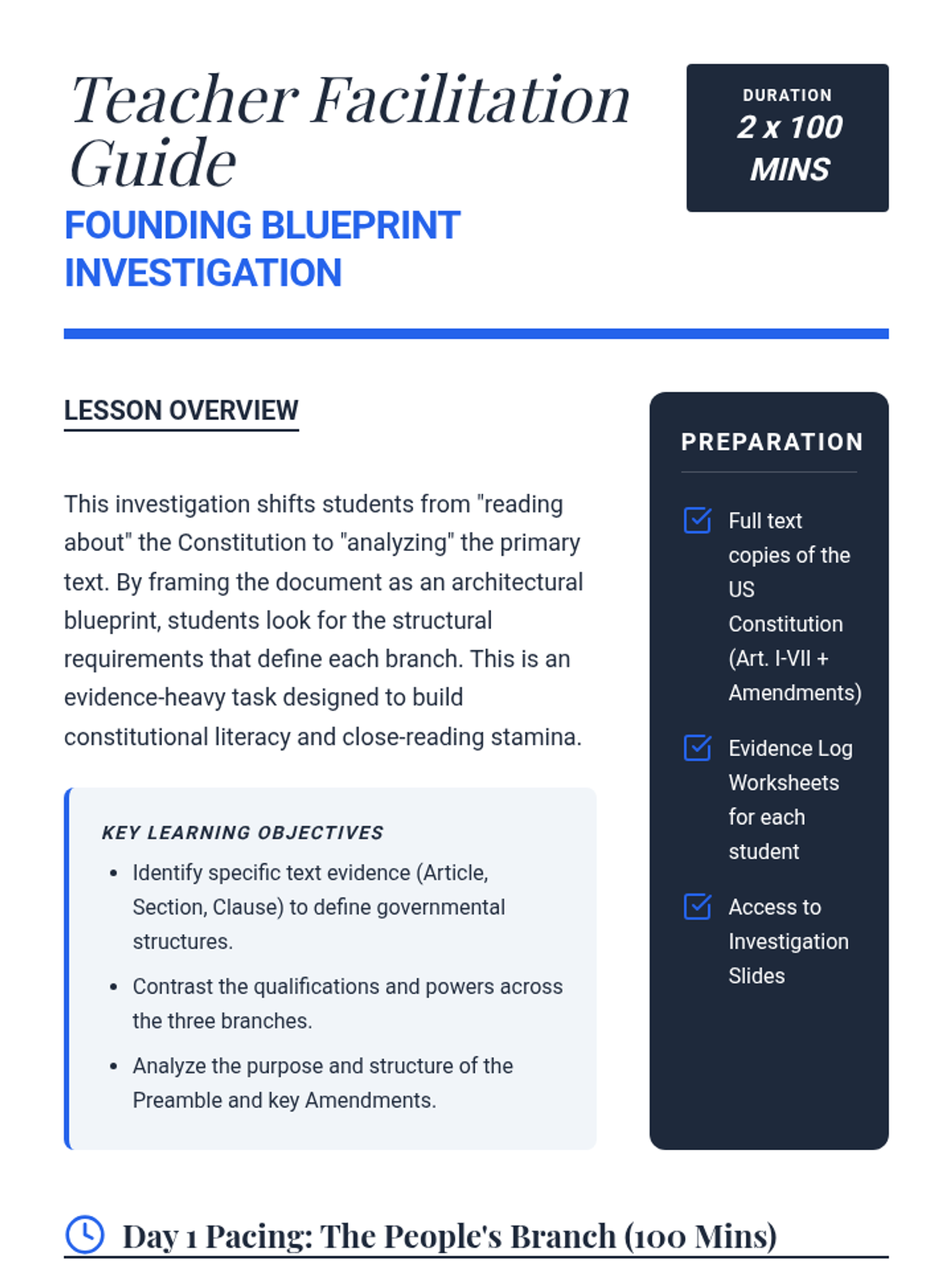
A comprehensive unit exploring the foundational structures of American government through the lens of the US Constitution.
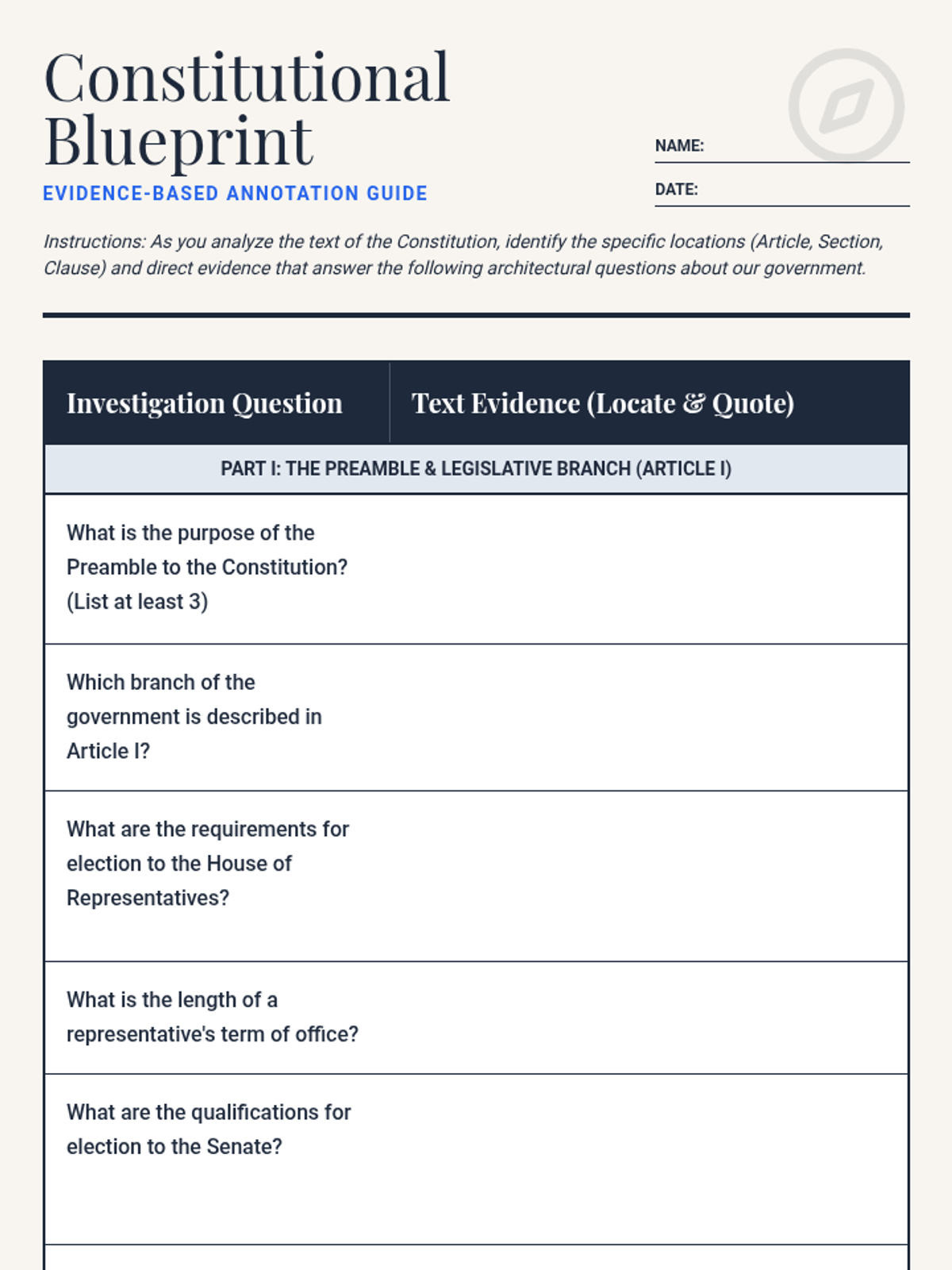
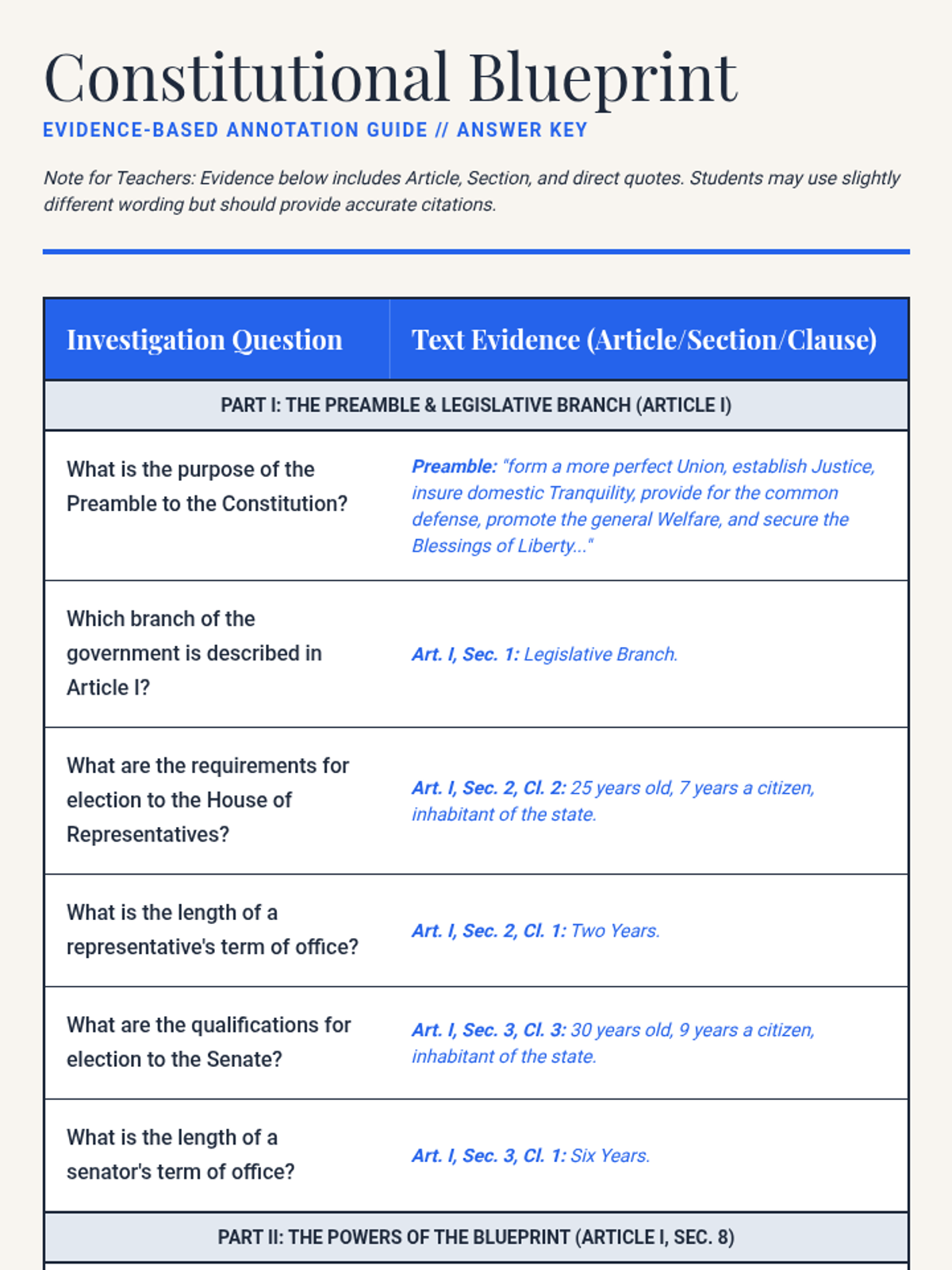
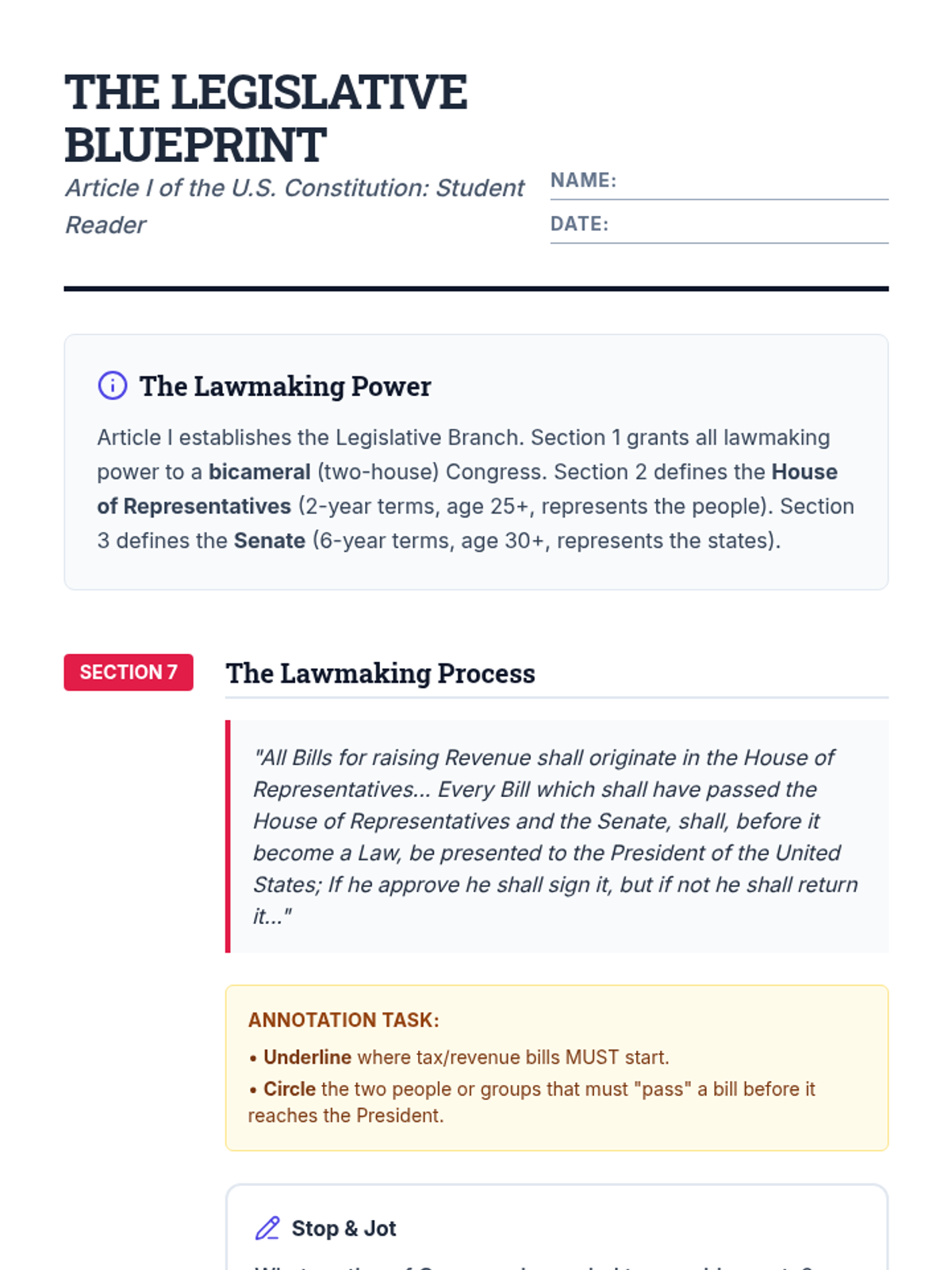
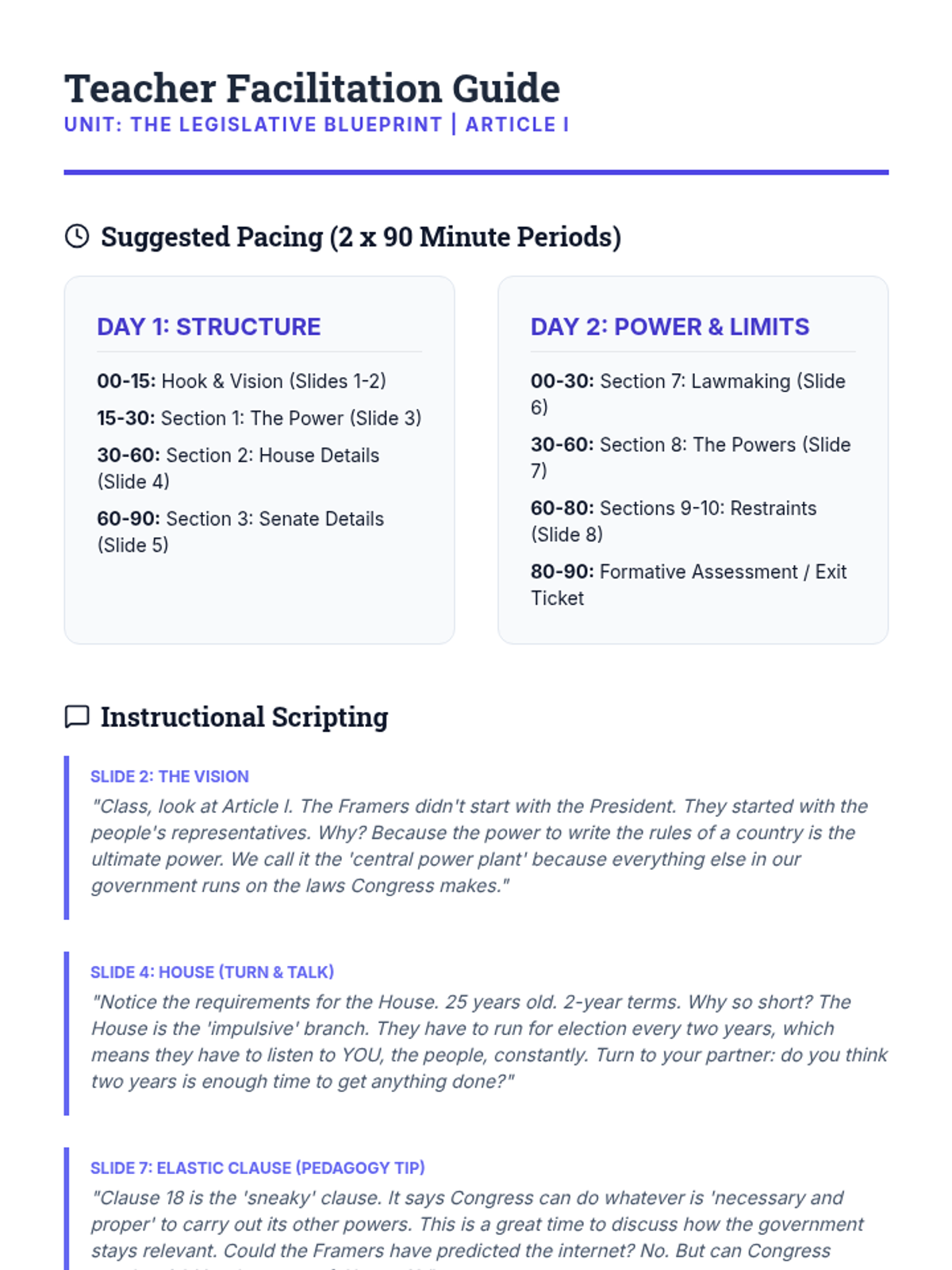
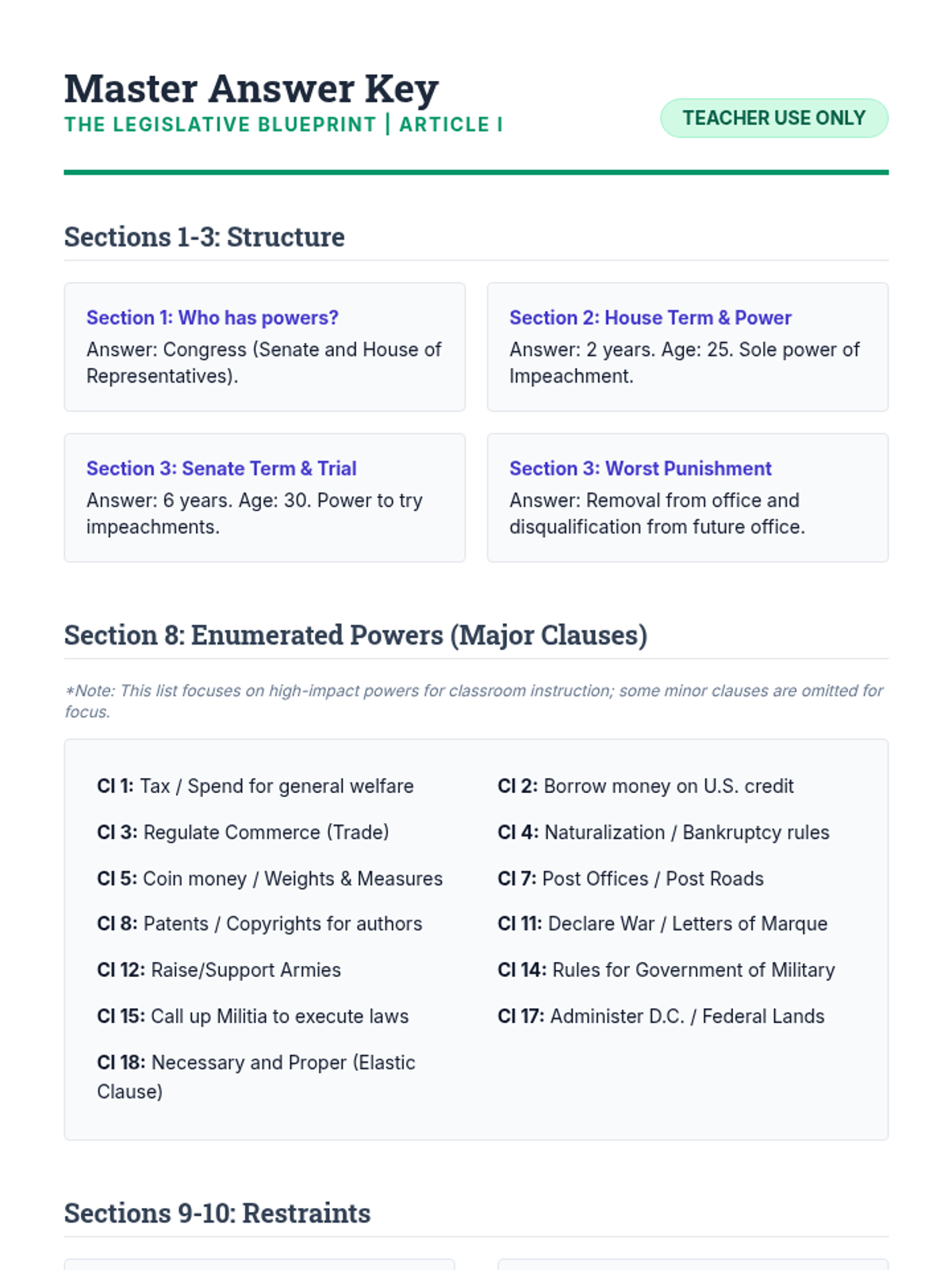
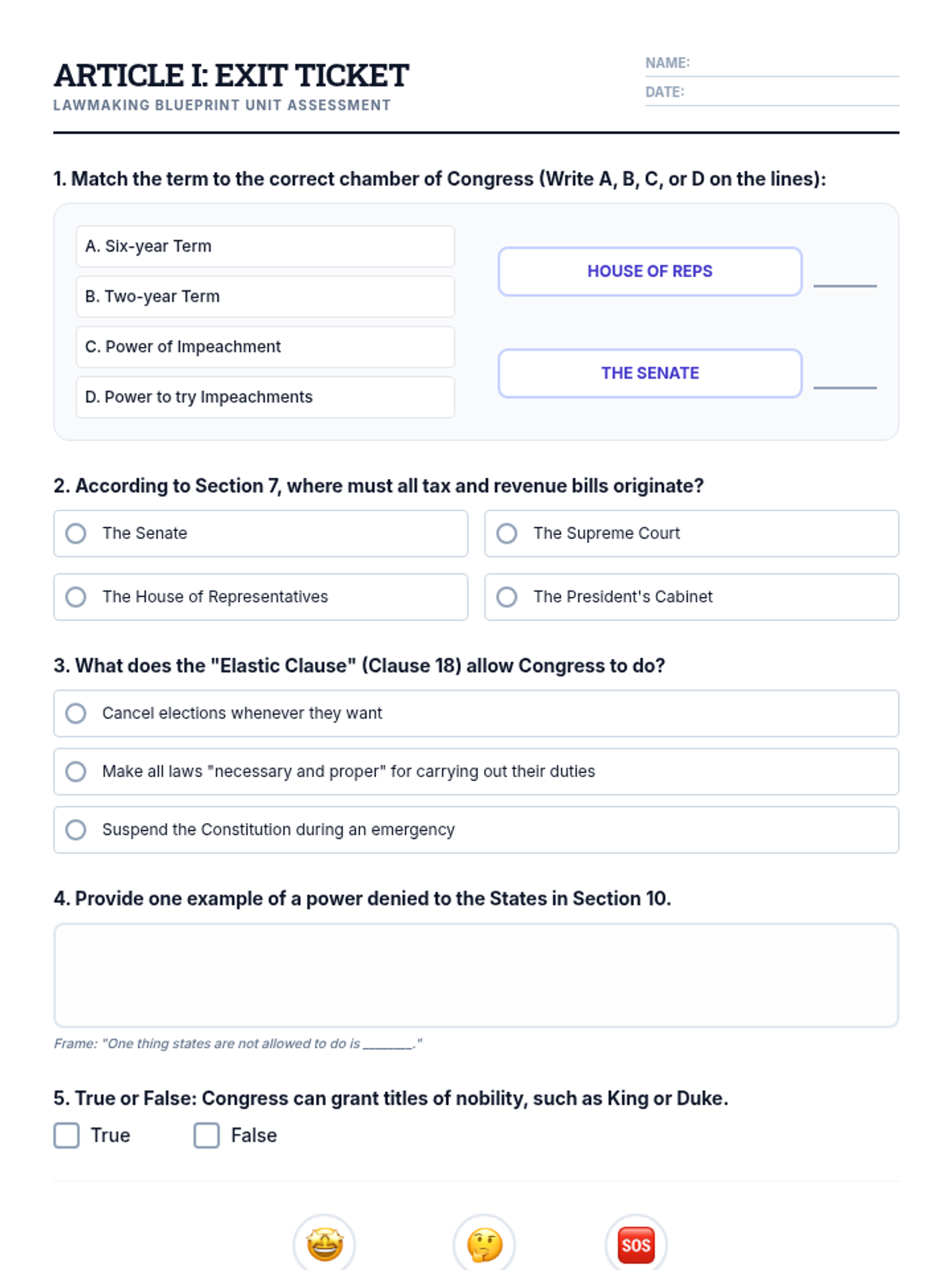
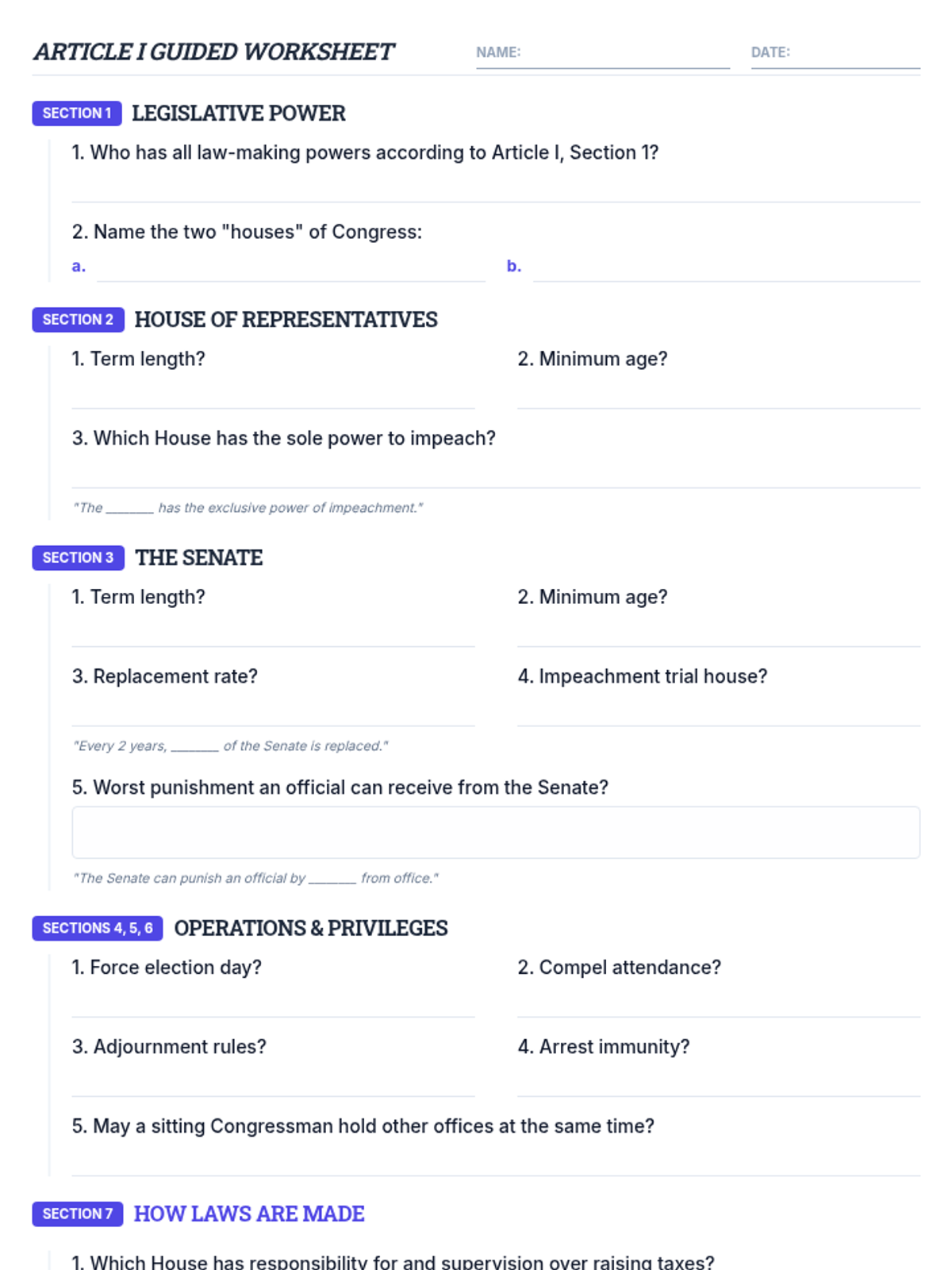
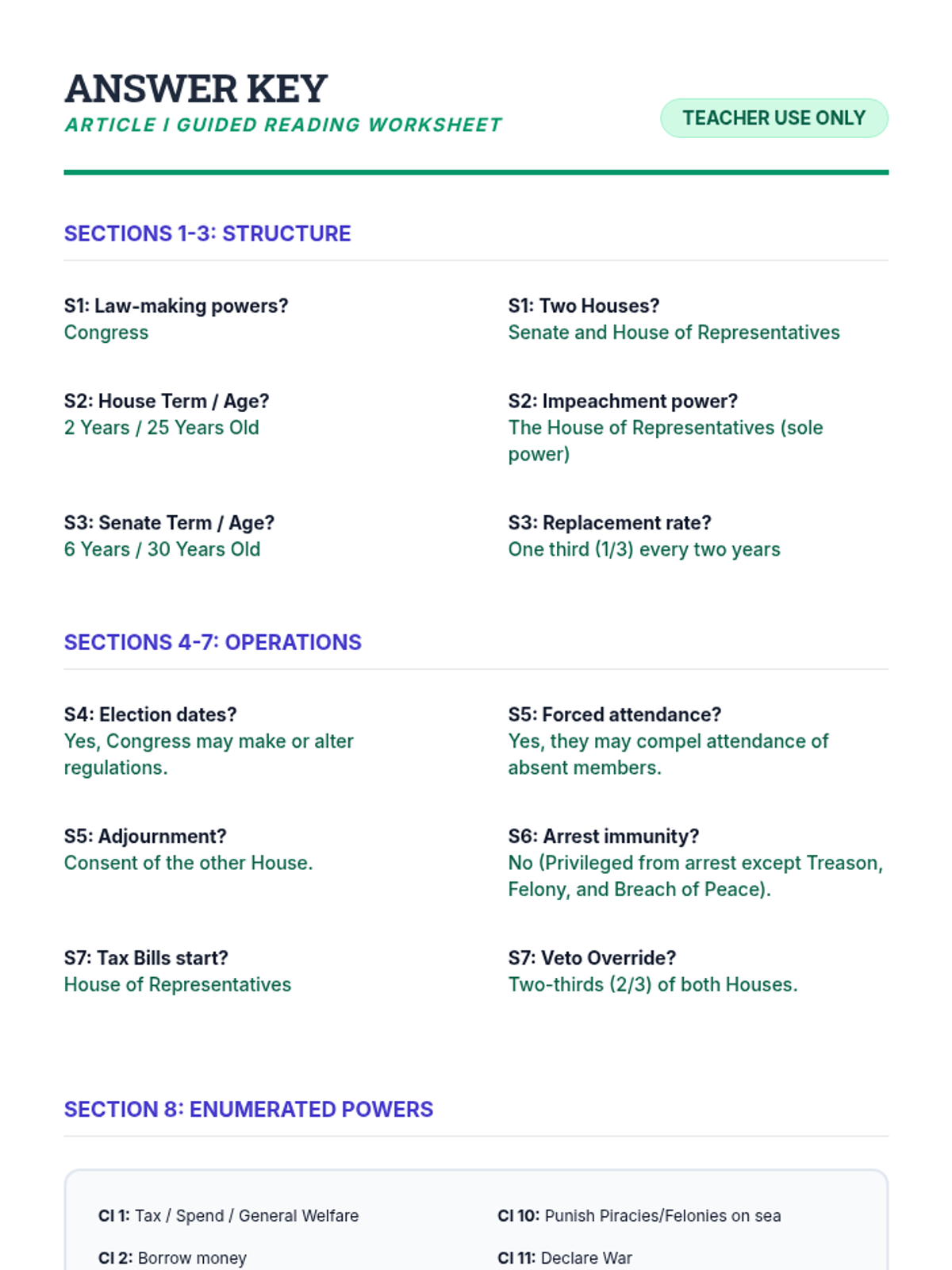
A comprehensive exploration of Article I of the U.S. Constitution, covering the structure, powers, and limitations of the Legislative Branch through deep text analysis and structured discussion.
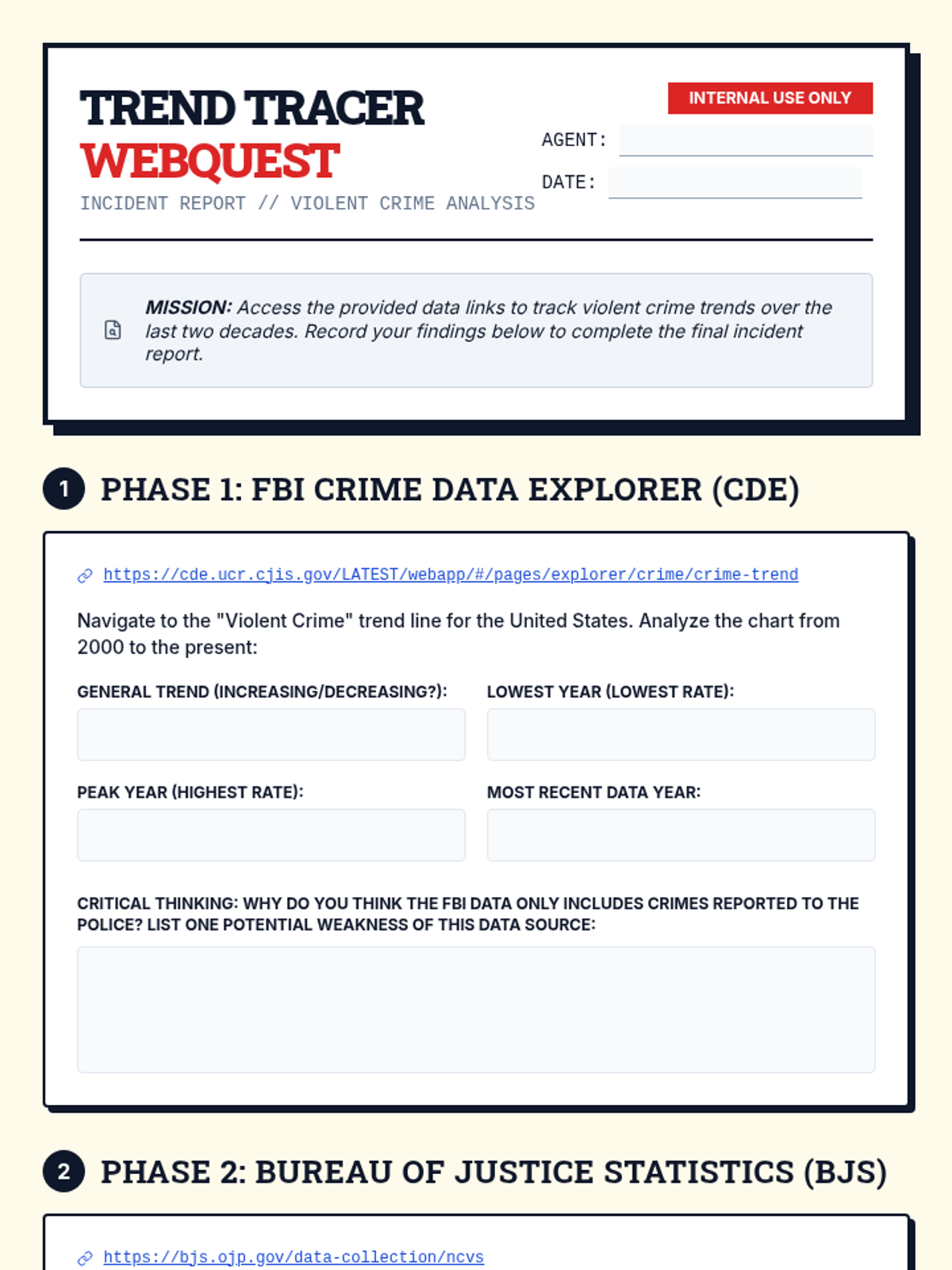
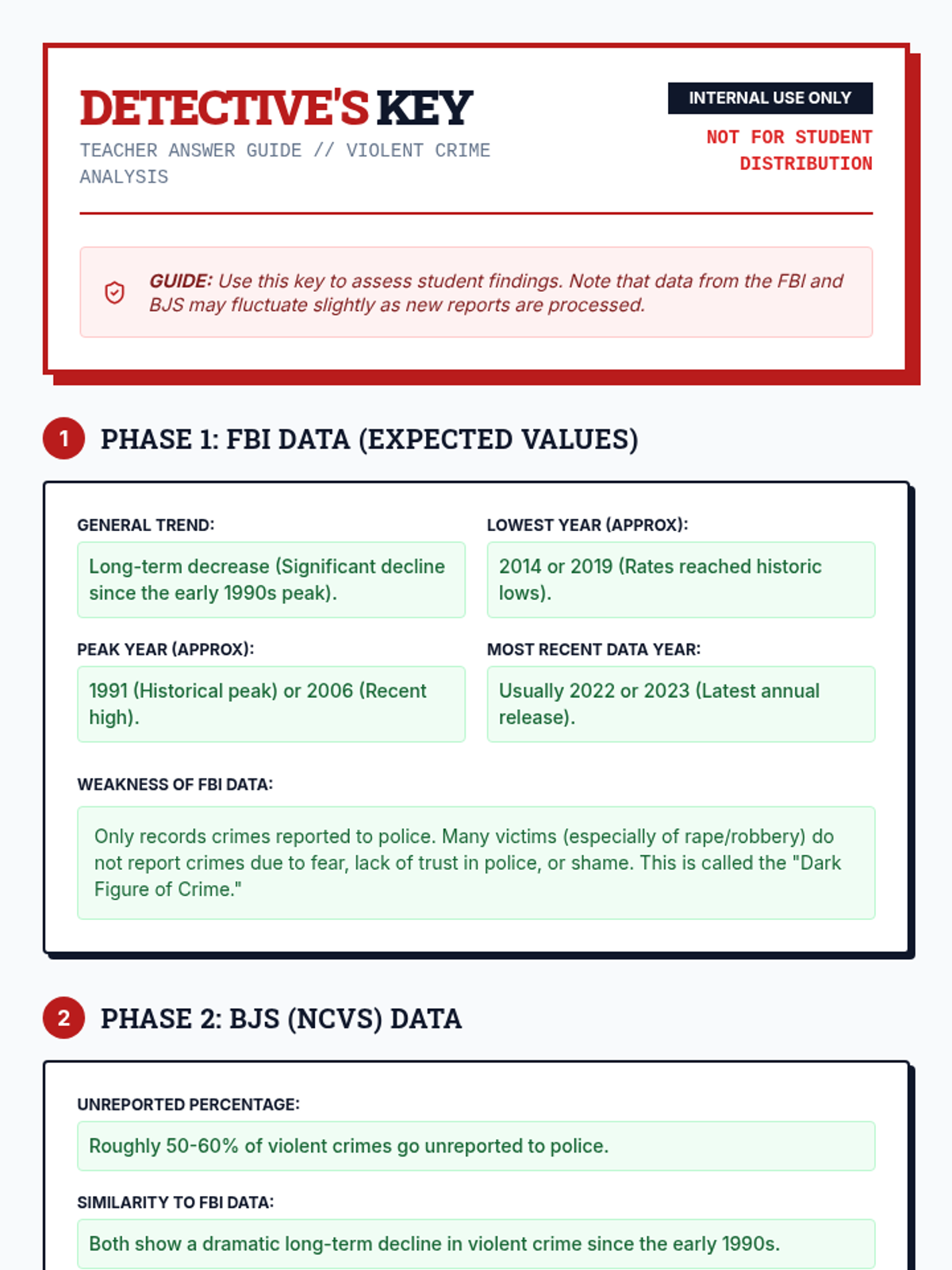
A comprehensive sequence focused on developing data literacy through the analysis of United States crime statistics. Students progress from national trend analysis to specific state and local investigations using primary data sources.
A comprehensive curriculum covering financial literacy, economic principles, and civic systems through historical case studies, ethical dilemmas, and real-world simulations.
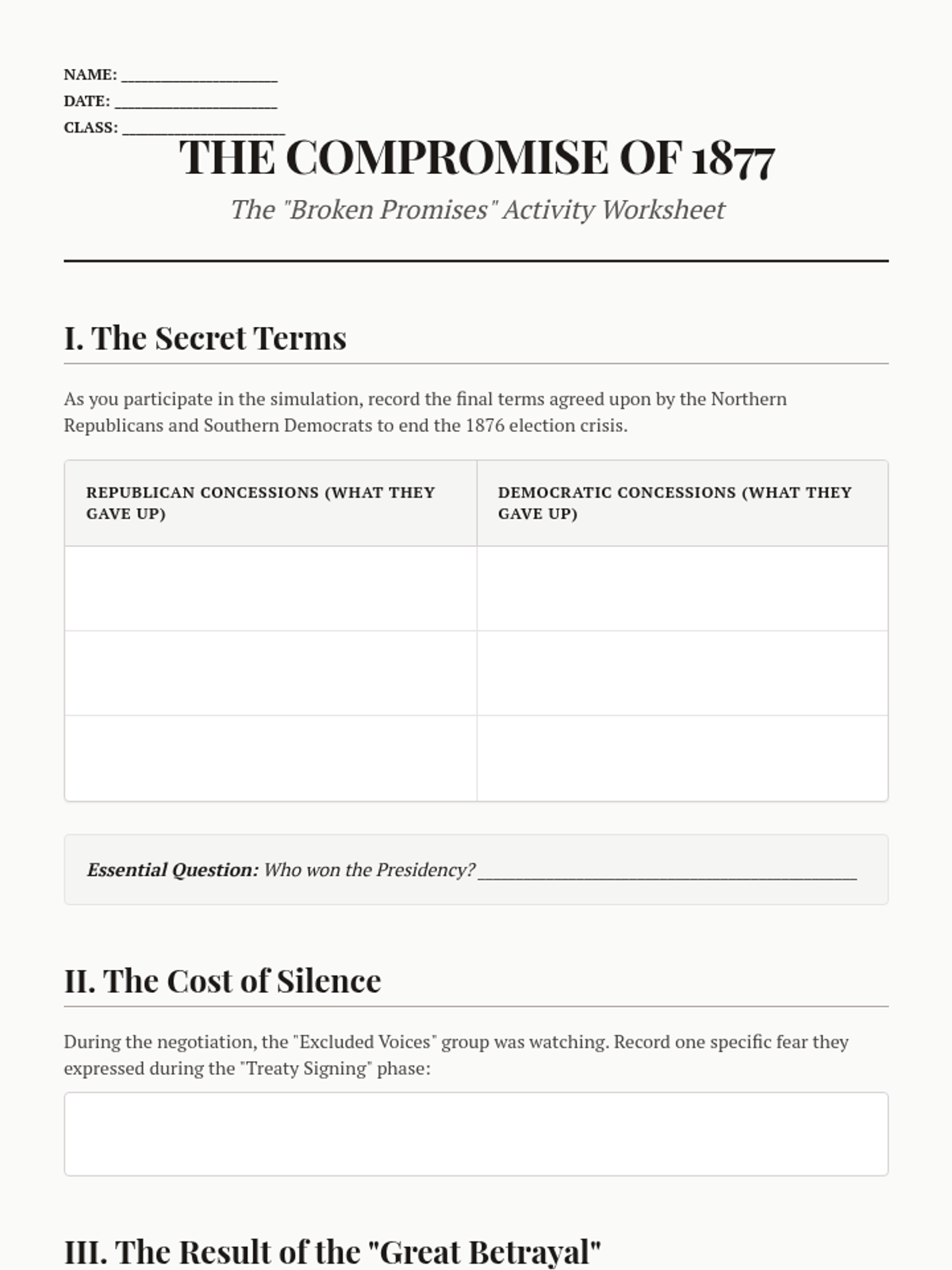
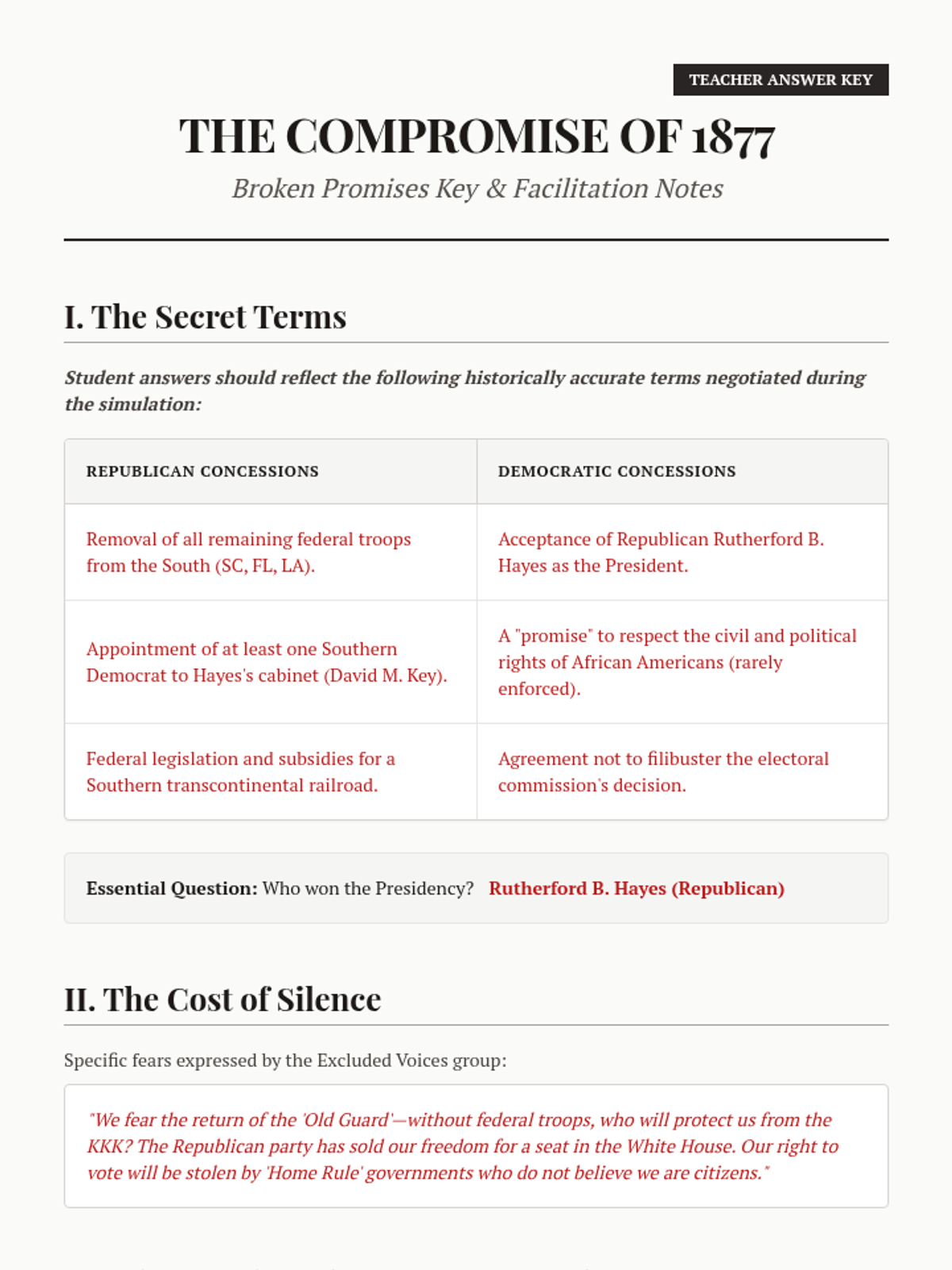
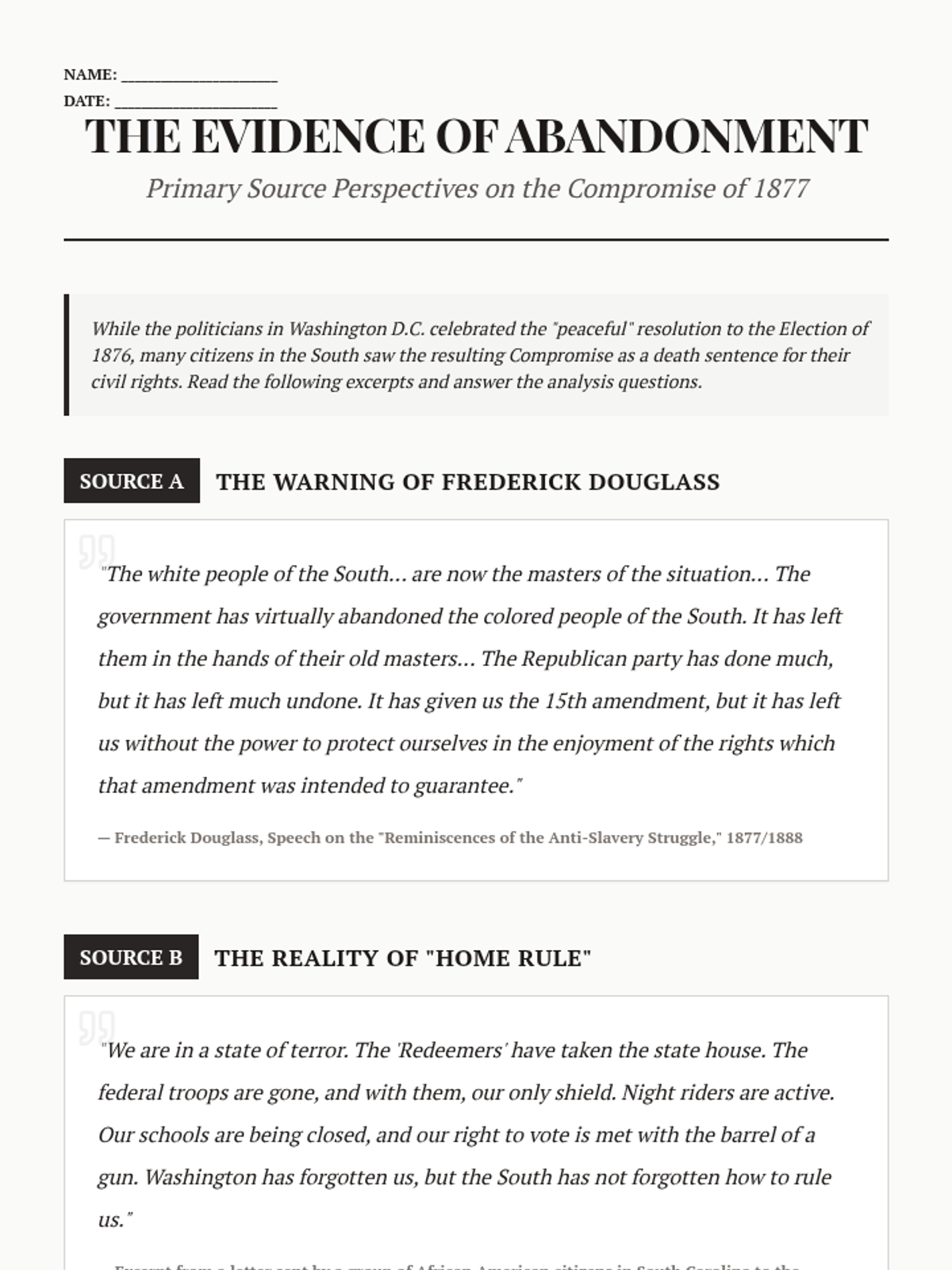
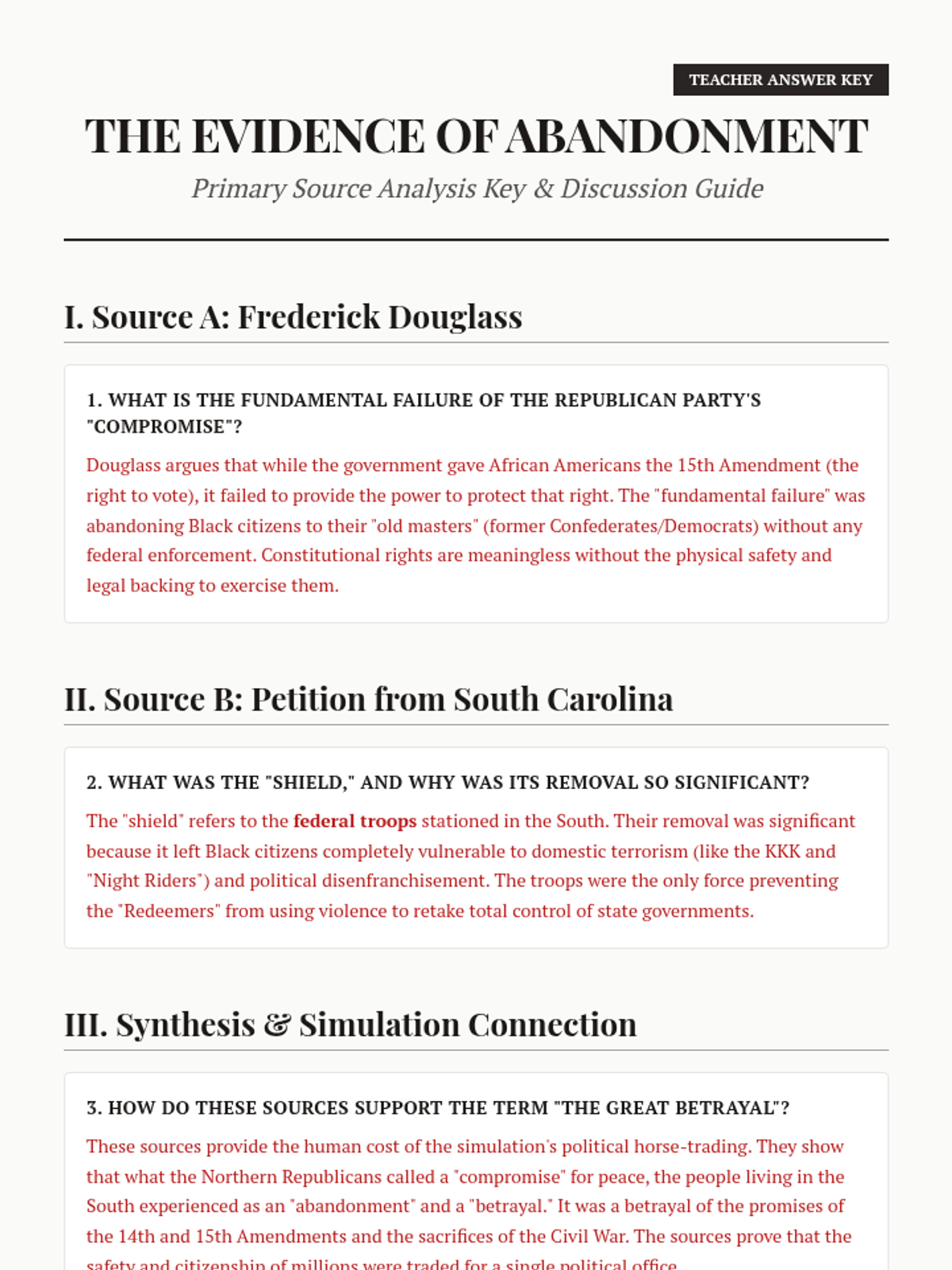
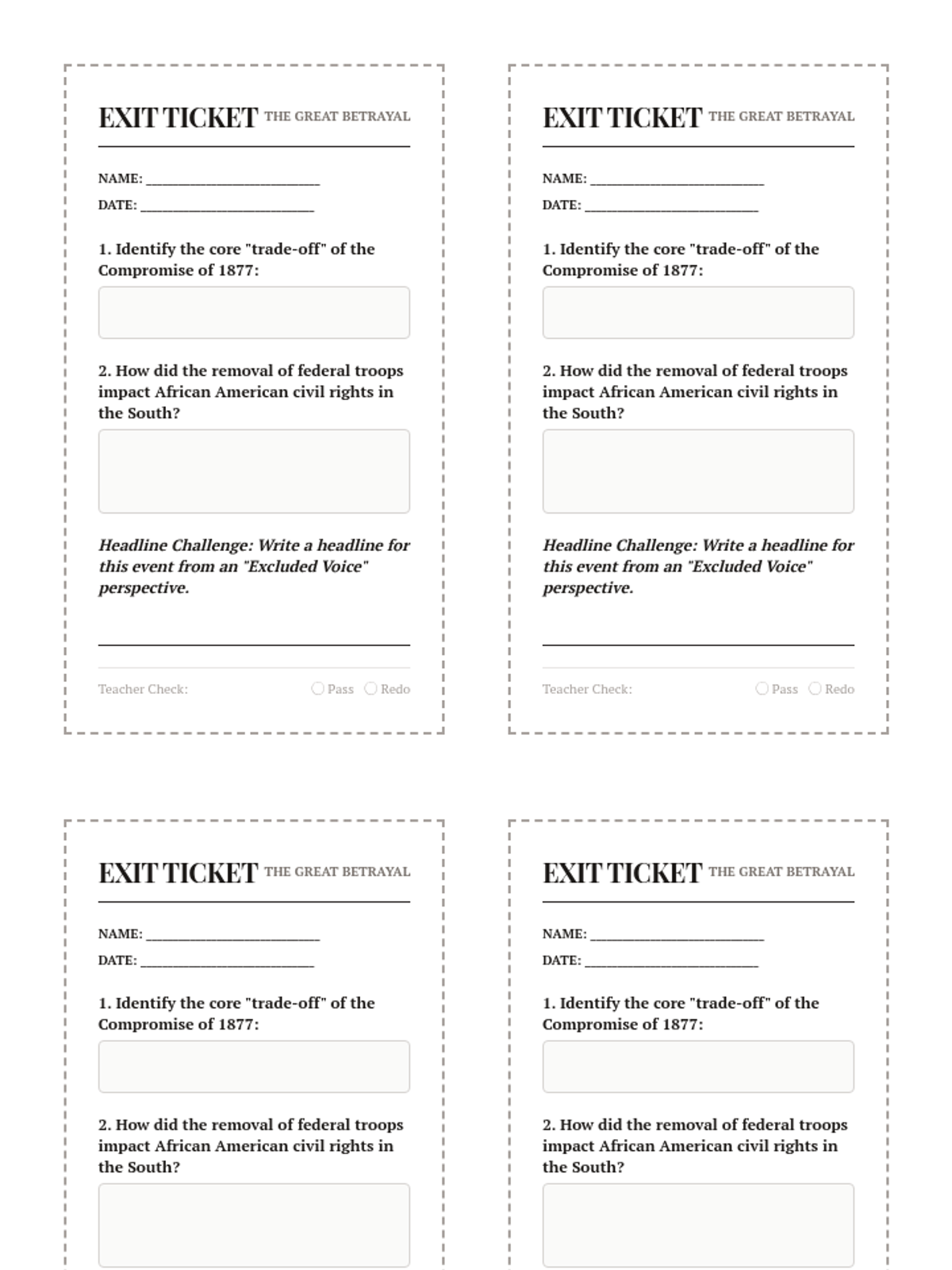
This sequence explores the aftermath of the Compromise of 1877, detailing the systematic dismantling of Reconstruction-era progress and the establishment of the Jim Crow South. Students analyze the political, social, and legal mechanisms used to disenfranchise African Americans.
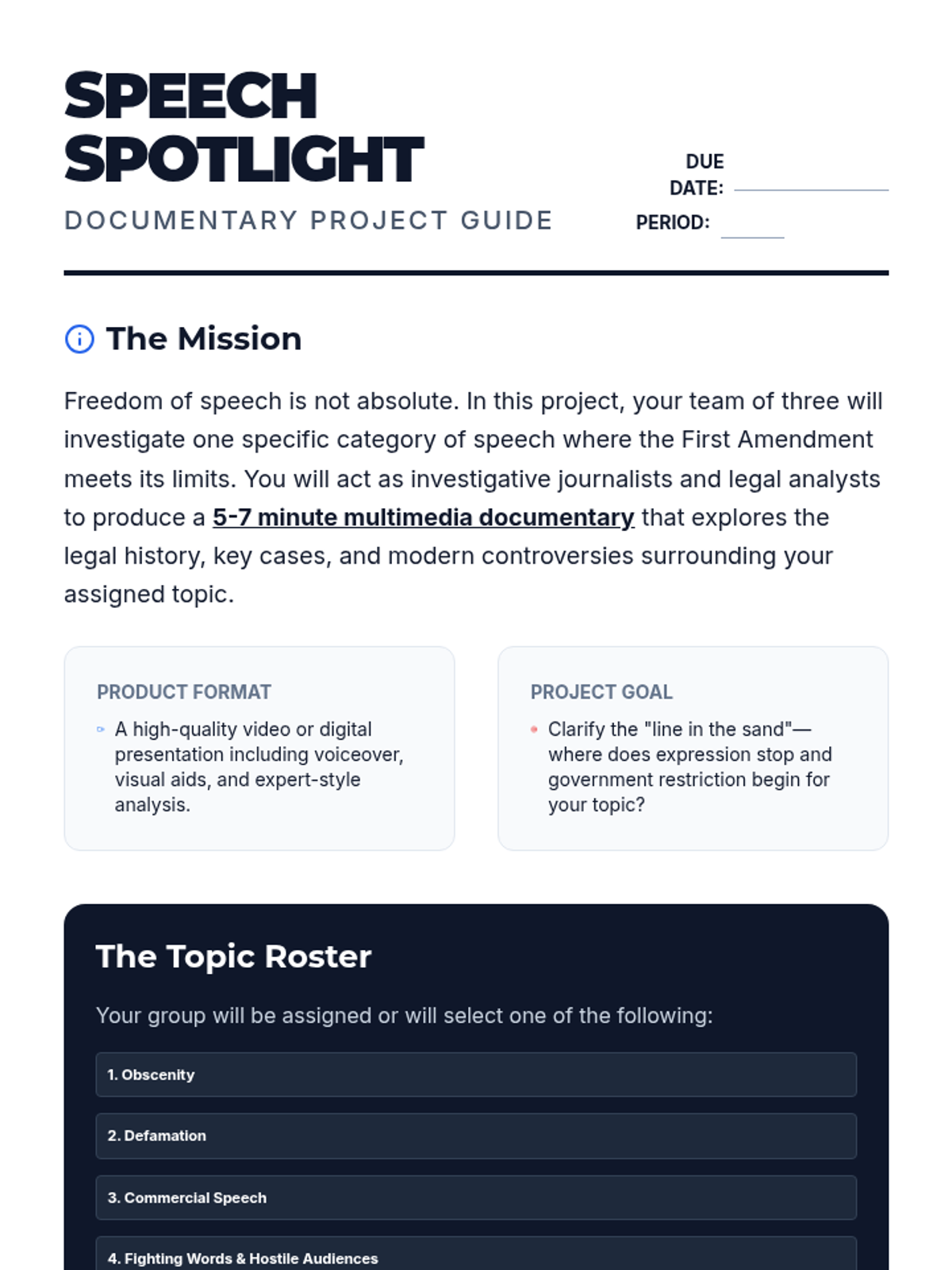
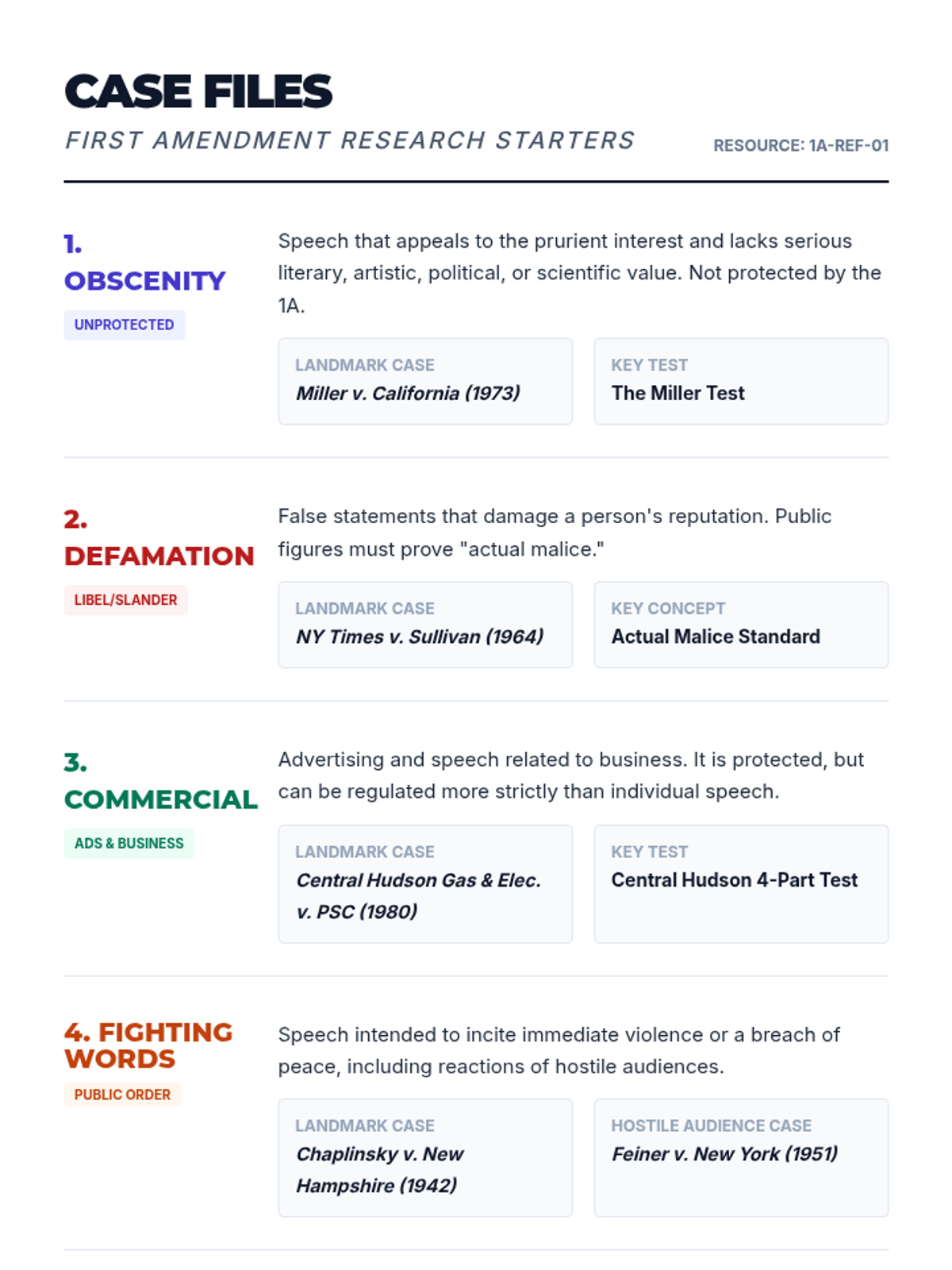
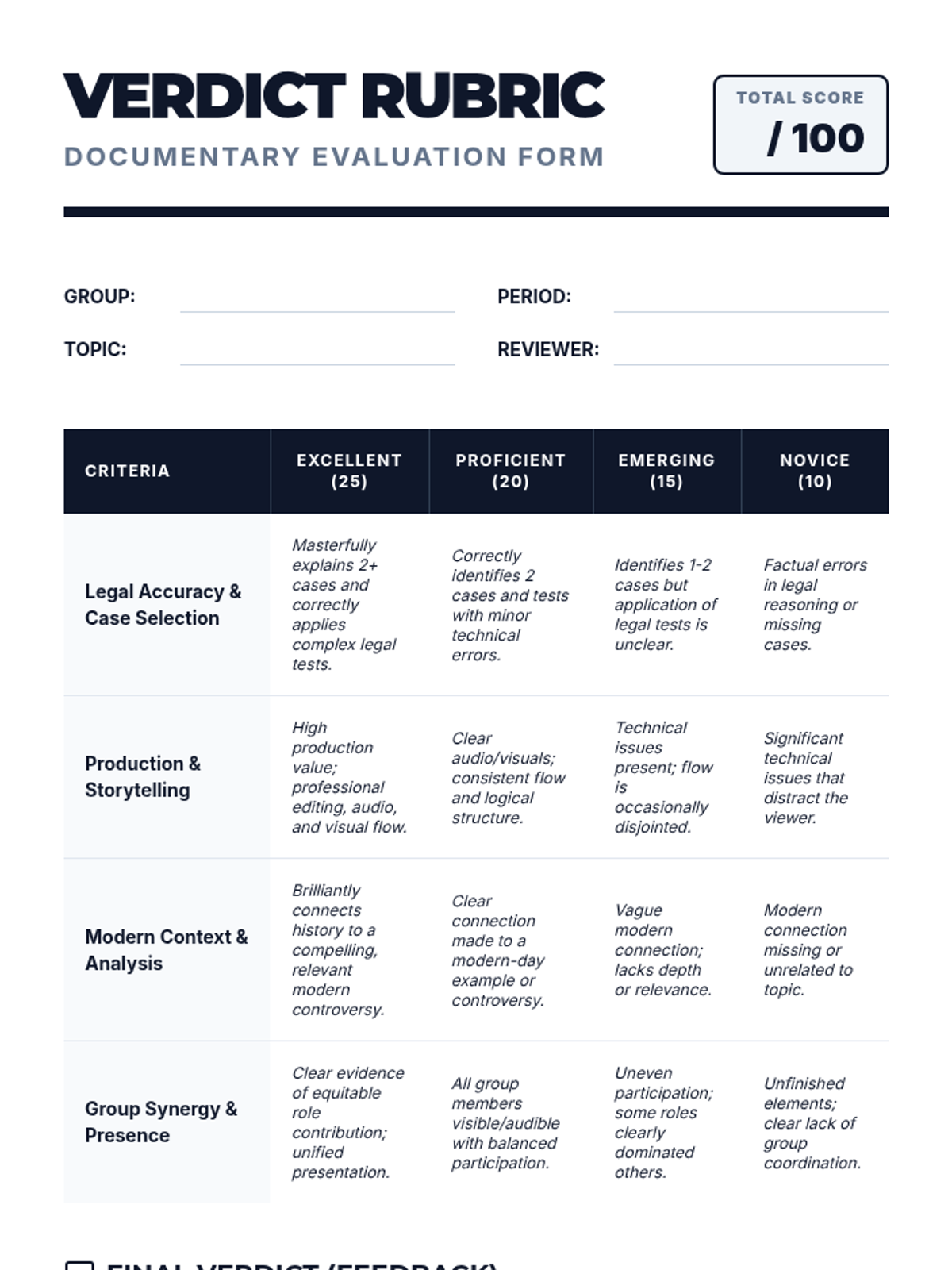
An in-depth exploration of First Amendment law, focusing on the tension between individual liberty and the public good through various categories of restricted speech.
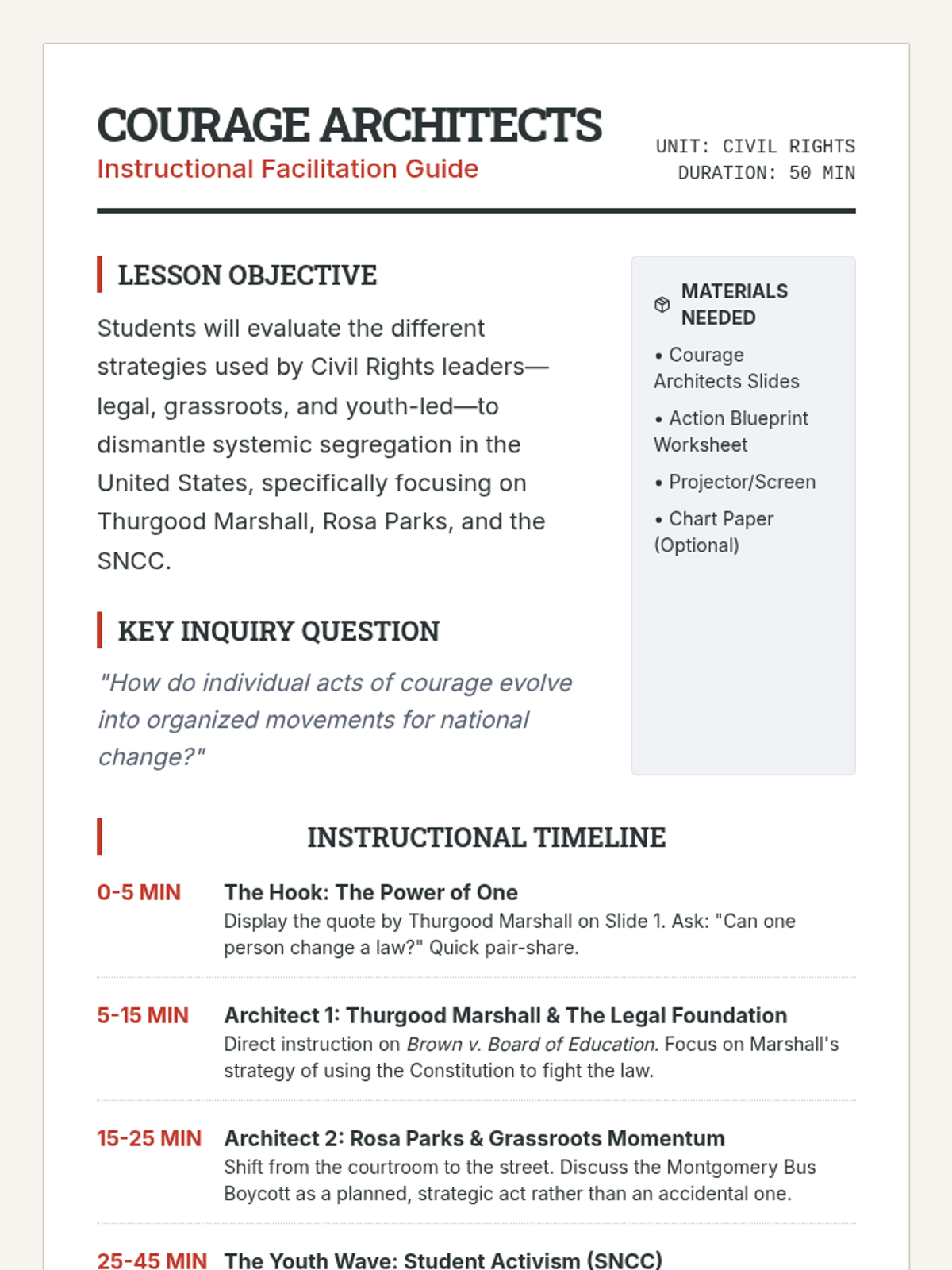
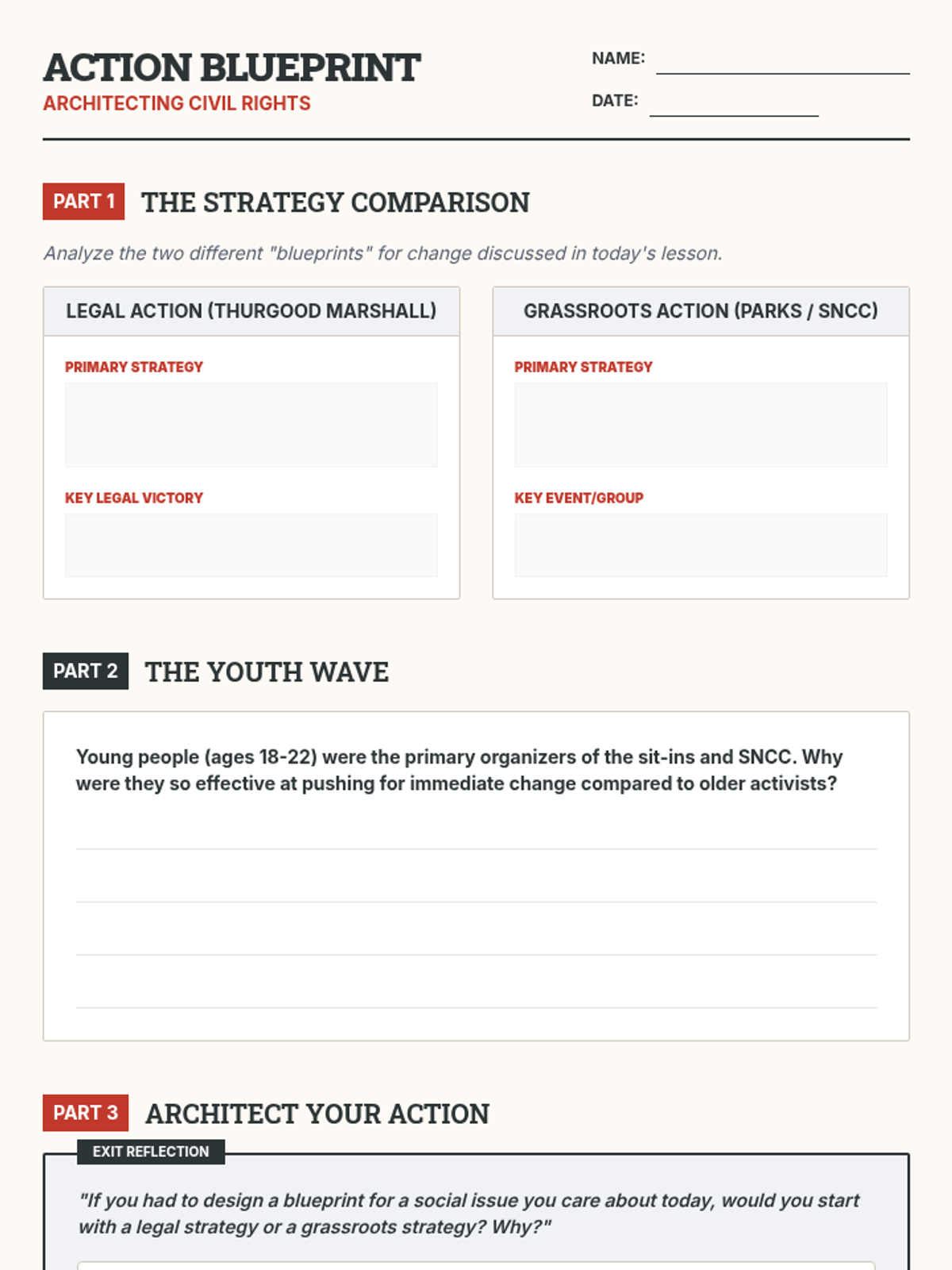
A comprehensive unit on the Civil Rights Movement, focusing on the strategic leadership of key figures and the transformative power of youth-led activism through primary source analysis and classroom instruction.
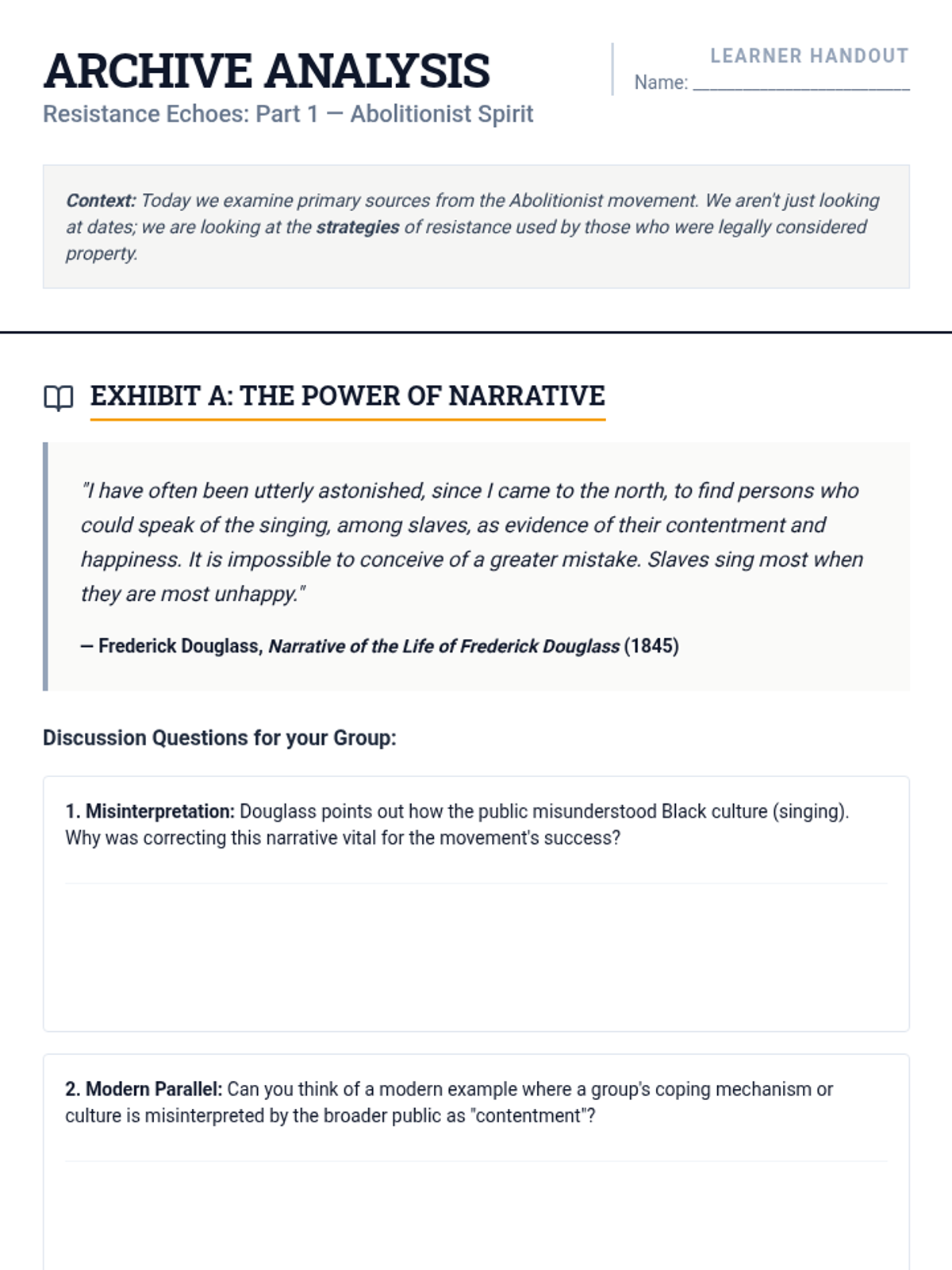
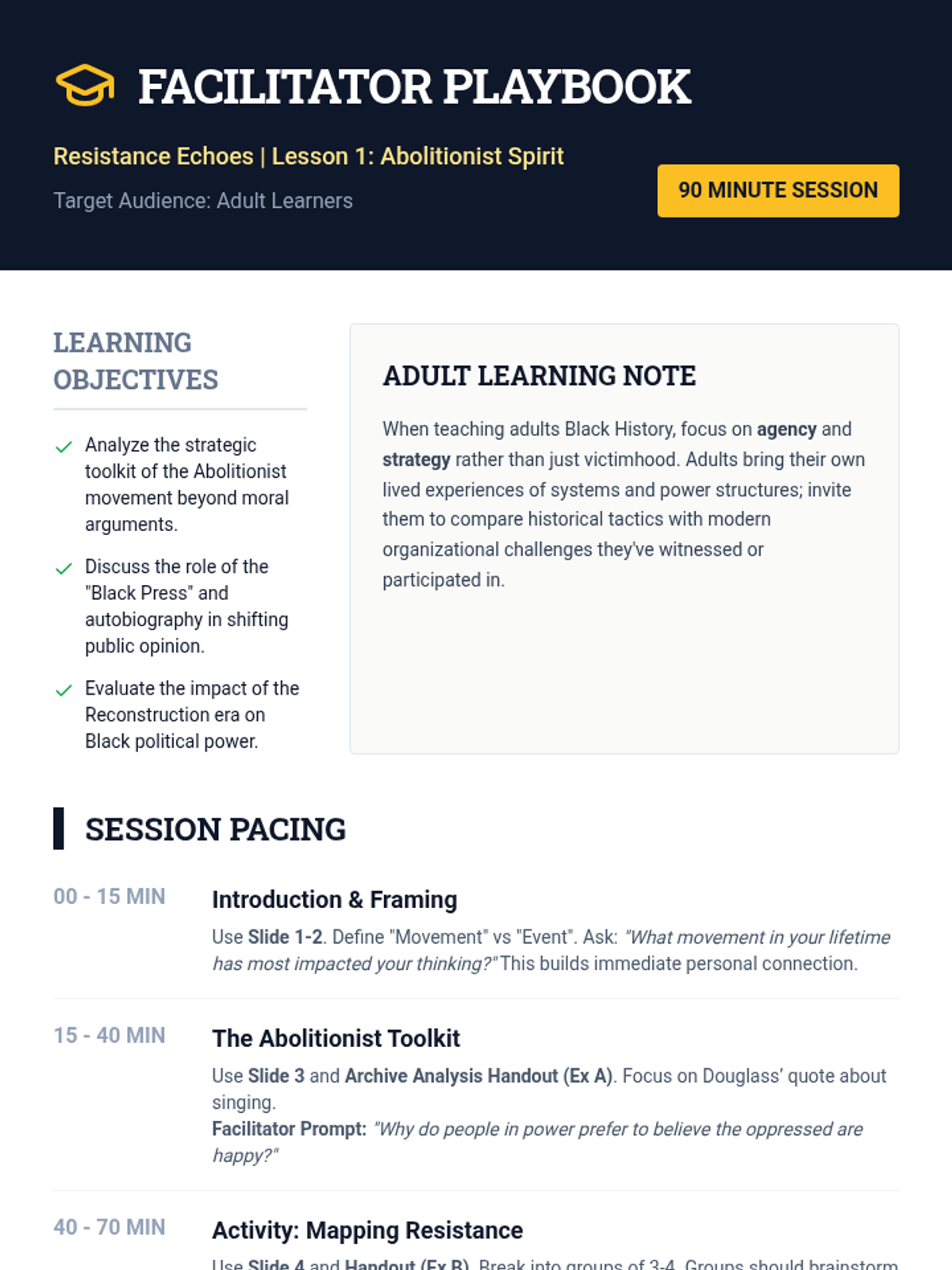
A comprehensive exploration of Black freedom movements in America, designed for adult learners to engage in critical discussion and historical analysis of resistance from the abolitionist era to modern social justice movements.
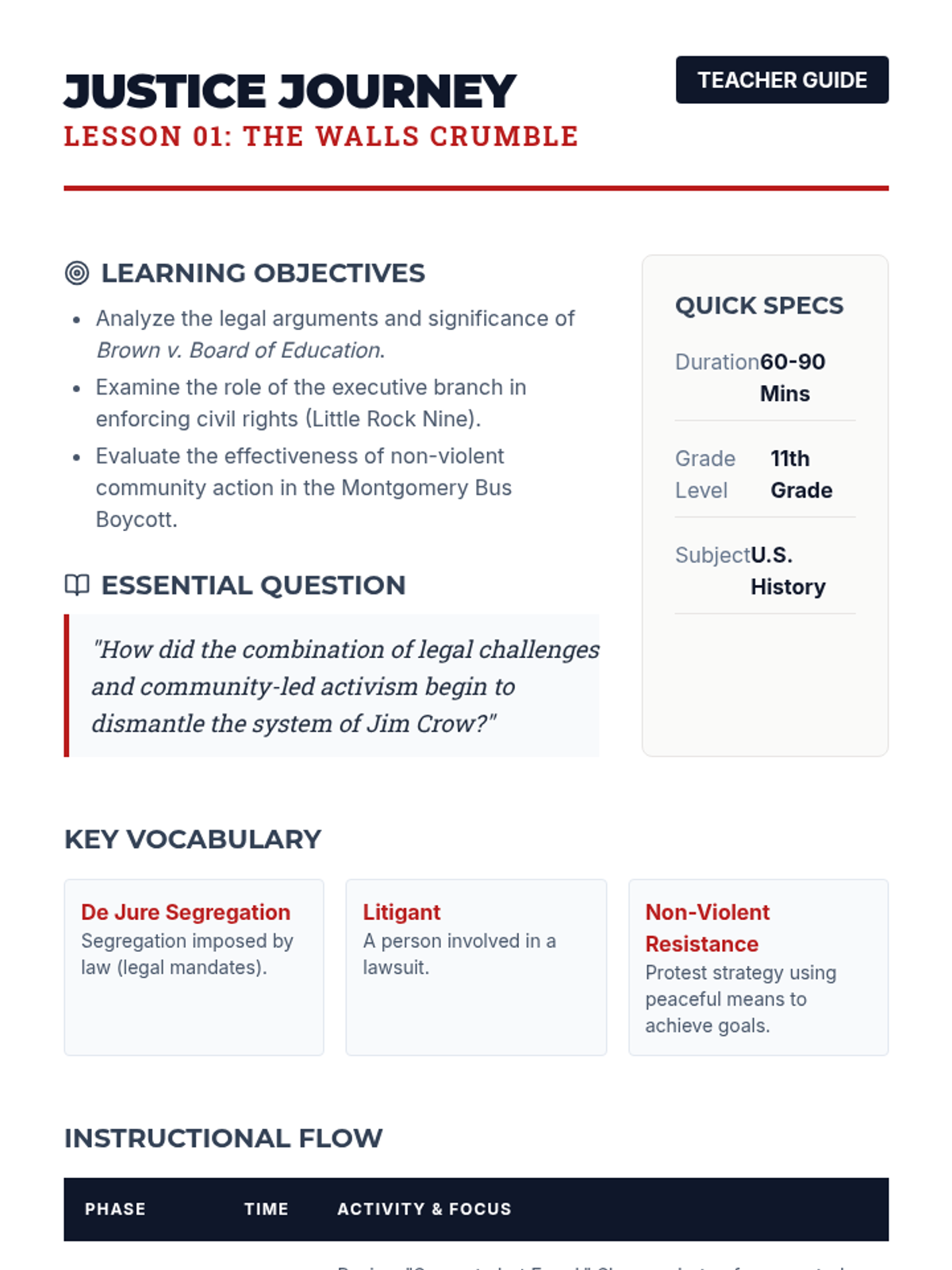
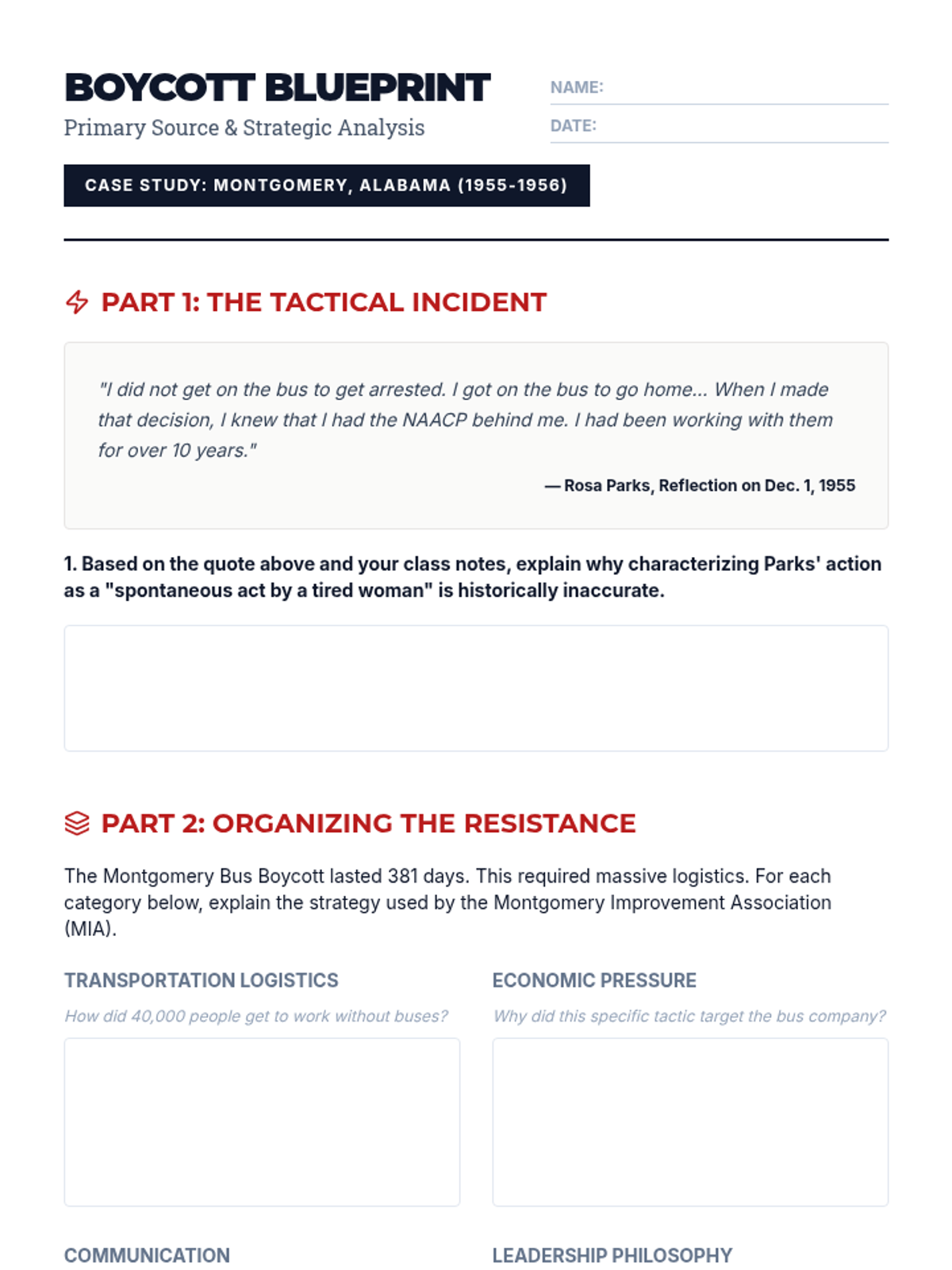
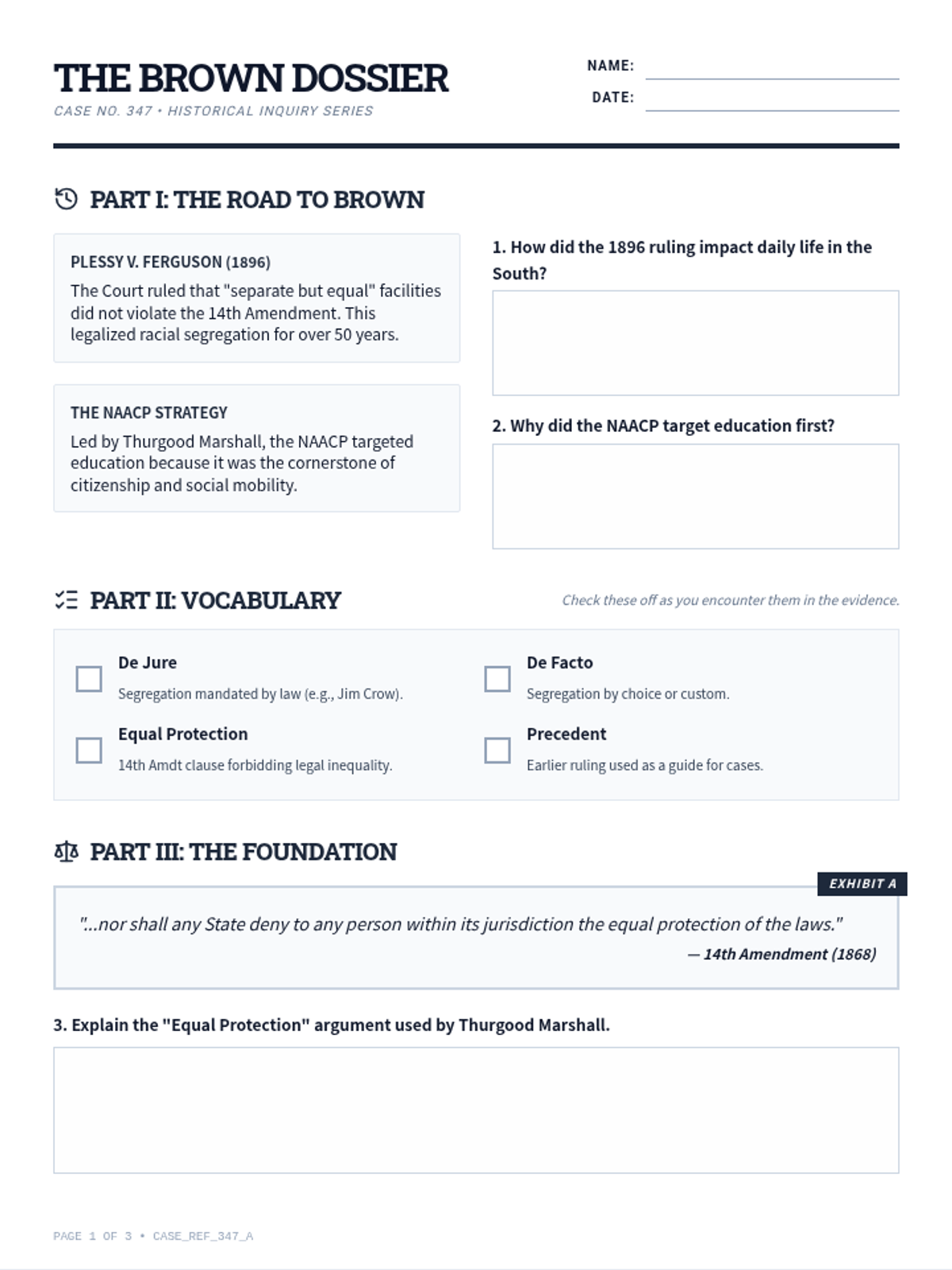
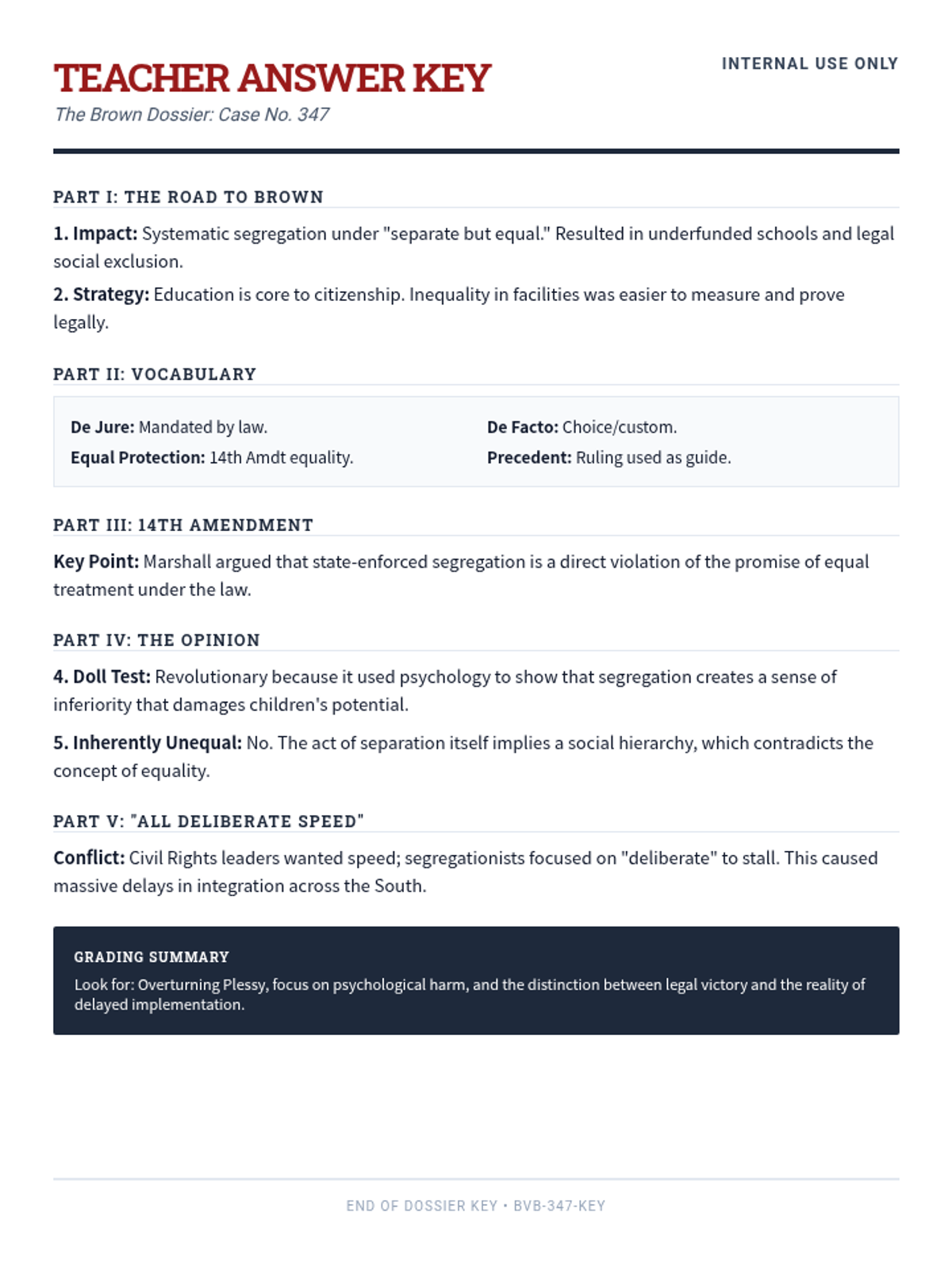
A comprehensive 5-lesson unit on the American Civil Rights Movement, covering the legal battles, non-violent protests, key legislation, and the evolving strategies for racial justice.
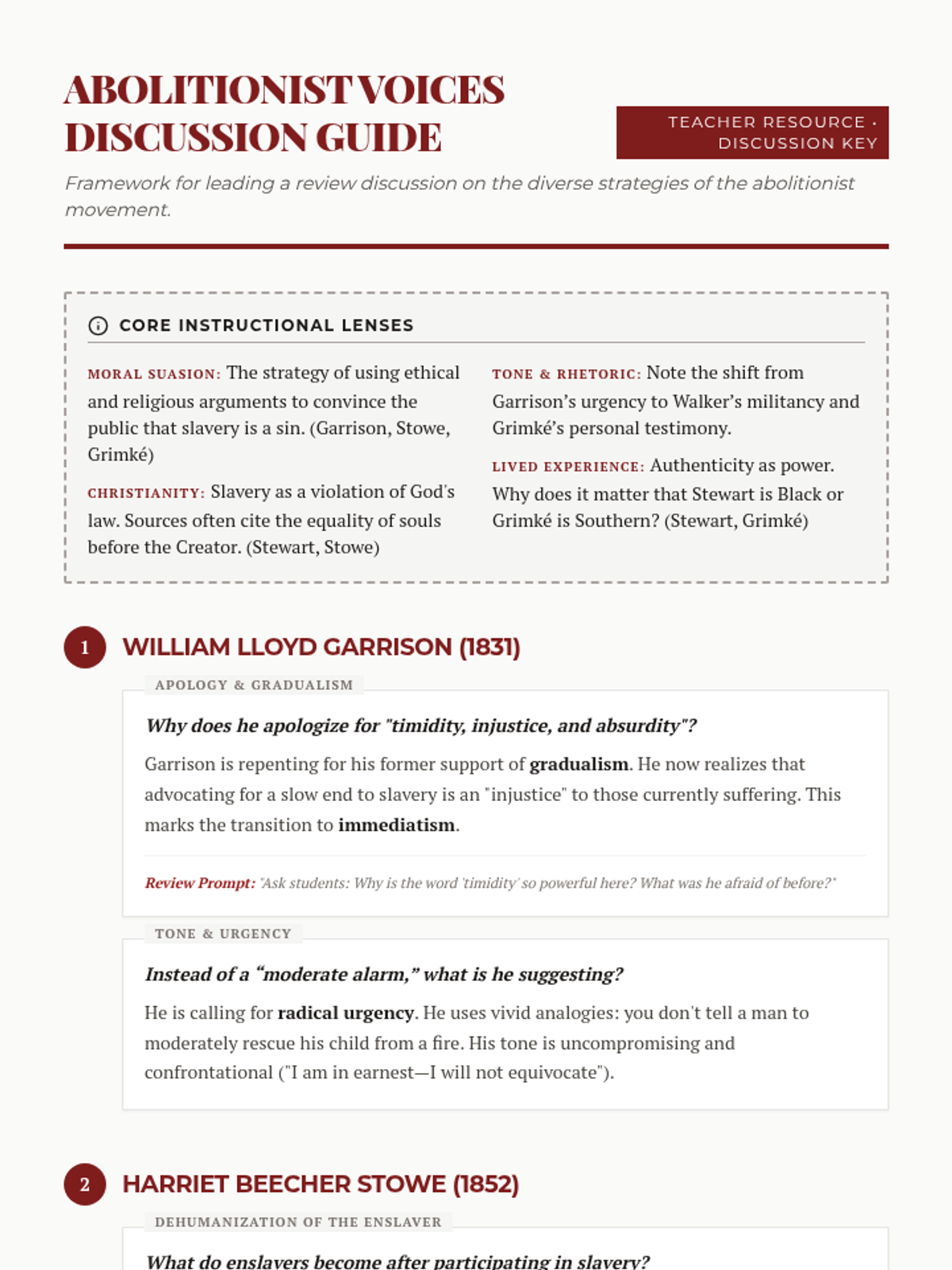
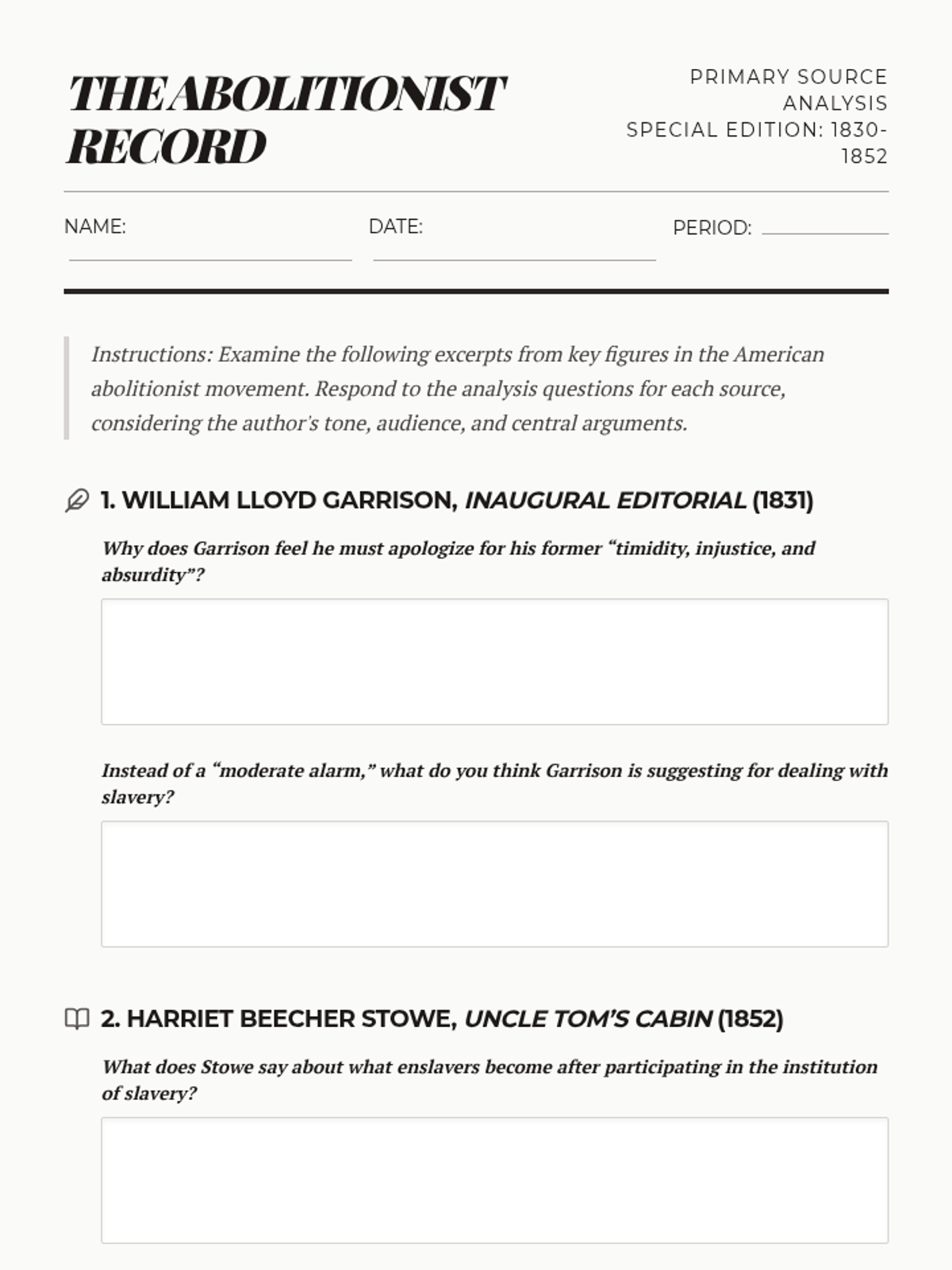
A comprehensive unit on the American Abolitionist movement, examining the rhetorical strategies, diverse perspectives, and historical impact of leading abolitionist voices through primary source analysis.
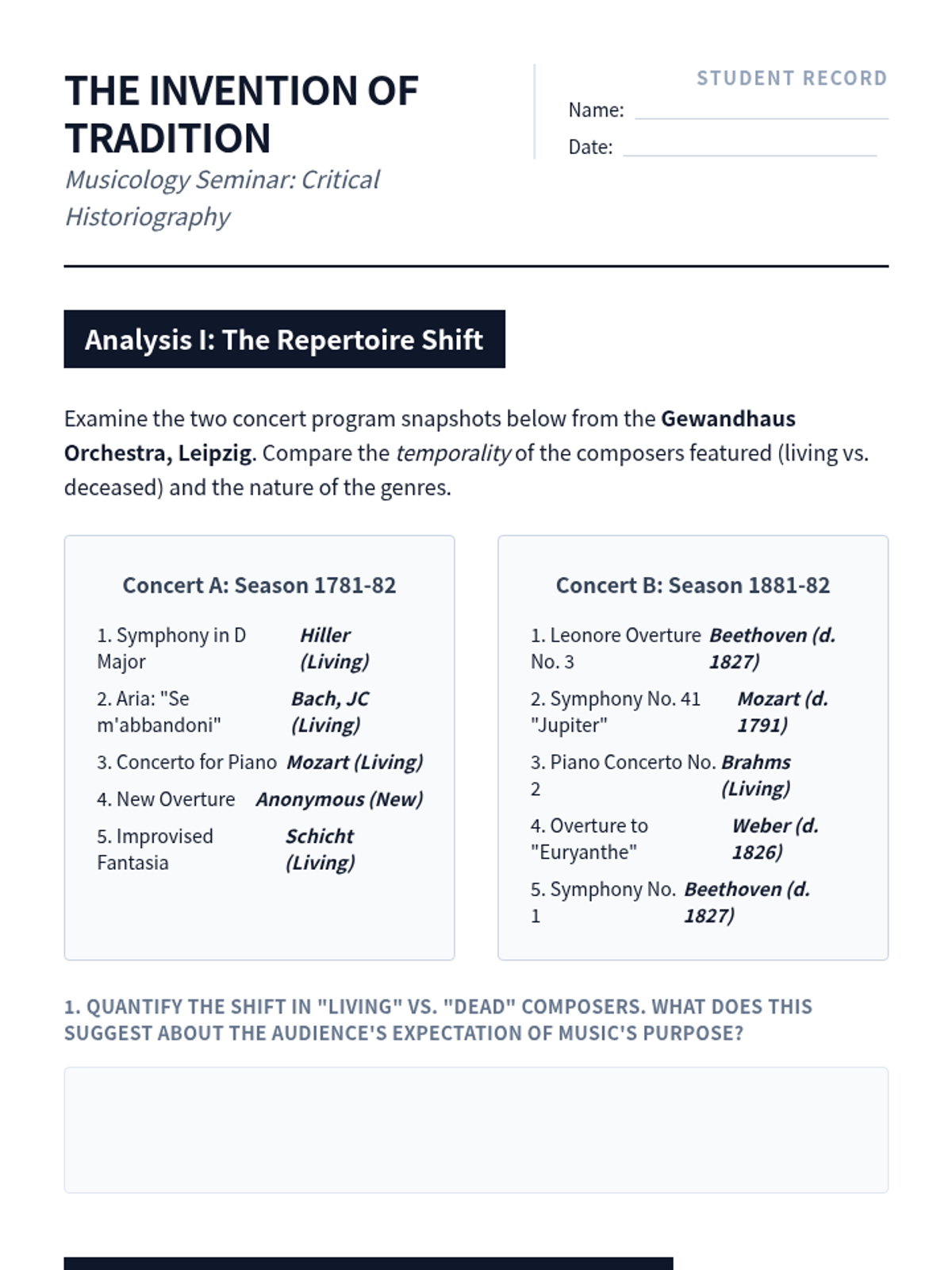
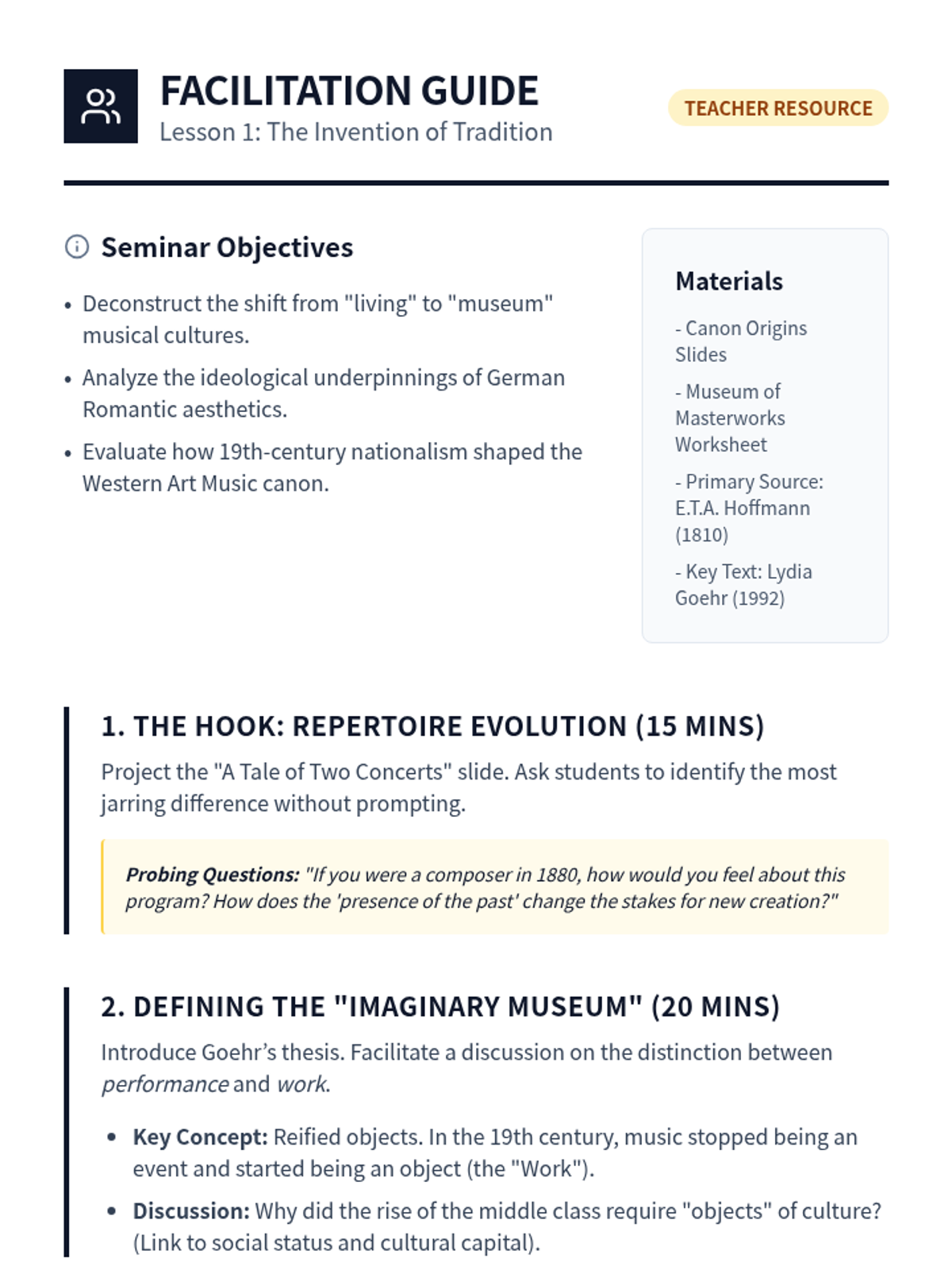
An advanced graduate seminar sequence exploring the social, political, and ideological forces that shape Western Art Music history. Students move from deconstructing 19th-century canon-building to proposing new, inclusive curricular frameworks.
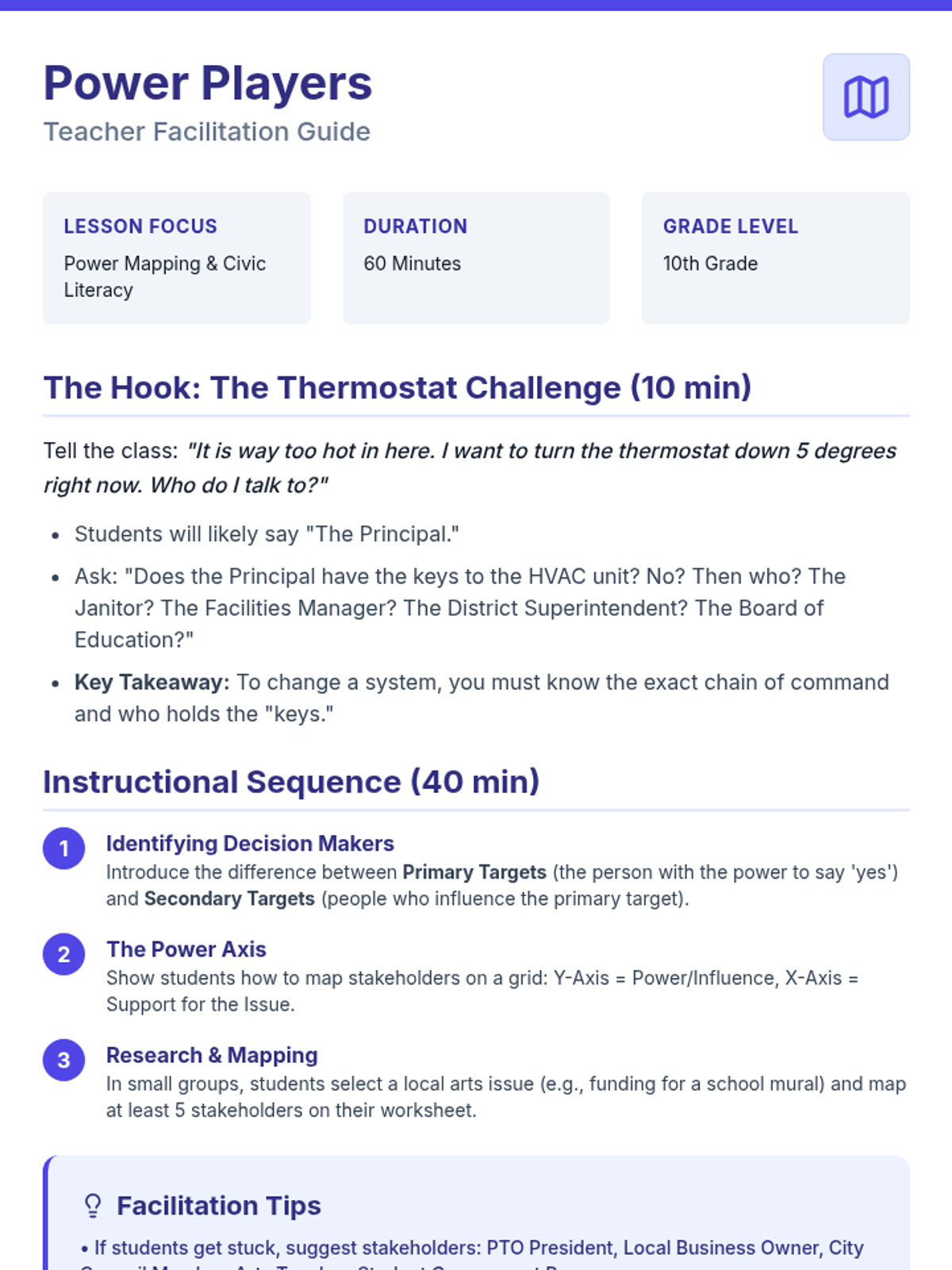
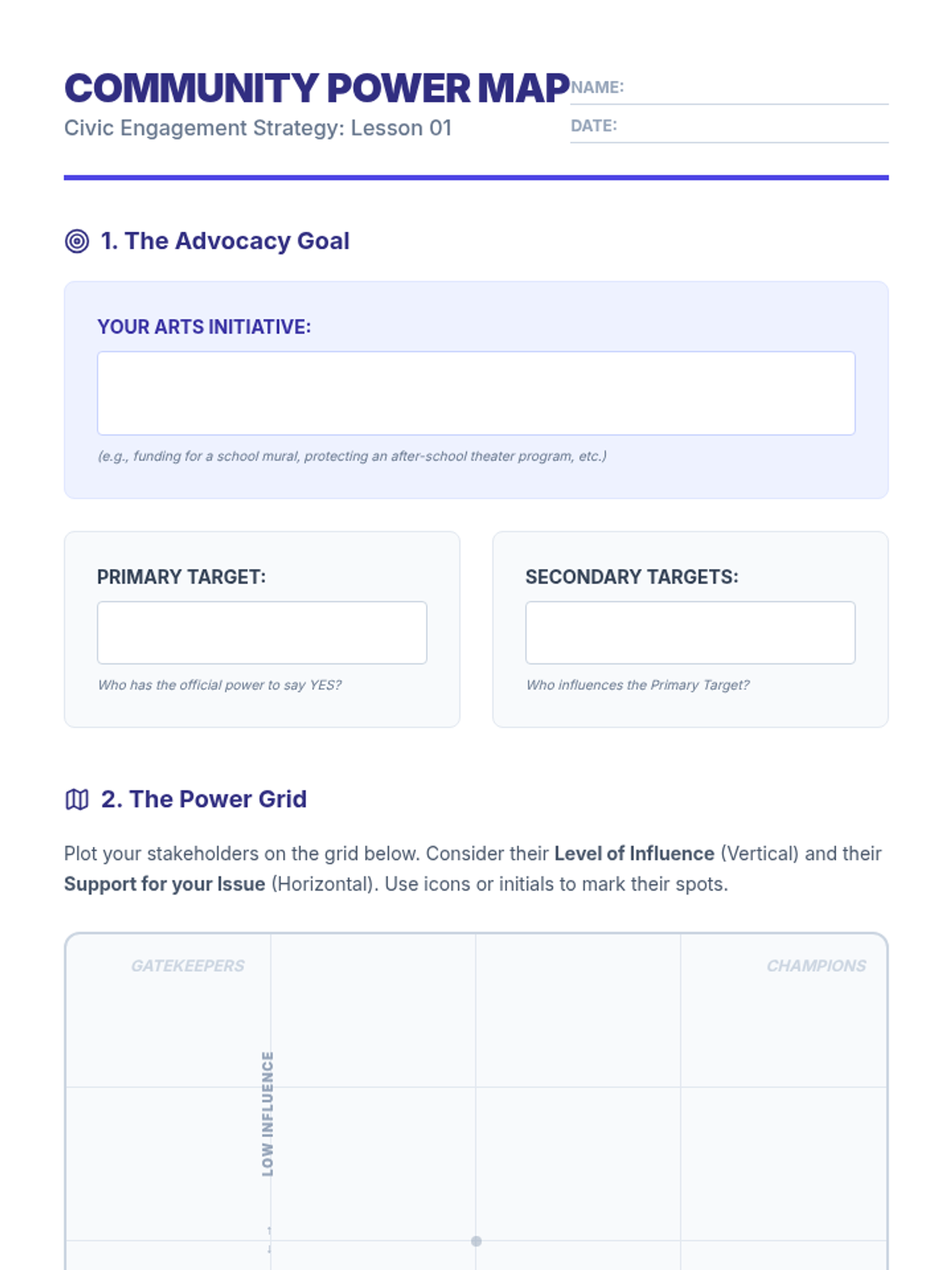
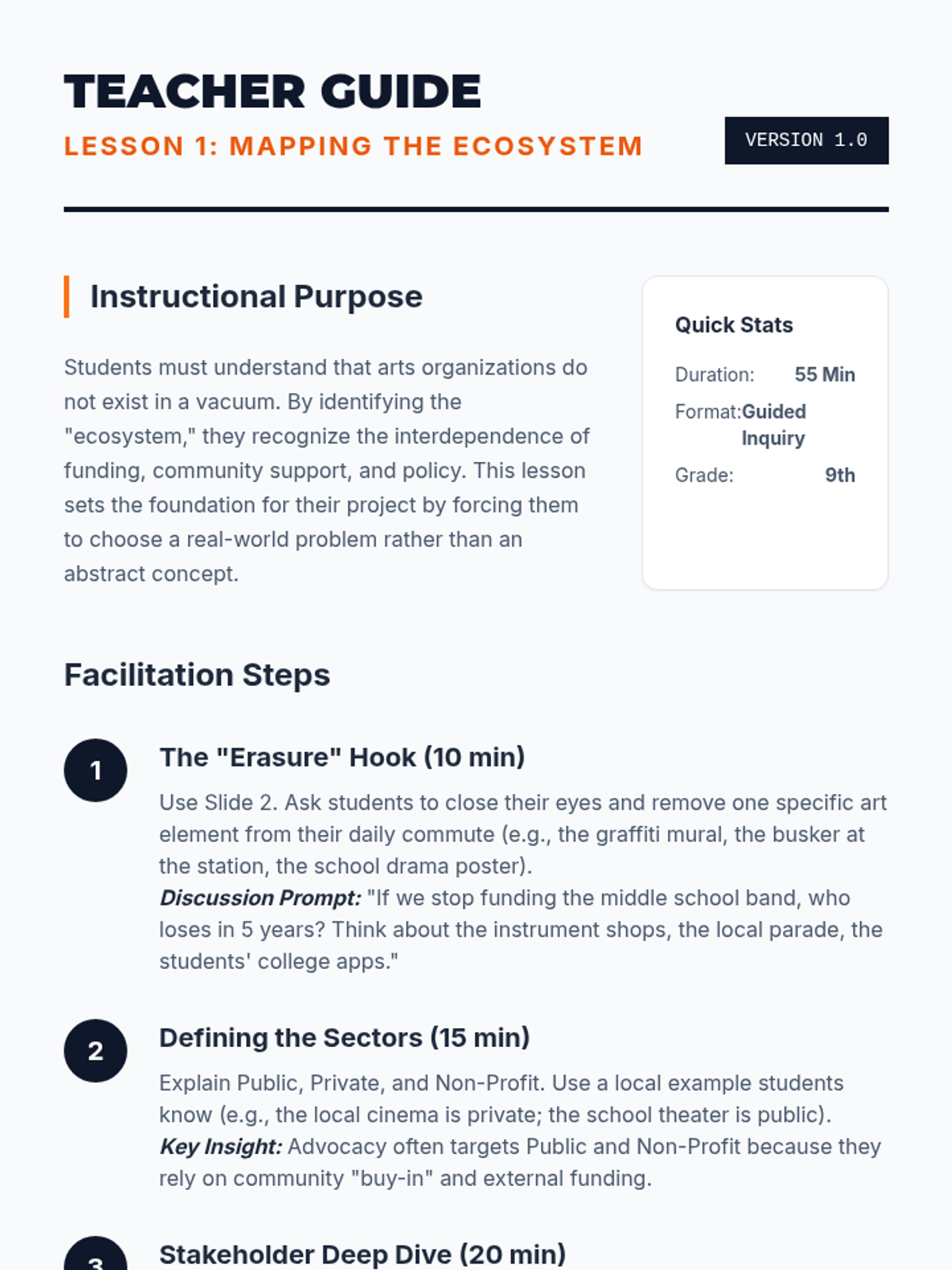
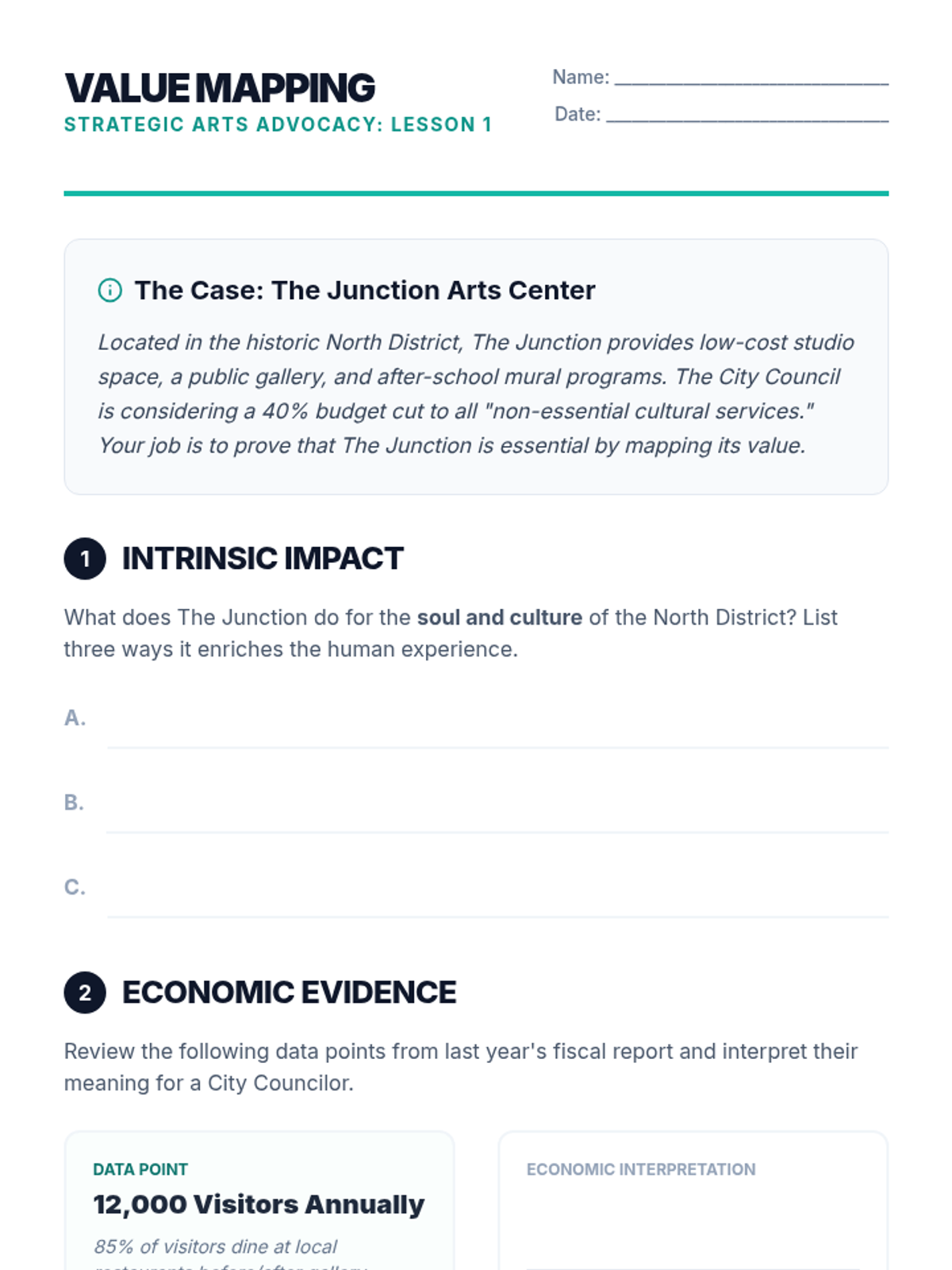
A simulation-heavy sequence that immerses students in the civic processes of arts advocacy, from mapping power structures to simulating a town hall meeting. Students develop skills in negotiation, legislative communication, and digital mobilization to influence public policy.
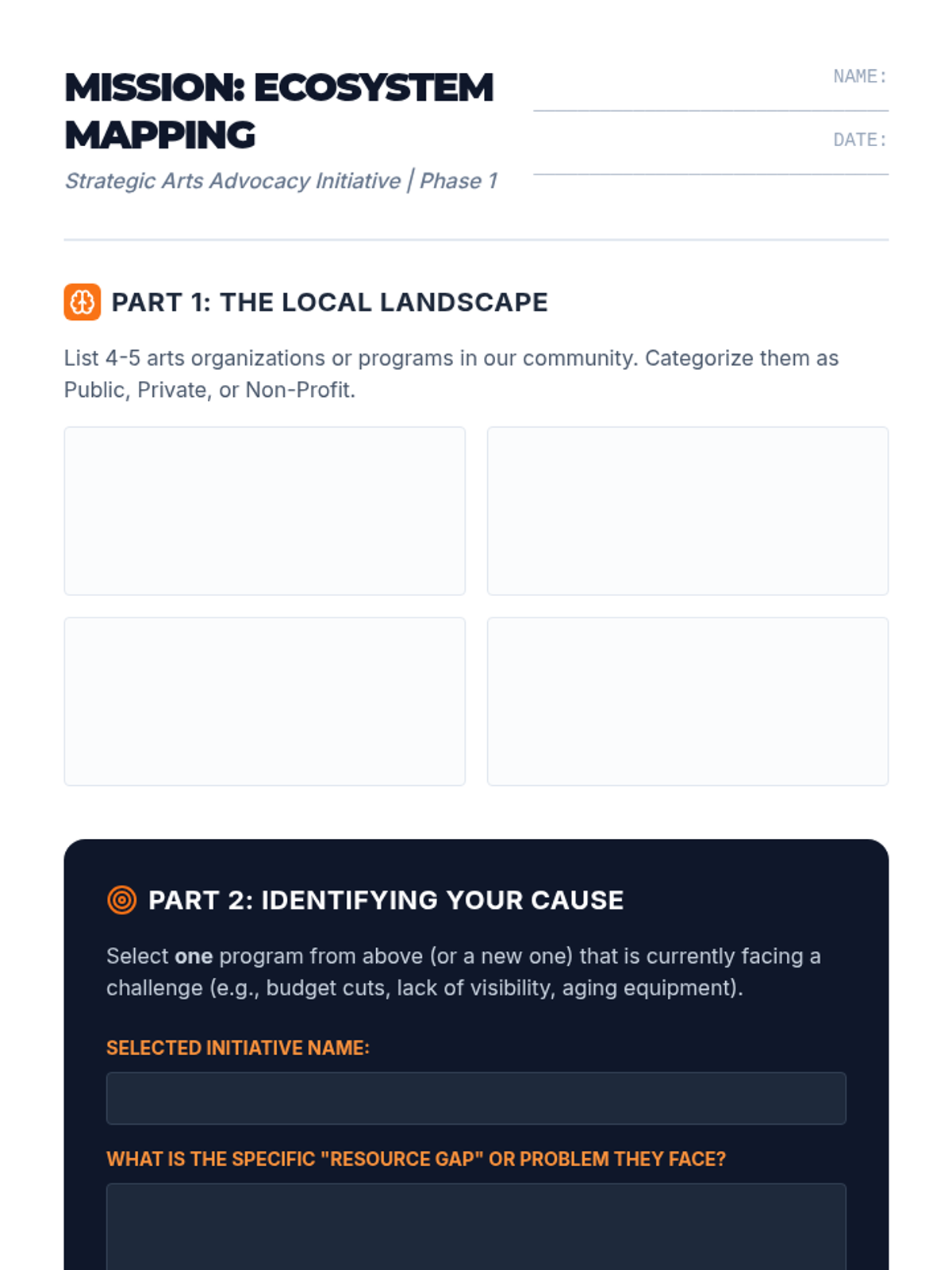
Students transition from passive observers of the arts to active advocates by developing a strategic communications campaign for a local arts initiative. The sequence covers stakeholder mapping, rhetorical strategies, data visualization, digital campaigning, and public speaking.
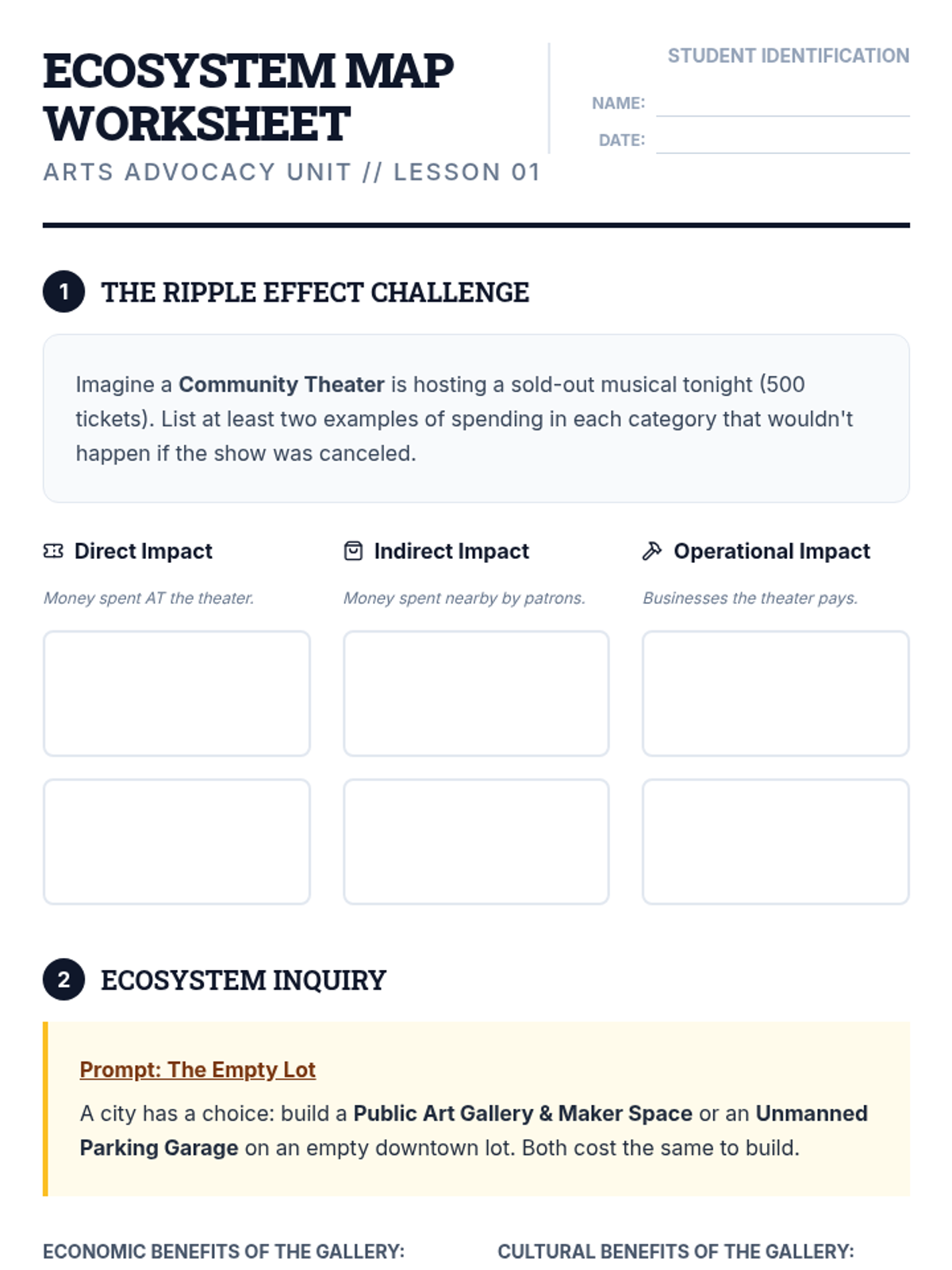
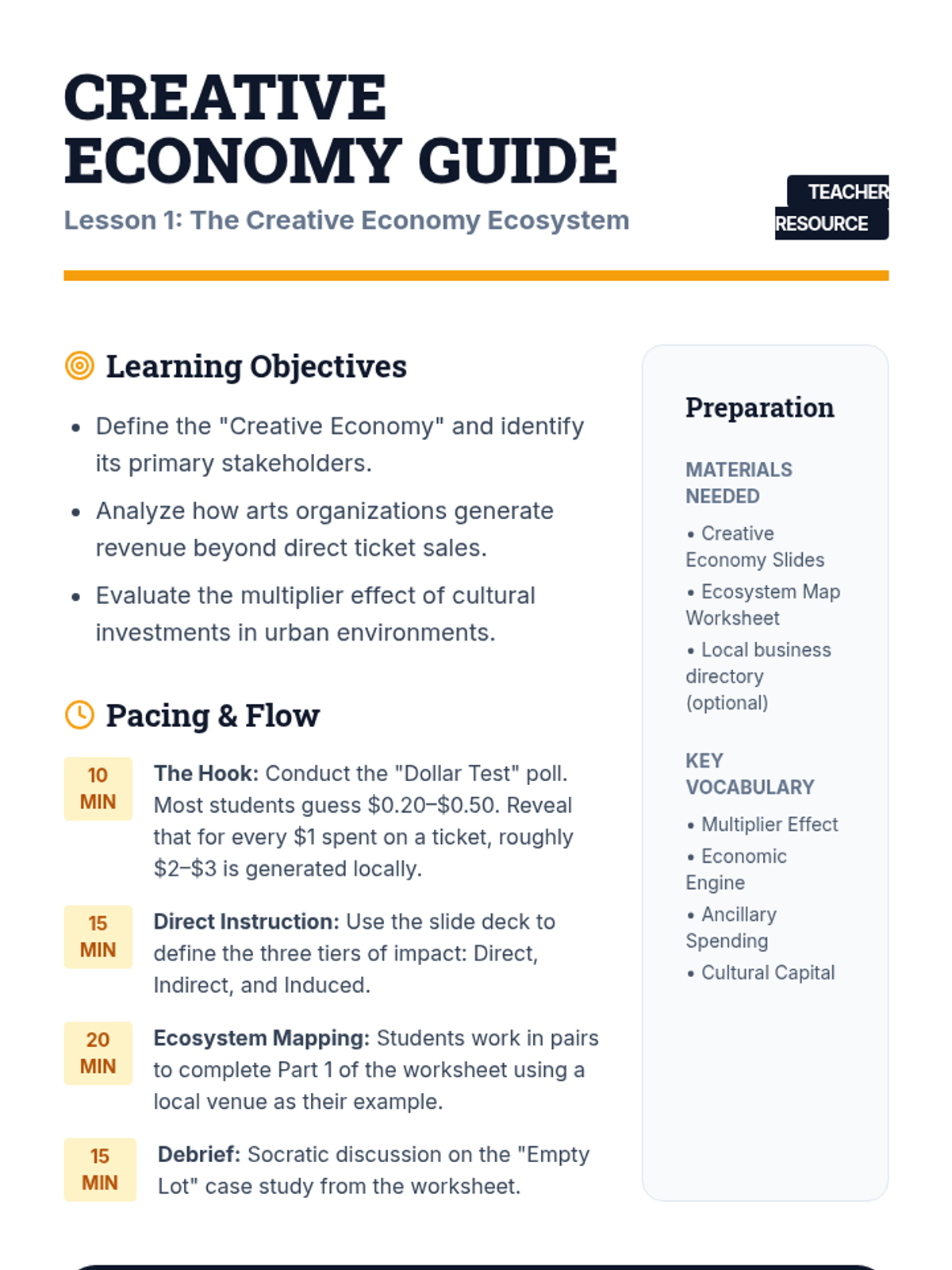
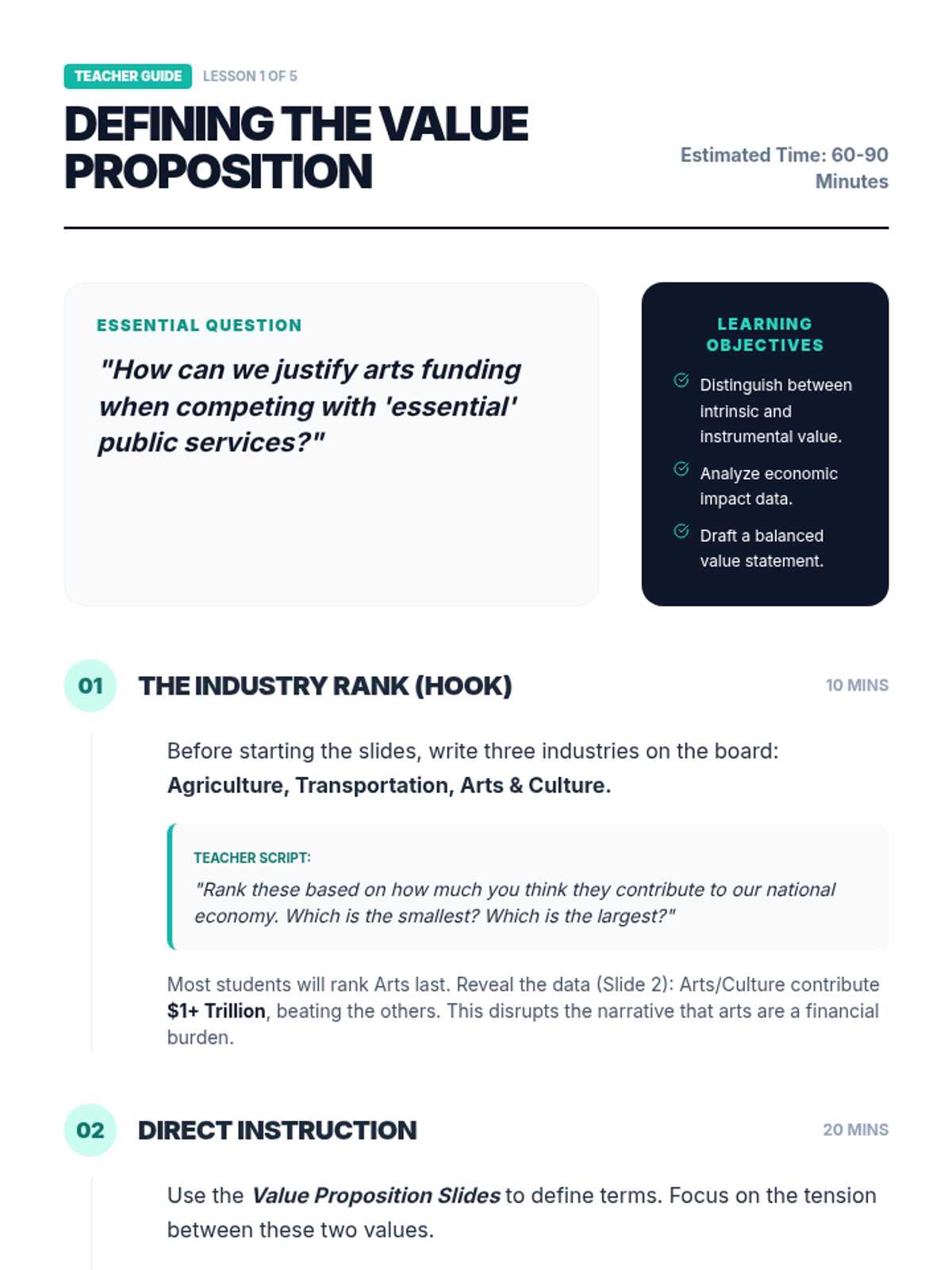
Students step into the roles of civic leaders and grant panelists to explore the economic and cultural value of the arts. They analyze the creative economy, evaluate funding models, and debate the allocation of public funds through a realistic simulation.
Students transition from passive observers to active arts advocates by learning cultural policy, economic impact analysis, and strategic communication. This sequence culminates in a comprehensive advocacy campaign presentation to secure sustainable support for the arts.
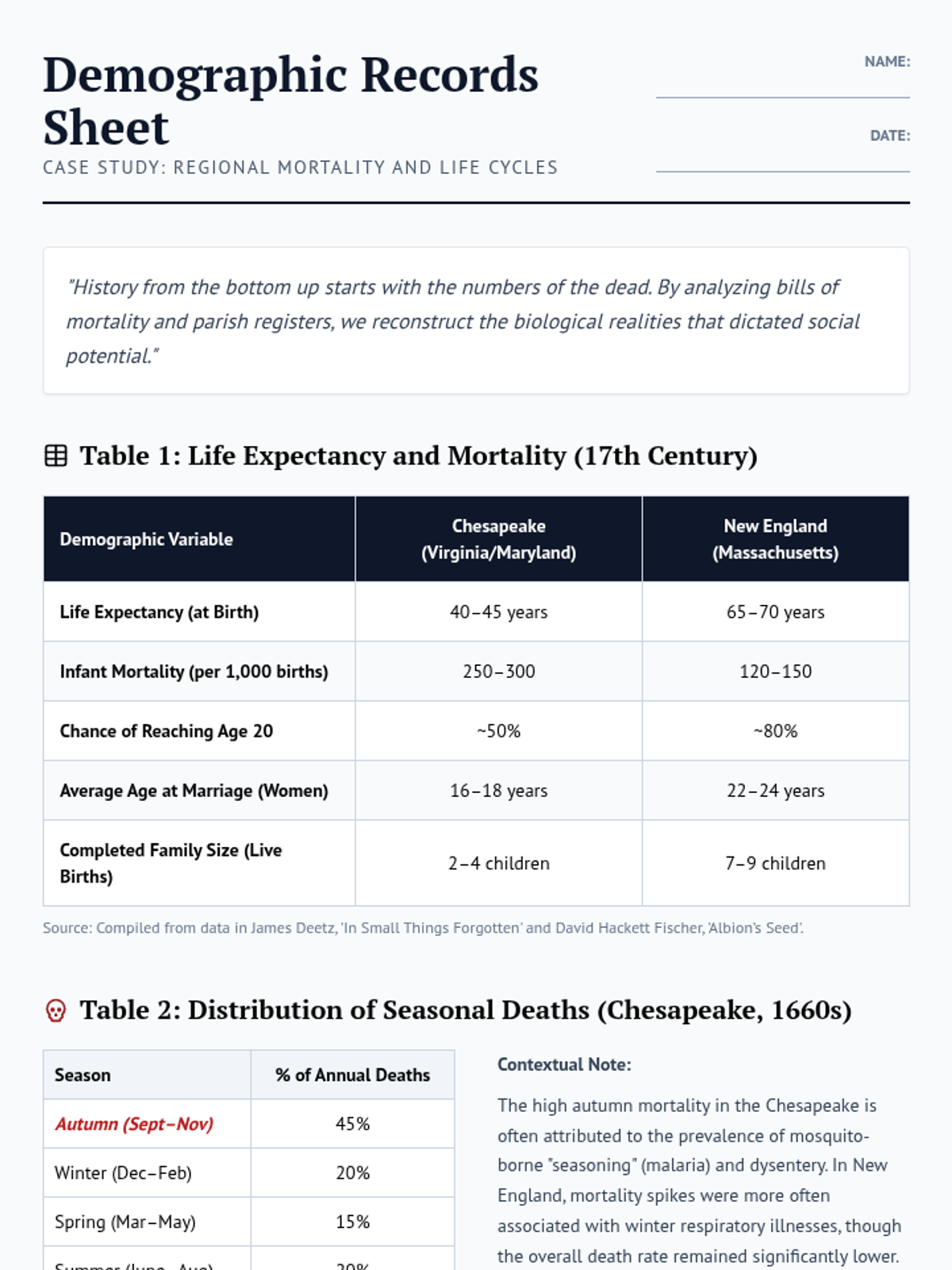
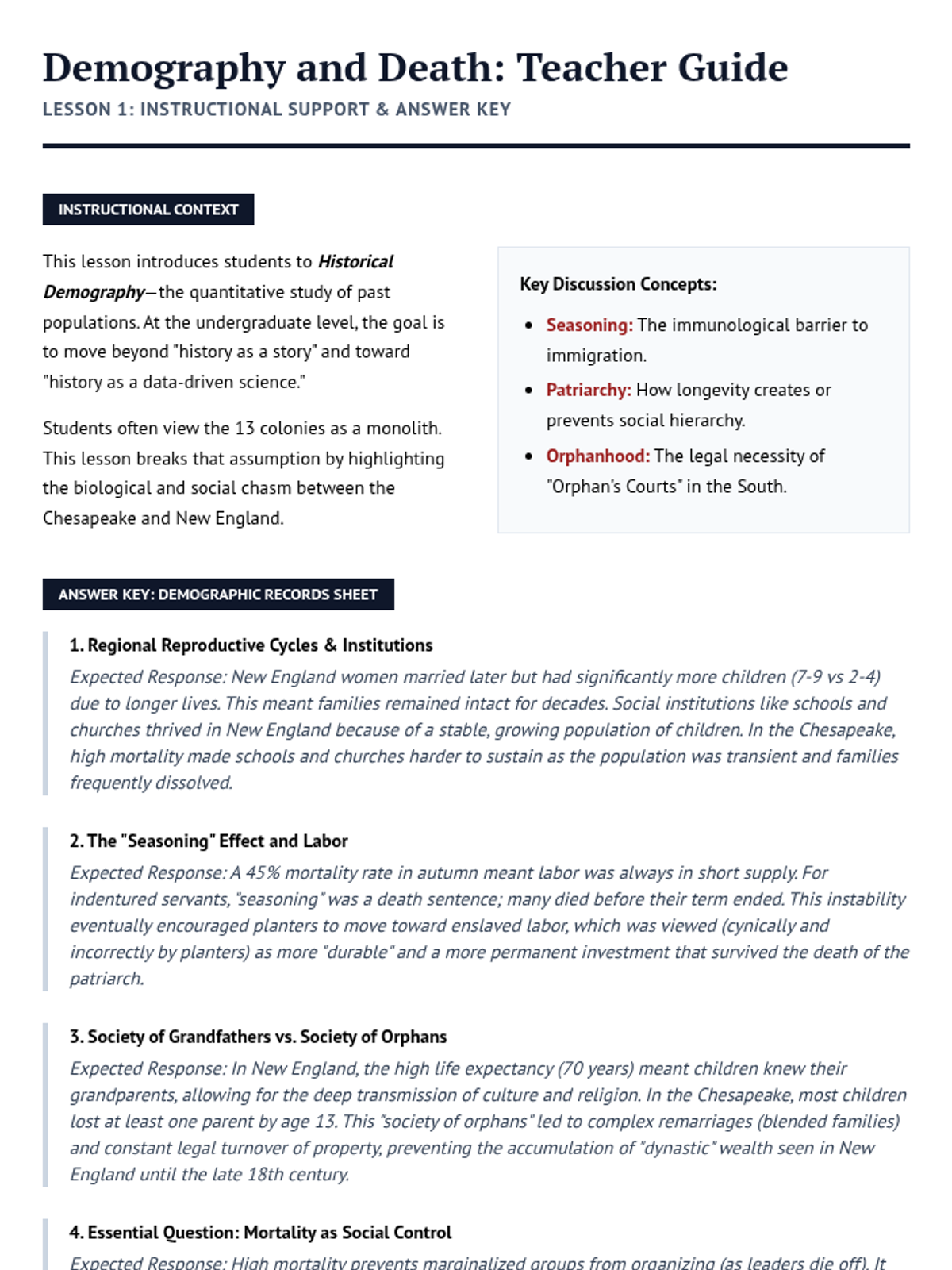
A deep dive into colonial social history, focusing on the lives of marginalized populations, gender roles, and class conflict. Students analyze the 13 colonies through demographic data, primary sources, and material culture to understand the formation of social hierarchies.
A unit exploring the transformative decade of the 1950s, covering the Civil Rights movement, postwar economic booms, the rise of suburbia, and the cultural shifts of the Atomic Age.
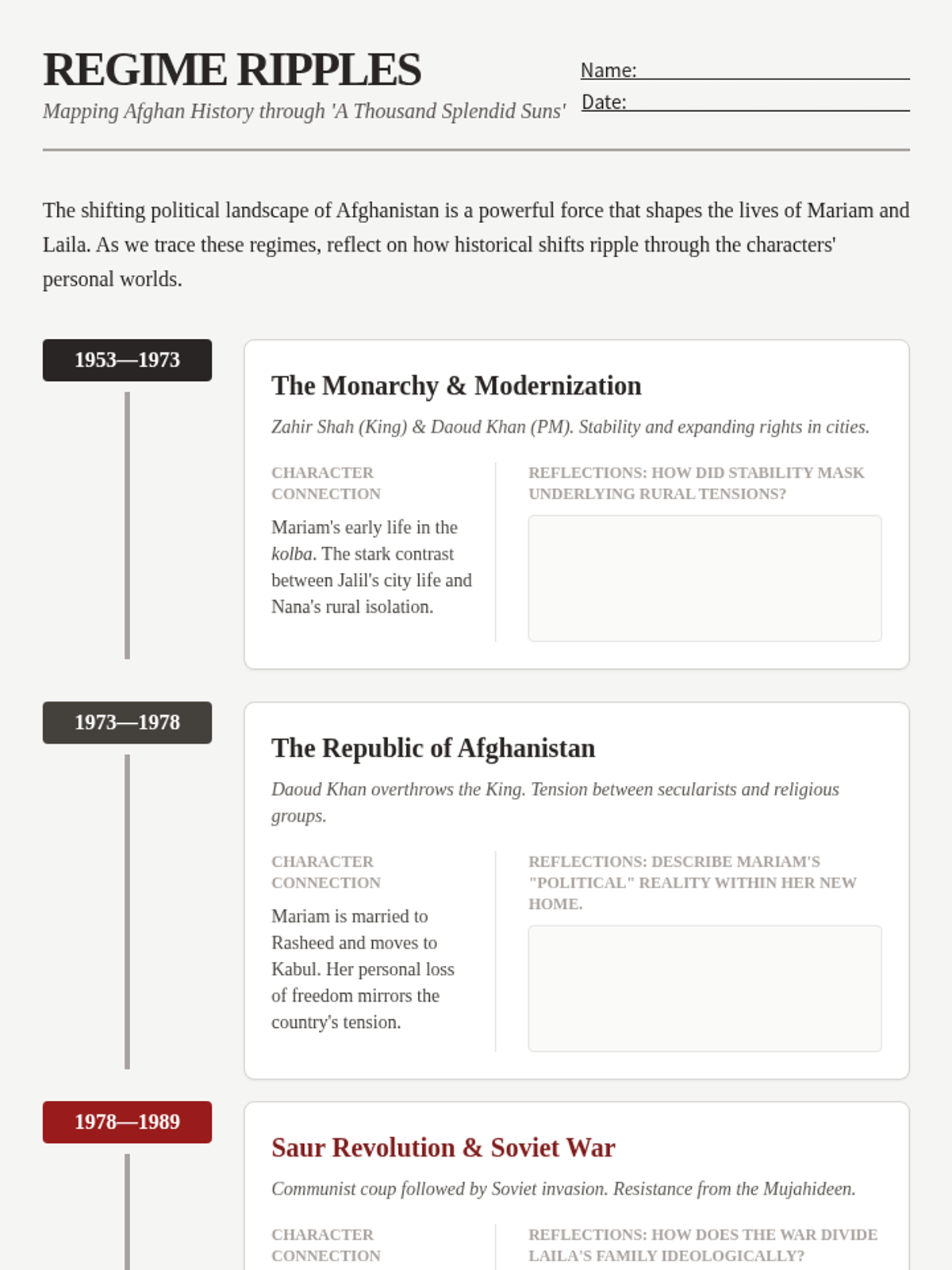
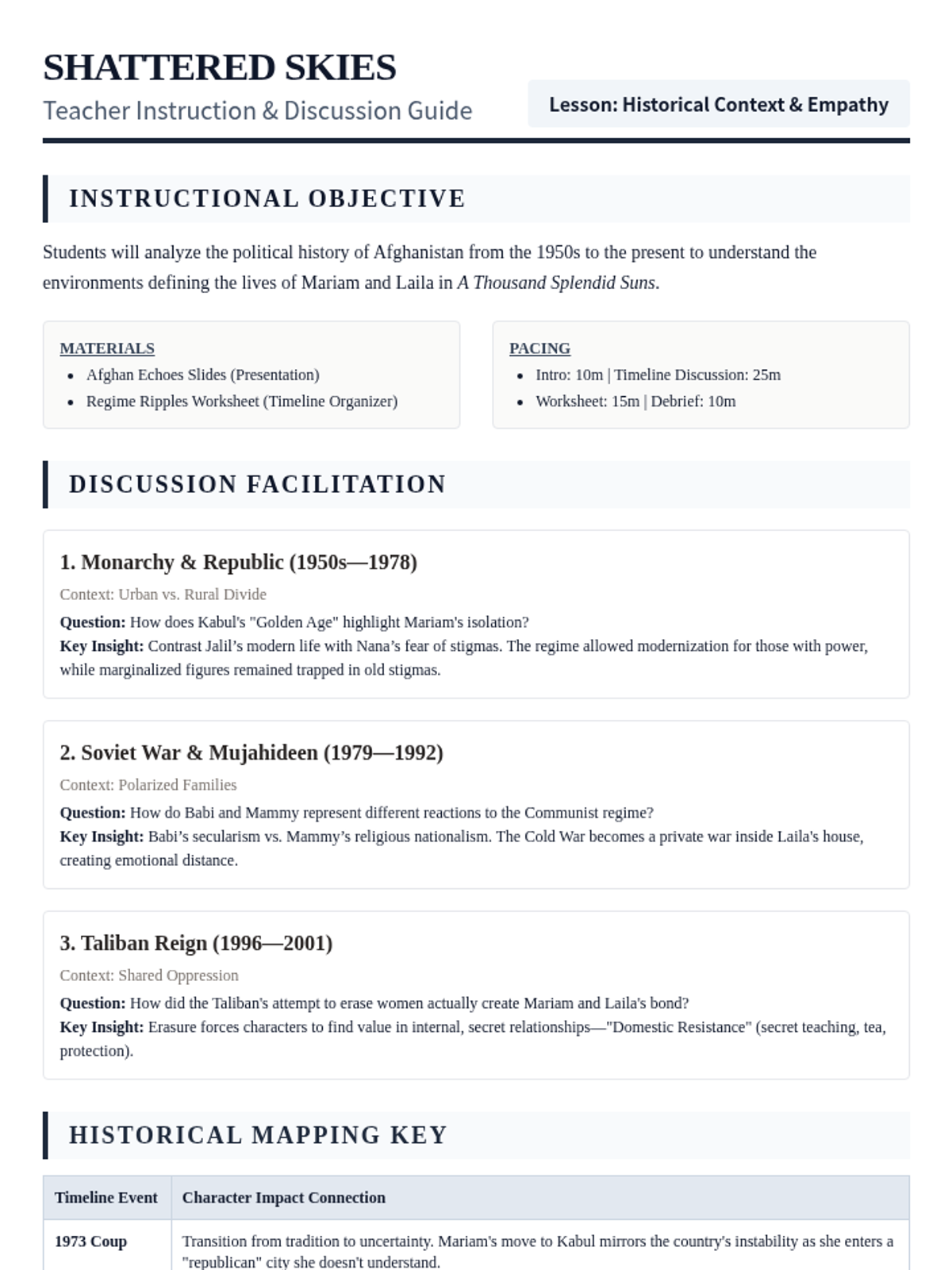
A comprehensive historical background unit designed to contextualize the events of 'A Thousand Splendid Suns', focusing on the political shifts in Afghanistan and their impact on women's lives and character motivations.
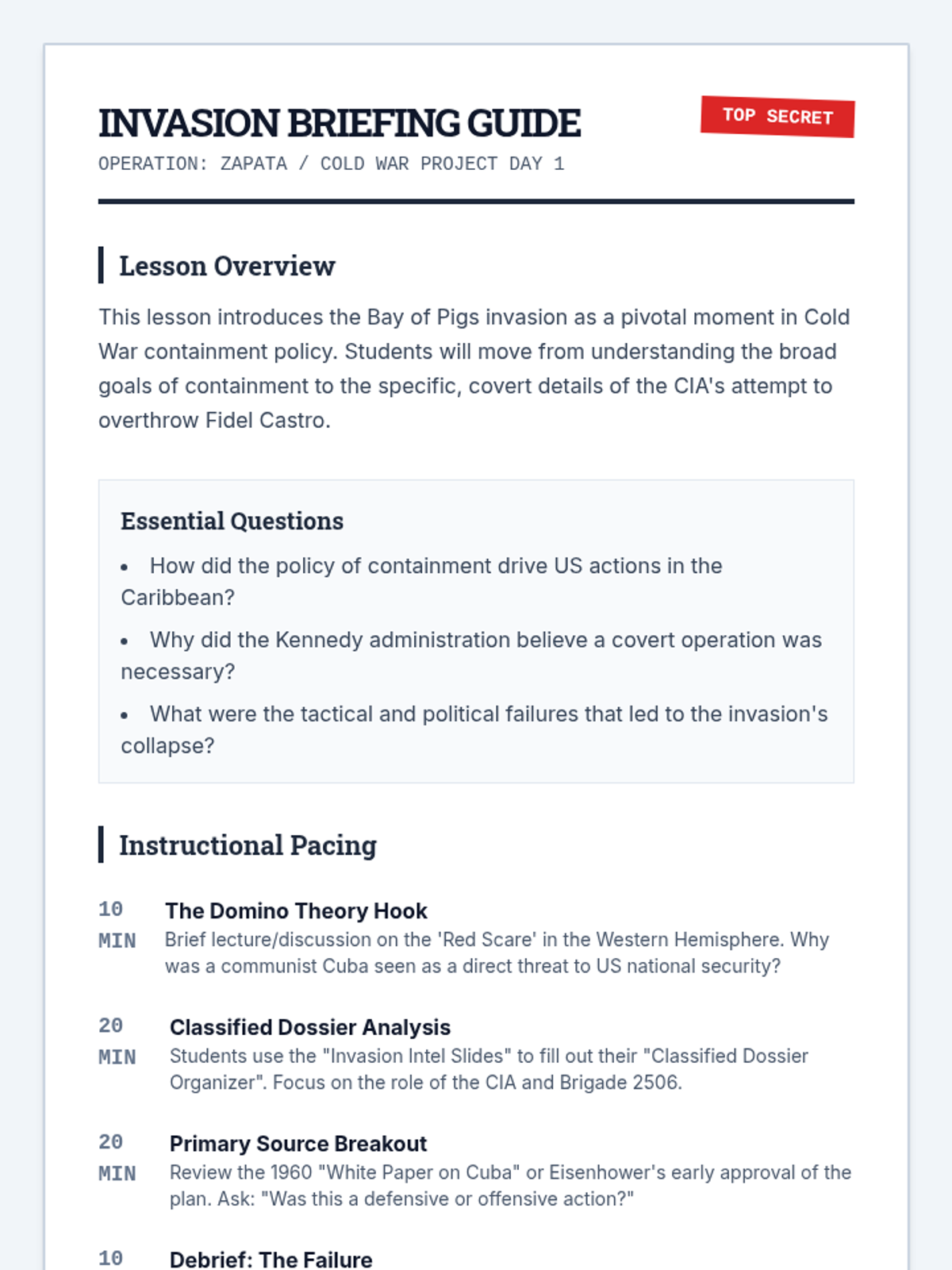
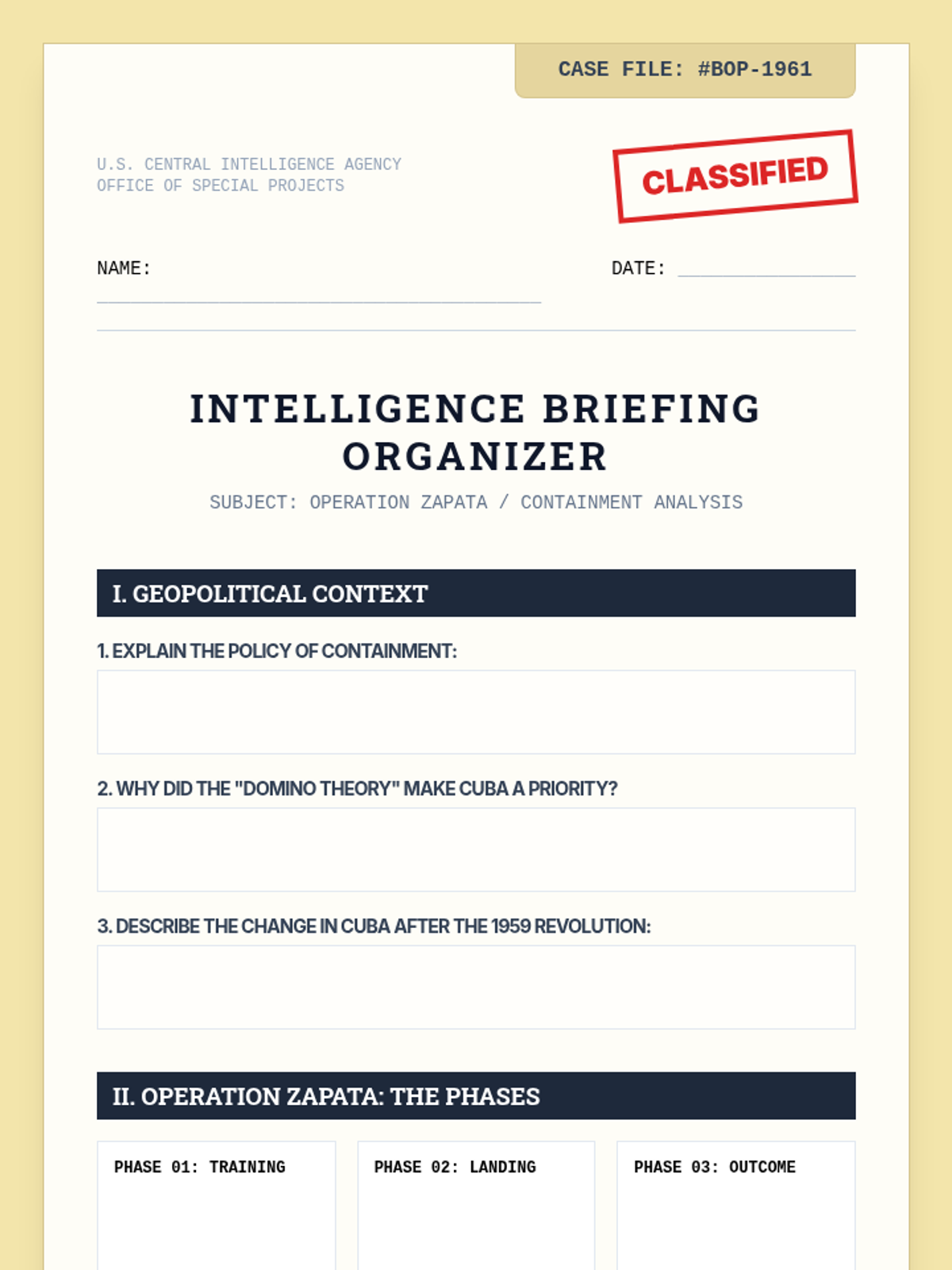
A two-day historical simulation and project focused on the Bay of Pigs invasion, Cold War containment strategies, and multi-perspective journalism. Students analyze primary sources and government documents to create a 1961 newspaper report.
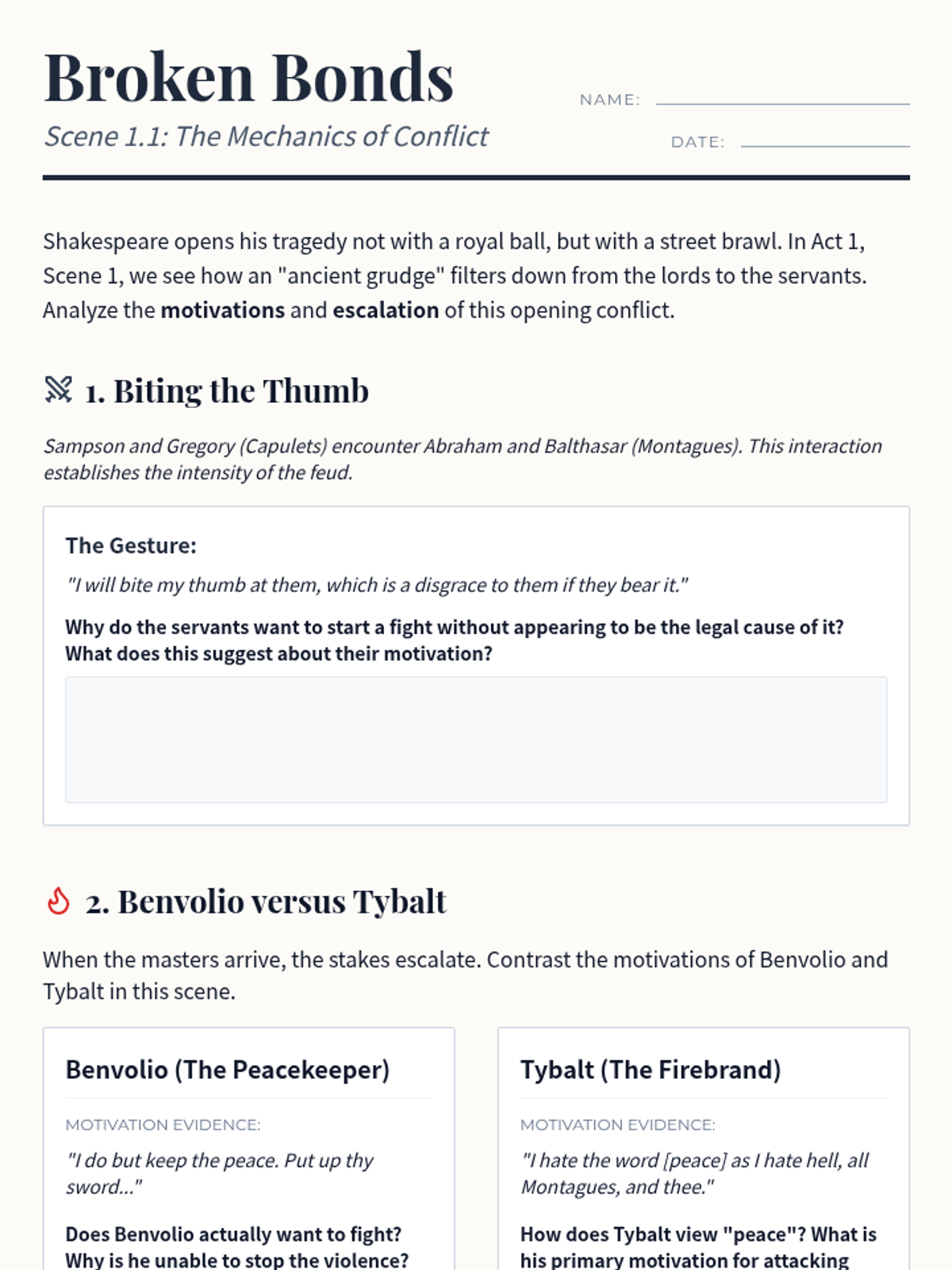
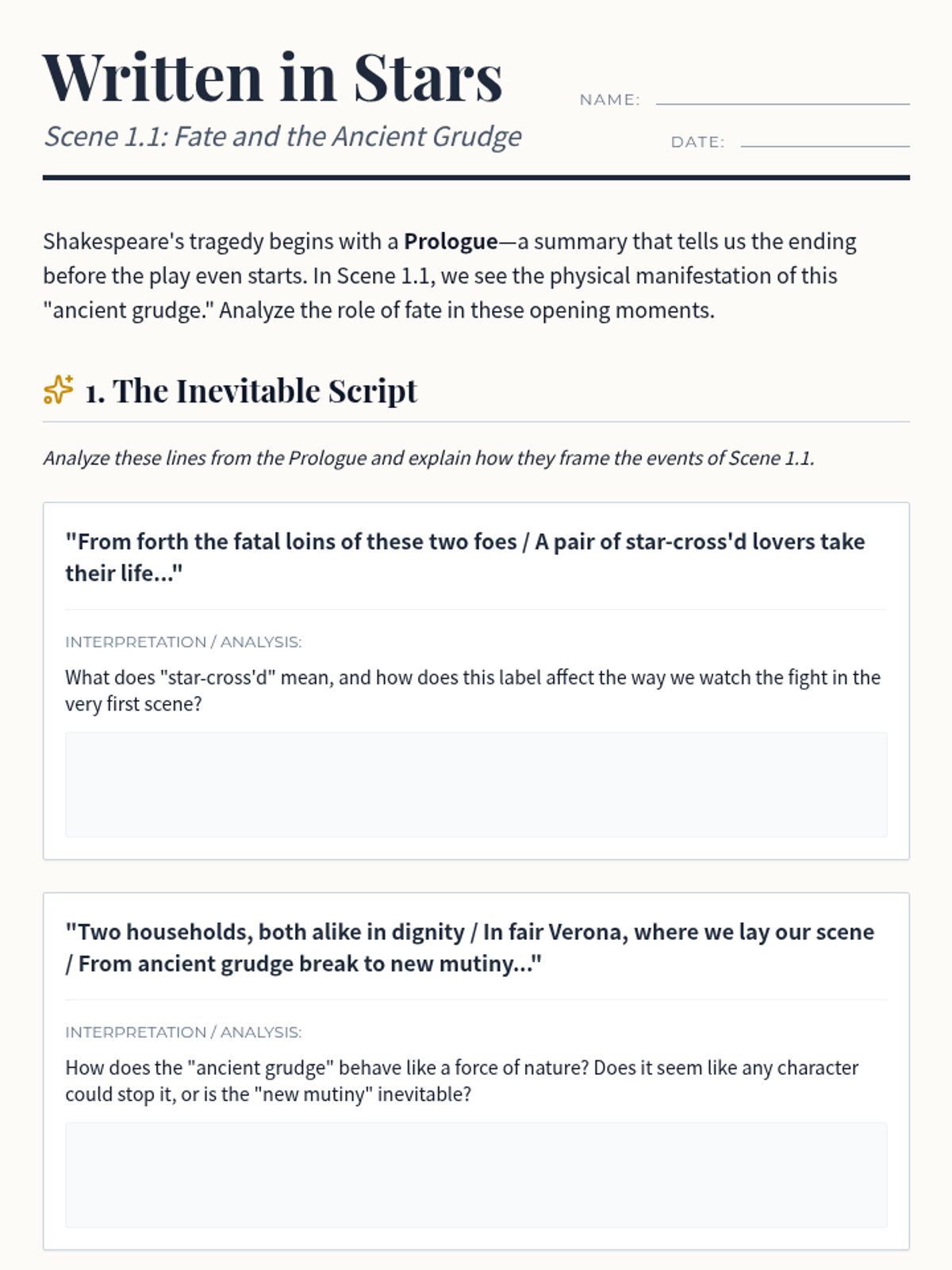
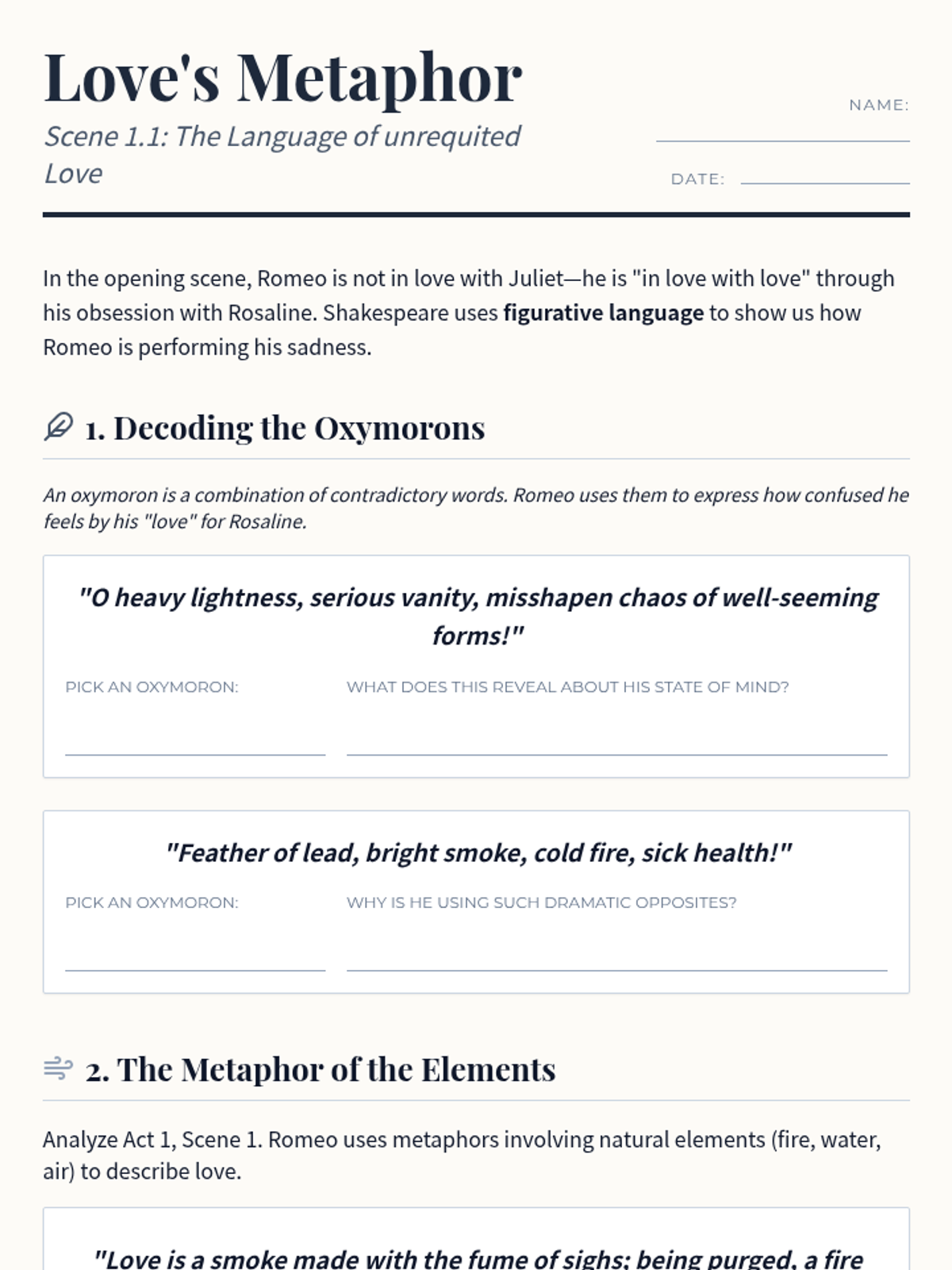
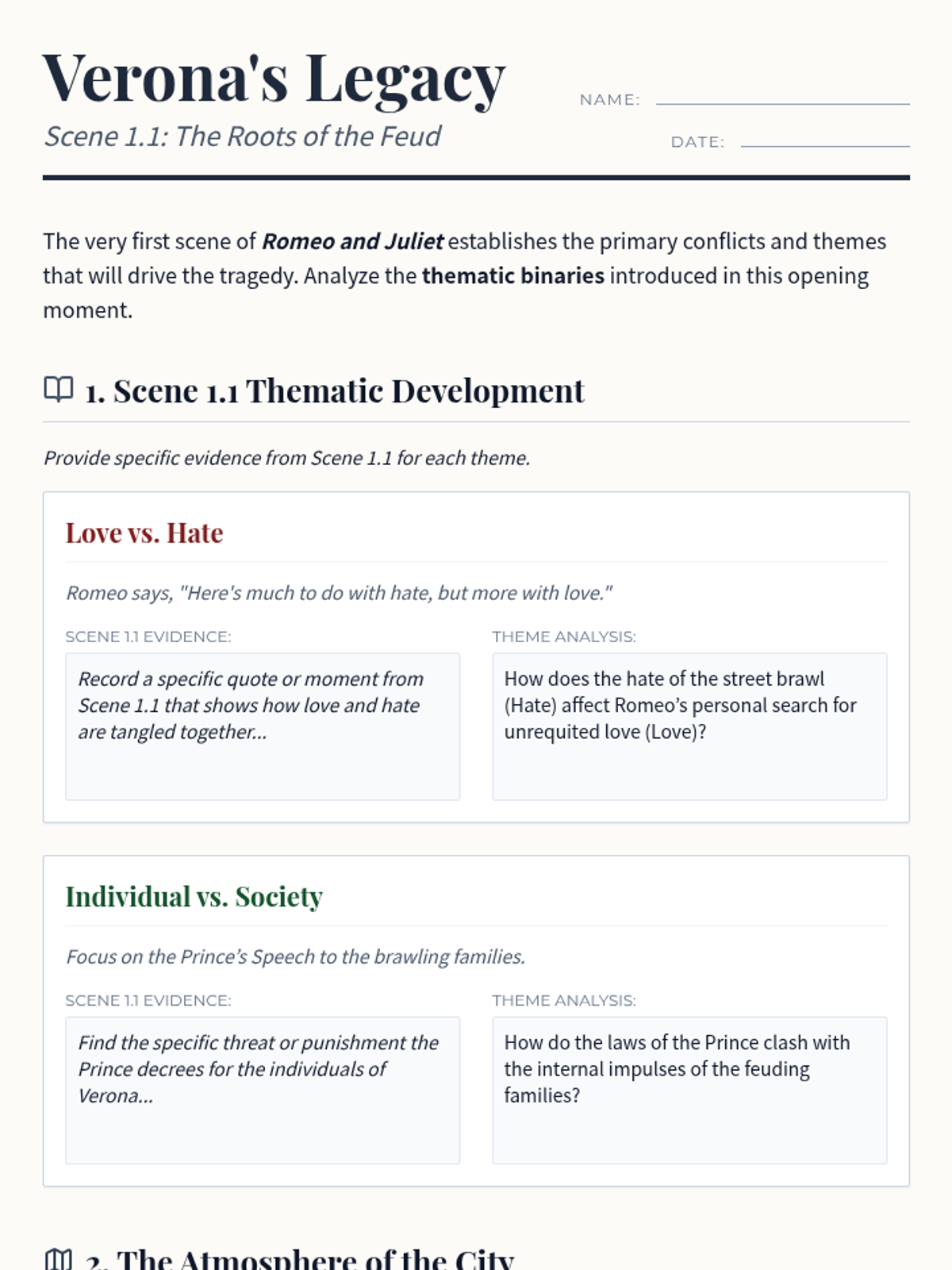
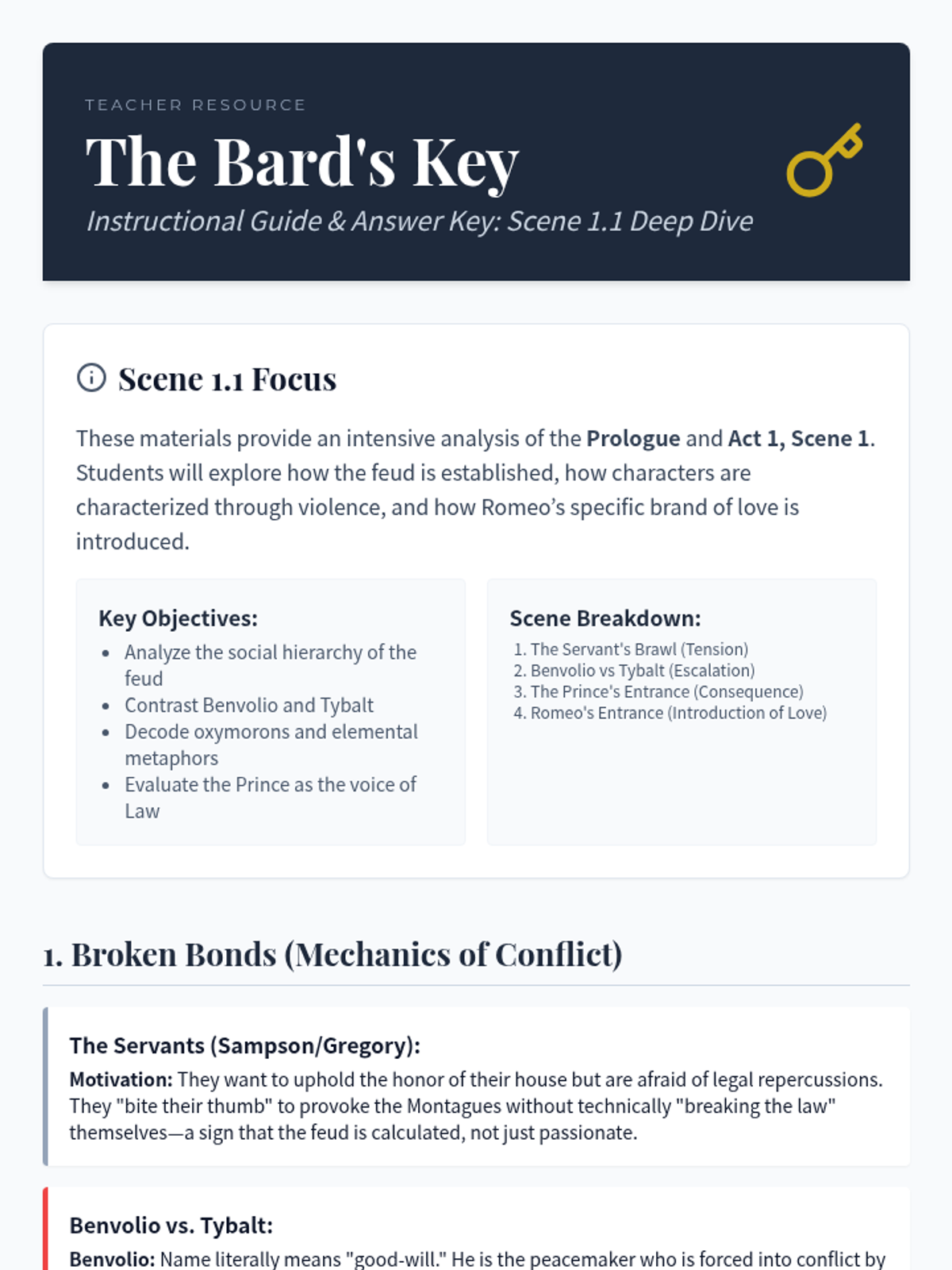
A comprehensive deep-dive into Shakespeare's Romeo and Juliet, focusing on Act 1. Students will analyze character dynamics, the tension between destiny and choice, and the rich poetic language of the play across individual scenes.
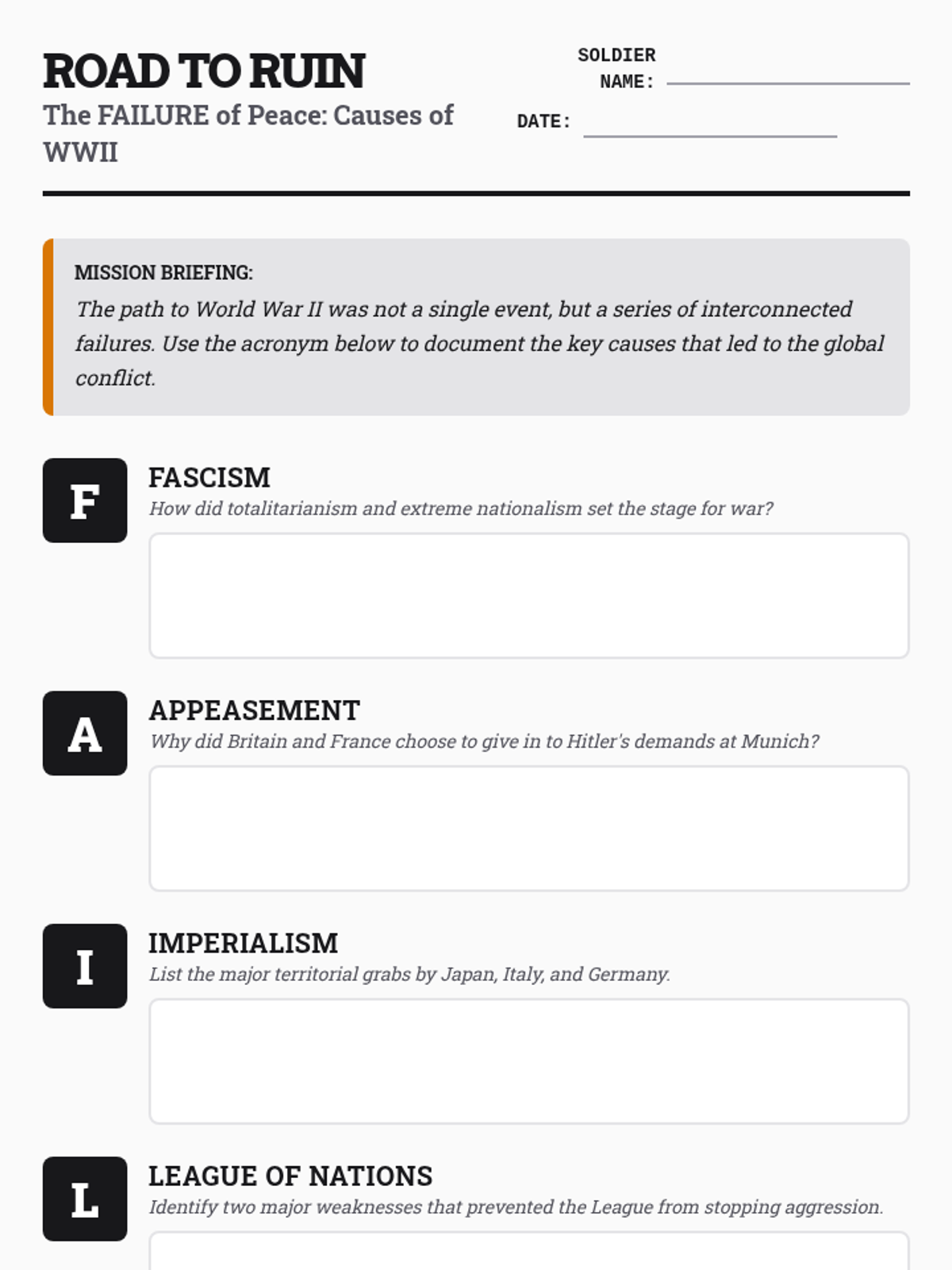
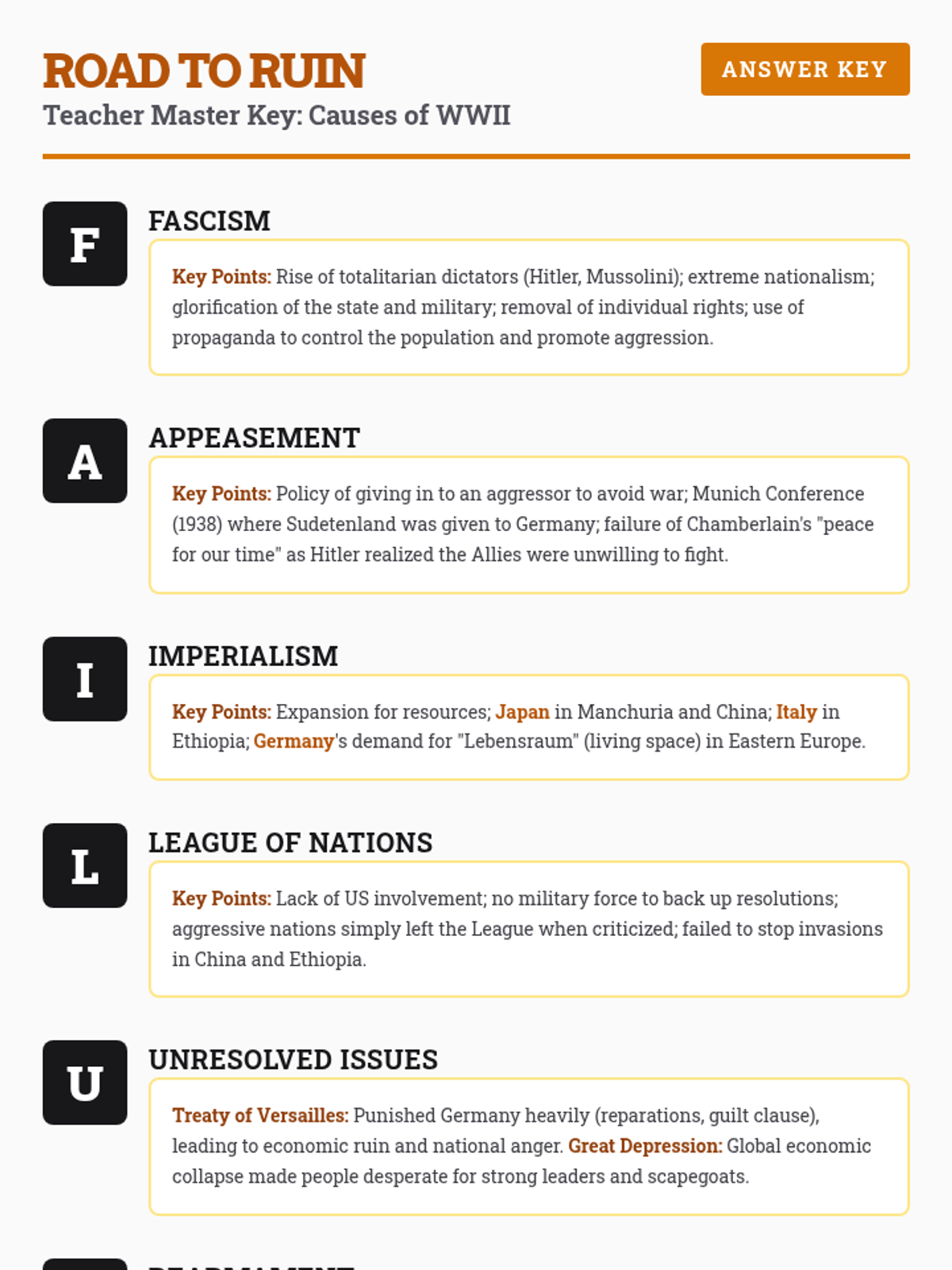
A comprehensive look at the origins and early stages of World War II, from global systemic failures to the specific regional reasons for Australian involvement.
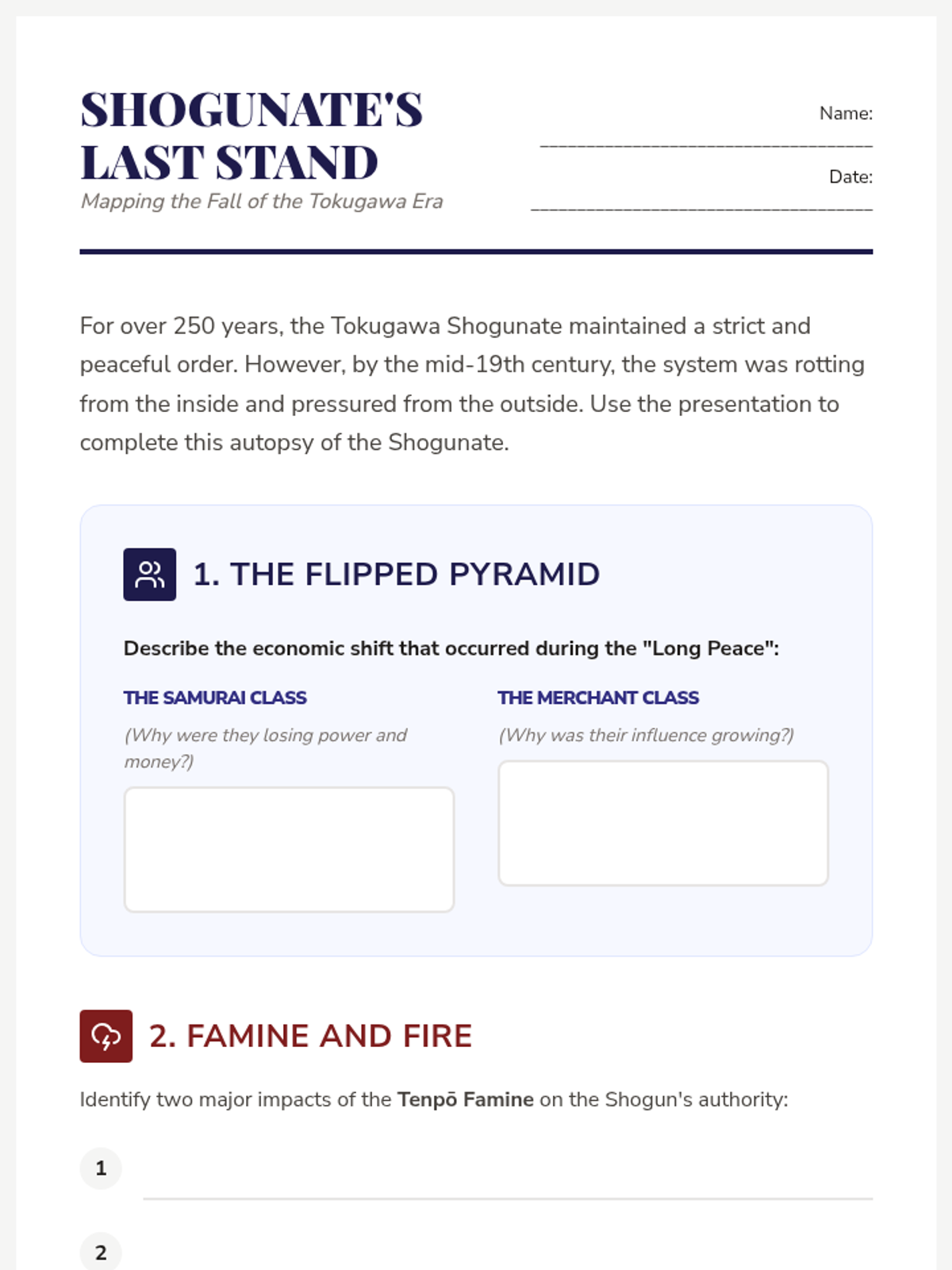
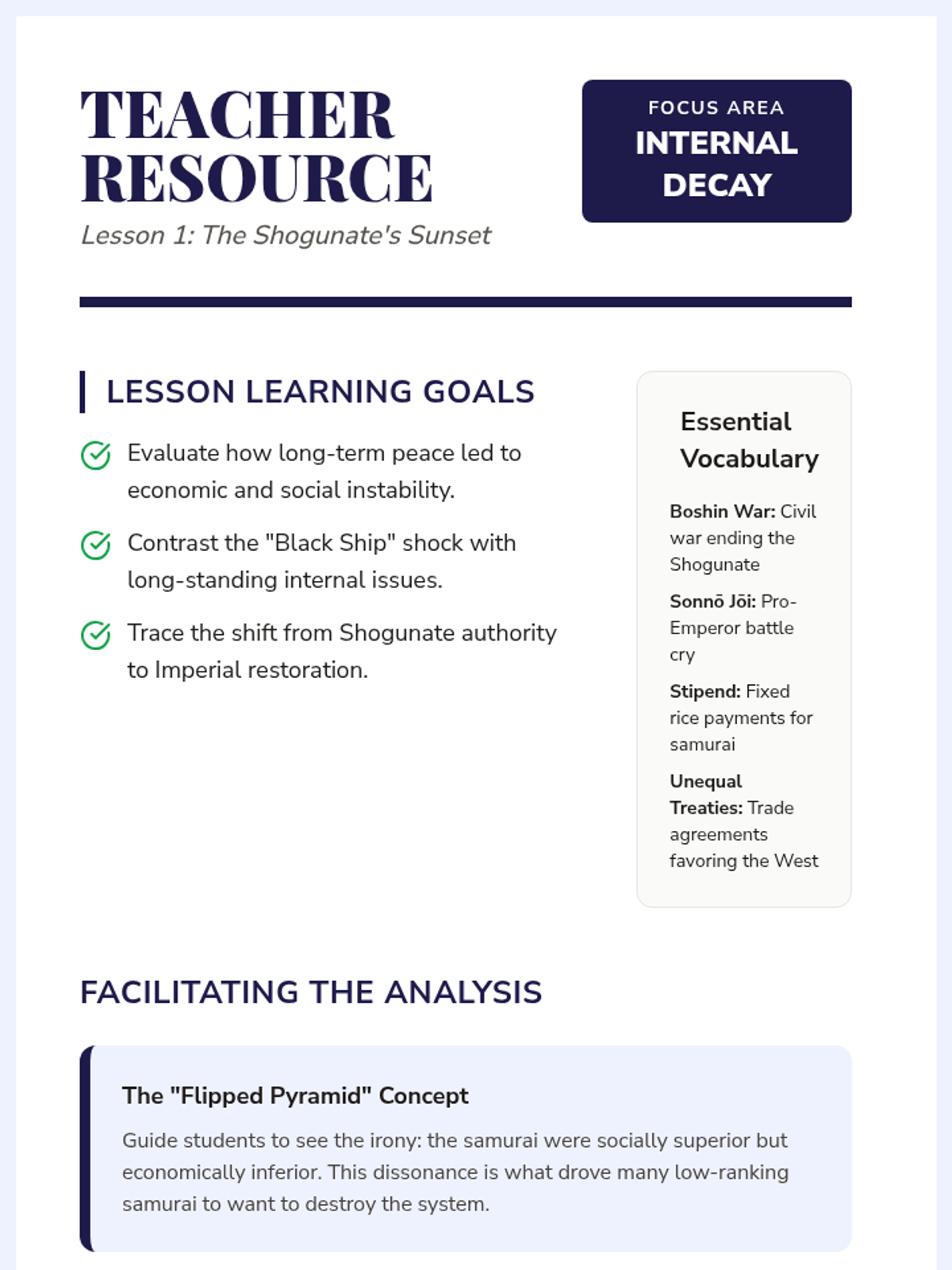
A comprehensive unit exploring Japan's transition from a feudal isolationist state to a modern global power, covering the decline of the Shogunate and the rapid modernization of the Meiji era.
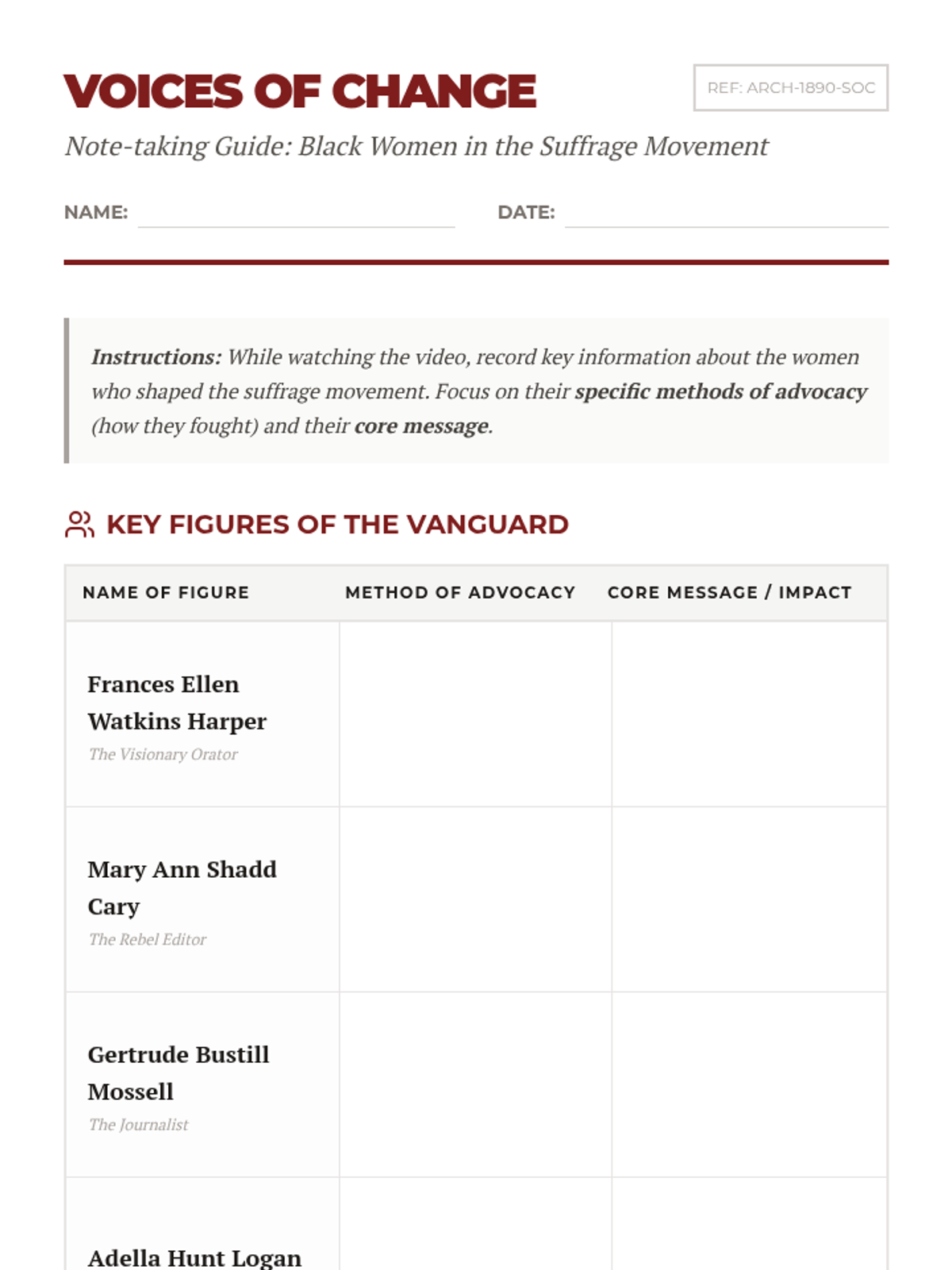
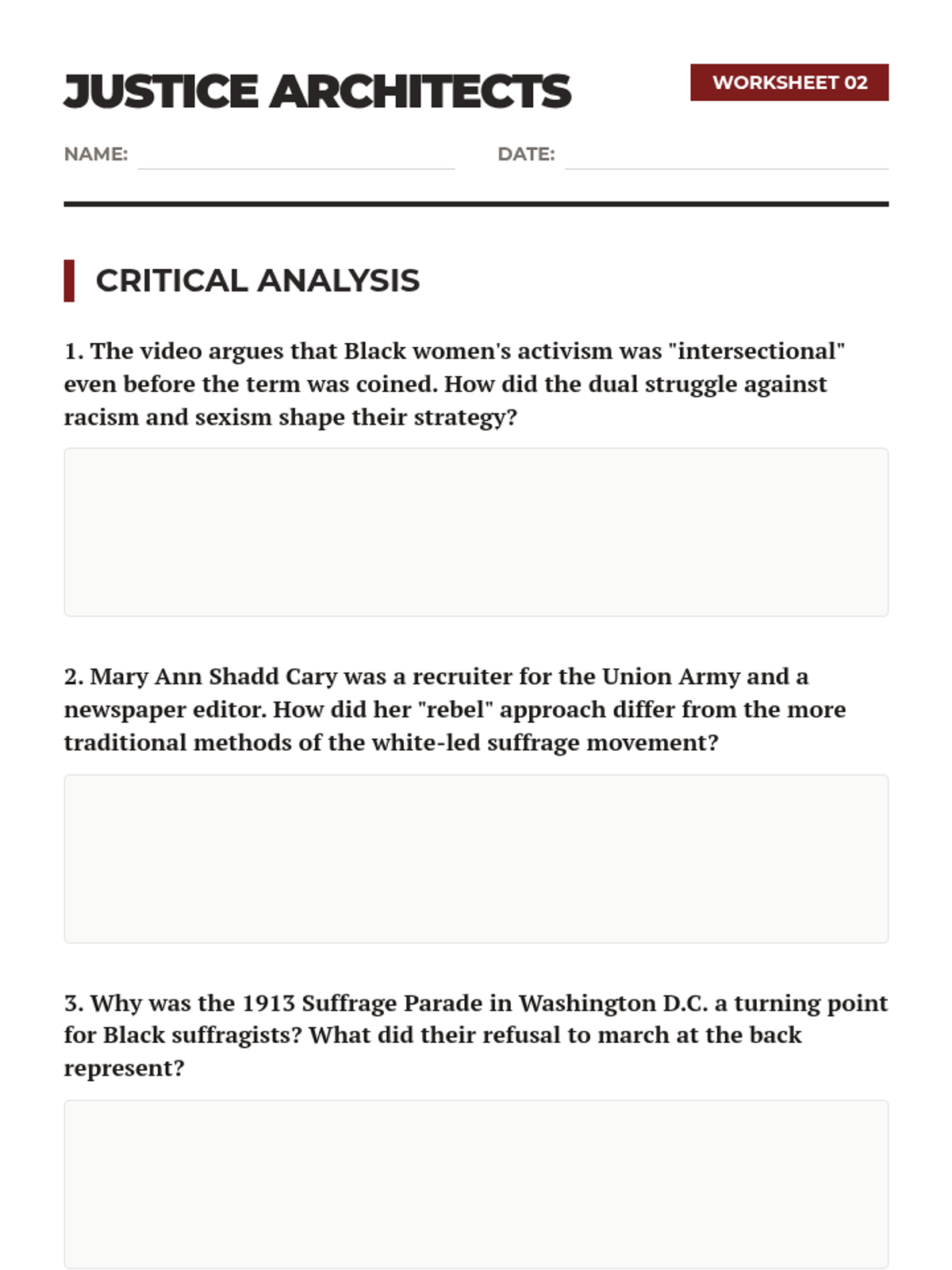
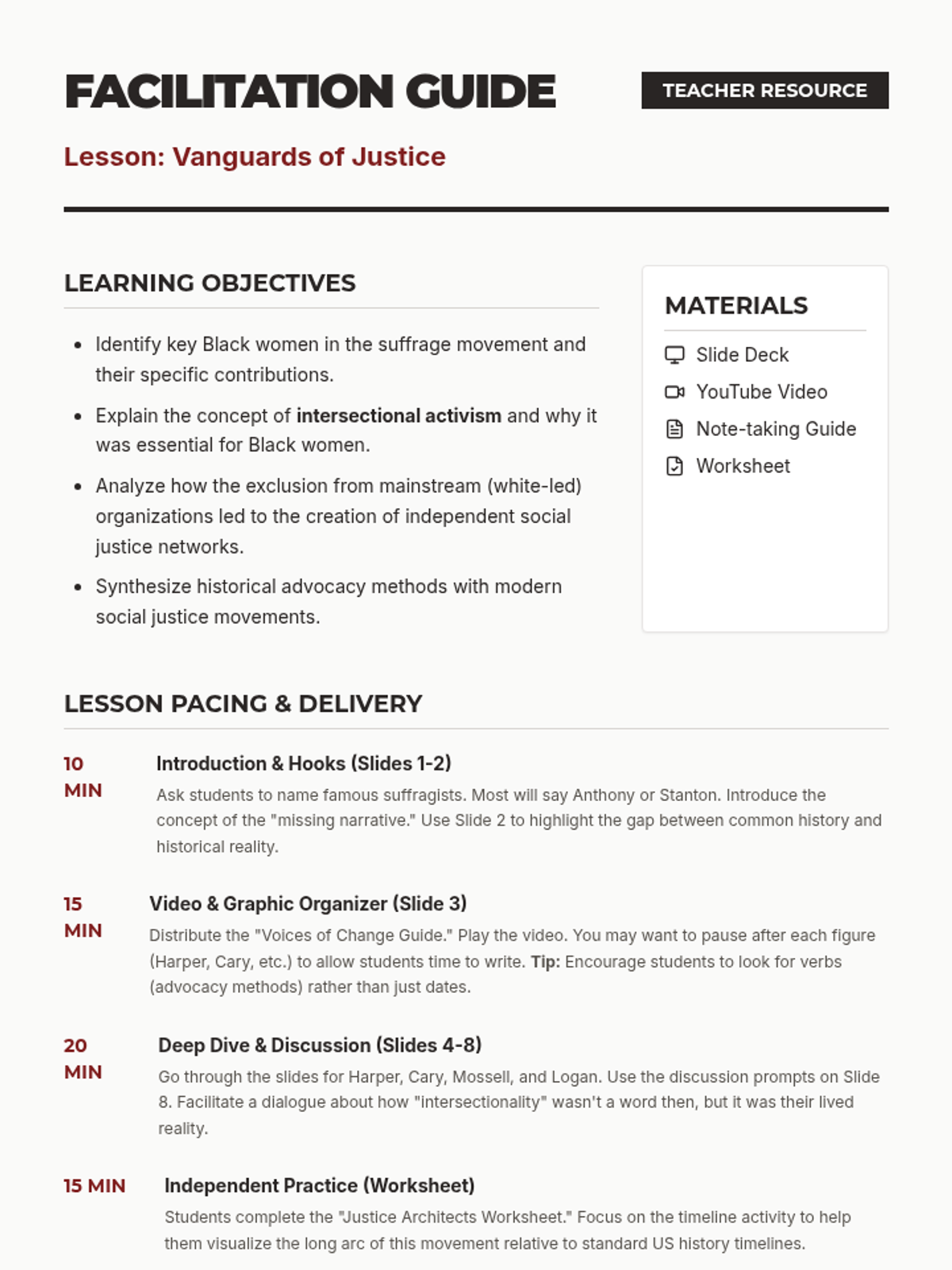
A series of lessons examining the hidden narratives of social justice movements and the diverse leaders who shaped American history through advocacy and resilience.
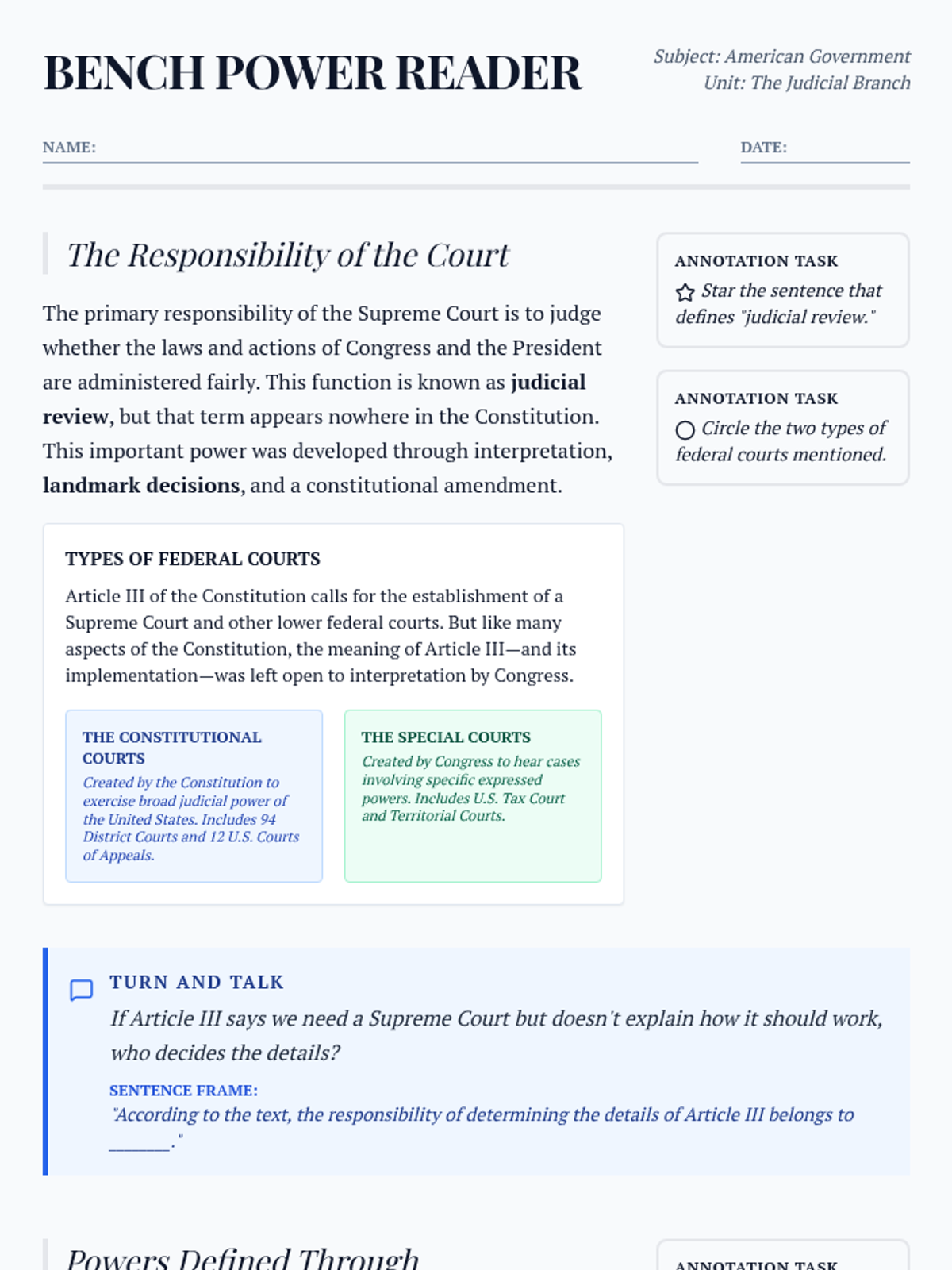
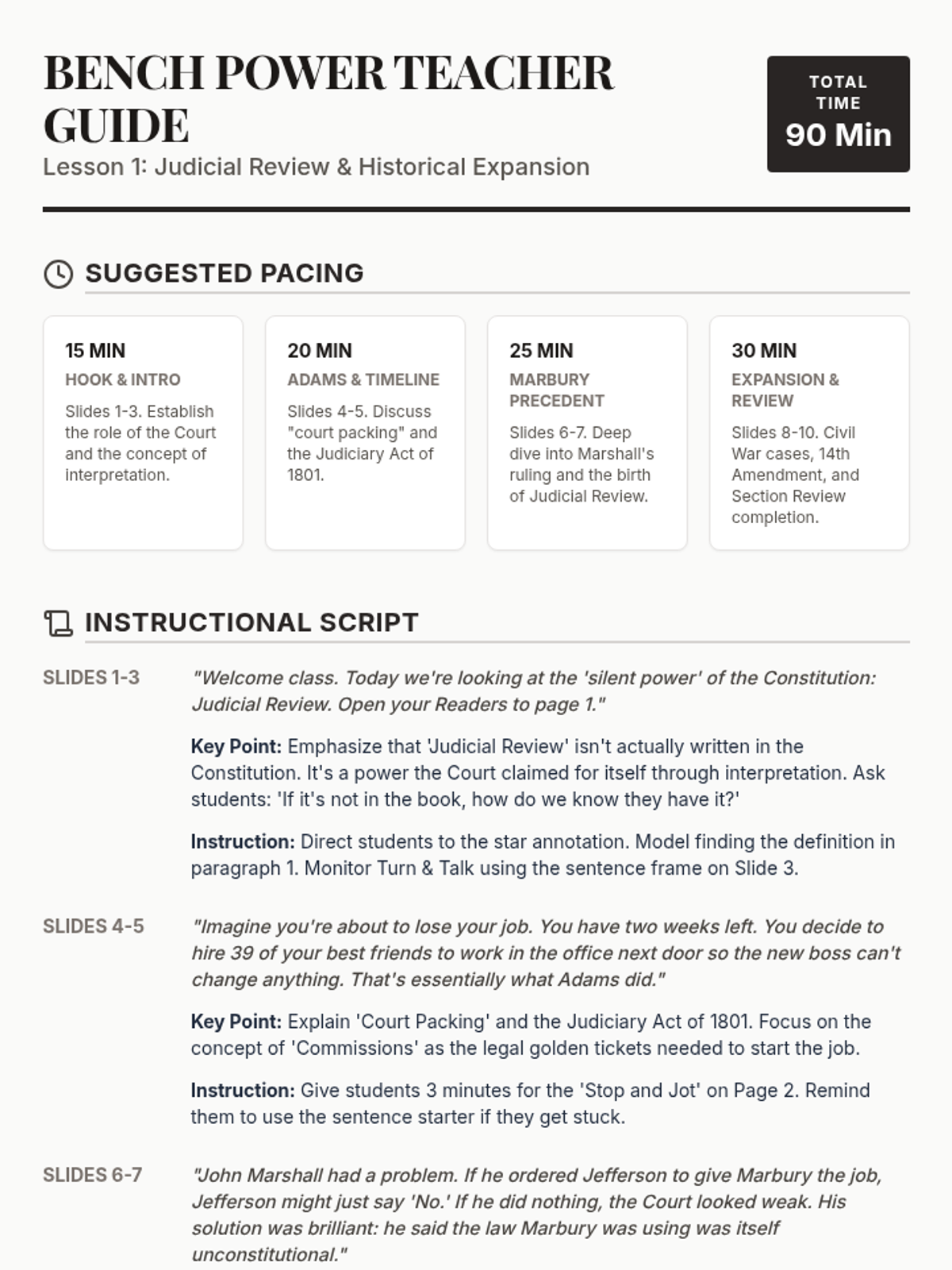
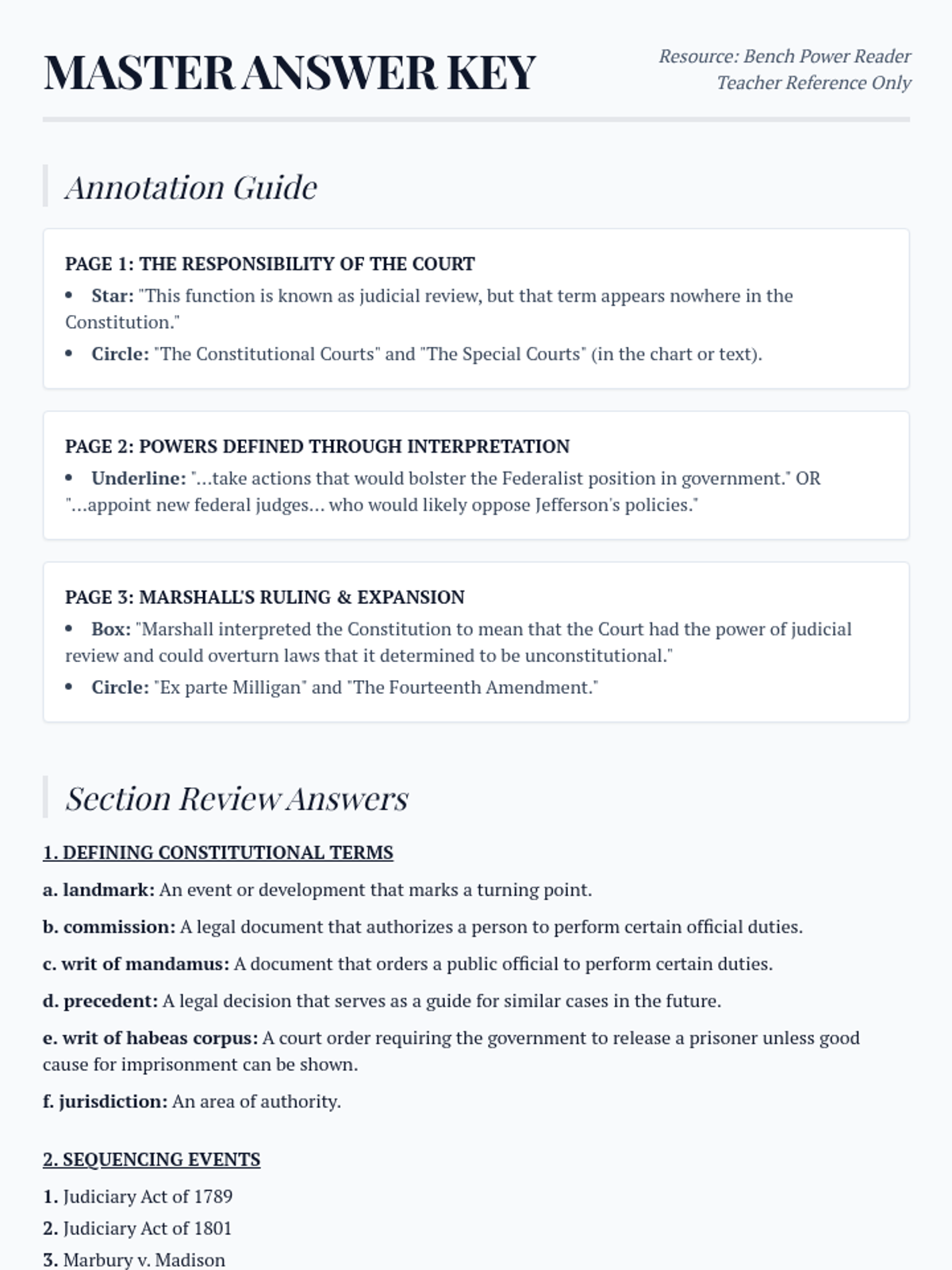
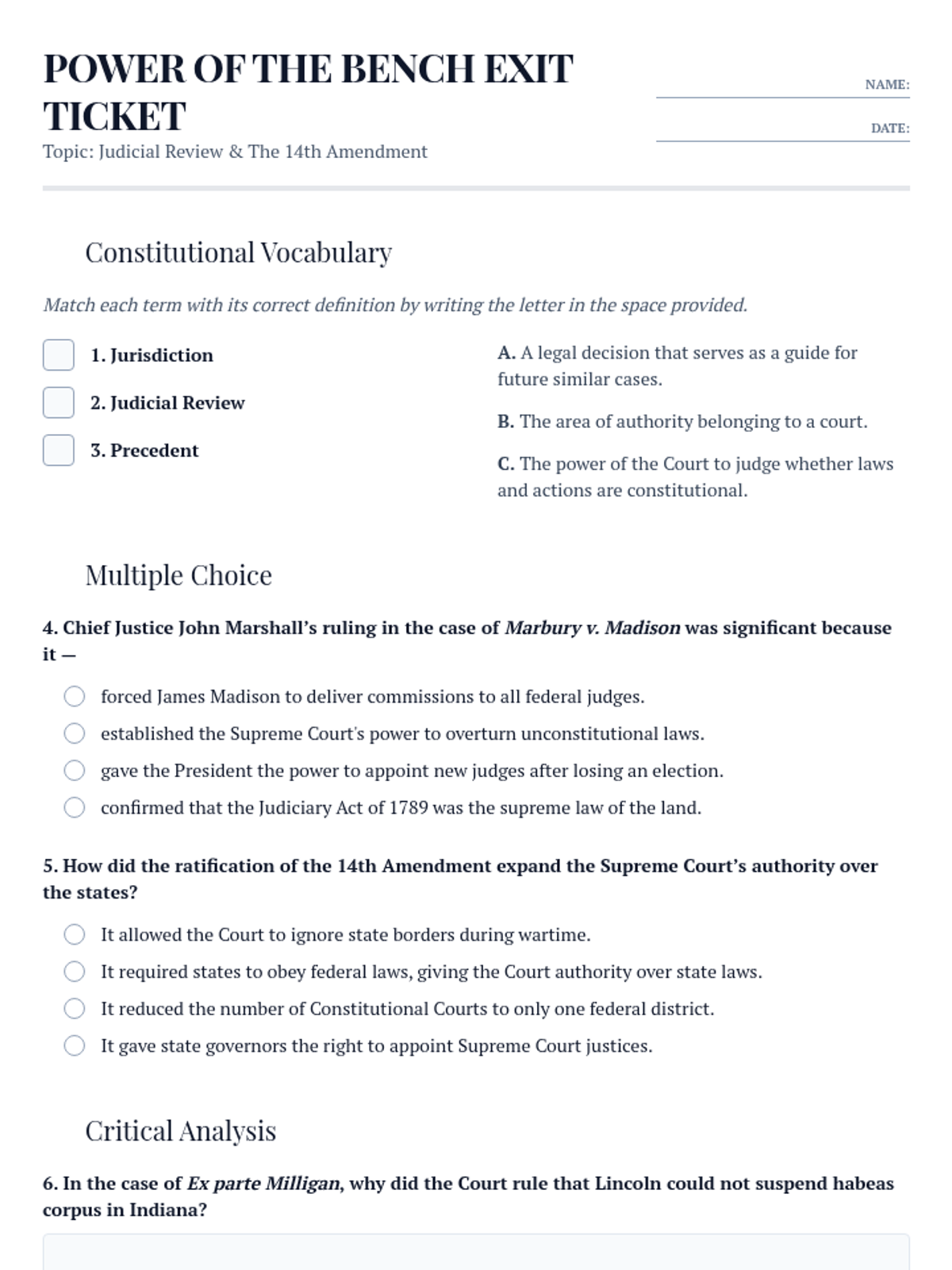
A comprehensive unit exploring the structure, functions, and historical evolution of the U.S. Judicial Branch, focusing on how the courts interpret the Constitution.