Examining foundational arguments from major thinkers alongside contemporary debates on morality, governance, and the nature of existence. Addresses core concepts like political structures, consciousness, and the conflict between agency and fate.
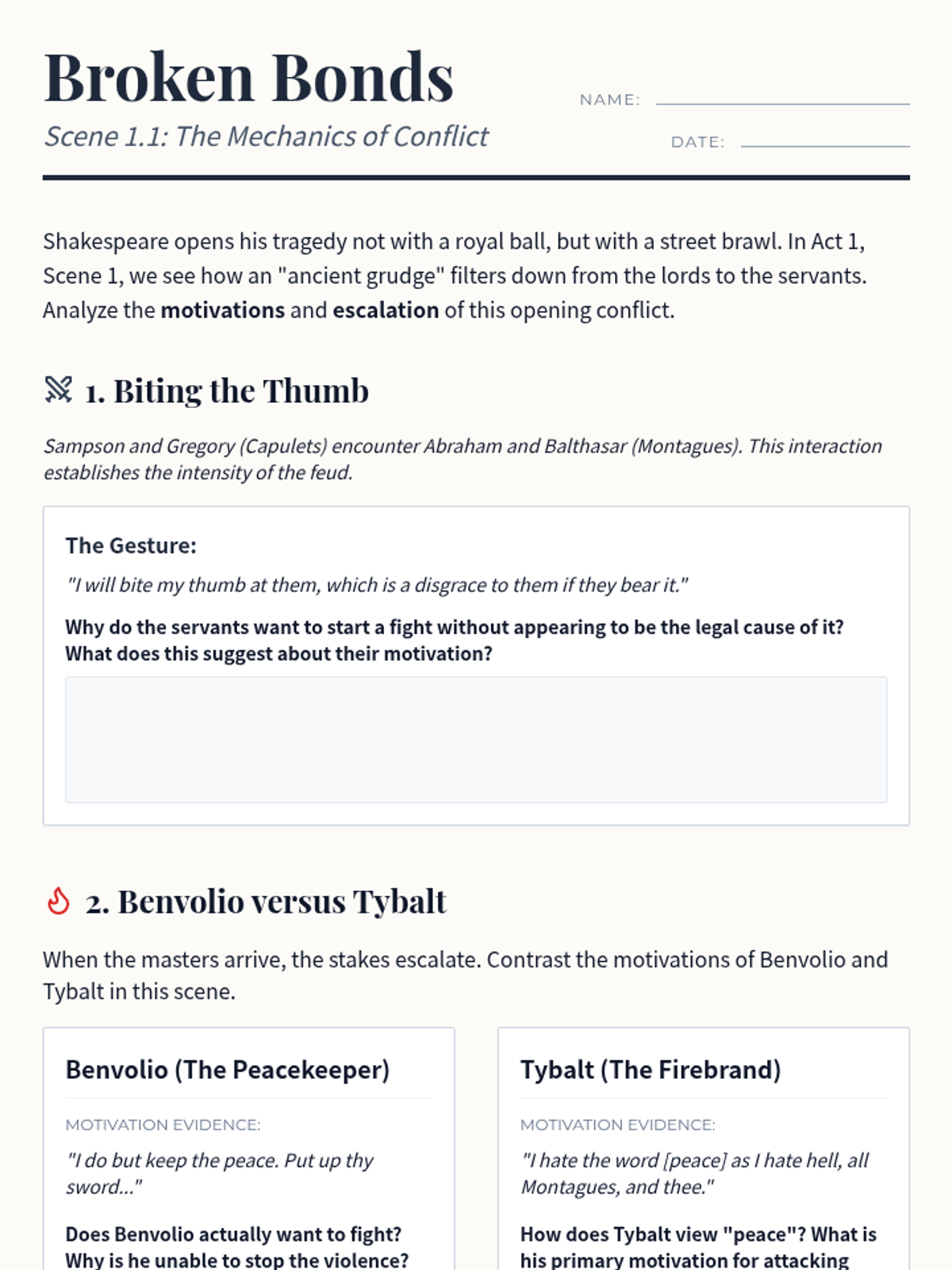
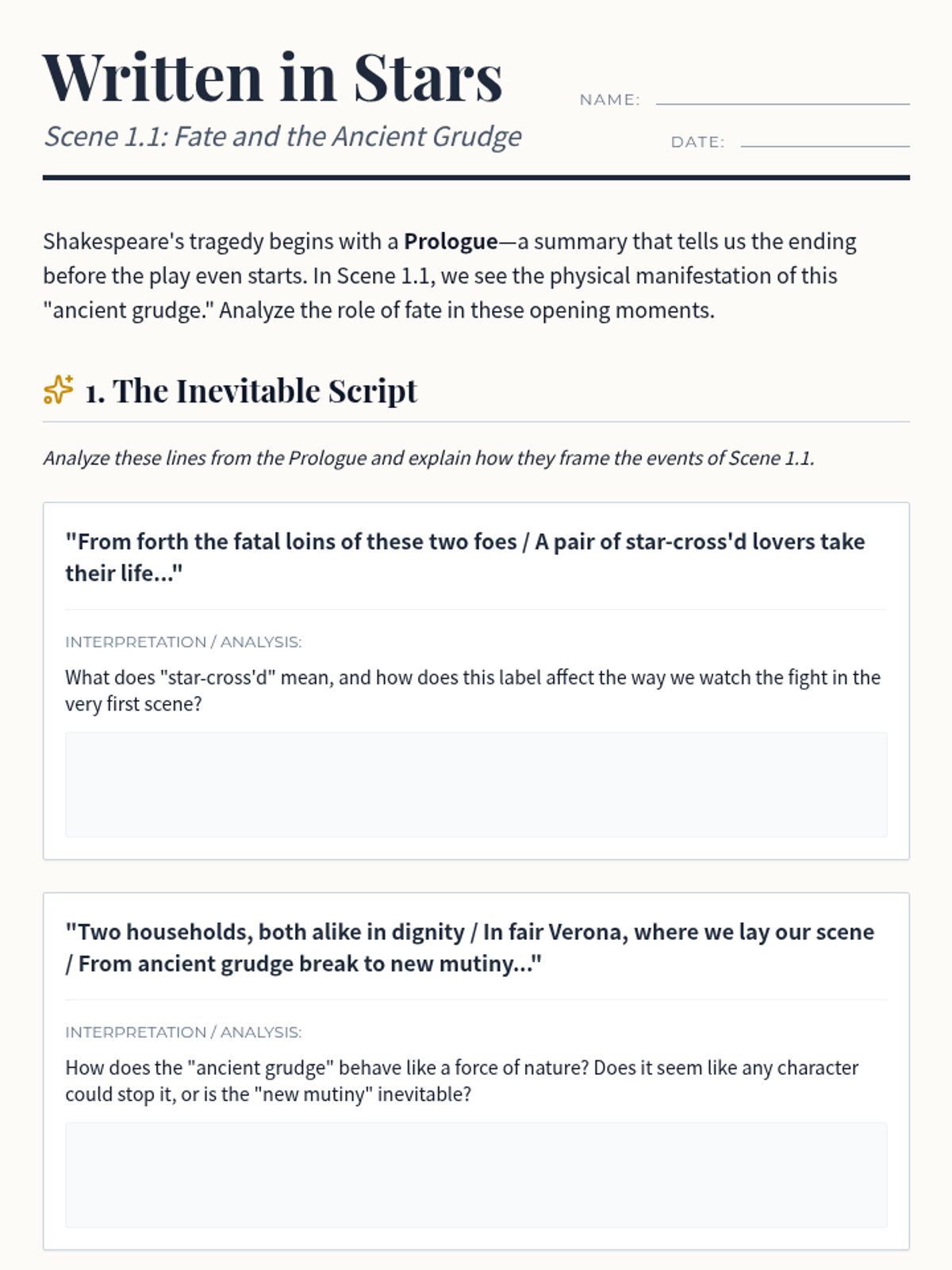
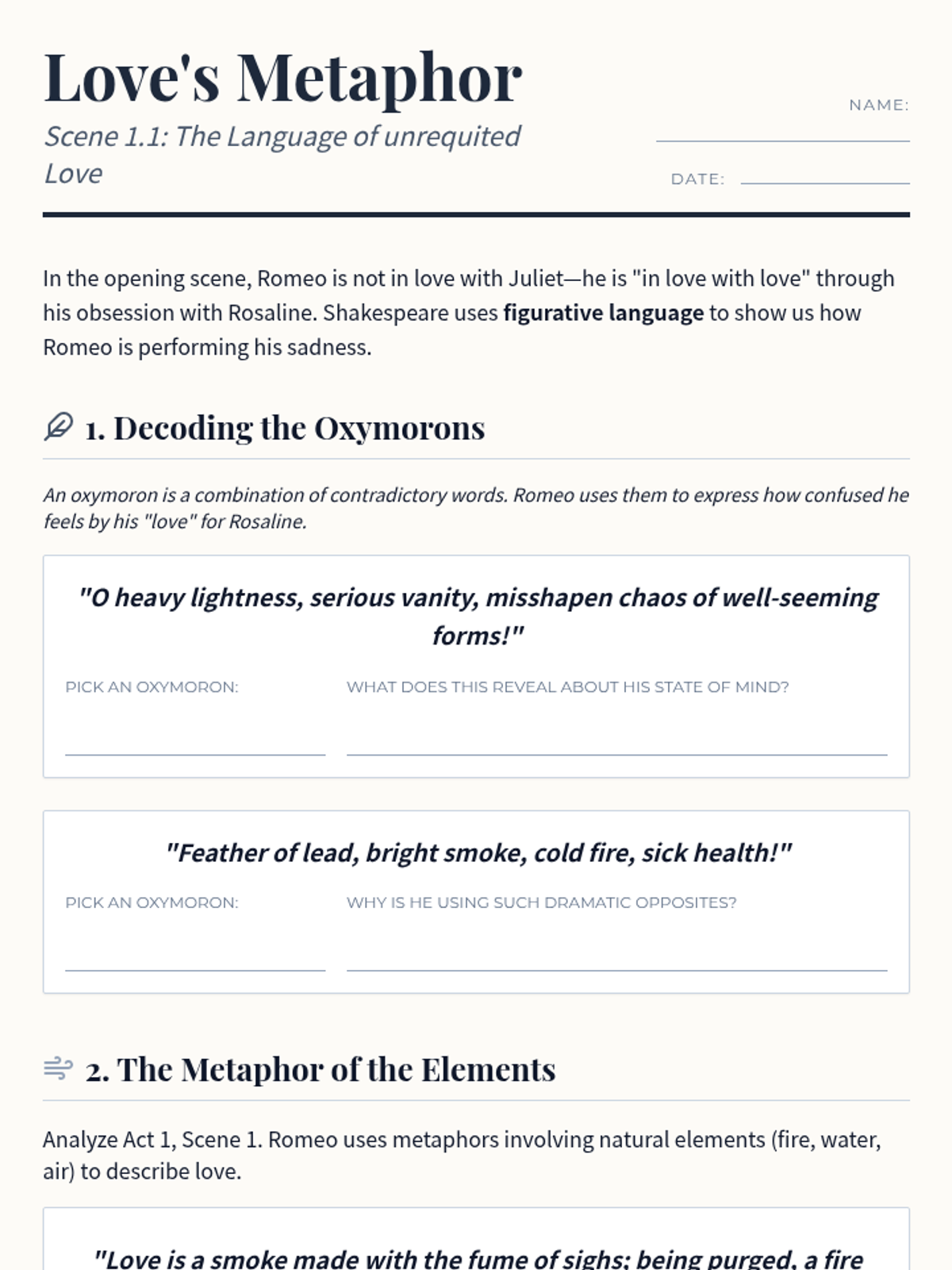
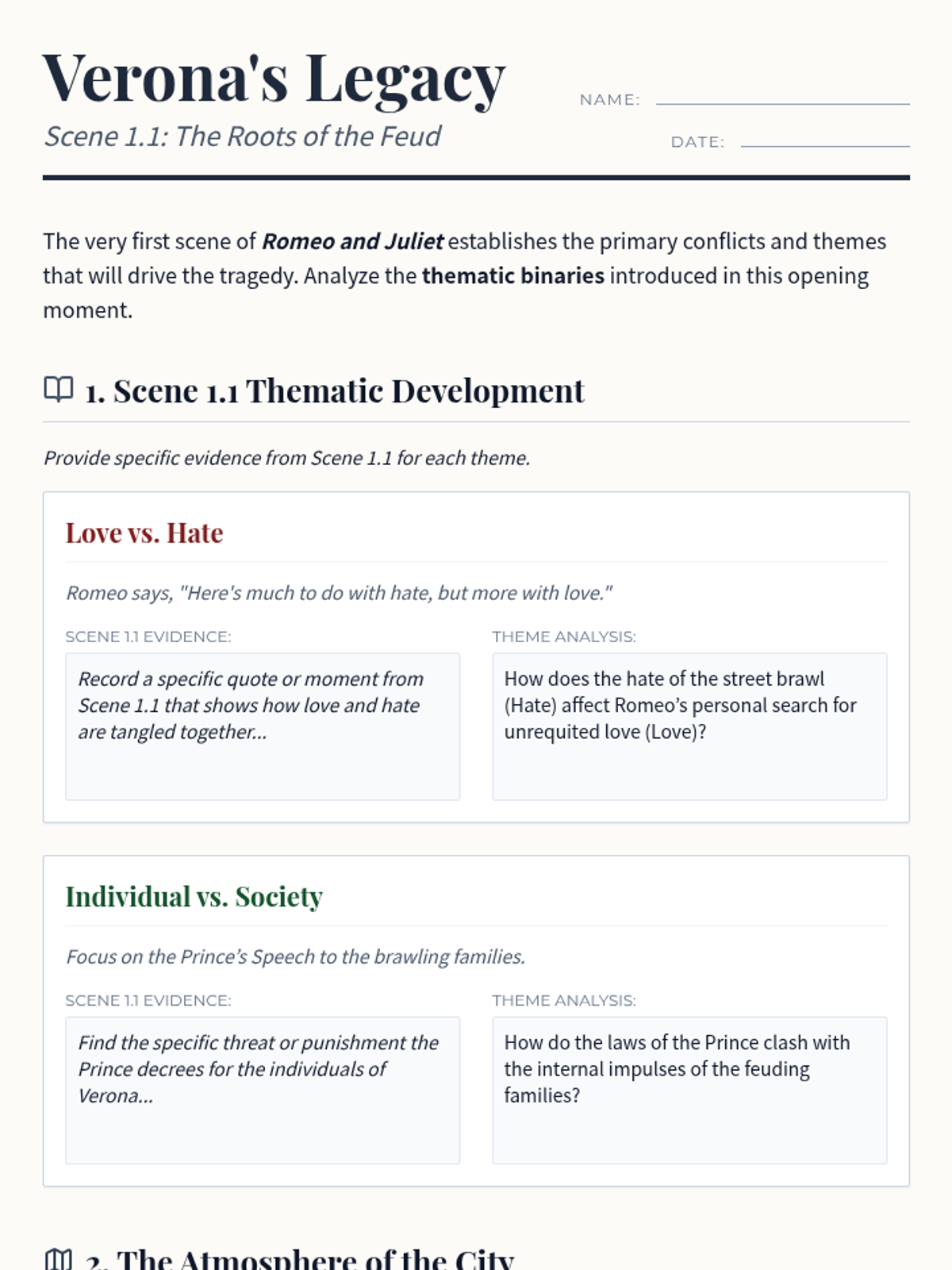
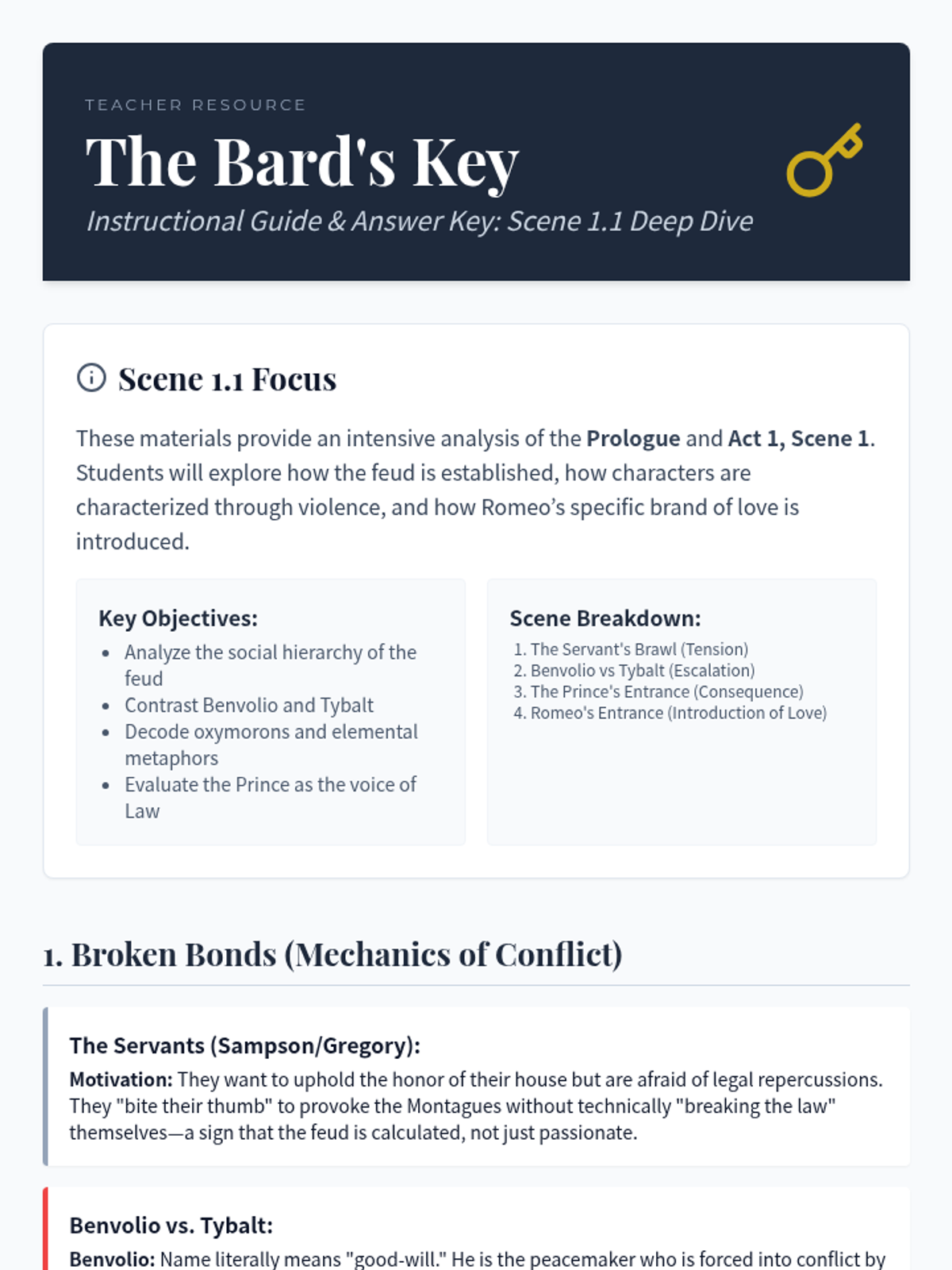
A comprehensive deep-dive into Shakespeare's Romeo and Juliet, focusing on Act 1. Students will analyze character dynamics, the tension between destiny and choice, and the rich poetic language of the play across individual scenes.
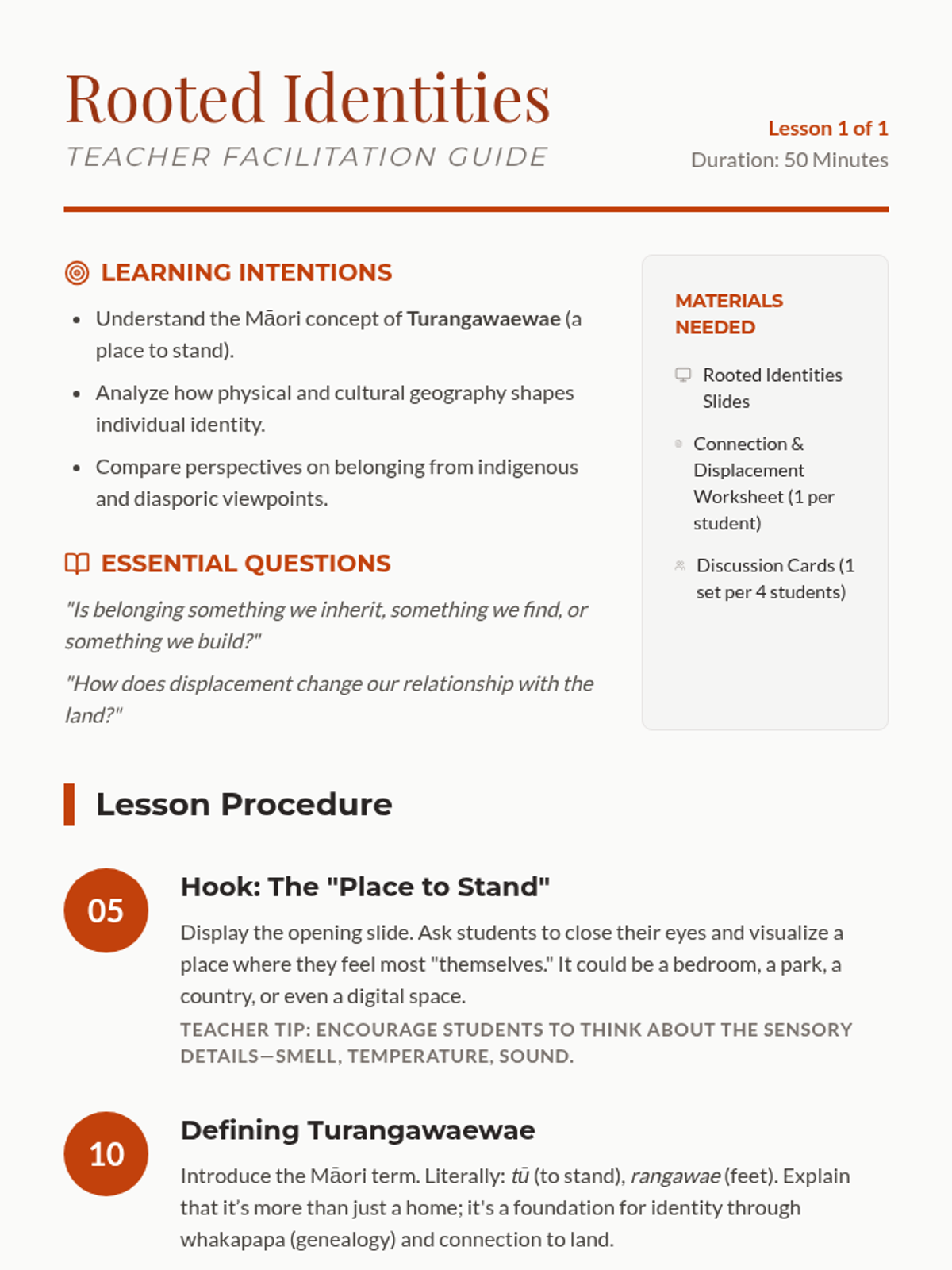
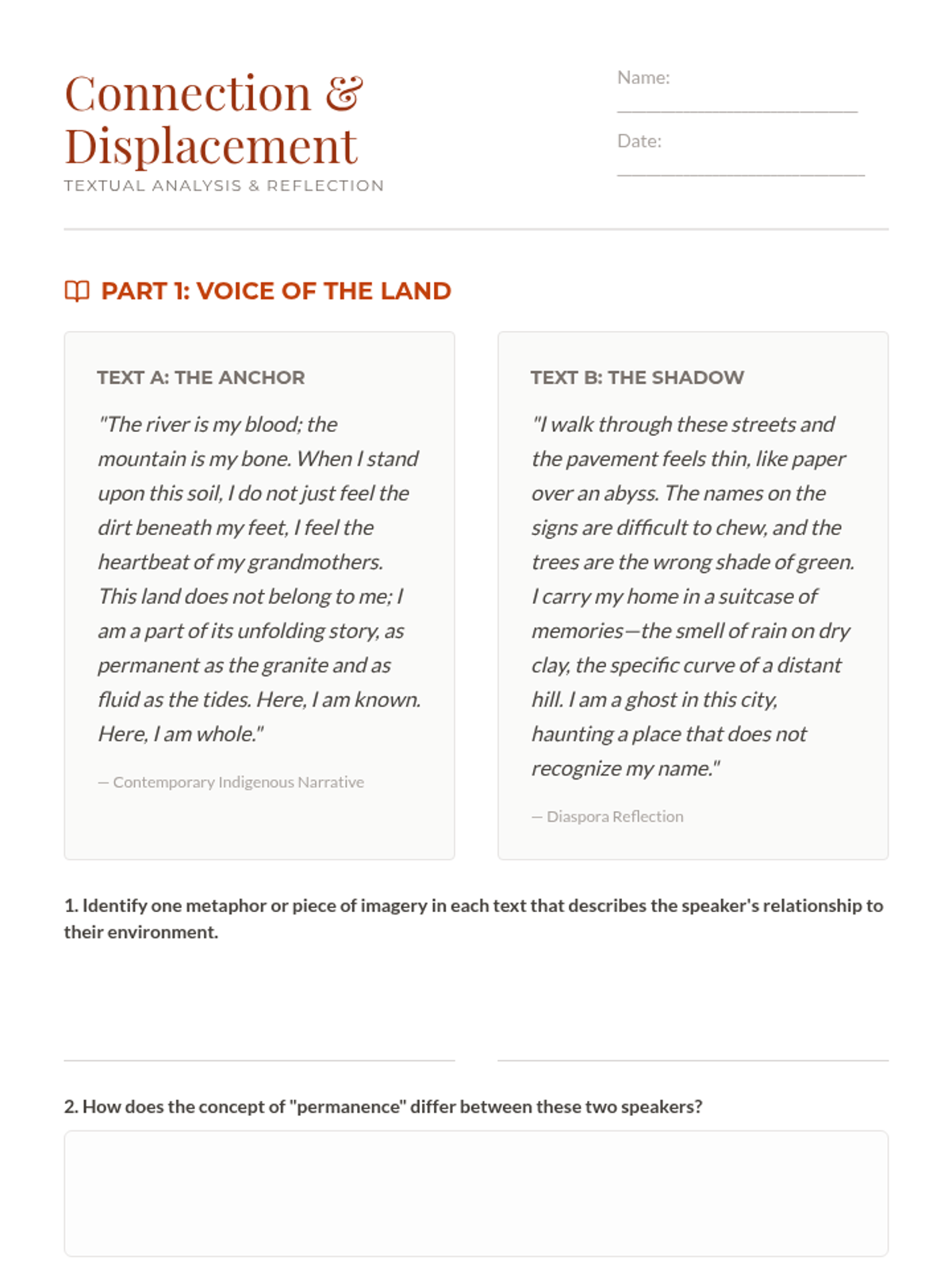
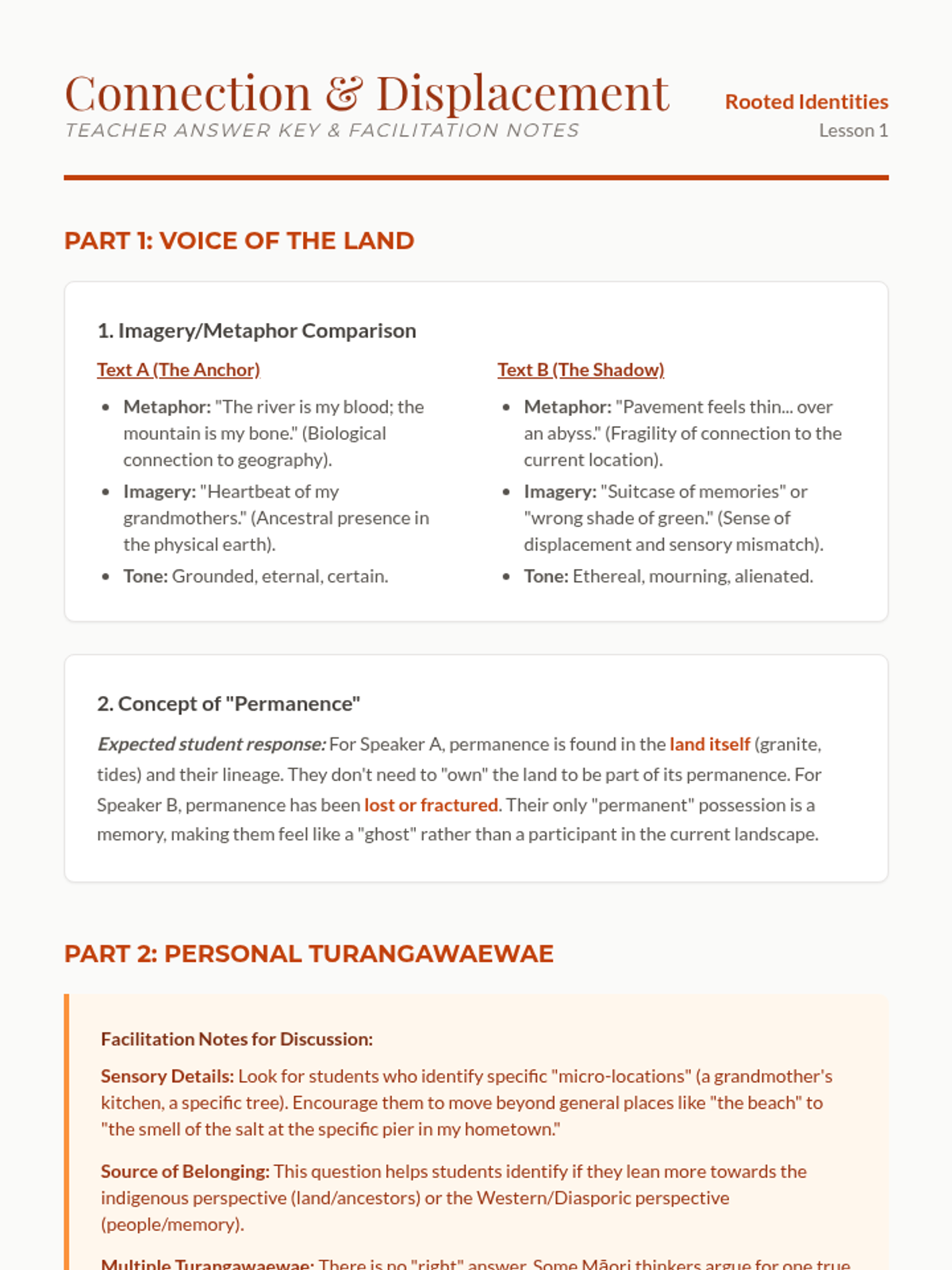
A deep dive into the Māori concept of Turangawaewae and global perspectives on belonging, identity, and the significance of land.
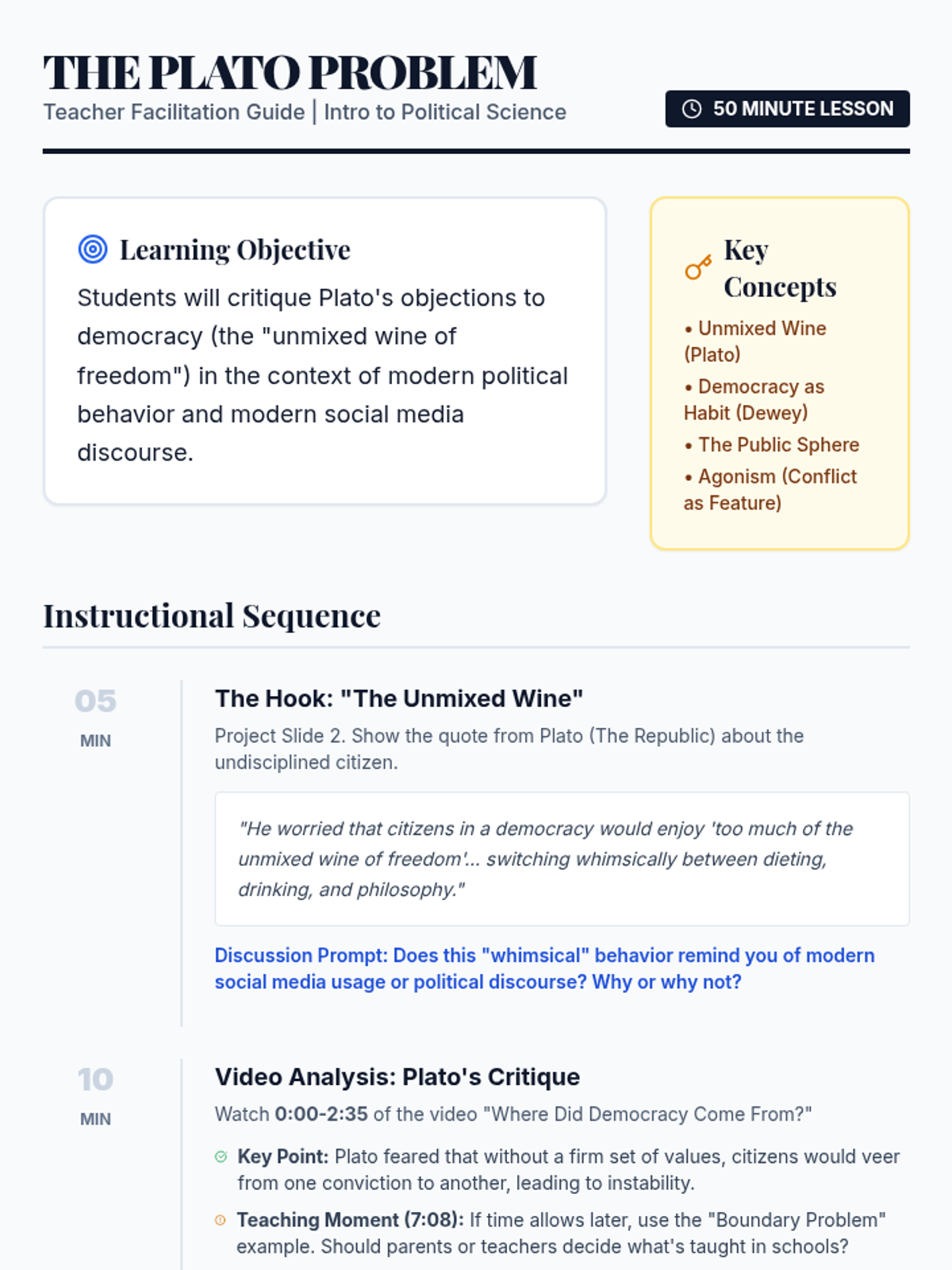
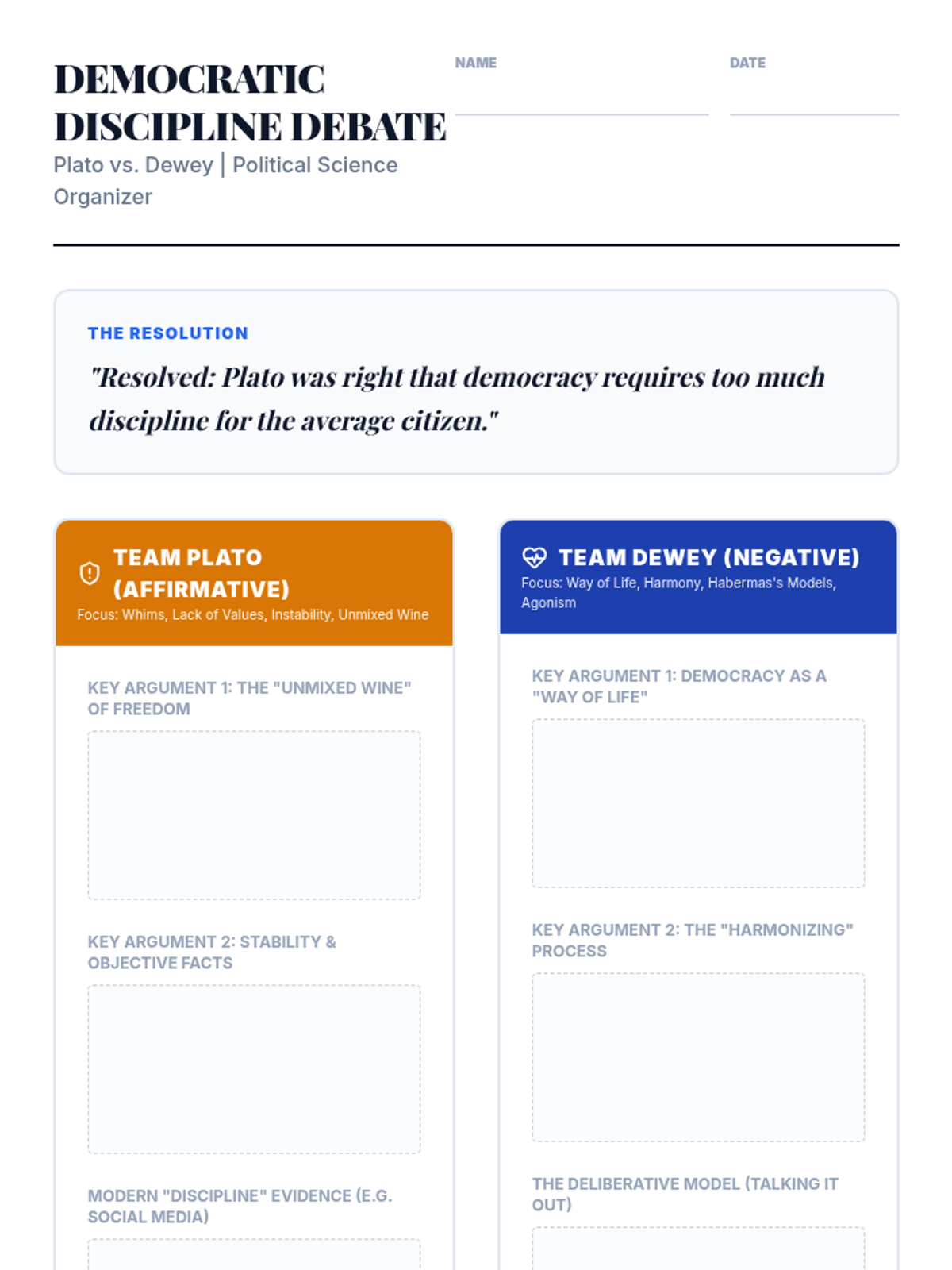
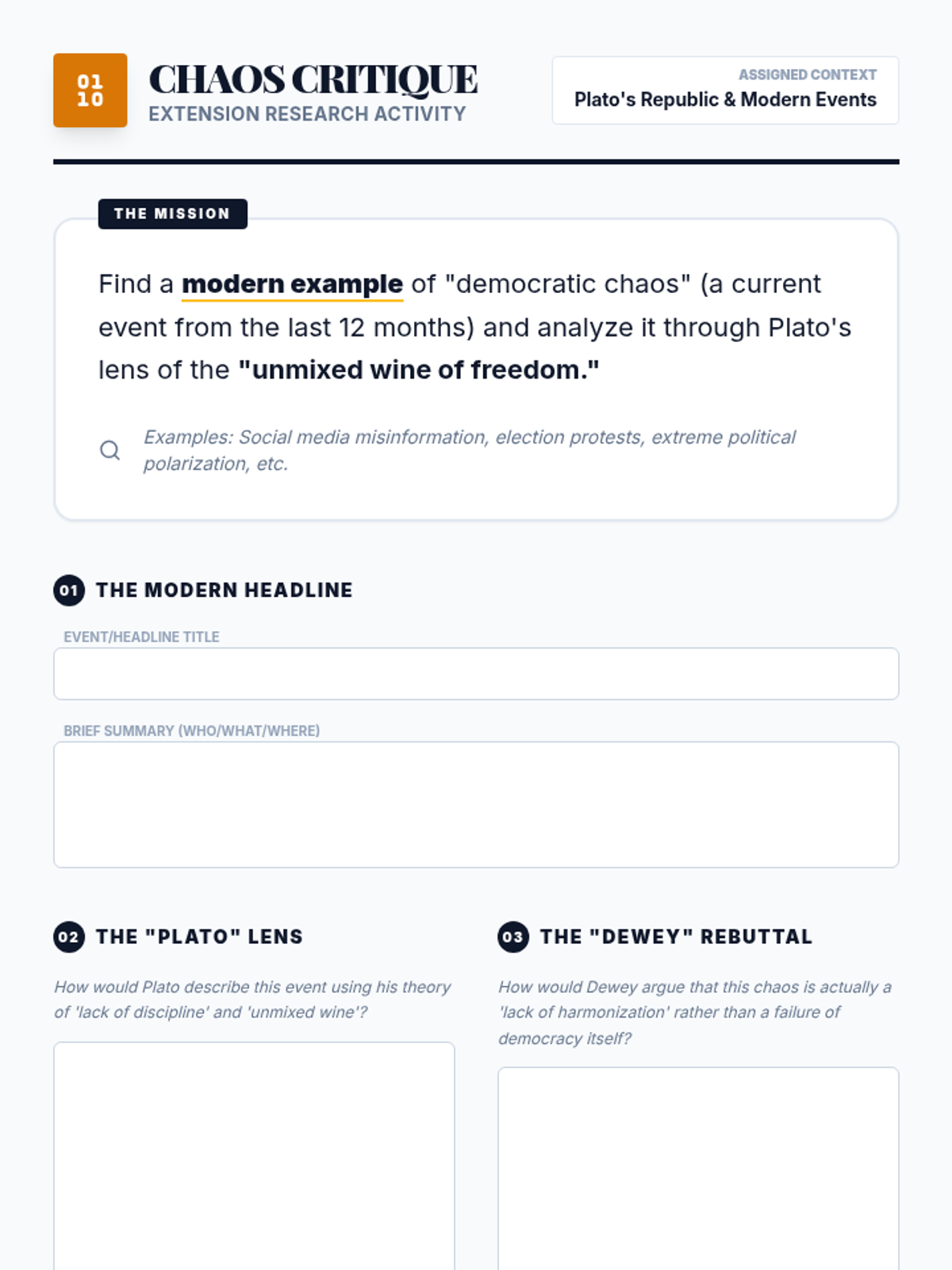
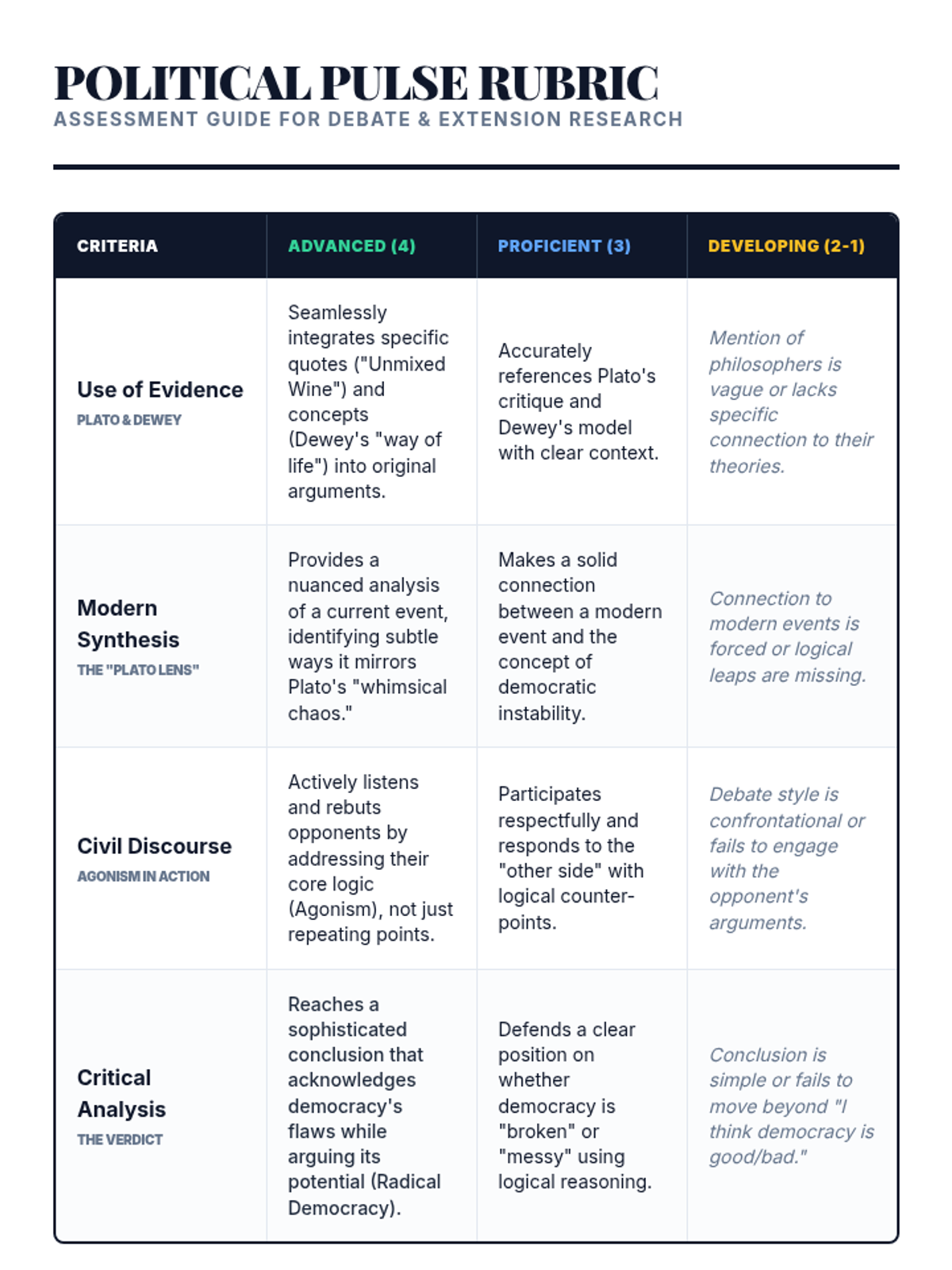
A deep dive into the tensions between classical philosophy and modern democratic practice, focusing on Plato's critiques and contemporary responses.
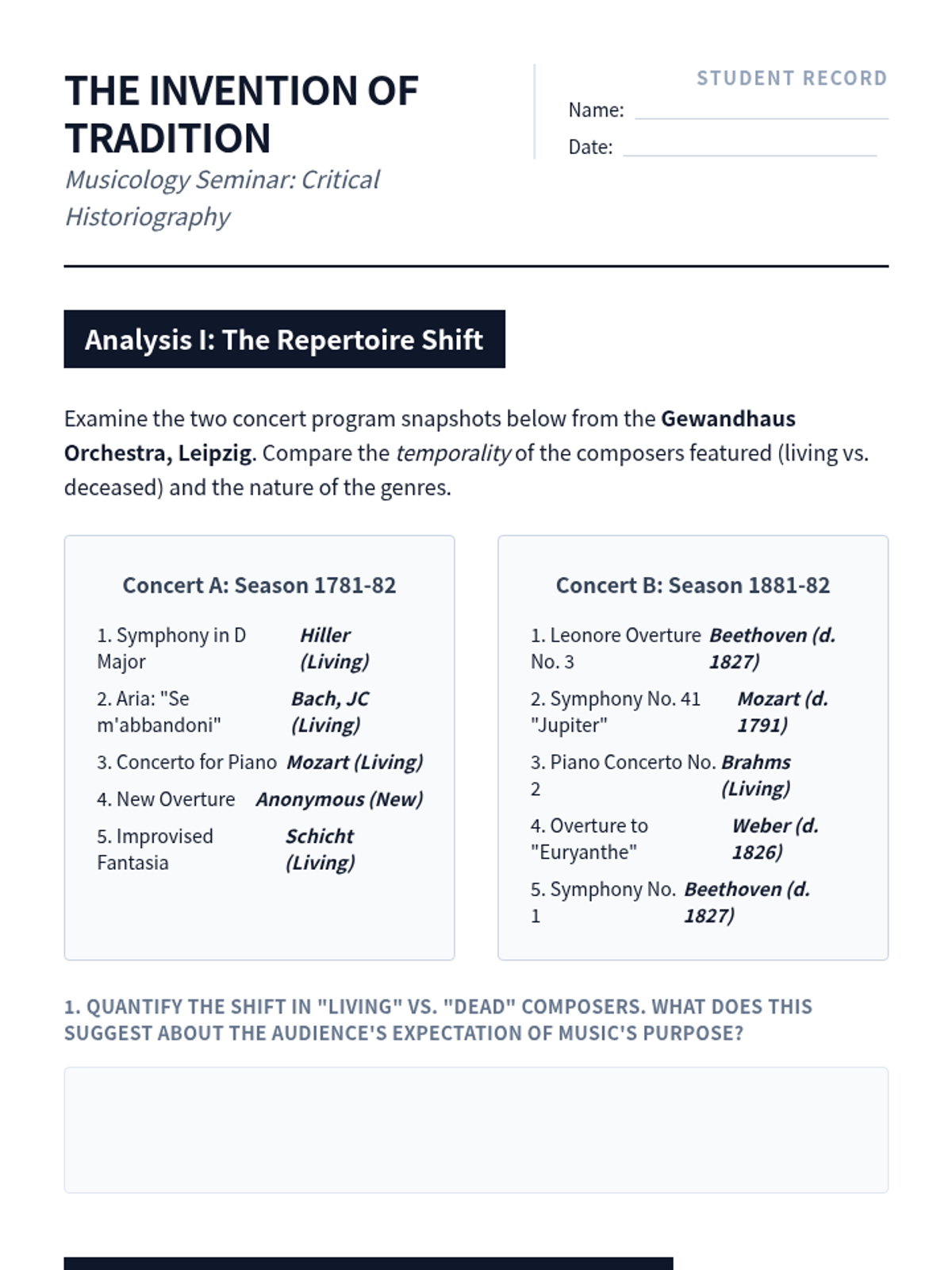
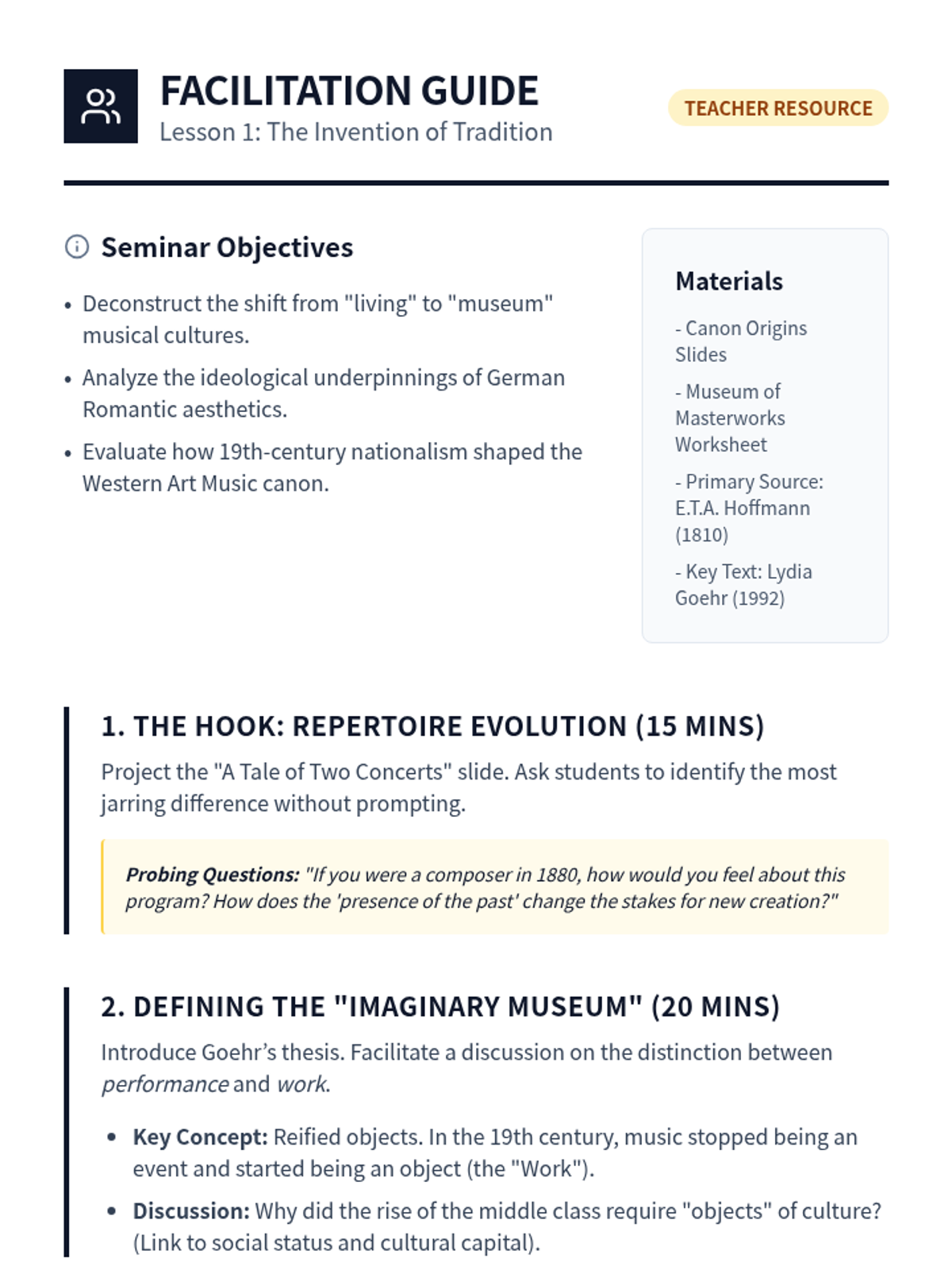
An advanced graduate seminar sequence exploring the social, political, and ideological forces that shape Western Art Music history. Students move from deconstructing 19th-century canon-building to proposing new, inclusive curricular frameworks.
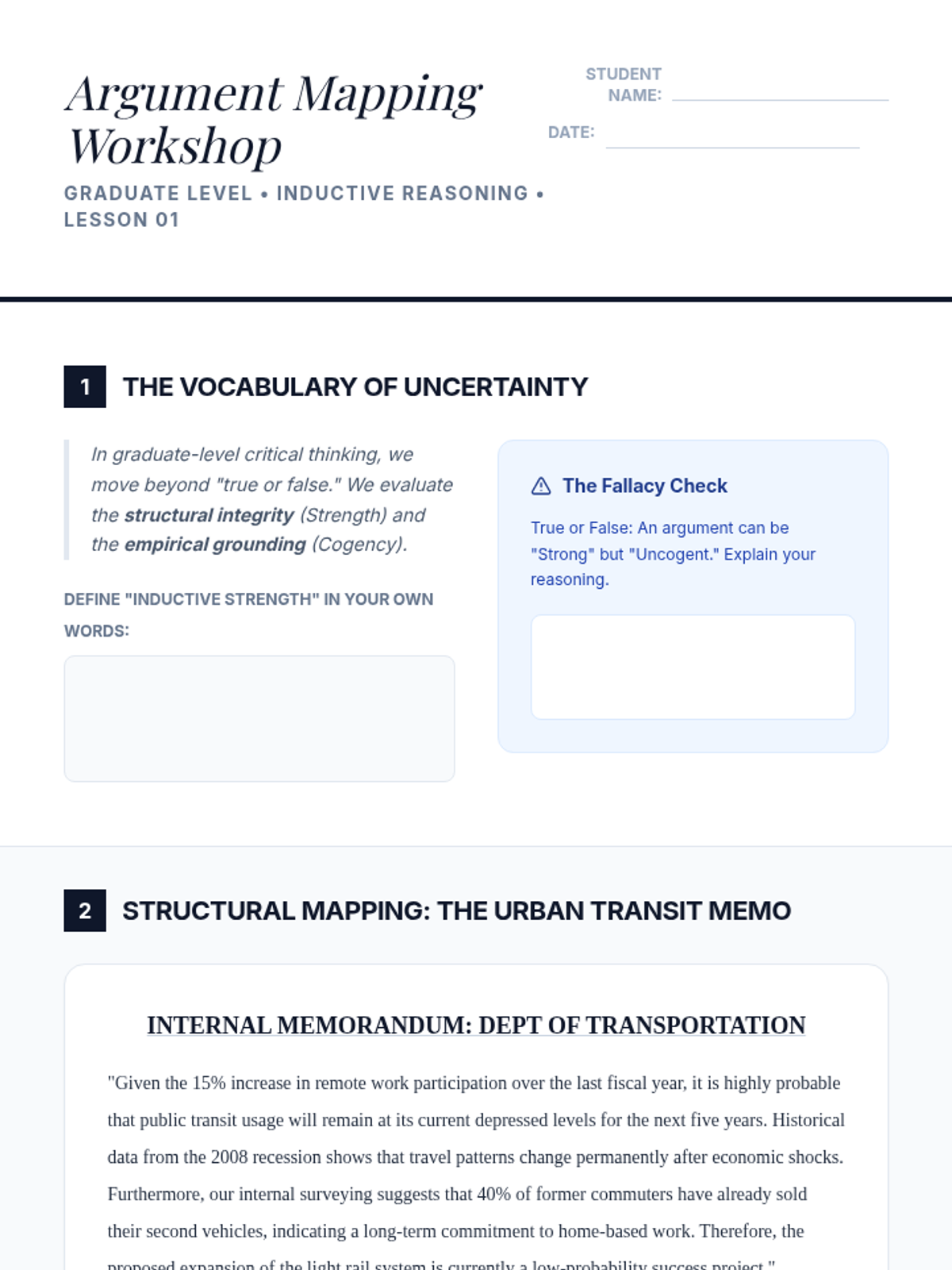
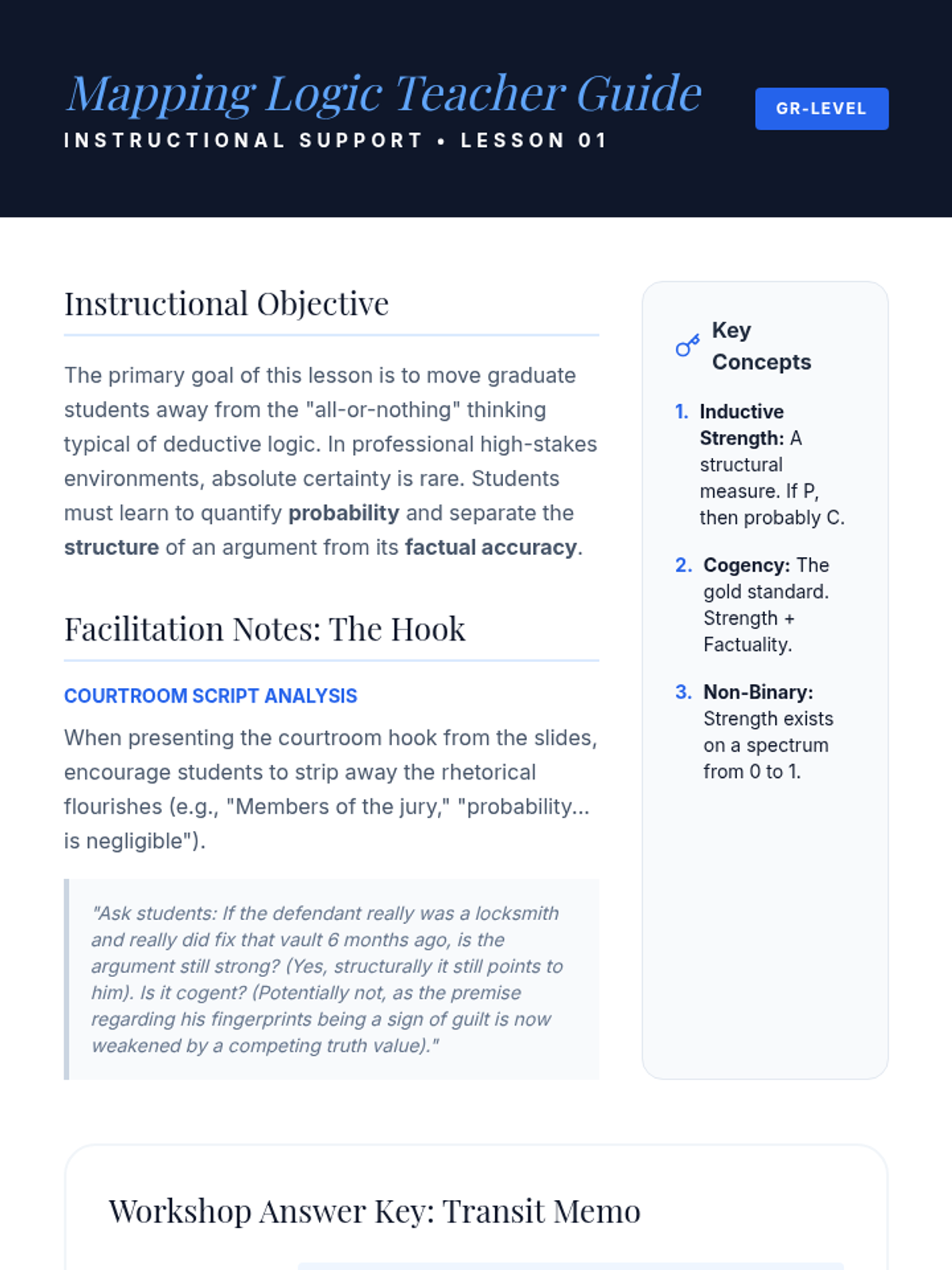
A graduate-level exploration of inductive logic, analogical reasoning, and causal inference within professional contexts like law and policy. Students learn to evaluate the cogency of probabilistic arguments and apply Mill's Methods to complex, real-world data scenarios.
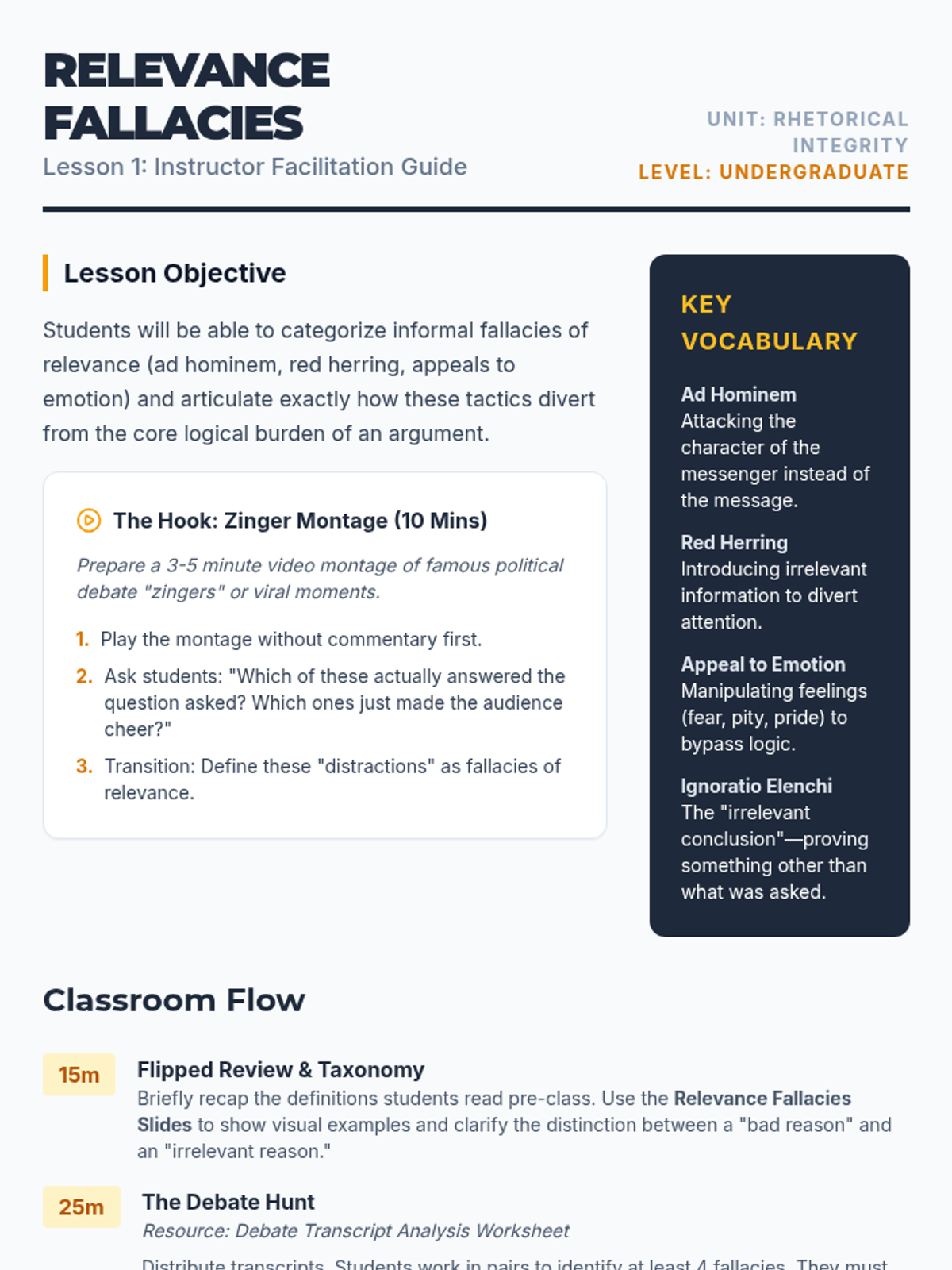
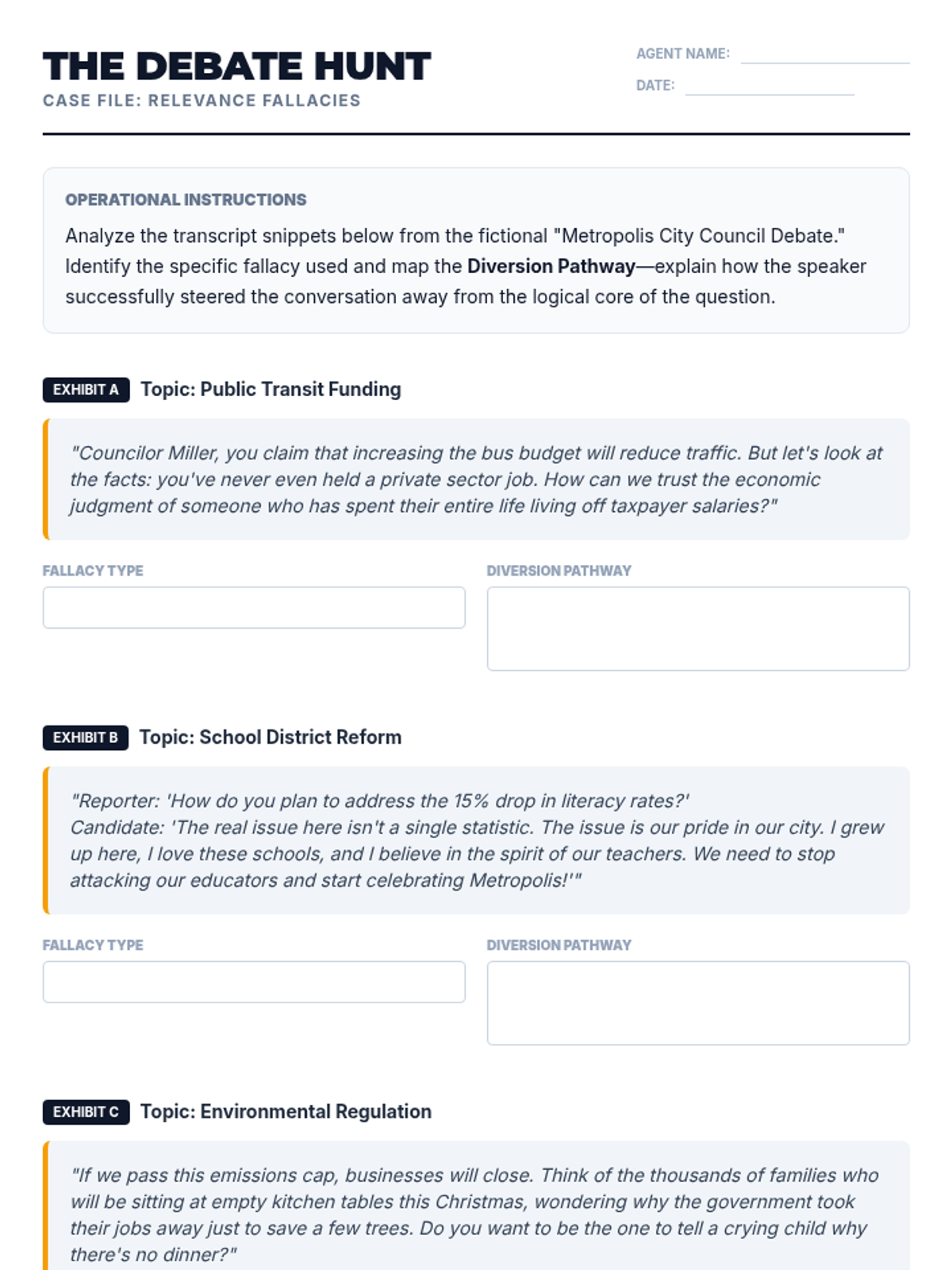
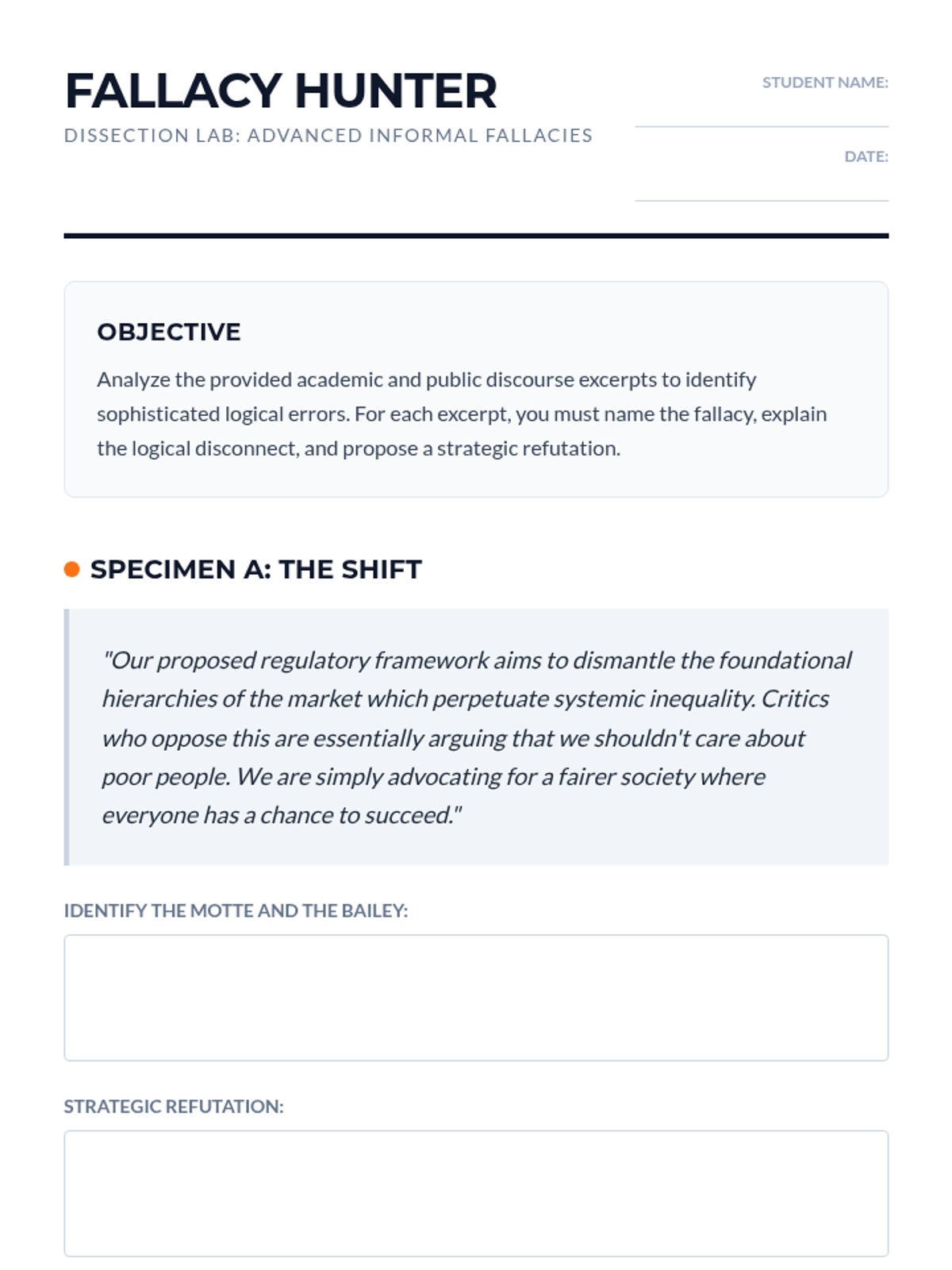
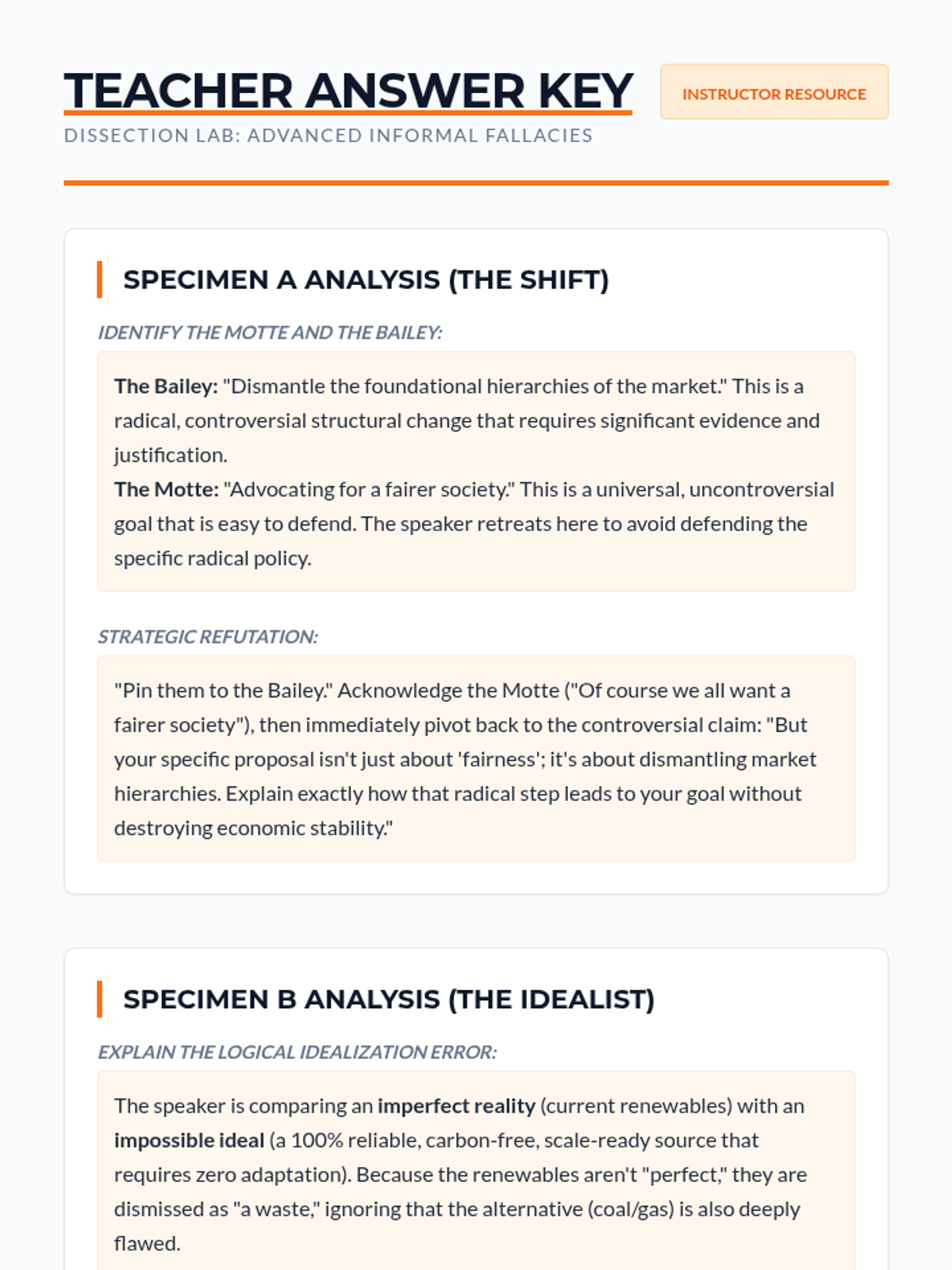
A comprehensive unit for undergraduate students on identifying and deconstructing logical fallacies and cognitive biases in public discourse. Students develop the critical thinking skills necessary to evaluate the integrity of arguments in politics, media, and everyday life.
A graduate-level sequence merging rhetorical theory with cognitive science to enhance rebuttal and refutation skills. Students explore cognitive biases and advanced refutation techniques like pre-bunking and turnarounds to dismantle sophisticated arguments.
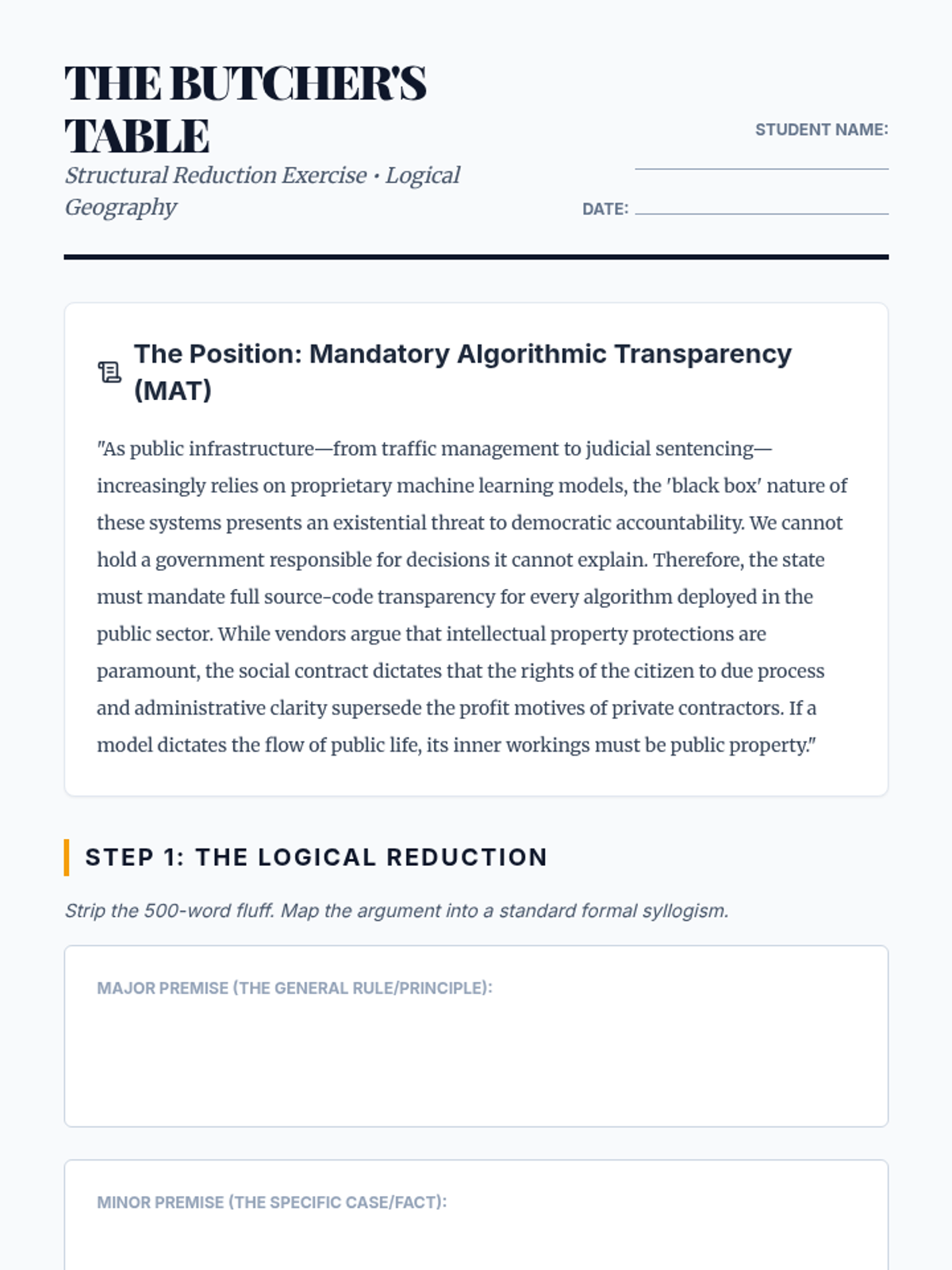
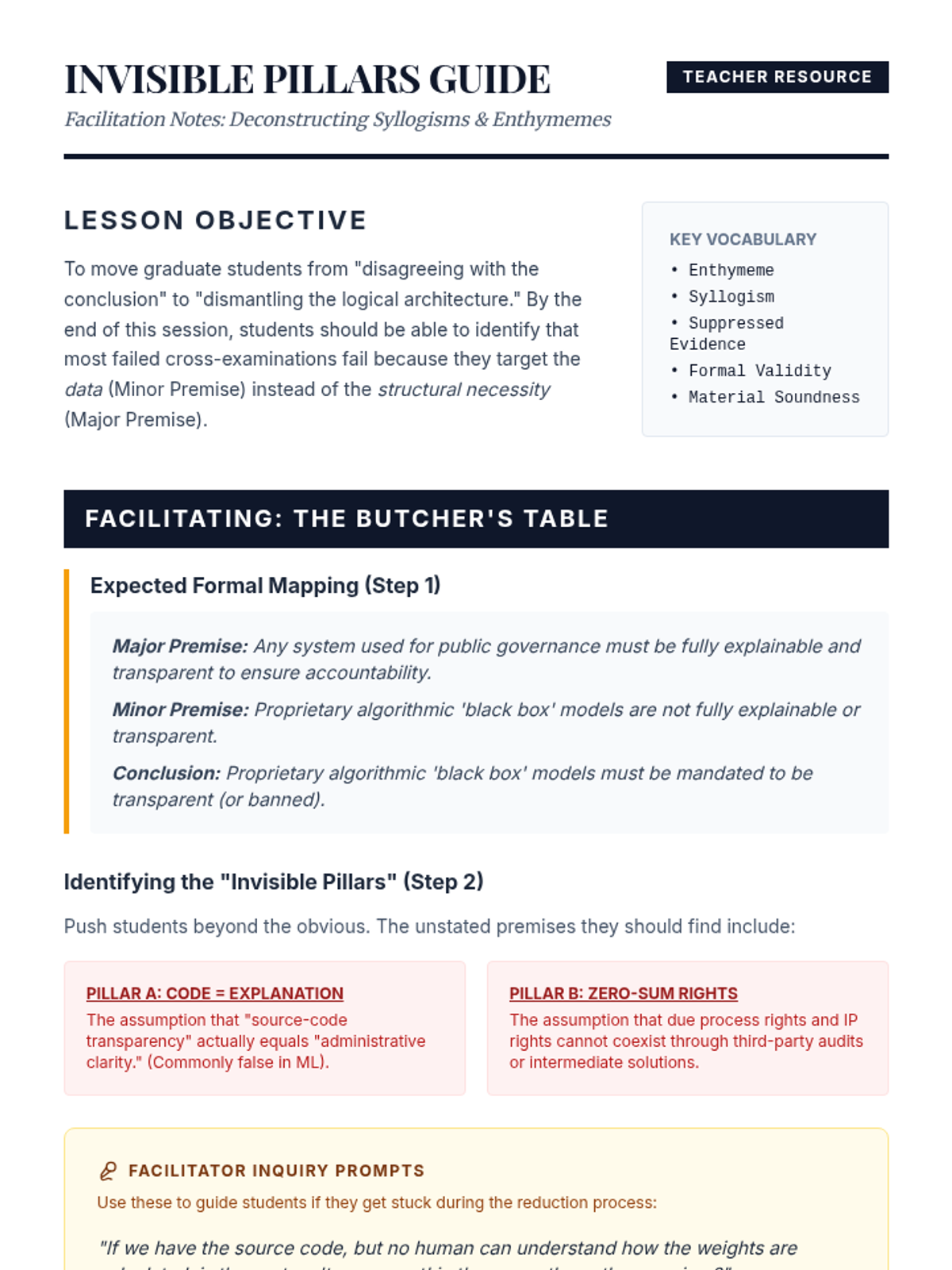
A graduate-level sequence focused on dismantling complex arguments using Socratic inquiry, logical mapping, and epistemic questioning. Students progress from theoretical analysis of syllogisms to real-time cross-examination in high-pressure academic settings.
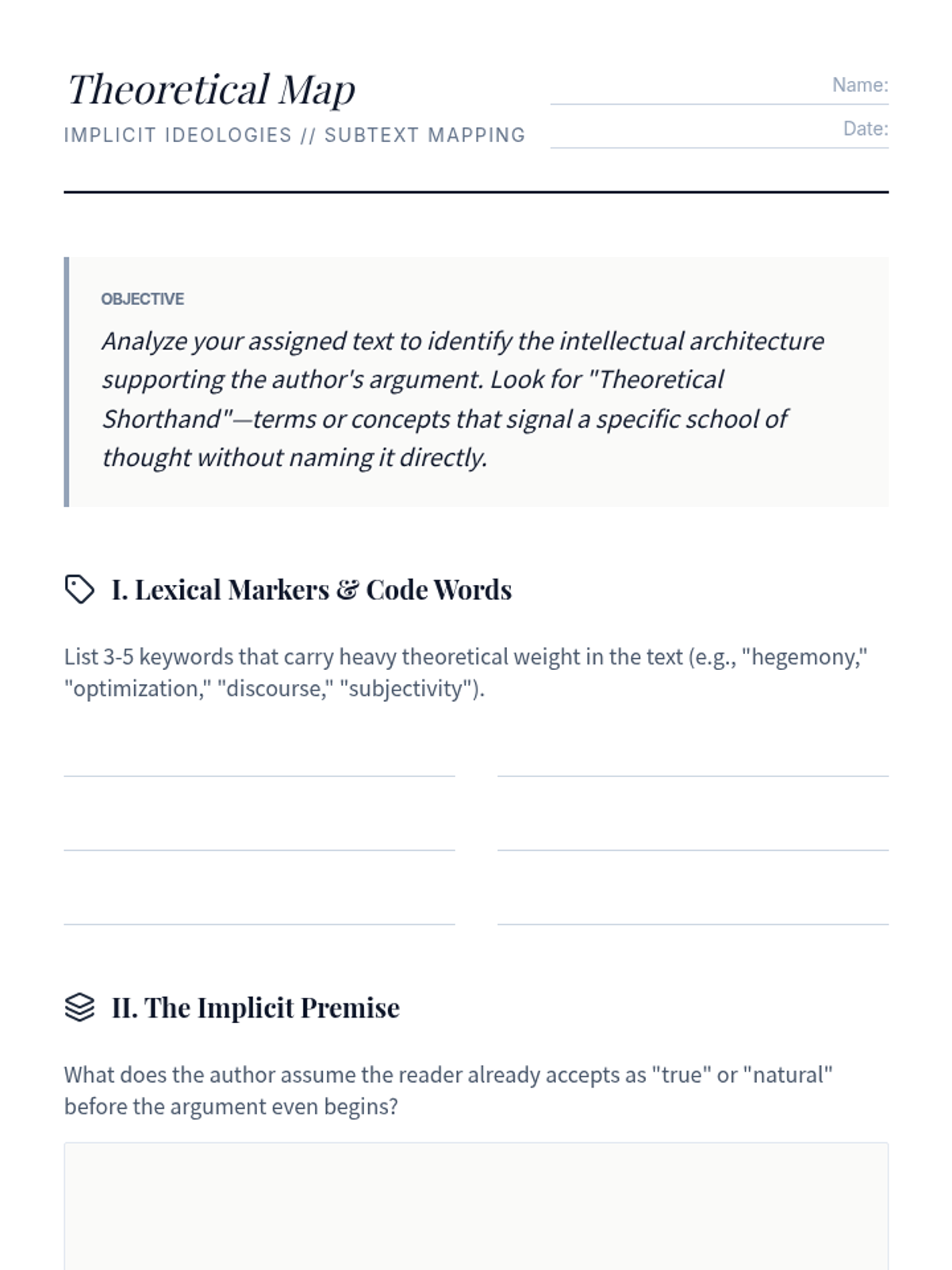
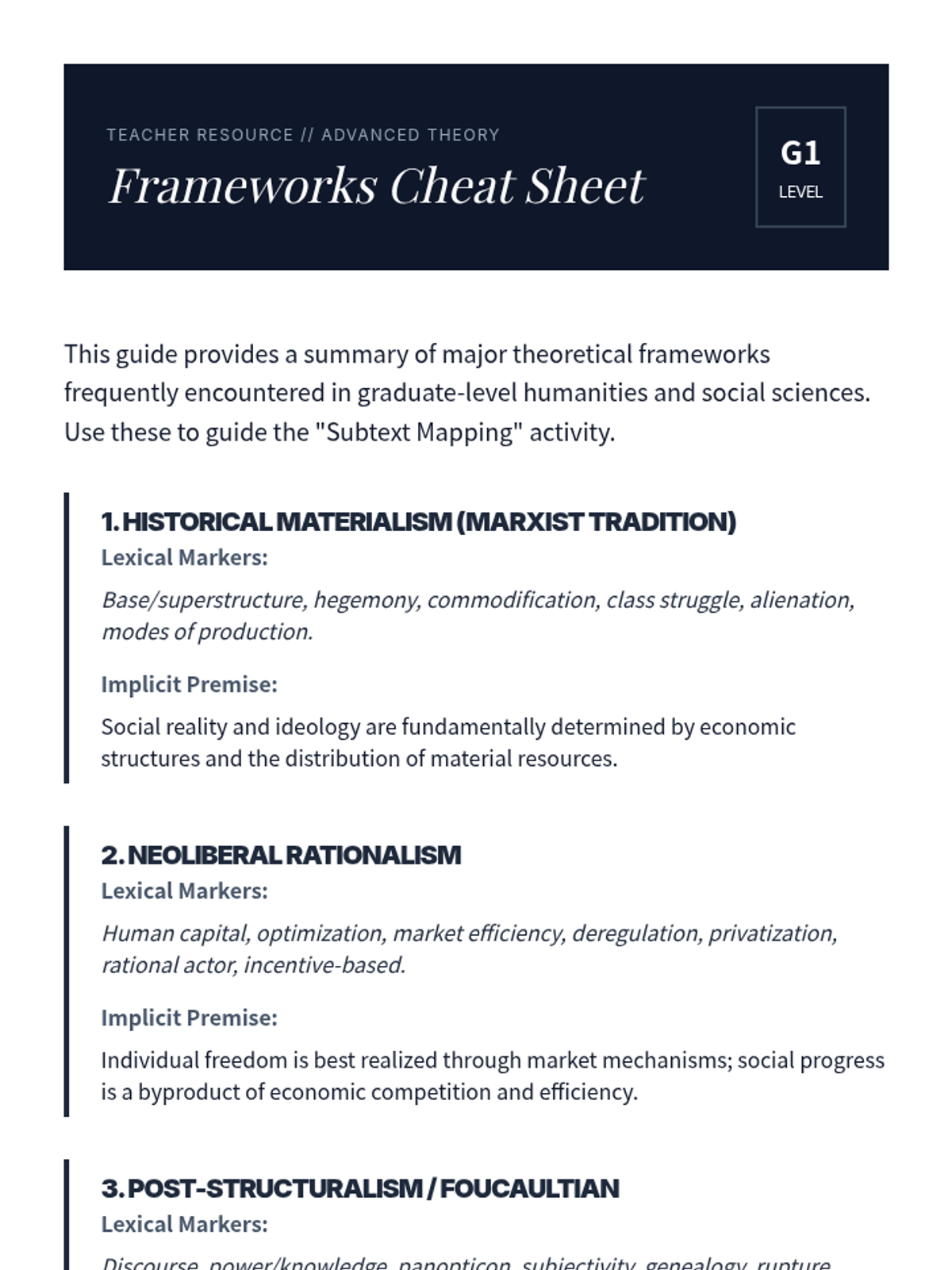
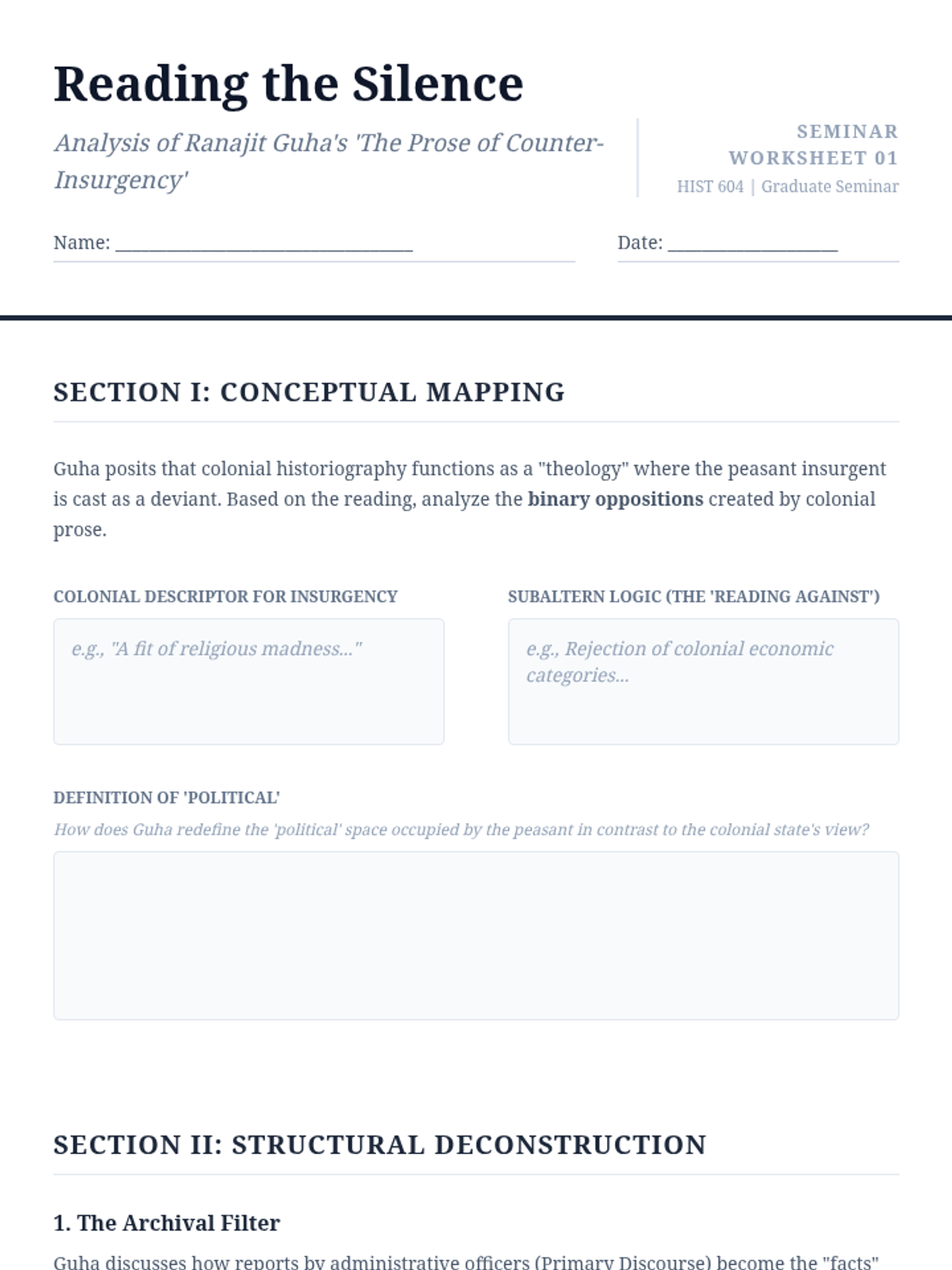
This advanced graduate-level sequence focuses on the deconstruction of implicit ideologies, theoretical underpinnings, and rhetorical silences in complex academic and historical texts. Students move from identifying hidden frameworks to evaluating disciplinary interpretations and defending their own critical stances in a hermeneutic seminar.
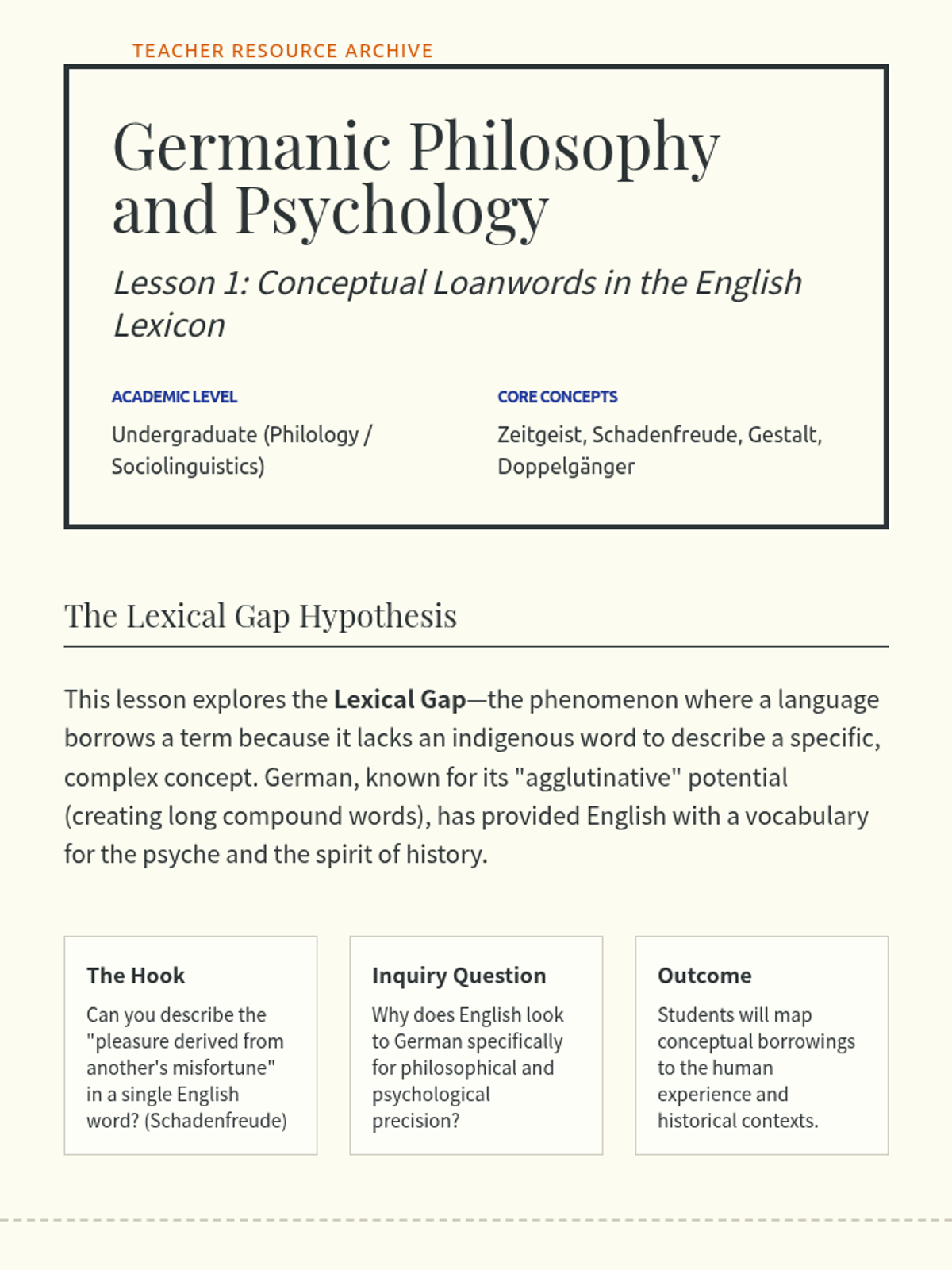
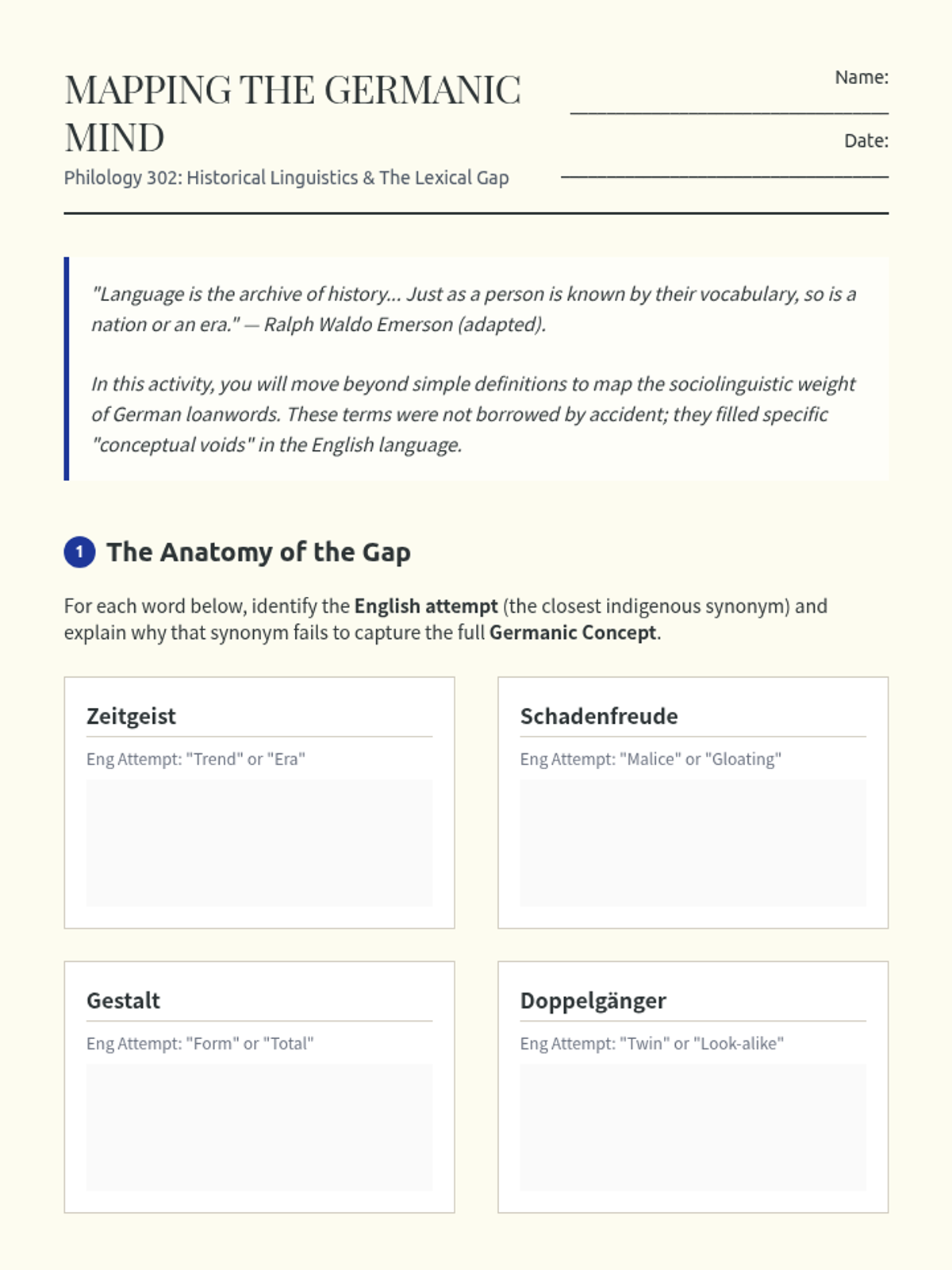
An undergraduate-level exploration of loanwords in English, focusing on the sociolinguistic history and philological origins of terms from German, Spanish, Italian, Arabic, Hindi, and Yiddish. Students investigate how culture, philosophy, and trade shape the lexicon.
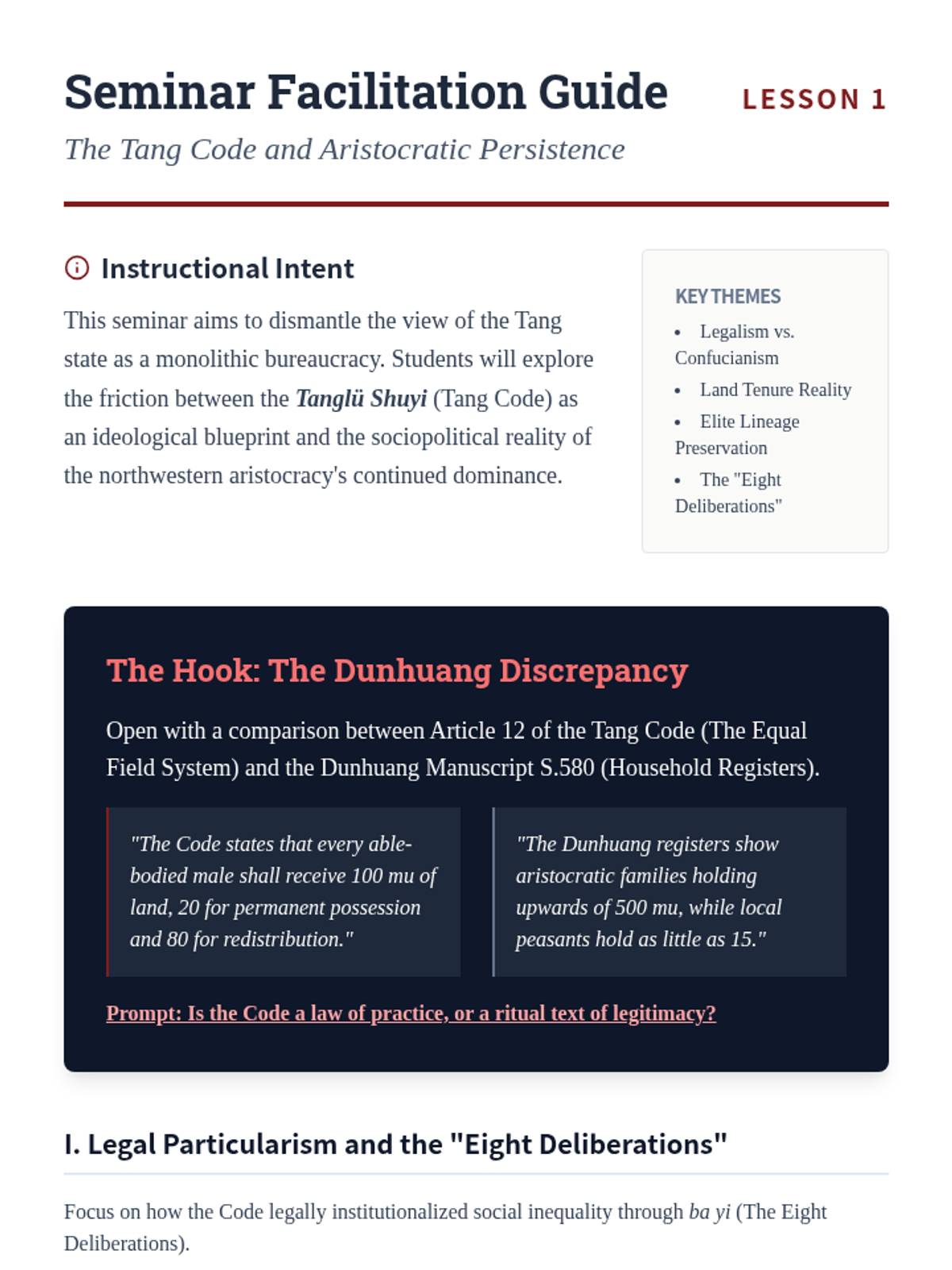
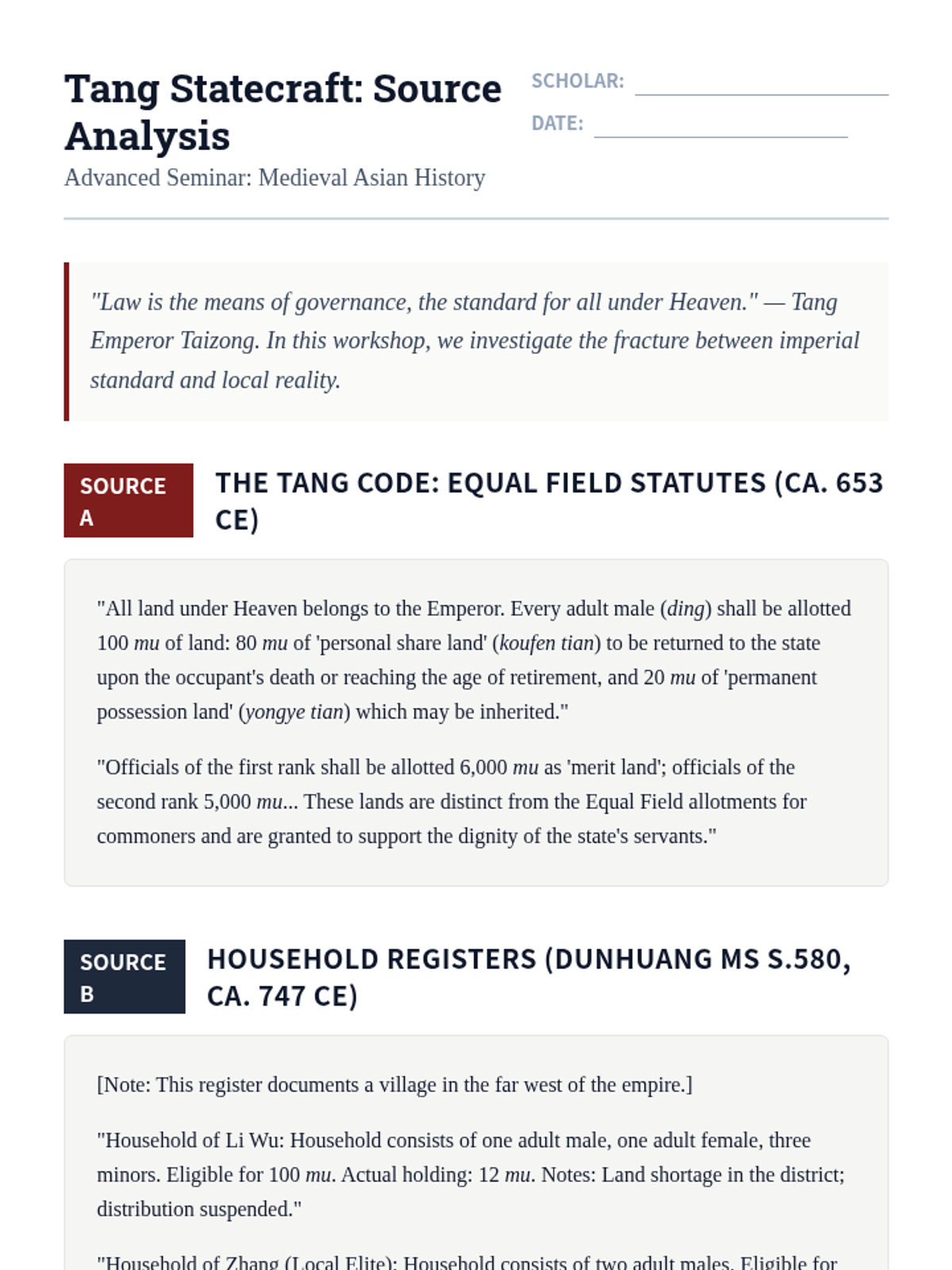
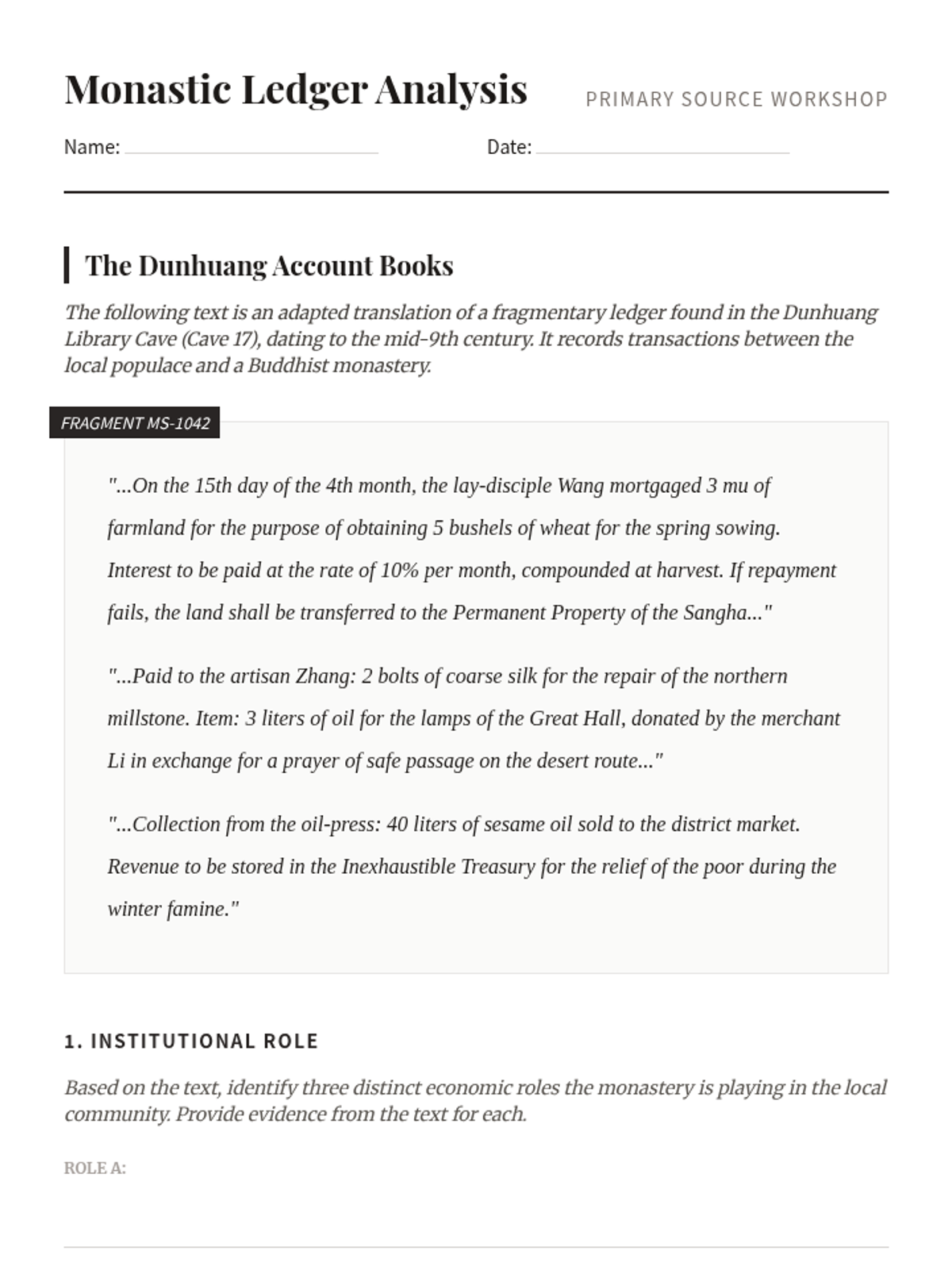
An advanced graduate-level exploration of statecraft, legal systems, and ideological shifts from the Tang to the Ming dynasties, focusing on the evolution of the imperial bureaucracy.
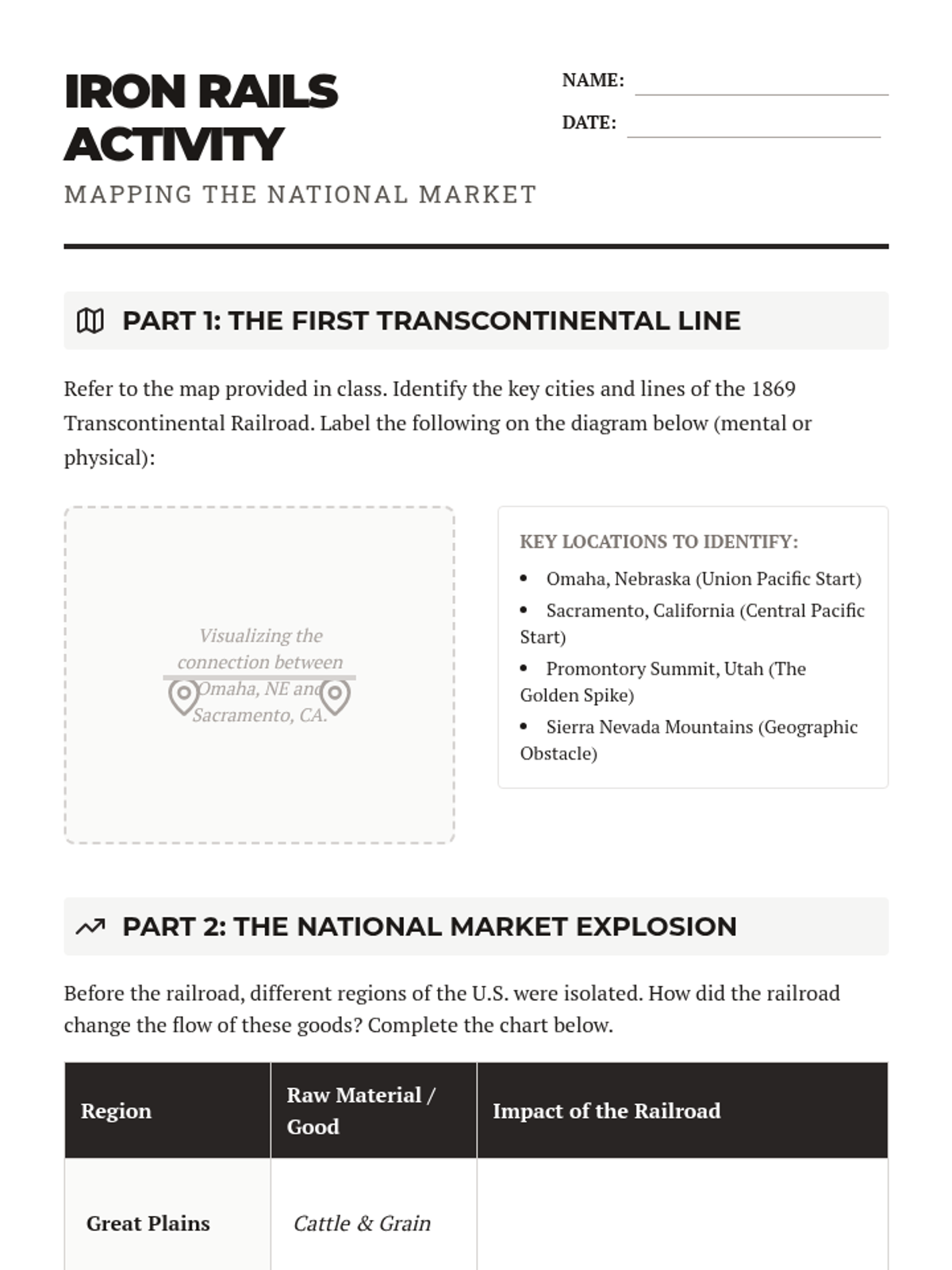
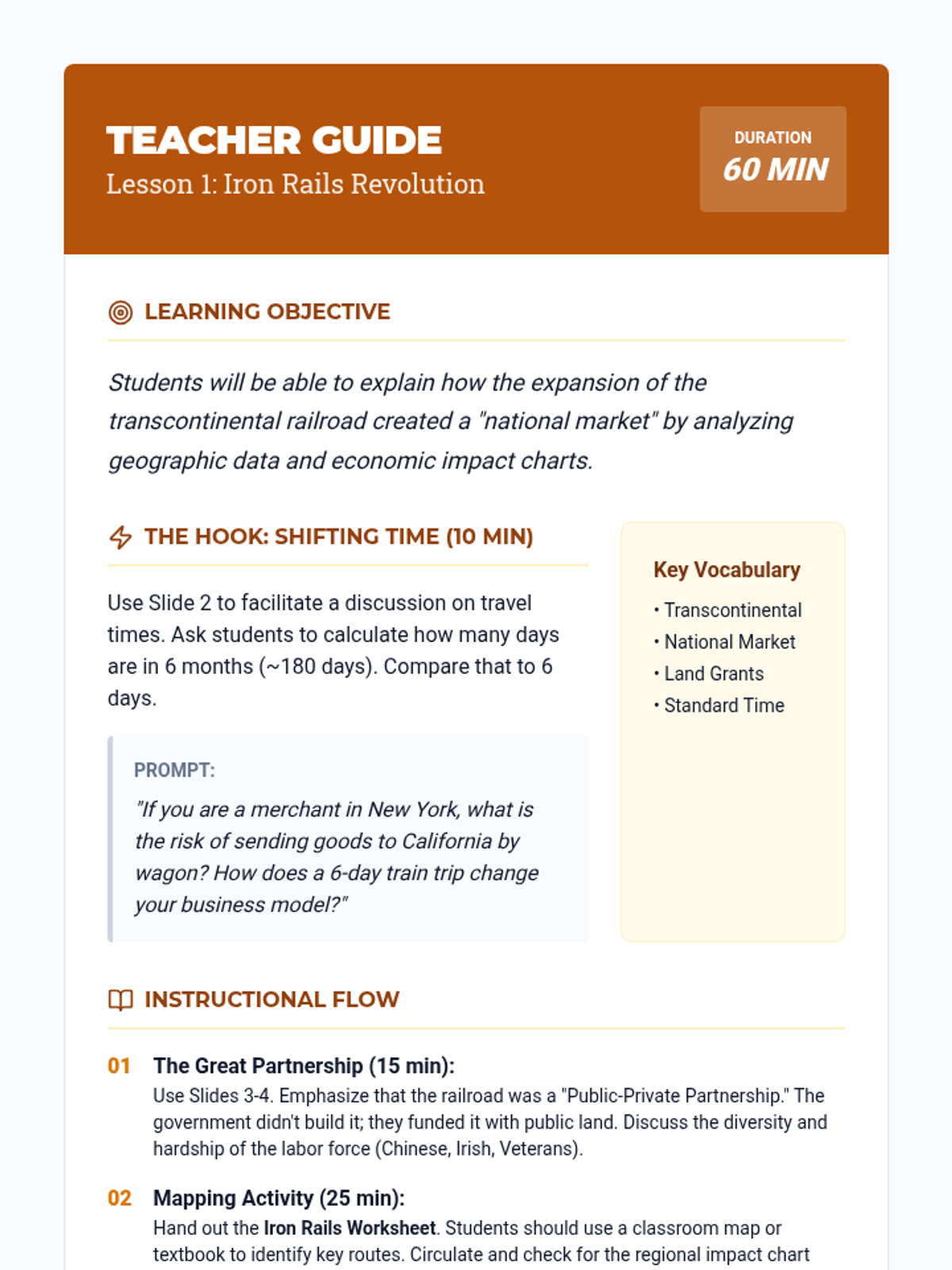
This unit explores the economic explosion of the Gilded Age, focusing on the transcontinental railroad, the rise of industrial tycoons, and the birth of modern corporate structures. Students analyze the tension between massive economic growth and the ethical costs of monopolies.
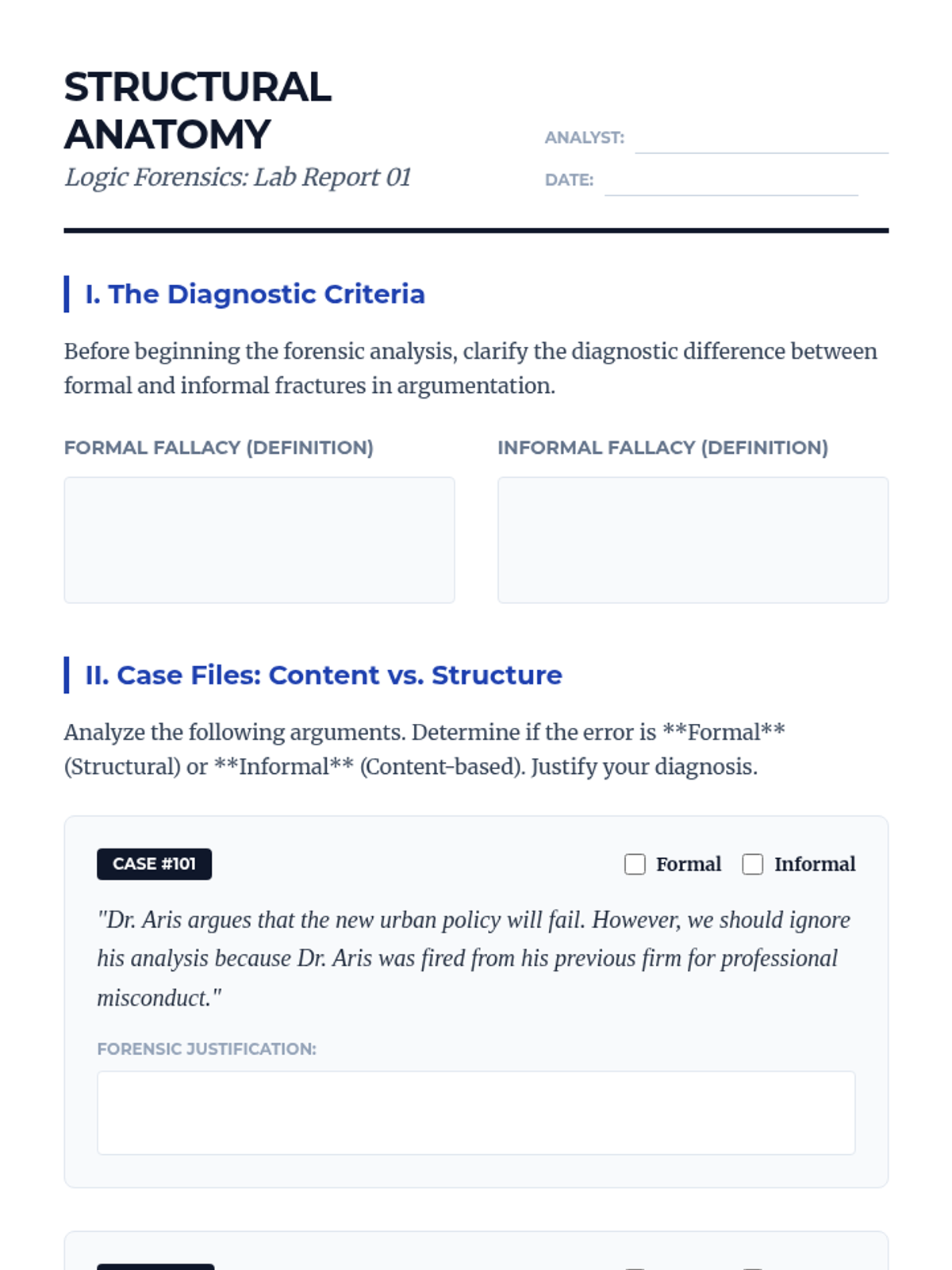
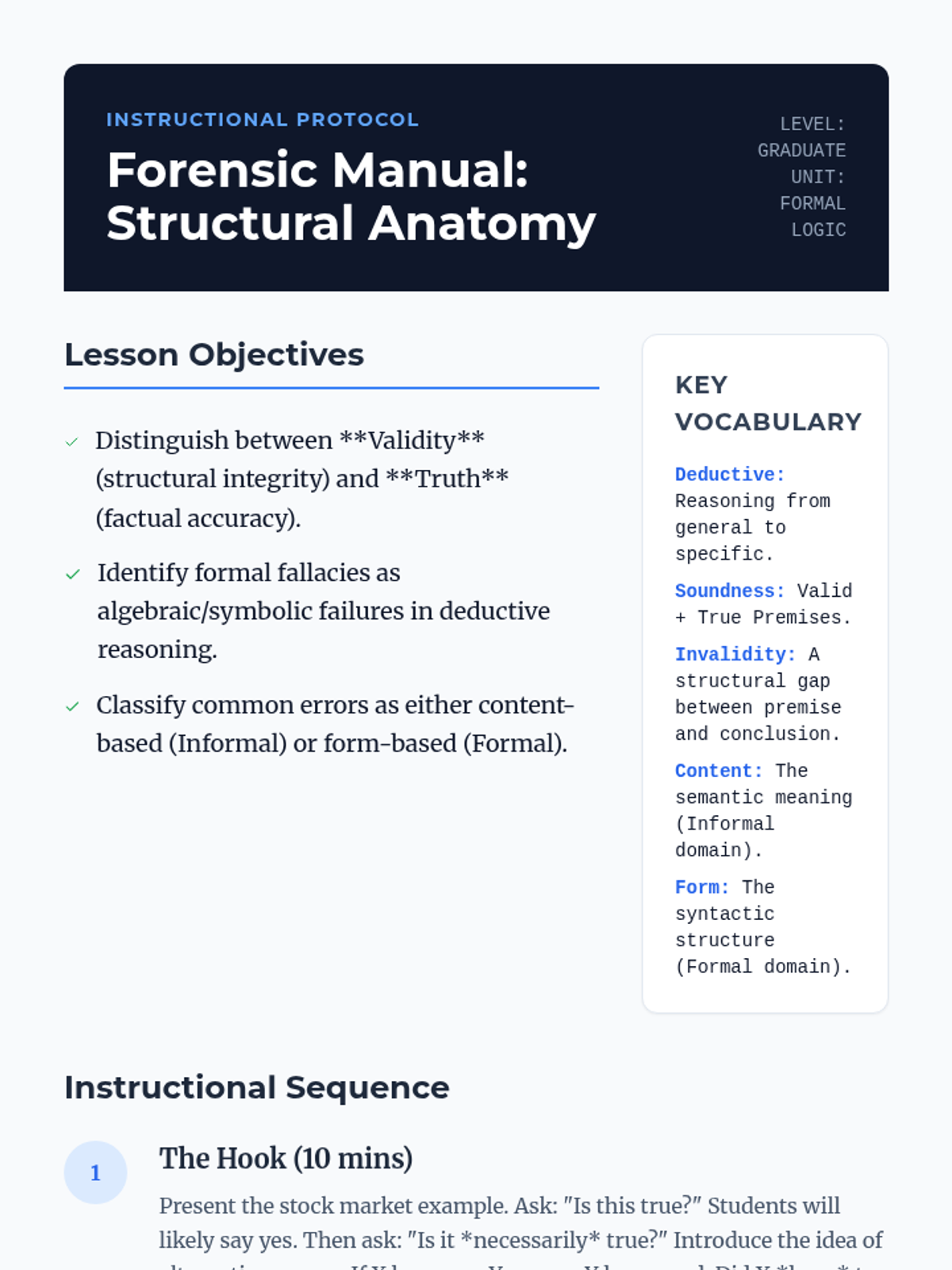
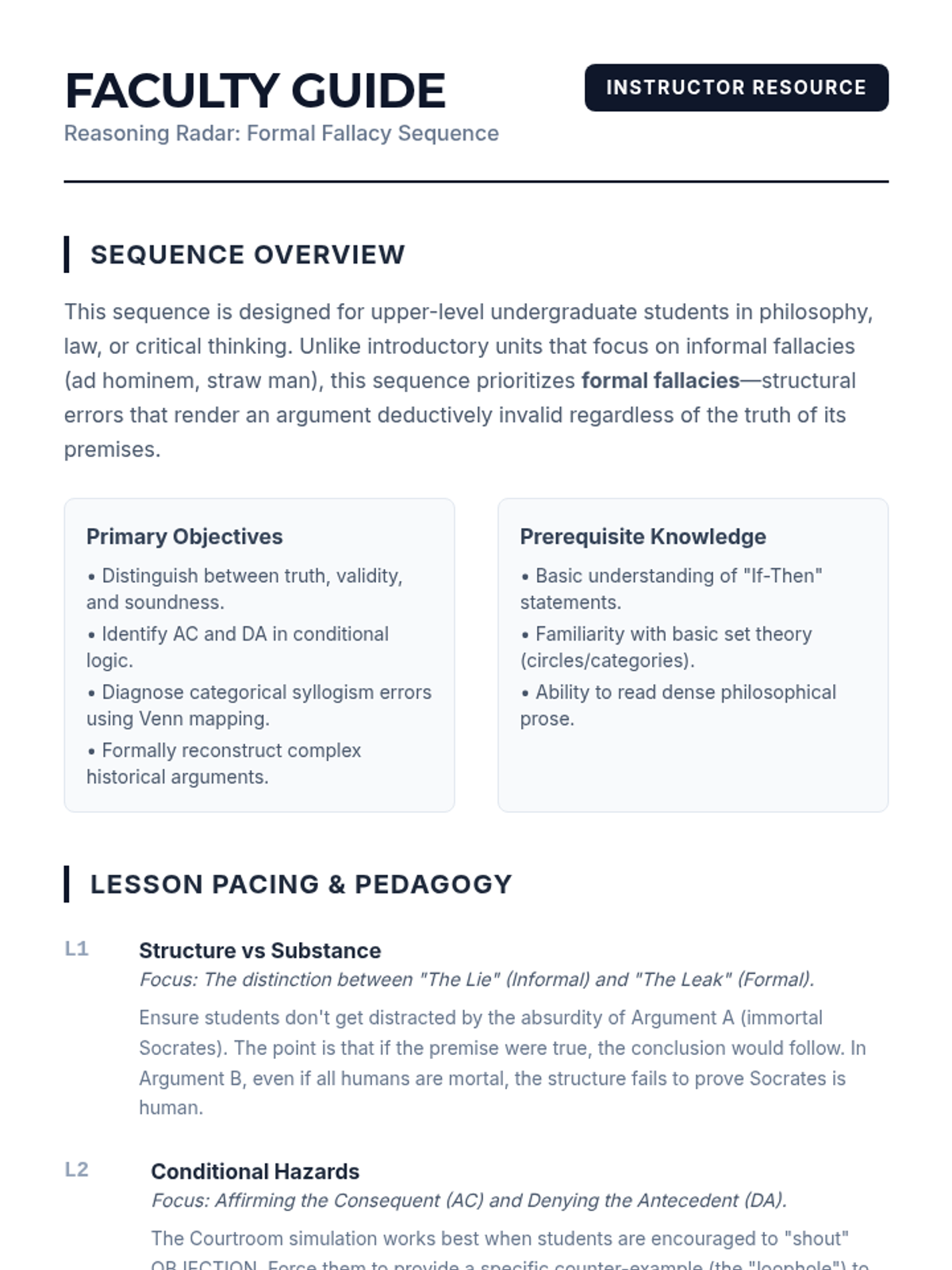
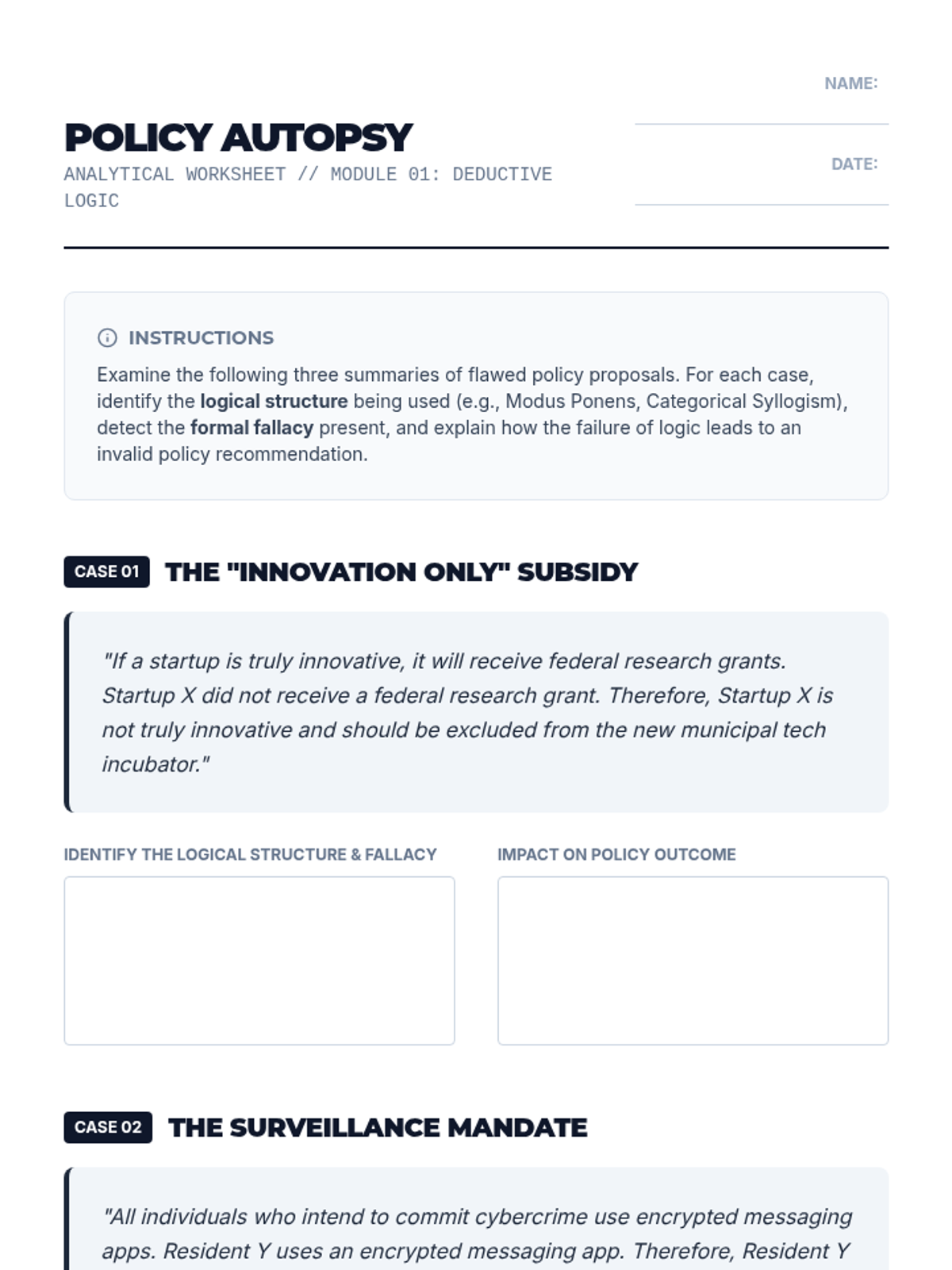
A graduate-level exploration of formal logic, focusing on identifying structural invalidity in scholarly and professional arguments. Students move from basic distinctions between formal and informal fallacies to forensic reconstruction of complex logical errors.
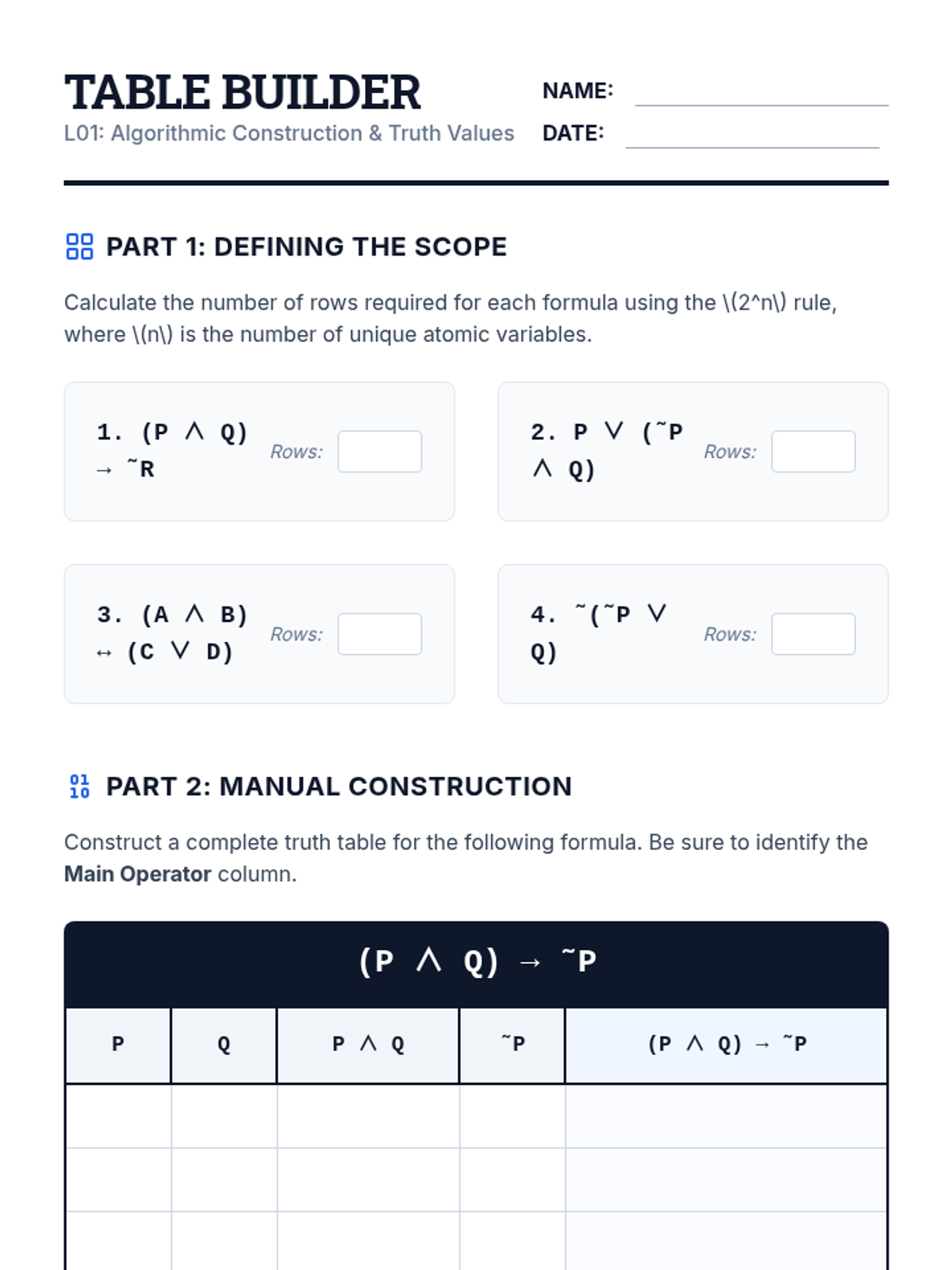
This rigorous graduate-level sequence guides students through the mechanical verification of argument validity using truth tables and semantic analysis, culminating in the logical critique of academic texts.
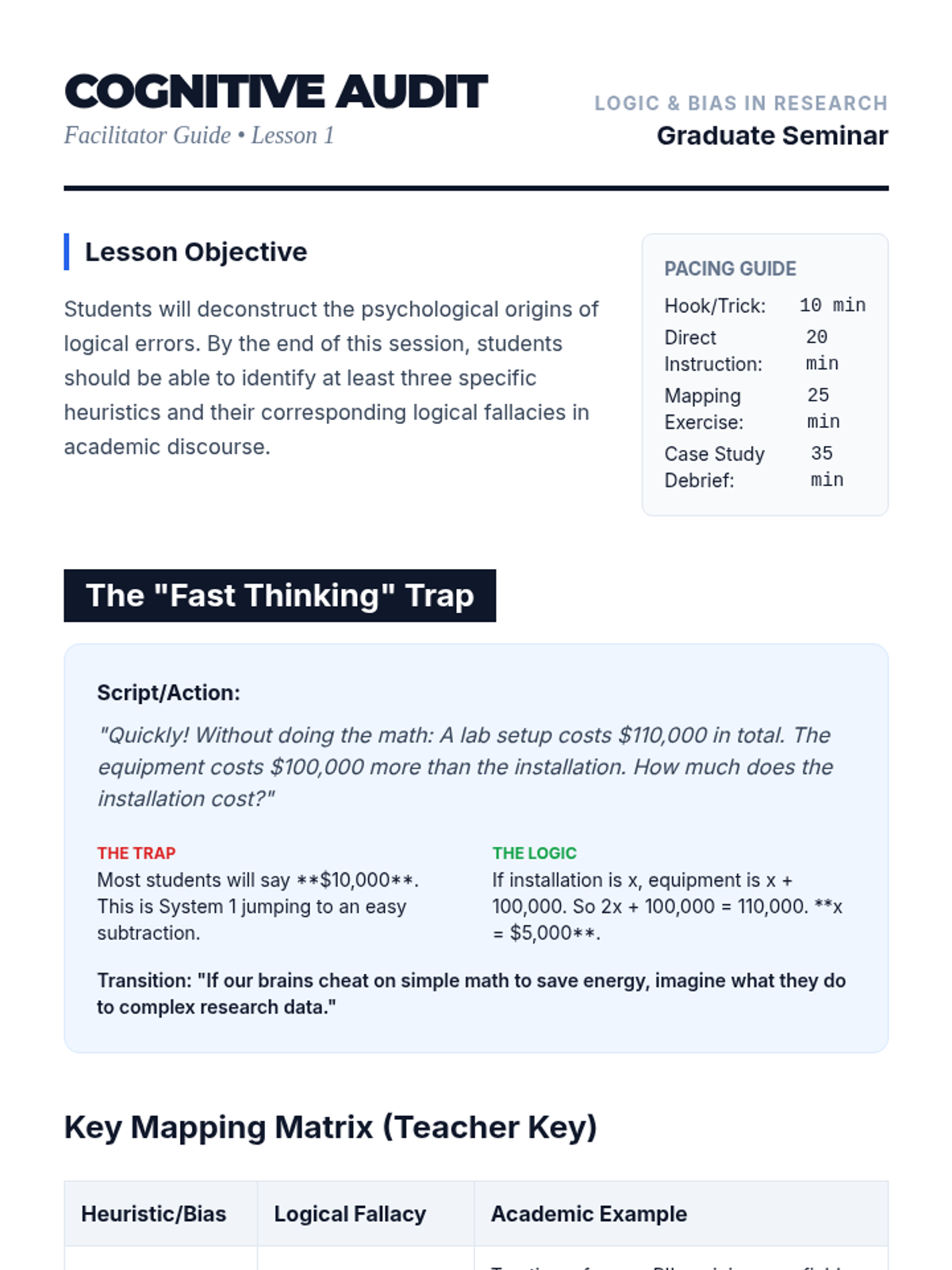
This sequence explores the intersection of cognitive psychology and formal logic within the context of graduate-level academic research. Students will investigate how innate heuristics and biases lead to common logical fallacies in literature reviews, methodology, and theory building, culminating in a personal reflexivity audit.
An advanced critical thinking sequence for undergraduate students focused on identifying structural errors in reasoning. Students move from informal fallacies to complex formal fallacies, using real-world legal and philosophical texts to evaluate validity through the lens of formal logic.
A high-school level sequence exploring the application of formal logic to real-world rhetoric, focusing on uncovering hidden assumptions and mapping complex arguments.
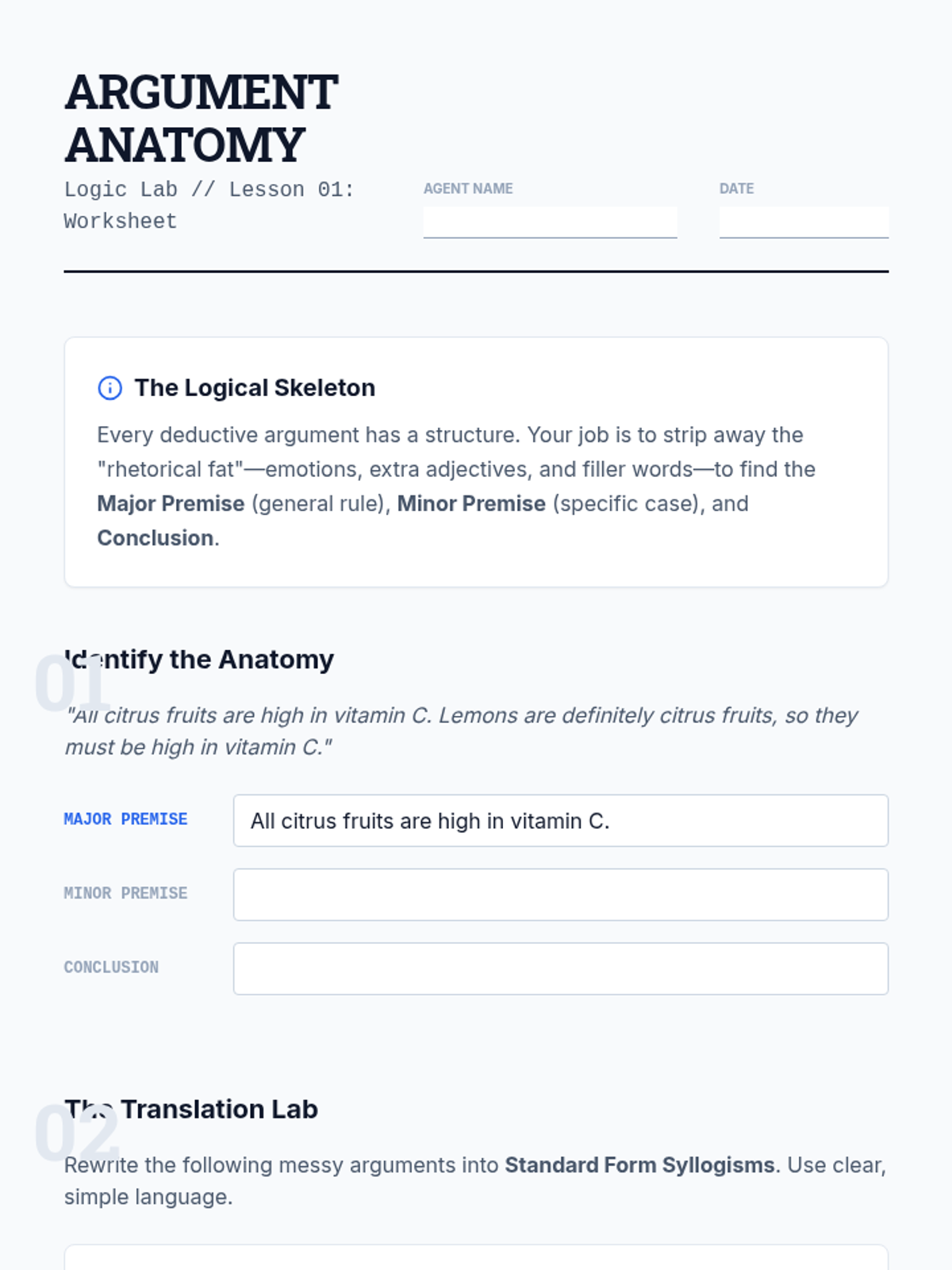
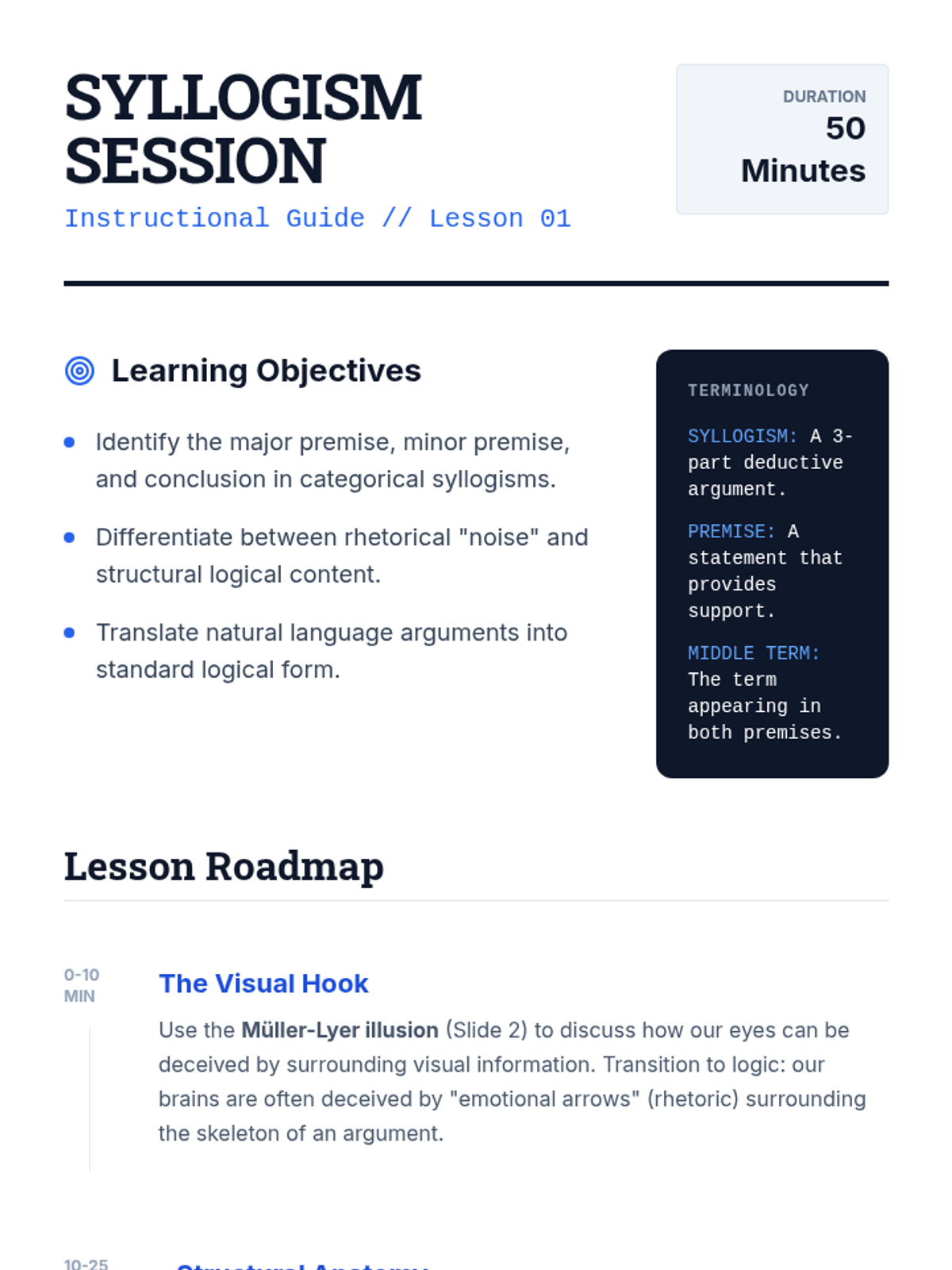
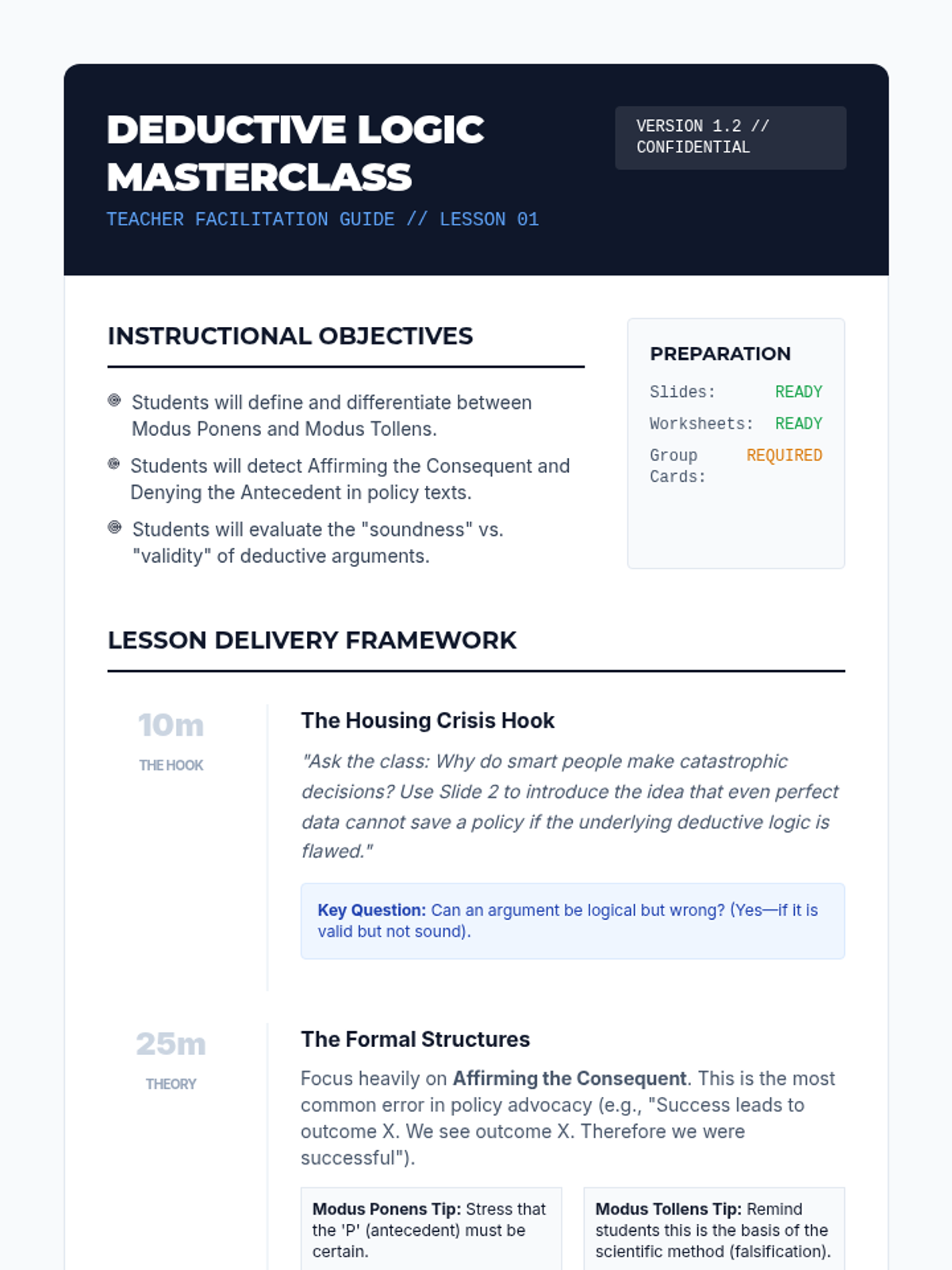
A deep dive into deductive reasoning, focusing on the structural integrity of arguments. Students learn to distinguish between validity and soundness while mastering the art of translating natural language into formal logical skeletons.
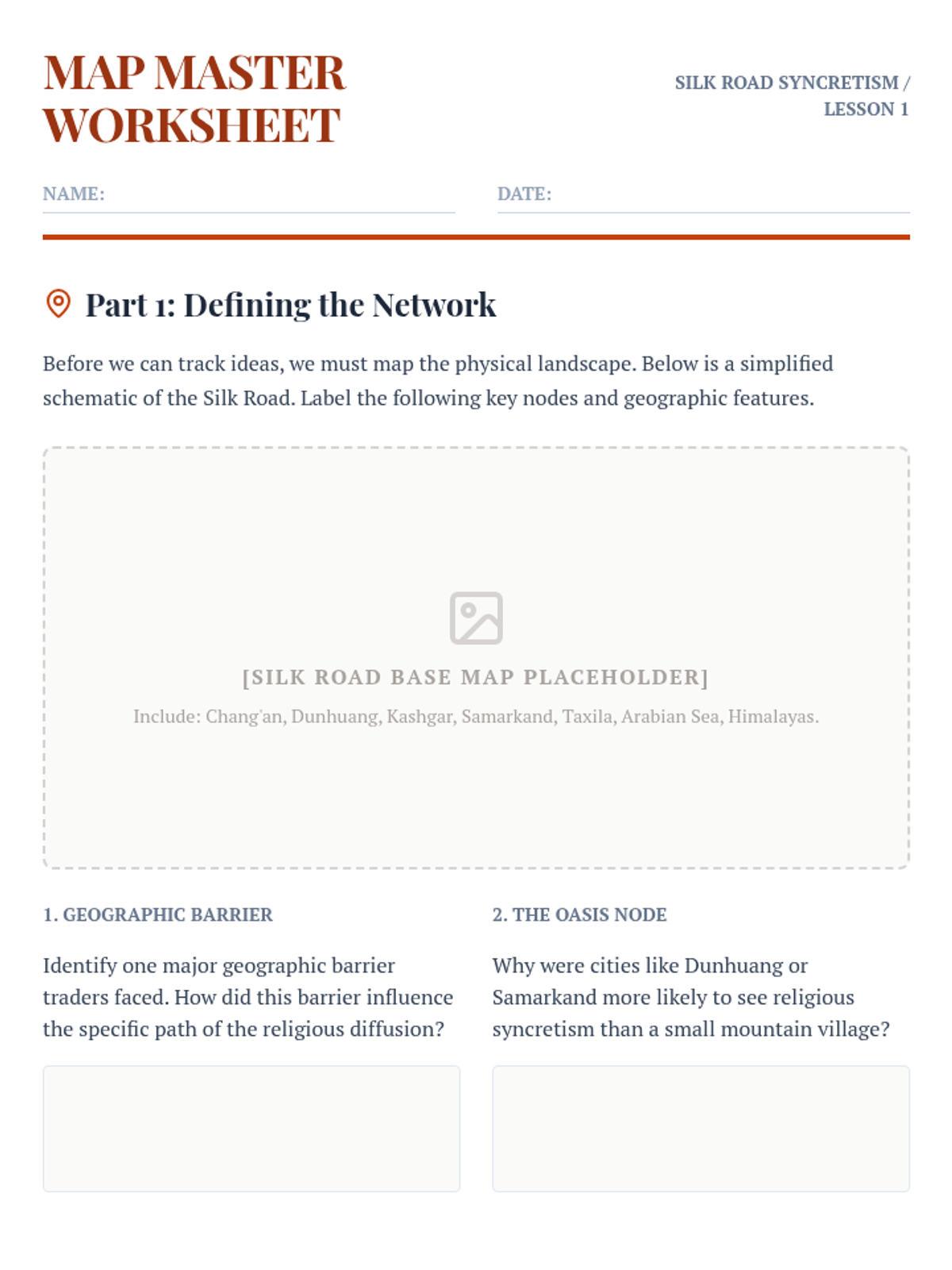
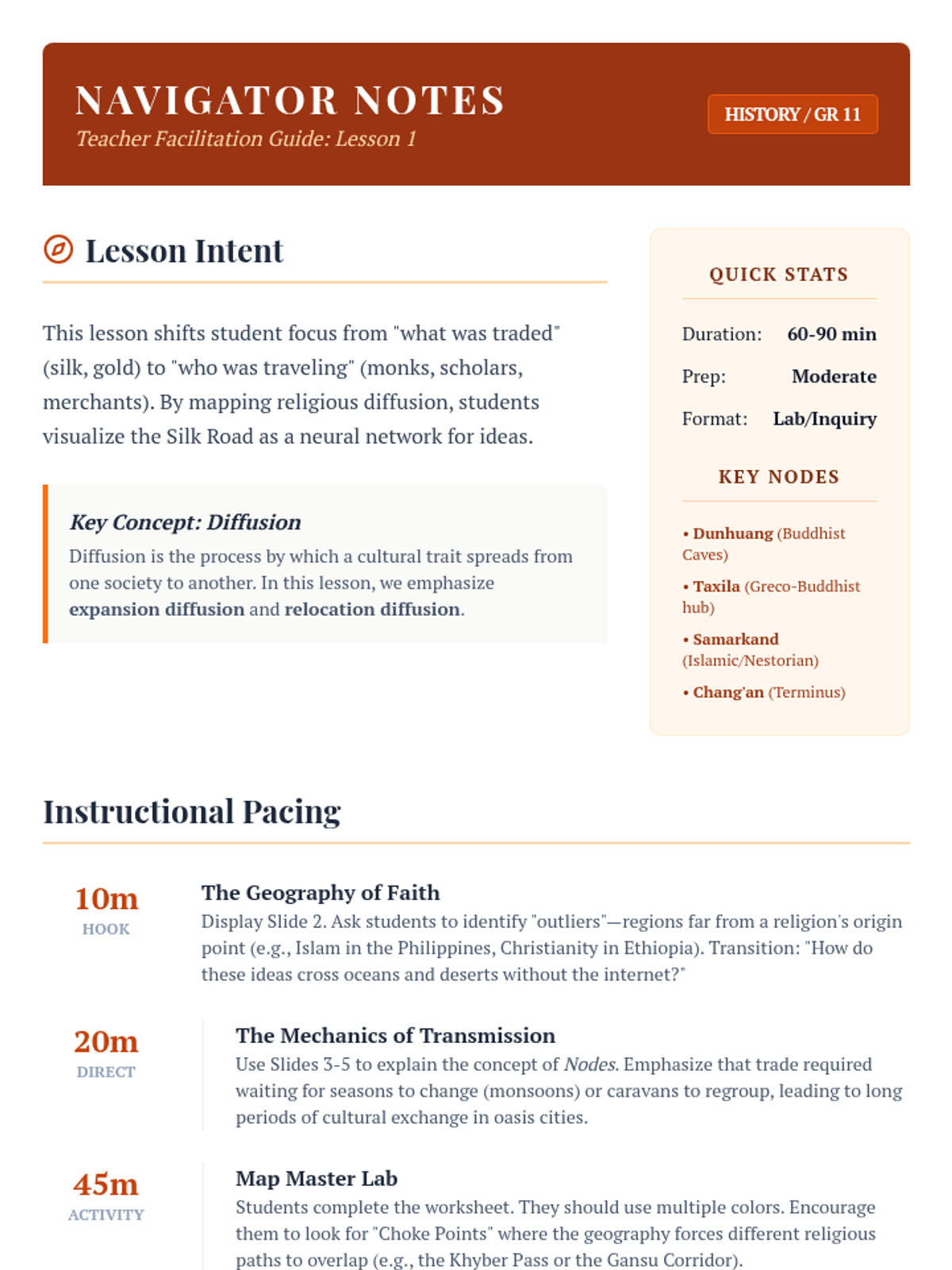
Explore the Silk Road as a vehicle for religious and cultural syncretism. Students track the spread and adaptation of Buddhism, Islam, and Nestorian Christianity across Asia, culminating in a curated digital museum exhibit.
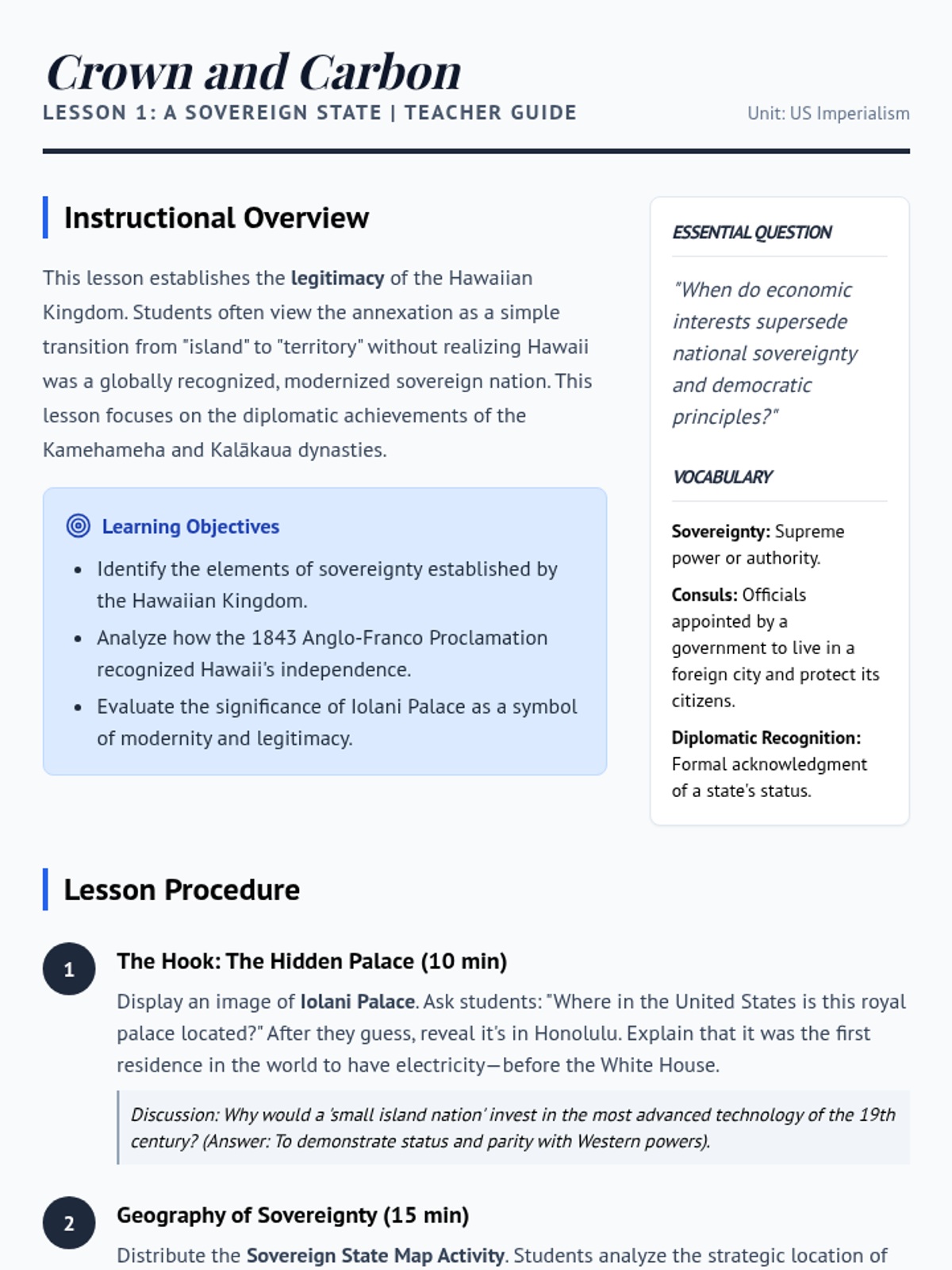
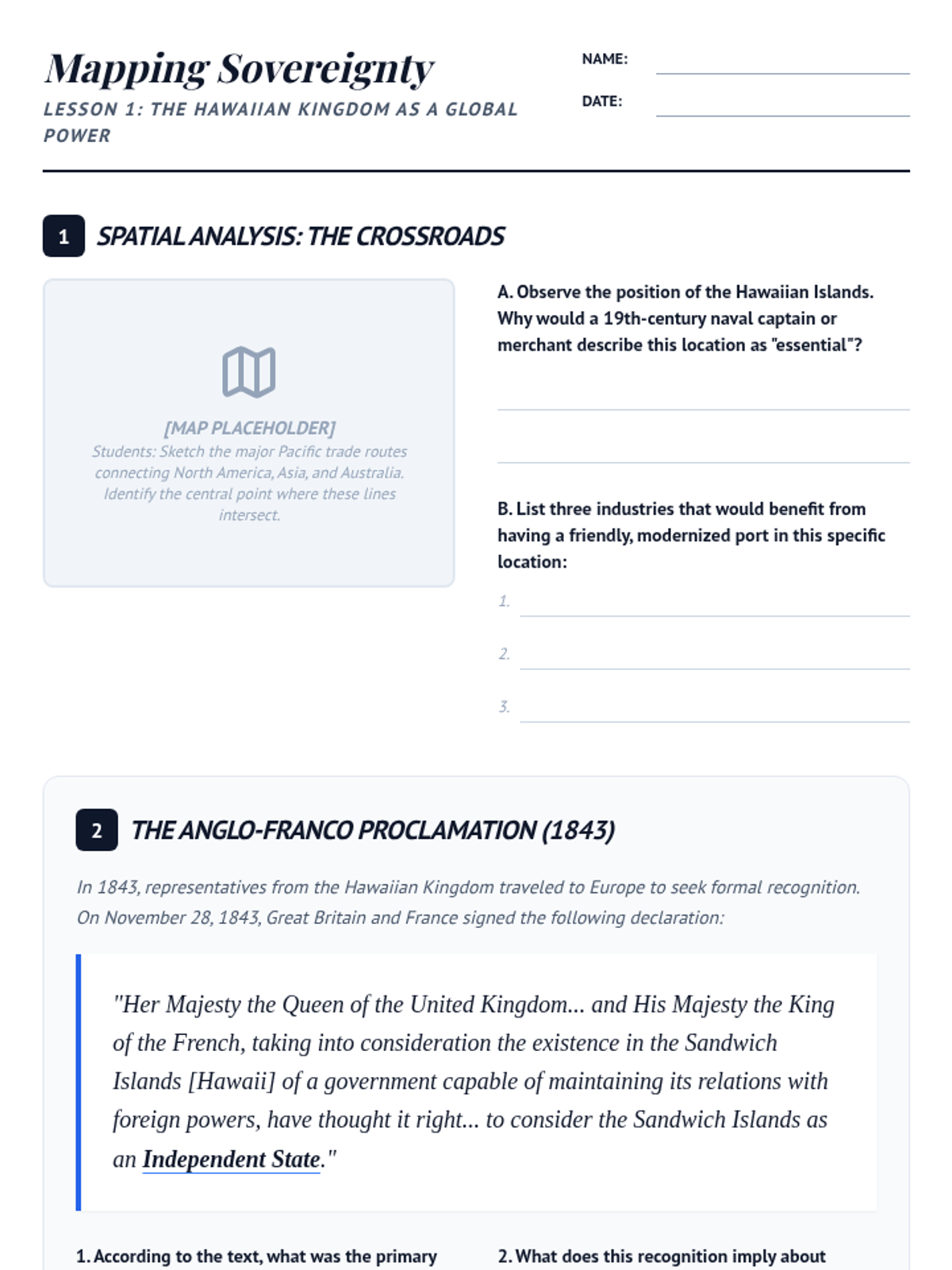
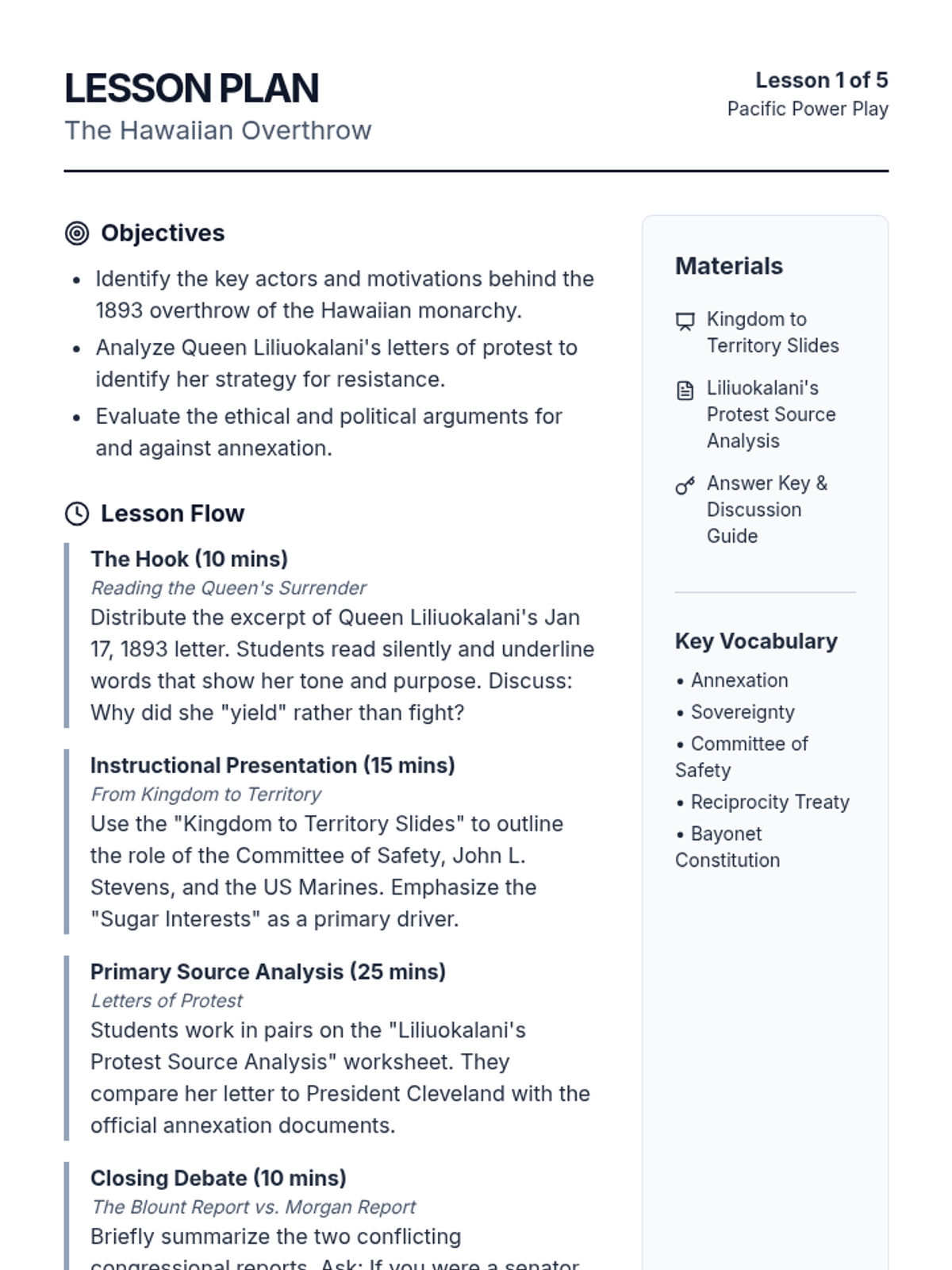
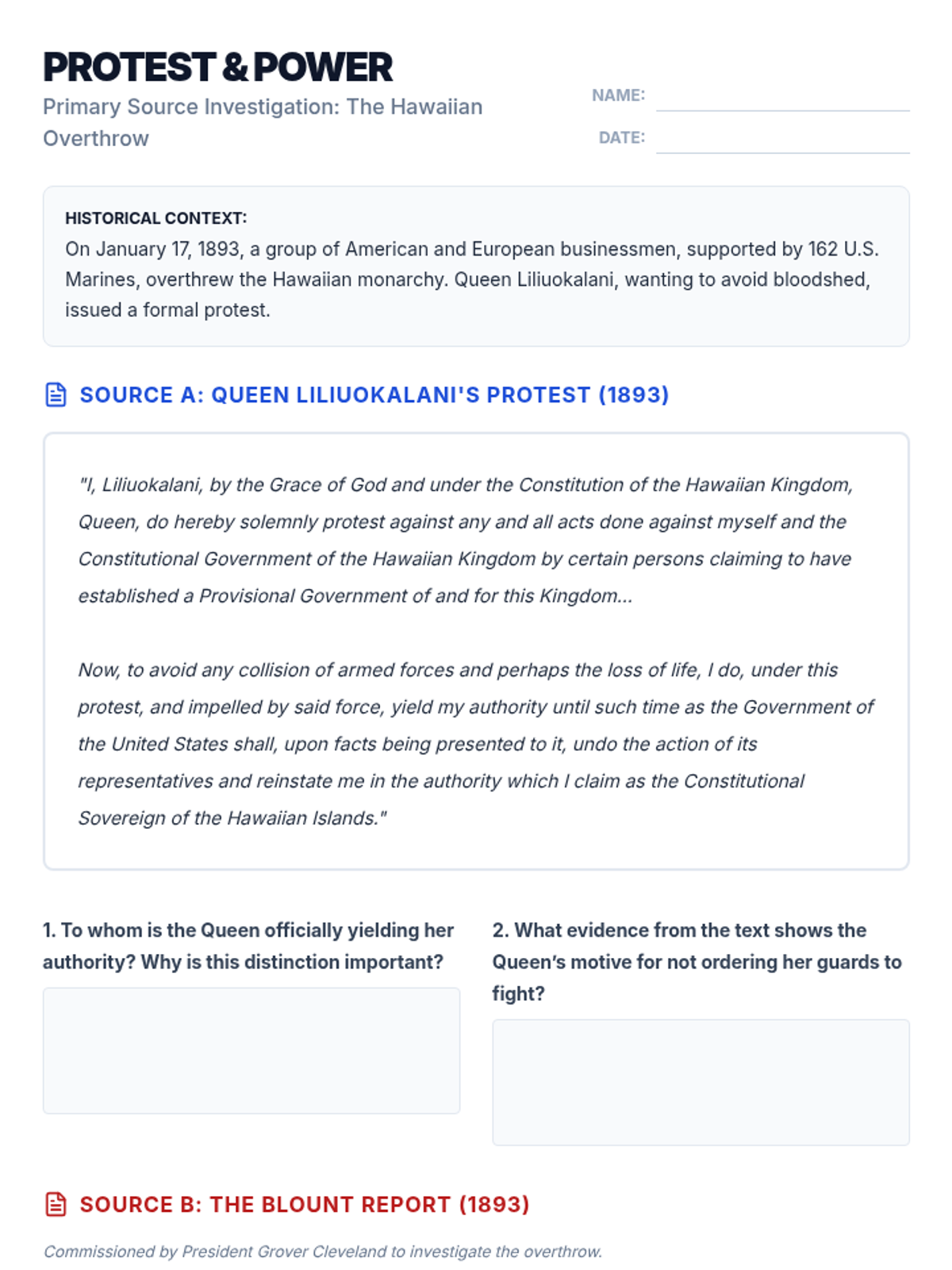
A deep-dive case study into the annexation of Hawaii, exploring the collision of indigenous sovereignty, missionary influence, and corporate interests. Students analyze the transition from a recognized sovereign monarchy to a US territory, evaluating the ethical and political implications of imperialism.
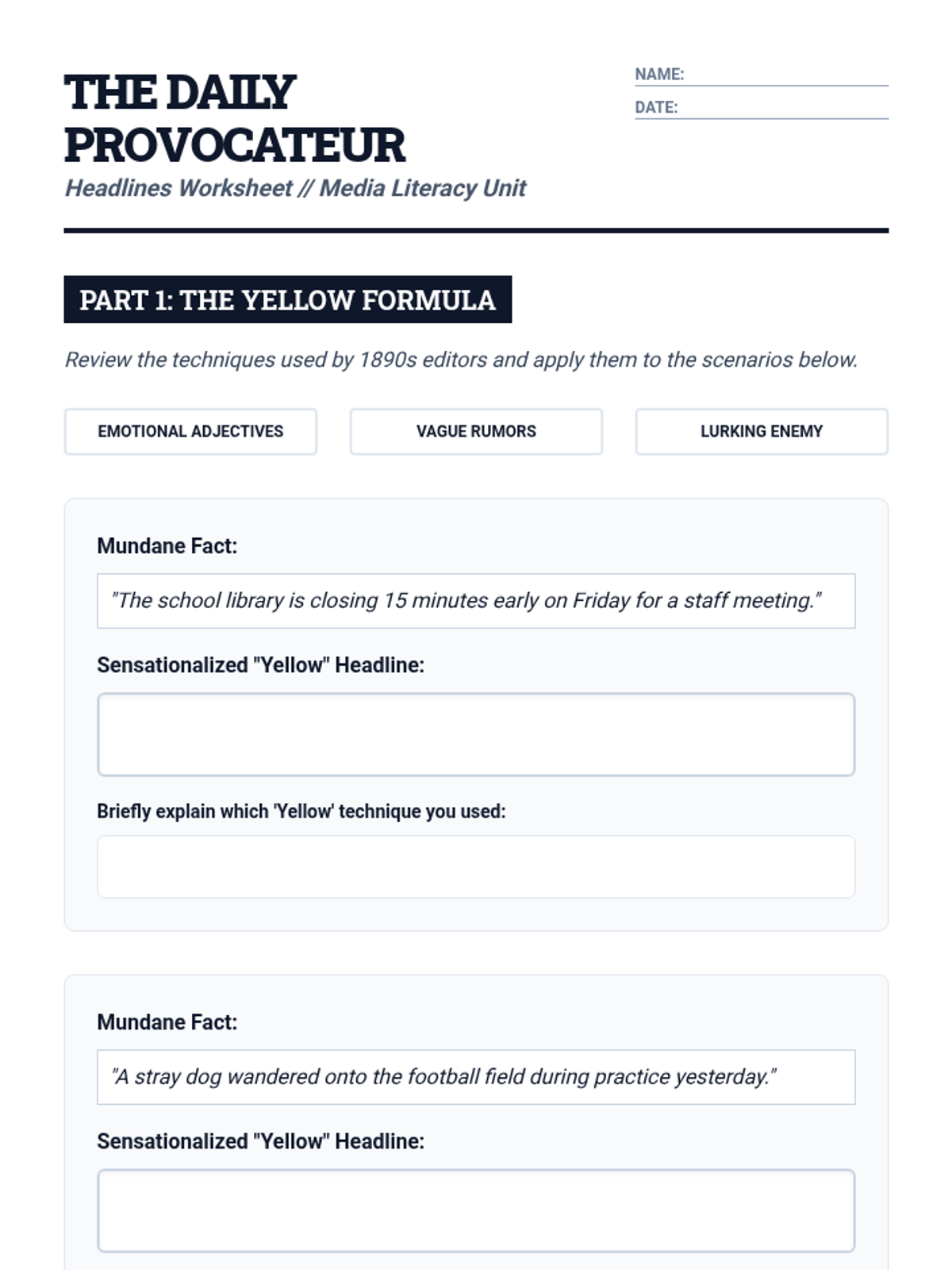
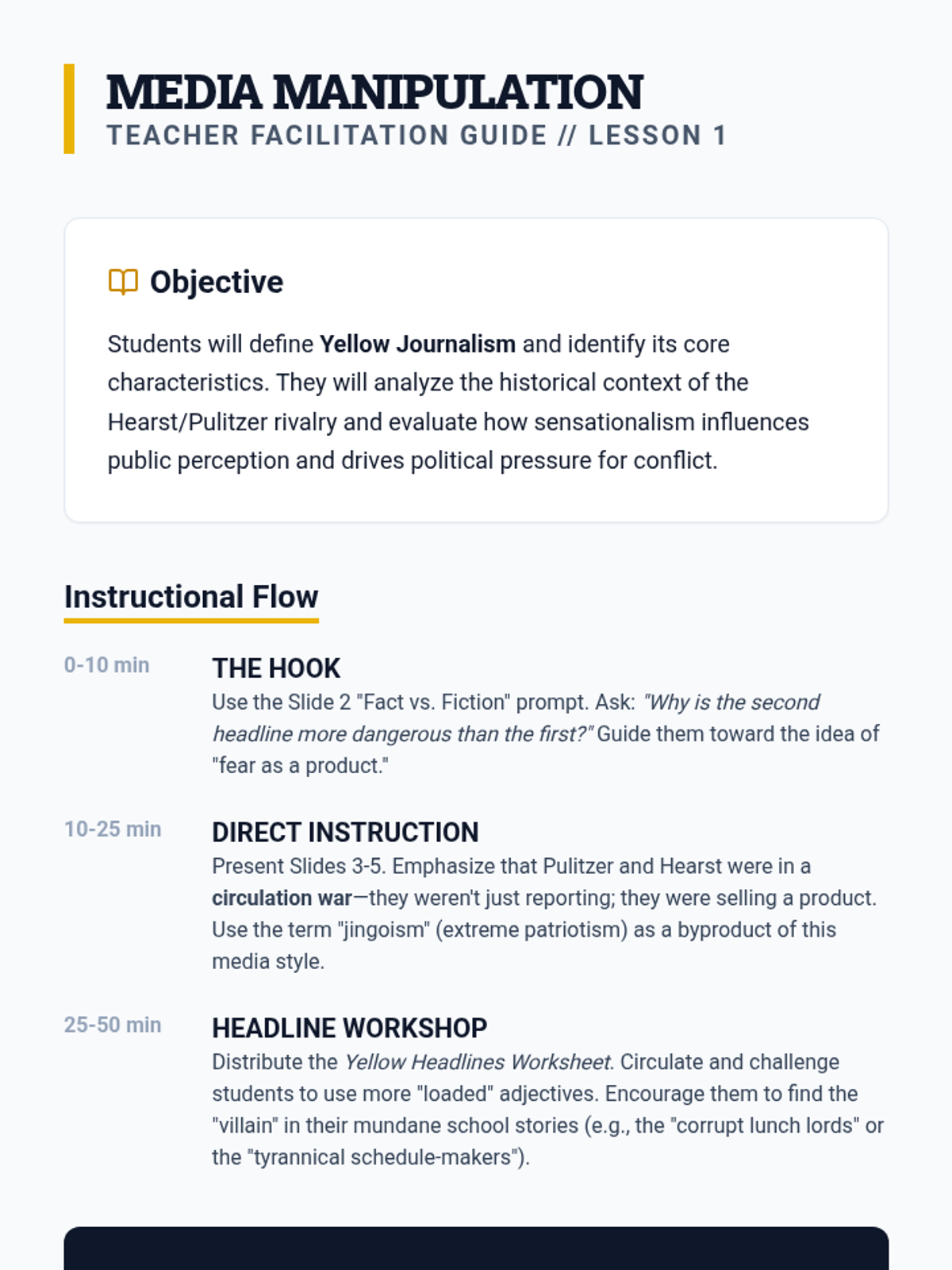
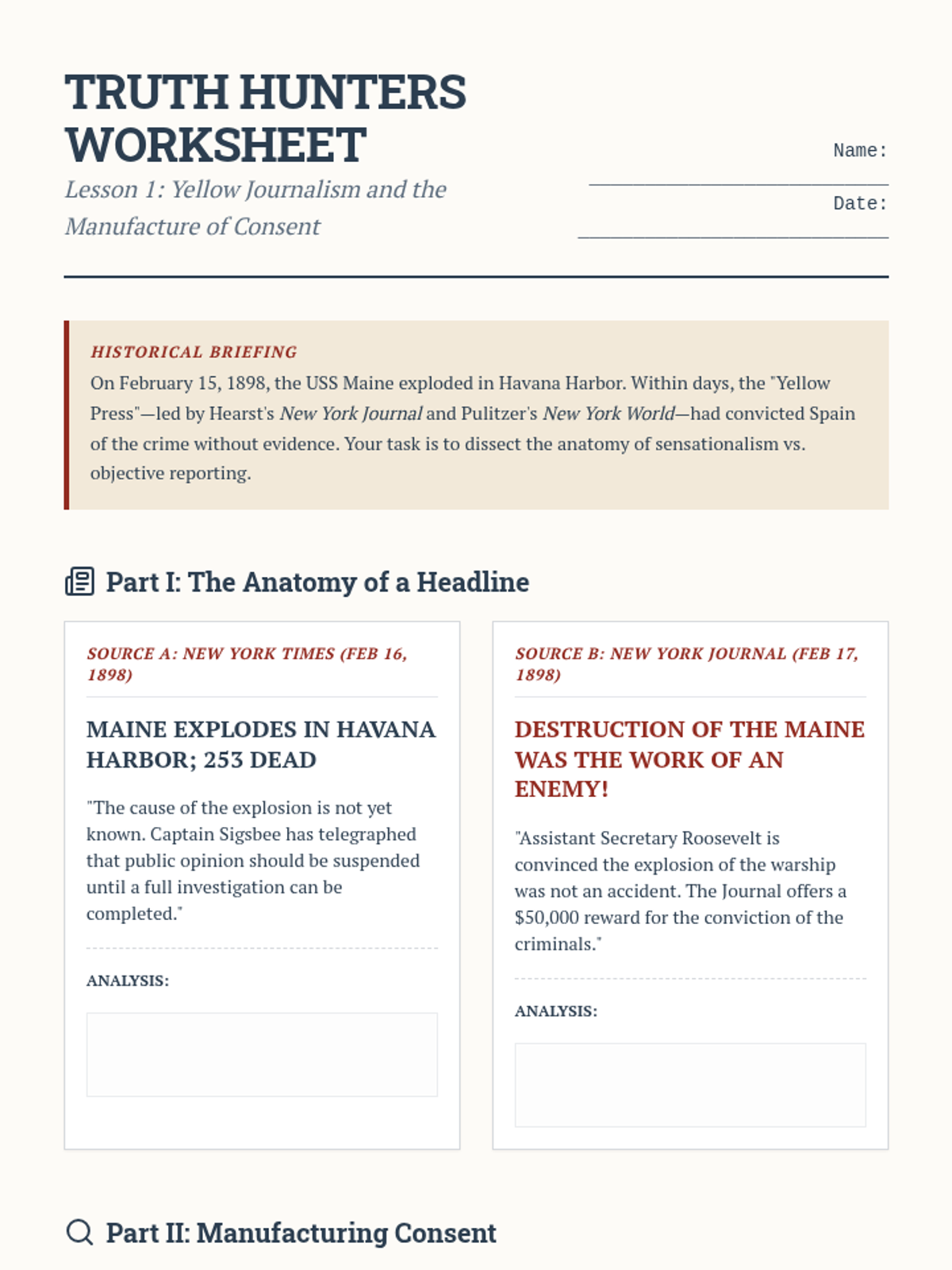
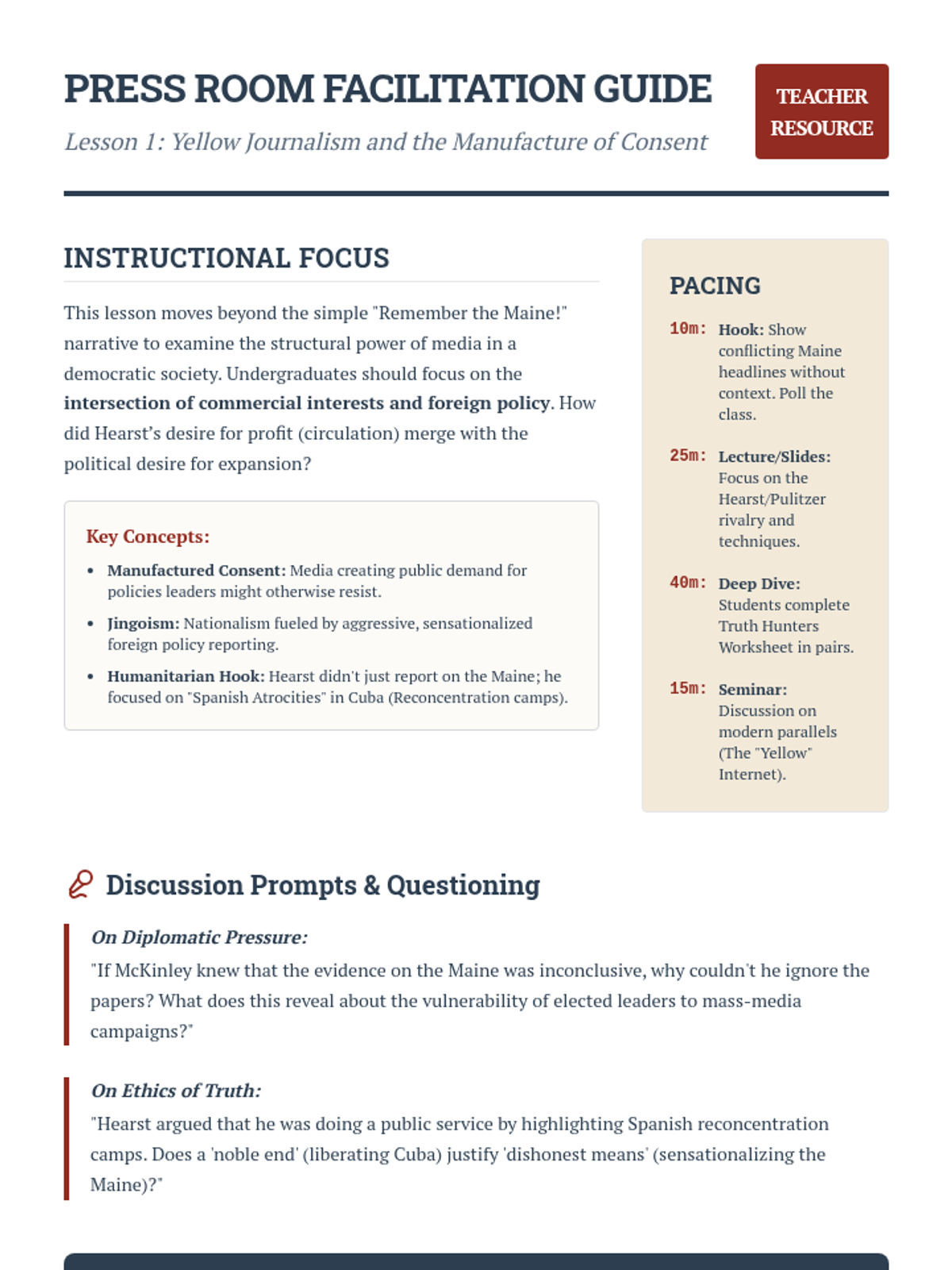
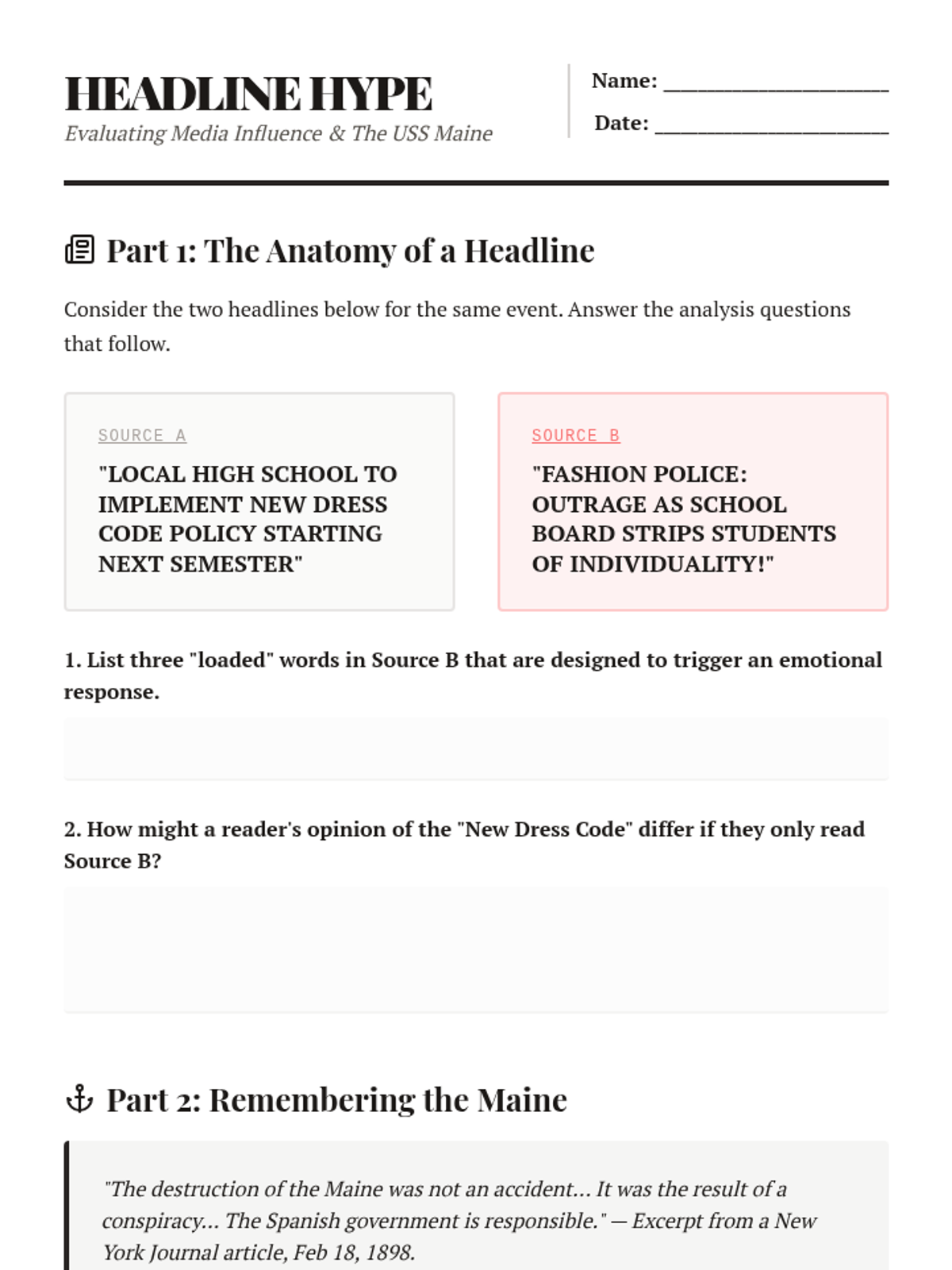
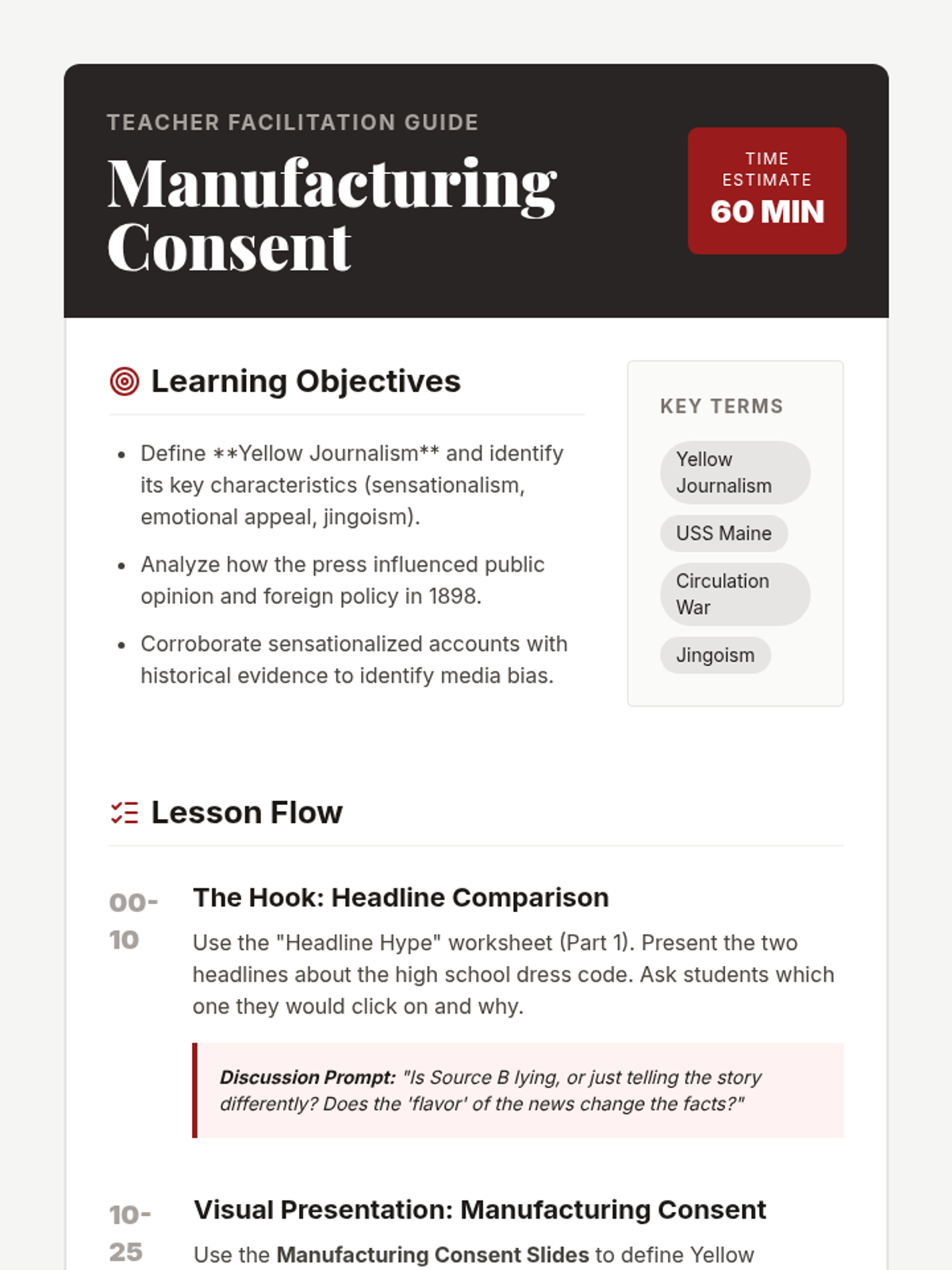
A high school history sequence exploring the intersection of mass media, public opinion, and American expansionism through the lens of the Spanish-American and Philippine-American Wars. Students analyze how 'Yellow Journalism' and strategic narratives shaped foreign policy at the turn of the 20th century.
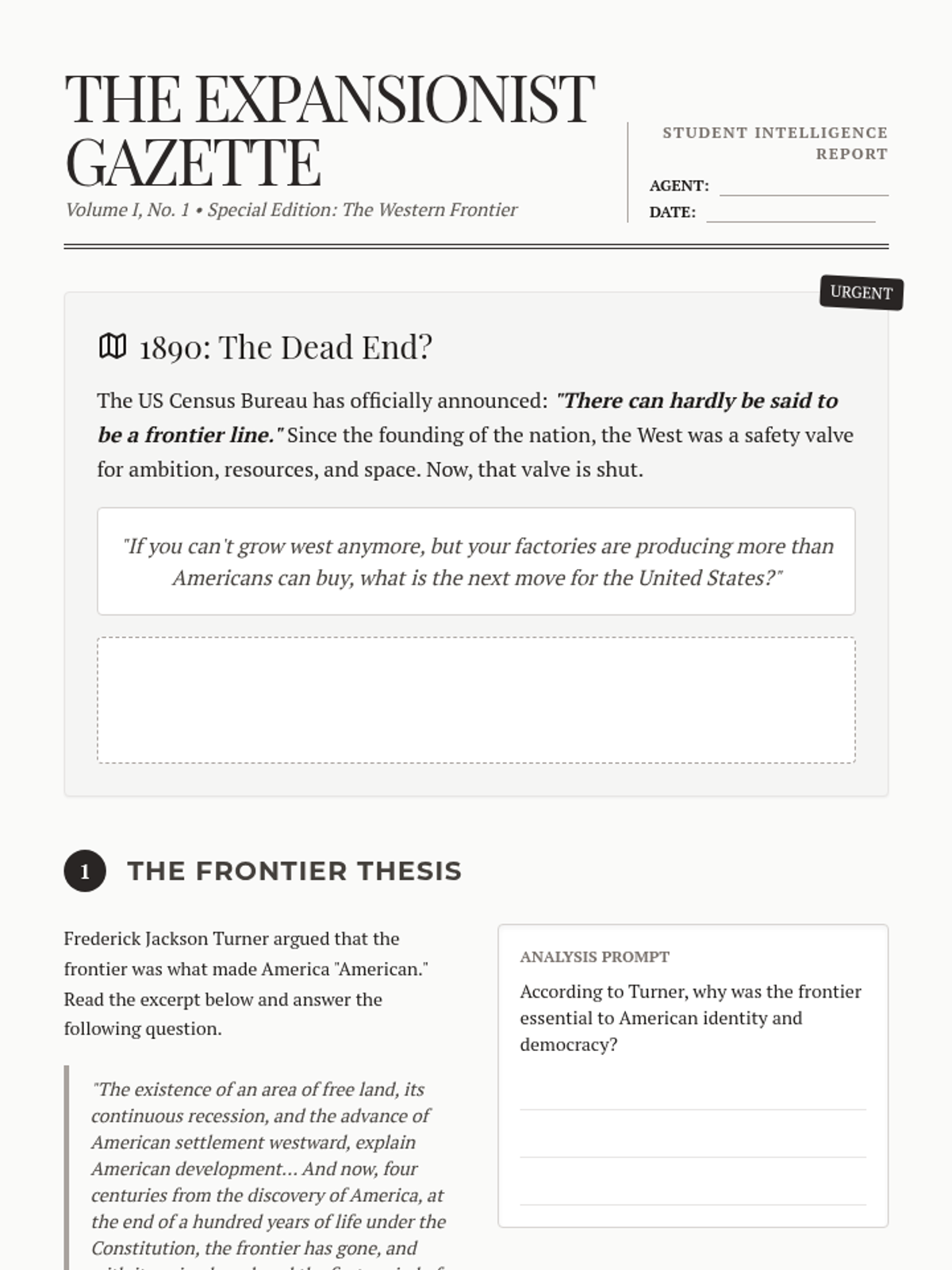
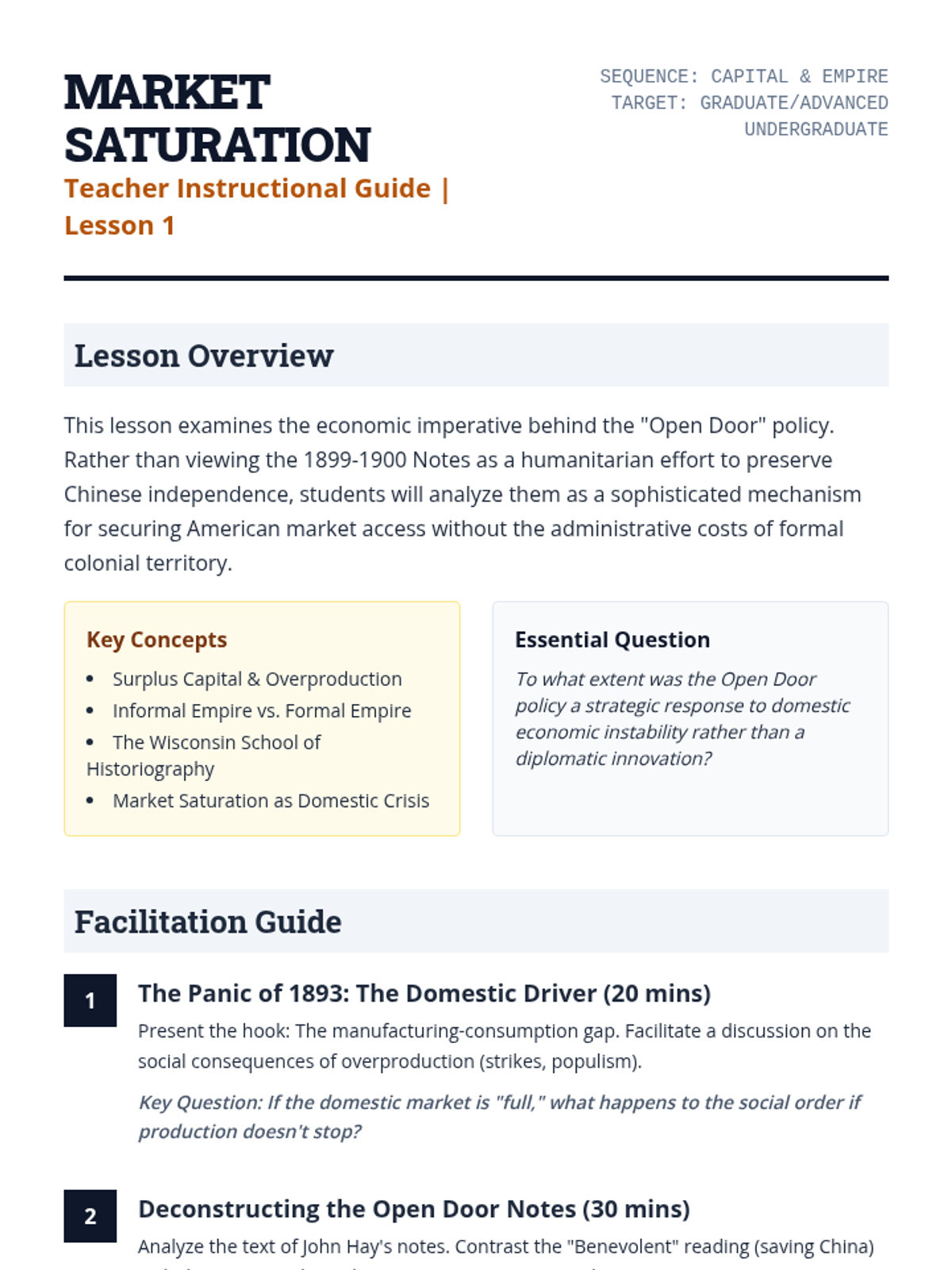
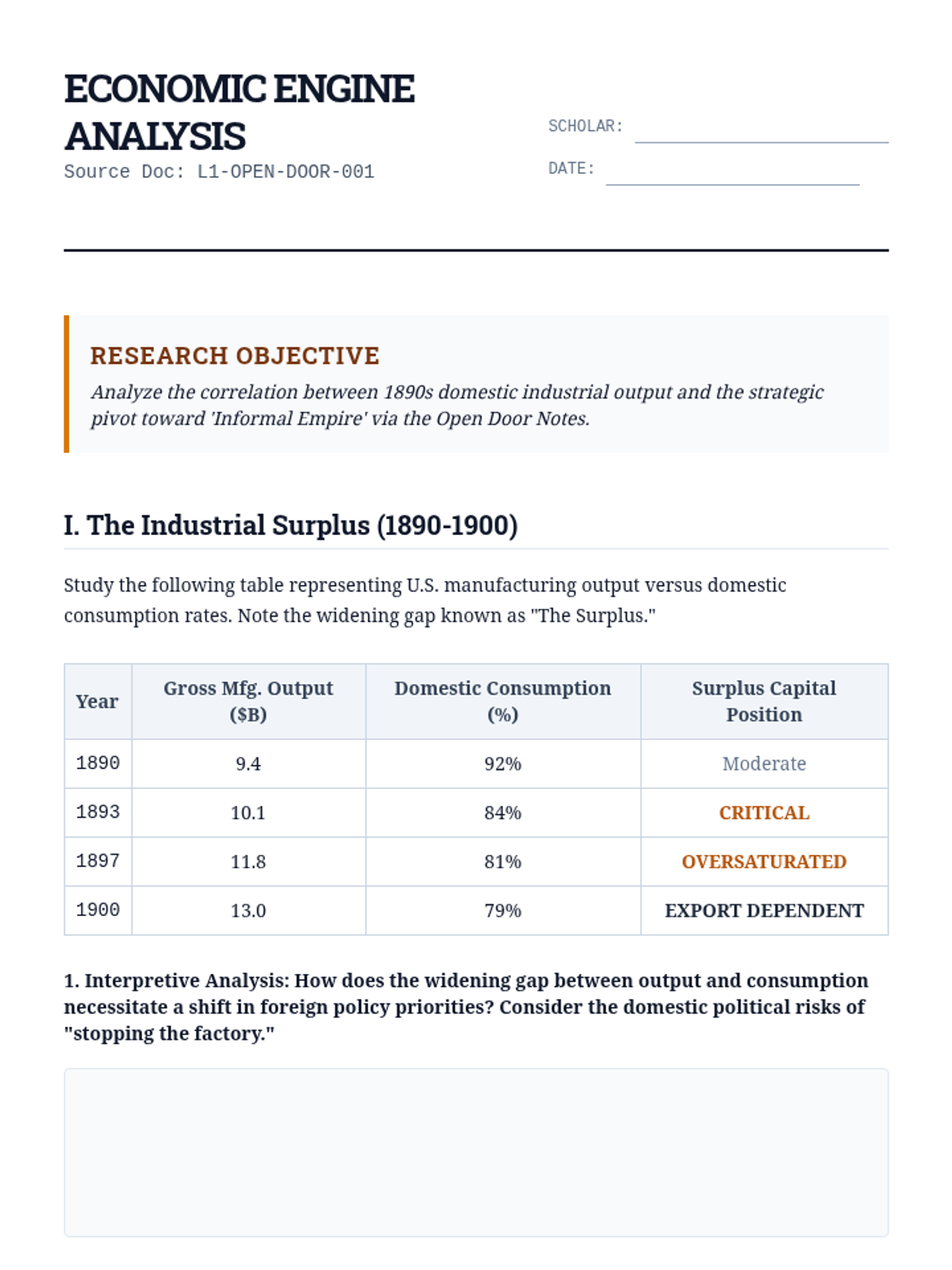
A deep dive into the intellectual, economic, and strategic foundations of American Imperialism at the turn of the 20th century, exploring the tension between profit and principle.
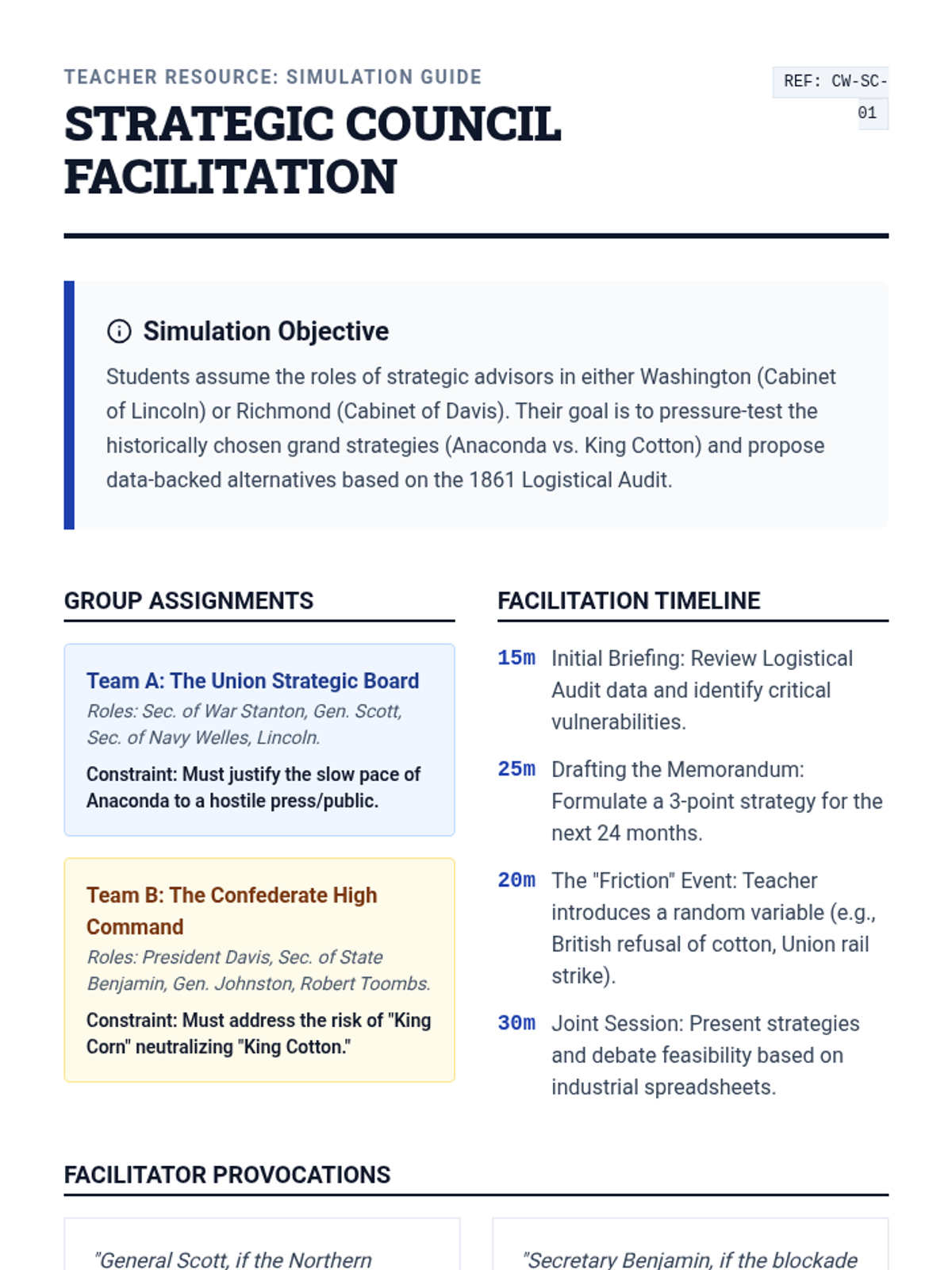
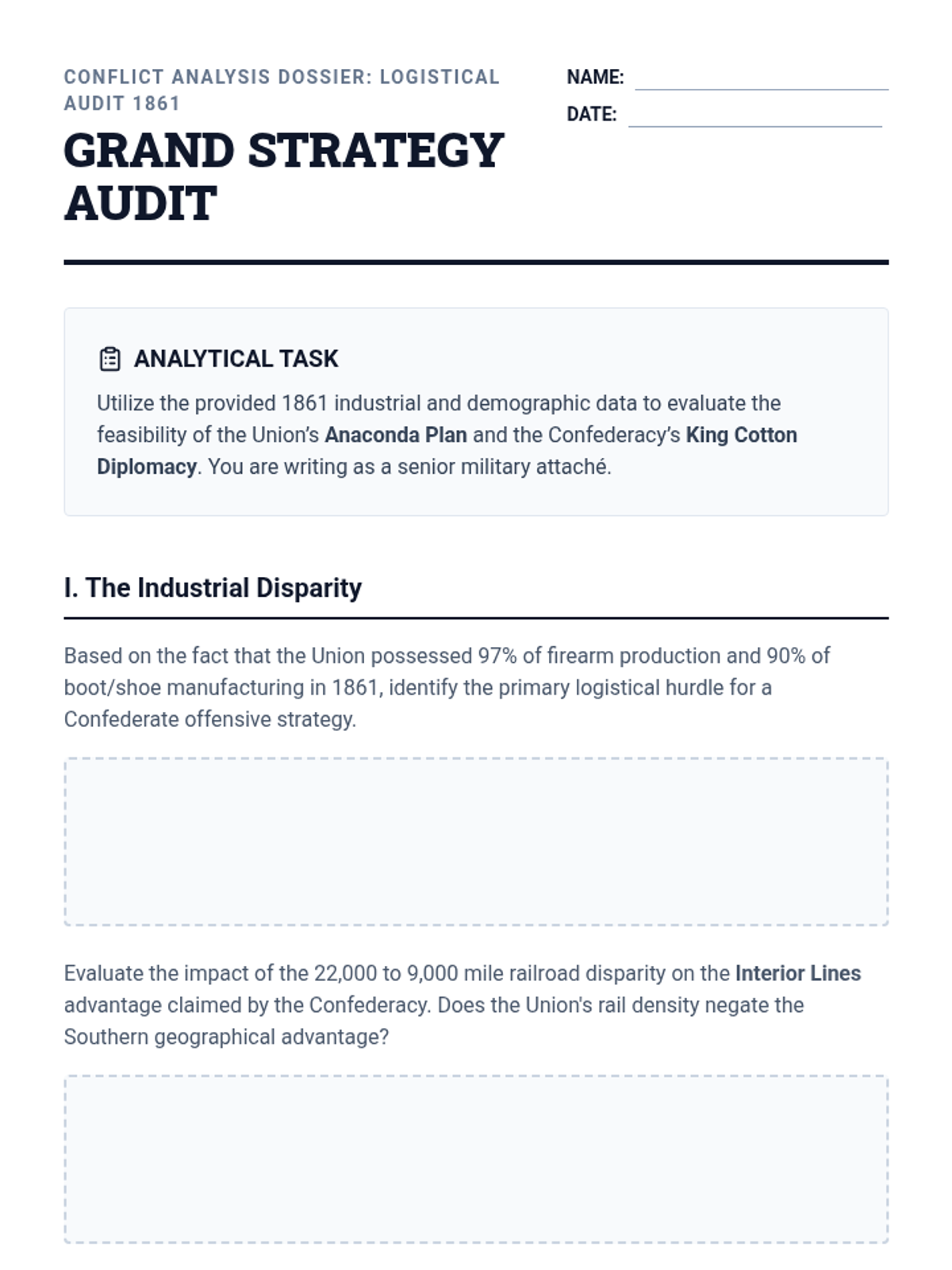
A graduate-level investigation into the American Civil War through the lens of military science, operational art, and strategic leadership, focusing on the transition from Napoleonic tactics to industrial total war.
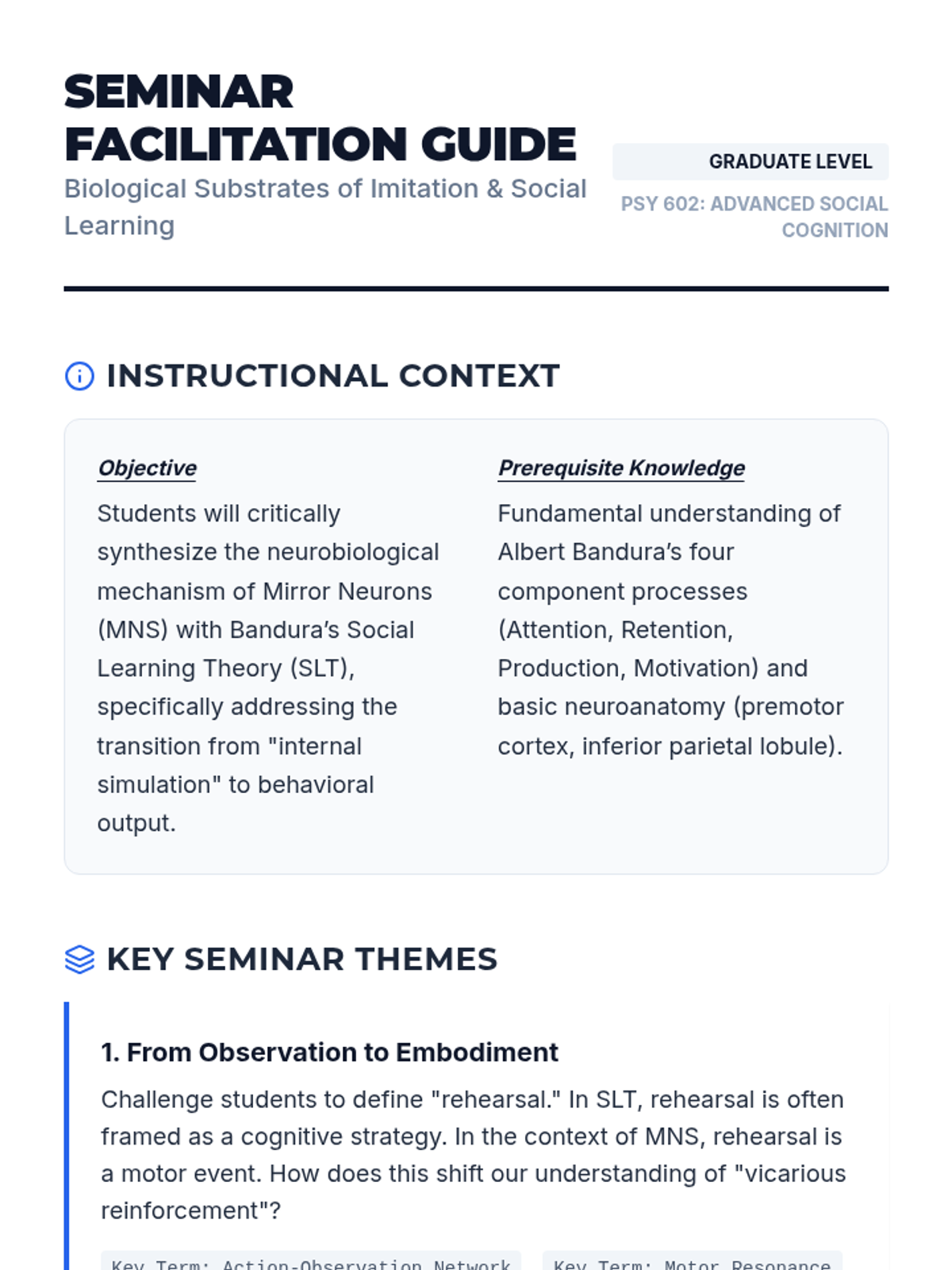
A graduate-level psychology sequence exploring the intersection of Albert Bandura's Social Learning Theory with modern neuroscience (mirror neurons) and digital ecosystems (algorithms, AI, and social media). Students critically synthesize classical theory with contemporary research to propose theoretical updates for the digital age.
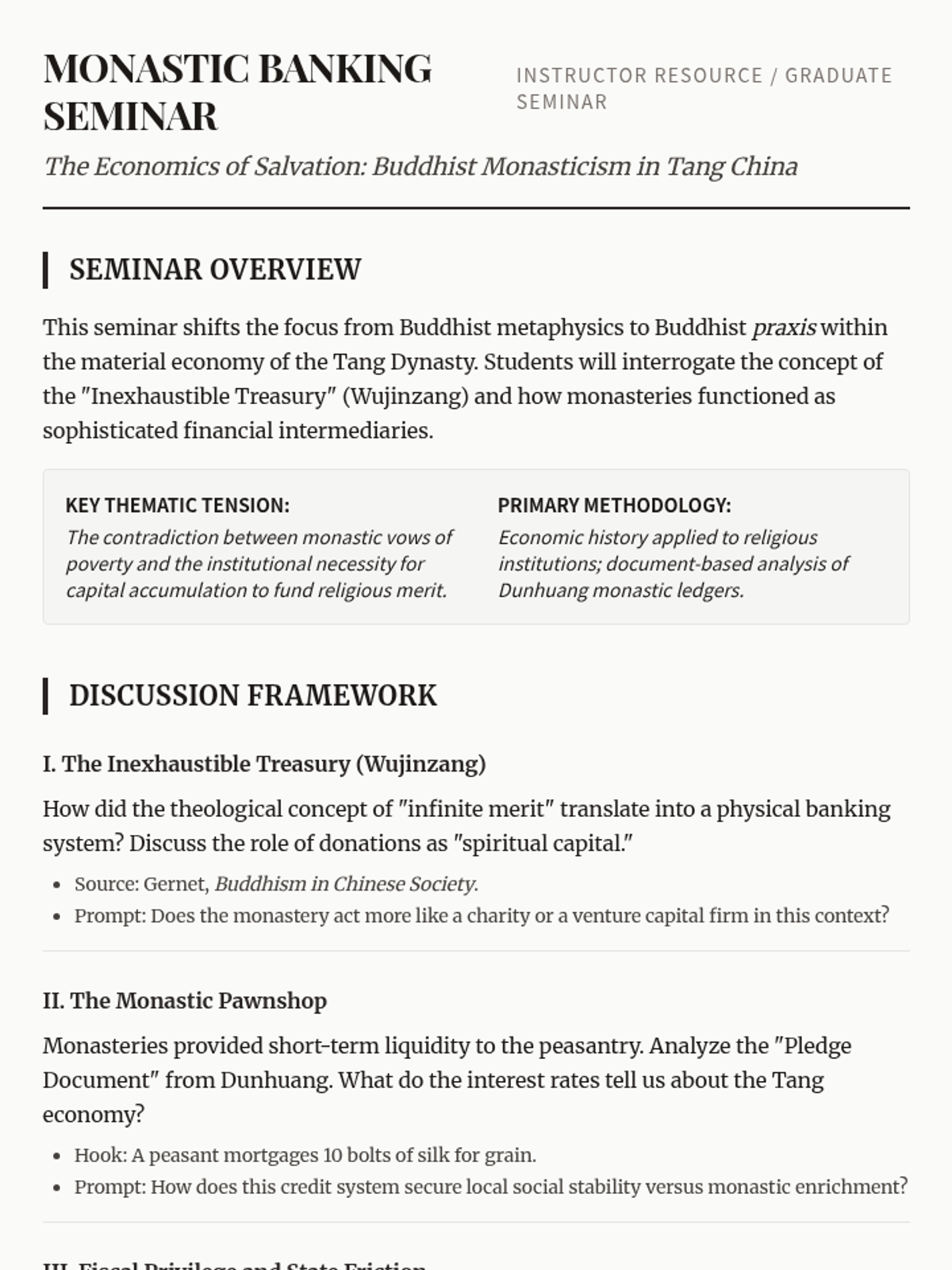
A graduate-level exploration of the intersection of religion, commerce, and art along the Silk Road and maritime routes during the Tang and Song eras. This sequence focuses on the 'materiality of faith'—how religious institutions acted as economic drivers, technology hubs, and agents of cross-cultural syncretism in Medieval Asia.
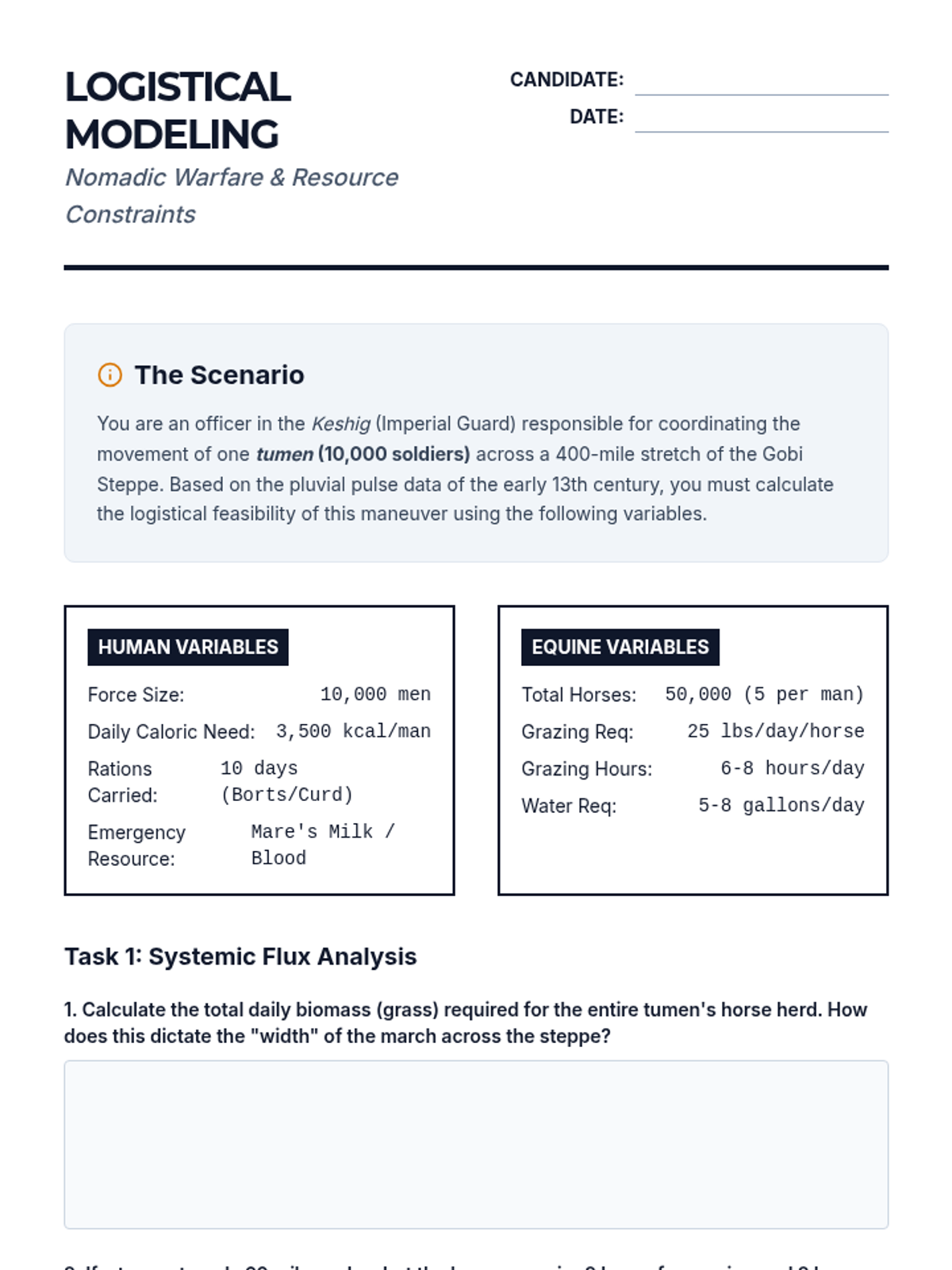
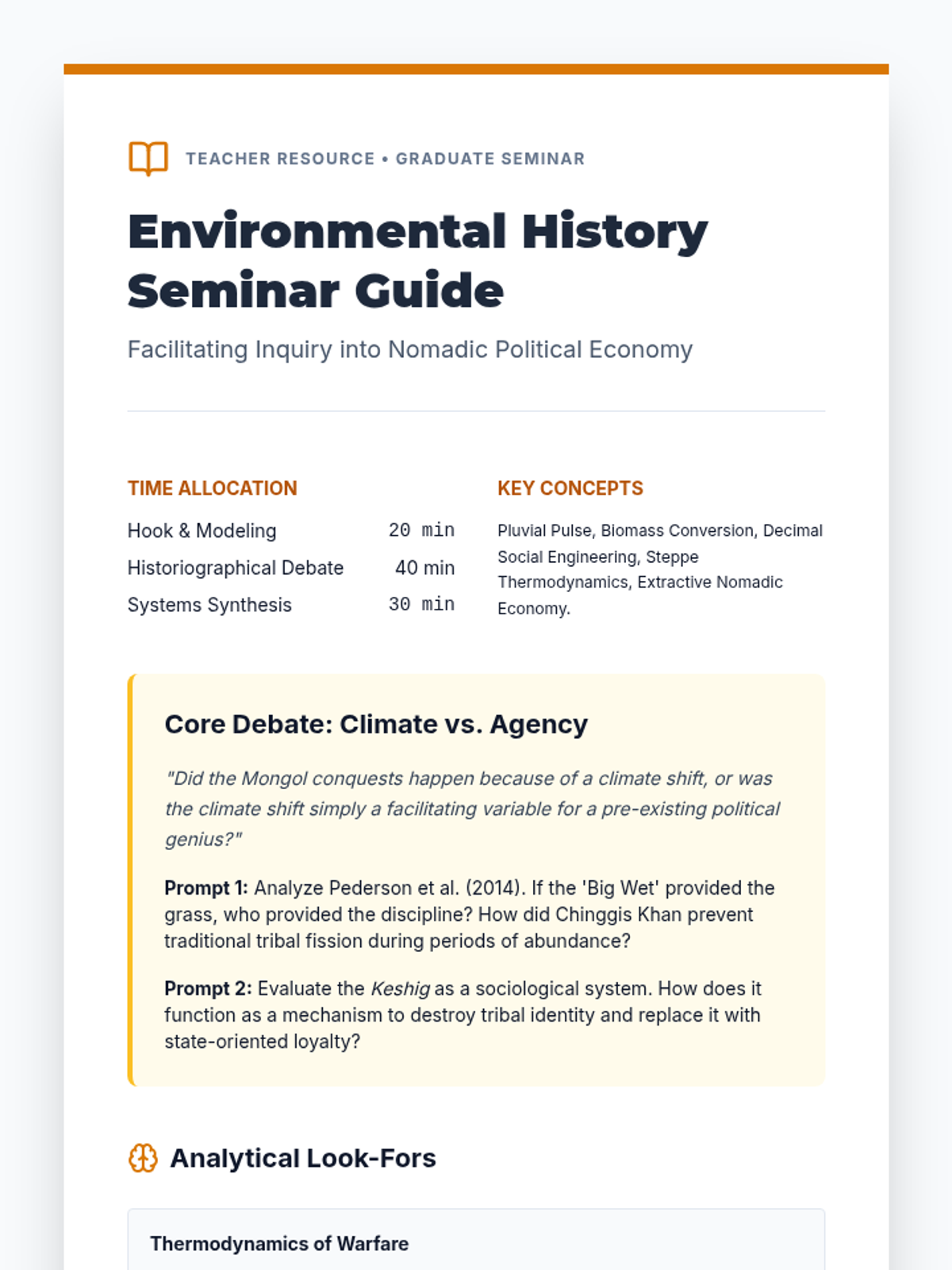
A graduate-level exploration of the Mongol Empire as a precursor to modern globalization, utilizing systems theory, environmental history, and network analysis to understand Eurasian integration.
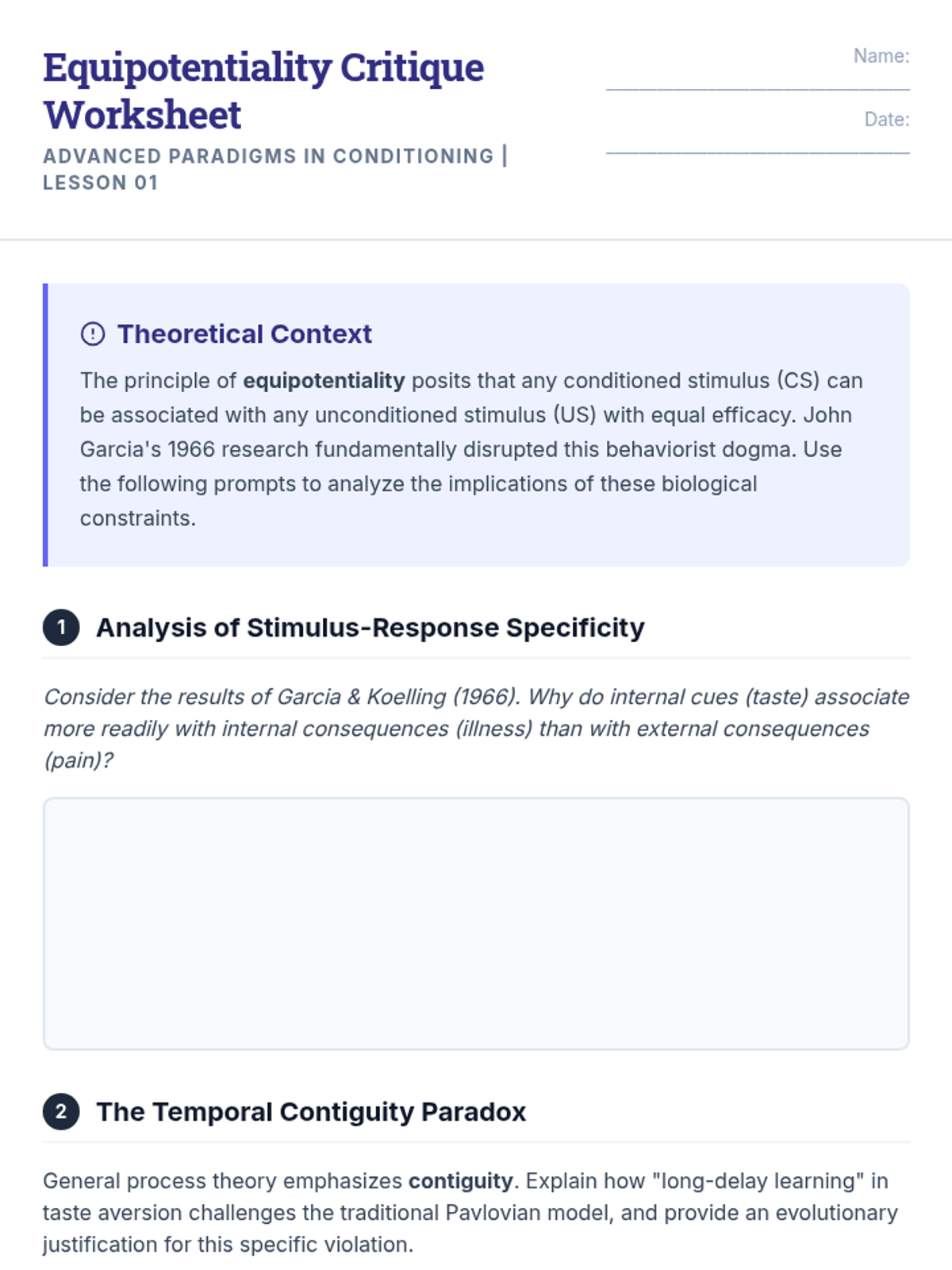
This graduate-level sequence challenges the 'general process' view of learning by exploring biological constraints and complex modern paradigms. Students analyze the Garcia Effect, psychoneuroimmunology, evaluative conditioning, and complex associative chaining, culminating in an ethical experimental design proposal.
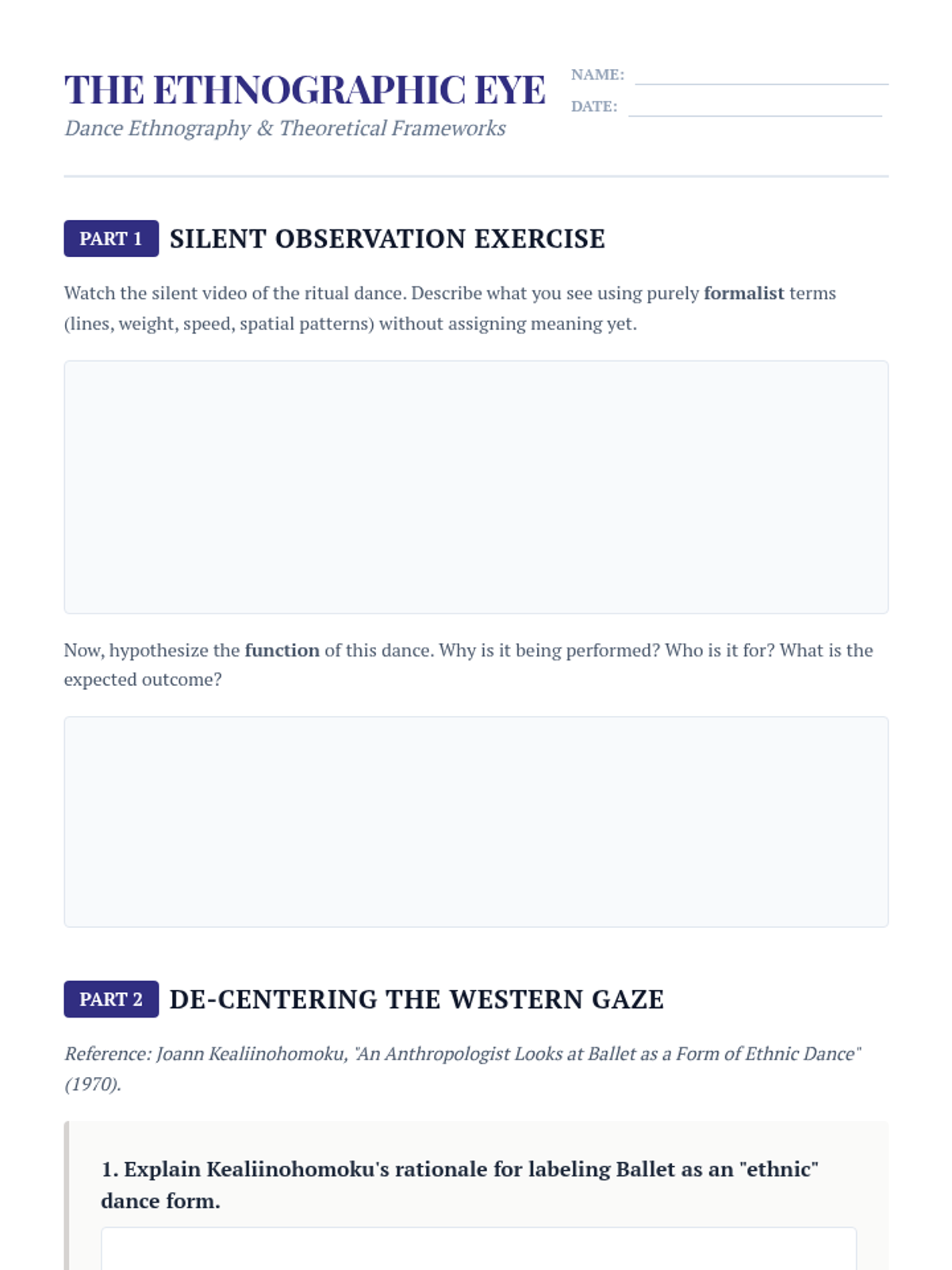
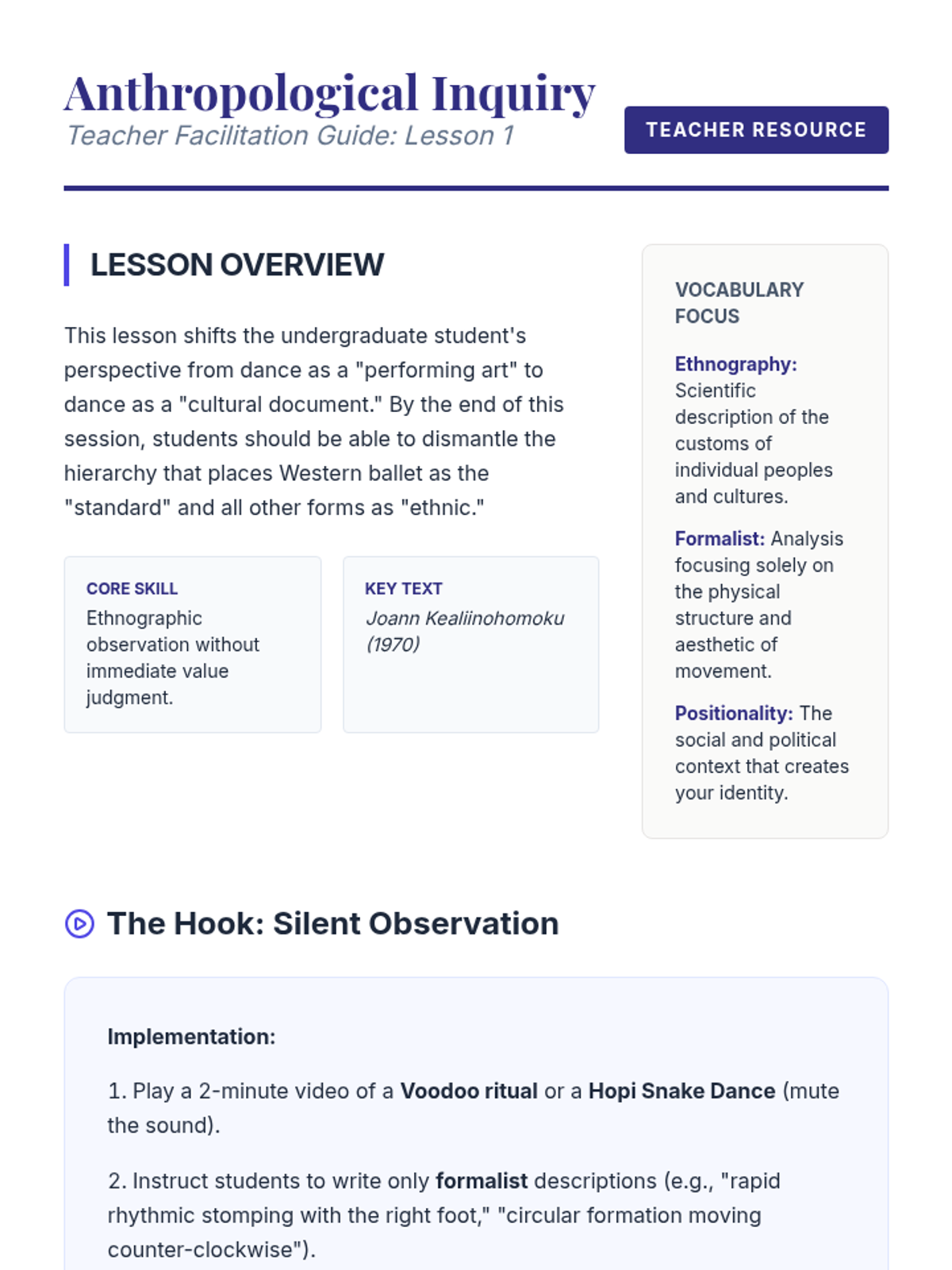
This sequence introduces undergraduate students to the anthropological frameworks used to study dance in its ritual and social contexts. Students explore the function of movement in religious, social, and healing practices across Indigenous American, West African, and Ancient Greek traditions, culminating in an analysis of how sacred dances transition to secular stages.
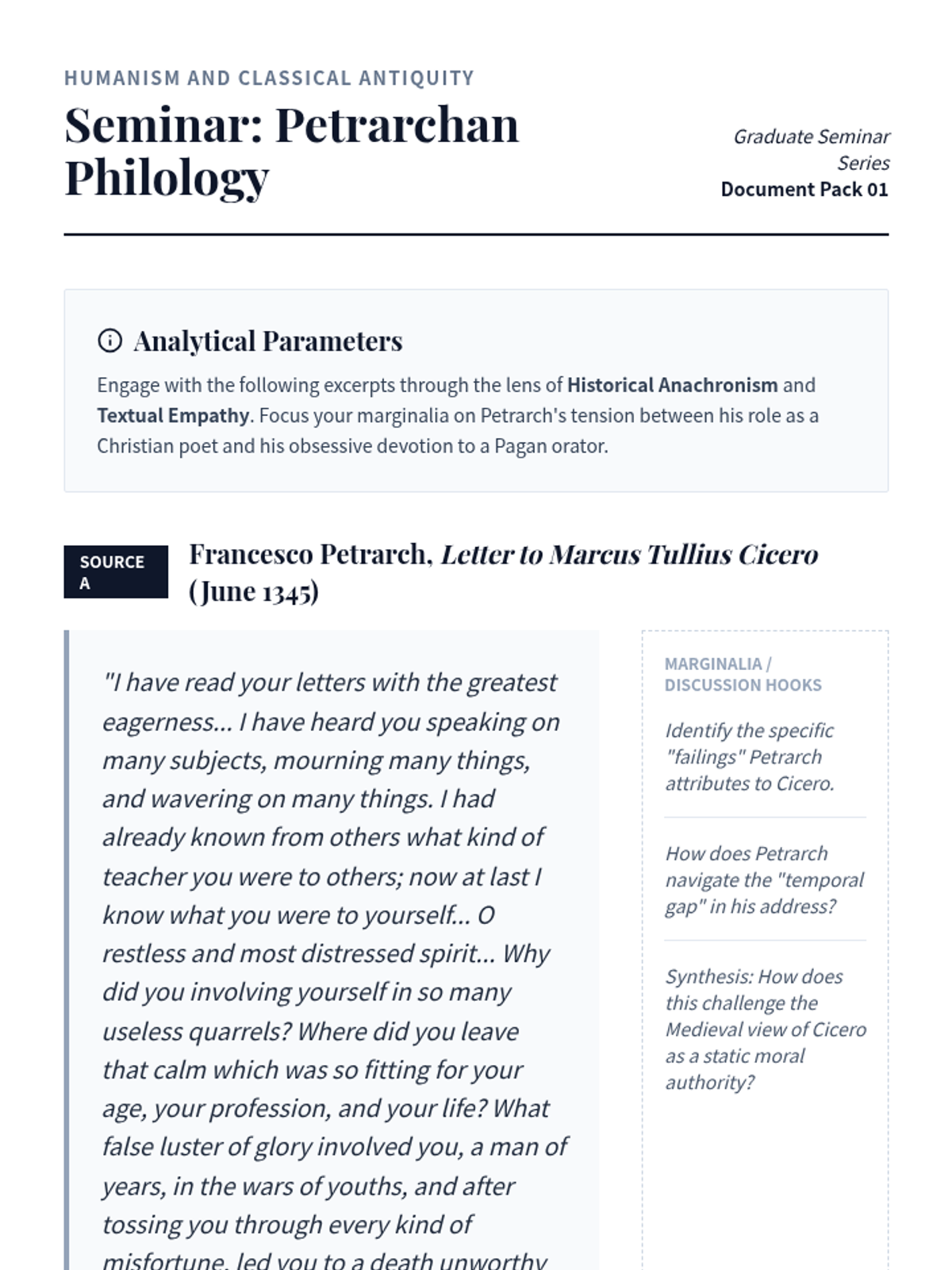
A graduate-level investigation into the intellectual foundations of the Renaissance, exploring the evolution of Humanism from Petrarch's philological 'ad fontes' movement to Machiavelli's political realism. Students analyze the tension between classical revival and Christian tradition, focusing on key figures like Bruni, Pico della Mirandola, and Erasmus.
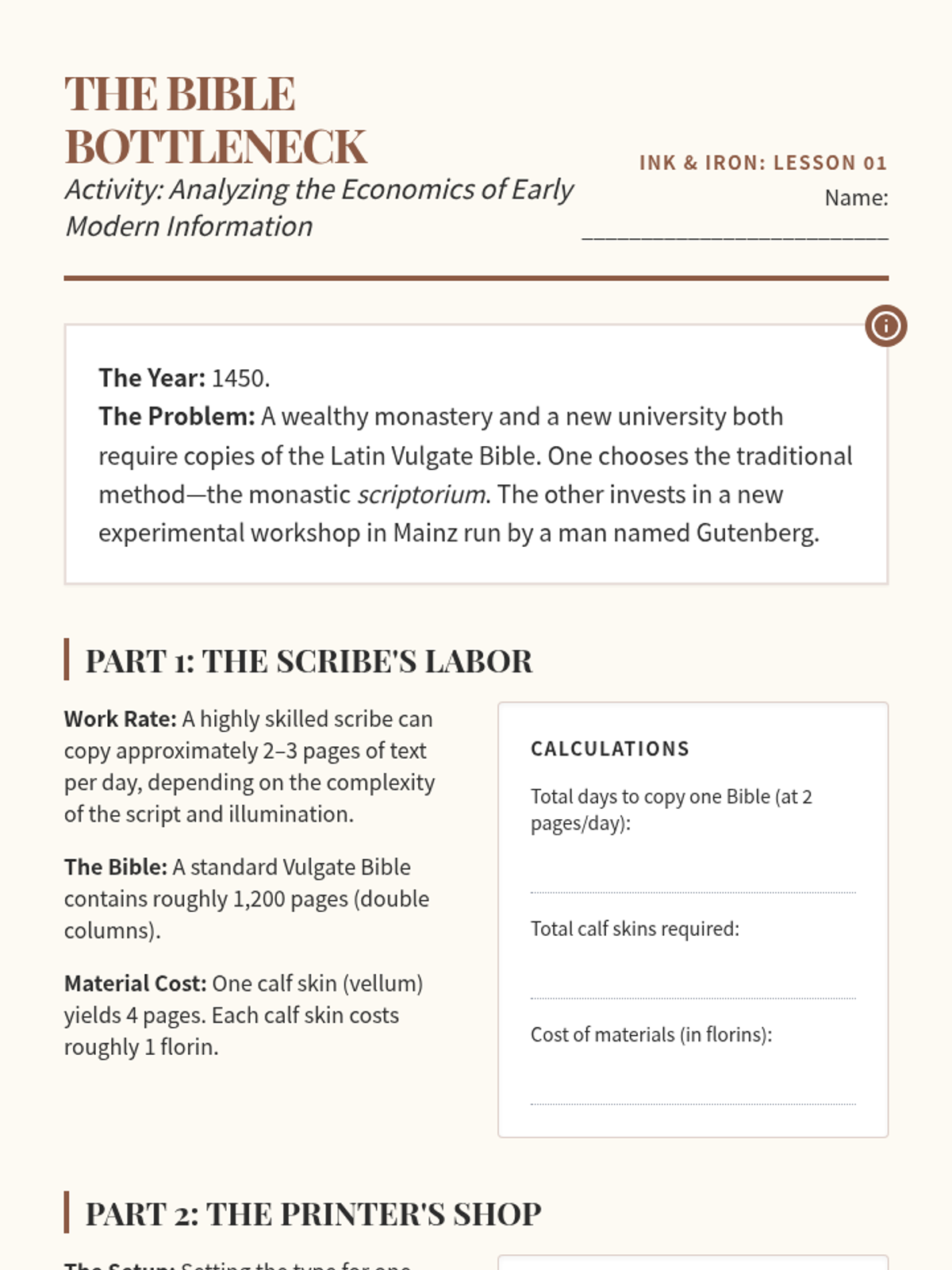
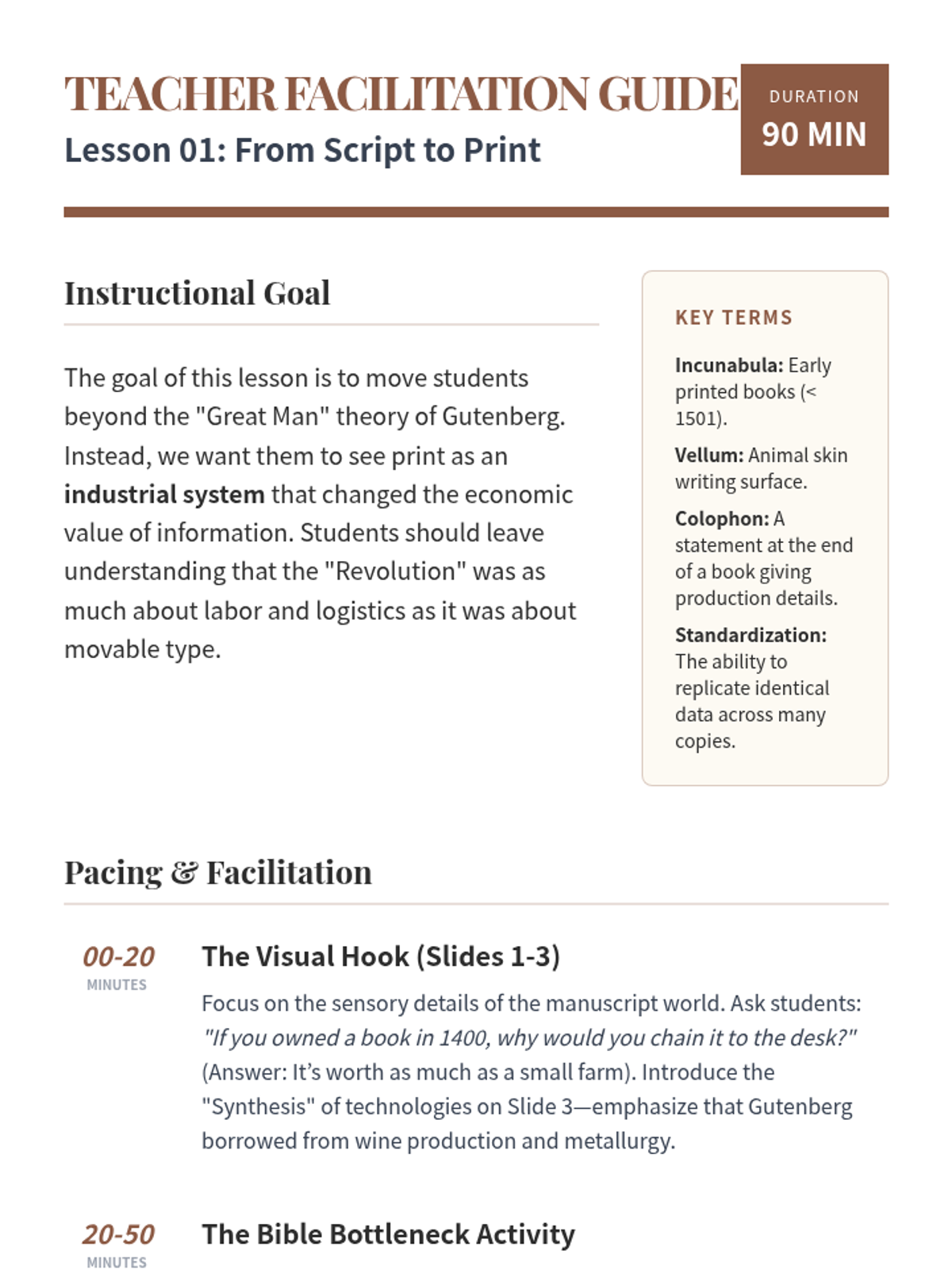
This undergraduate-level history sequence explores the transformative impact of the printing press during the Renaissance. It examines the shift from manuscript culture to print, historiographical debates on technological determinism, the standardization of vernacular languages, and the press's role in the Reformation and Scientific Revolution.
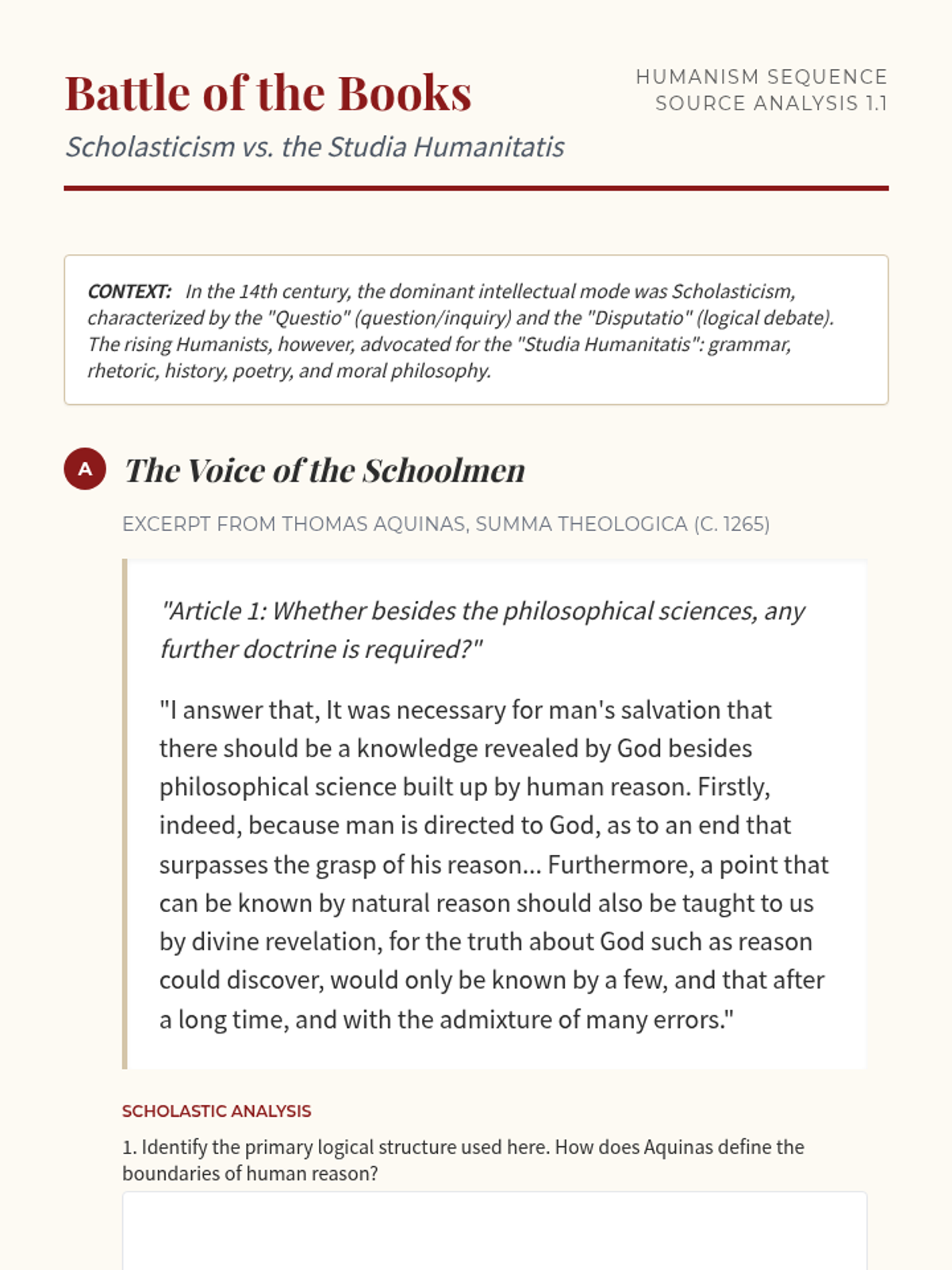
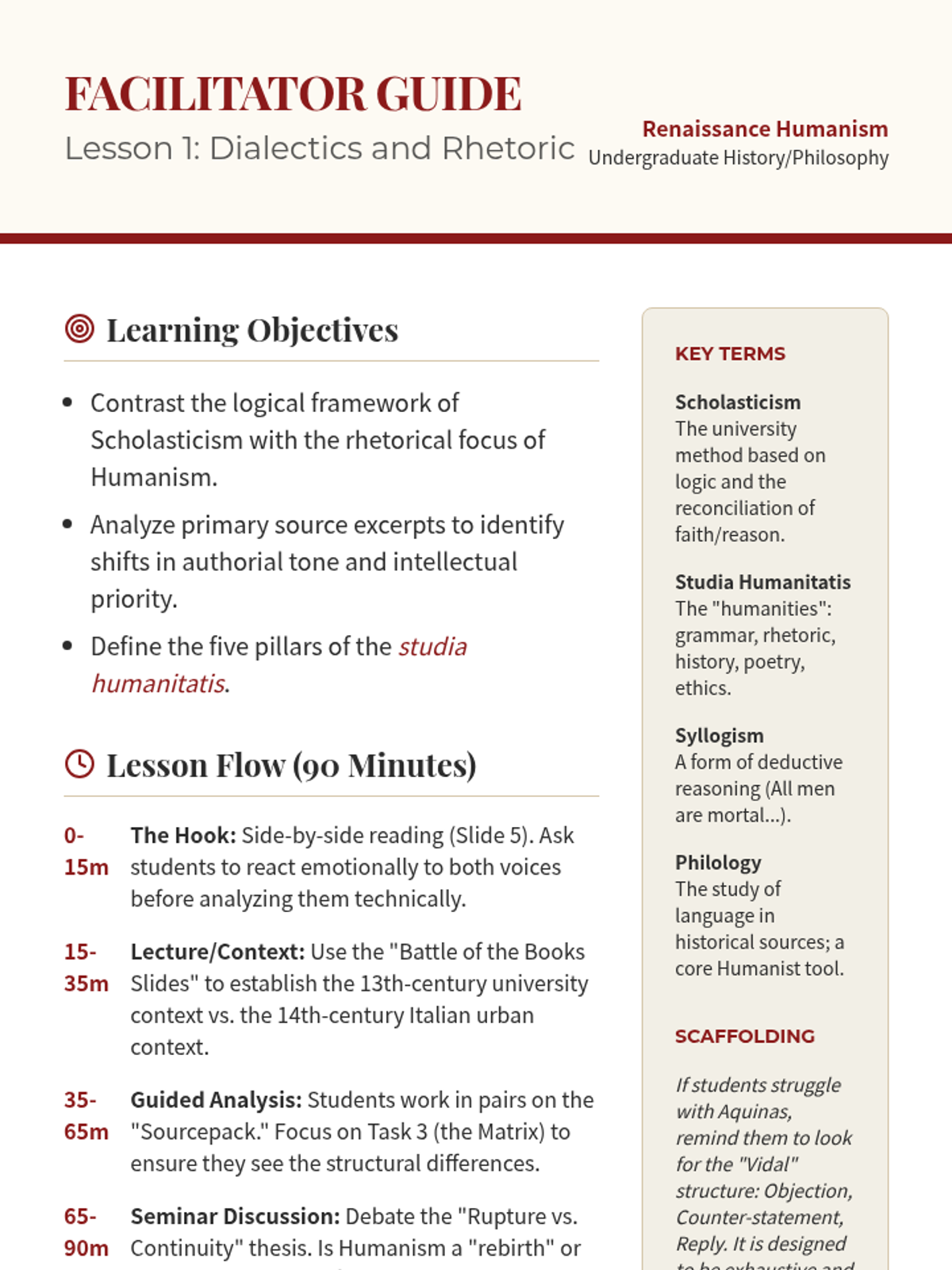
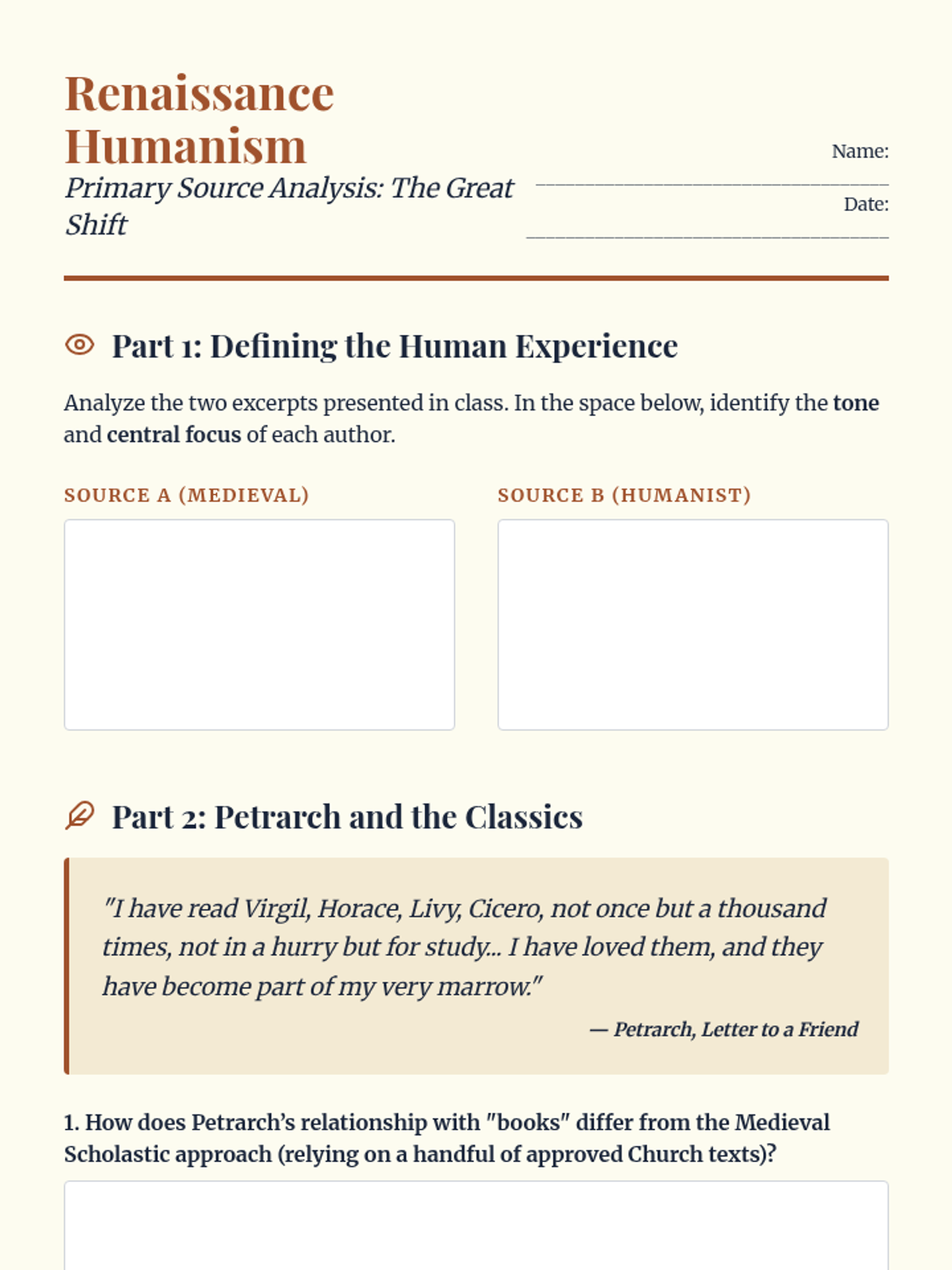
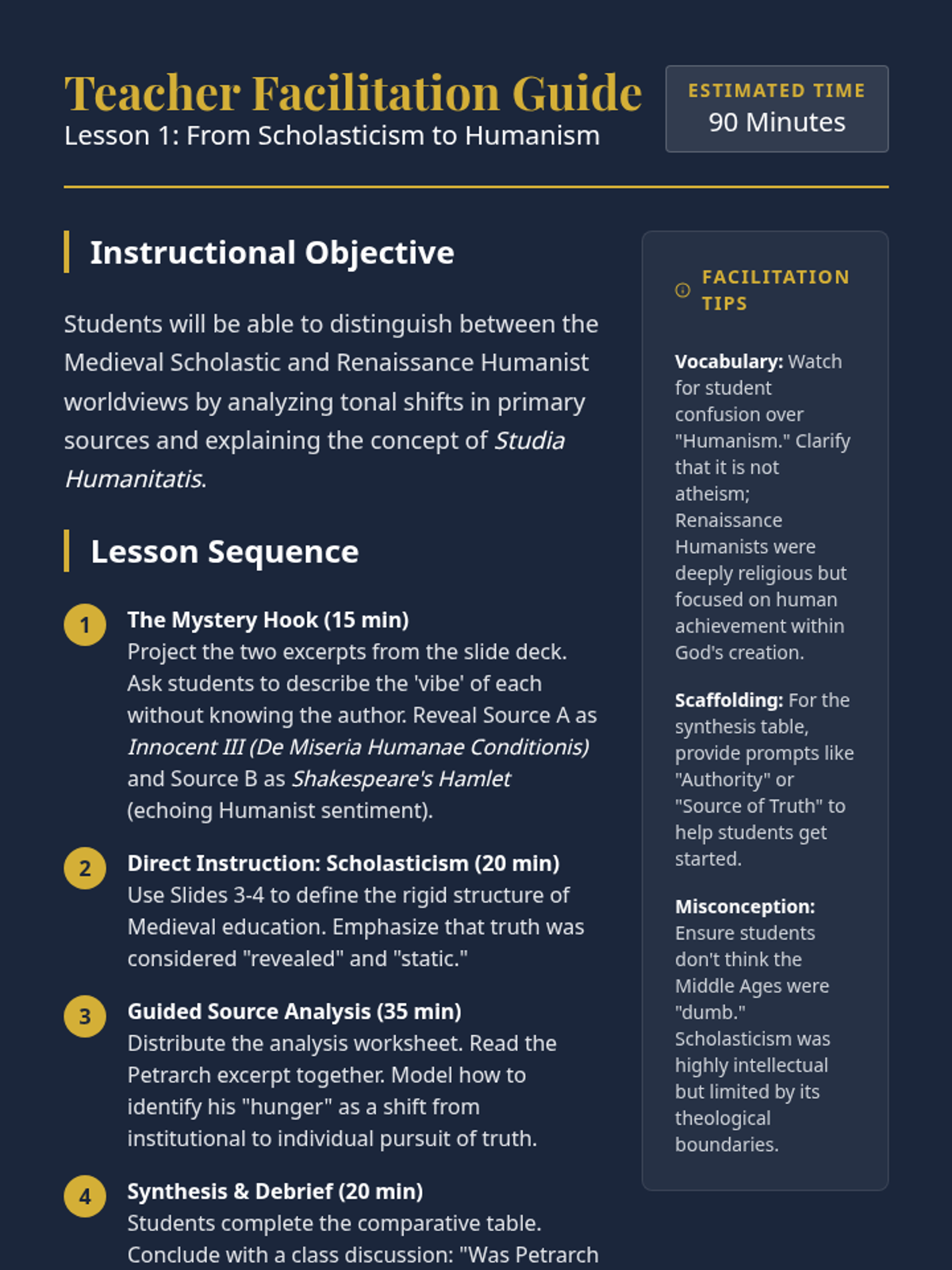
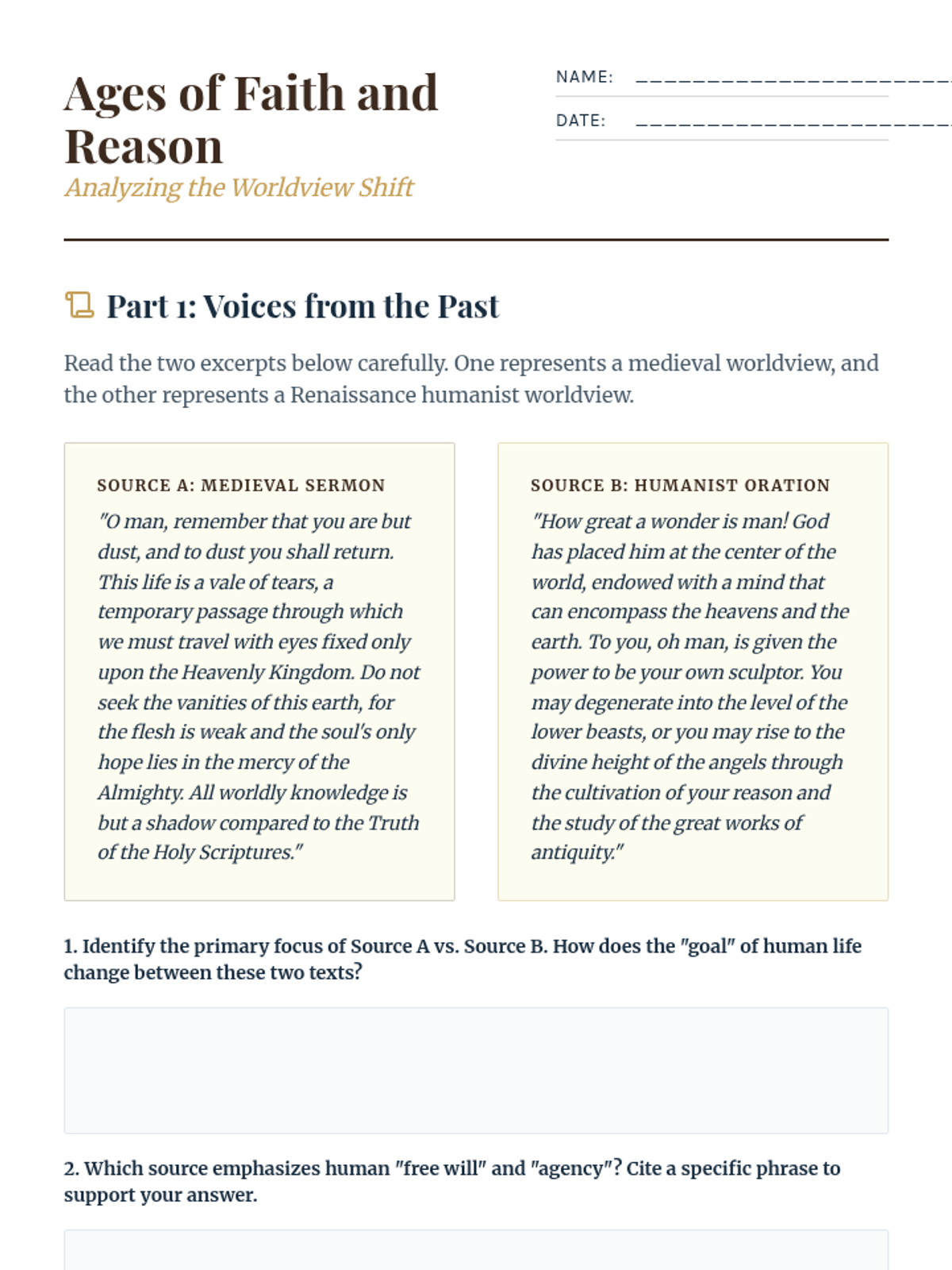
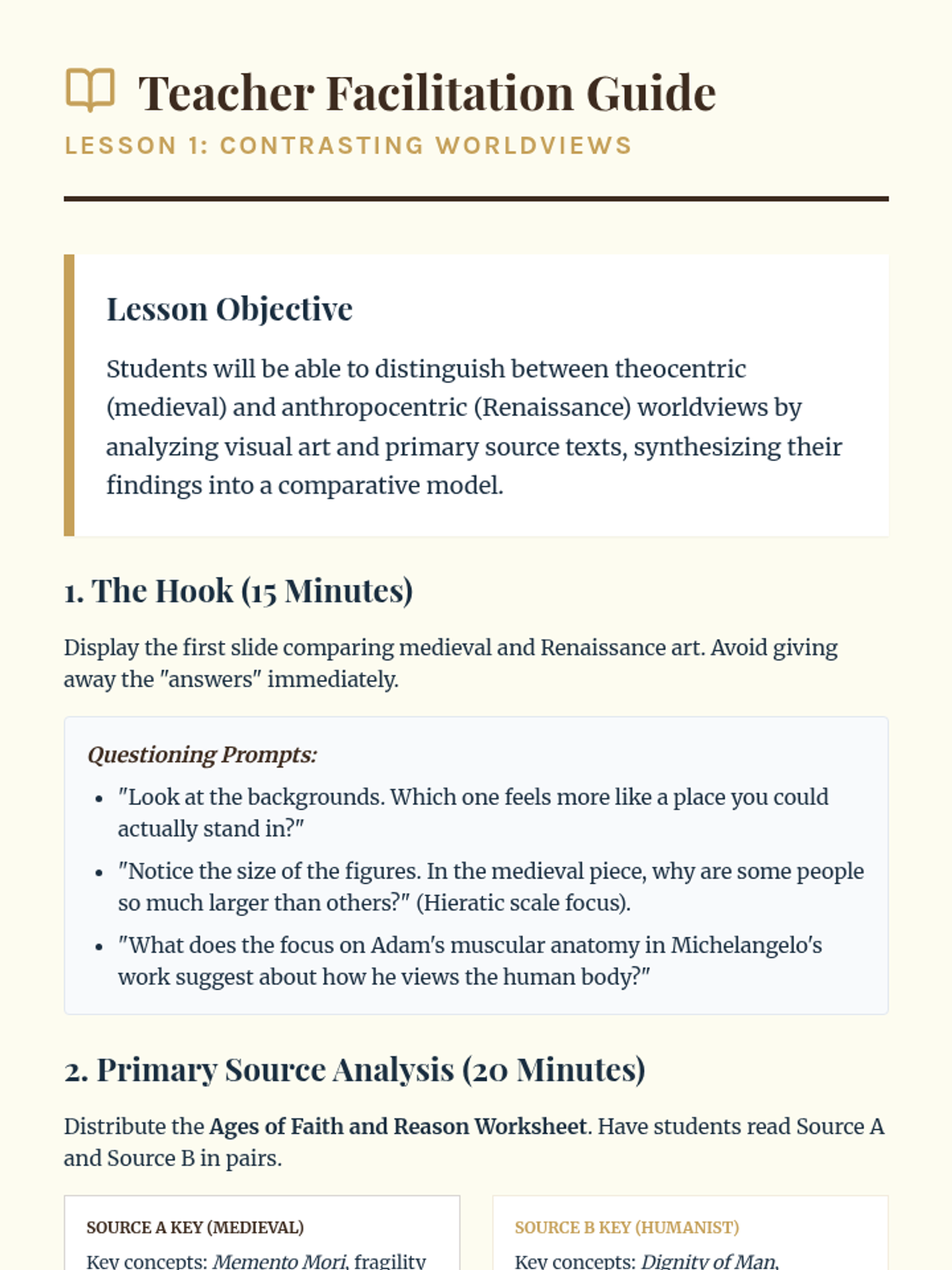
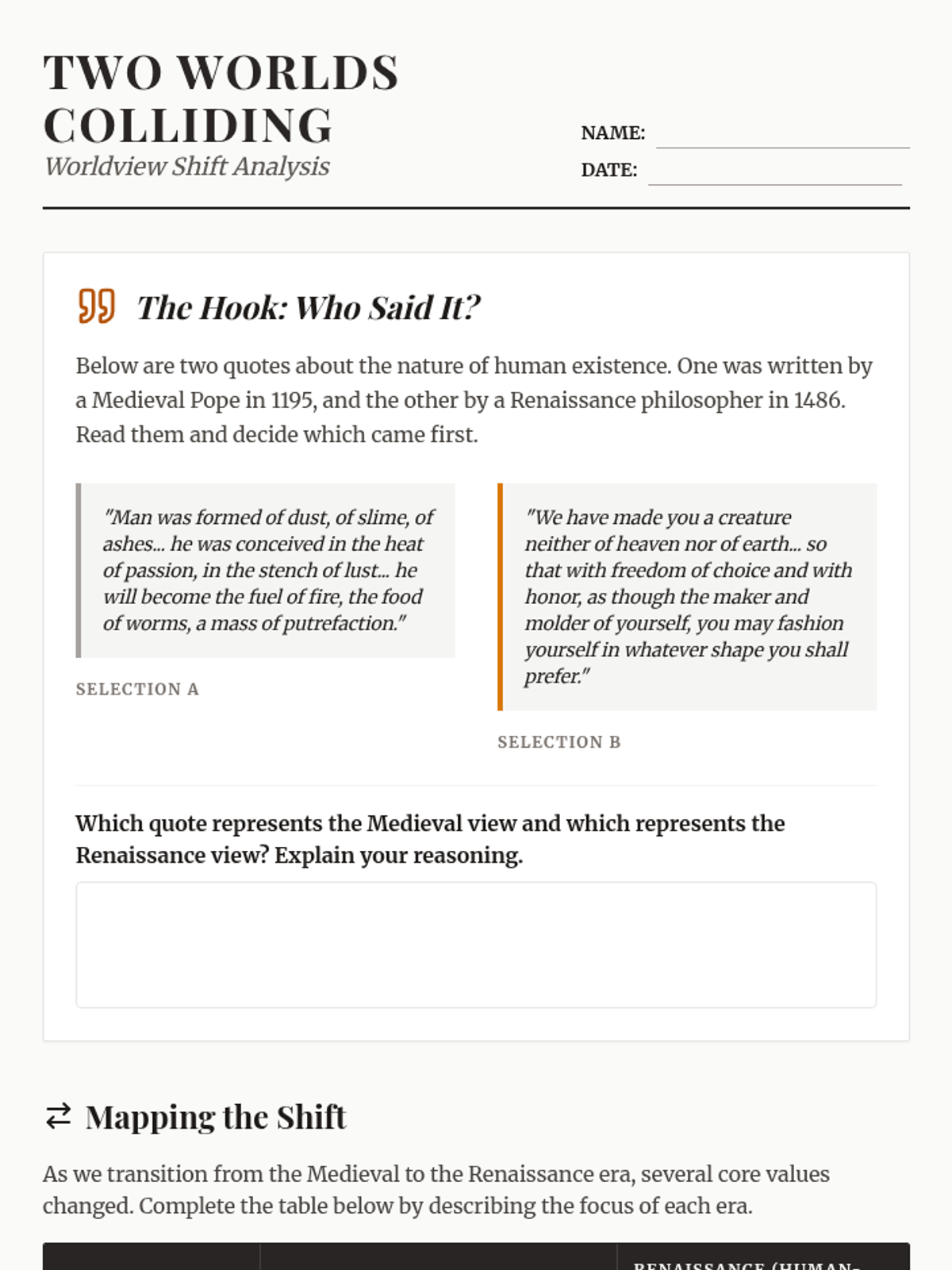
An undergraduate-level exploration of the intellectual shift from Medieval Scholasticism to Renaissance Humanism. Students analyze primary sources, philological methods, and the political and theological implications of the classical revival.
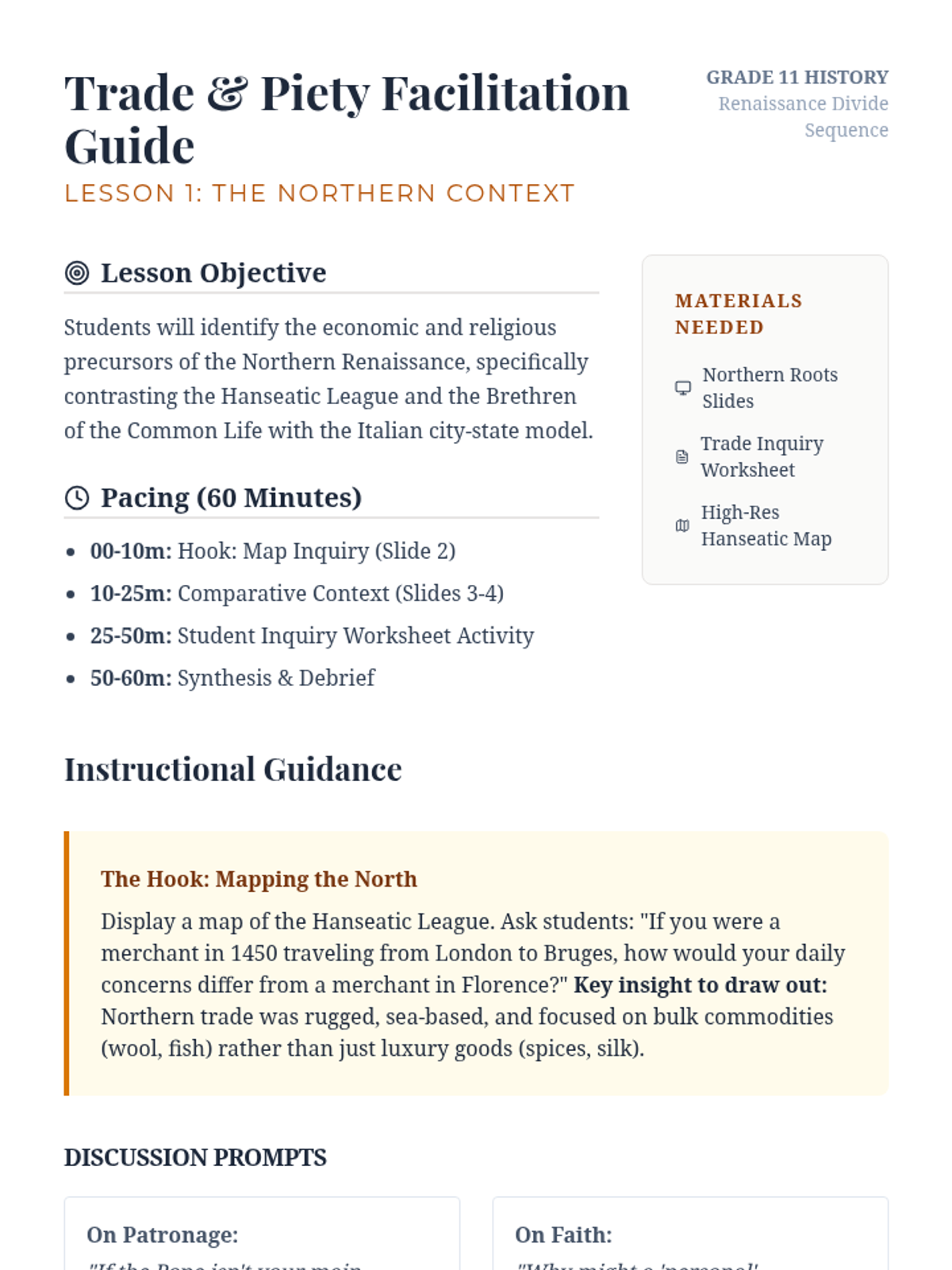
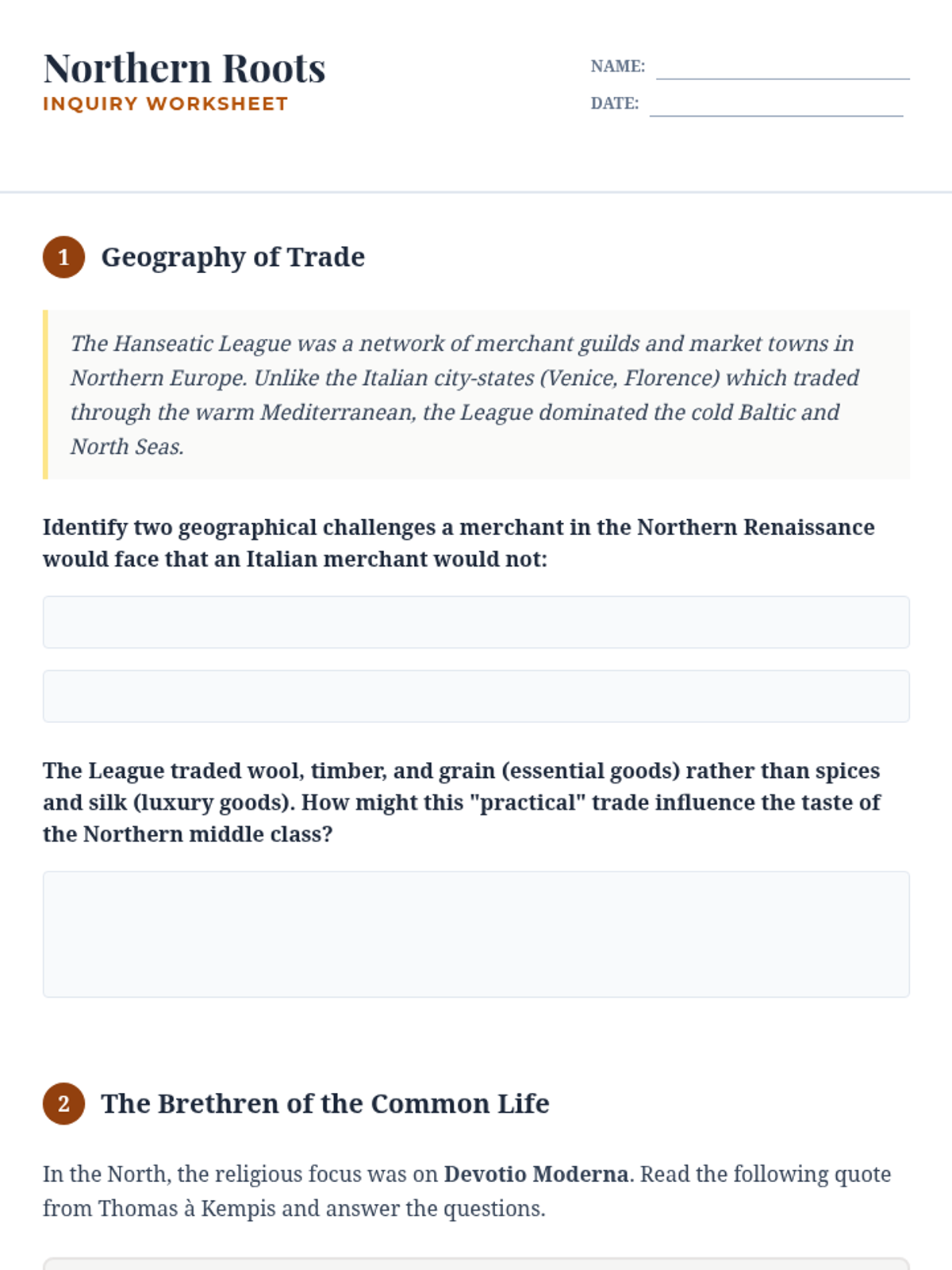
A comparative study of the Italian and Northern Renaissance movements, exploring differences in economics, art, humanism, and social reform through the lens of geography and culture.
This high school history sequence explores the intellectual transformation from Medieval Scholasticism to Renaissance Humanism. Students analyze primary sources from key thinkers like Petrarch, Pico della Mirandola, and Machiavelli to understand the shift toward individualism, secular inquiry, and political realism.
This sequence explores the intellectual transformation of Europe from the Middle Ages to the Renaissance, focusing on the emergence of humanism and its impact on culture, education, and religion. Students analyze primary sources from Petrarch, Erasmus, and Castiglione to understand how shifting views on human potential reshaped society.
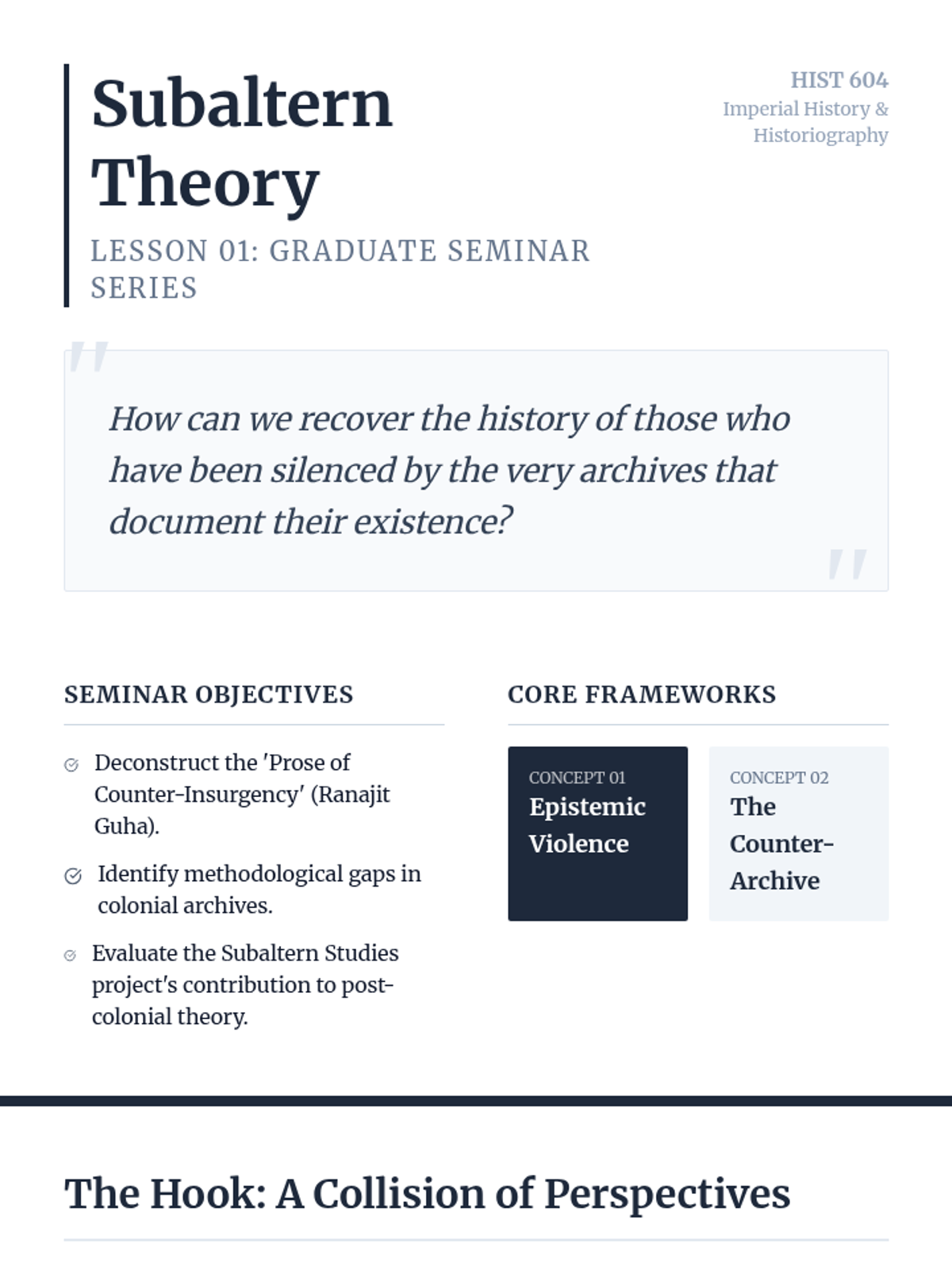
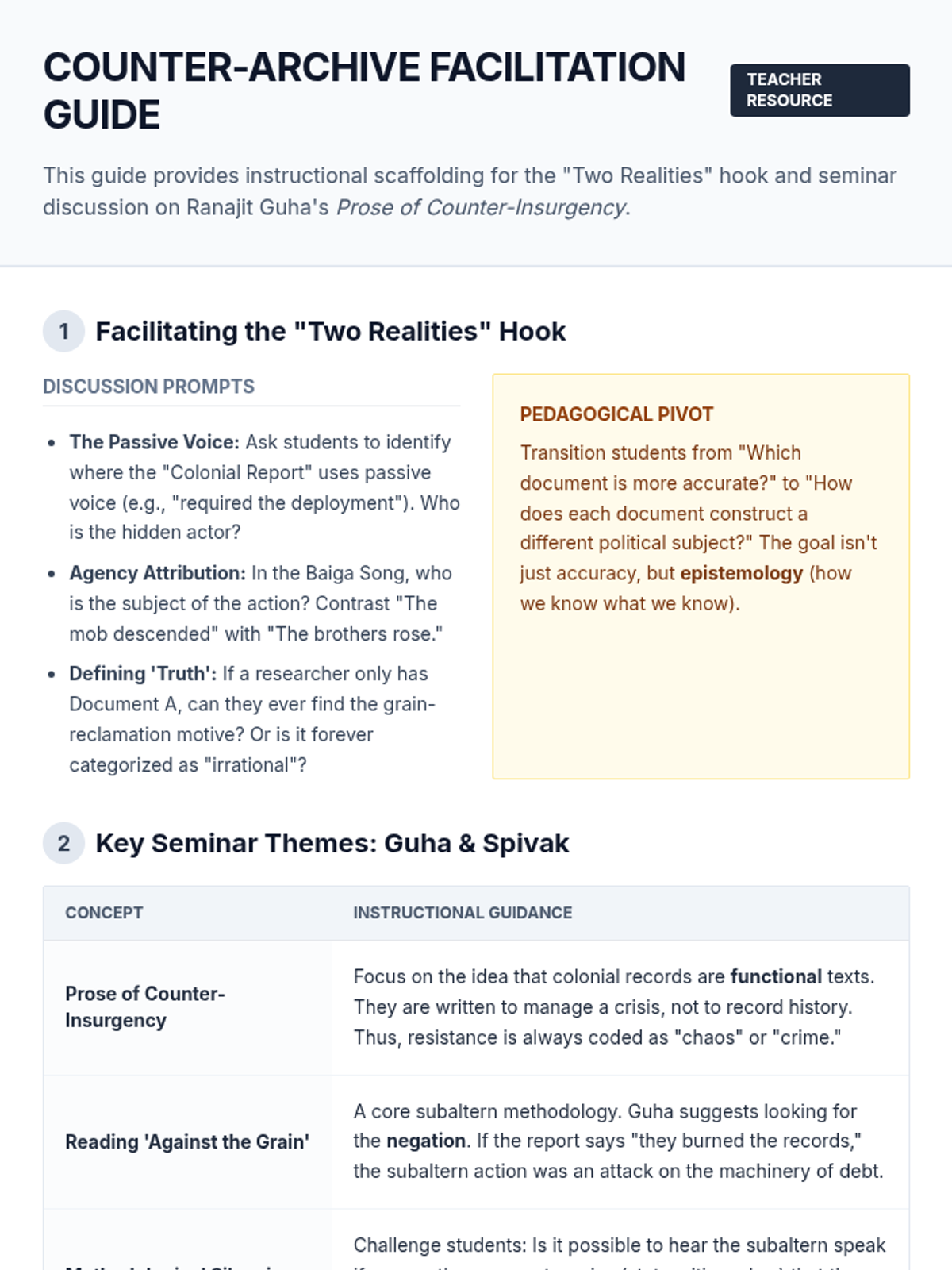
A graduate-level exploration of indigenous agency during the era of imperialism, focusing on the Subaltern Studies framework. Students analyze the spectrum of response to colonial rule, from armed resistance to strategic negotiation, challenging traditional narratives of passive victimization.
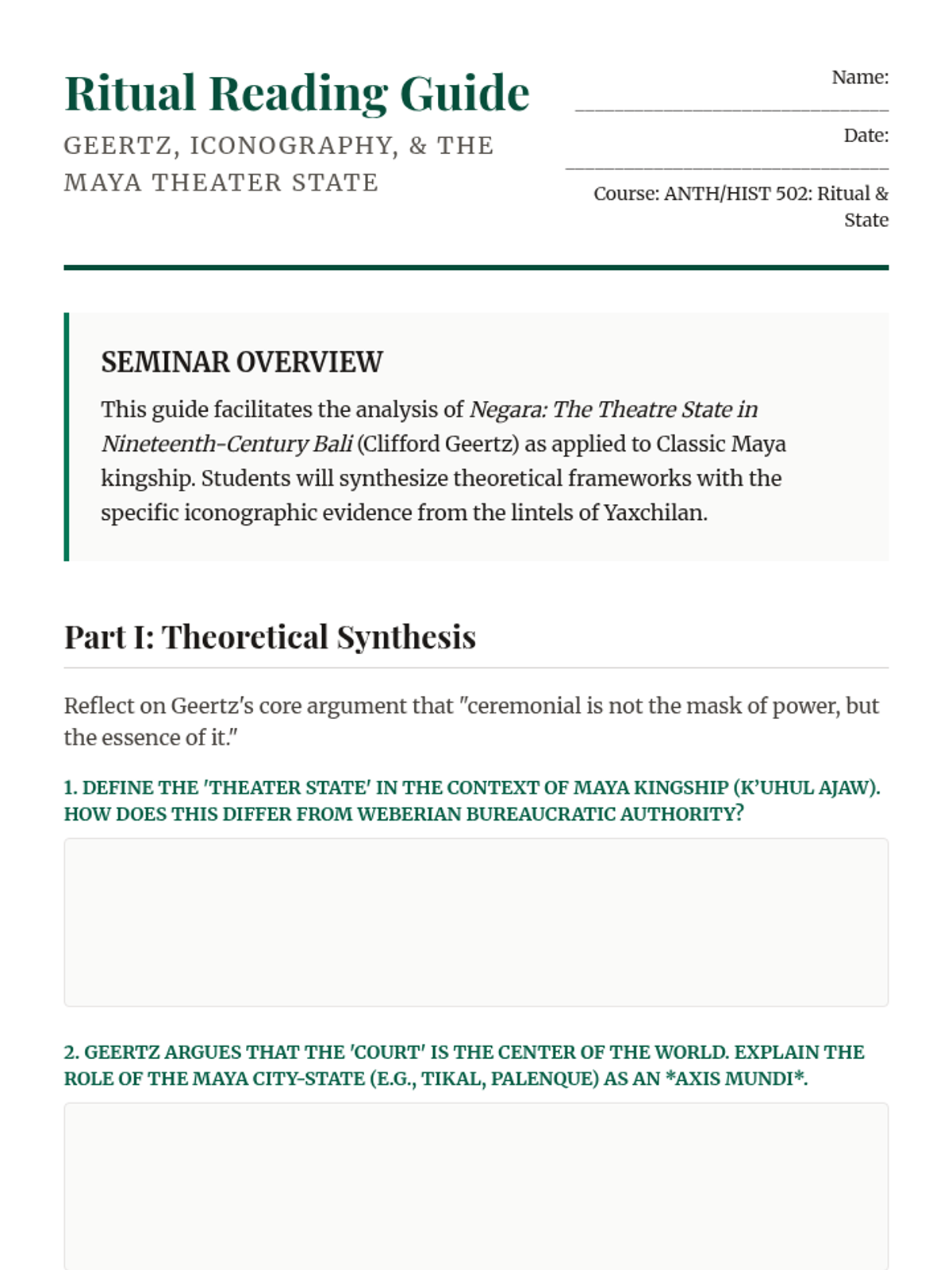
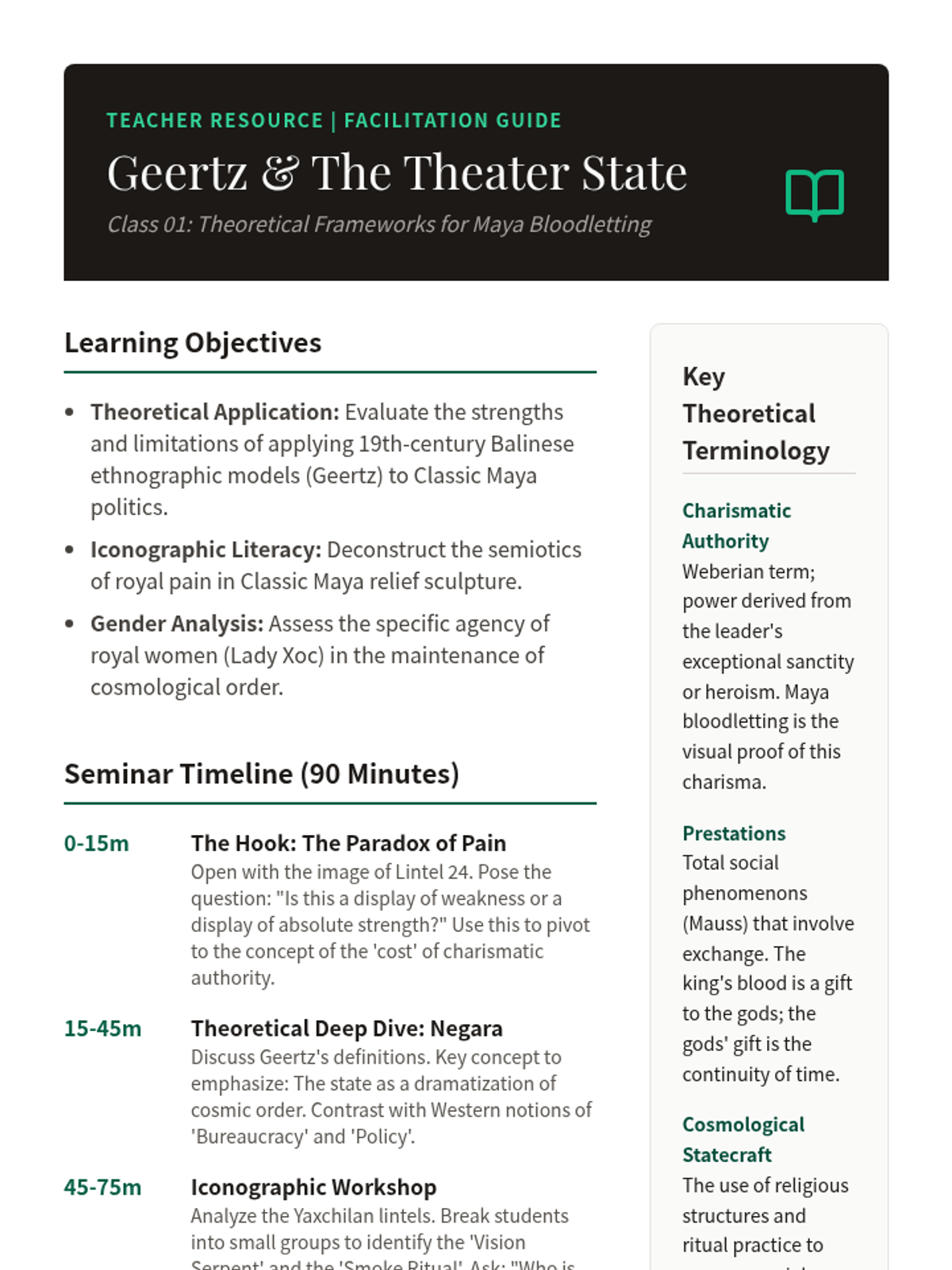
A graduate-level exploration of the functional roles of ritual violence and cosmology in Mesoamerican and South American states. This sequence applies anthropological and historical theories to analyze how sacrifice and performance maintained state power and cosmic order.
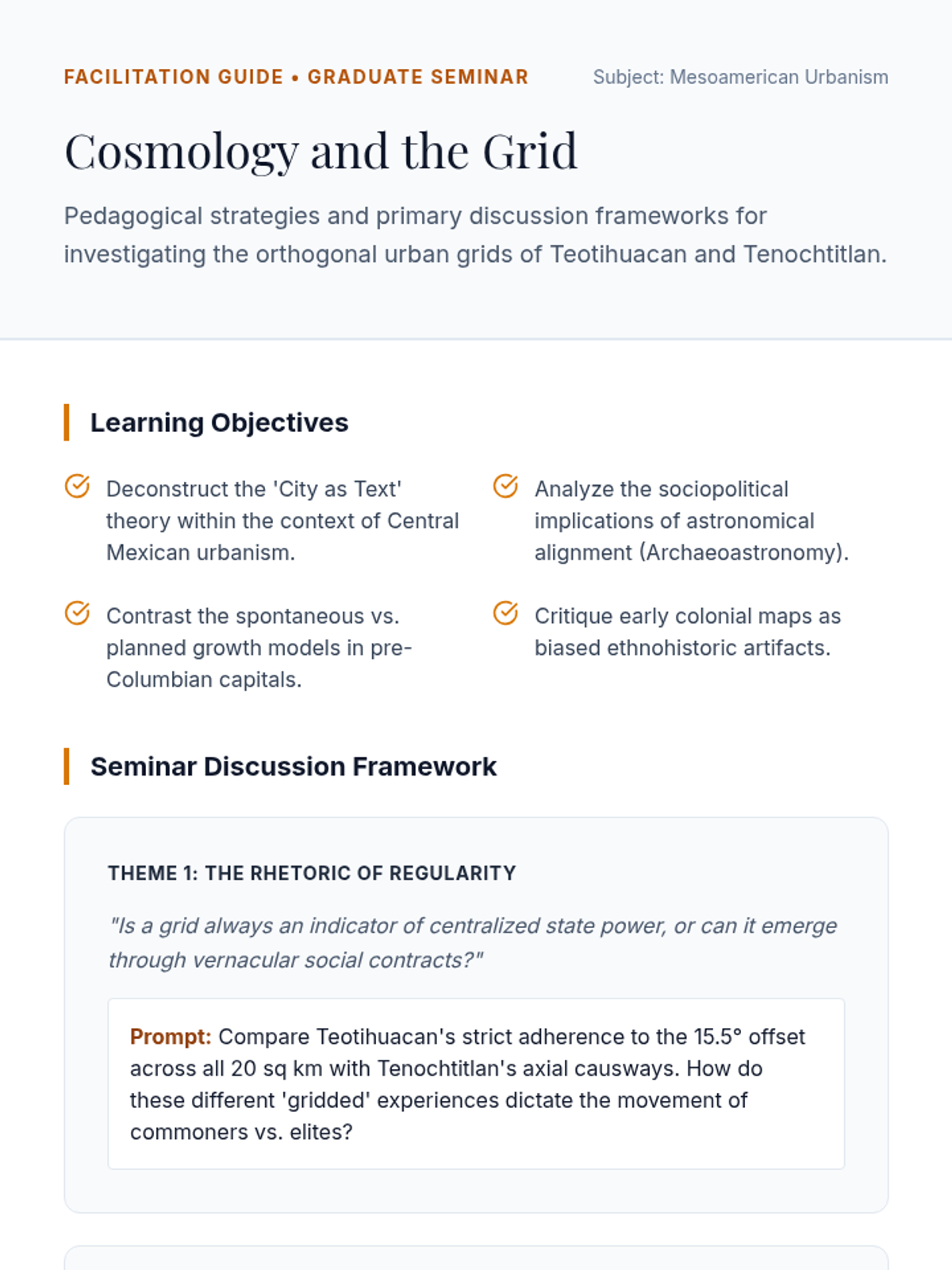
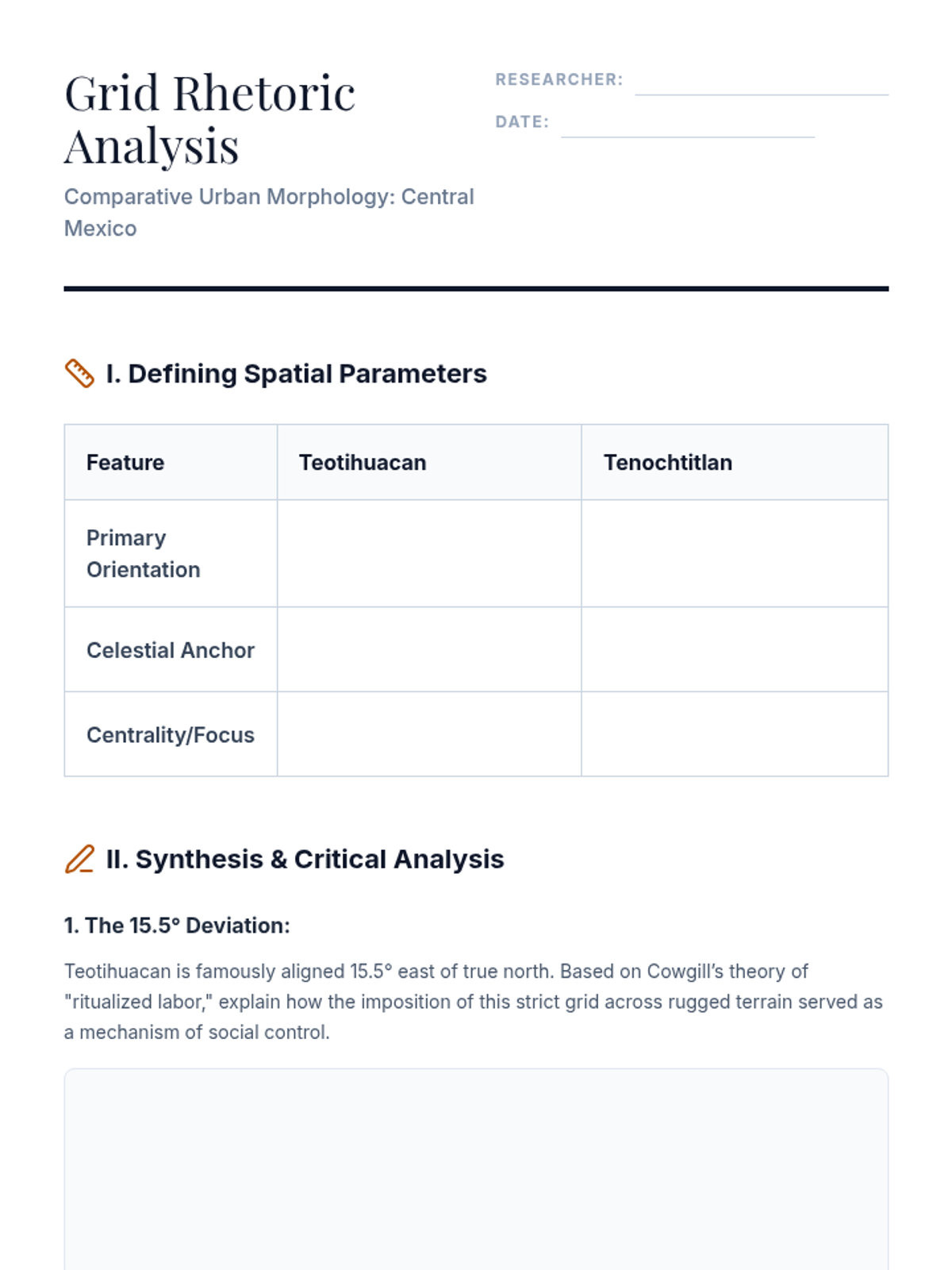
This graduate-level seminar sequence explores the intersection of urban planning, cosmology, and political legitimacy in pre-Columbian Mesoamerica and the Andes. Students analyze how monumental architecture and spatial organization served as tools for social control and religious performance across major capital cities.
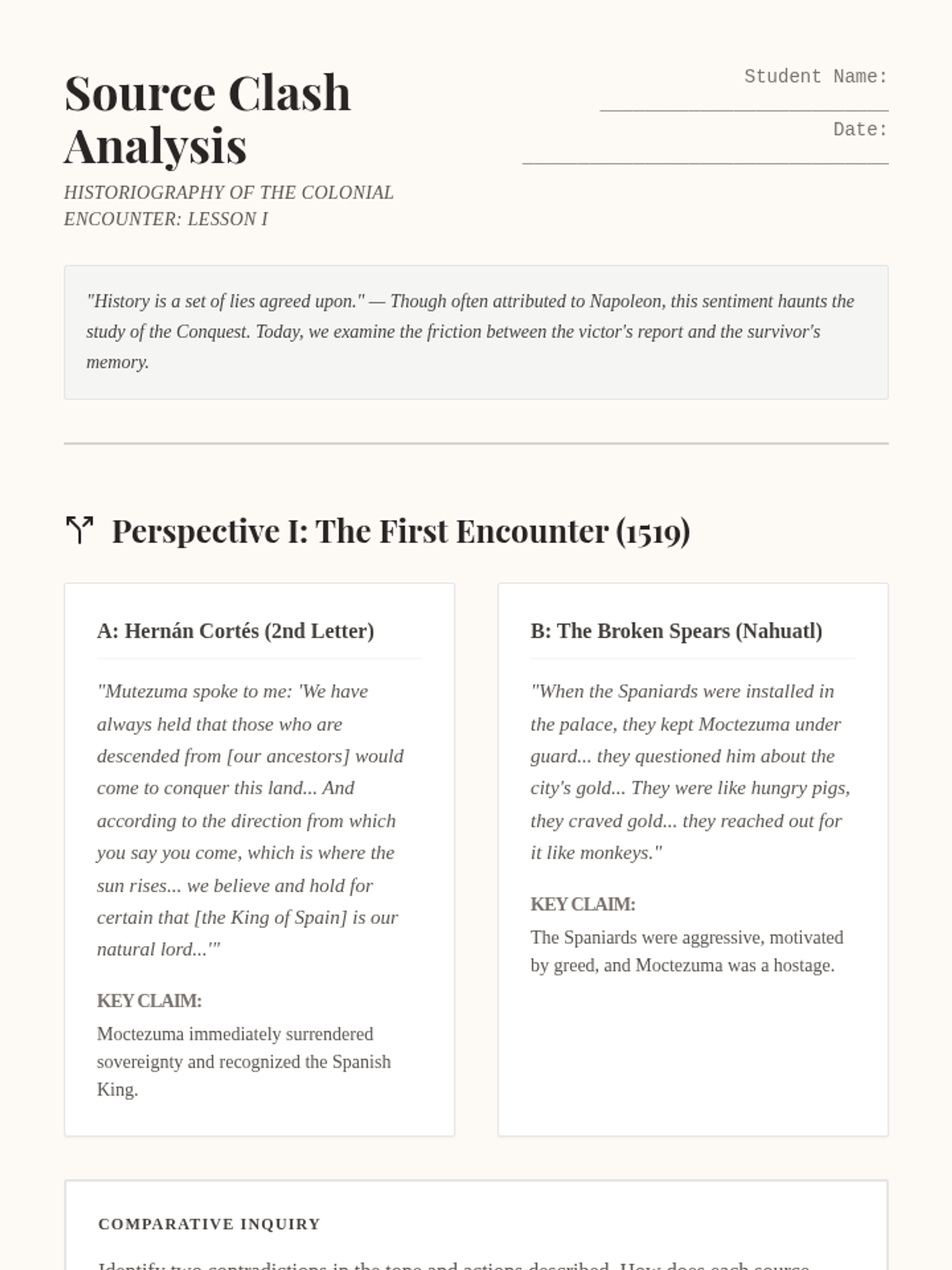
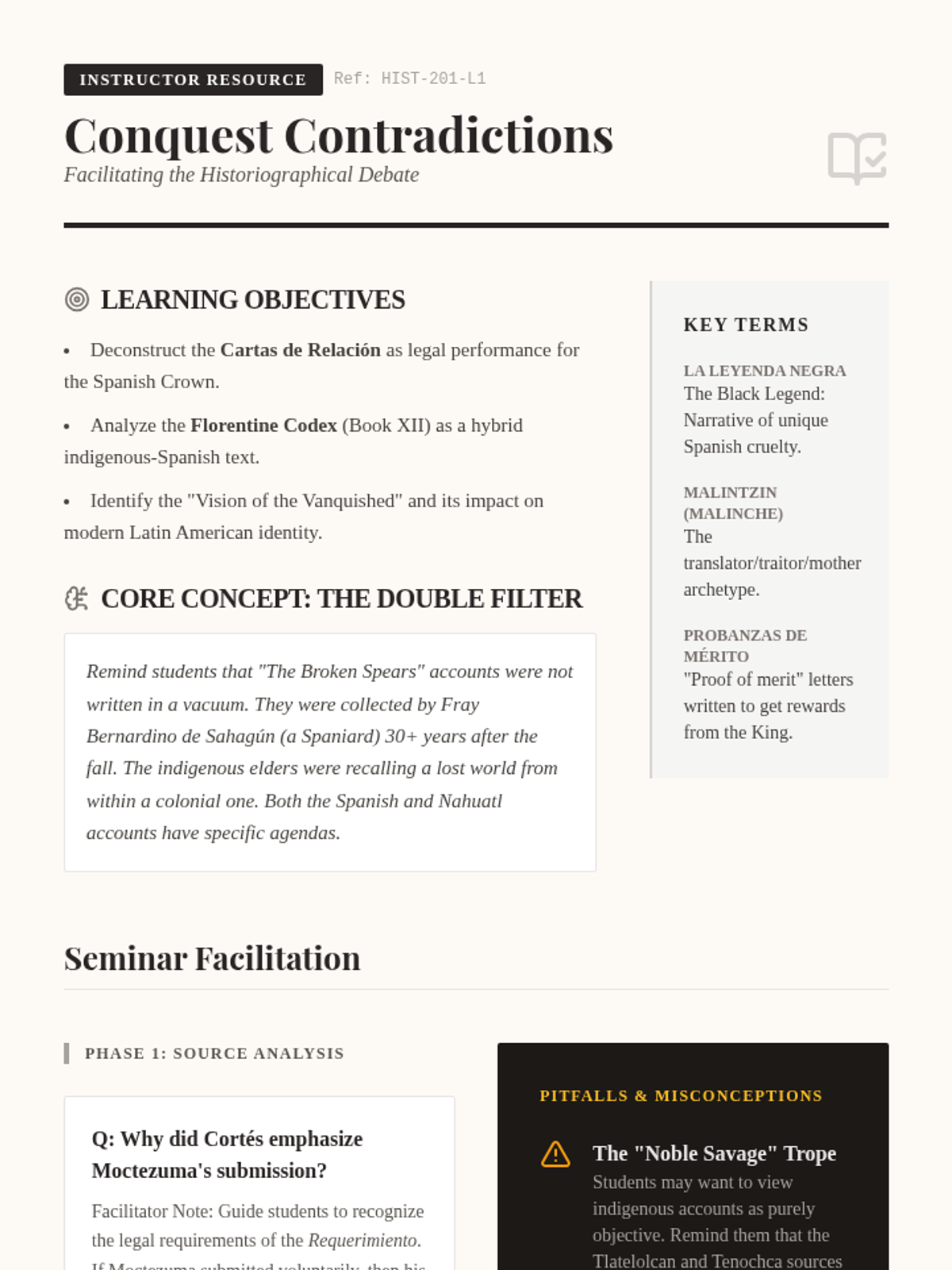
An undergraduate-level sequence exploring the historiography of Mesoamerican and South American indigenous peoples. Students analyze the tension between colonial narratives and indigenous accounts, using archaeology and visual culture to reconstruct historical truth and understand modern revitalization movements.
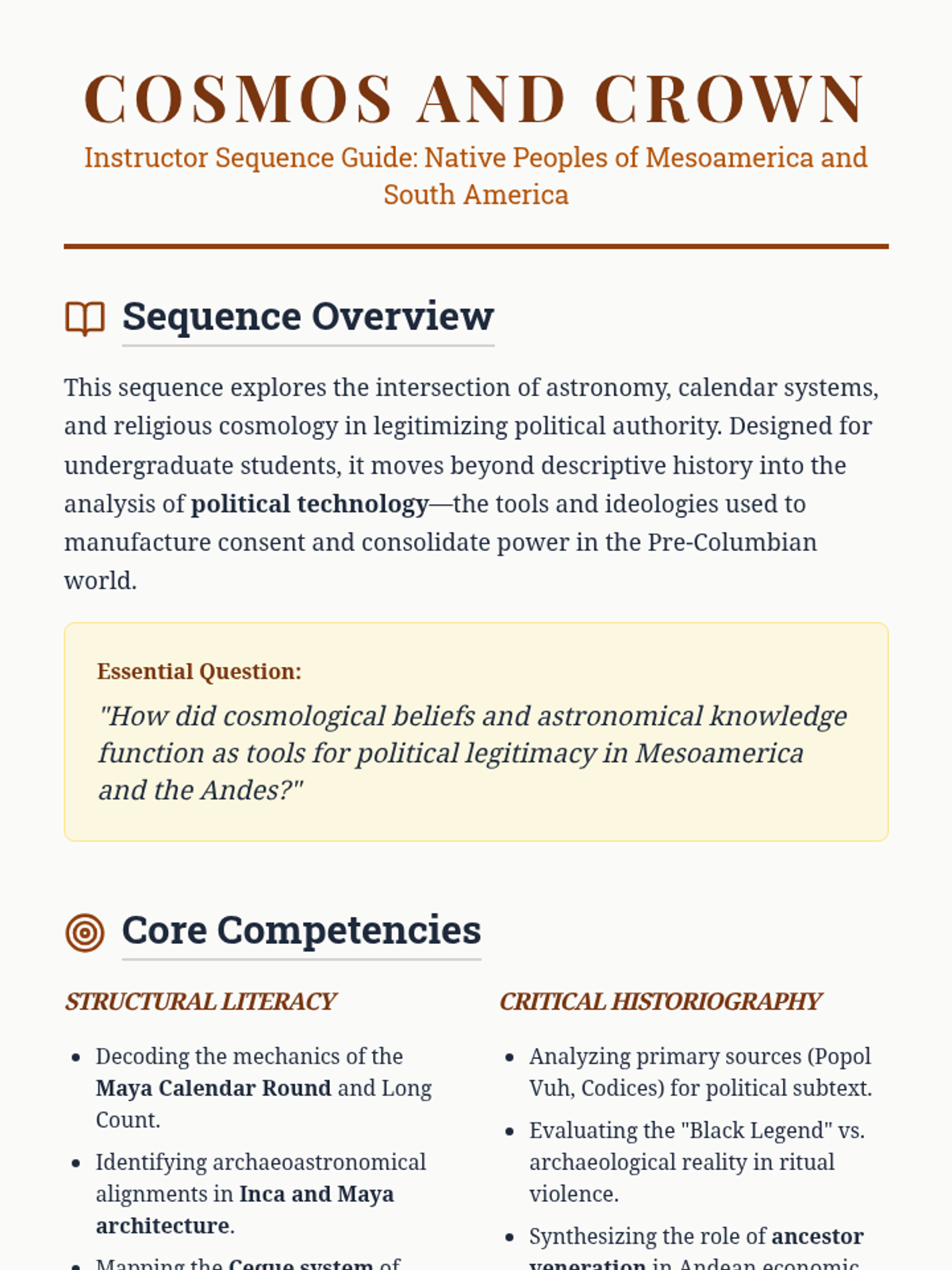
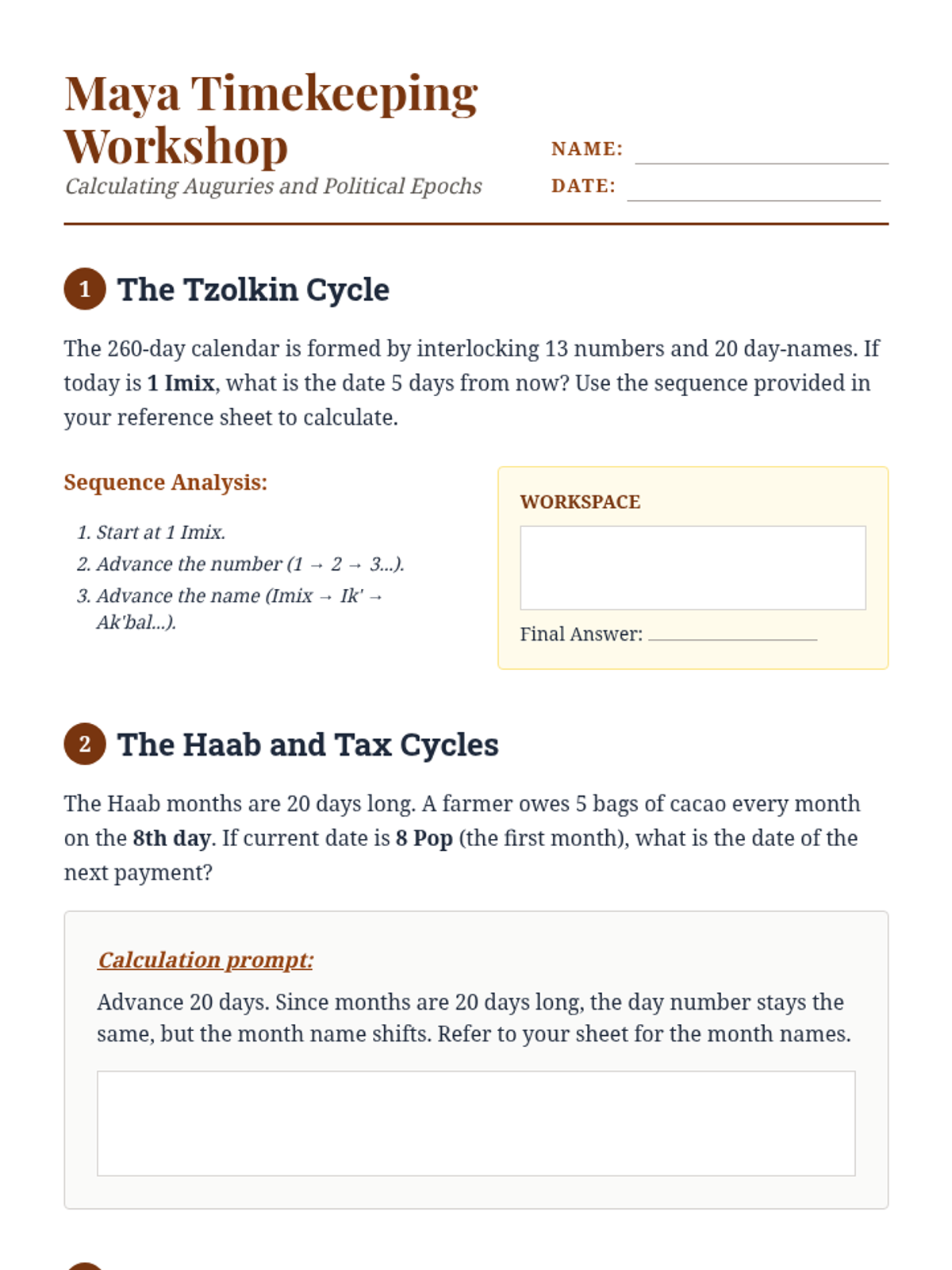
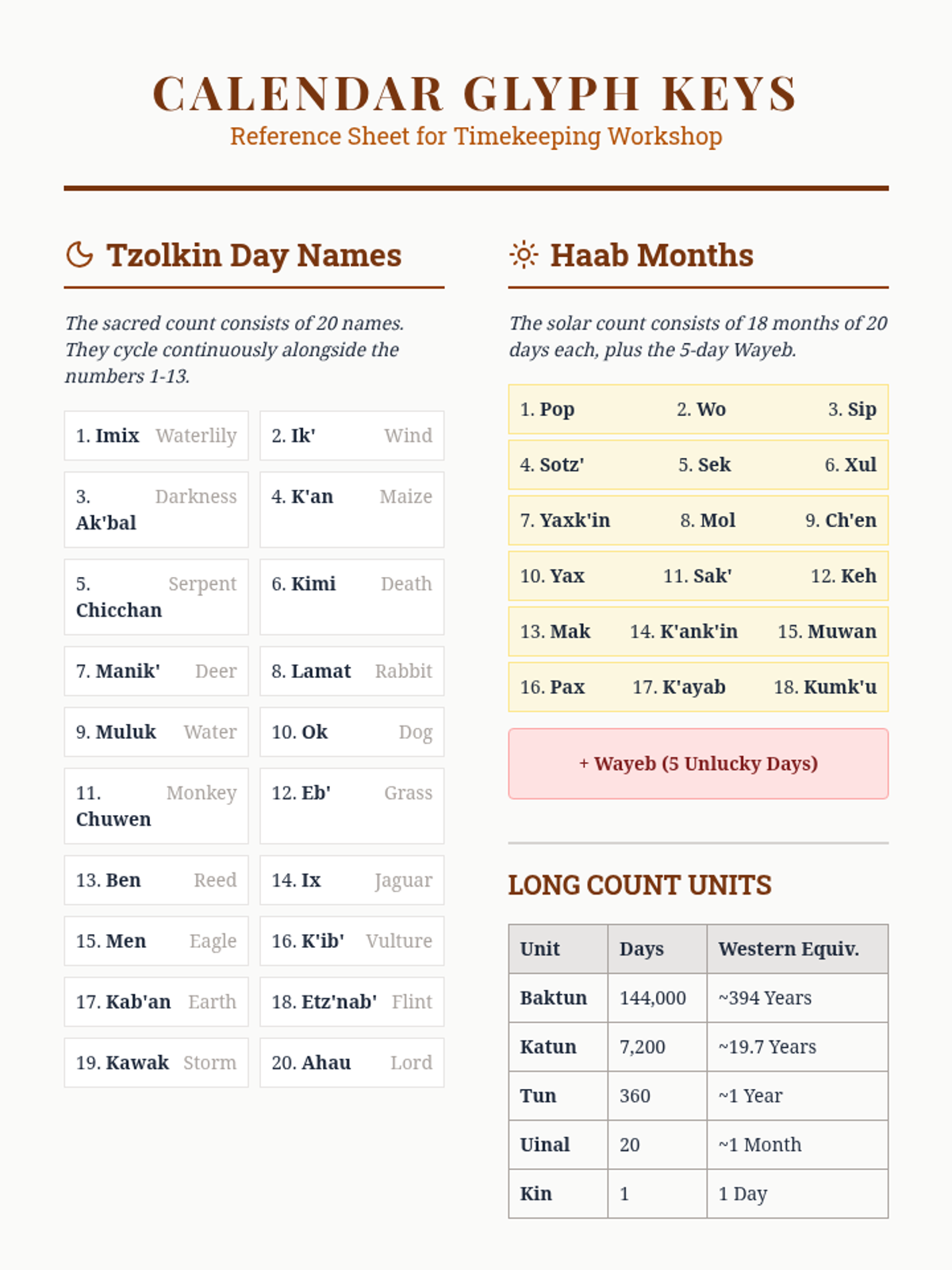
An undergraduate-level exploration of how Mesoamerican and Andean civilizations used astronomical knowledge, calendar systems, and religious ritual to establish and maintain political authority. Students analyze the Maya Long Count, Aztec creation myths, and Incan ancestor veneration to understand the ruler as a cosmic intermediary.
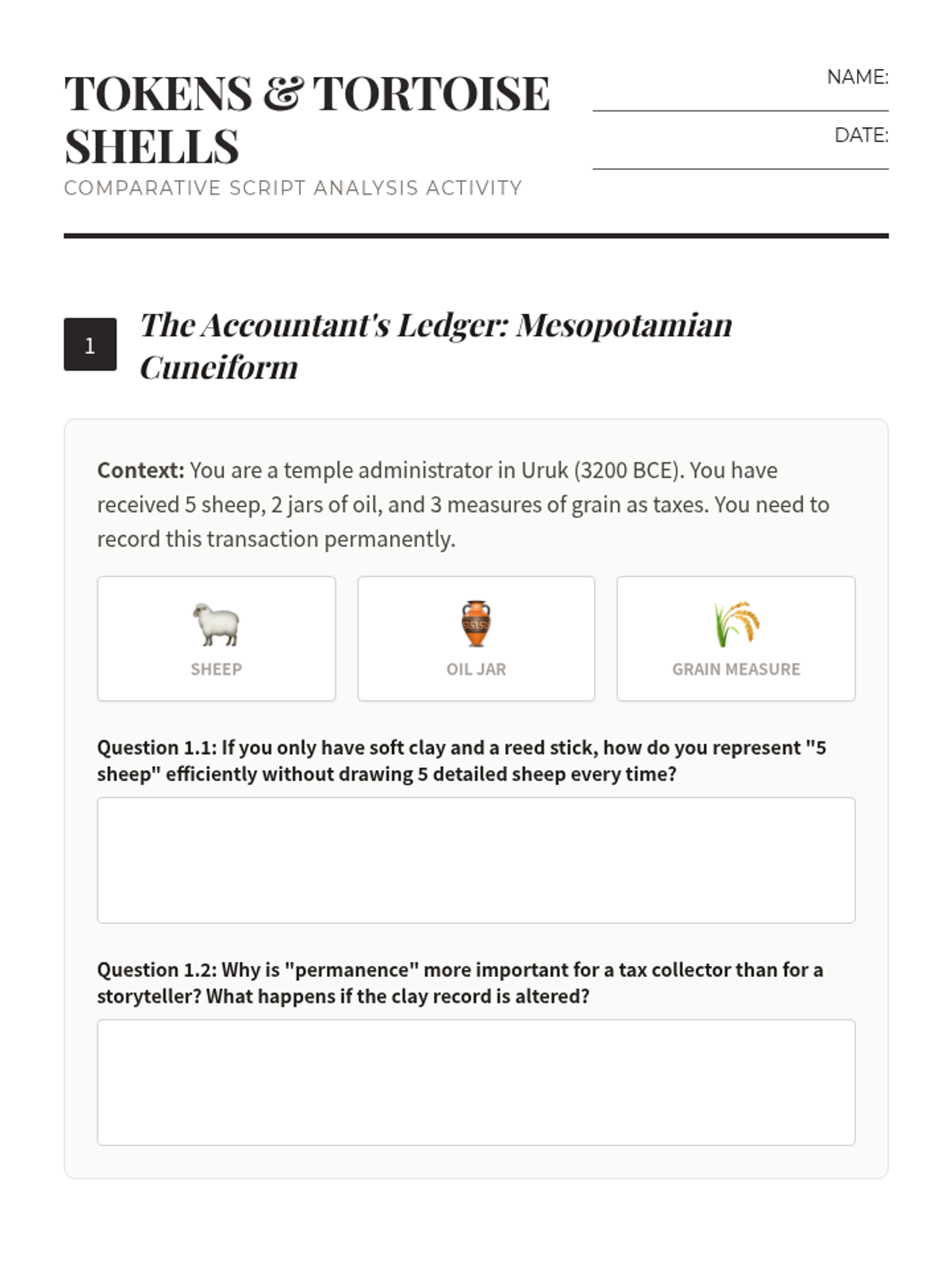
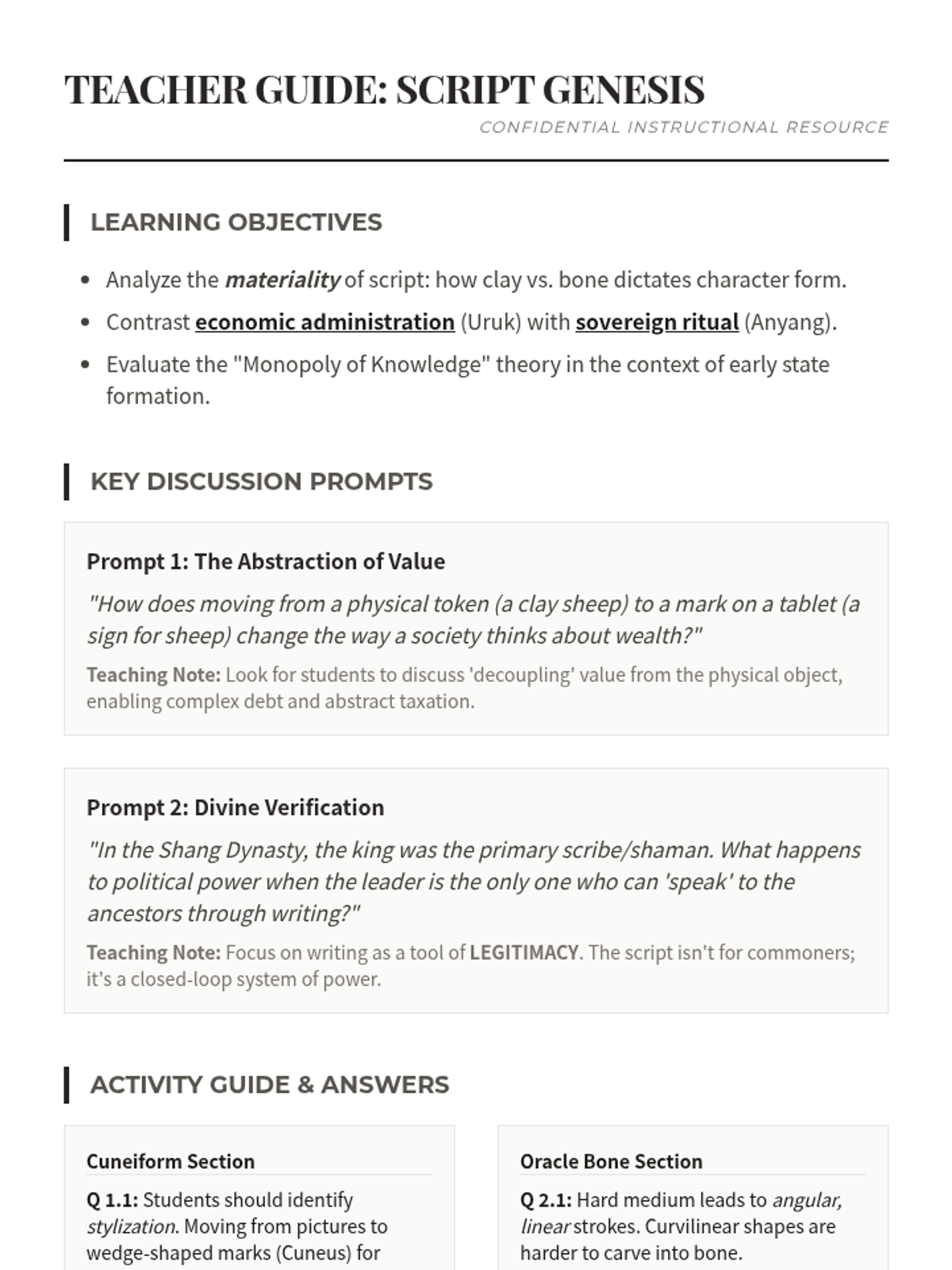
A comparative study of the evolution of writing and legal systems in ancient river civilizations, focusing on how these intellectual technologies served as tools for economic administration and social control.
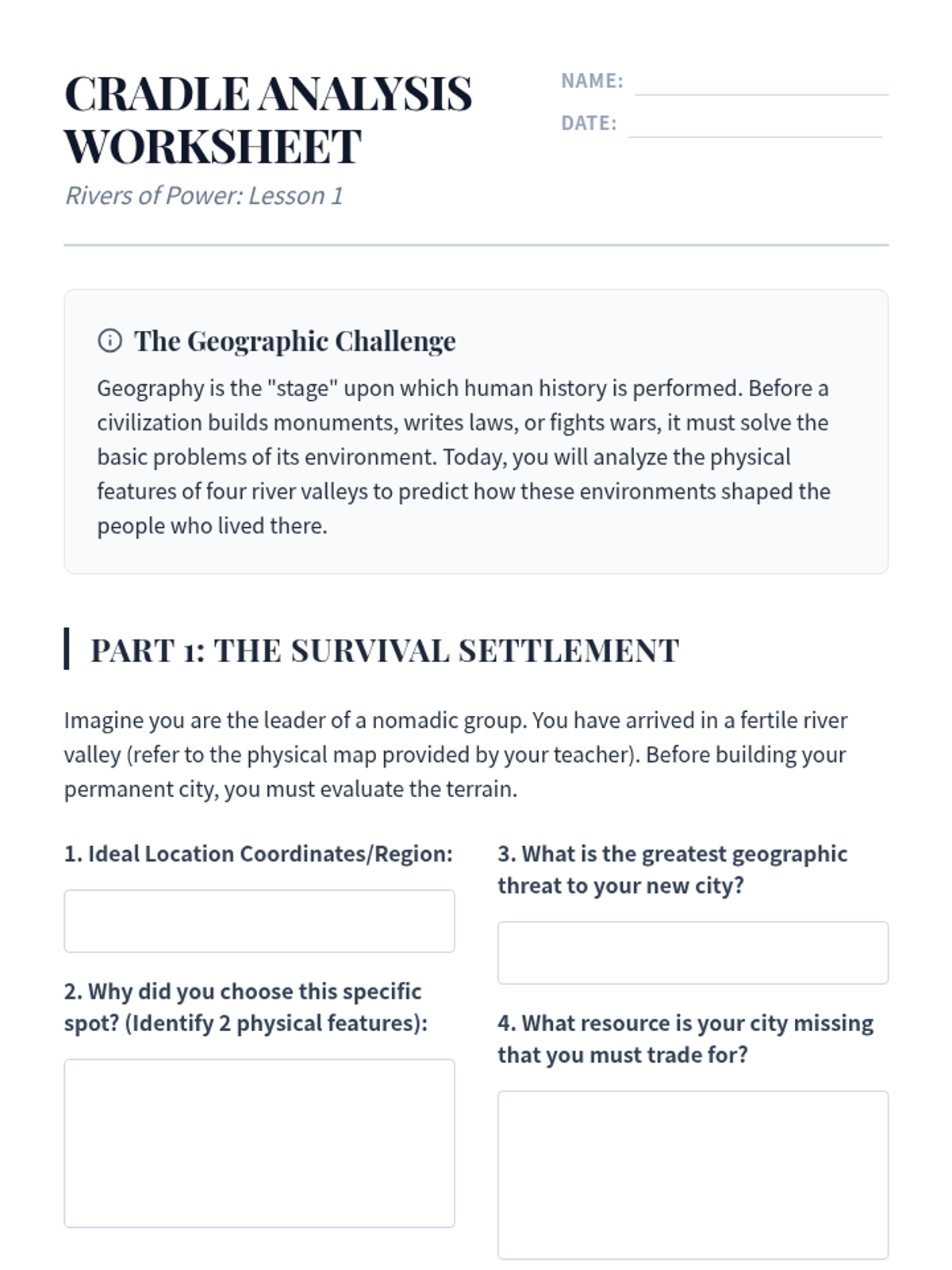
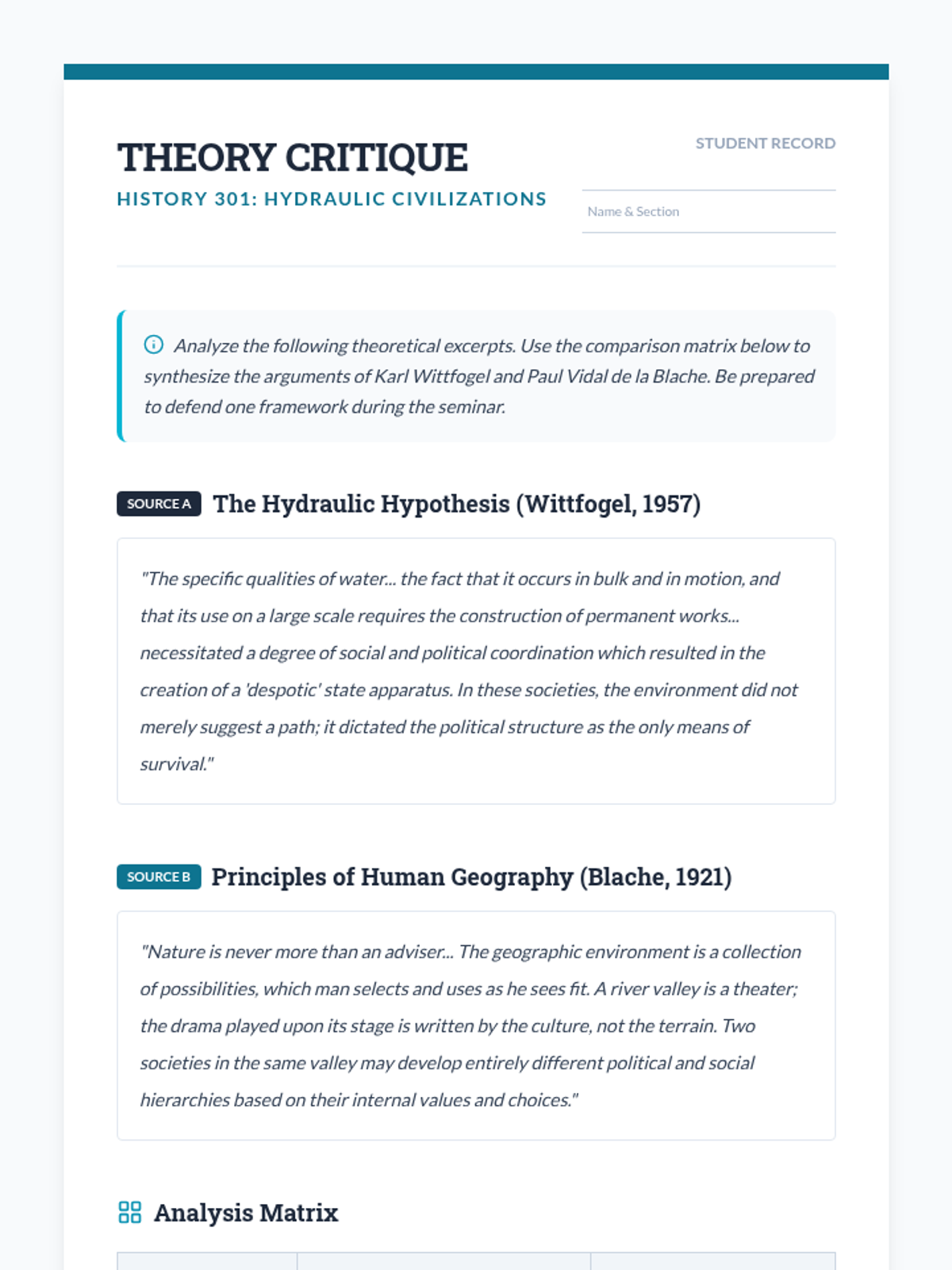
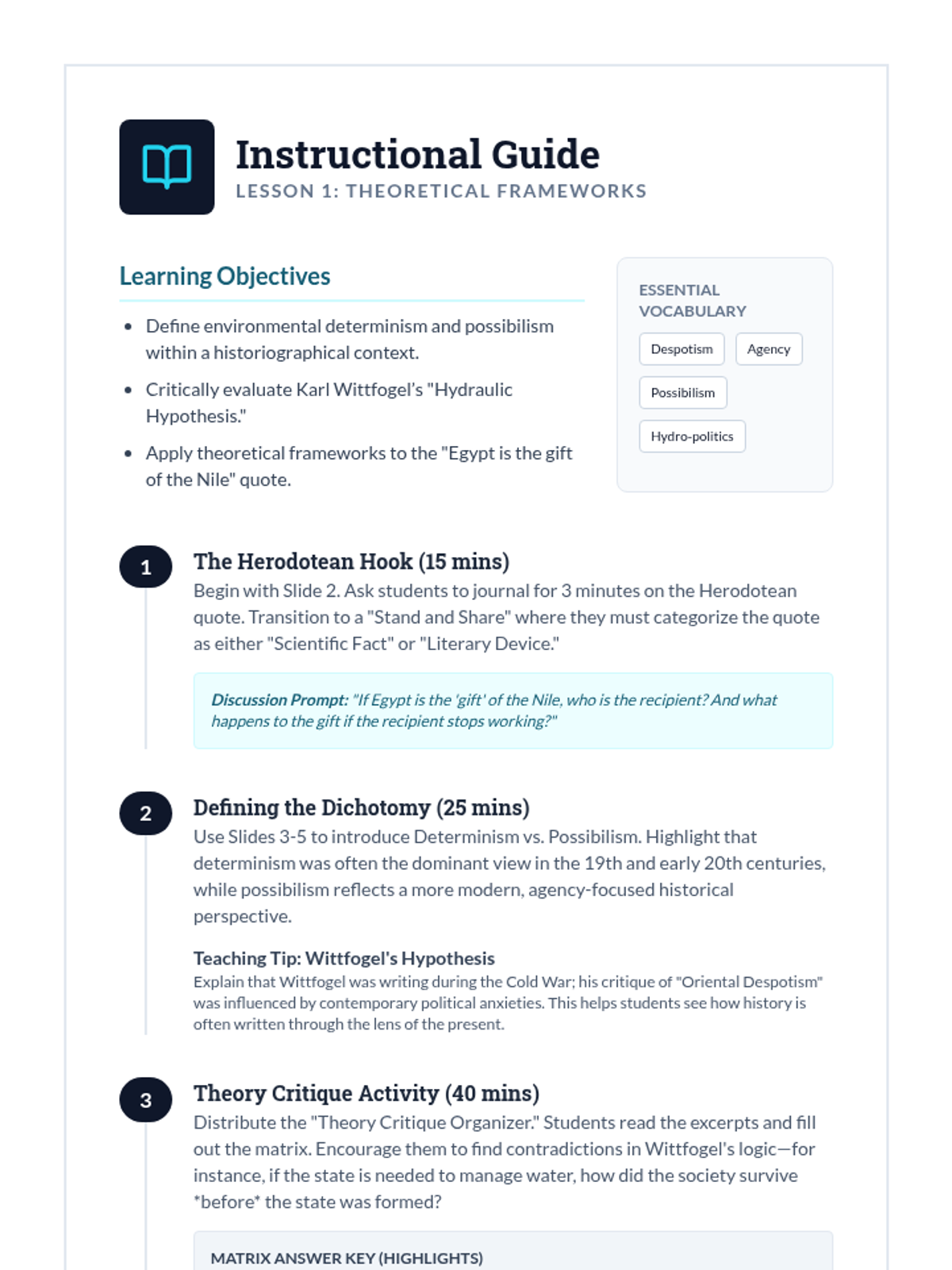
This sequence investigates how physical geography—specifically river systems—shaped the development, culture, and political structures of the Nile, Tigris-Euphrates, Indus, and Yellow River civilizations. Students evaluate the 'Hydraulic Hypothesis' and the concept of geographic determinism through map analysis, simulations, and primary source comparison.
This undergraduate-level sequence explores the intellectual and religious roots of the Antebellum reform era, tracing the evolution from gradualism to radical abolitionism and its intersection with the early women's rights movement. Students analyze primary sources, rhetorical strategies, and the role of the press in shifting national discourse on slavery and equality.
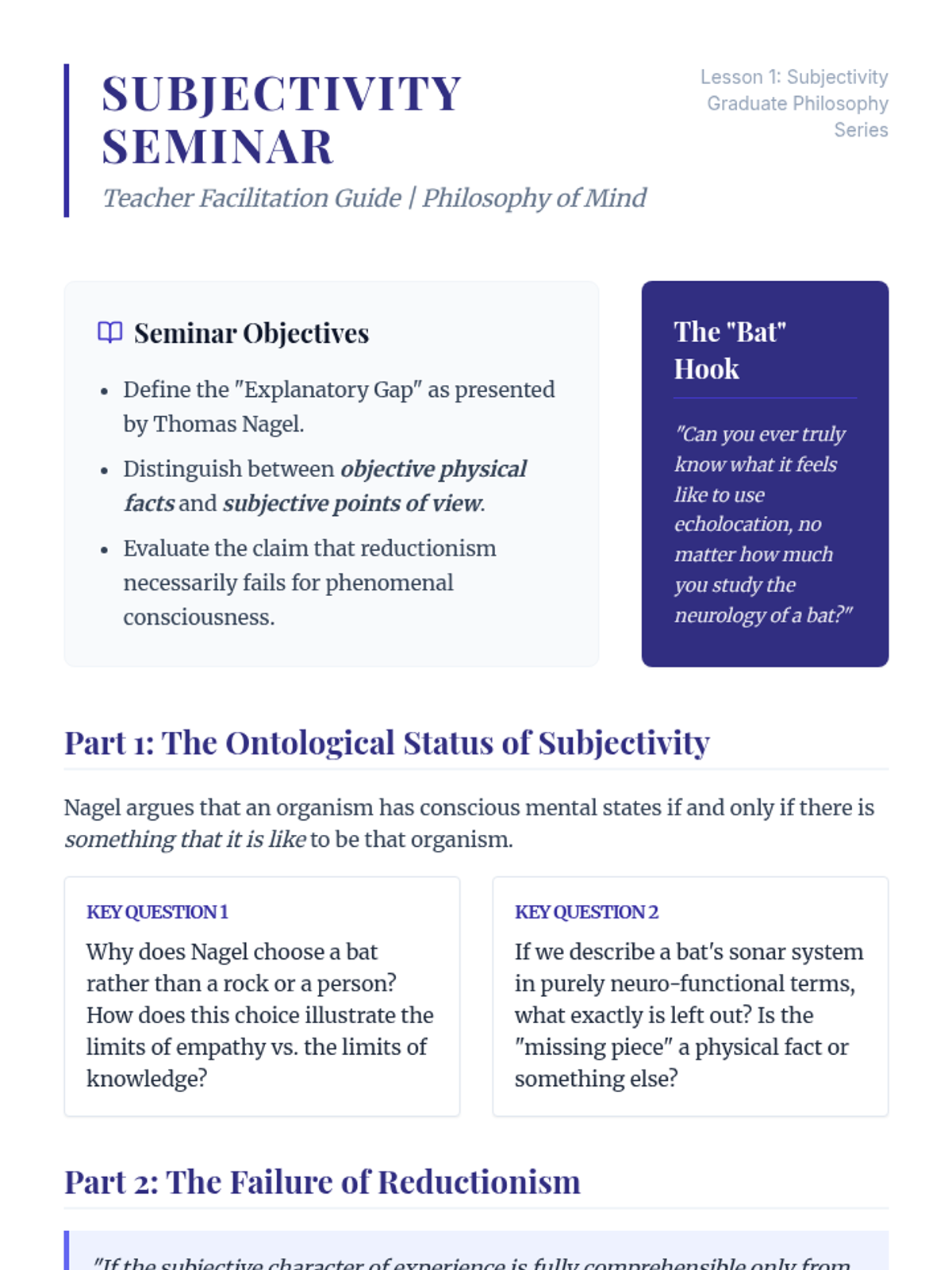
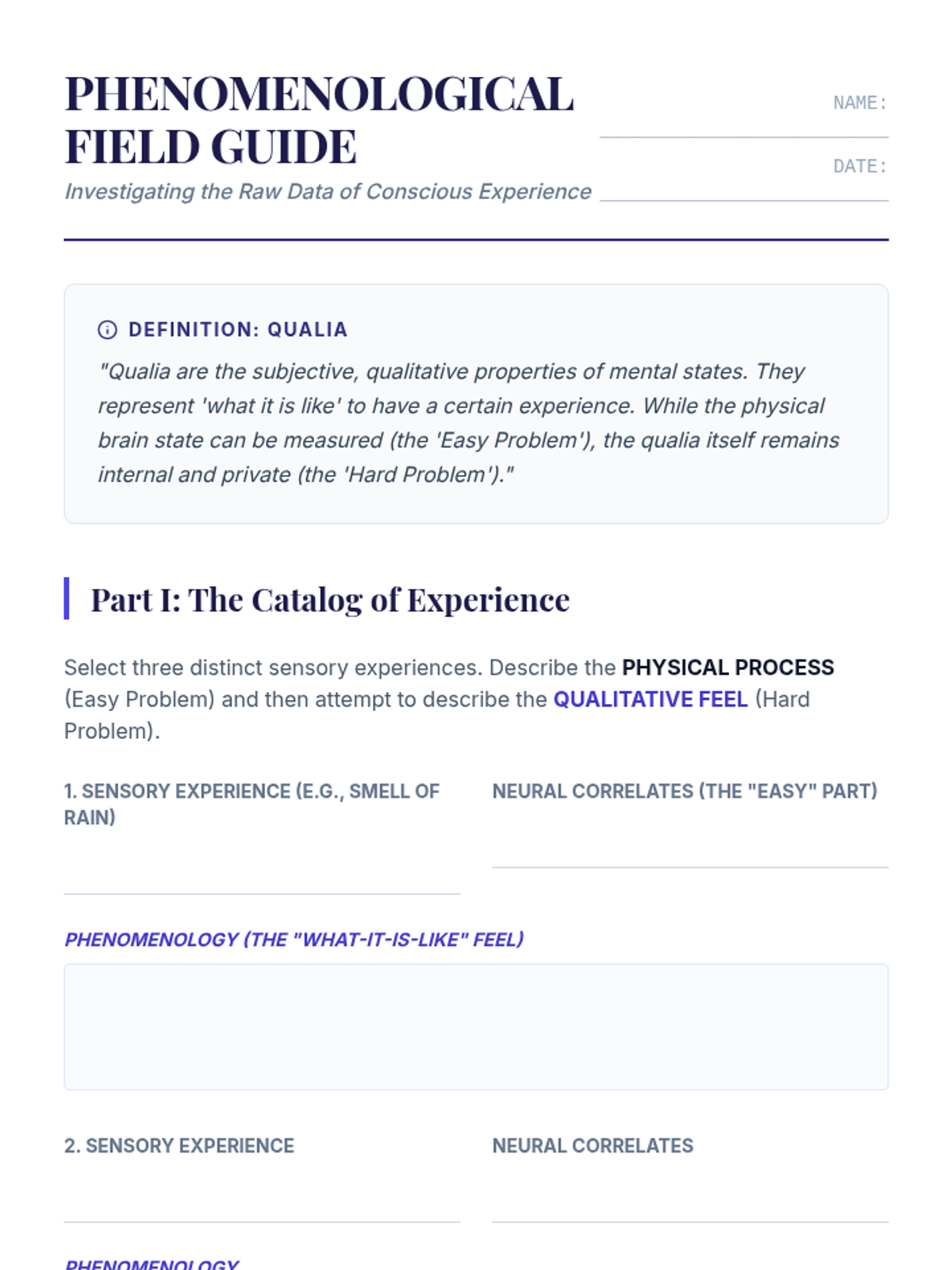
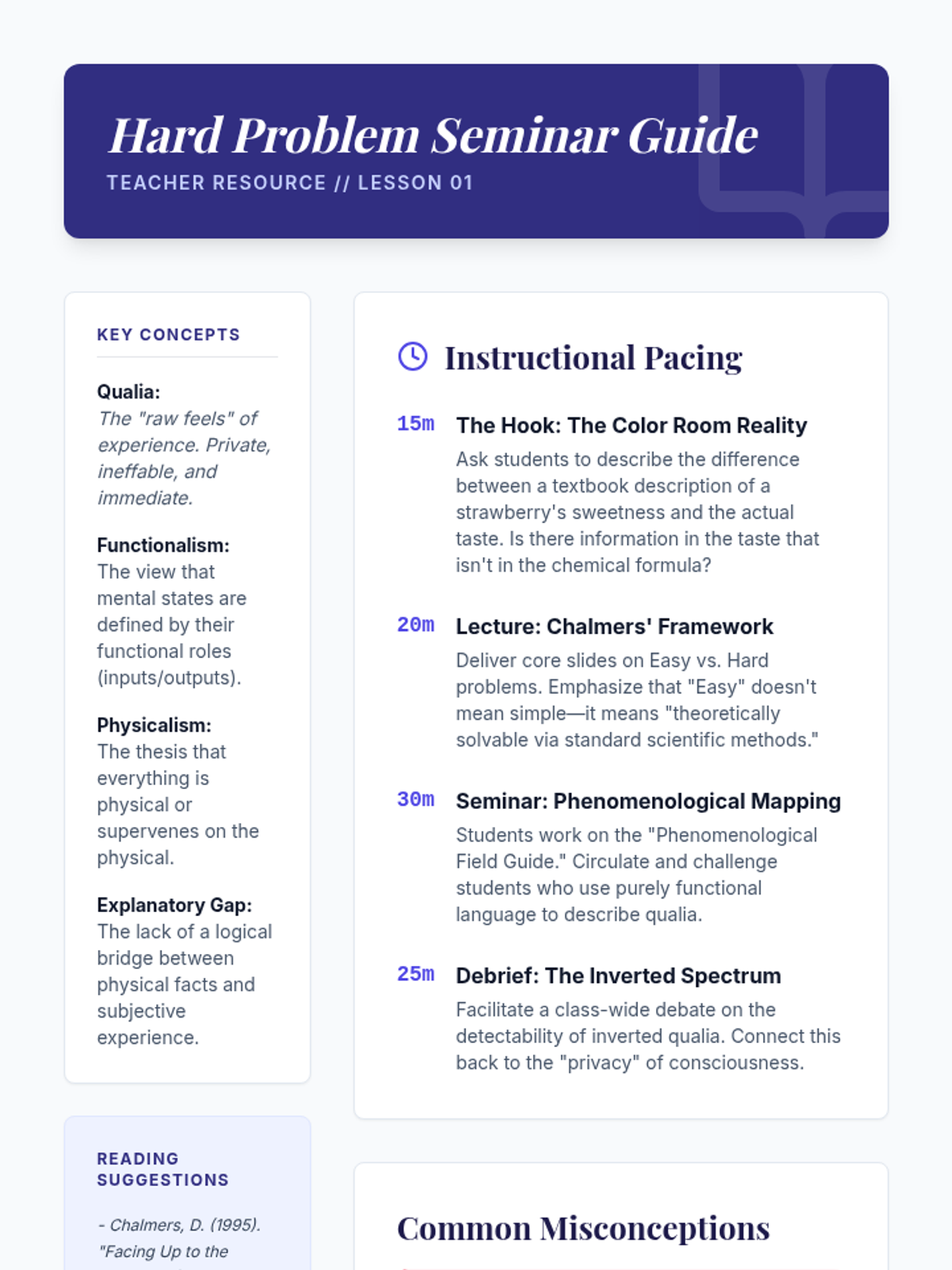
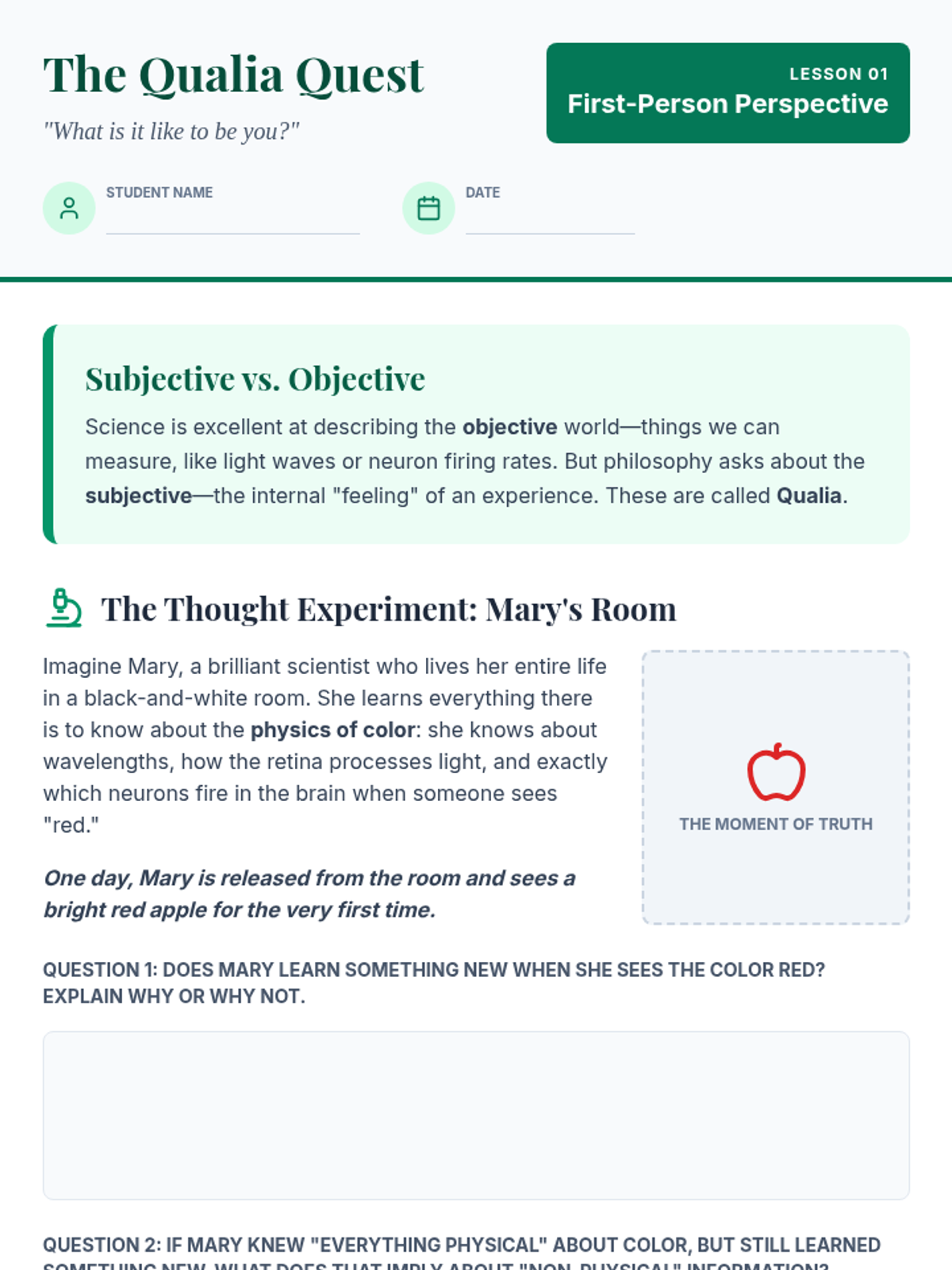
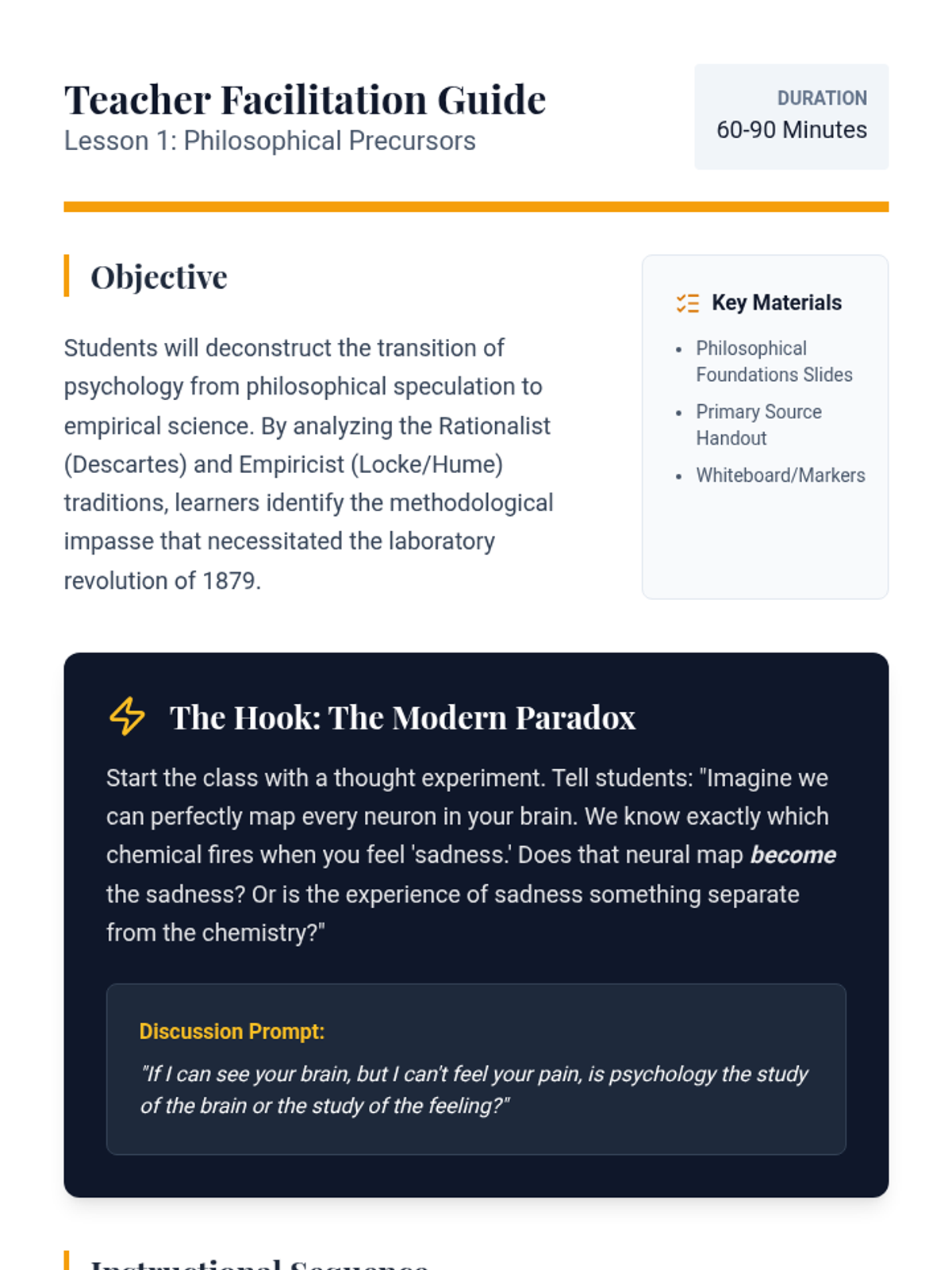
A graduate-level exploration of the 'Hard Problem' of consciousness, focusing on the gap between physicalism and phenomenal experience through thought experiments and contemporary theories.
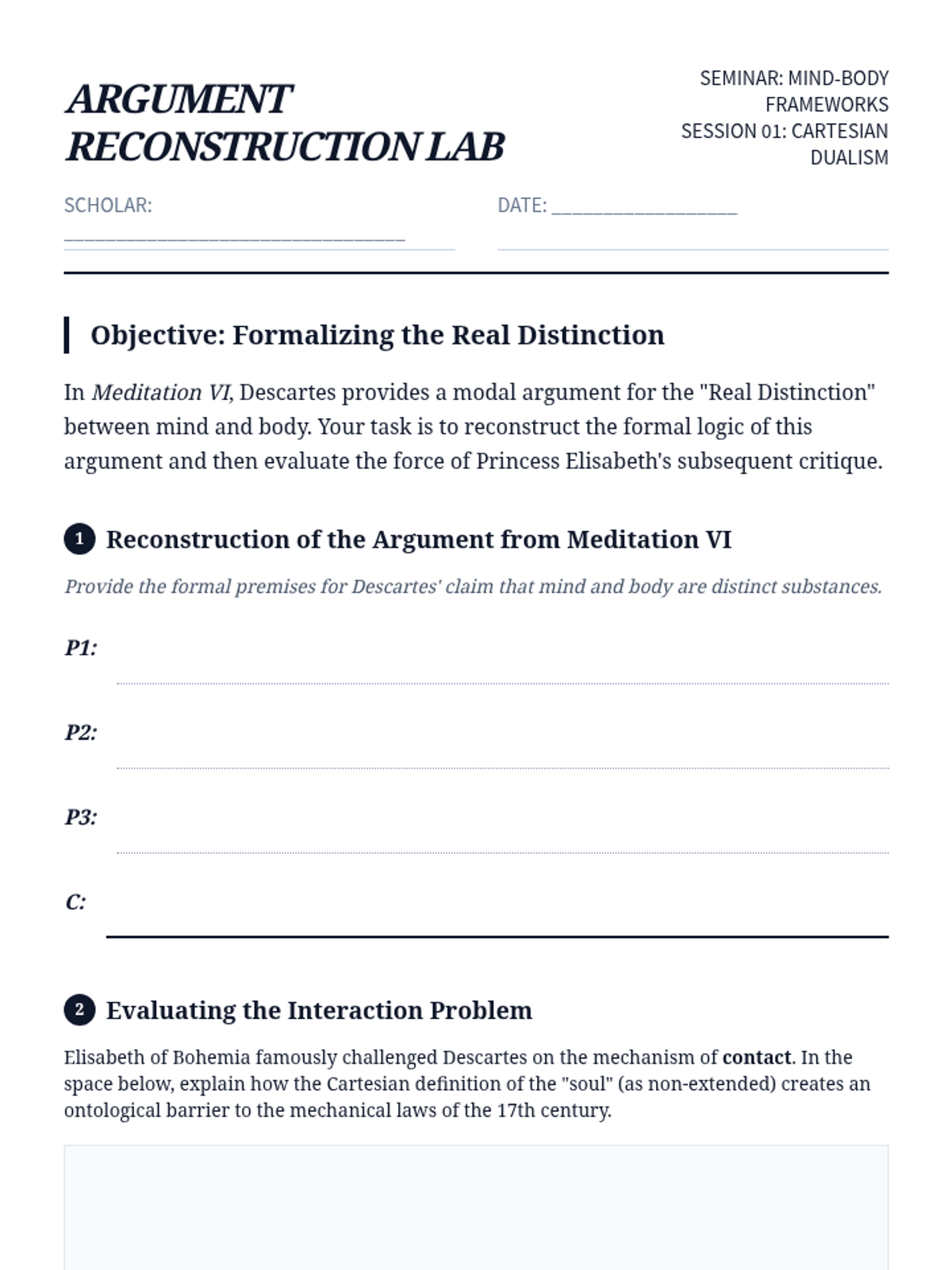
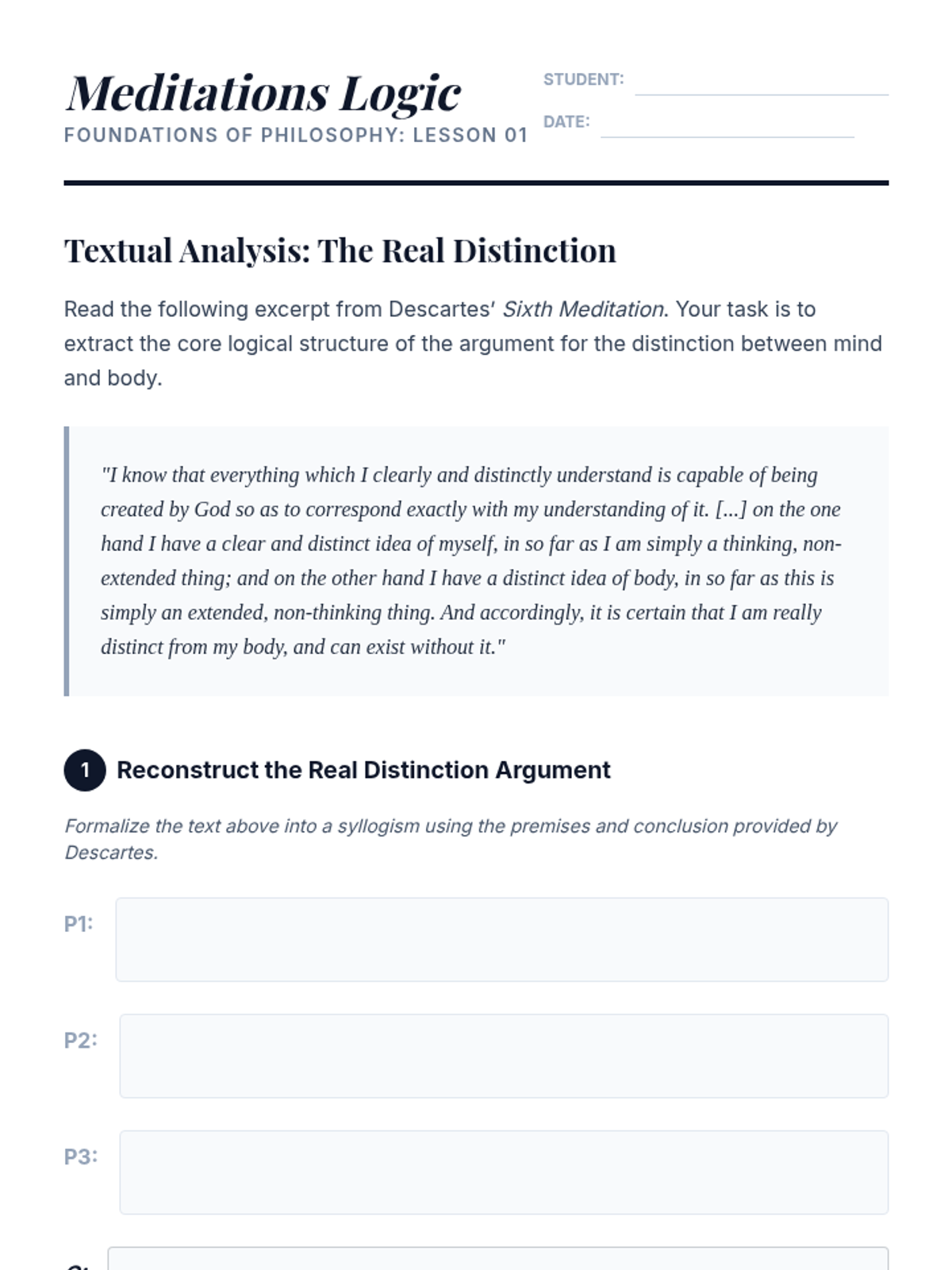
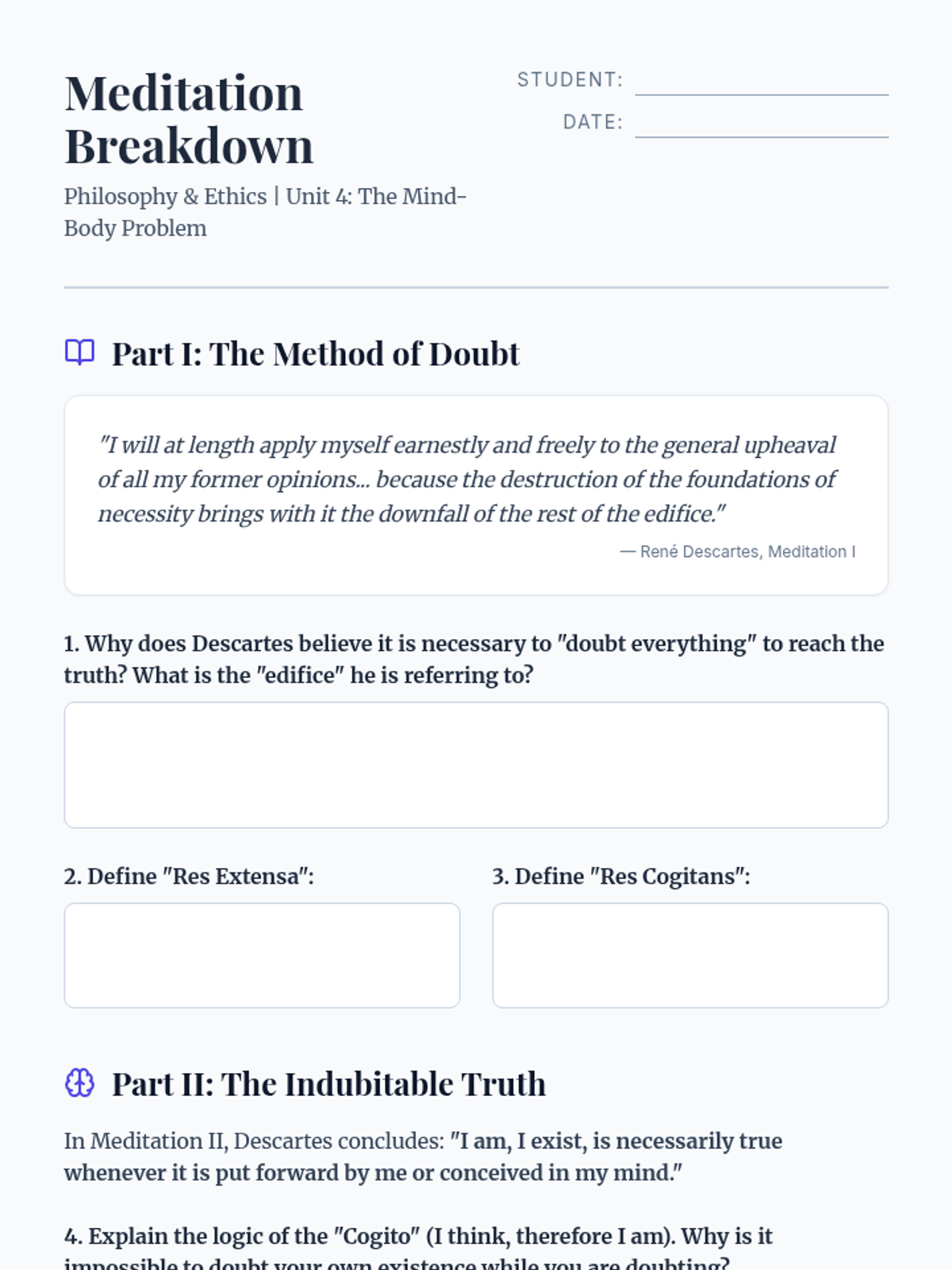
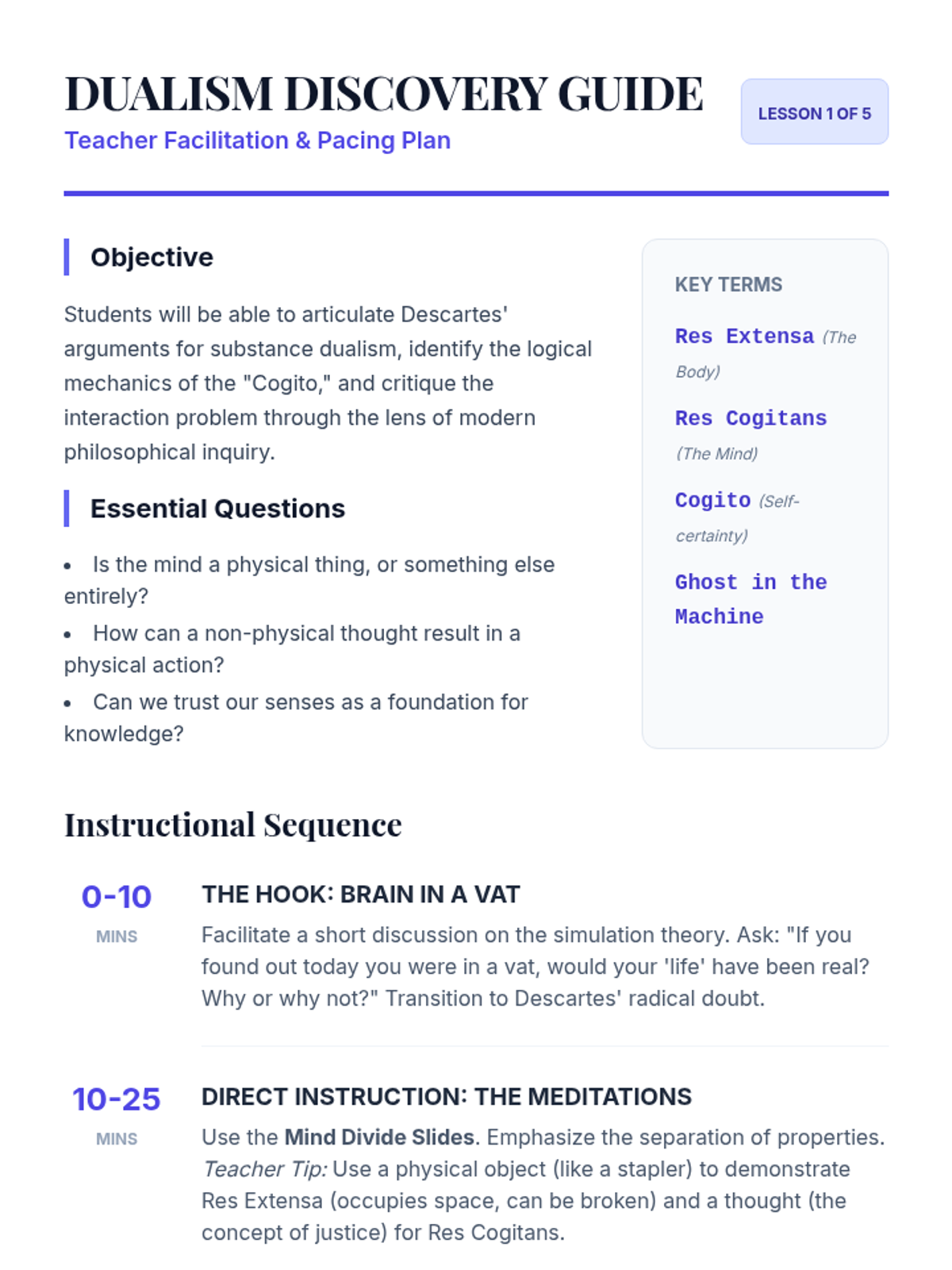
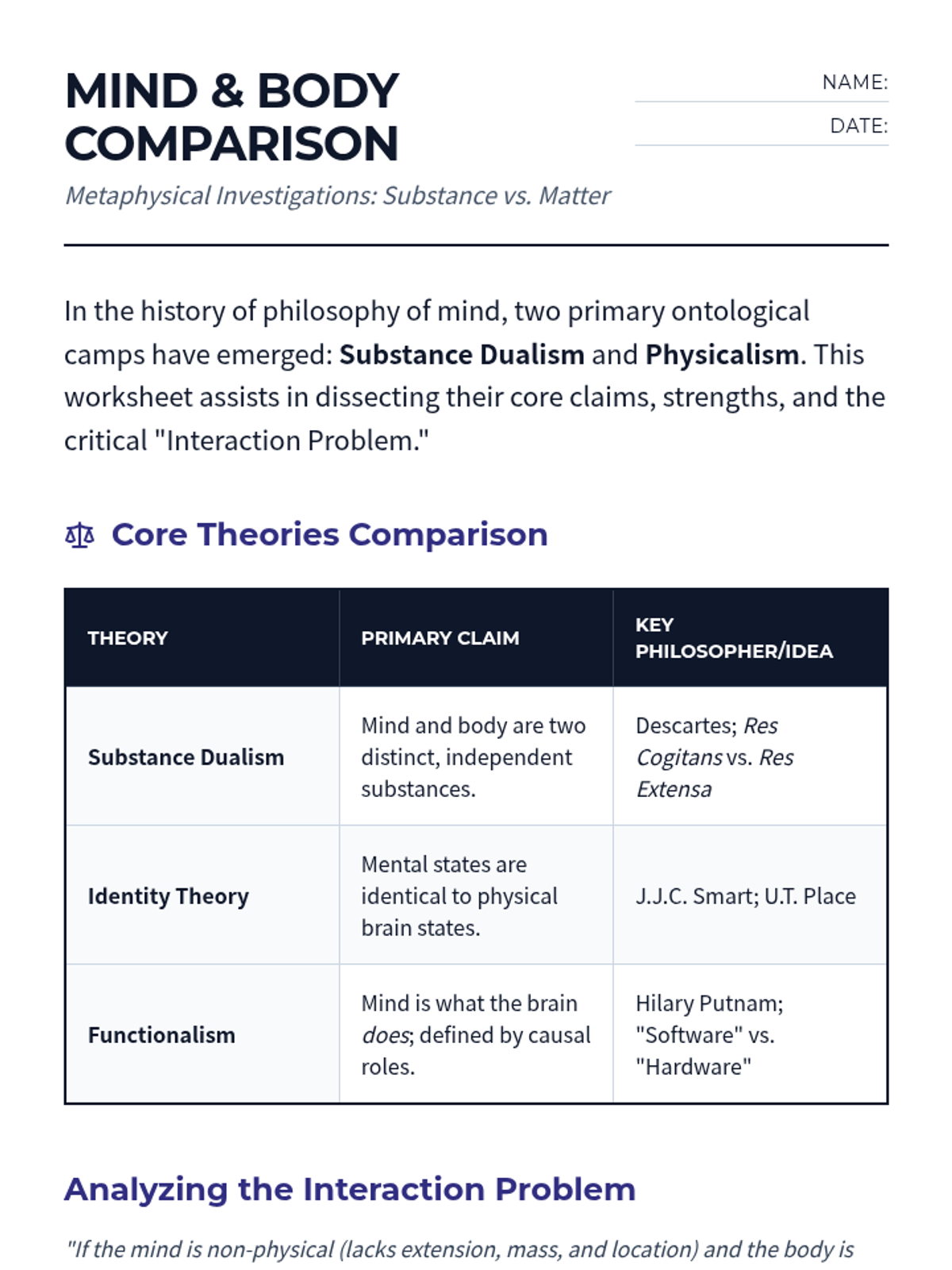
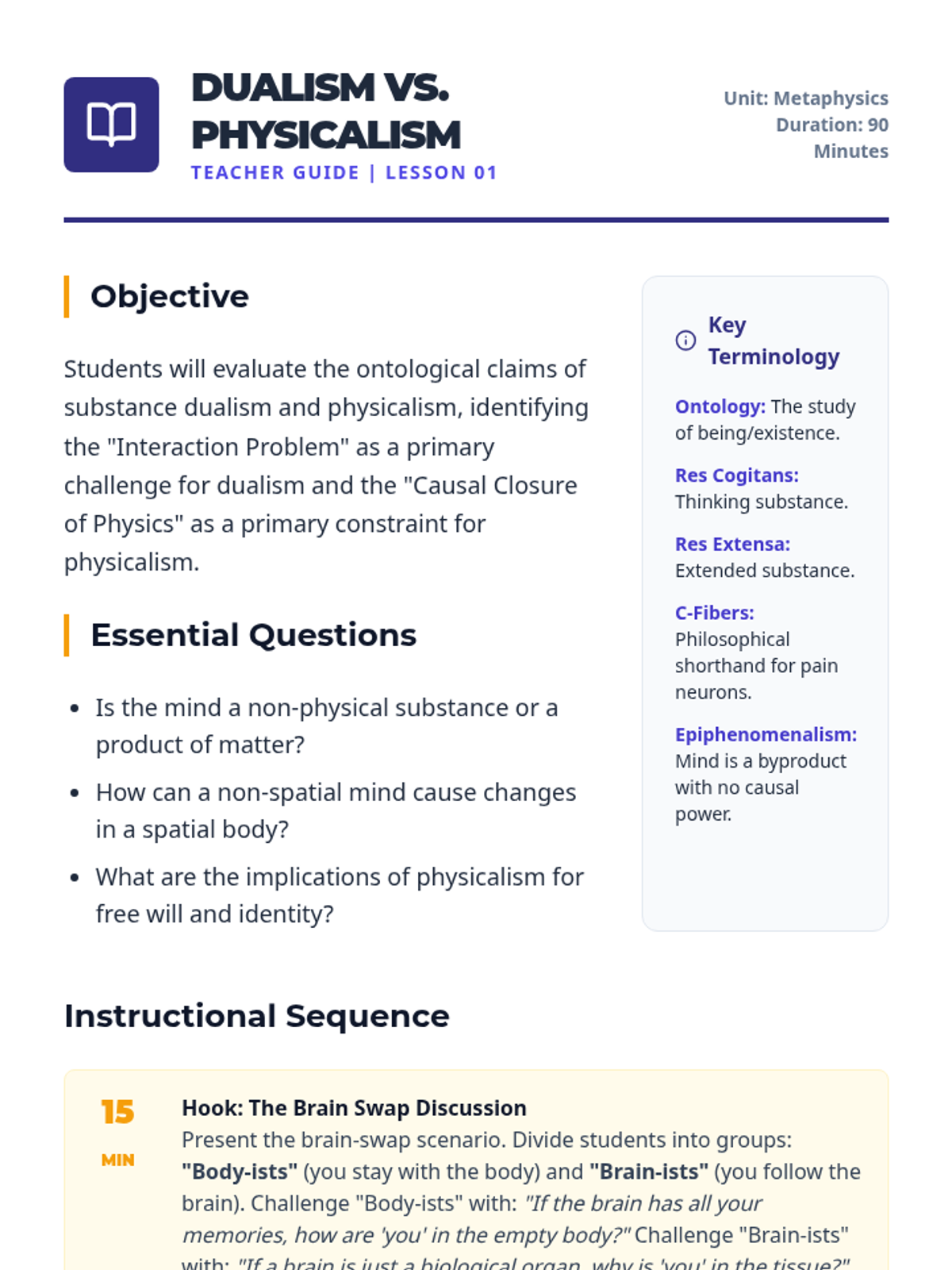
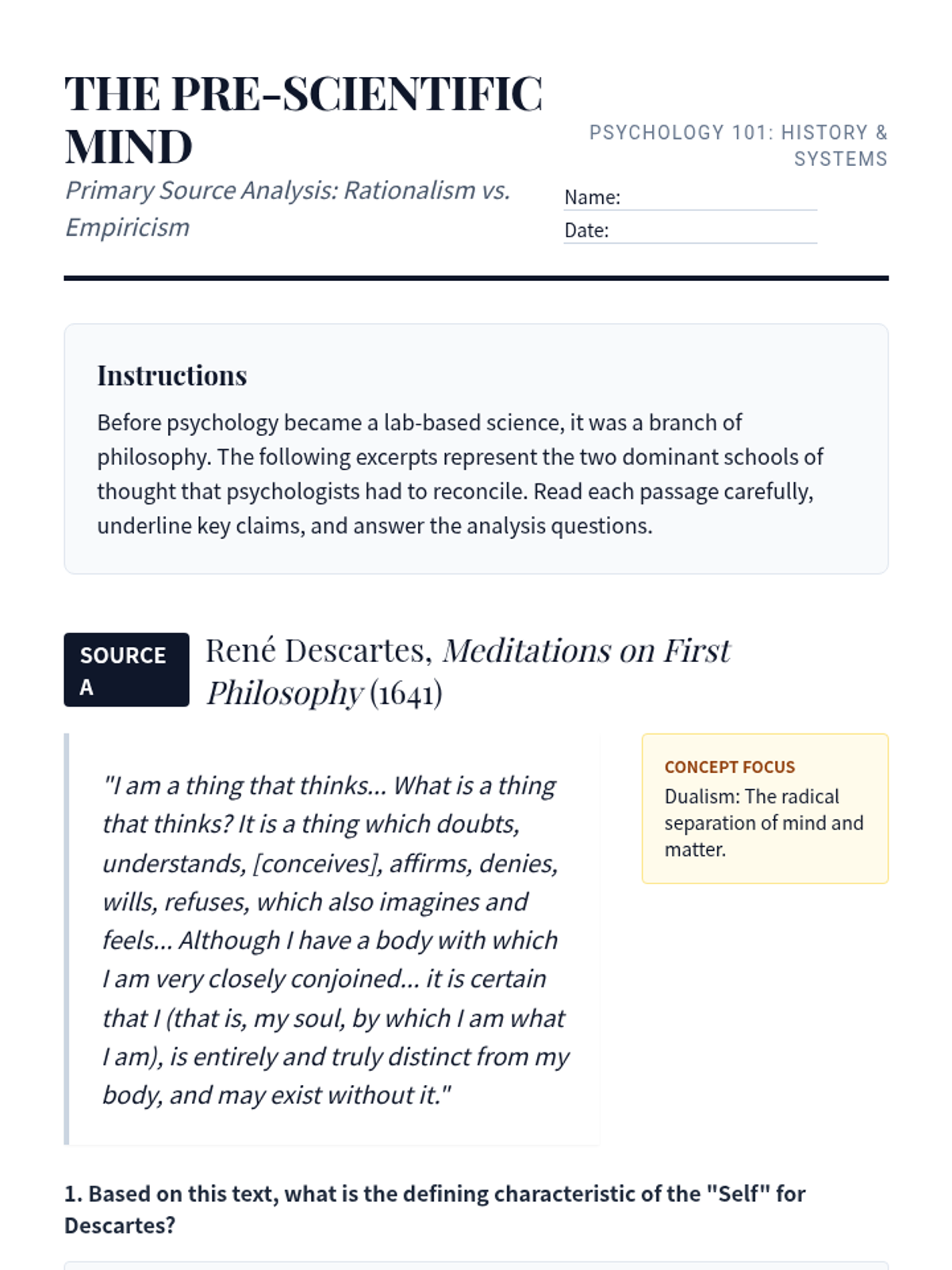
This advanced graduate-level sequence explores the metaphysical foundations and historical evolution of the mind-body problem, from Cartesian substance dualism to modern functionalism and the causal exclusion argument. Students will engage in rigorous conceptual analysis, logical reconstruction of primary texts, and evaluation of the causal closure of the physical.
An undergraduate-level philosophy sequence exploring the 'Hard Problem' of consciousness, moving from the definition of qualia and the Knowledge Argument to panpsychism and the ethical implications of AI sentience.
A comprehensive undergraduate-level exploration of the mind-body problem, tracing the history of philosophy of mind from Cartesian dualism to modern functionalism. Students will analyze primary sources, reconstruct logical arguments, and evaluate the metaphysical implications of physicalism and dualism.
A comprehensive 12th-grade philosophy sequence exploring the mind-body problem through historical and contemporary lenses, covering Dualism, Physicalism, Qualia, Functionalism, and the Hard Problem of consciousness.
This philosophy sequence explores the mind-body problem, tracing the debate from Descartes' substance dualism to modern physicalism, functionalism, and AI. Students analyze qualia, evaluate historical and scientific evidence, and synthesize their understanding in a culminating Socratic seminar.
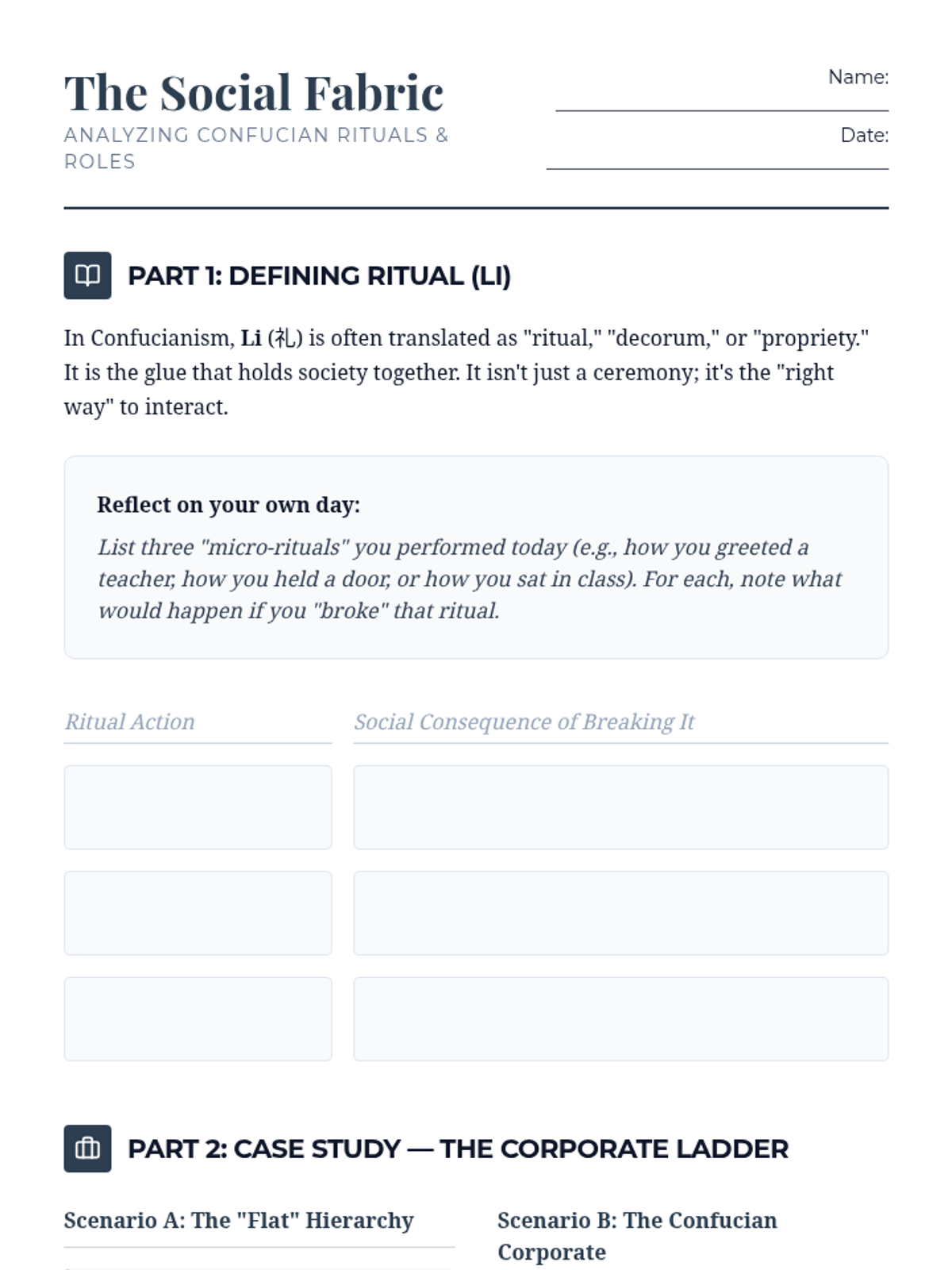
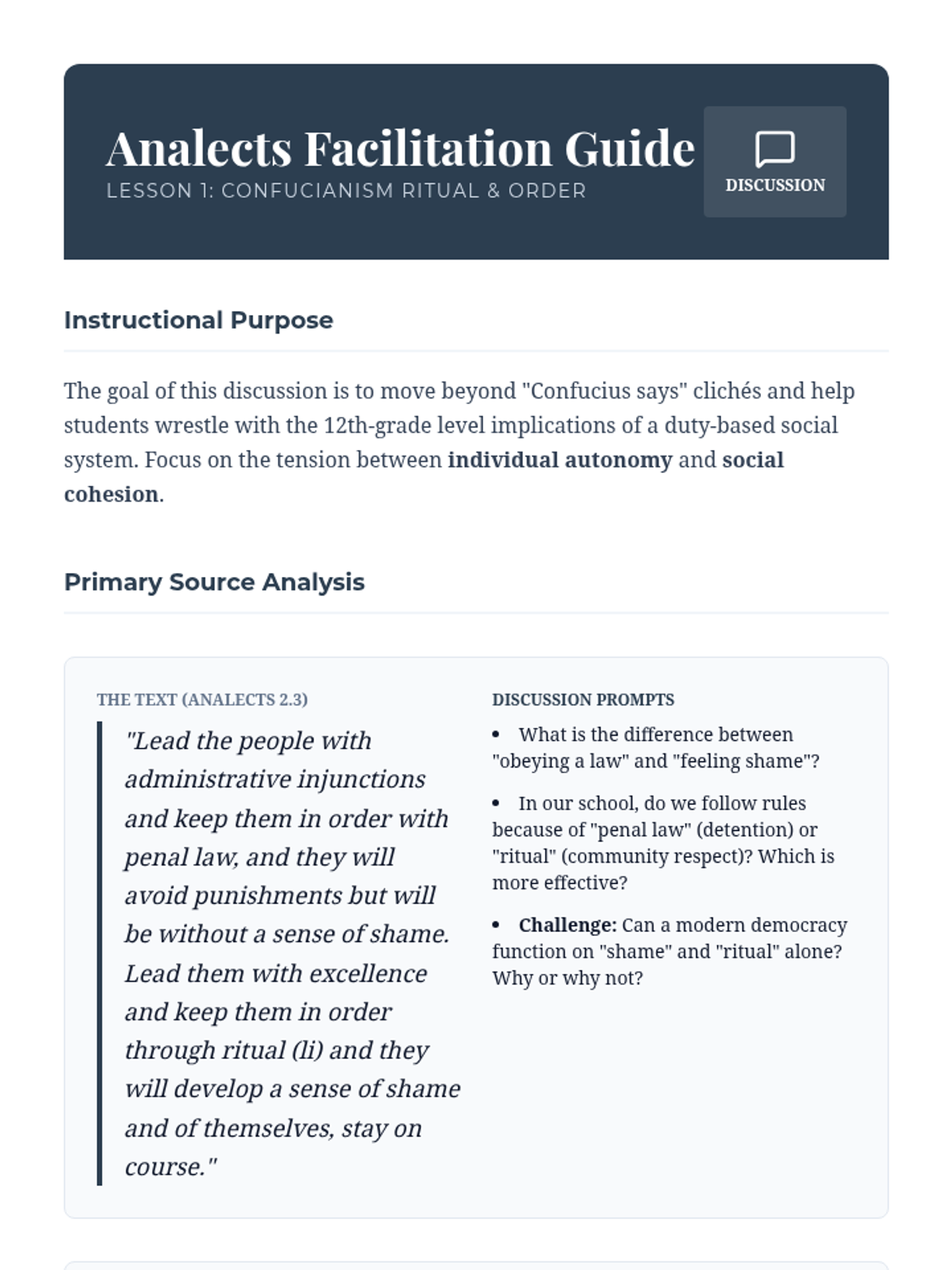
A high school philosophy sequence exploring Eastern traditions including Confucianism, Taoism, and Buddhism, focusing on their unique perspectives on social harmony, nature, and the self in contrast to Western models.
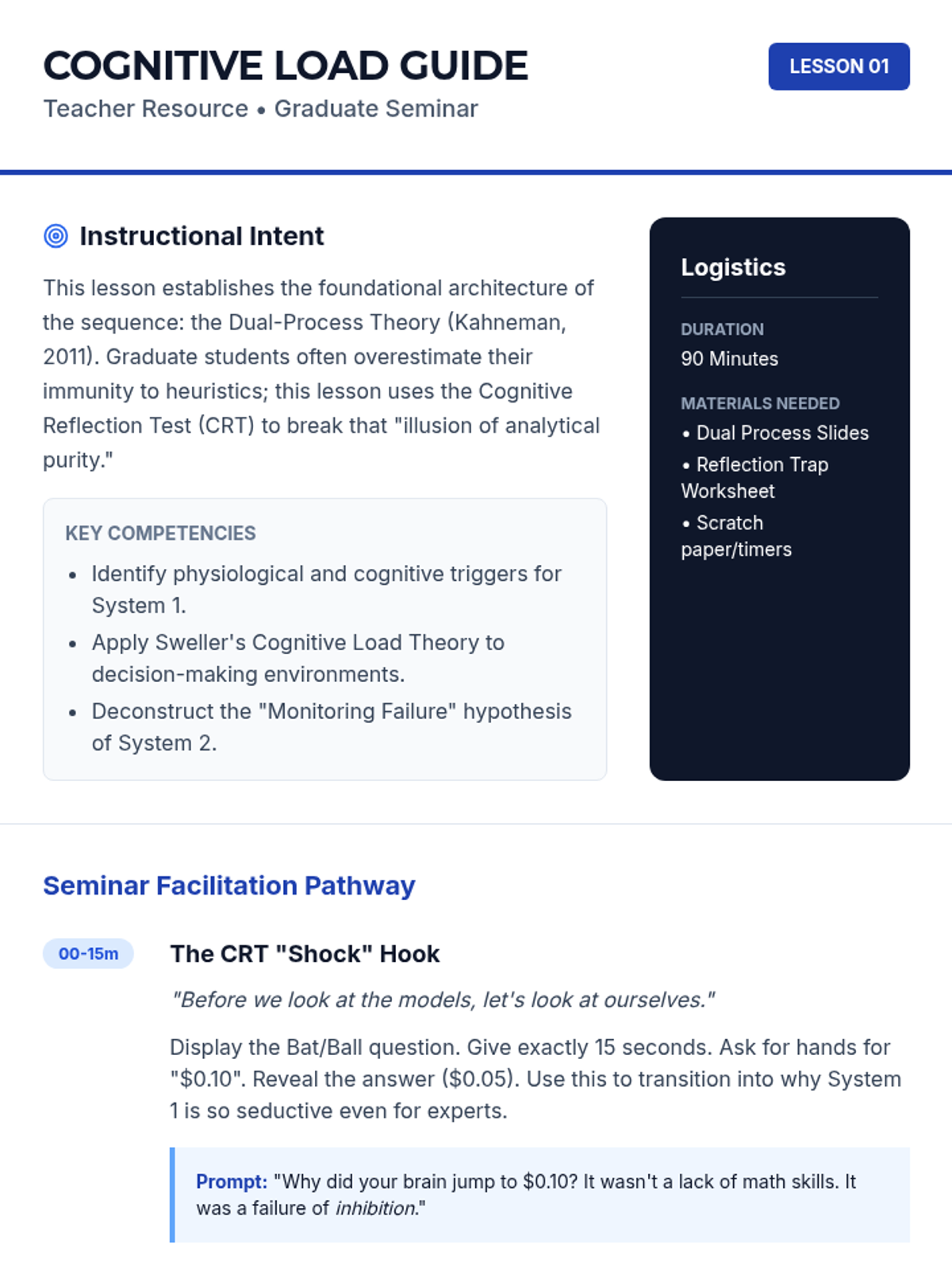
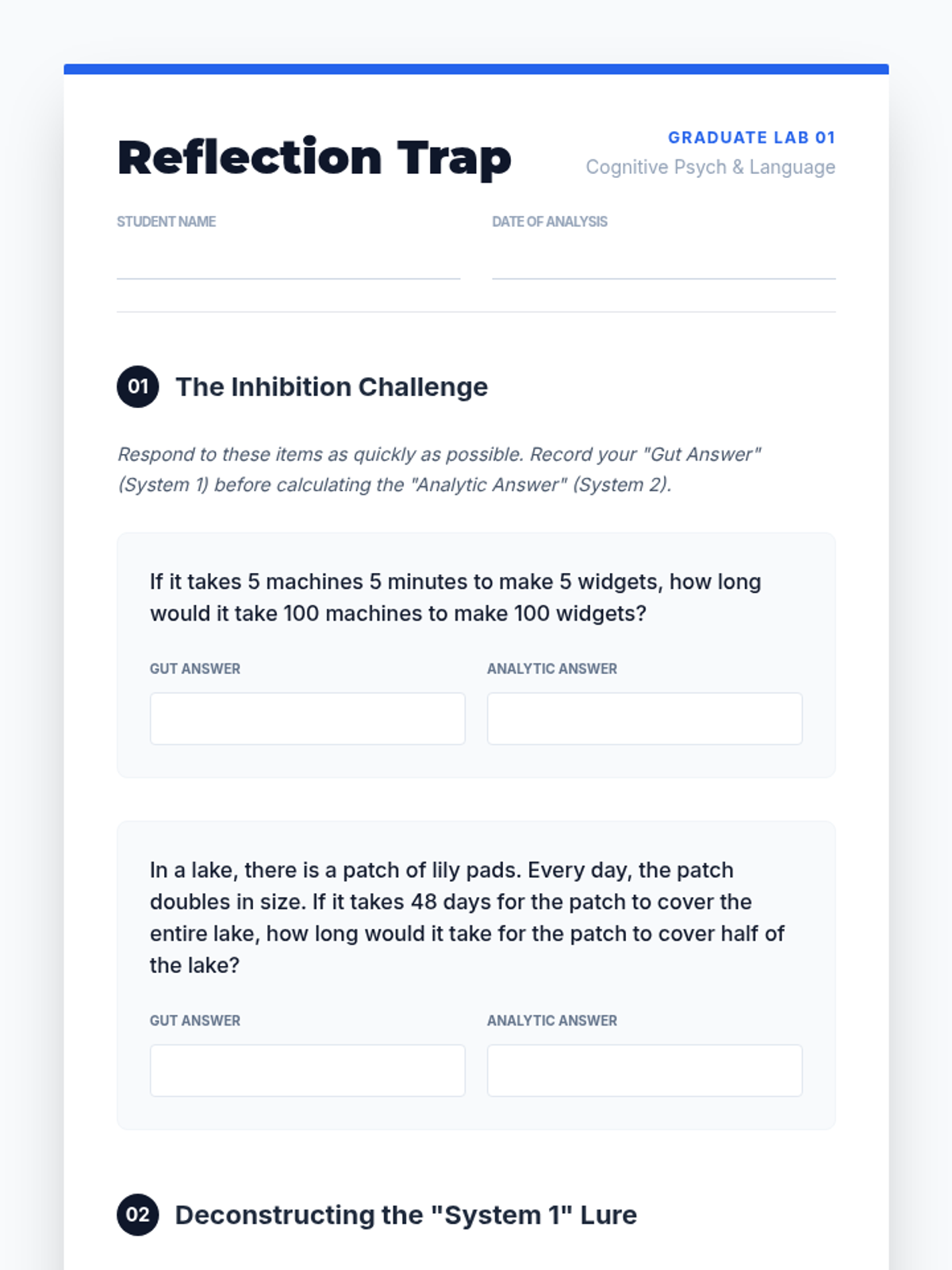
A graduate-level sequence exploring cognitive psychology, decision-making, and the linguistic structures that shape human thought. Students investigate Dual-Process Theory, Prospect Theory, and Bayesian models to understand the gap between normative rationality and human heuristics.
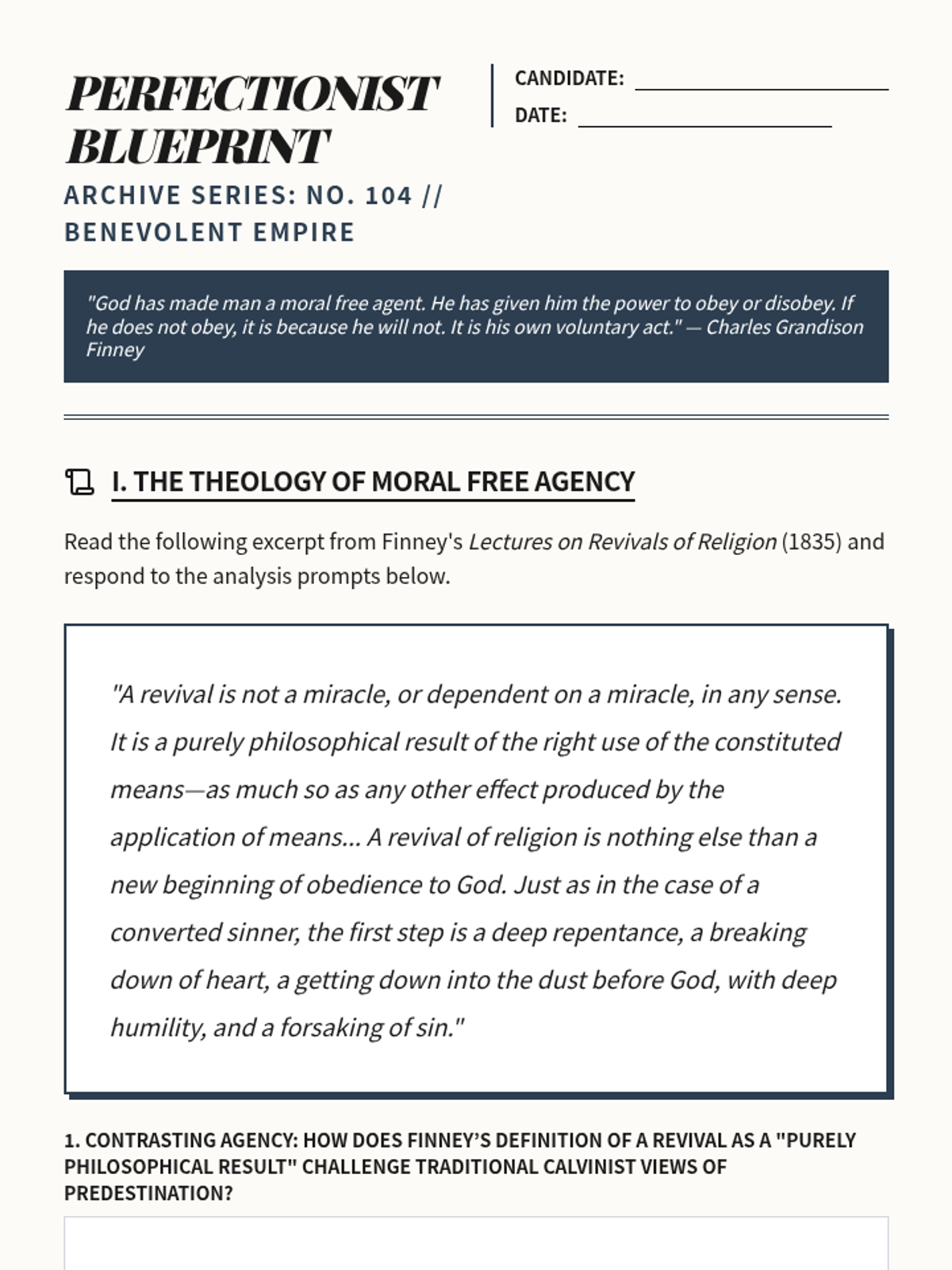
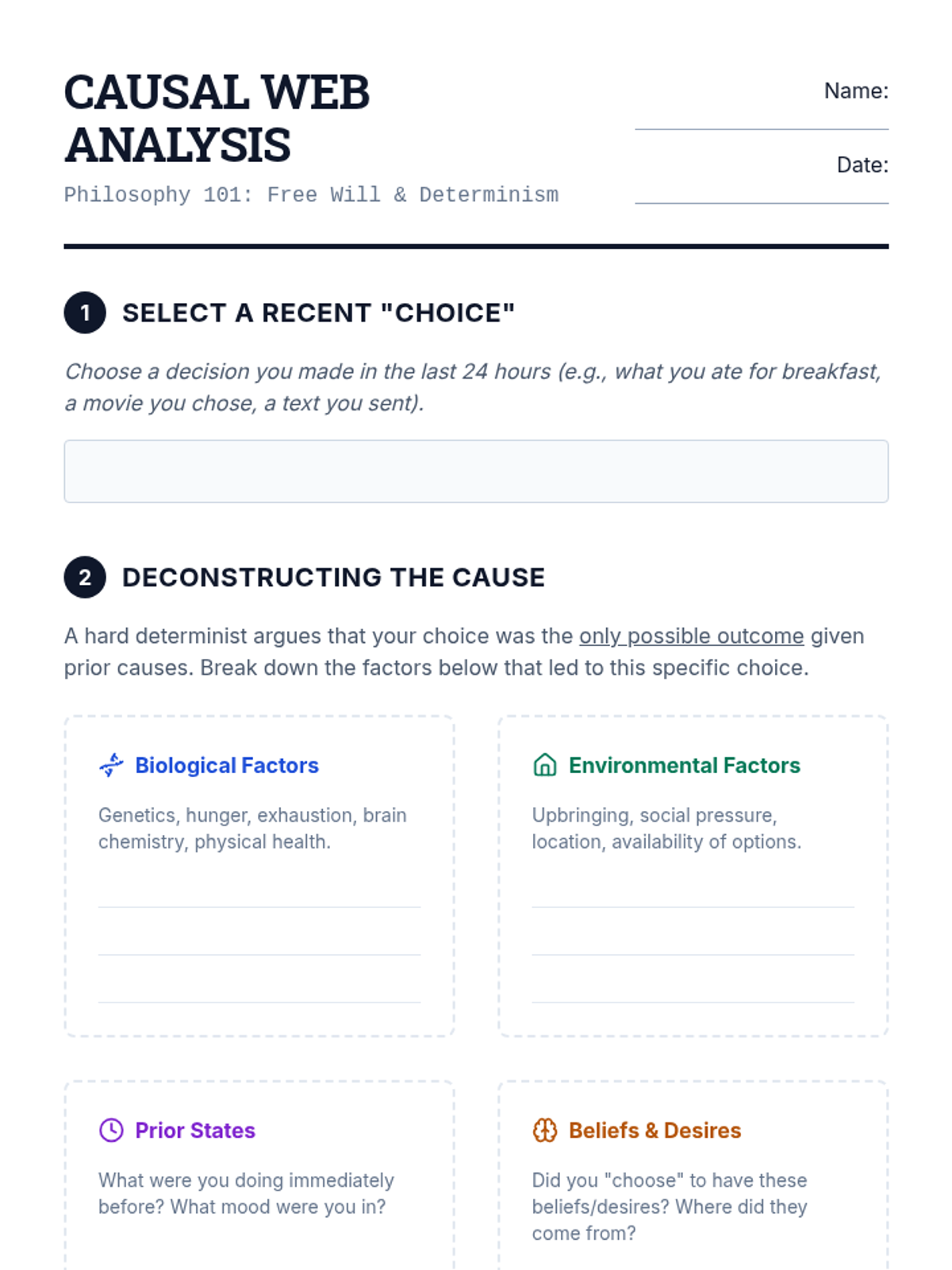
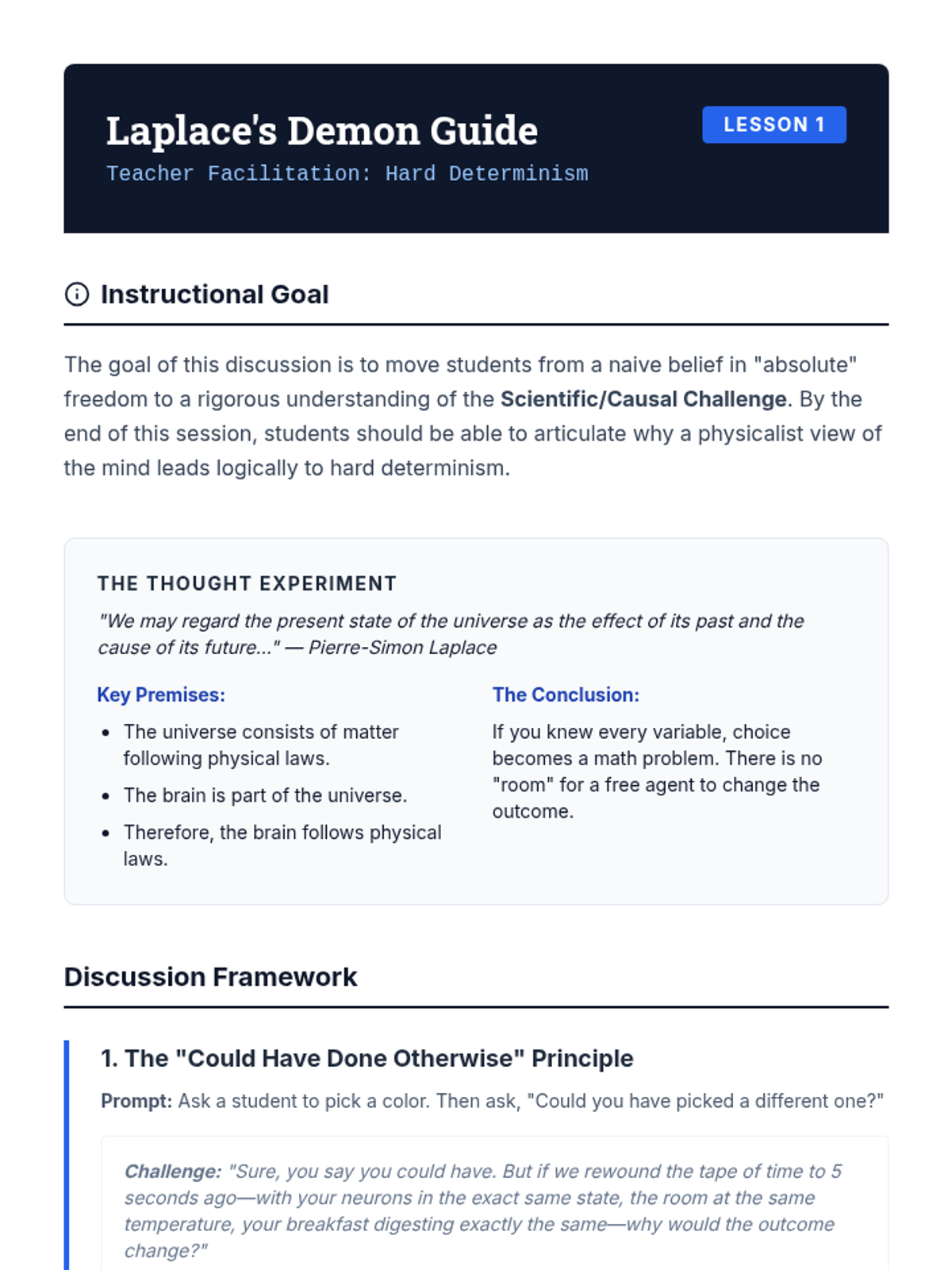
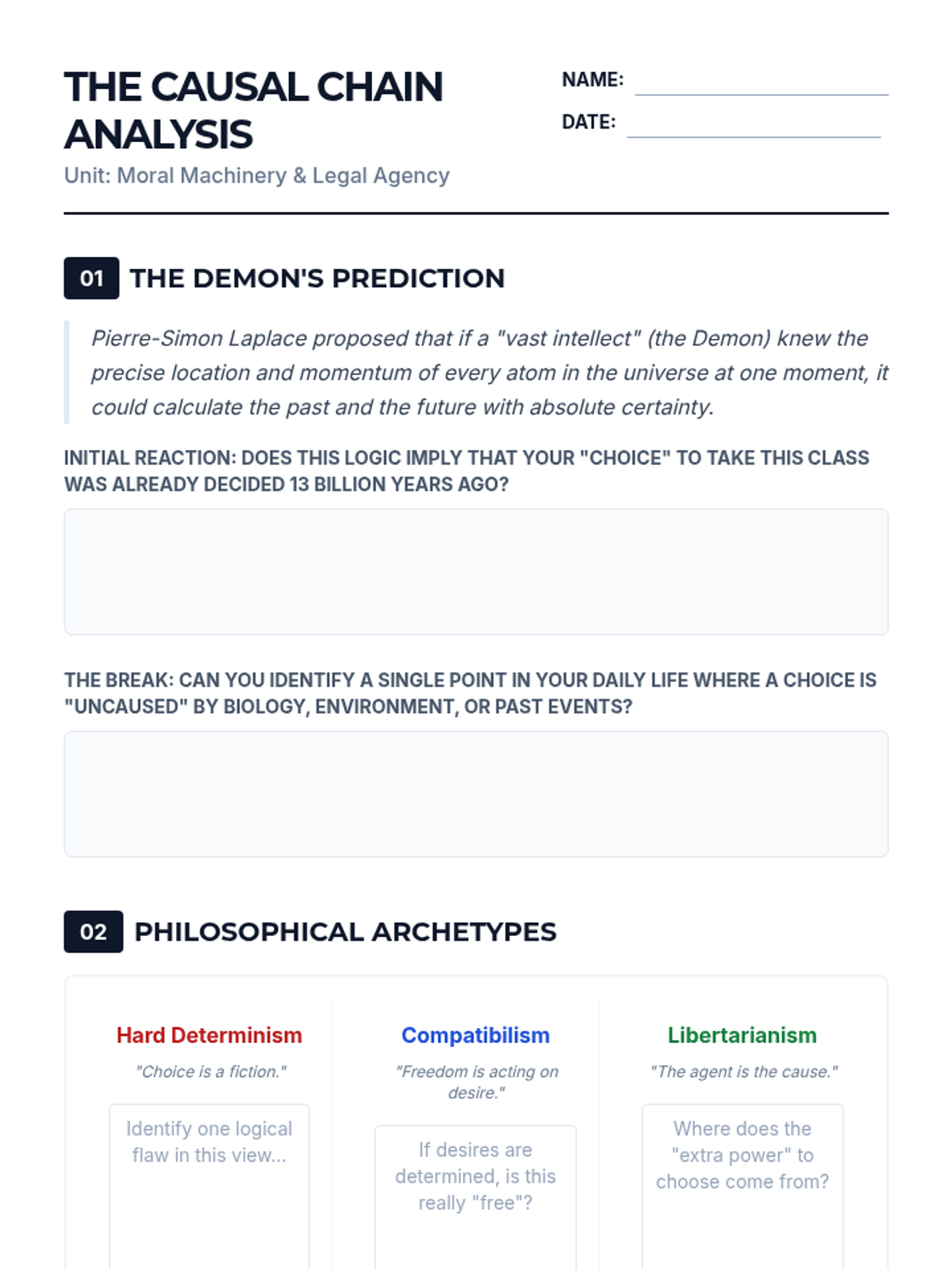
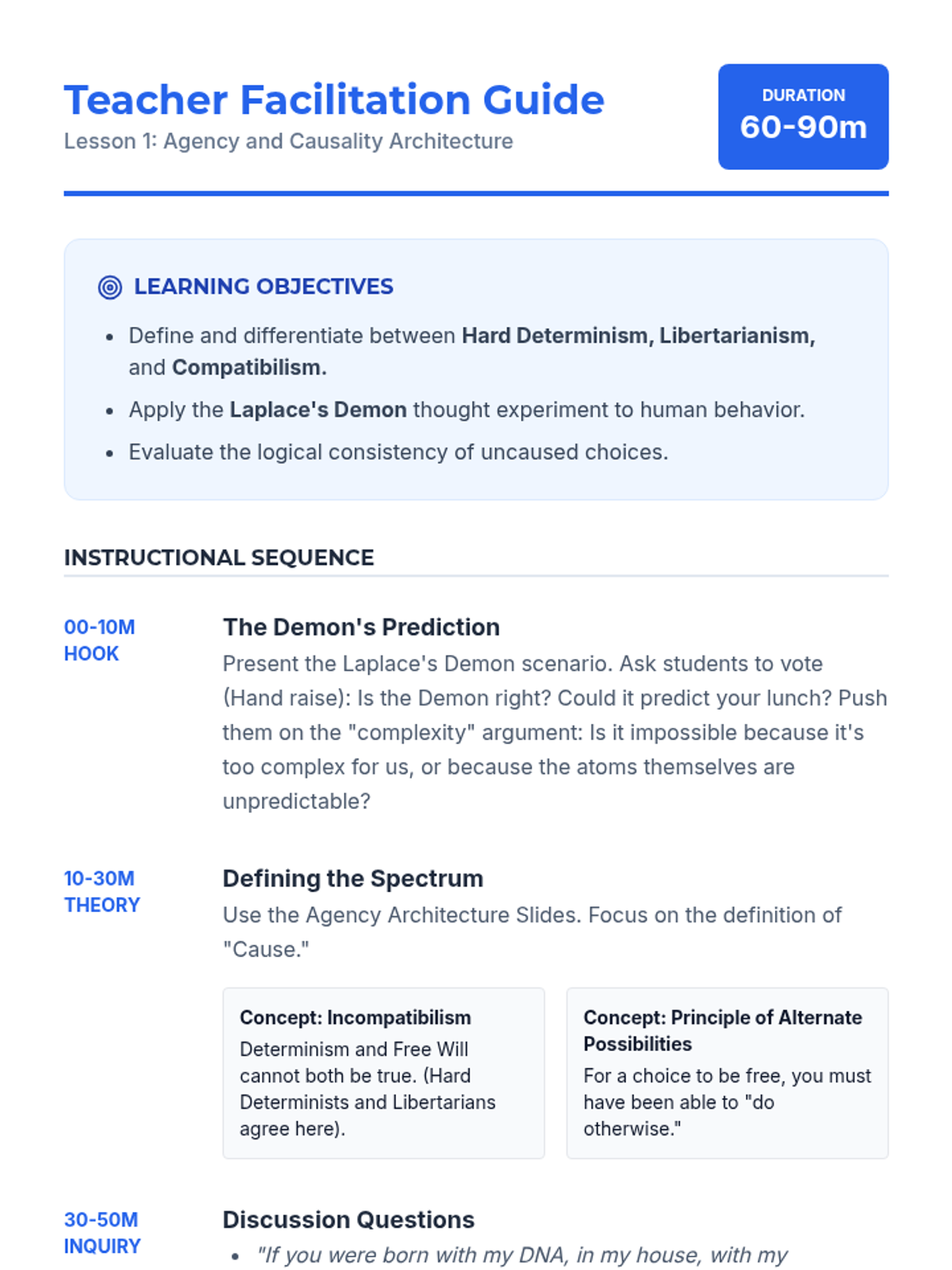
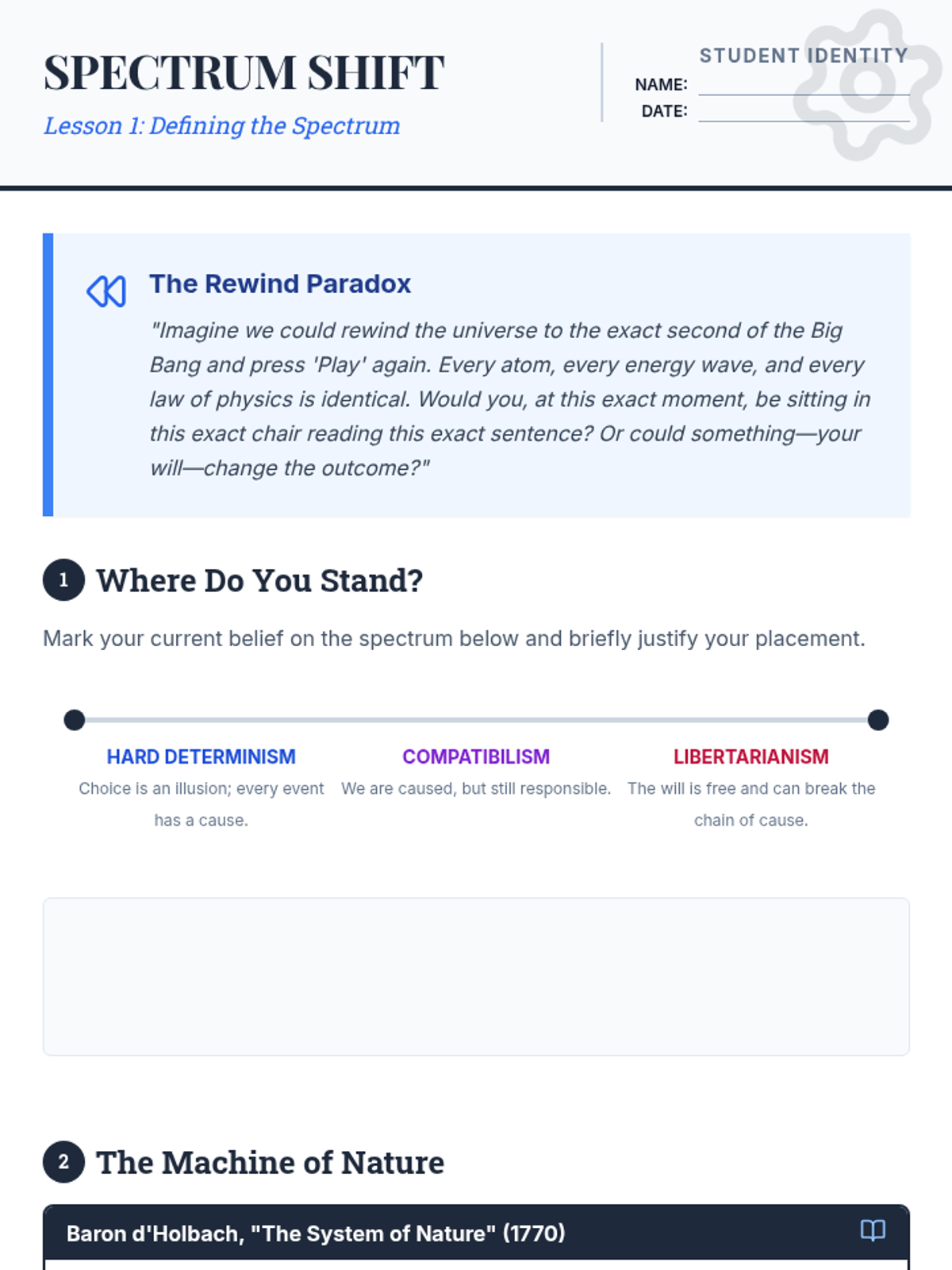
This sequence explores the metaphysical and ethical dimensions of the free will debate, moving from hard determinism to compatibilism, libertarianism, and the implications of neuroscience on moral responsibility.
A rigorous undergraduate exploration into the metaphysical foundations of mind and identity. This sequence covers the mind-body problem, the nature of consciousness, and the persistent question of what constitutes personal identity over time.
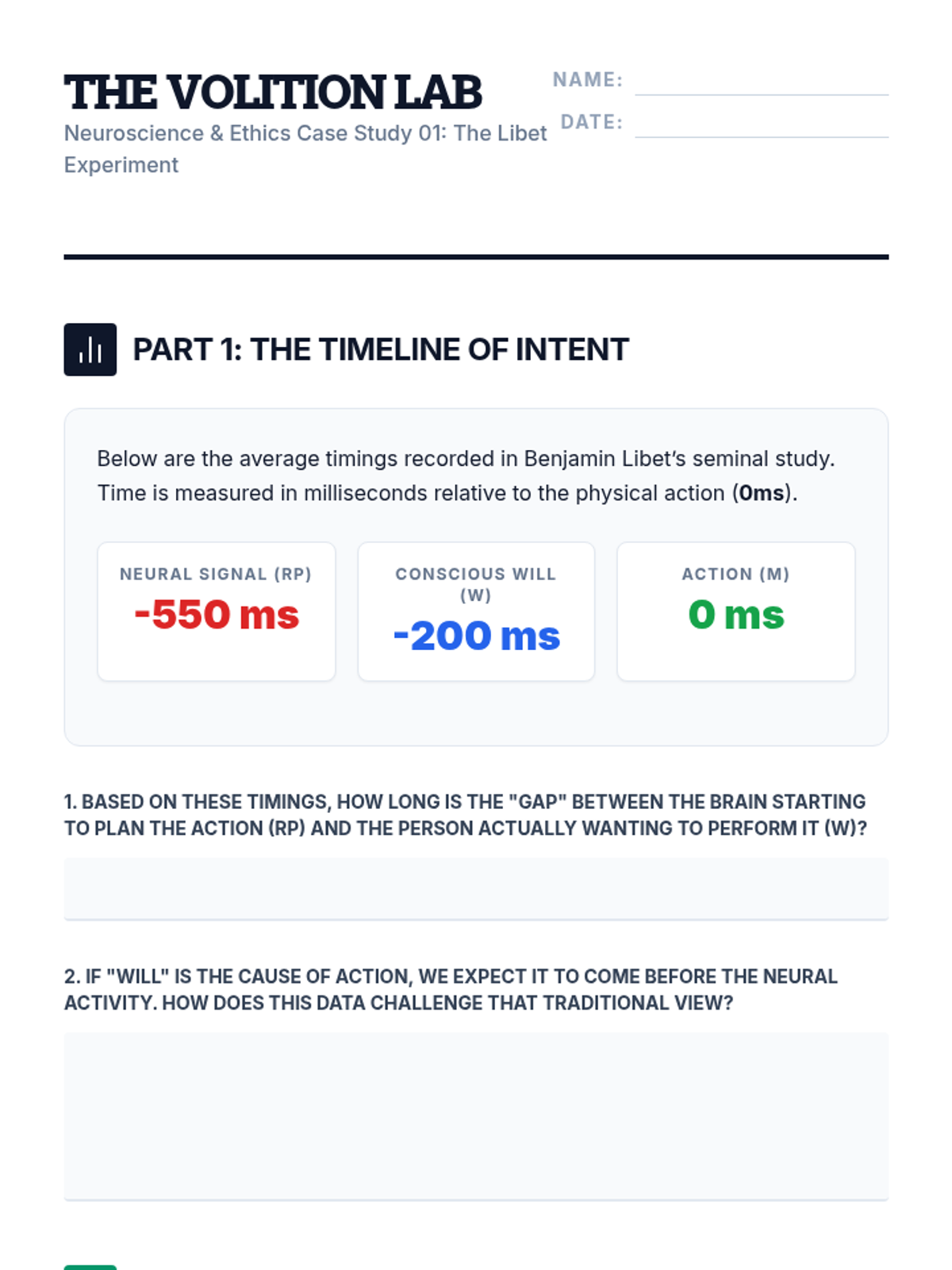
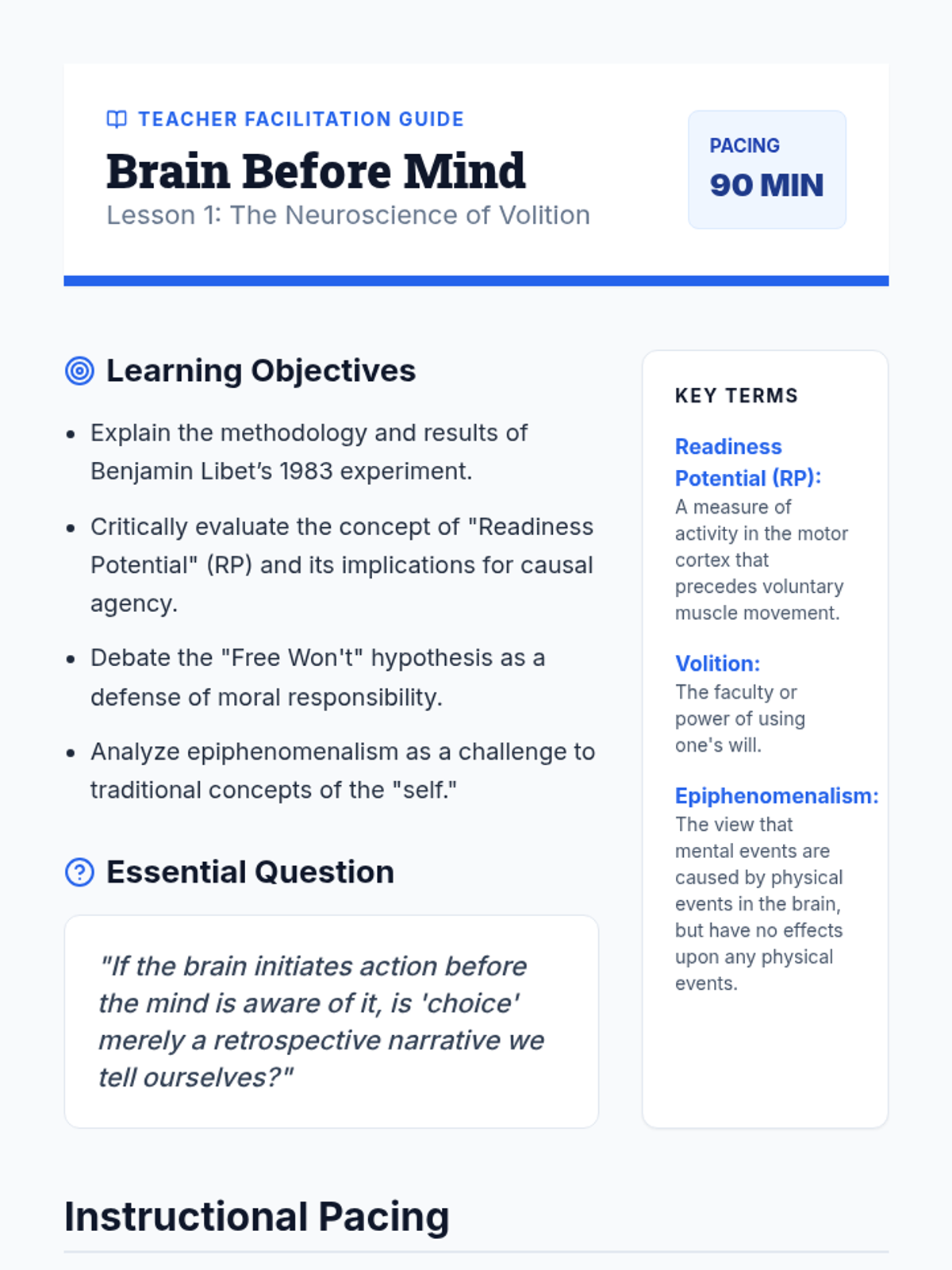
This undergraduate philosophy sequence explores the ethical ramifications of determinism, moving from neuroscience experiments on volition to social theories of reactive attitudes and moral luck. Students conclude by designing a justice system that functions without the traditional concept of moral desert.
A comprehensive 12th-grade philosophy and ethics sequence exploring the tension between free will and determinism, culminating in a legal sentencing simulation. Students analyze metaphysical, biological, and sociological arguments to determine the extent of human agency and moral responsibility.
An 11th-grade philosophy sequence exploring the tension between human agency and causal determinism, culminating in a legal simulation regarding moral responsibility.
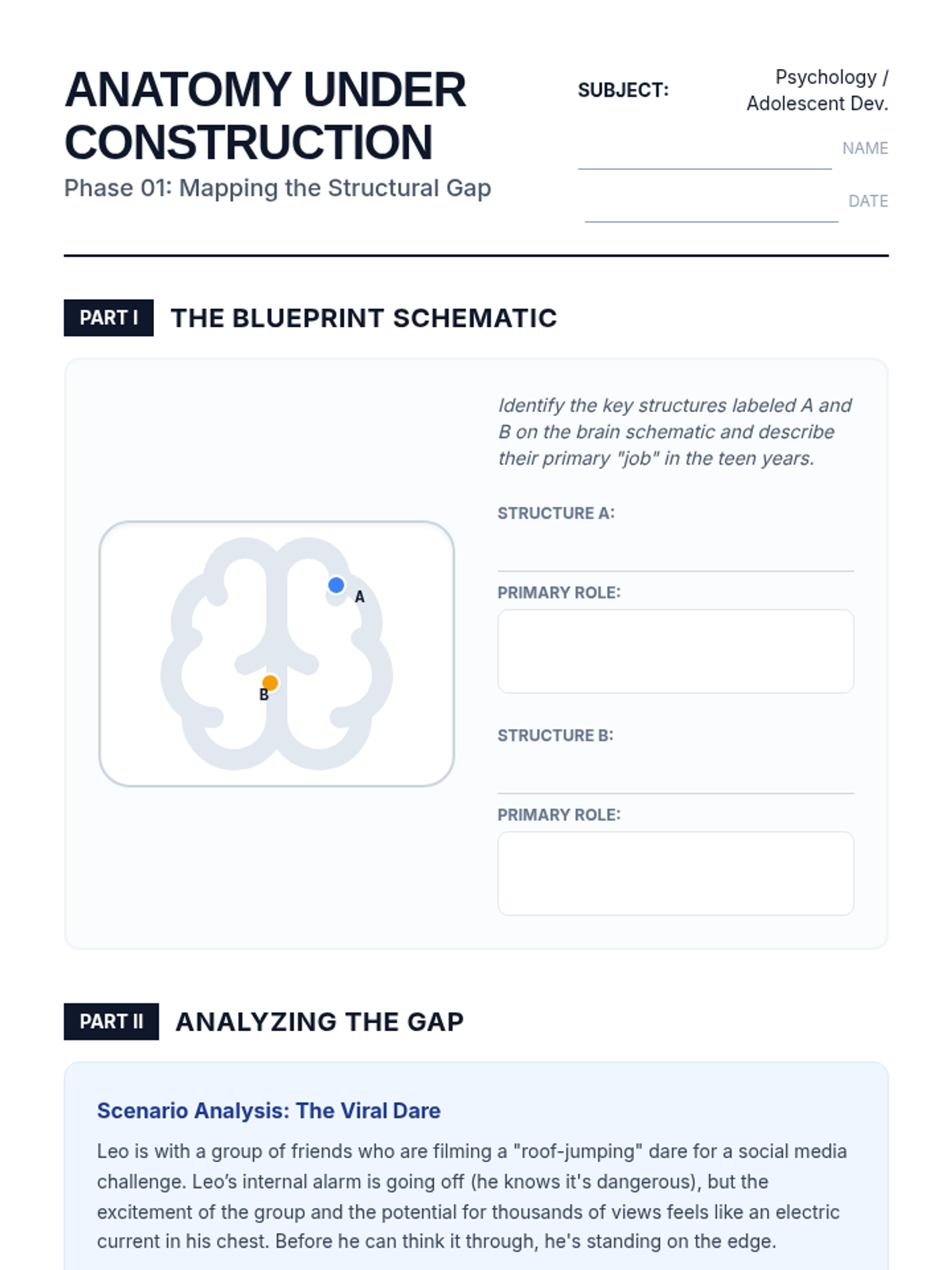
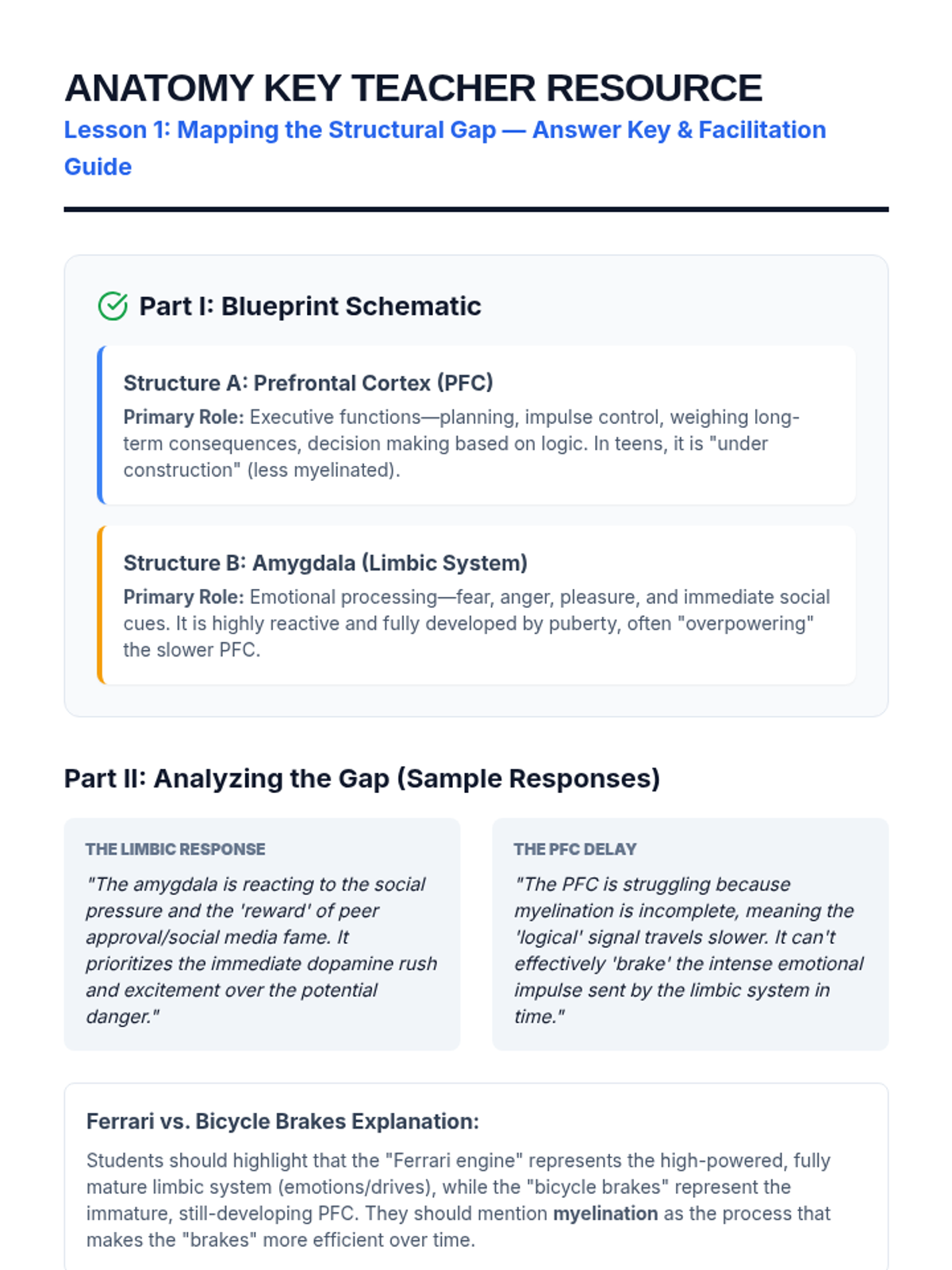
A comprehensive 10th-grade psychology unit exploring the neurobiology of the adolescent brain, focusing on brain structure, neuroplasticity, neurochemistry, environmental impacts, and the ethical implications for the legal system.
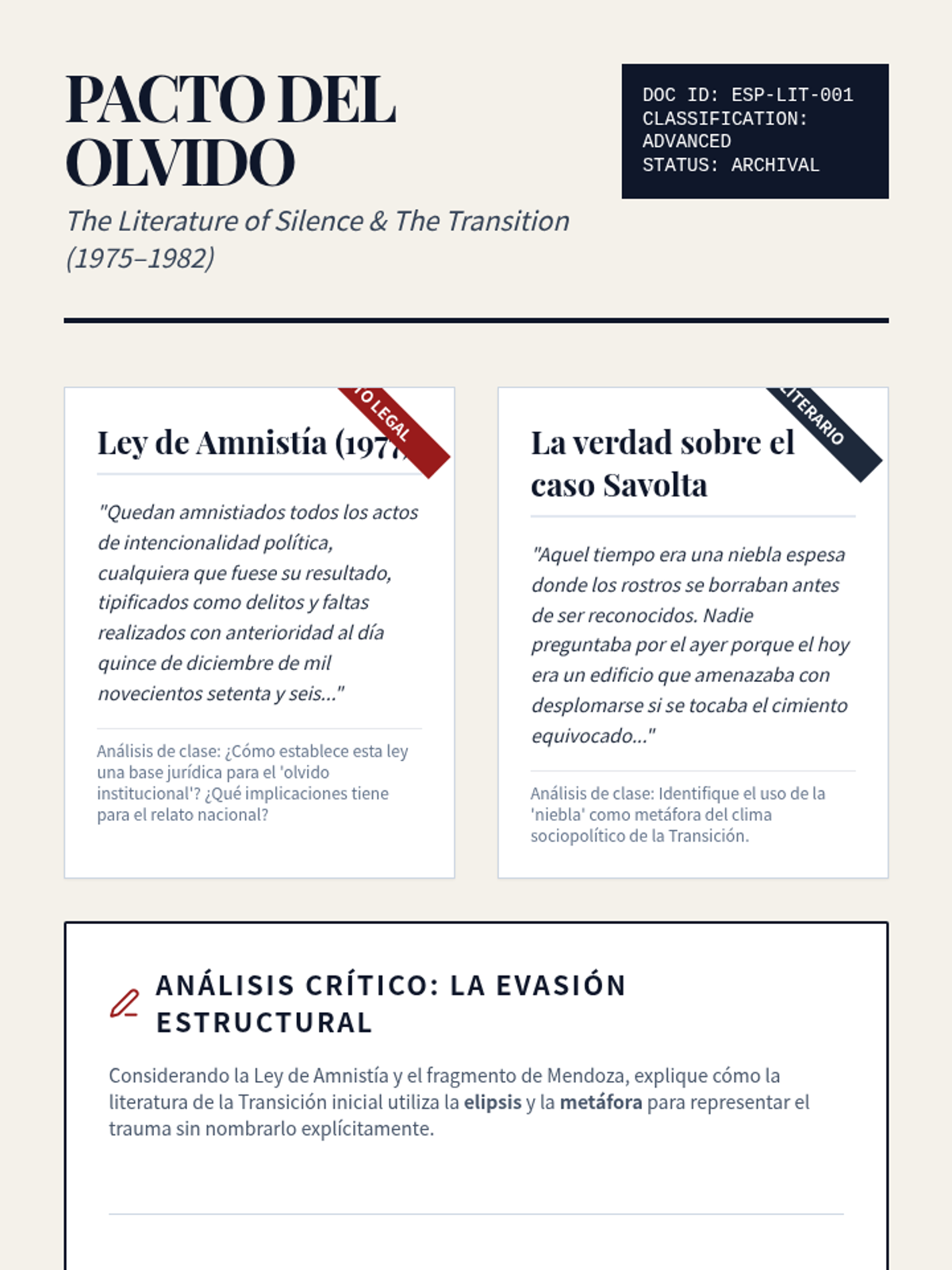
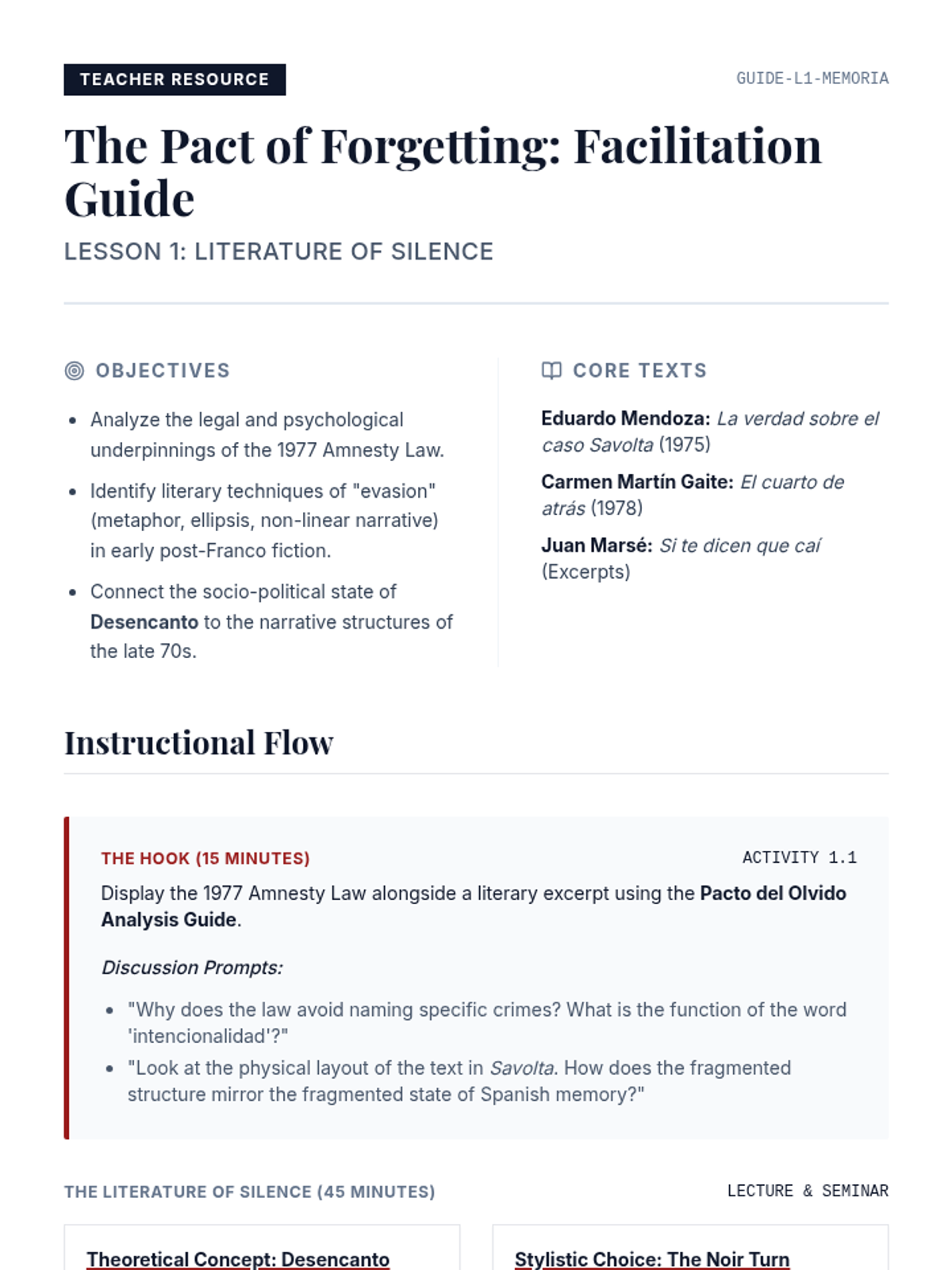
A graduate-level sequence exploring the intersection of literature and historical memory in post-Franco Spain, focusing on the Transition, the Pact of Forgetting, and the contemporary 'memory boom'.
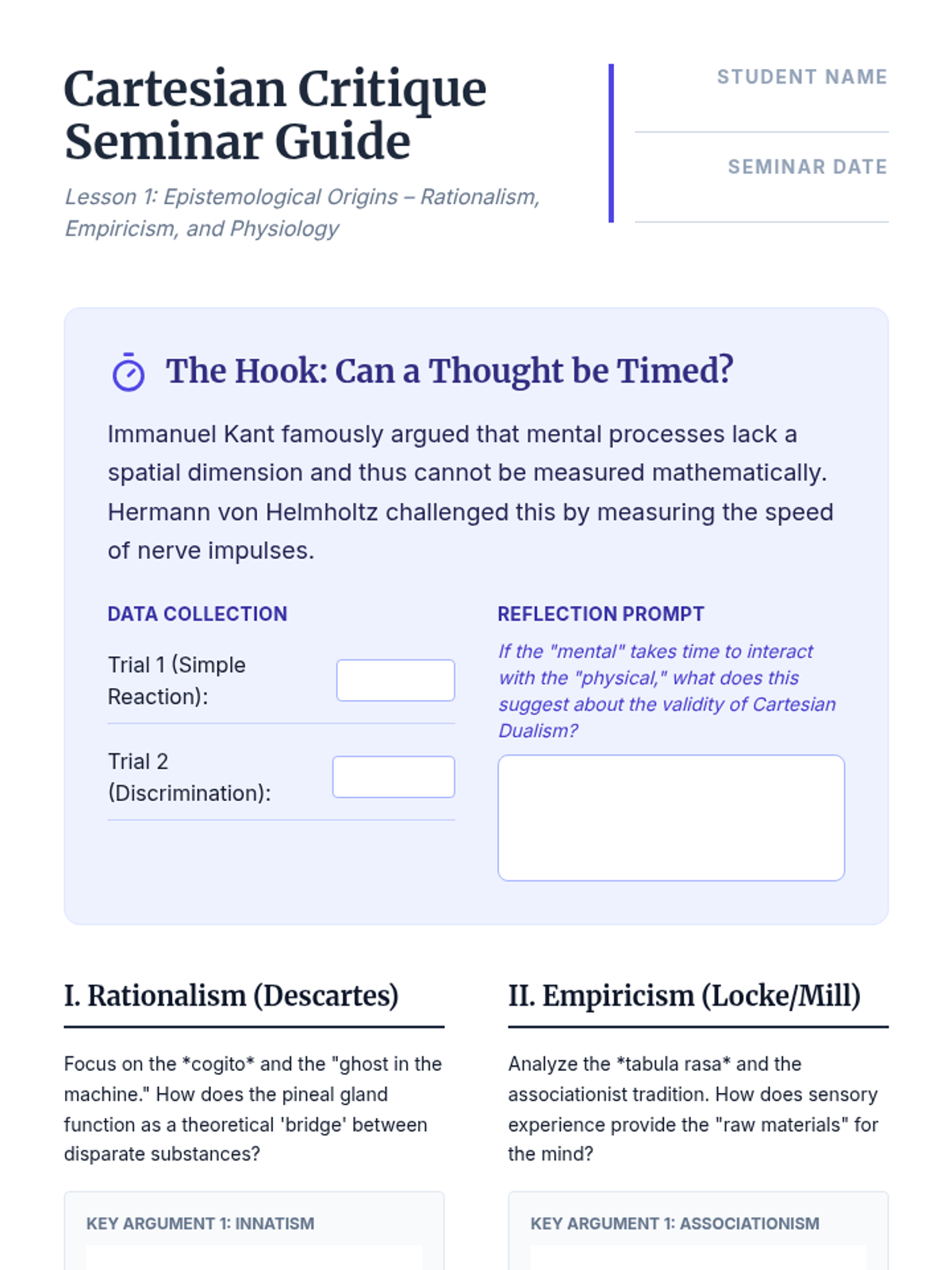
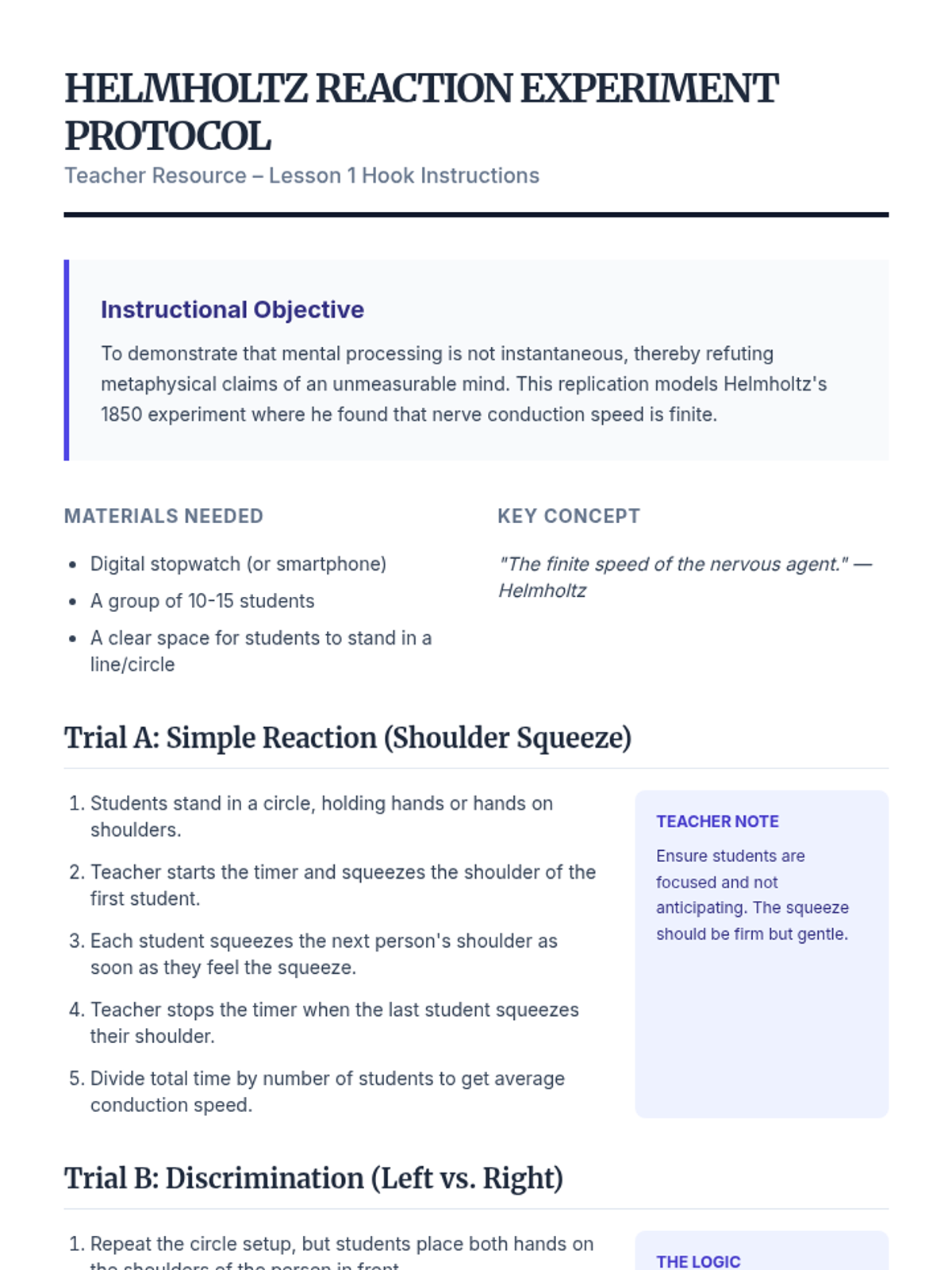
An advanced graduate seminar sequence exploring the transition of psychology from philosophy to an experimental science, focusing on the epistemological tensions between Structuralism and Functionalism.
This sequence explores the transition of psychology from philosophy to science, analyzing Structuralism, Functionalism, and Behaviorism through primary sources and historiographical methods. Students will evaluate the evolving standards of psychological evidence and connect historical debates to contemporary research.
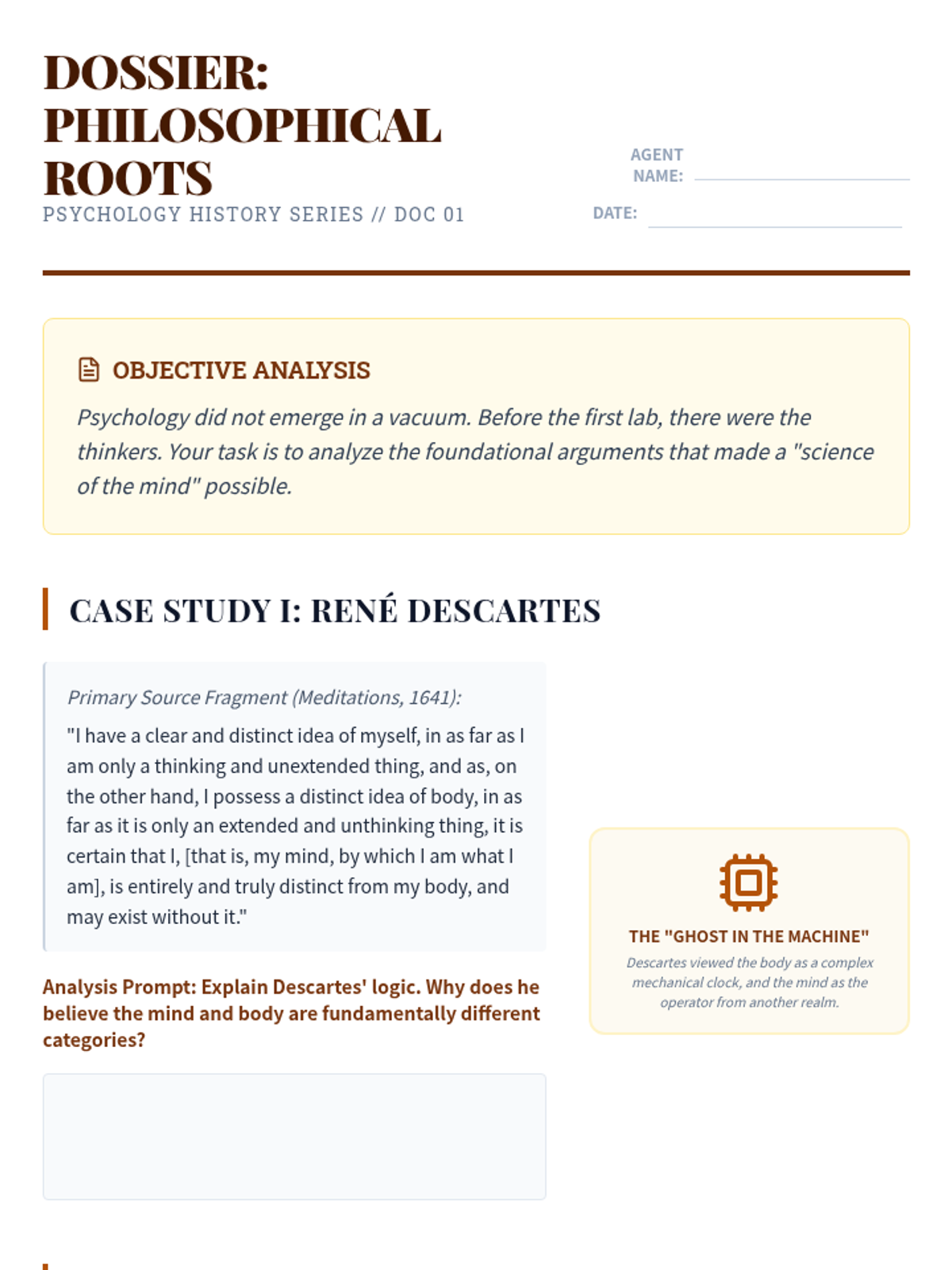
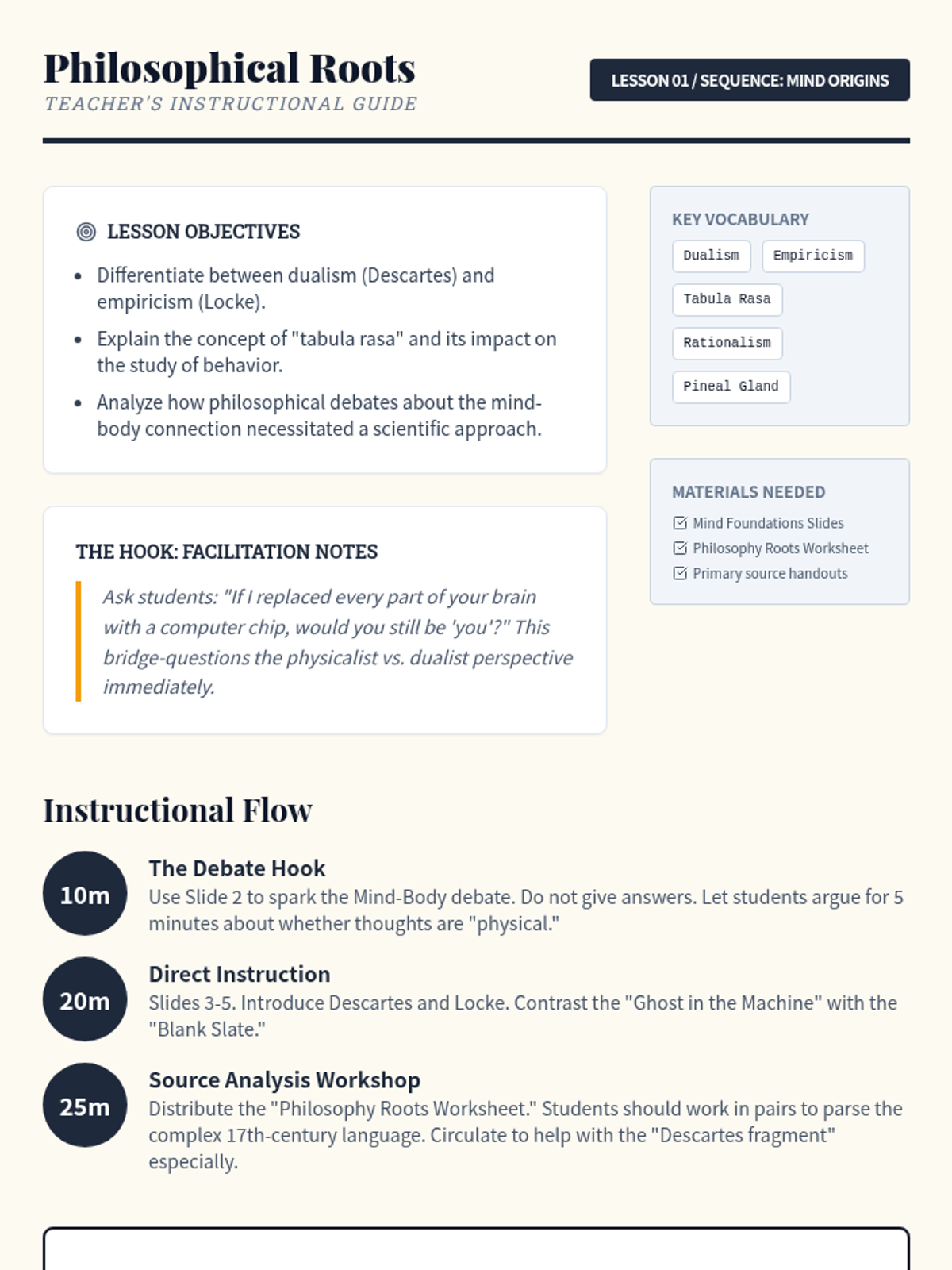
This sequence traces the evolution of psychology from philosophical roots in dualism and empiricism through the foundational schools of structuralism, functionalism, and behaviorism, culminating in a synthesis of how these perspectives shape modern inquiry.
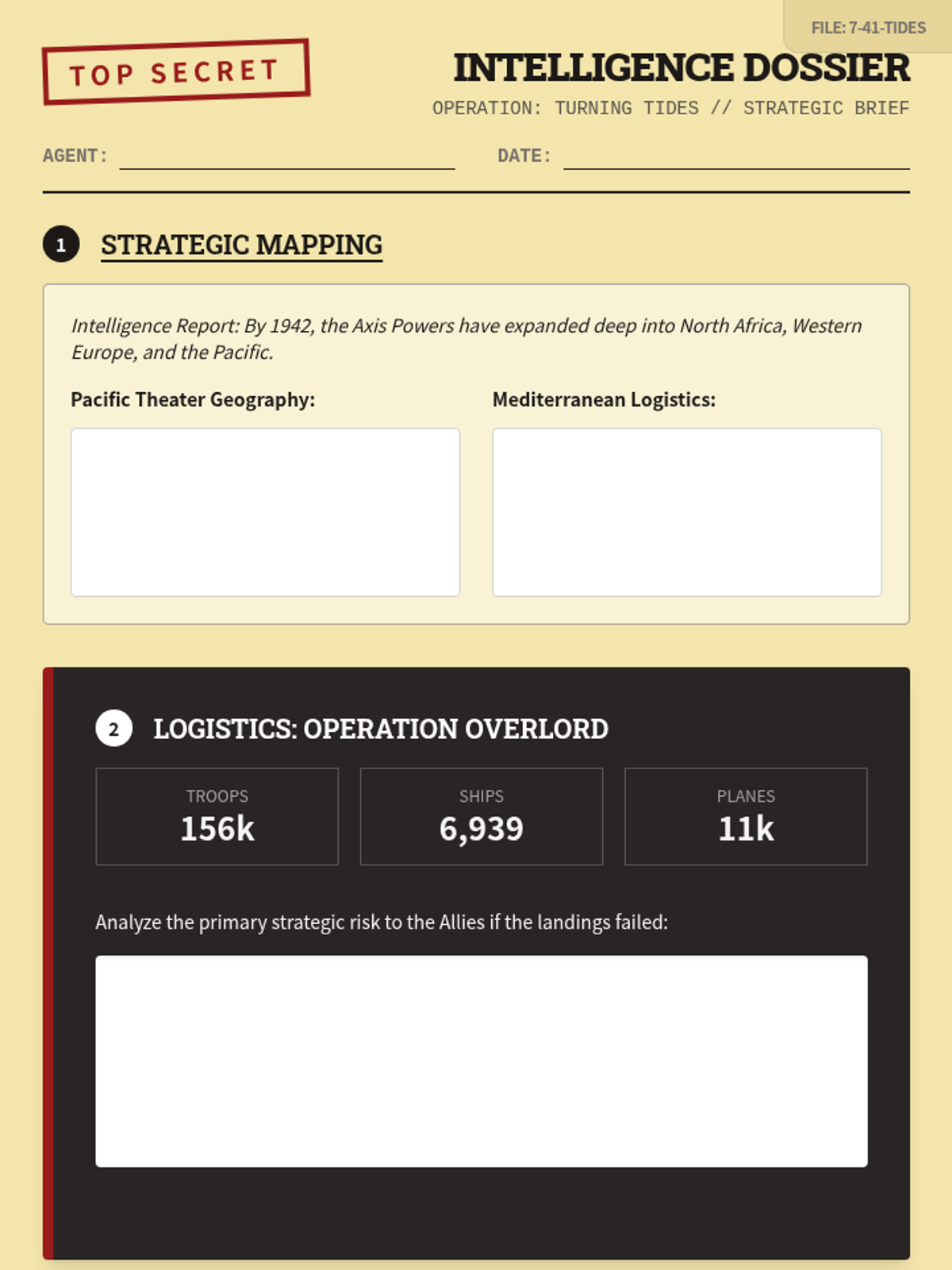
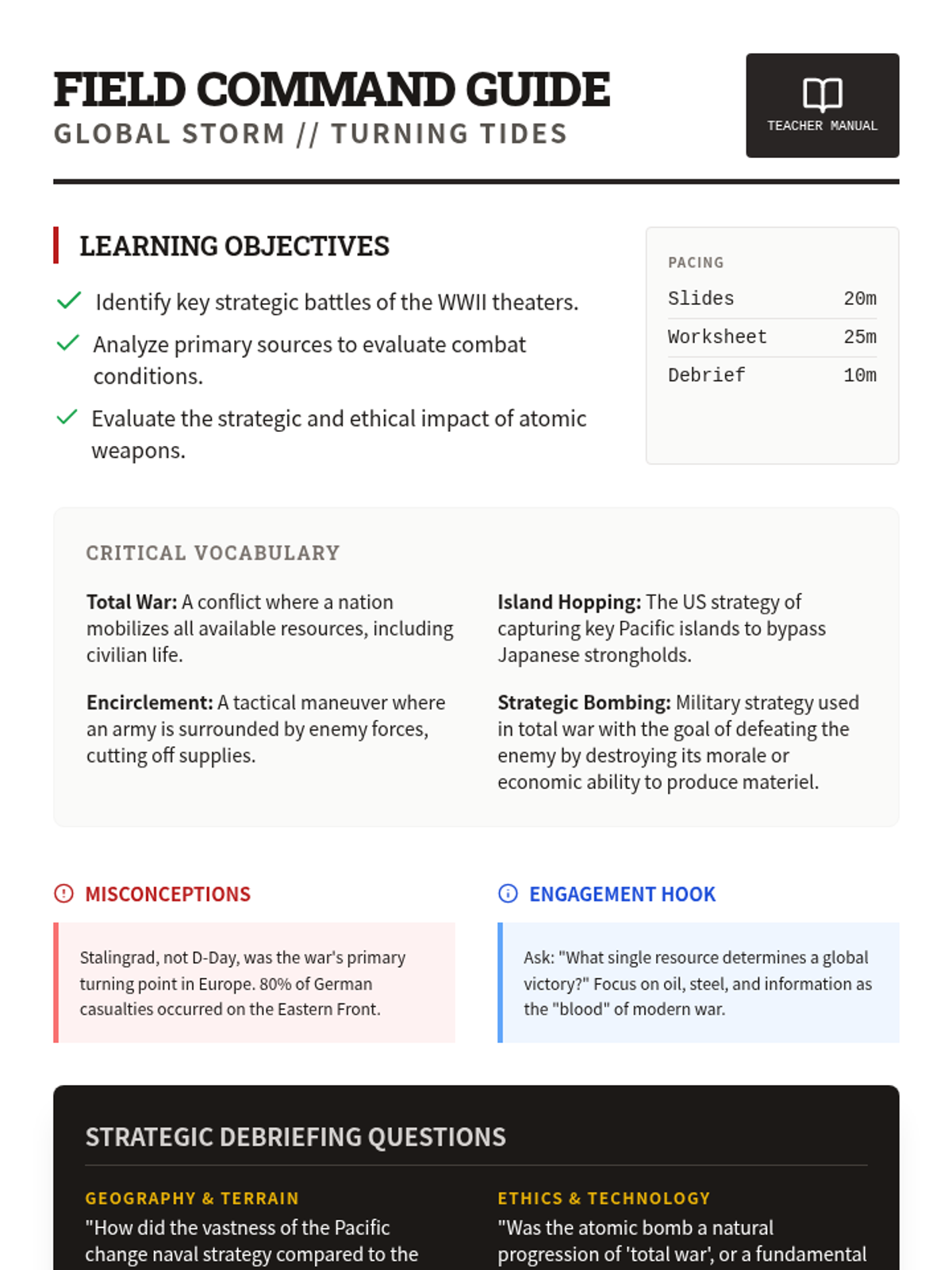
A comprehensive dive into the pivotal moments and global impact of World War II, framed through the lens of military intelligence and historical analysis.
A comprehensive curriculum covering financial literacy, economic principles, and civic systems through historical case studies, ethical dilemmas, and real-world simulations.
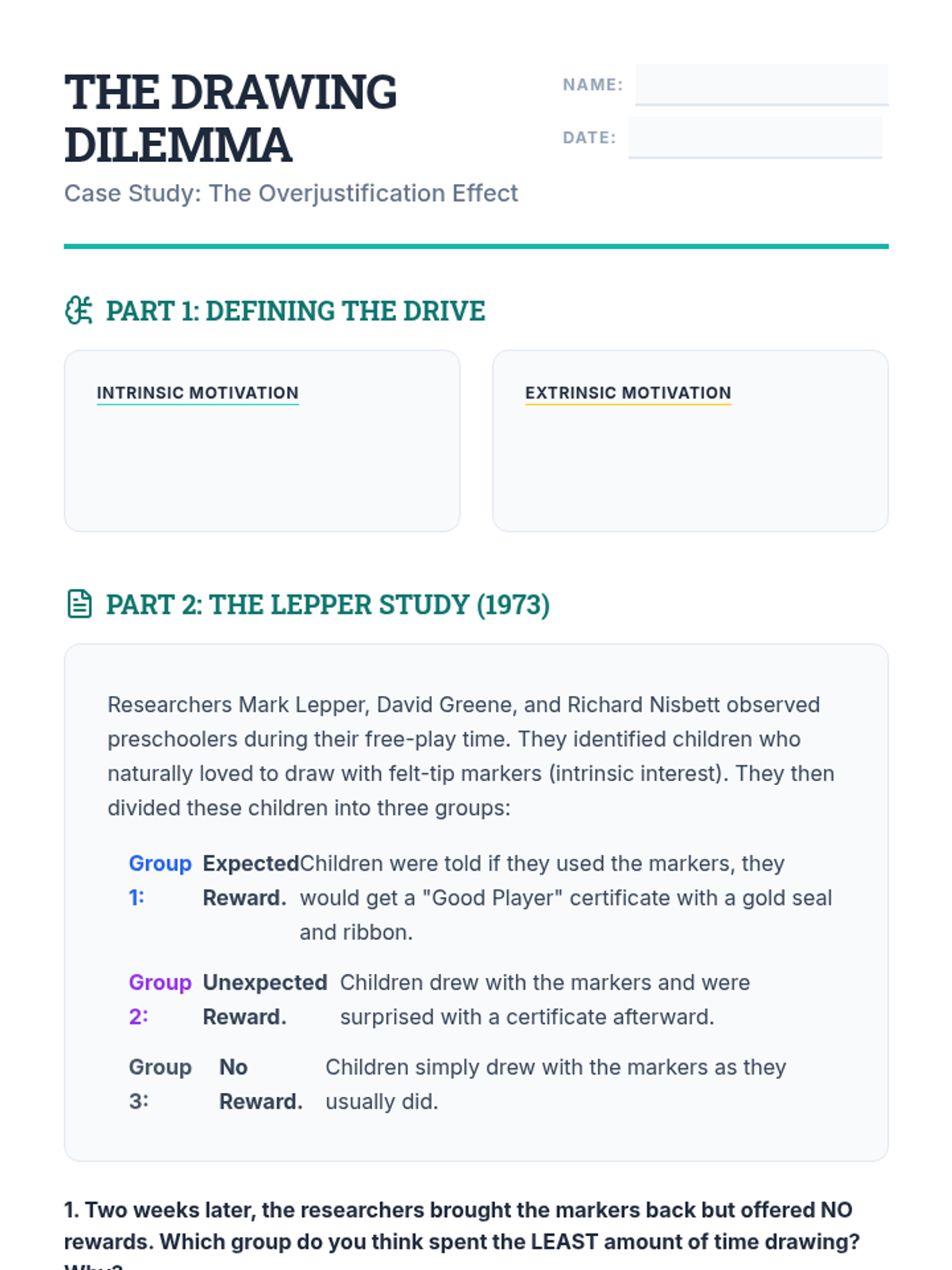
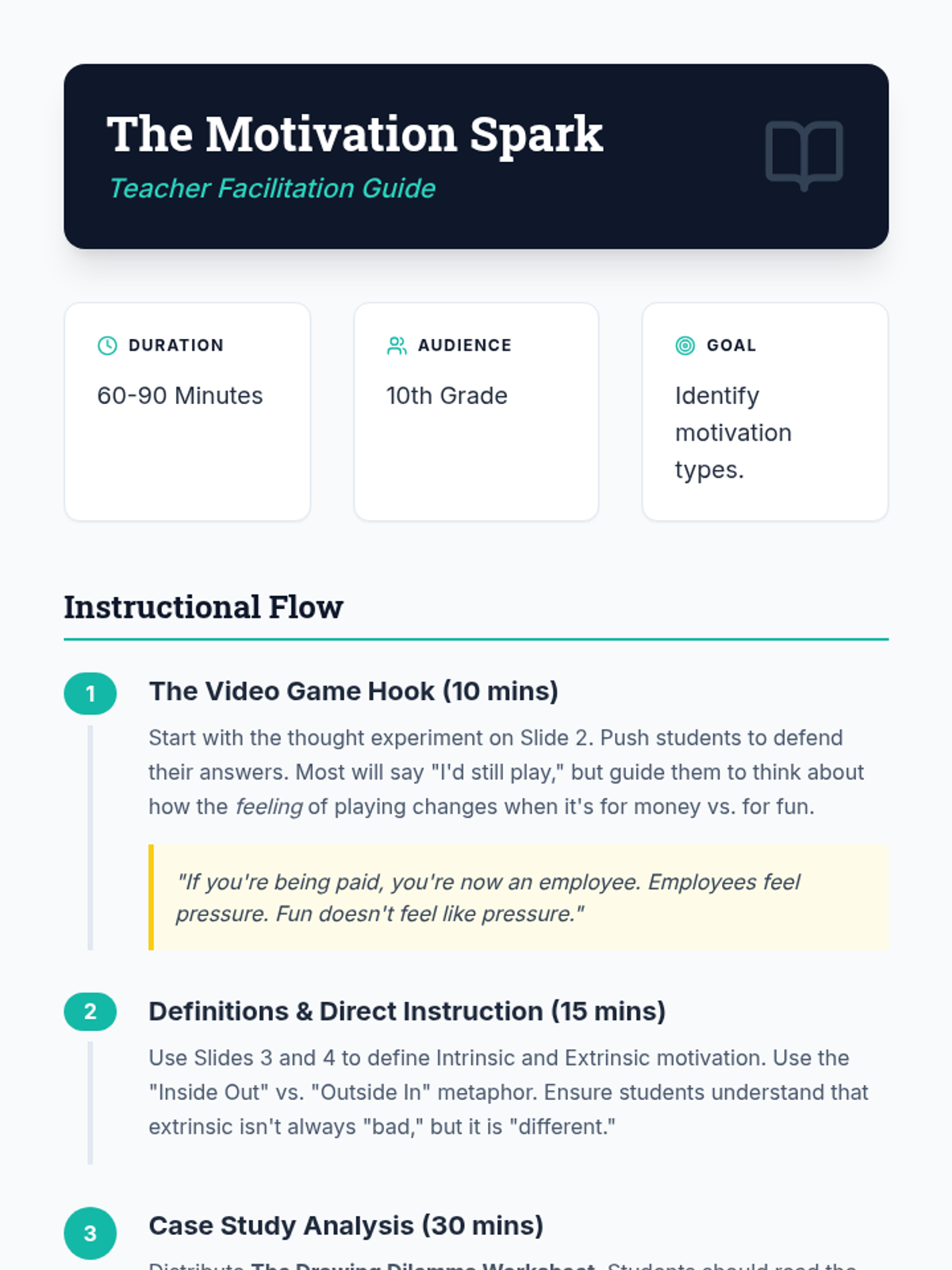
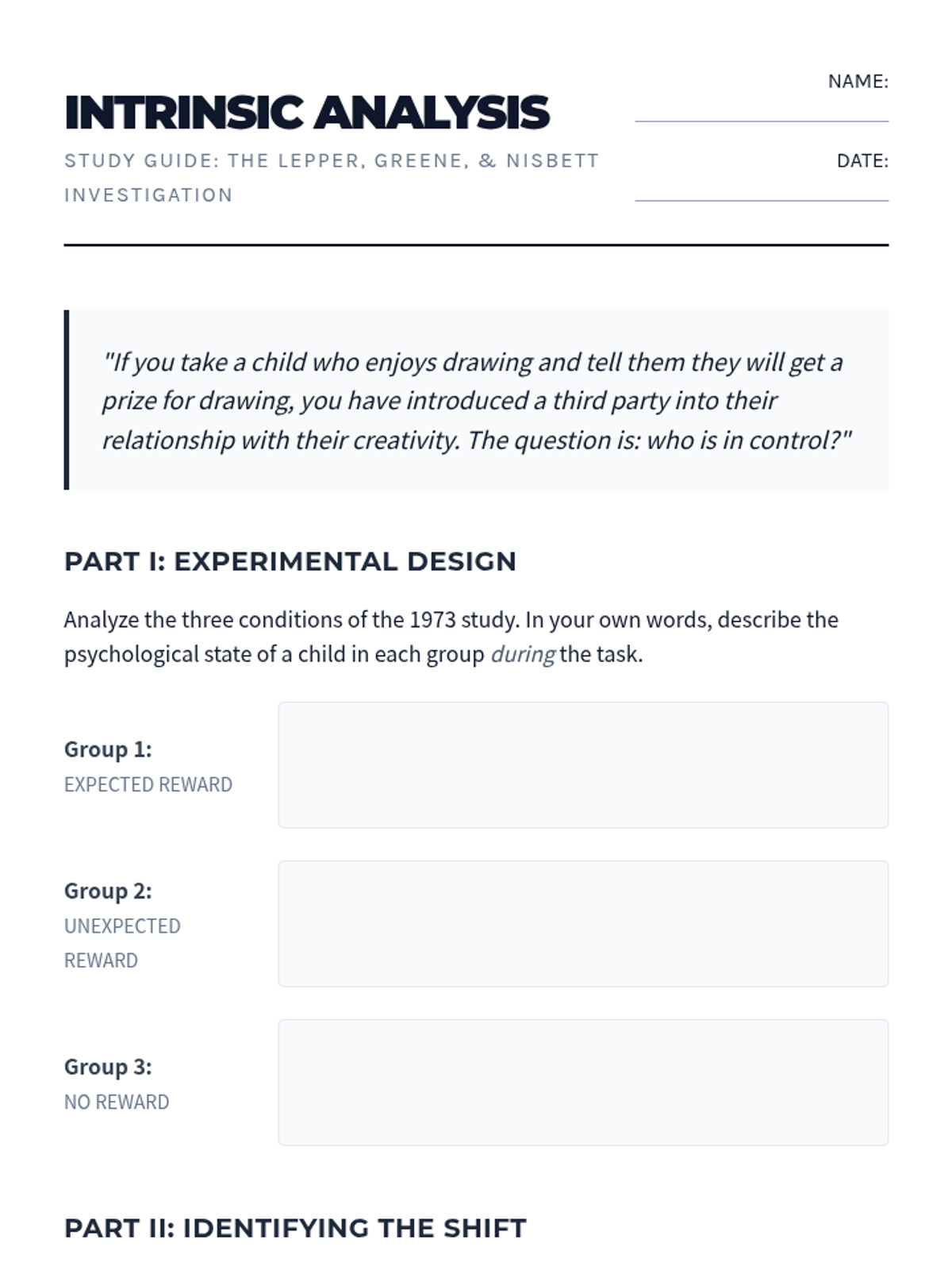
A critical exploration of behavioral psychology, focusing on the tension between intrinsic and extrinsic motivation. Students analyze the ethical implications of reward systems in education, technology, and society.
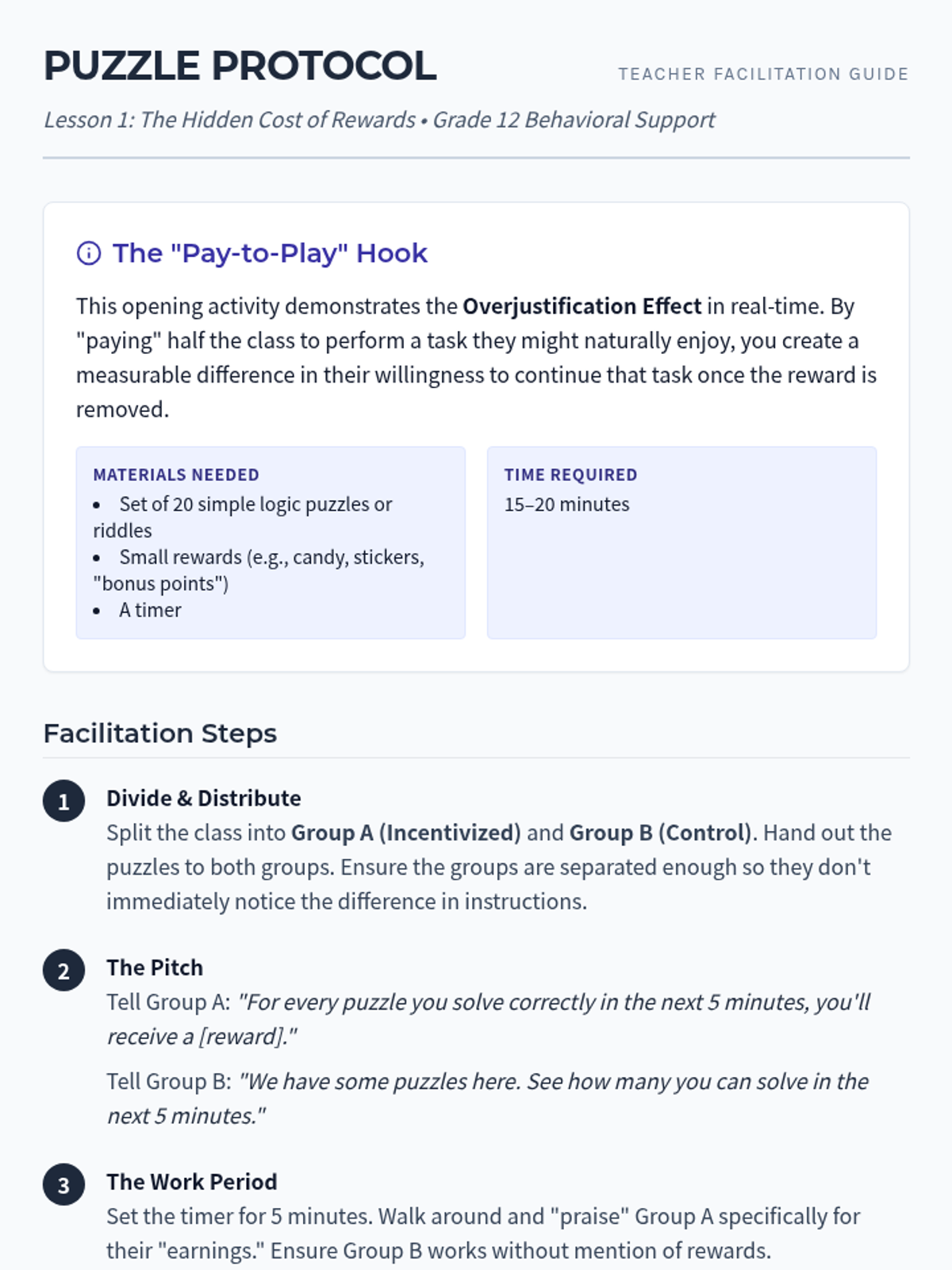
This sequence examines the psychological and ethical limits of positive reinforcement. Students analyze the 'Overjustification Effect', the impact of rewards on creativity, and the ethics of behavioral nudging, concluding with a critical audit of real-world incentive systems.
A deep dive into the Spanish-American and Philippine-American Wars, examining media influence, diplomatic failure, strategic annexation, and the ethical costs of global empire building.
This graduate-level sequence investigates the economic motivations behind early 20th-century US foreign policy. It examines the shift from territorial conquest to 'Dollar Diplomacy,' focusing on the entanglement of state power with private corporate interests in the Caribbean, Central America, and East Asia.
This sequence examines the Spanish-American and Philippine-American Wars as the turning point of US foreign policy. Students will explore media influence, the tension between liberation and annexation, and the ethical consequences of empire-building.
This sequence examines the complexities of US annexation and resistance in the Pacific, specifically focusing on Hawaii and the Philippines. Students explore the contradictions between American democratic ideals and the realities of imperial expansion through primary source analysis and project-based learning.
A deep-dive investigation into how narrative nonfiction explores systemic societal issues. Students analyze context, bias, and systemic roots before engaging in a formal Socratic Seminar.
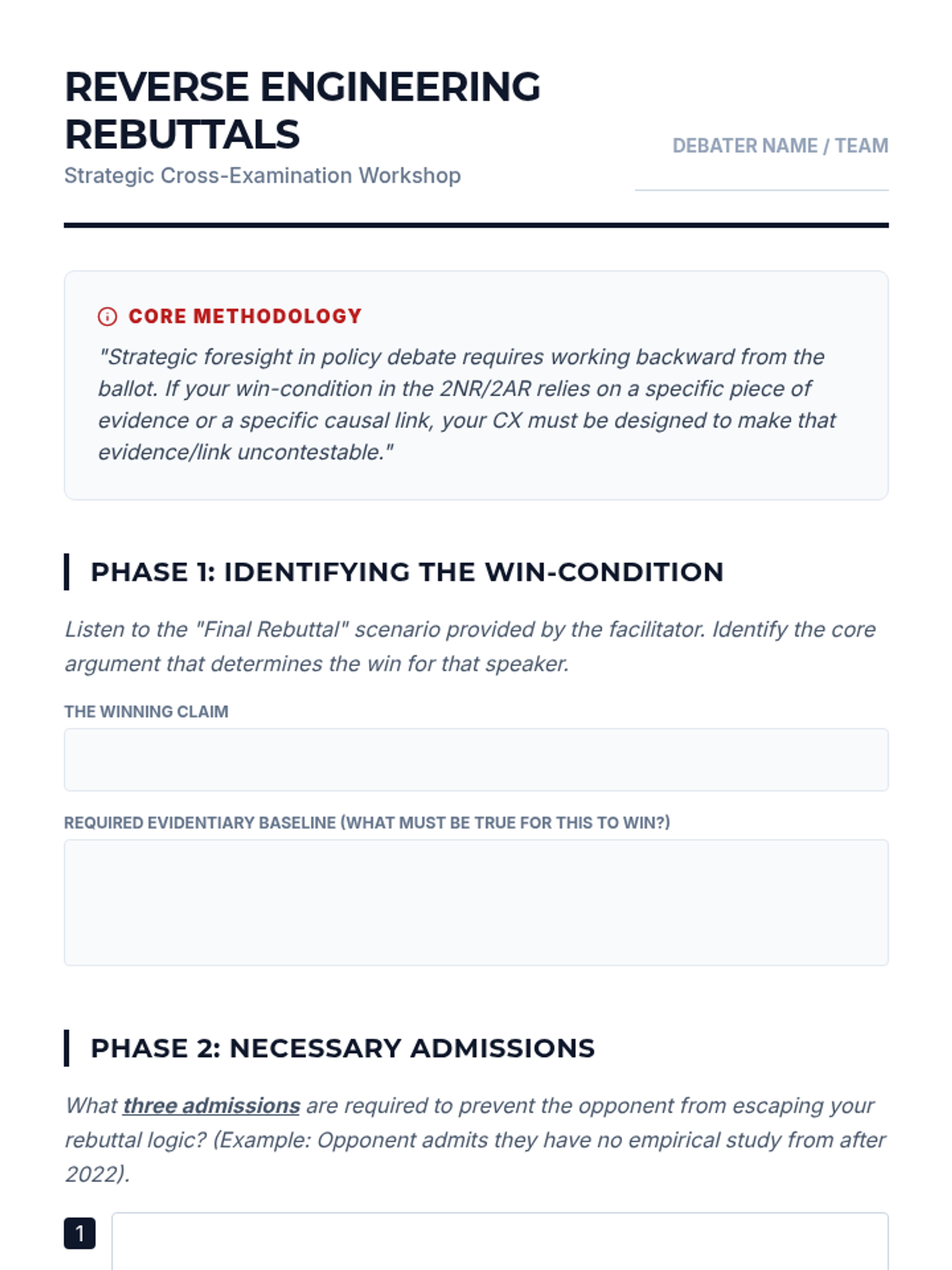
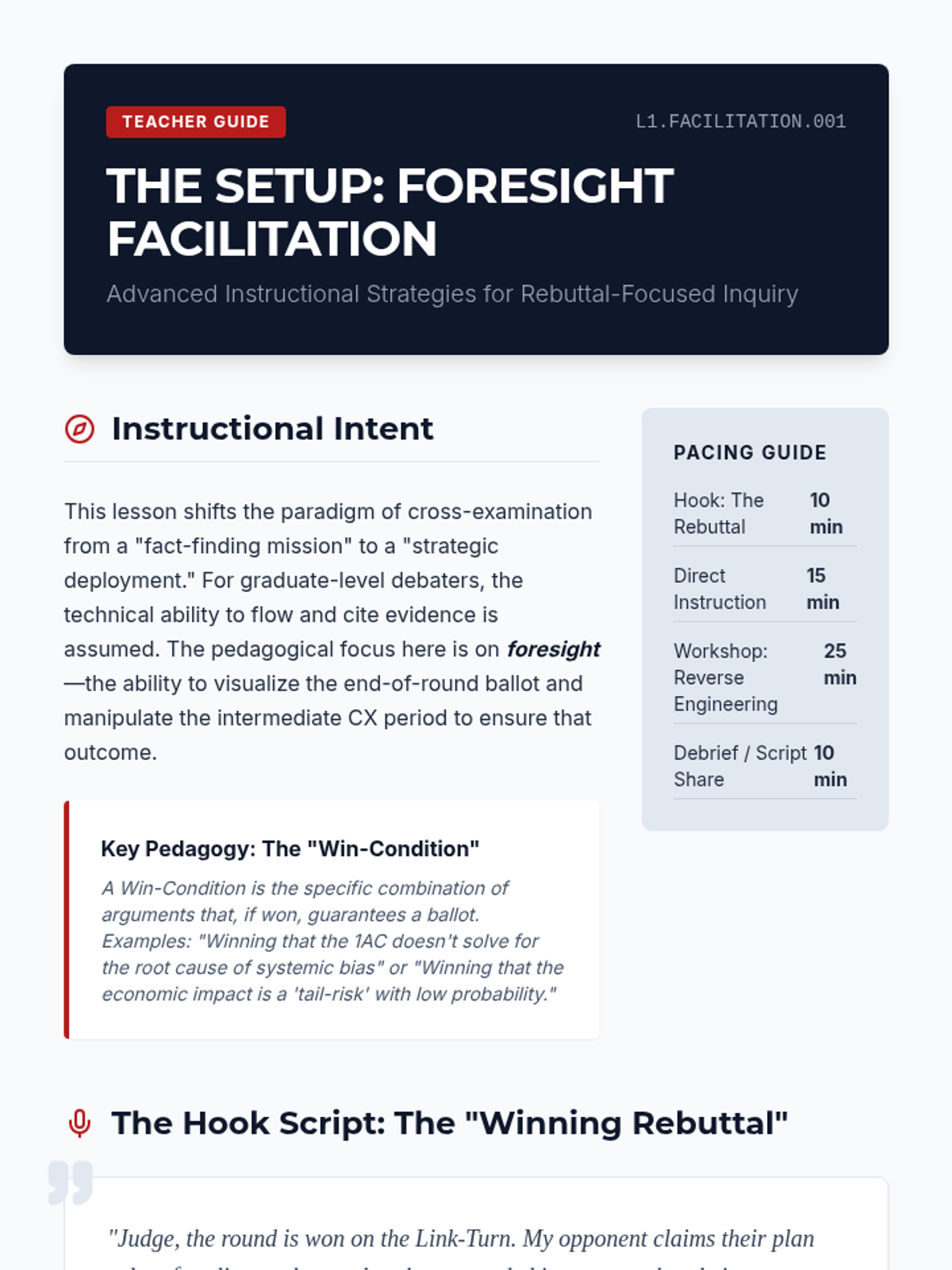
An advanced course for graduate-level policy debaters focusing on the strategic integration of cross-examination into overall round strategy. Students learn to use the CX period to dismantle links, perform impact calculus, and set up winning rebuttal arguments through tactical inquiry.
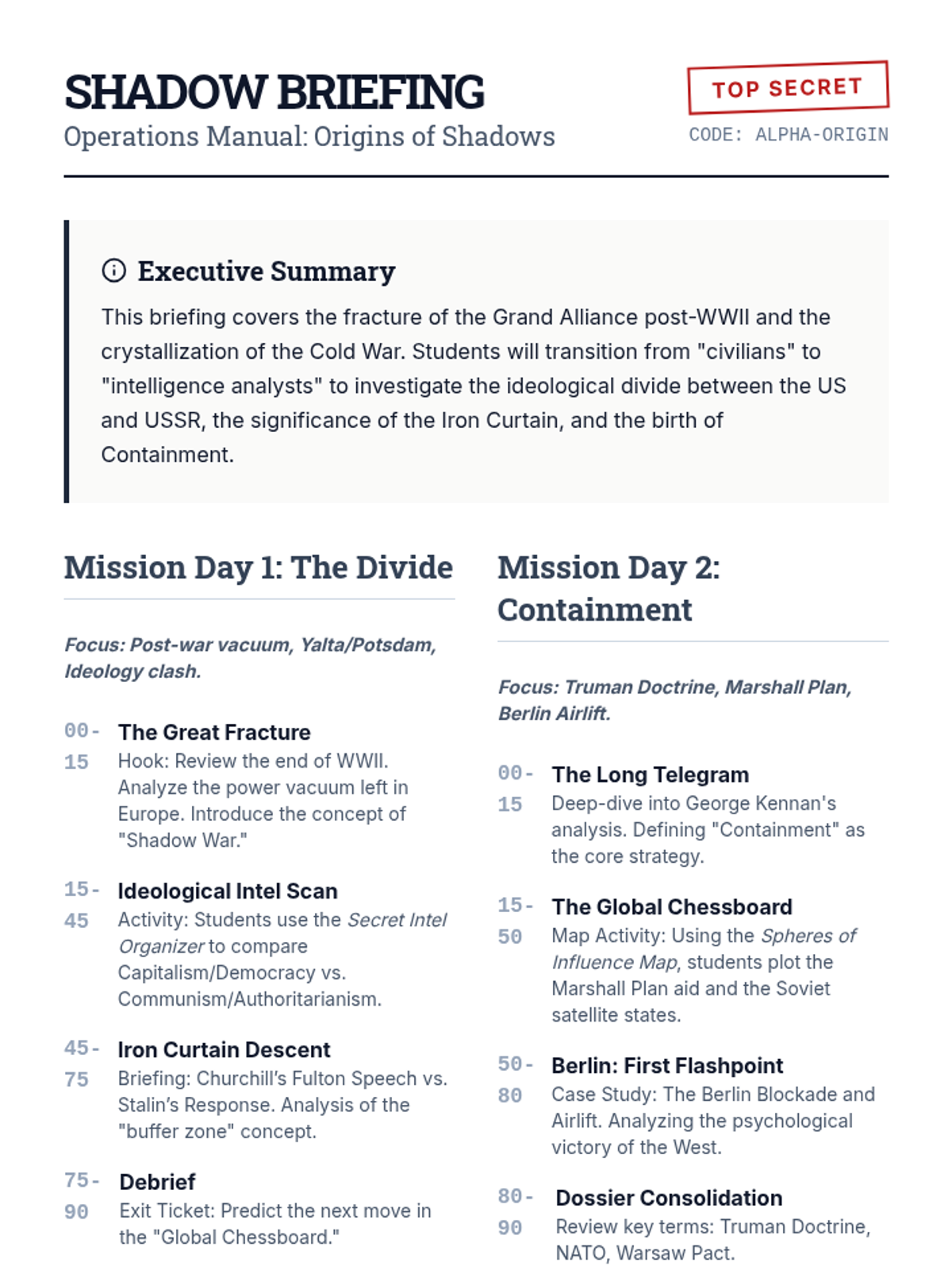
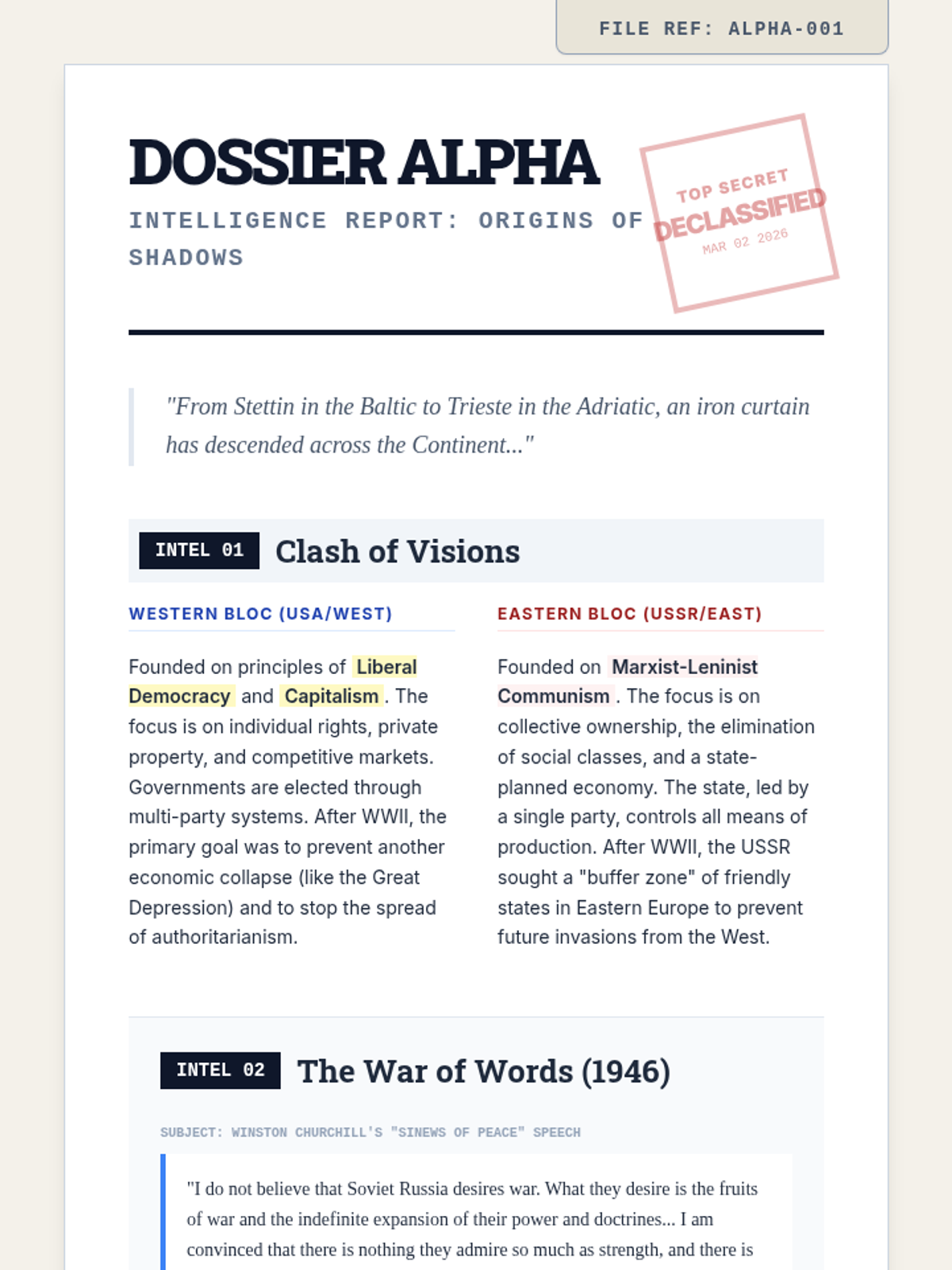
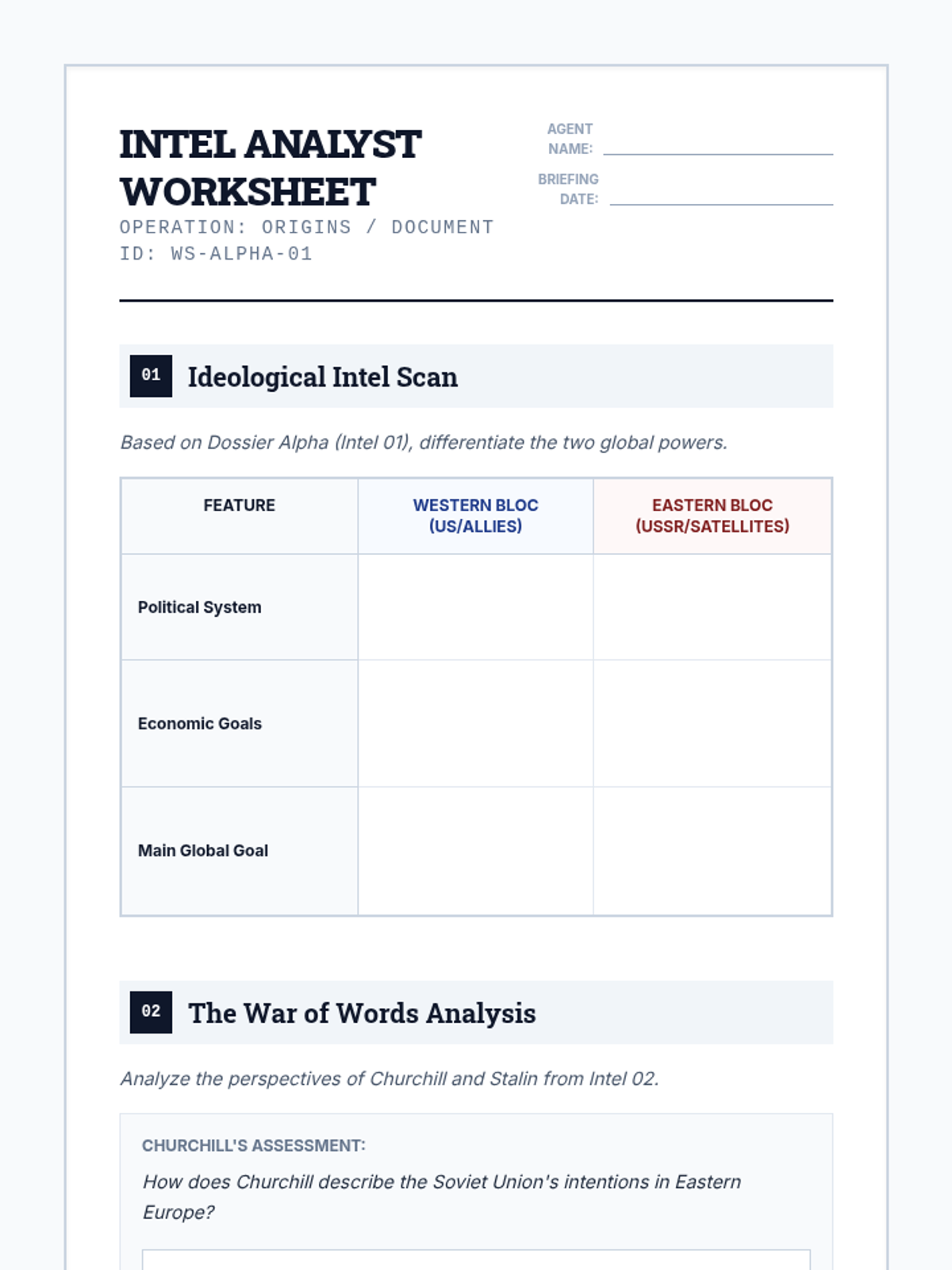
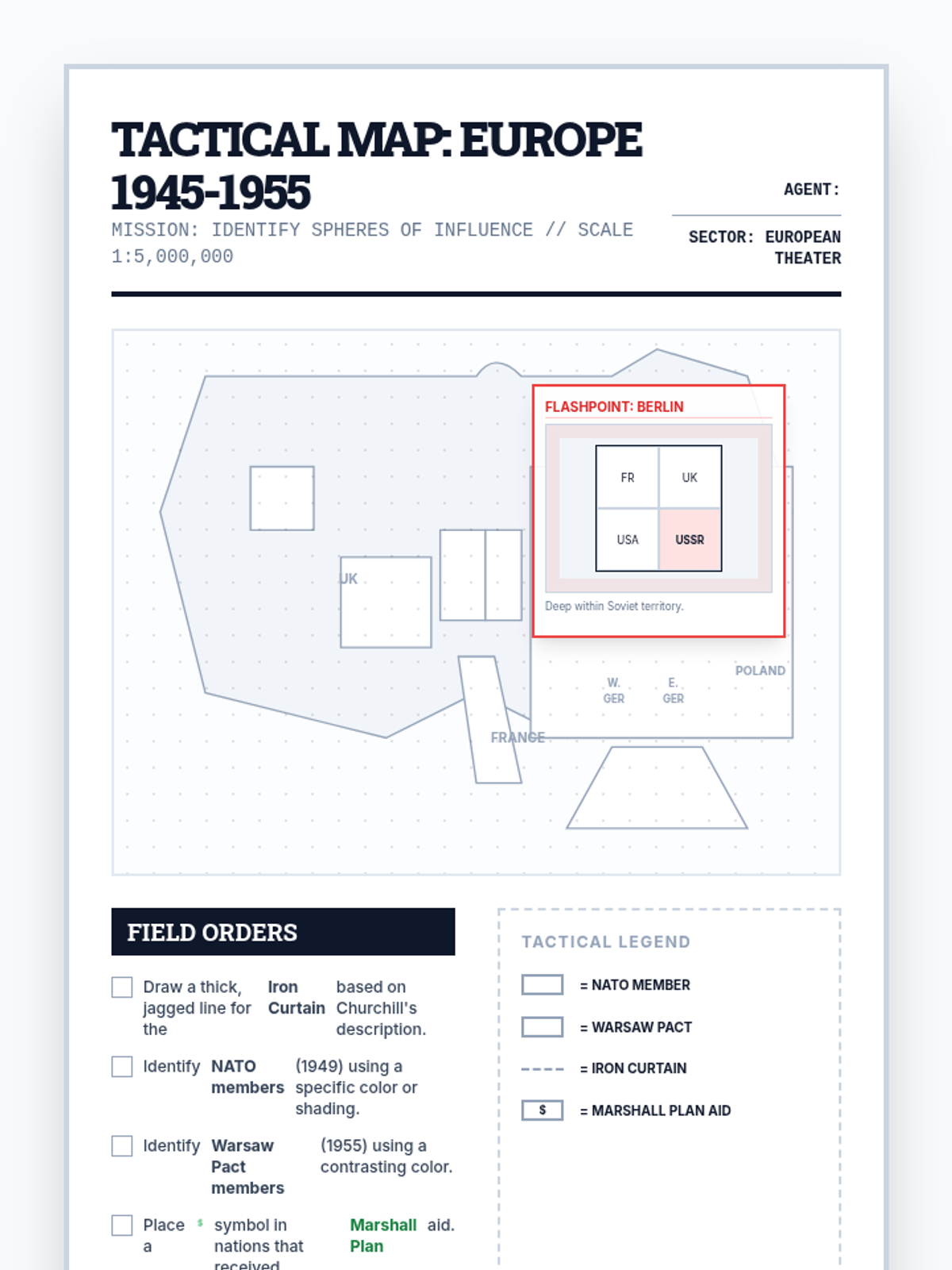
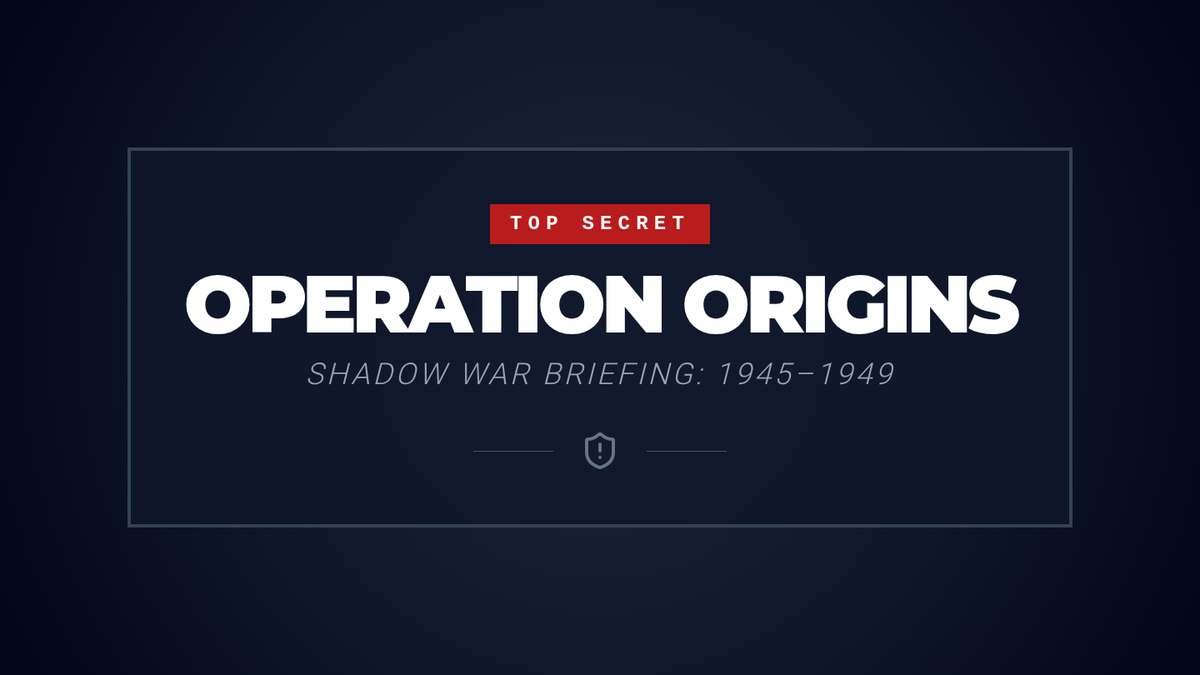
An immersive unit on the Cold War, styled as a series of declassified intelligence briefings exploring the global struggle for power between 1945 and 1991.
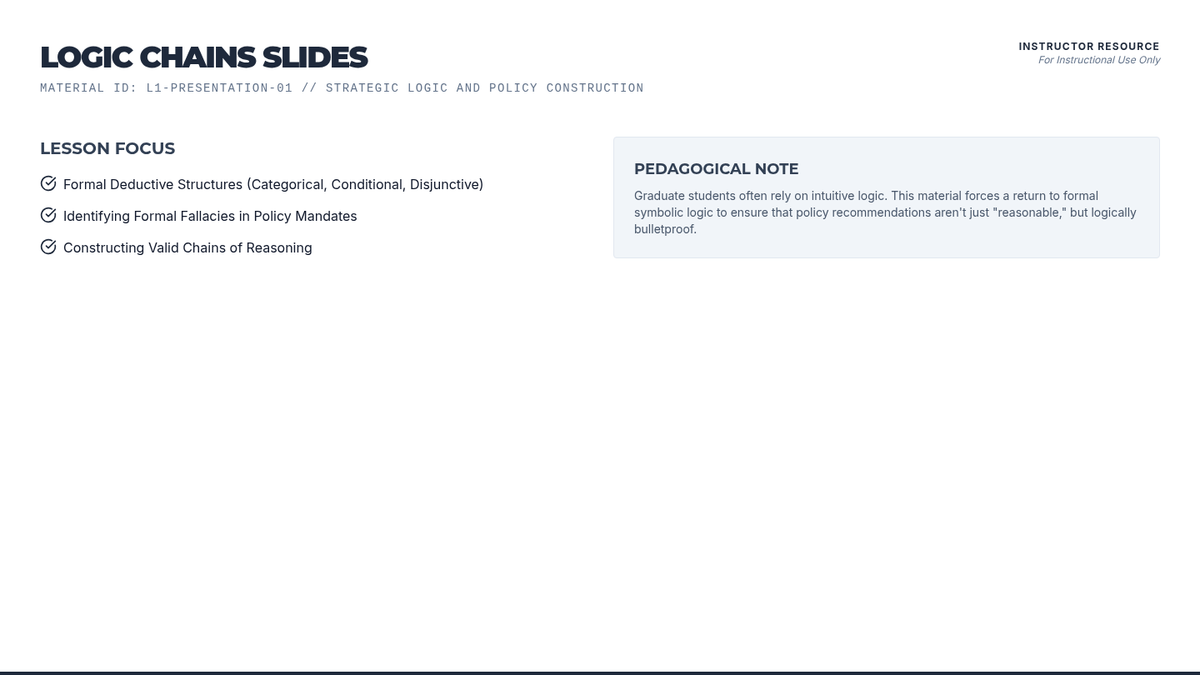
This sequence focuses on the rigorous application of deductive and inductive reasoning within the context of policy formulation and advocacy for graduate students. Participants will move from abstract logical structures to the creation and defense of a professional policy brief.
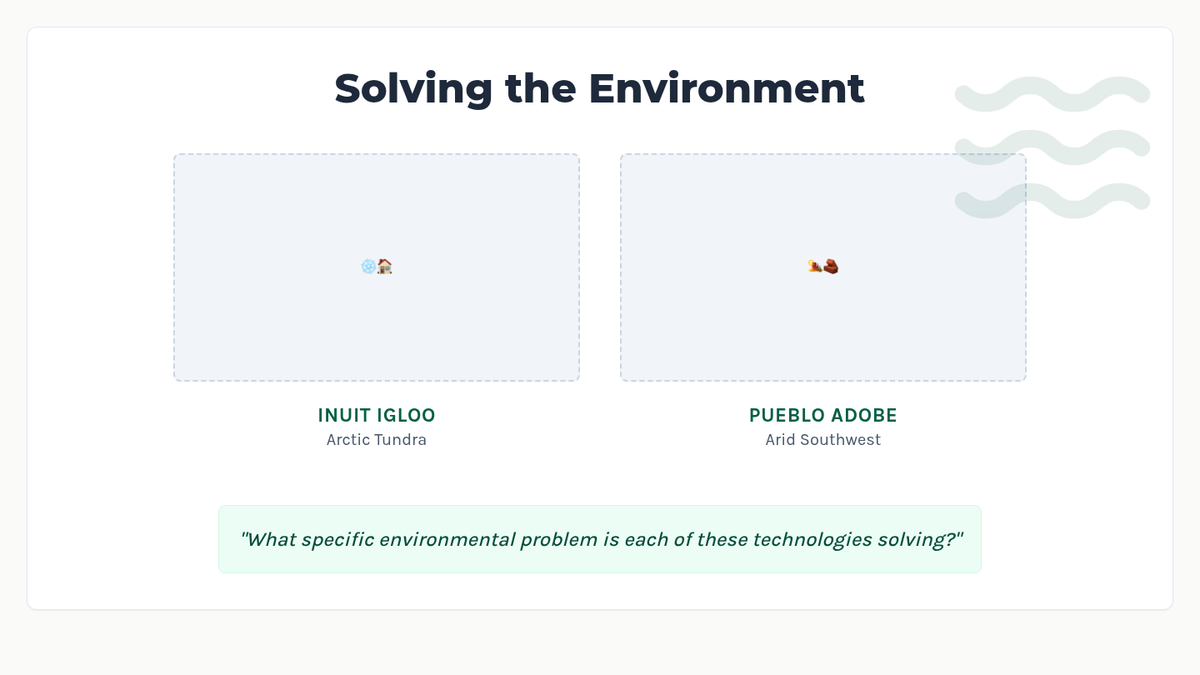
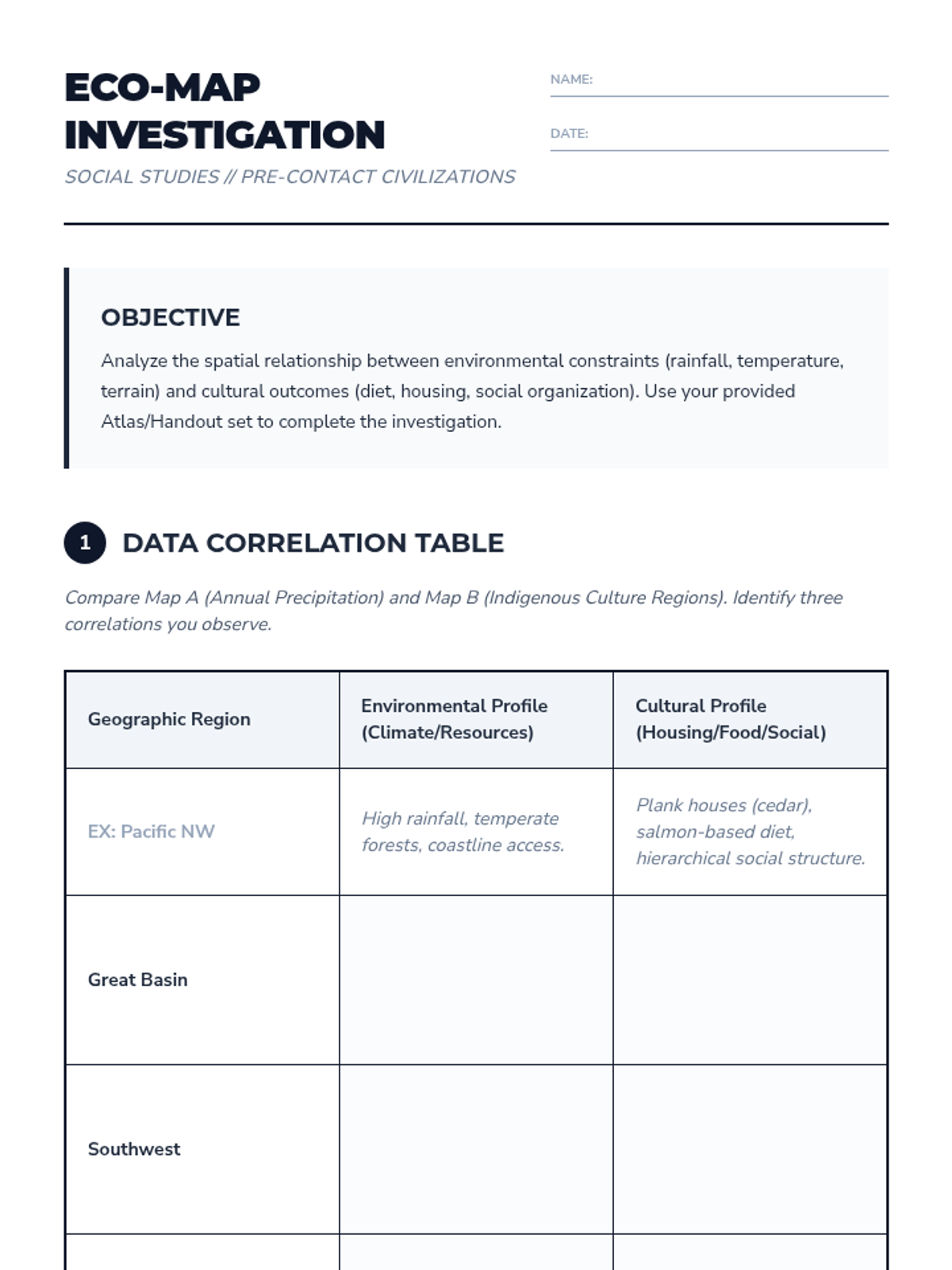
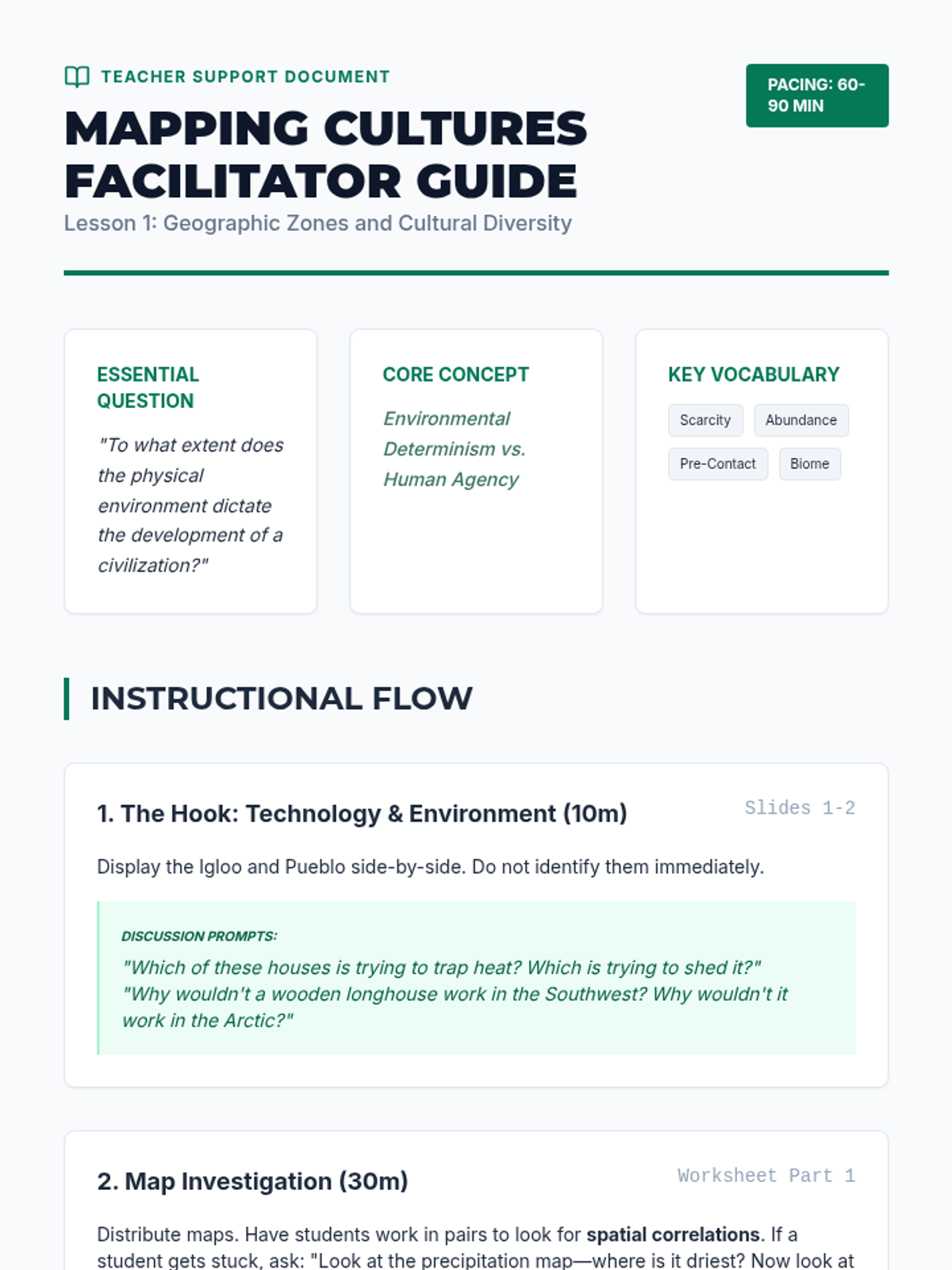
This inquiry-based sequence examines the profound relationship between physical geography and the development of pre-contact Indigenous cultures in North America, focusing on technological, agricultural, and social adaptations.
This sequence explores the intellectual transformation from Medieval Scholasticism to Renaissance Humanism, focusing on the revival of Classical antiquity and the birth of modern individualism. Students will analyze primary sources from Petrarch, Pico della Mirandola, and Erasmus to understand the shift from a theocentric to a human-centric worldview.
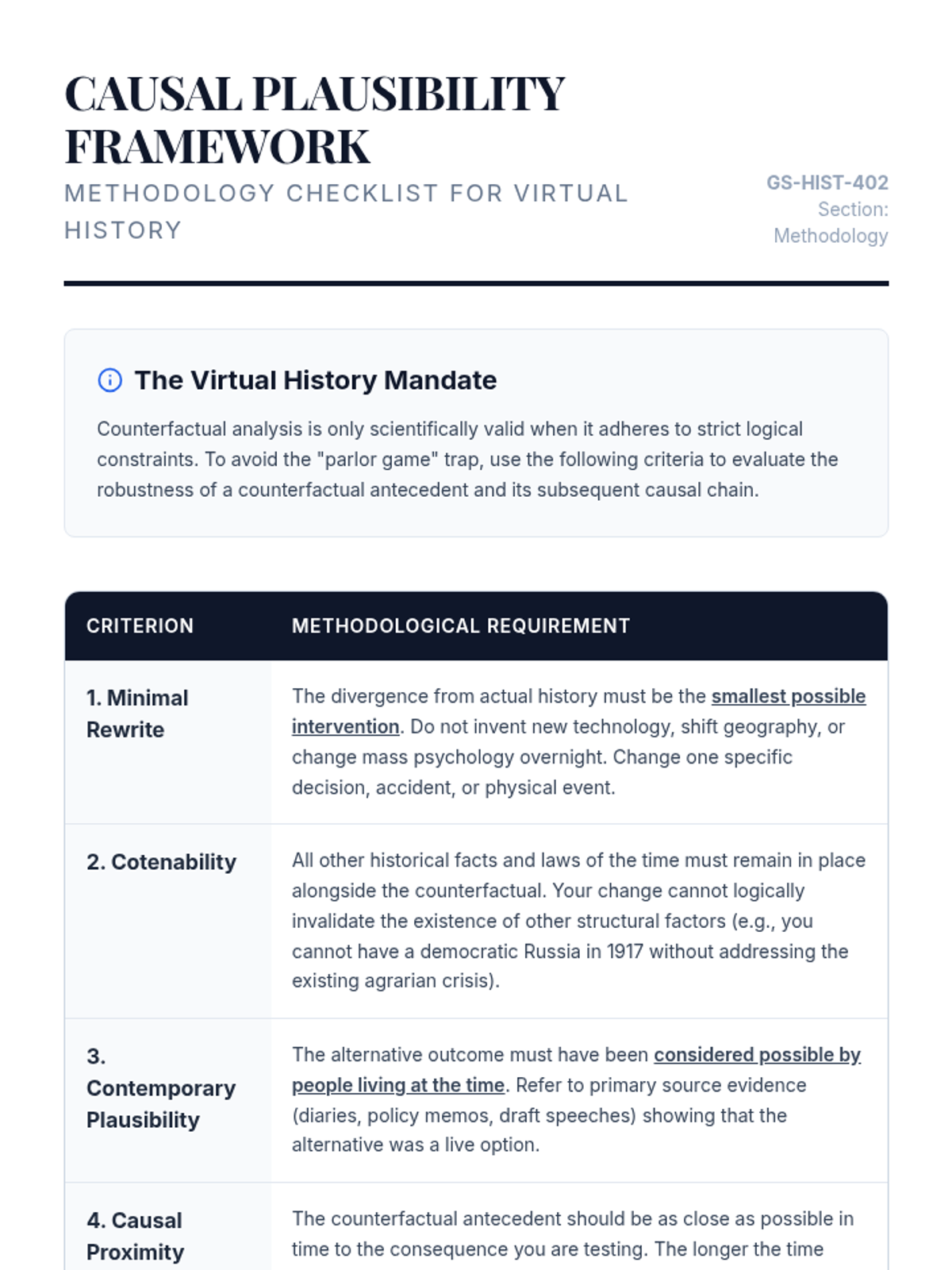
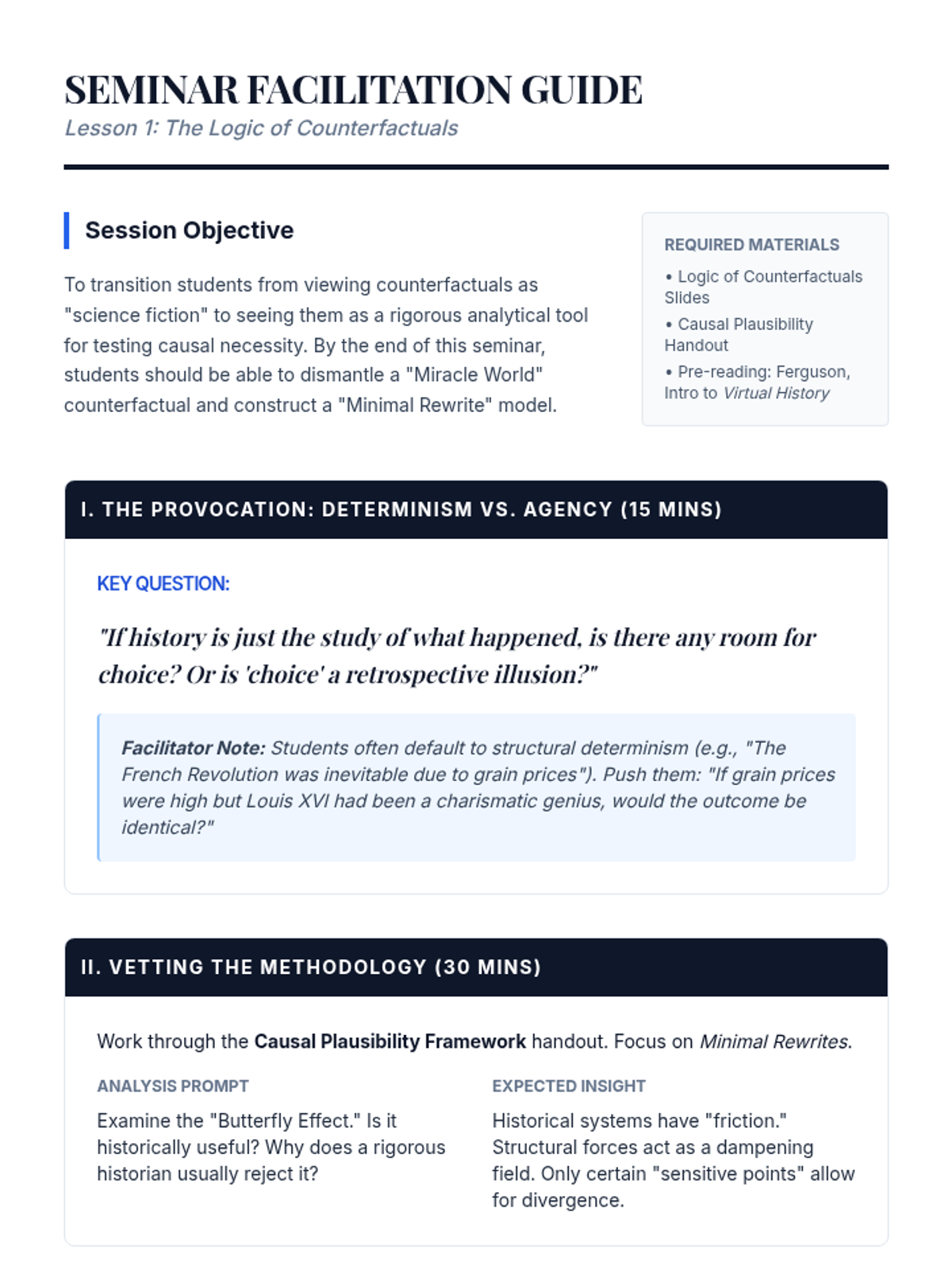
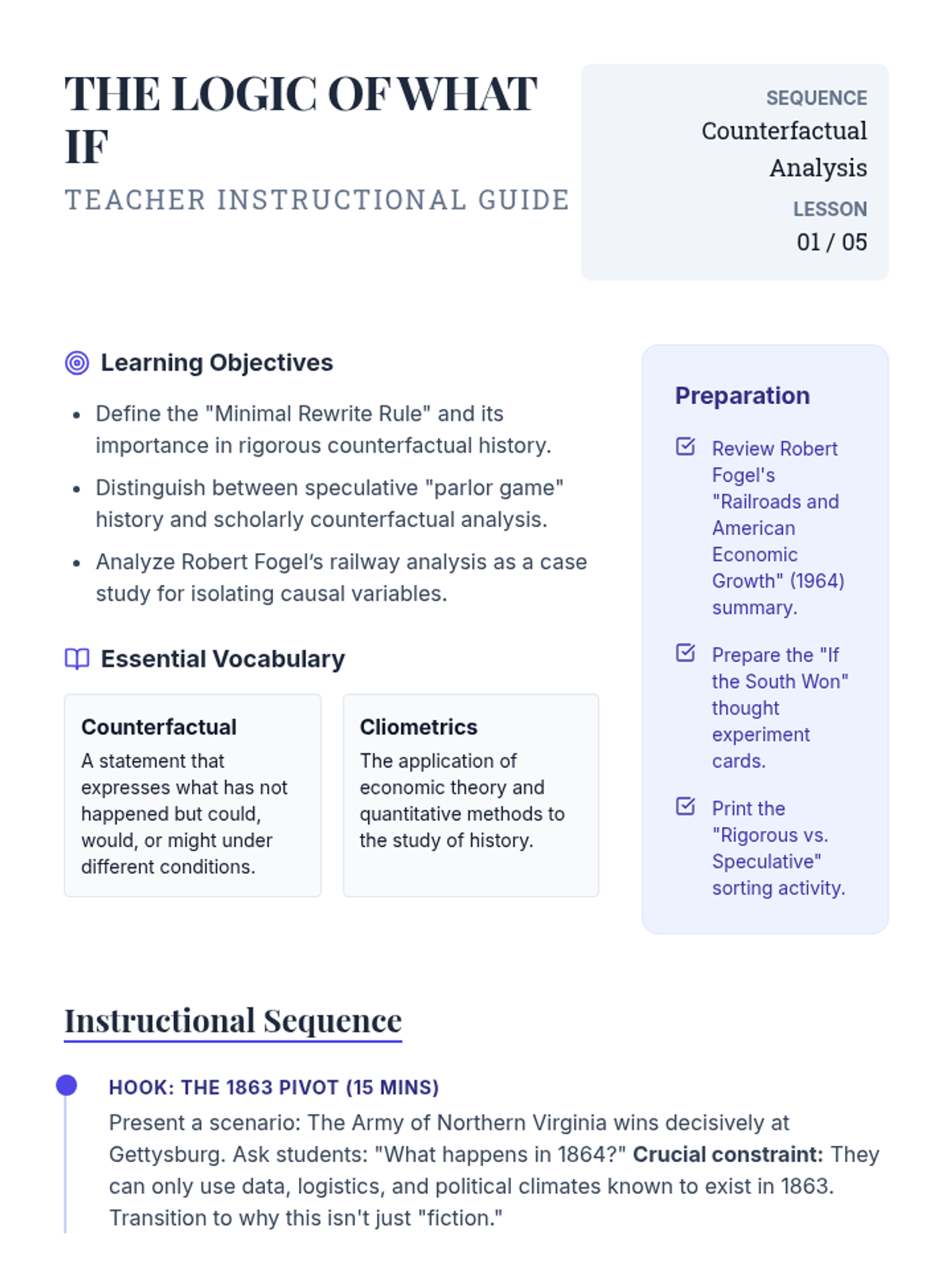
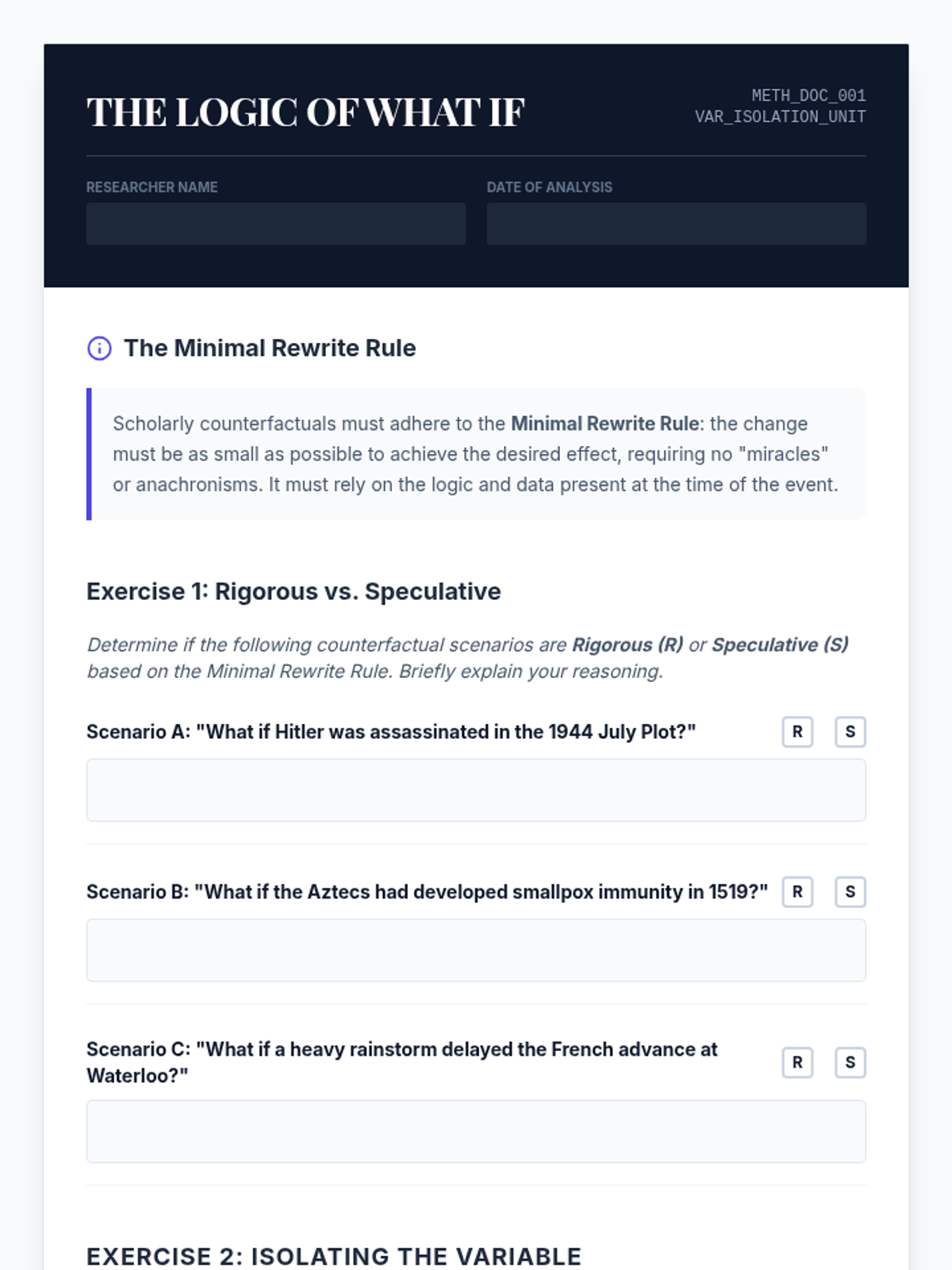
This graduate-level sequence explores the methodology of counterfactual history to interrogate the nature of causation and contingency. Students move from theoretical foundations of 'Virtual History' to applying rigorous causal testing through variable isolation and systems-based modeling of alternative timelines.
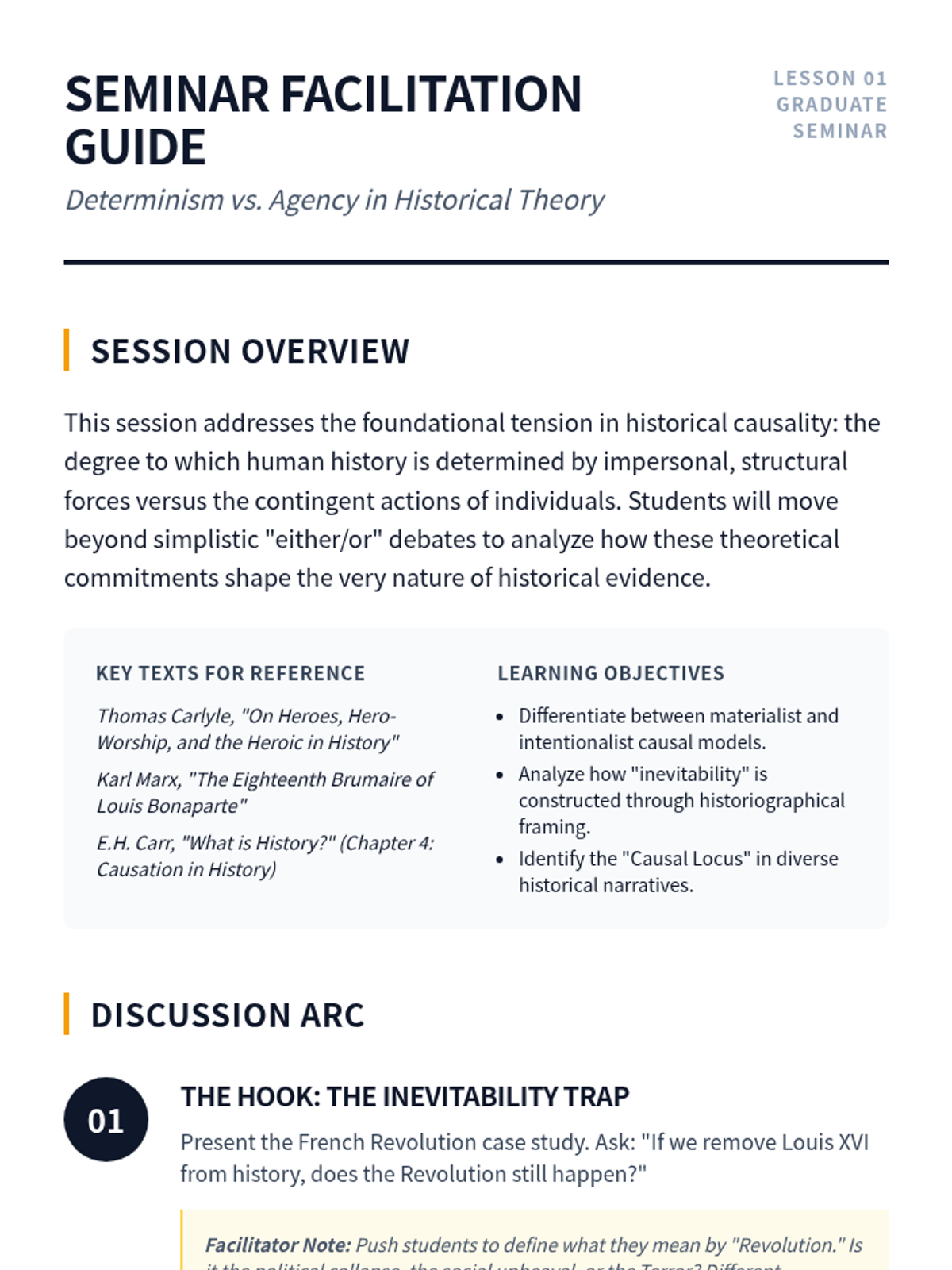
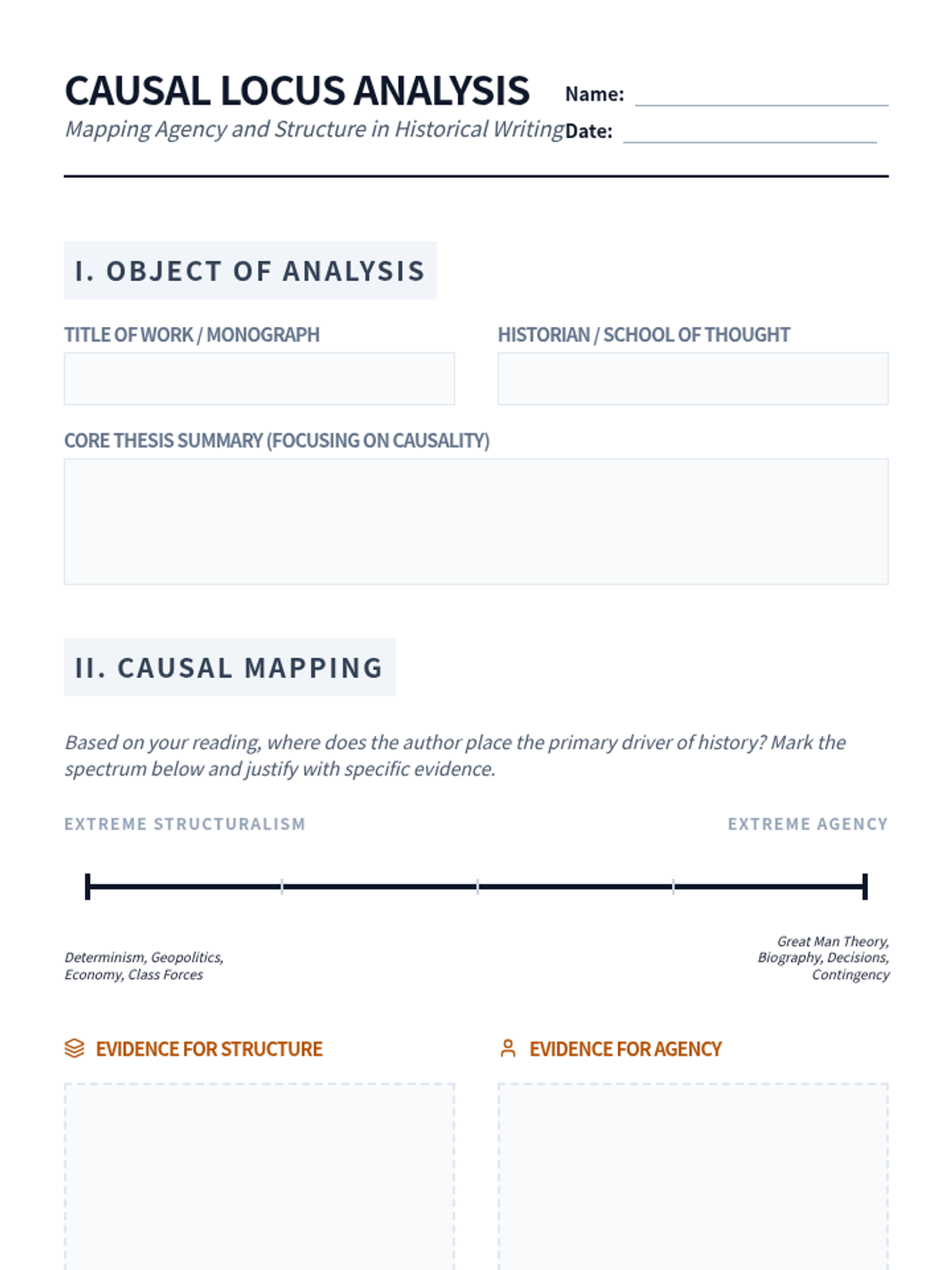
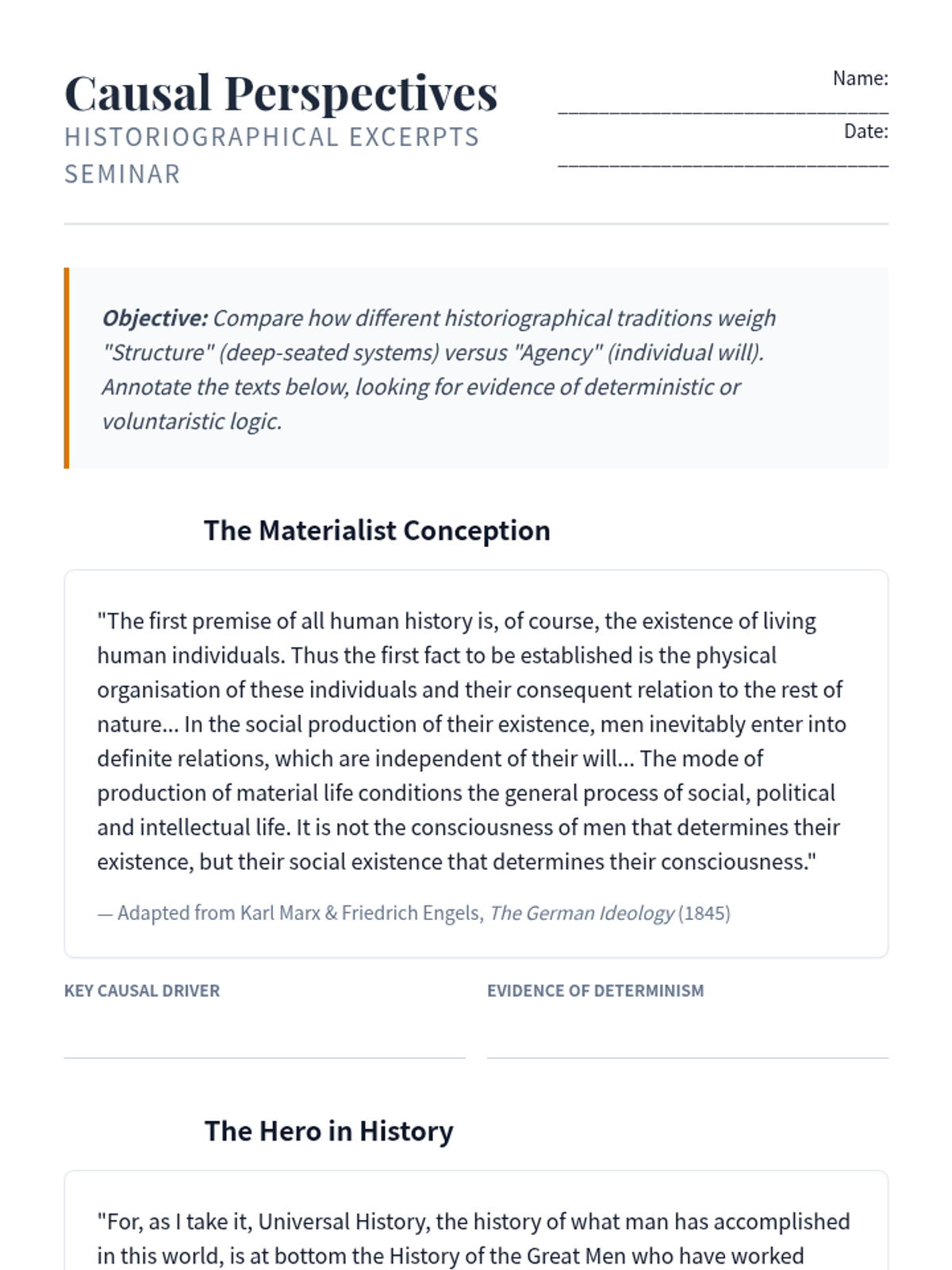
This advanced graduate seminar explores the evolution of causal logic in historical writing, from classical determinism to complex systems theory. Students critique major historiographical schools to understand how theoretical frameworks dictate the selection of causes and apply these models to historical events.
This sequence explores the methodology of historical counterfactuals ('What If?' history) as a tool for analyzing causation, contingency, and determinism. Students move from theoretical understanding to constructing evidence-based alternate timelines.
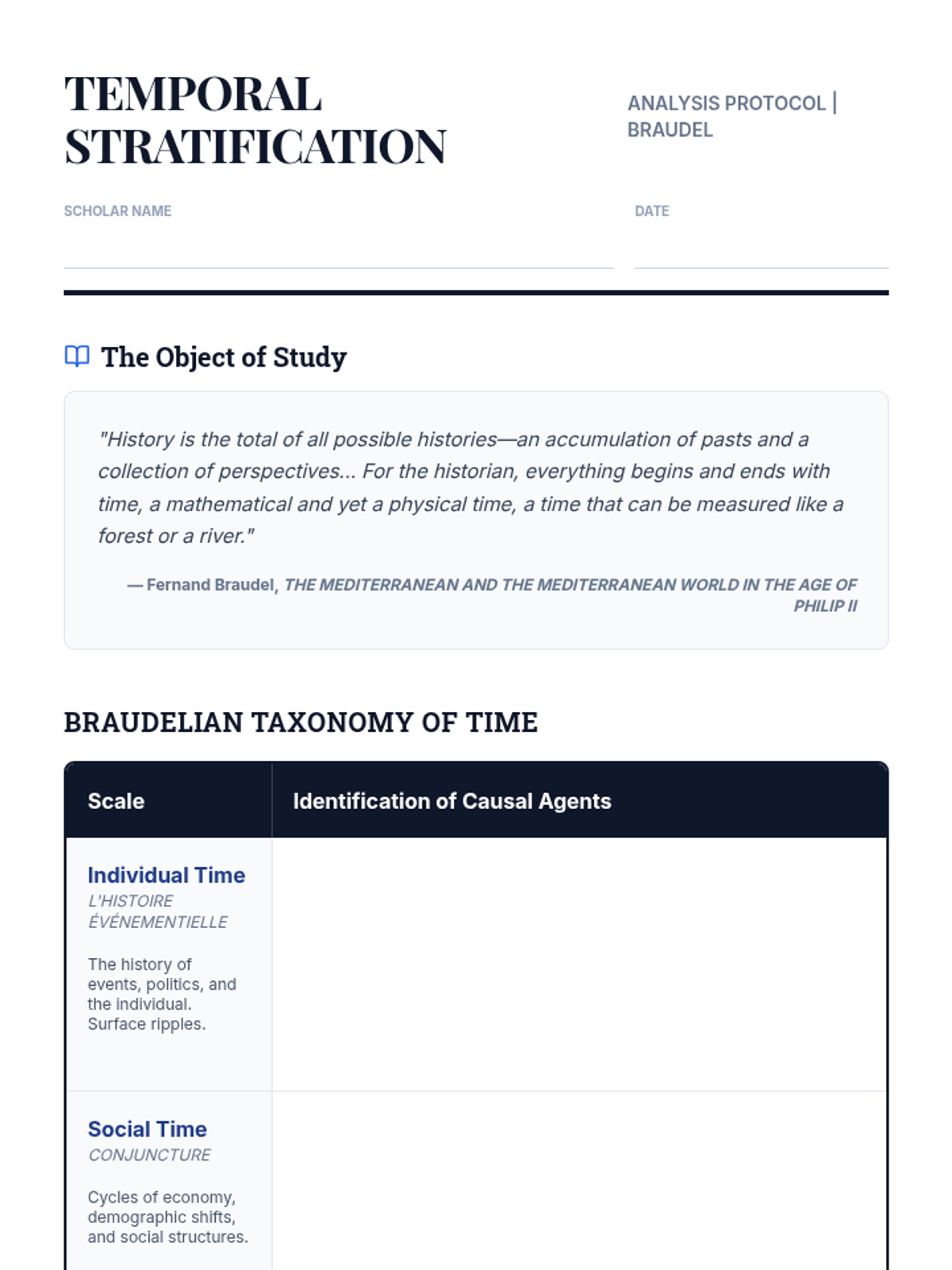
This undergraduate-level sequence explores the philosophy of time in history, contrasting the Annales School's 'longue durée' with micro-history and deep time. Students investigate how changing the temporal scale of analysis fundamentally shifts the identification of causal factors.
This sequence for undergraduate students explores the nuances of historical causation, distinguishing between long-term structural factors and immediate precipitating triggers. Students will analyze historiographical theories, case studies like WWI and the French Revolution, and logical fallacies to build robust, multi-causal arguments.
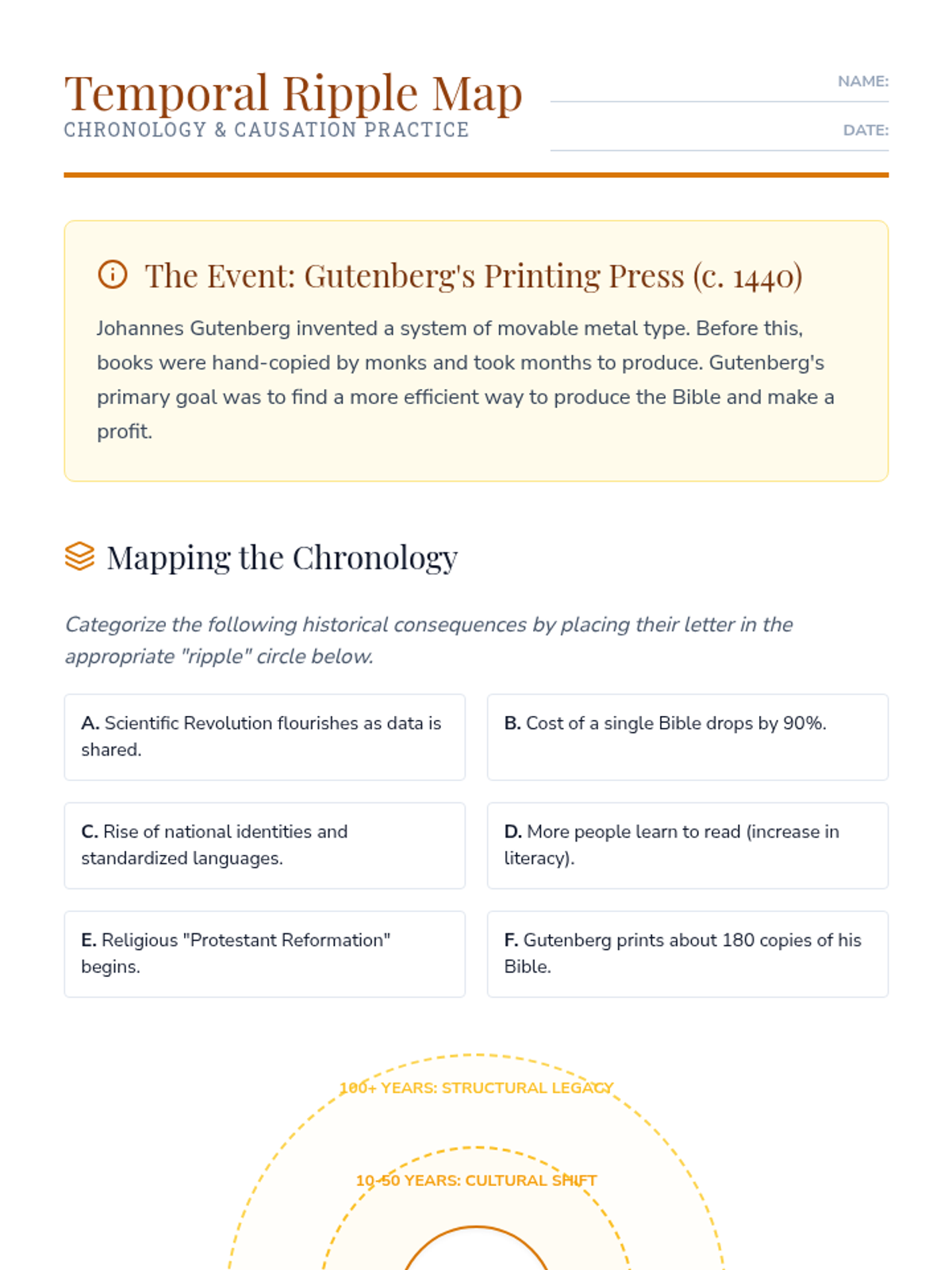
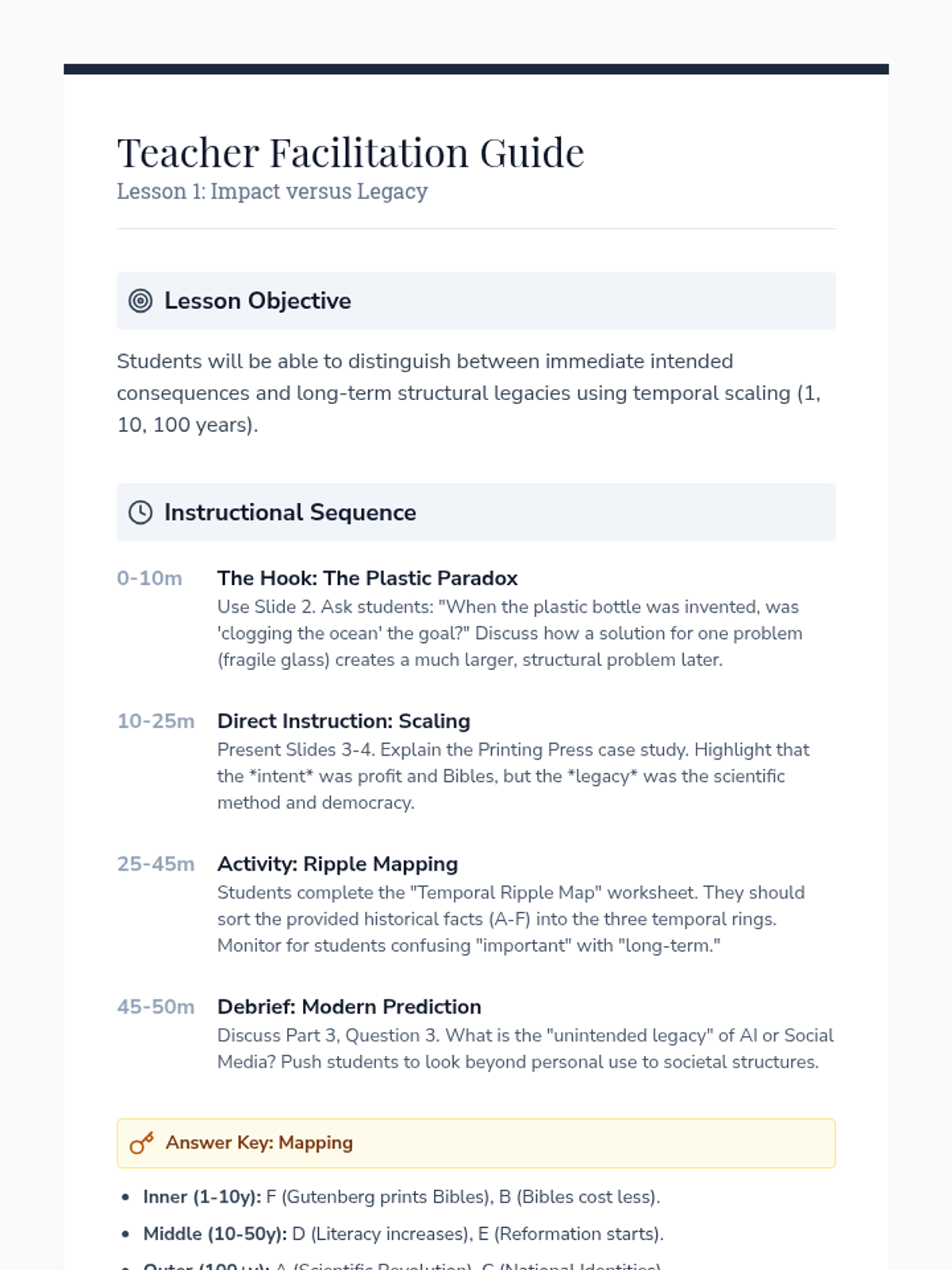
This sequence explores the relationship between historical events and their long-term legacies. Students investigate how immediate intentions often lead to complex, unintended consequences over decades and centuries, moving from simple causal chains to complex feedback loops and ethical evaluations of historical responsibility.
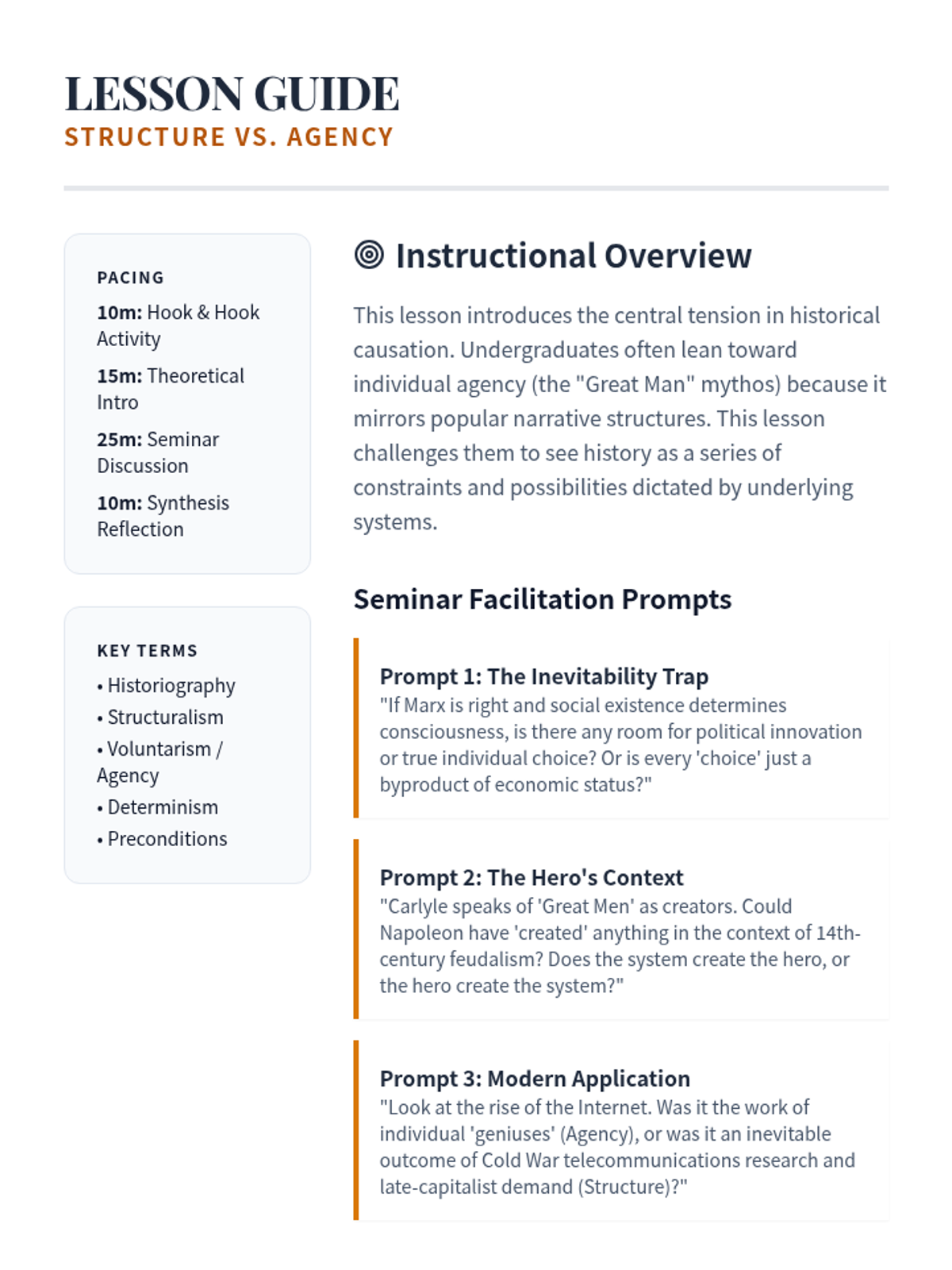
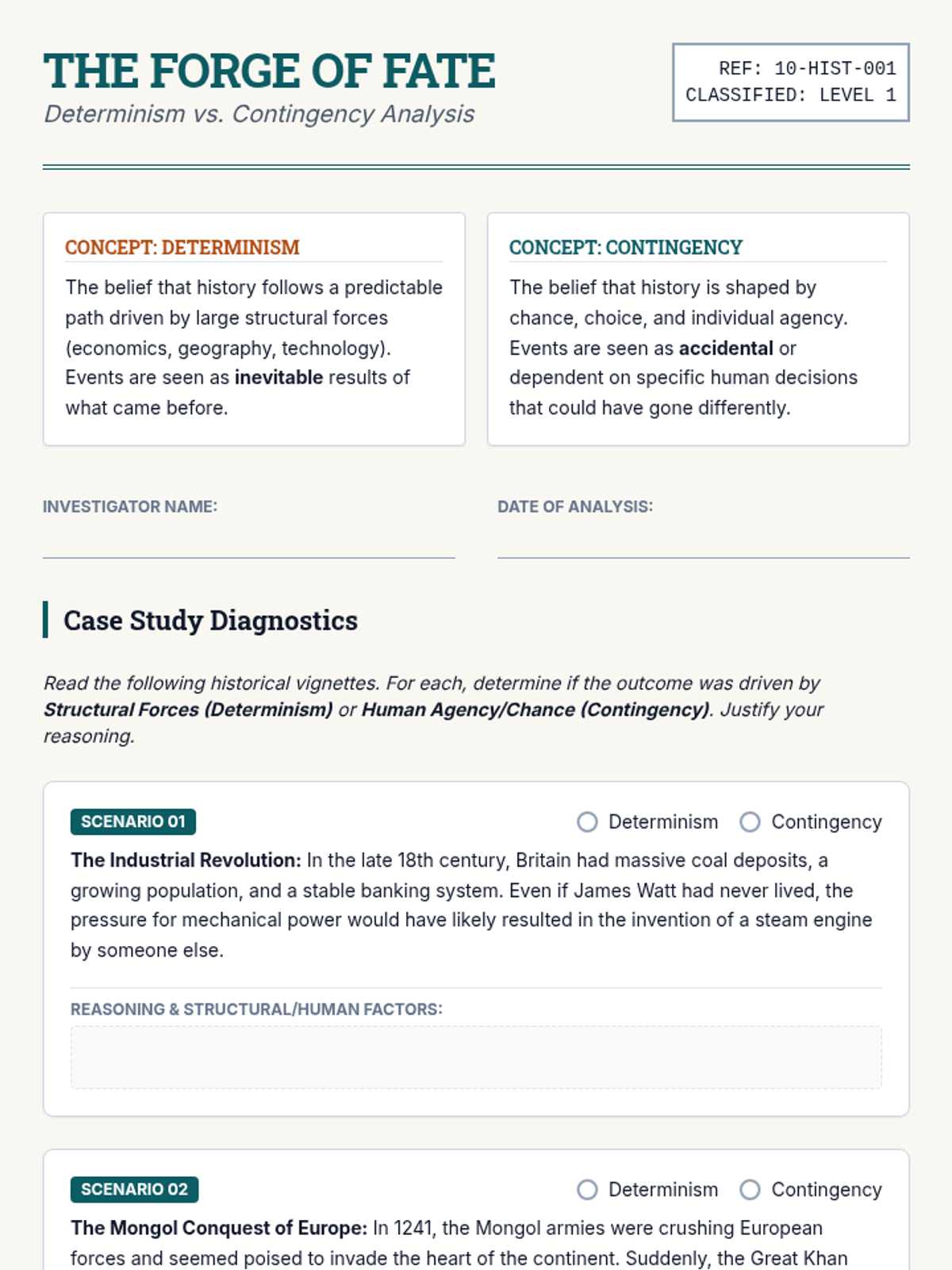
This sequence explores the mechanics of historical causation through counterfactual inquiry. Students analyze the tension between determinism and contingency, learn rigorous methods for 'what-if' history, and simulate historical crises to evaluate the weight of individual decisions versus structural forces.
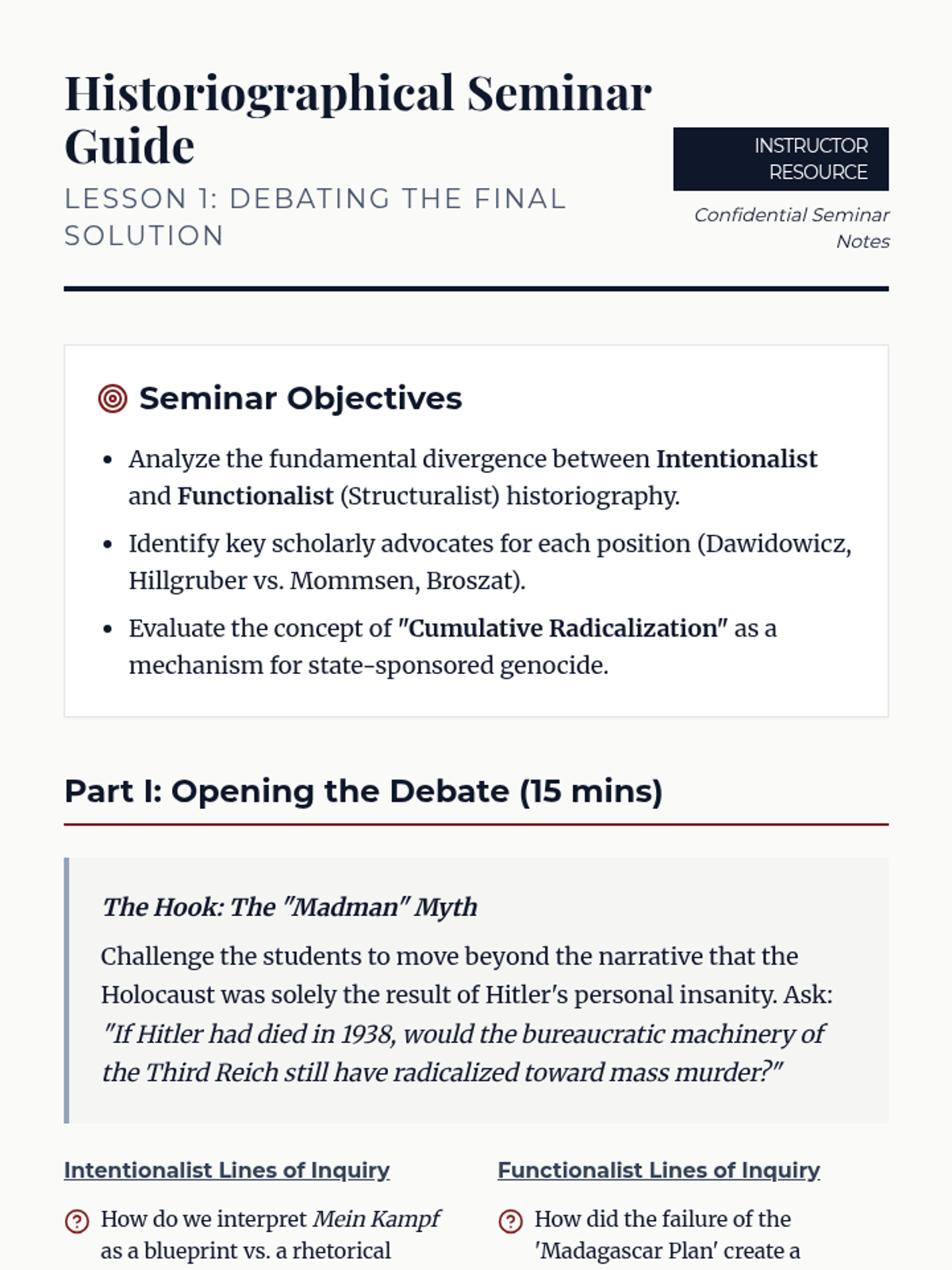
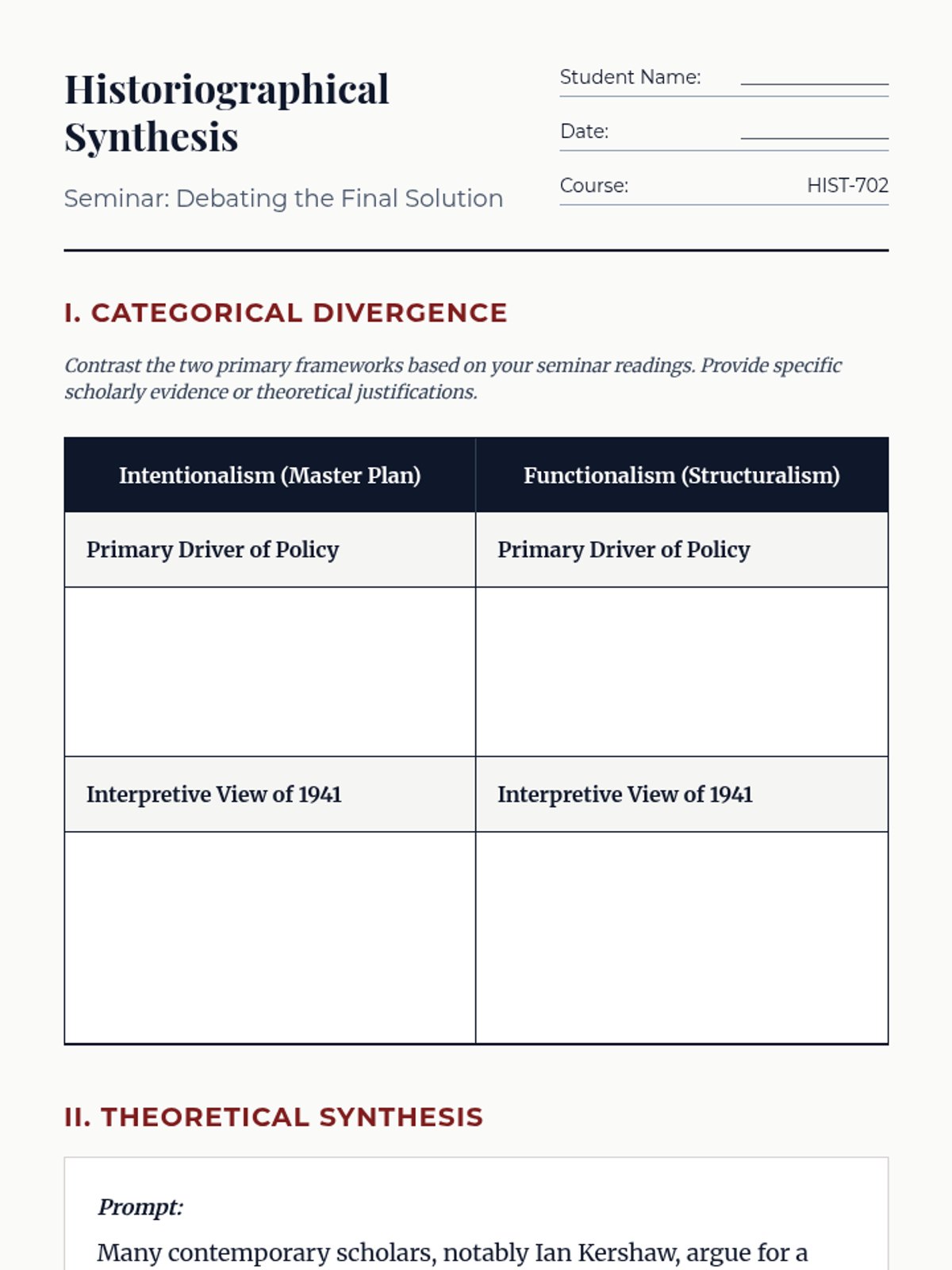
A graduate-level historiographical exploration of World War II, focusing on the radicalization of the Nazi state, the psychology of perpetrators, and the legal legacy of the Holocaust. Students analyze the 'Functionalist vs. Intentionalist' debate and the sociological mechanics of genocide.
A comprehensive undergraduate module exploring the relationship between river hydrology, engineering, and the development of political and spiritual systems in the Nile, Mesopotamia, Indus, and Yellow River valleys. Students critique environmental determinism by analyzing technological responses to geographic constraints.