Examining foundational arguments from major thinkers alongside contemporary debates on morality, governance, and the nature of existence. Addresses core concepts like political structures, consciousness, and the conflict between agency and fate.
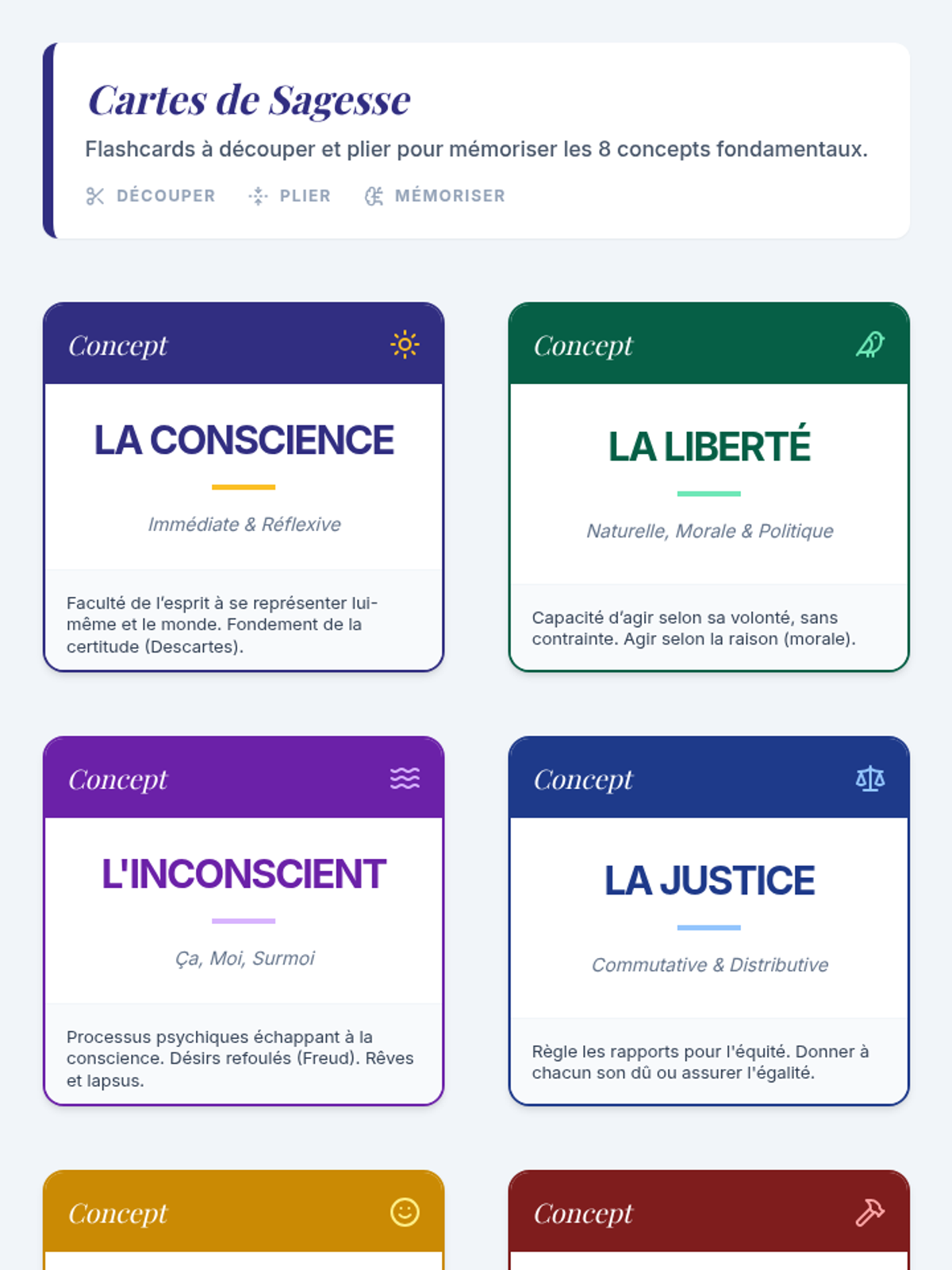
Un ensemble de huit flashcards à découper, présentant au recto le concept philosophique et au verso sa définition synthétique pour une mémorisation rapide.
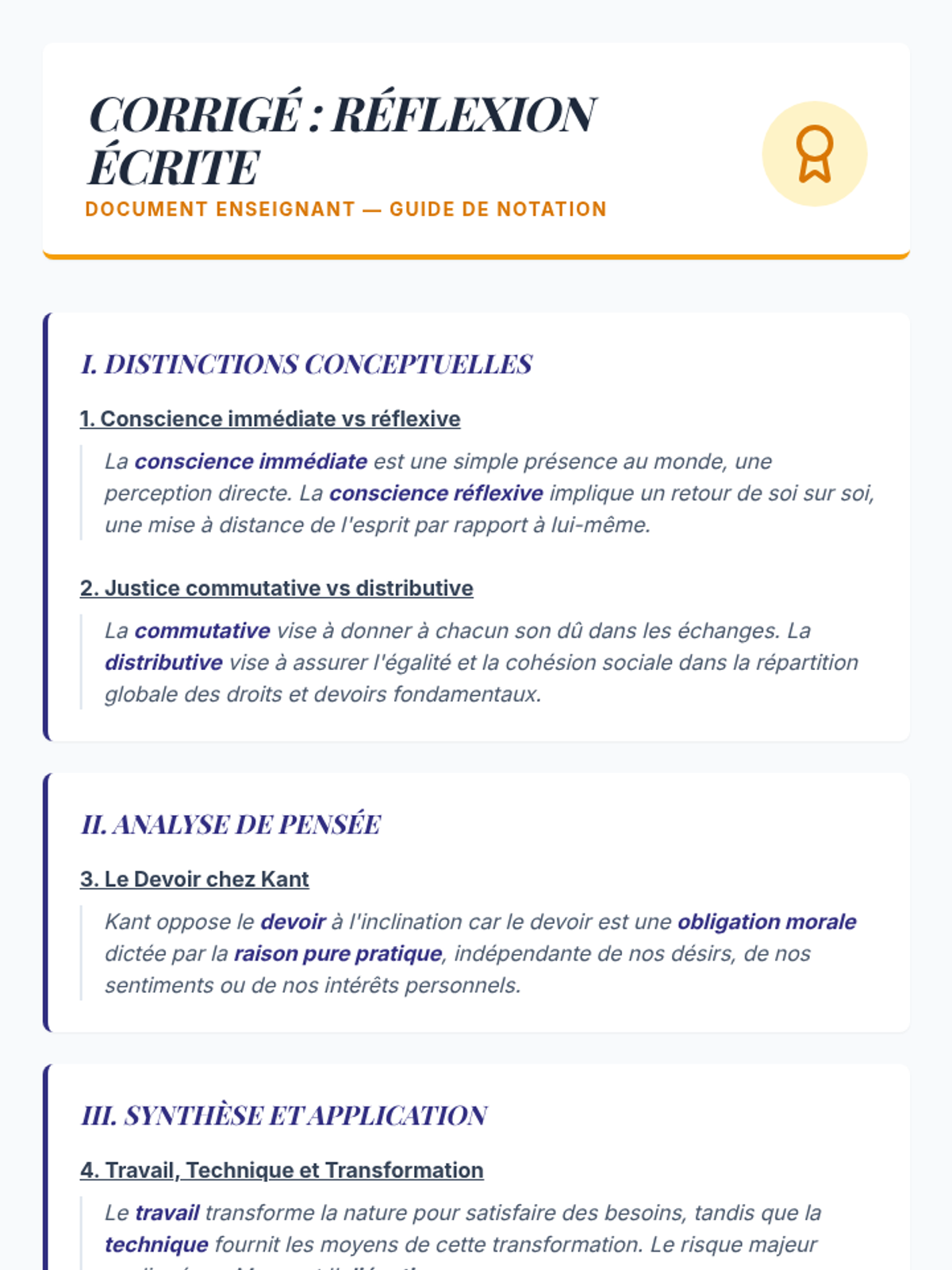
Corrigé détaillé de la fiche de réflexion écrite Sagesse Flash pour l'enseignant, incluant des pistes de notation et les points clés.
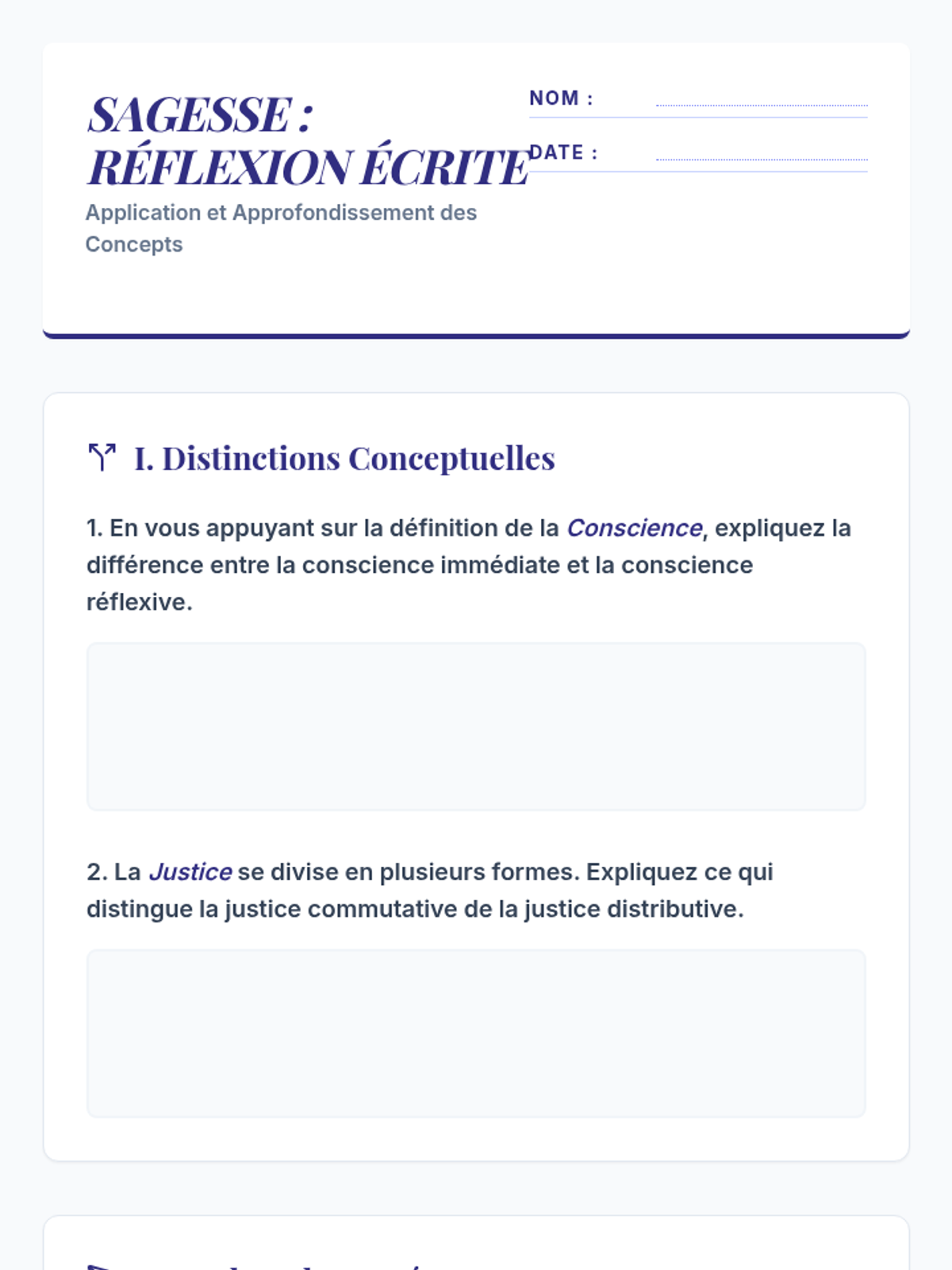
Une fiche d'exercices écrits demandant aux élèves d'expliquer les distinctions et les nuances des huit concepts philosophiques étudiés.
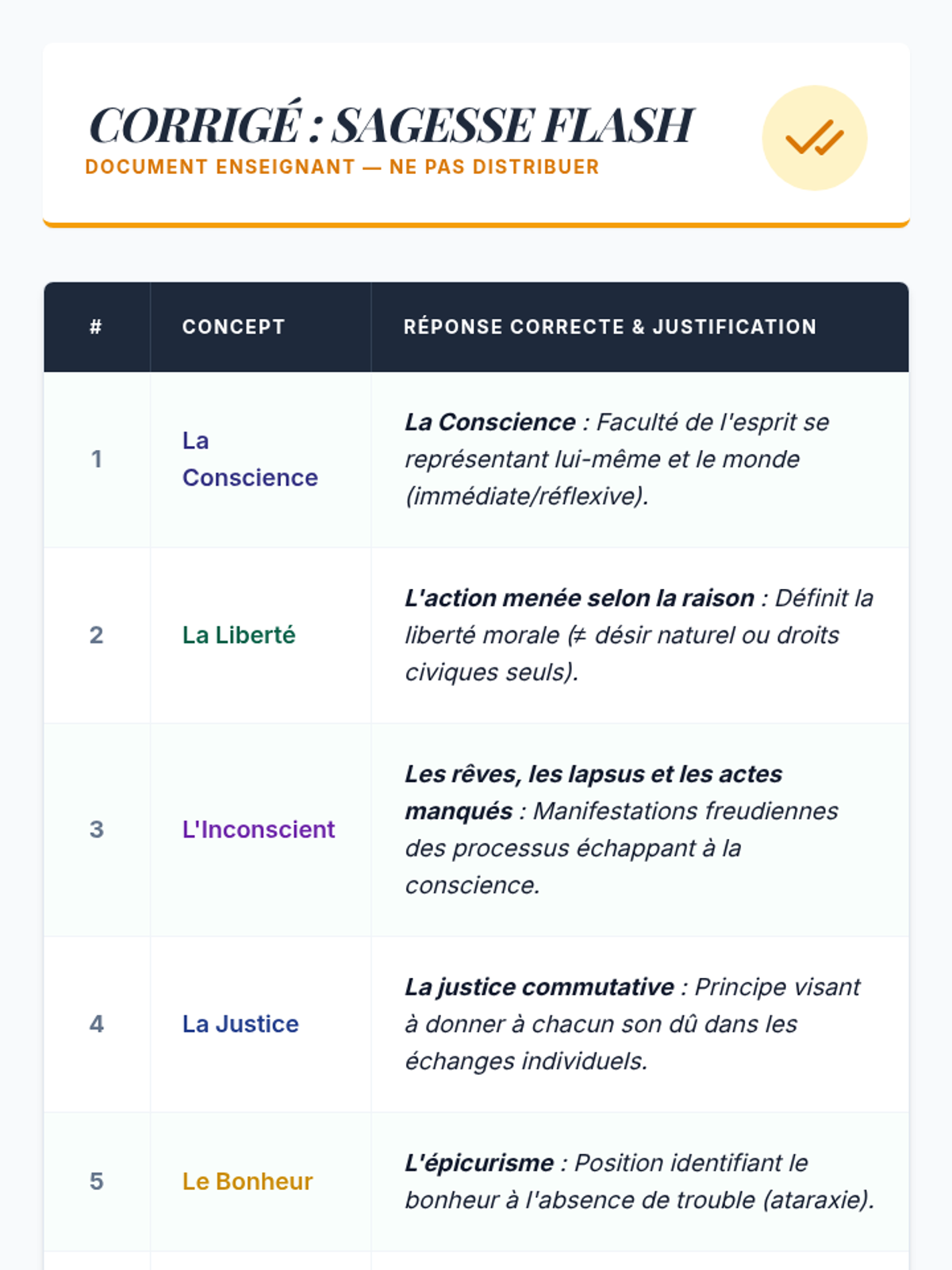
Corrigé détaillé du quiz QCM Sagesse Flash avec justifications basées sur les textes sources pour l'enseignant.
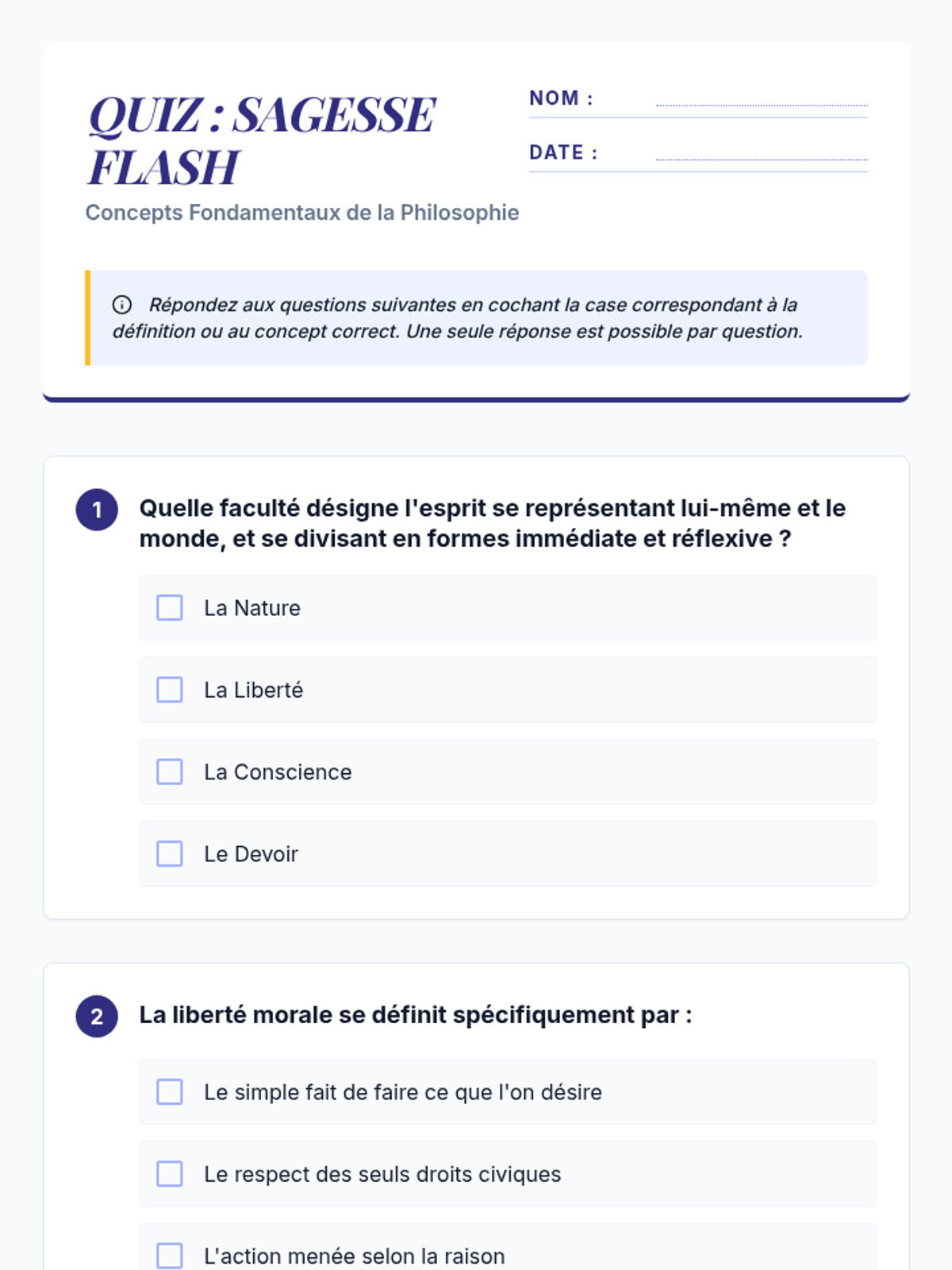
Un questionnaire à choix multiples (QCM) de huit questions testant la compréhension des définitions philosophiques fournies.
Une présentation visuelle reprenant les huit définitions philosophiques demandées pour une révision rapide en classe.
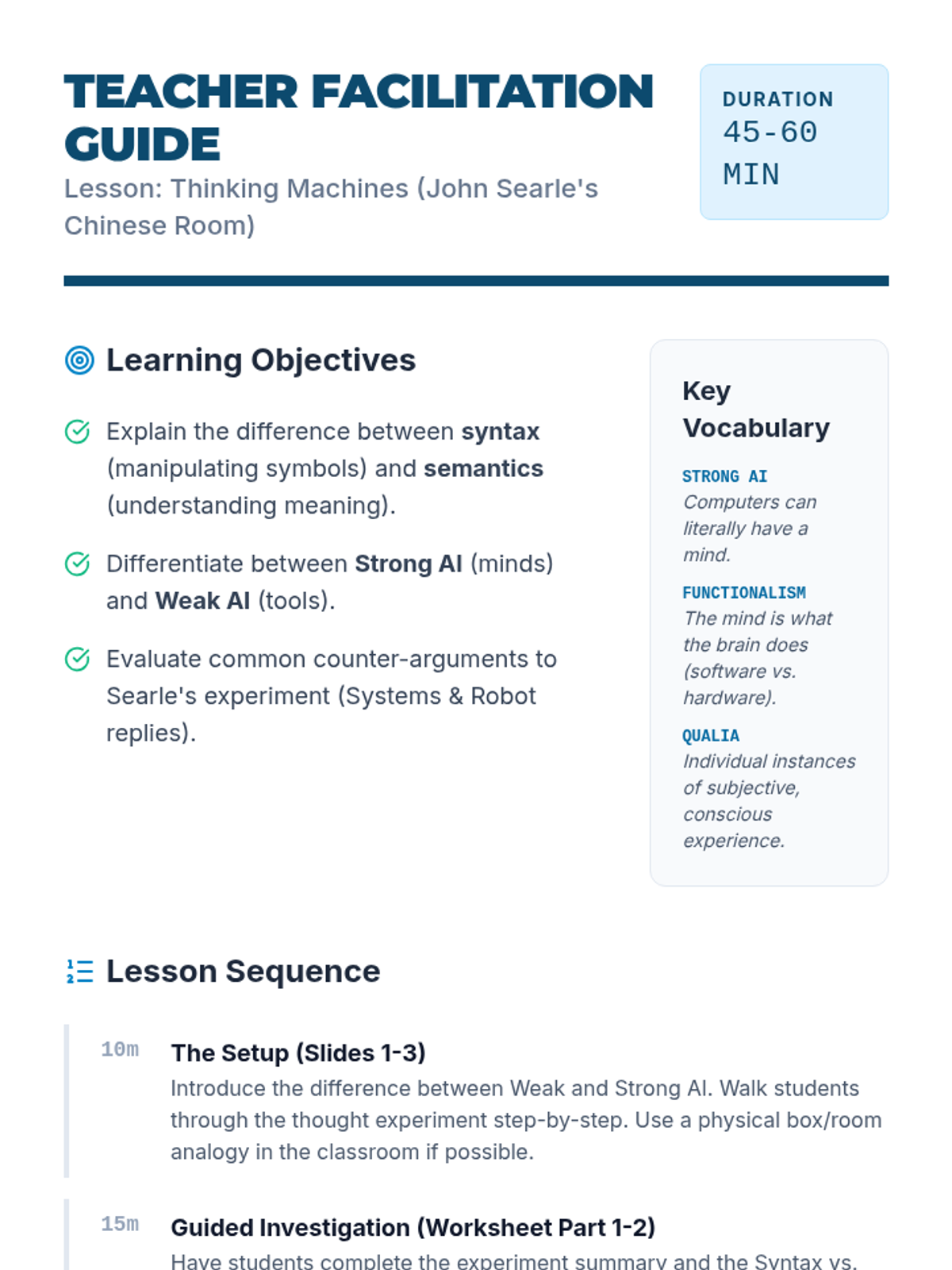
A comprehensive facilitator guide for the Thinking Machines lesson, including instructional sequences, discussion prompts, and an answer key.
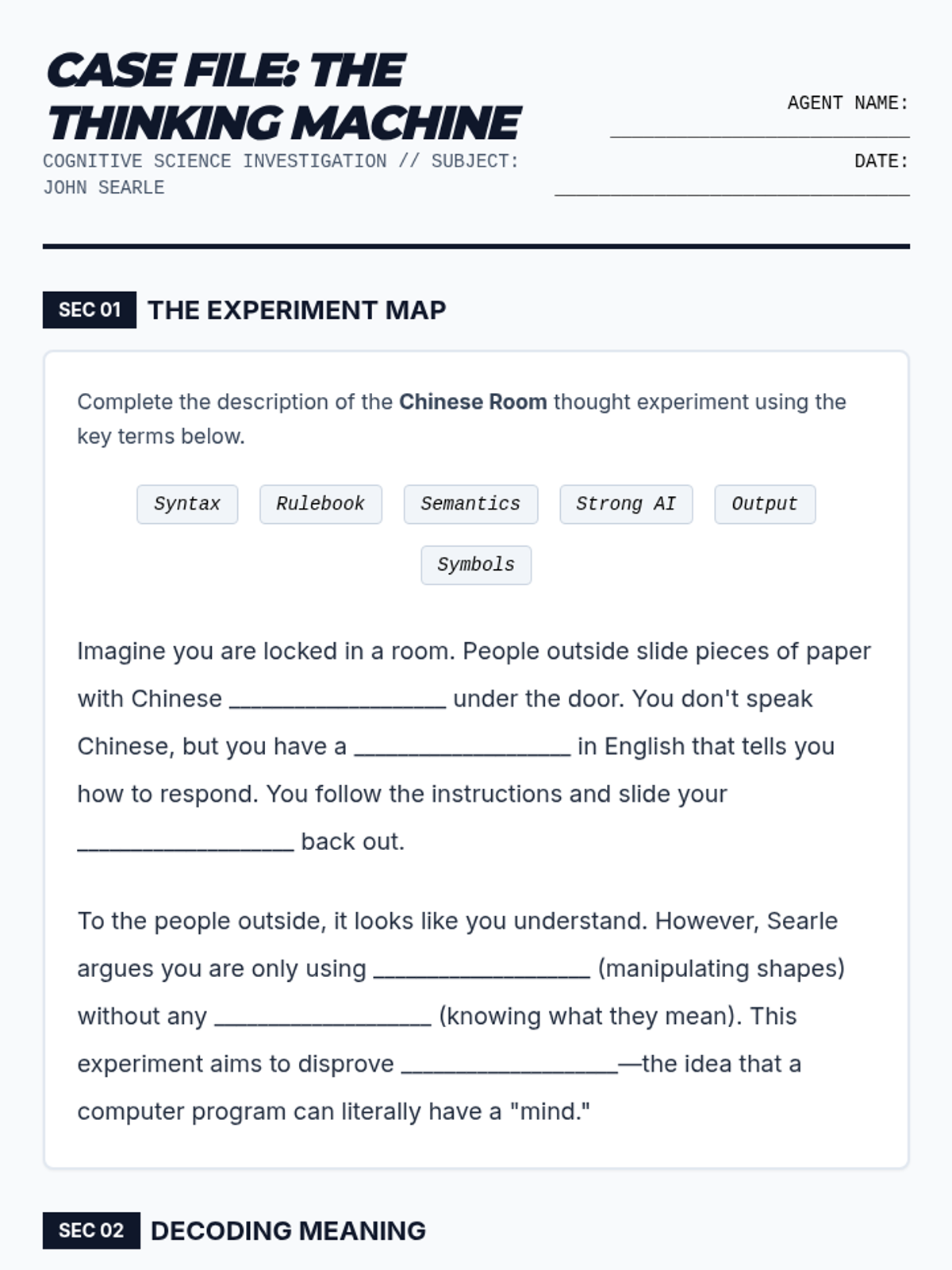
A student investigation worksheet structured as a "case file" to help students process the Chinese Room thought experiment and its counter-arguments.
A visual presentation exploring the Chinese Room thought experiment, comparing Strong vs. Weak AI and syntax vs. semantics.
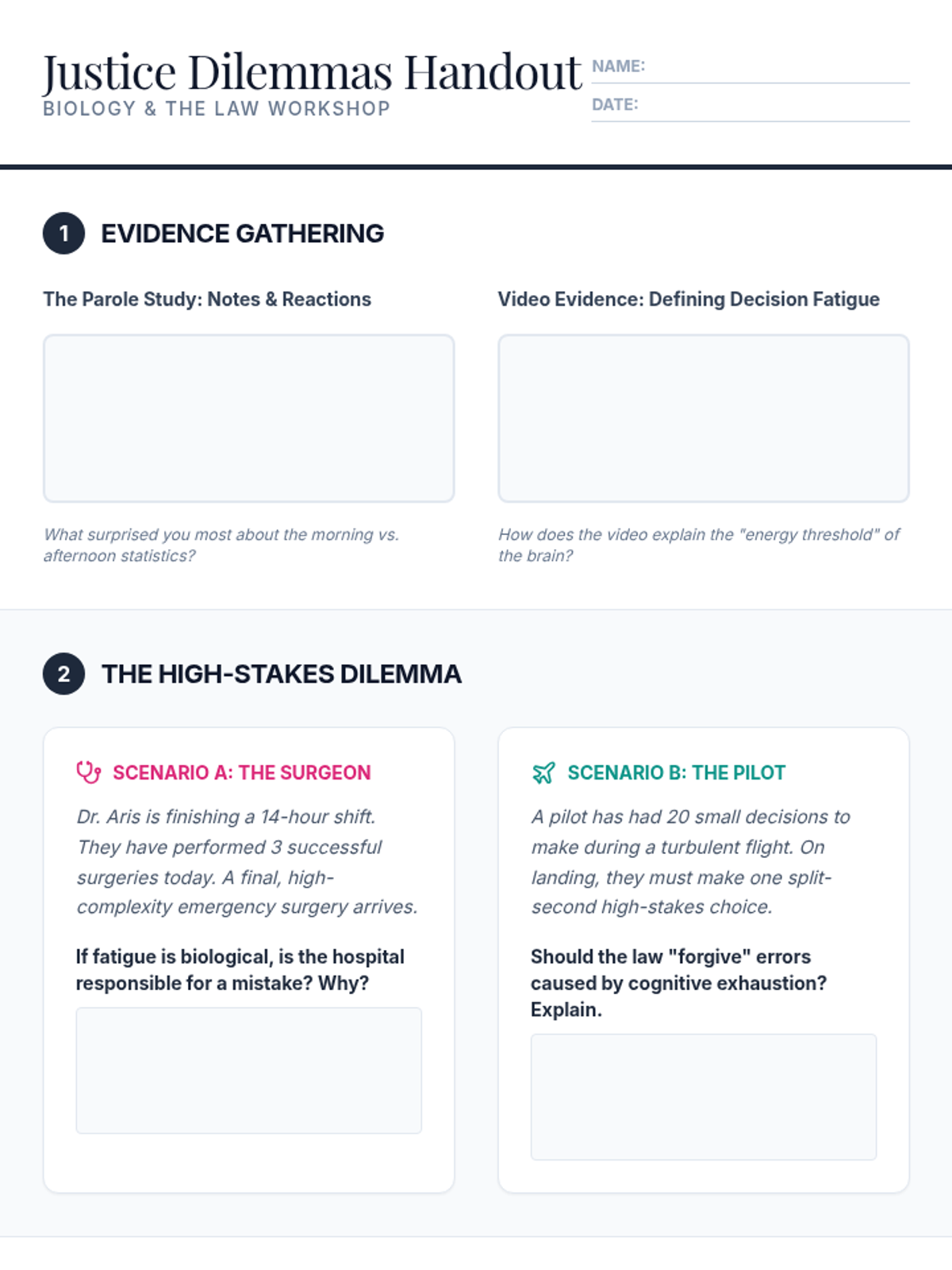
A structured student handout featuring observation areas, cross-disciplinary role-play scenarios about decision fatigue, and a formal policy recommendation template for court reform.
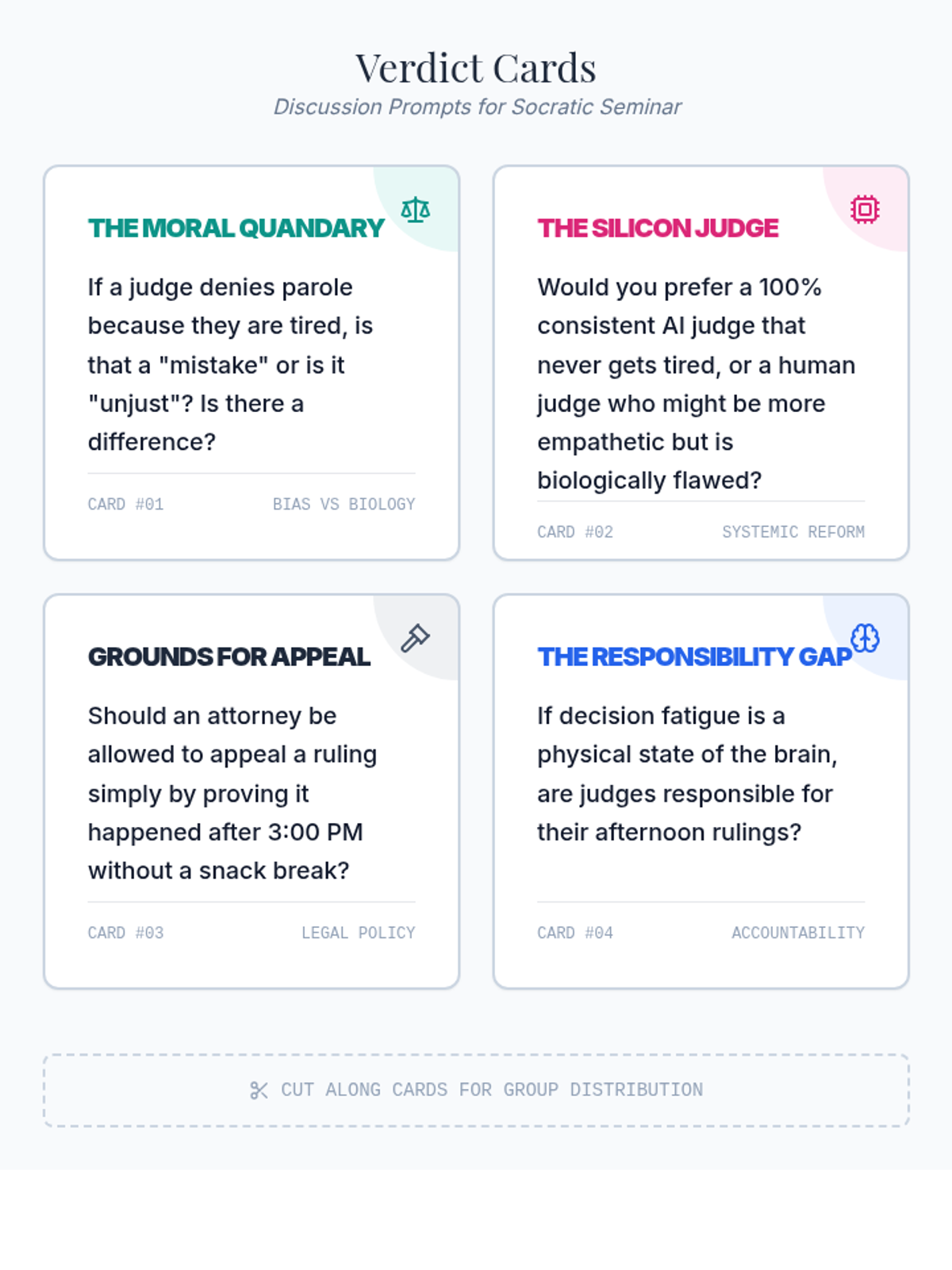
Set of four provocative discussion cards for a Socratic Seminar focused on the ethical and systemic implications of decision fatigue in the courtroom.
A visual presentation for the 'Justice and Biology' lesson, featuring the parole study case study, video embed, definitions of decision fatigue, and Socratic seminar prompts.
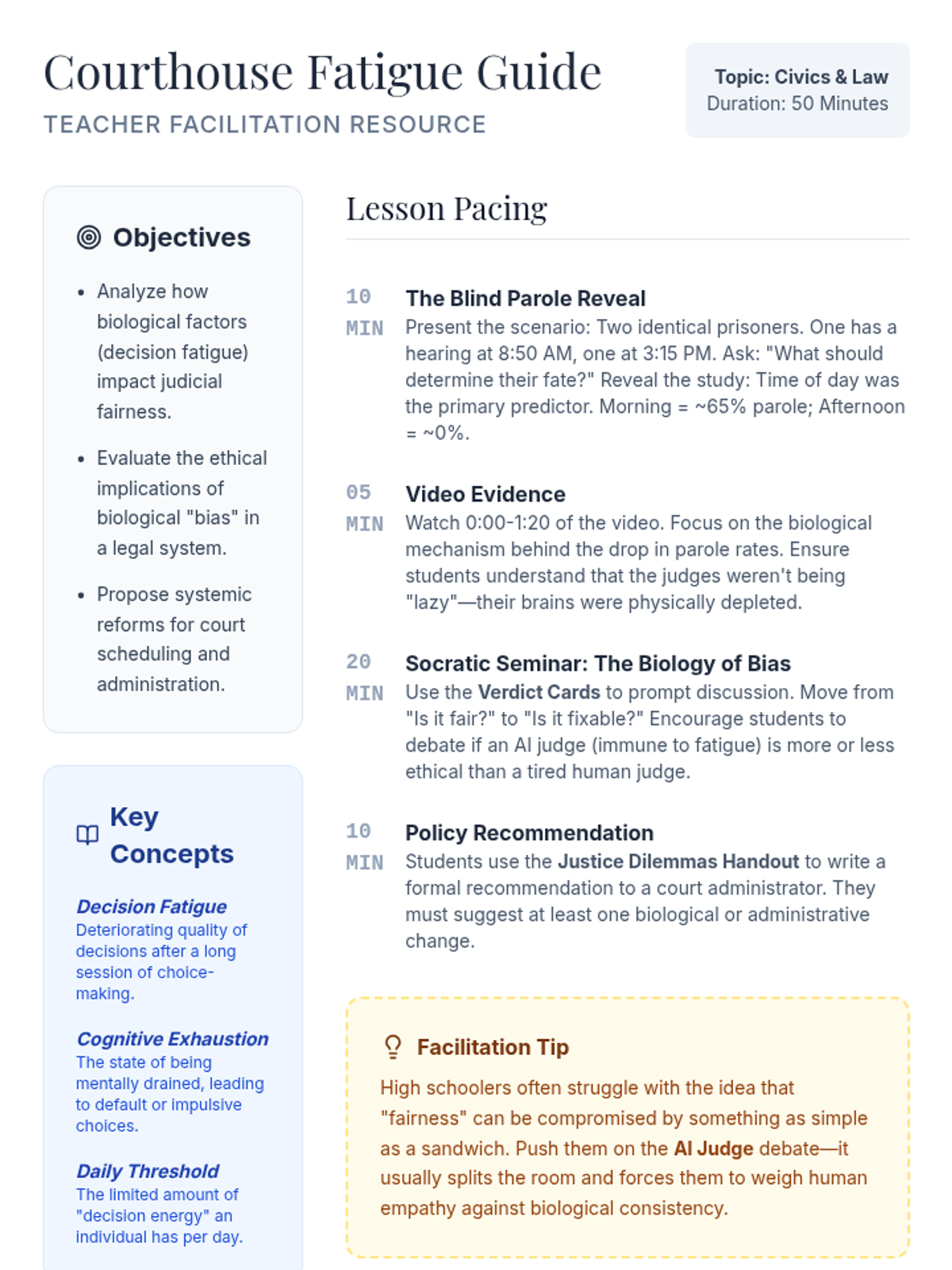
A comprehensive teacher facilitation guide for the 'Justice and Biology' lesson, including pacing, key concept definitions, discussion extensions, and a policy recommendation rubric.
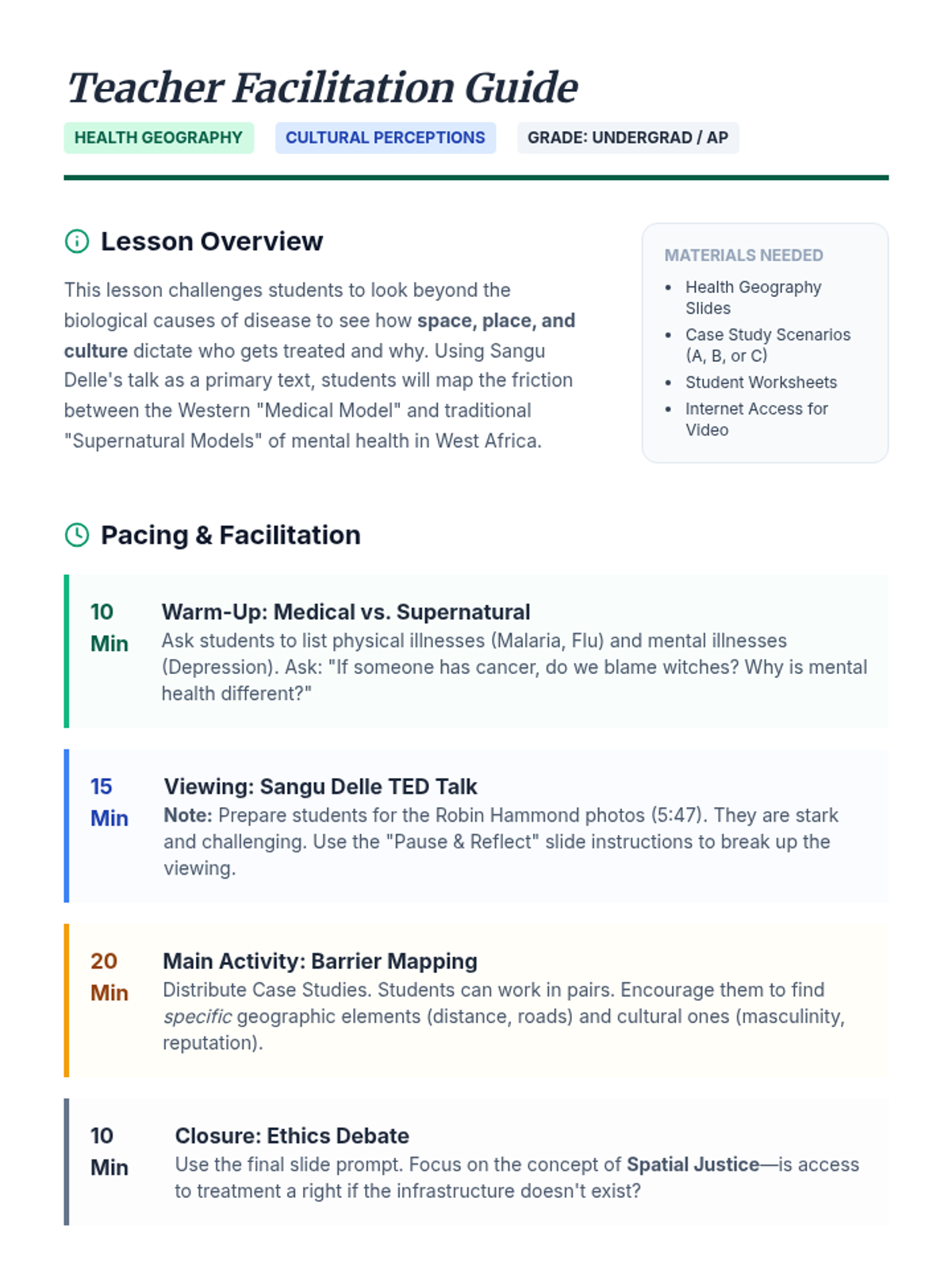
A detailed guide for teachers to facilitate the Health Geography lesson, including pacing, expected student responses for the barrier map, and deep-dive discussion questions.
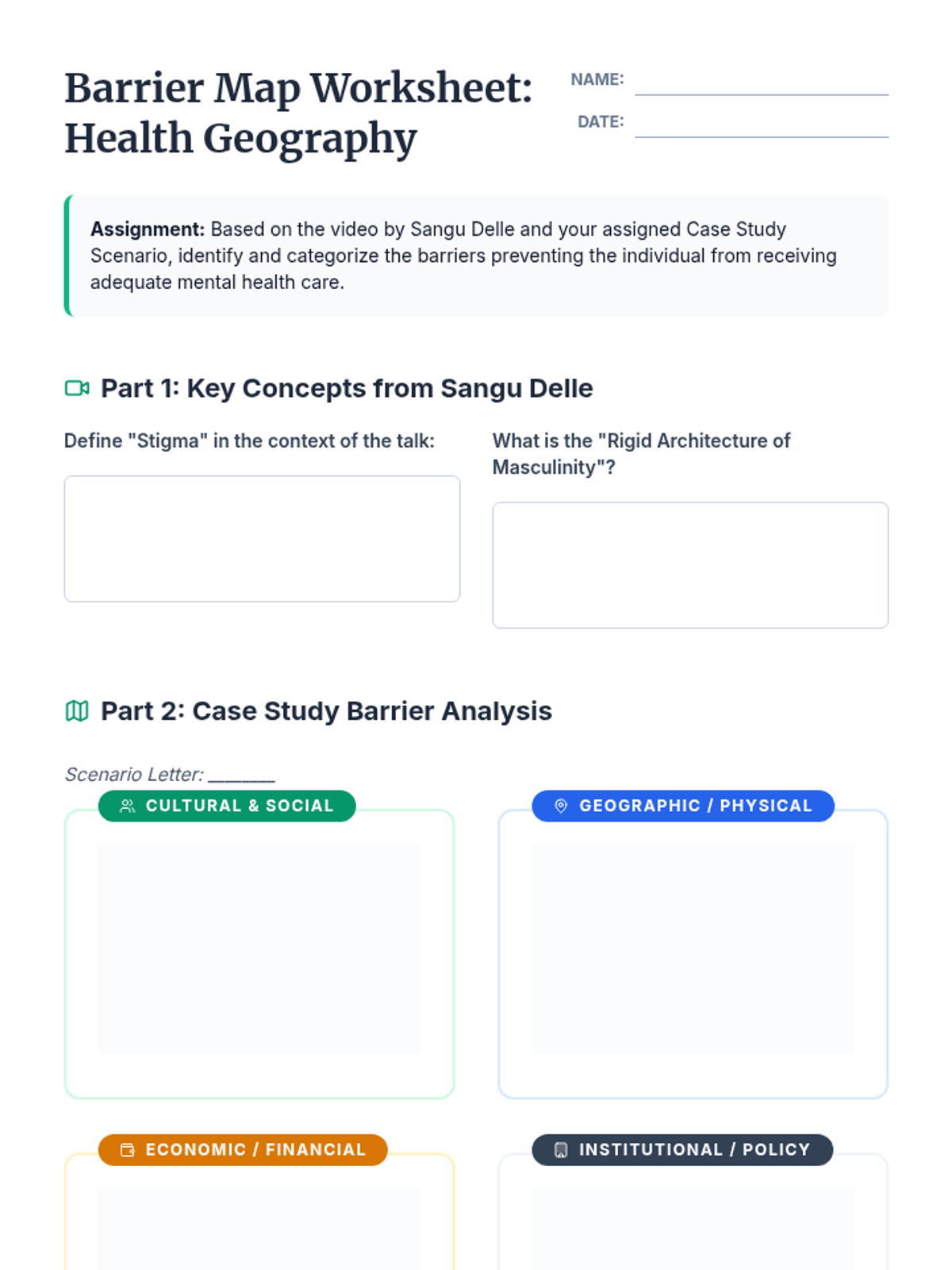
A comprehensive student worksheet for mapping barriers to healthcare access based on case studies and Sangu Delle's TED Talk. Includes conceptual and reflective sections.
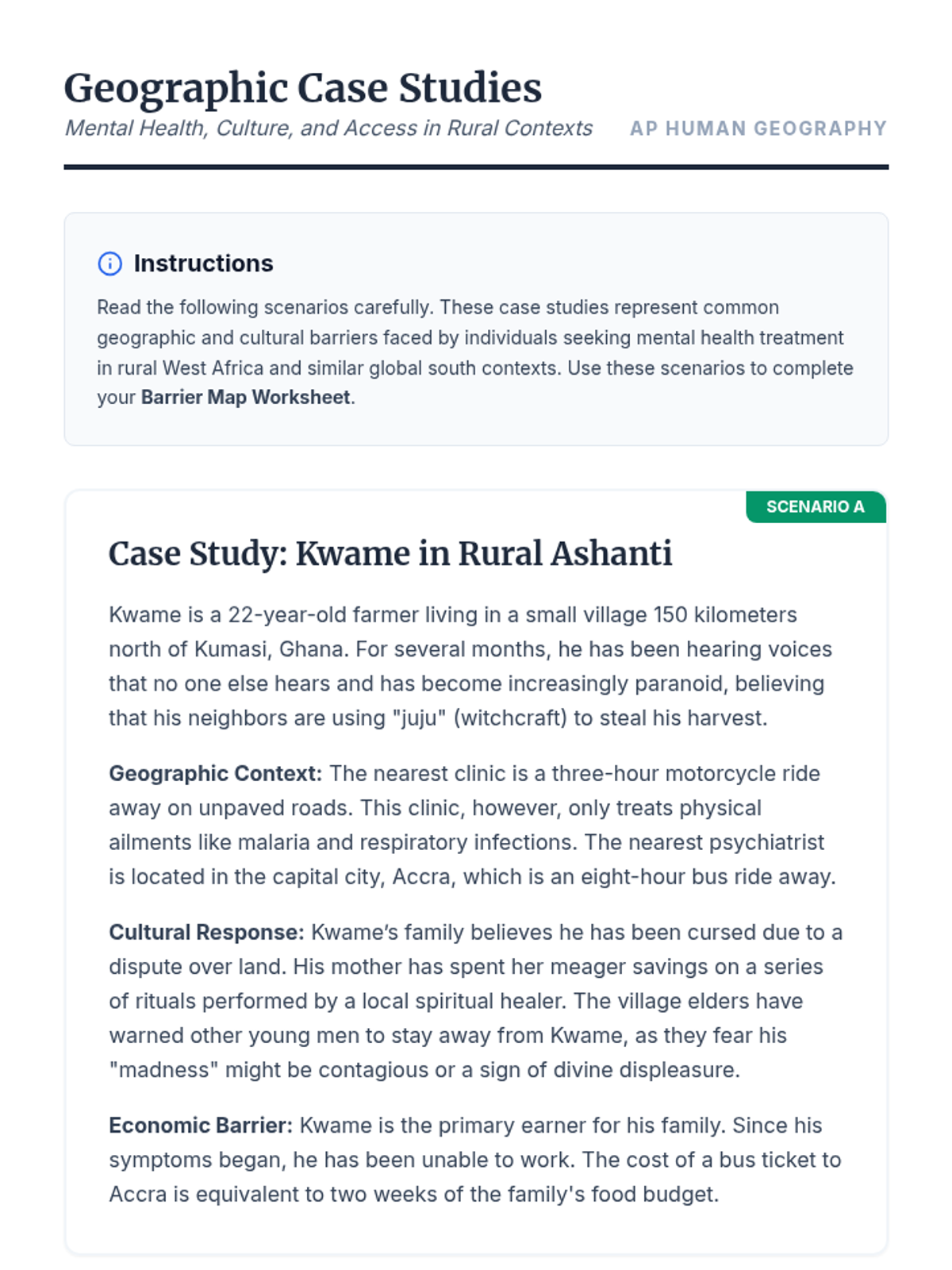
A collection of three regional case studies (Ghana and Nigeria) designed for students to analyze the social, economic, and geographic barriers to mental health treatment.
A slide deck for AP Human Geography exploring health geography and cultural perceptions, featuring Sangu Delle's TED Talk and interactive discussion prompts.
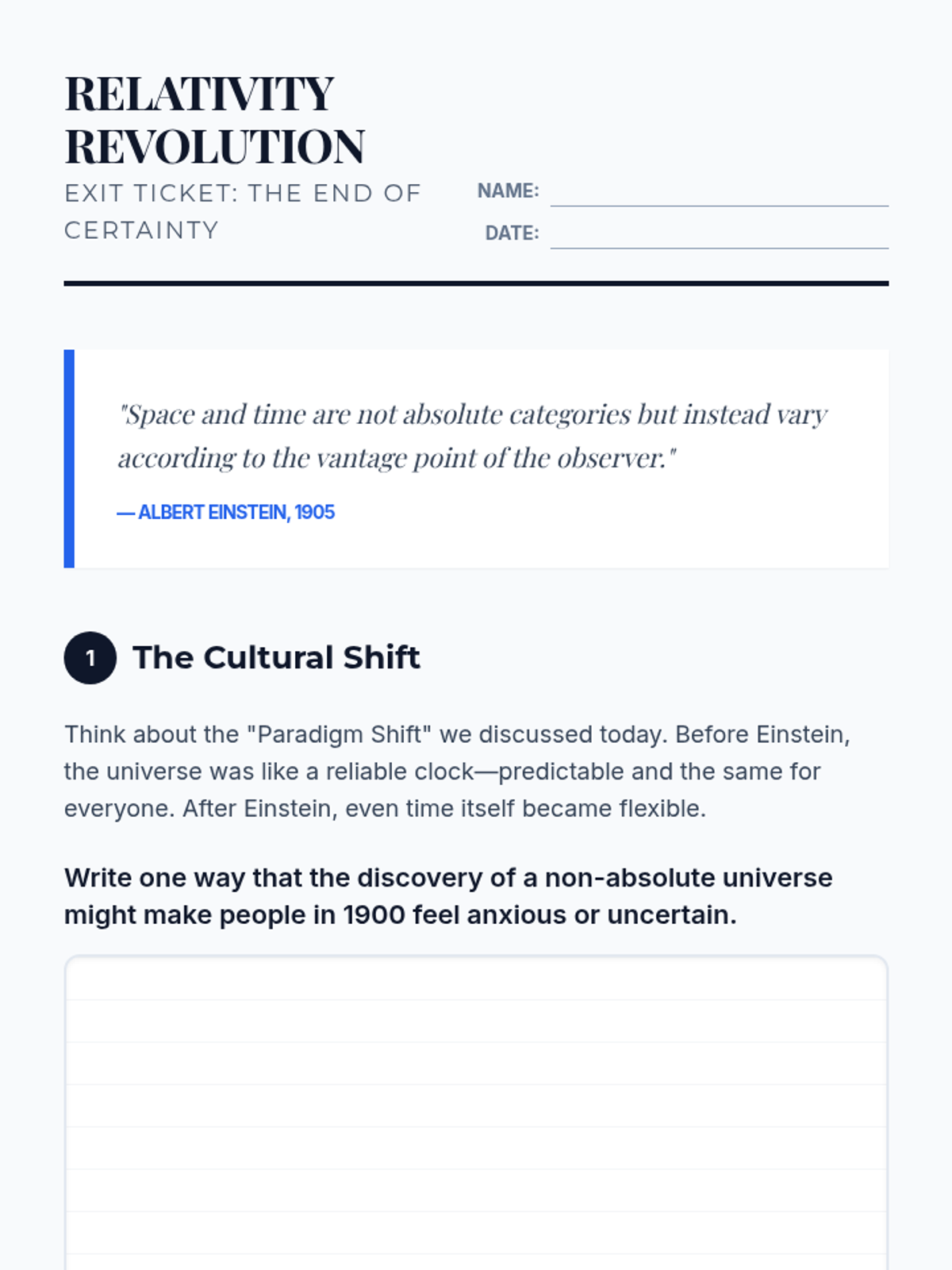
A print-ready exit ticket for students to reflect on the cultural and psychological impact of relativity. Includes space for a deep reflection on turn-of-the-century anxiety and a lingering questions section.
A visual slide deck exploring the paradigm shift from Newtonian to Einsteinian physics and its cultural impact. Includes the Train Paradox simulation, video integration, and discussion prompts.
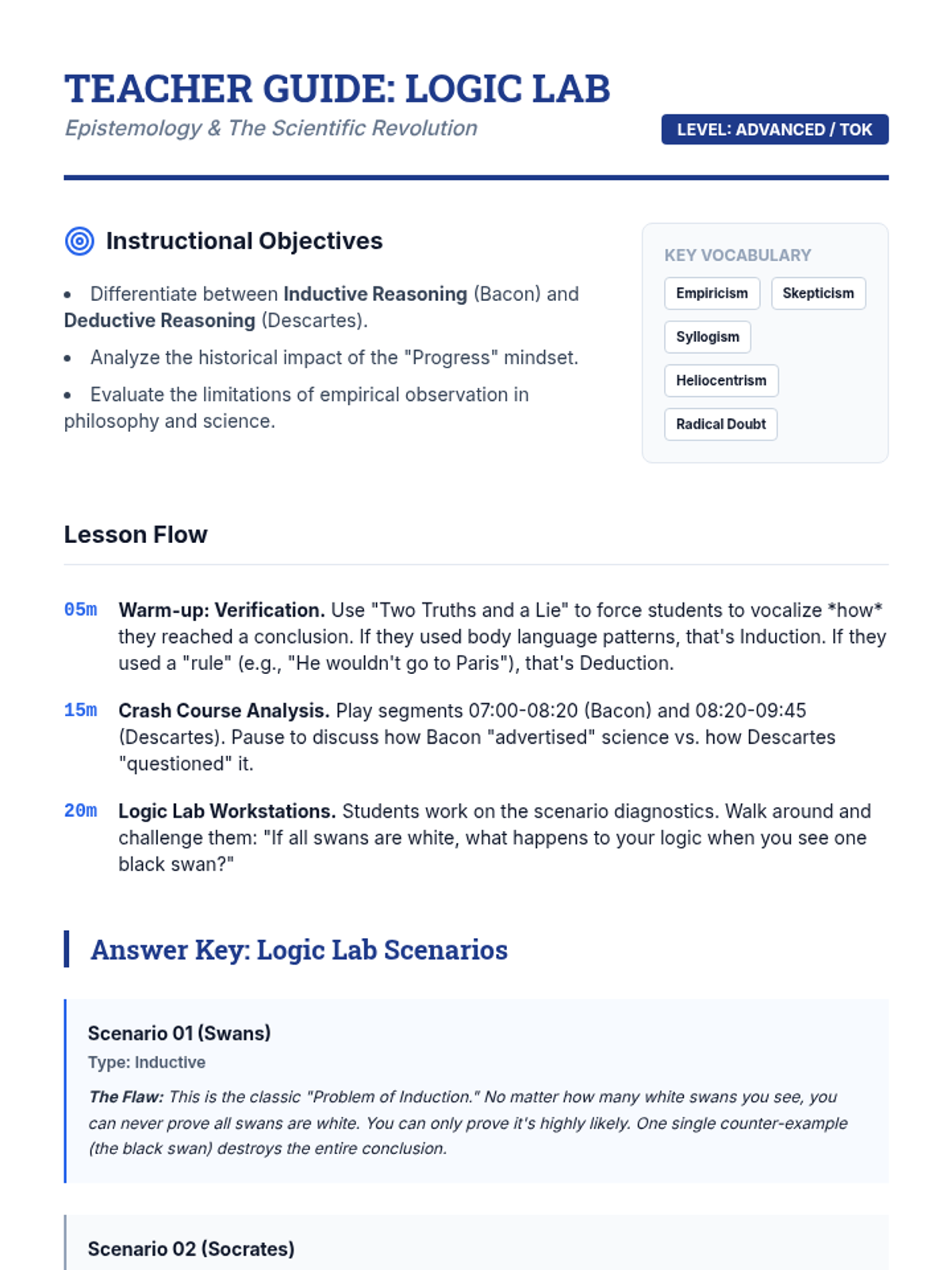
A comprehensive teacher's guide for the Logic Lab lesson, including pacing, scenario answer keys, and Theory of Knowledge (TOK) connections.
A 6-slide presentation designed to guide classroom discussion on the characterization of Calypso in Book 5 of the Odyssey, exploring her motivations, divine rebellion, and complexity.
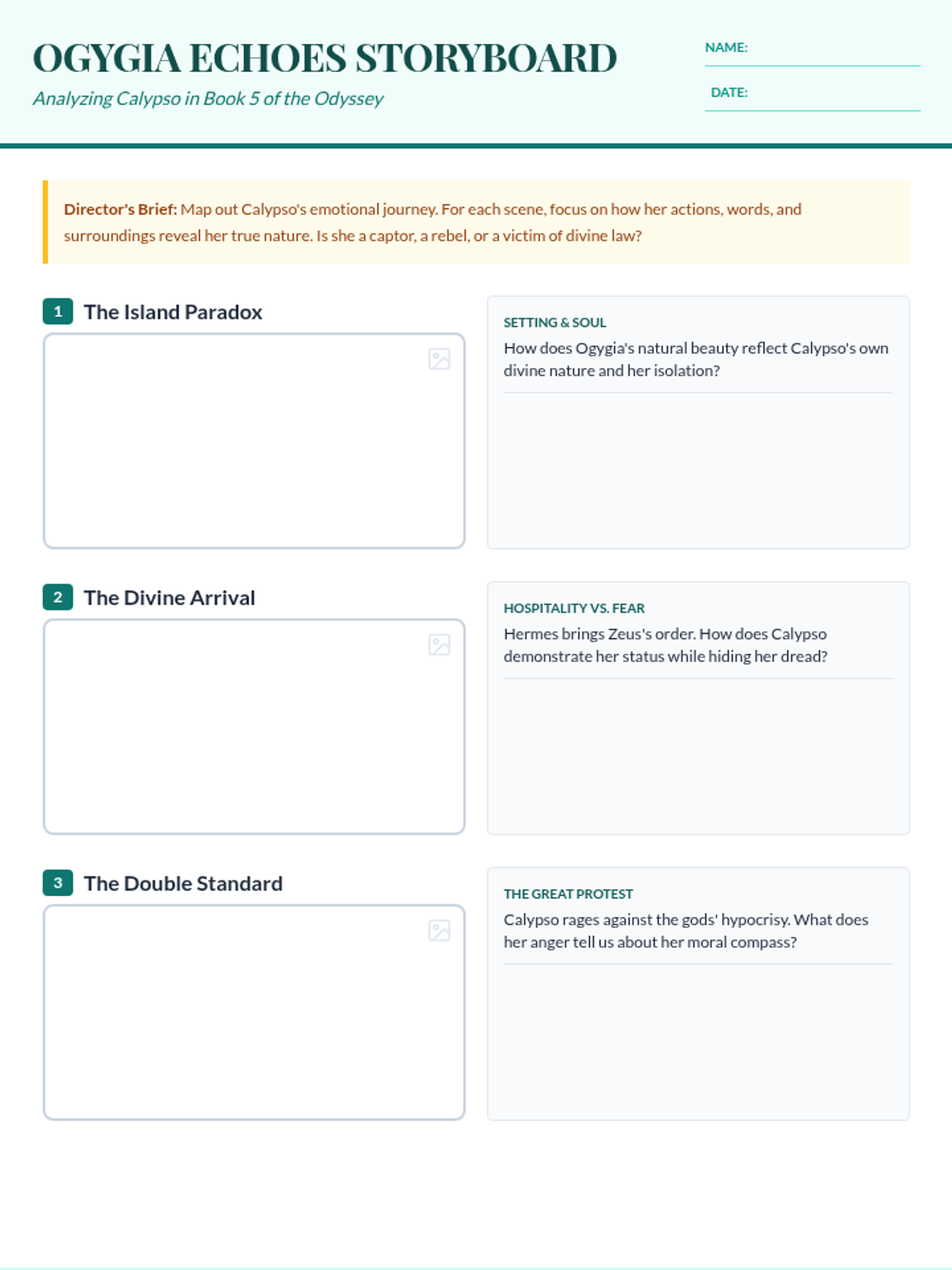
A 2-page graphic storyboard worksheet for students to analyze the characterization of Calypso in Book 5 of the Odyssey through sketching and written reflection.
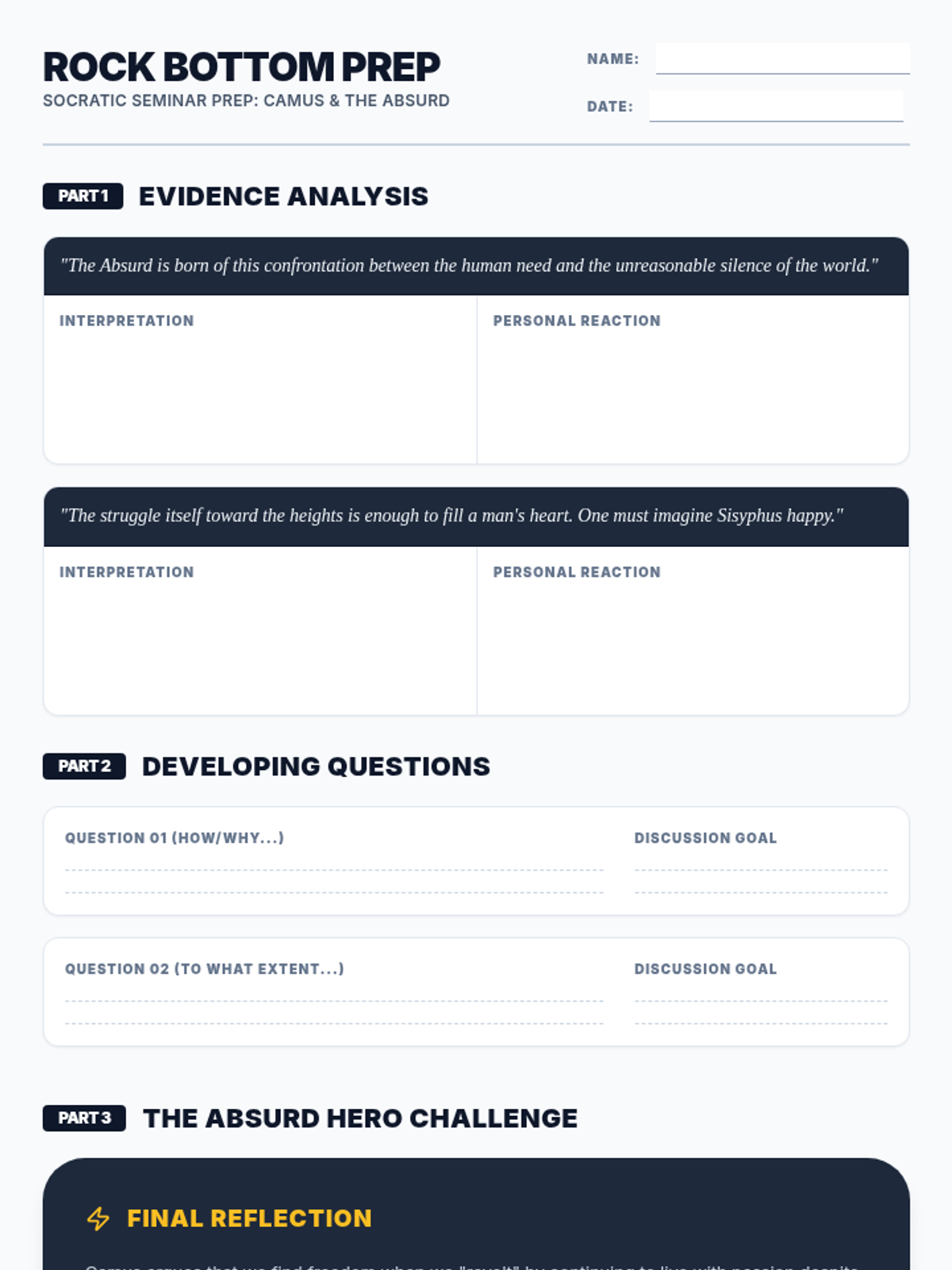
A preparation worksheet for students to analyze key quotes and develop their own discussion questions for the Socratic Seminar on 'The Myth of Sisyphus'.
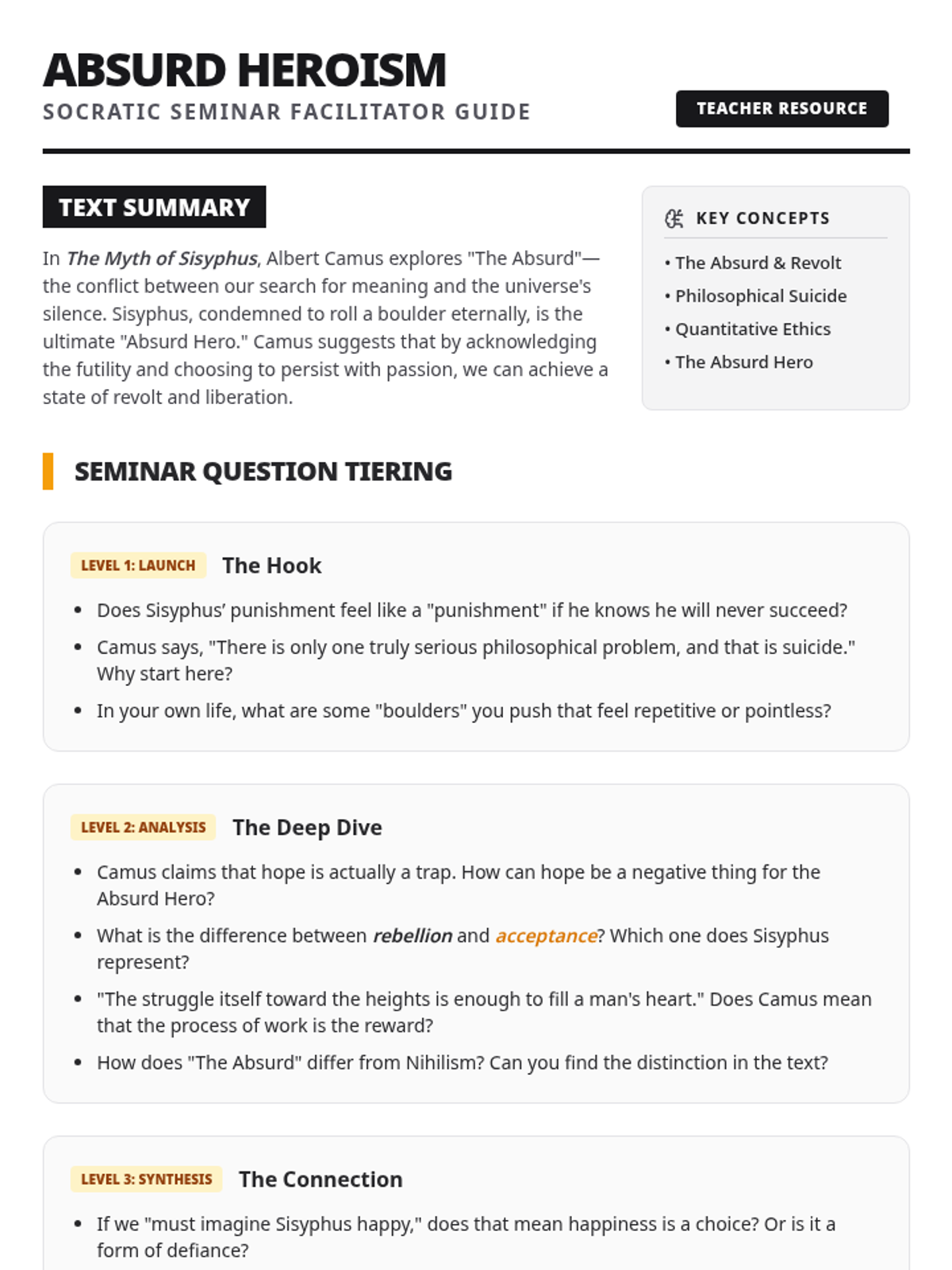
Instructional guide for teachers conducting a Socratic Seminar on Camus' 'The Myth of Sisyphus', including tiered discussion questions and facilitator tips.
Visual presentation slides for a Socratic Seminar on Albert Camus' 'The Myth of Sisyphus', introducing the rules of discussion and core philosophical concepts.
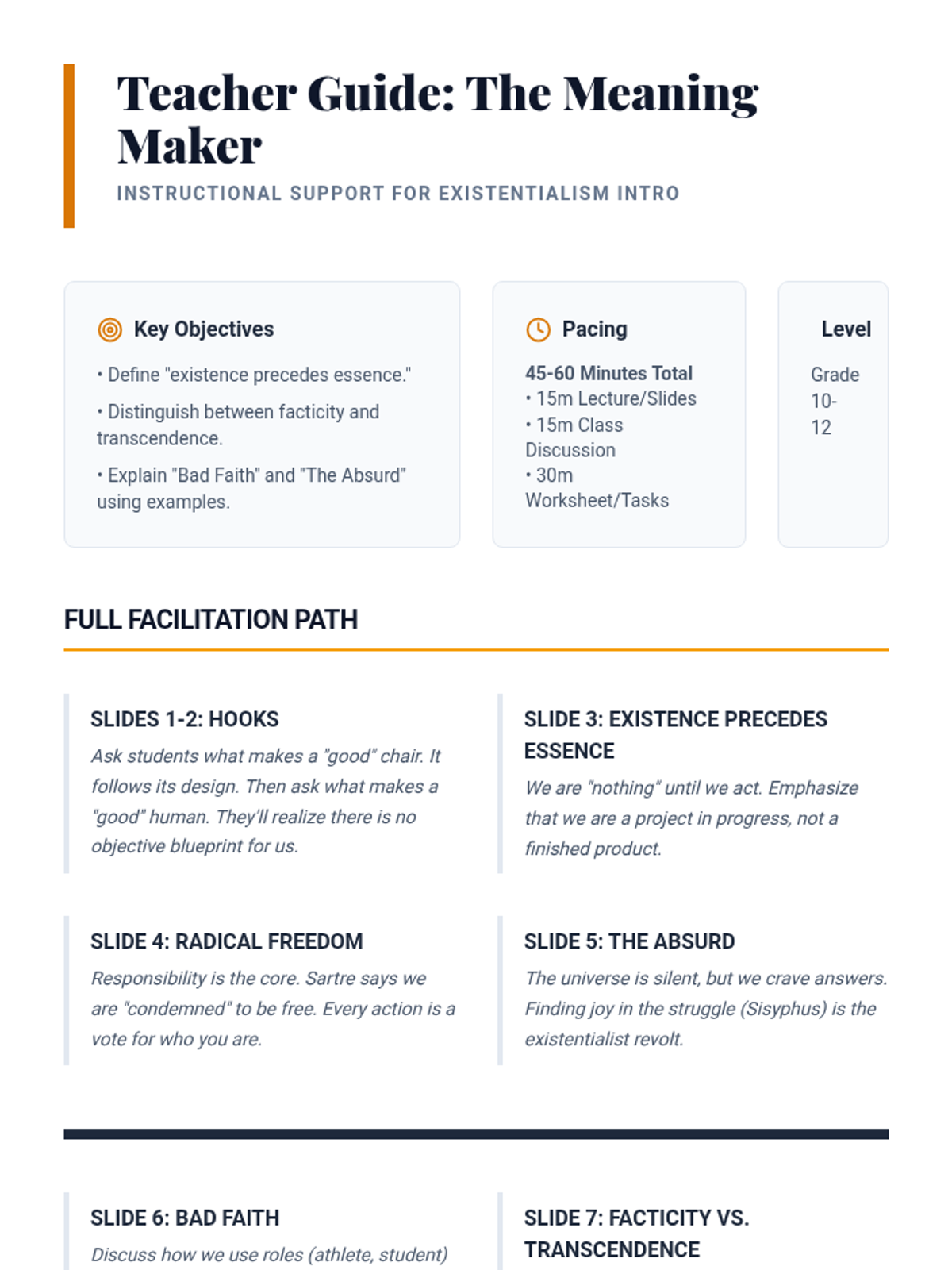
A comprehensive teacher facilitation guide for the "Meaning Maker" lesson on existentialism. Includes slide-by-slide prompts, pacing guides, strategy notes for every slide, and student misconception management. Updated for better page flow and complete slide coverage.
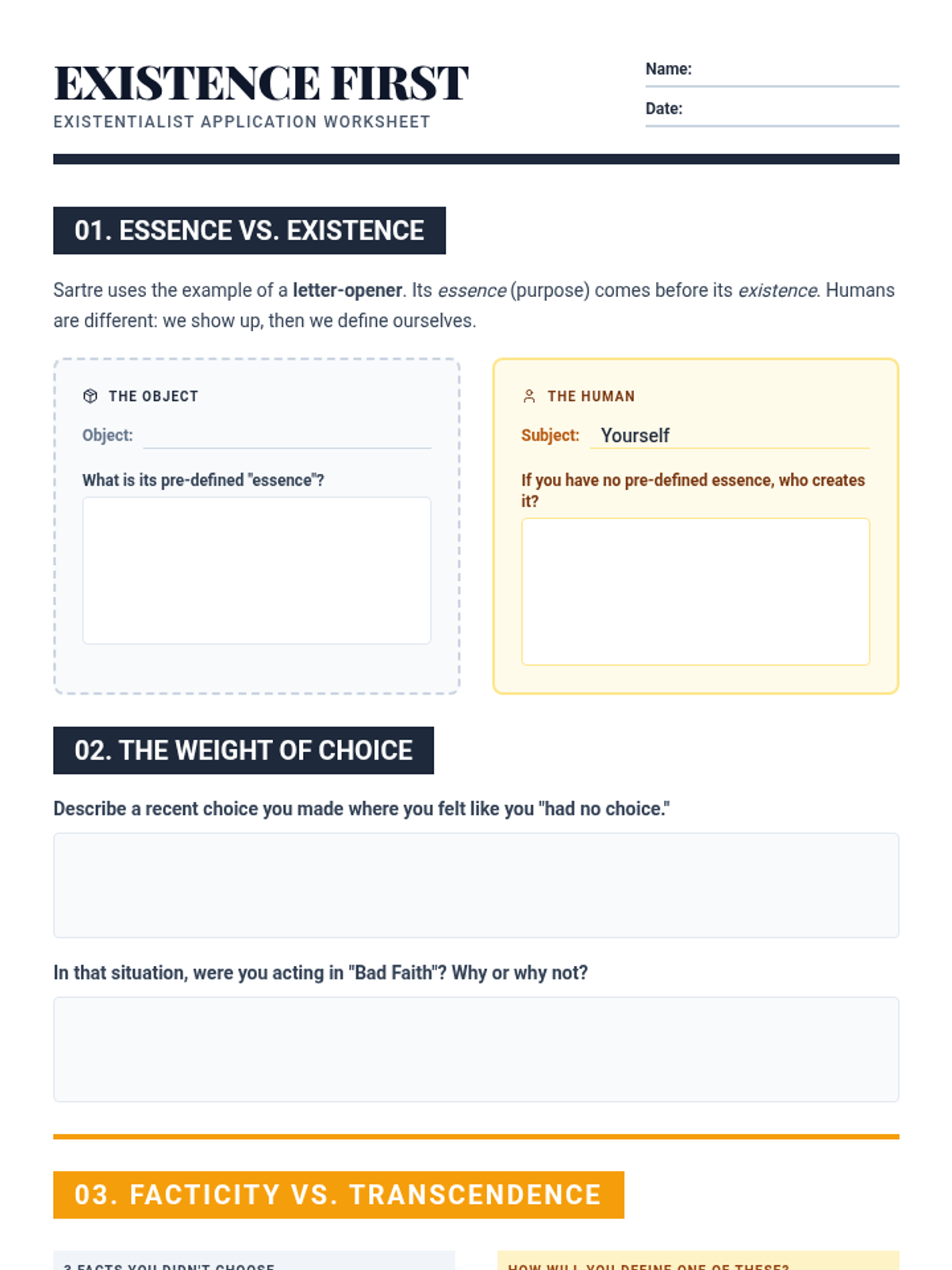
A two-page student worksheet that applies existentialist concepts (Essence vs. Existence, Facticity, The Absurd) to personal life. Includes reflection prompts and analysis of Jean-Paul Sartre and Albert Camus' ideas. Updated for better page breaks and writing area visibility.
A visually striking introductory slide deck on existentialism, covering core concepts like radical freedom, existence preceding essence, the absurd, and bad faith. Uses an industrial "Foundry of Meaning" theme.
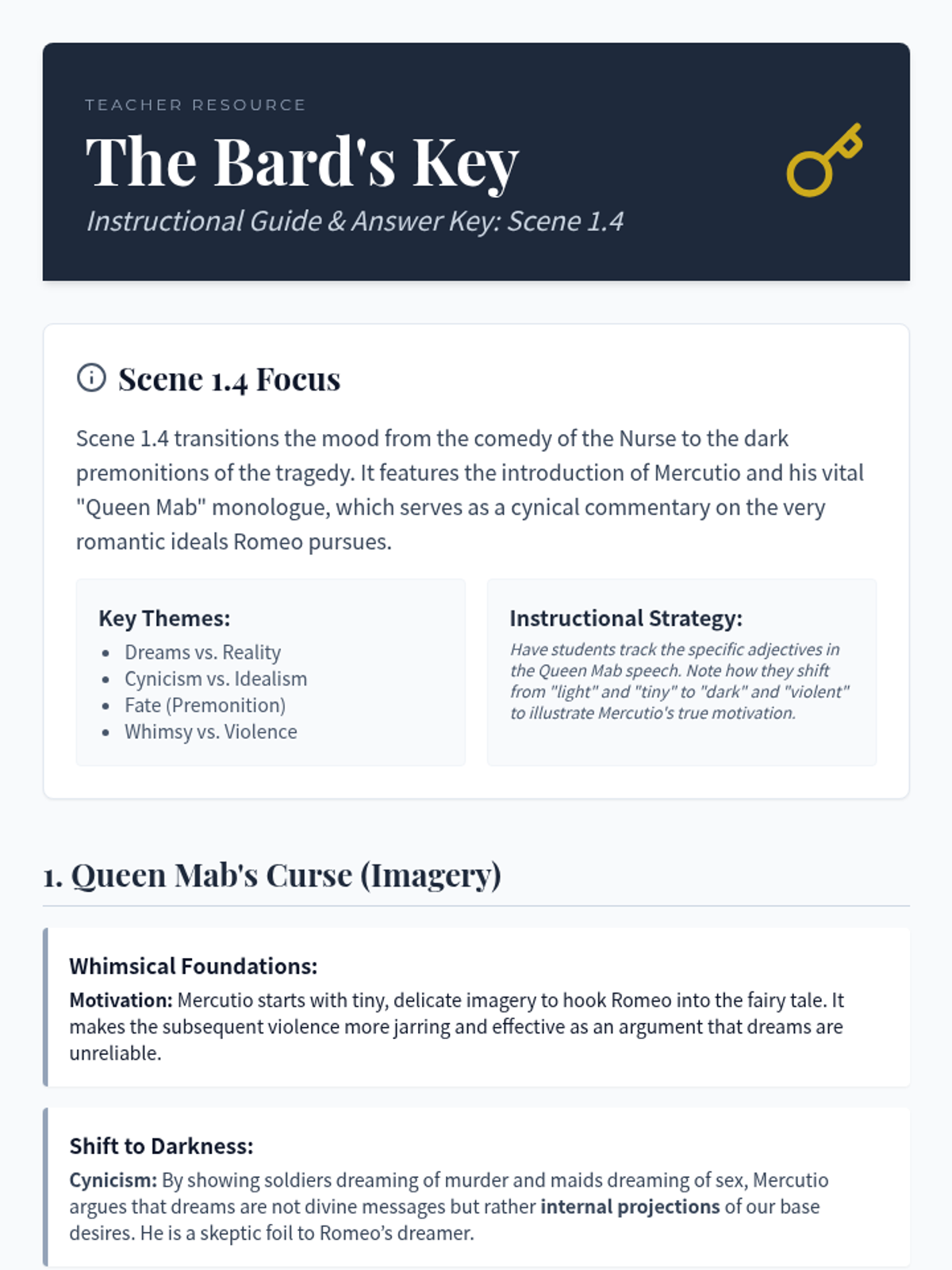
A teacher-facing guide providing an answer key and instructional tips for the Scene 1.4 worksheets. Includes analysis of Mercutio's cynical worldview and Romeo's fatalistic ship metaphor.
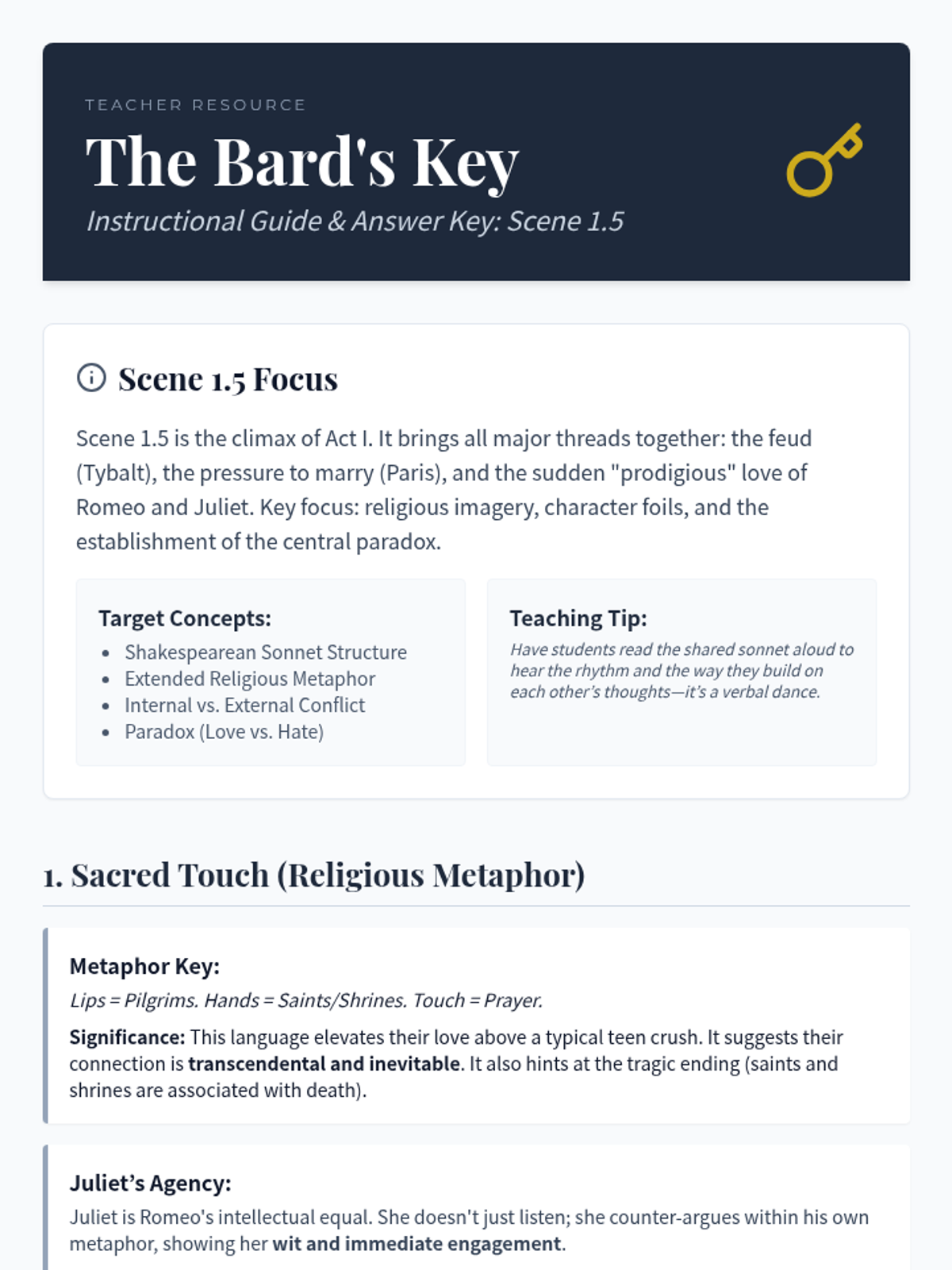
A teacher-facing guide providing an answer key and instructional tips for the Scene 1.5 worksheets. Includes analysis of the shared sonnet, Tybalt's rage, and the central paradox of love and hate.
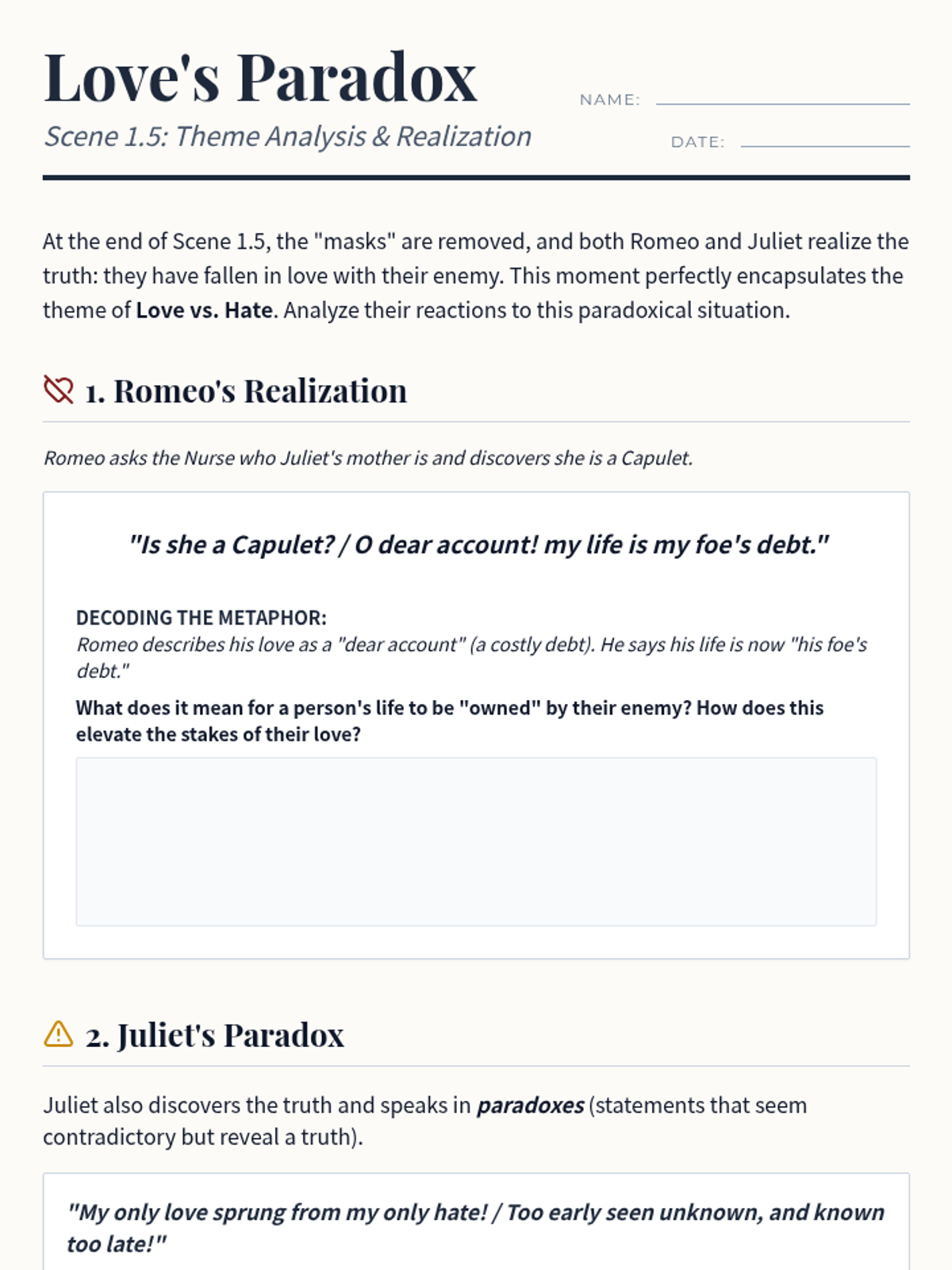
A student worksheet for Act 1, Scene 5 focusing on the realization of the "prodigious birth of love" and the theme of Love vs. Hate. Analyzes the paradoxes spoken by Juliet and Romeo's "foe's debt."
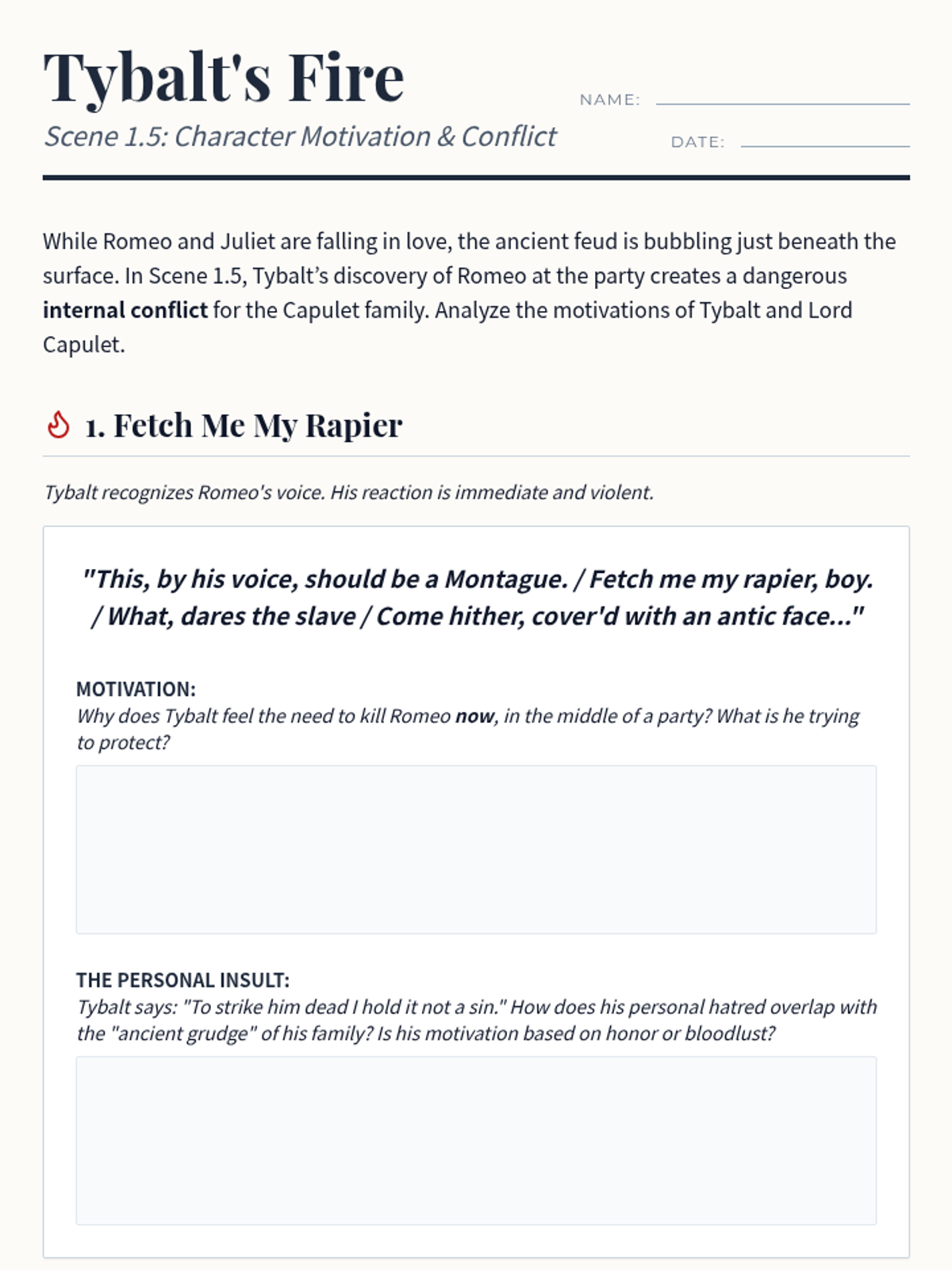
A student worksheet for Act 1, Scene 5 focusing on character motivation and conflict. Analyzes Tybalt's rage vs. Lord Capulet's hospitality and the foreshadowing of future violence.
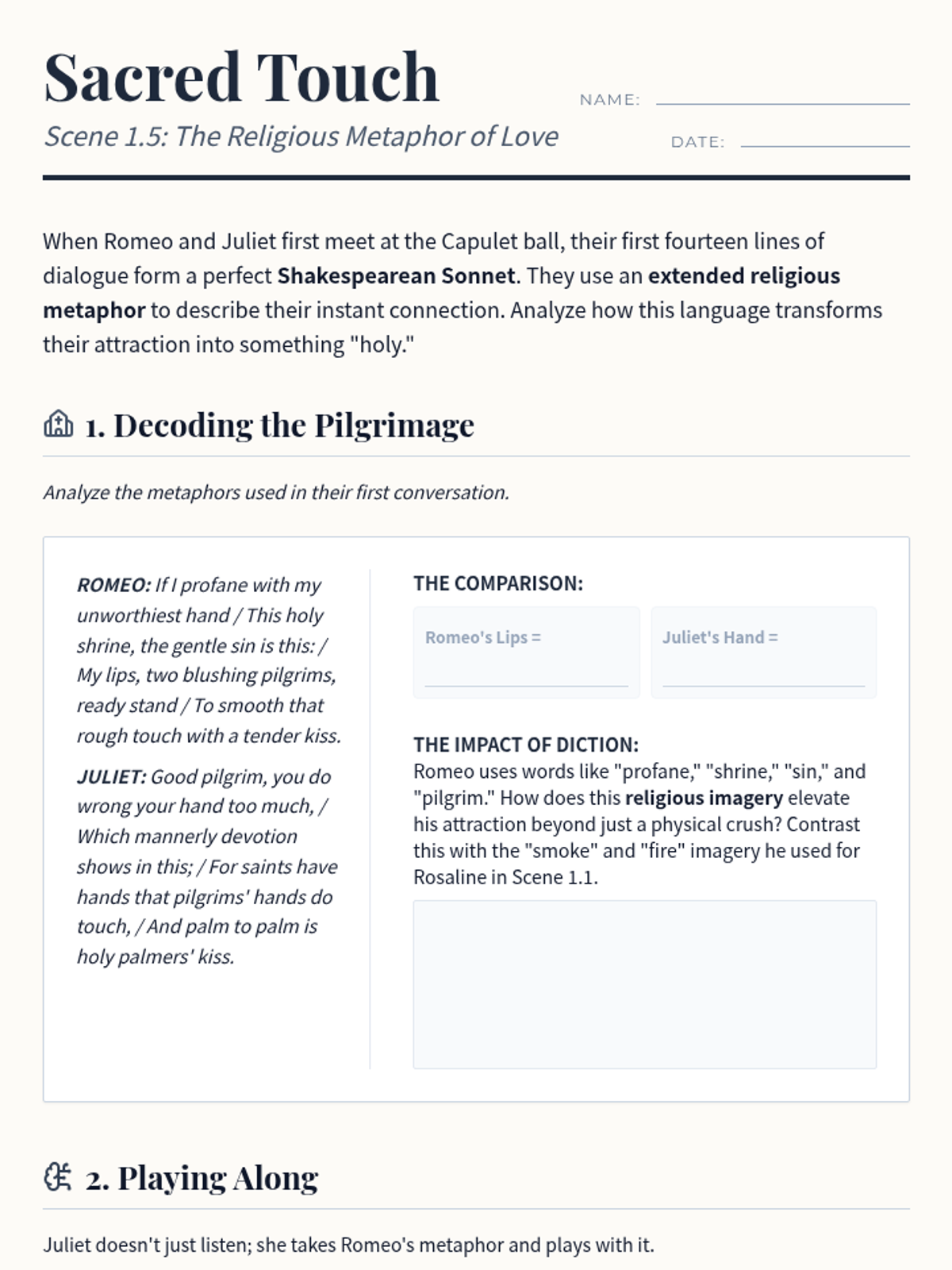
A student worksheet for Act 1, Scene 5 focusing on the first meeting of Romeo and Juliet. Analyzes the shared sonnet and the use of religious metaphors to elevate their connection.
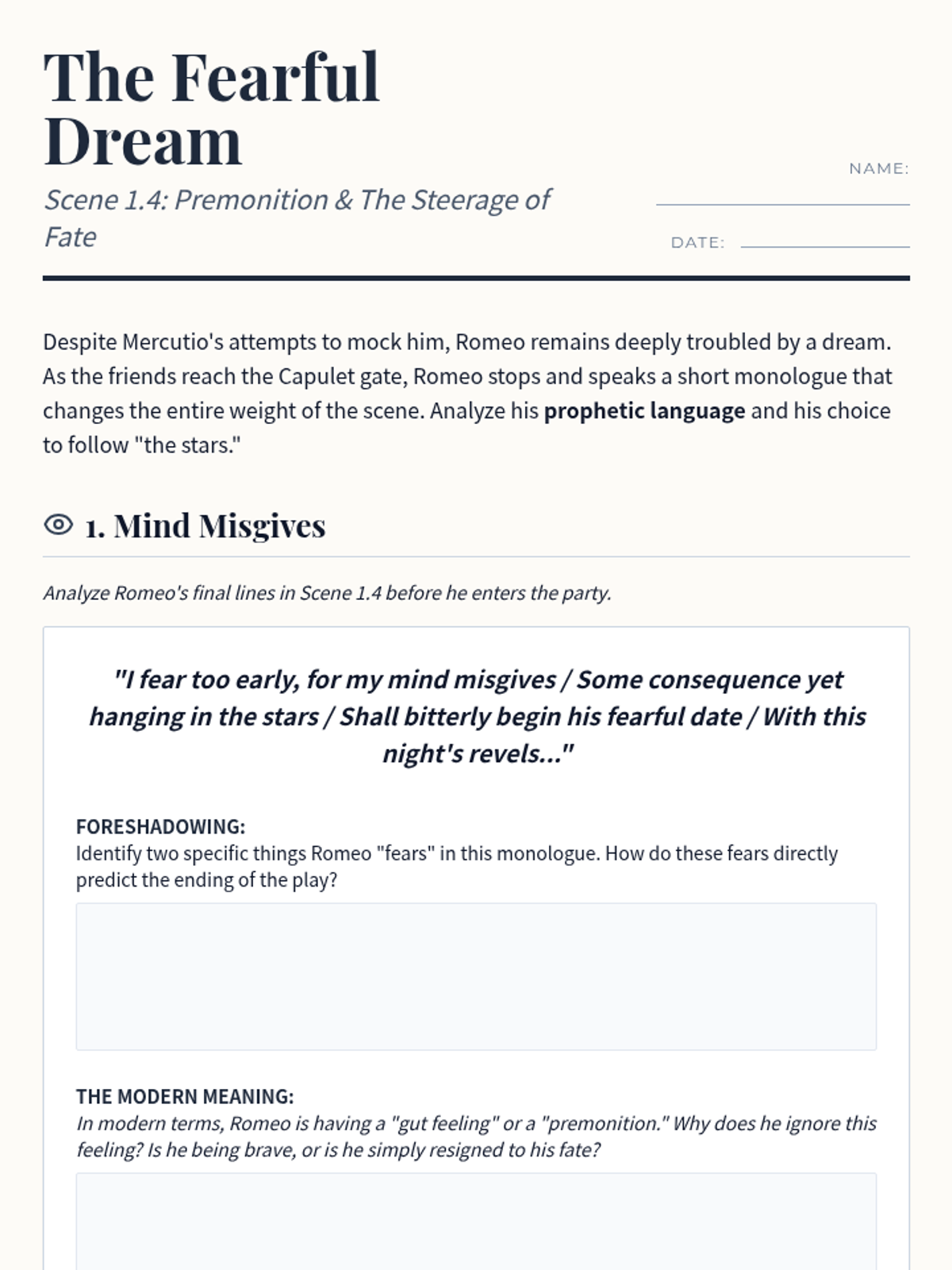
A student worksheet for Act 1, Scene 4 focusing on Romeo's premonition and the theme of fate. Analyzes his "fearful dream" and the decision to enter the party.
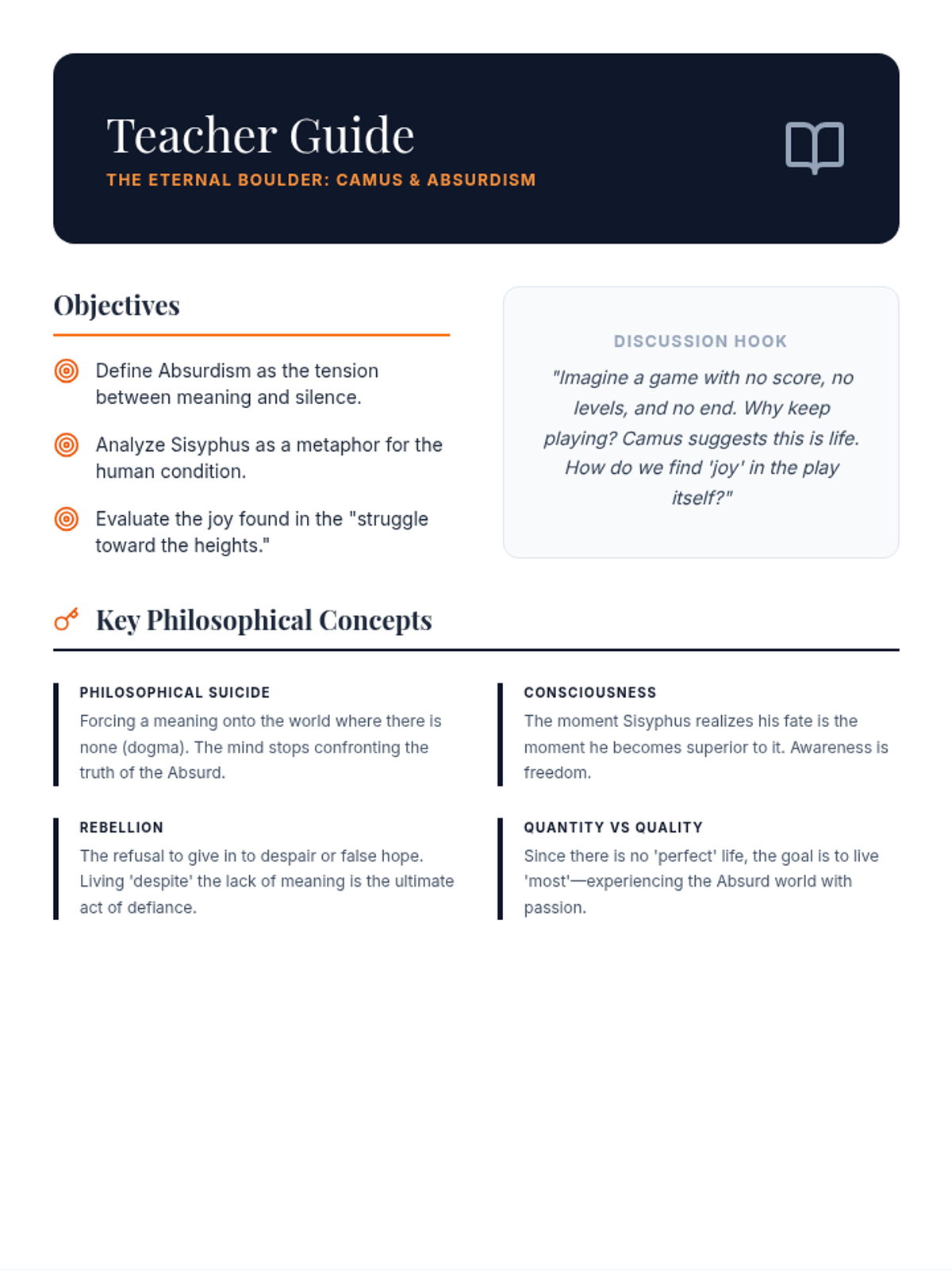
A structured guide for teachers to facilitate discussion, explain key philosophical terms, and evaluate student responses on Camus's Absurdism.
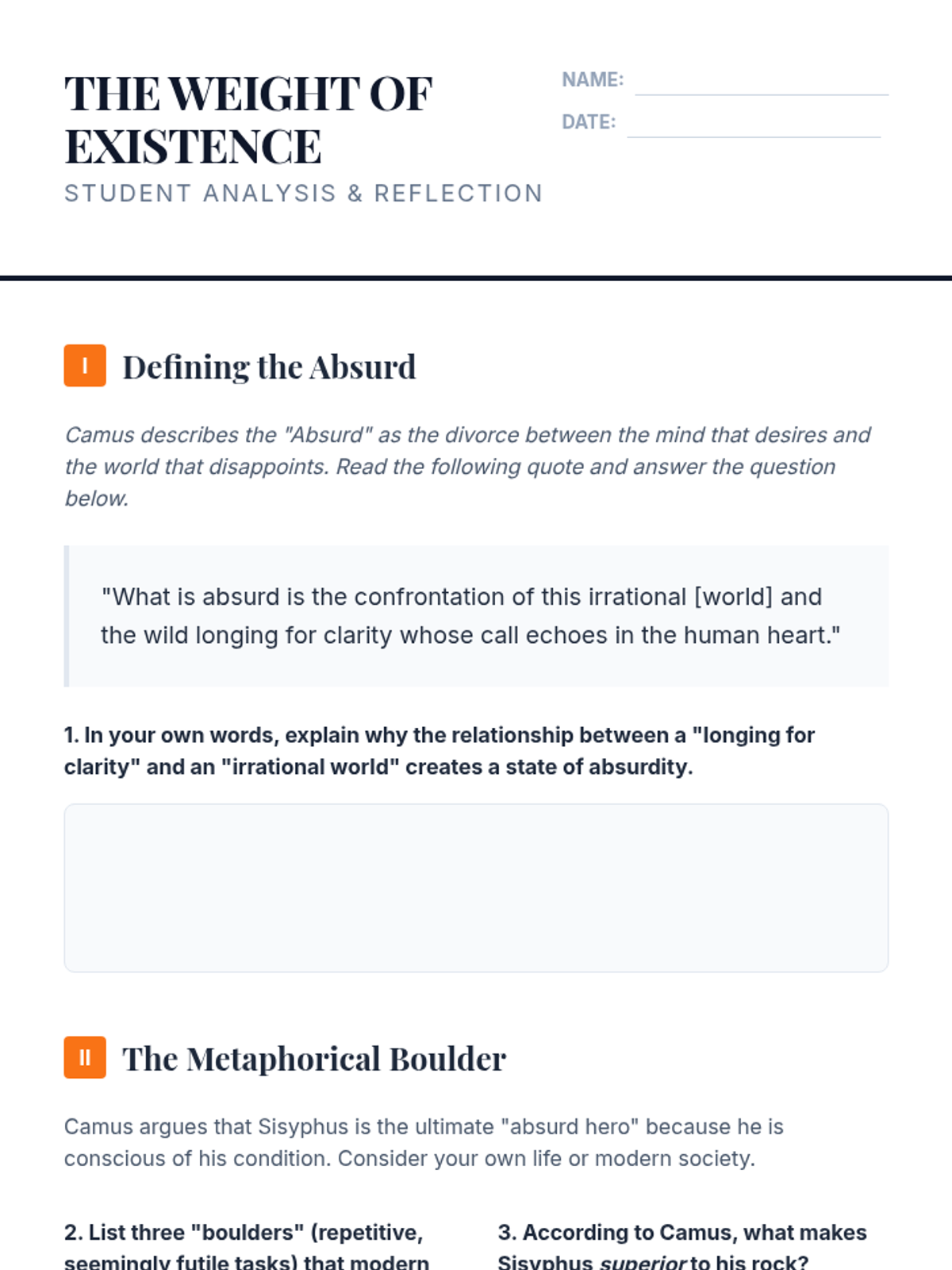
A comprehensive analysis worksheet for students to process Camus's core philosophical arguments and the Sisyphus metaphor.
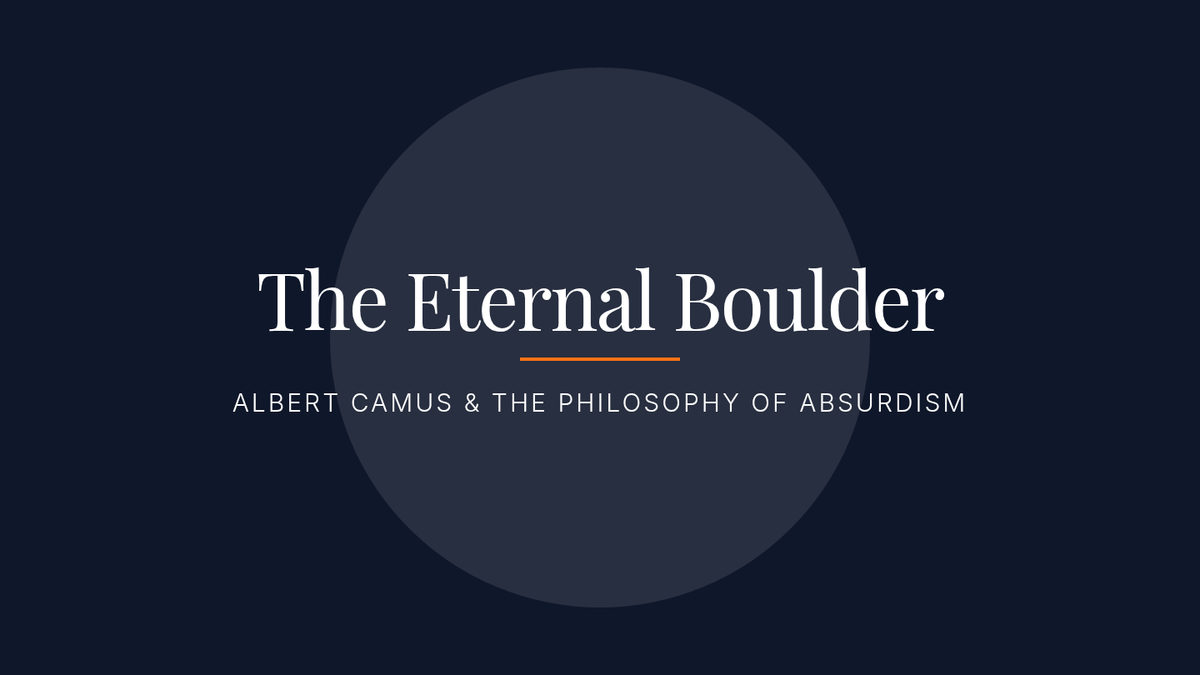
A visually striking presentation covering the core concepts of Albert Camus's Absurdism and his specific interpretation of the Myth of Sisyphus.
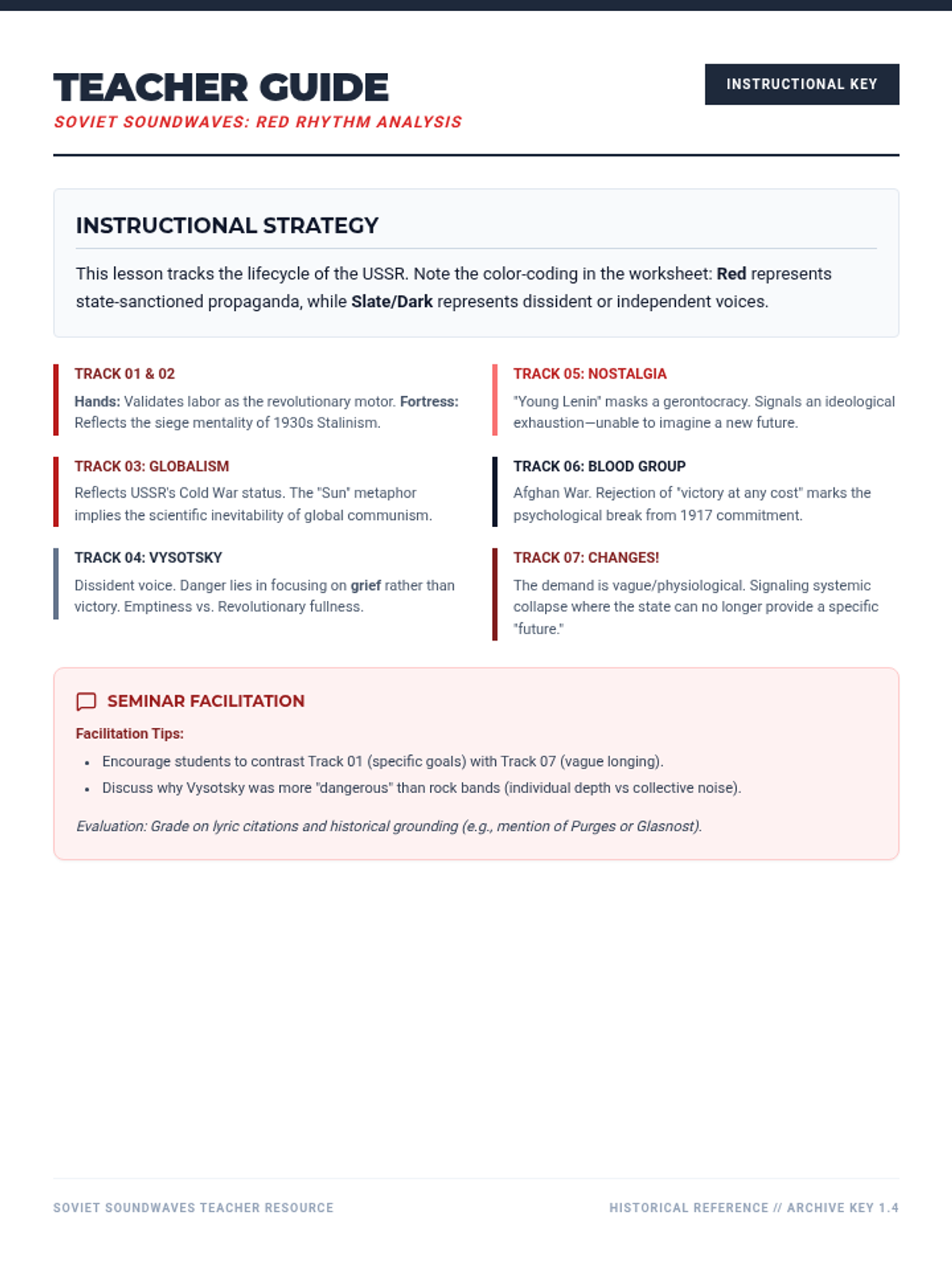
A teacher guide providing historical context, key analysis points, and expected student responses for the Red Rhythm lyric worksheet. It explores the transition from state-led collective ideology to individualist and dissident sentiments.
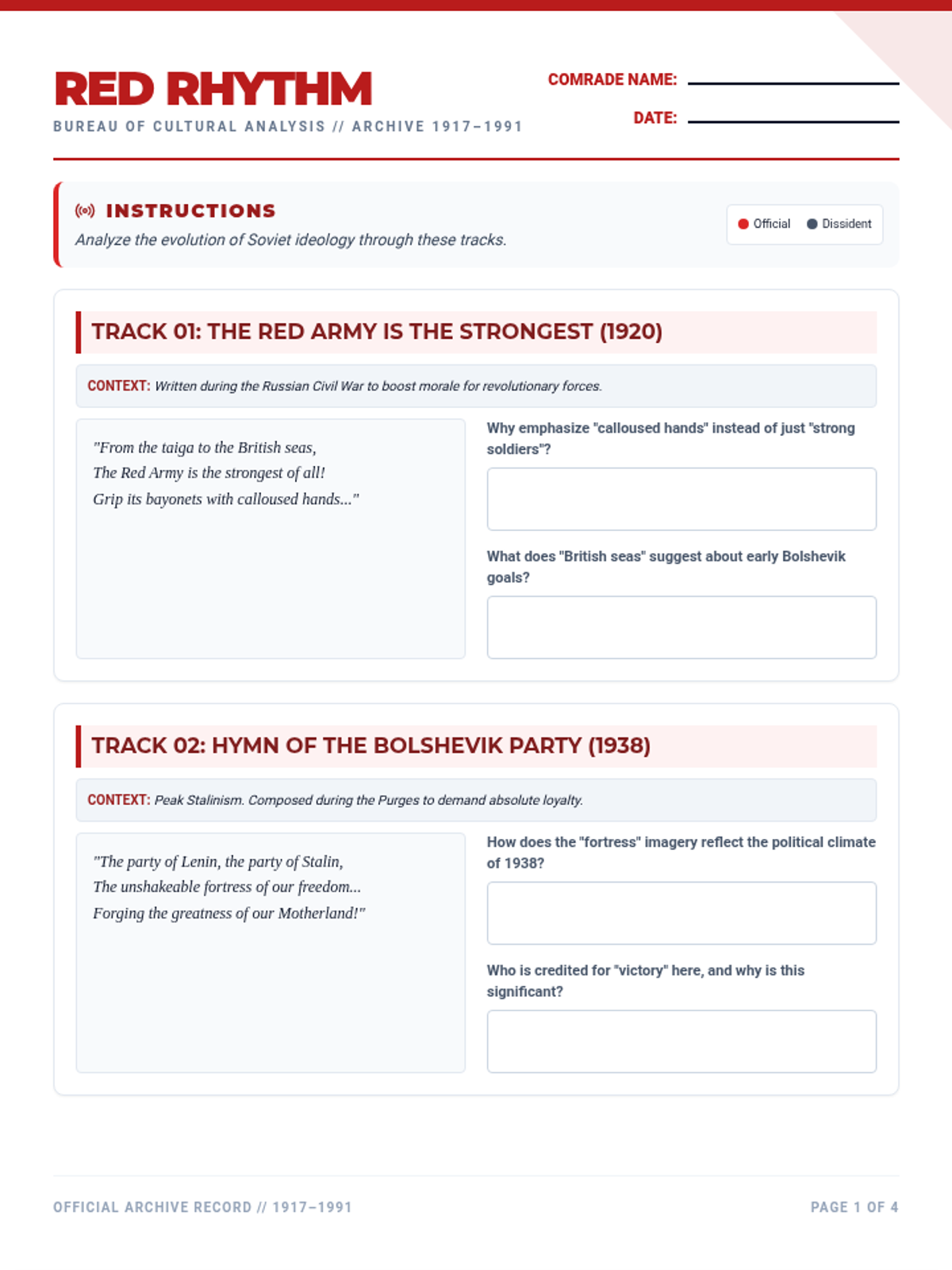
A 4-page comprehensive worksheet for analyzing Soviet songs. It features historical context boxes for 7 key tracks, specific analysis questions for each, and a dedicated student-led discussion page for seminar preparation.
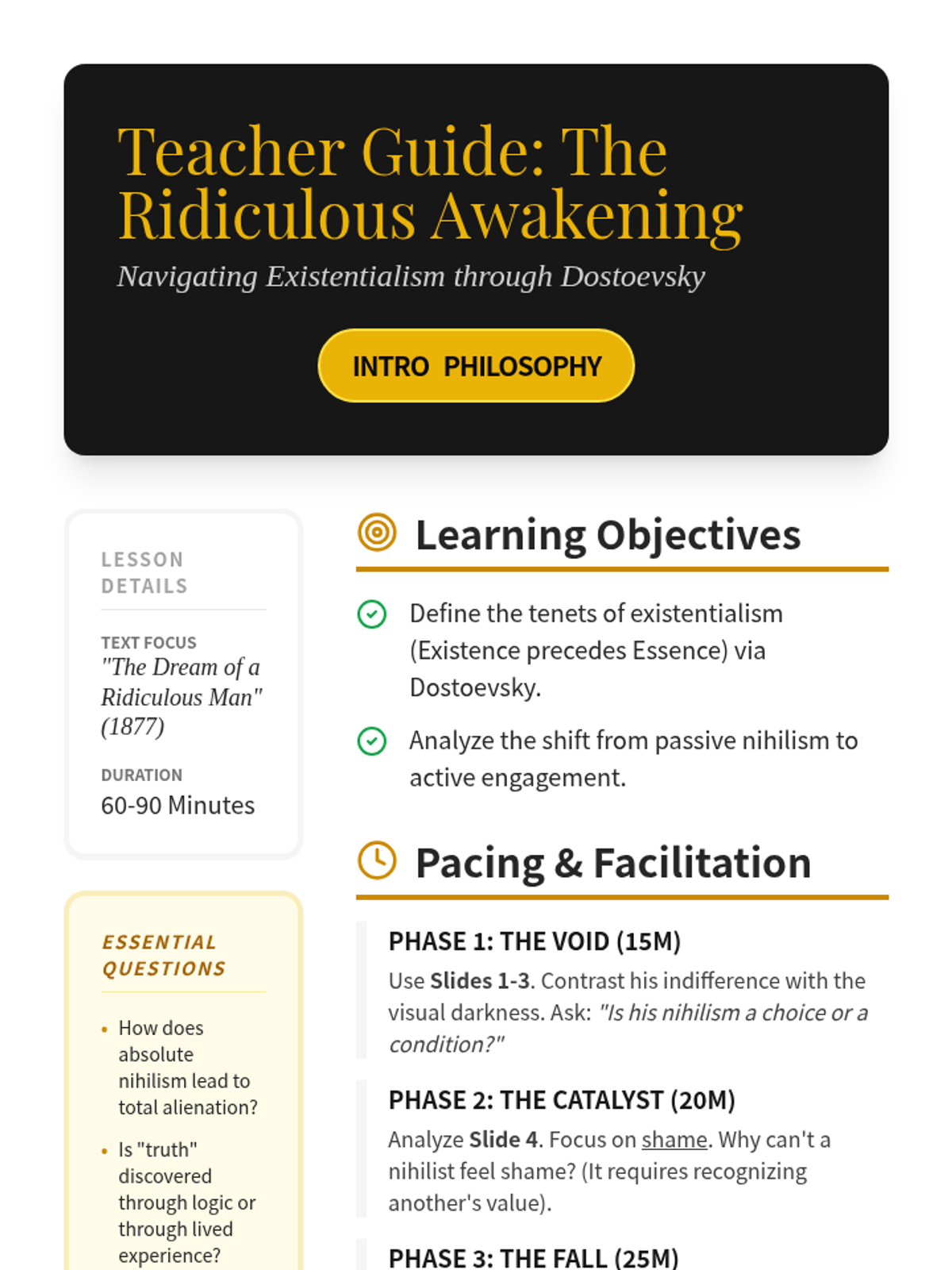
A comprehensive teacher's guide for the 'Ridiculous Awakening' lesson. Includes learning objectives, pacing suggestions, discussion prompts, and common student misconceptions about existentialism.
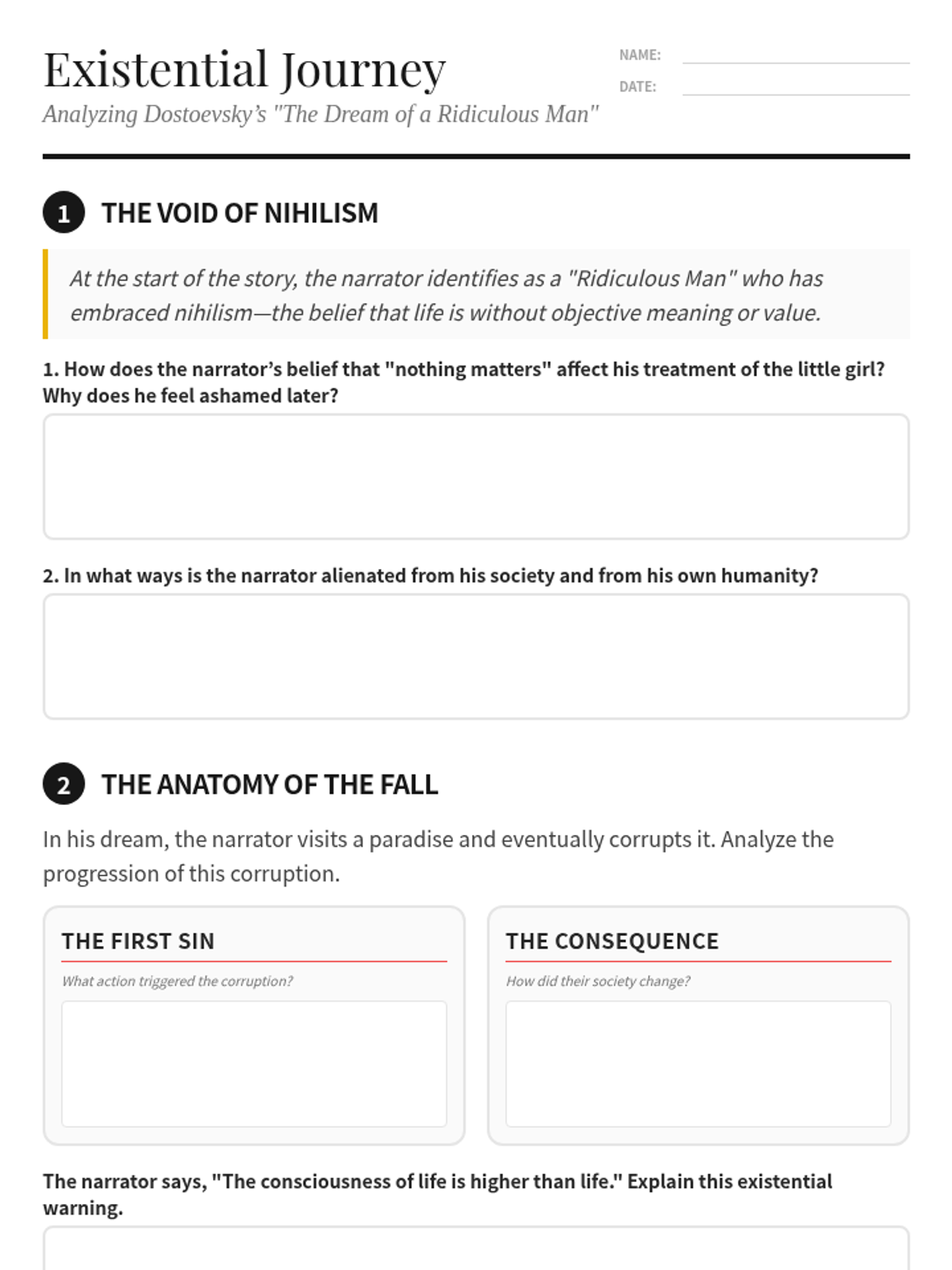
A student worksheet for analyzing Dostoevsky's 'The Dream of a Ridiculous Man'. Includes sections on nihilism, the anatomy of the corruption of paradise, and the existentialist leap into meaningful action.
A visually striking 10-slide presentation introducing existentialist philosophy through Fyodor Dostoevsky's 'The Dream of a Ridiculous Man'. Explores nihilism, the 'Fall' of paradise, and the transformative power of individual choice.
A presentation for teachers to introduce the key tenets of Confucianism, Taoism, and Buddhism, connecting each to visual motifs and conceptual themes from Avatar: The Last Airbender. Updated for higher contrast and readability.
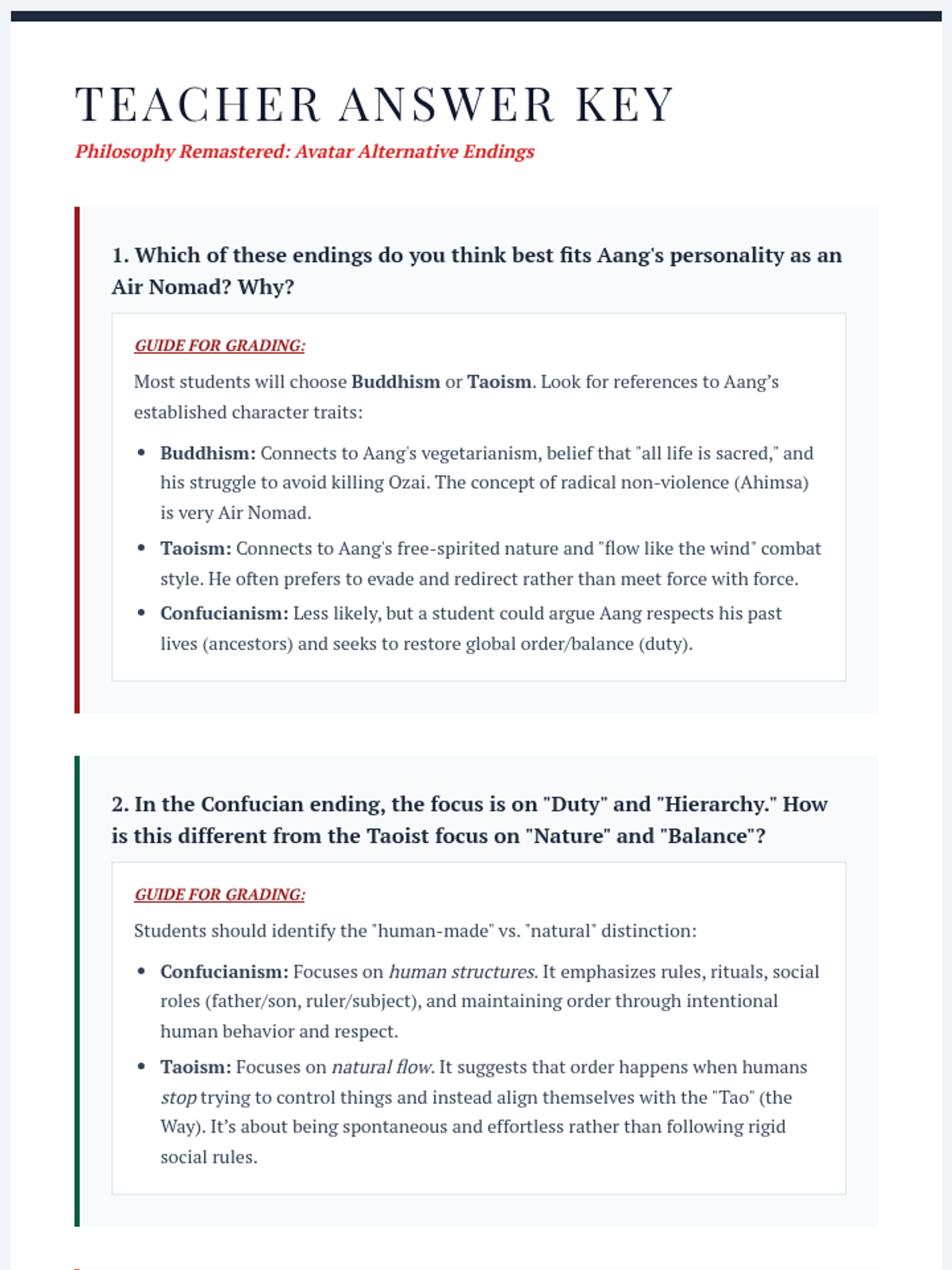
A teacher-facing answer key and grading guide for the Philosophy Remastered Worksheet, providing context for student responses and alignment to Eastern philosophical concepts.
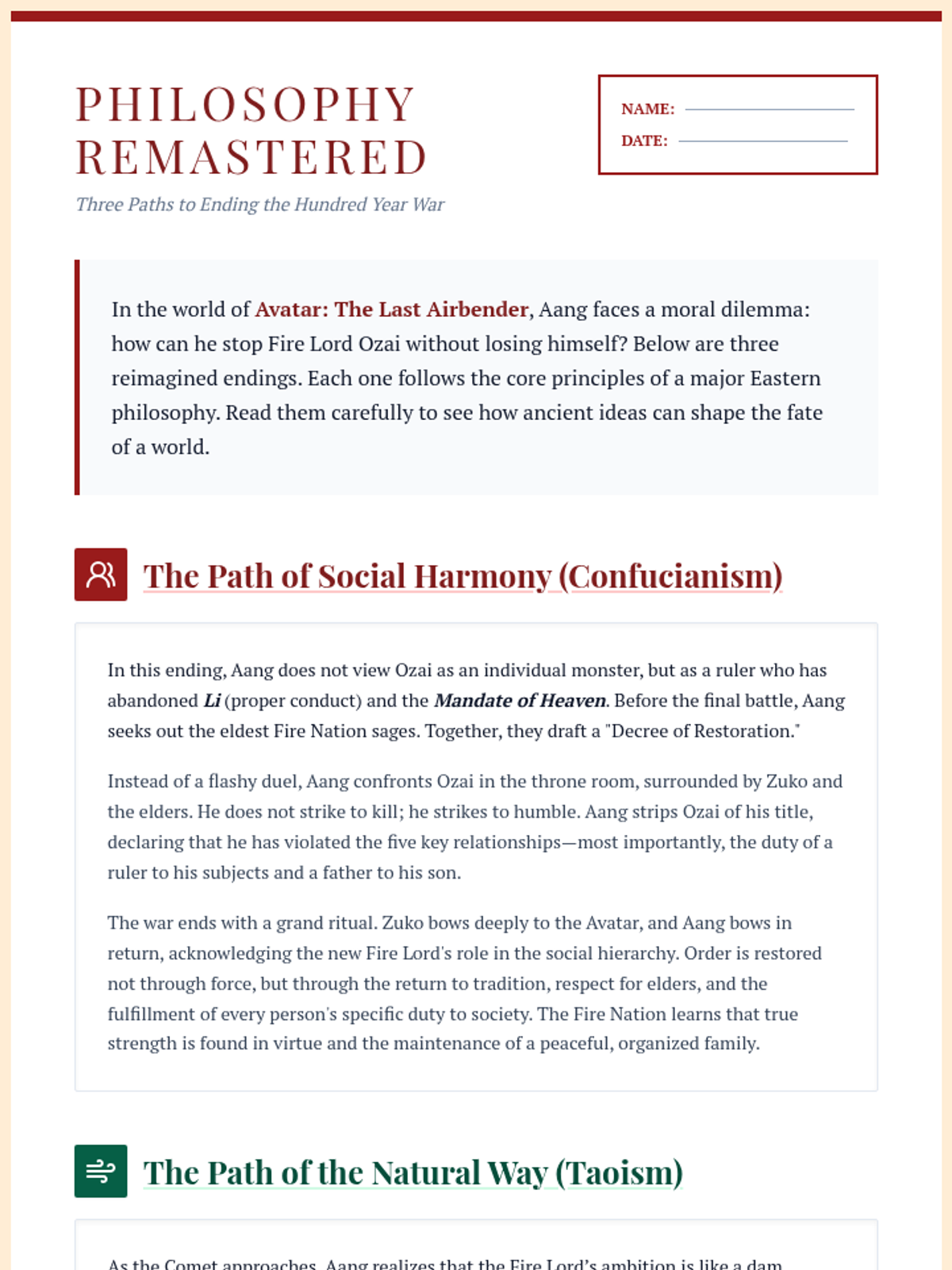
A two-page worksheet presenting three alternative endings to Avatar: The Last Airbender, each written to exemplify the core principles of Confucianism, Taoism, and Buddhism, followed by student reflection questions. Fixes include updated icons and white student work areas.
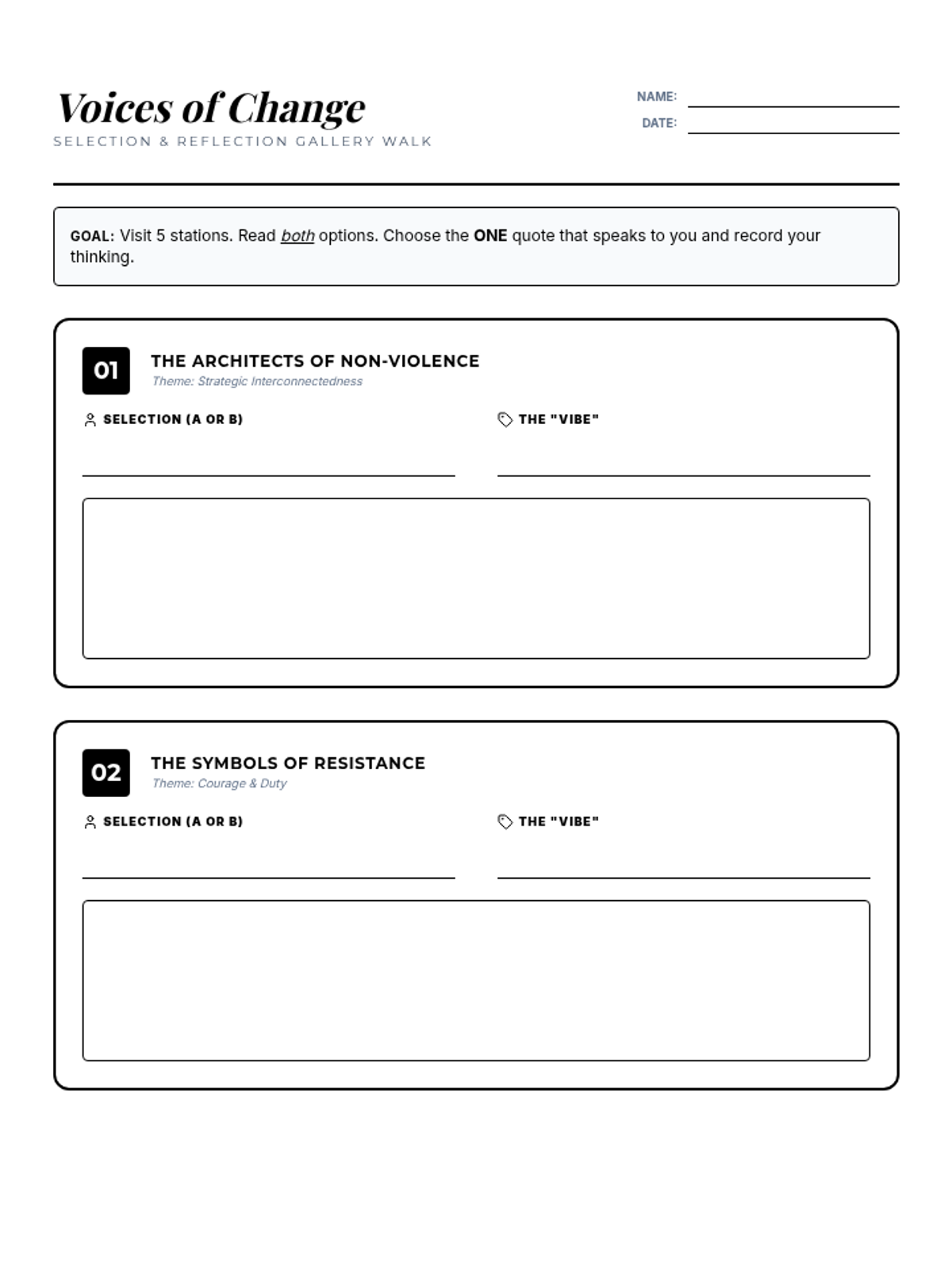
A refined 3-page printer-friendly reflection worksheet. Page 1 contains instructions and Stations 1-2; Page 2 contains Stations 3-5; and Page 3 features a large-format final reflection area with writing lines. All elements are carefully sized with fixed heights to ensure no content overflows or cuts across page boundaries.
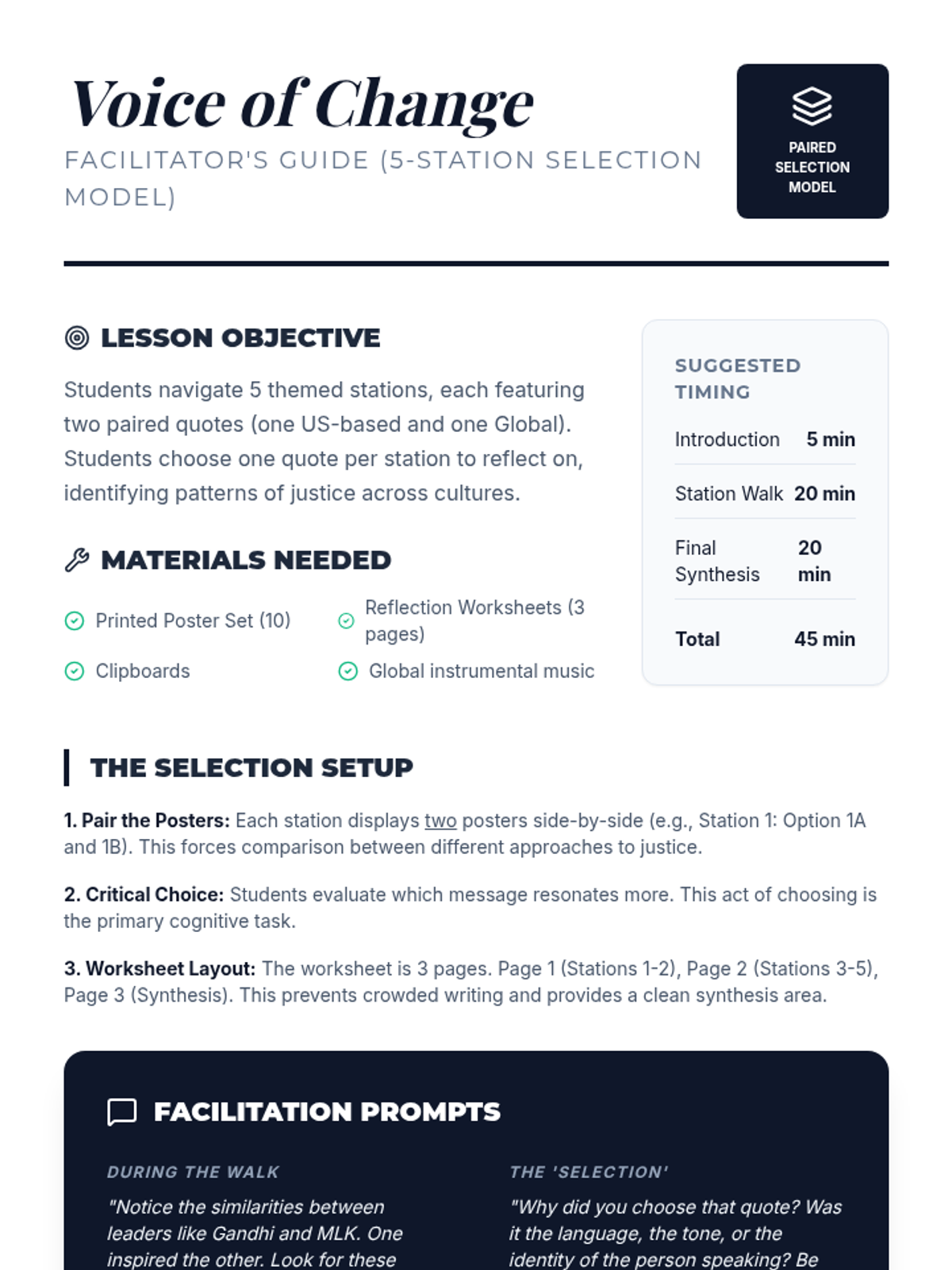
A comprehensive teacher guide for facilitating the 5-station gallery walk. It includes a lesson plan, setup instructions for the selection model, facilitation prompts, and a historical context cheat sheet for each quote pair. updated for 3 page worksheet.
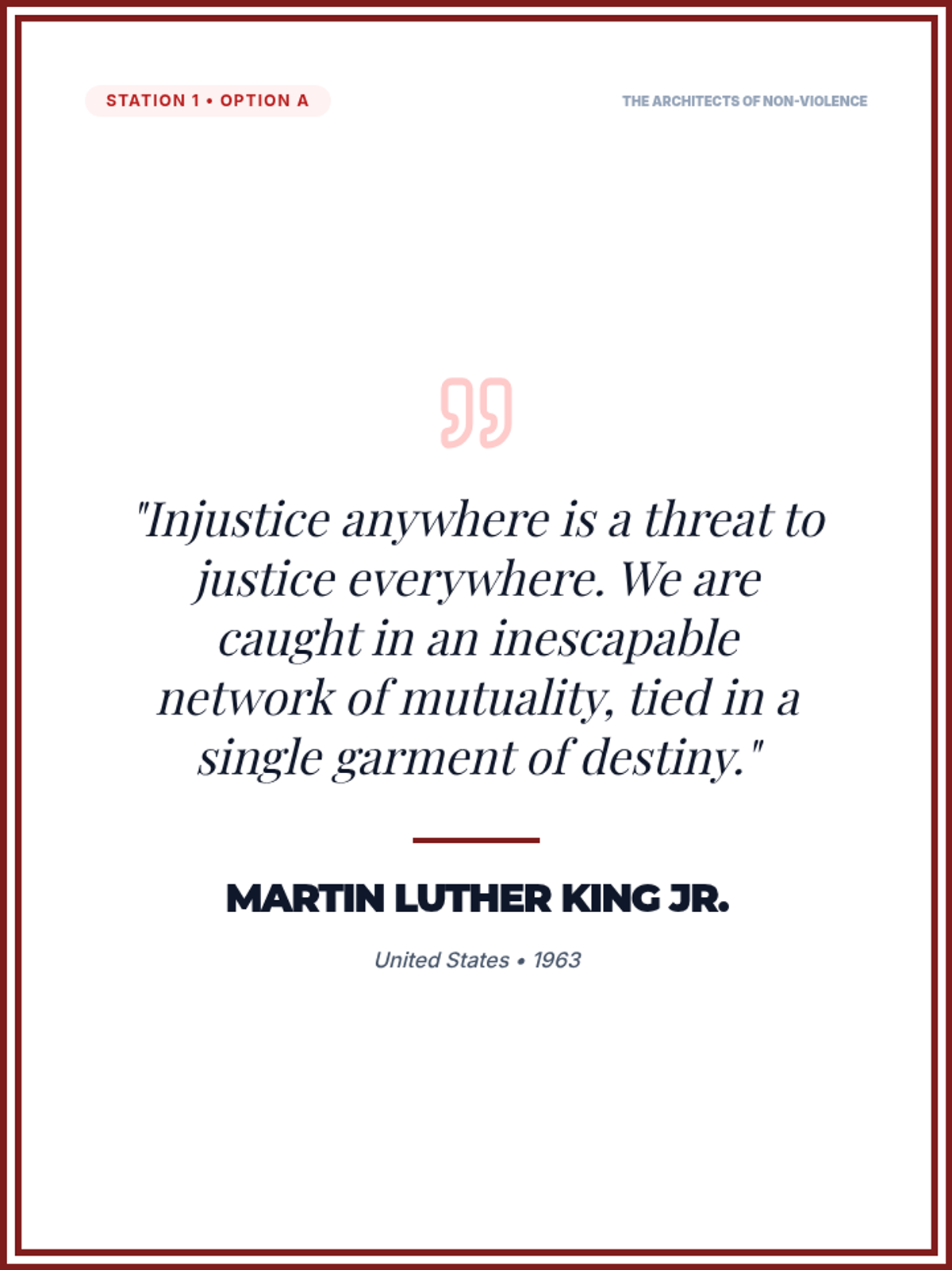
An updated set of ten gallery walk posters organized into five stations. Each station features two paired quotes (Option A and Option B) allowing students to choose which message resonates most with them. Themes range from non-violence to grassroots organizing.
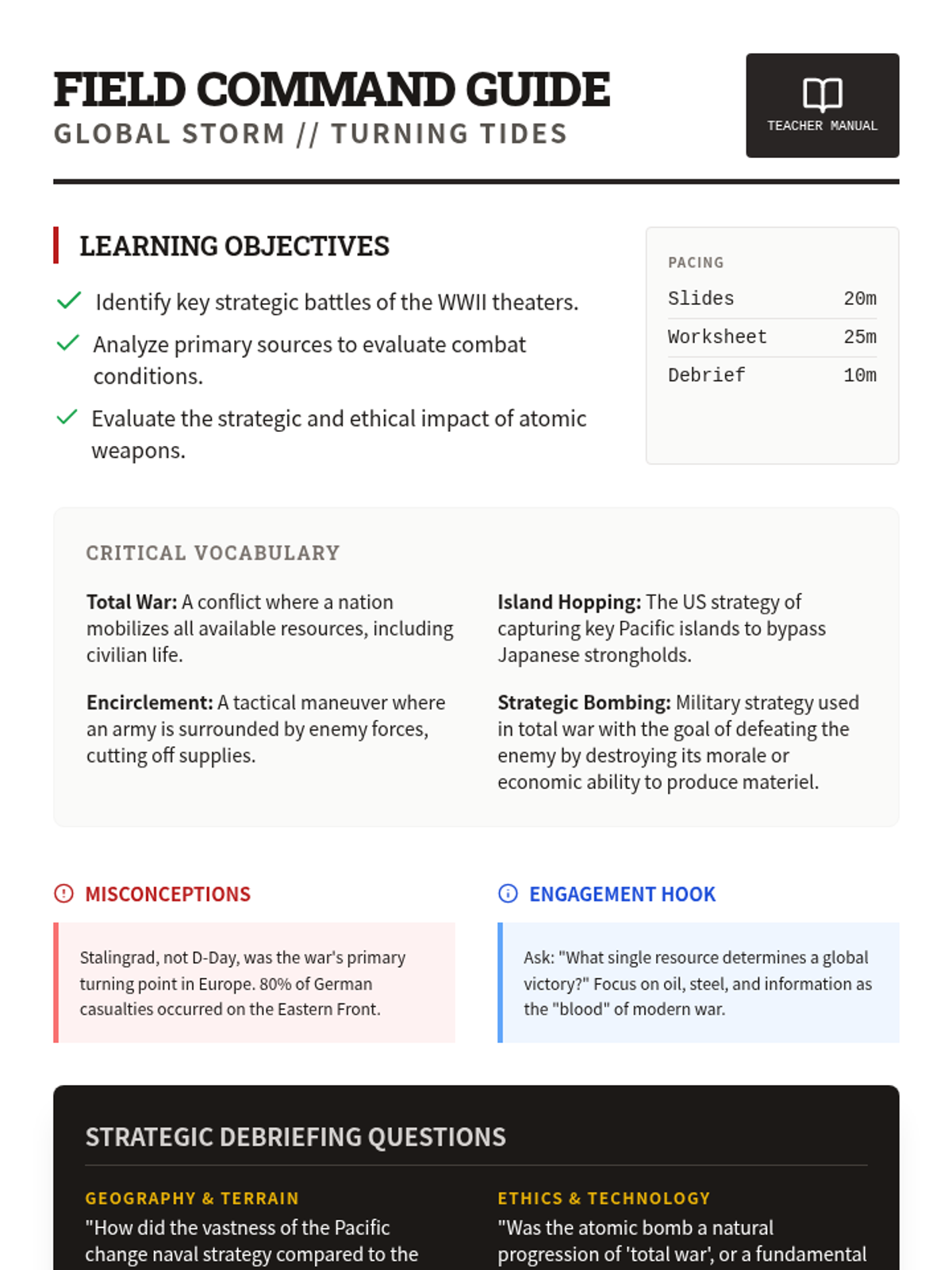
A comprehensive teacher's guide for the Turning Tides lesson, including learning objectives, pacing, answer keys, and differentiation strategies.
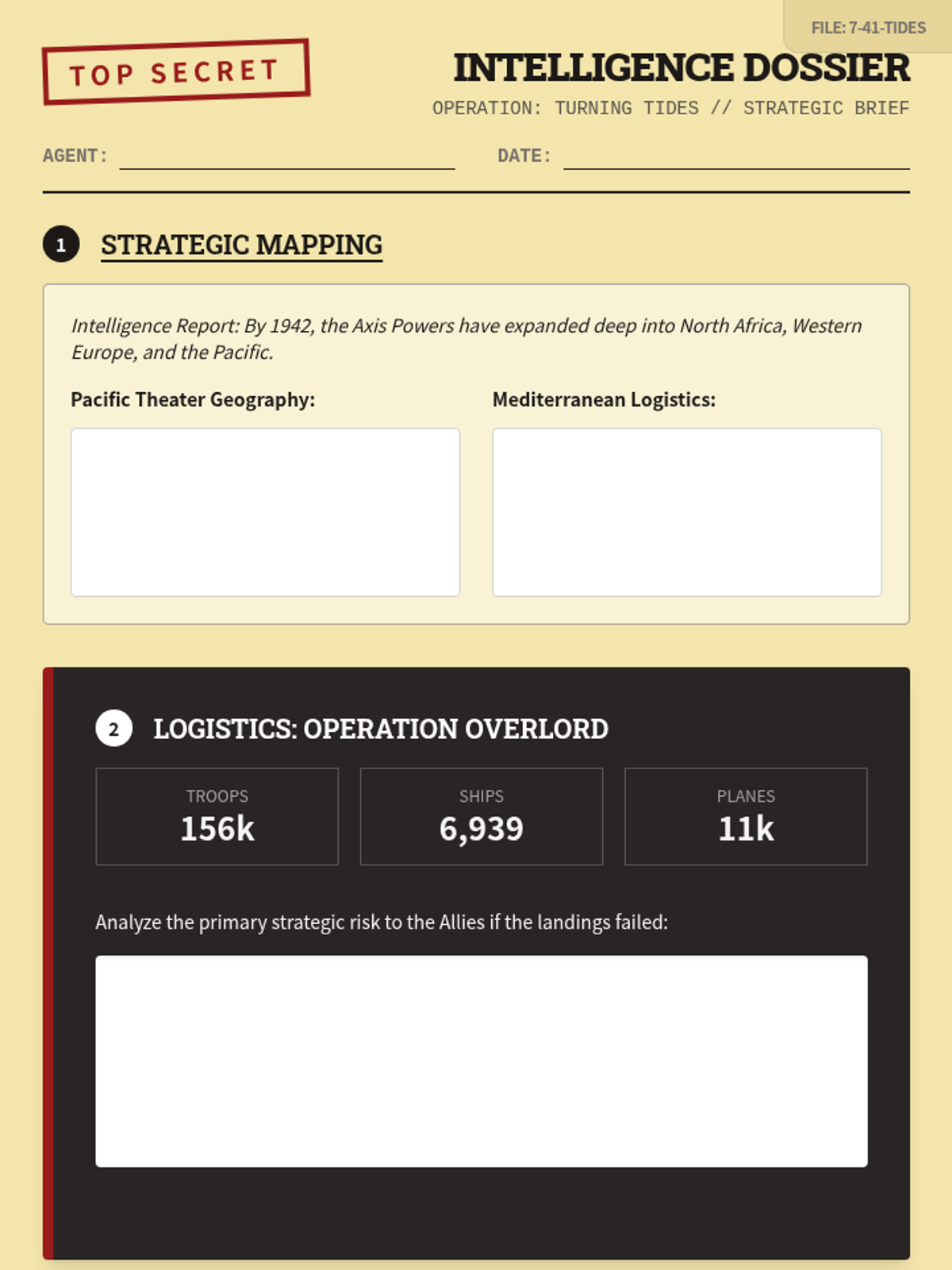
A student worksheet designed as a military intelligence dossier, featuring map analysis, primary source study of Stalingrad, and logistical analysis of D-Day.
A high-impact visual presentation for a World War II lesson, featuring key turning points like Pearl Harbor, Stalingrad, and D-Day in a classified intelligence theme.
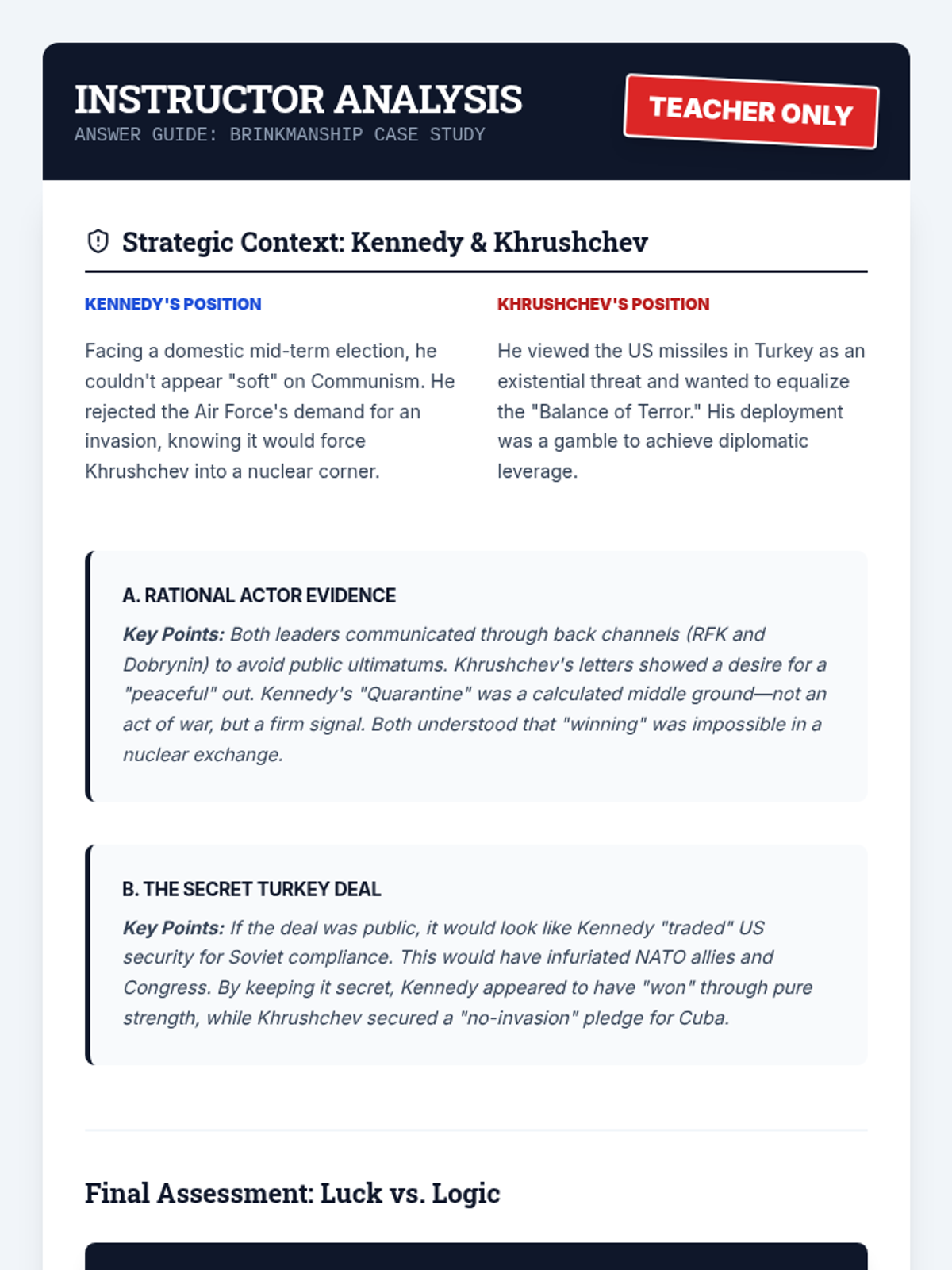
A teacher's answer key for the Brinkmanship Case Study, providing strategic context on Kennedy and Khrushchev's positions and detailed analysis of the Cuban Missile Crisis outcome.
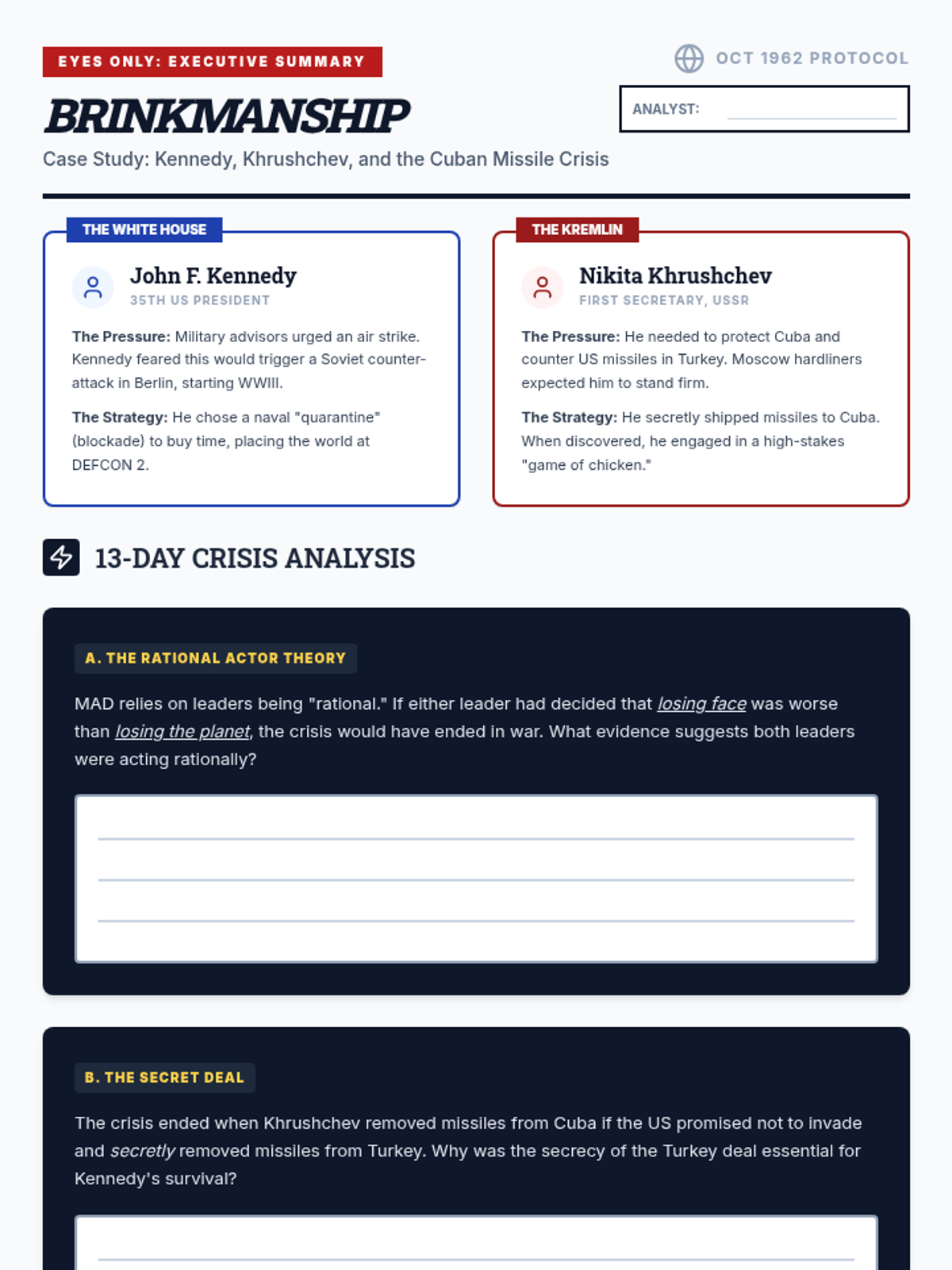
A comparative case study worksheet exploring the leadership of John F. Kennedy and Nikita Khrushchev during the Cuban Missile Crisis. Students analyze the pressures, strategies, and internal logic of both leaders through the lens of Mutually Assured Destruction.
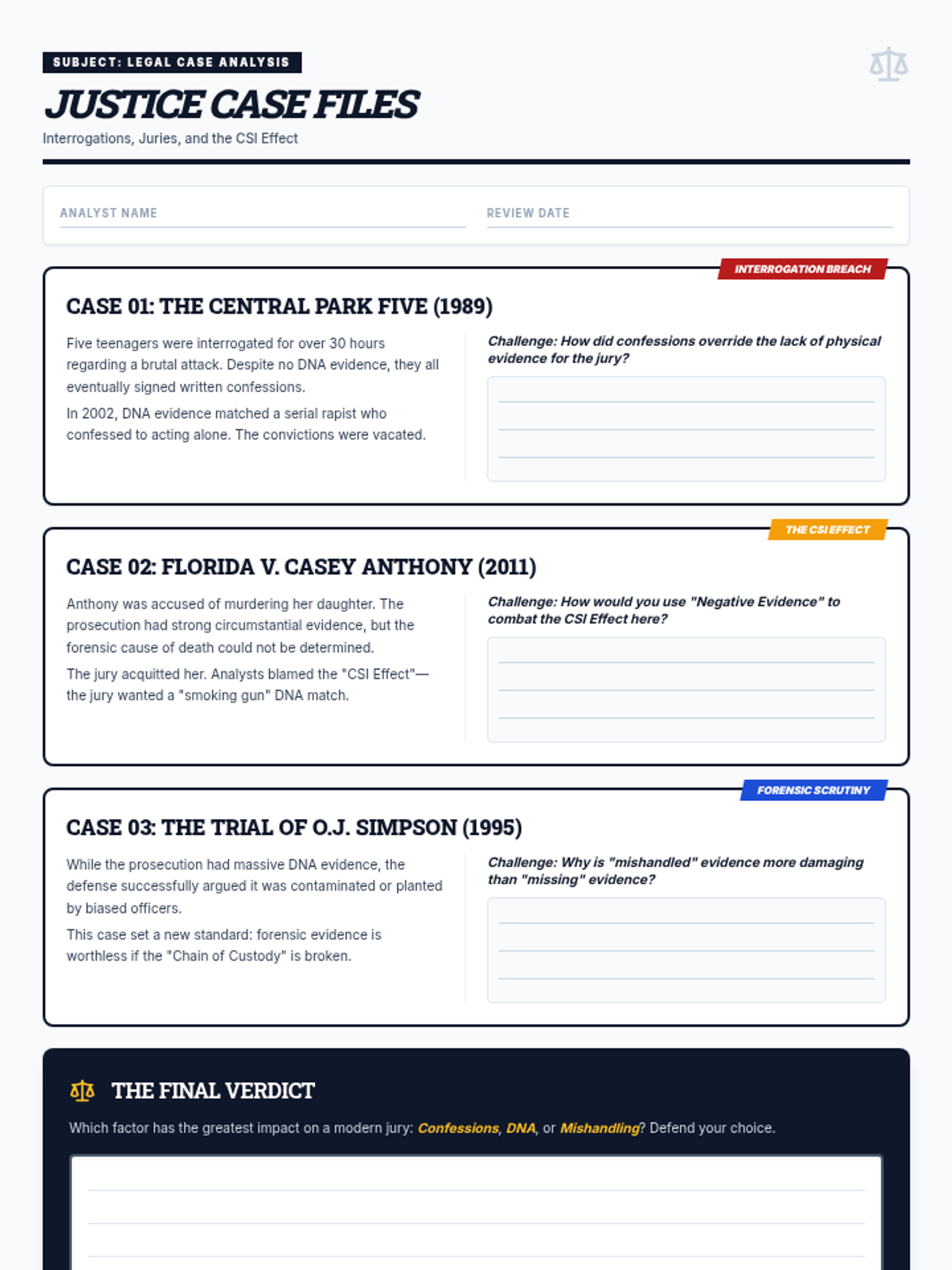
A collection of high-profile legal case studies including the Central Park Five, Casey Anthony, and O.J. Simpson. This worksheet allows students to apply concepts of interrogation law, the CSI Effect, and forensic scrutiny to real-world scenarios.
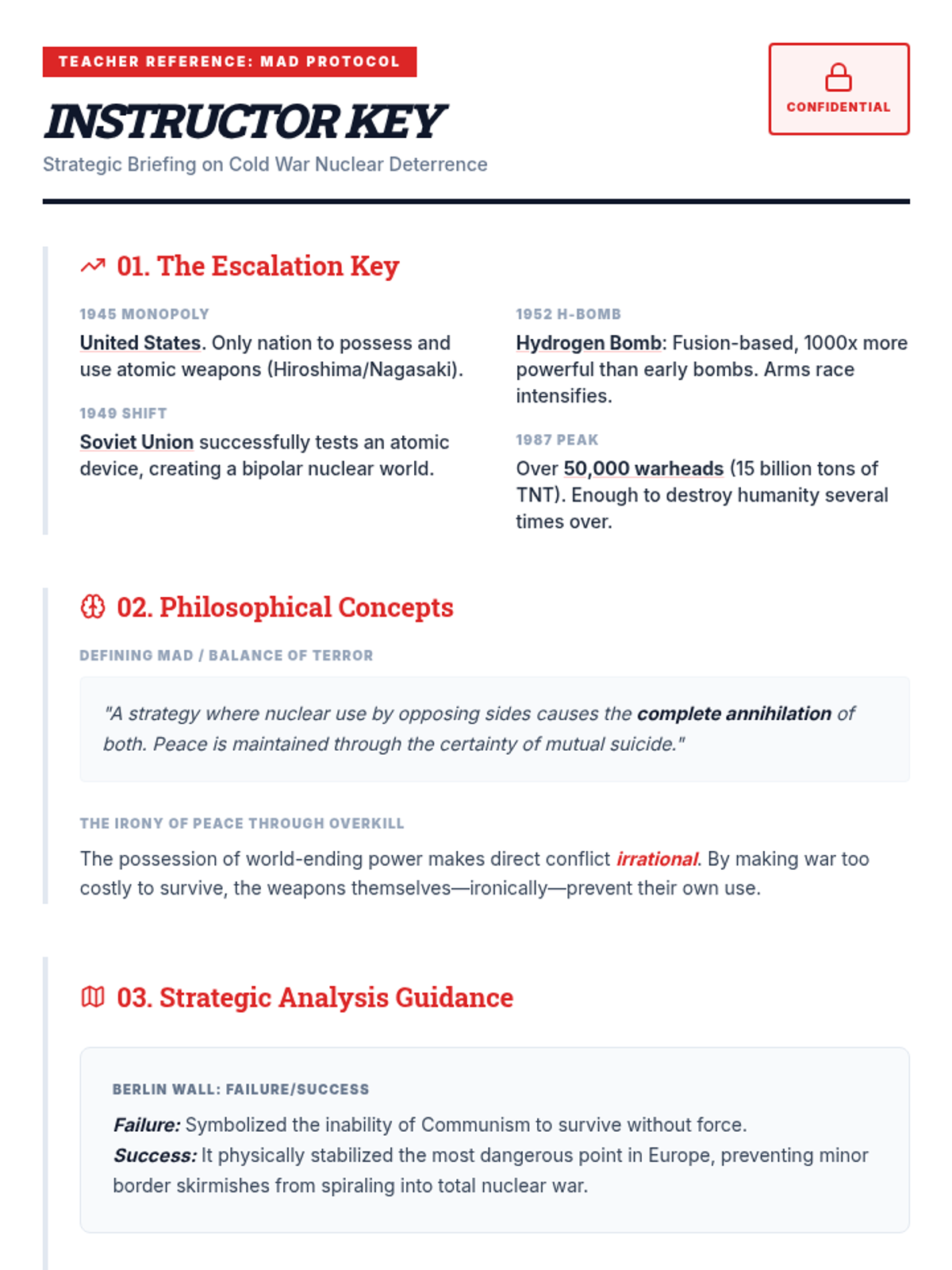
A teacher's answer key for the 'MAD Protocol' worksheet, providing detailed historical context, philosophical definitions of 'Balance of Terror,' and strategic analysis of the Berlin Wall and anti-missile defense systems.
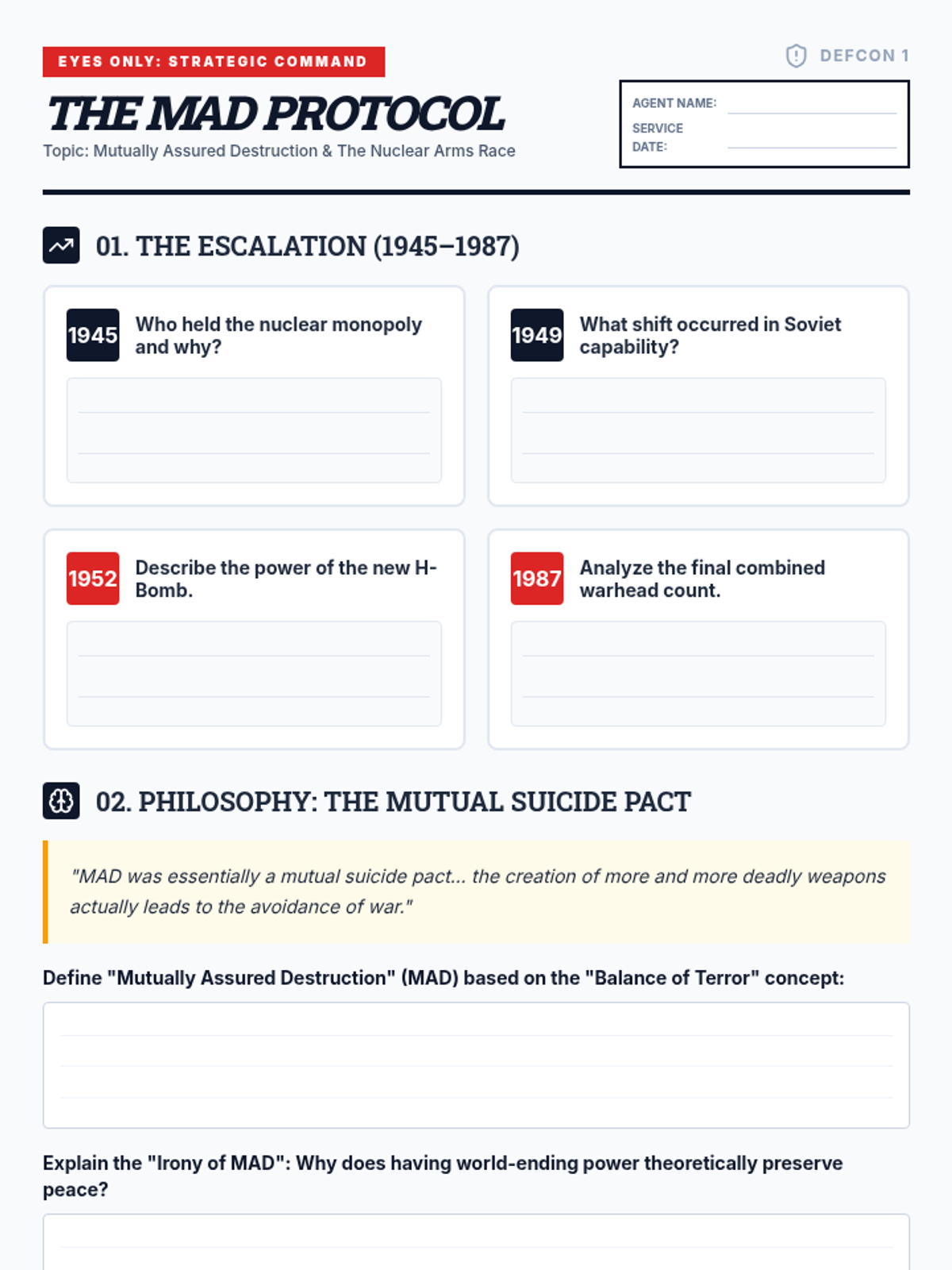
A comprehensive one-day worksheet on Mutually Assured Destruction (MAD) during the Cold War. It features timeline analysis, conceptual definitions of the 'Balance of Terror,' and critical thinking case studies on the Berlin Wall and NUTS.
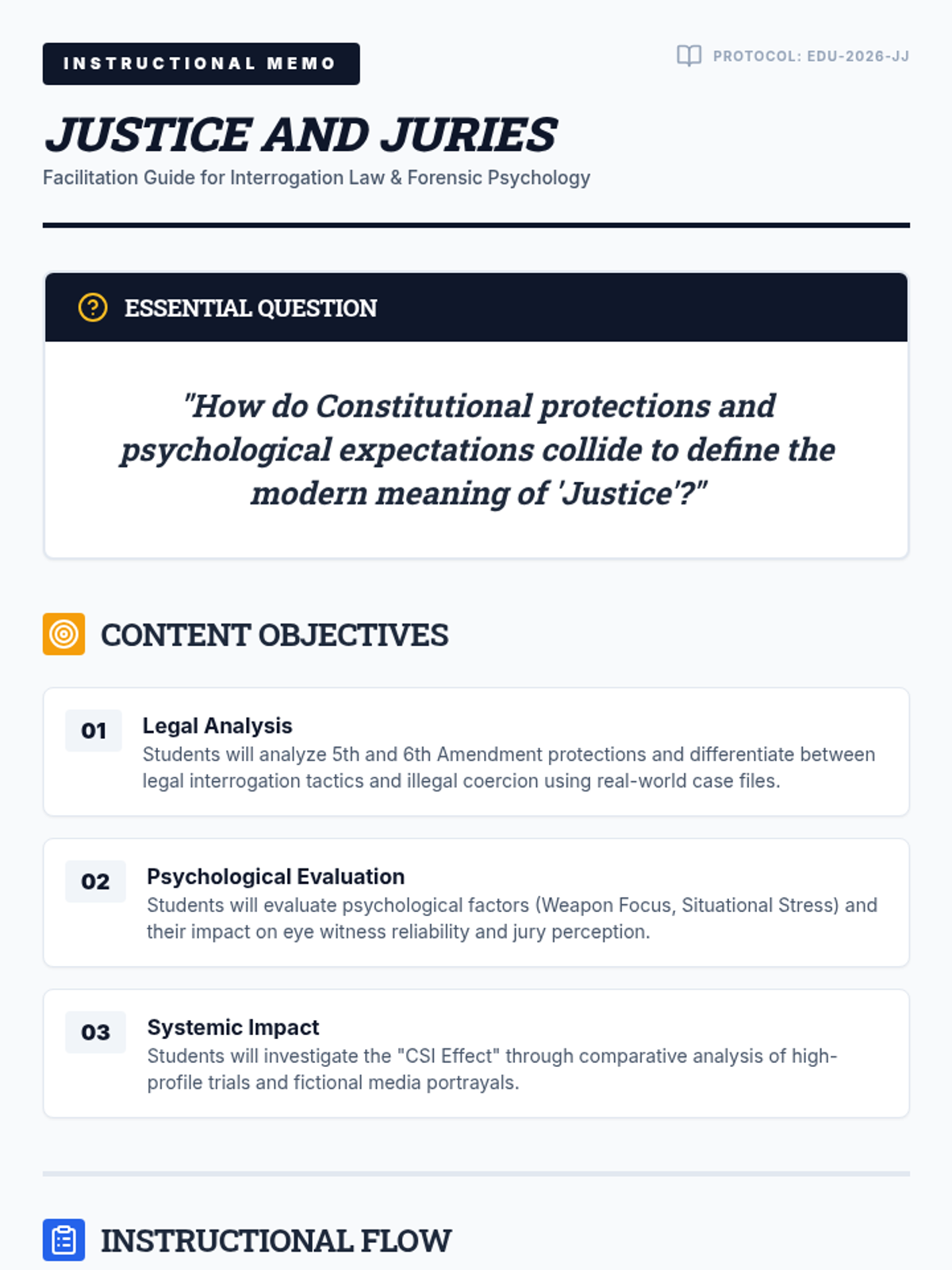
An instructional guide for the 'Justice and Juries' lesson, including the Essential Question, Content Objectives, and a suggested instructional flow for teaching interrogation law and forensic psychology.
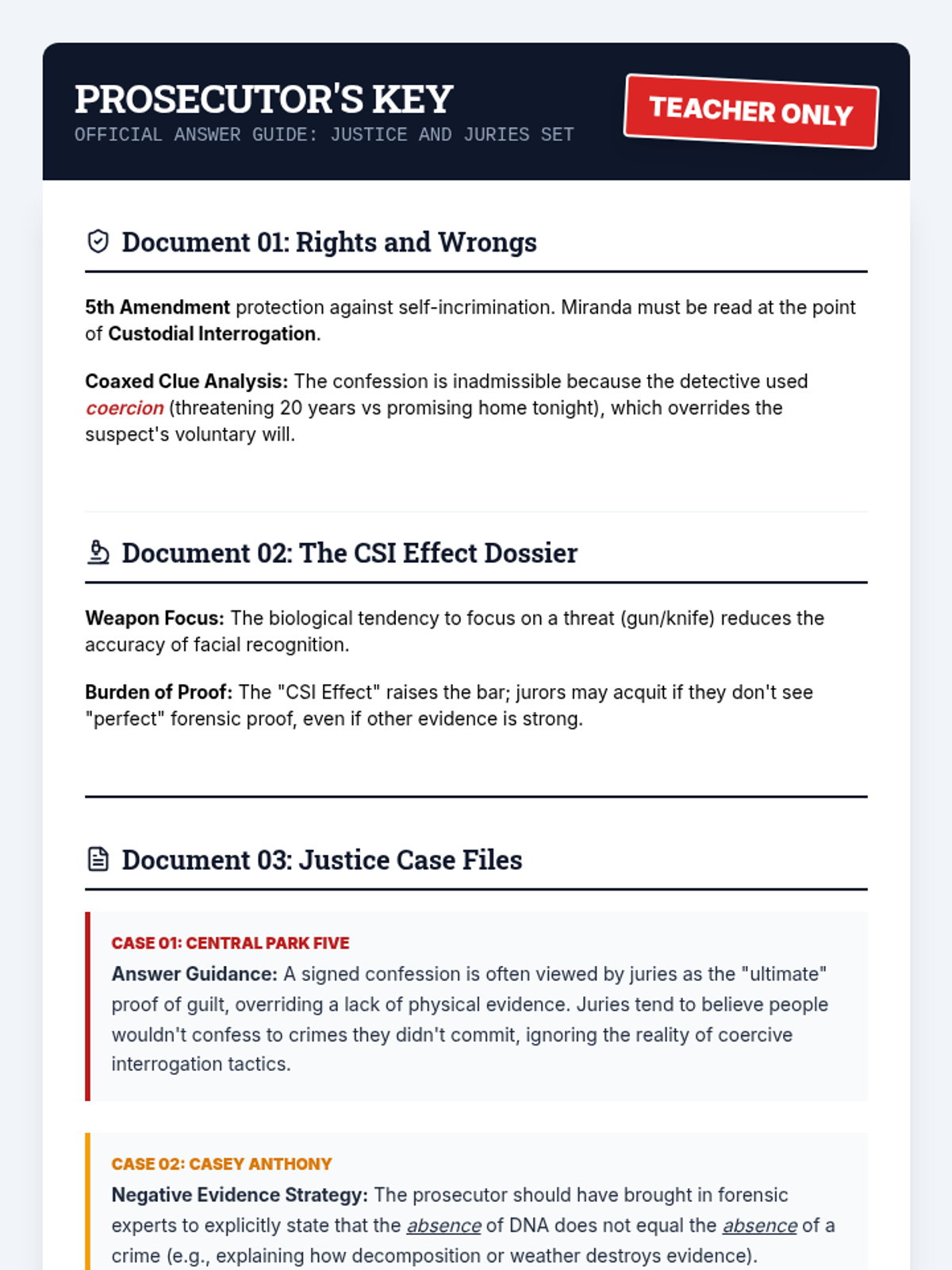
A teacher's answer key and discussion guide for the 'Justice and Juries' document set. Provides suggested answers, legal definitions, and talking points for the 'Rights and Wrongs' and 'CSI Effect' worksheets.
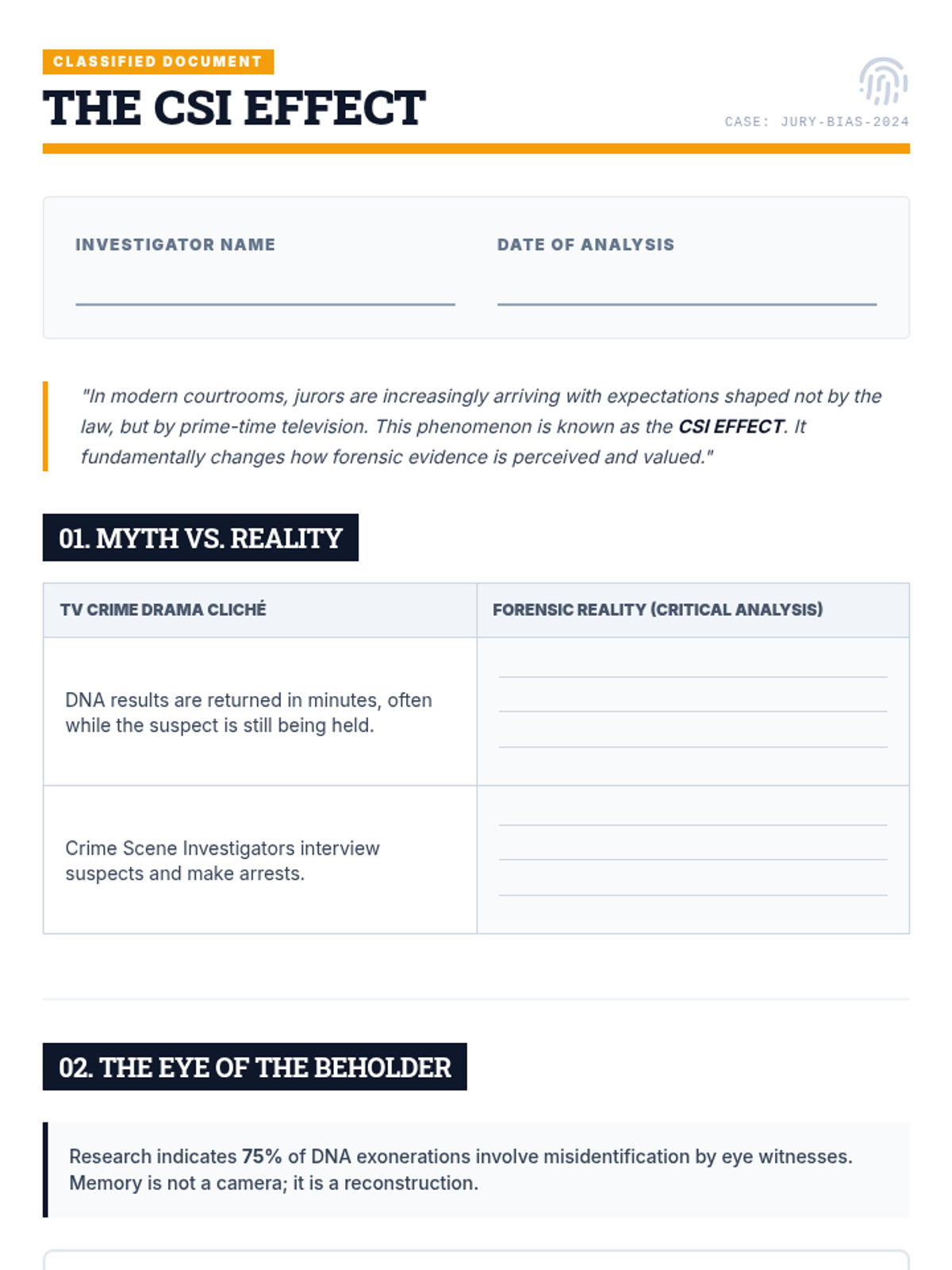
A critical thinking dossier investigating the 'CSI Effect,' comparing forensic myths from television to real-world laboratory science, and analyzing the psychological factors that make eye witness testimony unreliable. Includes a section on legal rights during interrogation.
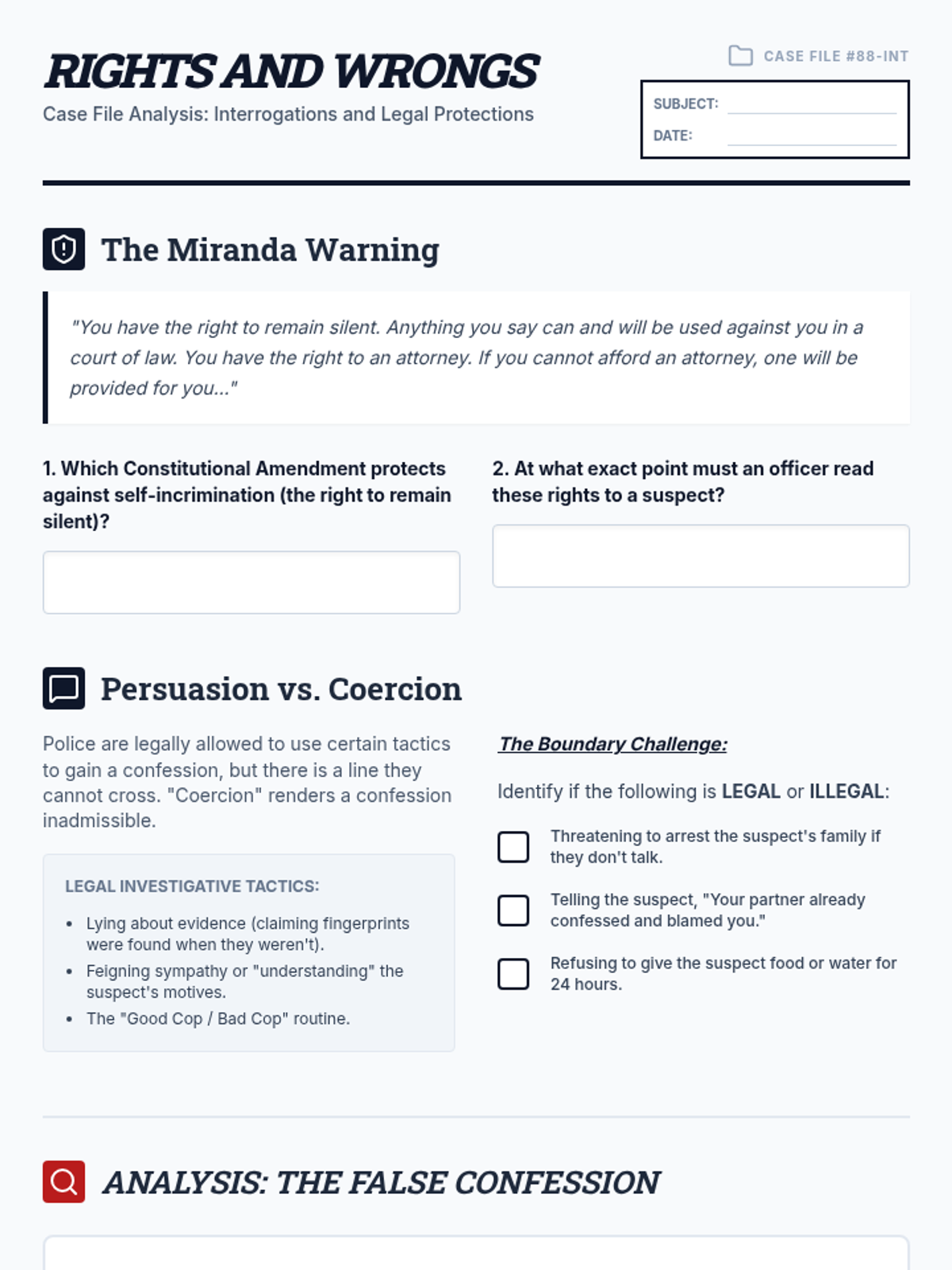
A worksheet focusing on the legal rights of suspects during interrogations, the Miranda warning, and the distinction between legal persuasion and illegal coercion. Includes a case study on false confessions.
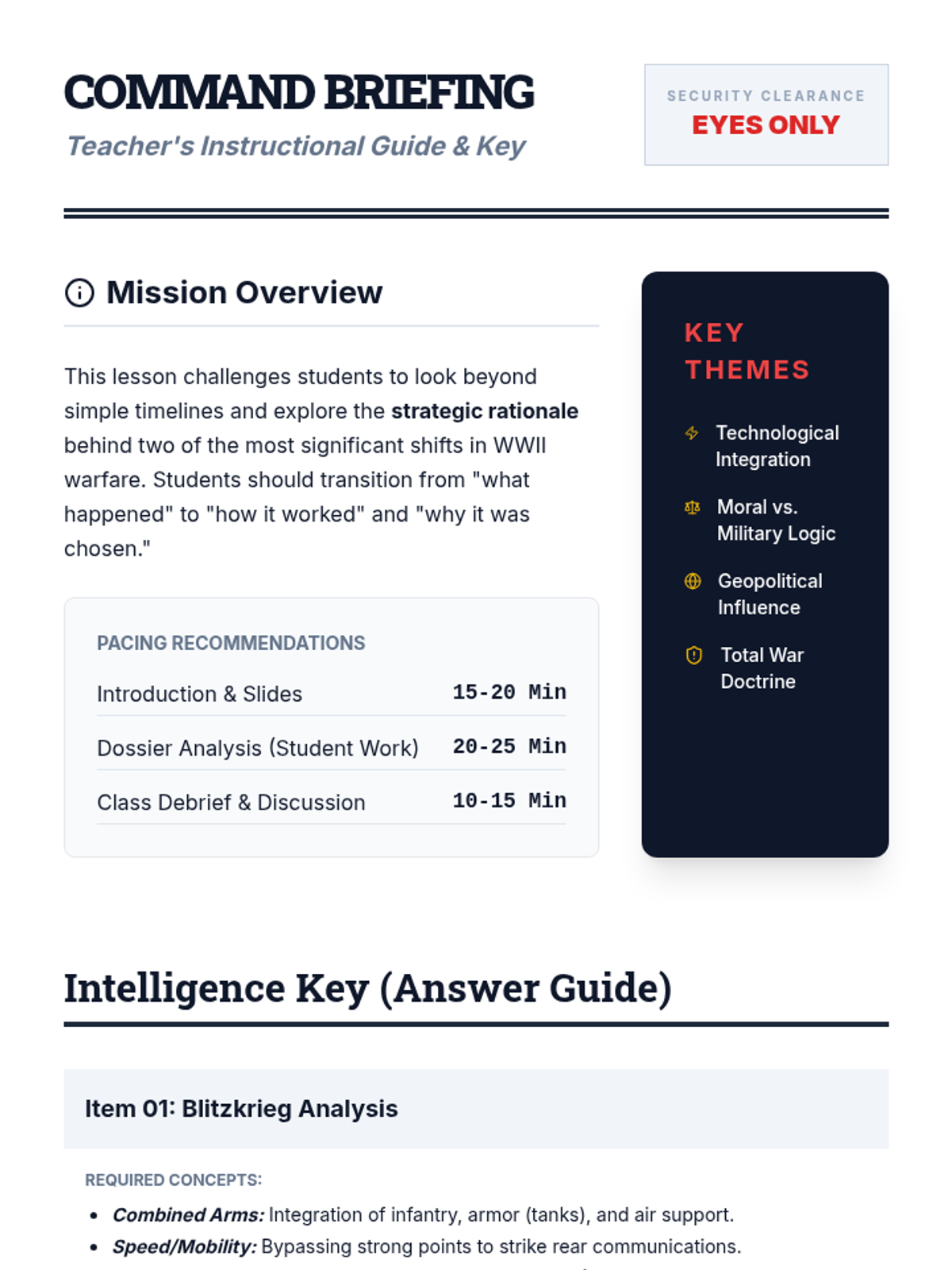
A comprehensive teacher guide for the Total War Strategy lesson, including pacing, detailed answer keys, and advanced discussion prompts.
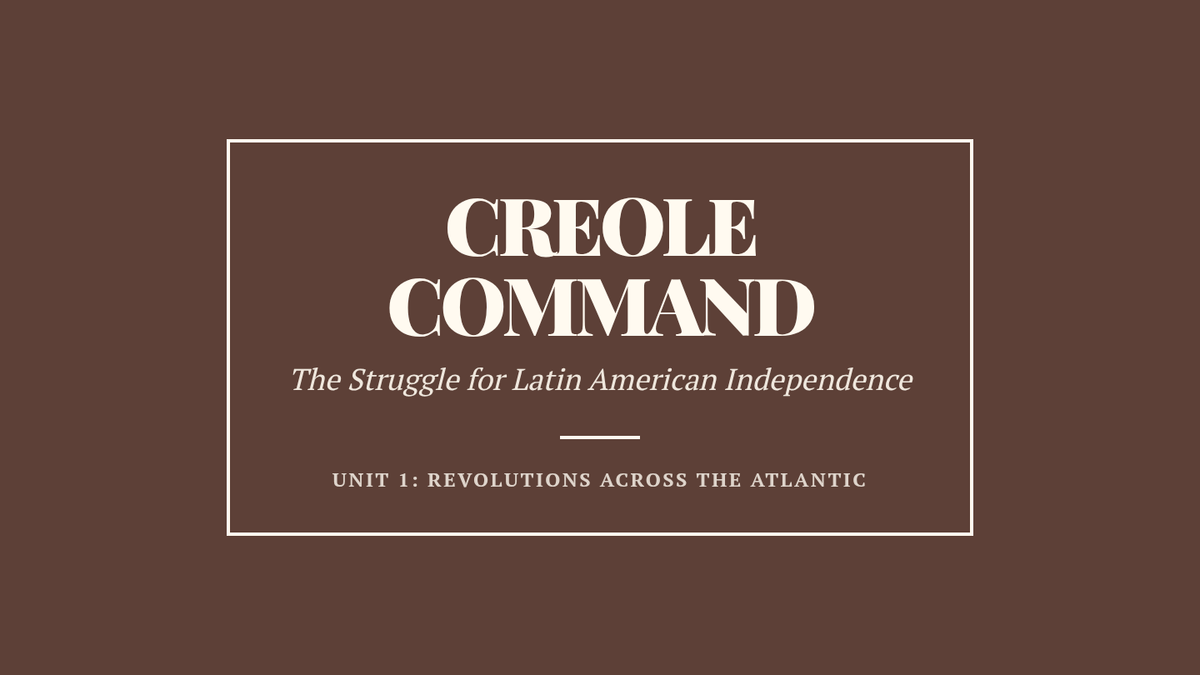
A visual presentation covering the social classes of Latin America, Enlightenment influences, and the military leadership of Bolívar and San Martín.
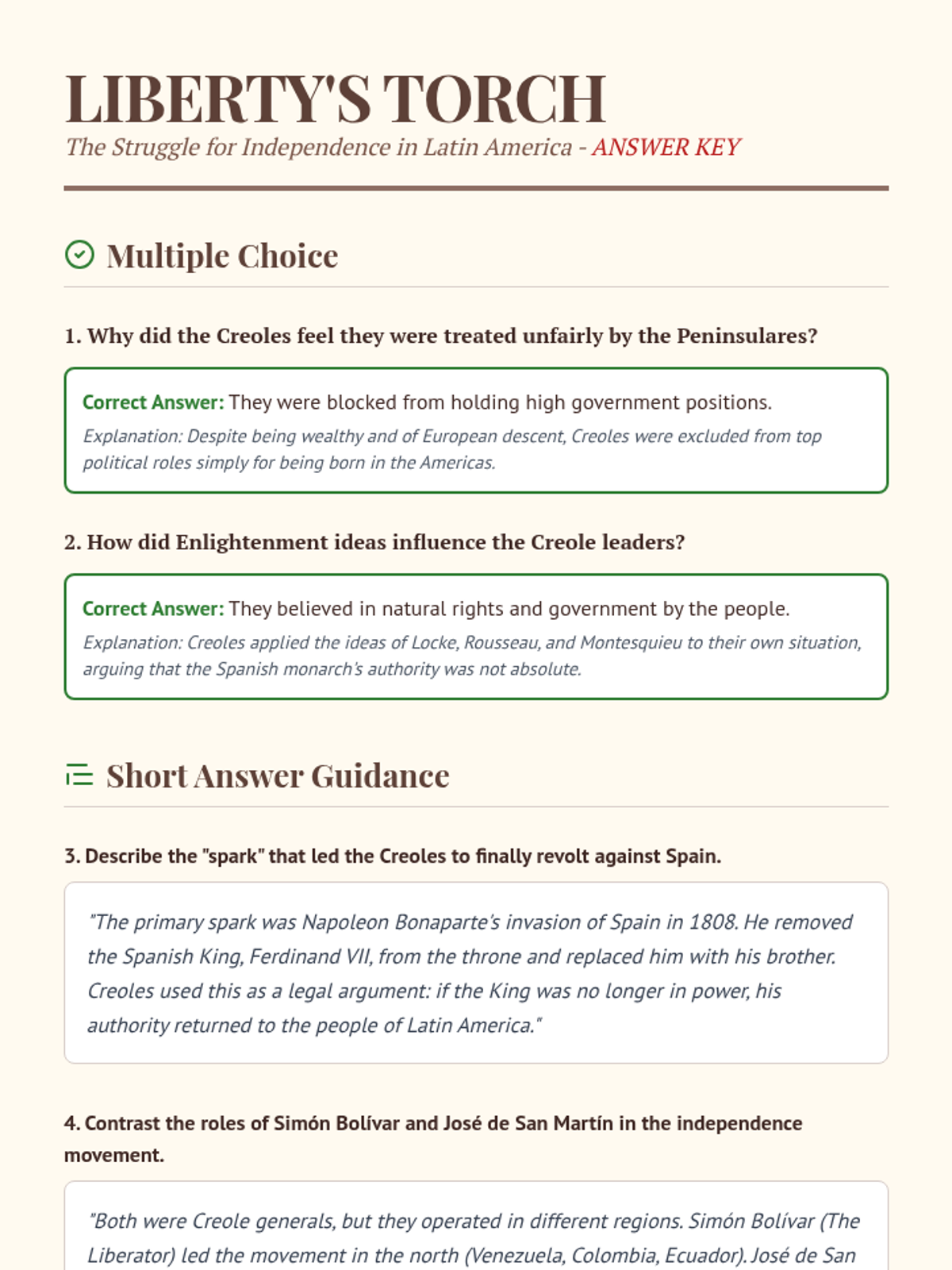
The answer key for the Liberty's Torch Worksheet, providing correct multiple-choice answers, suggested short-answer responses, and key grading terms.
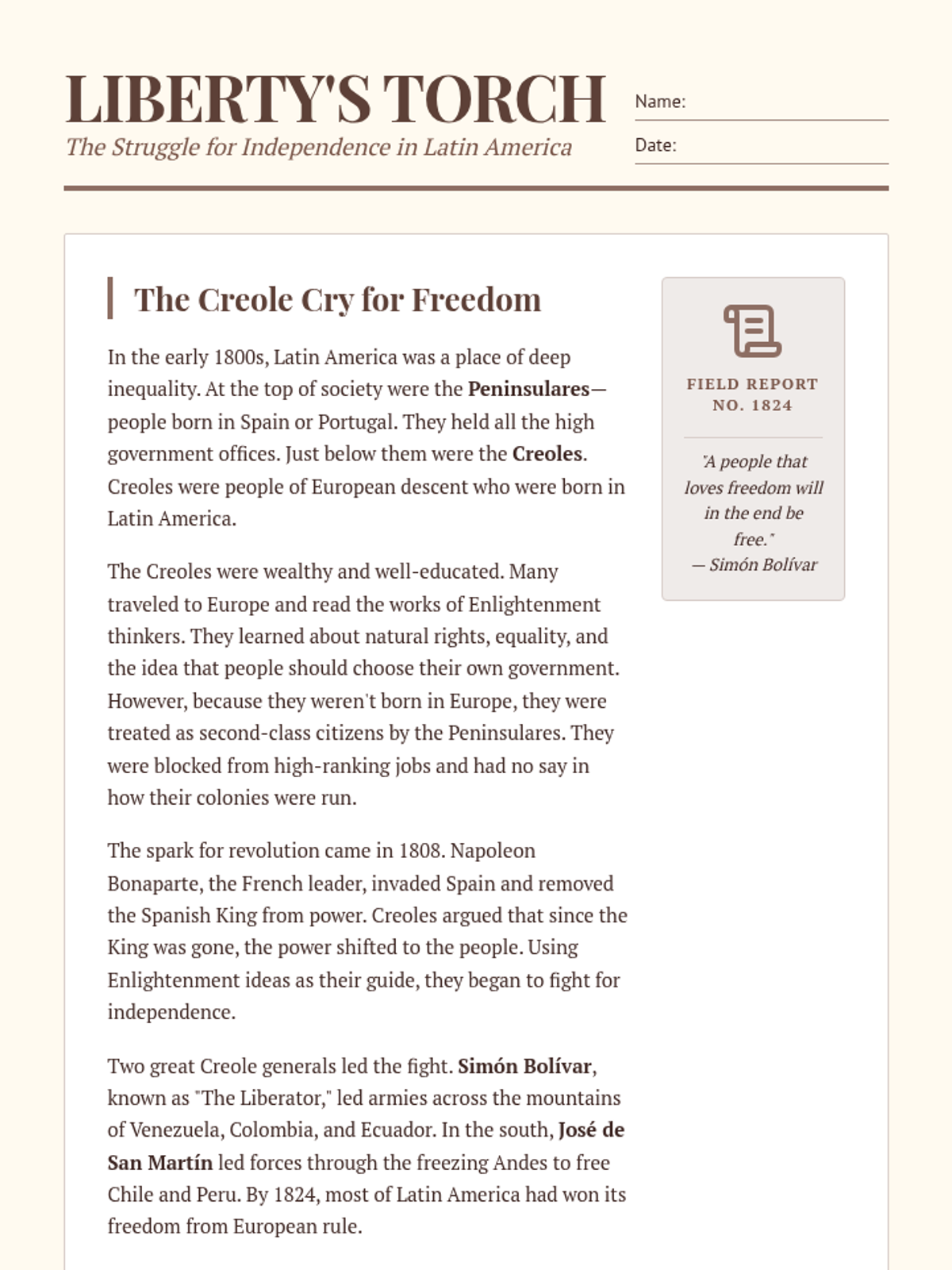
A reading passage and comprehension worksheet about the role of Creoles in Latin American independence movements, featuring Enlightenment influences and key liberators like Bolívar and San Martín.
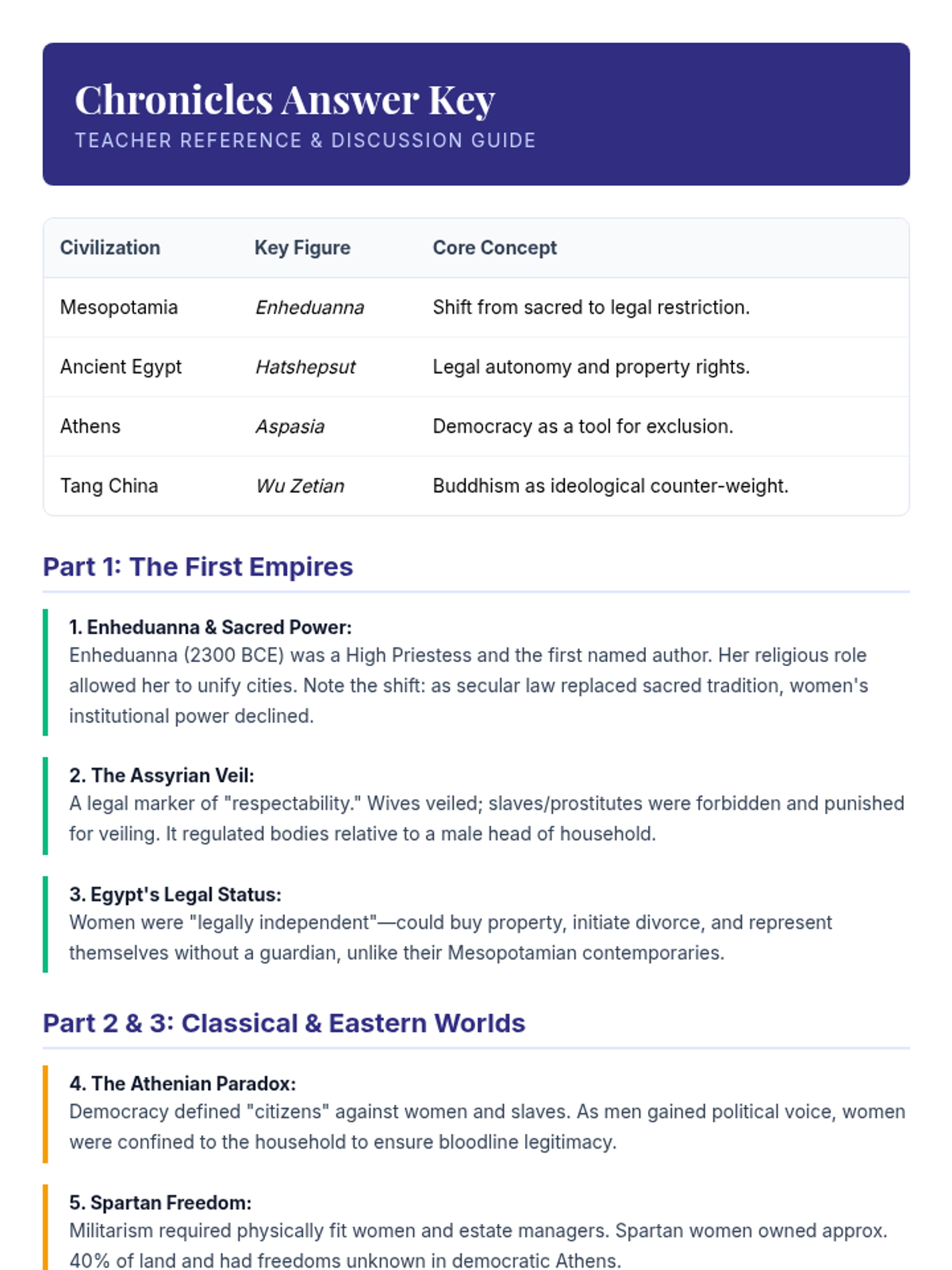
An answer key and teacher discussion guide for the Ascent of Women reflection booklet. Corrected numbering errors and page breaks for better readability. Tightened layout to fit on fewer pages.
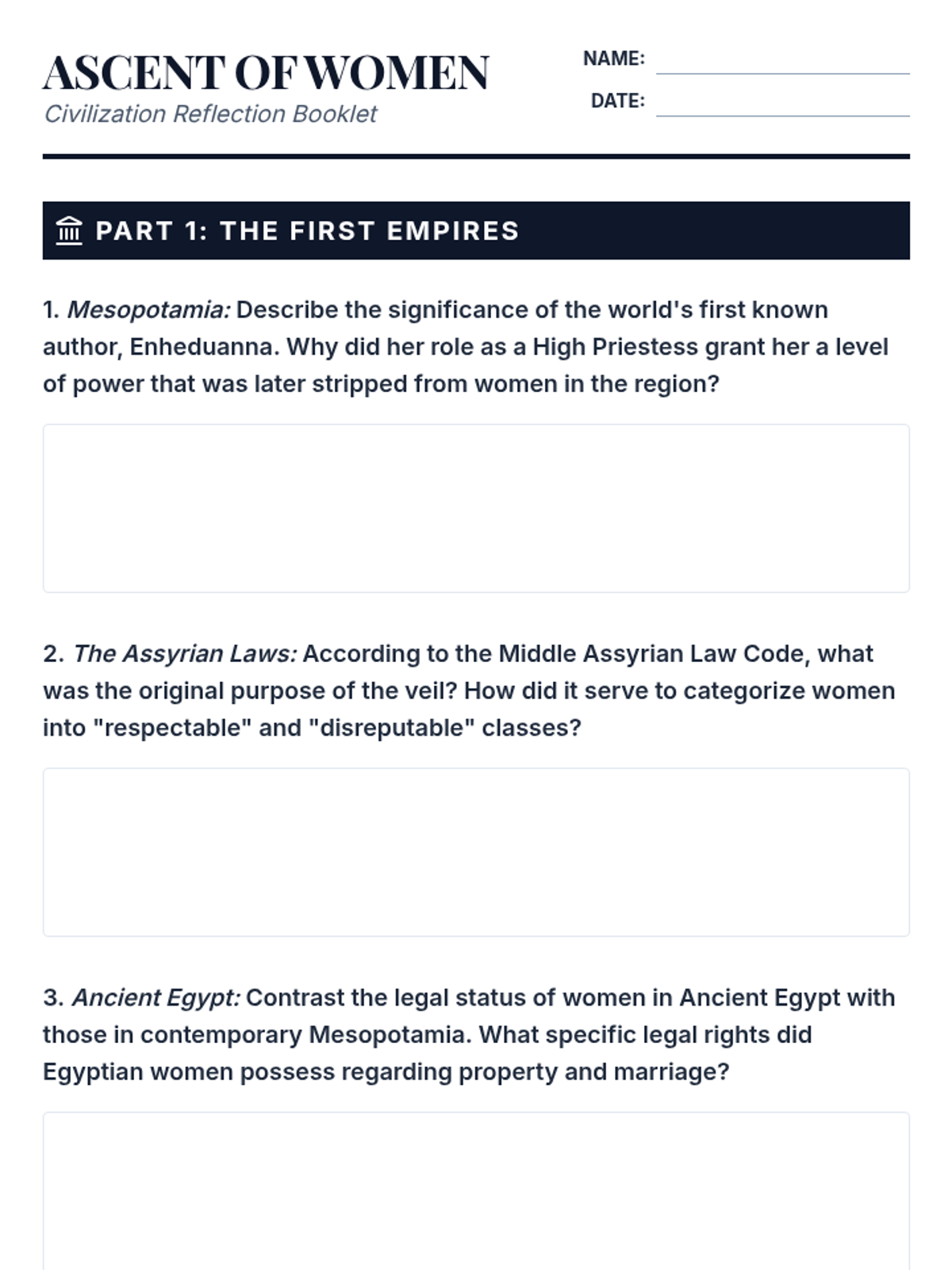
A printable reflection booklet for students with short-answer questions covering the civilizations discussed in the Ascent of Women series. Corrected page breaks and layout spacing.
Visual presentation slides for the Ascent of Women lesson, covering key themes and civilizations from the documentary series. Corrected spelling and title slide rendering issues.
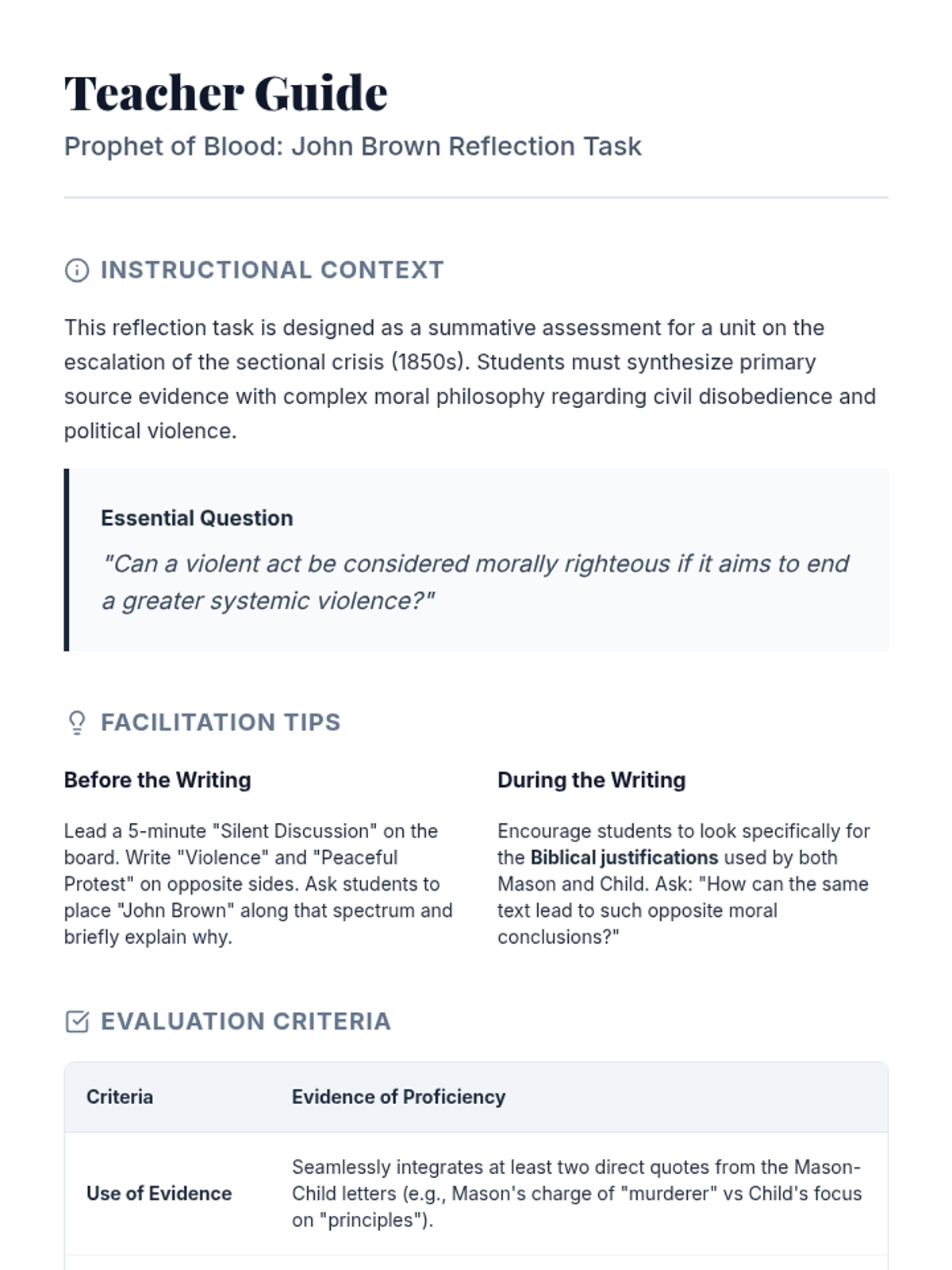
A facilitation guide for teachers to help lead a discussion and evaluate student responses on the moral complexities of John Brown.
A visual presentation guiding students through the moral dilemmas of John Brown's raid, featuring key quotes and thematic questions.
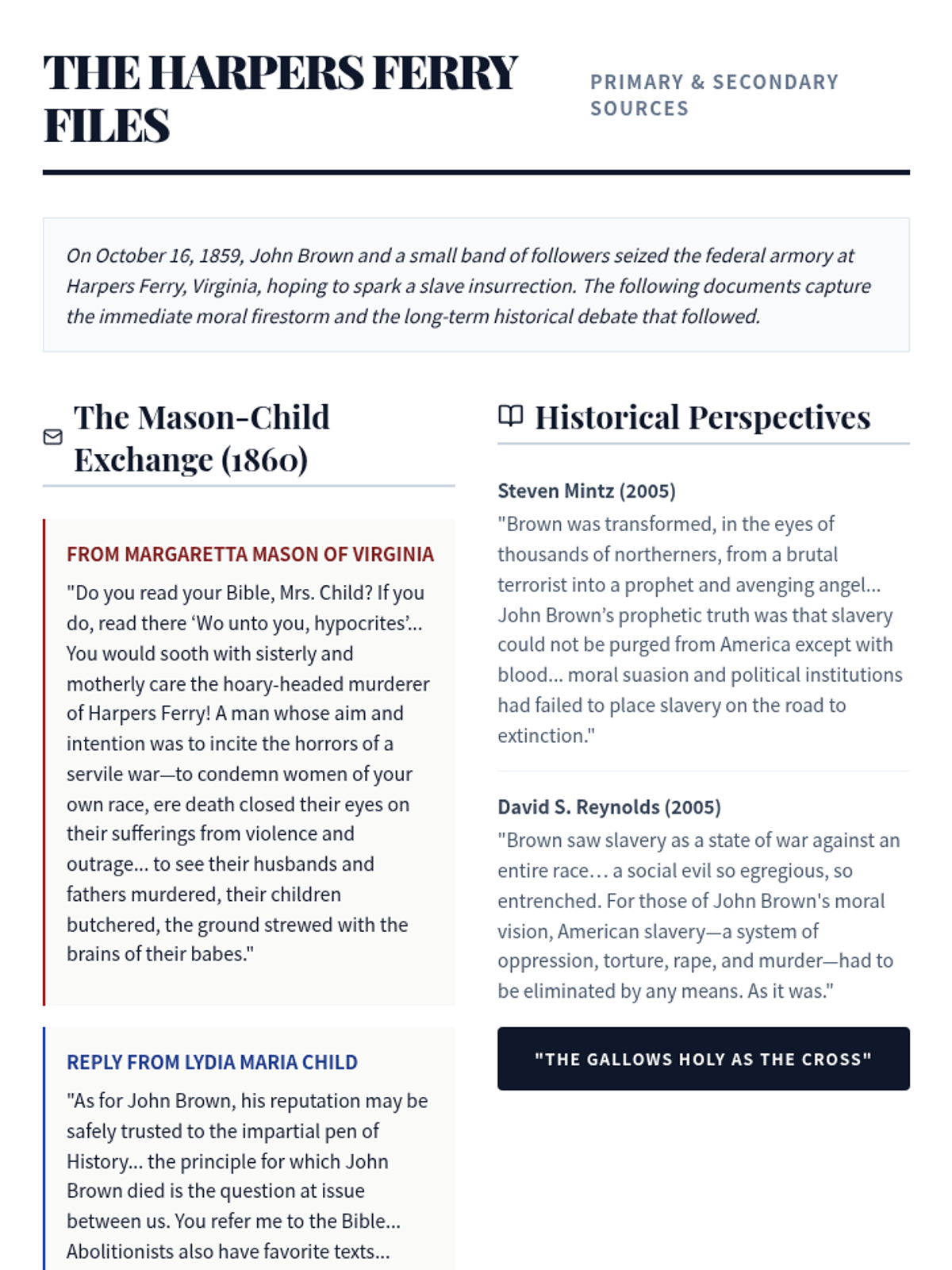
A source sheet containing primary and secondary texts regarding John Brown's raid, including the Mason-Child letters and historian perspectives.
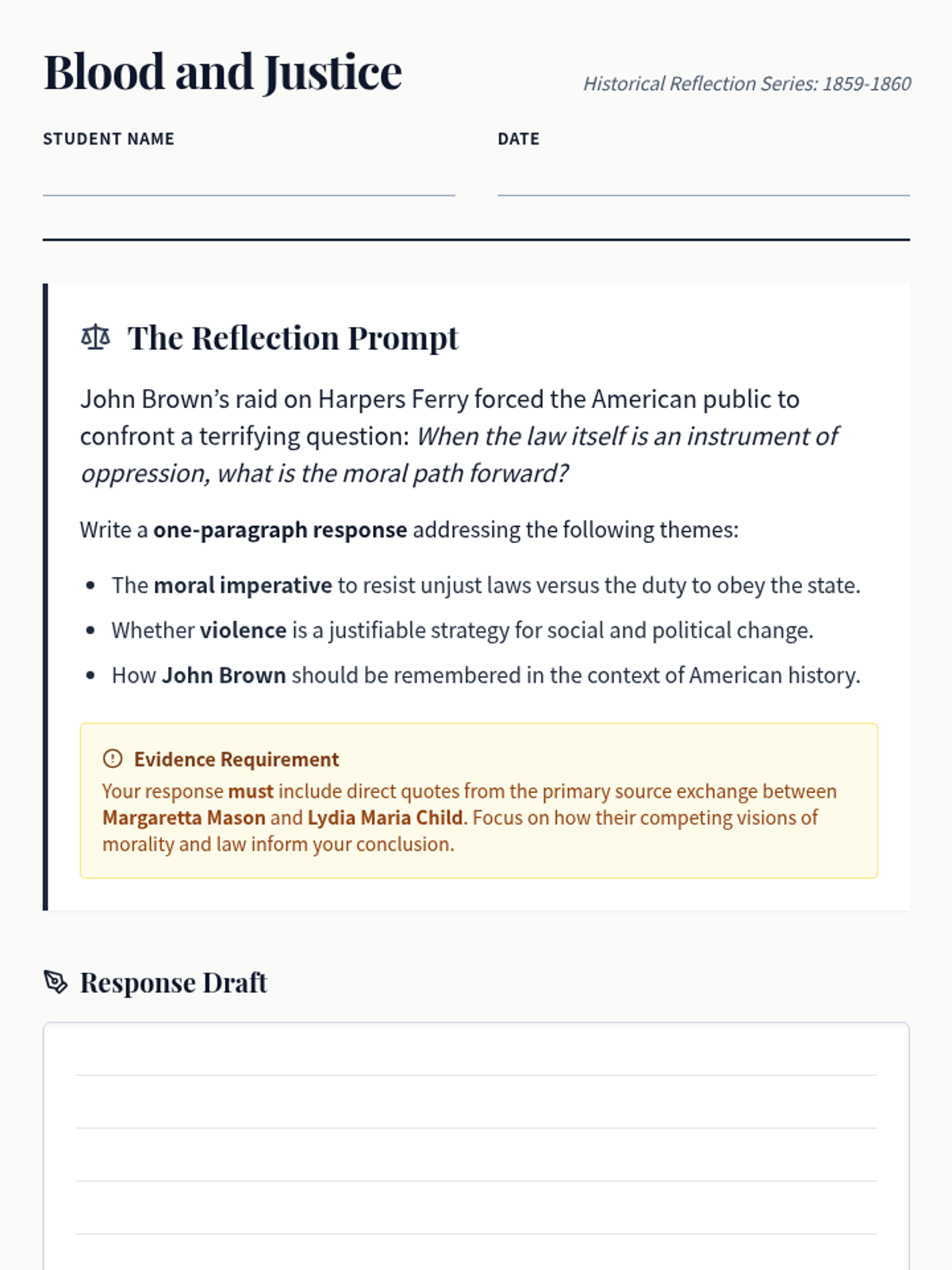
A student reflection worksheet focusing on the moral and legal arguments surrounding John Brown's raid, requiring evidence from primary source letters.
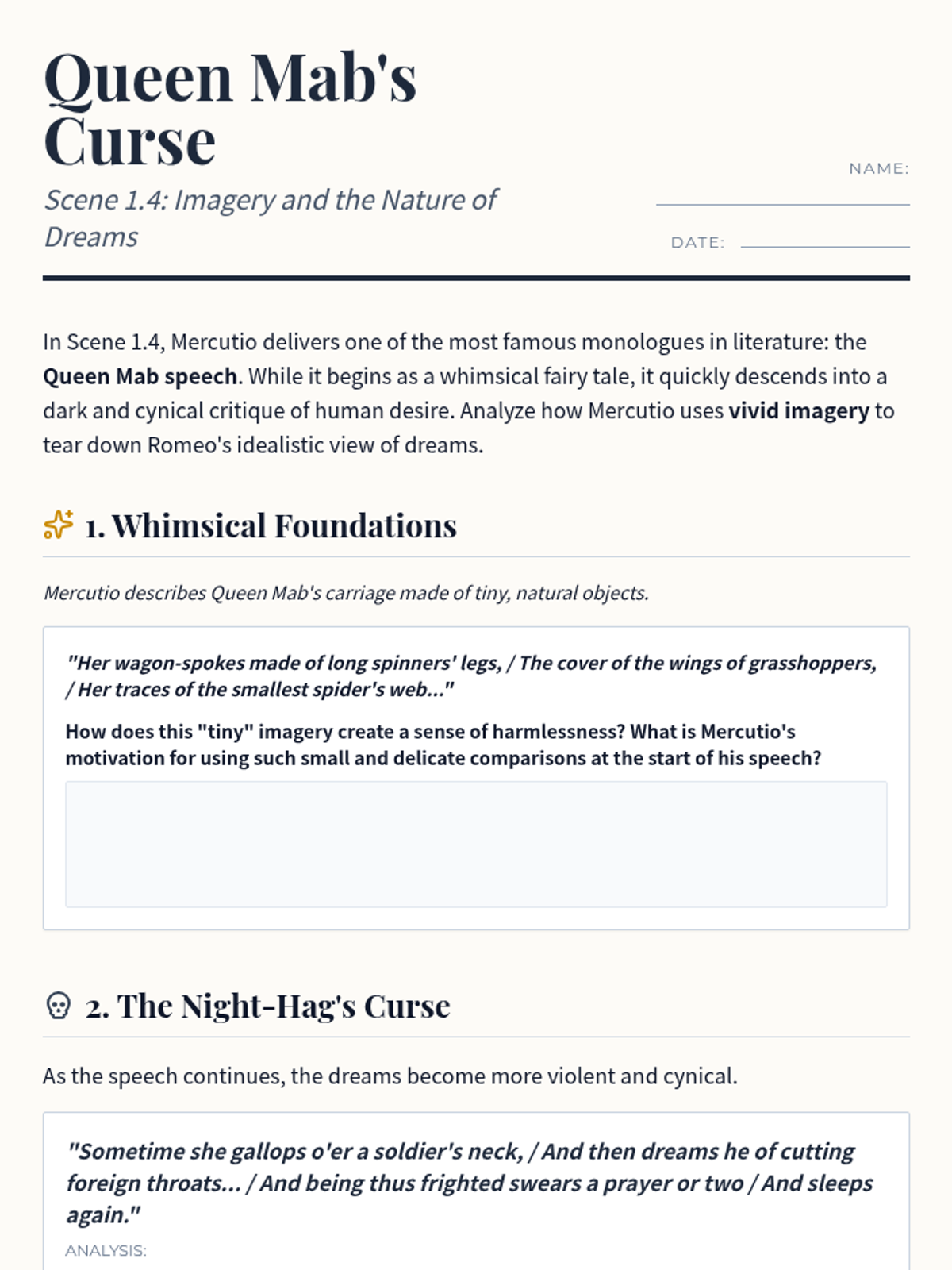
A student worksheet for Act 1, Scene 4 focusing on Mercutio's Queen Mab speech. Analyzes the shift from whimsical to dark imagery and the theme of dreams vs. reality.
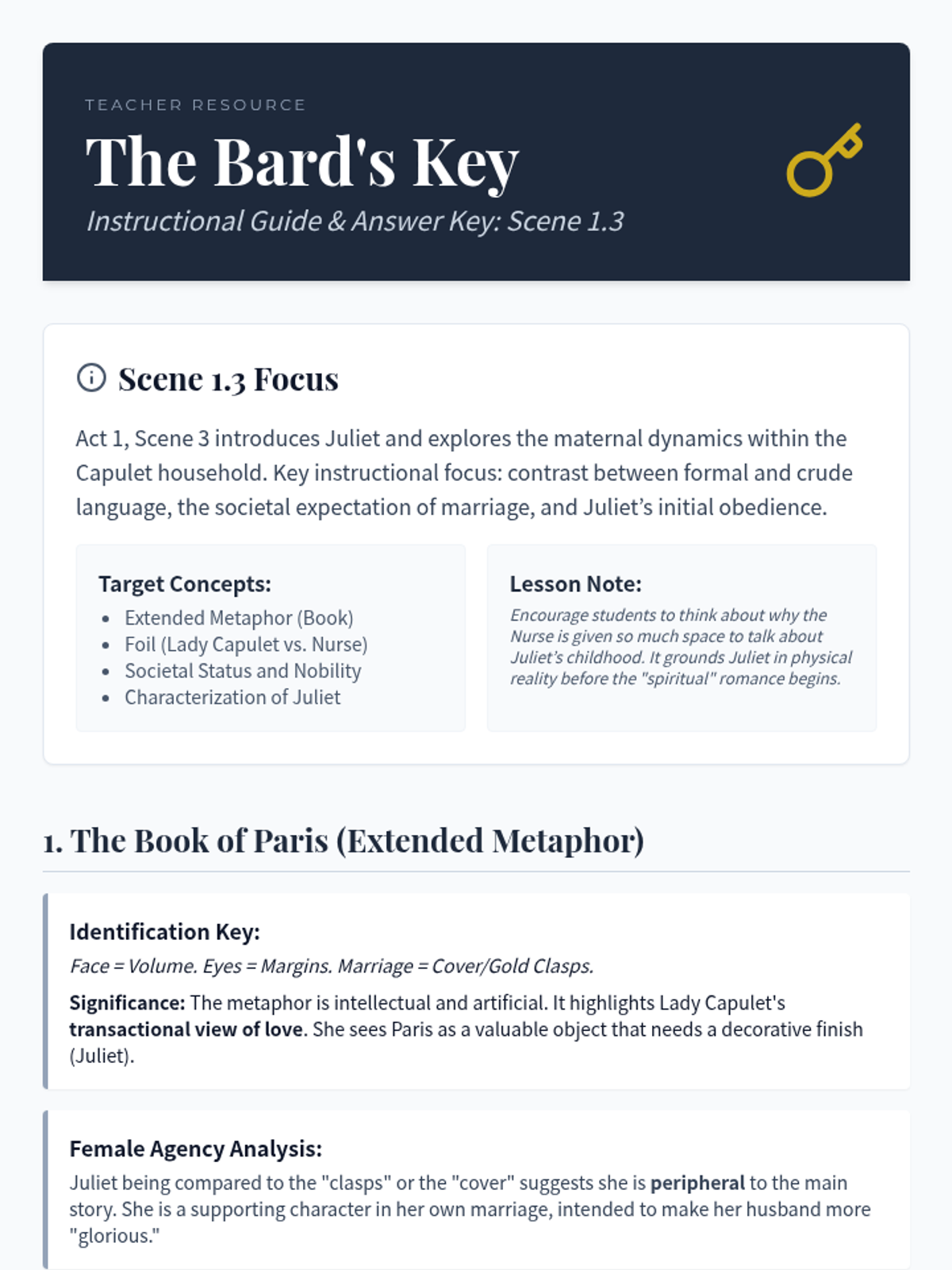
A teacher-facing guide providing an answer key and instructional tips for the Scene 1.3 worksheets. Includes analysis of Lady Capulet's book metaphor, the Nurse as a foil, and Juliet's initial obedience.
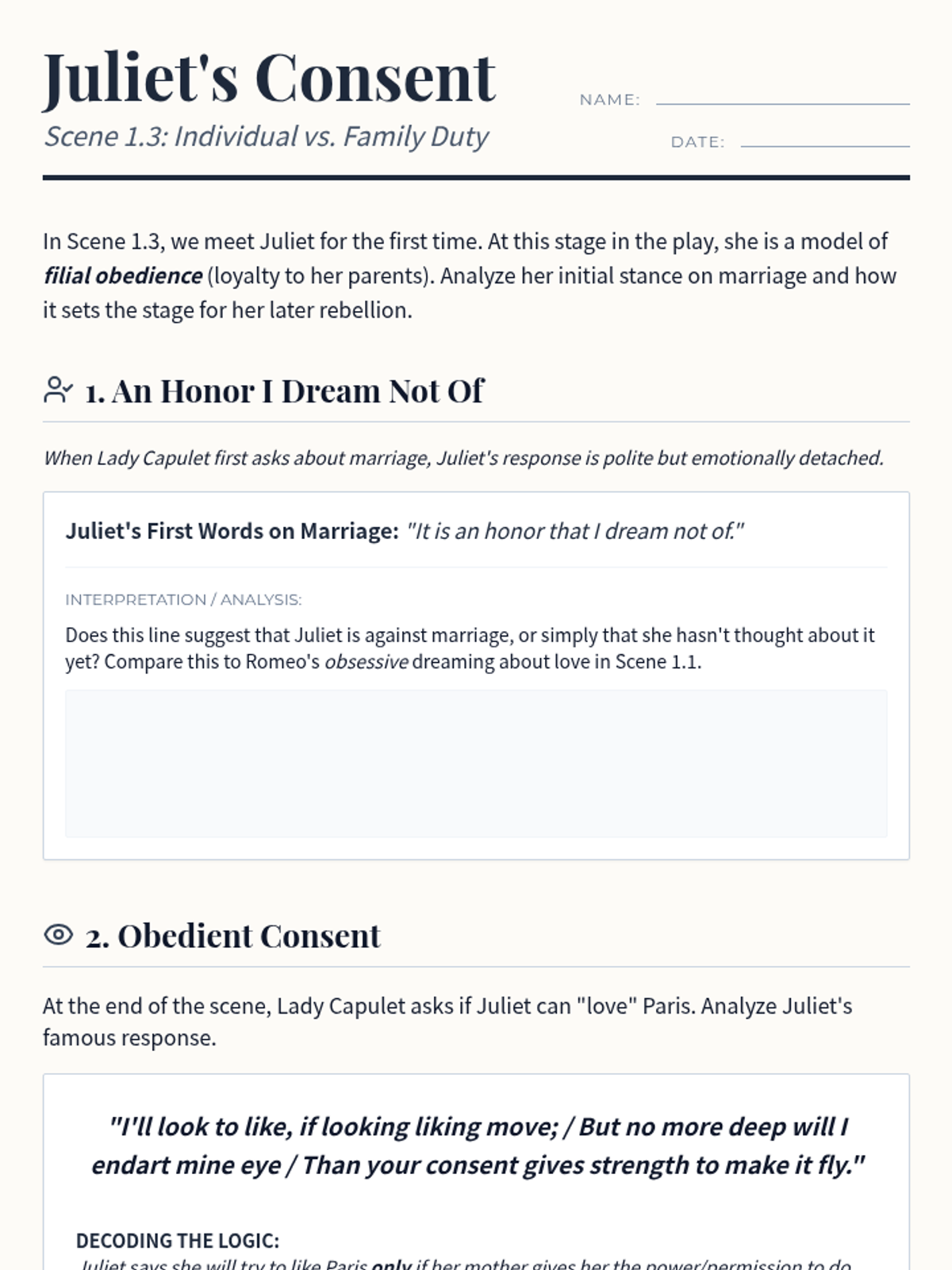
A student worksheet for Act 1, Scene 3 focusing on Juliet's initial stance on marriage and obedience. Analyzes her famous "look to like" speech and the theme of Individual vs. Society.
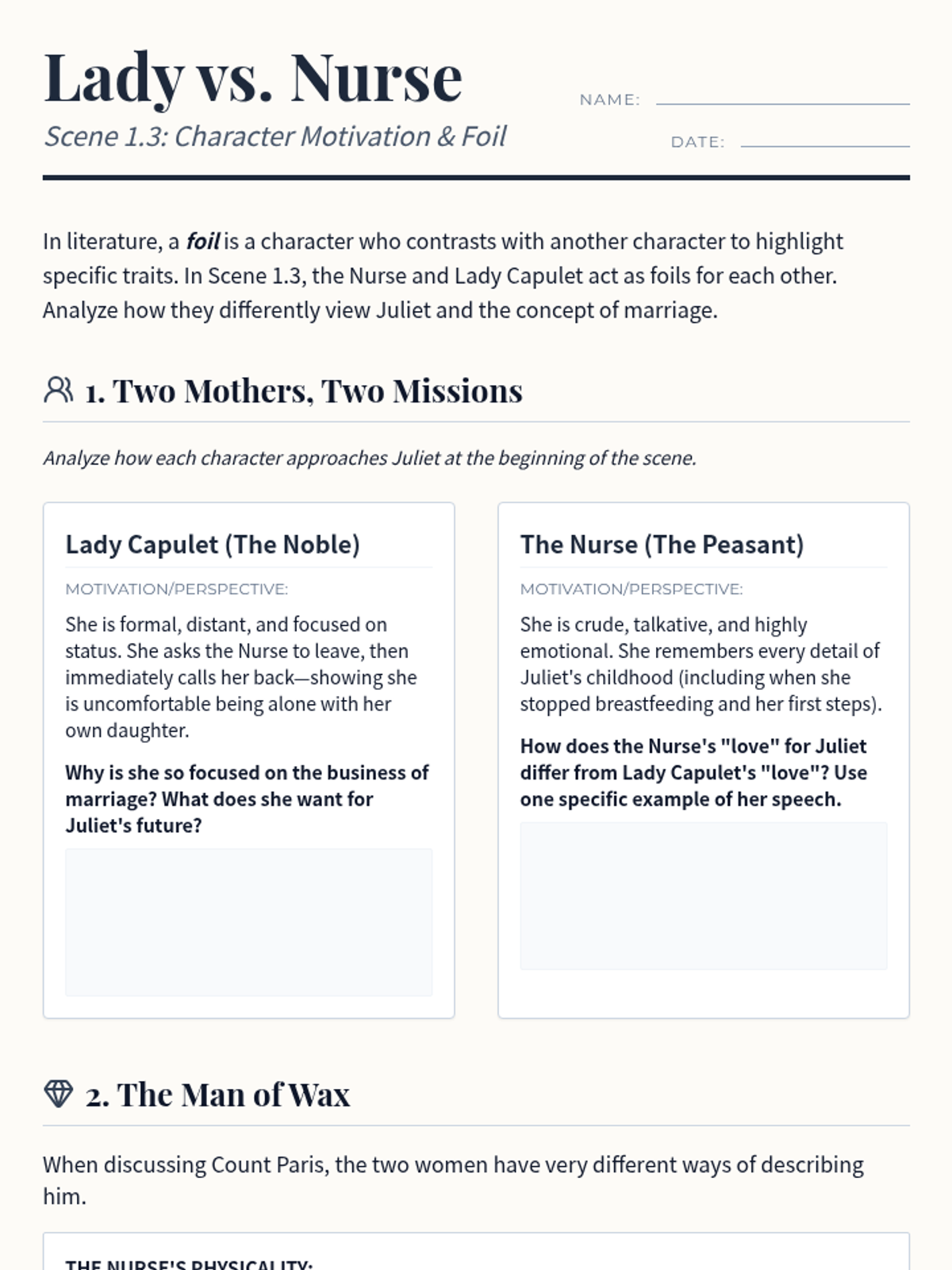
A student worksheet for Act 1, Scene 3 focusing on the foil between Lady Capulet and the Nurse. Analyzes their different motivations and views on love and marriage.
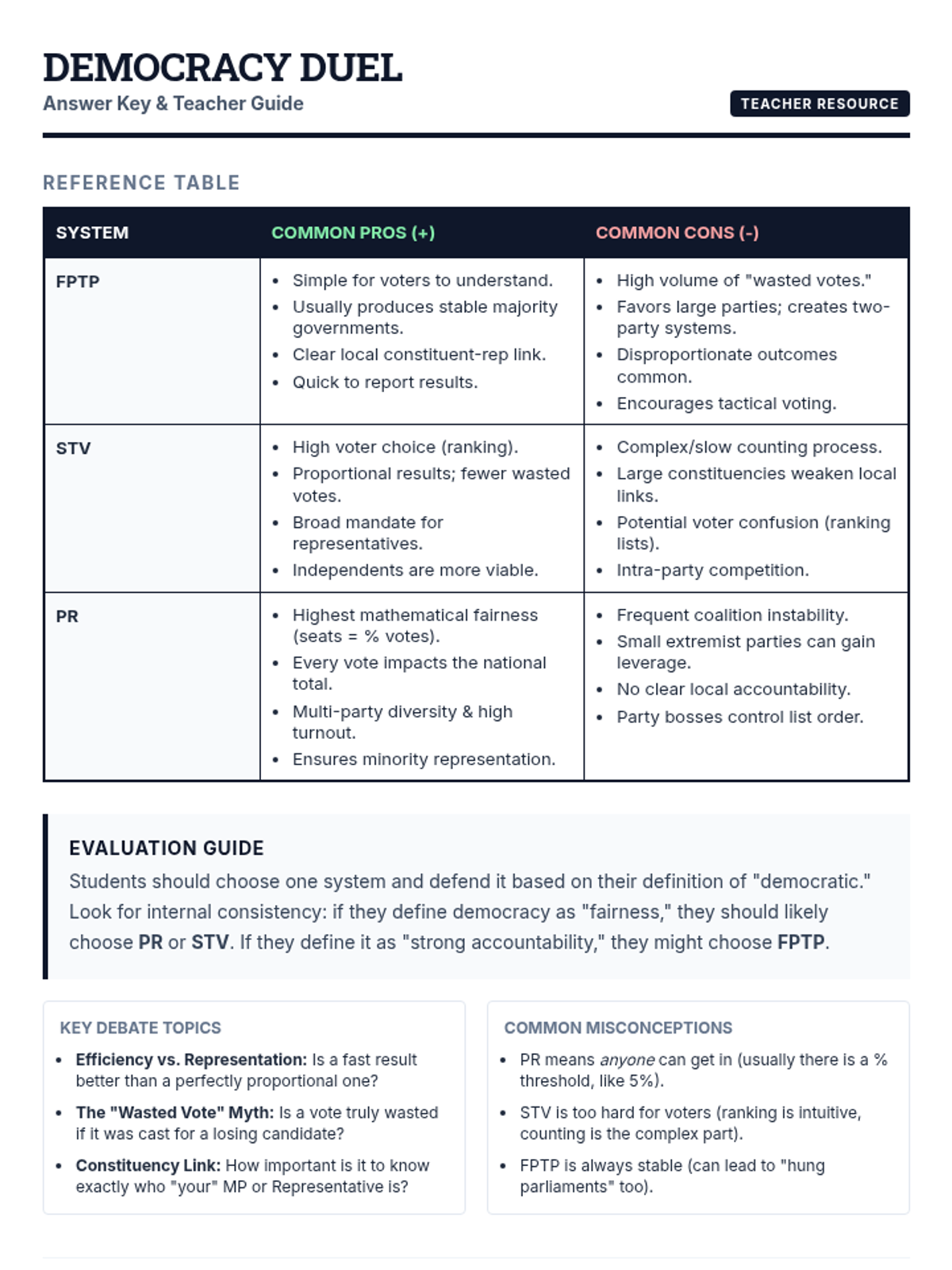
An answer key and teacher guide for the Democracy Duel worksheet, providing suggested pros and cons for each voting system and evaluation criteria for student responses.
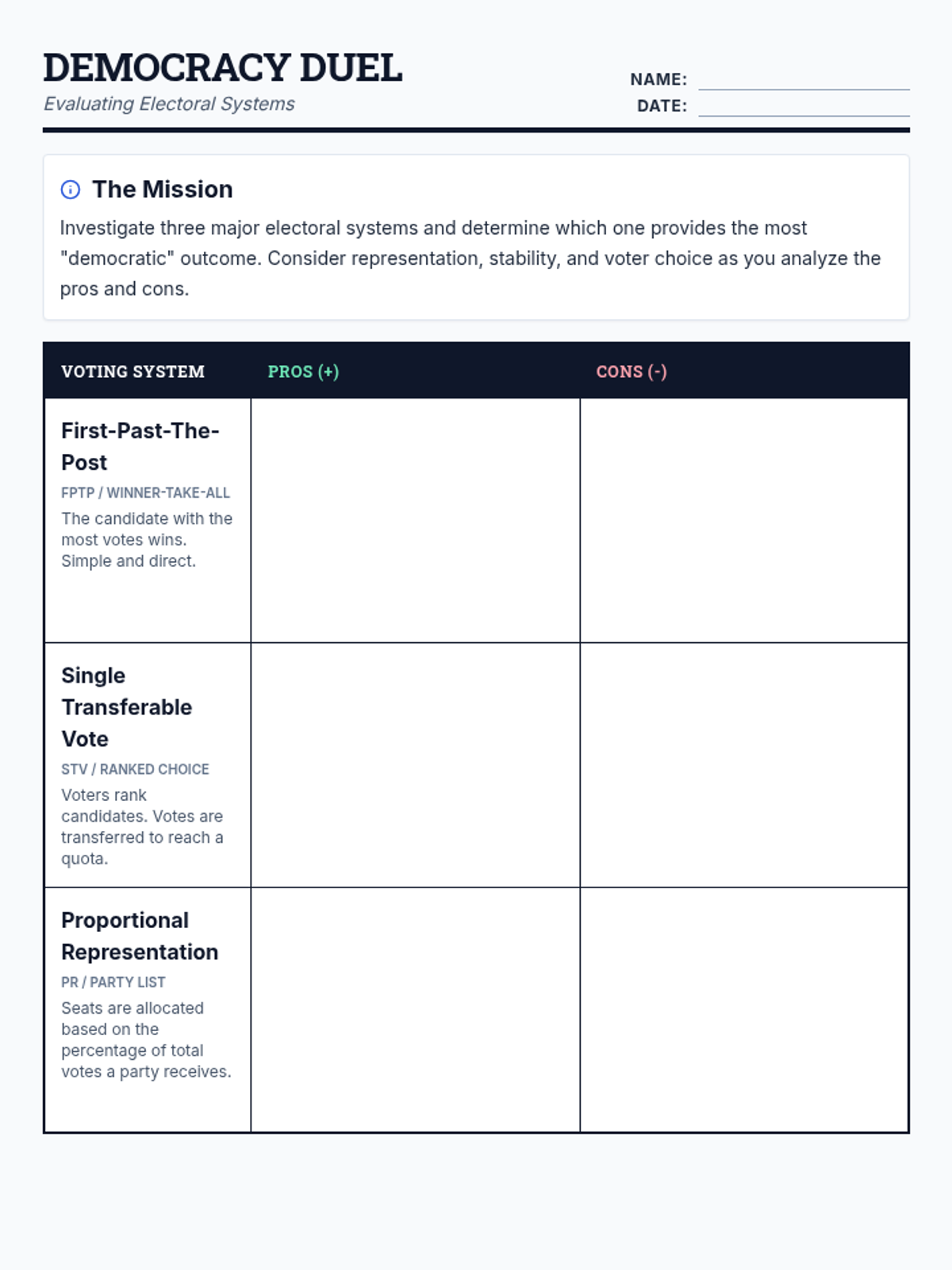
A graphic organizer for students to compare First-Past-The-Post, Single Transferable Vote, and Proportional Representation, including a verdict section to argue which system is most democratic.
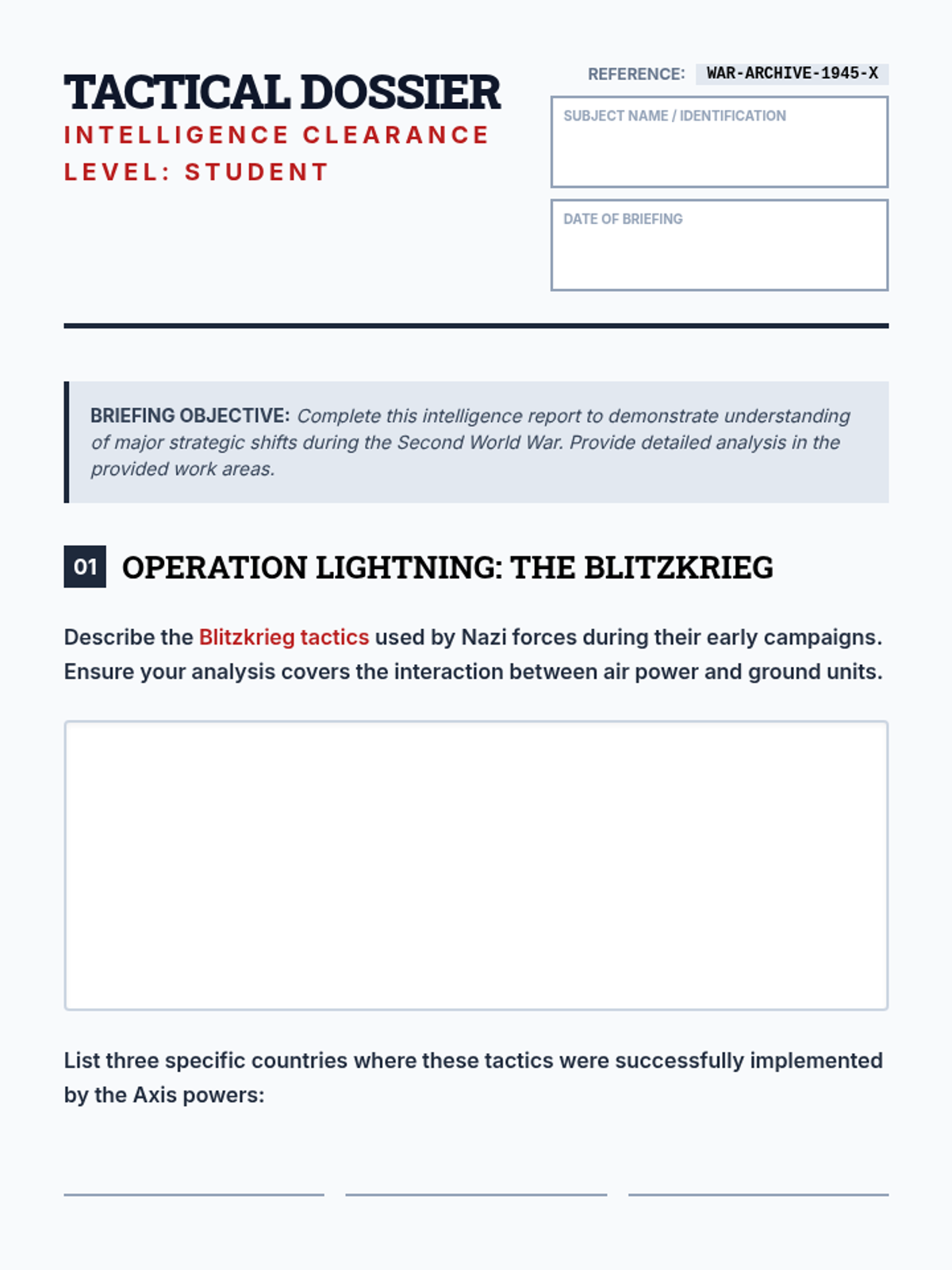
A themed student worksheet styled as a tactical intelligence report, requiring students to analyze Blitzkrieg tactics and Truman's atomic decision.
A visual presentation introducing the mechanics of Blitzkrieg and the complex factors behind the decision to use atomic weapons in WWII.