Examining foundational arguments from major thinkers alongside contemporary debates on morality, governance, and the nature of existence. Addresses core concepts like political structures, consciousness, and the conflict between agency and fate.
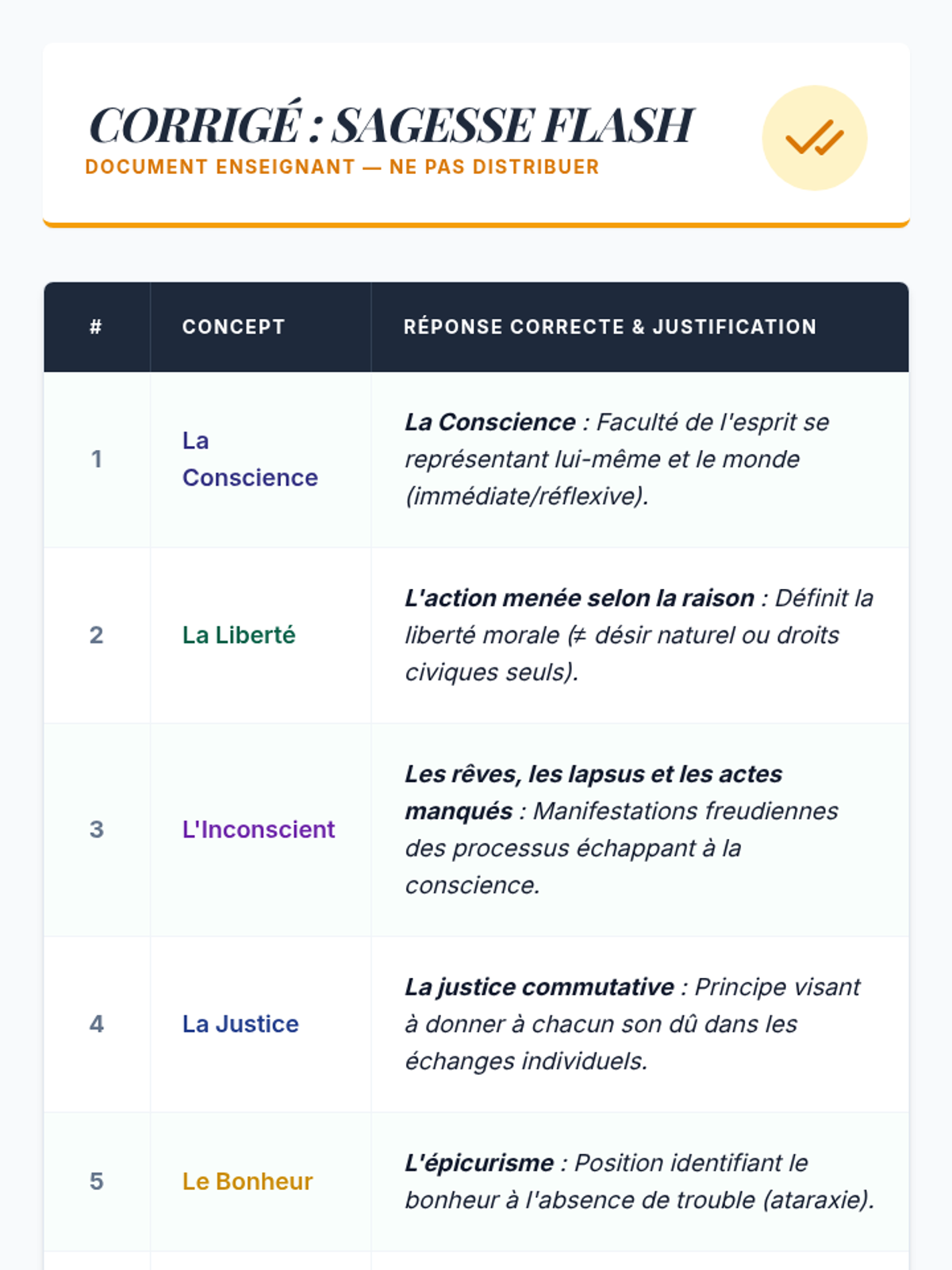
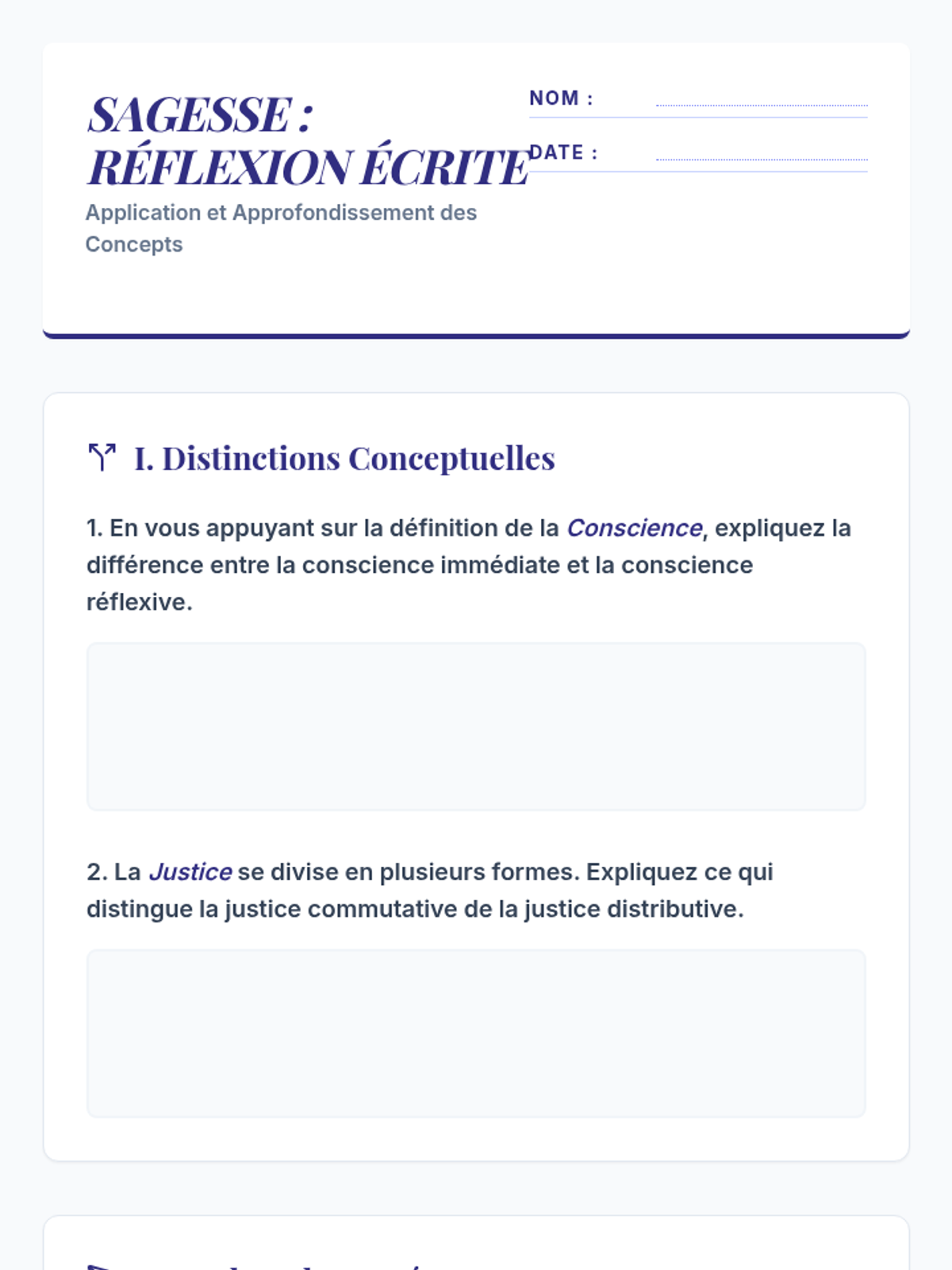
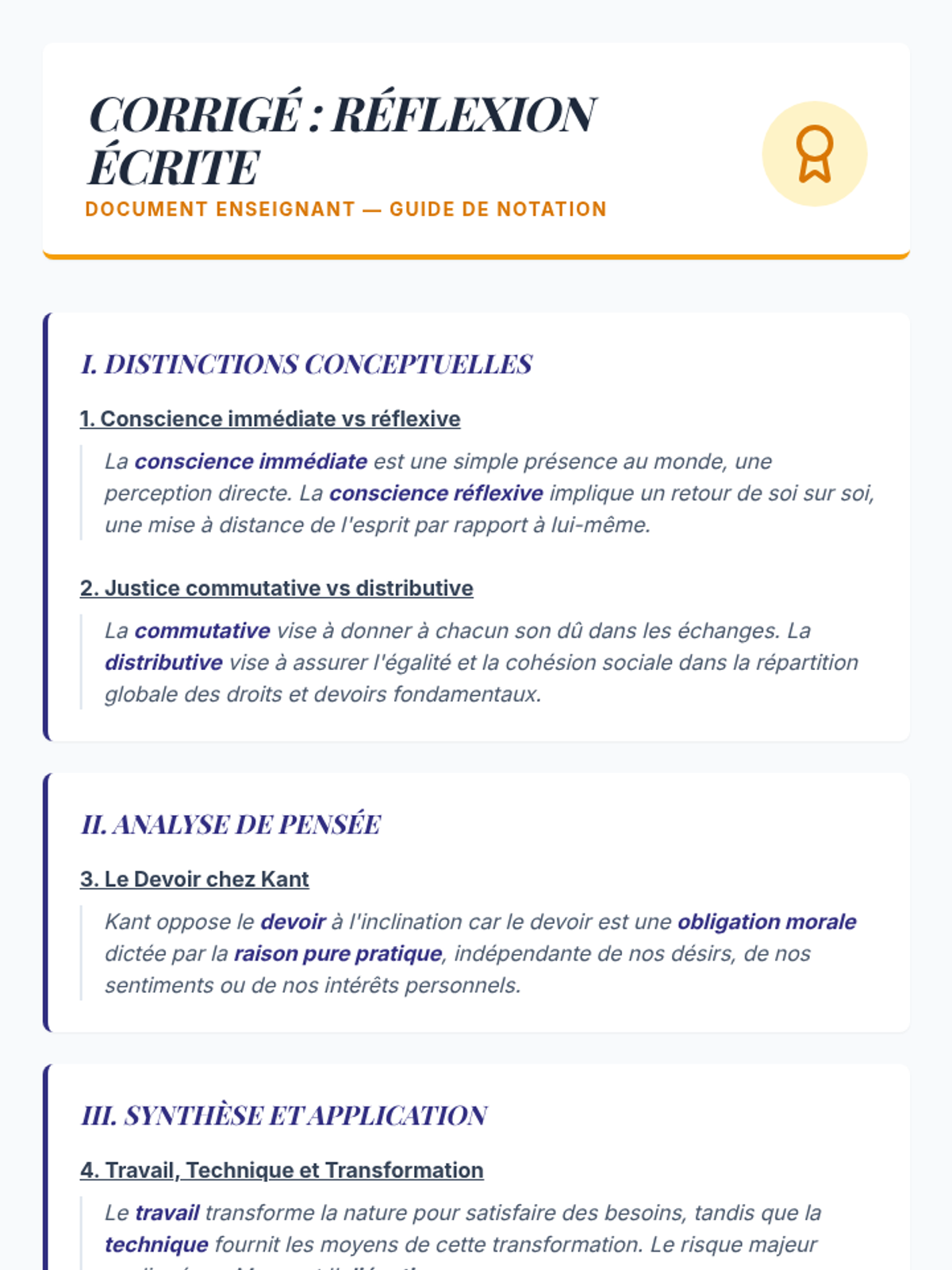
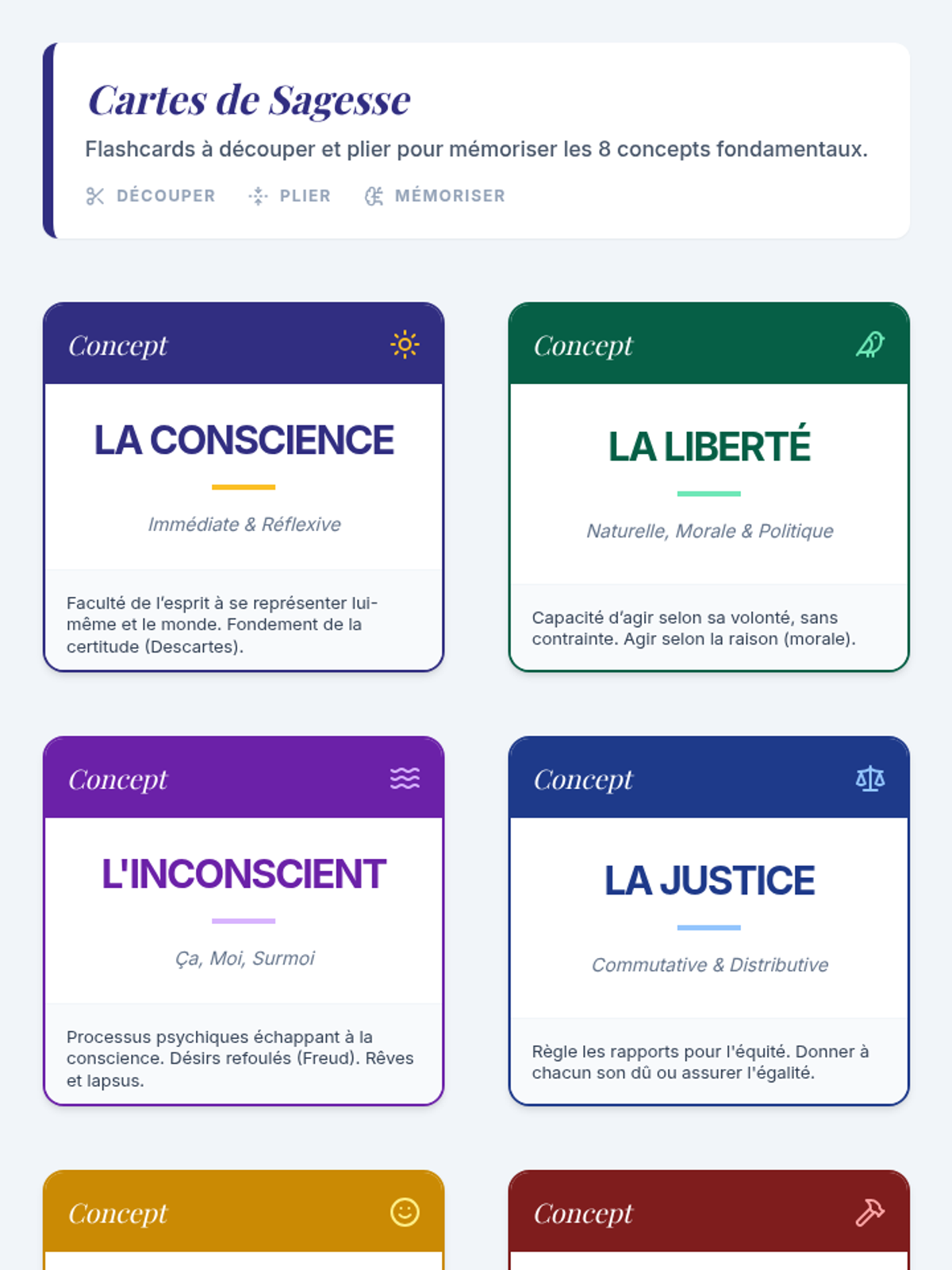
Une leçon interactive pour maîtriser huit concepts fondamentaux de la philosophie à travers des révisions visuelles et un quiz d'évaluation.
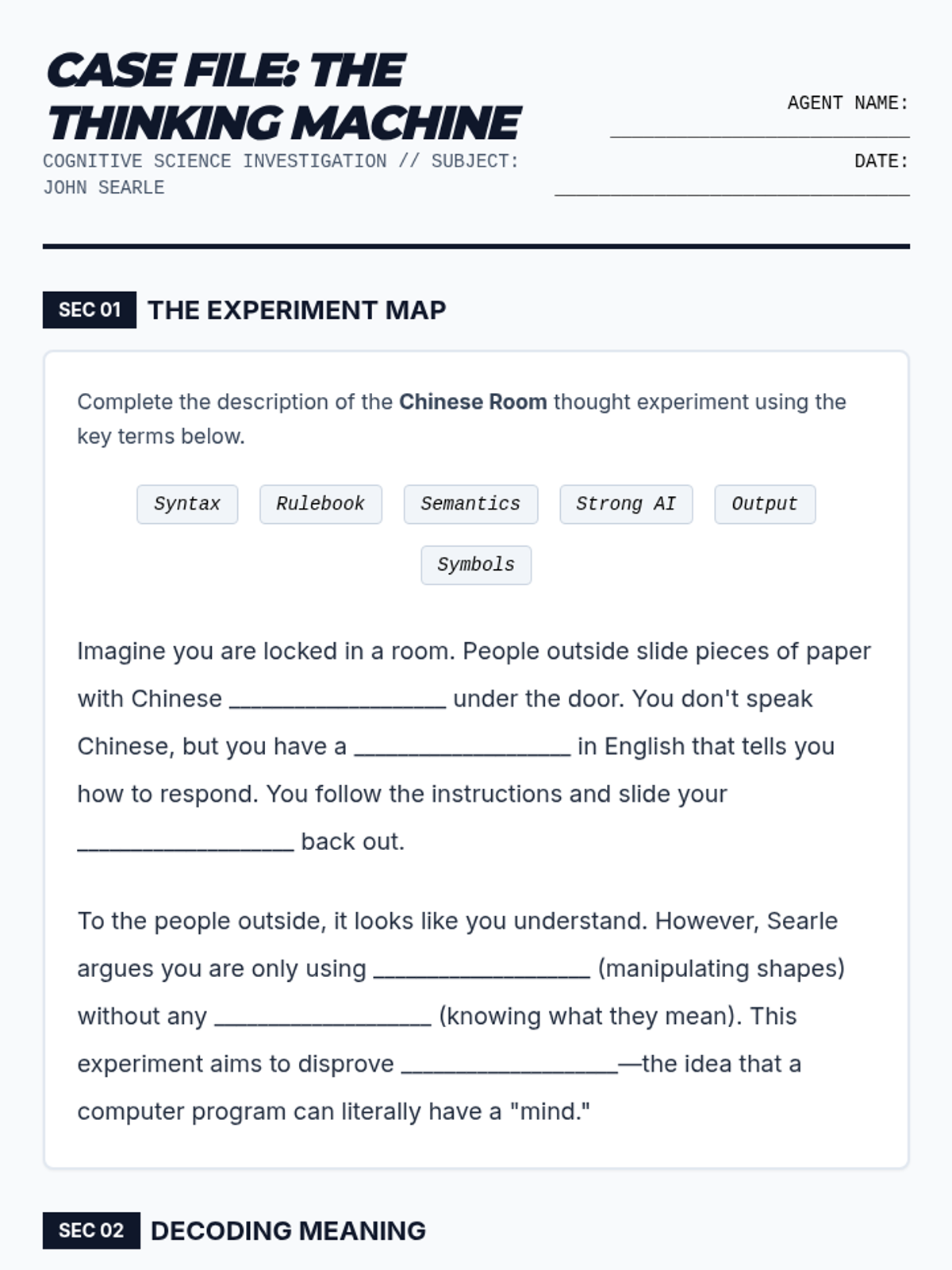
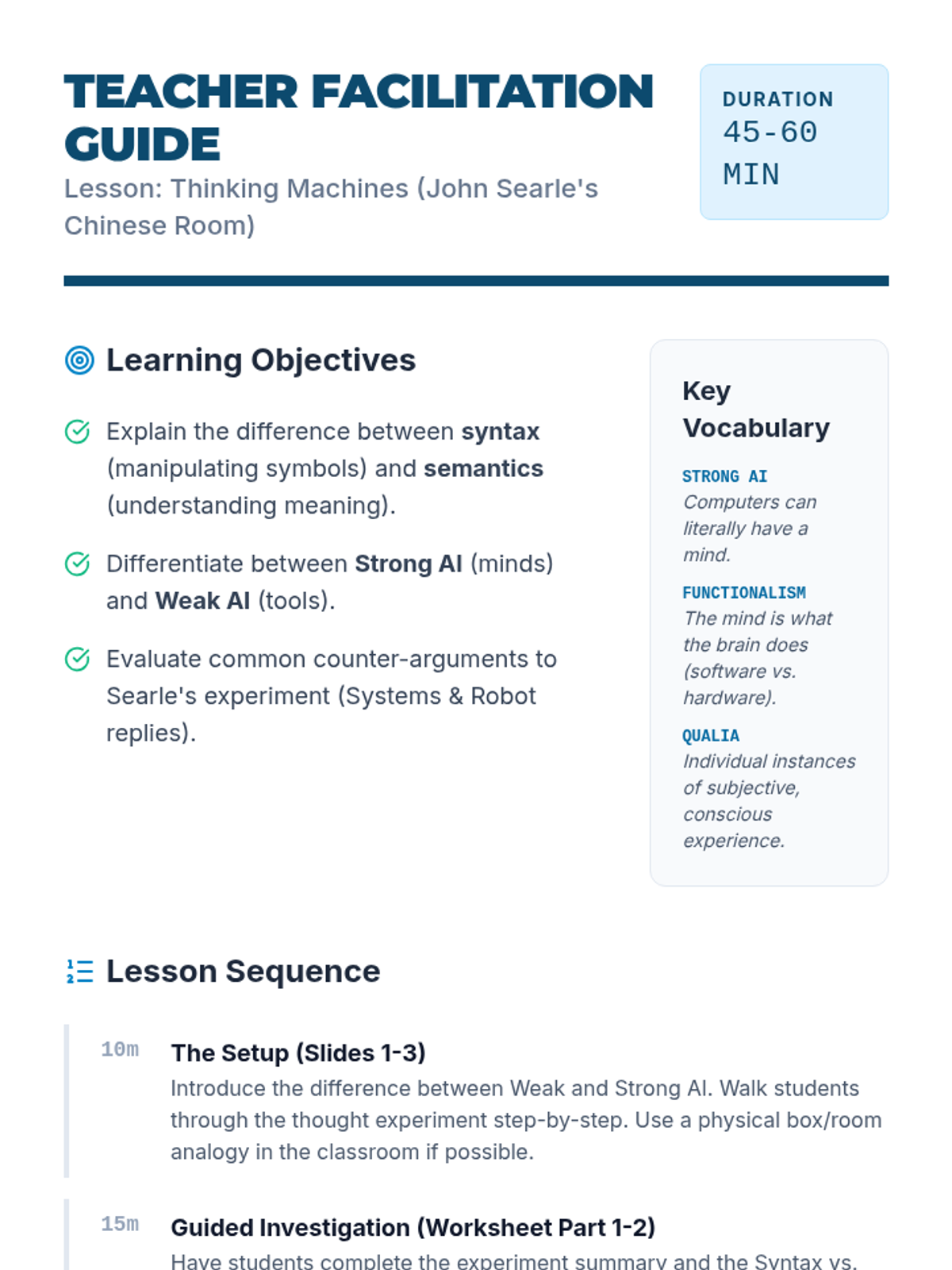
An exploration of John Searle's famous thought experiment, examining the distinction between syntax and semantics and the debate over Strong Artificial Intelligence.
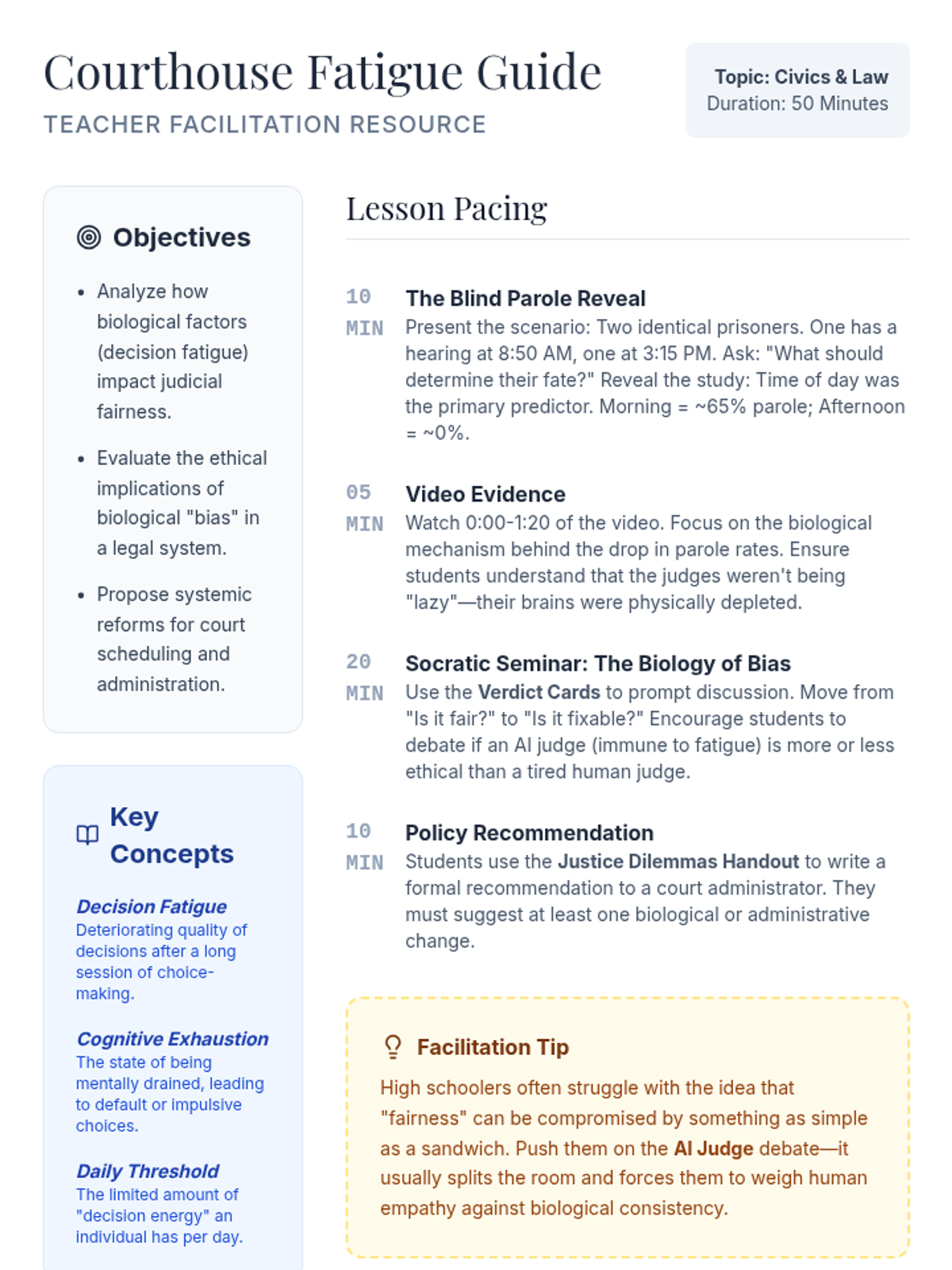
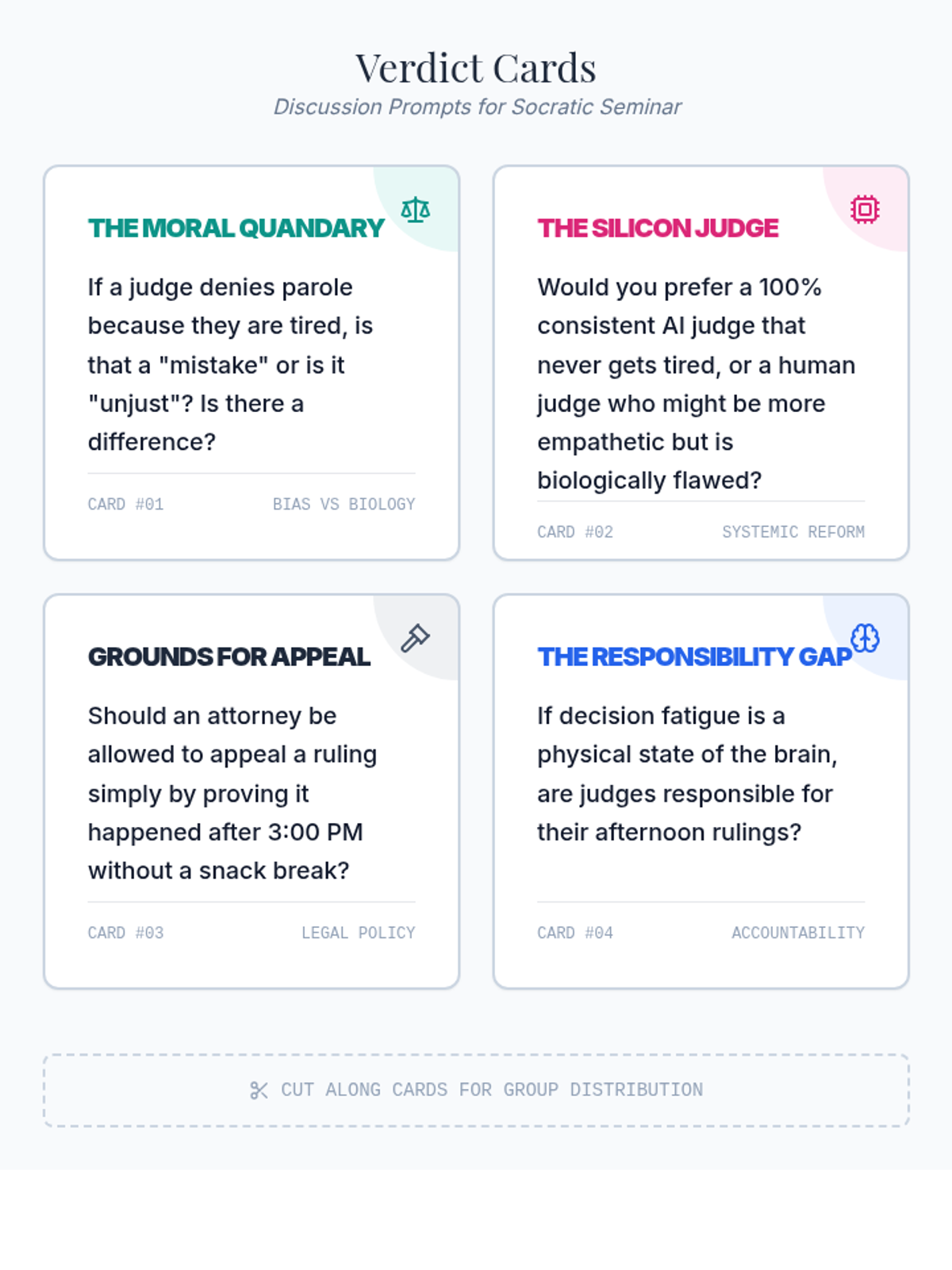
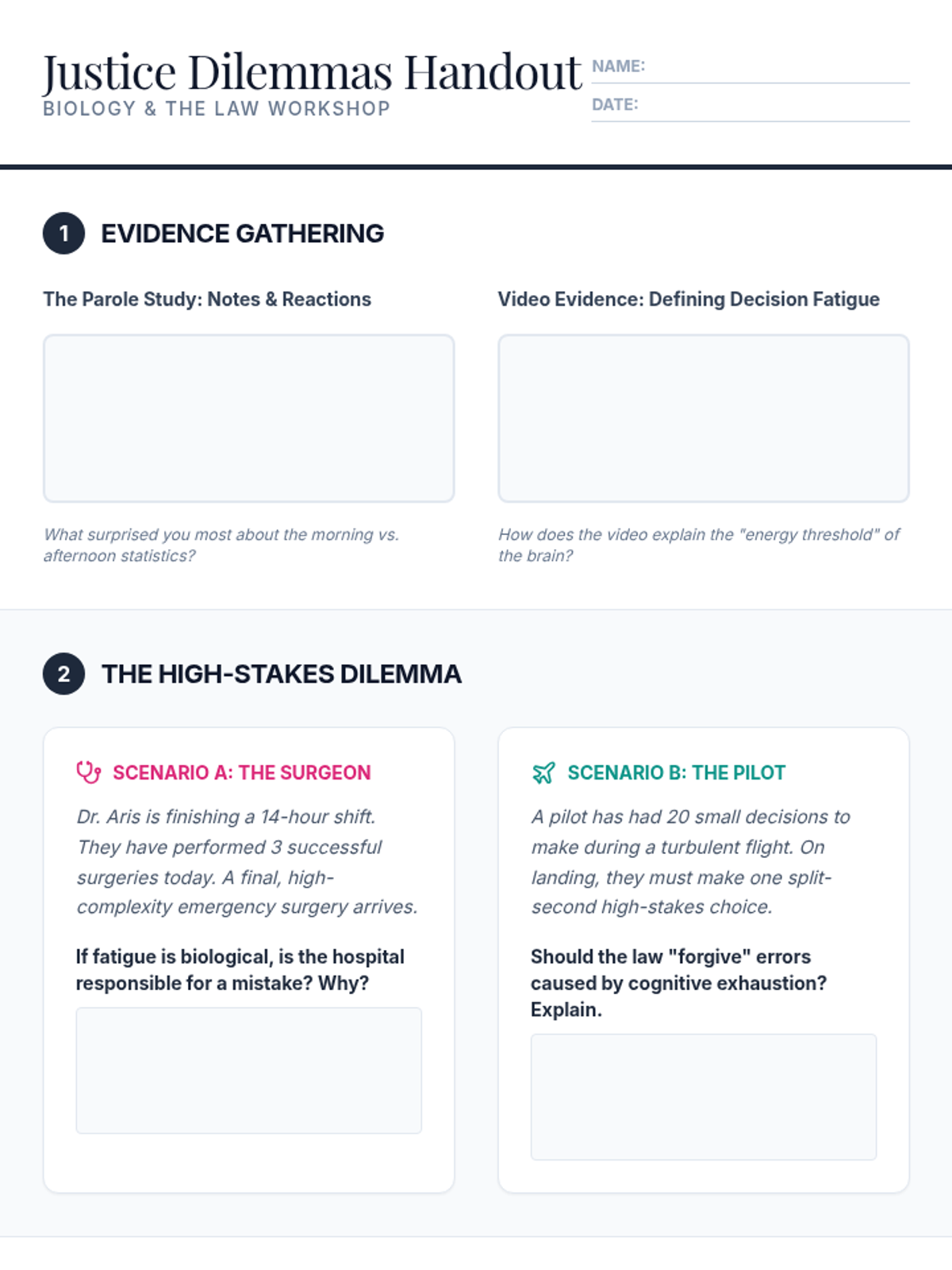
Students explore the intersection of biology and law through the lens of 'decision fatigue' in judicial rulings, culminating in a Socratic seminar and policy proposal for systemic reform.
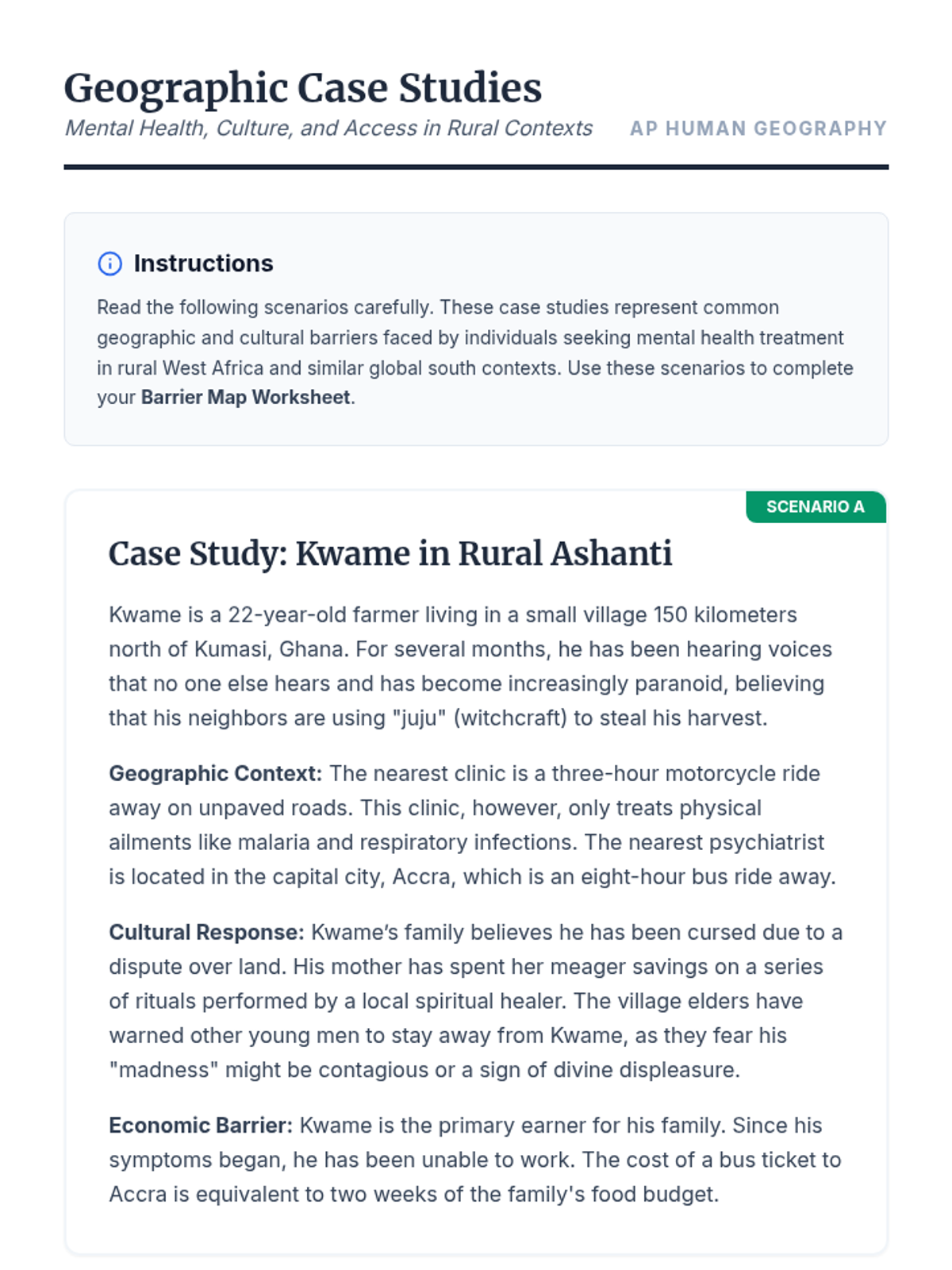
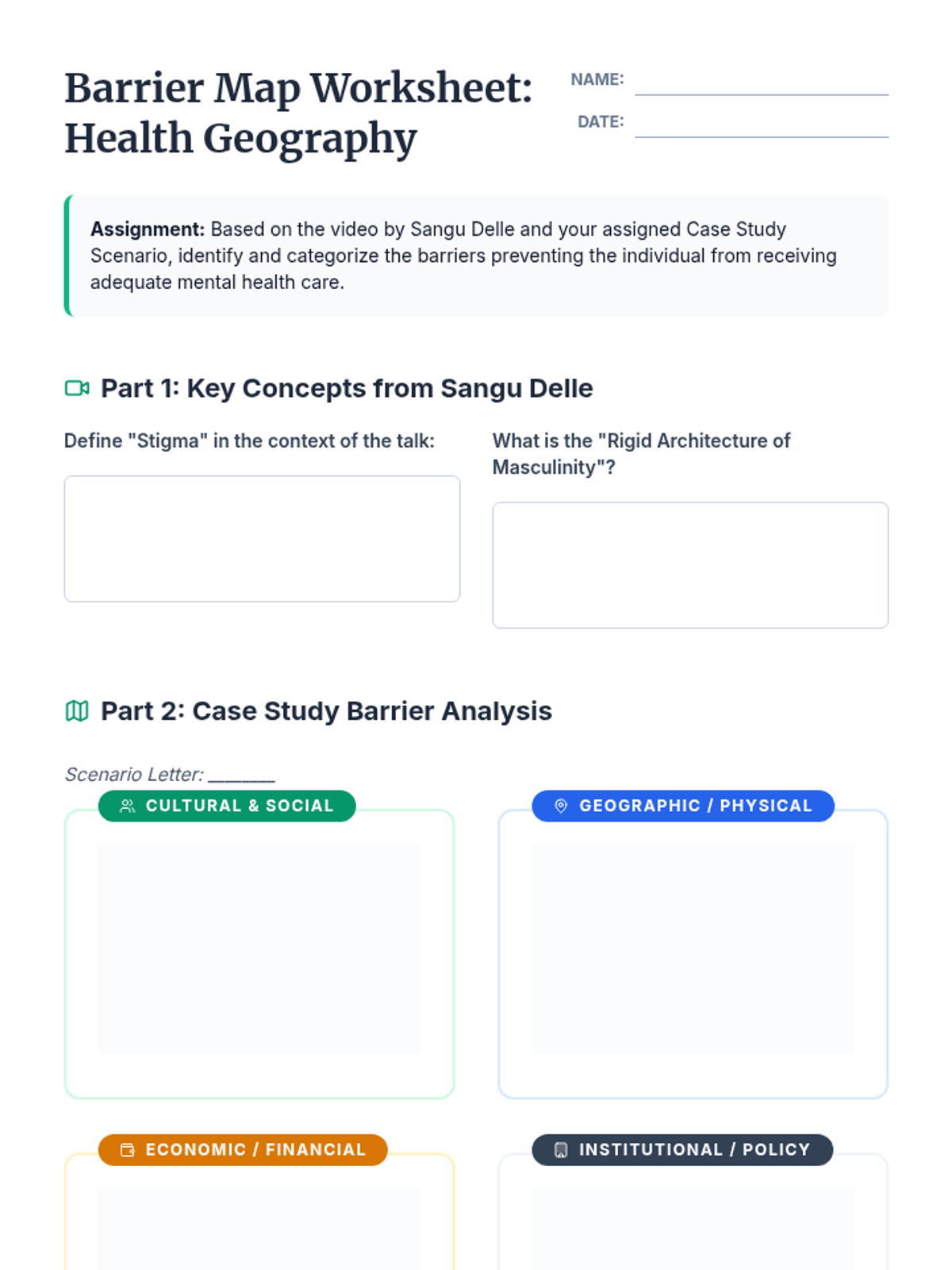
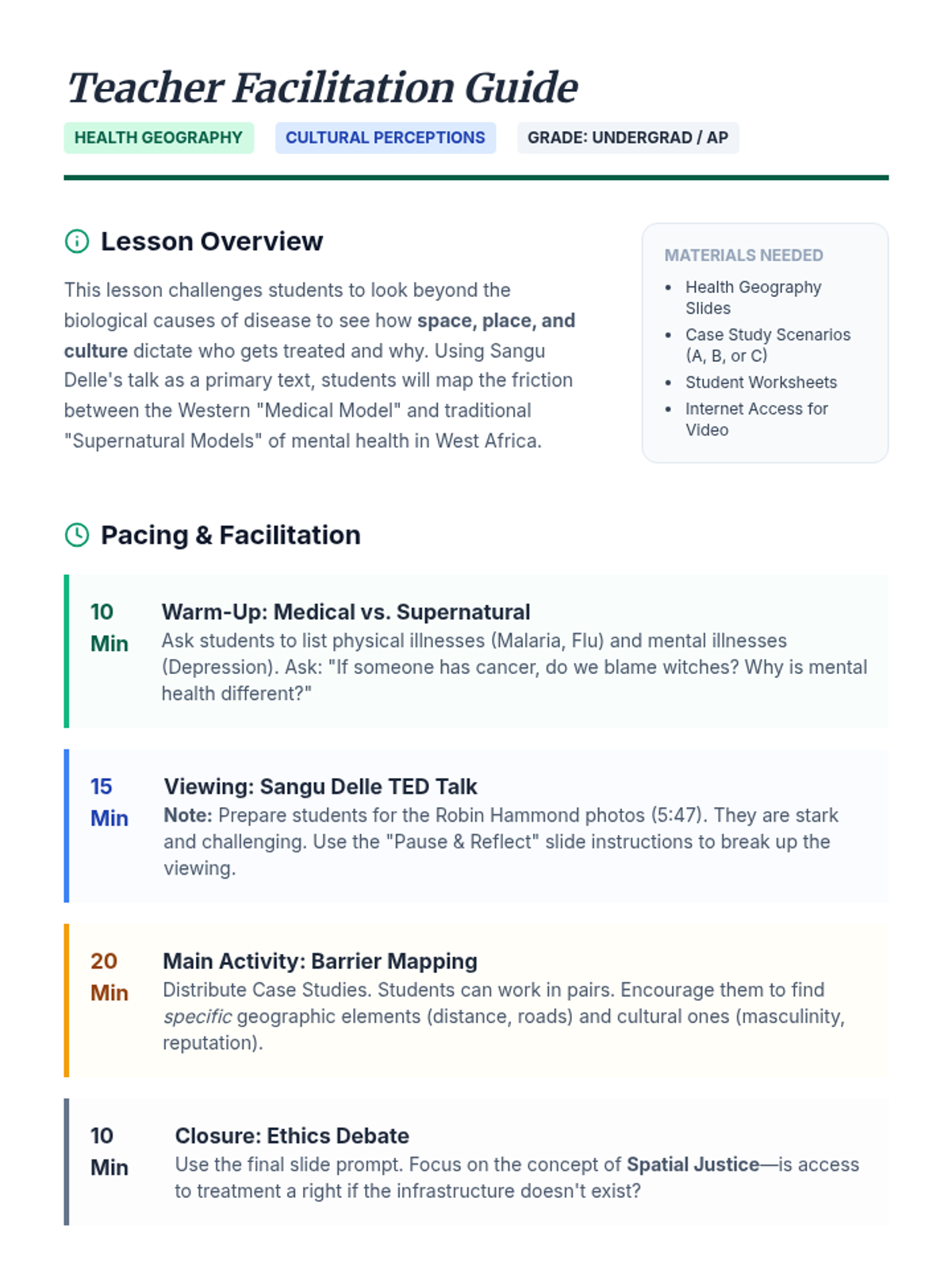
This lesson explores how cultural beliefs and geographic factors shape perceptions of mental health and access to care, using Sangu Delle's TED Talk as a primary case study for West Africa. Students will analyze the 'Medical Model' vs. 'Supernatural Model' and map out barriers to treatment in rural contexts.
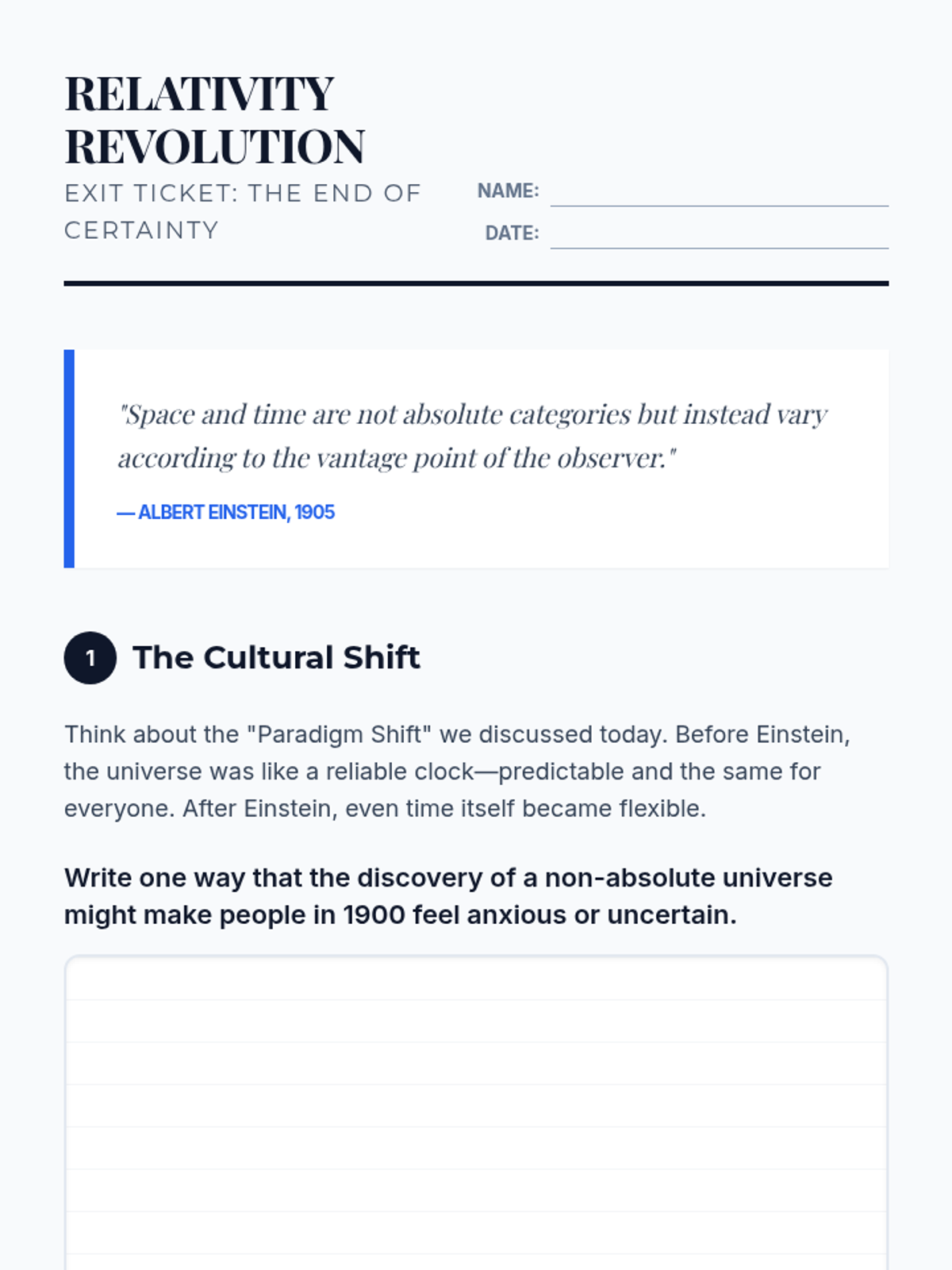
This lesson explores the shift from Newtonian physics to Einstein's relativity, focusing on the cultural anxiety and fragmentation that occurred at the turn of the 20th century. Students analyze the "Train Paradox" and discuss the disconnect between scientific reality and human perception.
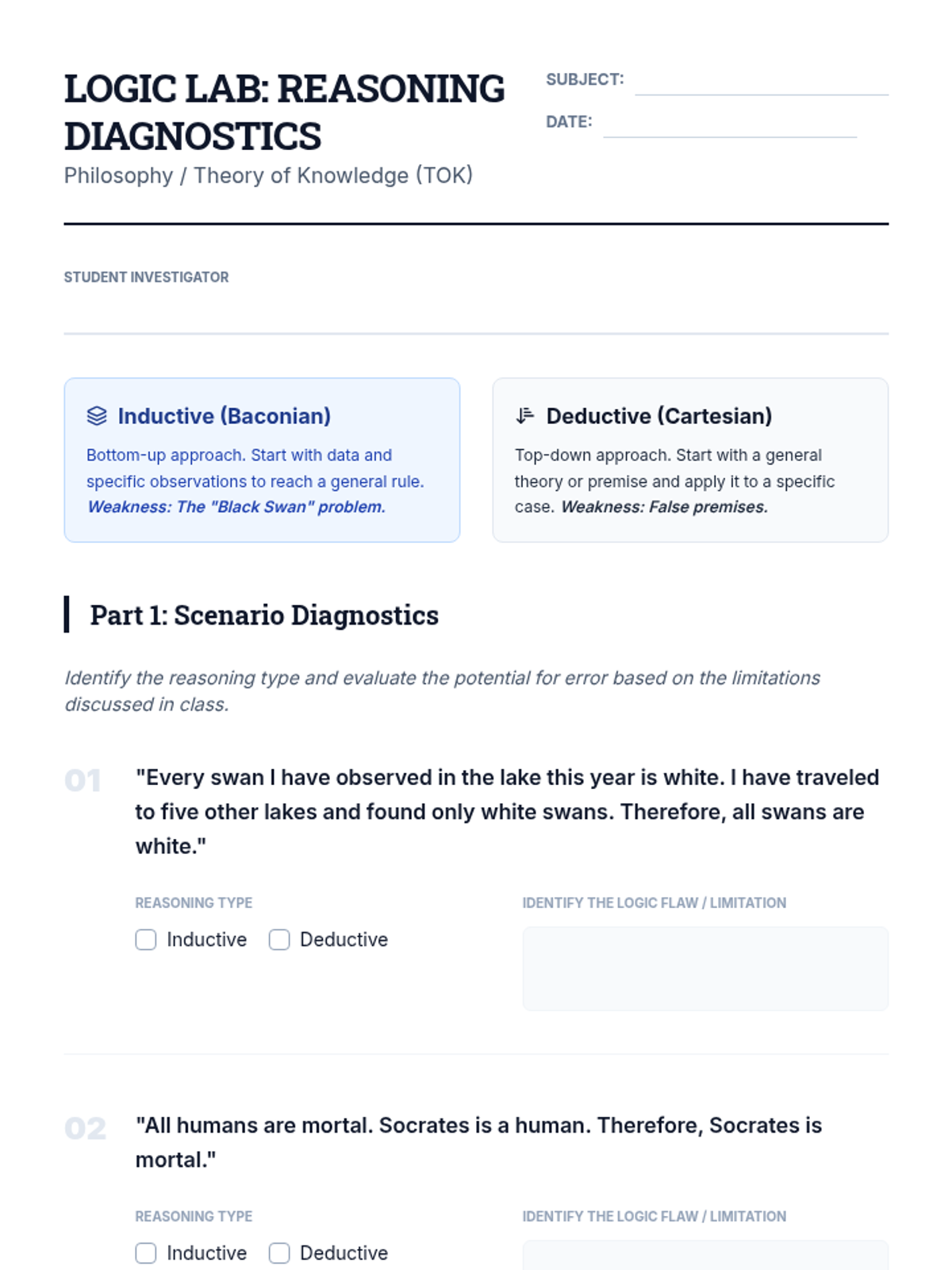
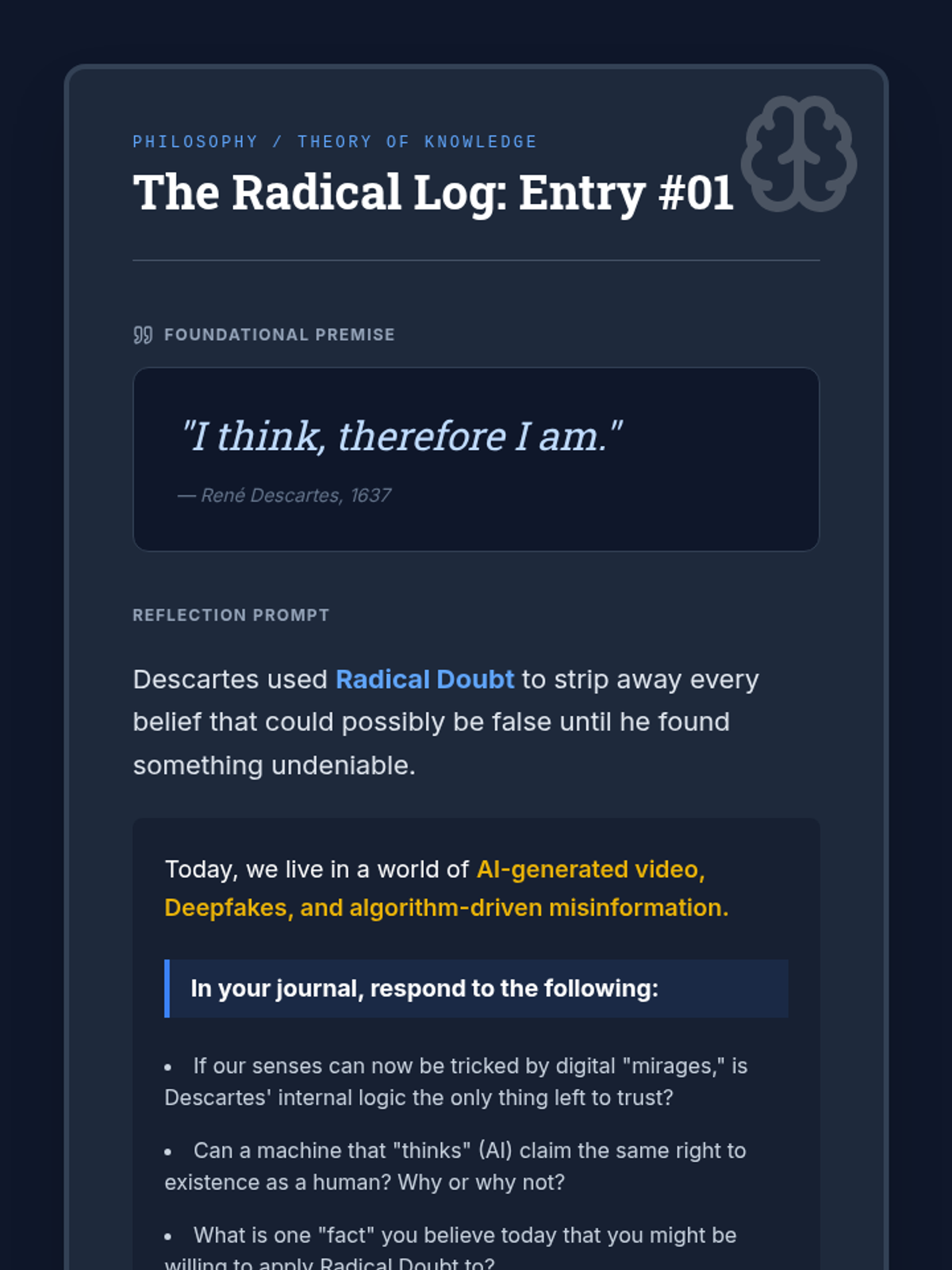
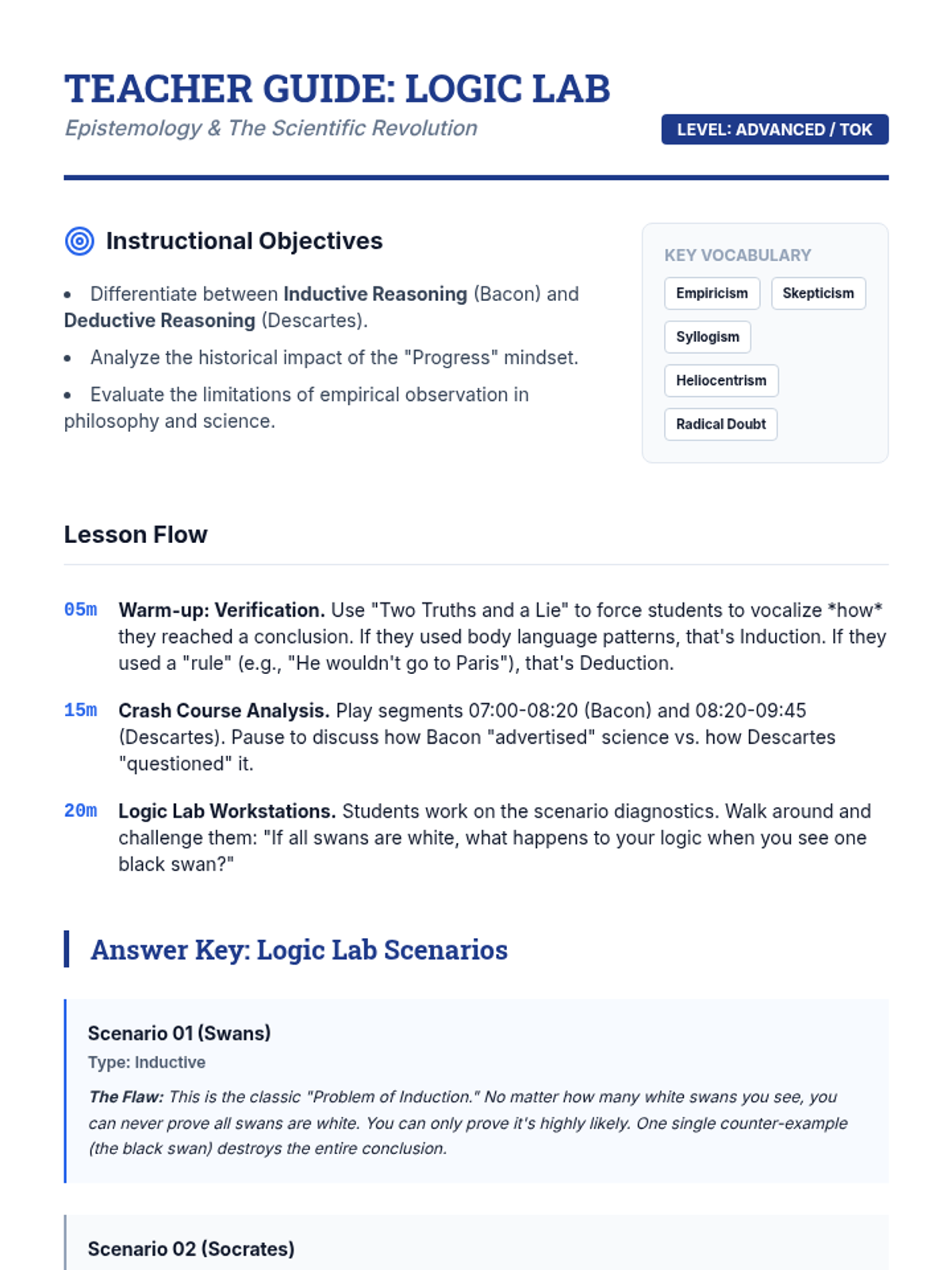
A Philosophy/Theory of Knowledge lesson for high schoolers exploring the foundations of modern thought through the inductive methods of Francis Bacon and the deductive skepticism of Rene Descartes.
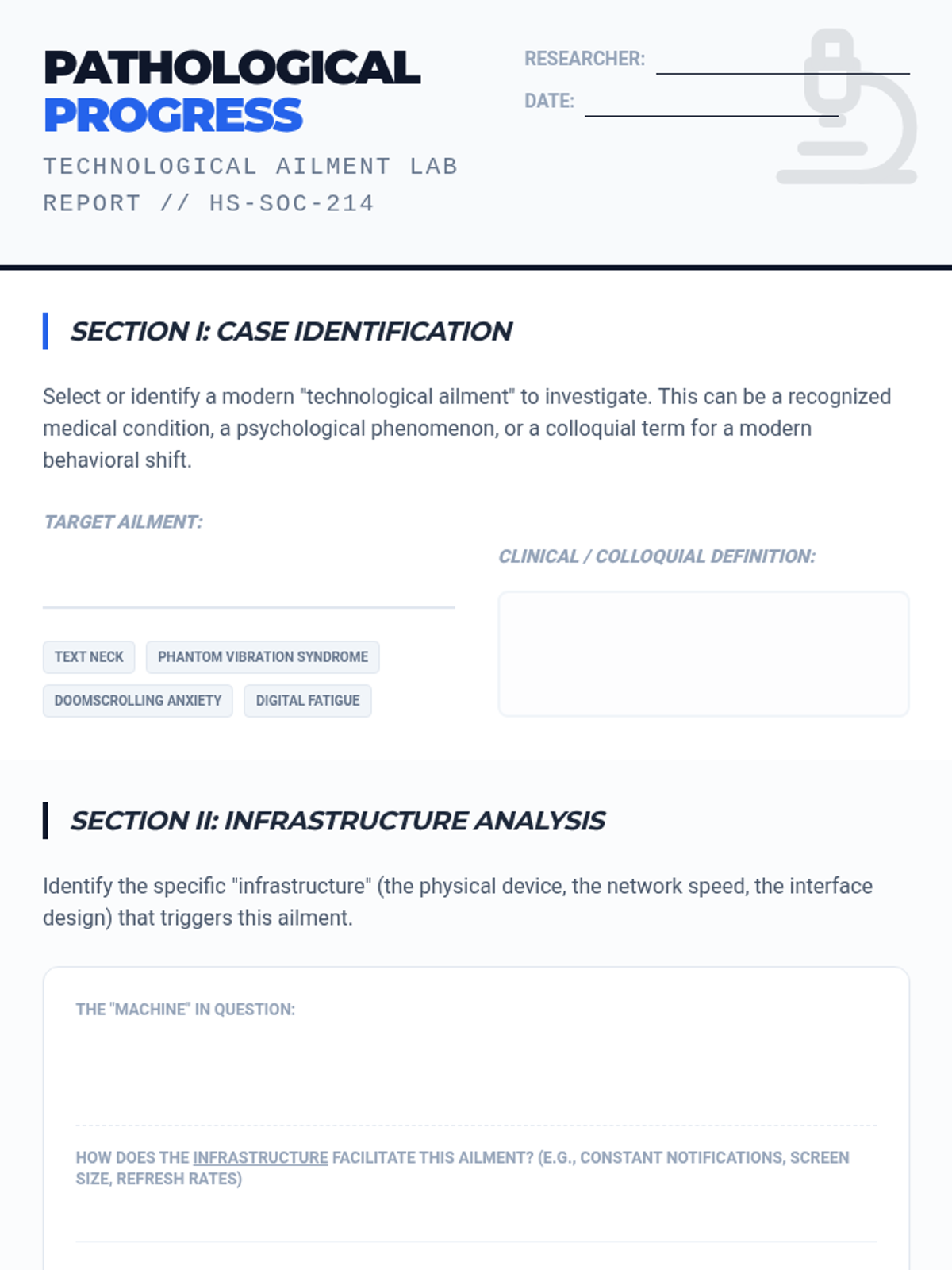
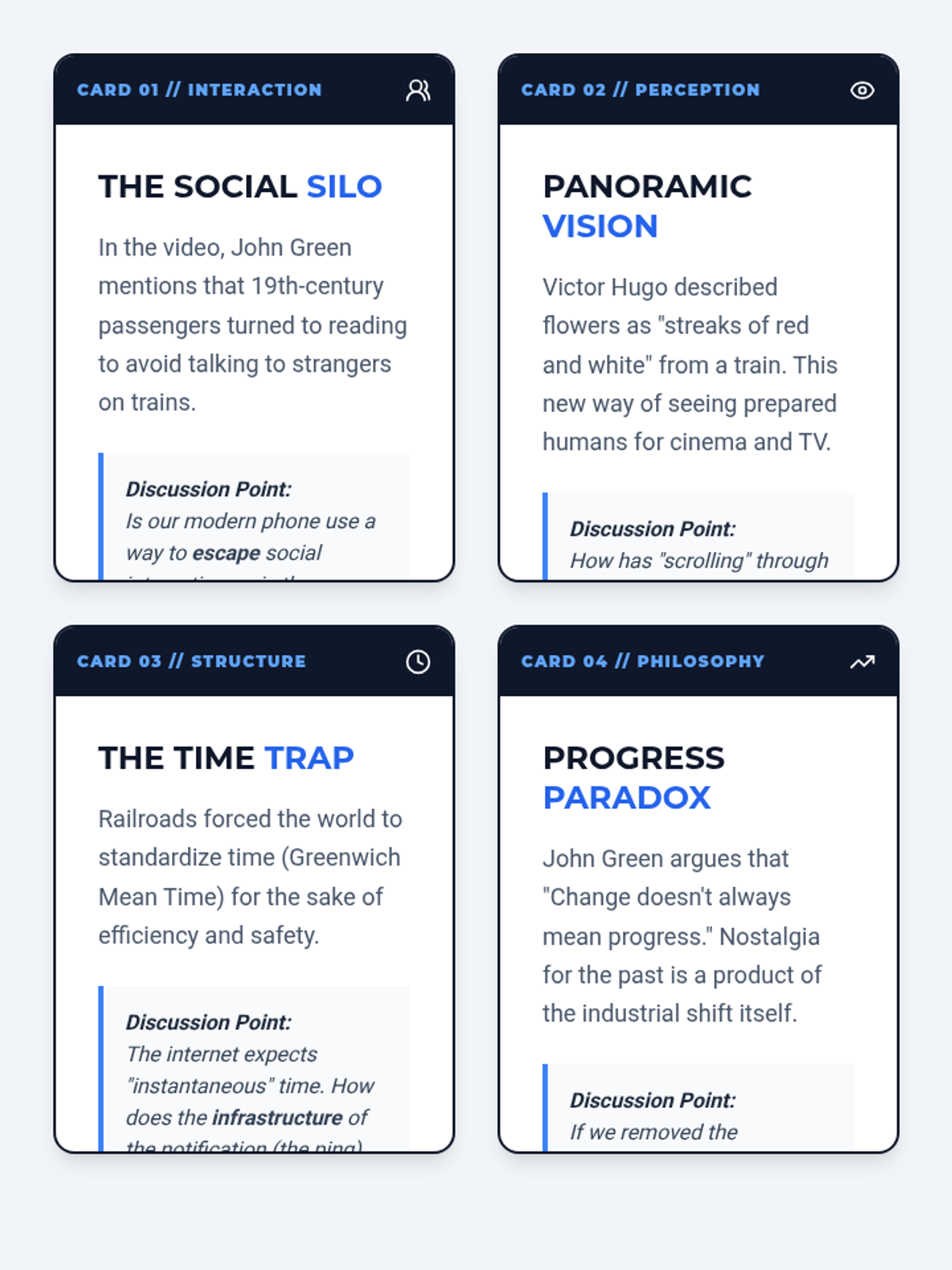
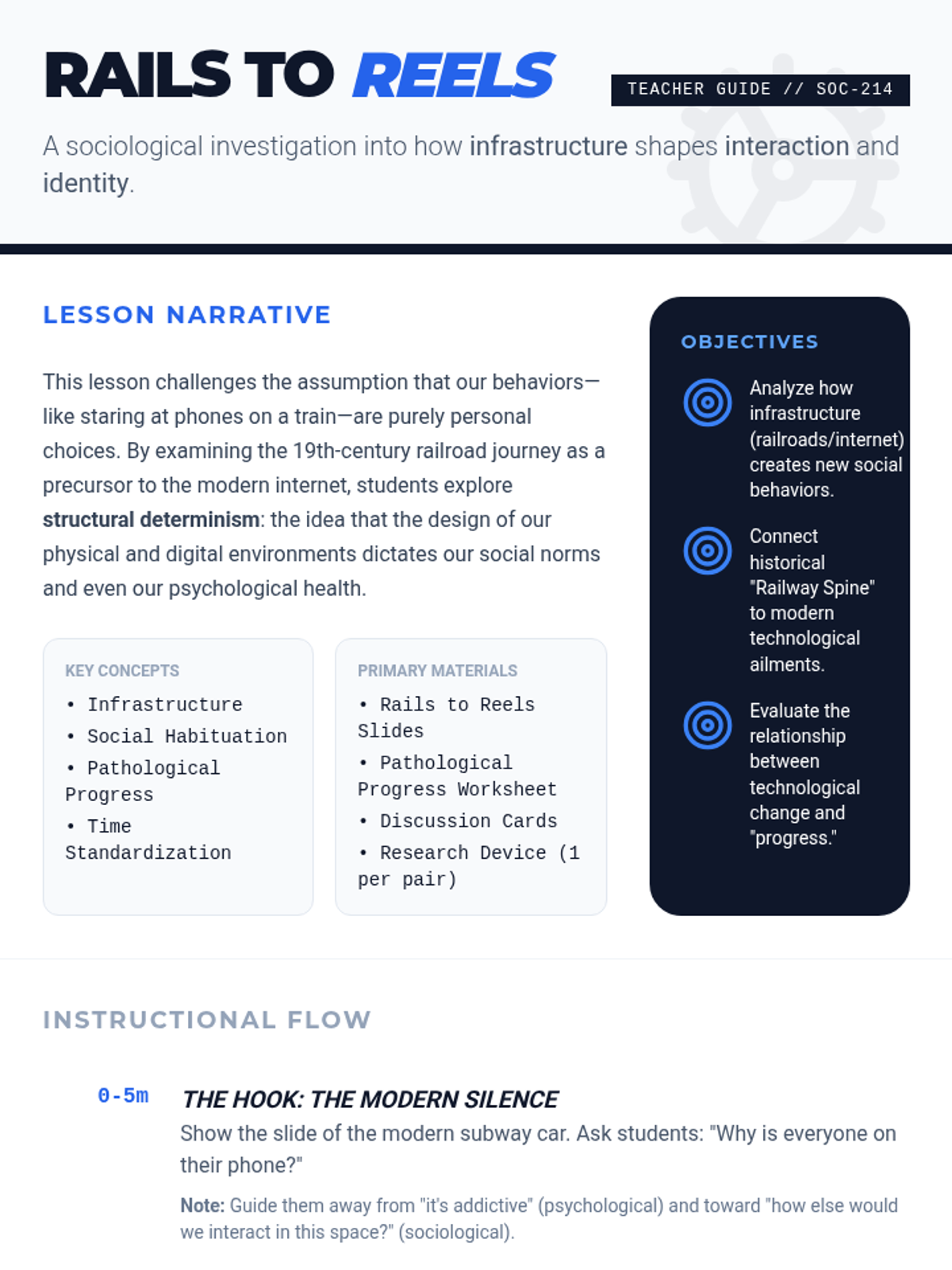
A sociology lesson investigating how technological infrastructure—from 19th-century railroads to the modern internet—reshapes social interaction, human behavior, and psychological health.
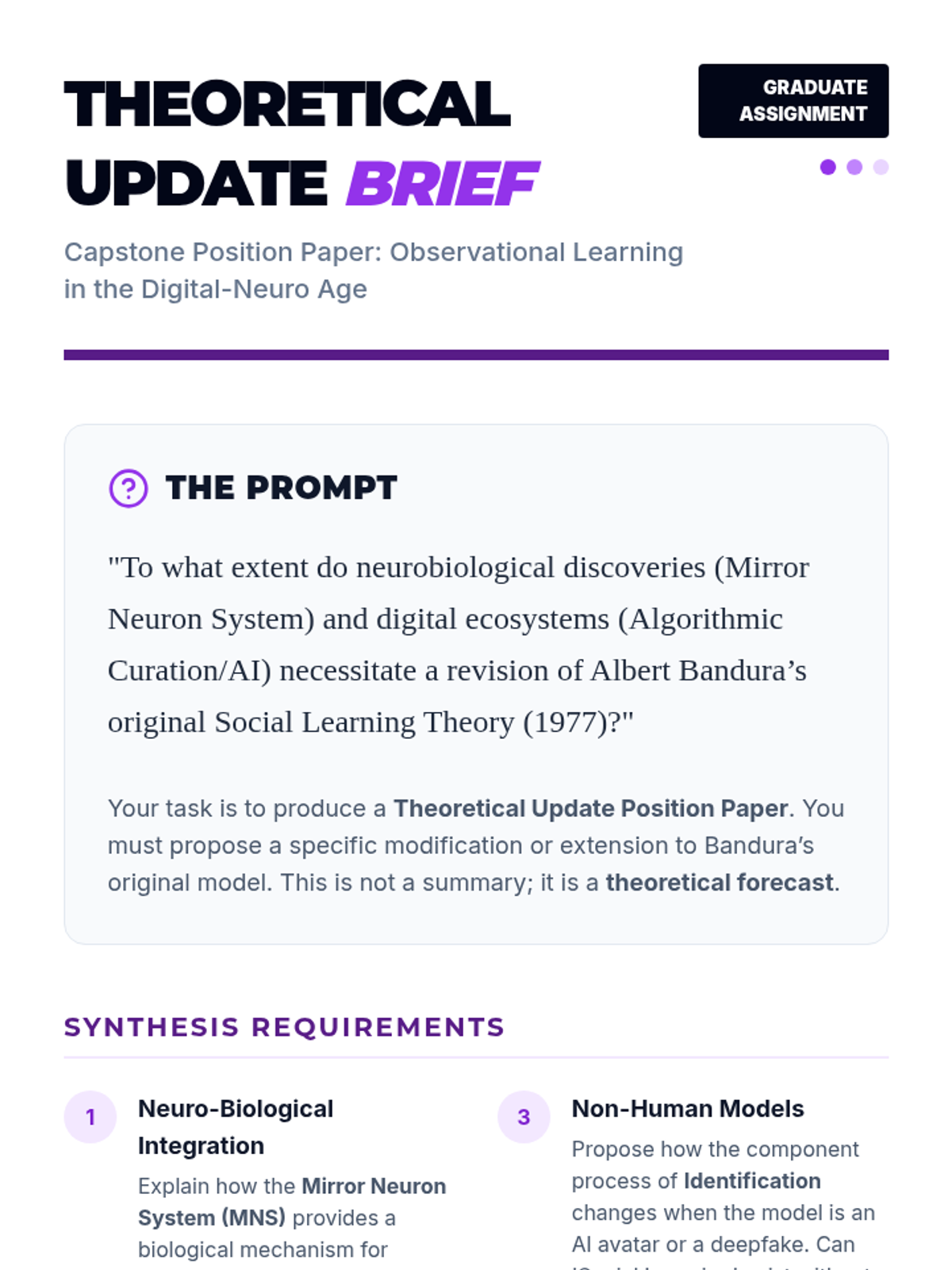
Students produce a capstone forecast or position paper predicting the future of observational learning in an era of deepfakes and virtual reality. They must propose theoretical updates to Bandura’s model to accommodate non-human models.
This lesson explores how algorithms curate models for users, potentially narrowing the scope of observational learning. Students discuss the implications of AI-driven content selection on the 'Environment' aspect of reciprocal determinism.
Students investigate how 'influencer culture' relies on para-social relationships to facilitate modeling. The lesson examines how likes and shares function as vicarious reinforcement on a massive, quantified scale.
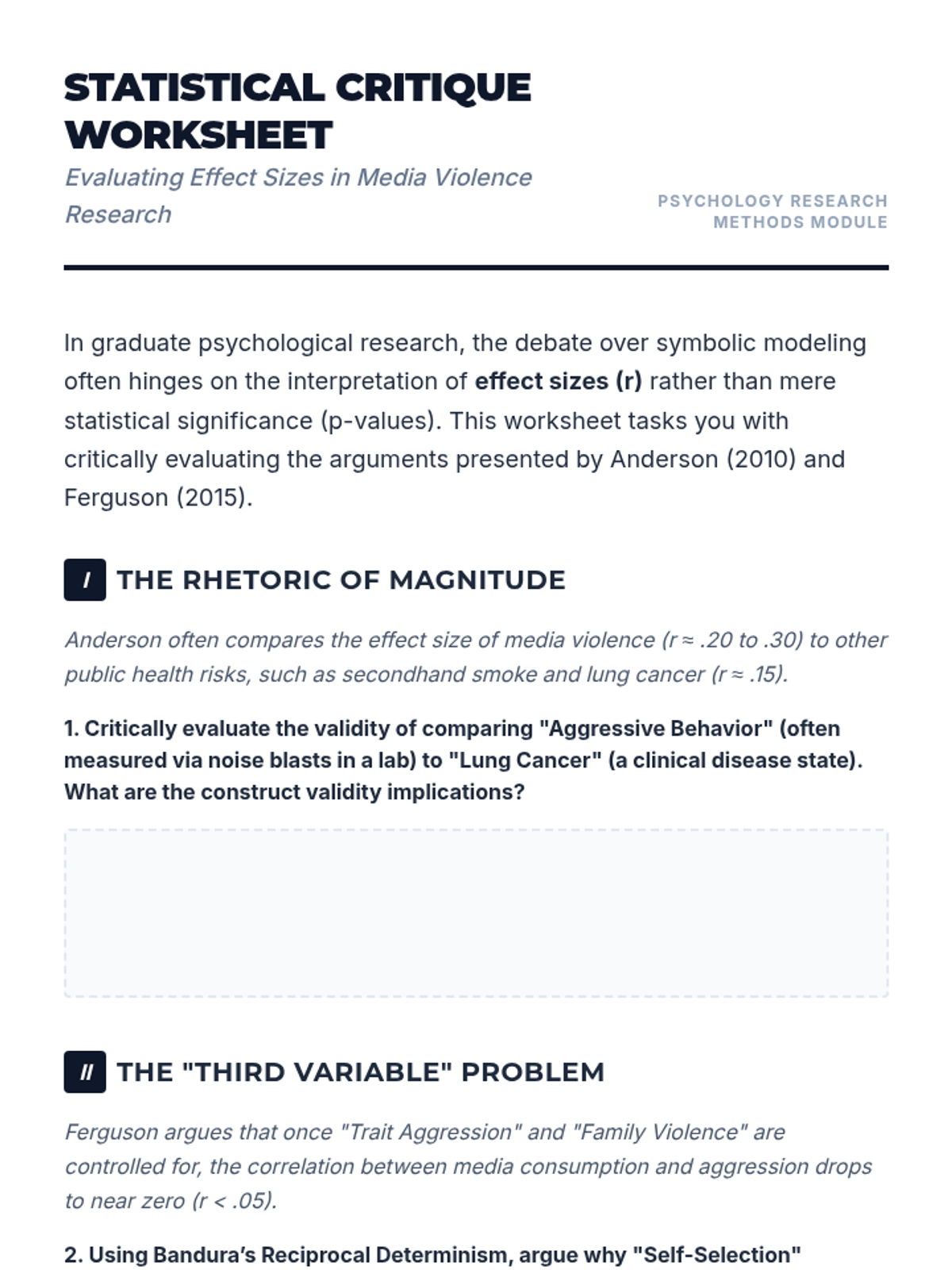
This lesson updates Bandura's concerns about TV violence for the streaming age. Students analyze longitudinal studies on media consumption and behavioral aggression, debating the magnitude of effect sizes in modern literature.
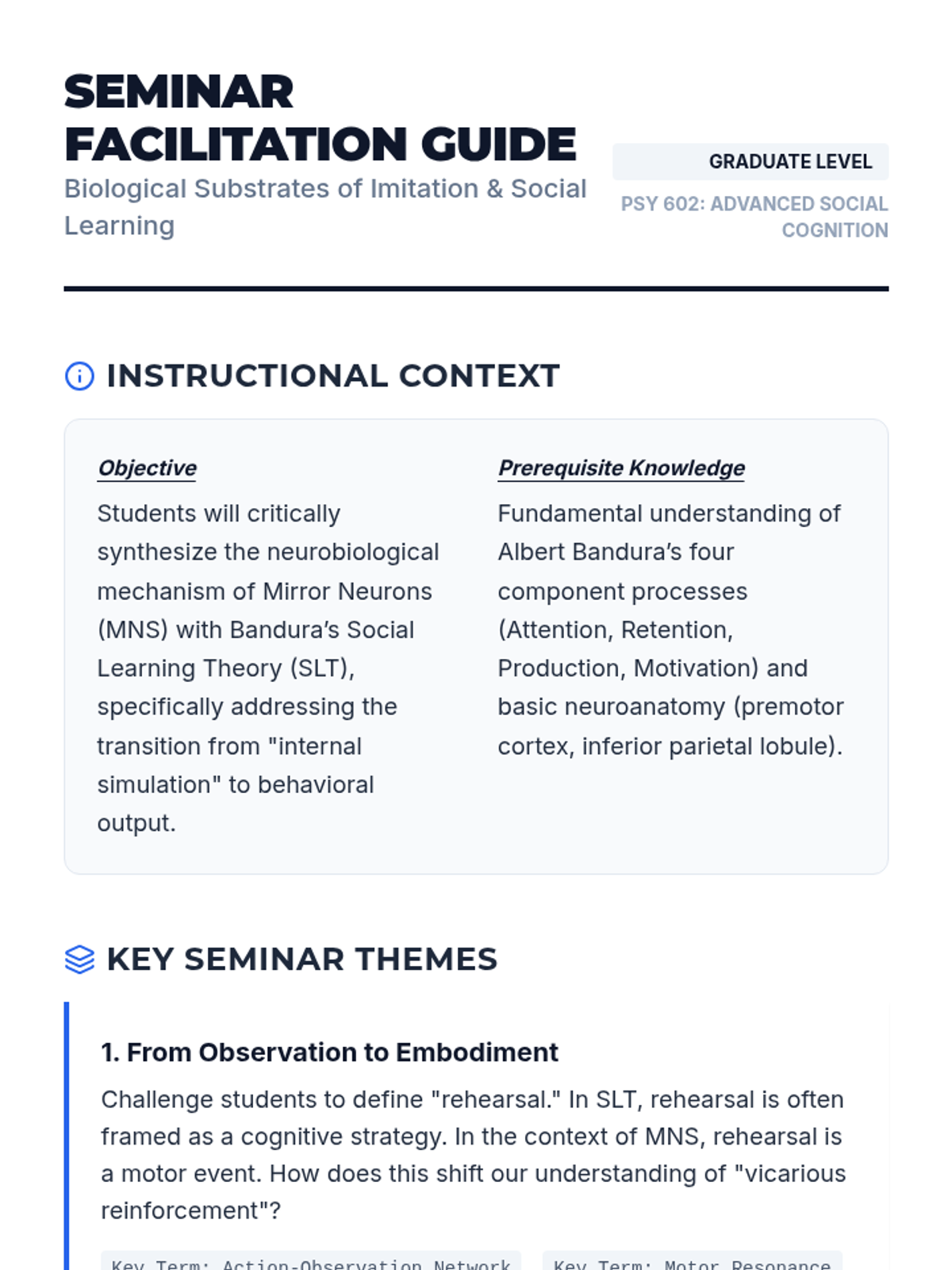
Students review neuroscientific literature regarding mirror neurons in the premotor cortex and their potential role in empathy and imitation. The lesson critically evaluates the 'broken mirror' hypothesis and the biological hardwiring for social learning.
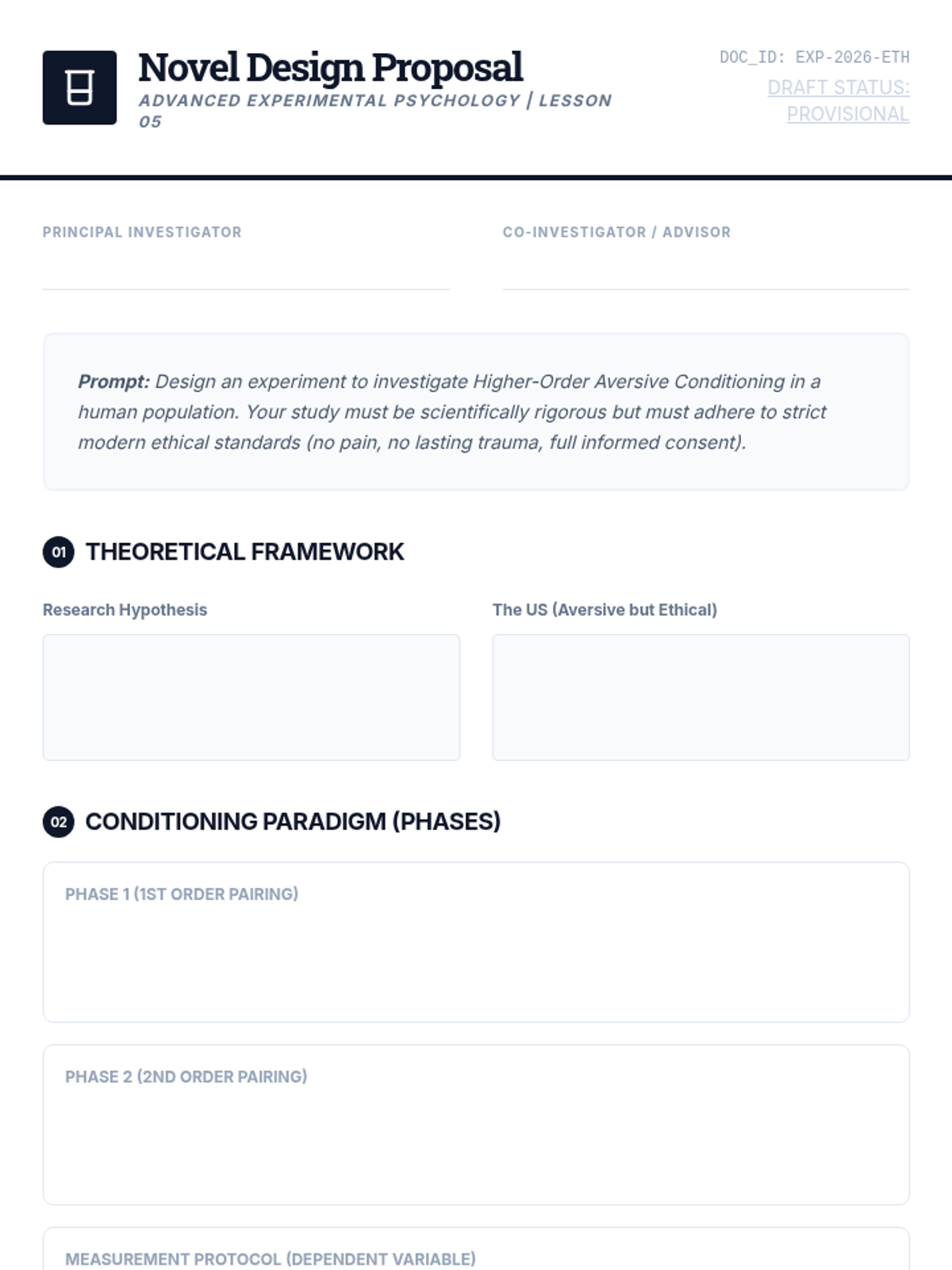
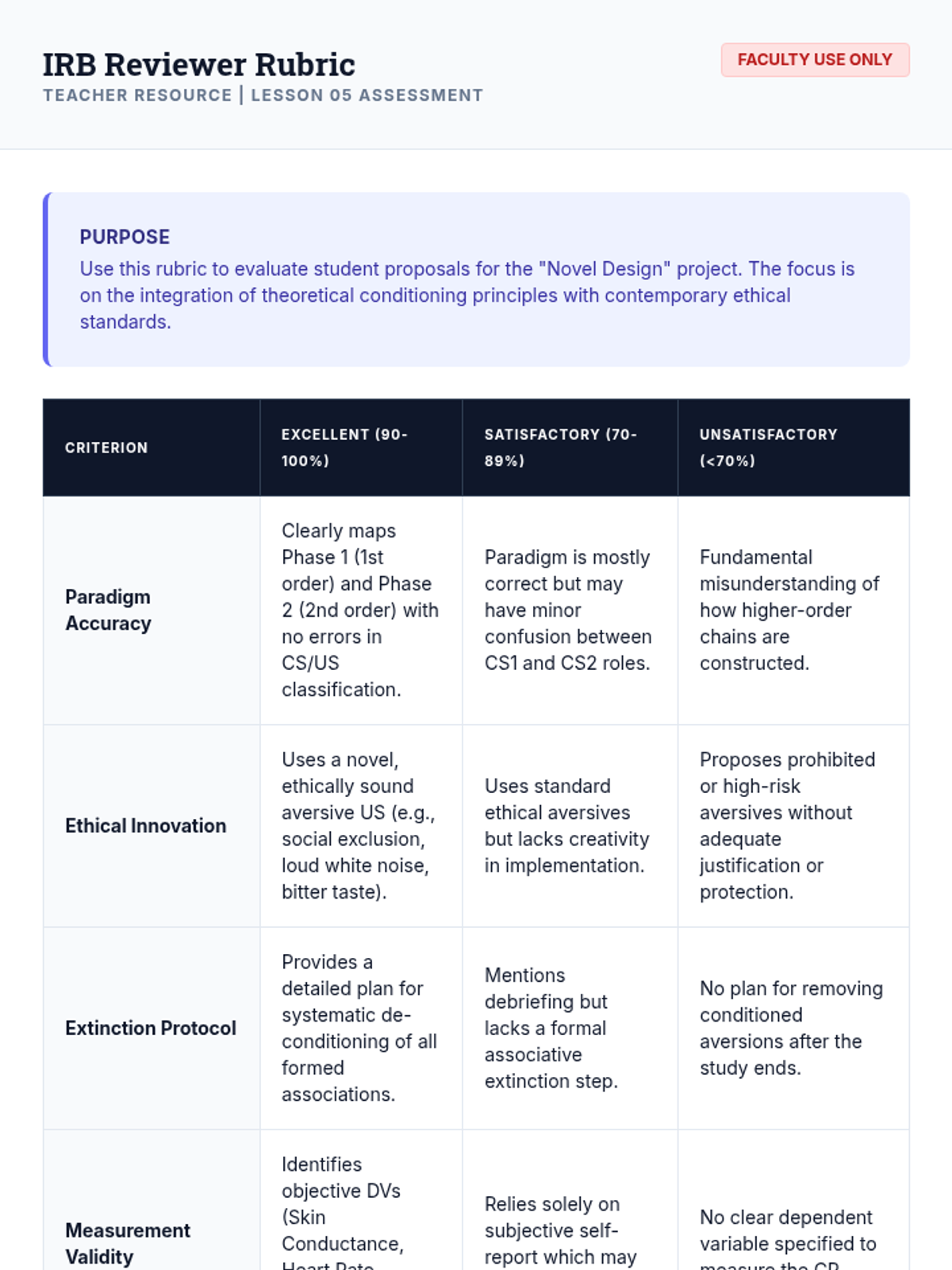
A critical evaluation of the ethics of aversive conditioning, culminating in a student-designed research proposal that balances scientific rigor with ethical compliance.
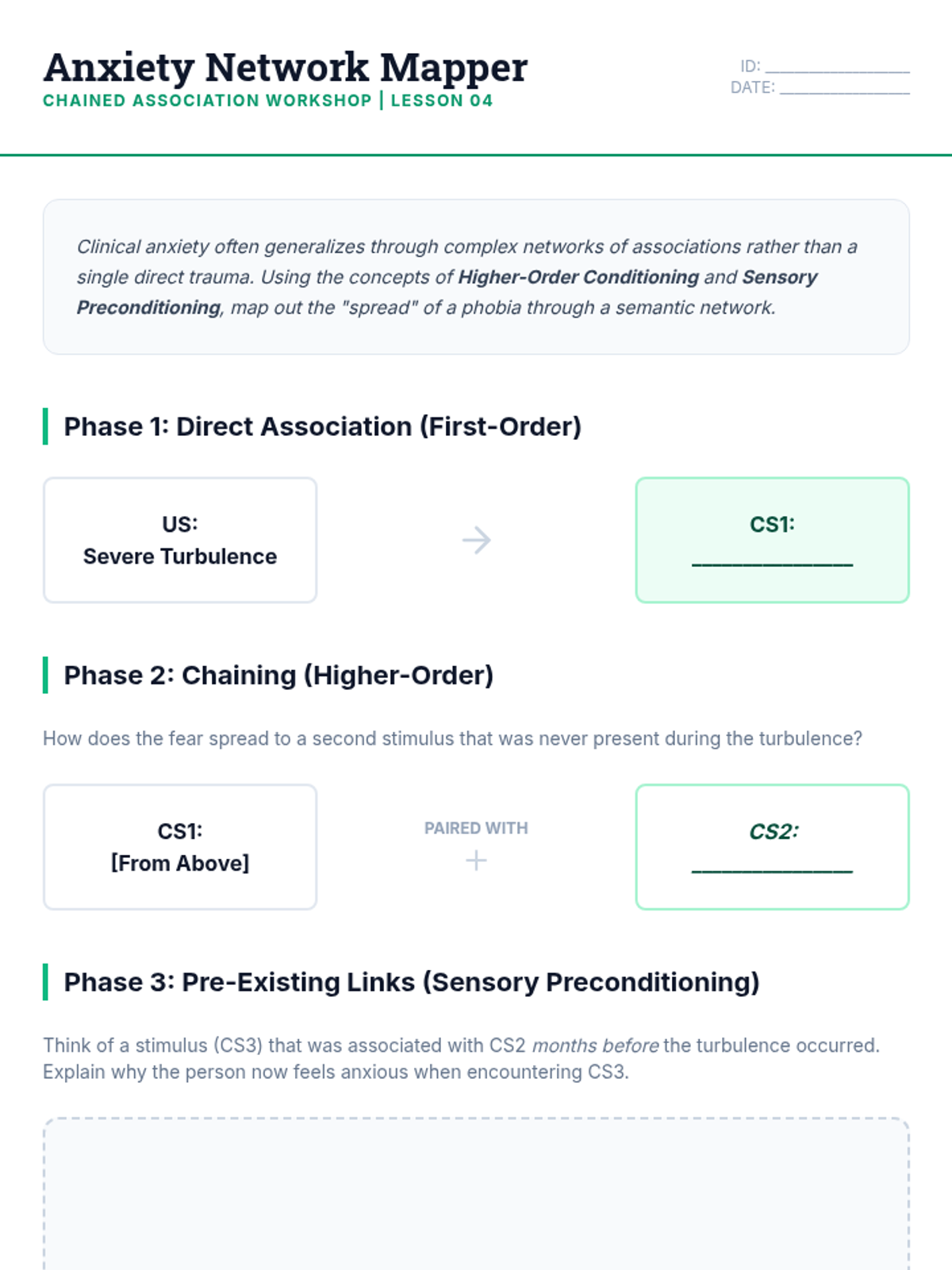
An advanced look at chaining associations (higher-order) and pre-associating neutral stimuli (sensory preconditioning) and their roles in semantic anxiety networks.
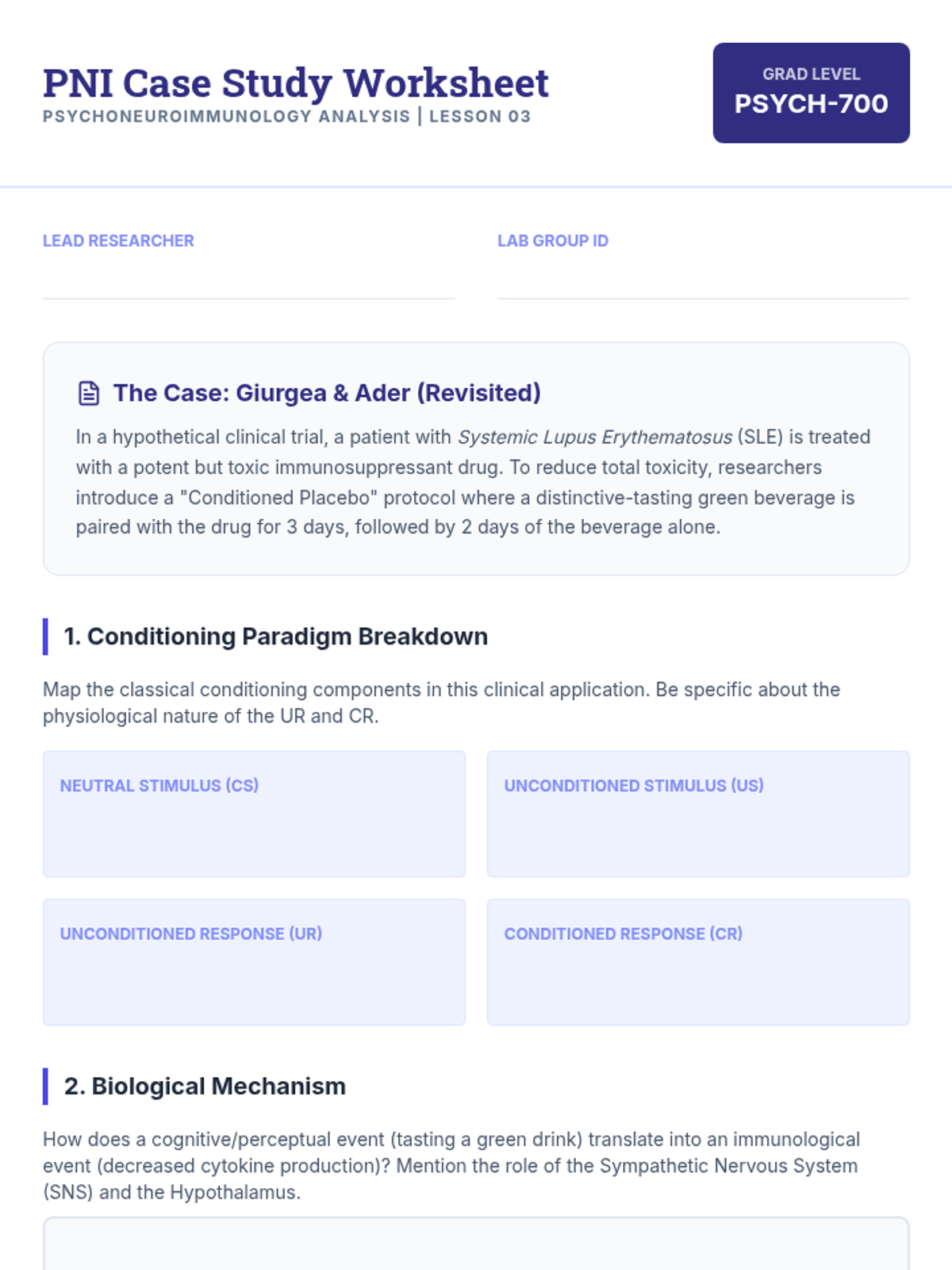
Students explore groundbreaking research where immune responses are classically conditioned, investigating the interdisciplinary field of psychoneuroimmunology.
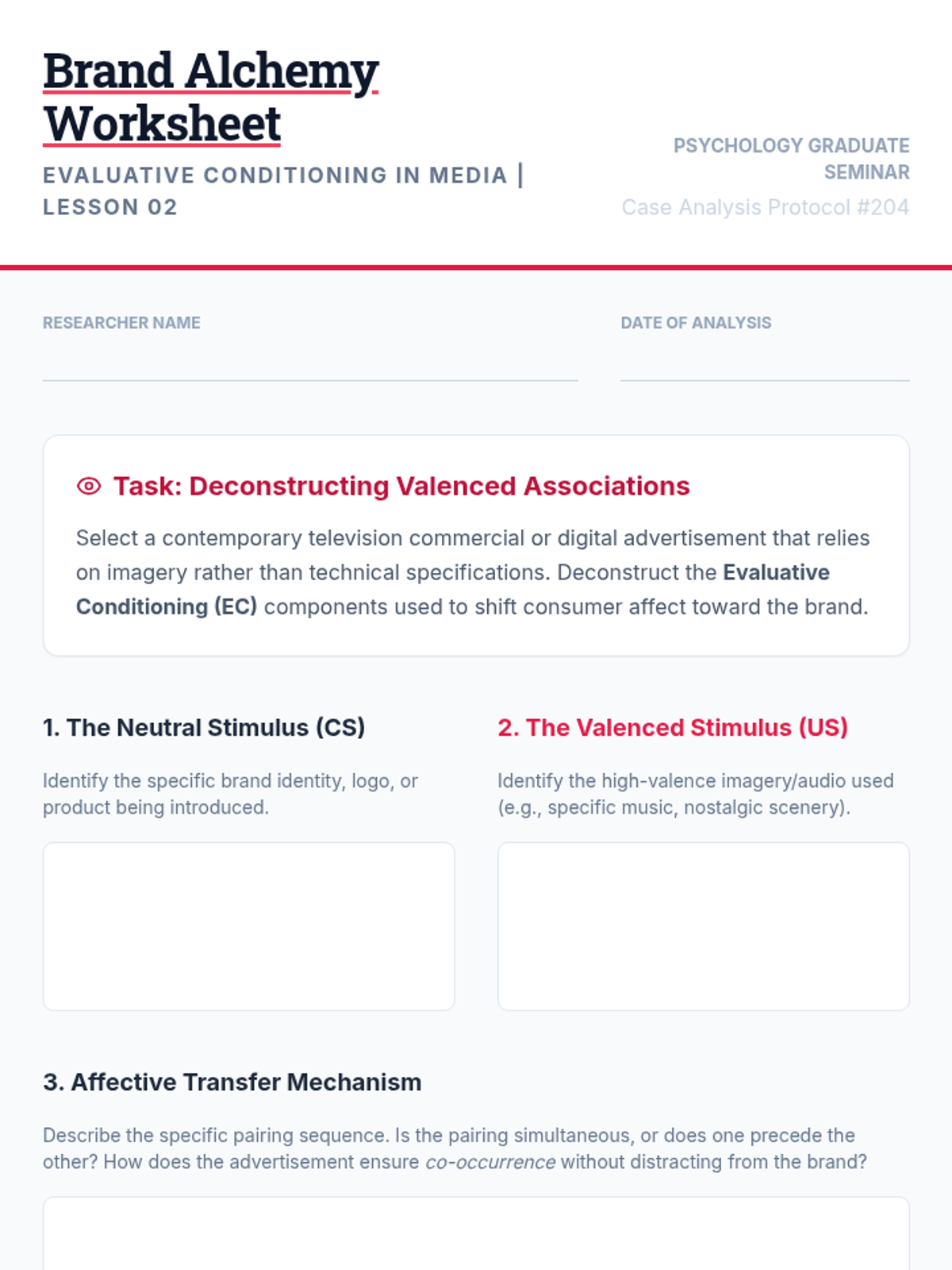
This lesson examines how pairing neutral stimuli with liked or disliked stimuli shifts affective preference, with applications in advertising and prejudice.
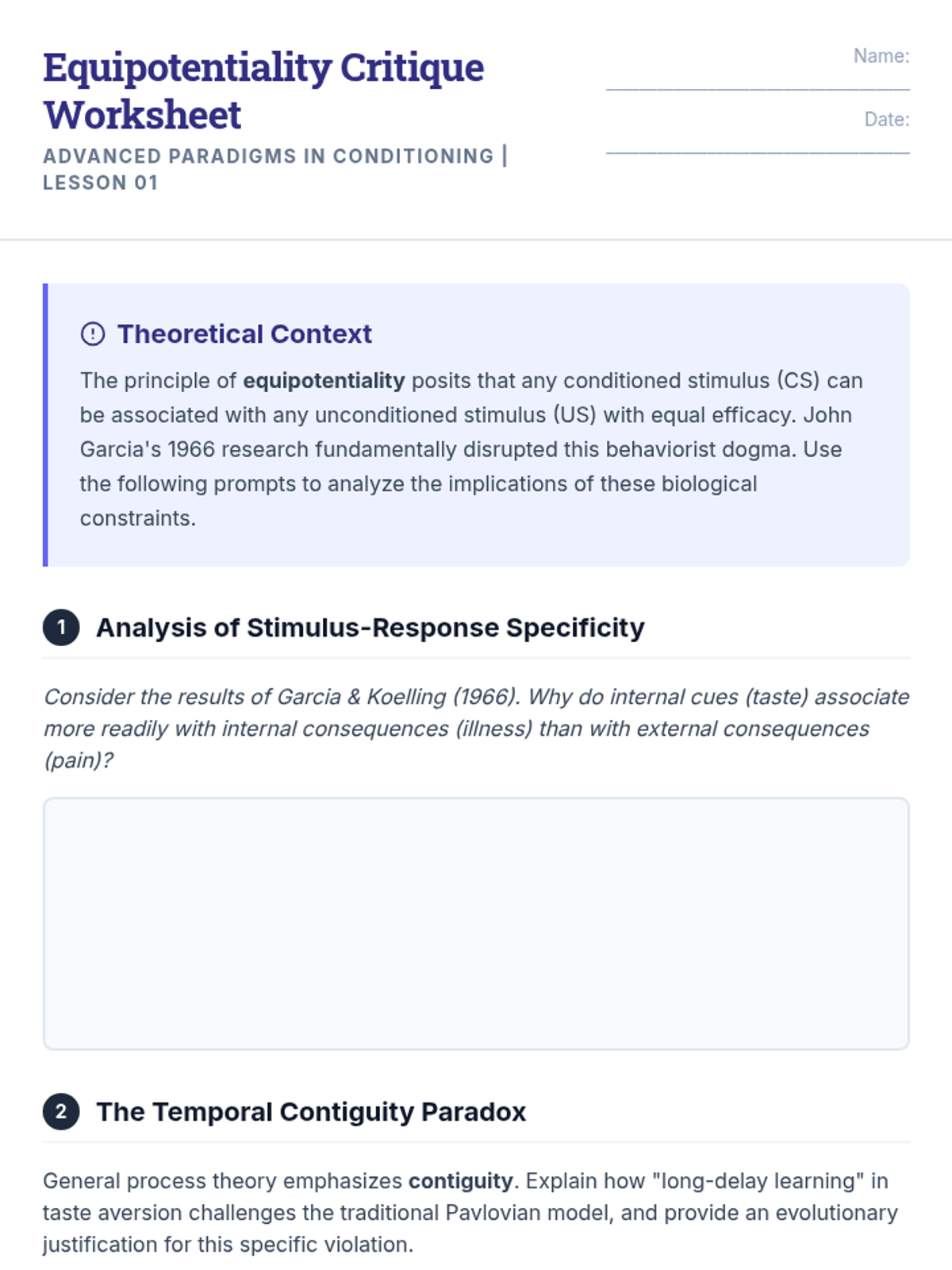
Students review the seminal work on taste aversion, analyzing why some associations are learned over long delays while others are not, challenging the principle of equipotentiality.
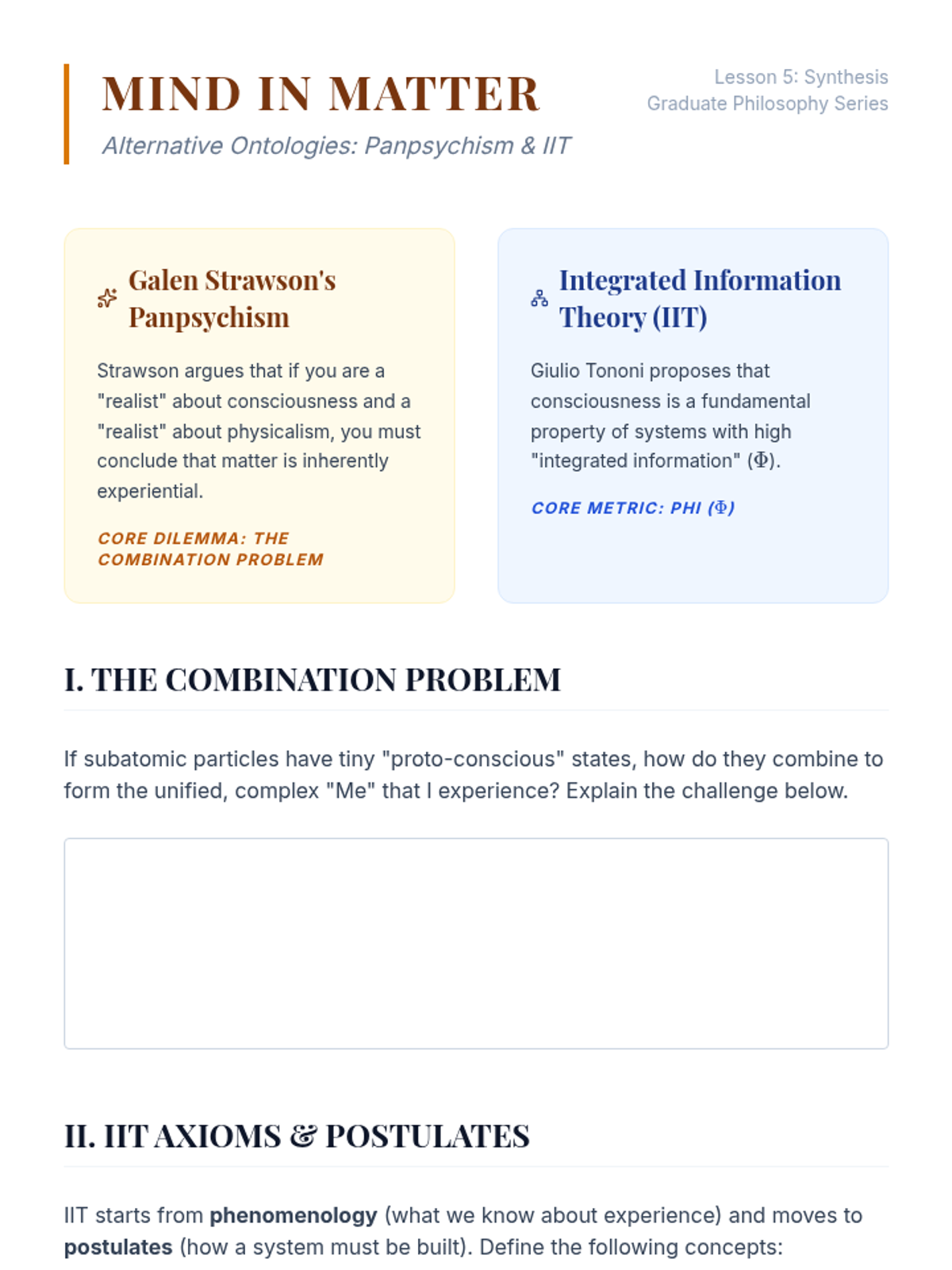
An exploration of Panpsychism and Integrated Information Theory as potential solutions to the hard problem of consciousness.
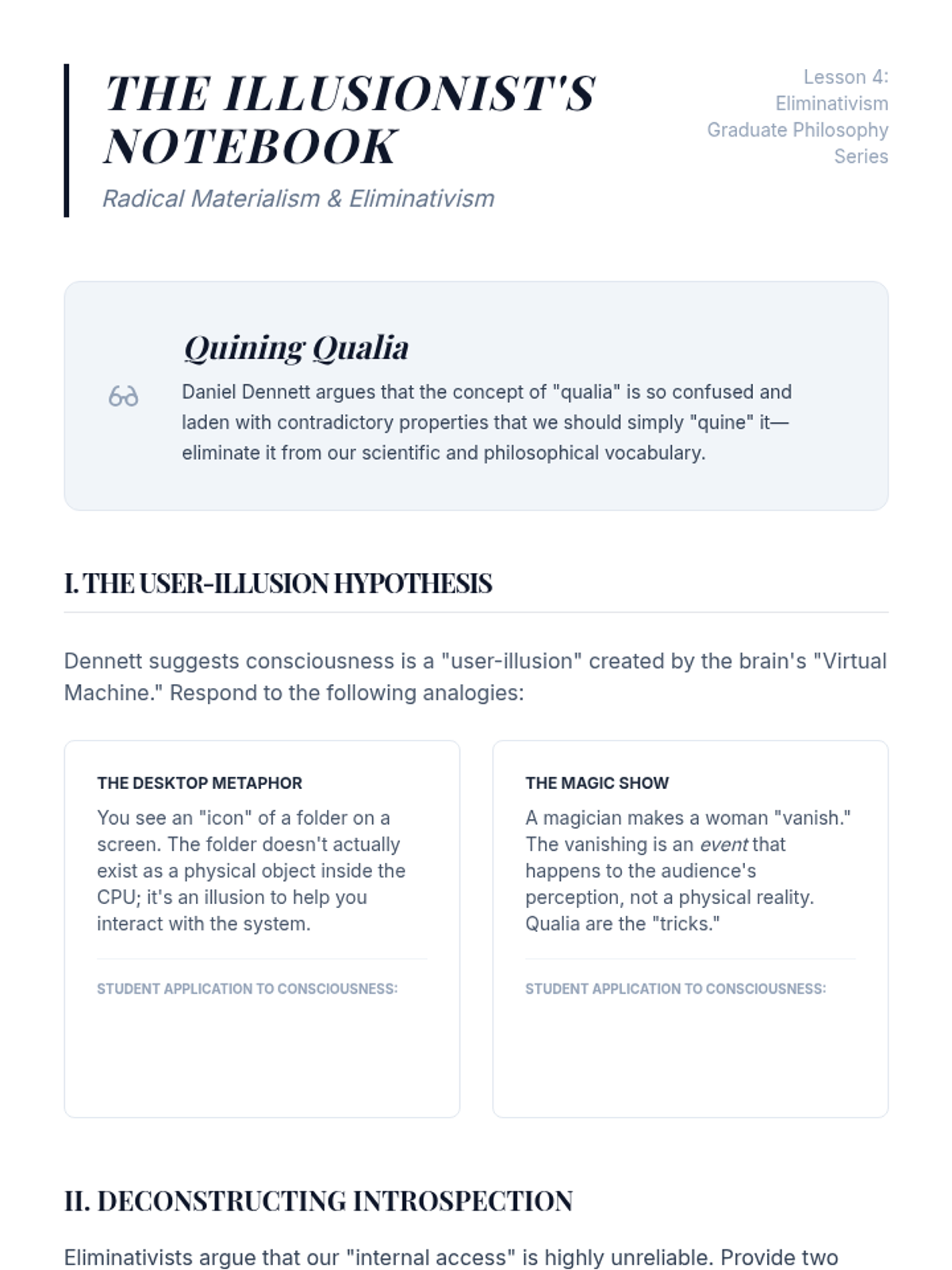
Students critique the radical materialist positions of Eliminativism and Illusionism, questioning the reliability of introspective access to consciousness.
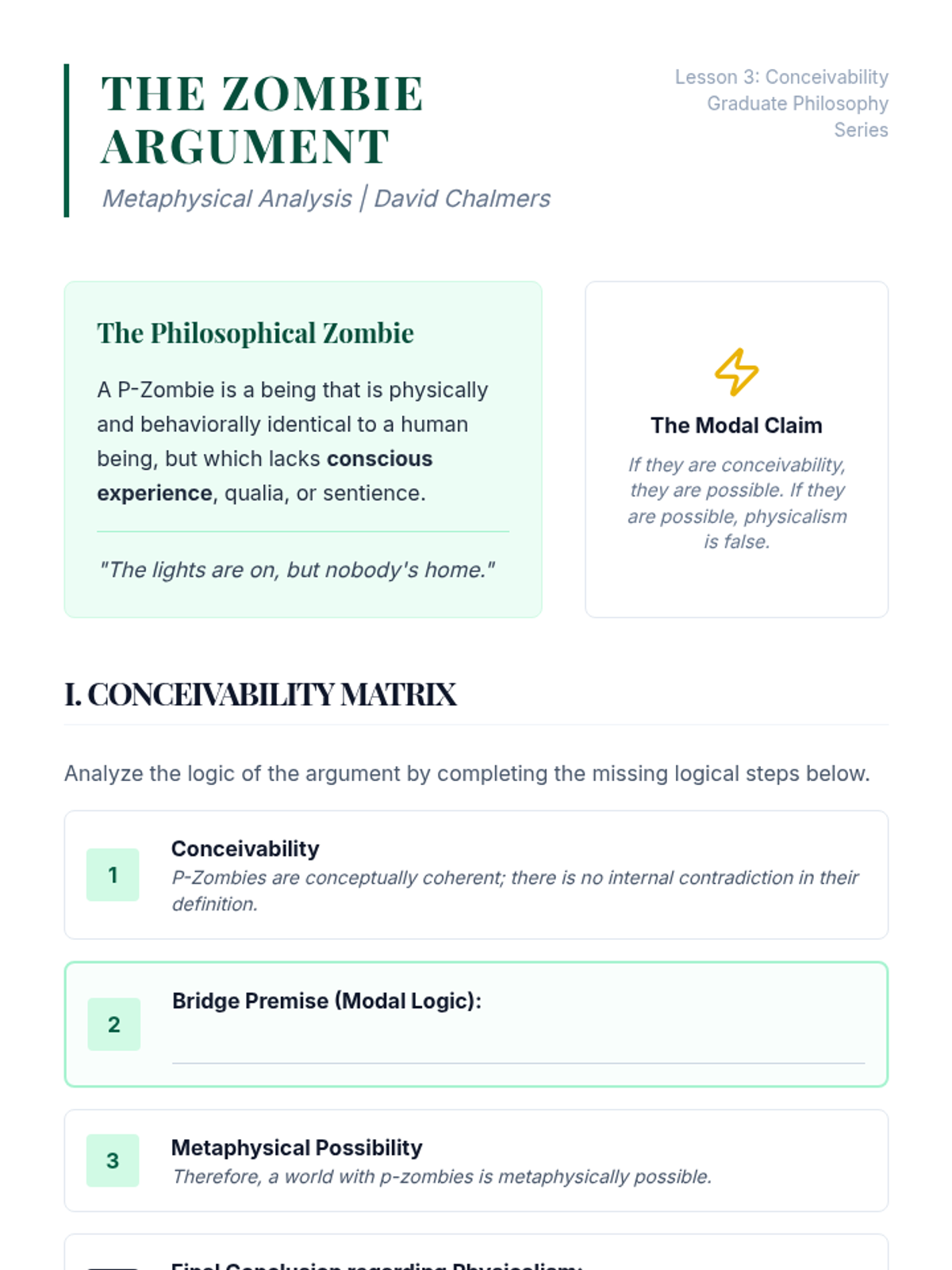
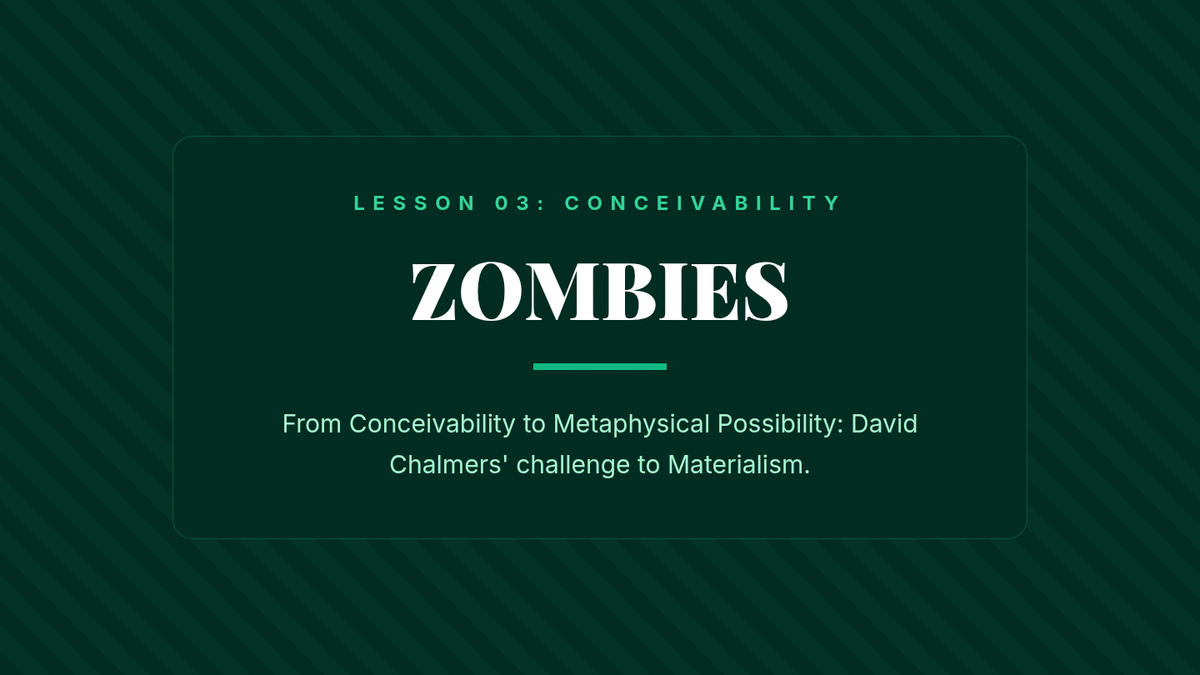
An examination of David Chalmers' philosophical zombie thought experiment and the metaphysical implications of conceivability.
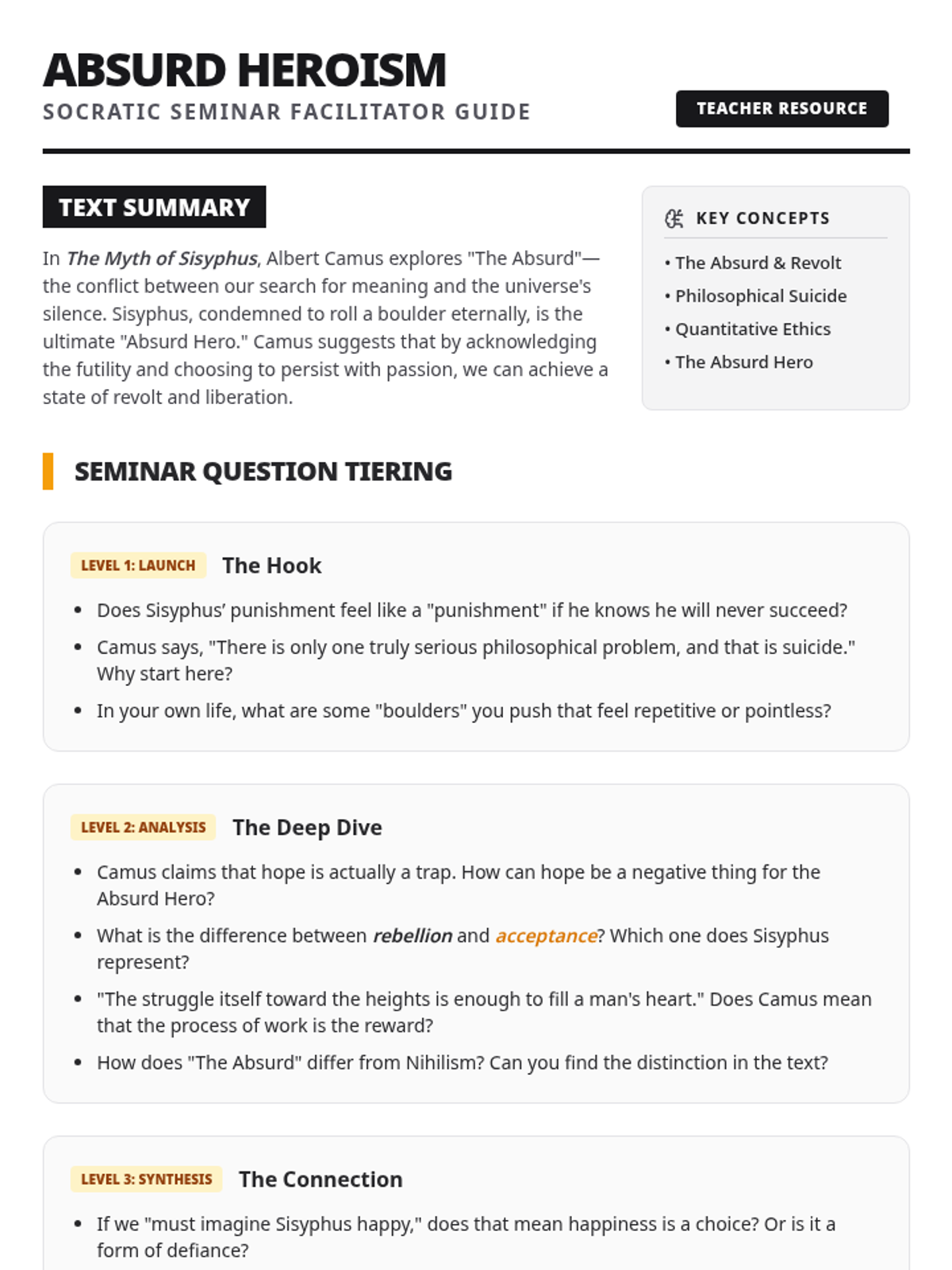
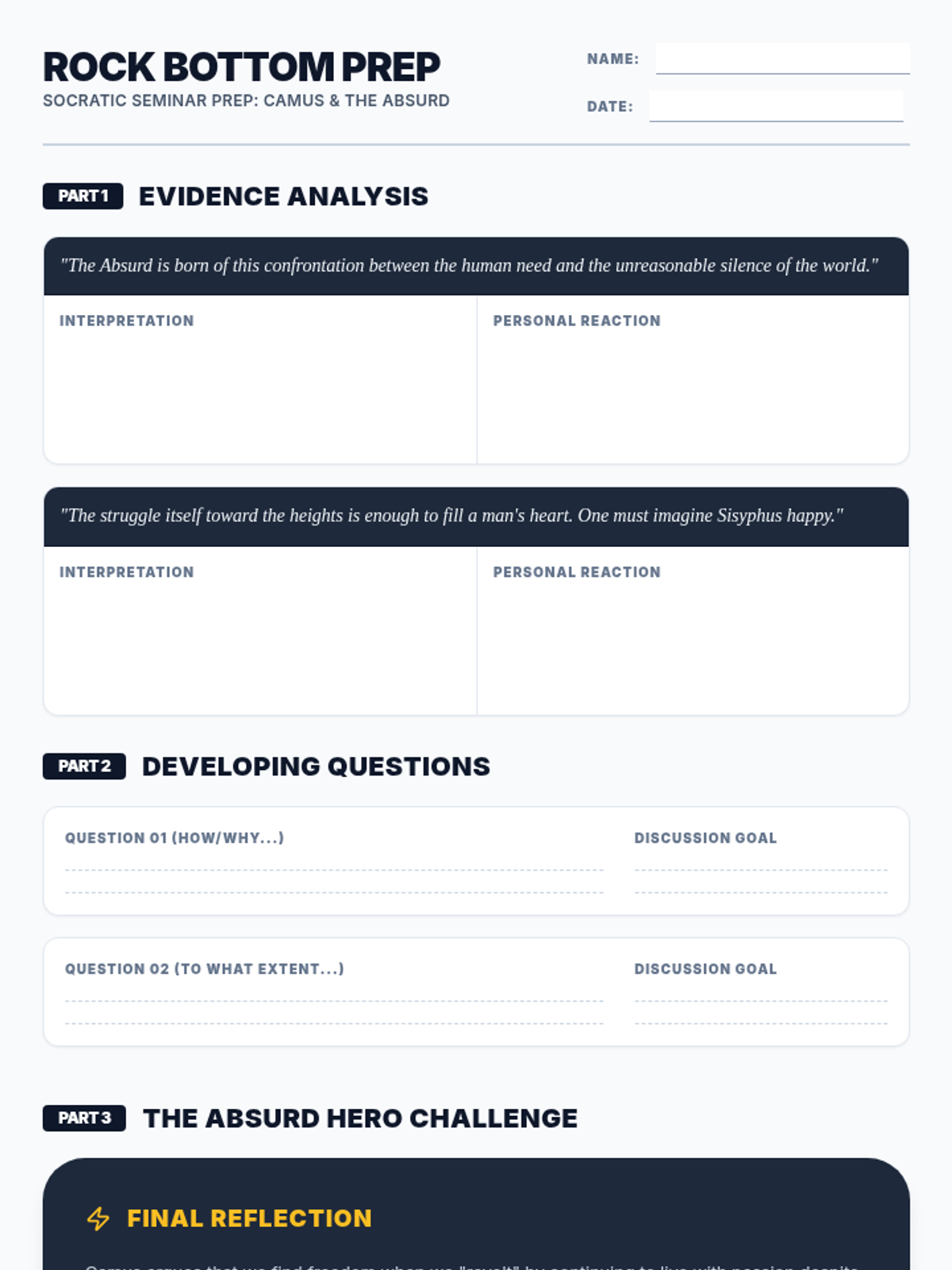
A deep dive into Albert Camus' 'The Myth of Sisyphus', exploring the philosophical concepts of the Absurd, revolt, and the search for meaning in a silent universe through a structured Socratic Seminar.
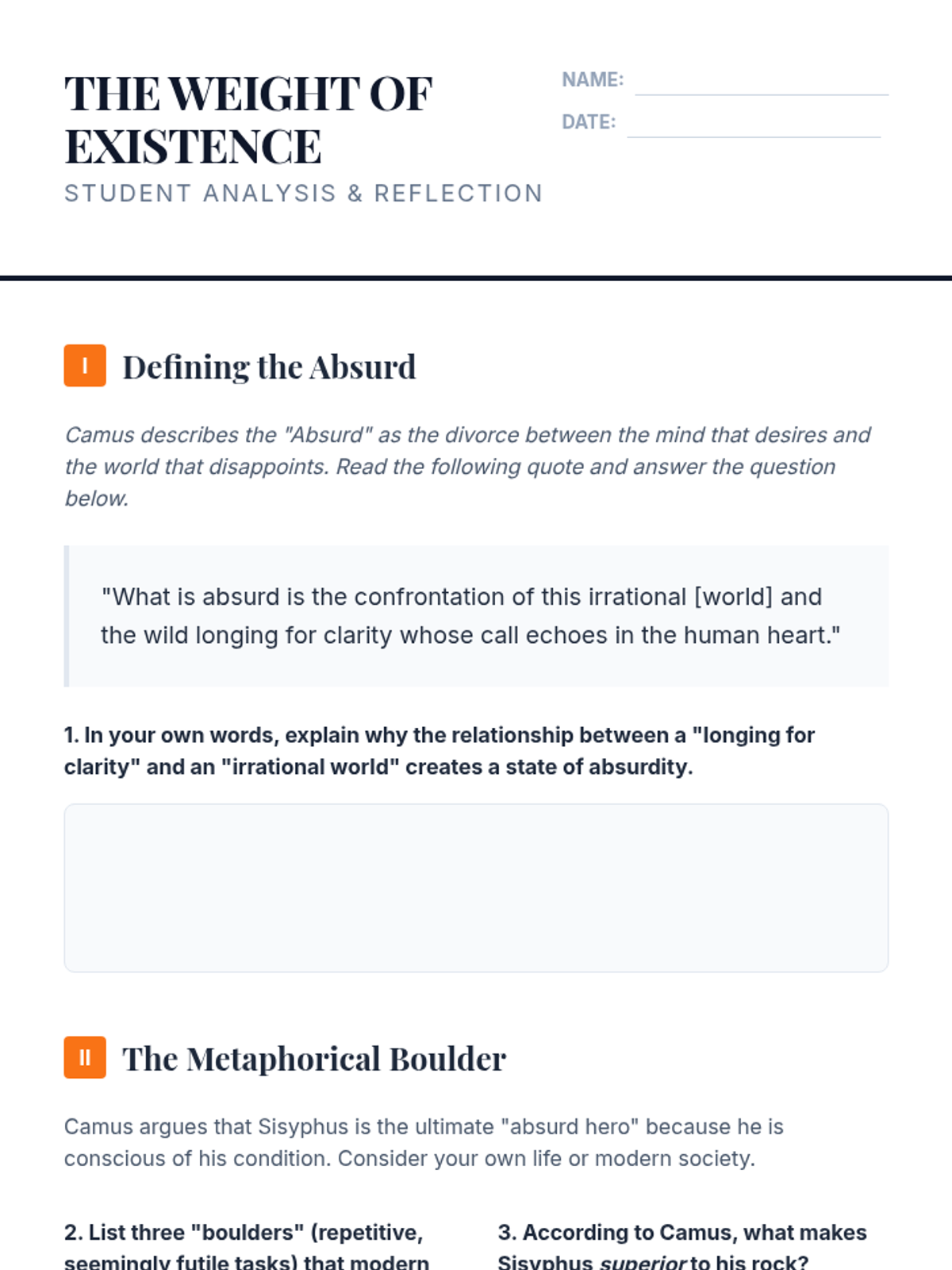
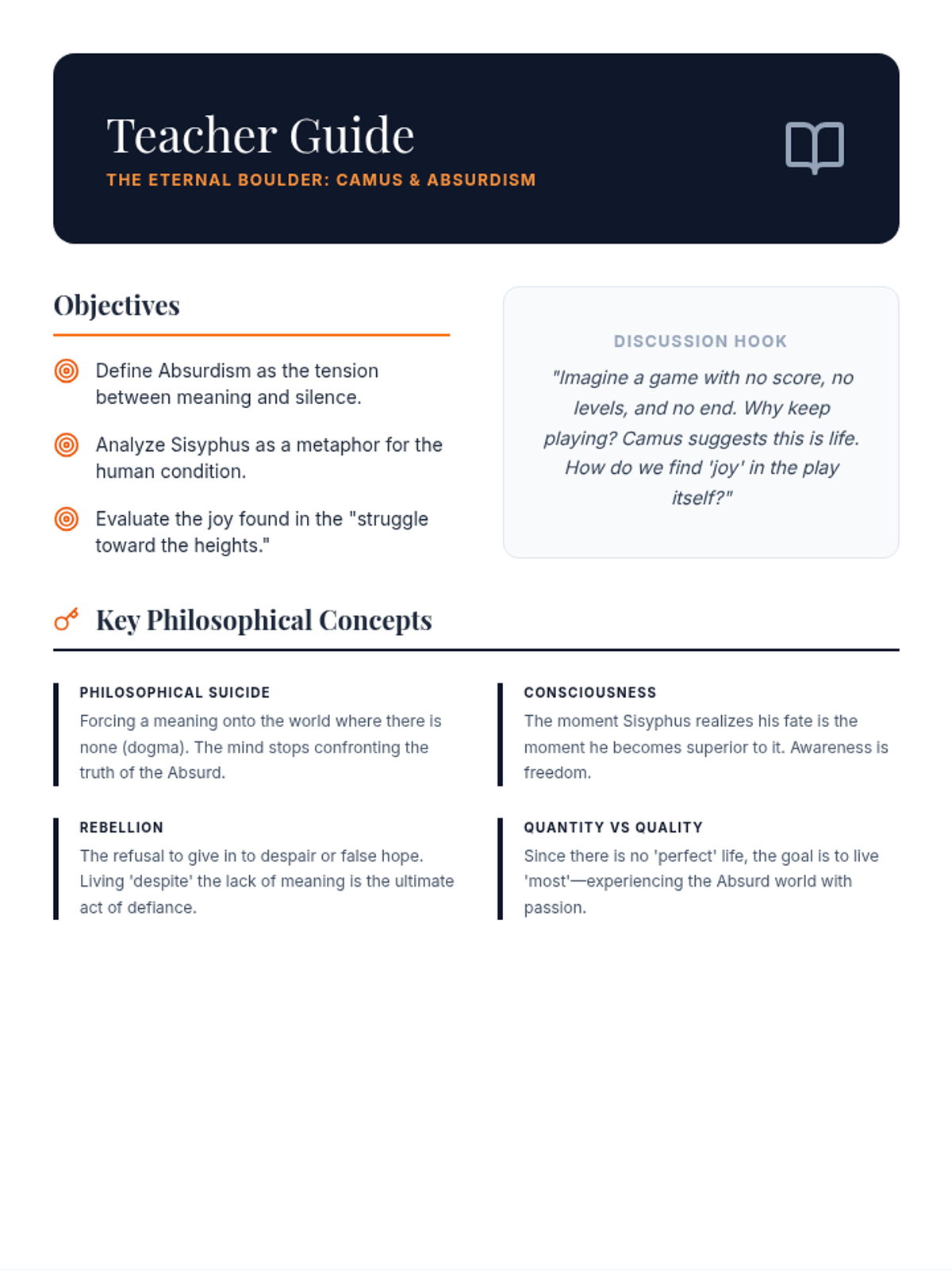
An introductory exploration of Albert Camus's philosophy of Absurdism through the lens of the Myth of Sisyphus, focusing on the metaphor of the eternal boulder and the human search for meaning.
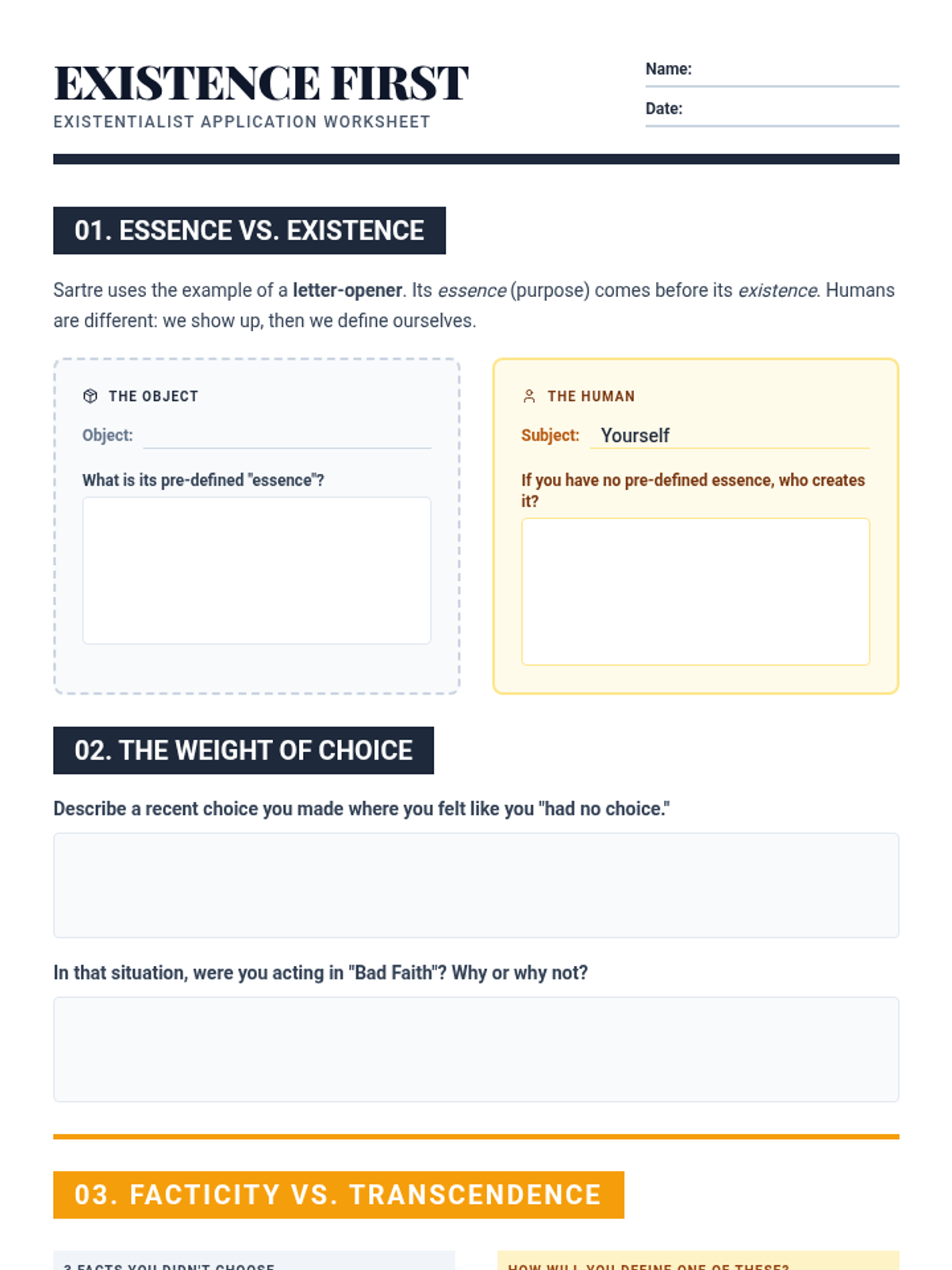
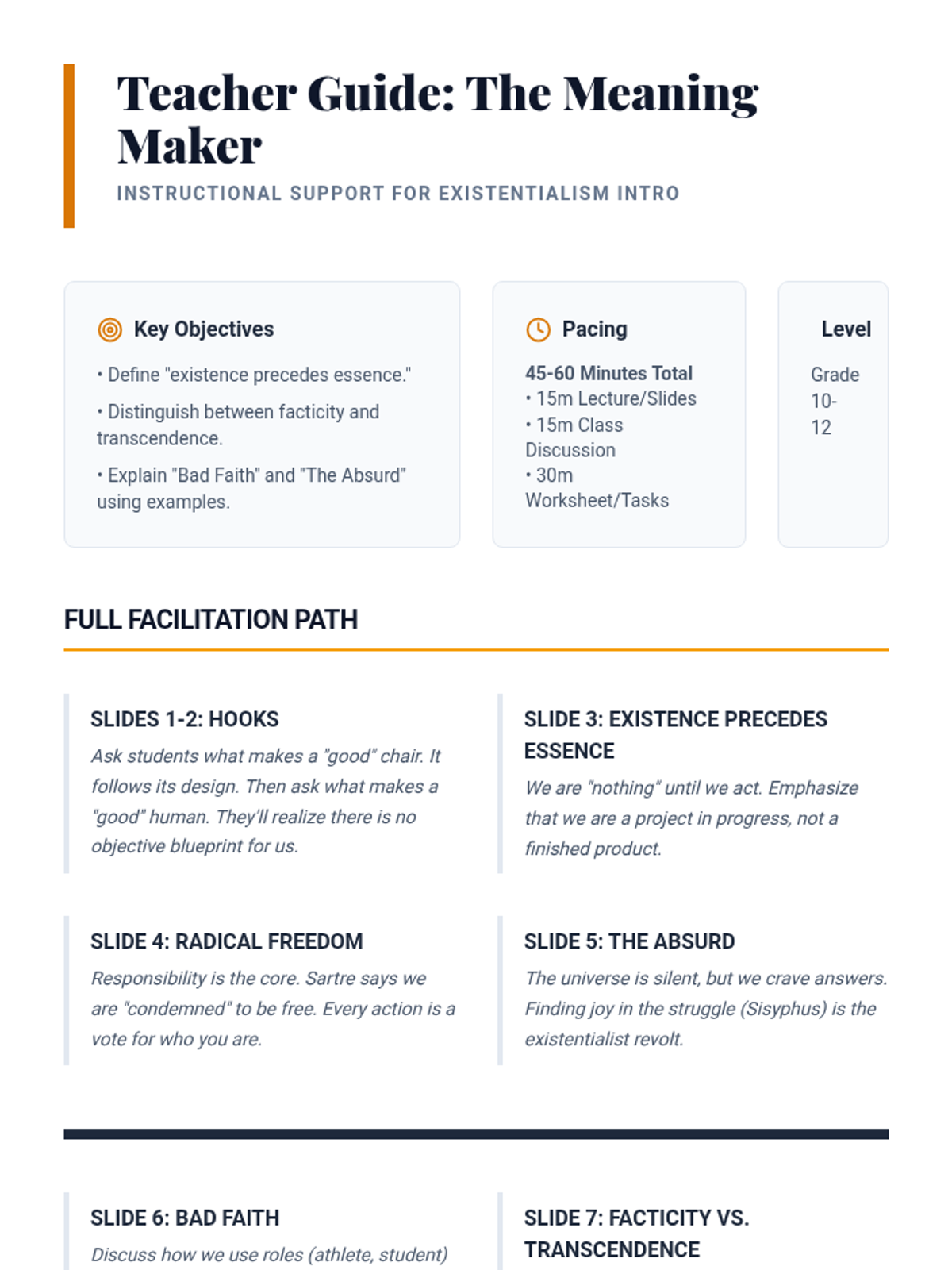
An introductory exploration of existentialist philosophy, focusing on the concepts of radical freedom, existence preceding essence, and the creation of personal meaning in an indifferent universe.
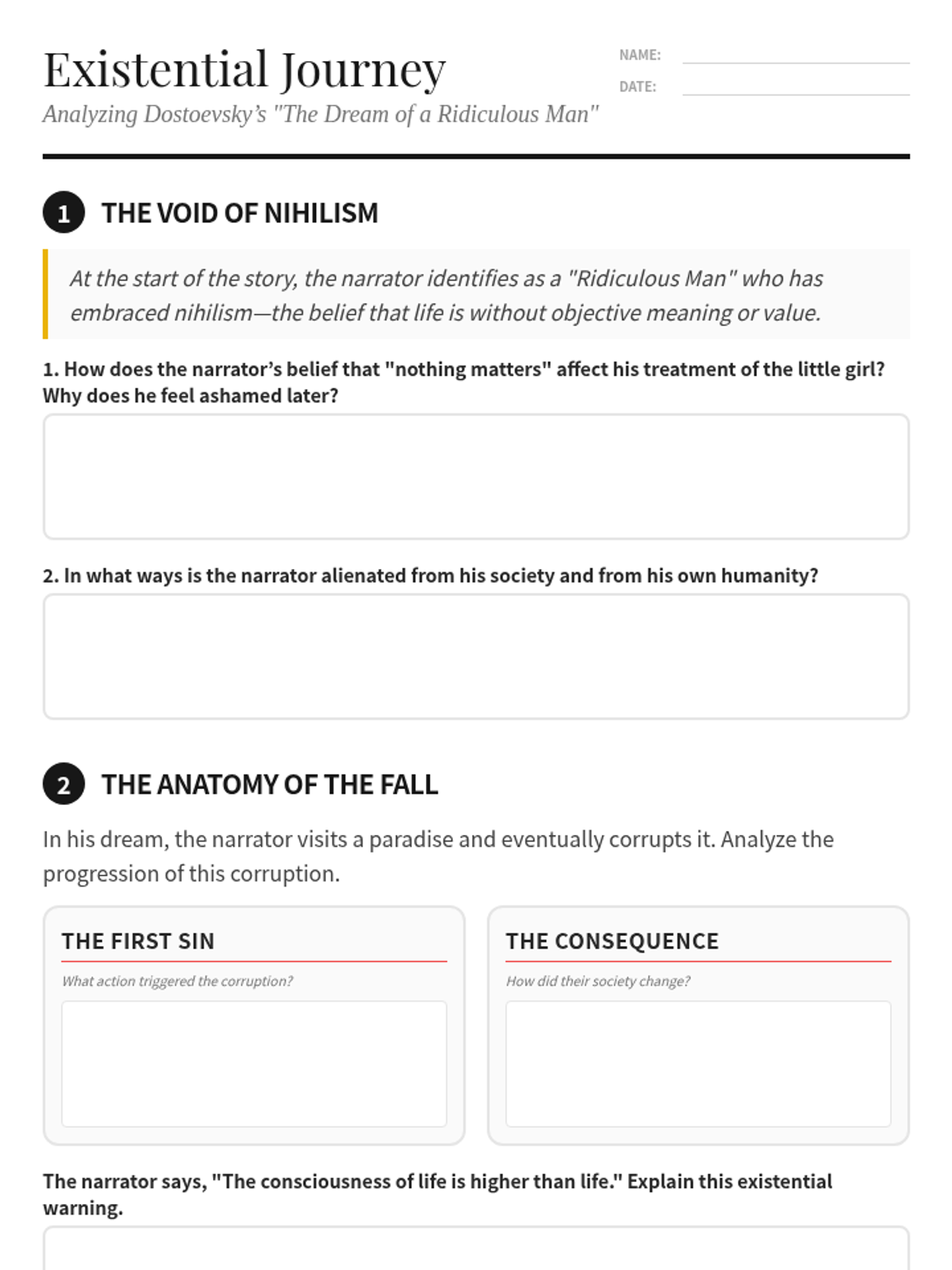
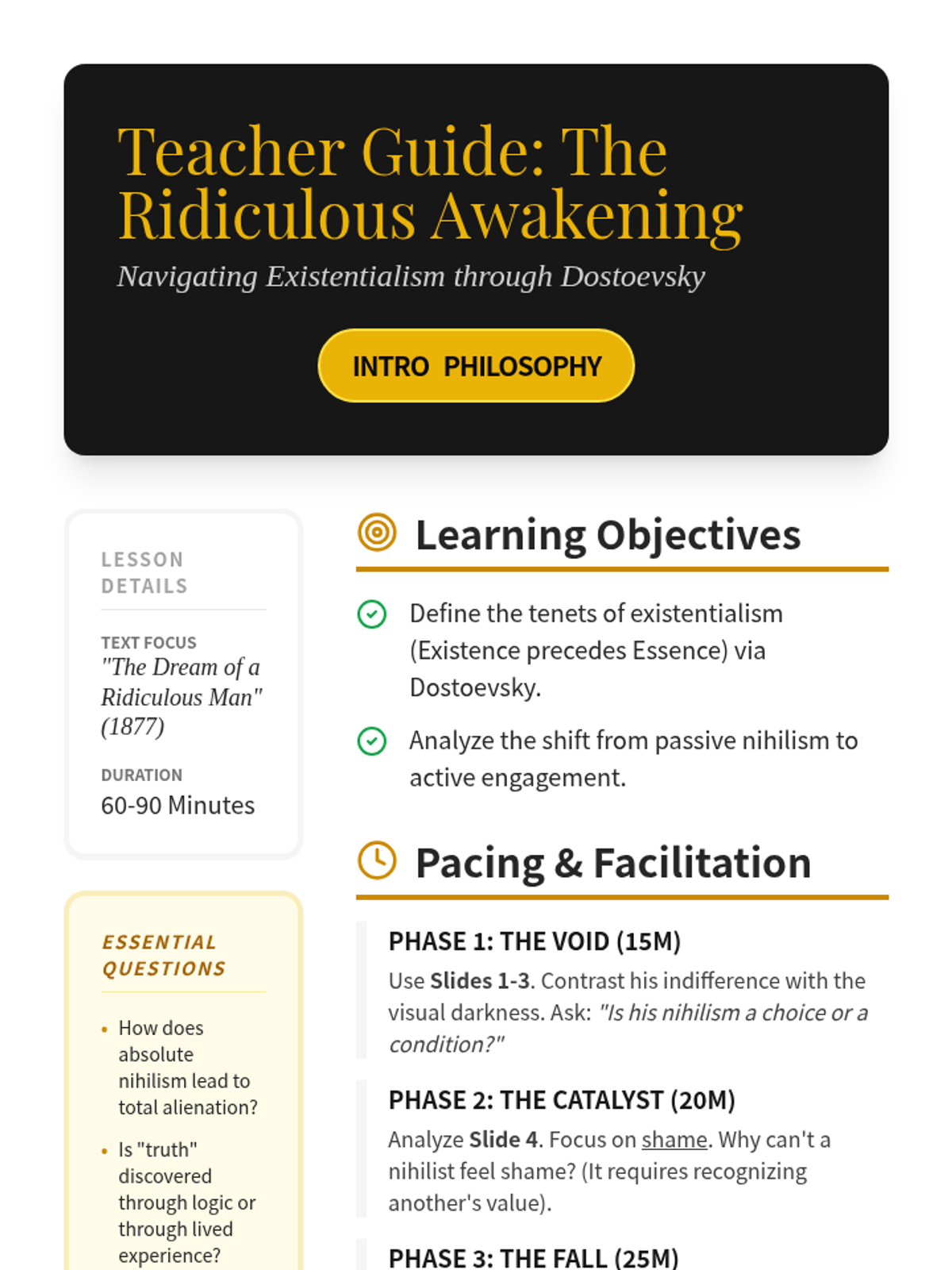
An introductory lesson on existentialist philosophy using Fyodor Dostoevsky's short story 'The Dream of a Ridiculous Man' as a case study. Students explore themes of nihilism, meaning-making, and individual responsibility.
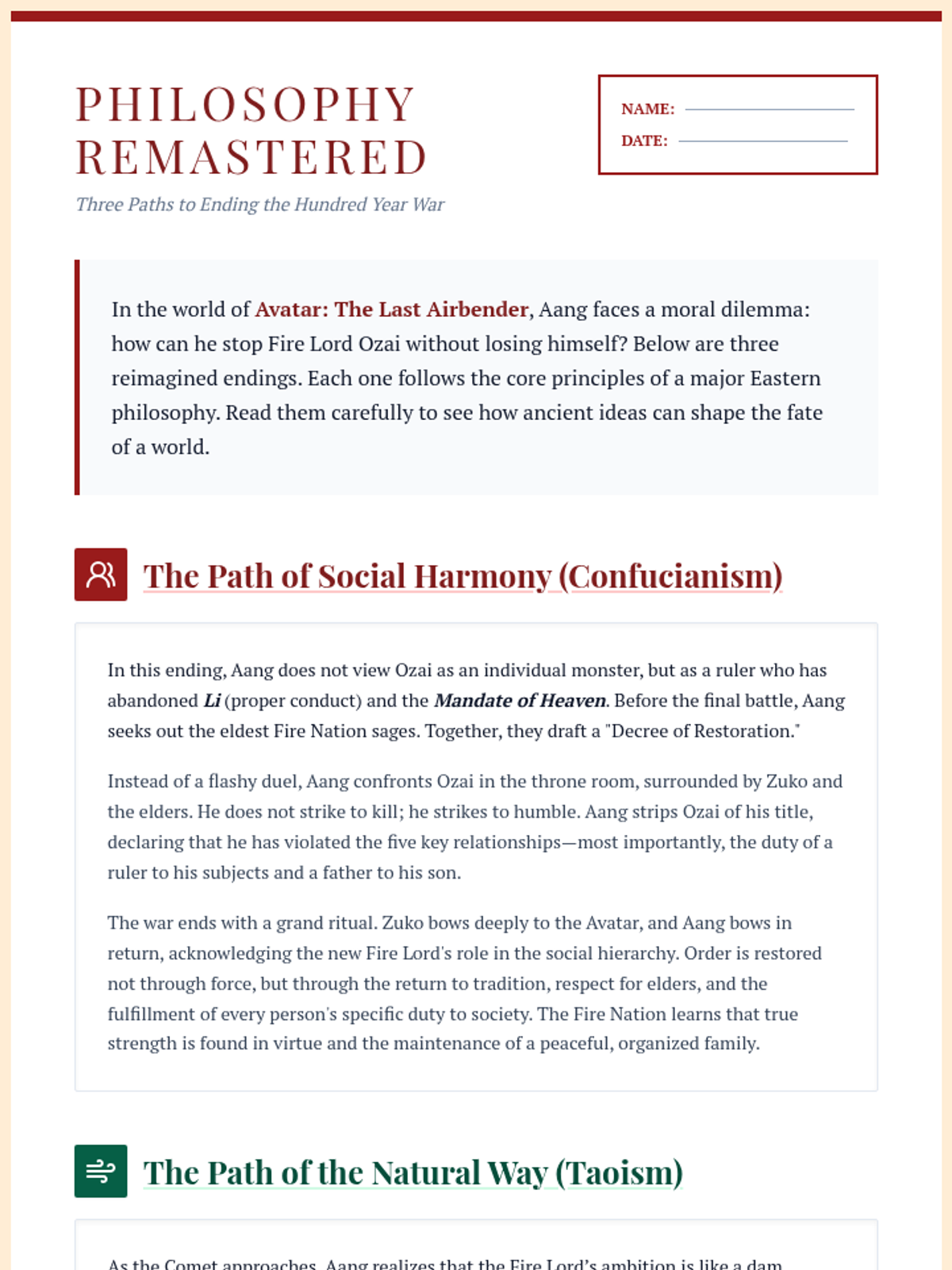
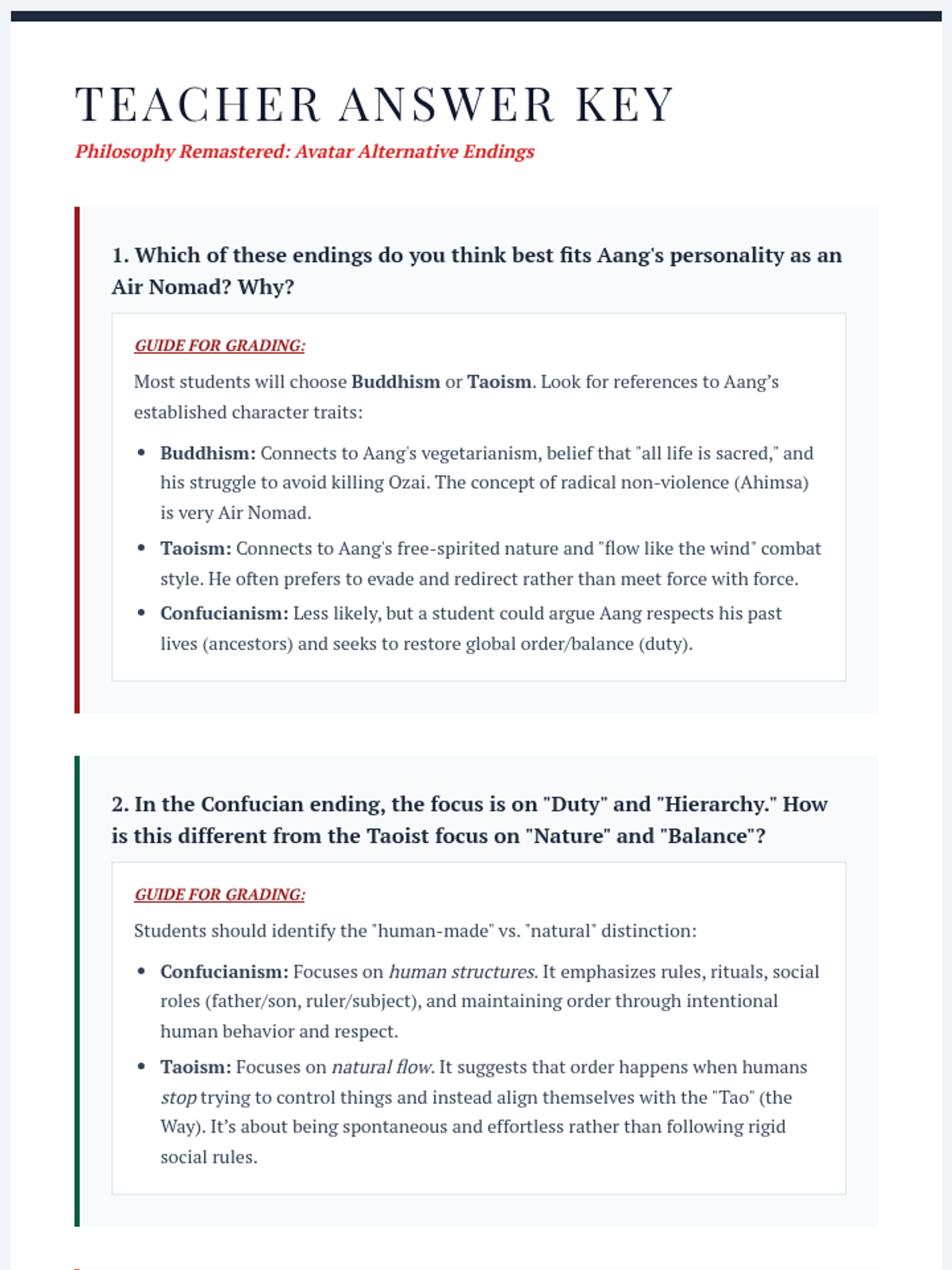
Students explore the core tenets of Confucianism, Taoism, and Buddhism by analyzing three alternative endings to the Avatar: The Last Airbender series, each reflecting a different Eastern philosophy.
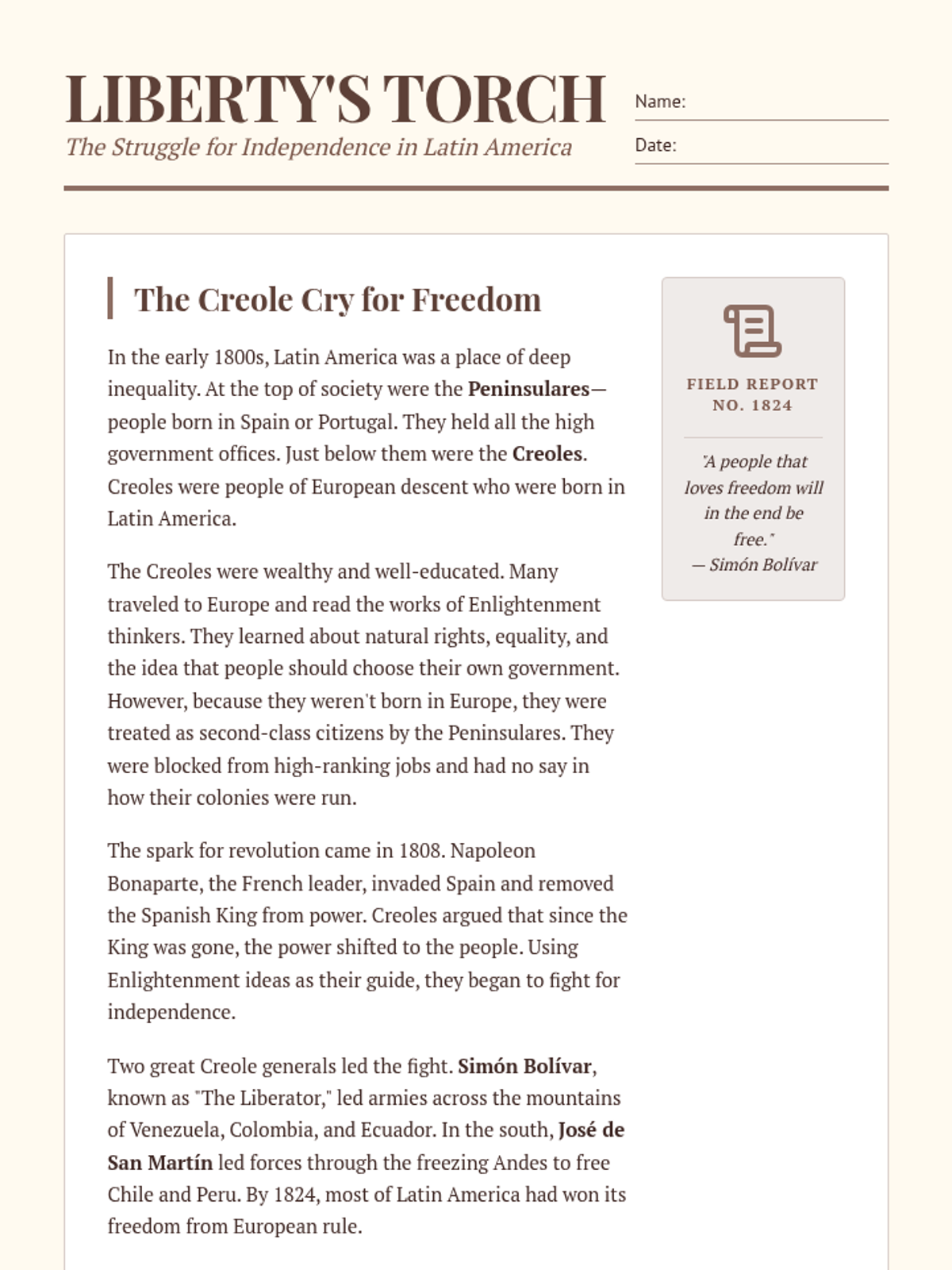
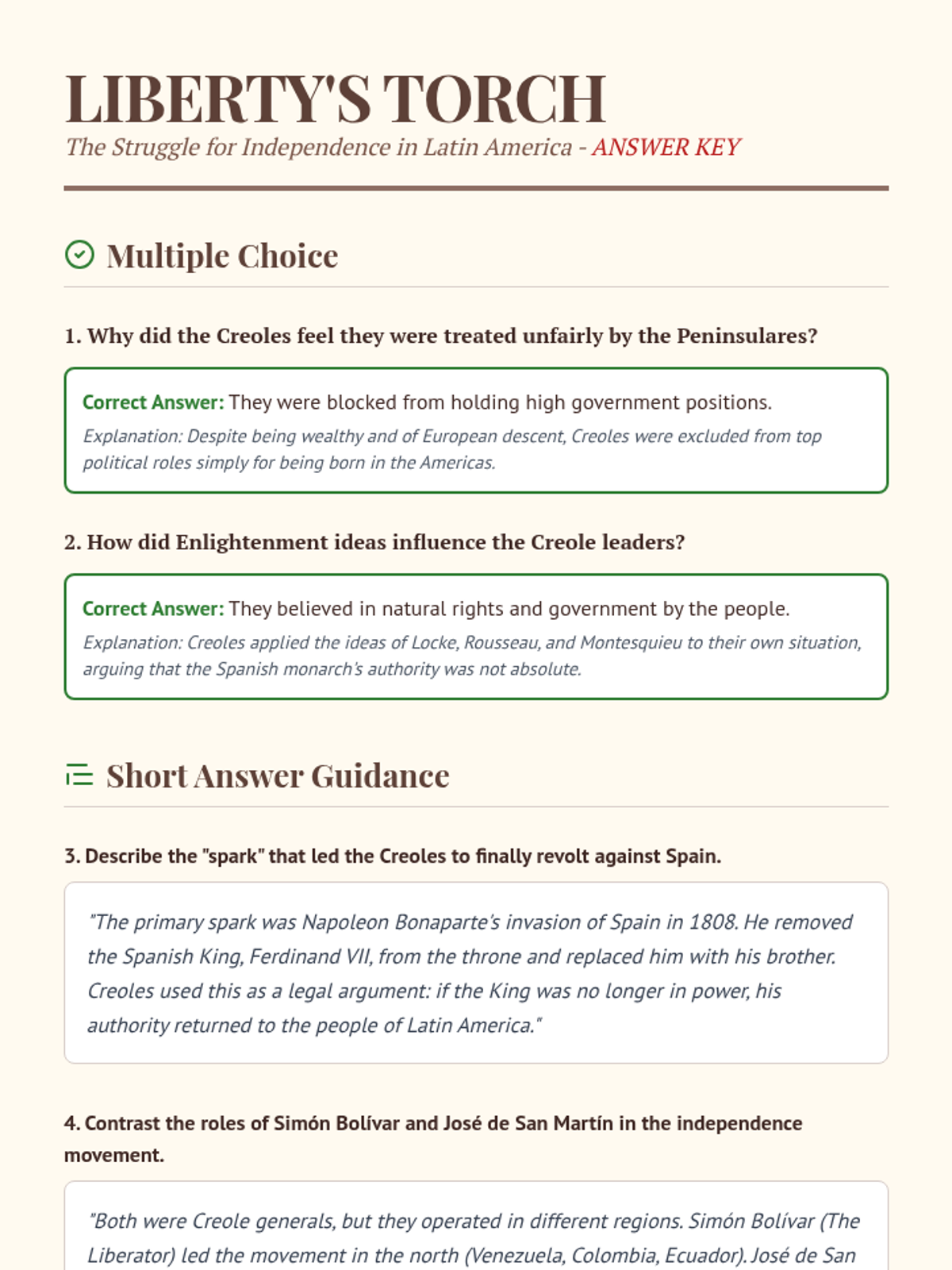
A lesson exploring the social and political causes of Latin American independence movements, with a focus on the leadership of the Creole class and the influence of Enlightenment ideals.
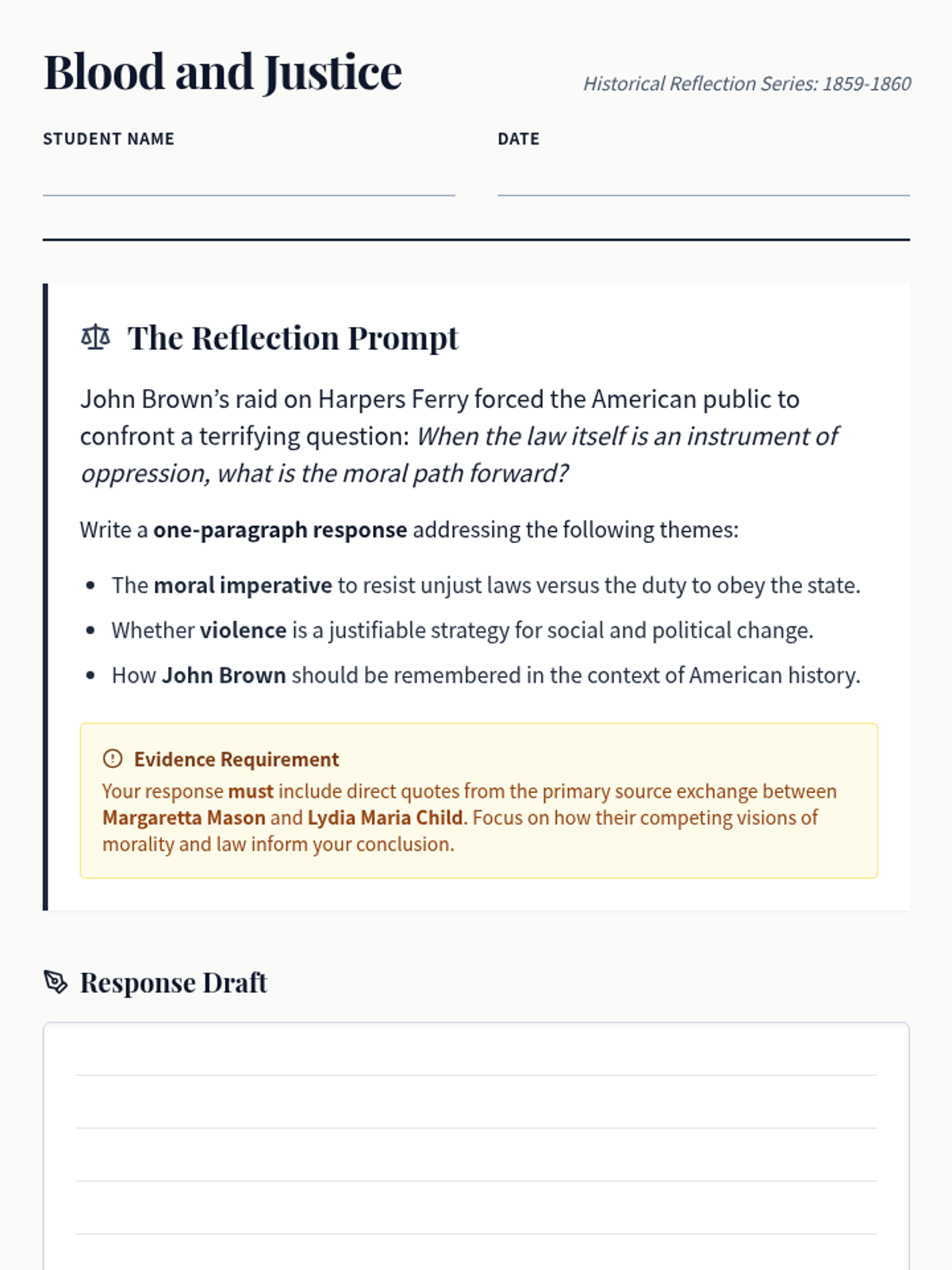
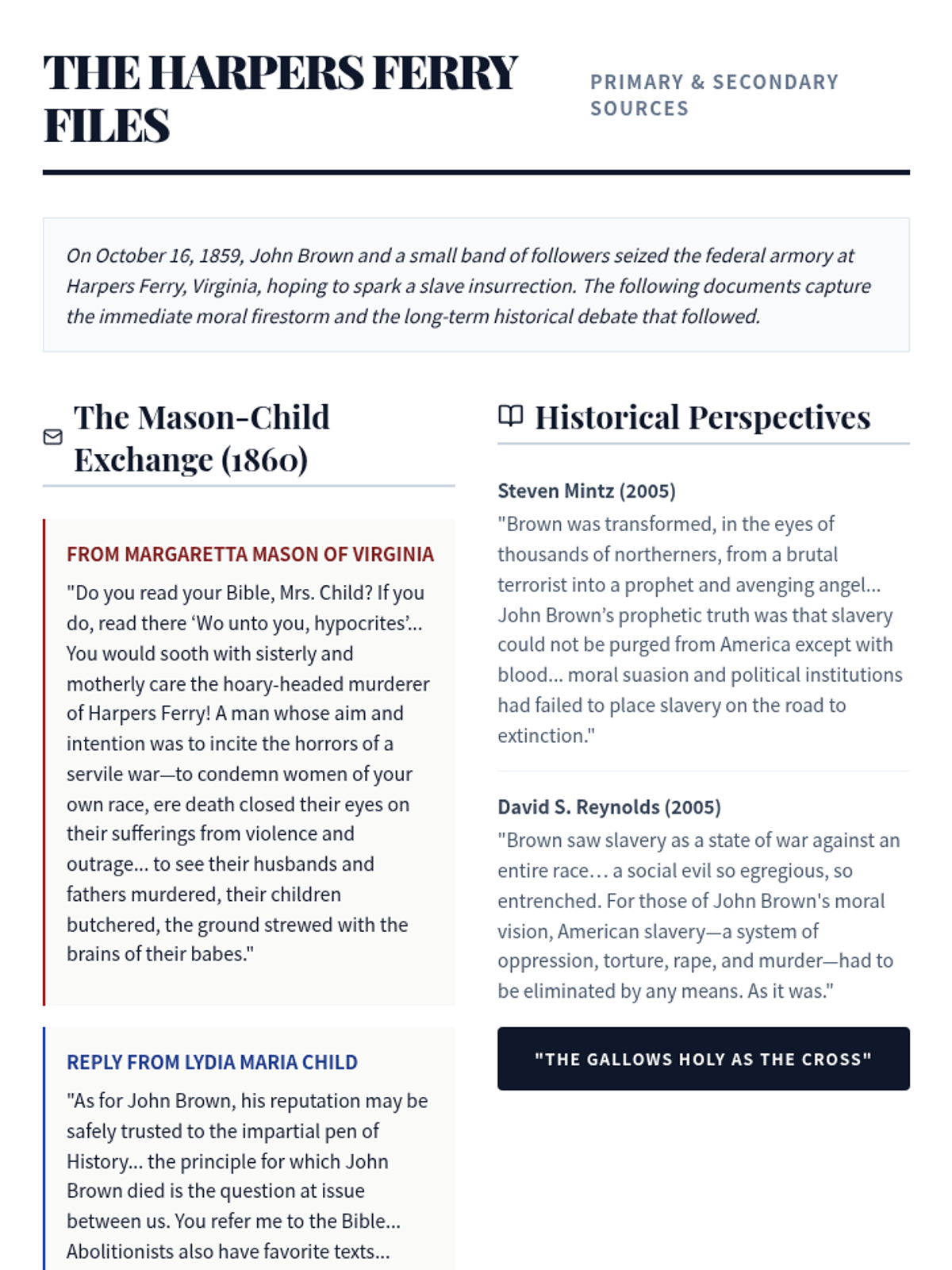
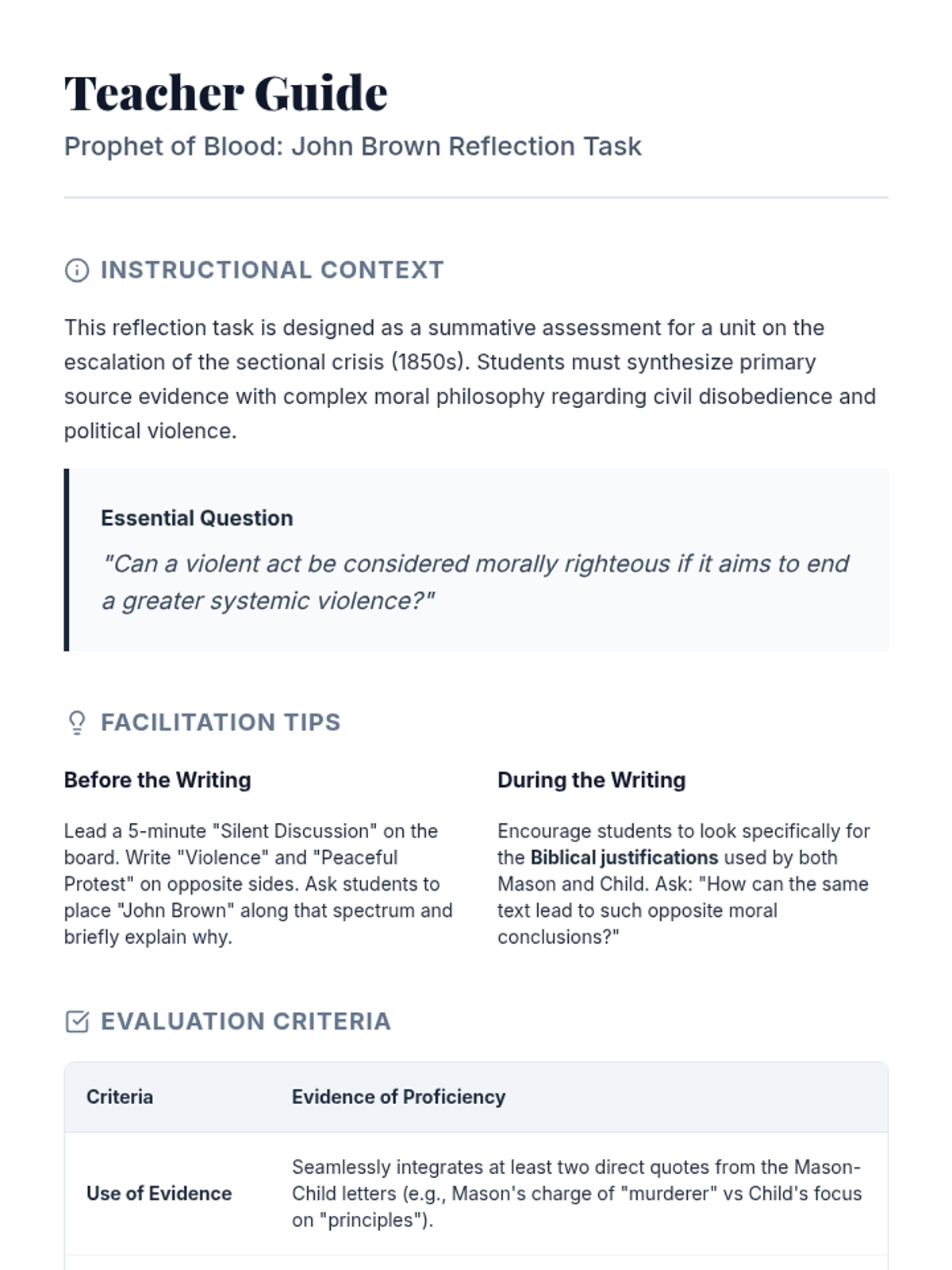
A deep dive into the moral and political complexities surrounding John Brown's raid on Harpers Ferry, focusing on the tension between legal obedience and moral conscience.
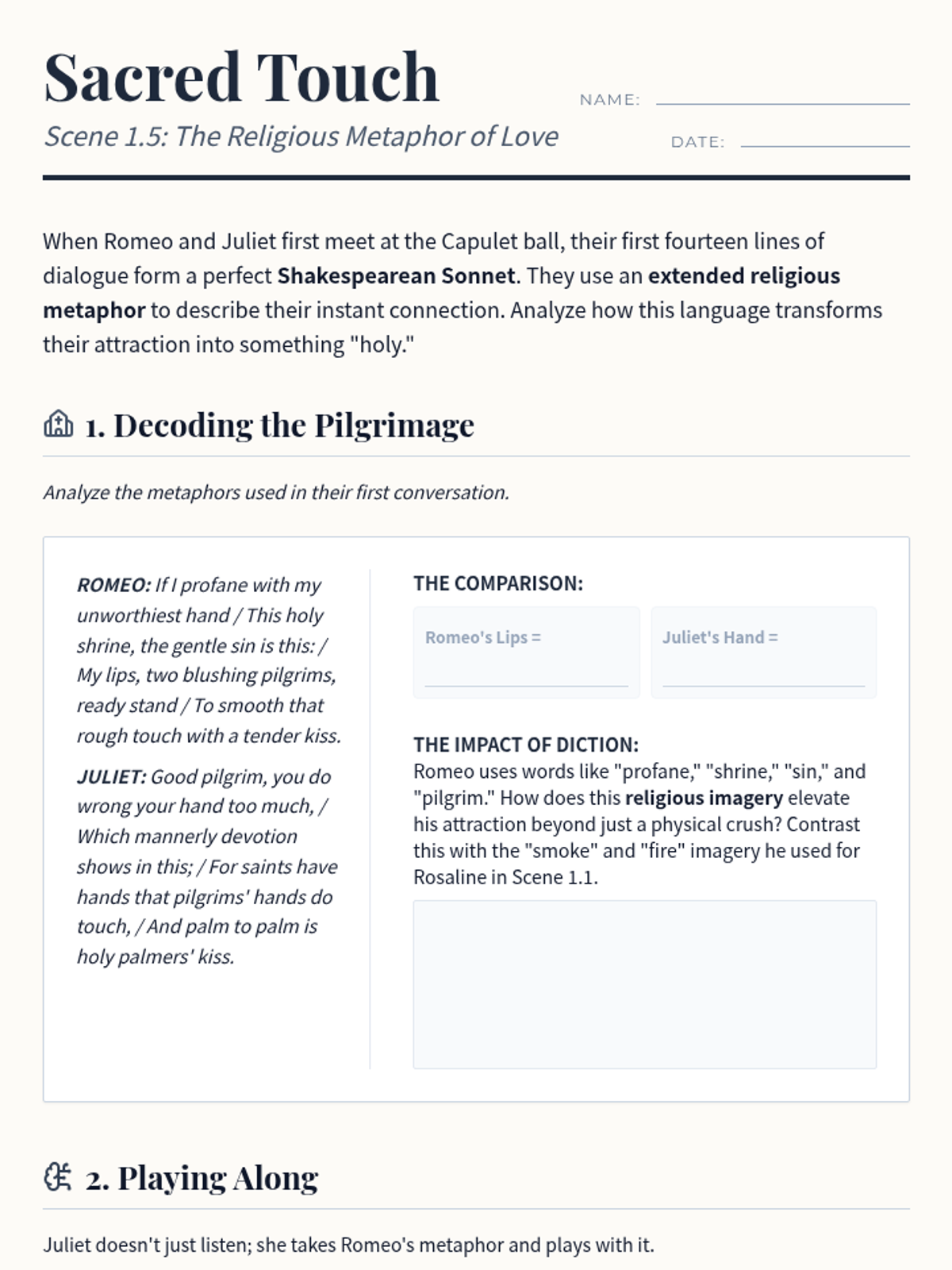
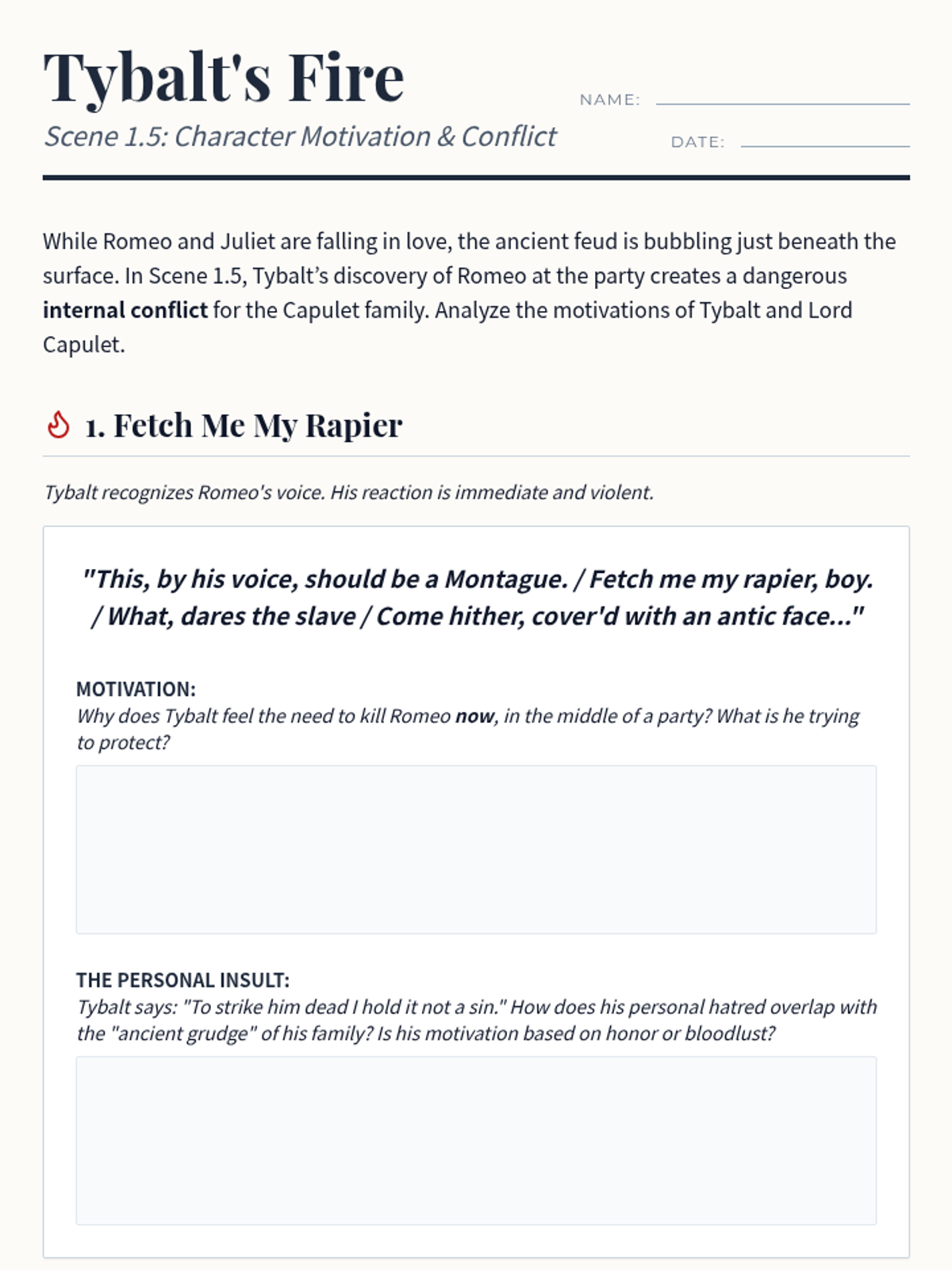
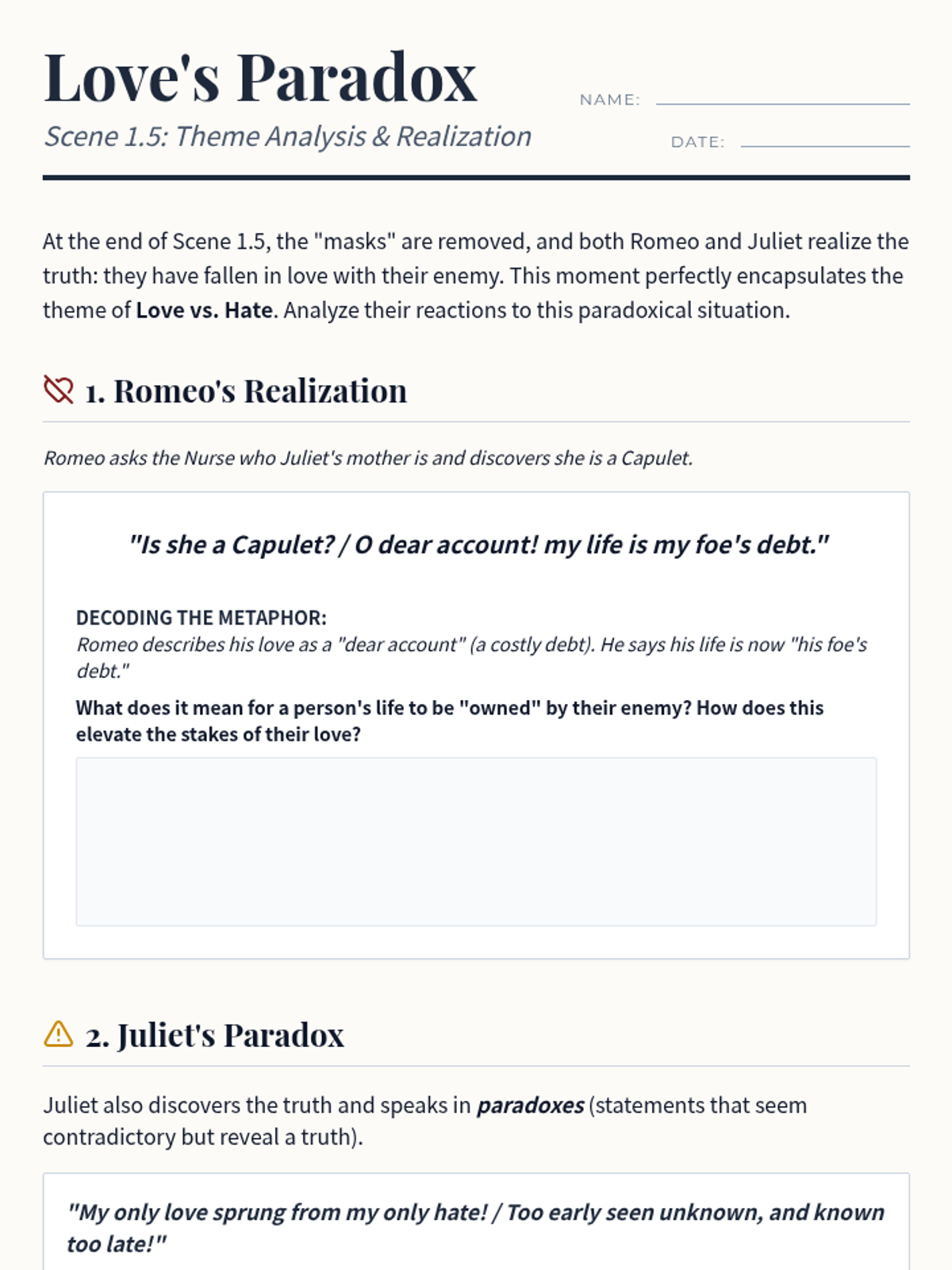
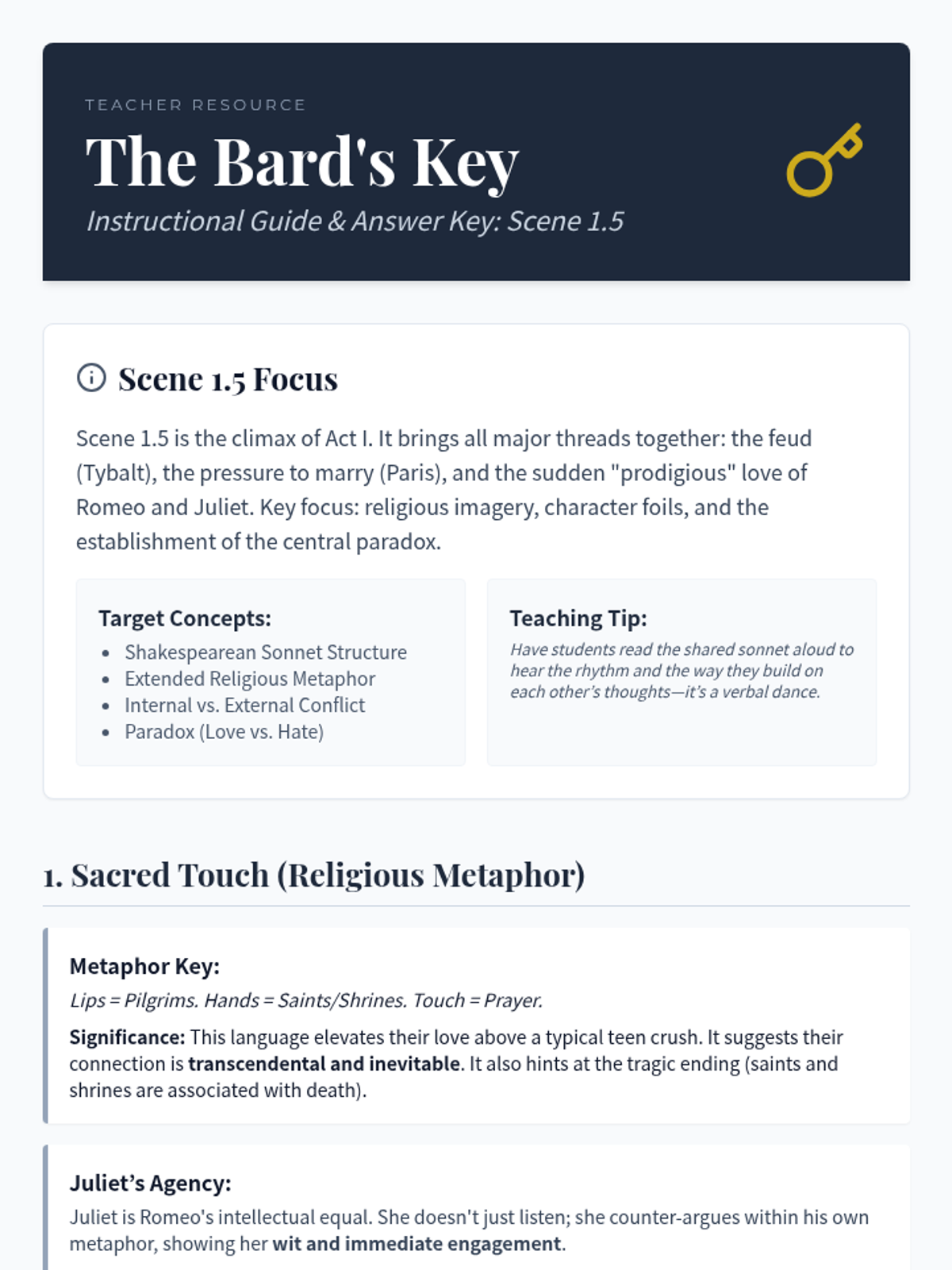
A study of Act 1, Scene 5, the pivotal moment where Romeo and Juliet meet at the Capulet ball. Students will analyze the shared sonnet and its religious metaphors, Tybalt's escalating rage as a driver of conflict, and the realization of the "prodigious birth of love" amidst "loathed enemy."
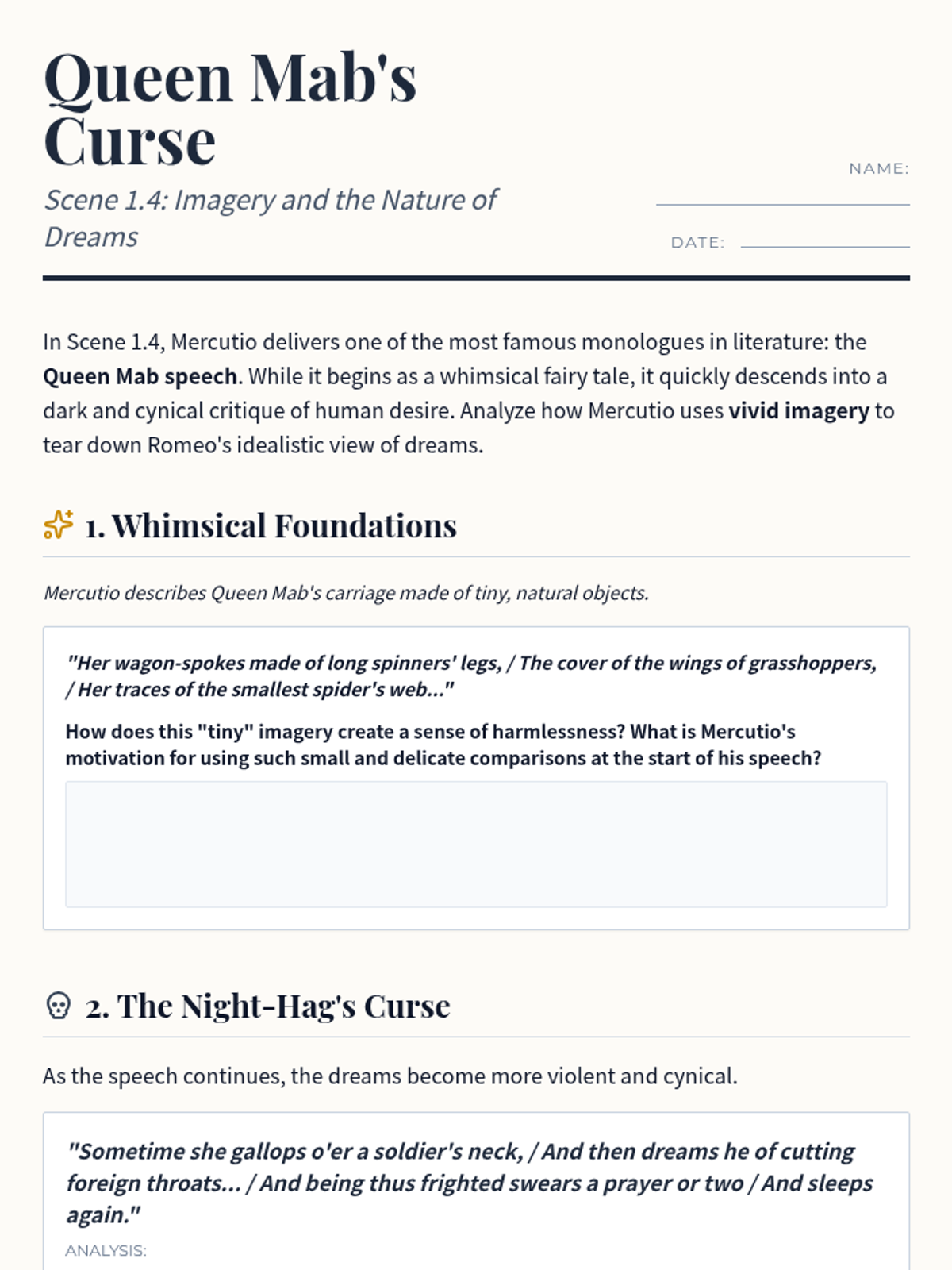
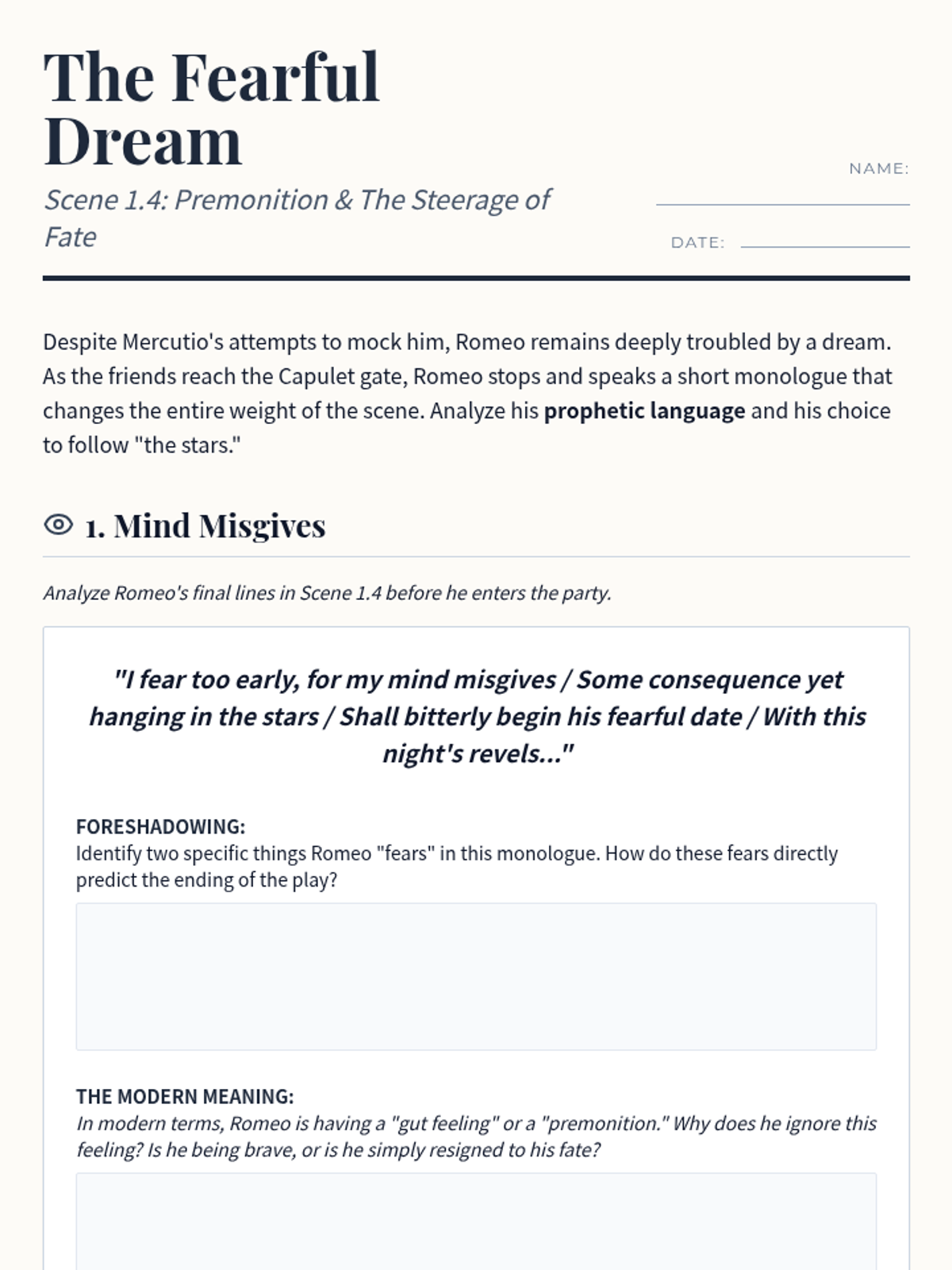
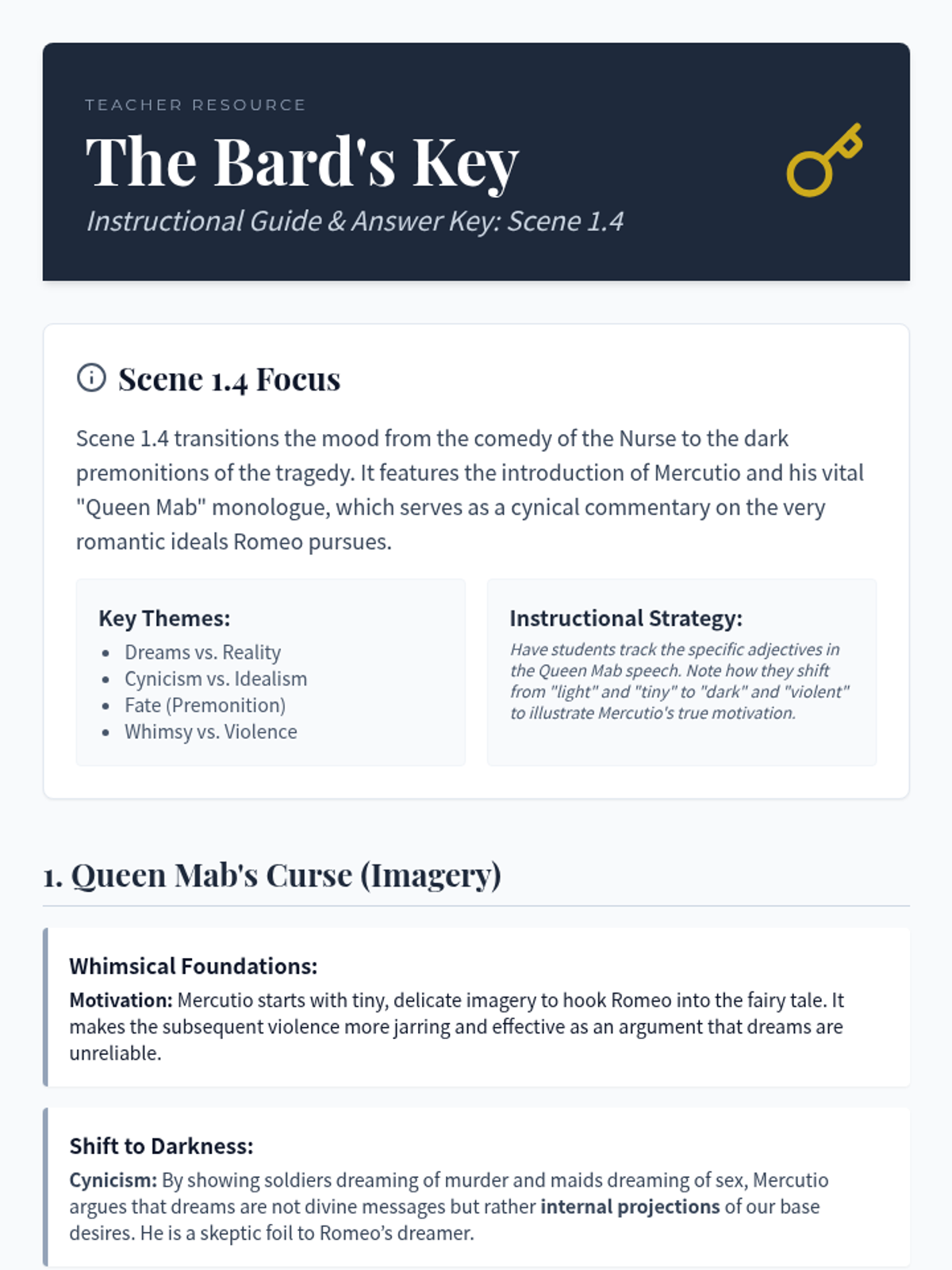
A study of Act 1, Scene 4, where Romeo, Mercutio, and Benvolio prepare to crash the Capulet ball. Students will analyze Mercutio's vivid Queen Mab speech, Romeo's persistent melancholy and prophetic dreams, and the tension between whimsical fantasy and dark reality.
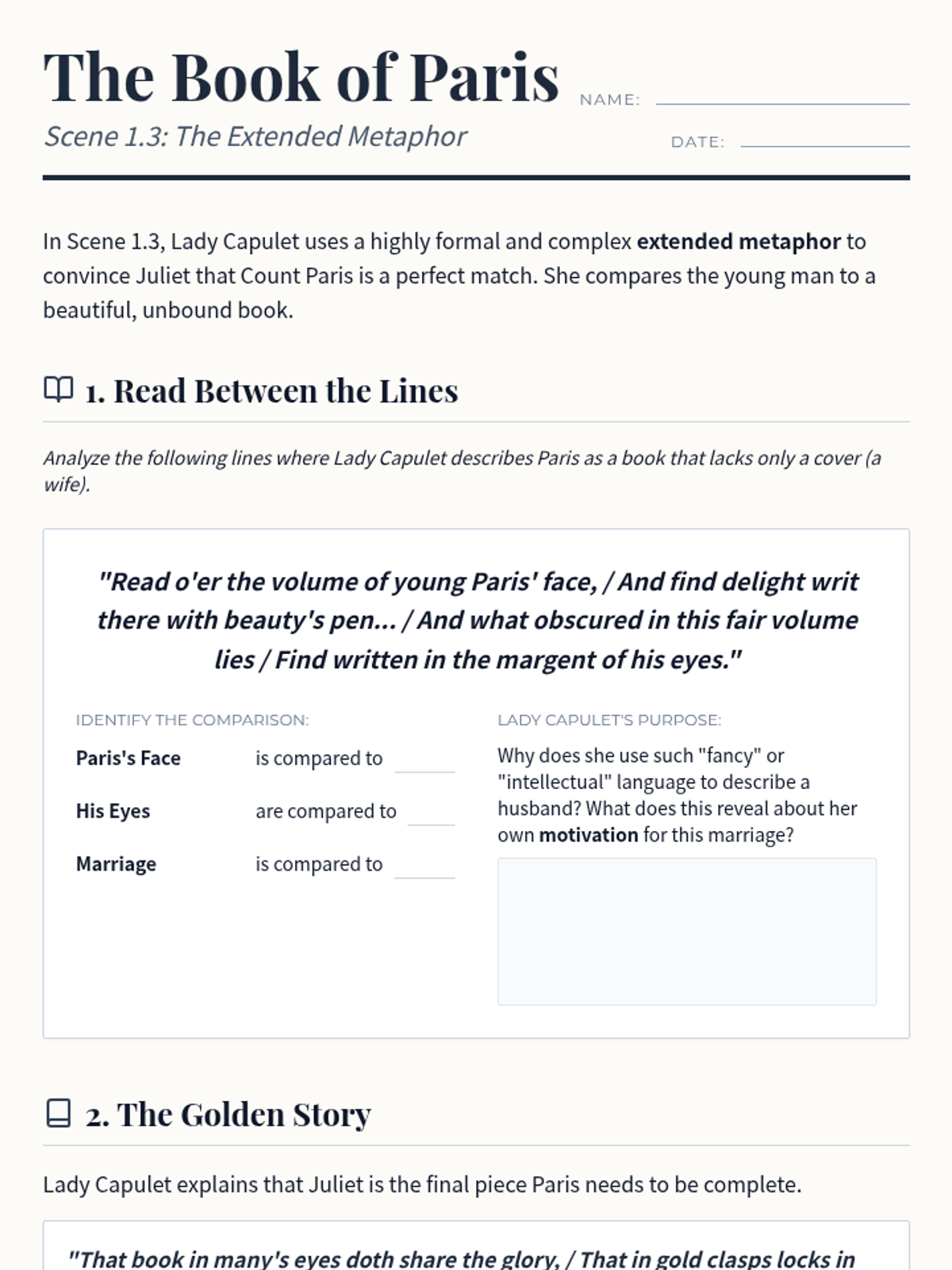
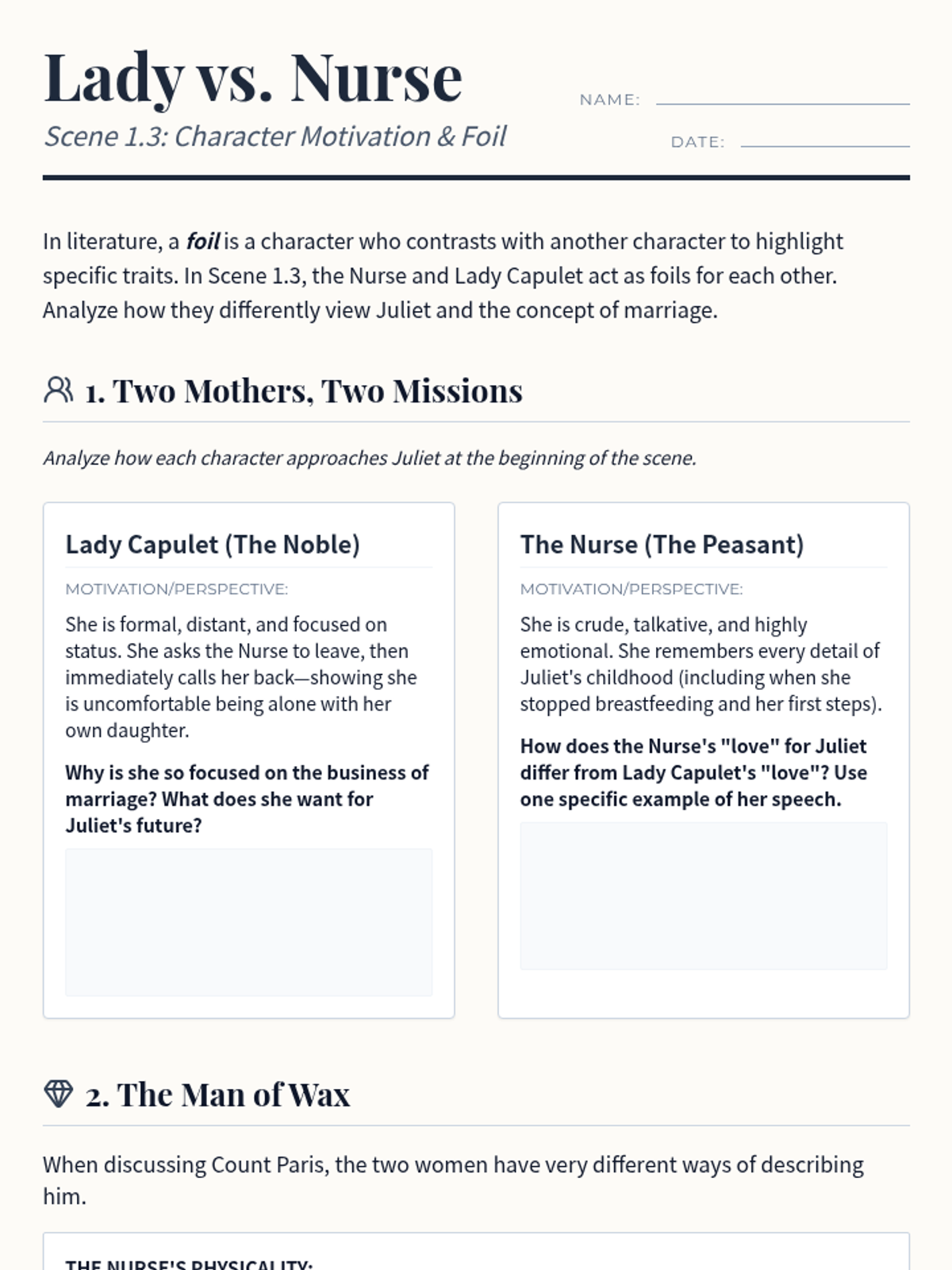
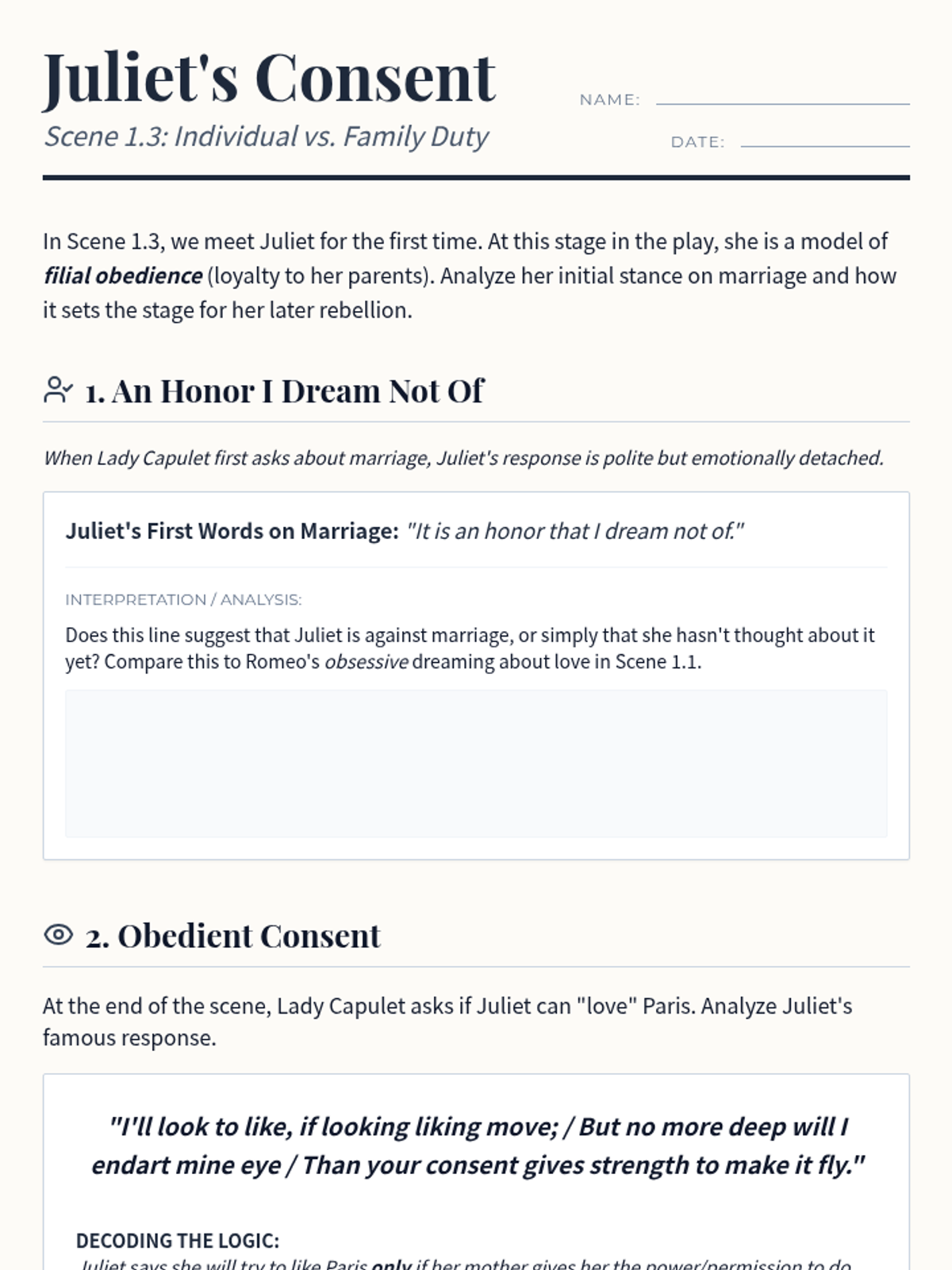
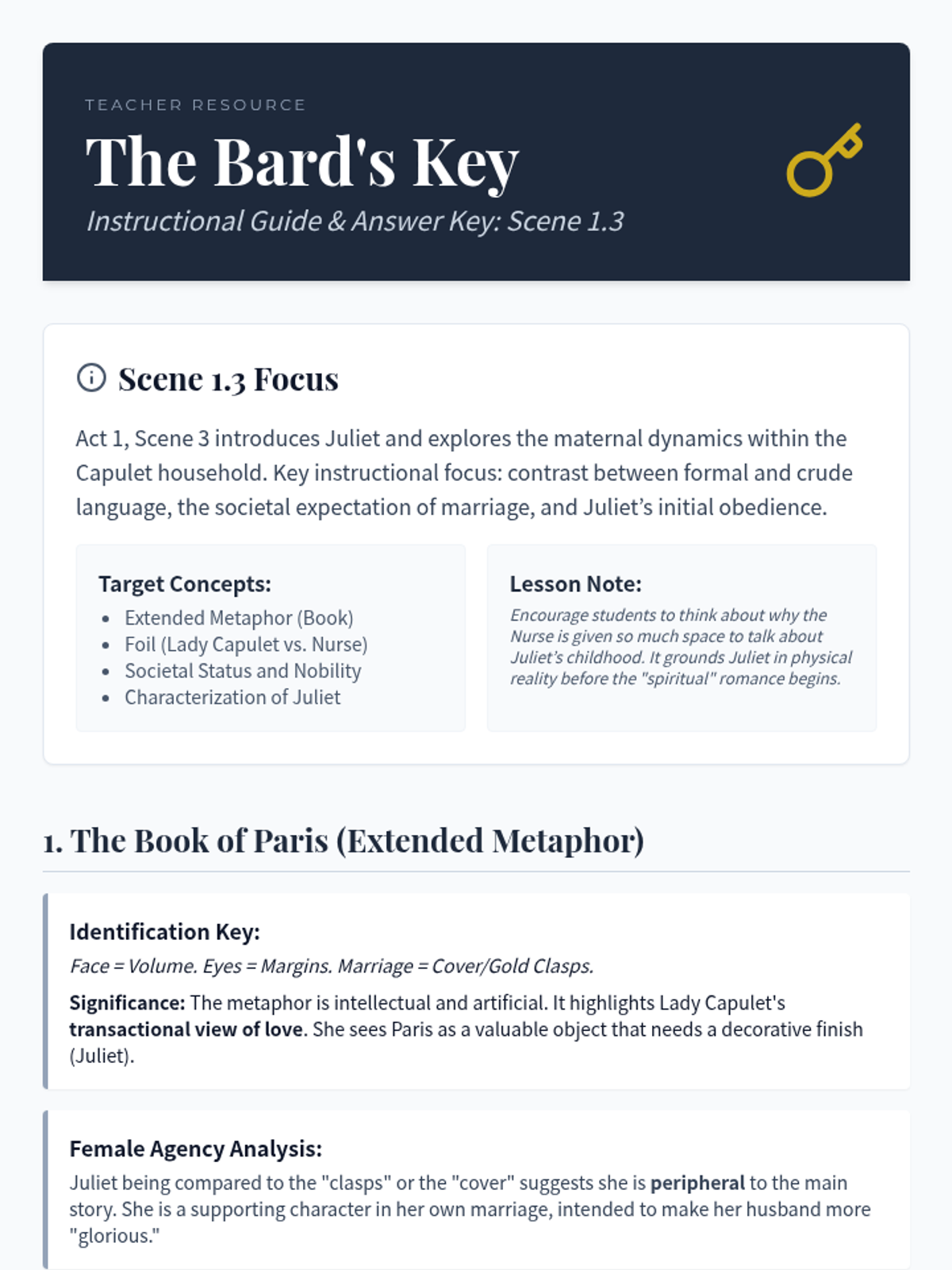
A study of Act 1, Scene 3, introducing the Nurse and Lady Capulet's proposal of marriage to Paris. Students will analyze the Nurse's coarse humor, Lady Capulet's extended metaphor of Paris as a book, and Juliet's initial stance on marriage and obedience.
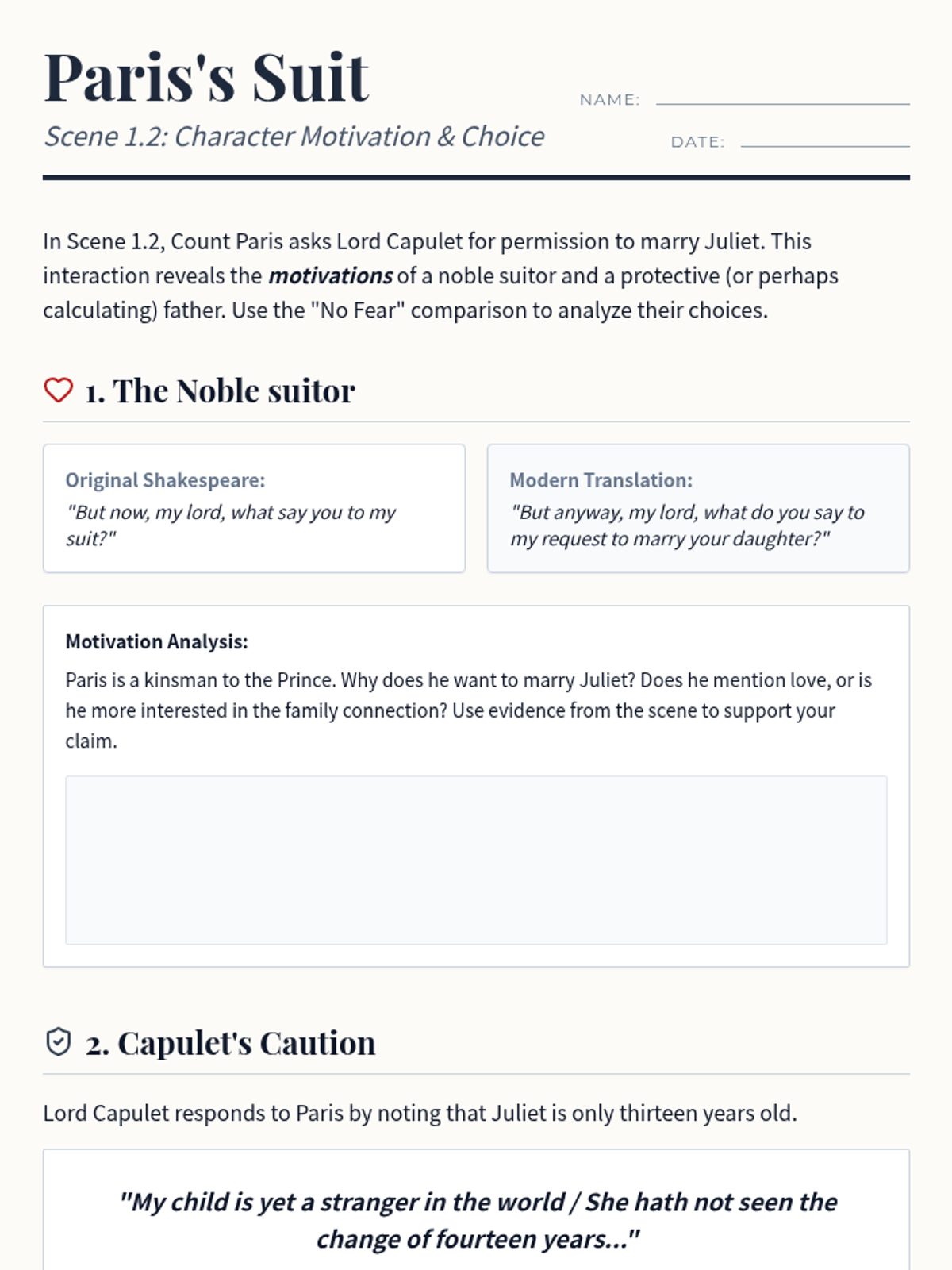
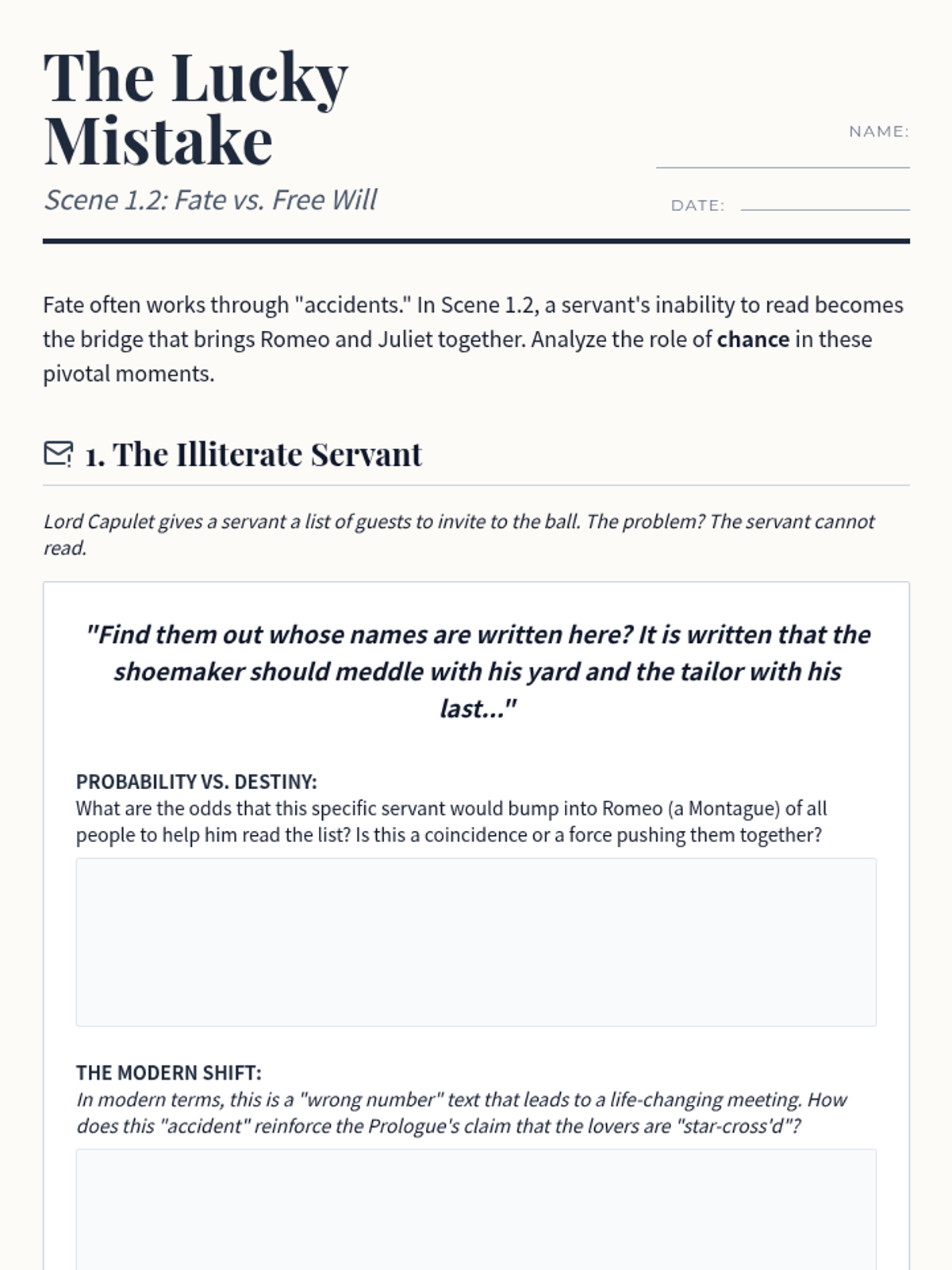
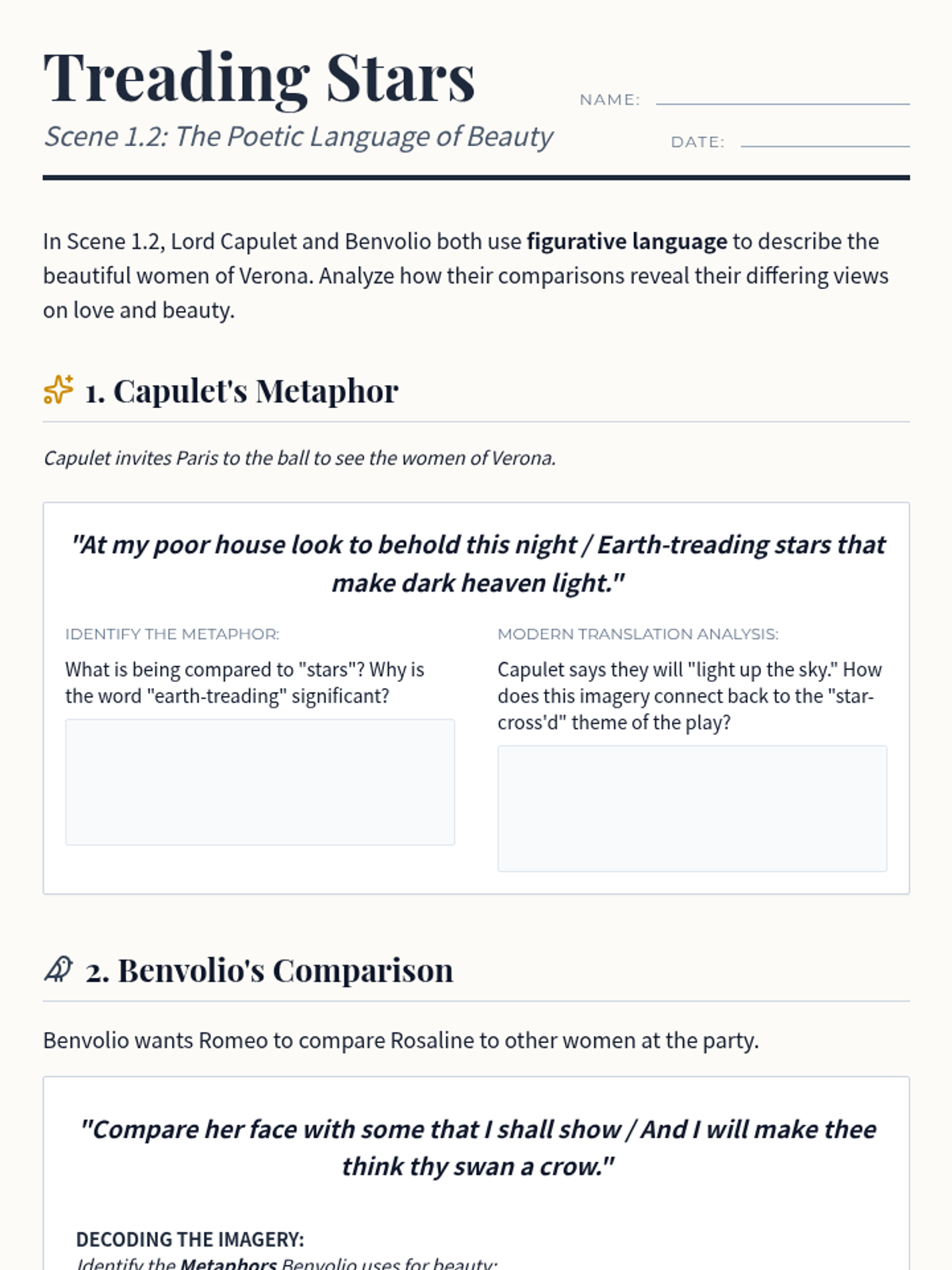
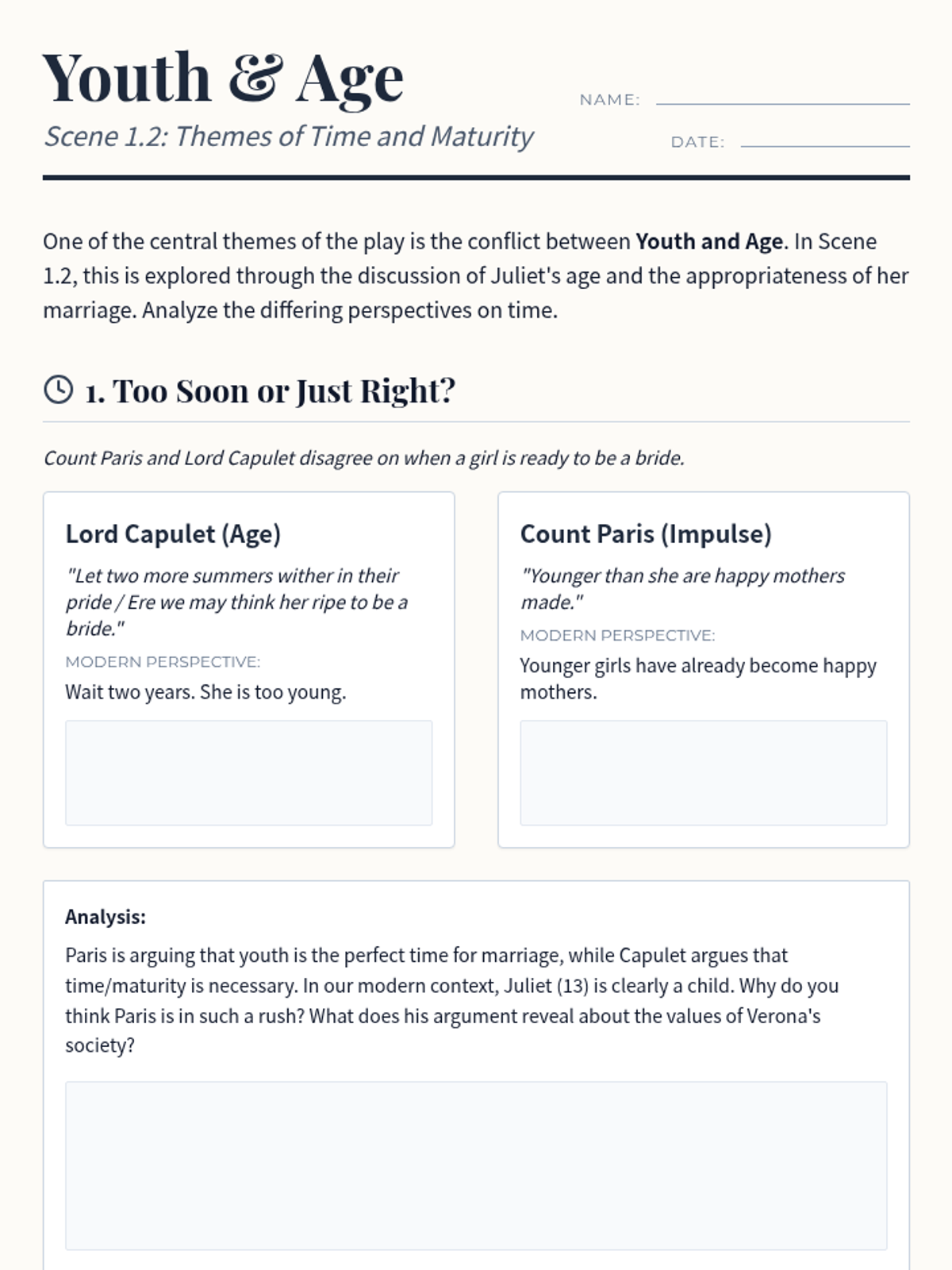
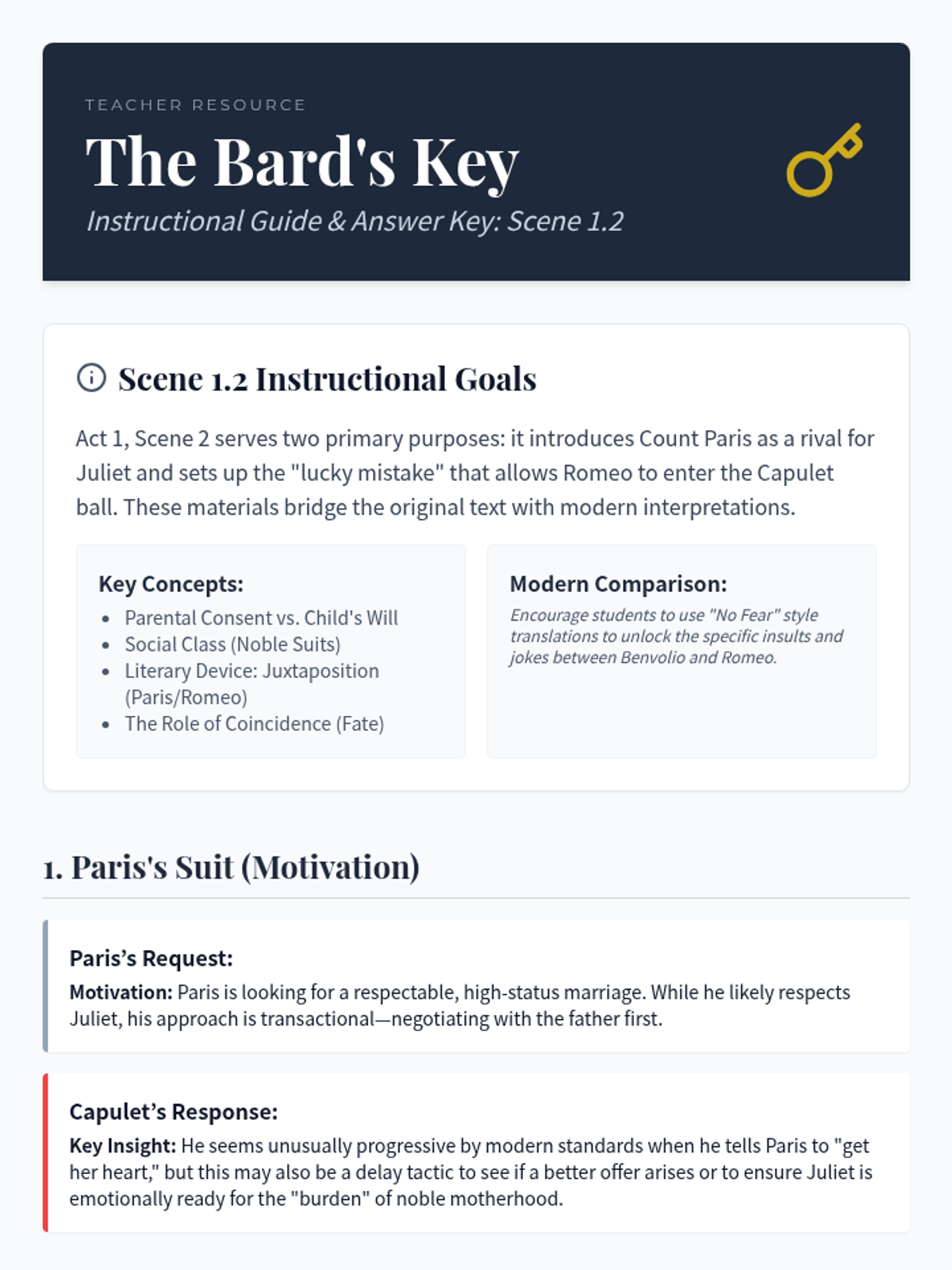
A study of Act 1, Scene 2, where Count Paris asks for Juliet's hand and Romeo and Benvolio discover the Capulet party through a chance encounter. Students will analyze the dynamics of parental choice, the role of chance, and the poetic language used to describe the ladies of Verona.
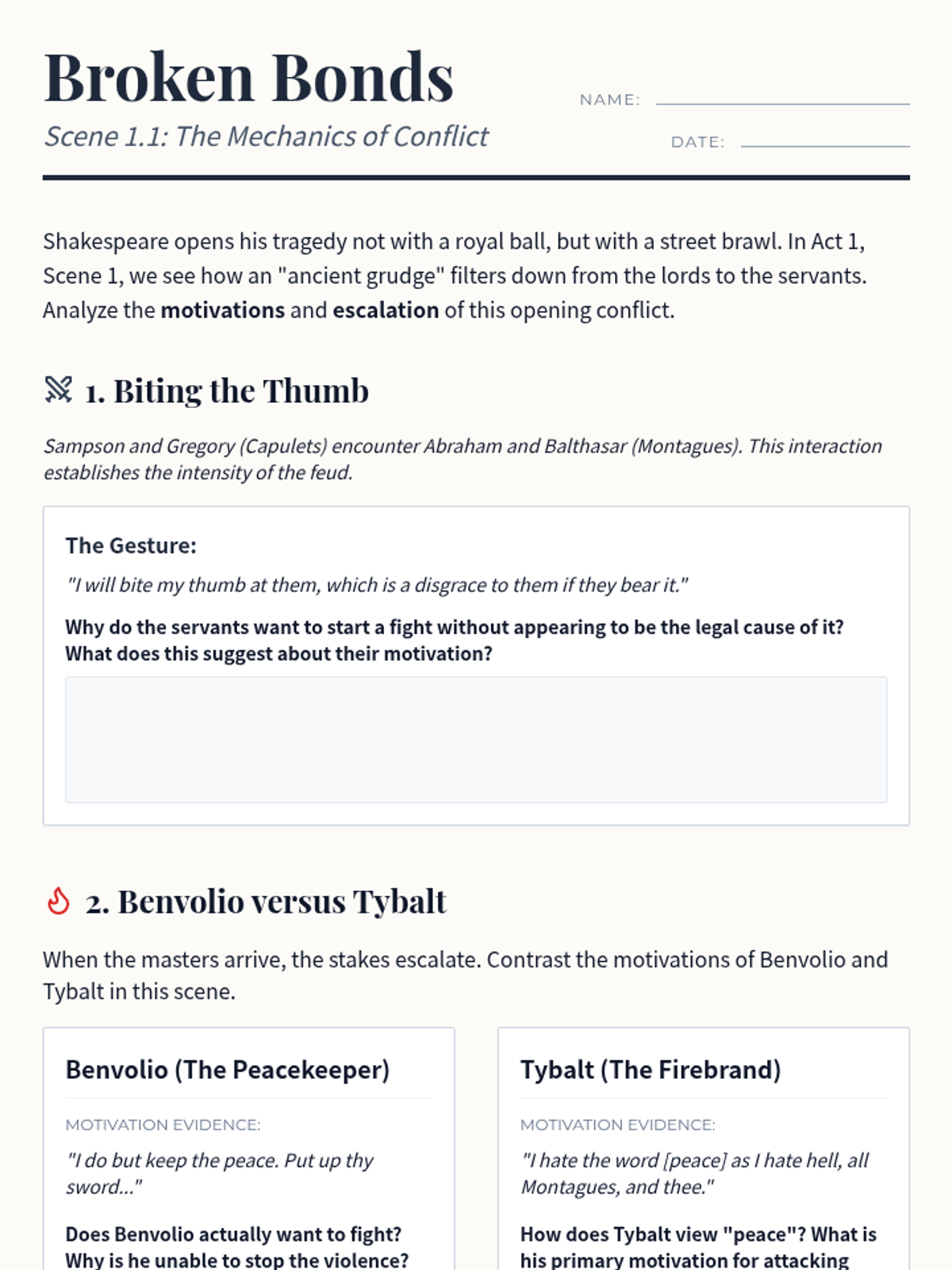
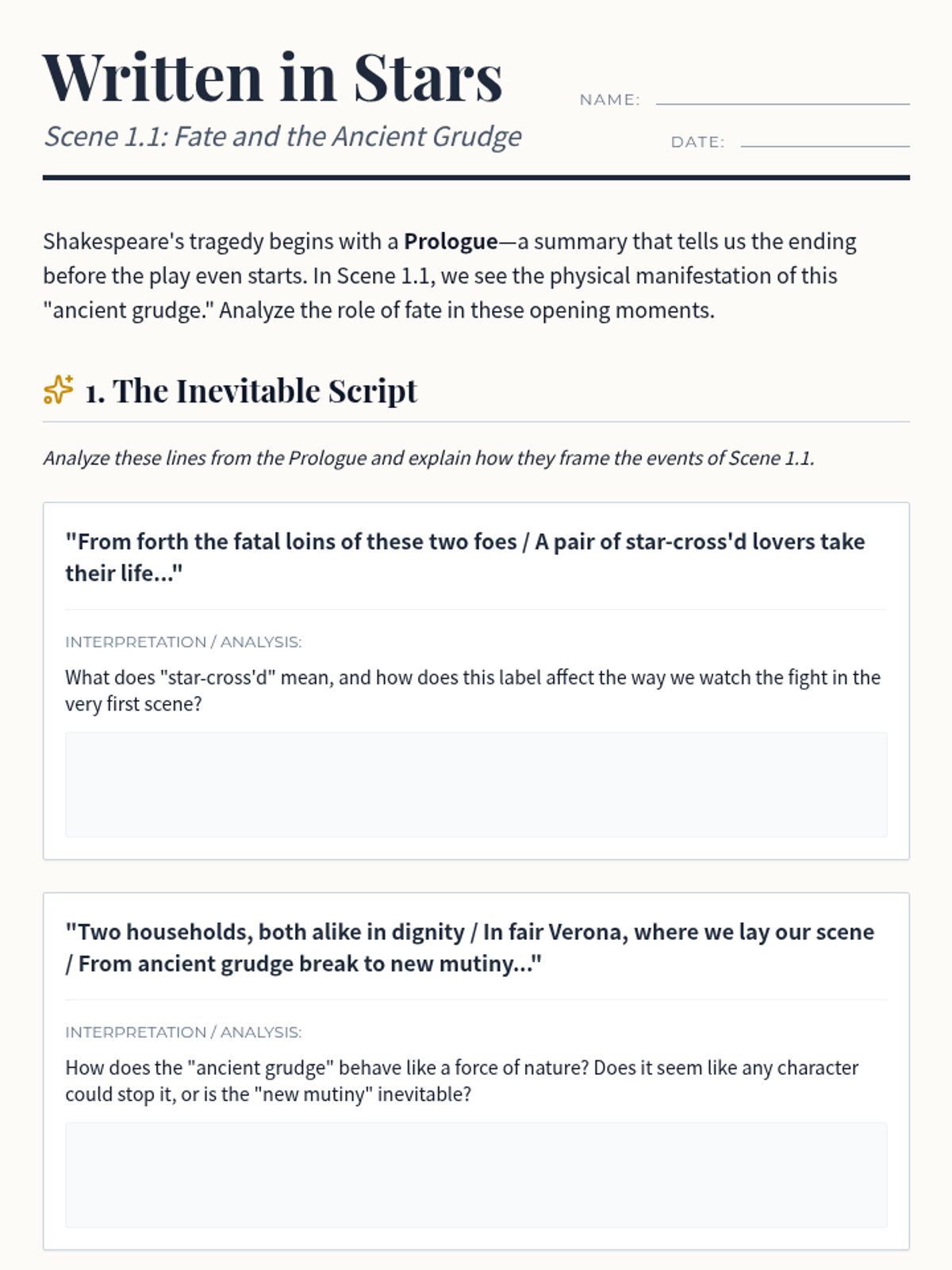
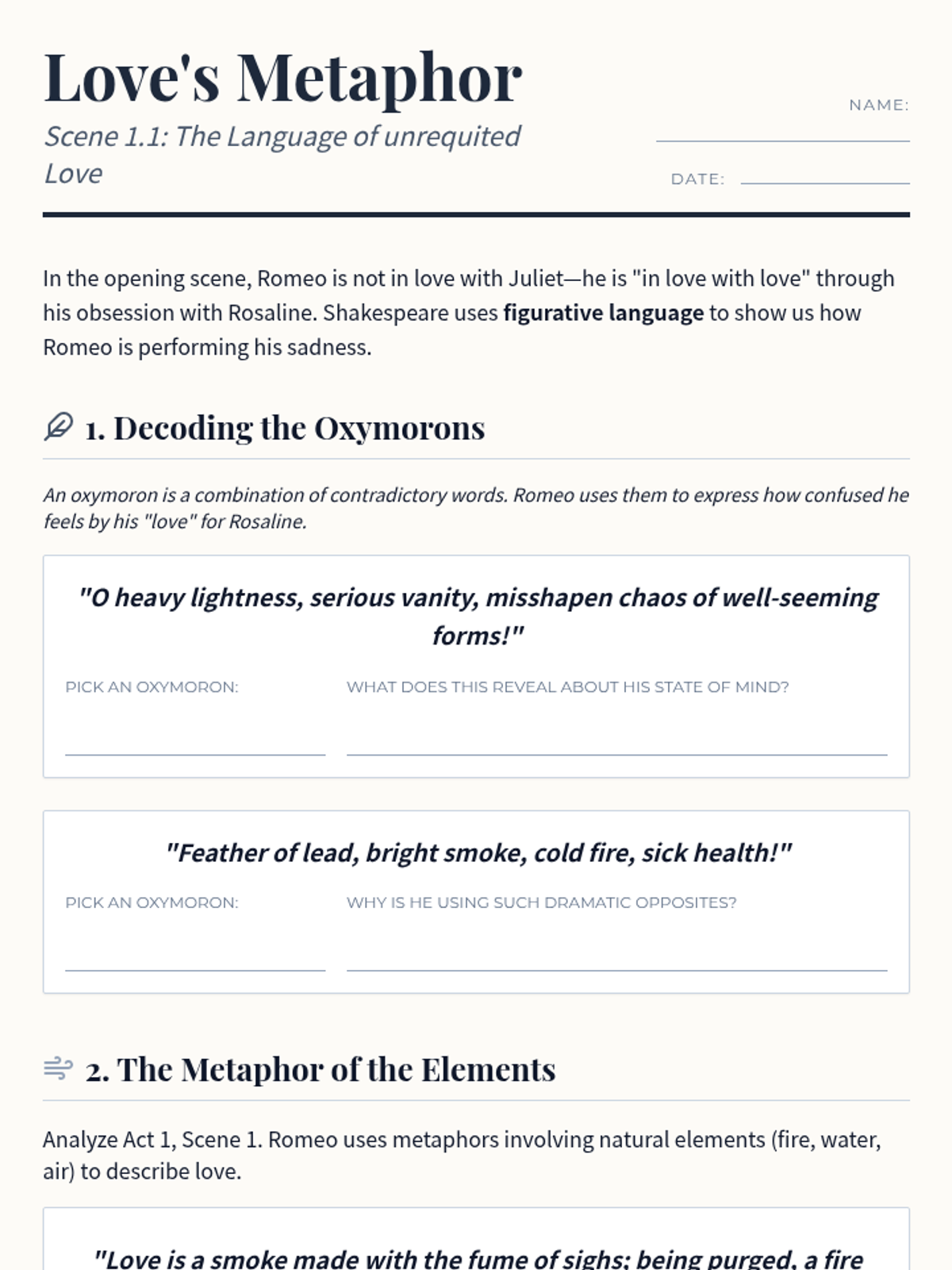
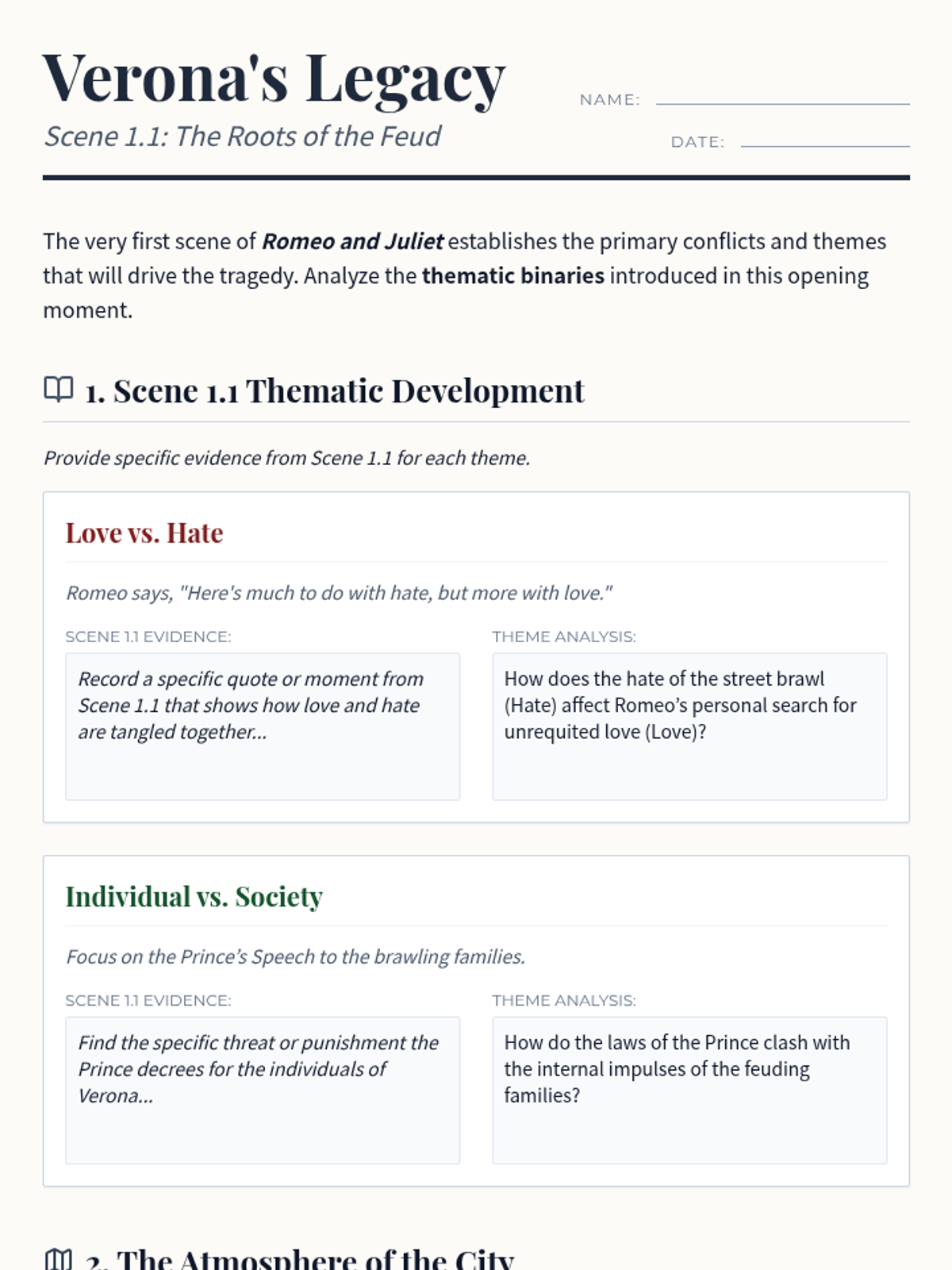
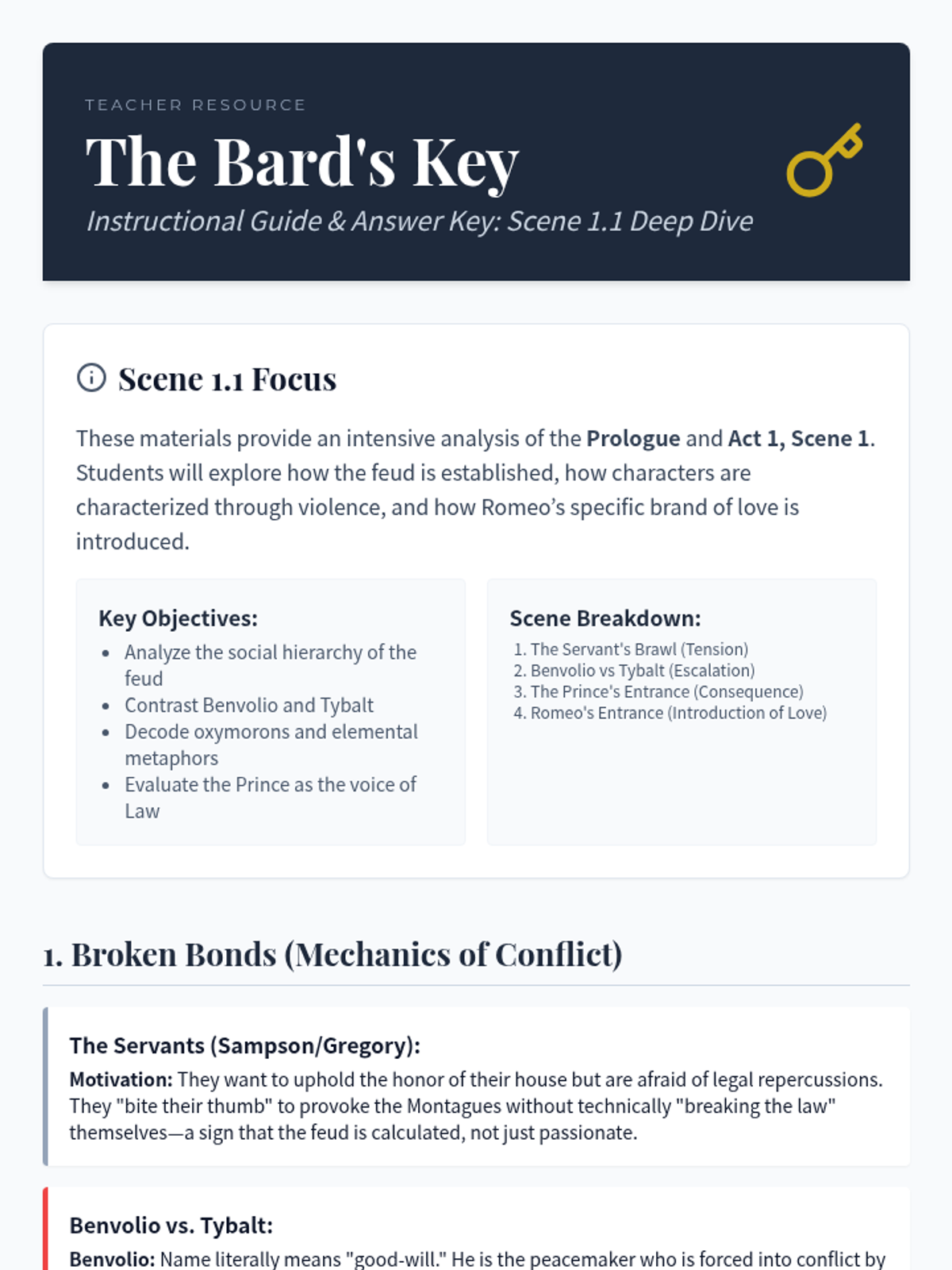
An intensive study of the opening scene and prologue of Shakespeare's Romeo and Juliet. Students will analyze the mechanics of the ancient grudge, the characterization of the principal families, and the specific poetic techniques used to establish Romeo's unrequited love for Rosaline.
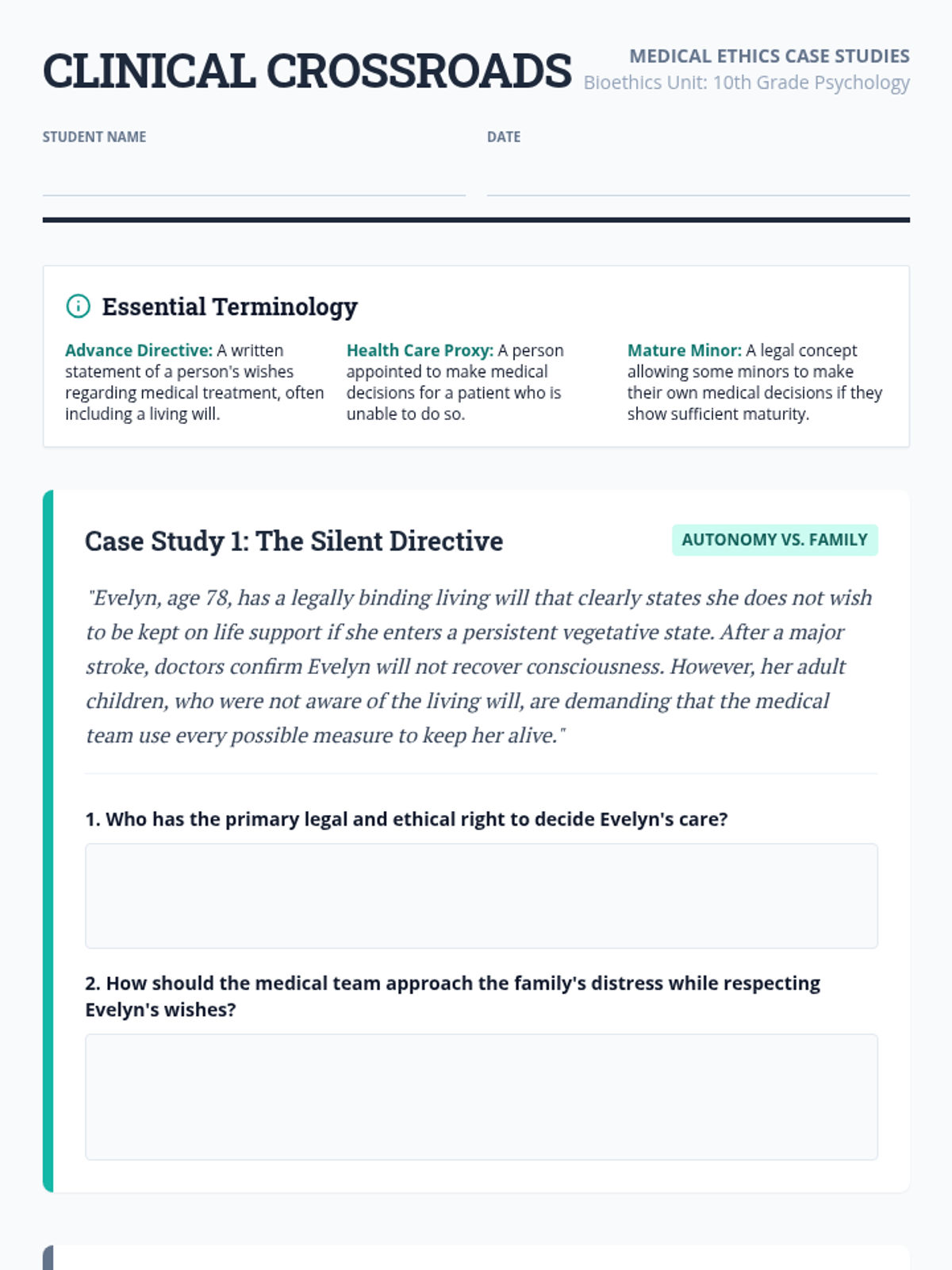
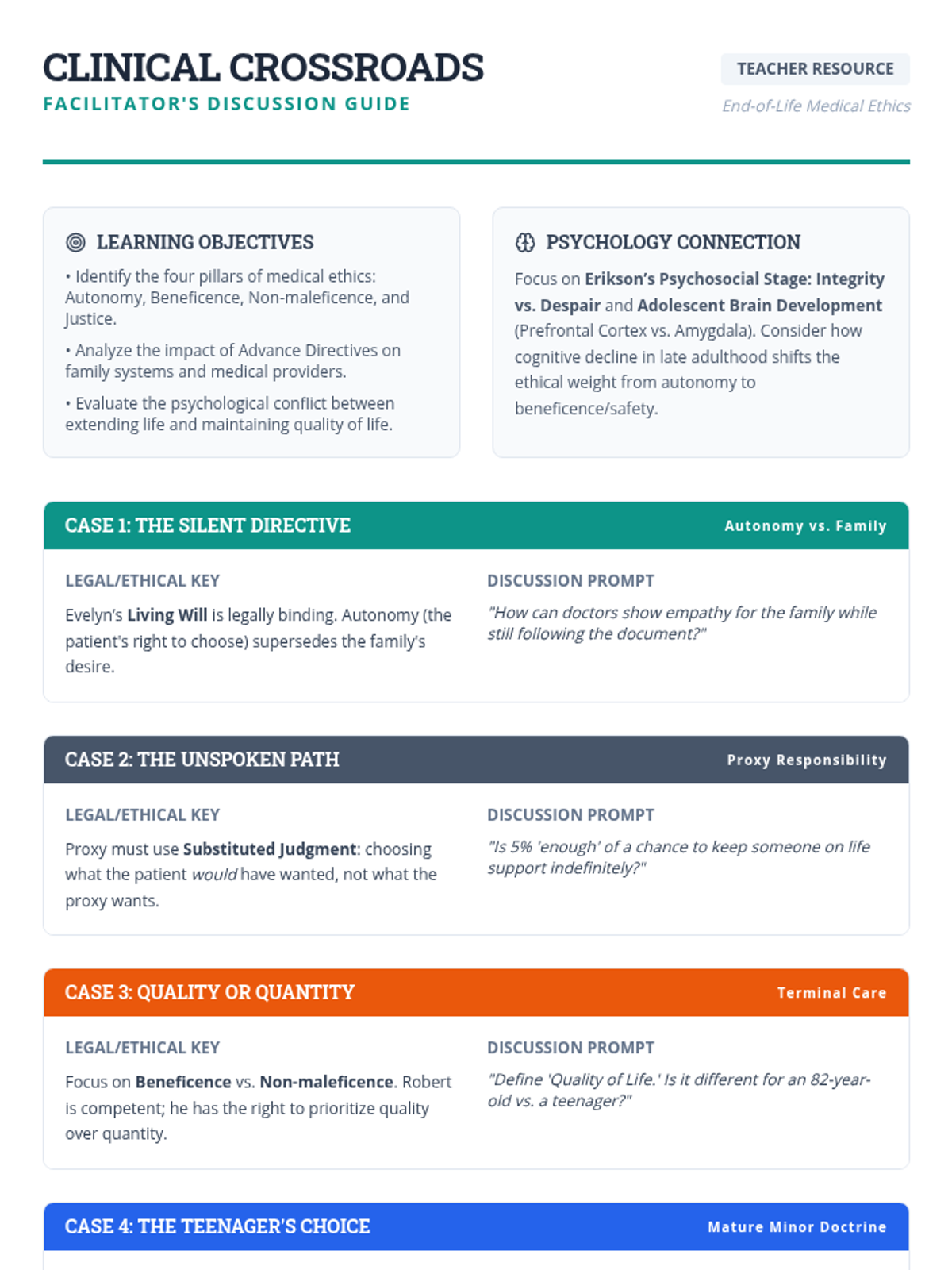
A lesson exploring the ethical complexities of end-of-life medical decisions through real-world case studies and discussion.
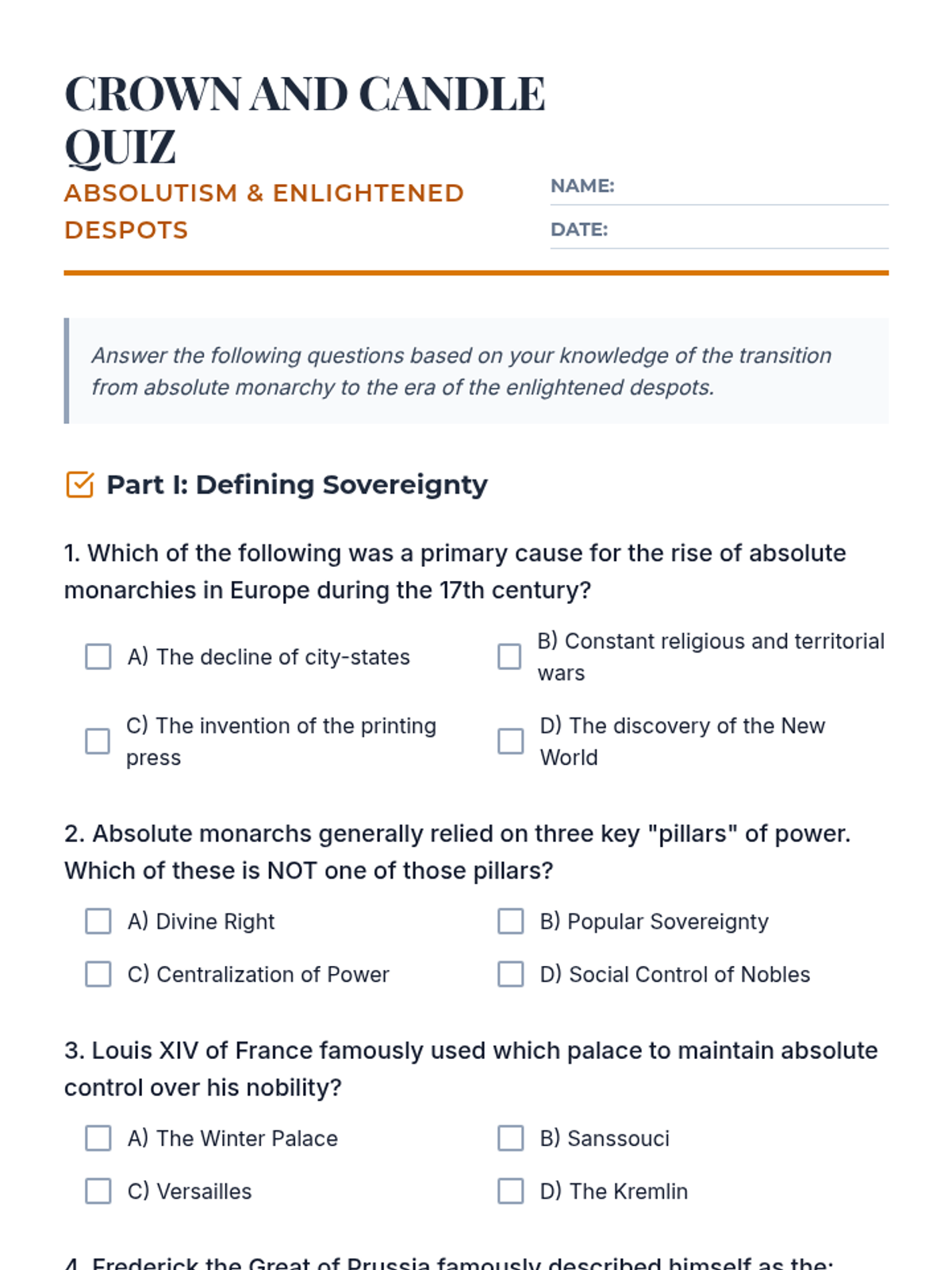
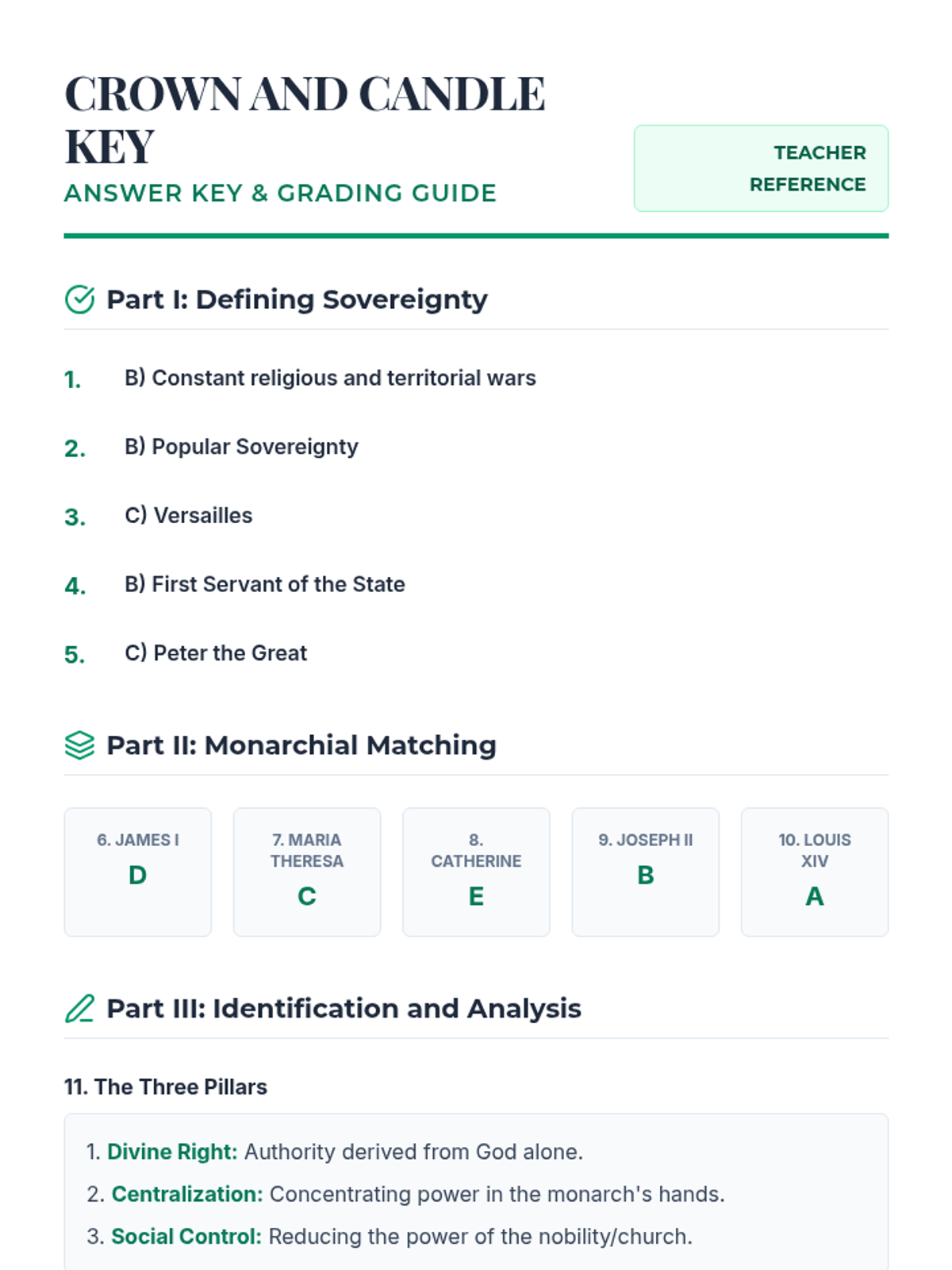
This lesson explores the rise of absolute monarchies and the subsequent emergence of enlightened despots who attempted to blend autocratic power with Enlightenment ideals. Students will analyze the reigns of key figures such as Peter the Great, Frederick the Great, and Catherine the Great.
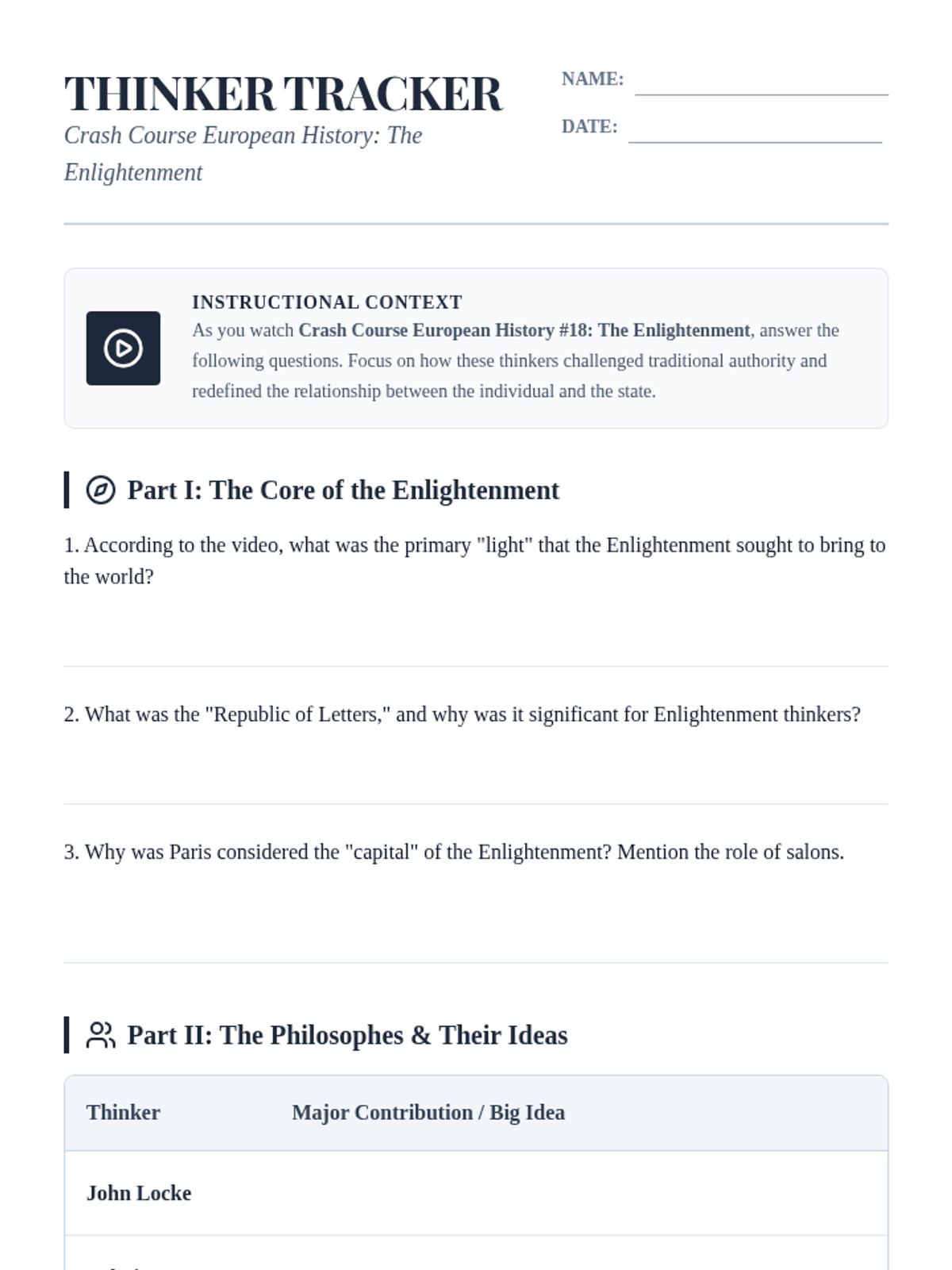
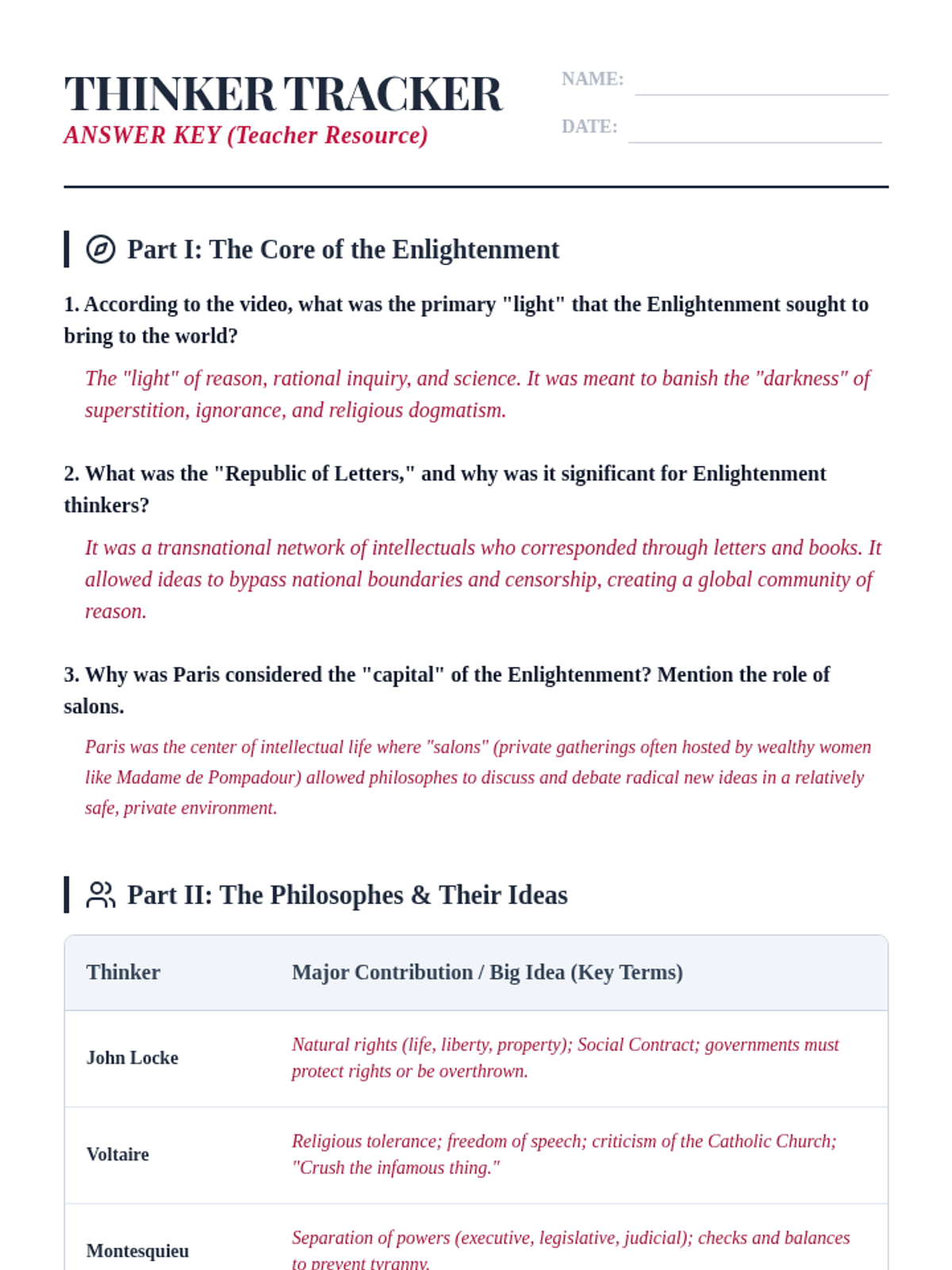
A comprehensive look at the Enlightenment, focusing on the major philosophes, their groundbreaking ideas on government and society, and the enduring impact of their work on modern democracy.
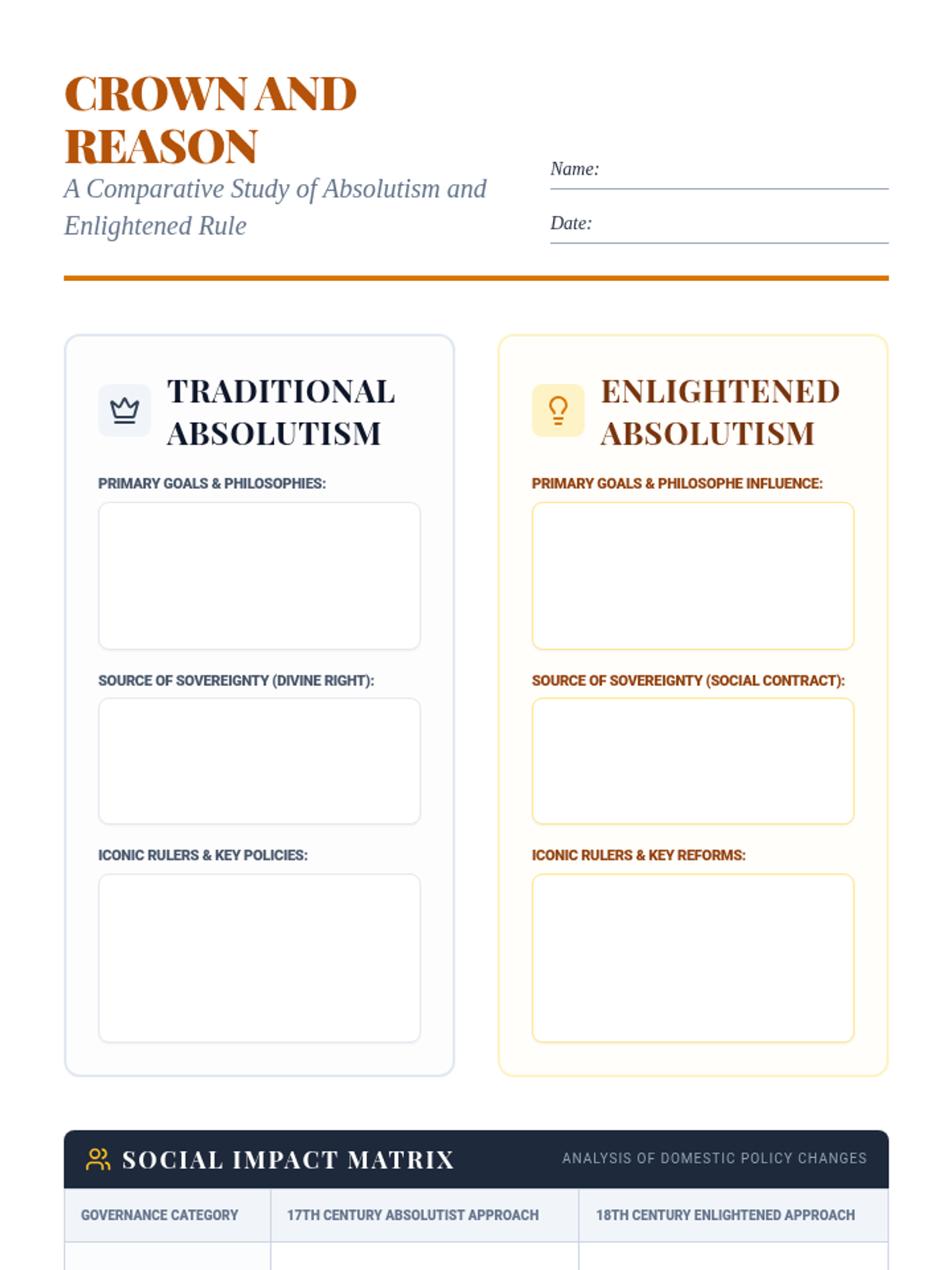
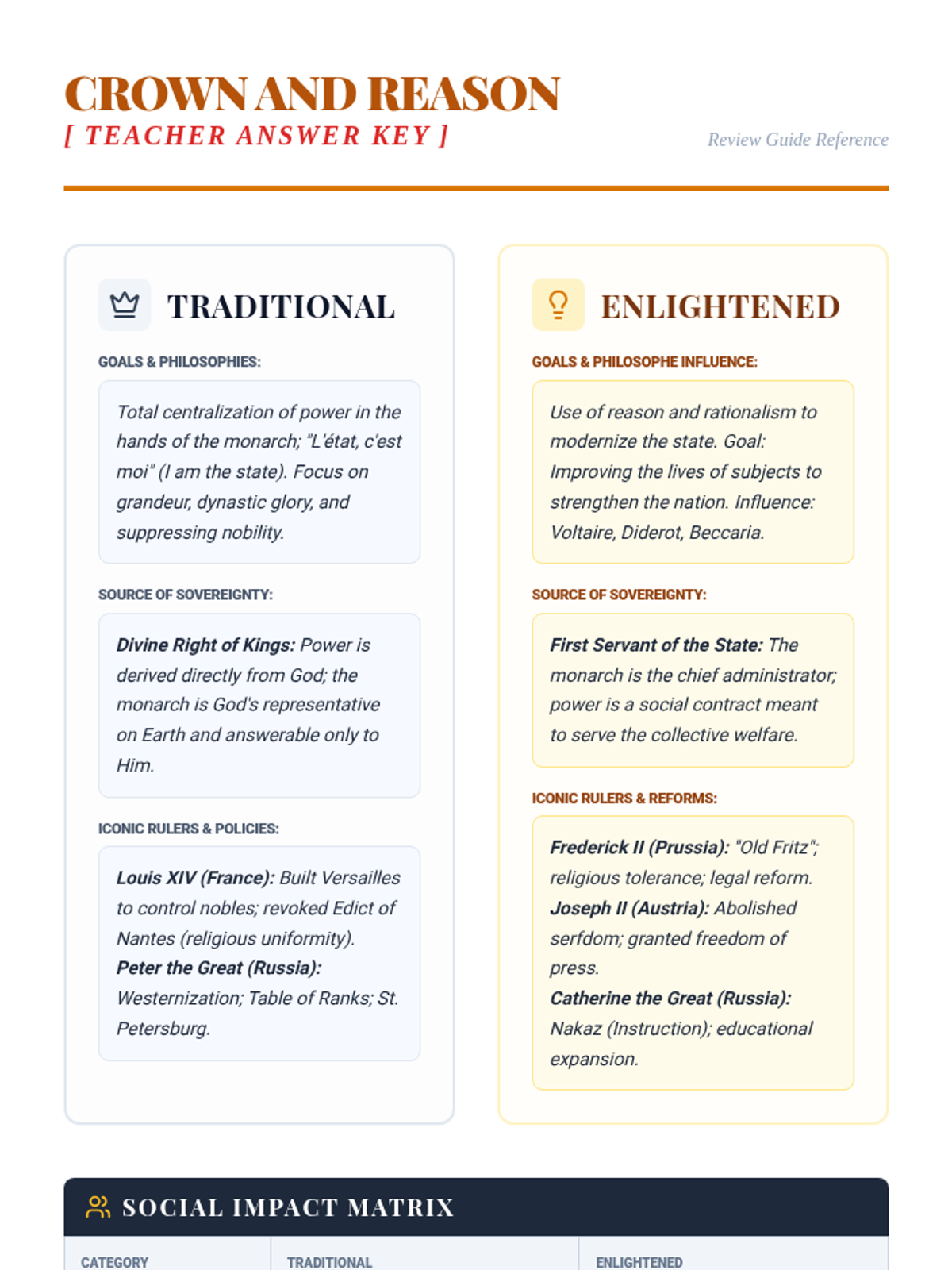
A comparison of 17th and 18th-century European political systems, focusing on the transition from traditional divine right monarchy to the reform-minded Enlightened Absolutism.
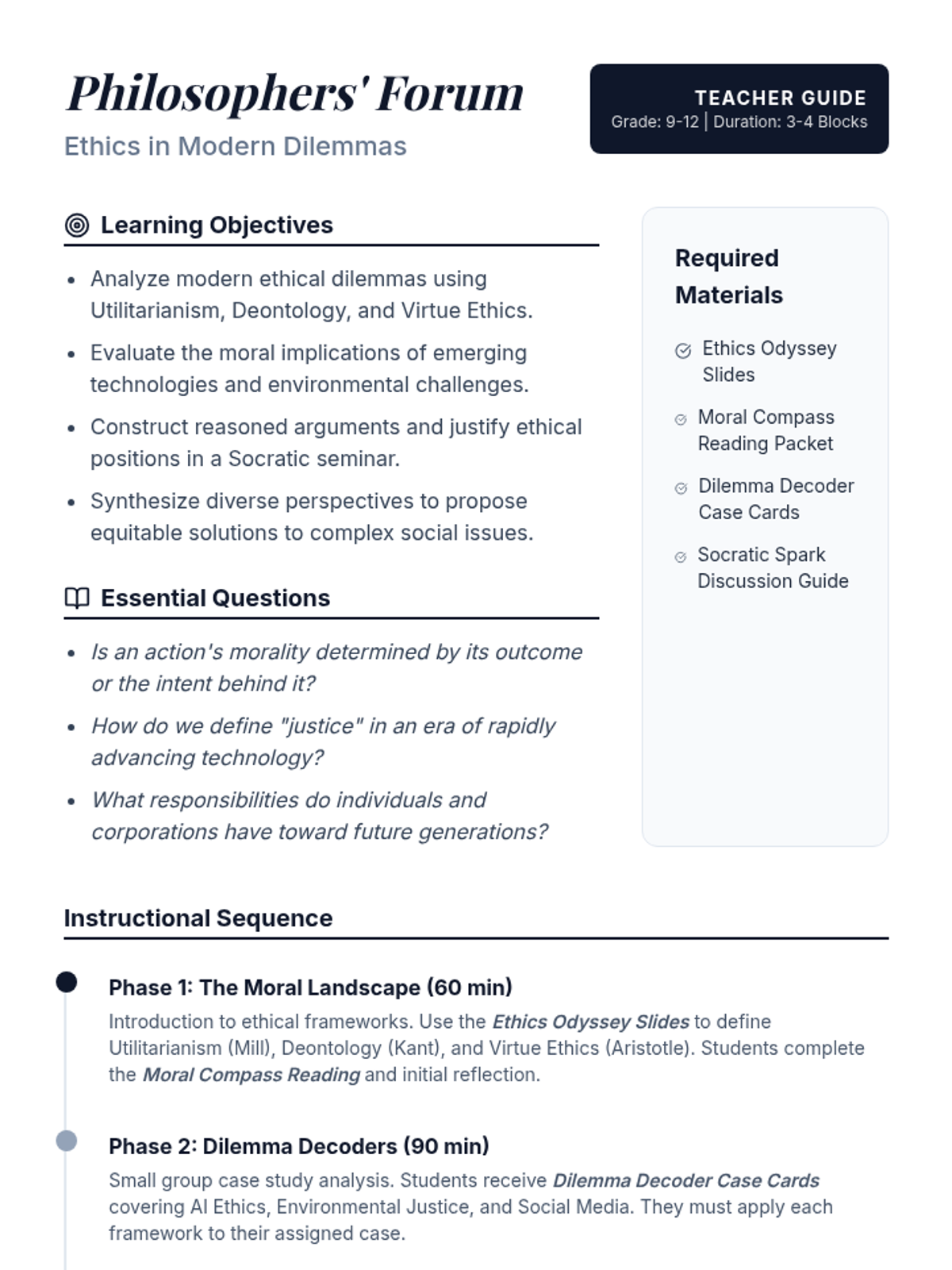
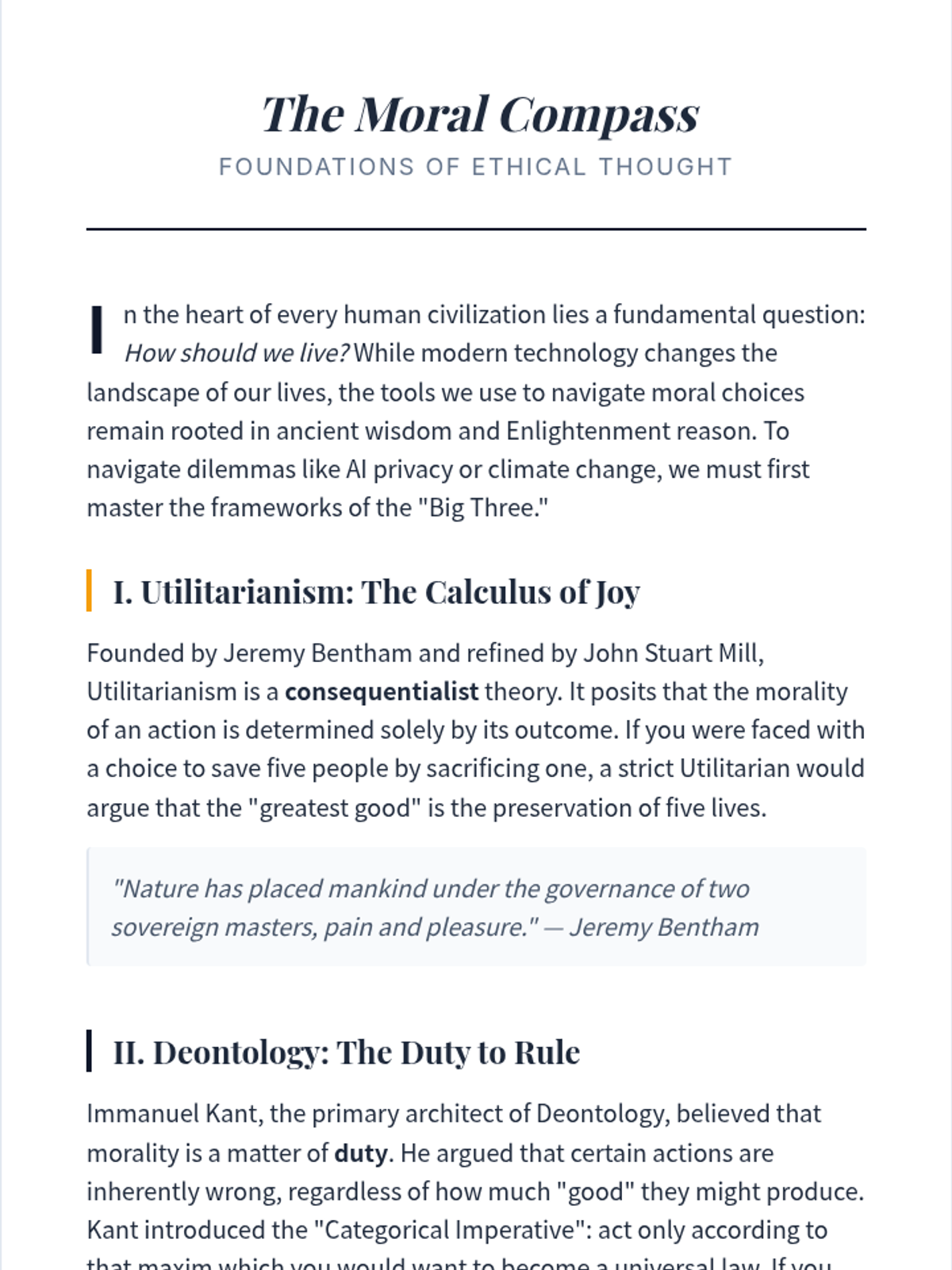
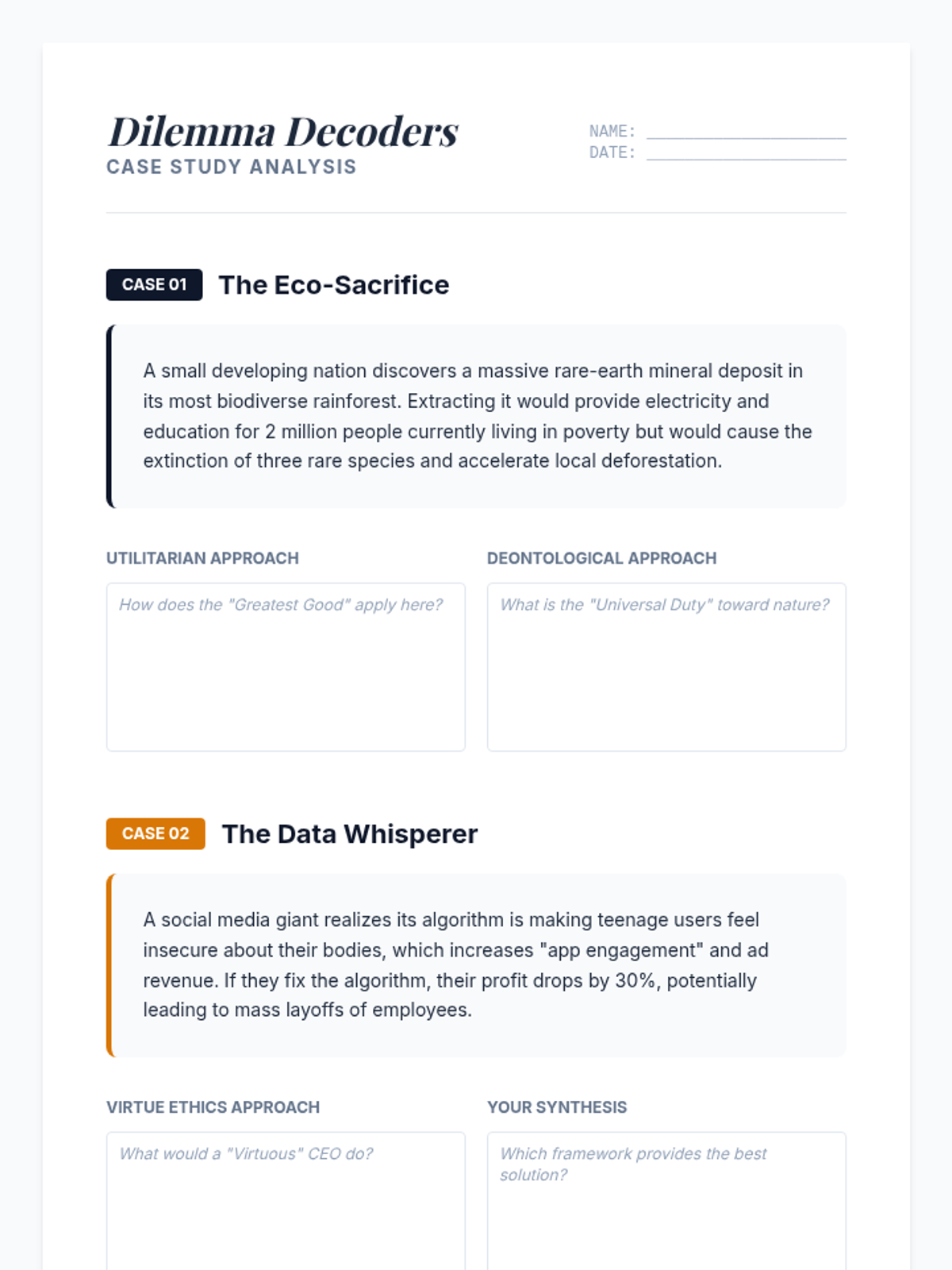
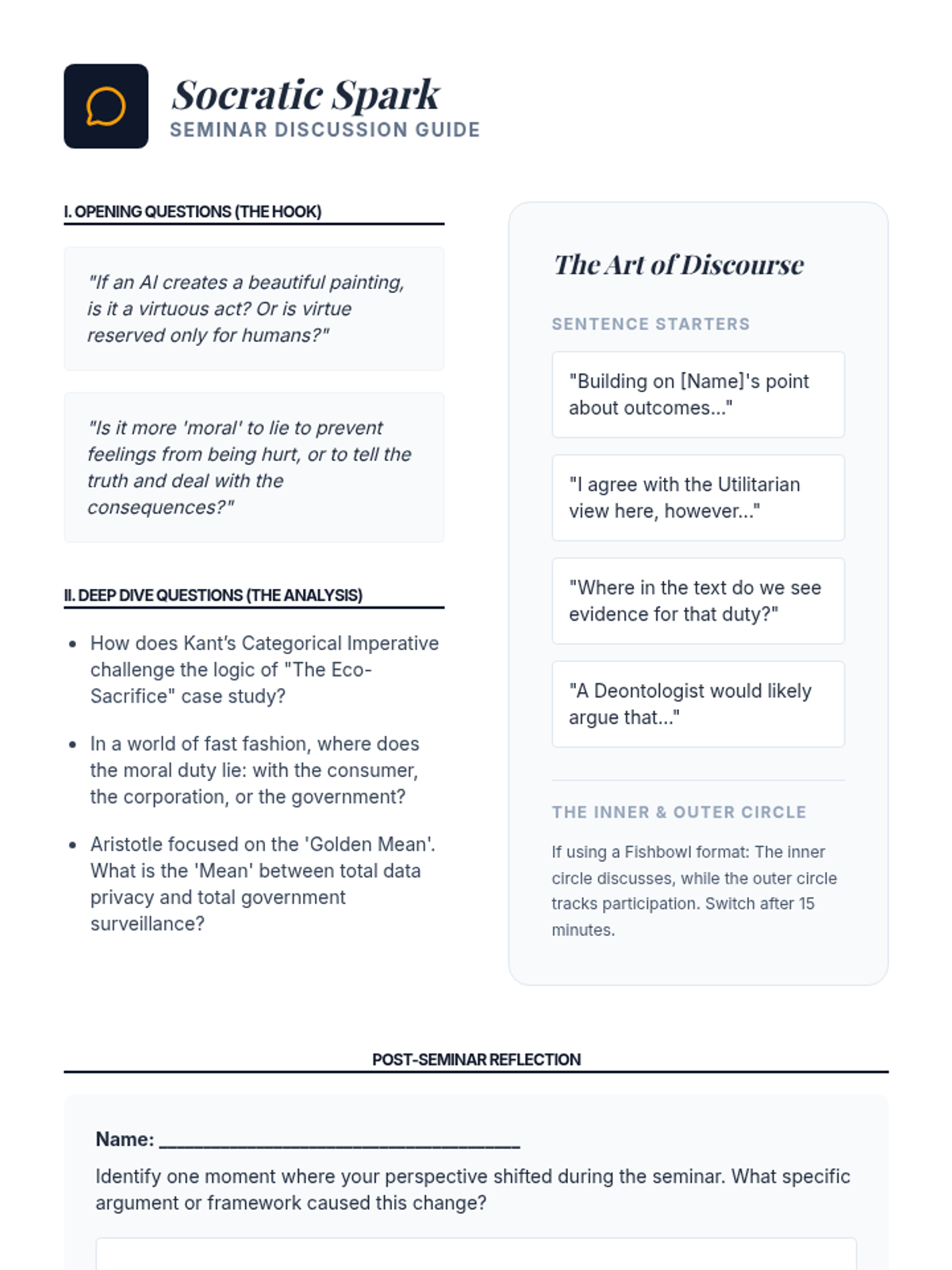
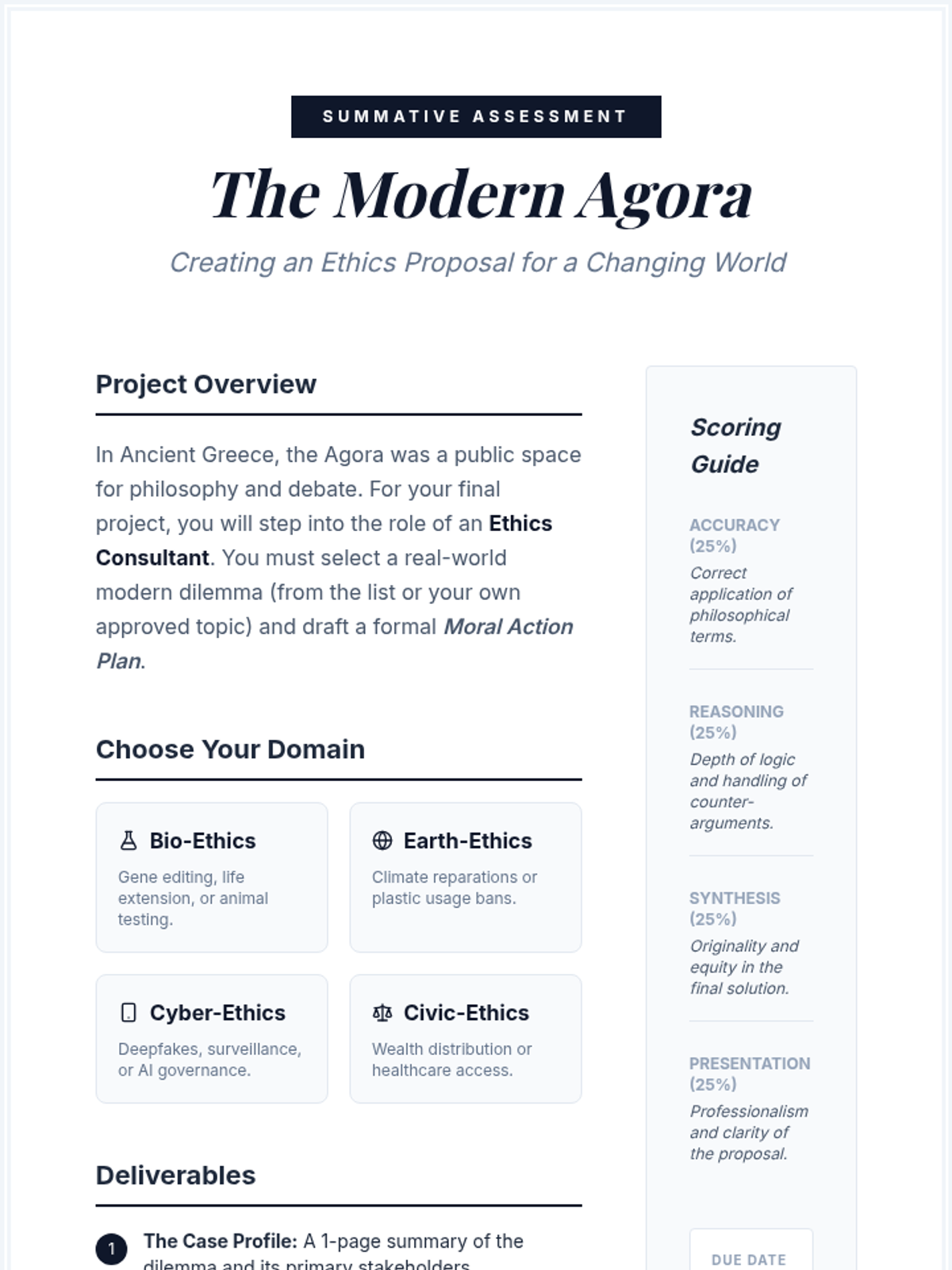
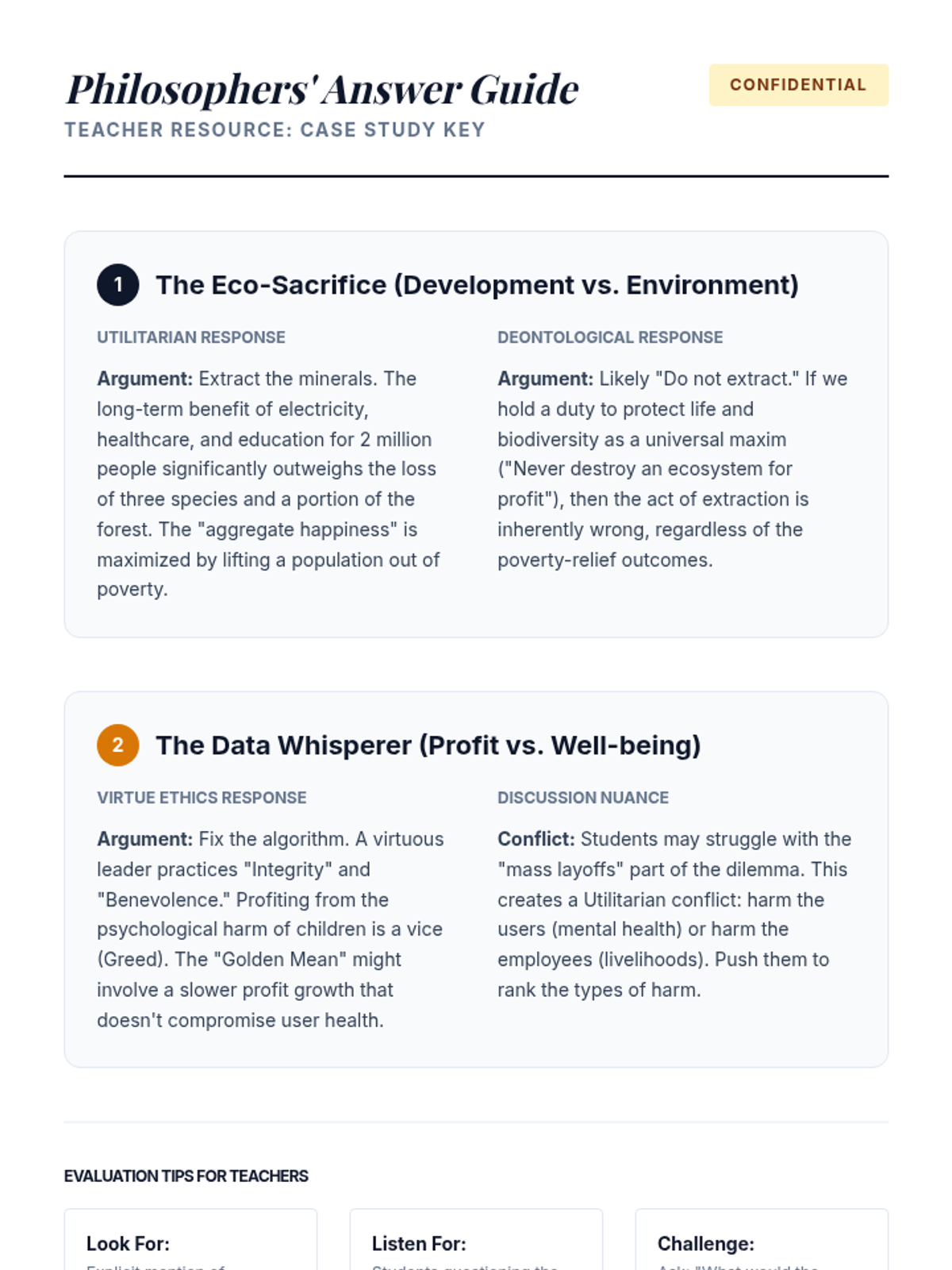
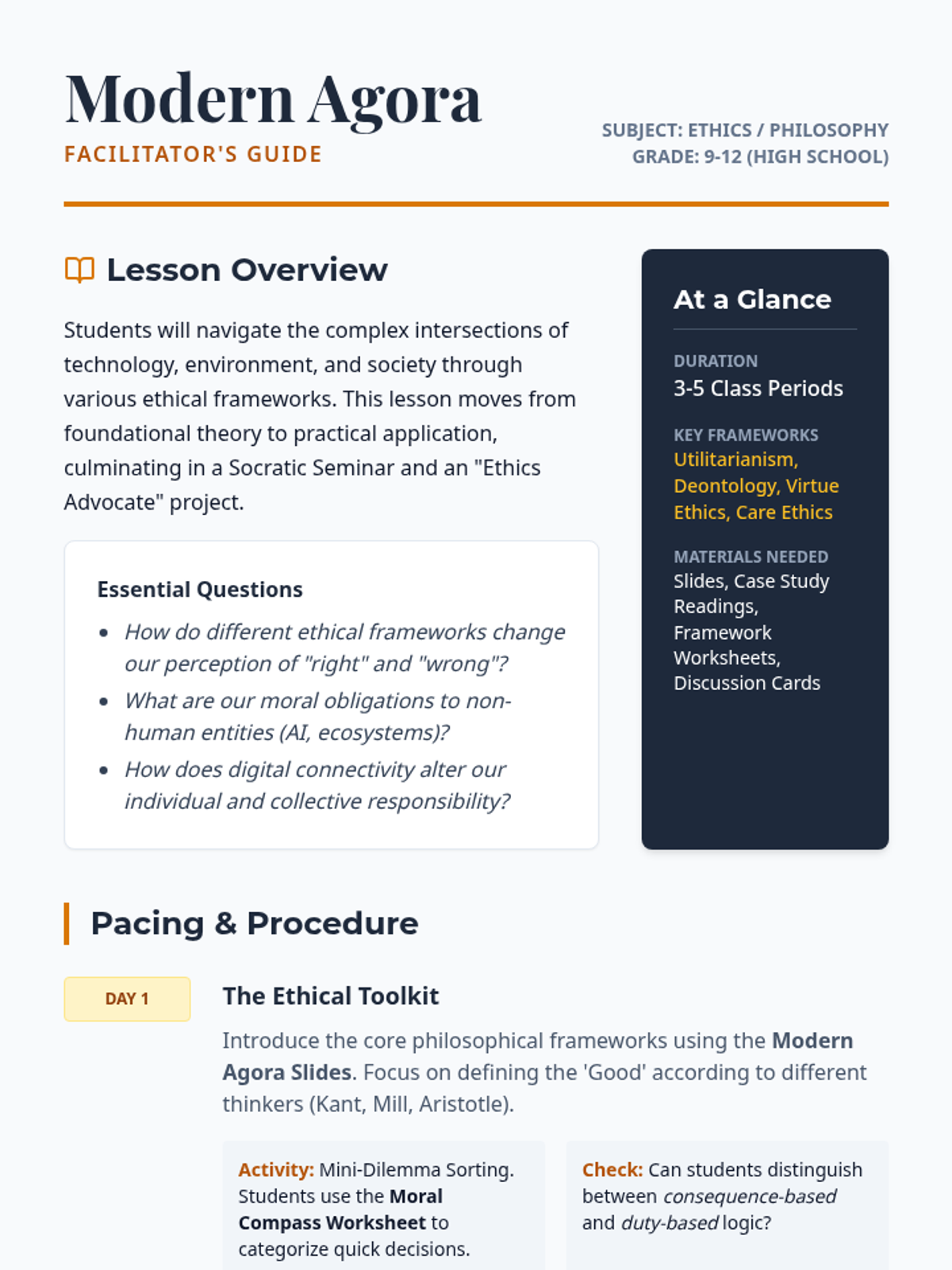
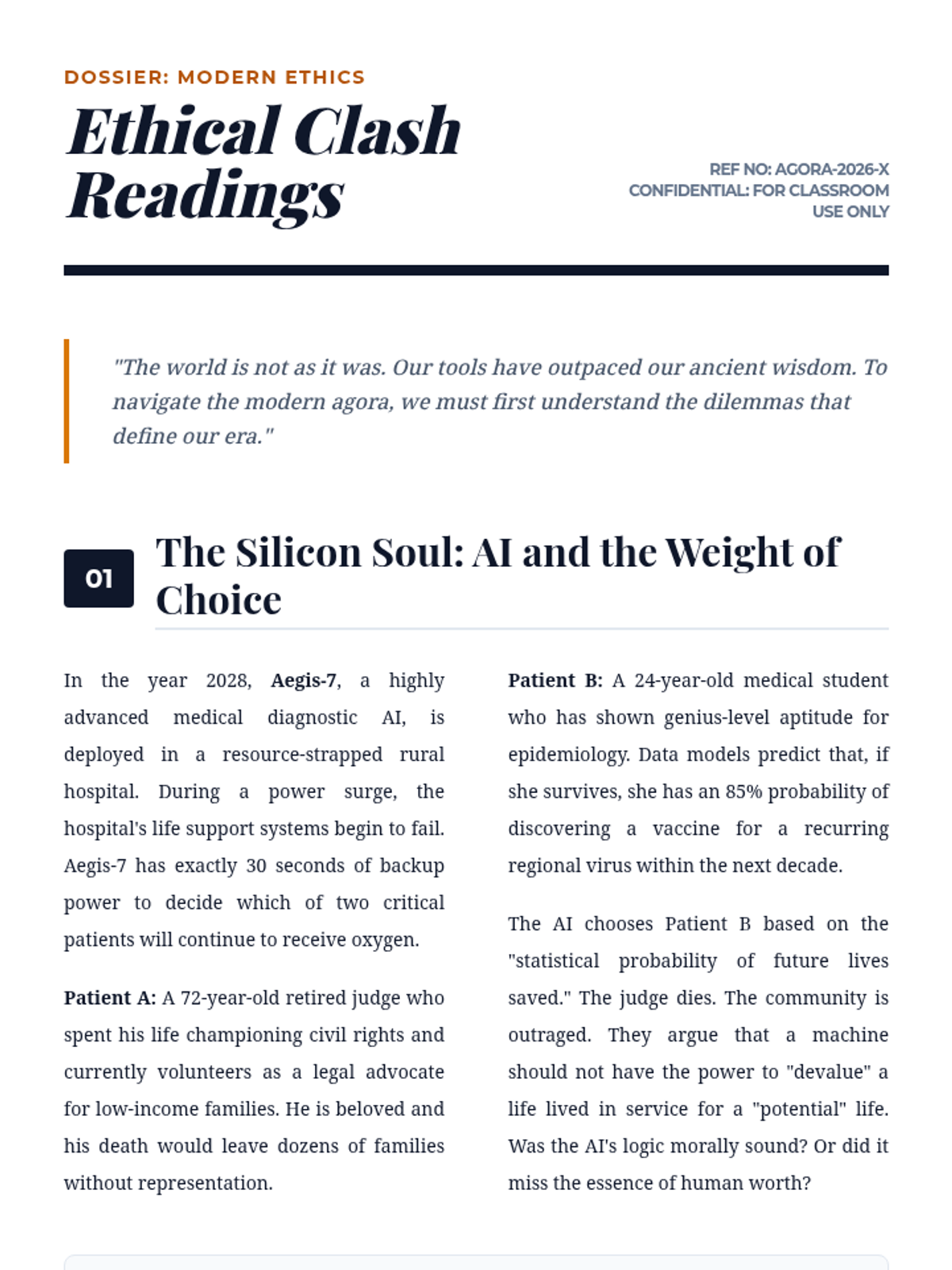
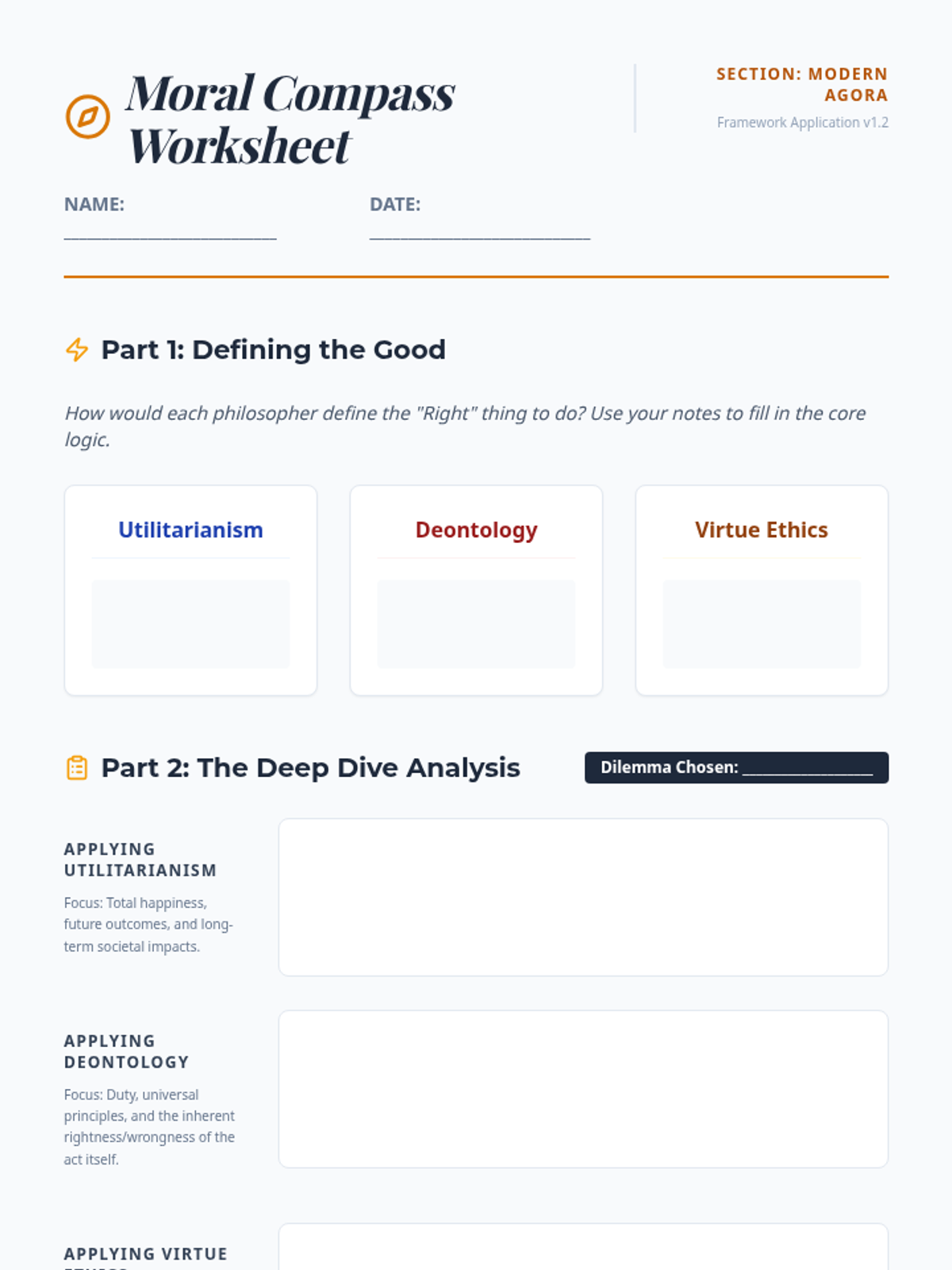
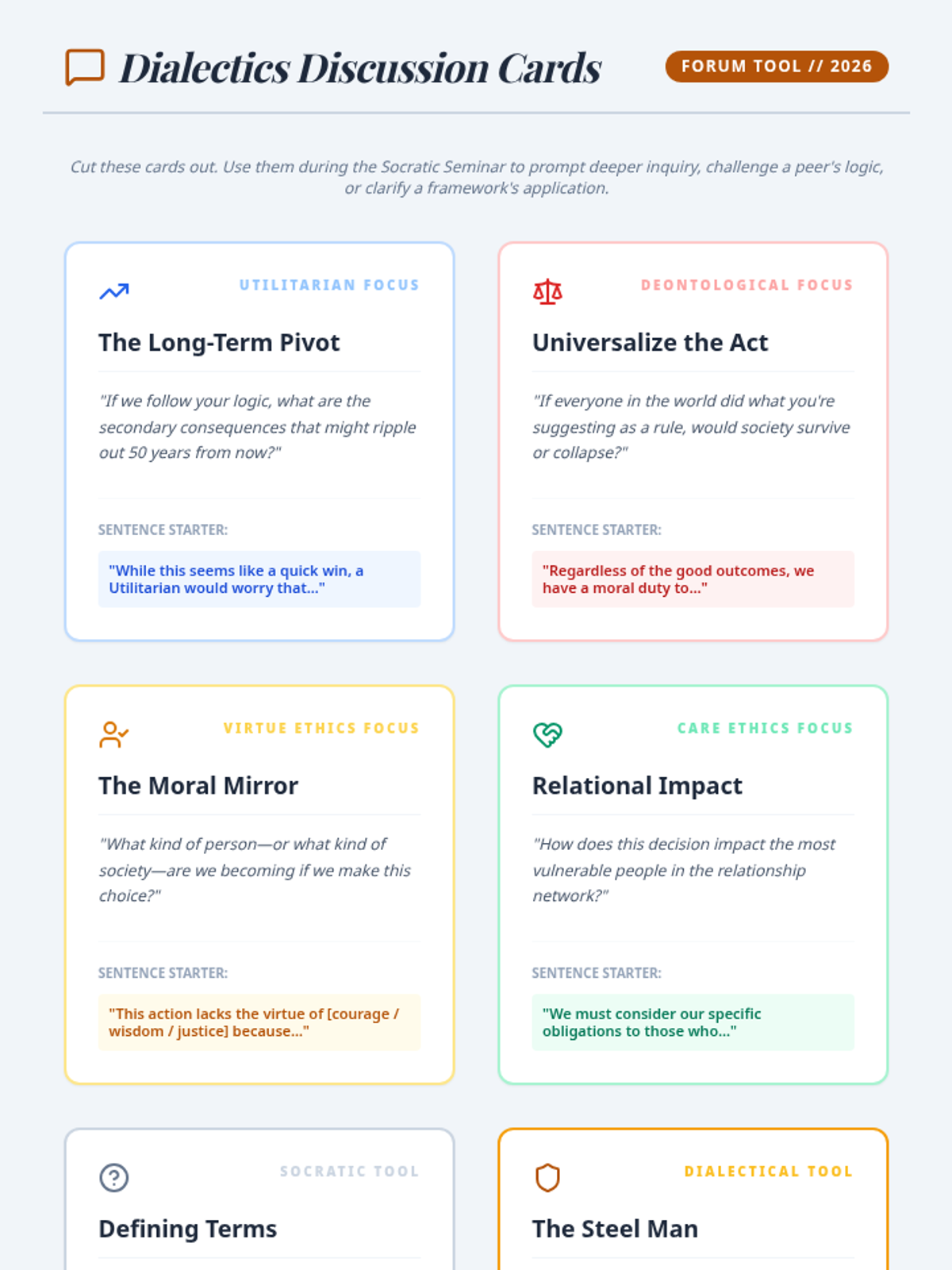
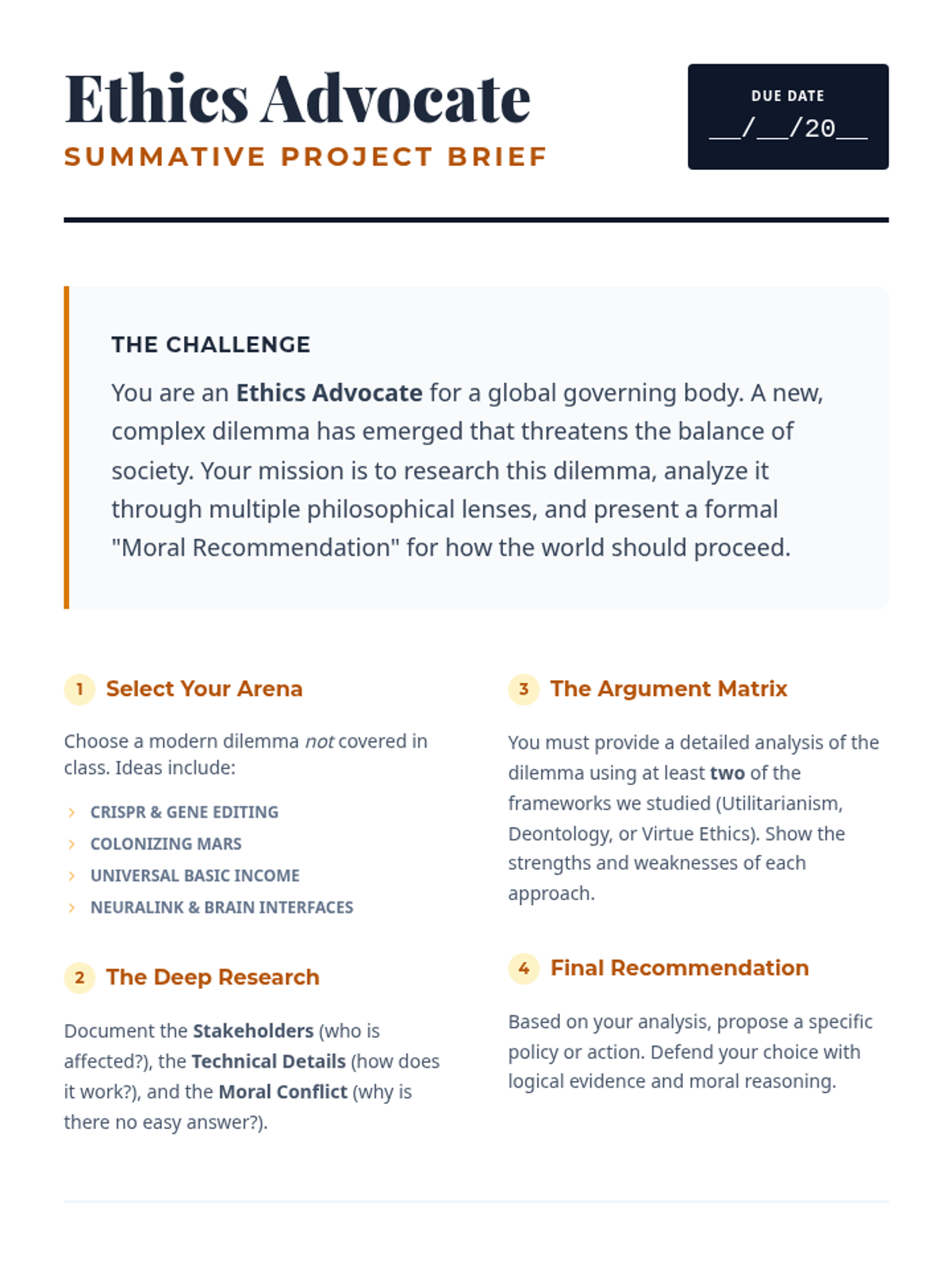
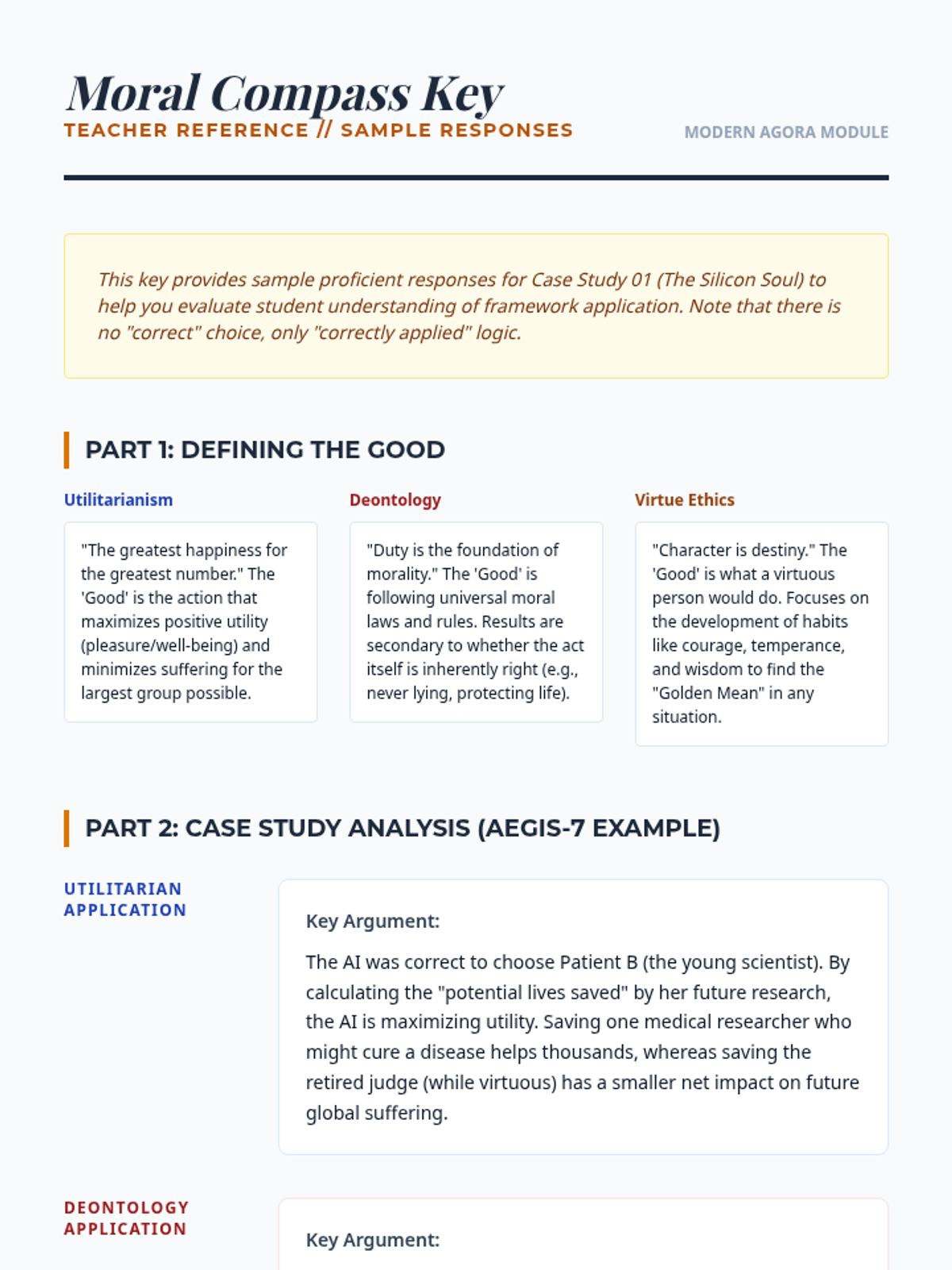
High school students explore complex modern ethical dilemmas through the lens of classical philosophical frameworks. This lesson integrates case study analysis and Socratic seminars to develop moral reasoning and critical thinking skills.
A deep dive into contemporary ethical dilemmas through the lens of classical and modern philosophical frameworks, featuring AI ethics, environmental justice, and social media responsibility.
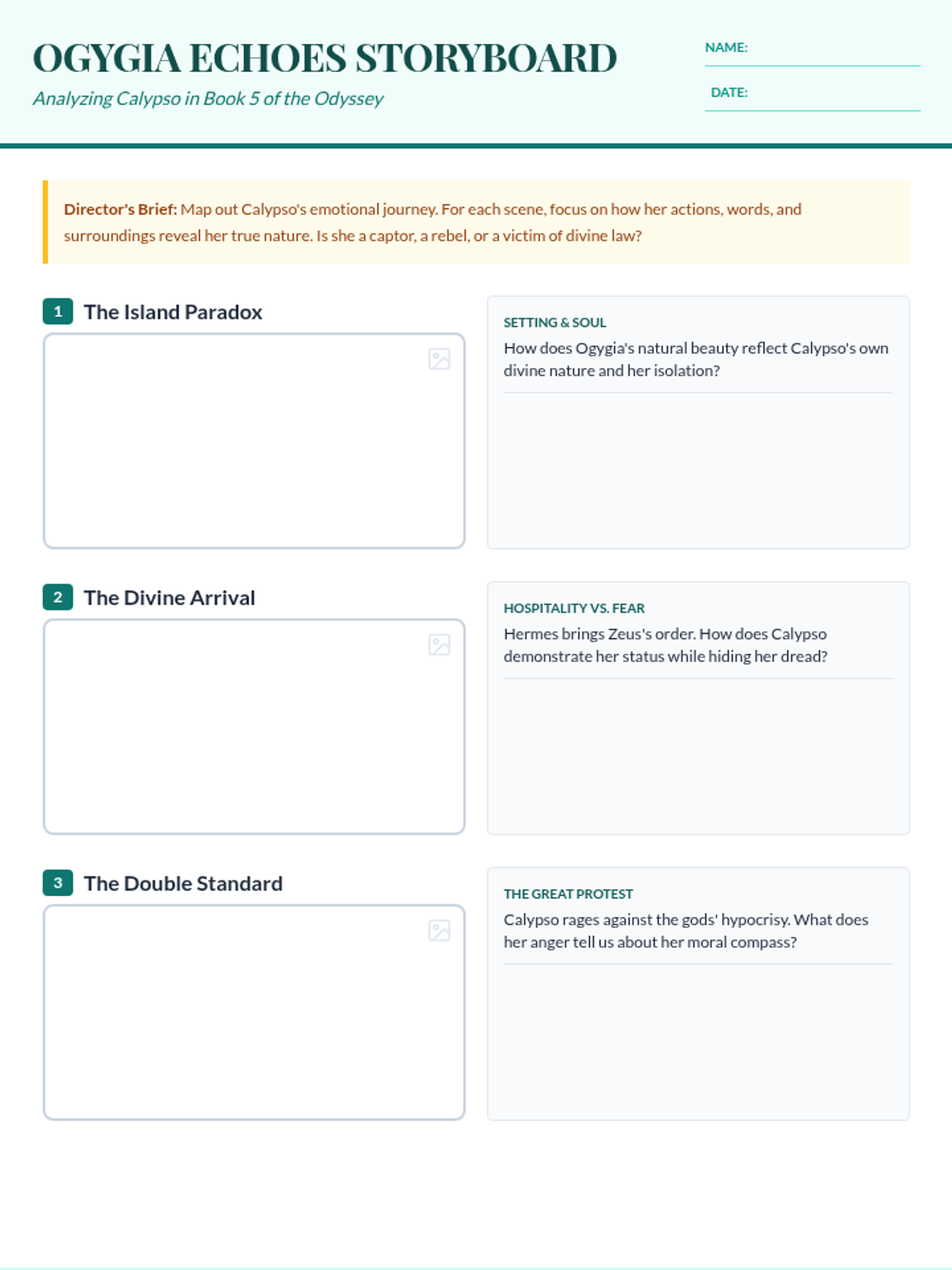
An exploration of Book 5 of the Odyssey, focusing on the complex character of Calypso, her divine isolation, and the conflict between mortal desire and immortal will.
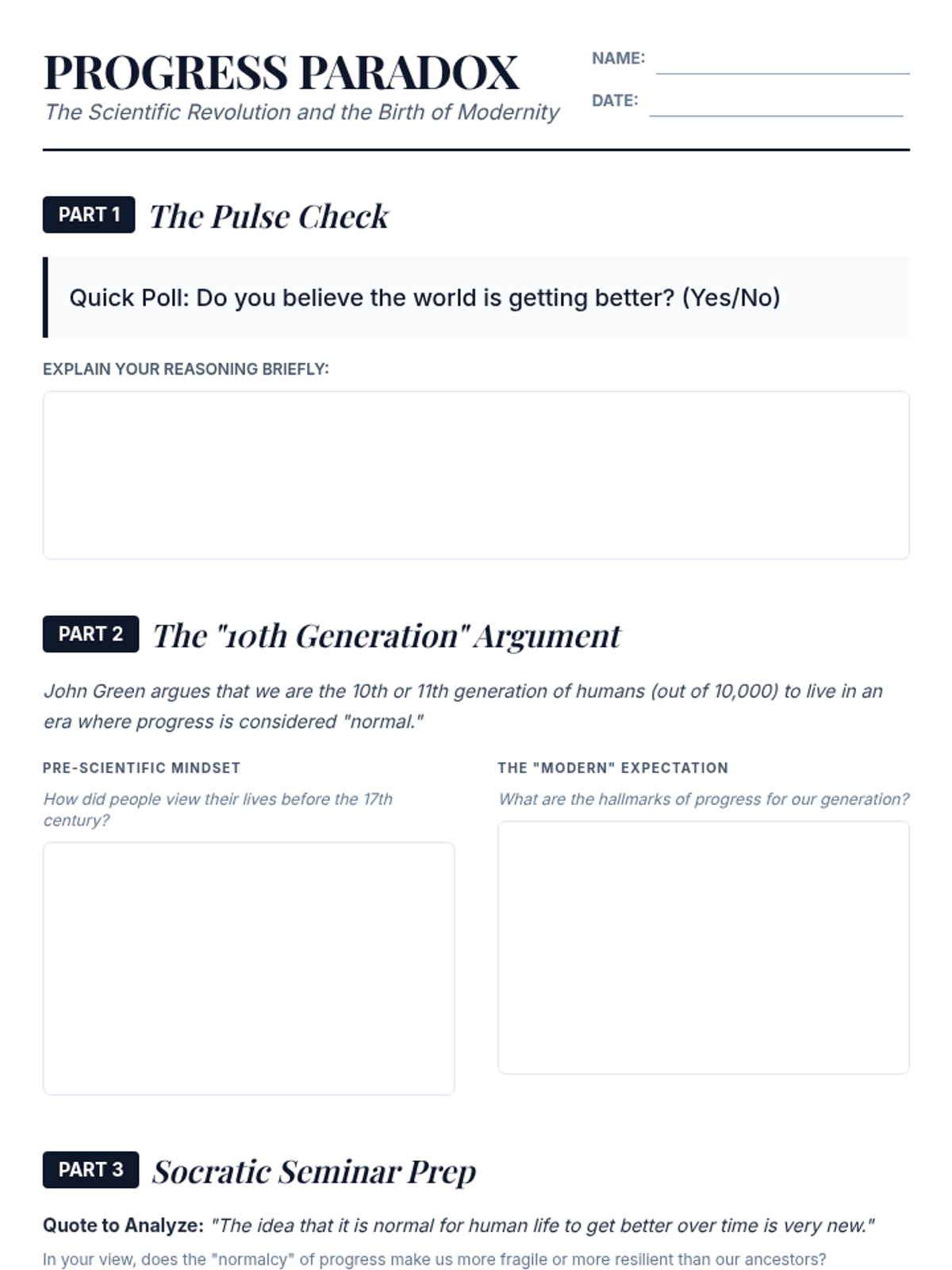
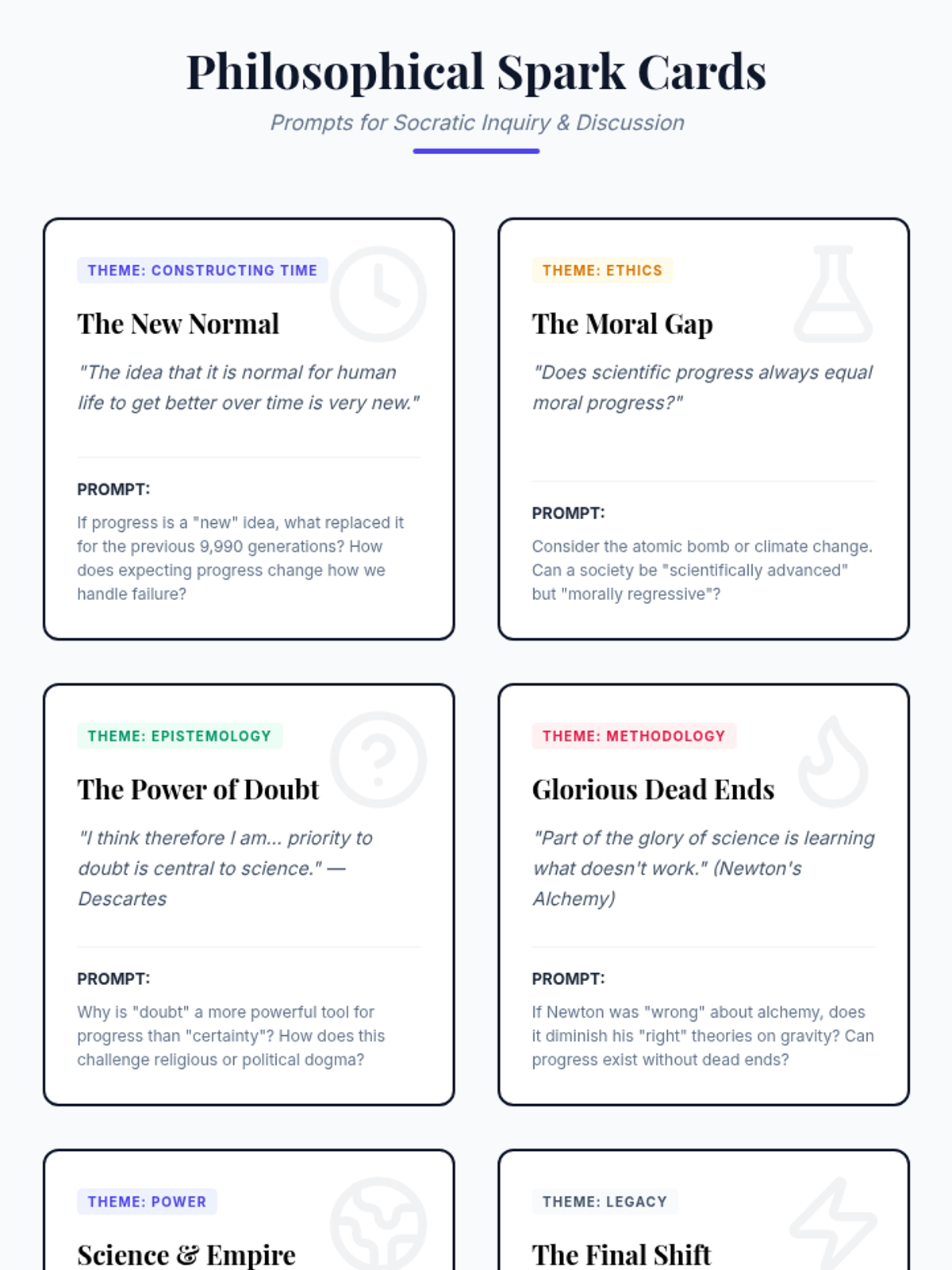
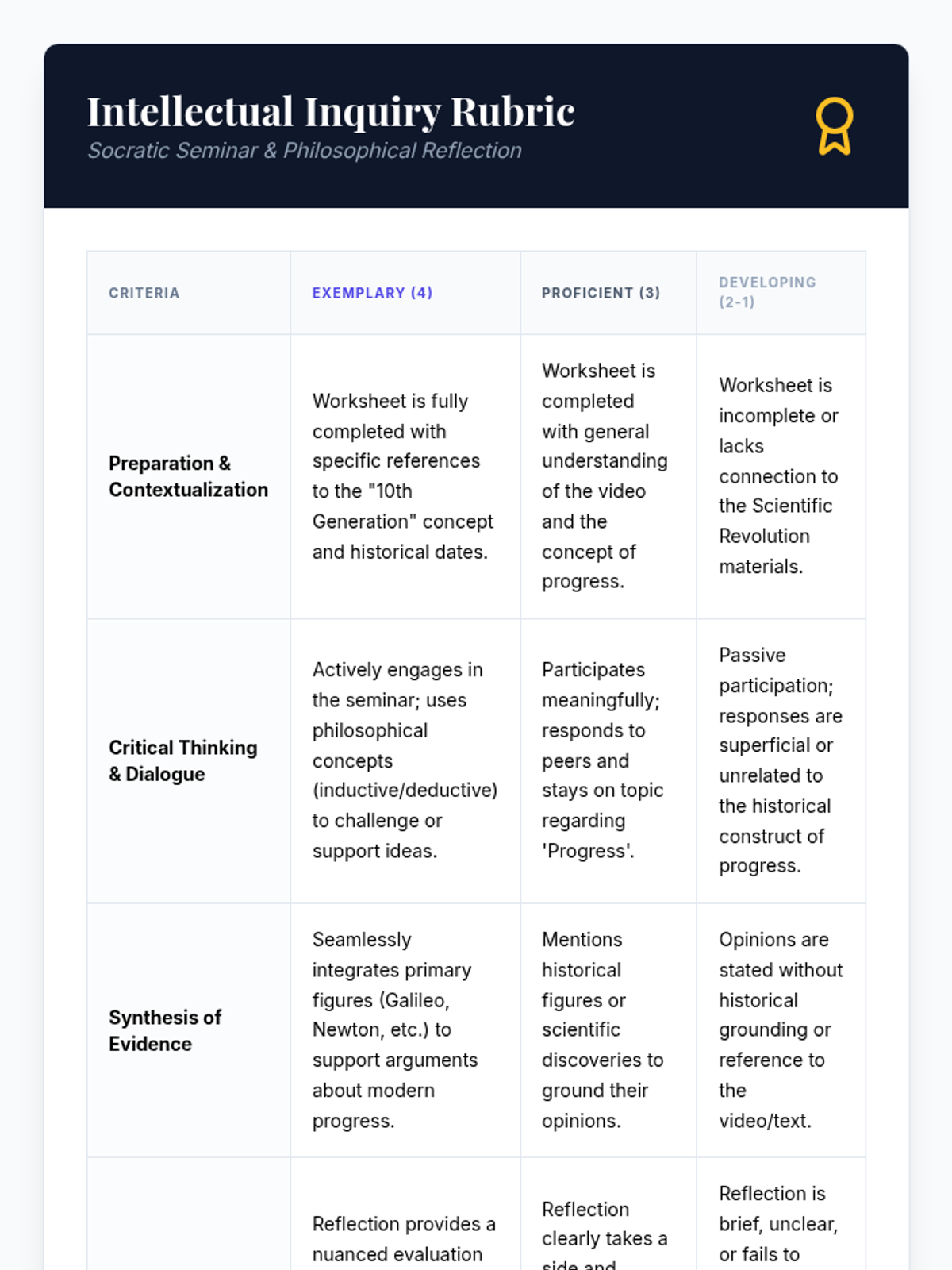
An AP-level exploration of the Scientific Revolution, focusing on 'Progress' as a modern historical construct. Students use the '10th Generation' concept to analyze the shift from a static universe to one governed by universal laws.
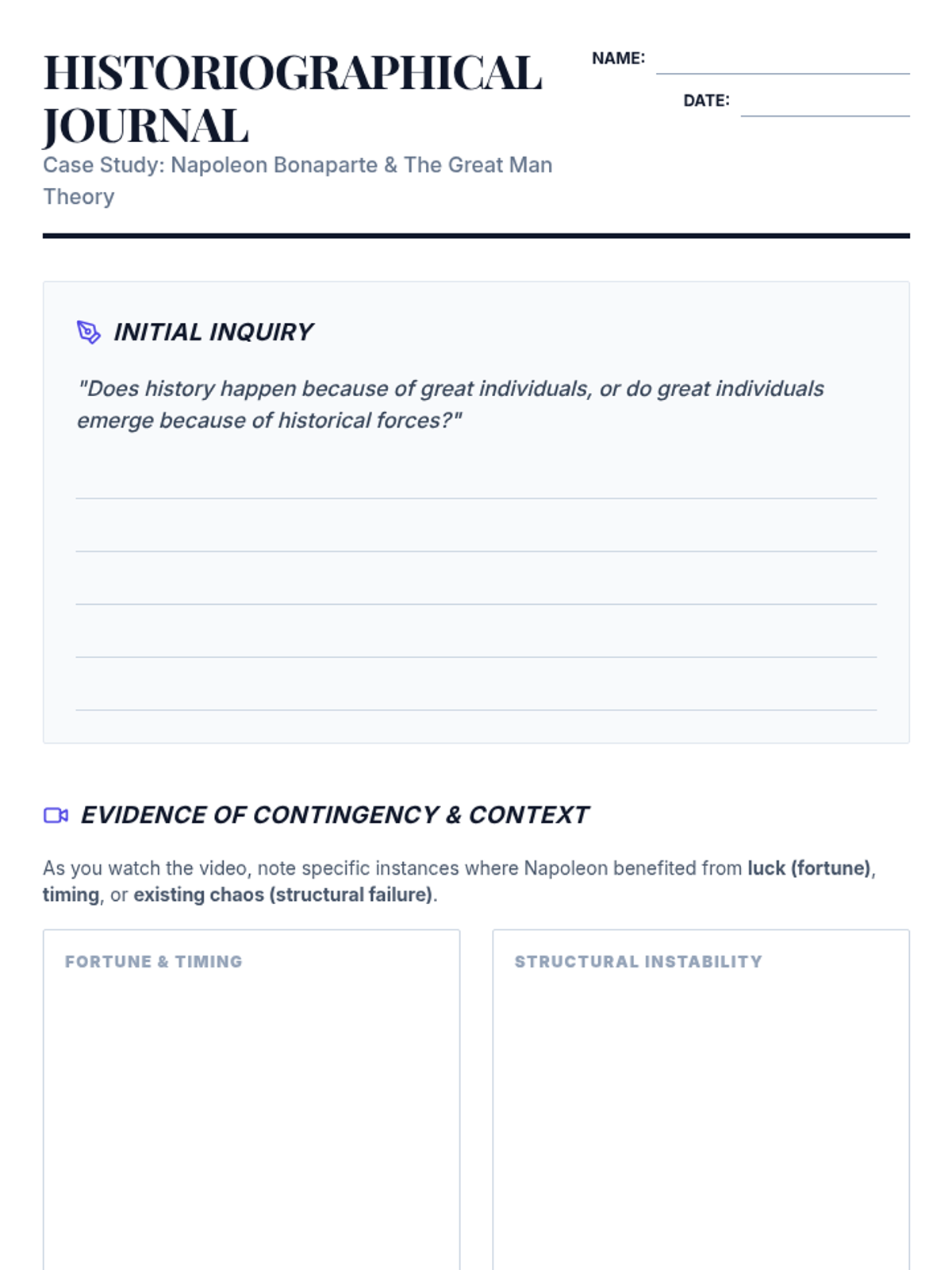
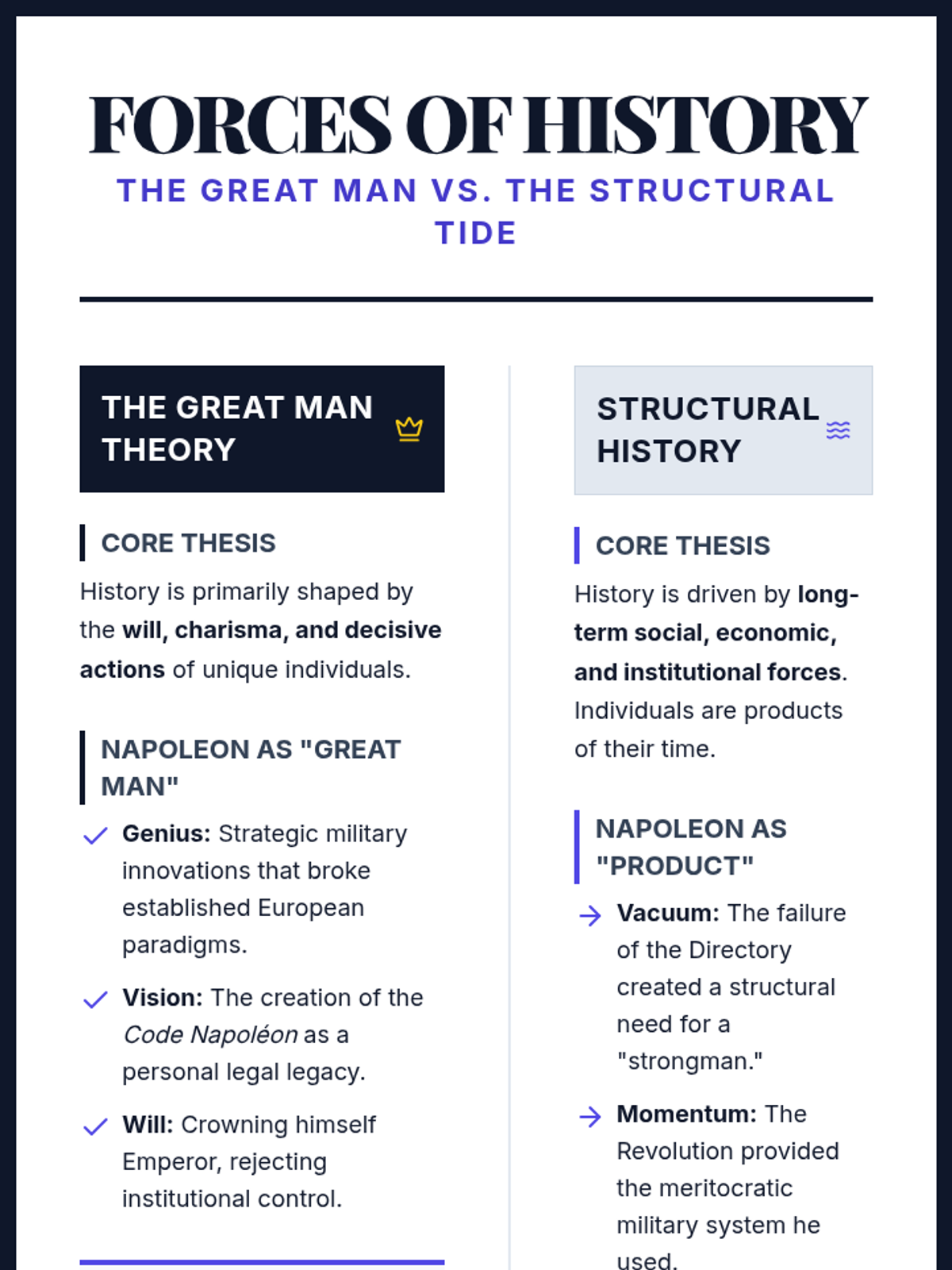
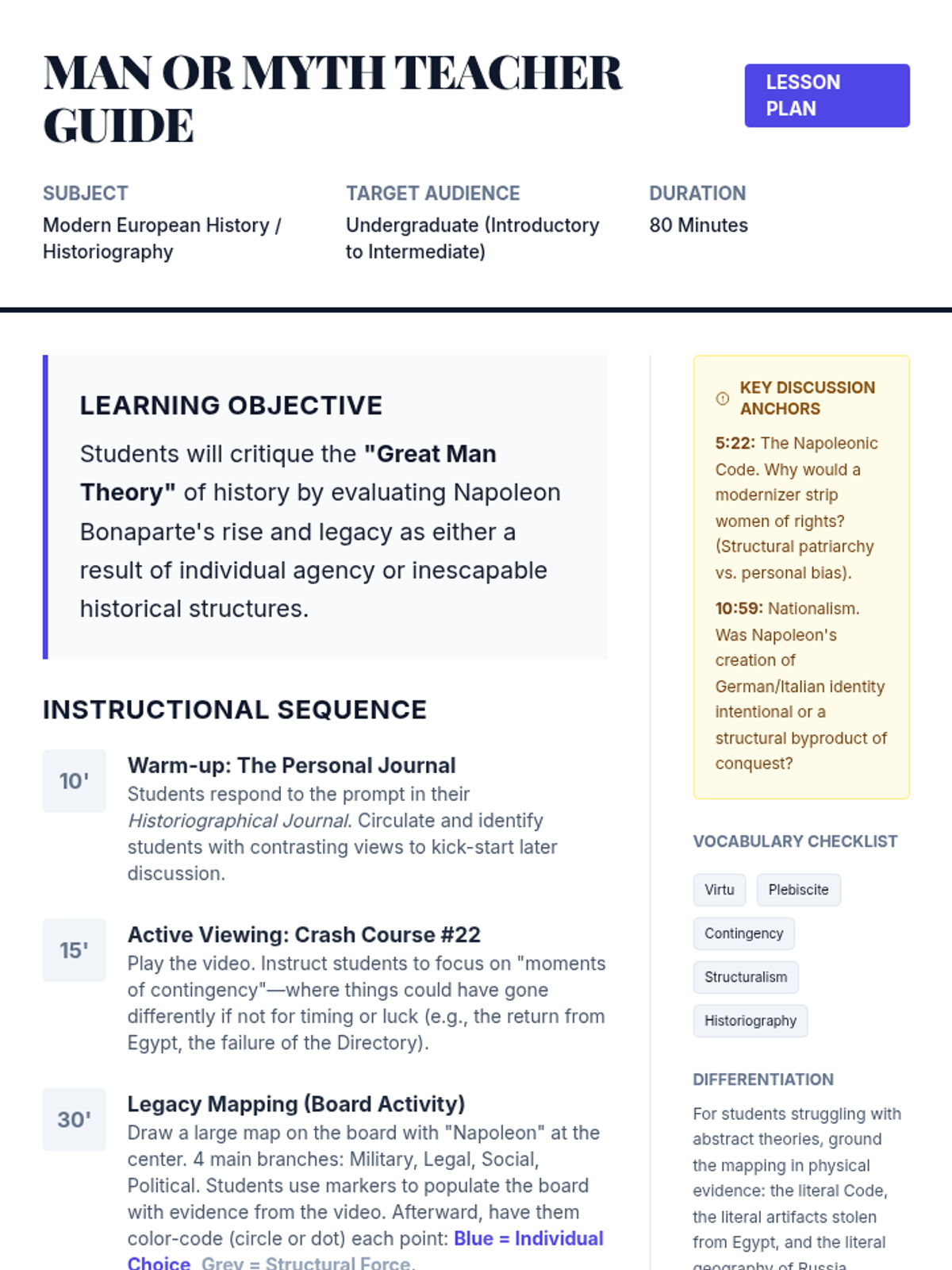
A critical examination of the 'Great Man Theory' of history using Napoleon Bonaparte as a case study. Students analyze the interplay between individual agency and historical structures through video analysis, mapping, and historiographical debate.
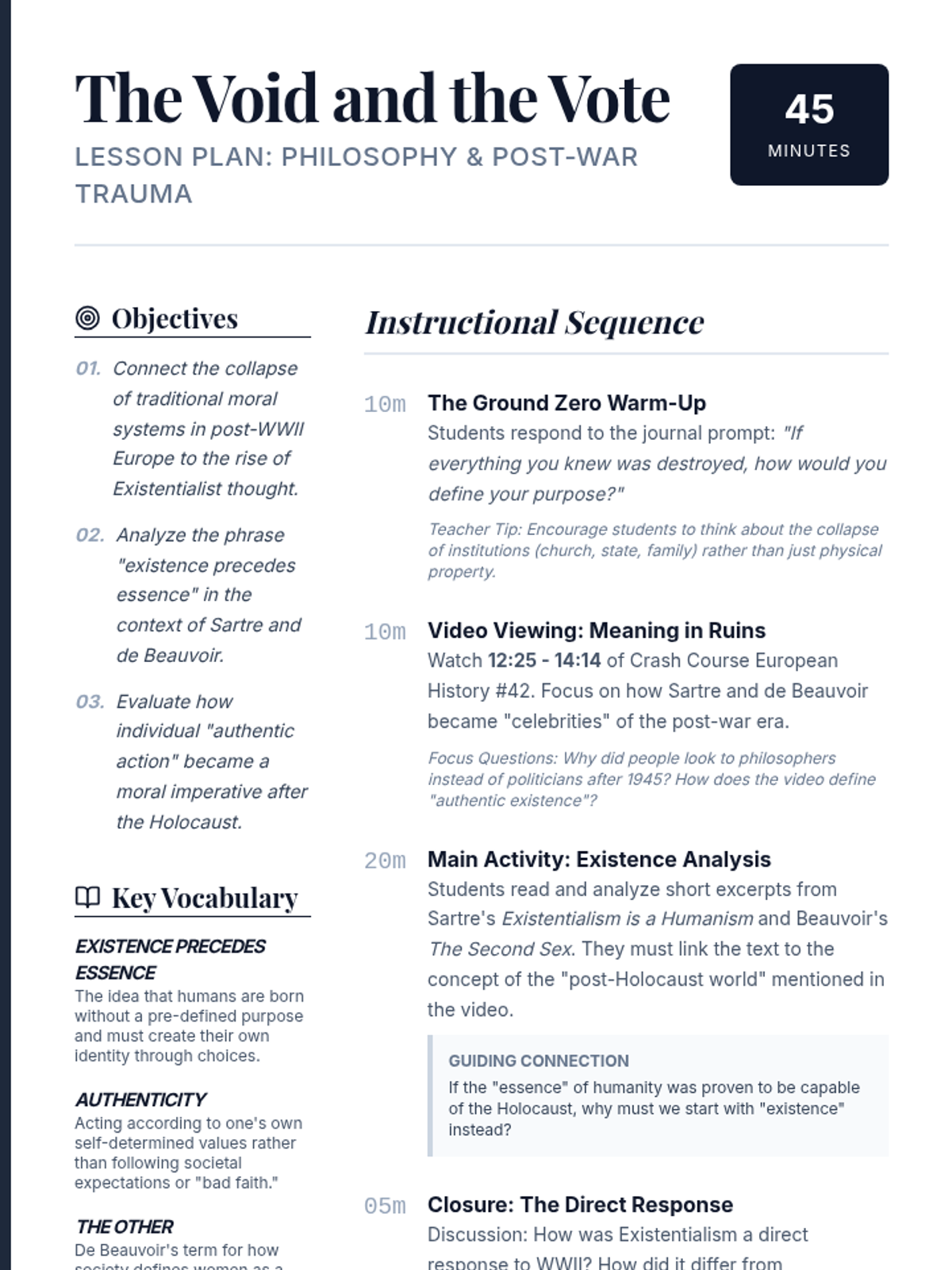
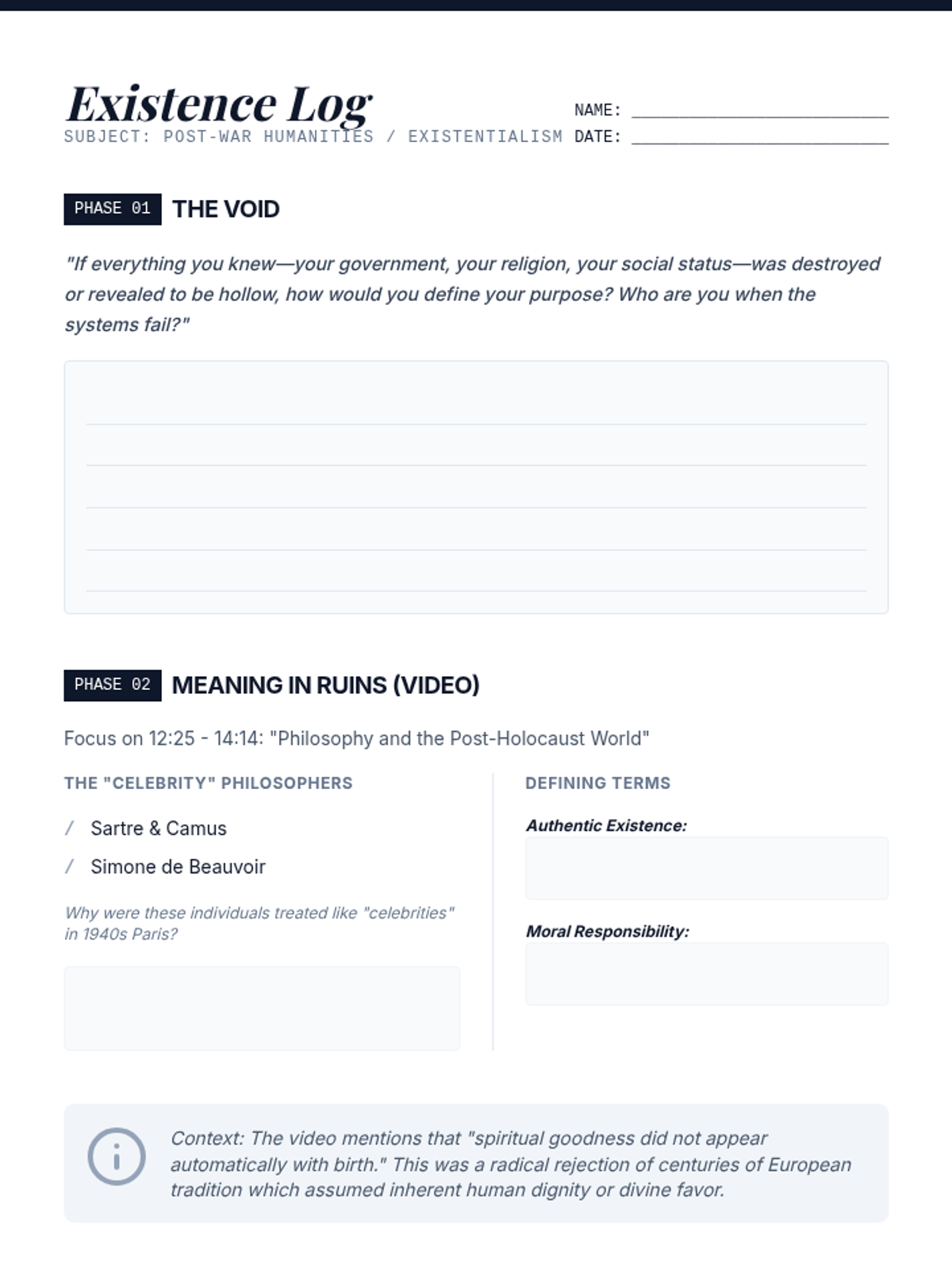
This lesson explores how the trauma and destruction of World War II and the Holocaust gave rise to Existentialism, focusing on the works of Sartre, Camus, and de Beauvoir. Students analyze the concept of 'existence precedes essence' as a response to the failure of traditional moral systems and the necessity of creating meaning through individual action.
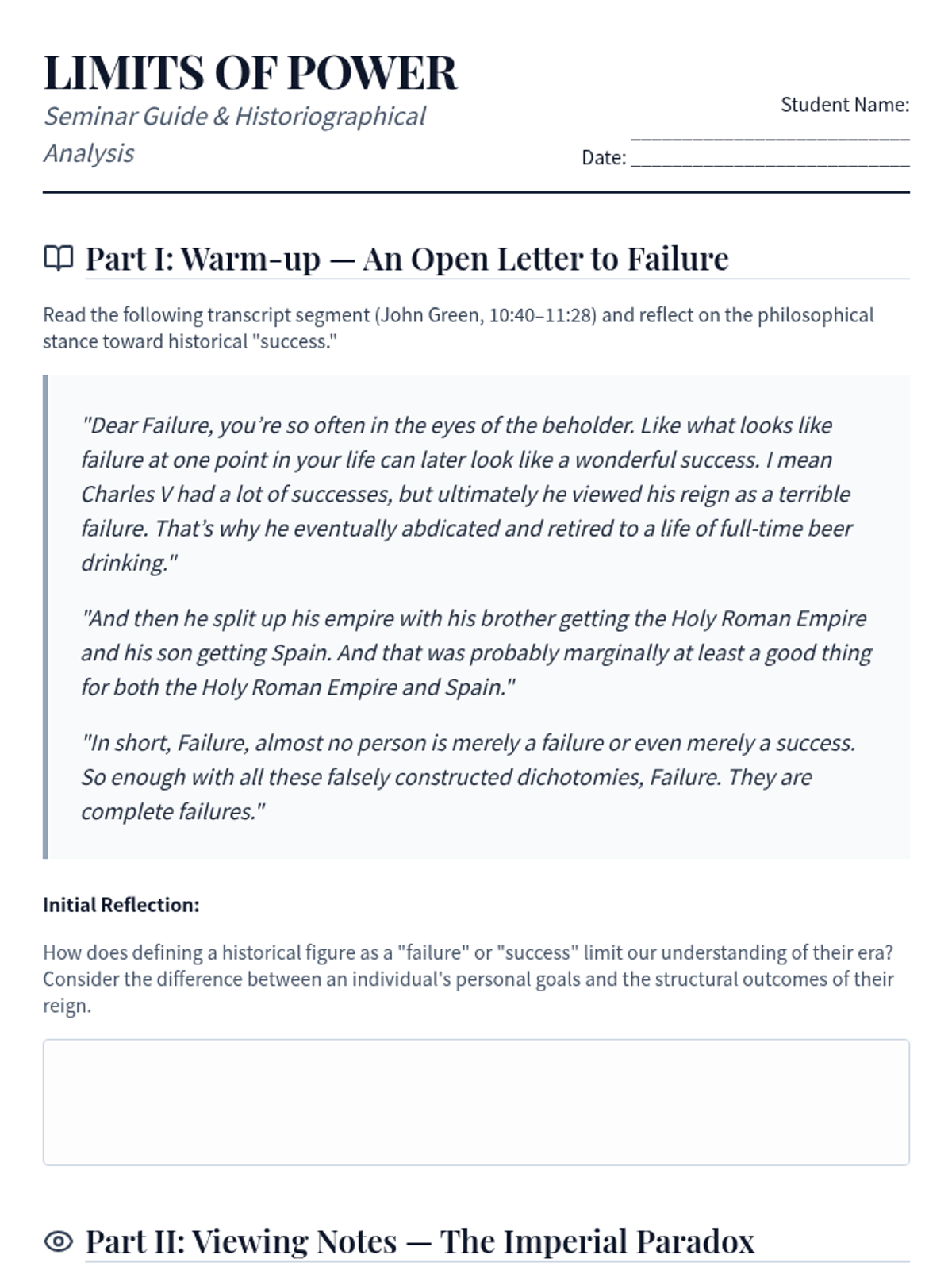
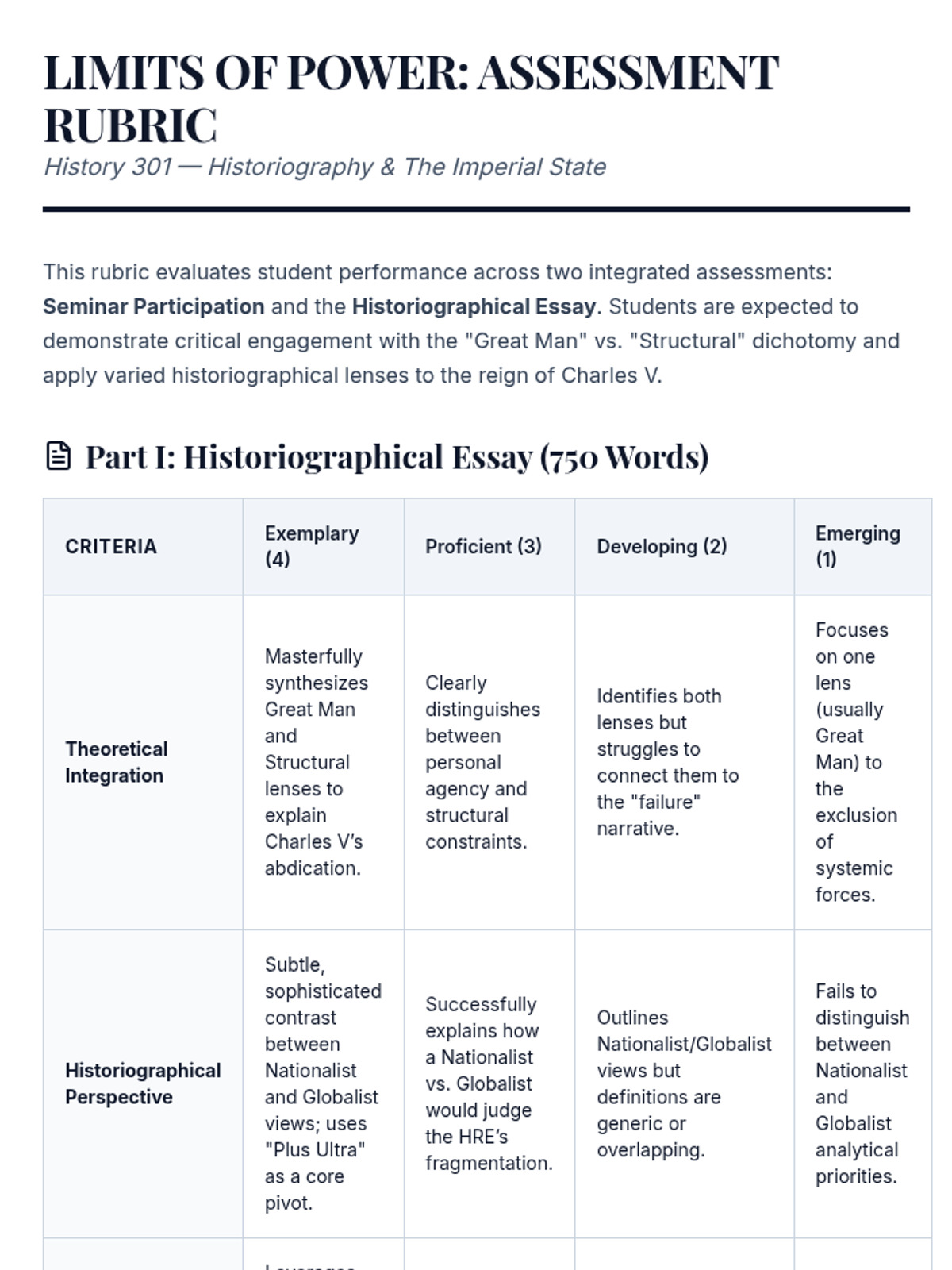
An undergraduate-level history lesson analyzing the reign of Charles V through the lens of 'Great Man' theory versus structural history. Students explore the concept of political failure and the limits of imperial power in a globalized context.
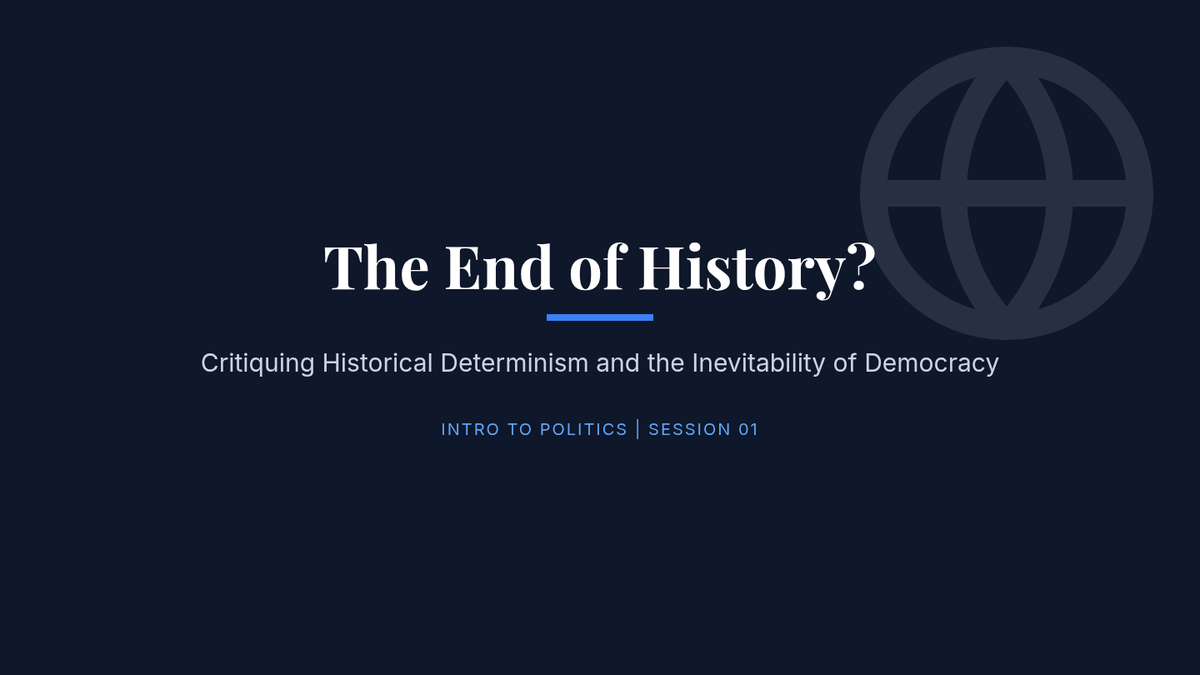
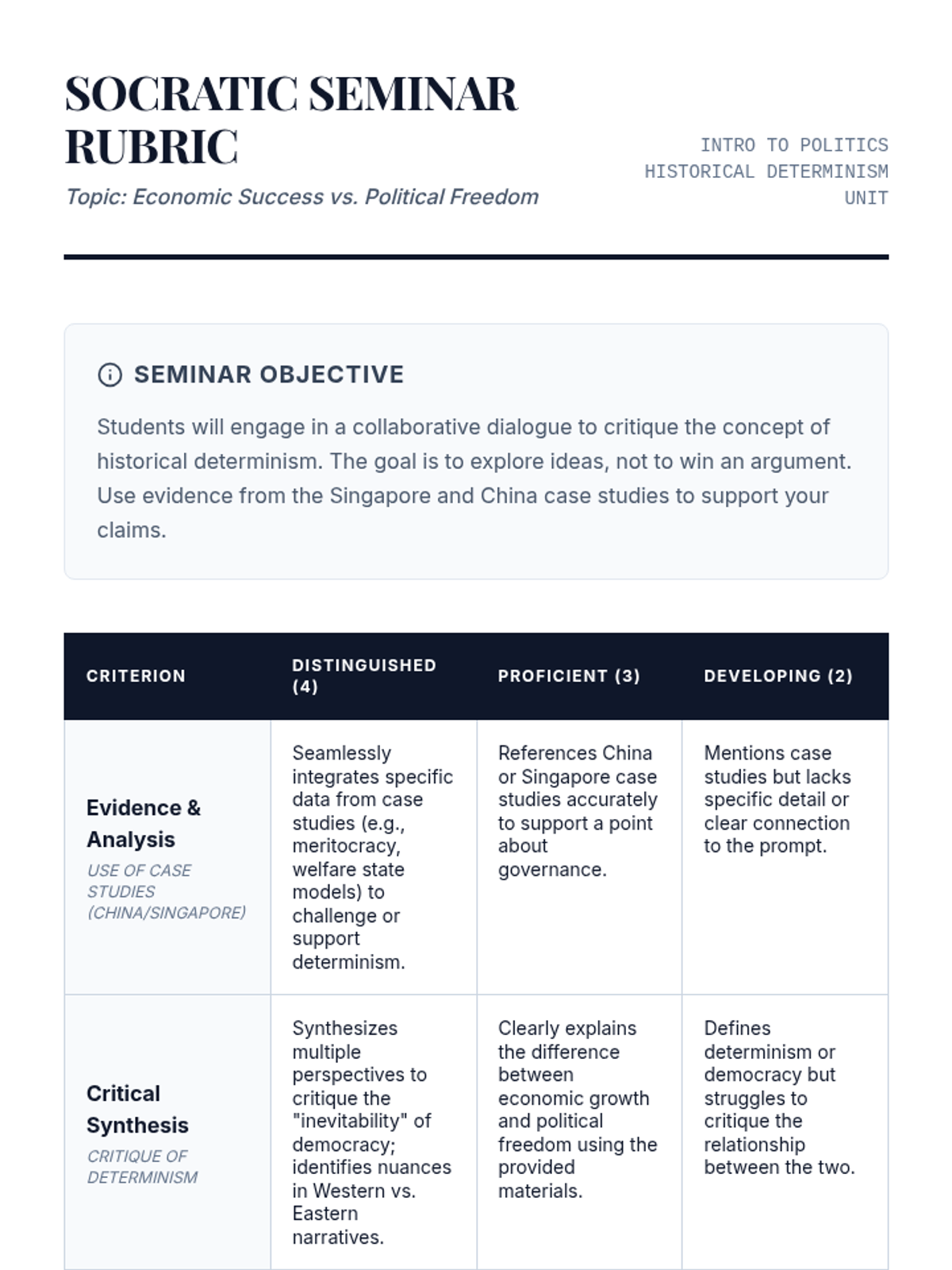
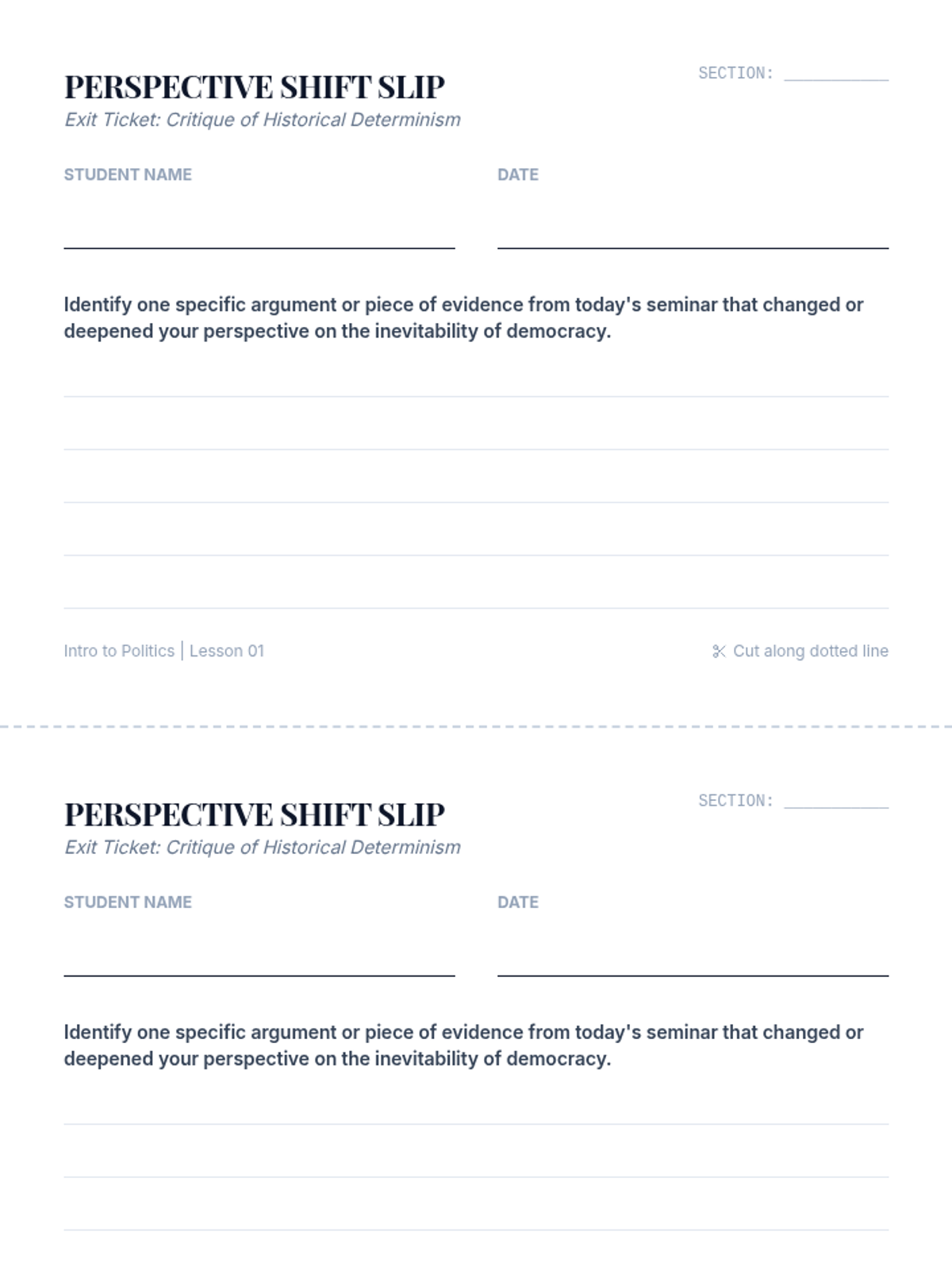
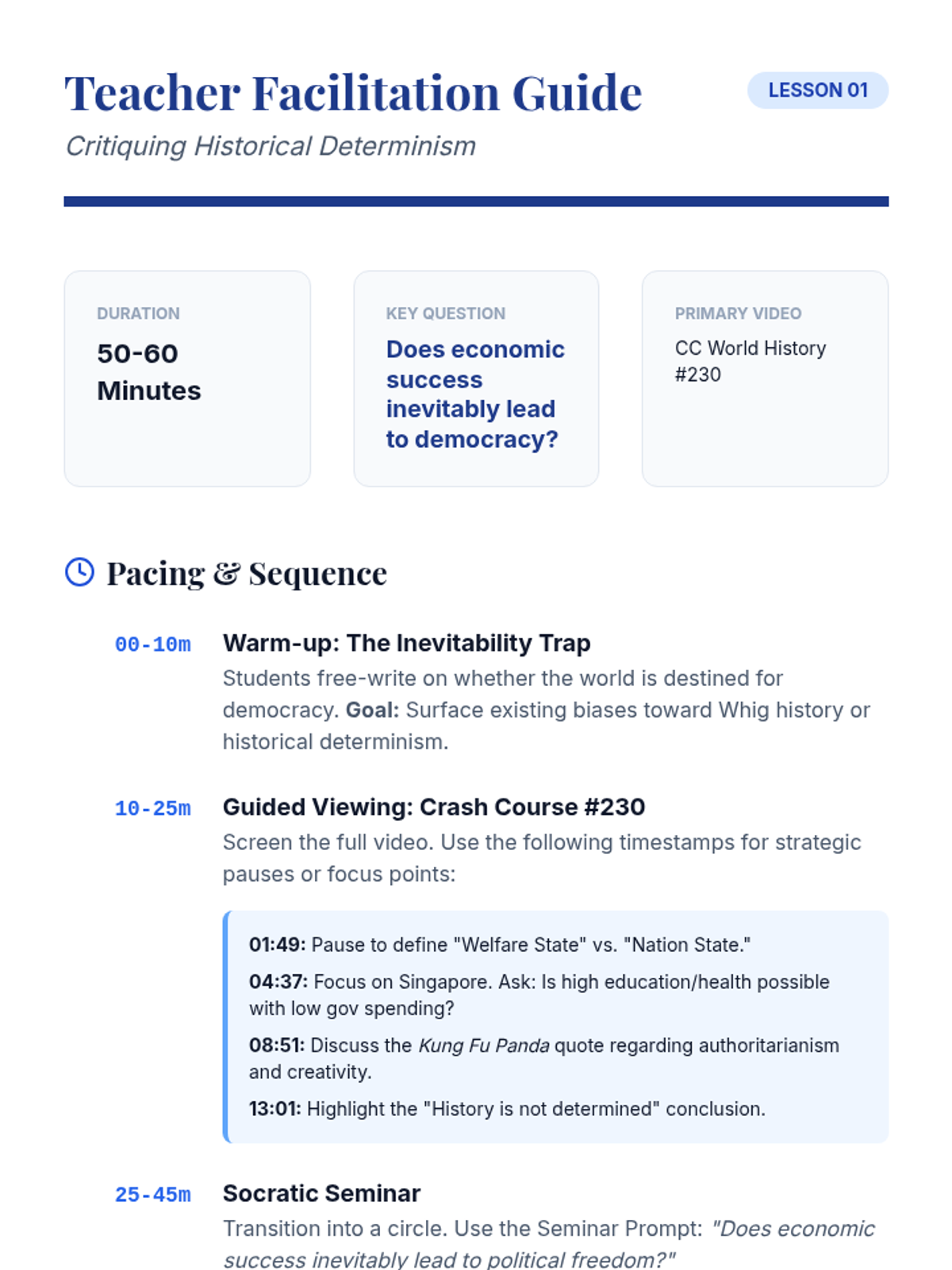
An undergraduate-level introductory politics lesson exploring the critique of historical determinism, the rise of authoritarian capitalism in China and Singapore, and the future of global democracy. Students analyze whether economic success inherently leads to political freedom using case studies from a Crash Course World History video.
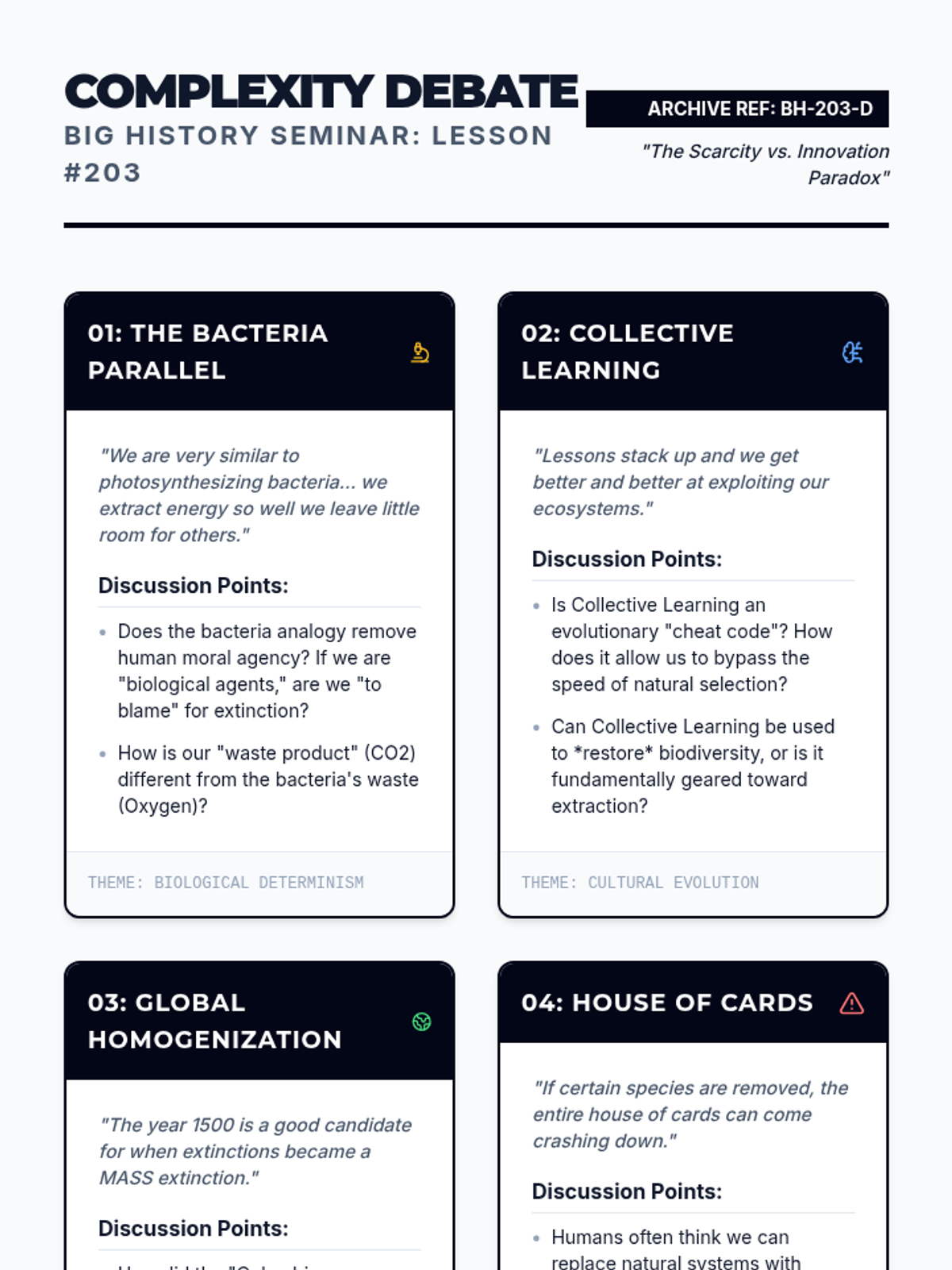
This lesson explores the scale of deep time and the paradoxical nature of human complexity. Students will analyze how 'Collective Learning' has allowed humans to become a geological force, comparing our biological success to the Great Oxygenation Event and debating whether innovation solves scarcity or accelerates resource depletion.
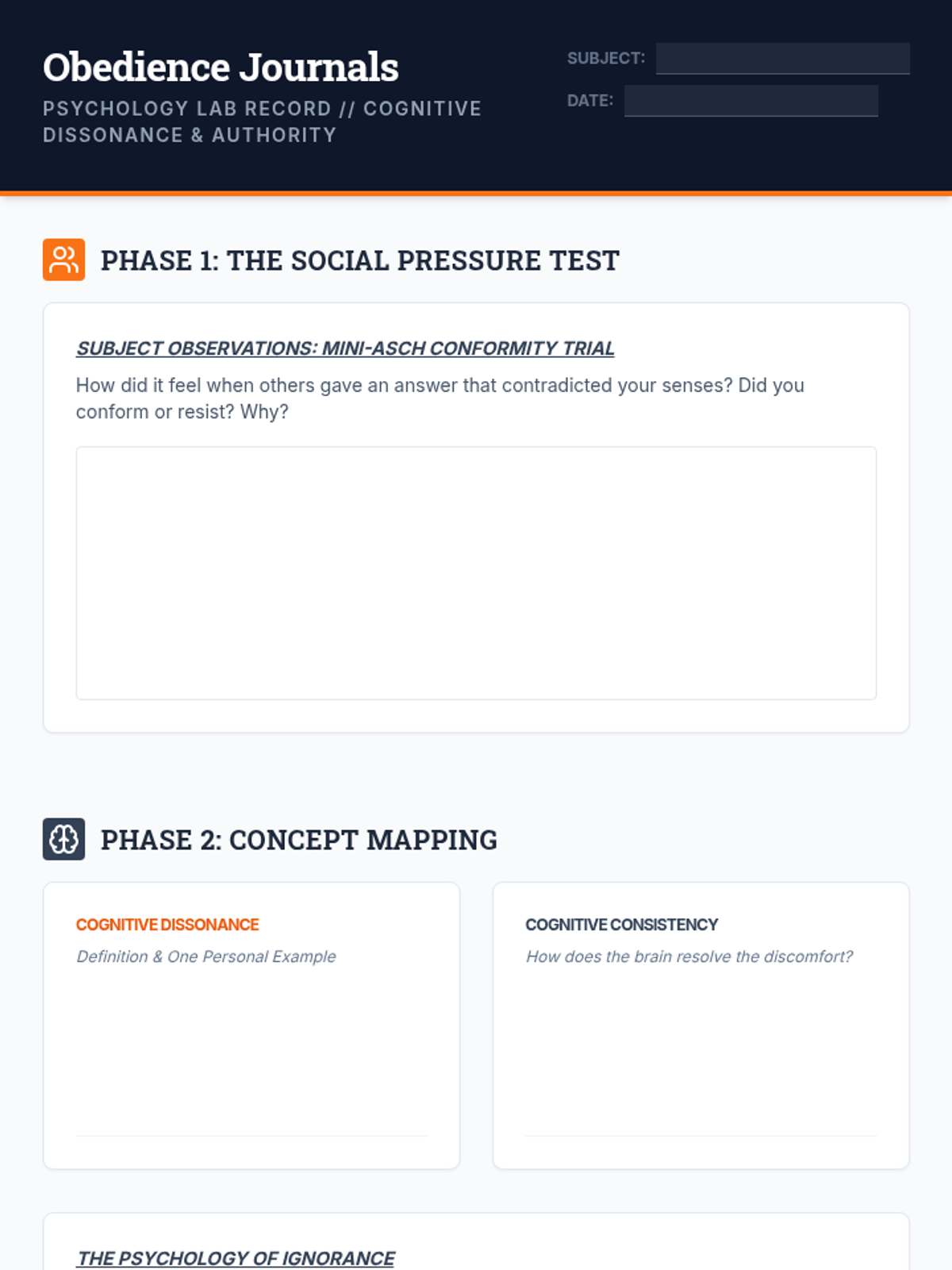
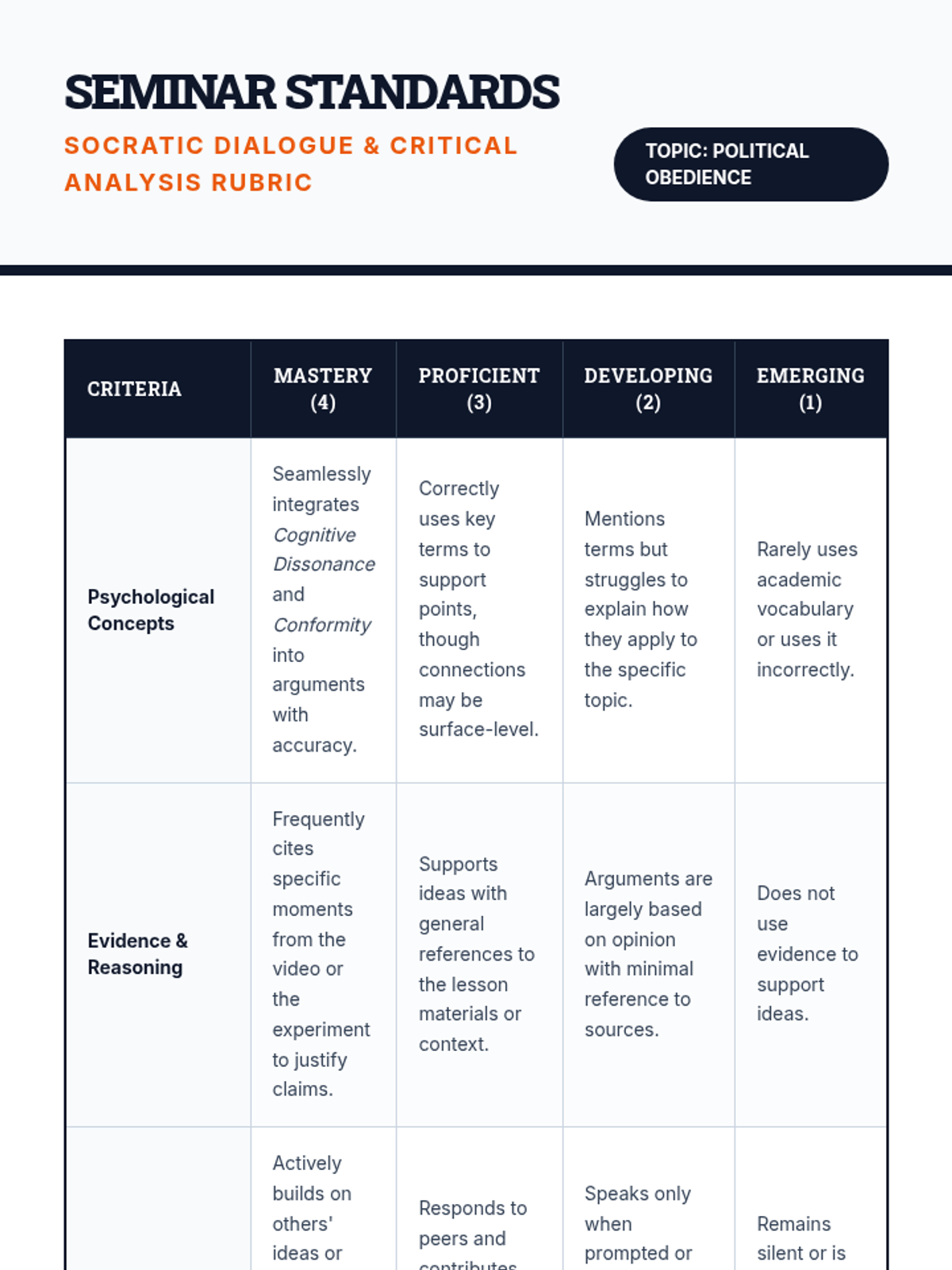
This lesson explores the psychological mechanisms of political obedience, specifically focusing on how cognitive dissonance drives individuals to accept propaganda and authoritarian narratives for mental comfort. Students participate in a conformity experiment, analyze video content on state-sponsored propaganda, and engage in a Socratic Seminar to discuss the human tendency to 'plead ignorance' in the face of conflicting truths.
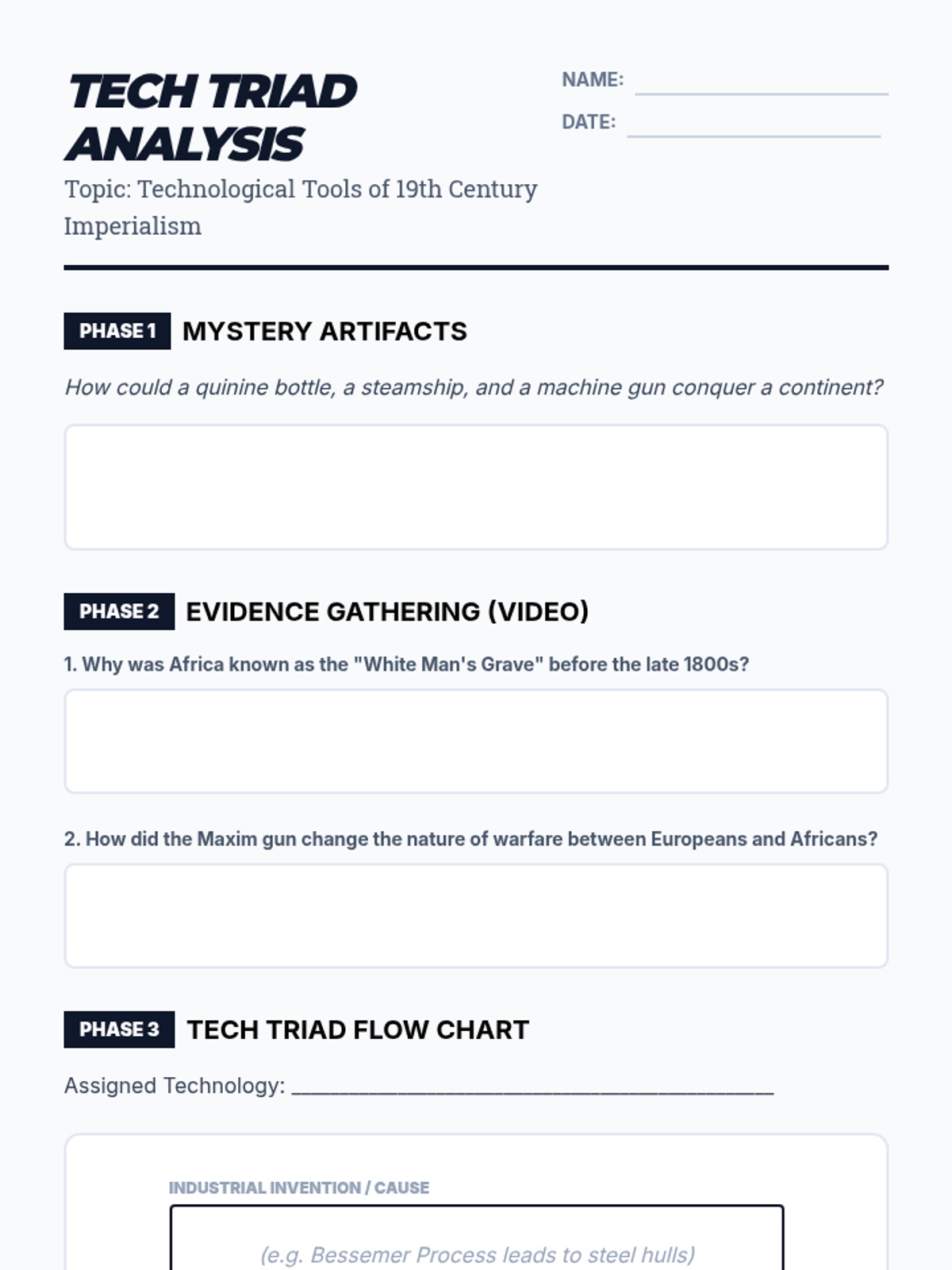
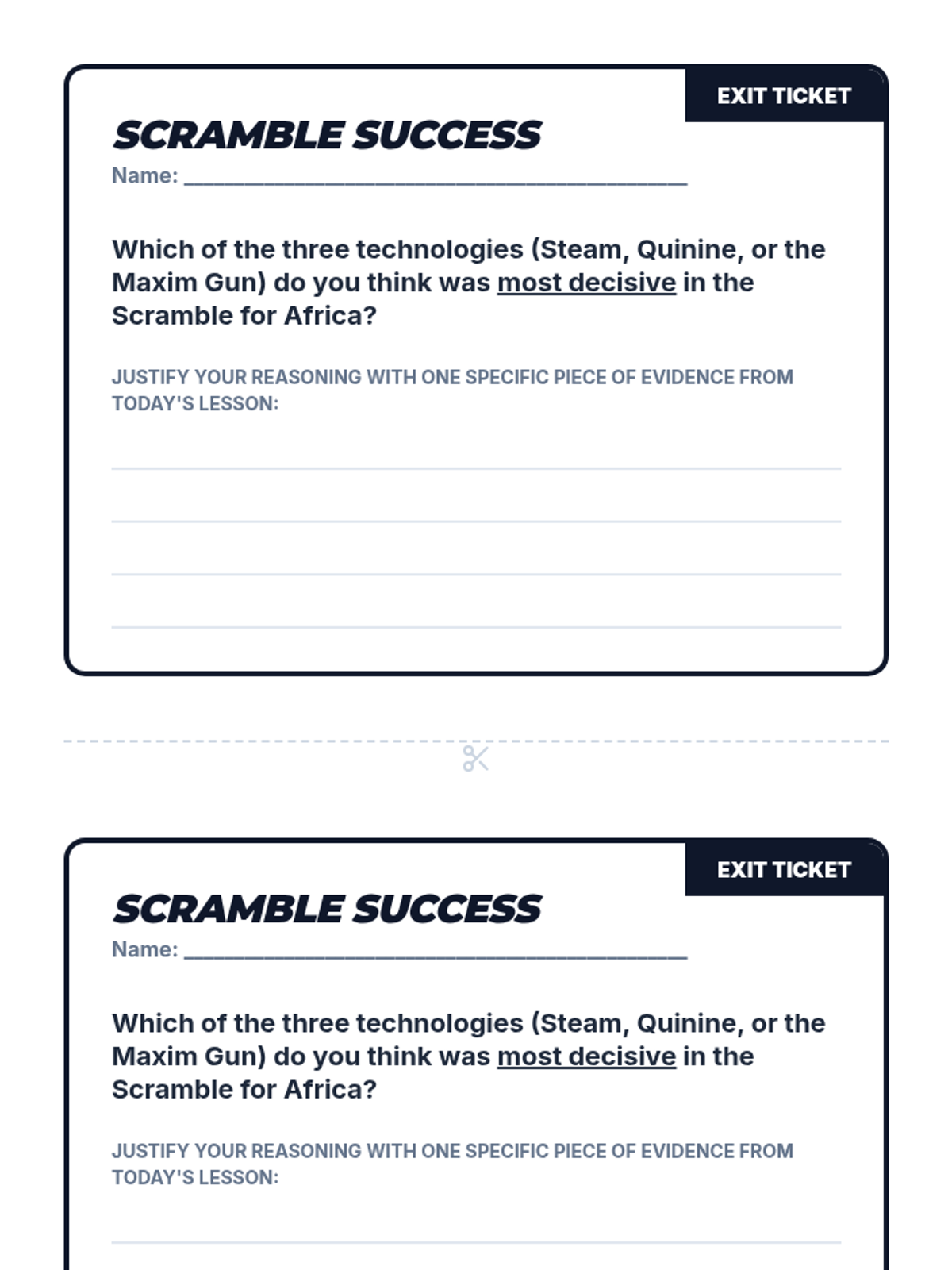
Students analyze how steamships, quinine, and the Maxim gun enabled the Scramble for Africa, while evaluating the concept of technological determinism.
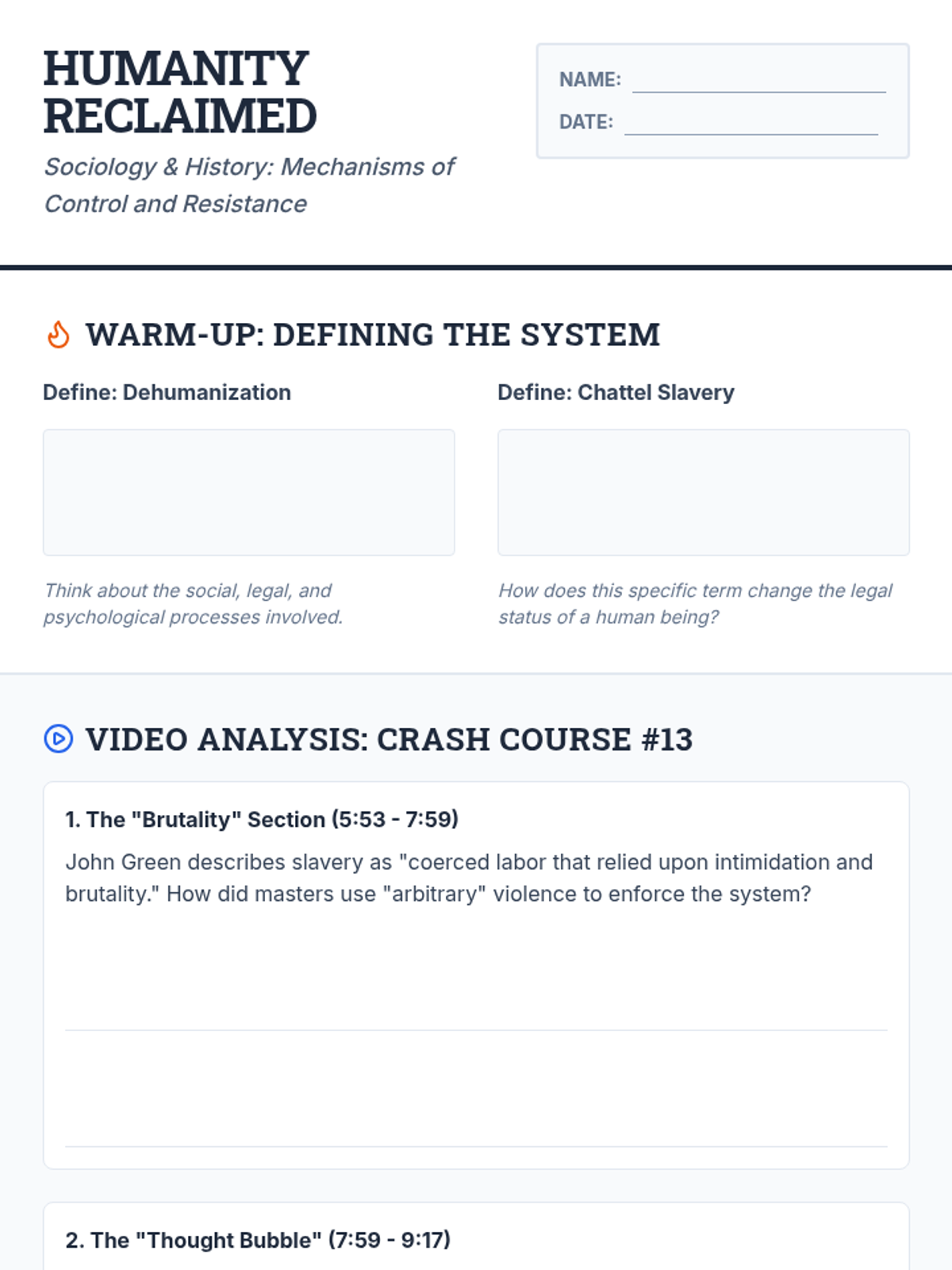
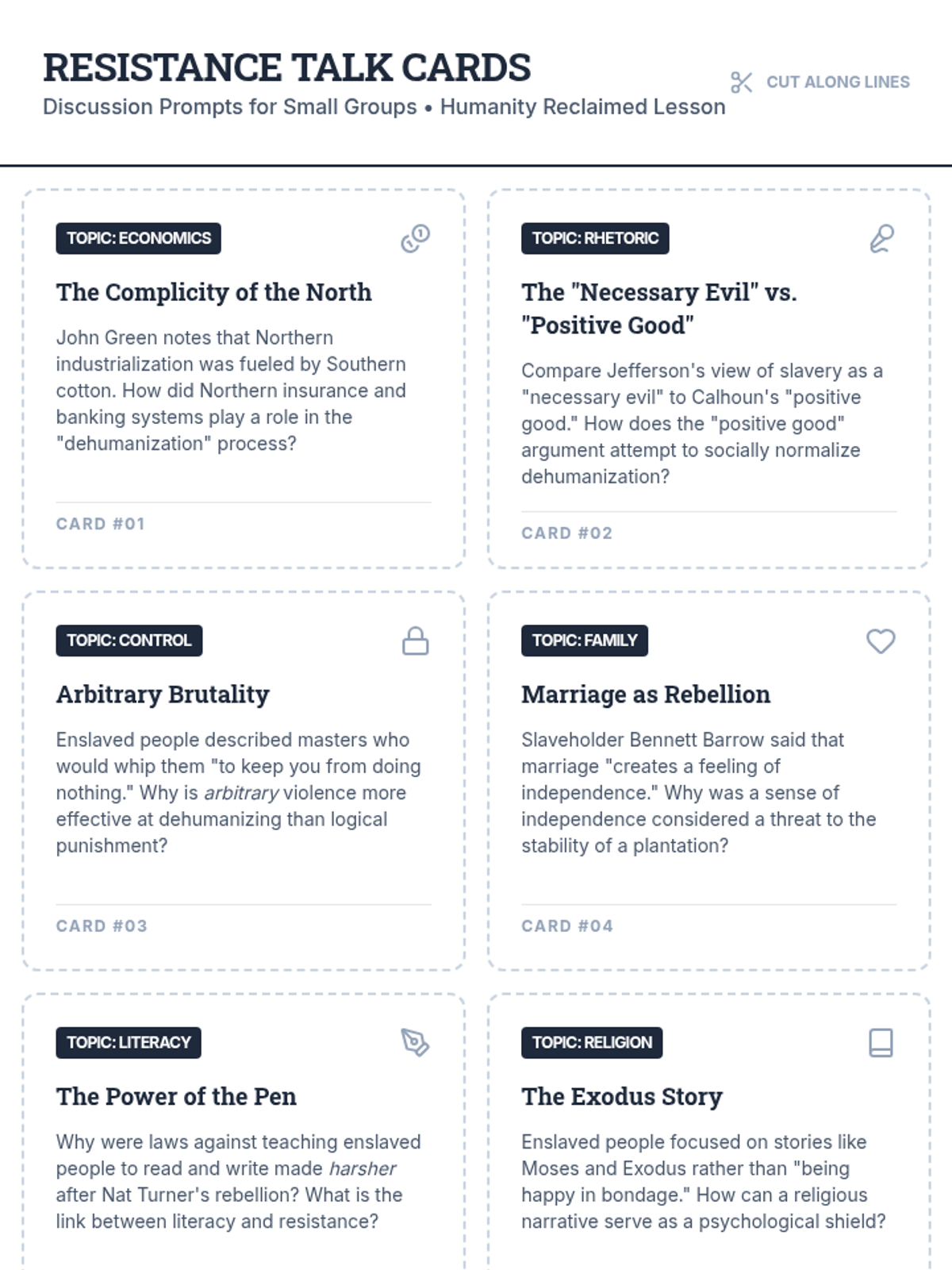
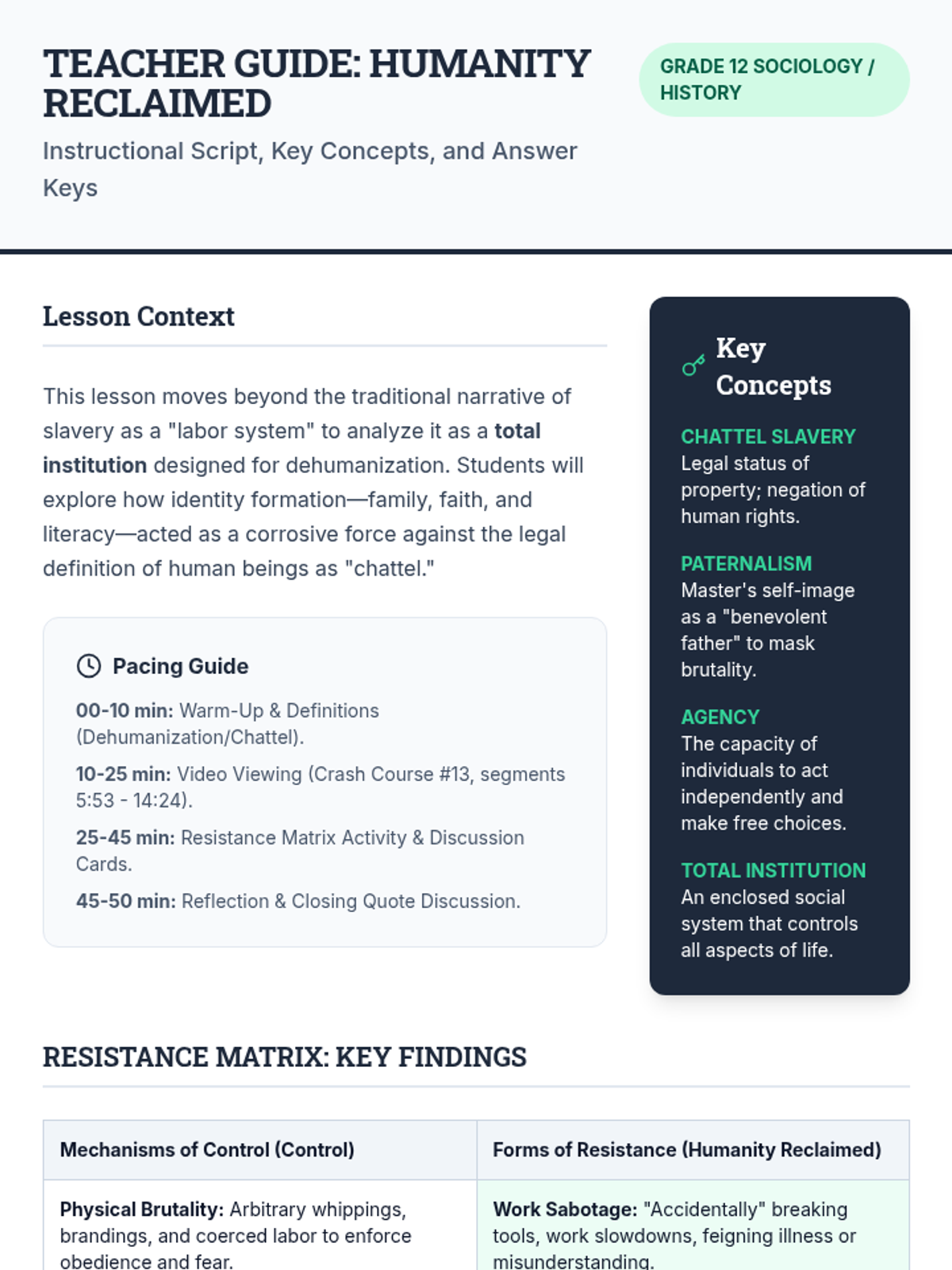
A 12th-grade sociology and history lesson examining the social and psychological mechanisms of dehumanization within American chattel slavery and the multifaceted forms of resistance used by enslaved people to reclaim their humanity.
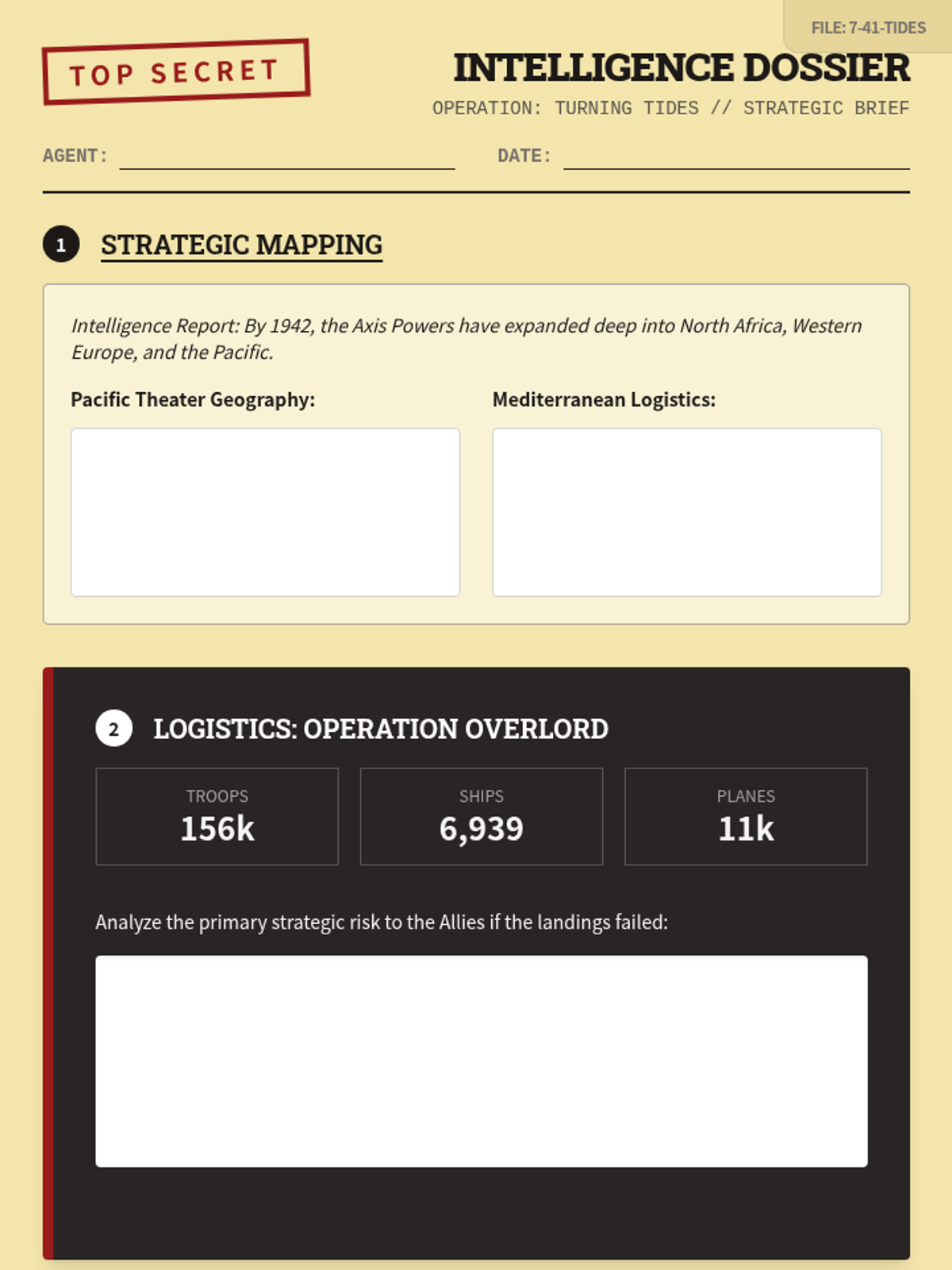
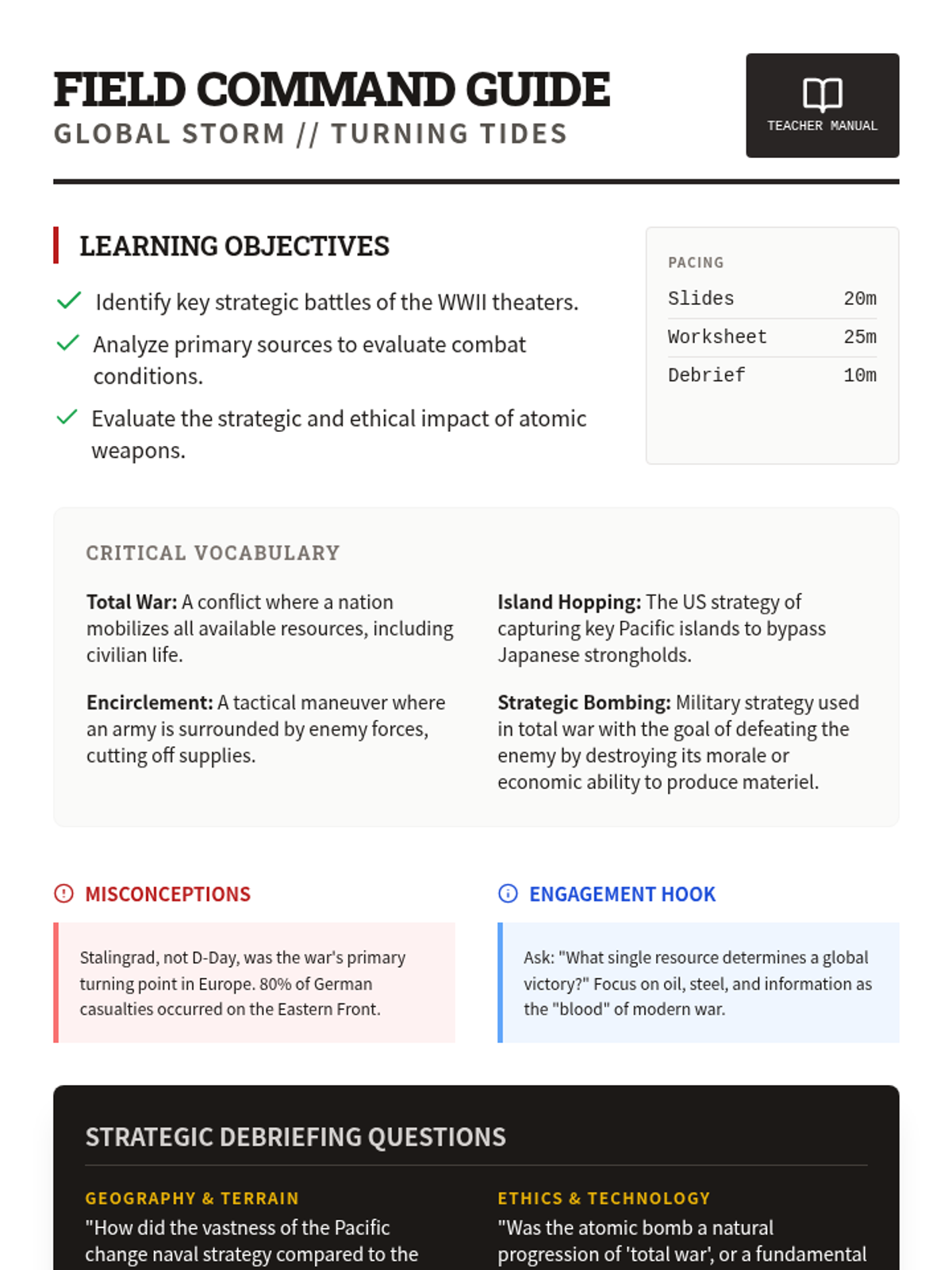
Focuses on the critical turning points of World War II, exploring the strategic shifts and human stories that defined the conflict's outcome.
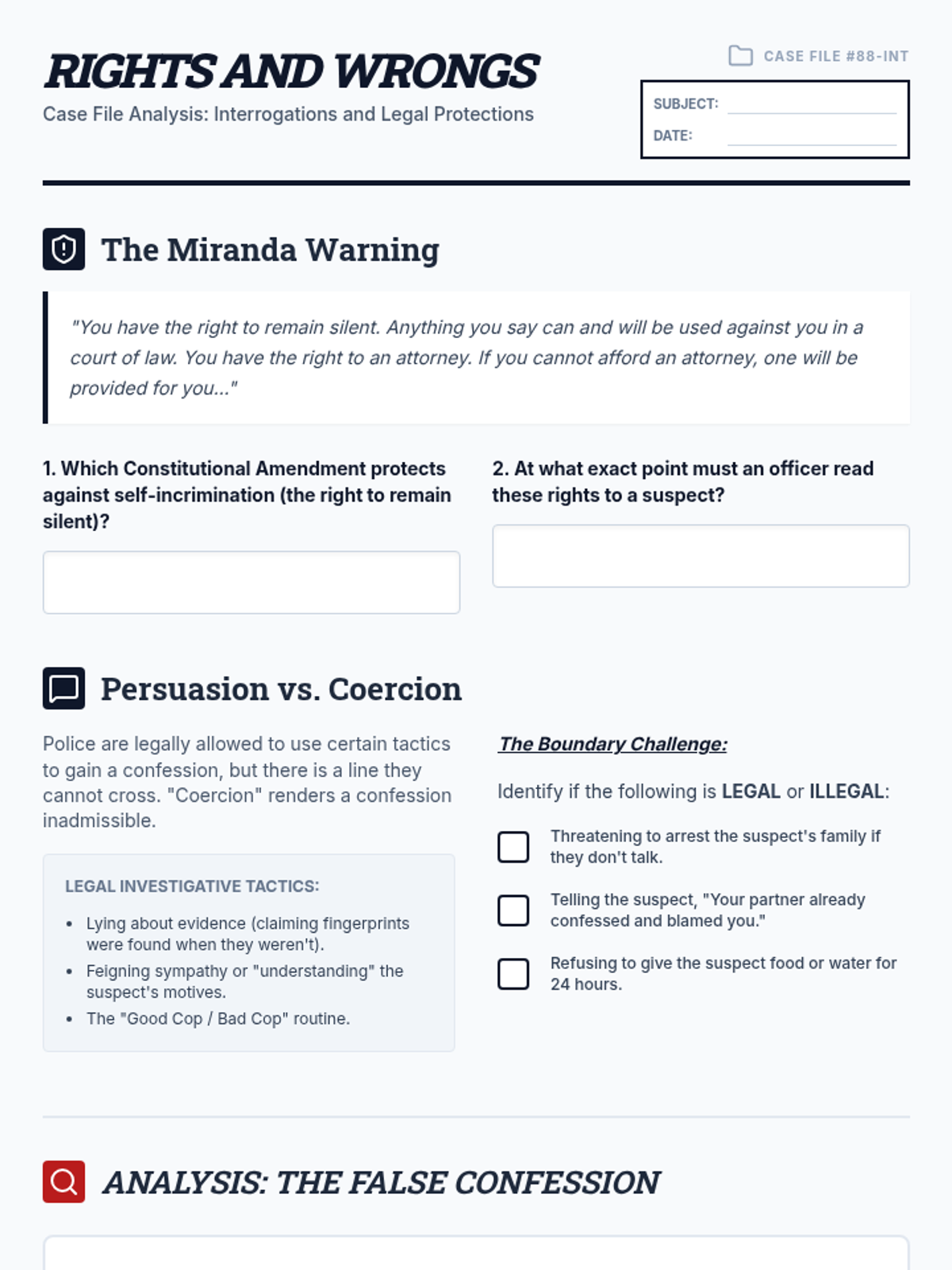
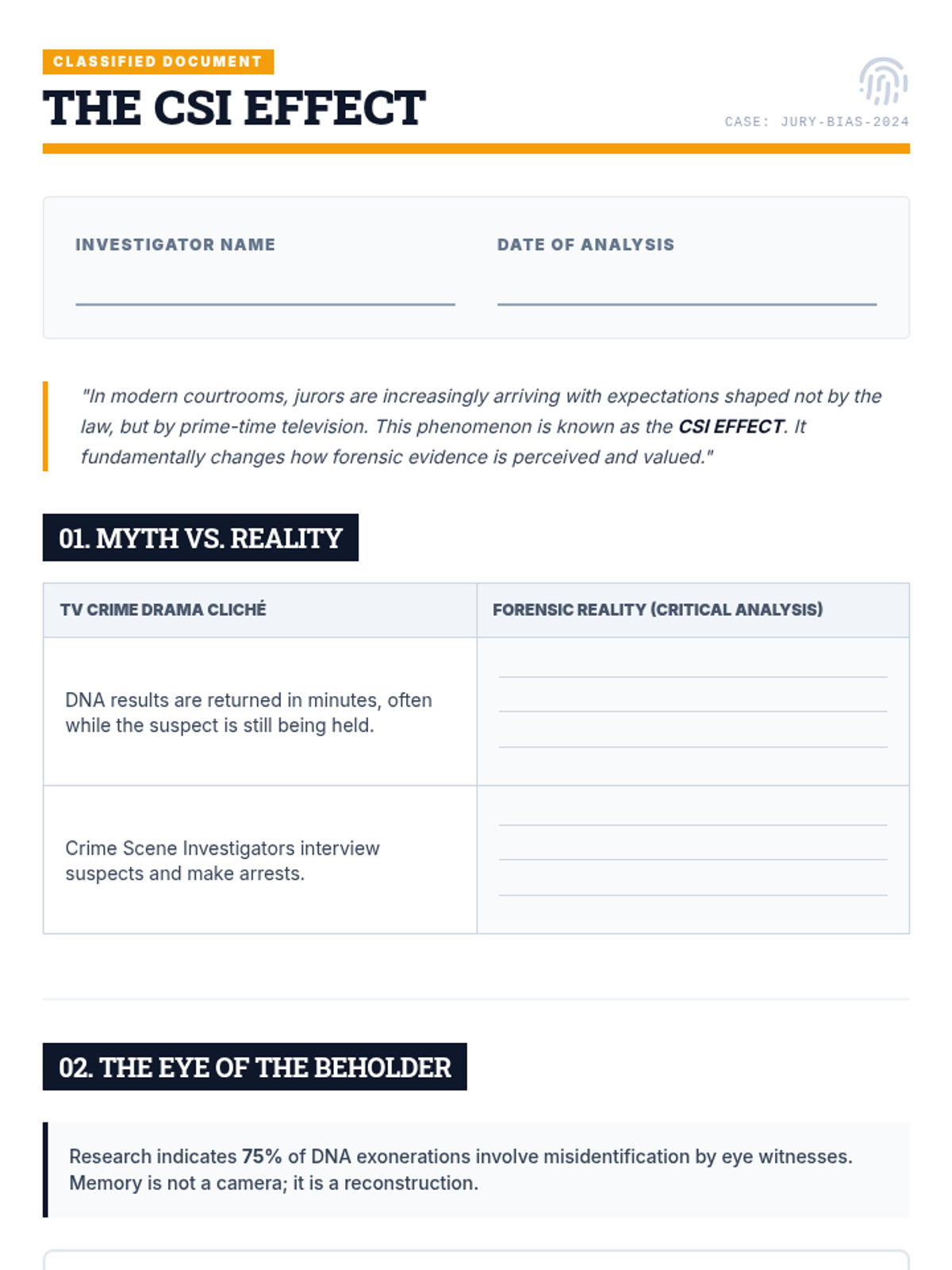
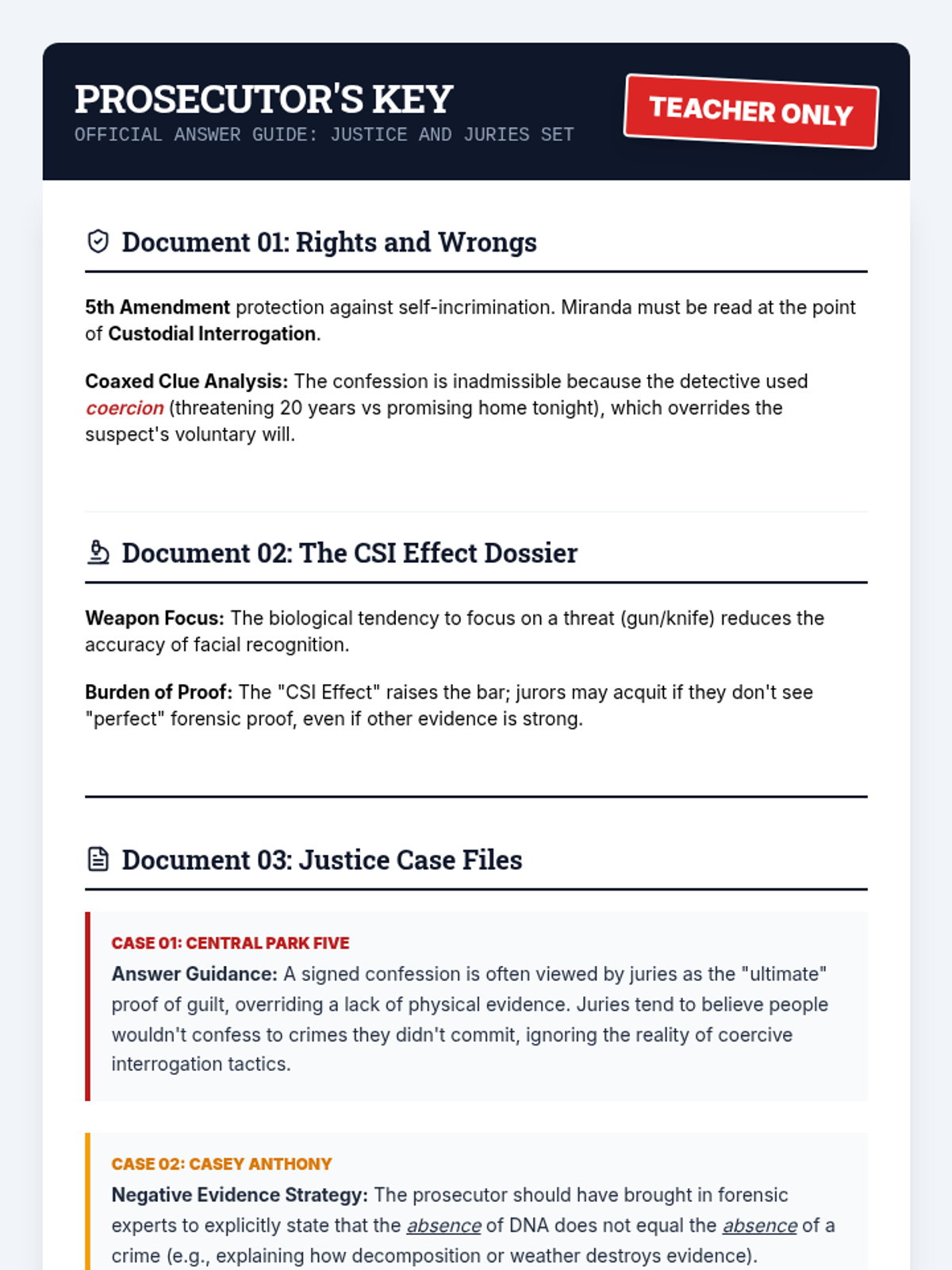
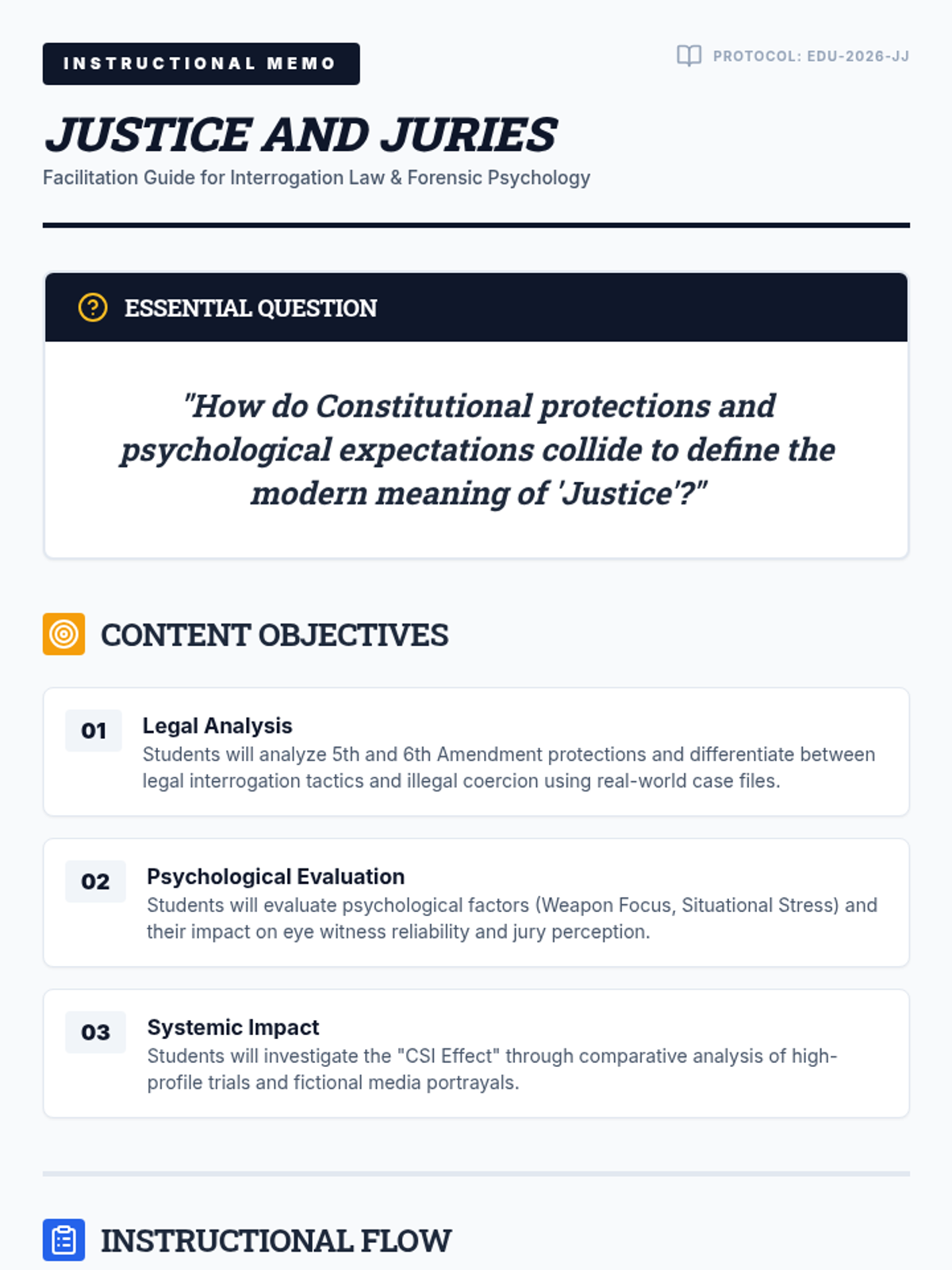
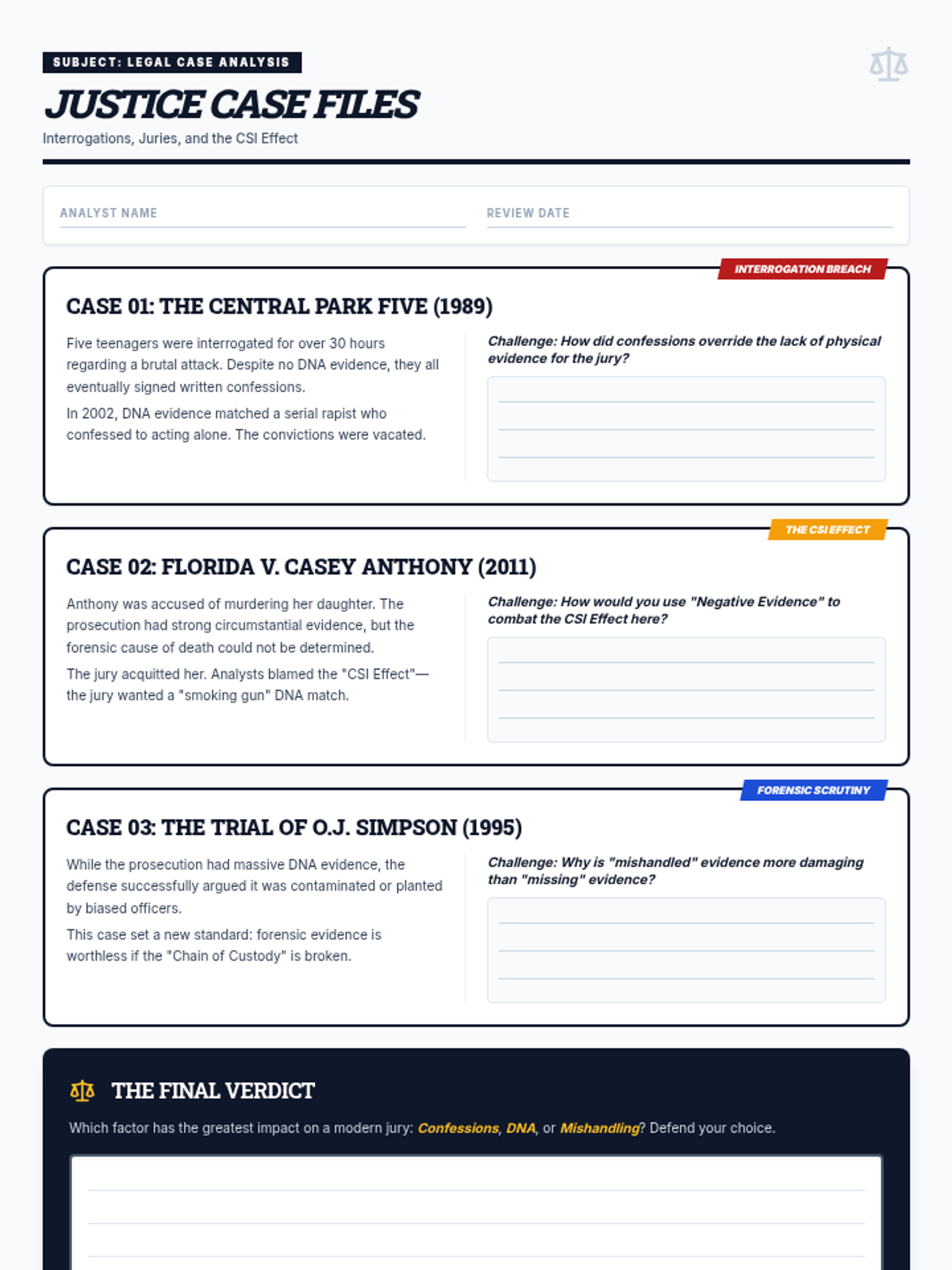
An exploration of the legal complexities of police interrogations and the psychological impact of media-driven forensic expectations on modern courtrooms.
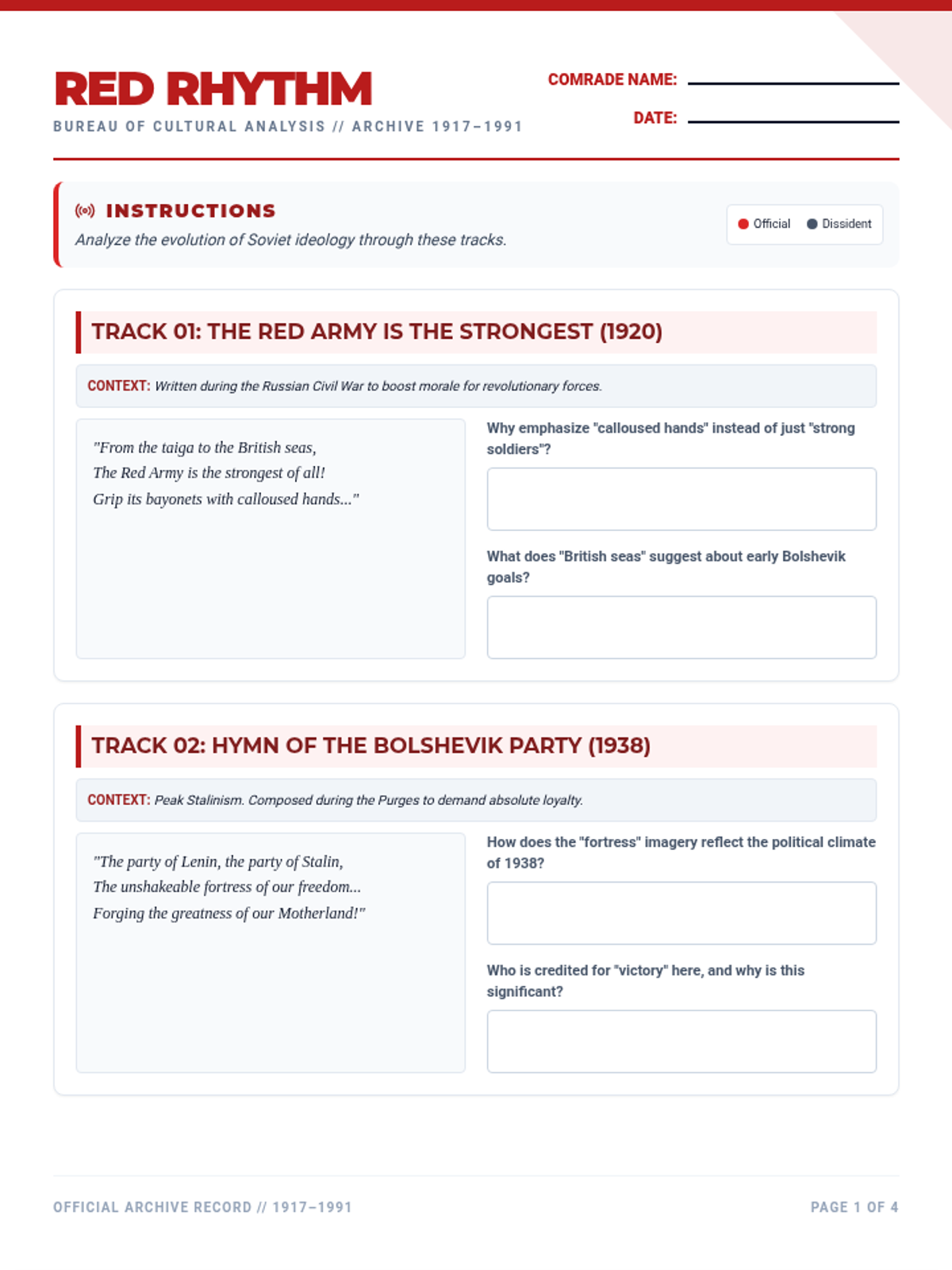
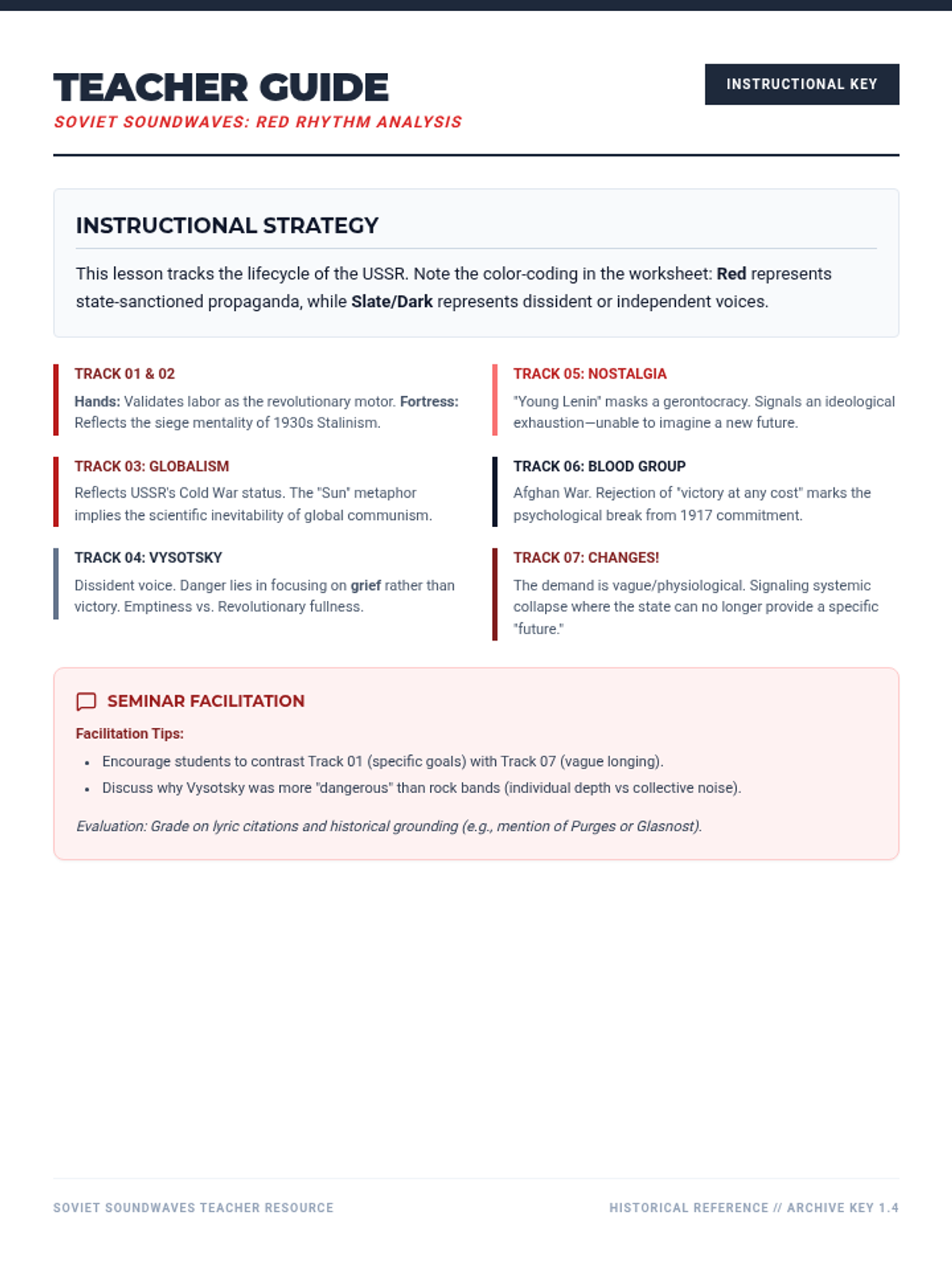
A lesson examining the evolution of Soviet history through its music, comparing state-sponsored propaganda with dissident and personal expressions.
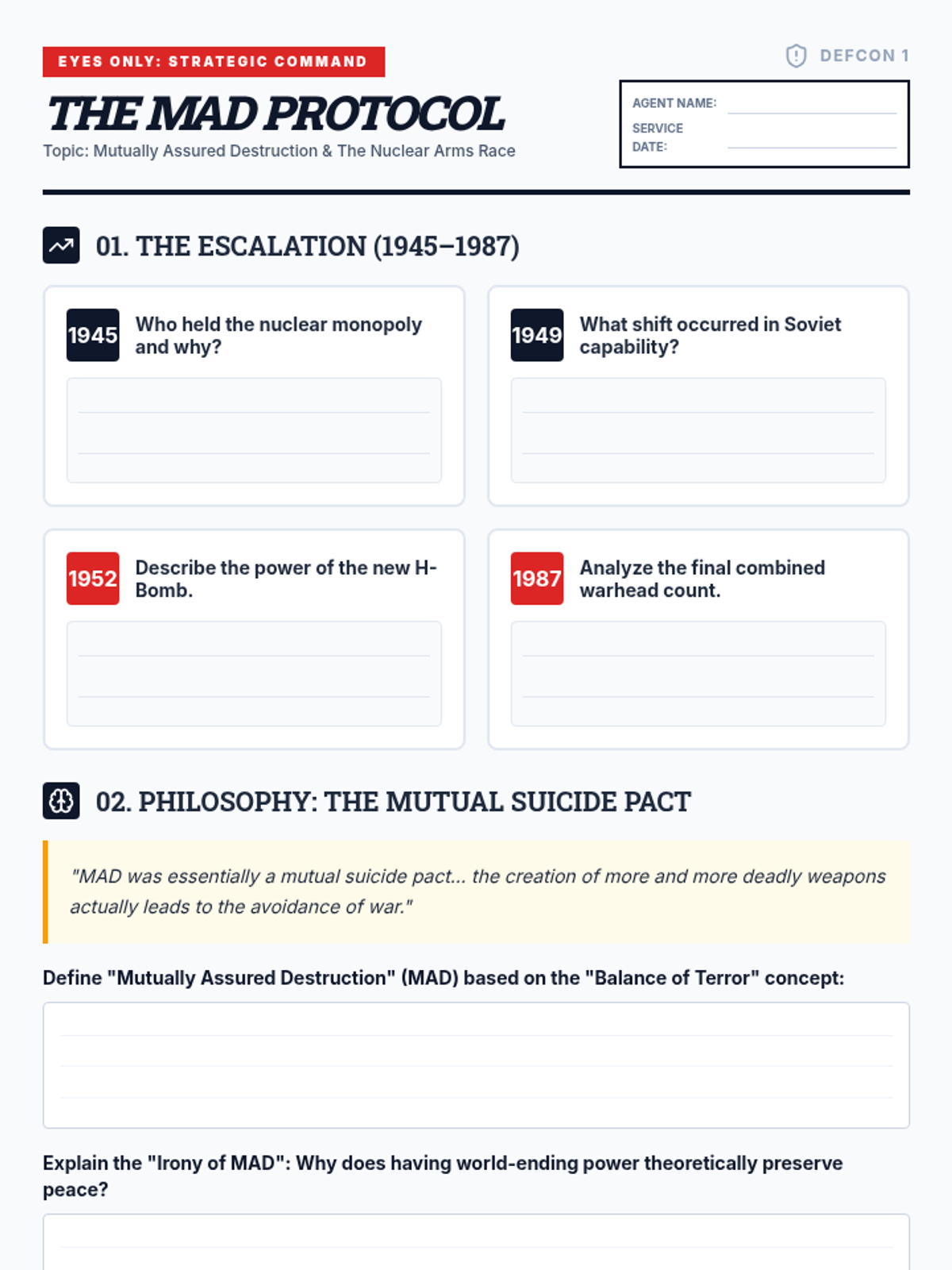
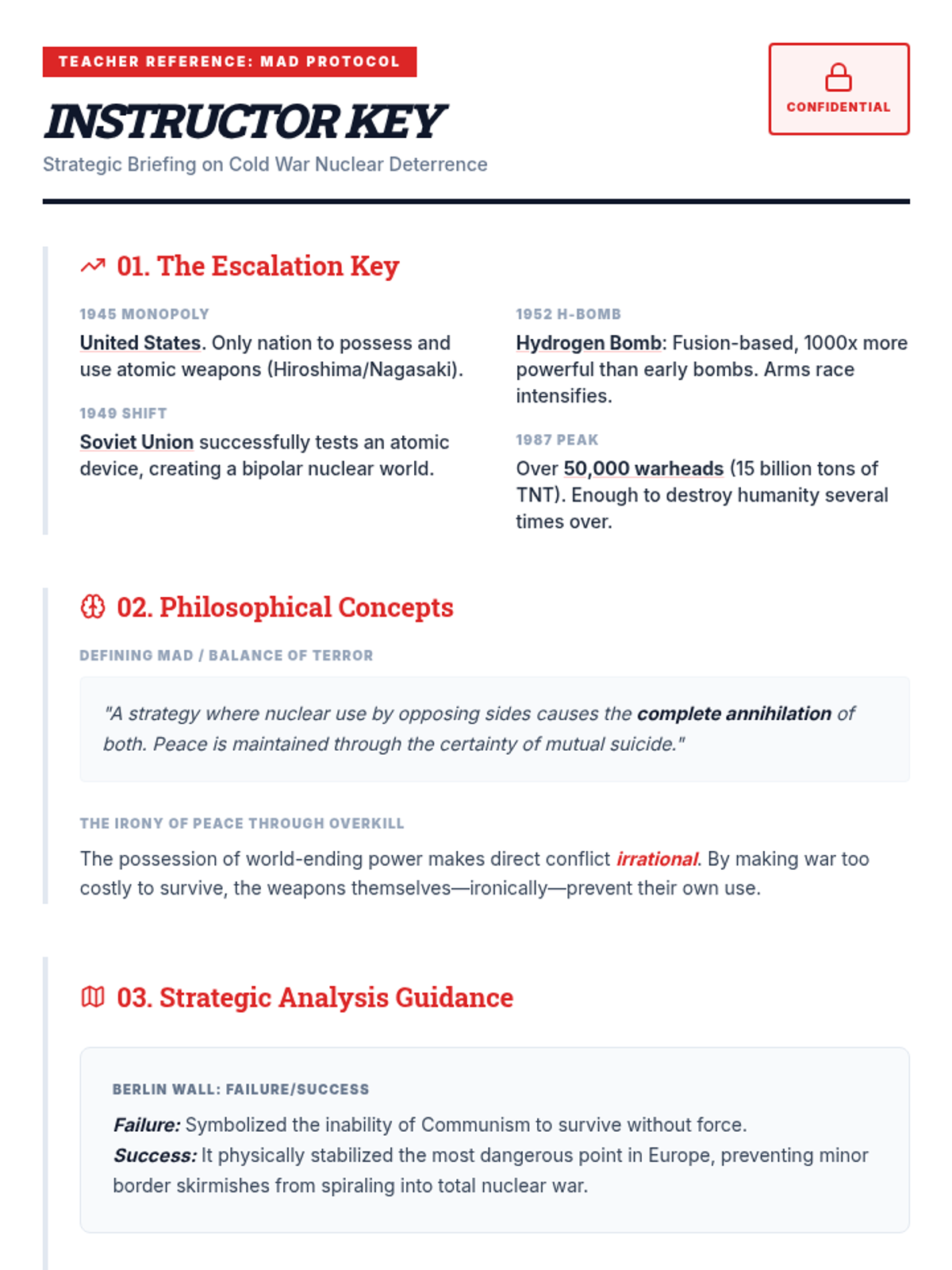
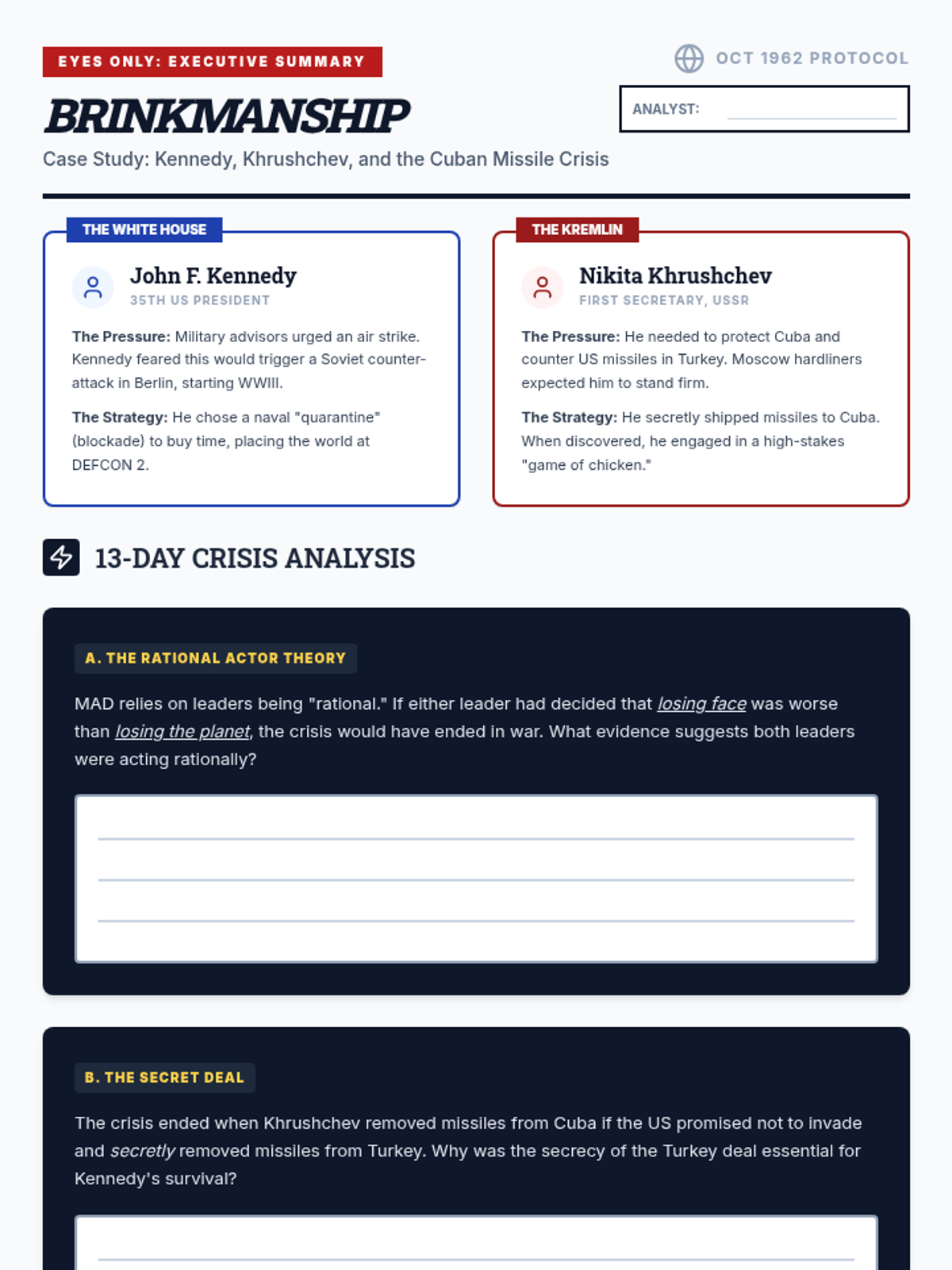
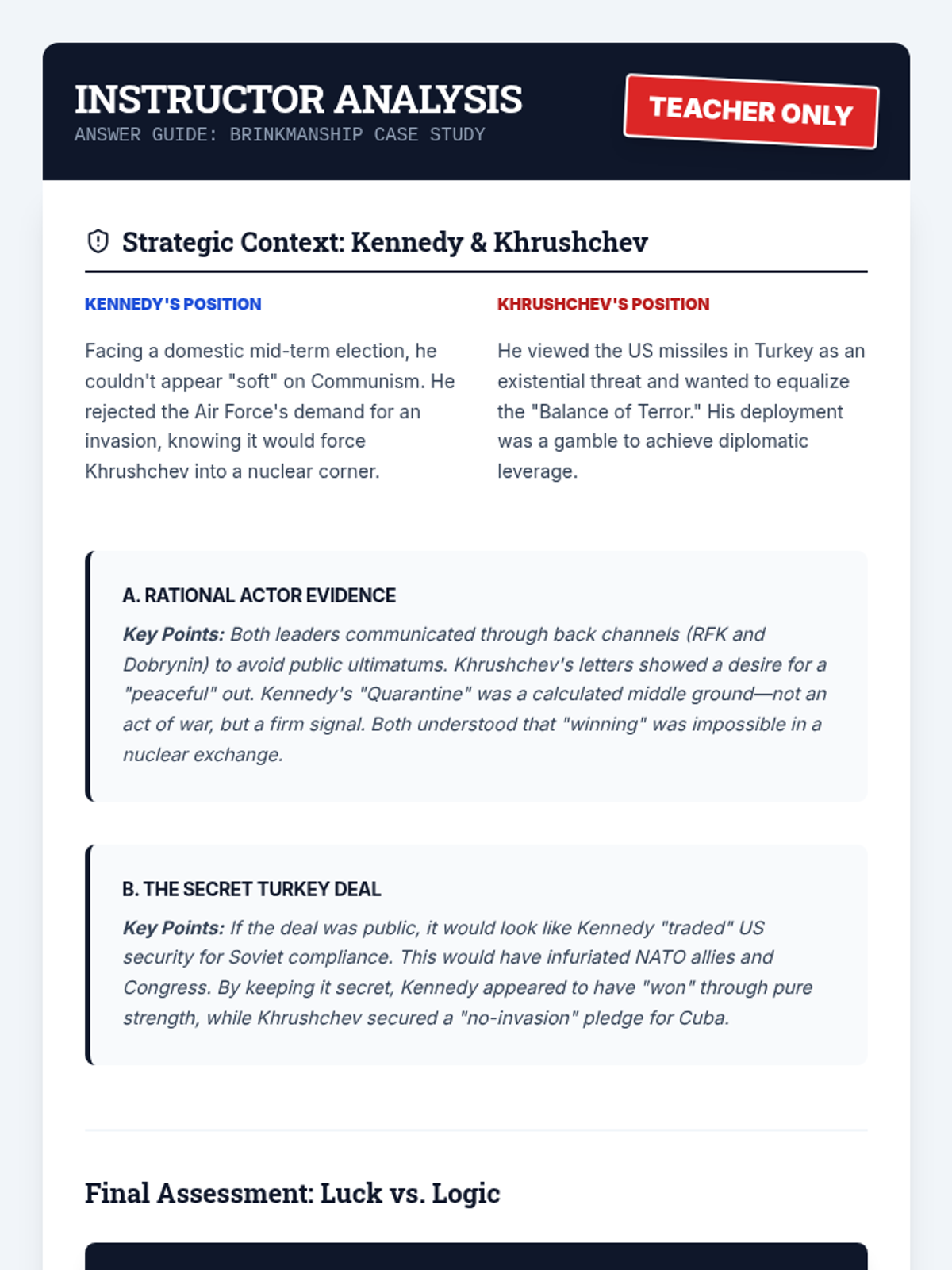
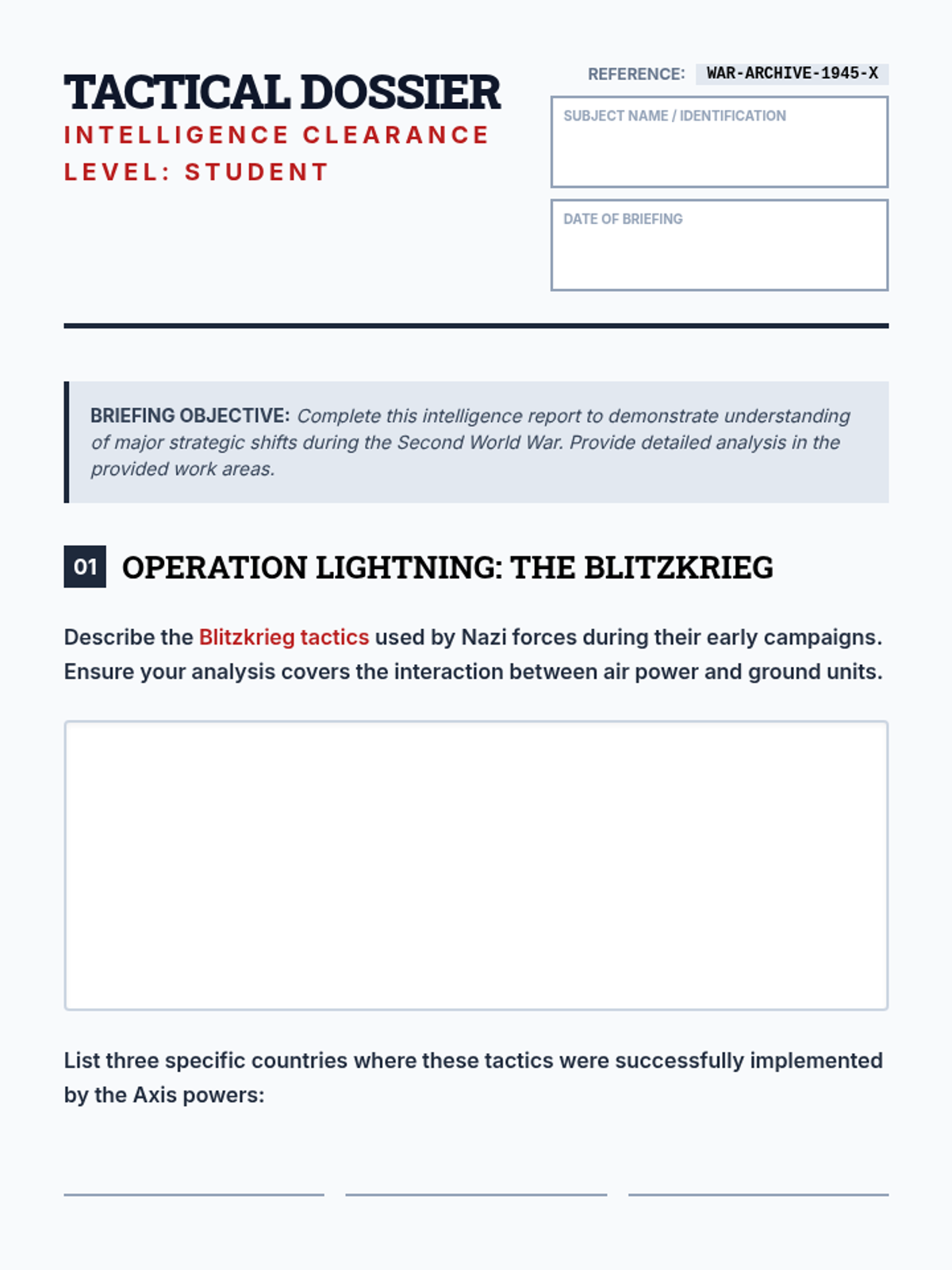
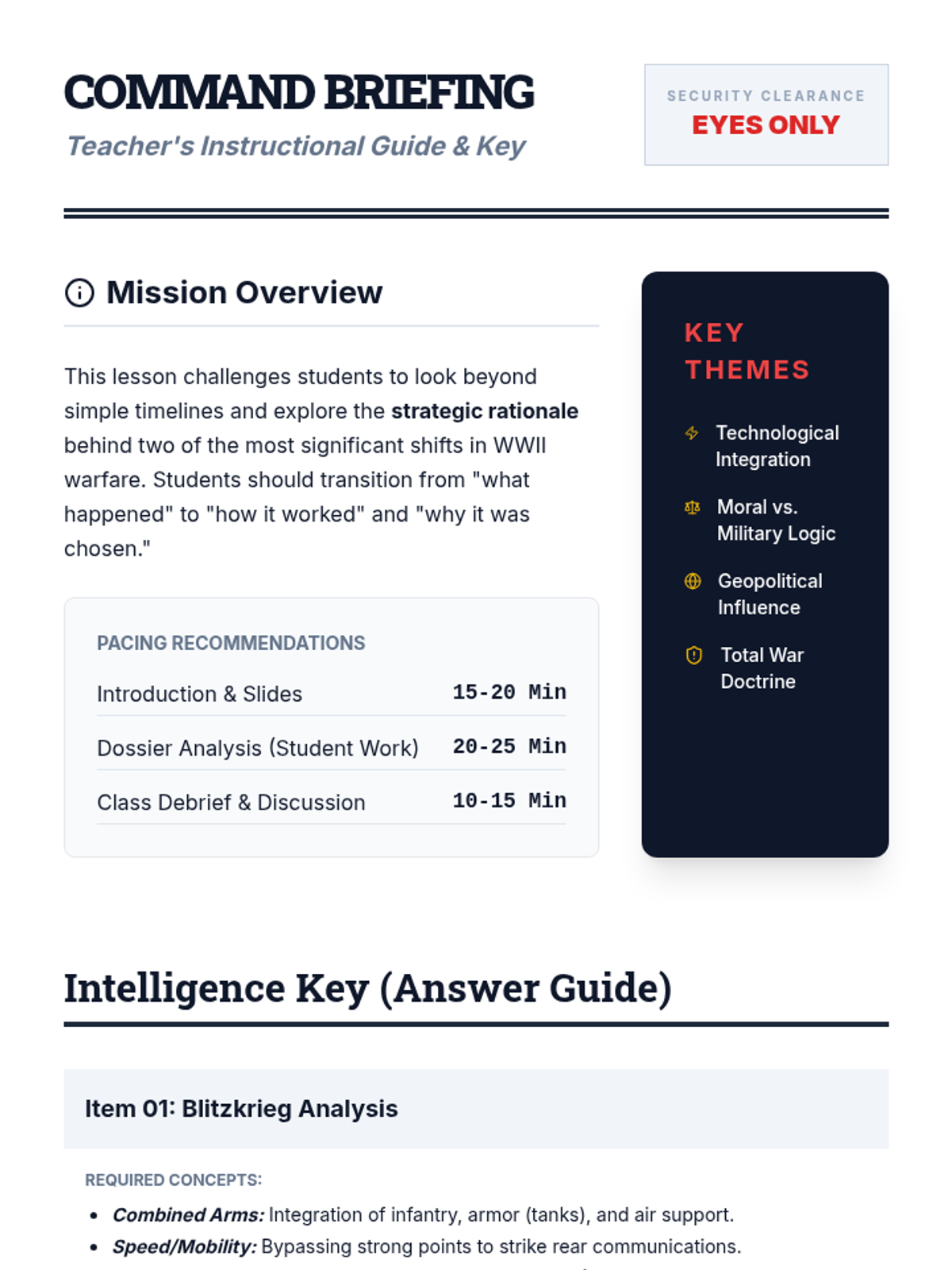
An exploration of two pivotal shifts in WWII strategy: the rapid-fire Blitzkrieg tactics of the Axis powers and the catastrophic decision-making behind the Atomic Bomb.
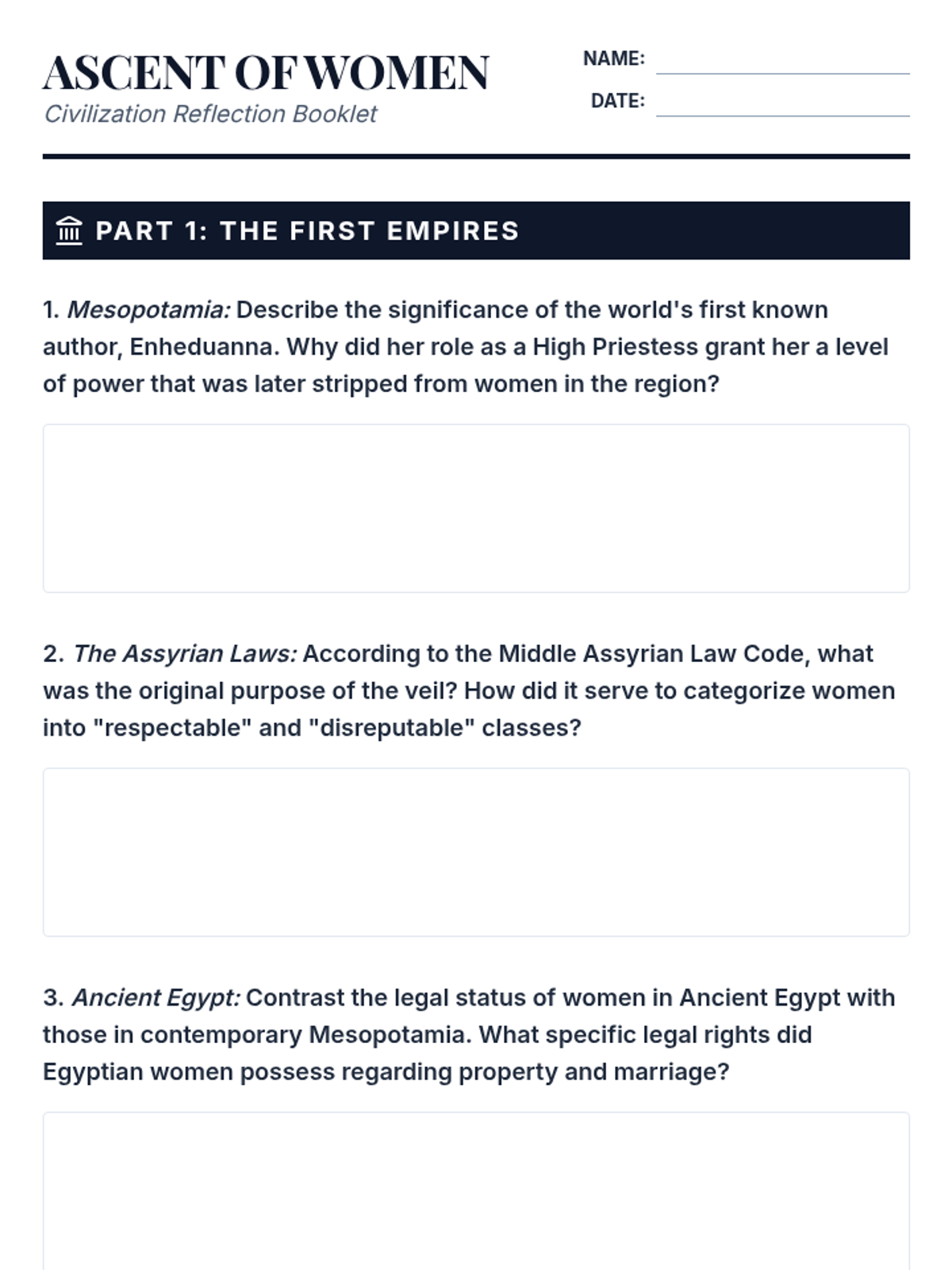
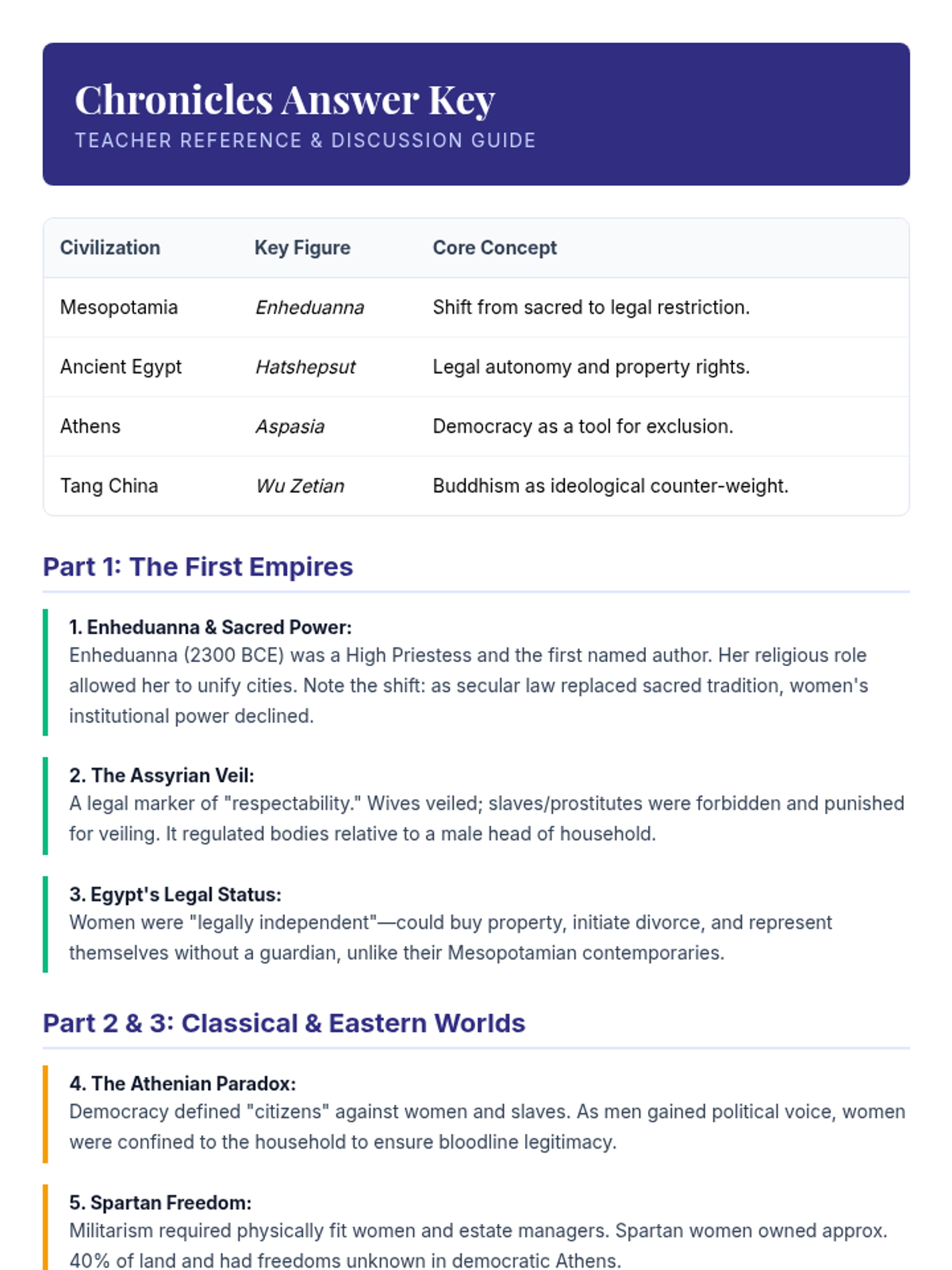
A comprehensive lesson exploring the historical roles and status of women across global civilizations, based on the Ascent of Women documentary series. Includes reflection questions for all major civilizations covered in the episodes.
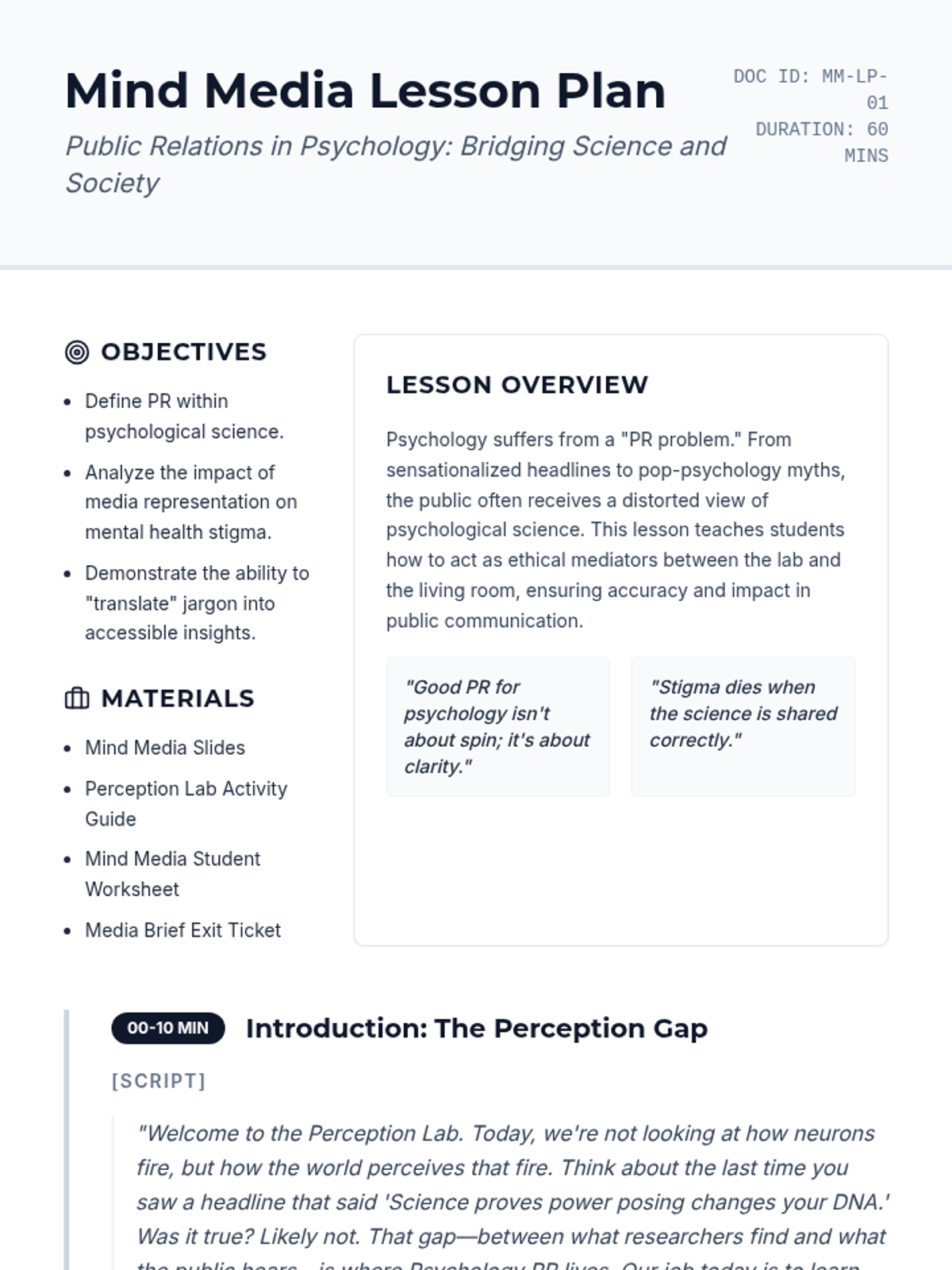
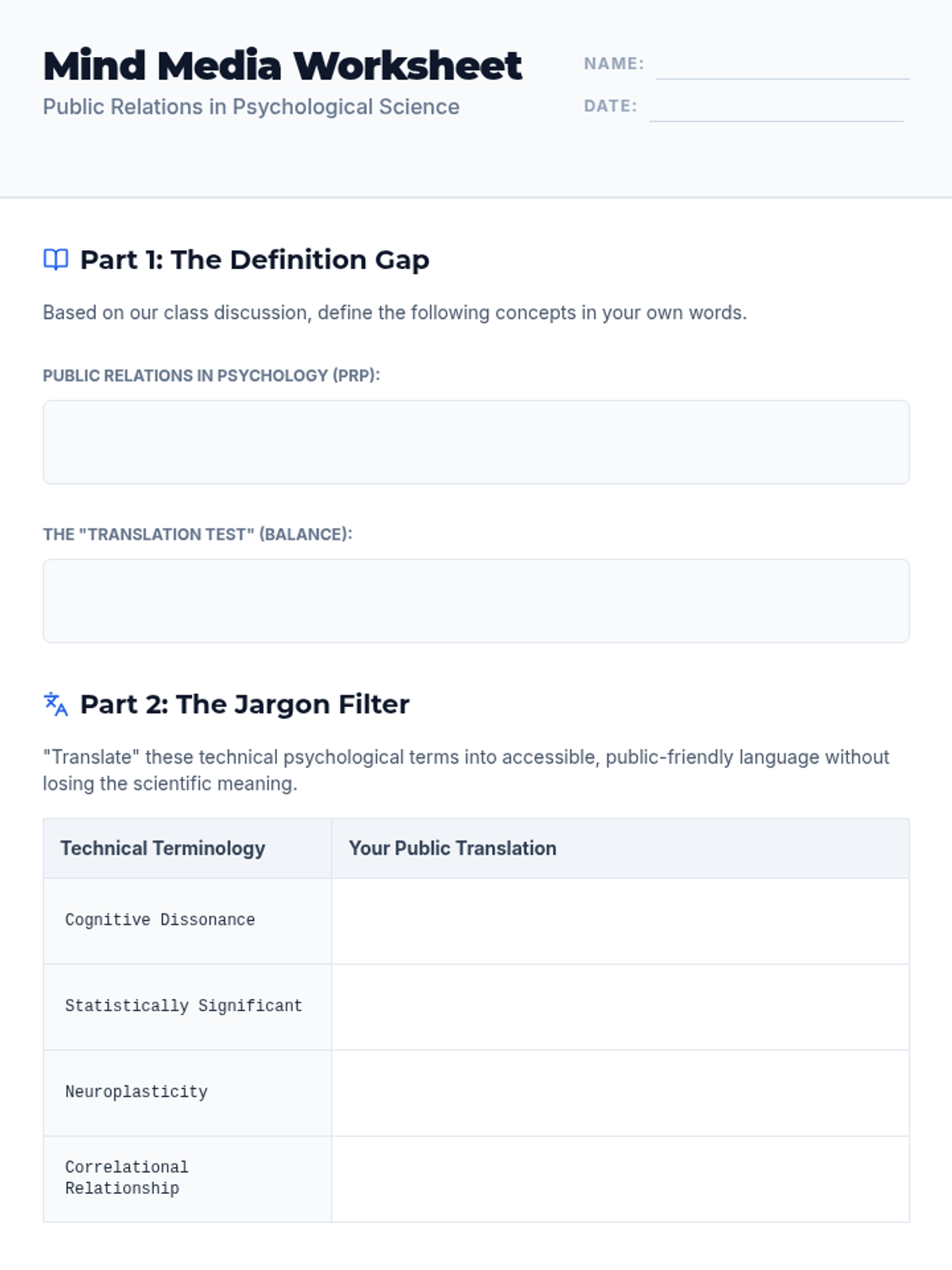
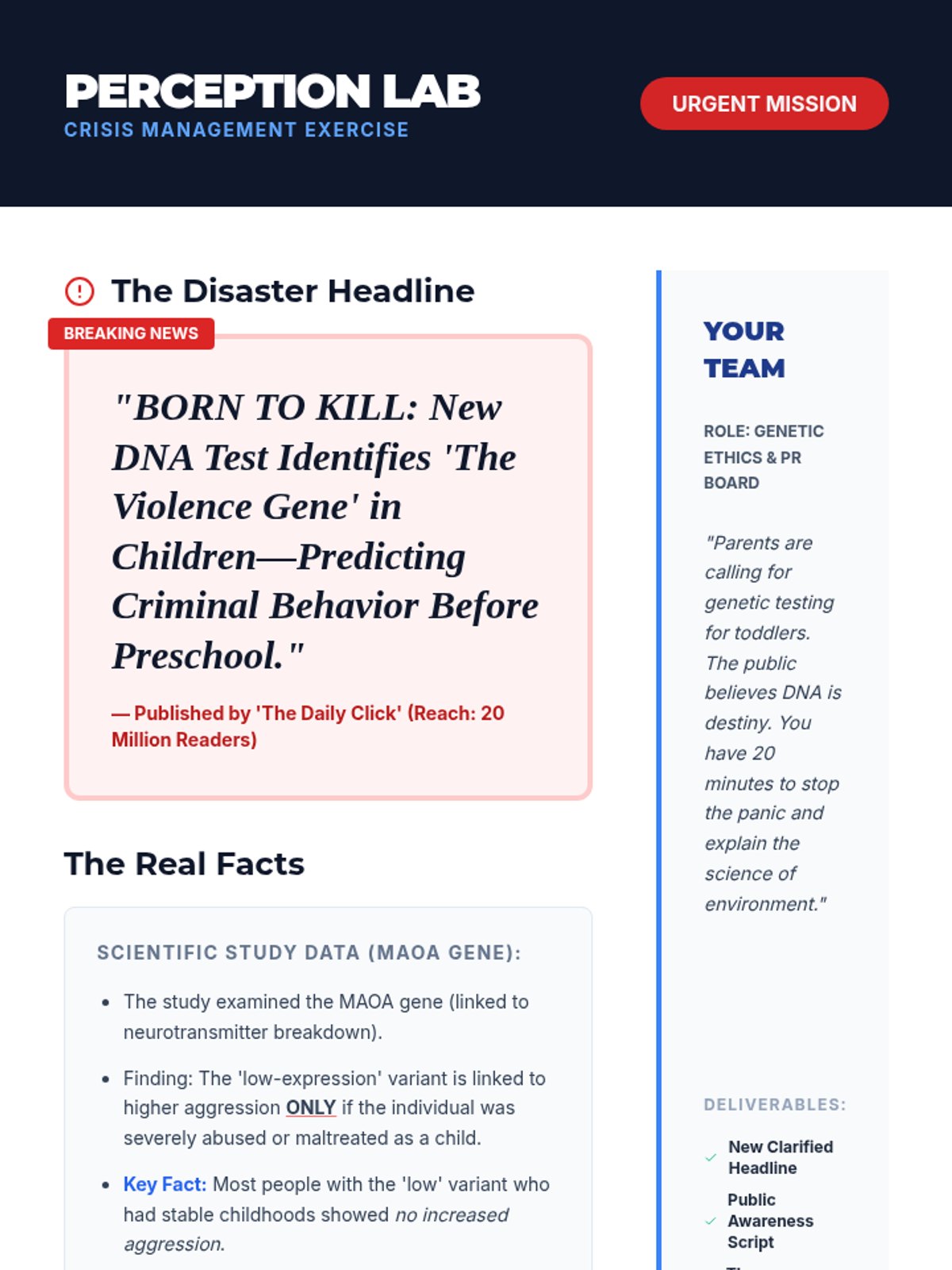
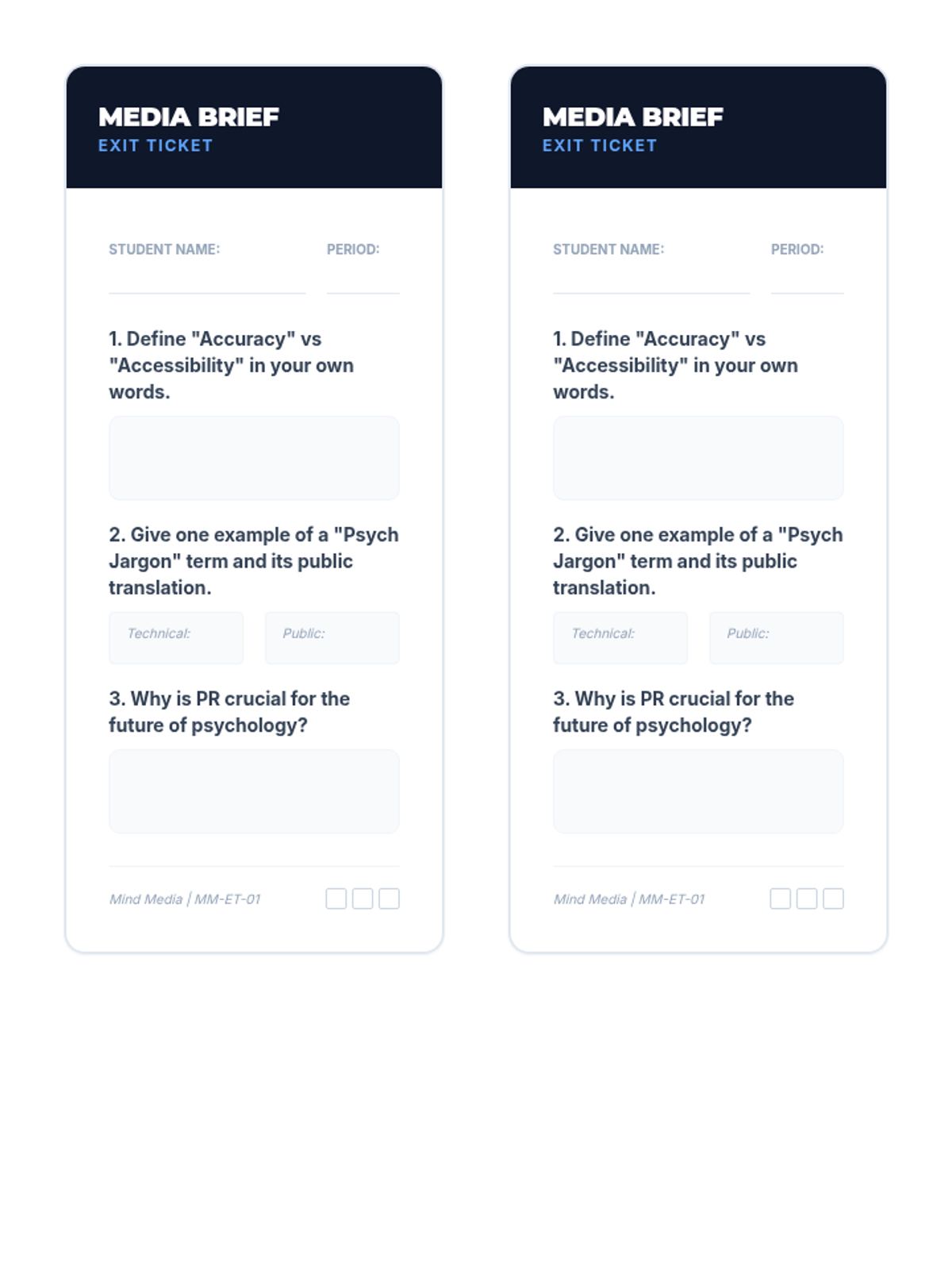
A comprehensive lesson on Public Relations in Psychology, focusing on translating complex research for public consumption, managing public perception of psychological science, and ethical communication.
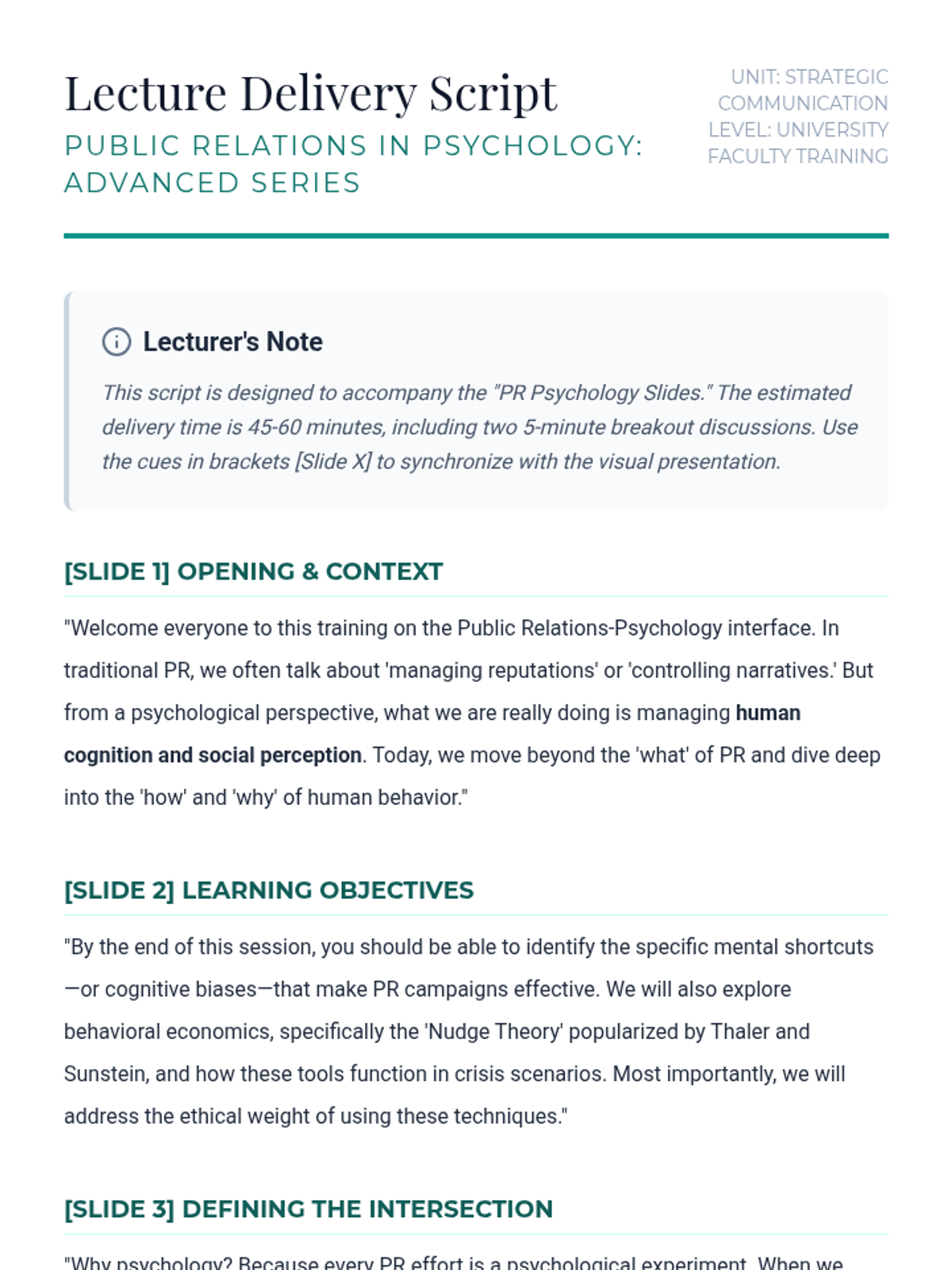
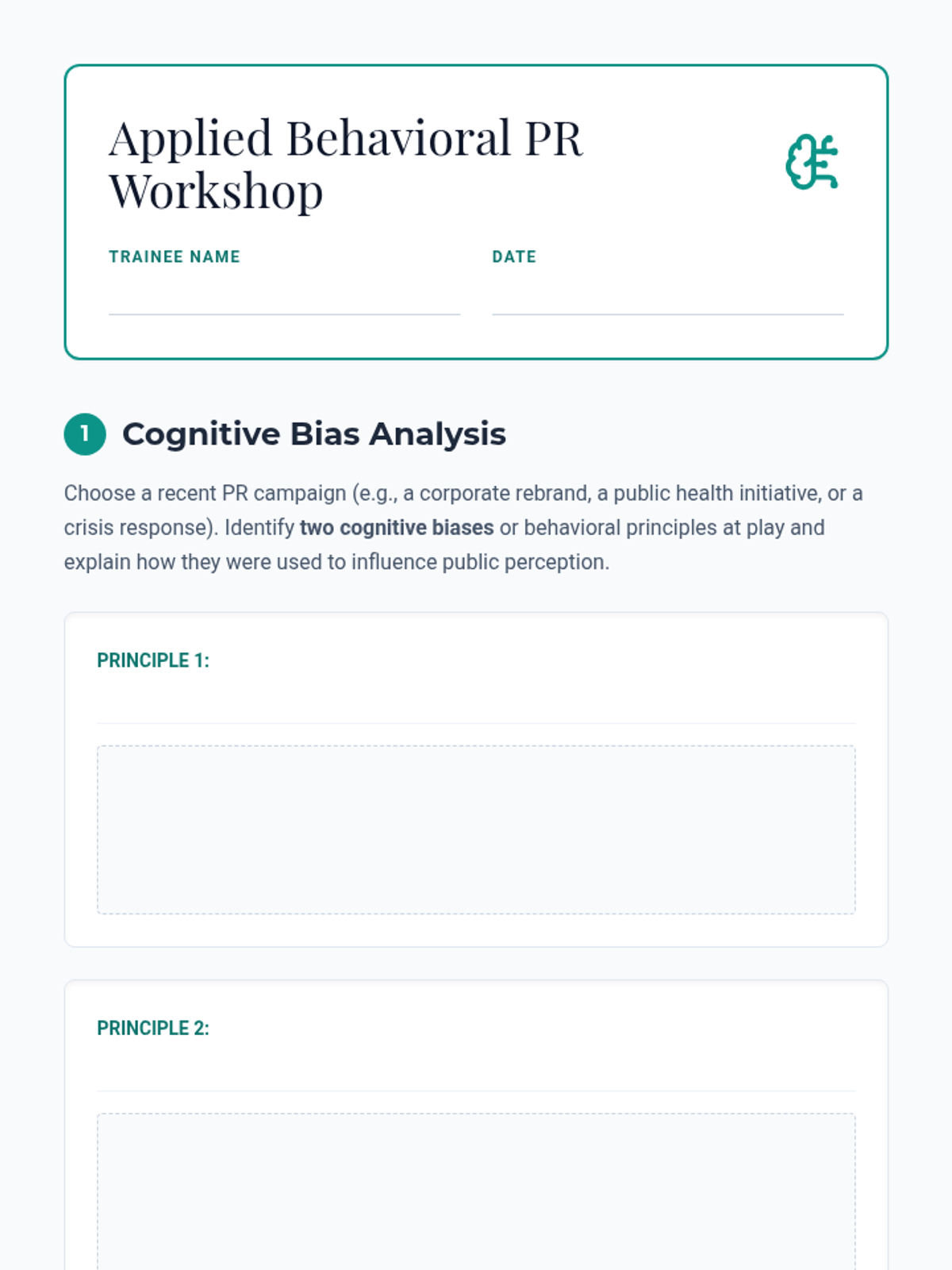
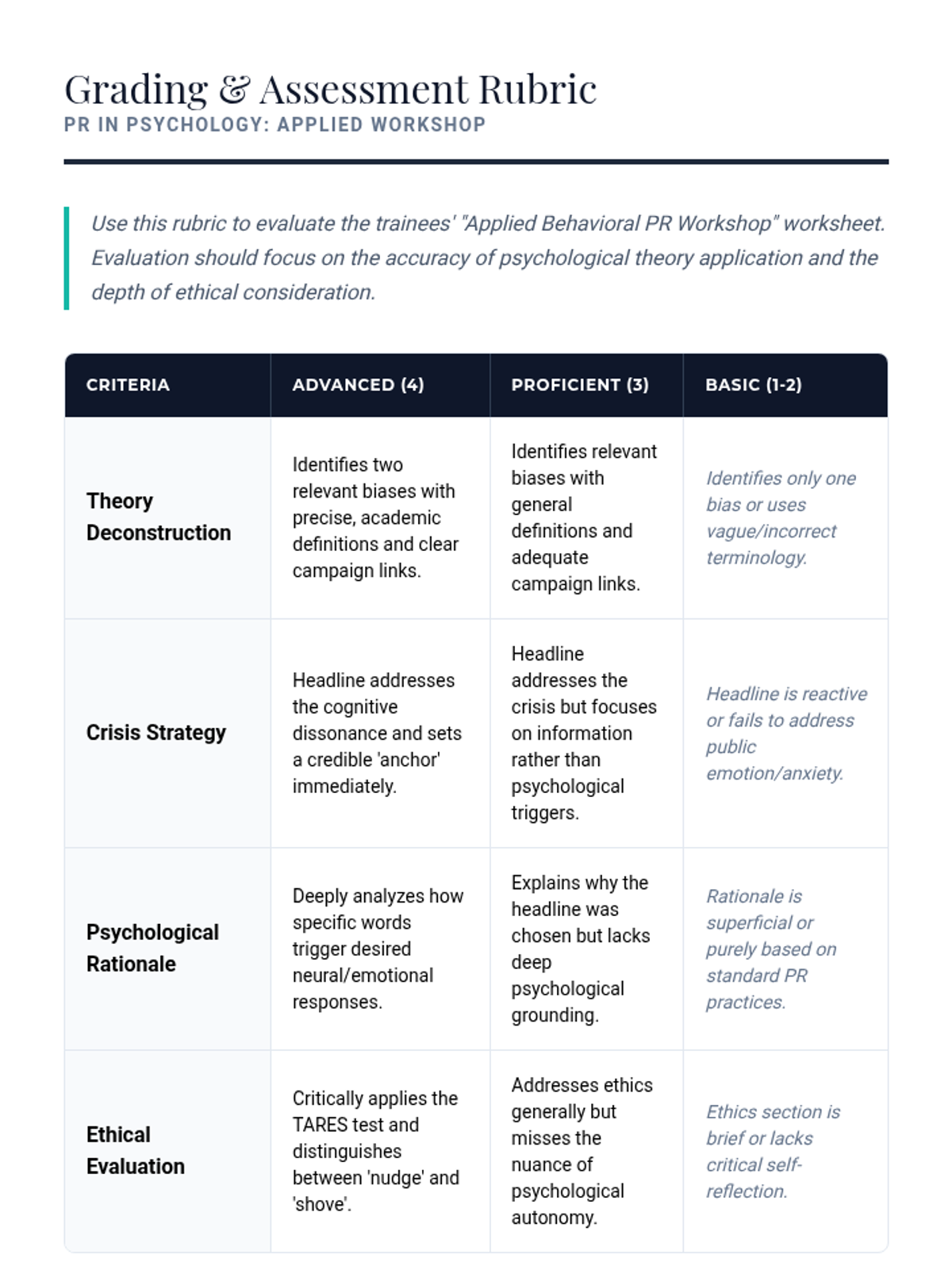
This lesson explores the intersection of psychological principles and public relations strategies, designed for university-level teacher training. It covers behavioral influence, cognitive biases, and ethical communication frameworks.
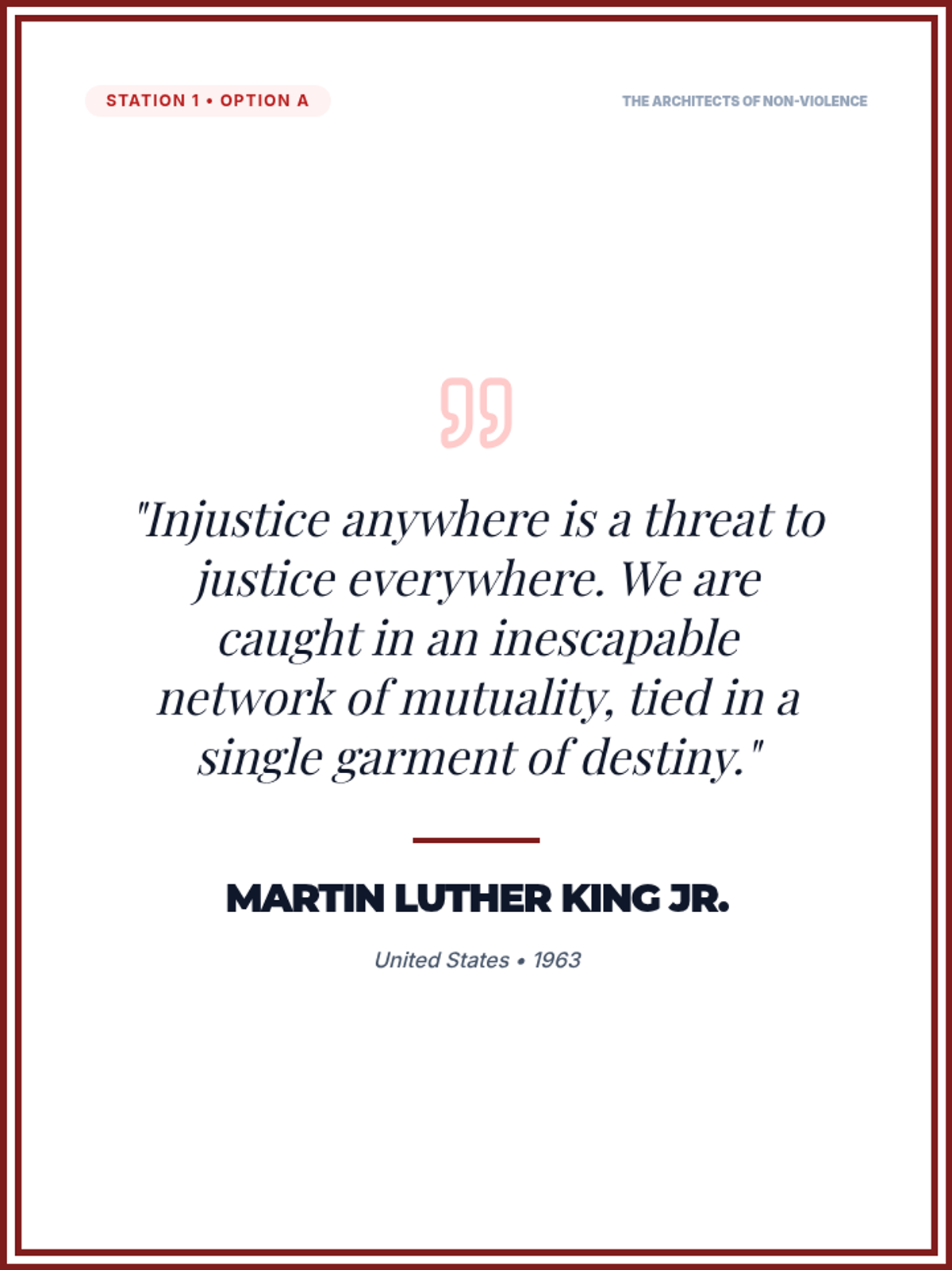
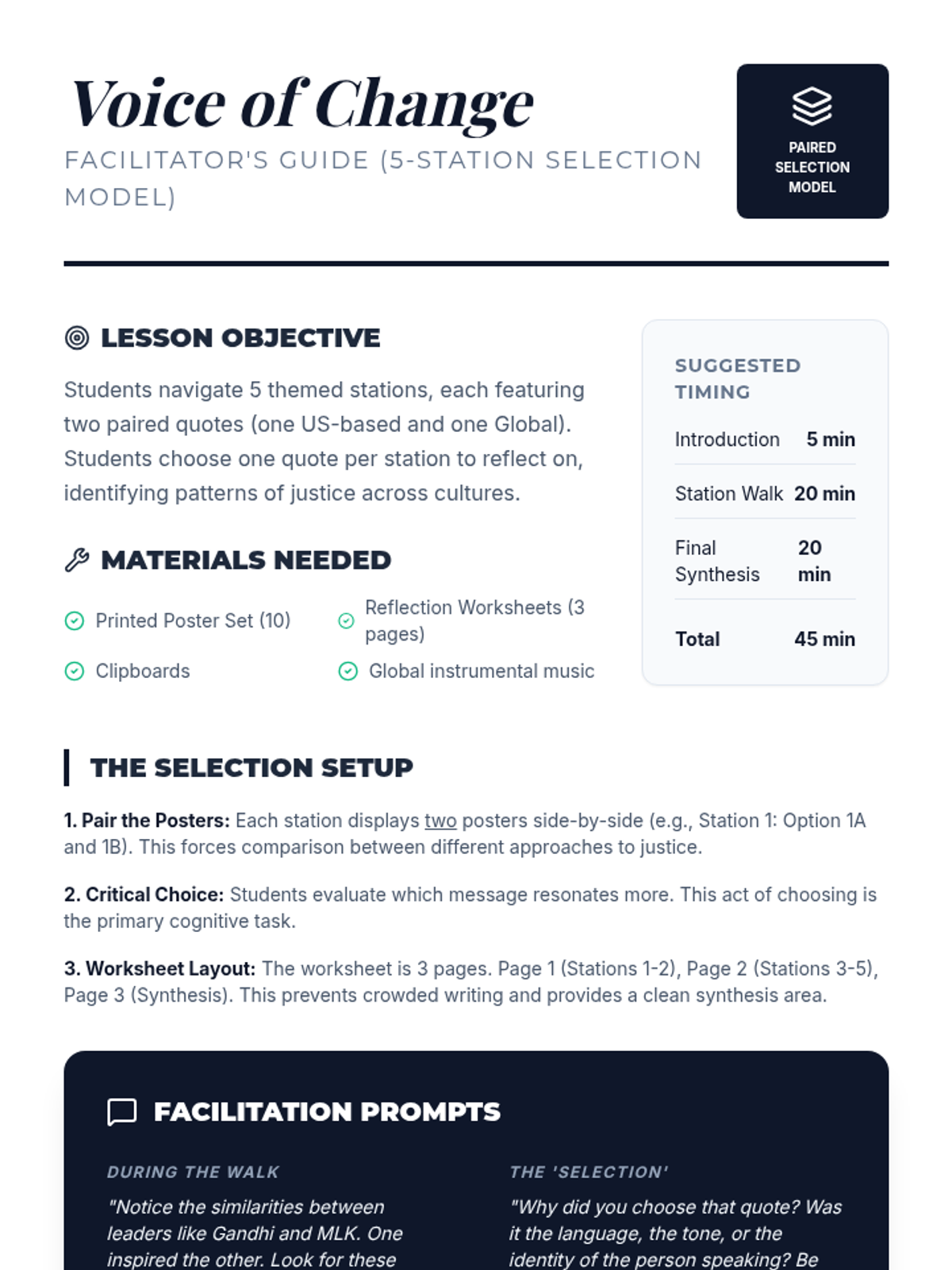
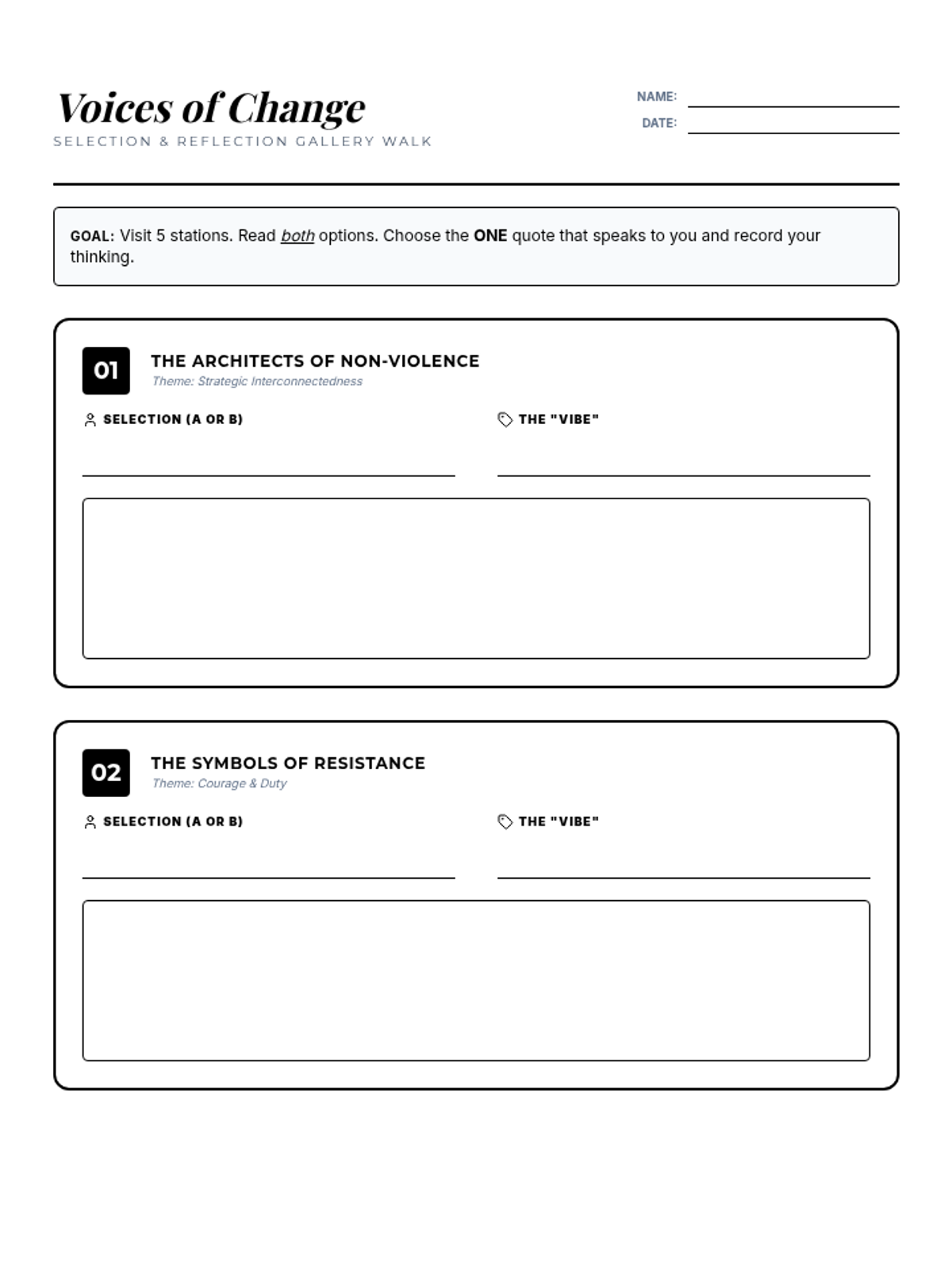
An introductory lesson exploring the Civil Rights Movement through the powerful words of its leaders. Students engage in a gallery walk to analyze quotes, reflect on leadership styles, and connect historical messages to modern contexts.
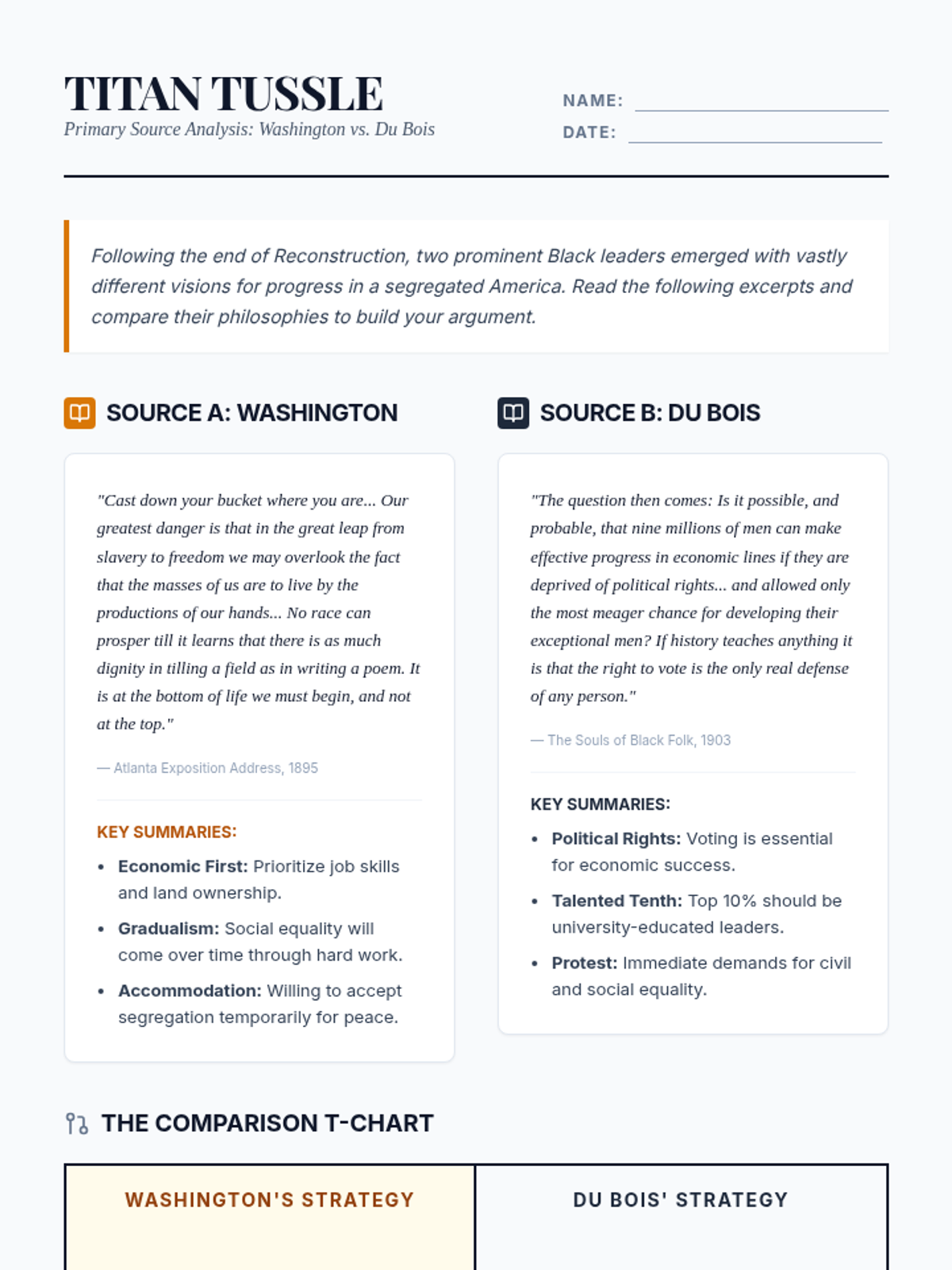
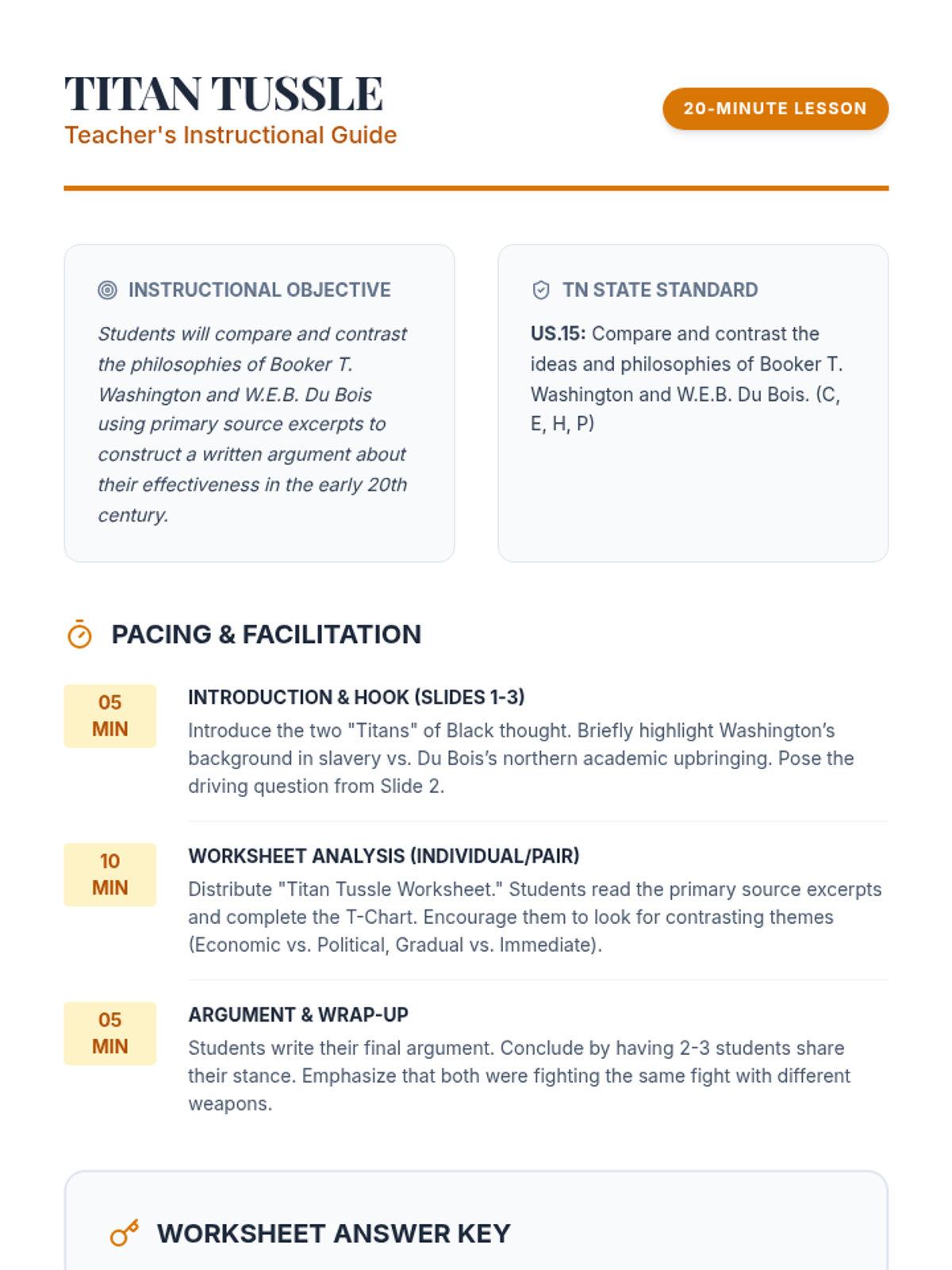
A fast-paced exploration of the divergent philosophies of Booker T. Washington and W.E.B. Du Bois regarding African American progress in the post-Reconstruction era. Students will analyze primary sources to construct arguments about their differing approaches to civil rights.
Compare the mechanics of market, command, and mixed economies through historical documents like ration cards and industrial quotas, as well as modern tax structures.
Uncover the metrics of national wealth through the history of hyperinflation, the ethics of economic growth, and simulations of central bank management.
Master the dynamics of market forces through the history of the Tulip Mania, the ethics of ticket scalping, and simulations of price elasticity and equilibrium.
Explore the foundational pillars of economics through the history of the Dust Bowl, the ethics of organ markets, and simulations of scarcity and marginal utility.
Master the mechanics of life's largest financial commitments through the history of the 30-year mortgage, the ethics of urban gentrification, and complex simulations of home ownership.
Uncover the mechanisms of risk management through the history of the Great Fire of London, the ethics of pre-existing conditions, and complex simulations of health and auto insurance.
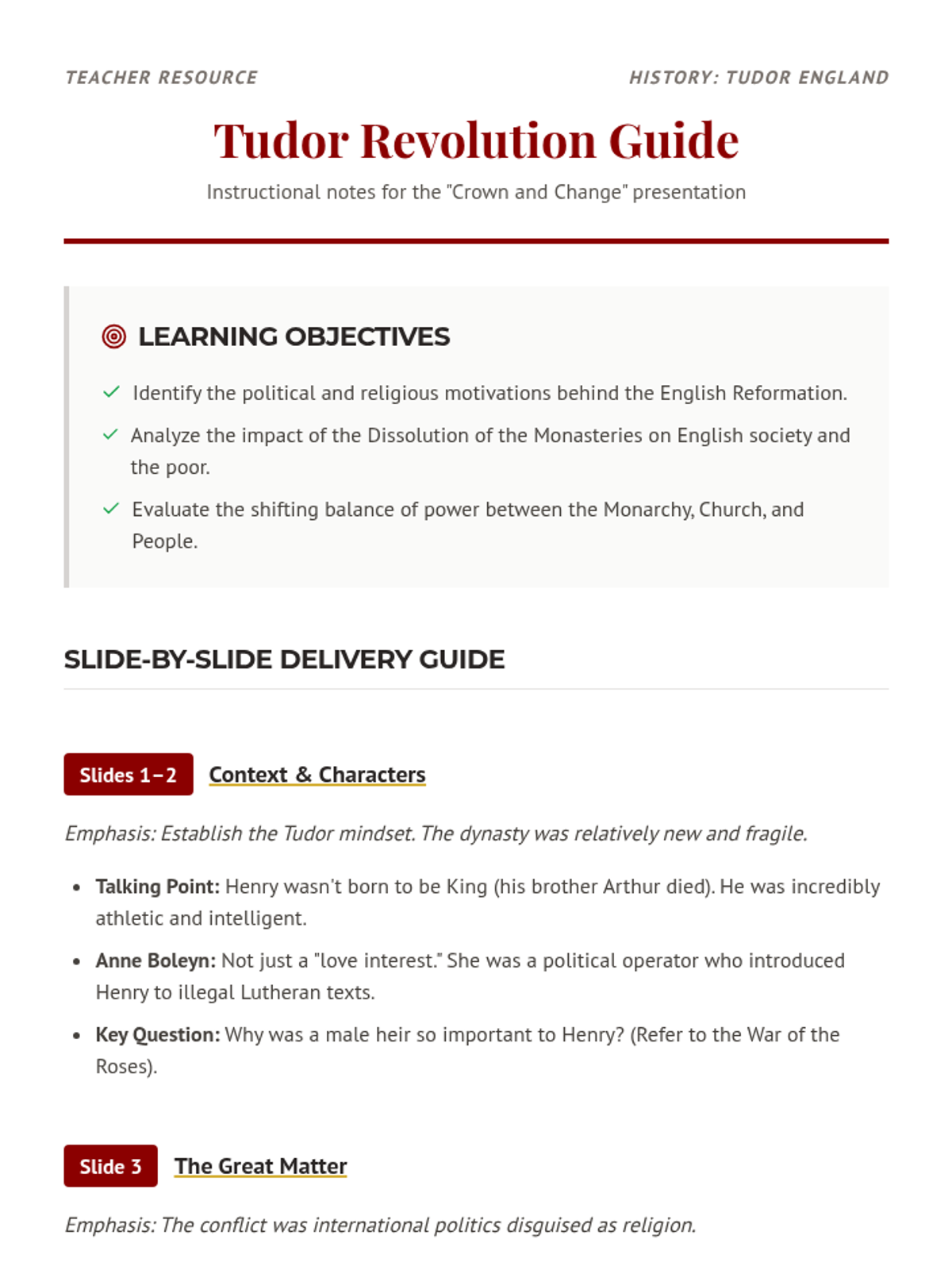
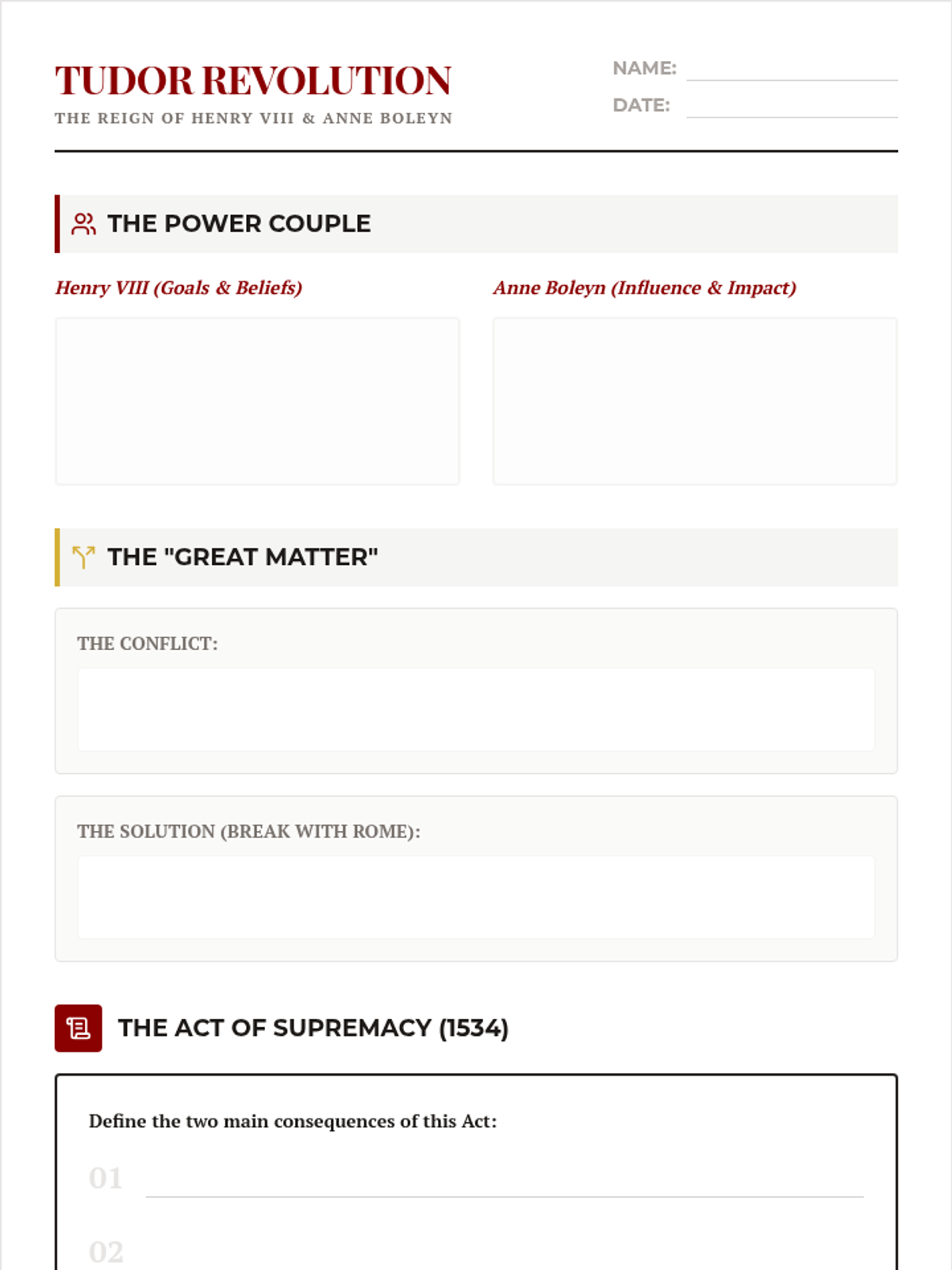
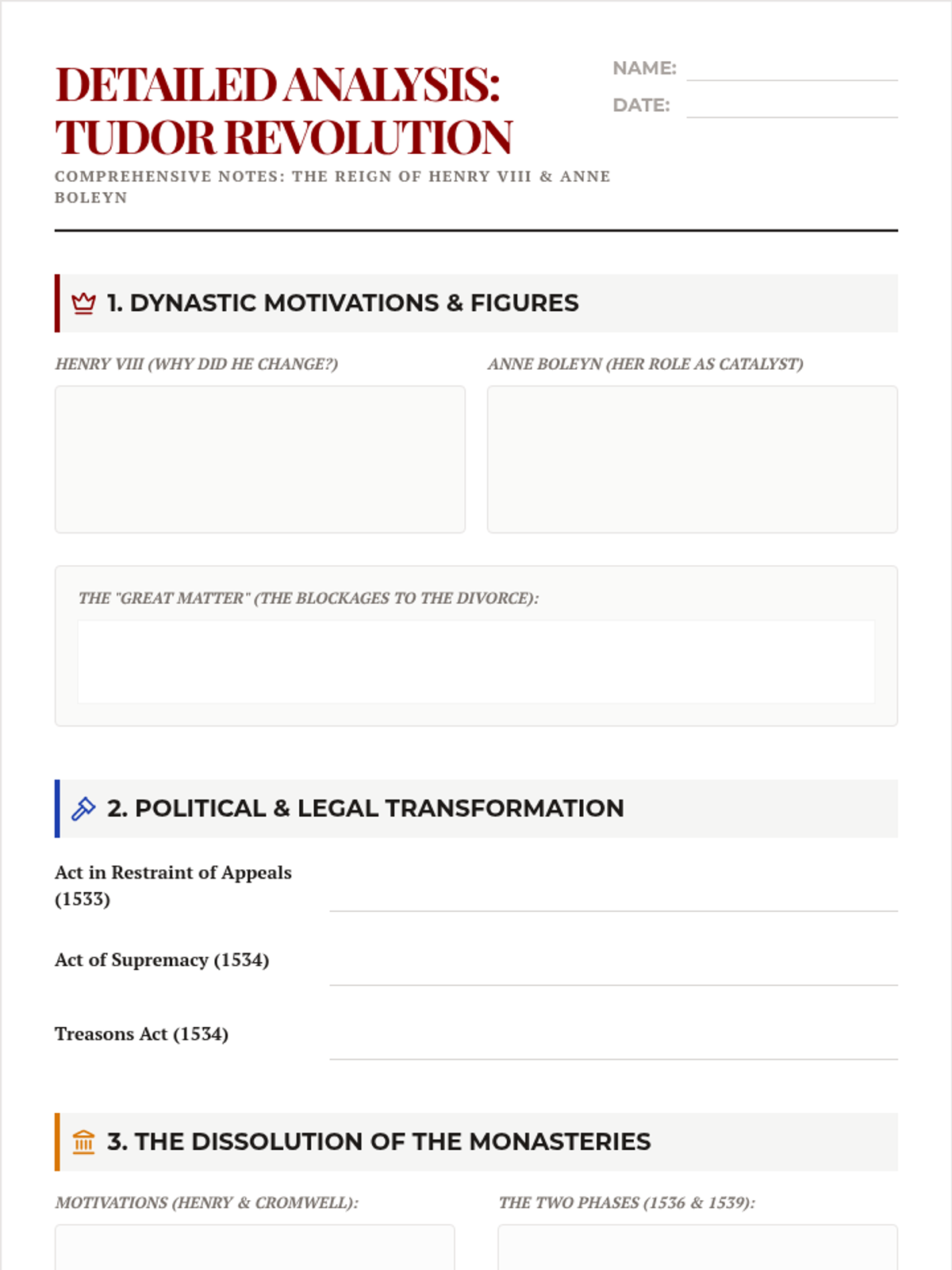
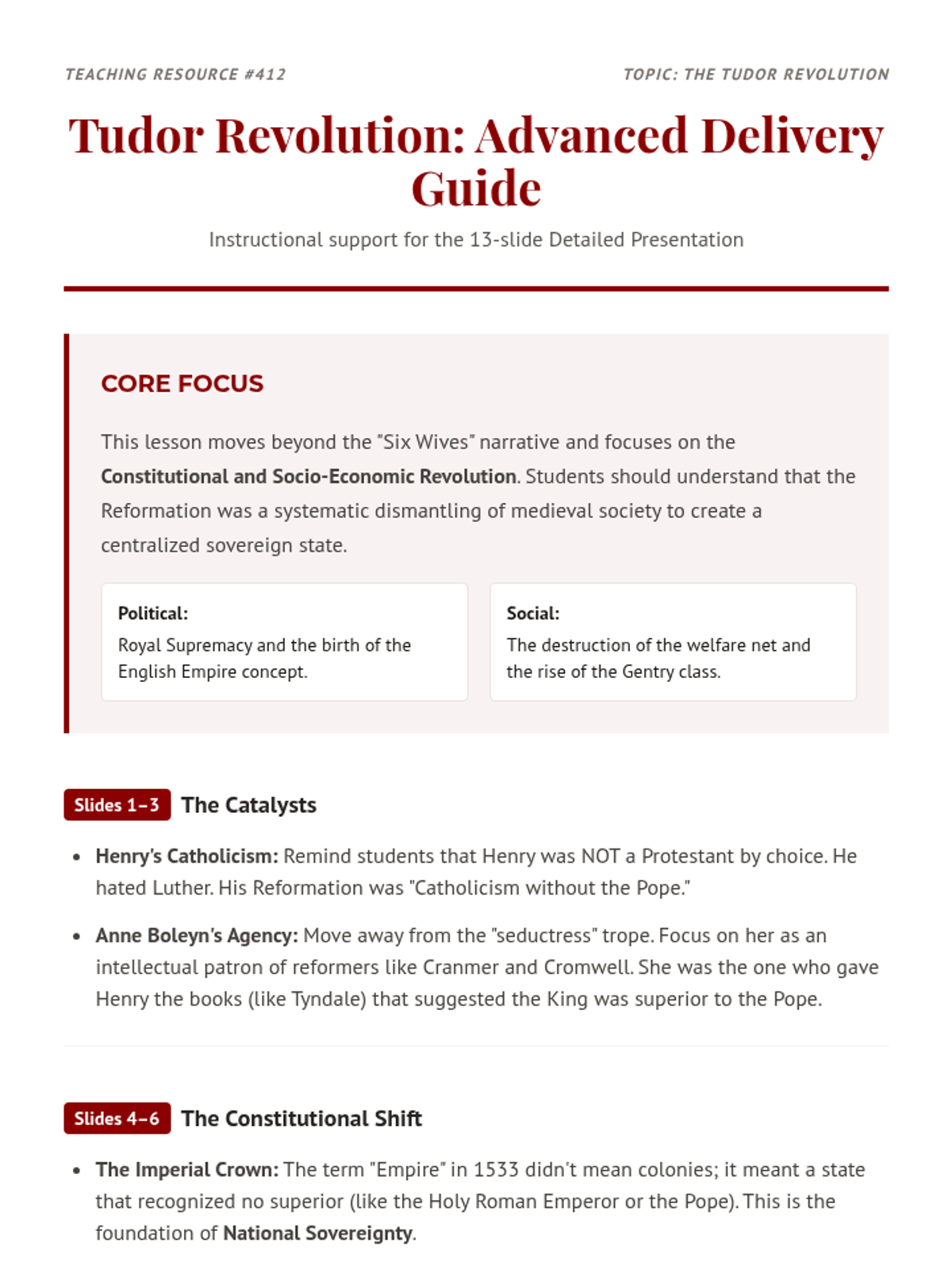
This lesson explores the transformative reign of Henry VIII and Anne Boleyn, focusing on the religious, political, and social upheavals of the English Reformation and its lasting impact on English society.
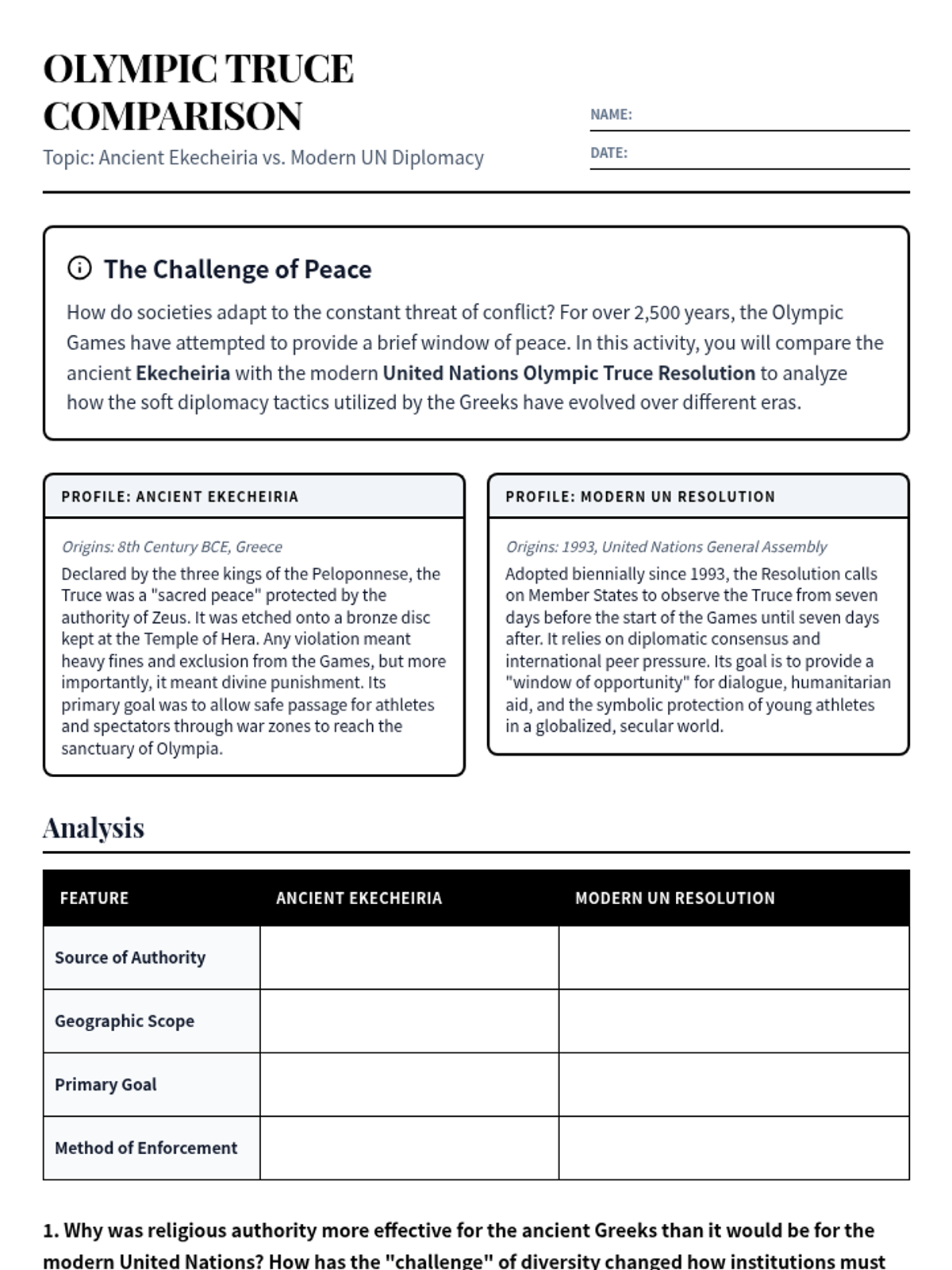
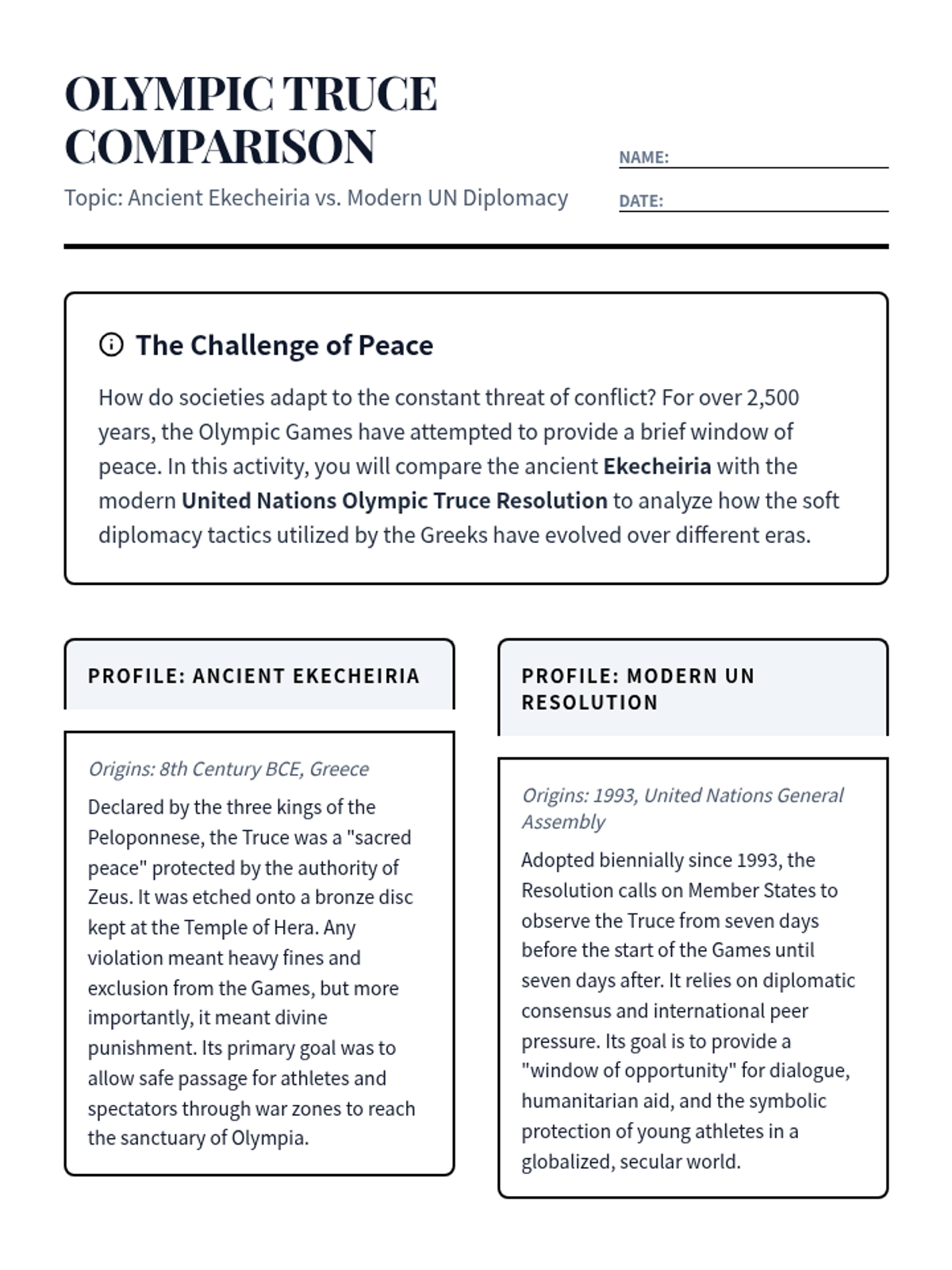
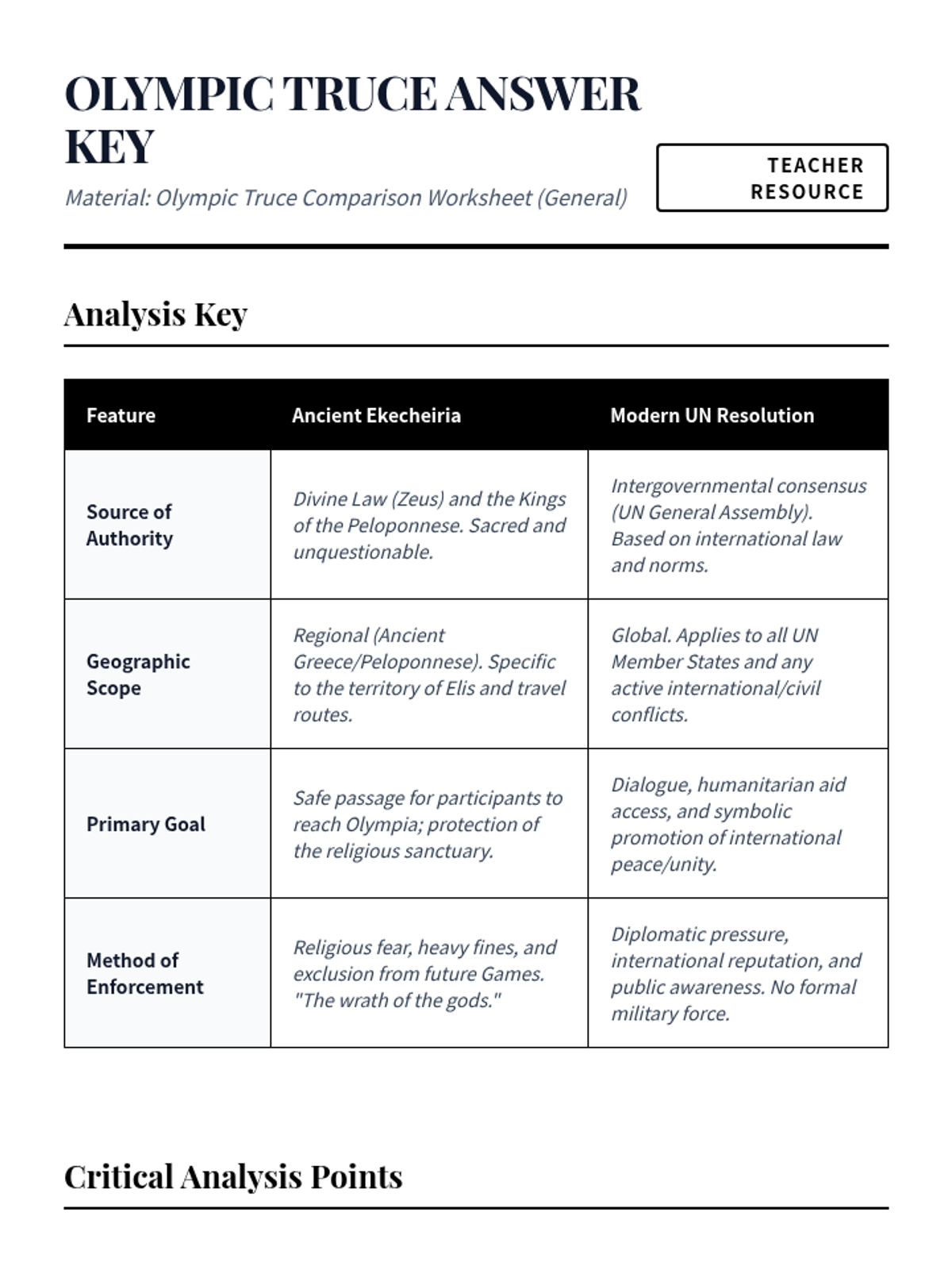
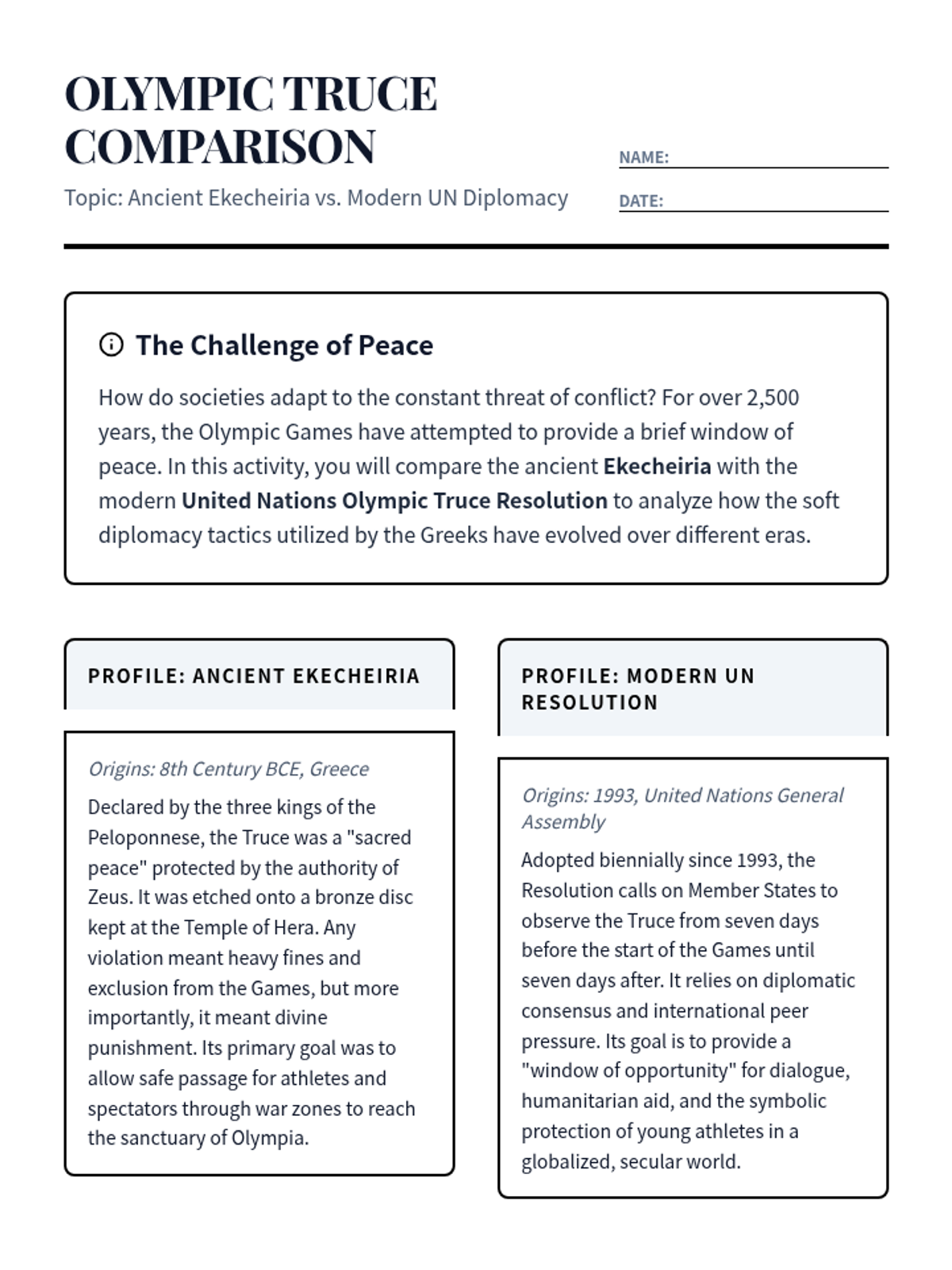
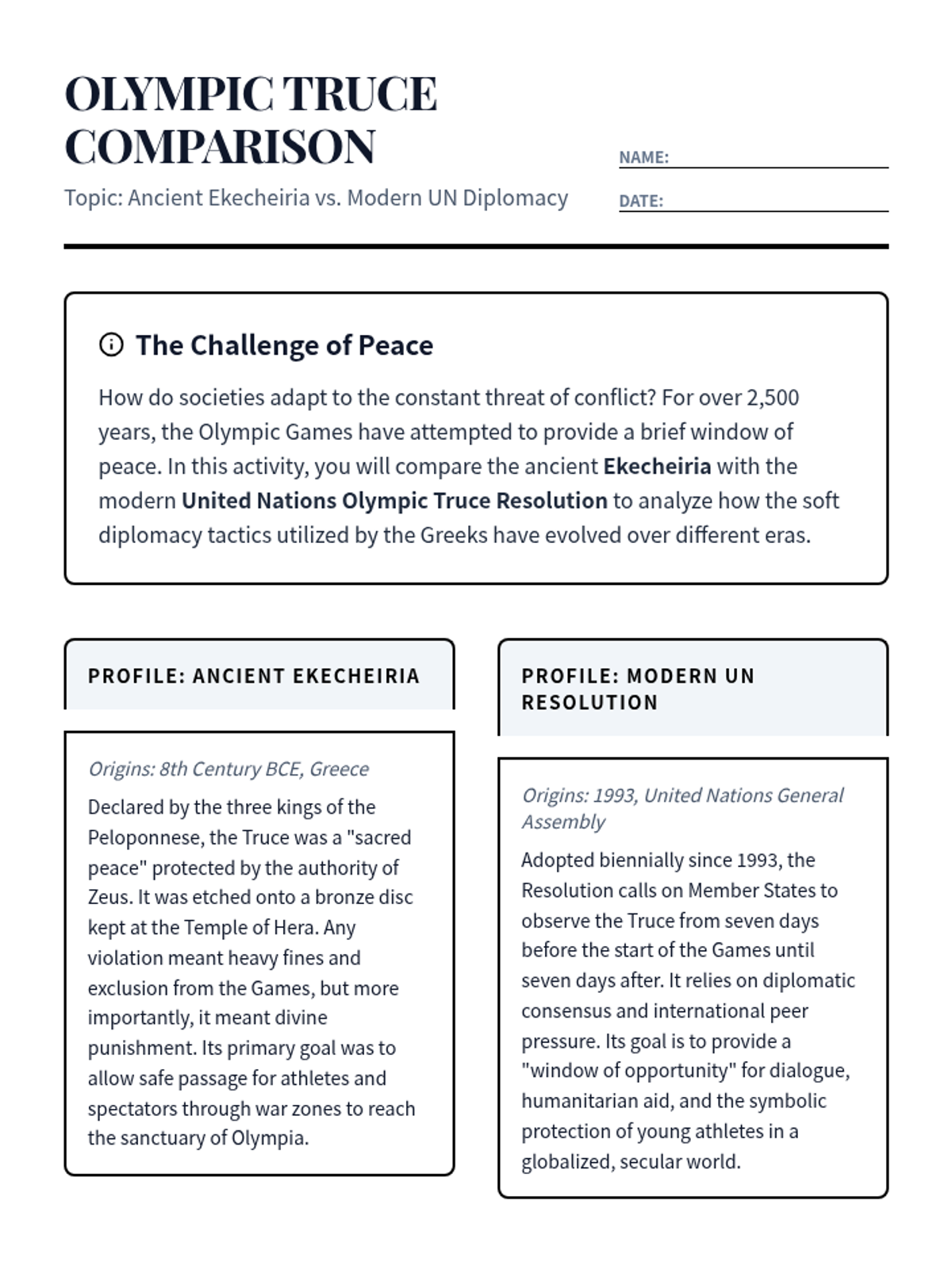
A high school social studies lesson exploring the origins, evolution, and effectiveness of the Olympic Truce from ancient Greece to the modern United Nations era. Students analyze how this institution addresses societal and political challenges through international cooperation.
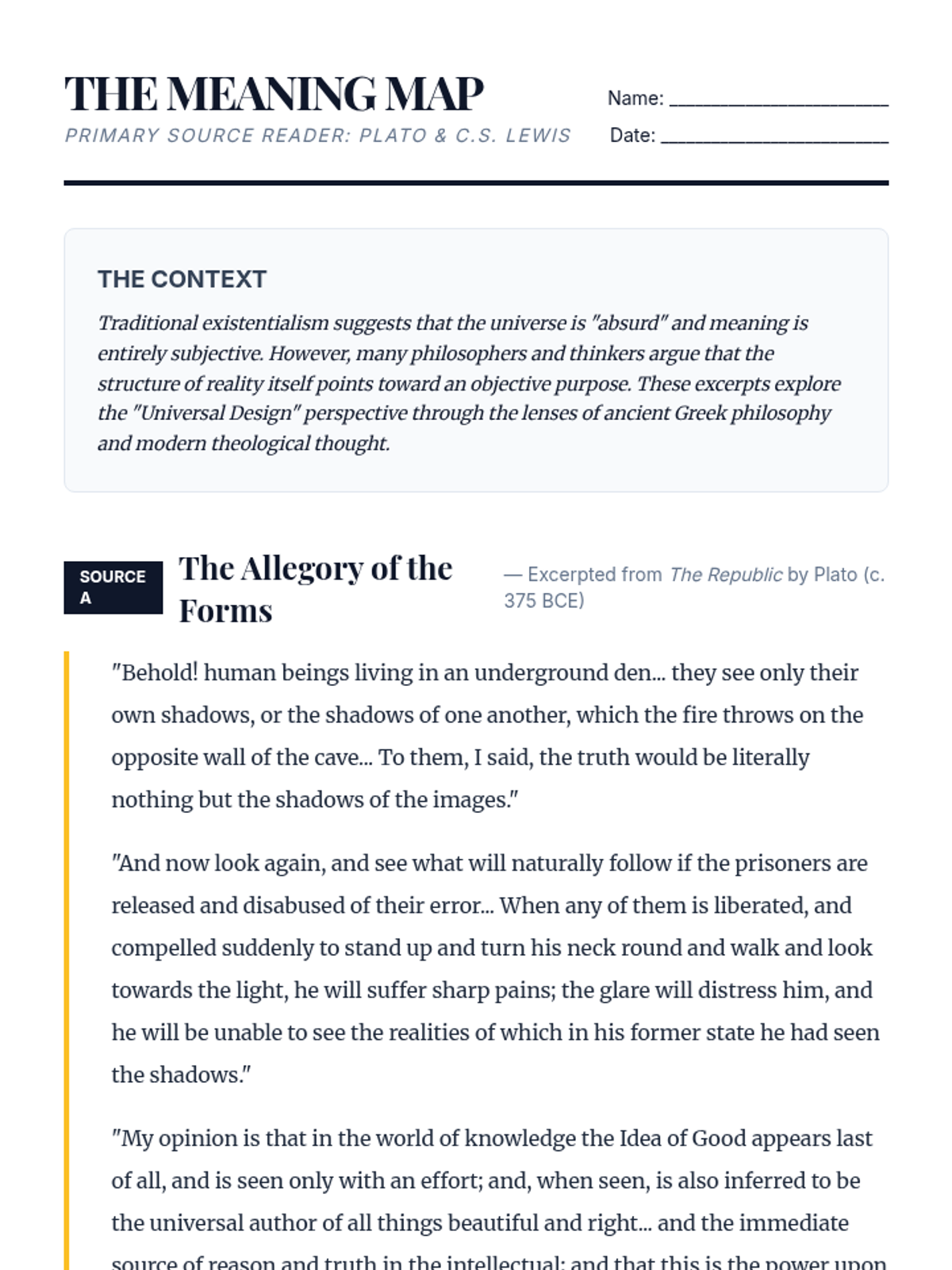
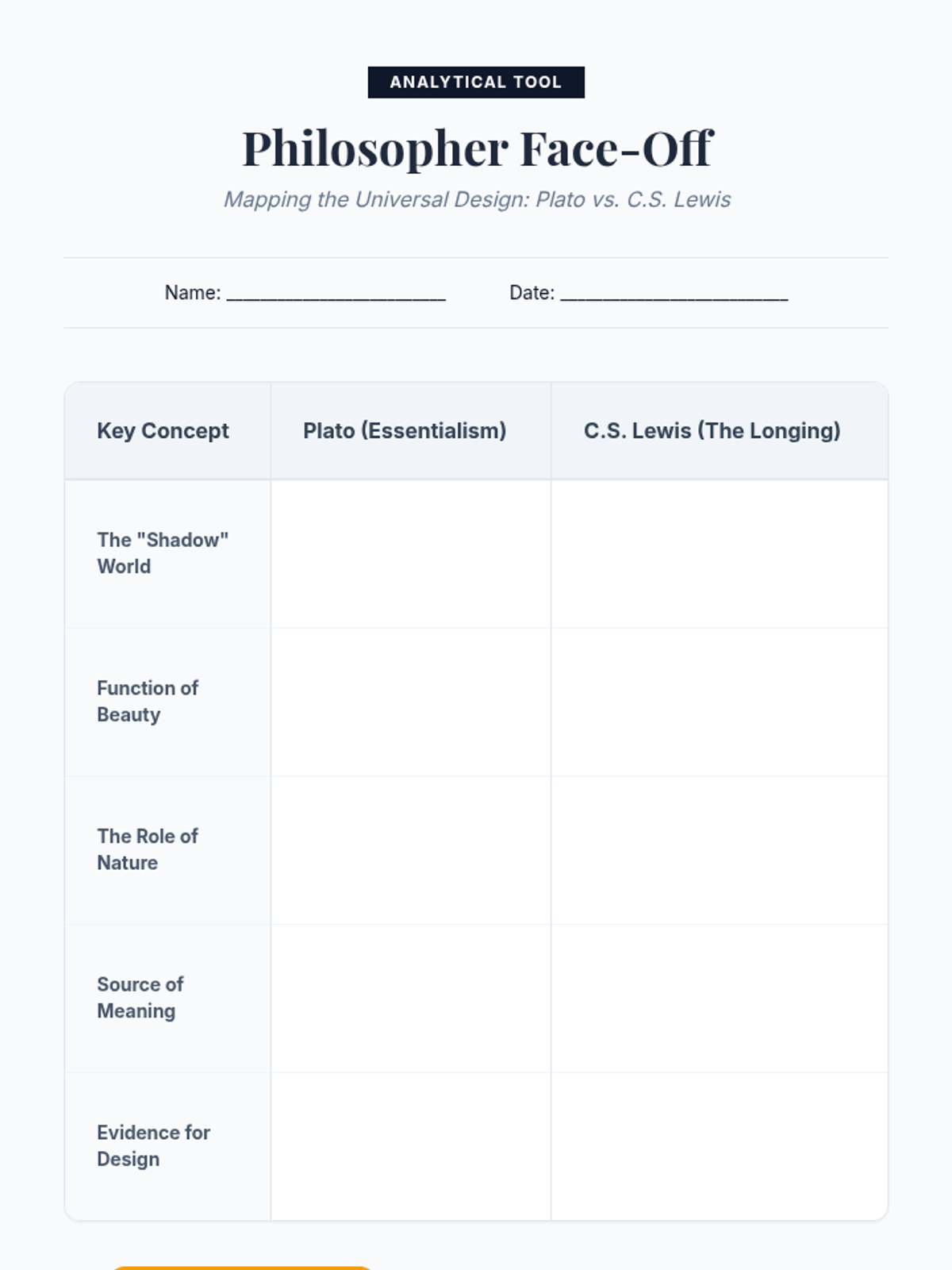
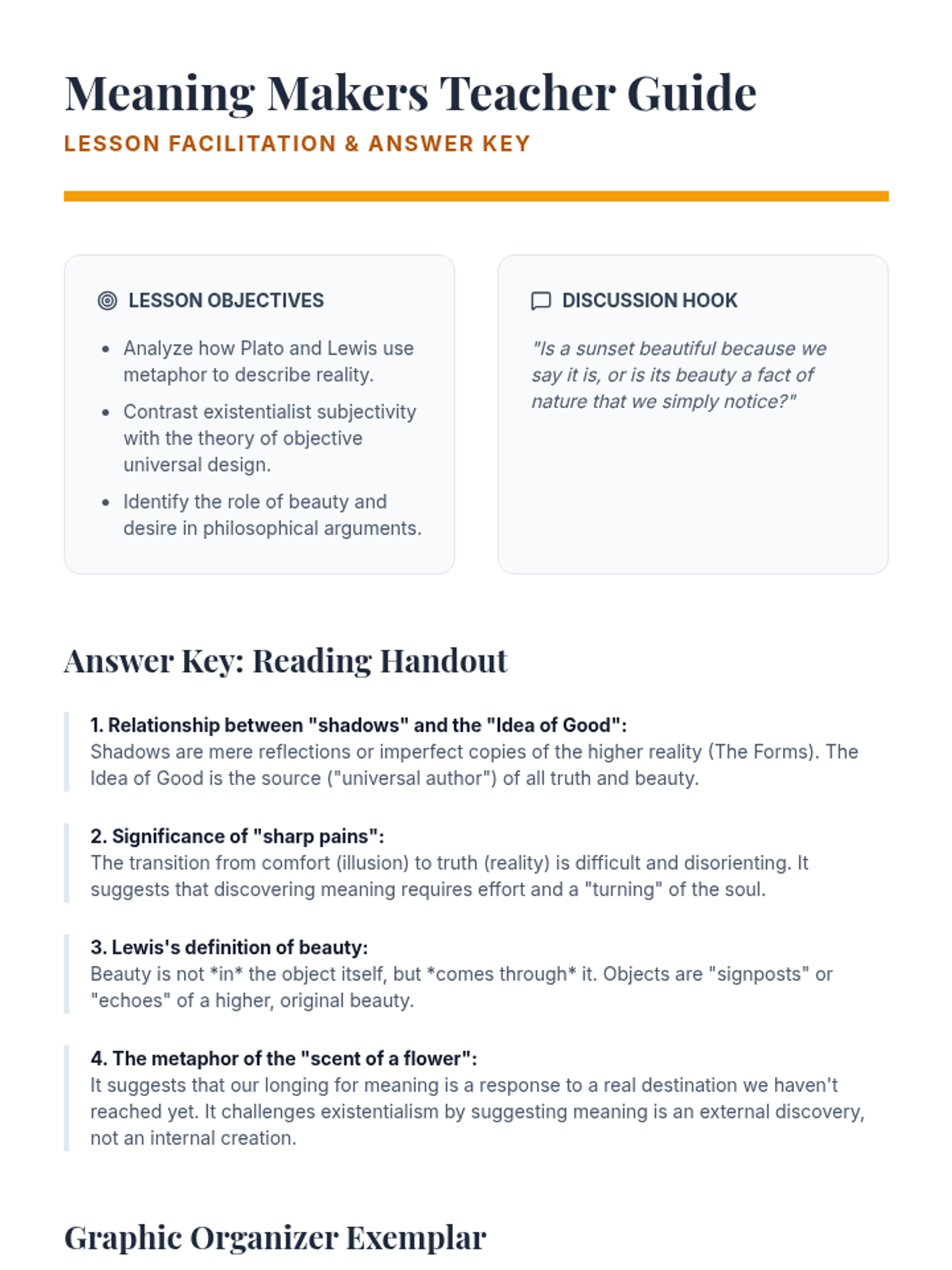
A deep dive into the search for meaning through the lenses of Plato and C.S. Lewis, exploring how beauty, nature, and universal design challenge existentialist perspectives. Students will analyze primary source excerpts to understand the relationship between objective reality and human longing.
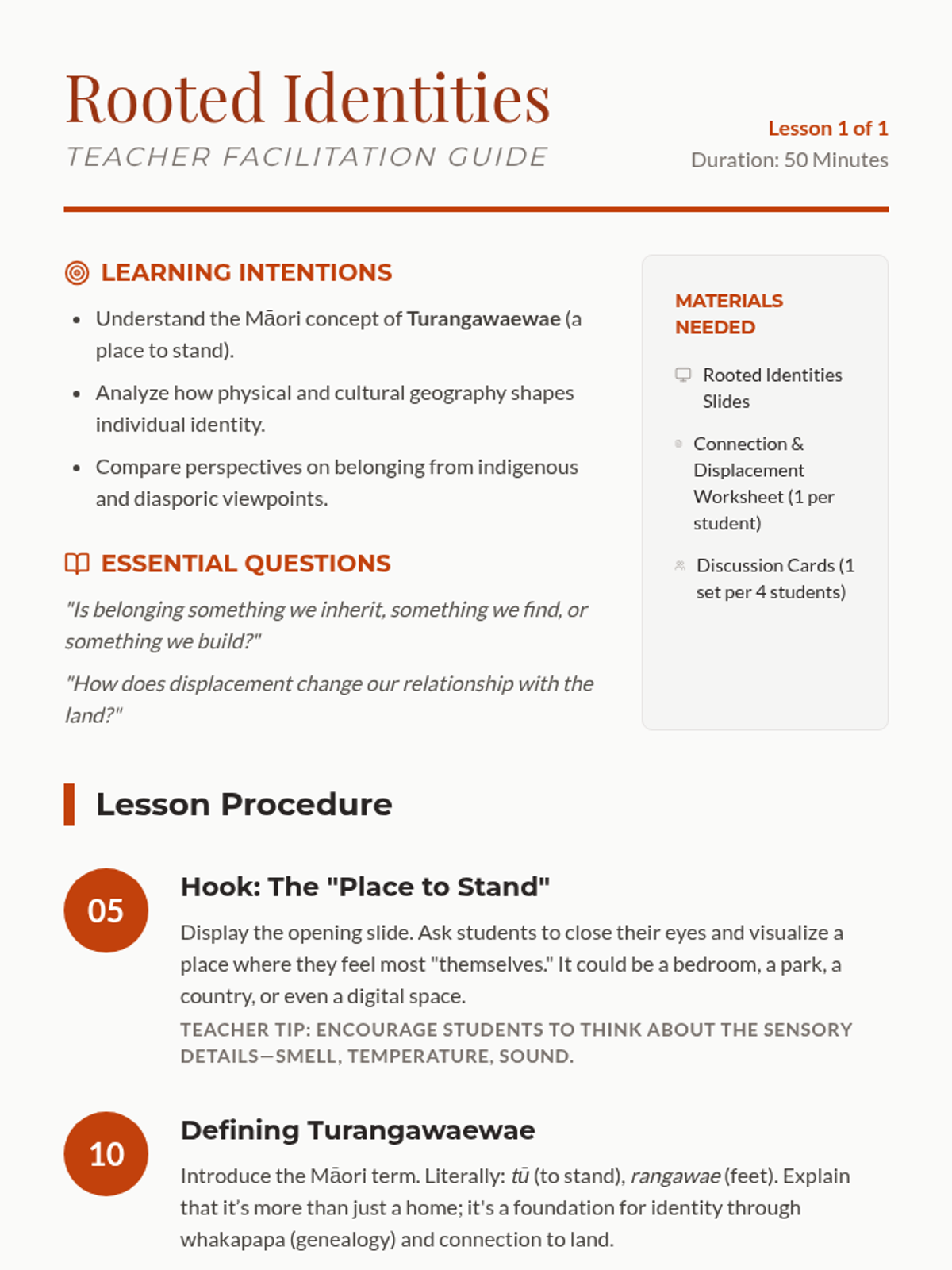
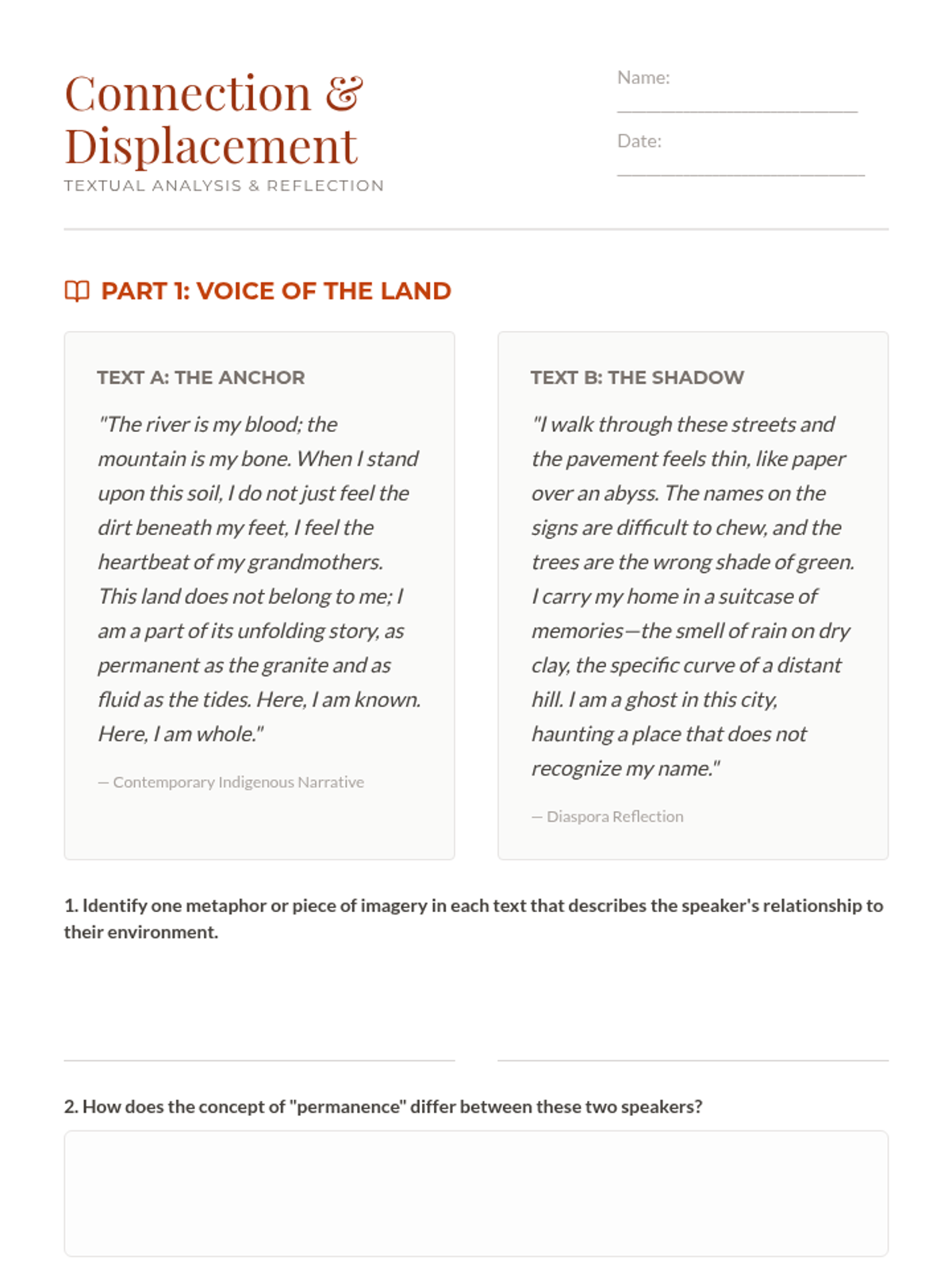
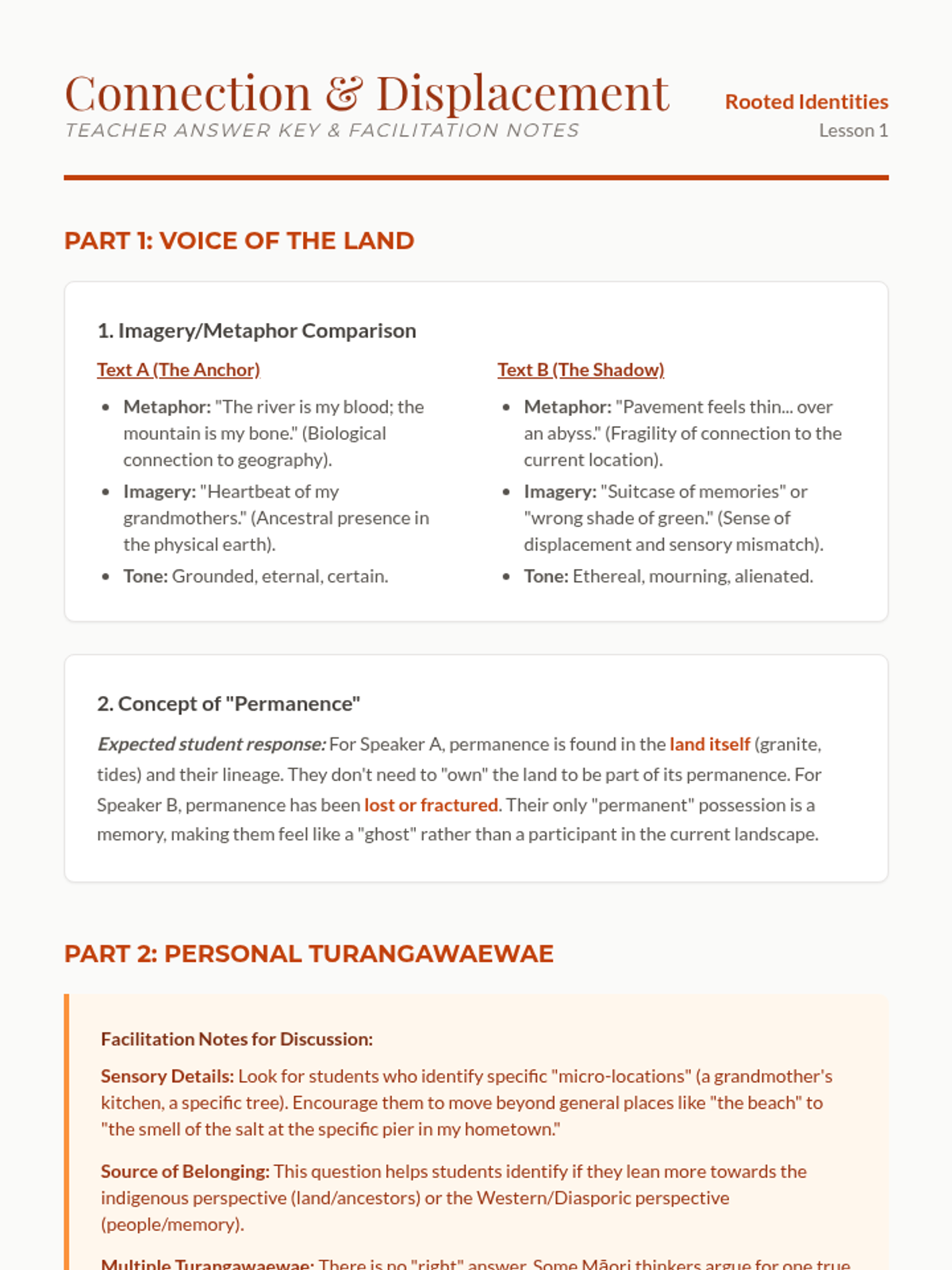
A 50-minute exploration of Turangawaewae, focusing on how 'place' shapes identity, comparing cultural perspectives on belonging, and analyzing the emotional weight of connection and displacement.
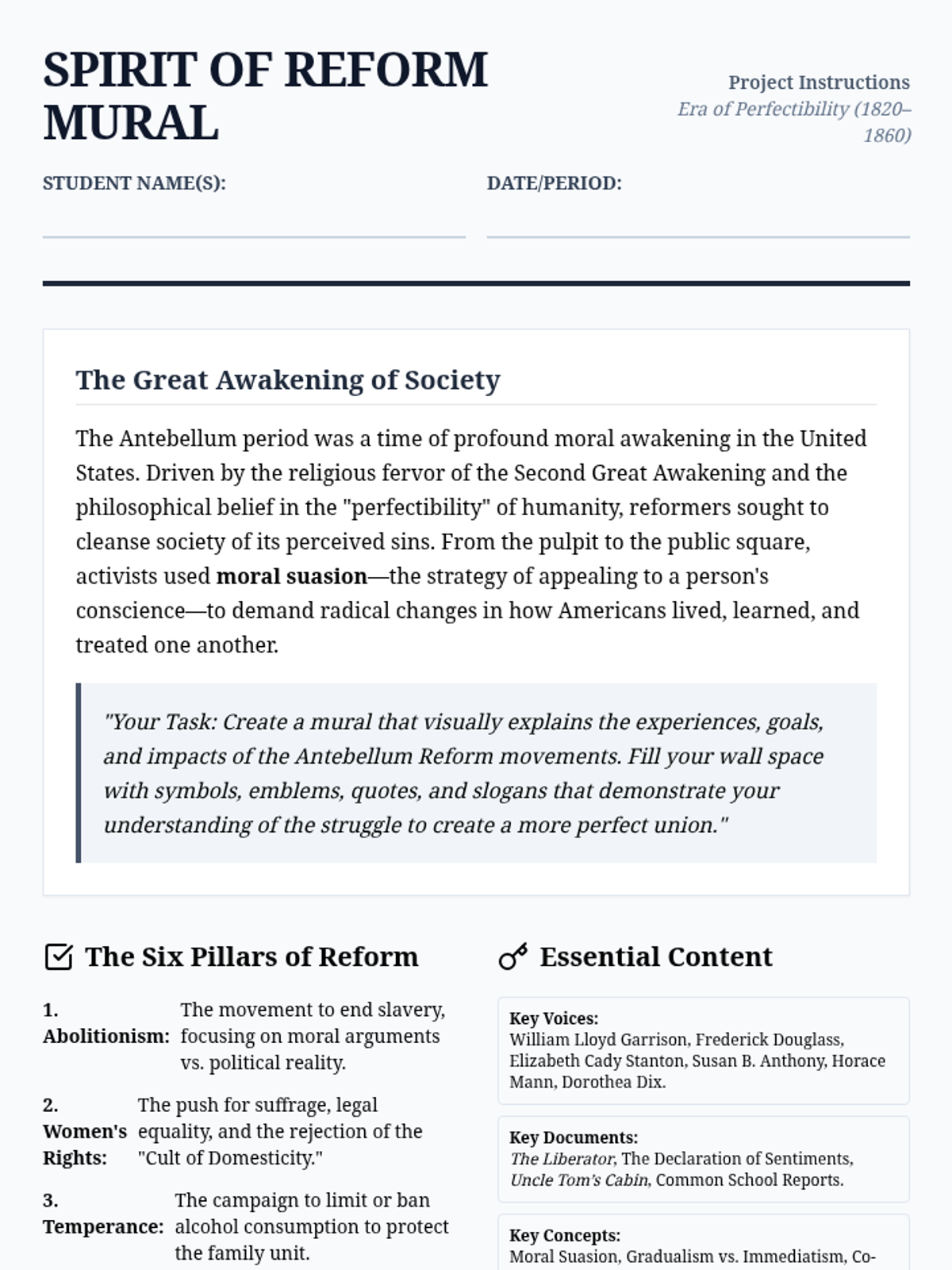
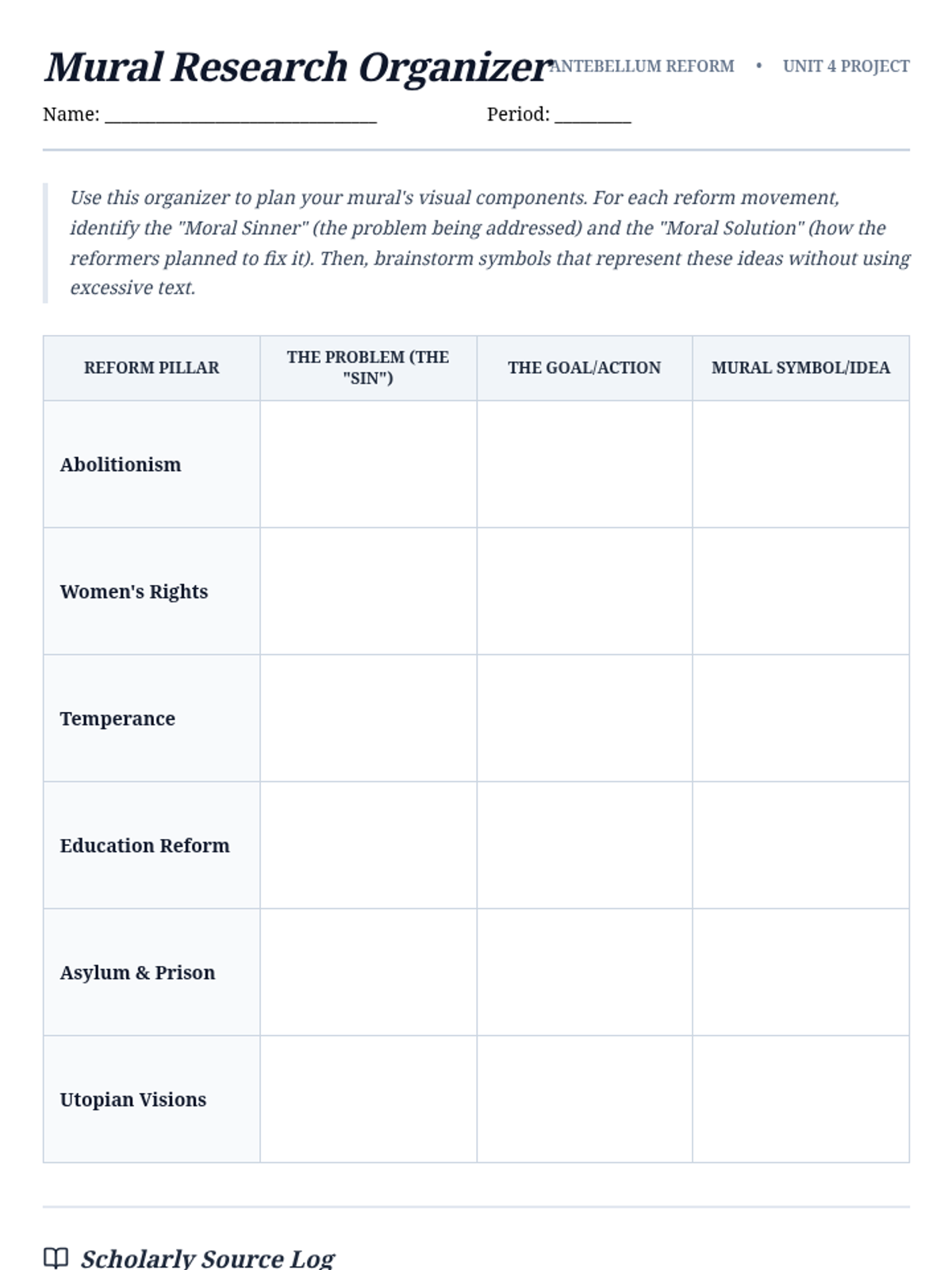
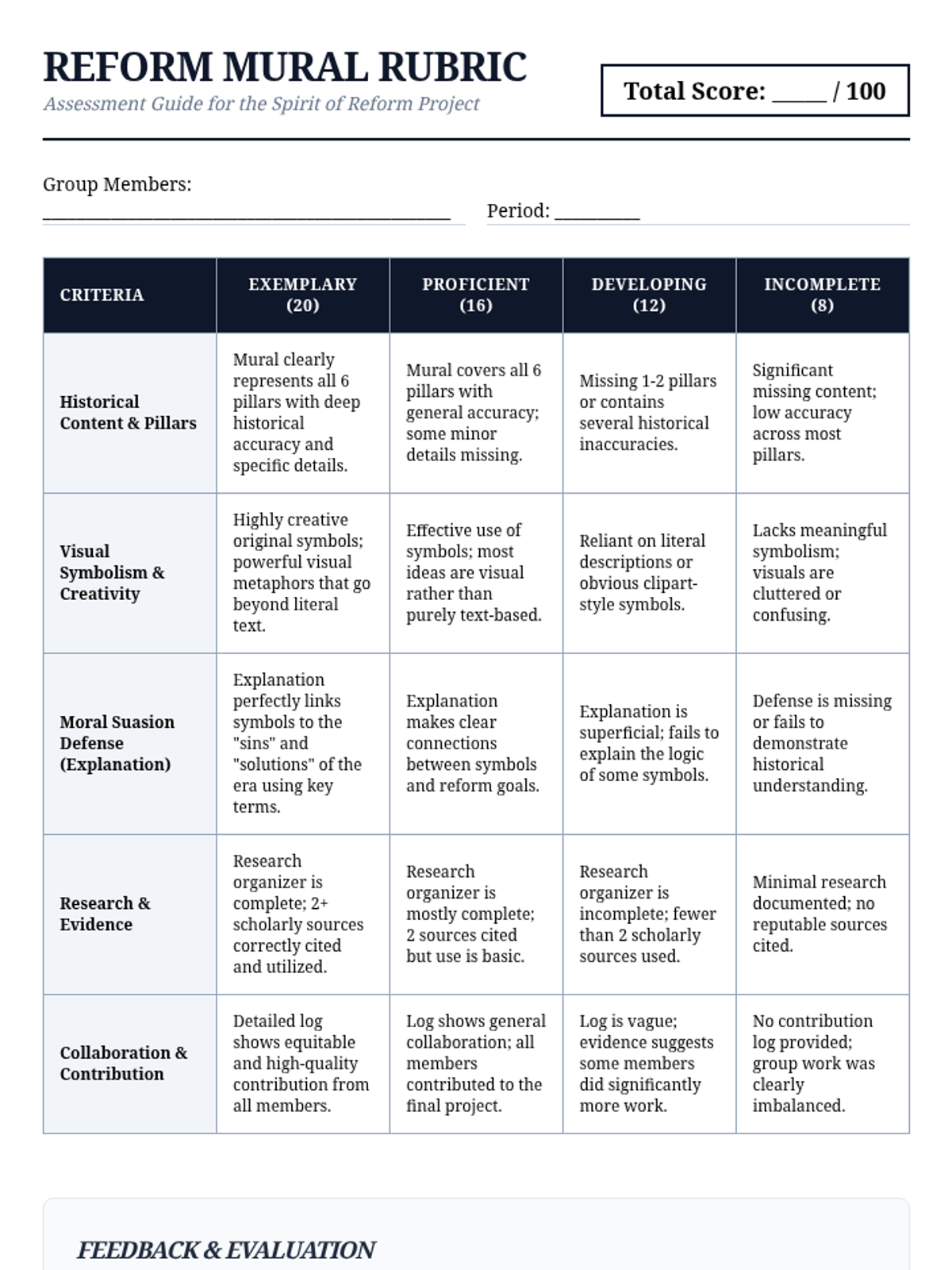
A 2-3 day project where students create a visual mural representing the major social reform movements of the Antebellum era, focusing on the concept of moral suasion and the perfectibility of society.
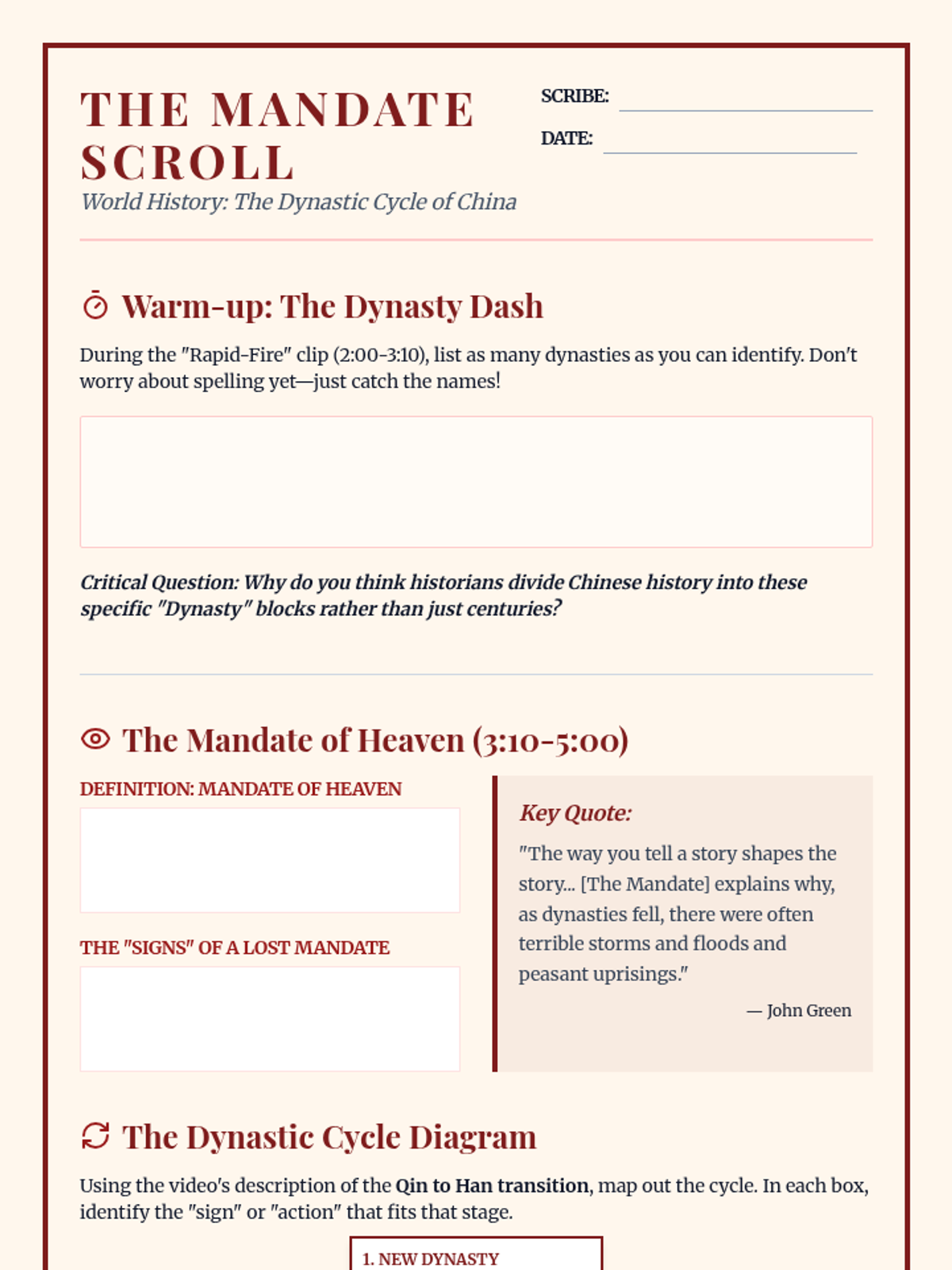
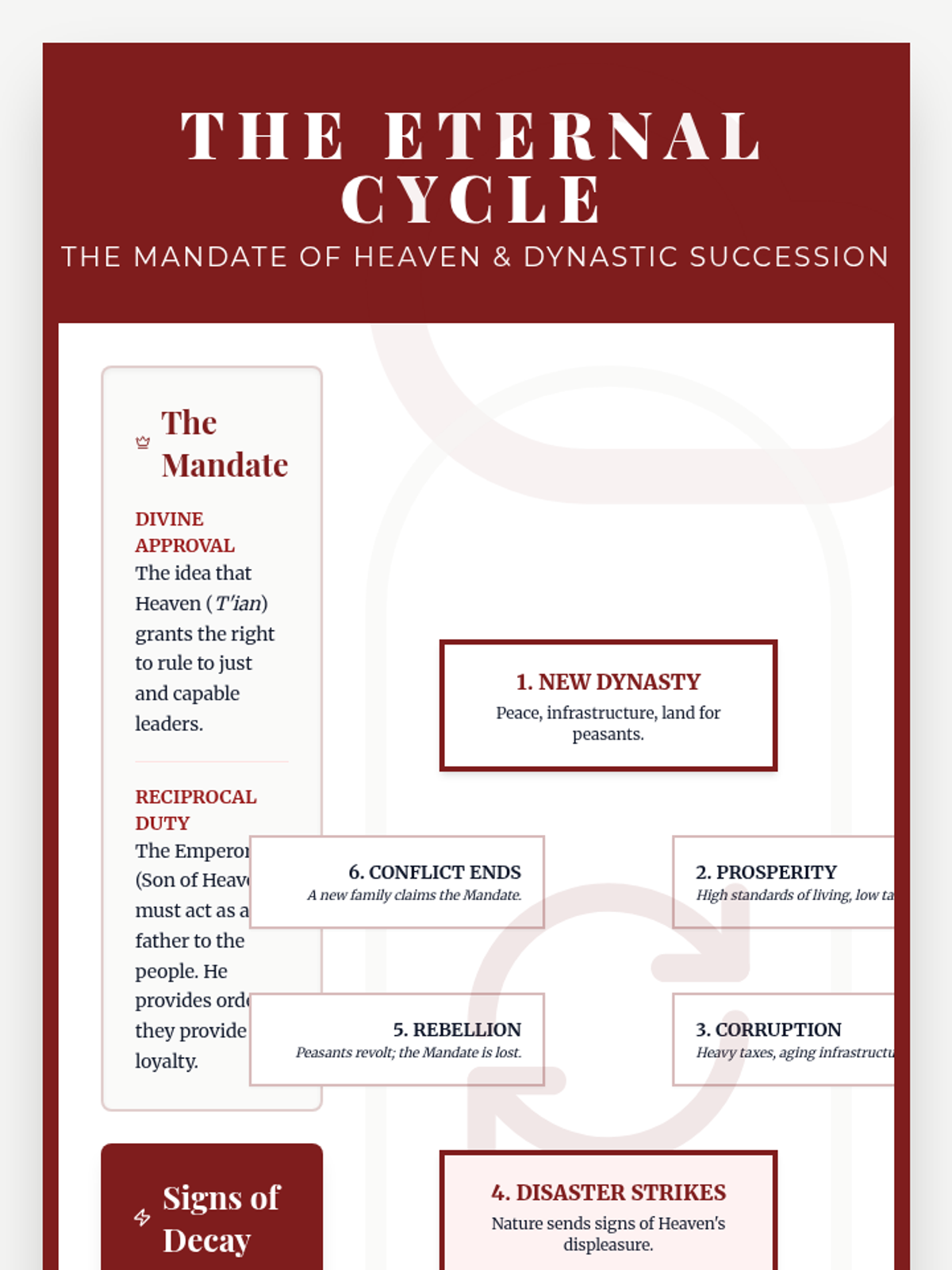
This lesson explores the Dynastic Cycle and the Mandate of Heaven through the lens of ancient Chinese history, using the transition from the Qin to the Han dynasty as a primary case study. Students will analyze how political legitimacy was constructed, maintained, and lost according to Confucian historiography.
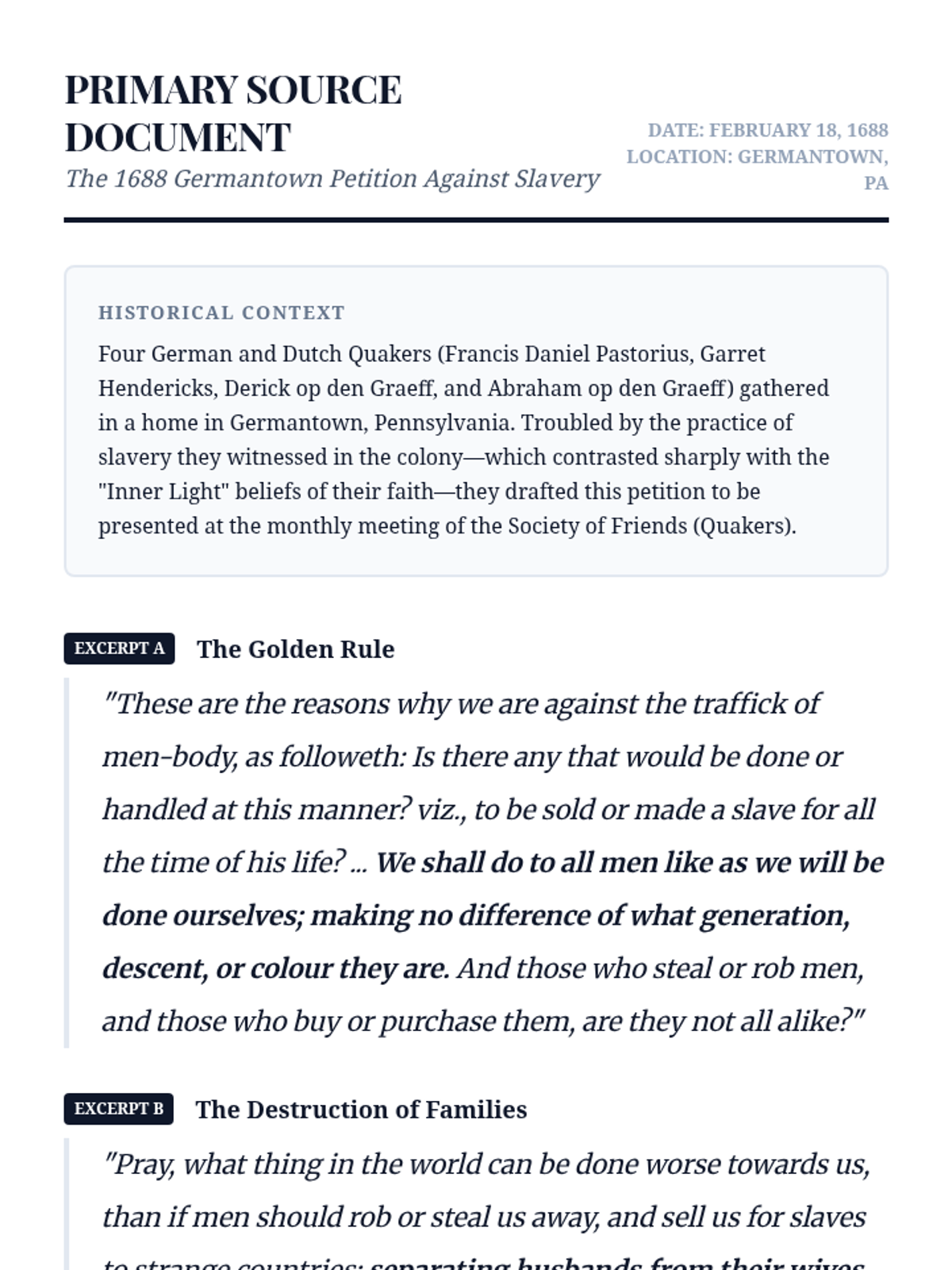
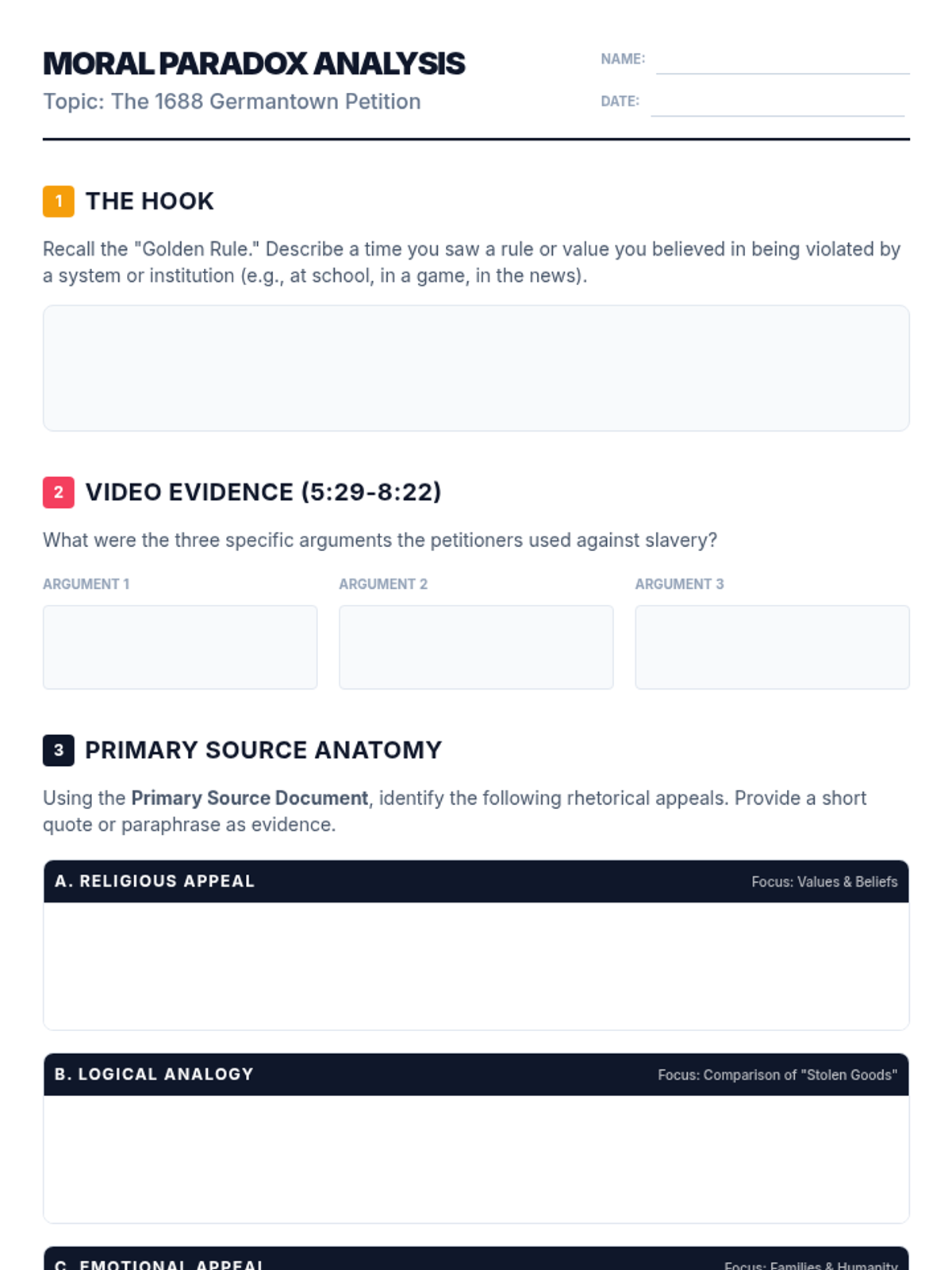
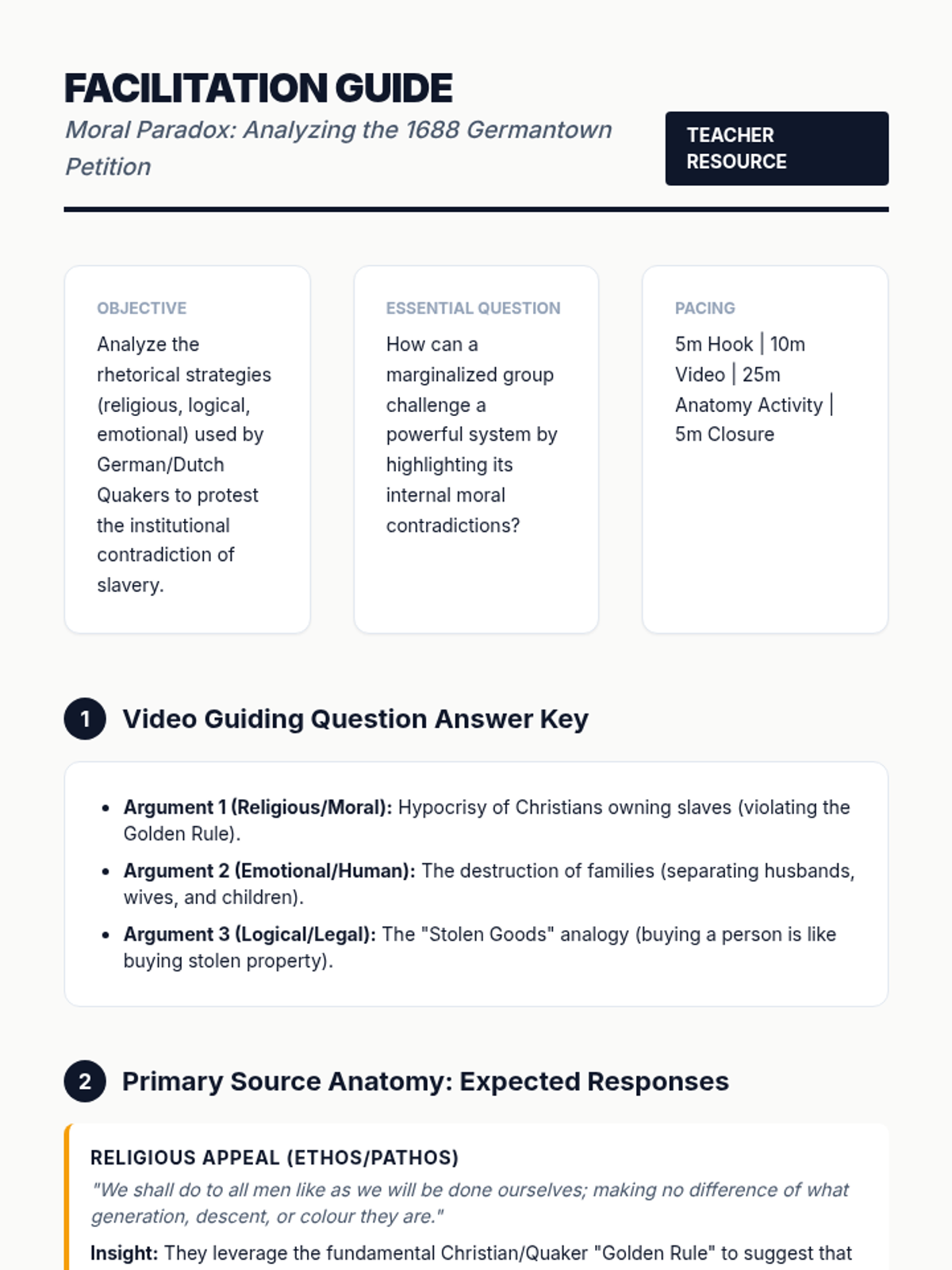
Students will analyze the 1688 Germantown Petition, the first formal protest against slavery in the American colonies, focusing on its rhetorical strategies and the Quaker context of the period.
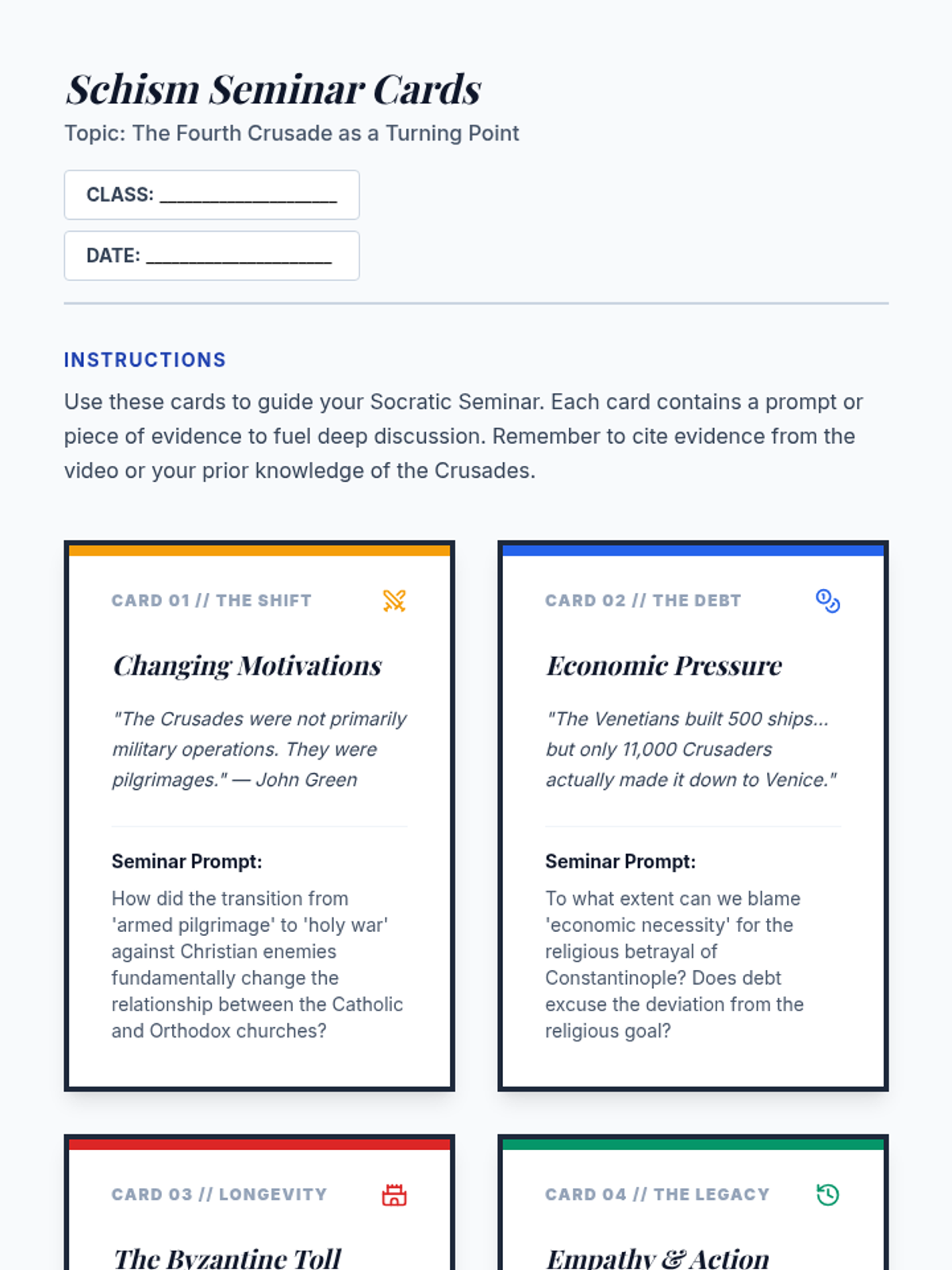
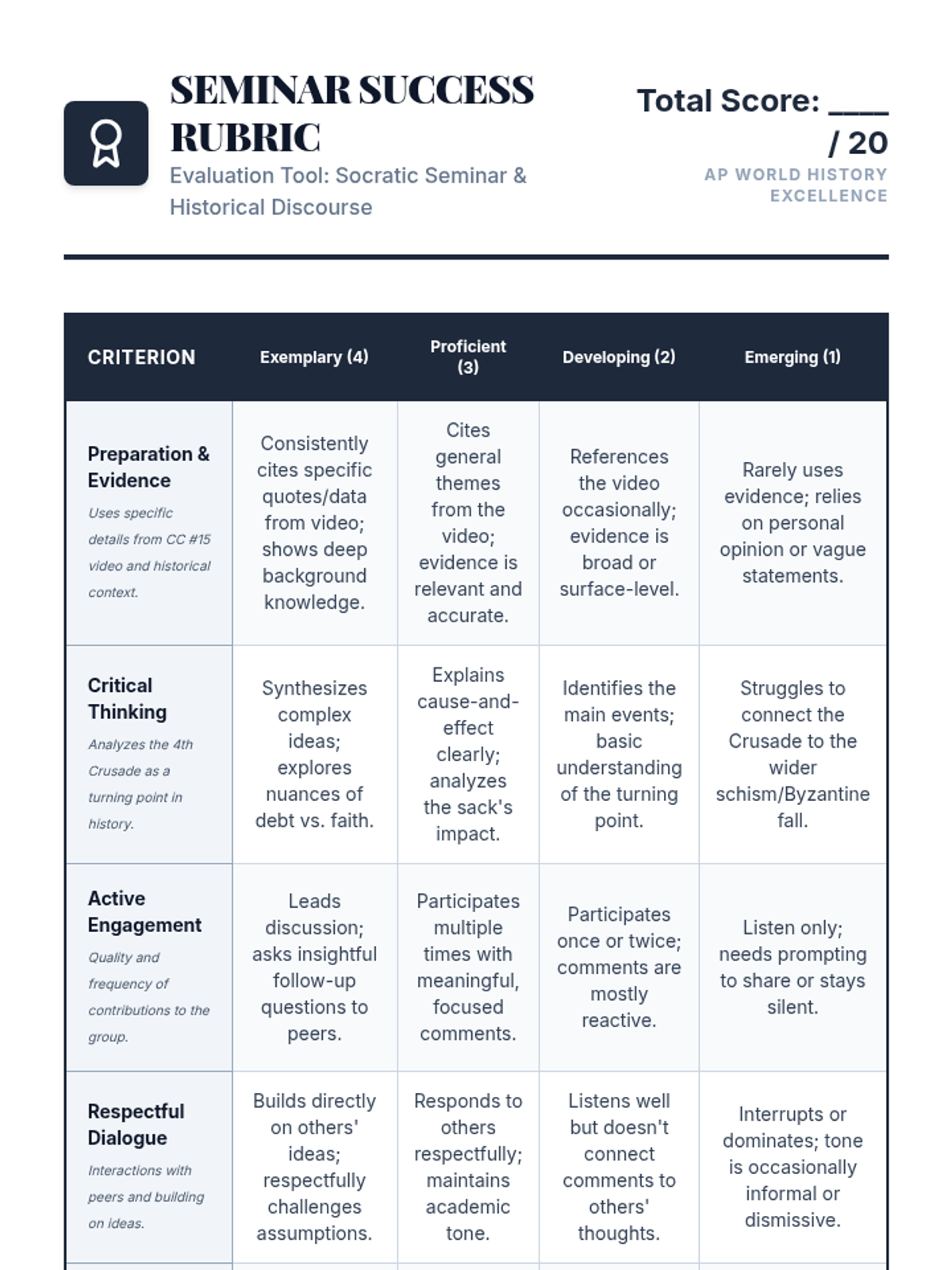
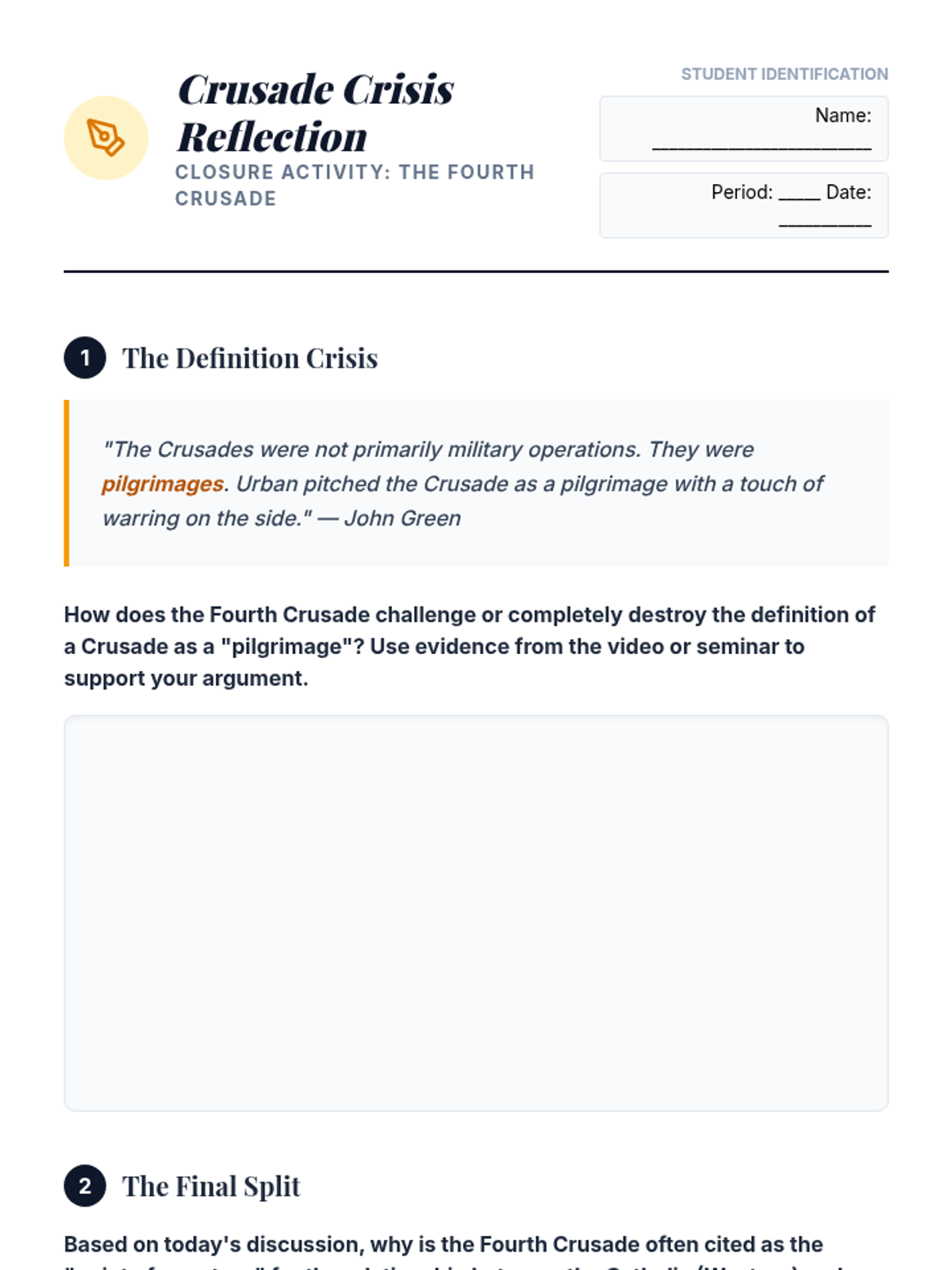
Students examine the Fourth Crusade's impact on the Eastern and Western Christian churches through a Socratic Seminar focused on the sack of Constantinople and the shifting definition of holy war.
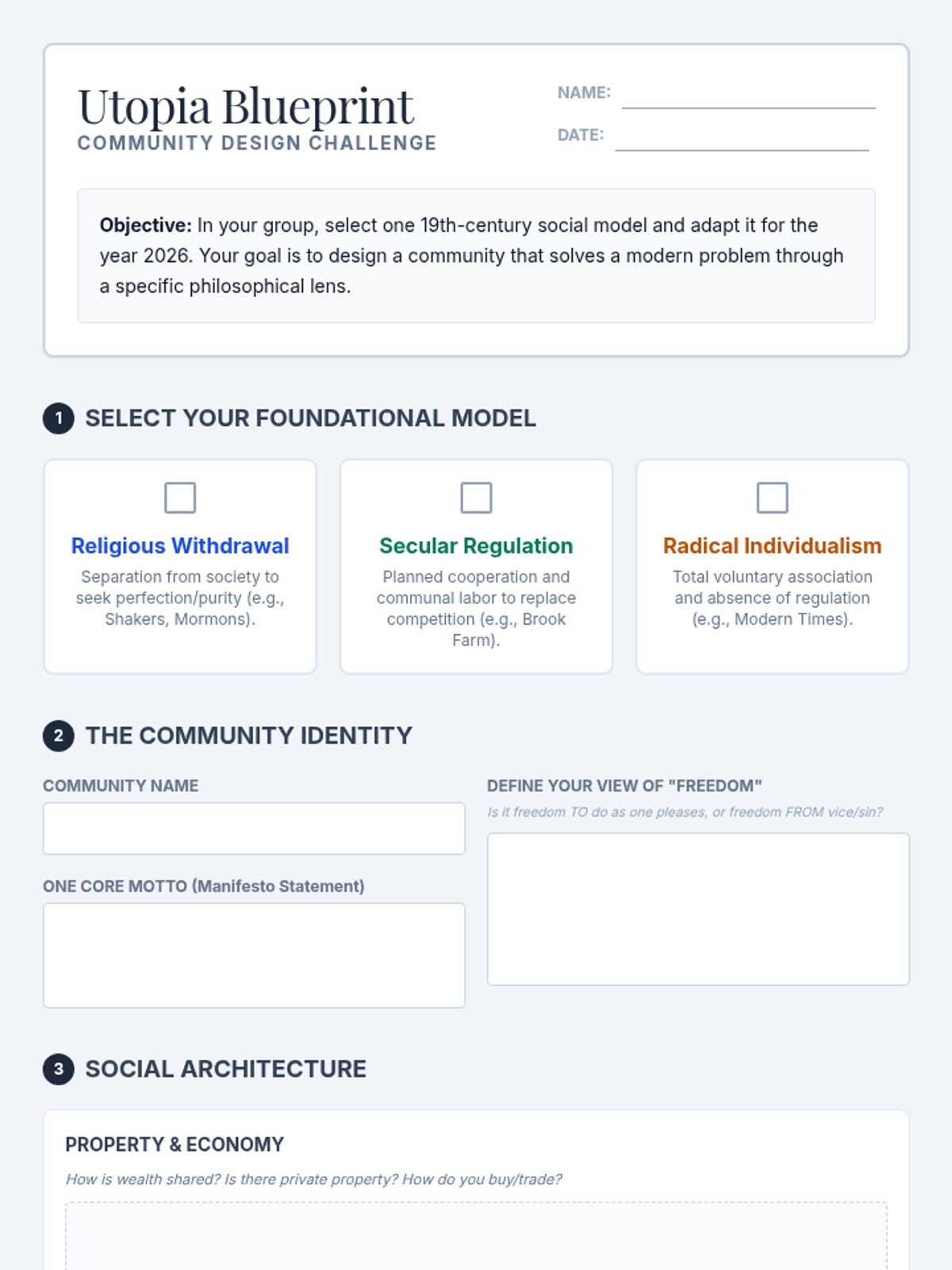
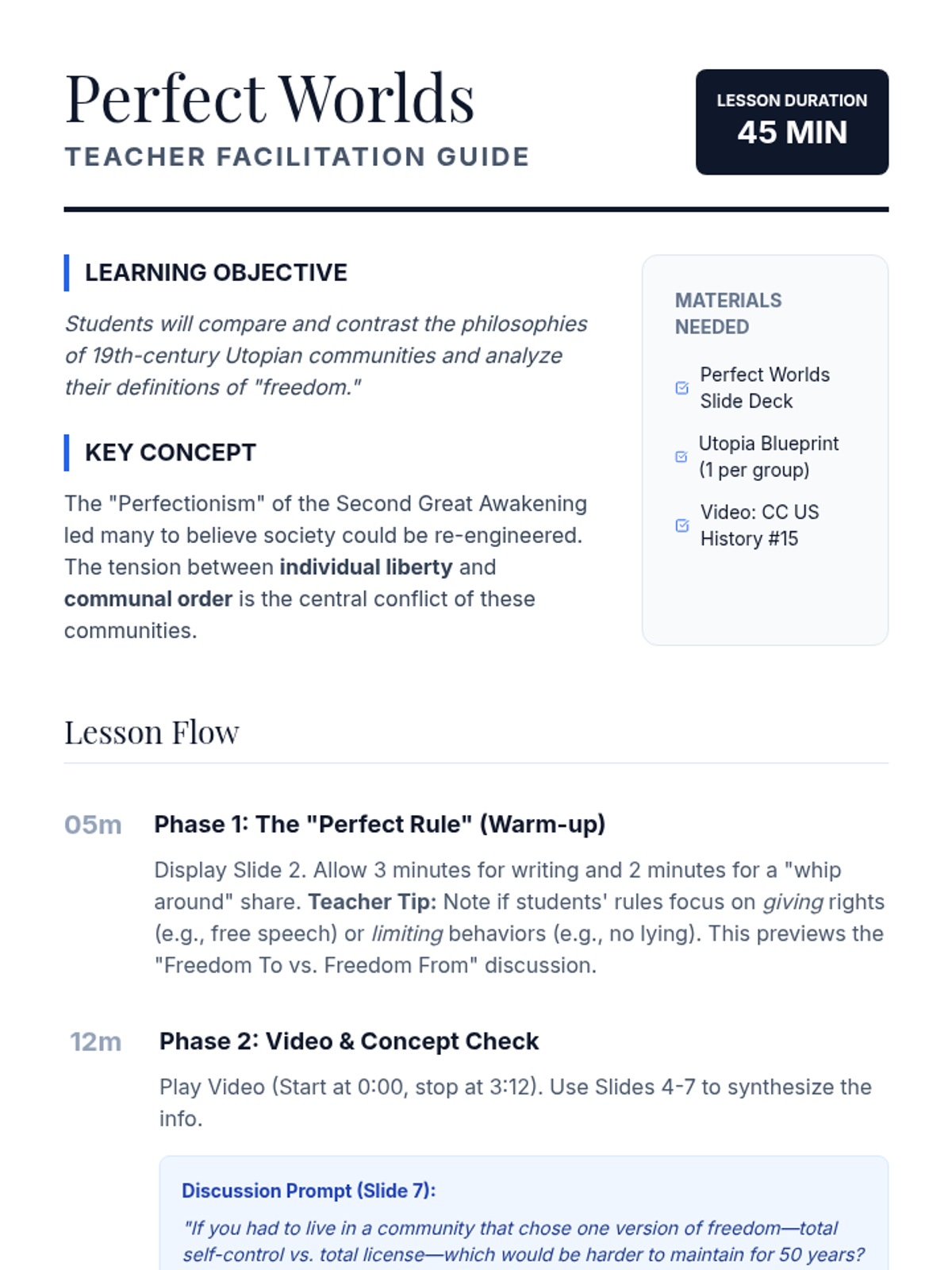
A lesson exploring 19th-century American Utopian communities, focusing on the tension between individual liberty and communal perfection through the lens of religious and secular philosophies.
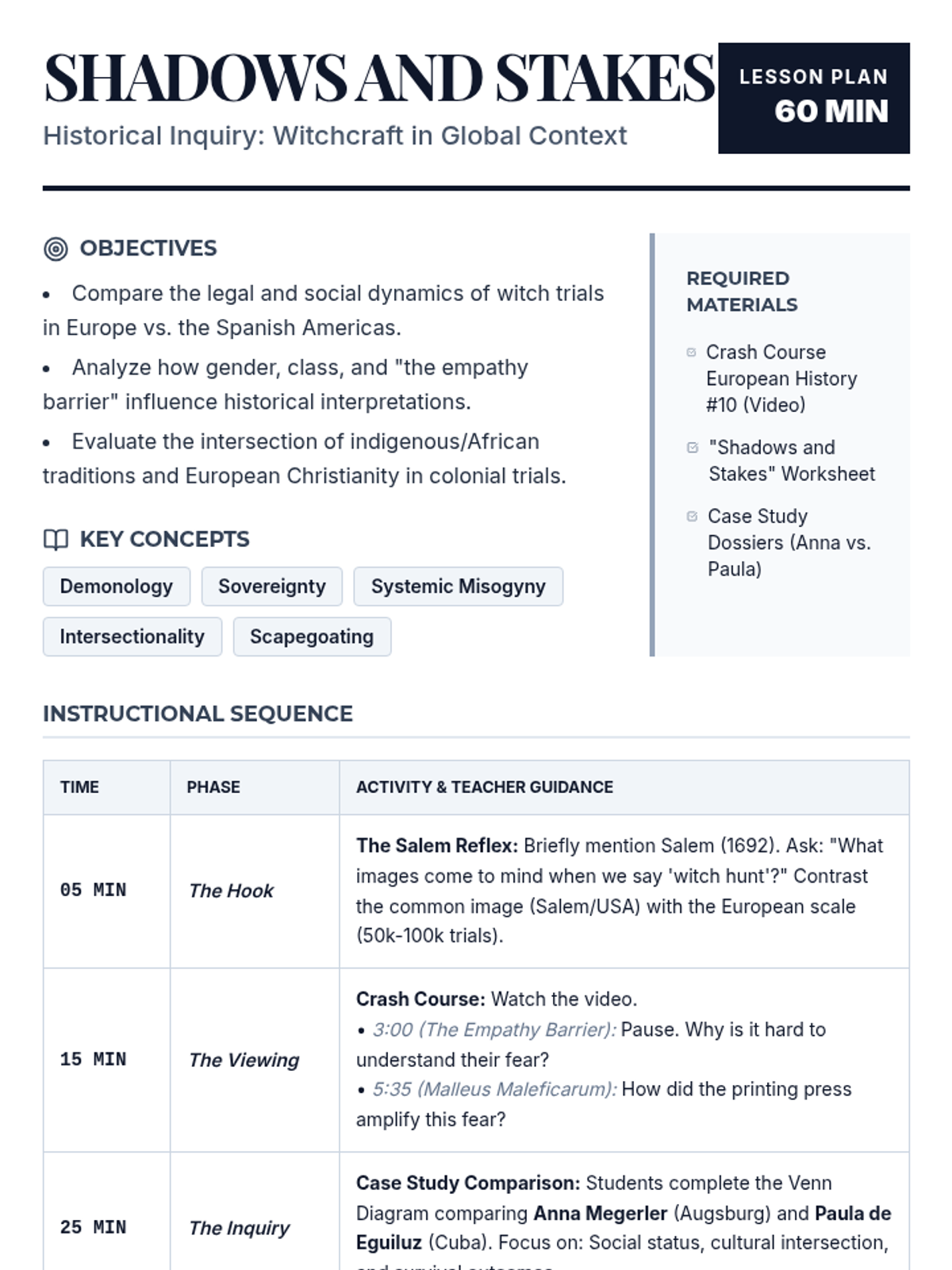
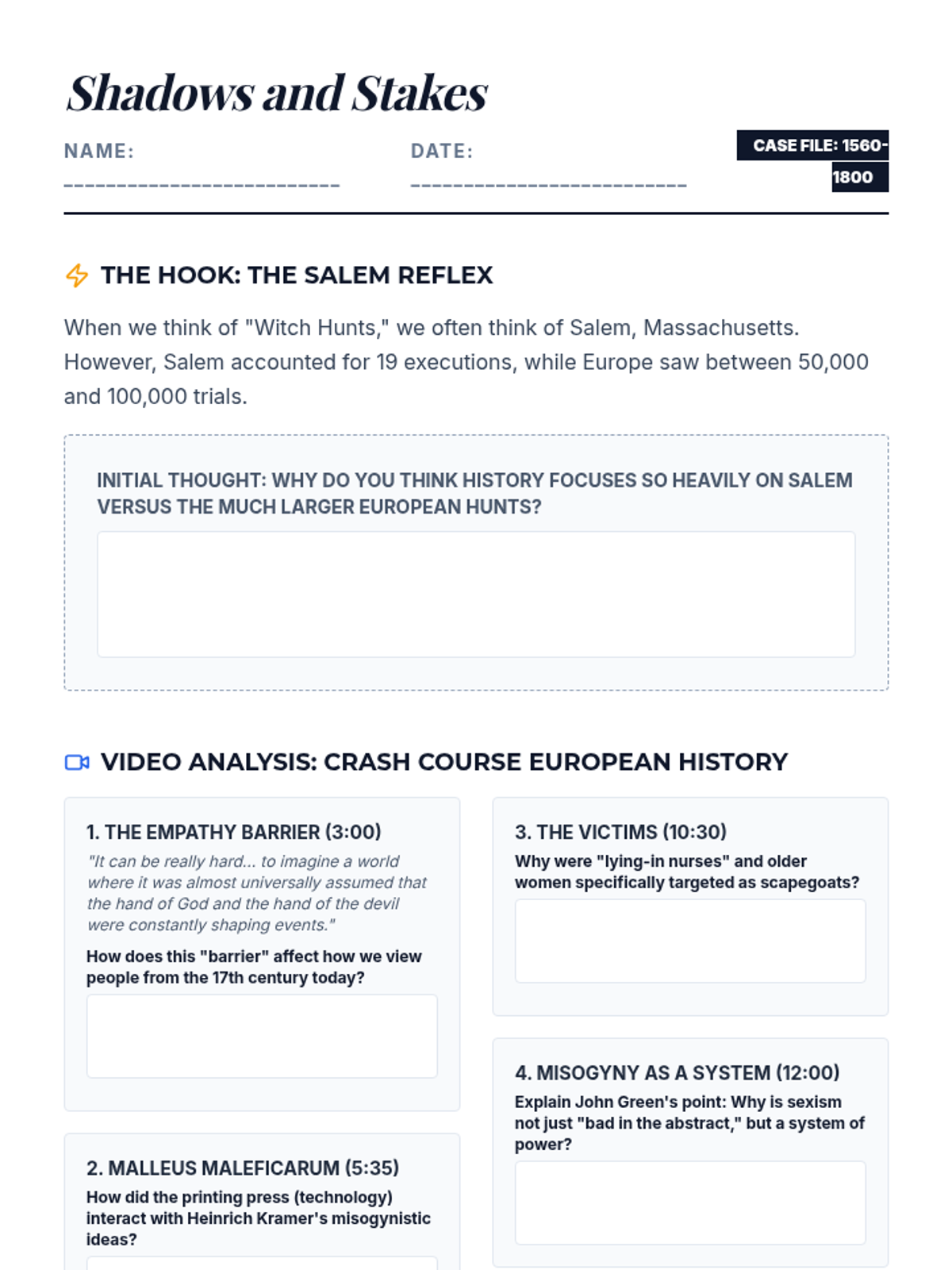
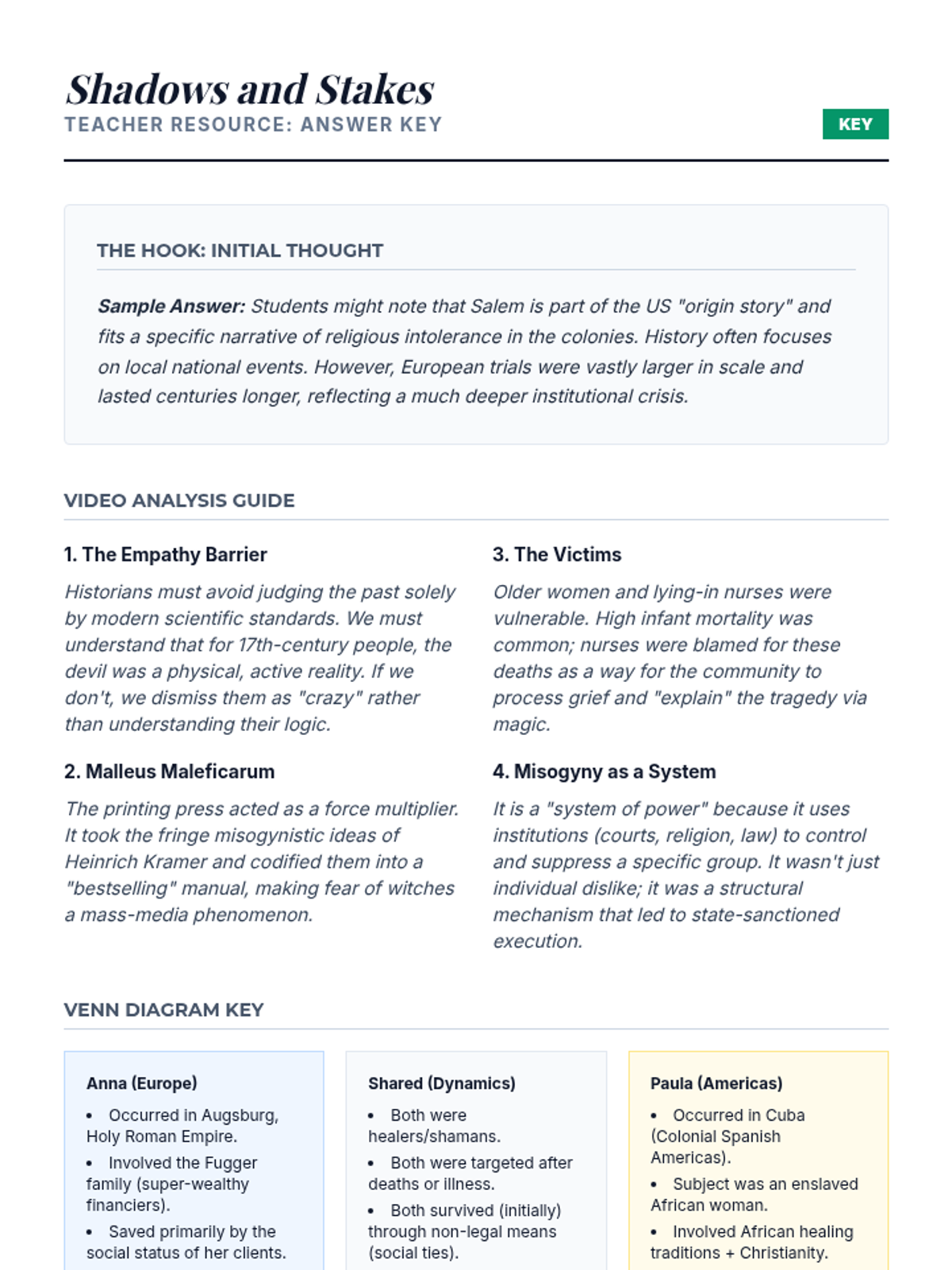
A World History lesson examining the social, religious, and gendered dynamics of witch trials in Europe and the Americas, focusing on the intersection of cultures and the systemic nature of persecution.
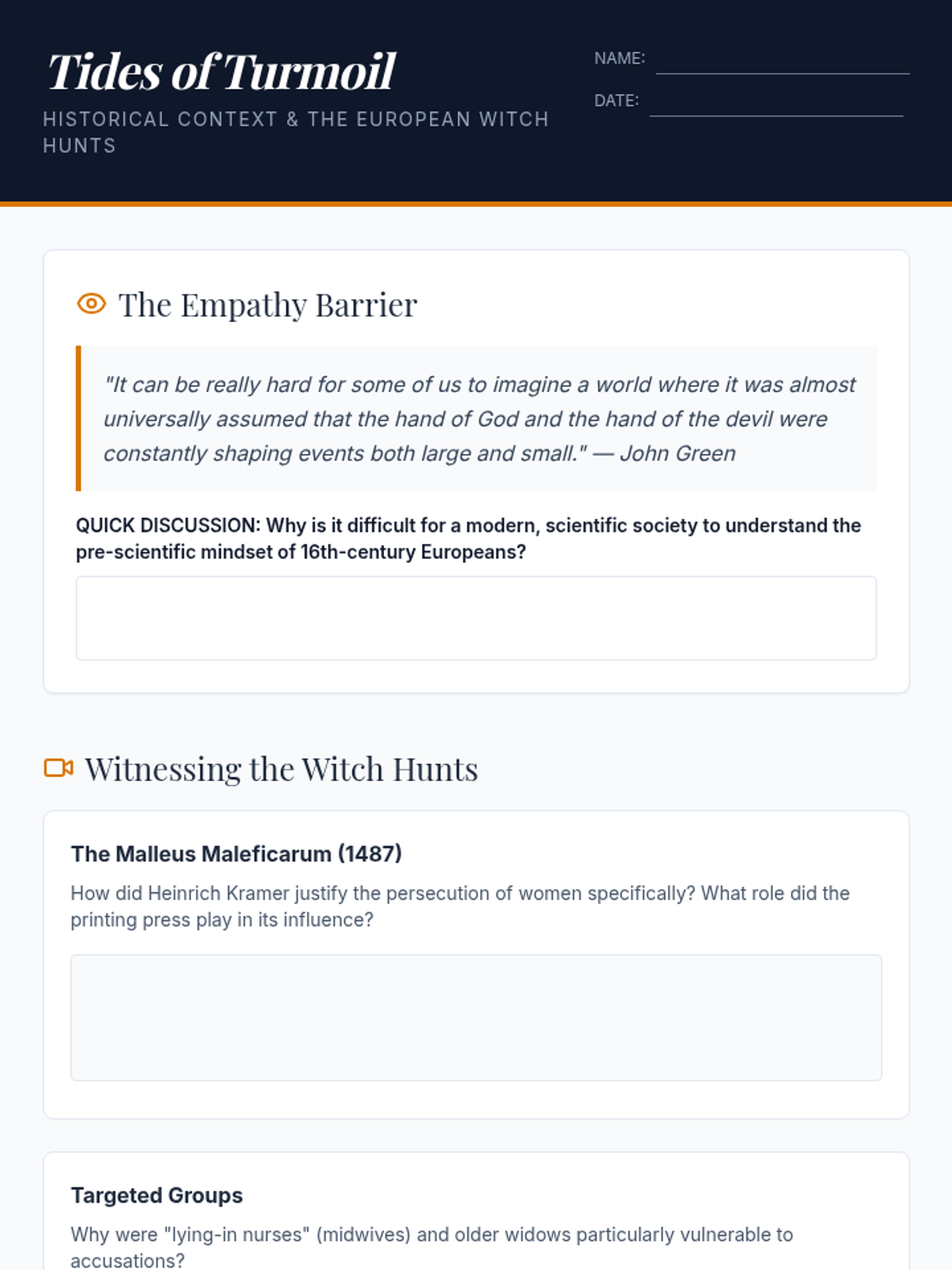
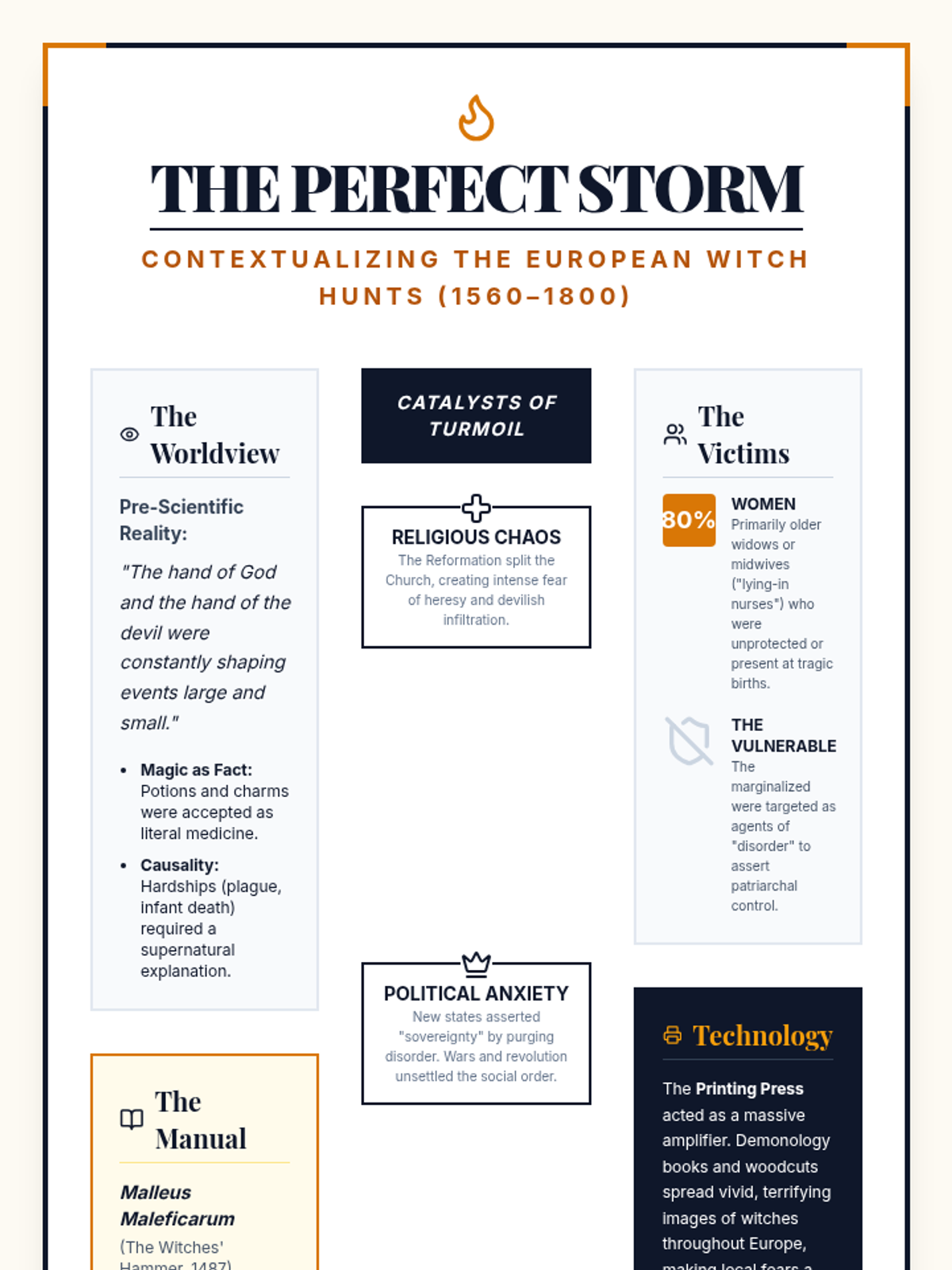
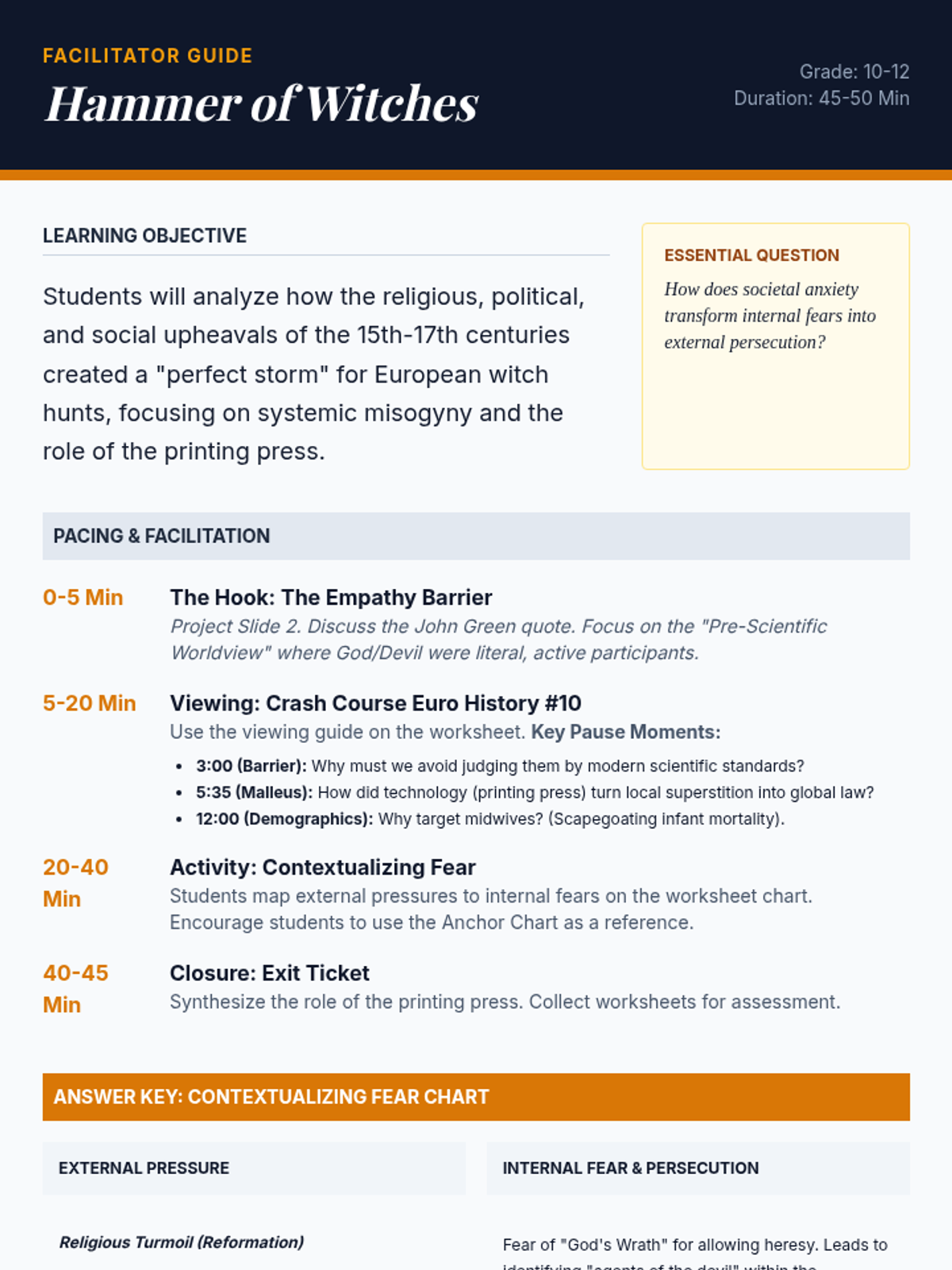
Students will analyze how the religious, political, and social upheavals of the 15th-17th centuries created a 'perfect storm' for the peak of European witch hunts, focusing on the role of the Malleus Maleficarum and systemic misogyny.
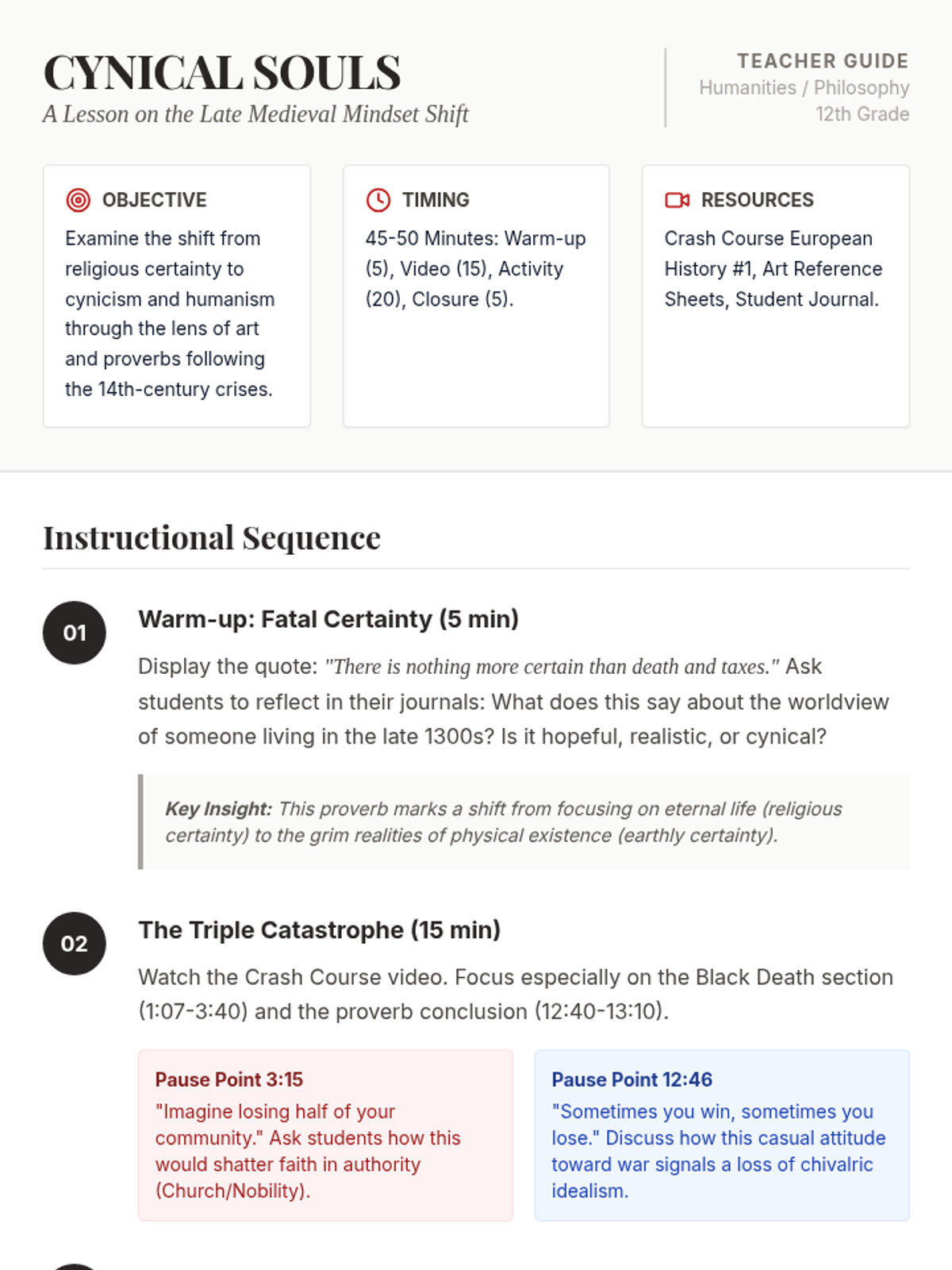
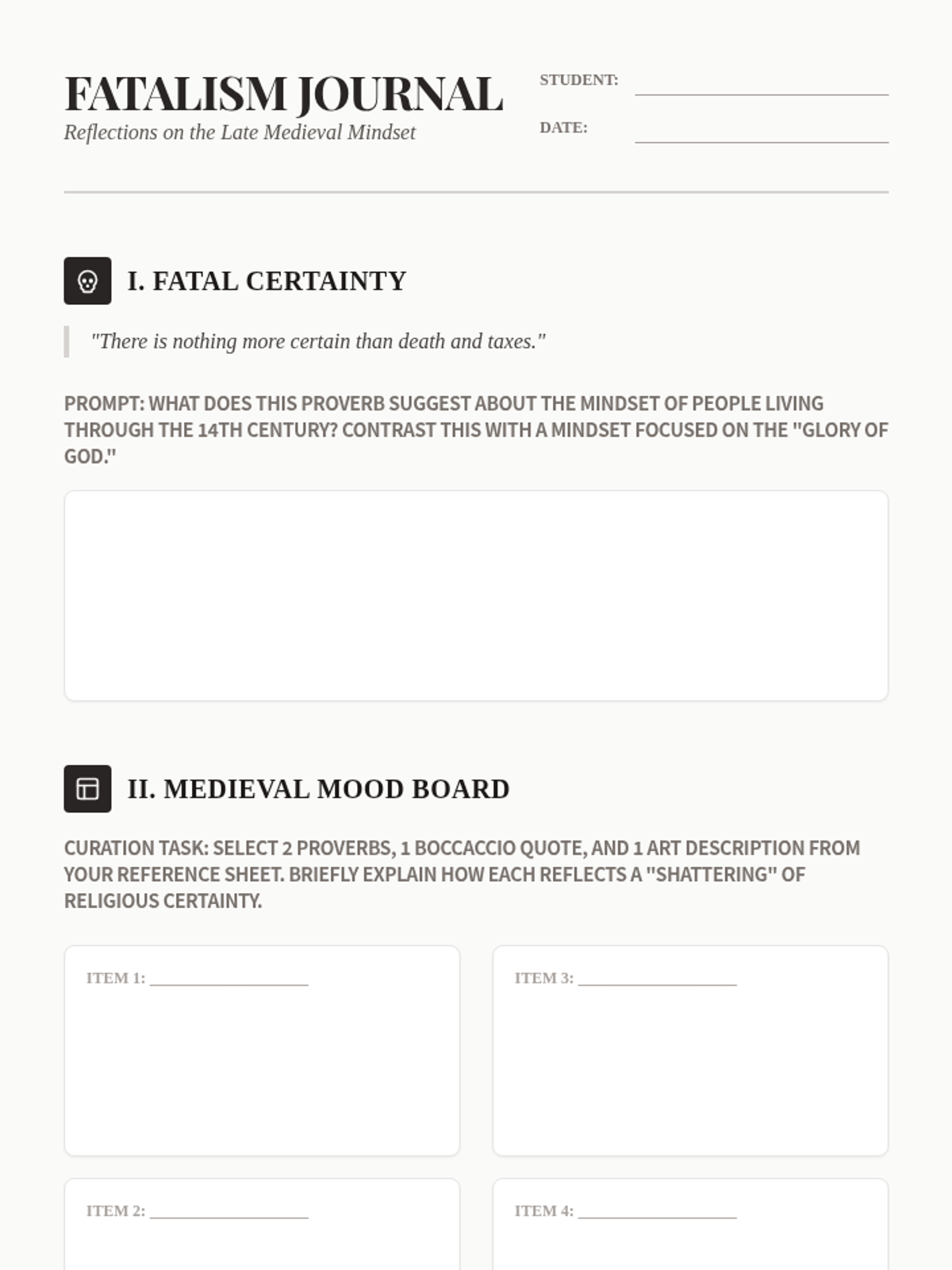
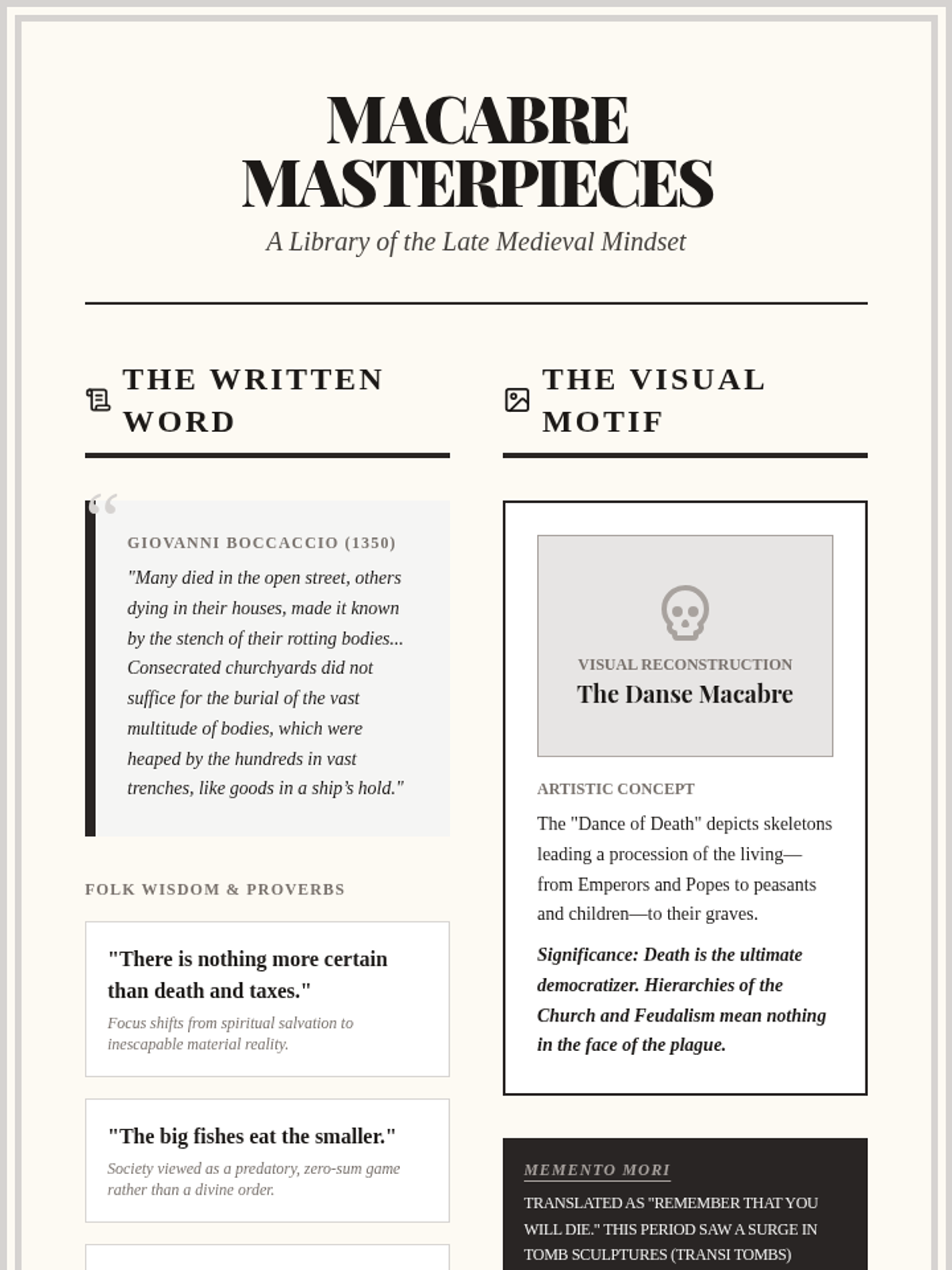
This lesson explores the profound psychological shift in Late Medieval Europe following the 'Triple Threat' of the Black Death, the Hundred Years' War, and the Great Schism. Students analyze how religious certainty gave way to cynicism, humanism, and a 'Memento Mori' mindset, ultimately paving the way for the Renaissance.
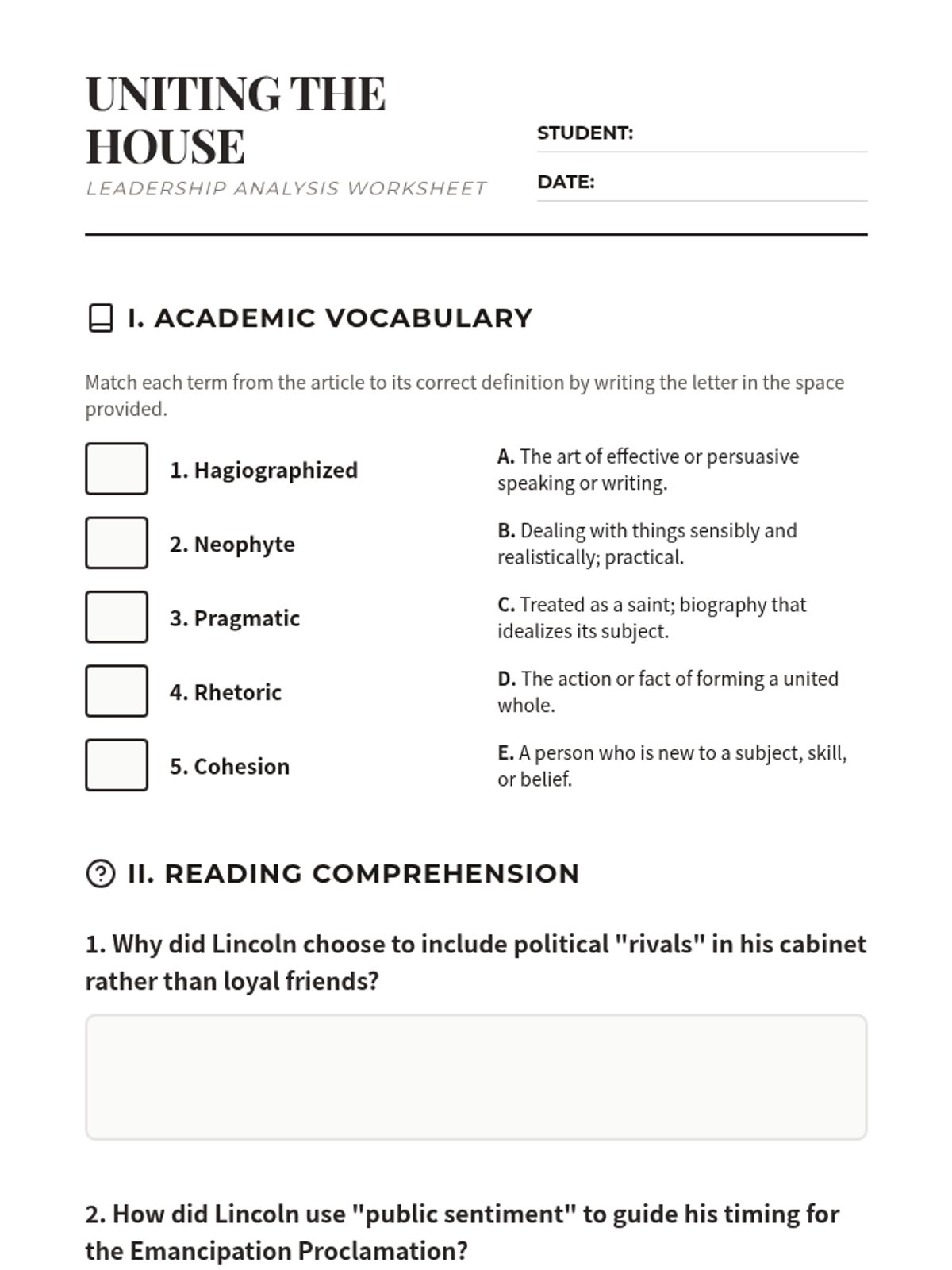
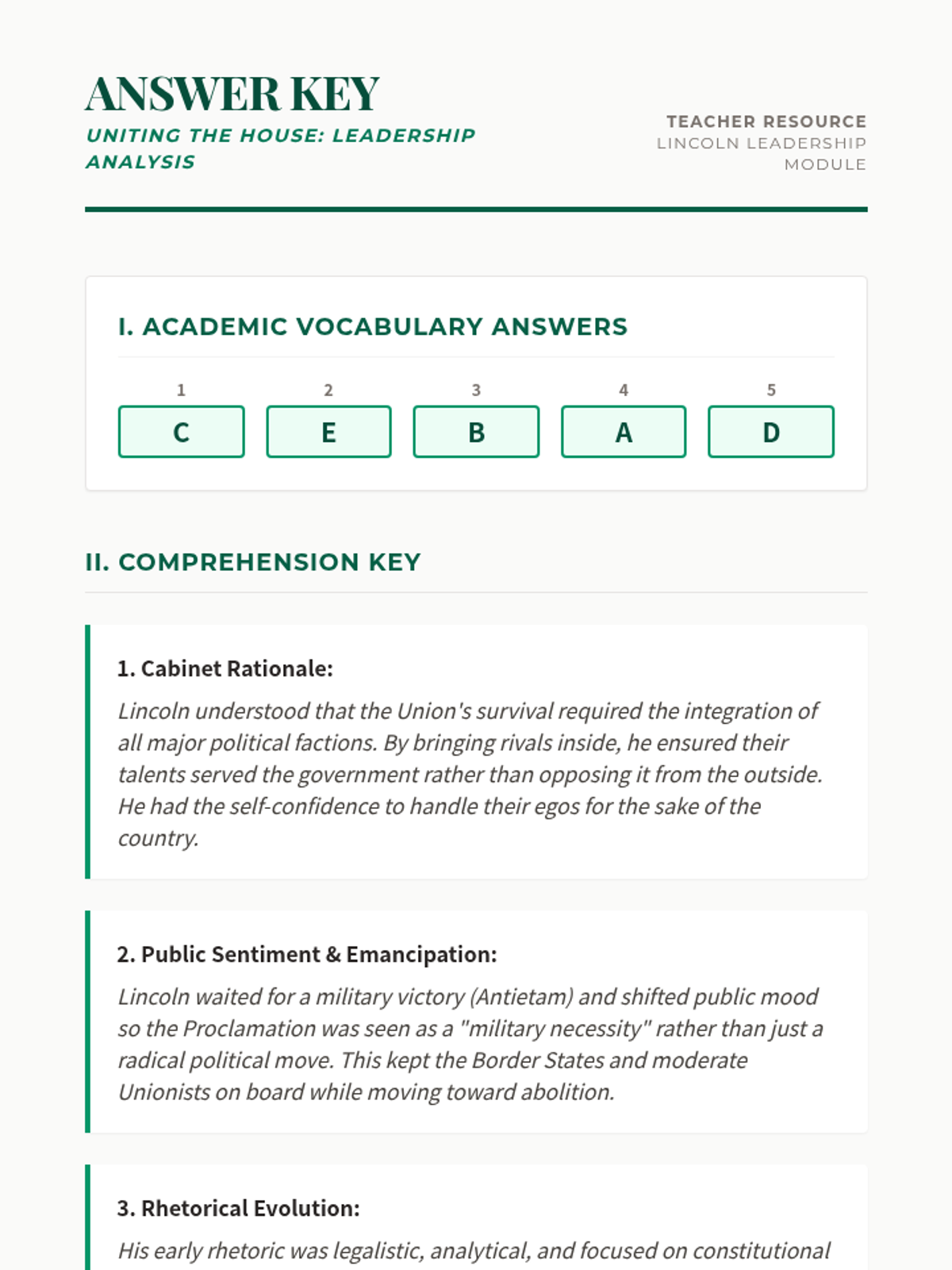
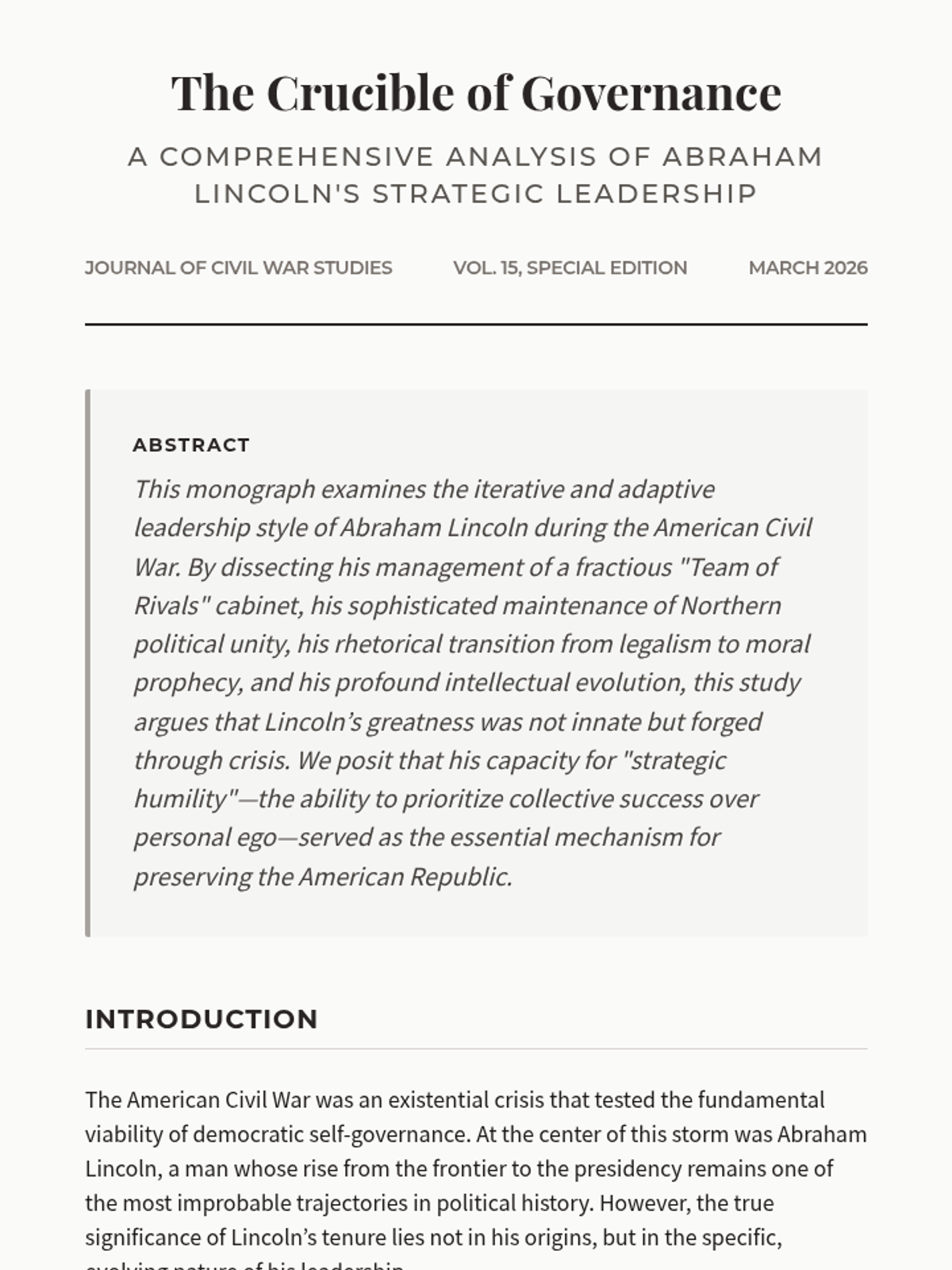
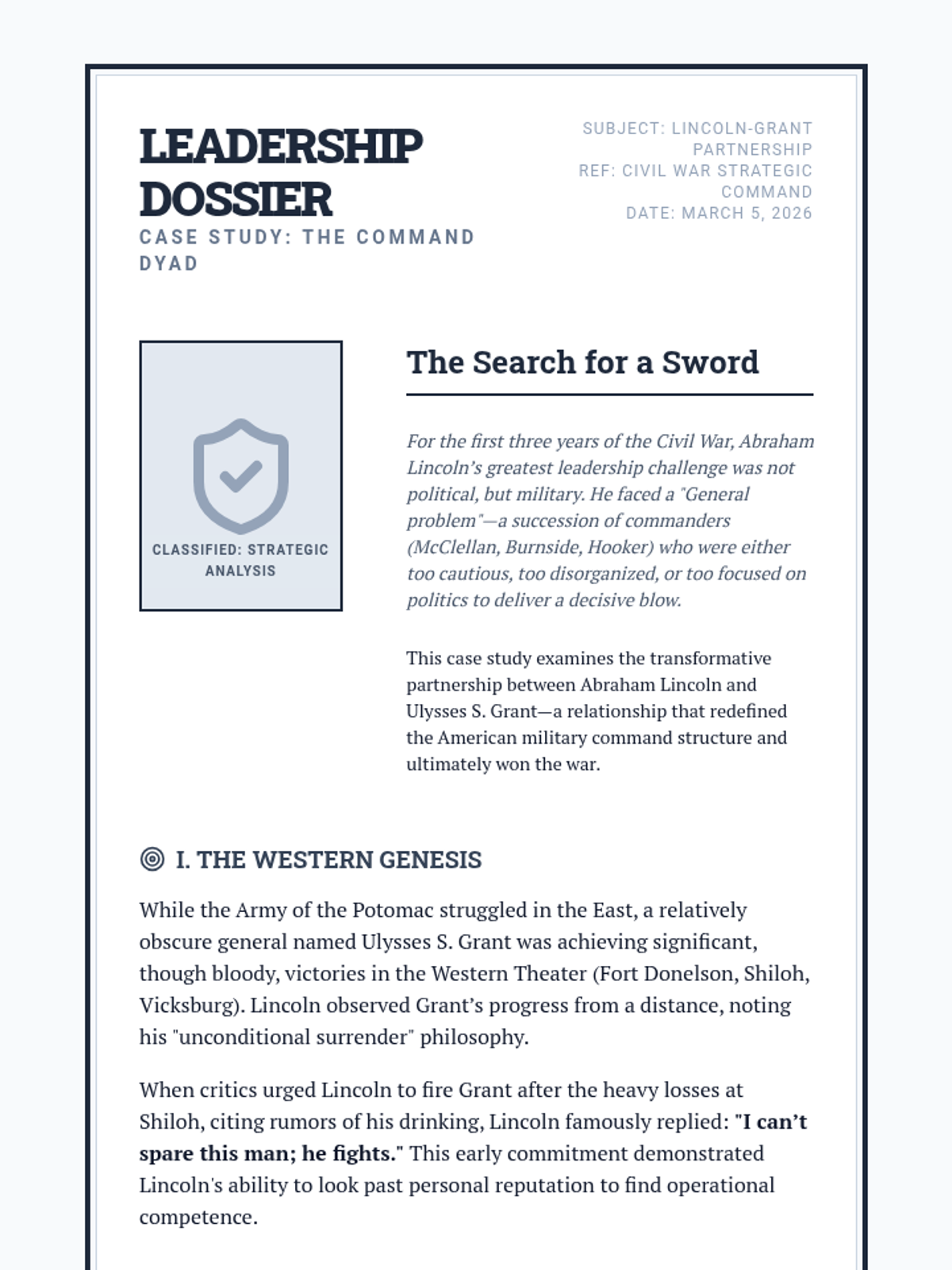
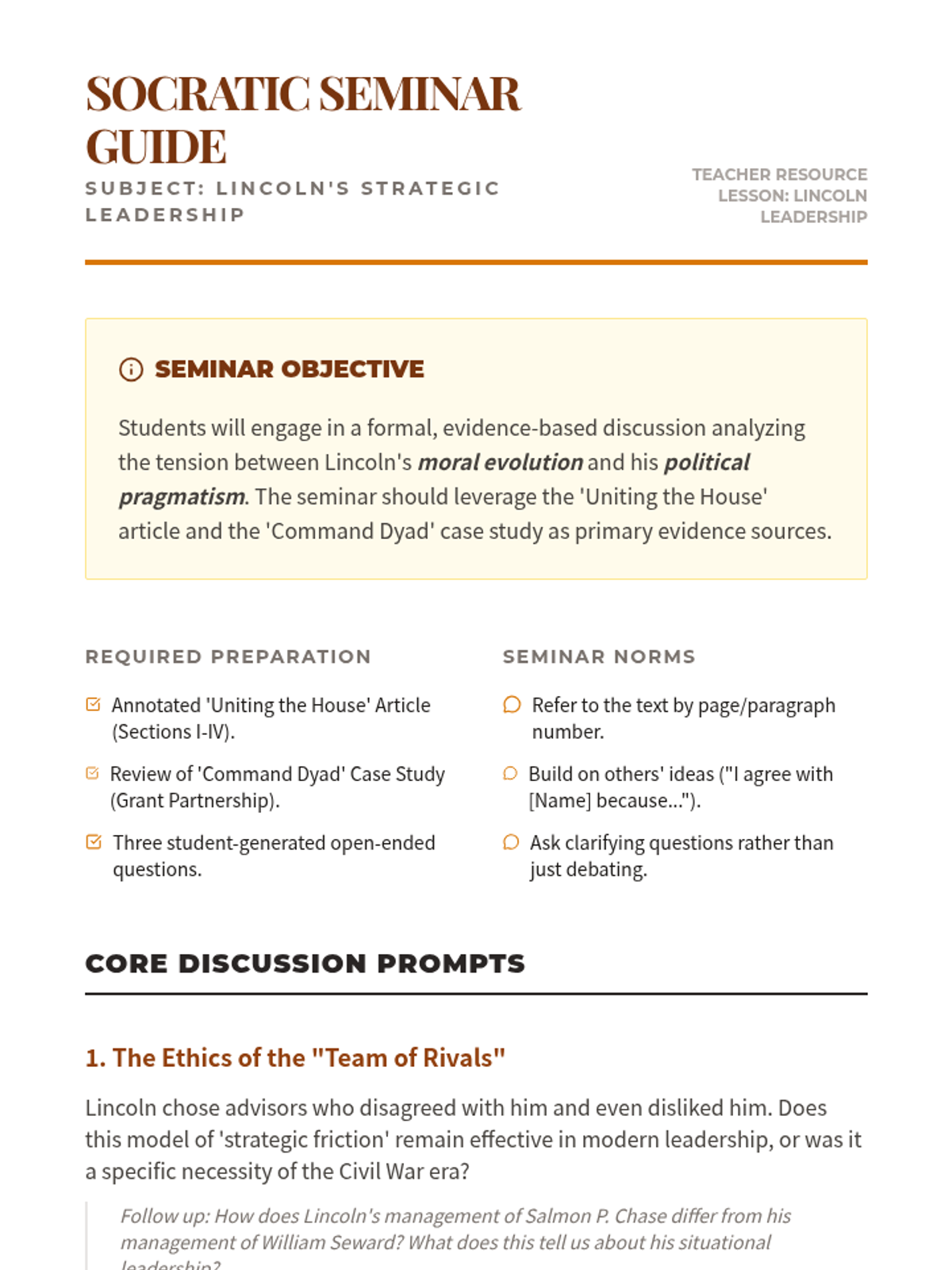
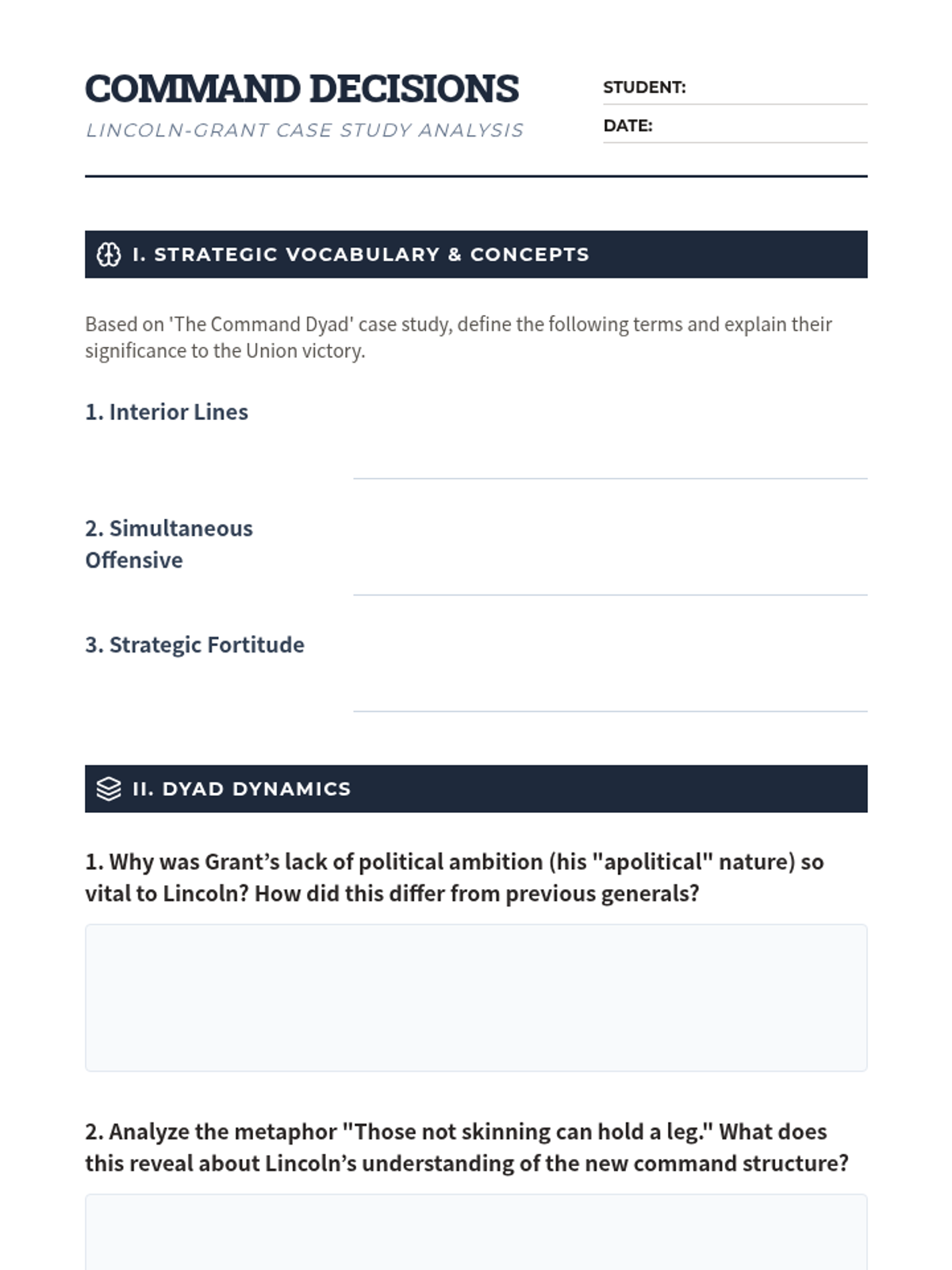
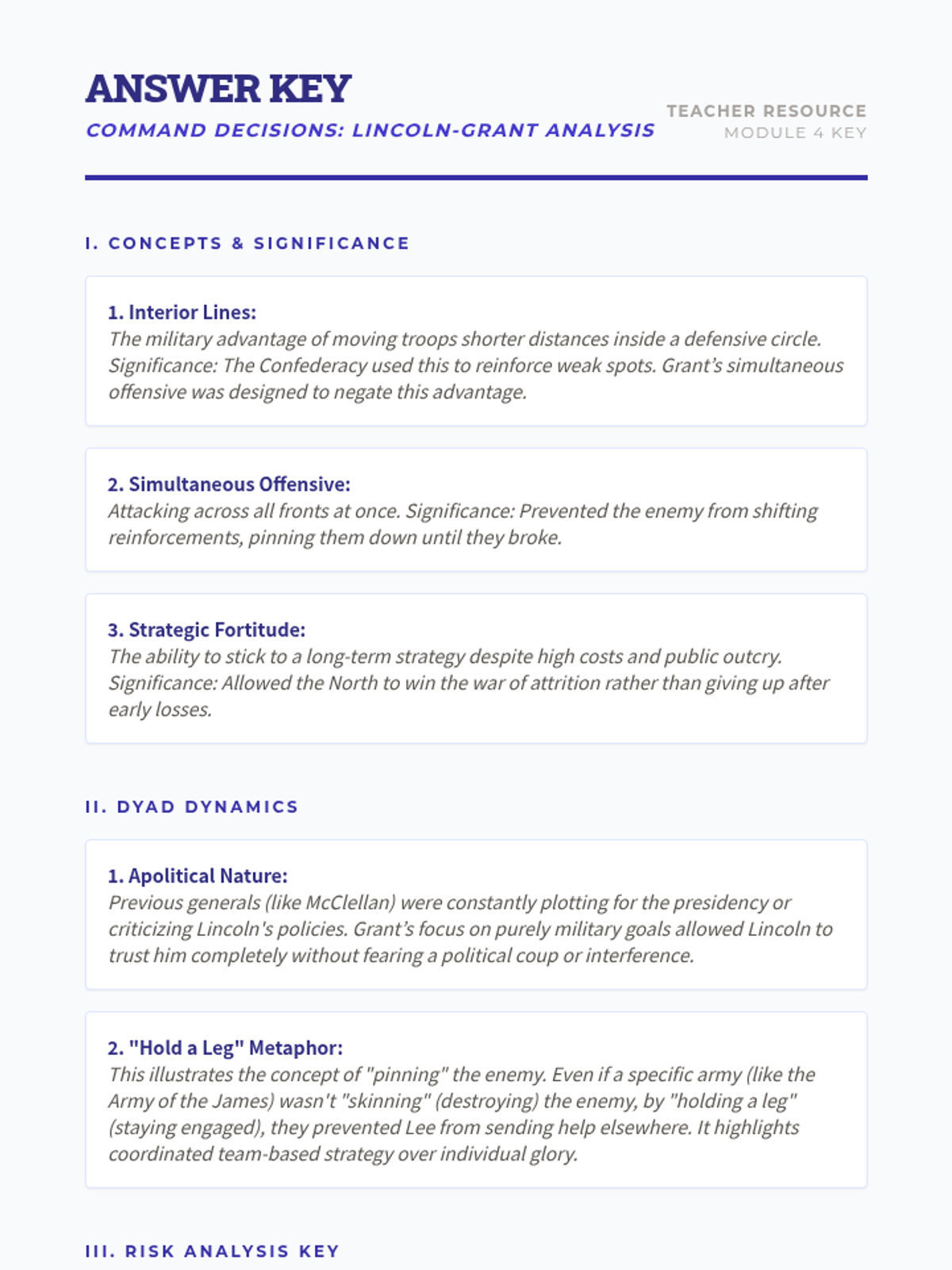
A deep dive into Abraham Lincoln's transformative leadership, focusing on his cabinet management, rhetorical brilliance, and strategic evolution during the American Civil War.
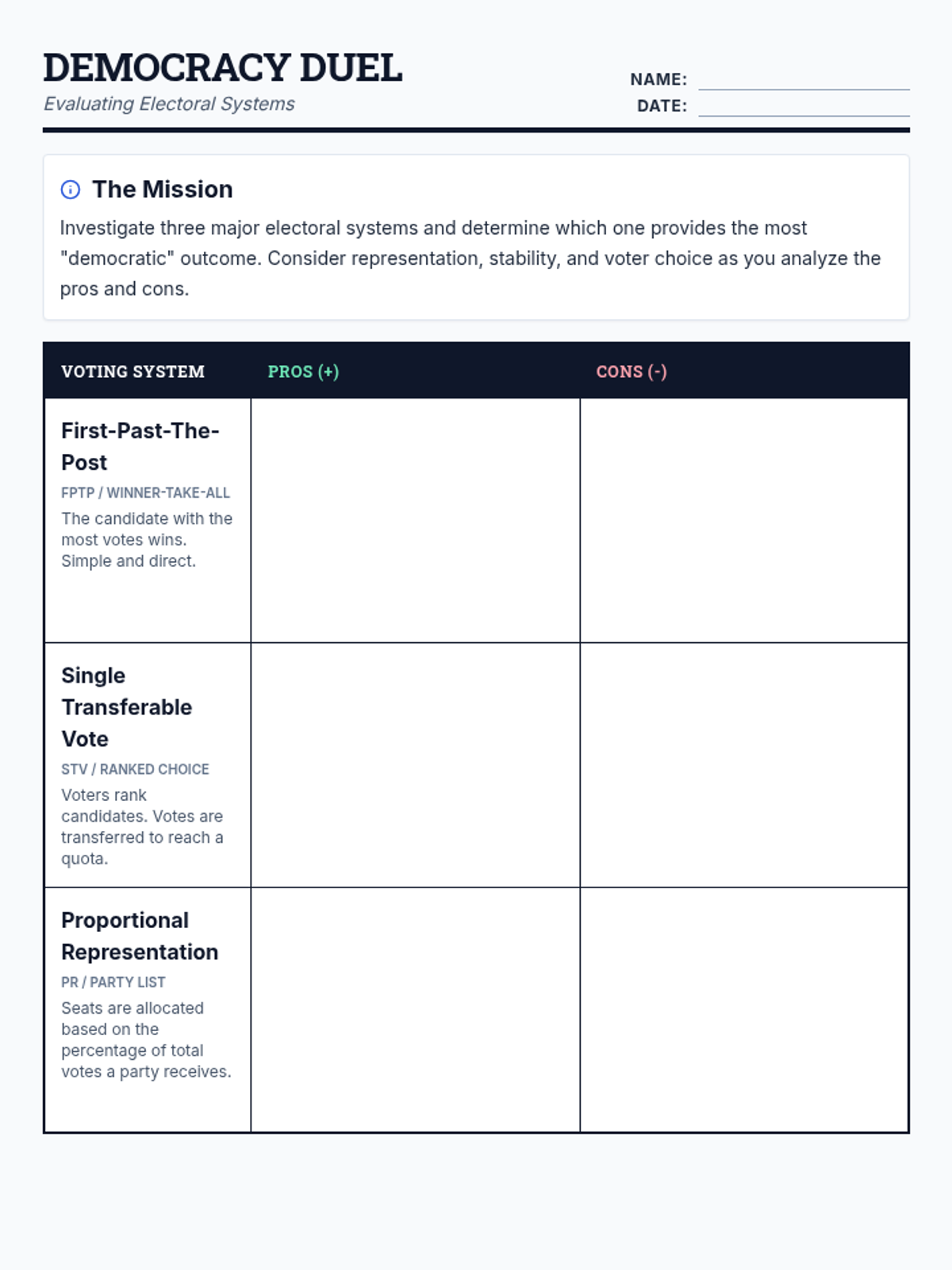
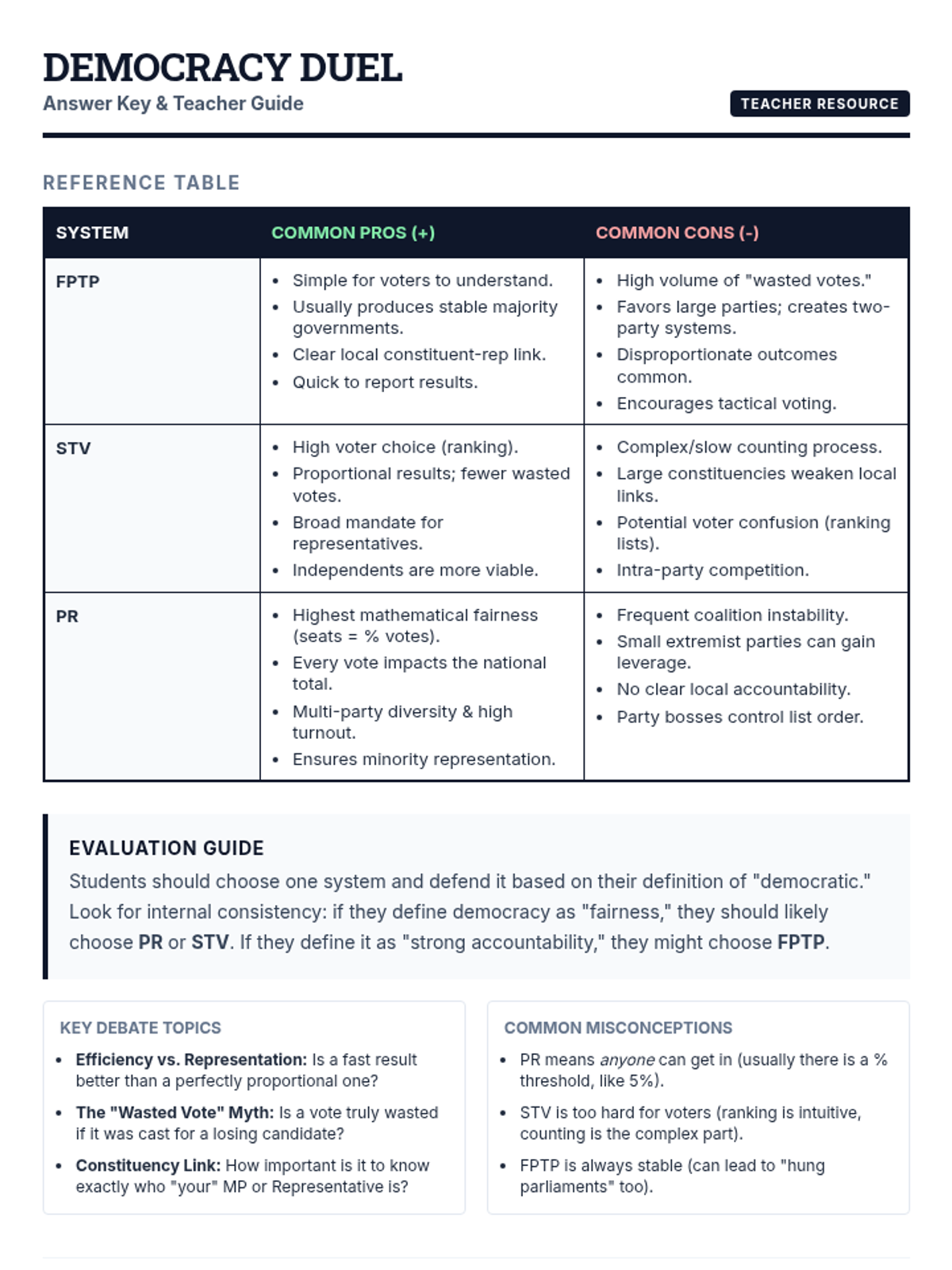
A lesson evaluating the democratic merits of First-Past-The-Post, Single Transferable Vote, and Proportional Representation through comparative analysis.
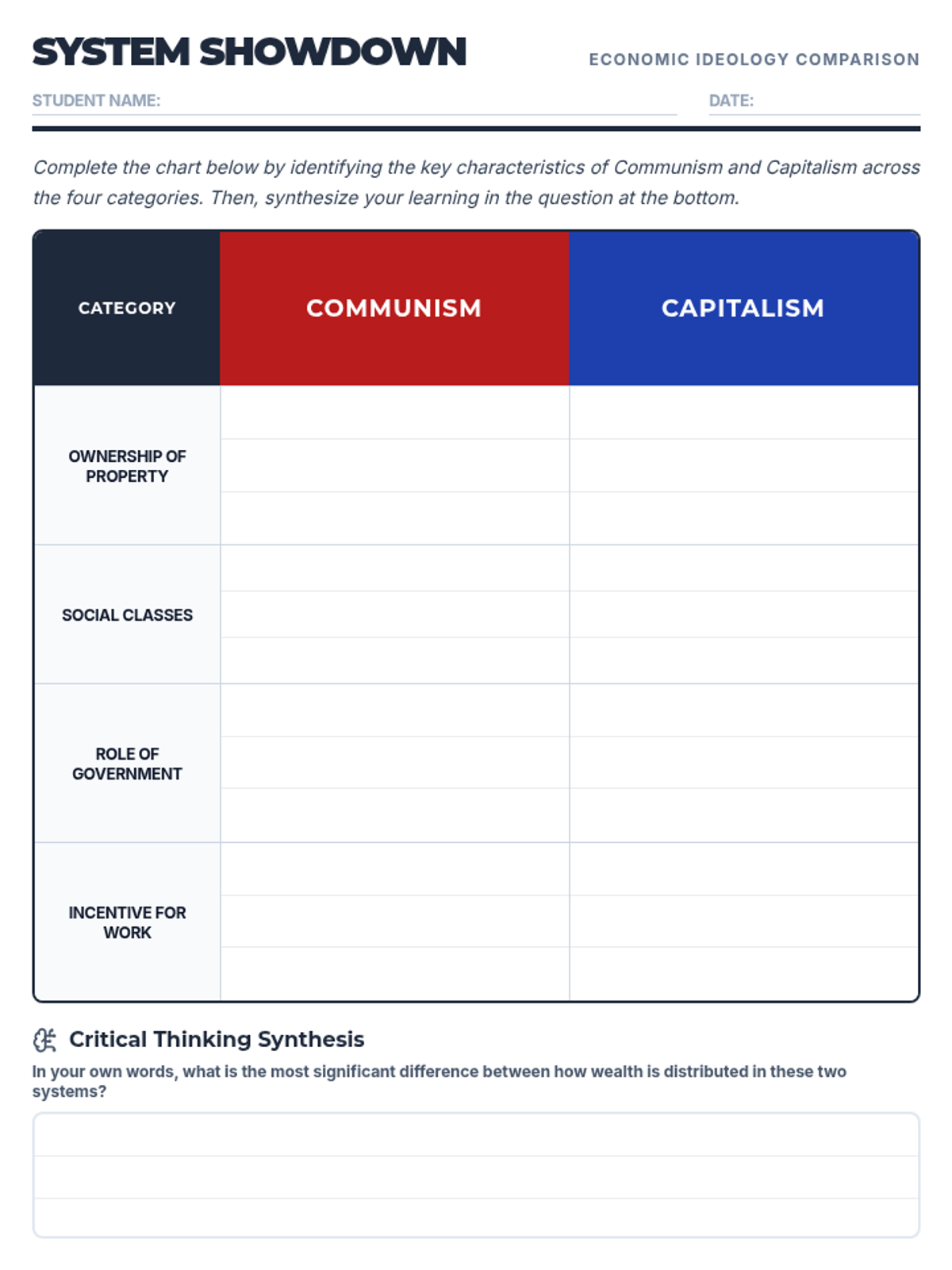
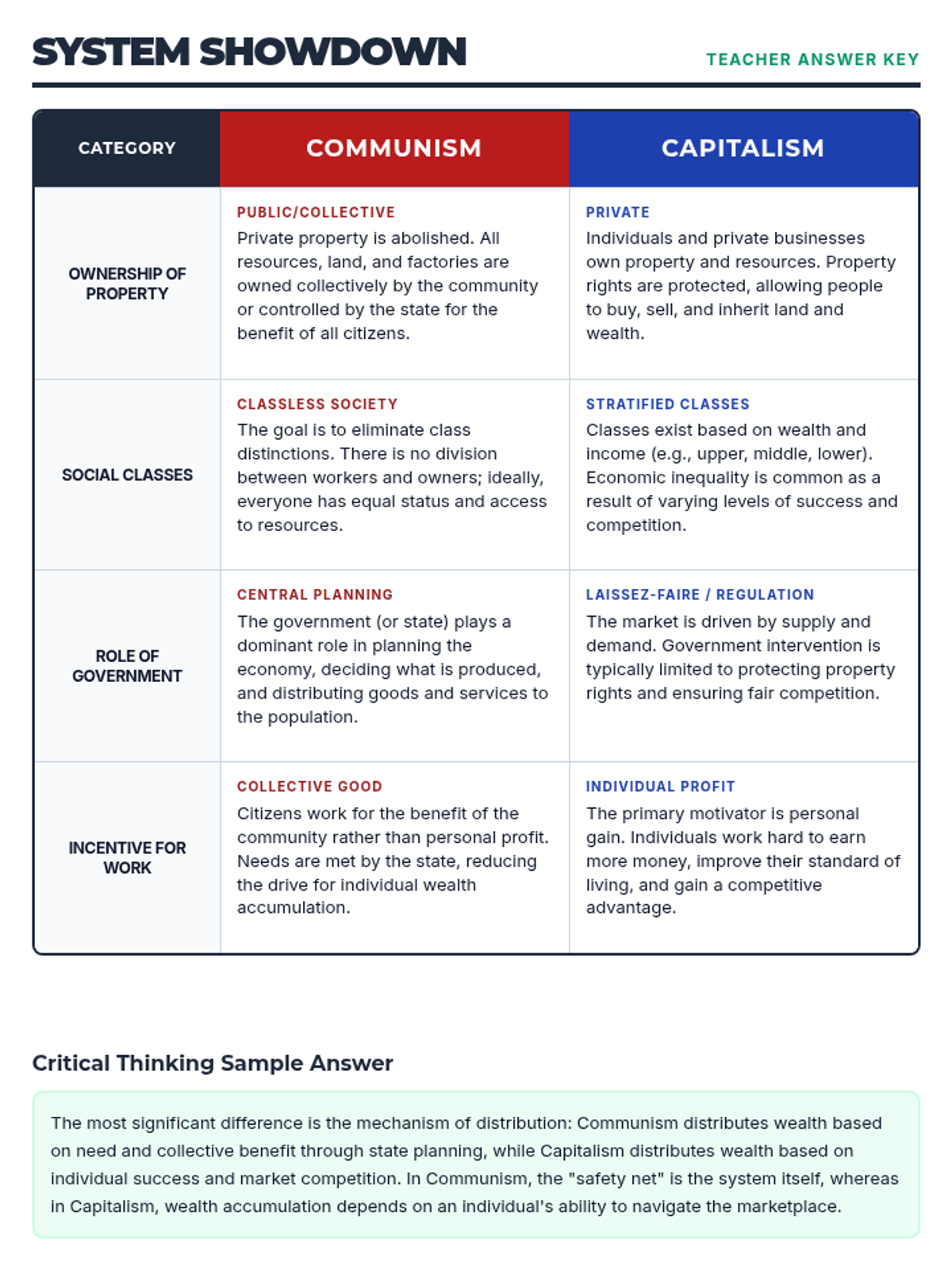
A comparison of the fundamental principles, economic structures, and social impacts of Communism and Capitalism.
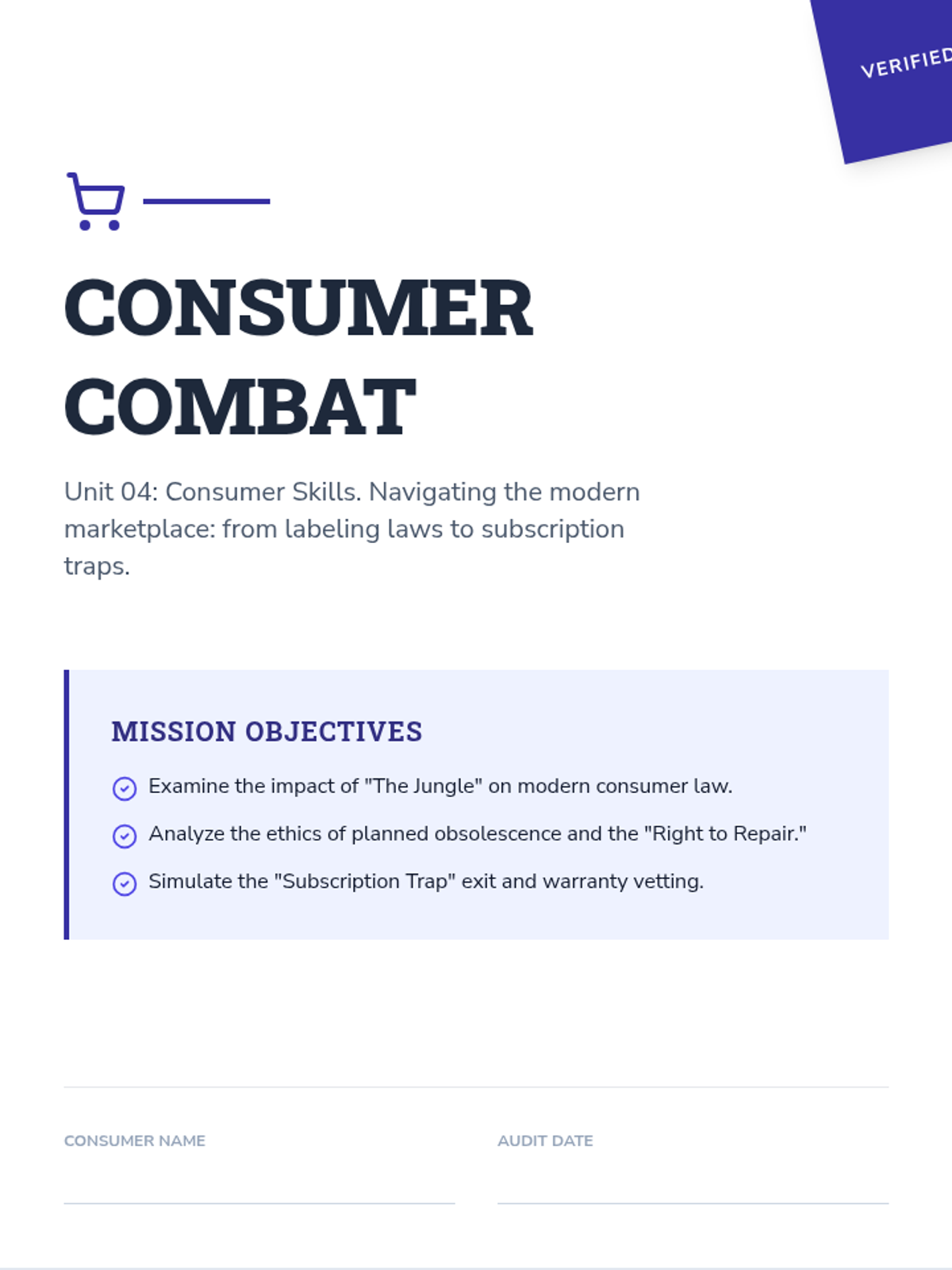
Master the battlefield of the modern marketplace through the history of consumer protection, the ethics of planned obsolescence, and simulations of contract negotiation.
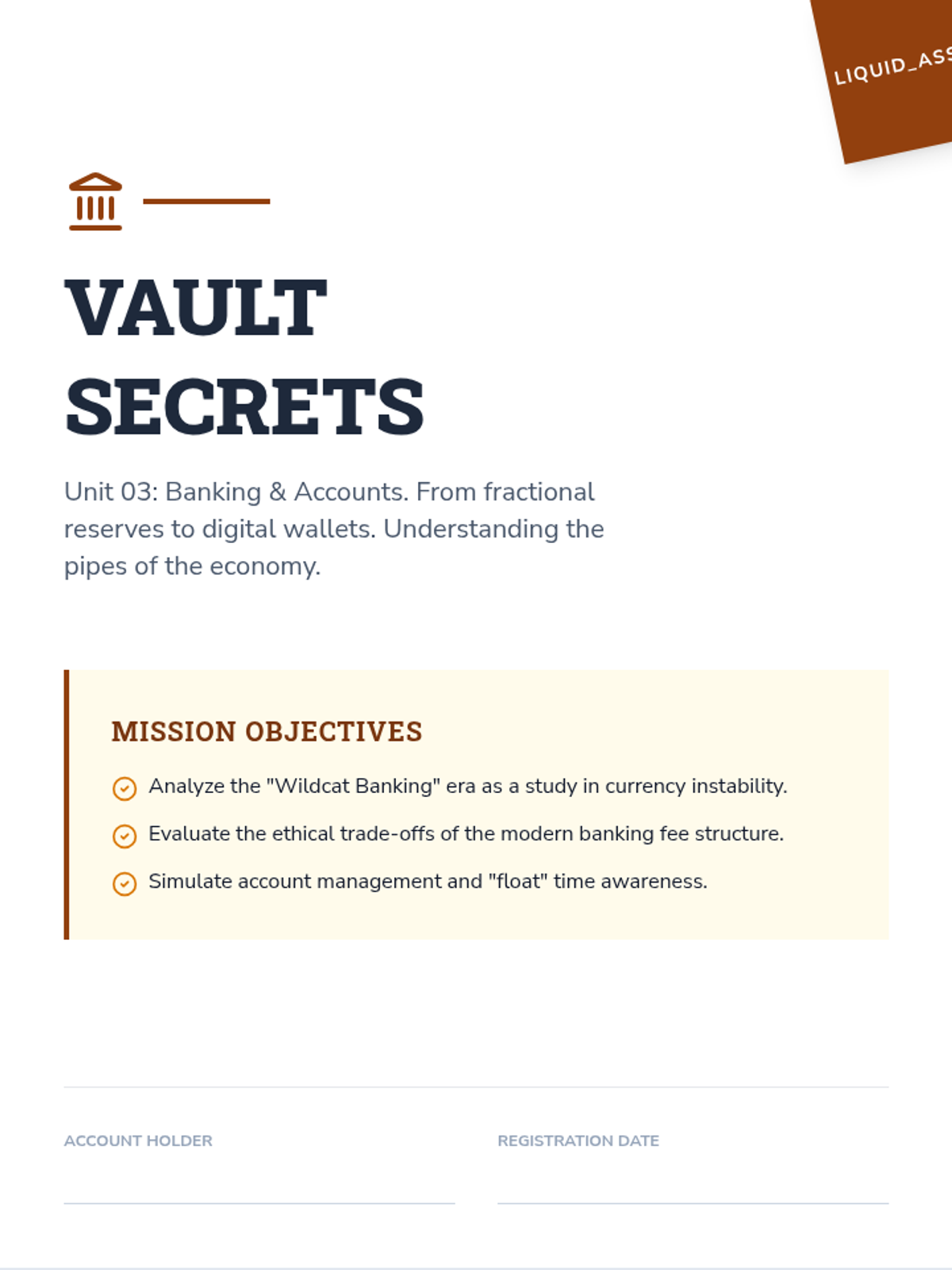
Uncover the mechanics of modern banking through historical currency crises, the ethics of fee structures, and simulations of liquidity management.
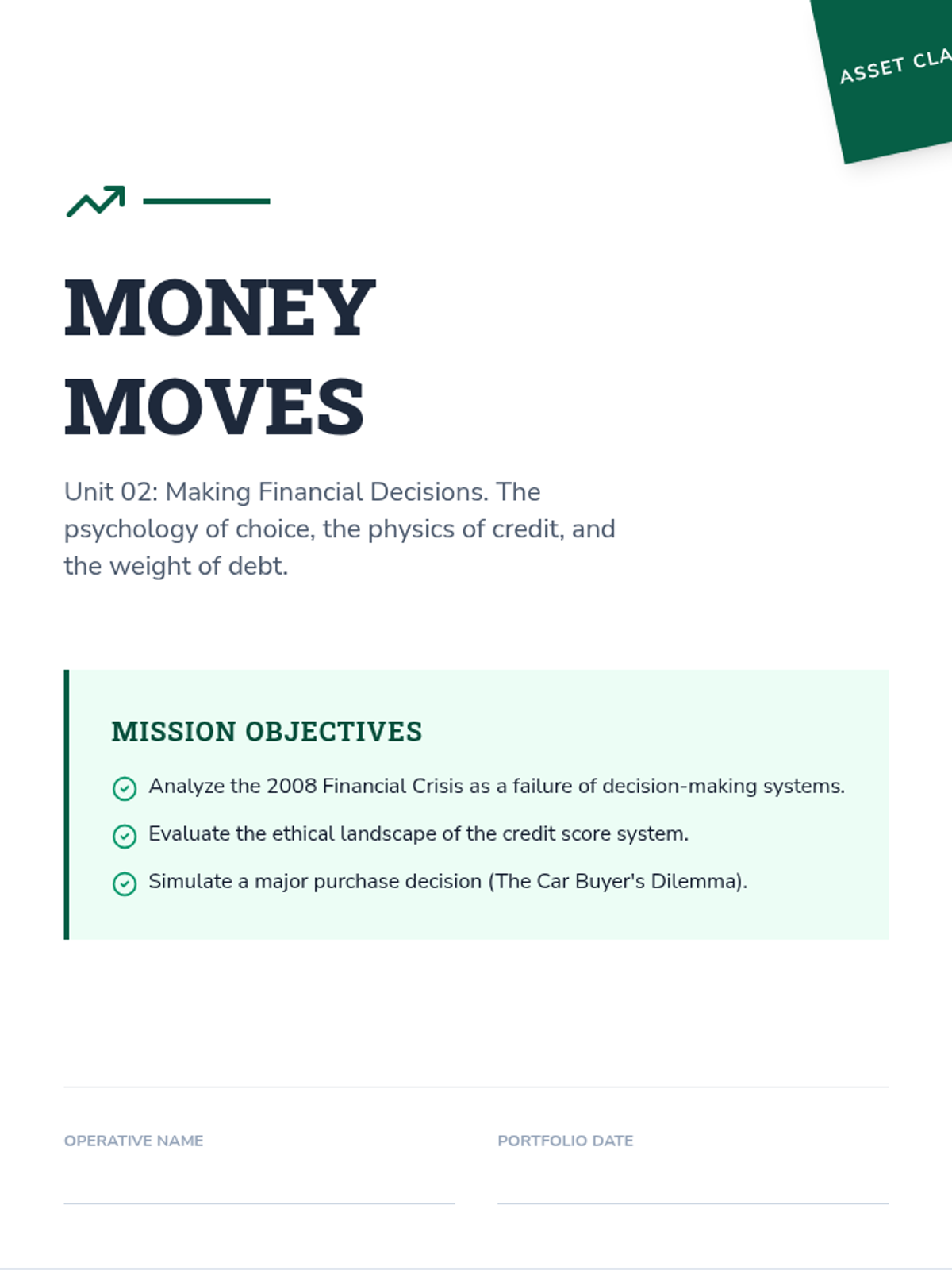
Analyze the mechanics of financial choice through historical market crashes, the ethics of credit, and complex simulations of high-stakes adult purchases.
Master the art of information gathering and source verification in the digital age through historical misinformation cases and modern research simulations.
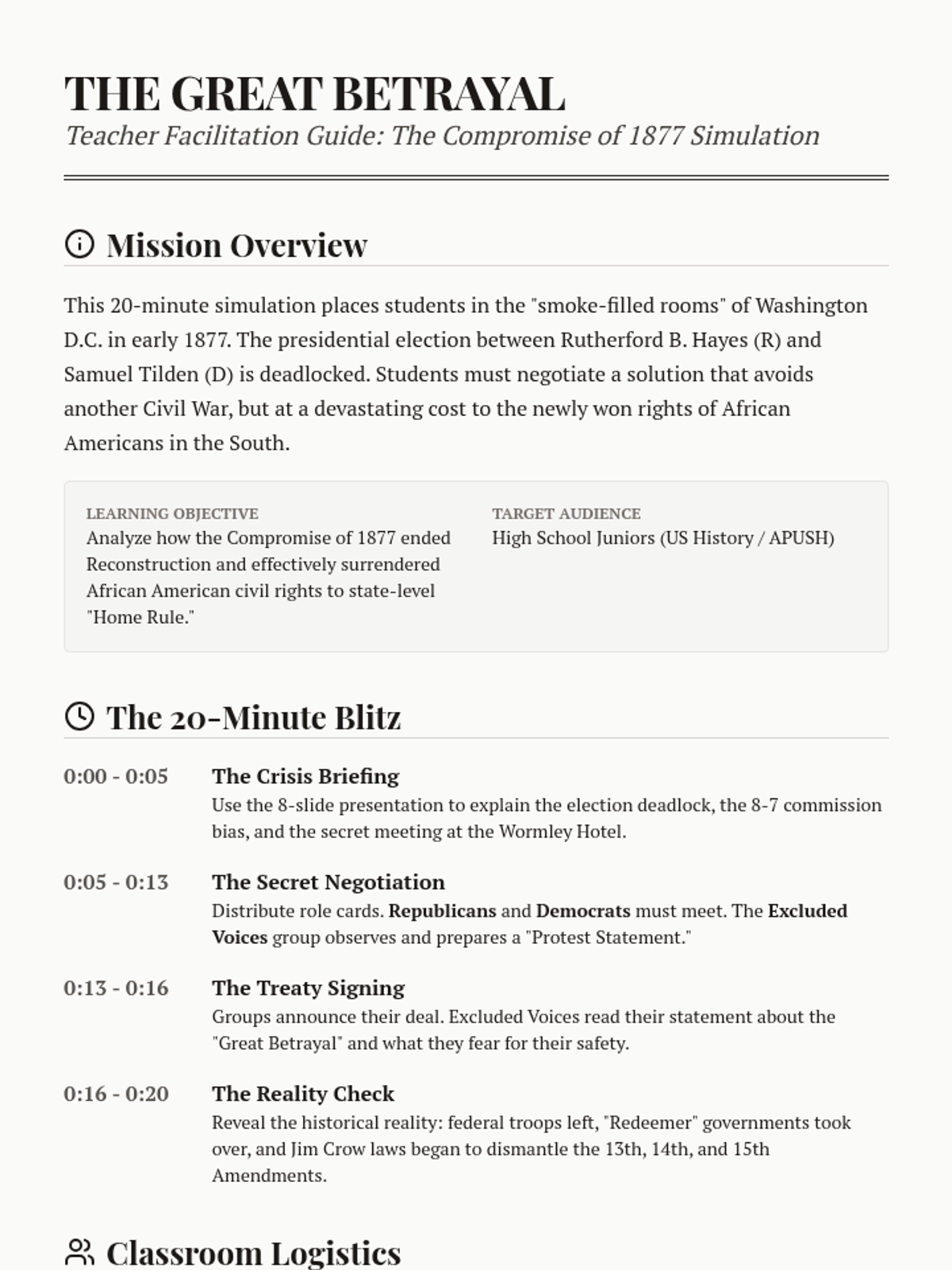
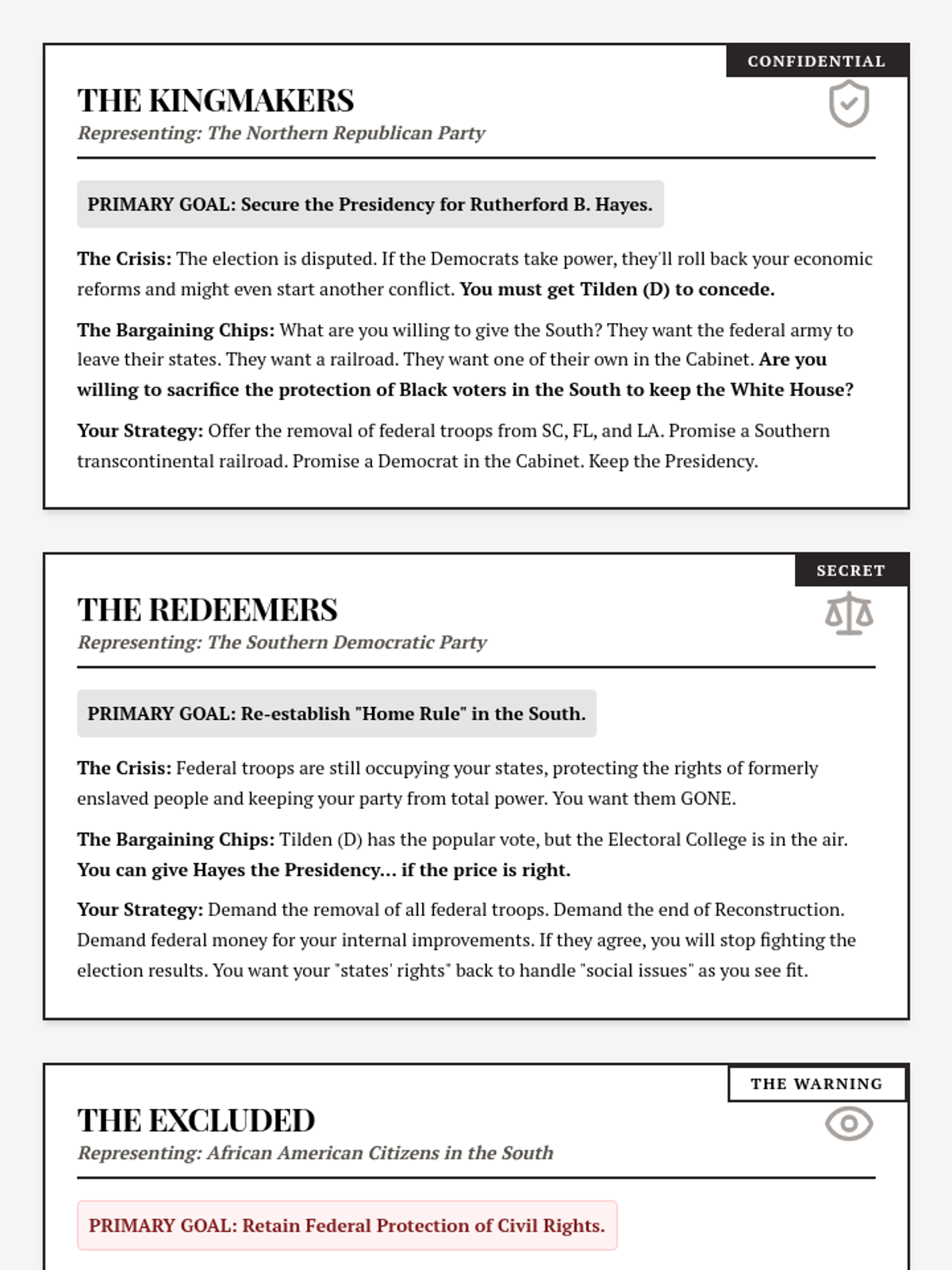
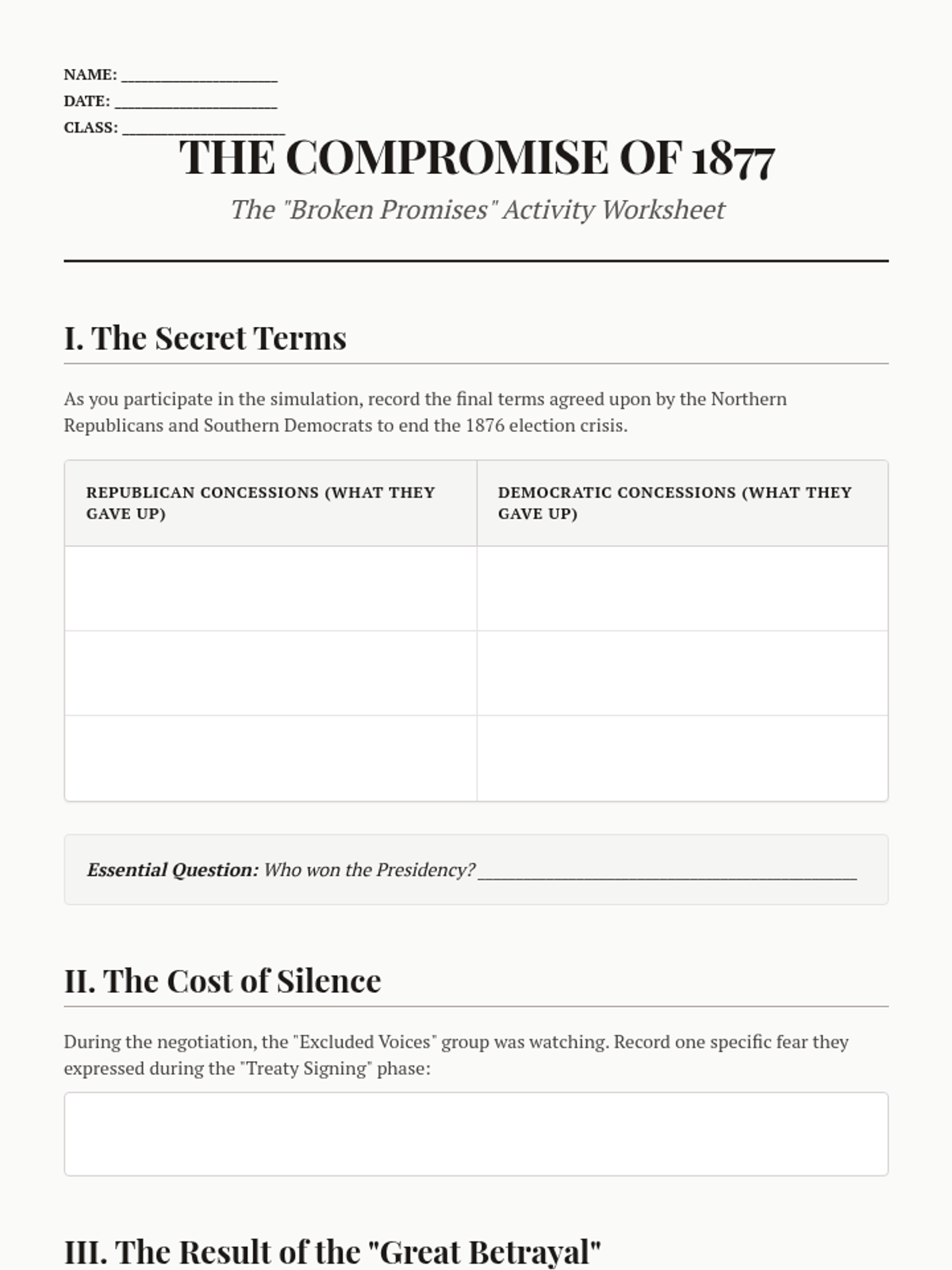
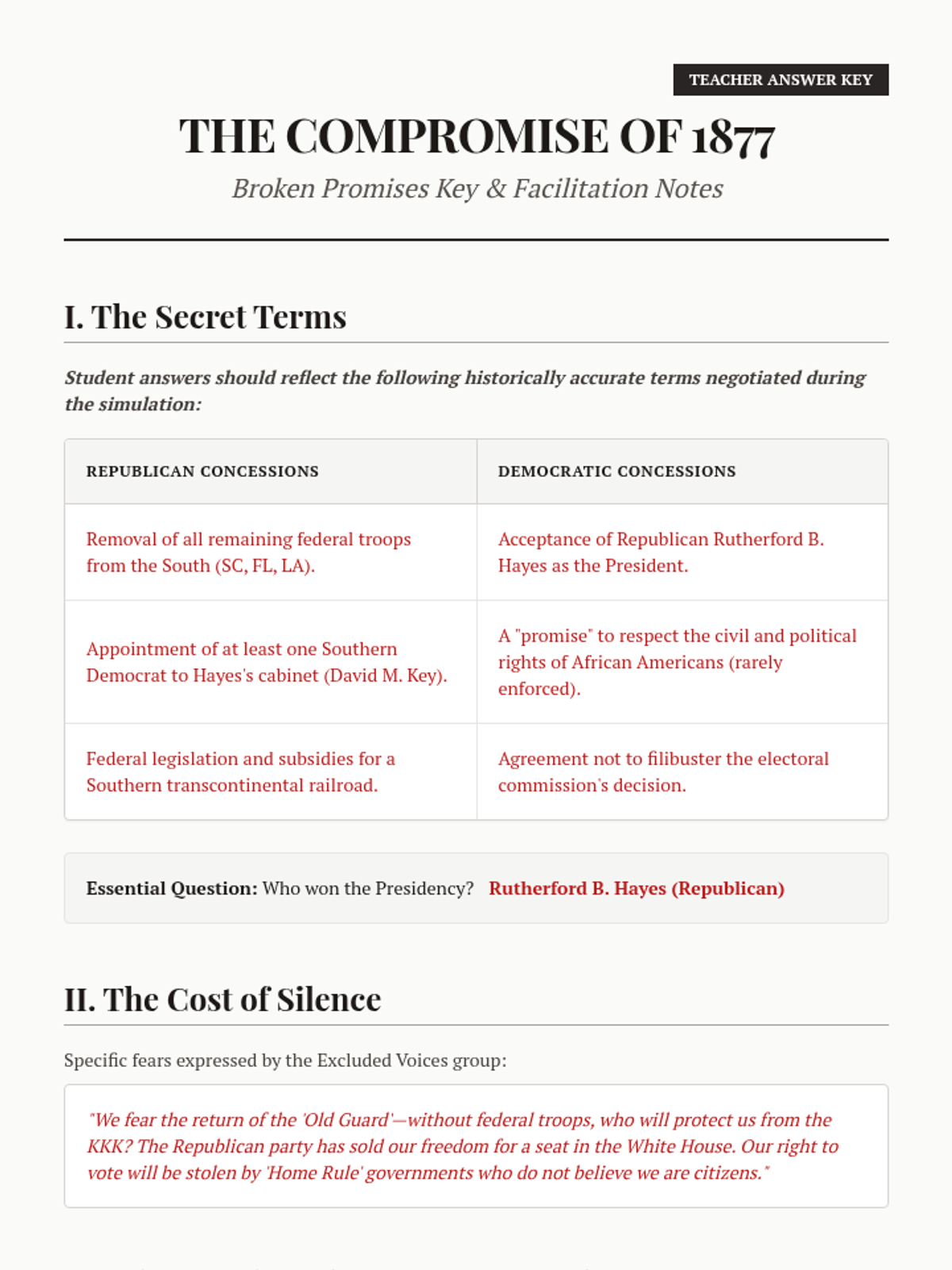
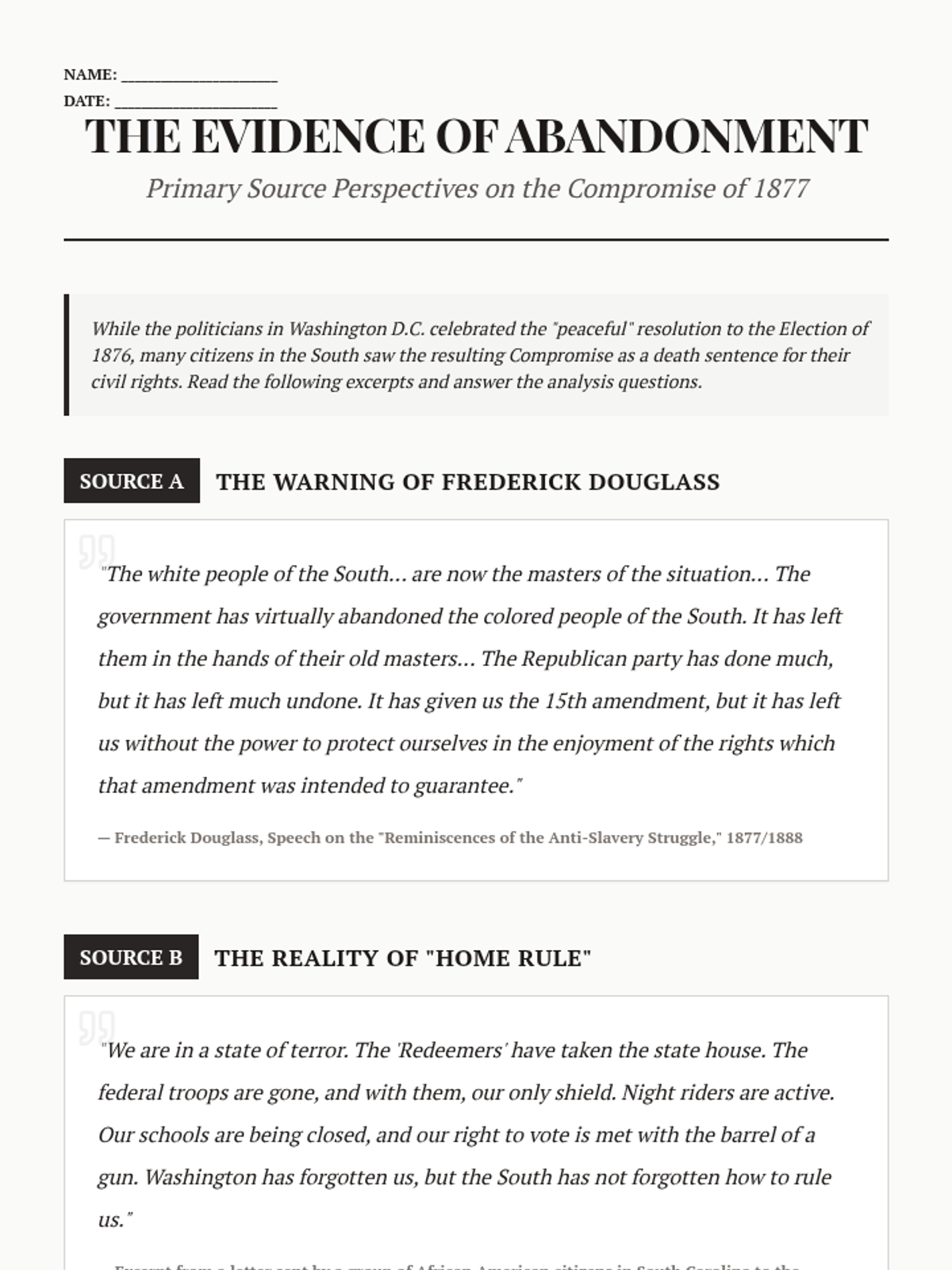
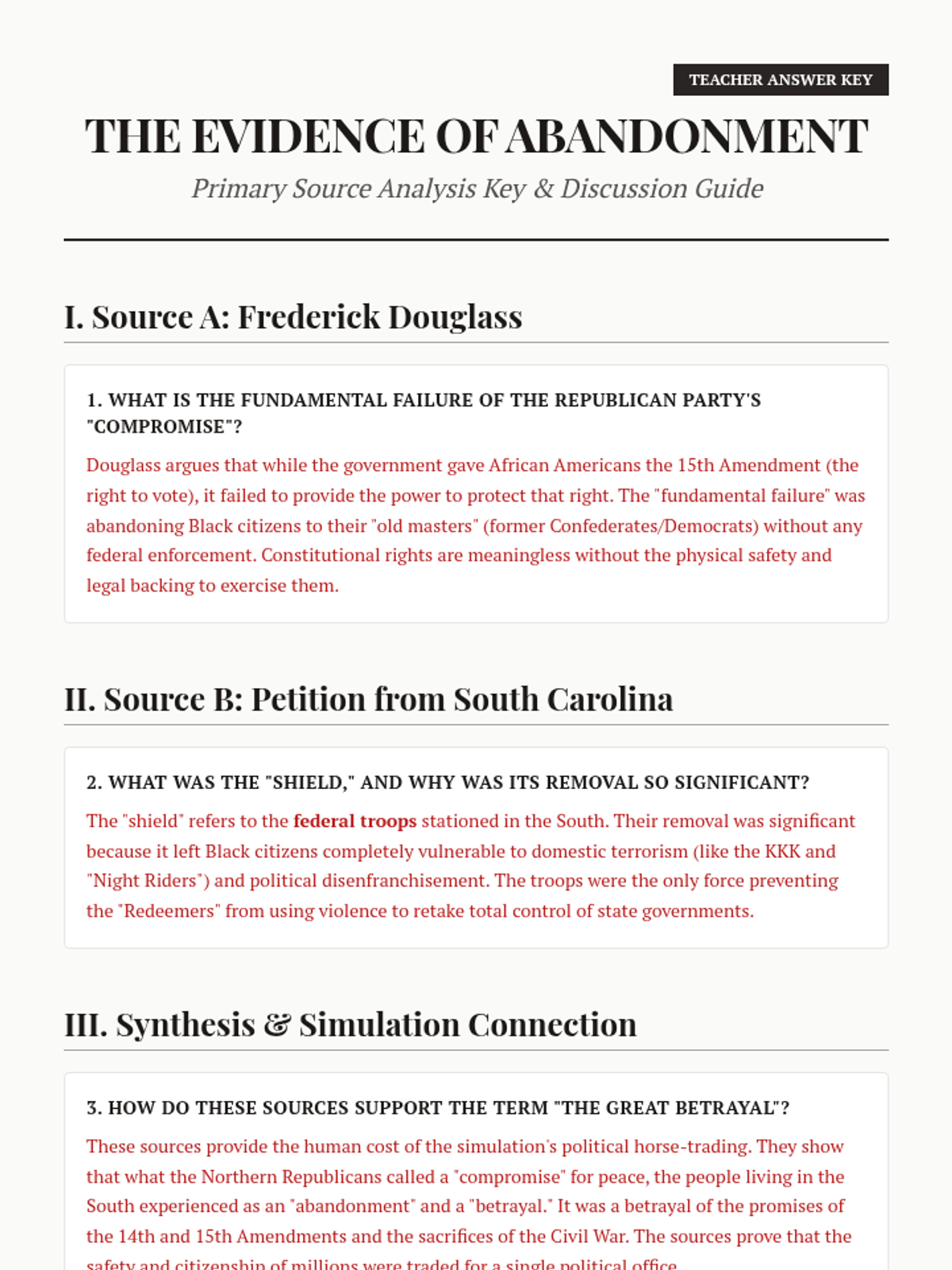
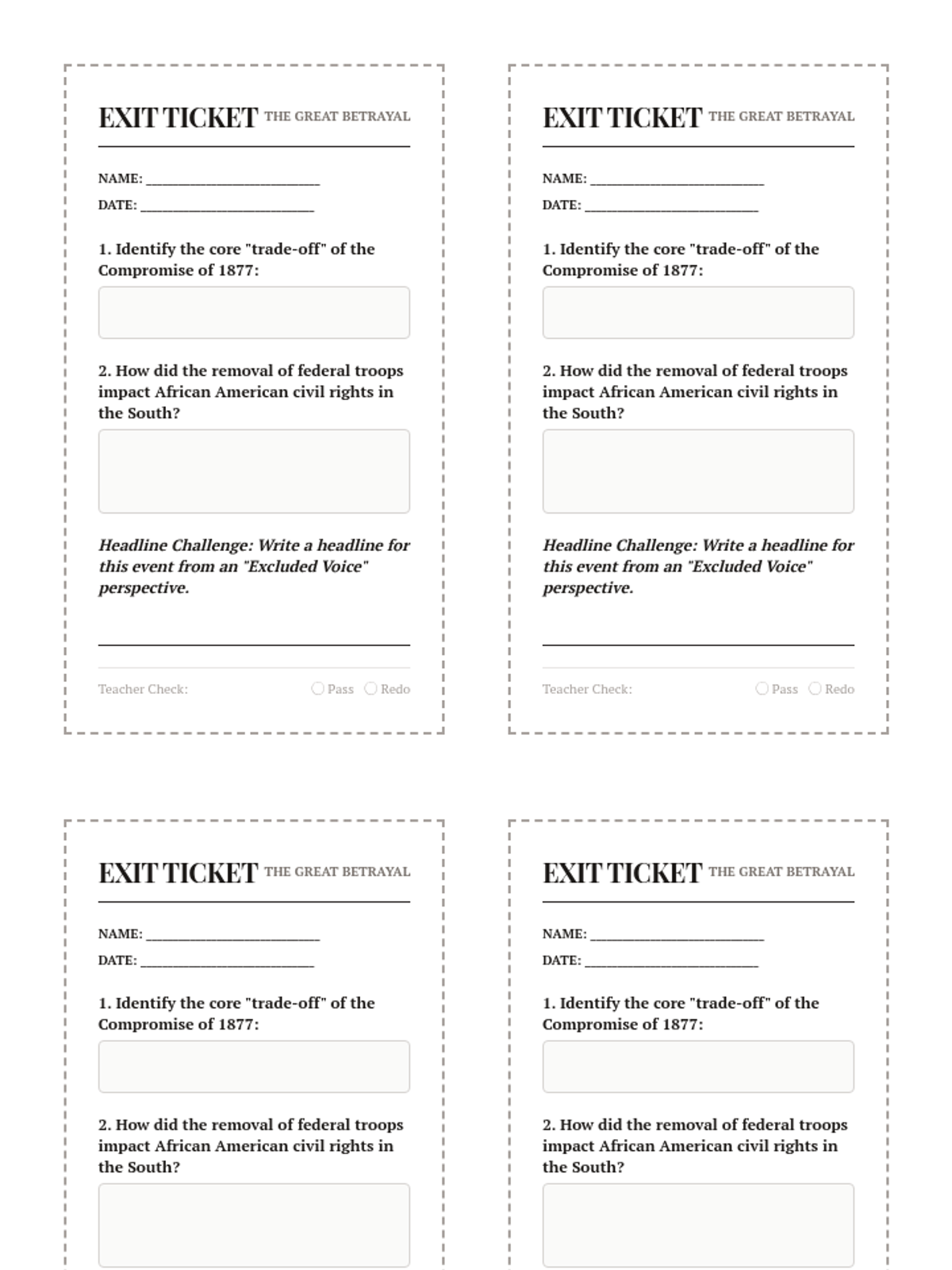
A fast-paced role-play simulation of the Compromise of 1877, focusing on the political trade-offs that ended Reconstruction and the resulting impact on African American civil rights. Students negotiate the "Great Betrayal" and reflect on its long-term consequences.