Analytical frameworks for interpreting history, geography, and civic information. Equips learners with tools for chronological sequencing, map literacy, and critical evaluation of primary and secondary sources.
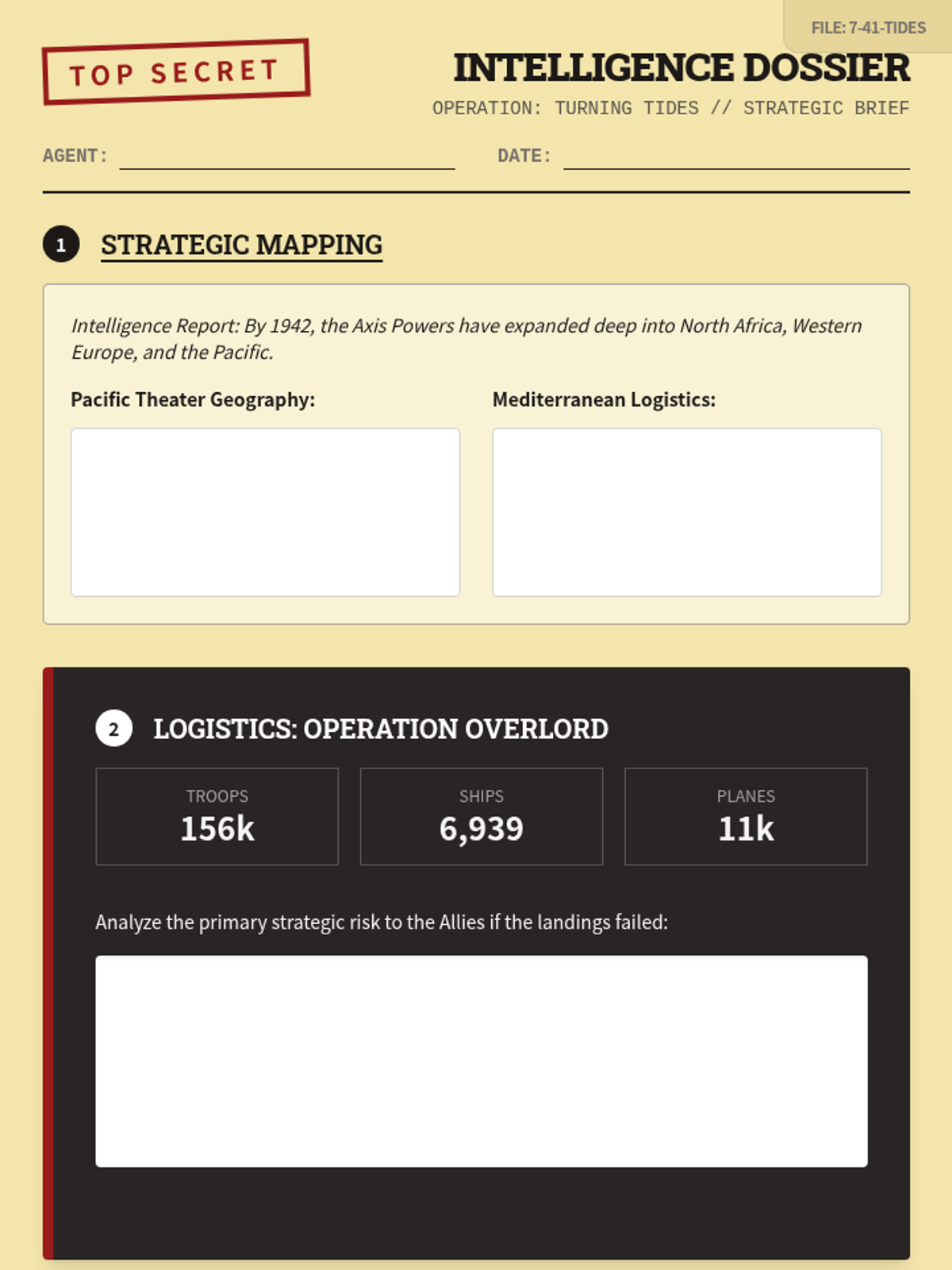
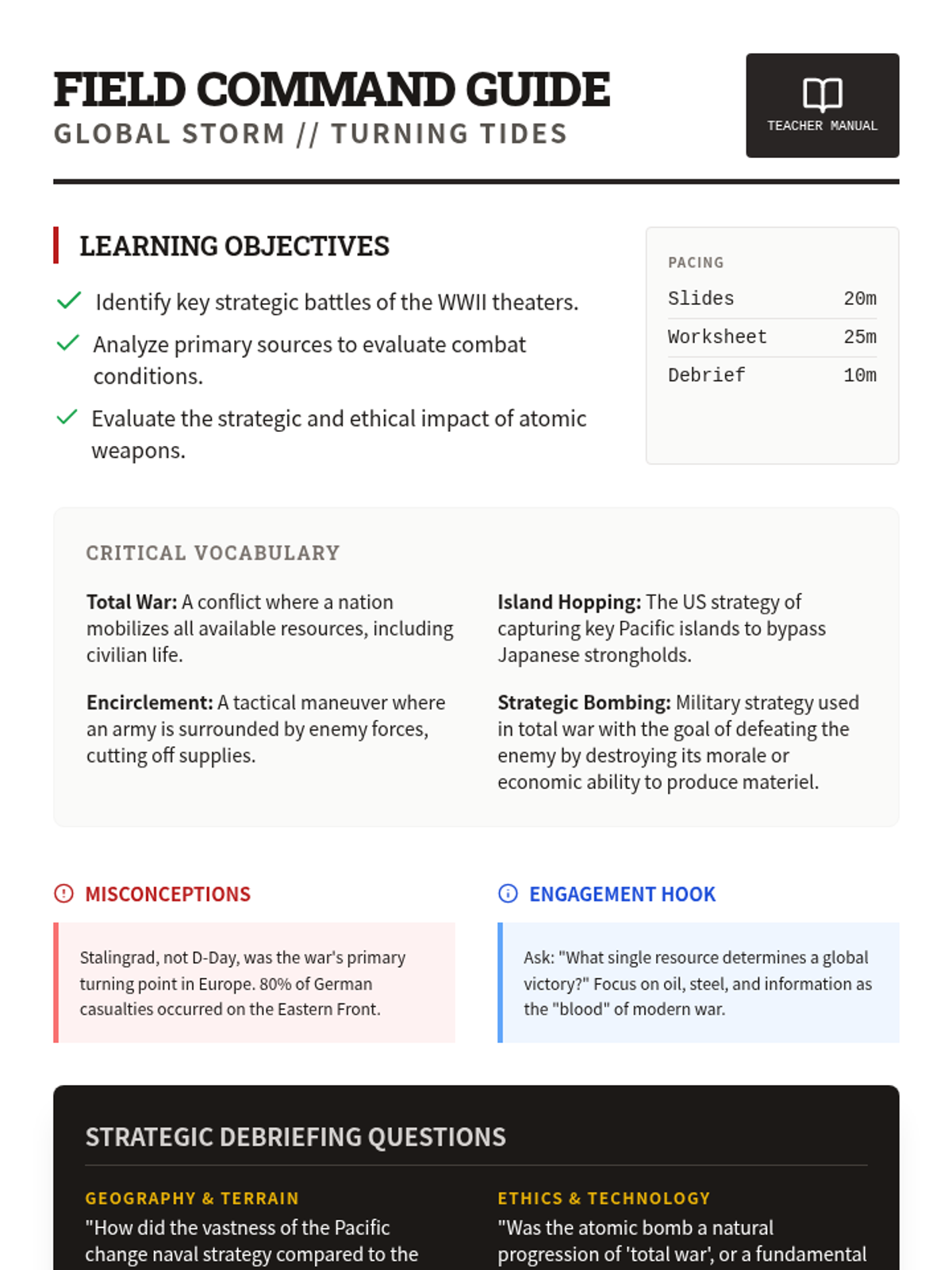
Focuses on the critical turning points of World War II, exploring the strategic shifts and human stories that defined the conflict's outcome.
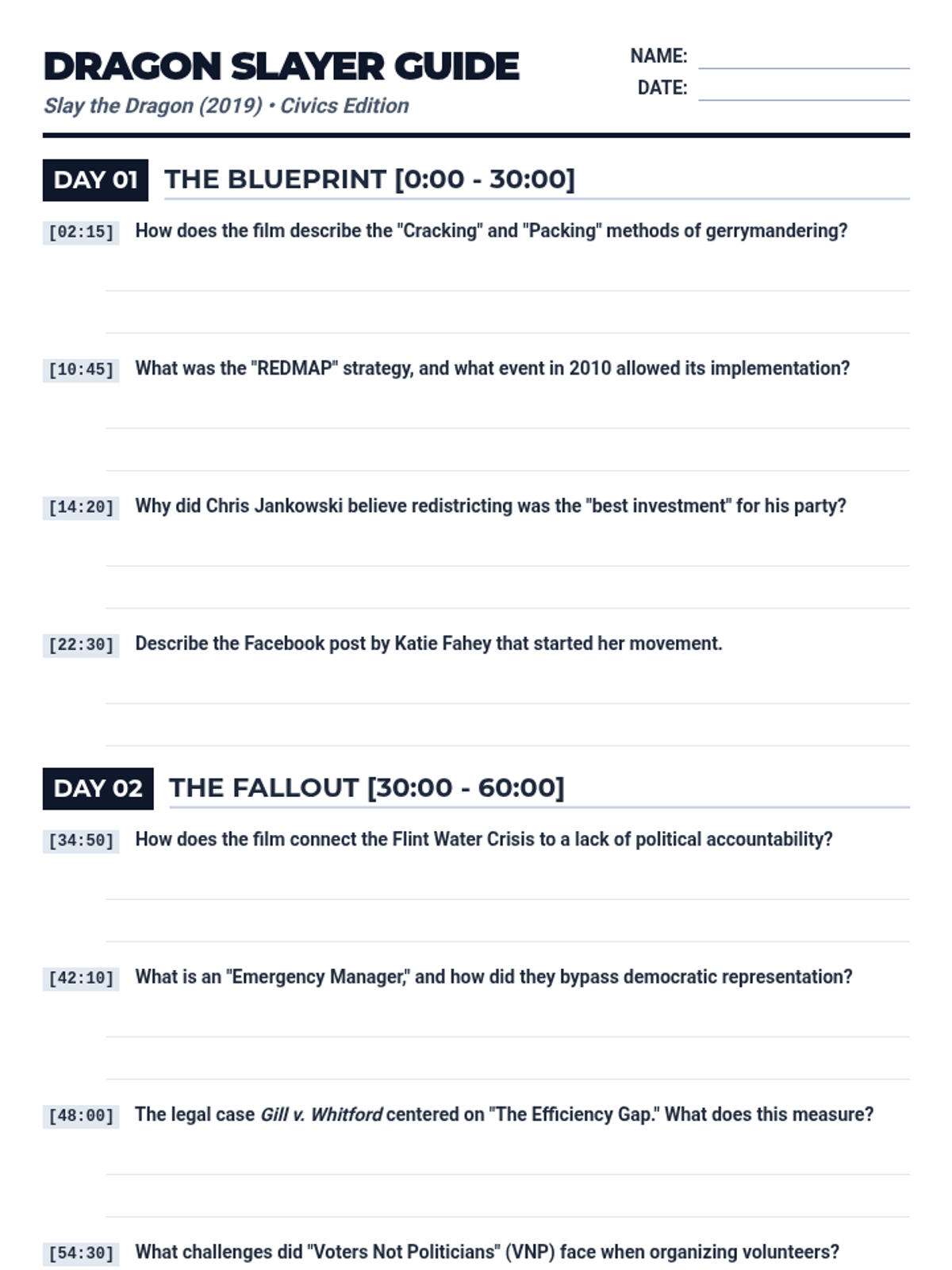
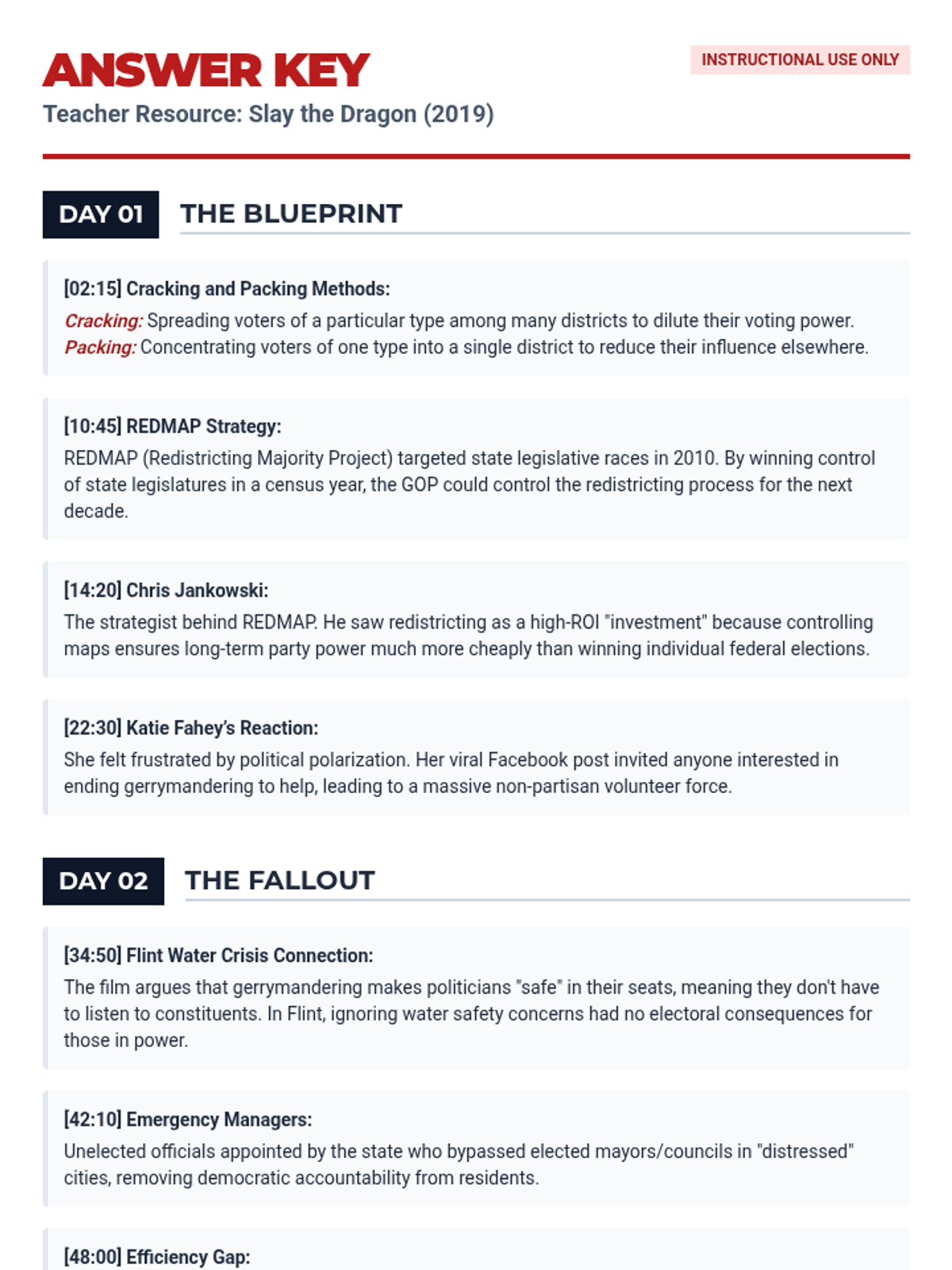
A three-day exploration of partisan gerrymandering using the documentary 'Slay the Dragon'. Students will examine the REDMAP strategy, the Flint water crisis connection, and the grassroots activism of Katie Fahey and Voters Not Politicians.
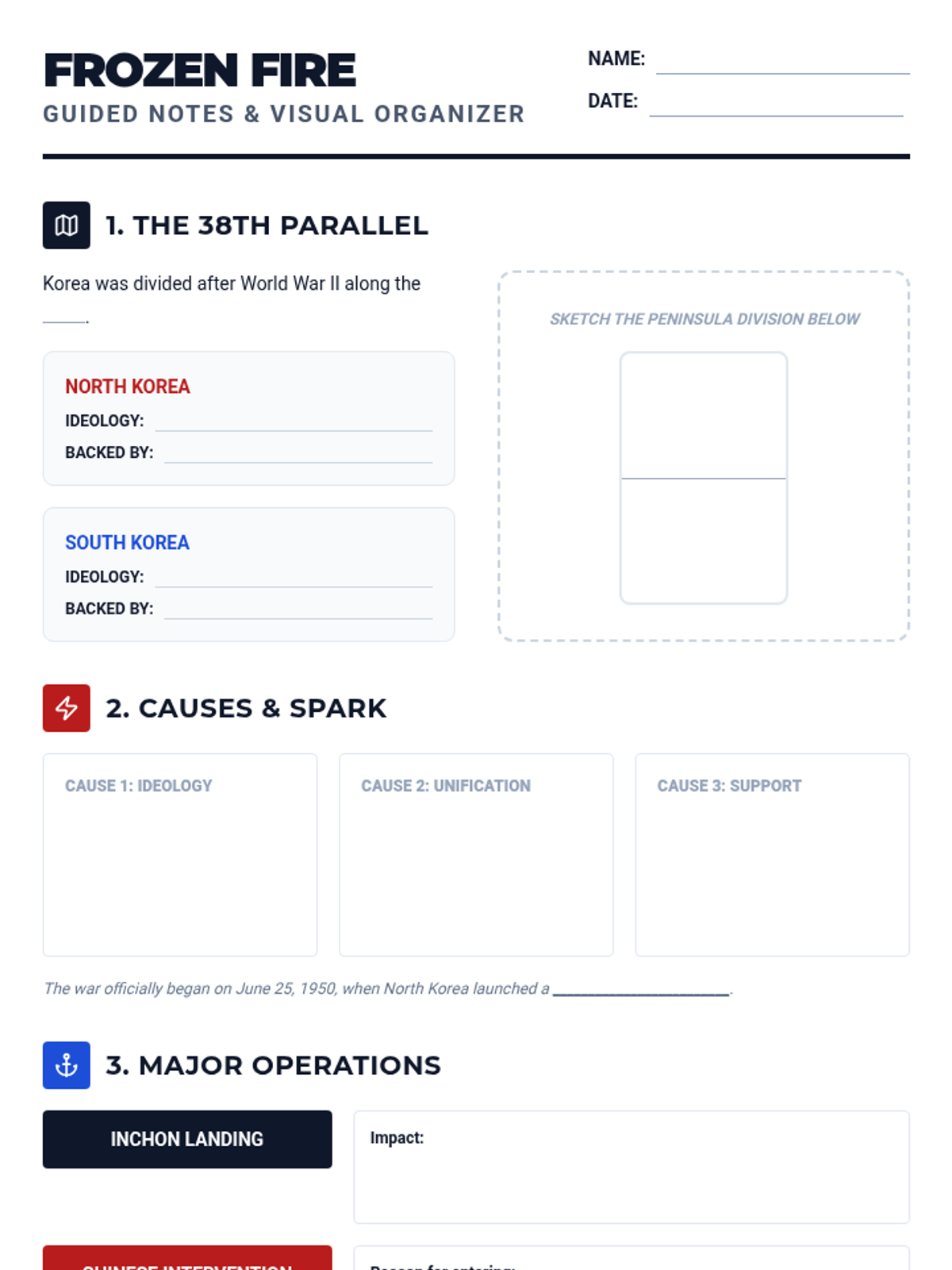
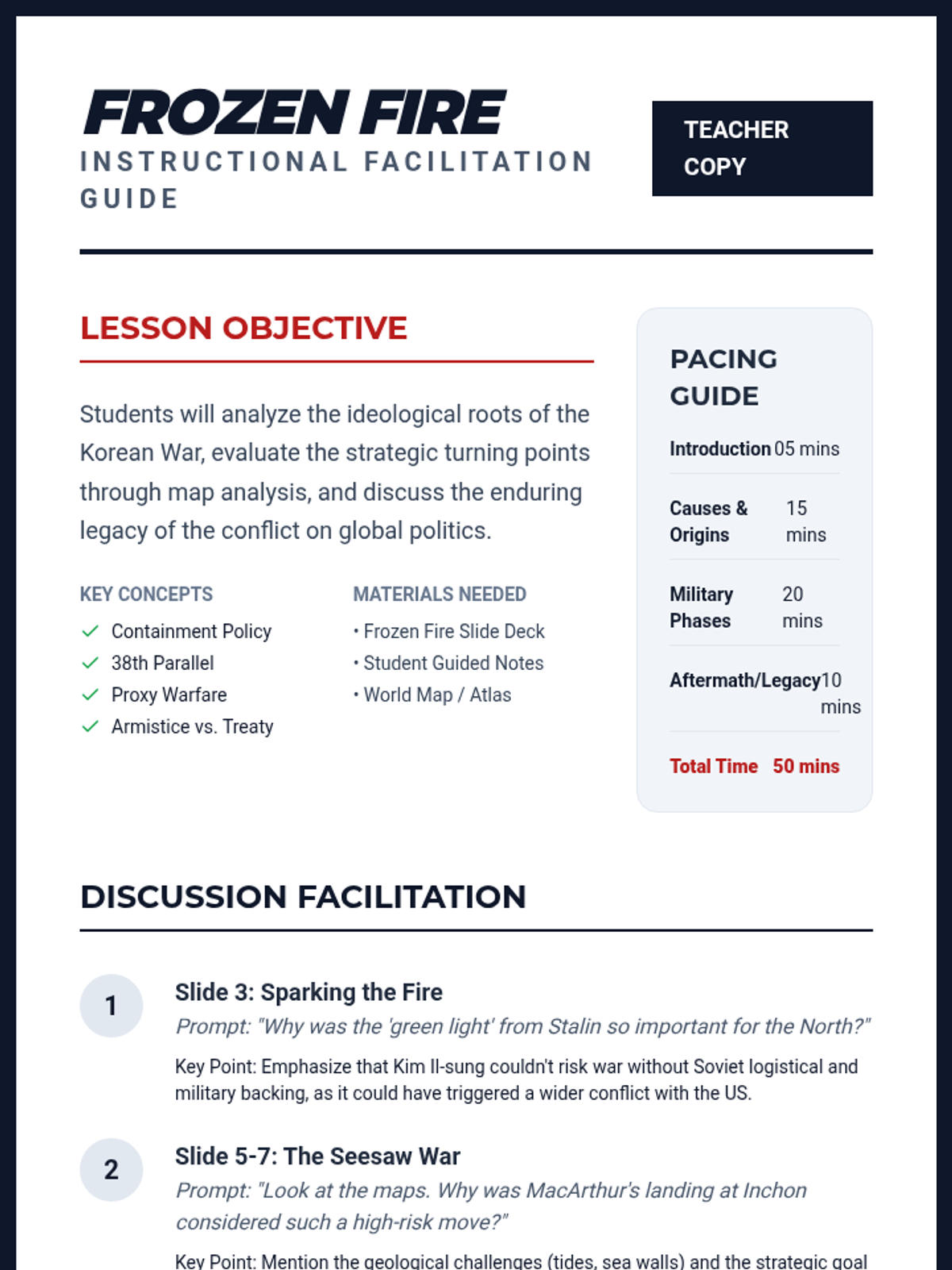
An exploration of the Korean War's origins, major events, and lasting global impact through visual analysis and critical thinking.
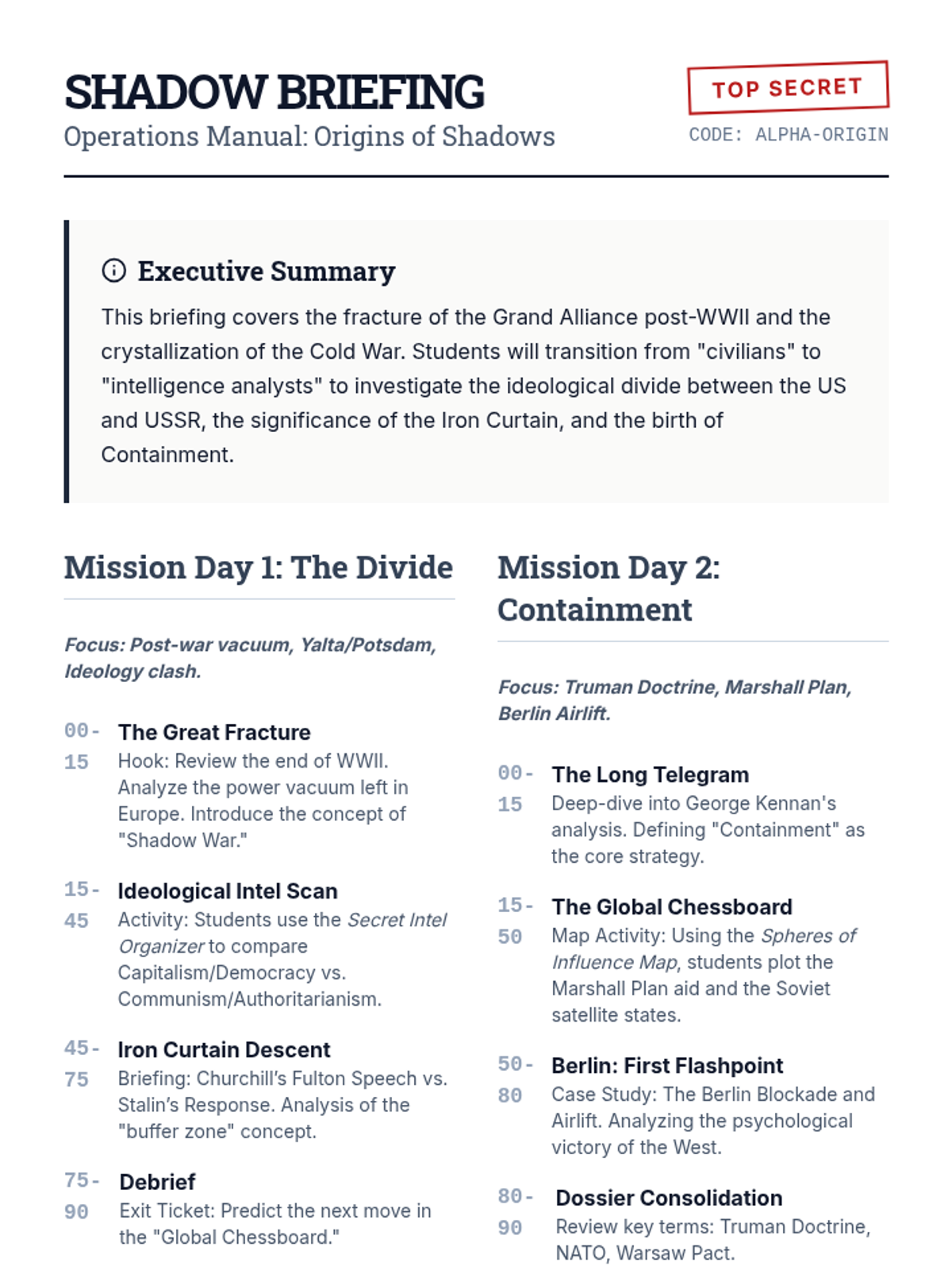
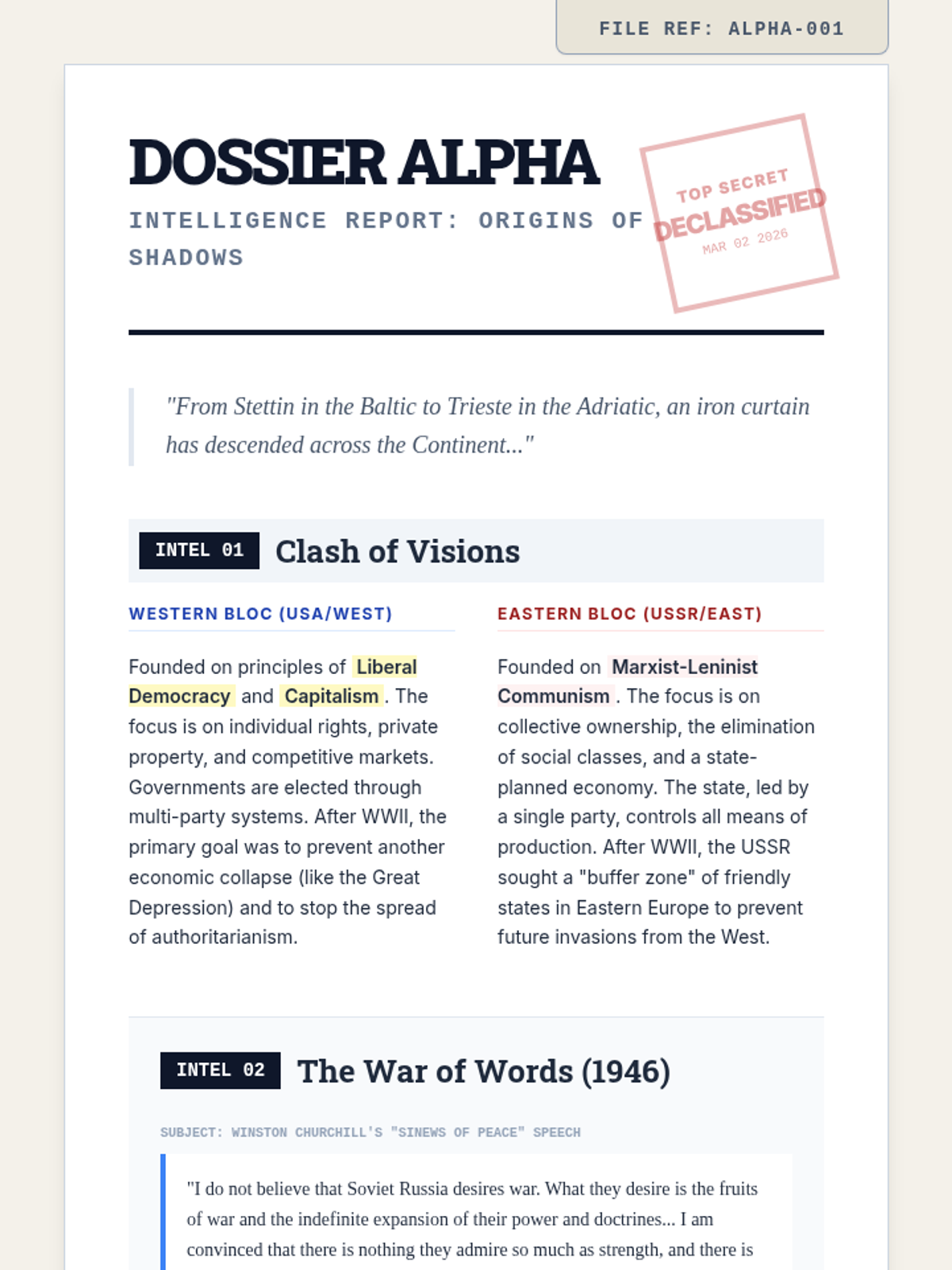
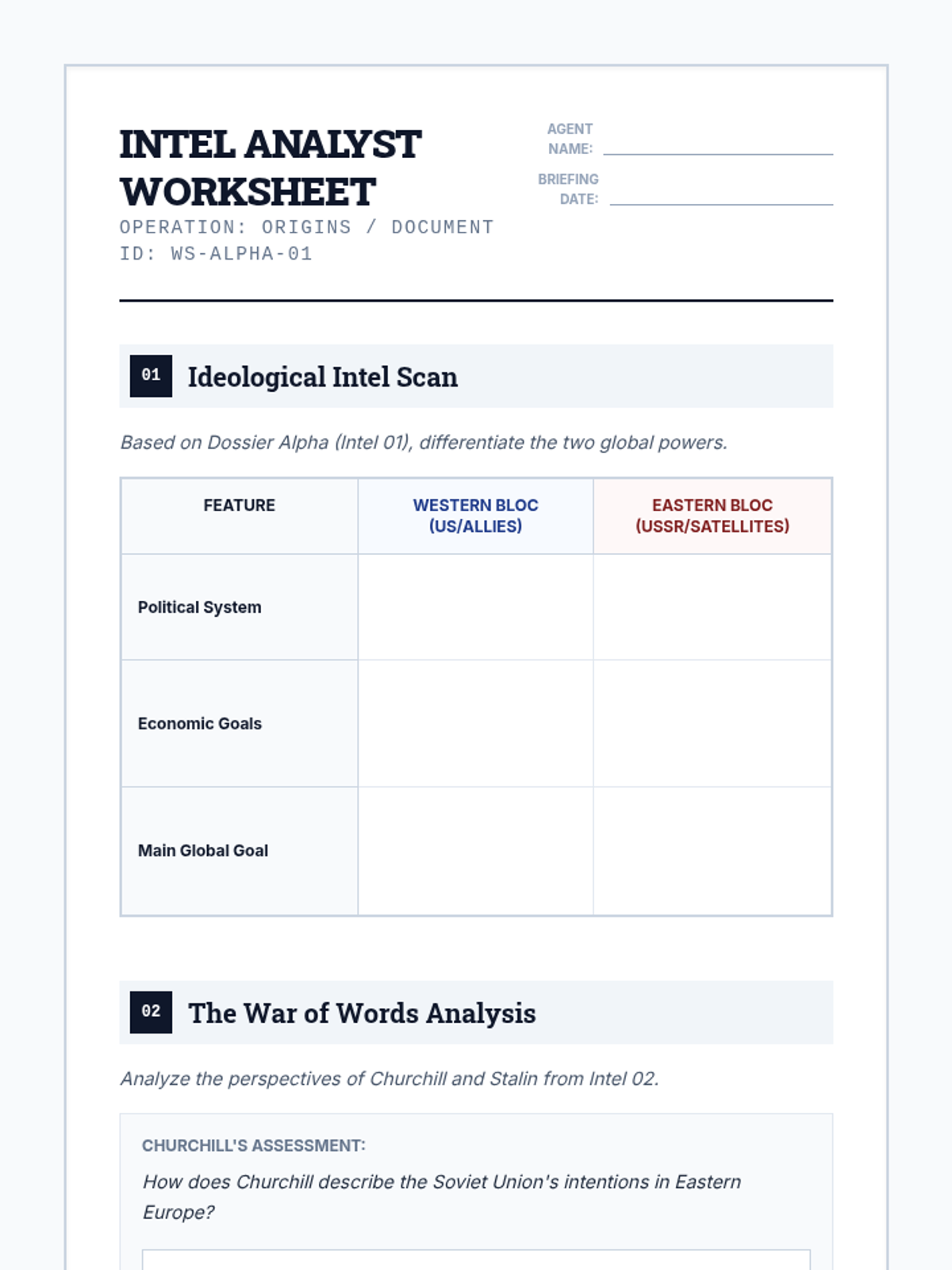
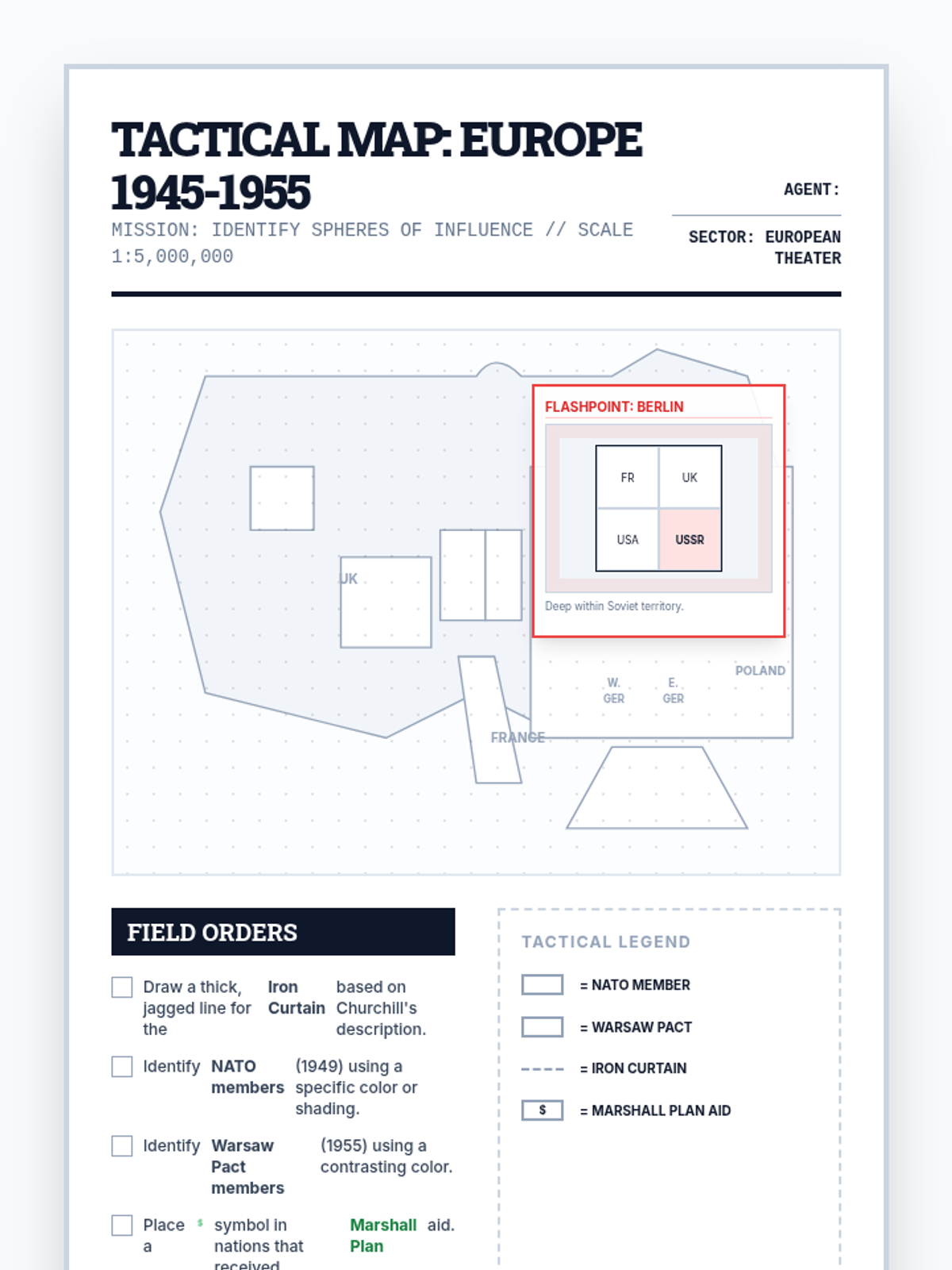
The first installment of the Shadow War unit, focusing on the ideological split post-WWII, the Iron Curtain, and the birth of containment. This lesson covers two 90-minute blocks.
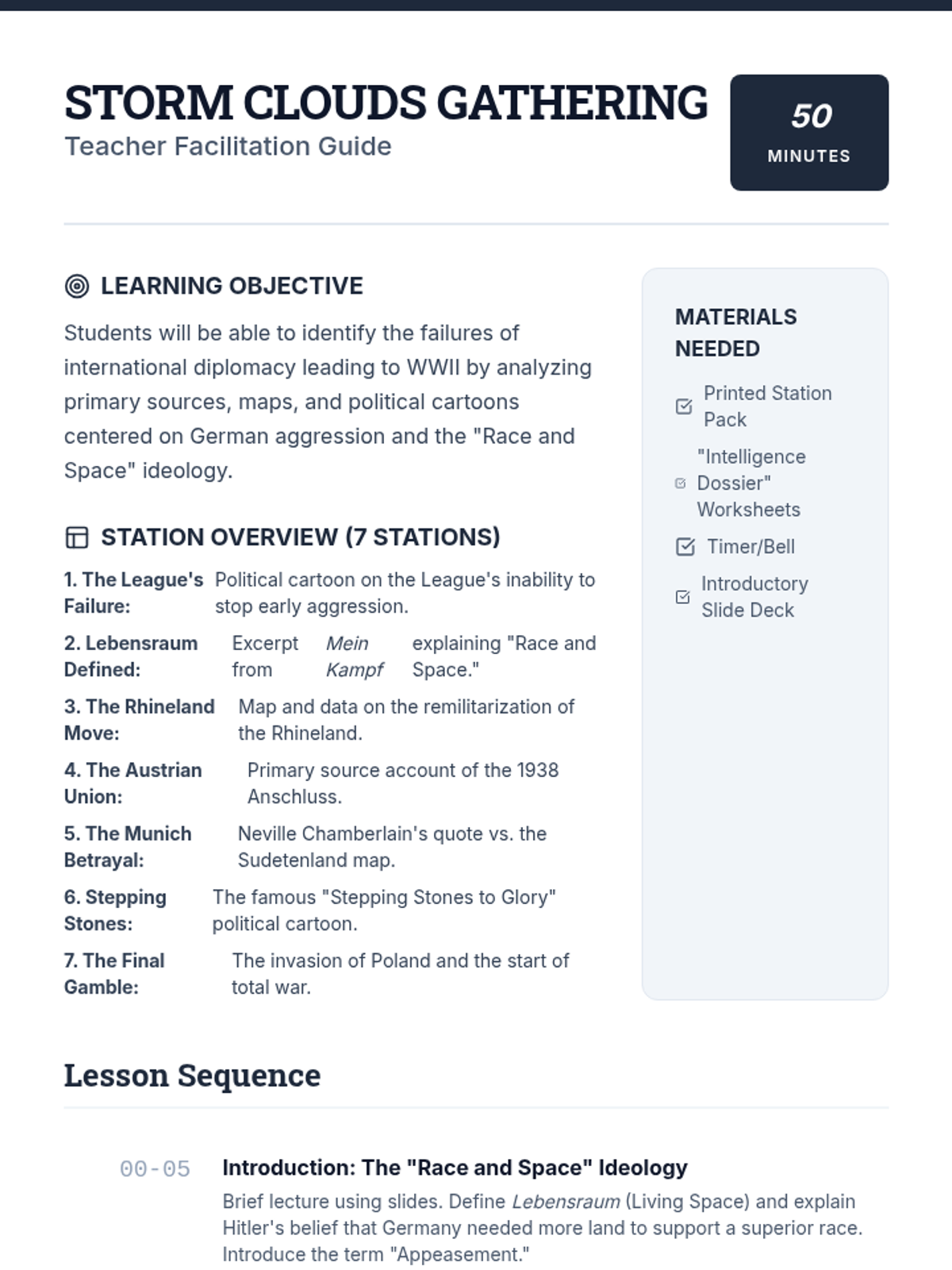
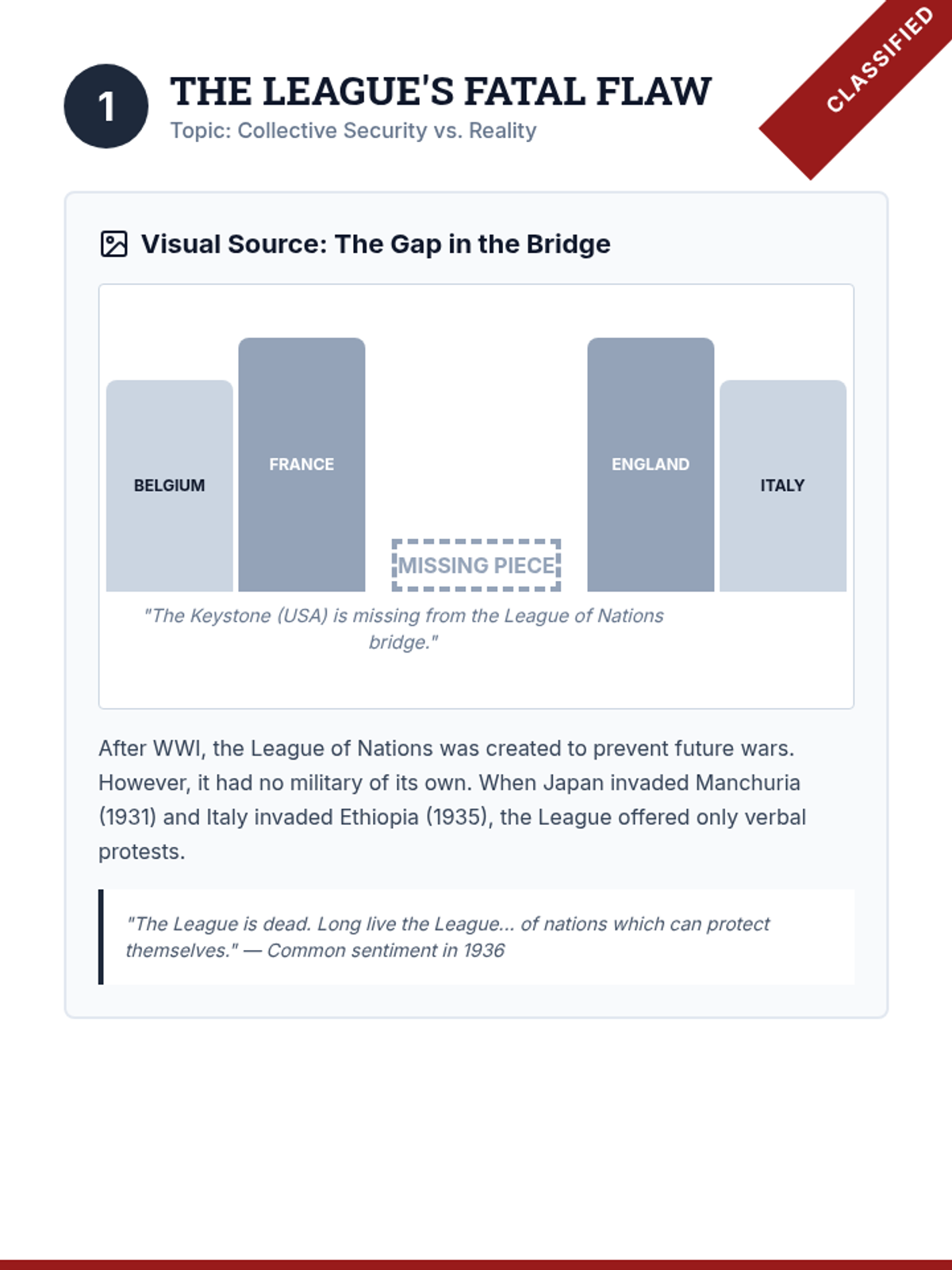
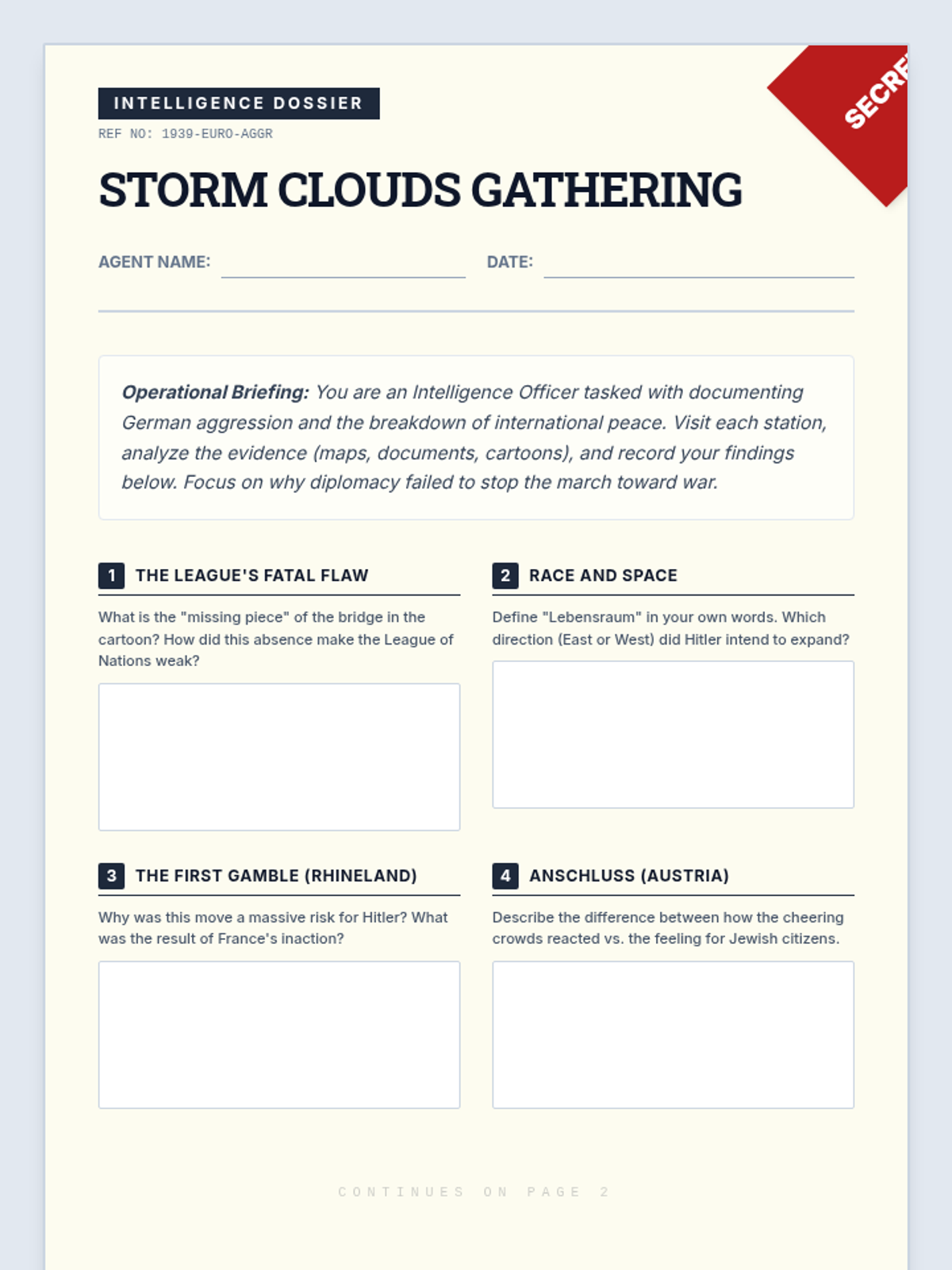
A 50-minute station-based lesson exploring Nazi Germany's 'Race and Space' ideology and the diplomatic failures that led to WWII, including the annexation of Austria, the Sudetenland crisis, and the failure of the League of Nations.
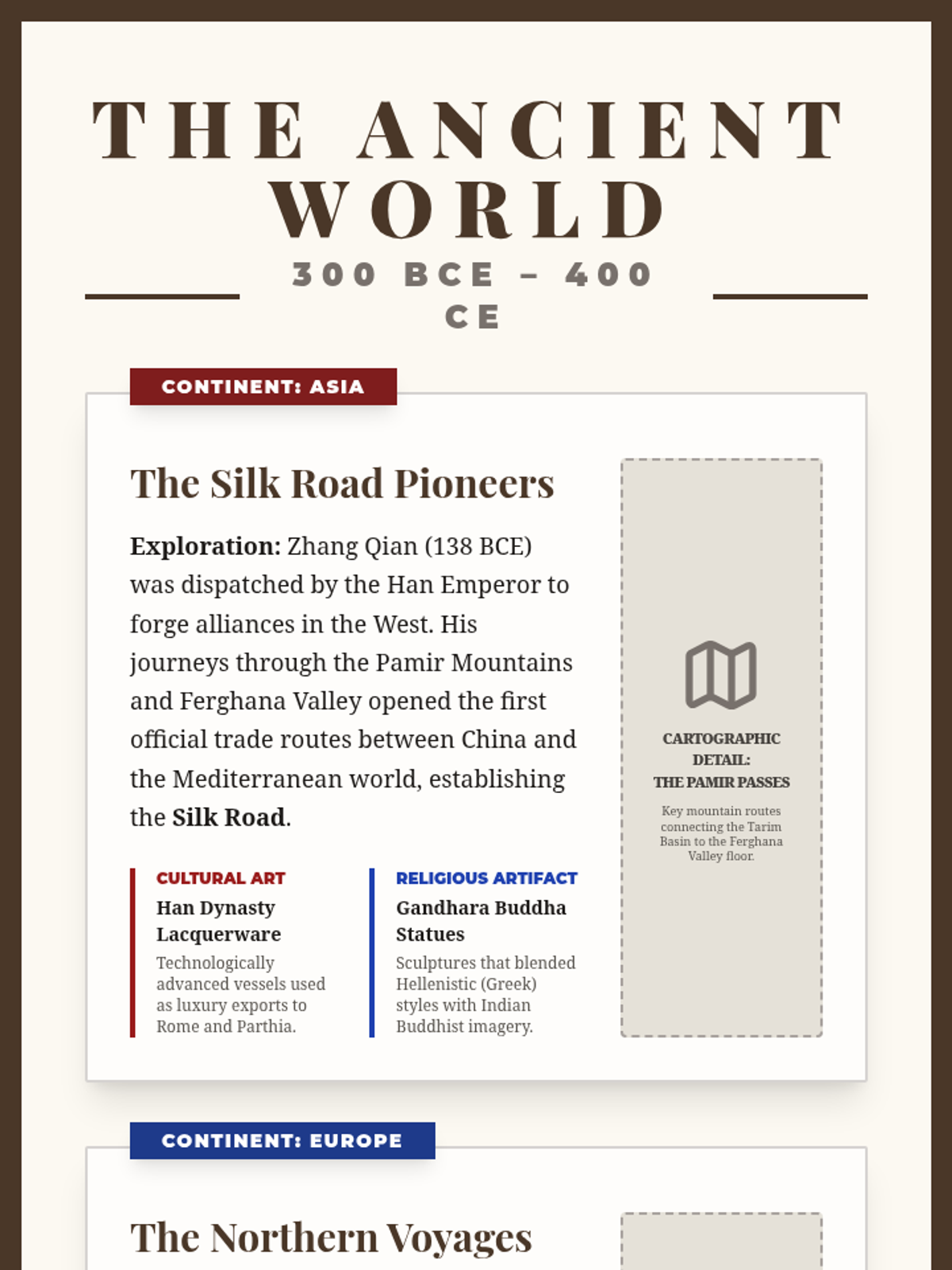
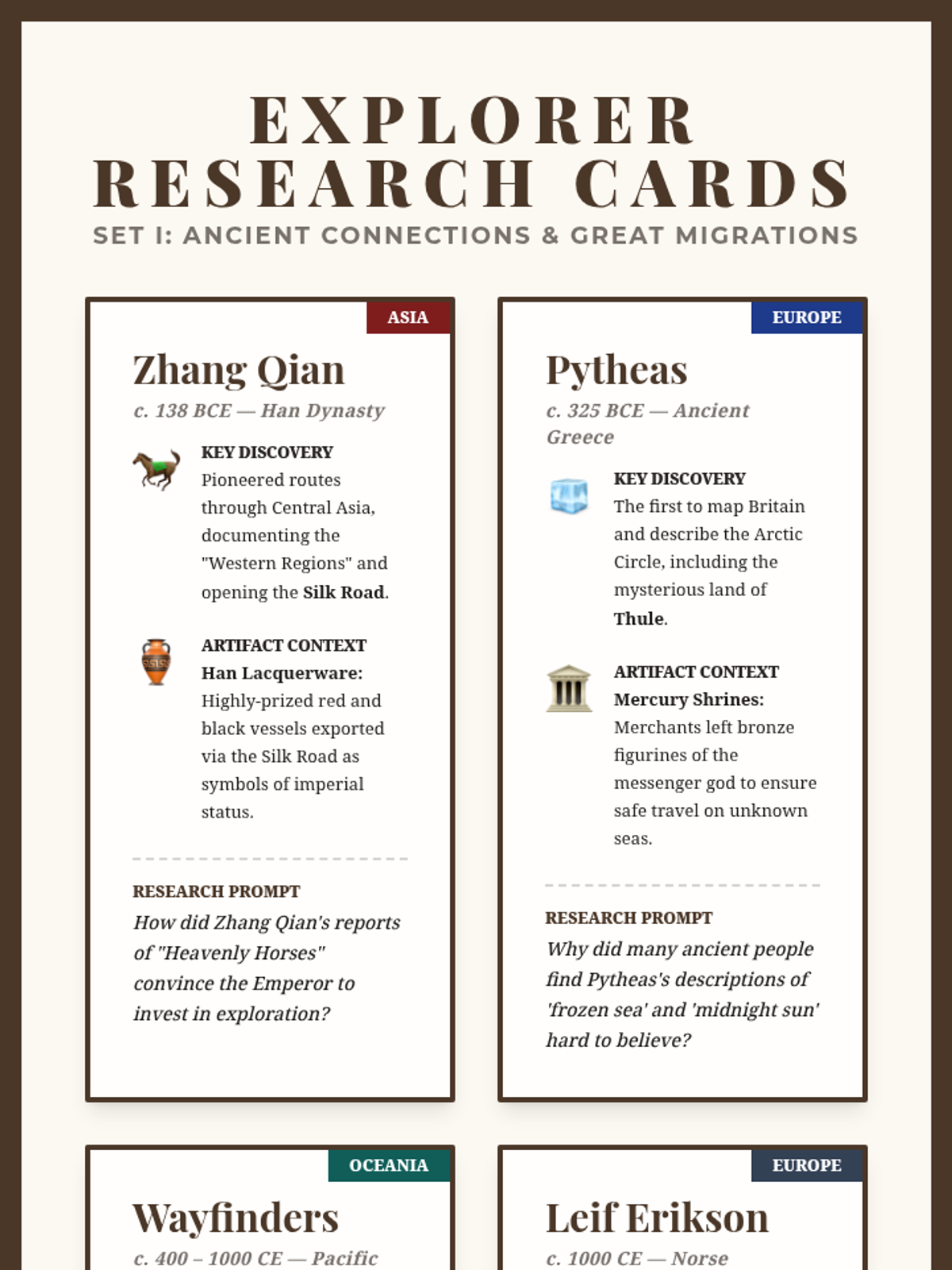
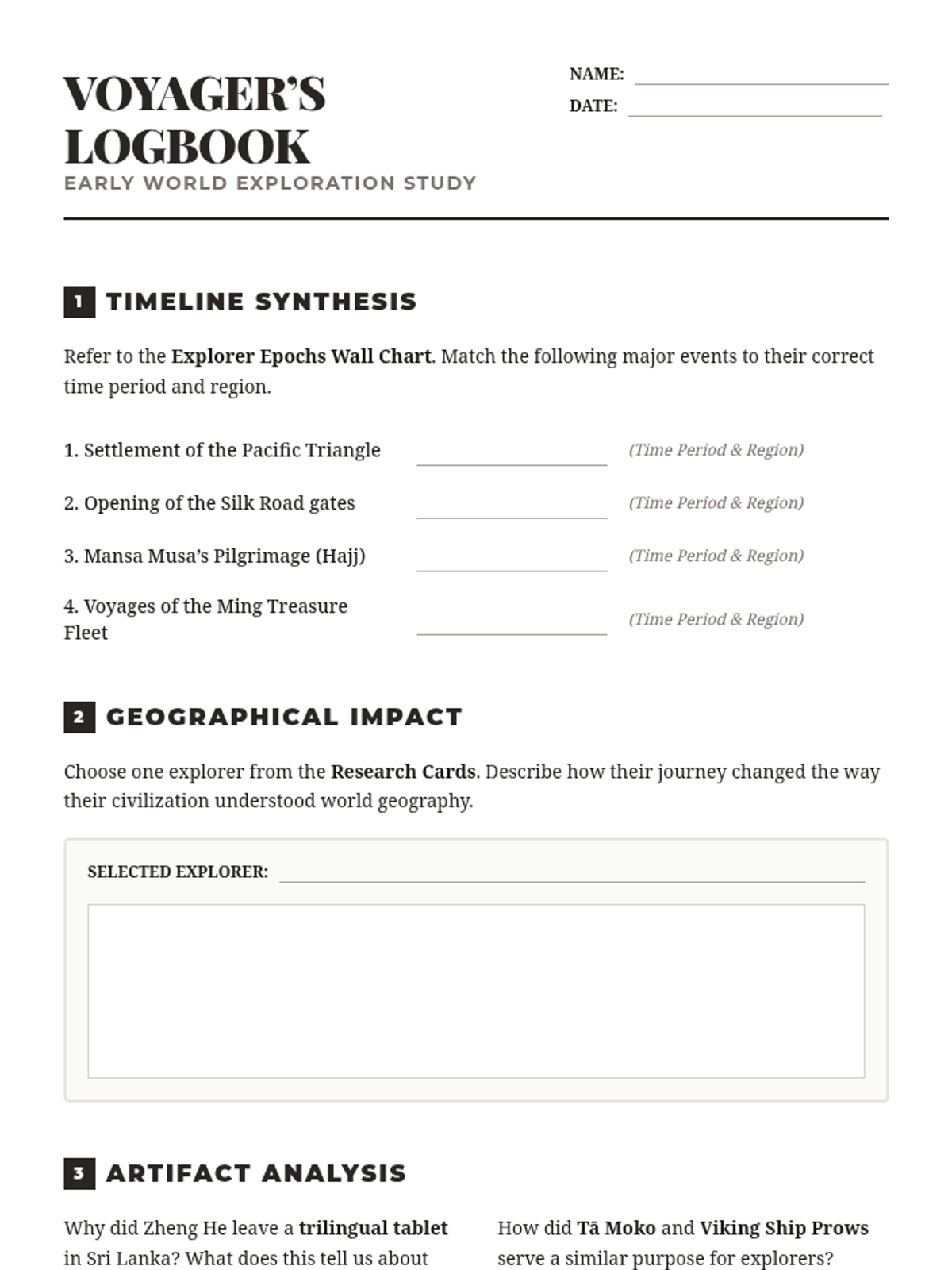
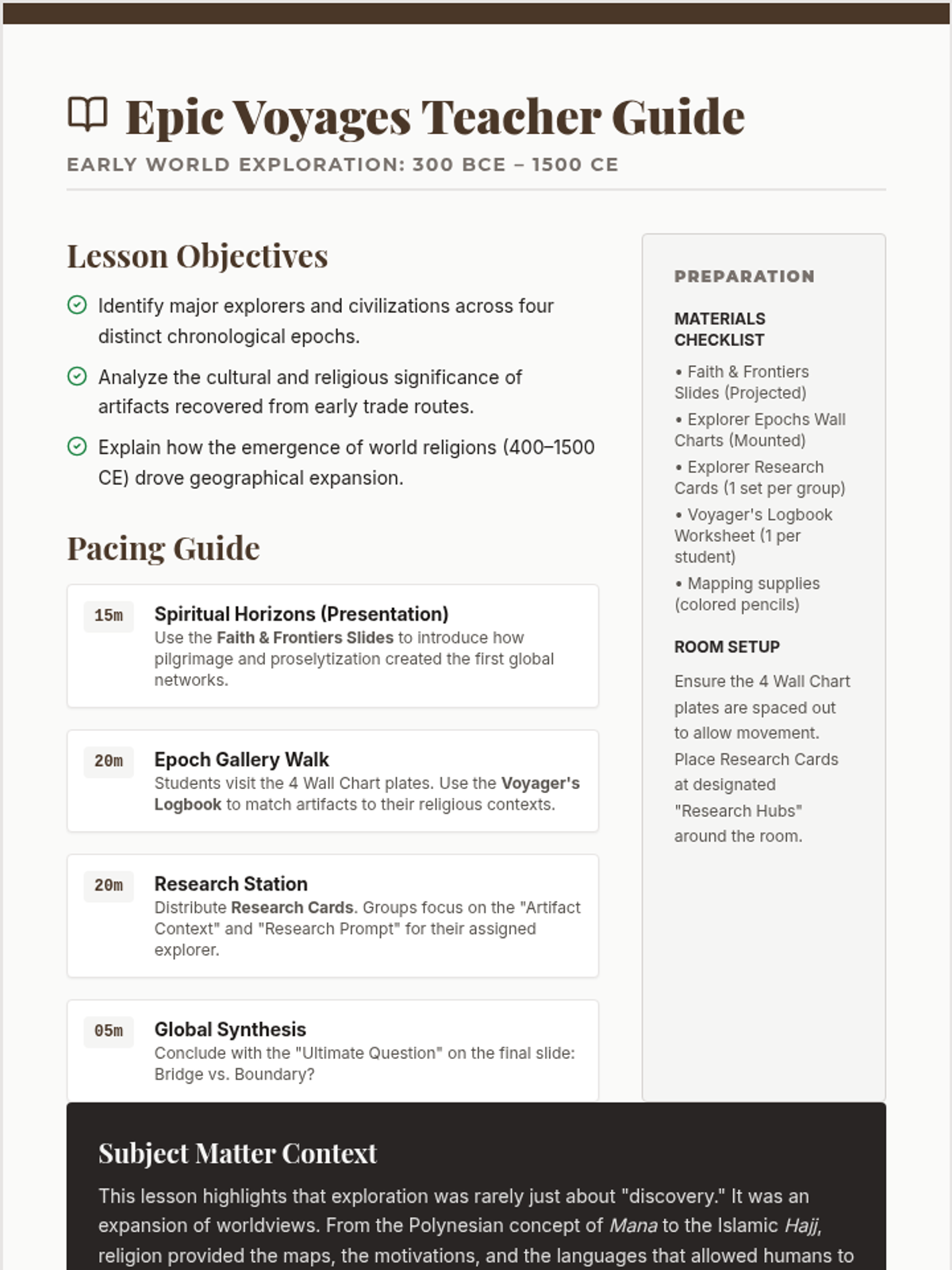
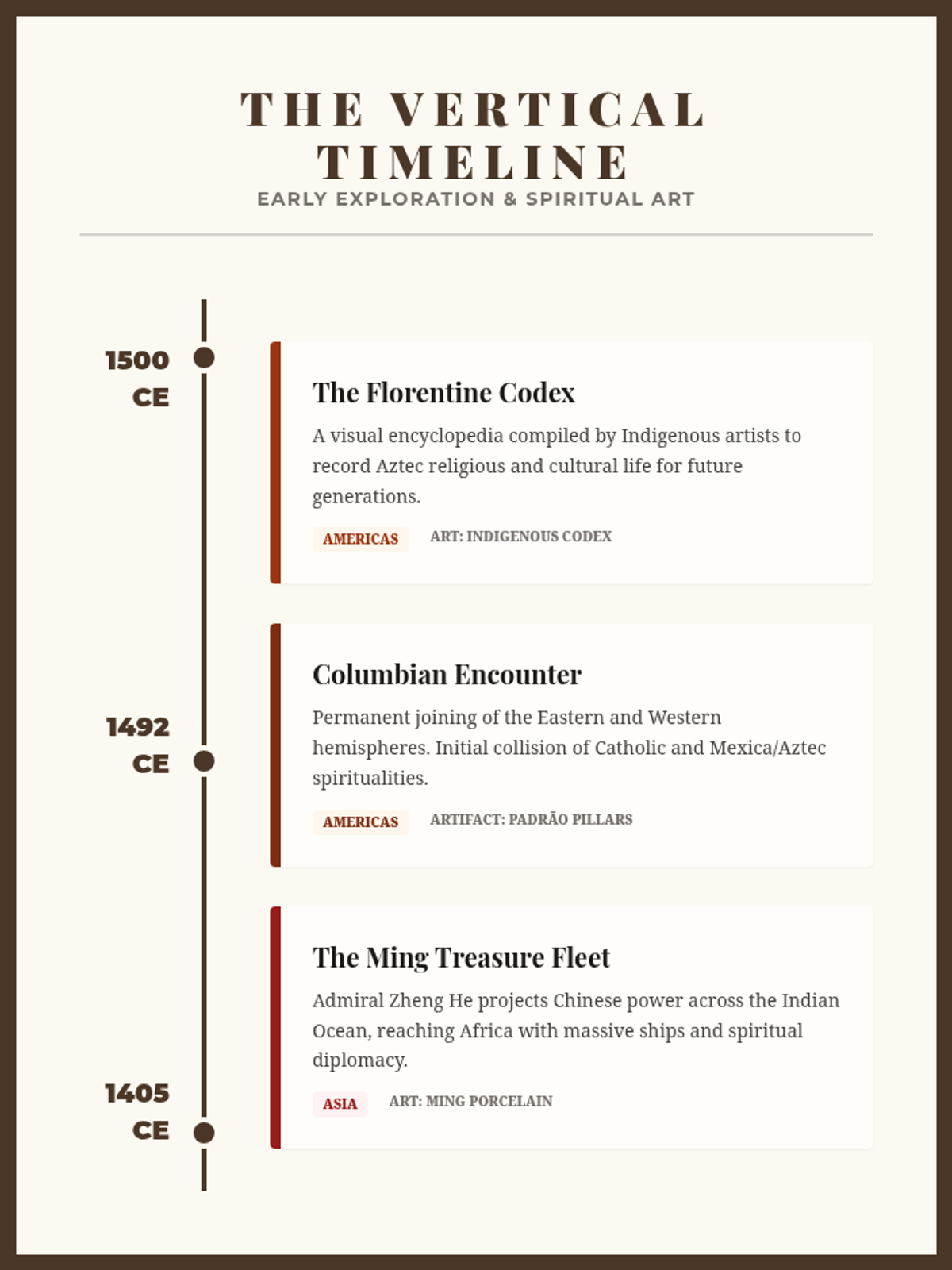
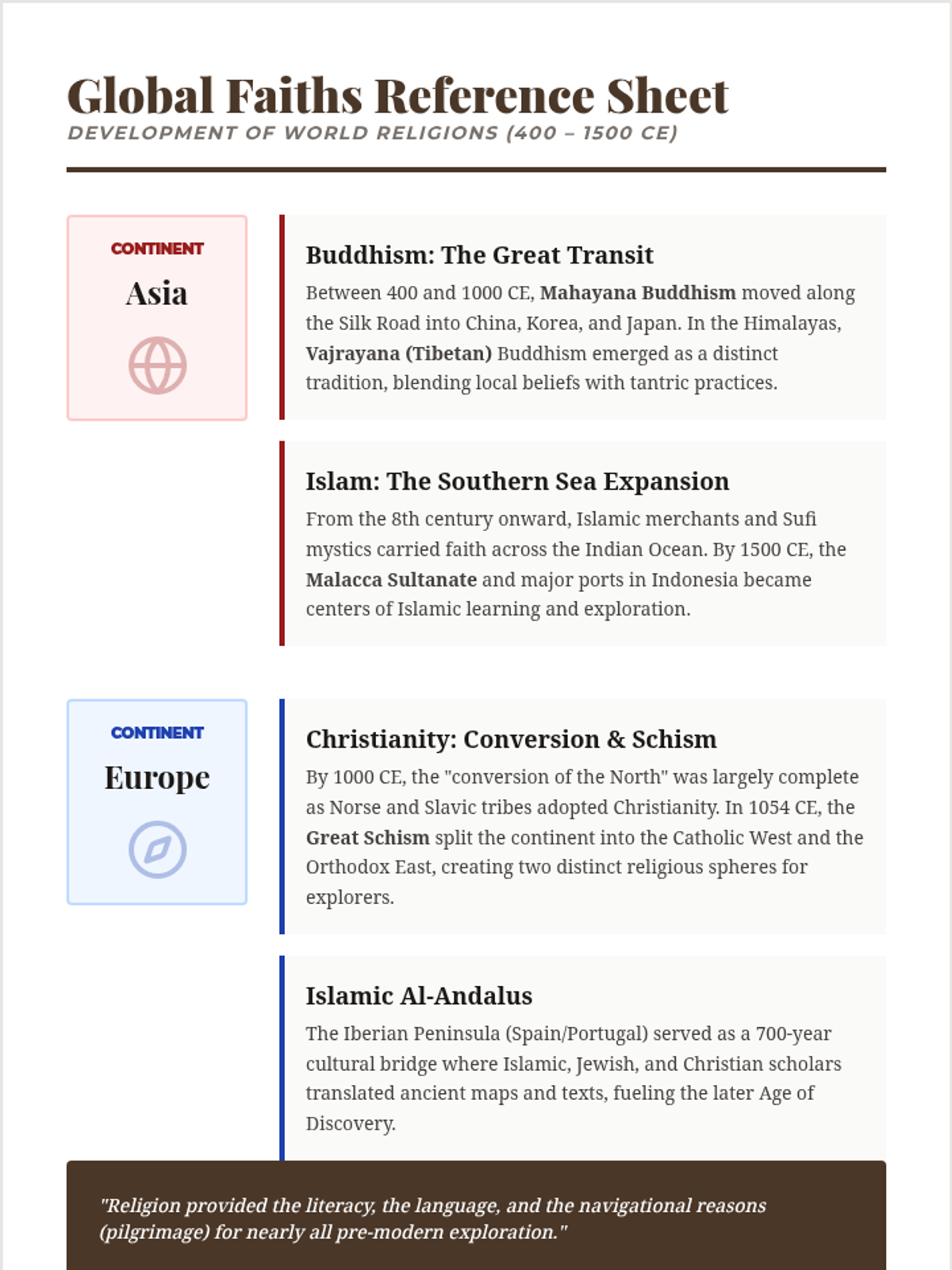
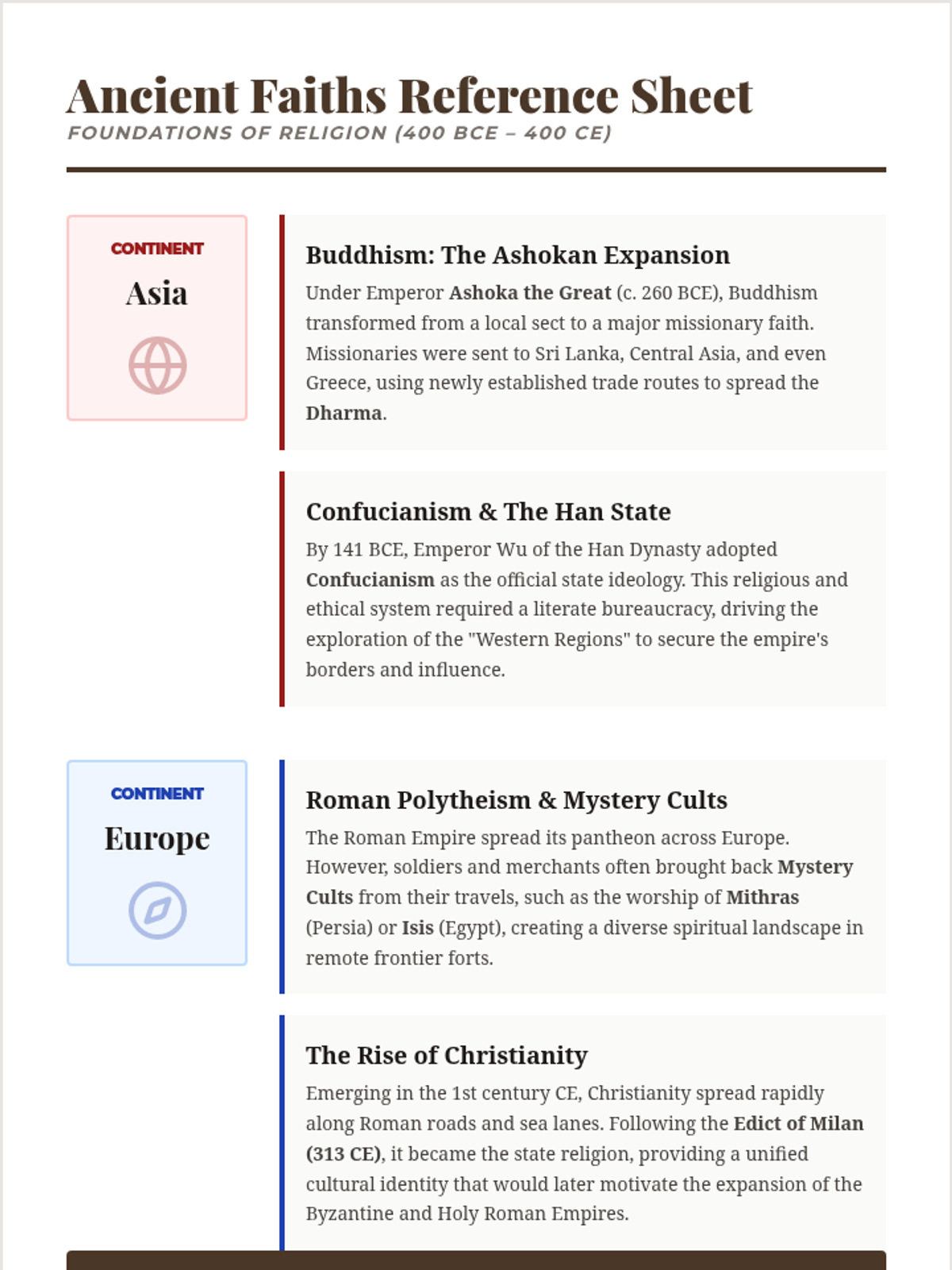
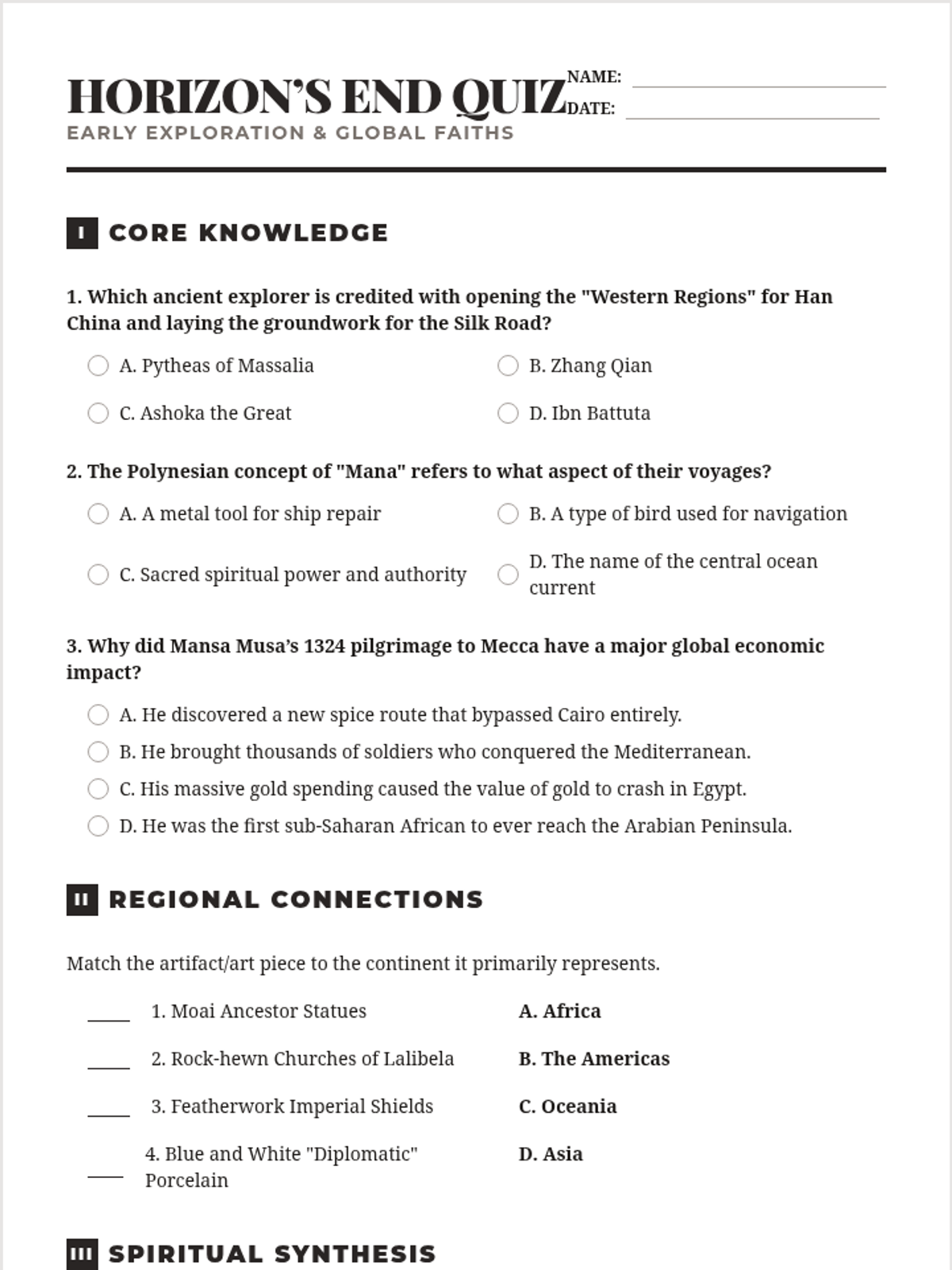
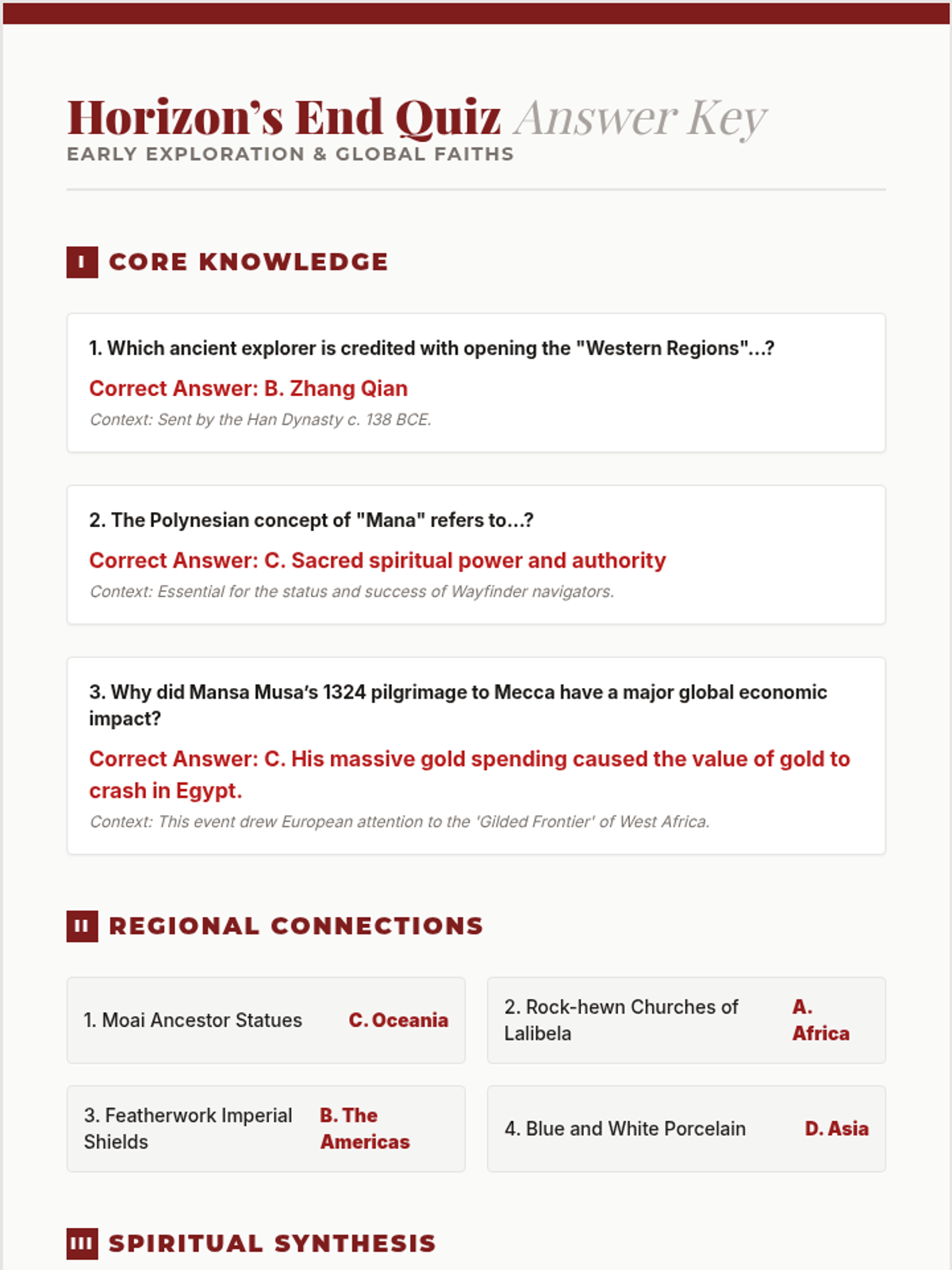
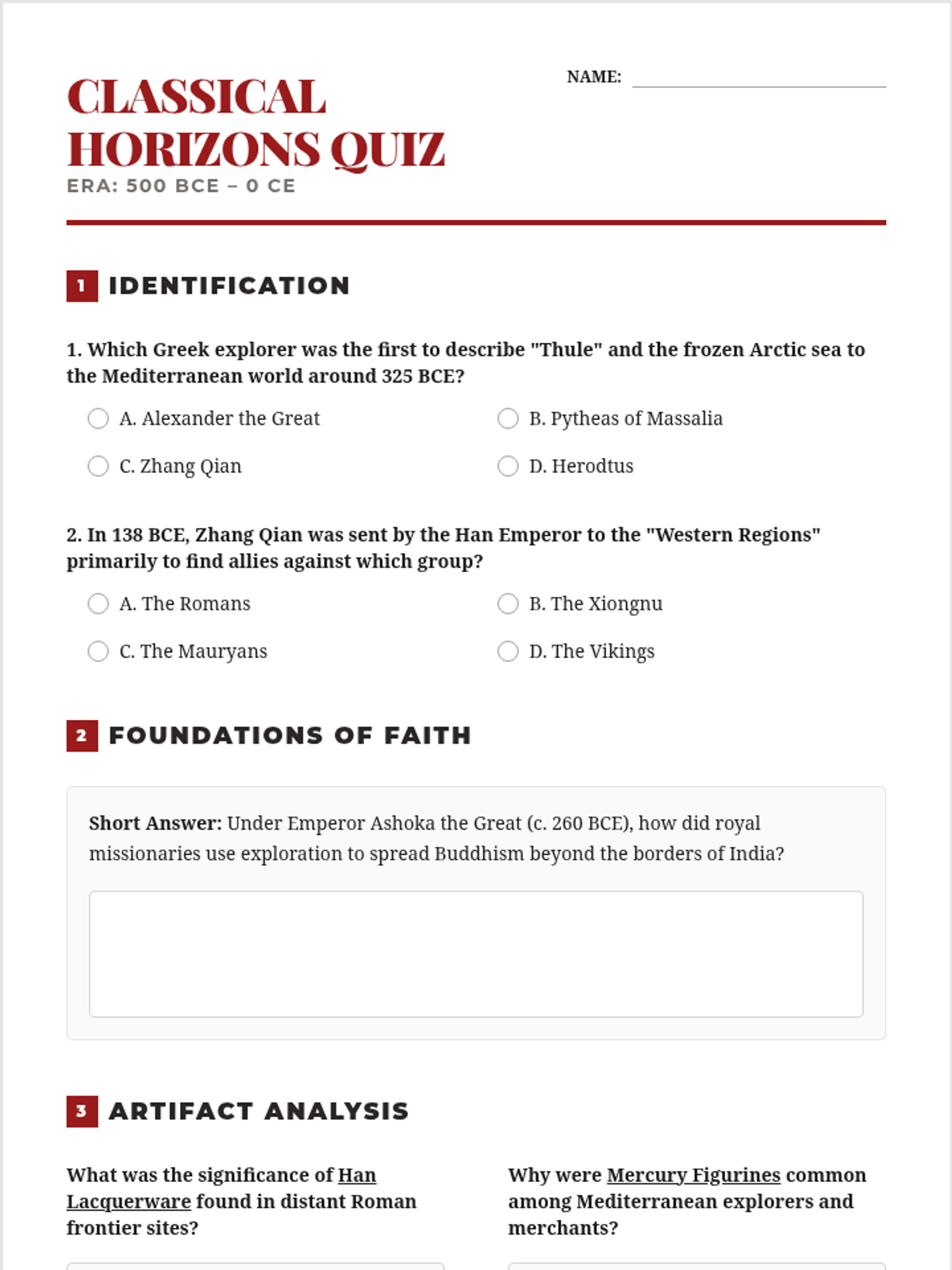
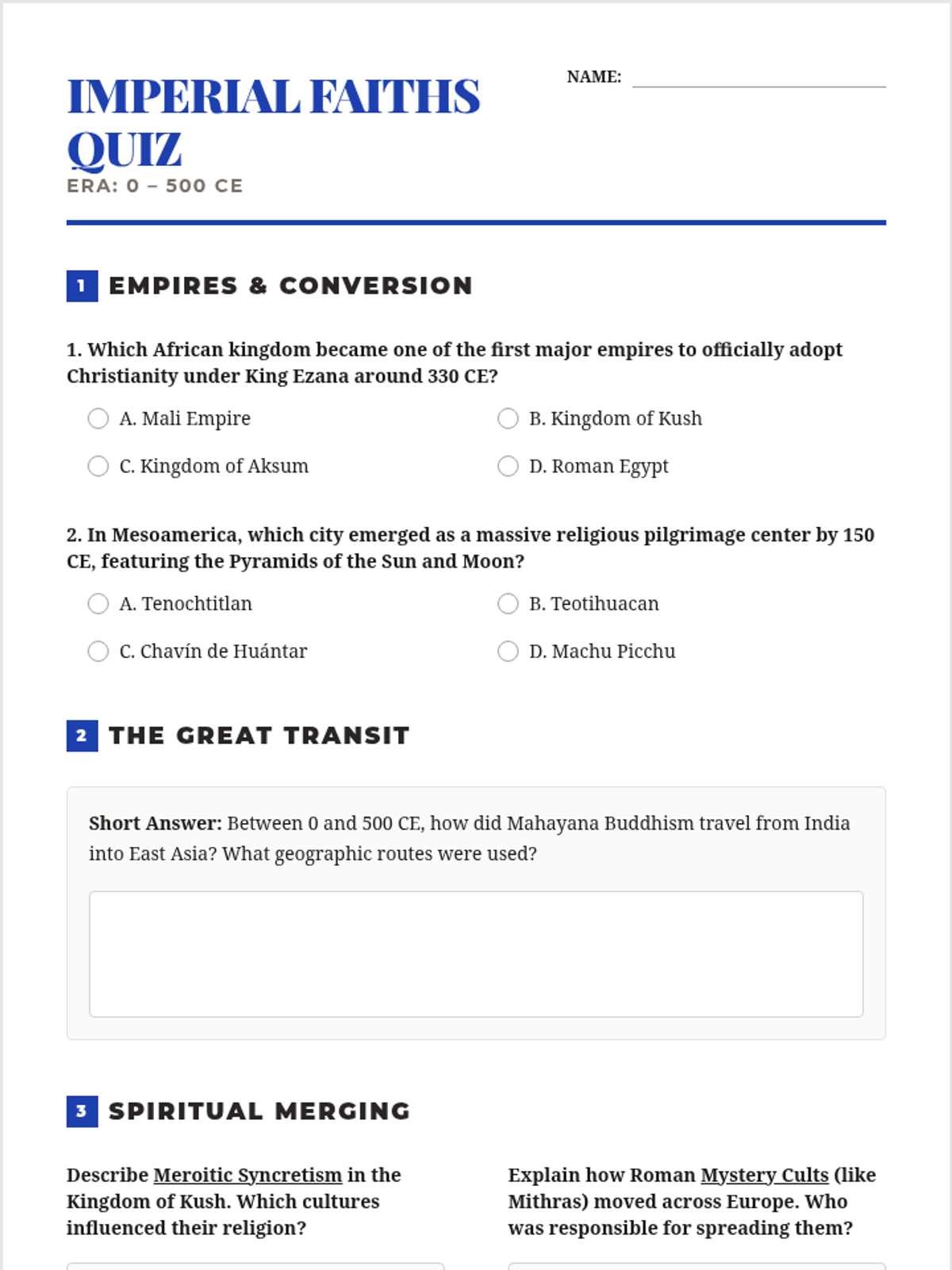
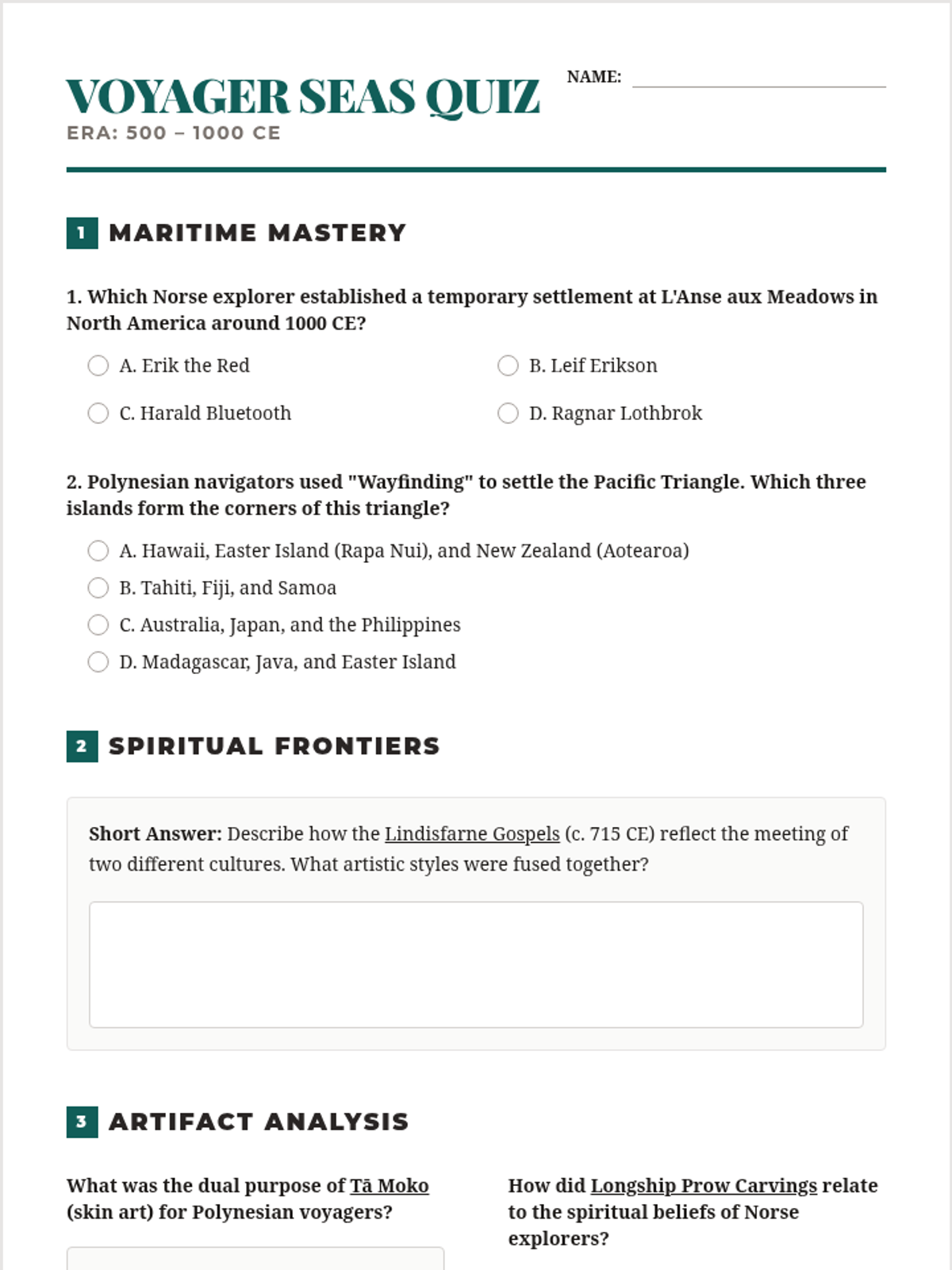
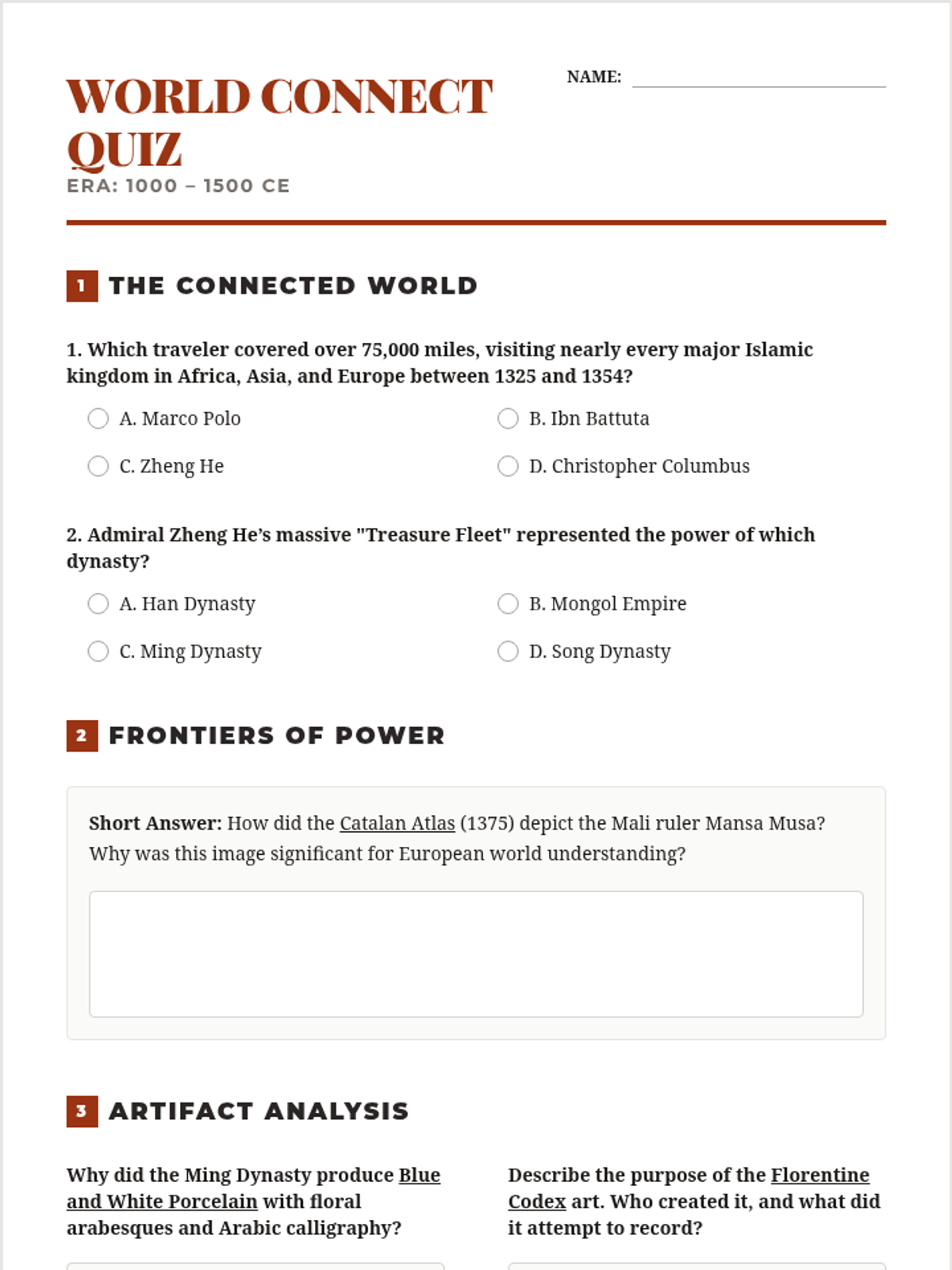
A comprehensive lesson on early world exploration from 300 BCE to 1500 CE, focusing on the geographical, cultural, and religious impacts of key explorers across different continents.
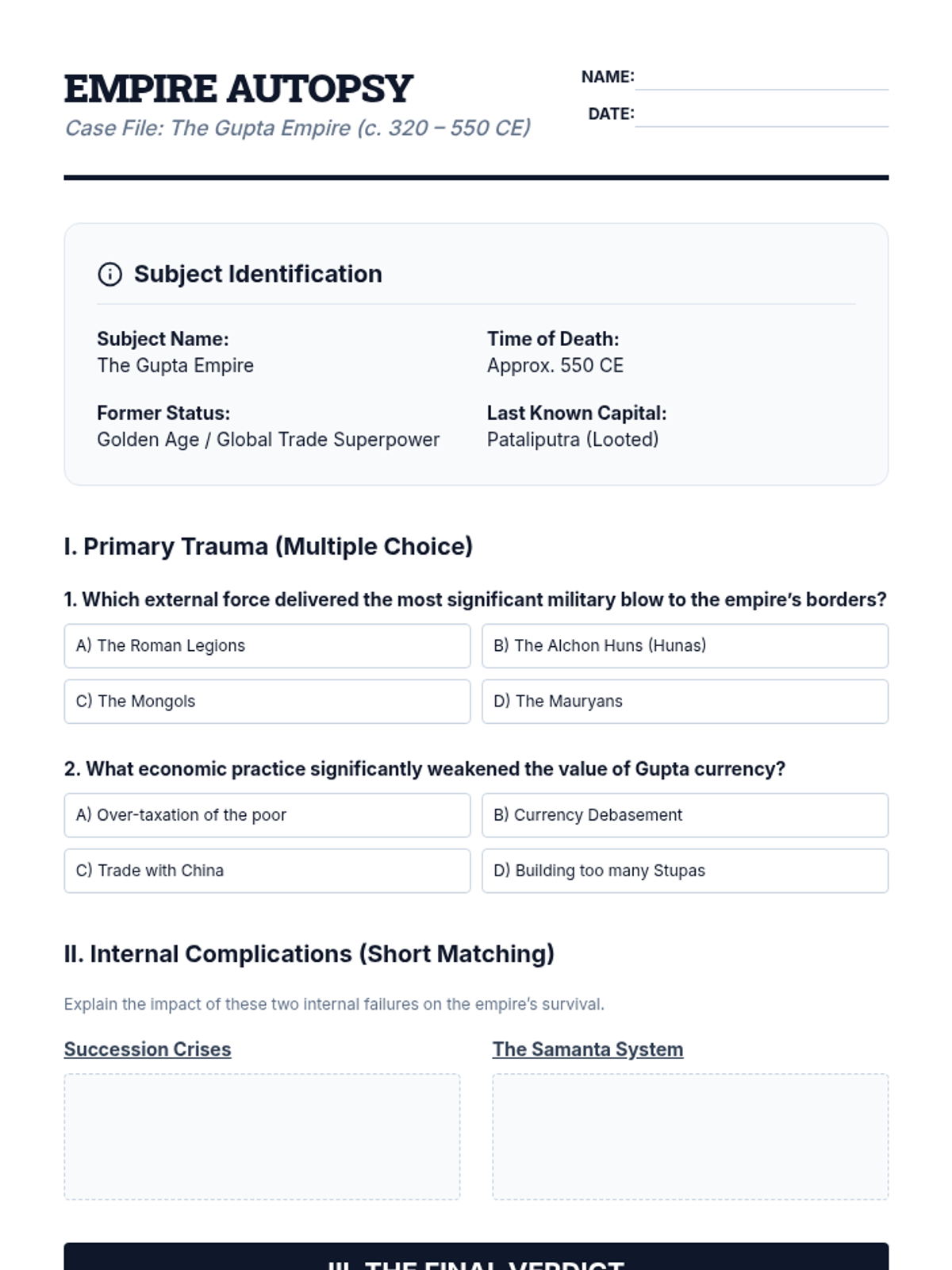
Synthesizes the causes of the final collapse and evaluates the lasting cultural legacy of the Gupta period in South Asia.
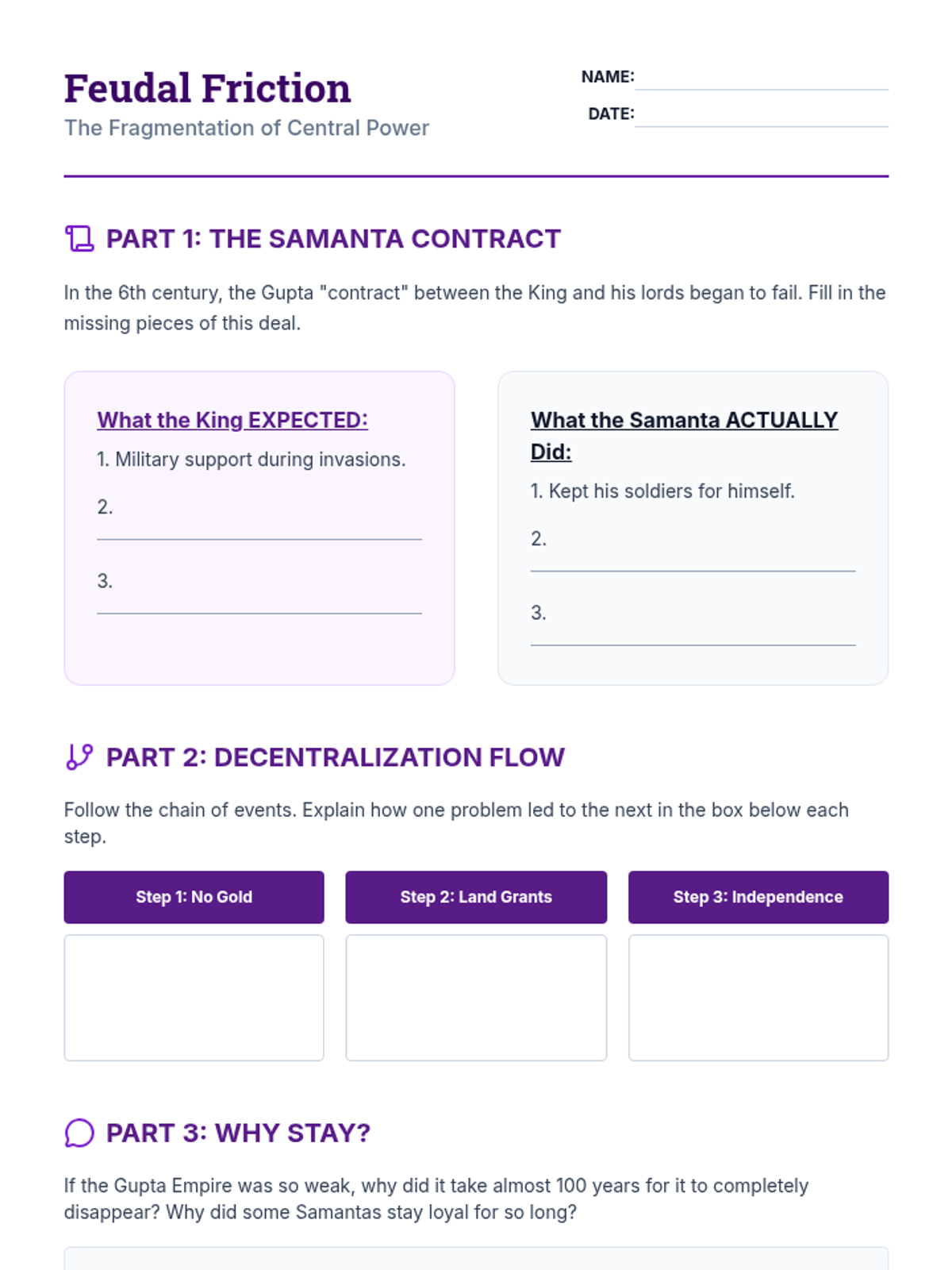
Explores the rise of regional feudal lords (Samantas) and the administrative decentralization that led to political fragmentation.
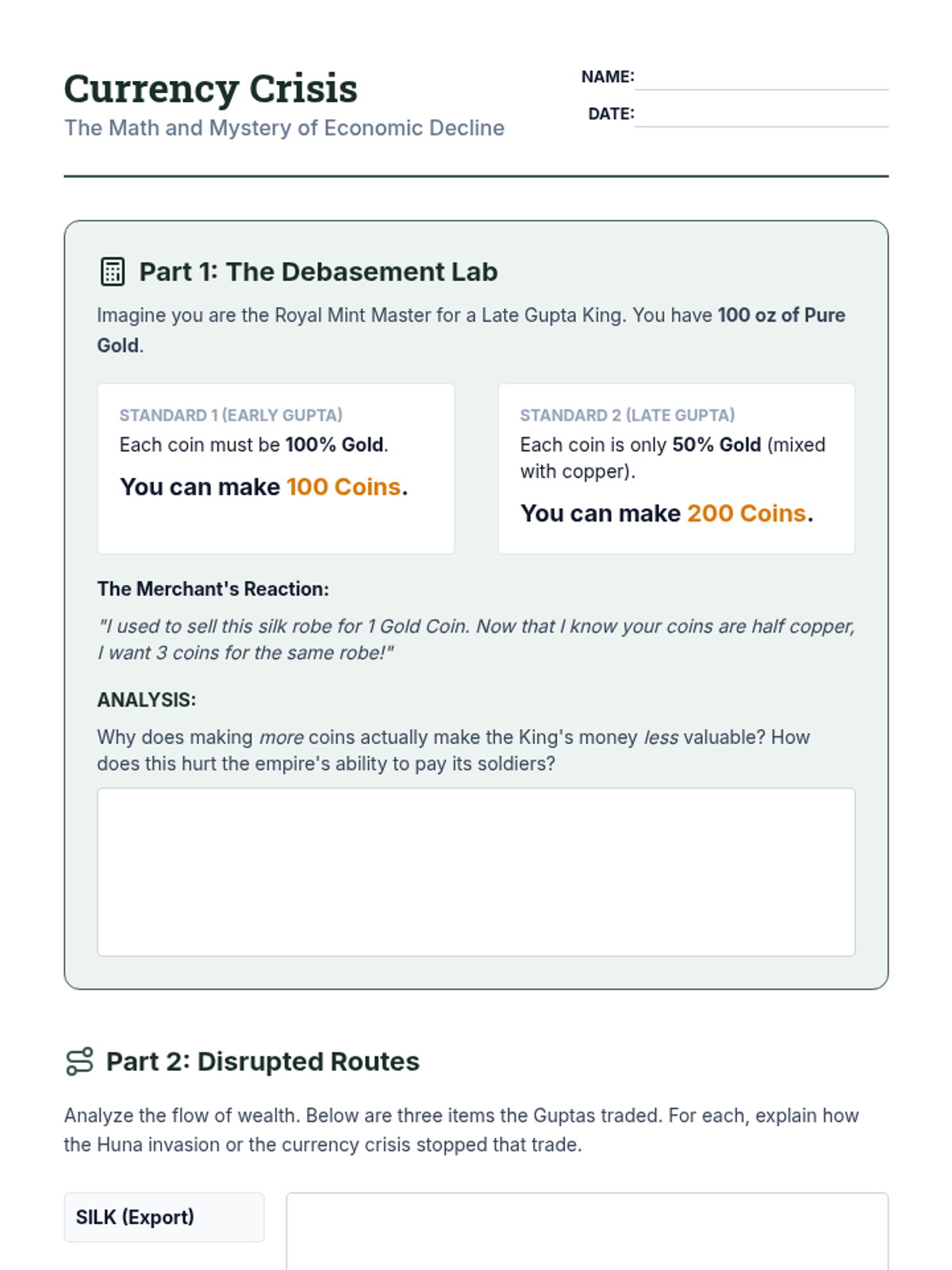
Analyzes the economic factors behind the decline, including the disruption of silk trade routes and currency debasement.
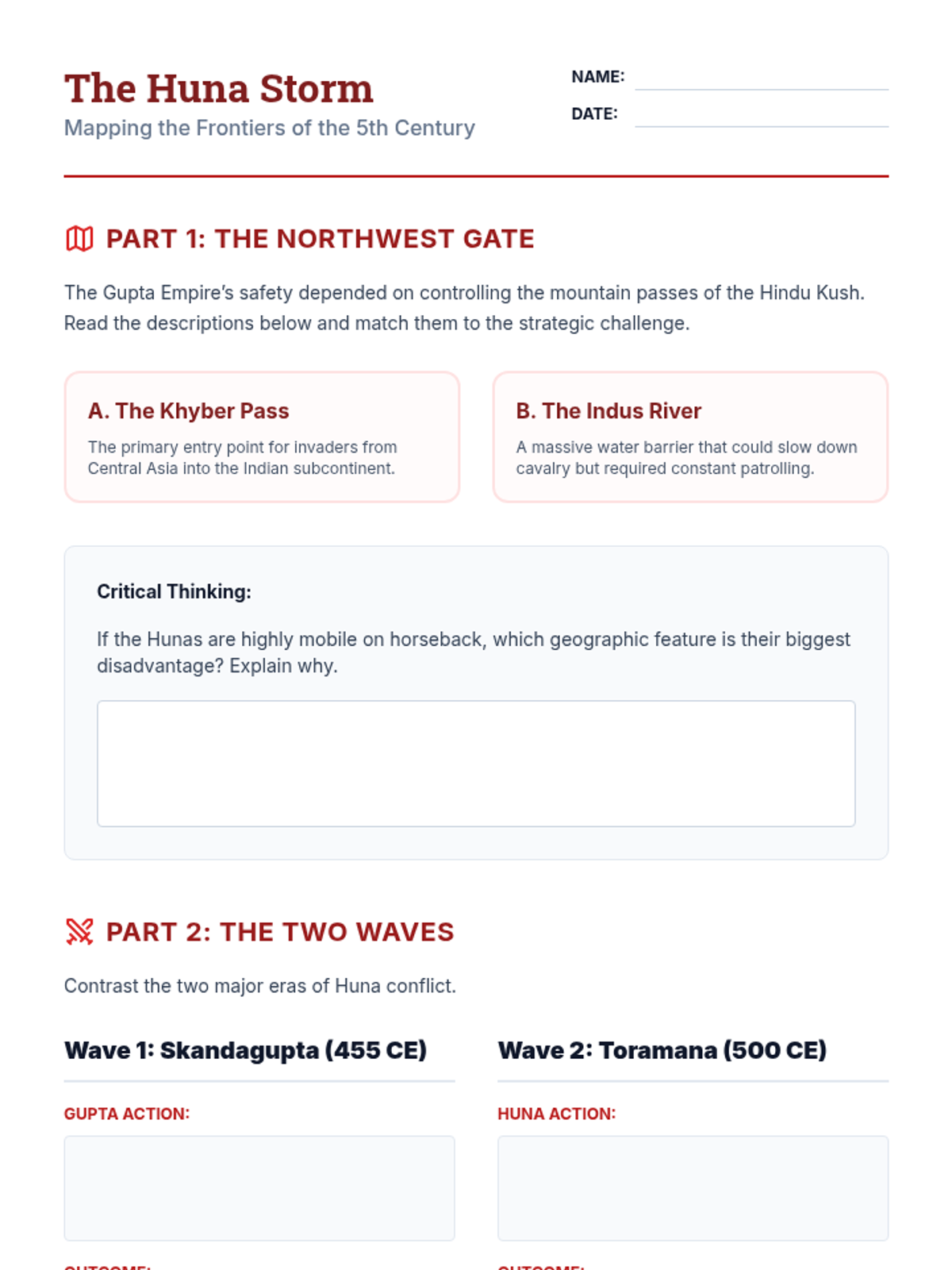
Investigates the Huna invasions, their military impact, and the exhaustion of Gupta resources in defending the frontiers.
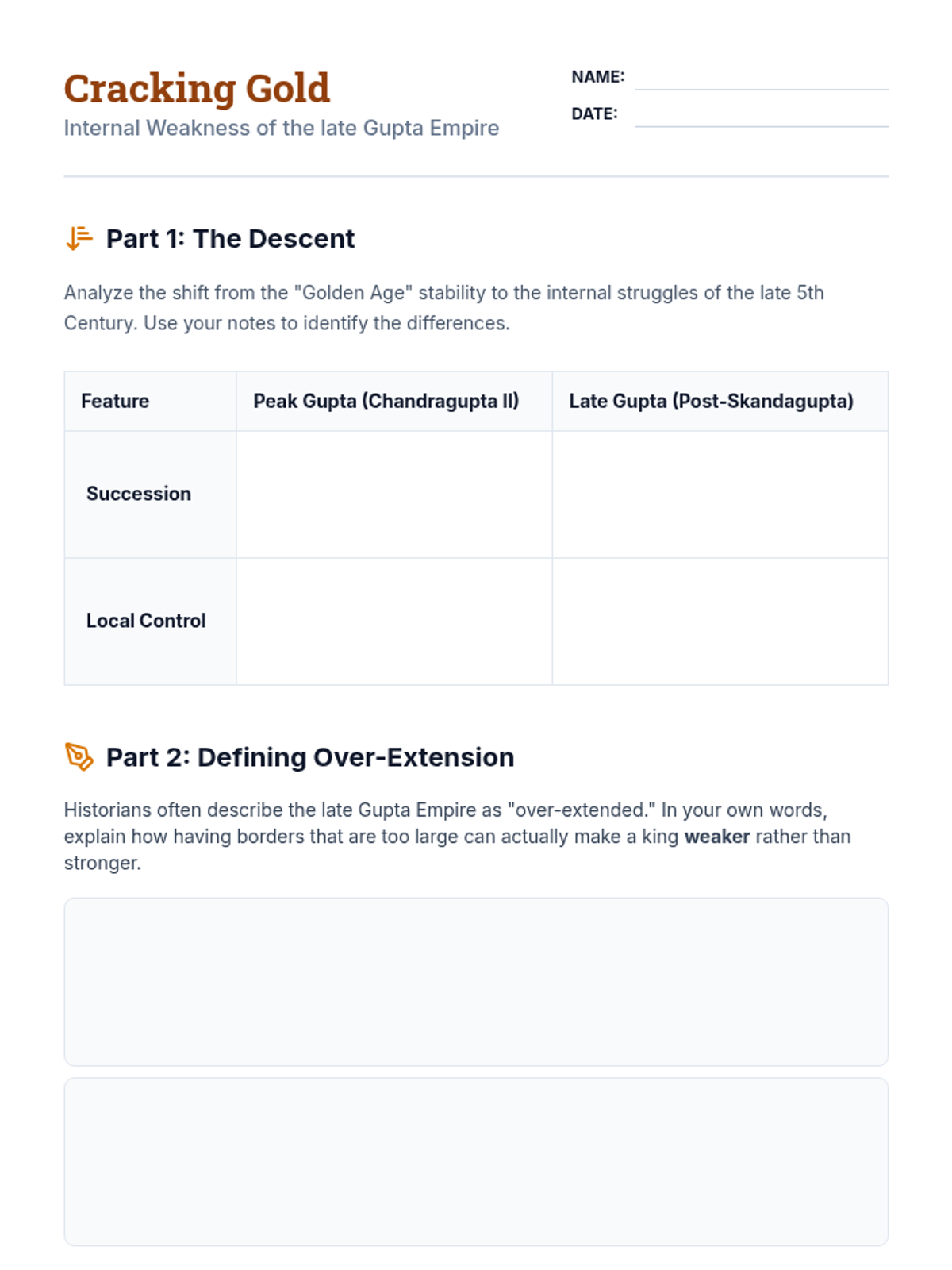
Examines the internal weaknesses of the late Gupta Empire, focusing on succession struggles and the erosion of central authority.
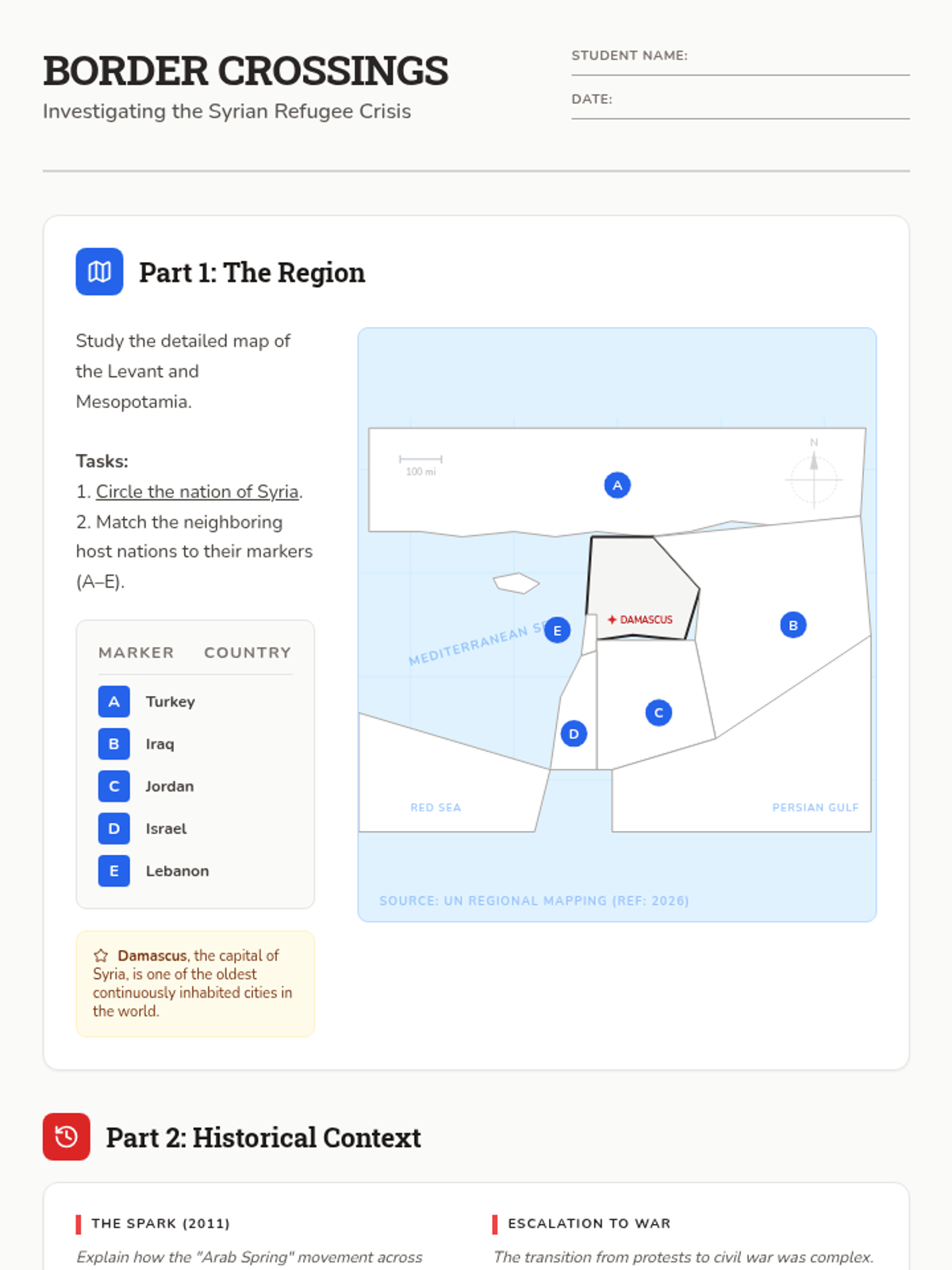
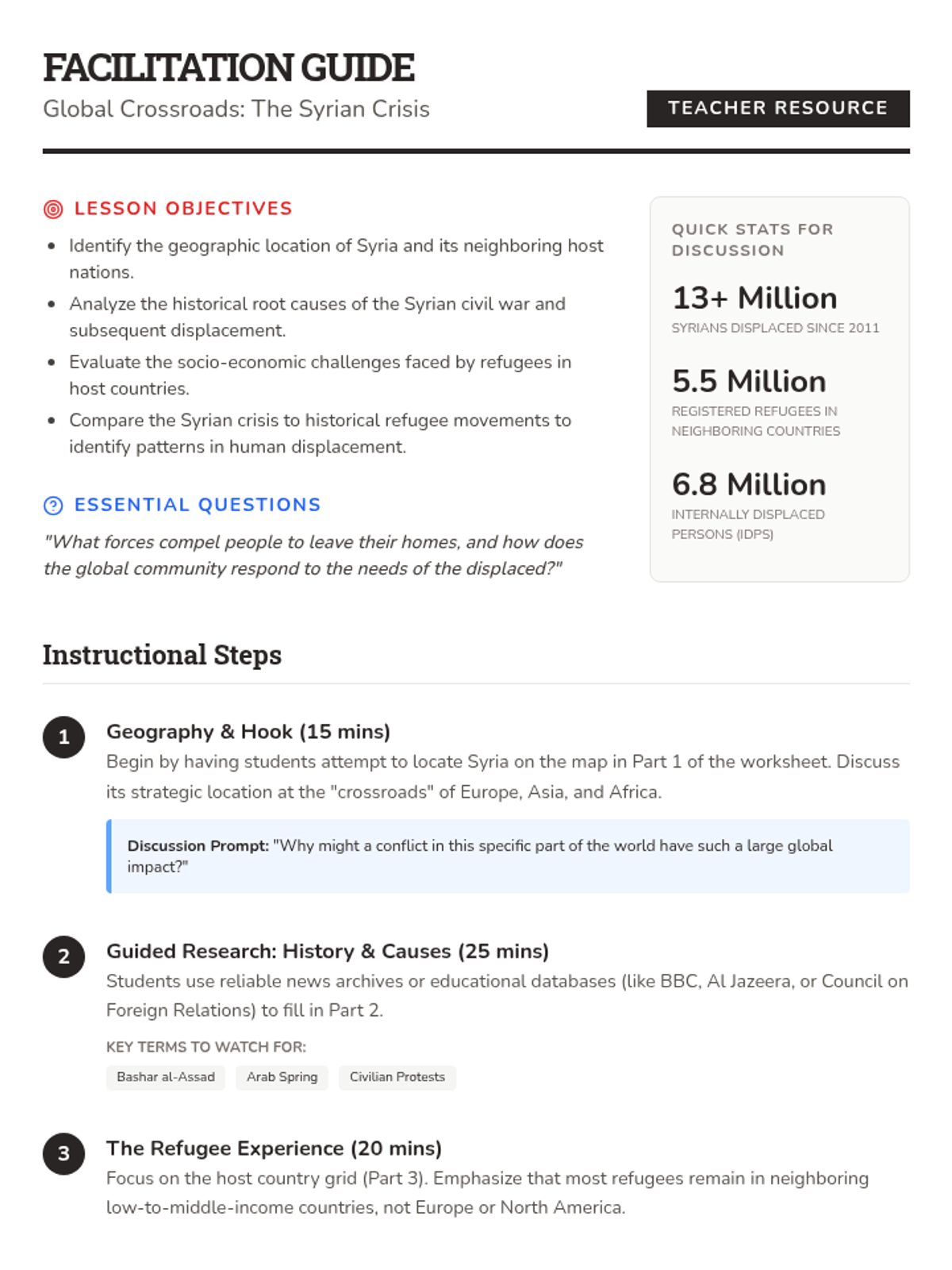
A lesson focused on understanding the Syrian refugee crisis through geography, historical context, and comparative analysis of global displacement.
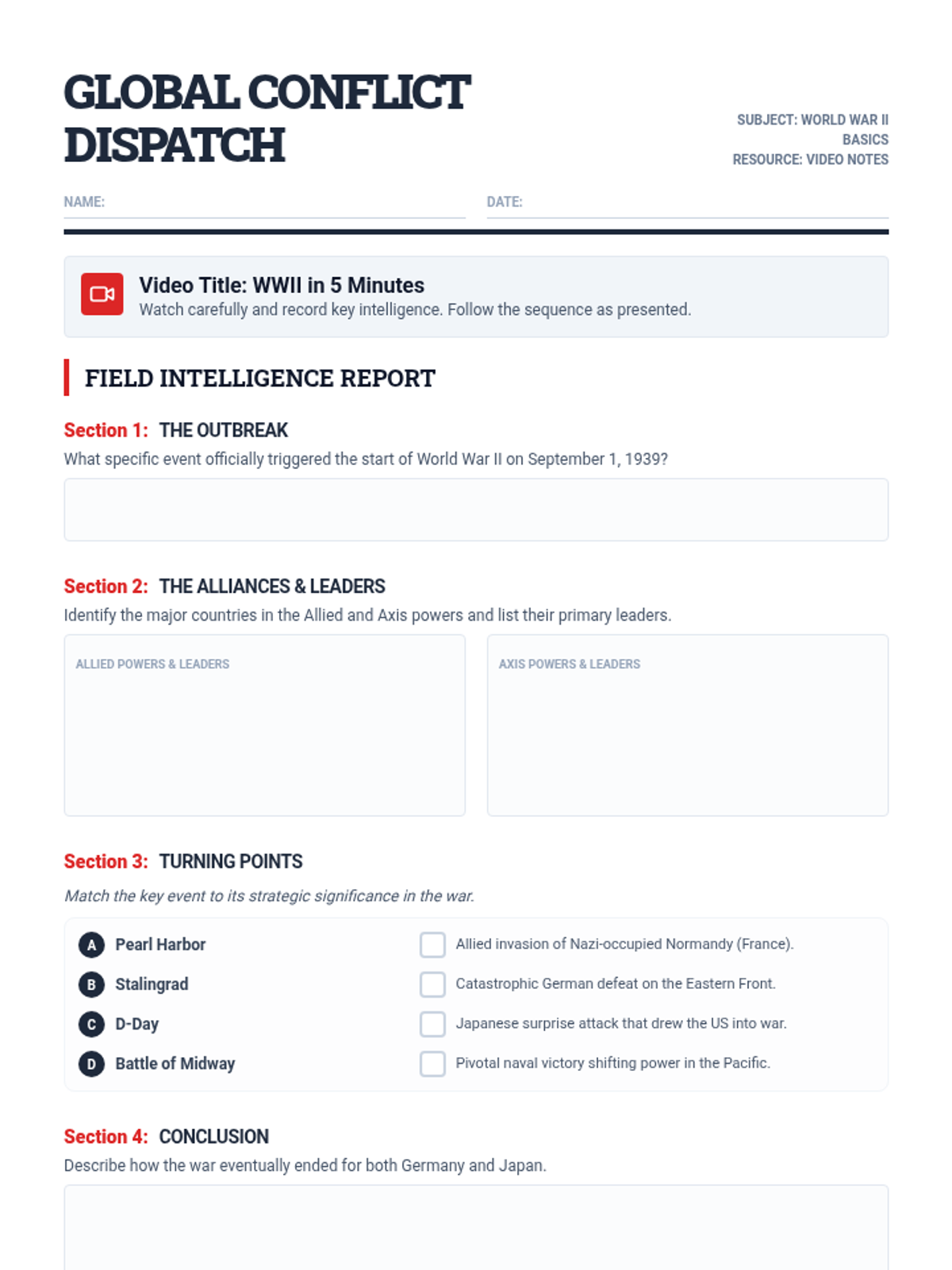
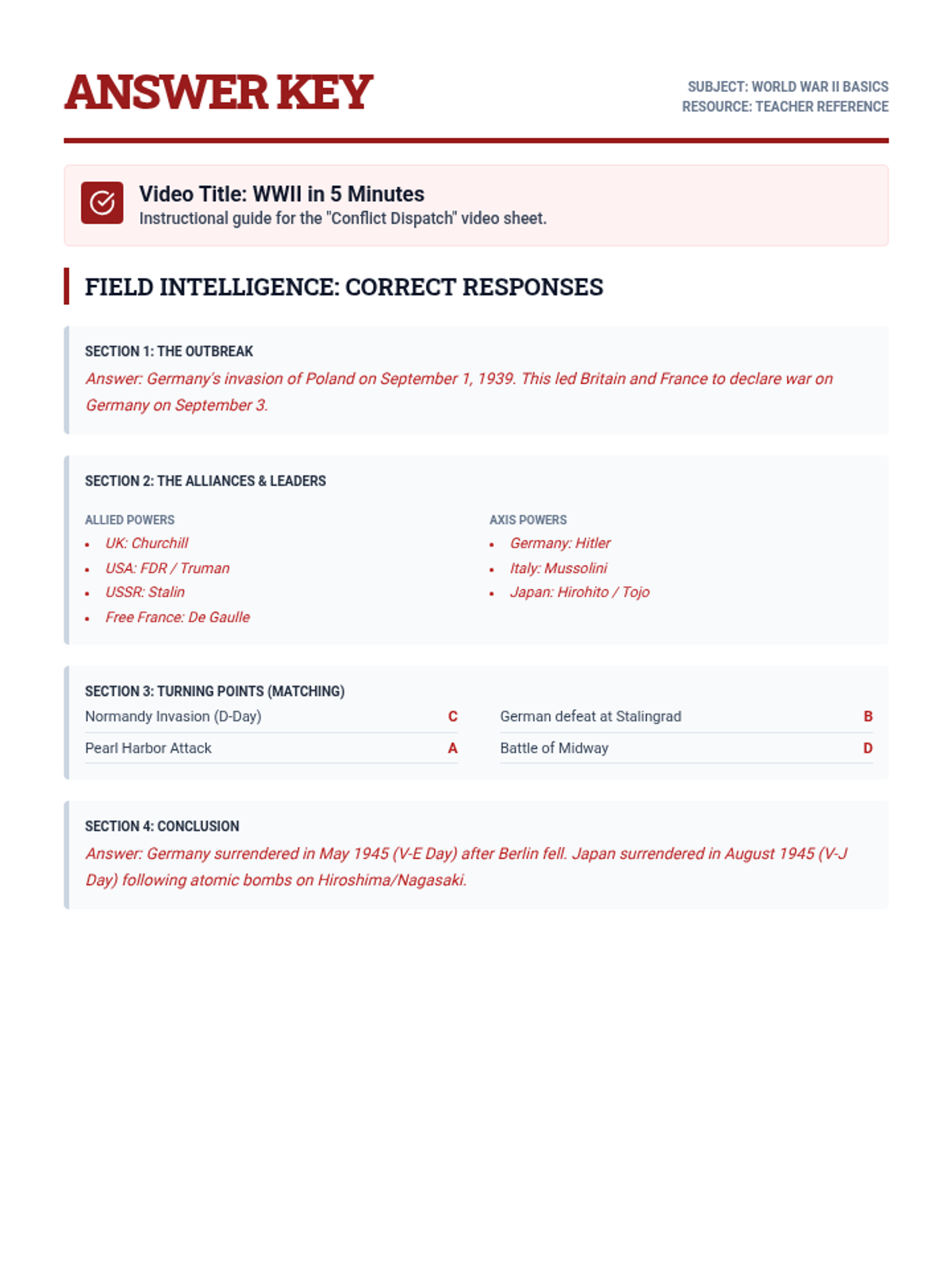
An introductory lesson covering the major events, alliances, and turning points of World War II through a map-based summary video.
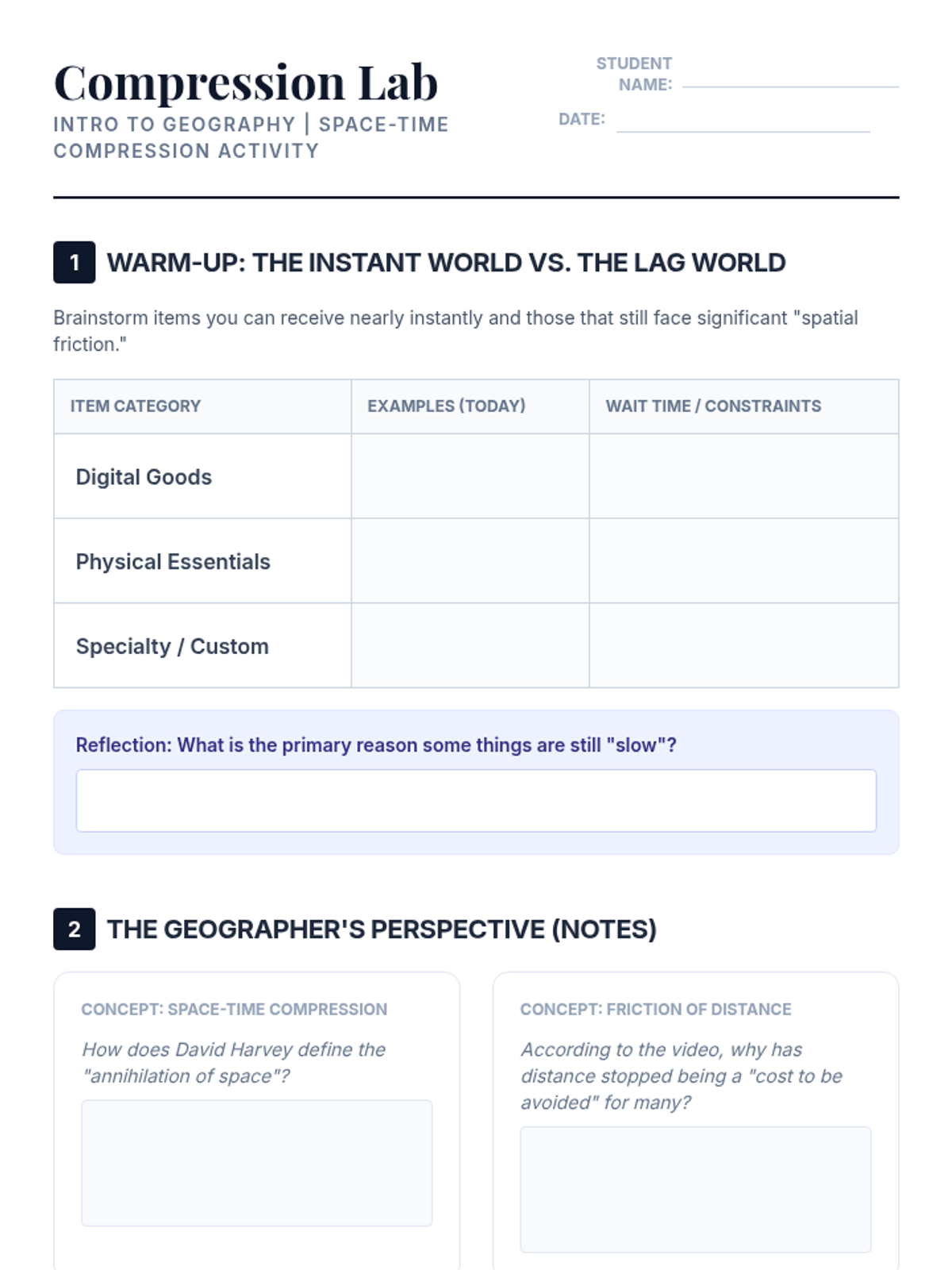
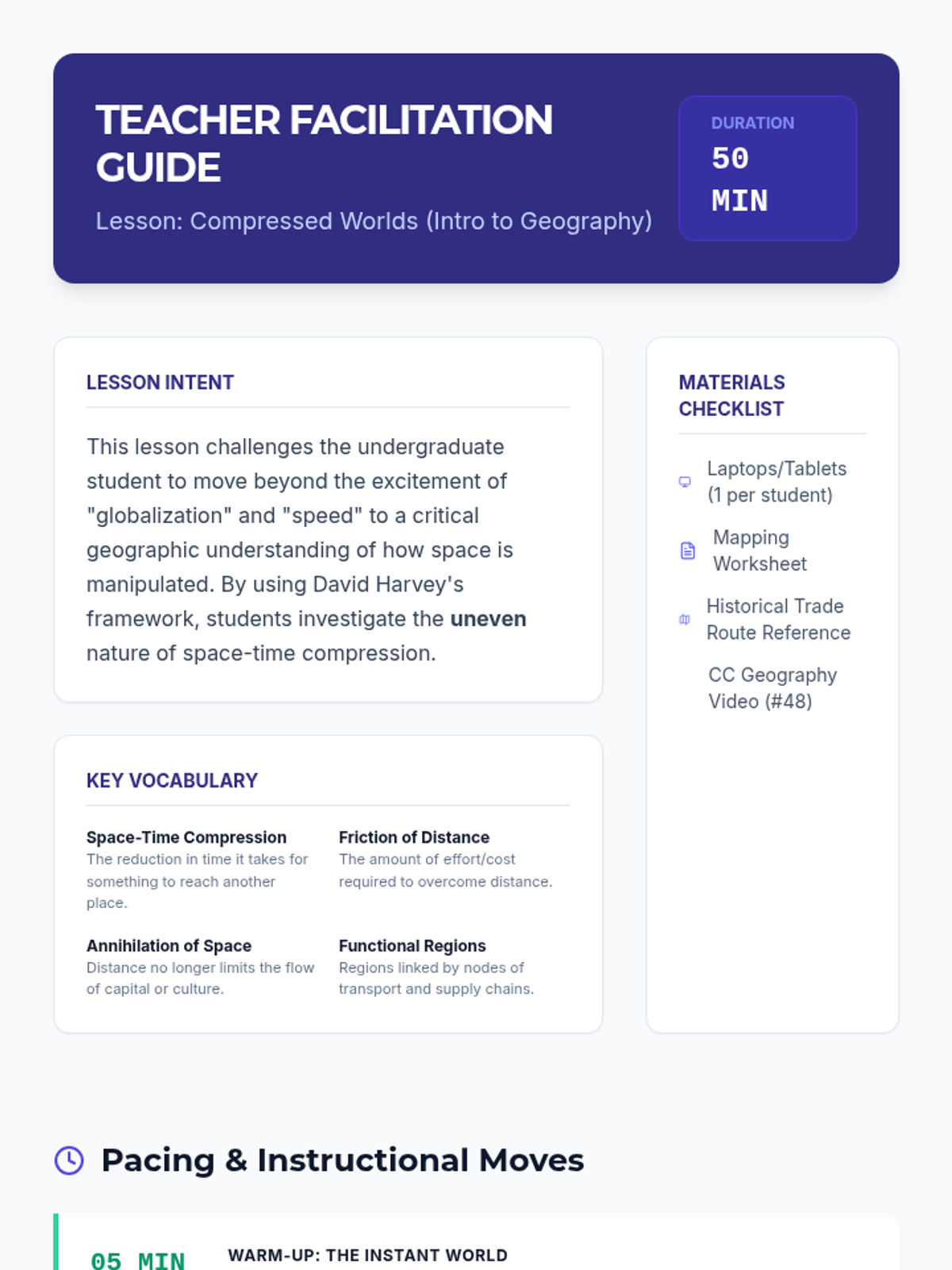
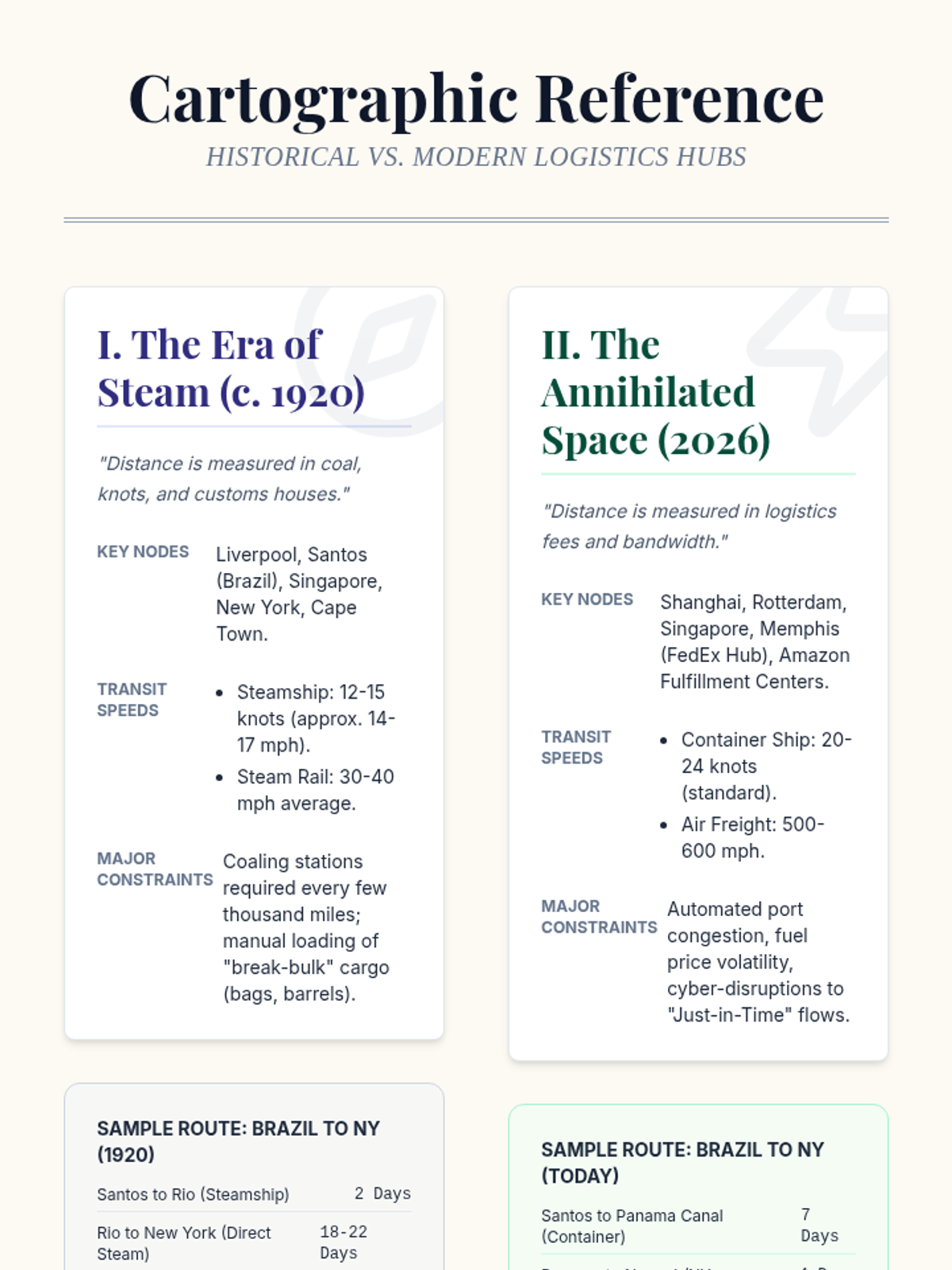
An undergraduate geography lesson exploring David Harvey's concept of space-time compression, investigating how transportation and technology 'annihilate' distance while creating new patterns of global inequality and 'disconnected' regions.
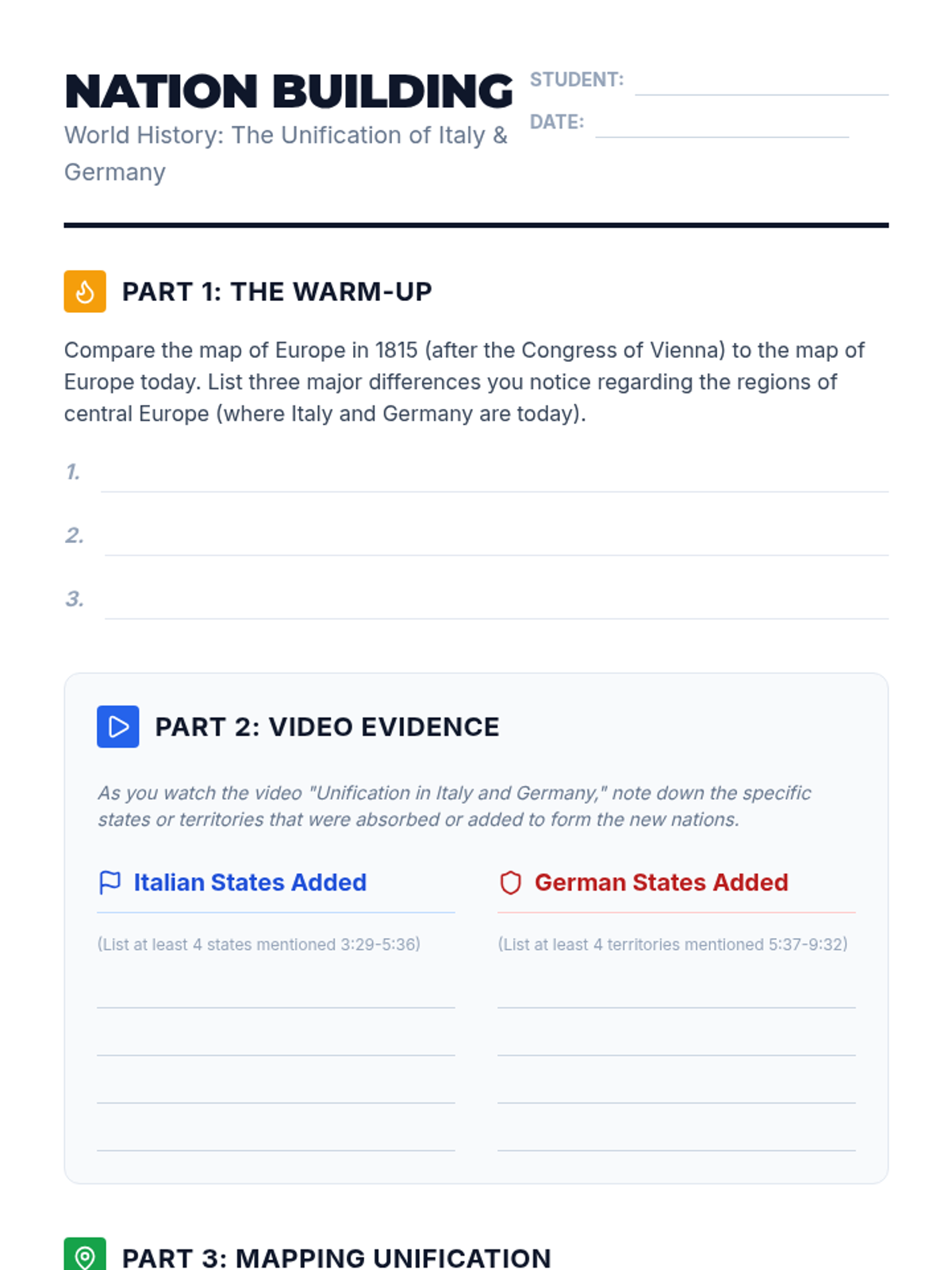
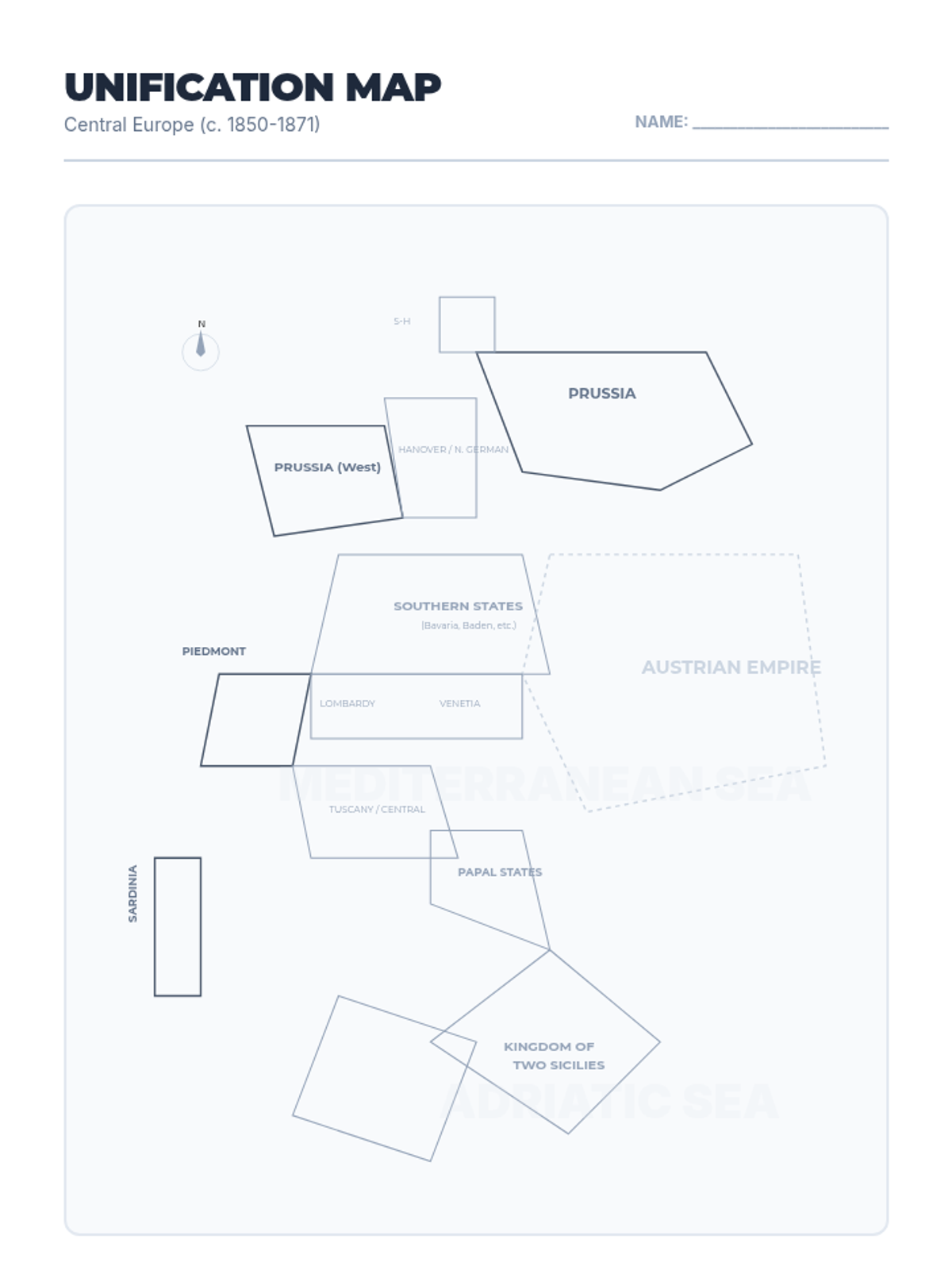
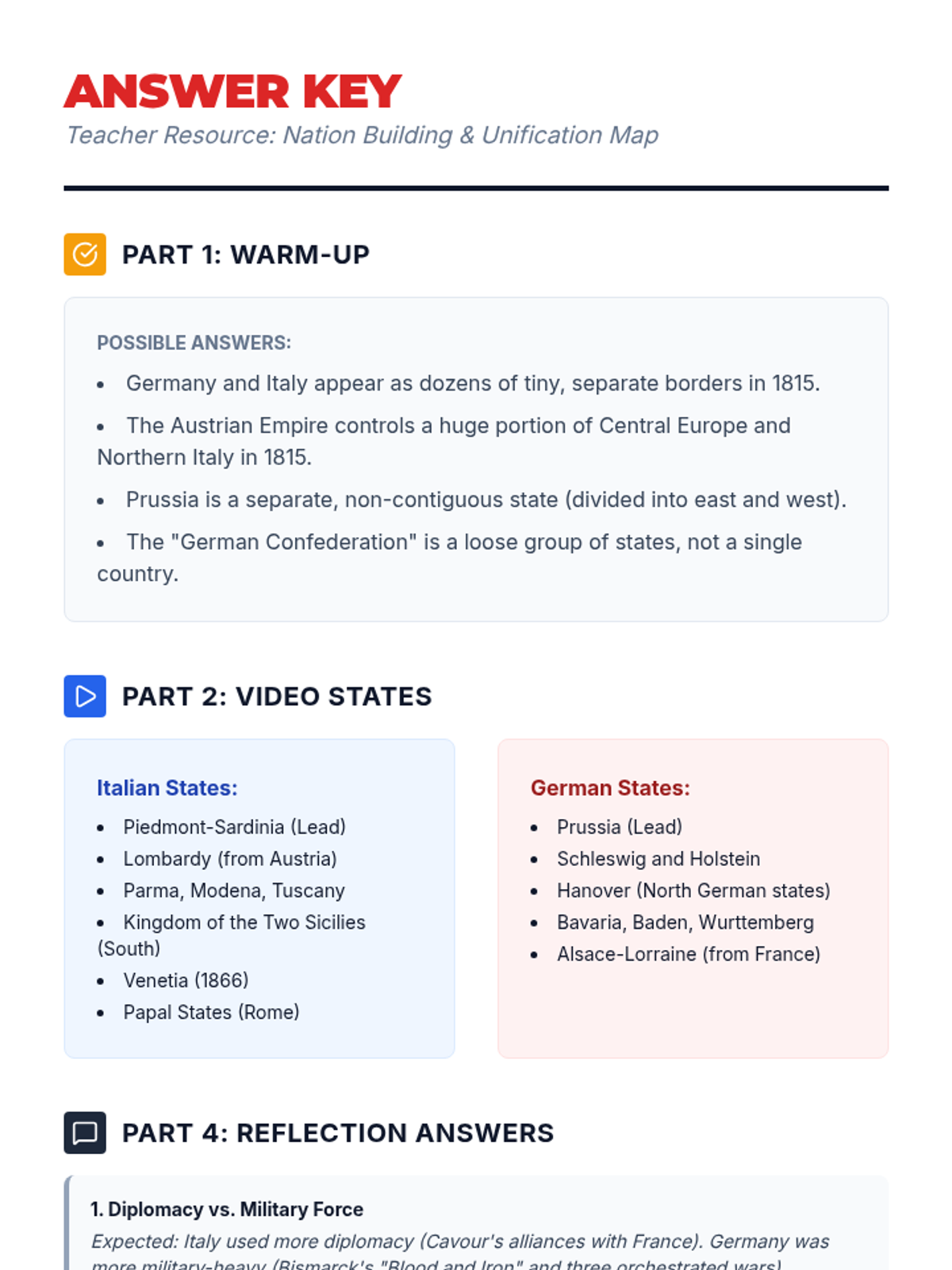
Students explore the geopolitical transformation of 19th-century Europe, focusing on how 'Realpolitik' and nationalism led to the unification of Italy and Germany. The lesson uses a mix of video analysis and map-making to visualize the collapse of the Congress of Vienna's balance of power.
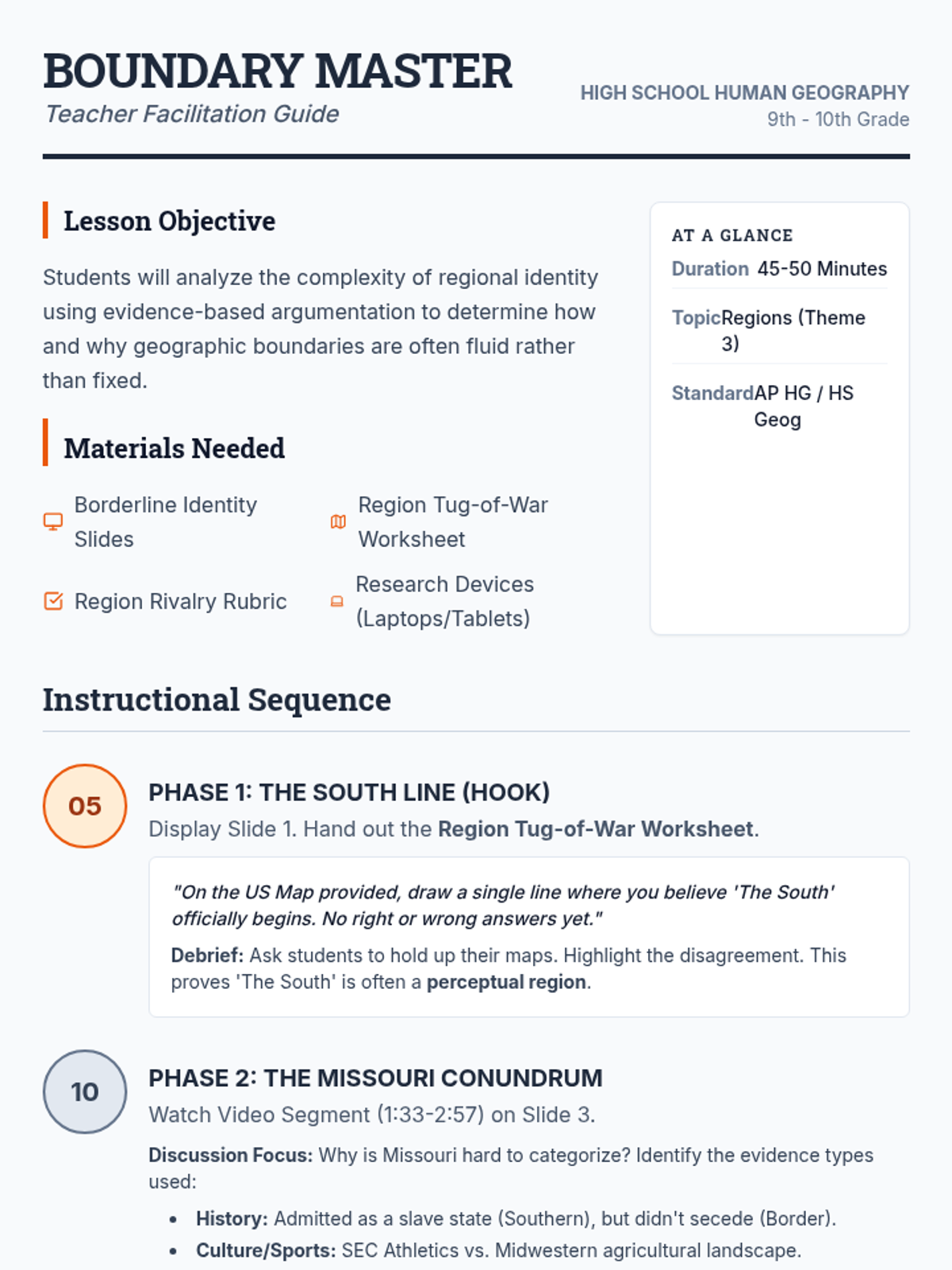
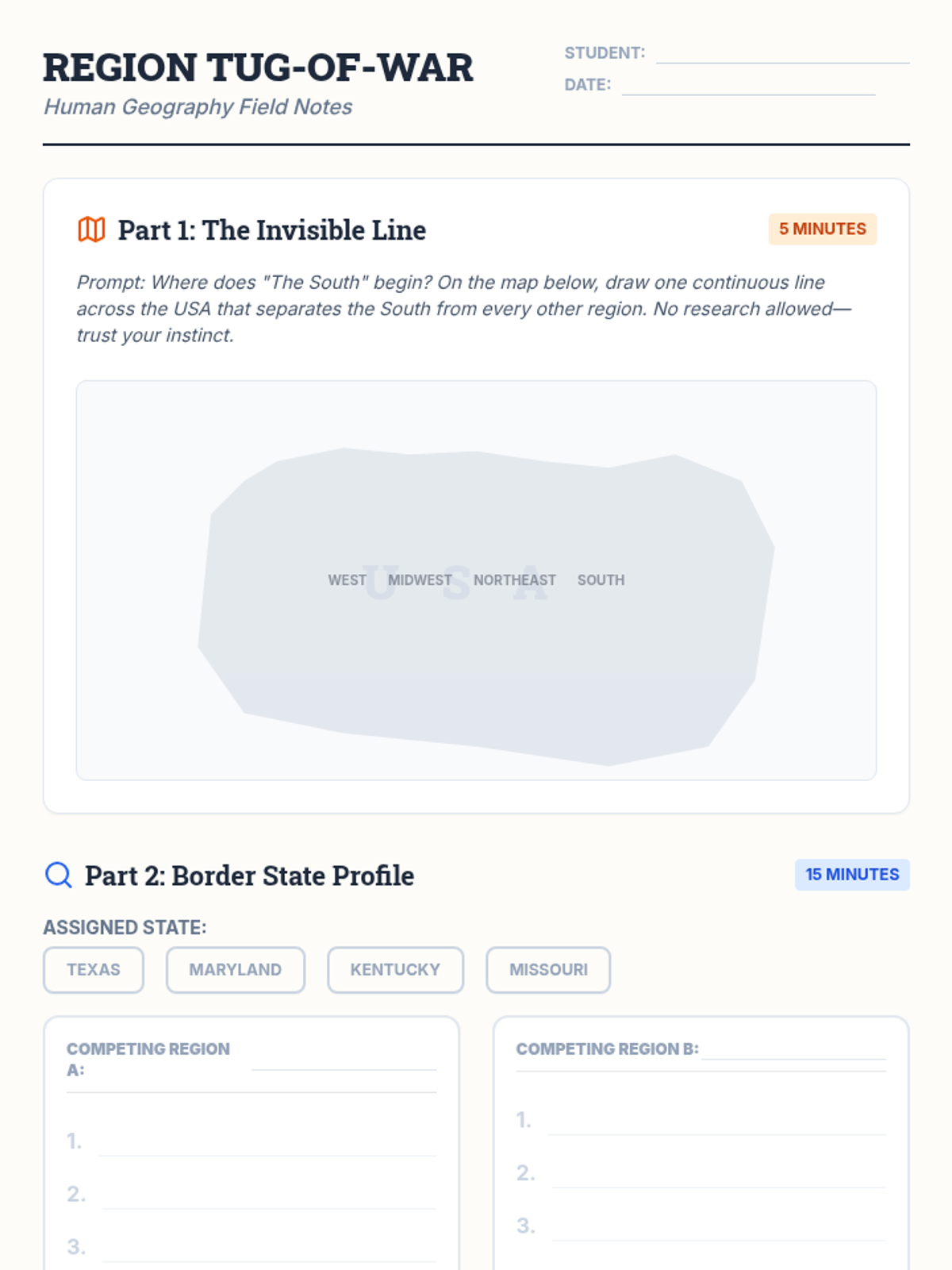
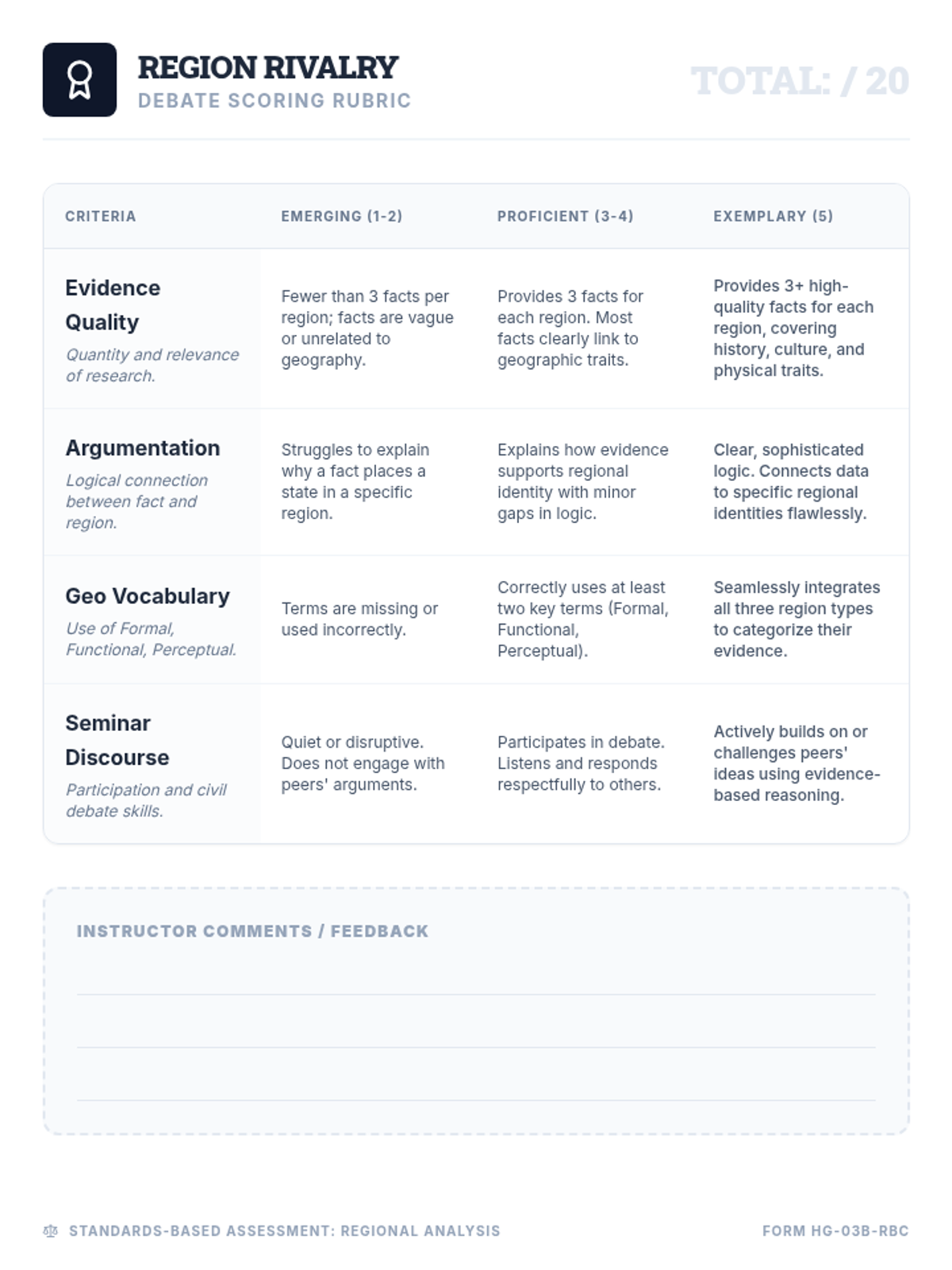
This lesson explores the fluid nature of regional identity through the lens of 'border states.' Students analyze how formal and perceptual regions overlap, using evidence to argue for a state's placement in specific cultural or geographic regions.
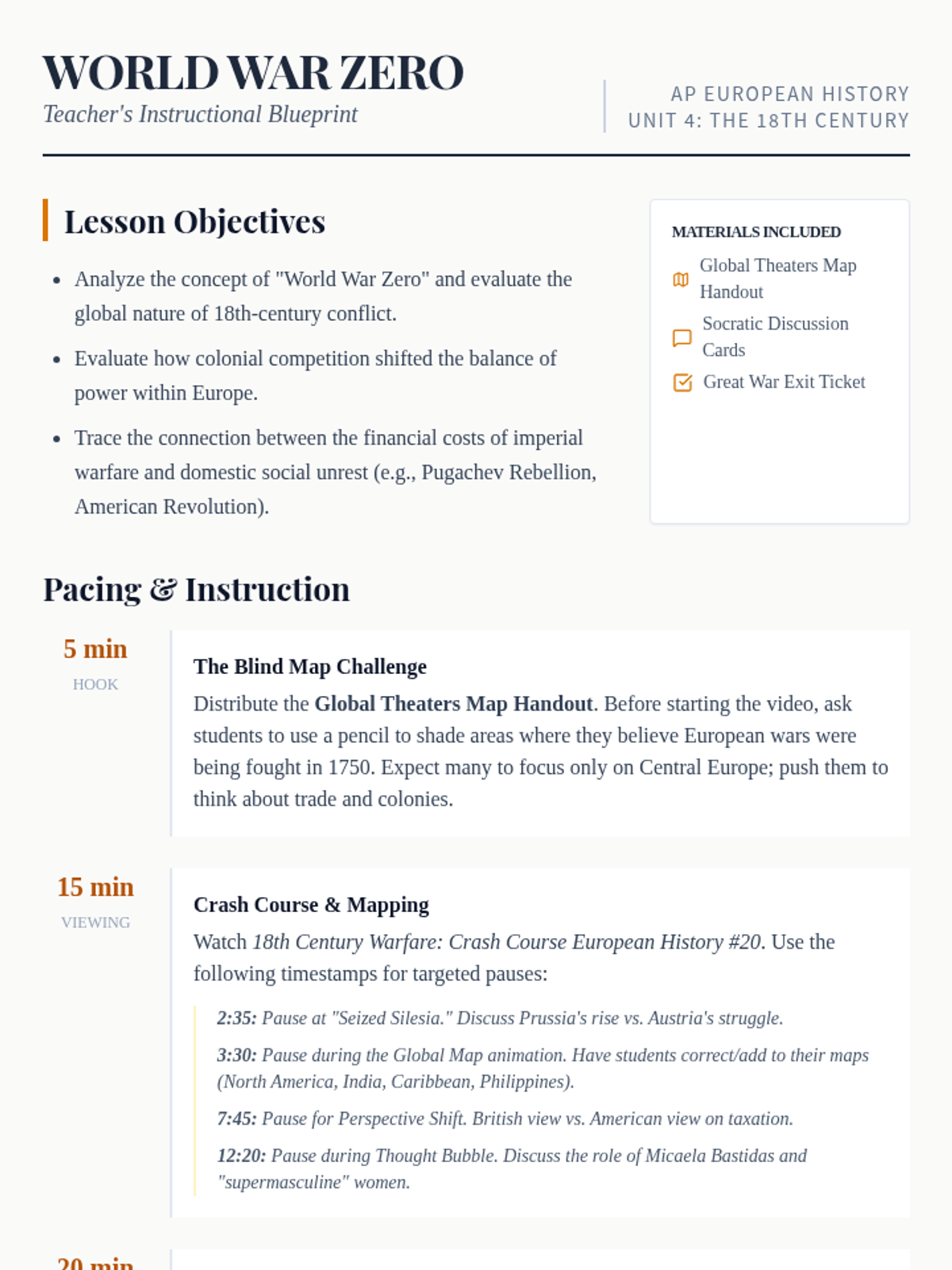
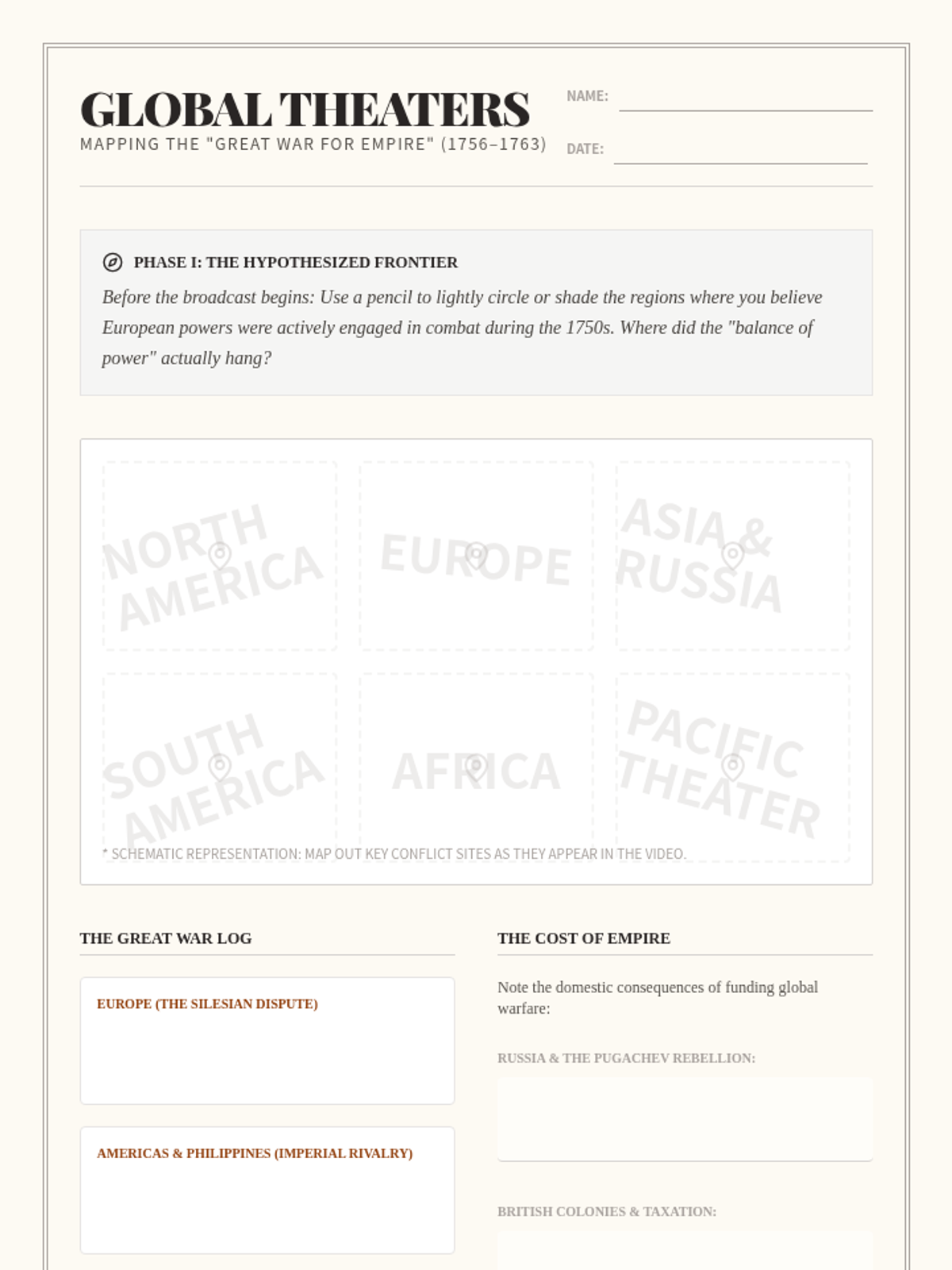
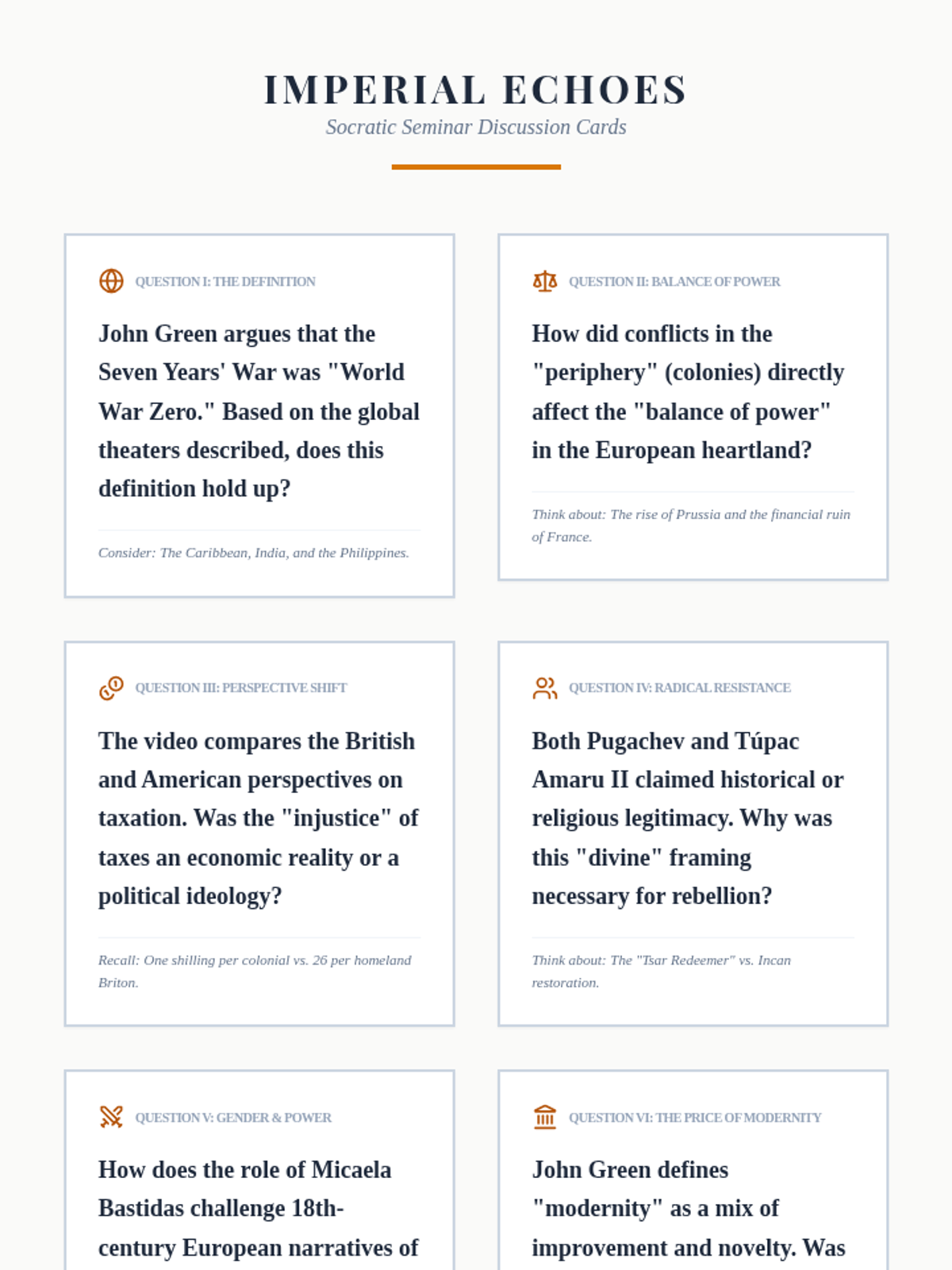
A high-school level lesson exploring the global scale of 18th-century warfare, focusing on the Seven Years' War as 'World War Zero' and its ripple effects from Russia to Peru. Students analyze the shift from continental disputes to global imperial competition and the resulting domestic revolutions.
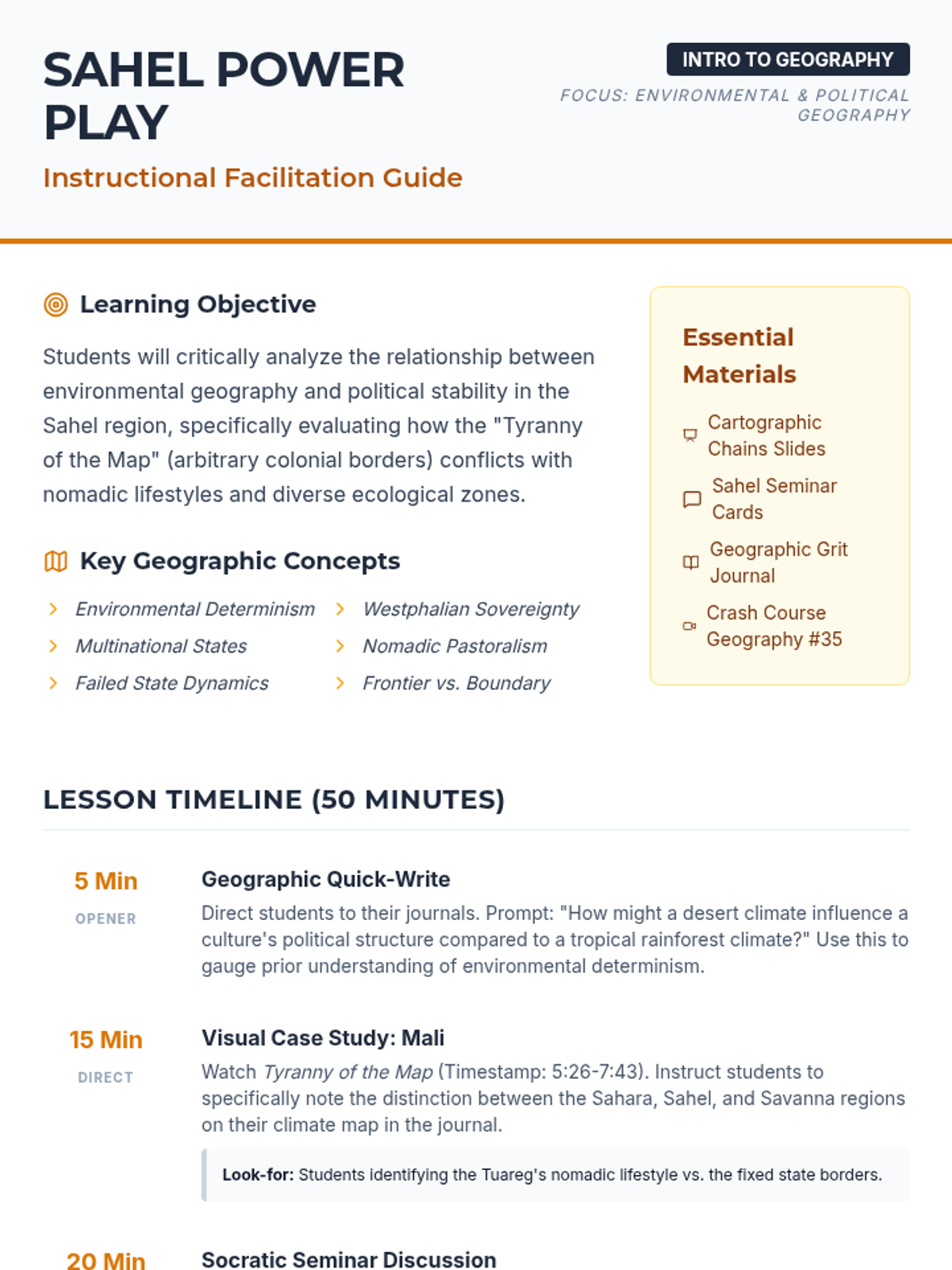
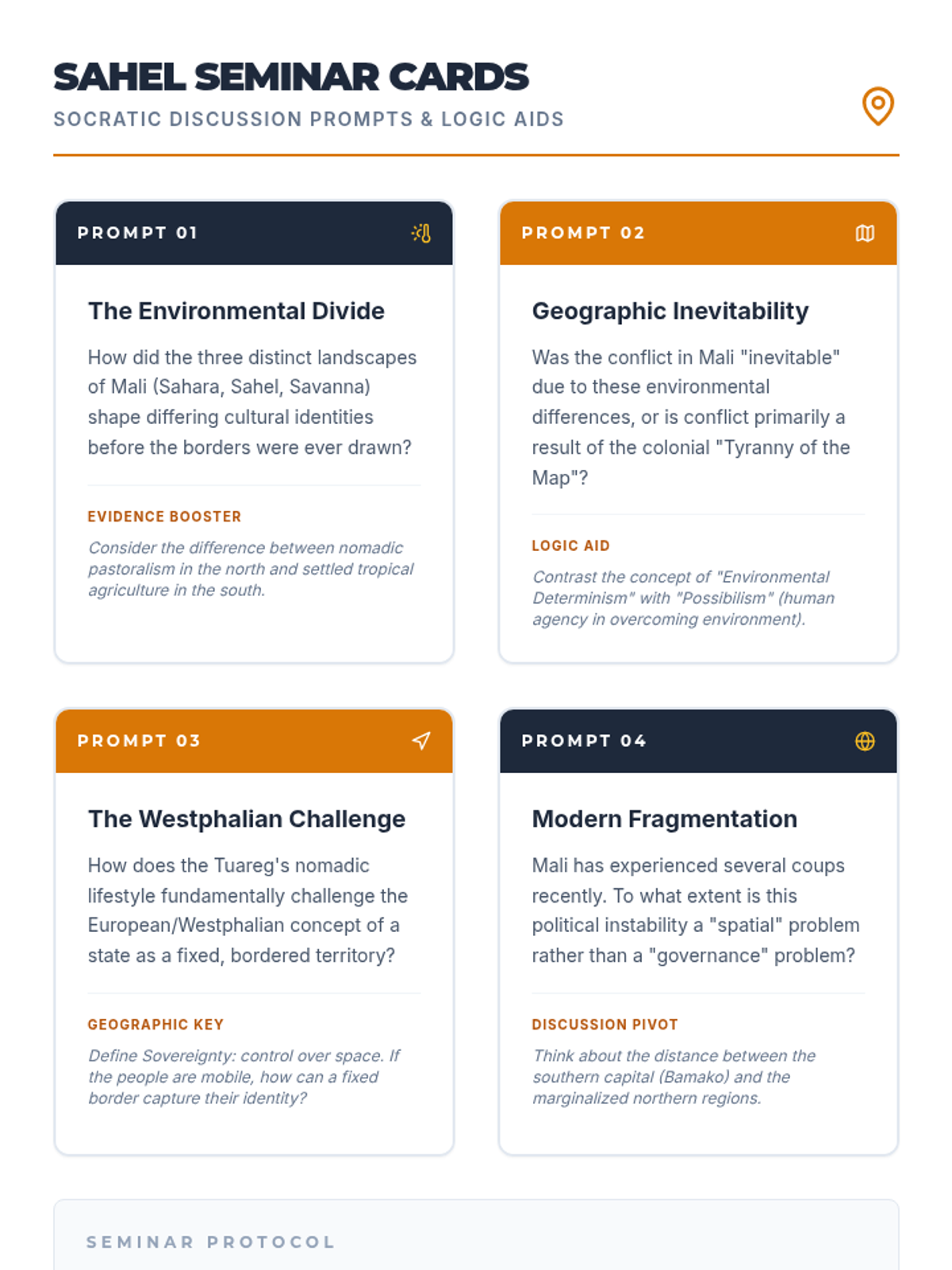
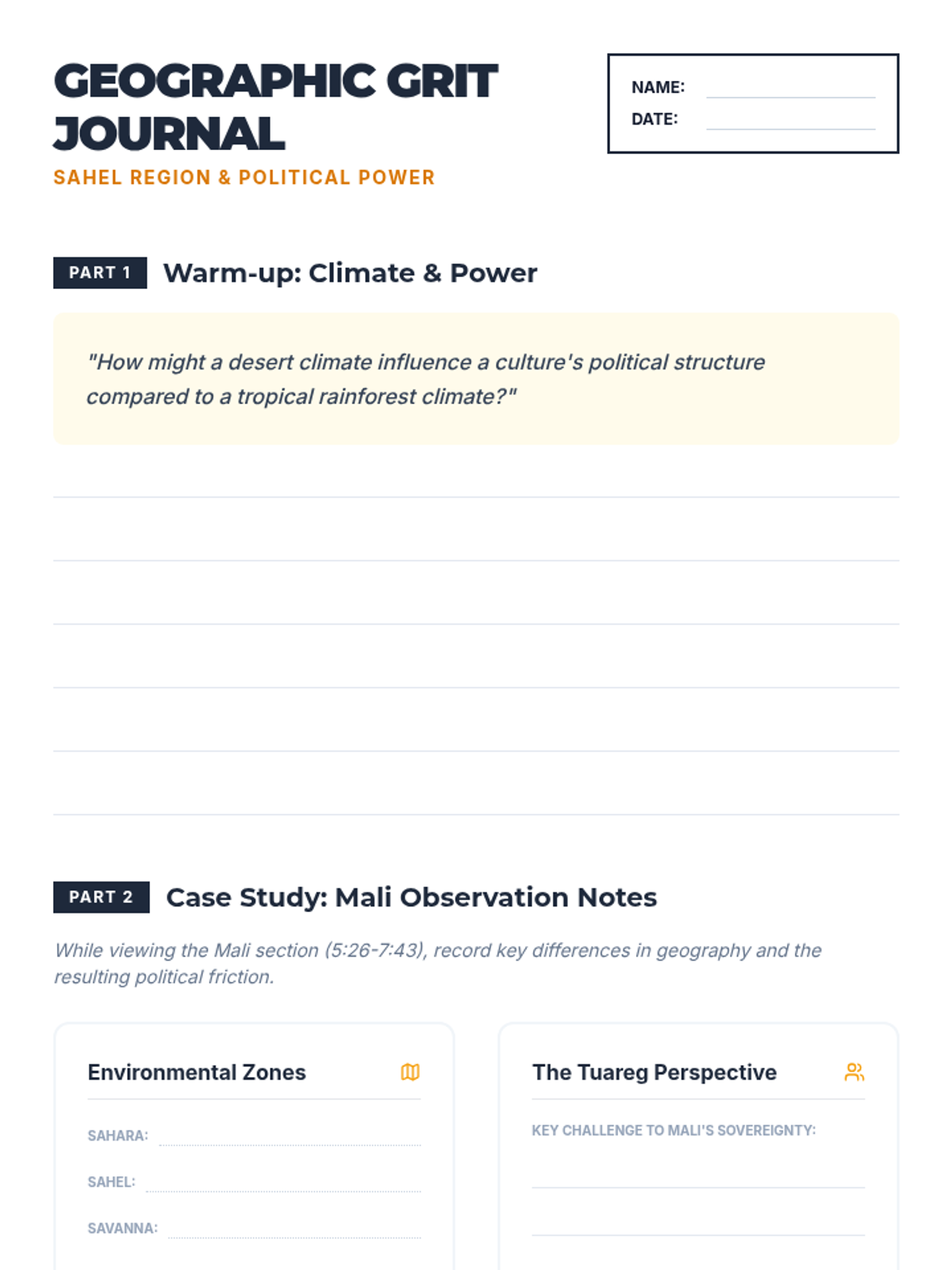
This lesson explores the intersection of environmental geography and political stability in the Sahel, specifically focusing on Mali. Students analyze how arbitrary colonial borders and diverse climate zones contribute to modern state fragility and the challenges faced by nomadic populations.
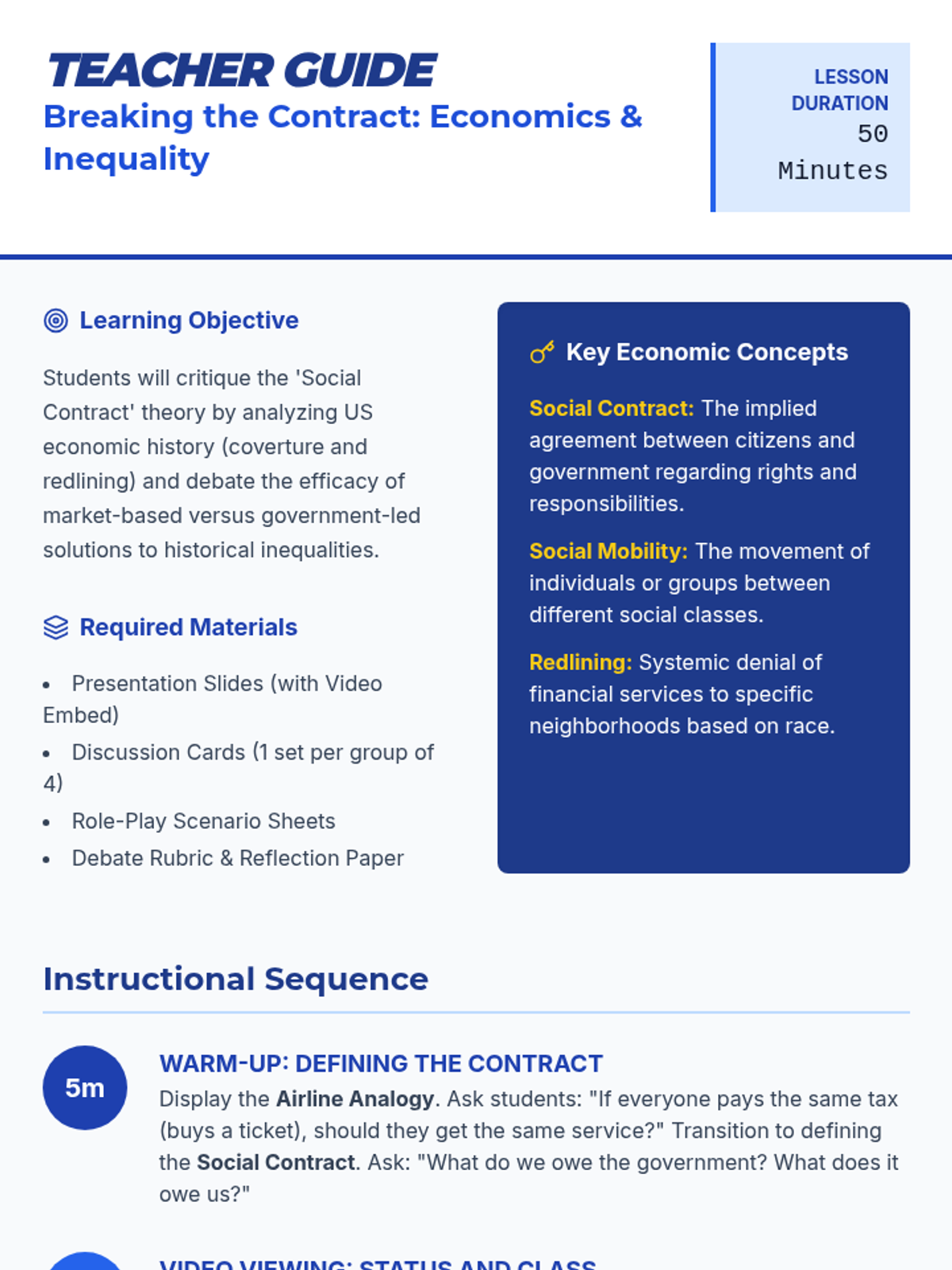
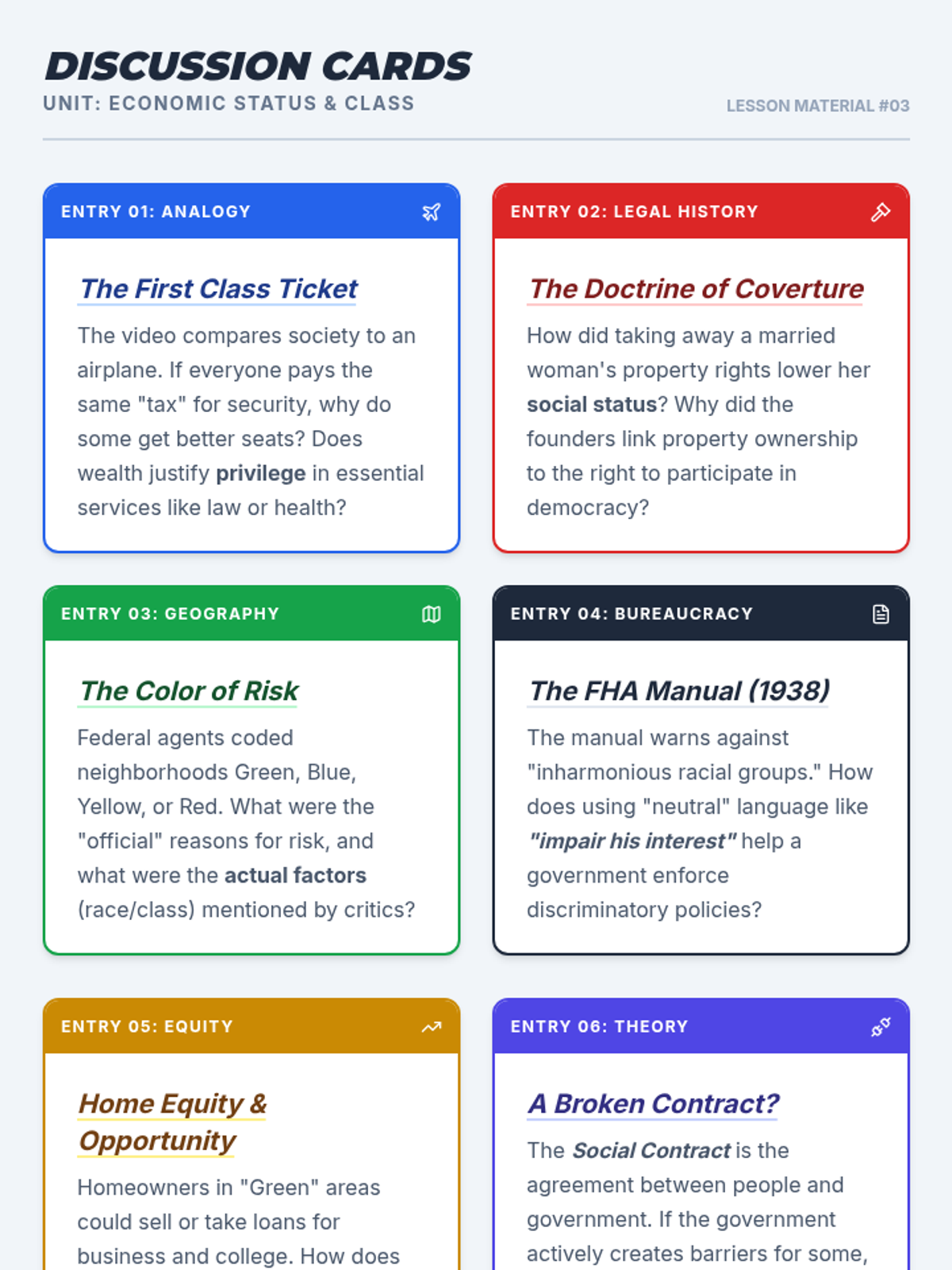
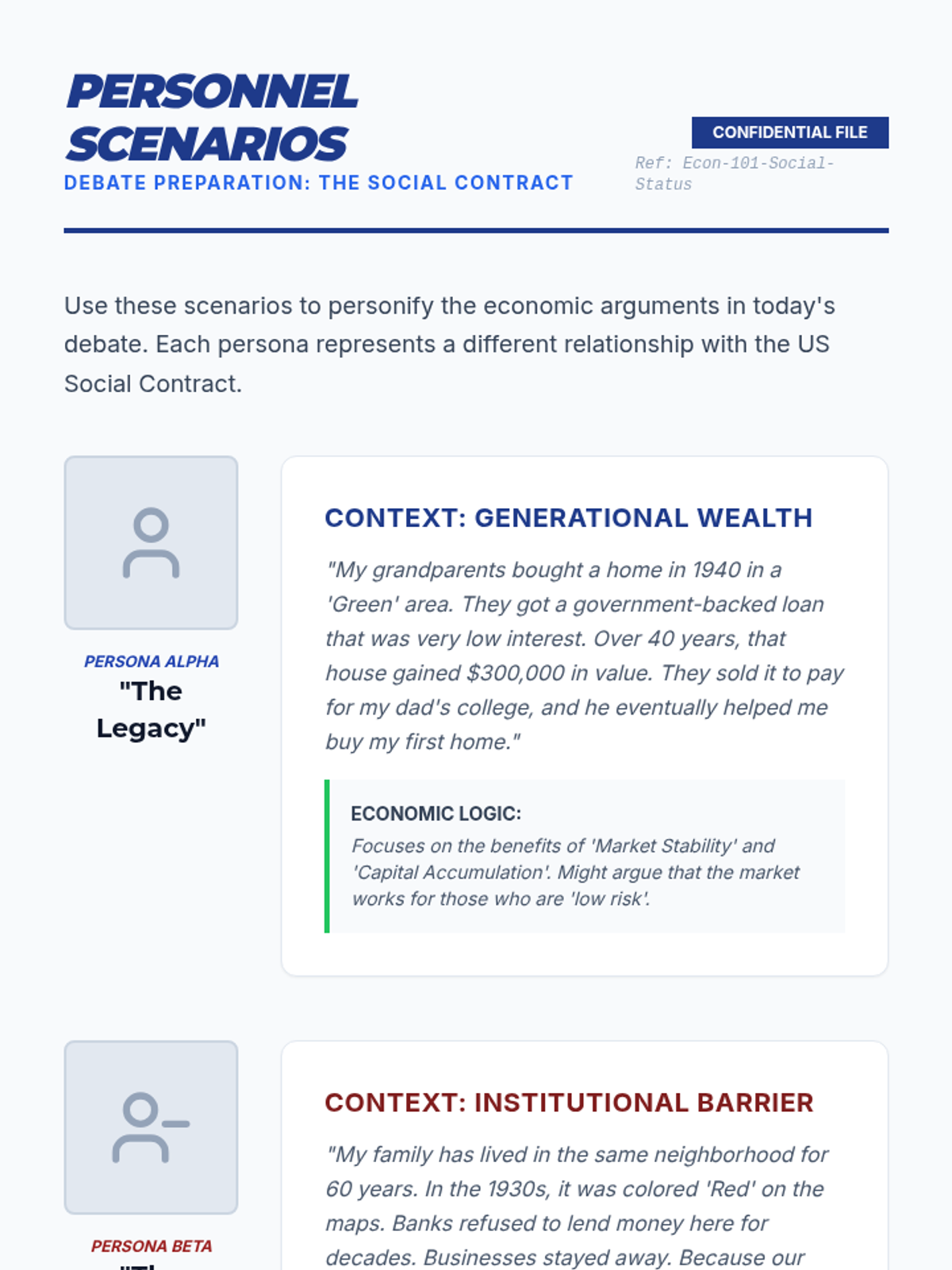
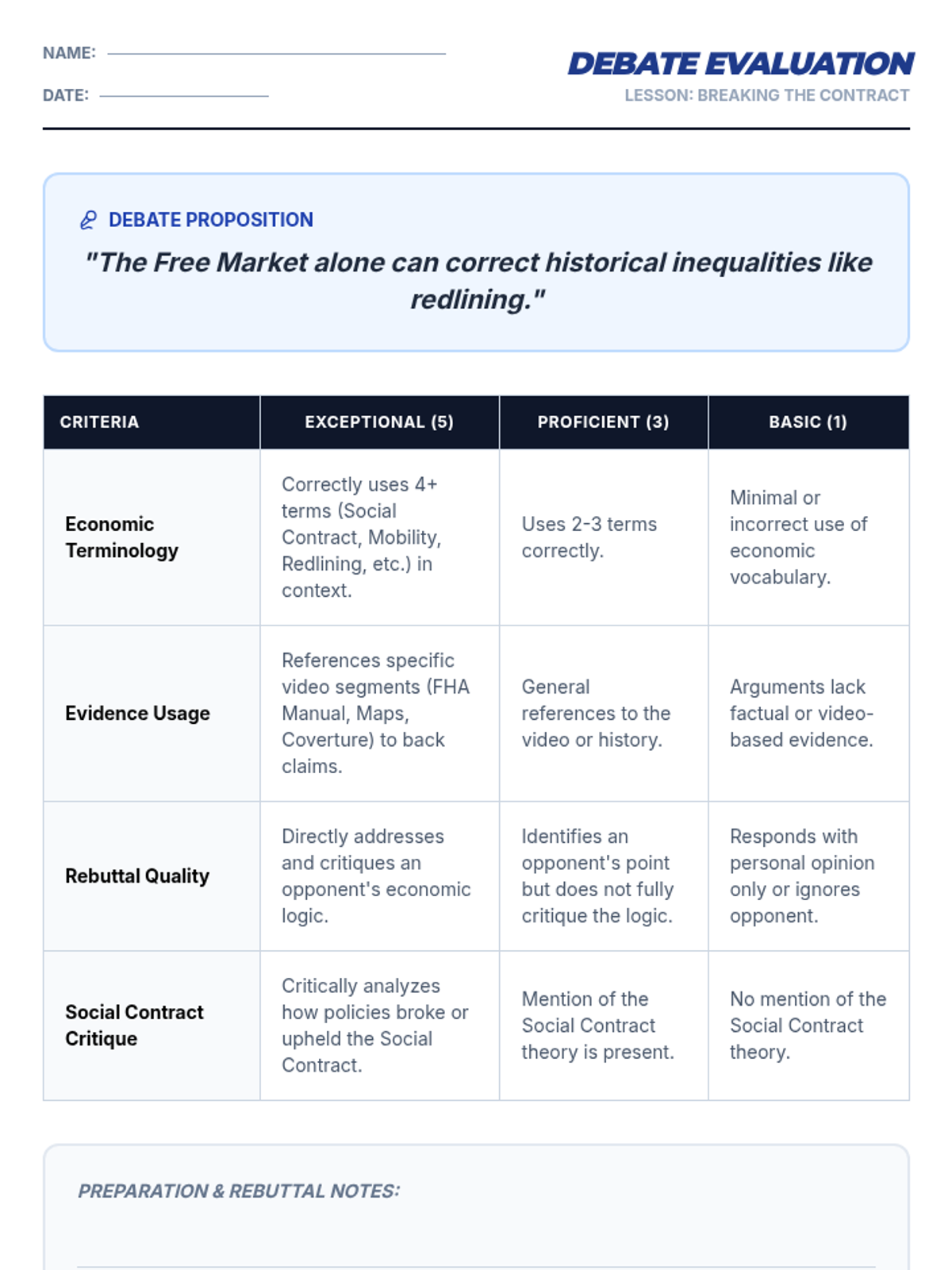
A high school economics lesson that critiques the 'Social Contract' theory using the history of US property rights, coverture, and redlining. Students analyze how government policies shaped class and wealth before debating market-based vs. interventionist solutions to historical inequalities.
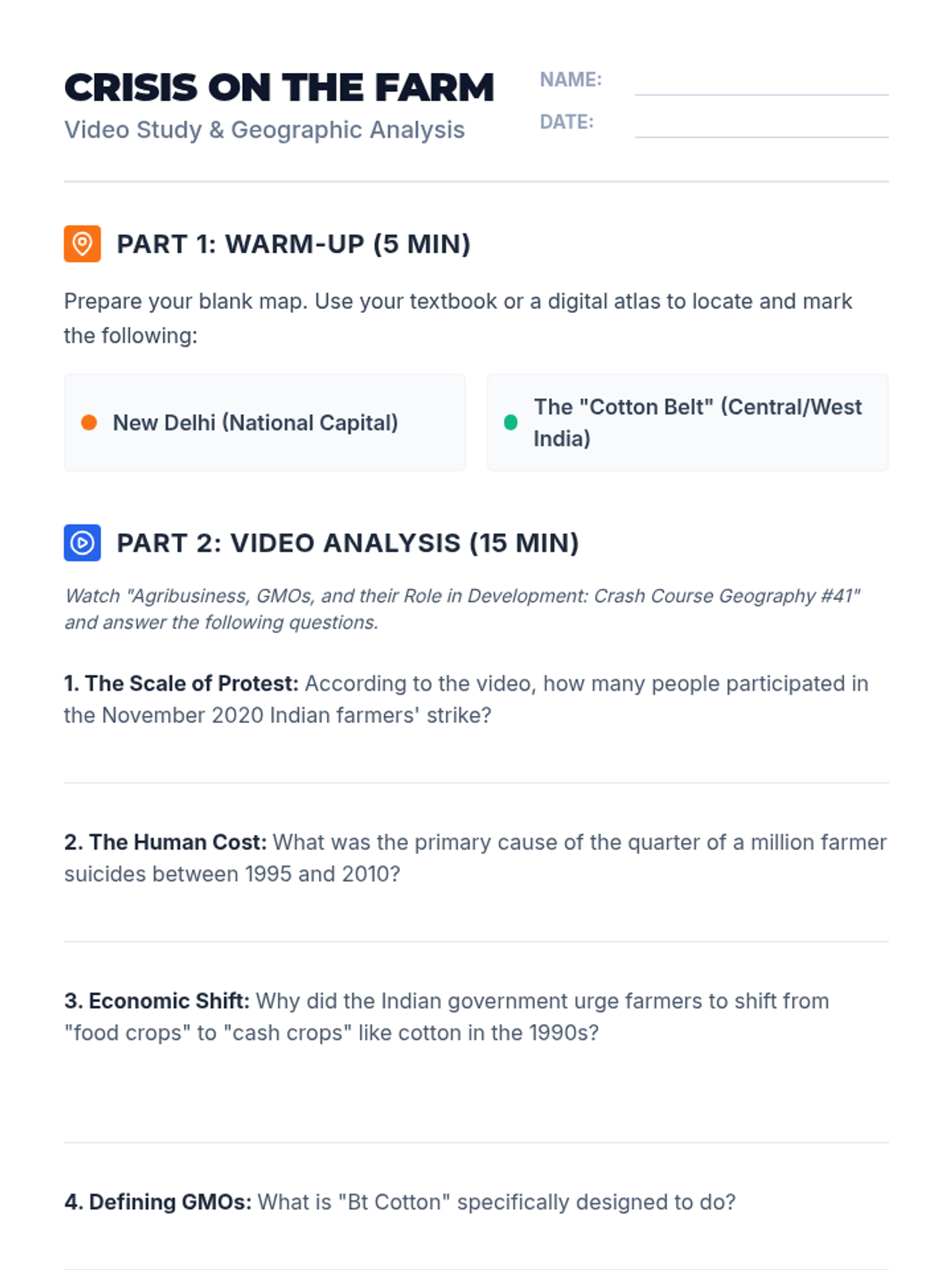
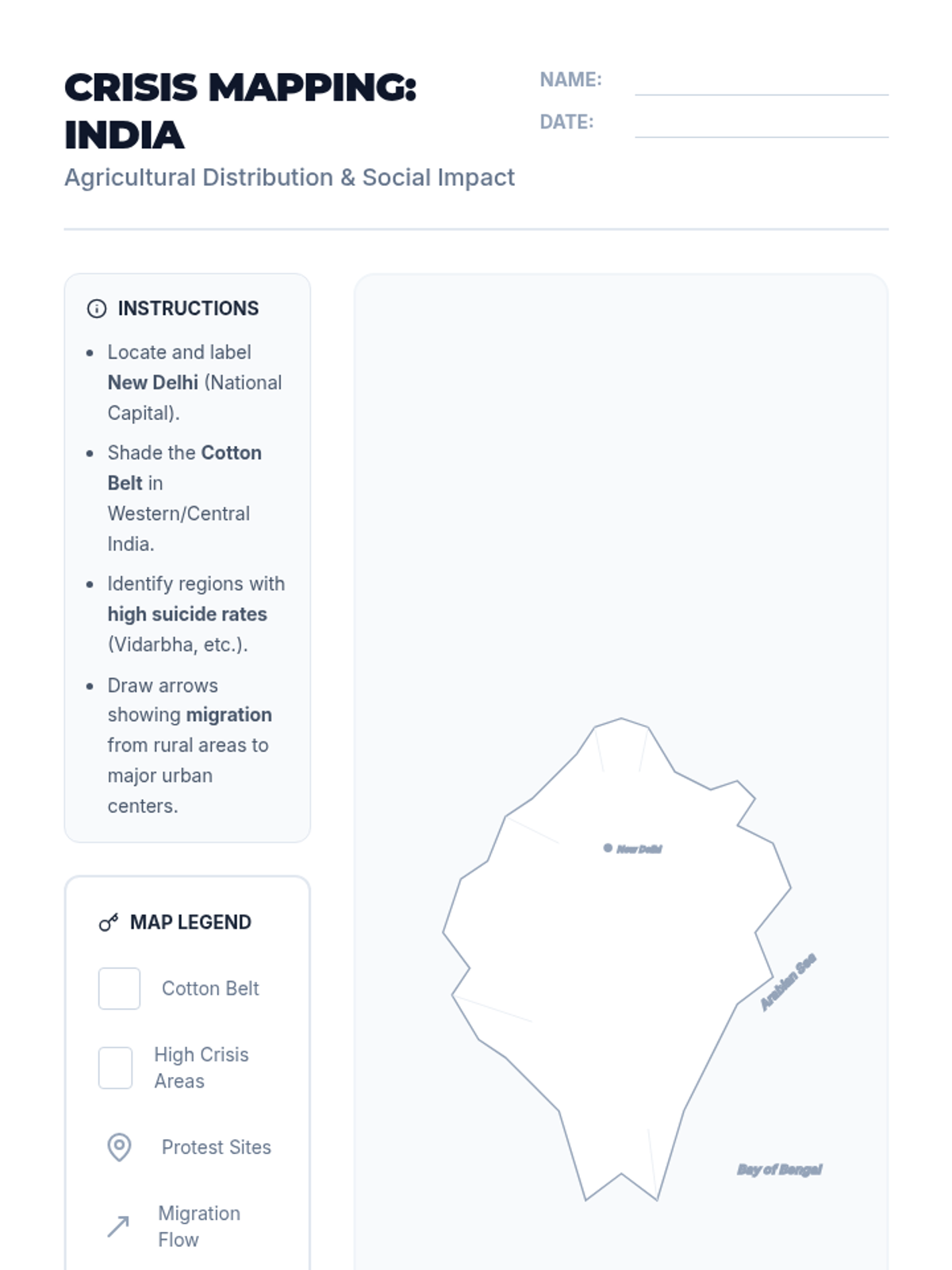
Students explore the intersection of physical and human geography in India, focusing on the agrarian crisis, the introduction of GMO Bt Cotton, and the resulting social impacts through mapping and video analysis.
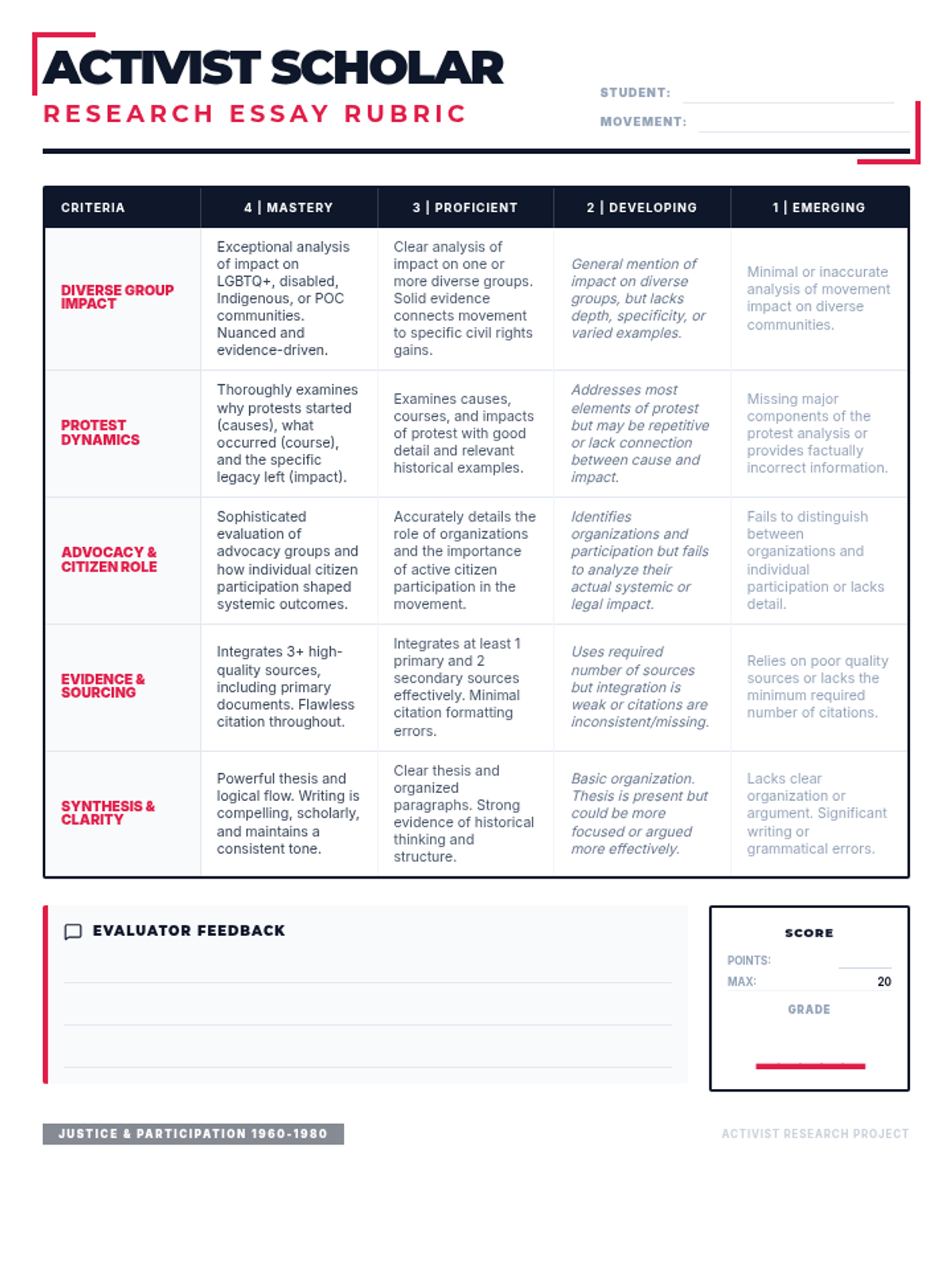
A comprehensive research project exploring the 1960s-80s social movements, focusing on the roles of protest, advocacy, and citizen participation in shaping civil rights for diverse communities.
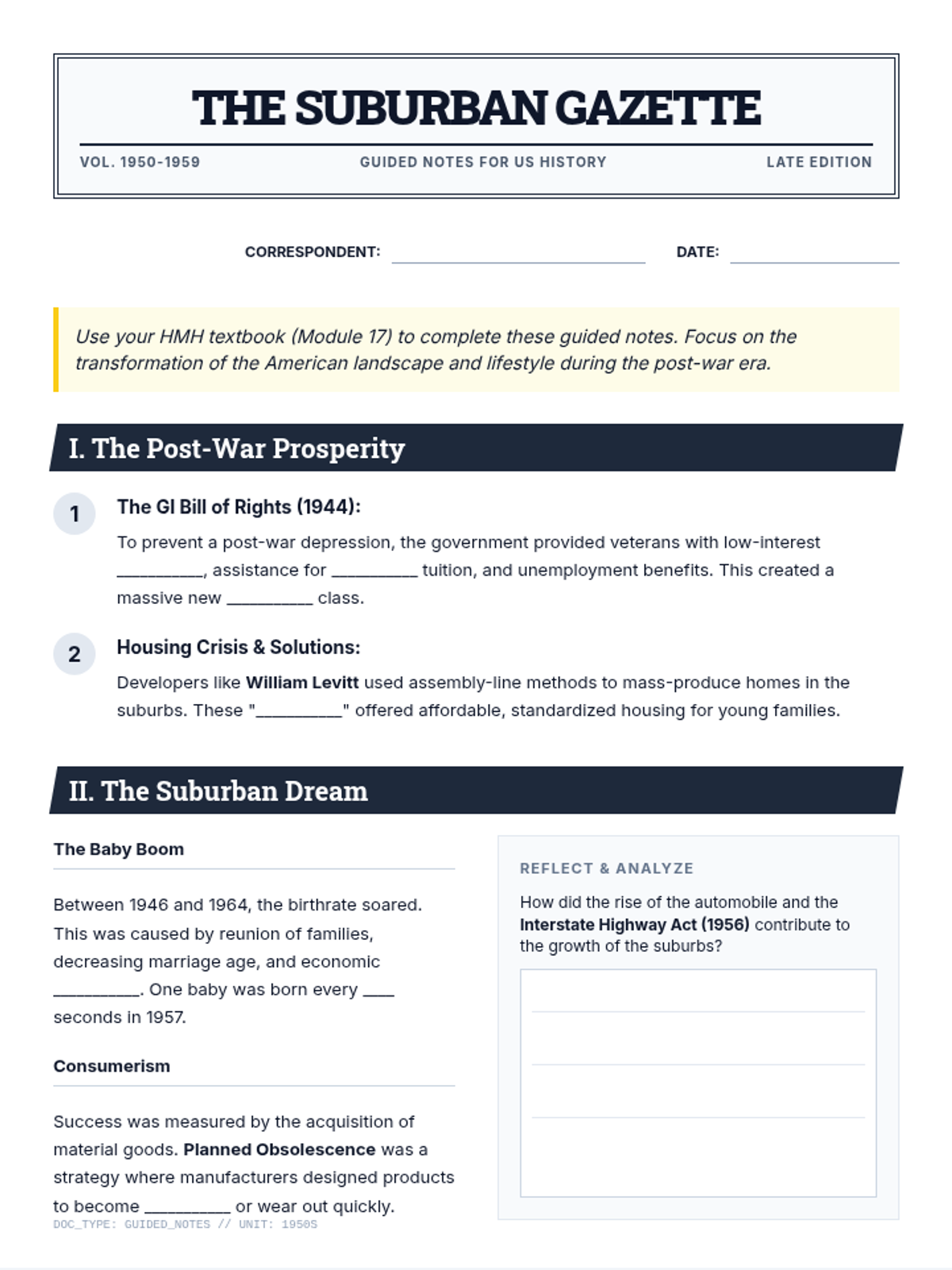
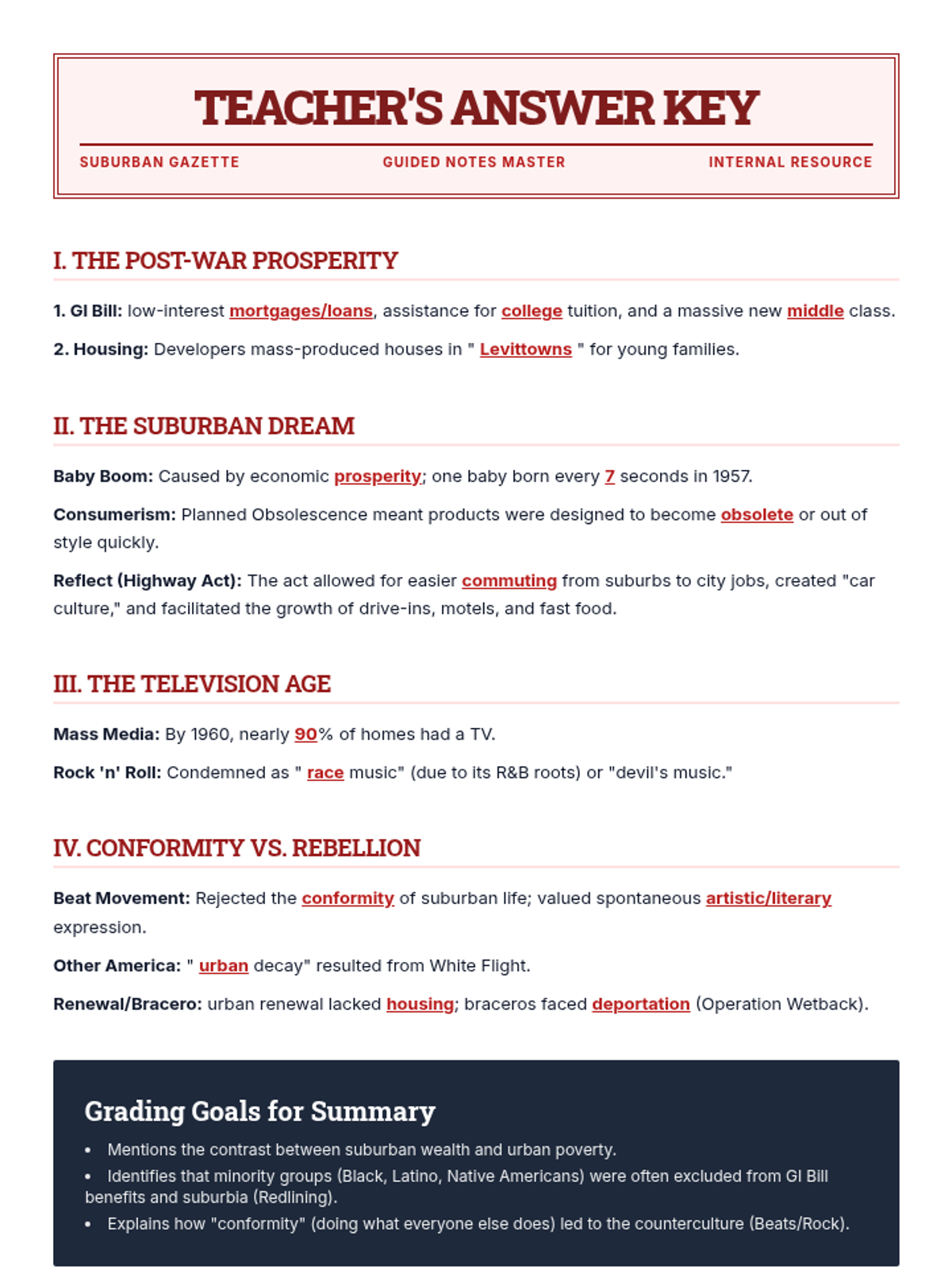
An overview of the domestic life, economic prosperity, and cultural shifts of the 1950s. This lesson covers the GI Bill, the rise of suburbia, the baby boom, and the tension between conformity and the emerging counterculture.
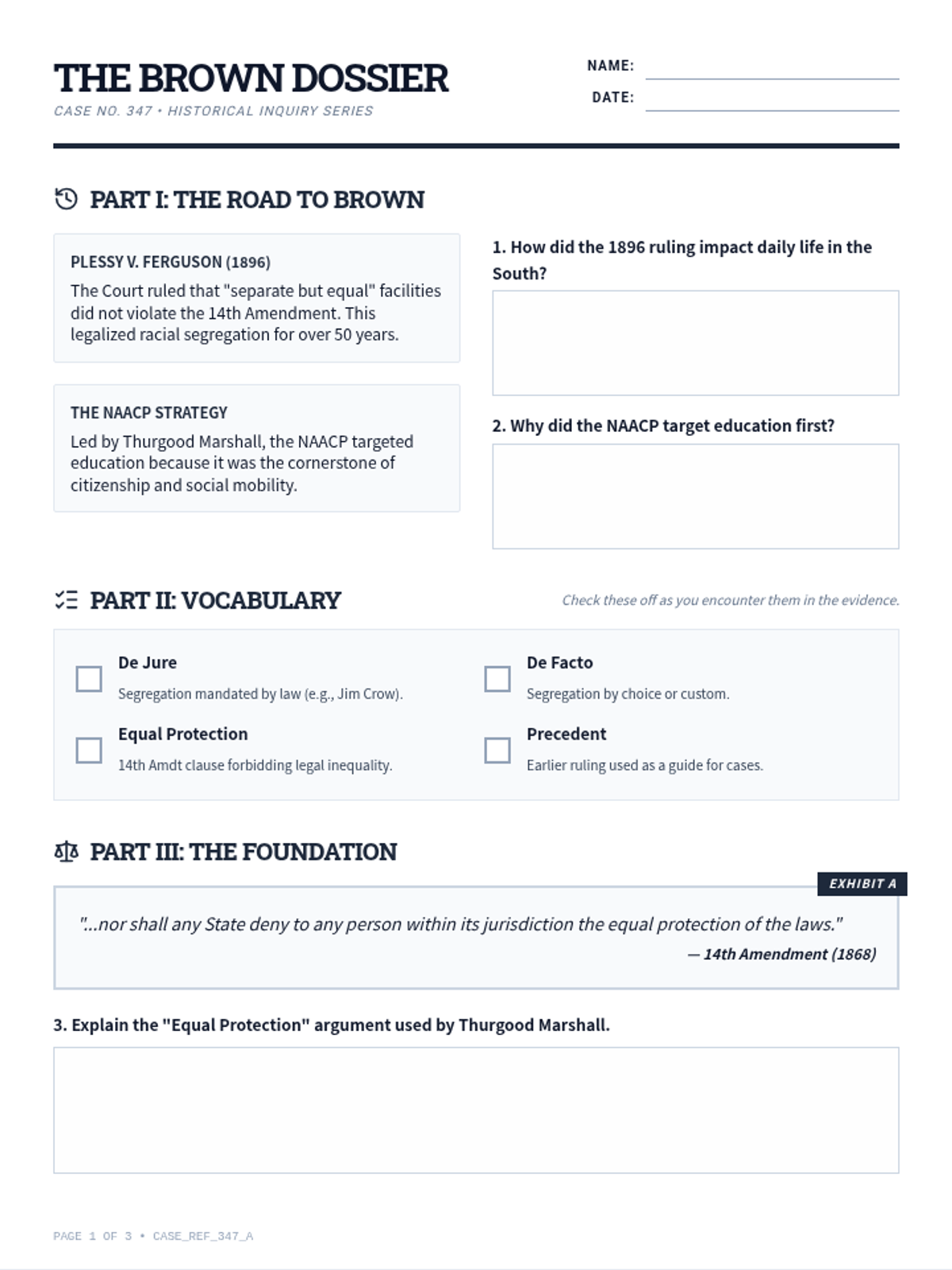
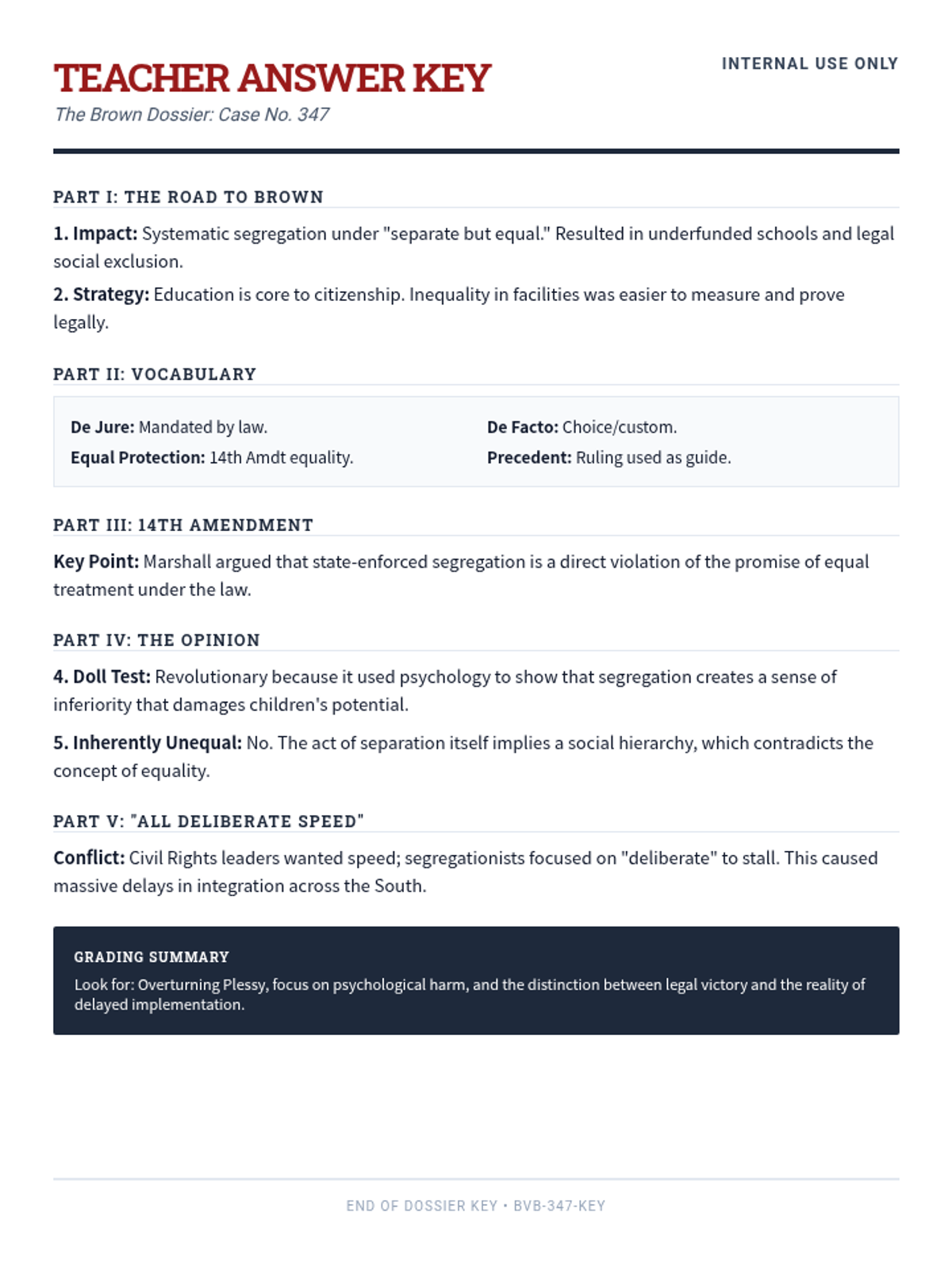
A comprehensive lesson exploring the historical context, legal arguments, and social impact of the Brown v. Board of Education Supreme Court decision. Students analyze the transition from Plessy v. Ferguson to the civil rights era through primary source excerpts and critical thinking questions.
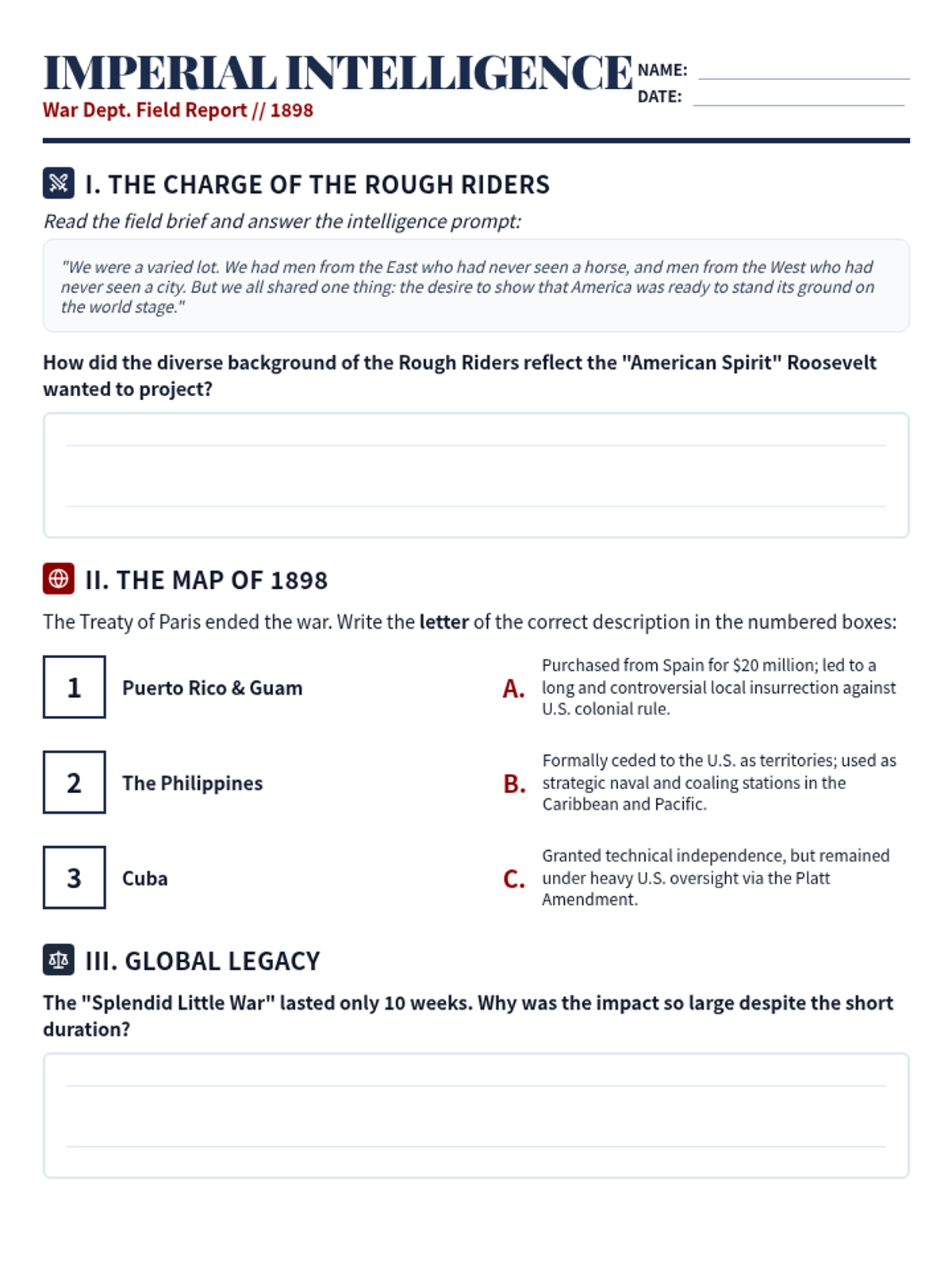
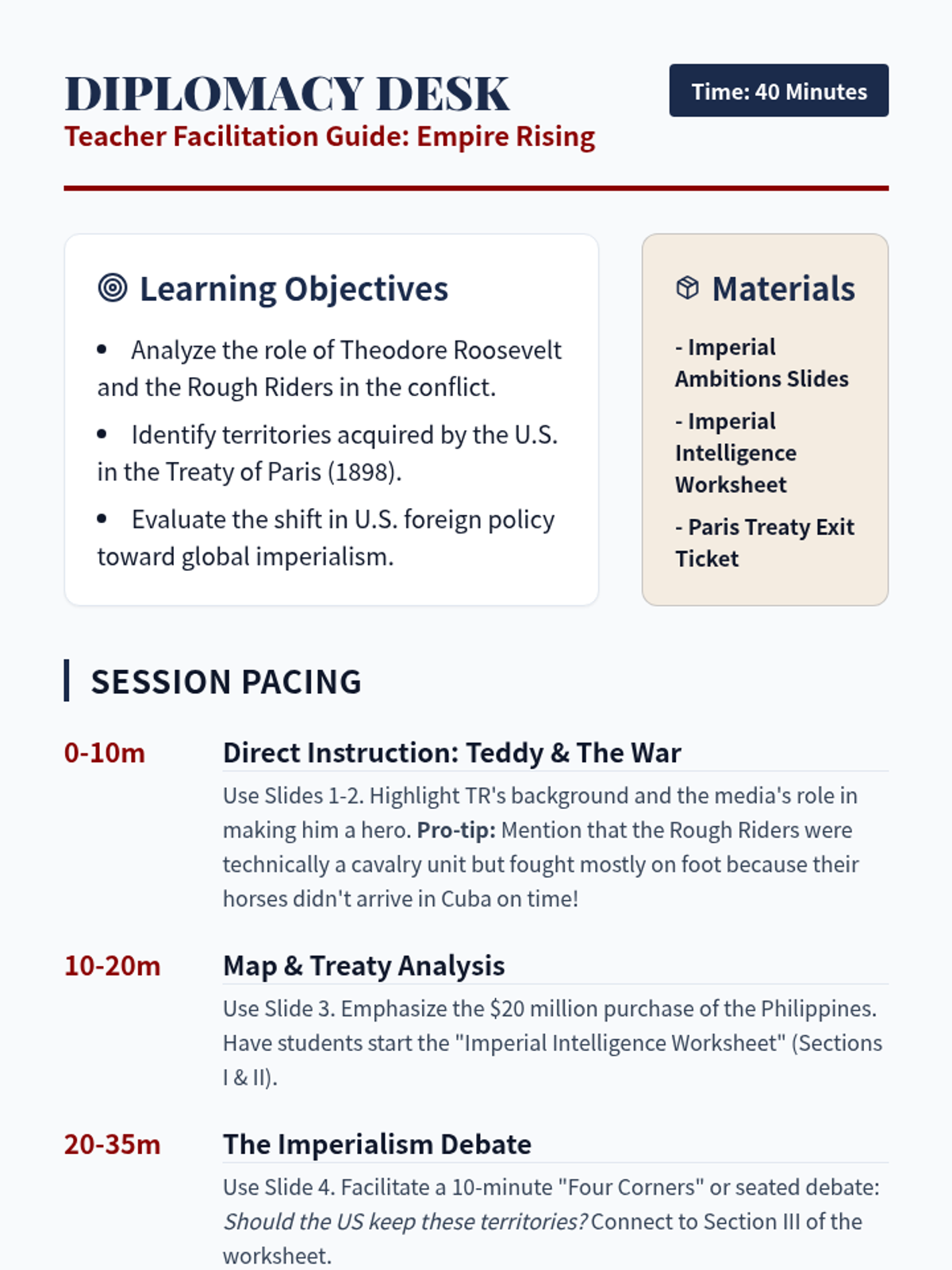
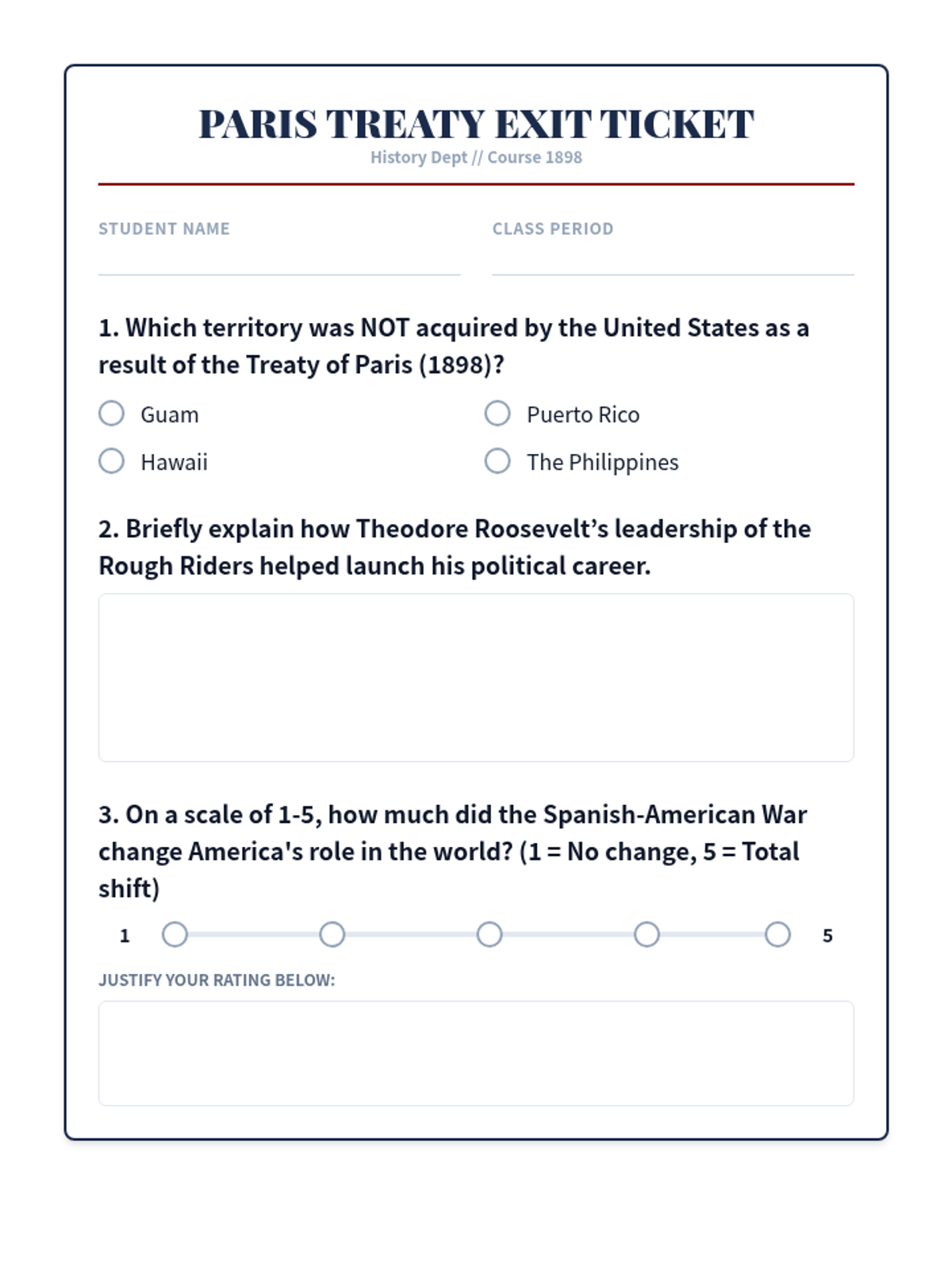
A high-impact 40-minute exploration of the Spanish-American War, focusing on the rise of Teddy Roosevelt, the Treaty of Paris, and the emergence of the United States as a global power.
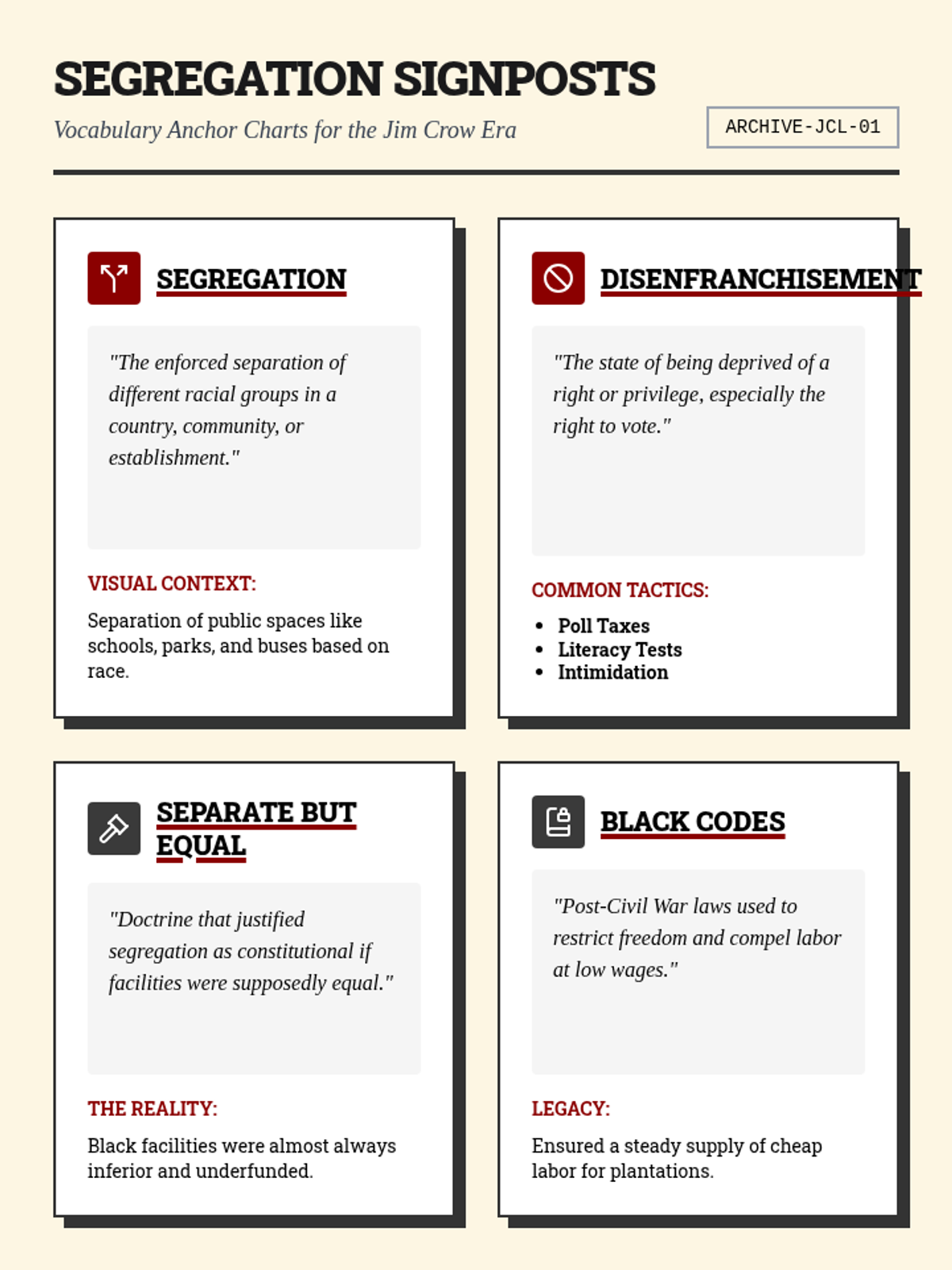
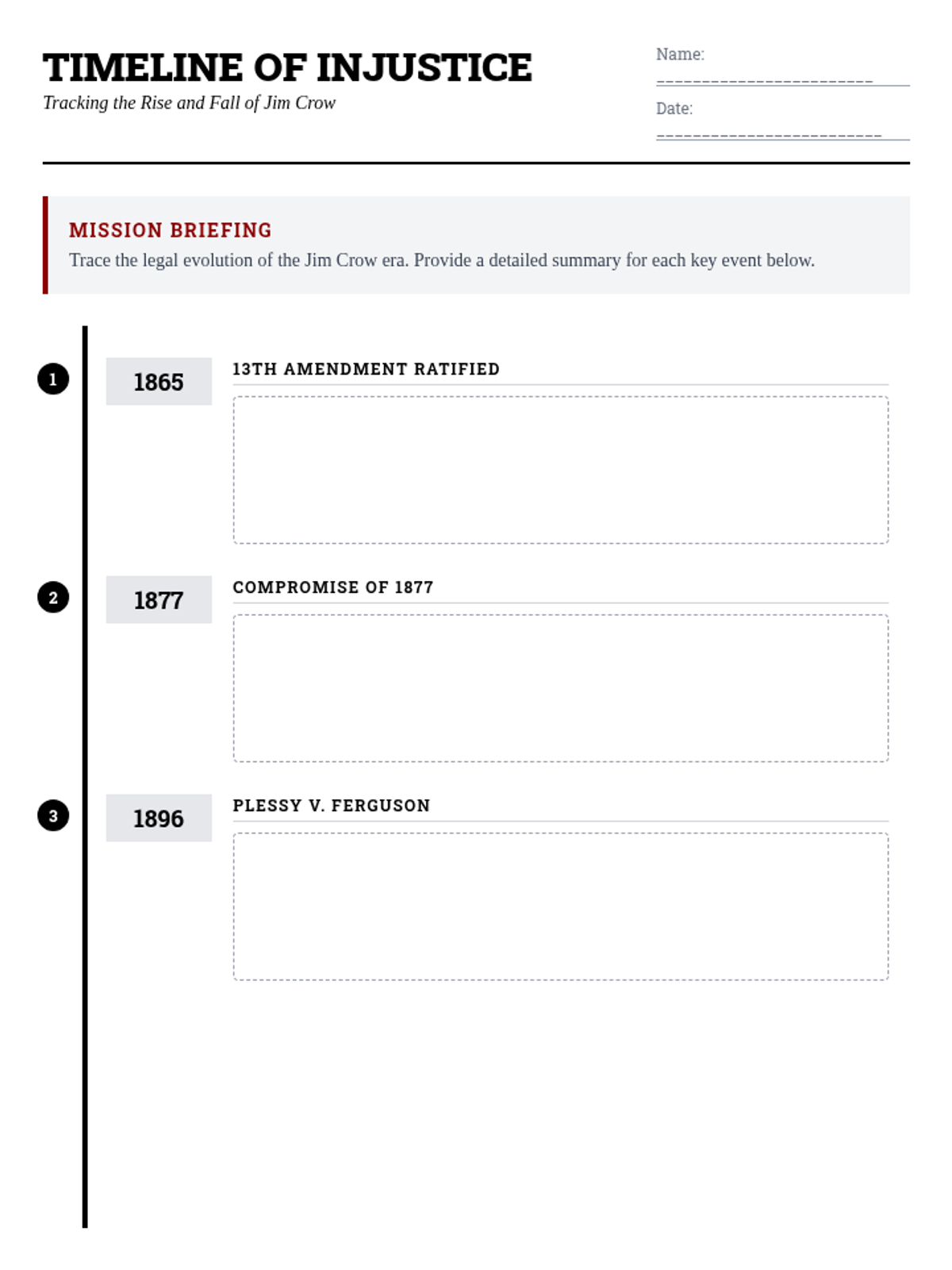
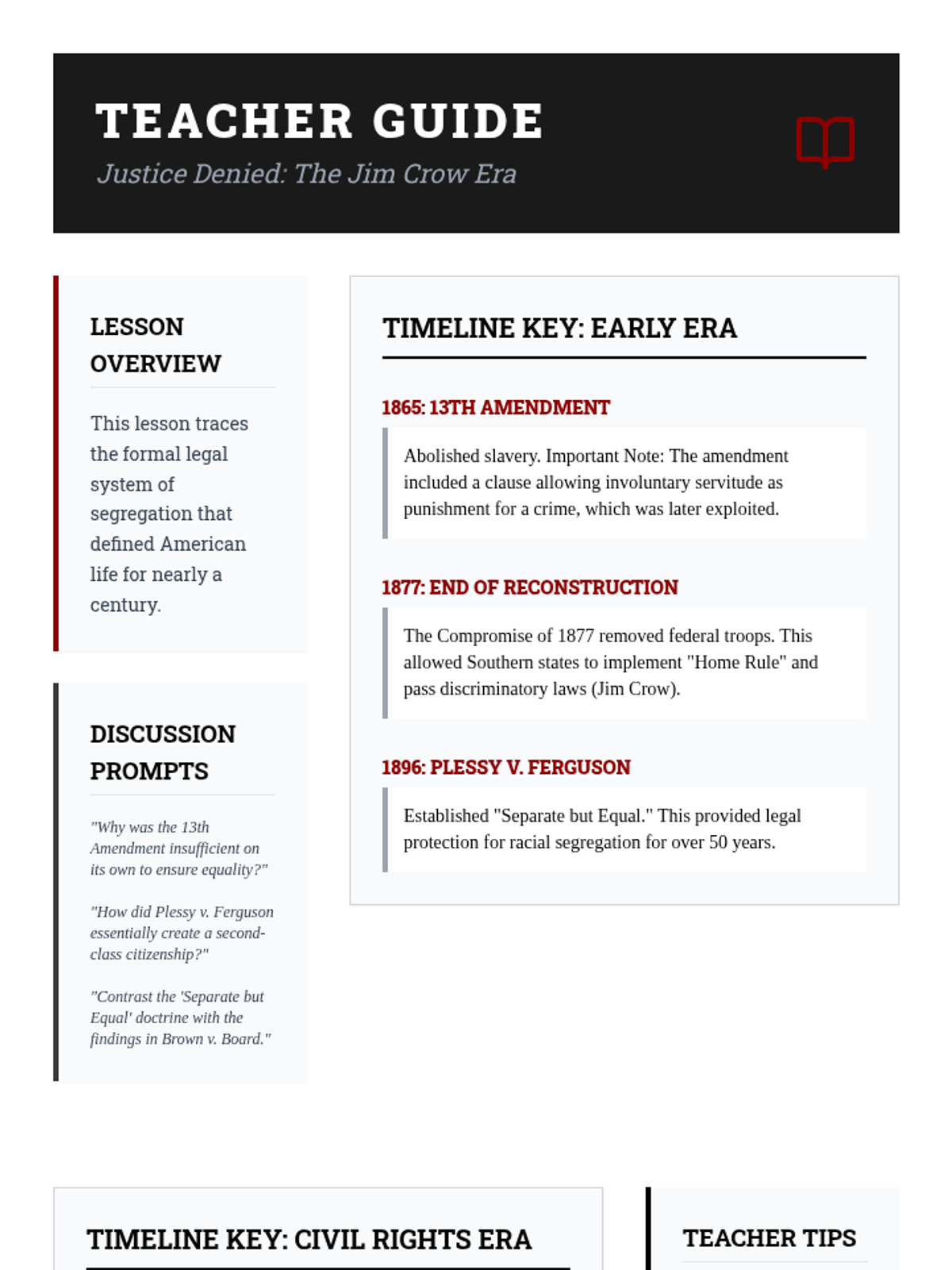
An in-depth exploration of the Jim Crow era, focusing on the legal landscape of segregation and the timeline of events leading from Reconstruction to the Civil Rights Movement.
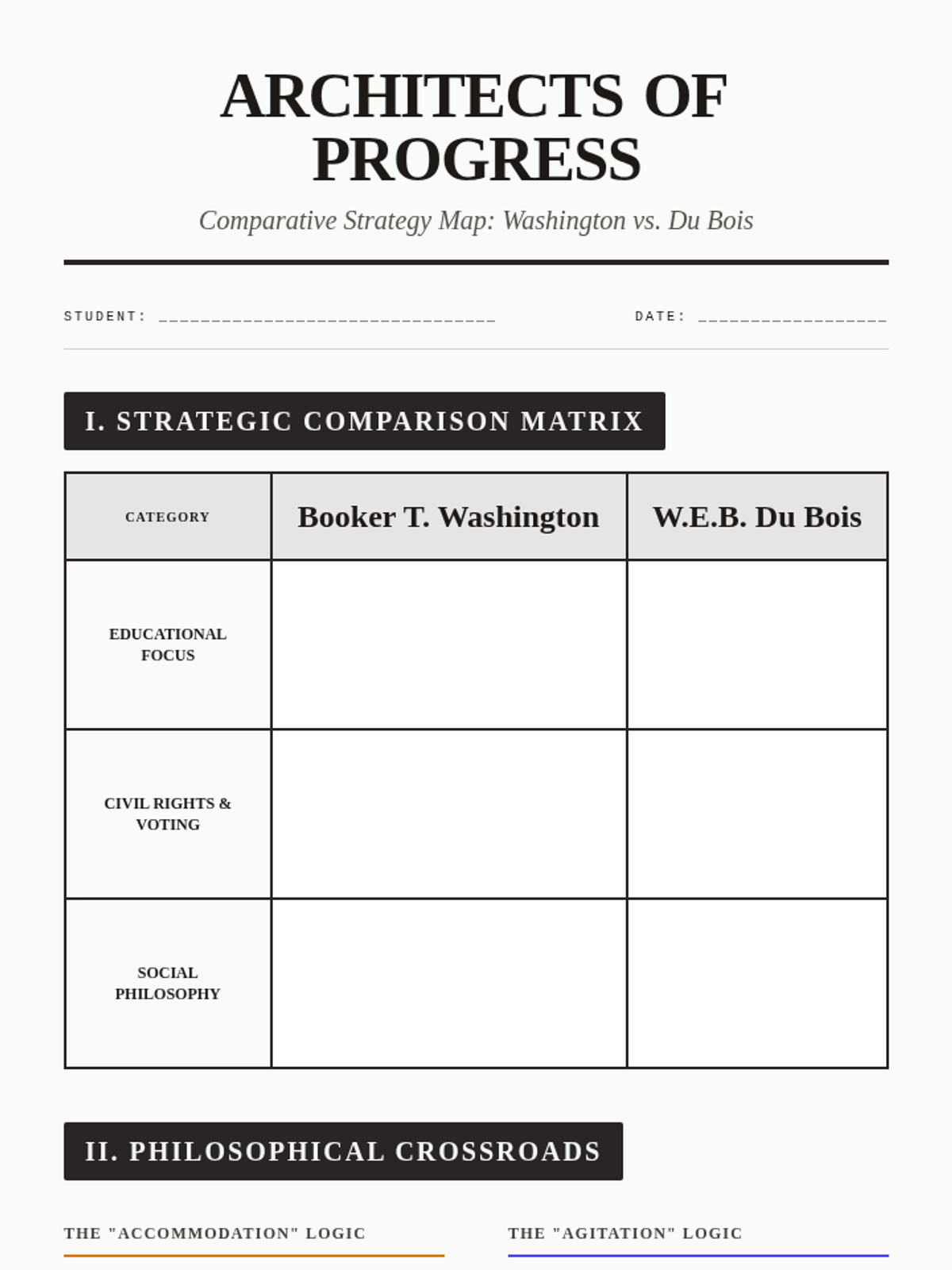
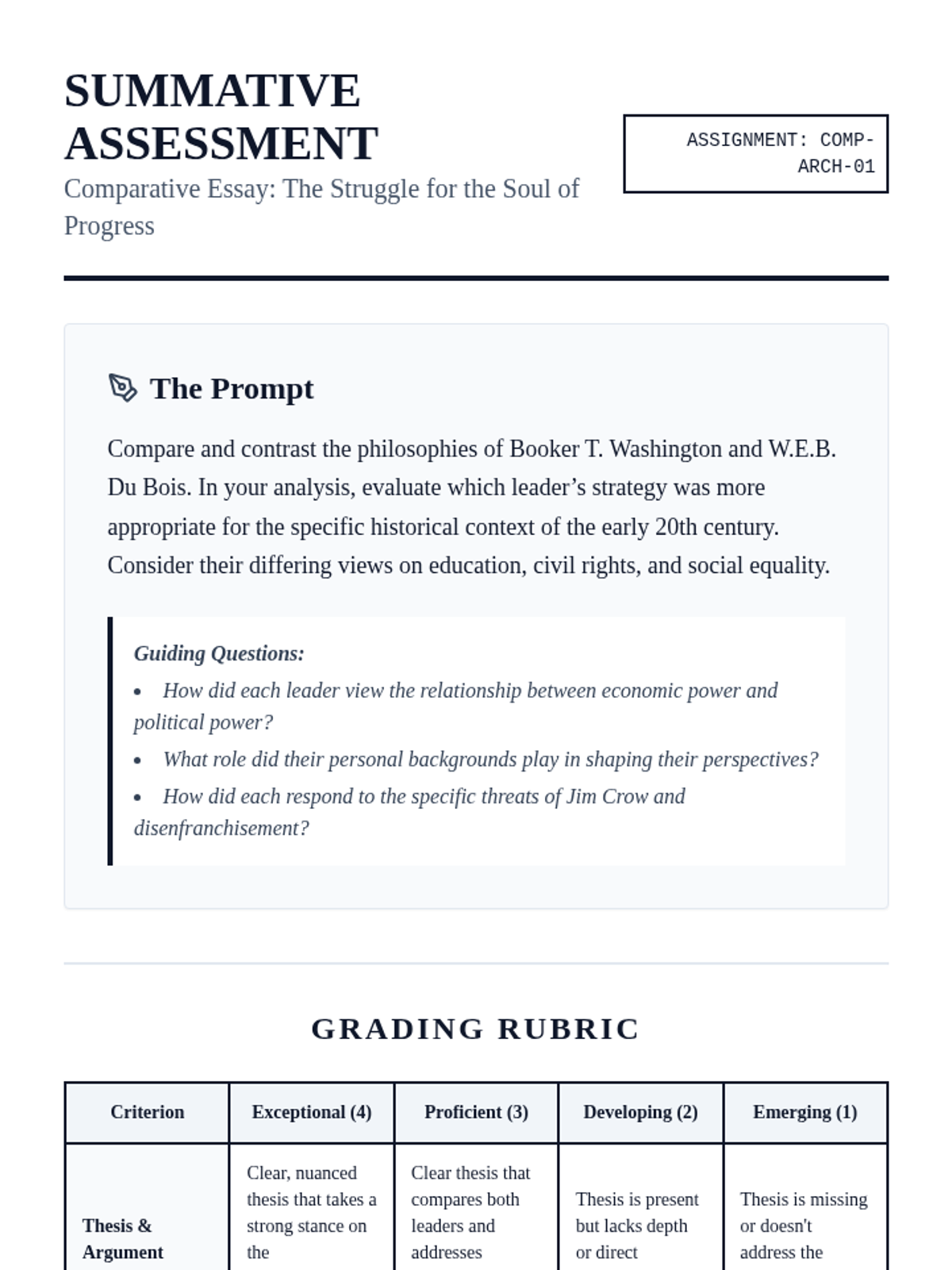
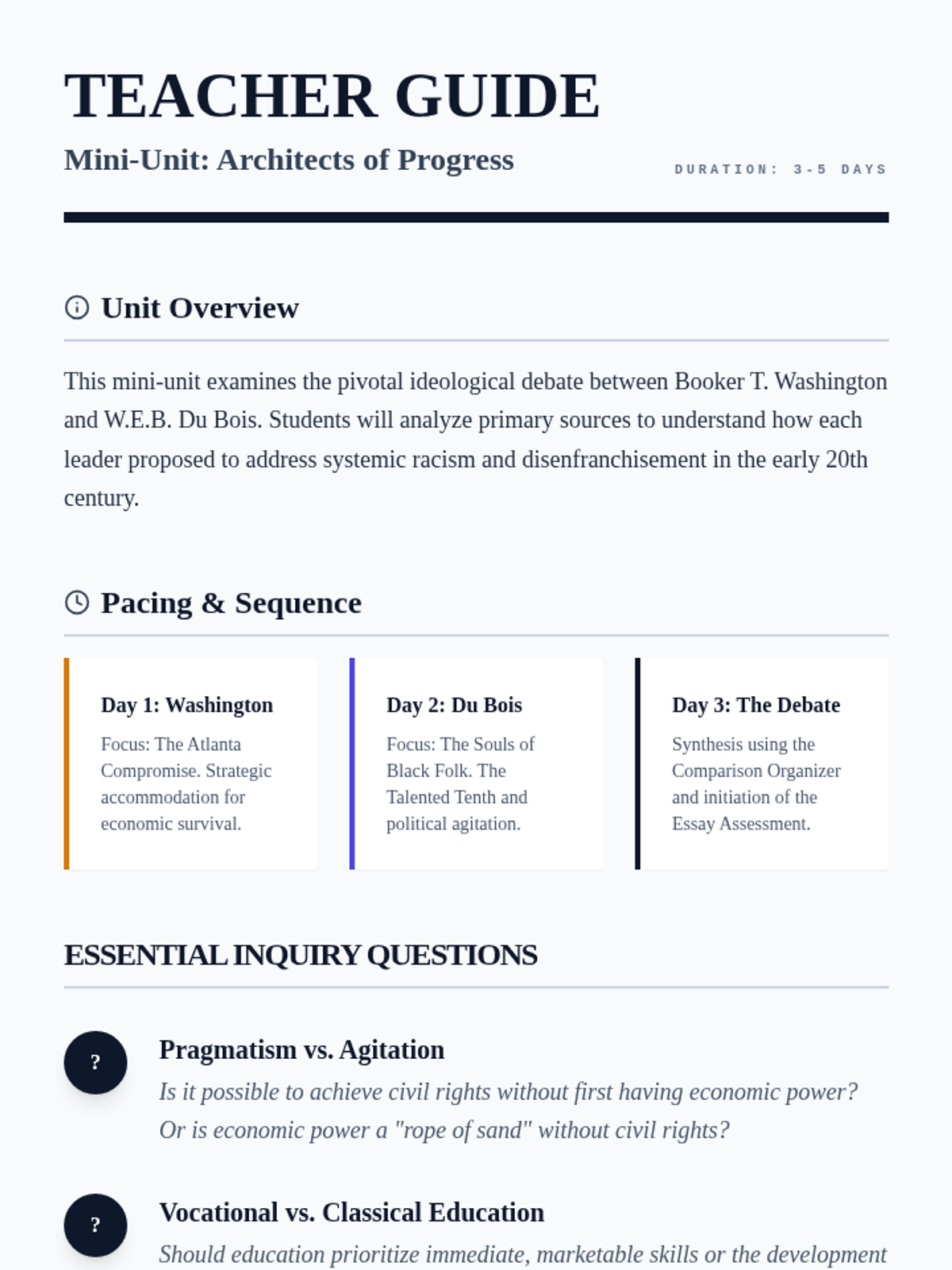
Synthesizes the arguments of both leaders through comparative analysis and a summative writing assessment.
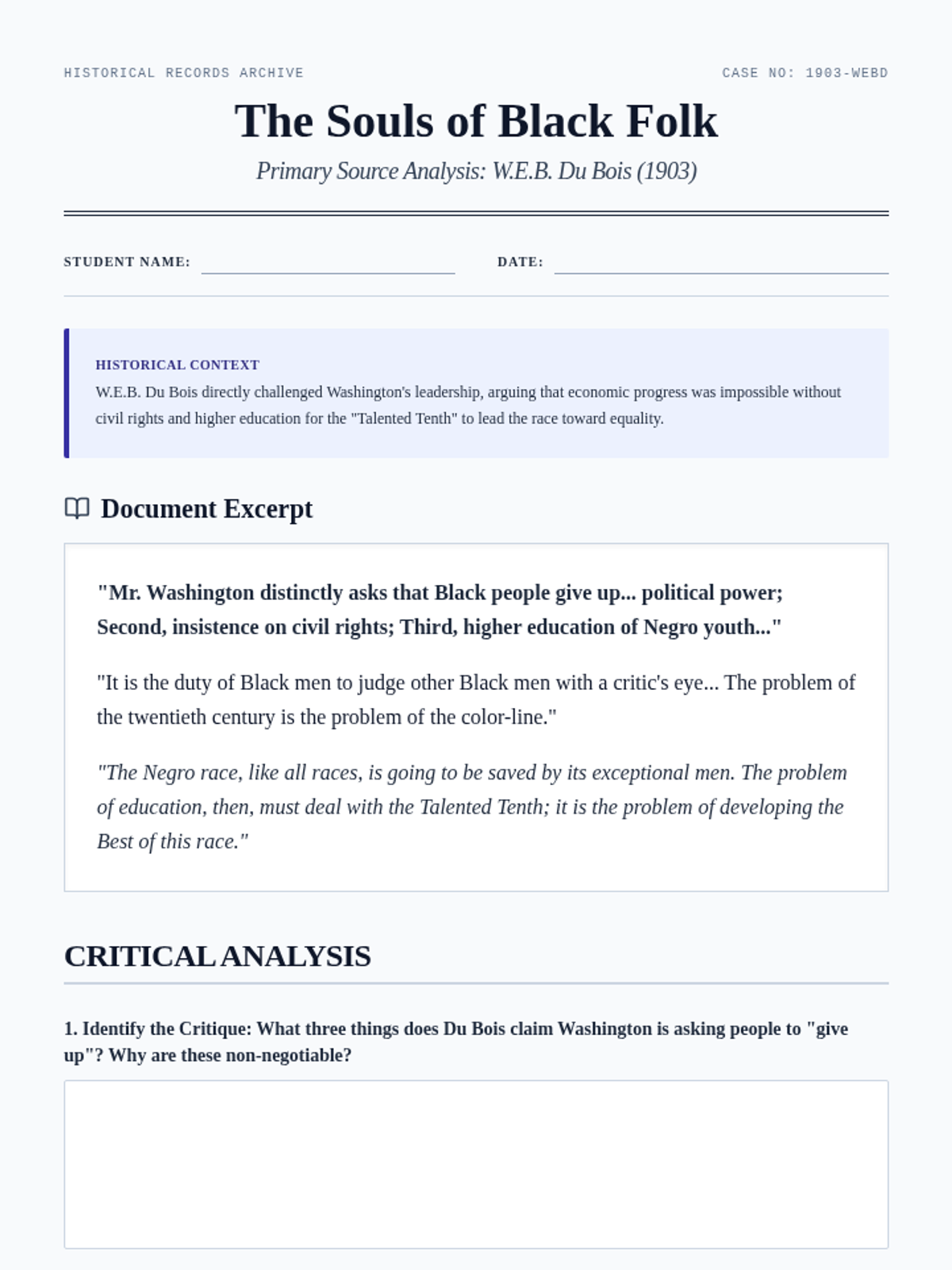
Examines W.E.B. Du Bois's critique of Washington, his emphasis on the 'Talented Tenth,' and his demand for immediate political and social equality.
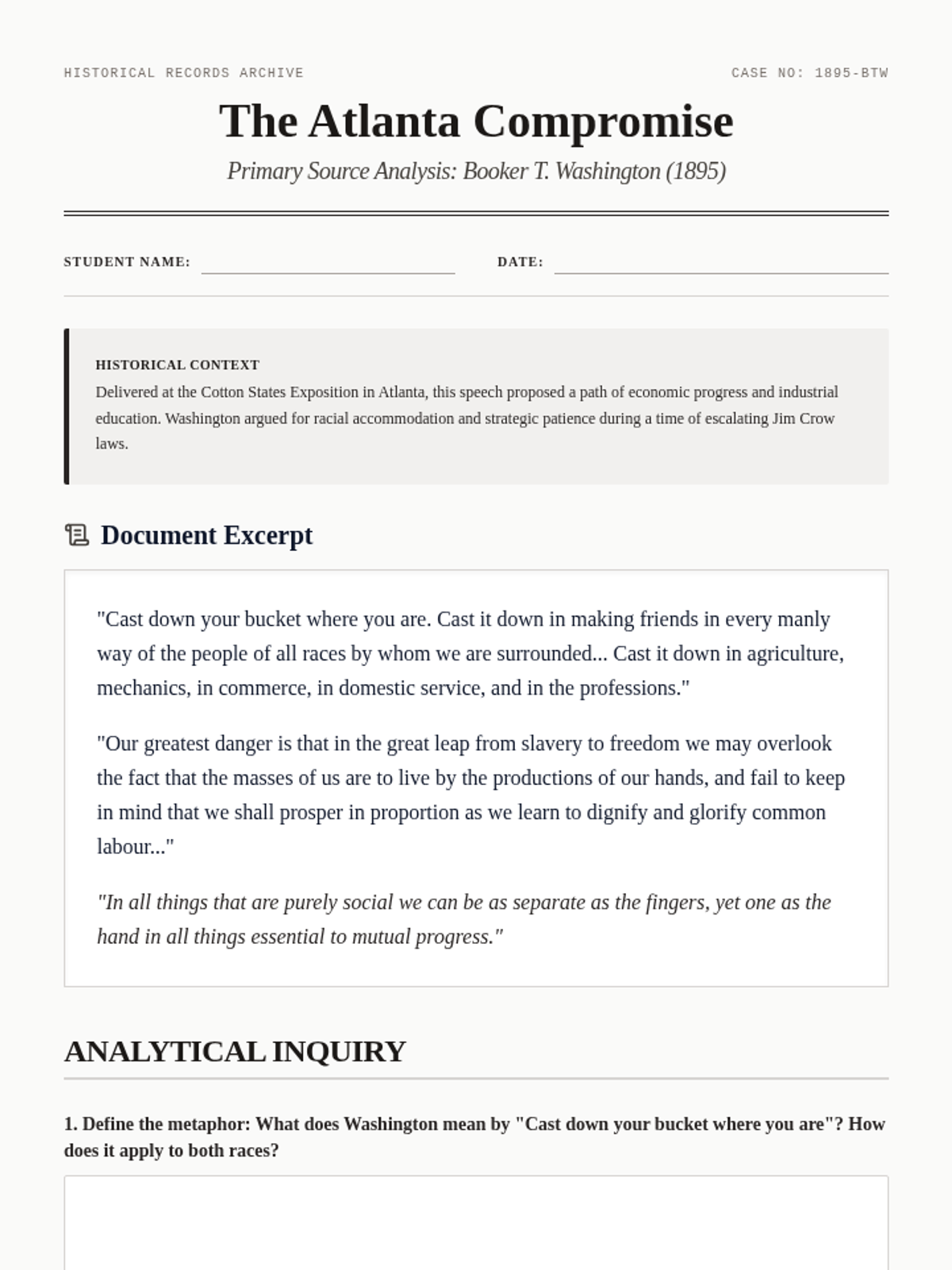
Explores Booker T. Washington's philosophy of industrial education, economic self-reliance, and racial accommodation as outlined in his 1895 Atlanta Compromise speech.
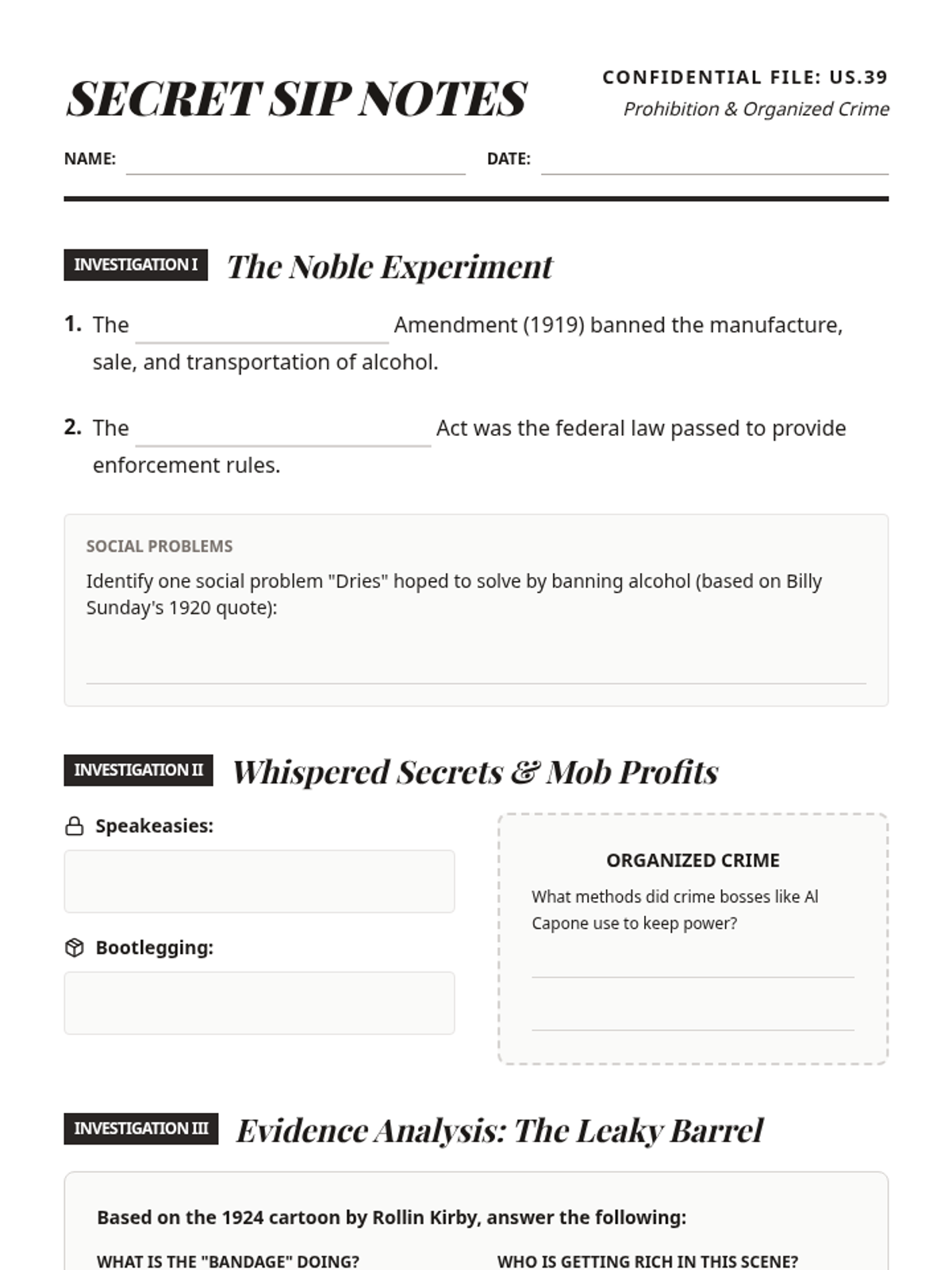
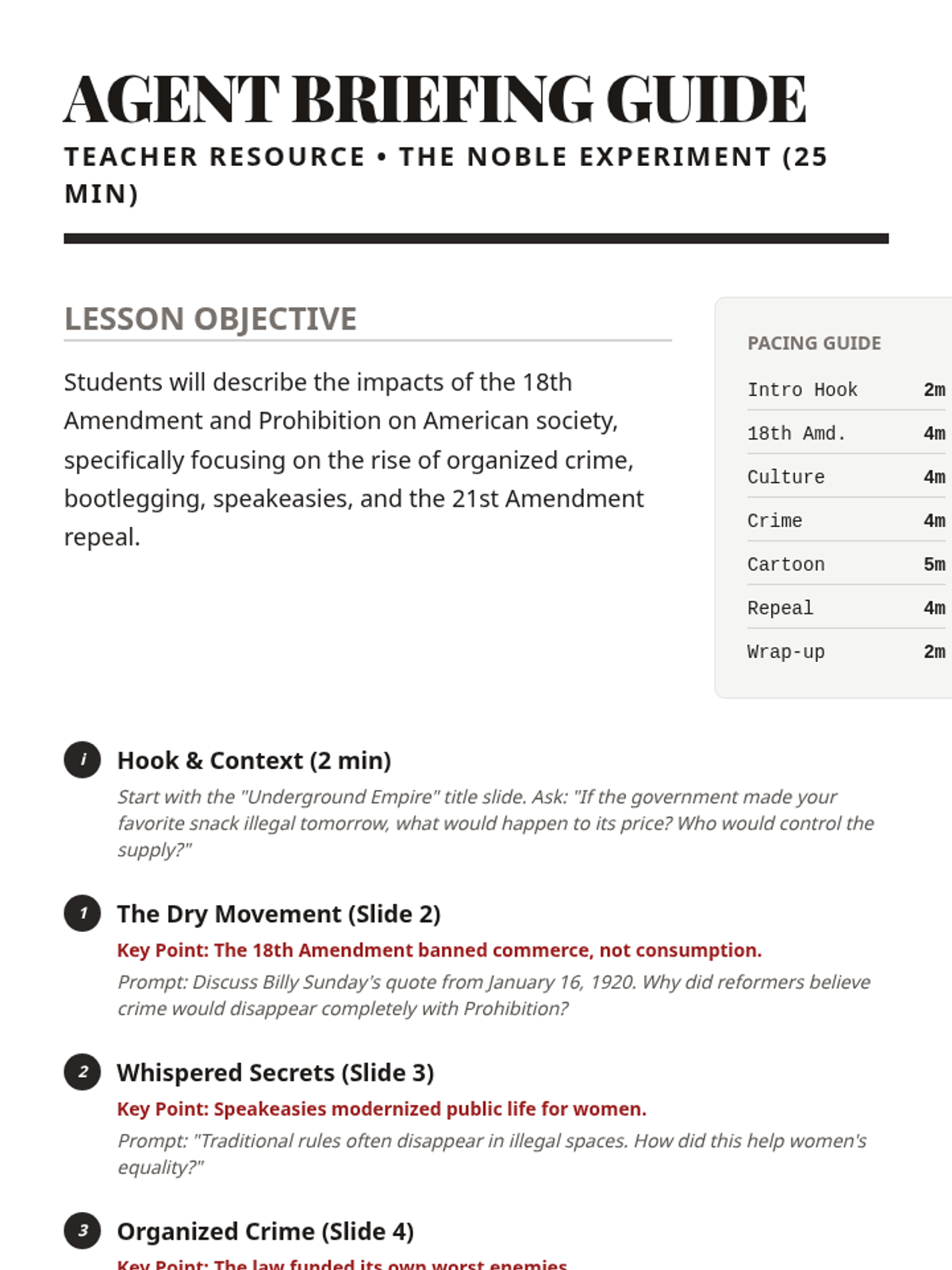
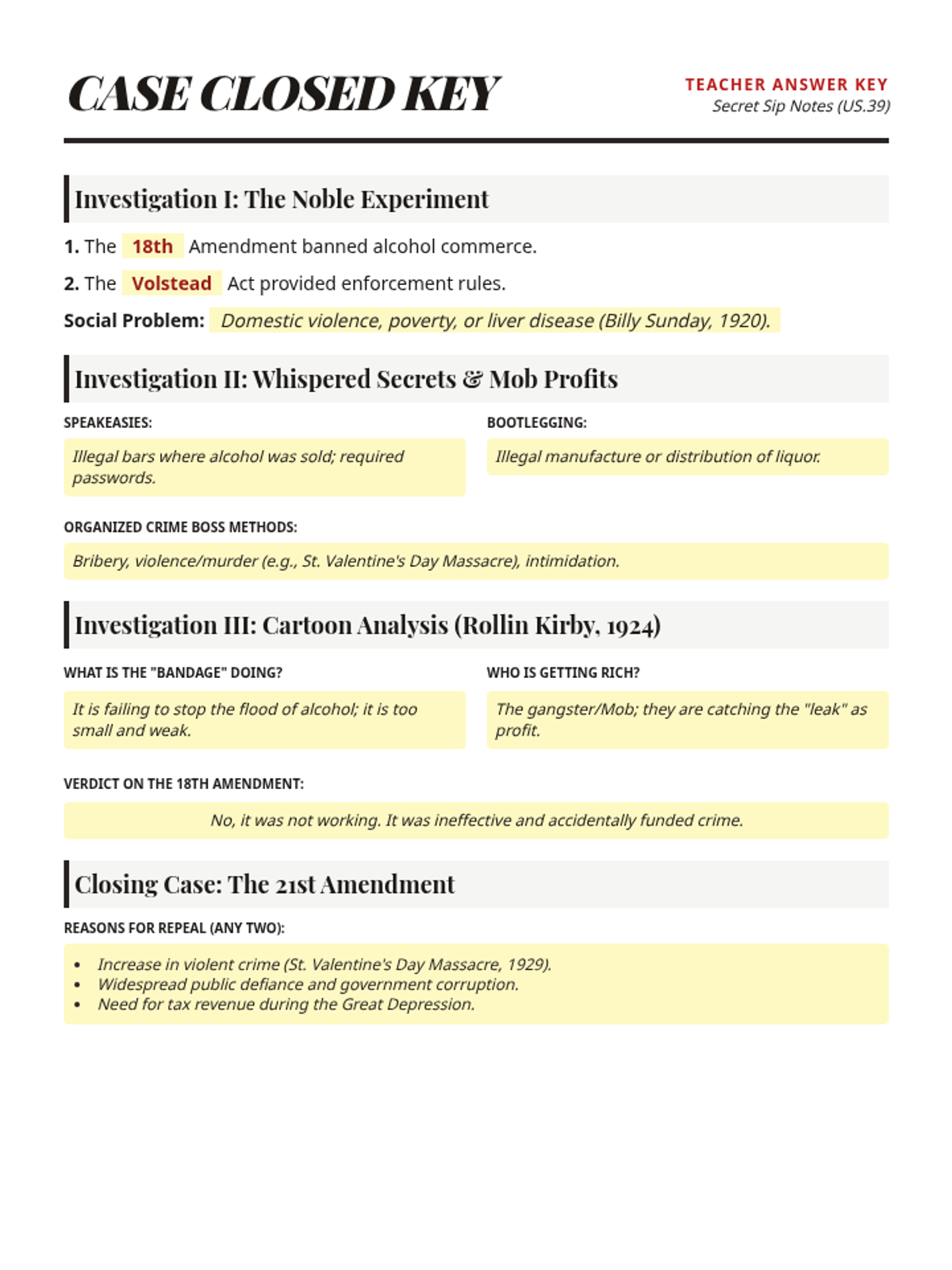
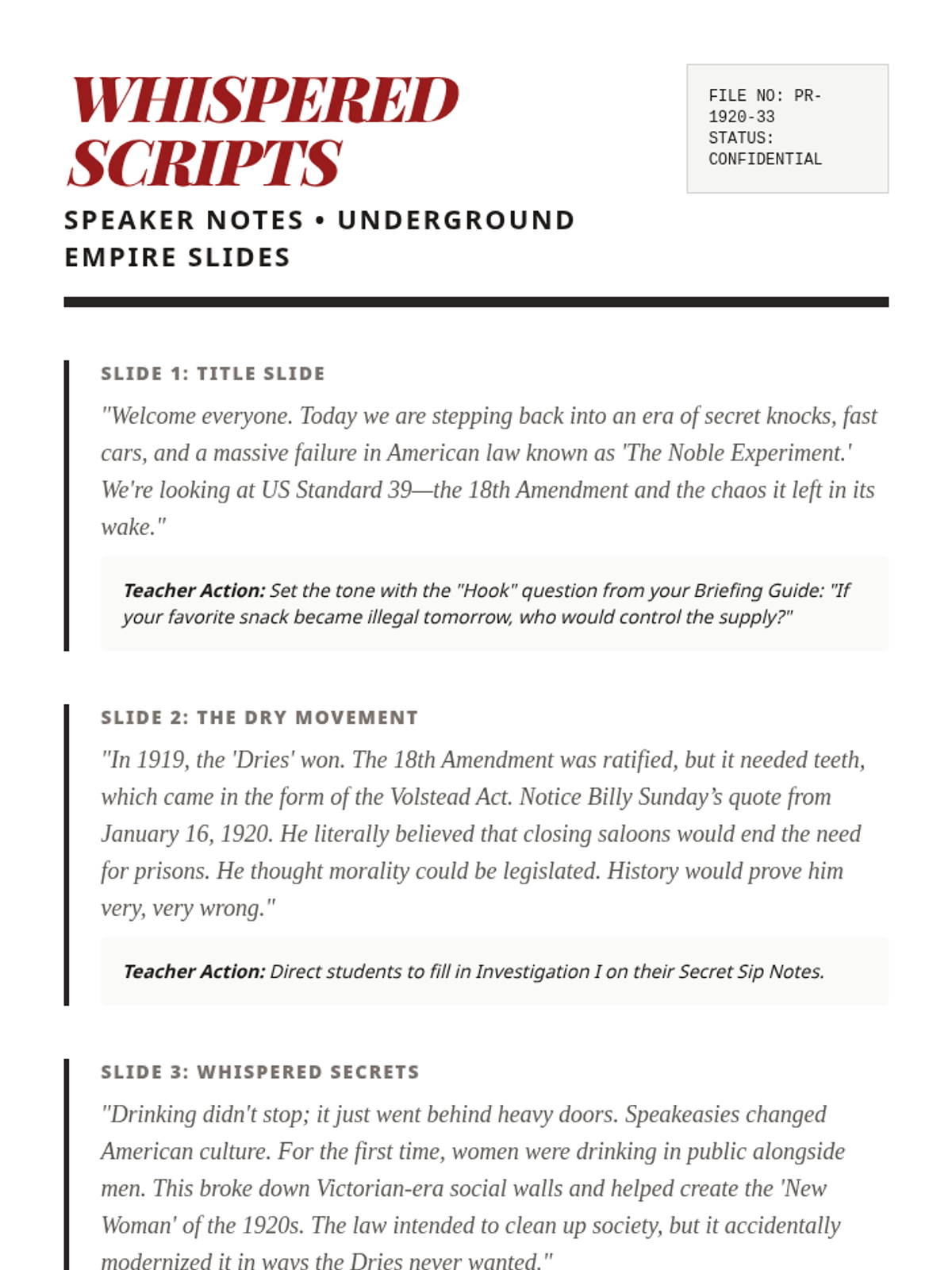
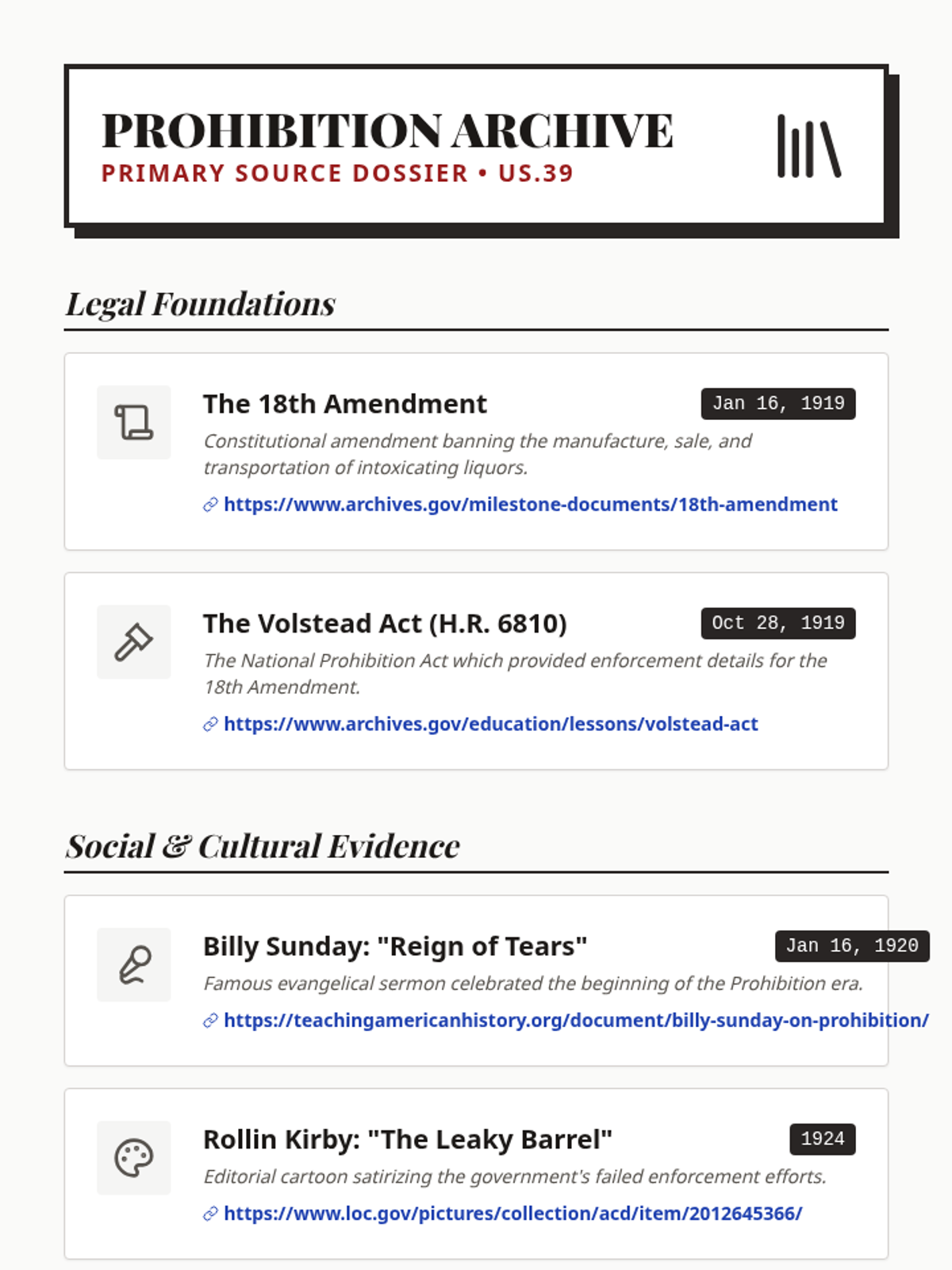
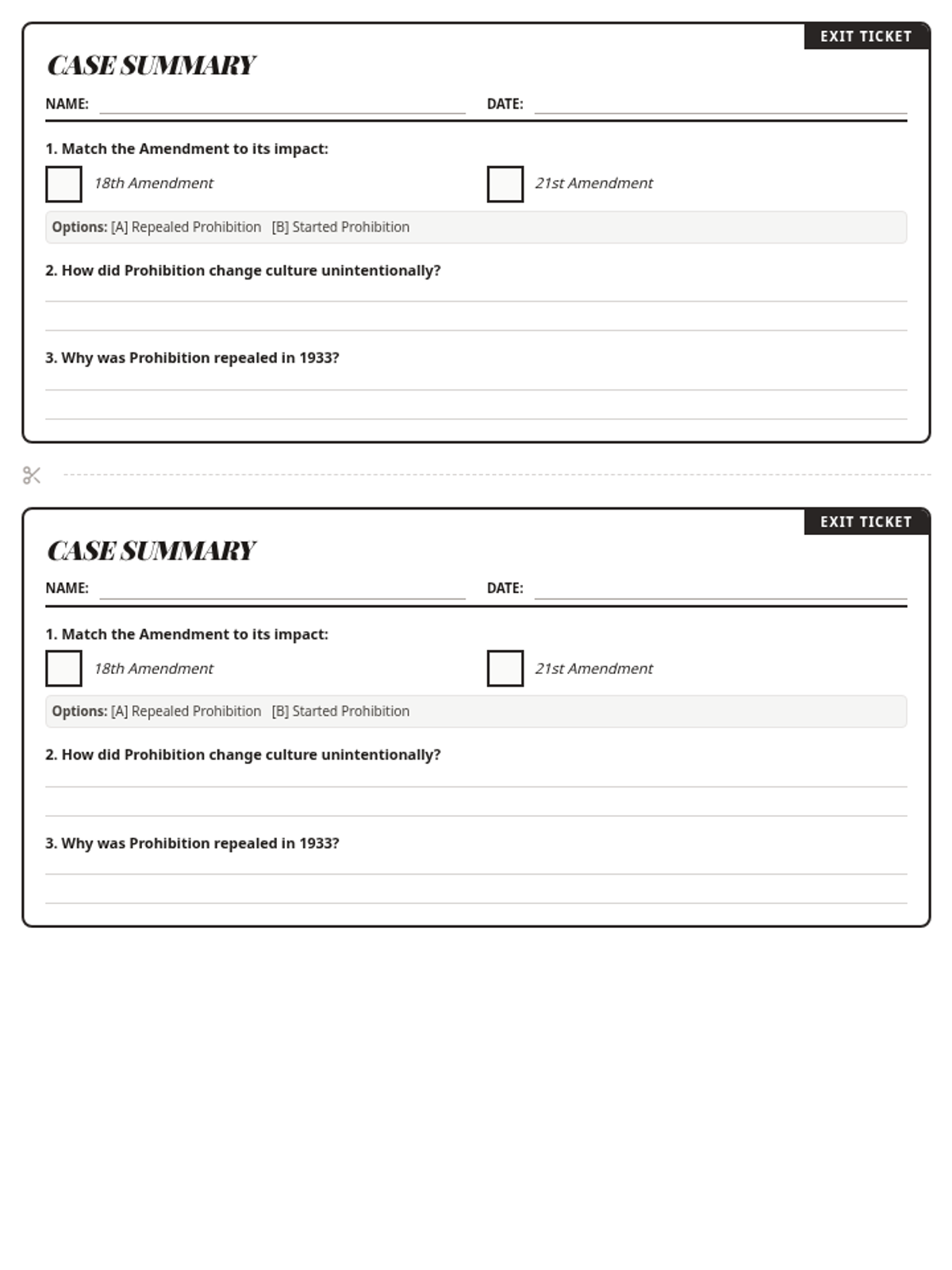
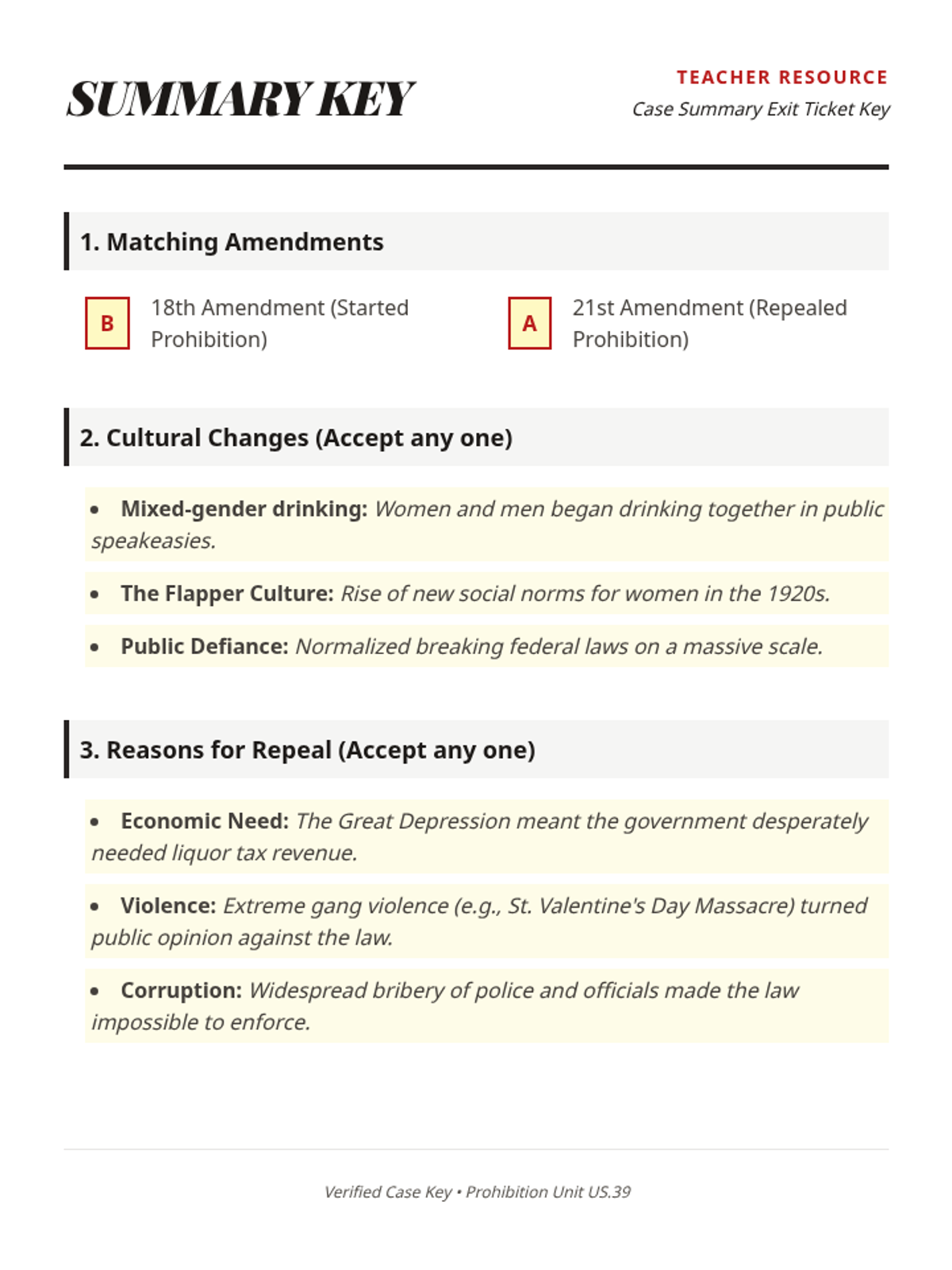
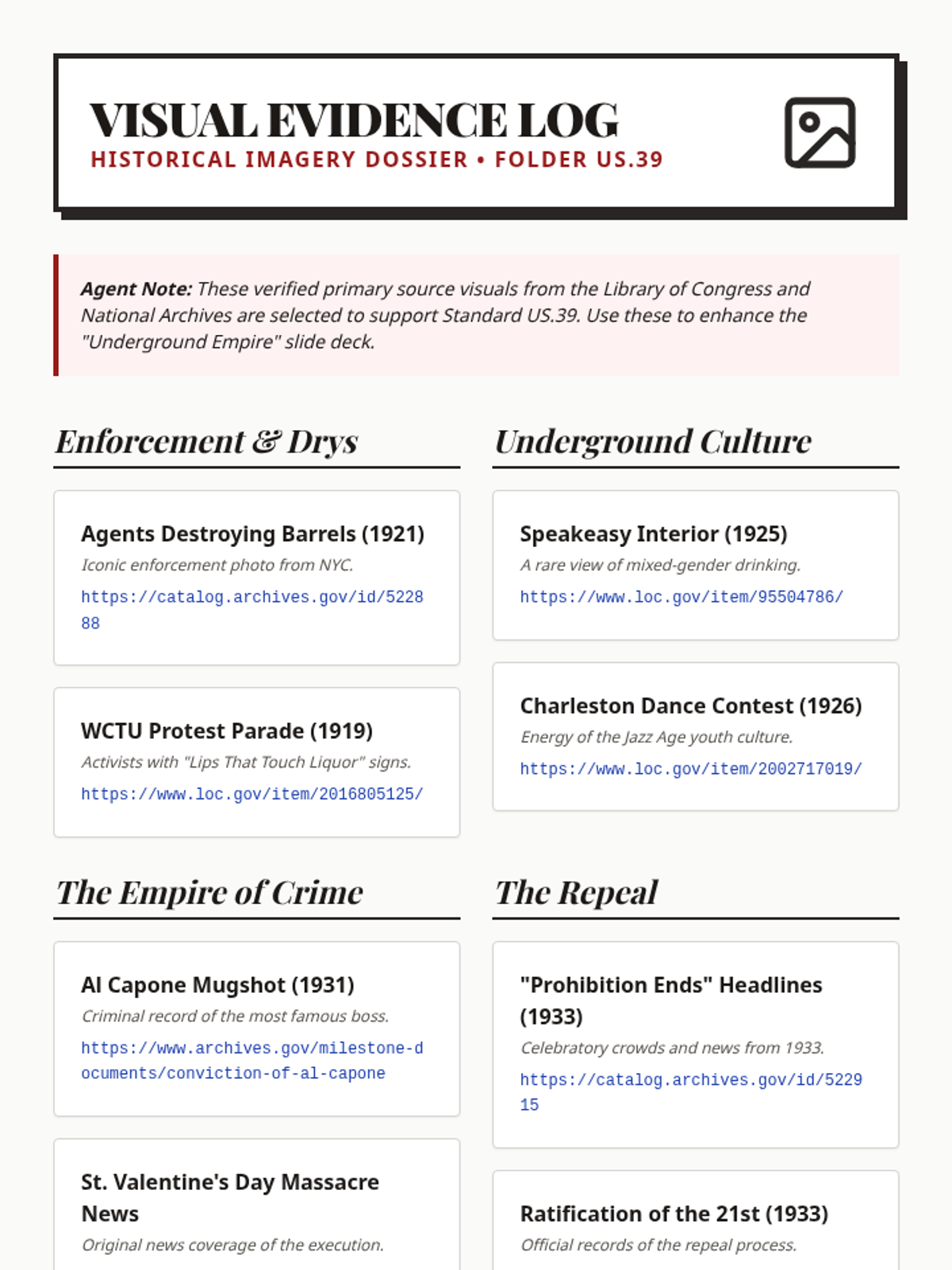
A fast-paced investigation into the 18th Amendment, exploring how Prohibition fueled organized crime and transformed American culture before its ultimate repeal.
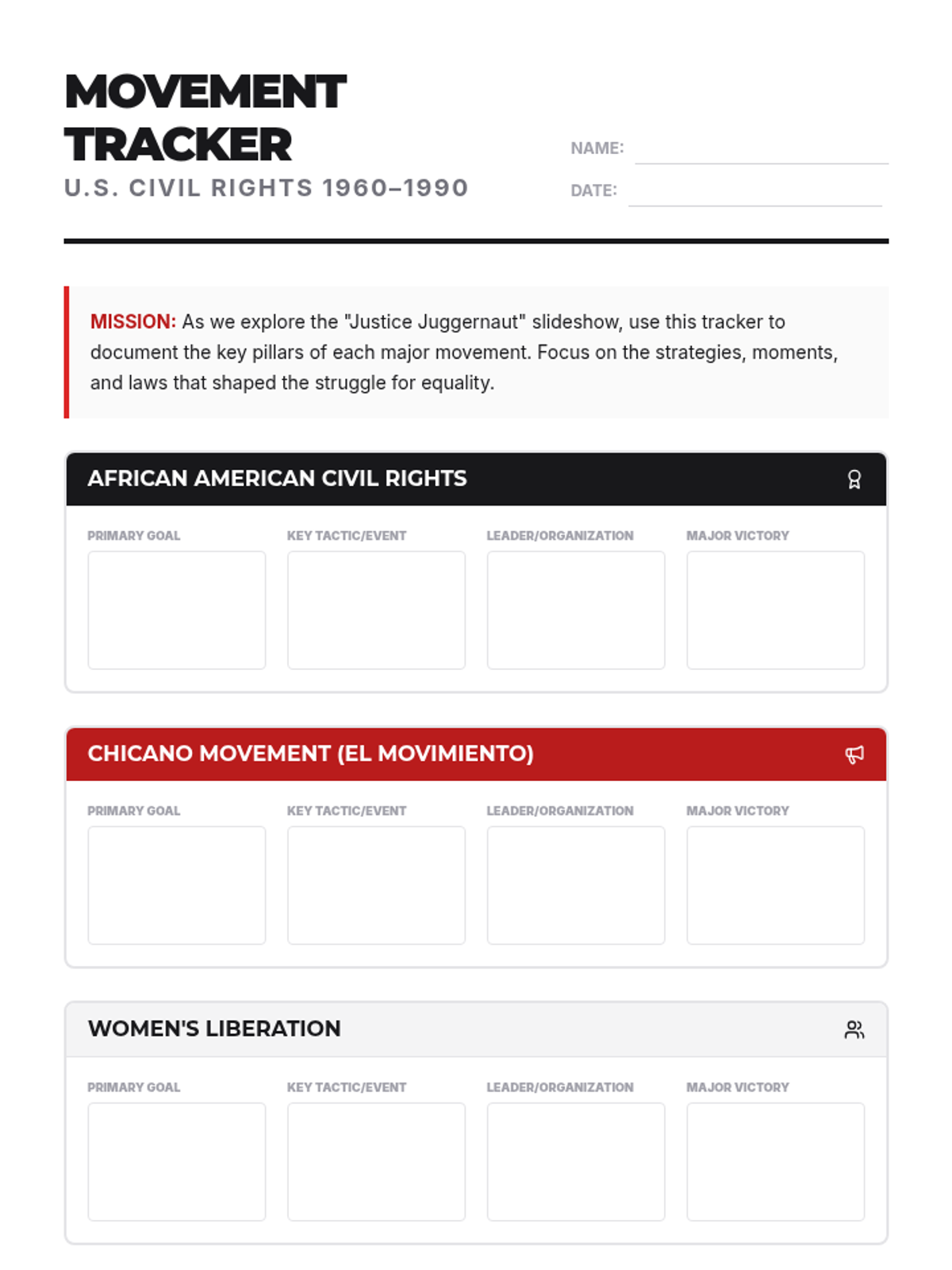
A comprehensive overview of the diverse civil rights movements in the United States from the 1960s through the 1990s, highlighting key leaders, turning points, and legislative victories.
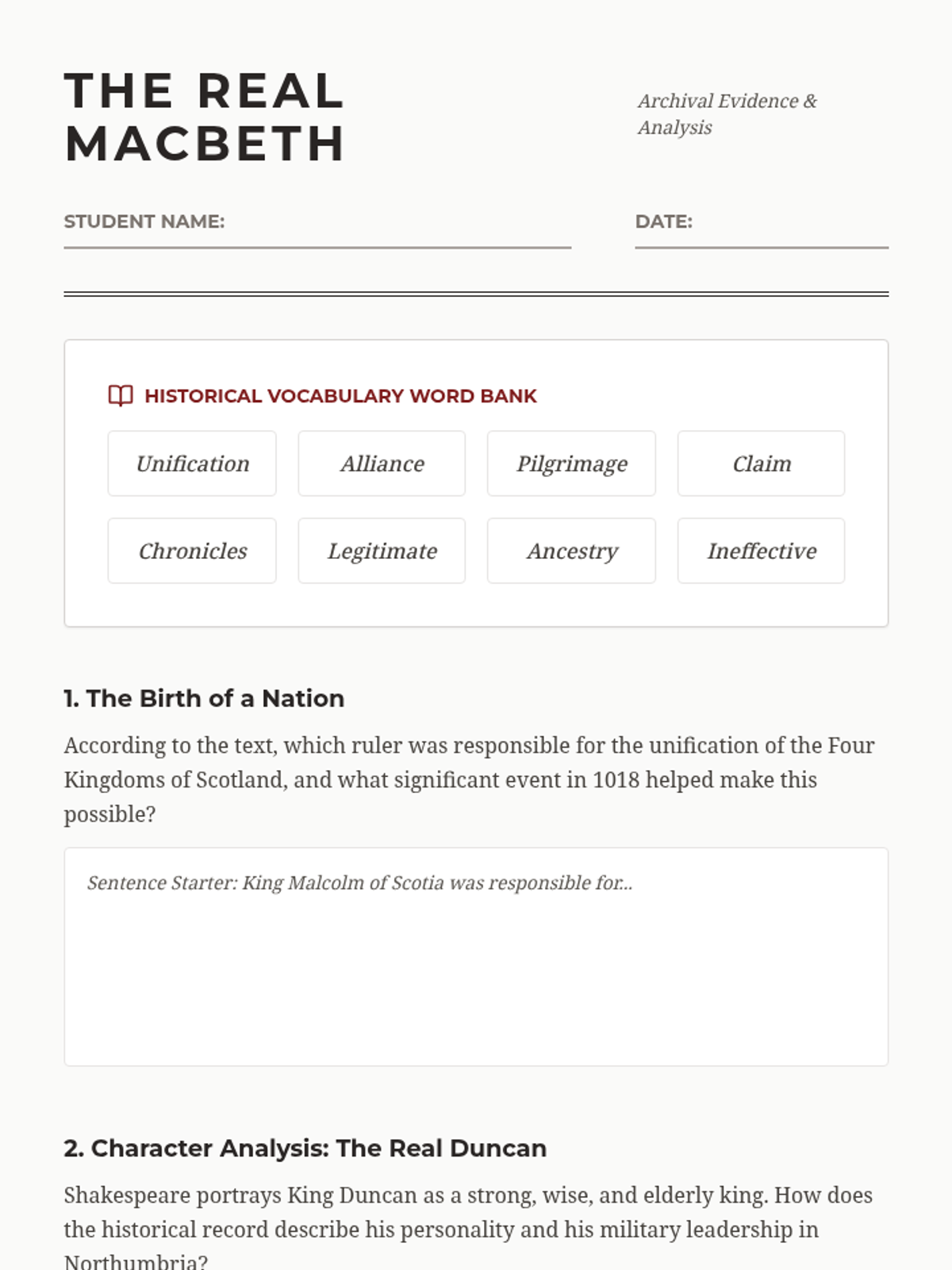
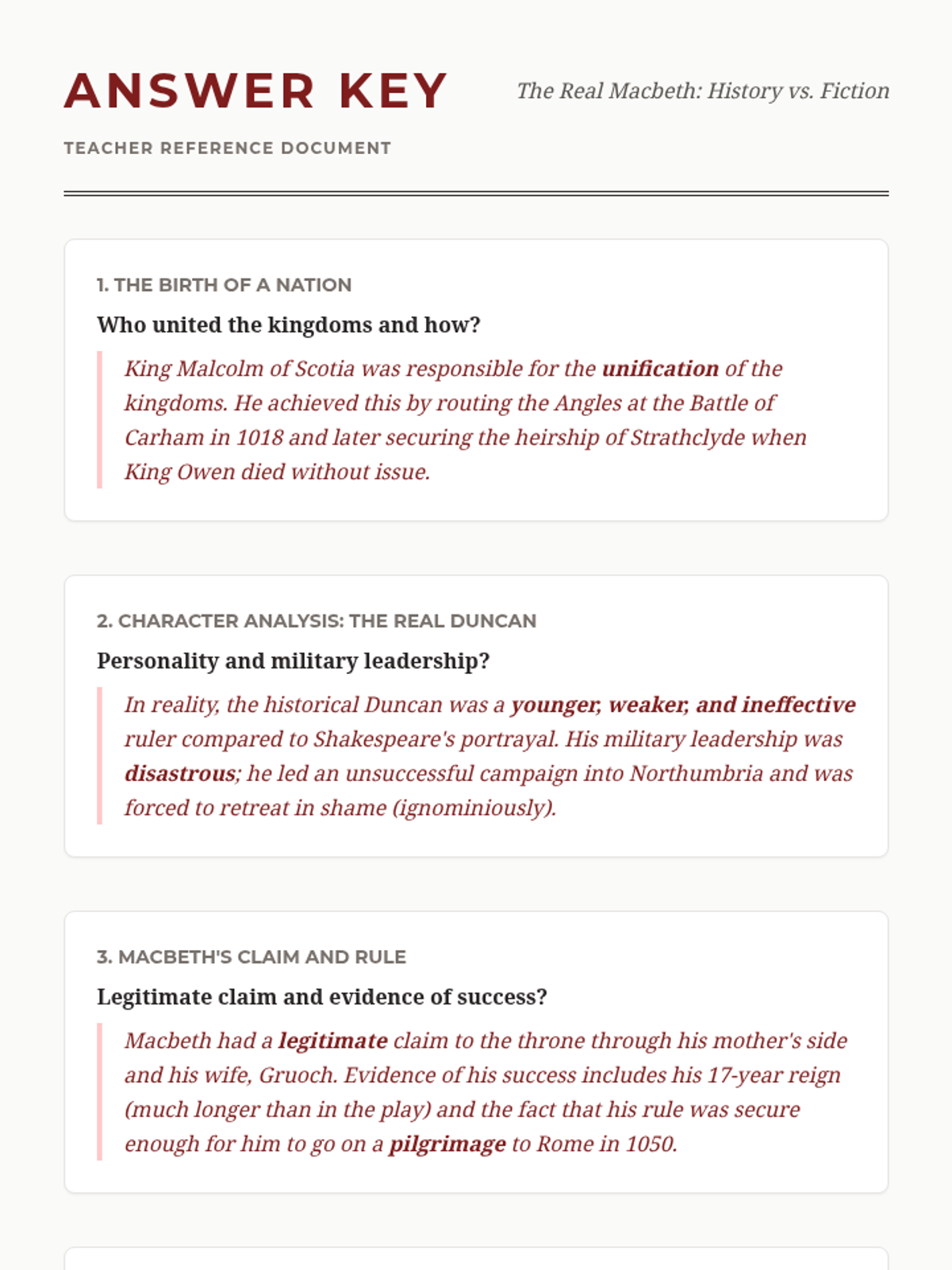
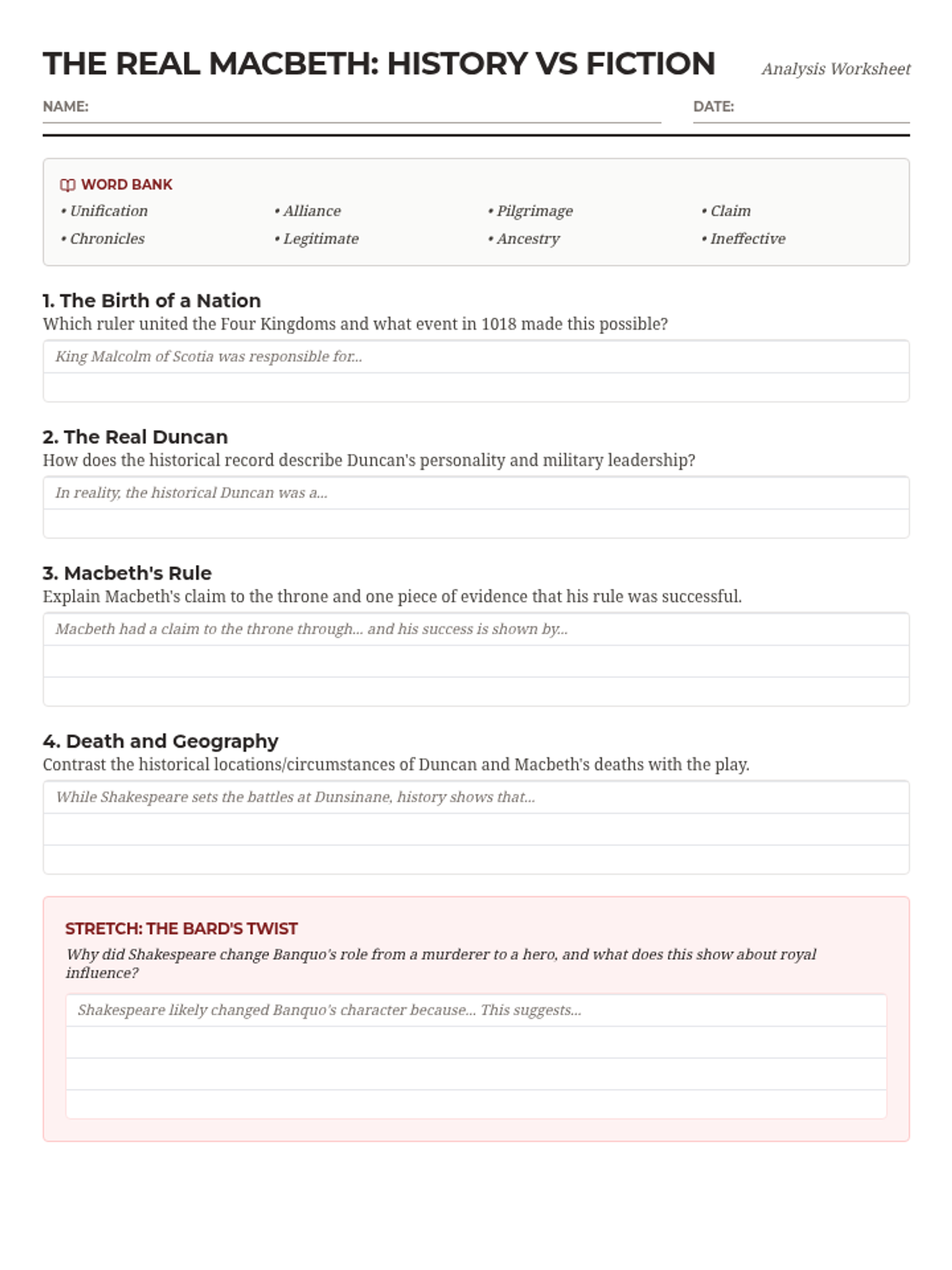
A lesson exploring the historical reality of Duncan and Macbeth compared to their fictionalized counterparts in Shakespeare's tragedy. Students will analyze a historical text to identify discrepancies in timeline, character traits, and political motivations.
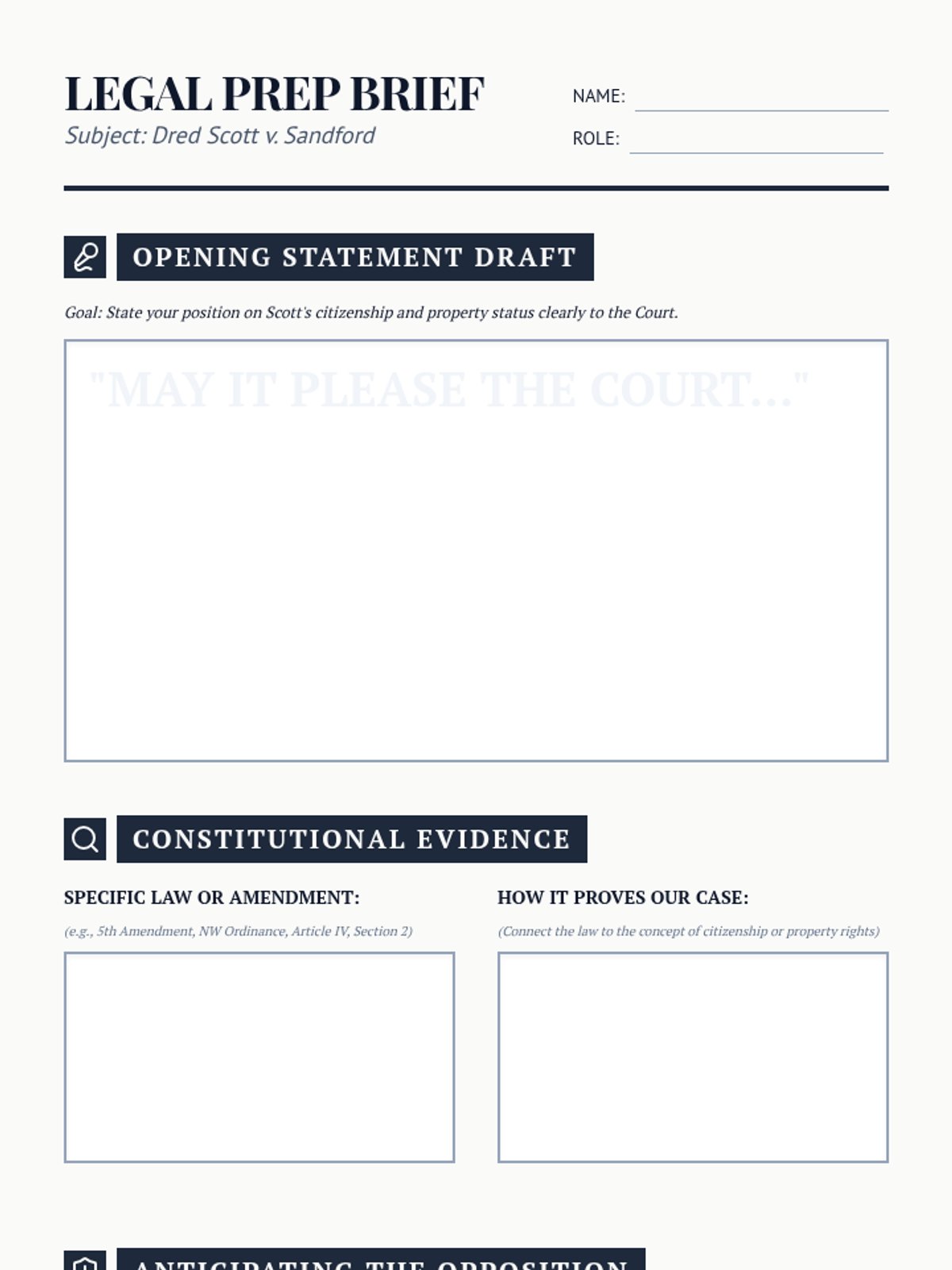
Students participate in a mock trial to re-evaluate the legal and moral arguments of the Dred Scott case.
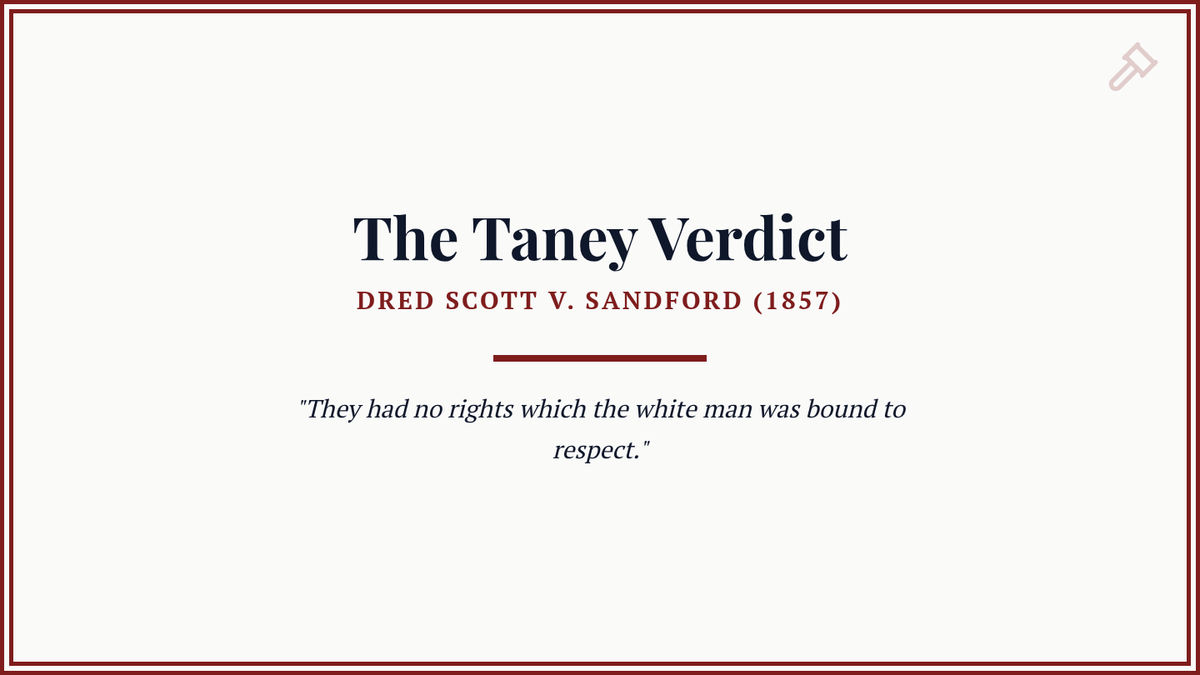
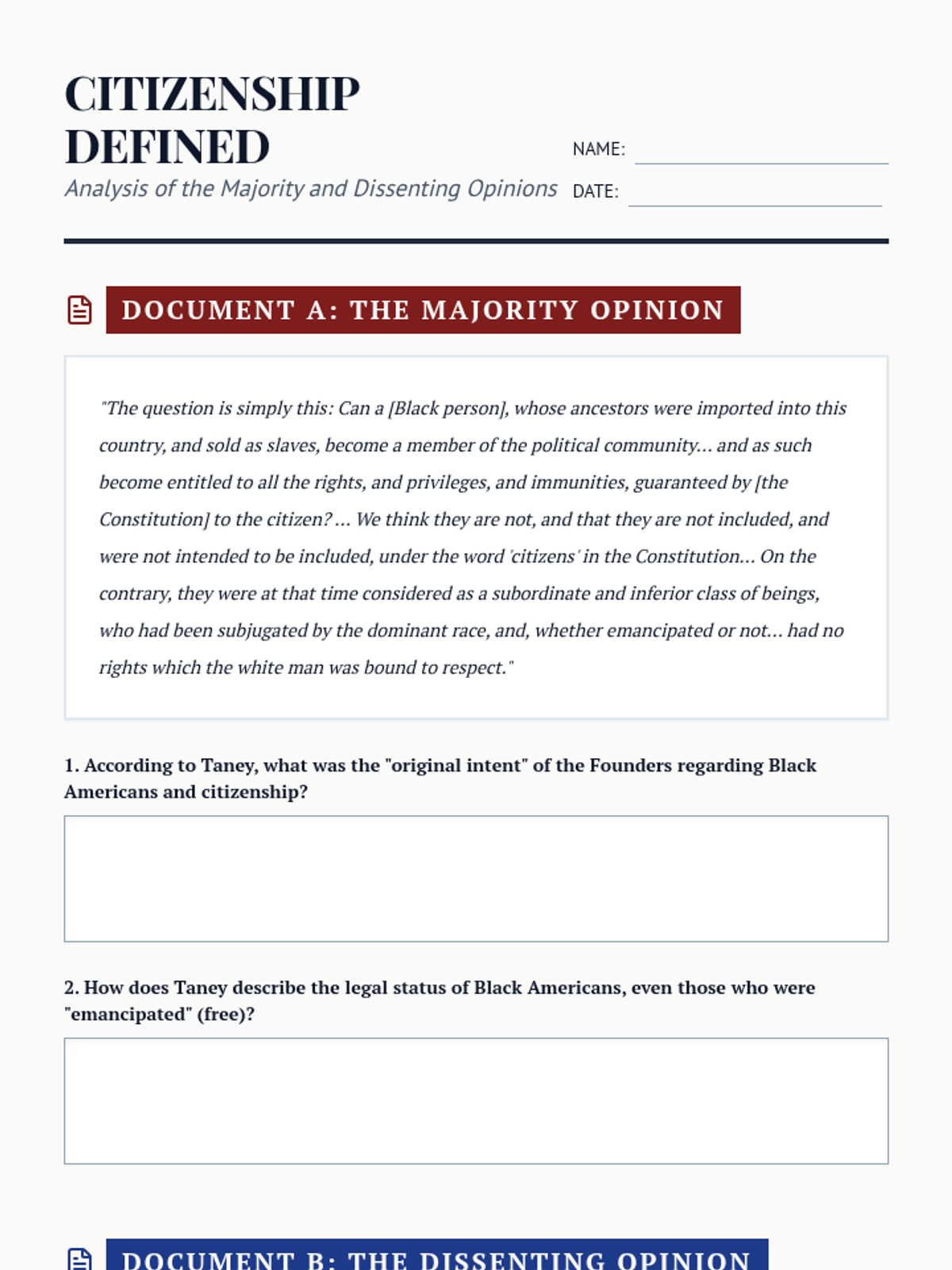
An in-depth look at the Supreme Court's decision and Chief Justice Taney's definition of citizenship.
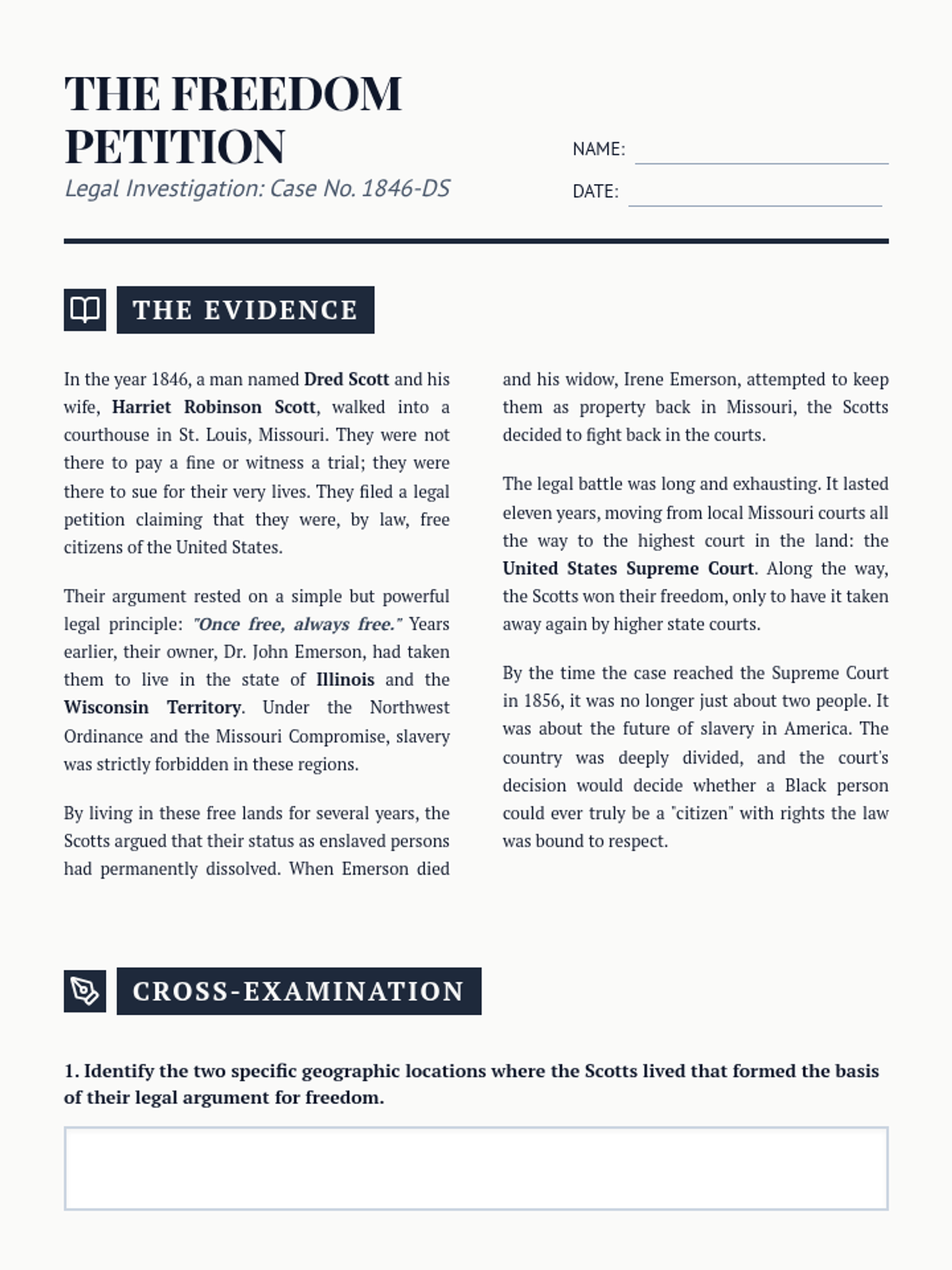
Students investigate the life of Dred Scott and the legal arguments that led to his case reaching the Supreme Court.
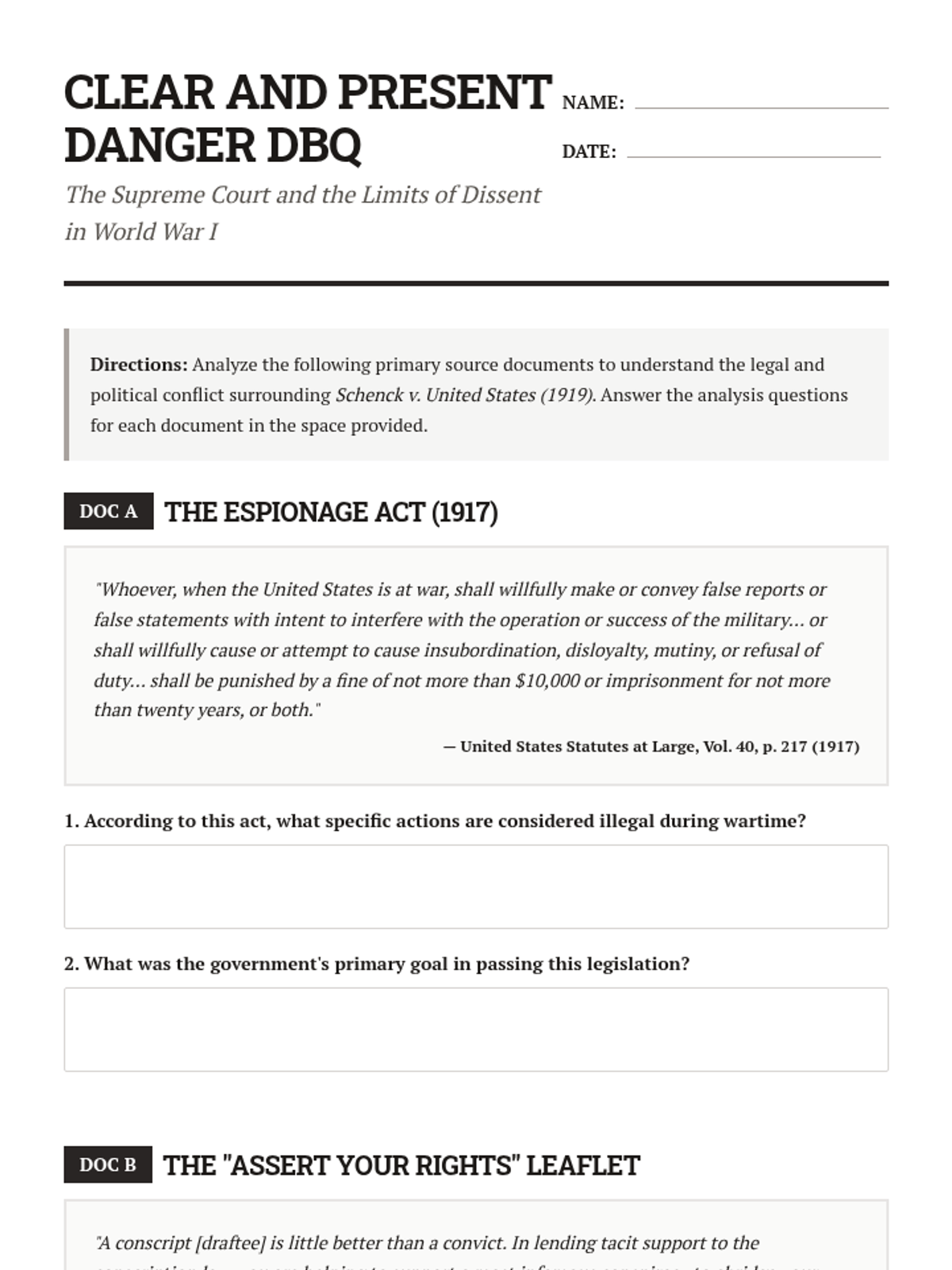
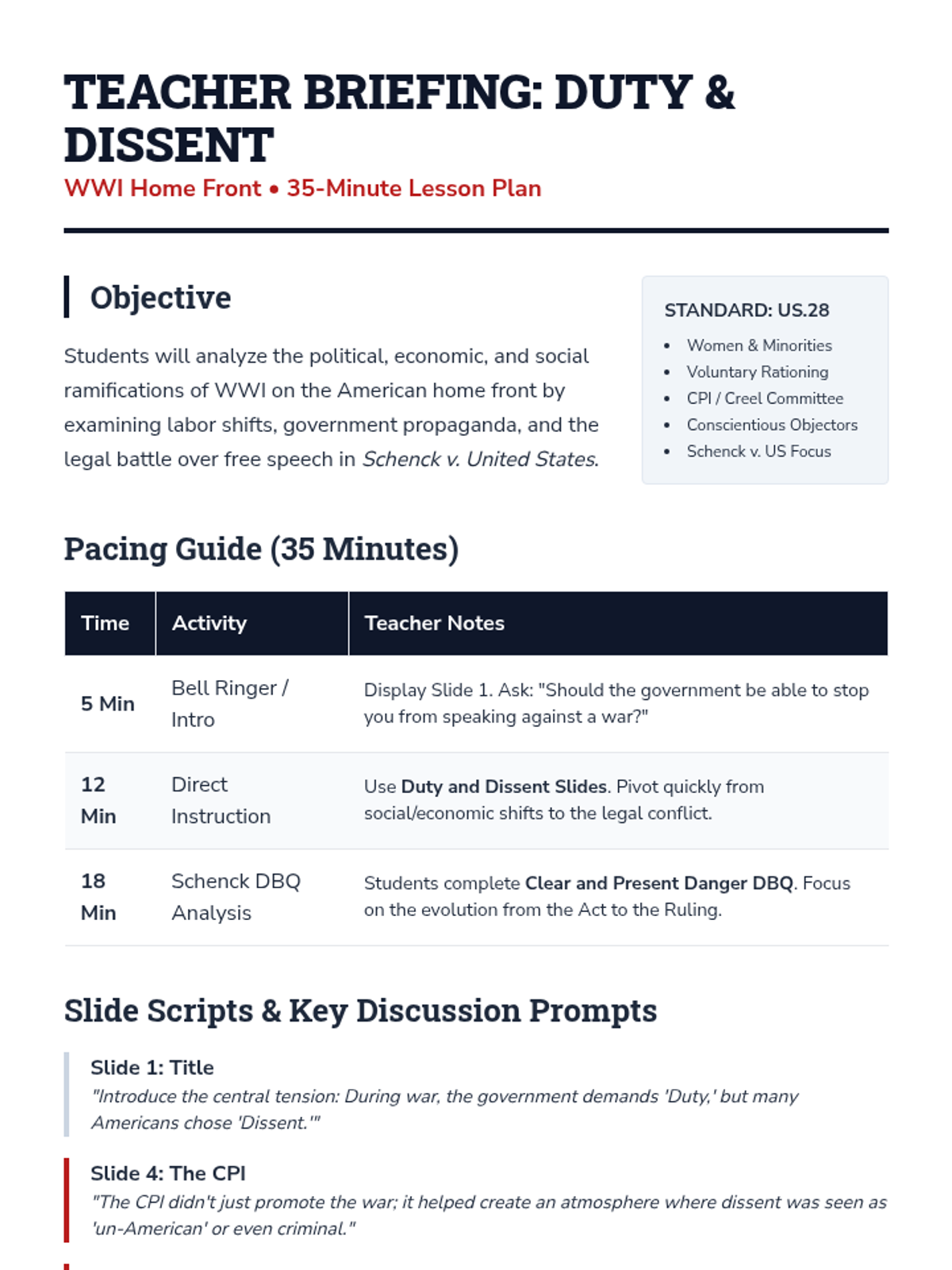
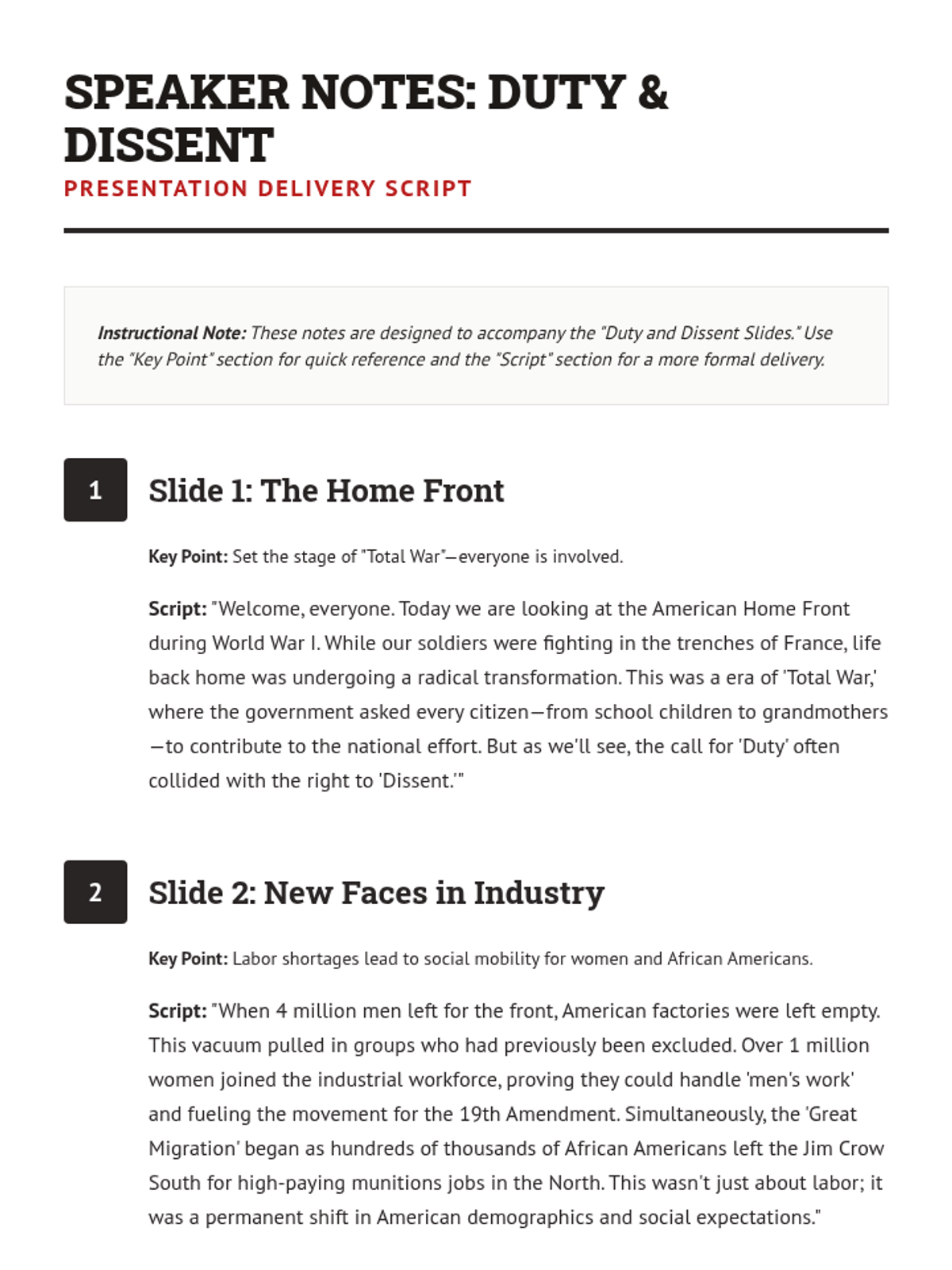
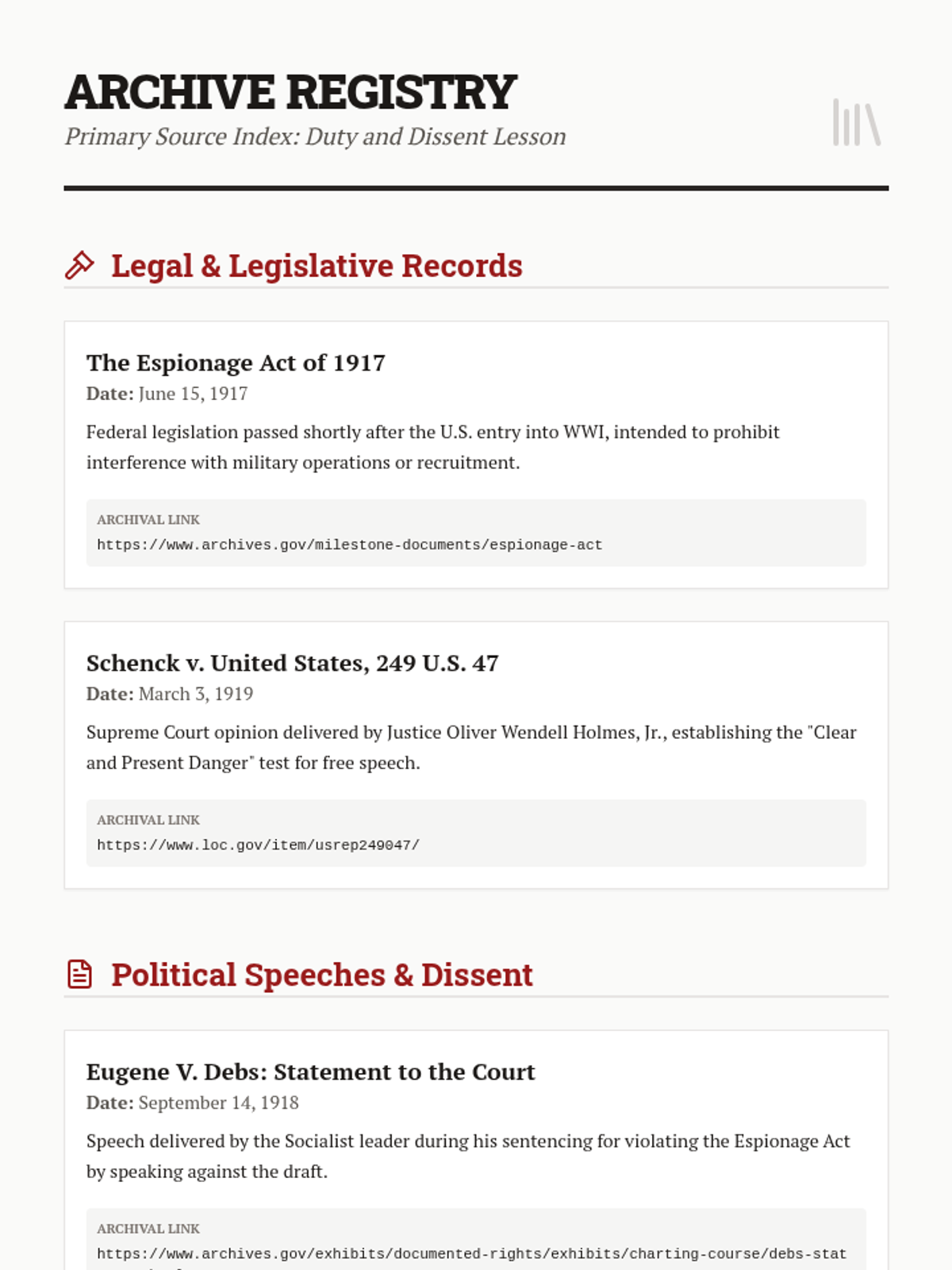
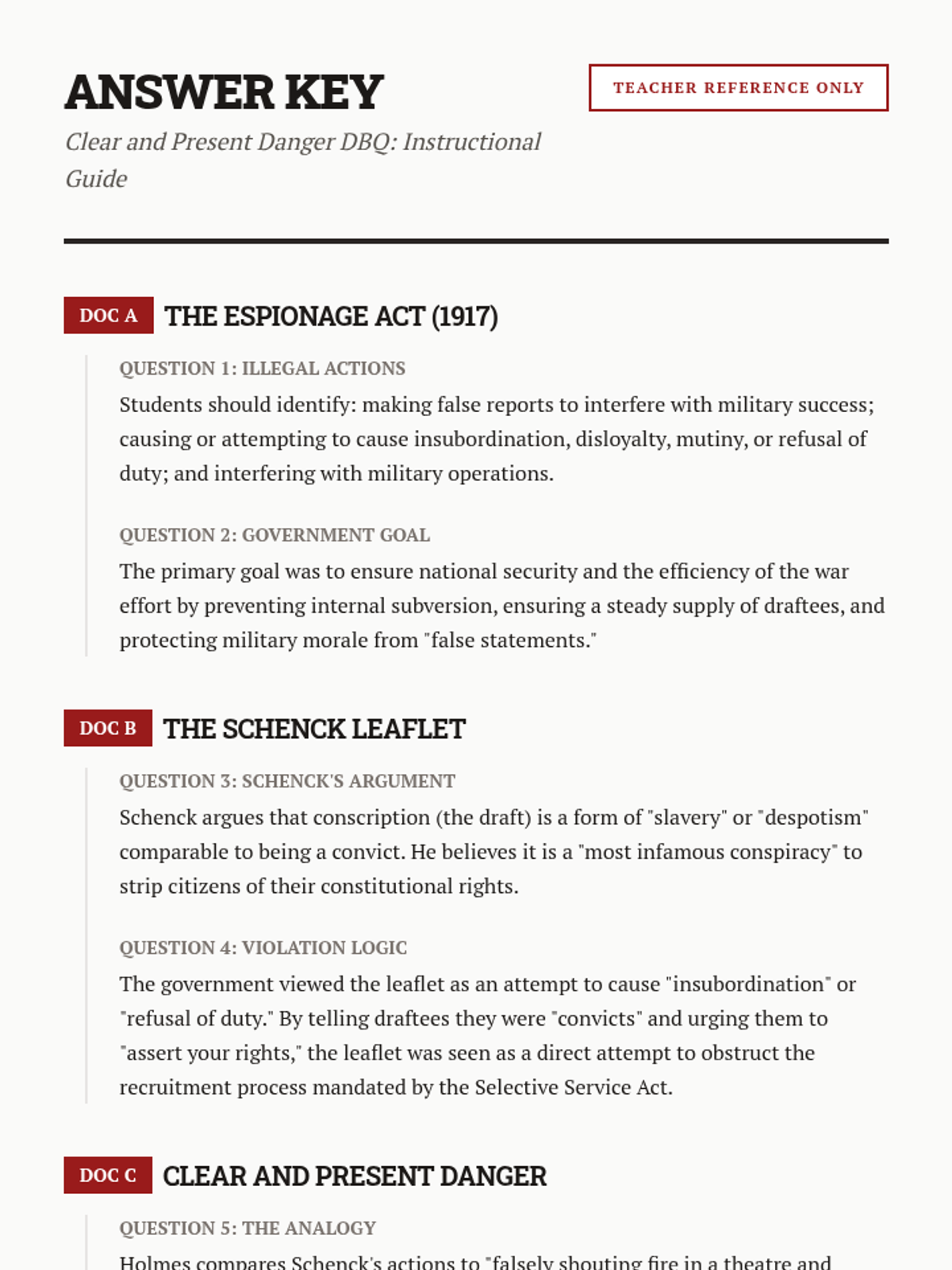
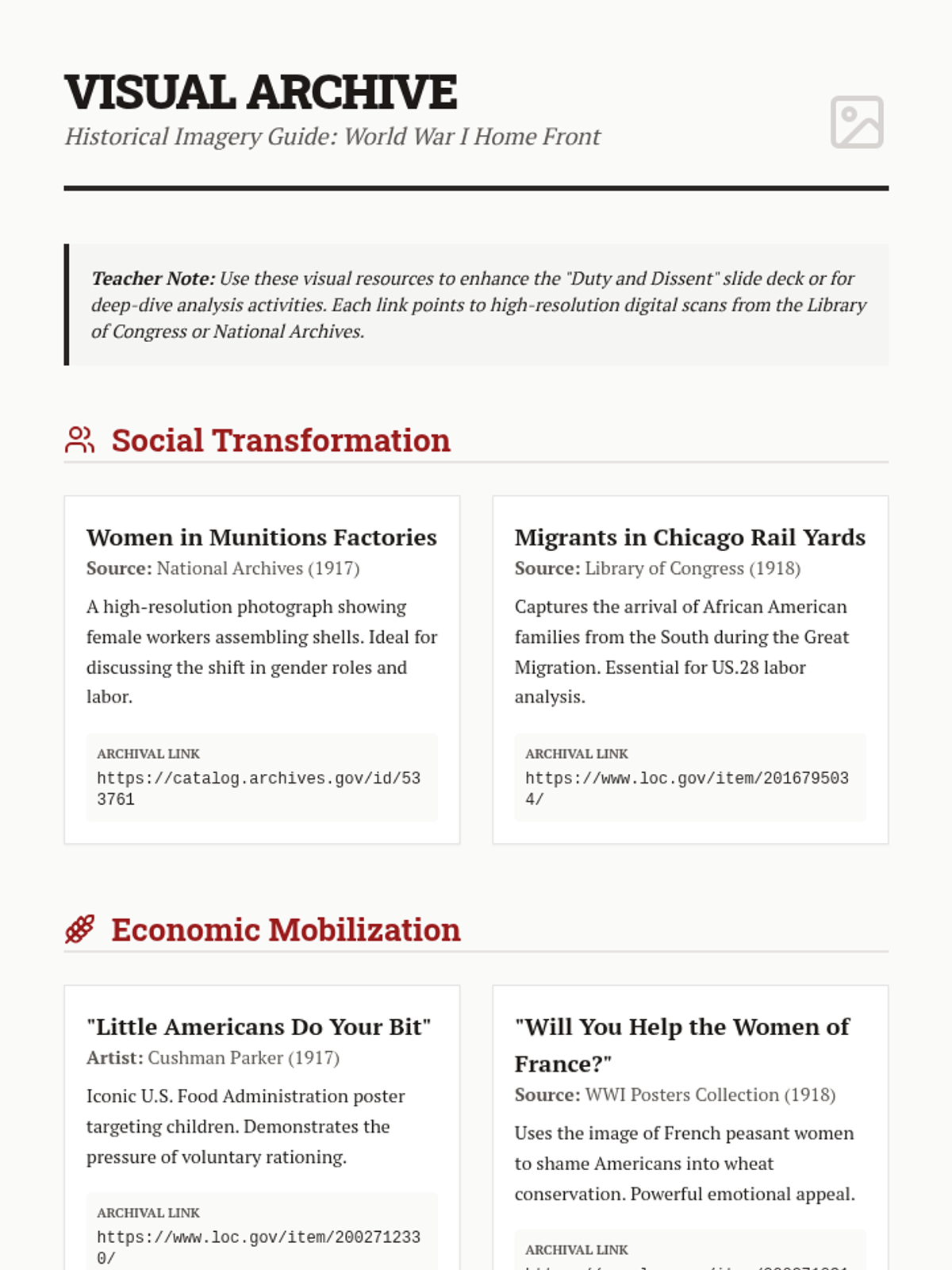
A 35-minute exploration of the American home front during World War I, covering social shifts, government propaganda, and legal challenges to civil liberties. Students analyze the roles of women and minorities, rationing efforts, and the tension between national security and free speech.
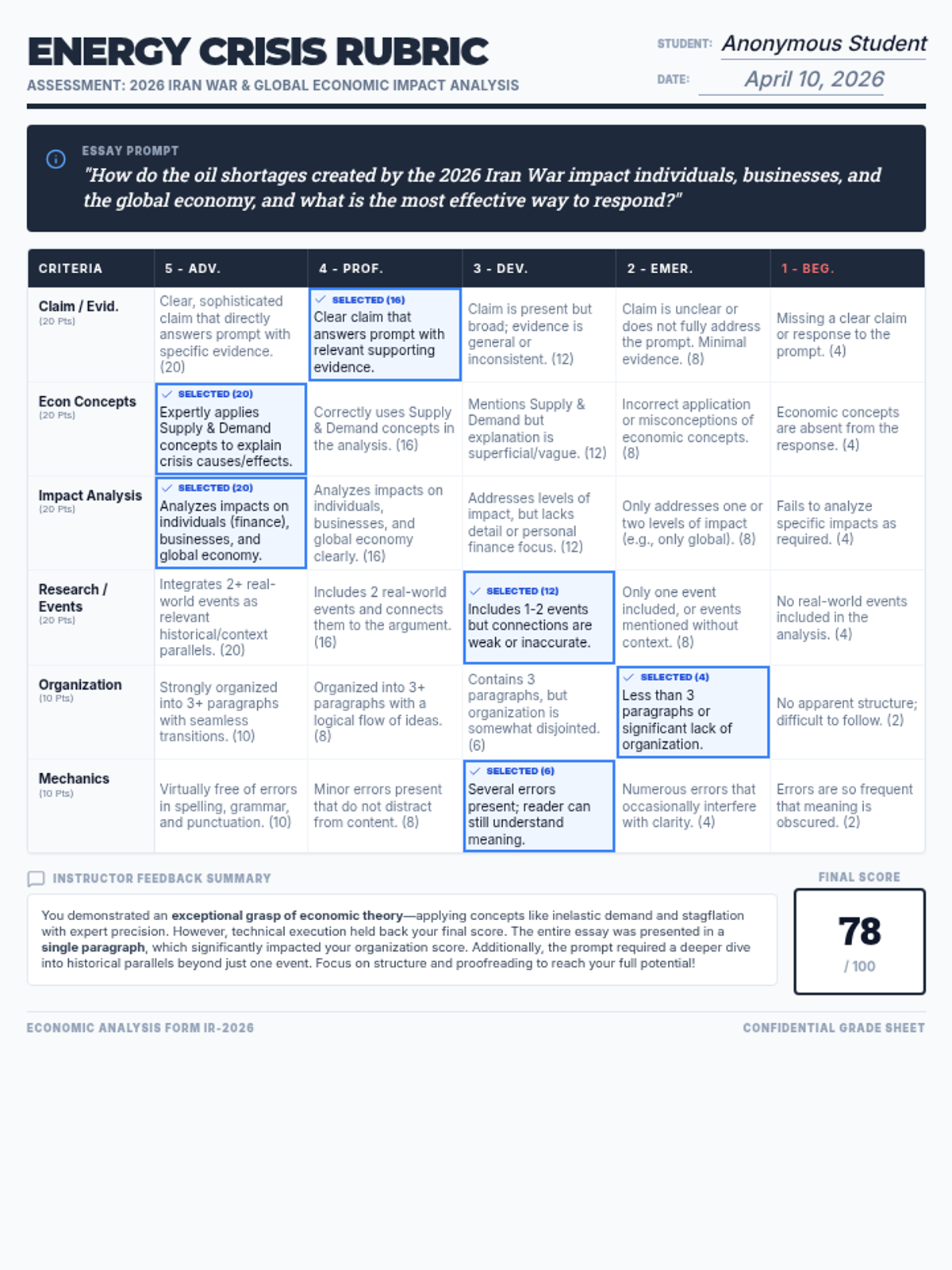
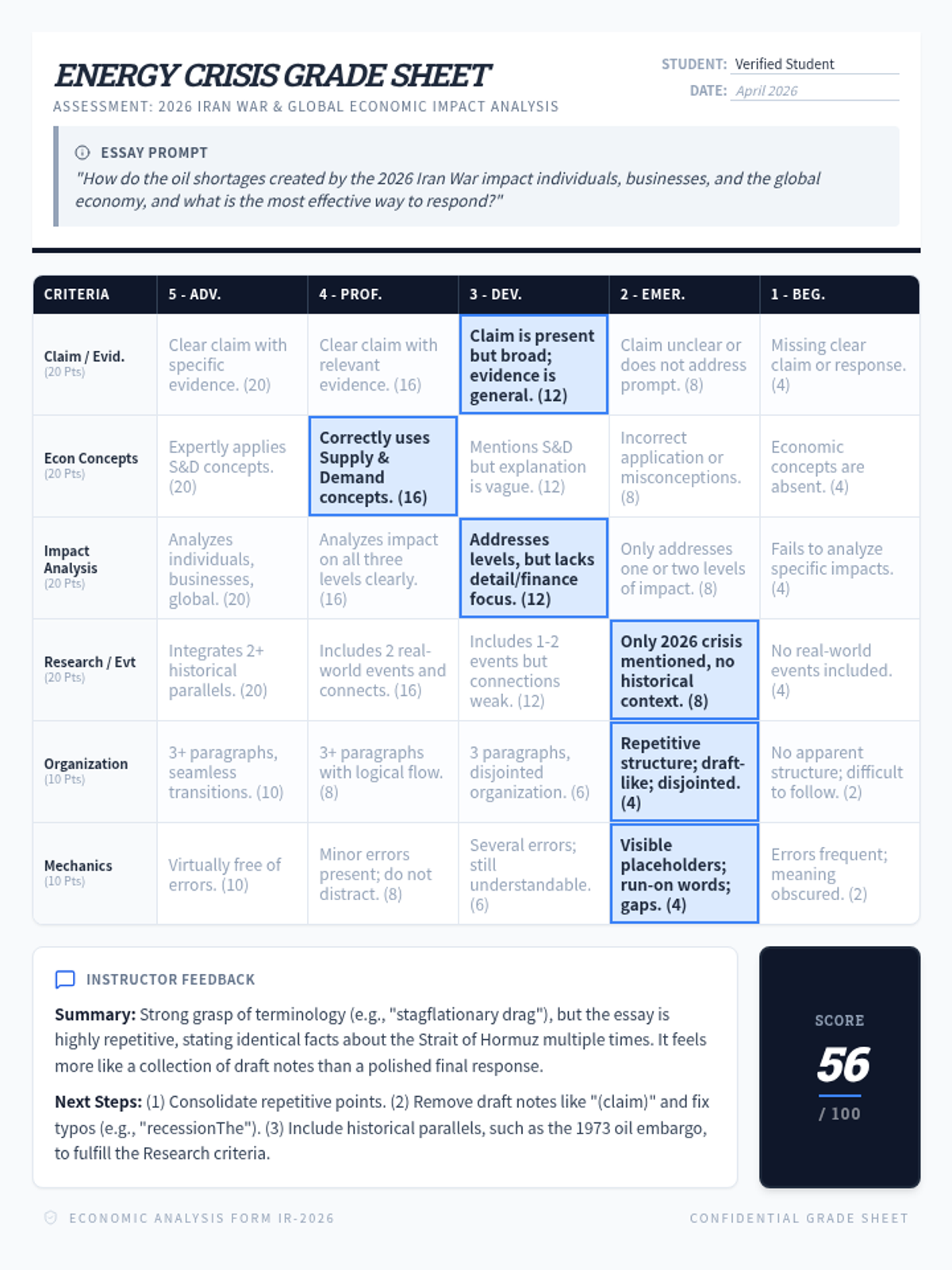
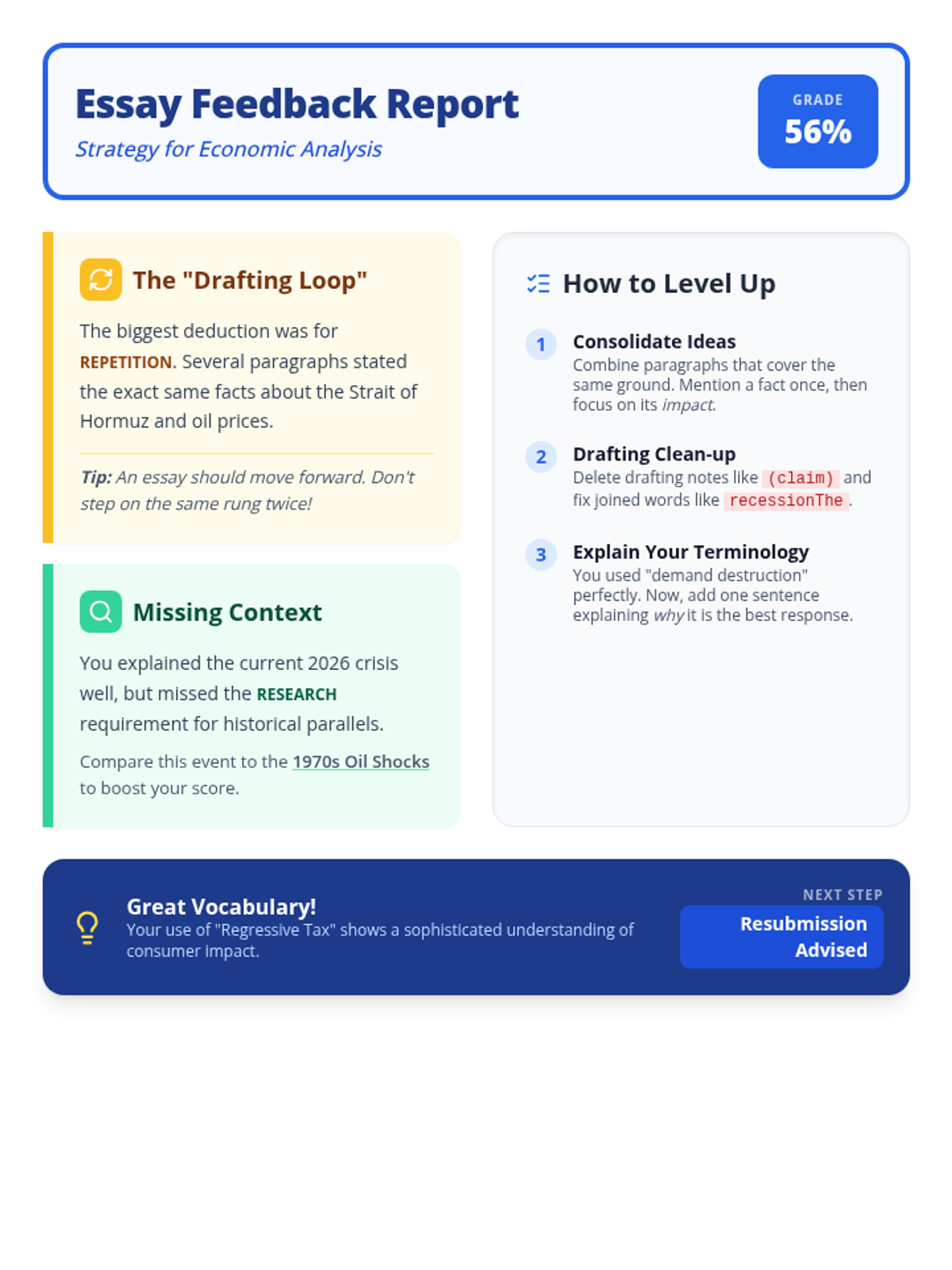
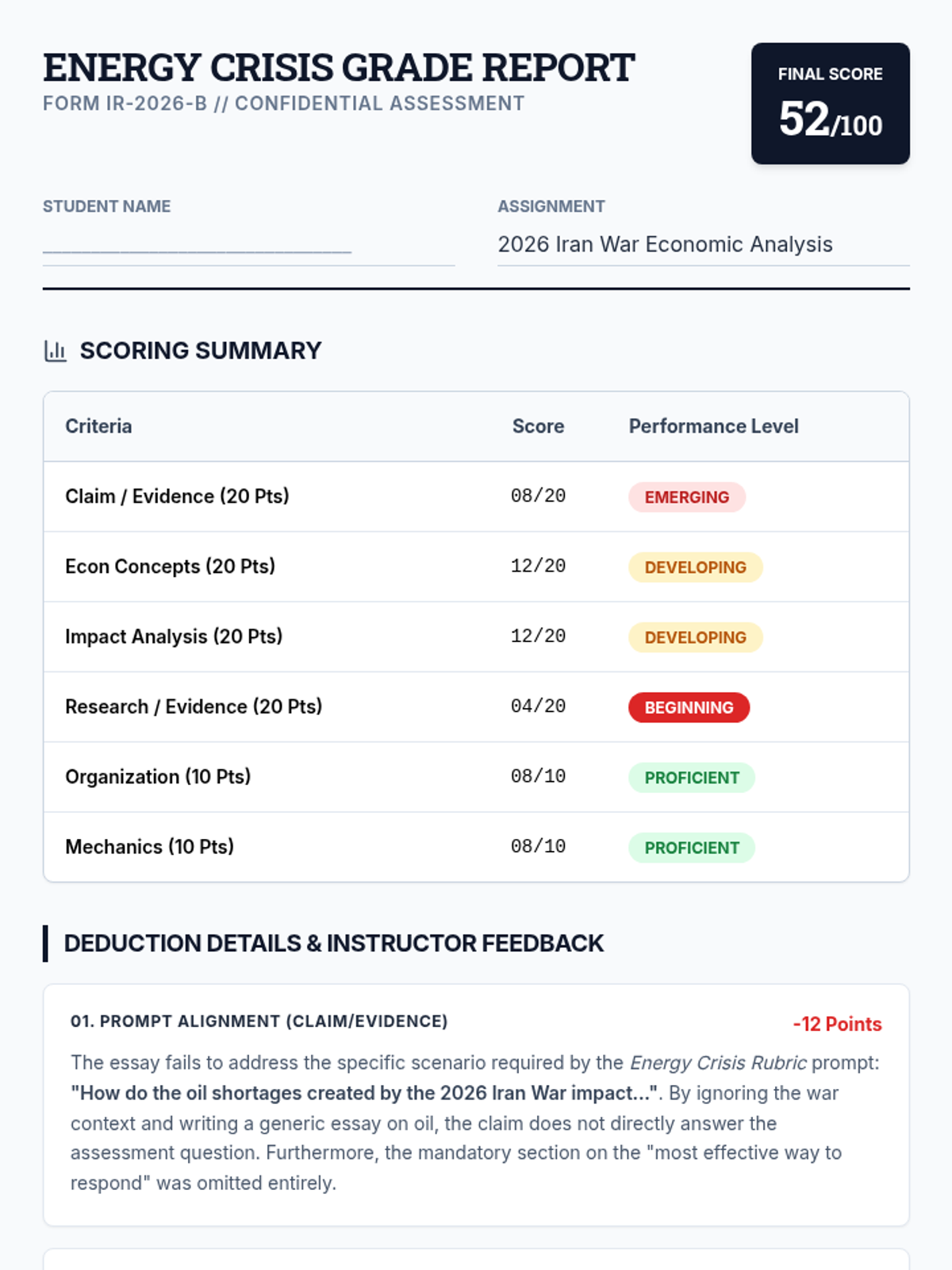
A formal assessment and feedback set for the 2026 Energy Crisis economic analysis essay, including a scored rubric and clear, actionable feedback for the student.
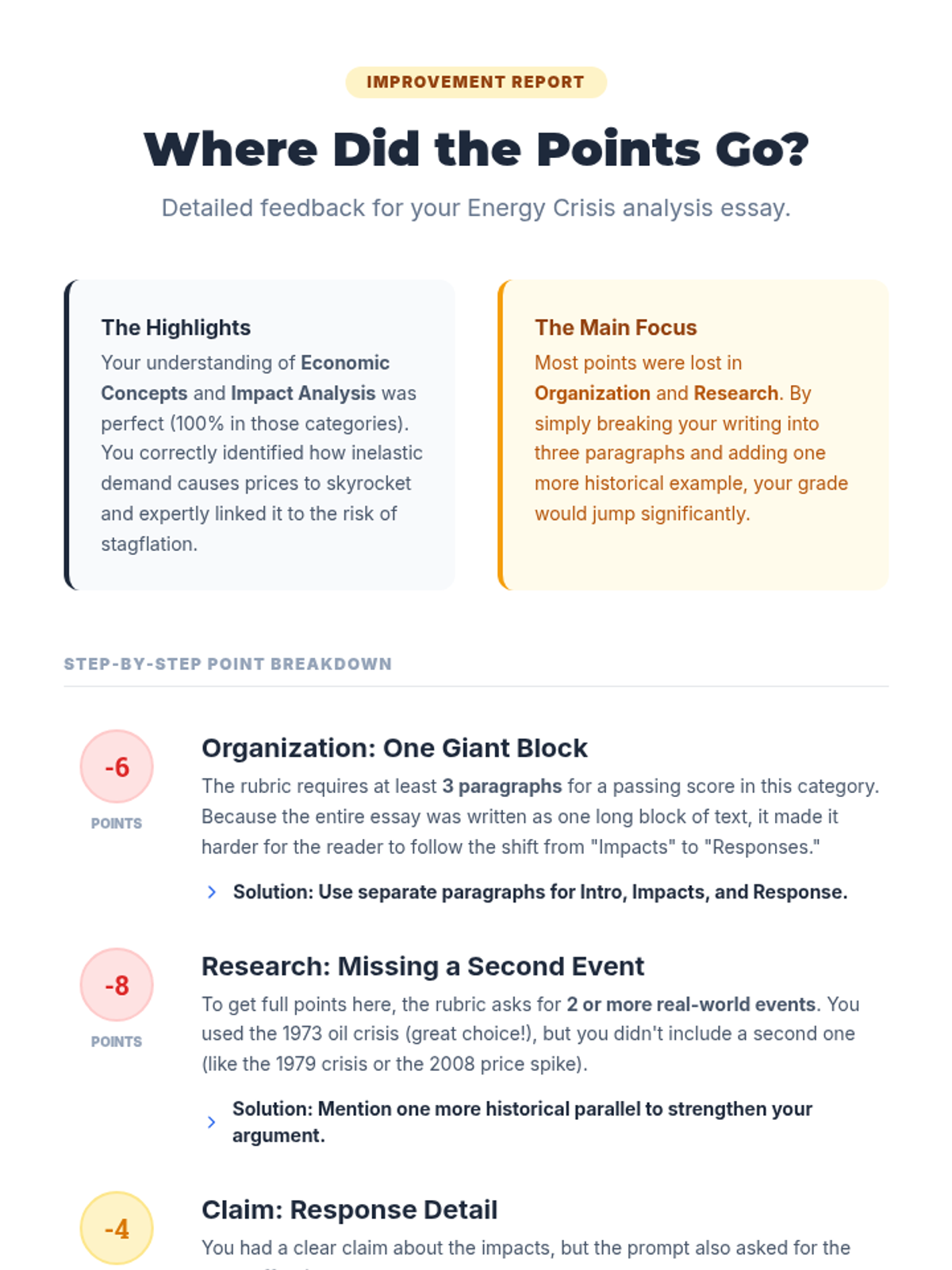
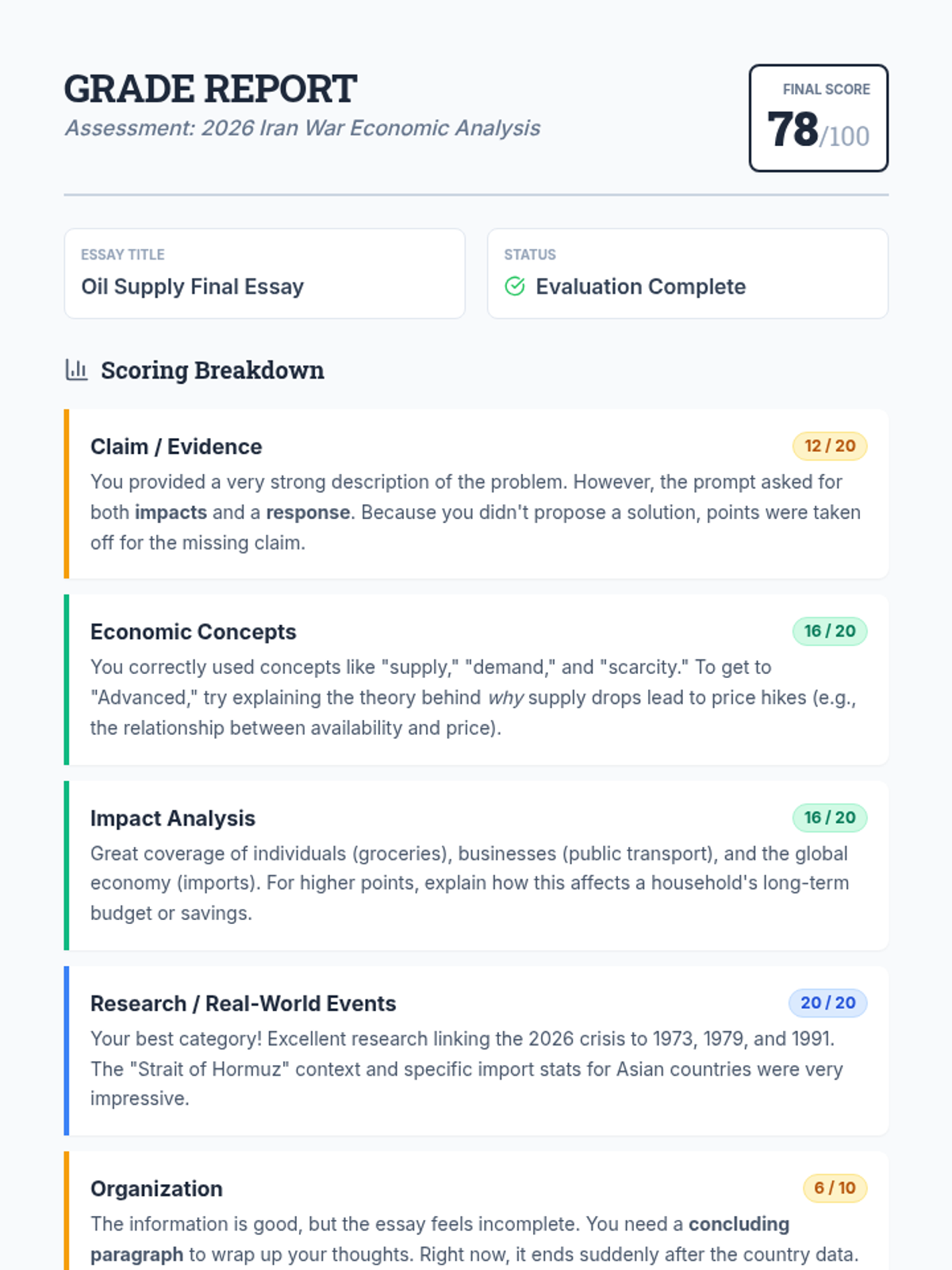
A grading report and feedback sheet based on the Energy Crisis Rubric, providing clear, actionable insights for a student essay on the 2026 Iran War oil shortages.
A lesson focused on analyzing the economic consequences of global conflicts, specifically the 2026 energy crisis, featuring a graded assessment and feedback for students.
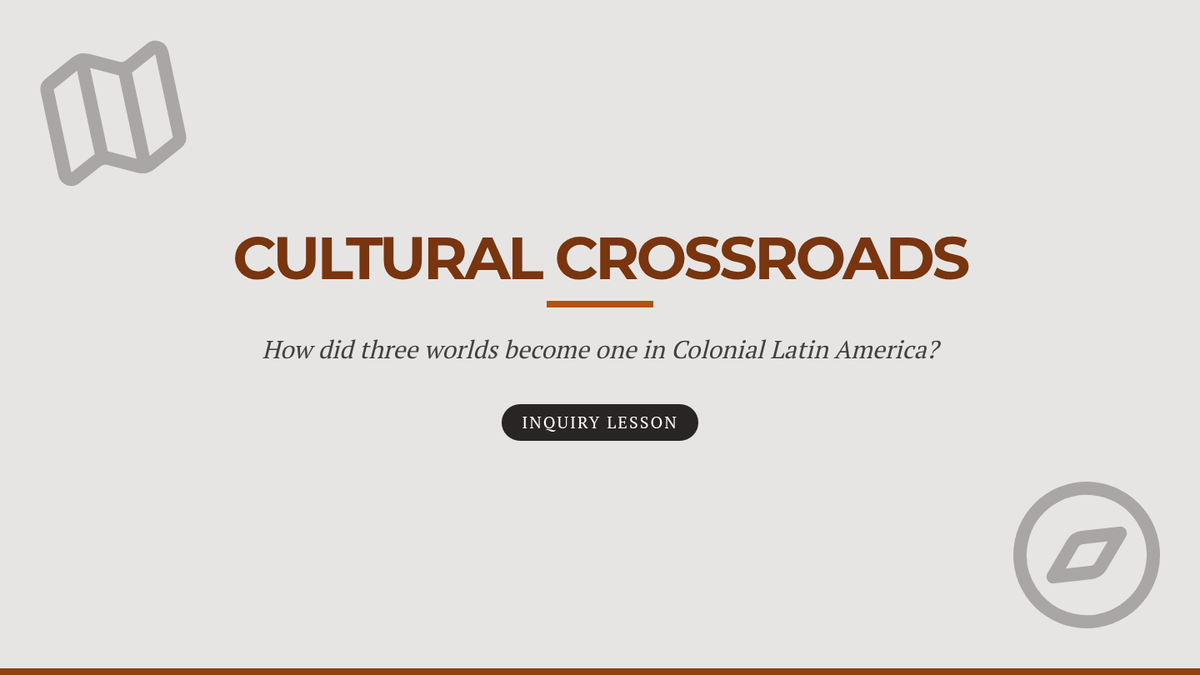
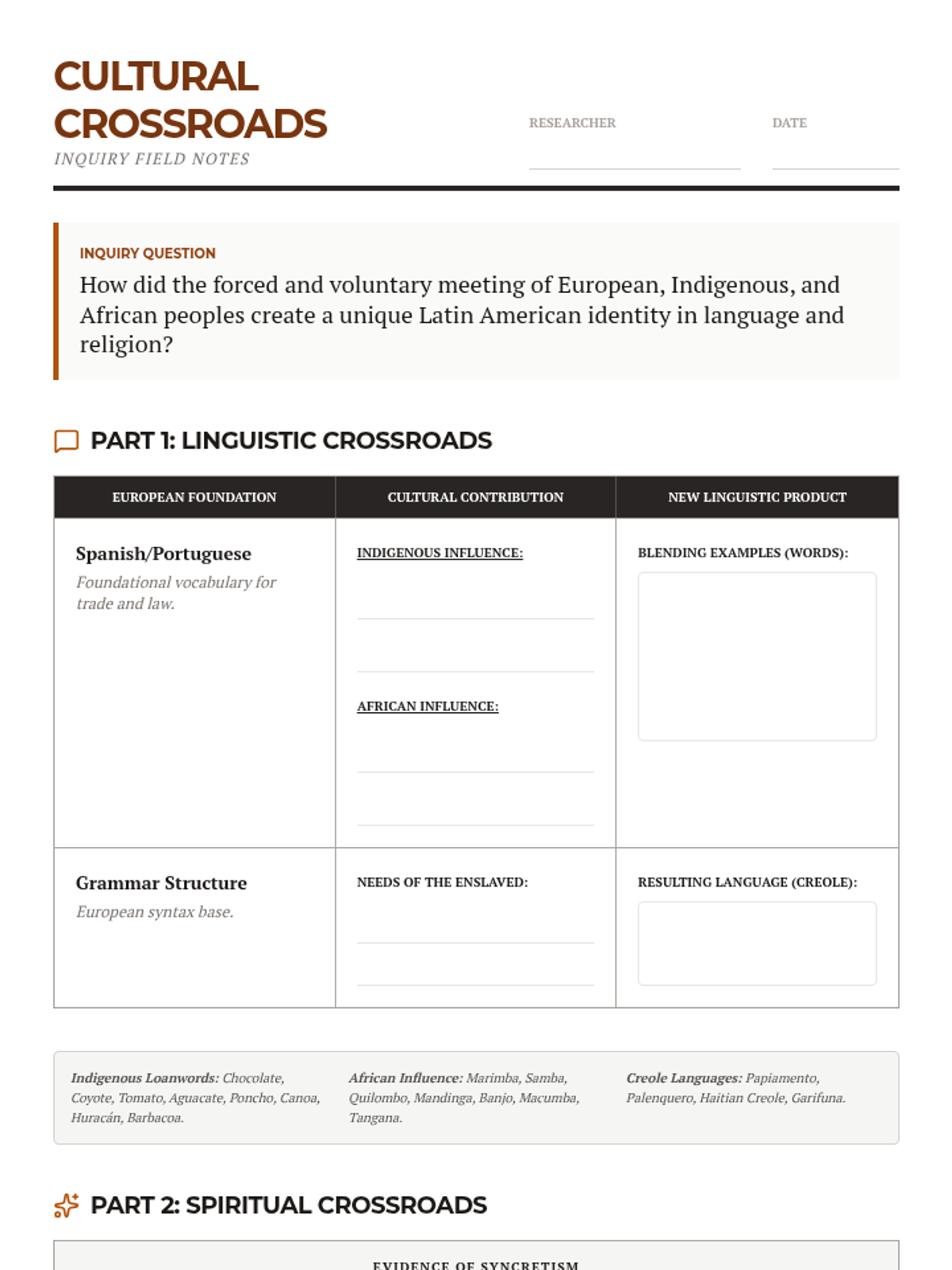
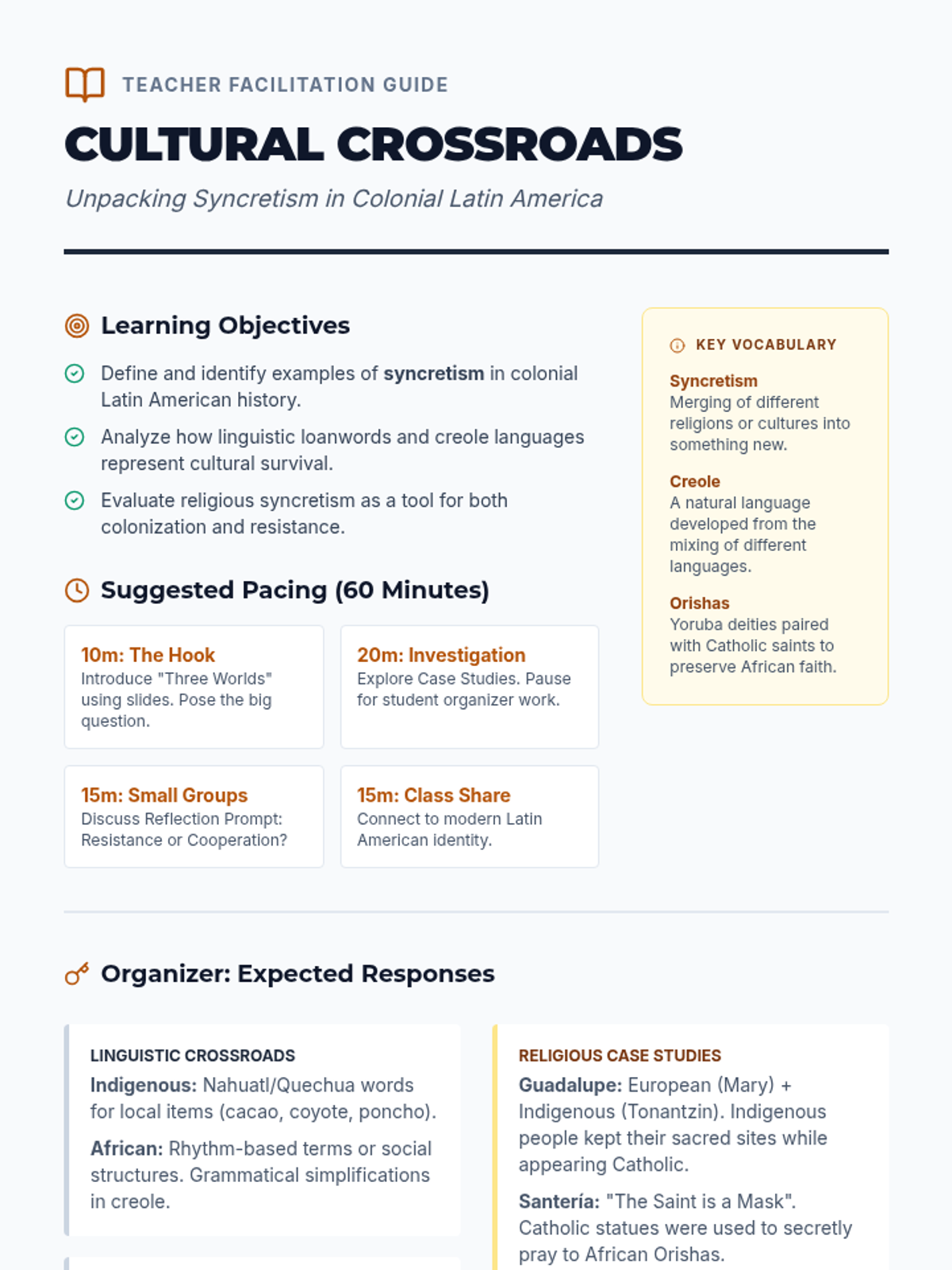
An inquiry-based lesson exploring the cultural syncretism of European, Indigenous, and African influences in colonial Latin America, with a focus on language and religion.
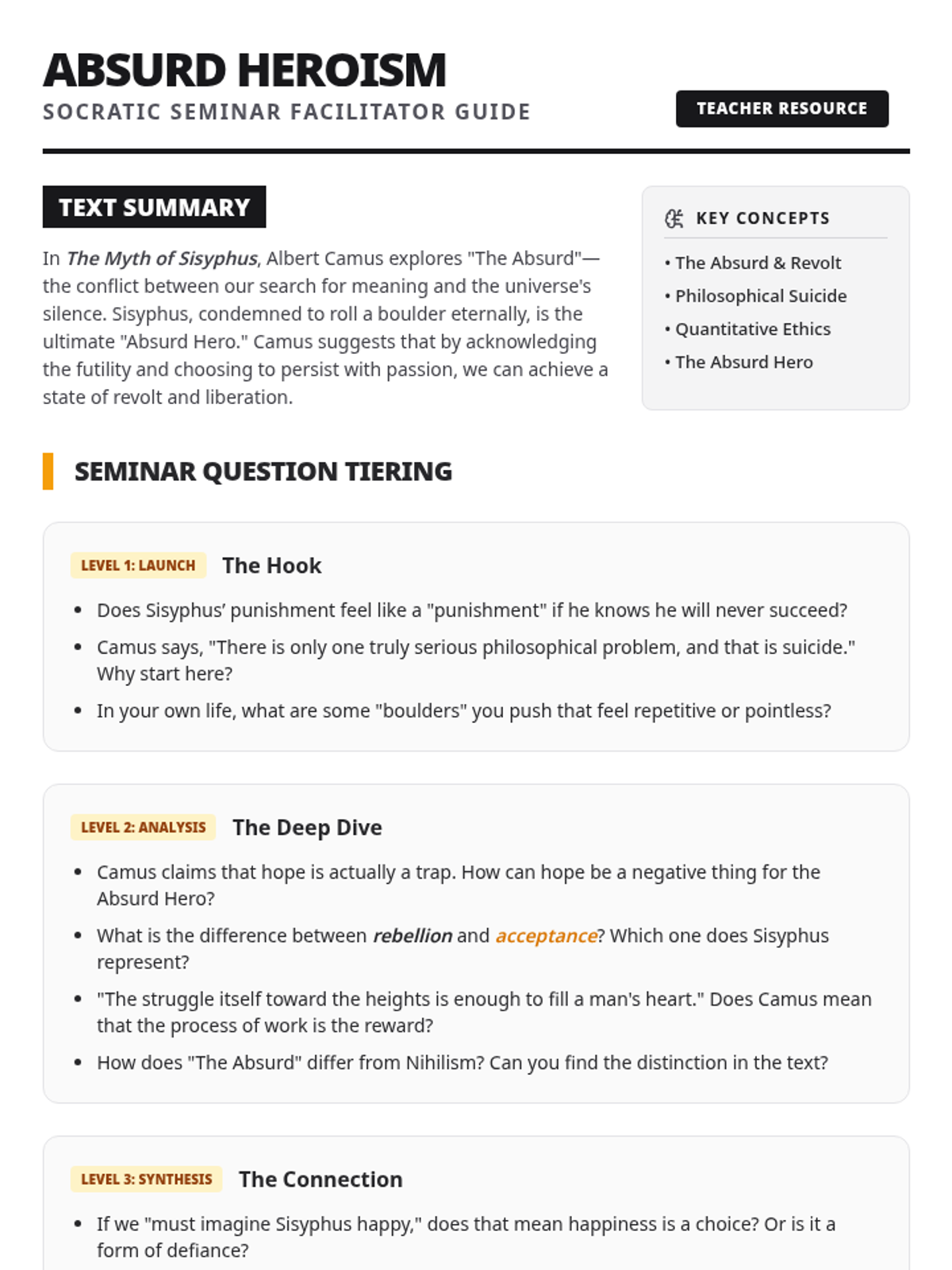
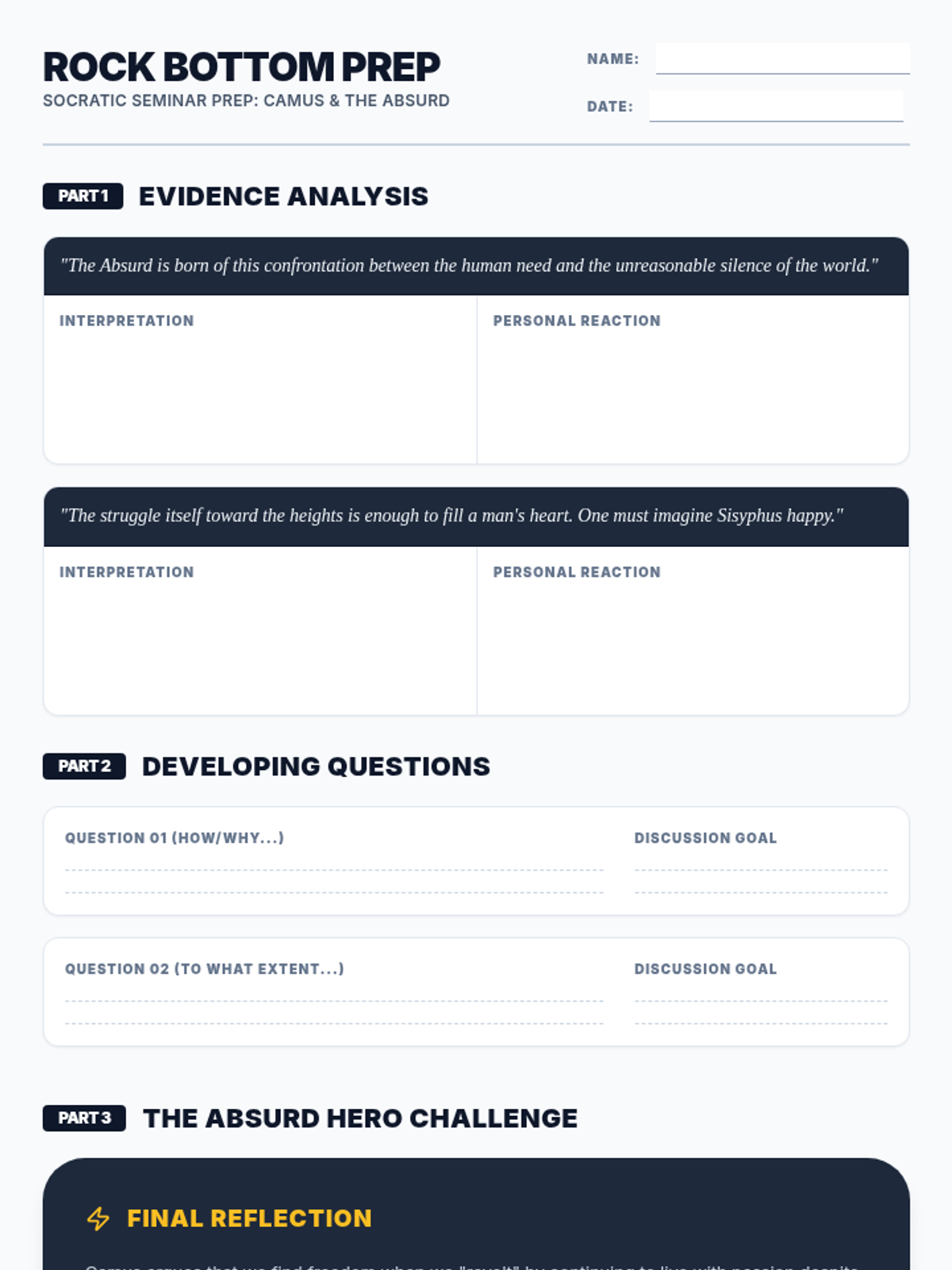
A deep dive into Albert Camus' 'The Myth of Sisyphus', exploring the philosophical concepts of the Absurd, revolt, and the search for meaning in a silent universe through a structured Socratic Seminar.
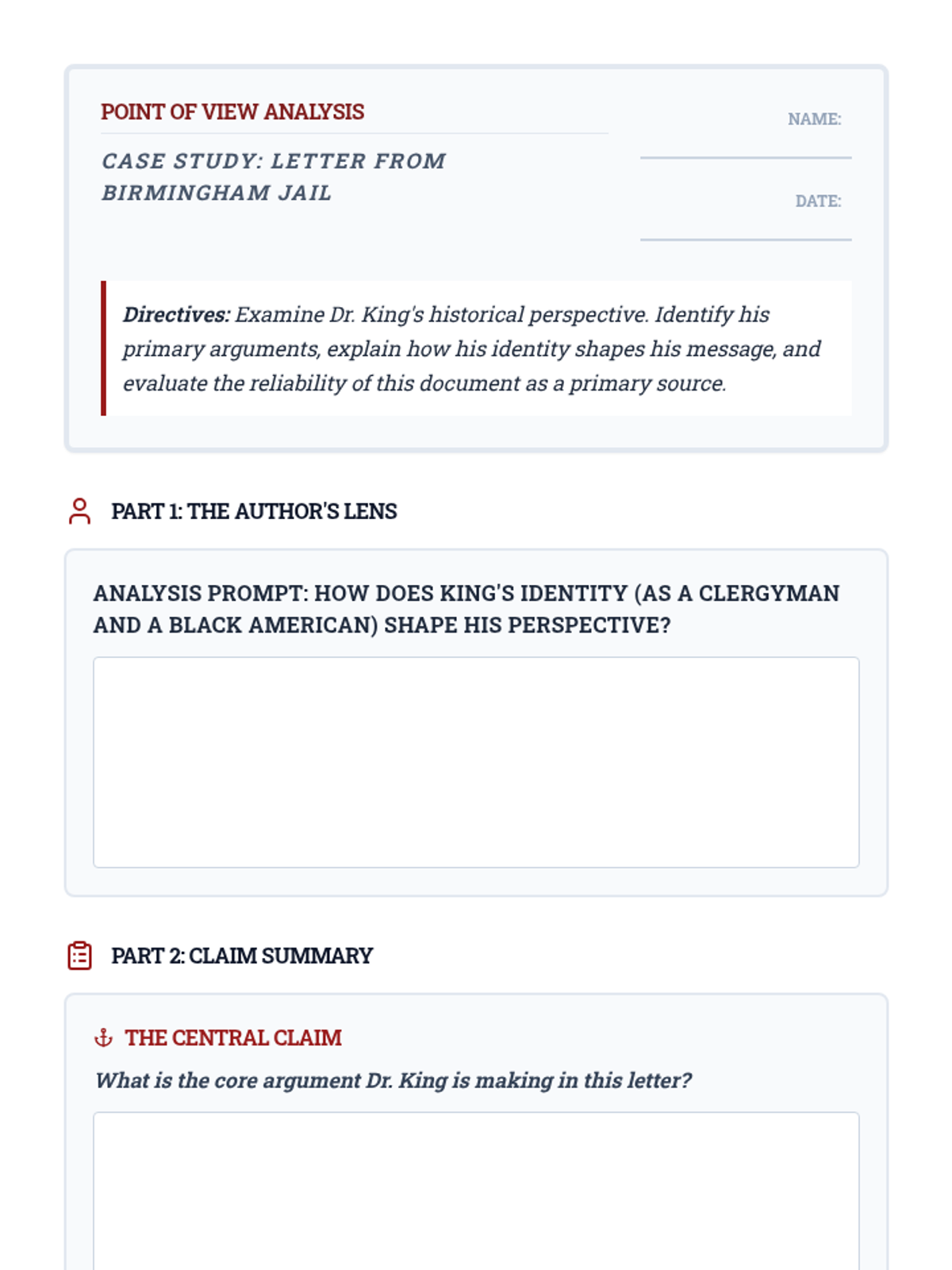
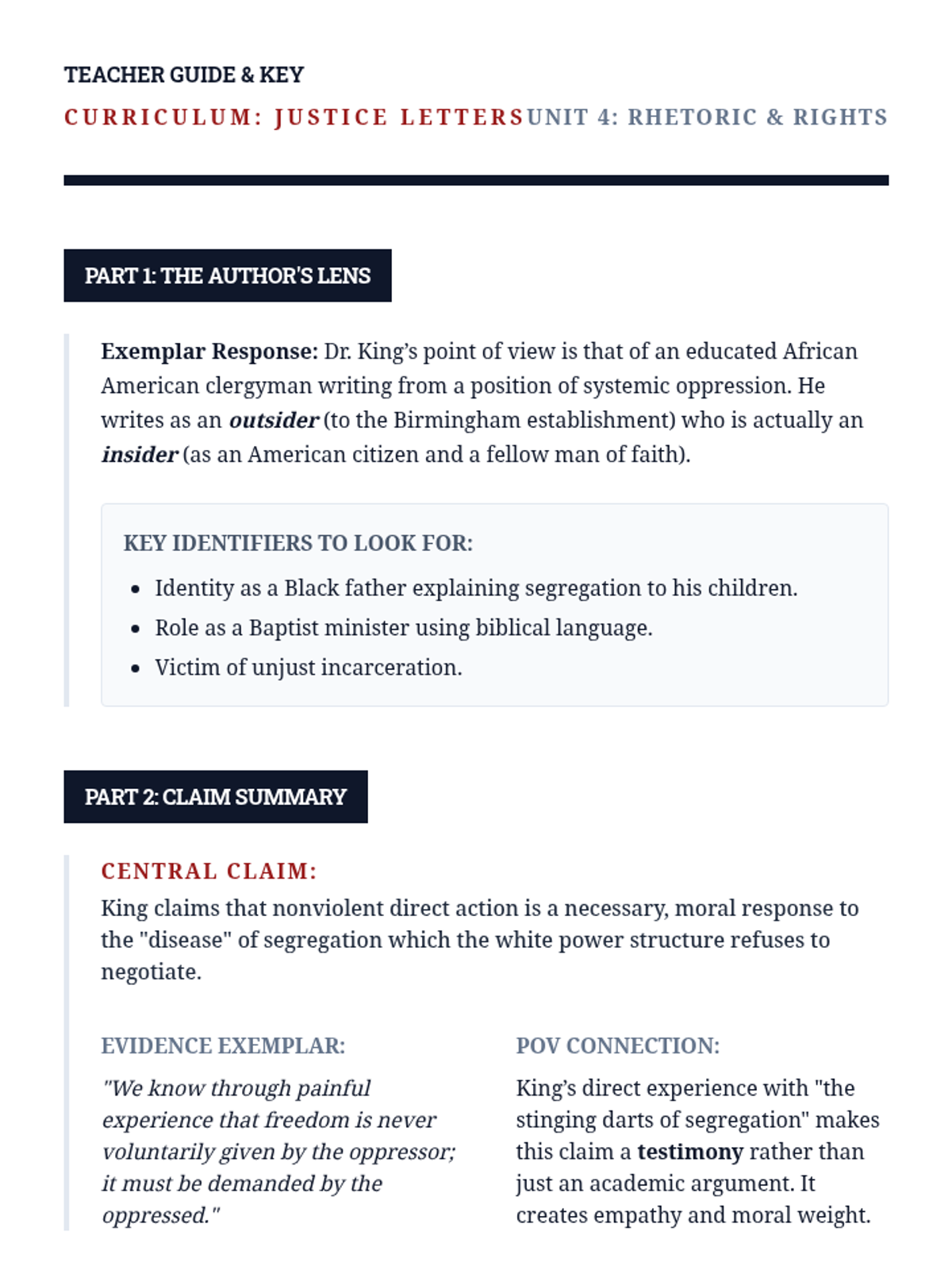
A deep dive into Martin Luther King Jr.'s 'Letter from Birmingham Jail,' focusing on identifying his central claims, analyzing his unique point of view, and evaluating the reliability of his arguments within the historical context of the Civil Rights Movement.
A graded feedback report for a student essay on the 2026 energy crisis, providing detailed point deductions and constructive criticism based on the provided rubric.
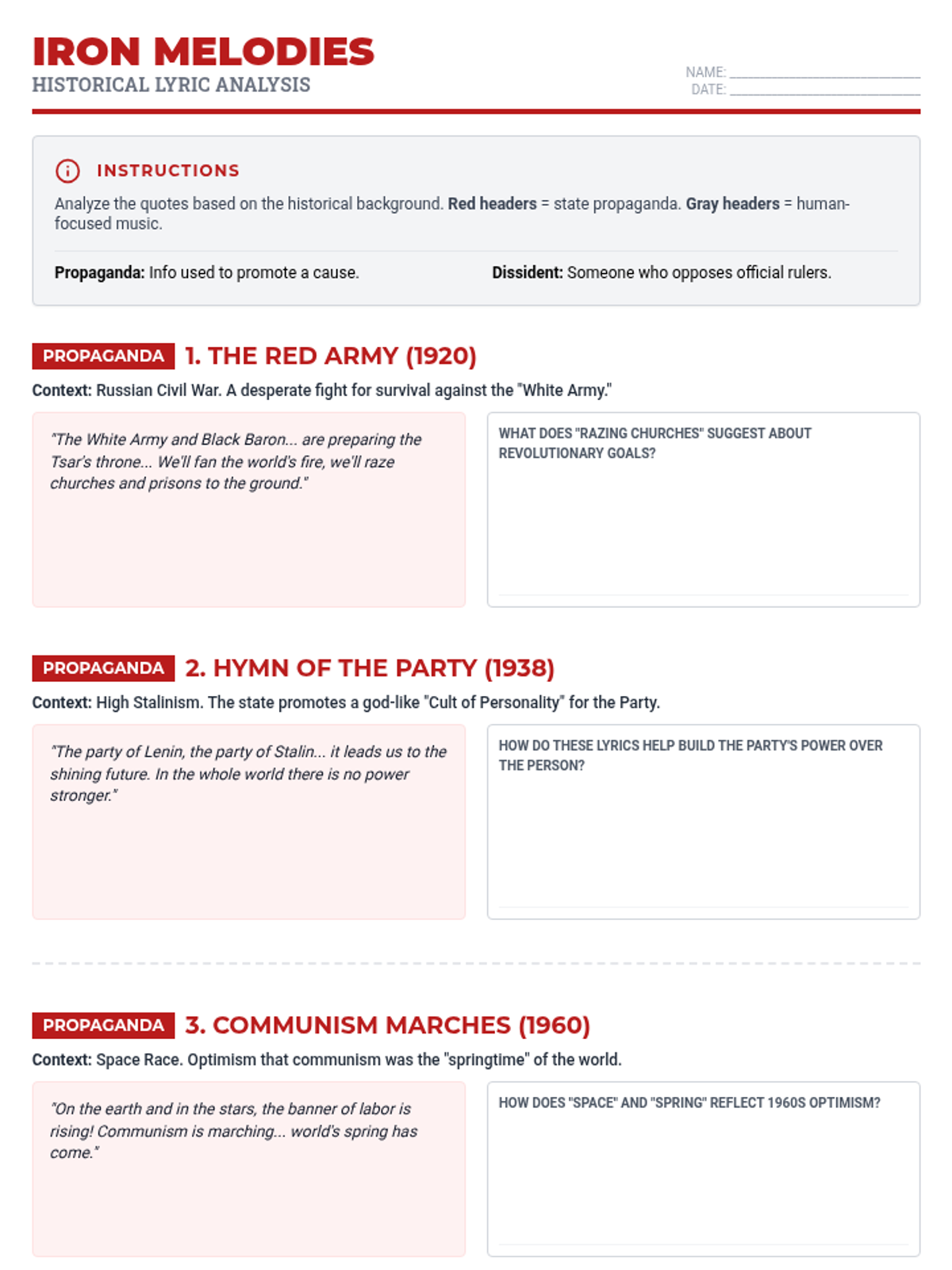
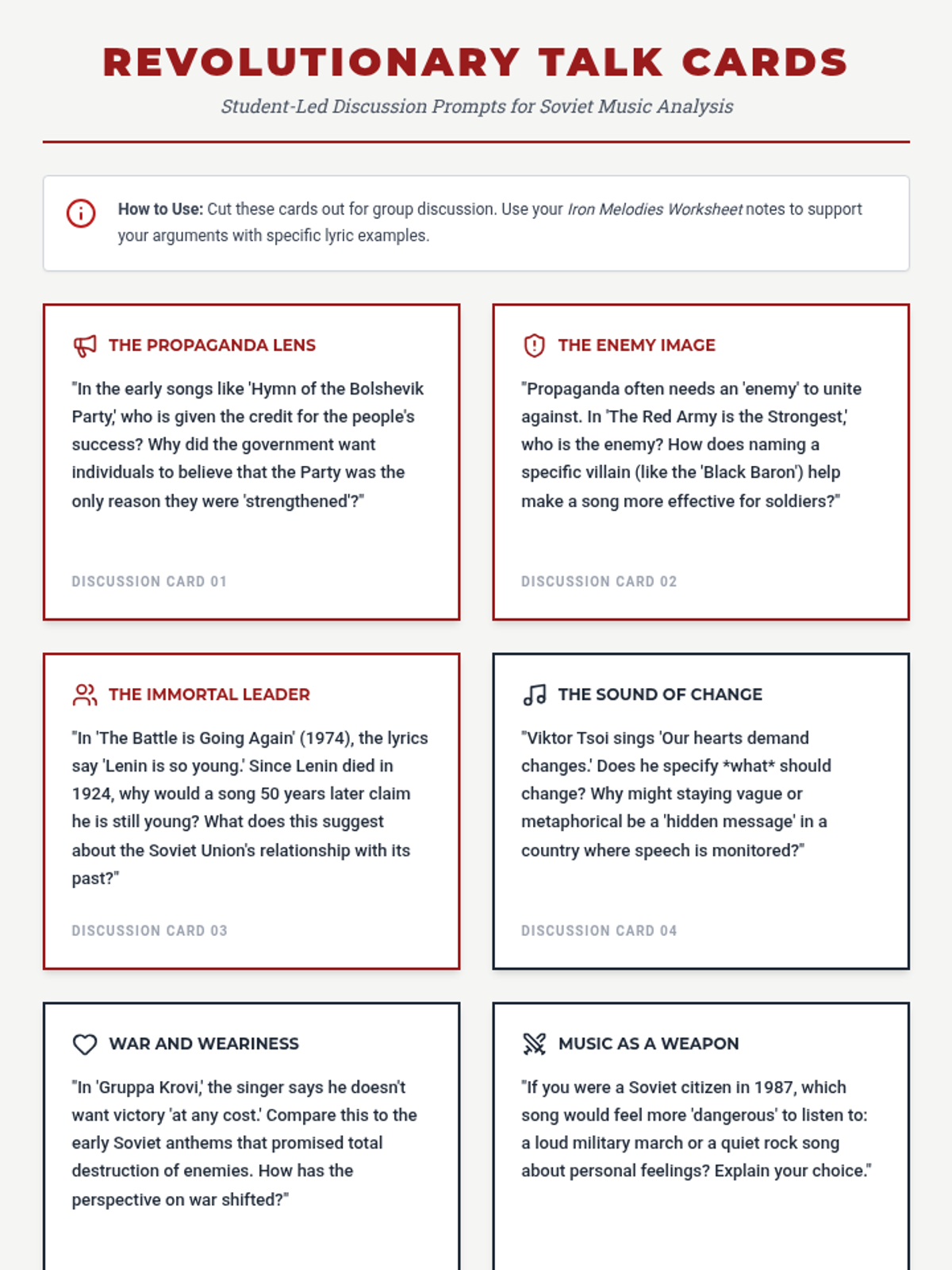
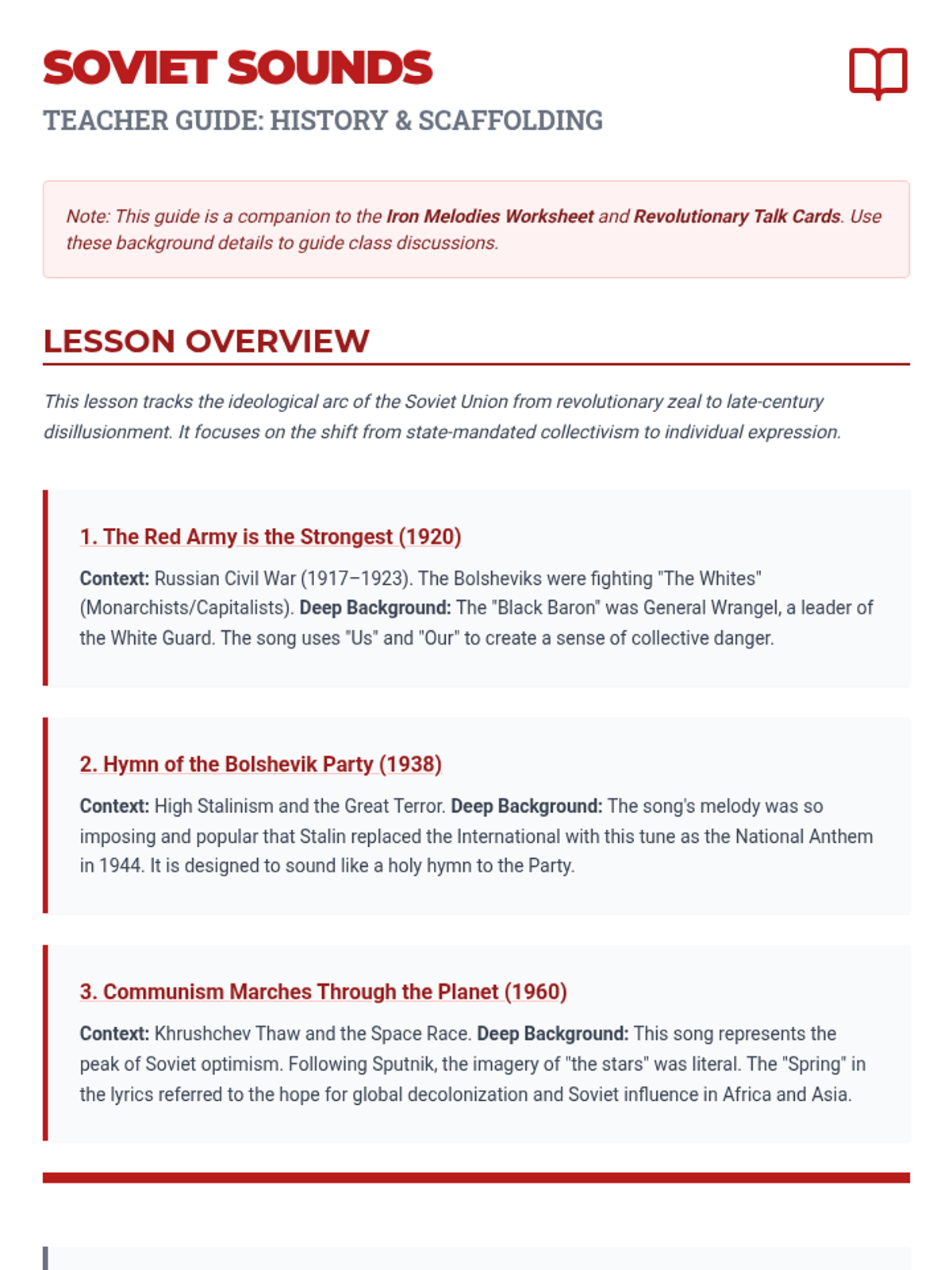
A deep dive into Soviet history through the lens of music, comparing early revolutionary propaganda with the dissident rock of the late 20th century. Students analyze lyrics to uncover state-sanctioned messages and the calls for change that eventually echoed through the USSR.
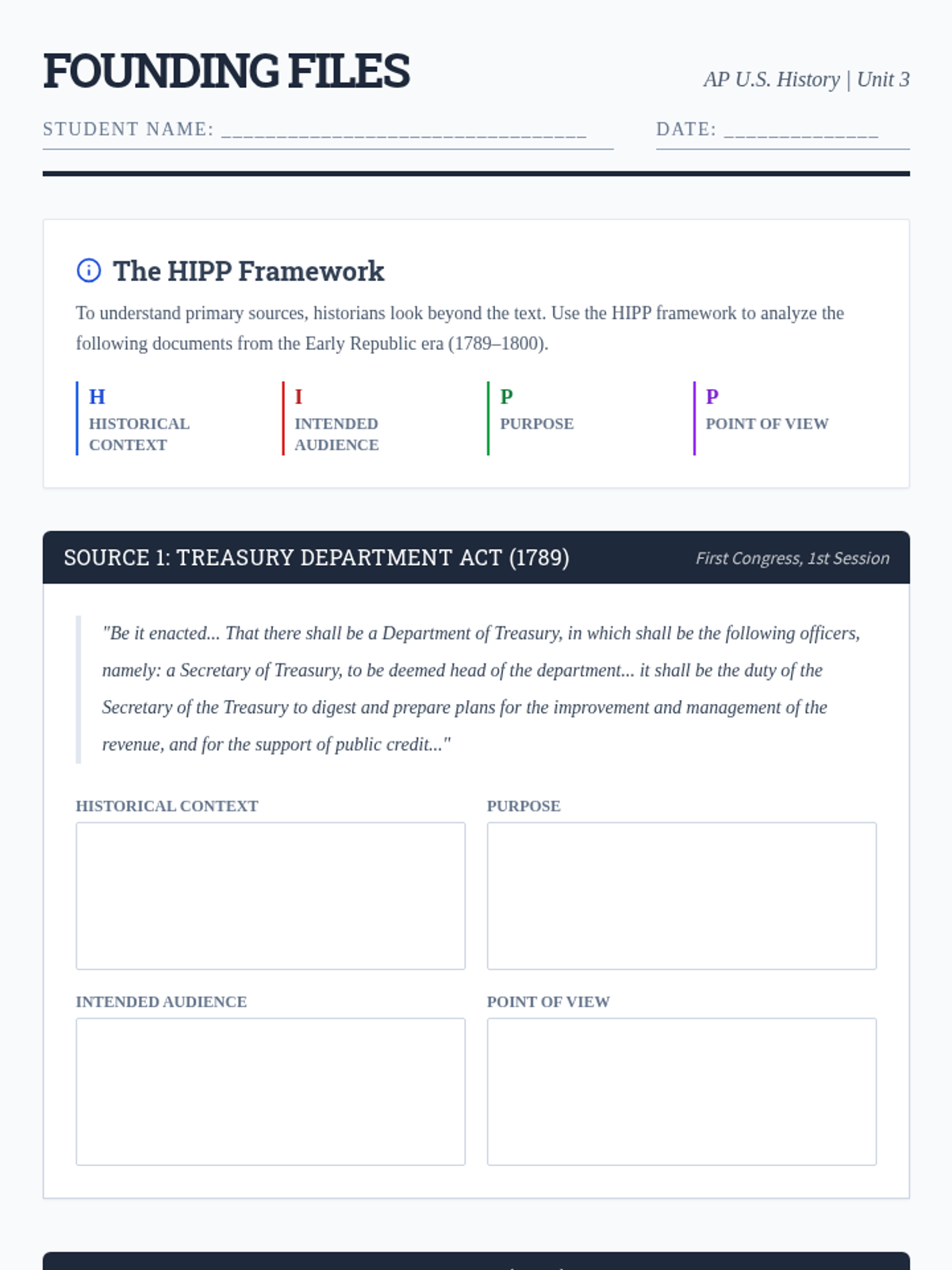
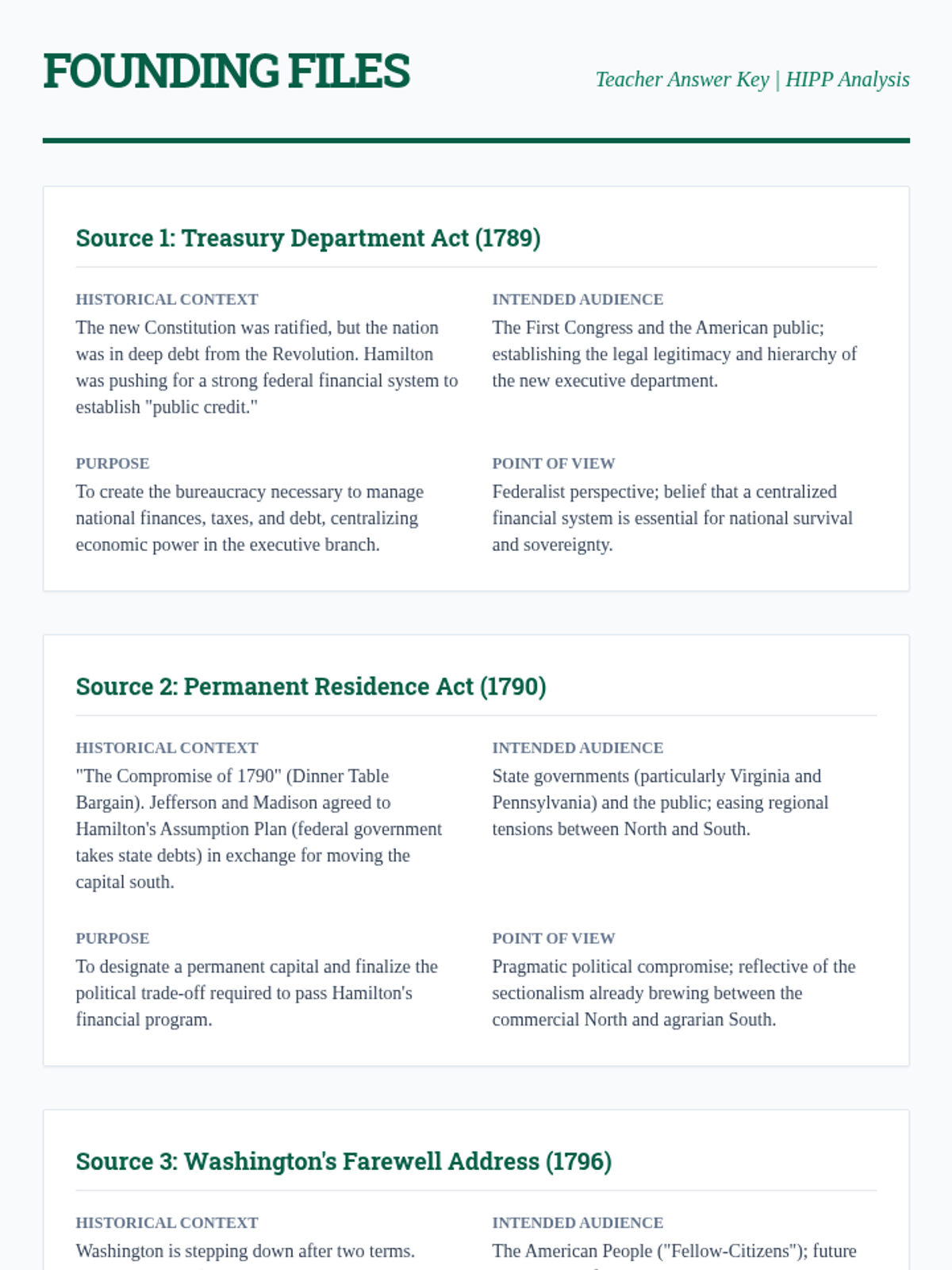
A primary source analysis lesson focusing on the early American Republic through the lens of foundational documents, using the HIPP framework to analyze political and social tensions.
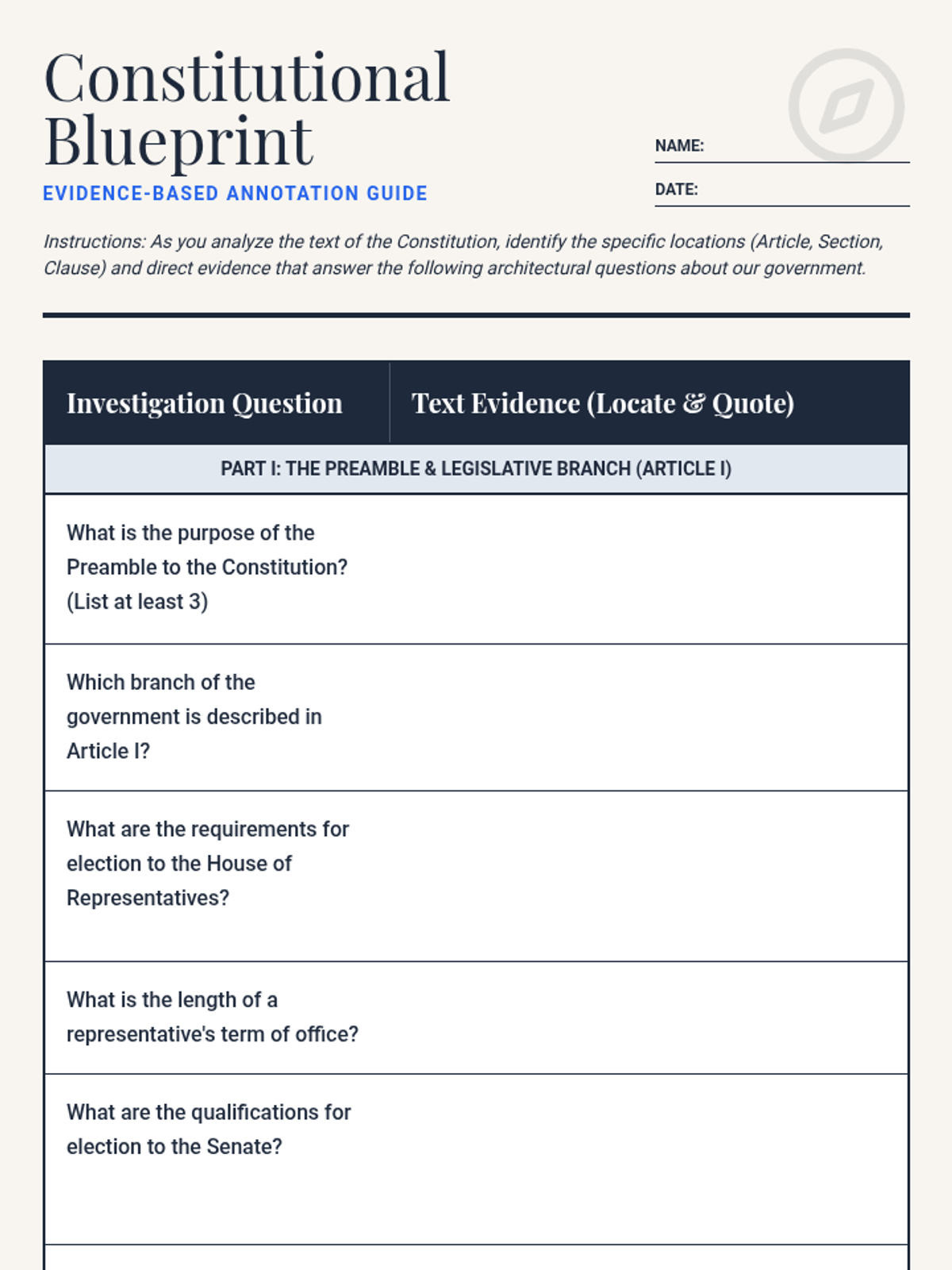
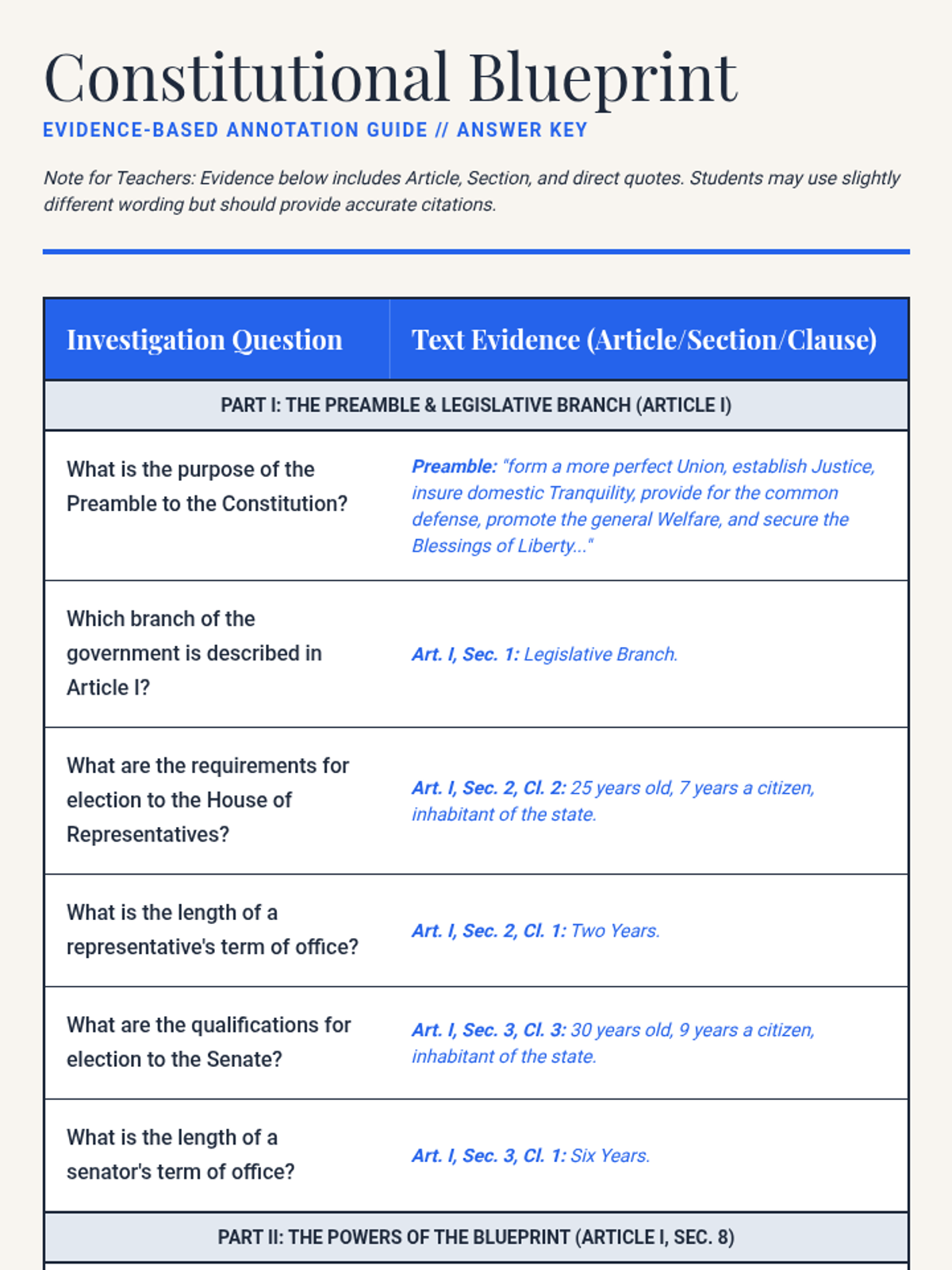
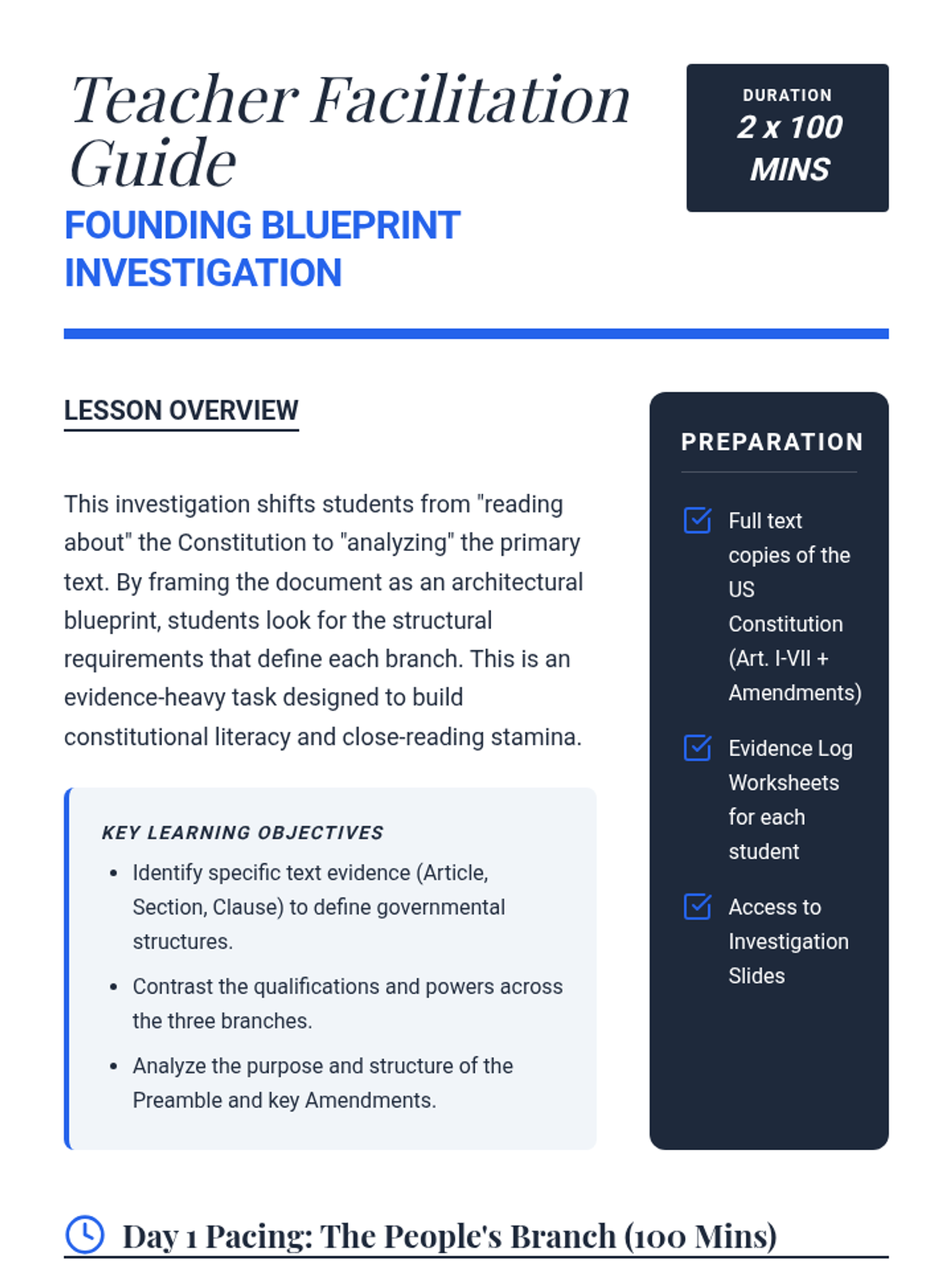
A two-day primary text analysis of the US Constitution where students use an evidence-based annotation guide to identify the structures of the three branches and the process of governance.
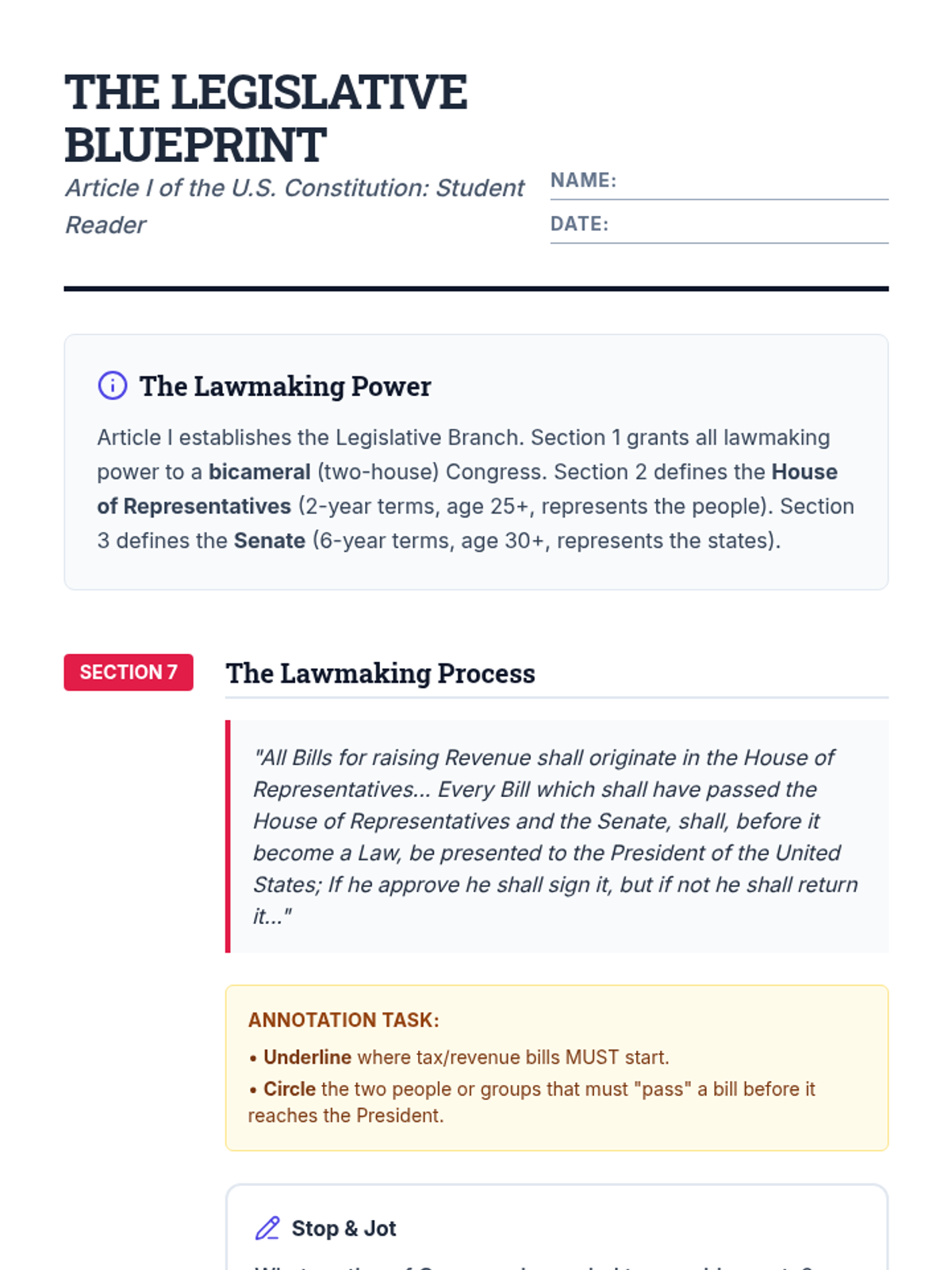
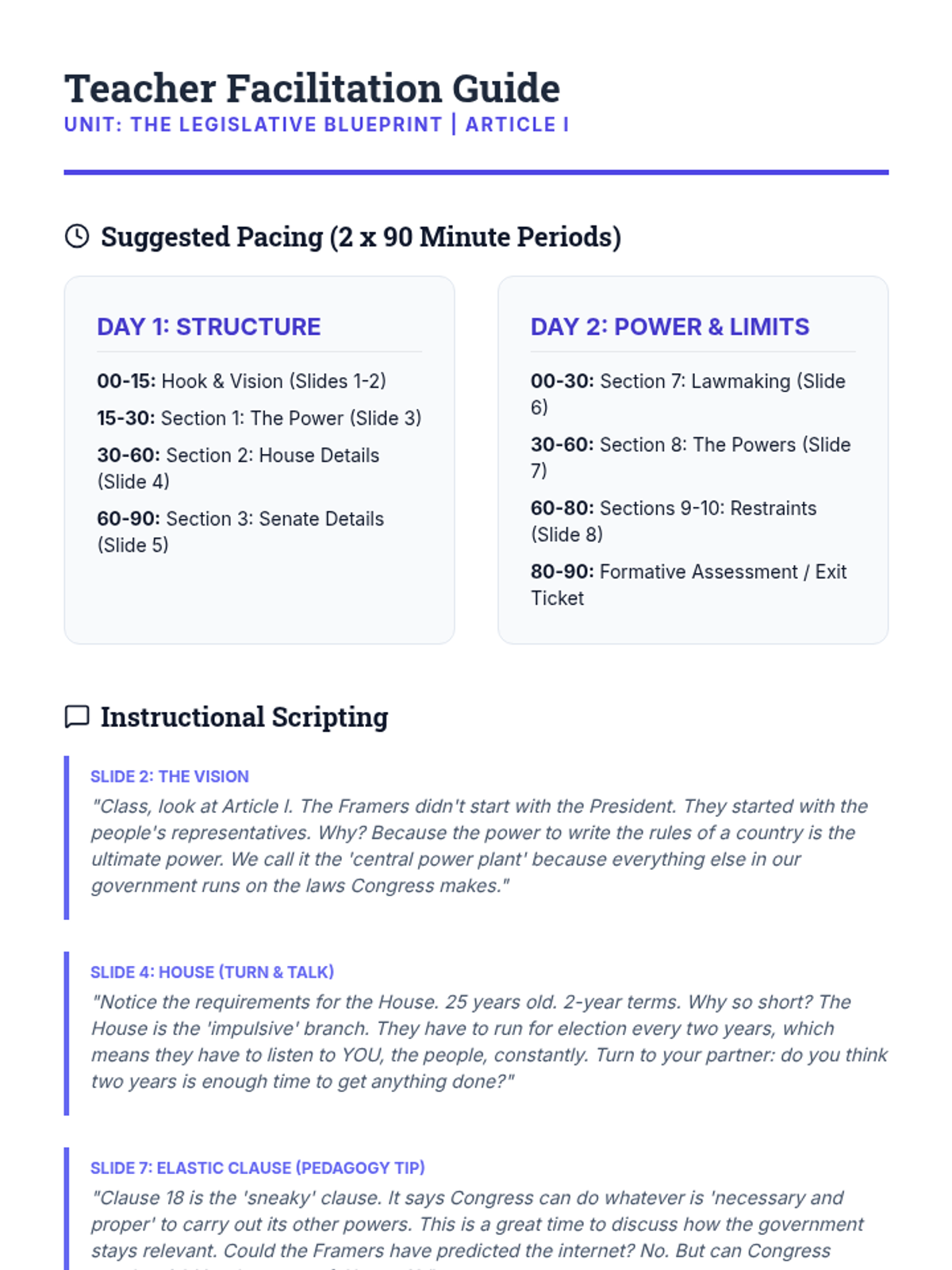
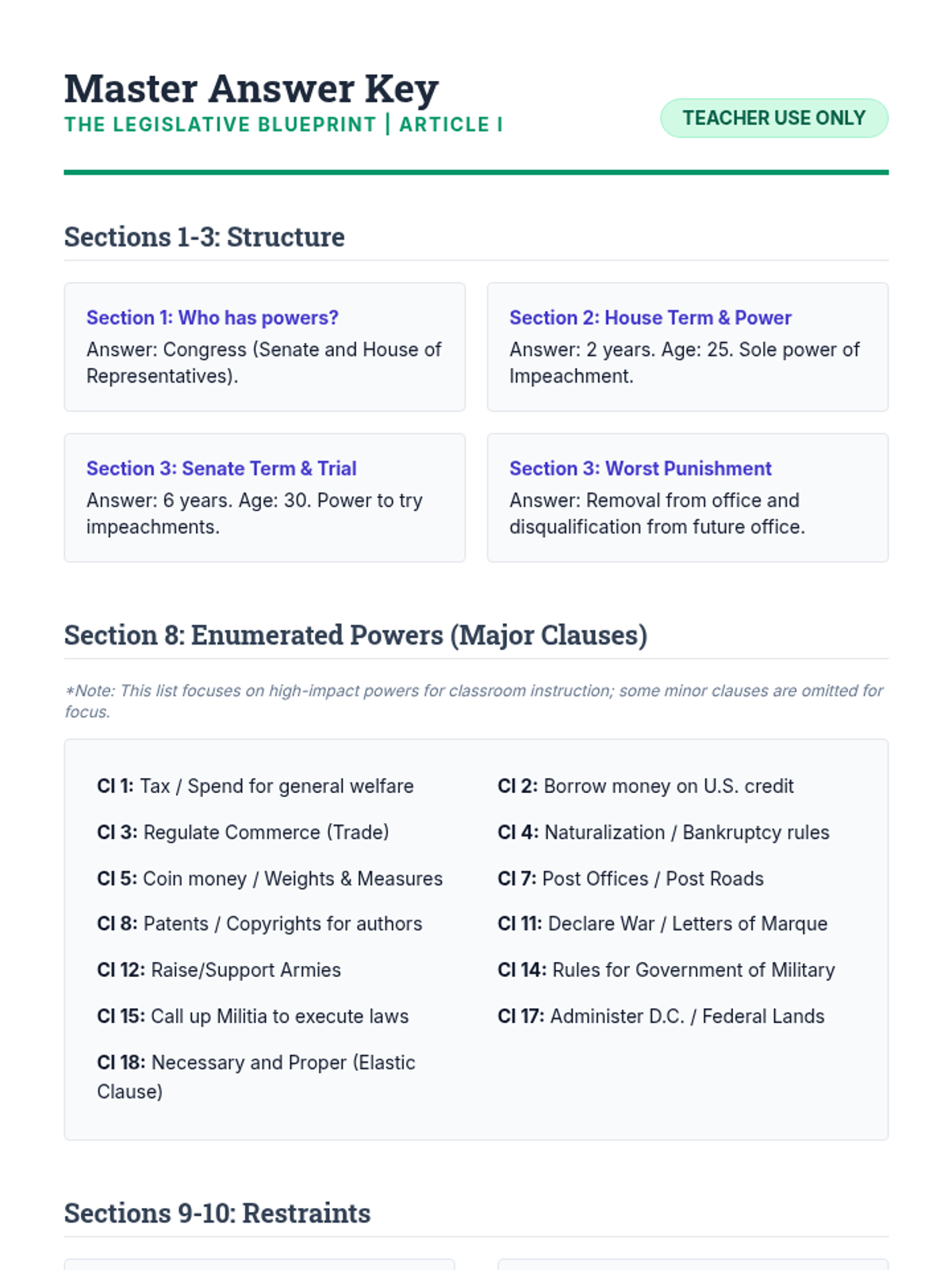
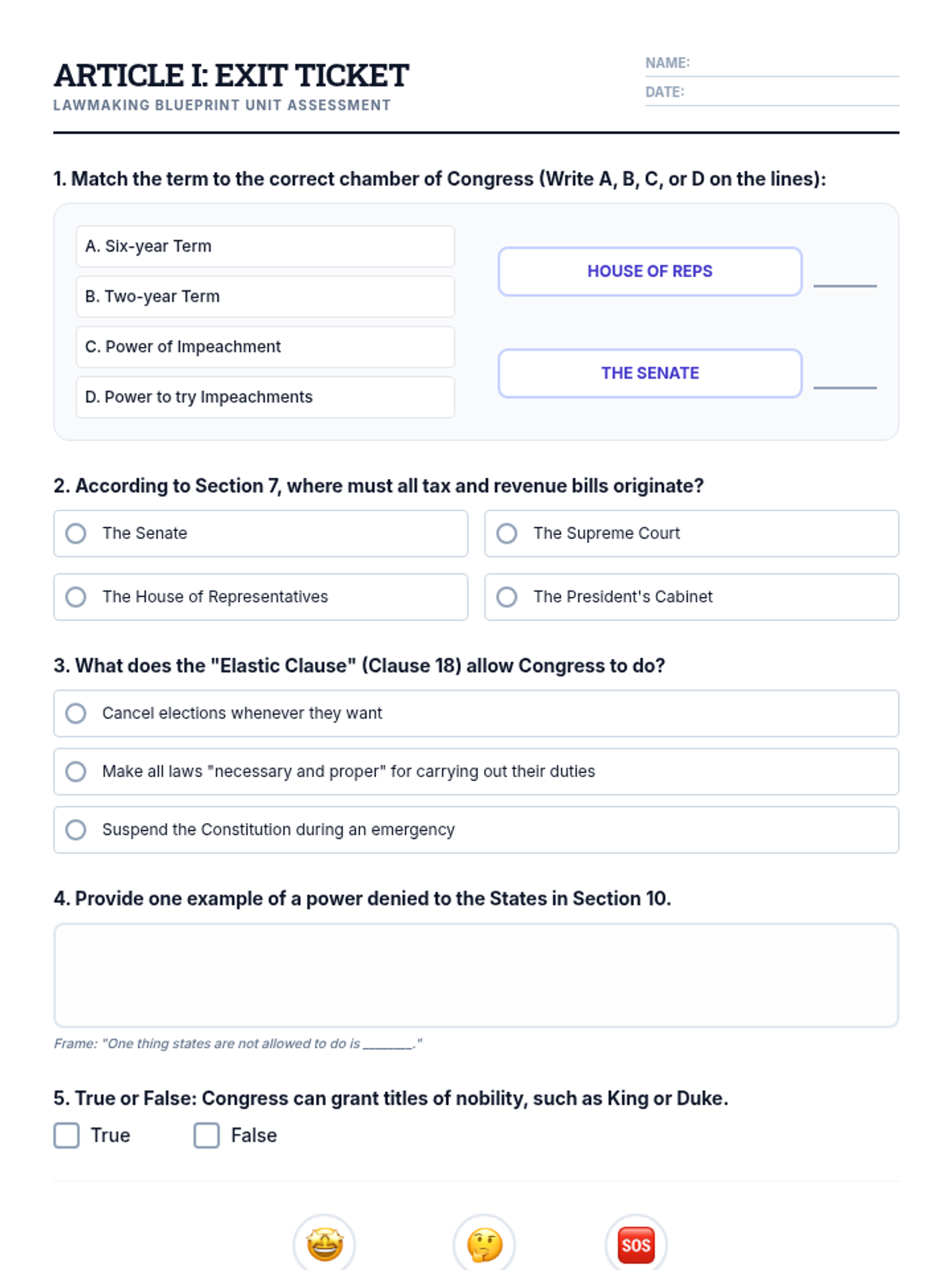
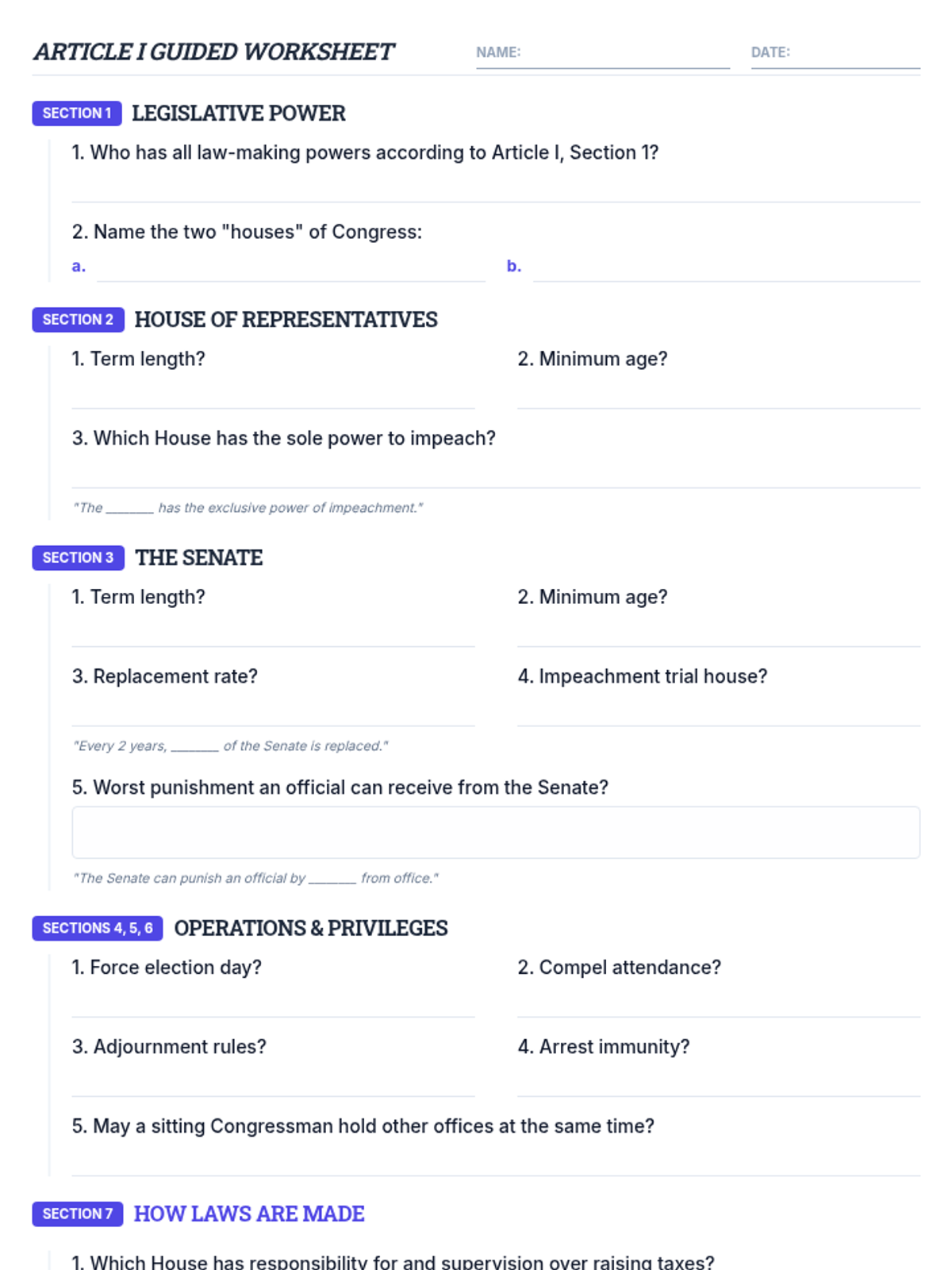
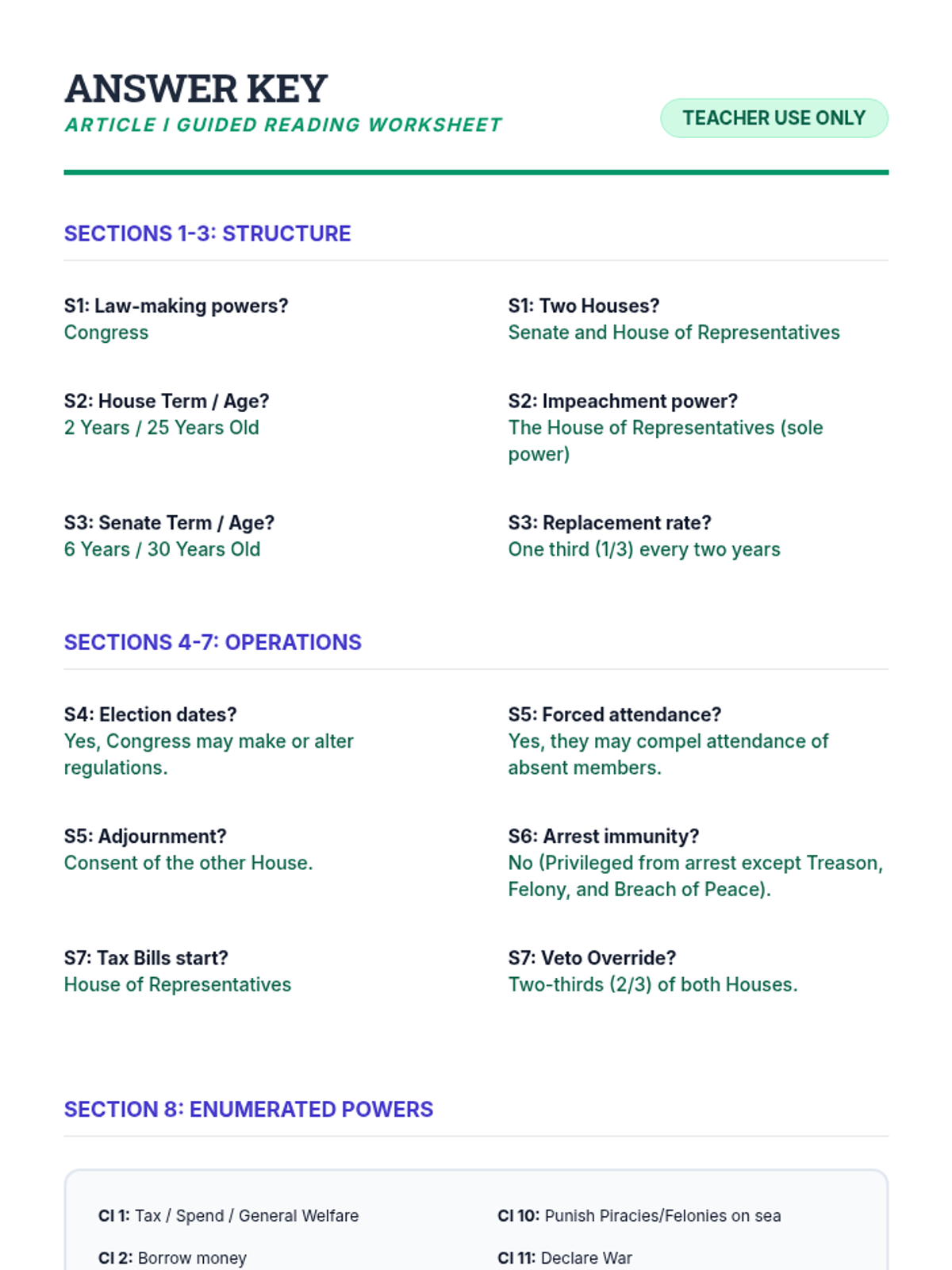
A comprehensive 180-minute lesson covering the entire structure, enumerated powers, and restraints of the Legislative Branch as defined in Article I of the U.S. Constitution.
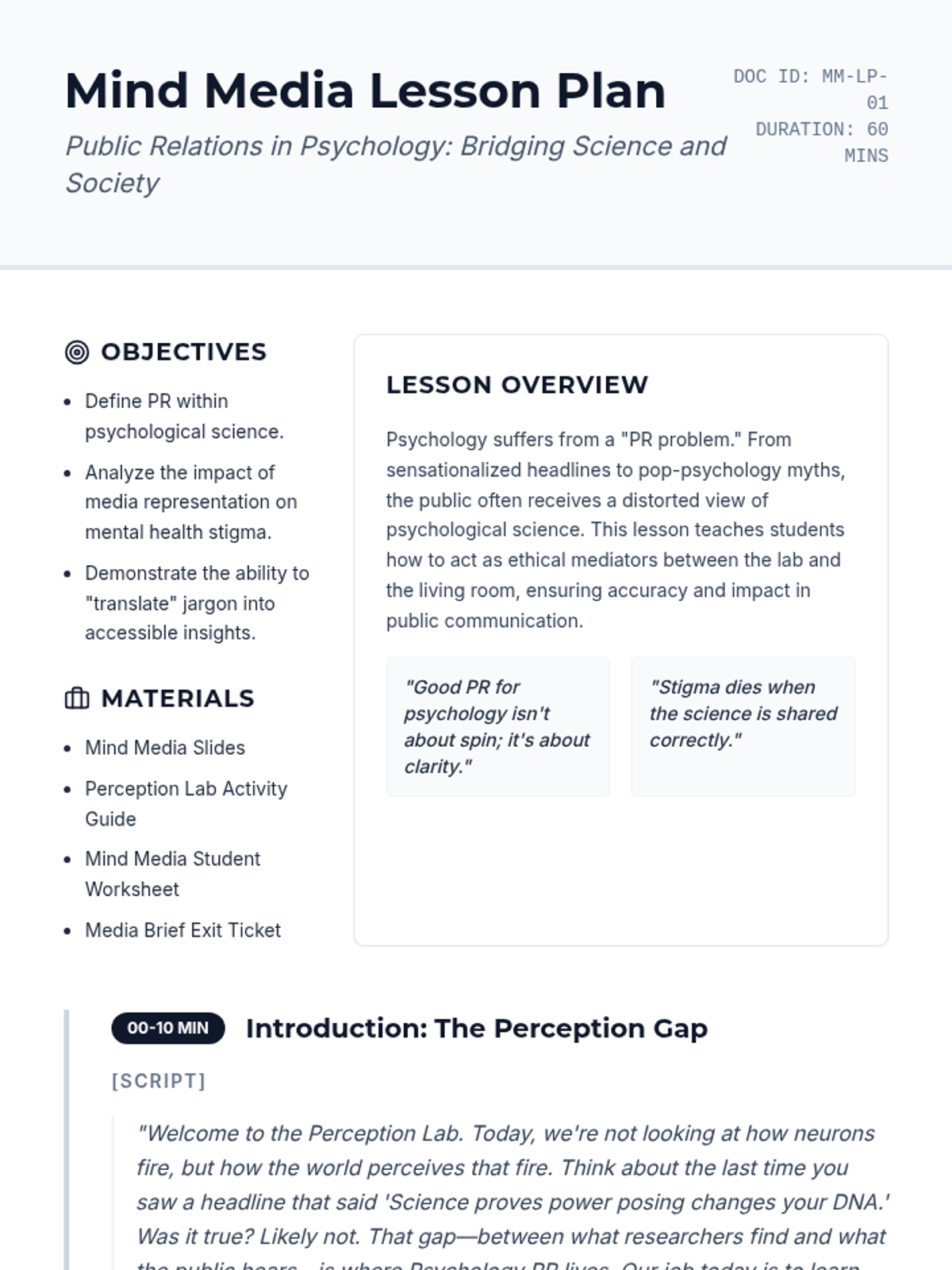
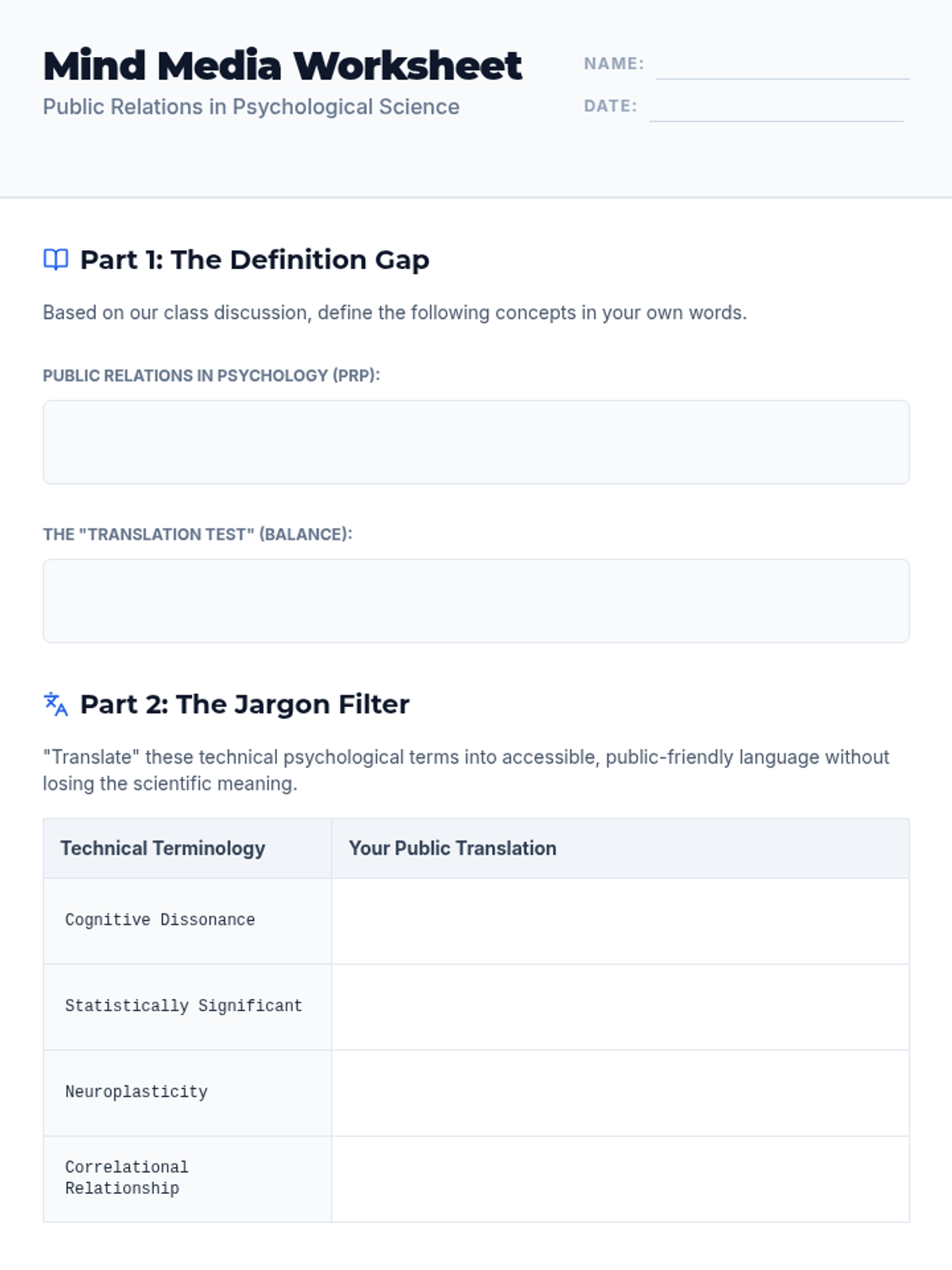
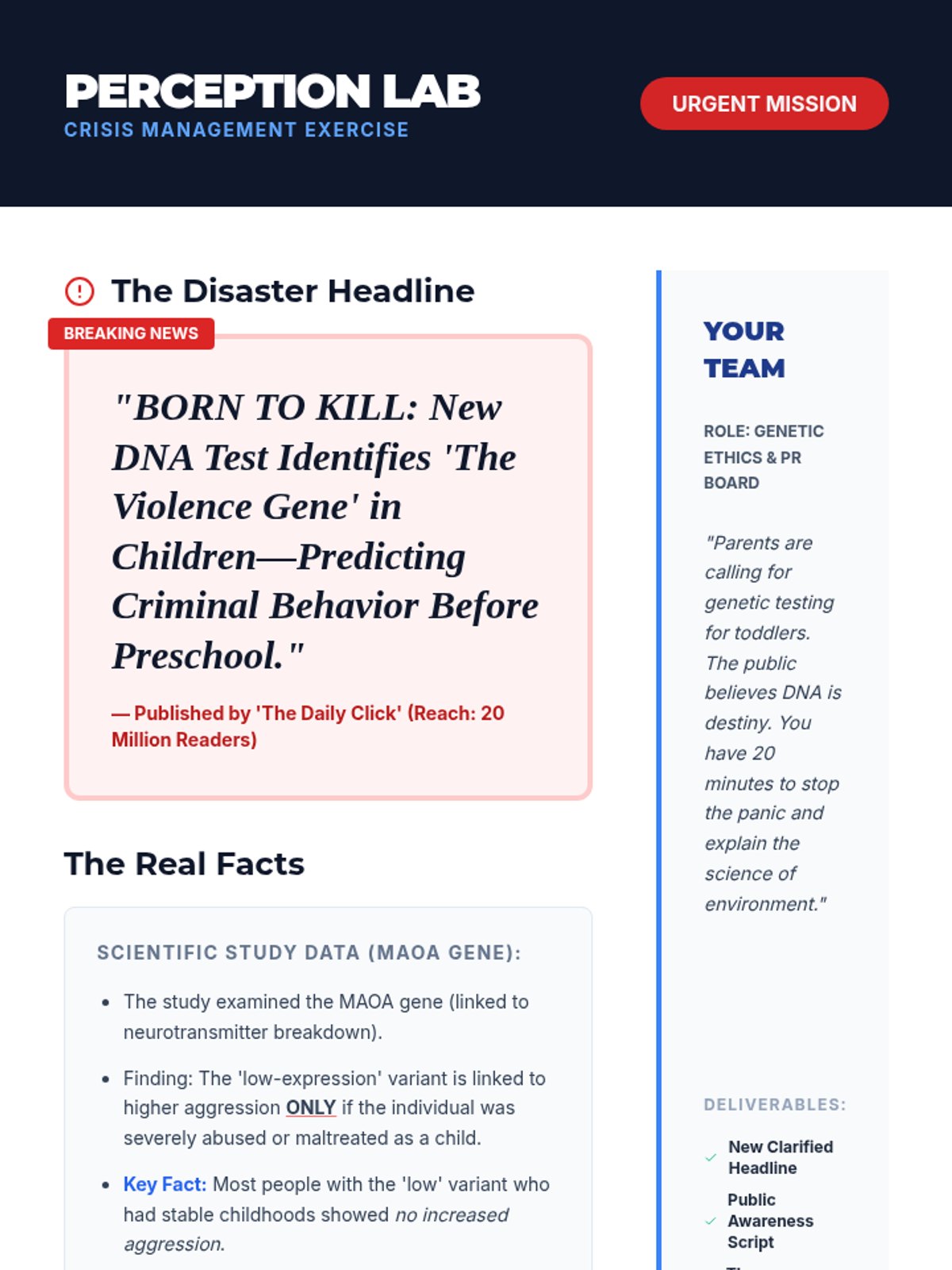
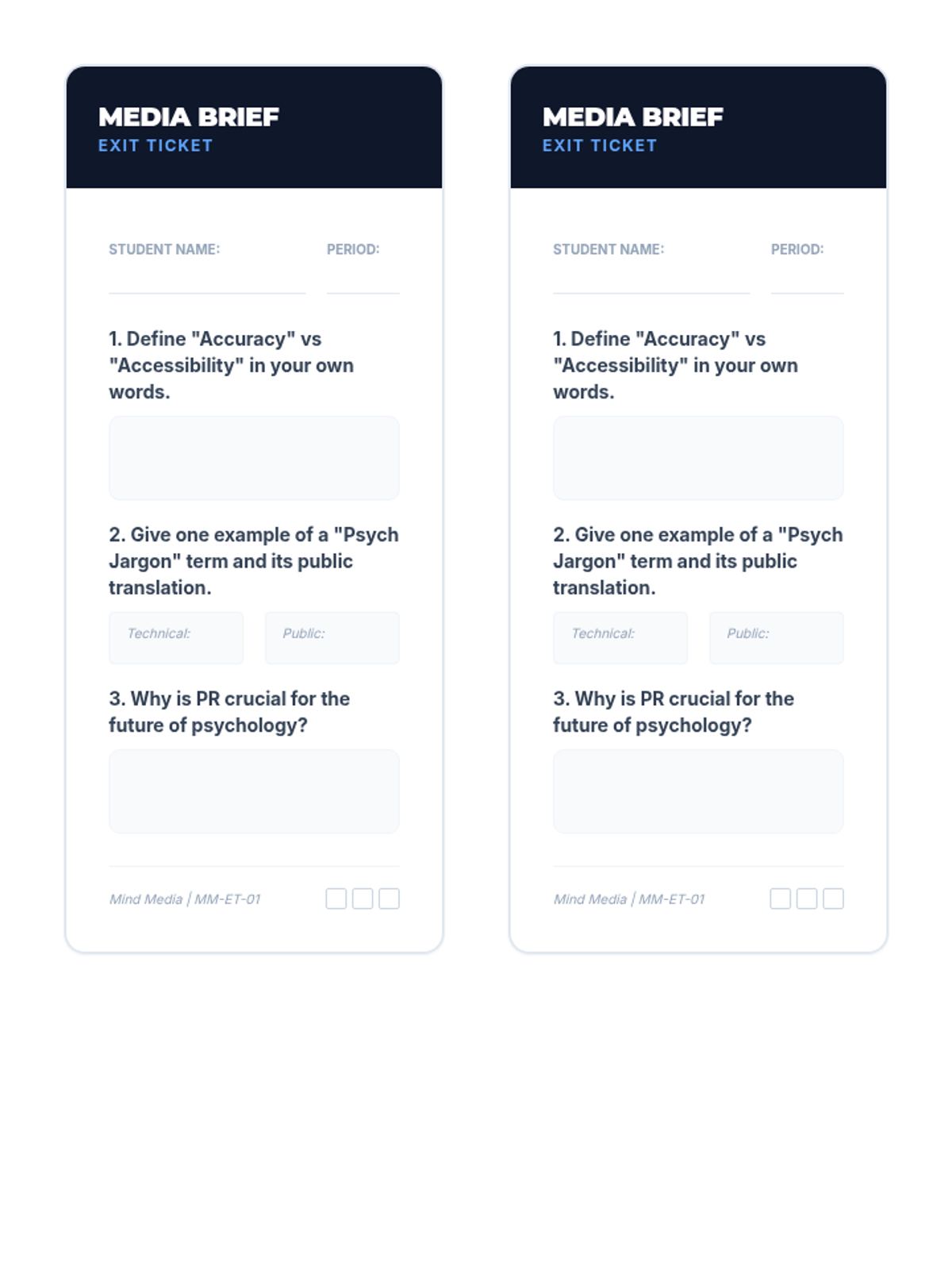
A comprehensive lesson on Public Relations in Psychology, focusing on translating complex research for public consumption, managing public perception of psychological science, and ethical communication.