Geometric classification, measurement of area and volume, and the study of transformations and rigid motions. Builds toward complex proofs, trigonometry for general triangles, and the algebraic representation of conic sections.
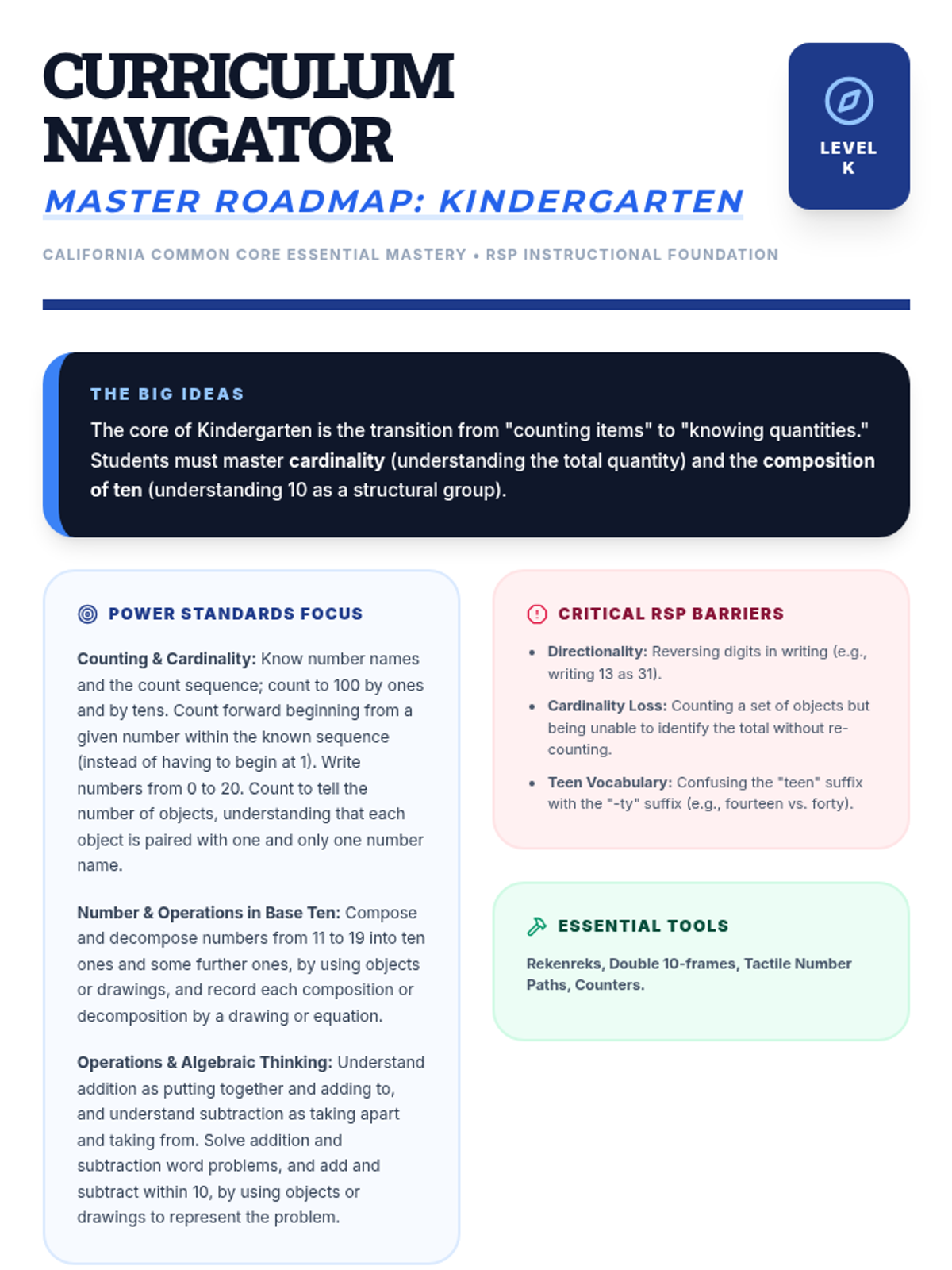
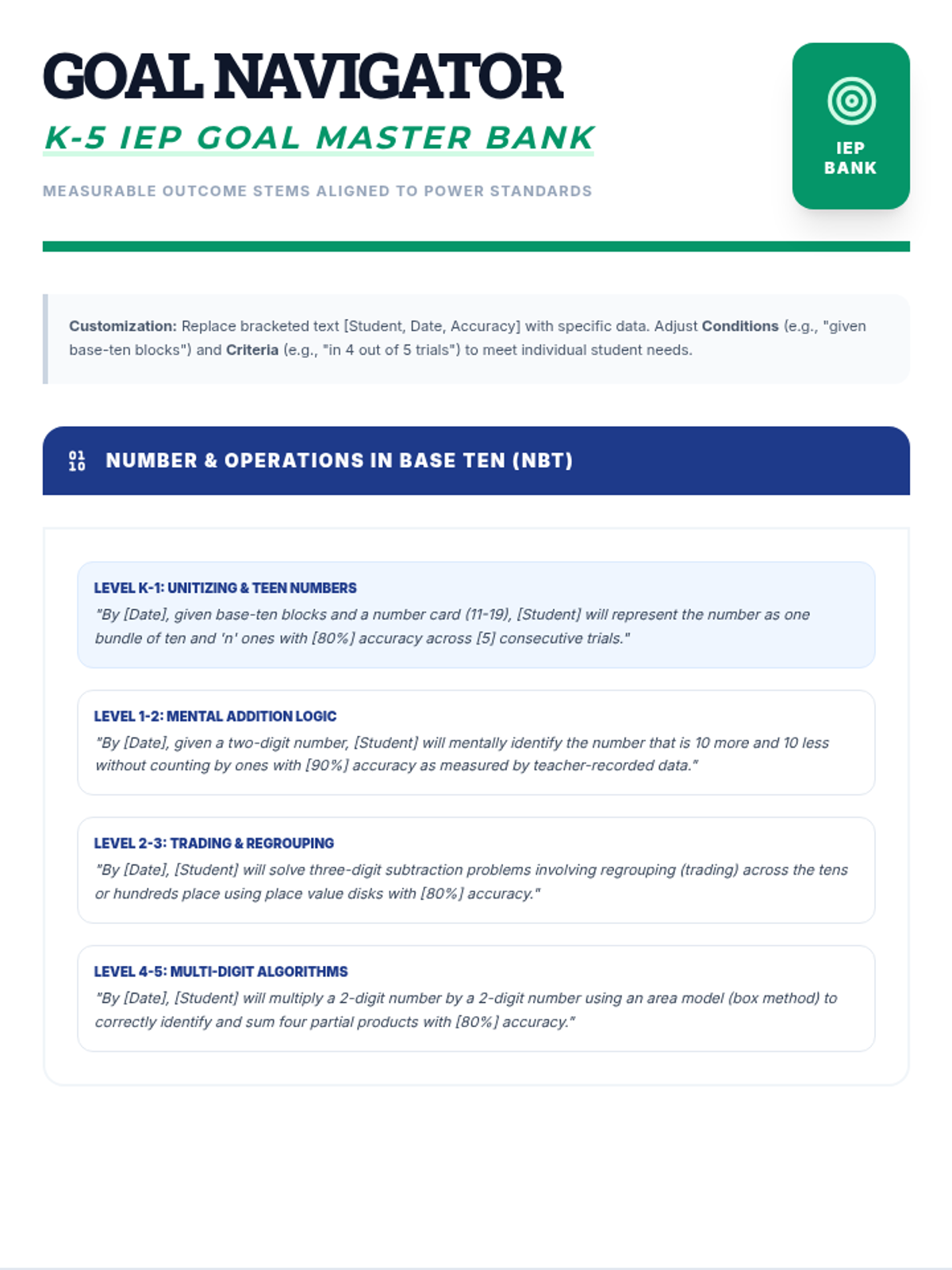
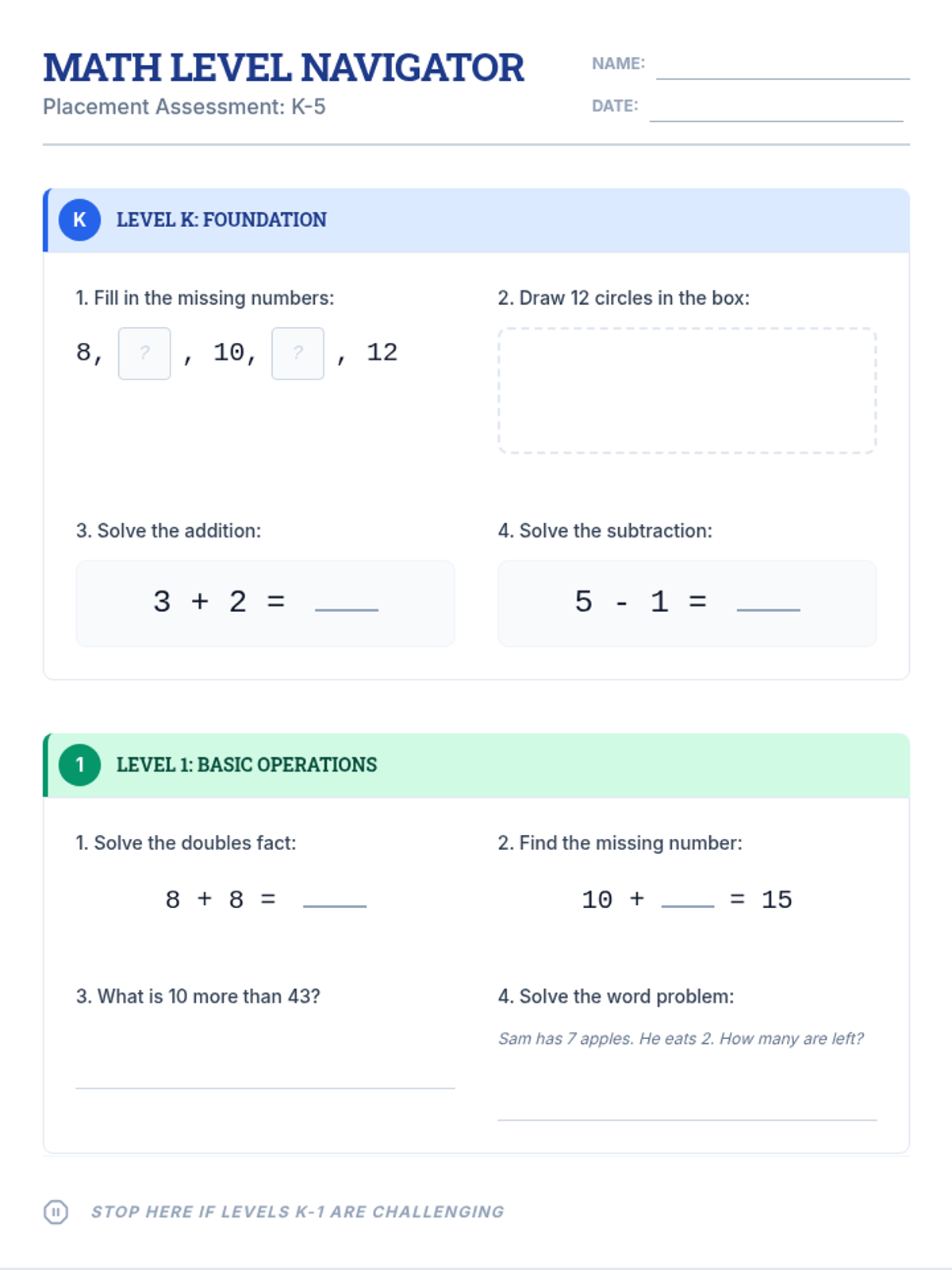
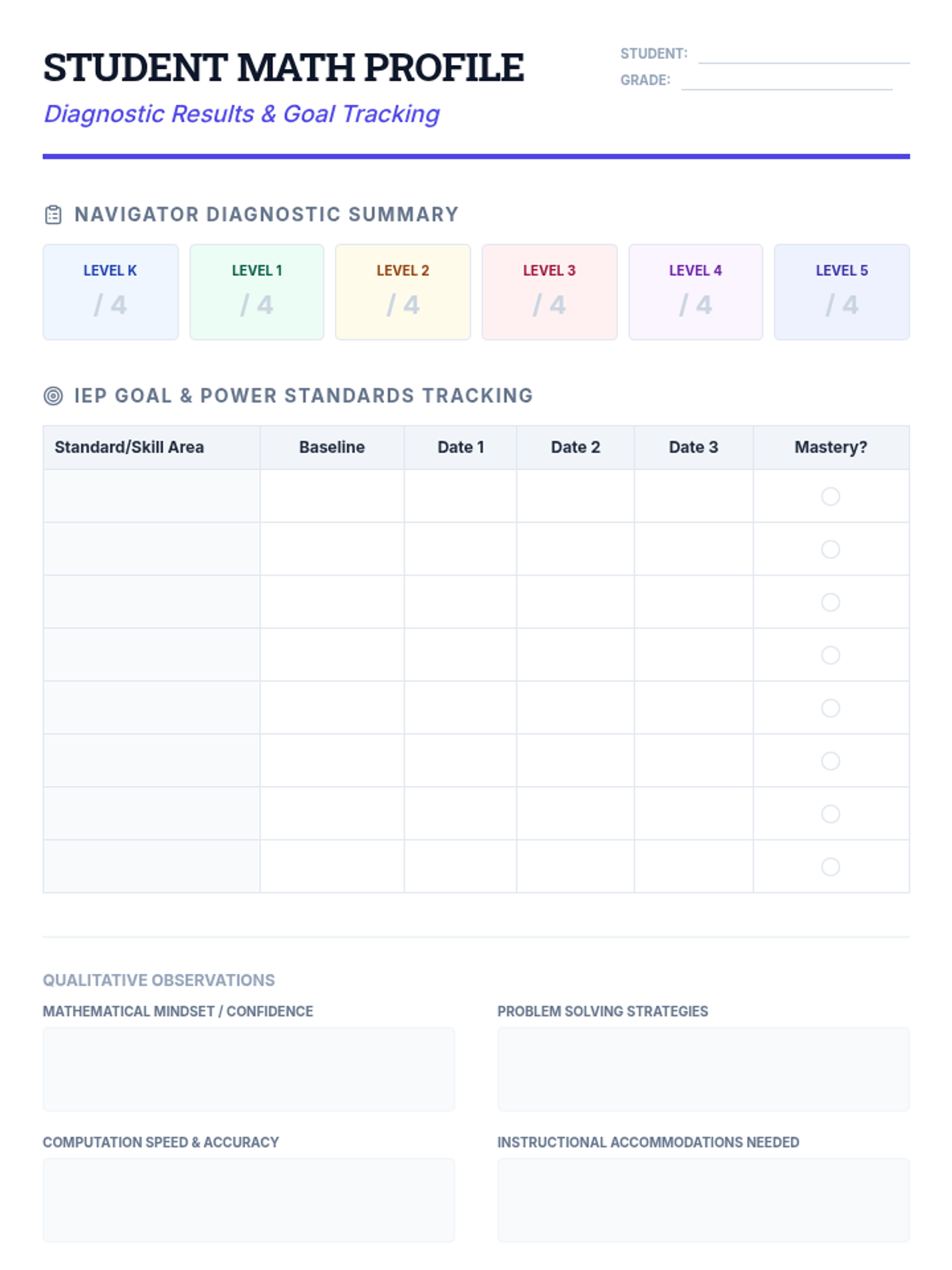
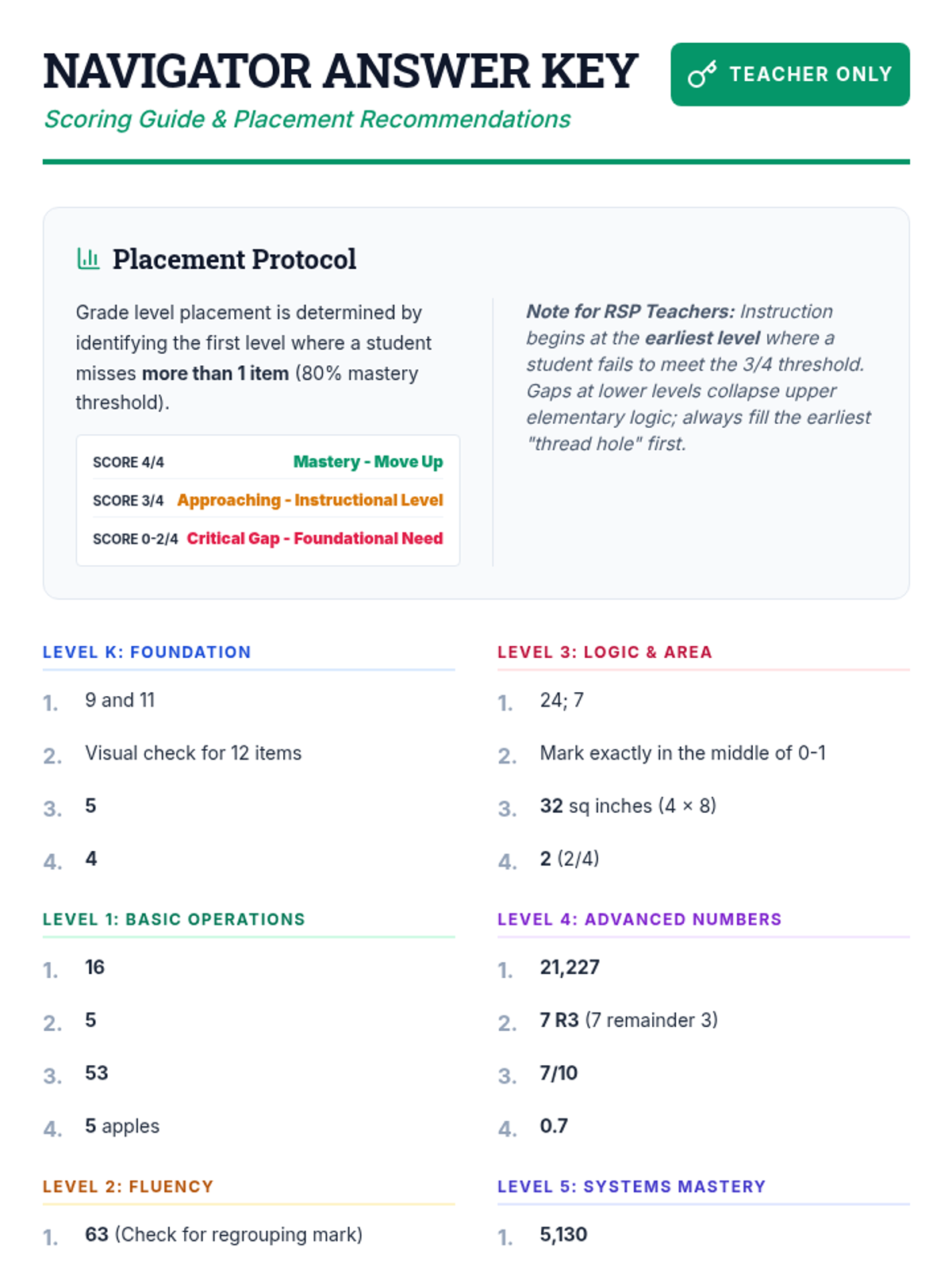
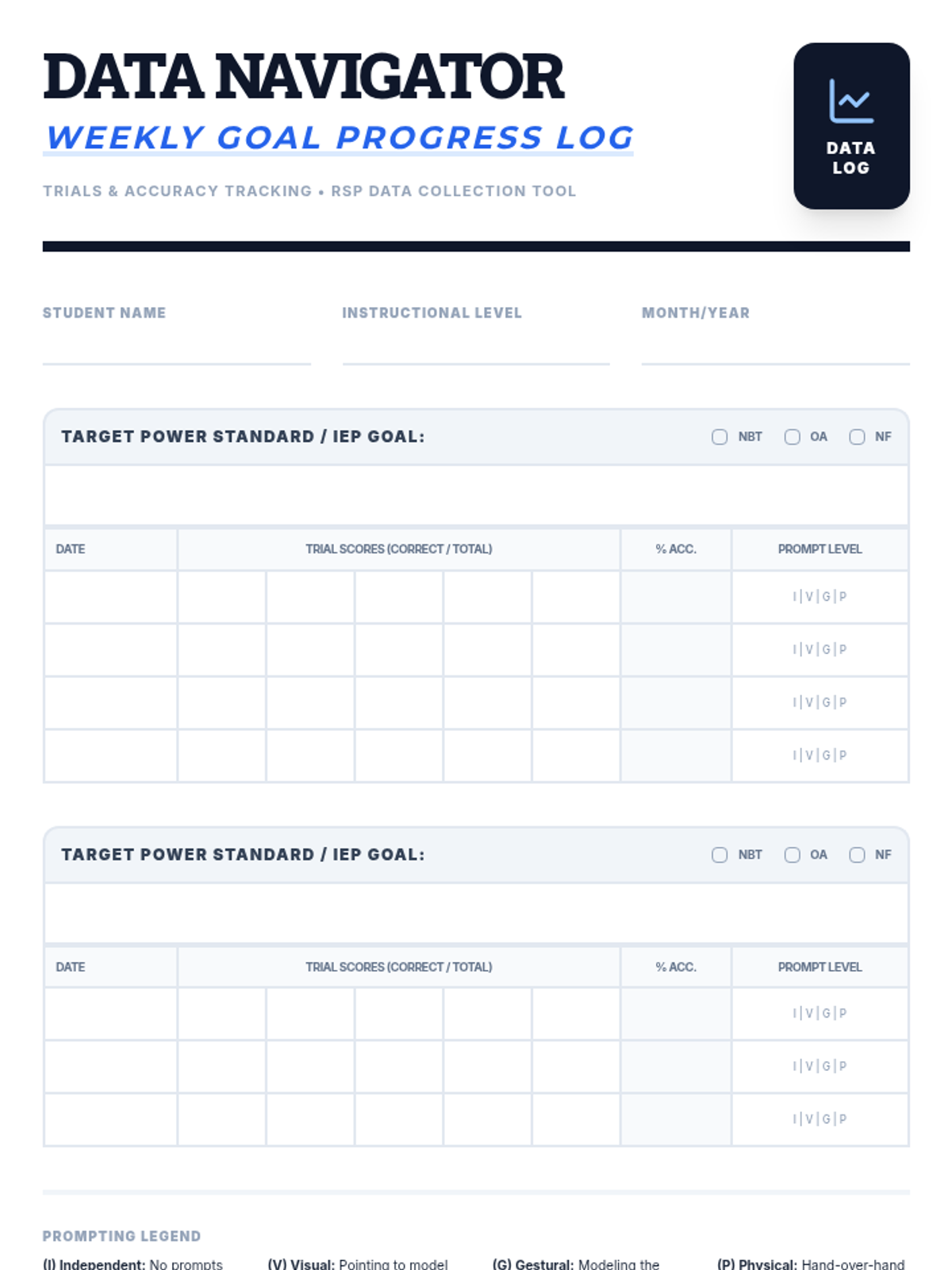
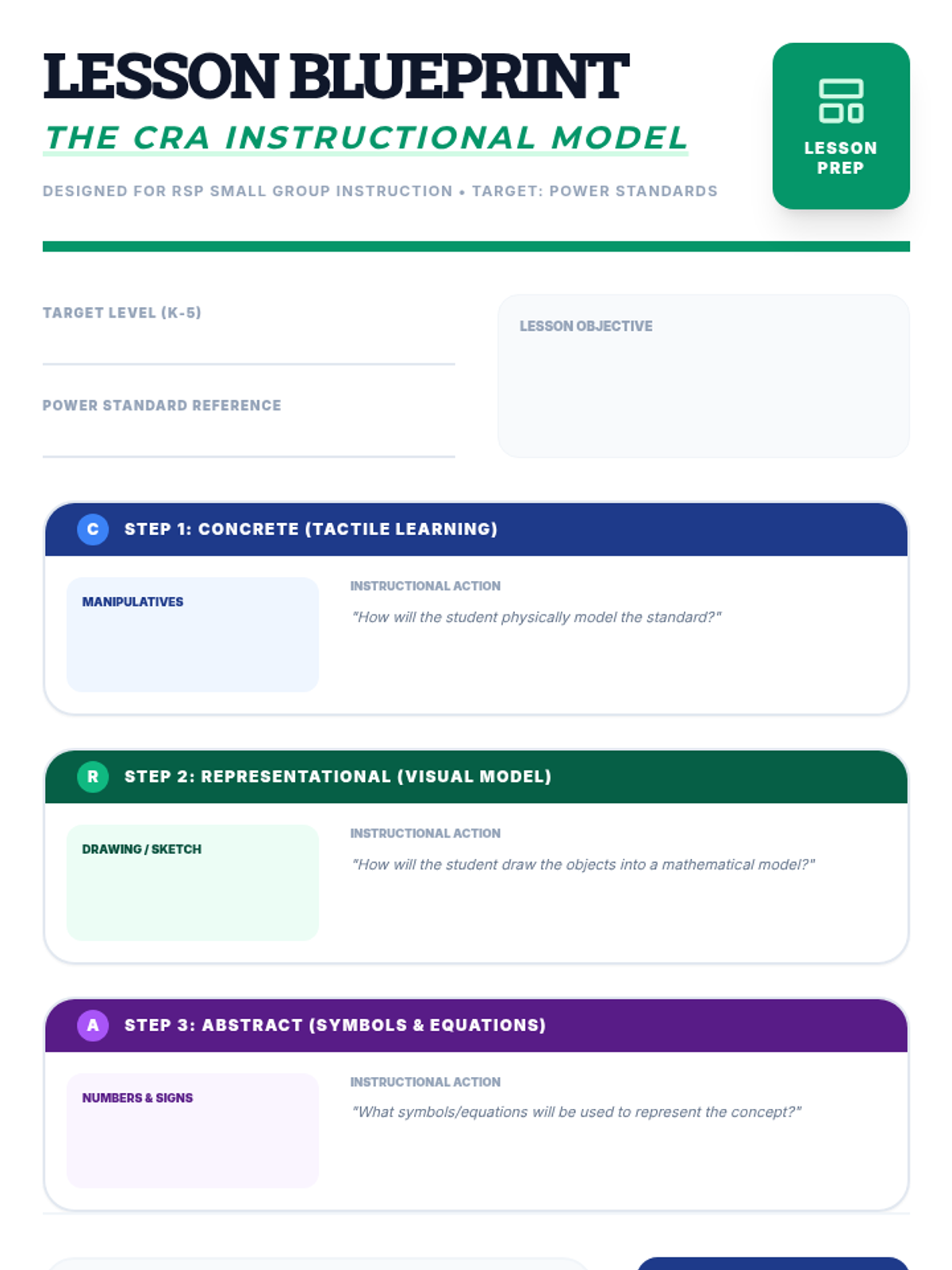
A comprehensive framework for K-5 RSP math instruction, including a California Common Core aligned scope and sequence of power standards and a leveled placement diagnostic.
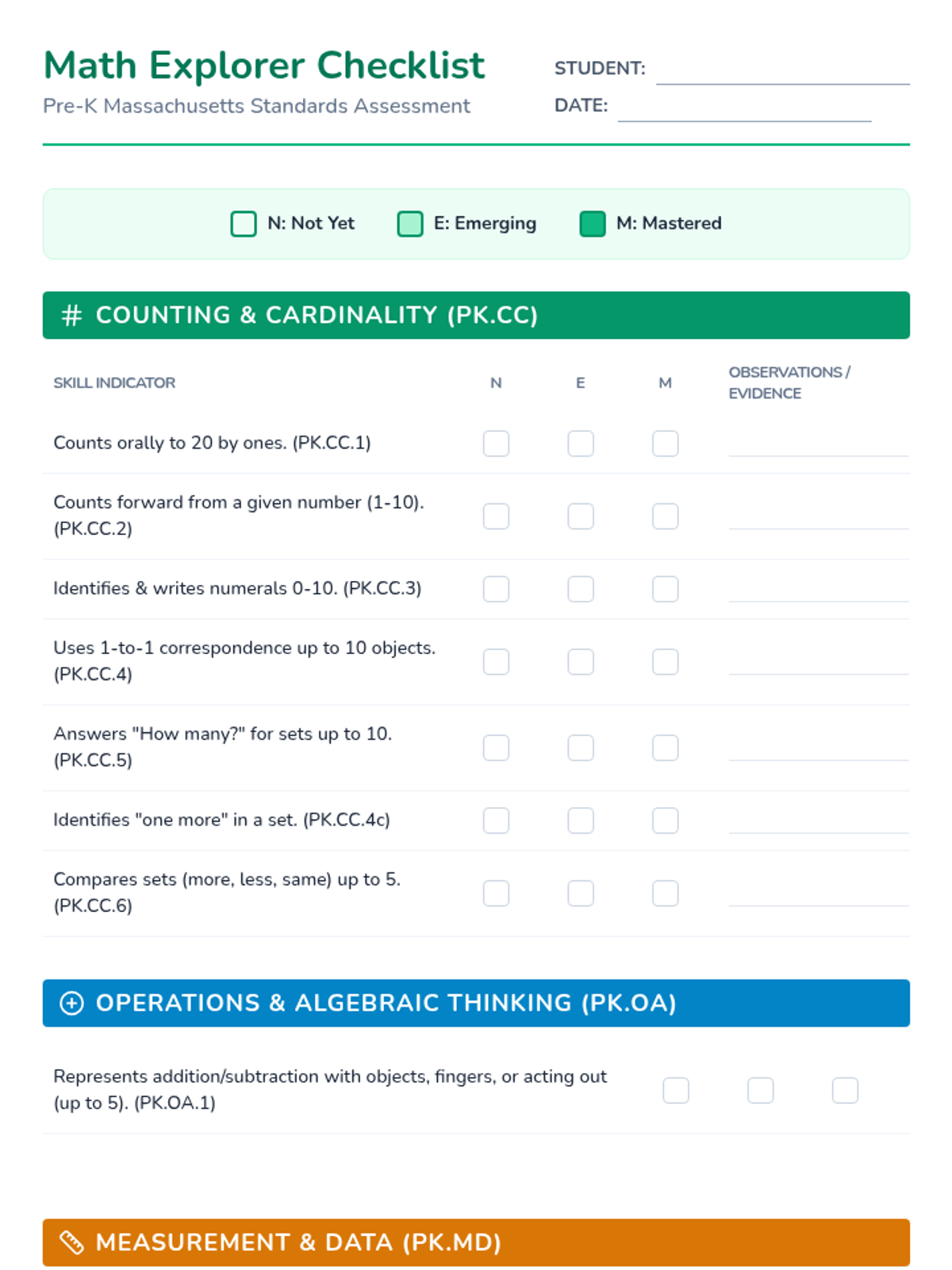
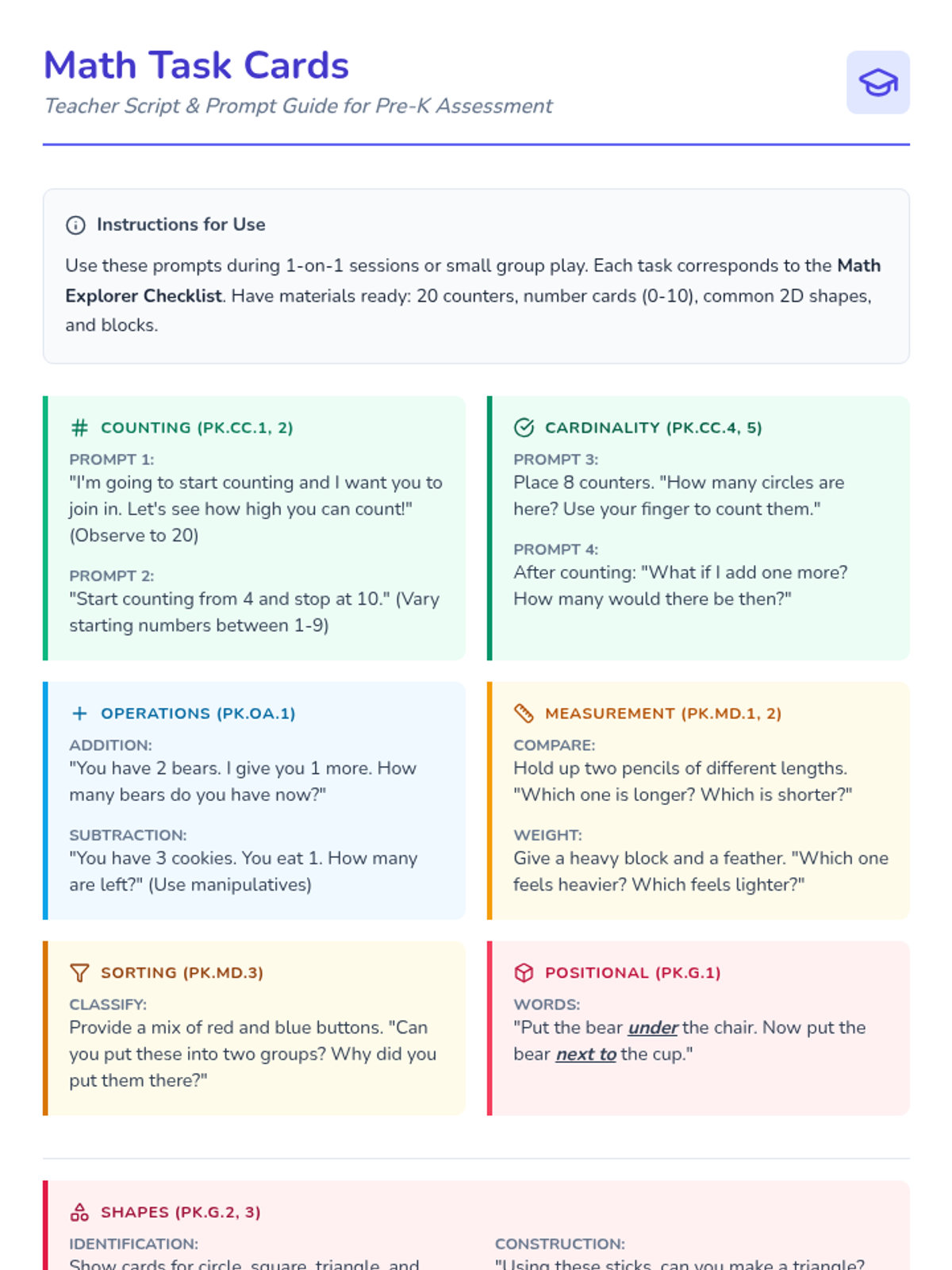
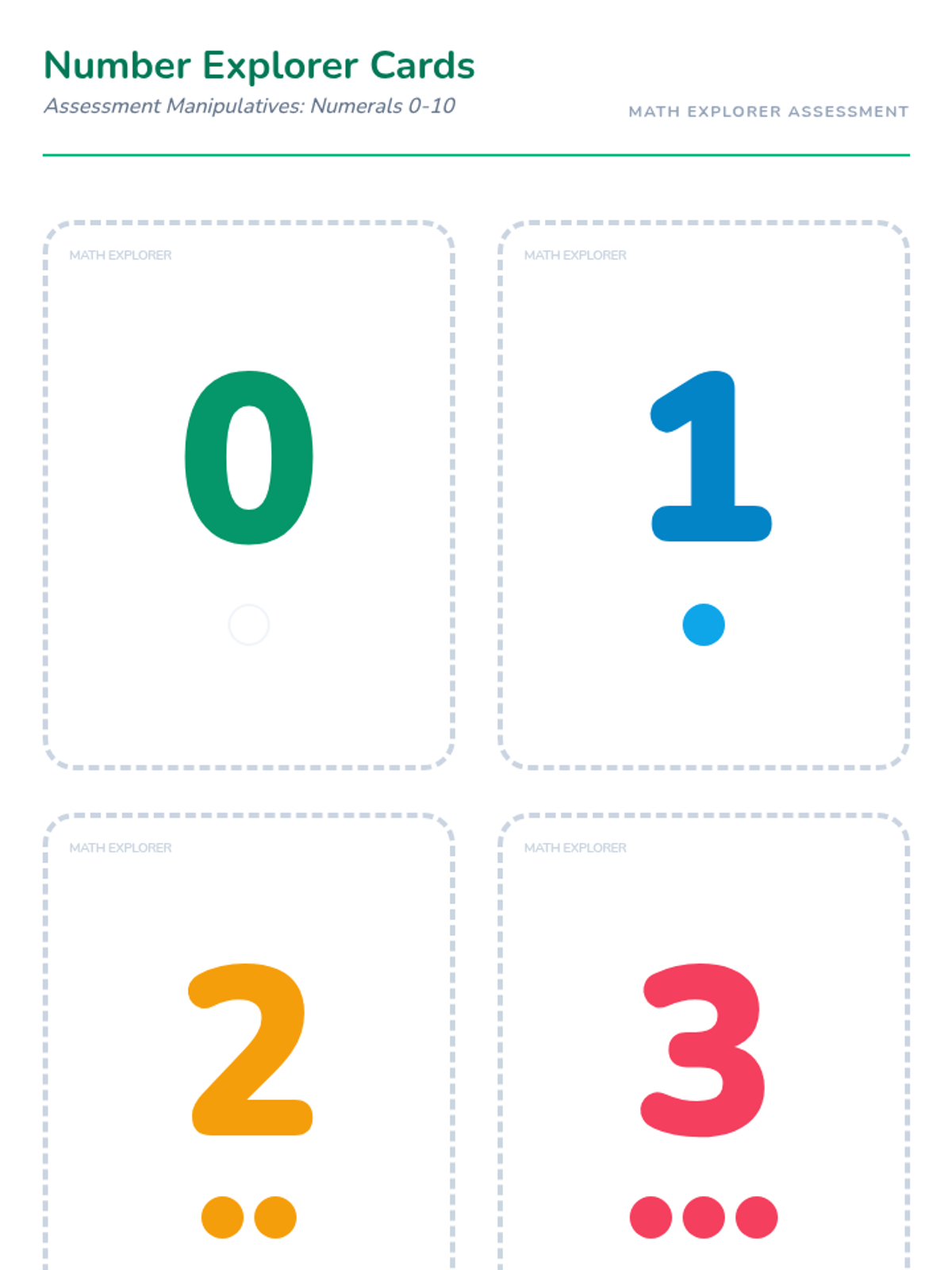
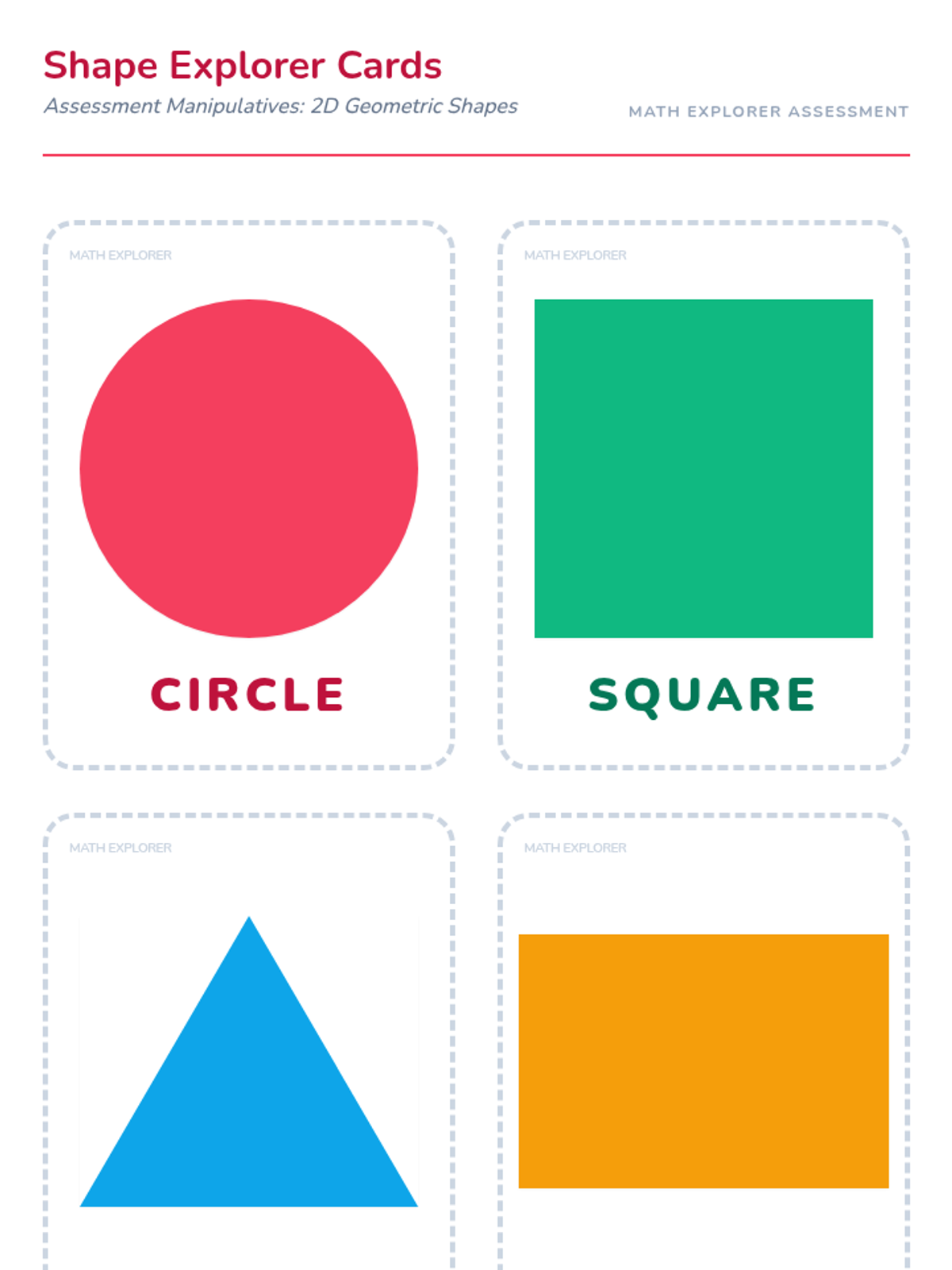
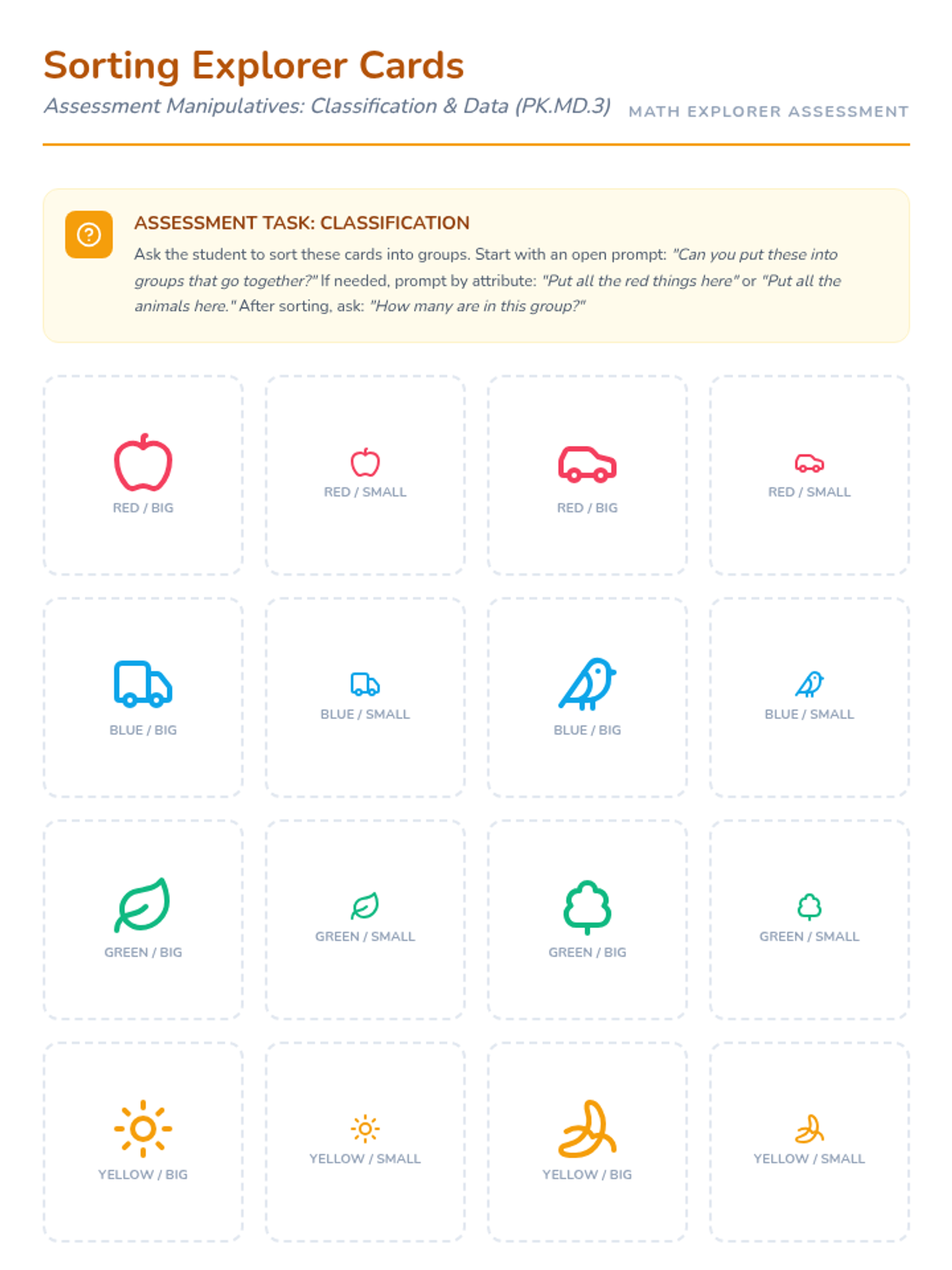
A series of assessment resources for foundational mathematics based on the Massachusetts Curriculum Frameworks, spanning Pre-K and early elementary grades.
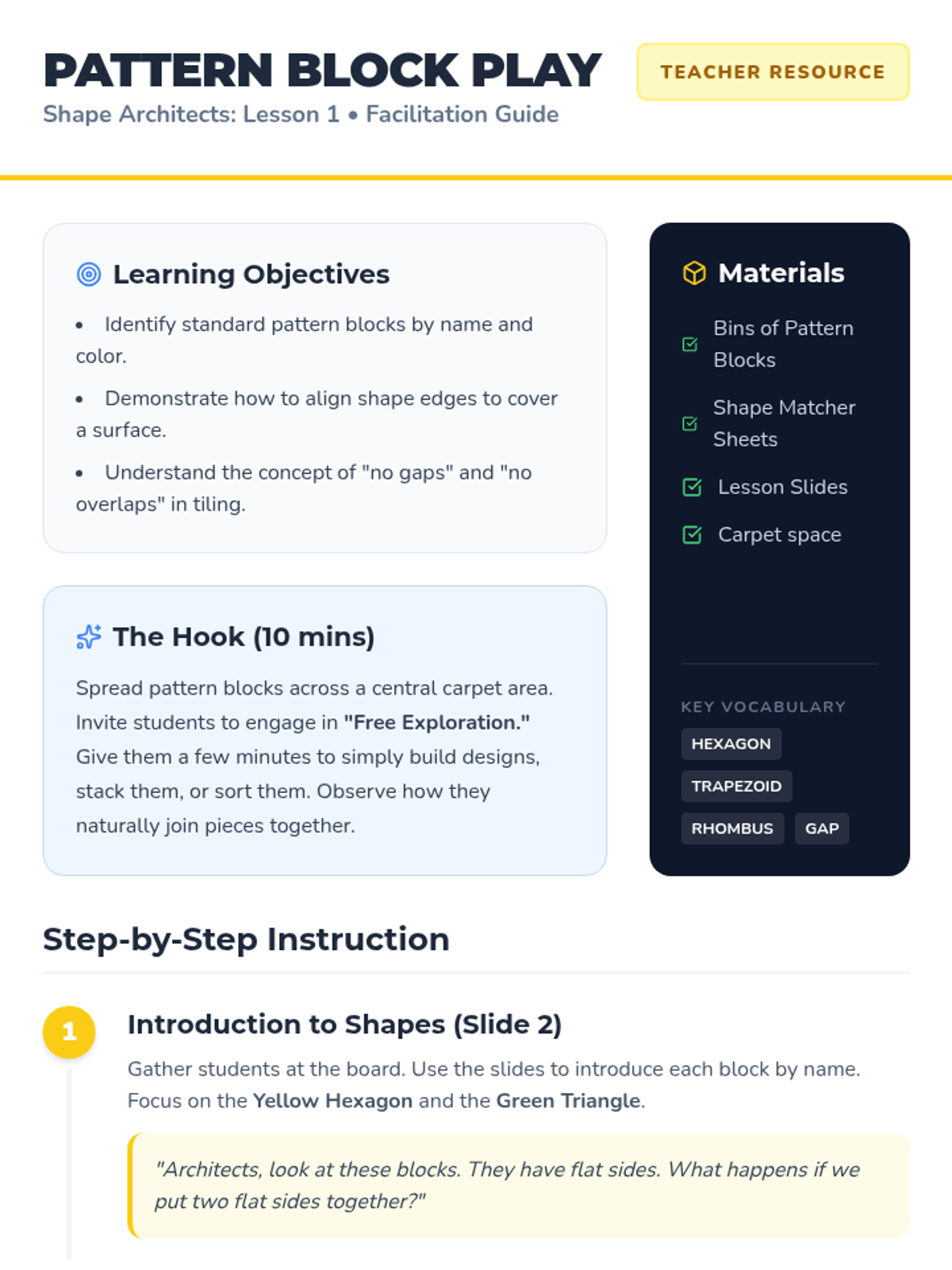
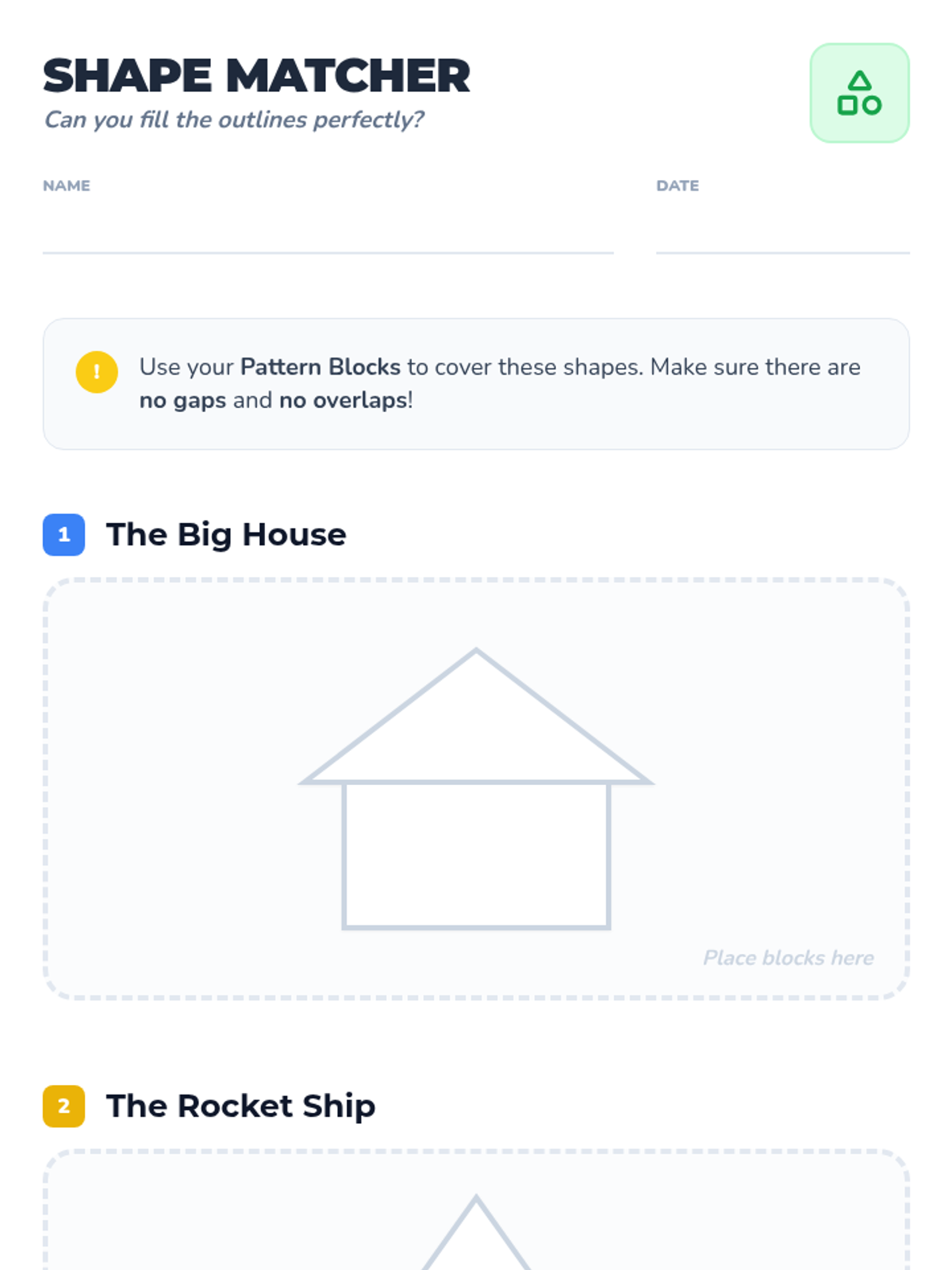
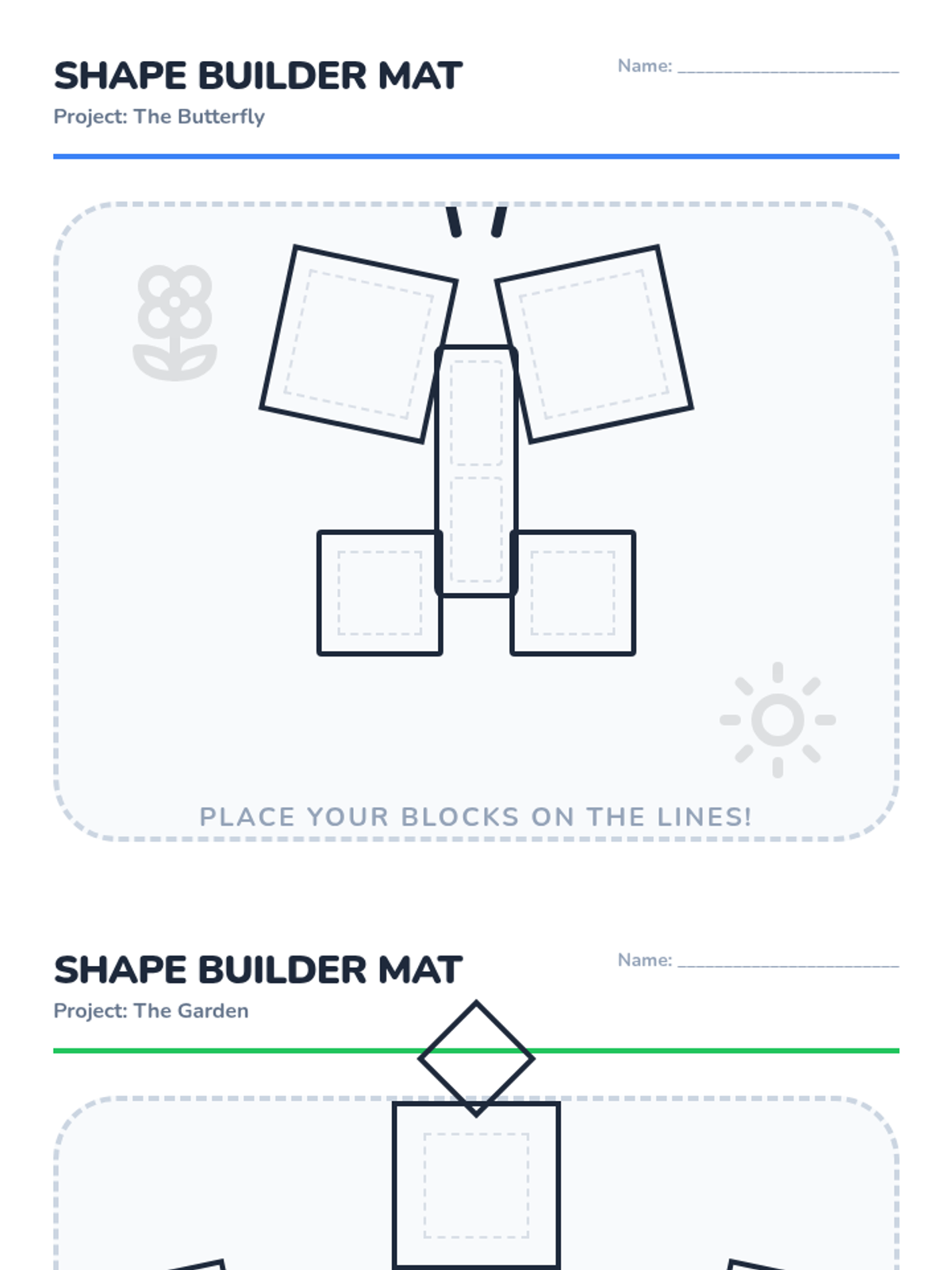
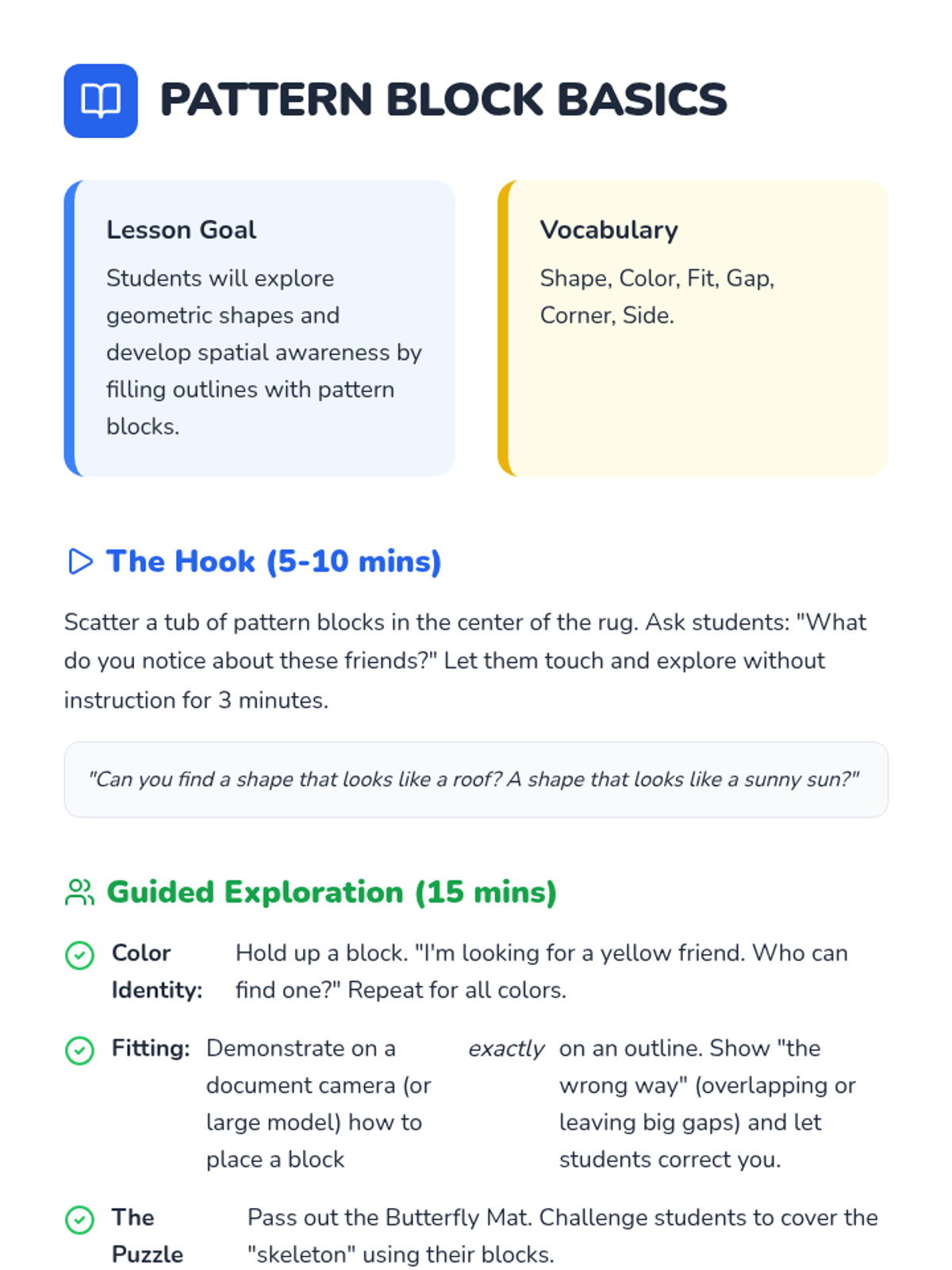
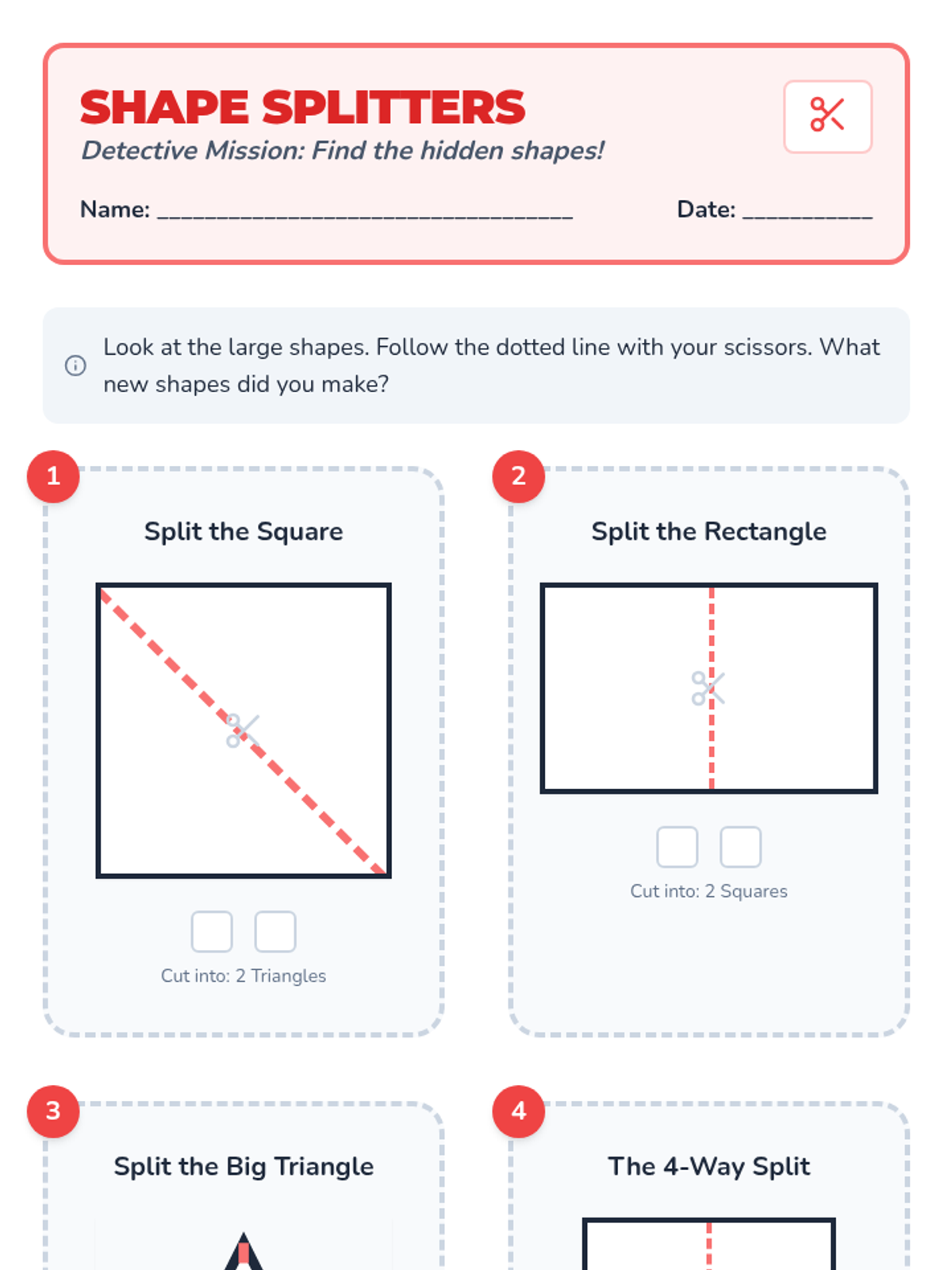
Students explore spatial reasoning through composing and decomposing 2D shapes using pattern blocks, tangrams, and paper cutting. They progress from simple puzzle filling to designing a geometric city, developing cognitive flexibility and geometric intuition.
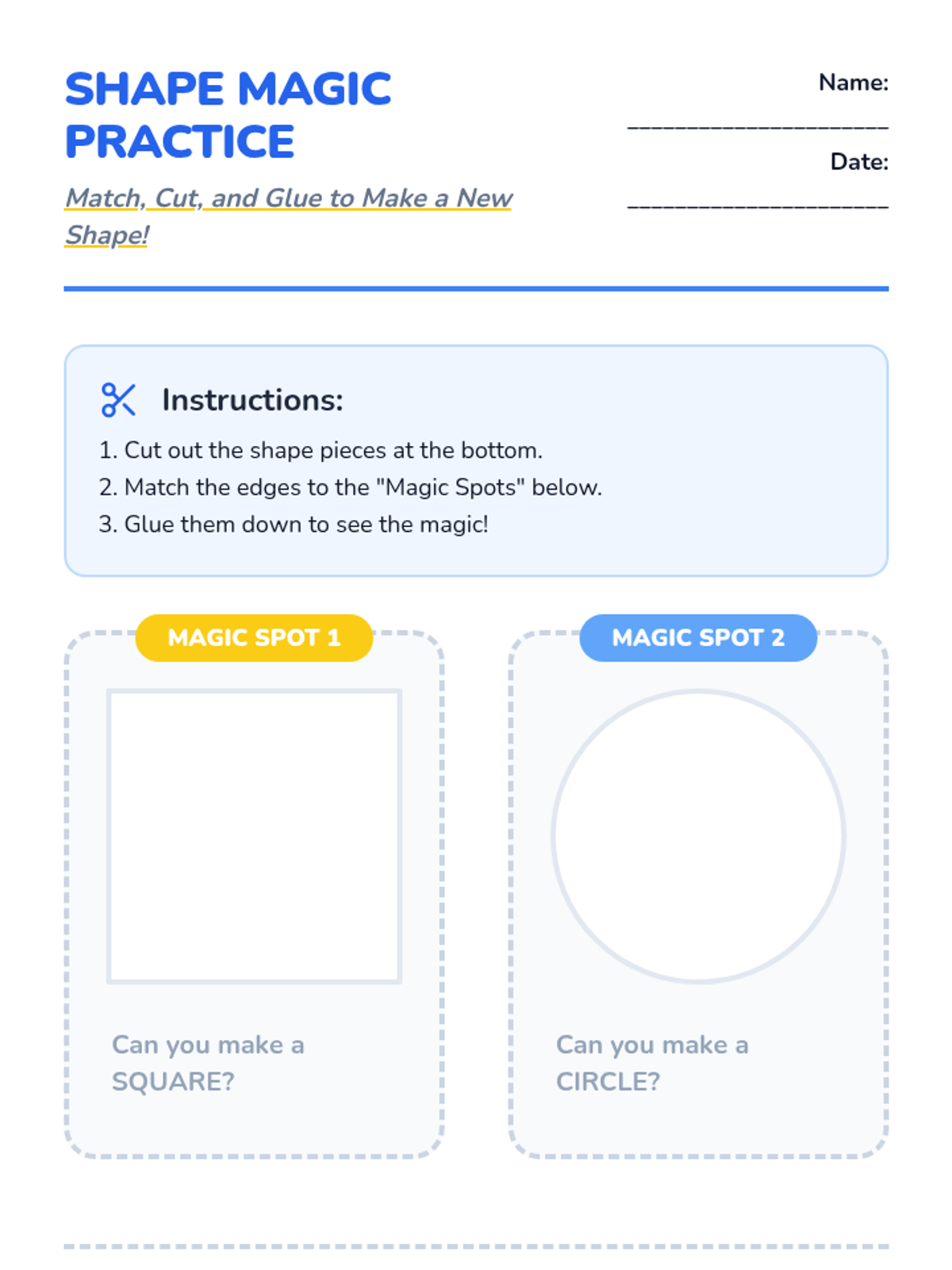
A hands-on geometry sequence for Pre-K students exploring how smaller shapes combine to form larger figures. Students use pattern blocks, tangrams, and paper cutouts to develop spatial awareness and creative construction skills.
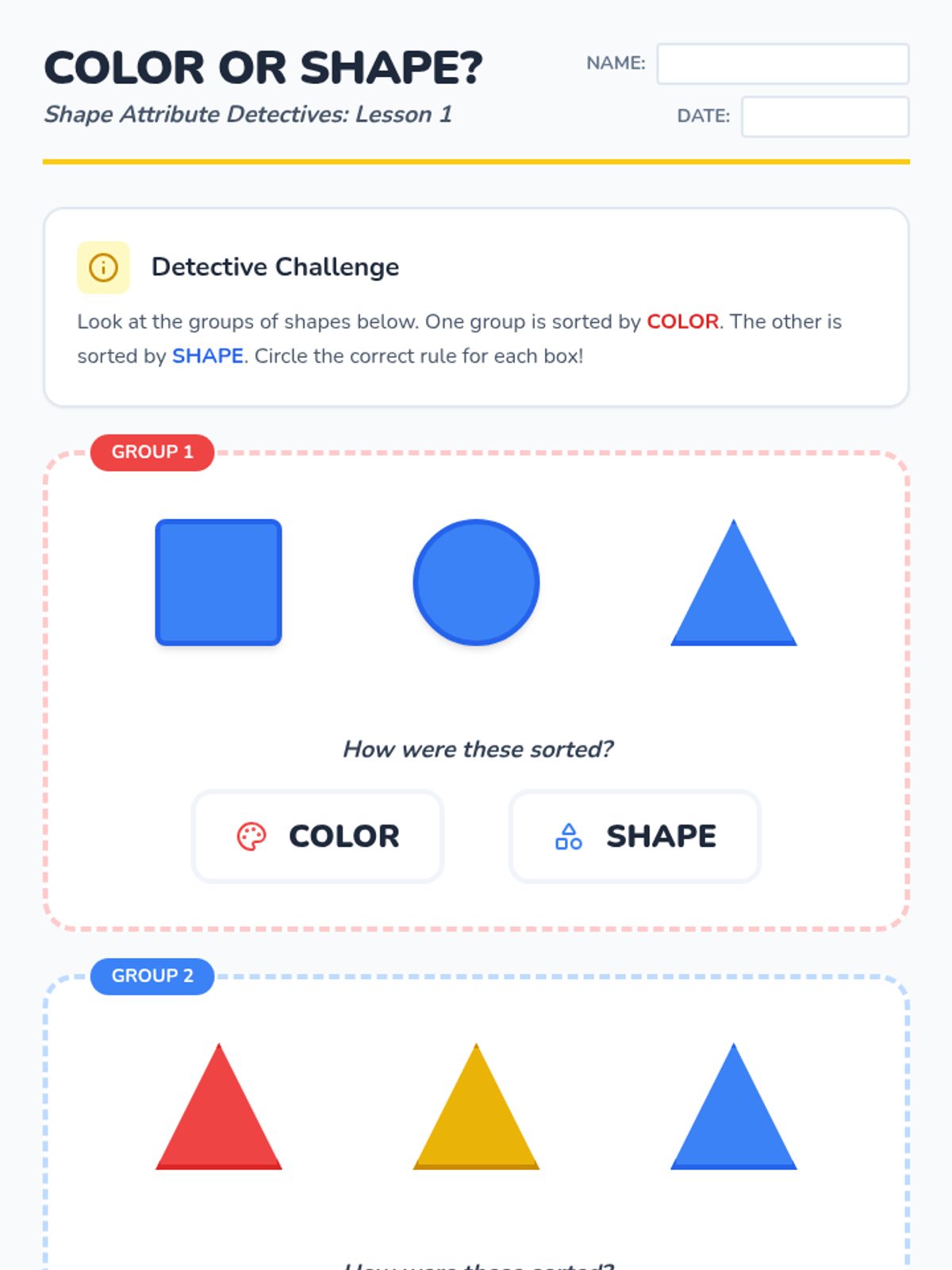
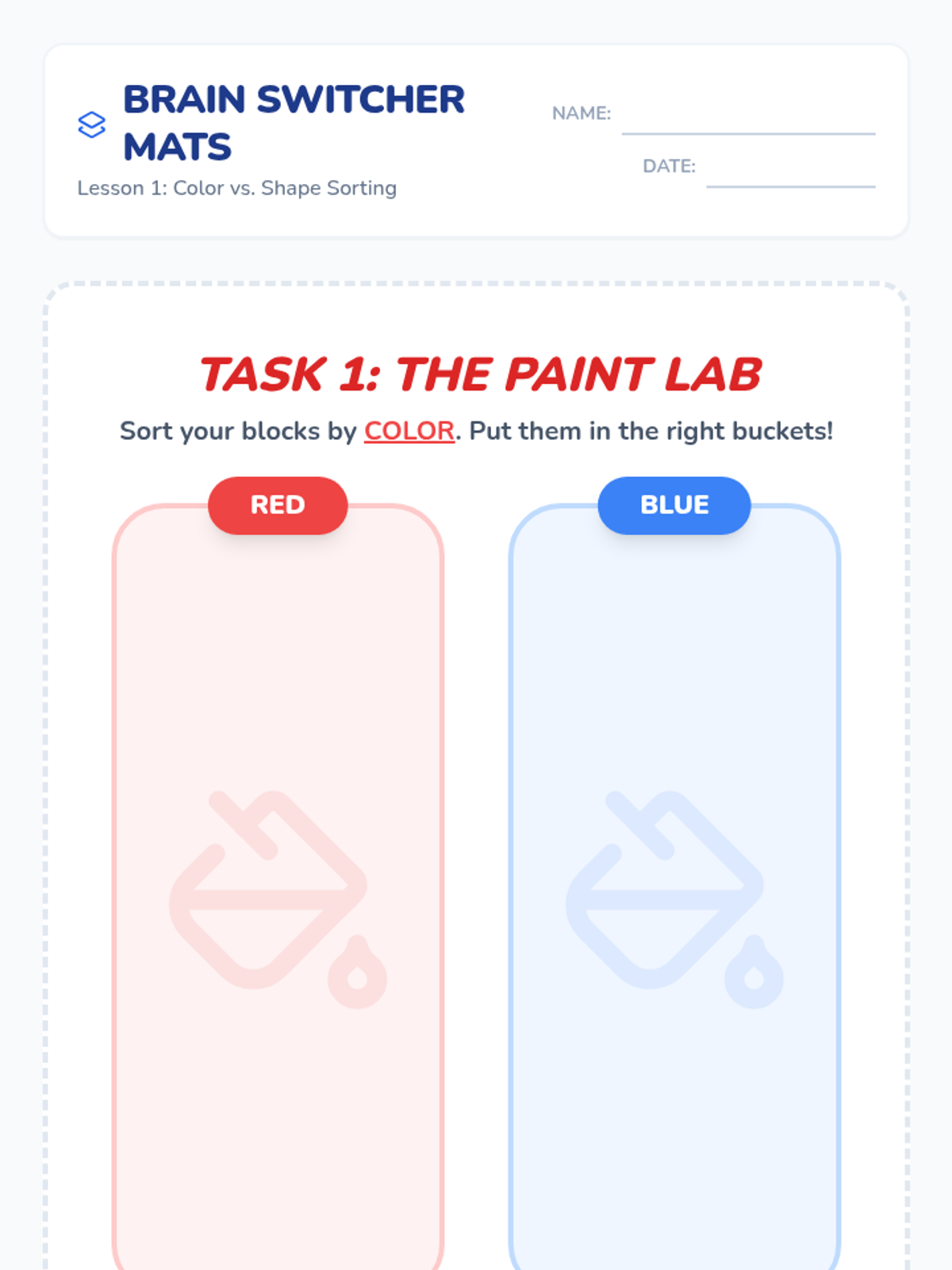
A Pre-K geometry sequence focused on classifying shapes by color, size, orientation, and numerical attributes like sides and corners. Students develop critical thinking by articulating sorting rules and identifying similarities and differences between geometric figures.
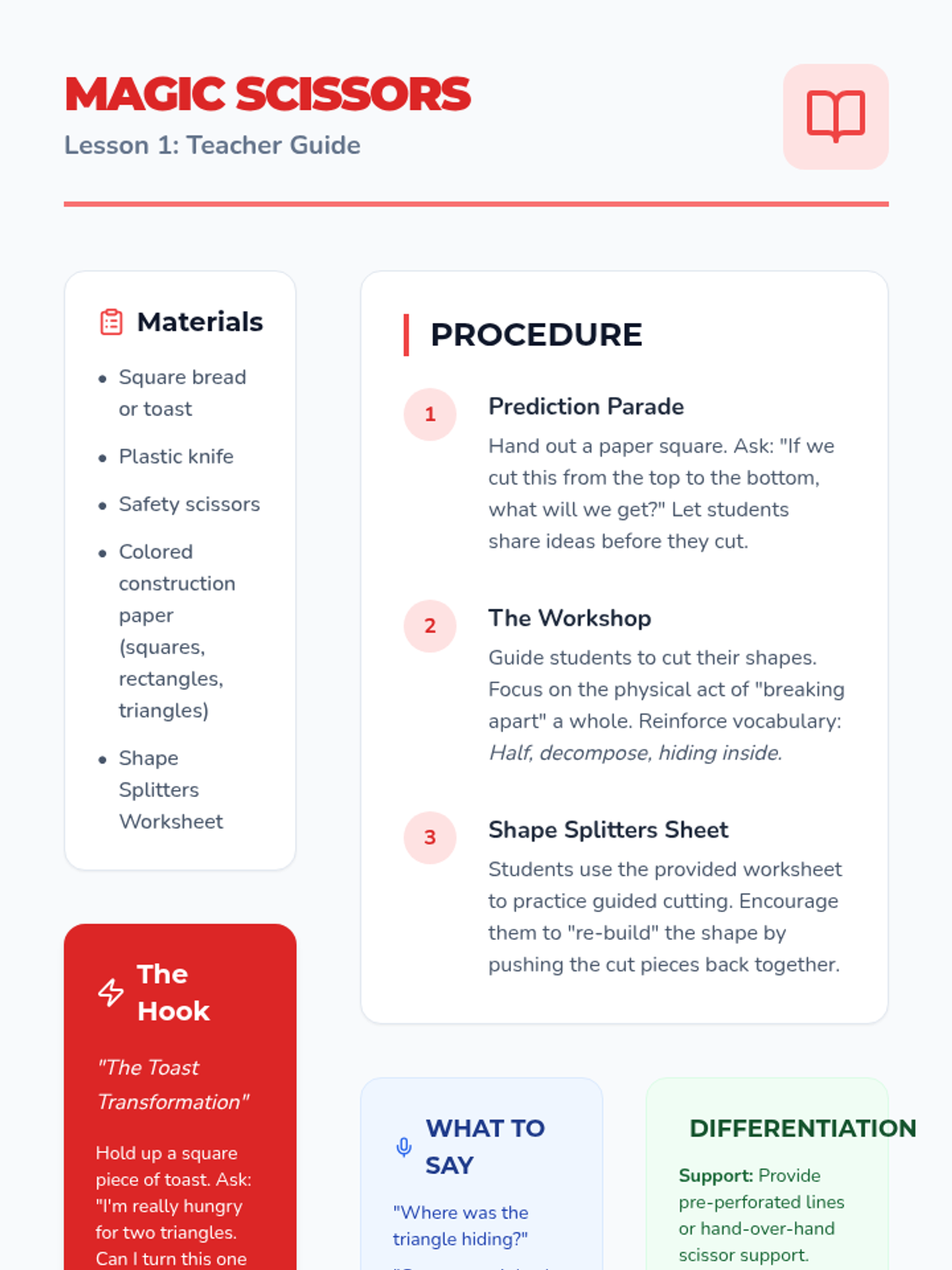
This sequence introduces Pre-K students to shape decomposition and spatial awareness by exploring how larger shapes are made of smaller ones. Through hands-on cutting, puzzles, block building, and art analysis, students learn to see the parts within the whole.
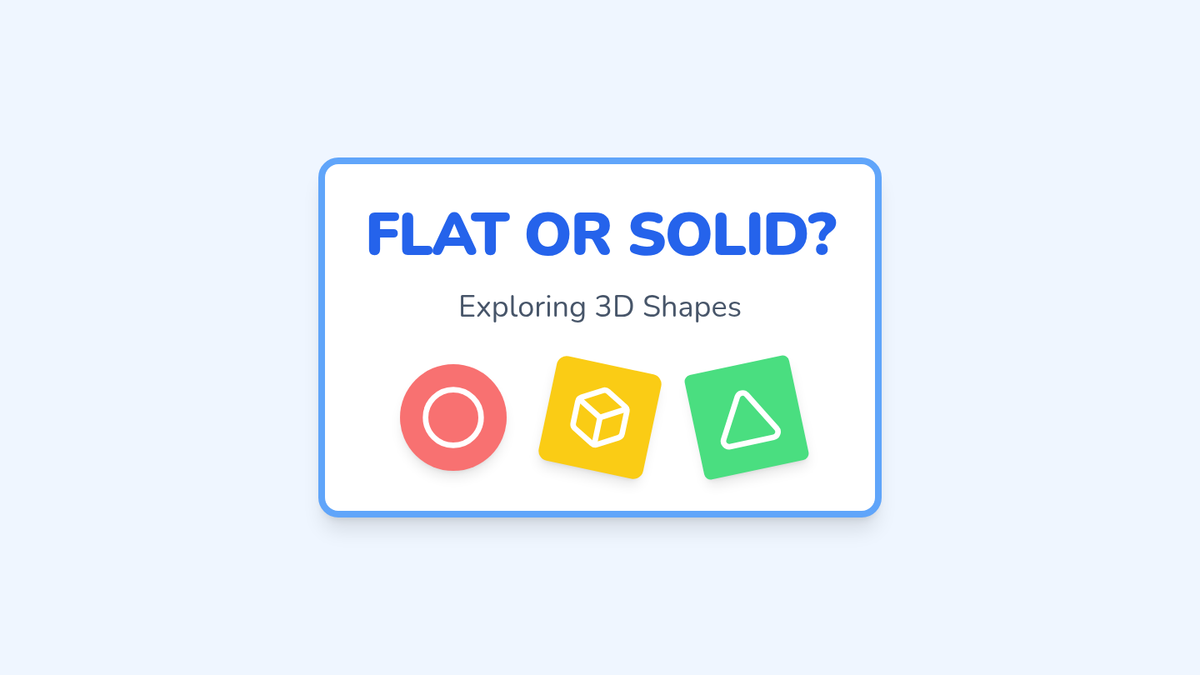
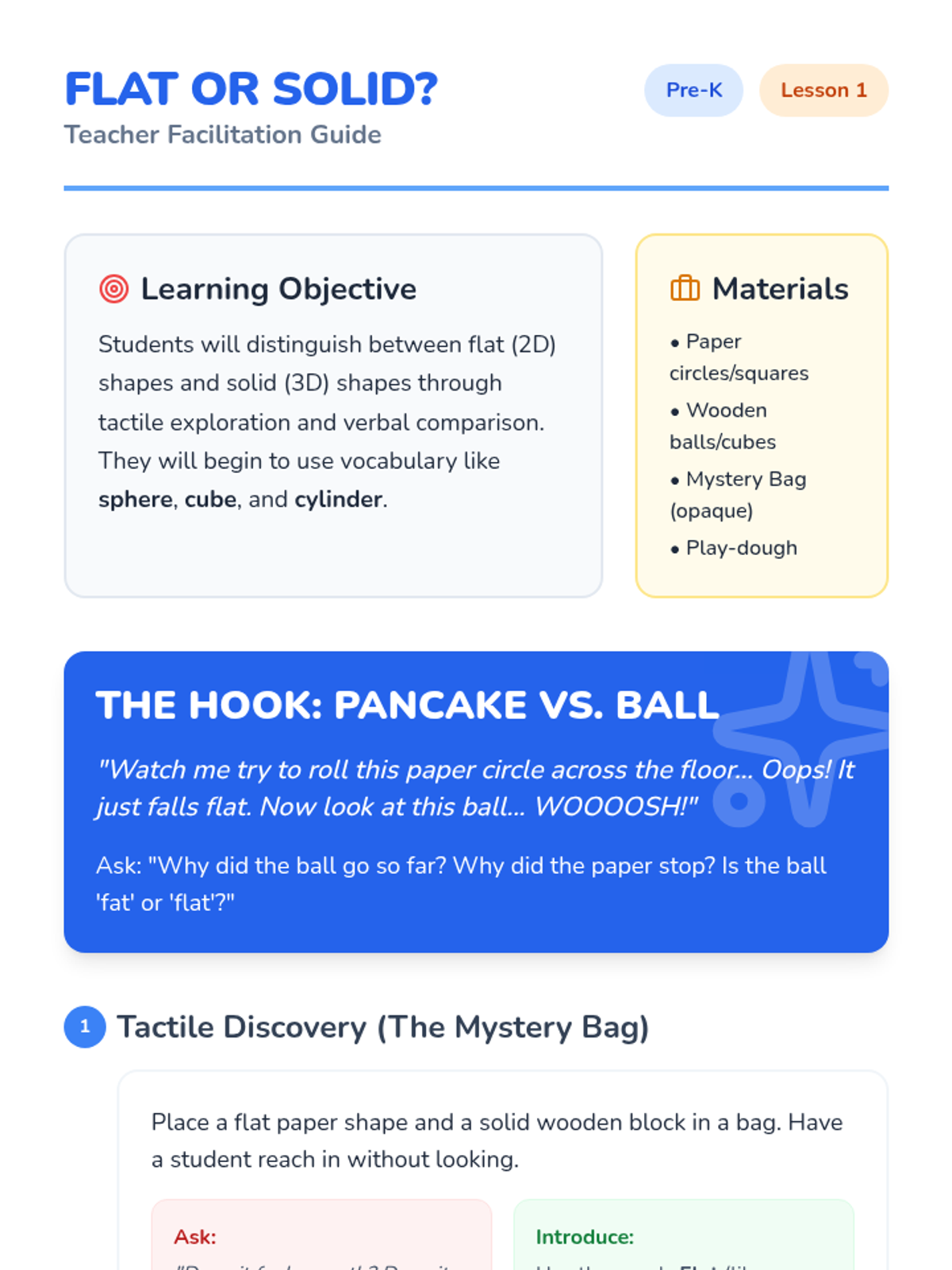
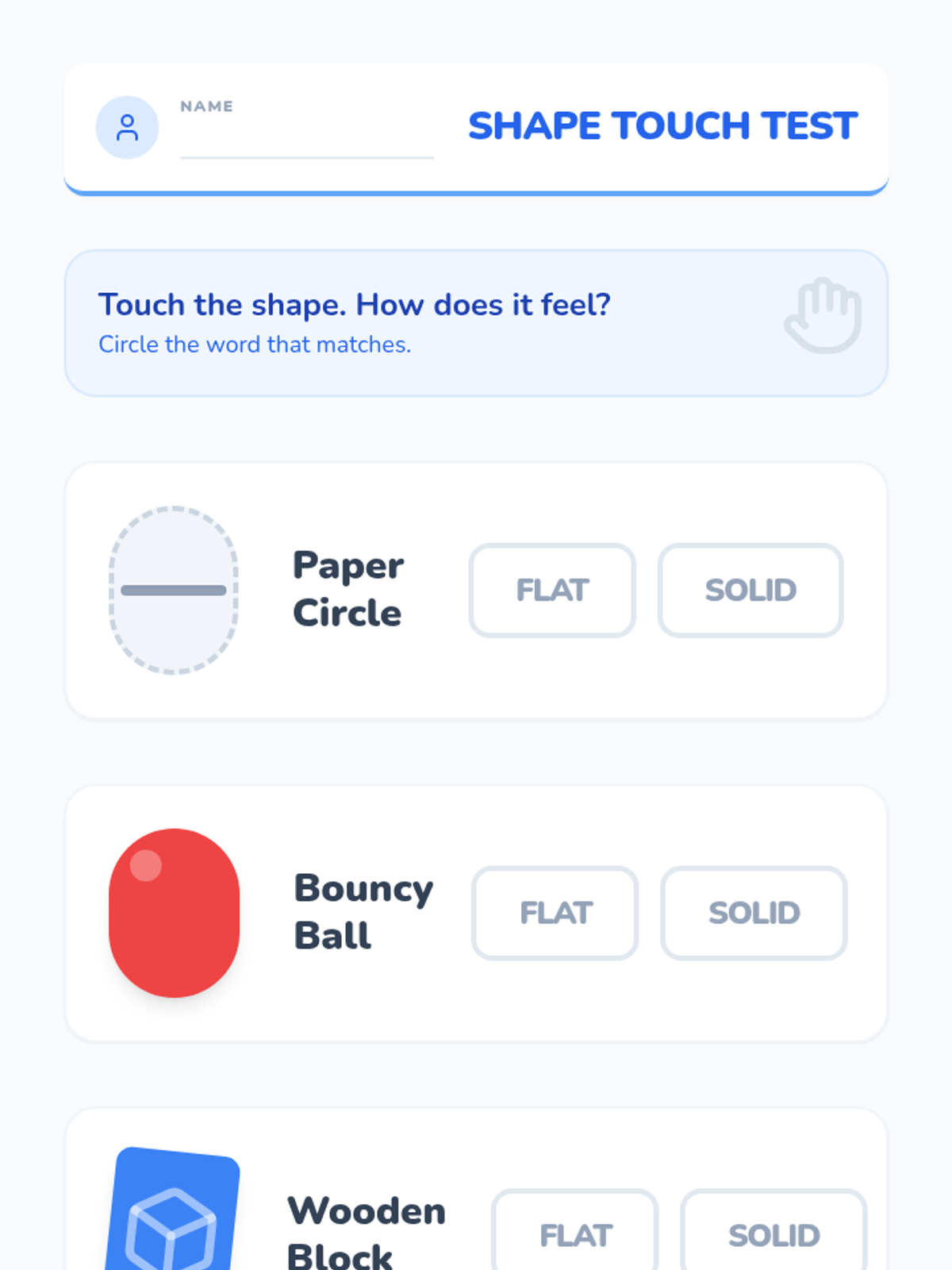
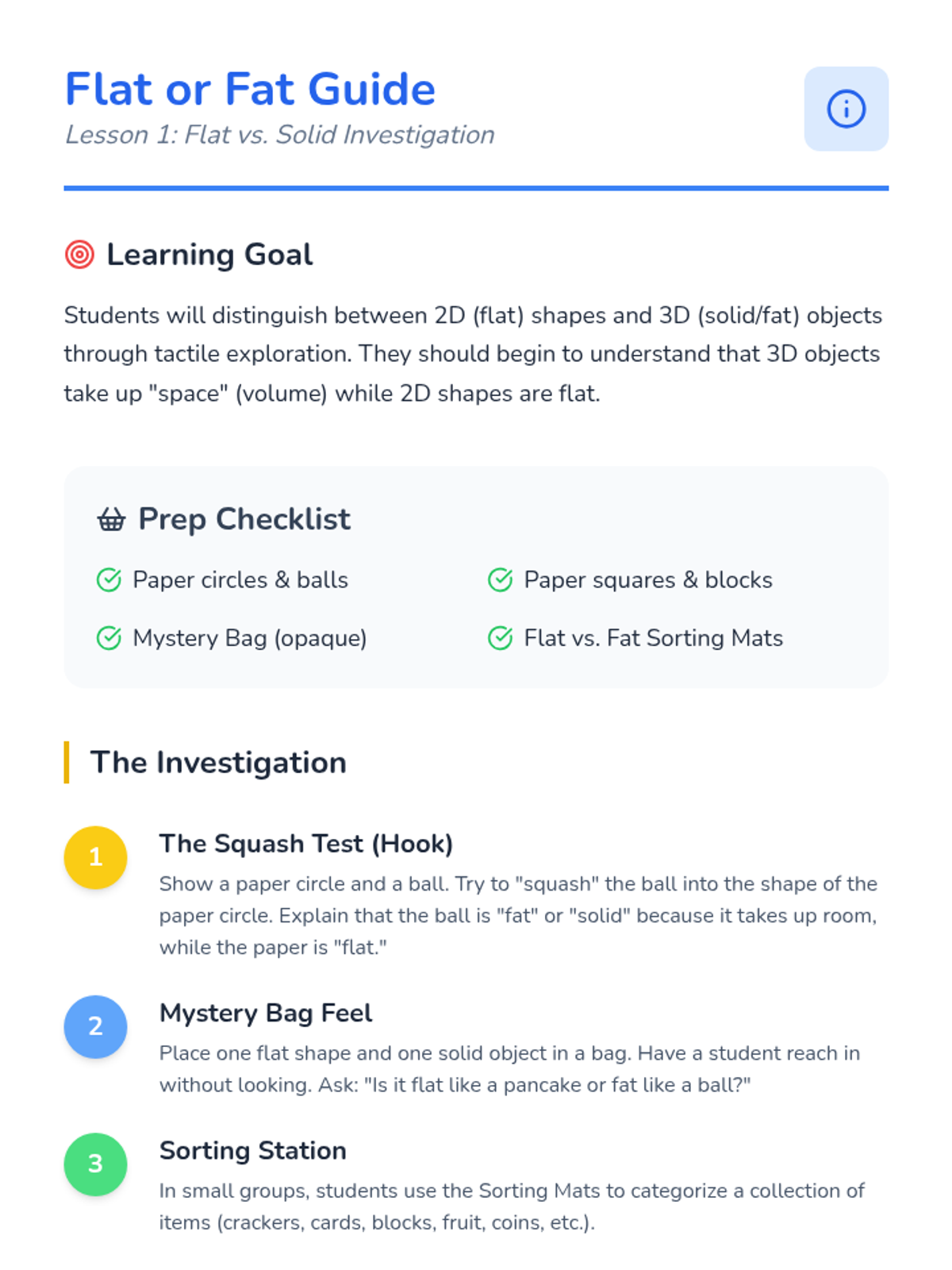
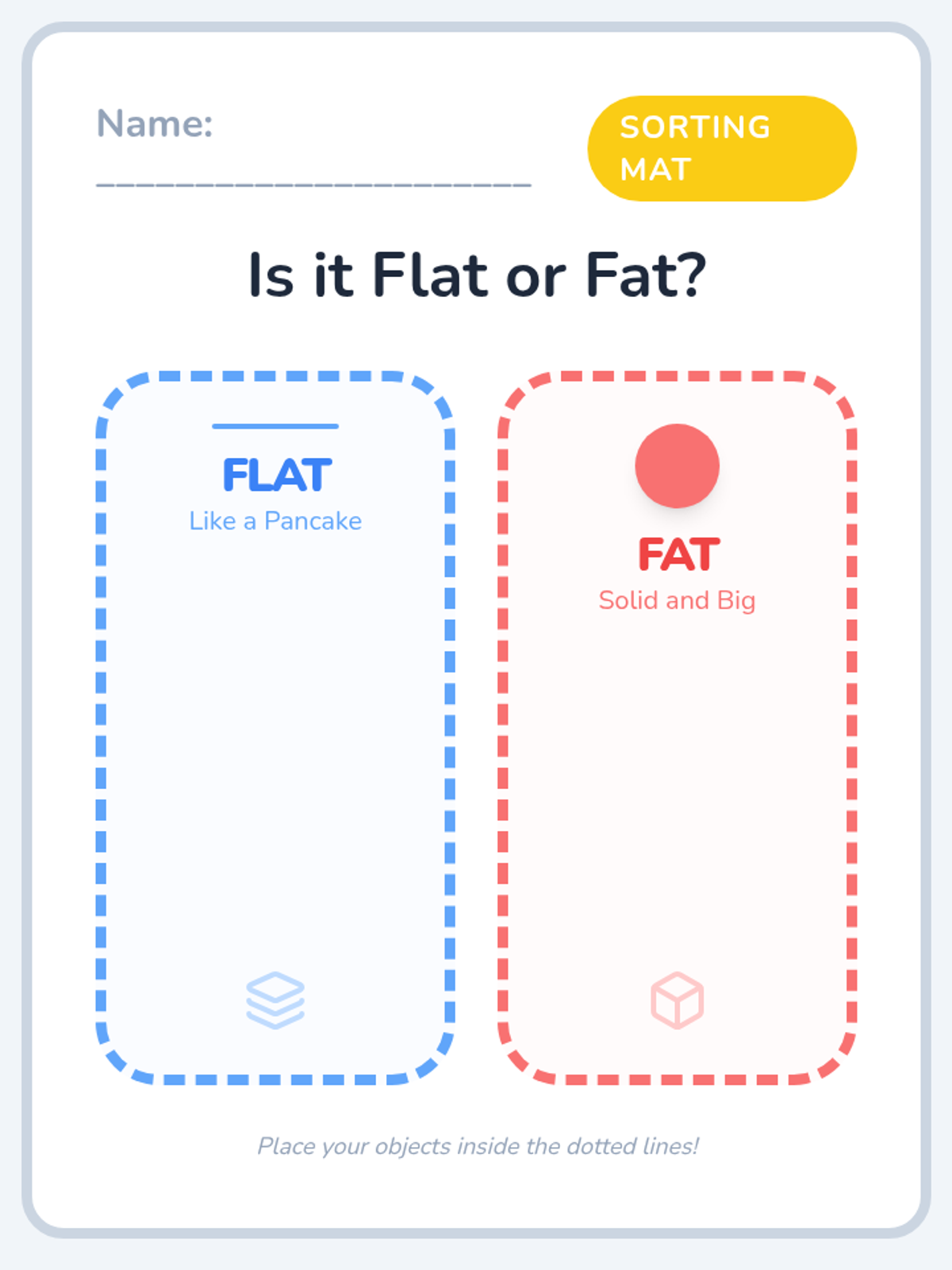
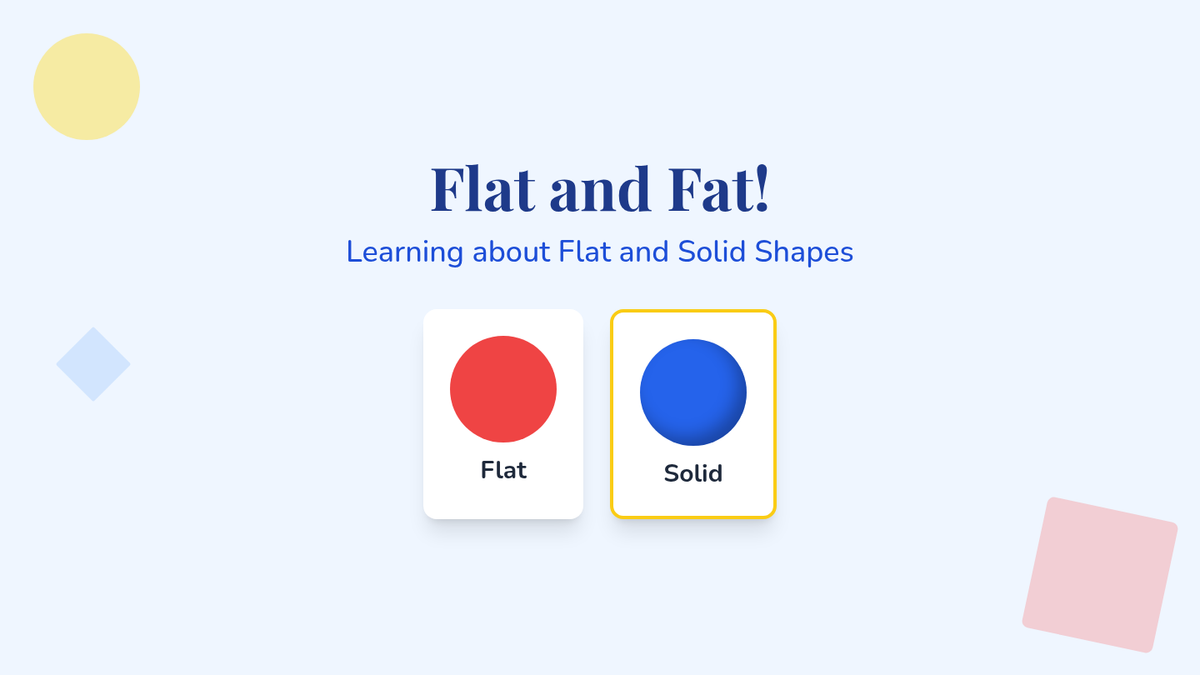
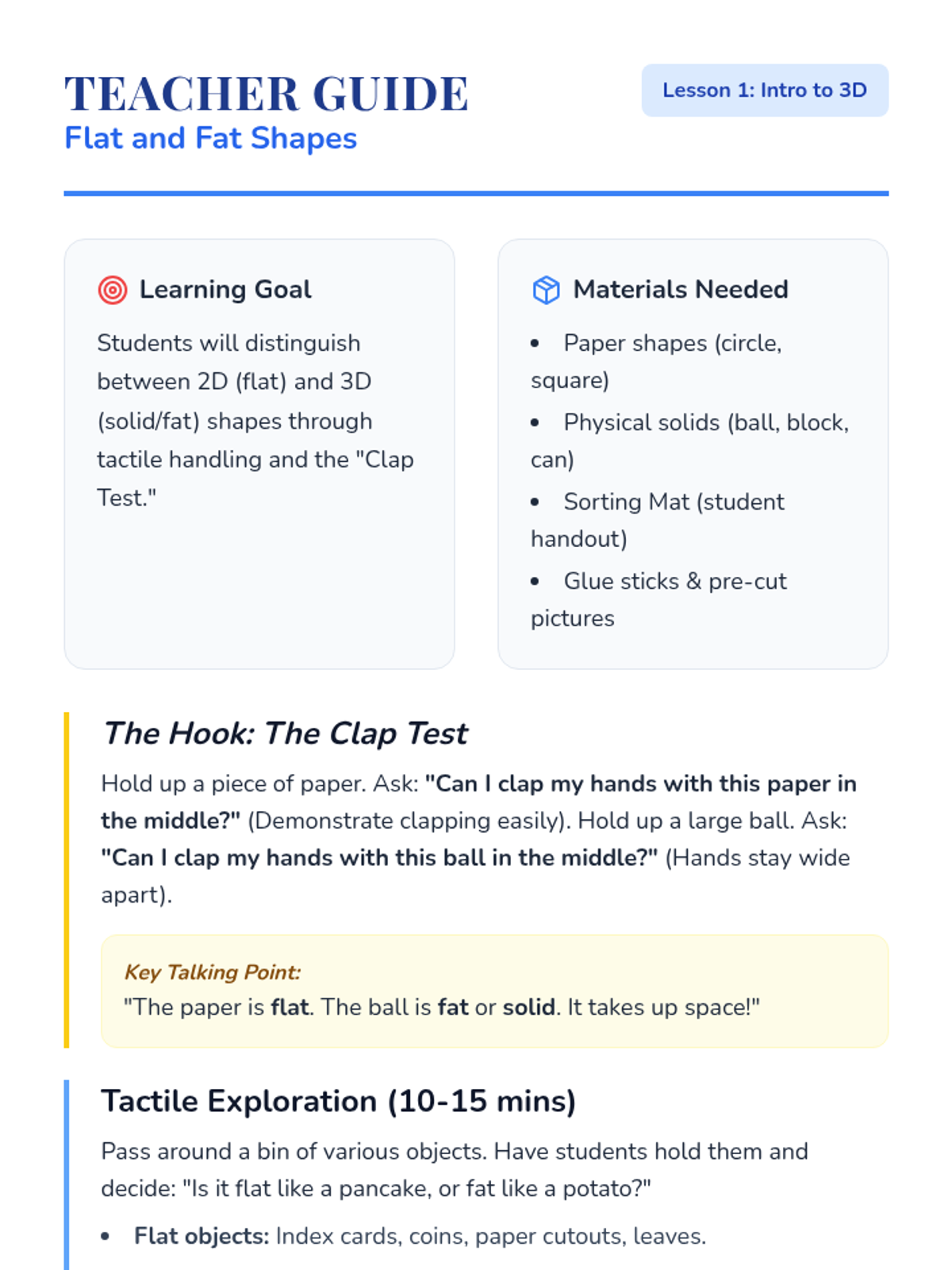
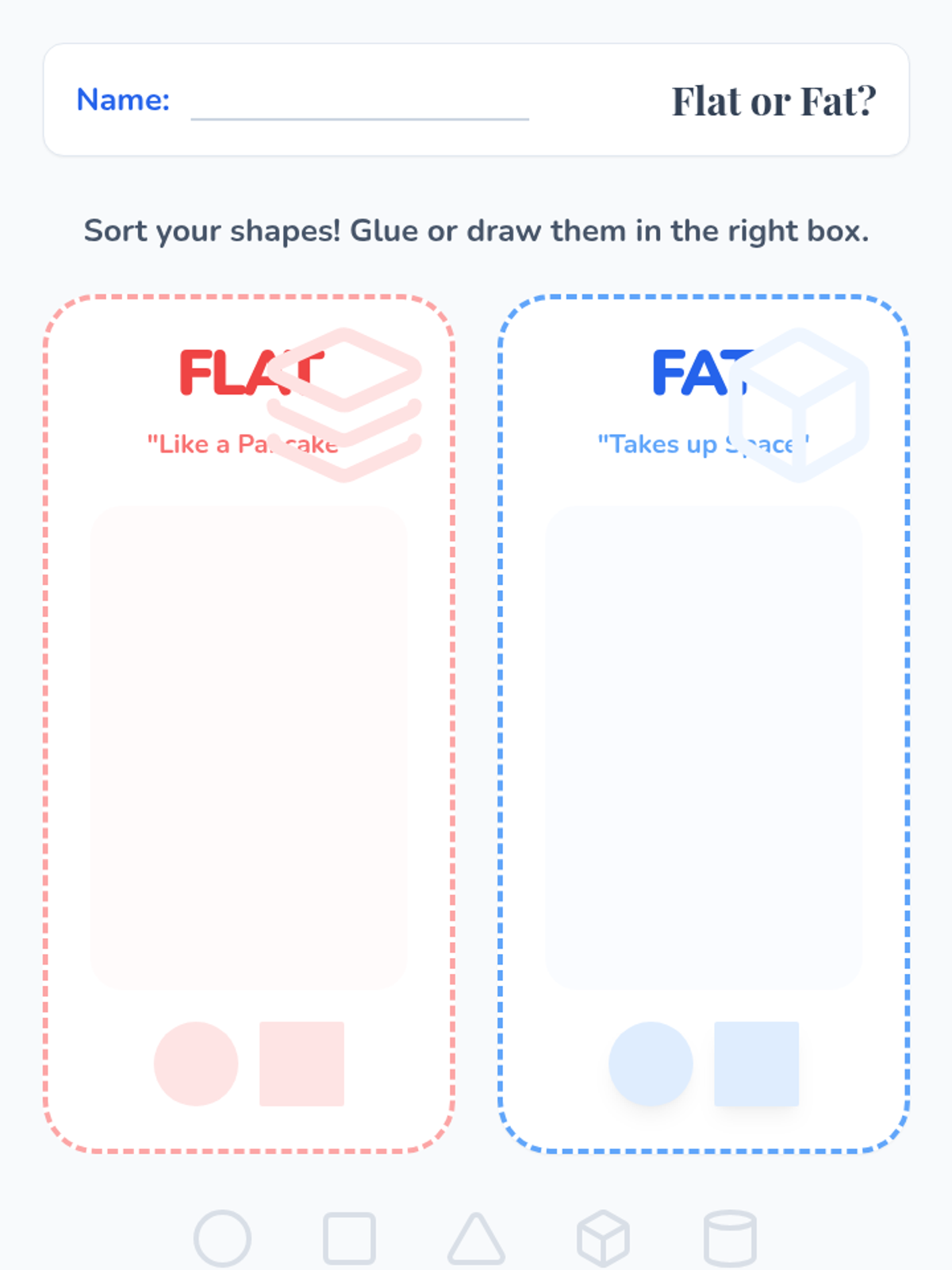
A hands-on geometry sequence for Pre-K students exploring the differences between 2D flat shapes and 3D solid shapes (spheres, cubes, cylinders, and cones) through tactile play and real-world connections.
A Pre-K geometry sequence focusing on how simple geometric shapes can be combined to form larger shapes and recognizable figures. Students use pattern blocks, tangrams, and paper cutouts to develop spatial reasoning and construction skills.
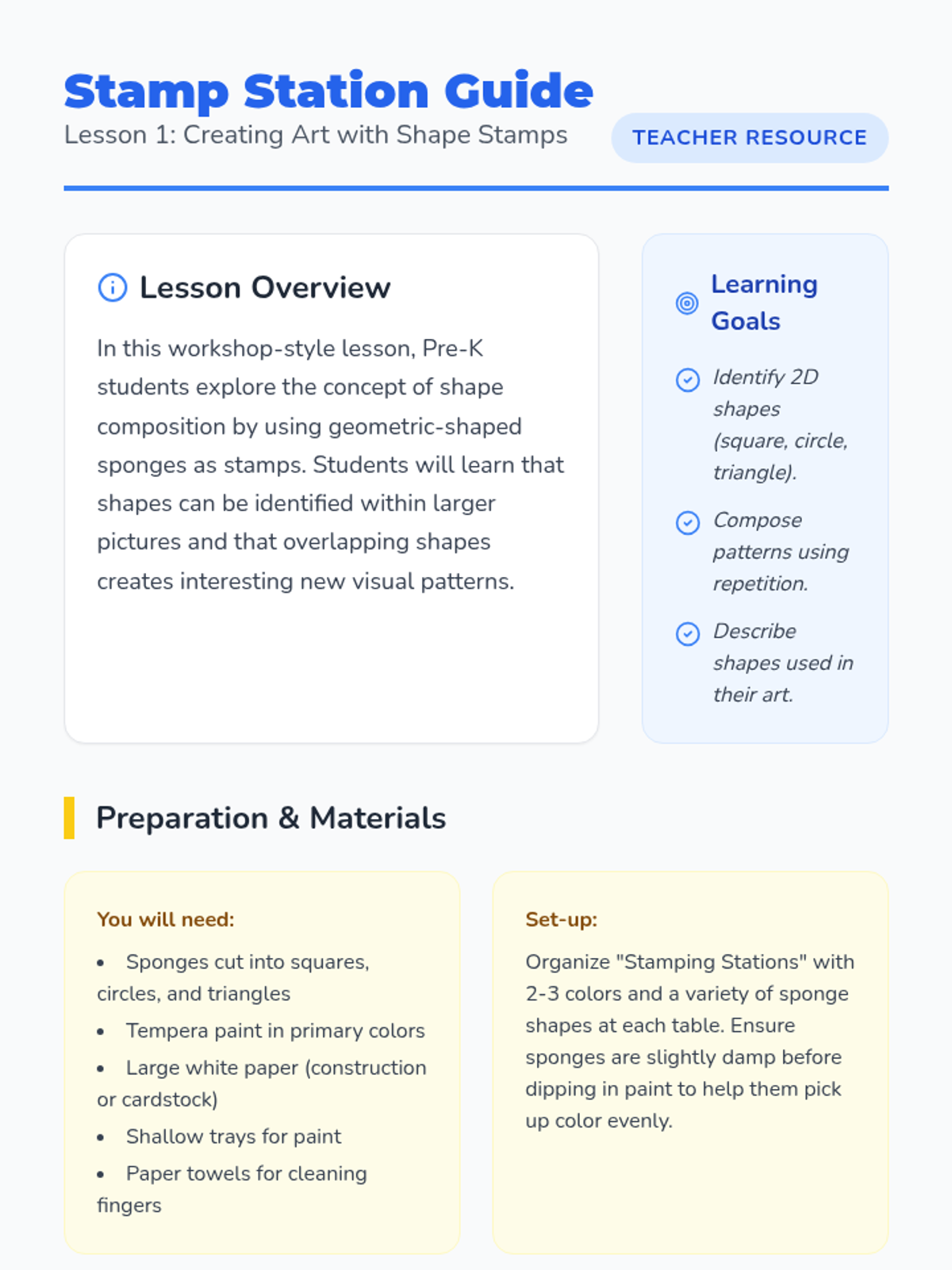
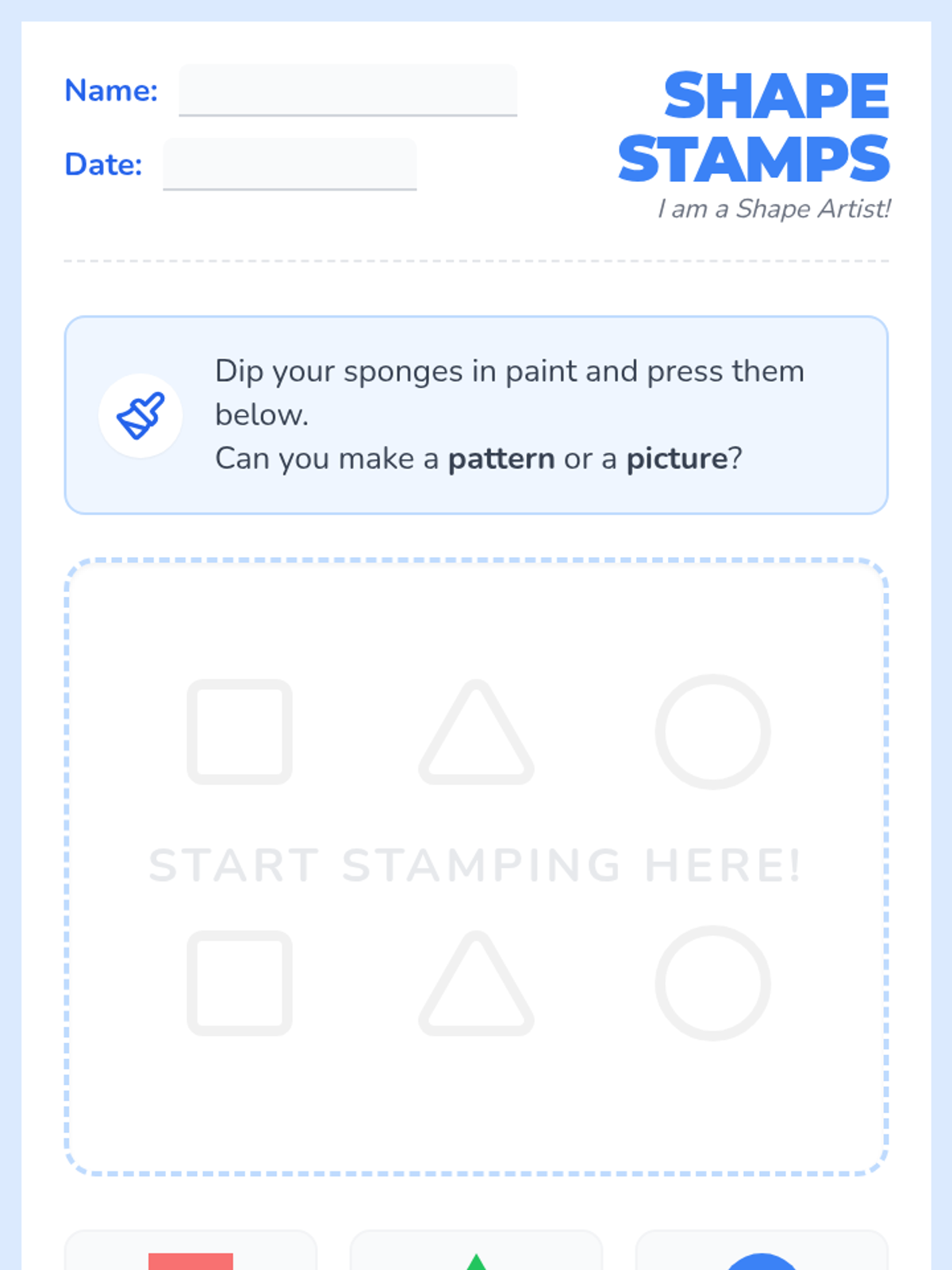
A project-based geometry sequence for Pre-K students exploring how shapes can be put together (composed) and taken apart (decomposed) through art and play. Students use stamps, blocks, play-dough, and collages to discover that complex images are built from simple geometric foundations.
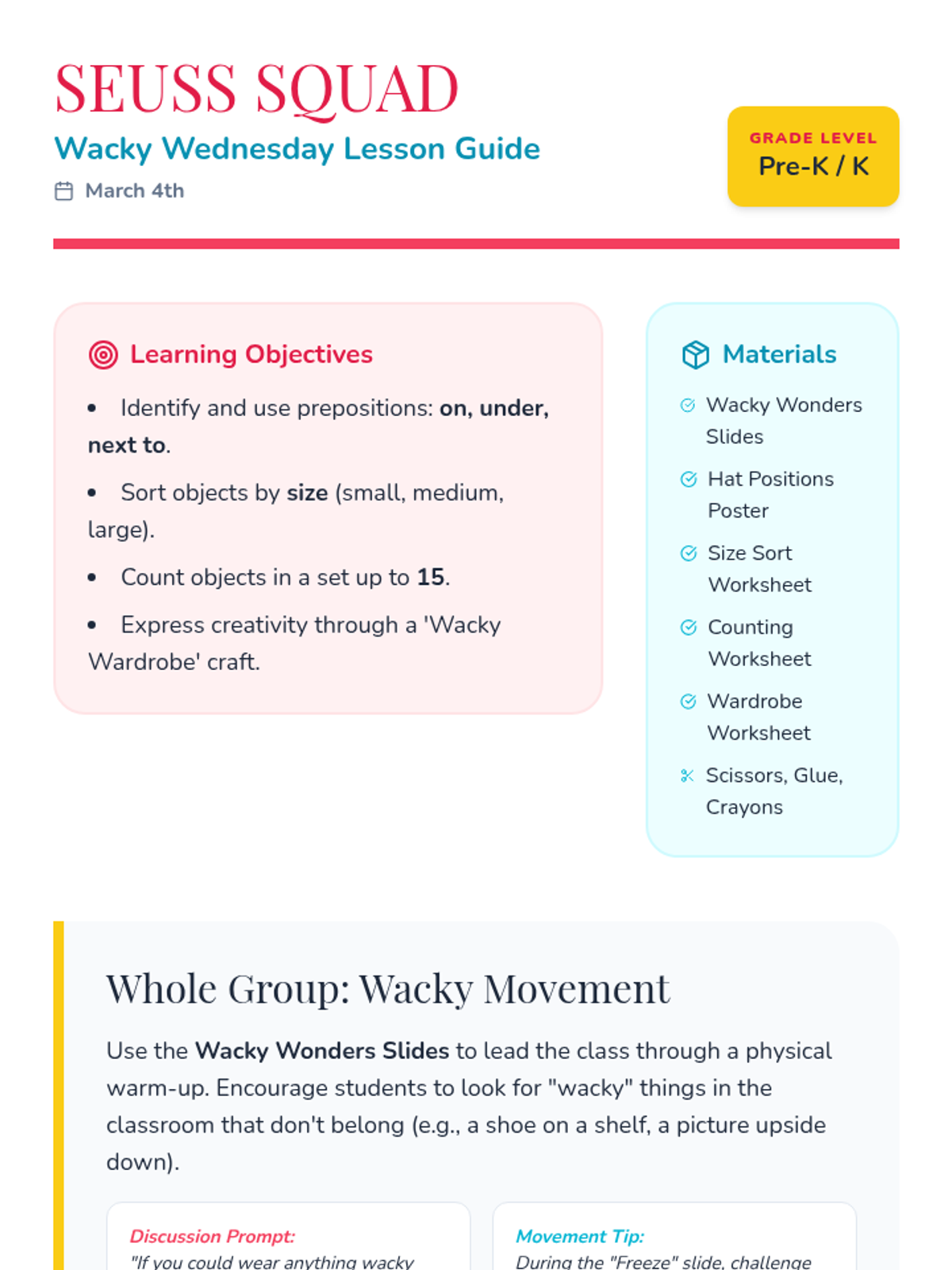
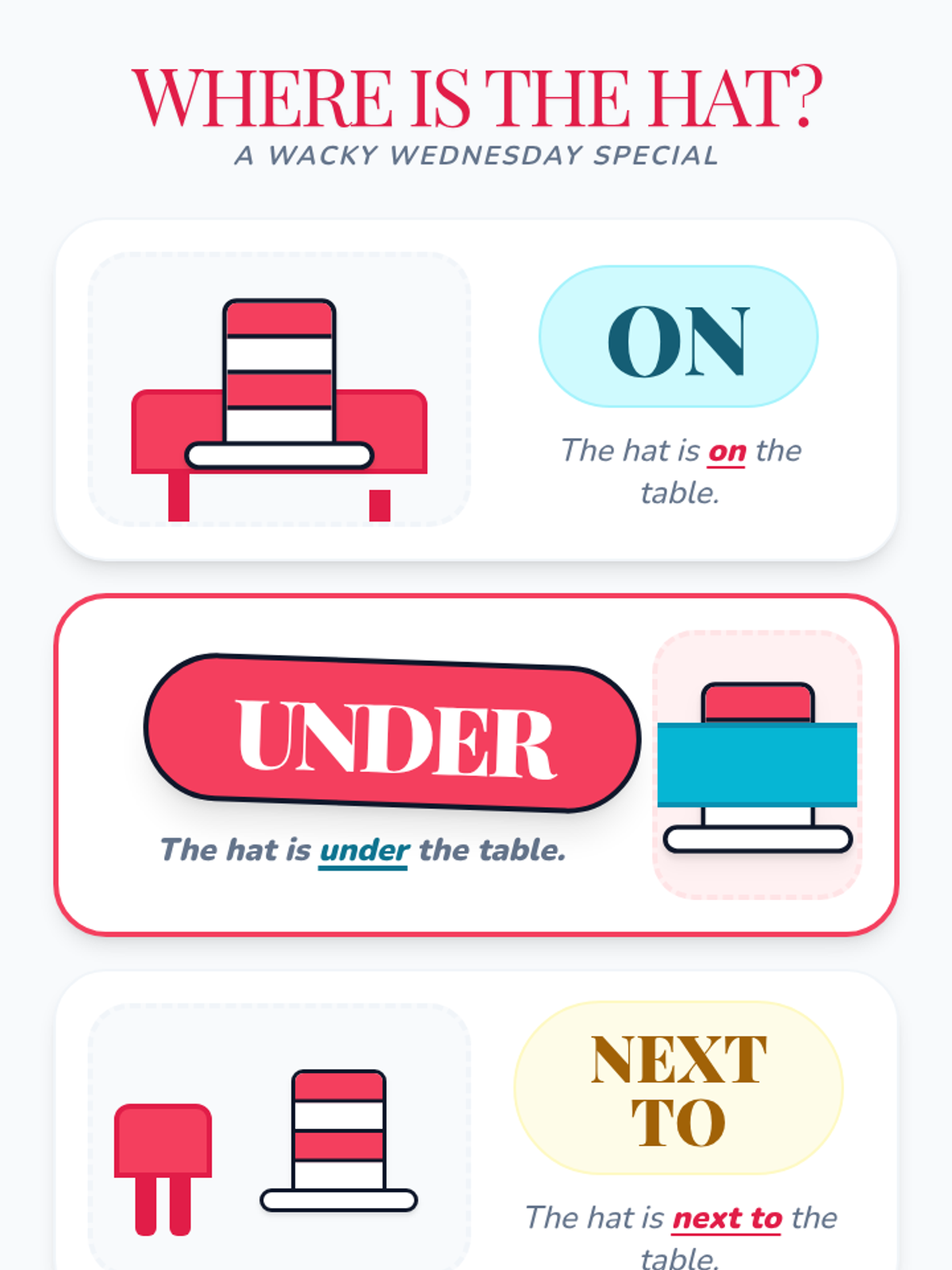
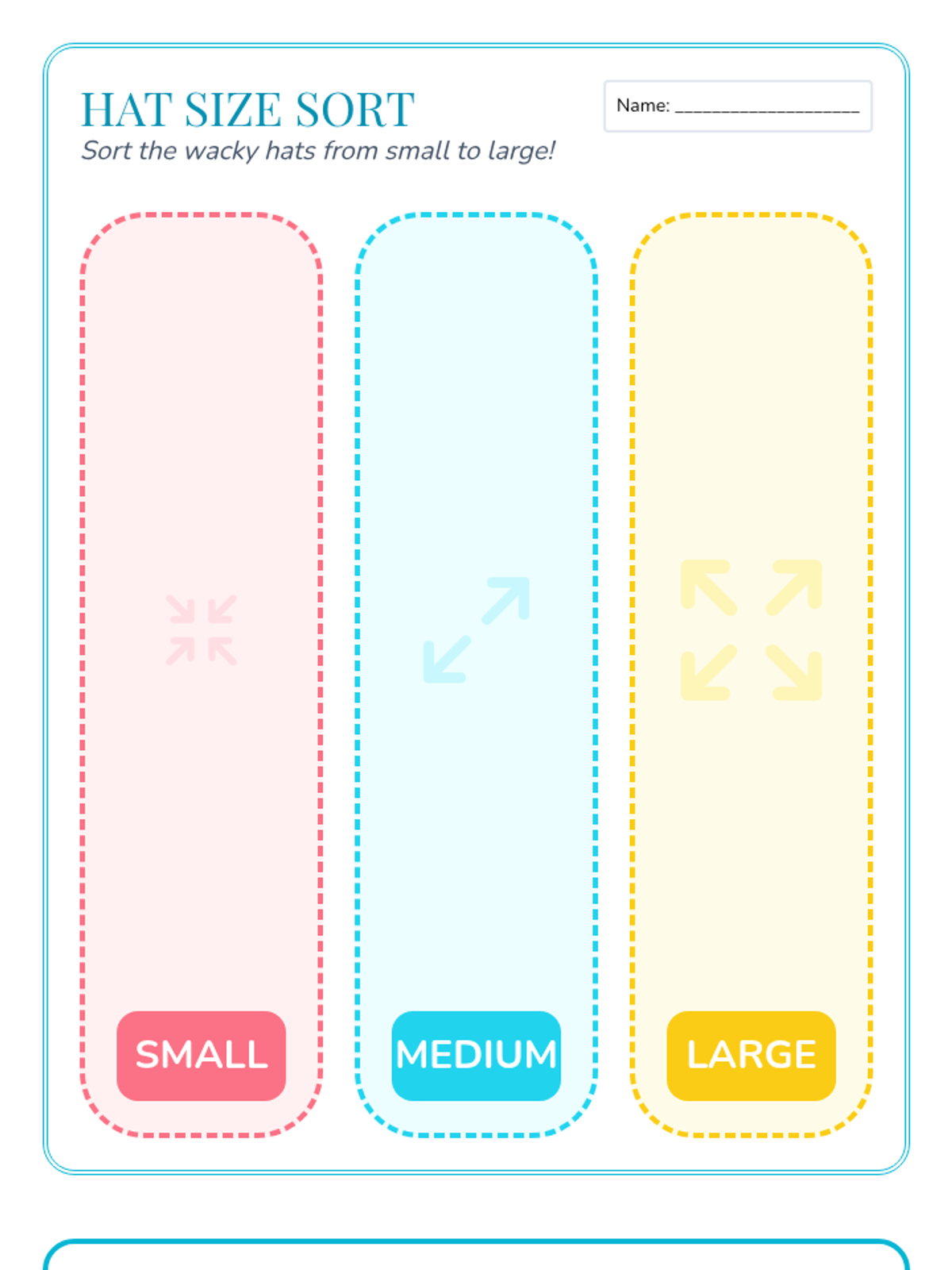
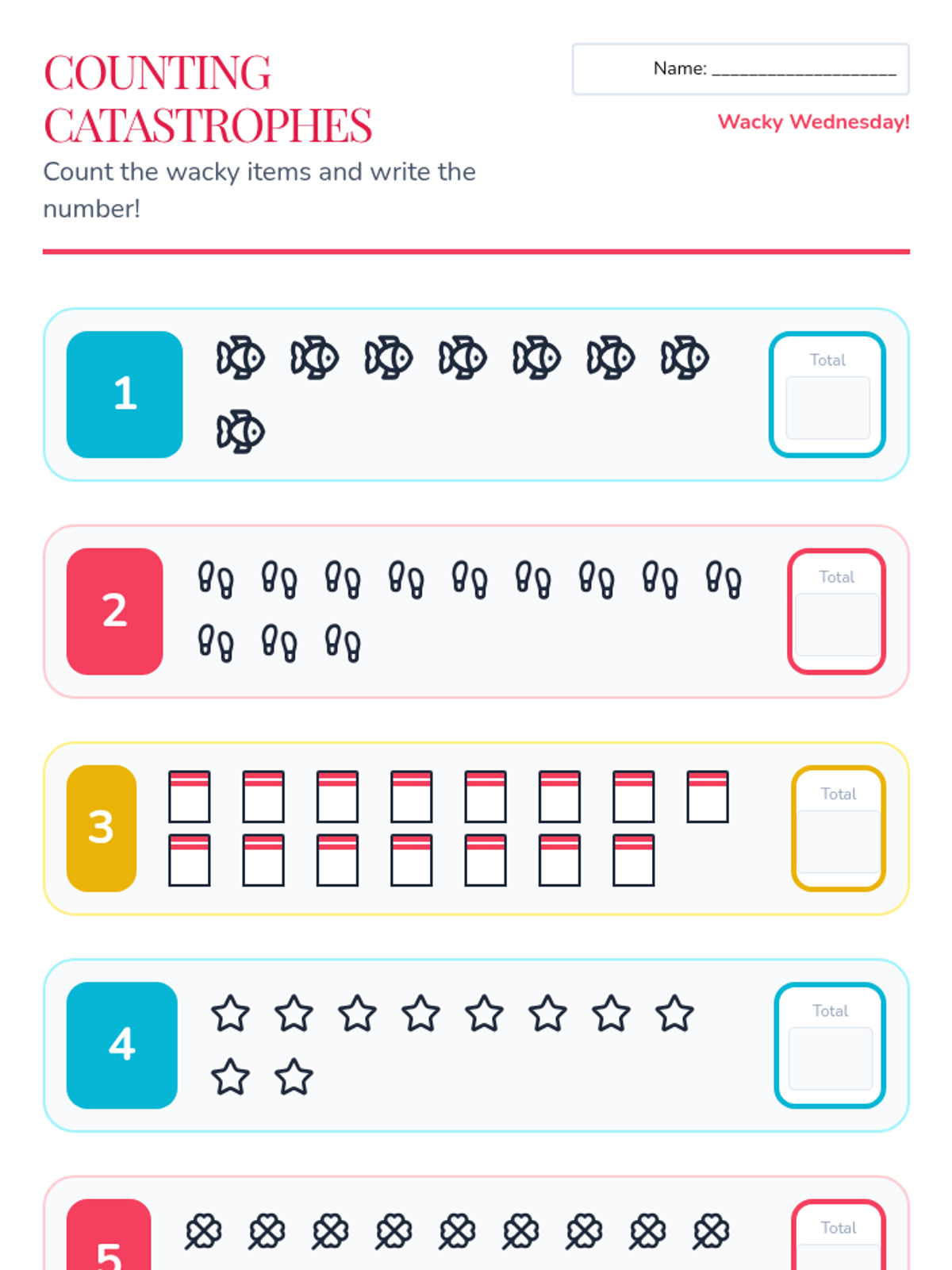
A Dr. Seuss-themed unit focusing on 'Wacky Wednesday' with a focus on counting, size sorting, prepositions, and creative expression for Pre-K and Kindergarten students.
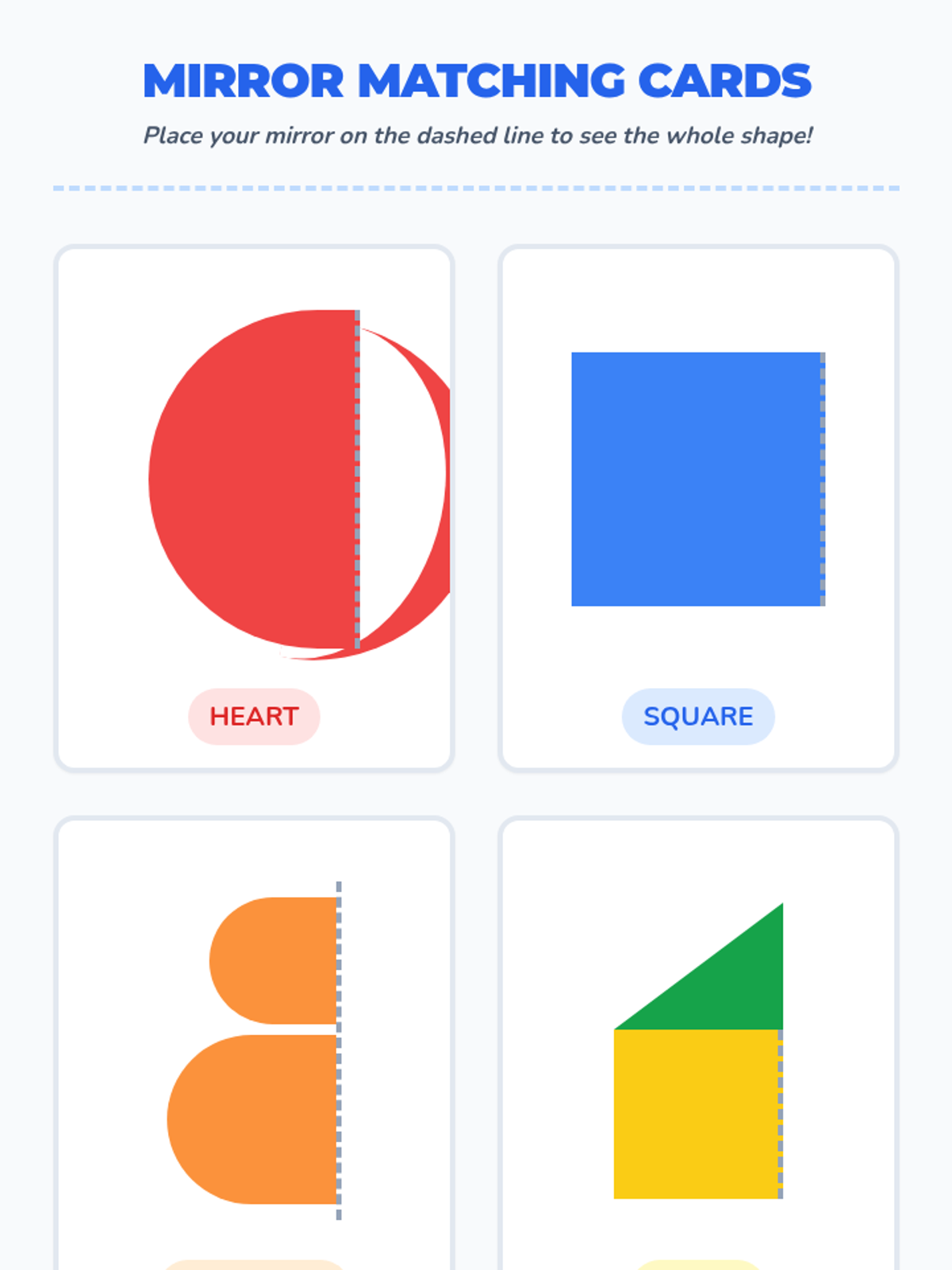
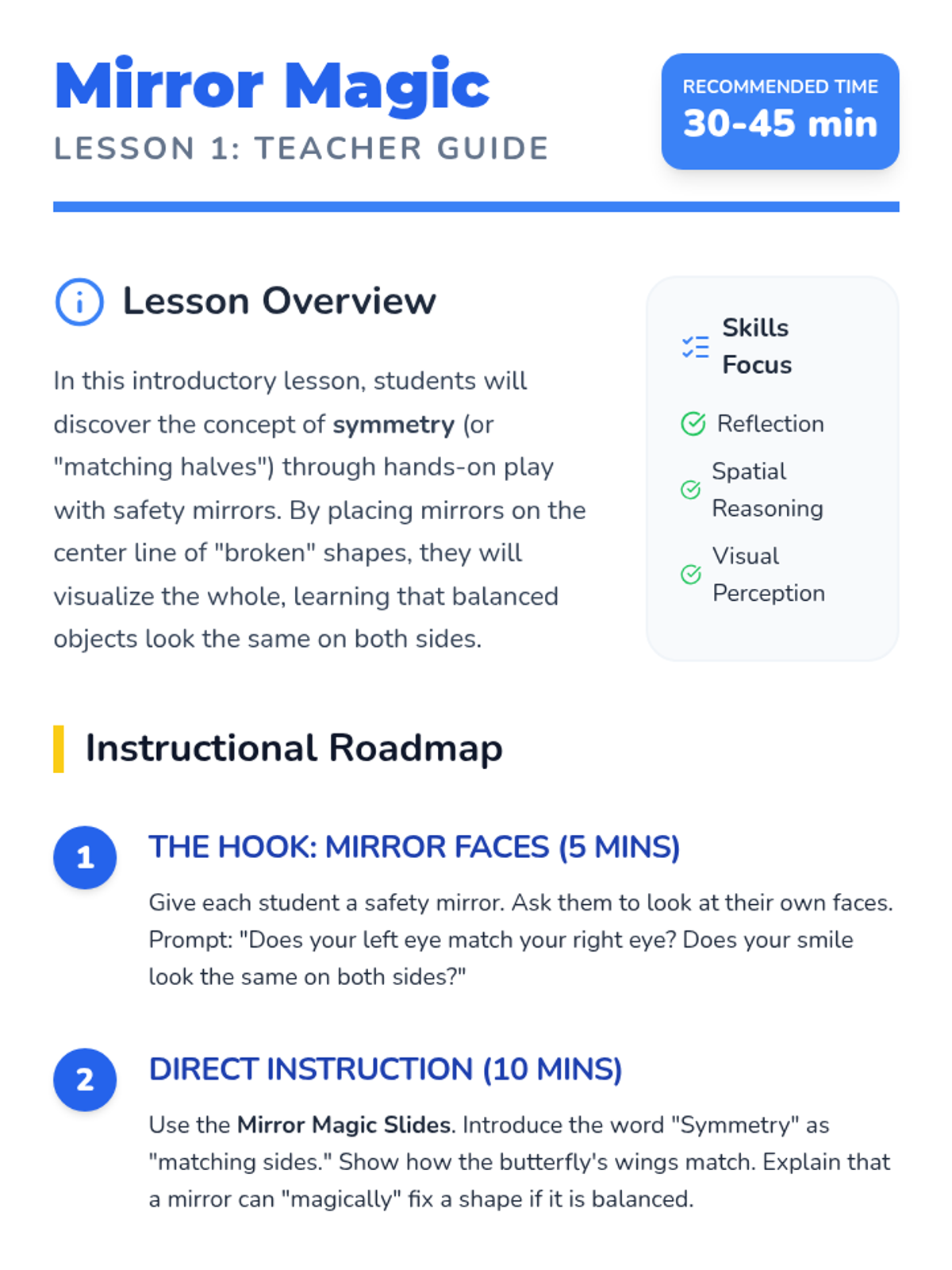
A Pre-K sequence introducing symmetry and patterns through hands-on exploration with mirrors, art, nature, and shape manipulatives. Students learn to identify balanced halves and predict sequences.
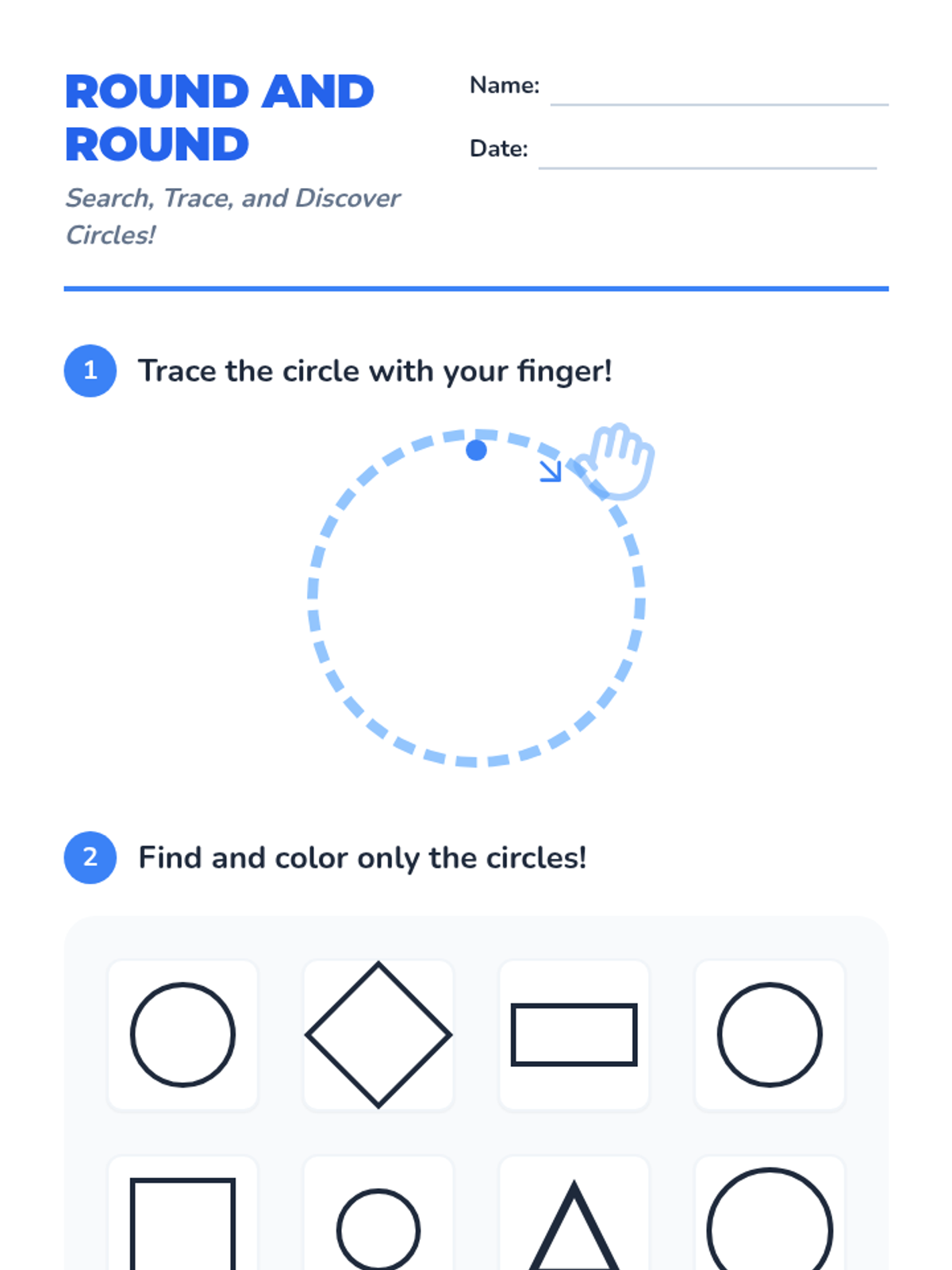
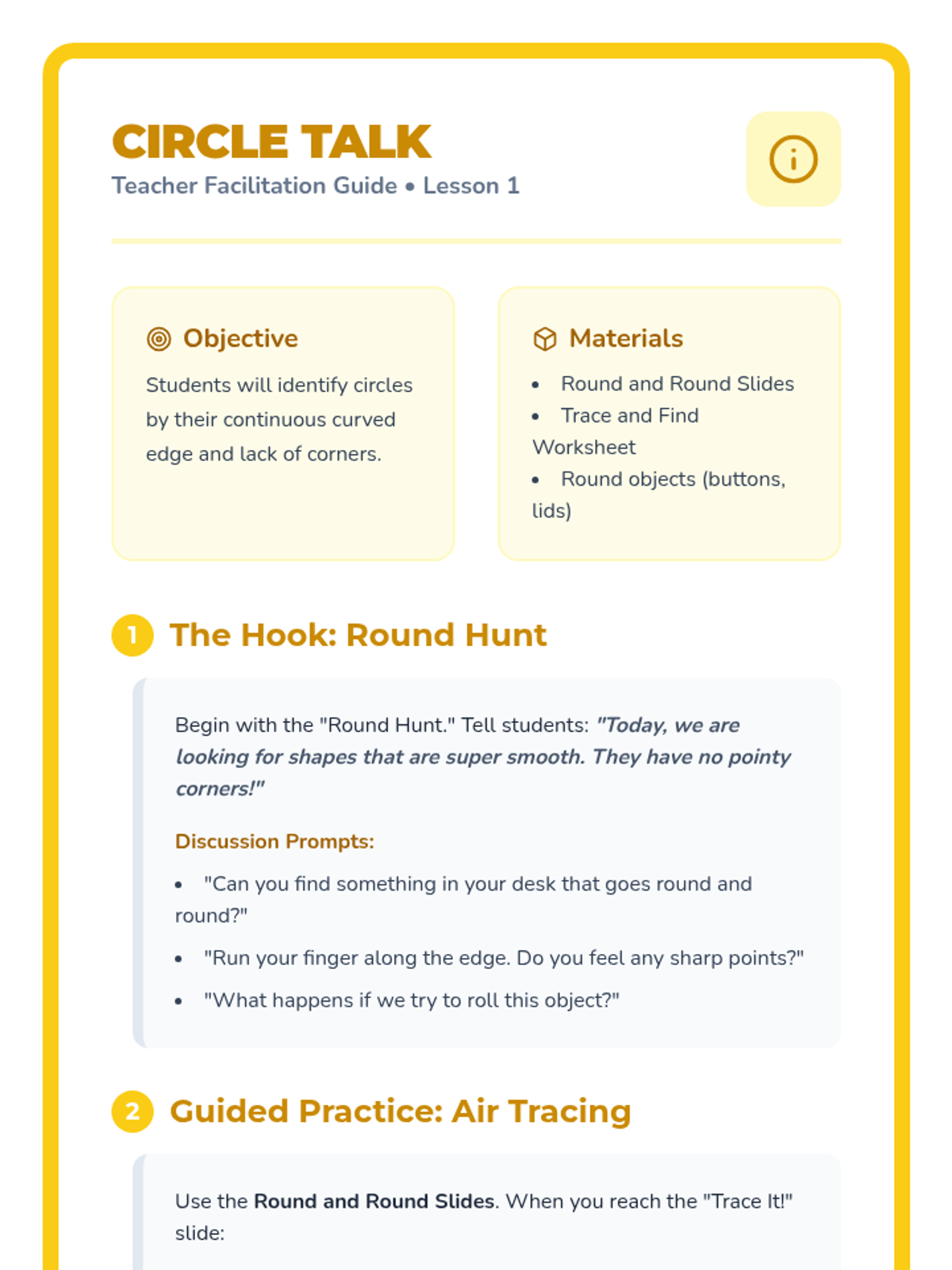
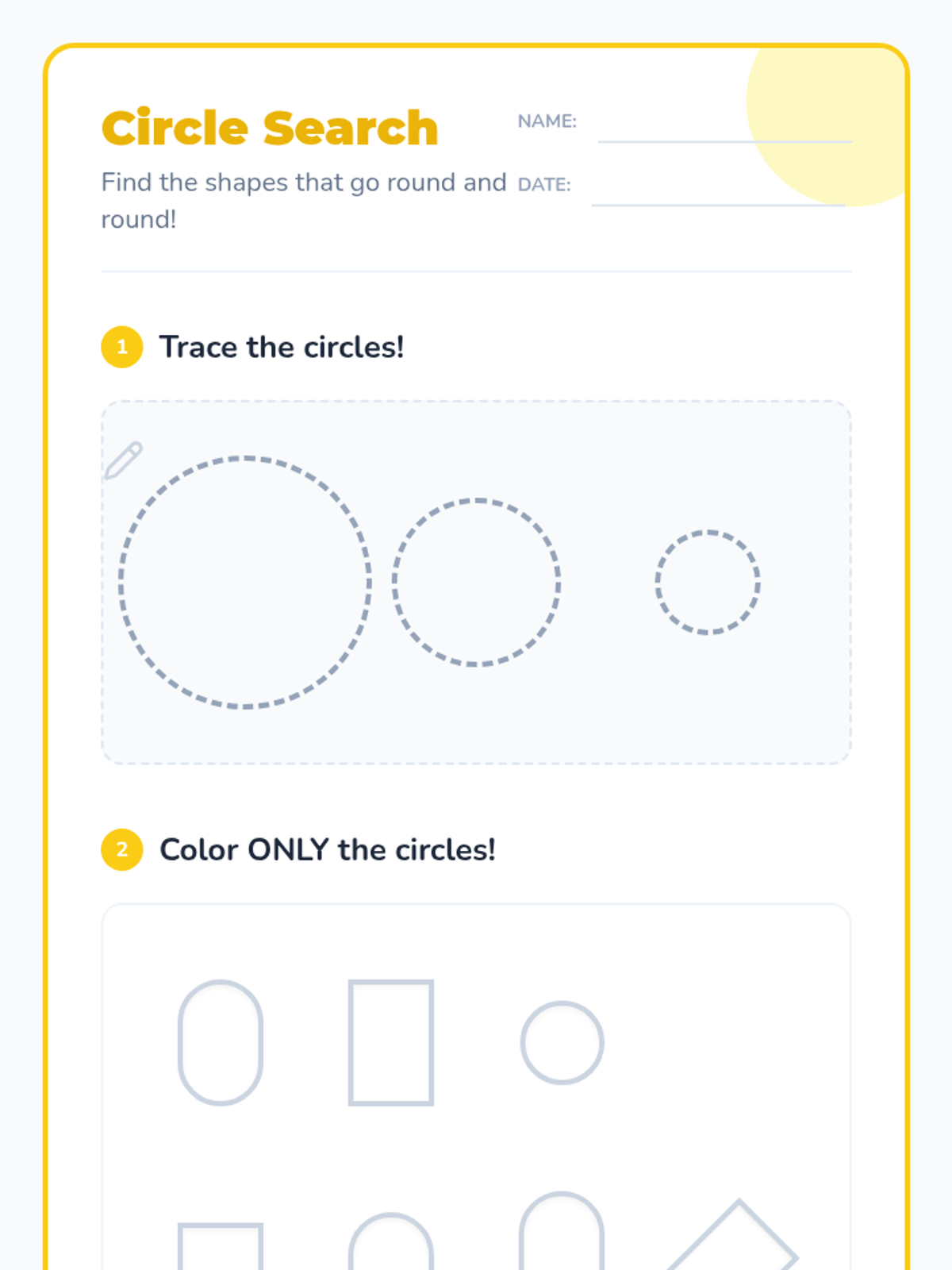
This sequence introduces Pre-K students to 2D shapes (circles, squares, rectangles, triangles) through sensory play, physical movement, and environmental exploration. Students will learn to distinguish shapes by their attributes like sides and corners.
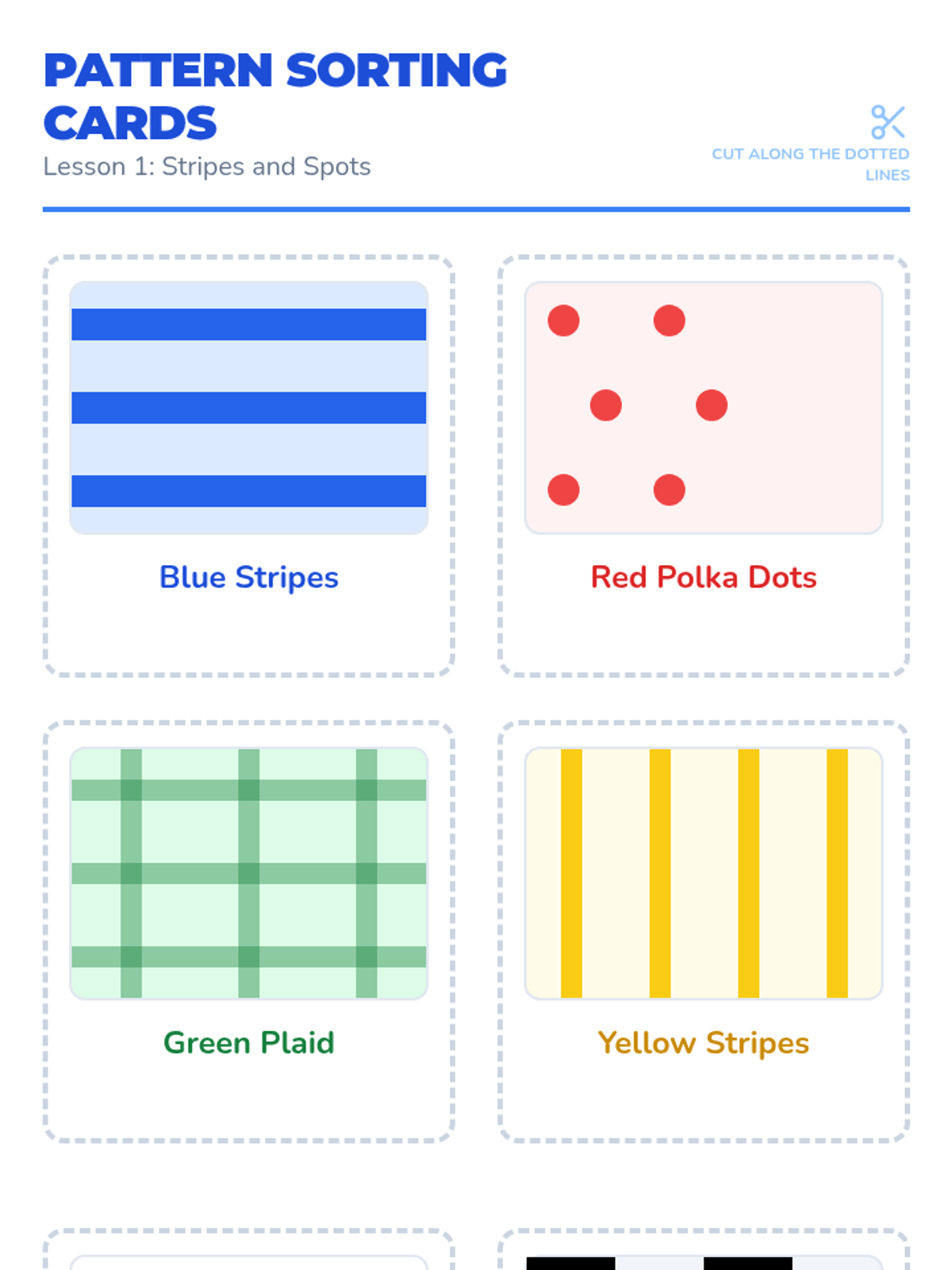
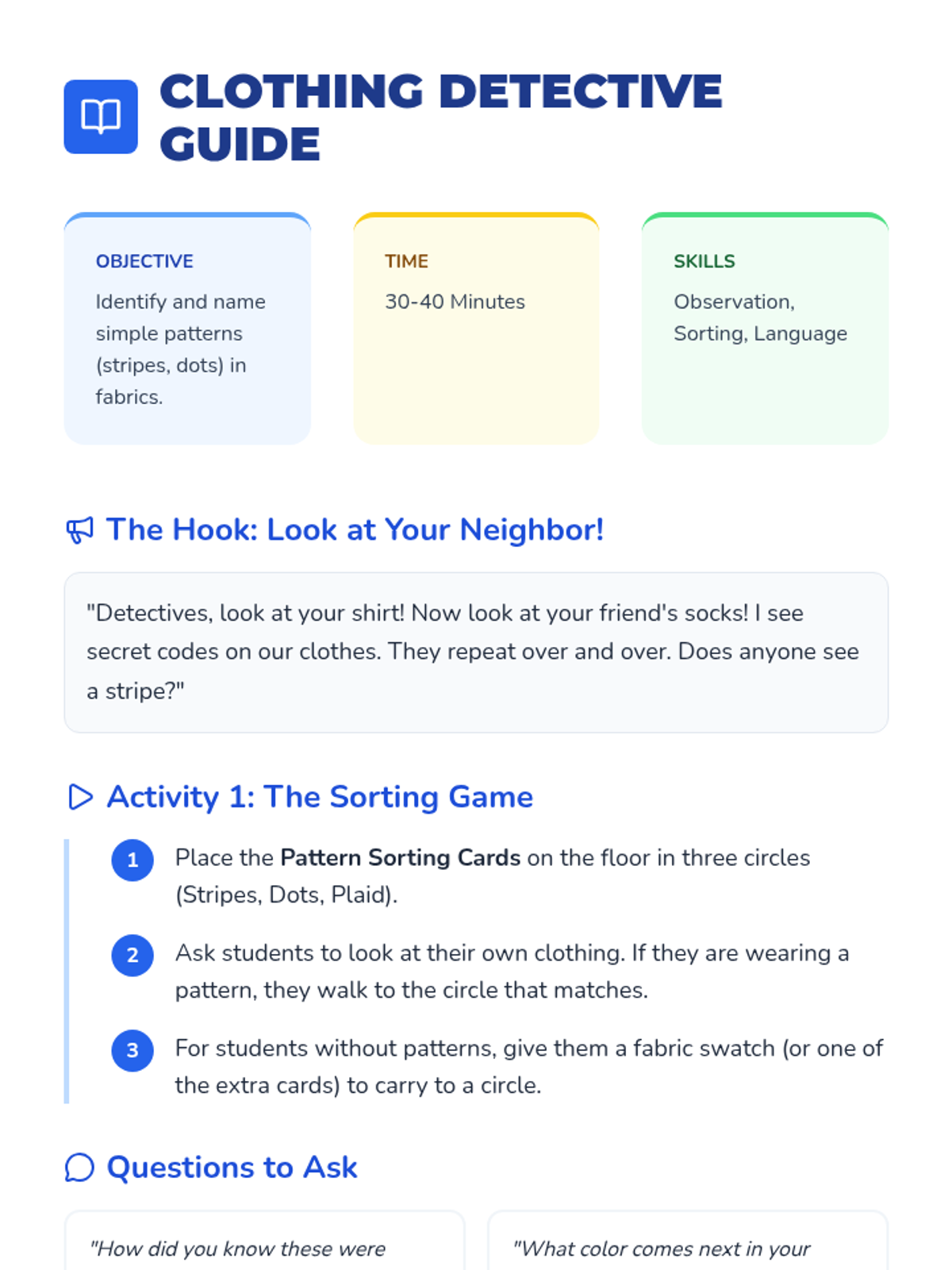
A Pre-K math sequence that explores patterns in clothing, nature, routines, and architecture, turning students into 'Pattern Detectives' who observe and document the world around them.
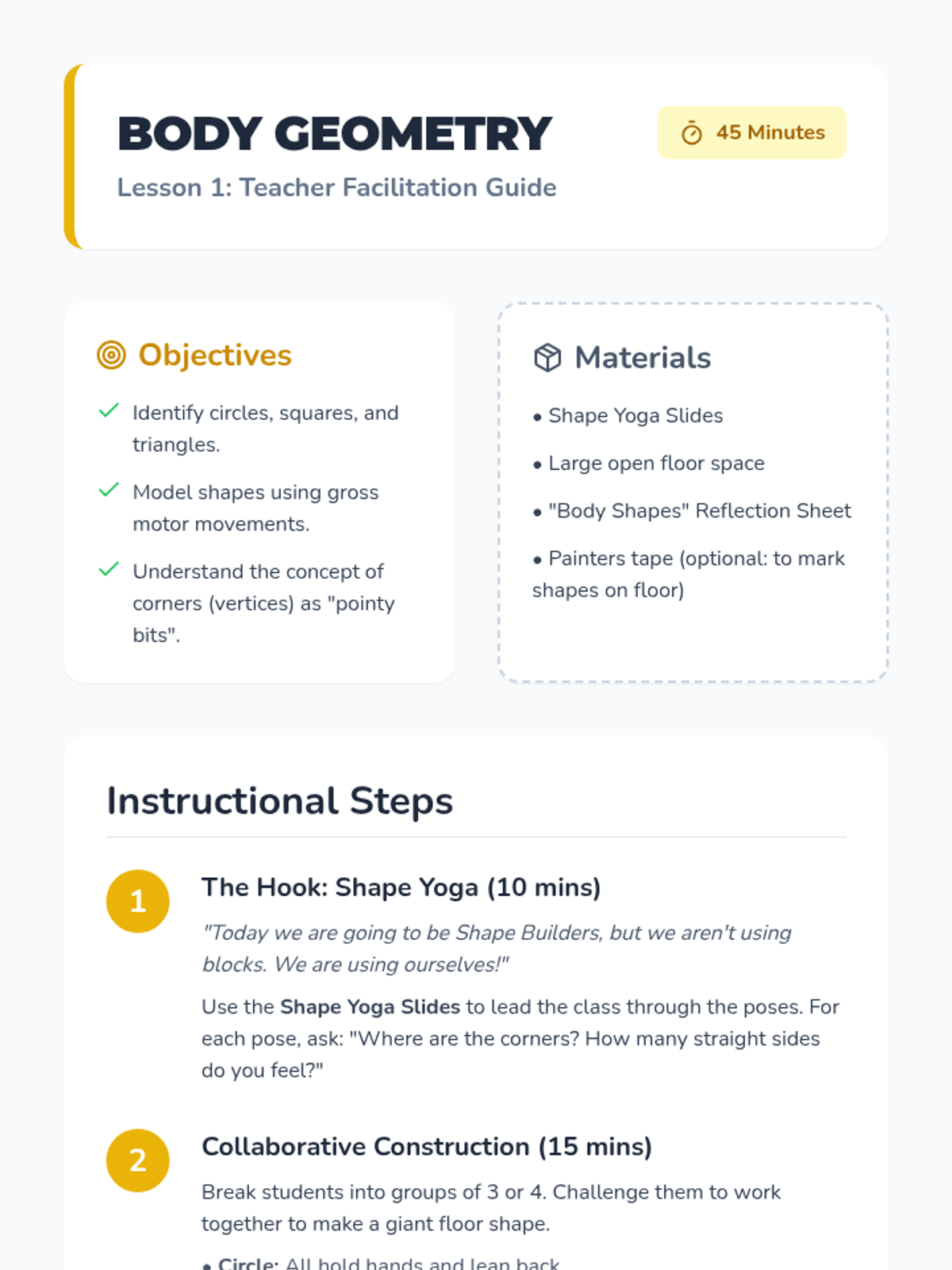
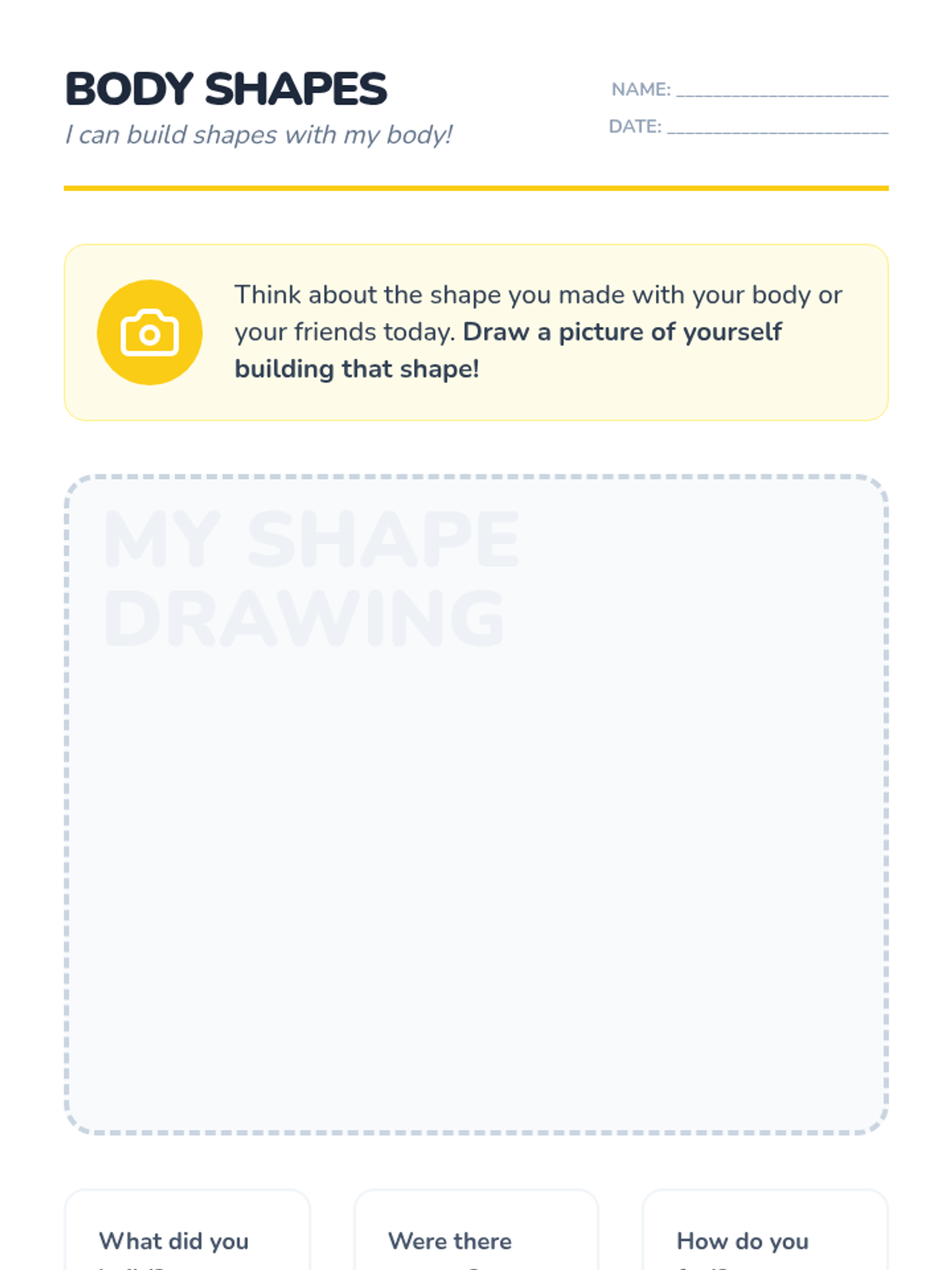
A kinesthetic Pre-K math sequence where students explore geometric attributes through whole-body movement, tactile construction with sticks and clay, and boundary-stretching activities. Students develop spatial awareness and fine motor skills while learning to identify and build circles, squares, and triangles.
A hands-on introduction to three-dimensional solids for Pre-K students. Children explore spheres, cubes, cylinders, and cones through tactile play, movement, and real-world observation to understand volume and basic physical properties.
A foundational geometry sequence for Pre-K students focusing on identifying and describing circles, squares, triangles, and rectangles through tactile exploration and visual recognition.
A comprehensive geometry sequence for Pre-K students focusing on identifying, describing, and analyzing shapes by their attributes (sides, corners, curves). Through tactile activities and games, students move from simple recognition to articulating why a shape belongs to a specific category.
A comprehensive introduction to basic 2D shapes for Pre-K students. This unit covers circles, triangles, squares, and rectangles through tactile play, visual discrimination, and real-world exploration.
This sequence introduces Pre-K students to the analytical side of geometry by focusing on classification and attributes. Students move beyond naming shapes to explaining 'why' a shape is what it is, using games and logic challenges to sort by sides, corners, and line types.
A hands-on introduction to 3D geometry for Pre-K students, focusing on the physical properties of spheres, cubes, cylinders, and cones through tactile exploration and play.
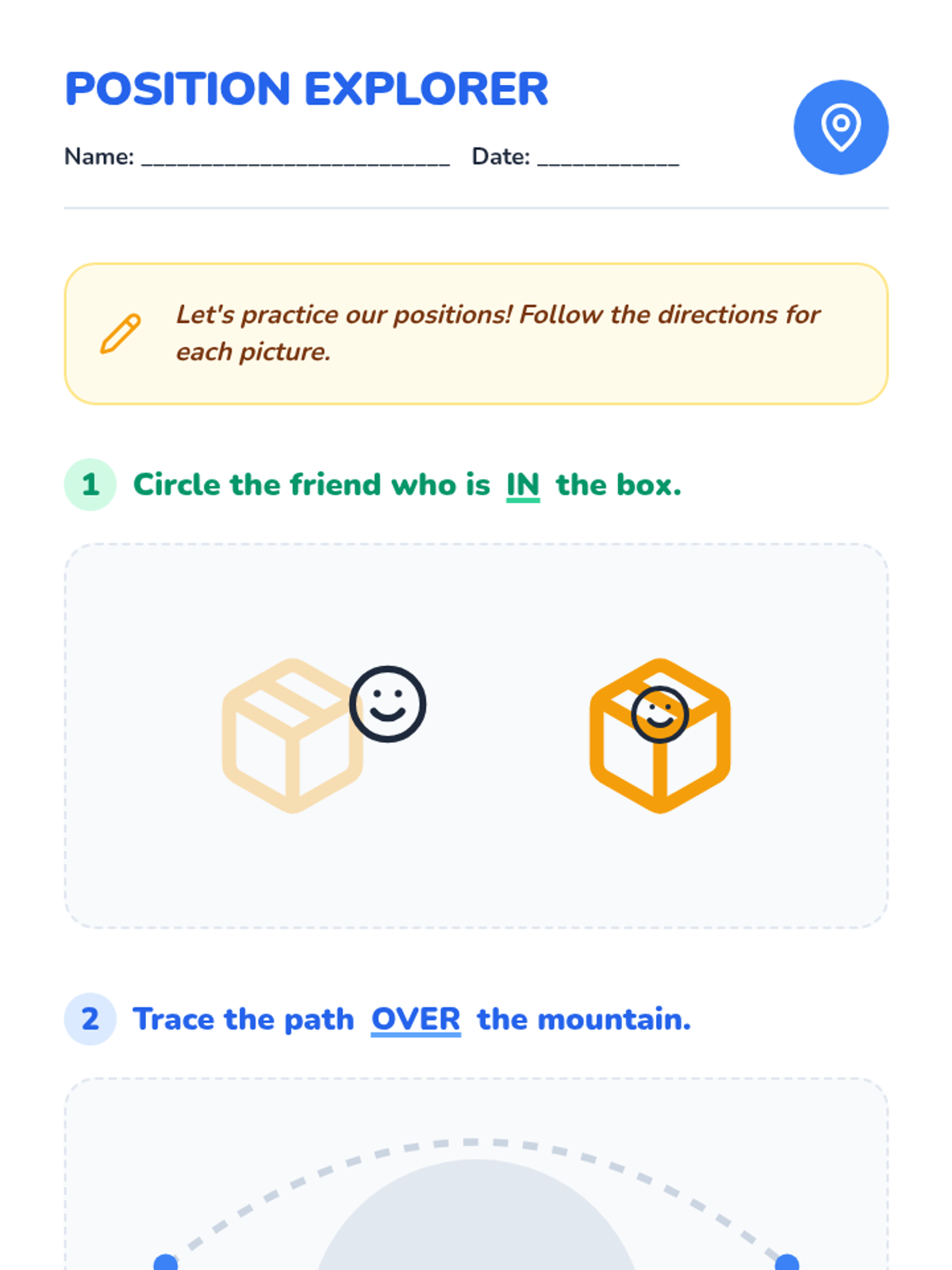
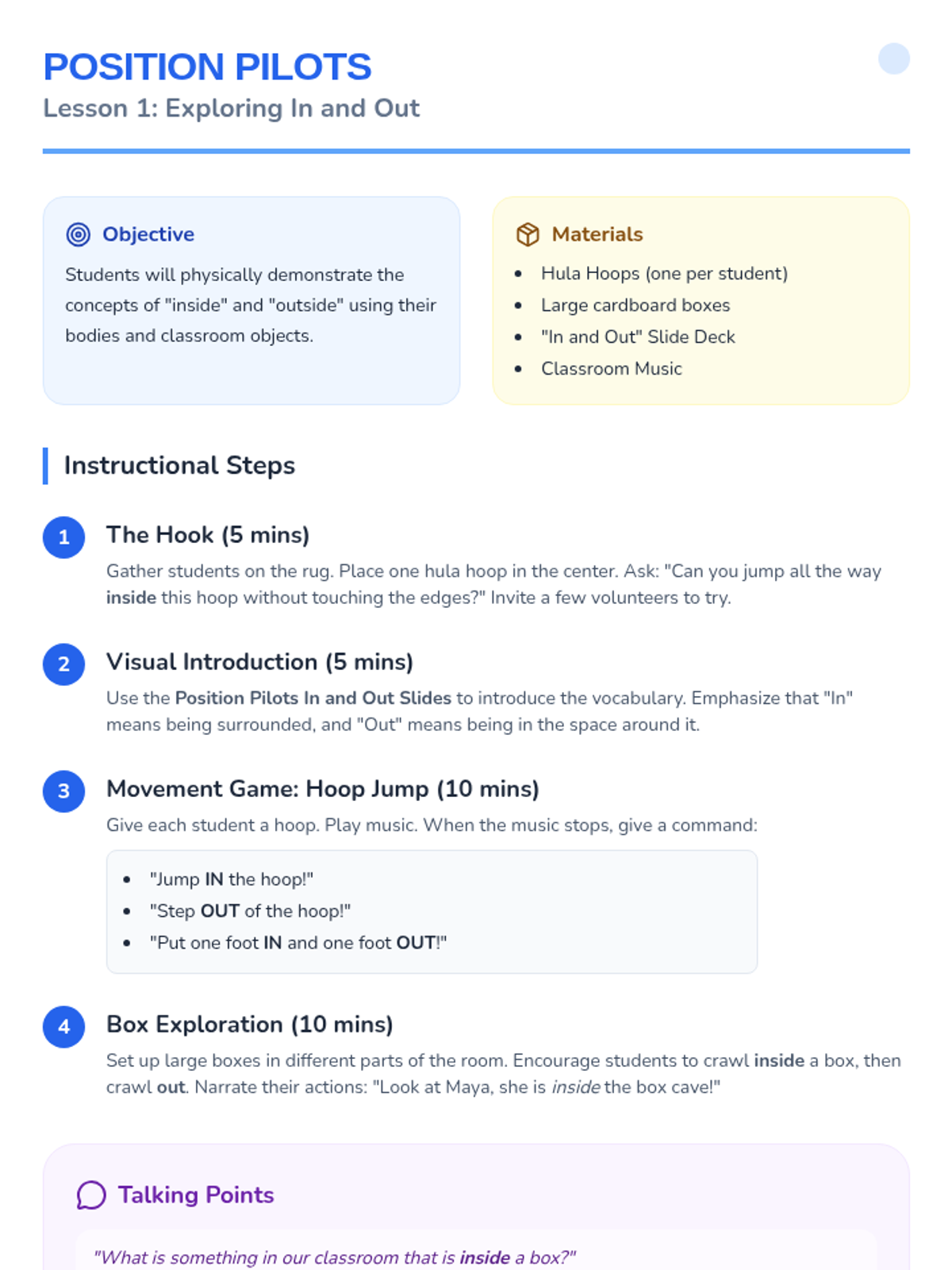
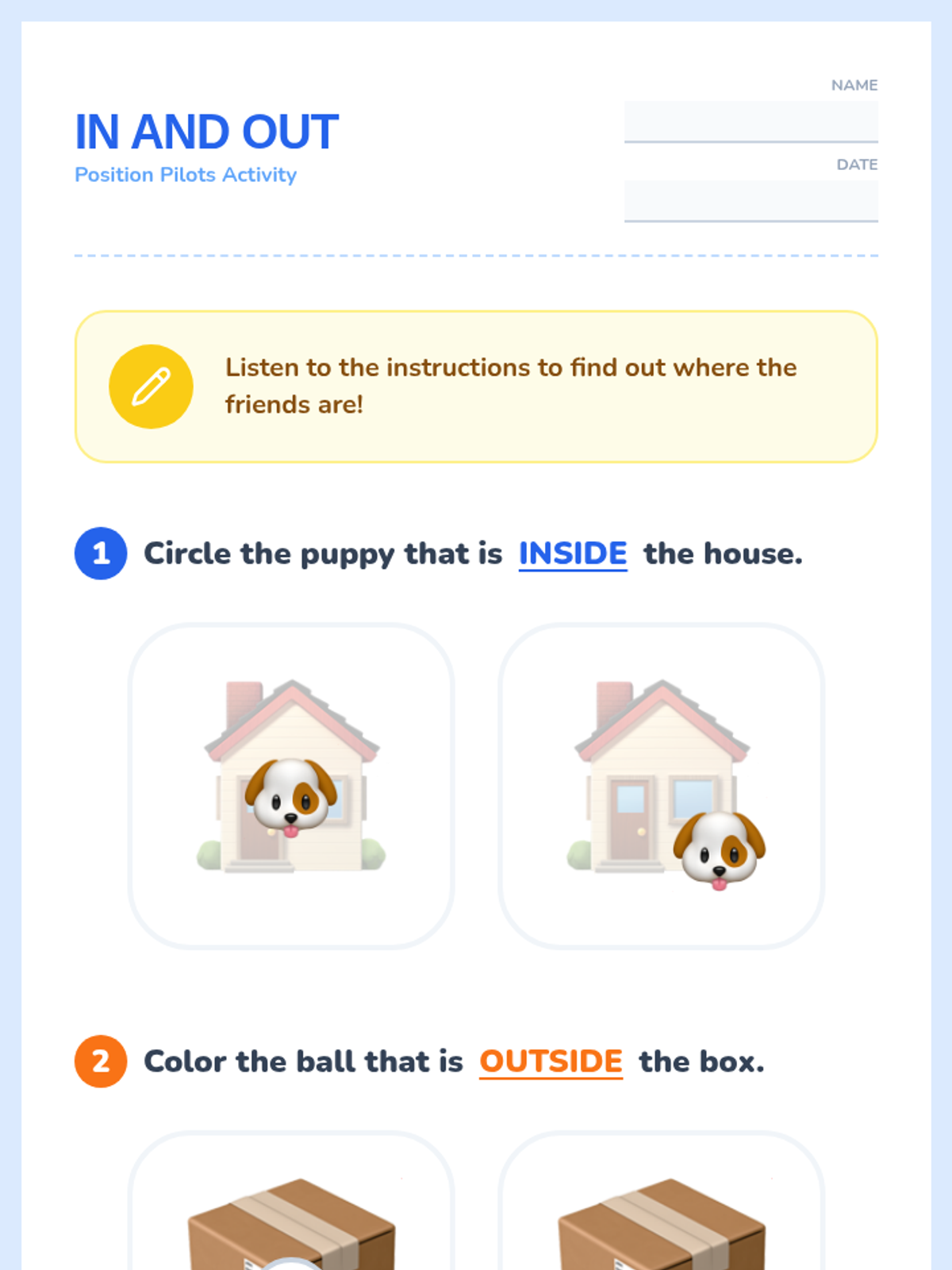
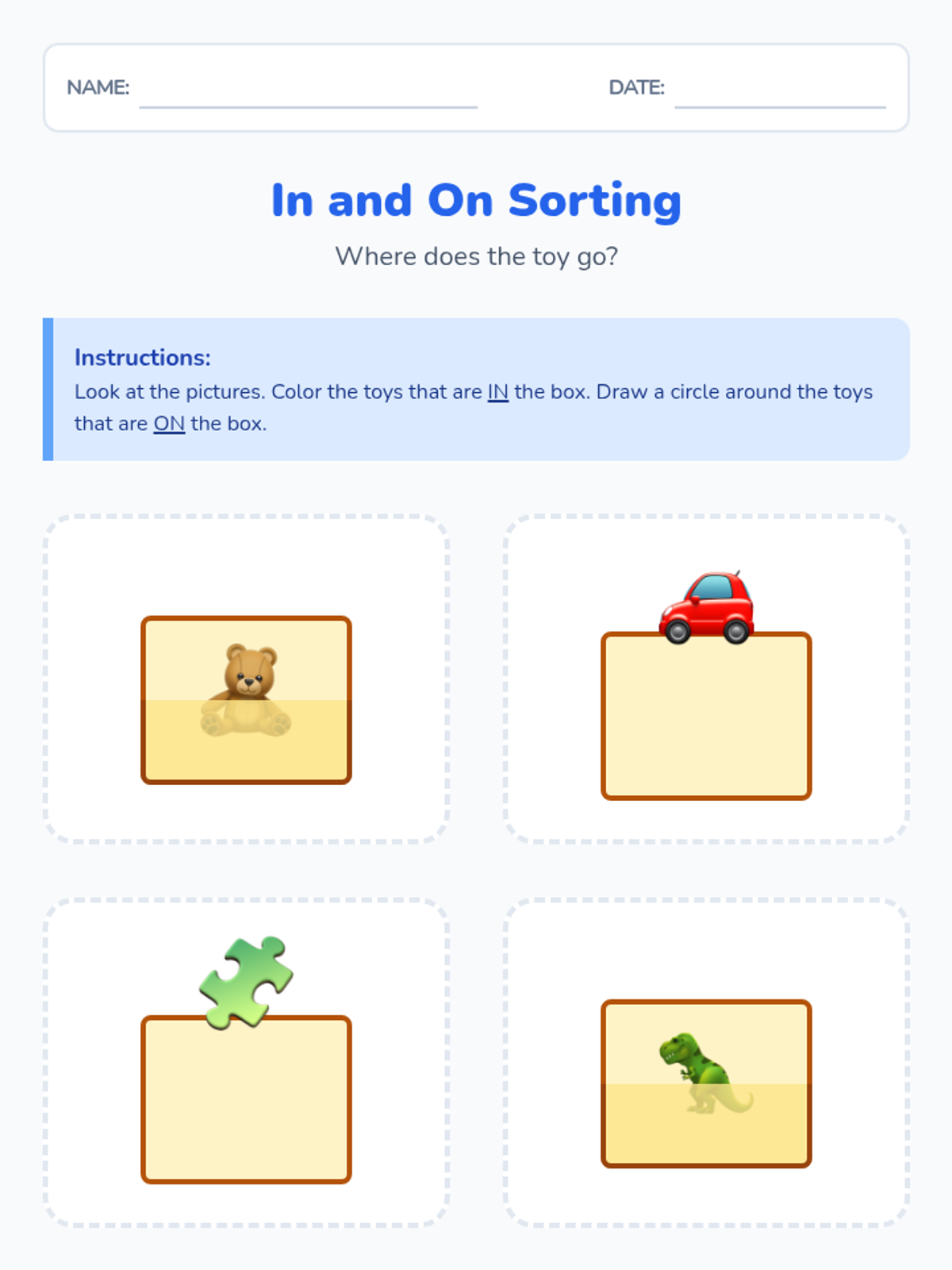
A Pre-K sequence focused on developing spatial awareness and positional vocabulary through physical movement, object manipulation, and classroom mapping. students explore terms like in, out, over, under, next to, and between.
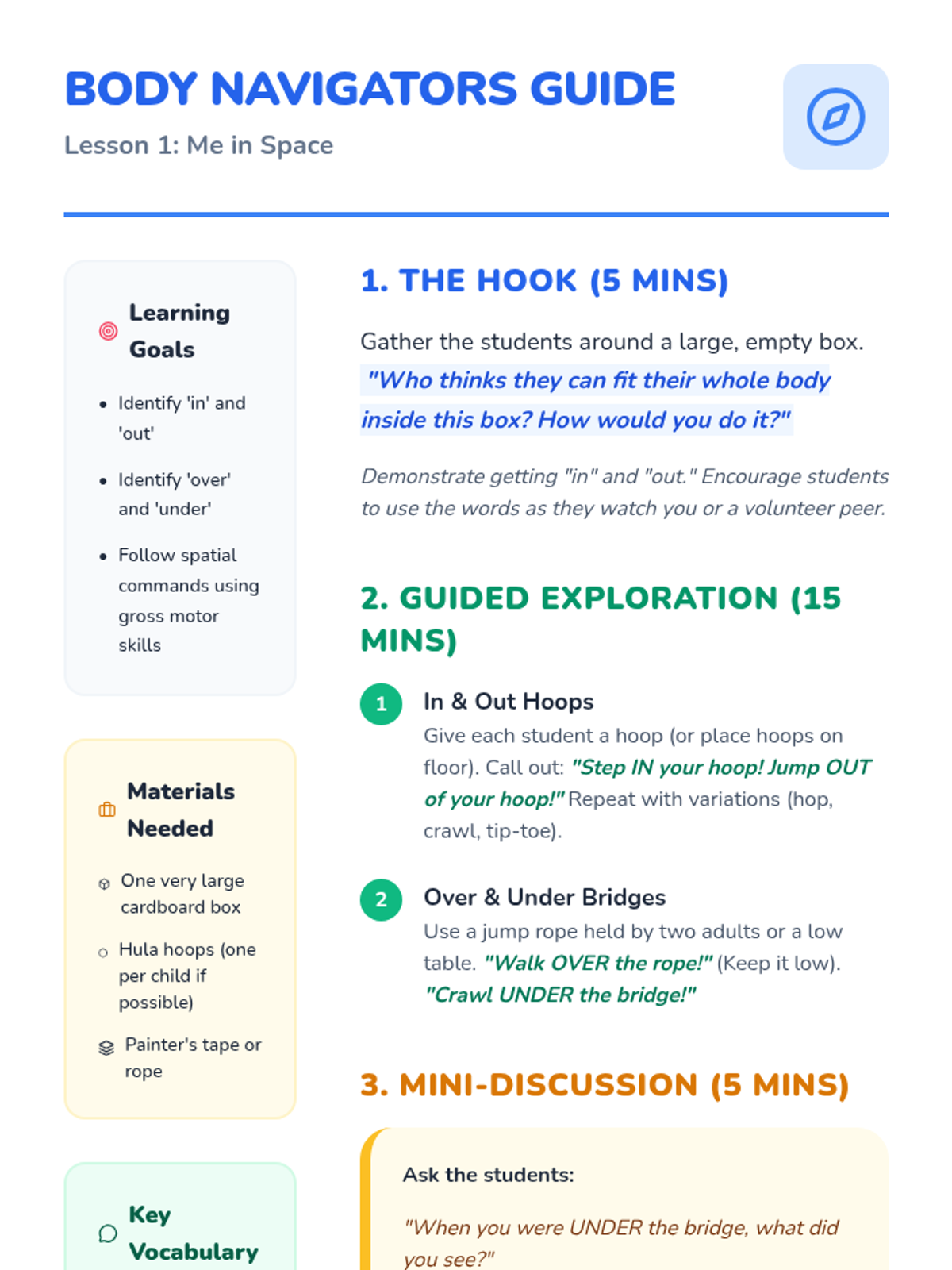
A physical-movement-based sequence for Pre-K students to learn spatial vocabulary. Students use their bodies to explore concepts like in/out, over/under, beside/between, and front/behind through games and an obstacle course.
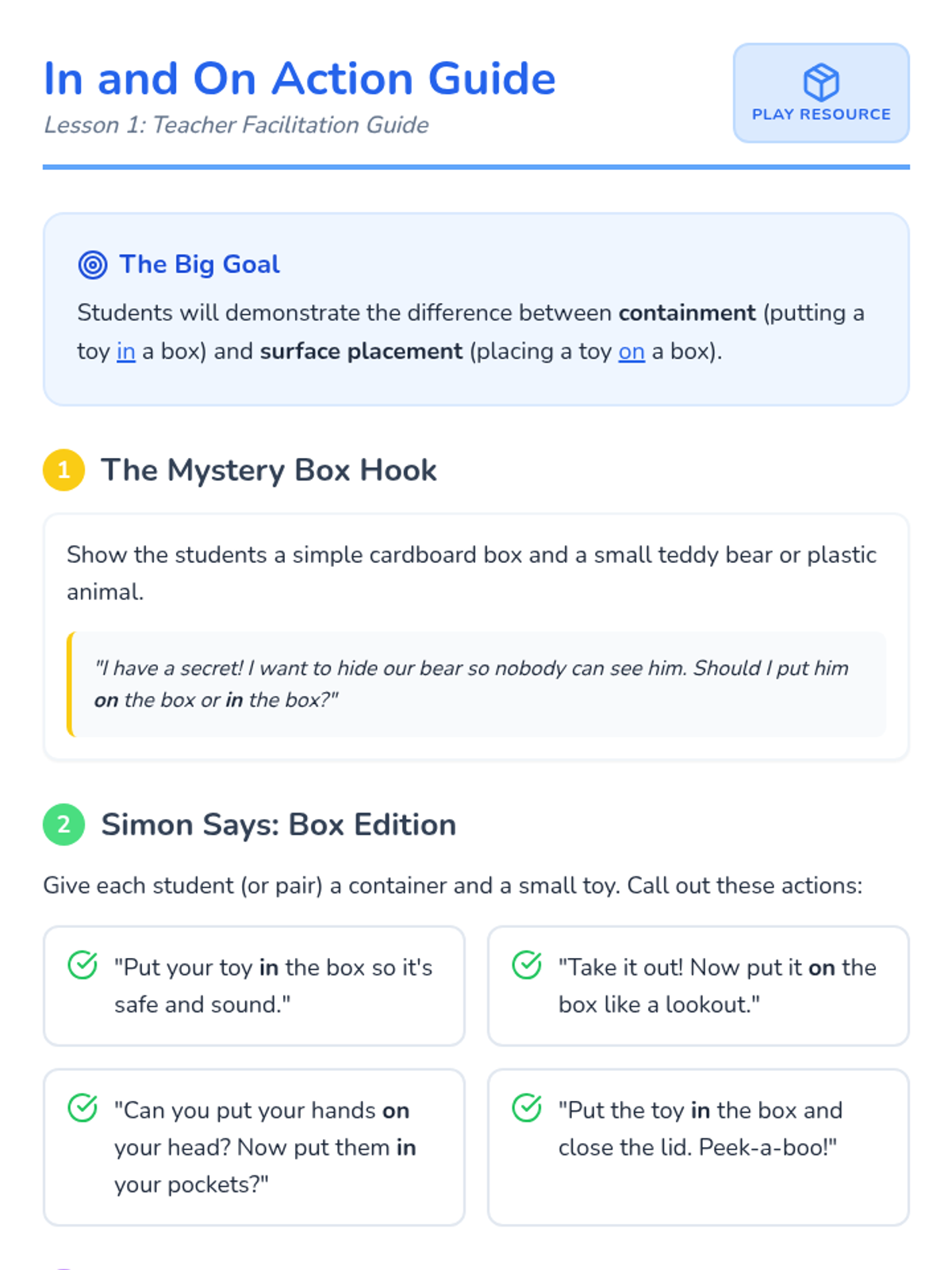
A Pre-K sequence focused on spatial awareness and positional vocabulary. Students use manipulatives and physical play to master words like in, on, top, middle, bottom, behind, in front, next to, and far from.