Geometric classification, measurement of area and volume, and the study of transformations and rigid motions. Builds toward complex proofs, trigonometry for general triangles, and the algebraic representation of conic sections.
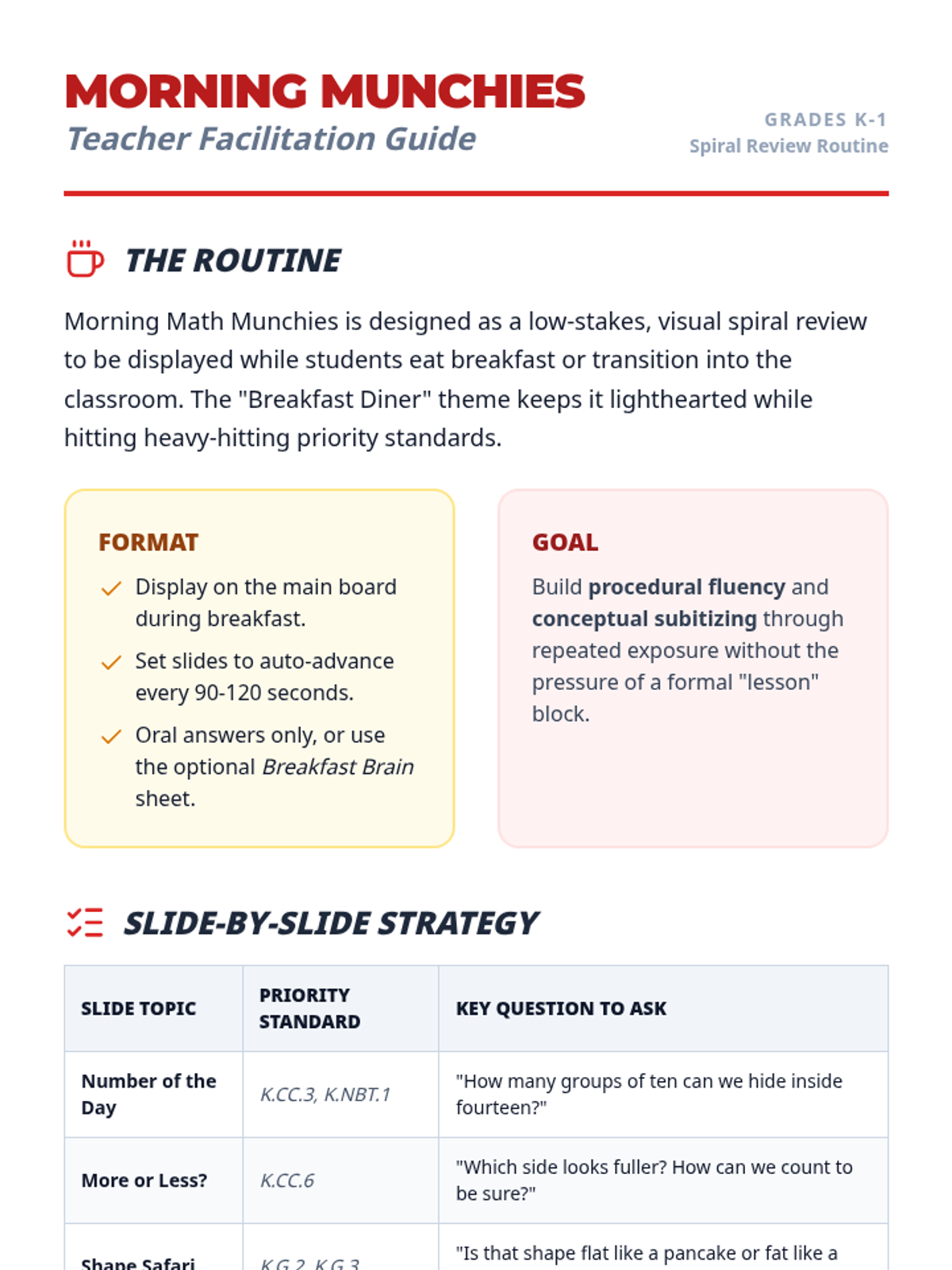
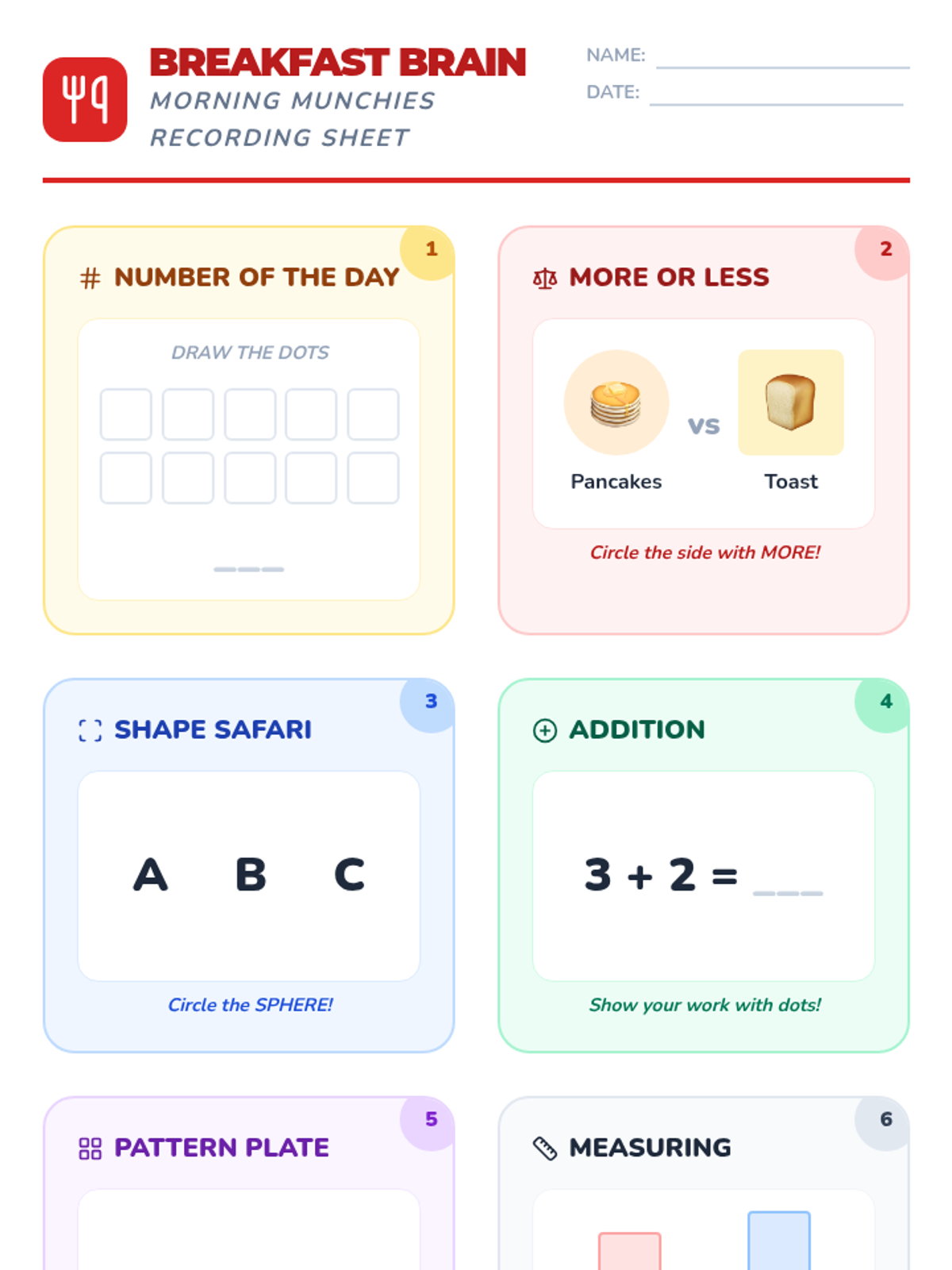
A daily spiral review of priority Kindergarten math standards, designed to be visually engaging and accessible for students to view during breakfast or morning routines.
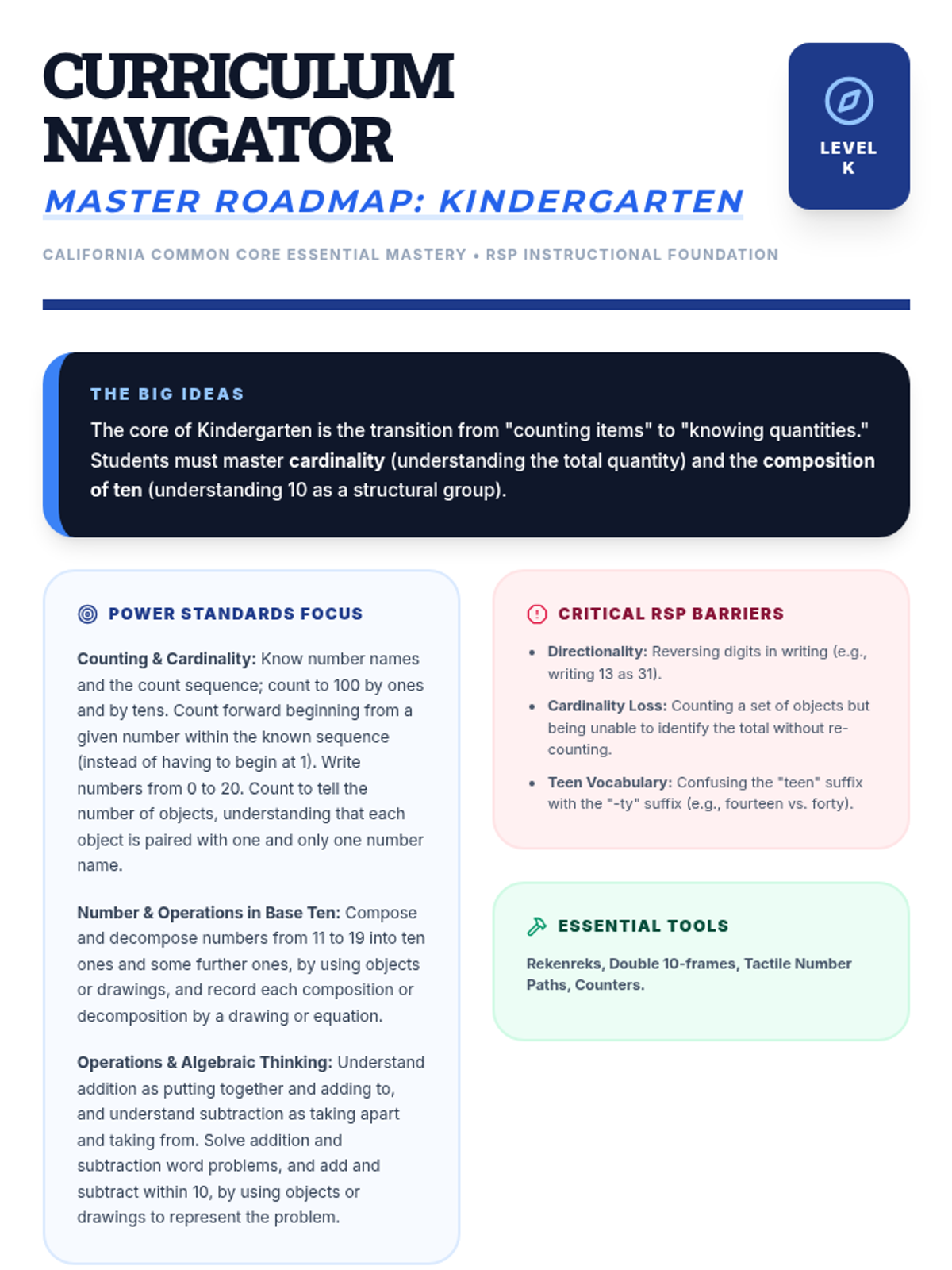
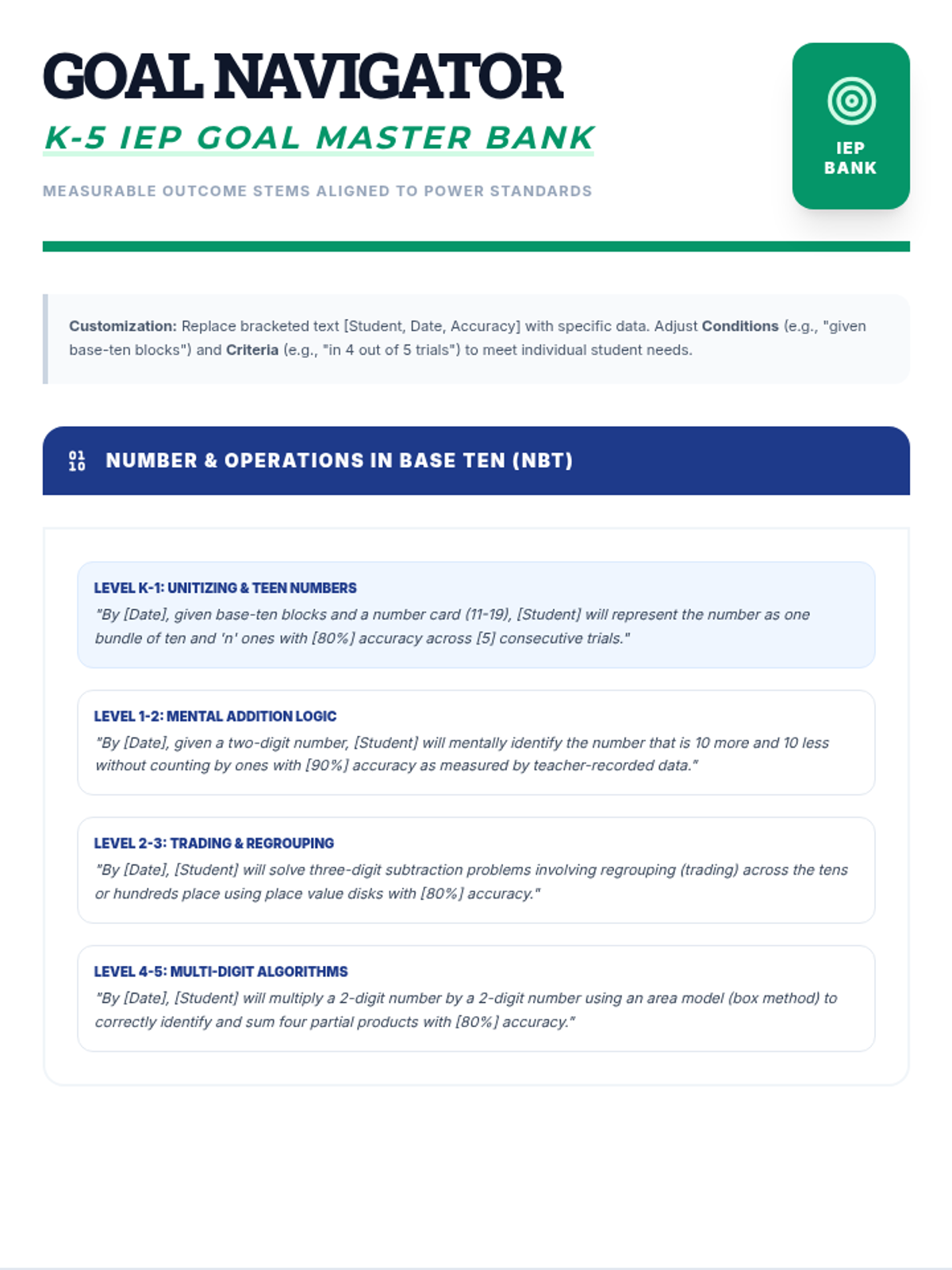
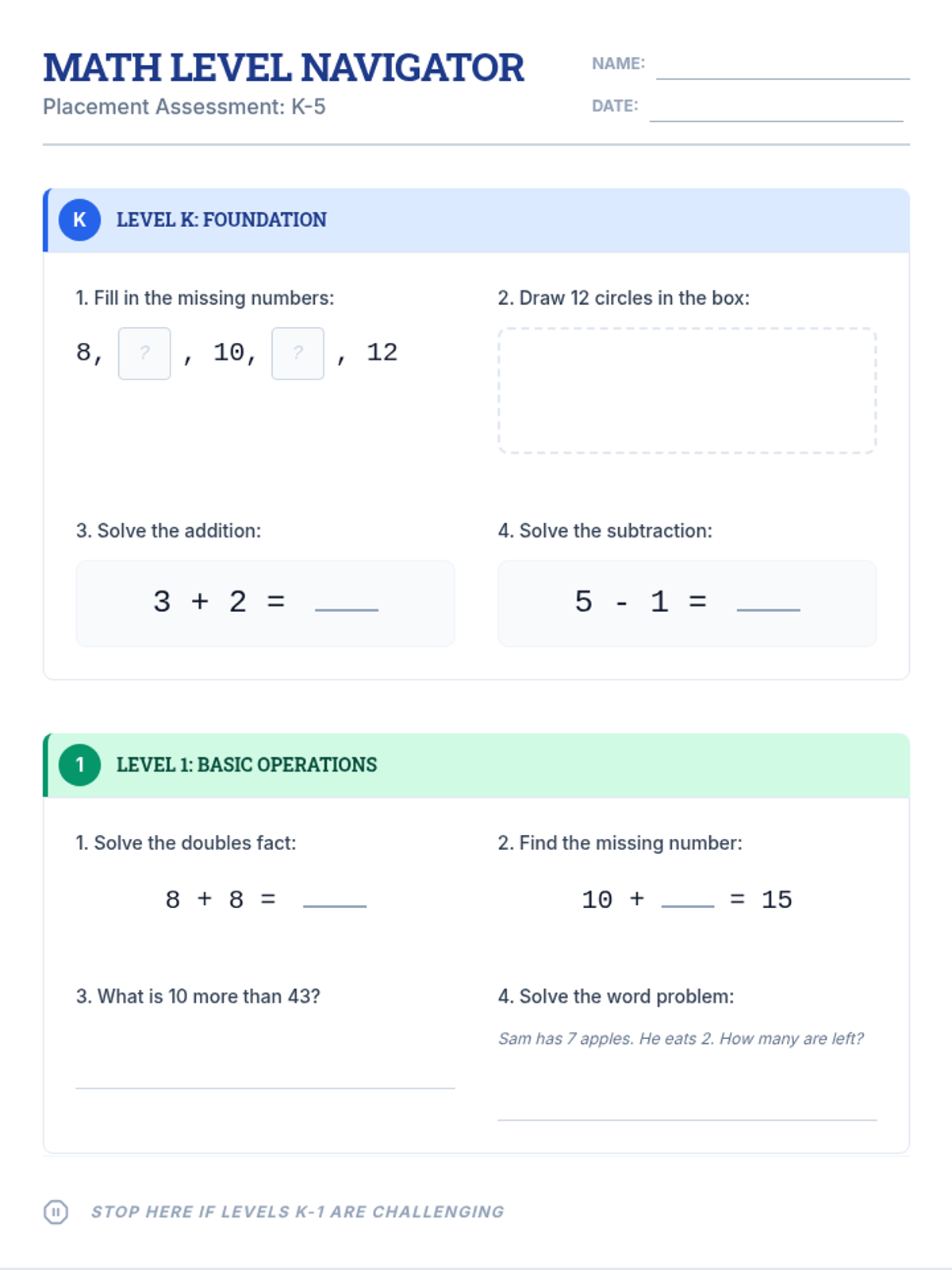
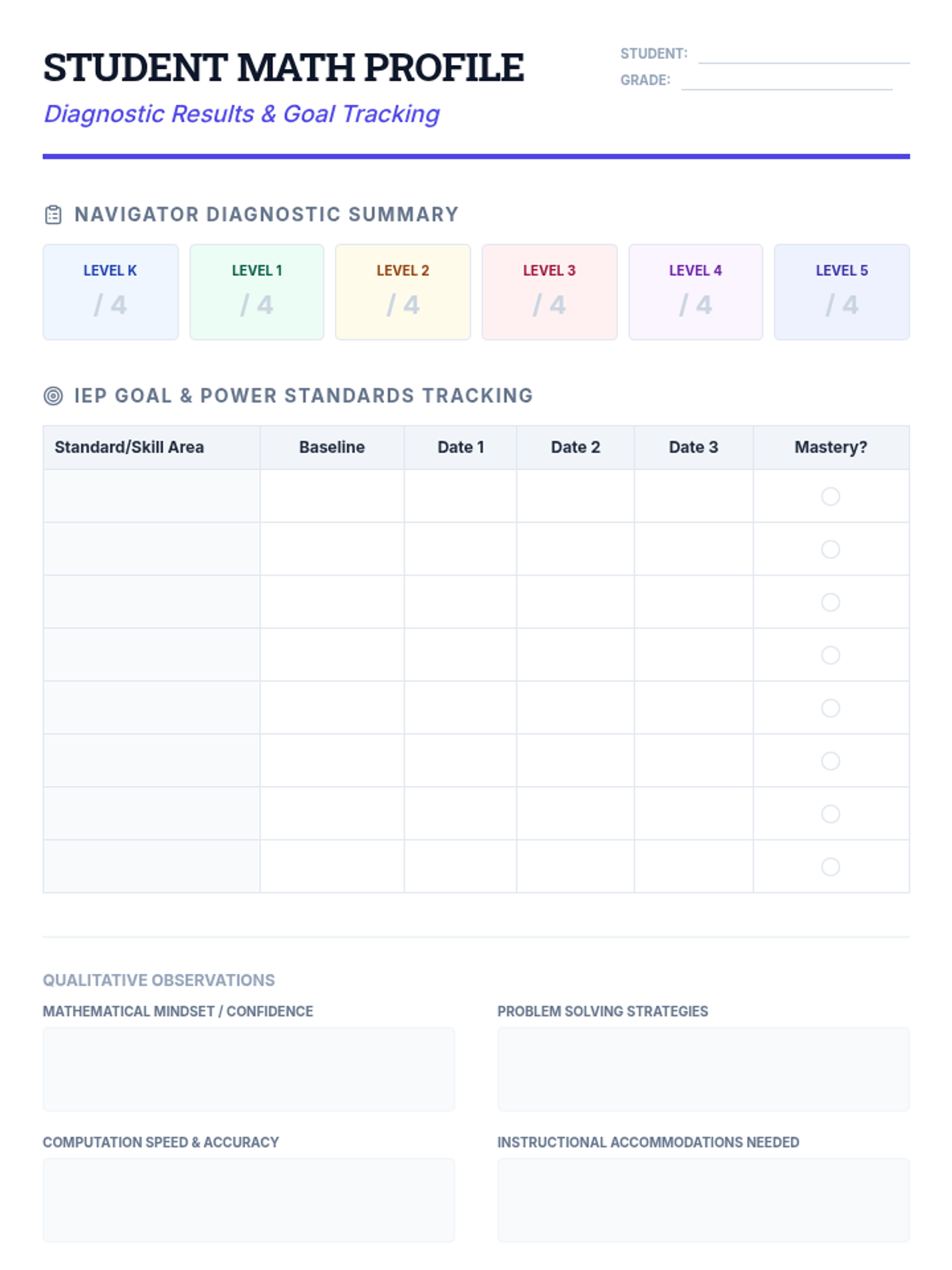
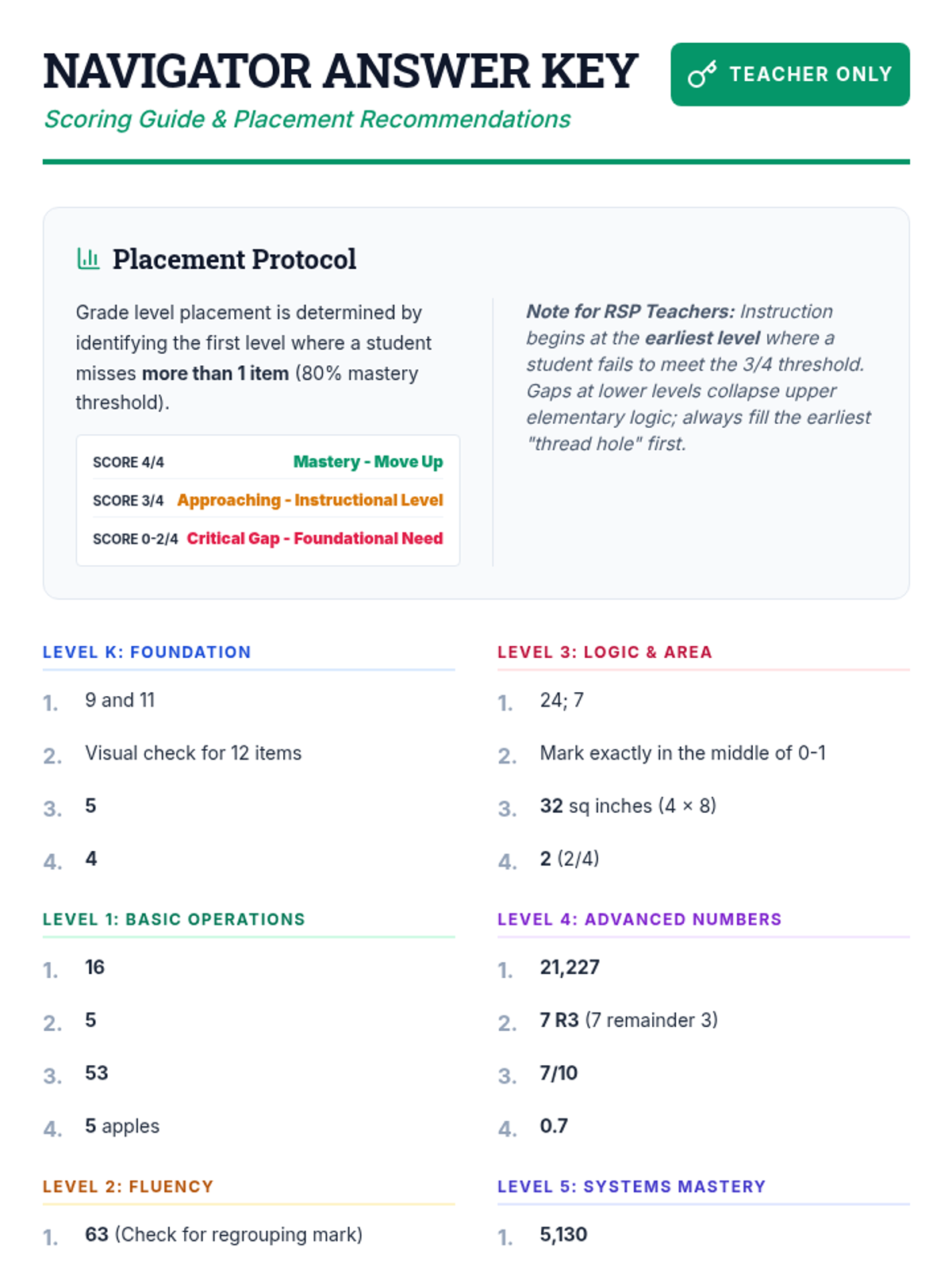
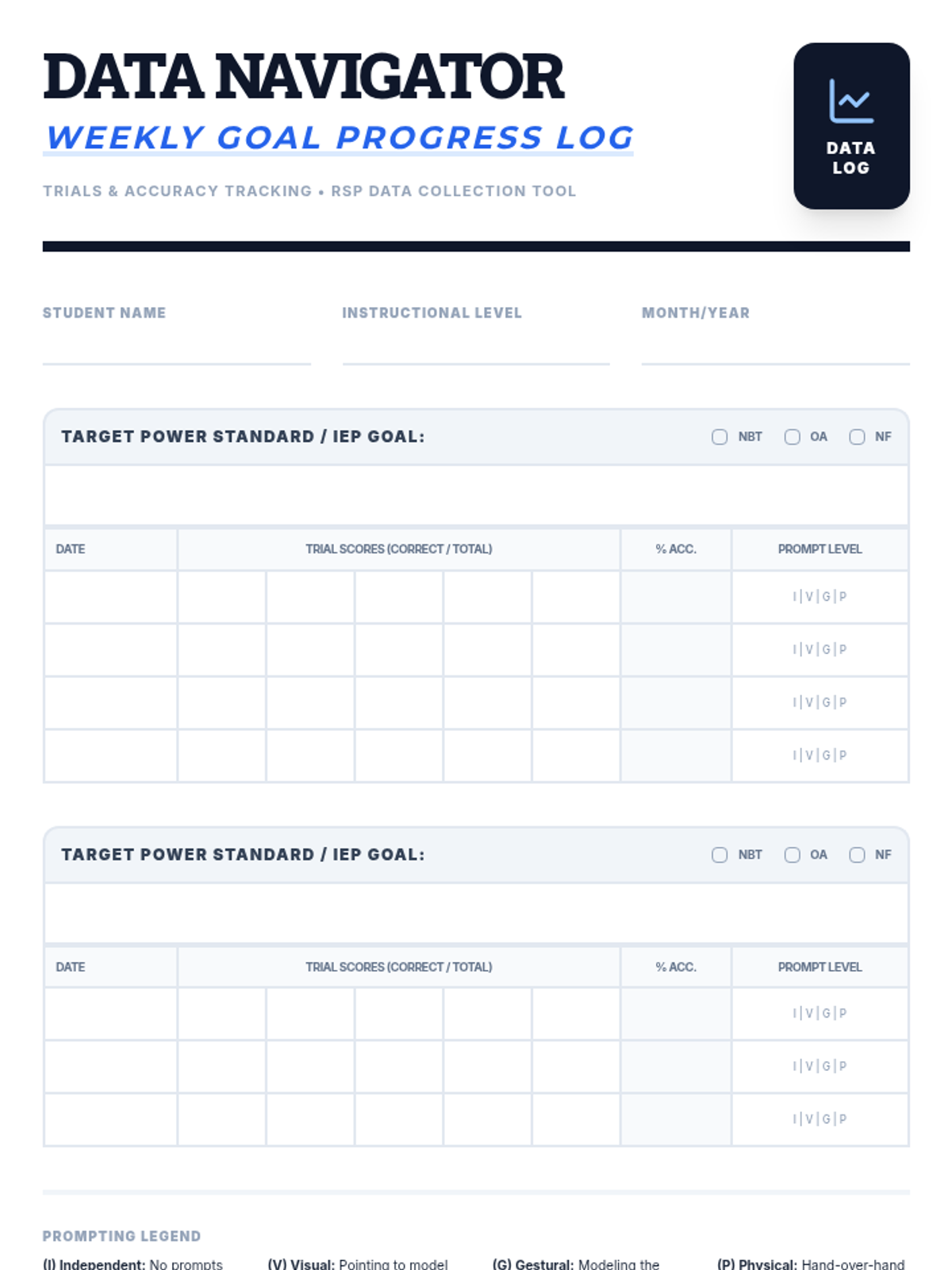
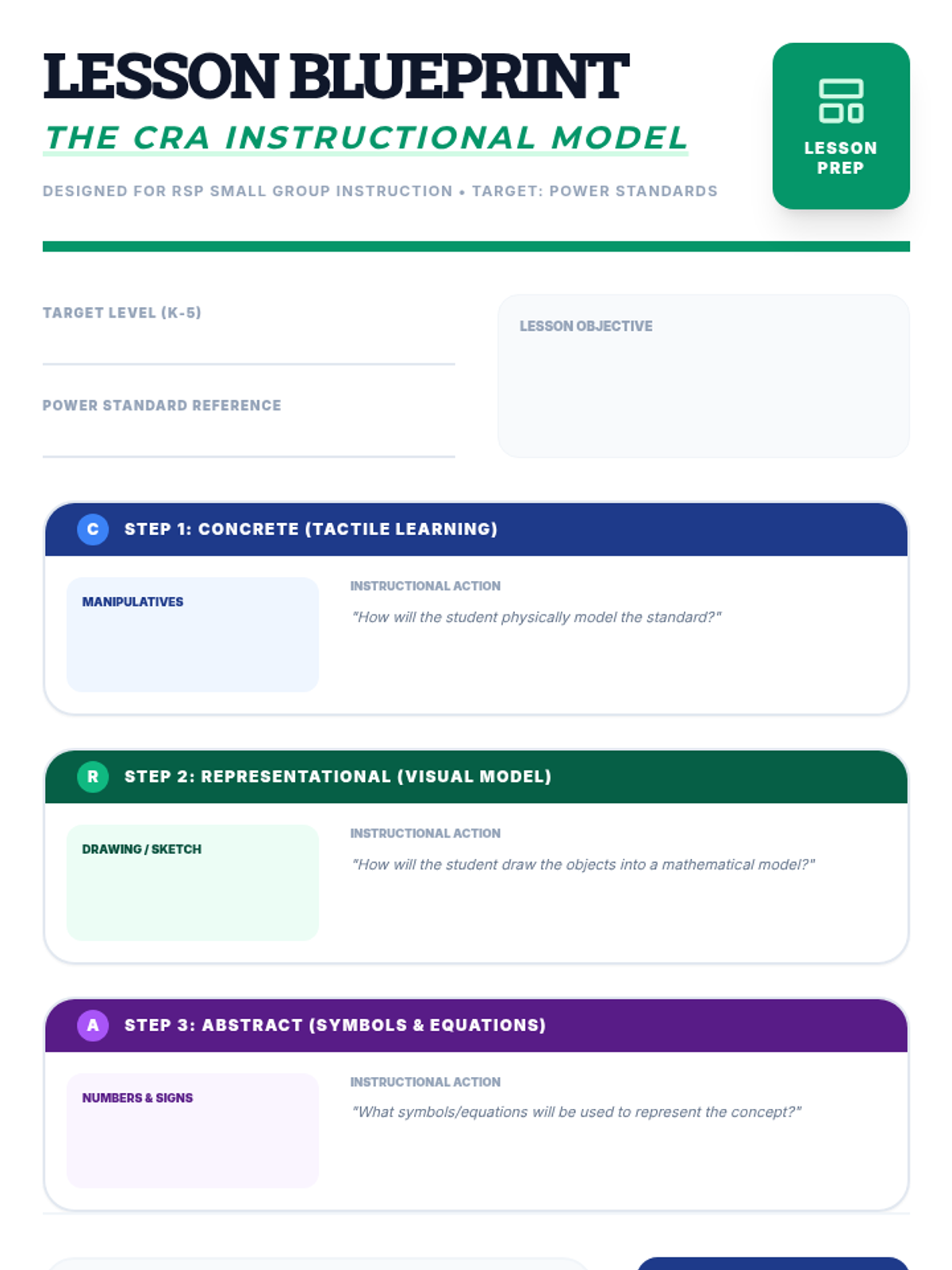
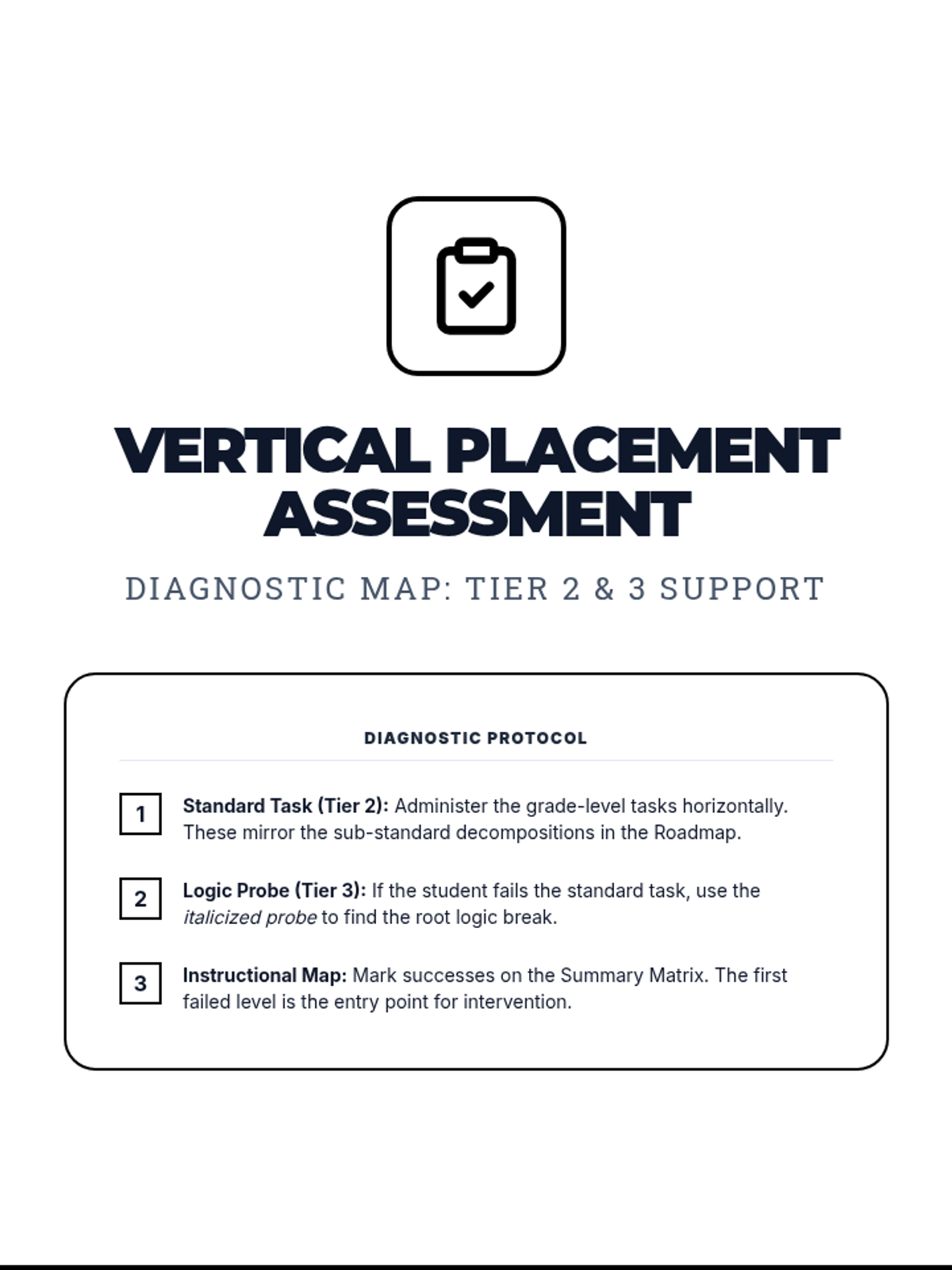
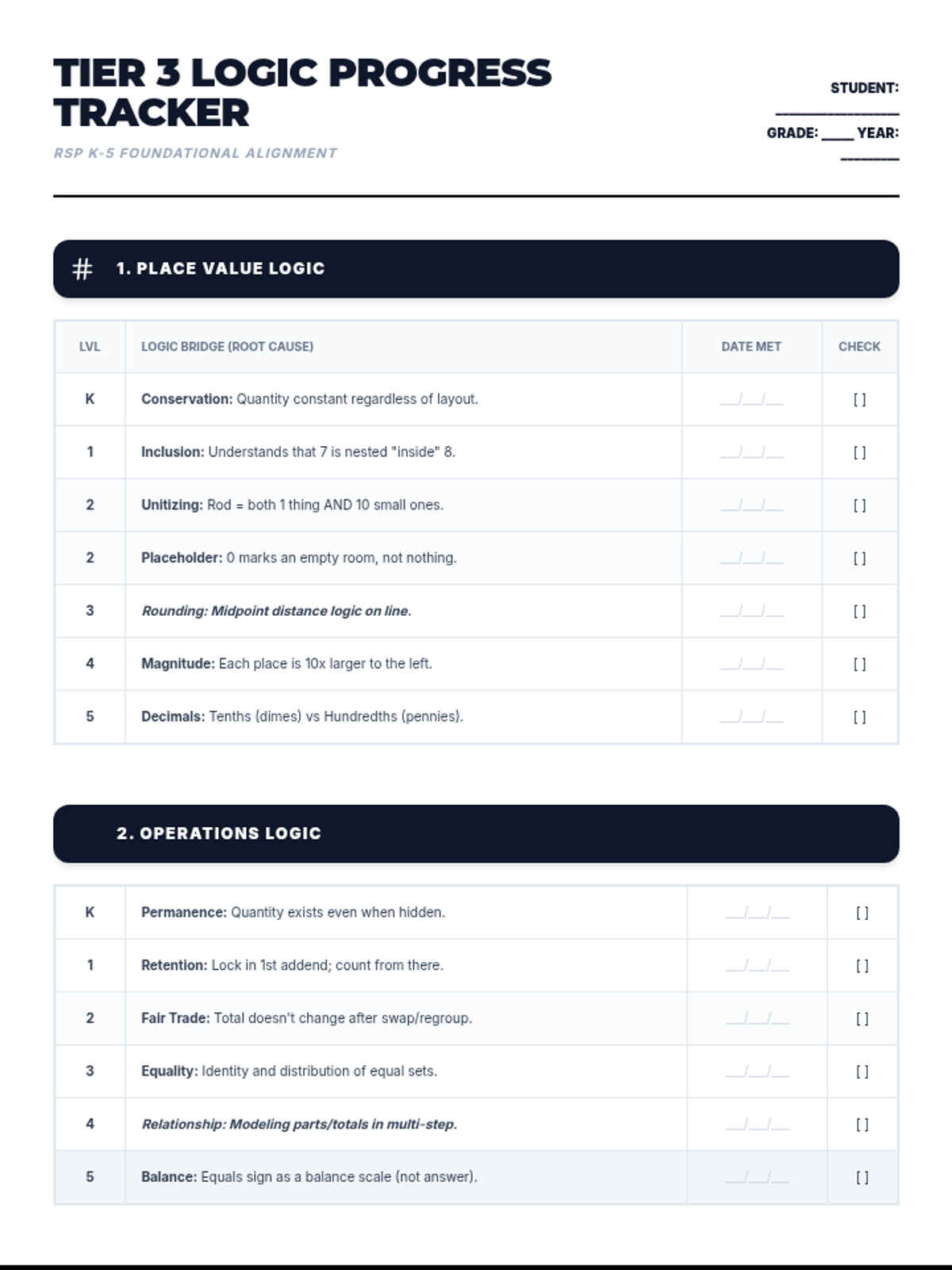
Foundational tools for assessing student levels and planning instruction based on California Power Standards across grades K-5.
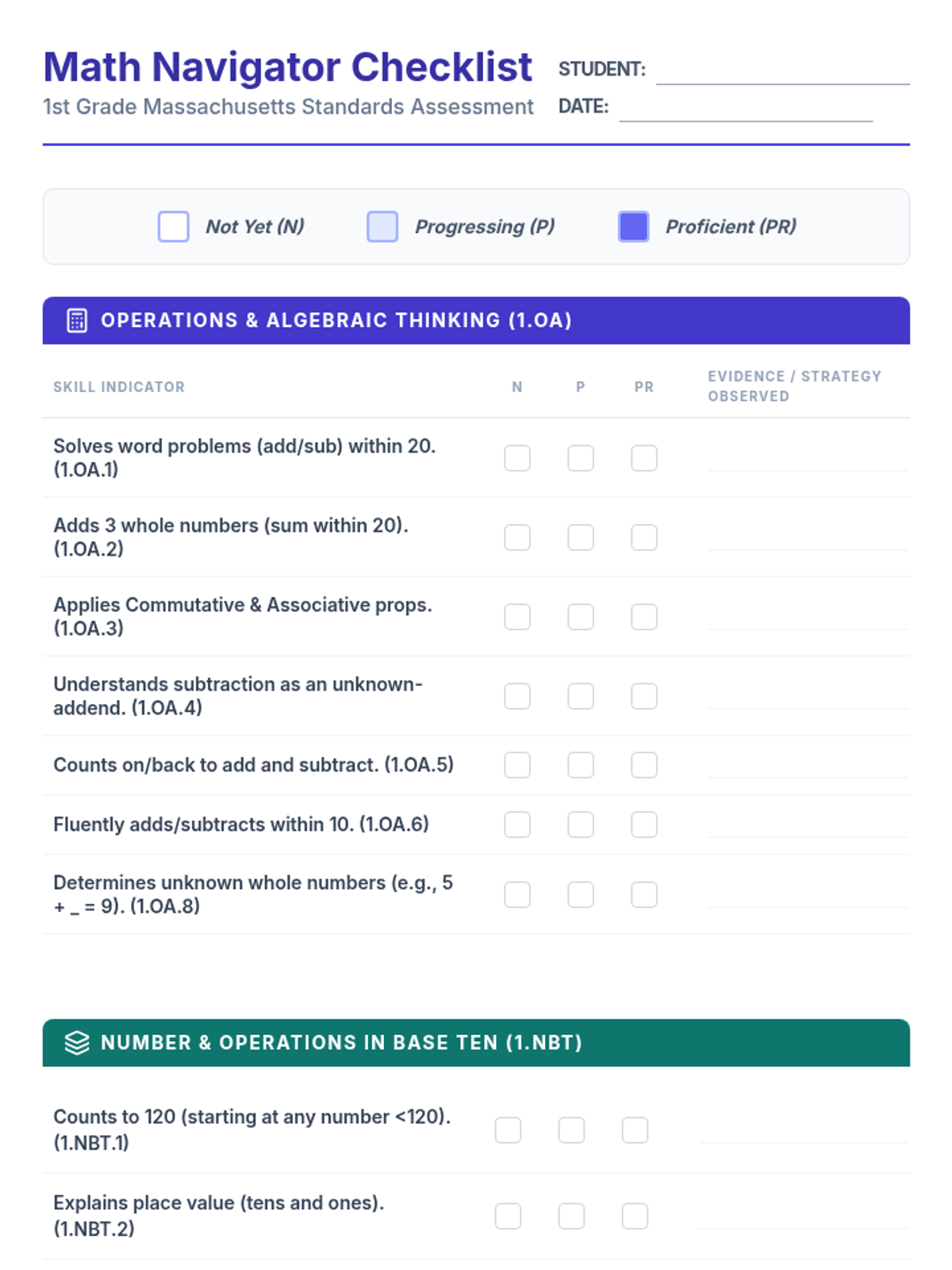
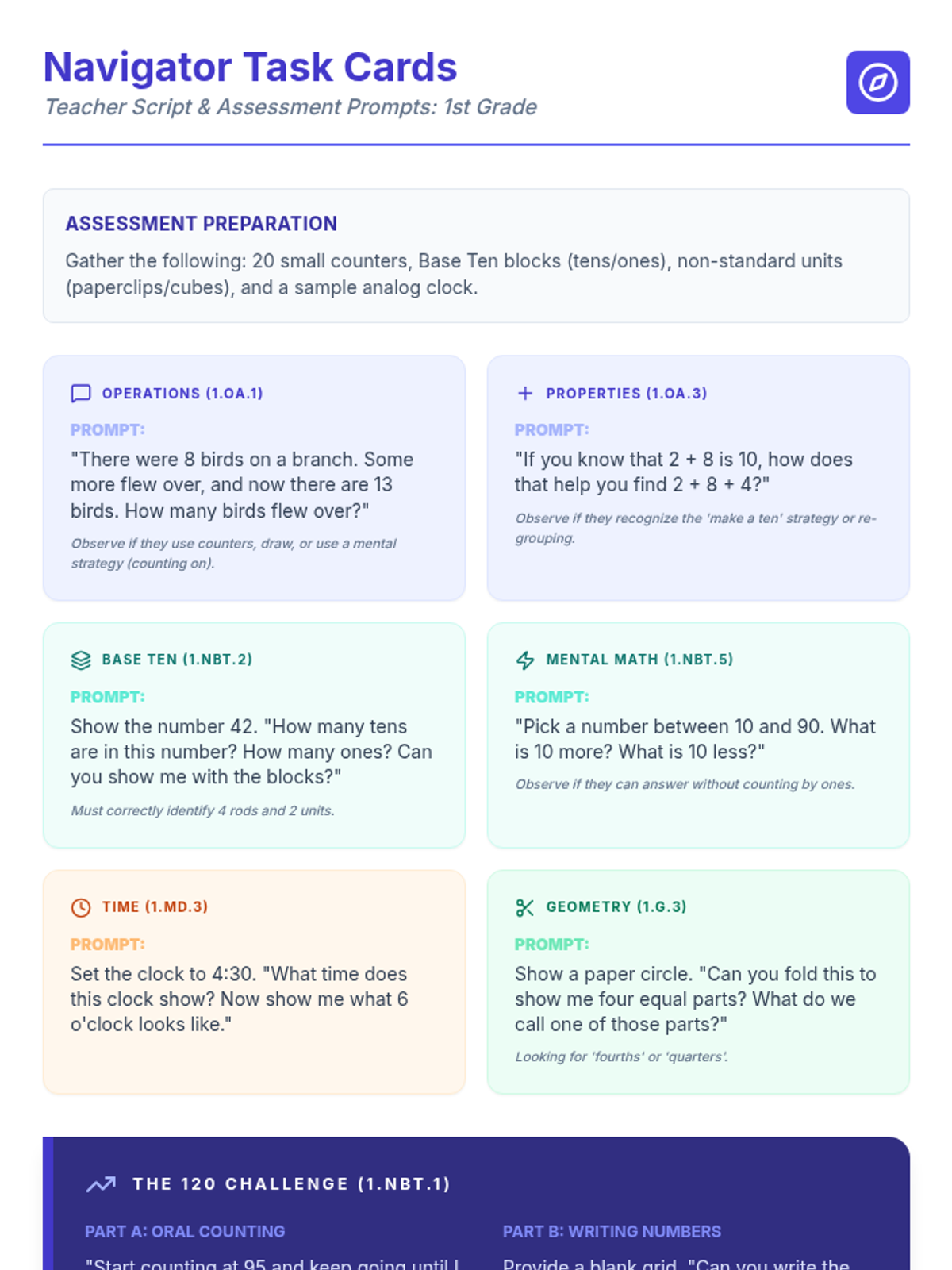
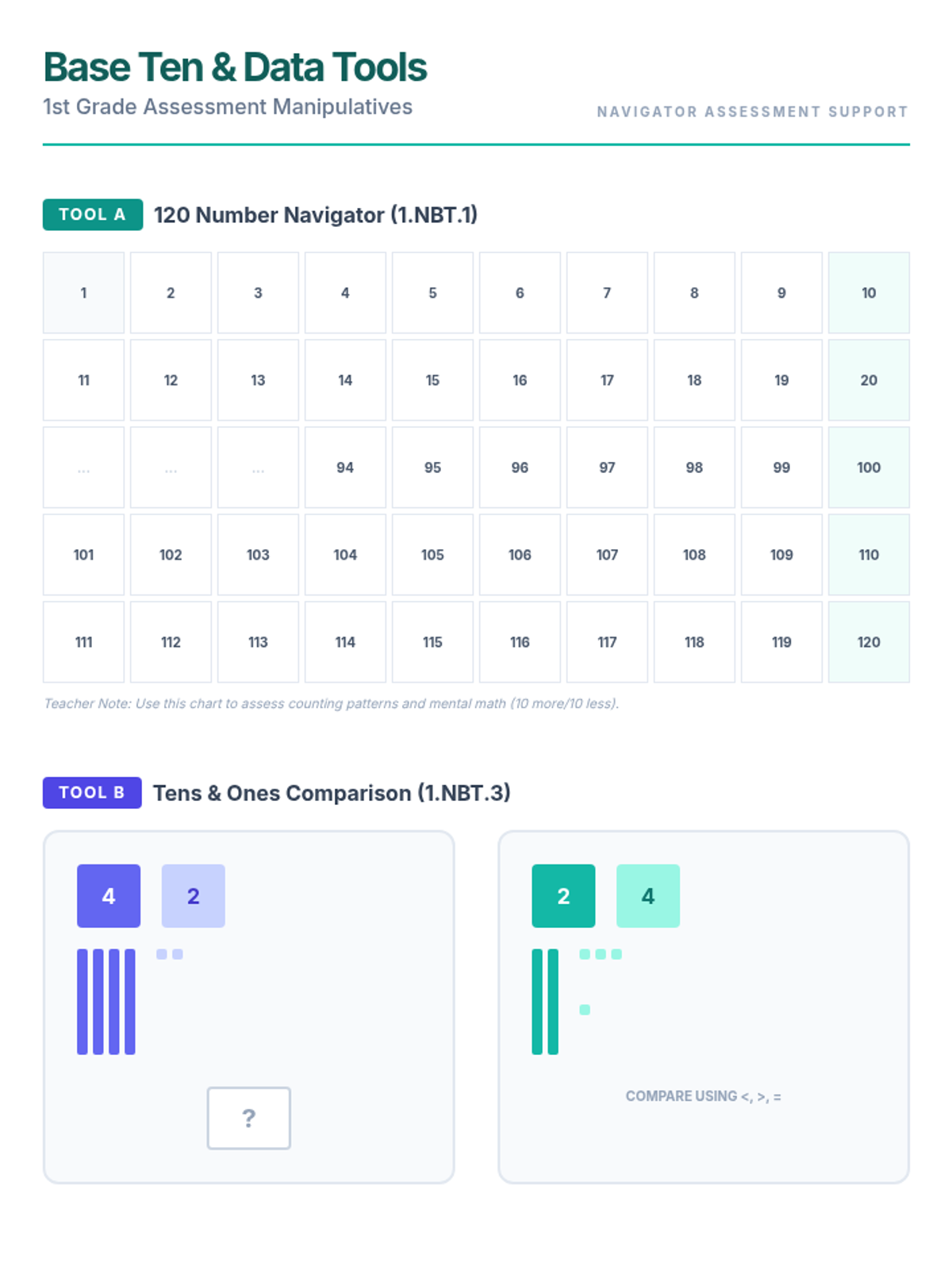
A comprehensive assessment package for 1st Grade mathematics based on the Massachusetts Curriculum Frameworks, including an observation checklist and a teacher's task guide for conducting the assessment.
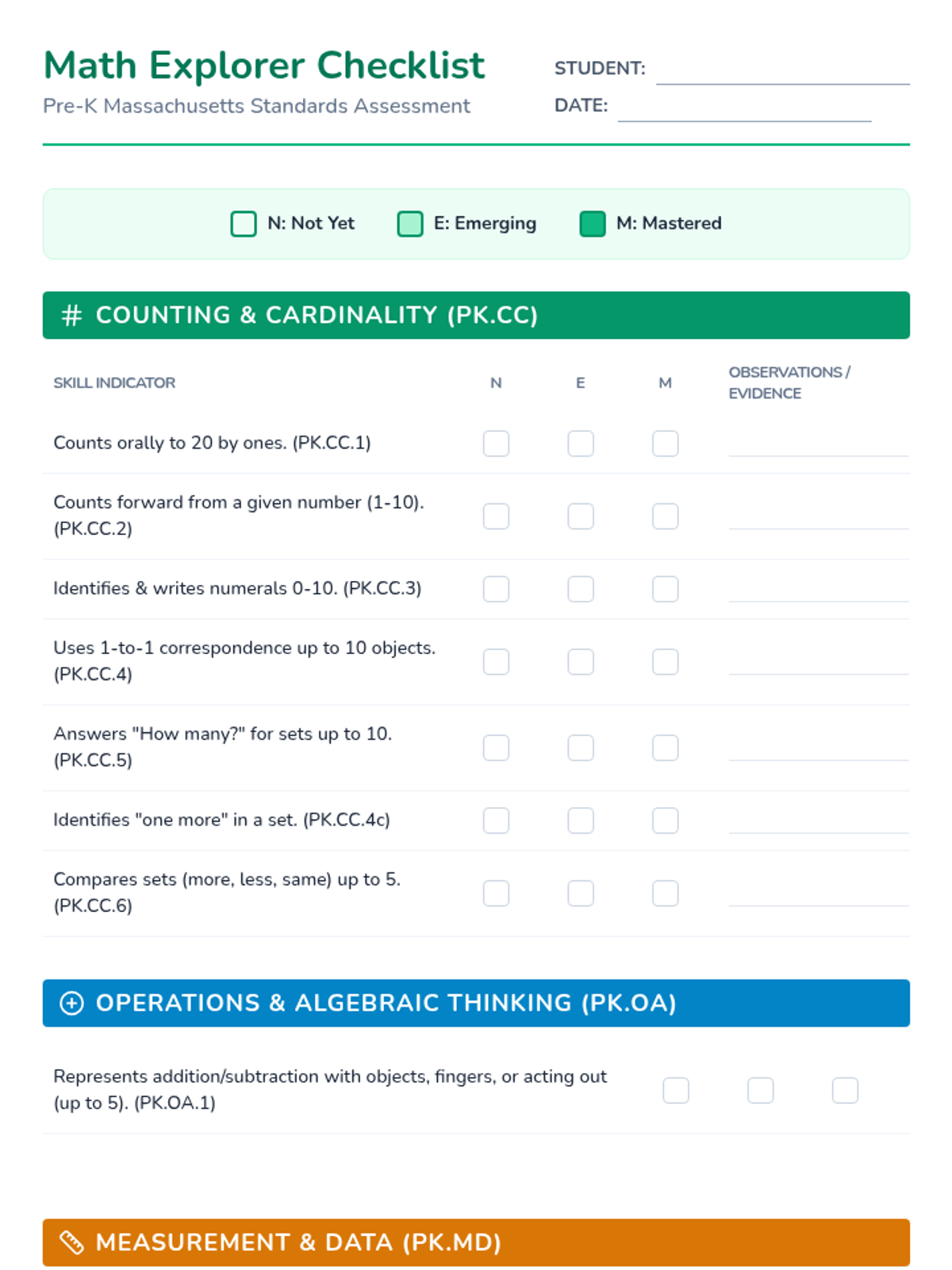
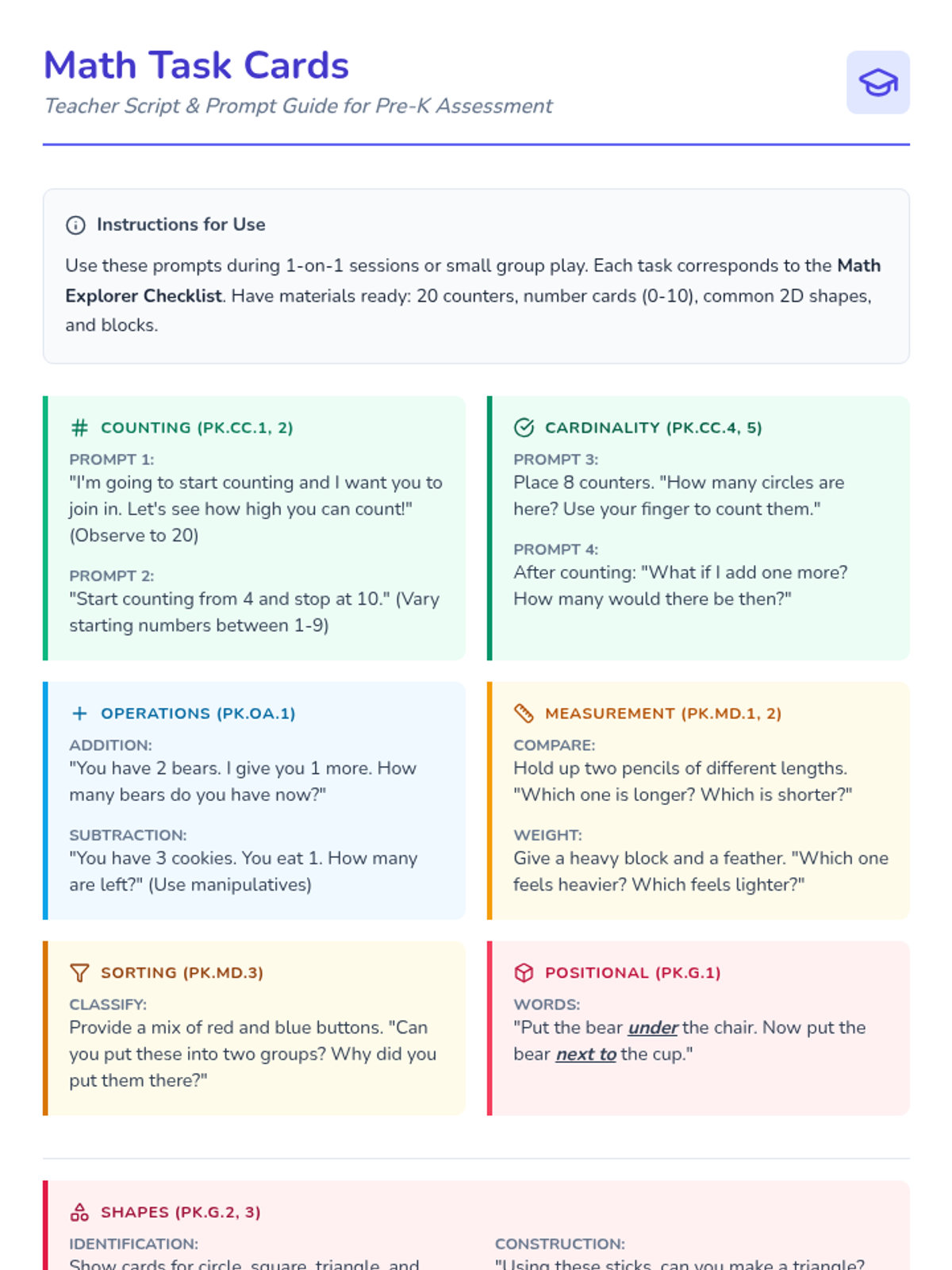
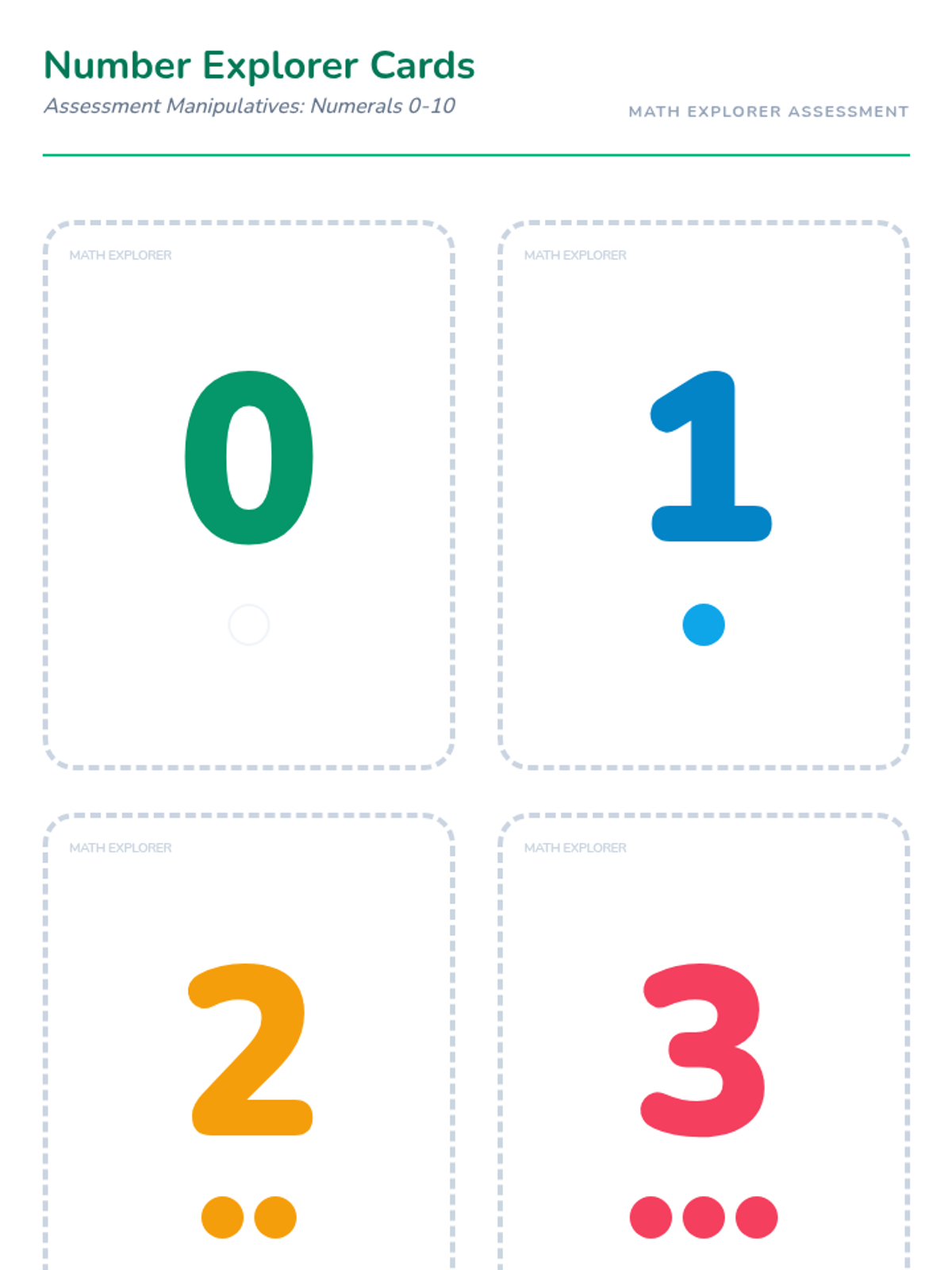
A comprehensive assessment package for Pre-K mathematics based on the Massachusetts Curriculum Frameworks, including an observation checklist and a teacher's task guide for conducting the assessment.
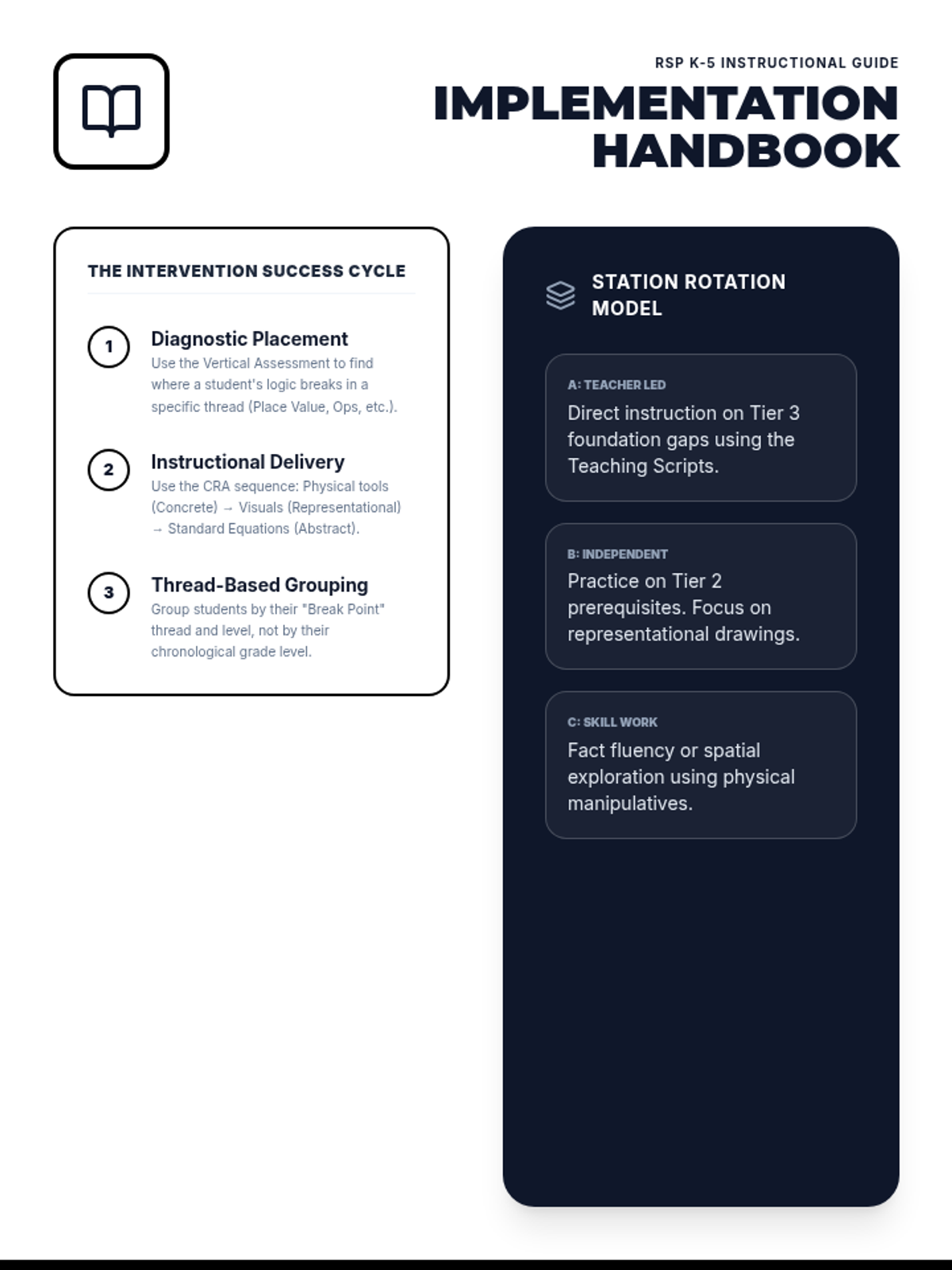
A toolkit for RSP teachers to transform a scope and sequence into a functional daily curriculum. Includes instructional frameworks, diagnostic tools, and planning templates specifically designed for multi-grade math intervention.
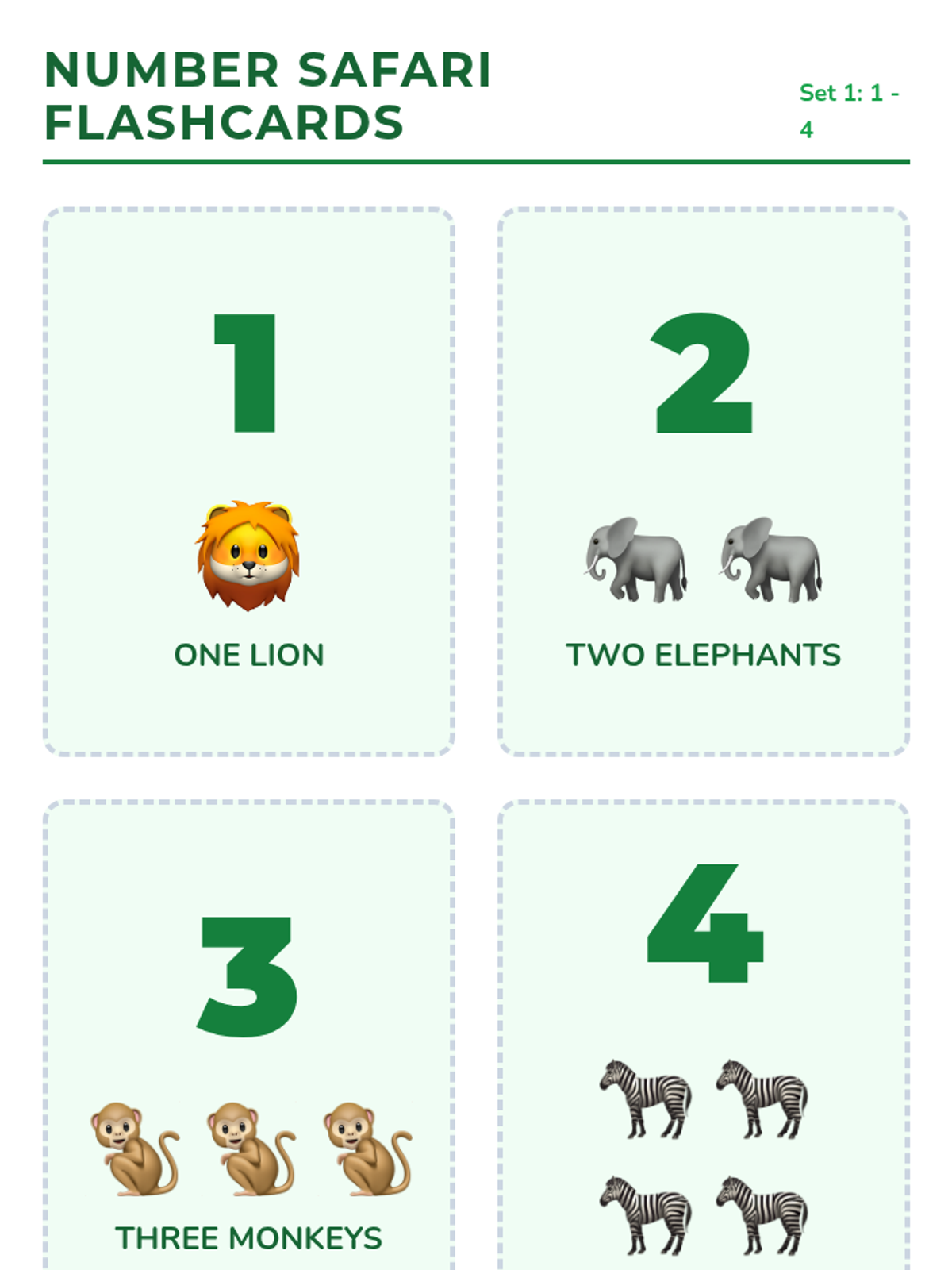
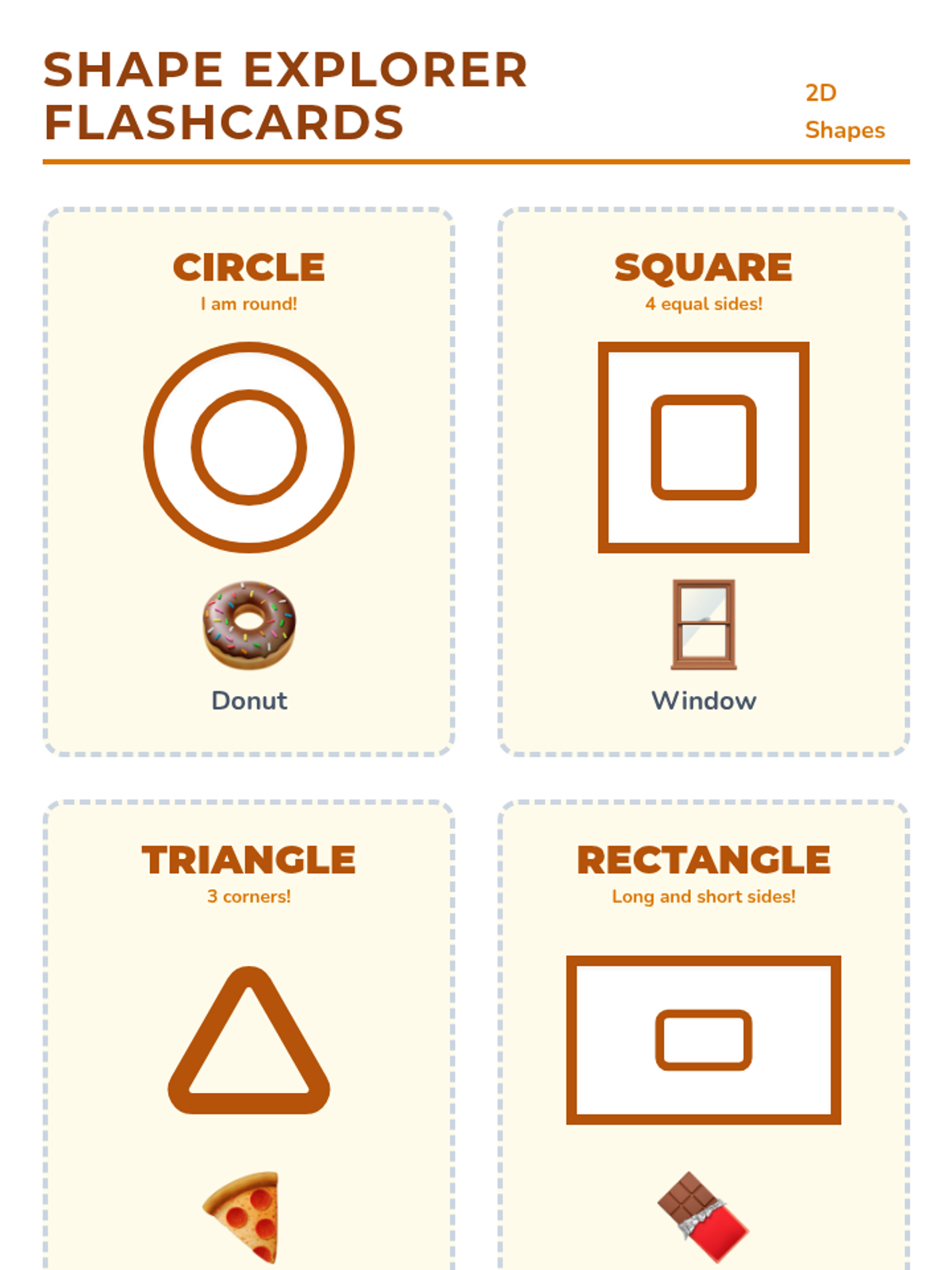
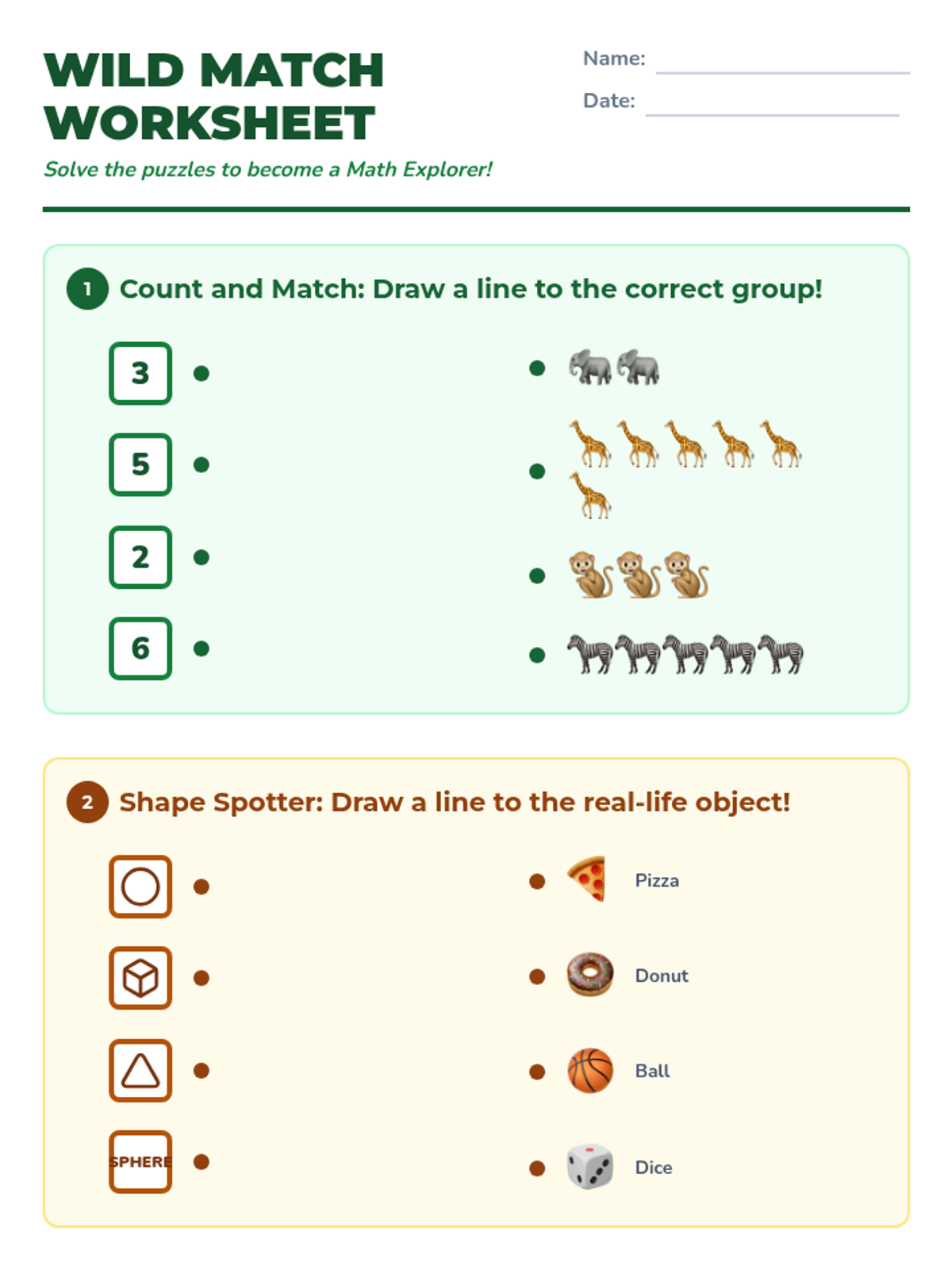
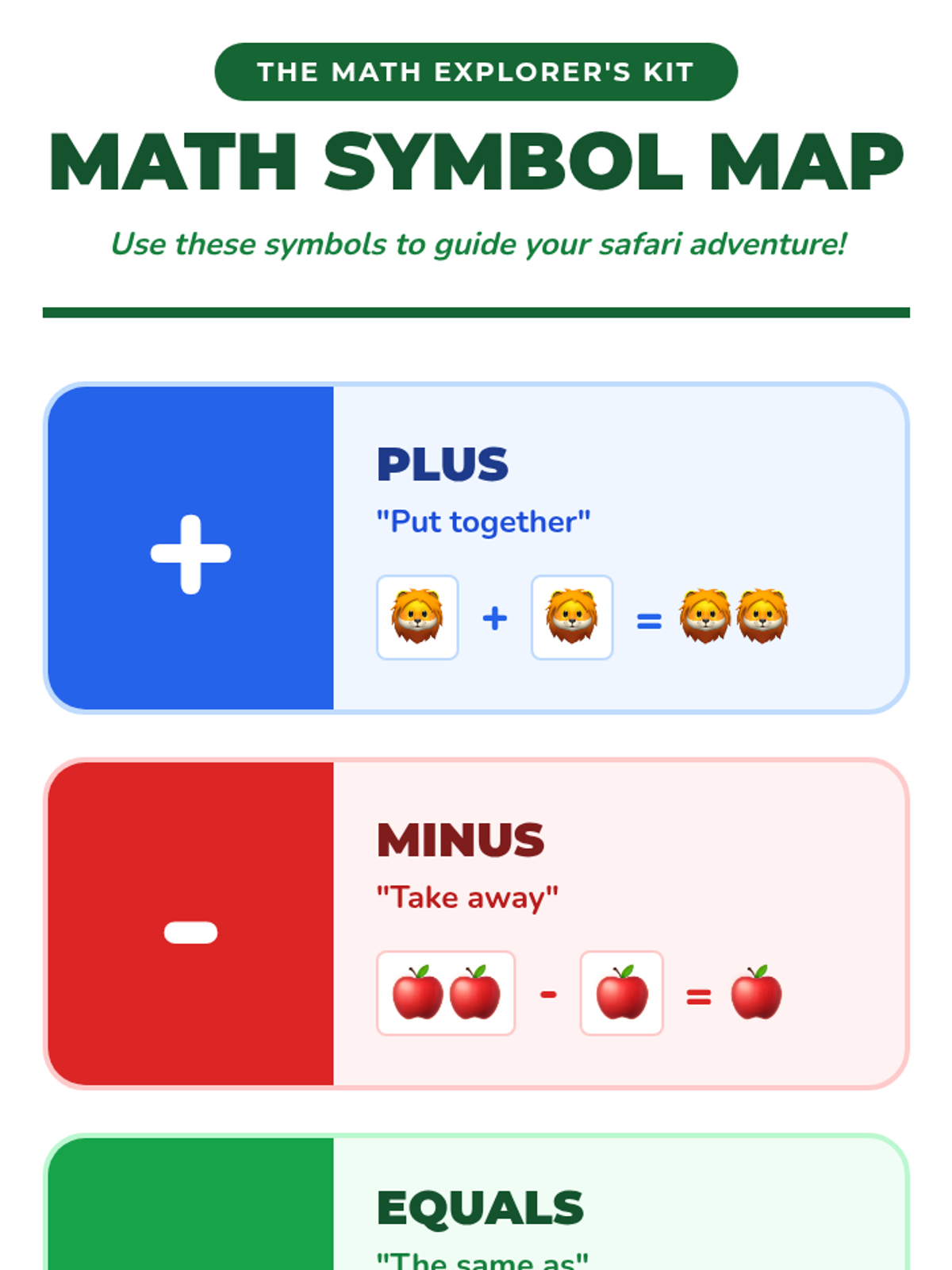
A foundational math lesson exploring numbers 1-10, basic 2D and 3D shapes, and introductory mathematical symbols through an engaging jungle safari theme.
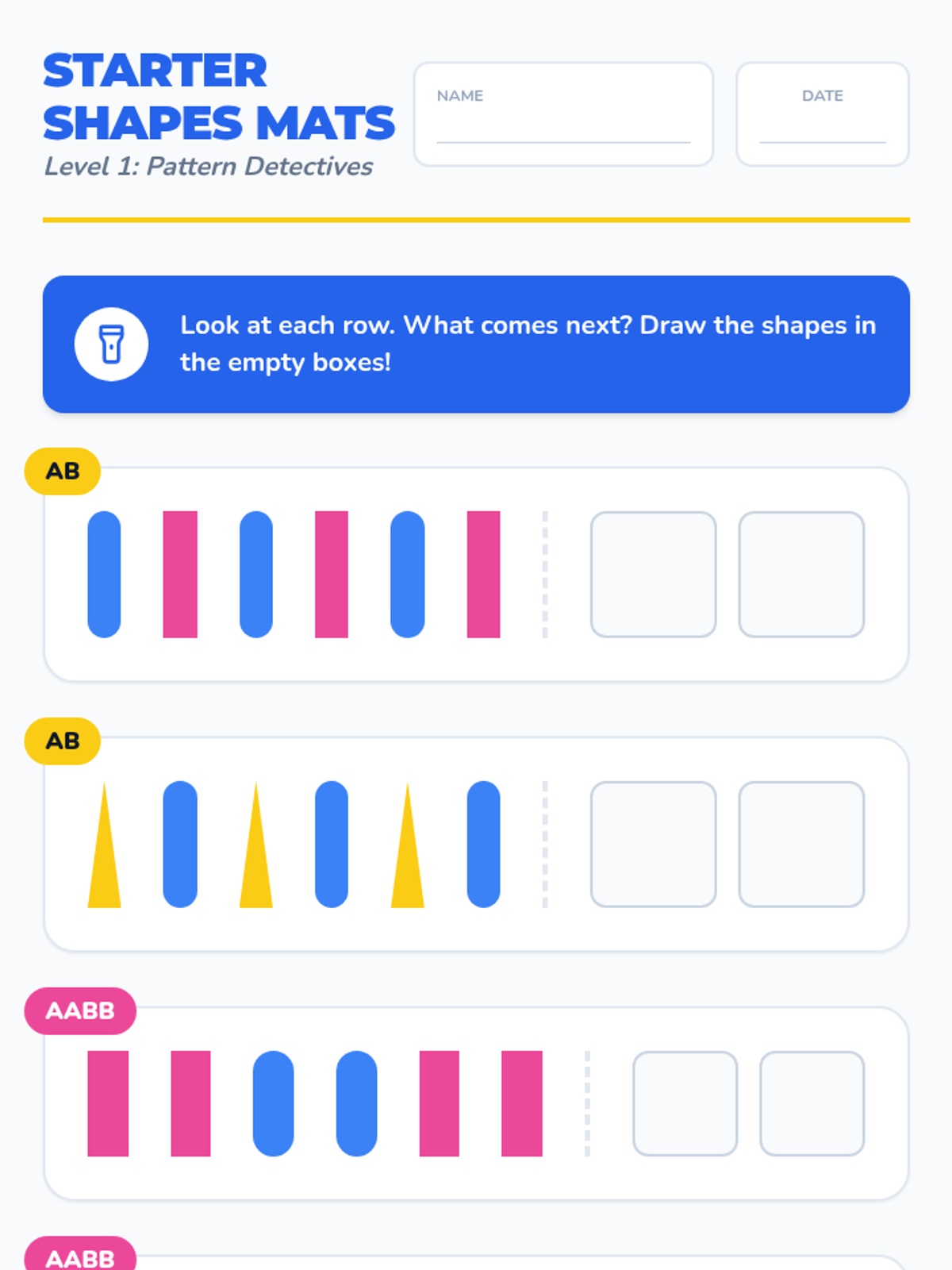
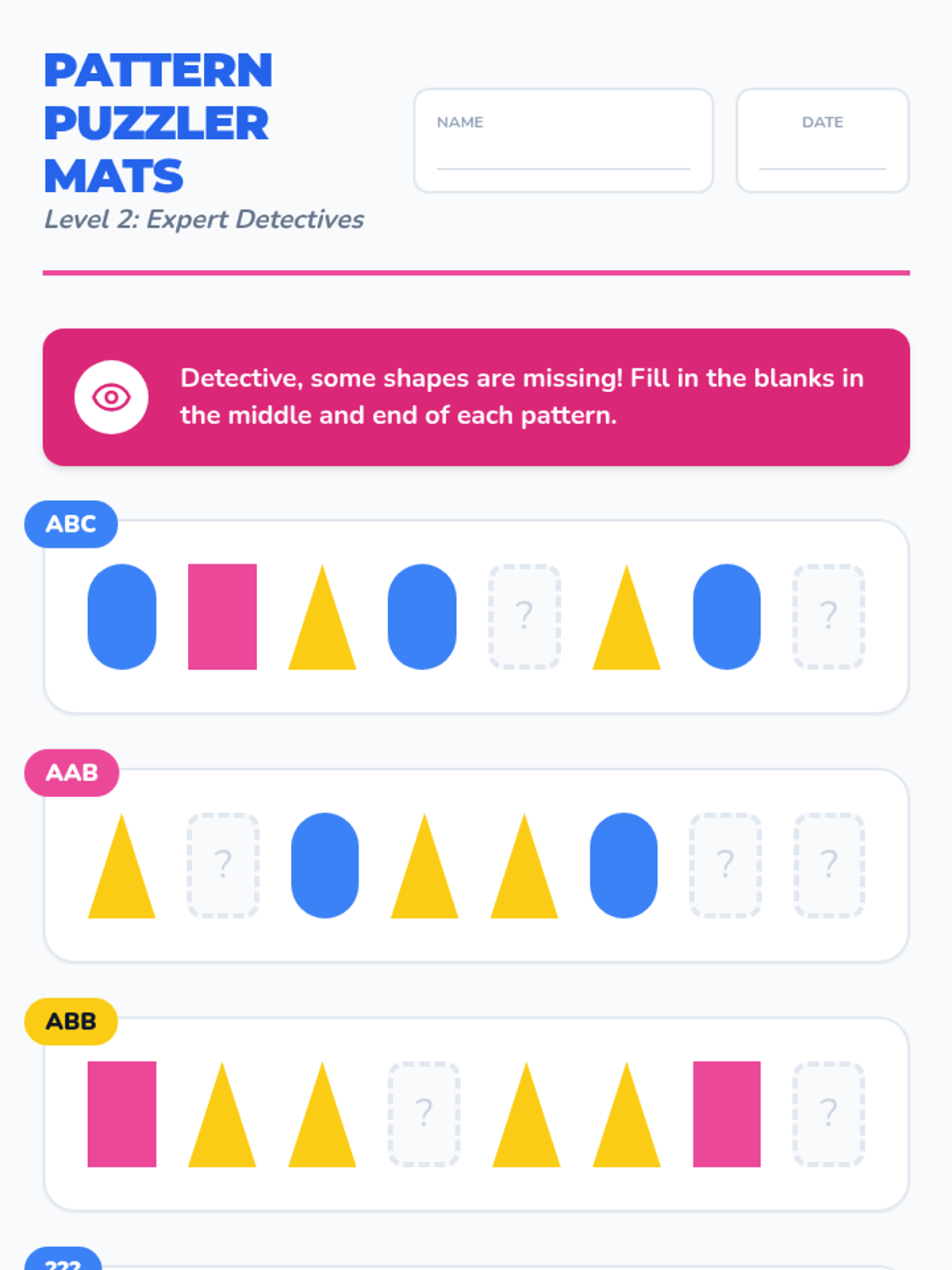
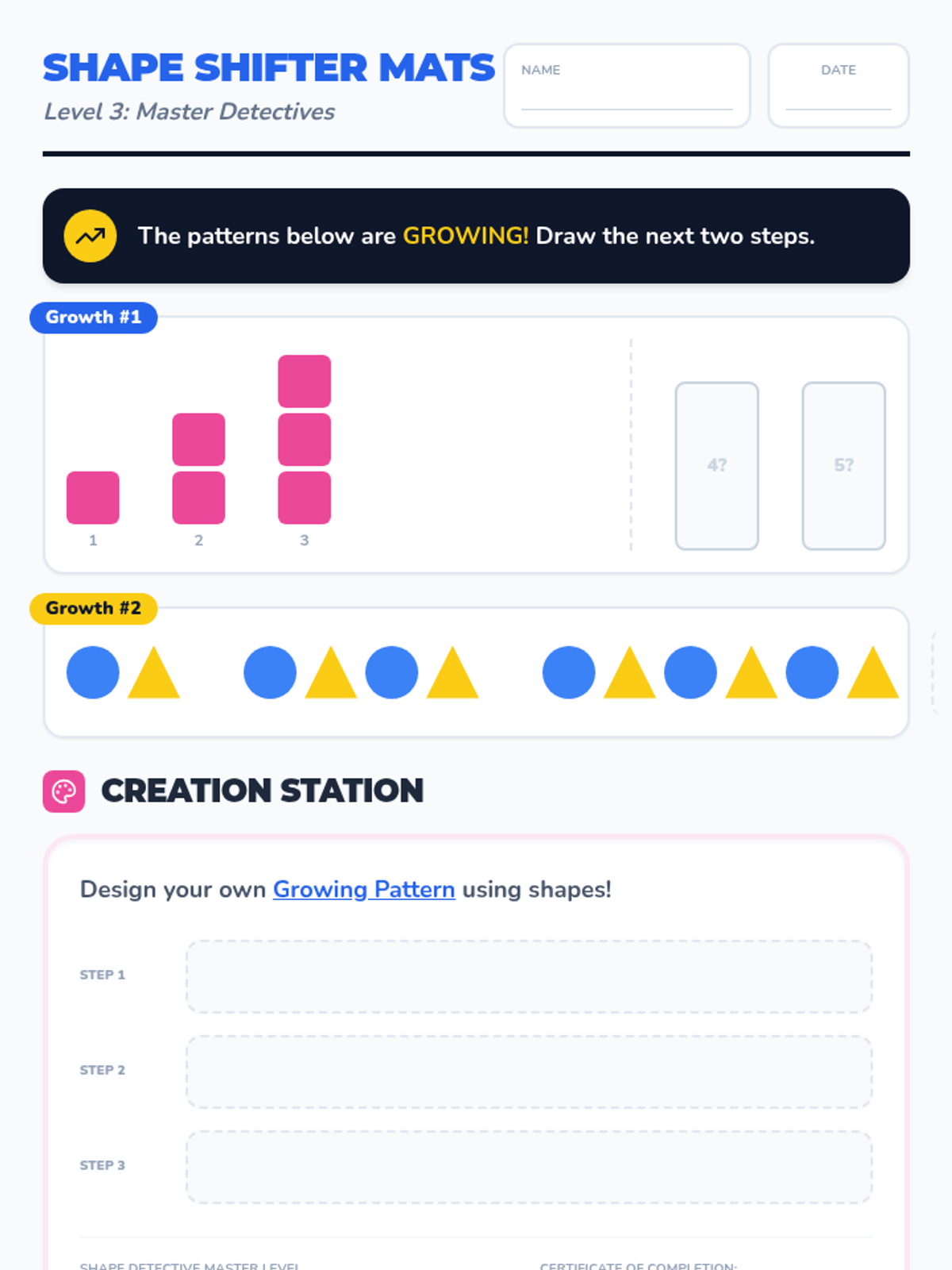
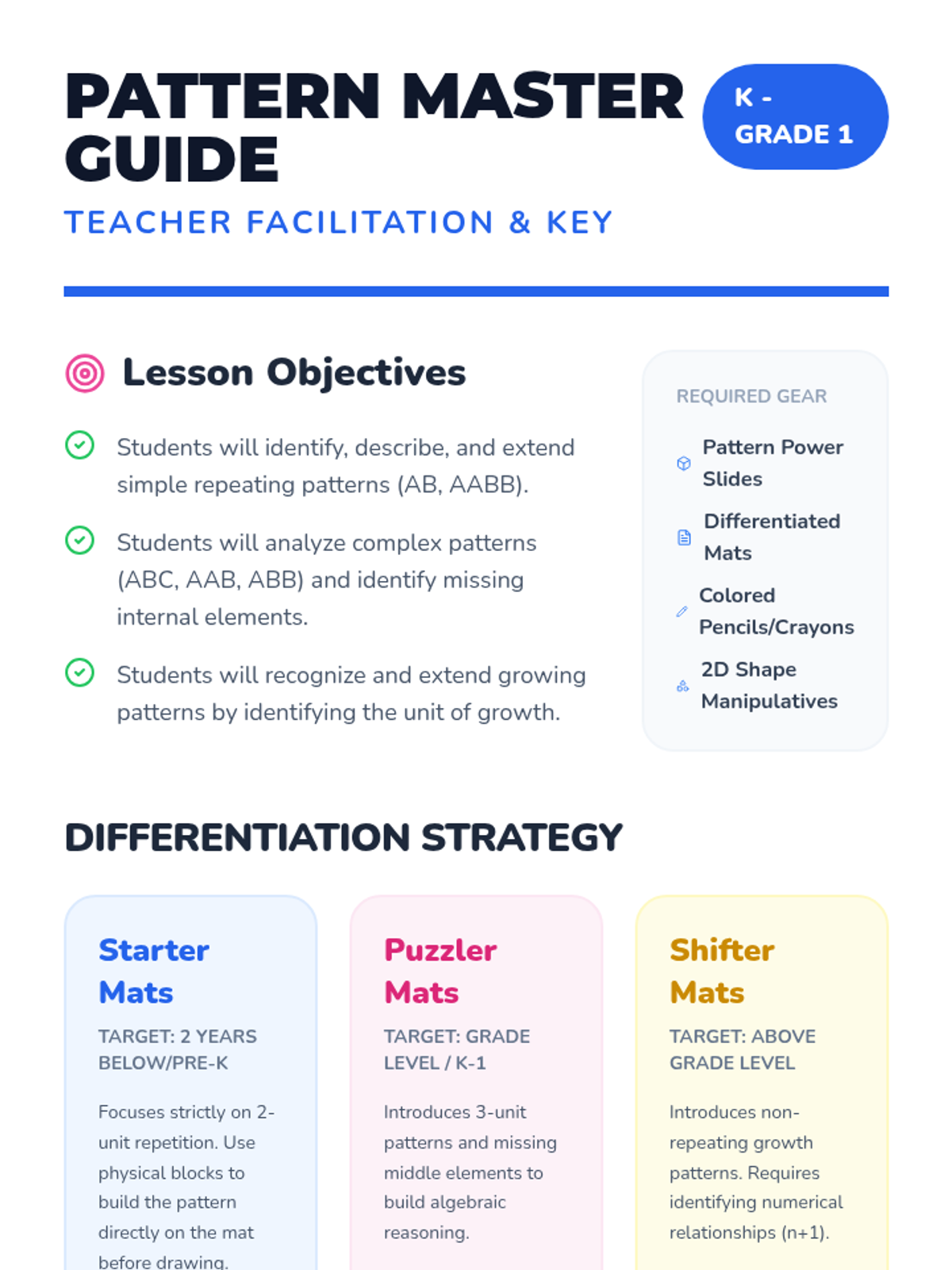
A hands-on lesson for K-1 students to identify, extend, and create 2D shape patterns with three levels of differentiated activity mats.
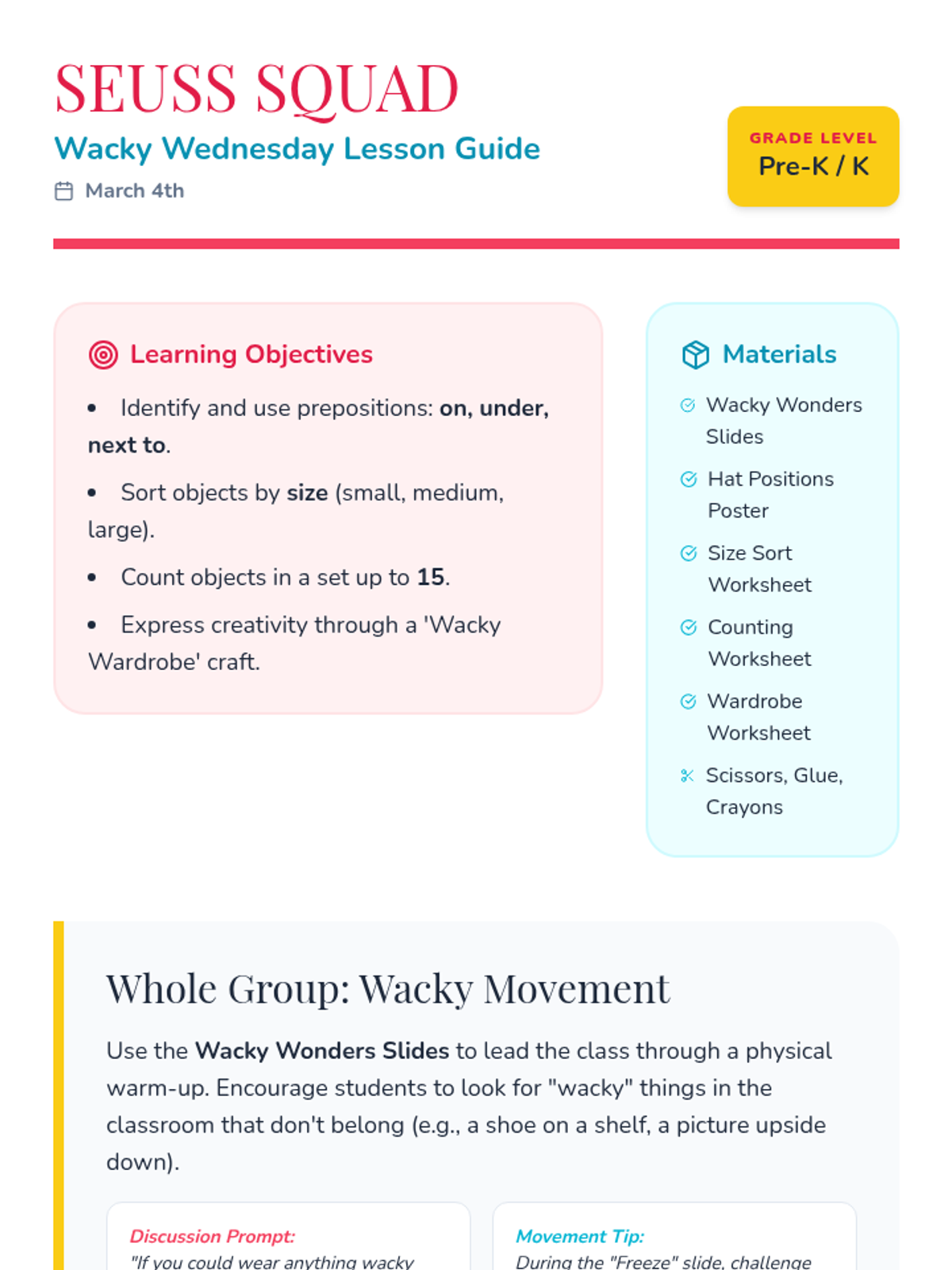
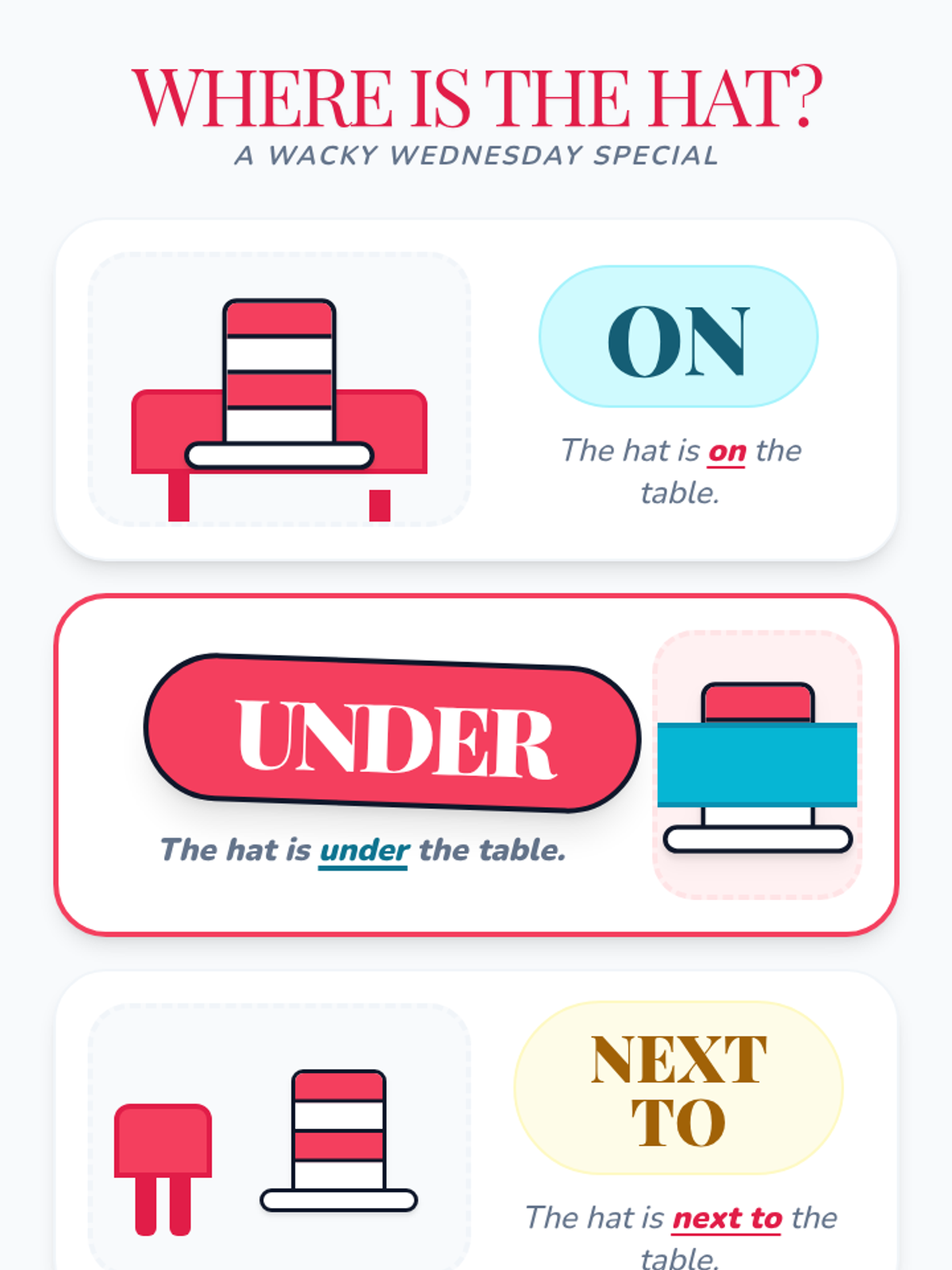
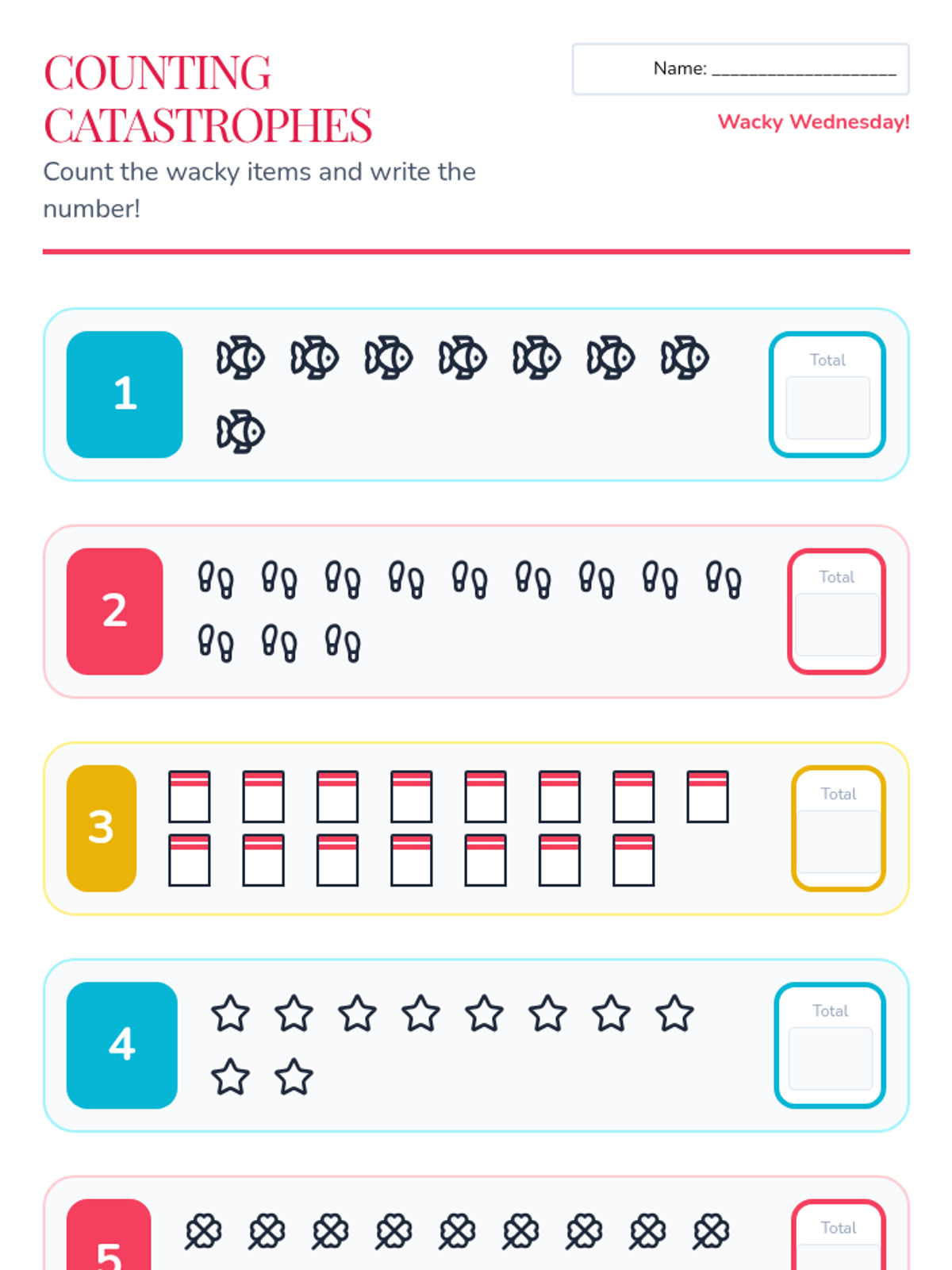
A whimsical lesson exploring 'Wacky Wednesday' through movement, counting up to 15, spatial awareness with hats, and a creative 'Wacky Wardrobe' craft.
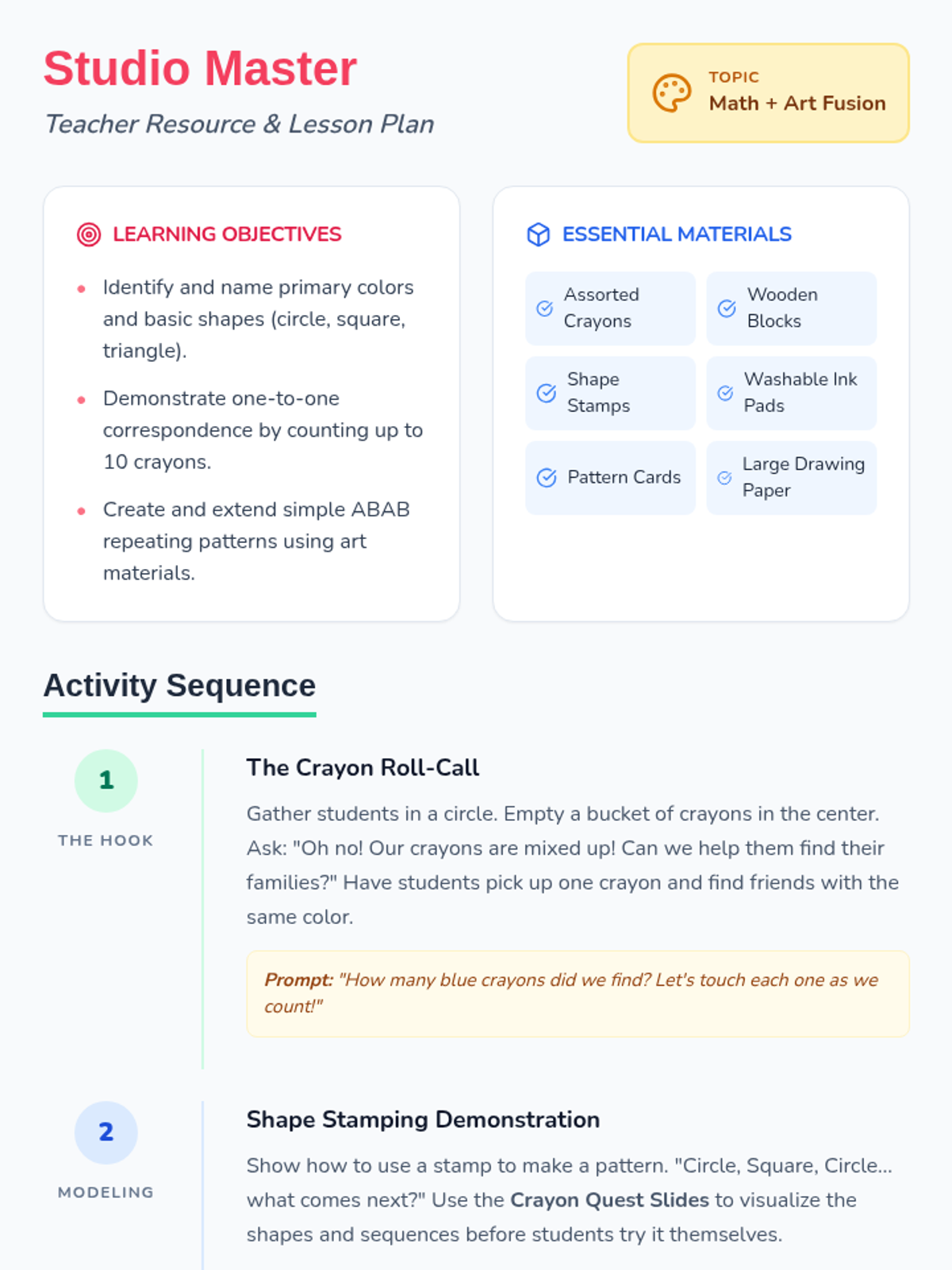
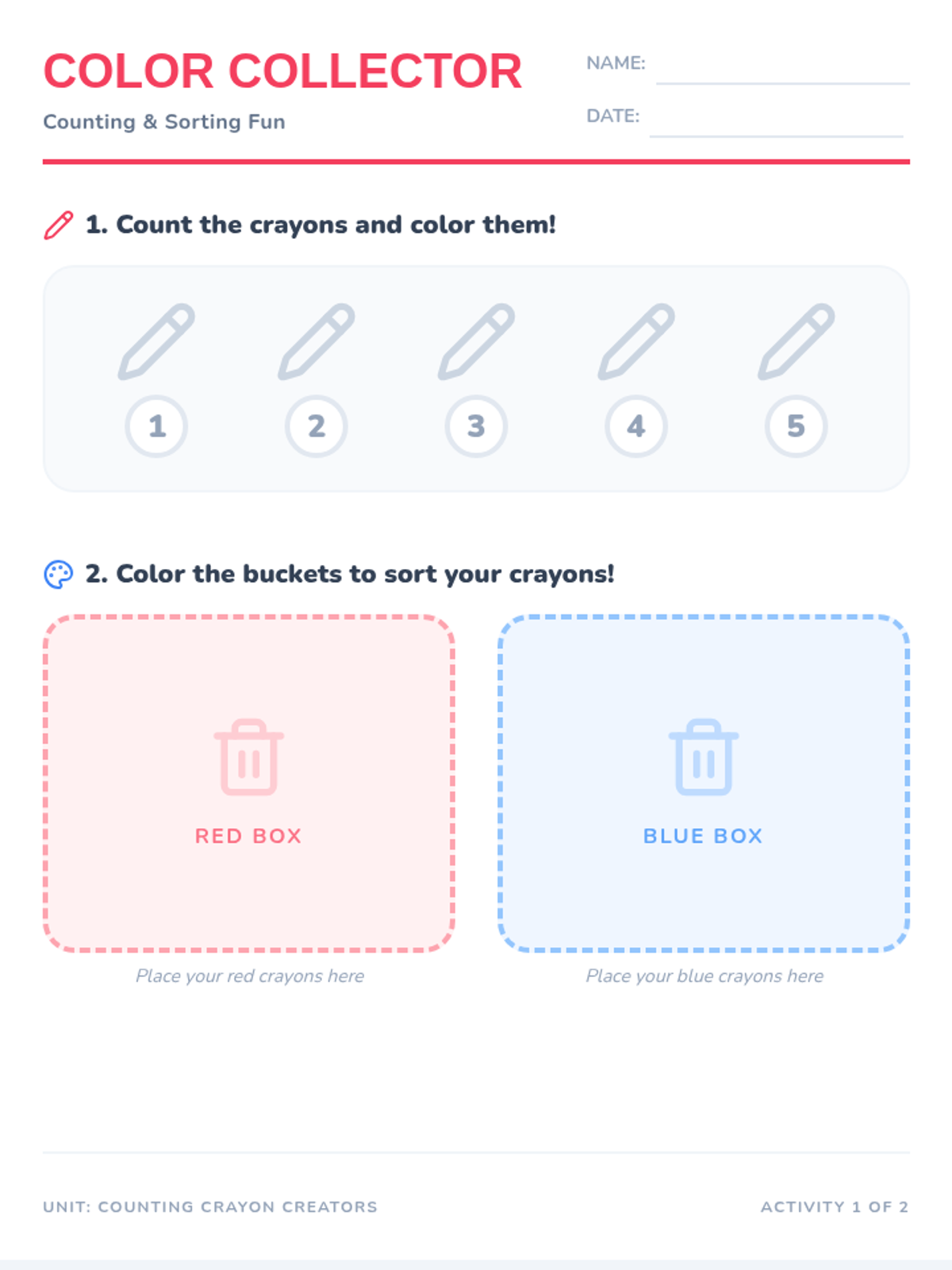
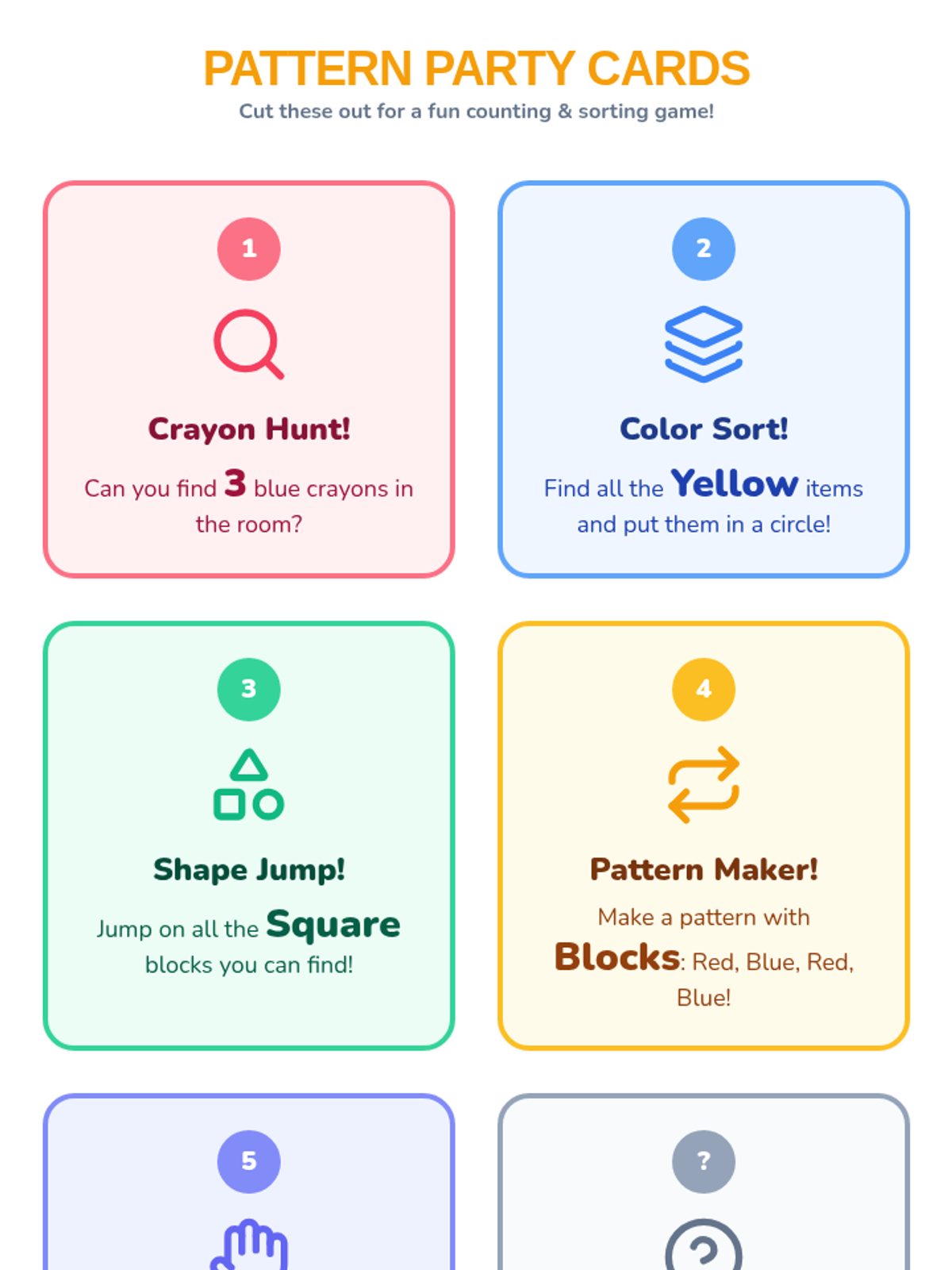
An engaging Pre-K lesson that combines foundational math skills with artistic exploration. Students will practice counting, sorting by color and shape, and creating simple patterns using crayons, blocks, and stamps.
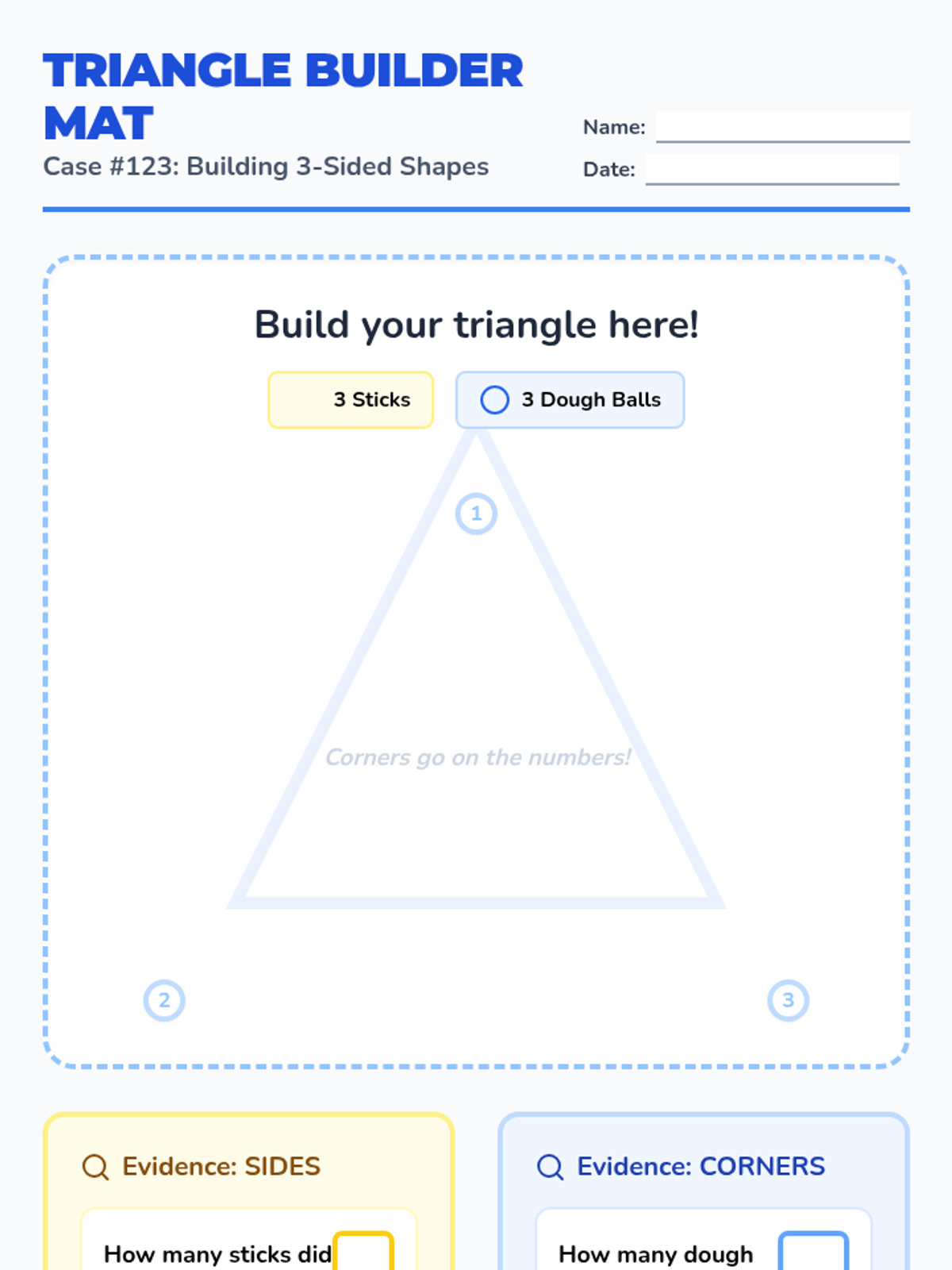
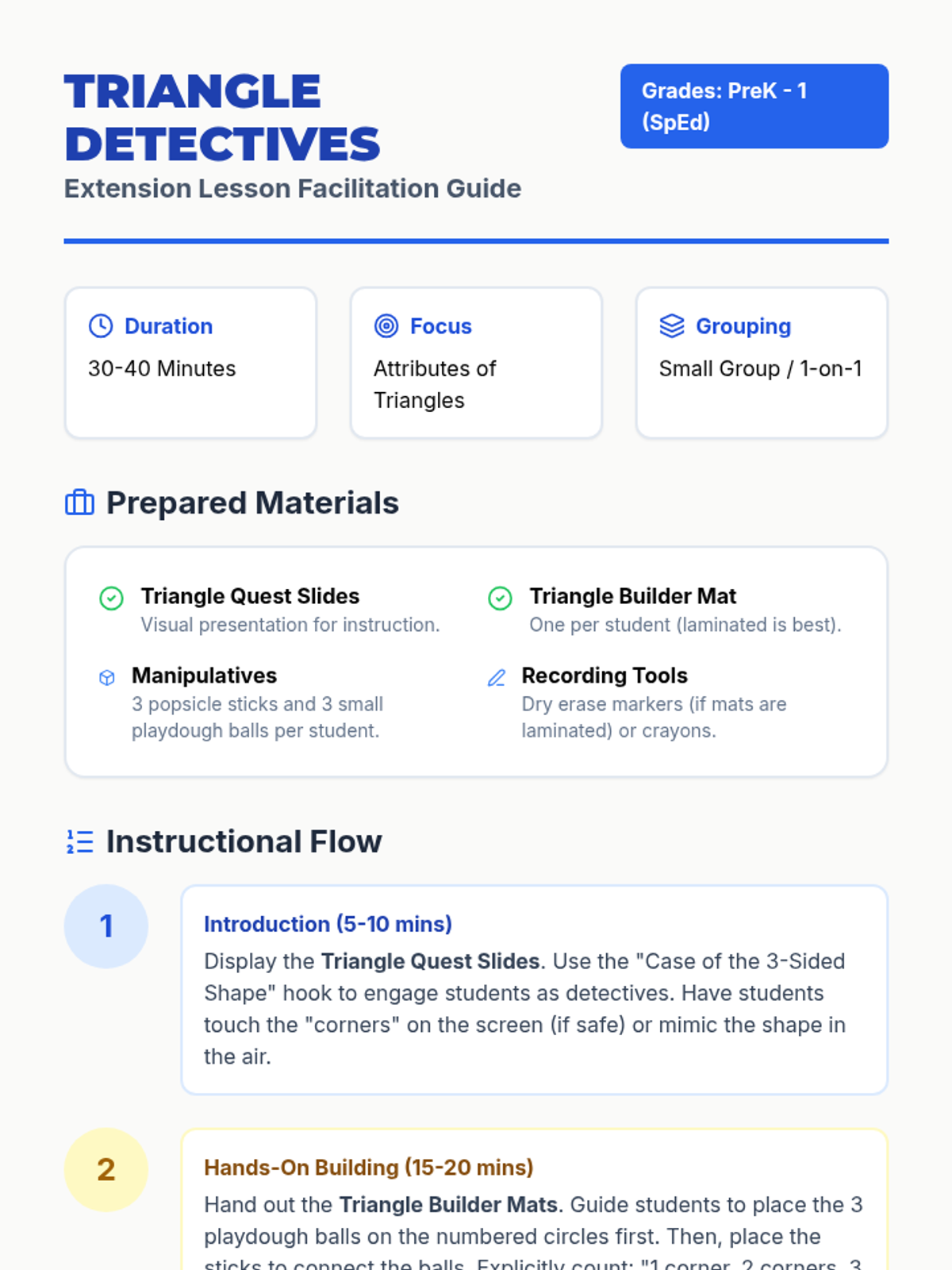
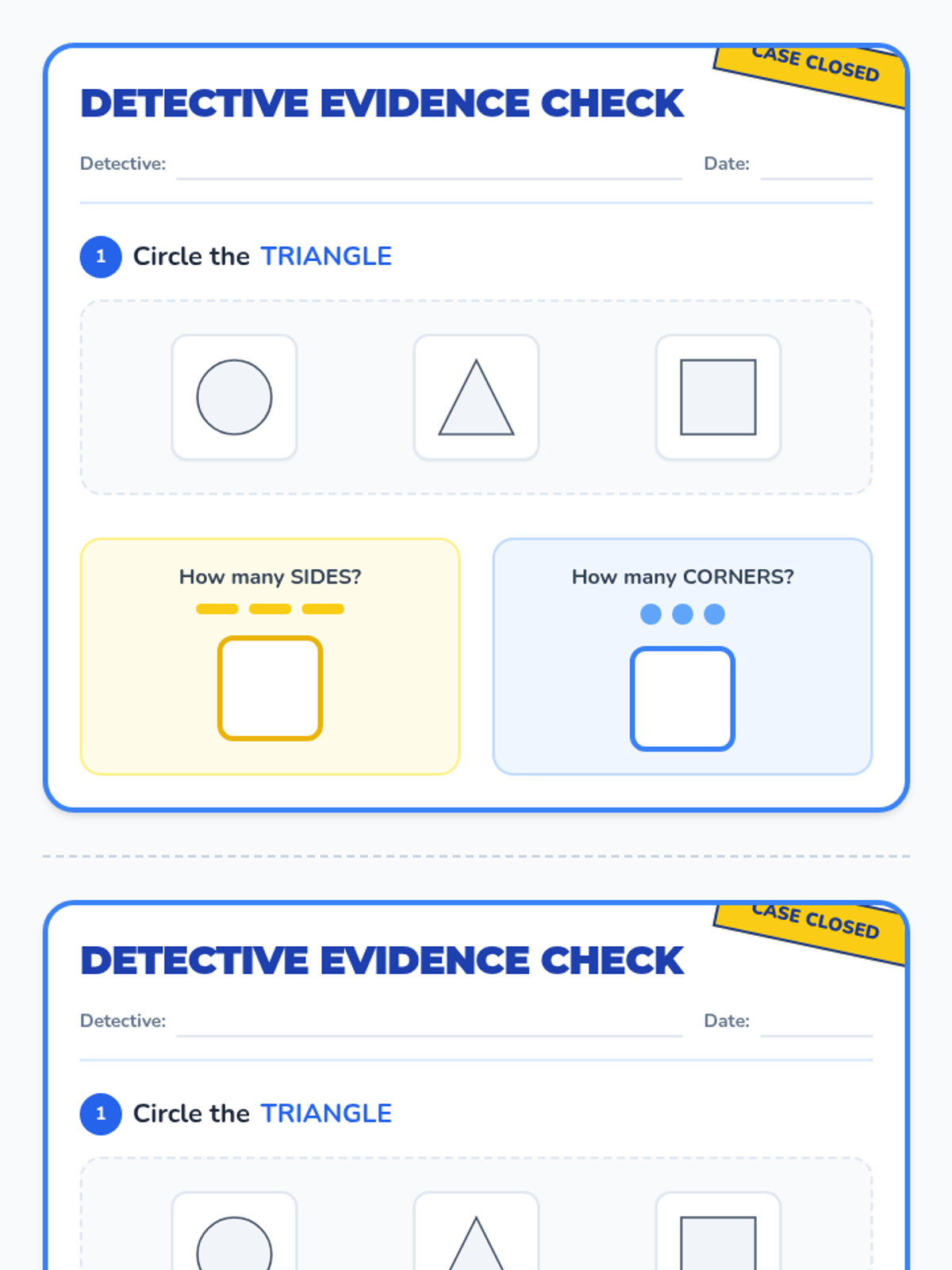
An extension lesson for PreK-1 Special Education students focusing on identifying, building, and counting the attributes of 2-D triangles using manipulatives.
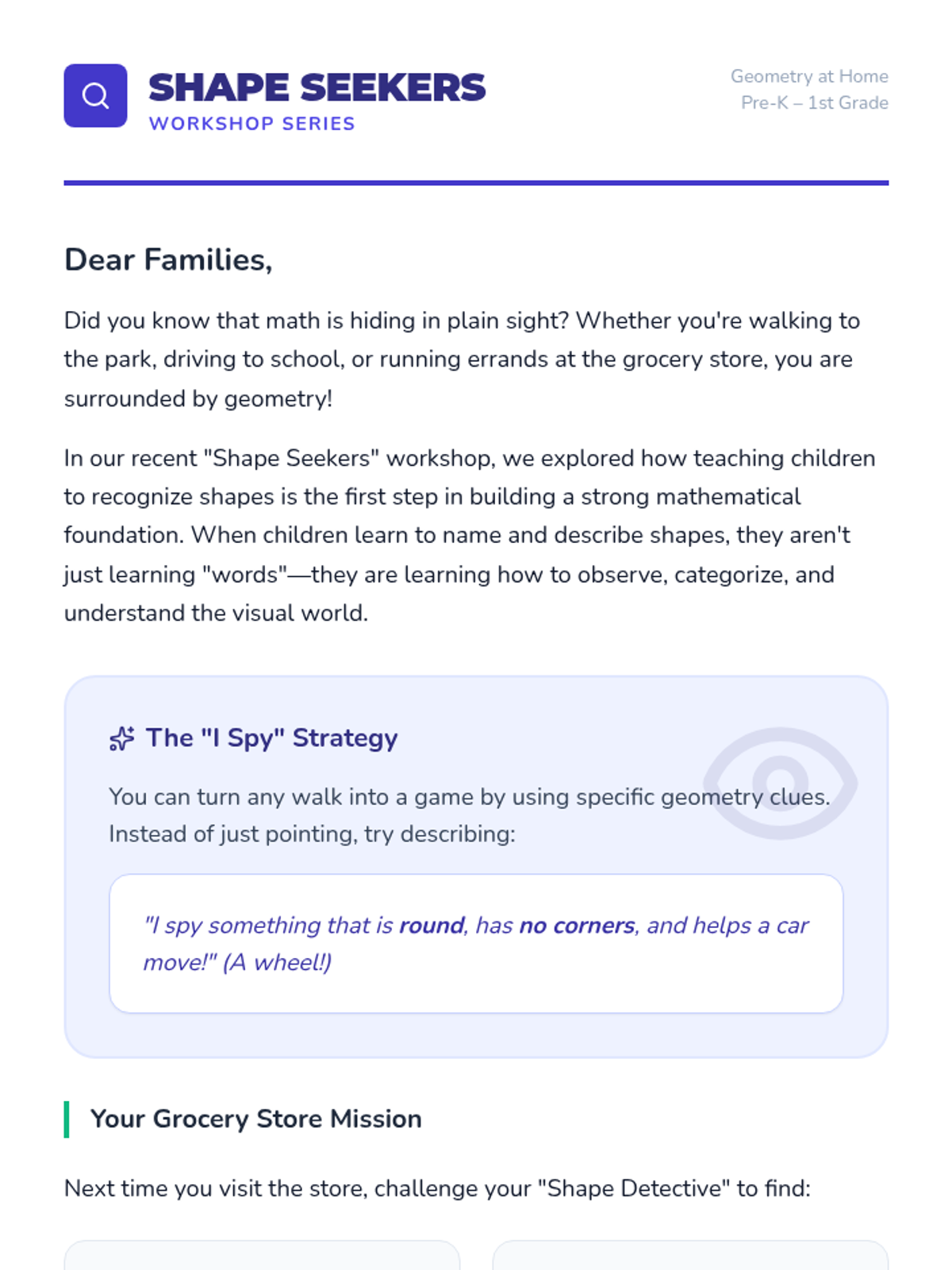
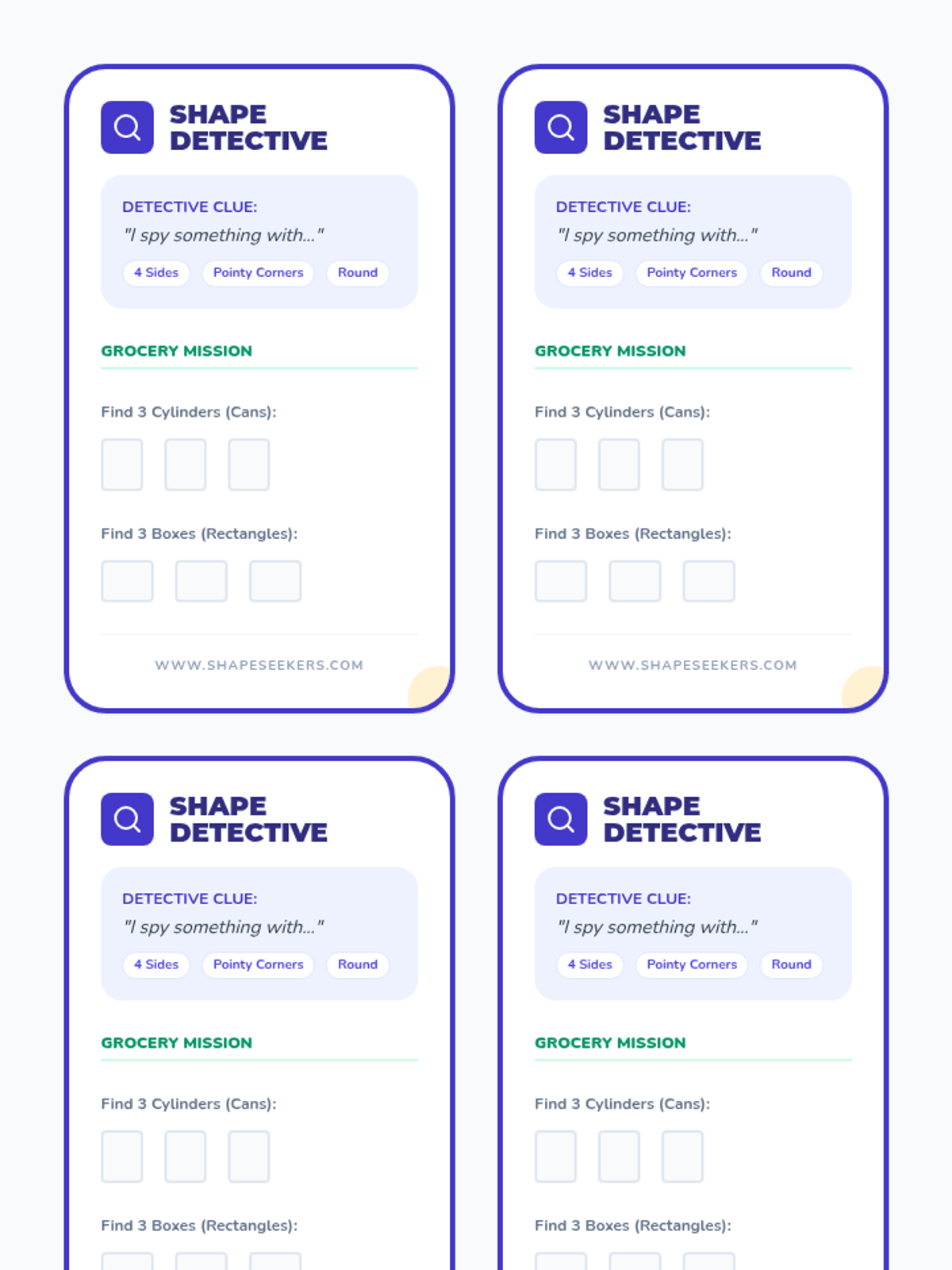
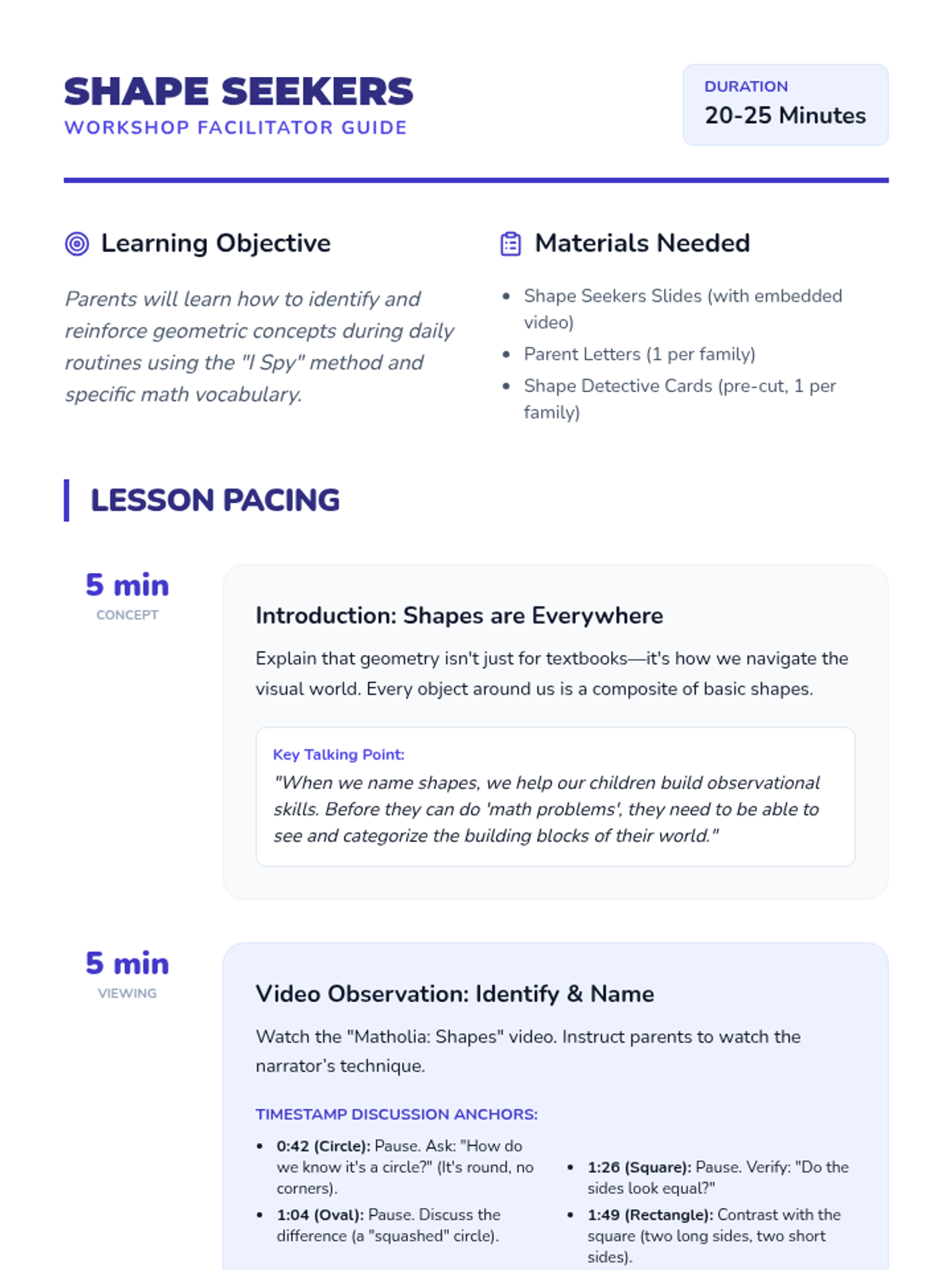
A parent-focused workshop teaching families how to spot and discuss geometric shapes in their everyday environment, turning simple errands into learning opportunities.
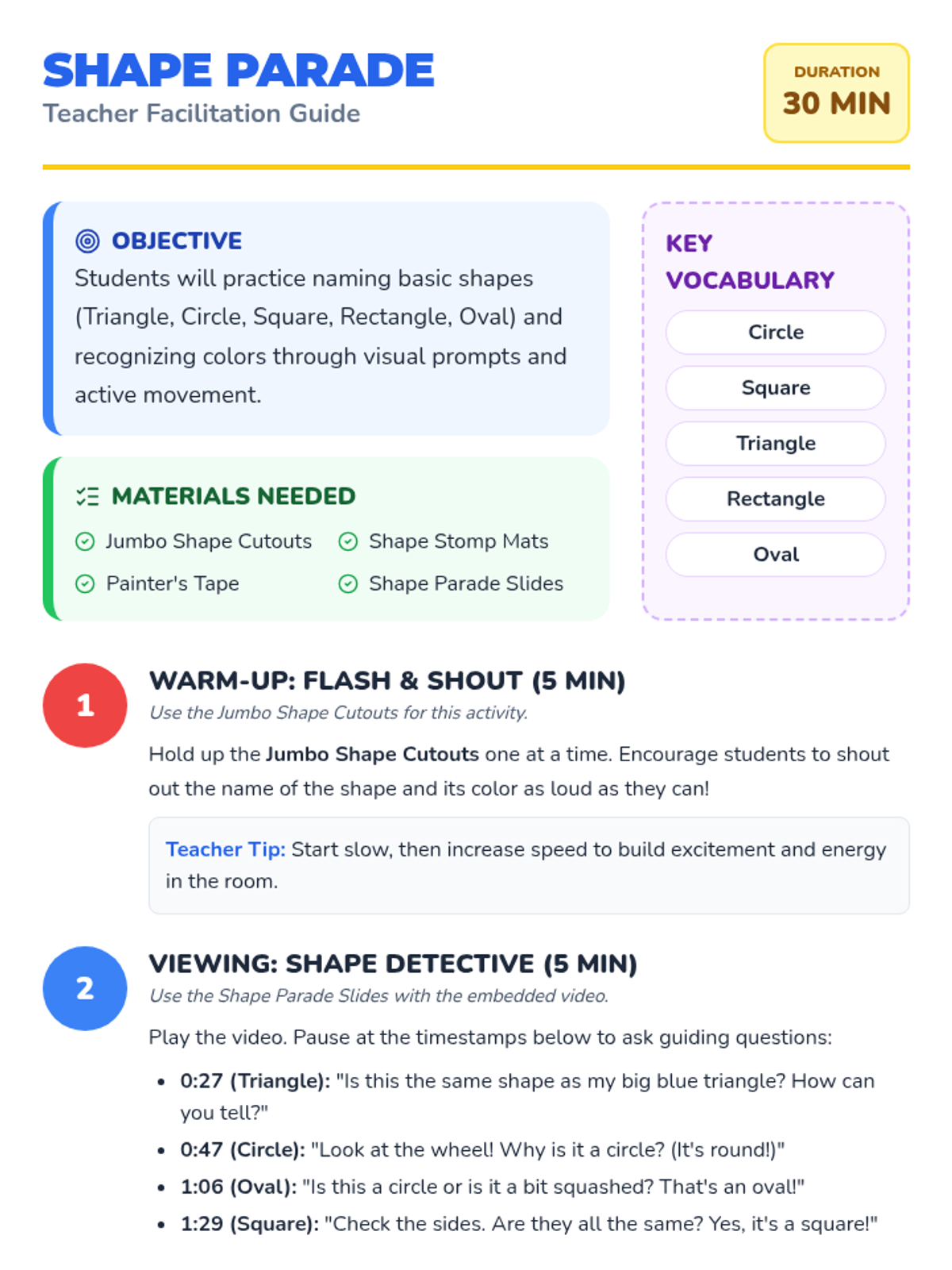
A high-energy introductory lesson for Pre-K students to identify circles, squares, triangles, rectangles, and ovals through movement, video, and hands-on play.
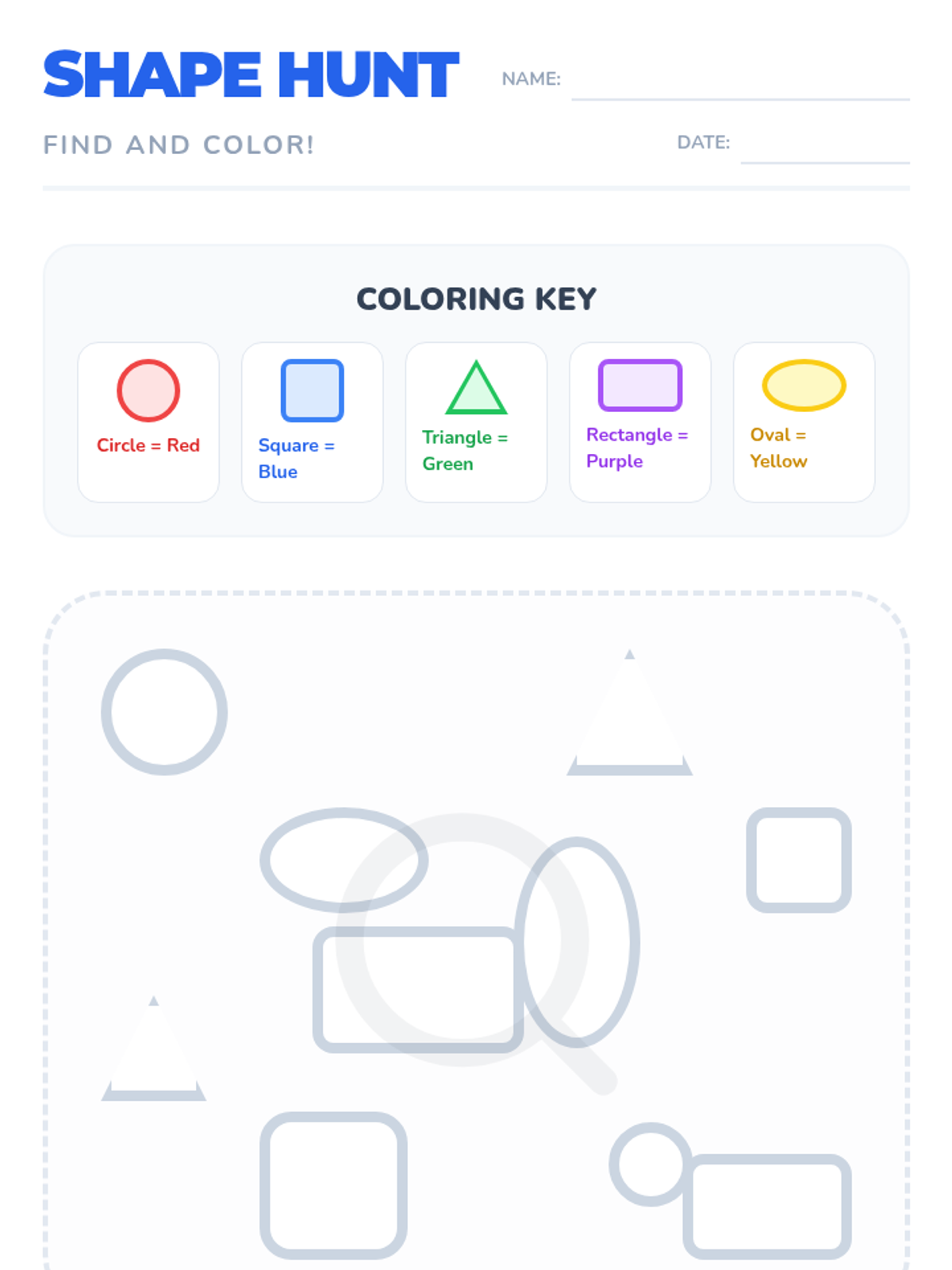
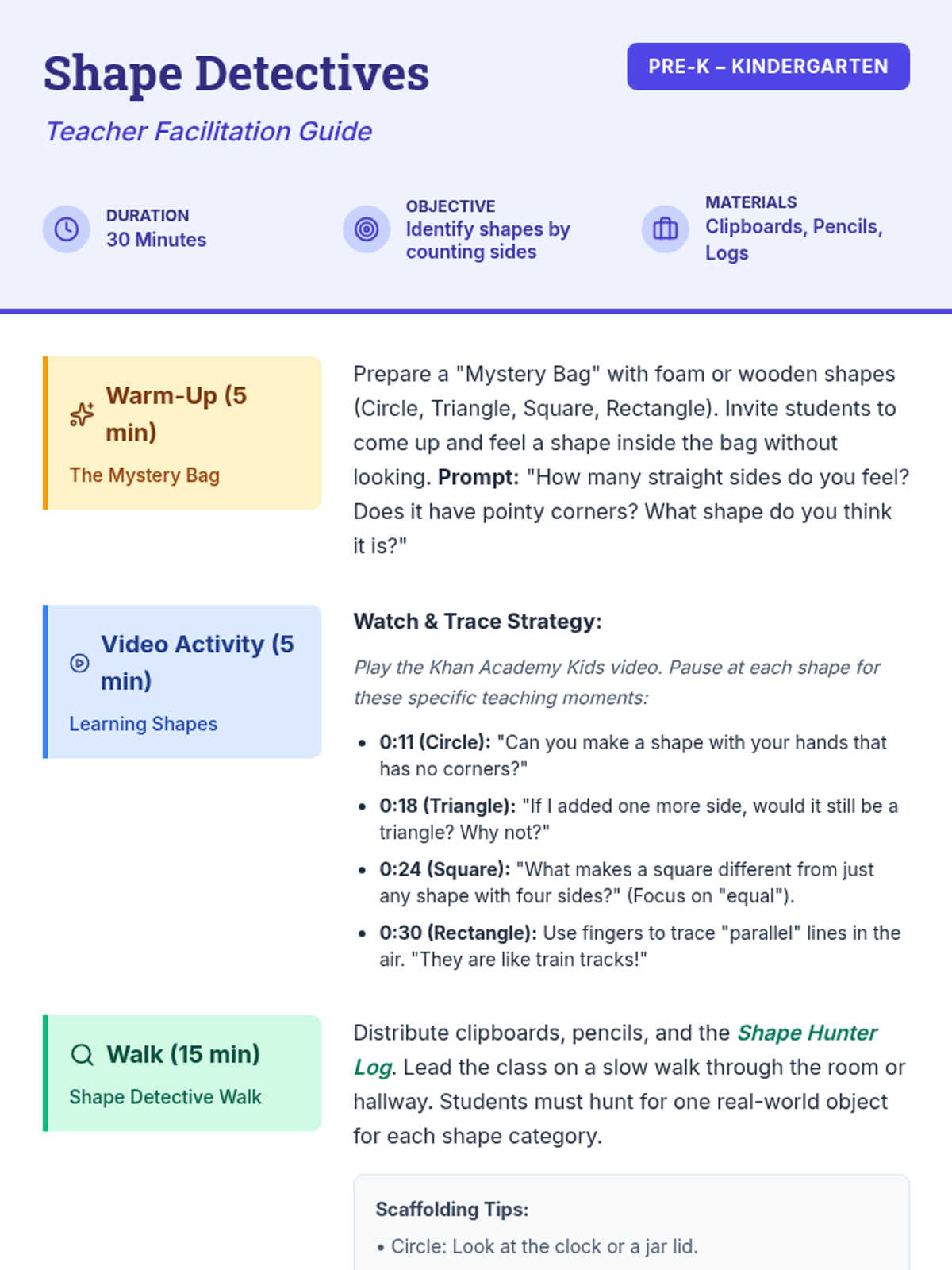
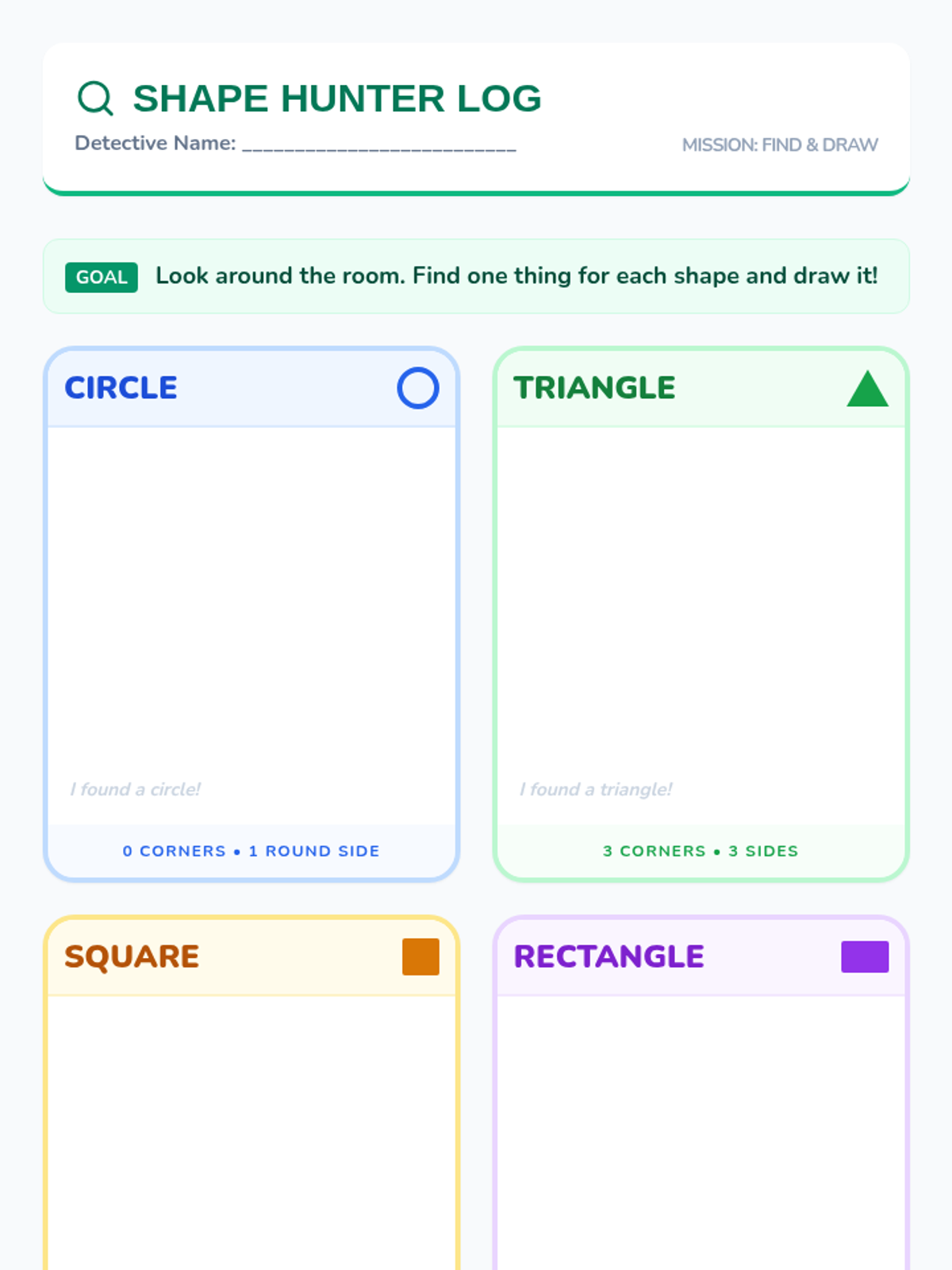
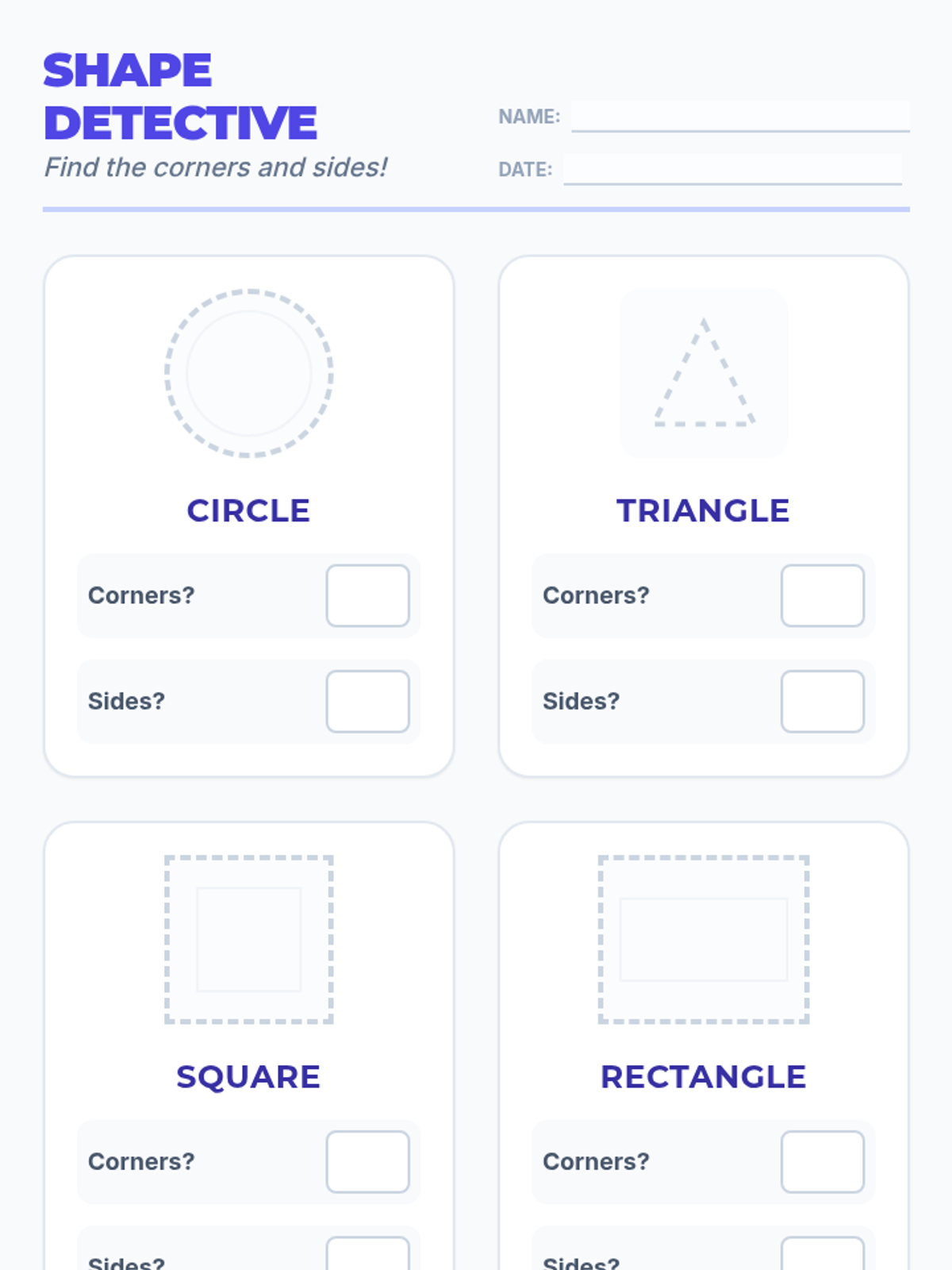
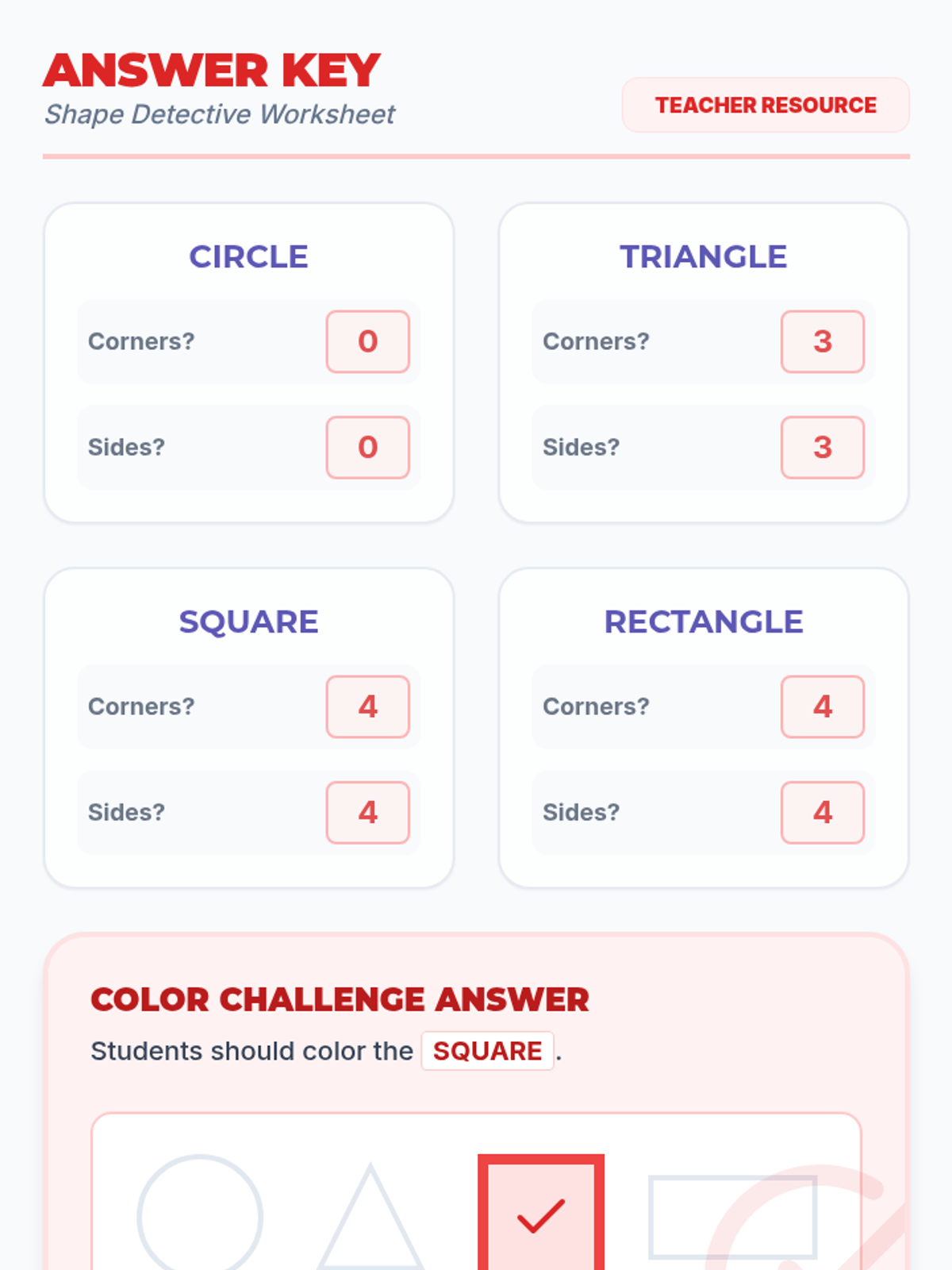
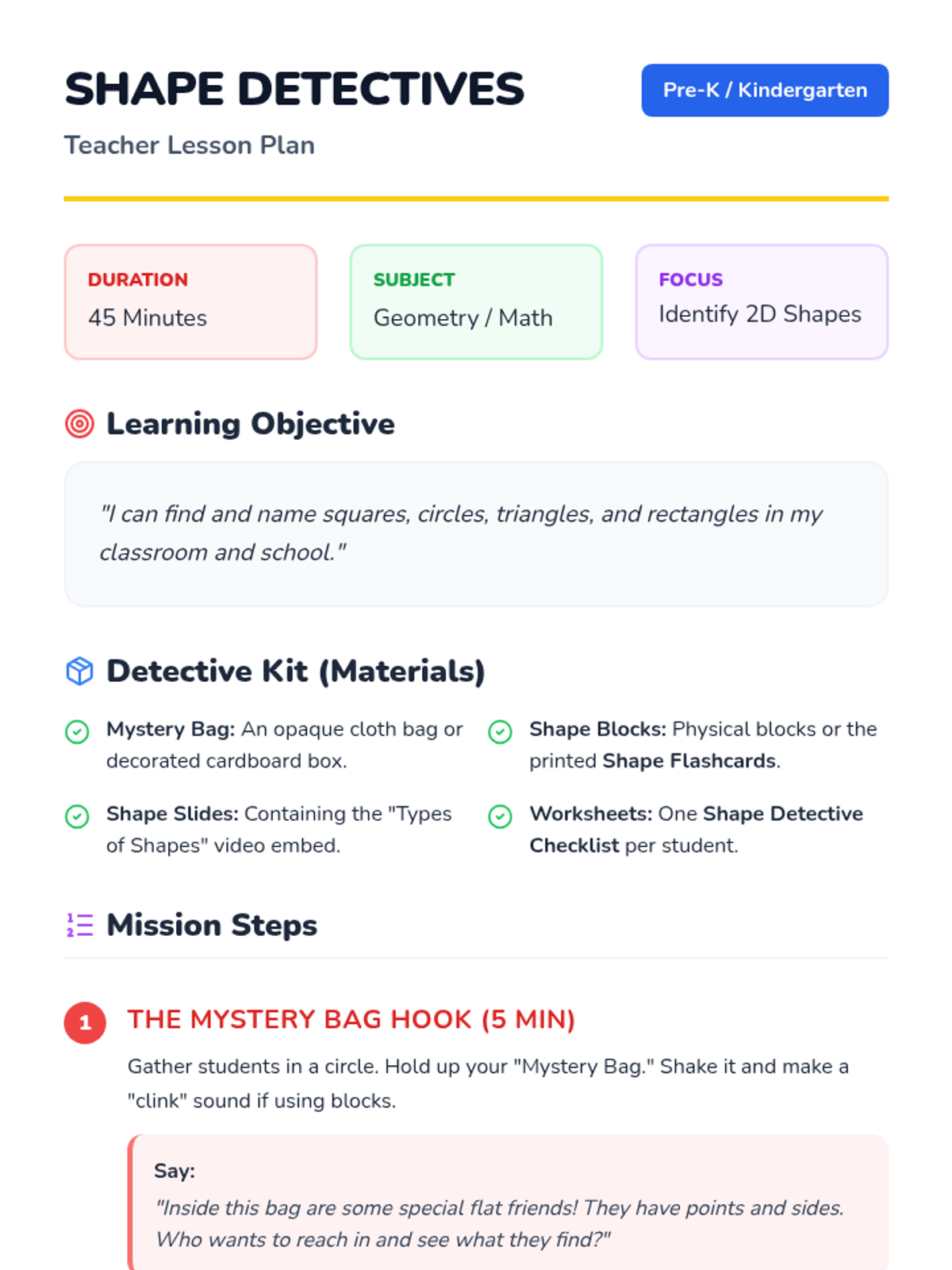
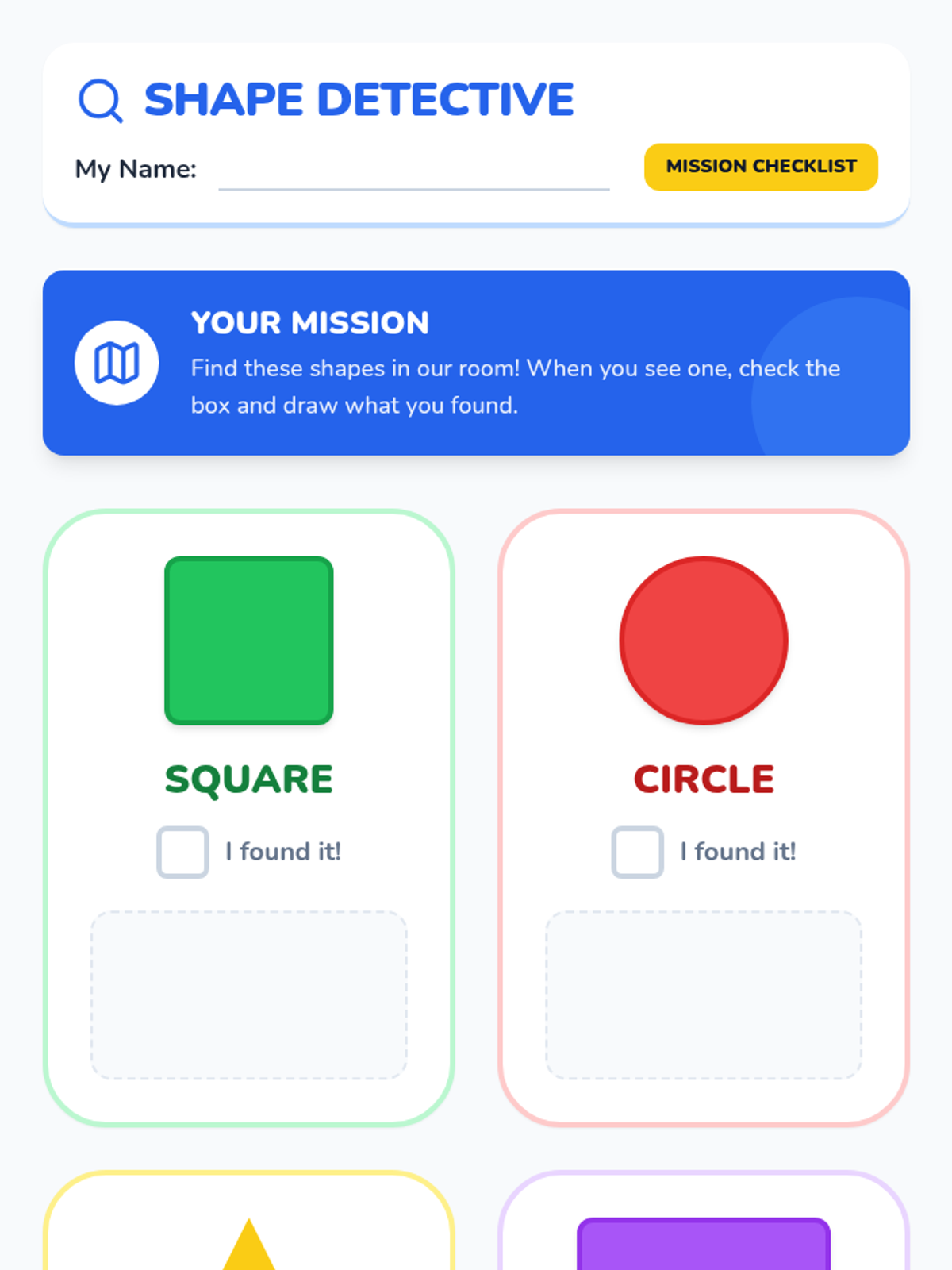
A fun, interactive lesson where Pre-K and Kindergarten students become 'Shape Detectives' to identify circles, triangles, squares, and rectangles by counting their sides and finding them in the real world.
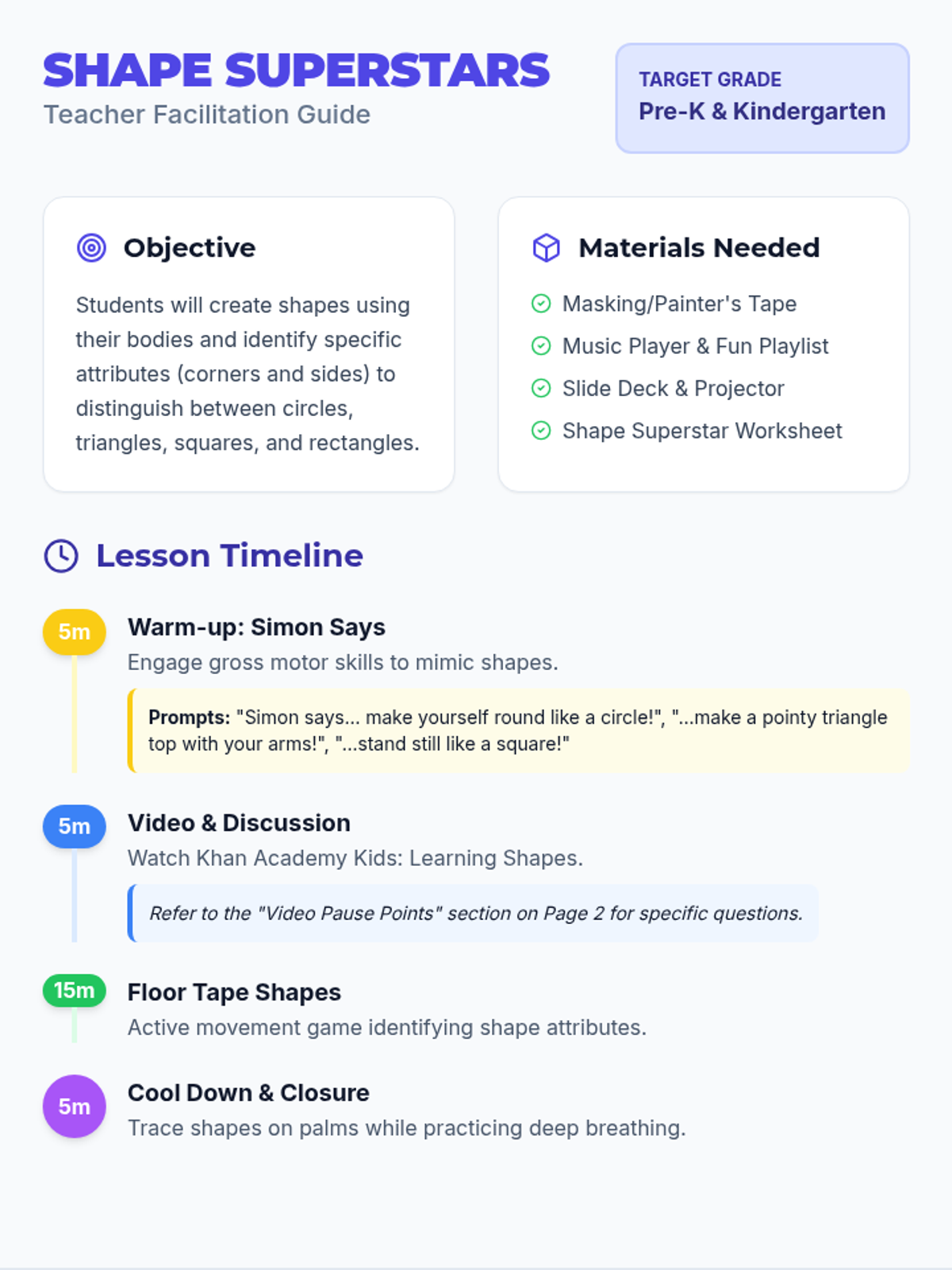
Students will explore 2D shapes (circle, triangle, square, rectangle) through body movement, video observation, and a large-scale floor game to identify sides and corners.
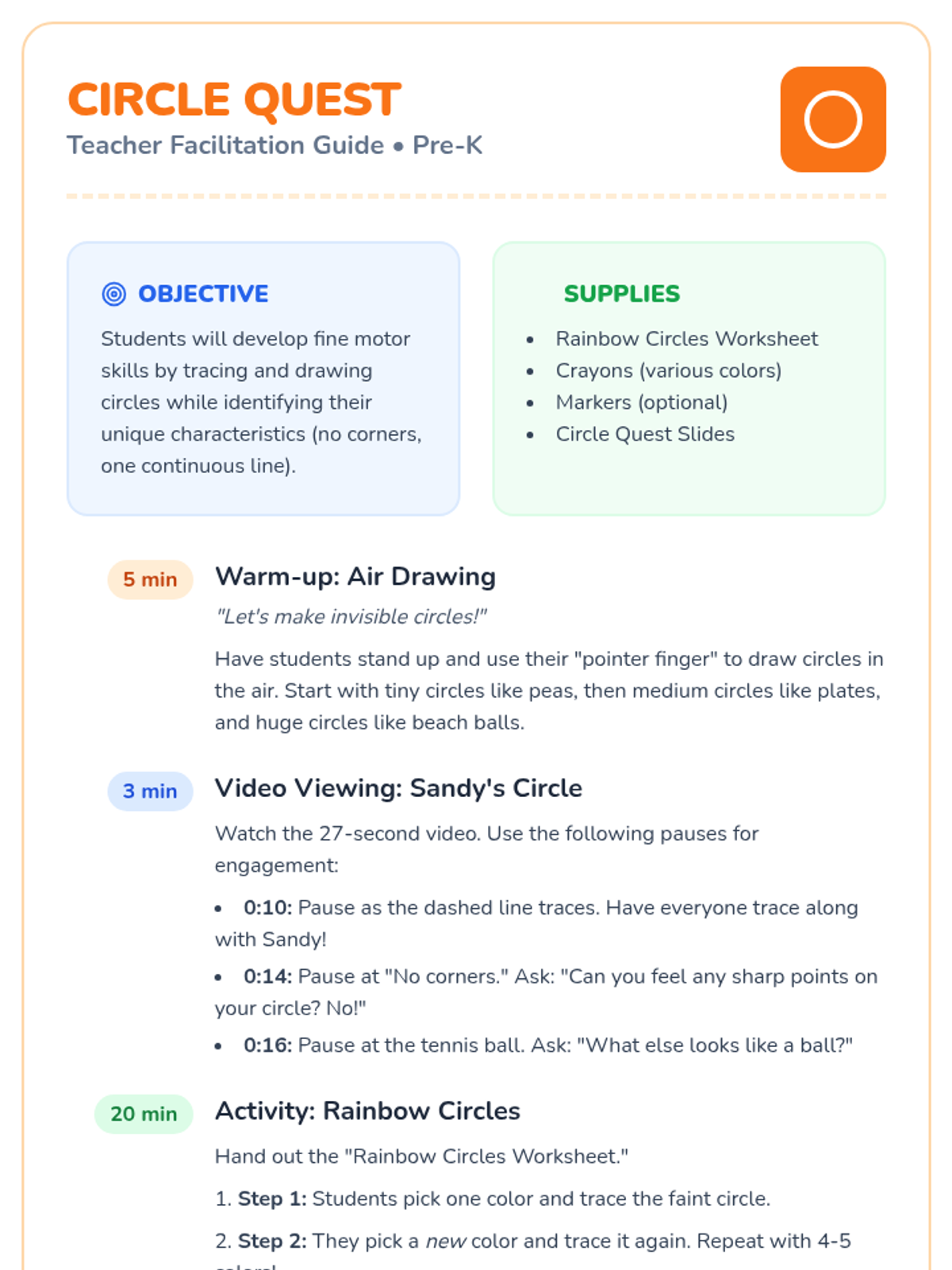
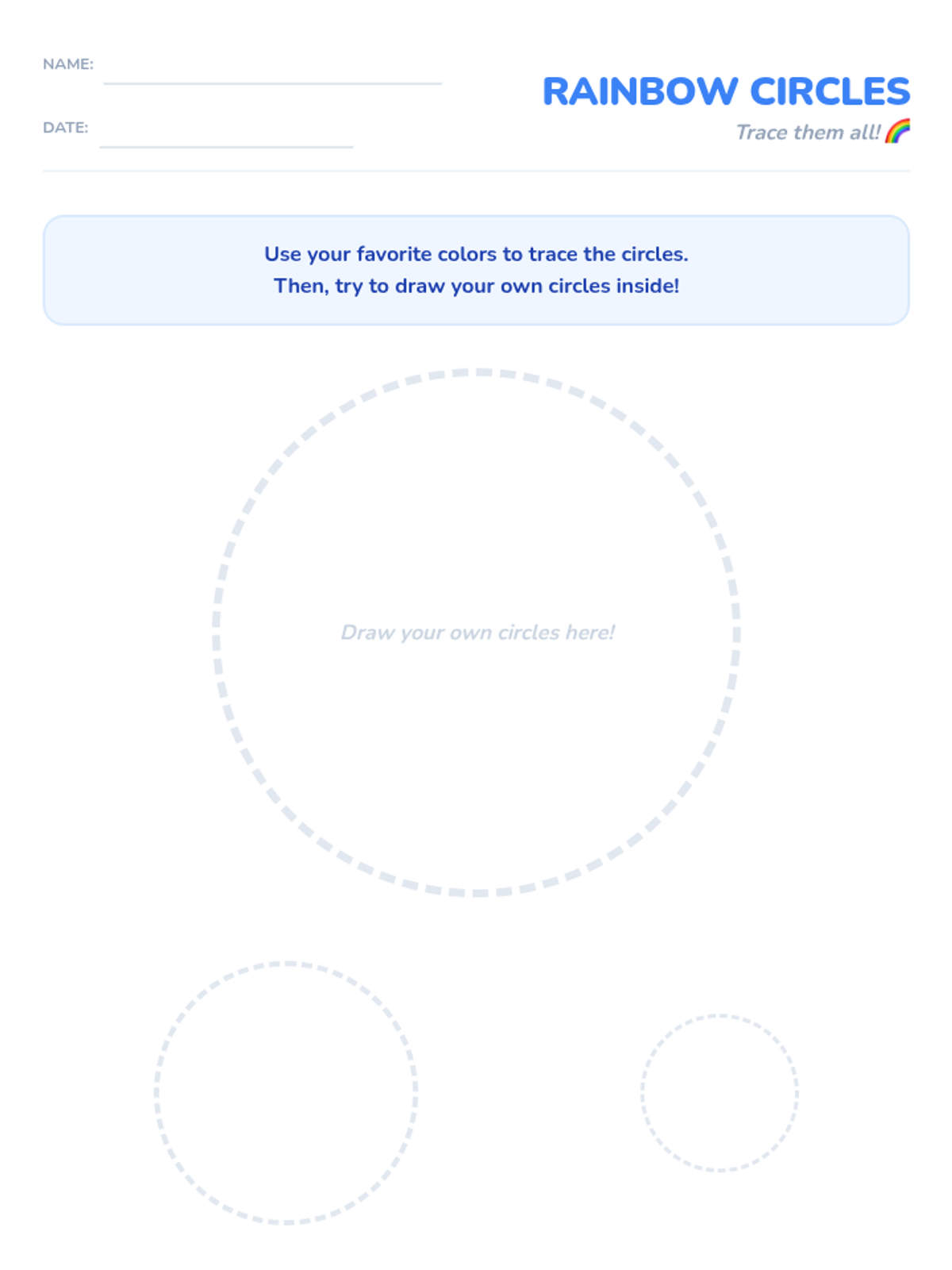
A Pre-K lesson focused on fine motor skills through air drawing, video observation, and rainbow-themed circle tracing and drawing.
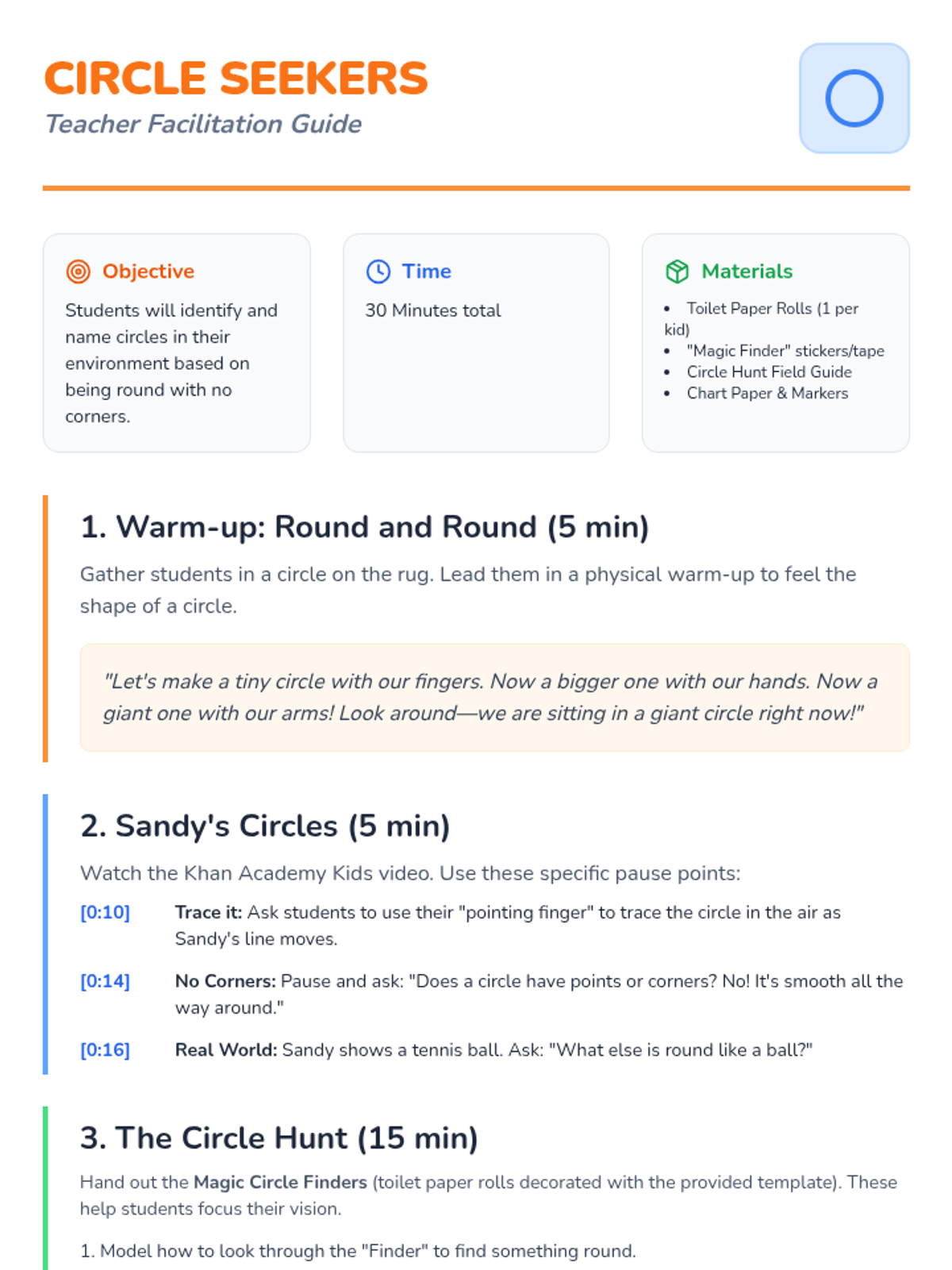
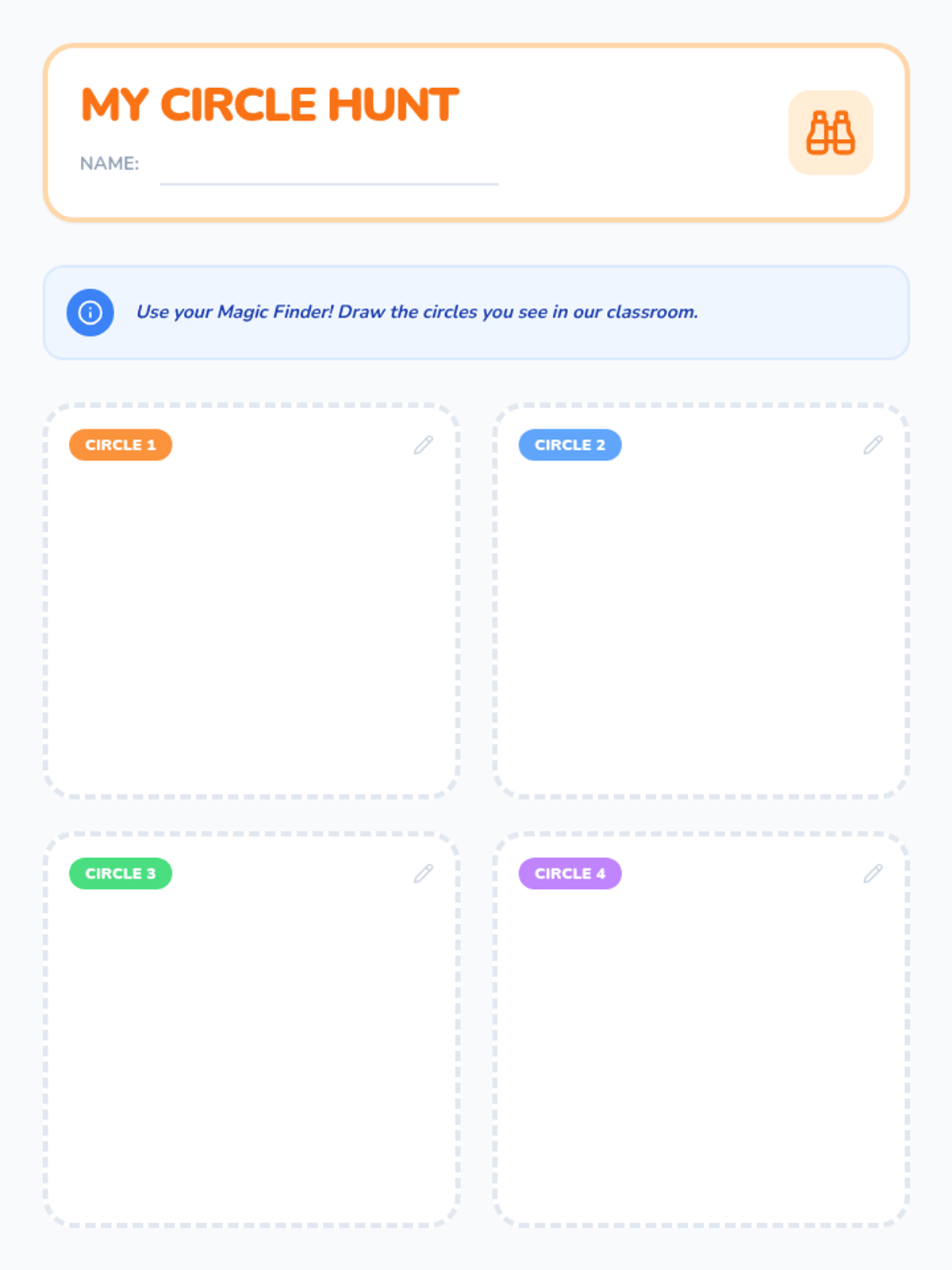
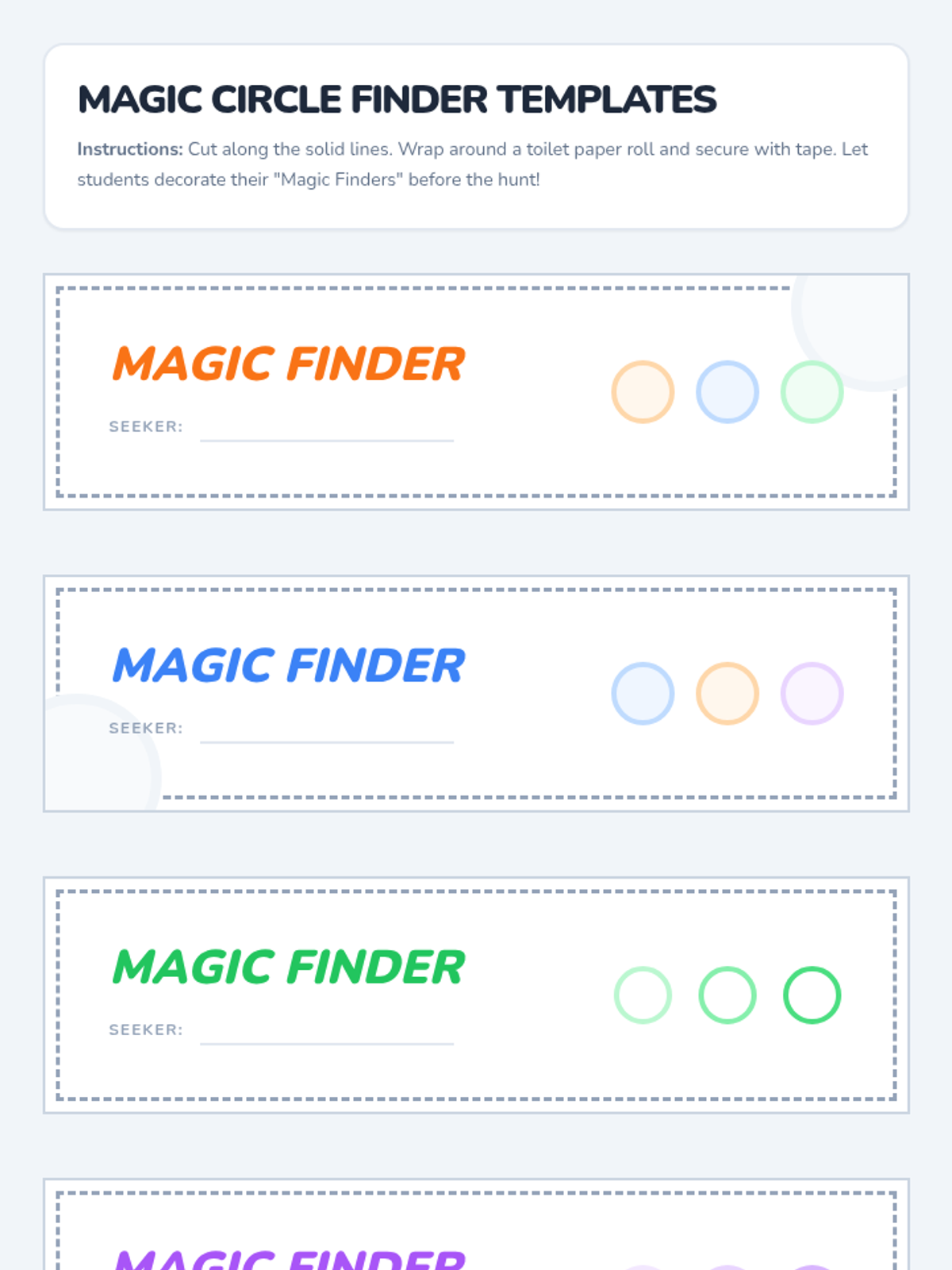
A playful Pre-K lesson where students learn to identify circles through song, a short video, and an interactive 'Circle Hunt' adventure using magic finders.
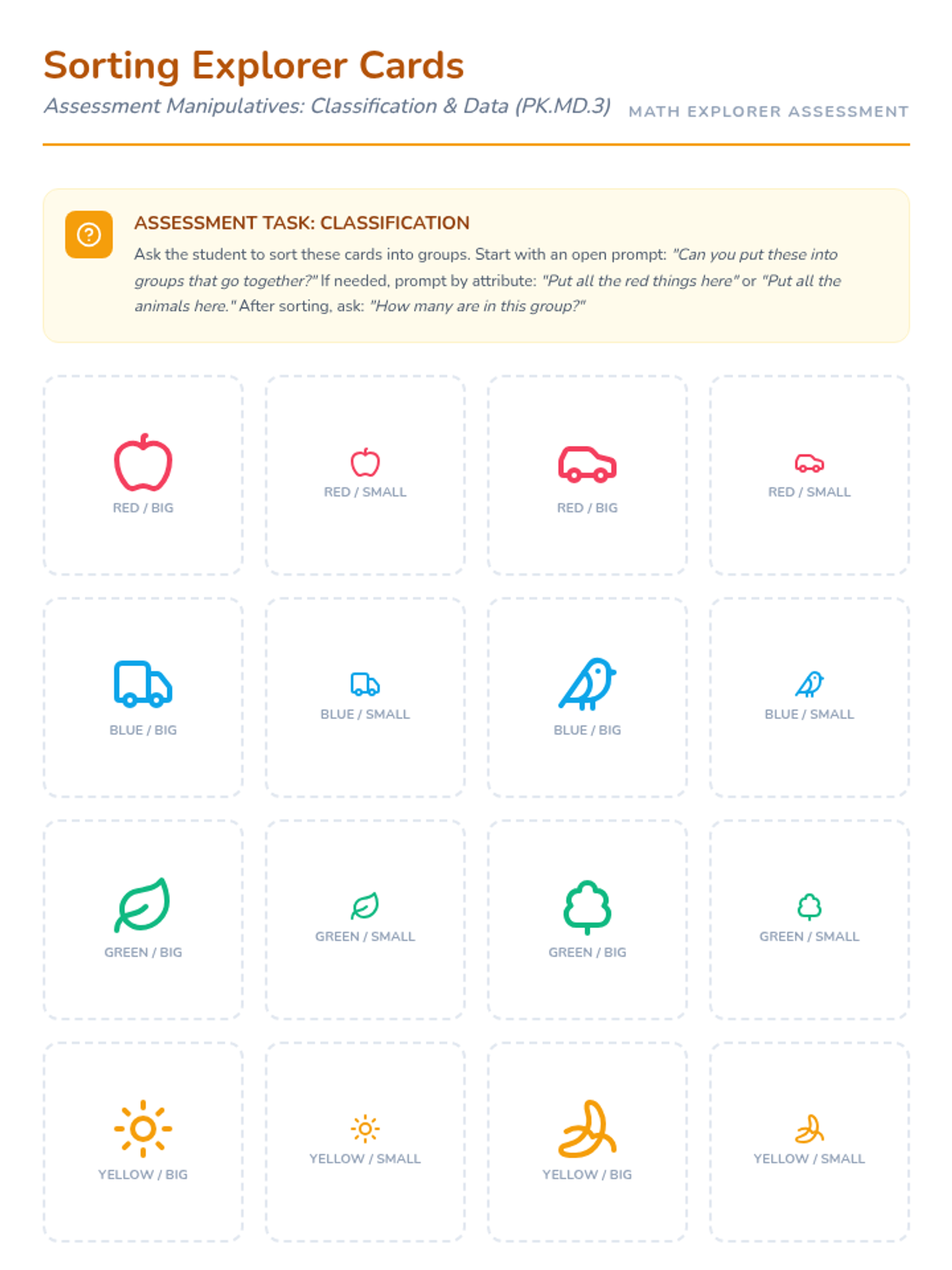
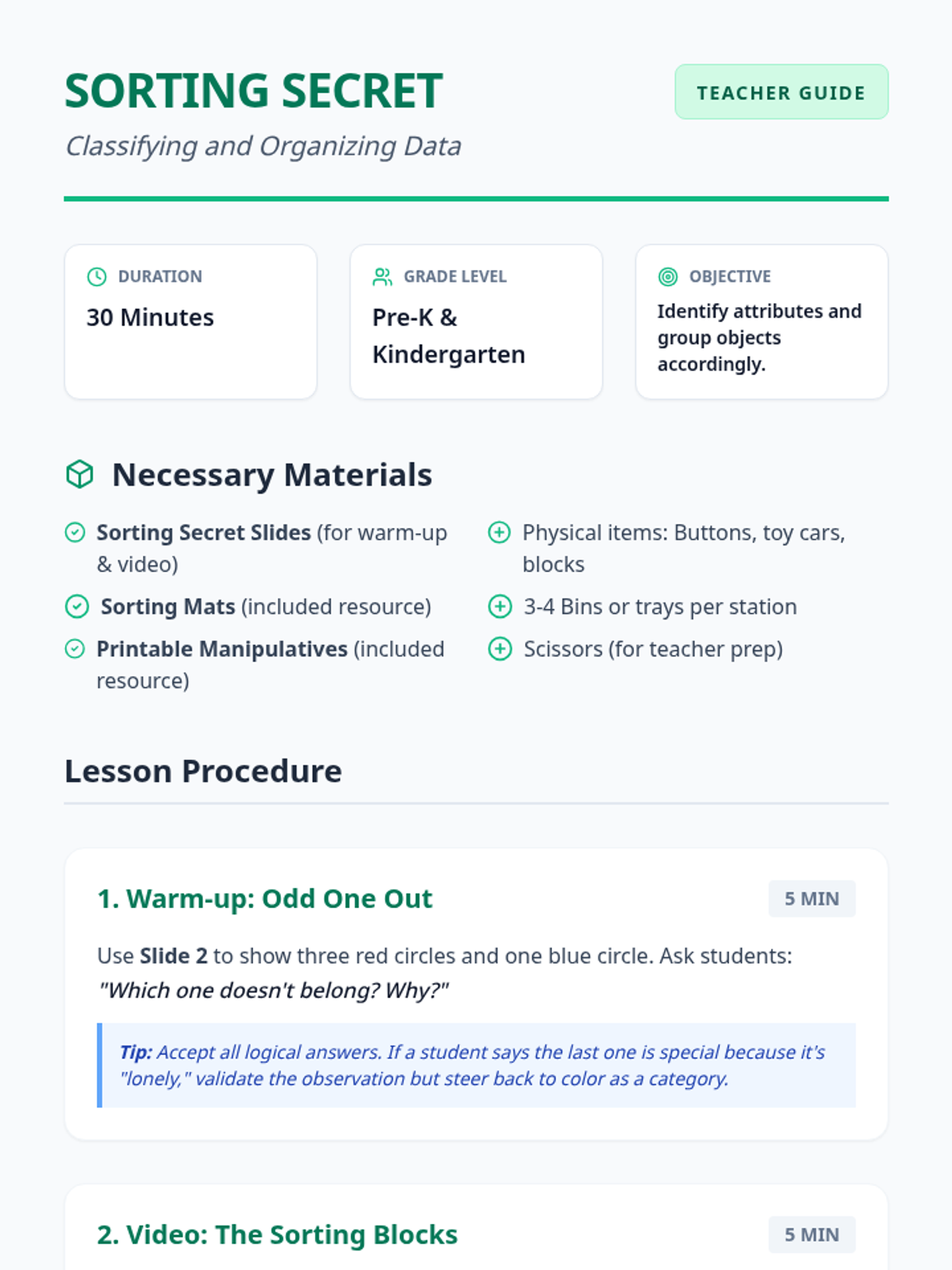
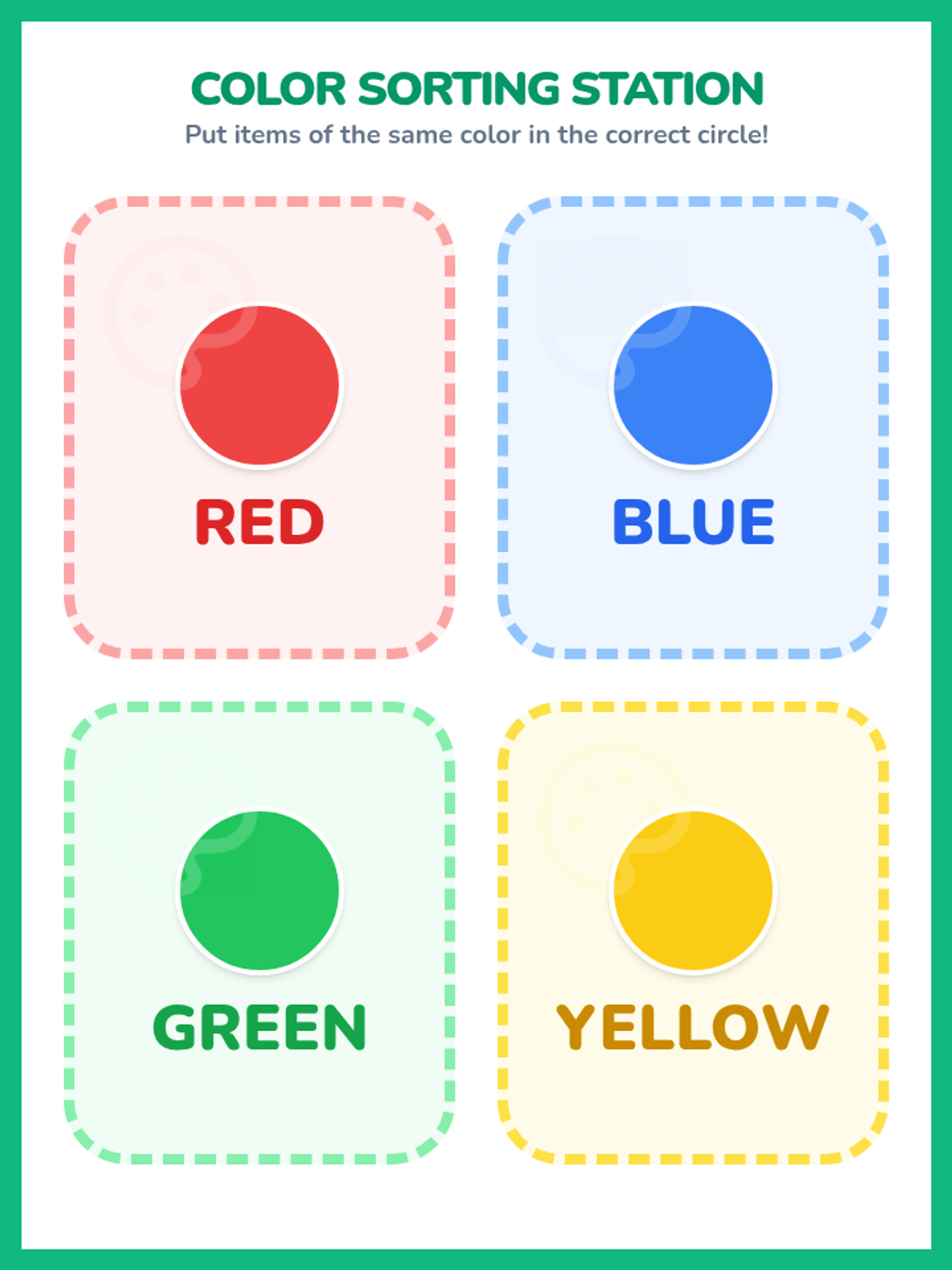
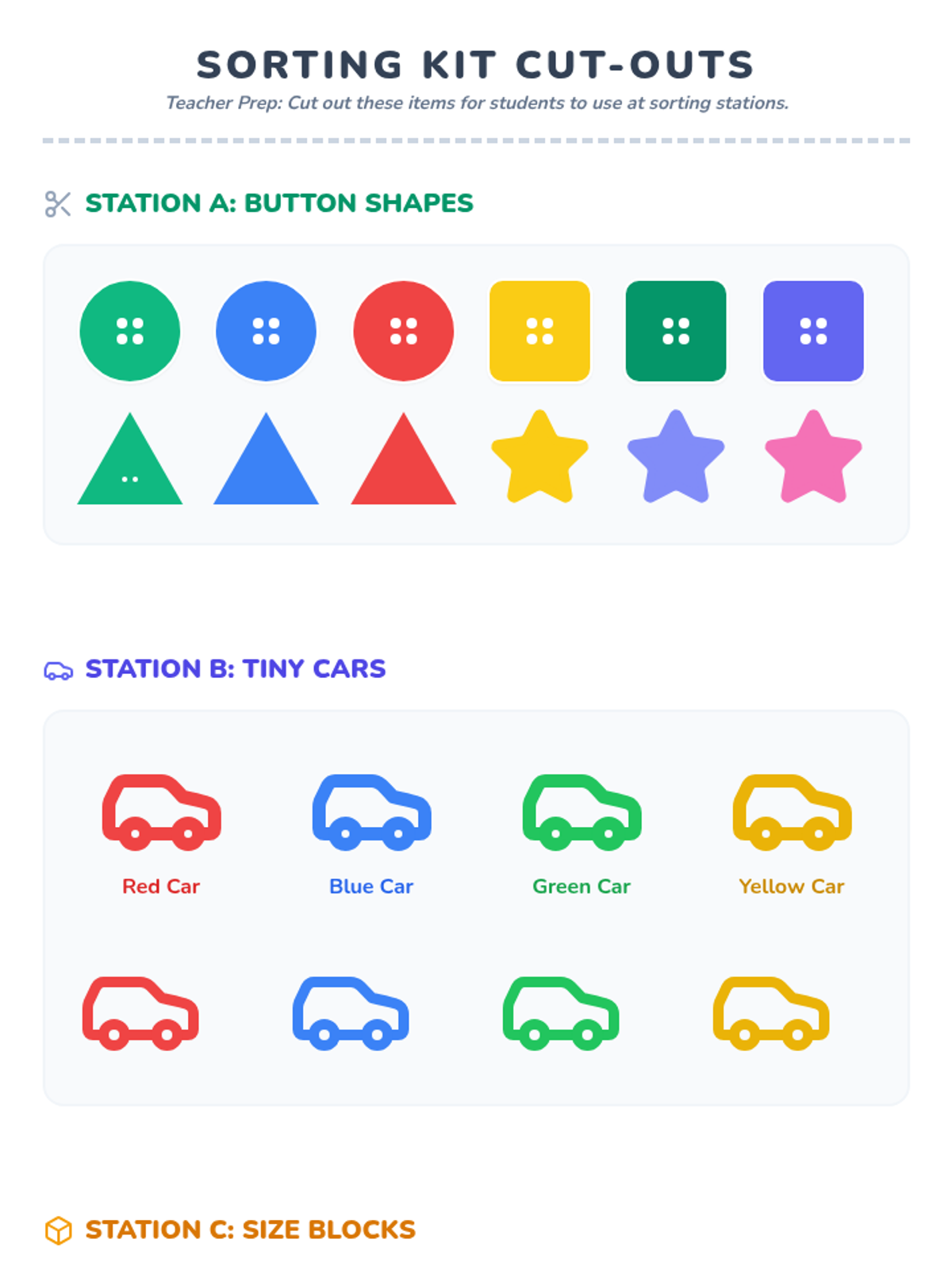
A foundational lesson for Pre-K and Kindergarten students focused on the classification aspect of data analysis. Students learn to sort objects by color, shape, and size through physical manipulatives and a guided video observation.
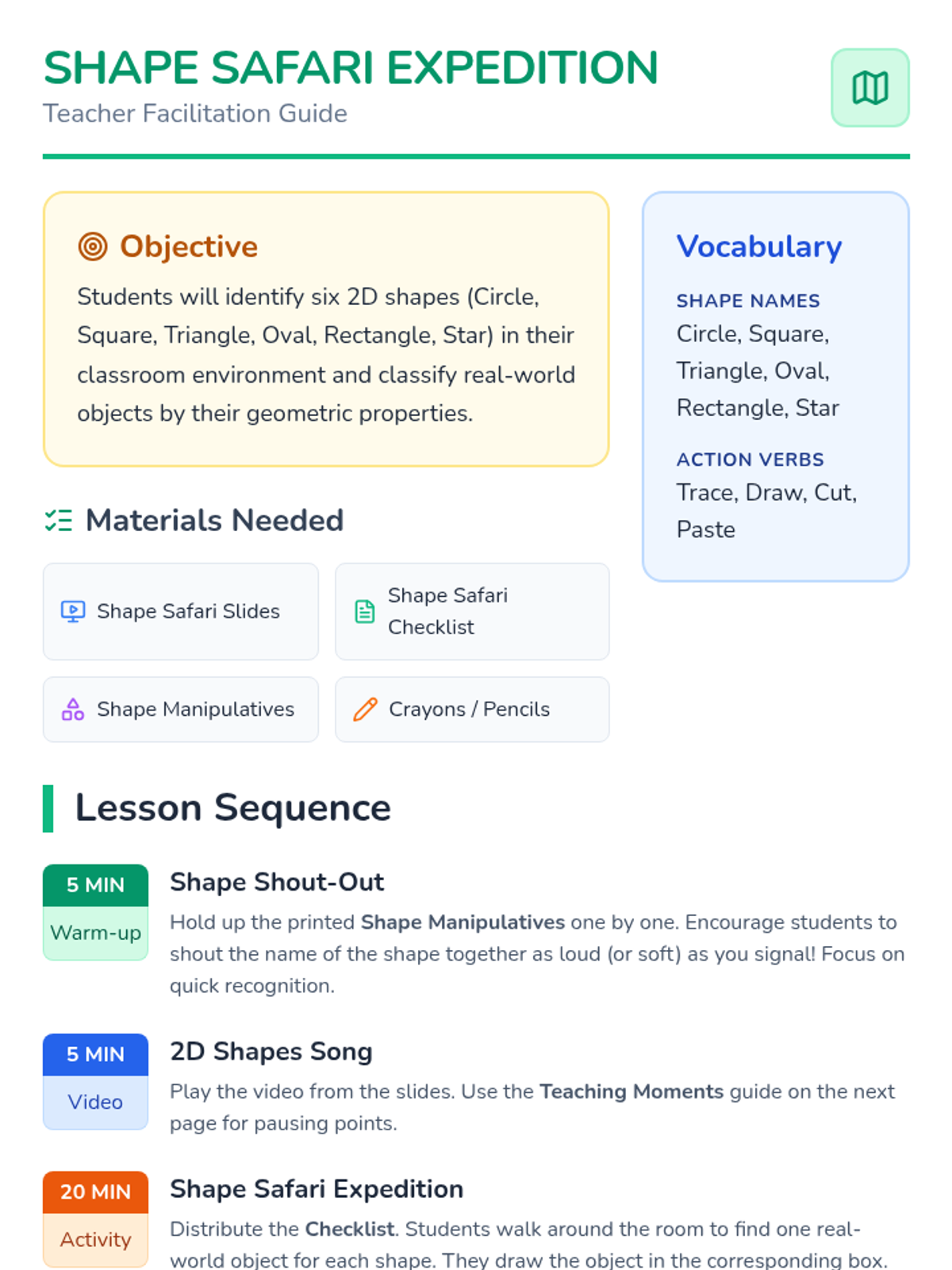
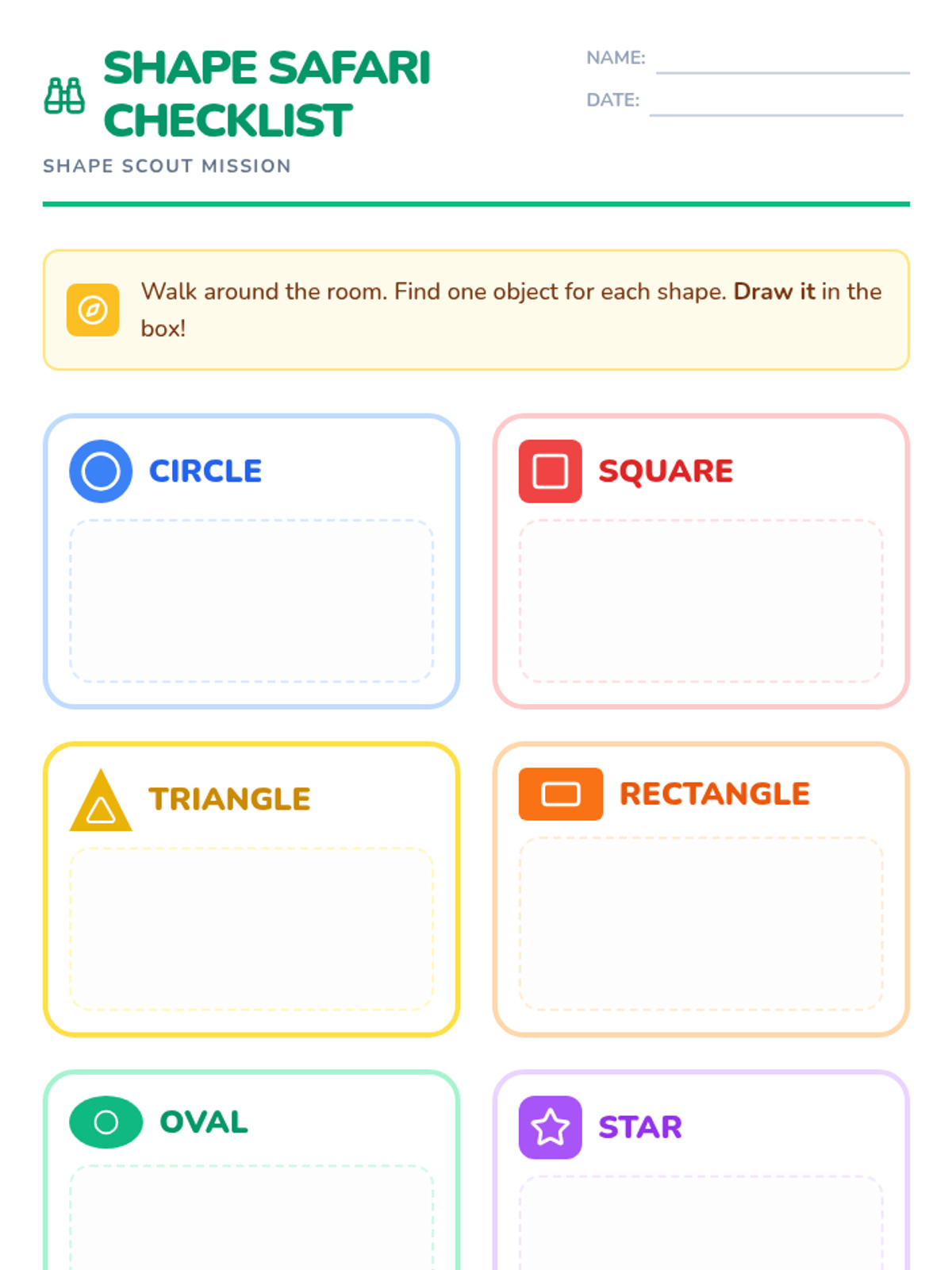
A hands-on Kindergarten lesson where students become 'Shape Scouts' to find and classify 2D shapes in their everyday environment using a catchy song and a classroom scavenger hunt.
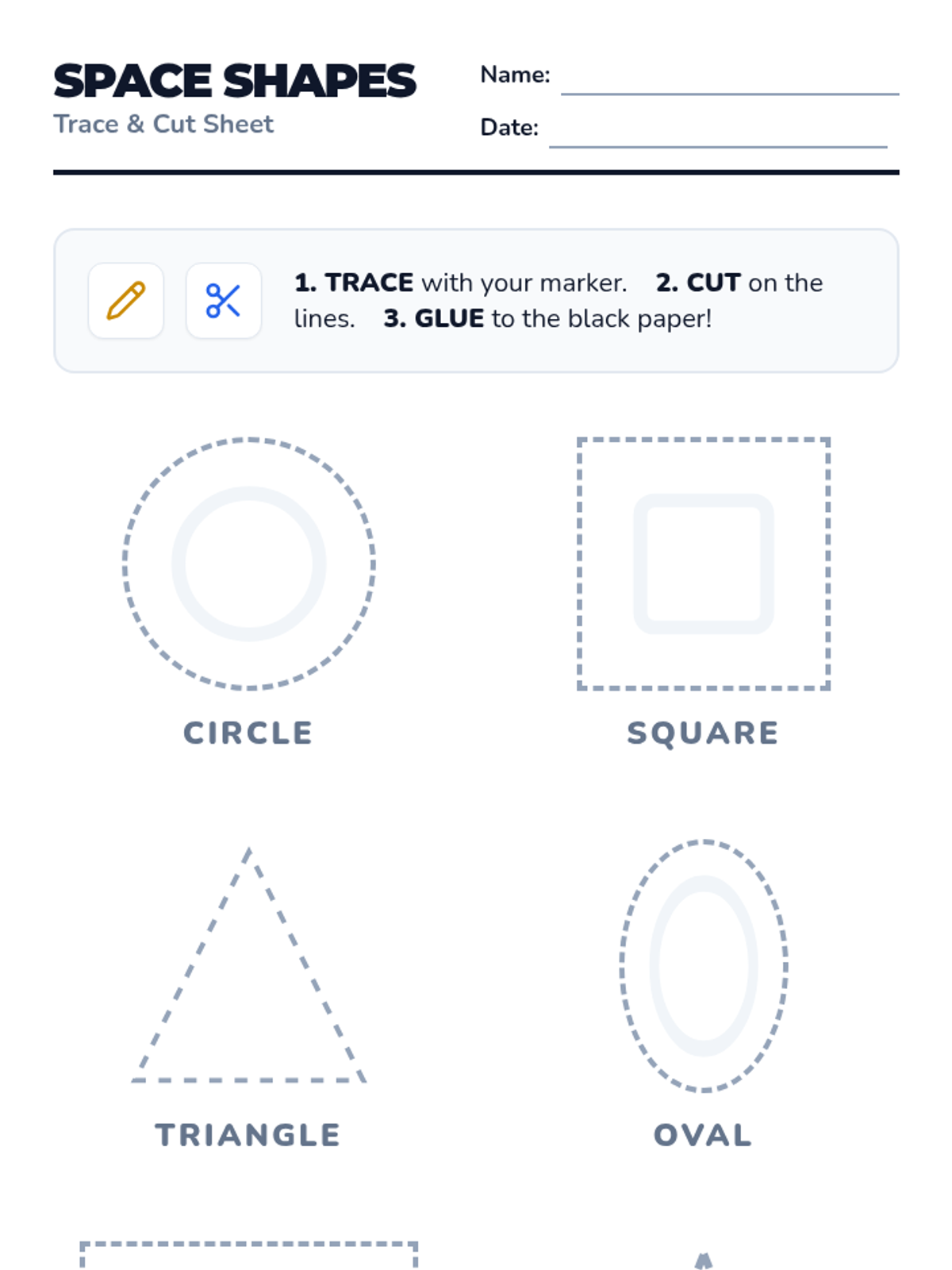
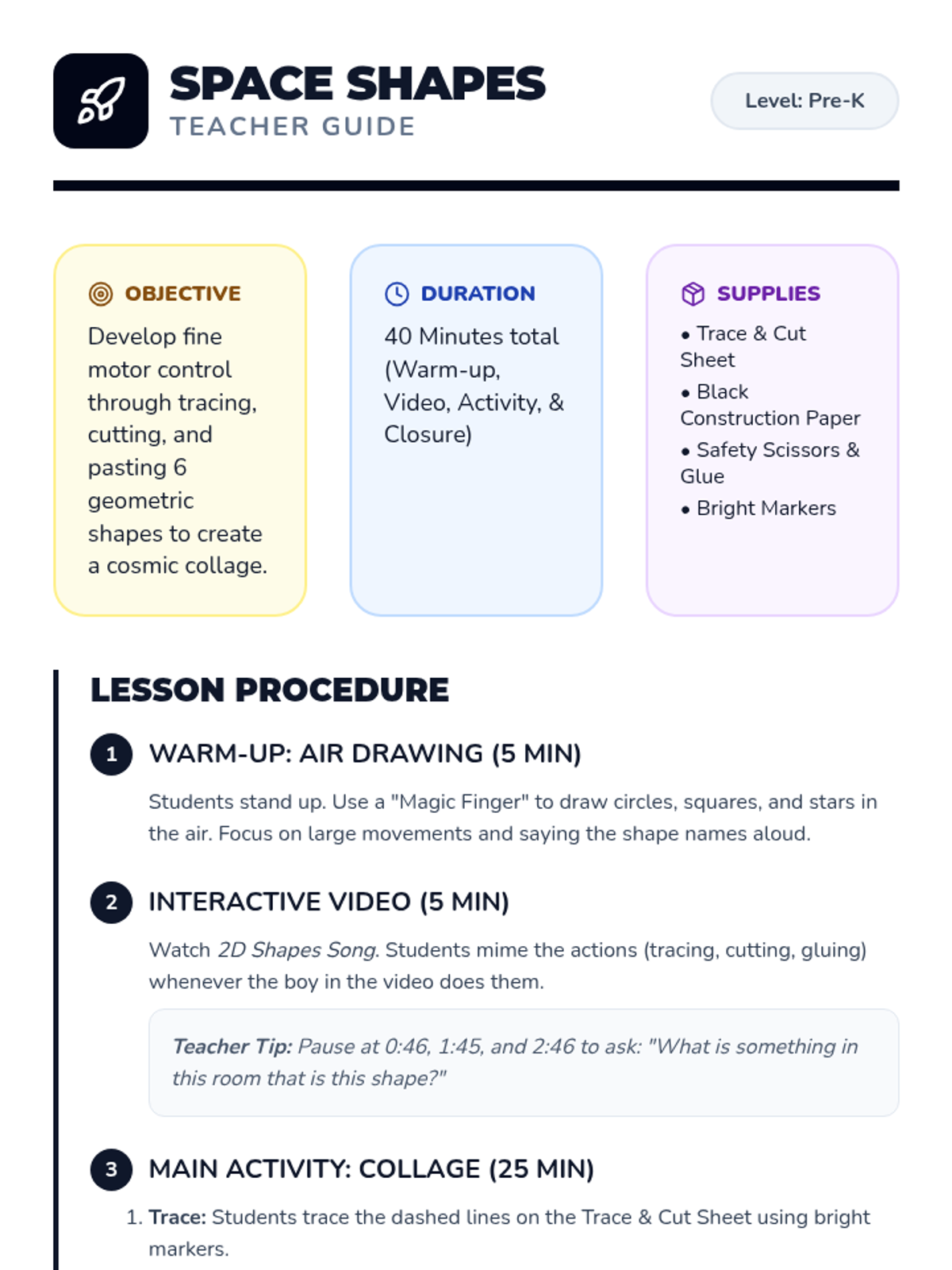
A Pre-K lesson focused on developing fine motor skills through tracing, cutting, and pasting 2D shapes to create a cosmic collage. Students engage with a catchy song and movement-based 'air drawing' before creating their own space-themed artwork.
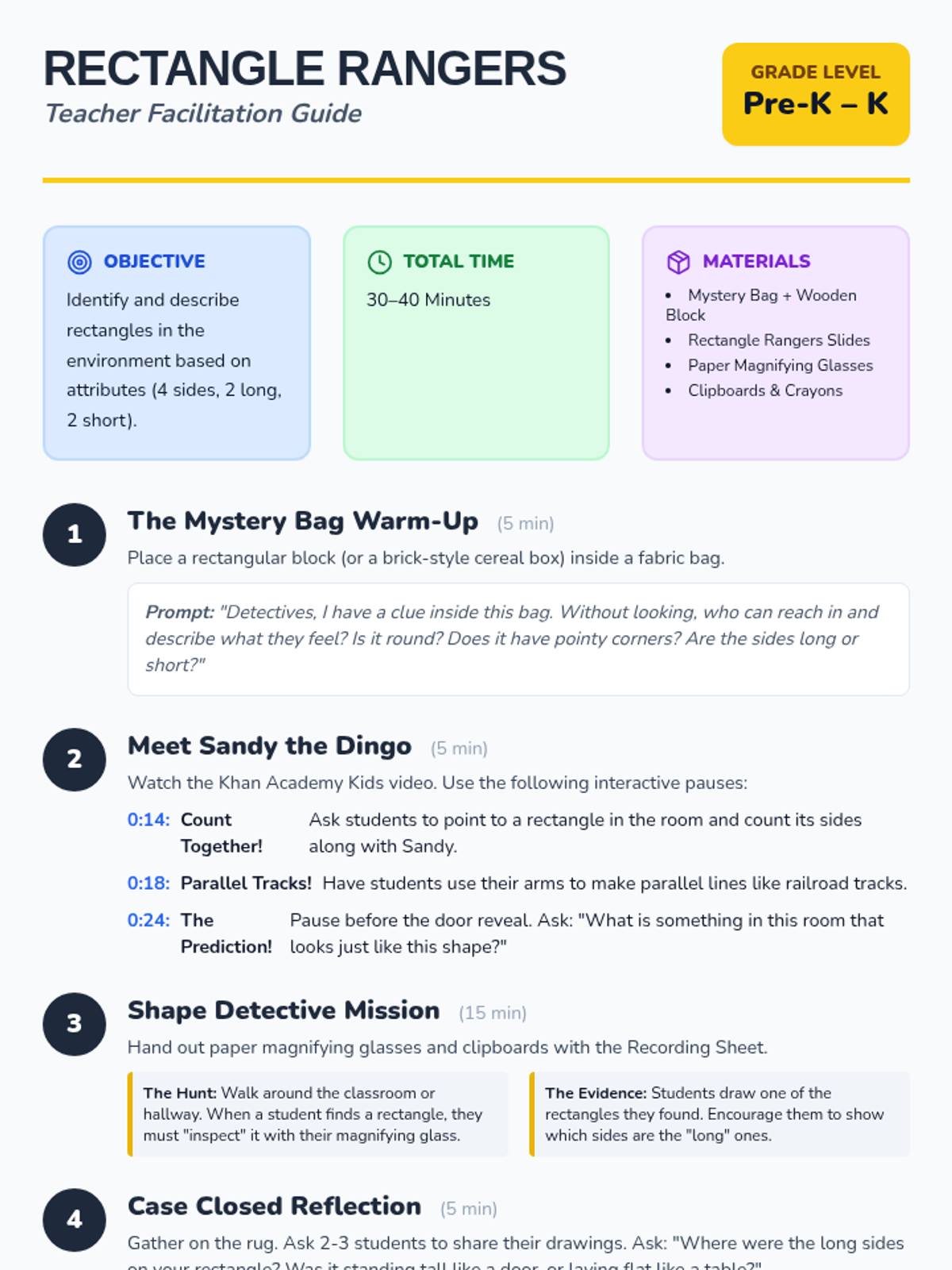
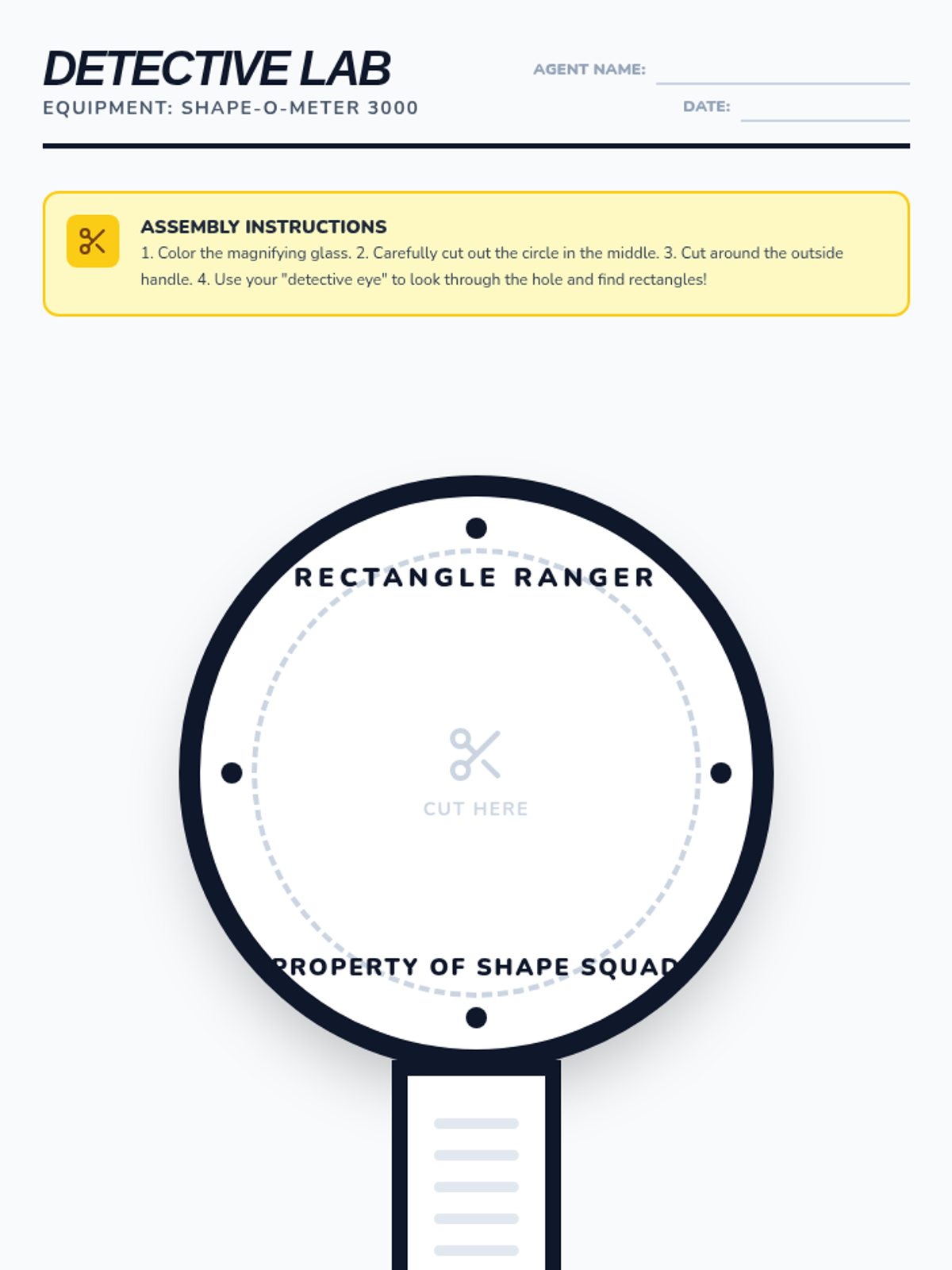
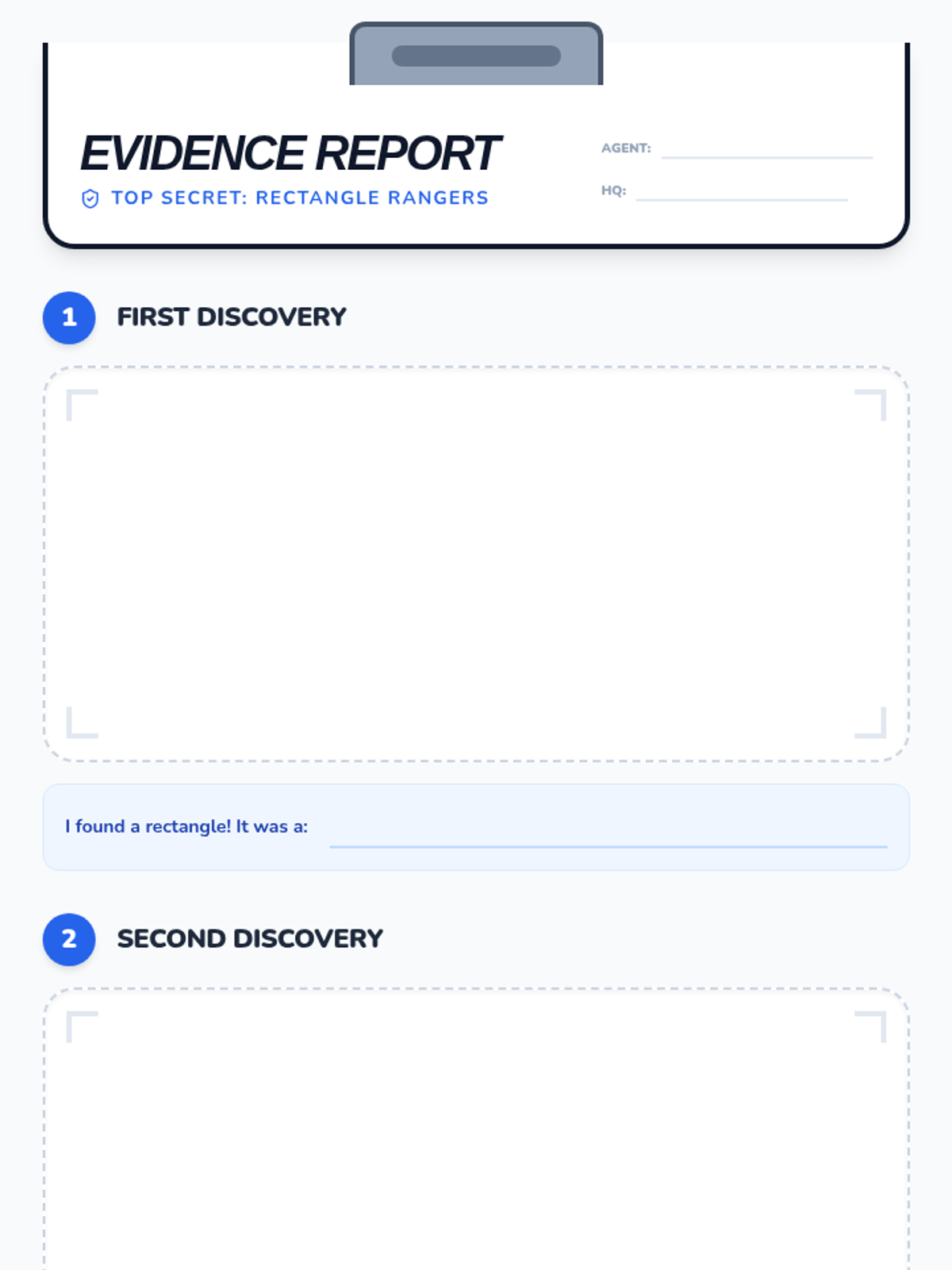
Students become Shape Detectives as they investigate the mysterious rectangle! Using their observation skills and paper magnifying glasses, they'll hunt for four-sided shapes with two long and two short sides all around their classroom.
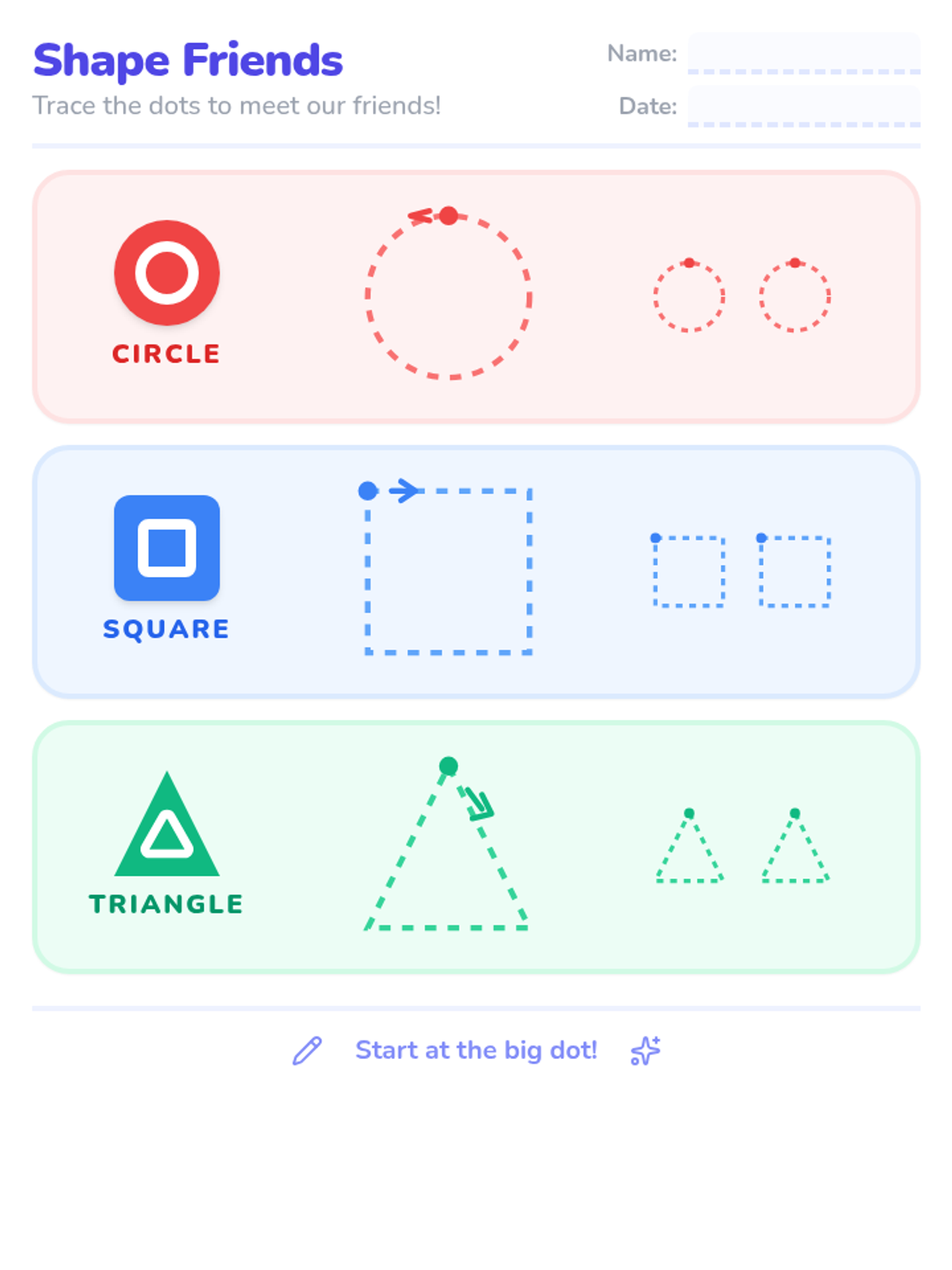
A fun introduction to basic shapes through tracing and recognition activities.
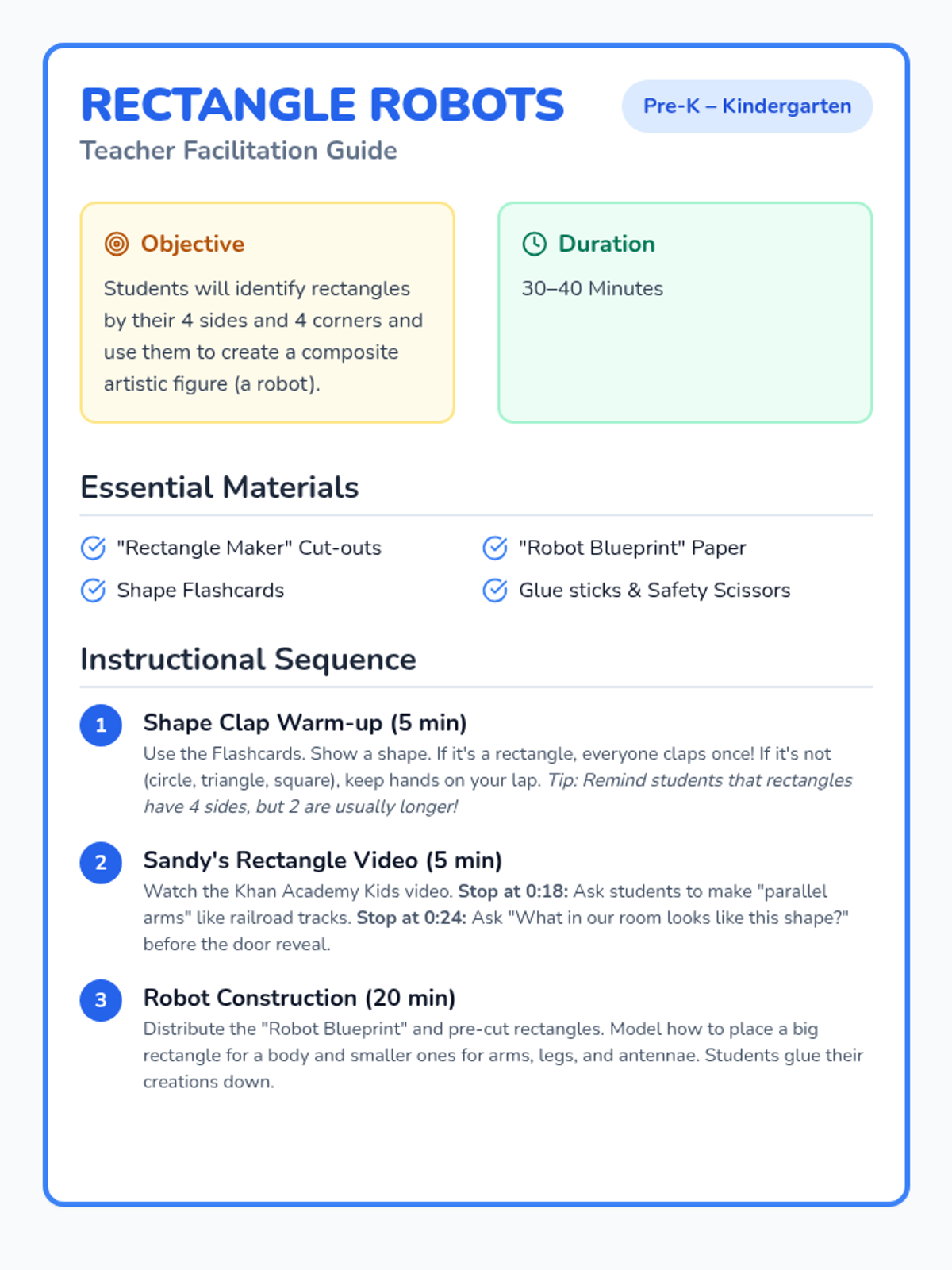
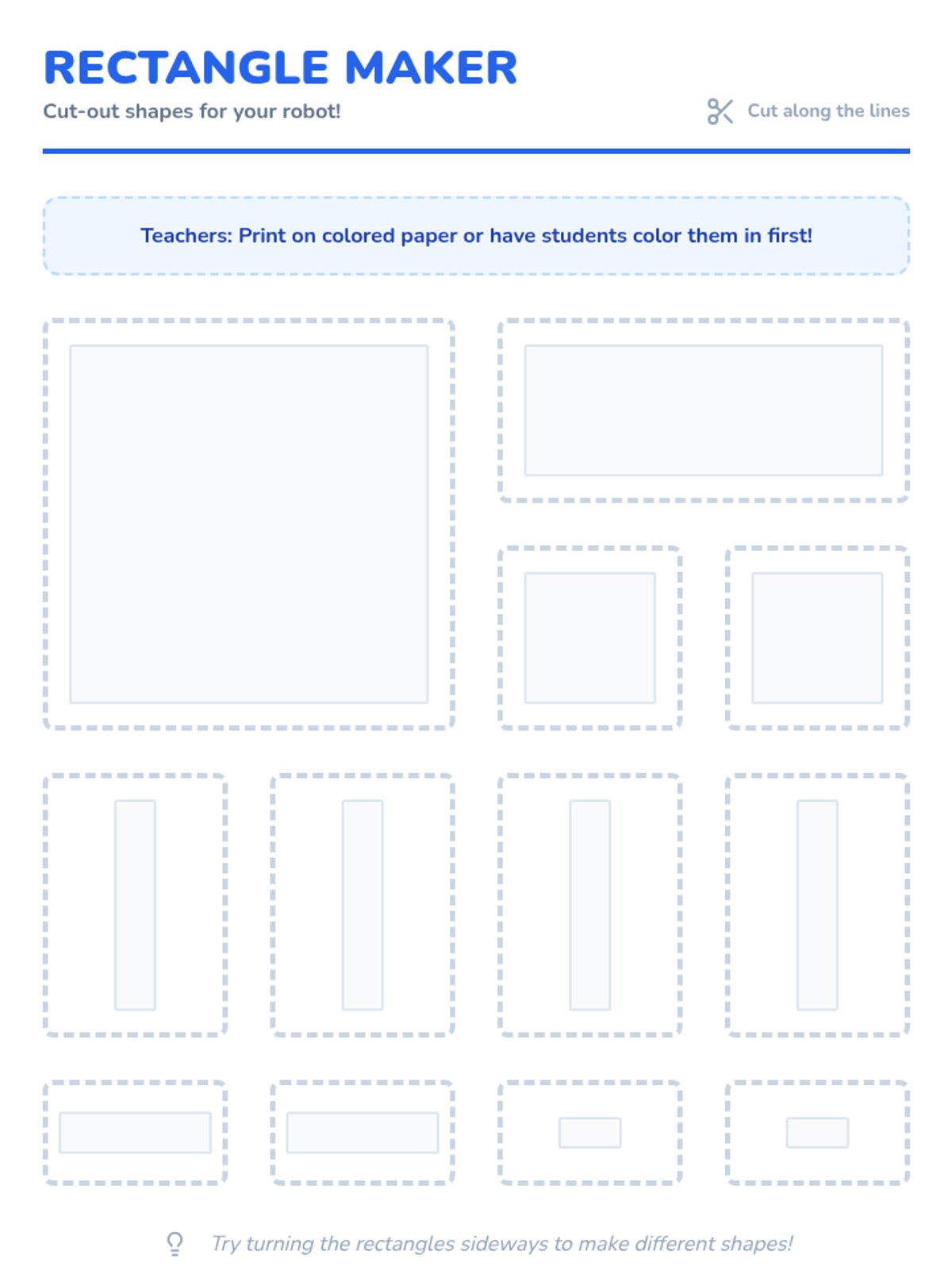
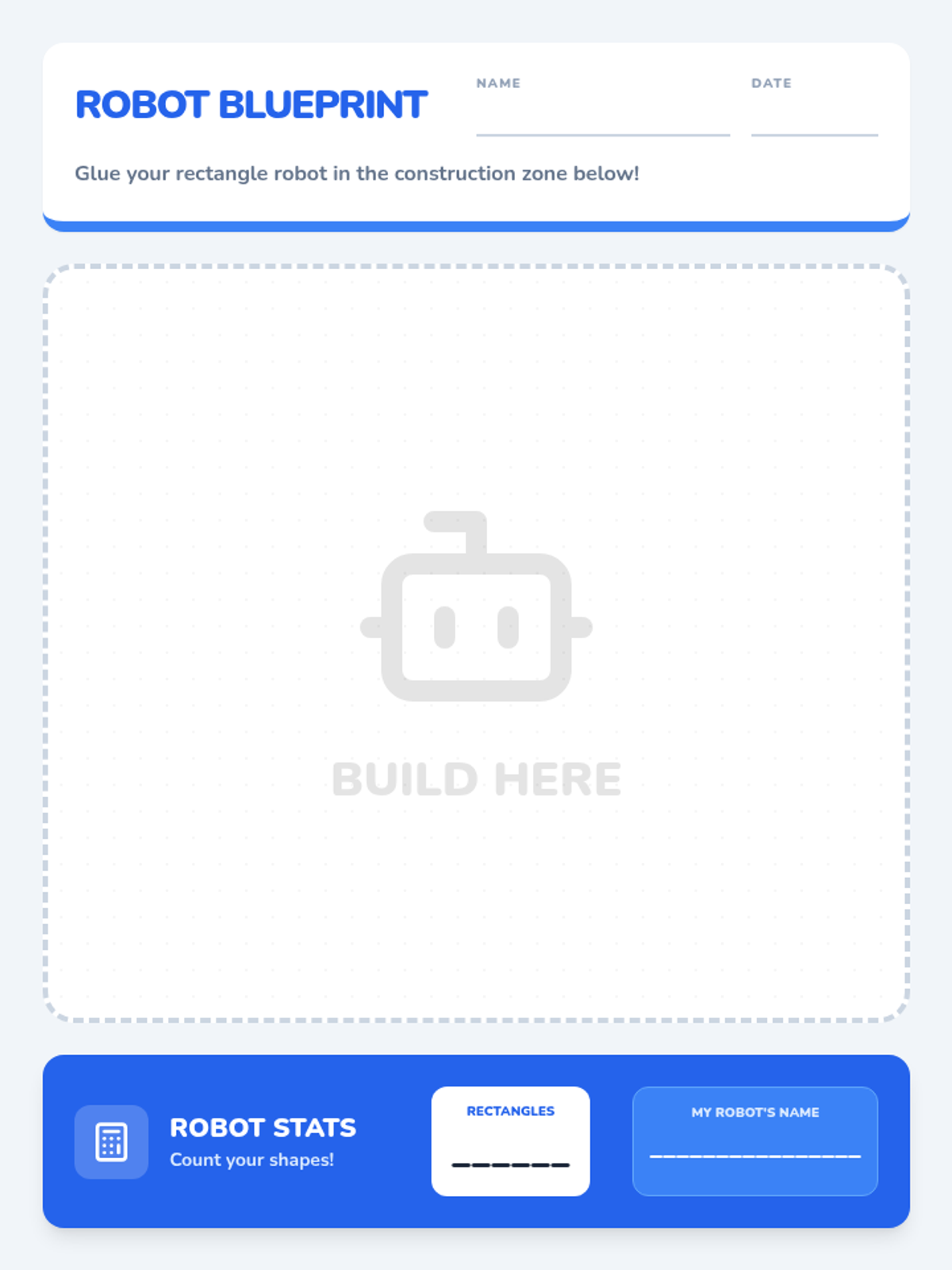
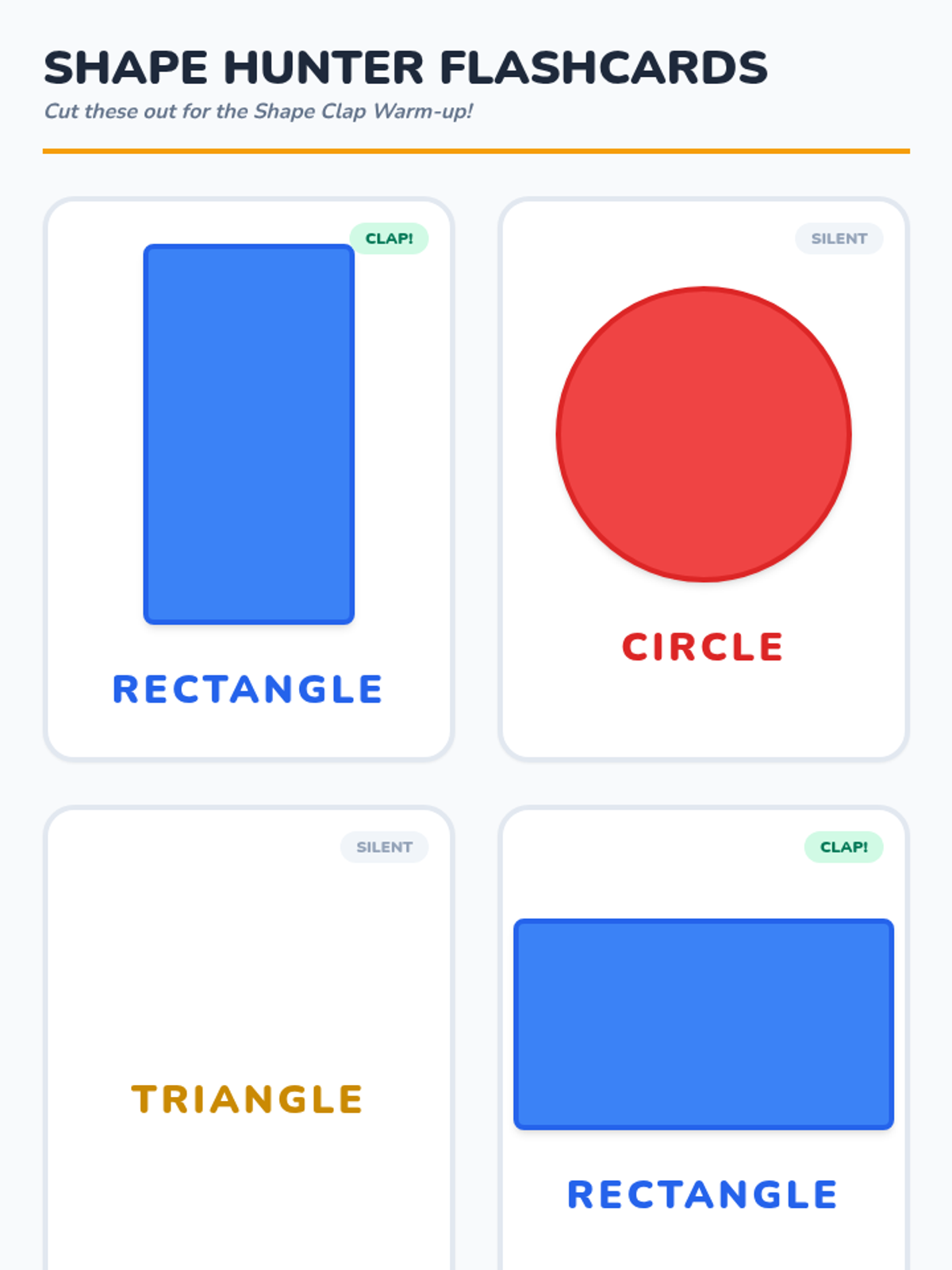
A hands-on geometry and art lesson where Pre-K and Kindergarten students identify rectangles and use them to construct creative 'Rectangle Robots.' Students learn to distinguish rectangles by their four sides and corners through a movement-based warm-up, a video exploration, and a tactile building activity.
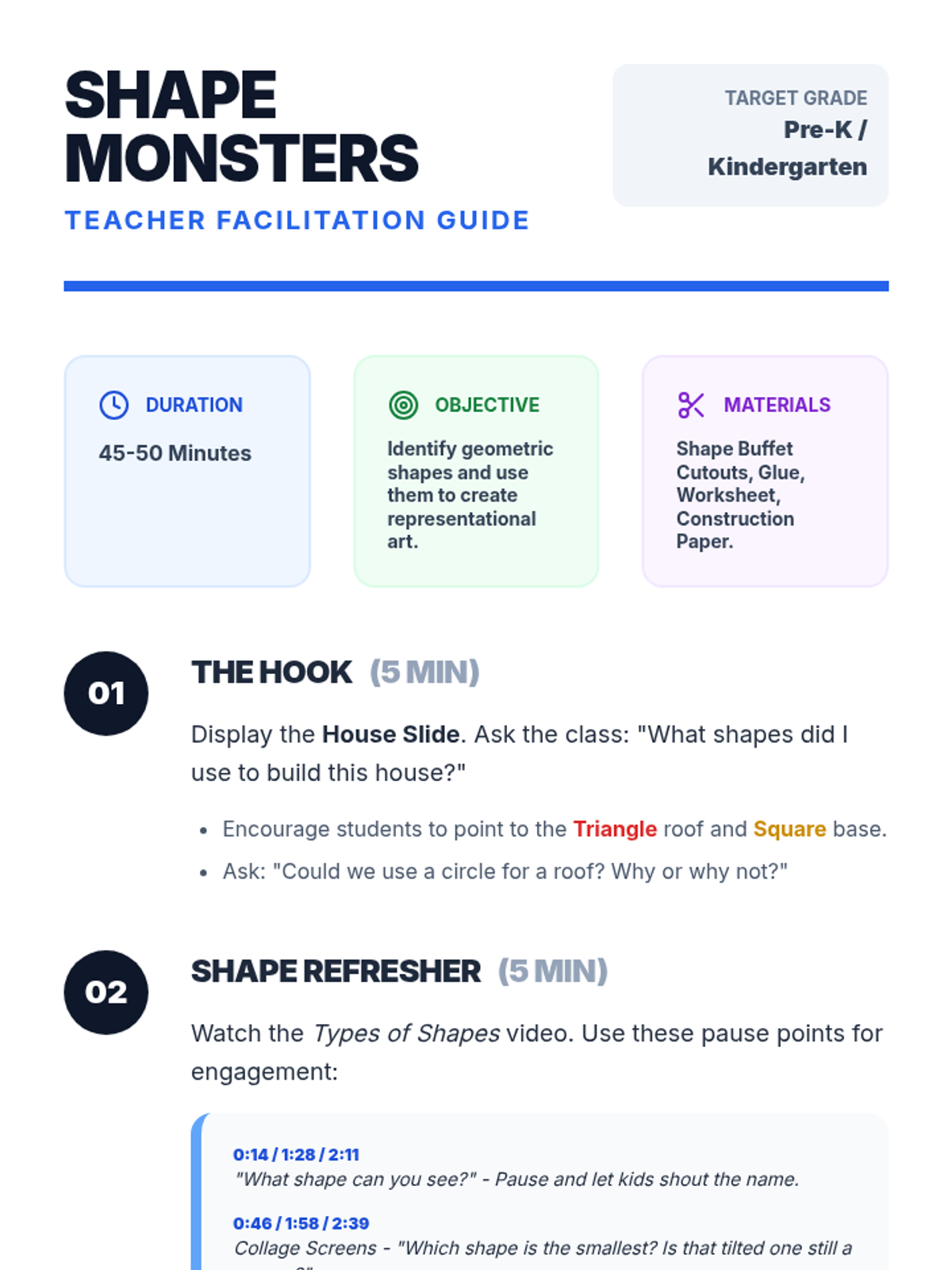
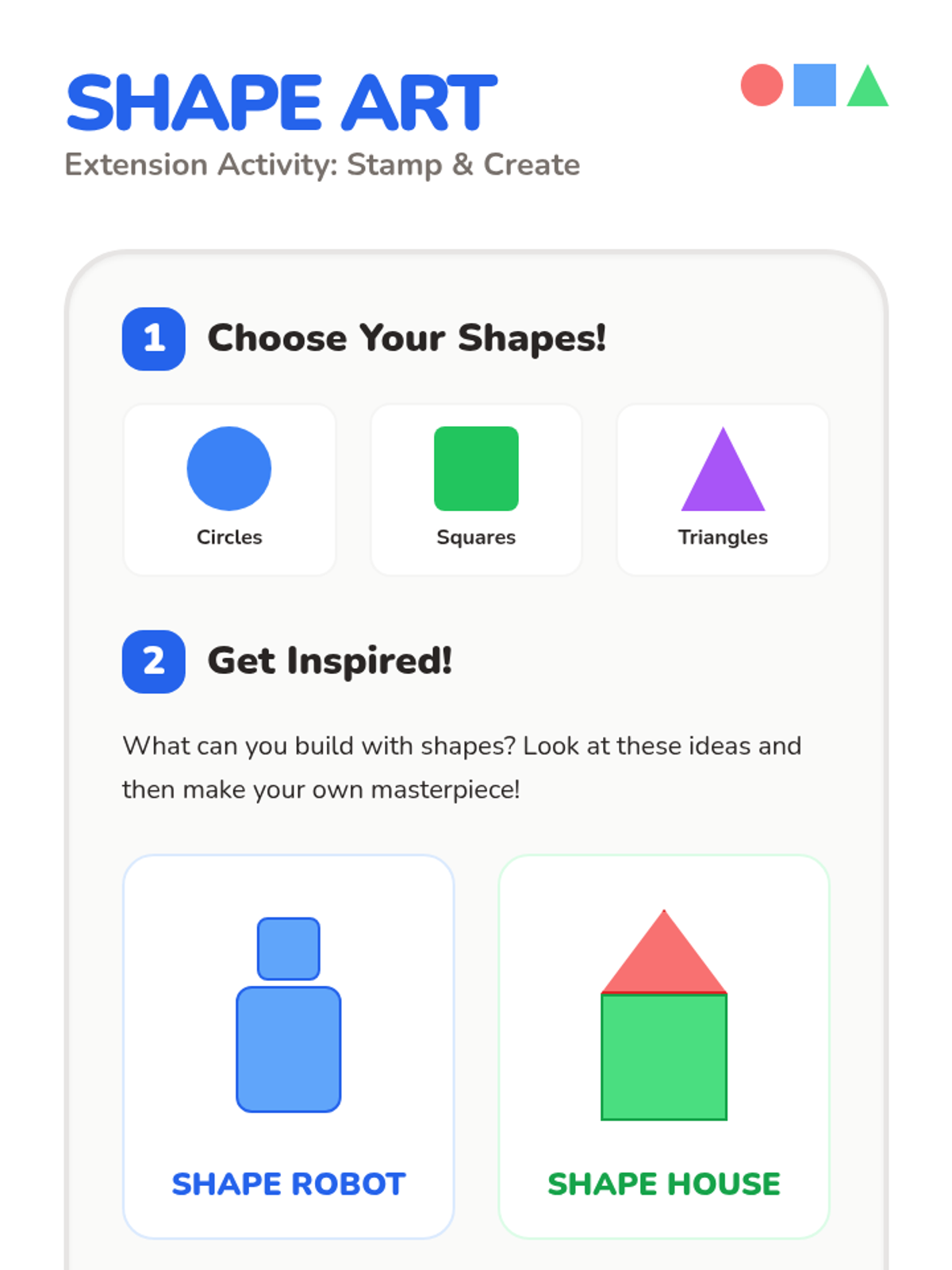
A hands-on geometry lesson where Pre-K and Kindergarten students identify squares, circles, triangles, and rectangles to build their own unique shape monsters while practicing counting and descriptive language.
A fun, hands-on introduction to squares, circles, triangles, and rectangles for Pre-K and Kindergarten students. Students will use a video guide and a classroom "Shape Hunt" to identify shapes in their everyday environment.
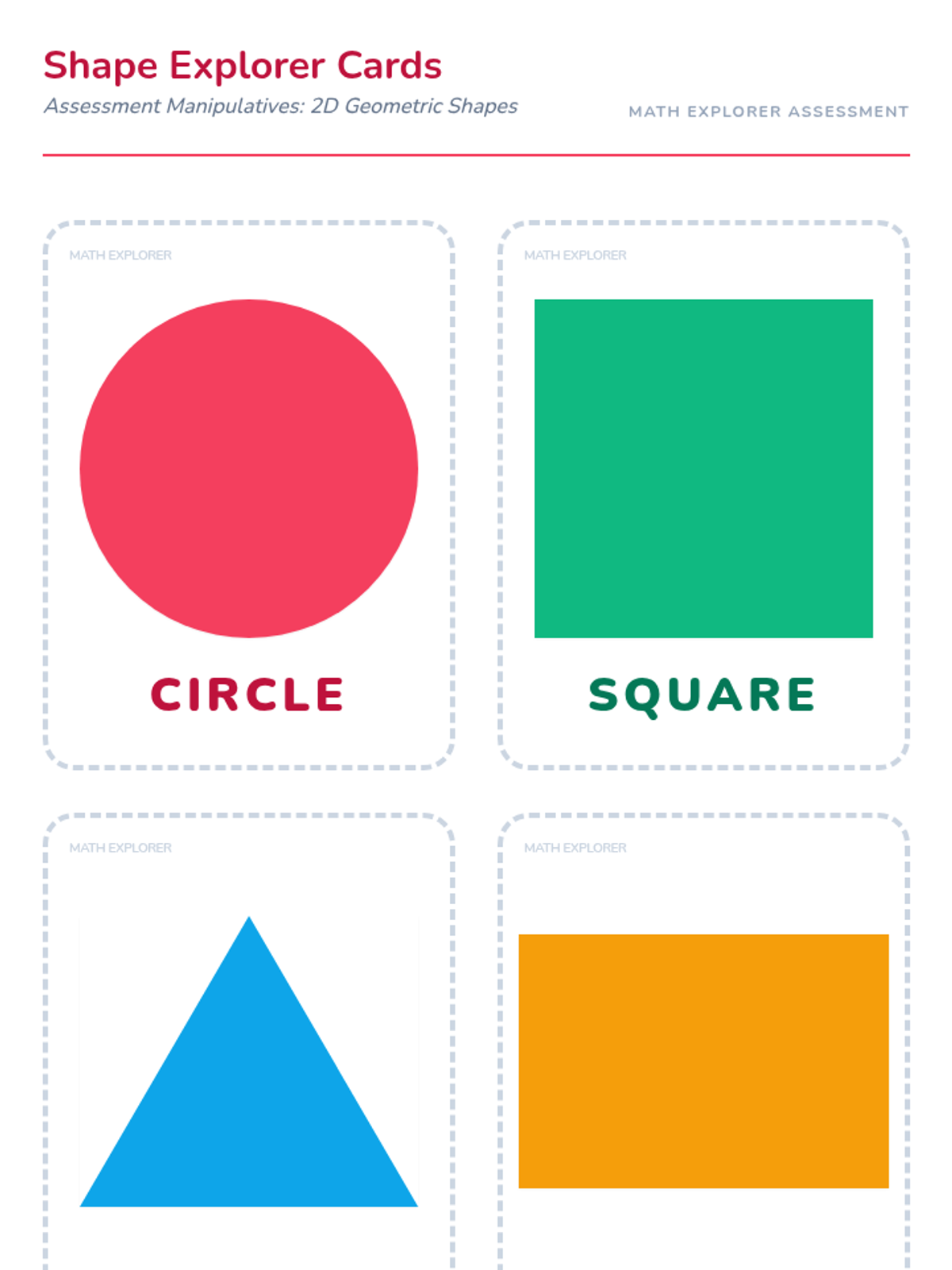
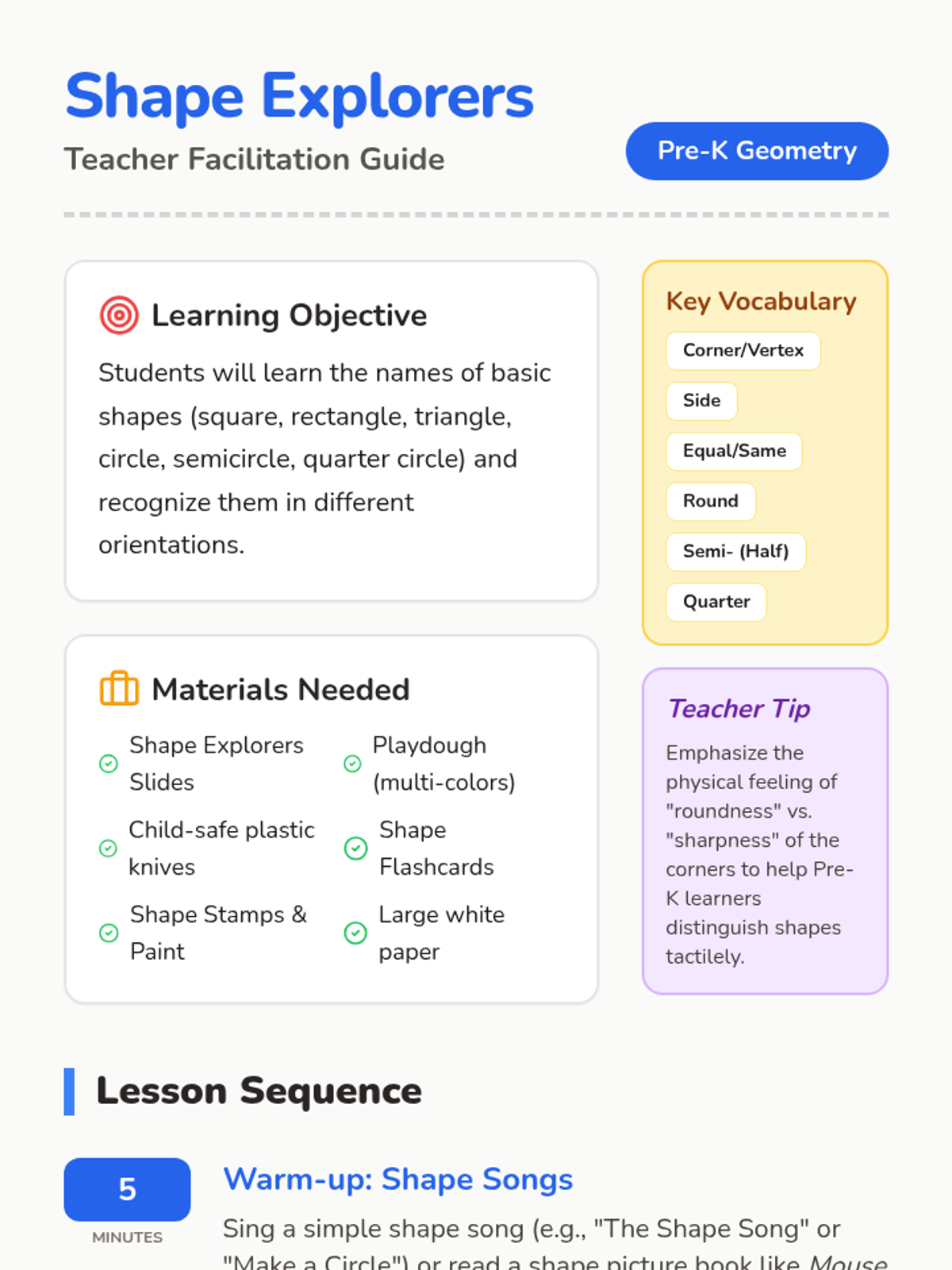
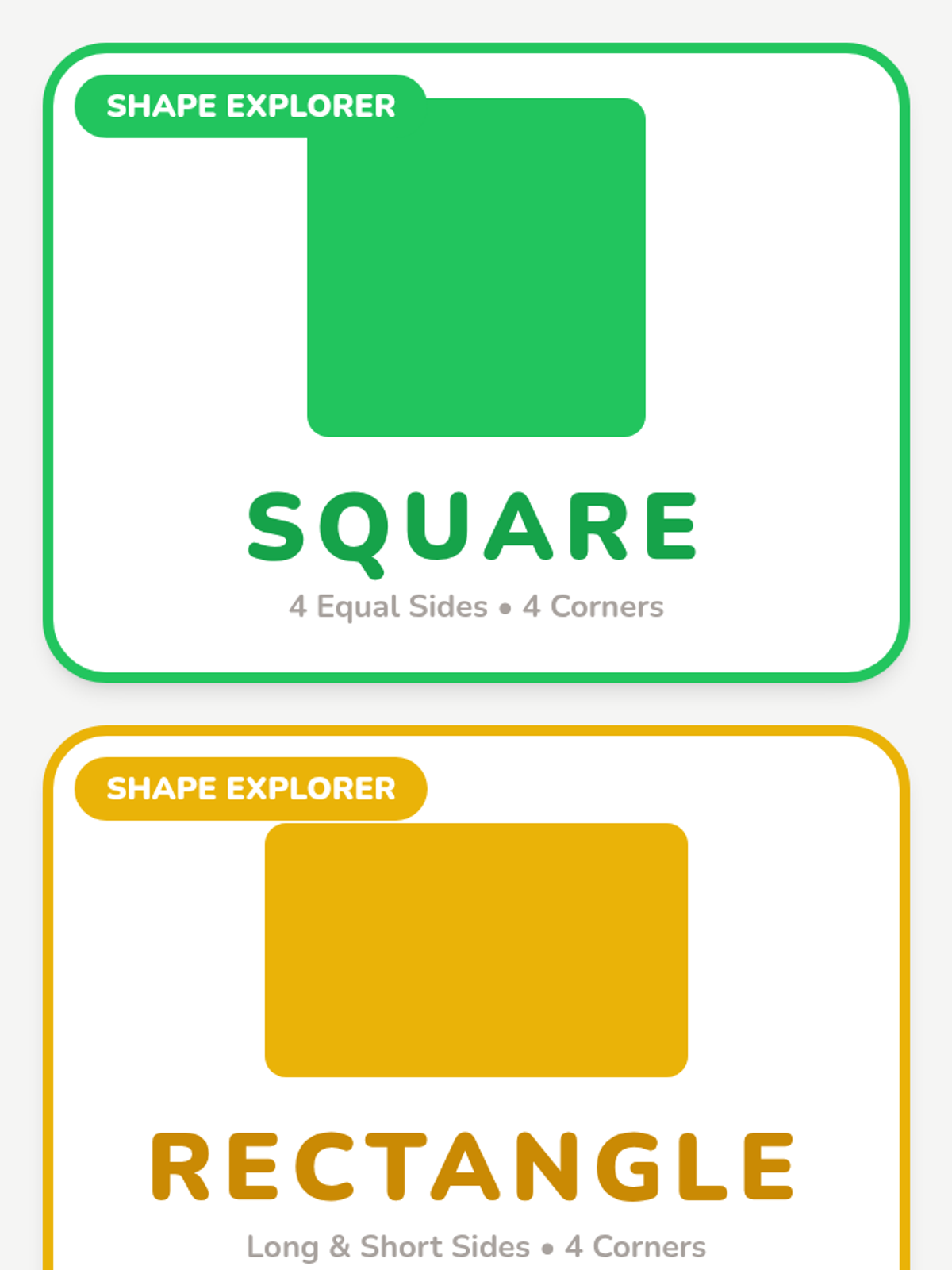
A hands-on geometry lesson for Pre-K students to identify, describe, and create basic shapes including squares, rectangles, triangles, circles, semicircles, and quarter circles.
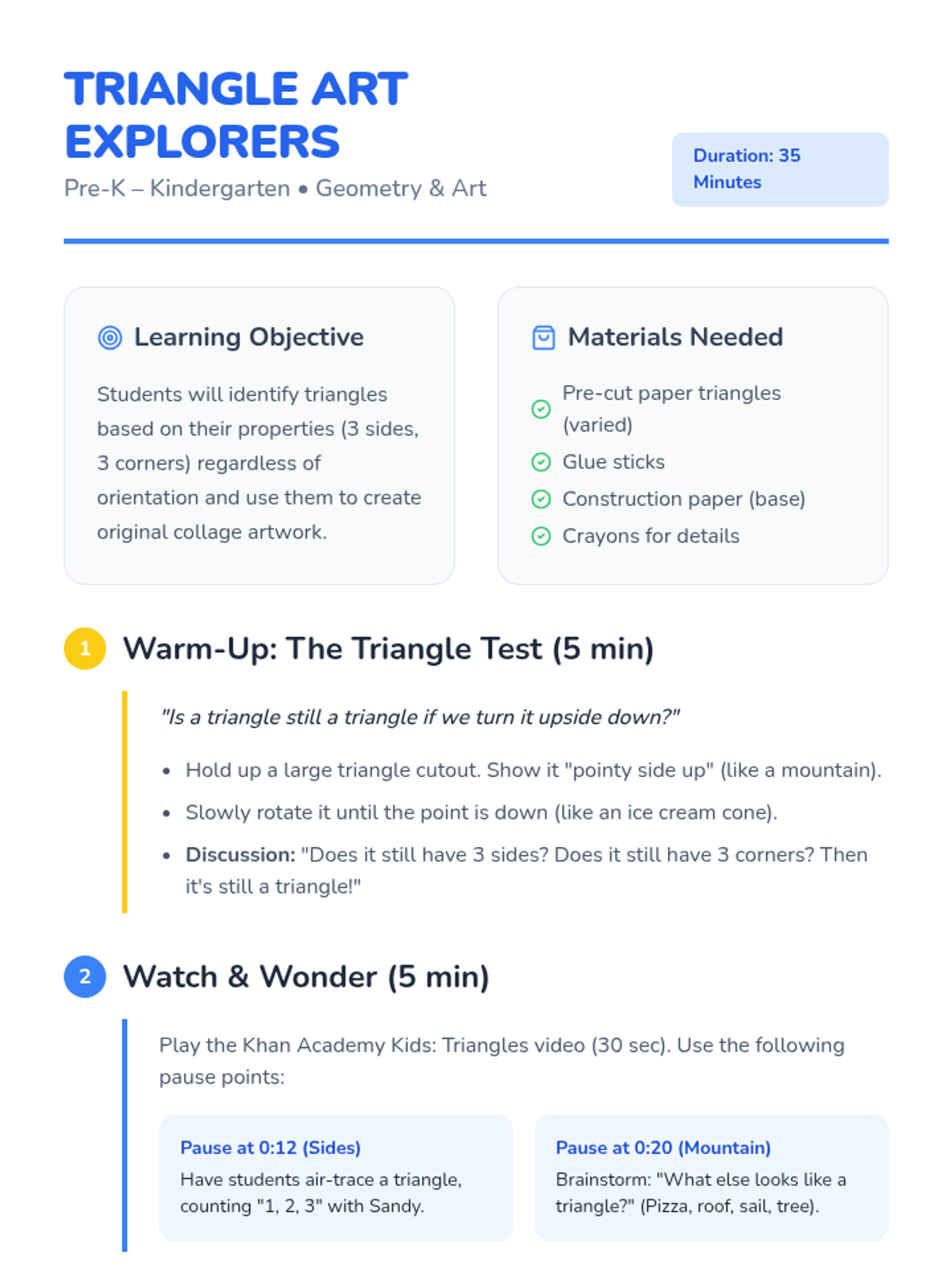
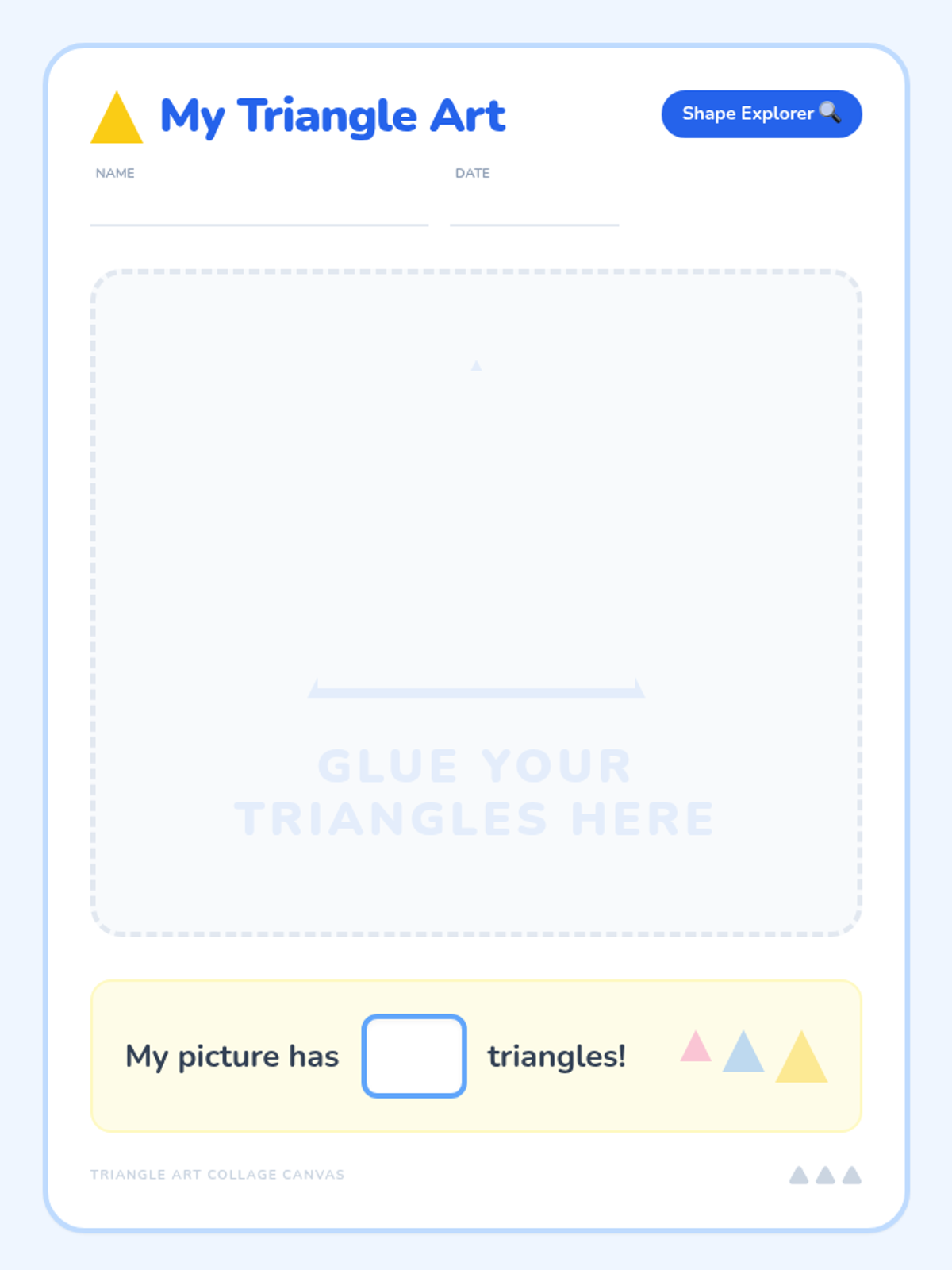
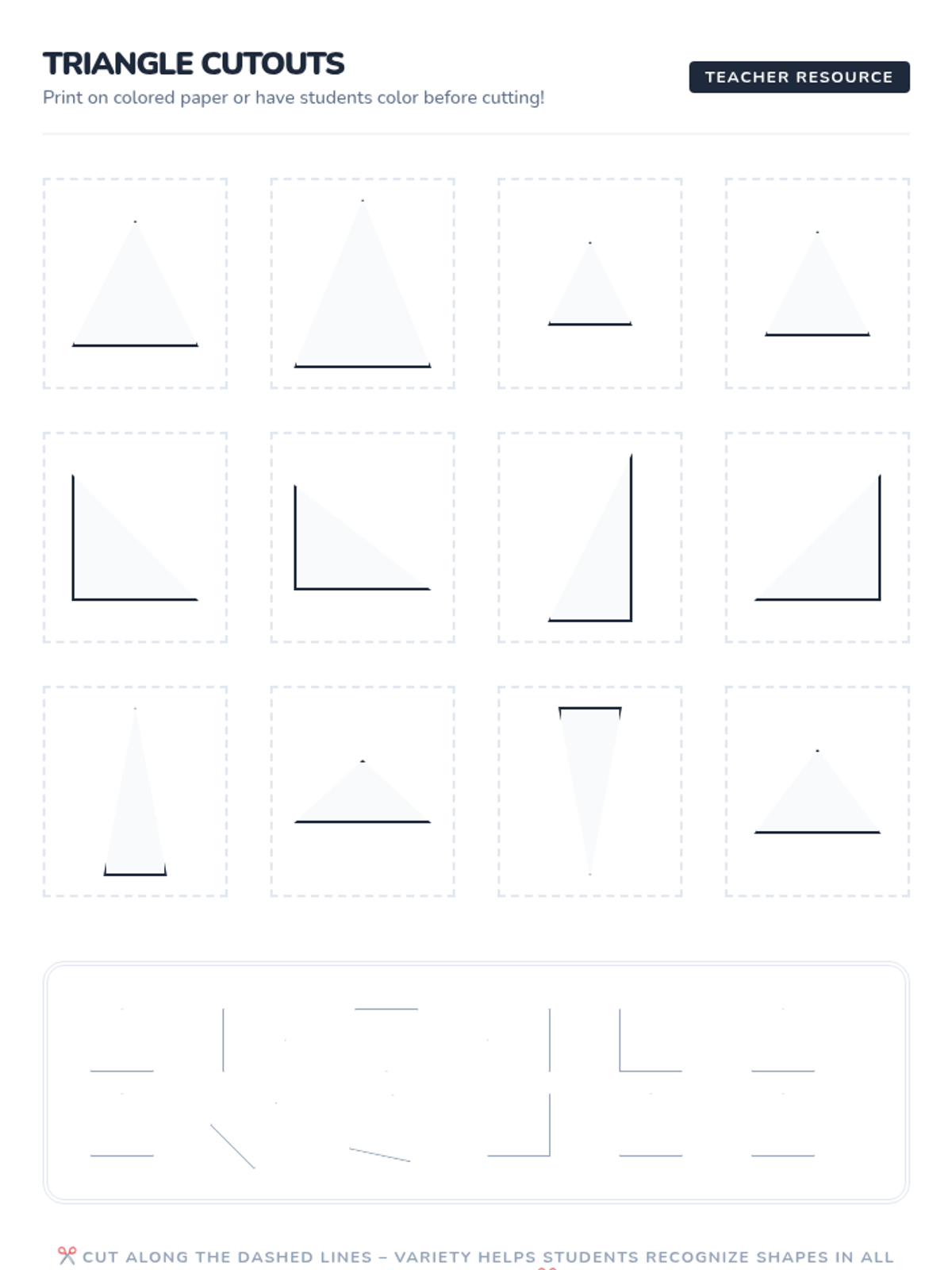
A foundational geometry lesson for Pre-K and Kindergarten students to identify and create with triangles, featuring a video-based warm-up and a creative collage activity.
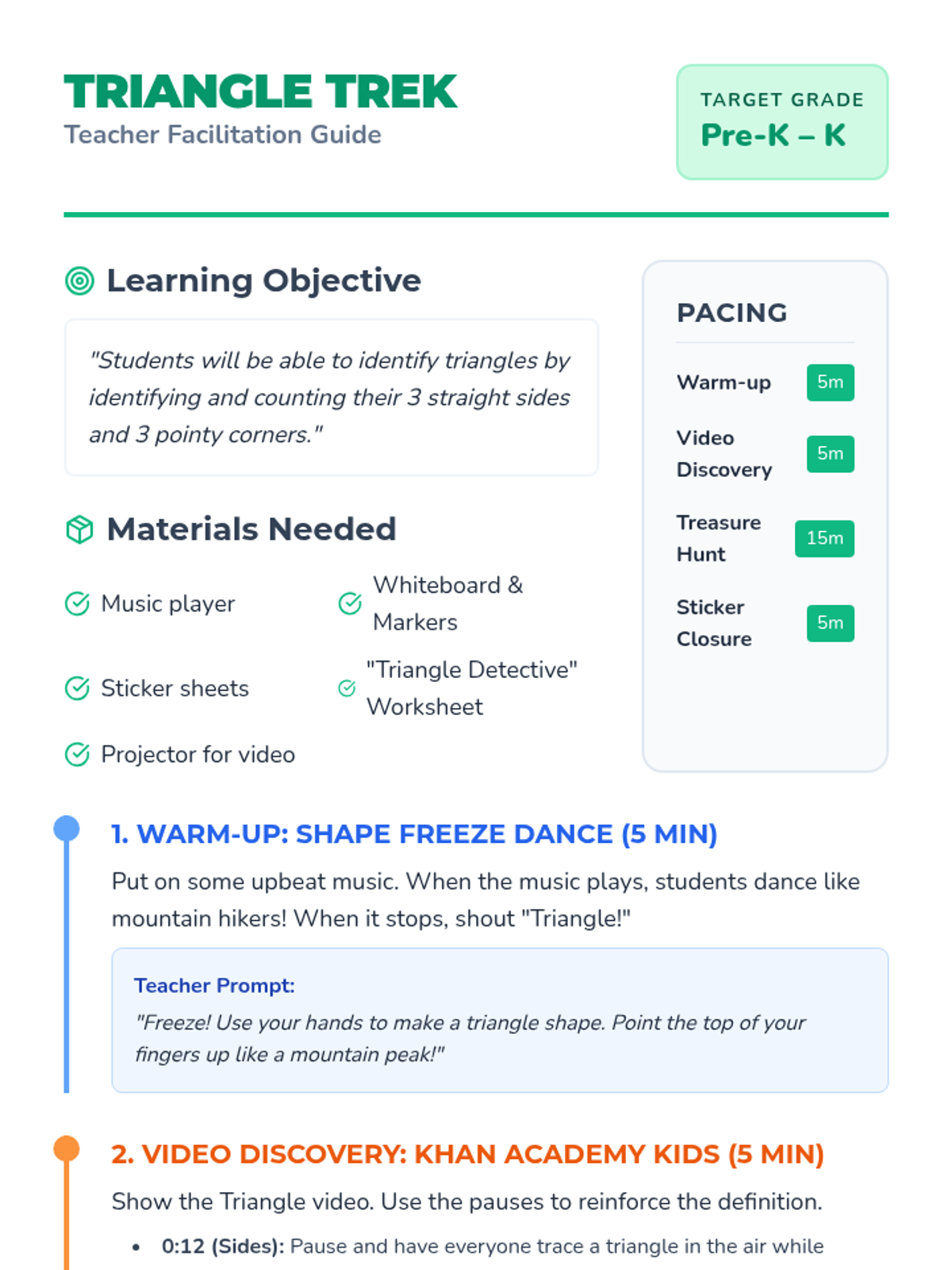
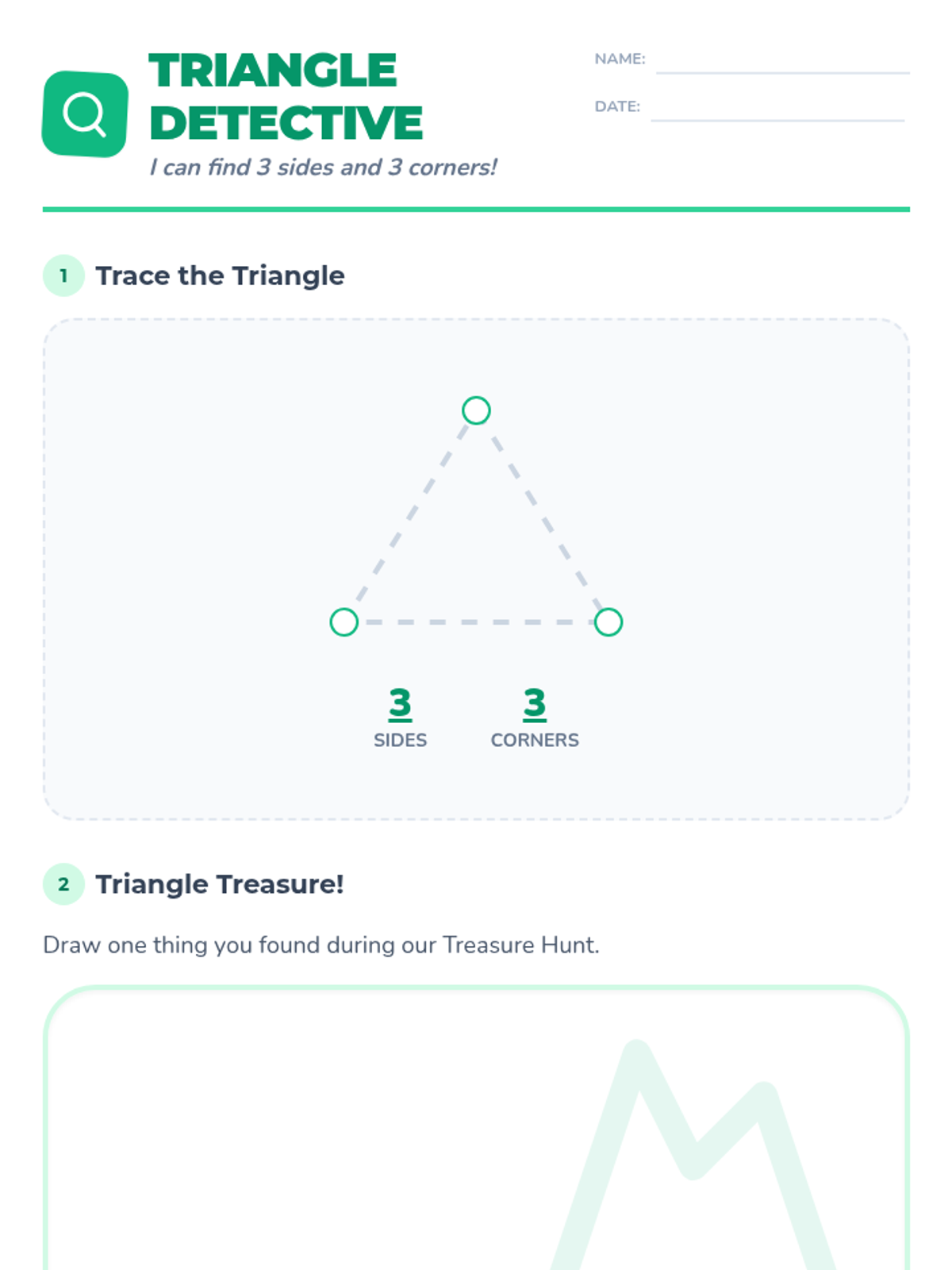
Students will become 'Triangle Trekkers' as they identify triangles by counting 3 sides and 3 corners through a freeze dance, a guided video observation, and a classroom treasure hunt.
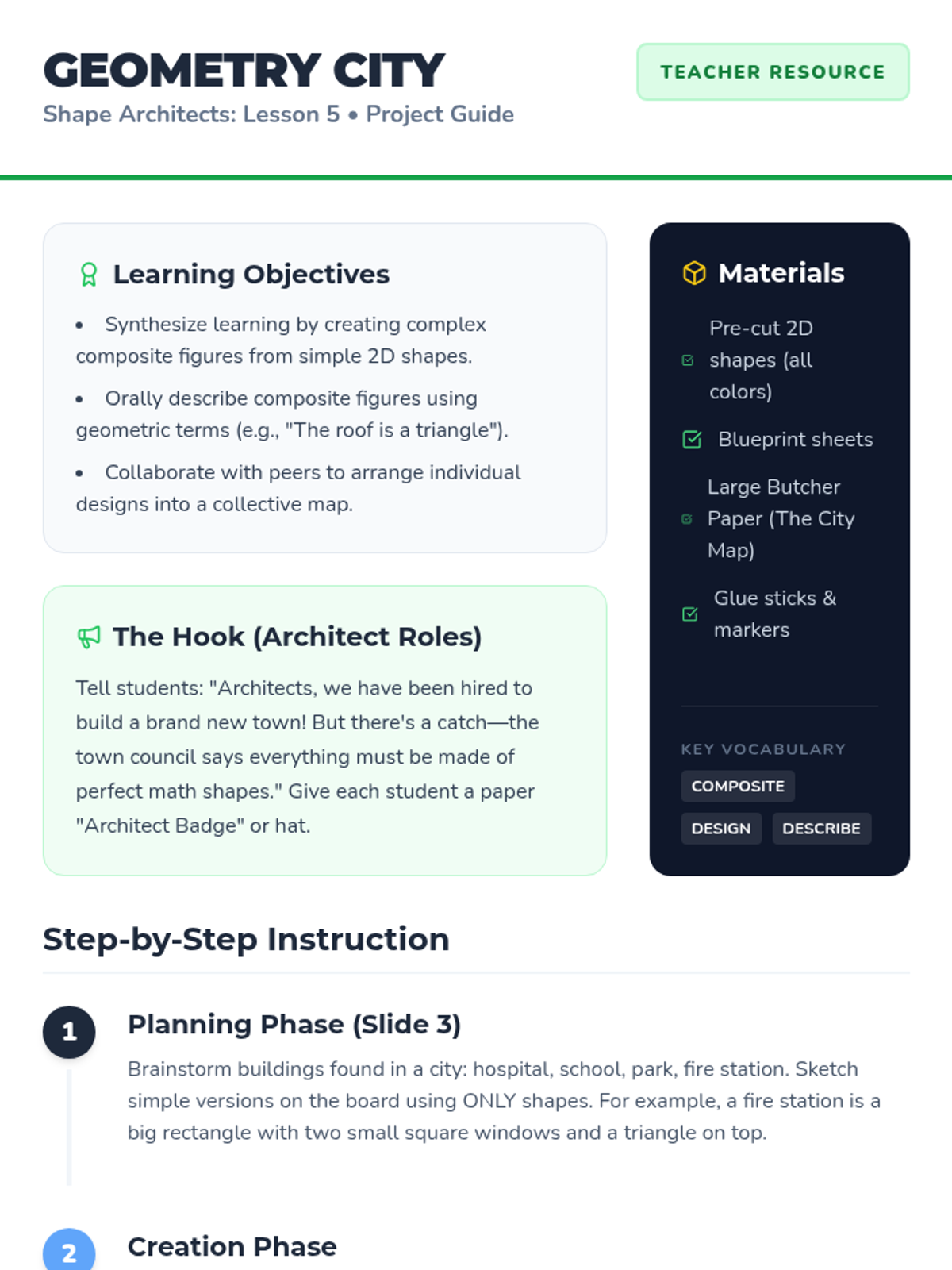
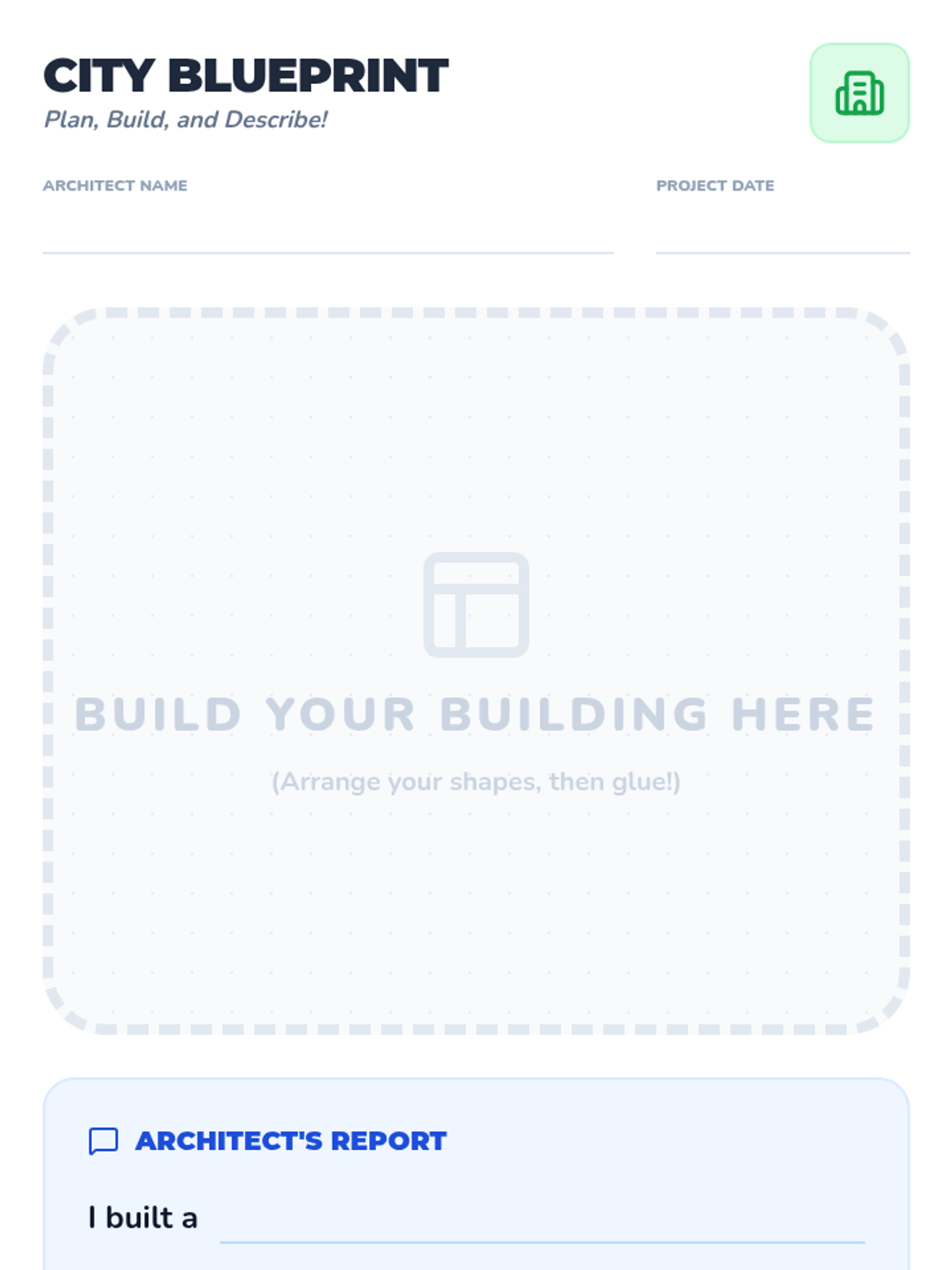
Students collaboratively design and build a 'Geometric City' on butcher paper using composite shapes and geometric descriptions.
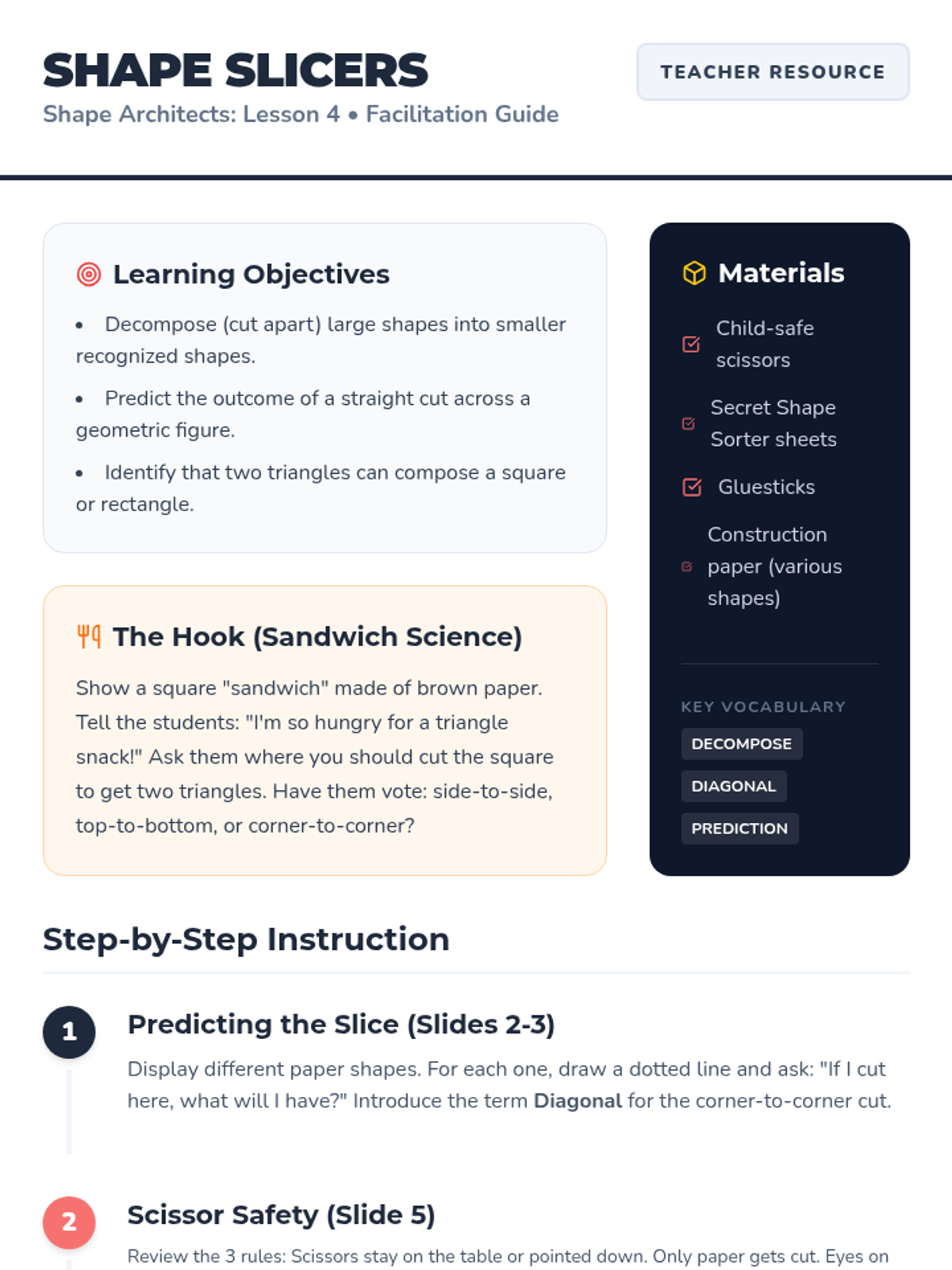
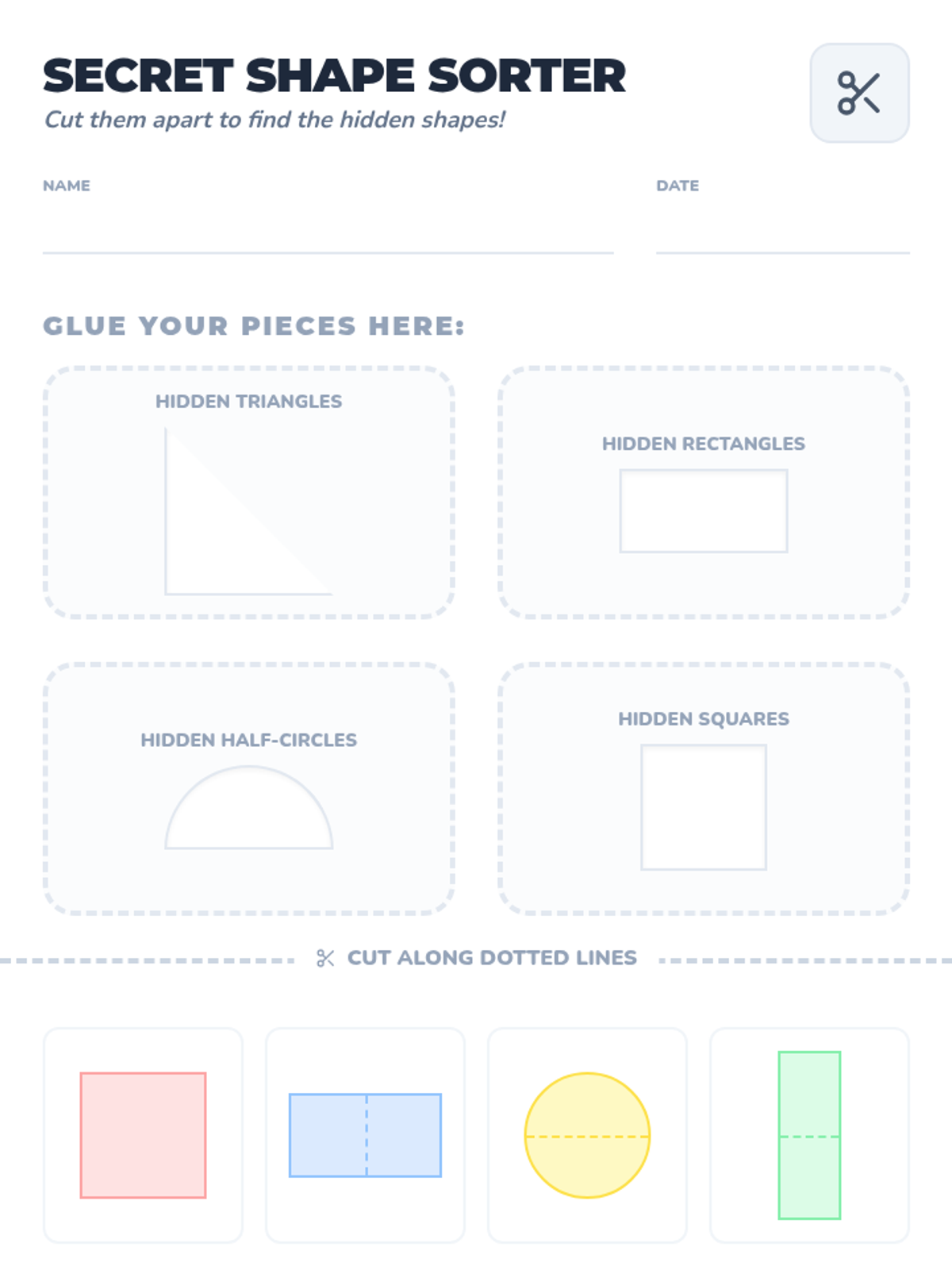
Students predict and discover smaller shapes hidden within larger ones by cutting paper shapes apart.
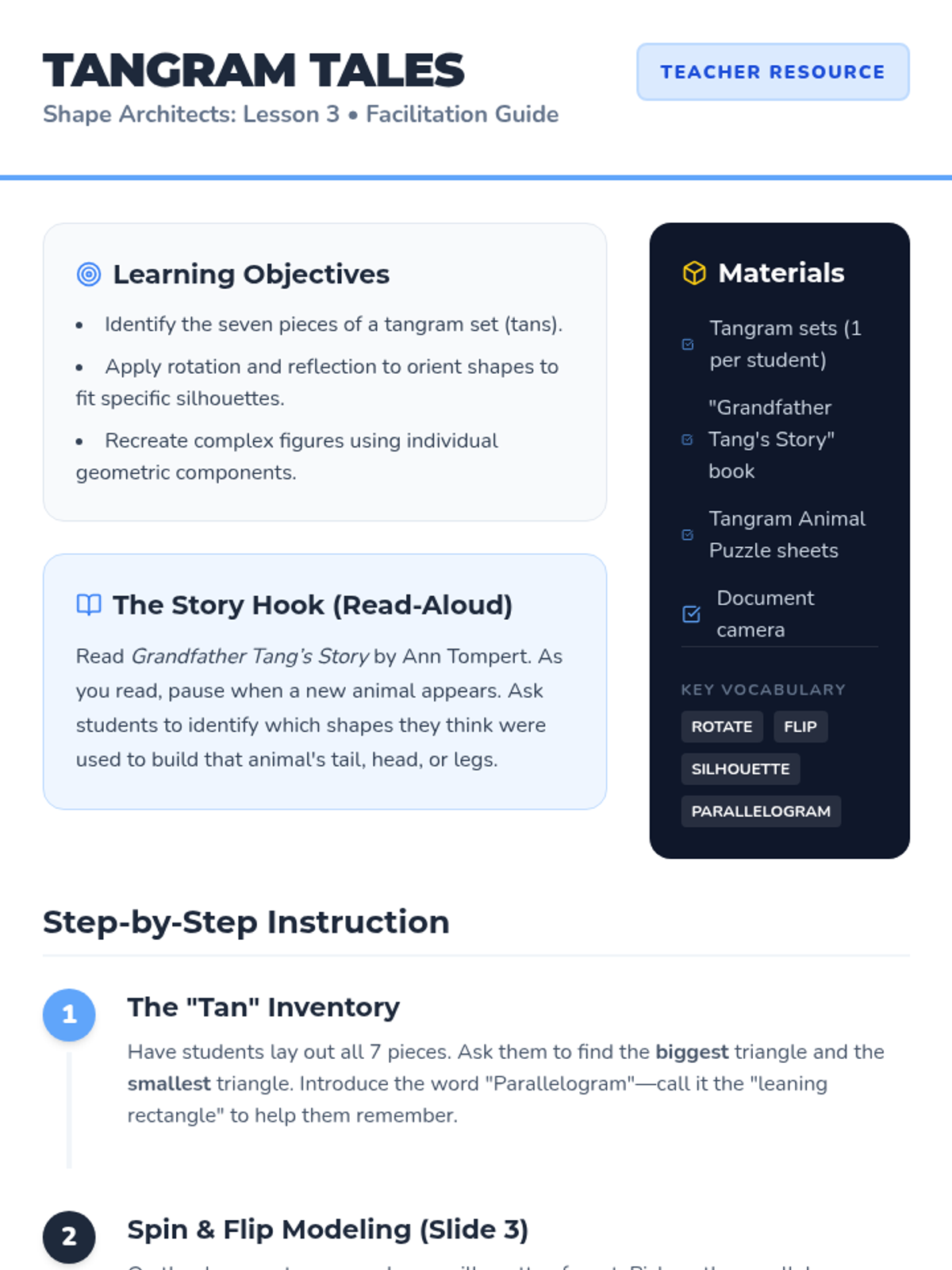
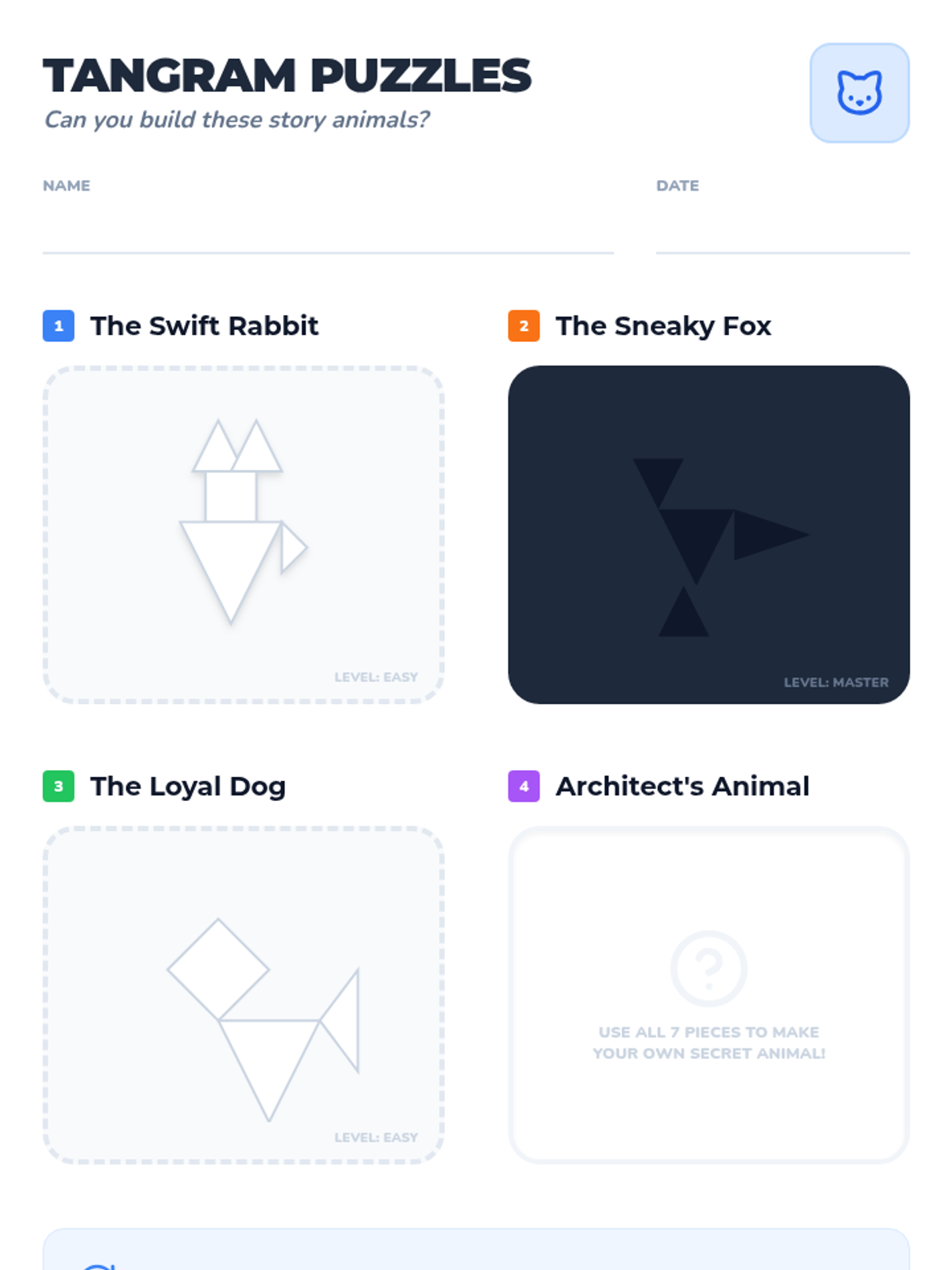
Using tangram pieces, students solve silhouette puzzles by rotating and flipping shapes, inspired by 'Grandfather Tang's Story'.
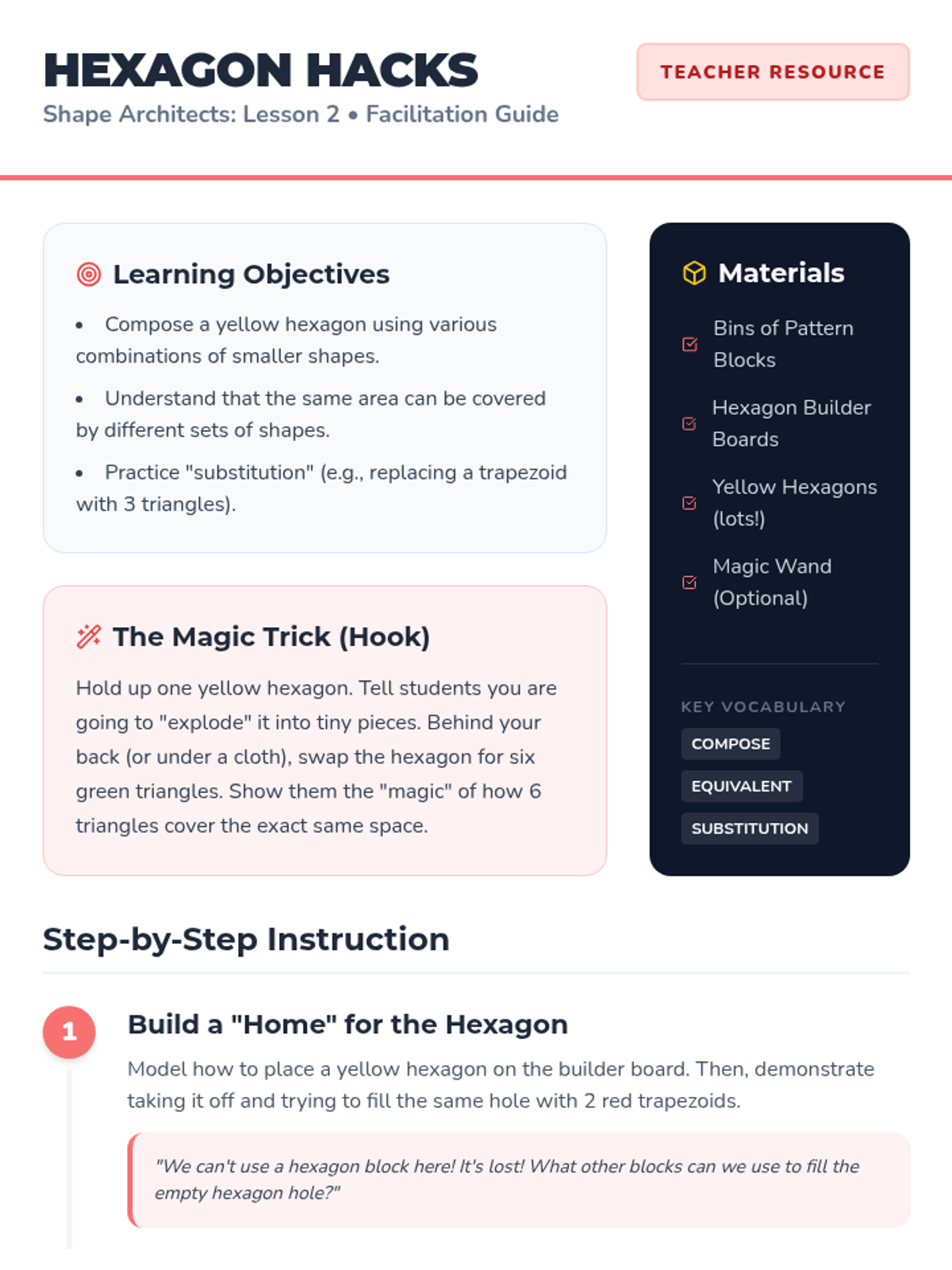
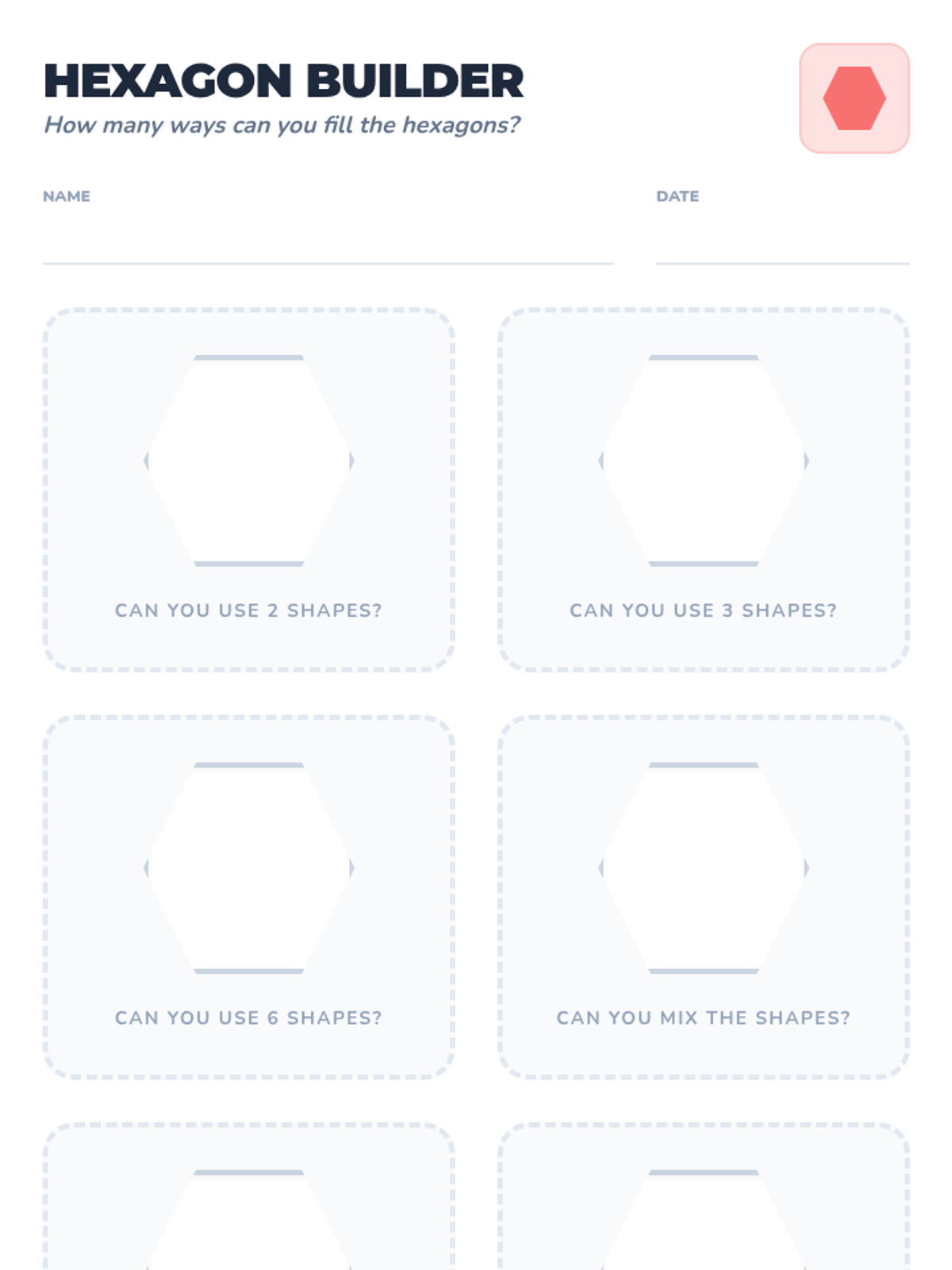
Students investigate different ways to build a hexagon using other shapes, introducing concepts of equivalent area and substitution.
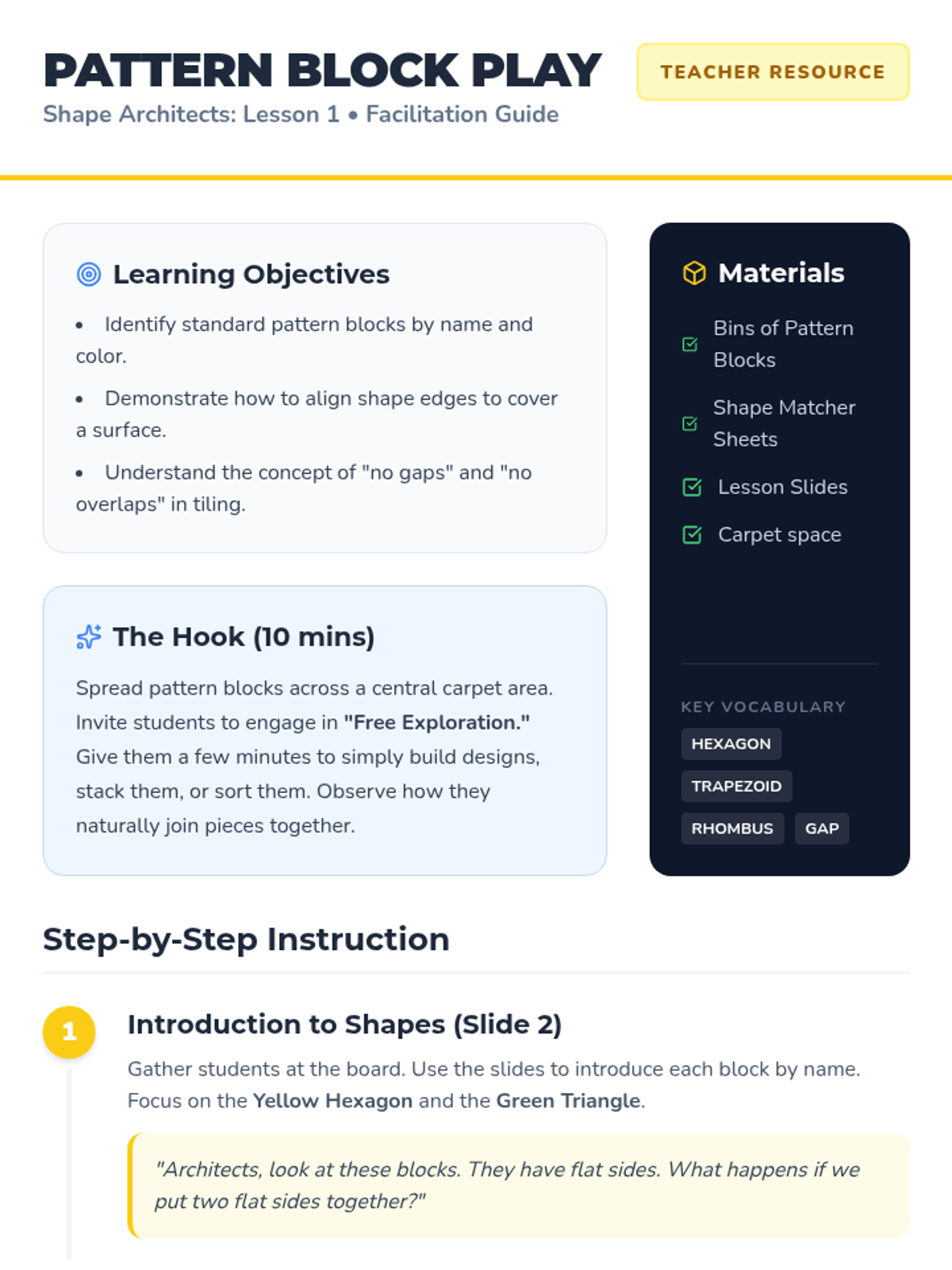
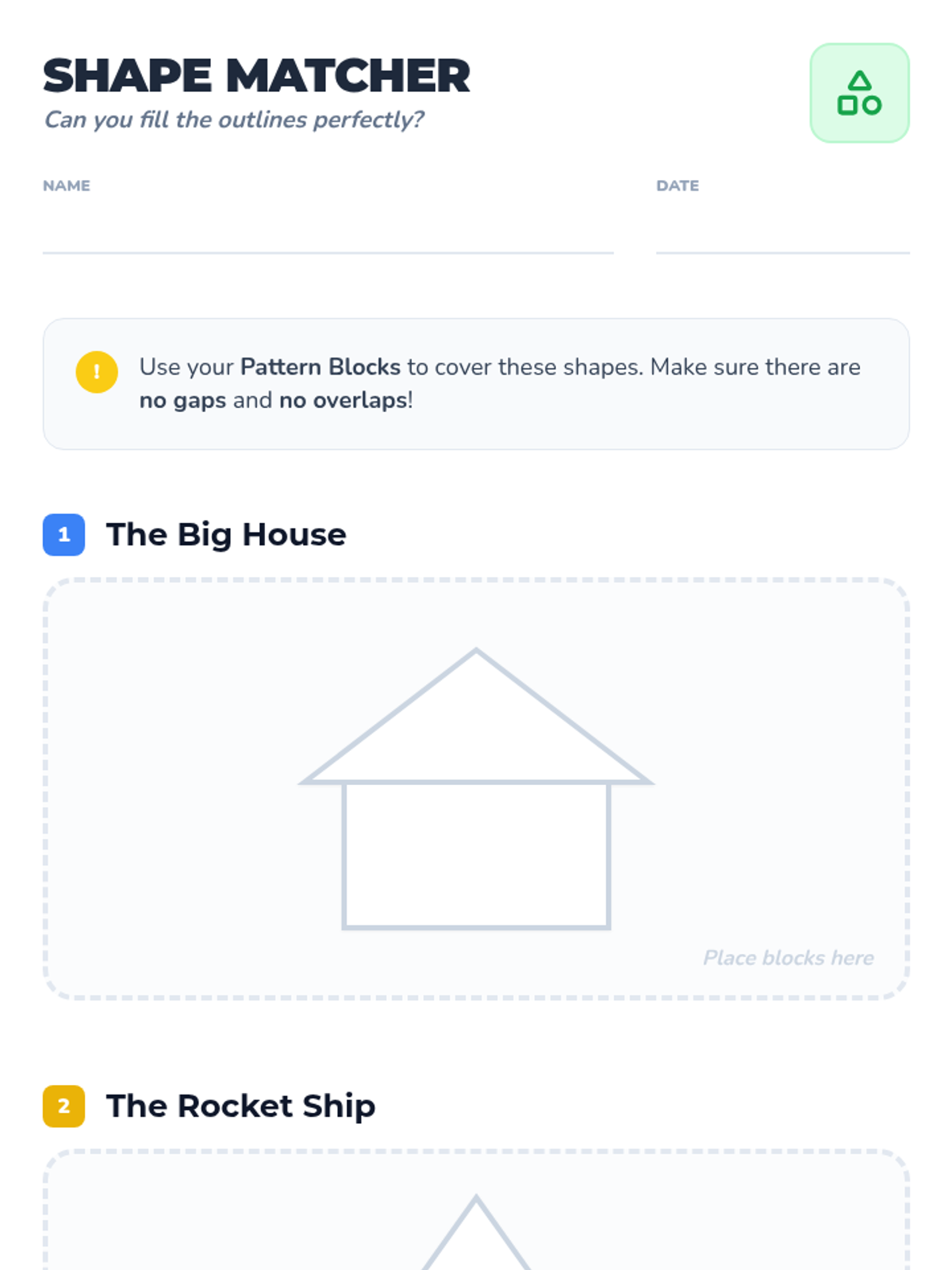
Students explore standard pattern blocks to see how sides match up and practice covering designated outlines without gaps or overlaps.