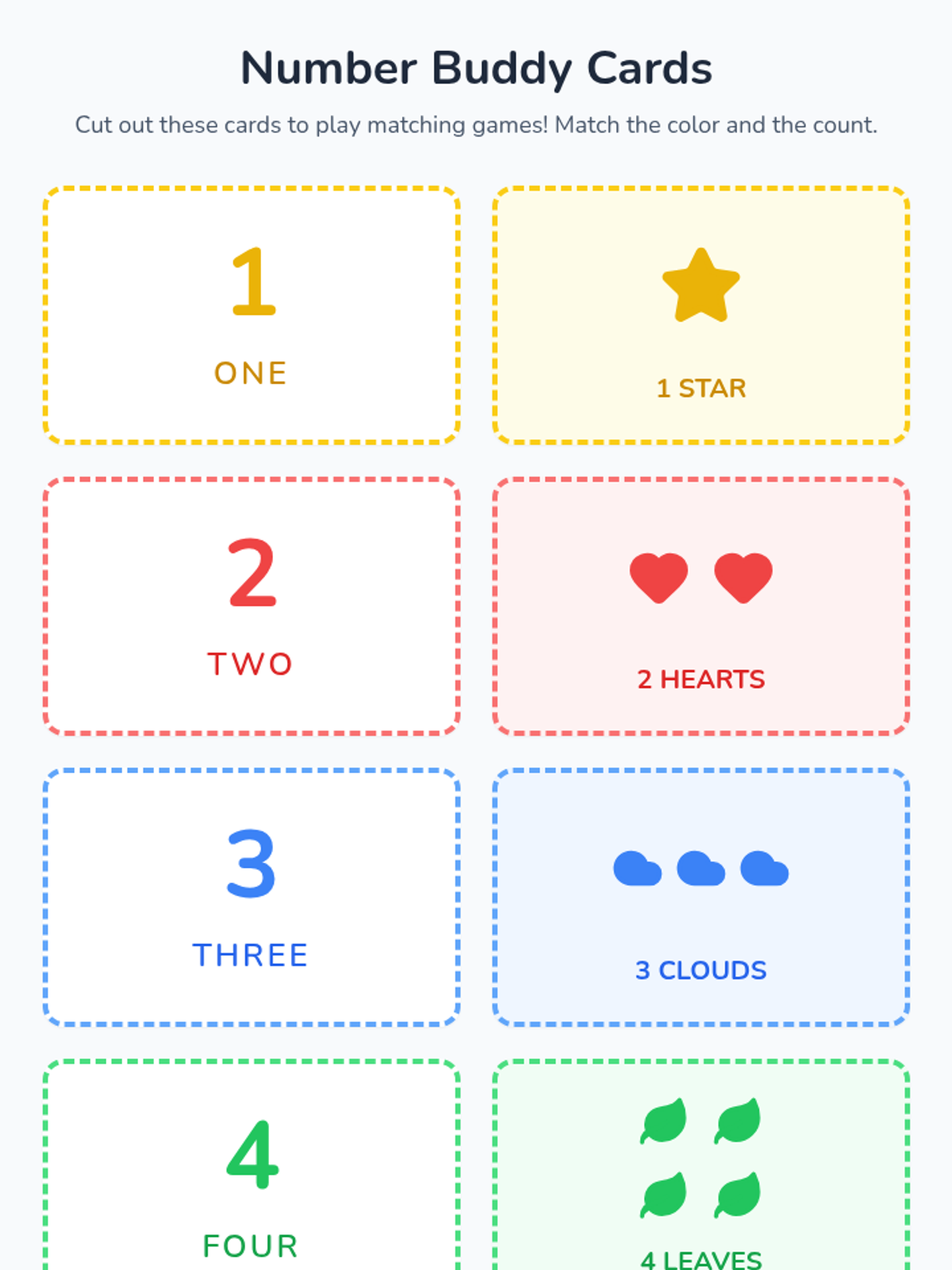
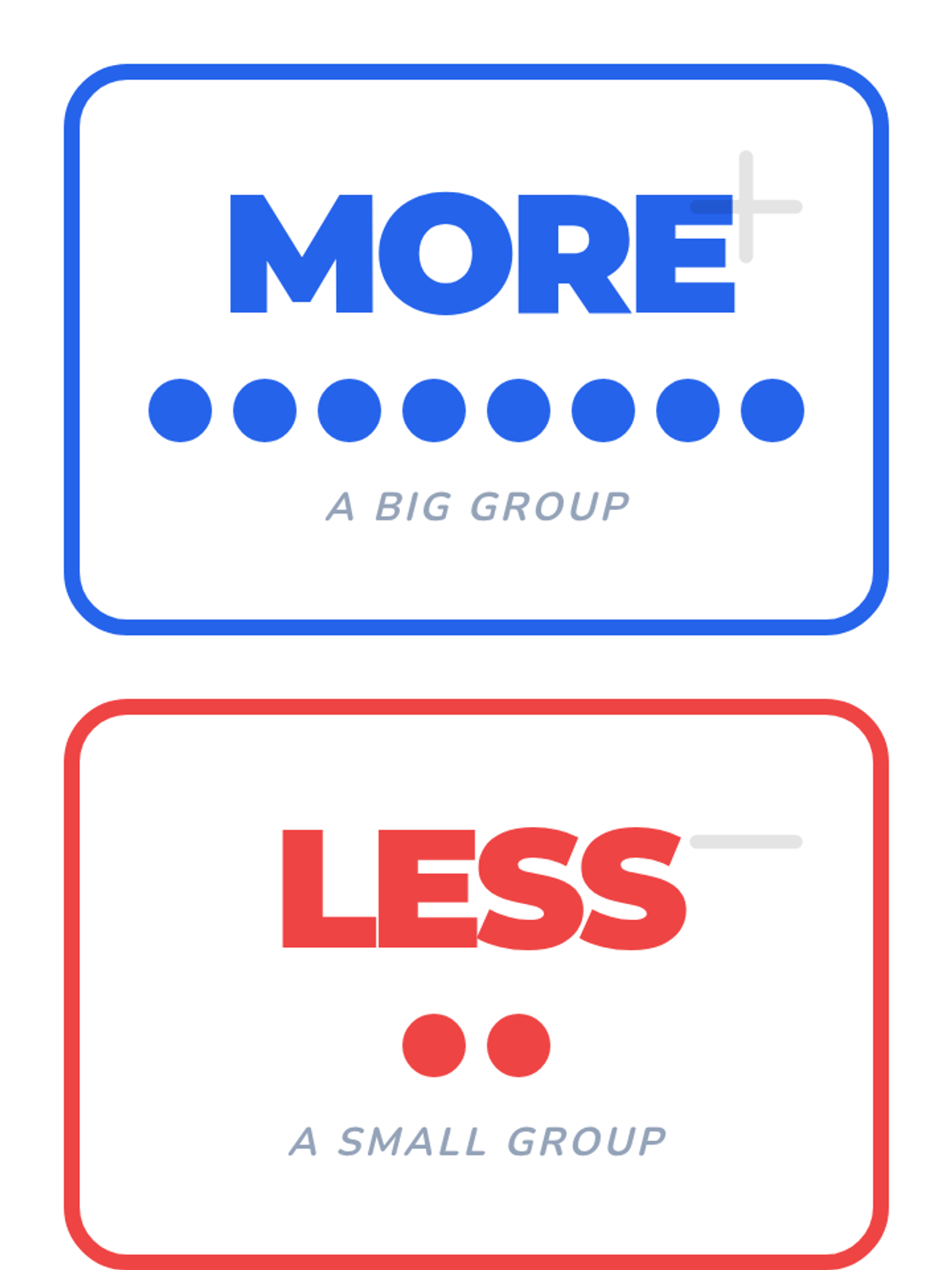
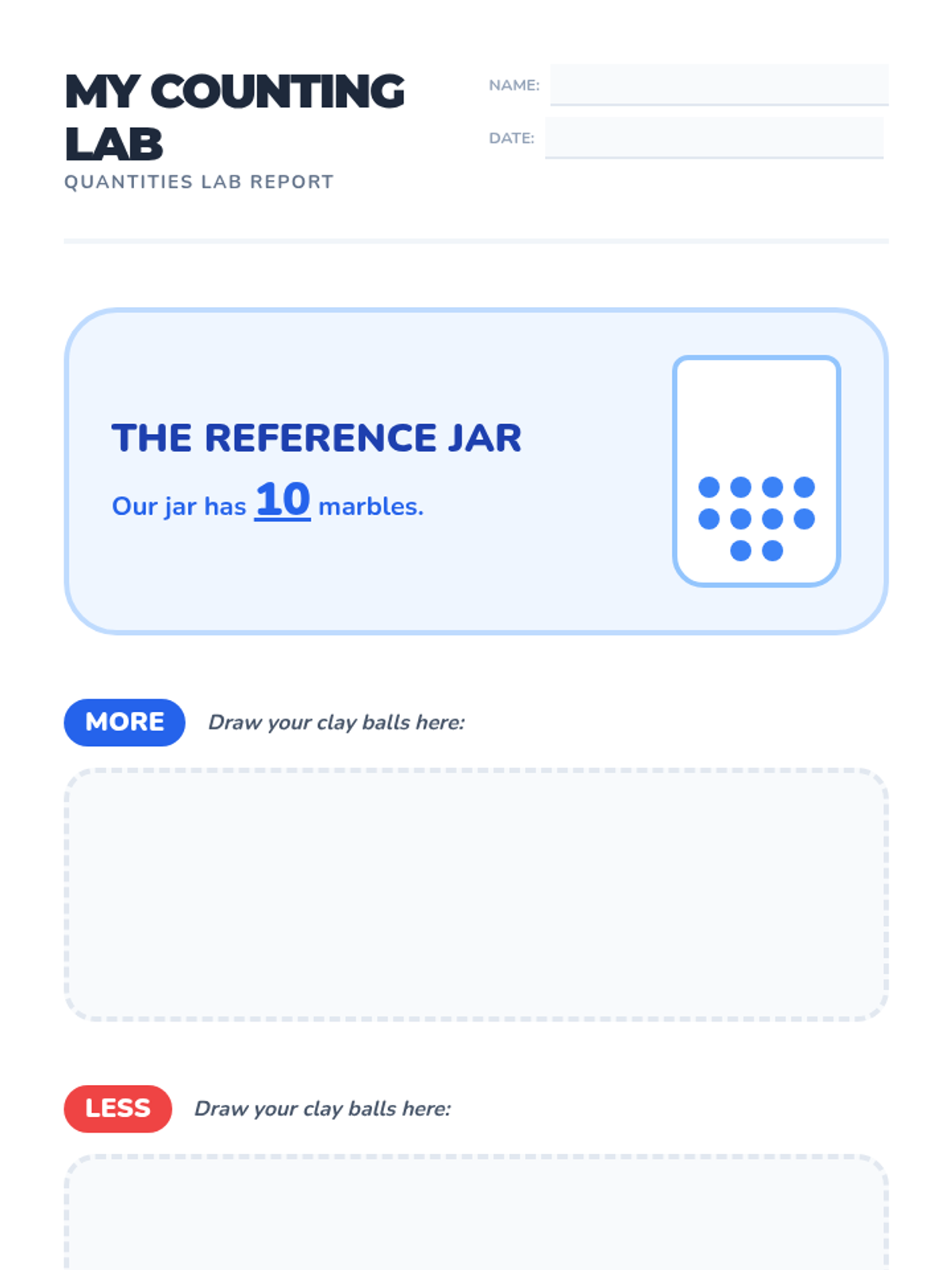
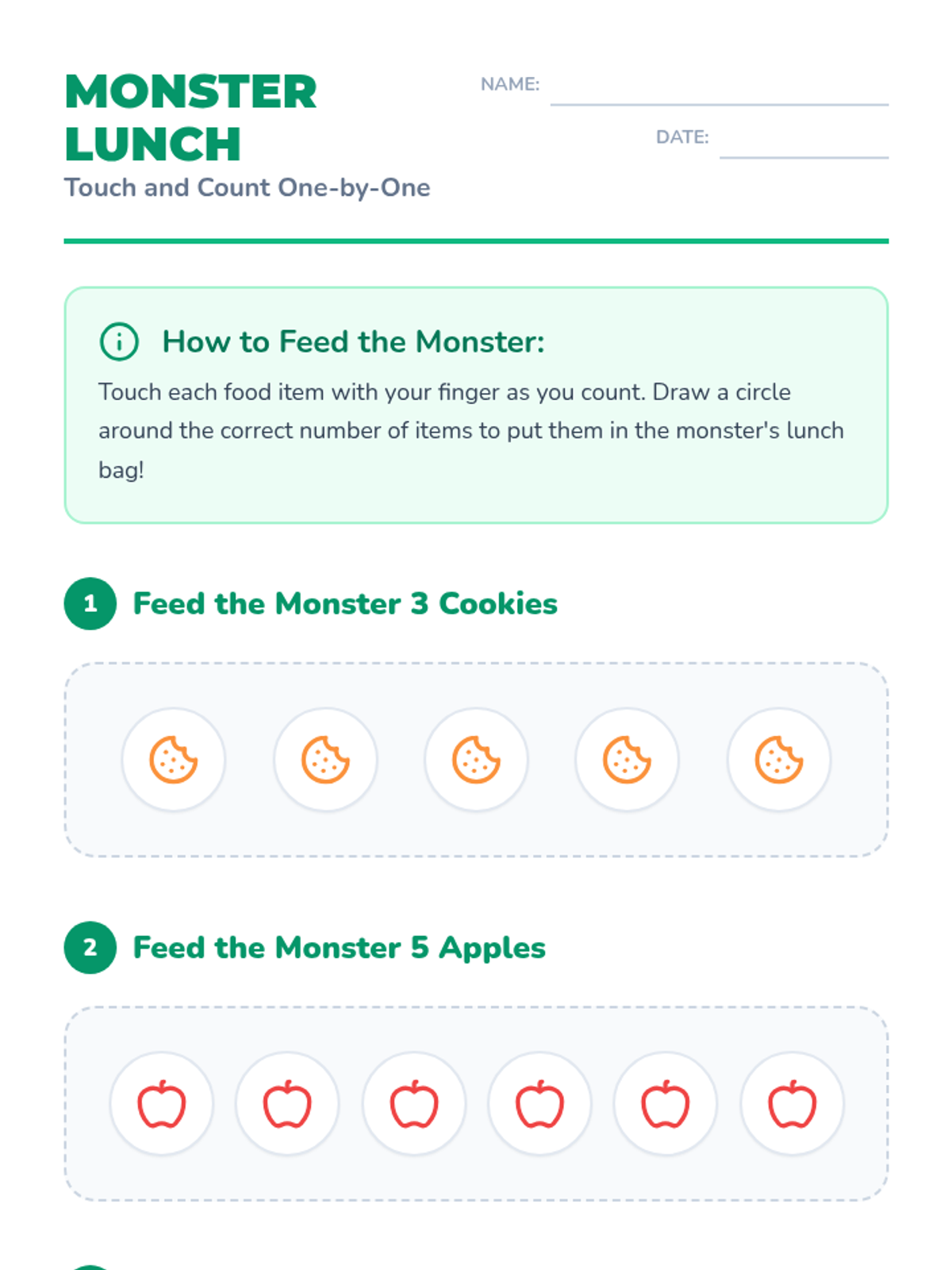
One-to-one correspondence, numeral identification, and comparison of quantities using terms like greater than or less than. Establishes the foundation for numerical literacy and early arithmetic operations.
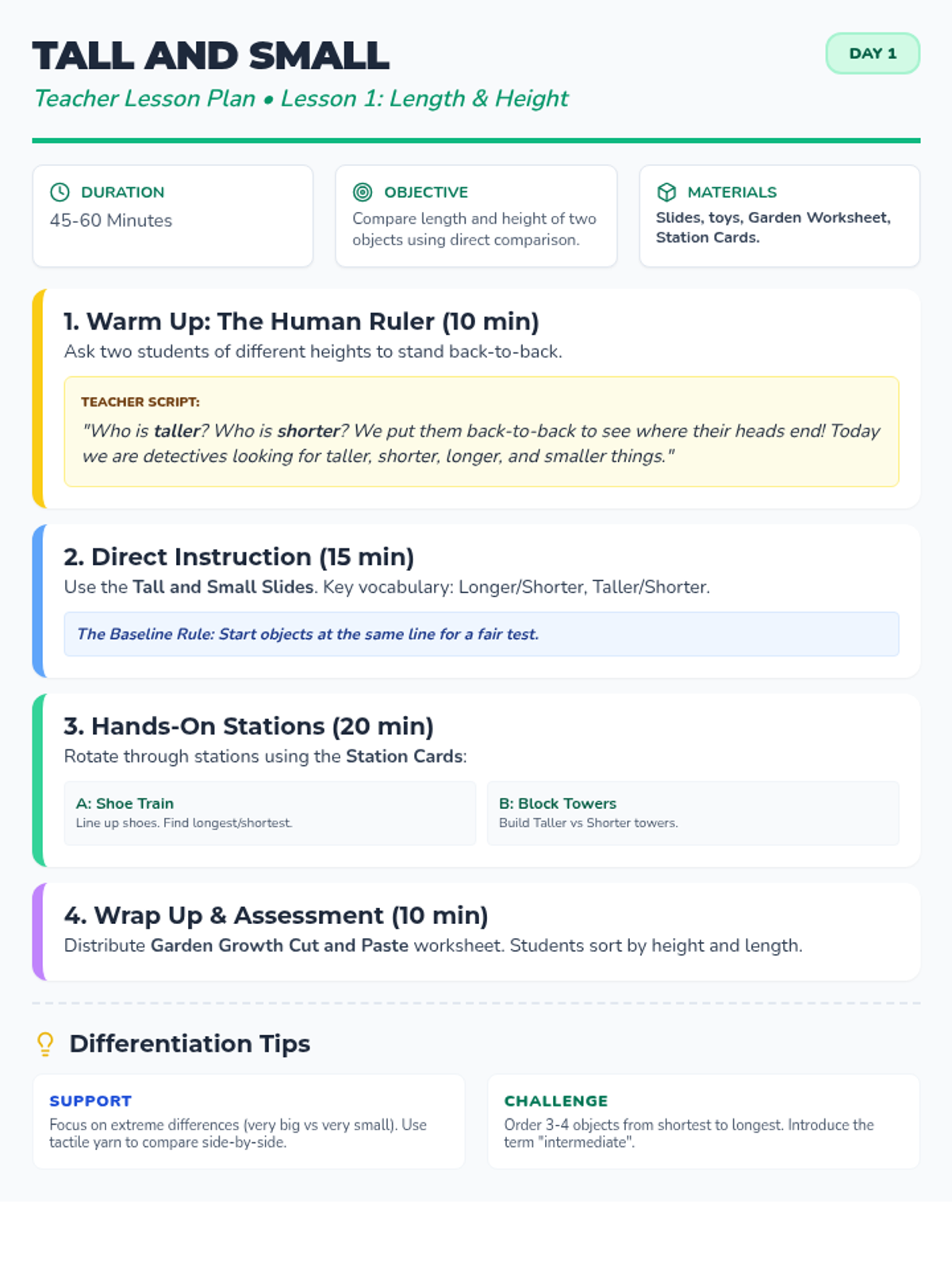
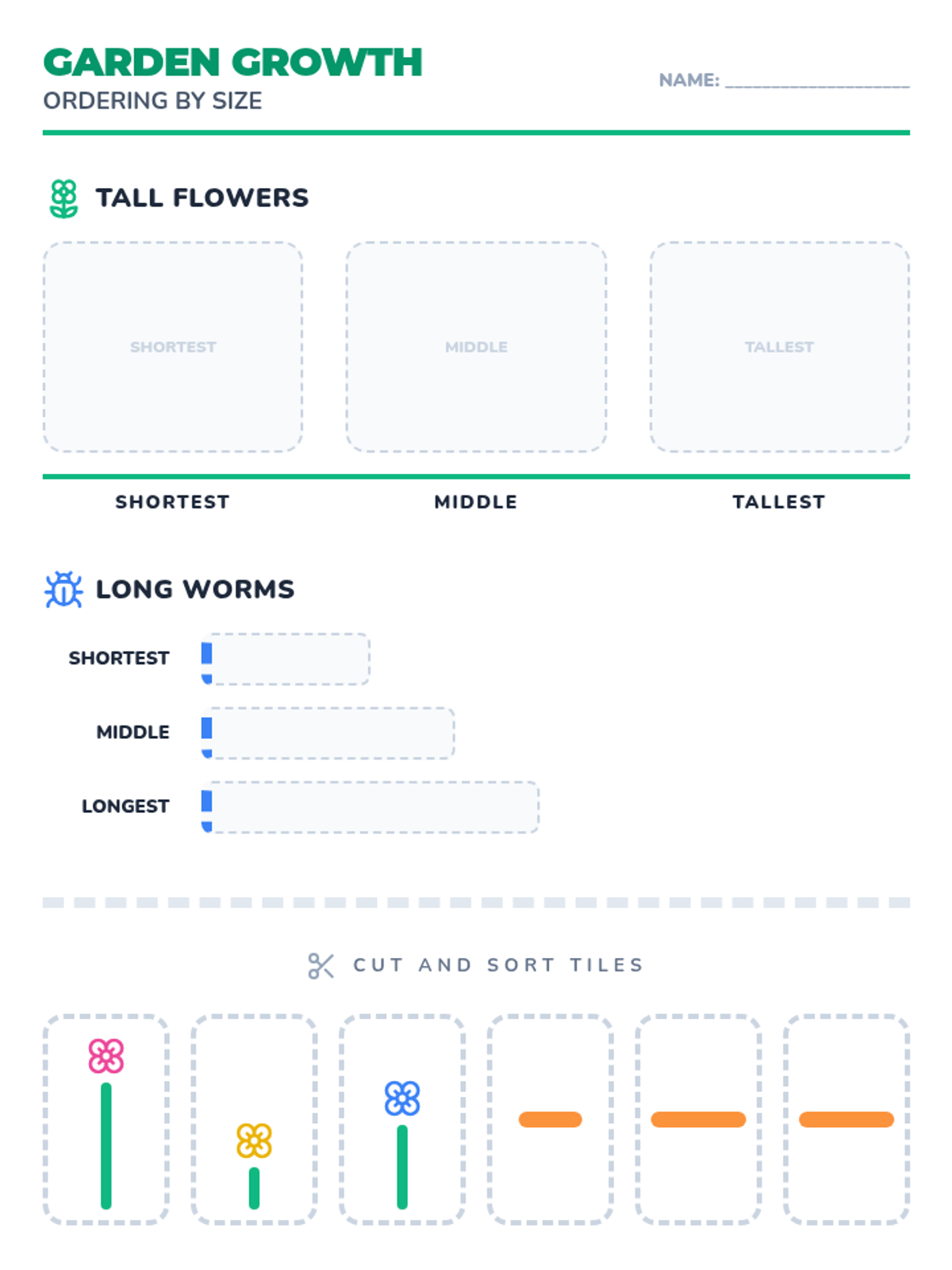
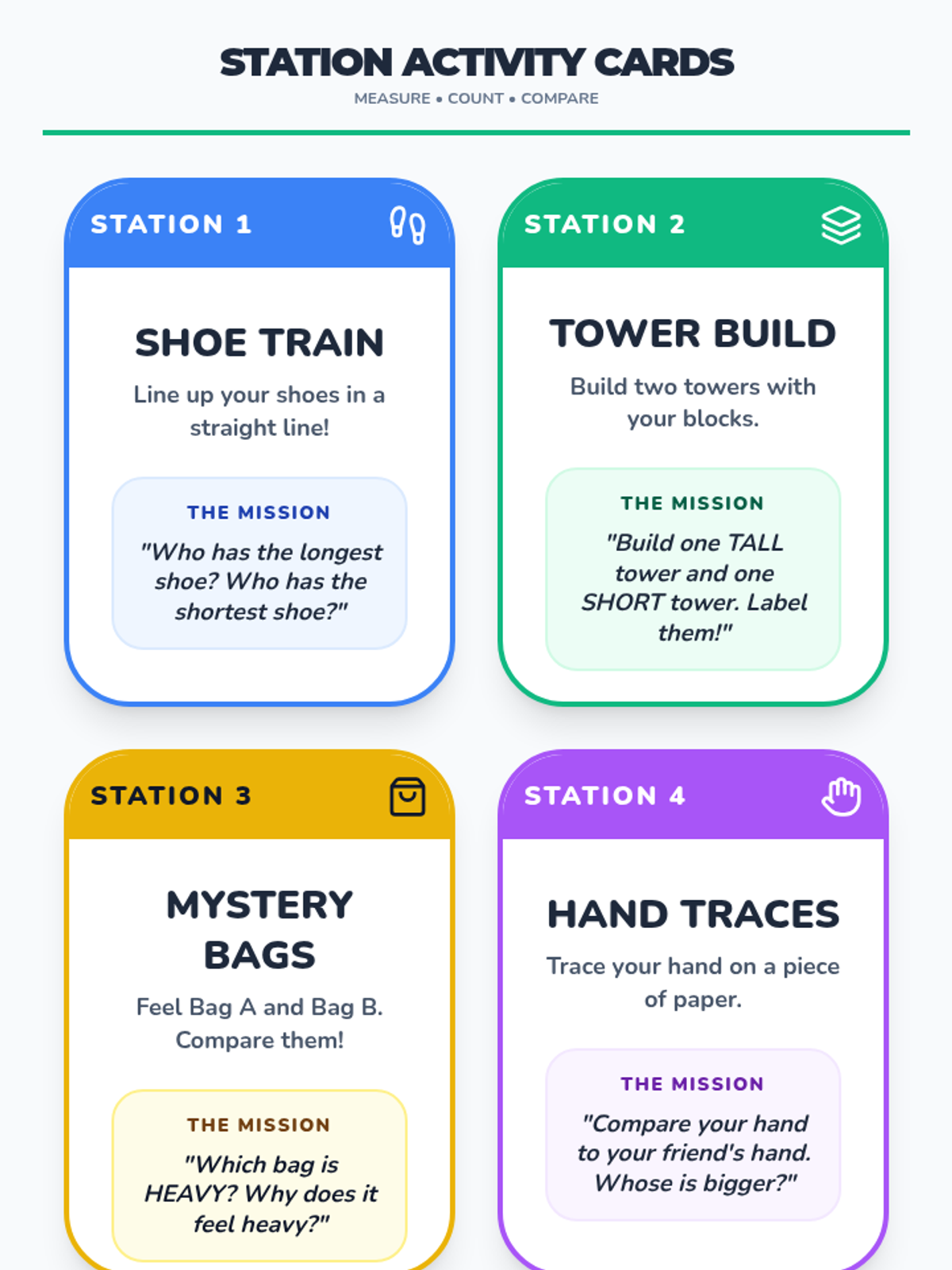
A hands-on kindergarten unit exploring length, height, non-standard units, and weight through interactive stations and play-based learning.
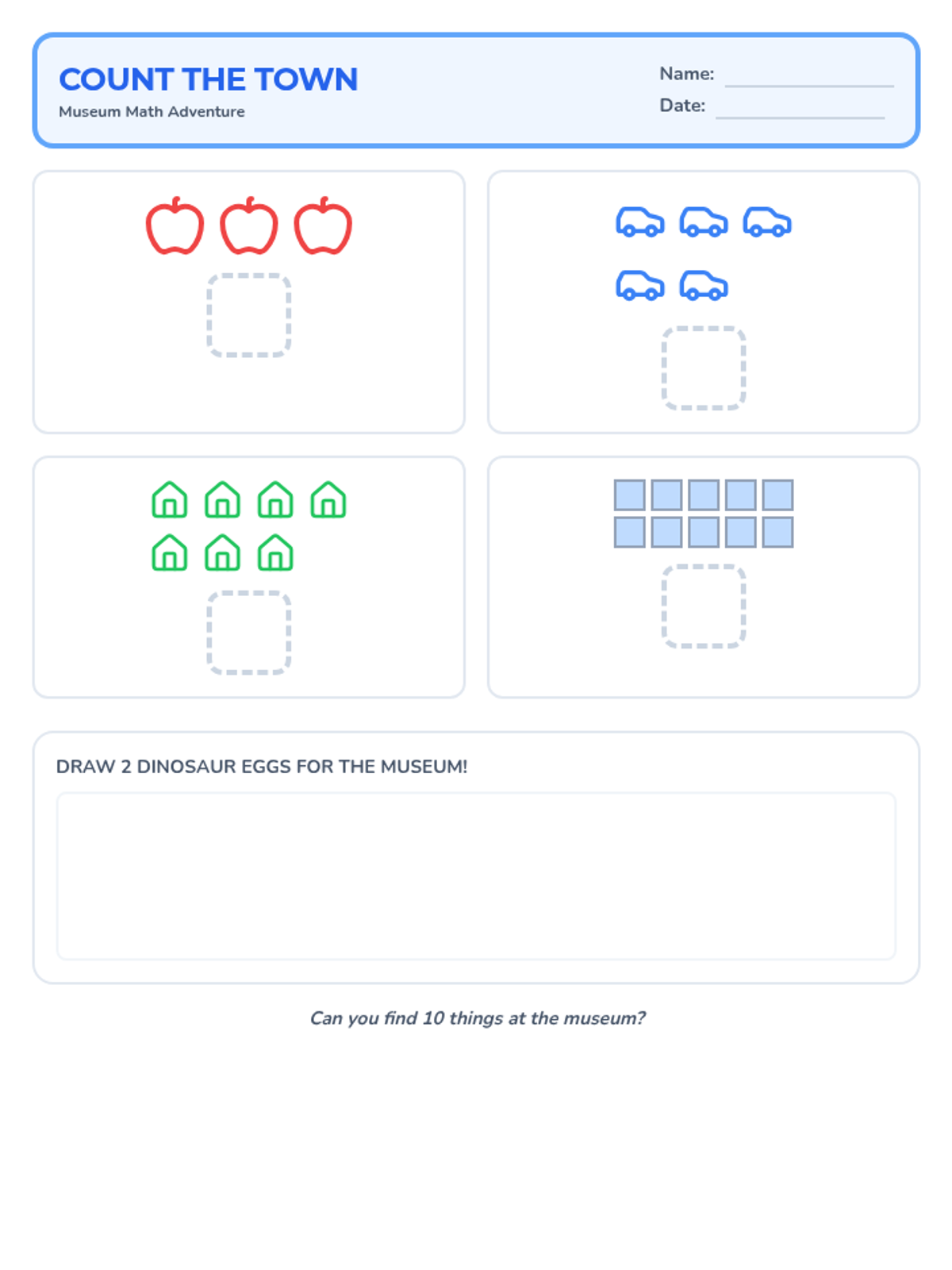
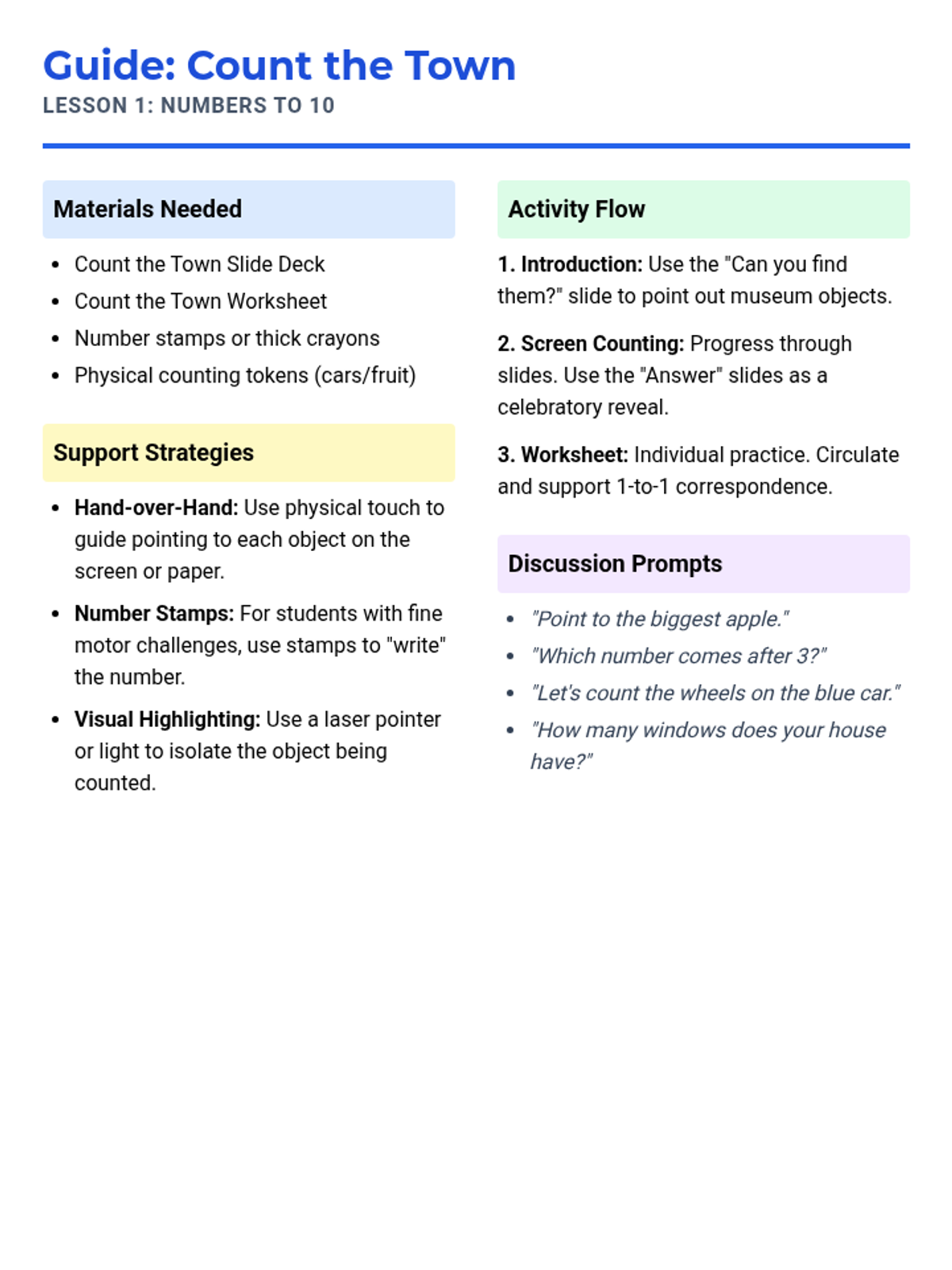
A series of interactive math lessons themed around a trip to Play Street Museum, specifically designed for preschool students with special needs to practice numbers, addition, and size comparison through imaginative play contexts.
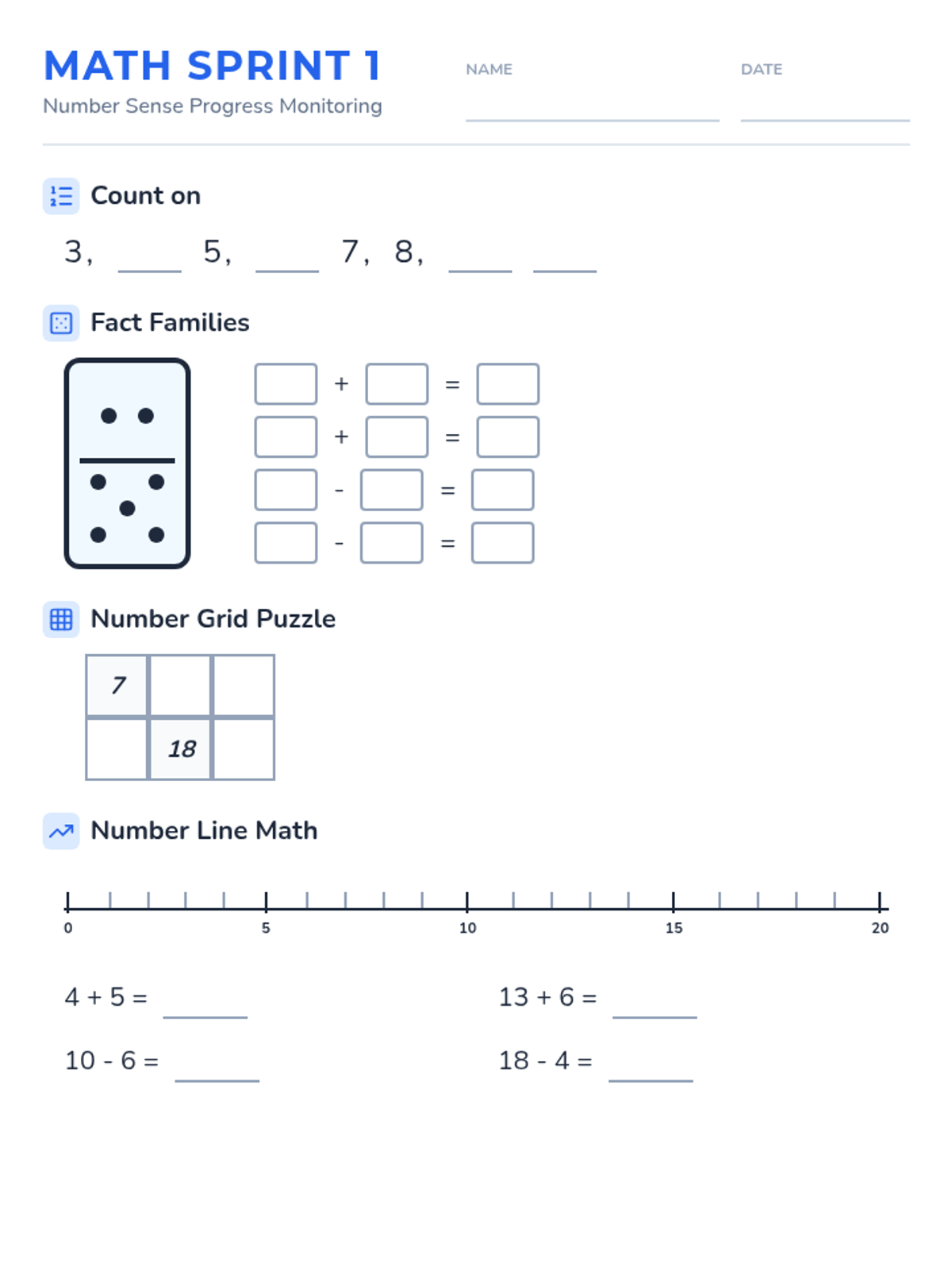
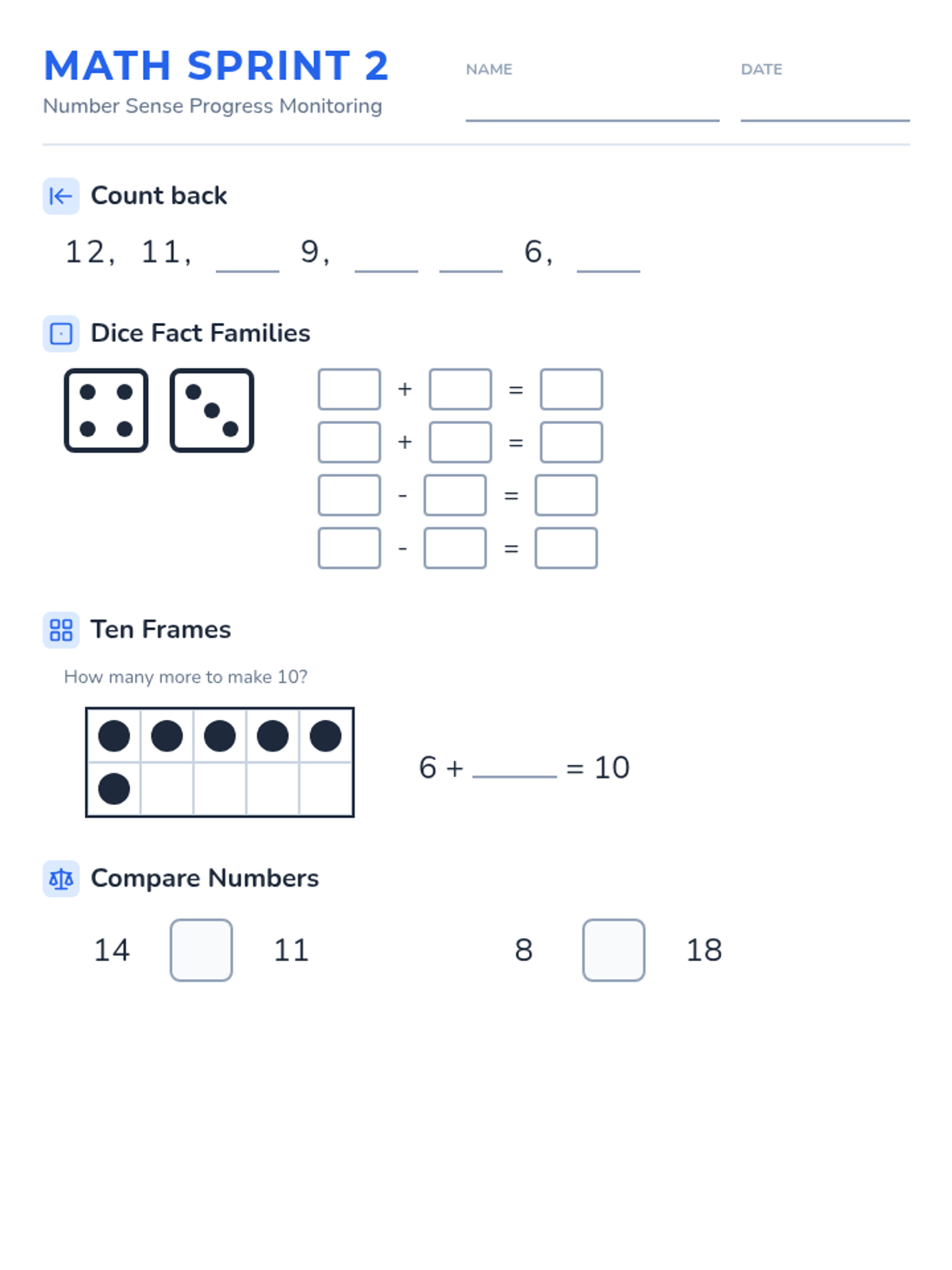
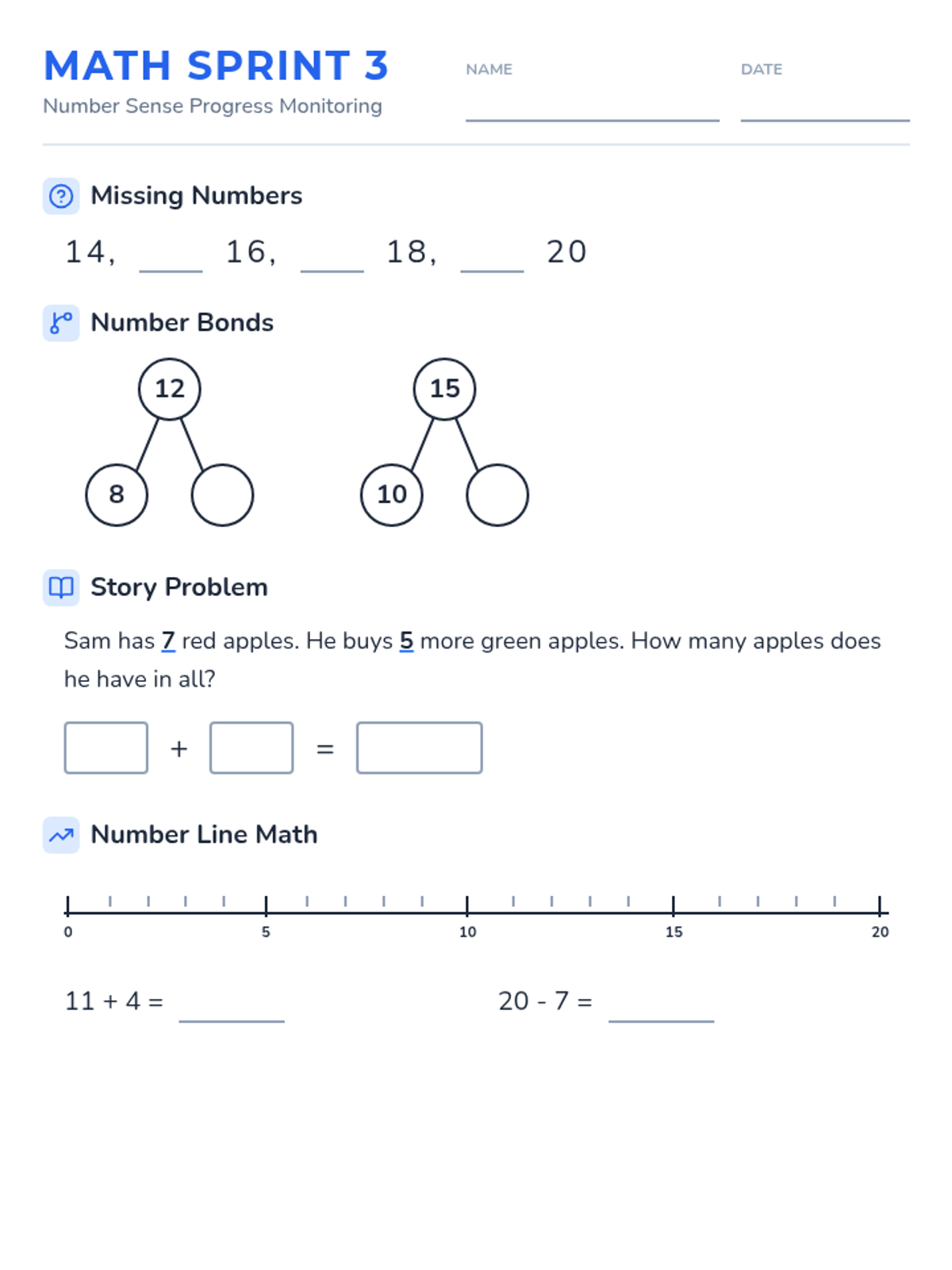
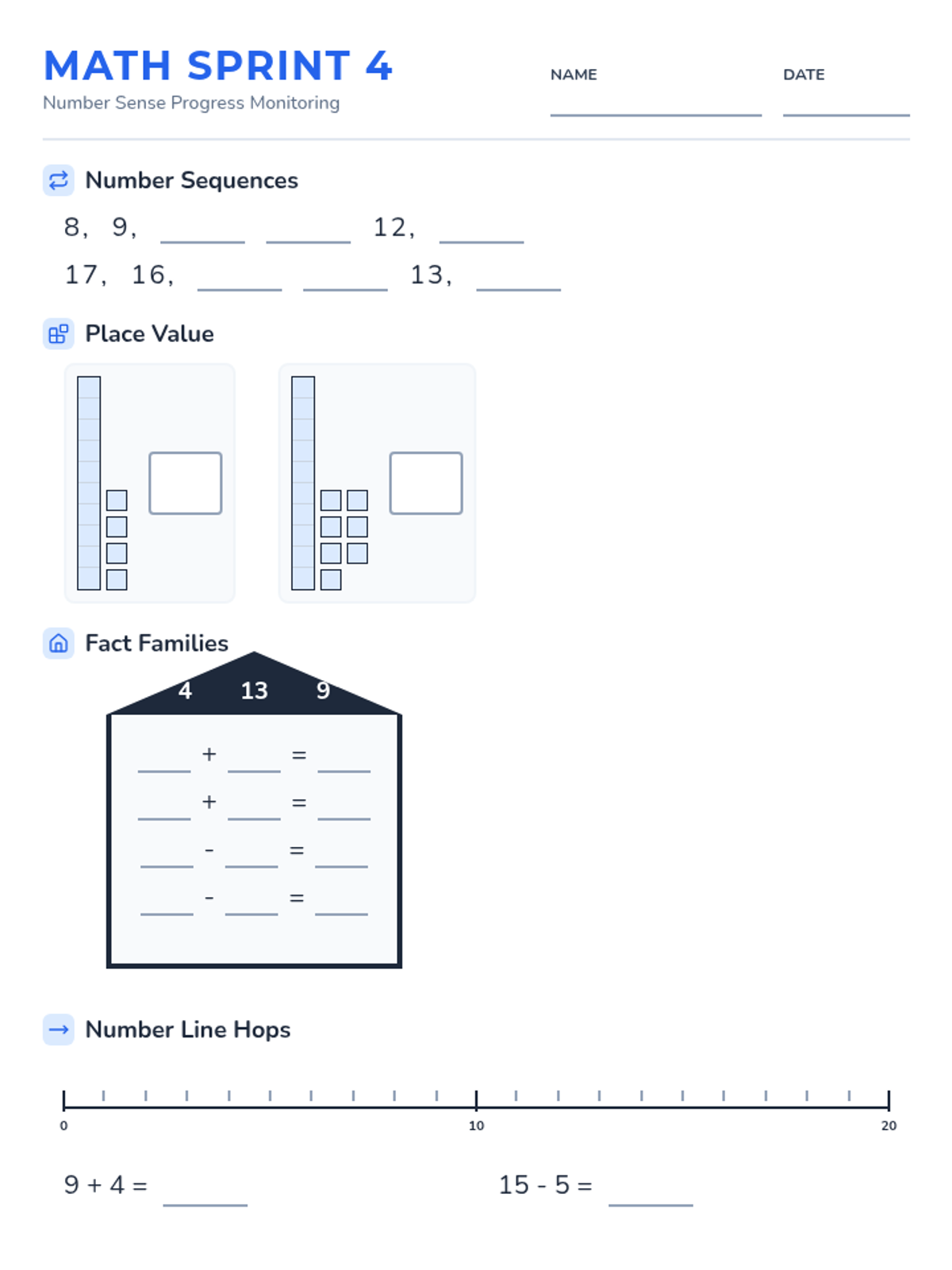
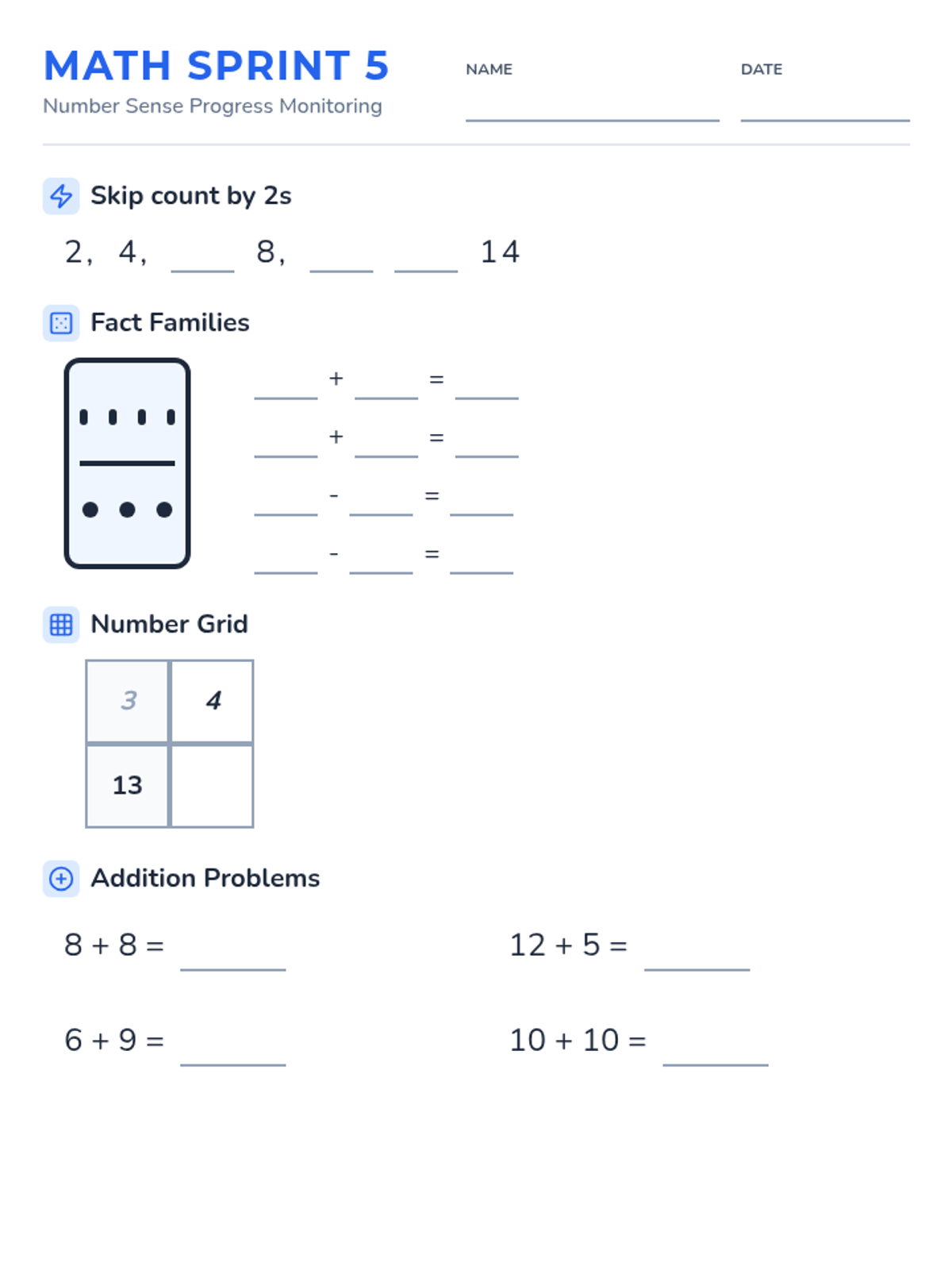
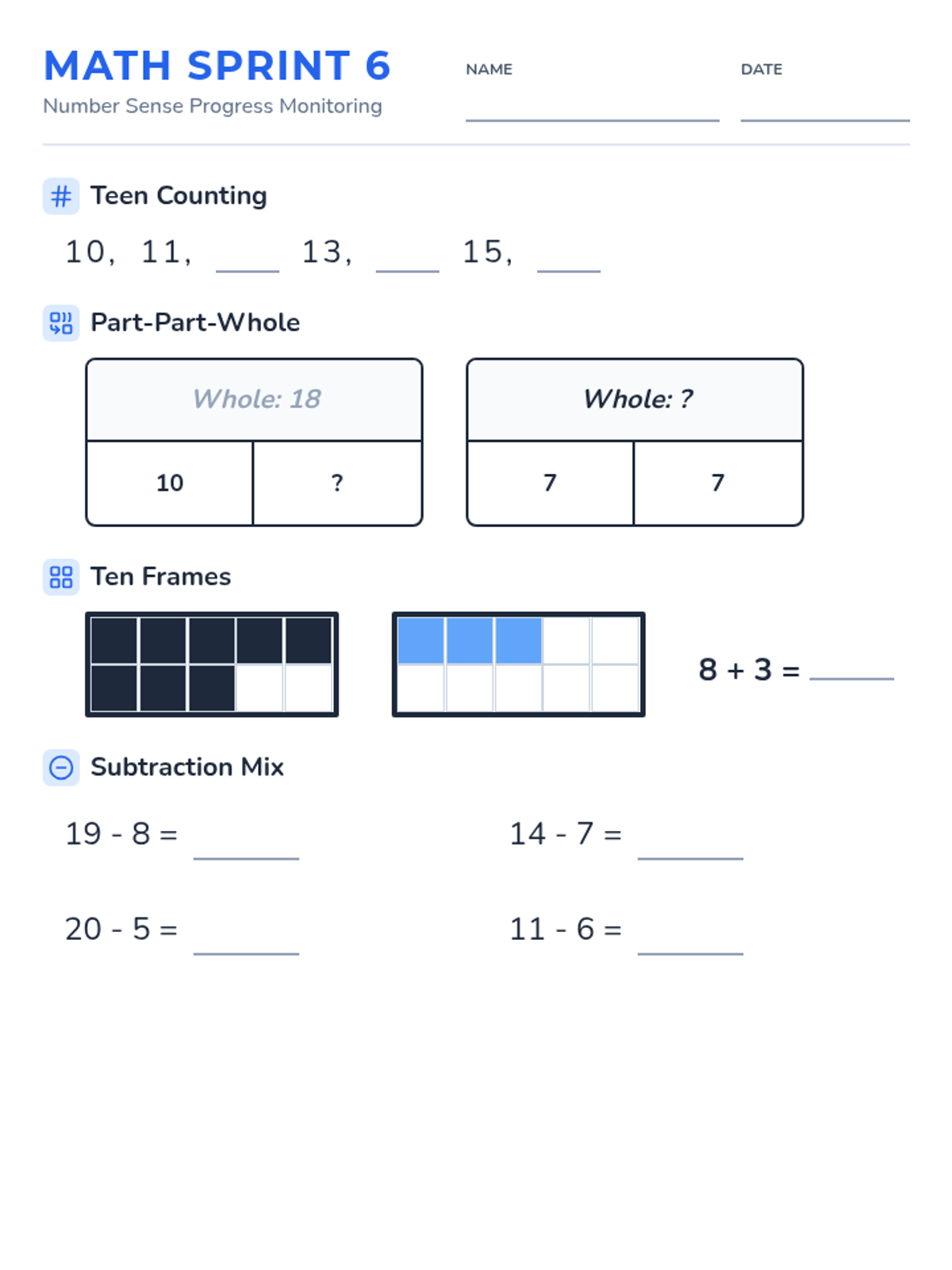
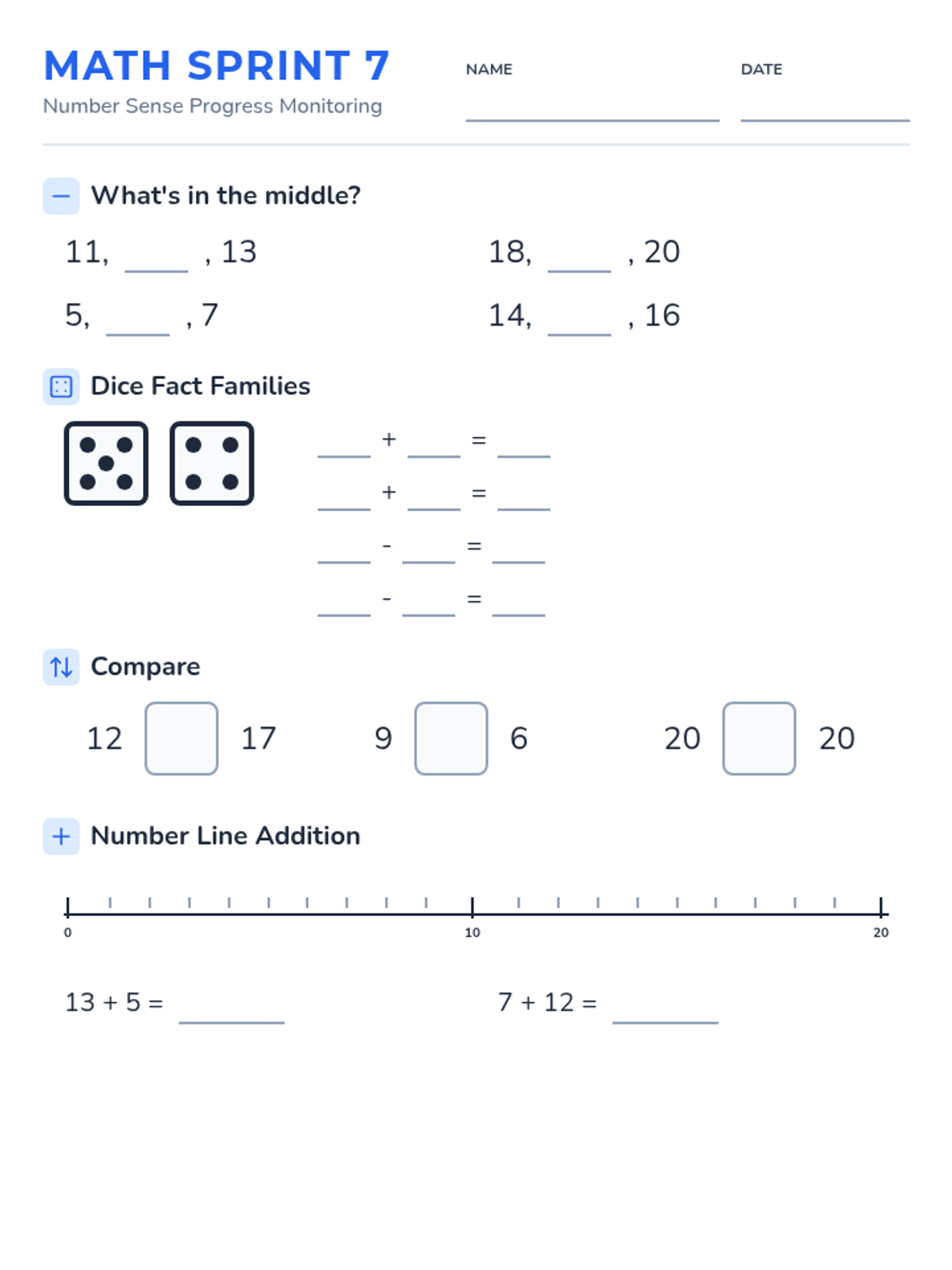
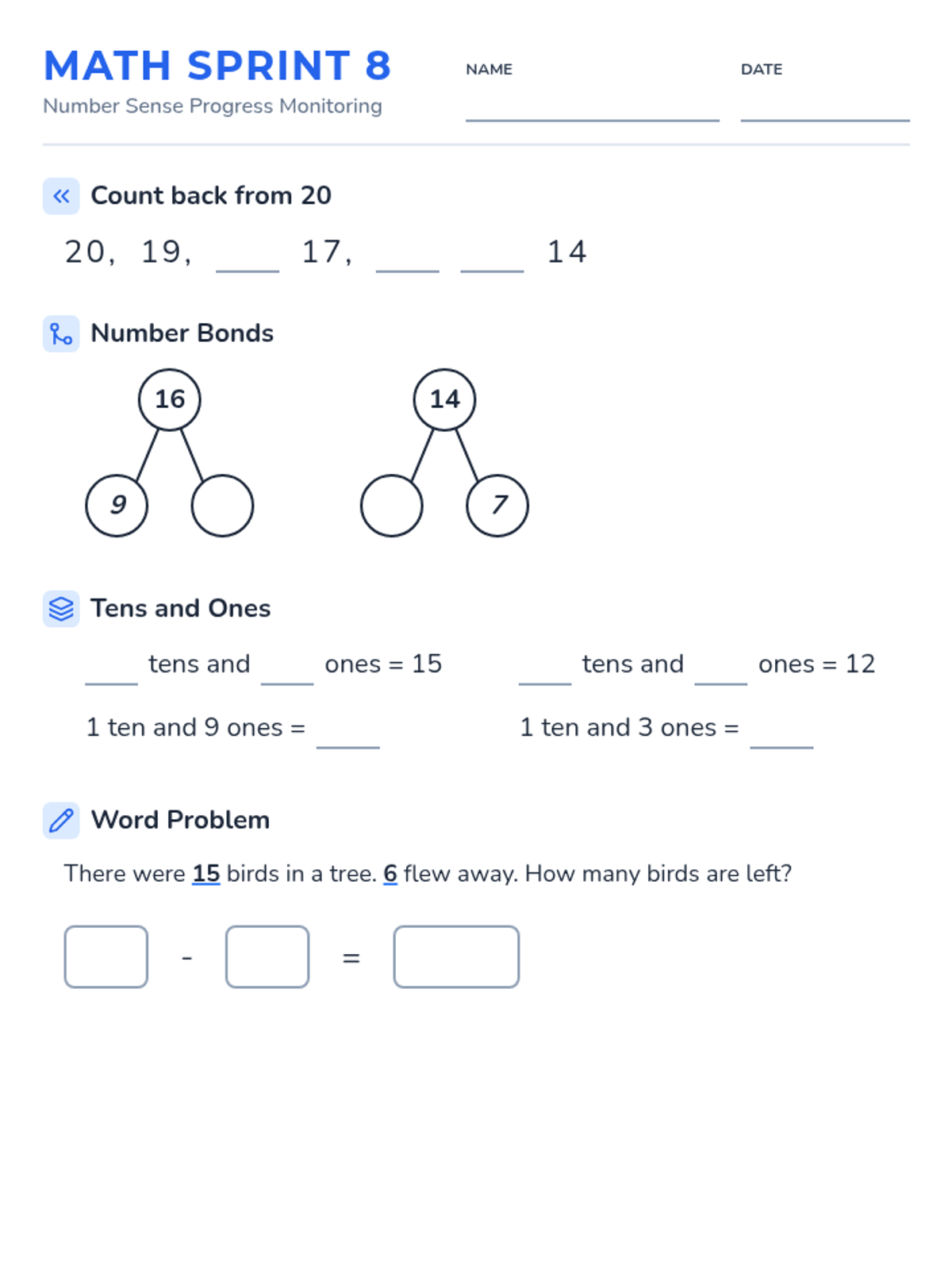
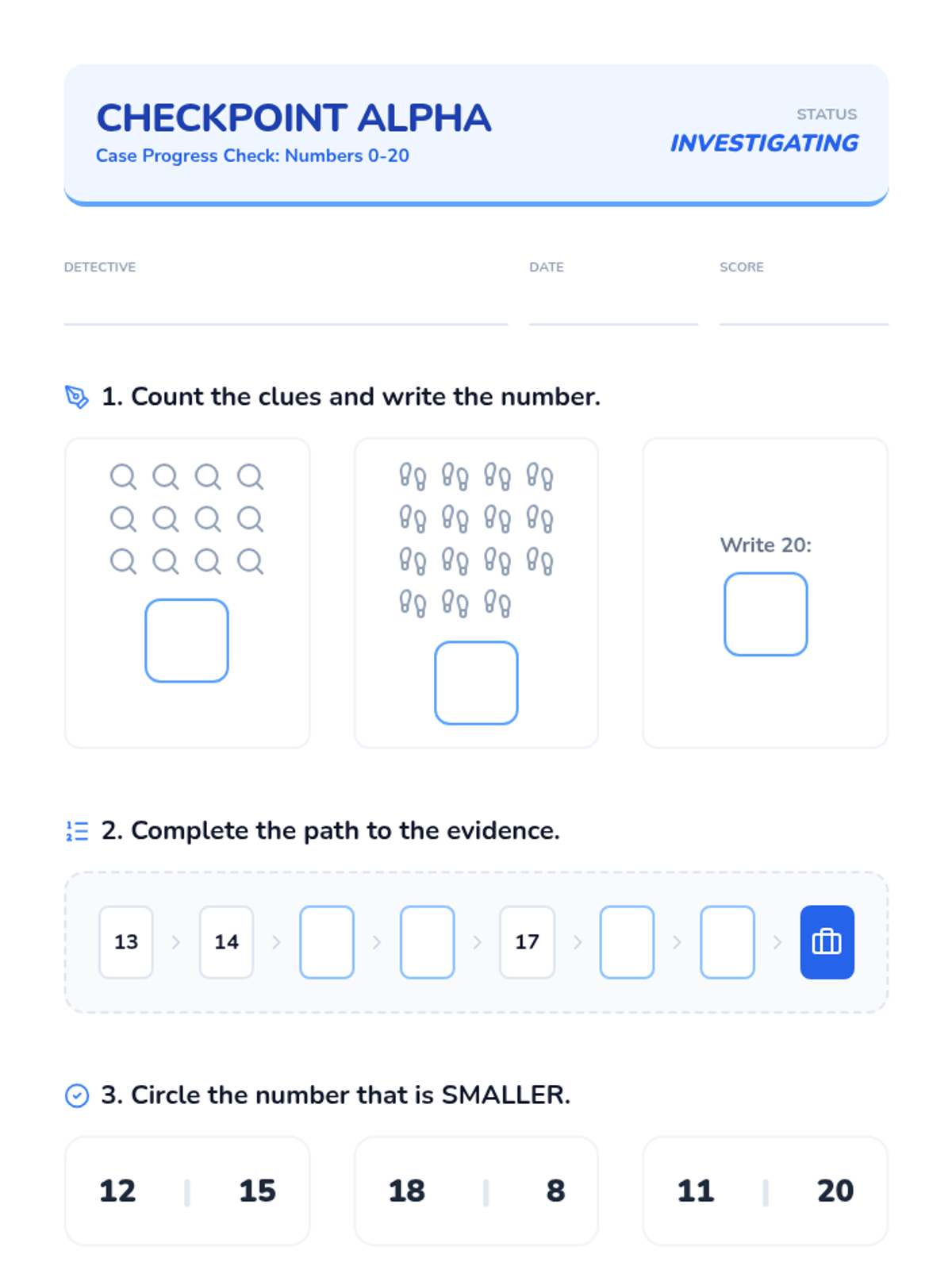
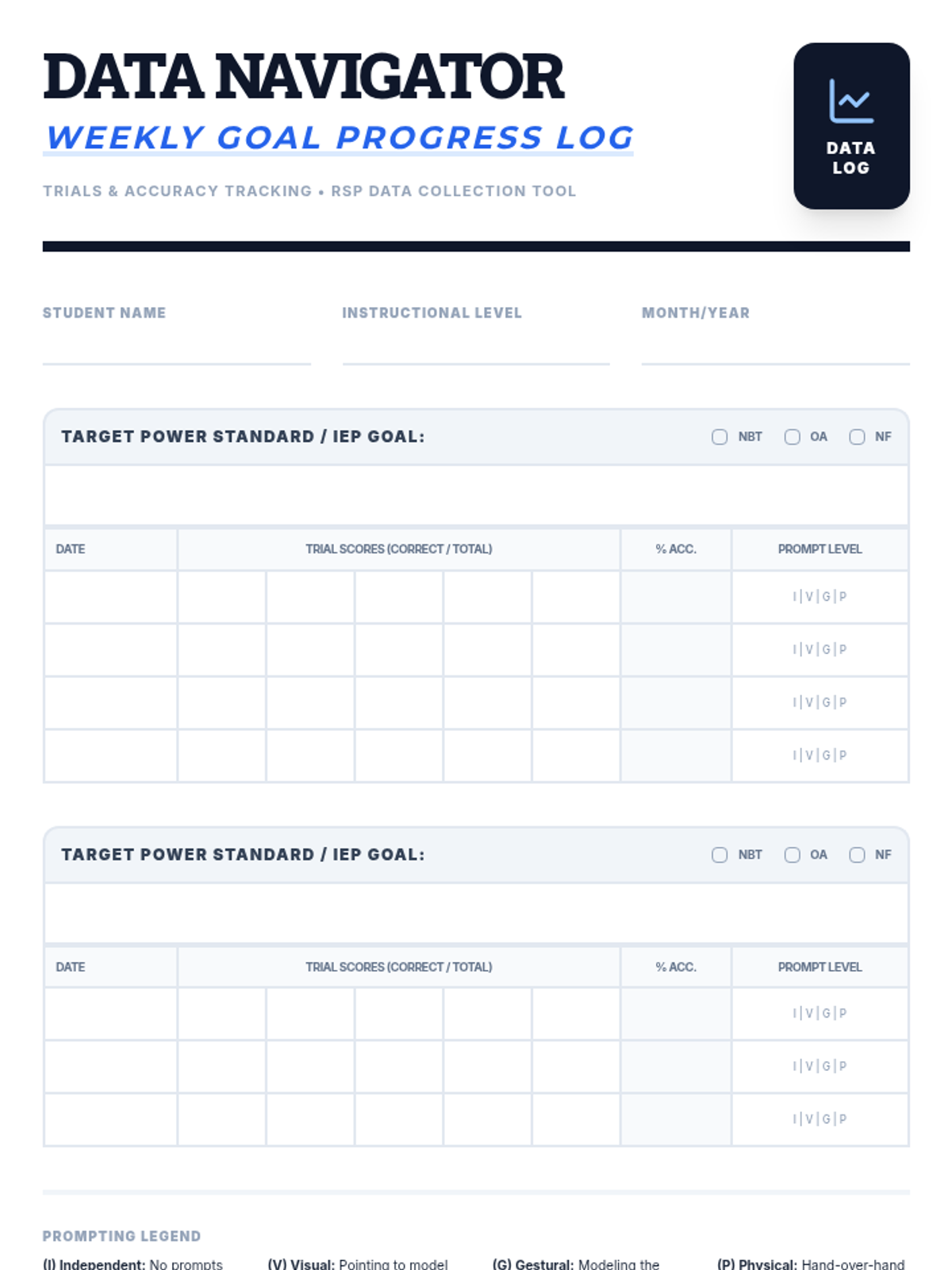
A comprehensive series of elementary math progress monitoring resources designed to track student growth in foundational arithmetic and number sense.
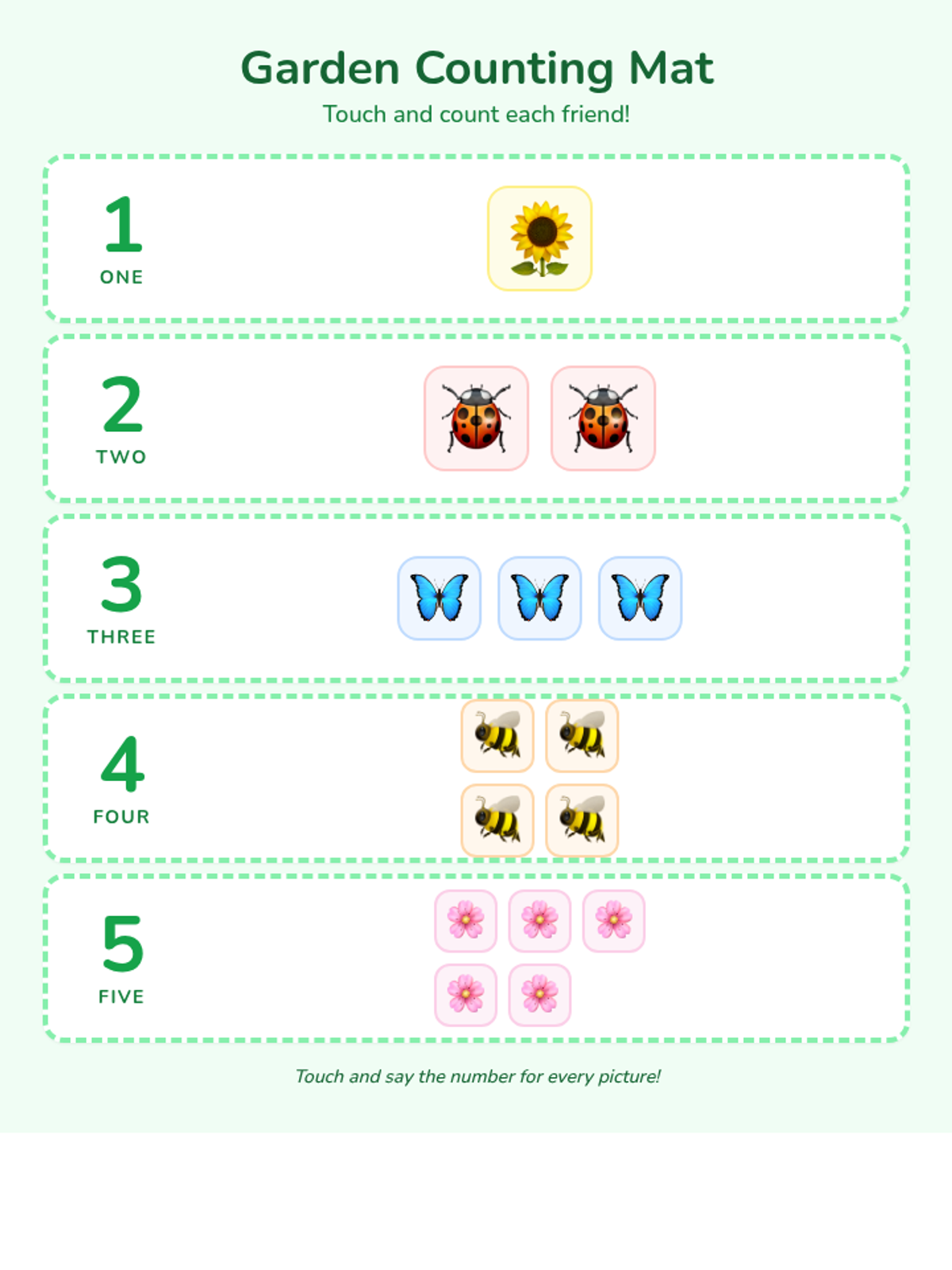
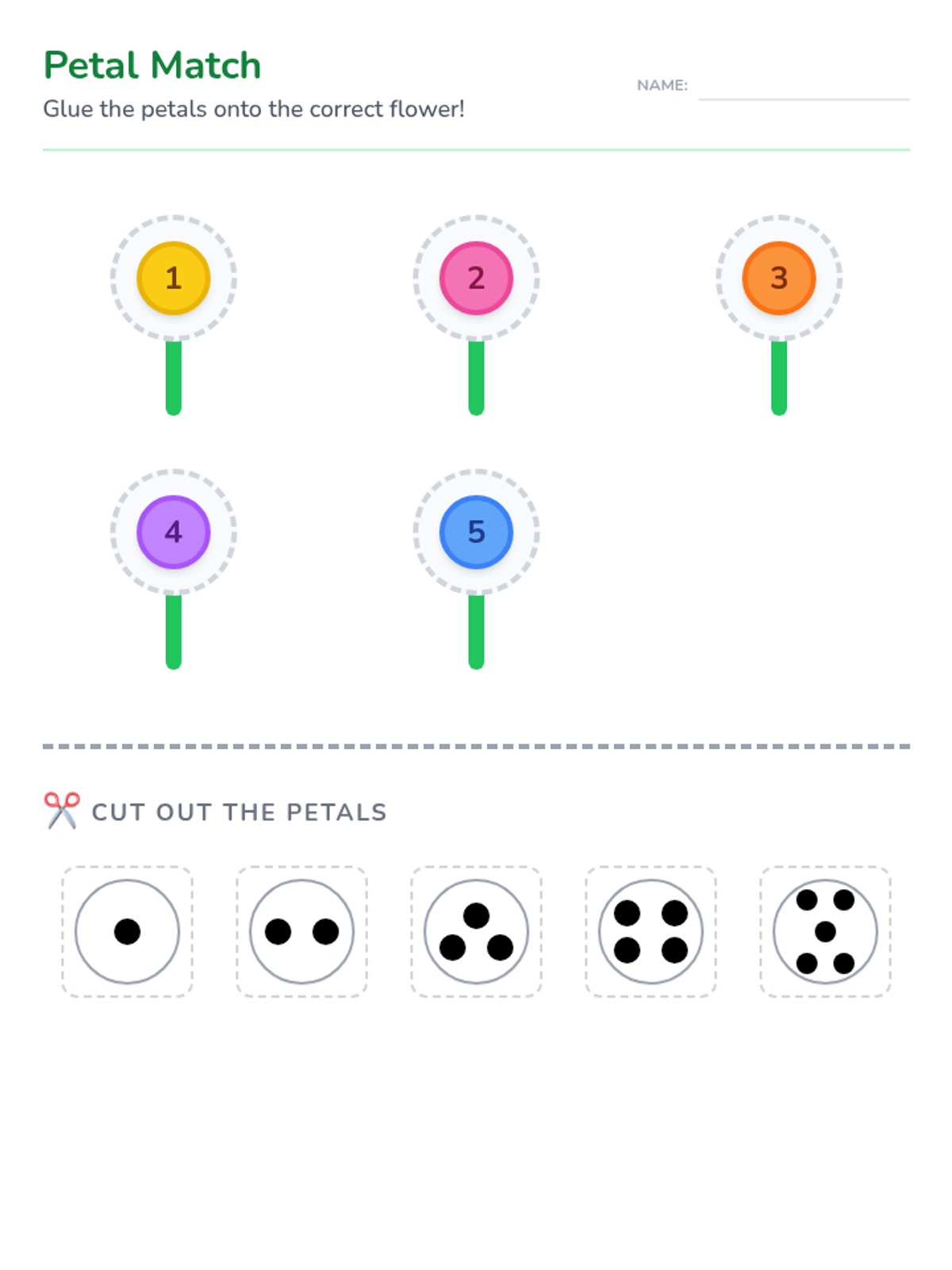
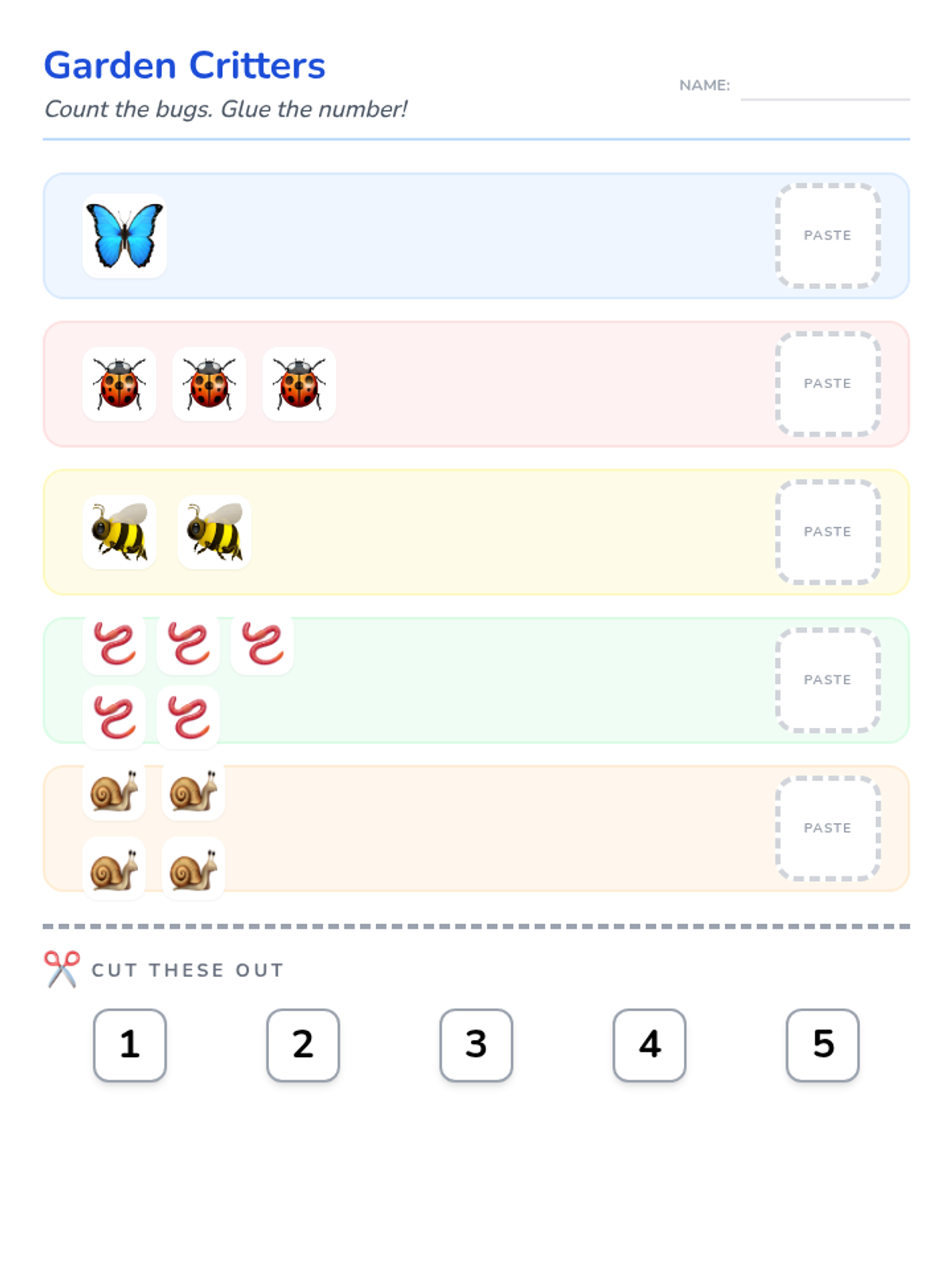
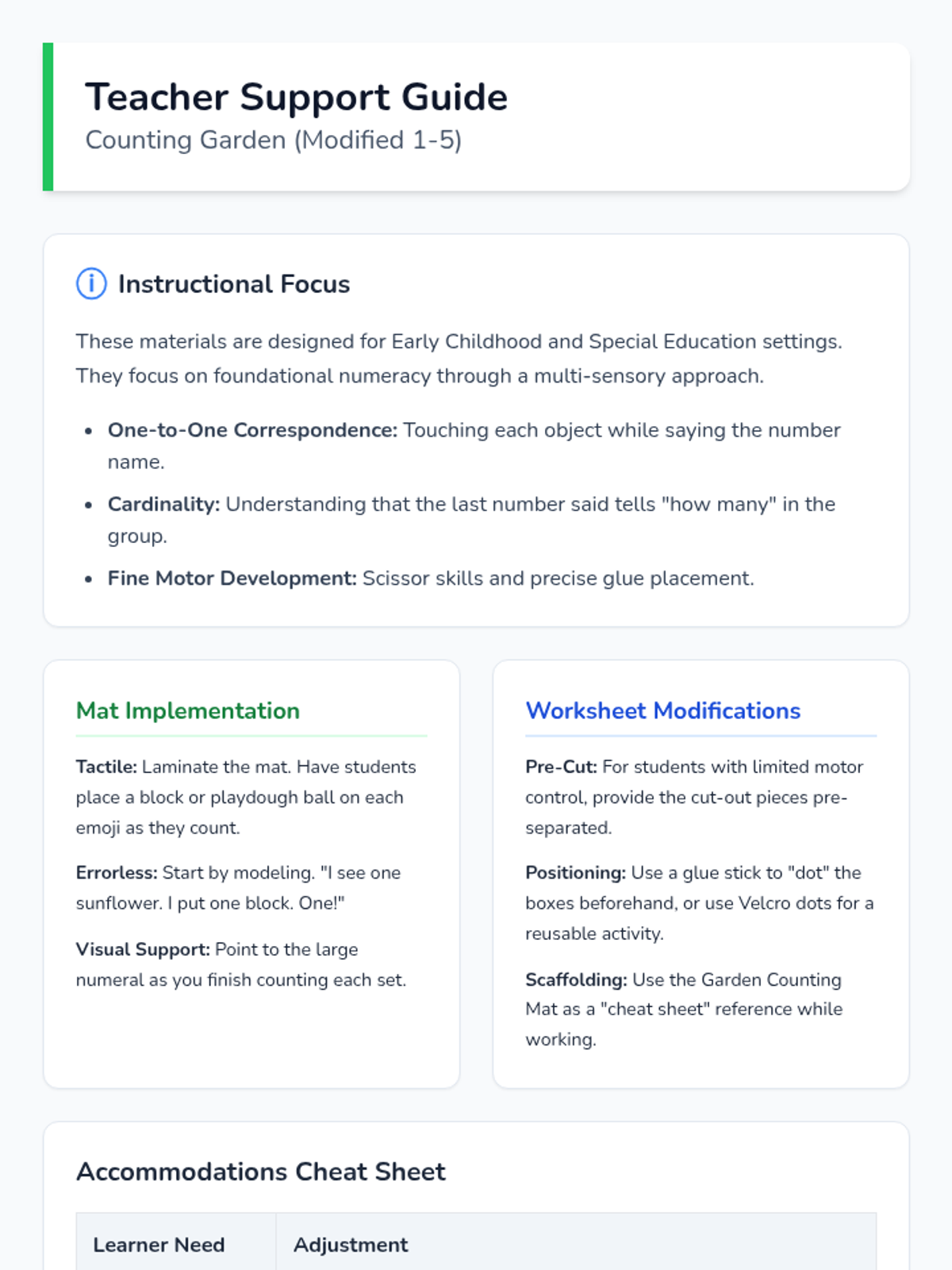
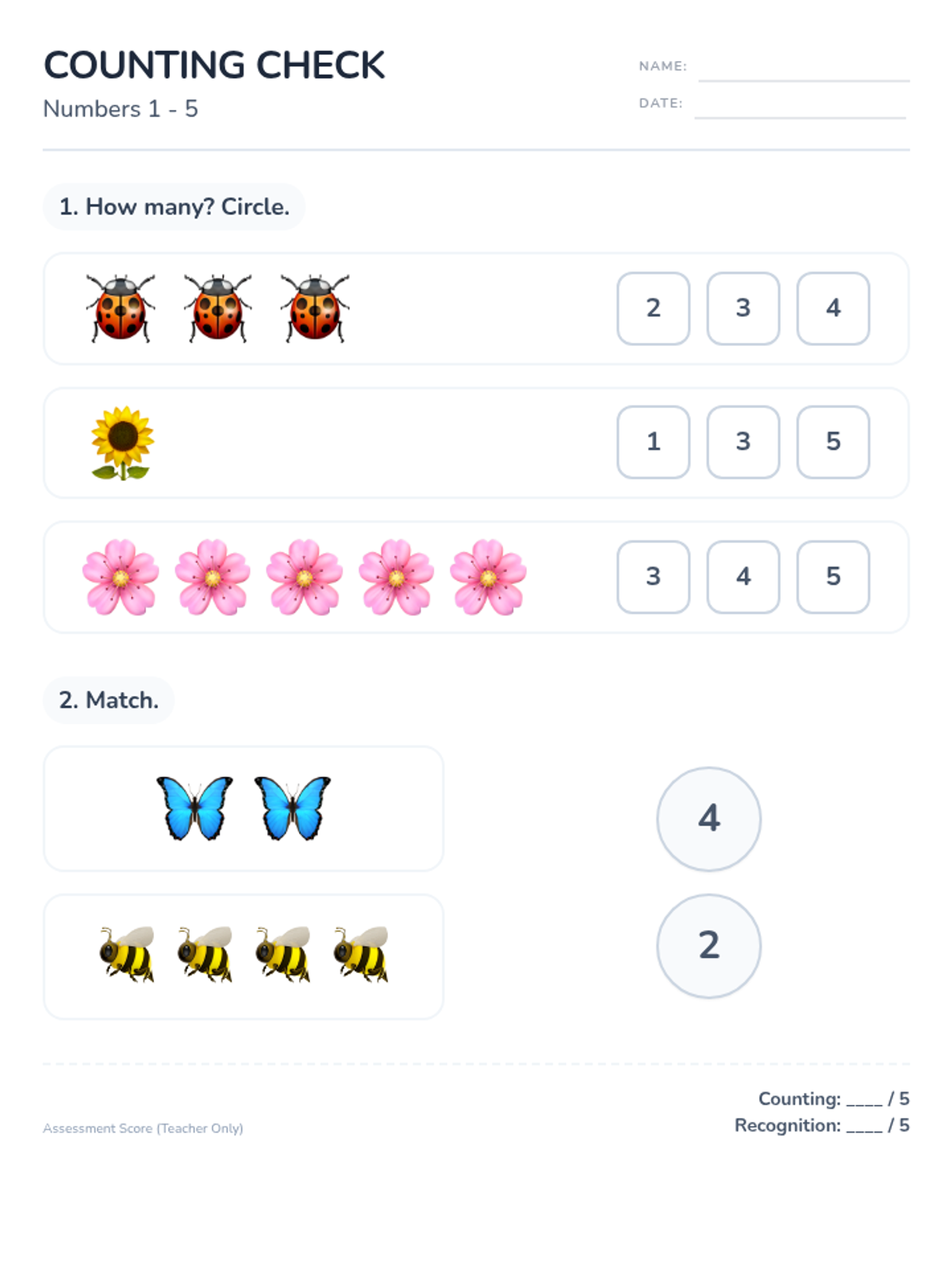
A foundational counting unit for early childhood learners, focusing on numbers 1-5 through tactile and visual garden-themed activities. Includes counting mats and fine-motor cut-and-paste tasks.
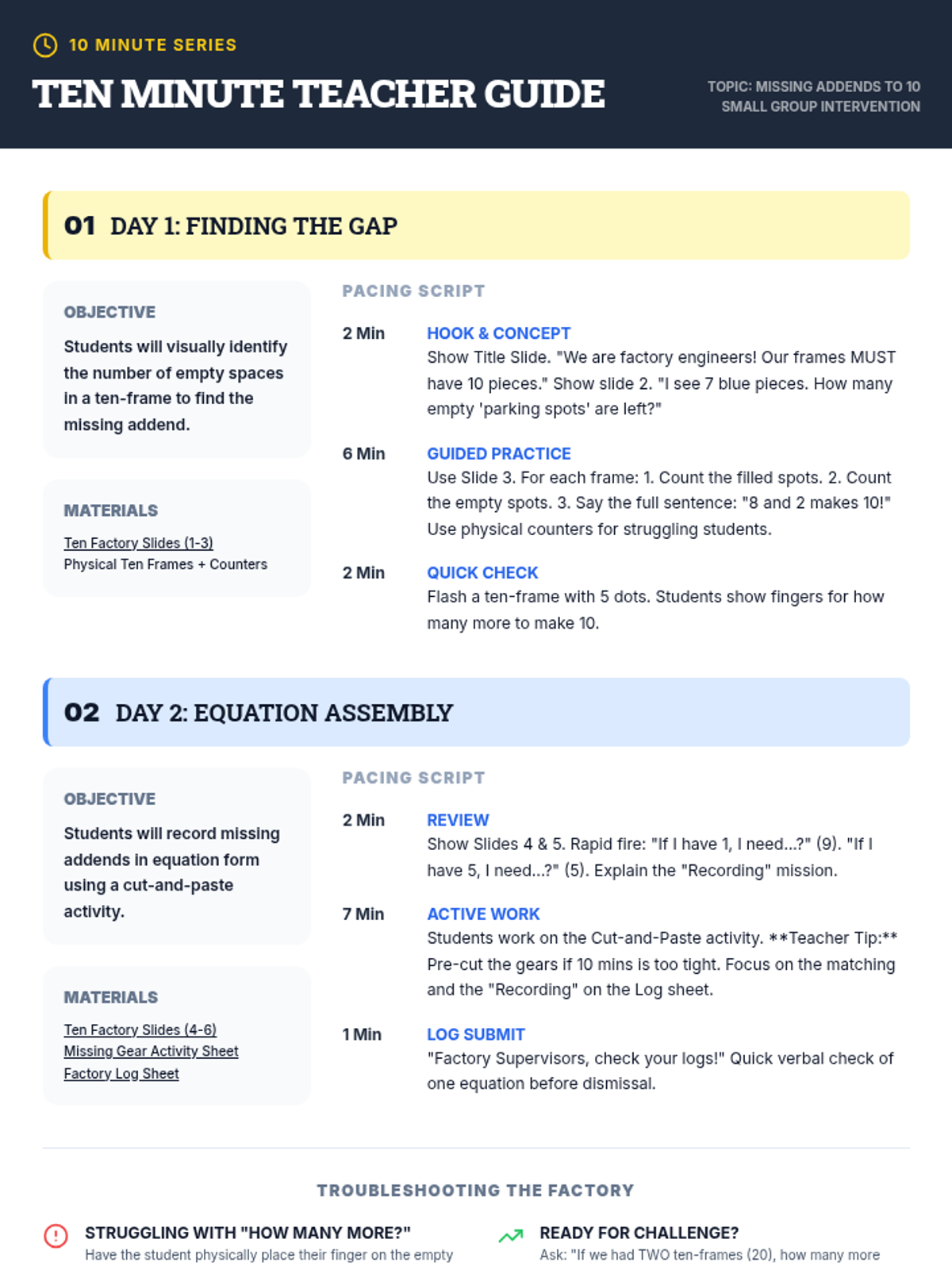
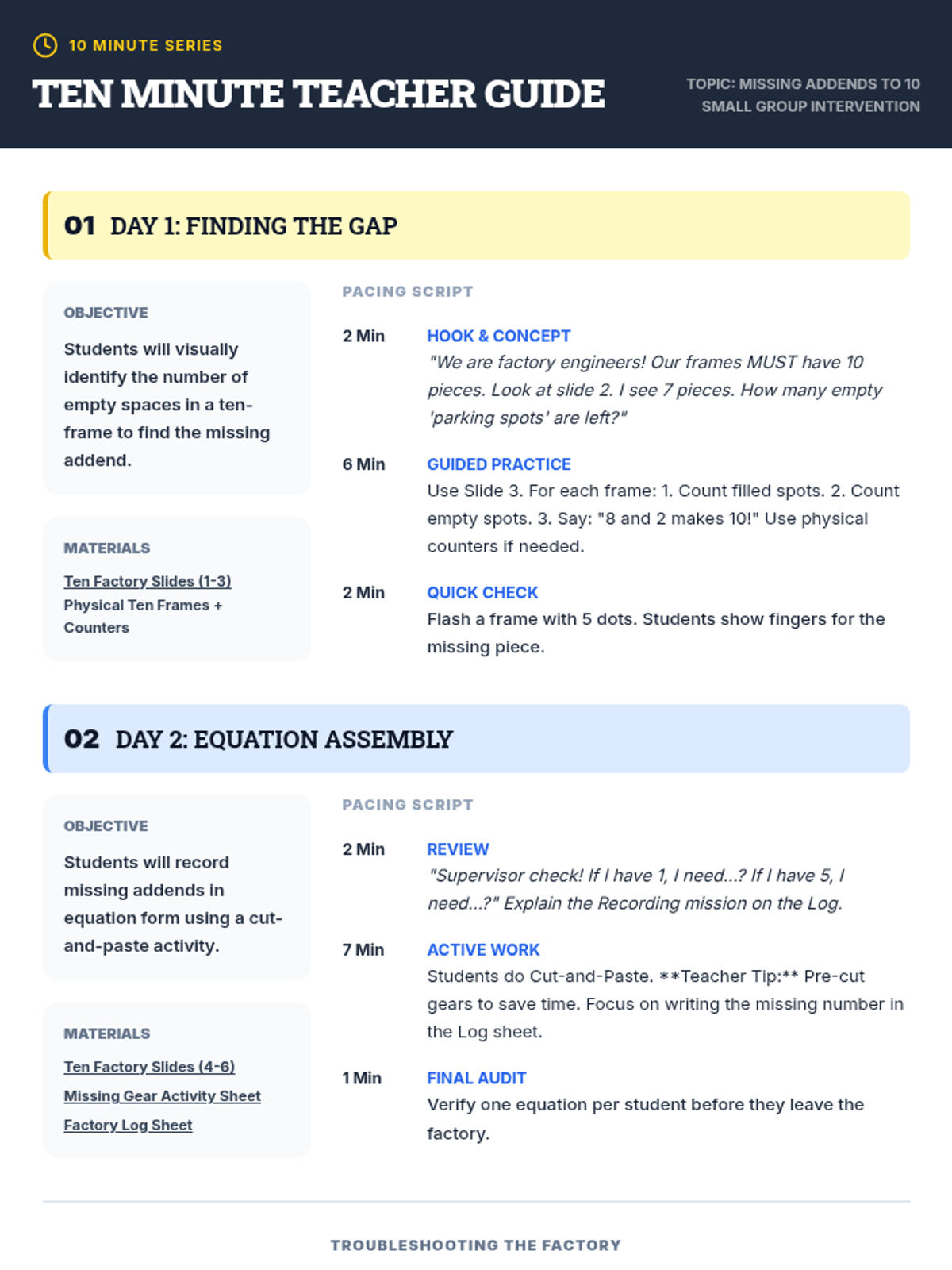
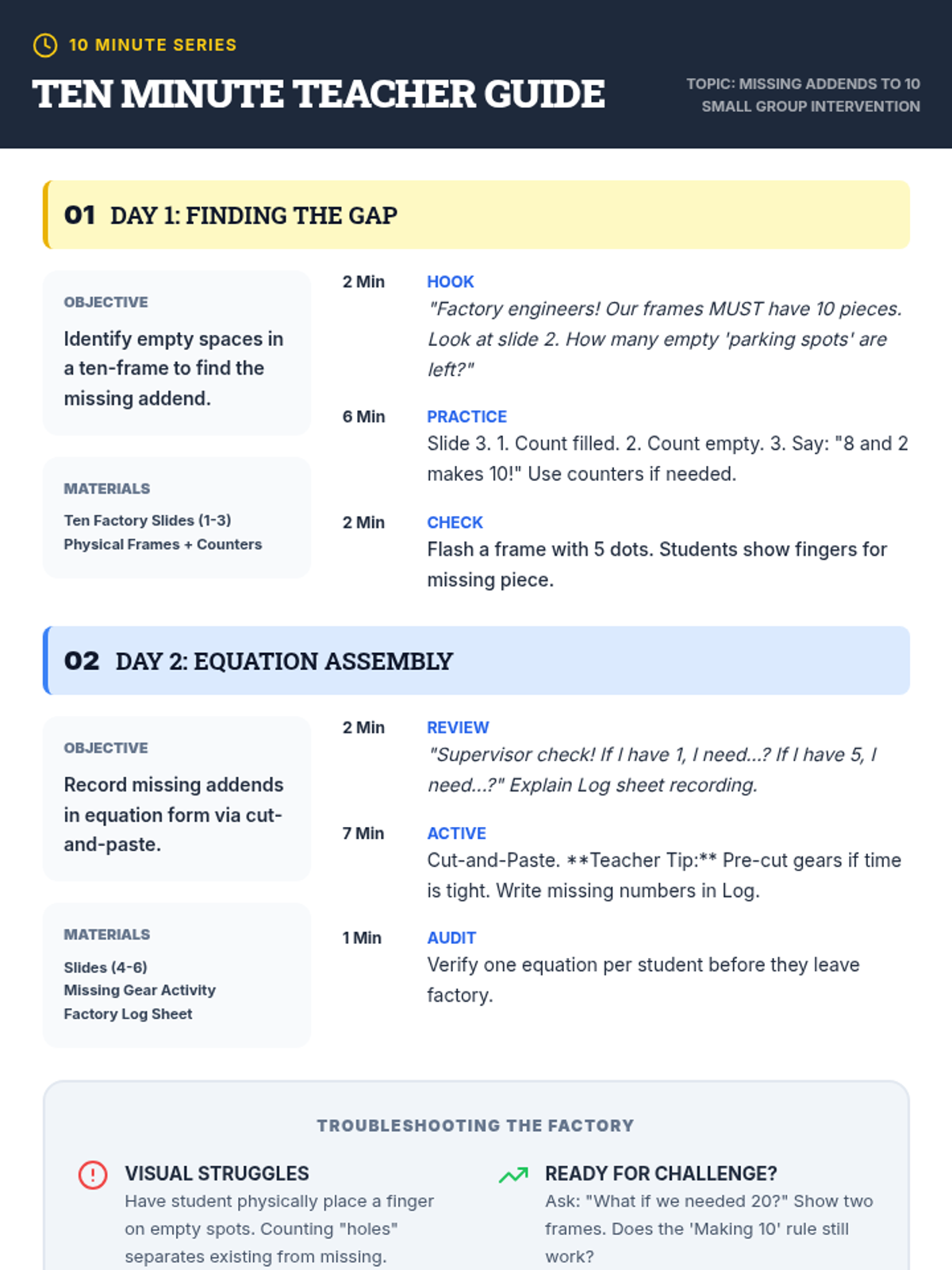
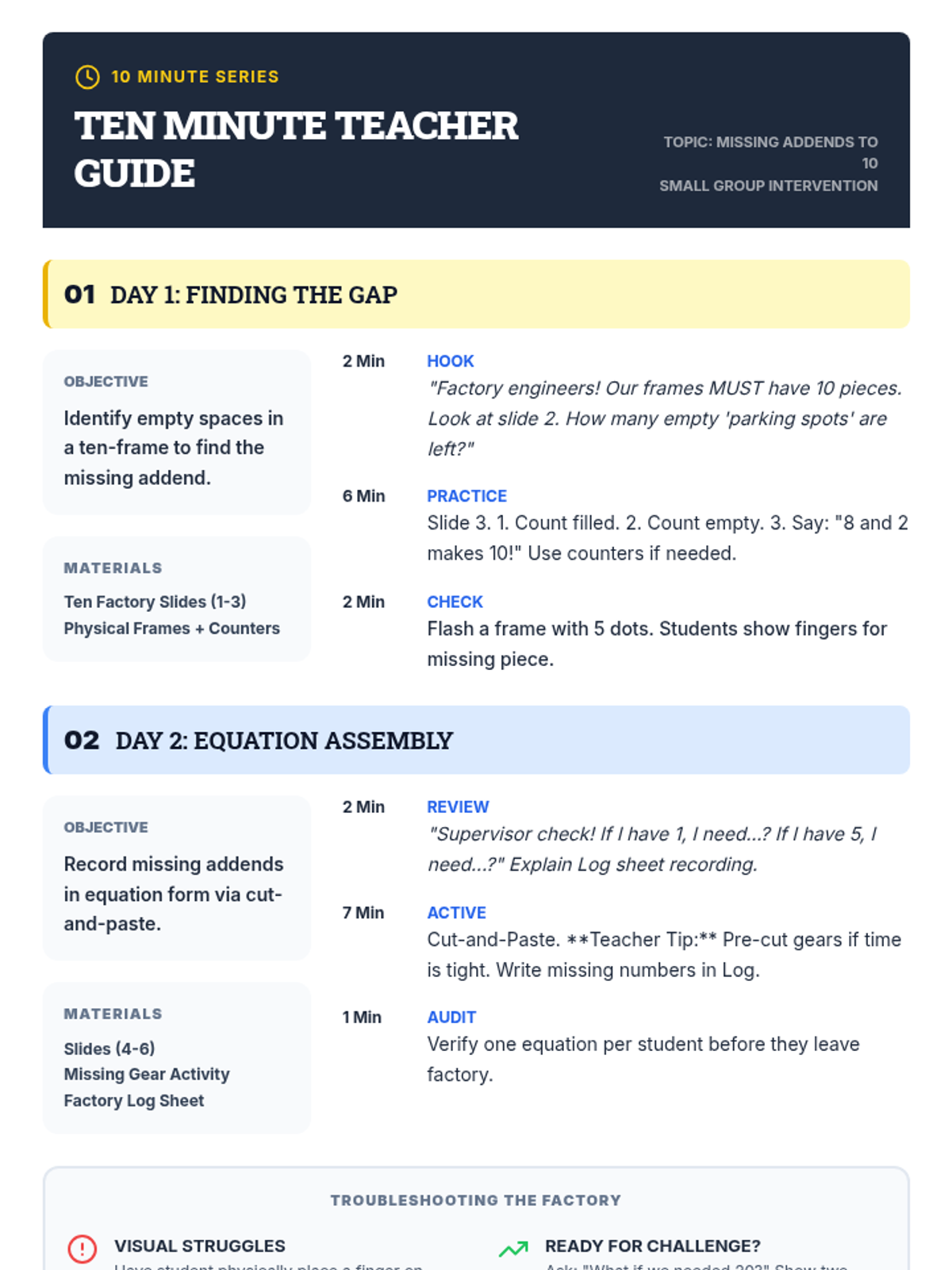
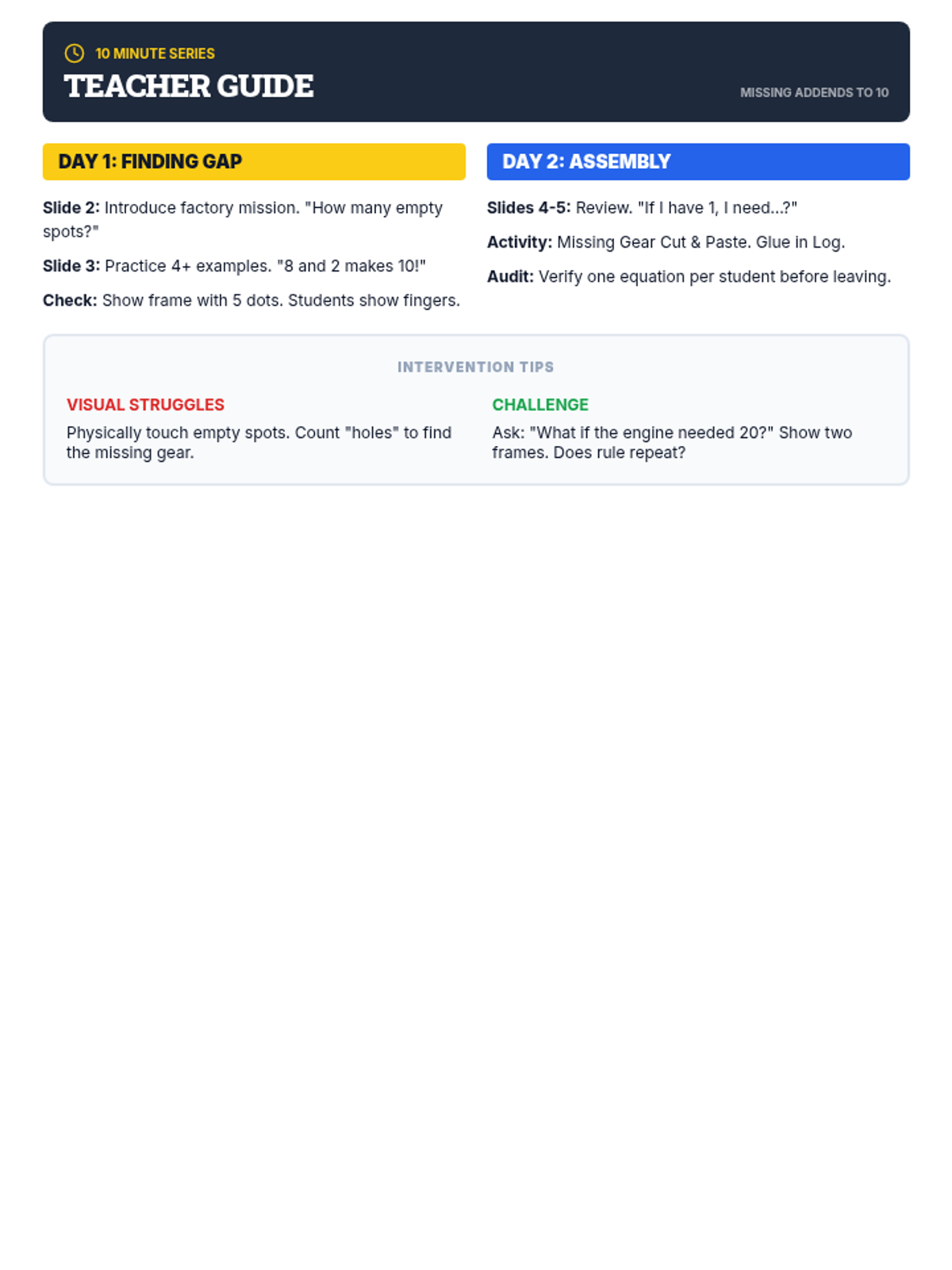
A two-day, 10-minute small group sequence focused on mastering missing addends to ten using a factory-themed ten-frame approach.
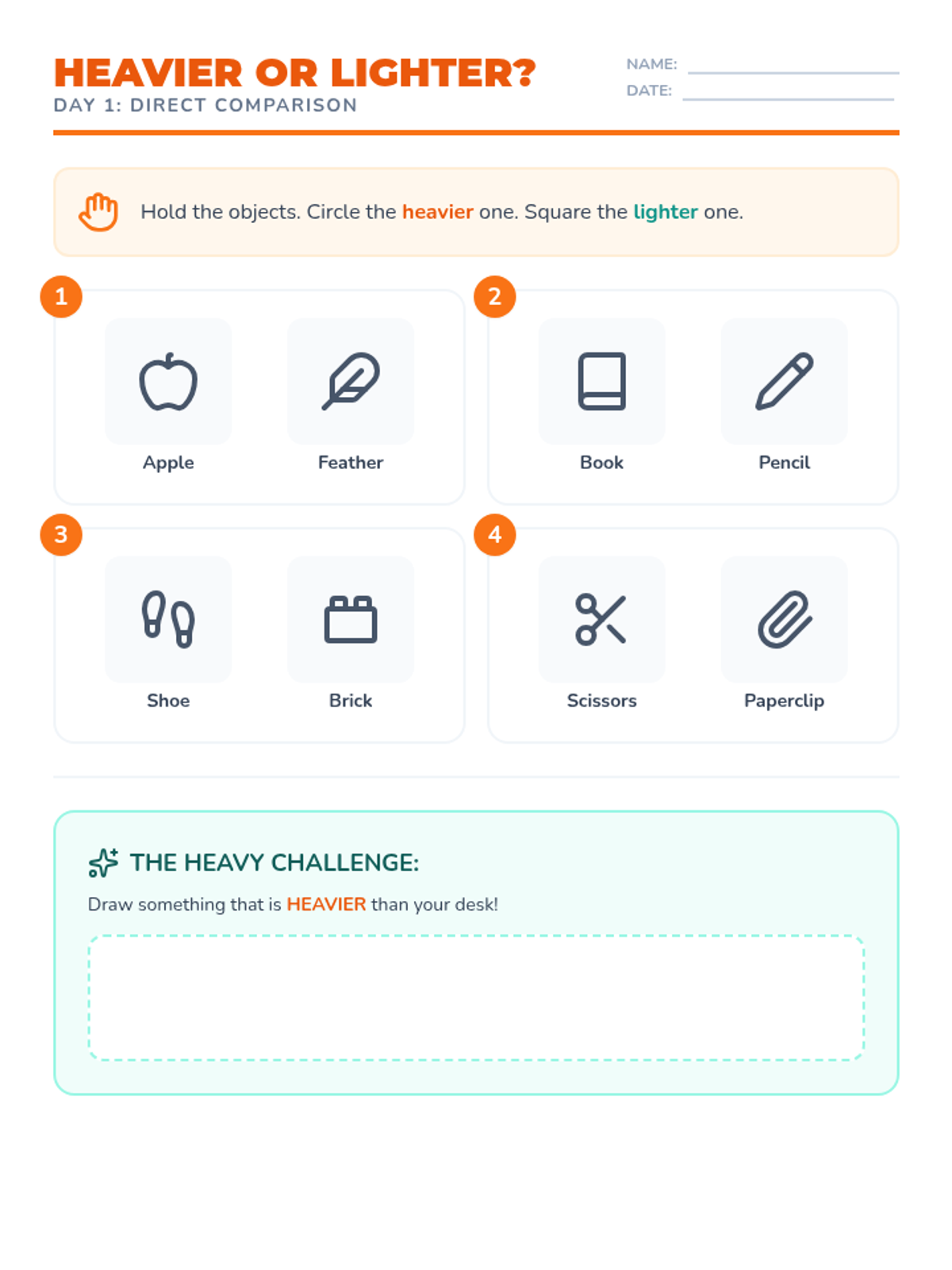
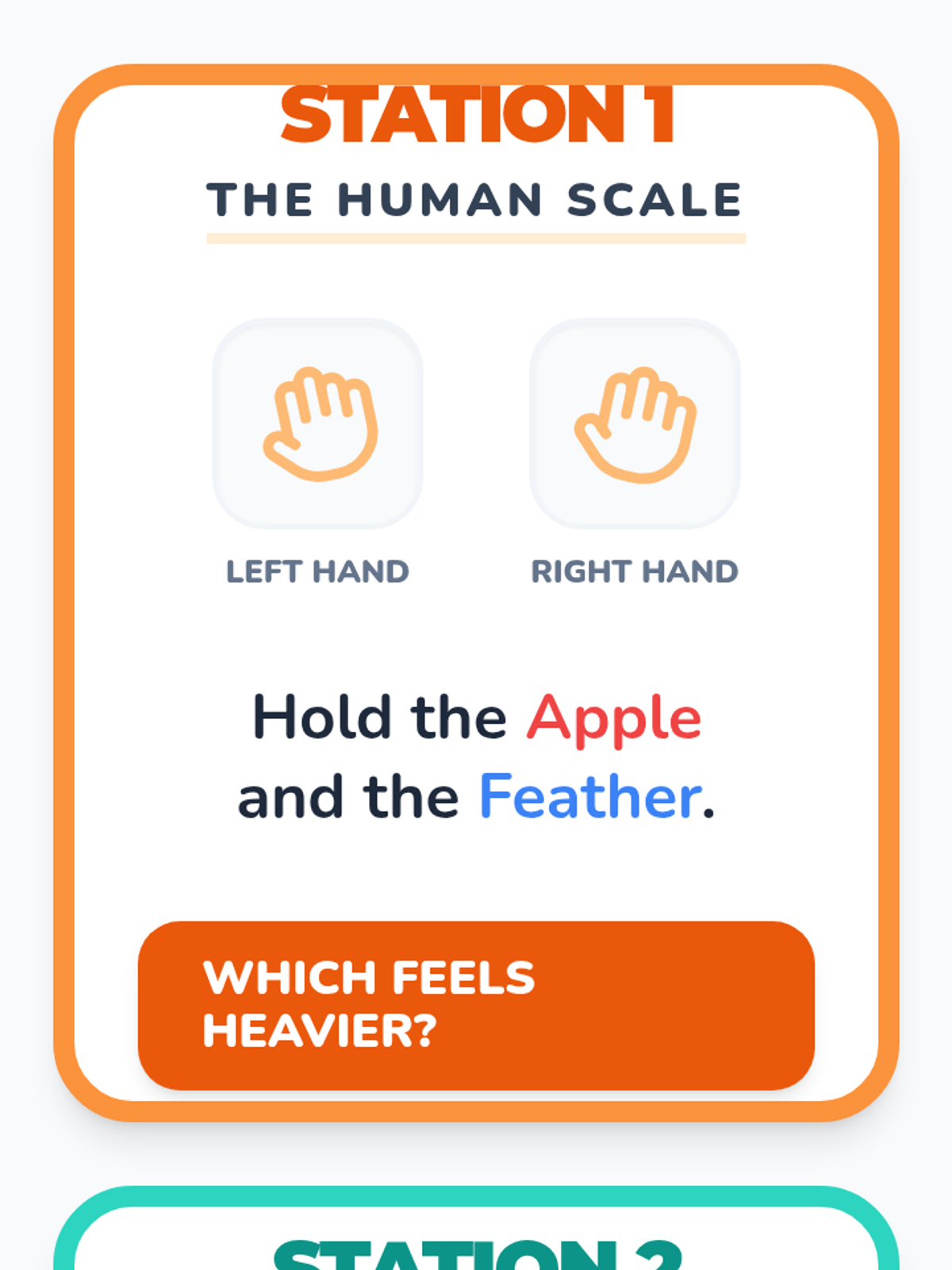
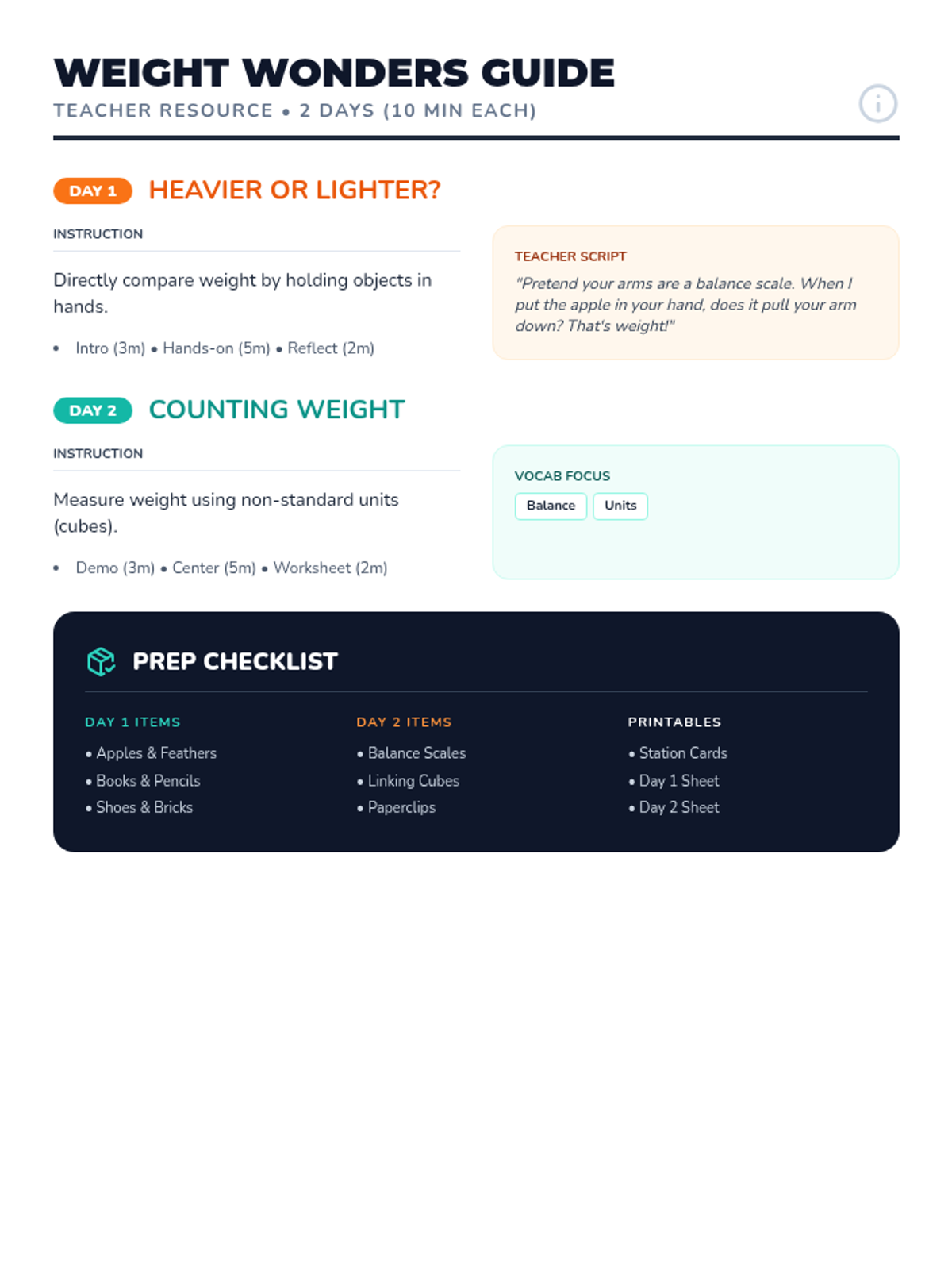
A two-day introductory sequence on weight comparison using direct comparison and non-standard units for young learners.
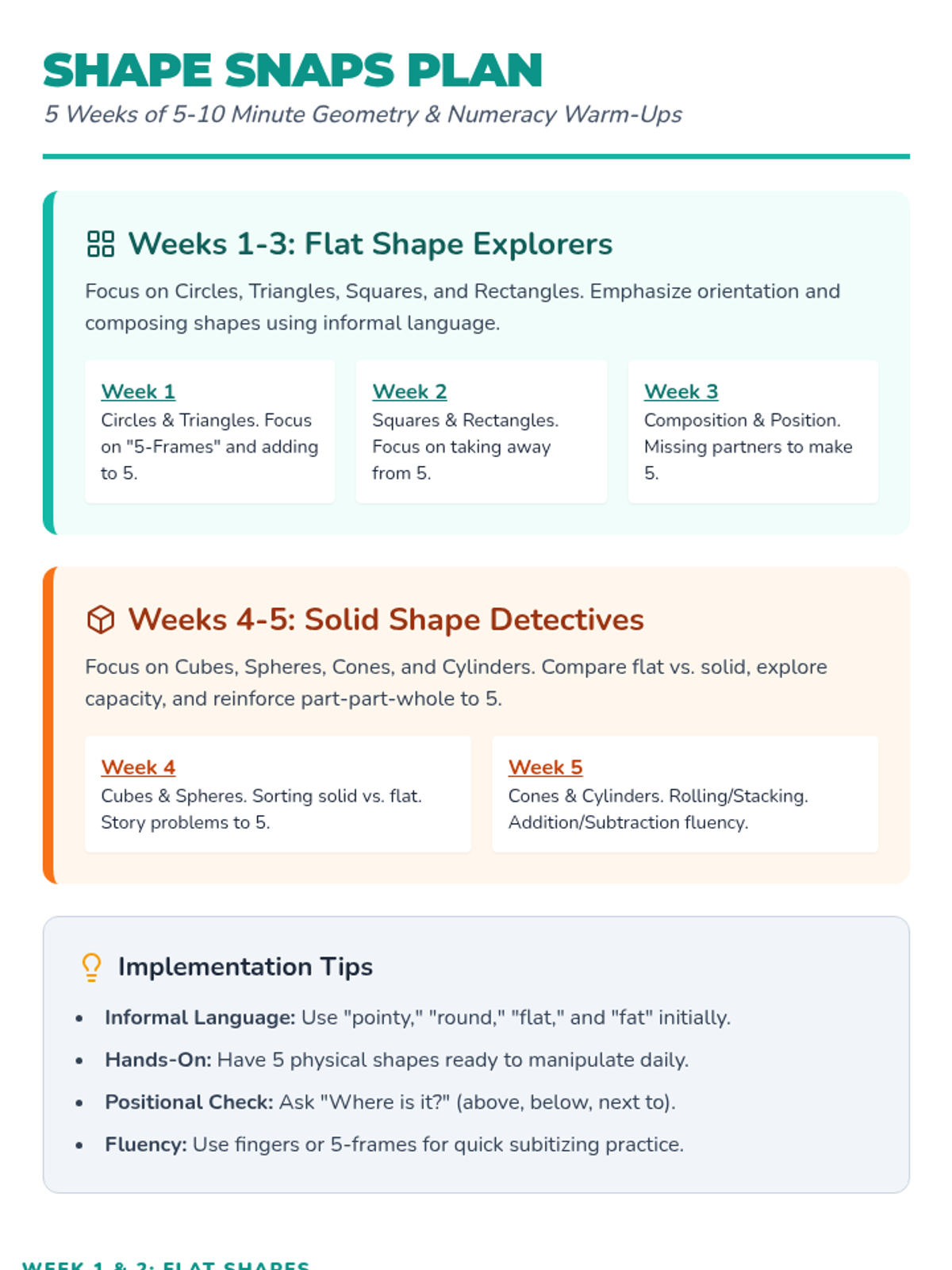
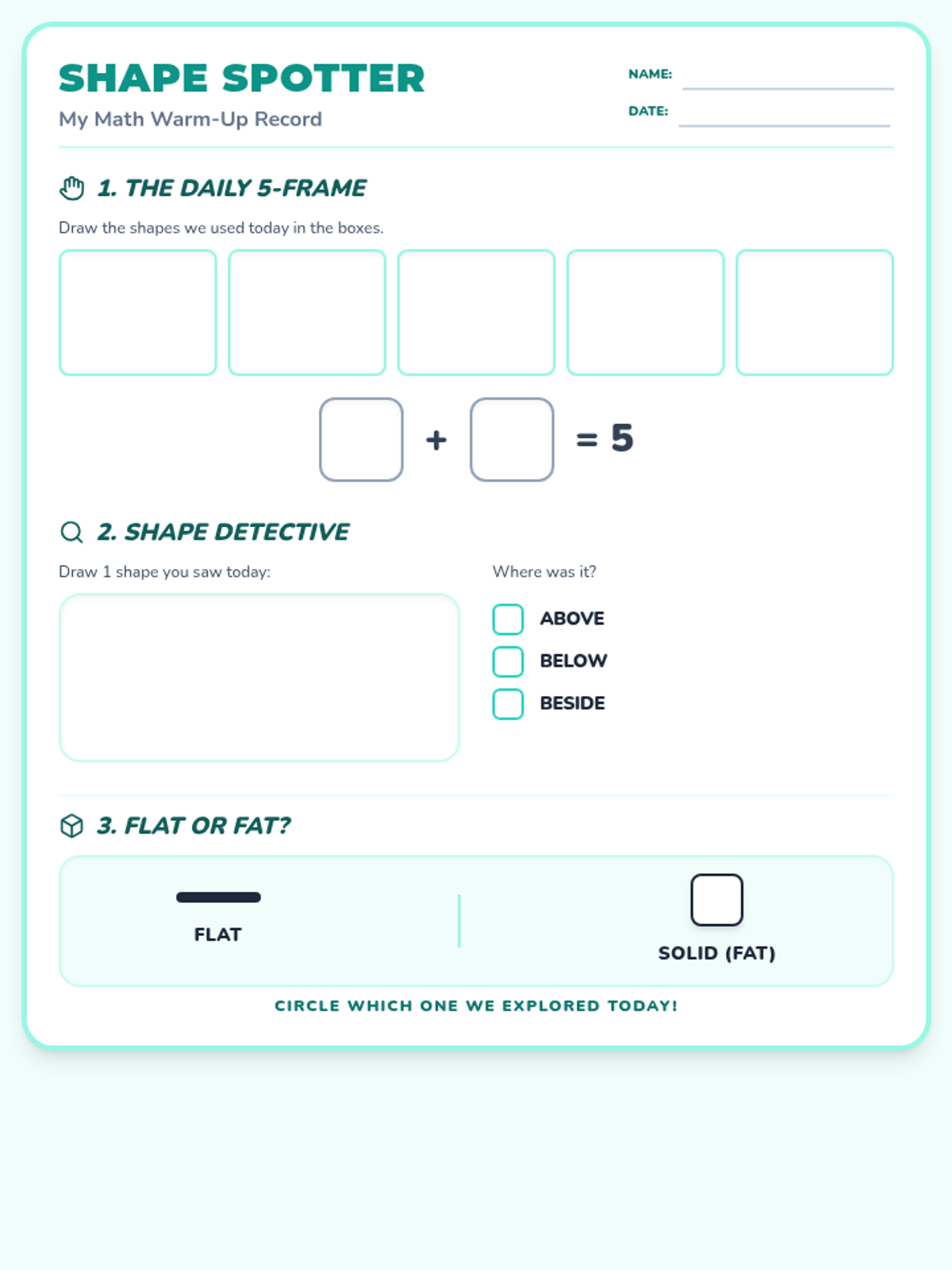
A 5-week program for Grade K that integrates foundational geometry (flat and solid shapes) with numeracy fluency focusing on combinations of 5 and the relationship between addition and subtraction. Activities are designed for 5-10 minute morning meetings or math warm-ups.
A 5-day foundational math unit exploring numbers 1-10, addition, and subtraction. Using consistent color-coding and visual icons, students build number sense and confidence in basic operations.
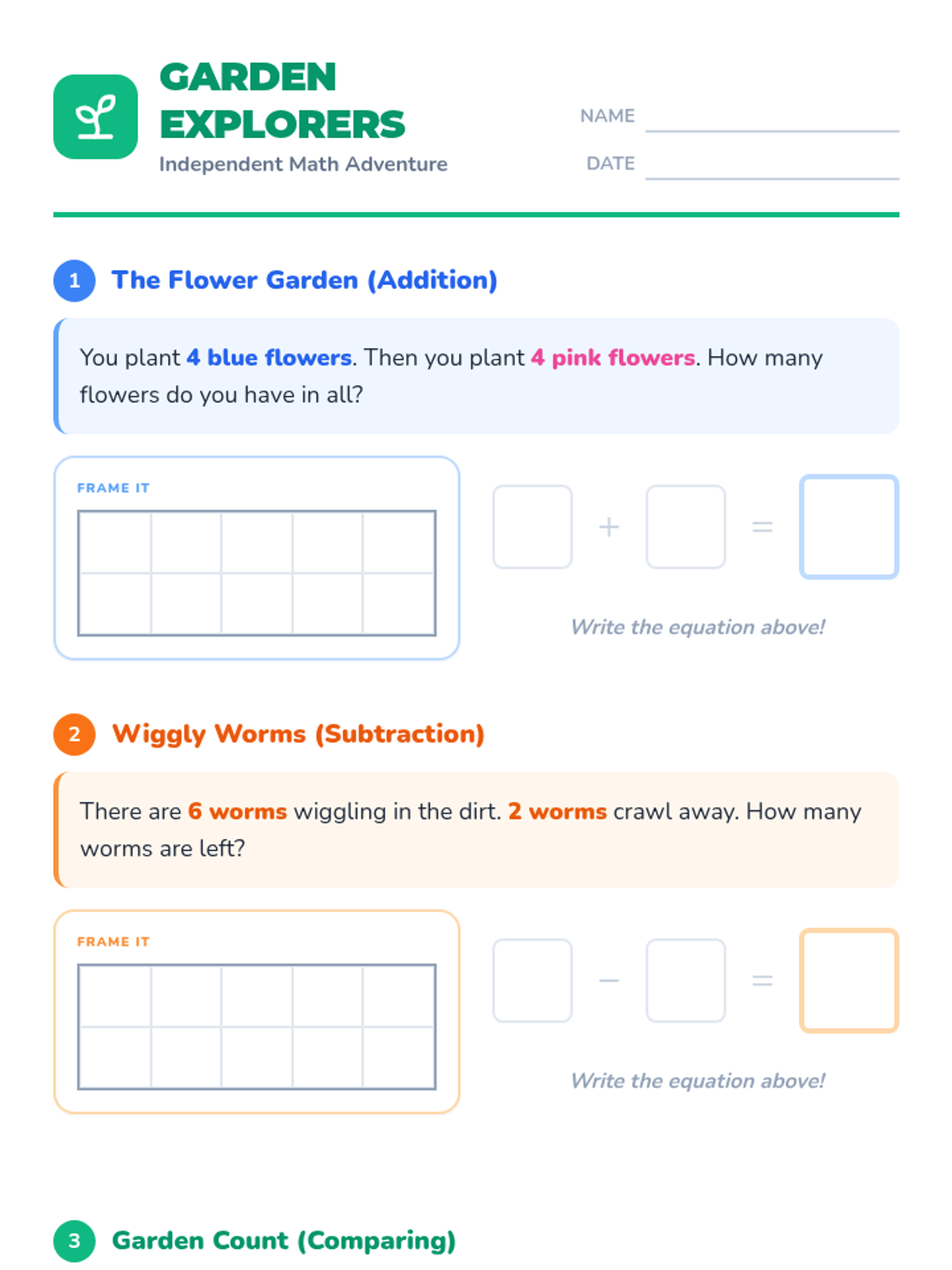
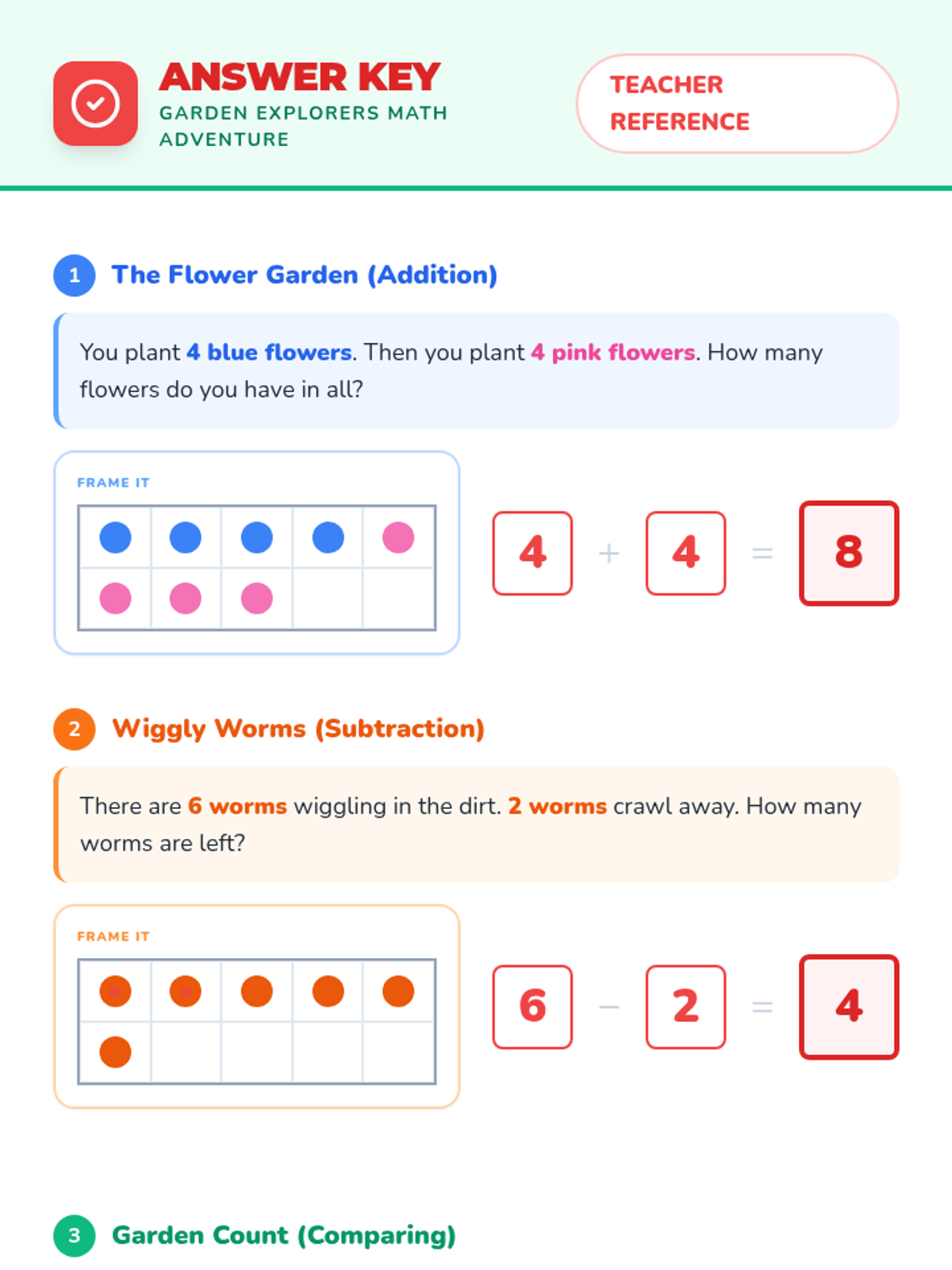
A math unit exploring addition, subtraction, and number sense through the lens of a garden, starting with numbers within 10 and progressing to 15.
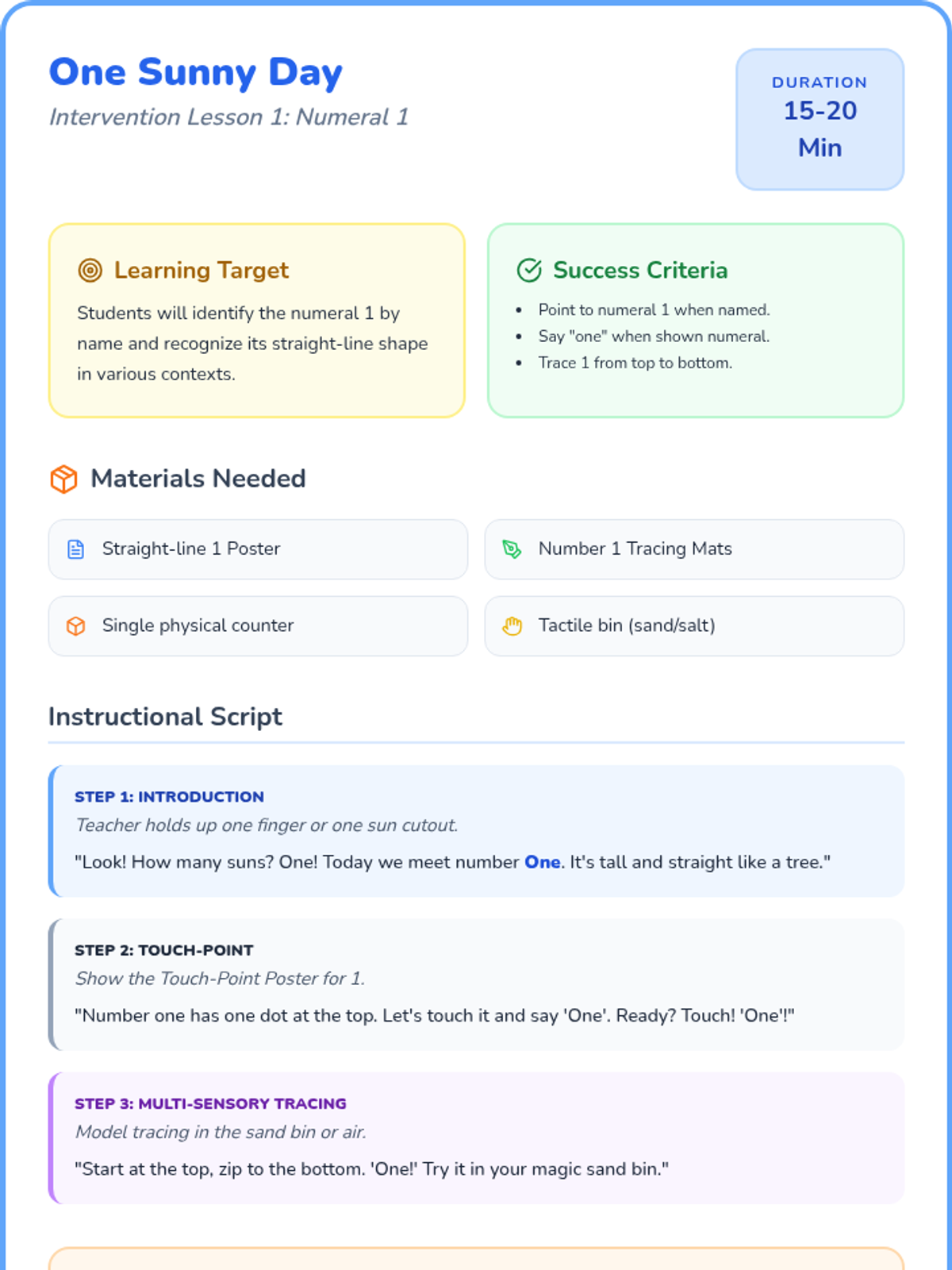
A 6-lesson intervention sequence designed for preschoolers (ages 4-5) to master identifying numerals 1-5 using touch-points, multi-sensory tracing, and engaging scripts.
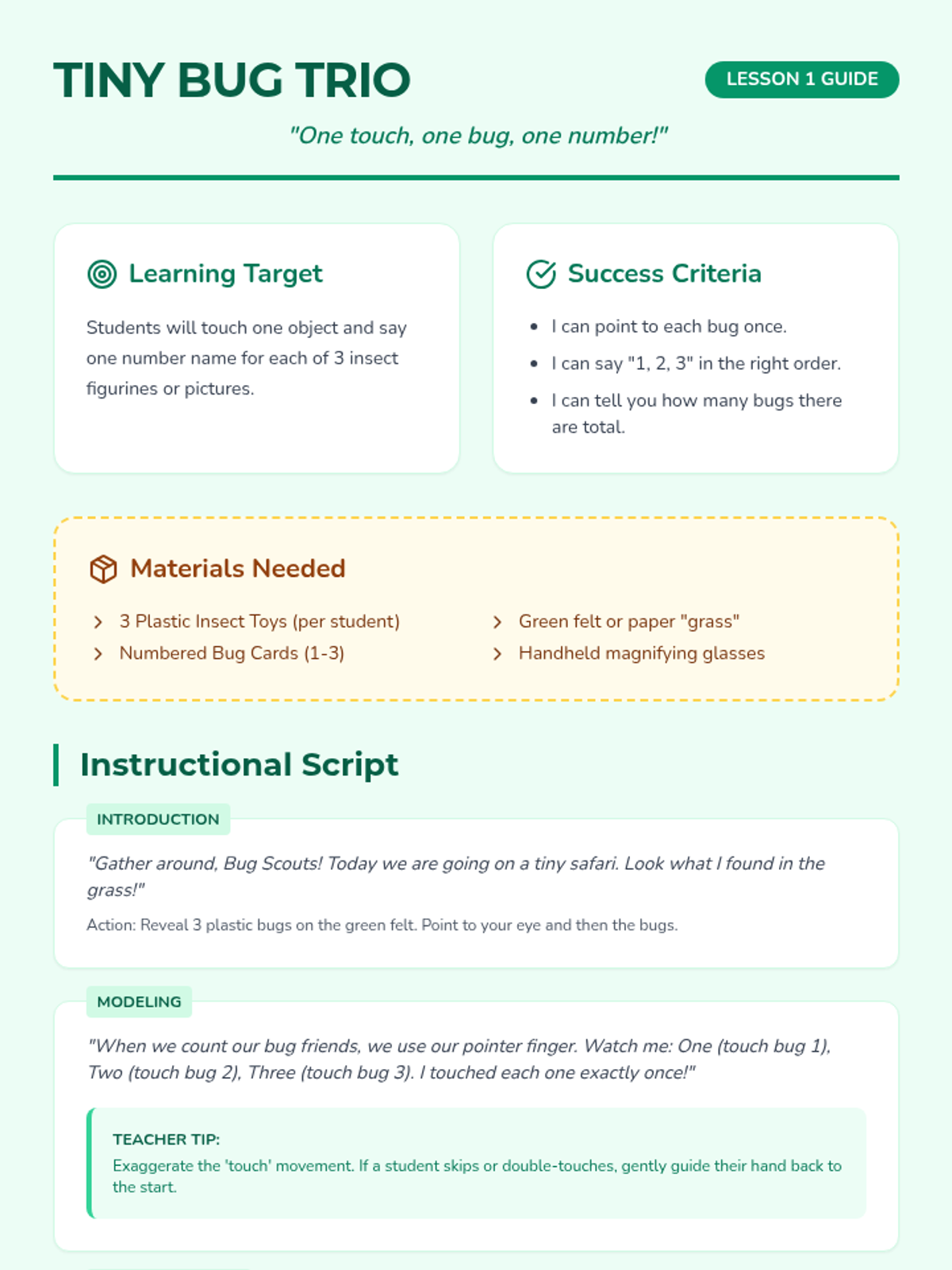
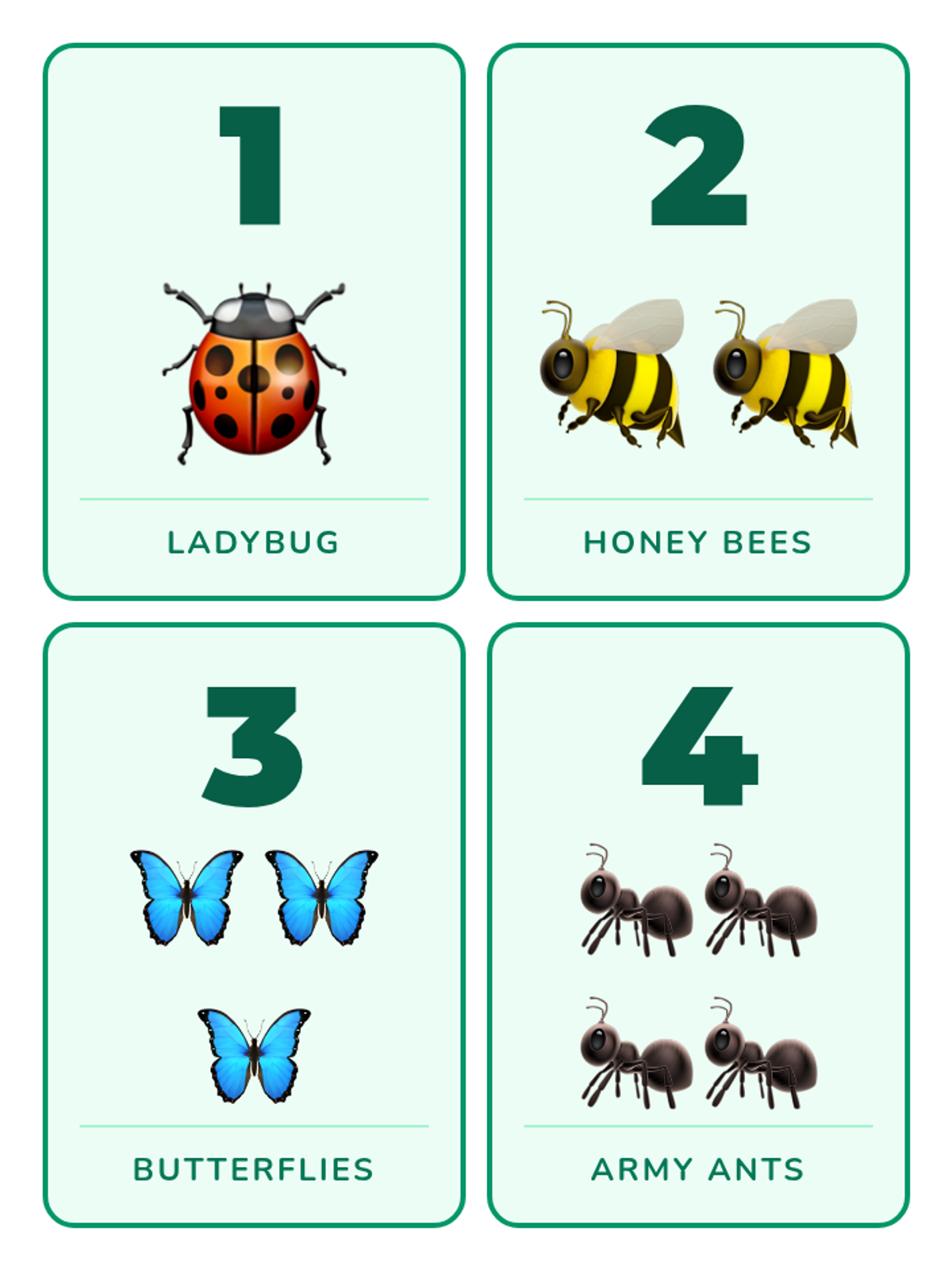
A 6-lesson math sequence for preschoolers (ages 4-5) focused on mastering one-to-one correspondence and counting up to 10 using an engaging insect theme. Each lesson includes teacher scripts, visual aids, and adaptations for ELL students.
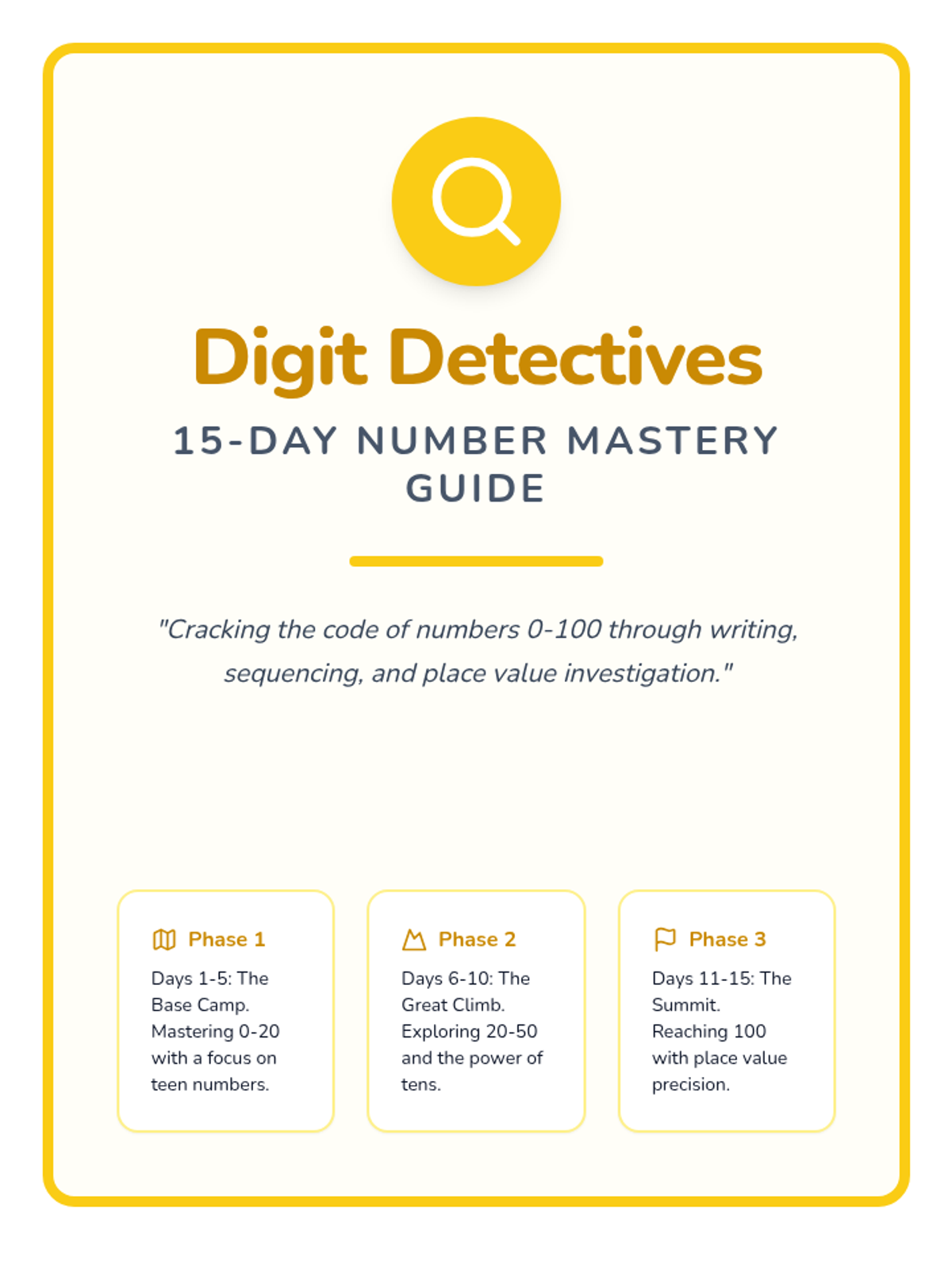
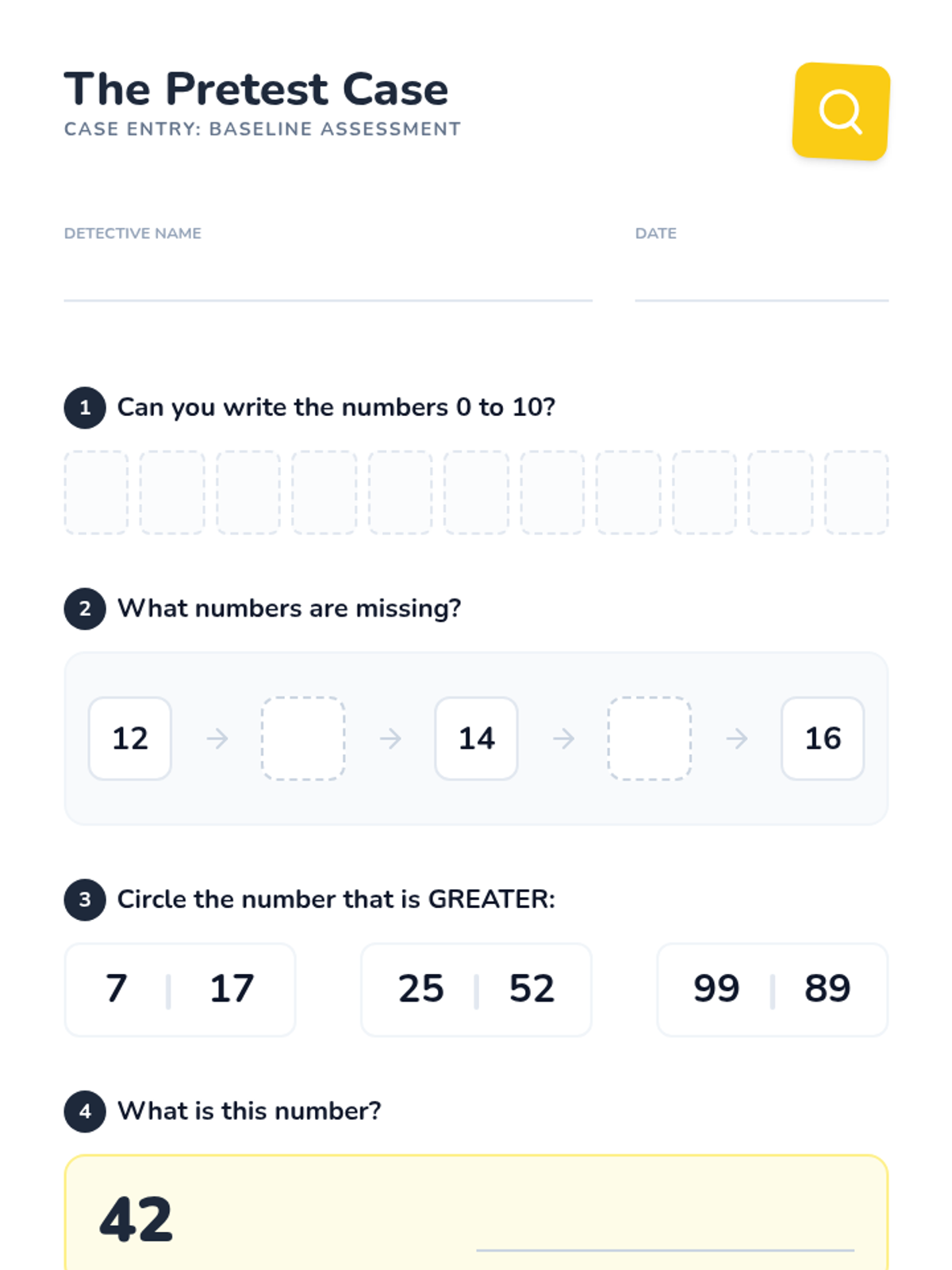
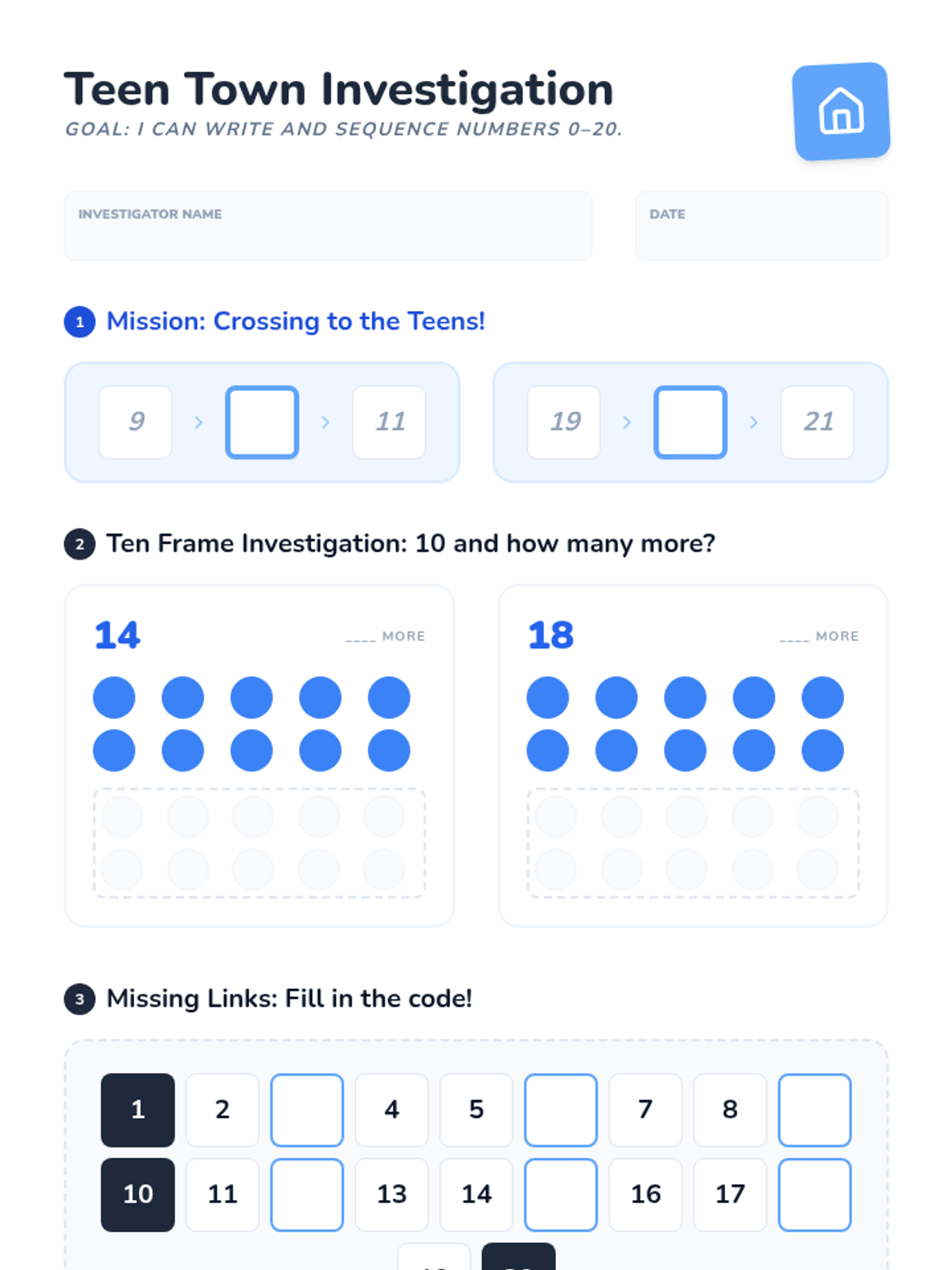
A comprehensive 15-day math sequence designed for early elementary students to master numbers 0-100. The curriculum covers writing, sequencing, and place value through three progressive phases: 0-20, 20-50, and 50-100.
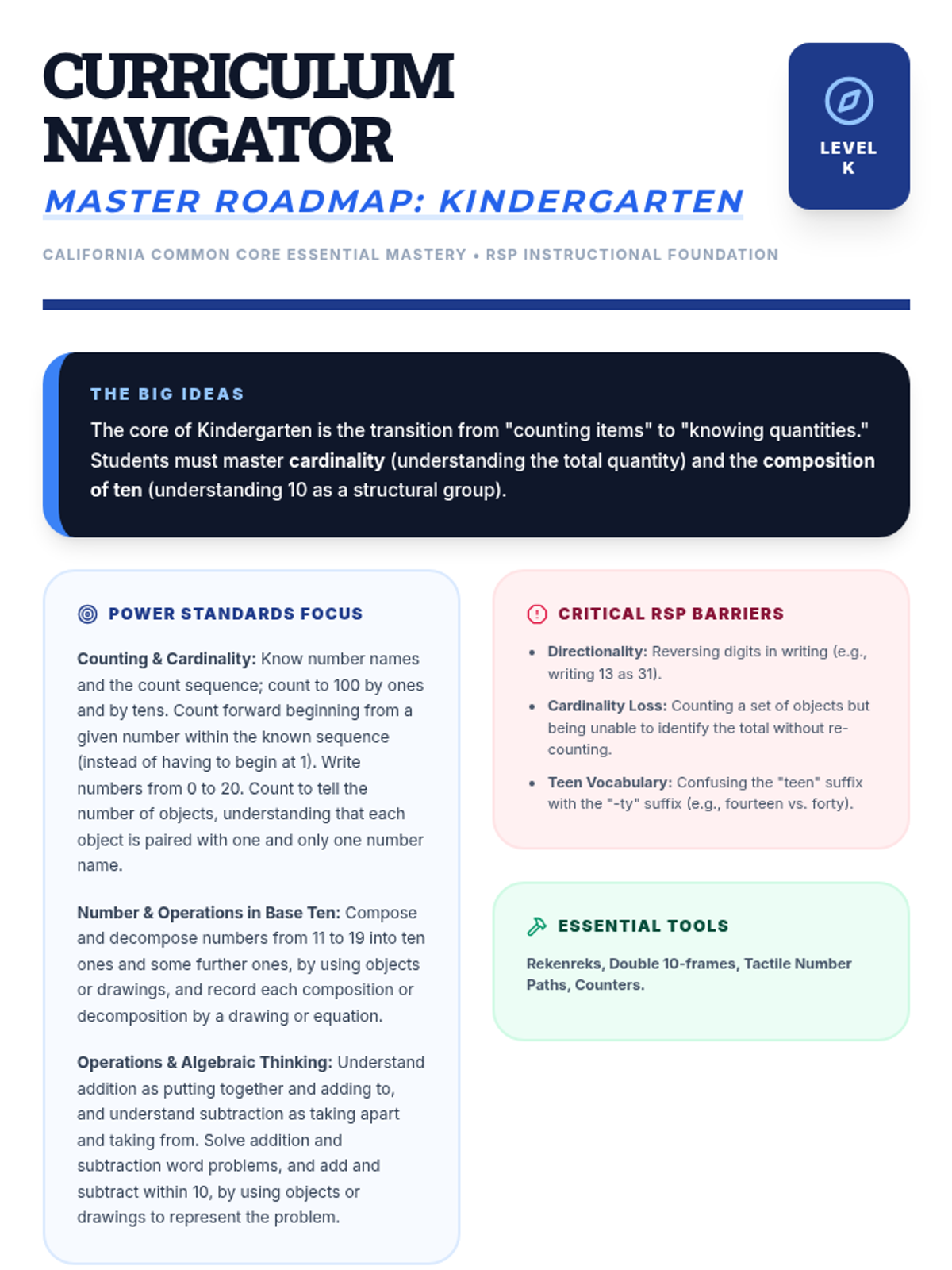
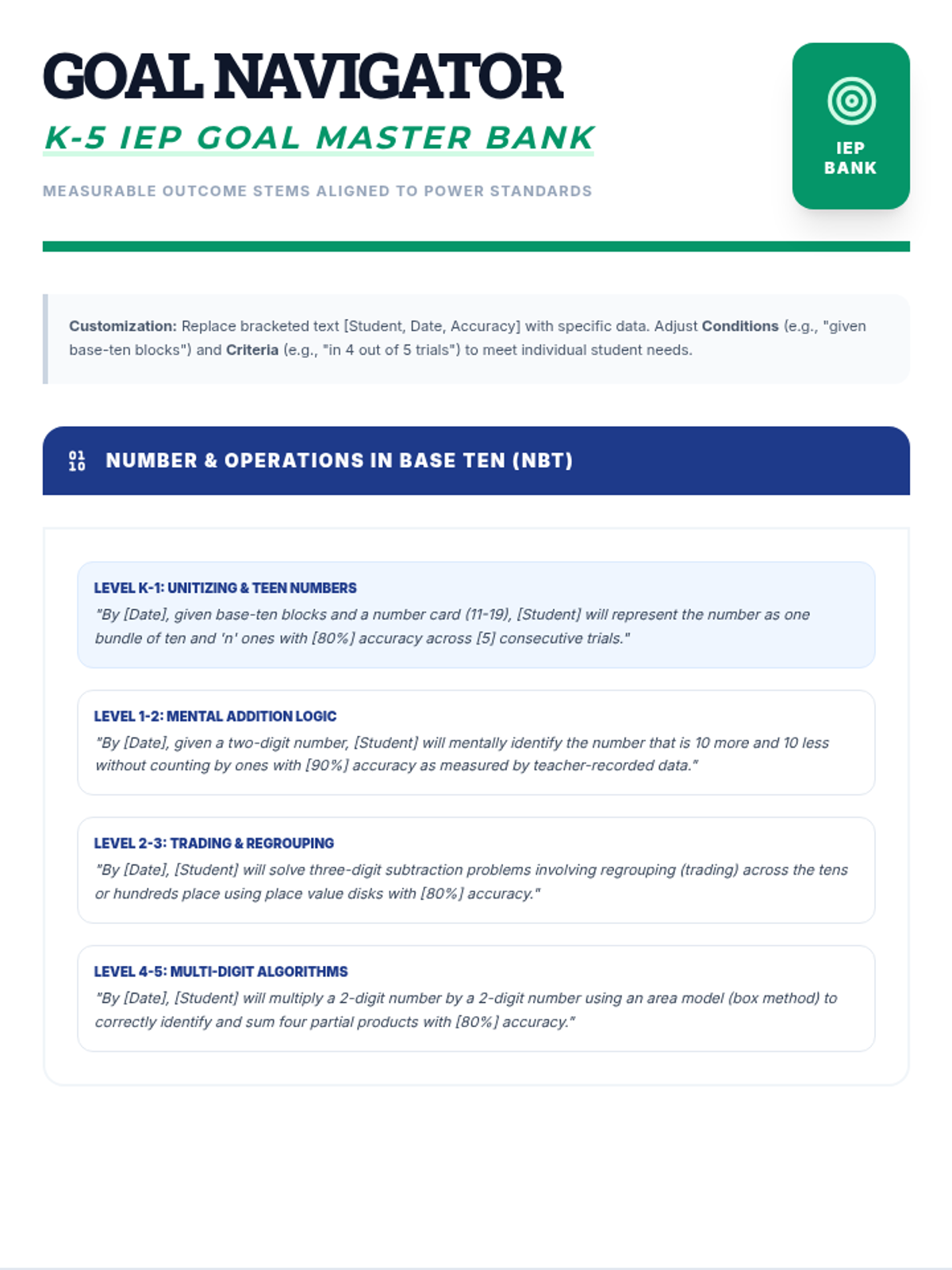
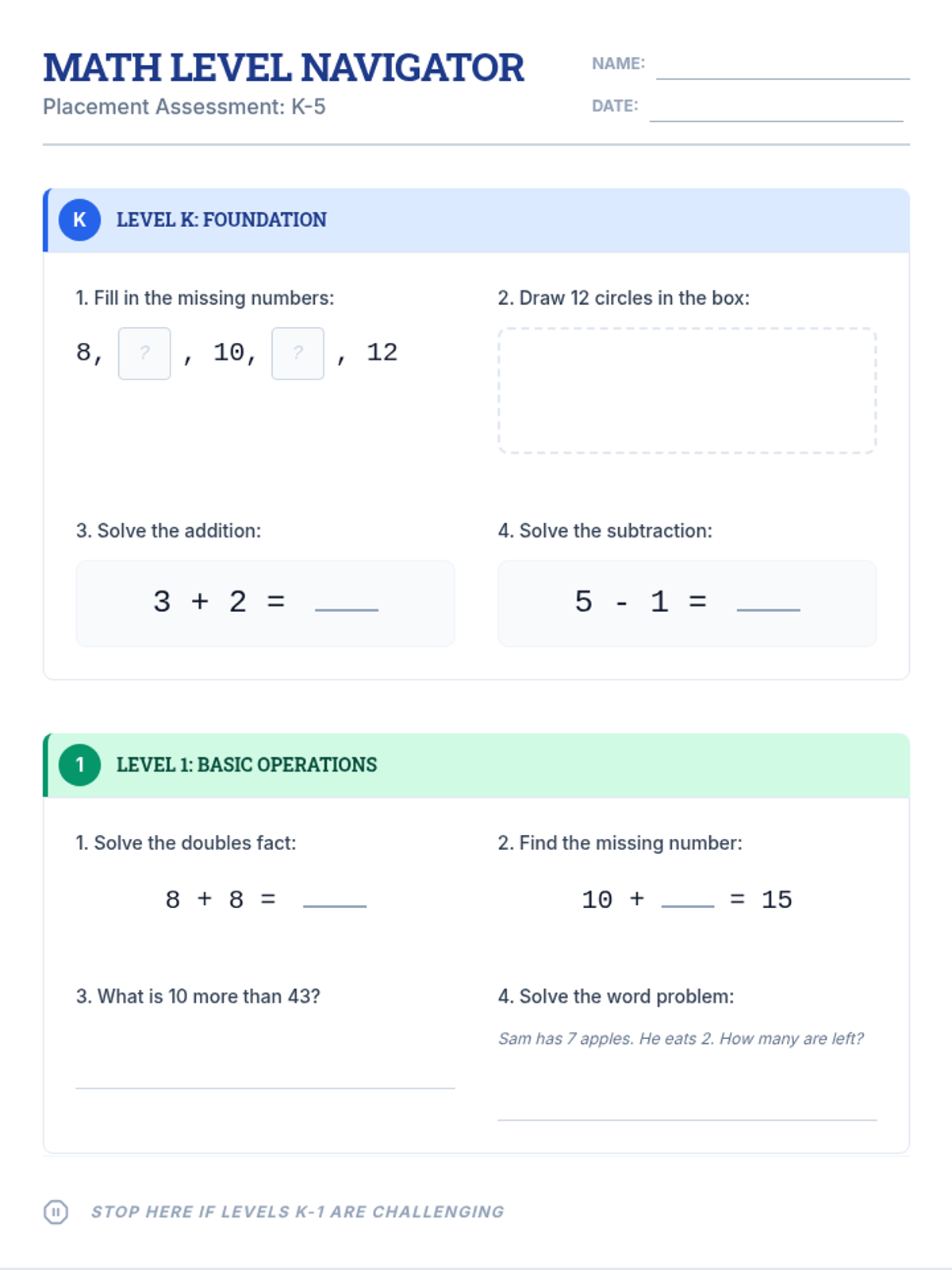
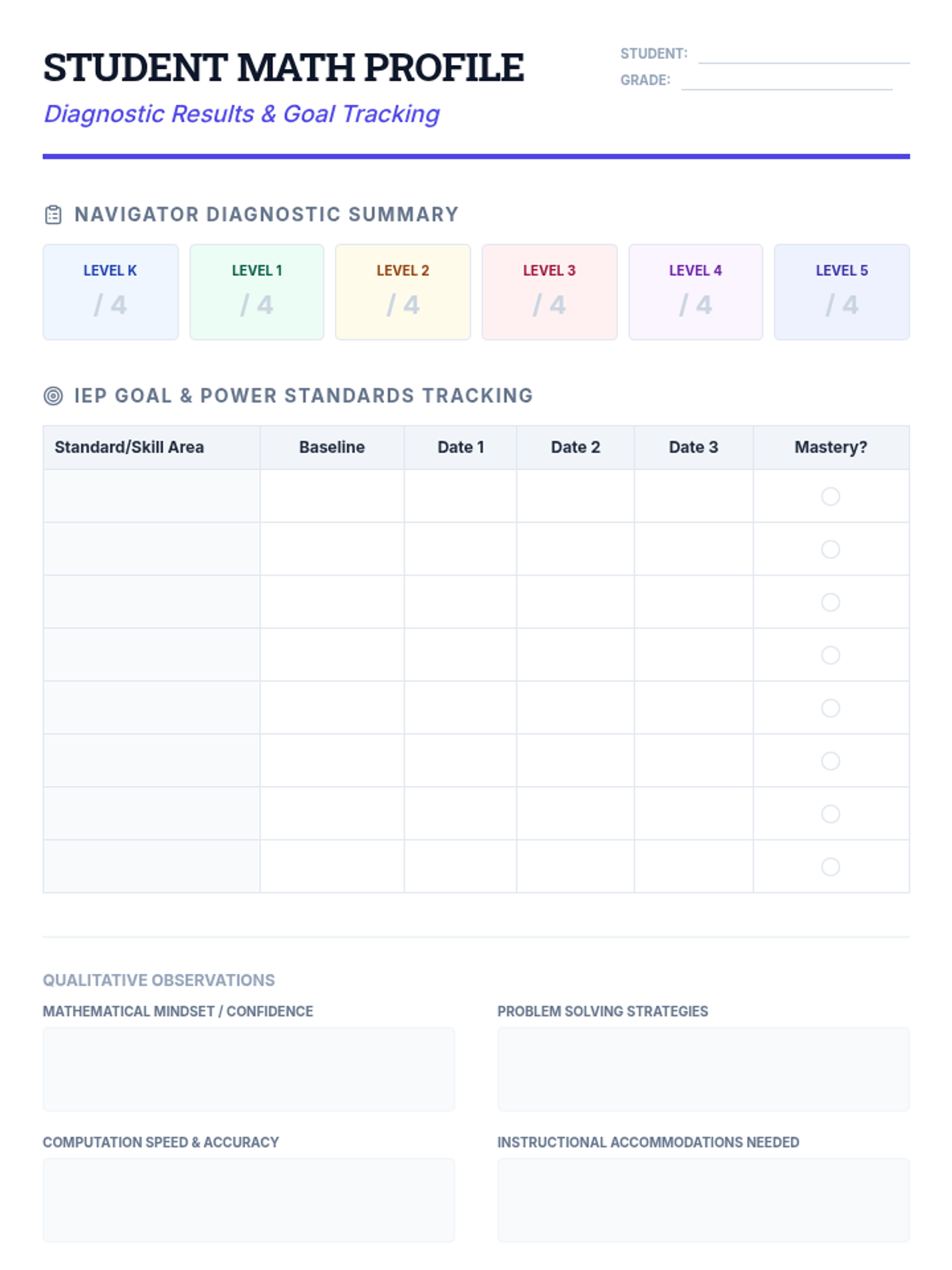
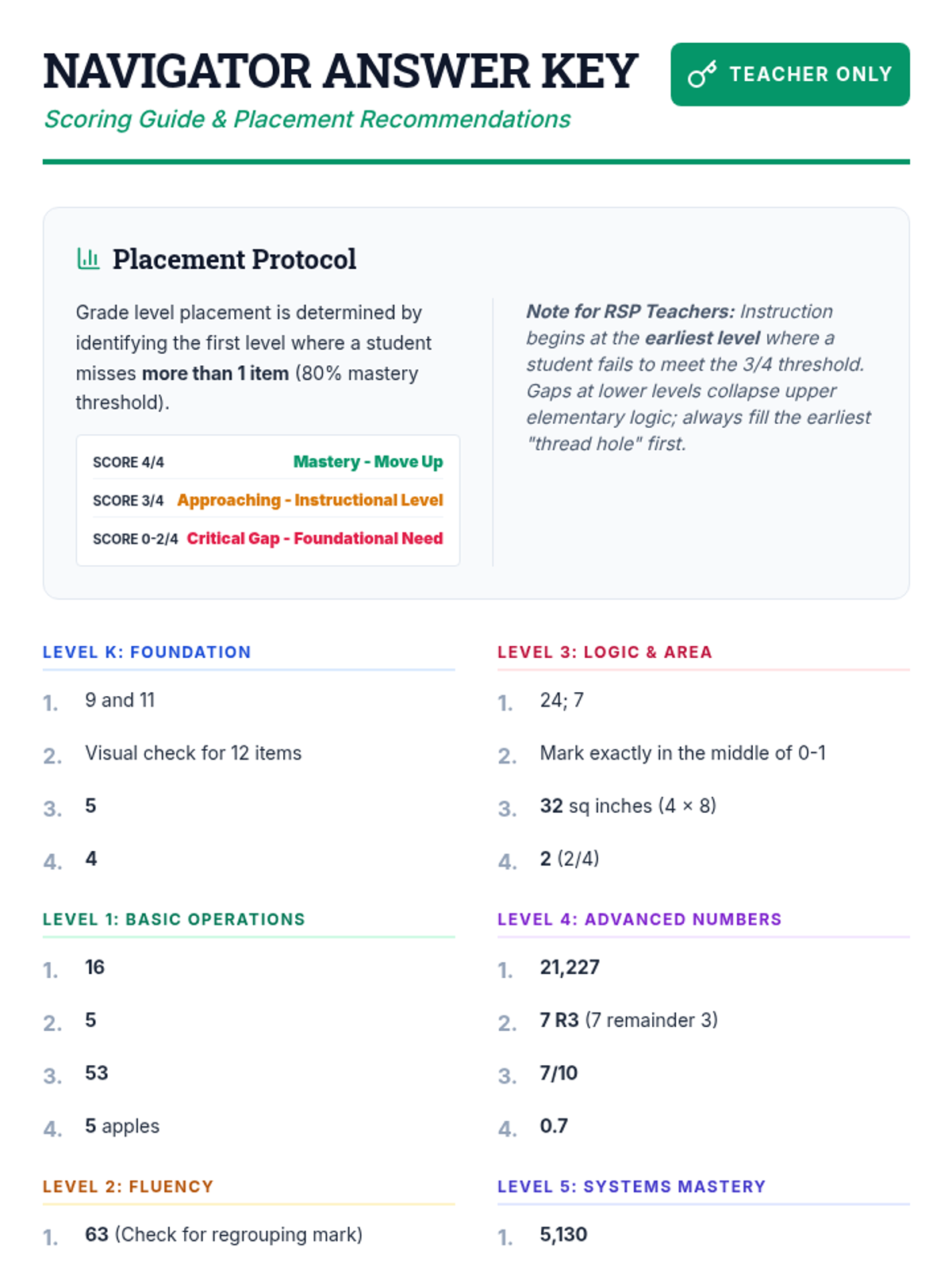
A comprehensive framework for K-5 RSP math instruction, including a California Common Core aligned scope and sequence of power standards and a leveled placement diagnostic.
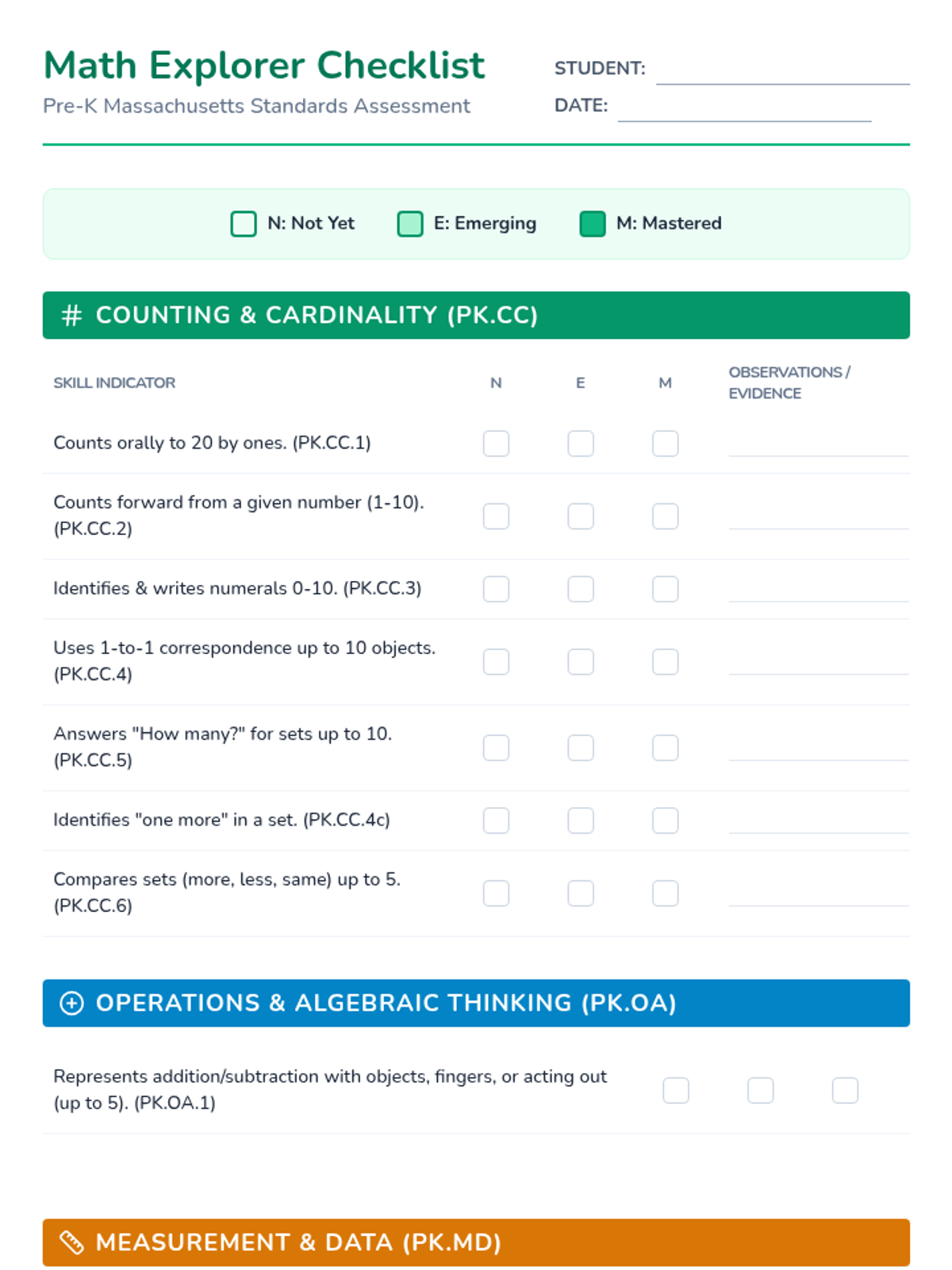
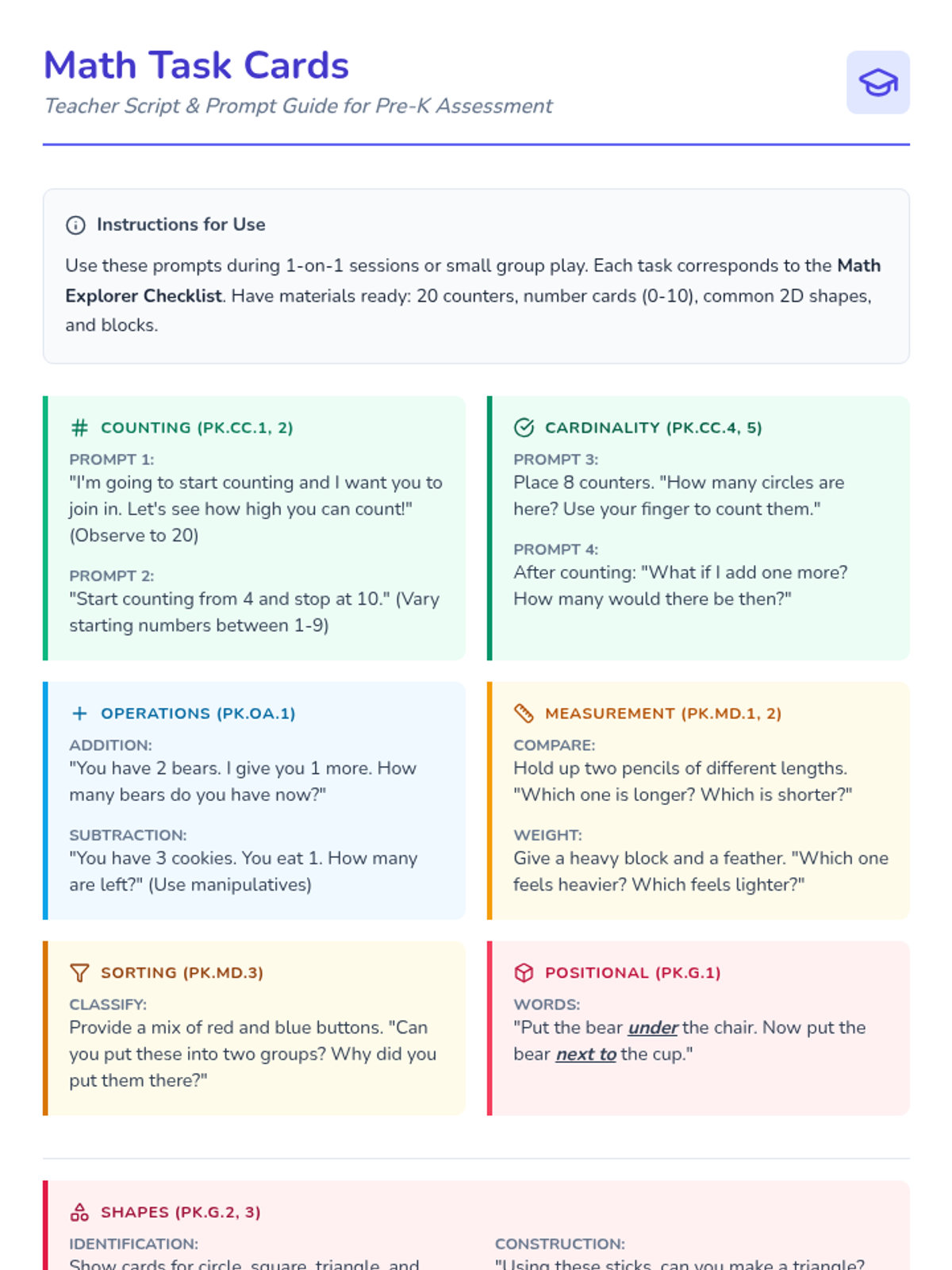
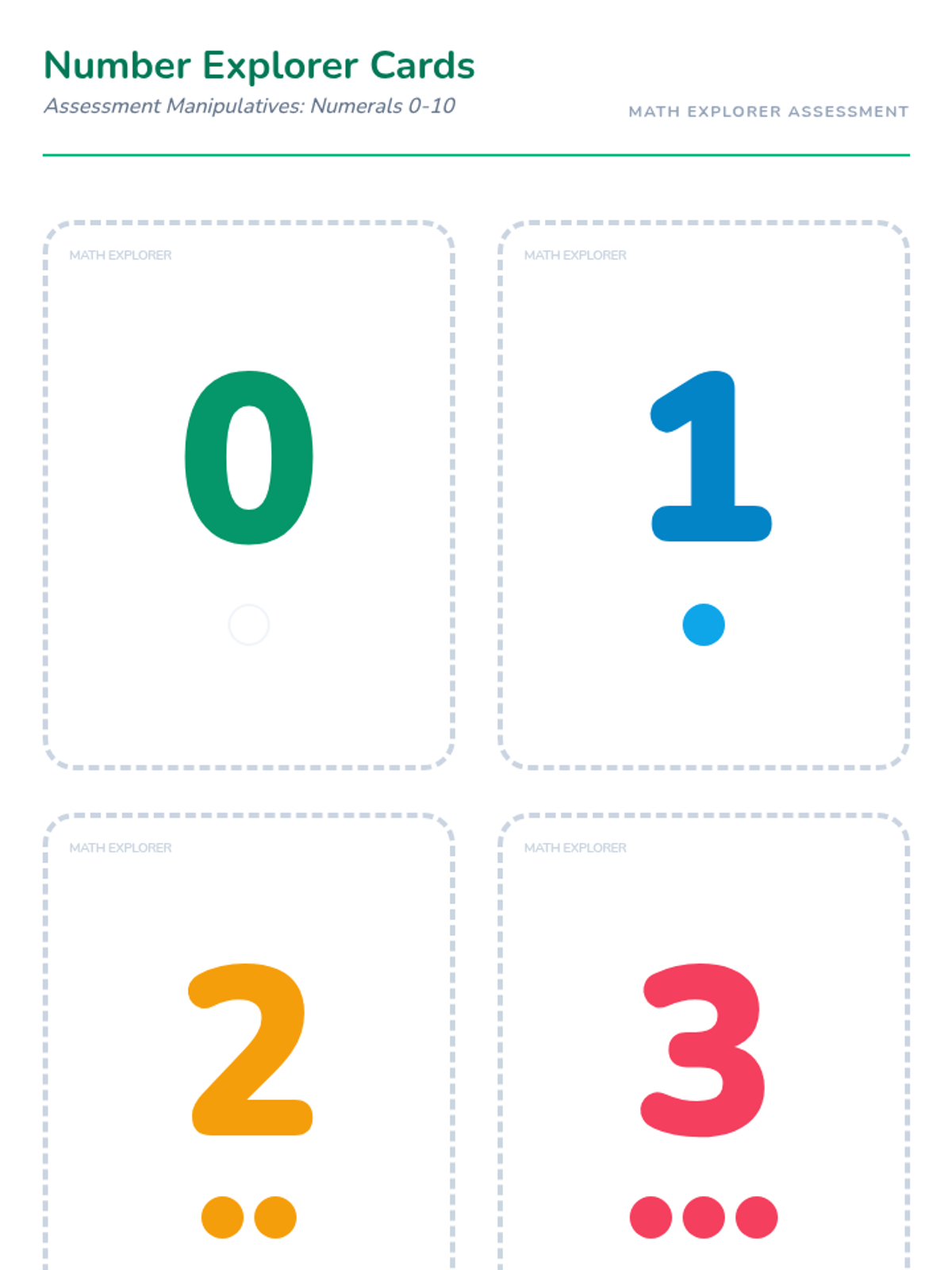
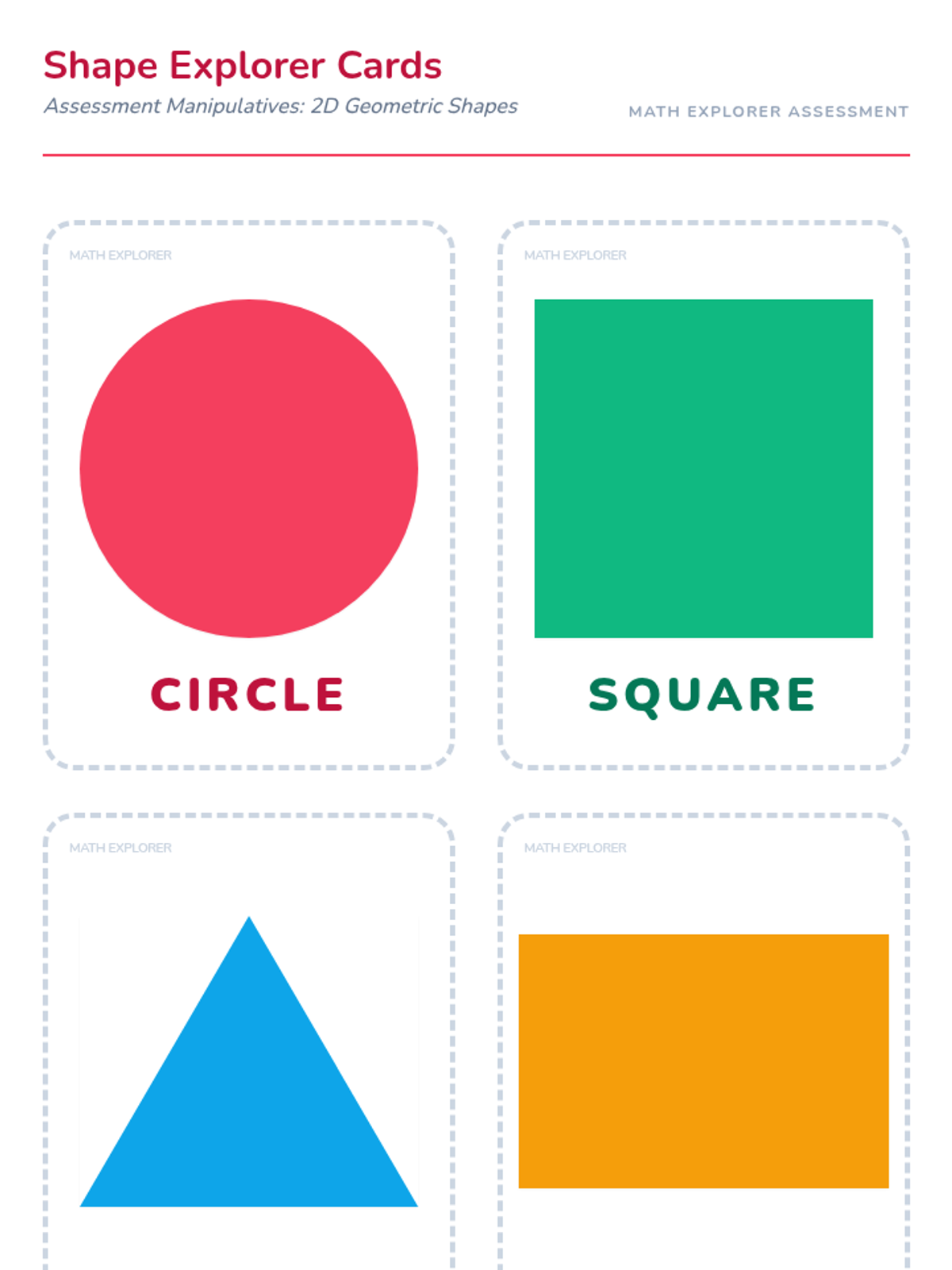
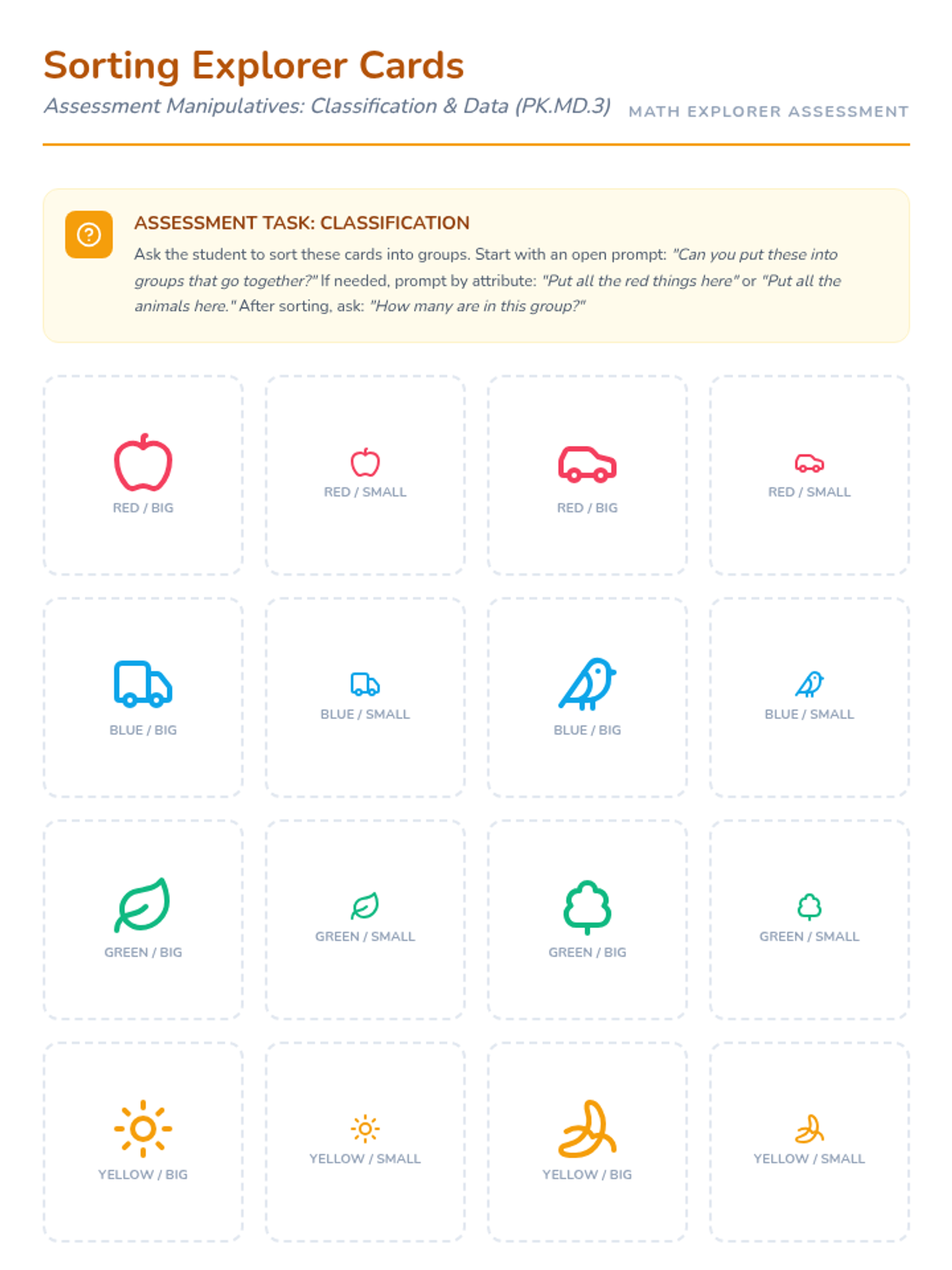
A series of assessment resources for foundational mathematics based on the Massachusetts Curriculum Frameworks, spanning Pre-K and early elementary grades.
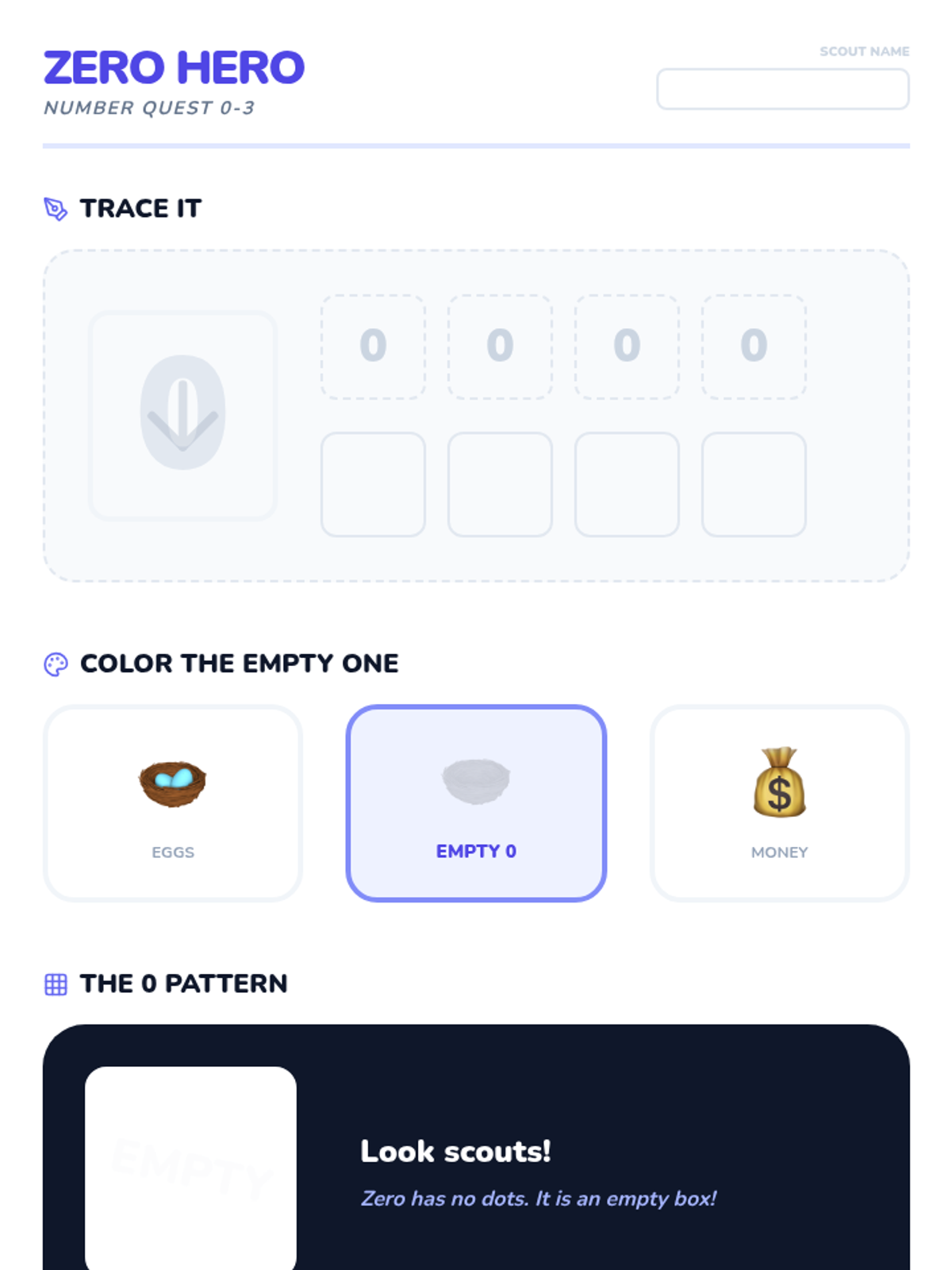
A 5-day introductory math sequence for multilingual kindergarteners focusing on numbers 0, 1, 2, and 3 using subitizing dot patterns, visual aids, and hands-on coloring activities.
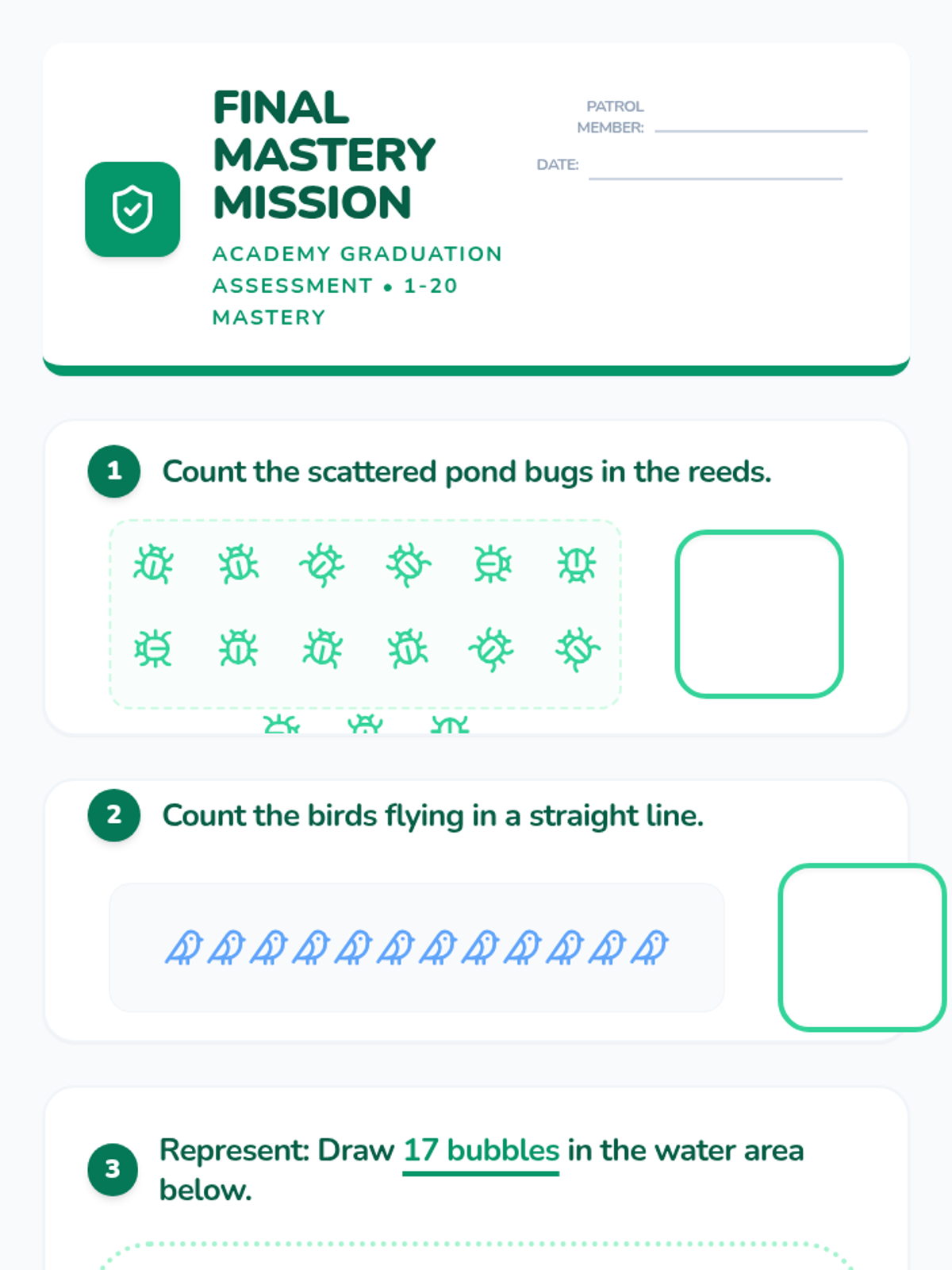
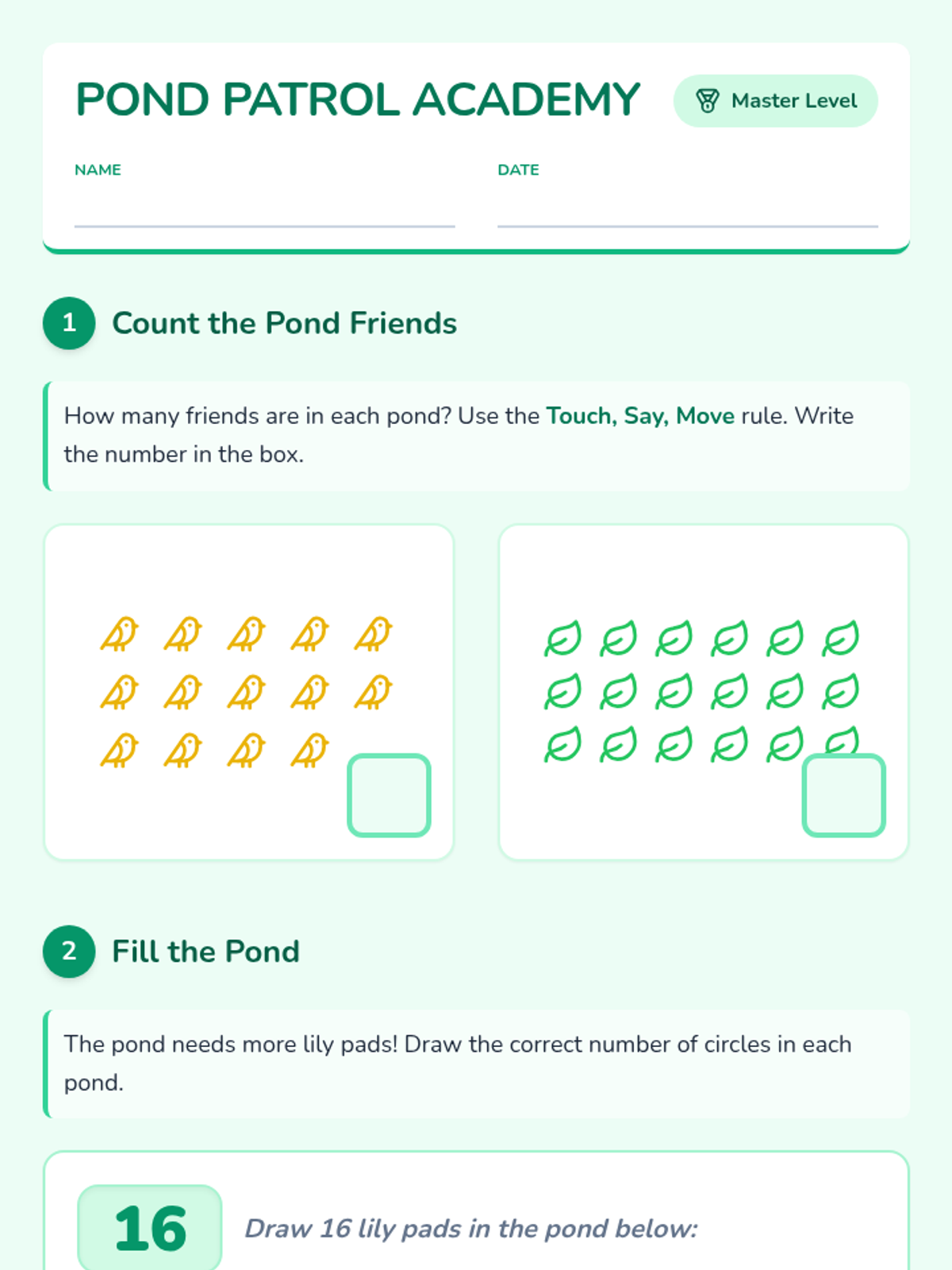
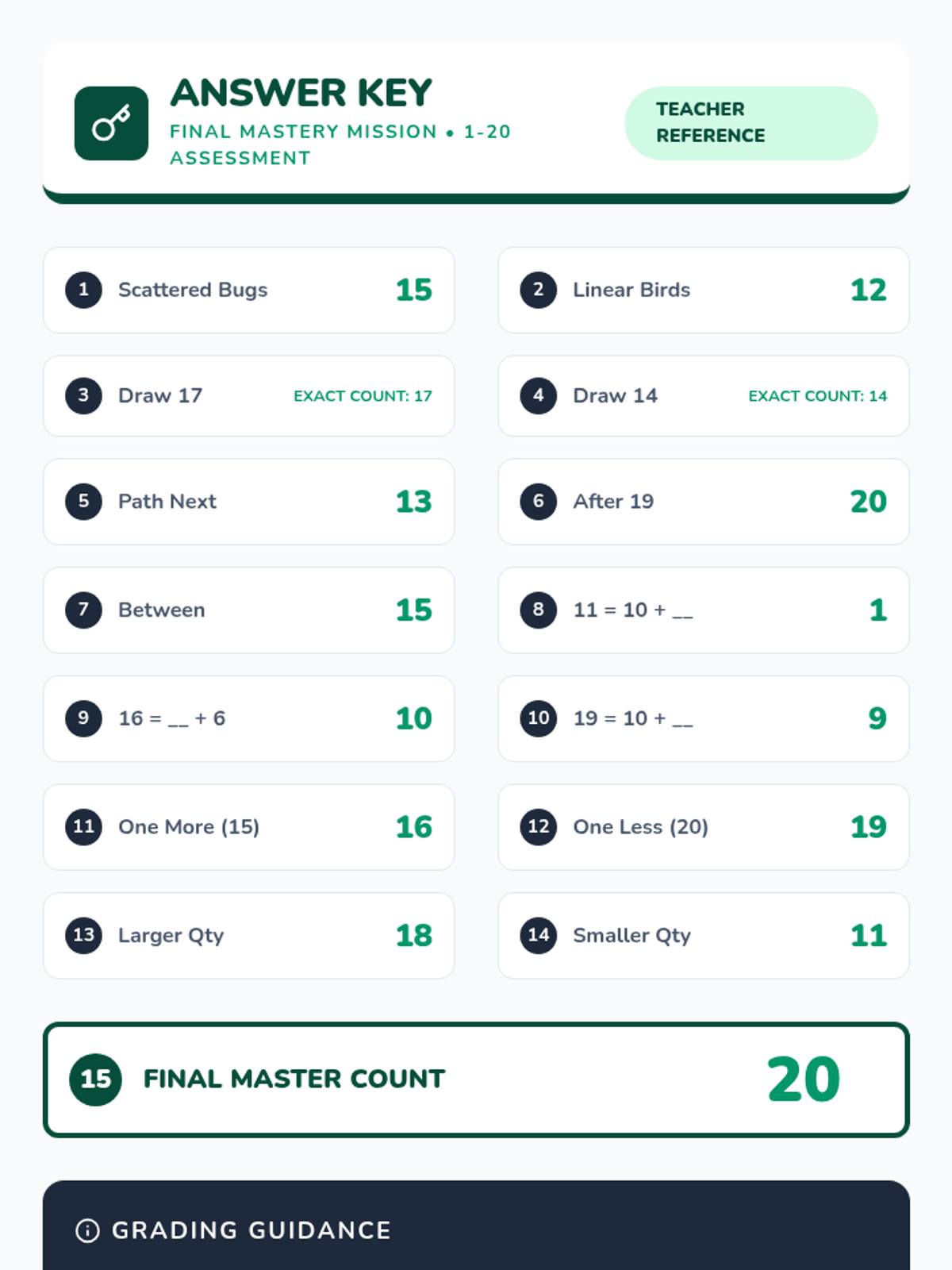
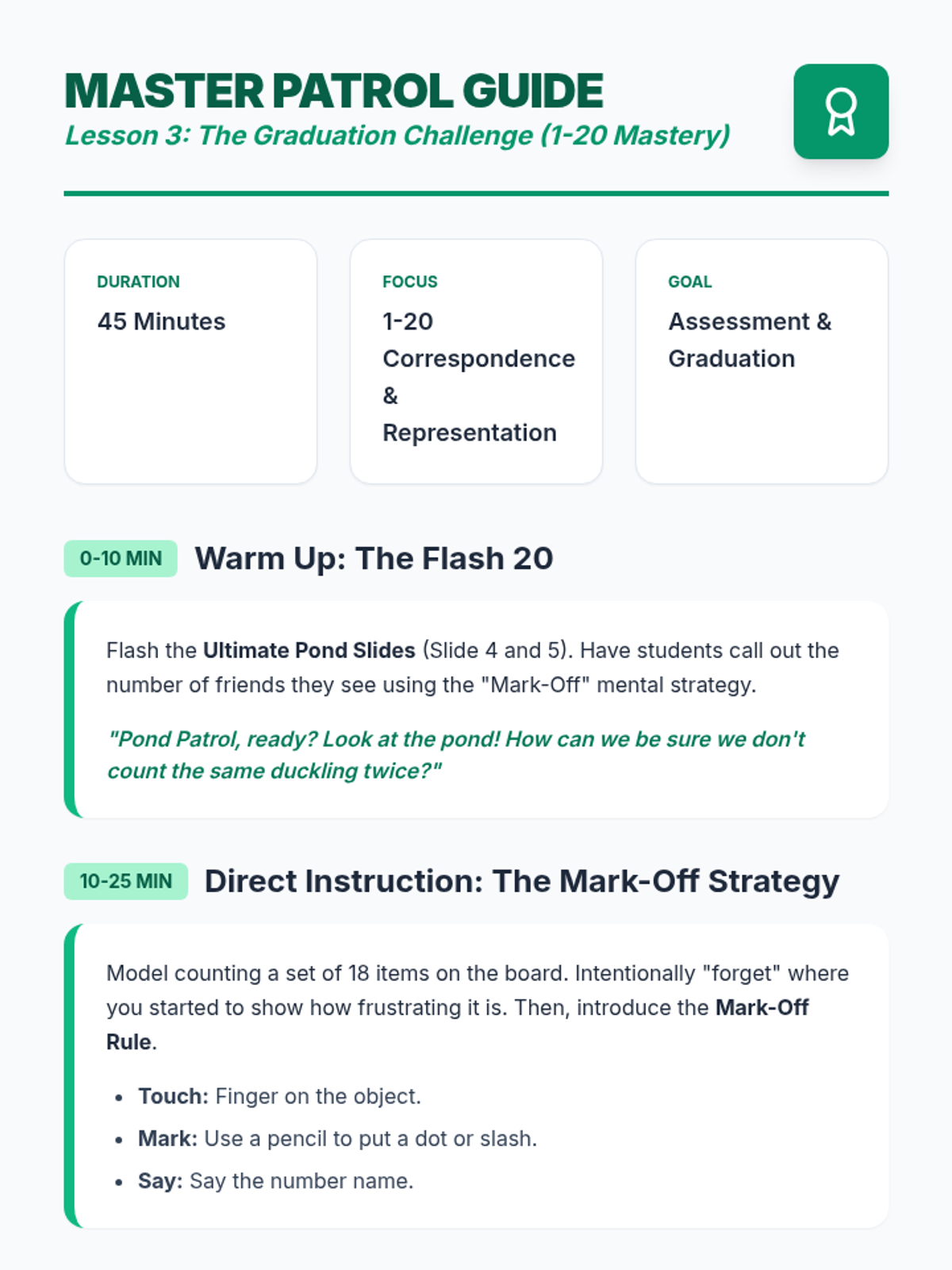
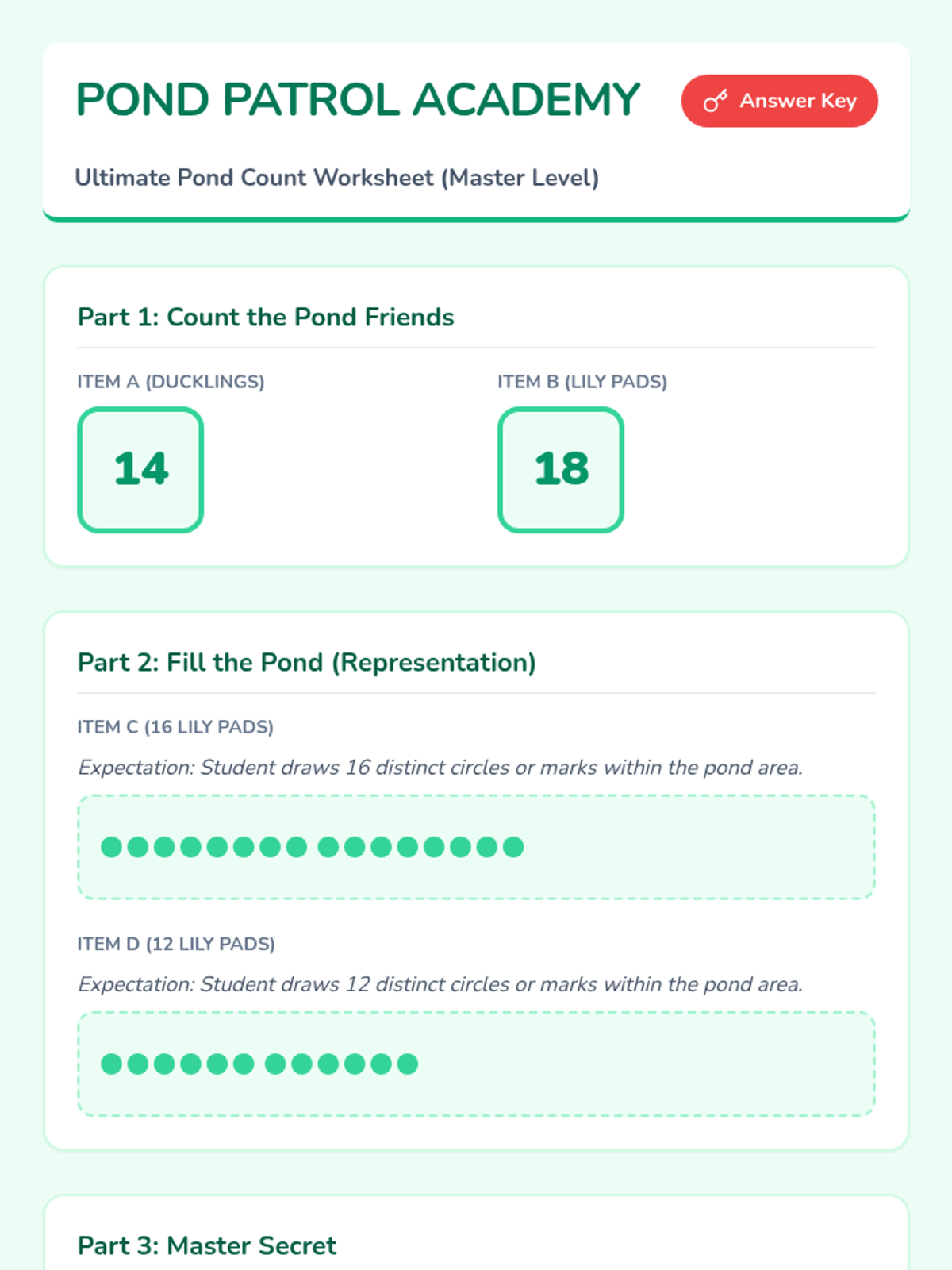
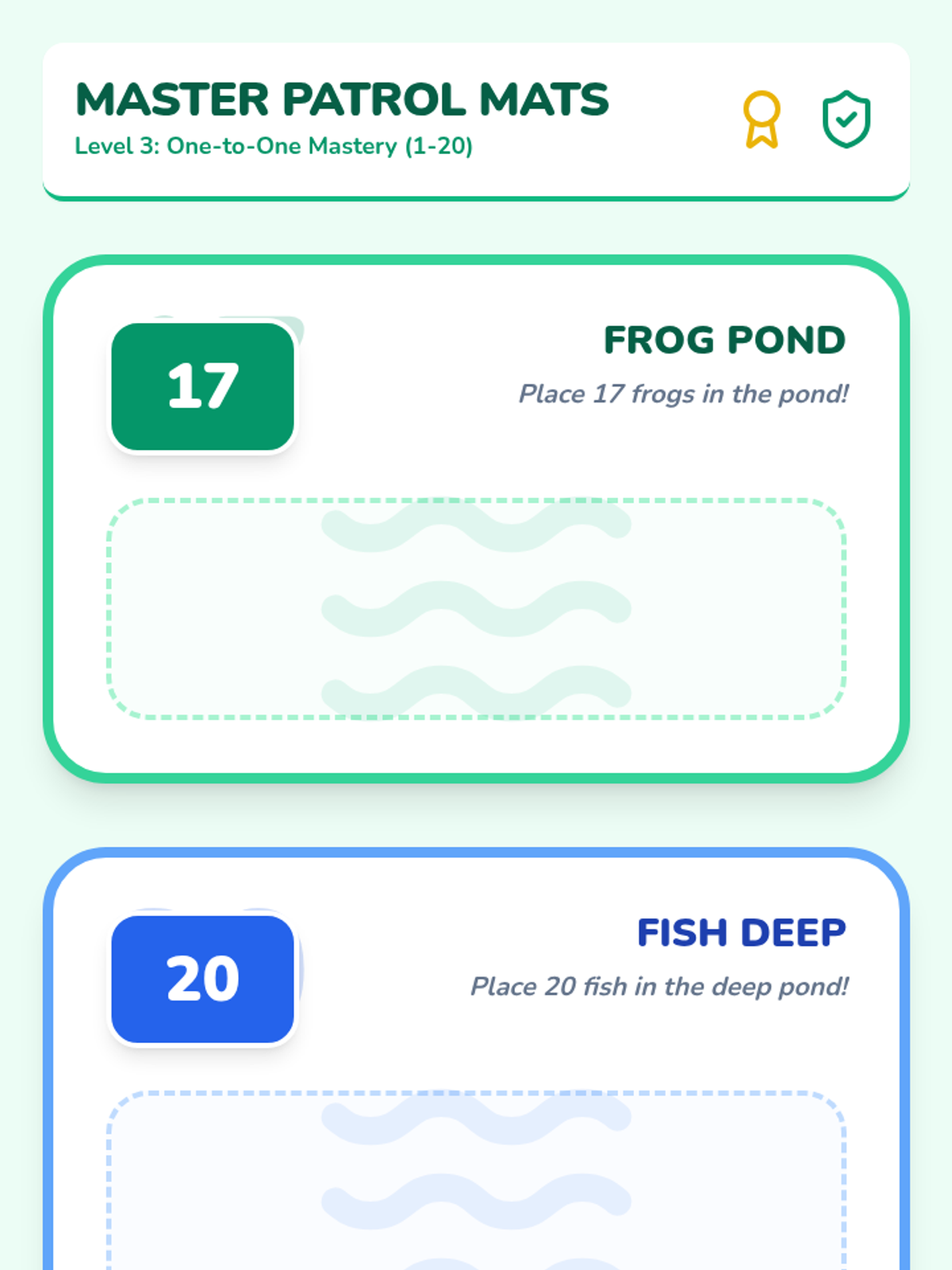
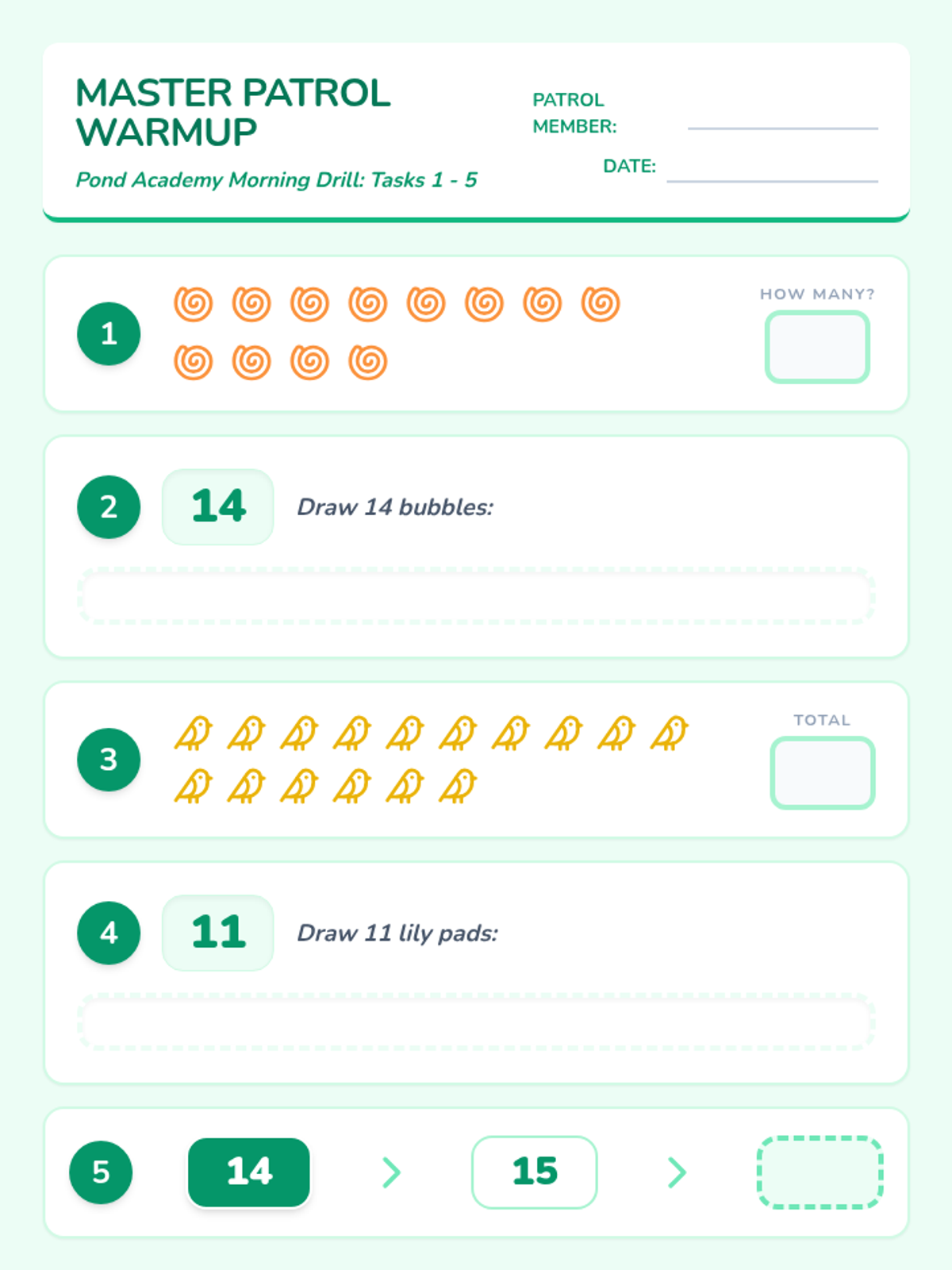
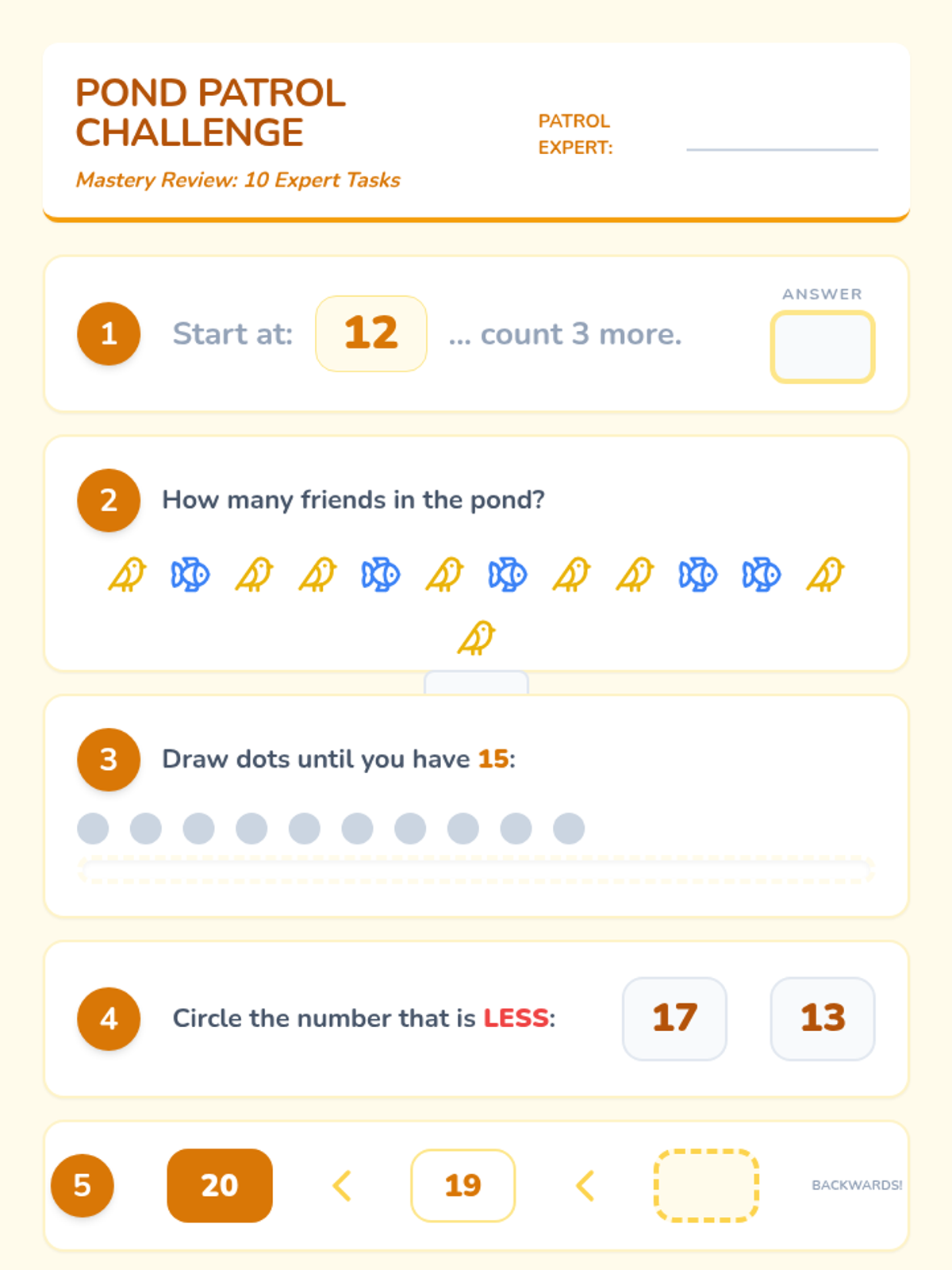
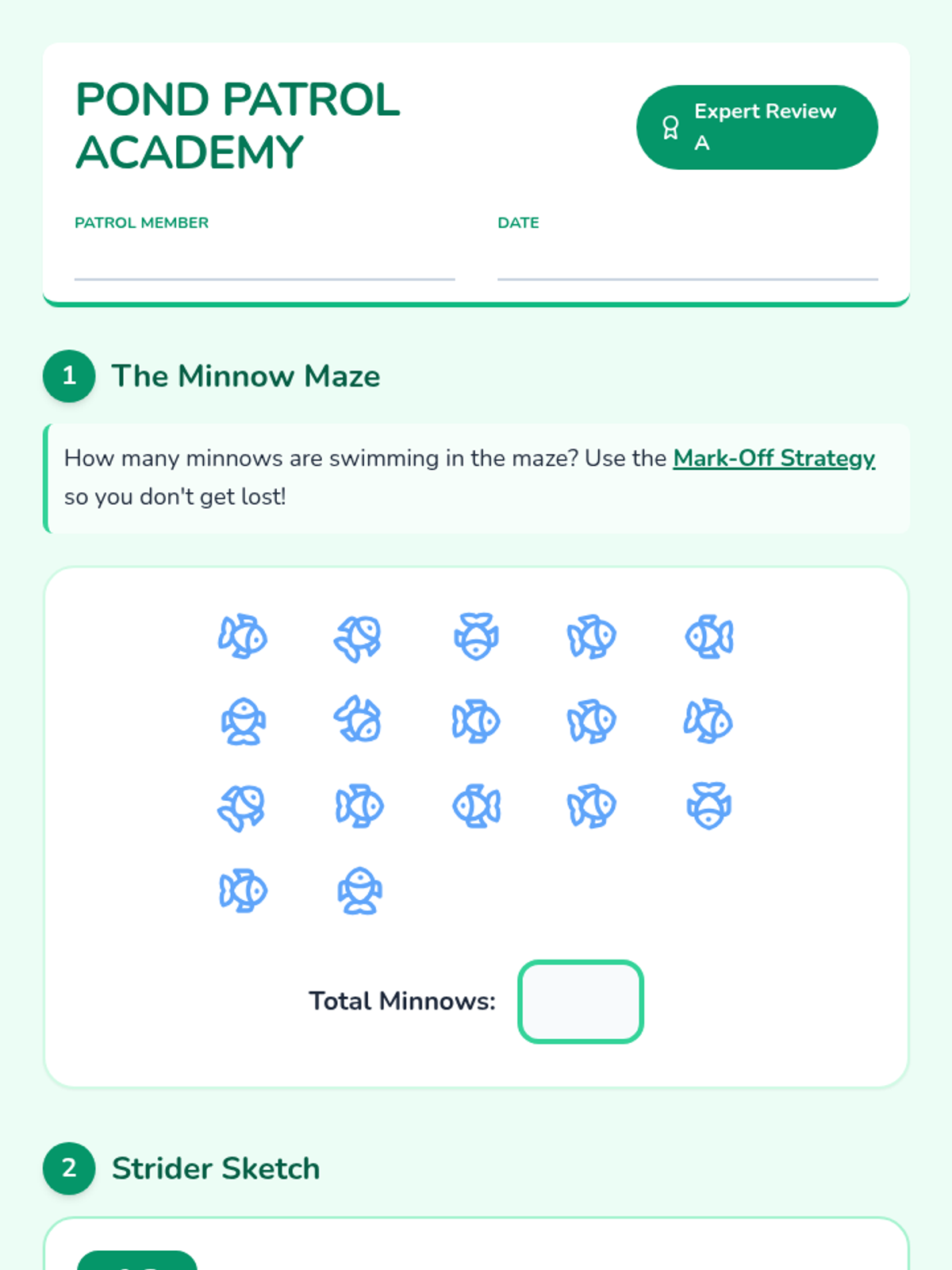
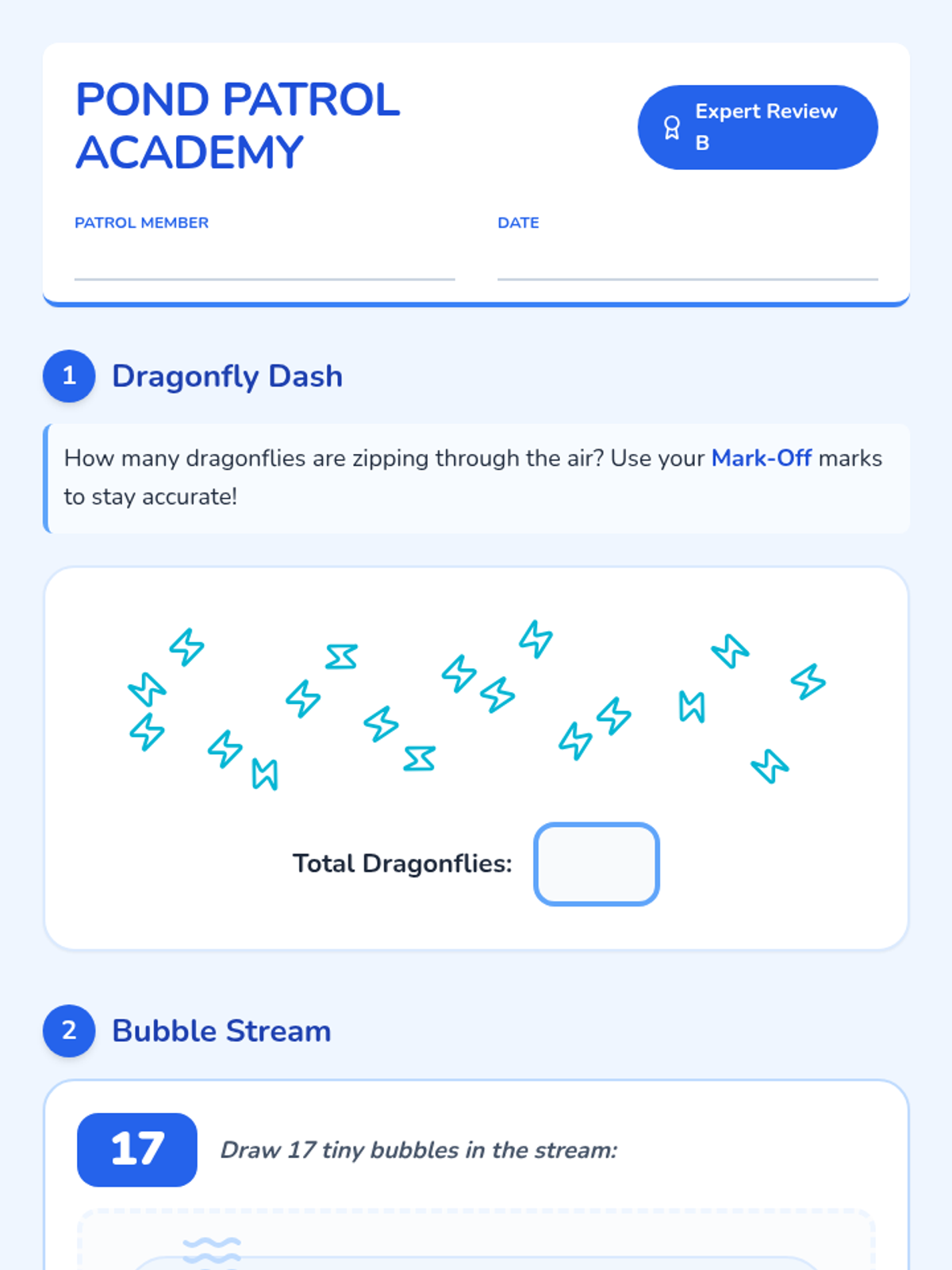
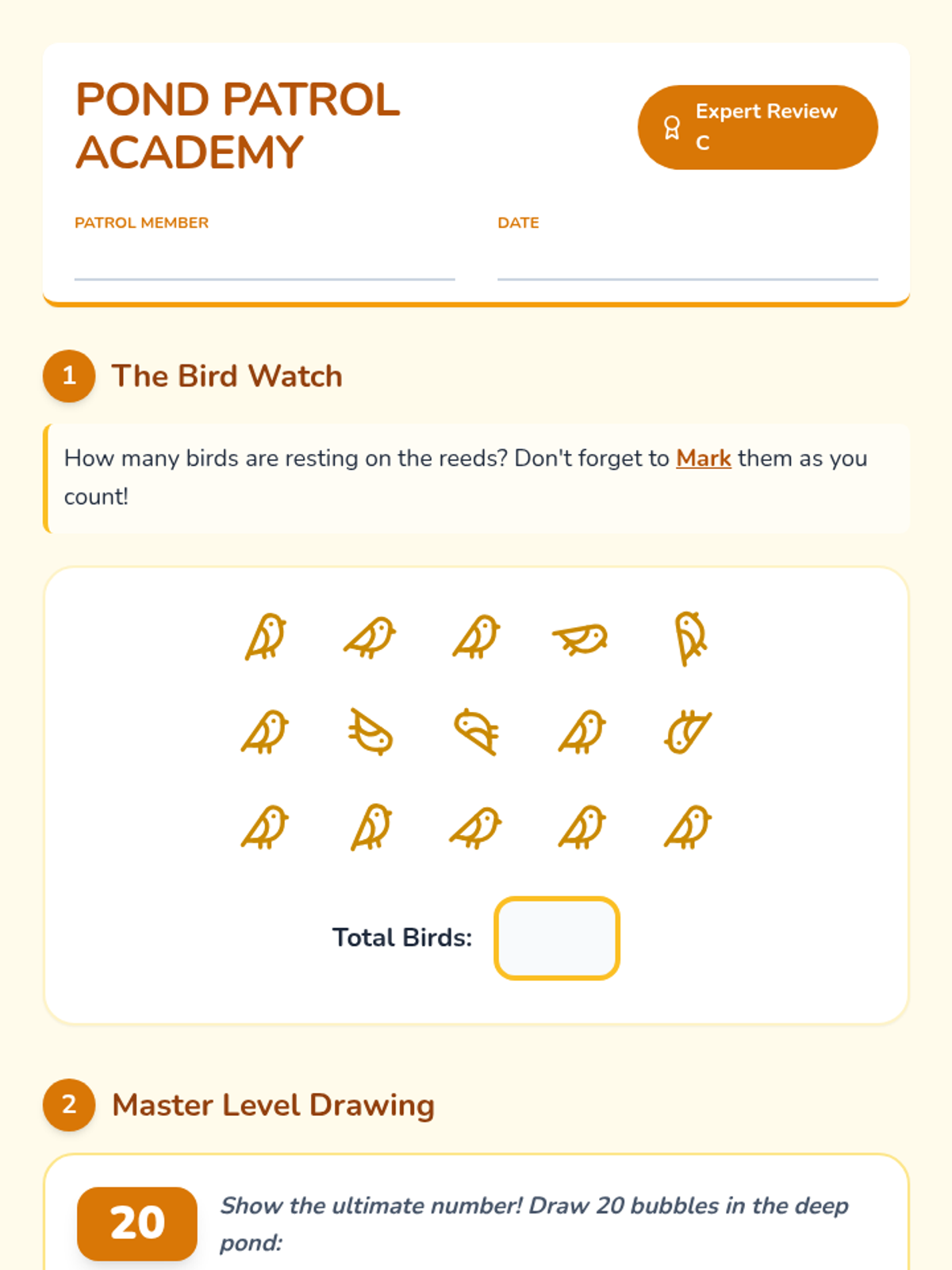
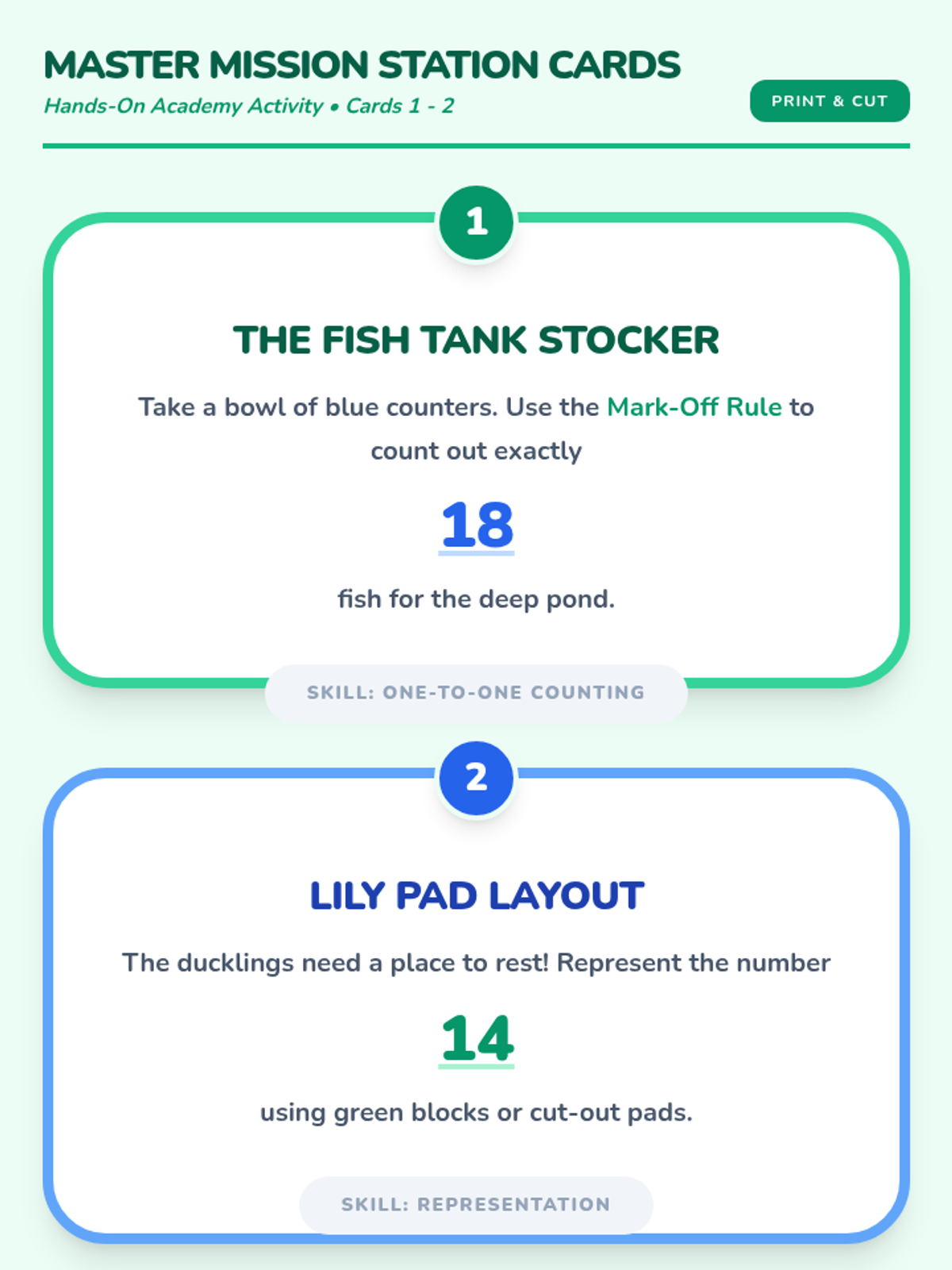
A comprehensive math sequence designed for early learners to master counting from 1 to 20. Using a engaging pond theme, students progress from single-digit counting to understanding teen numbers and representing larger quantities.
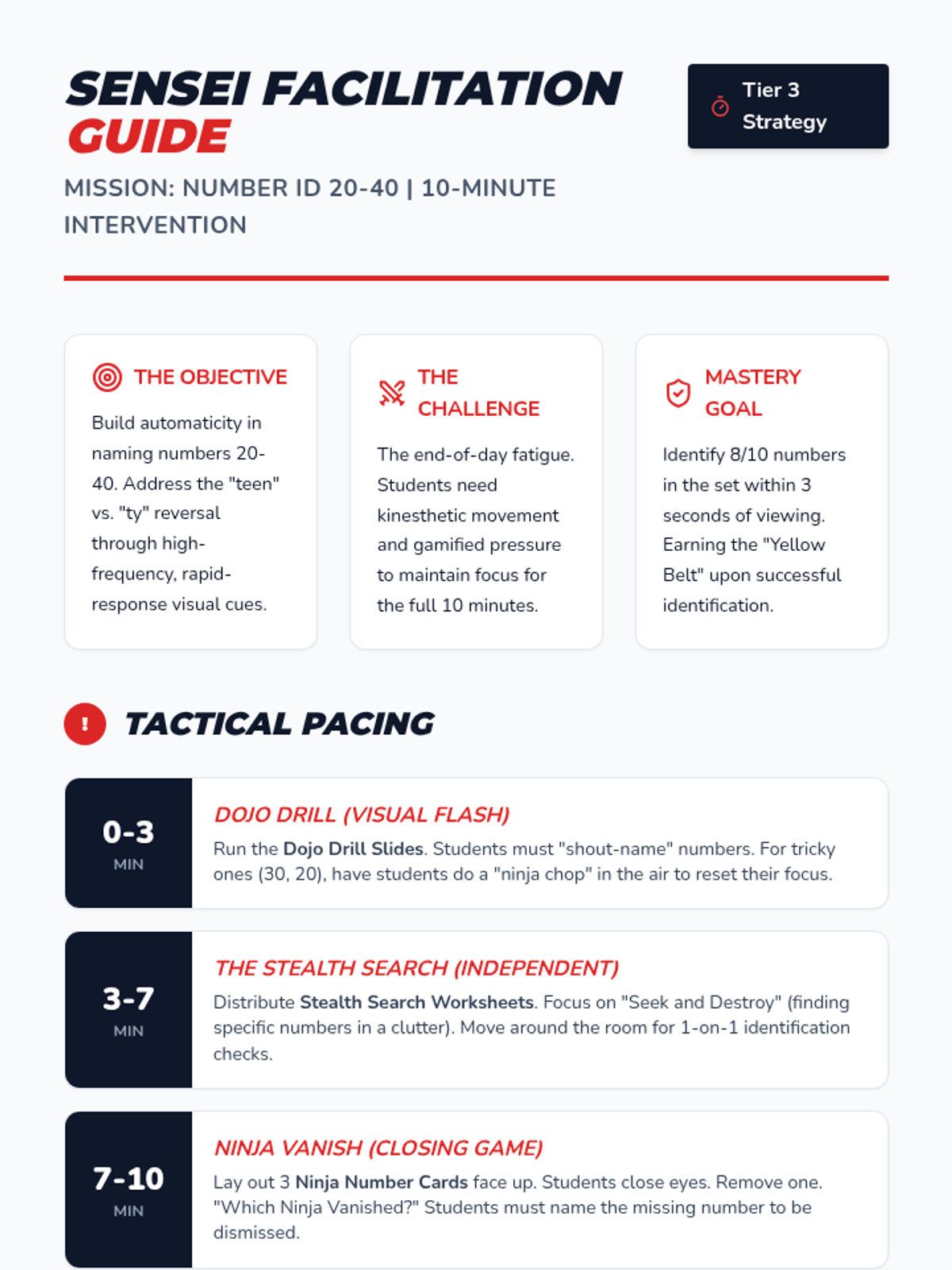
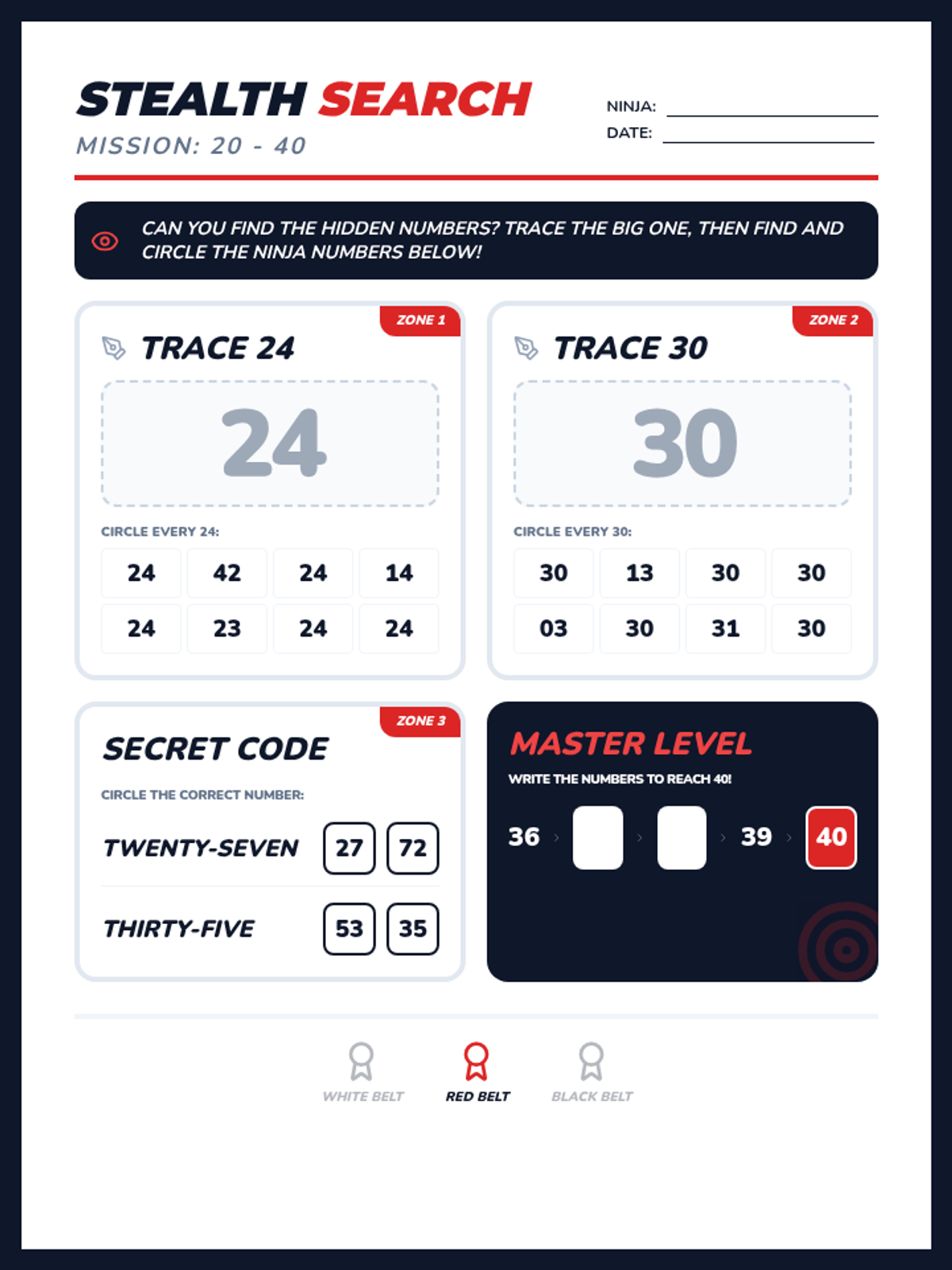
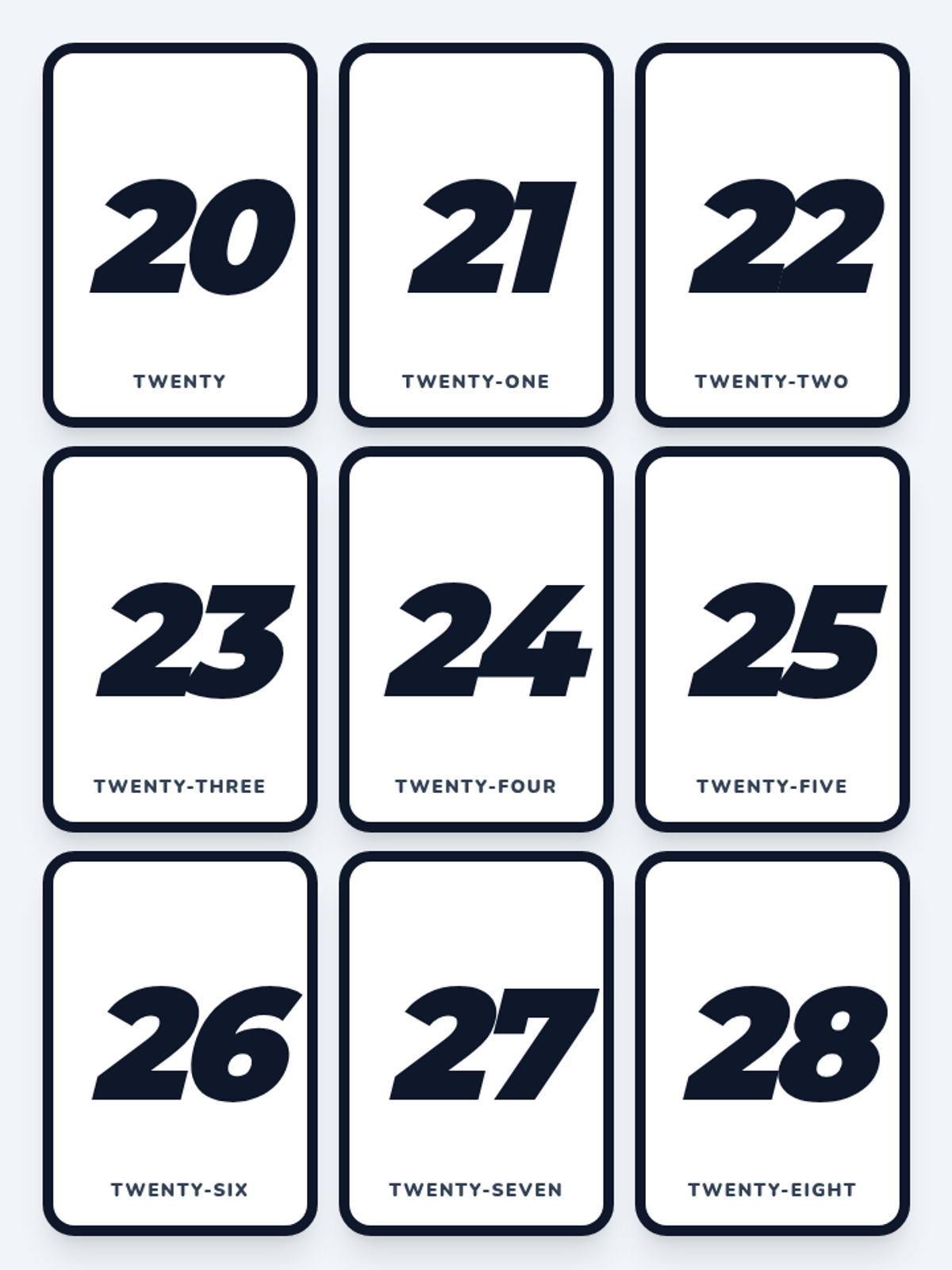
A high-energy intervention series designed for kindergarteners struggling with number identification in the 20-40 range. The "Number Ninja" theme keeps students engaged during short, 10-minute end-of-day sessions.
A foundational skills unit covering literacy progress tracking and early numeracy strategies for decomposition and missing addends.
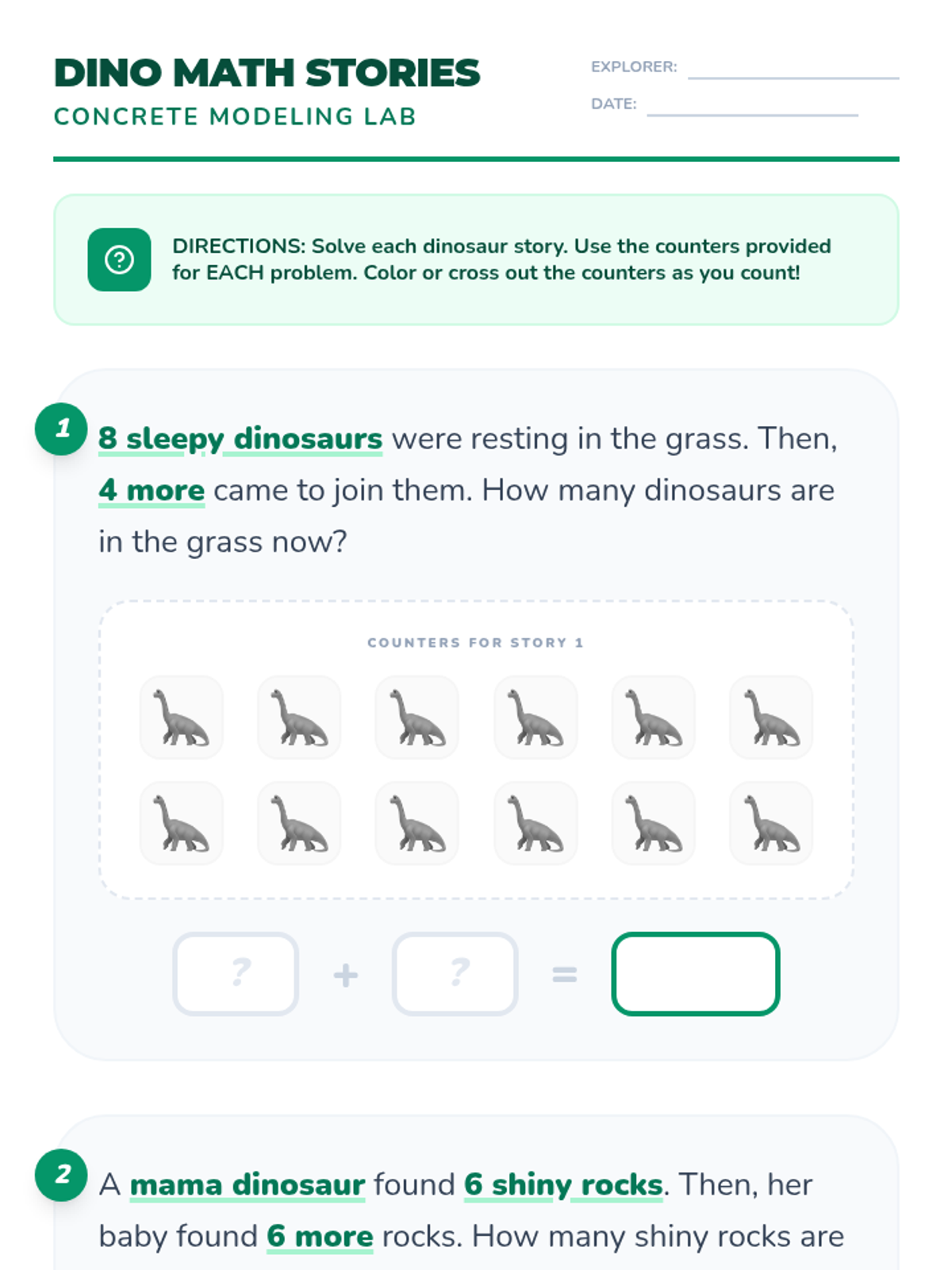
A two-day math journey where kindergarteners master the number 12 through dinosaur-themed counting, place value exploration, and introductory addition.
A series of early math lessons focused on foundational counting and operations through storytelling and play.
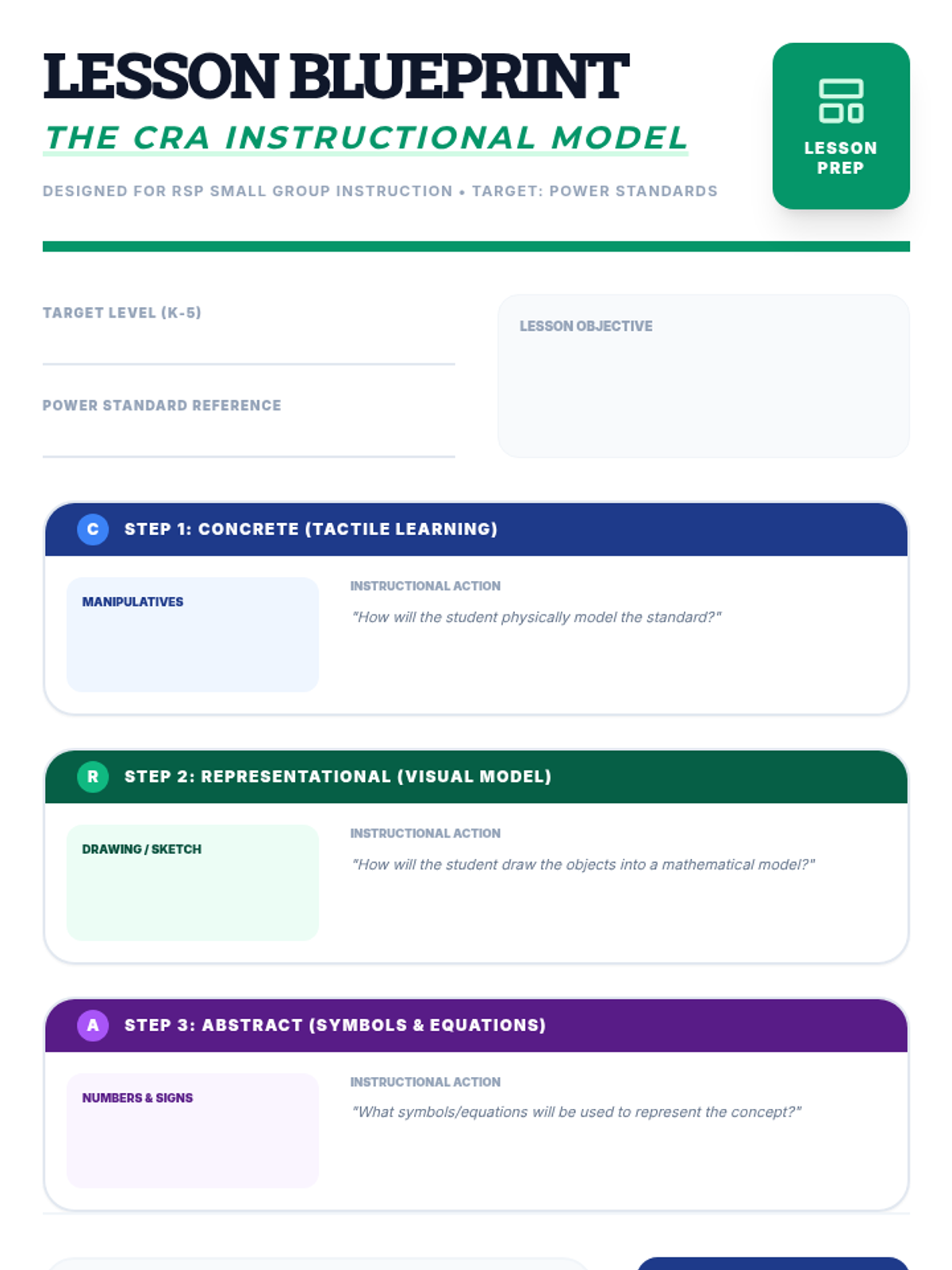
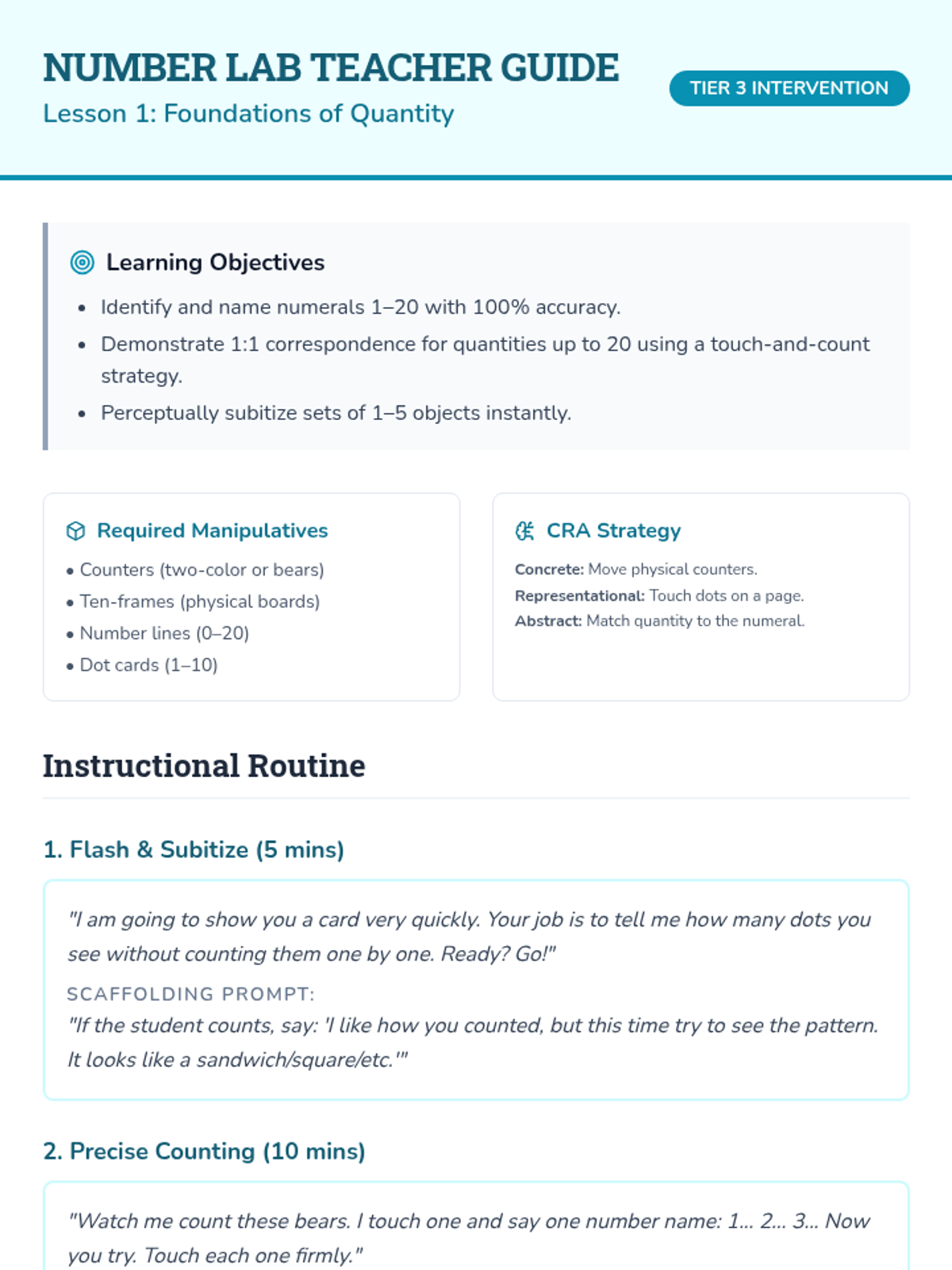
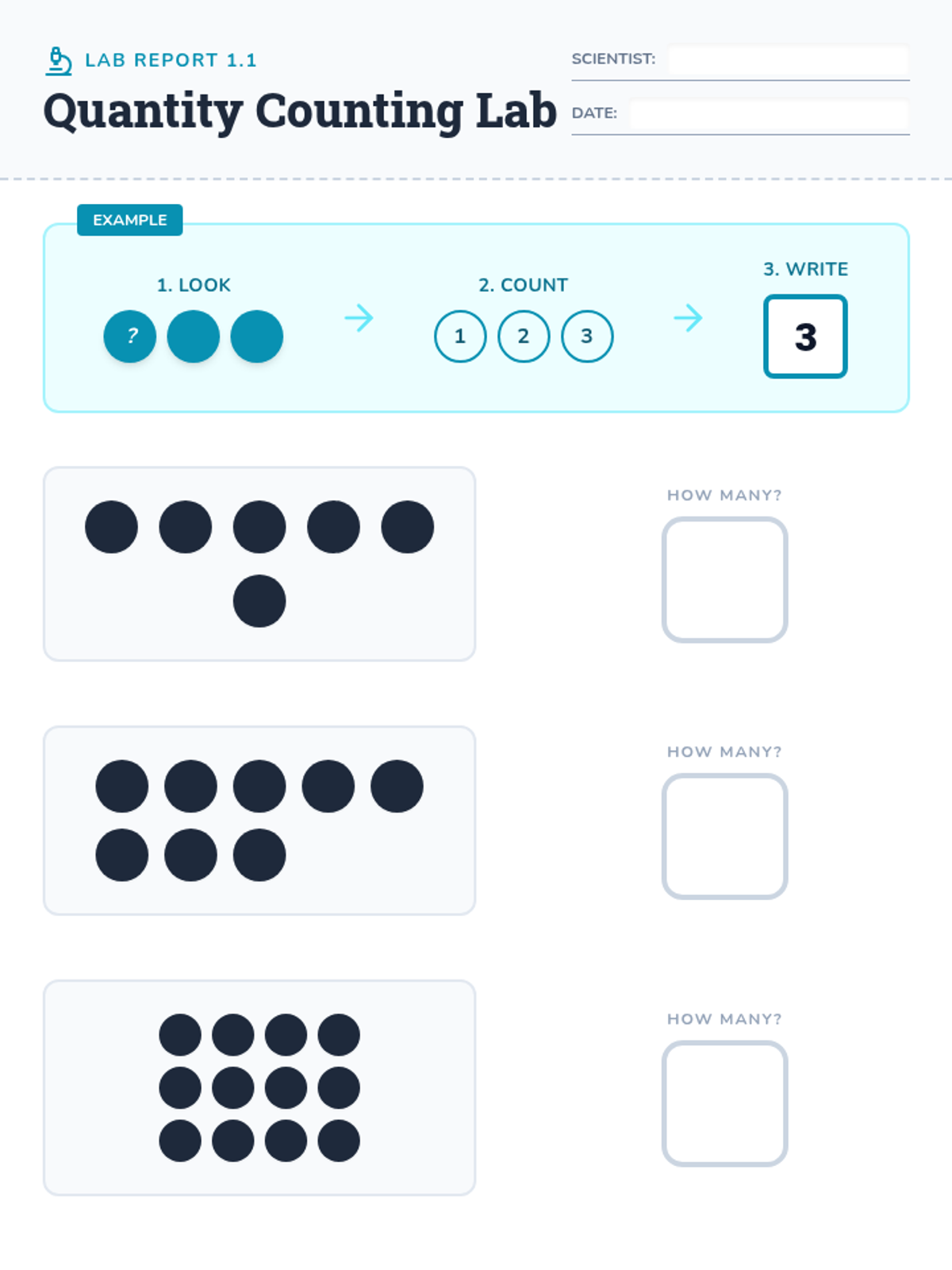
A high-intensity, evidence-based intervention designed for students needing foundational number sense support. Focuses on subitizing, 1:1 correspondence, place value, and decomposition using a CRA (Concrete-Representational-Abstract) approach.
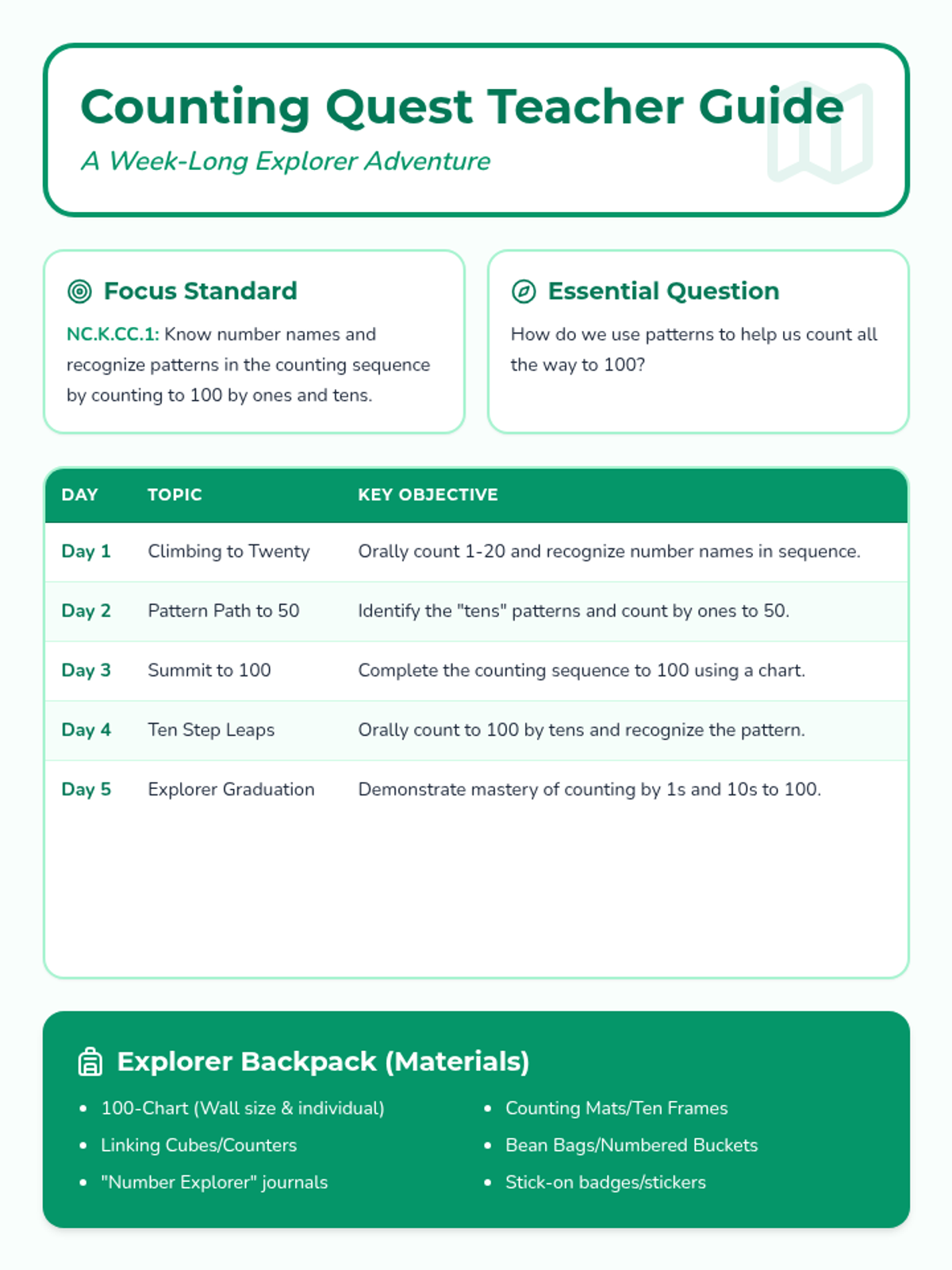
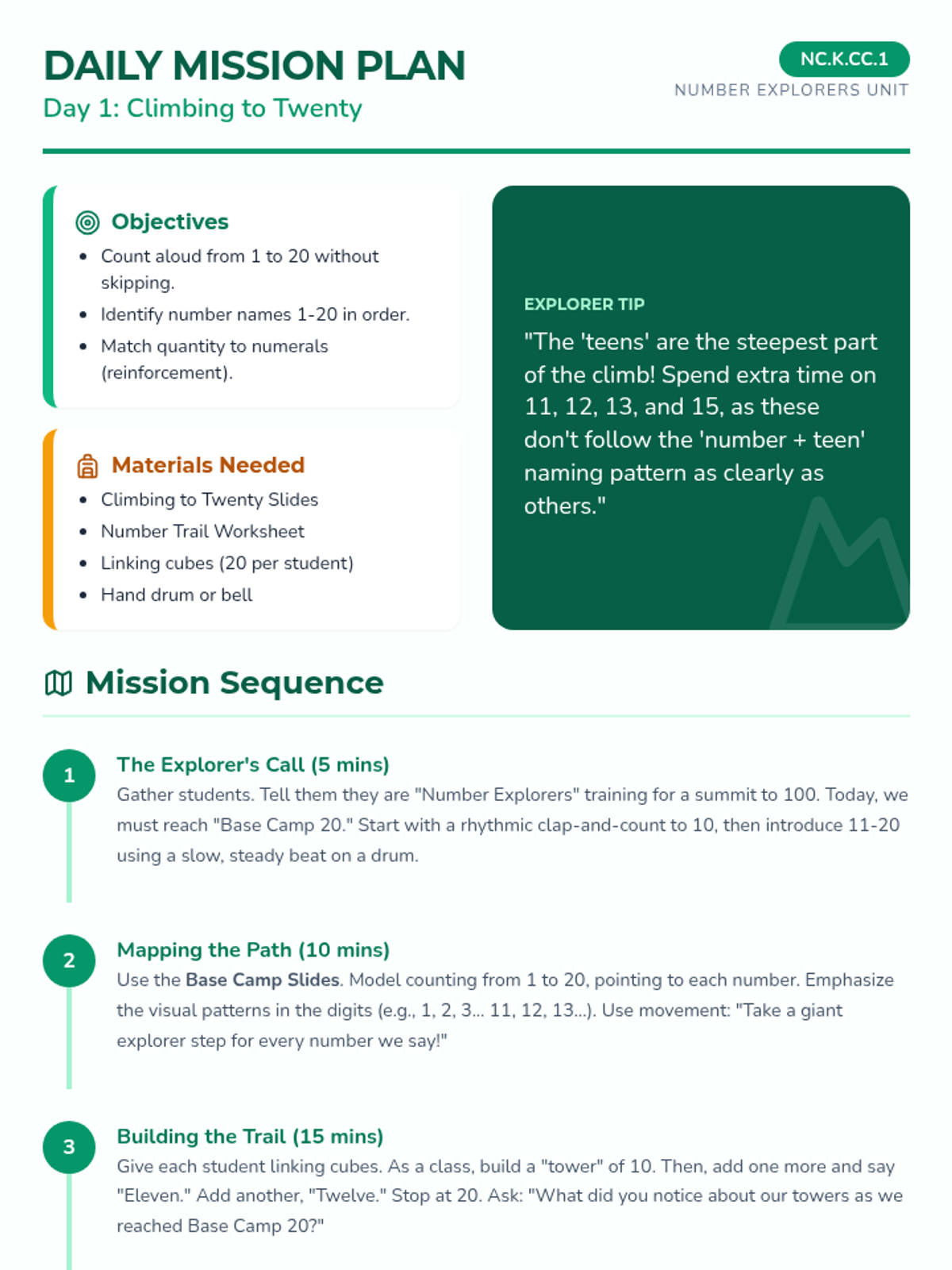
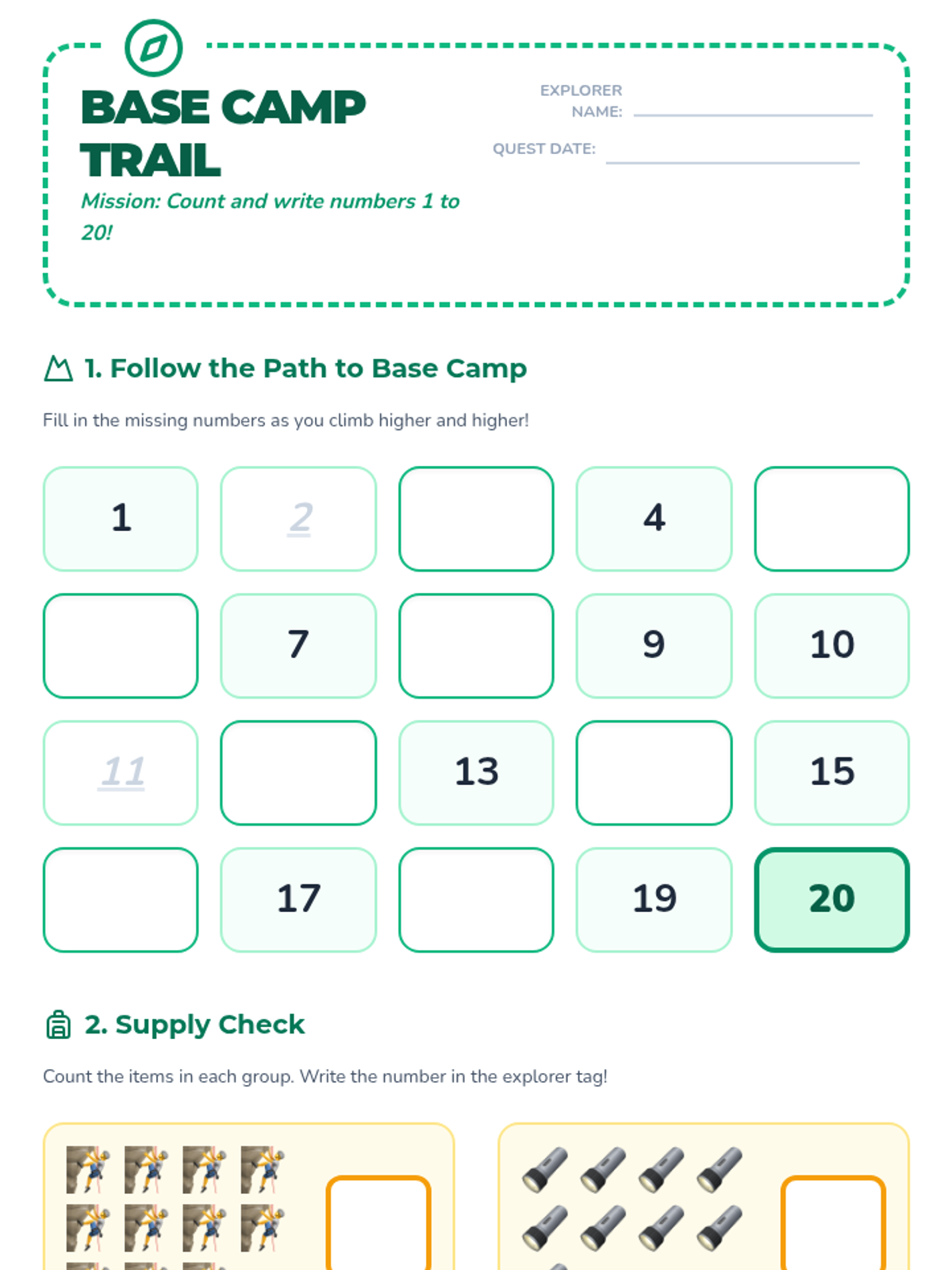
A comprehensive one-week kindergarten unit focused on NC.K.CC.1, guiding students from counting by ones to 100 and mastering counting by tens through an explorer-themed adventure.
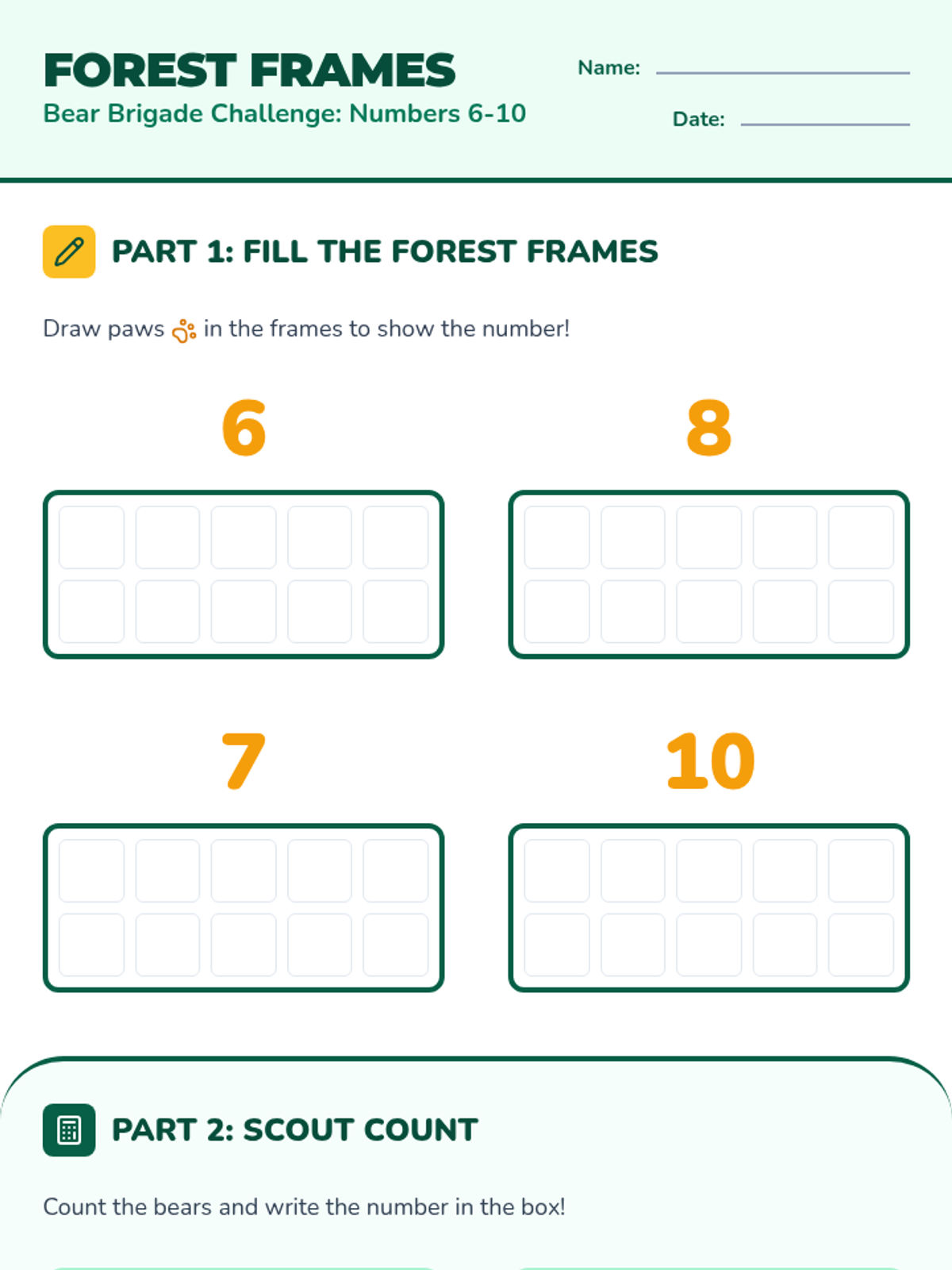
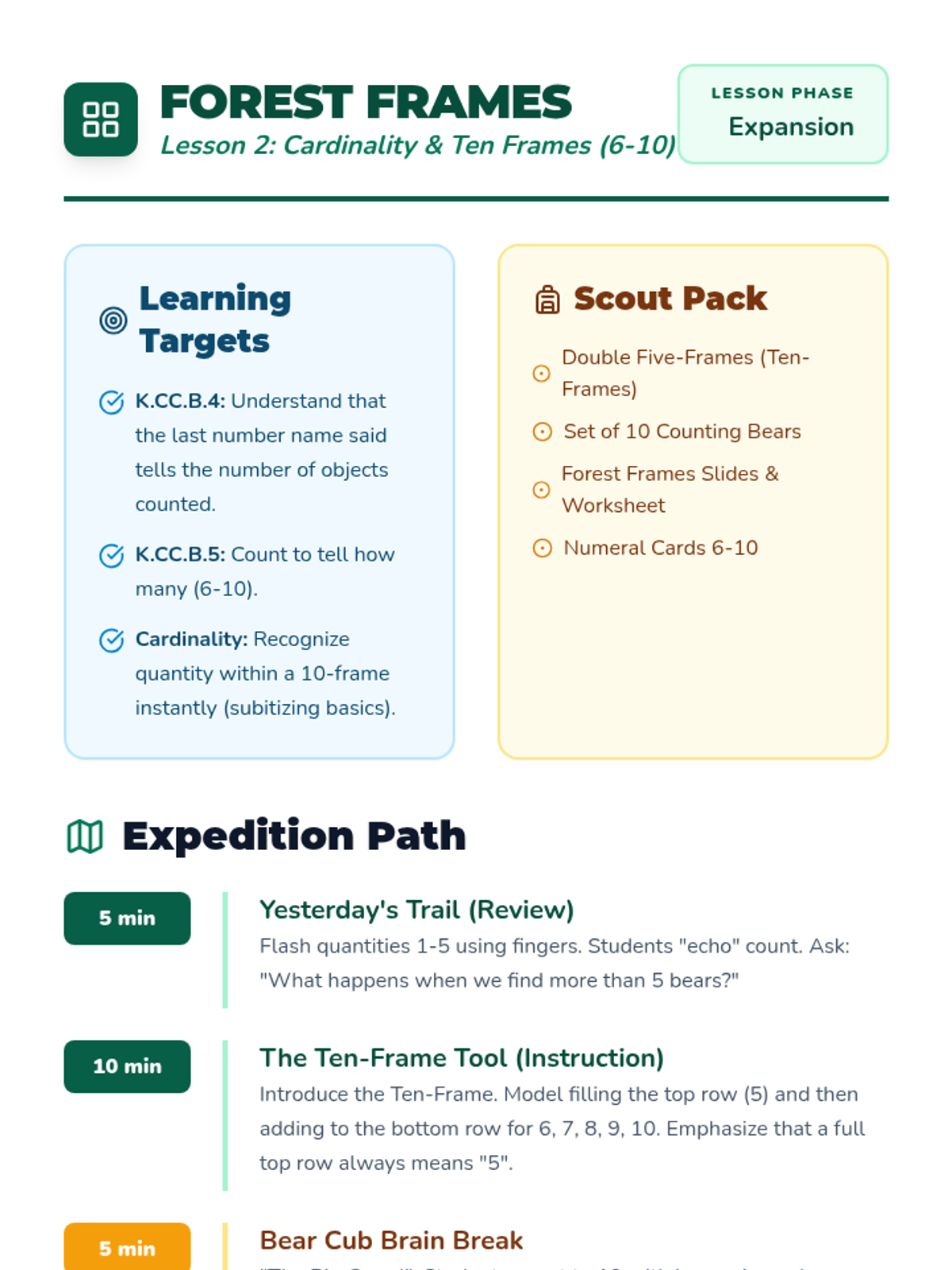
A comprehensive week-long kindergarten math unit where students join the 'Bear Brigade' to master counting, cardinality, and number comparison (1-10) through woodland-themed adventures.
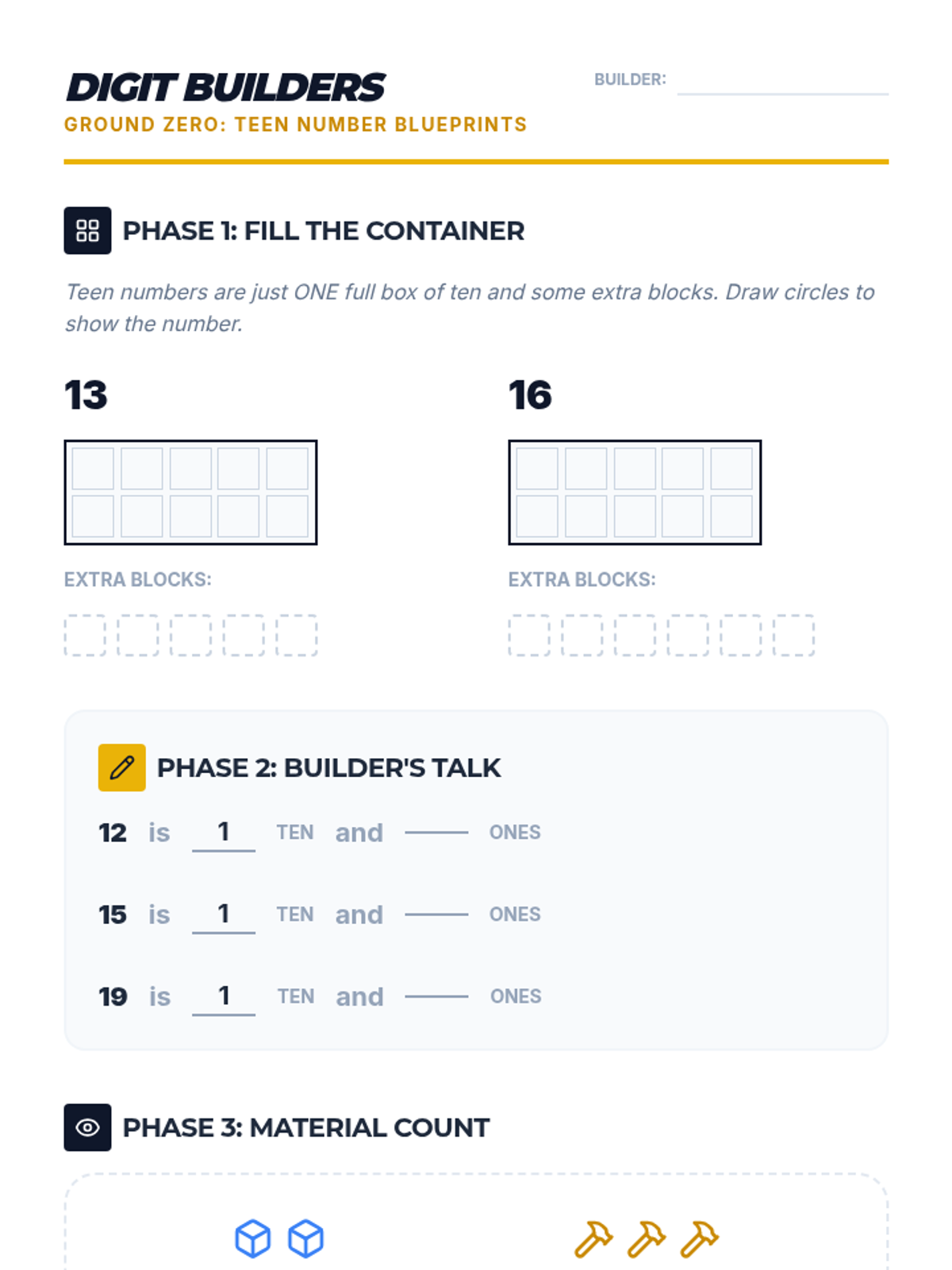
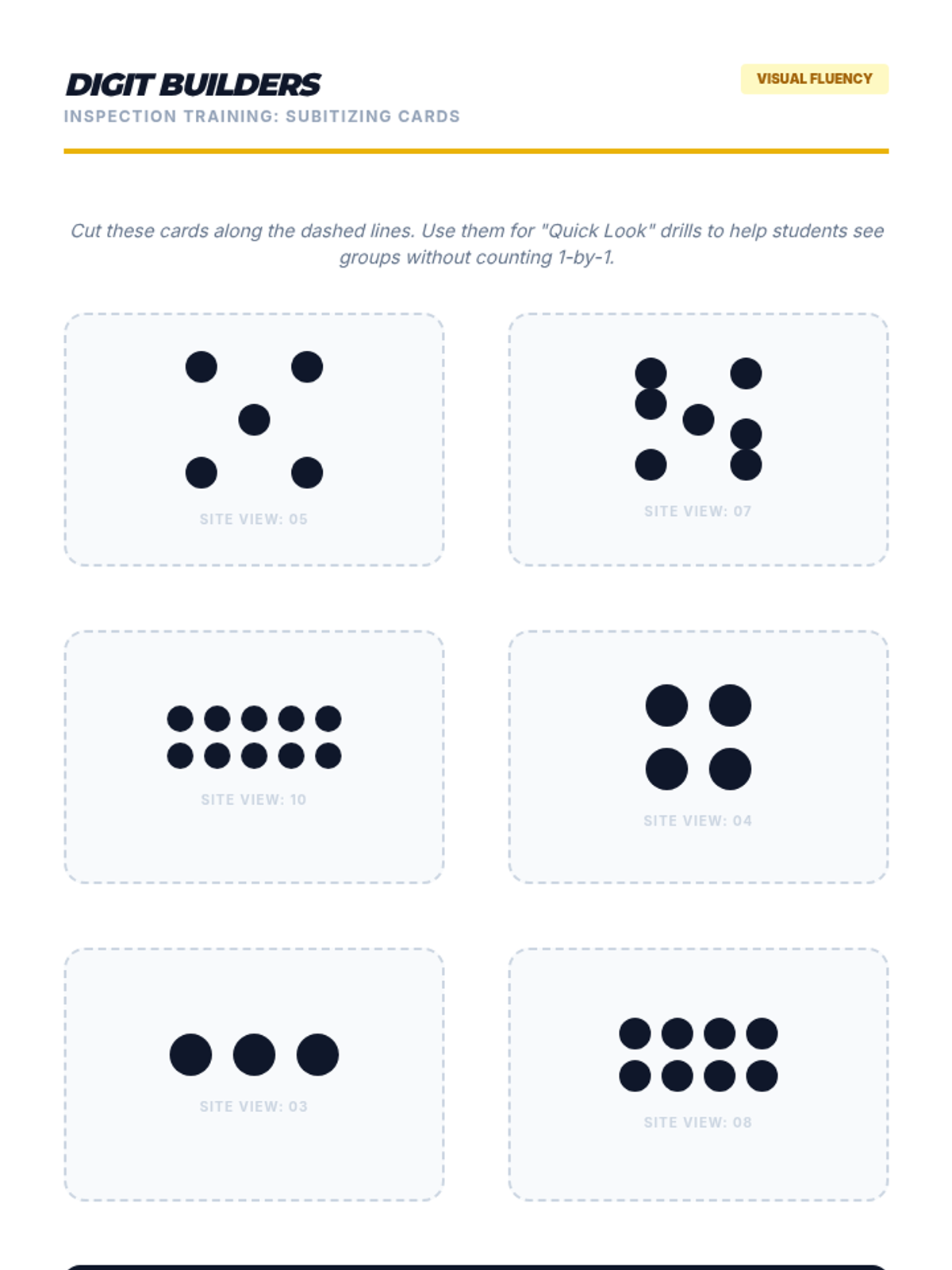
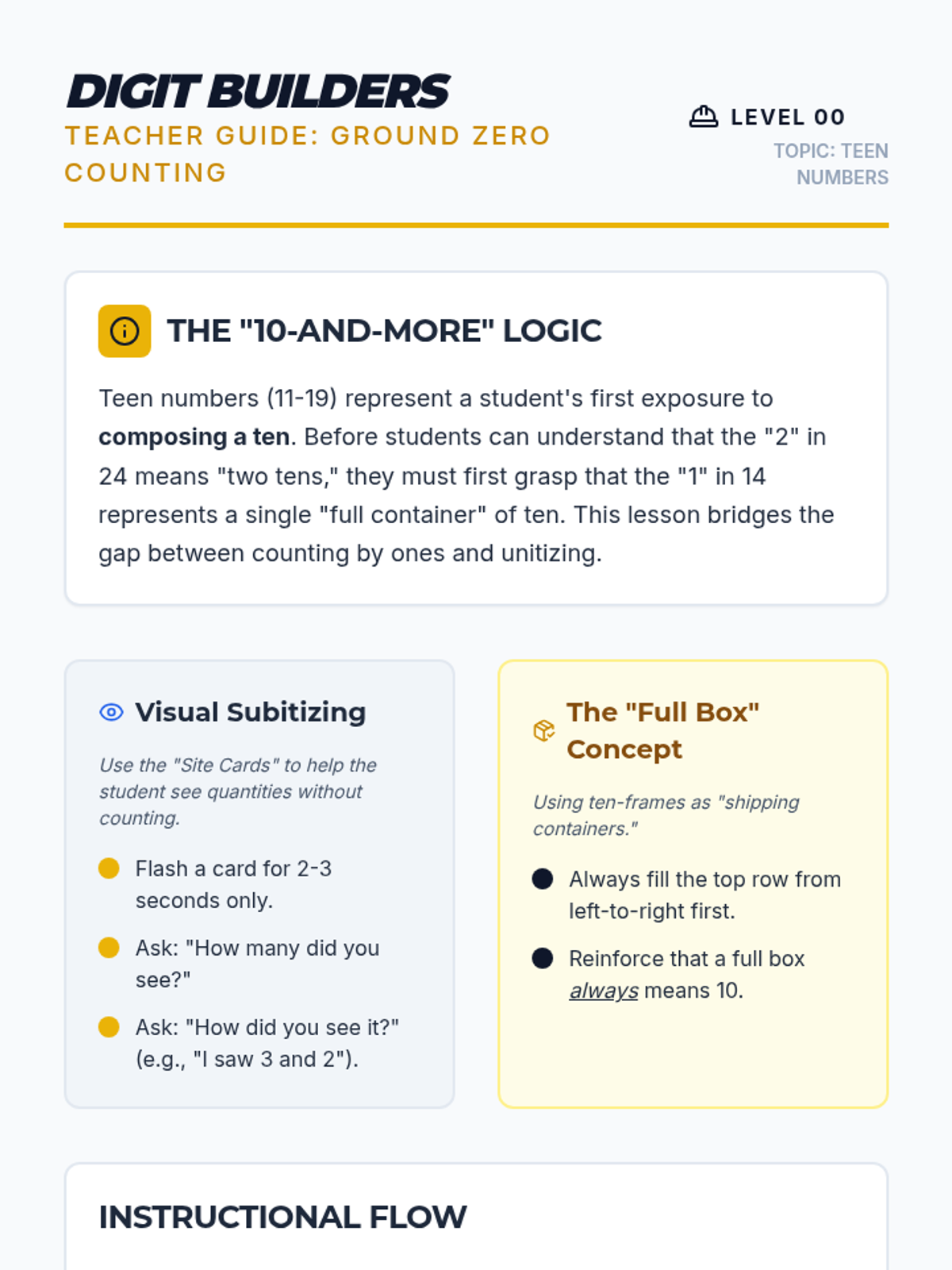
A foundational unit on place value that spirals from teen numbers up to the hundreds place. Using a 'Digit Builders' architectural theme, students learn to construct, deconstruct, and compare 2-digit and 3-digit numbers, building a solid foundation for future math.
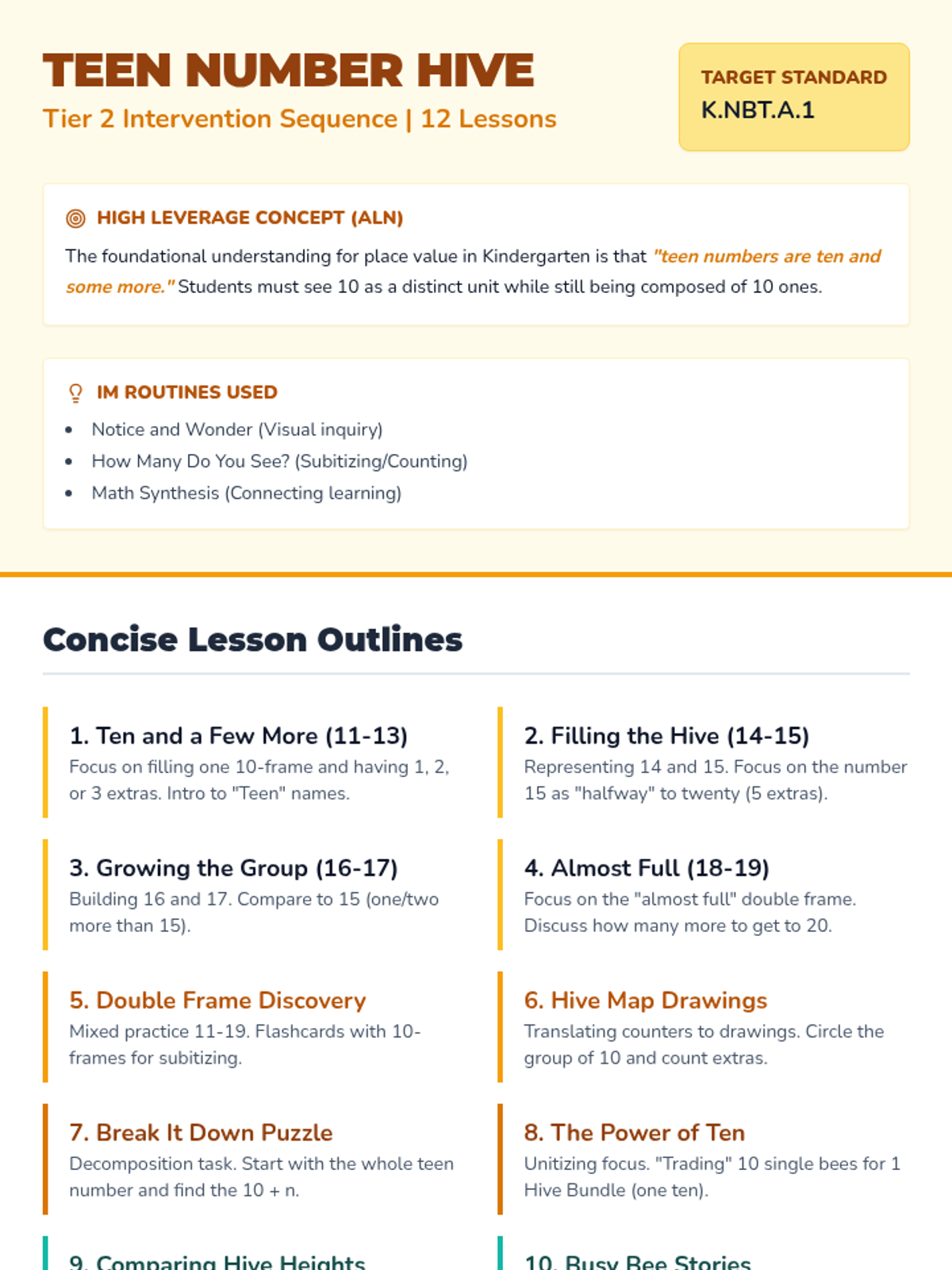
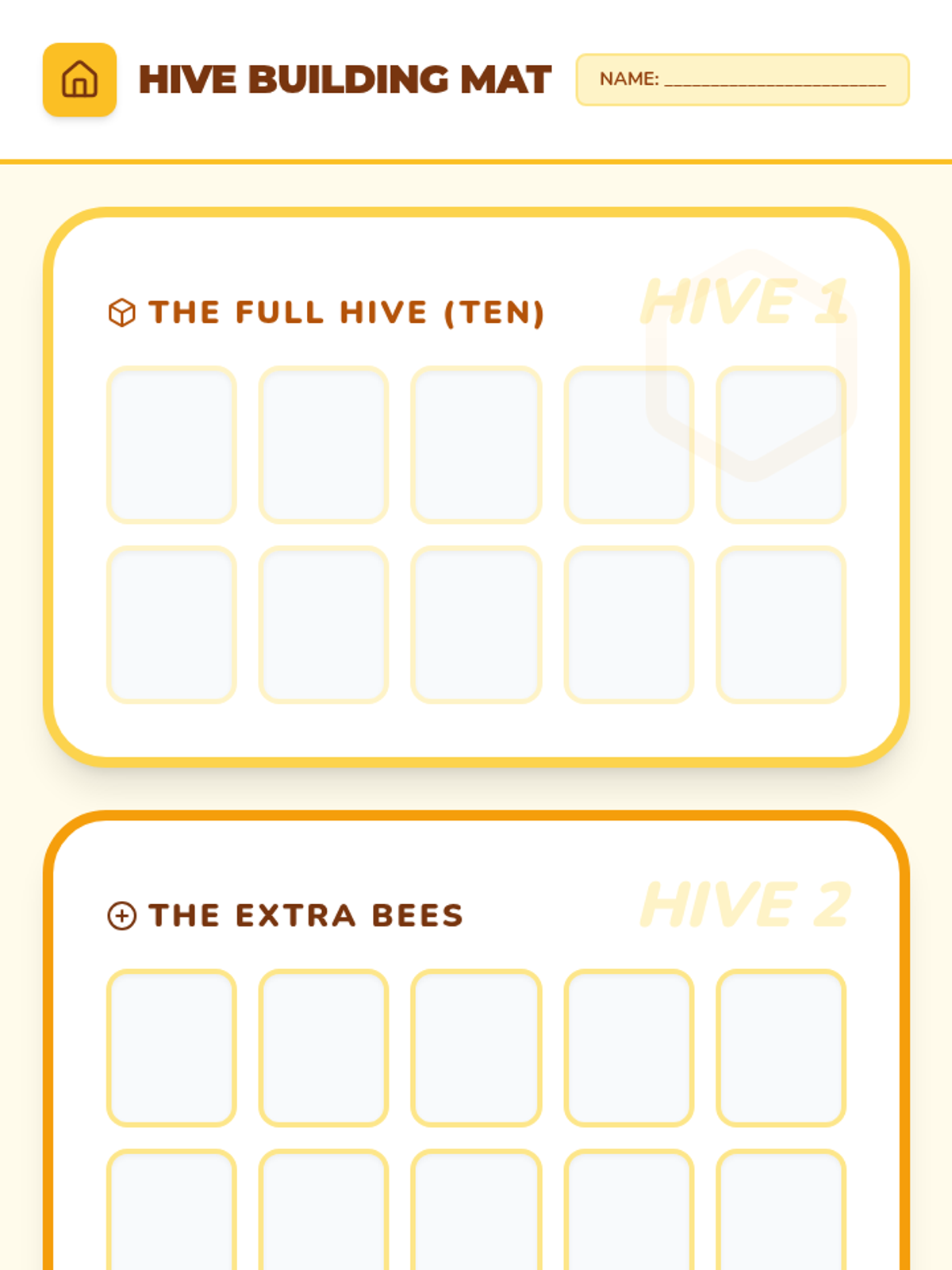
A 12-lesson Tier 2 intervention sequence for Kindergarten focus on K.NBT.A.1. Using the 'Number Hive' theme, students explore teen numbers as 'ten and some more' through concrete manipulatives, visual models, and explicit IM-aligned instructional routines.
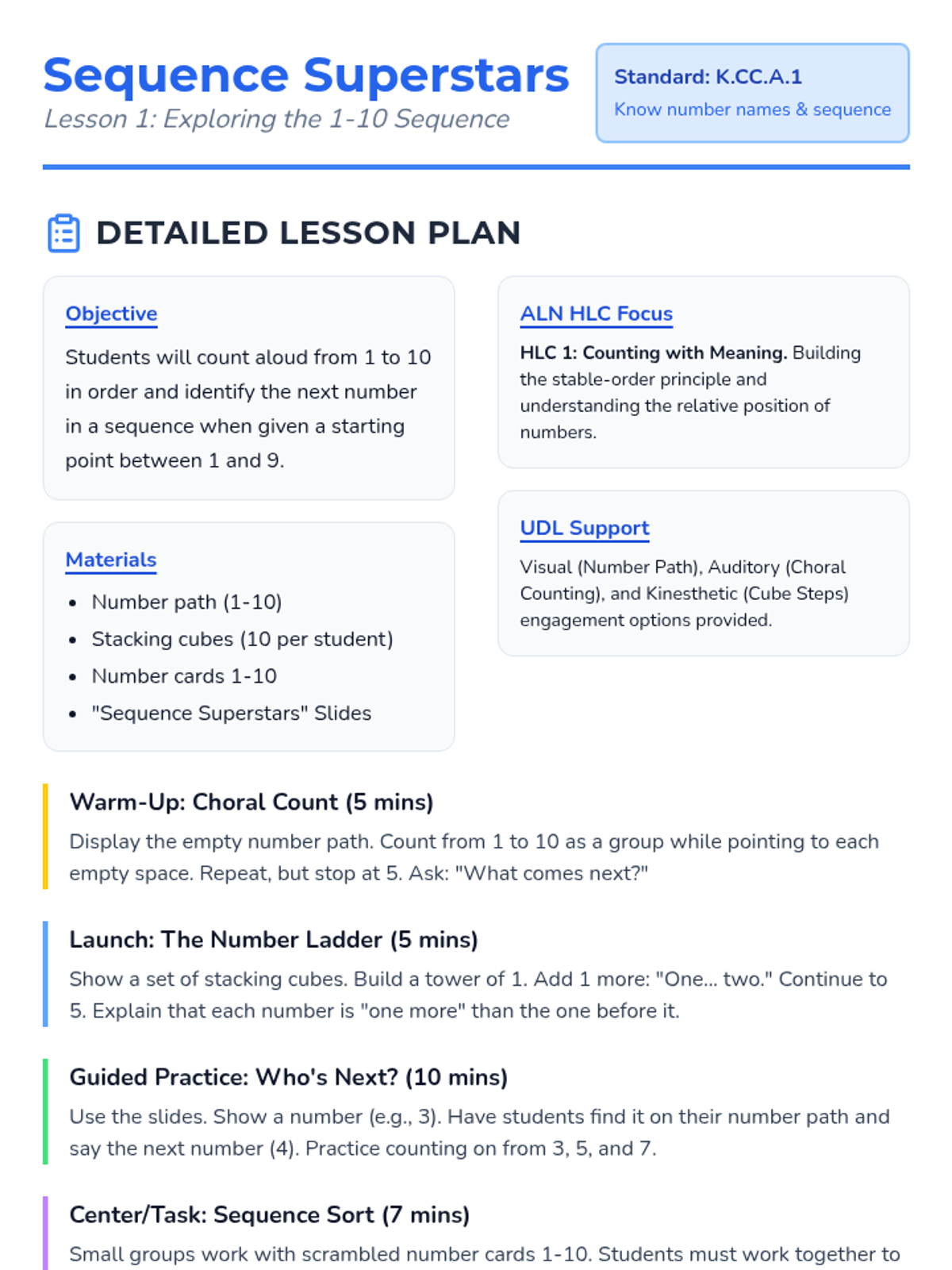
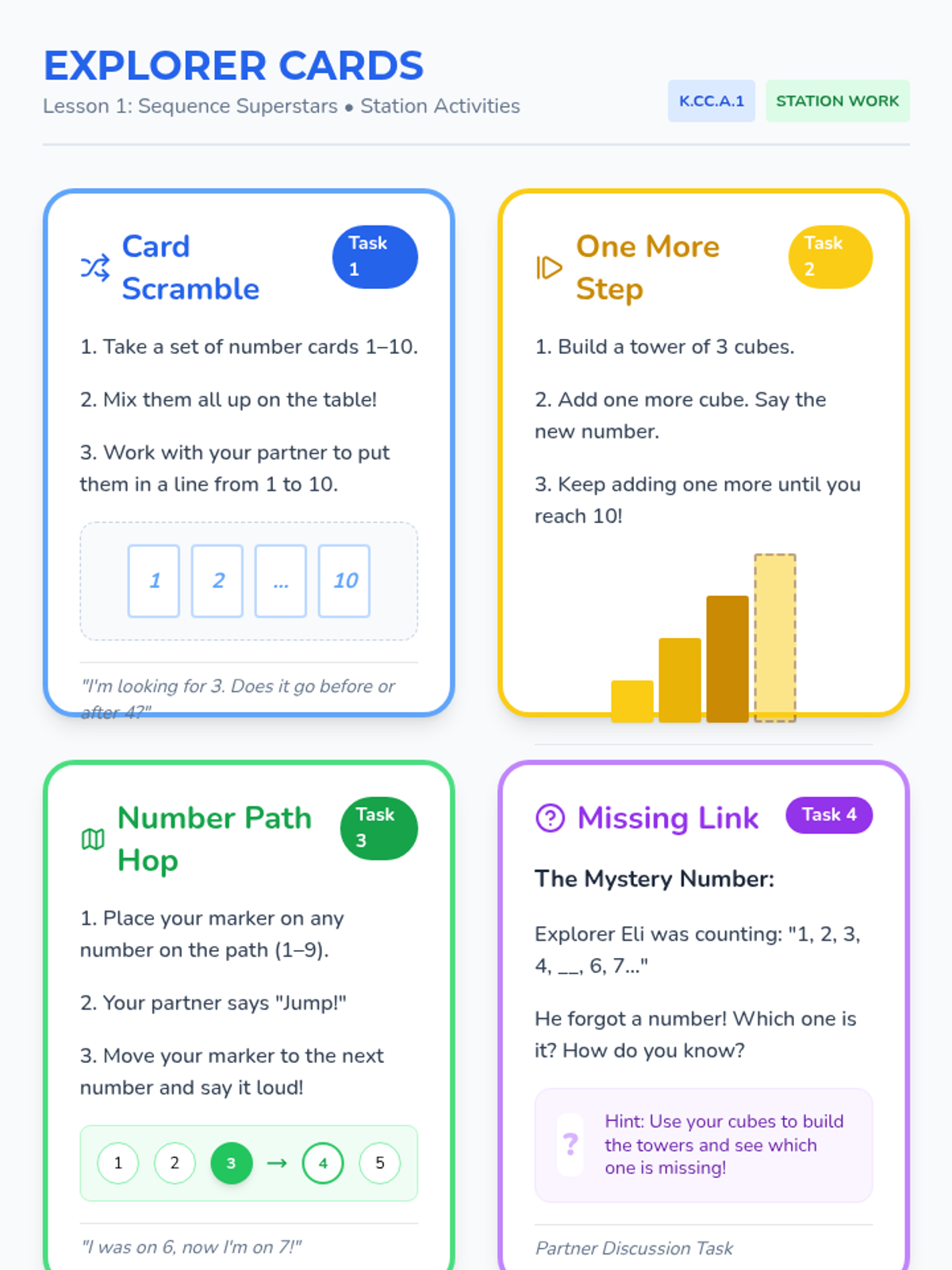
A comprehensive 12-lesson Tier 2 intervention sequence for Kindergarten Counting and Cardinality. These lessons utilize All Learners Network (ALN) High Leverage Concepts and IM curriculum strategies to support students in mastering number names, counting sequences, cardinality, and comparison through multi-sensory and UDL approaches.
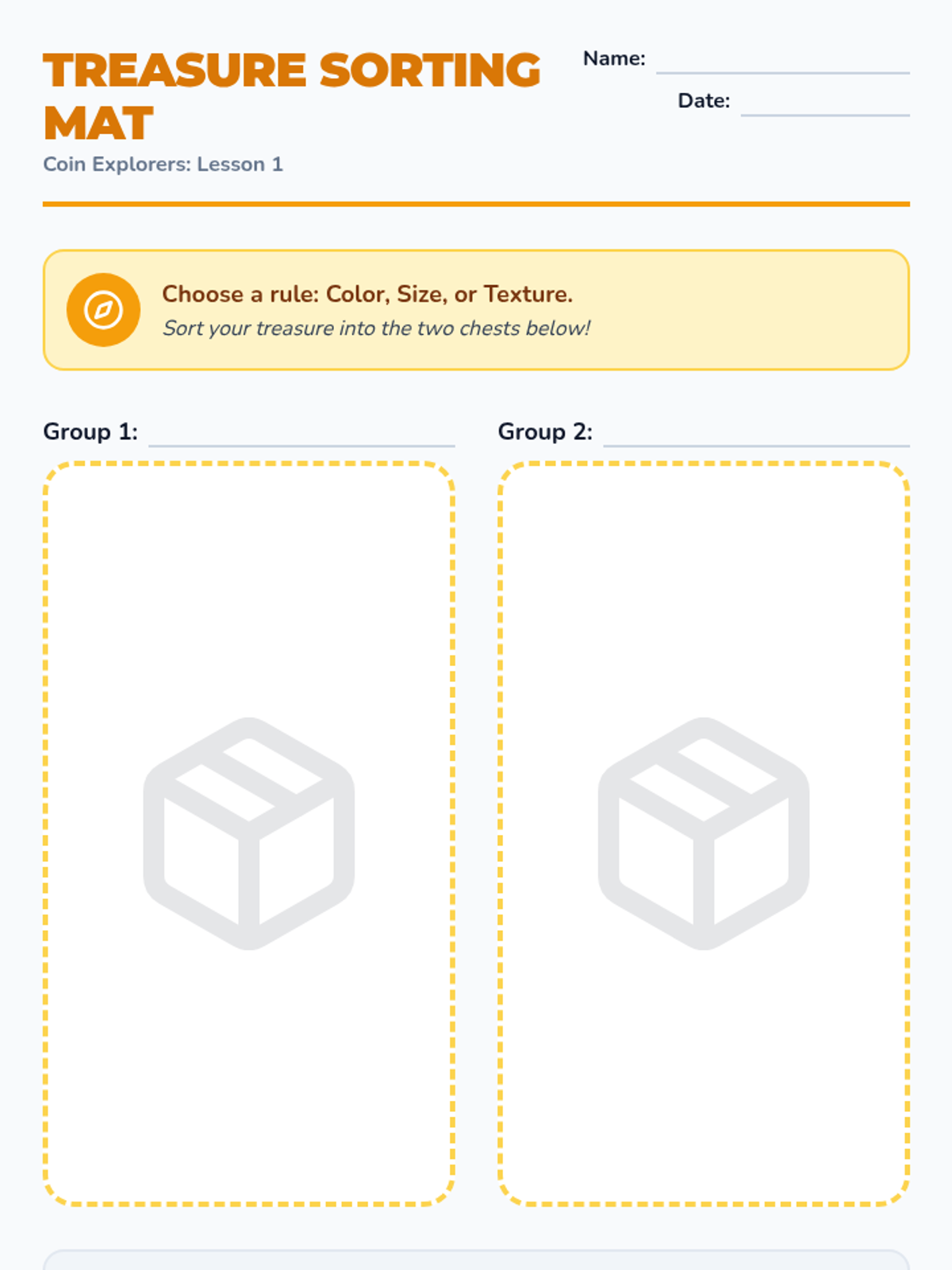
A sensory-based introduction to U.S. coins for Kindergarten, focusing on sorting by physical attributes, identification, and basic values through inquiry and exploration.
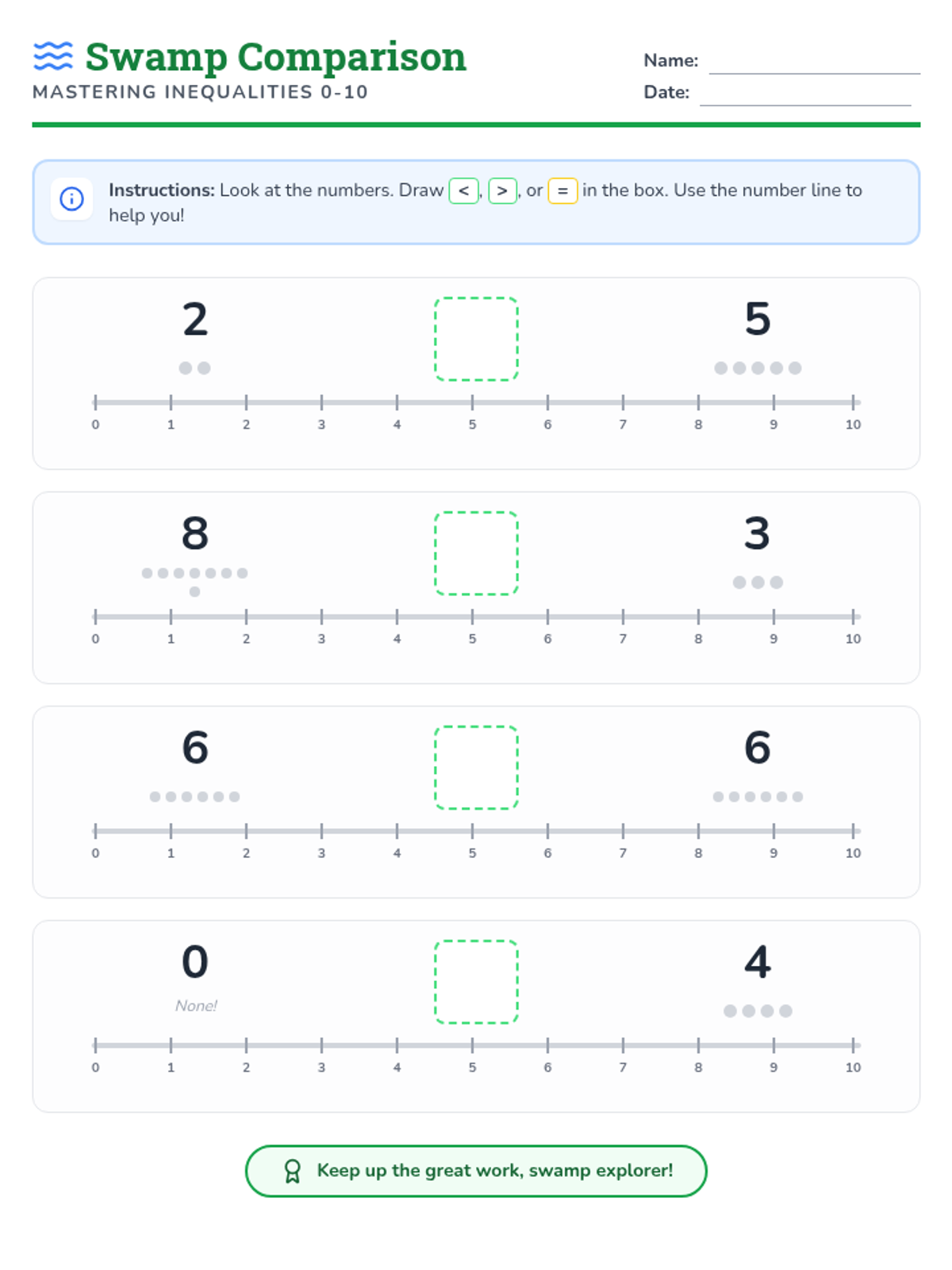
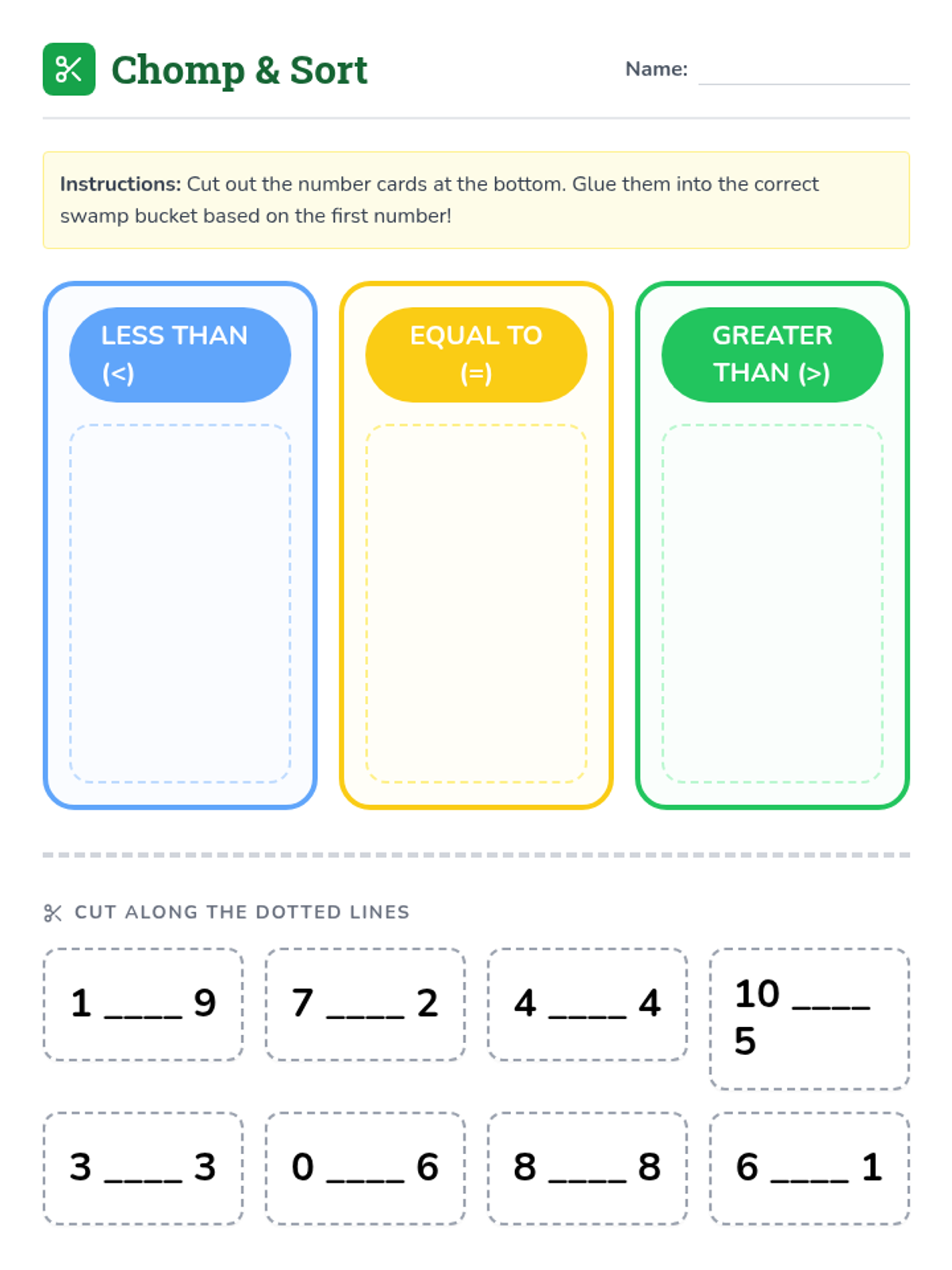
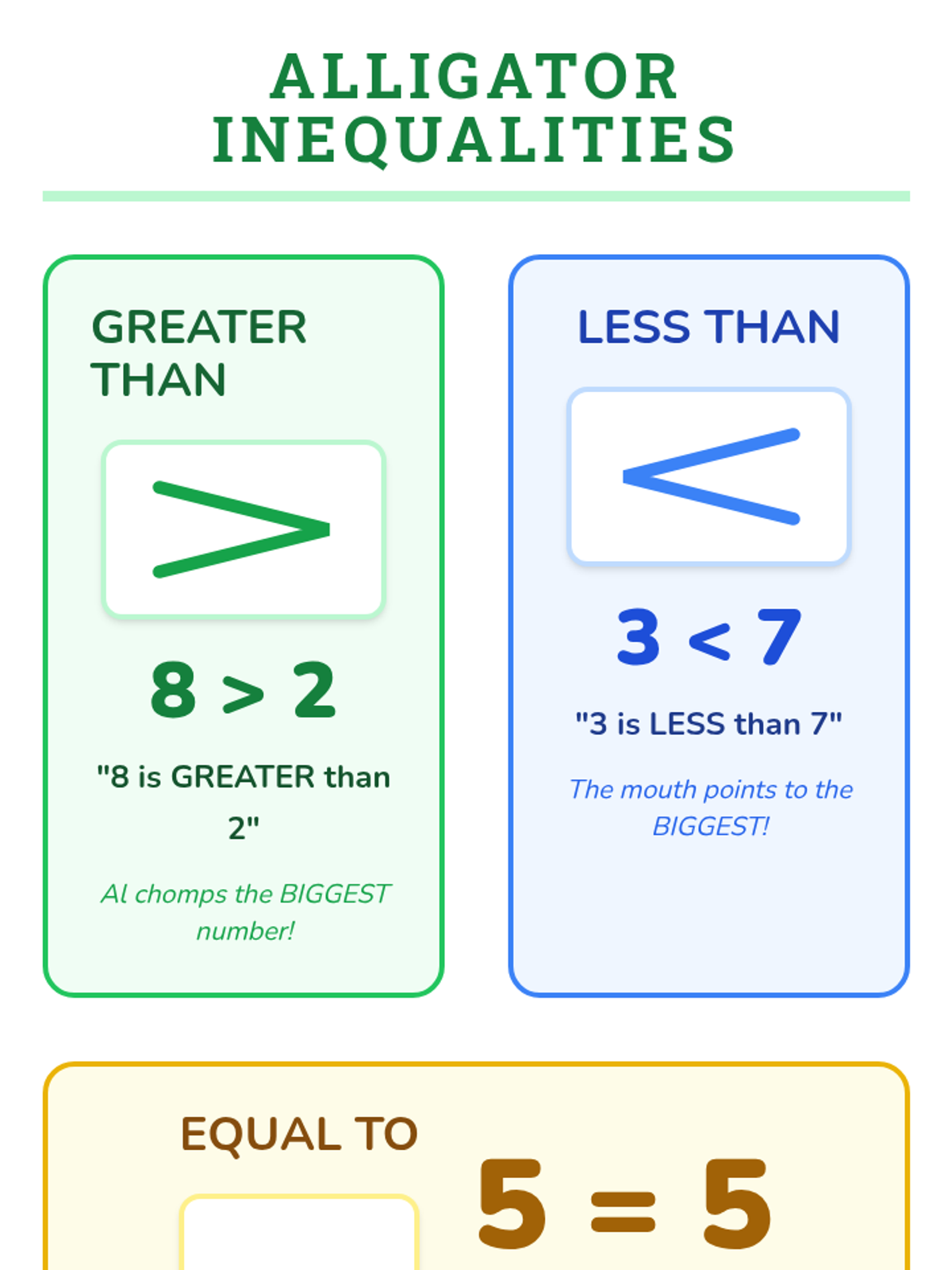
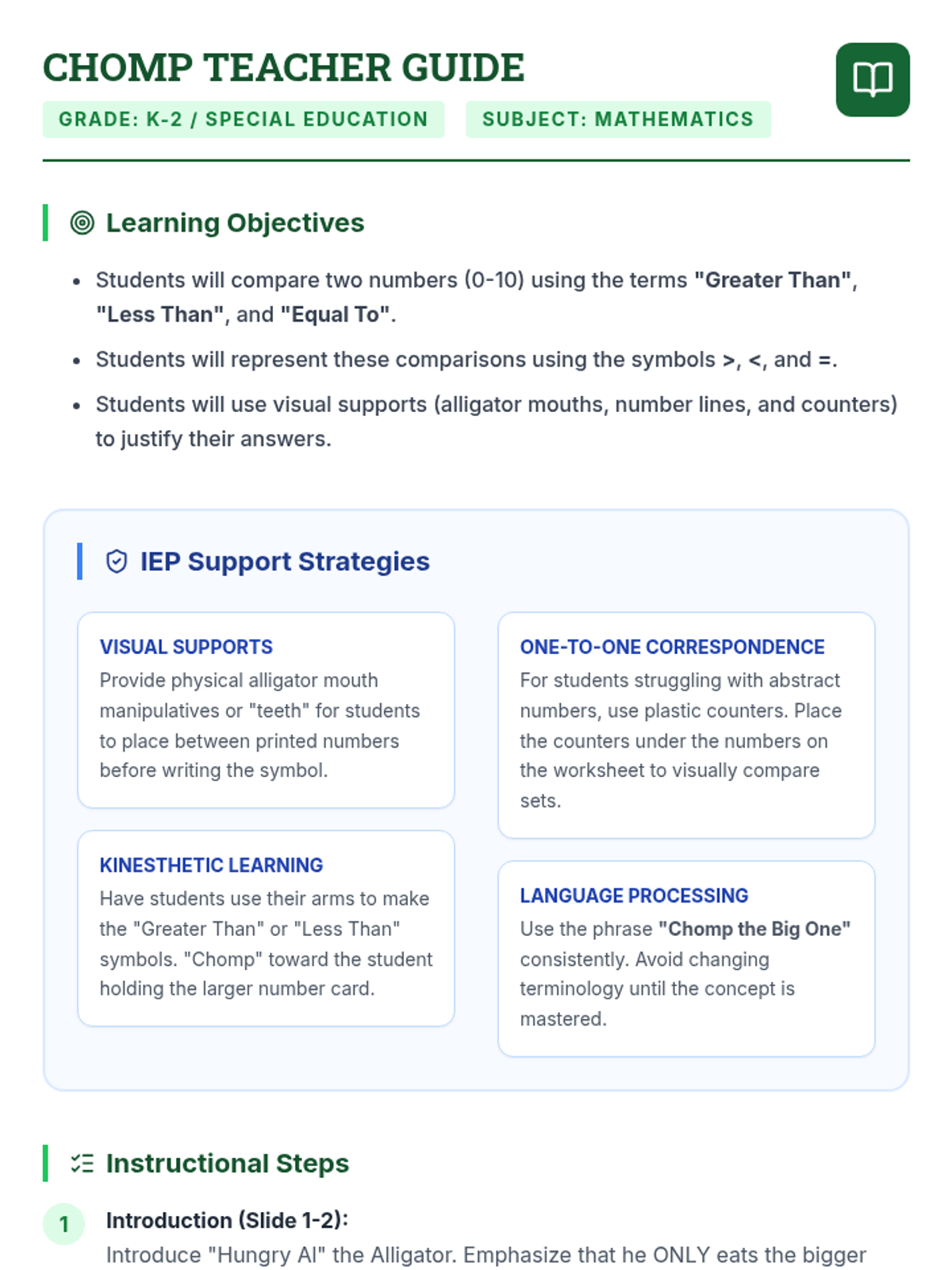
A foundational math sequence focused on number comparison and inequalities for numbers 0-10, designed with heavy visual supports for early learners and students with IEPs.
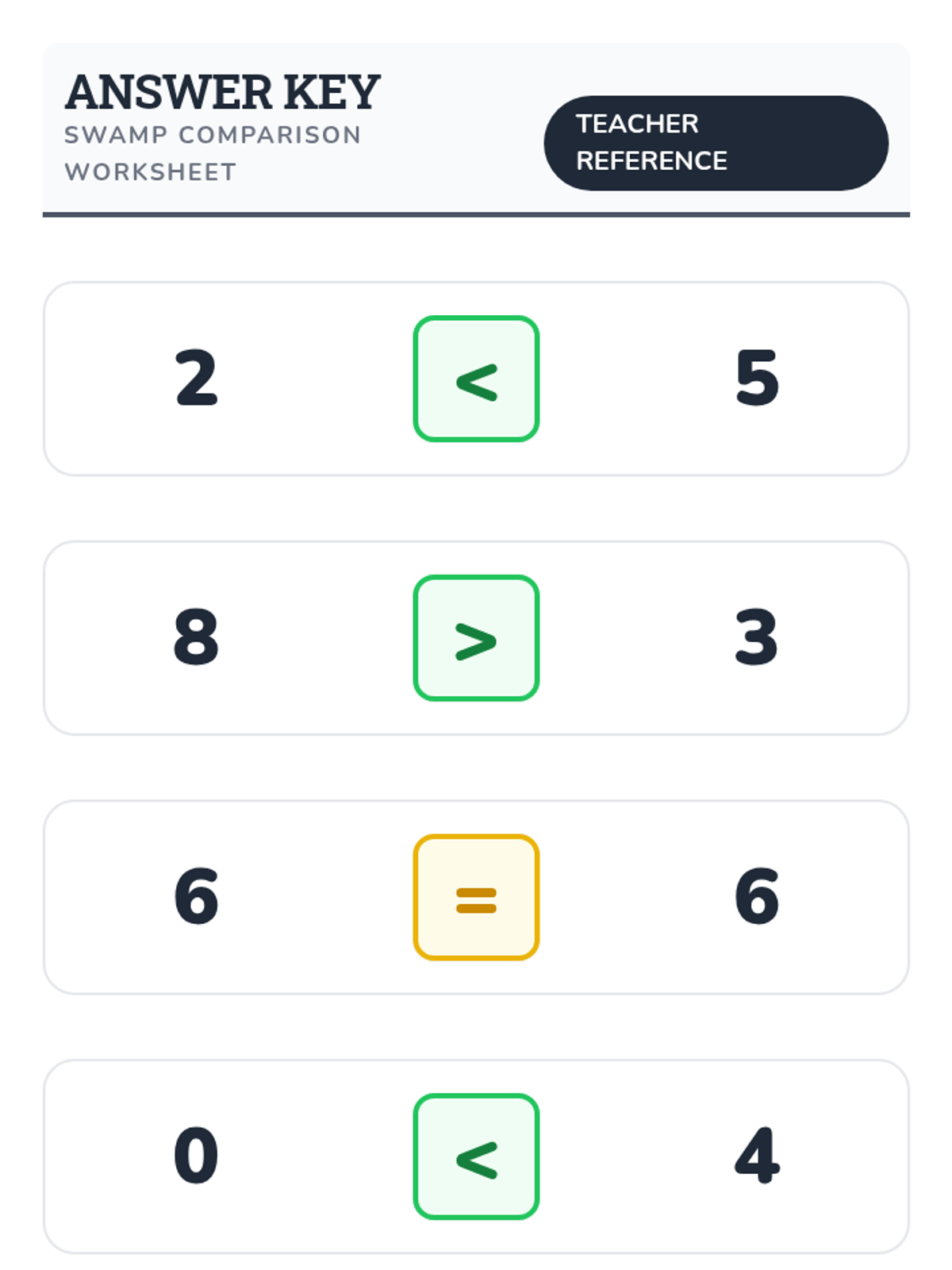
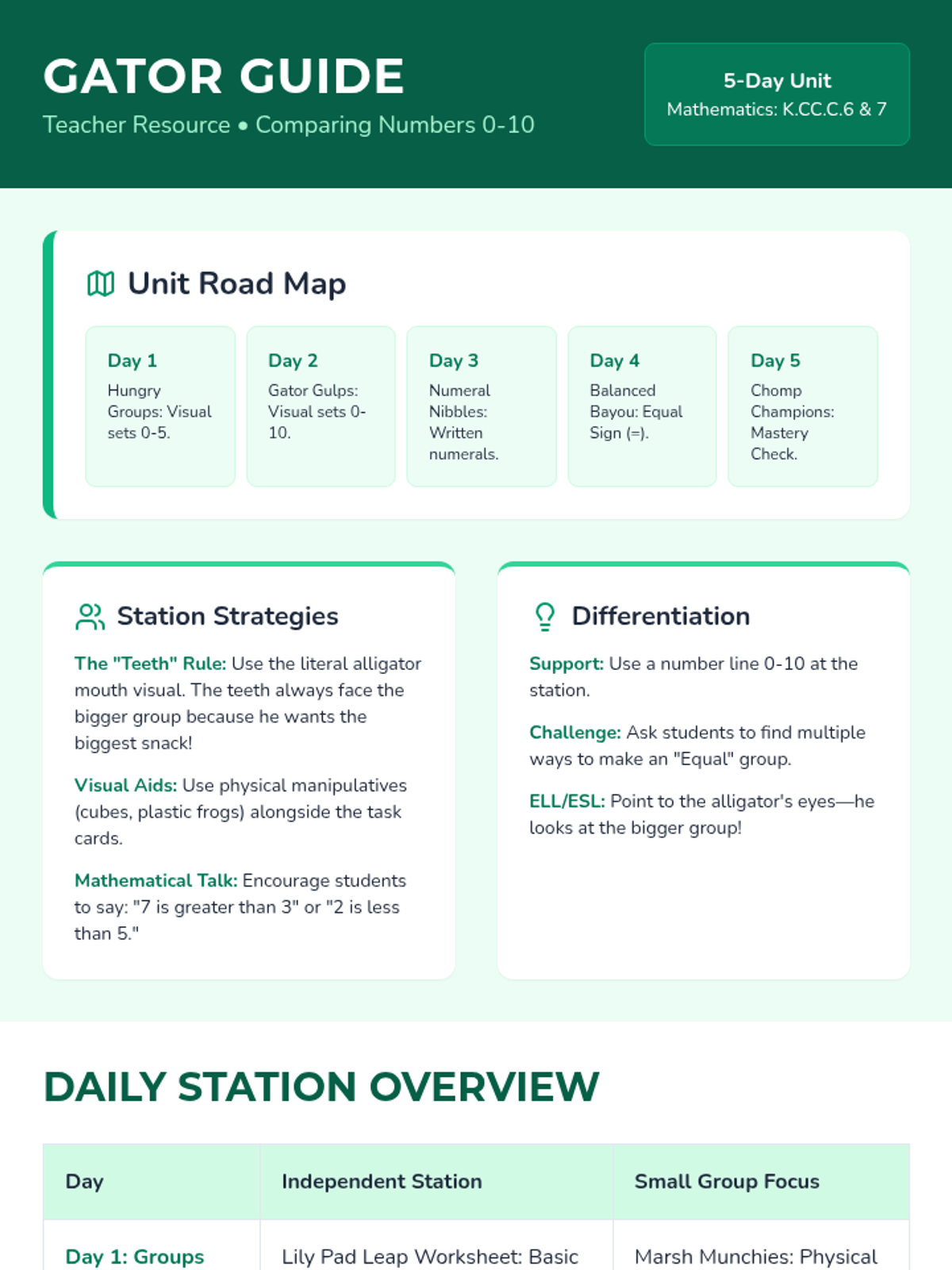
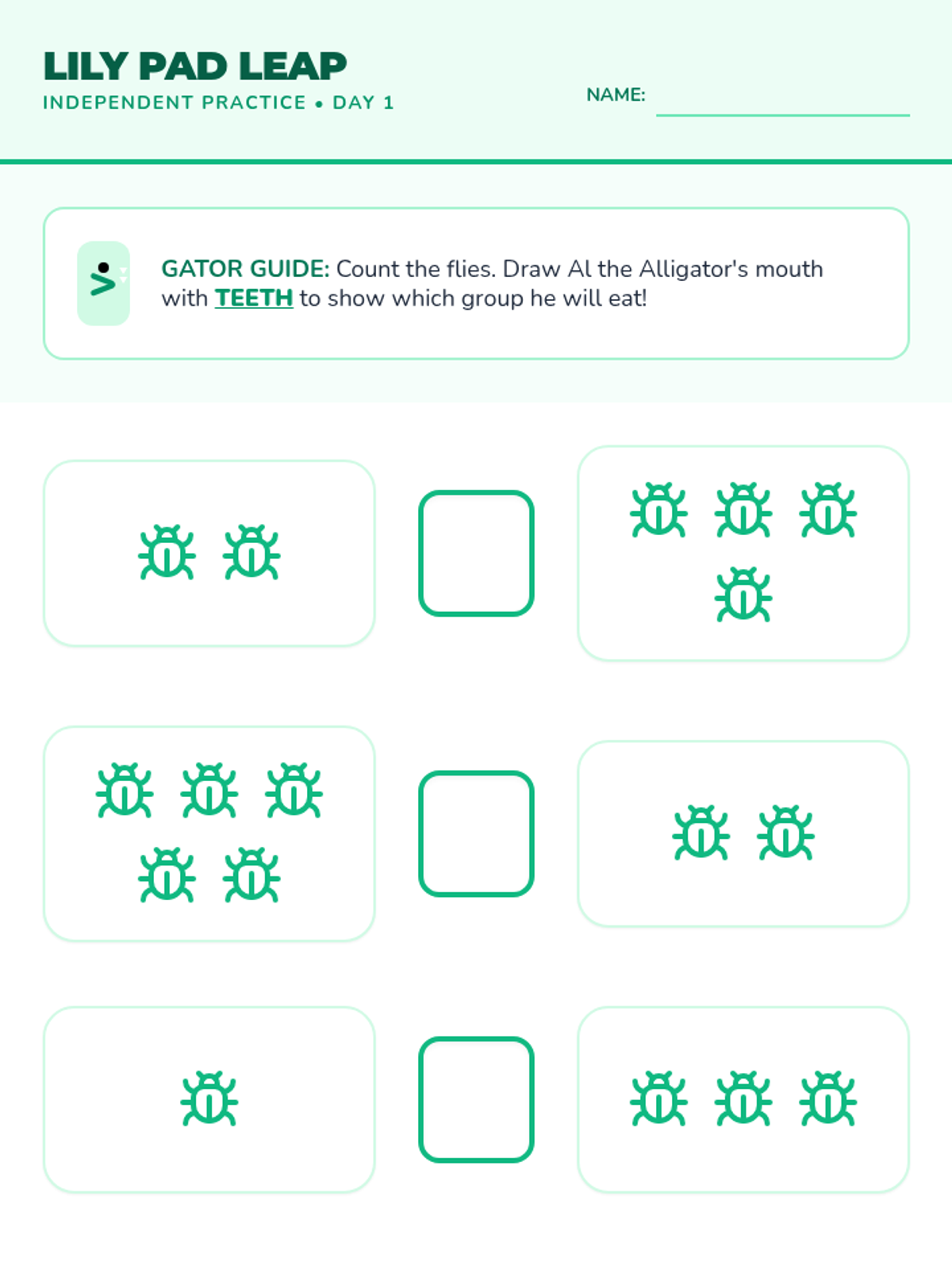
A 5-day introductory unit on comparing quantities and numerals 0-10 using alligator symbols and equal signs. Students explore 'greater than', 'less than', and 'equal to' through hands-on swamp-themed stations and visual practice.
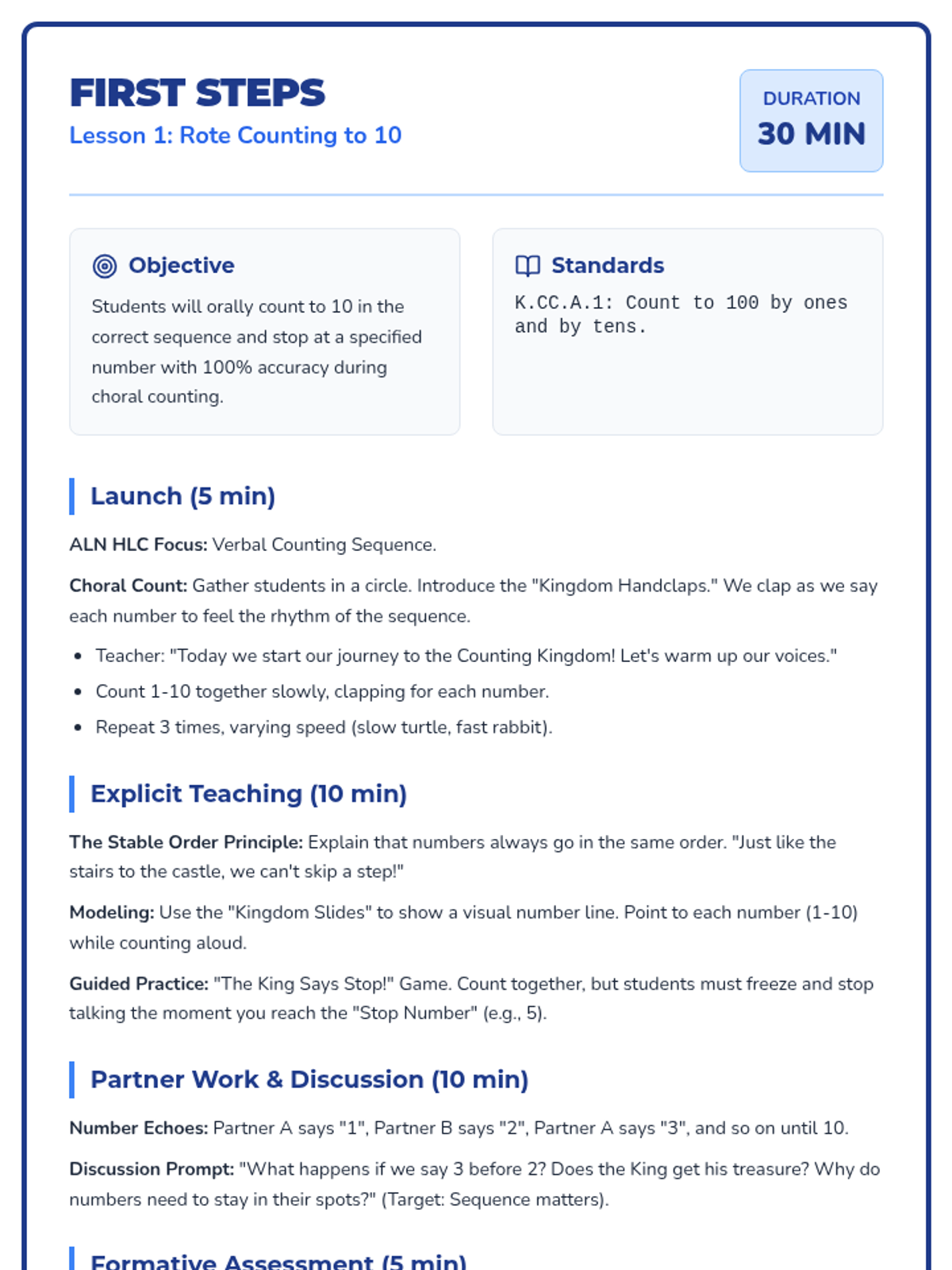
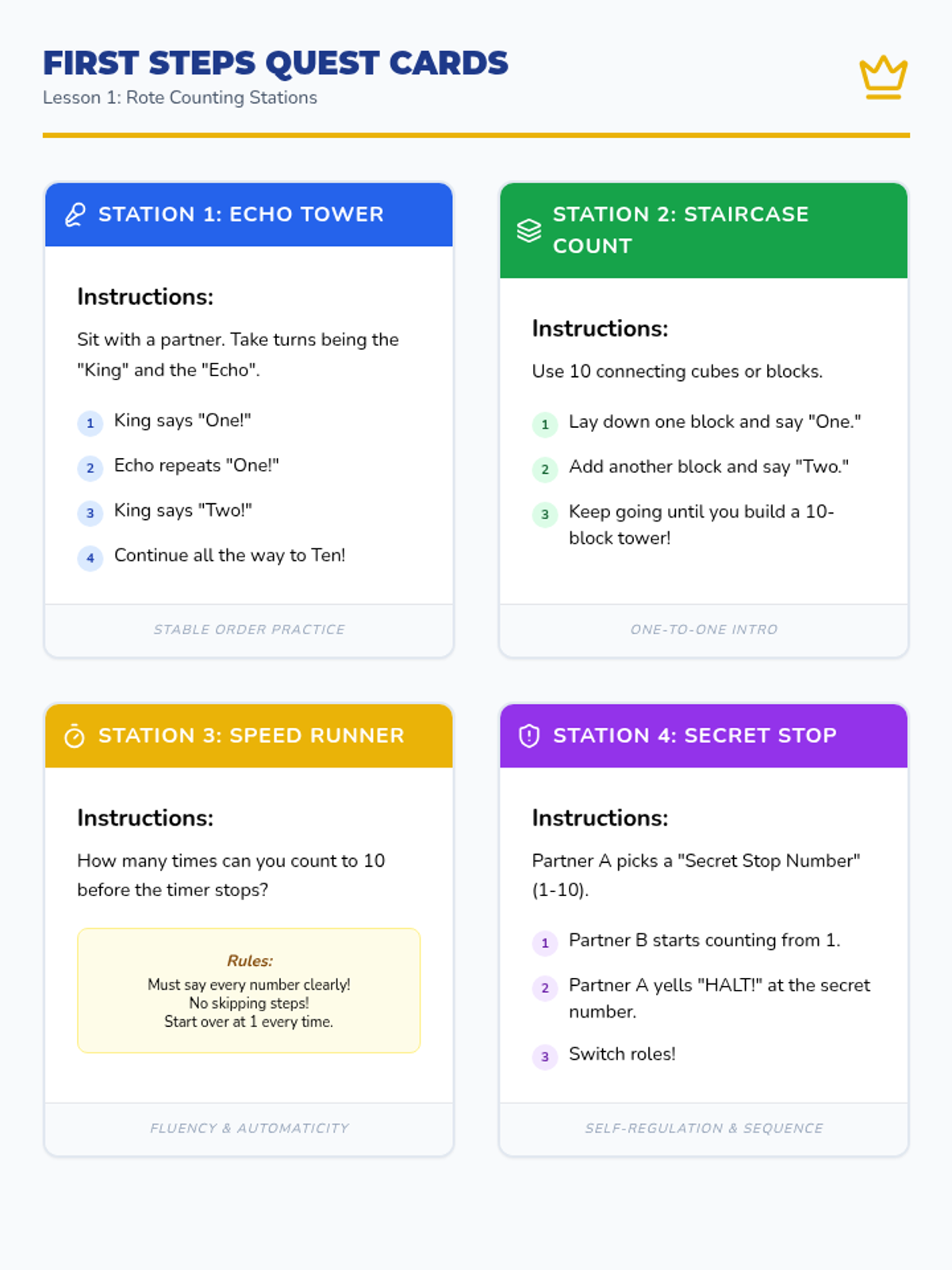
A 12-lesson Tier 2 intervention sequence for Kindergarten focusing on counting, cardinality, and comparison. Based on ALN High Leverage Concepts and IM methods, it uses the 'Counting Kingdom' theme to engage young learners with manipulatives and visual models.
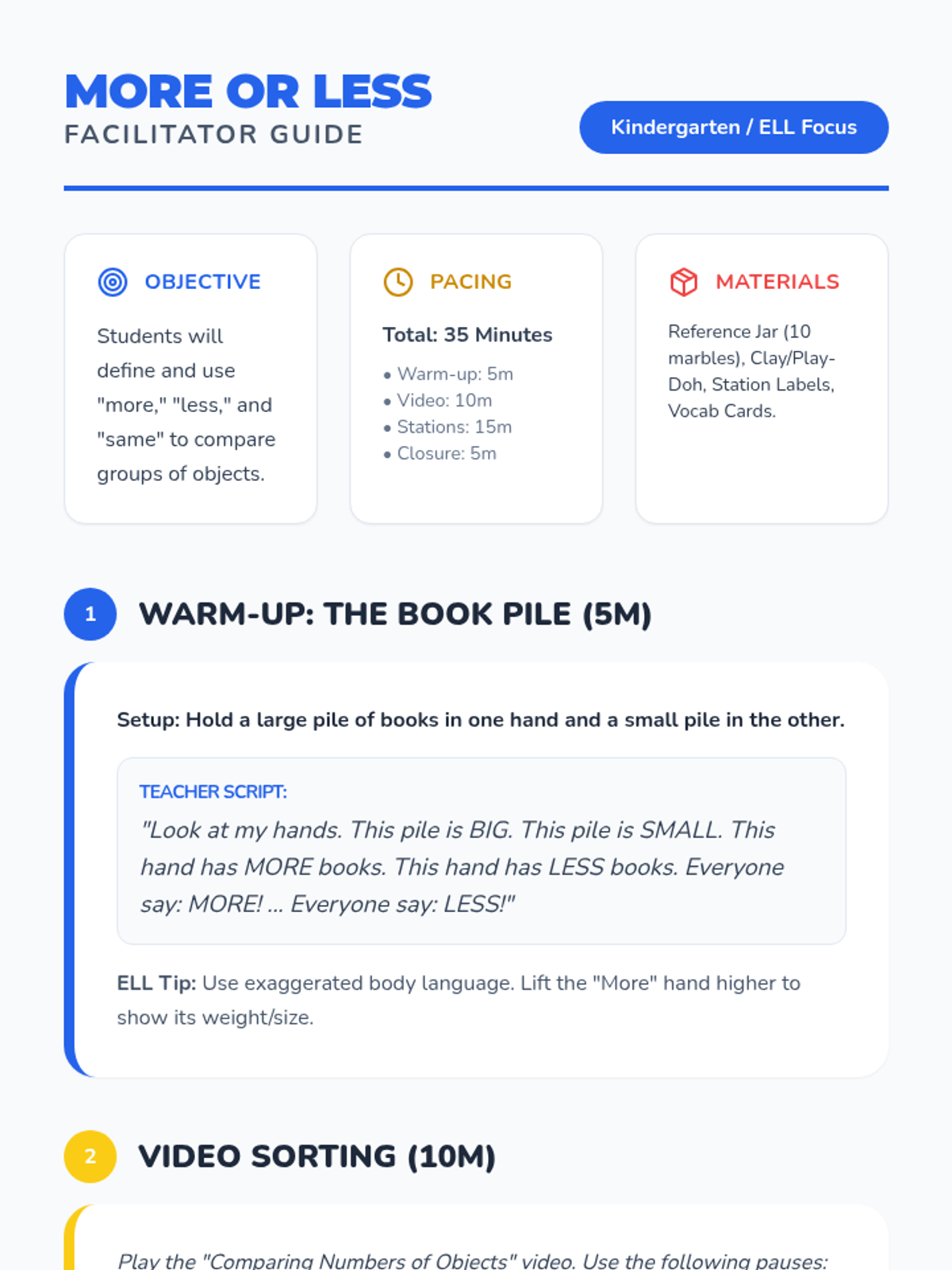
A Kindergarten math sequence for ELL students focused on comparing quantities using the concepts of more, less, and same. Students move from concrete visual comparisons to interactive sorting and hands-on station work.
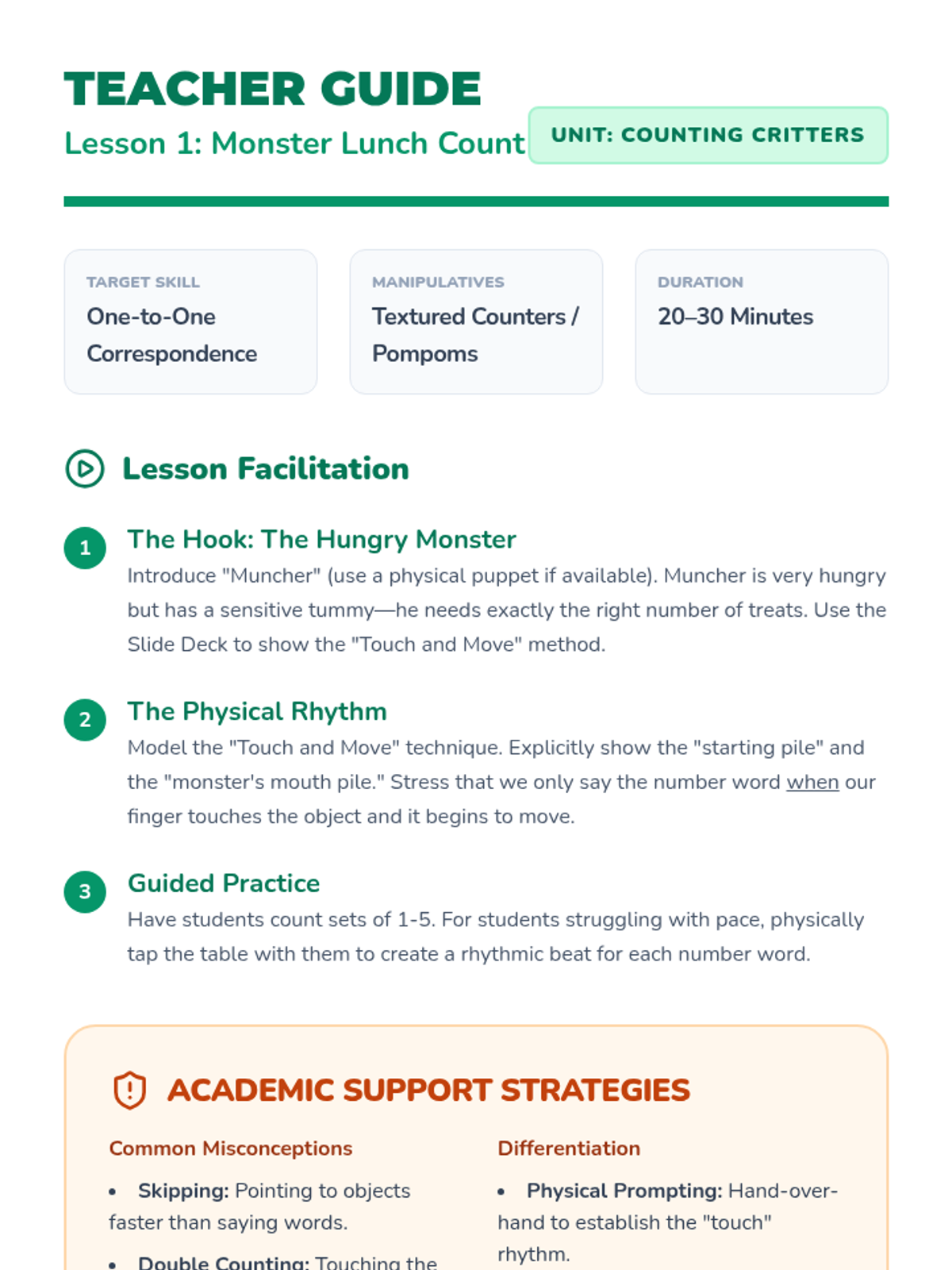
A foundational math sequence for Kindergarten students requiring academic support. This unit uses tactile manipulatives (counters, cubes) to build one-to-one correspondence, cardinality, and number conservation through high-engagement 'Counting Critter' activities.
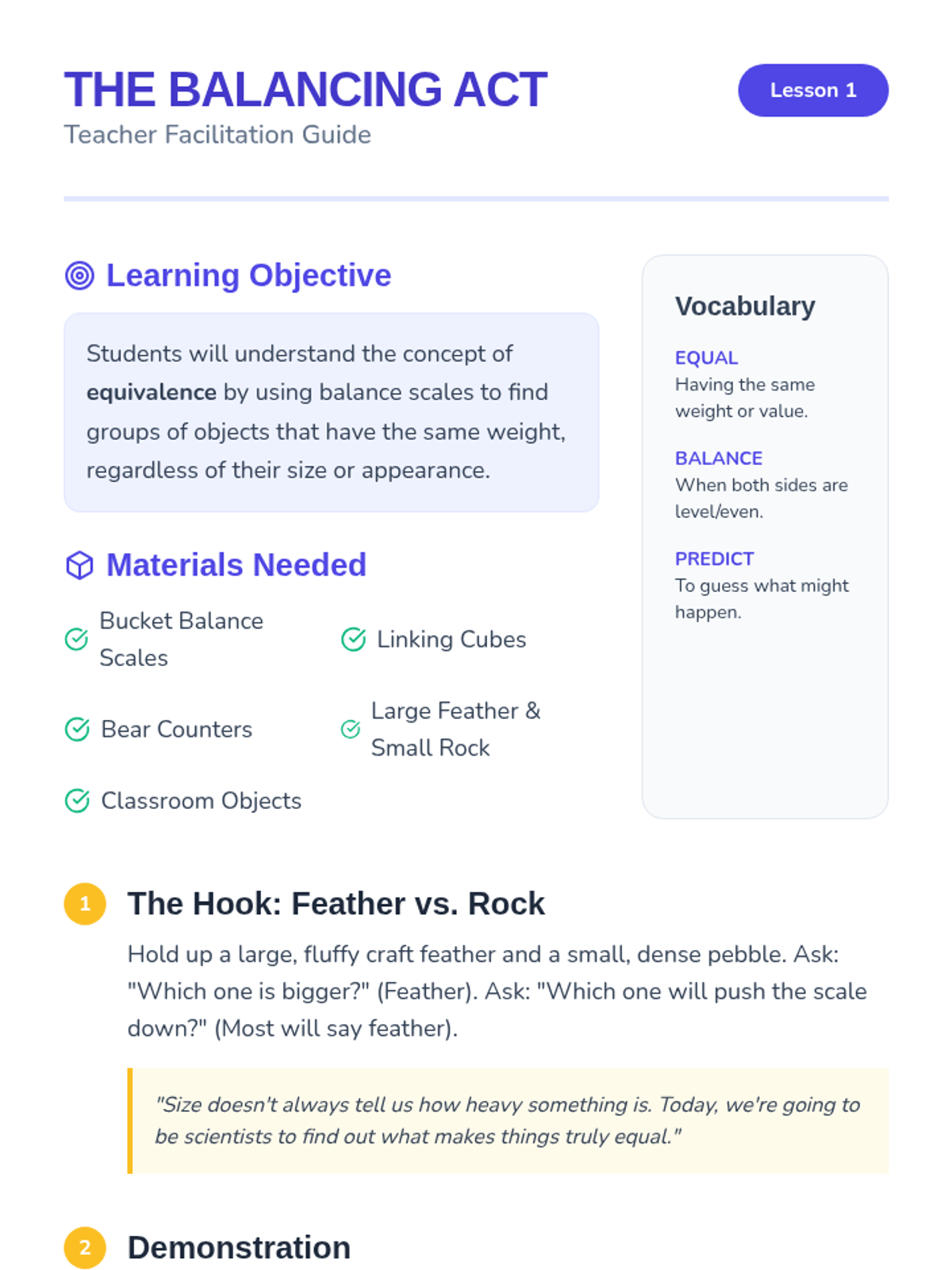
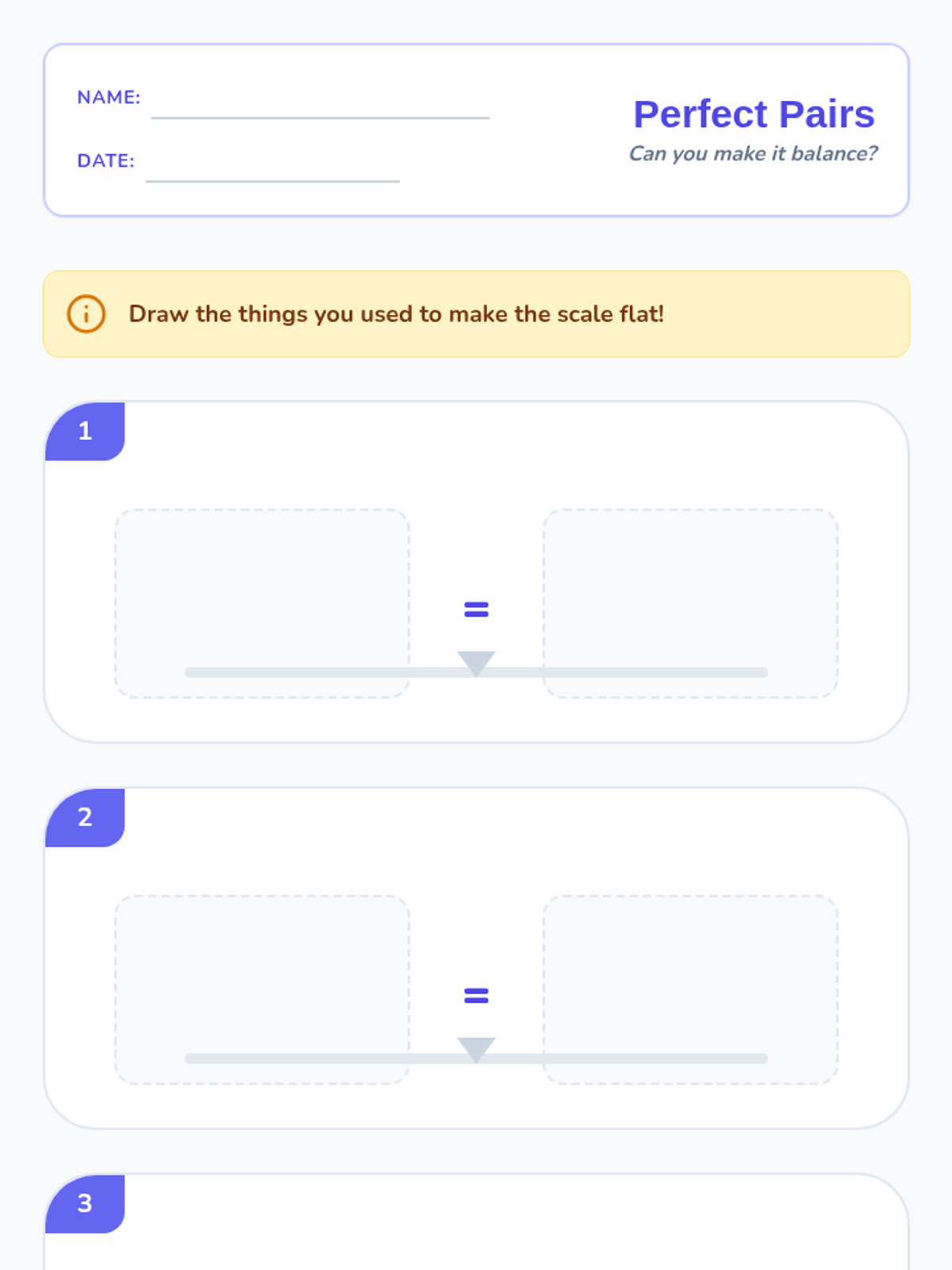
A Kindergarten math sequence exploring equivalence and proportional reasoning through hands-on activities, balance scales, and a classroom market simulation. Students learn to compare quantities, understand many-to-one ratios, and practice substitution.