Develops proficiency in estimating and measuring length, area, volume, and mass using standard units and unit conversions. Integrates time, money, angle measurement, and data classification through counting and arithmetic applications.
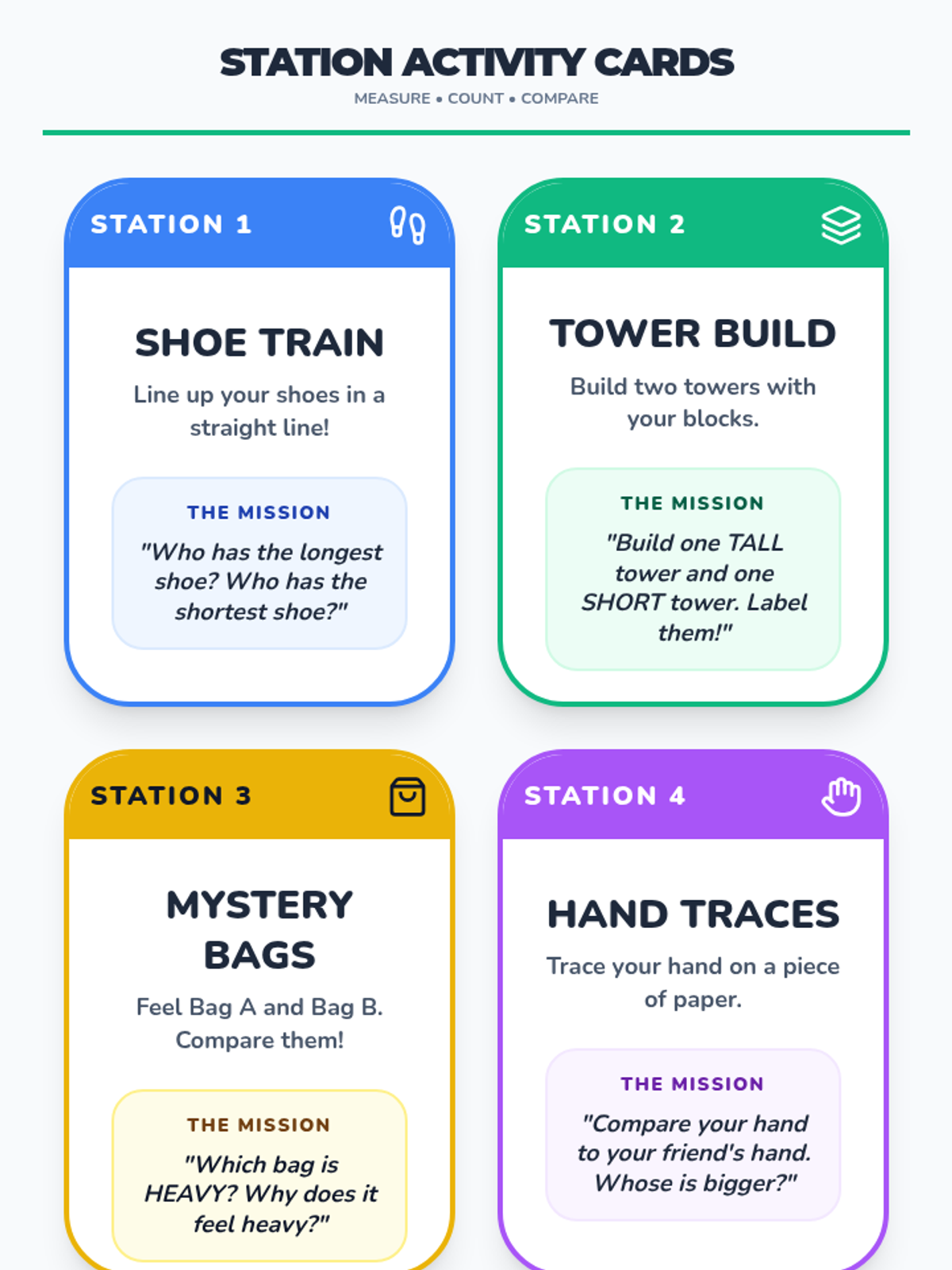
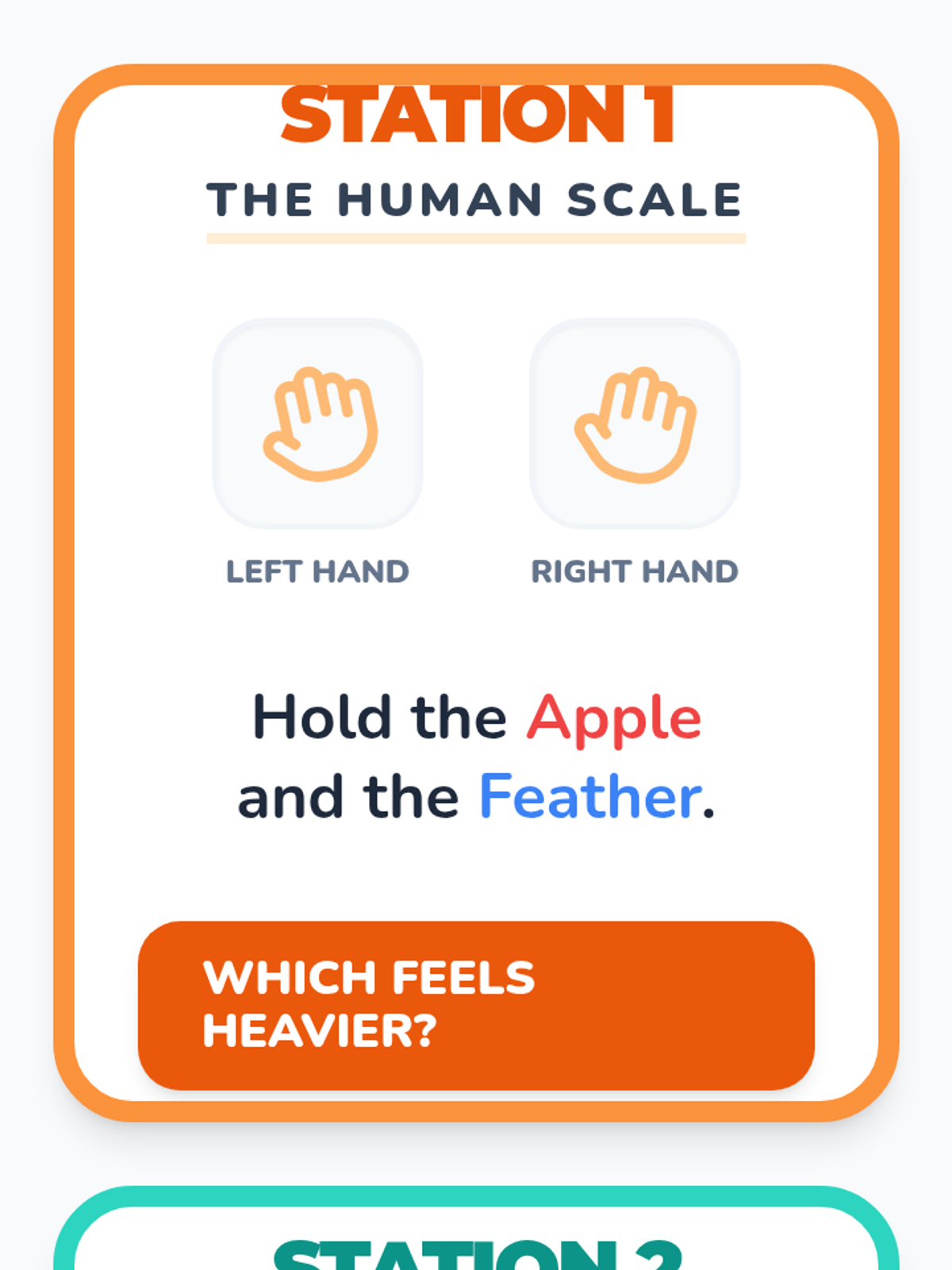
A hands-on kindergarten unit exploring length, height, non-standard units, and weight through interactive stations and play-based learning.
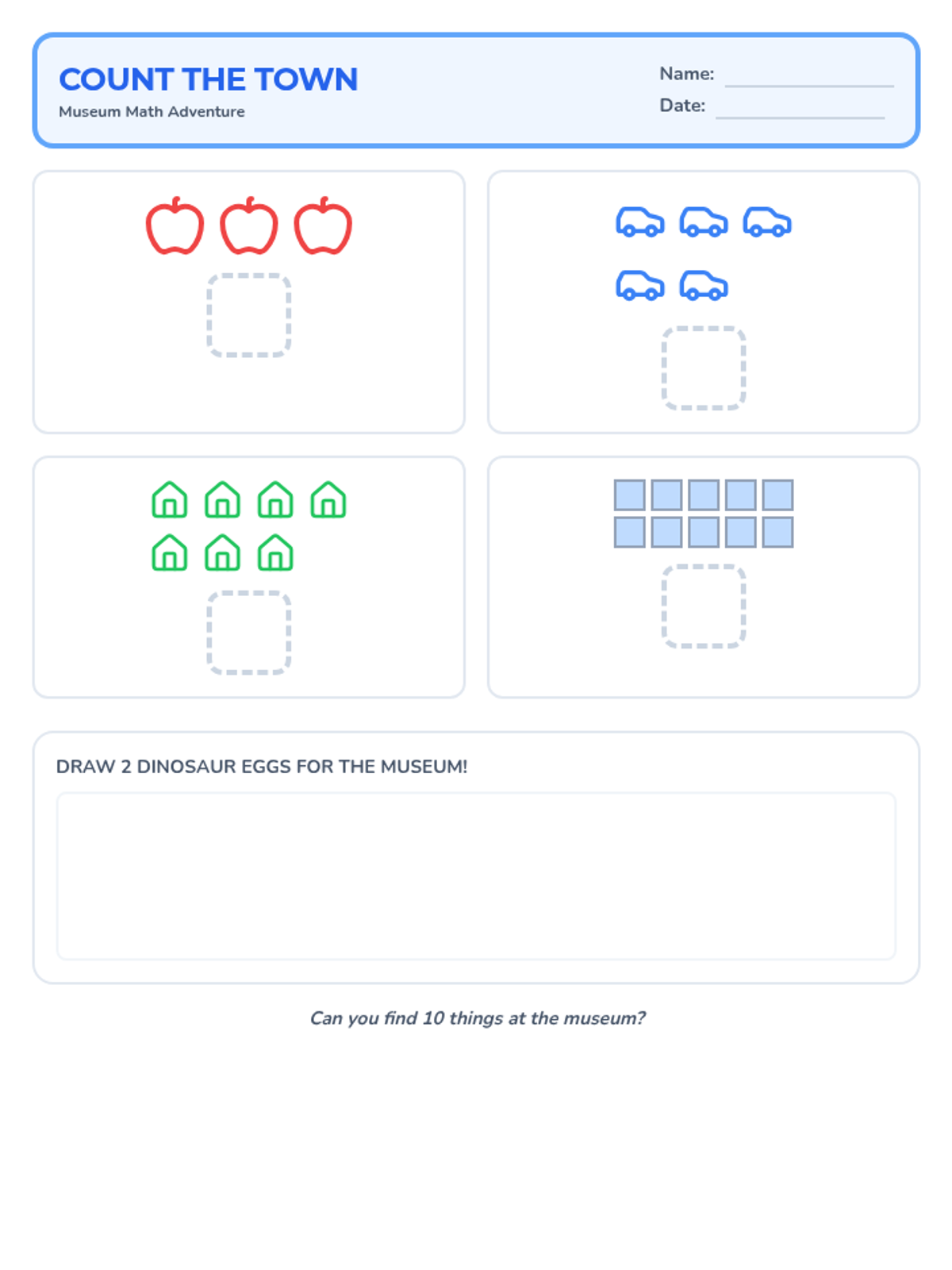
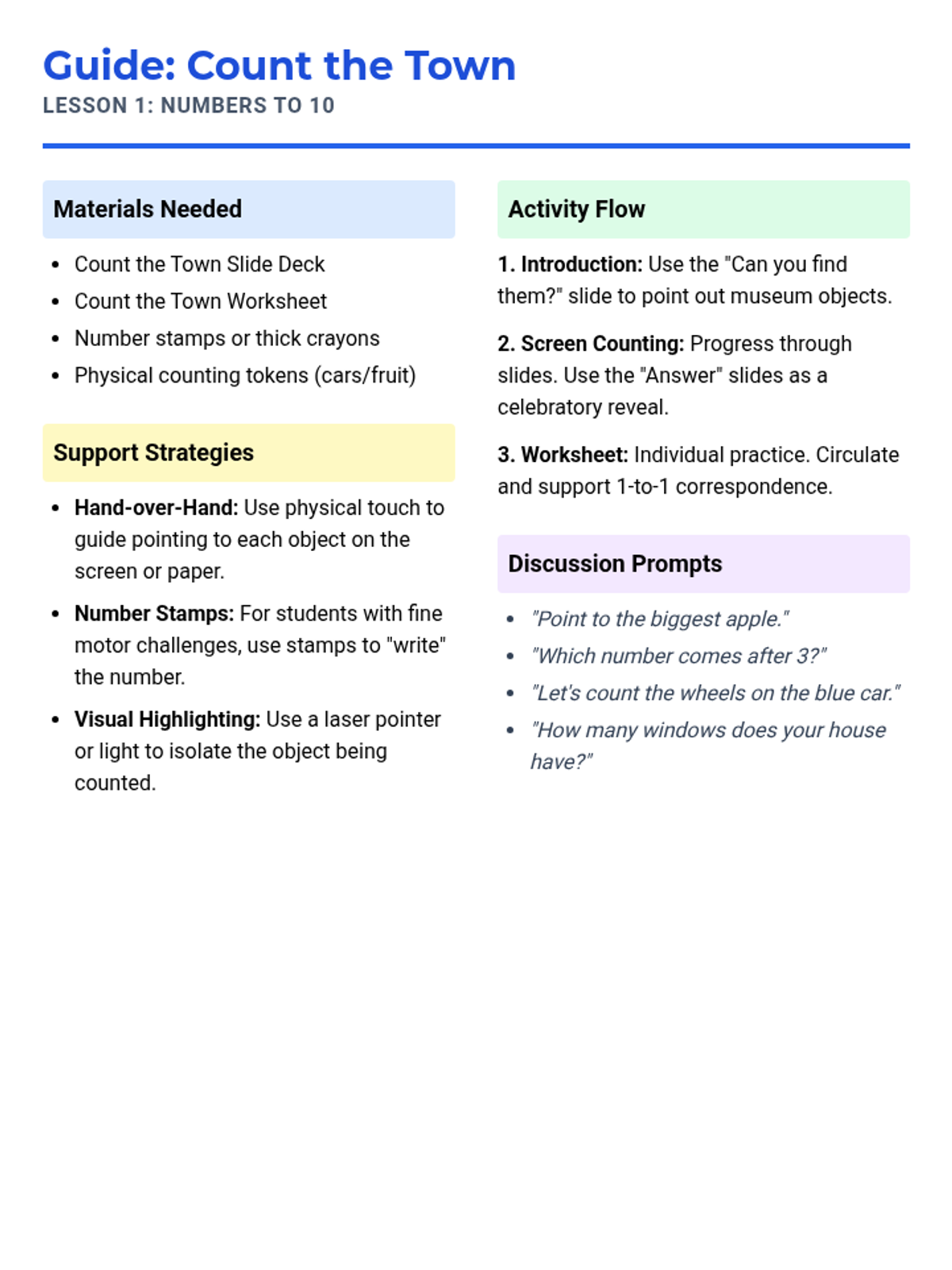
A series of interactive math lessons themed around a trip to Play Street Museum, specifically designed for preschool students with special needs to practice numbers, addition, and size comparison through imaginative play contexts.
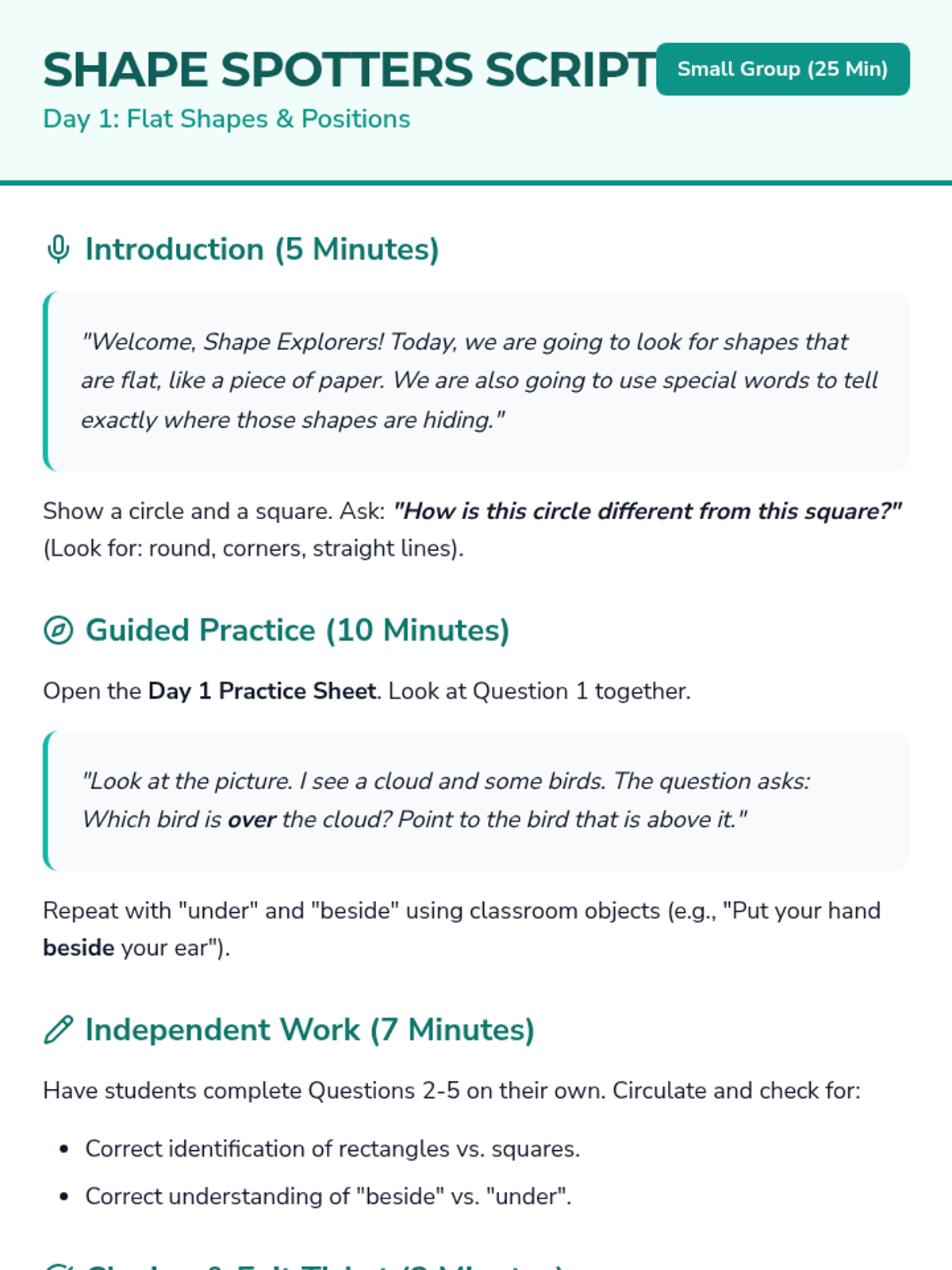
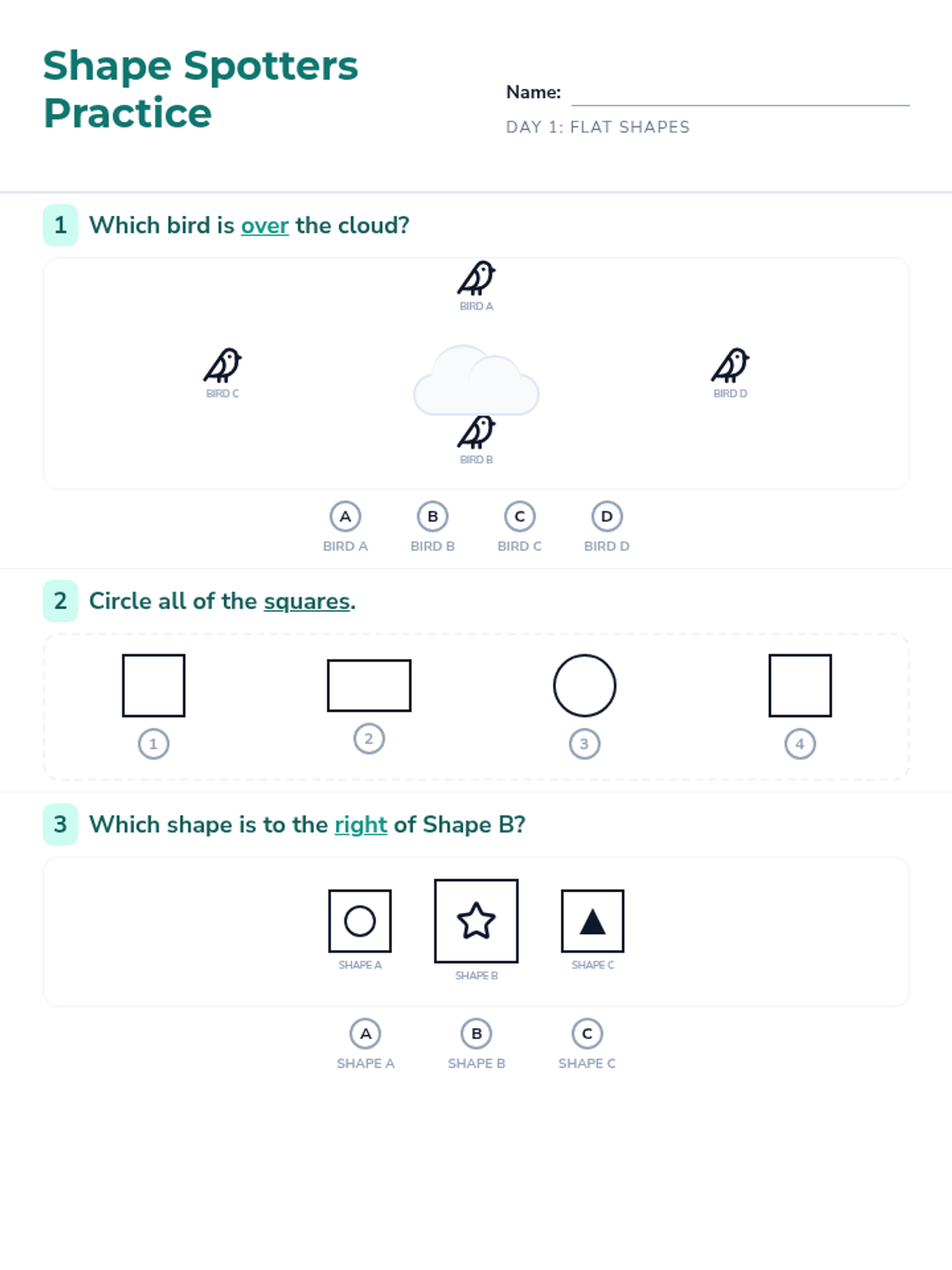
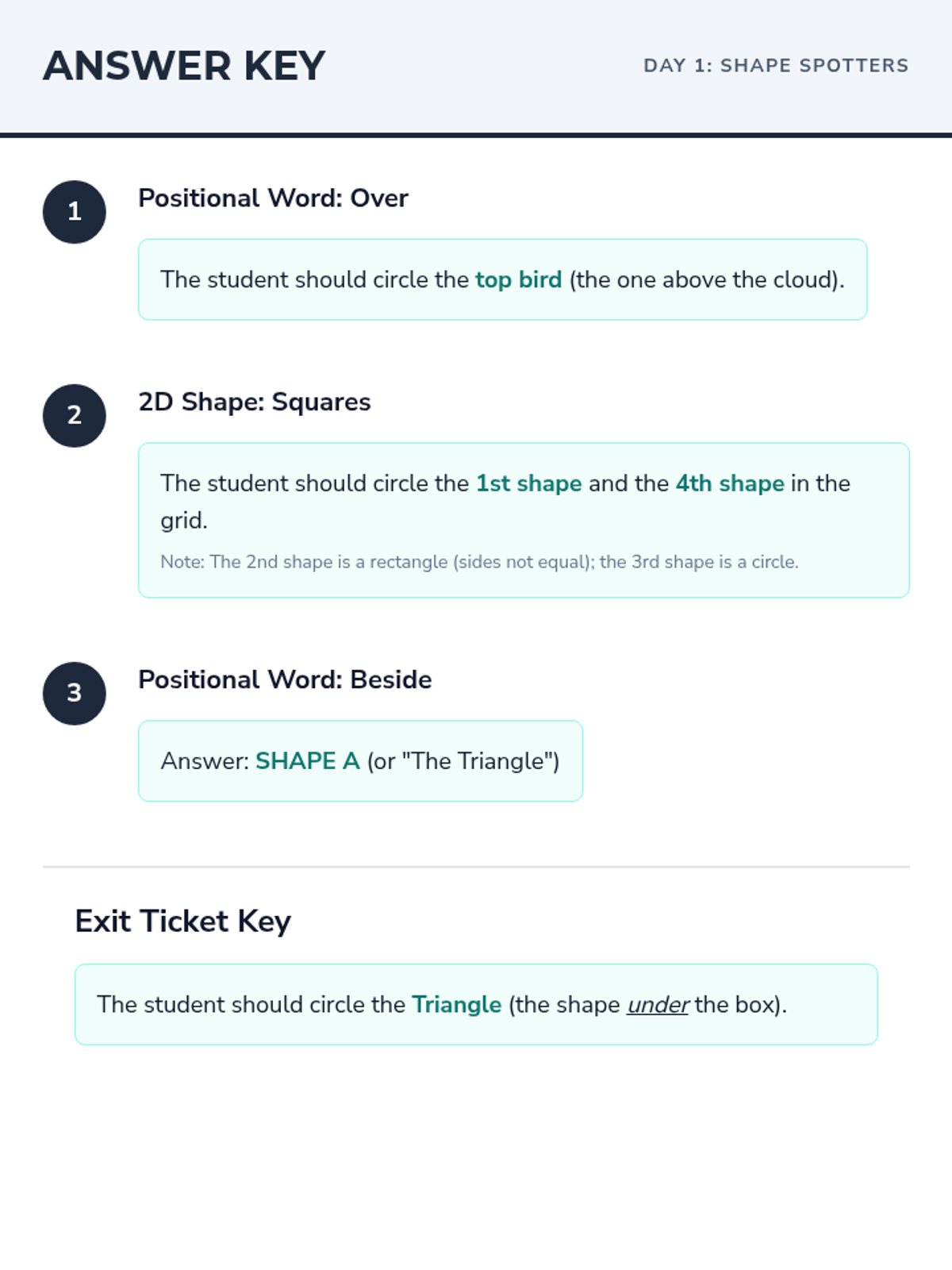
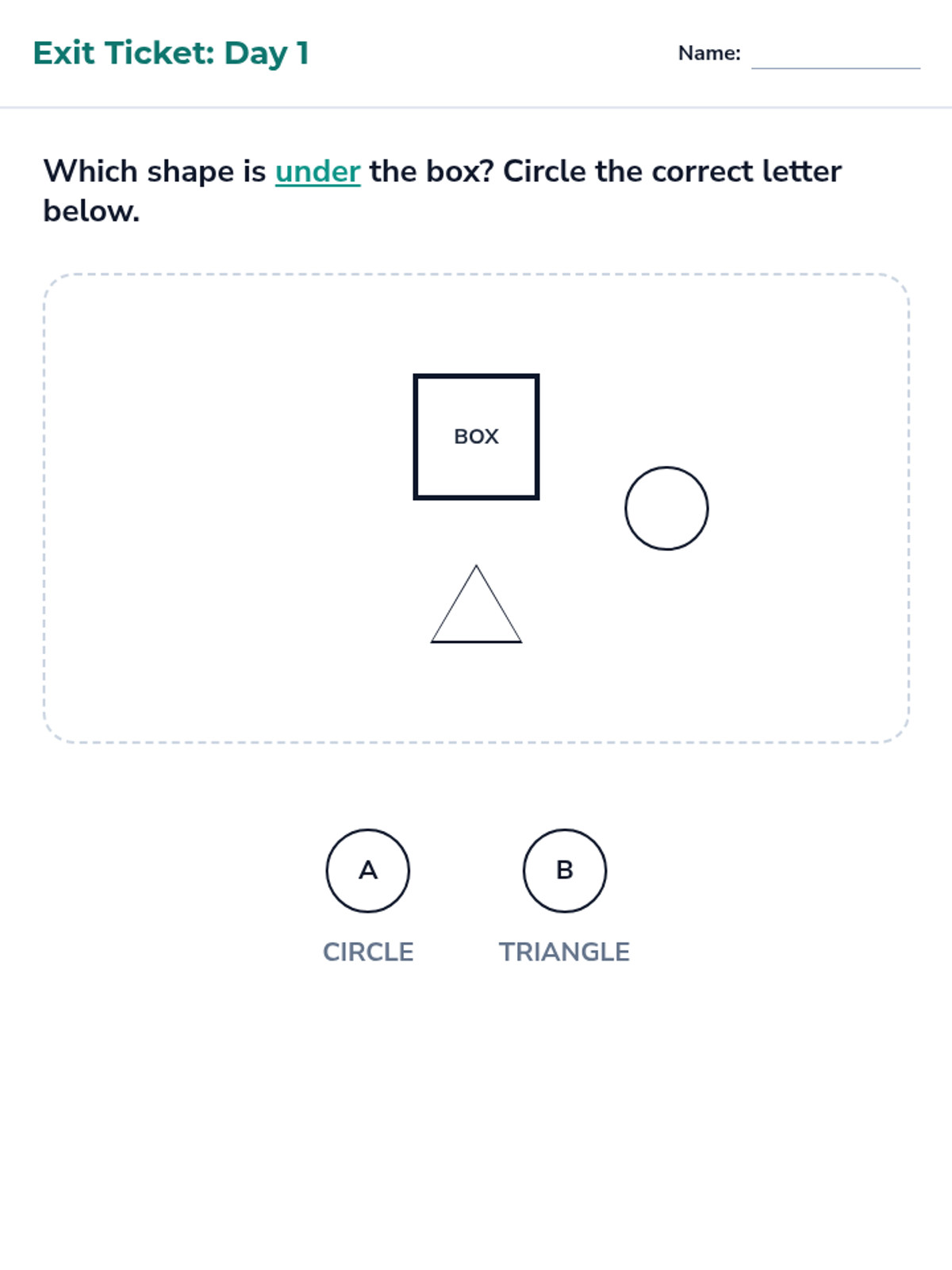
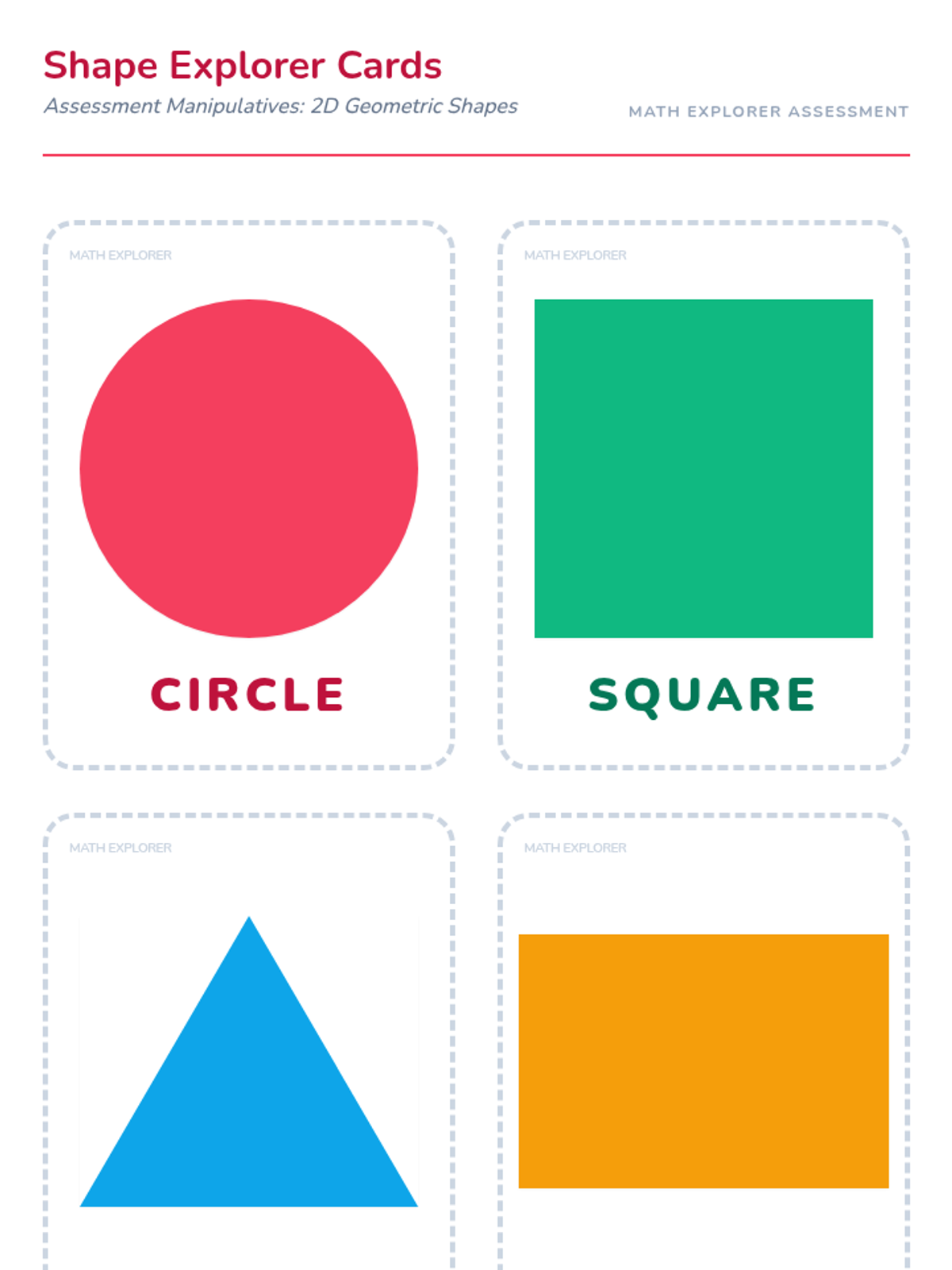
A 3-day small group intervention sequence focused on NWEA RIT 120-130 geometry and measurement standards, including 2D/3D shapes, positional words, and size comparisons.
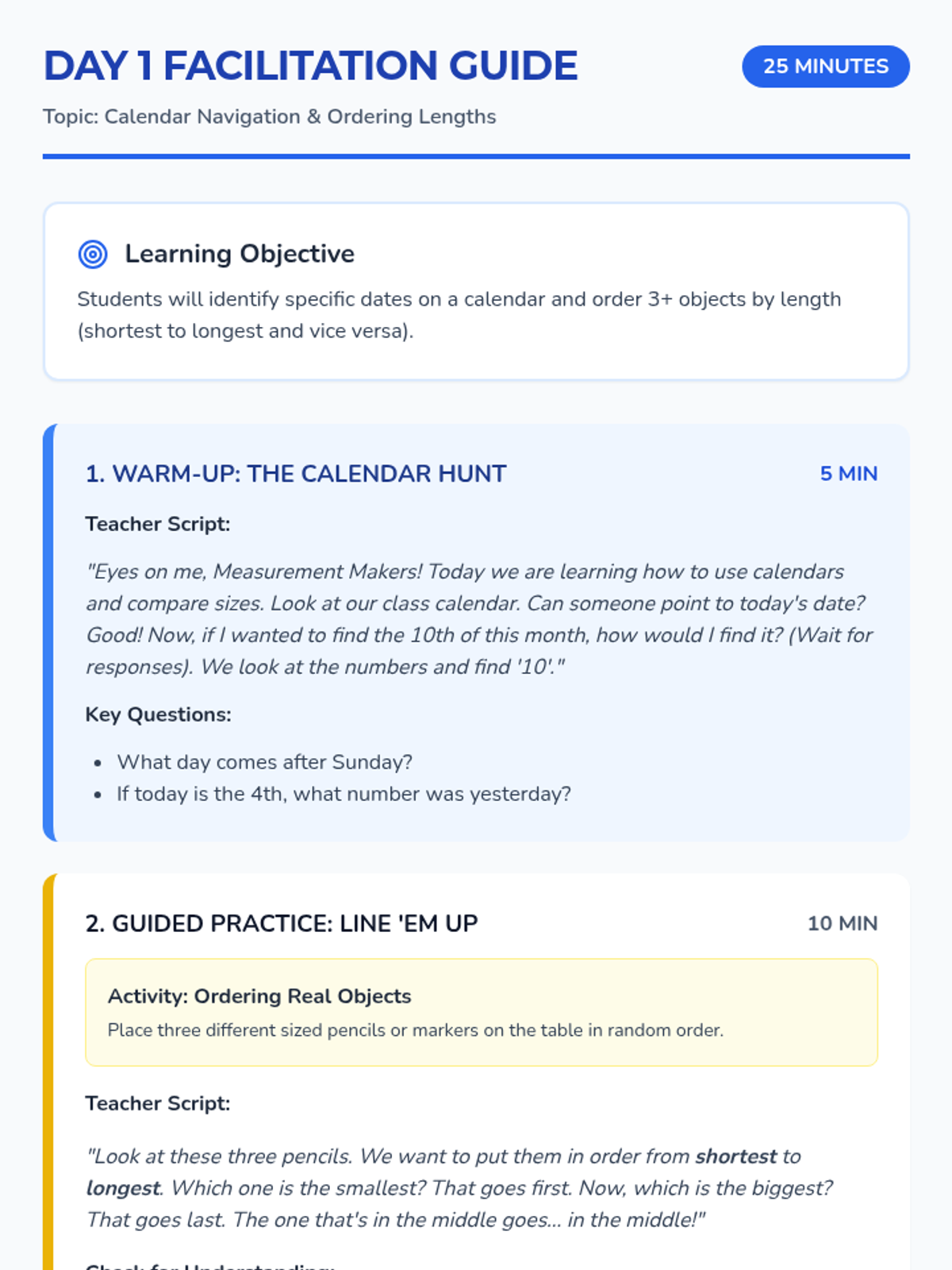
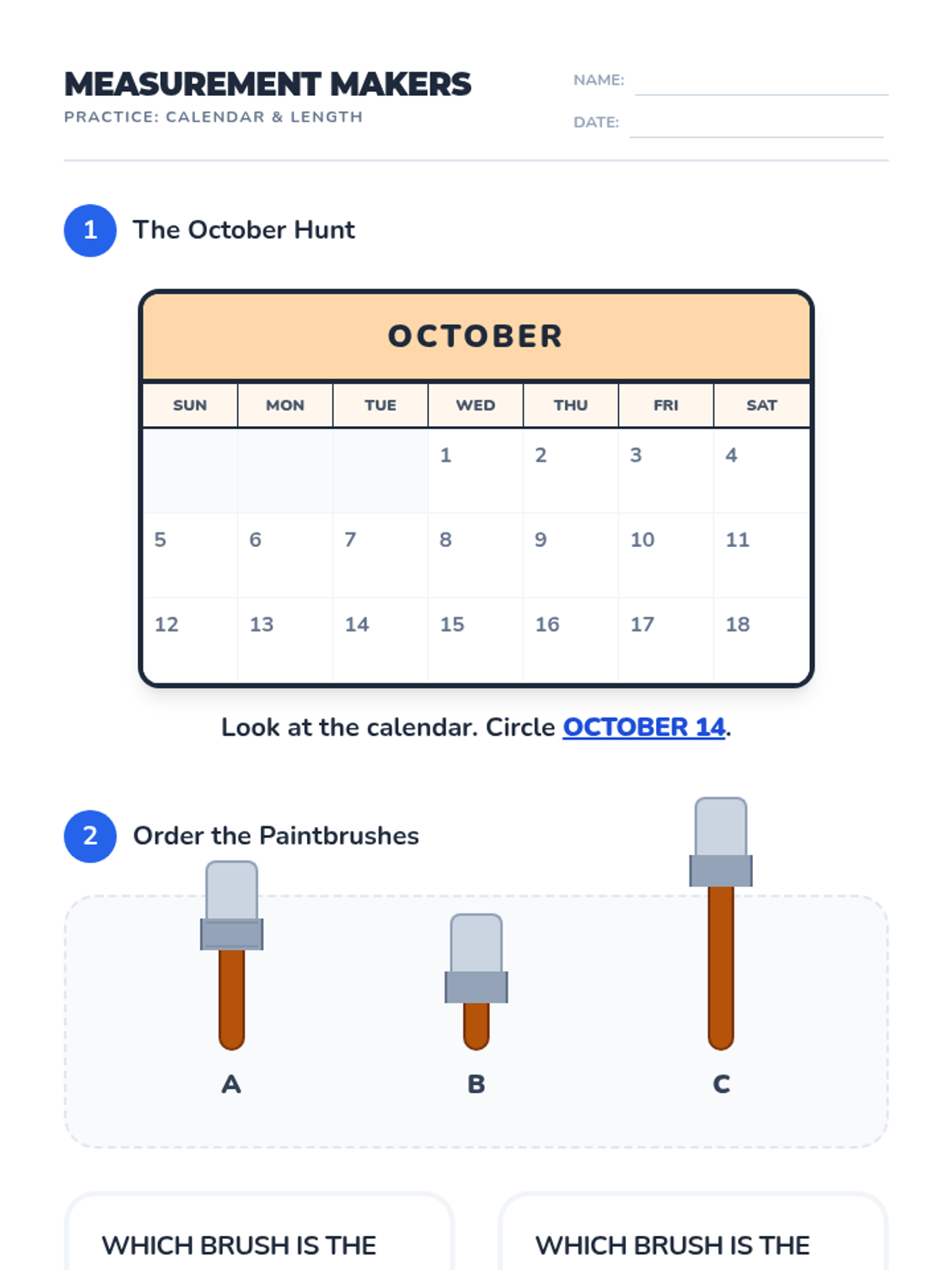
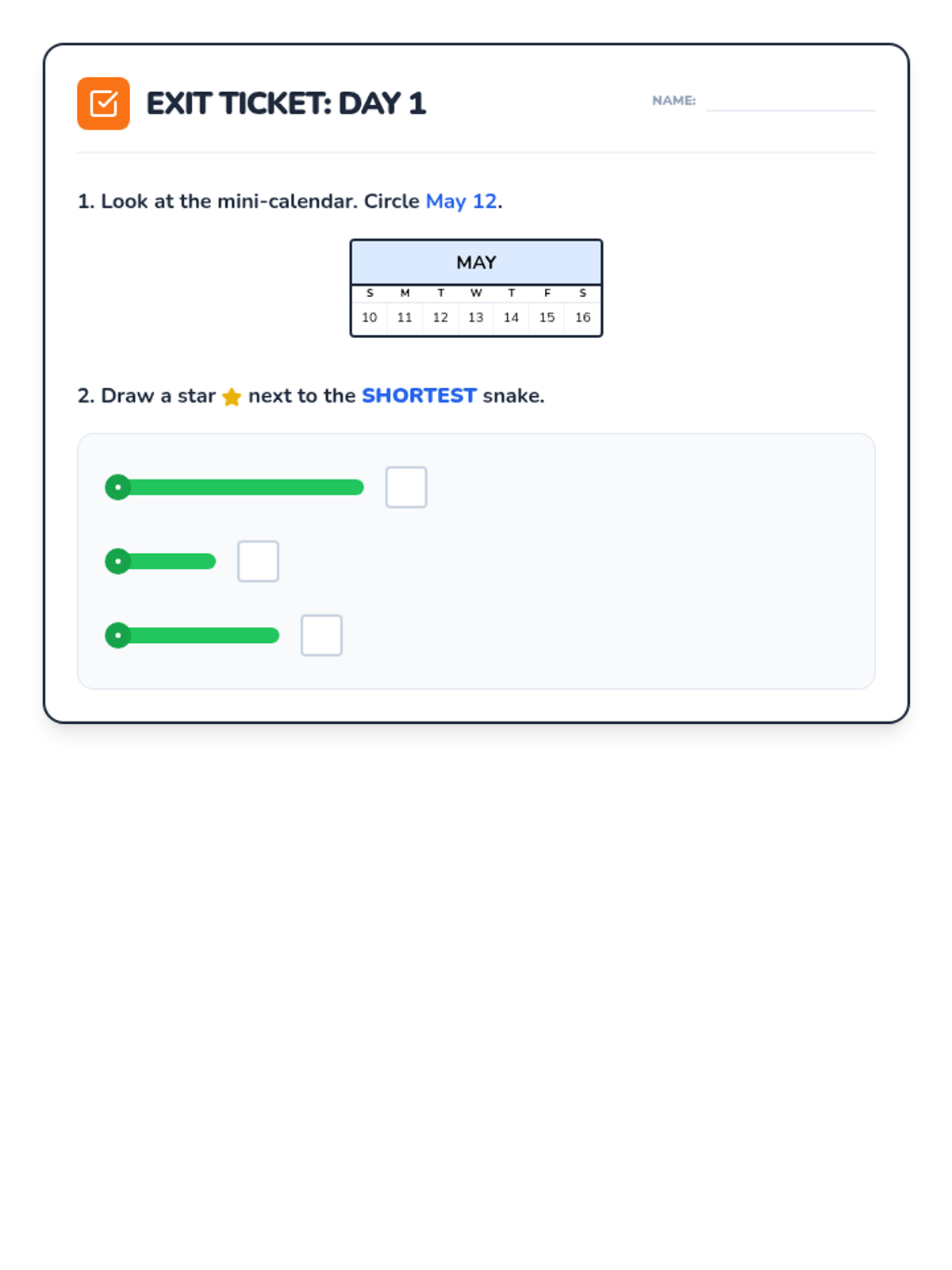
A 3-day small group math sequence designed to move students from NWEA RIT 140-150 to 150-160 in Geometry and Measurement. Focuses on calendar skills, time, length ordering, and 2D/3D shape identification.
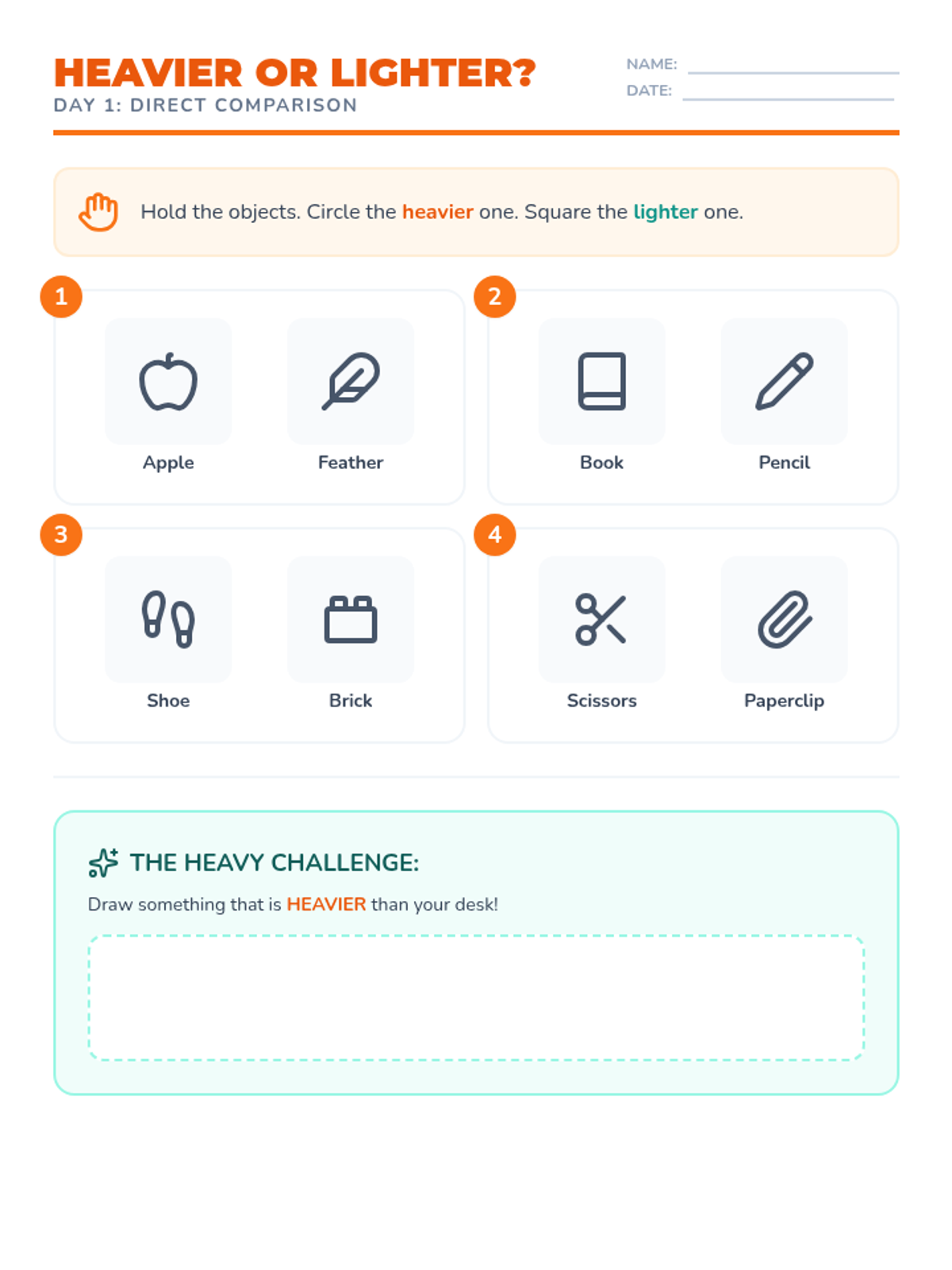
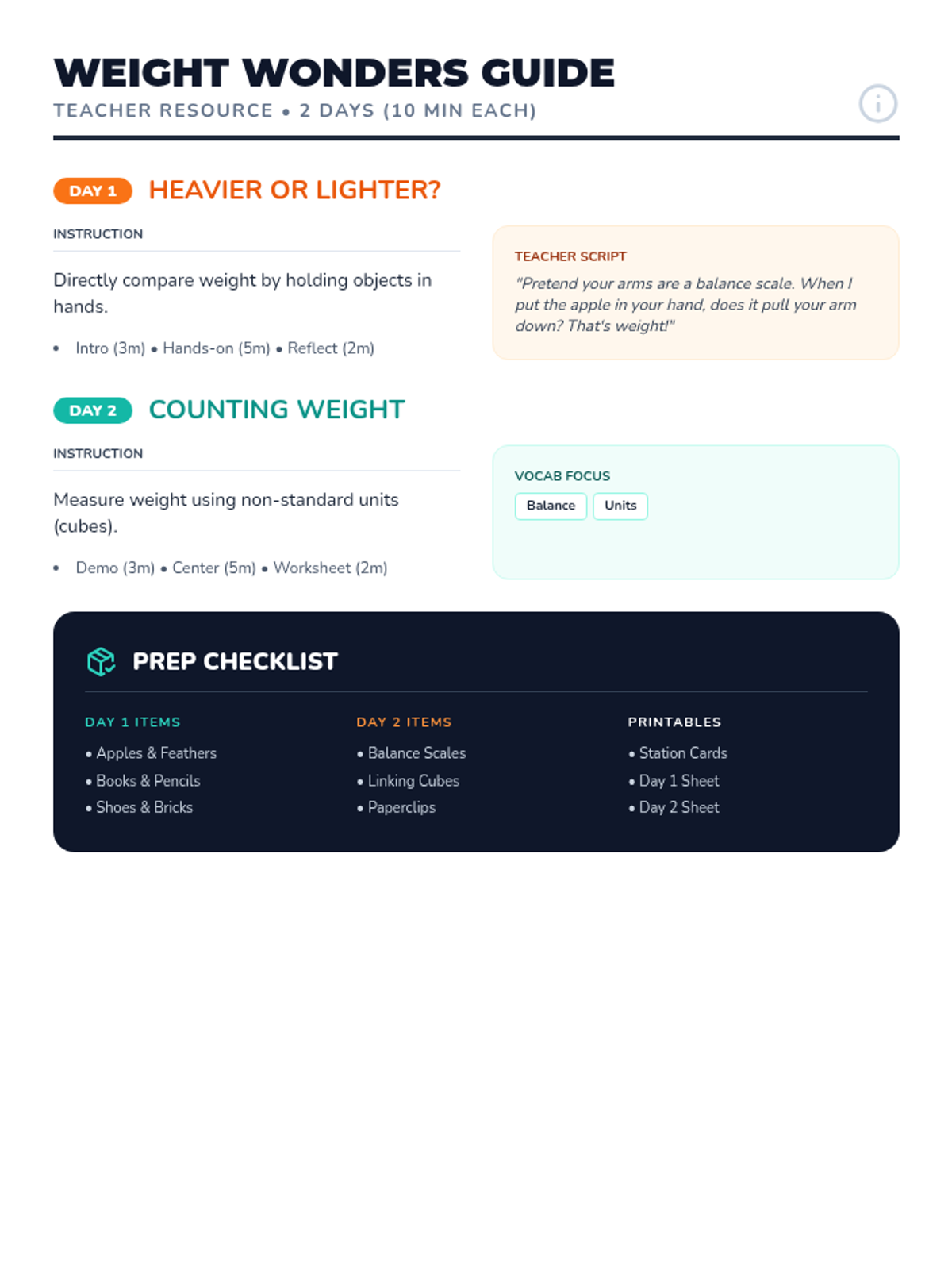
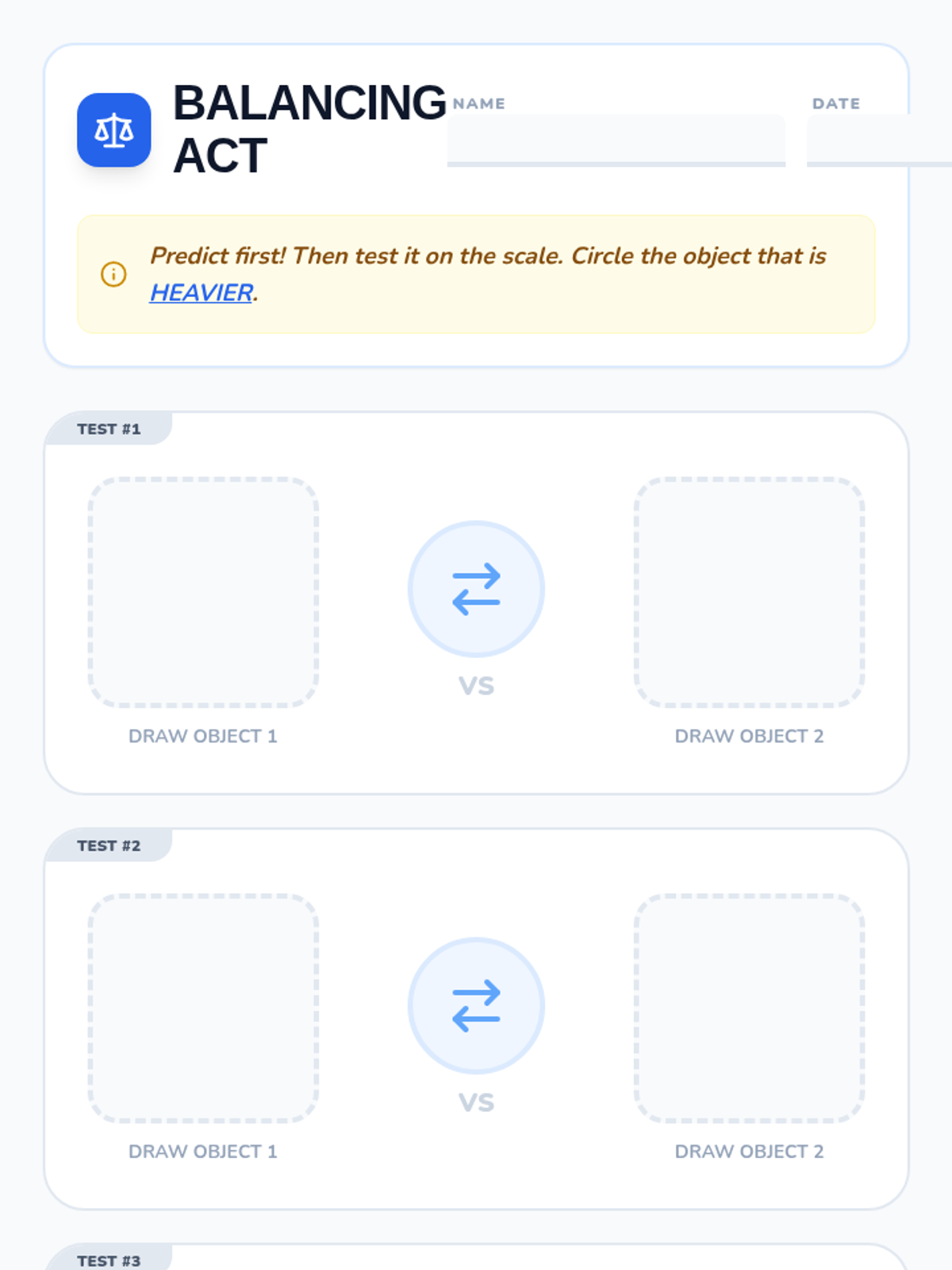
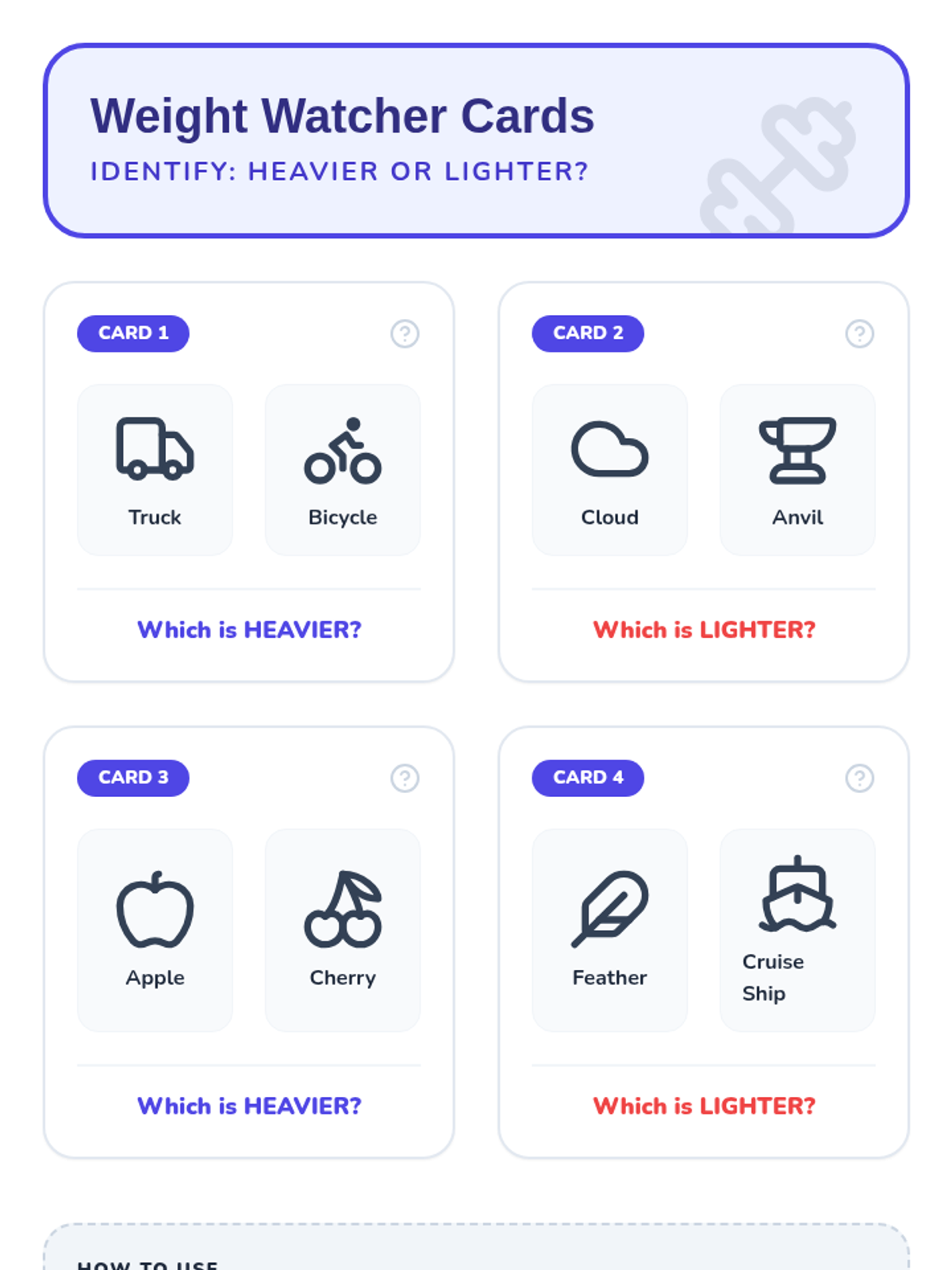
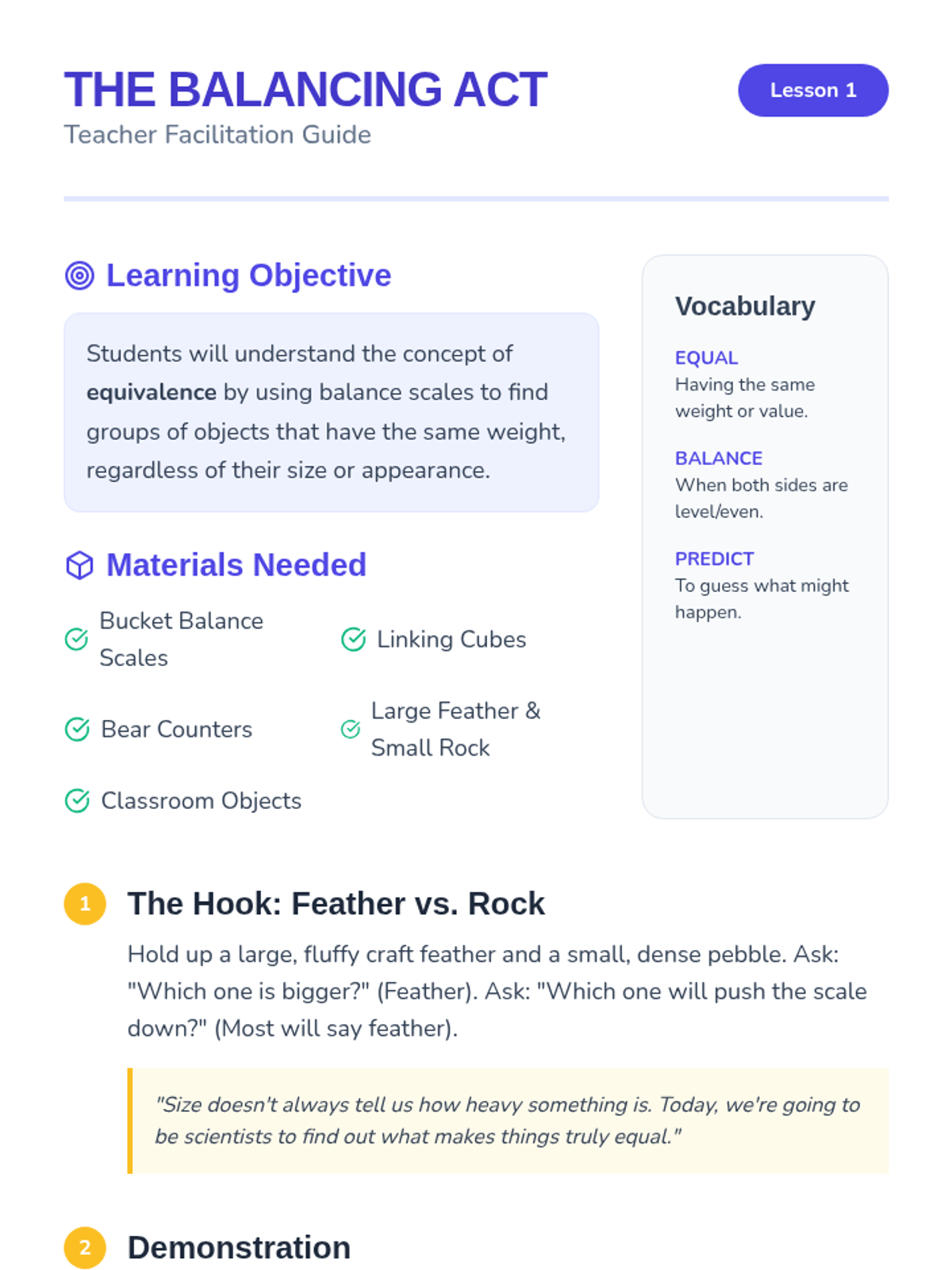
A two-day introductory sequence on weight comparison using direct comparison and non-standard units for young learners.
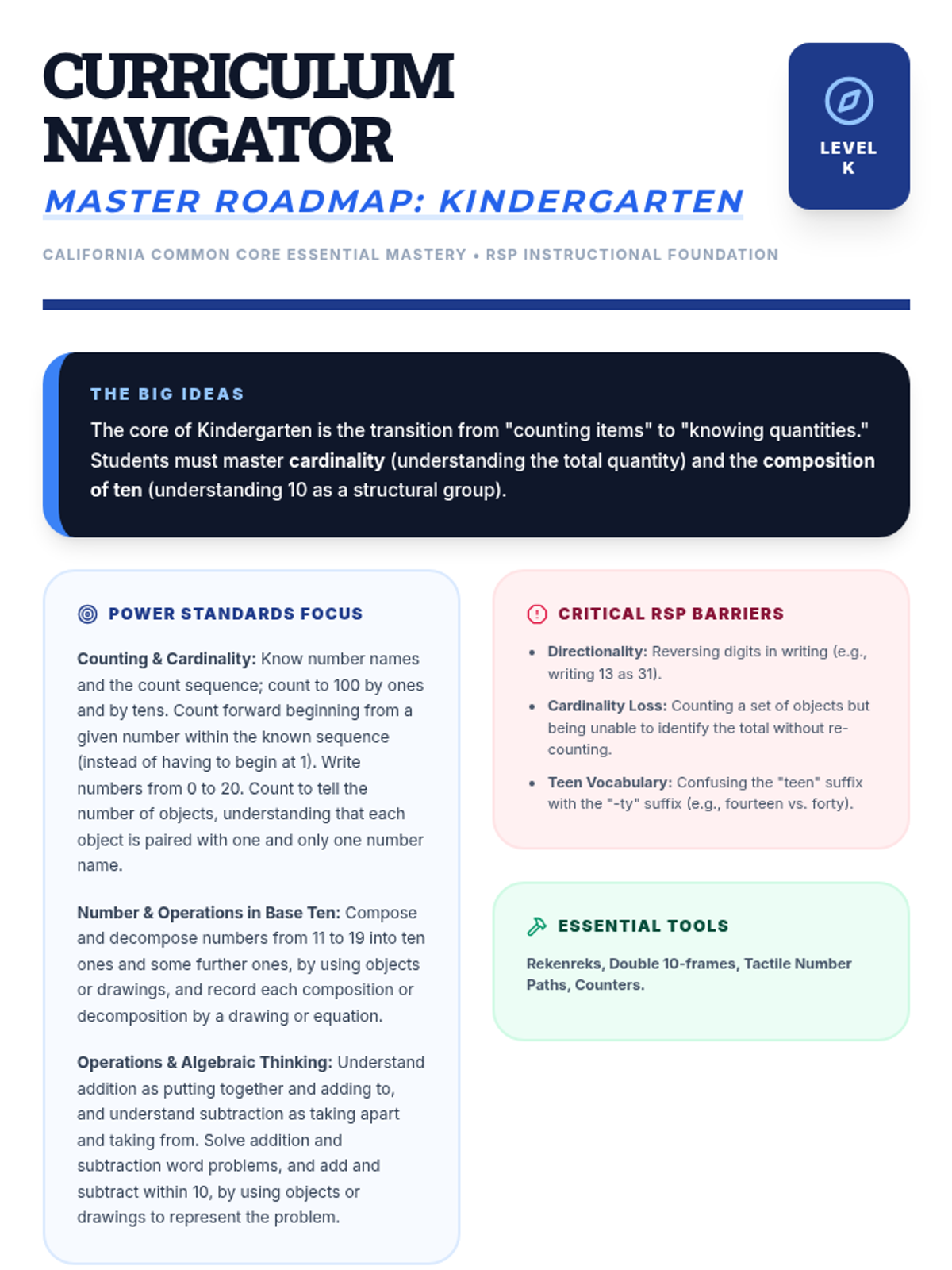
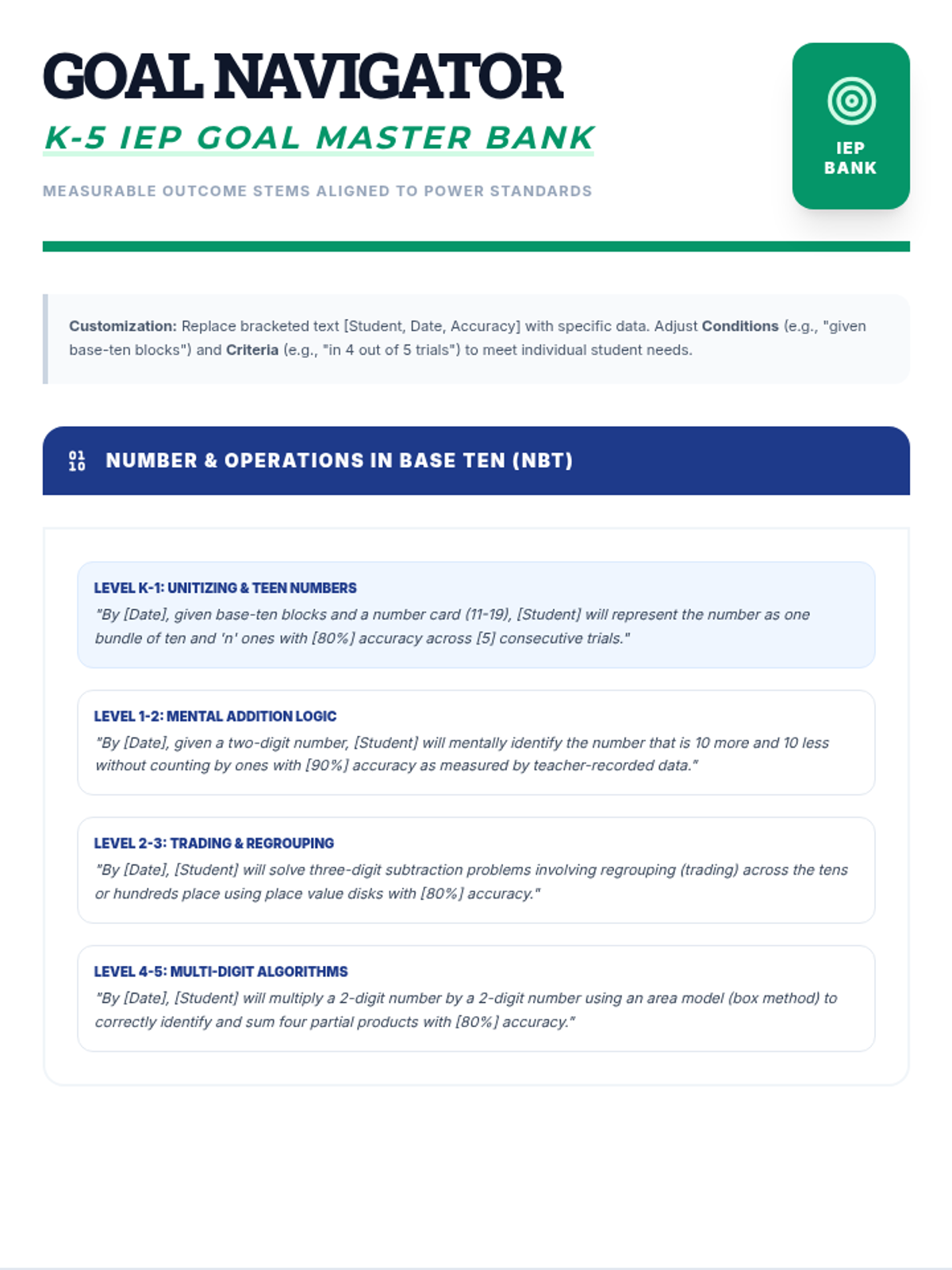
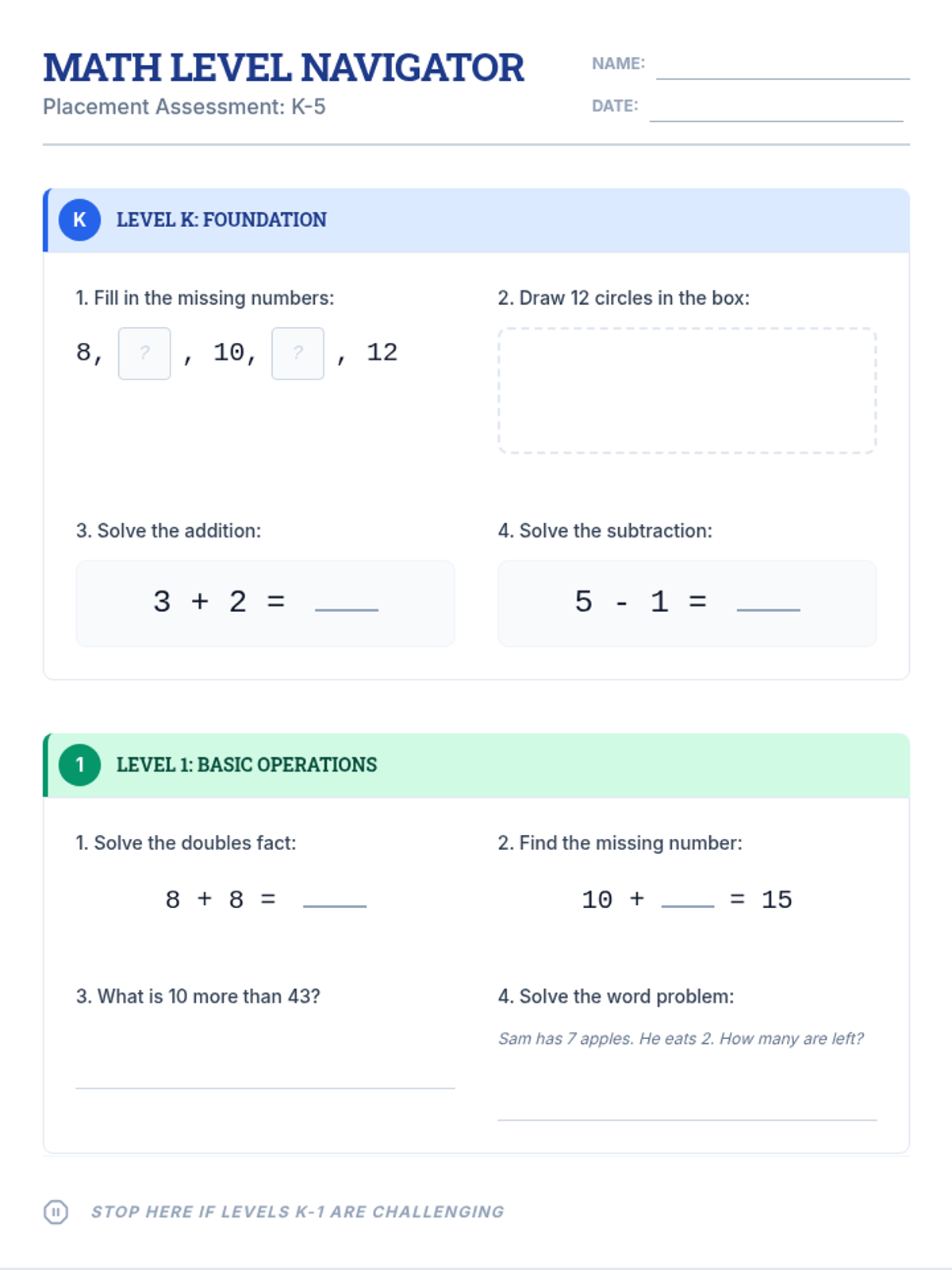
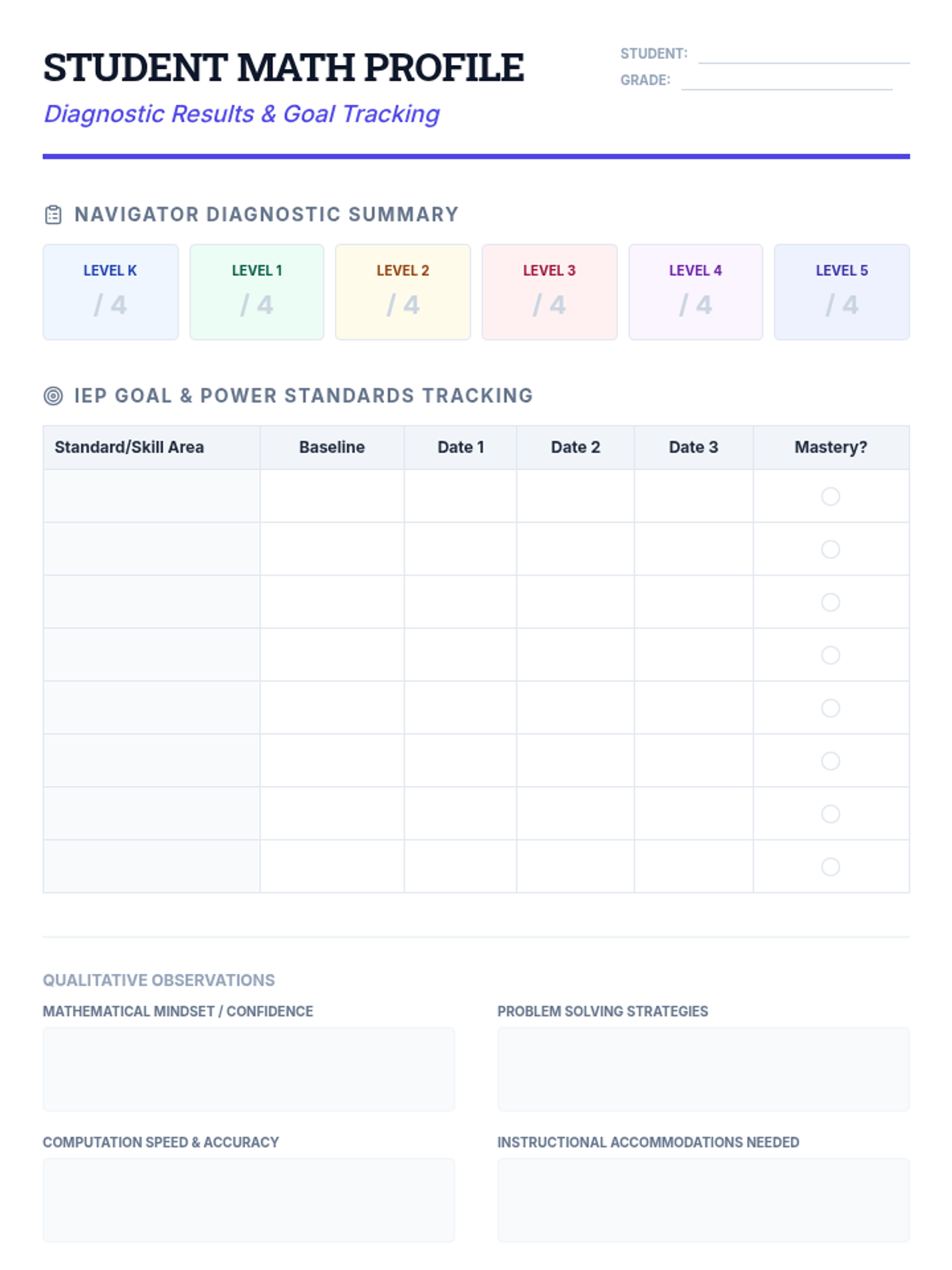
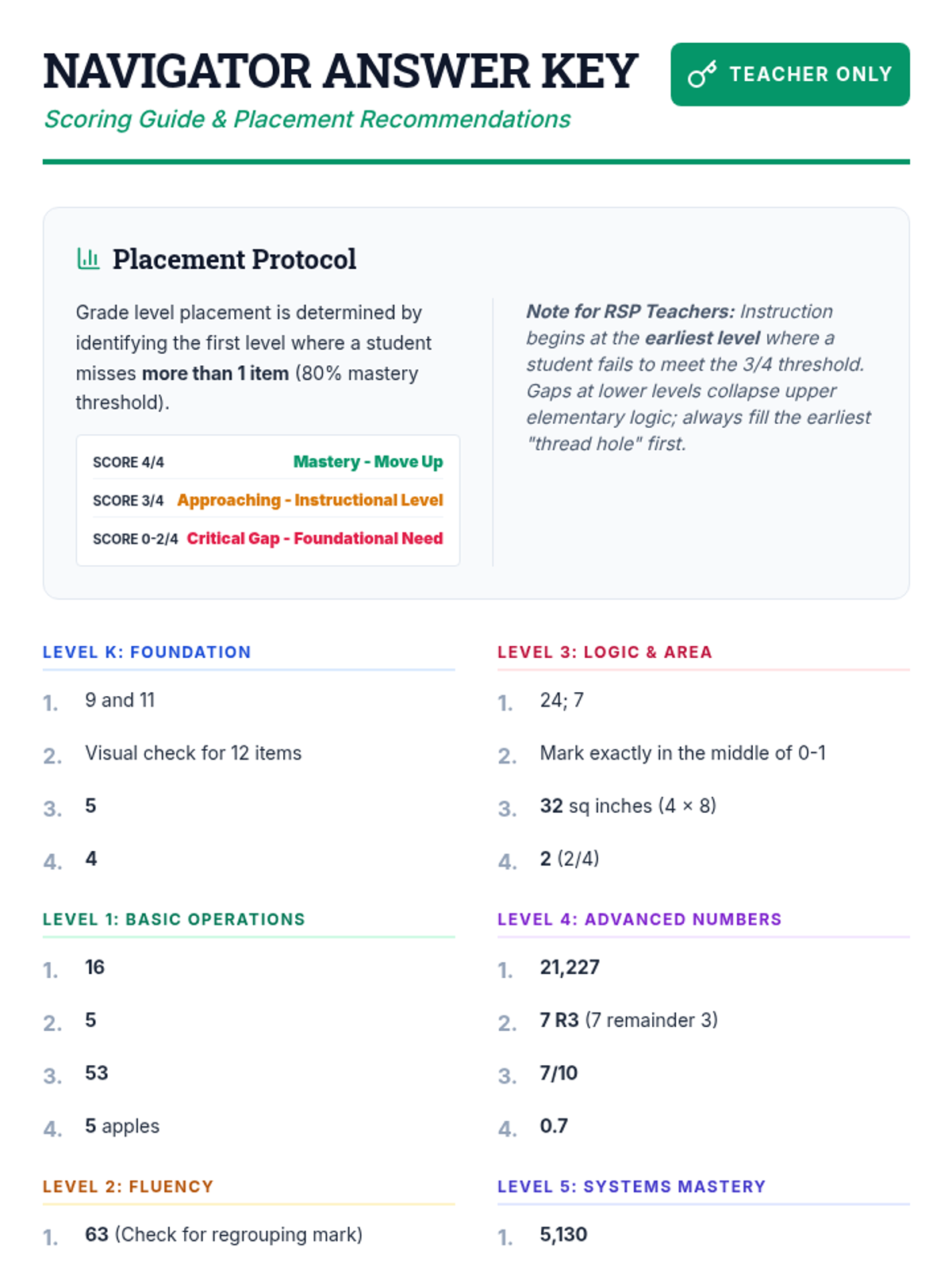
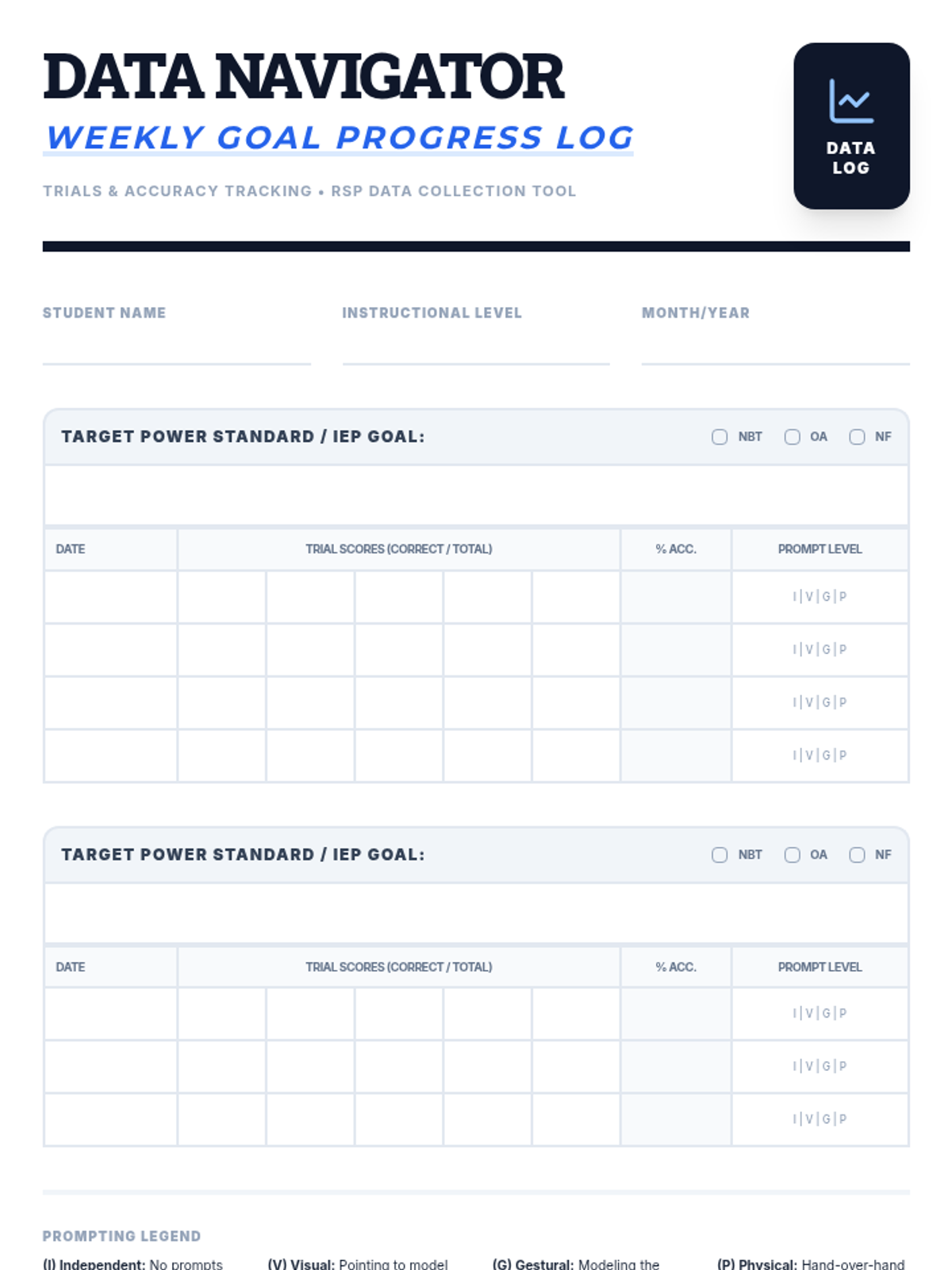
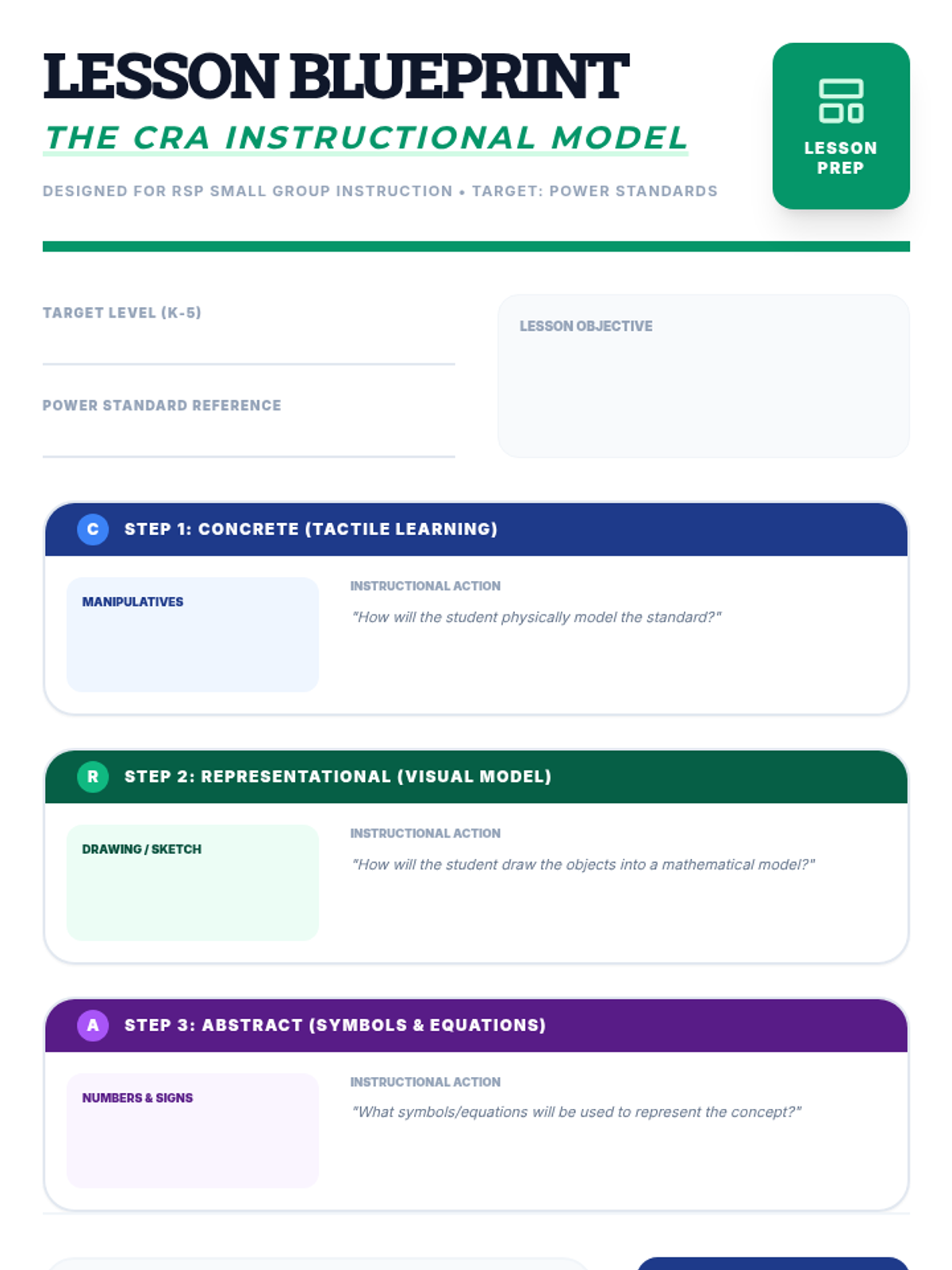
A comprehensive framework for K-5 RSP math instruction, including a California Common Core aligned scope and sequence of power standards and a leveled placement diagnostic.
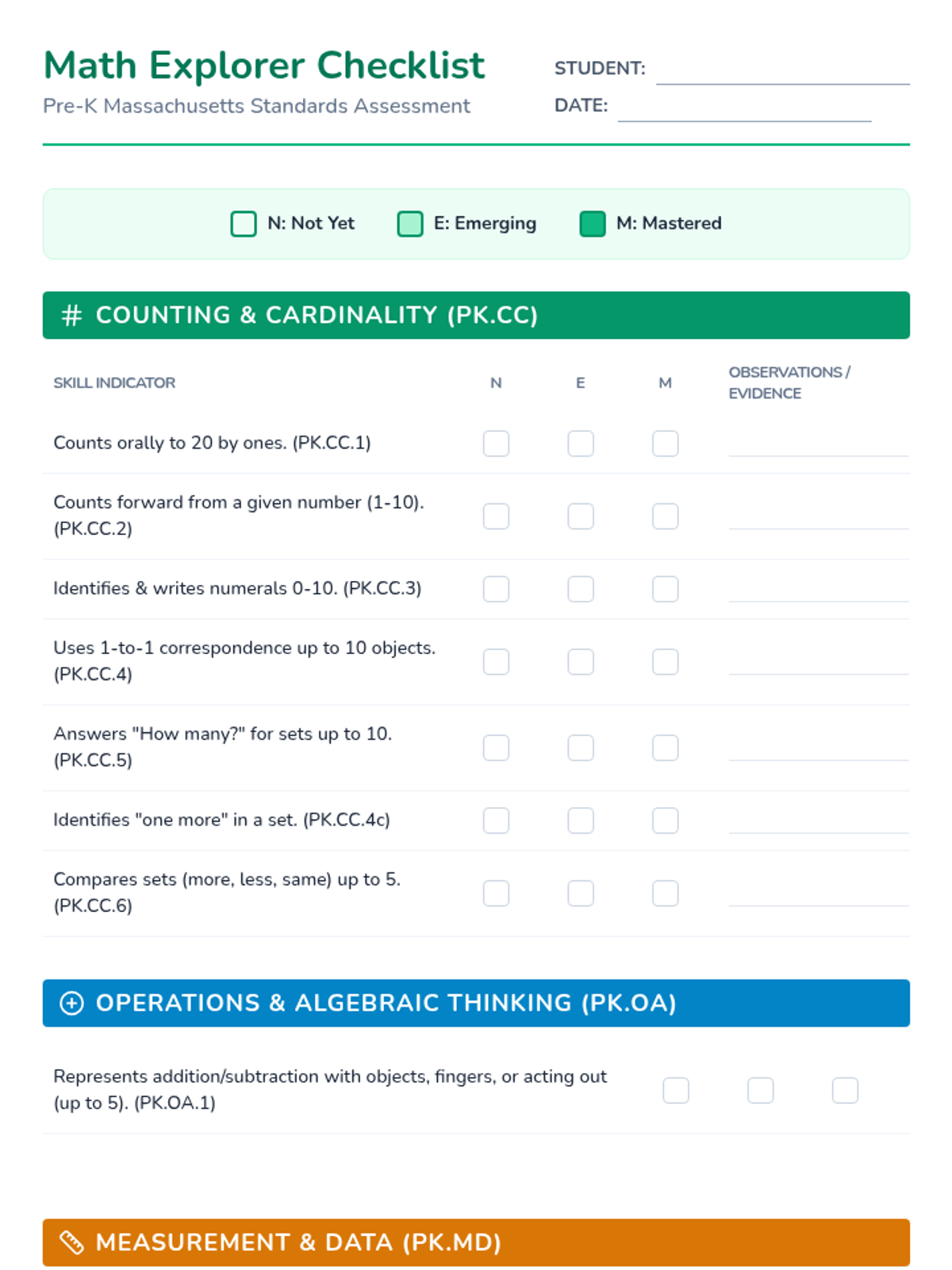
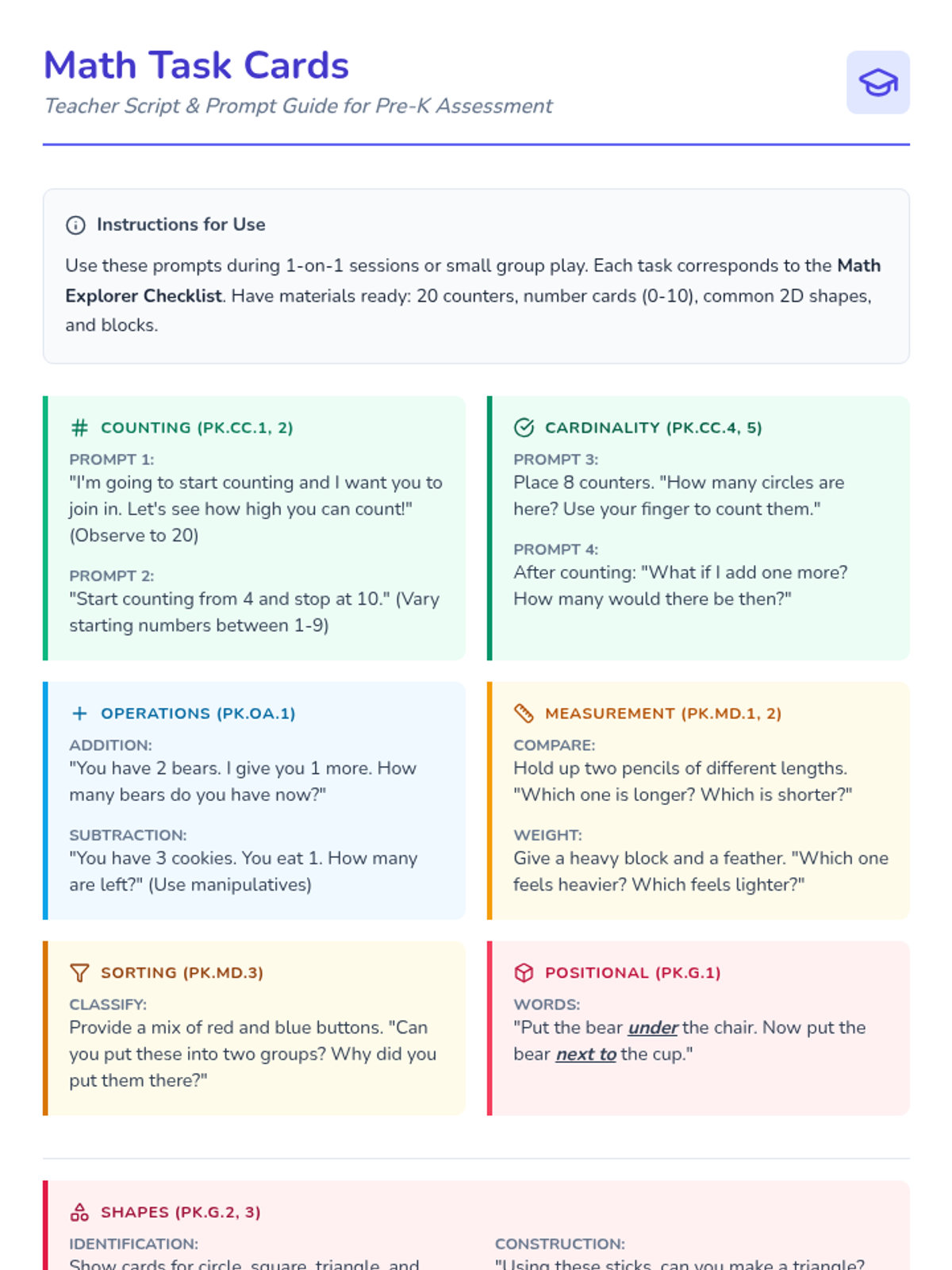
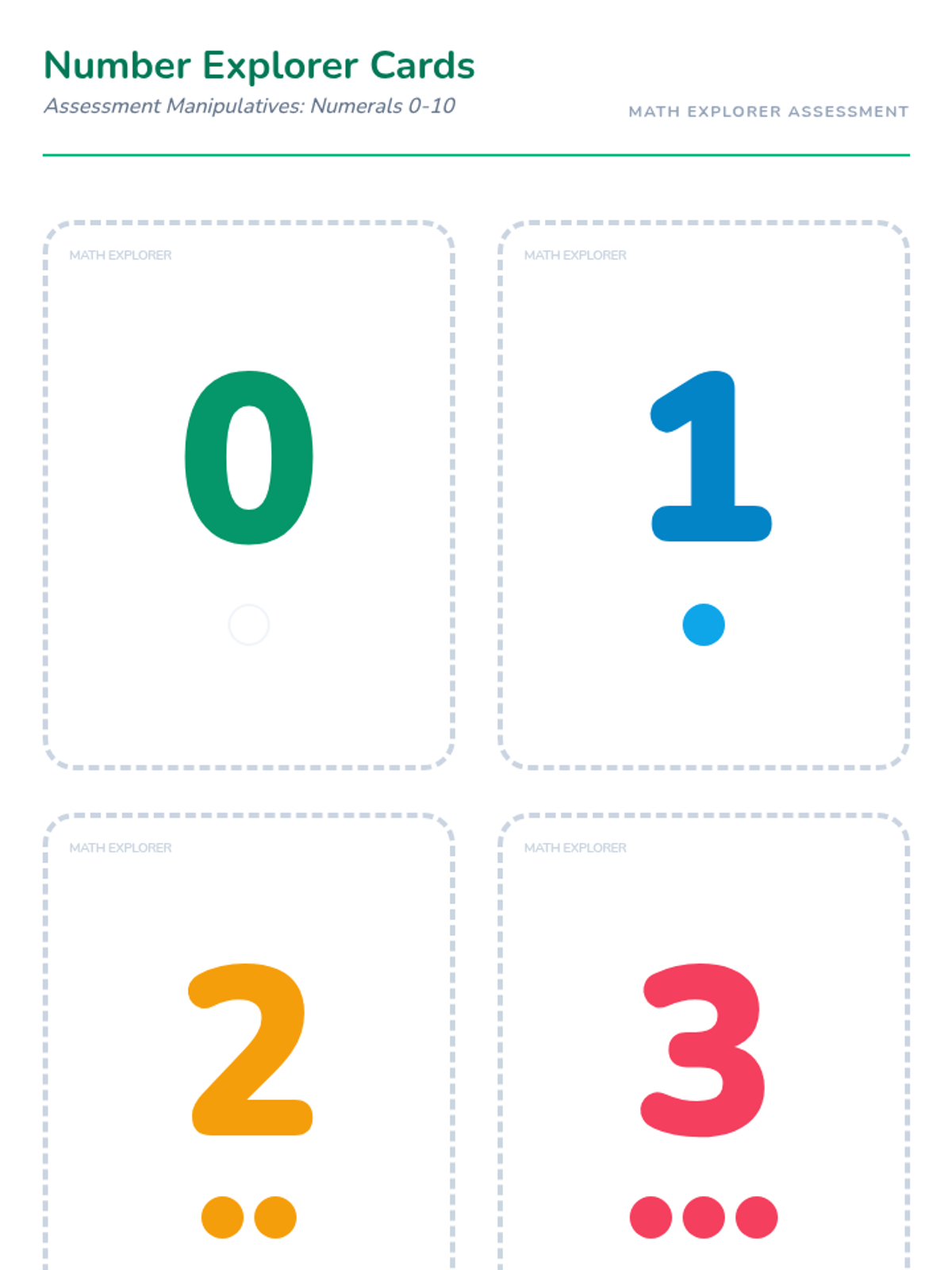
A series of assessment resources for foundational mathematics based on the Massachusetts Curriculum Frameworks, spanning Pre-K and early elementary grades.
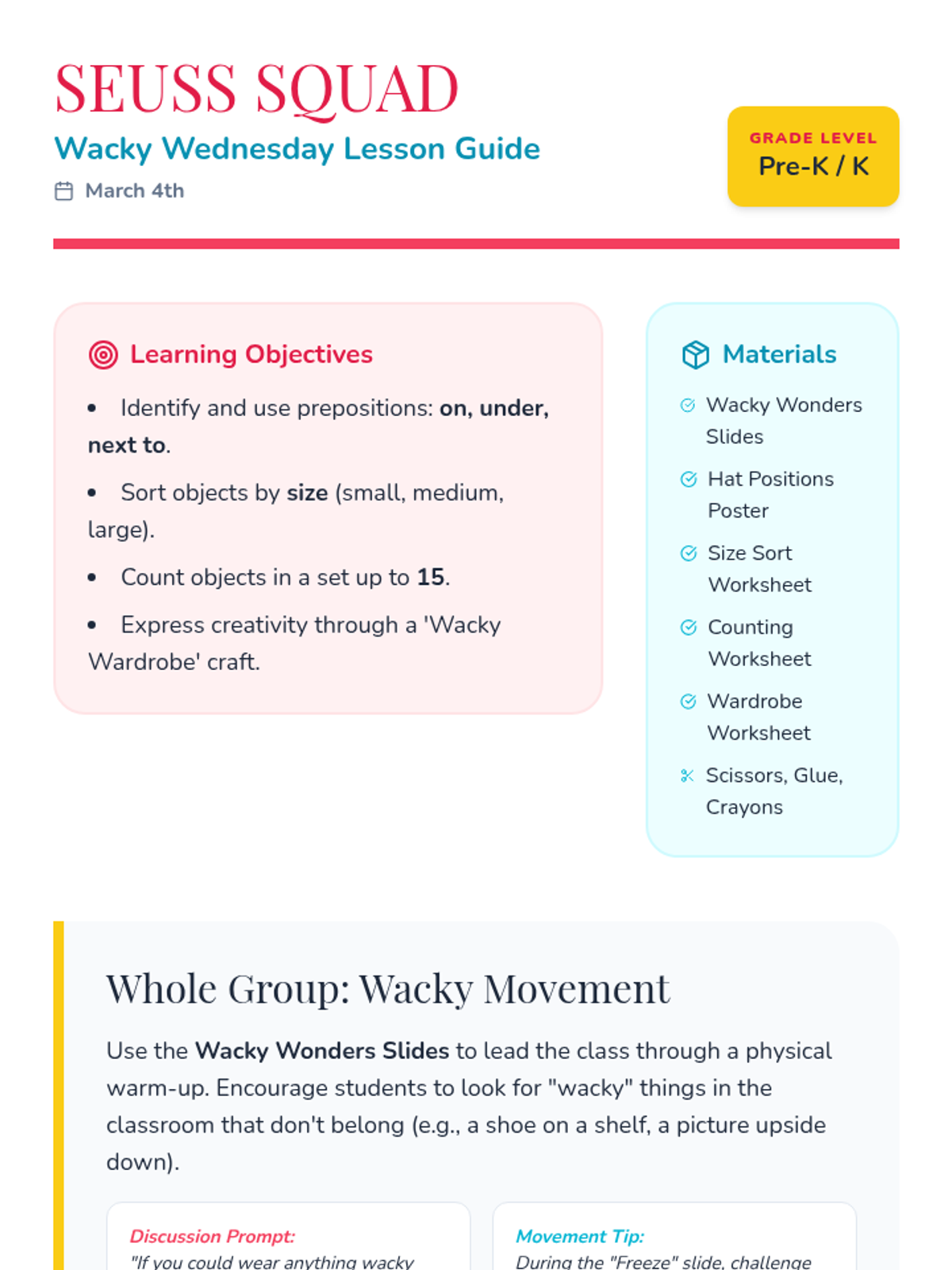
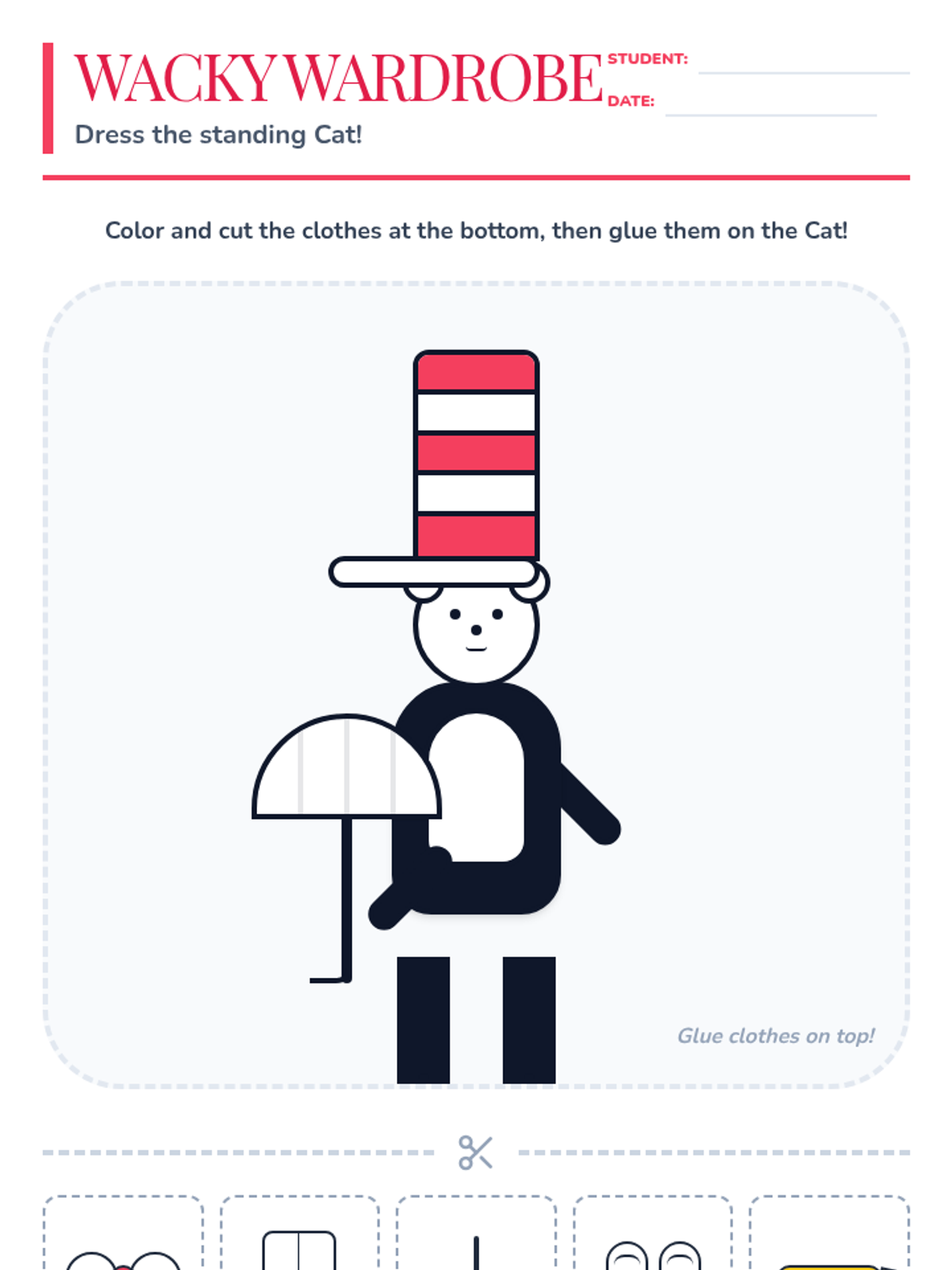
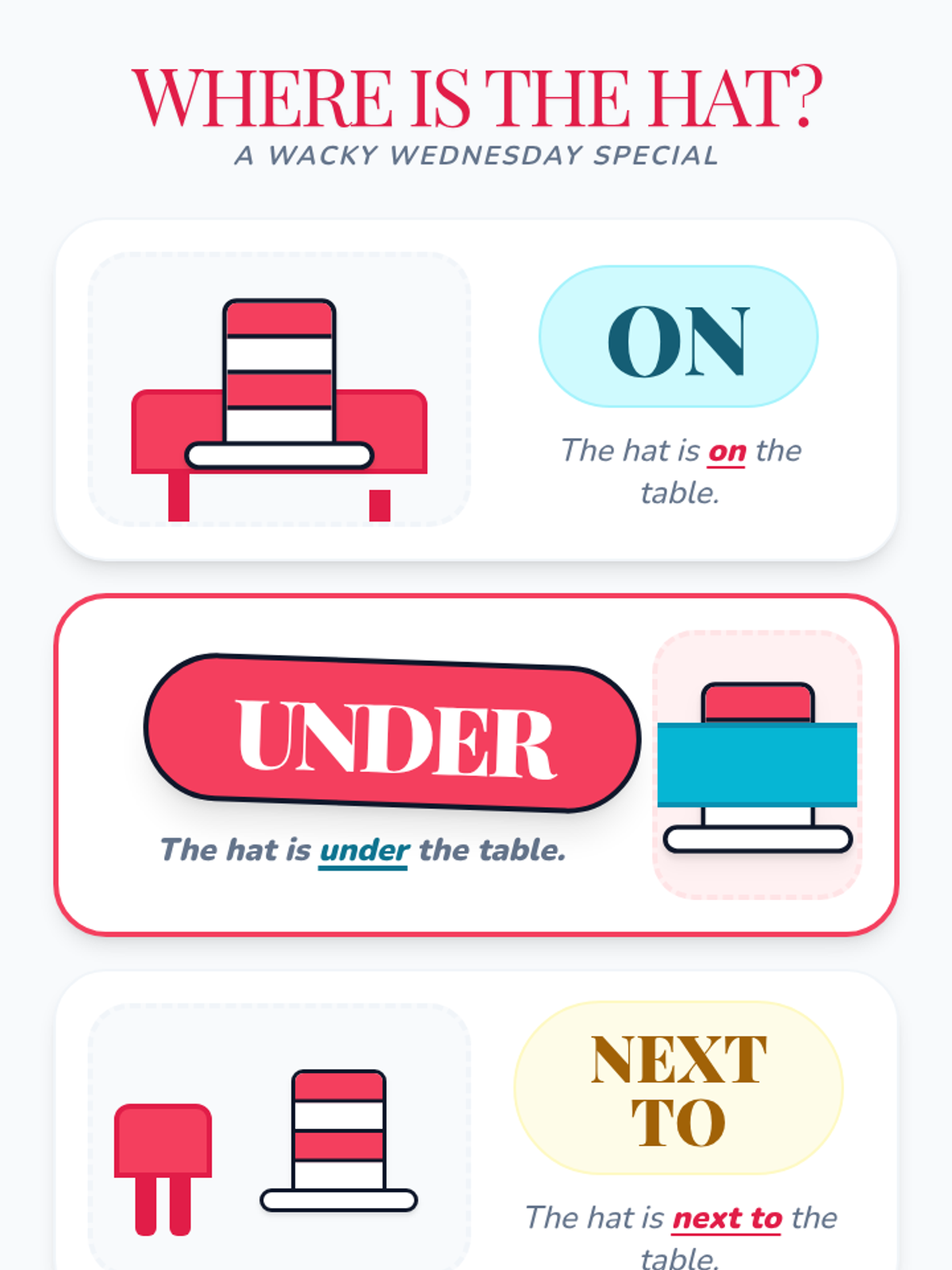
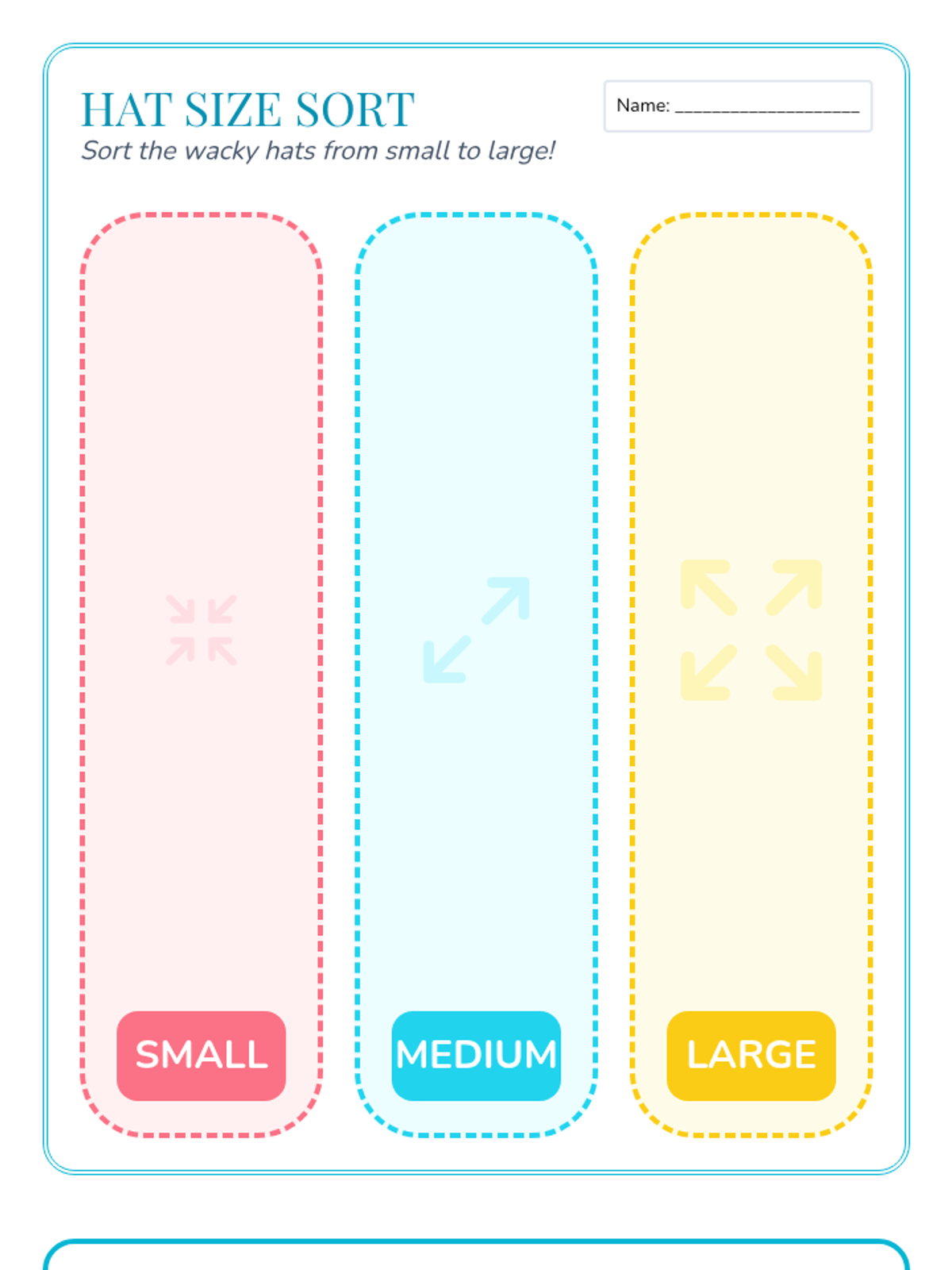
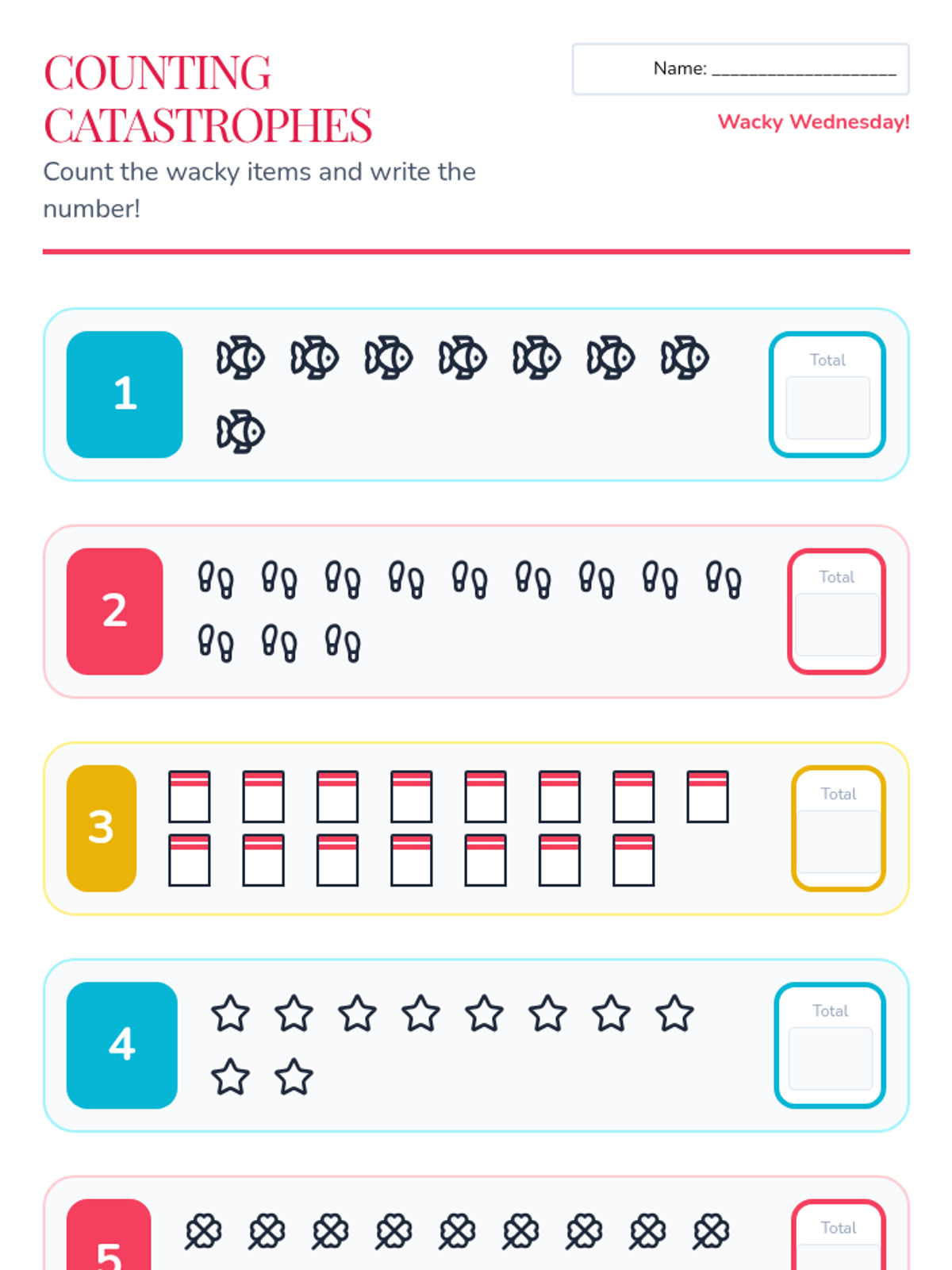
A Dr. Seuss-themed unit focusing on 'Wacky Wednesday' with a focus on counting, size sorting, prepositions, and creative expression for Pre-K and Kindergarten students.
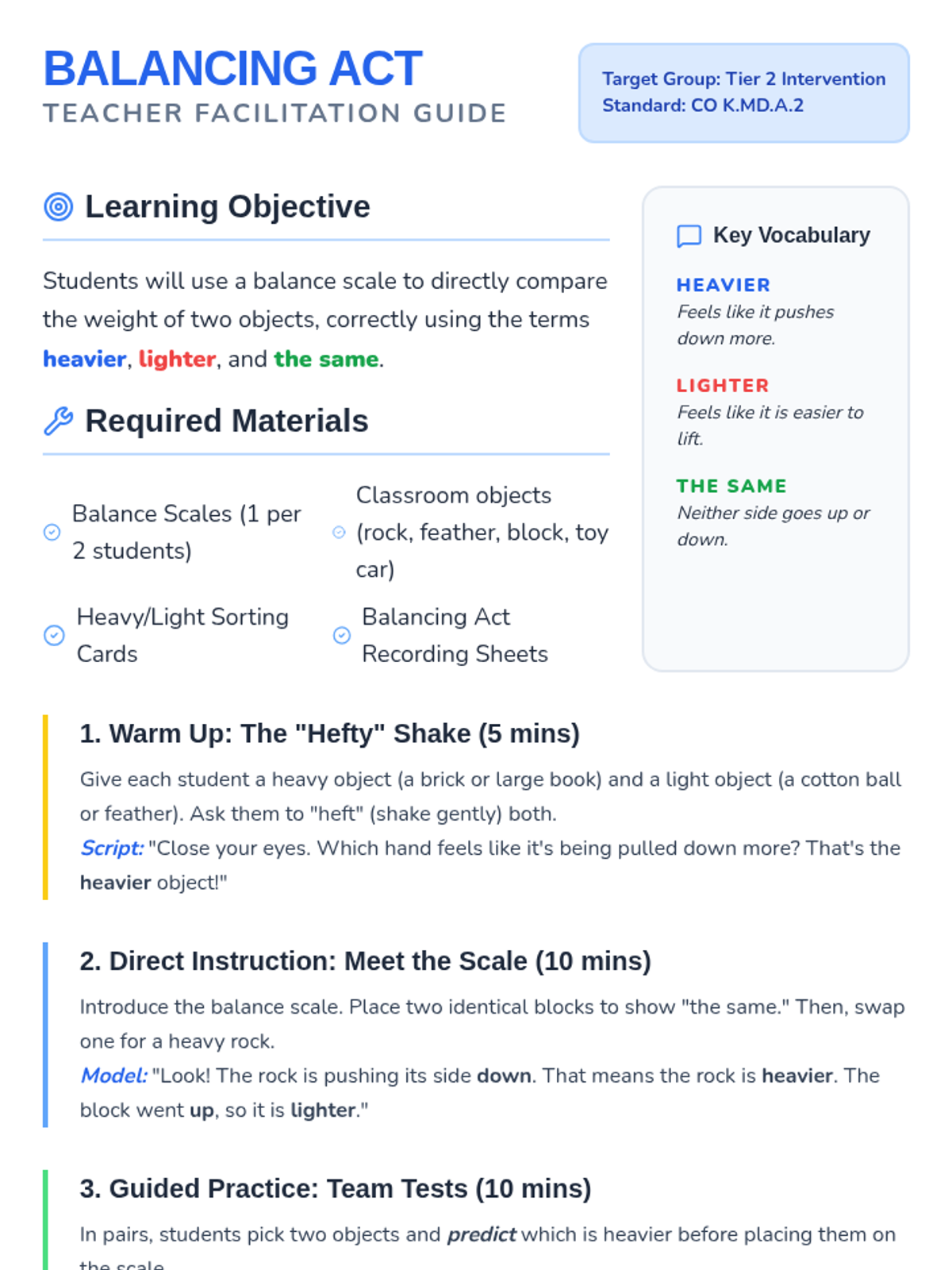
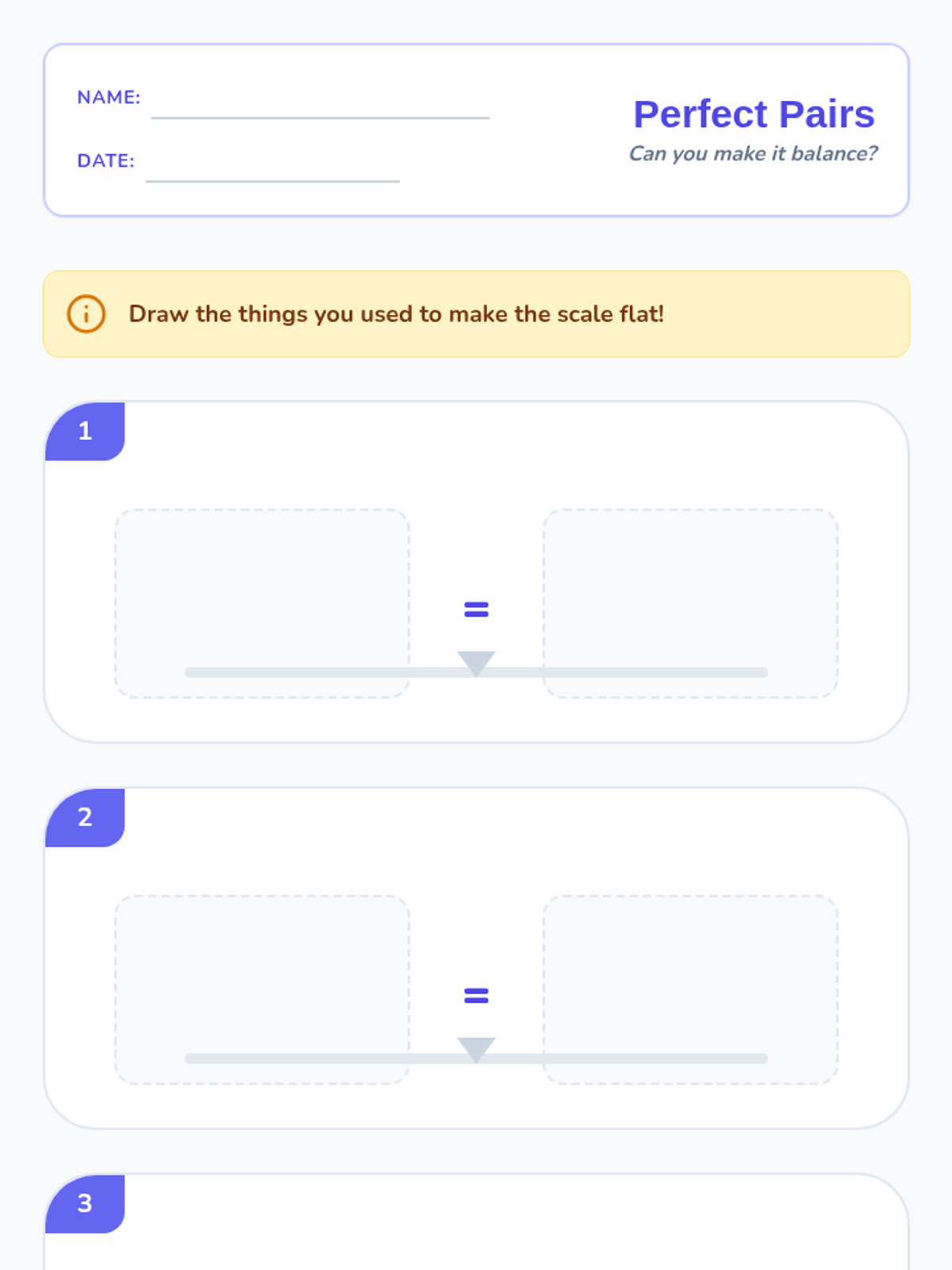
A targeted intervention sequence focused on foundational measurement skills for Kindergarteners, specifically comparing weight using direct comparison and balance scales.
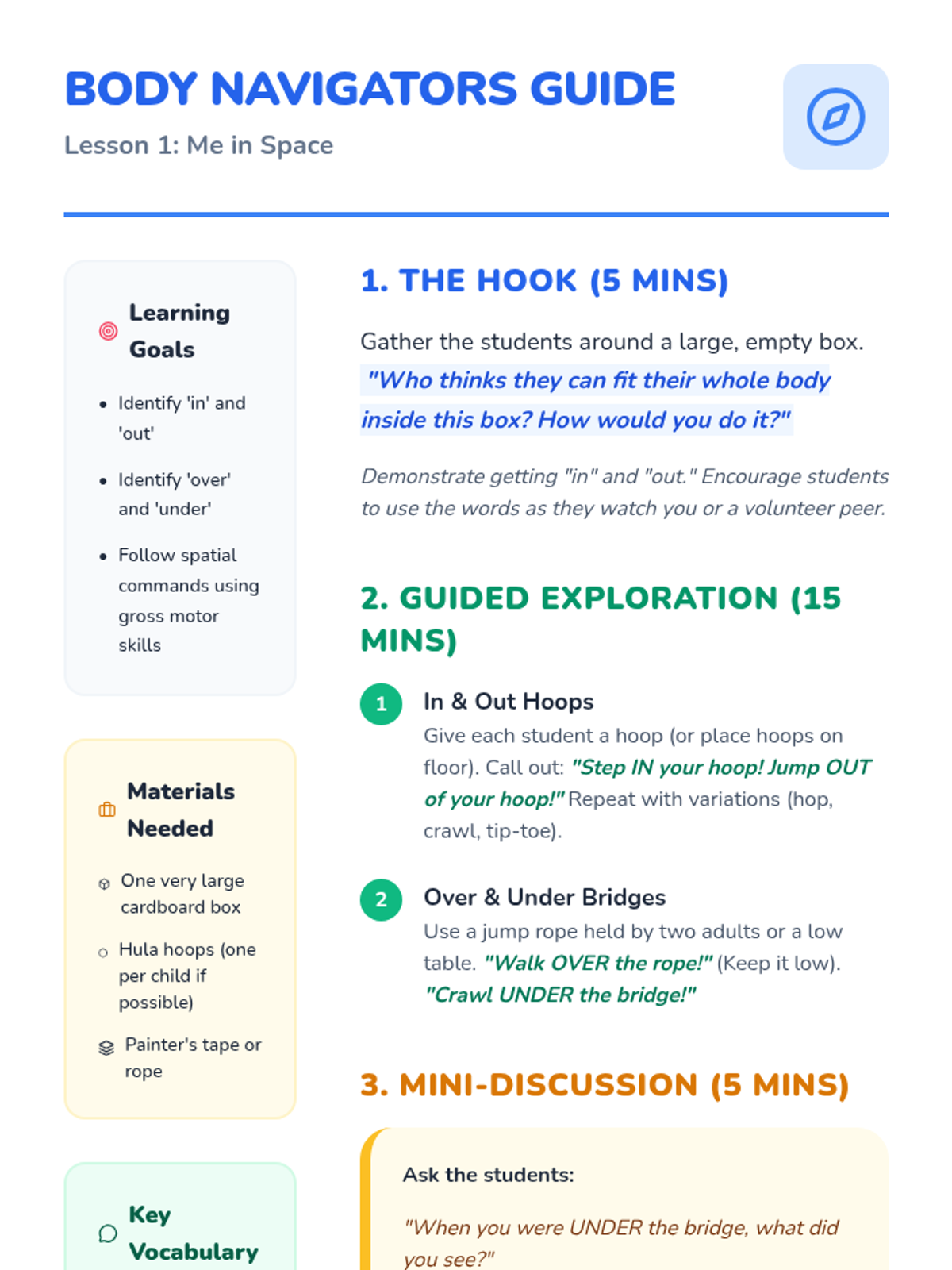
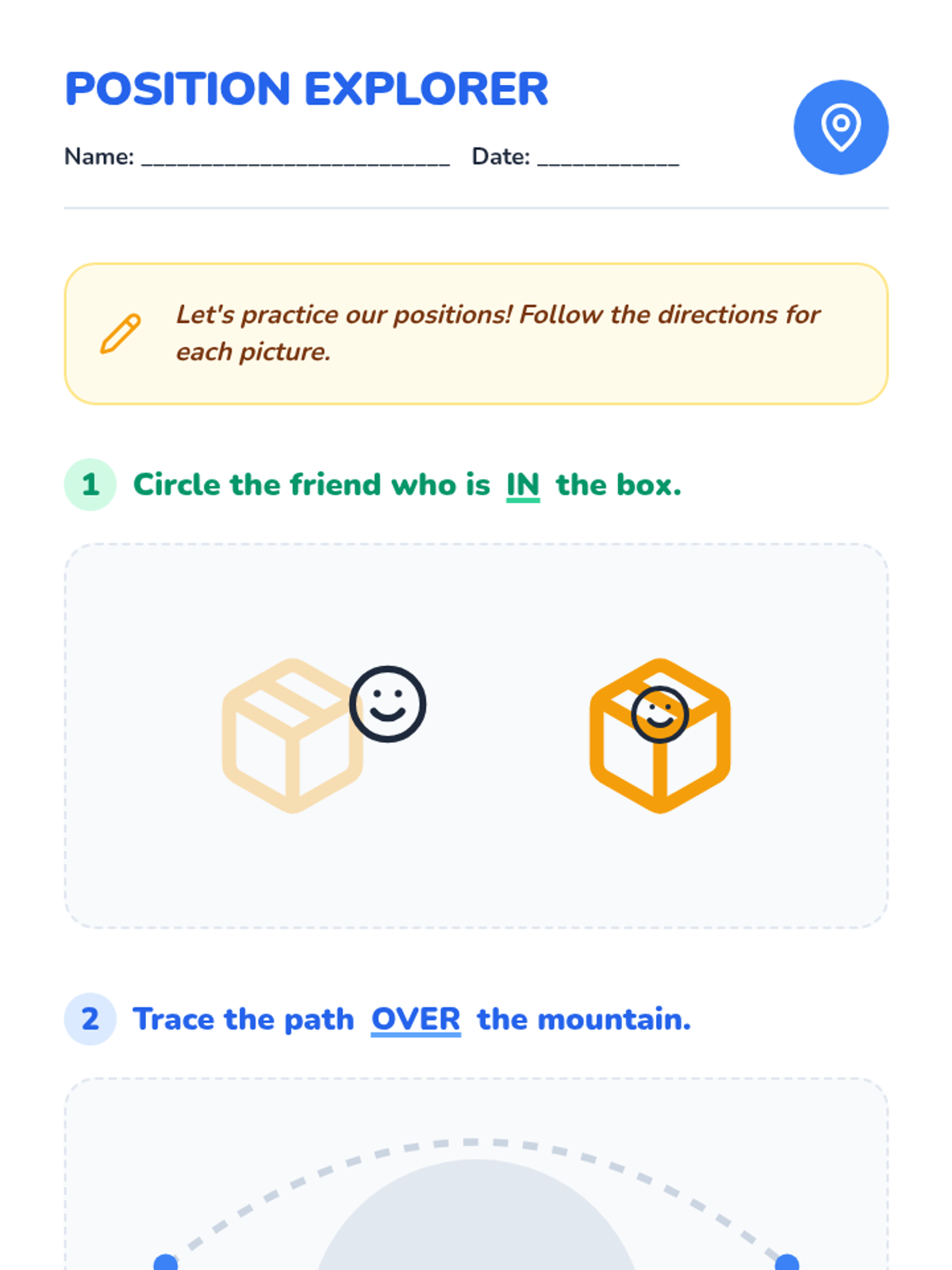
A Pre-K sequence focused on developing spatial awareness and positional vocabulary through physical movement, object manipulation, and classroom mapping. students explore terms like in, out, over, under, next to, and between.
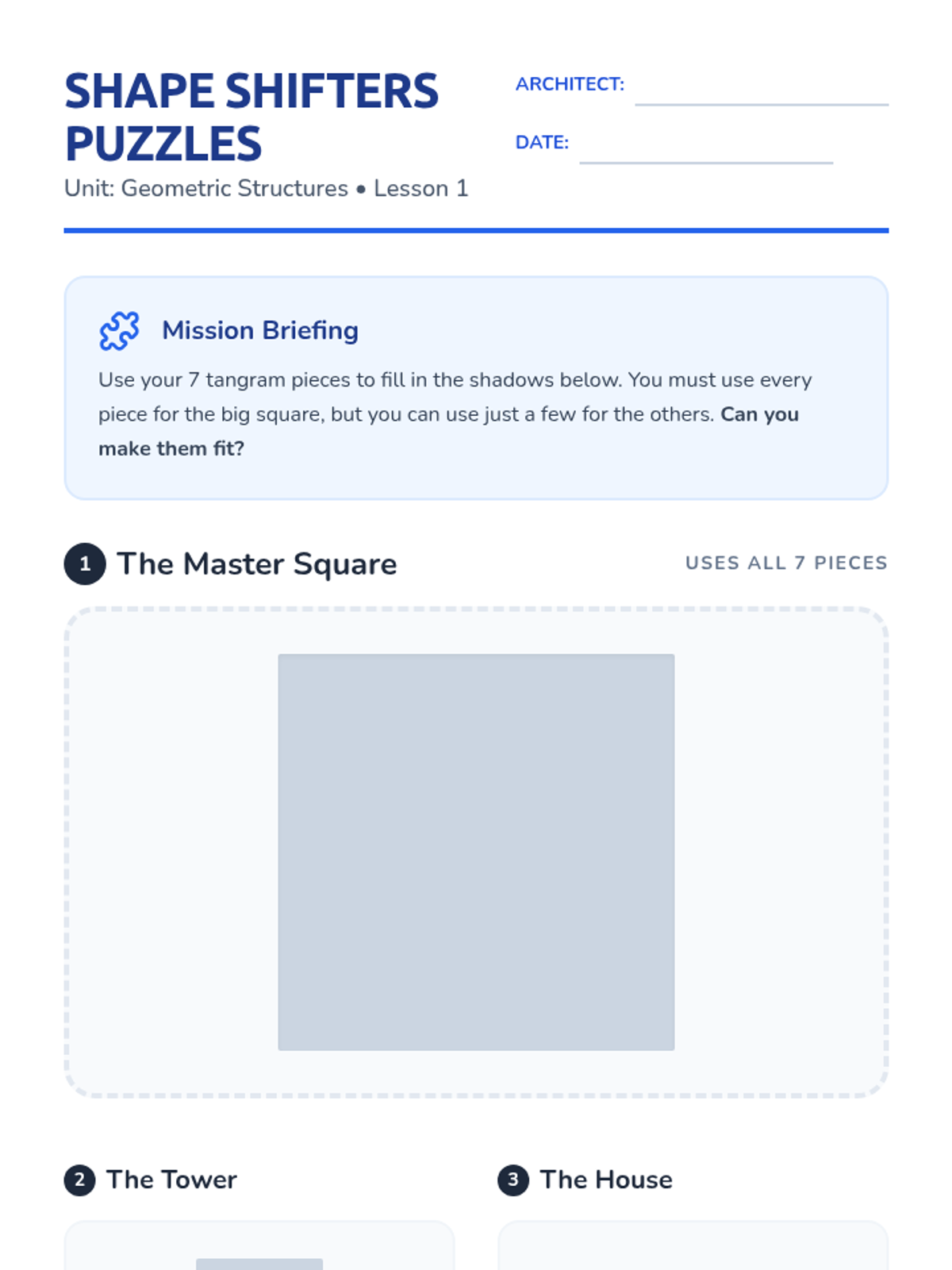
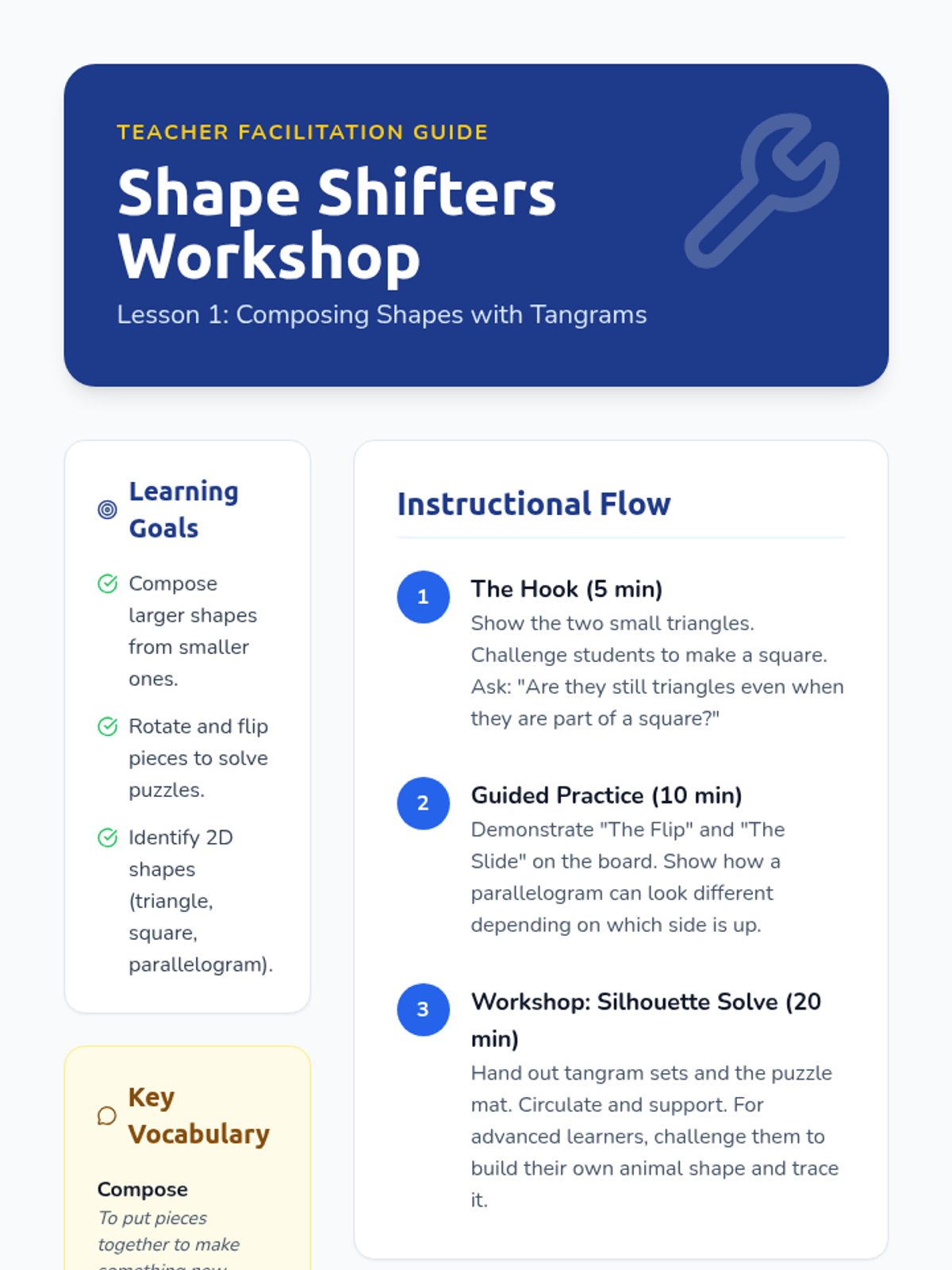
This Kindergarten sequence explores the intersection of geometry and engineering. Students learn to compose and decompose 2D shapes before applying those principles to 3D structural stability, culminating in a collaborative project to design a geometric city.
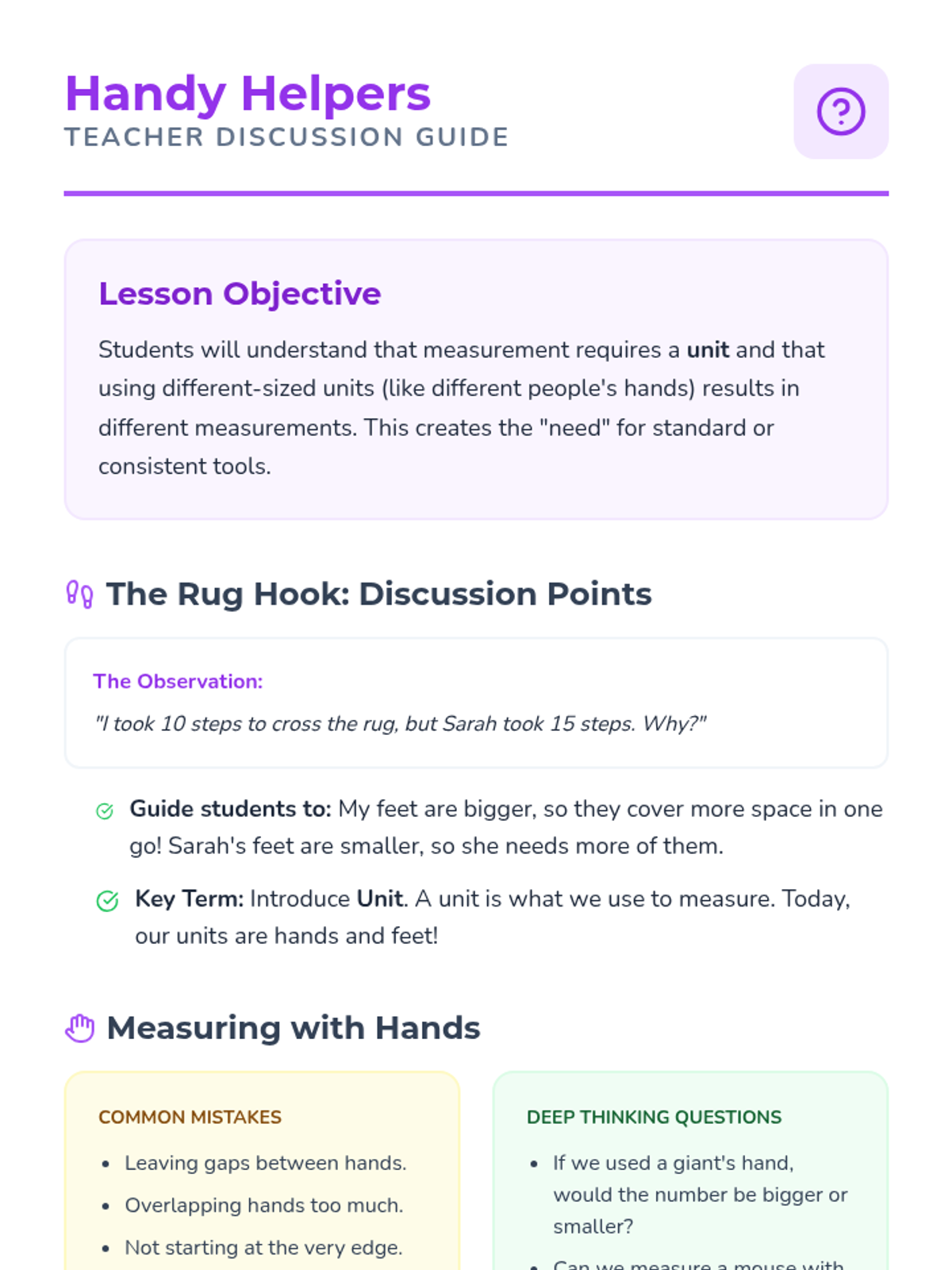
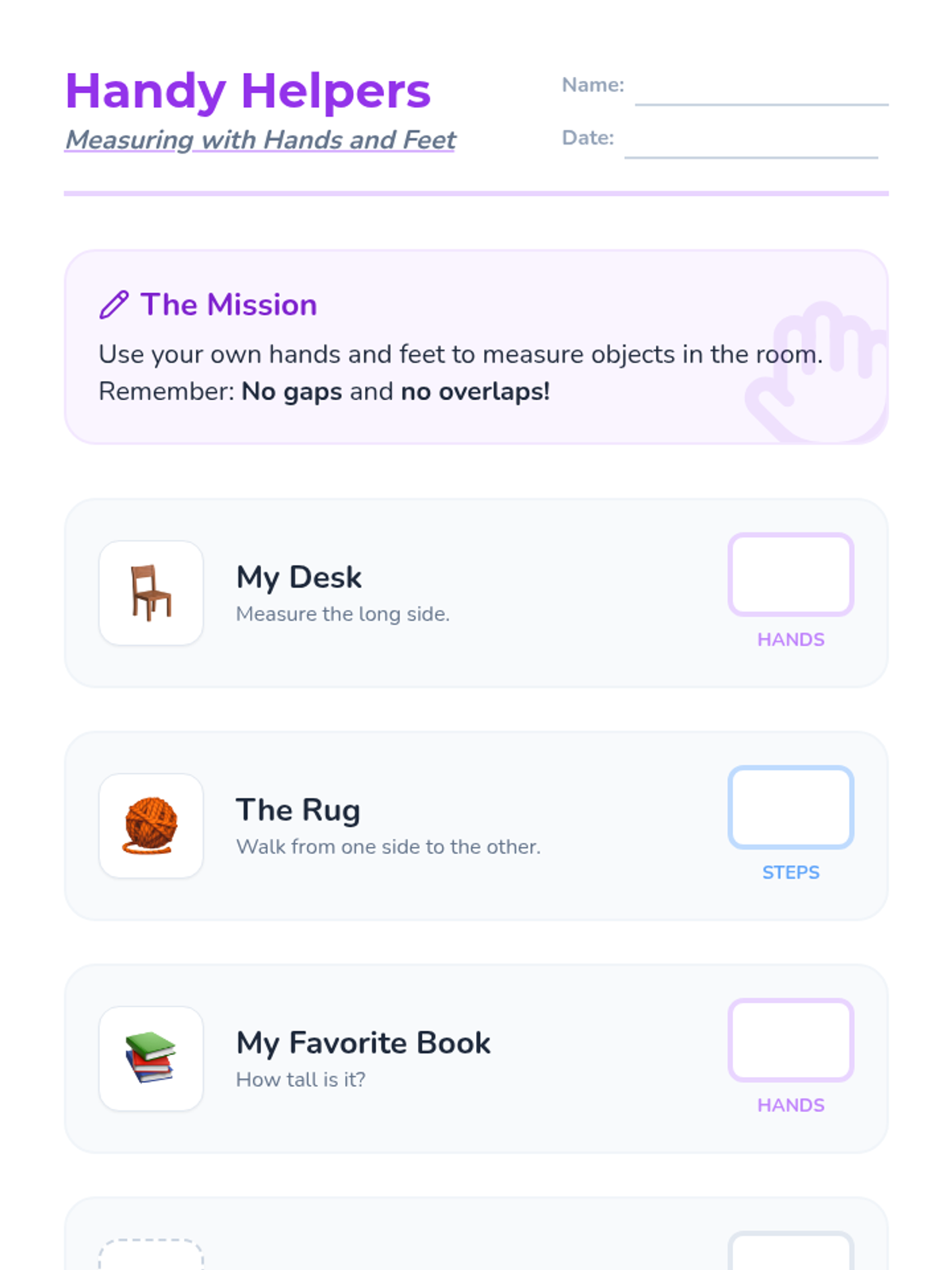
A foundational Kindergarten measurement sequence exploring length through direct comparison, non-standard units (body parts and cubes), and an introduction to the ruler. Students build vocabulary and precision skills to answer the question: How can we tell how long or tall something is?
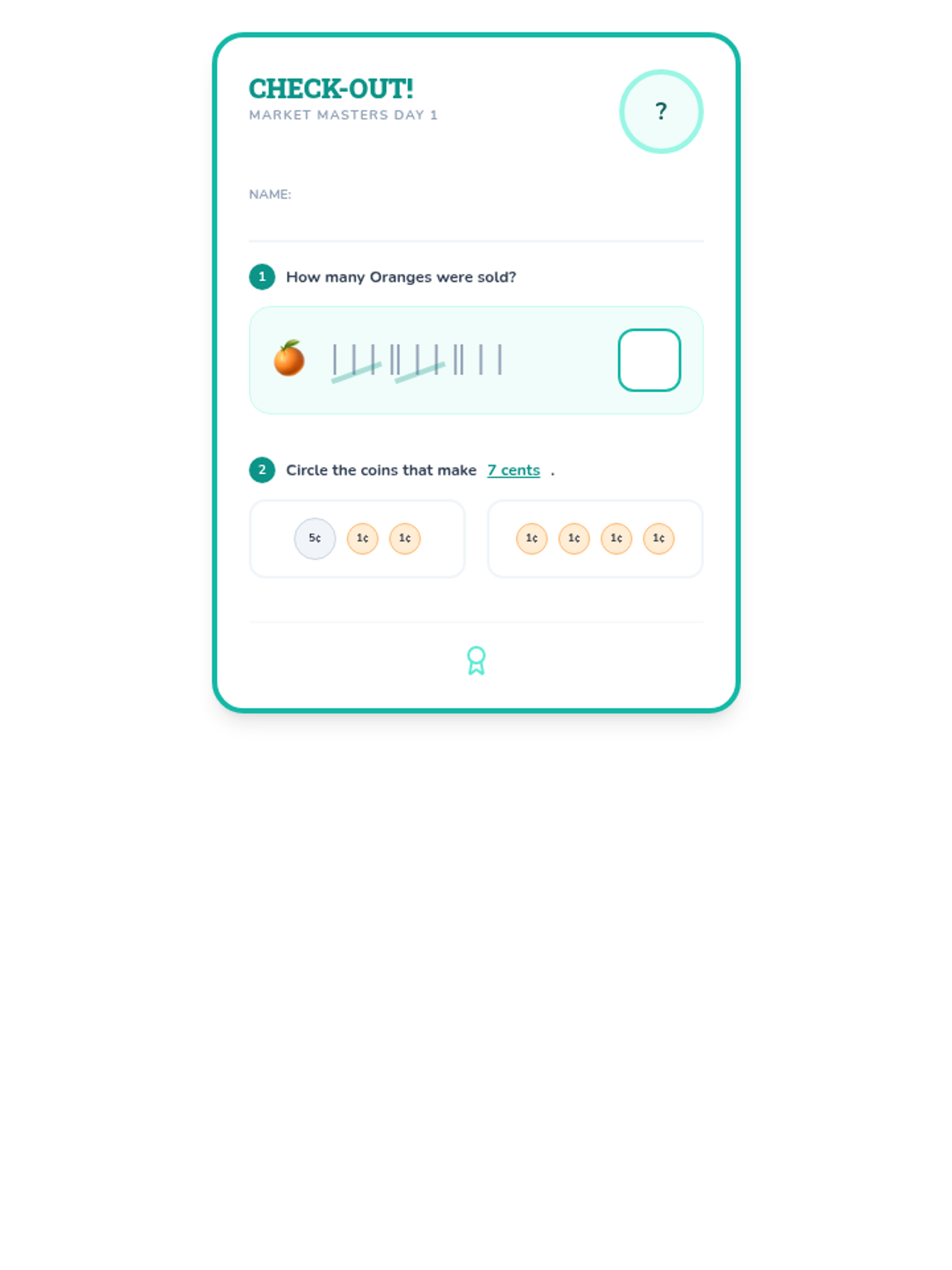
A Kindergarten math sequence exploring equivalence and proportional reasoning through hands-on activities, balance scales, and a classroom market simulation. Students learn to compare quantities, understand many-to-one ratios, and practice substitution.
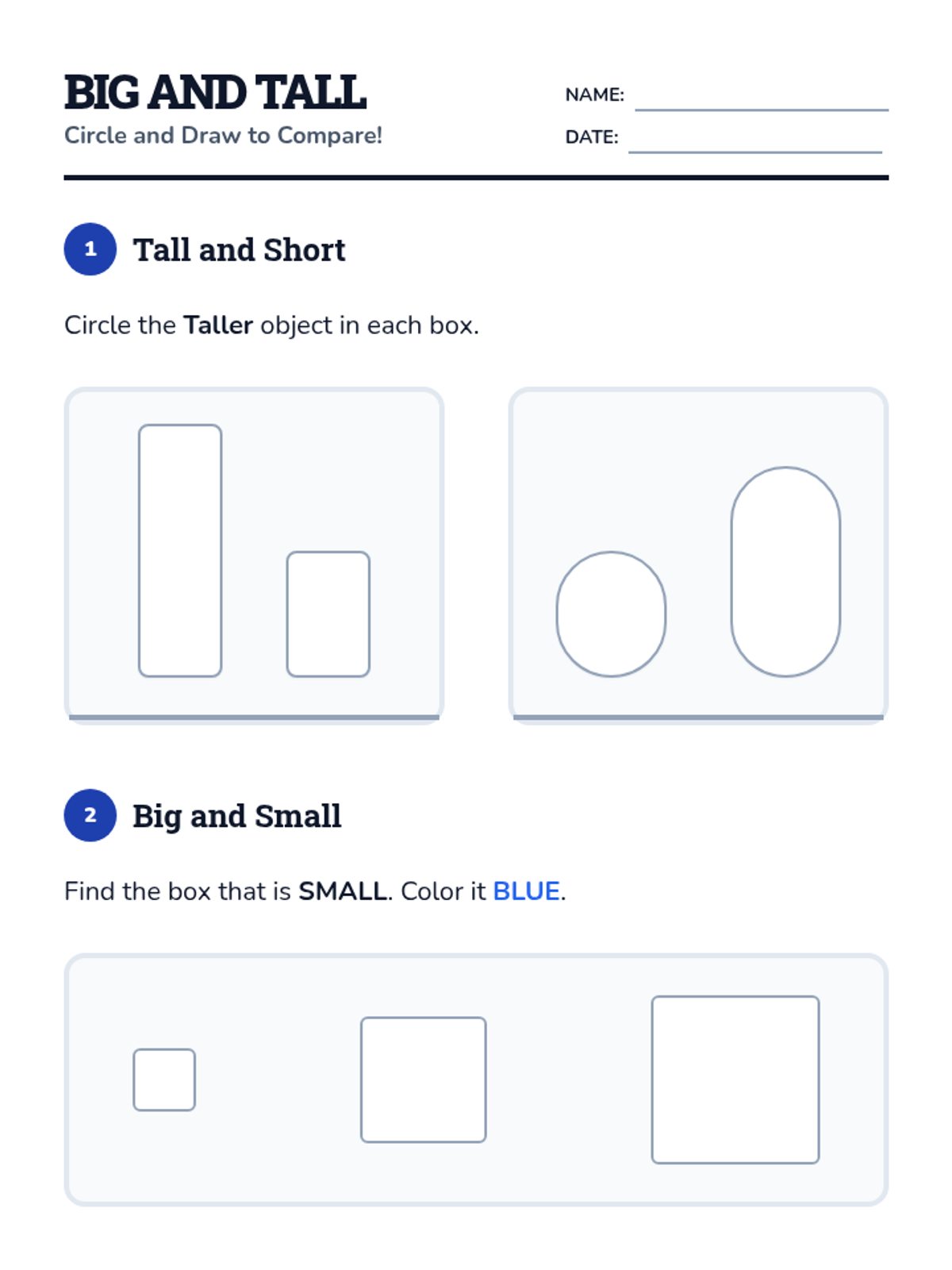
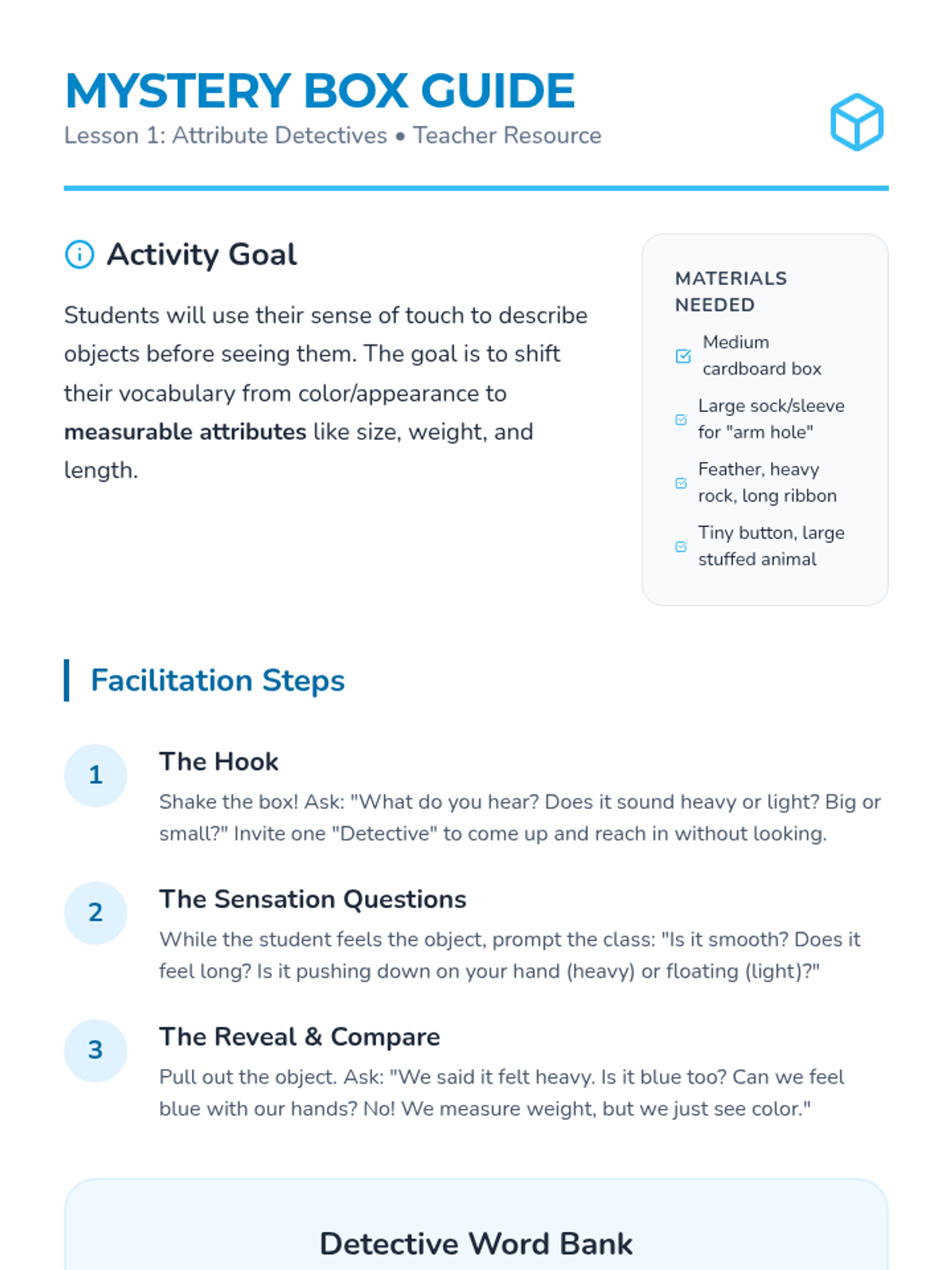
A comprehensive Kindergarten math sequence where students explore and compare the attributes of 3D shapes, focusing on size, height, and weight through hands-on investigation and measurement tools.
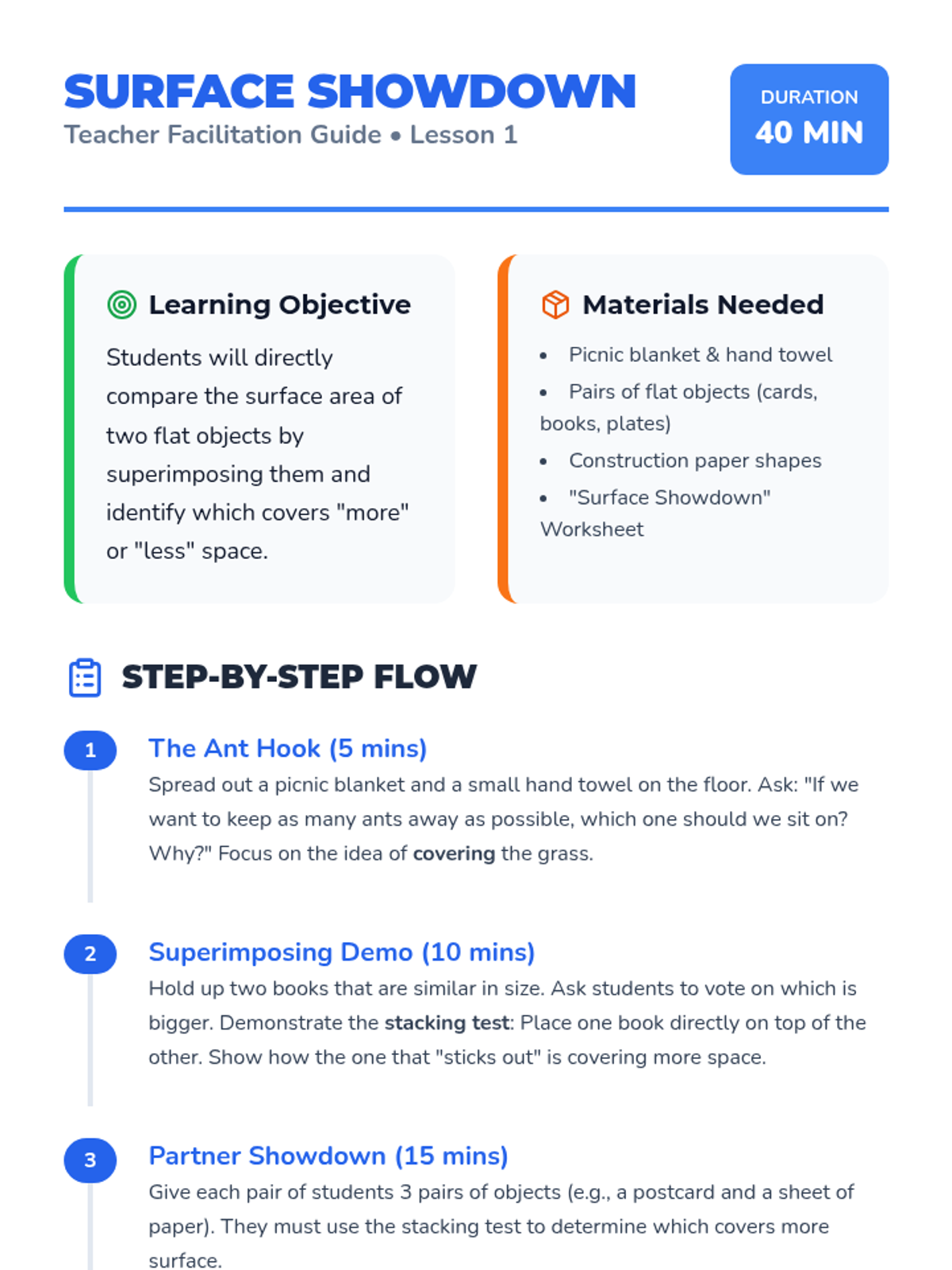
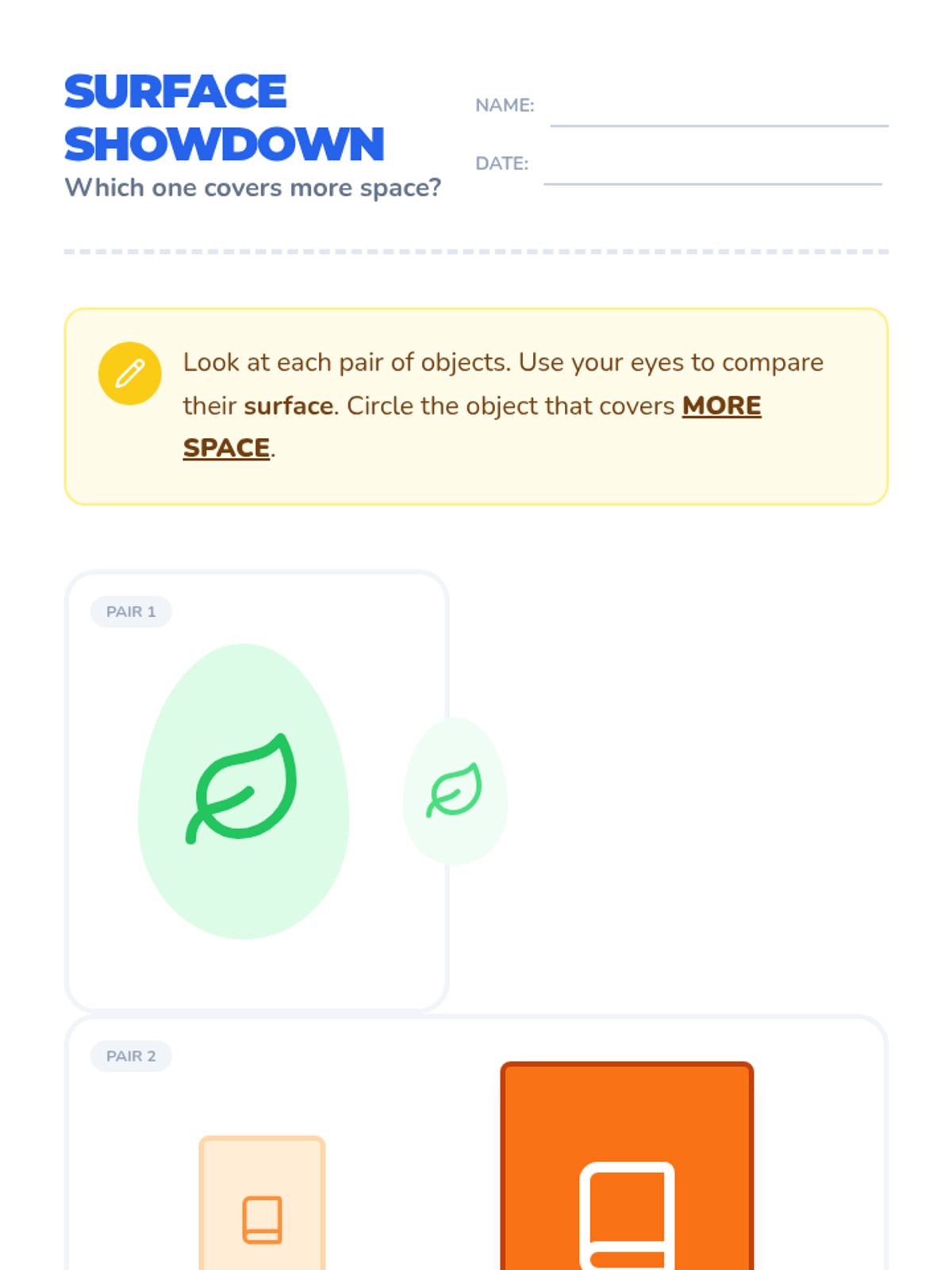
A Kindergarten geometry sequence exploring area through direct comparison, tiling with non-standard units, and counting units to quantify space. Students learn to cover regions without gaps or overlaps and discover that area is conserved across different shapes.
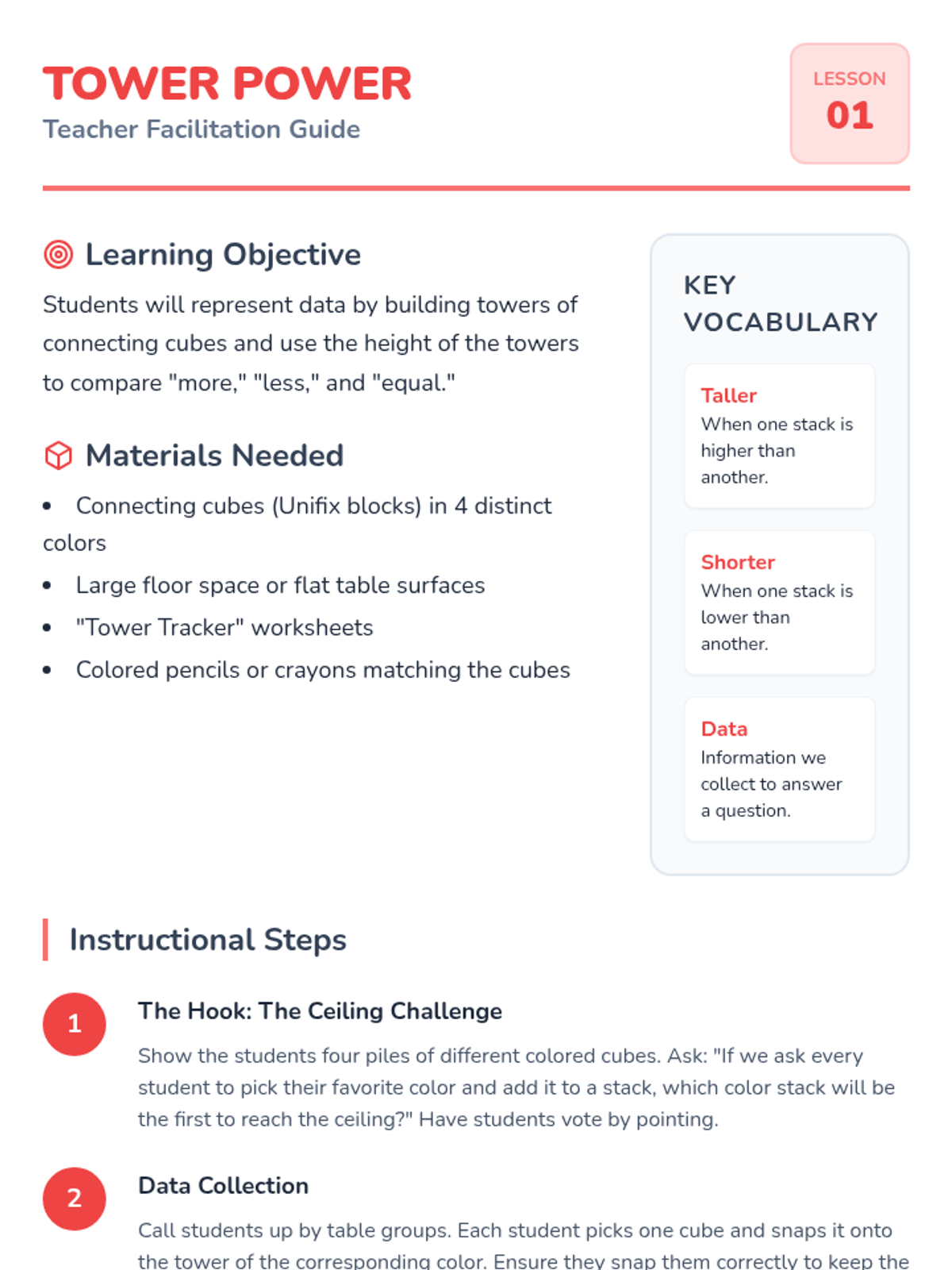
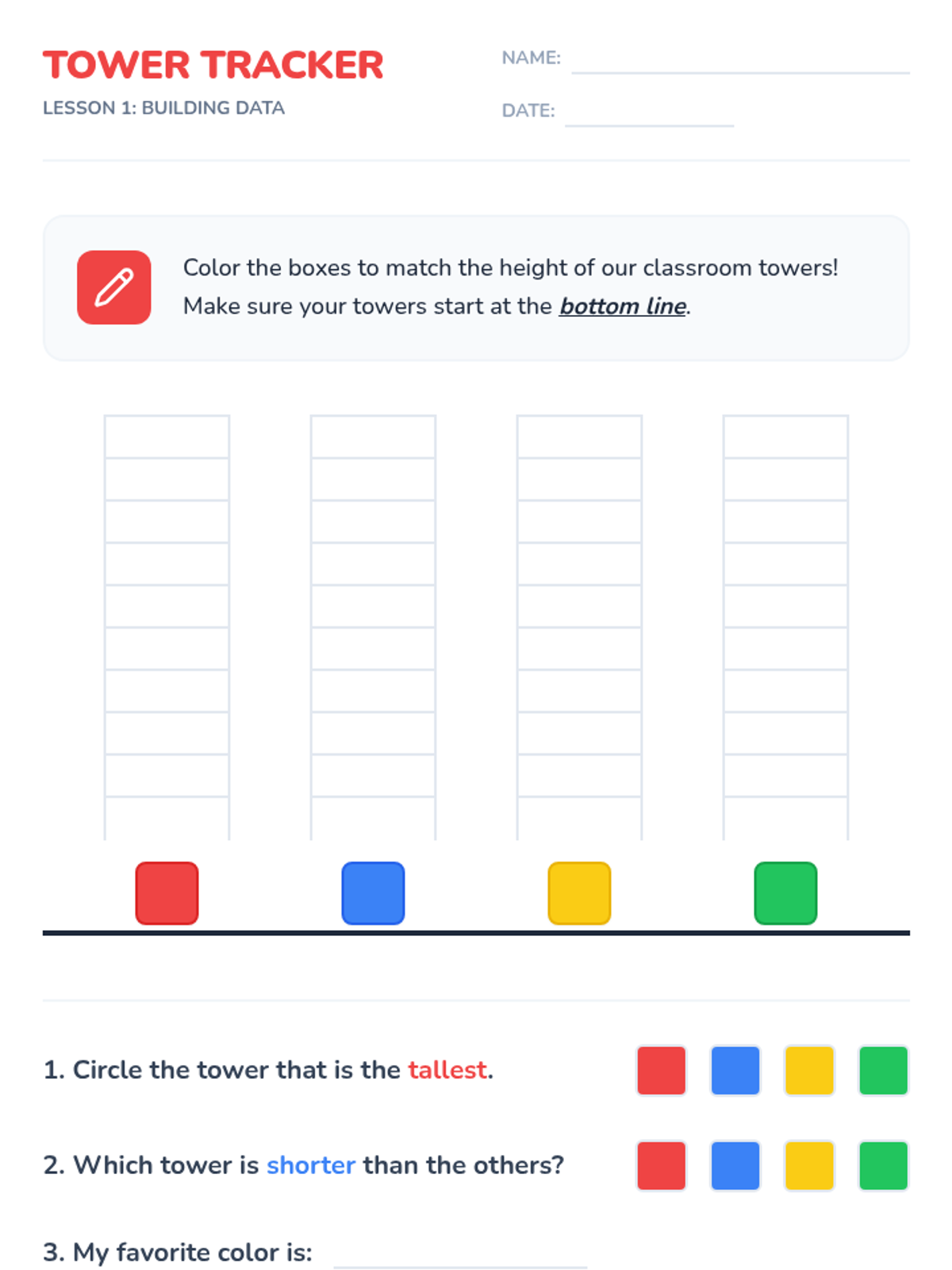
A hands-on introduction to data visualization for Kindergarten students, moving from concrete physical objects and human movement to pictorial representations. Students build towers, sort shoes, and create human graphs to understand how lining things up helps us compare quantities.
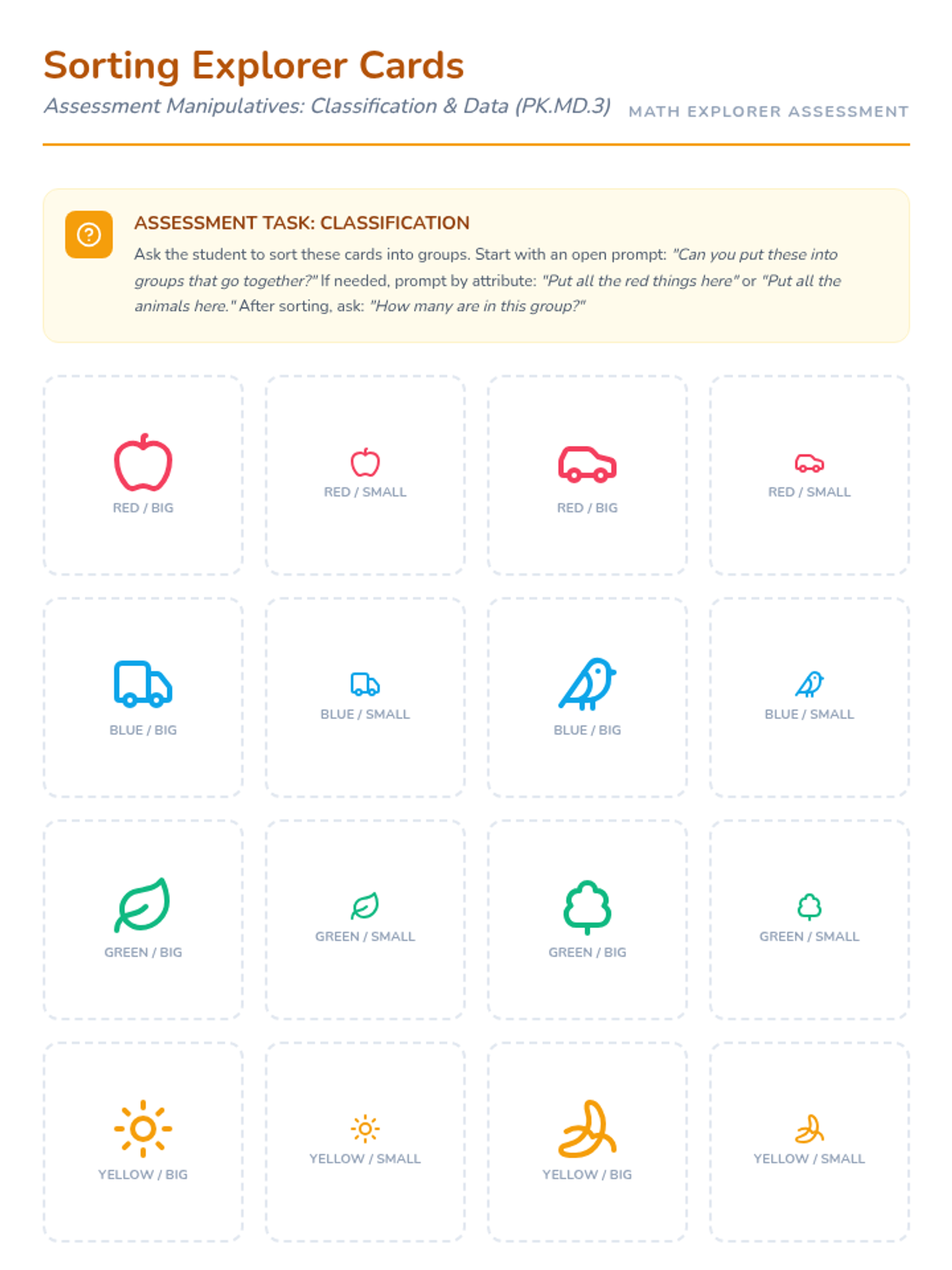
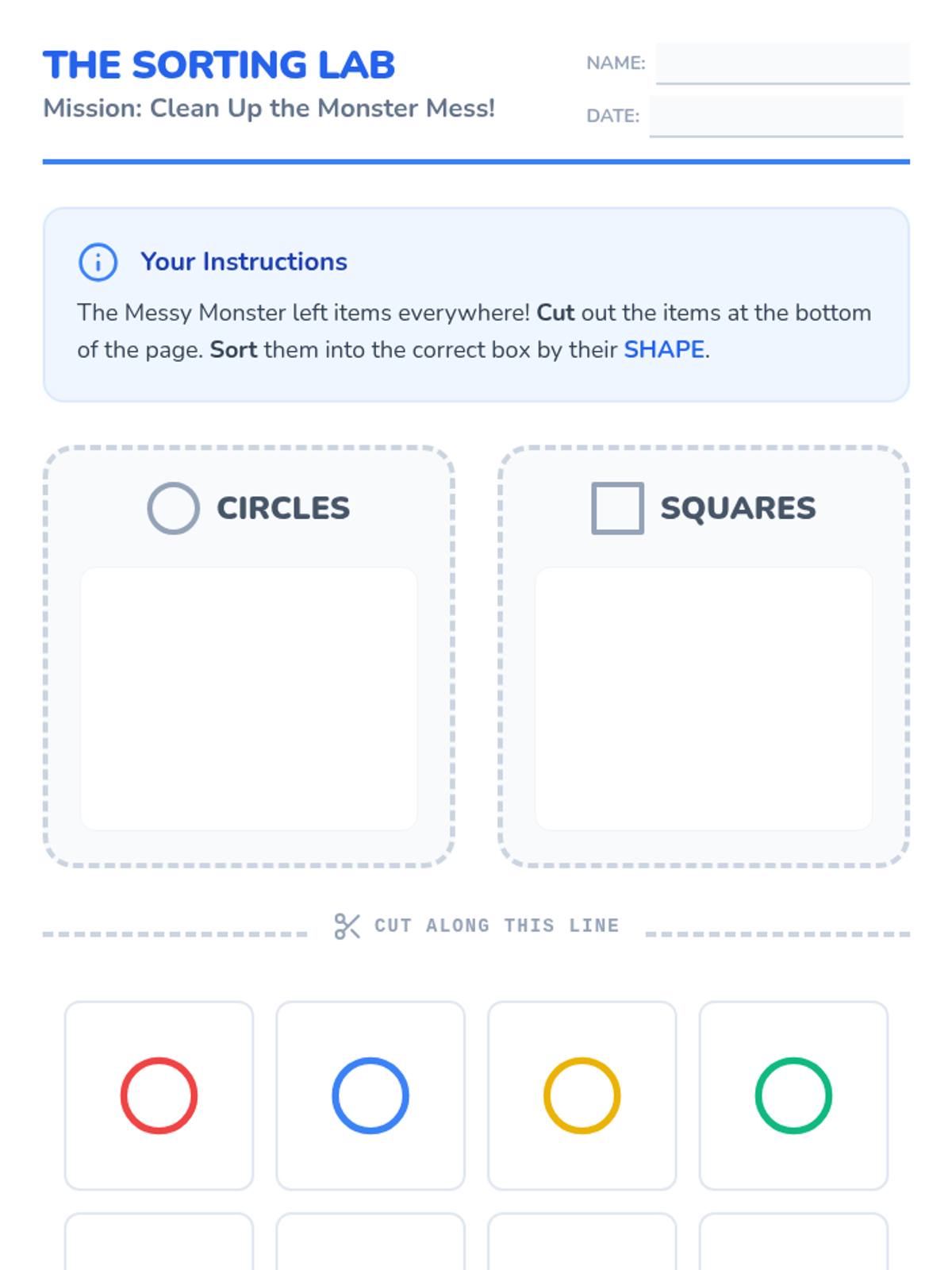
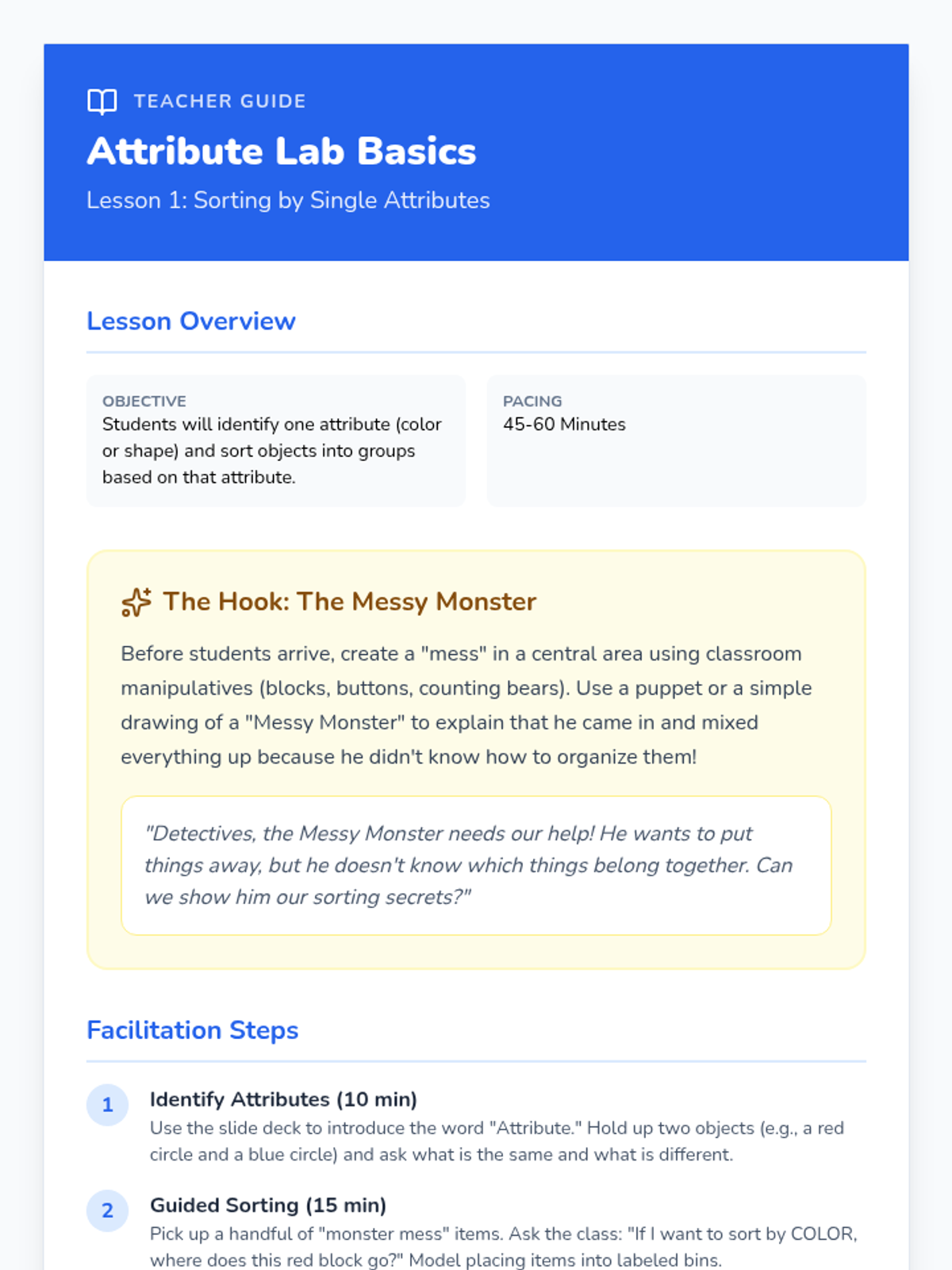
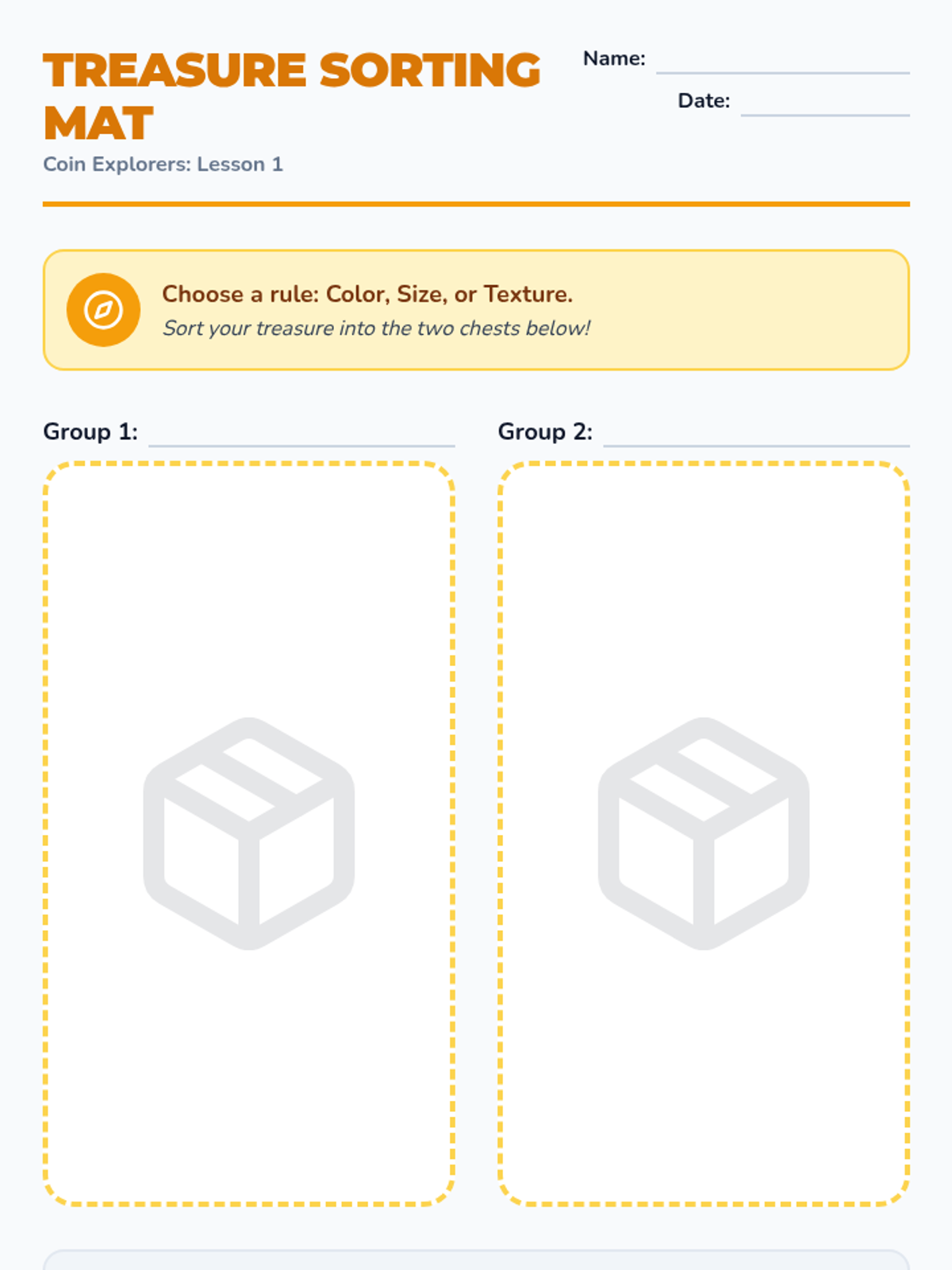
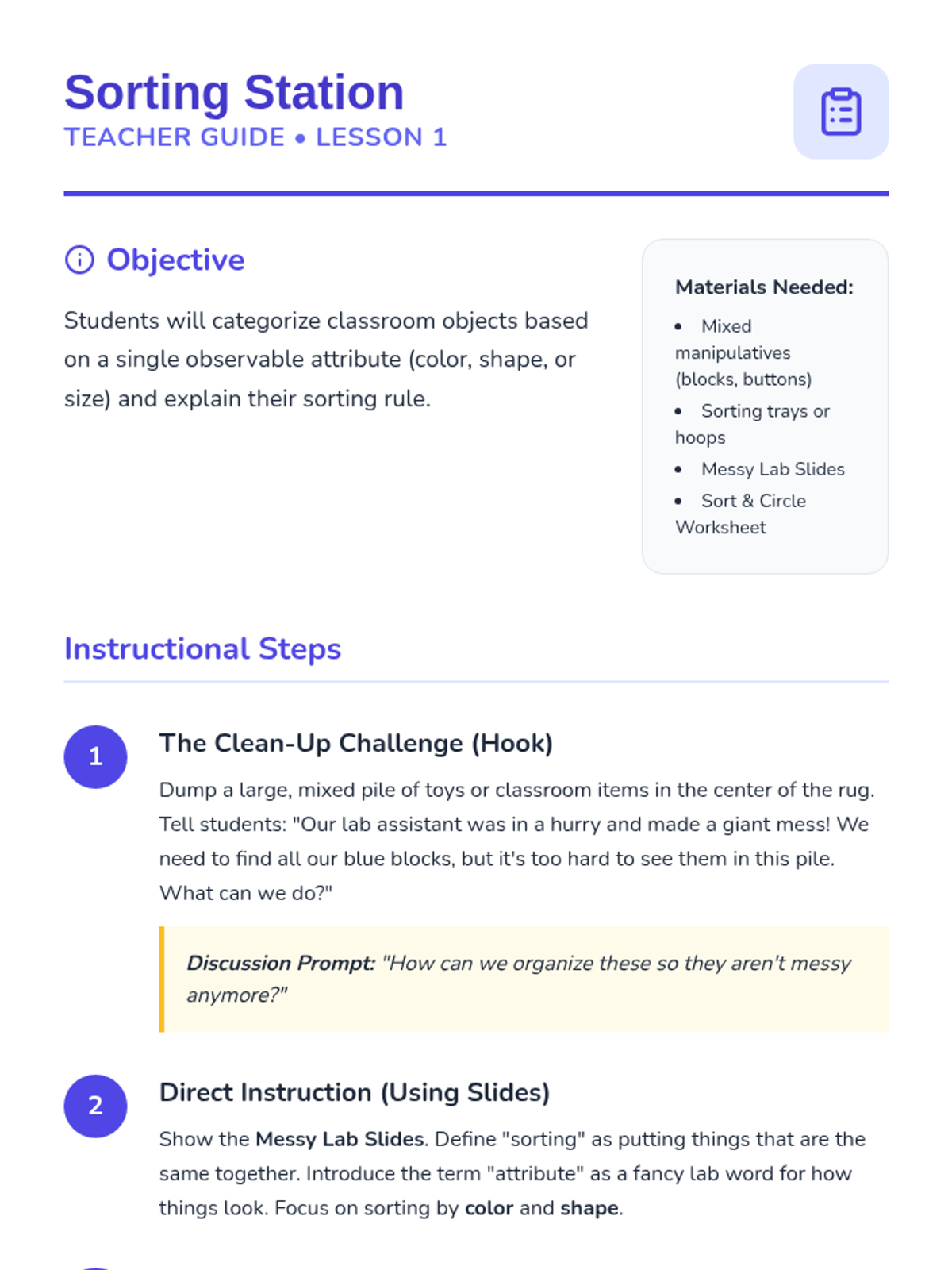
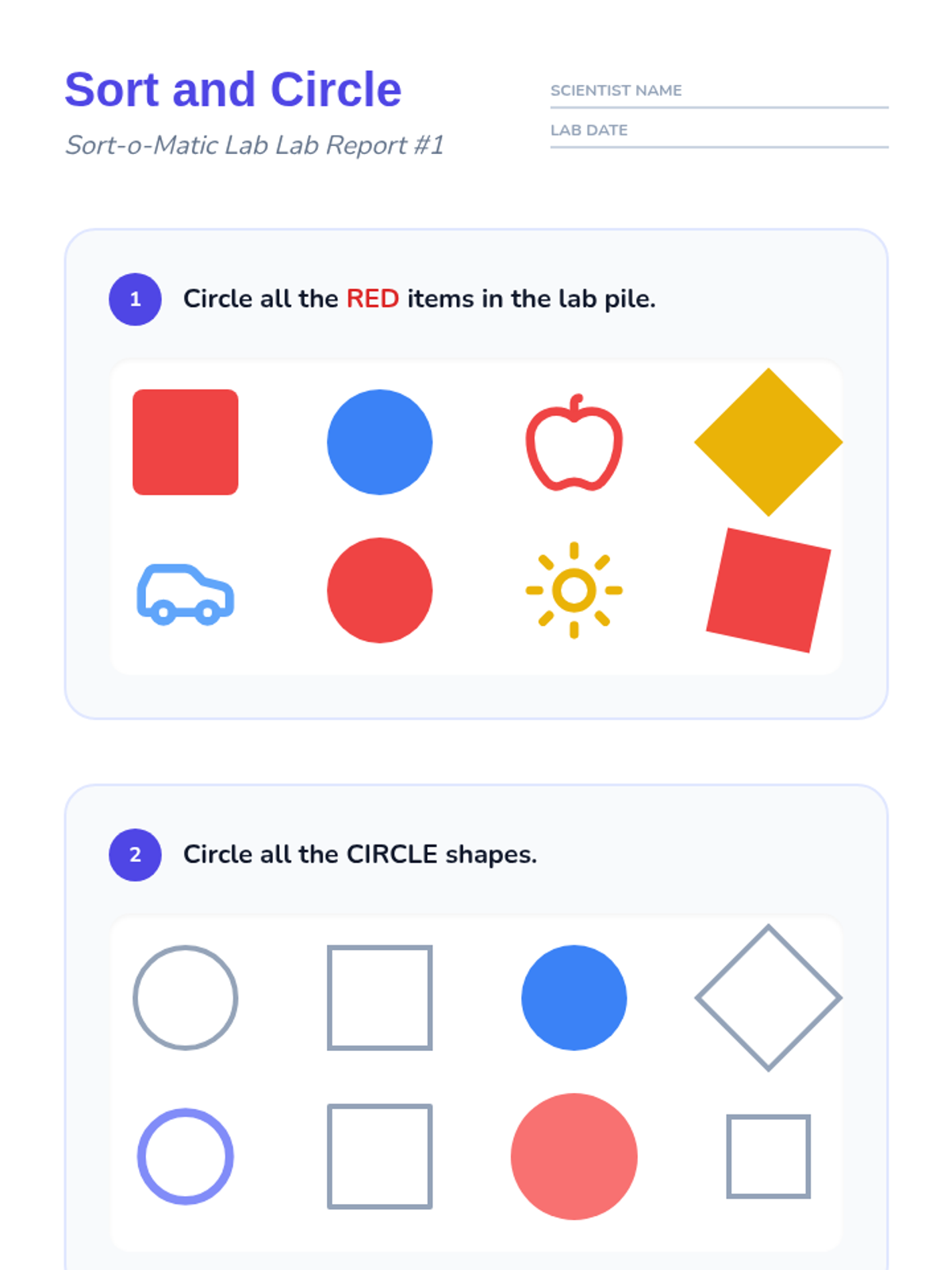
This sequence introduces Kindergarten students to sorting and classifying objects by attributes. They learn to group items by color, shape, size, and texture, explore flexible thinking by re-sorting the same set, and begin quantifying data by counting categories.
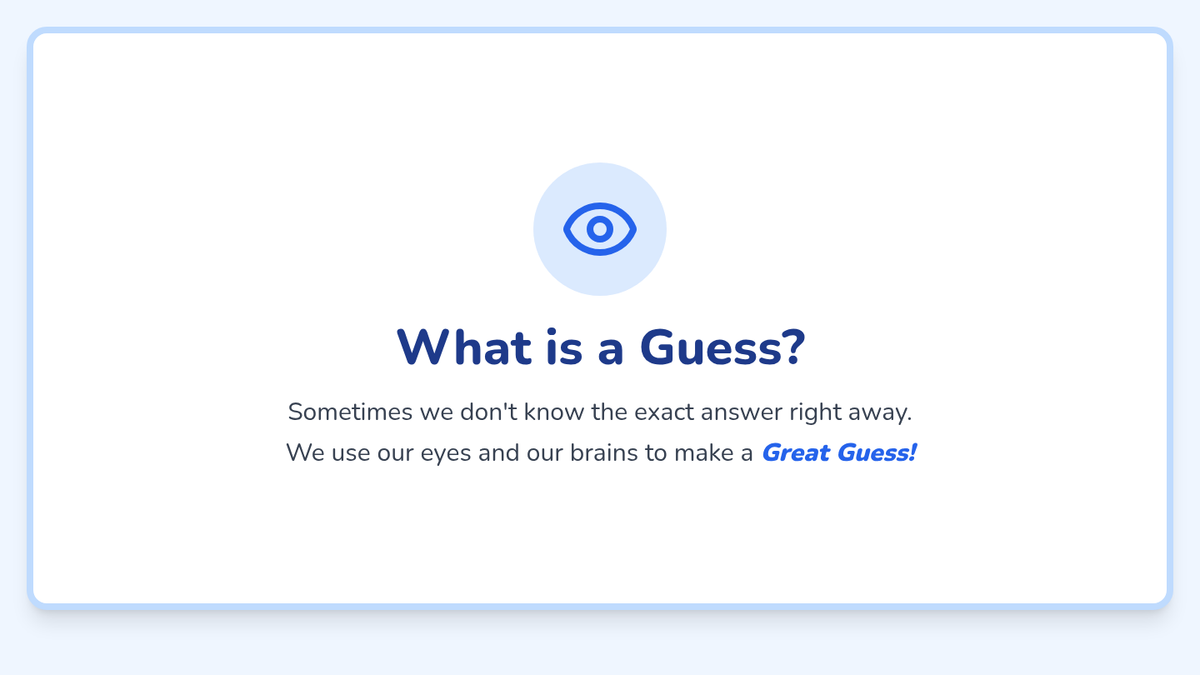
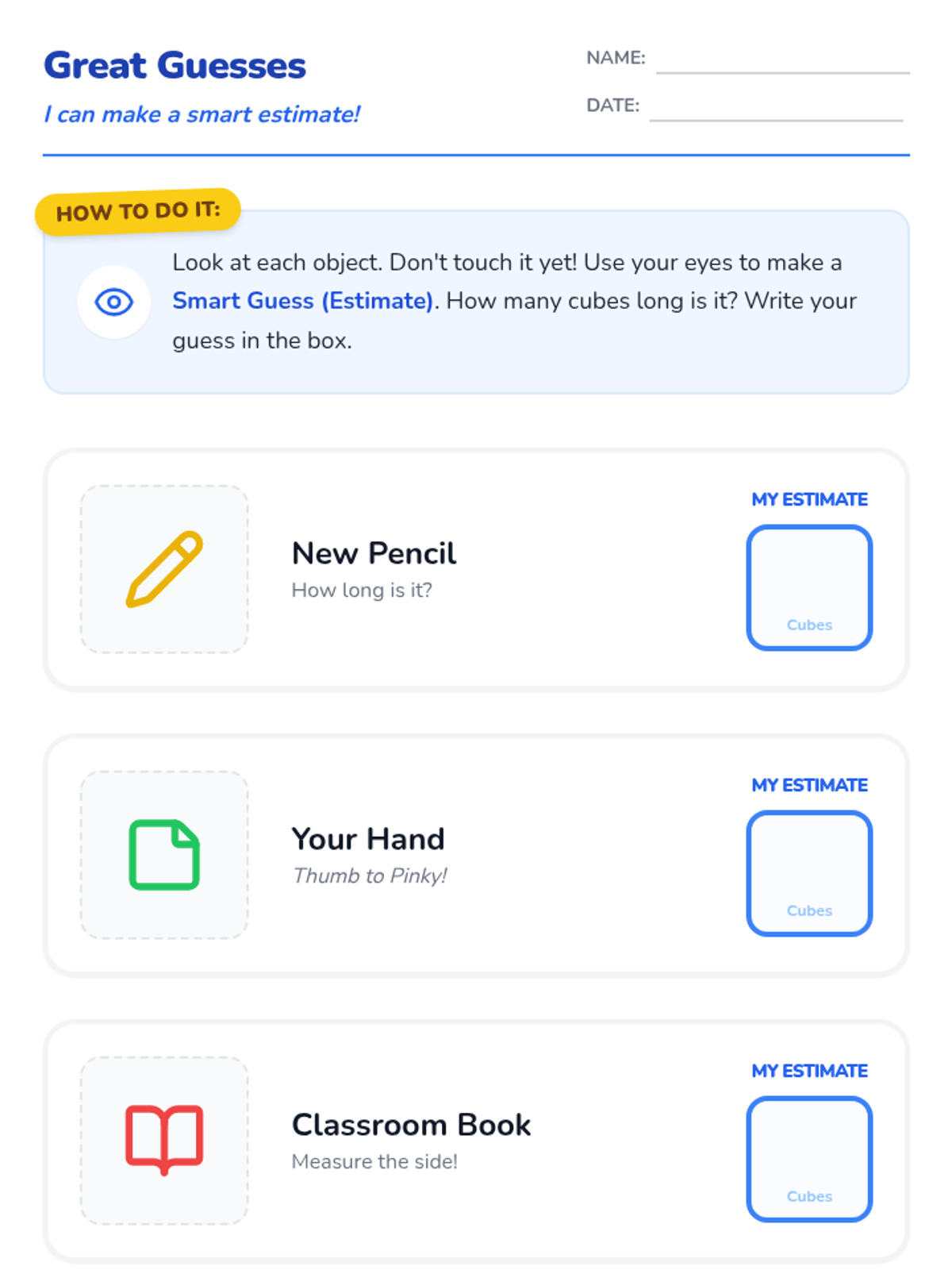
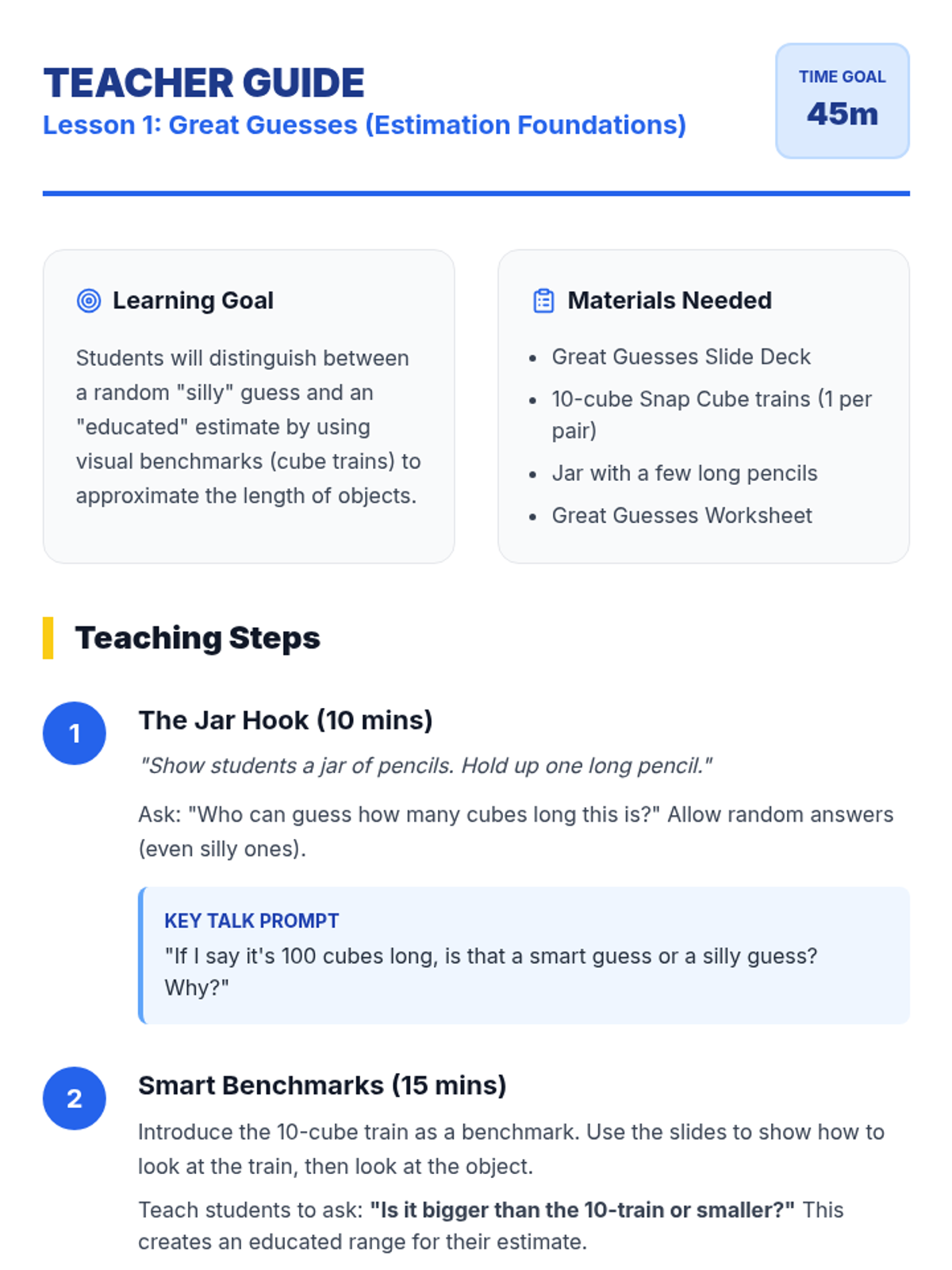
A Kindergarten sequence bridging the gap between estimation and standard measurement tools. Students explore educated guesses, non-standard units, and the functional differences between rigid rulers and flexible measuring tapes through hands-on role-play and inquiry.
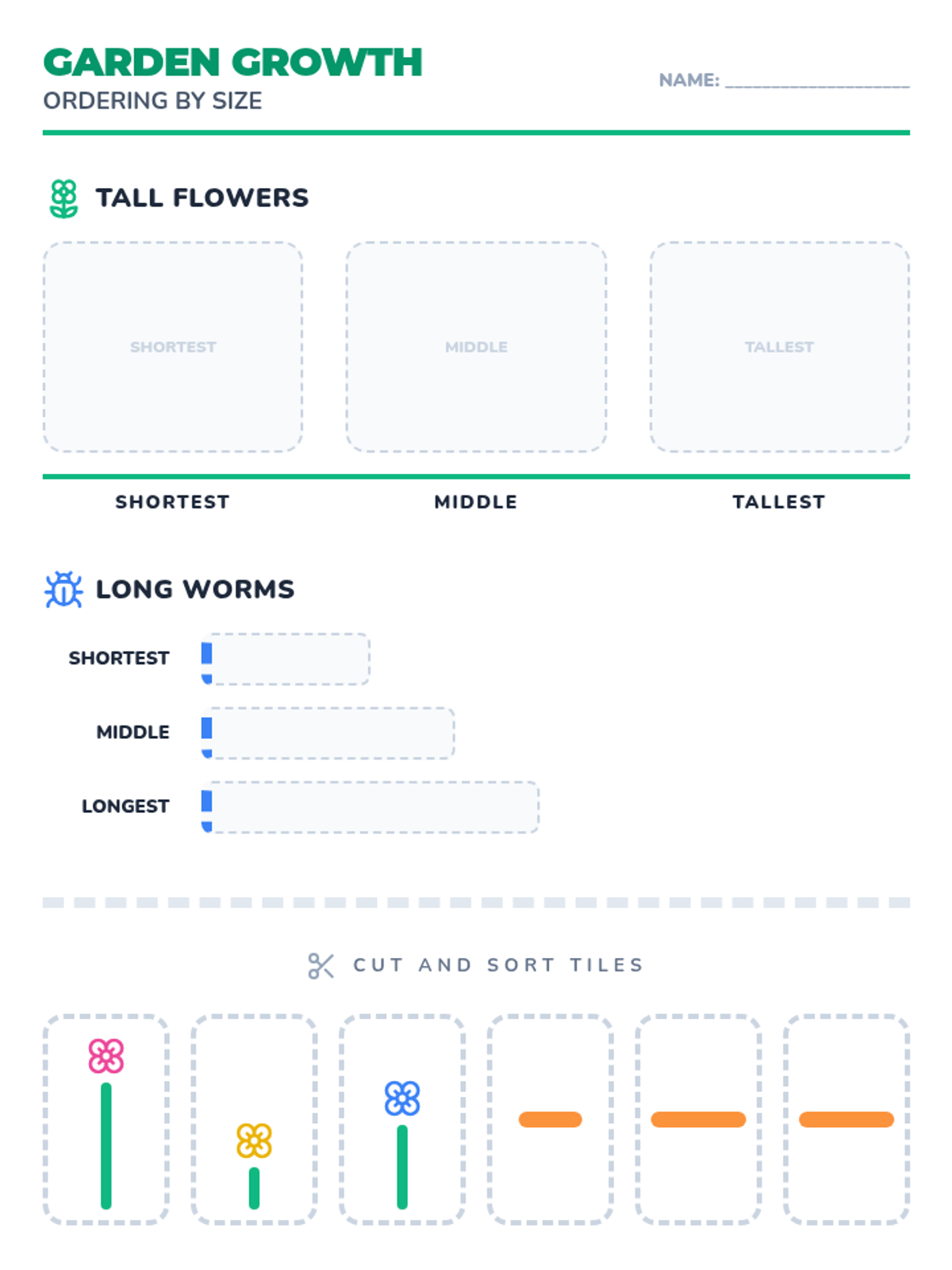
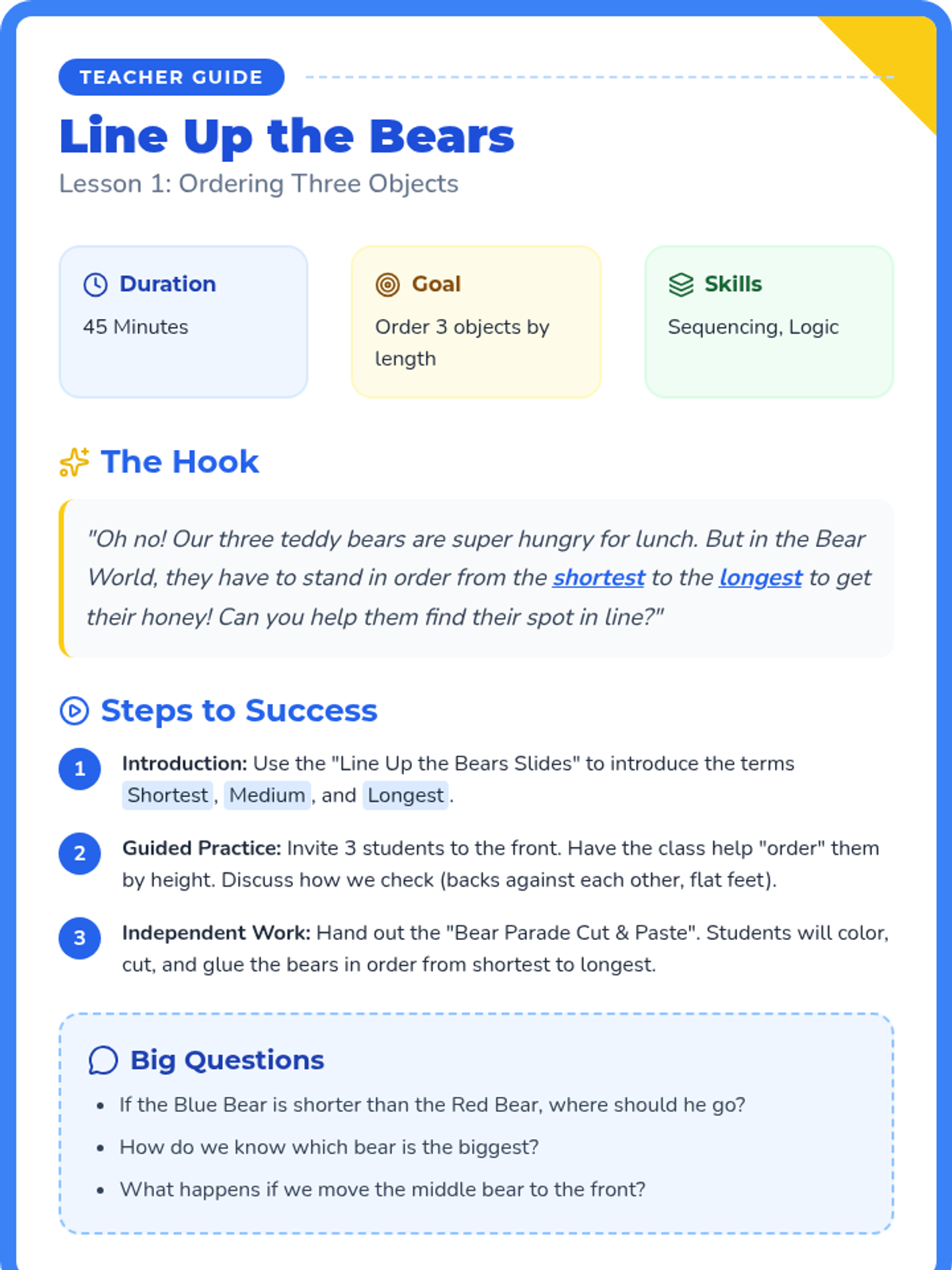
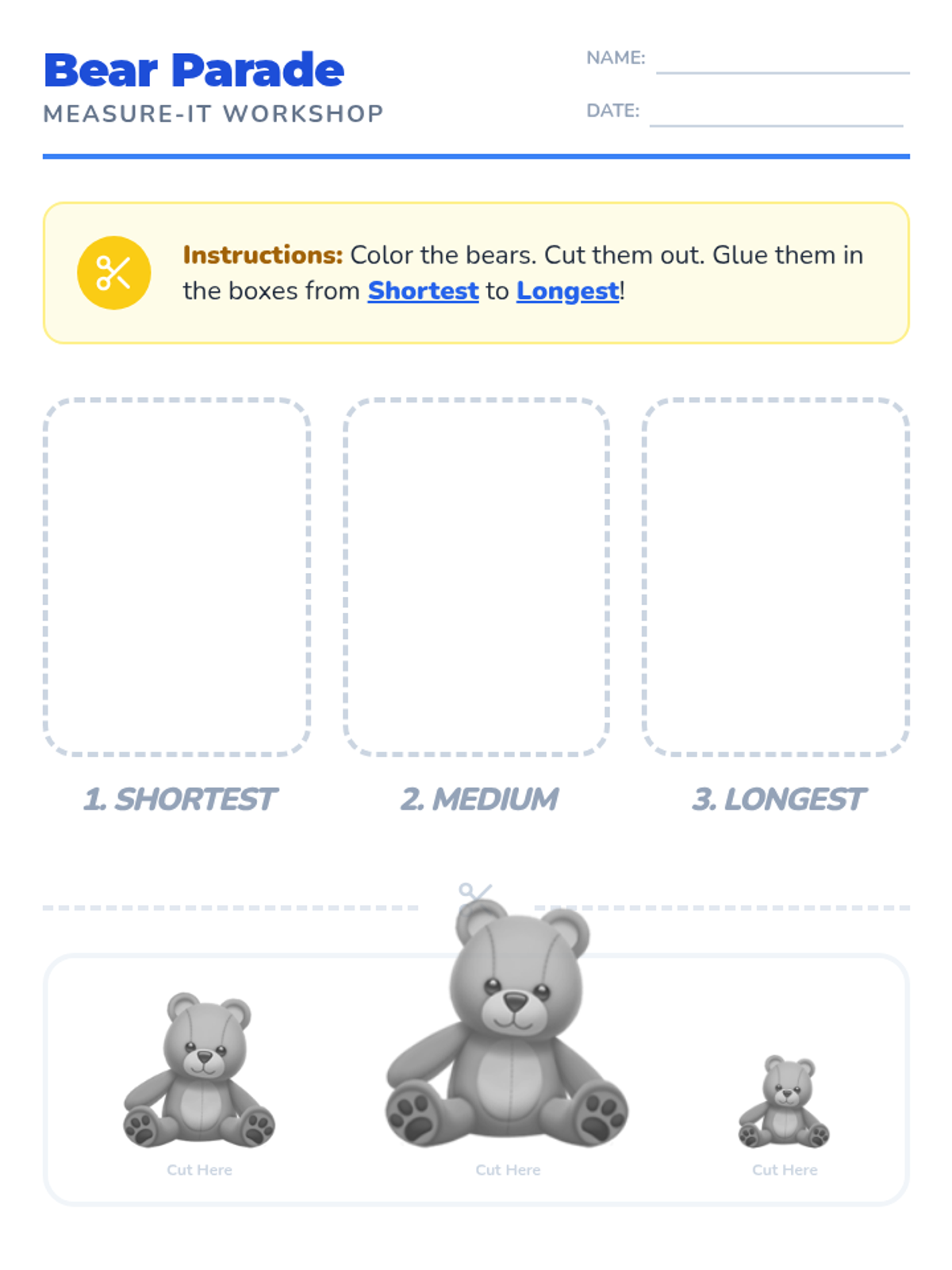
A Kindergarten sequence focusing on ordering and seriation, where students arrange multiple objects by length and height, moving from comparing two items to organizing sets of three or more.
A Kindergarten math sequence focusing on non-standard measurement. Students learn to use units like cubes and paperclips, emphasizing the rules of precision (no gaps or overlaps) and exploring how to measure irregular objects.
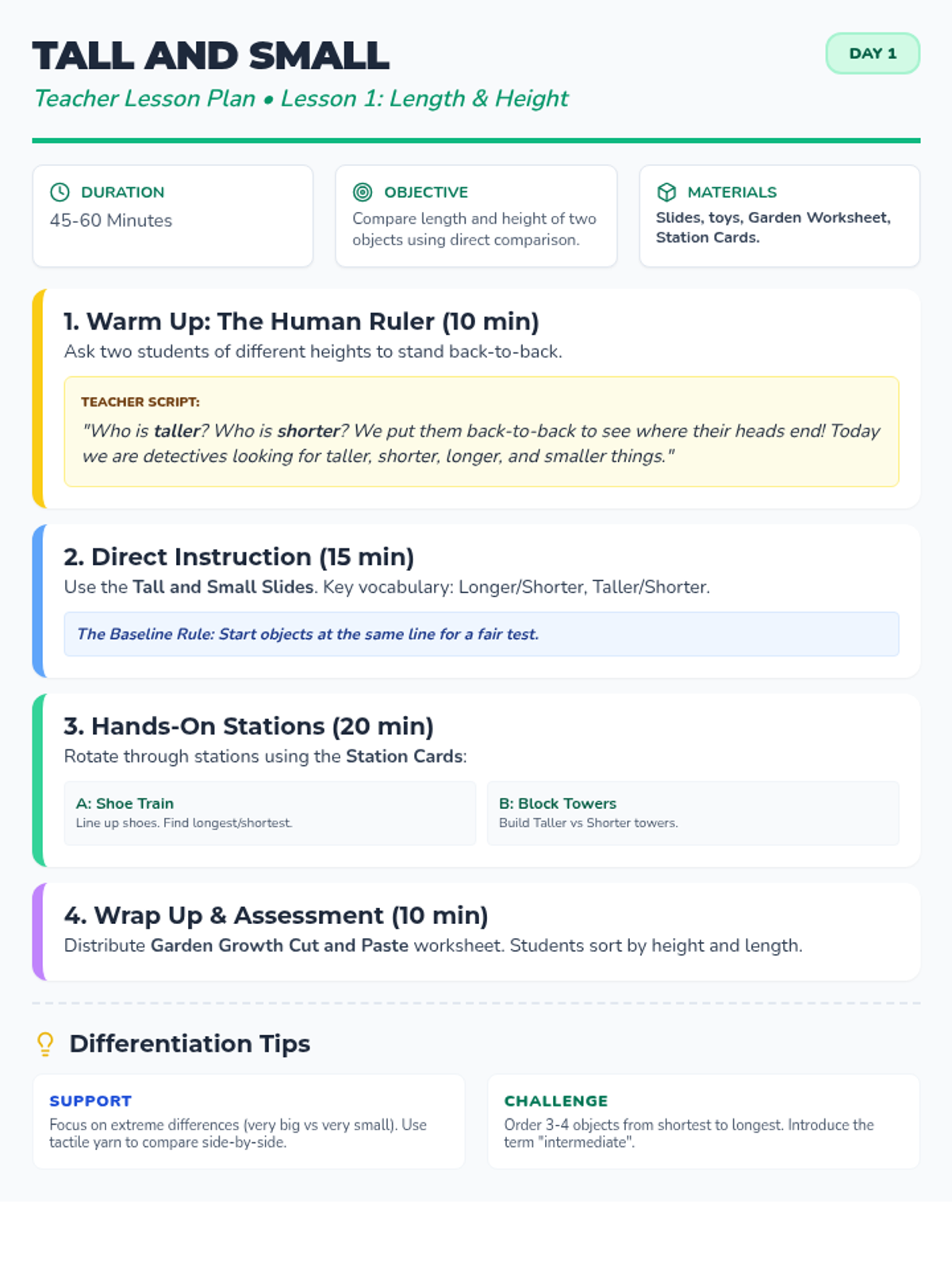
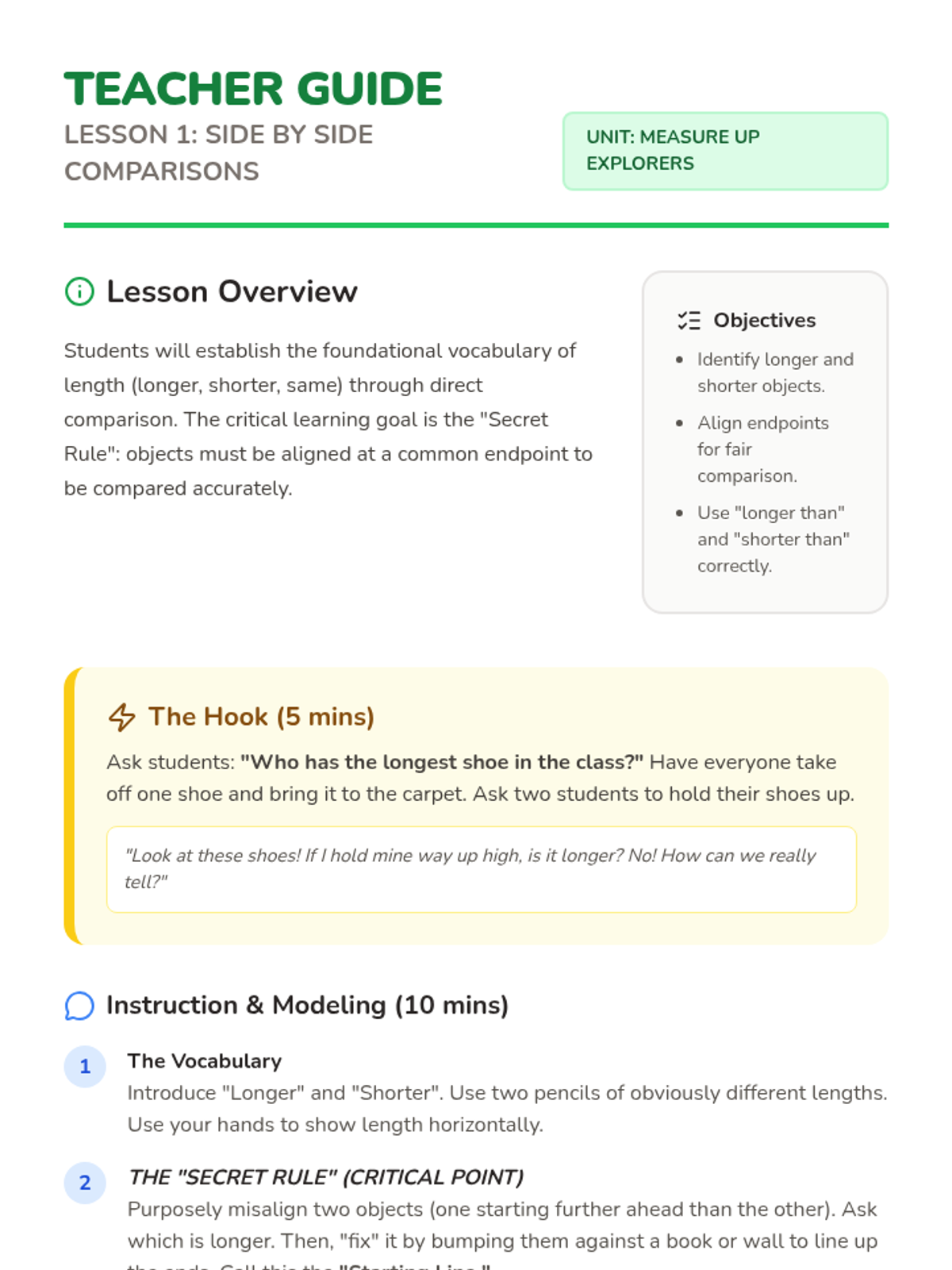
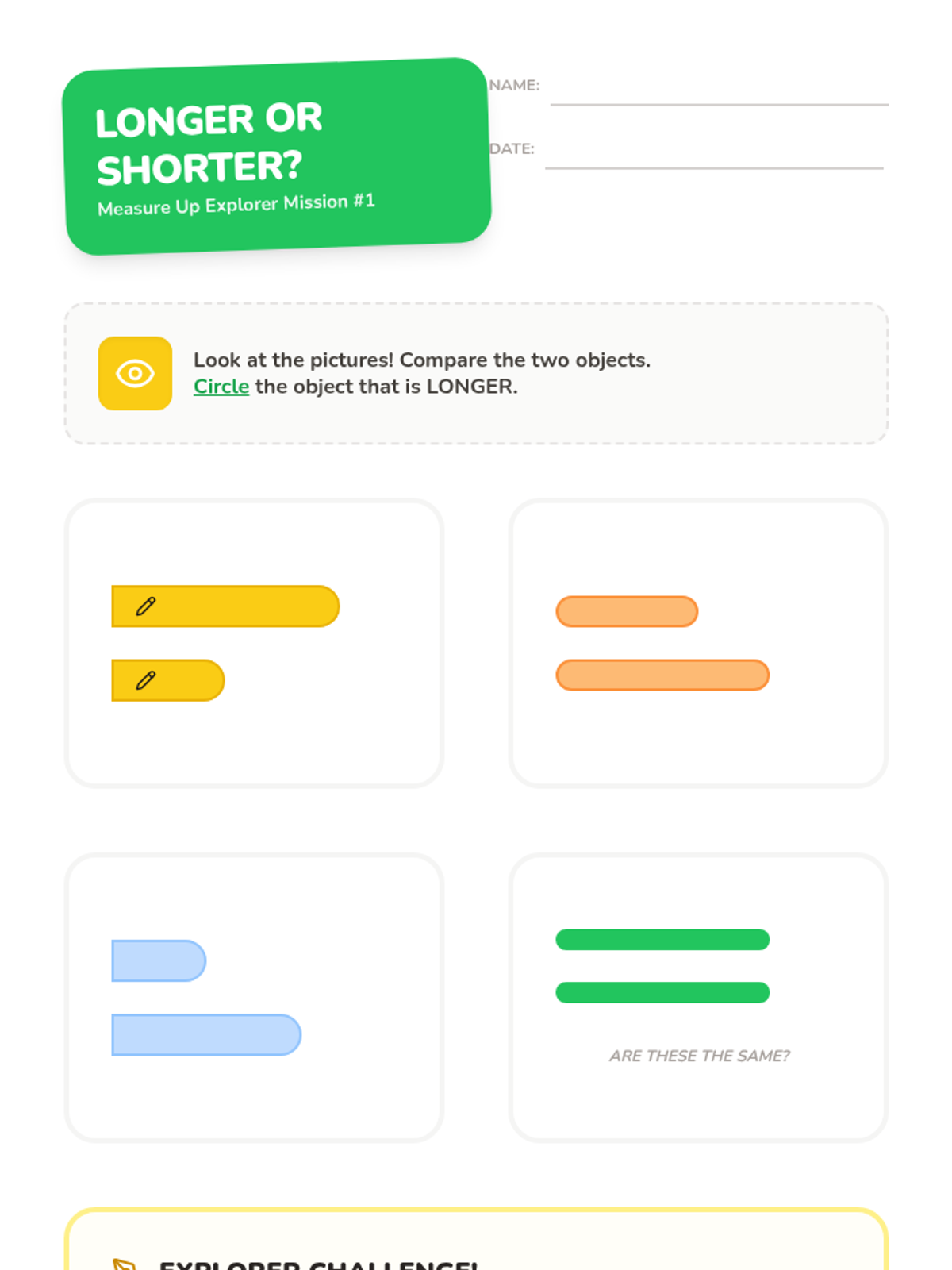
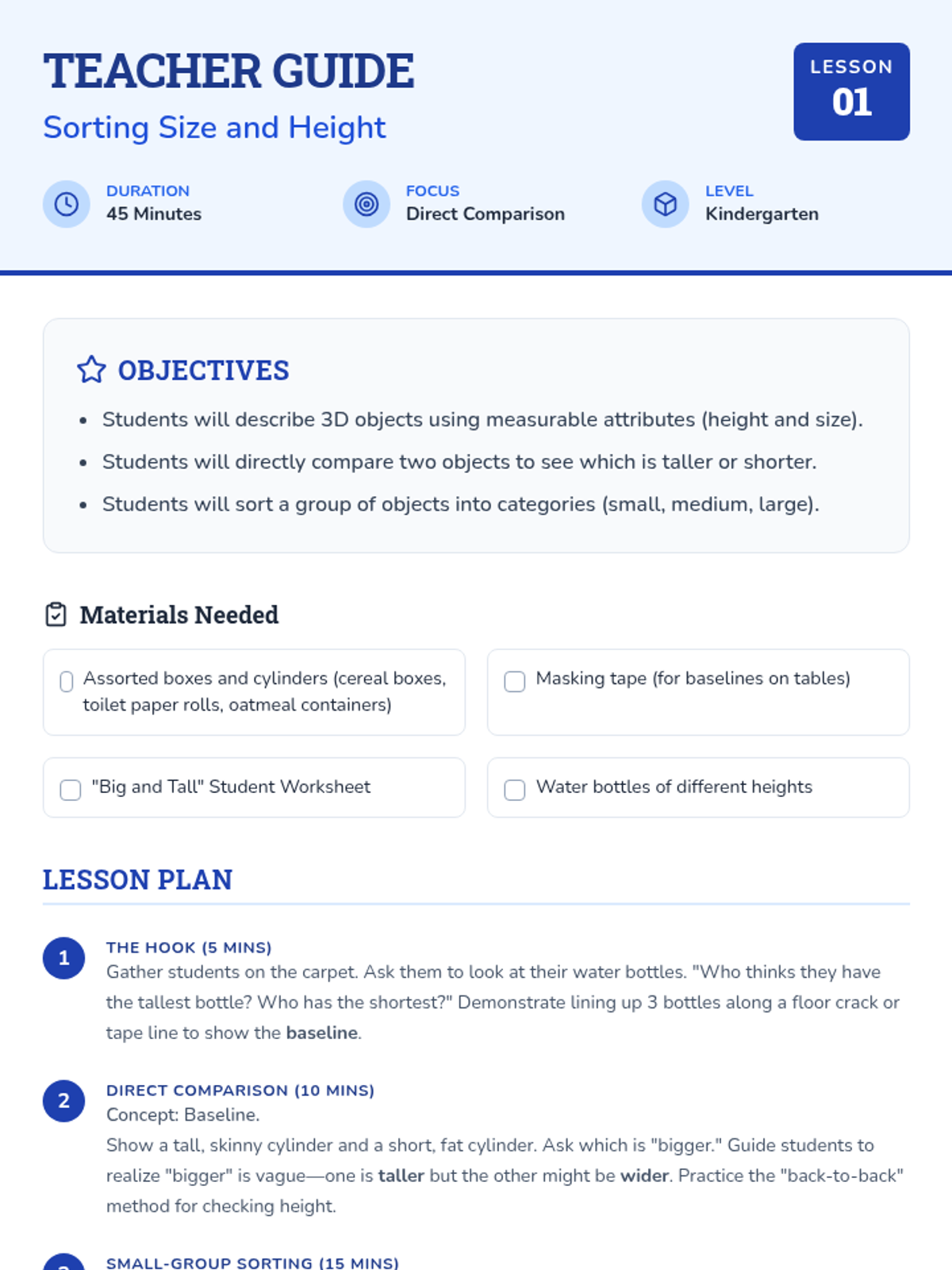
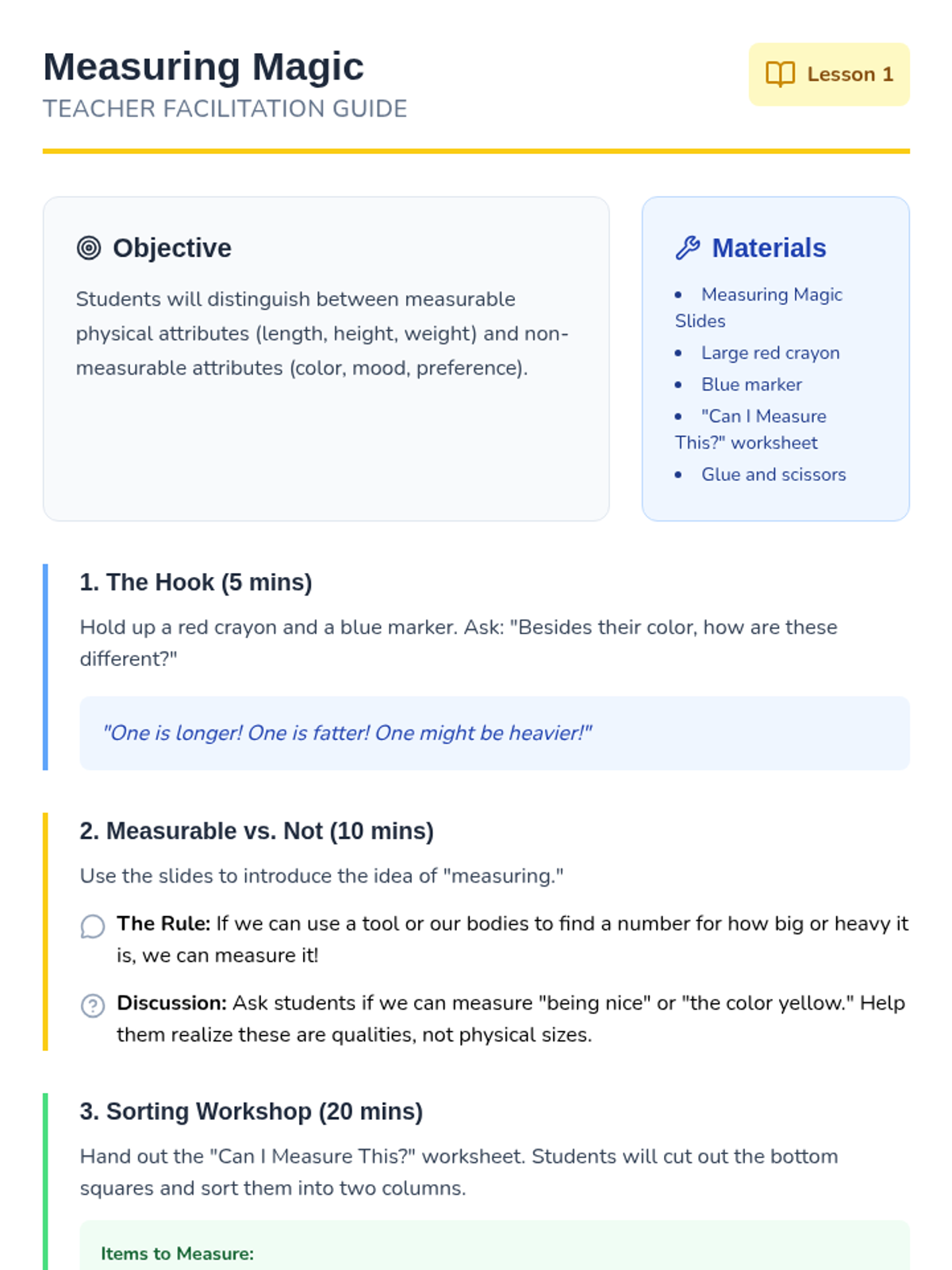
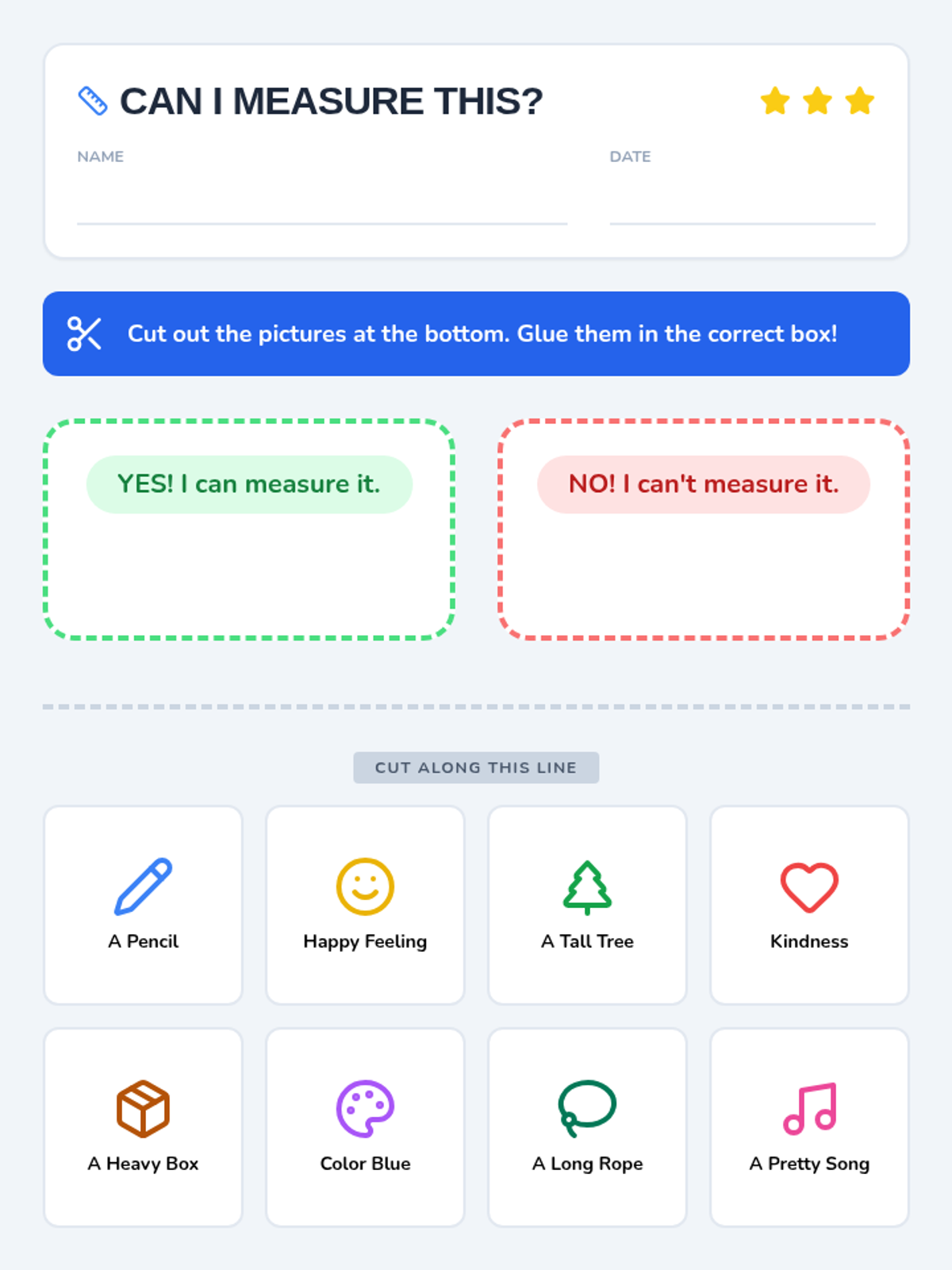
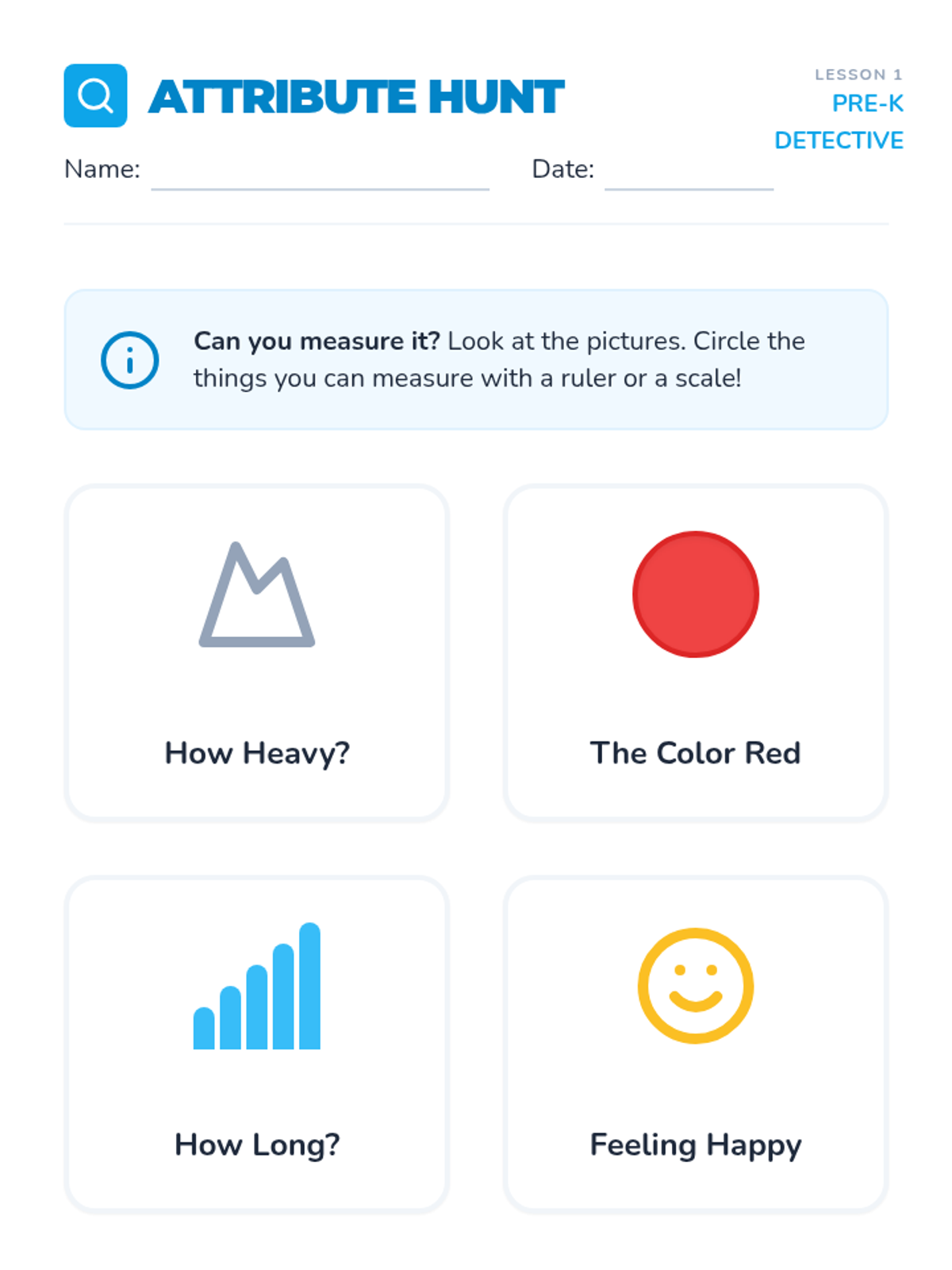
A foundational introduction to measurement for Kindergarten students, focusing on identifying measurable attributes and using direct comparison vocabulary like 'longer,' 'shorter,' 'taller,' and 'same.' Students will move from understanding what can be measured to accurately comparing objects using a common baseline.
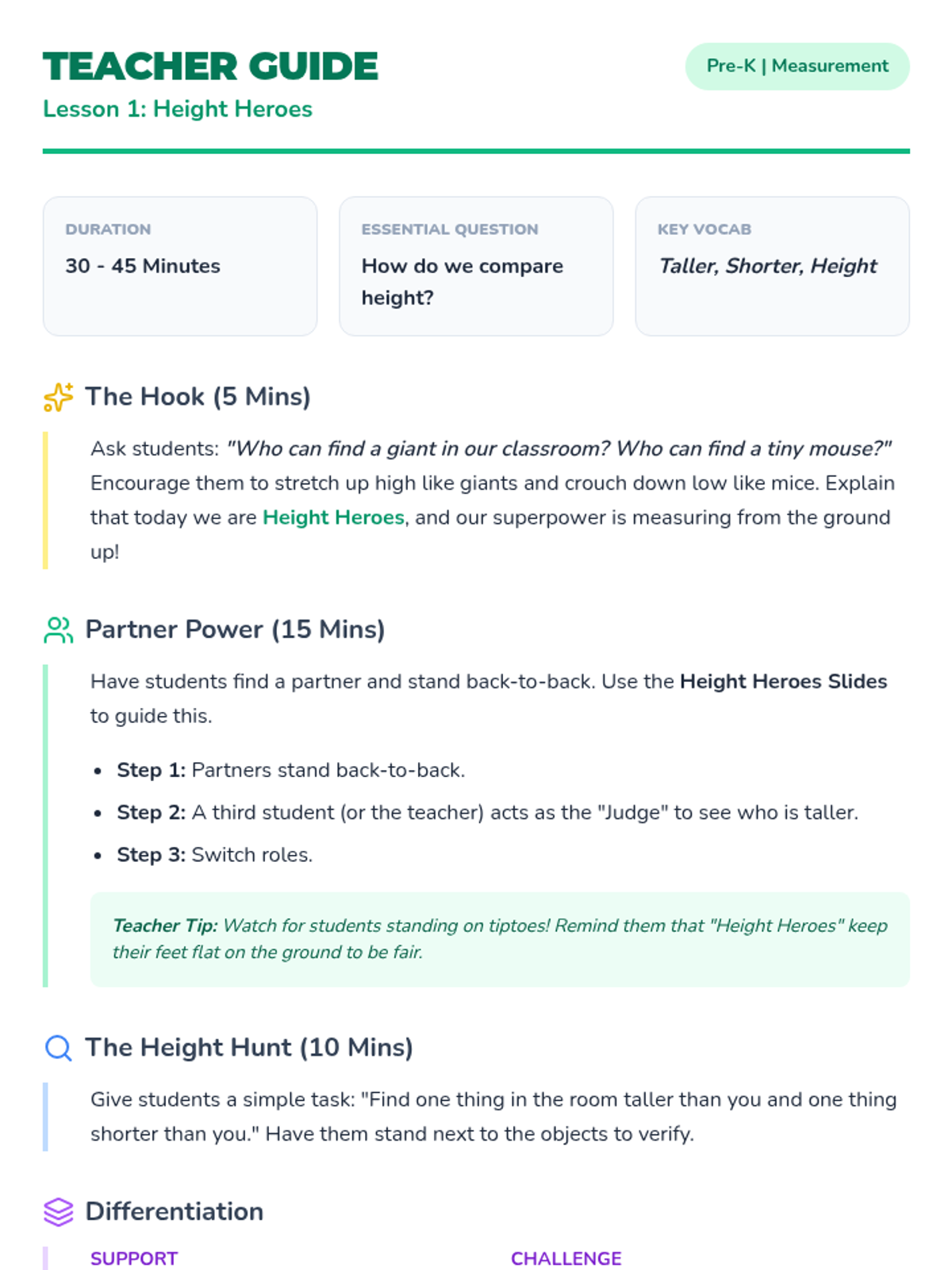
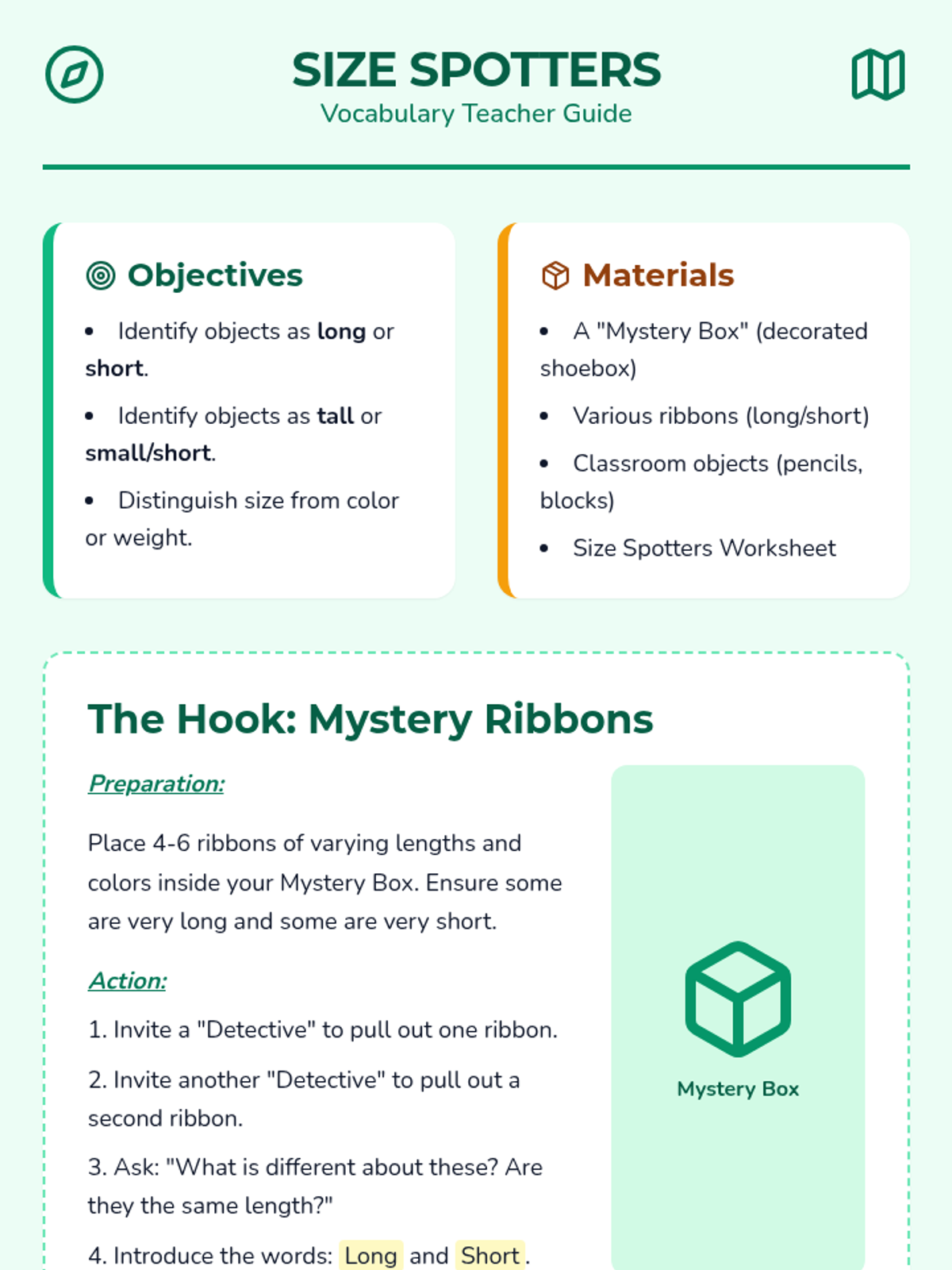
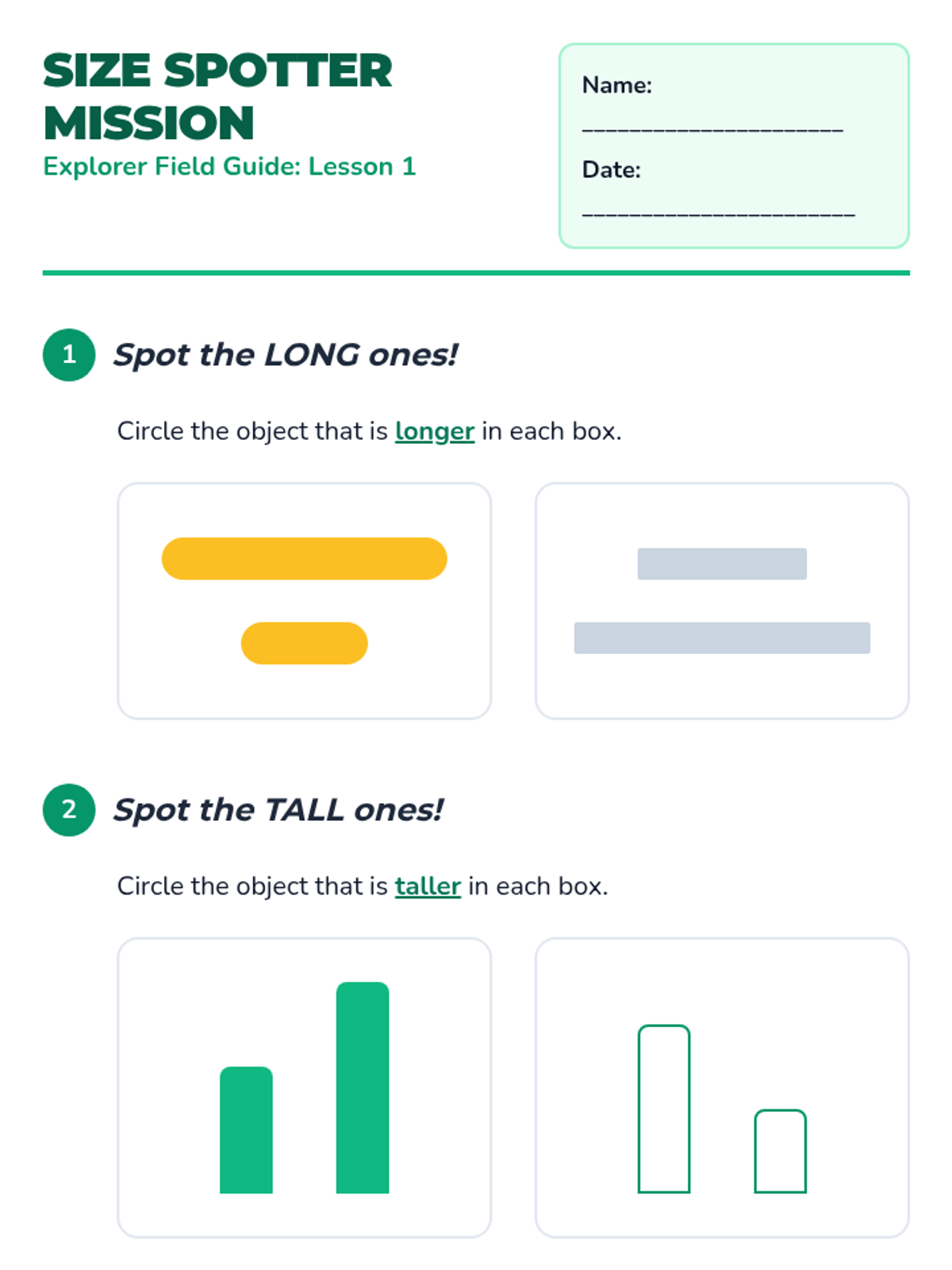
A Pre-K sequence introducing length and height through direct comparison, seriation, and non-standard measurement using the theme of 'Little Explorers'. Students learn to align endpoints and use vocabulary like taller, shorter, and longer.
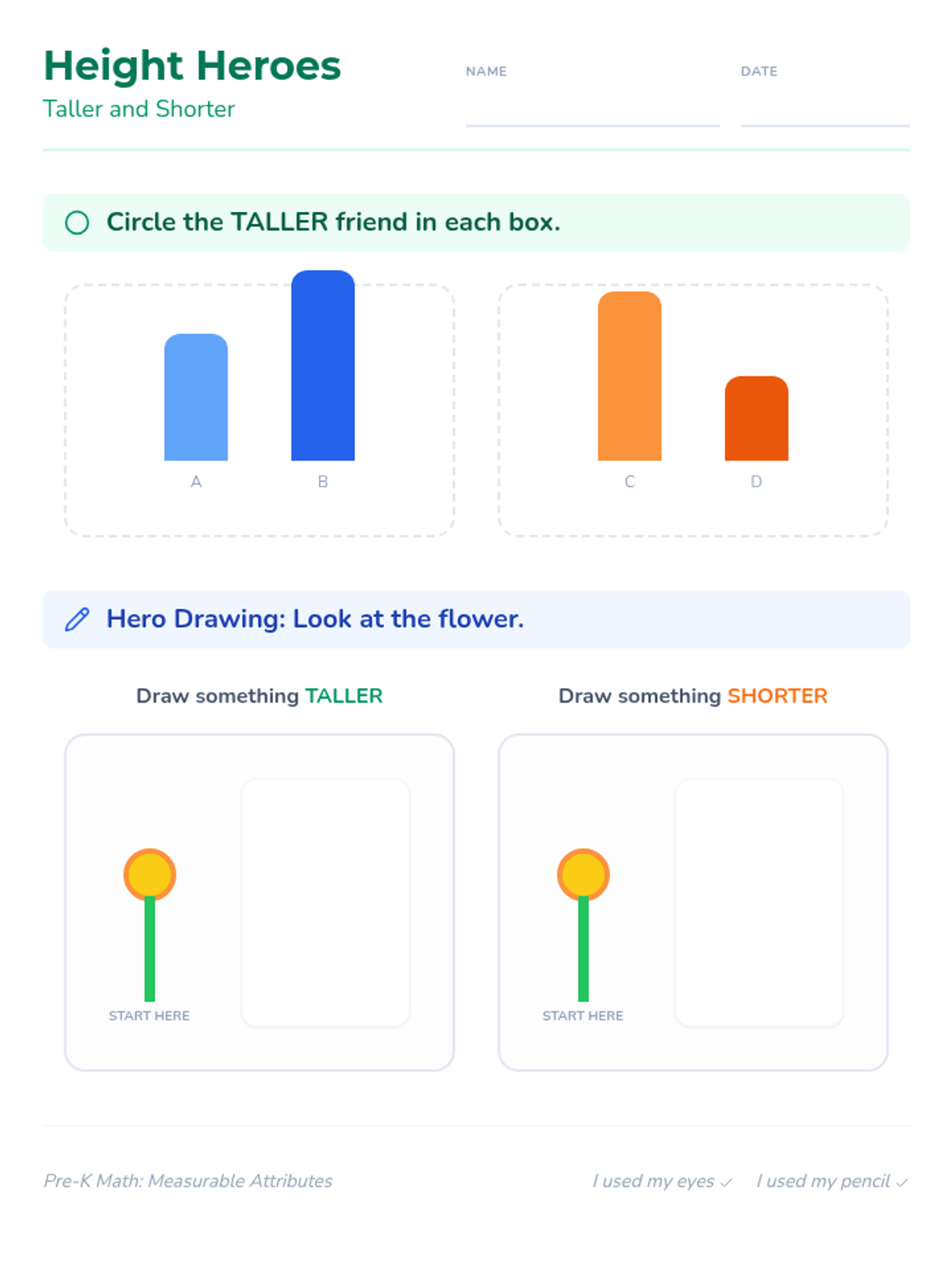
A foundational measurement unit for Kindergarten students focusing on length and height. Students explore vocabulary, endpoint alignment, and ordering objects through hands-on activities.
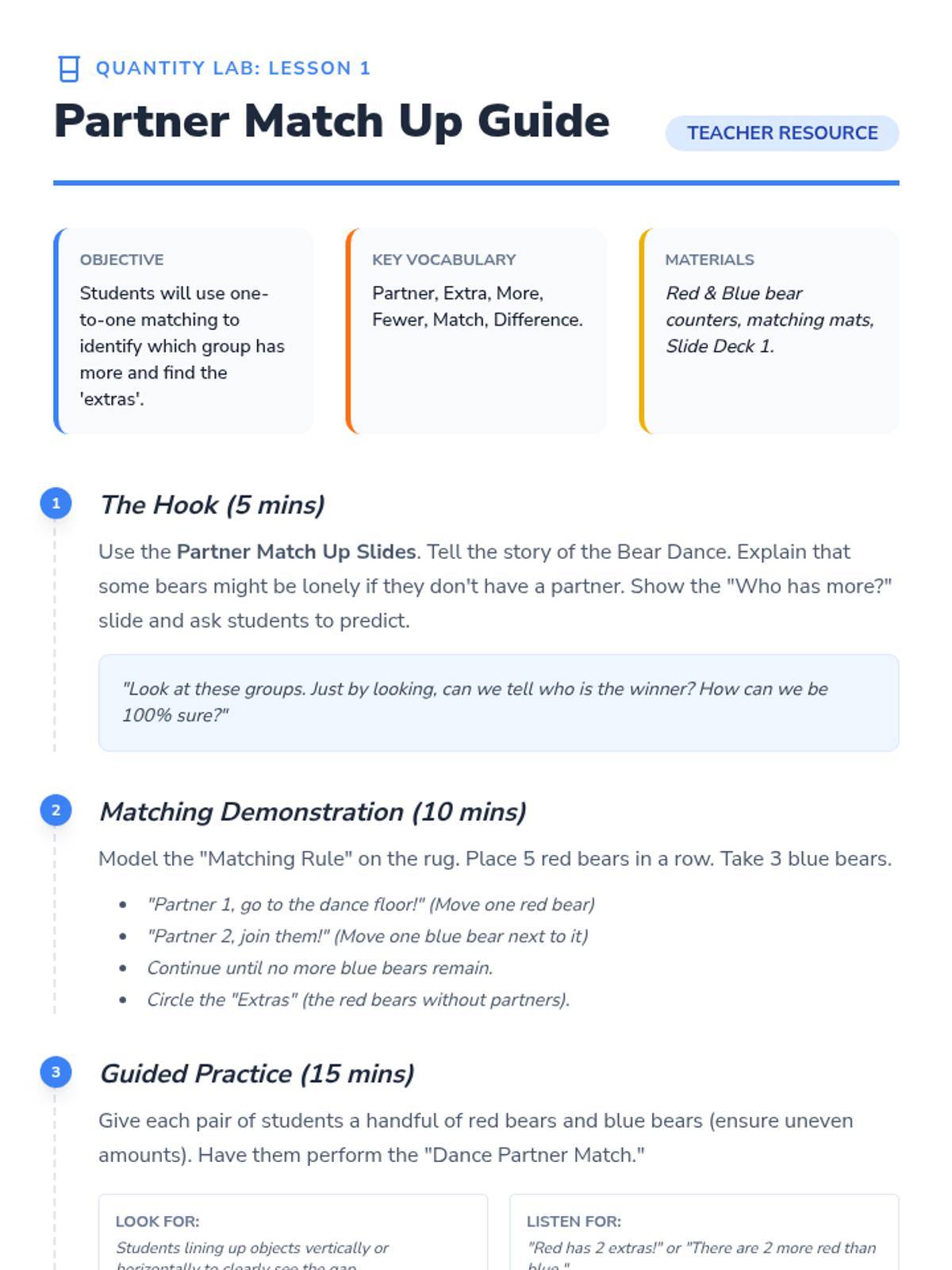
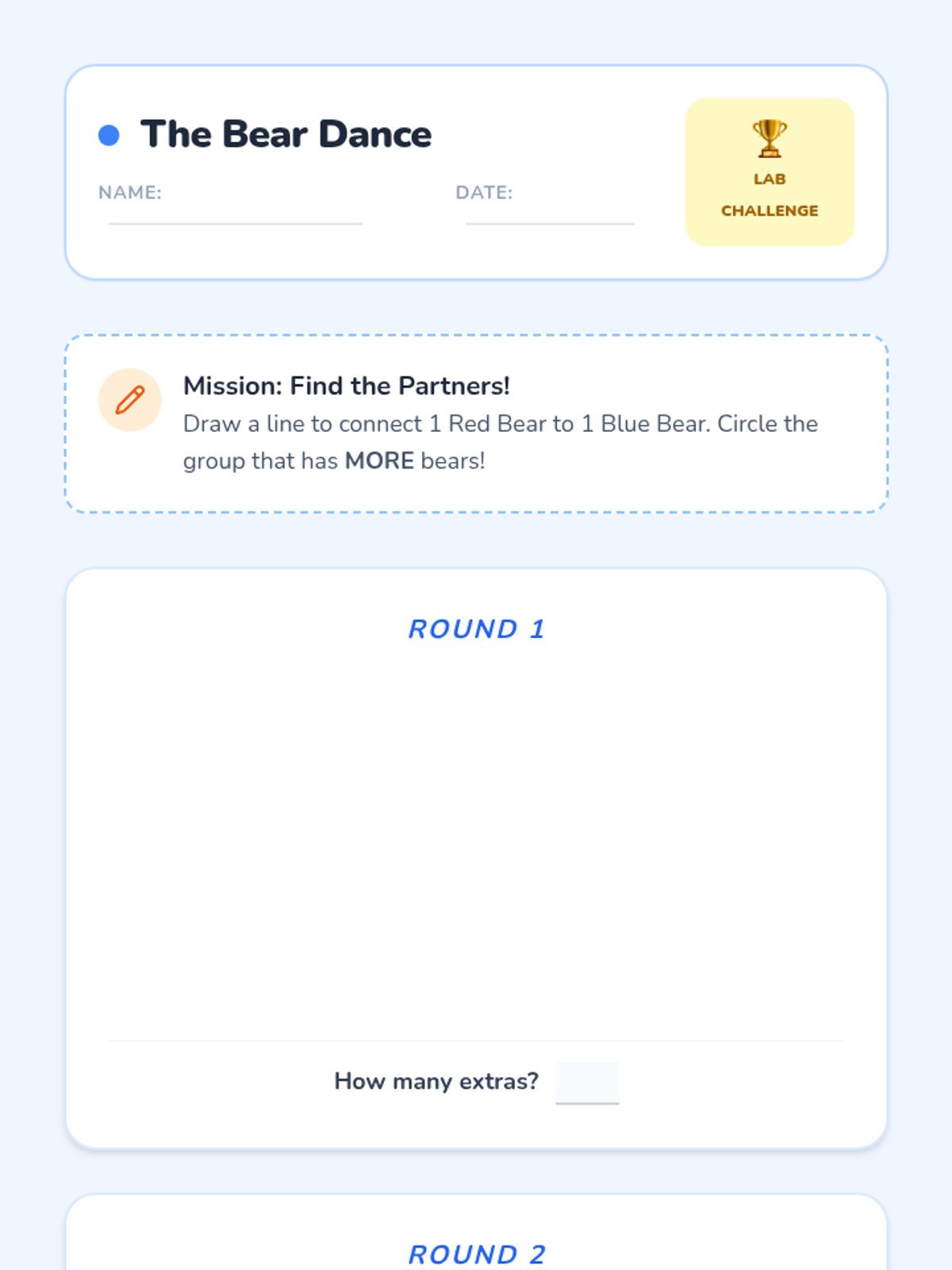
A Kindergarten math sequence focusing on comparison problems. Students use matching, tower building, and data analysis to understand 'how many more' and 'how many fewer' through inquiry-based activities.
A hands-on Pre-K sequence where students explore length, weight, and capacity through sensory-rich experiences. Students move from general descriptors to specific comparative vocabulary like 'longer,' 'heavier,' and 'full.'
A Kindergarten sequence introducing length and height through hands-on comparison, focusing on vocabulary, alignment, and ordering three objects. Students explore these attributes through a 'Measure Explorers' theme.
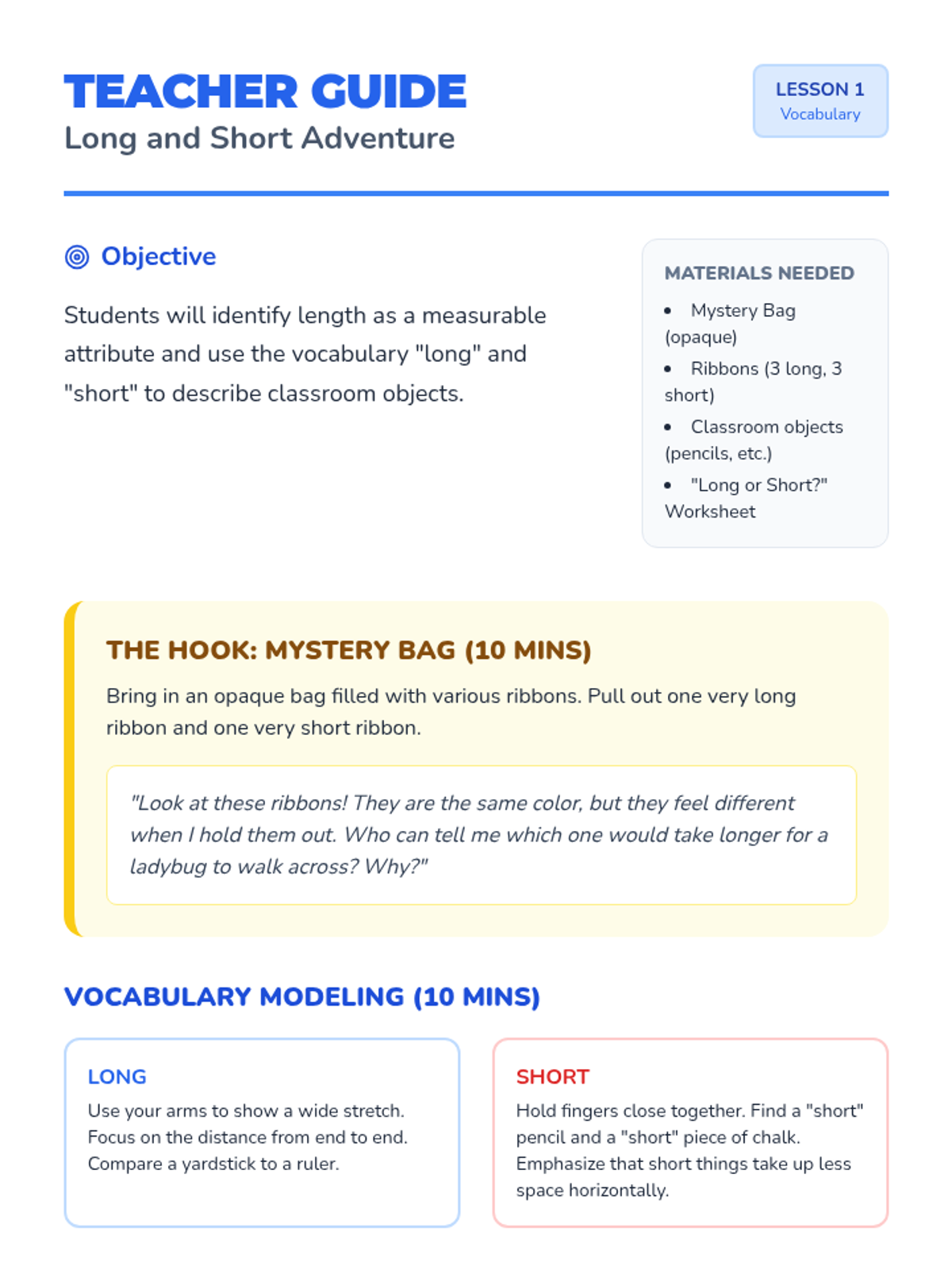
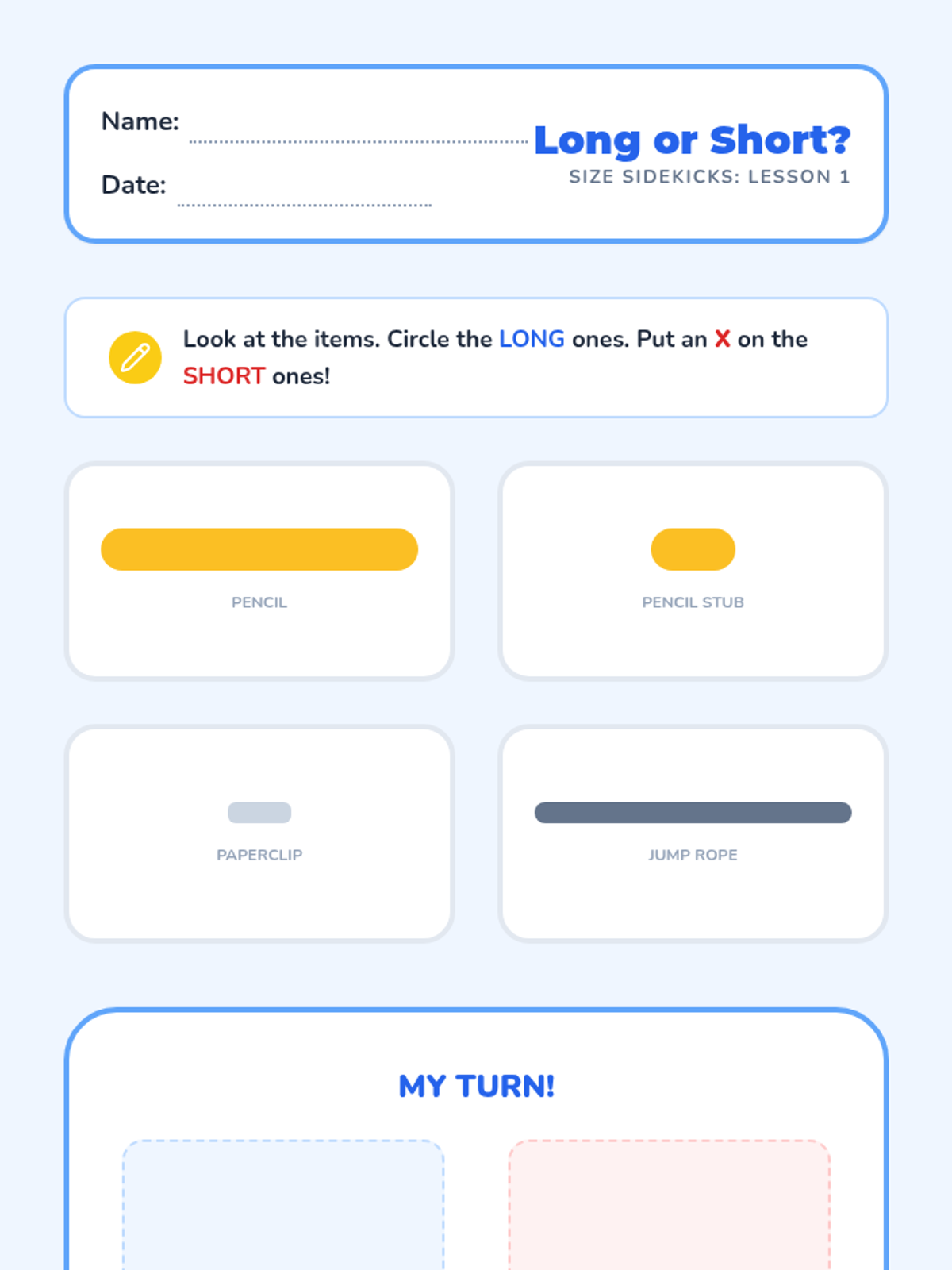
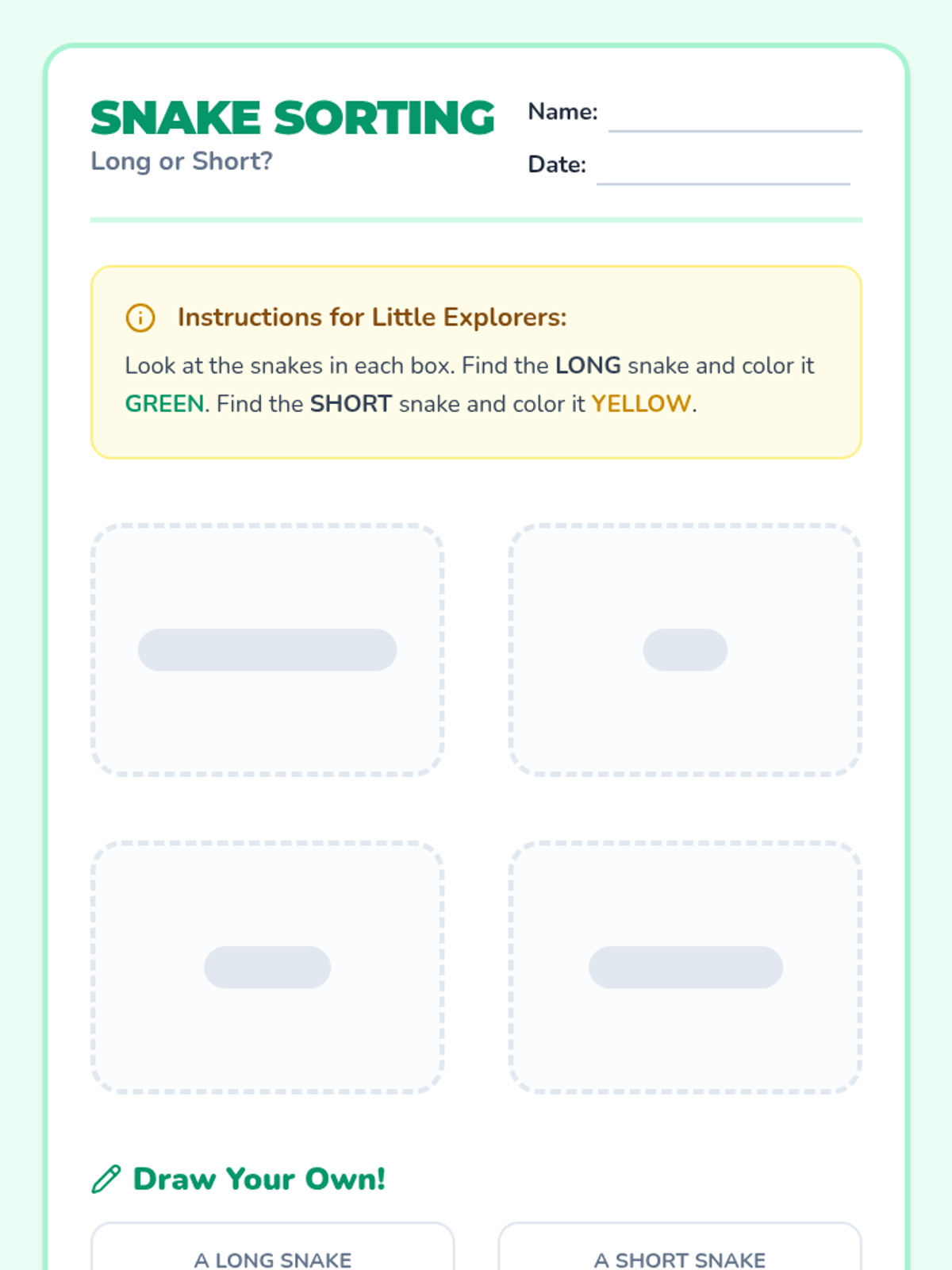
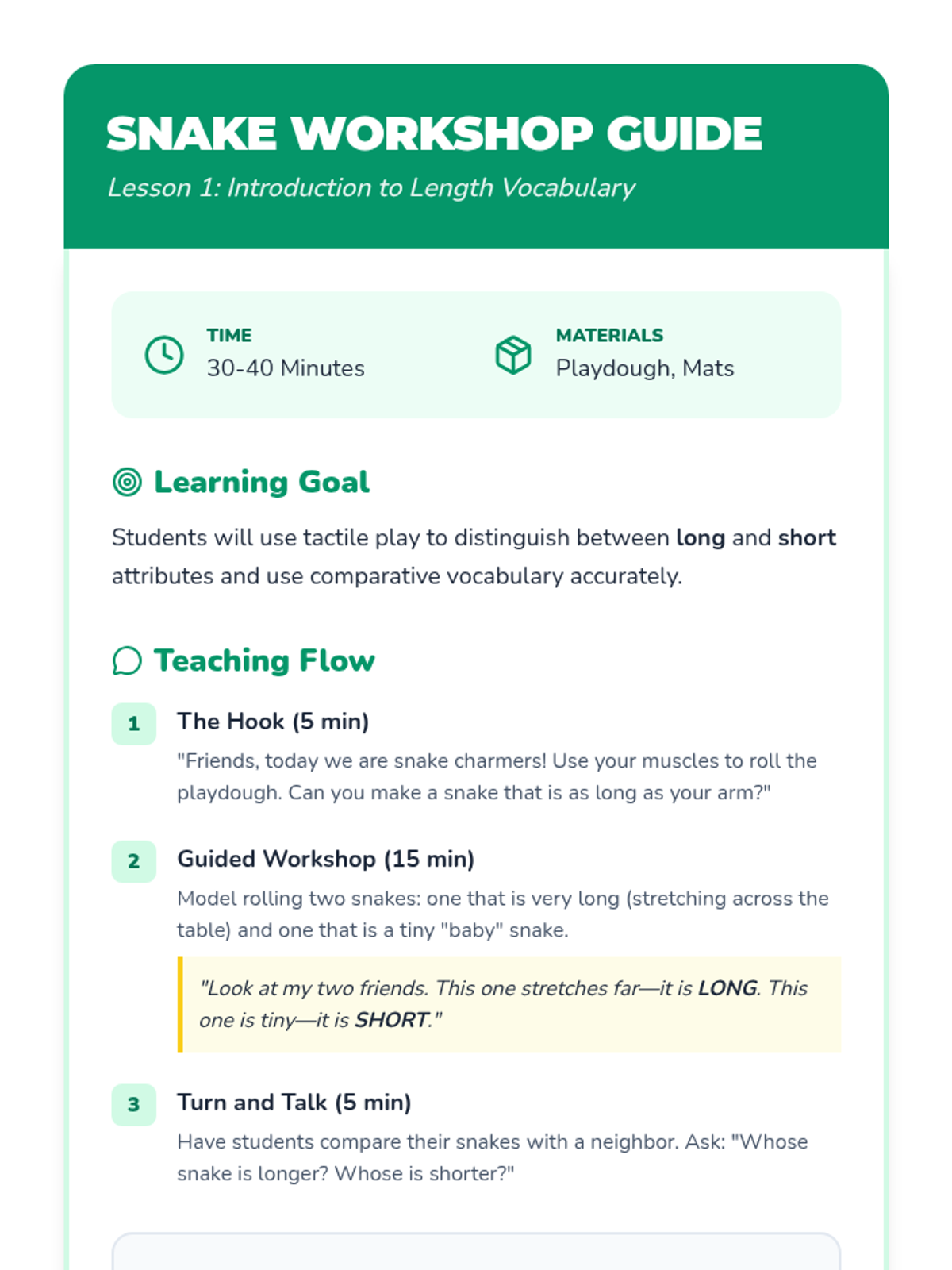
A foundational Pre-K sequence introducing length and height through tactile play, direct comparison of objects and peers, and ordering sets by size. Students develop essential vocabulary like 'long', 'short', 'tall', and 'taller' while learning the importance of a common baseline for fair measurement.
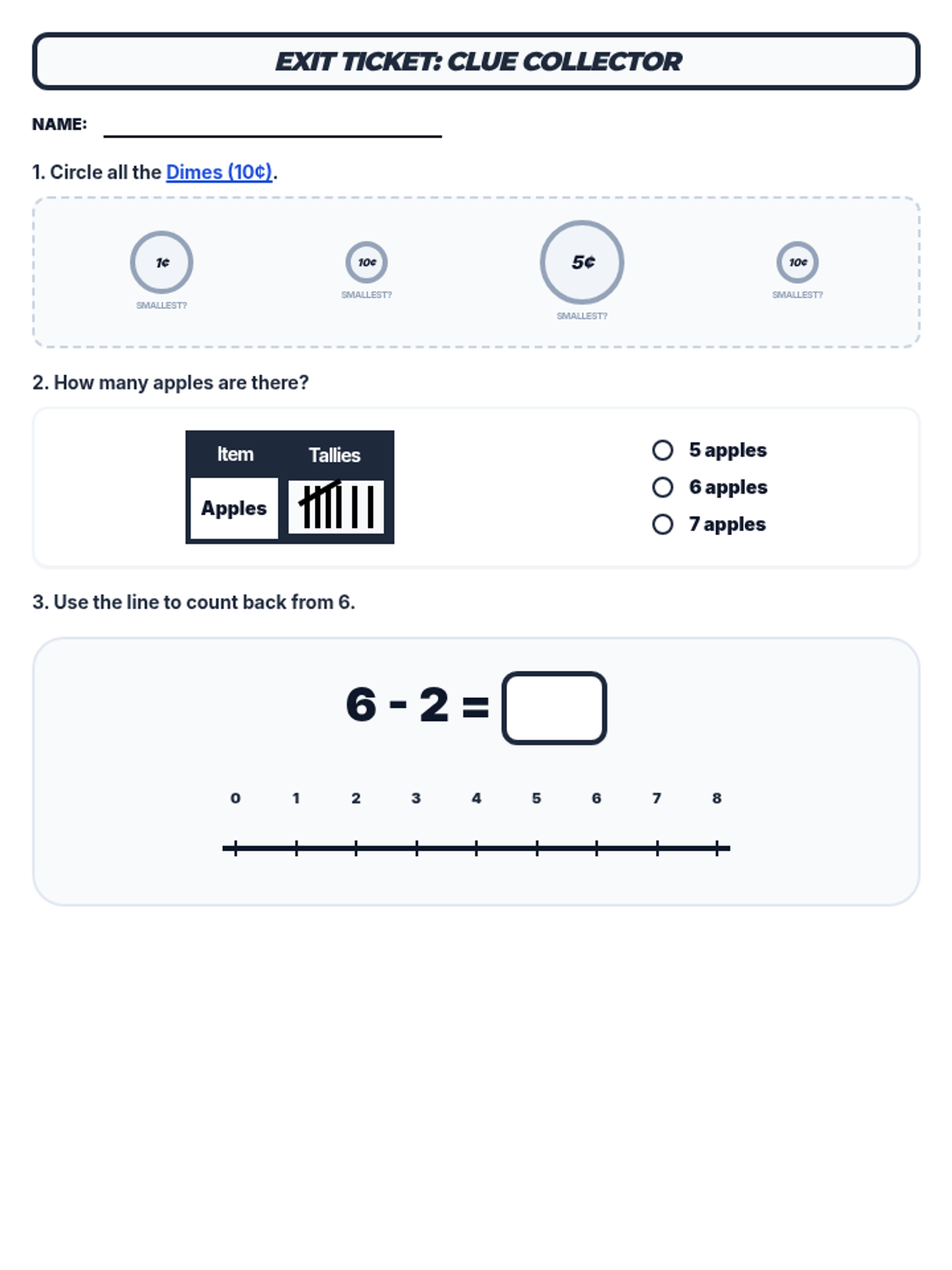
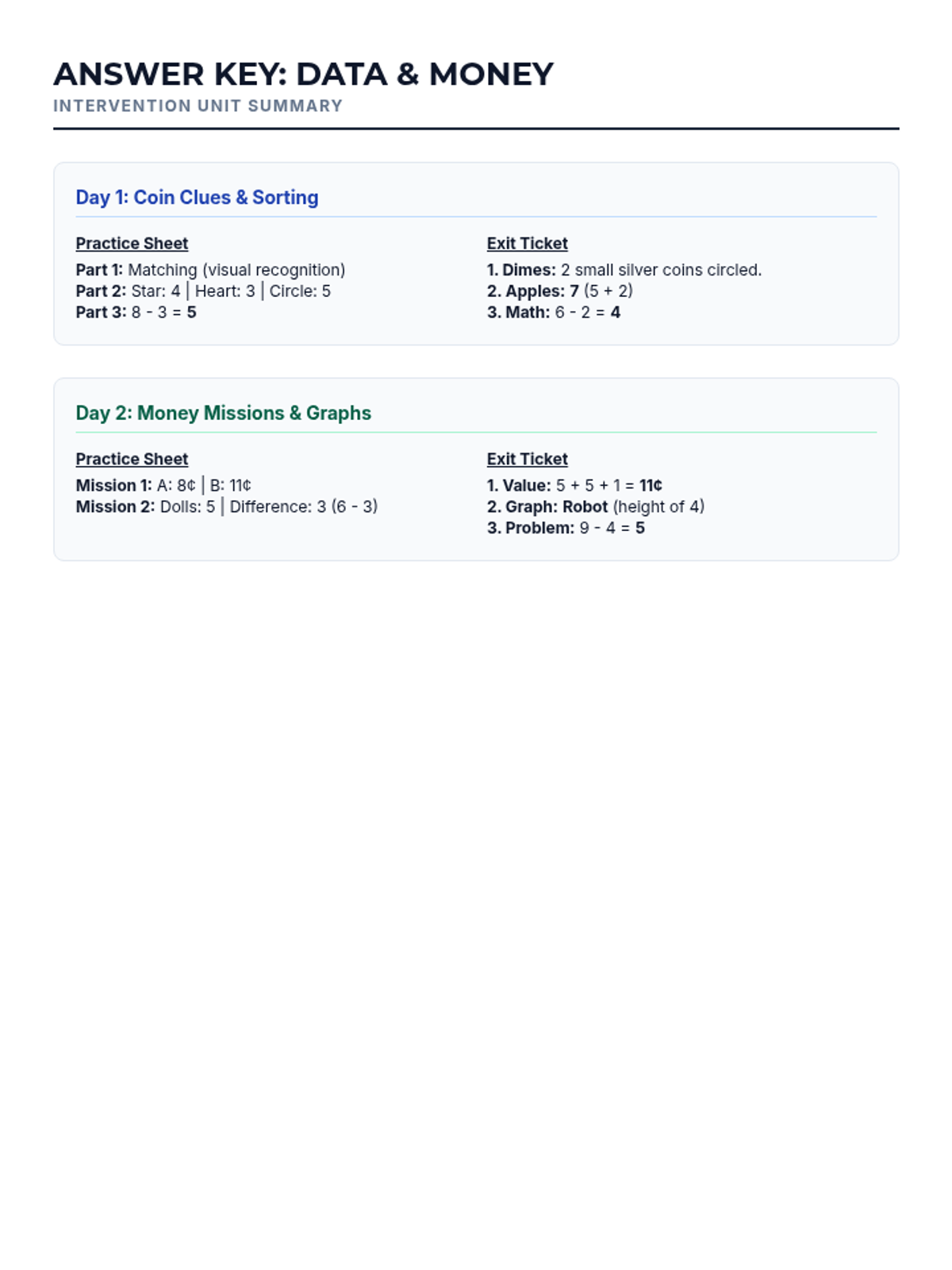
A 2-day small group intervention sequence focused on foundational data analysis and coin identification. Students progress from sorting objects and identifying coins to reading bar graphs and counting sets of money, while reinforcing subtraction strategies like number lines and counting back.
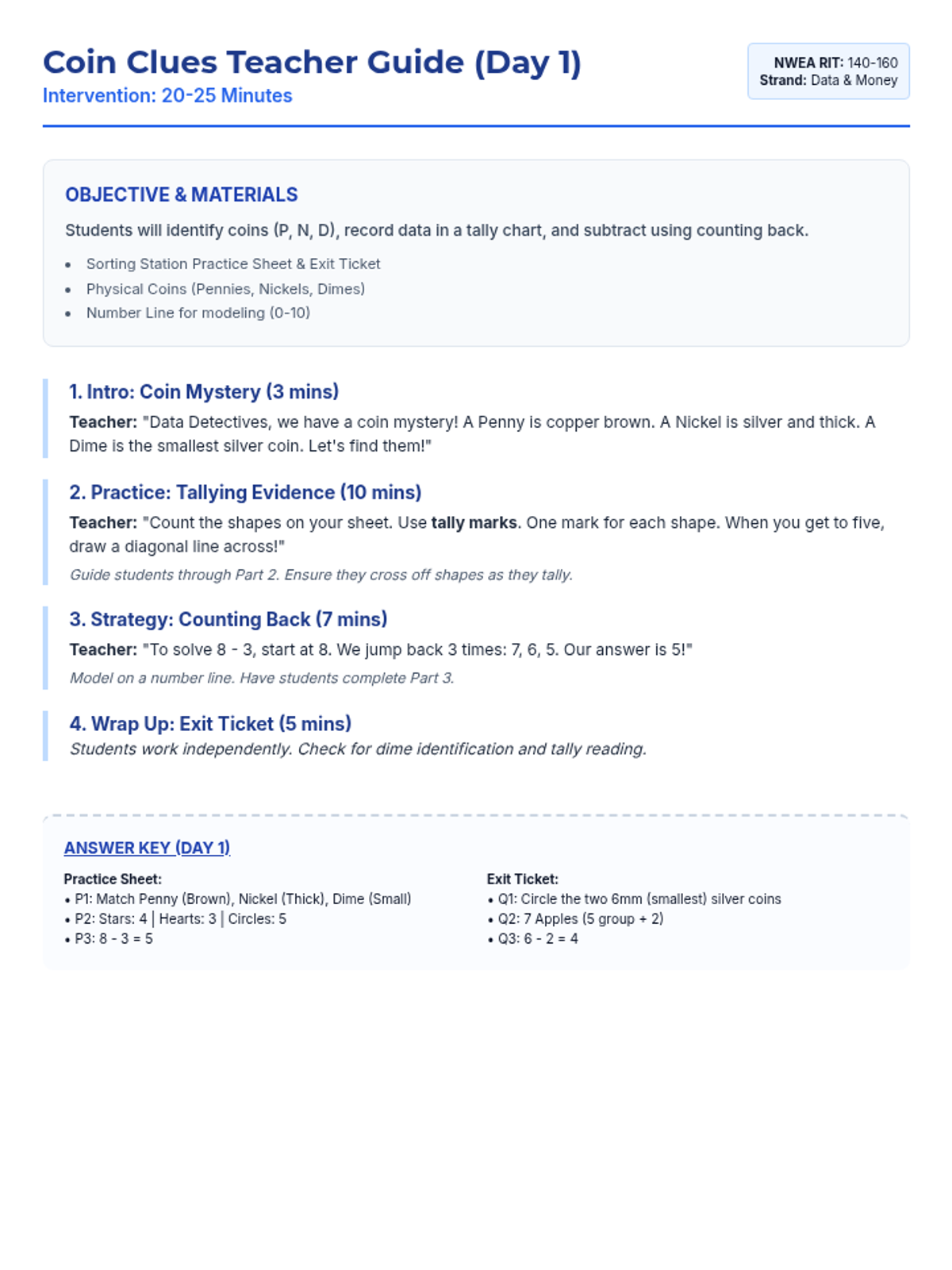
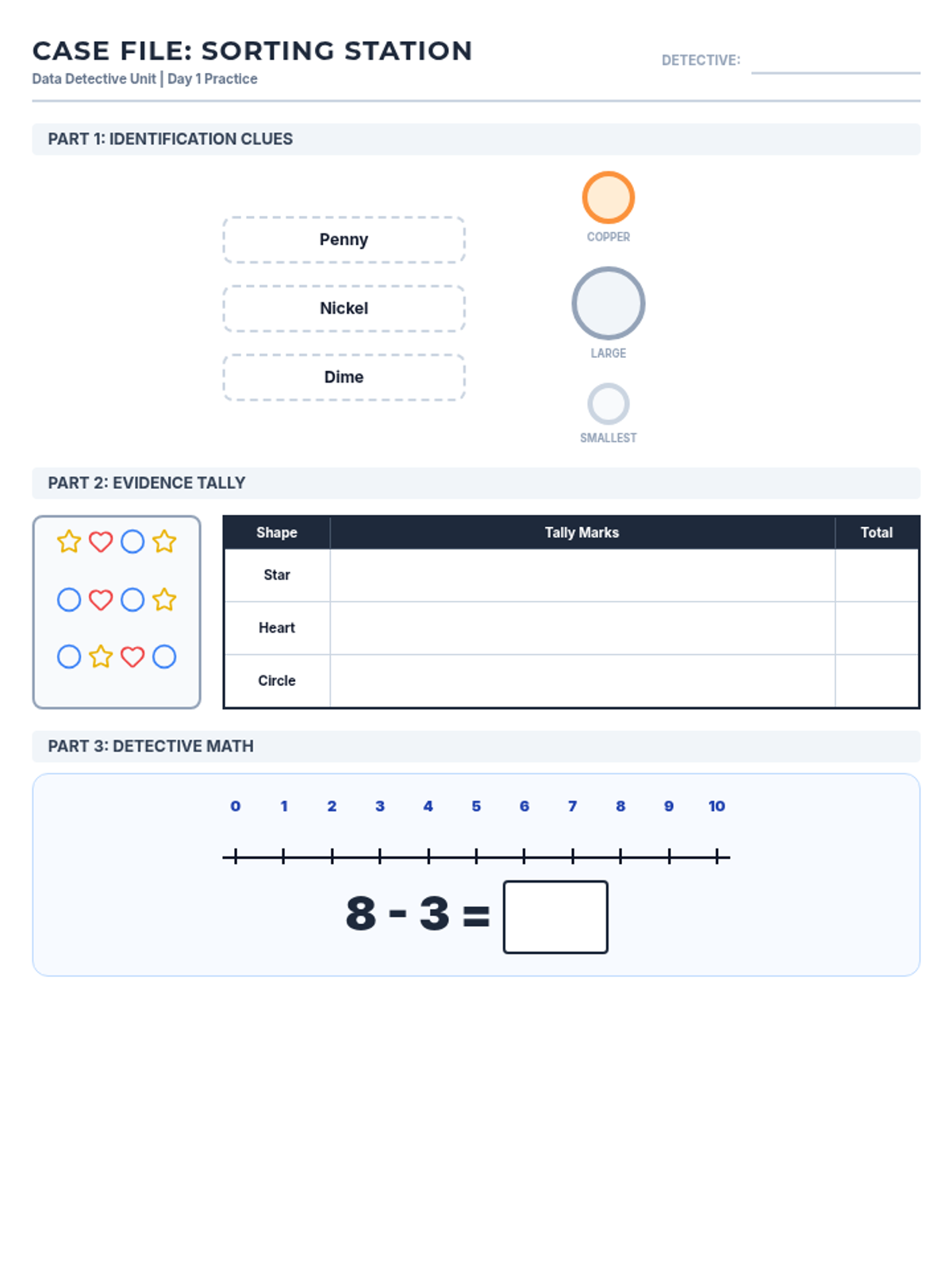
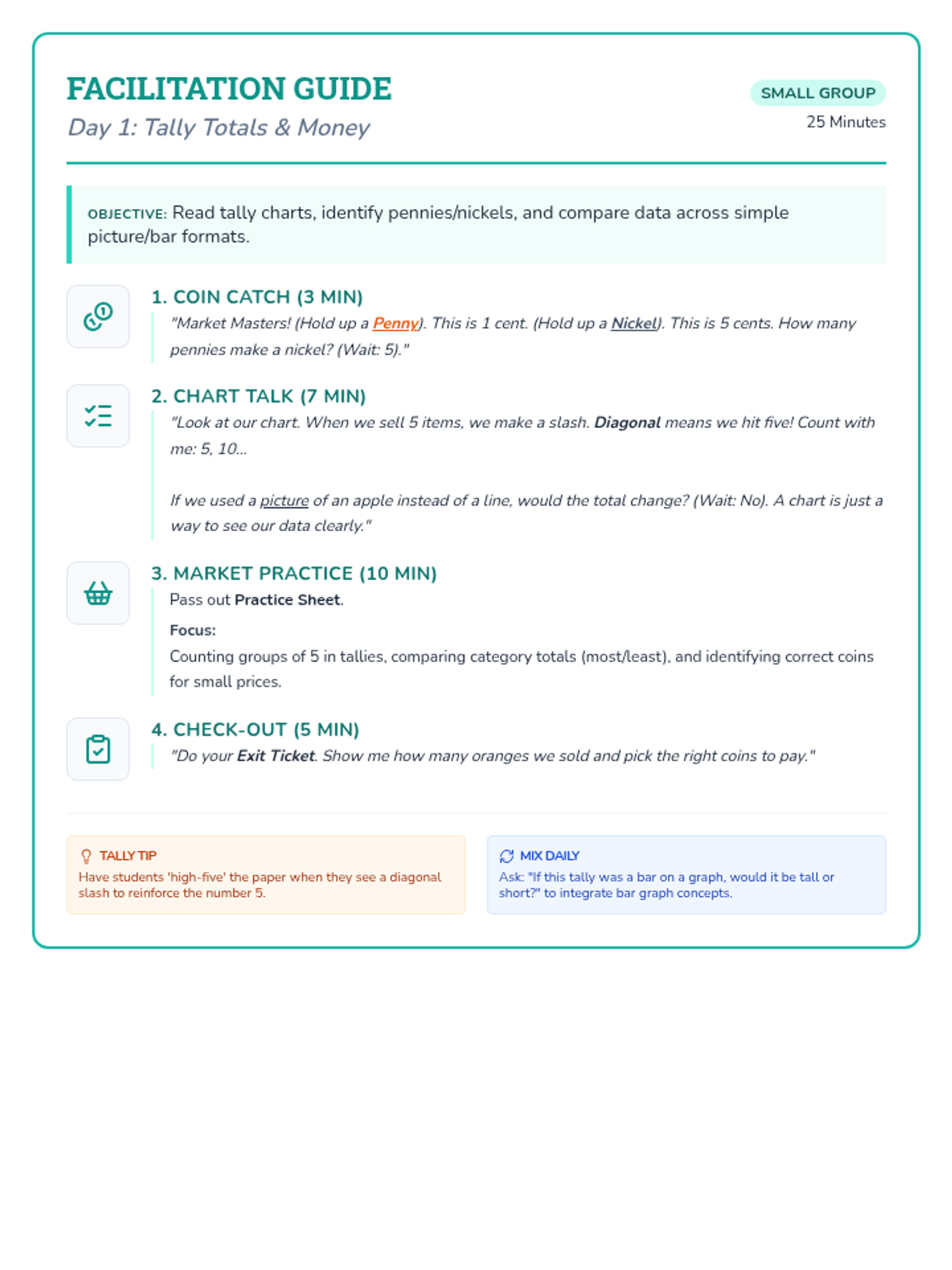
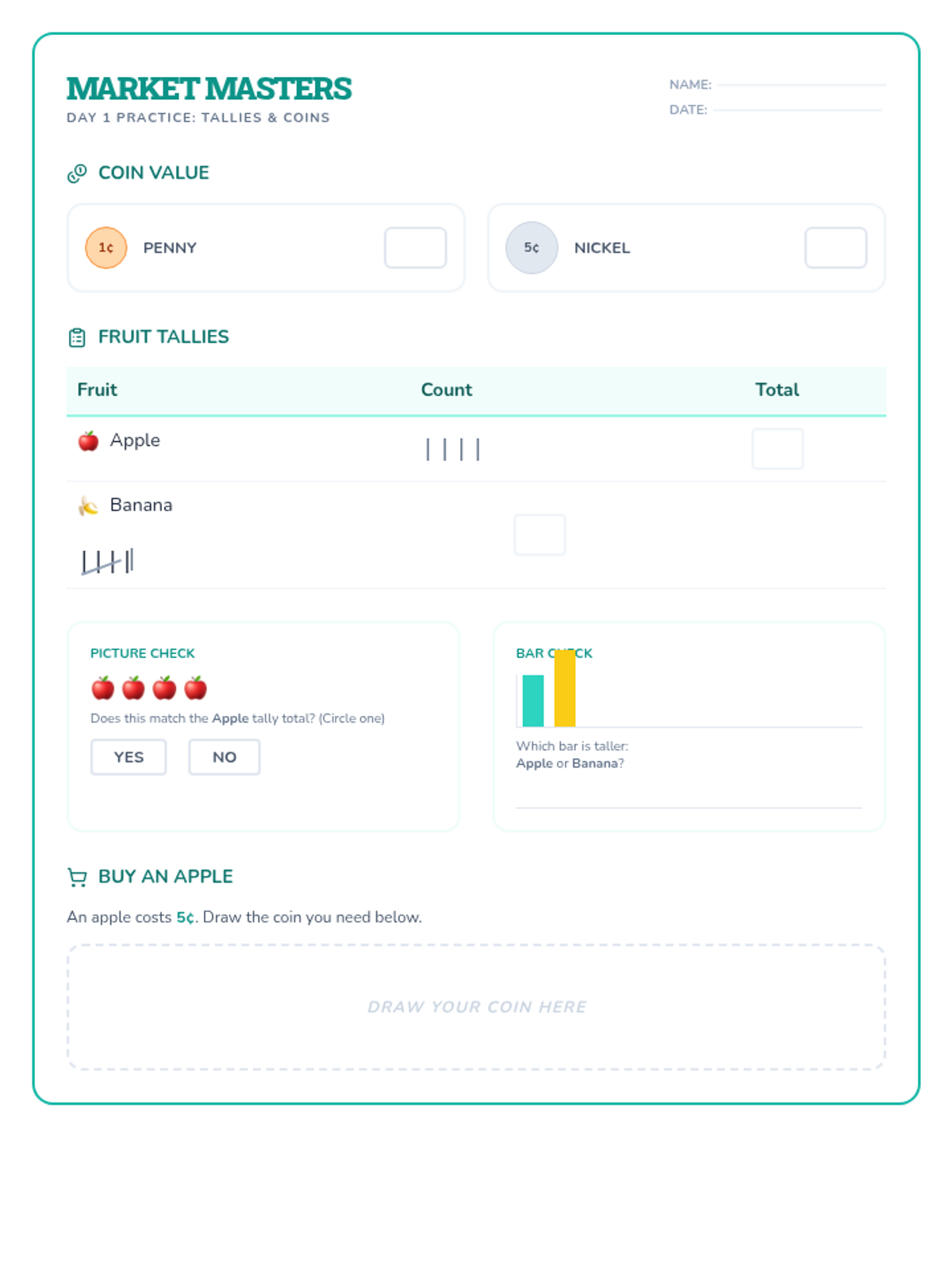
A 3-day small group math sequence for students moving from NWEA RIT 140-150 to 151-160, focusing on data analysis (tally, picture, bar) and basic money concepts (pennies, nickels, dimes).
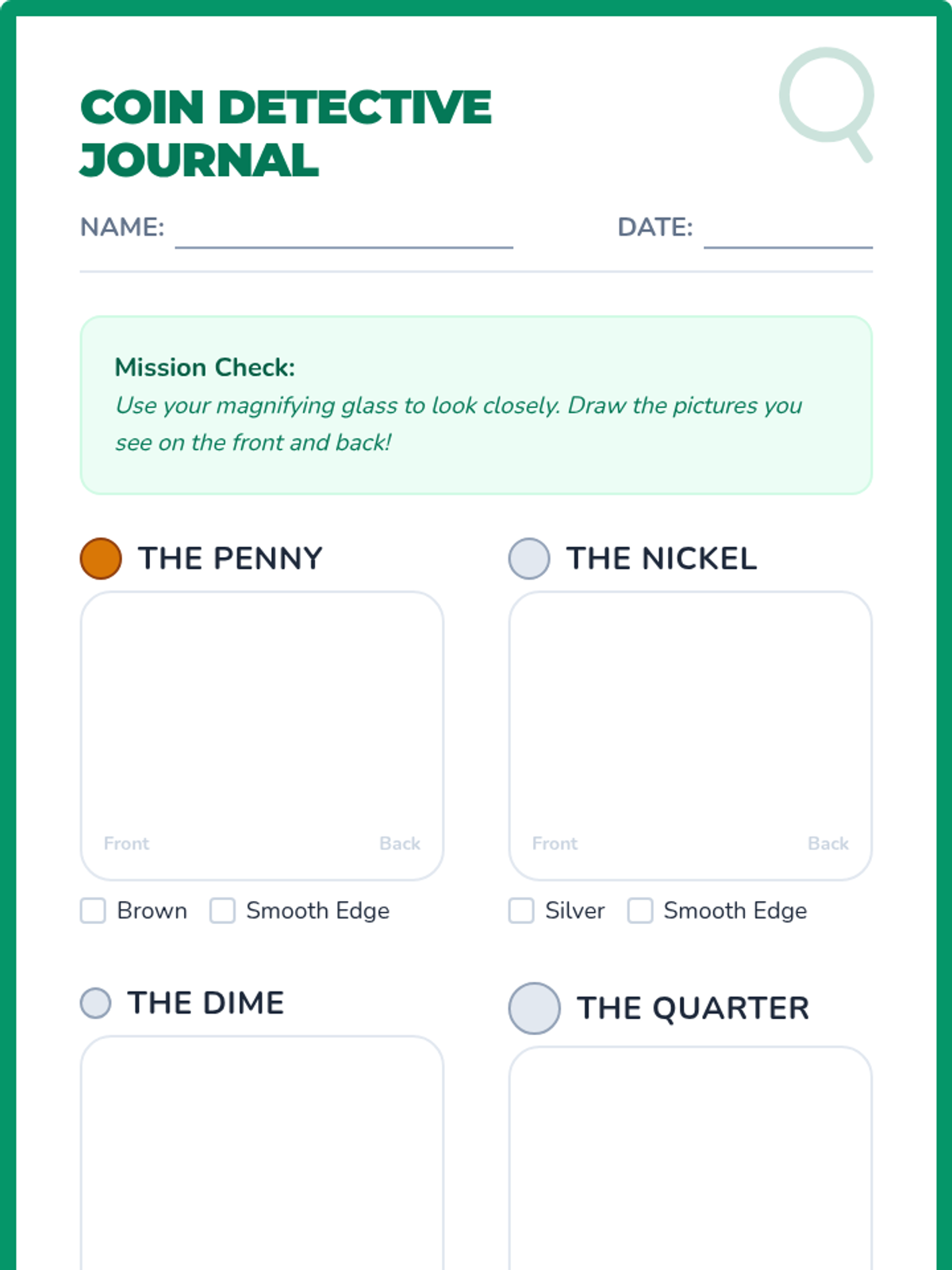
A Kindergarten sequence focused on the physical attributes and identification of US currency. Students use sensory observation, sorting, and art to recognize coins and bills and understand their basic symbols and values.
A sensory-based introduction to U.S. coins for Kindergarten, focusing on sorting by physical attributes, identification, and basic values through inquiry and exploration.
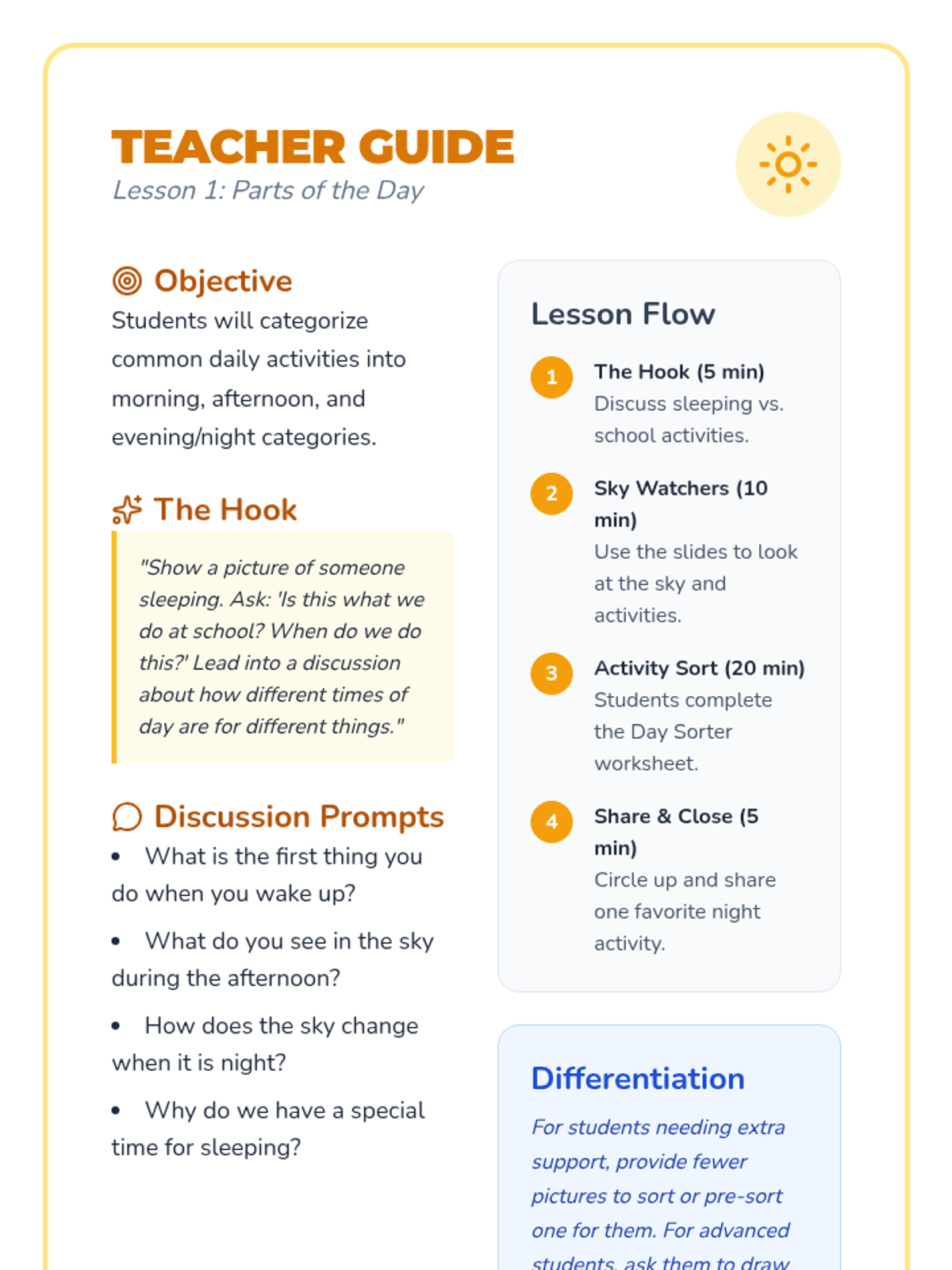
A comprehensive introduction to time for Kindergarten students, covering daily cycles, sequencing, duration, and basic clock reading using the 'Time Travelers' theme.
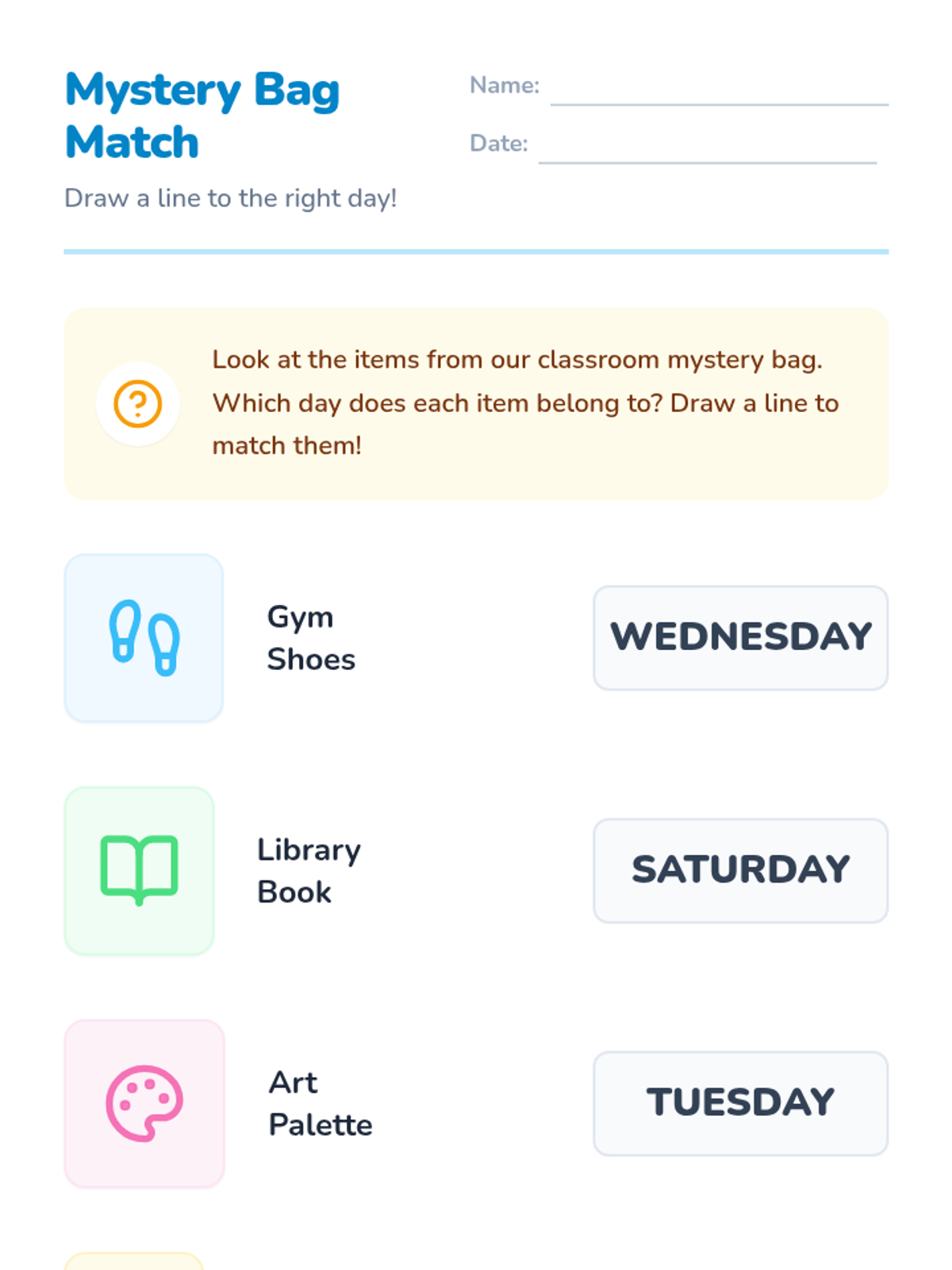
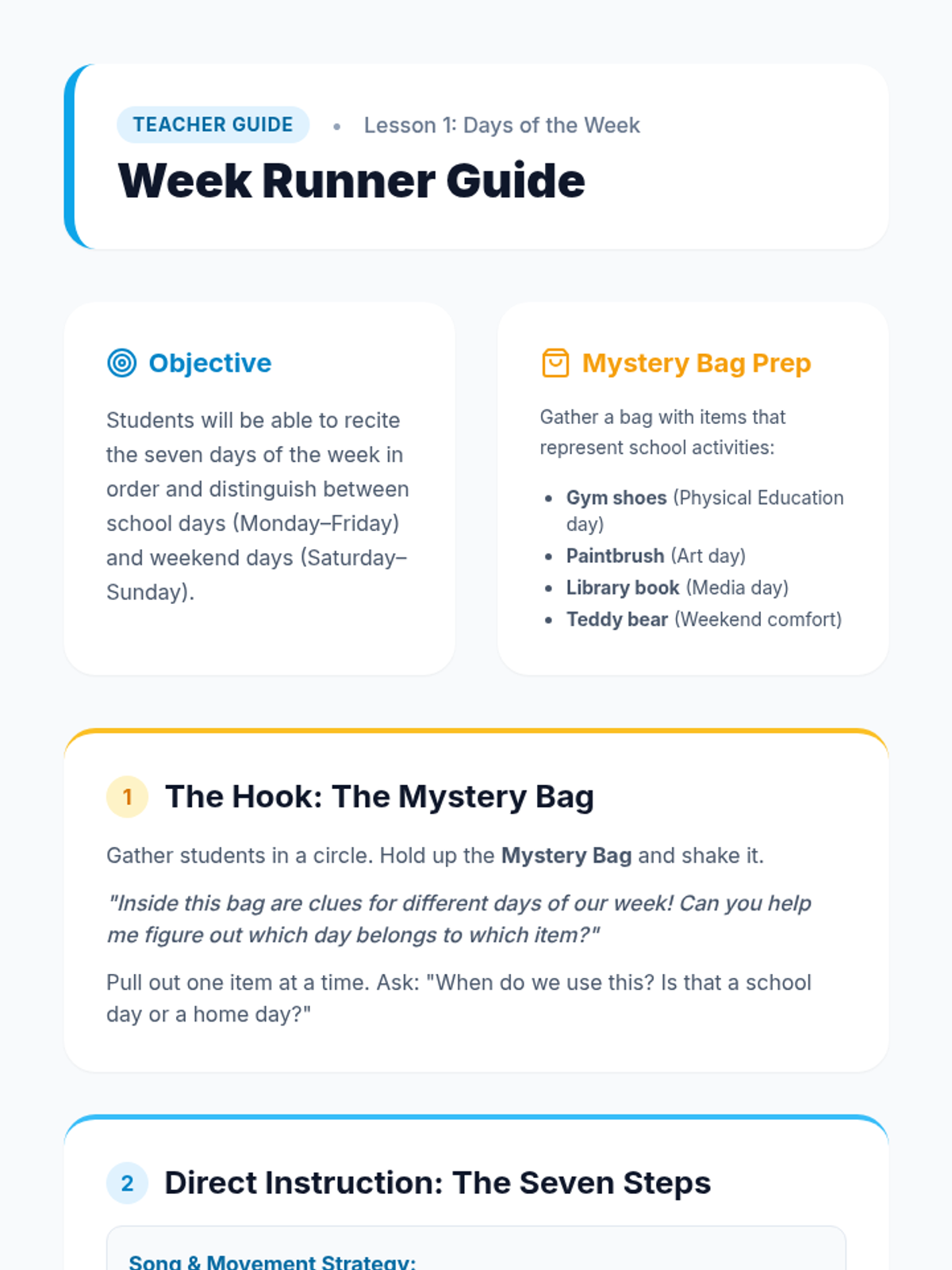
A Kindergarten sequence exploring the calendar, days of the week, and months. Students learn to navigate a calendar grid, understand weekly cycles, and use relative time vocabulary (yesterday, today, tomorrow) through hands-on activities and visual tracking.
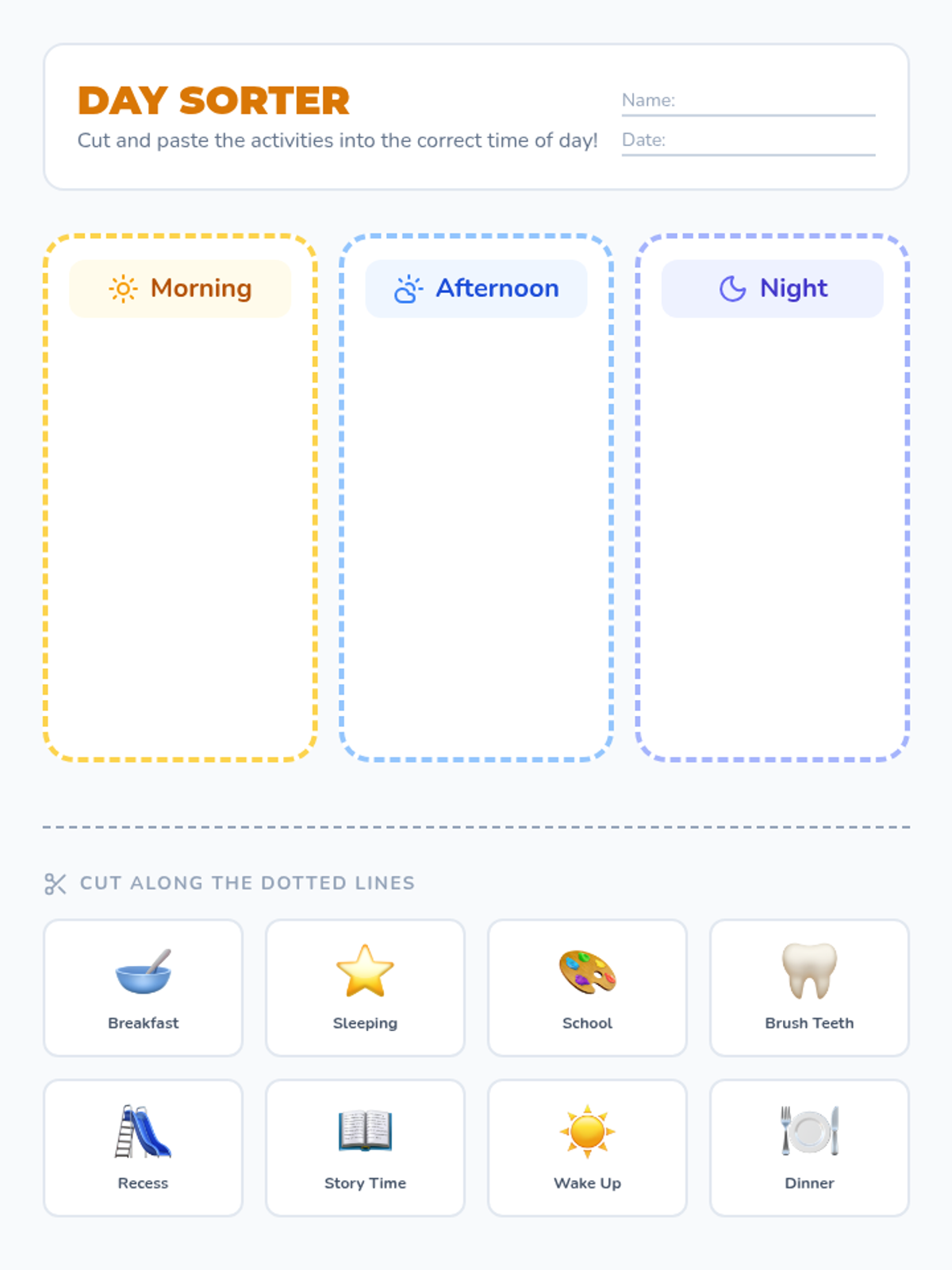
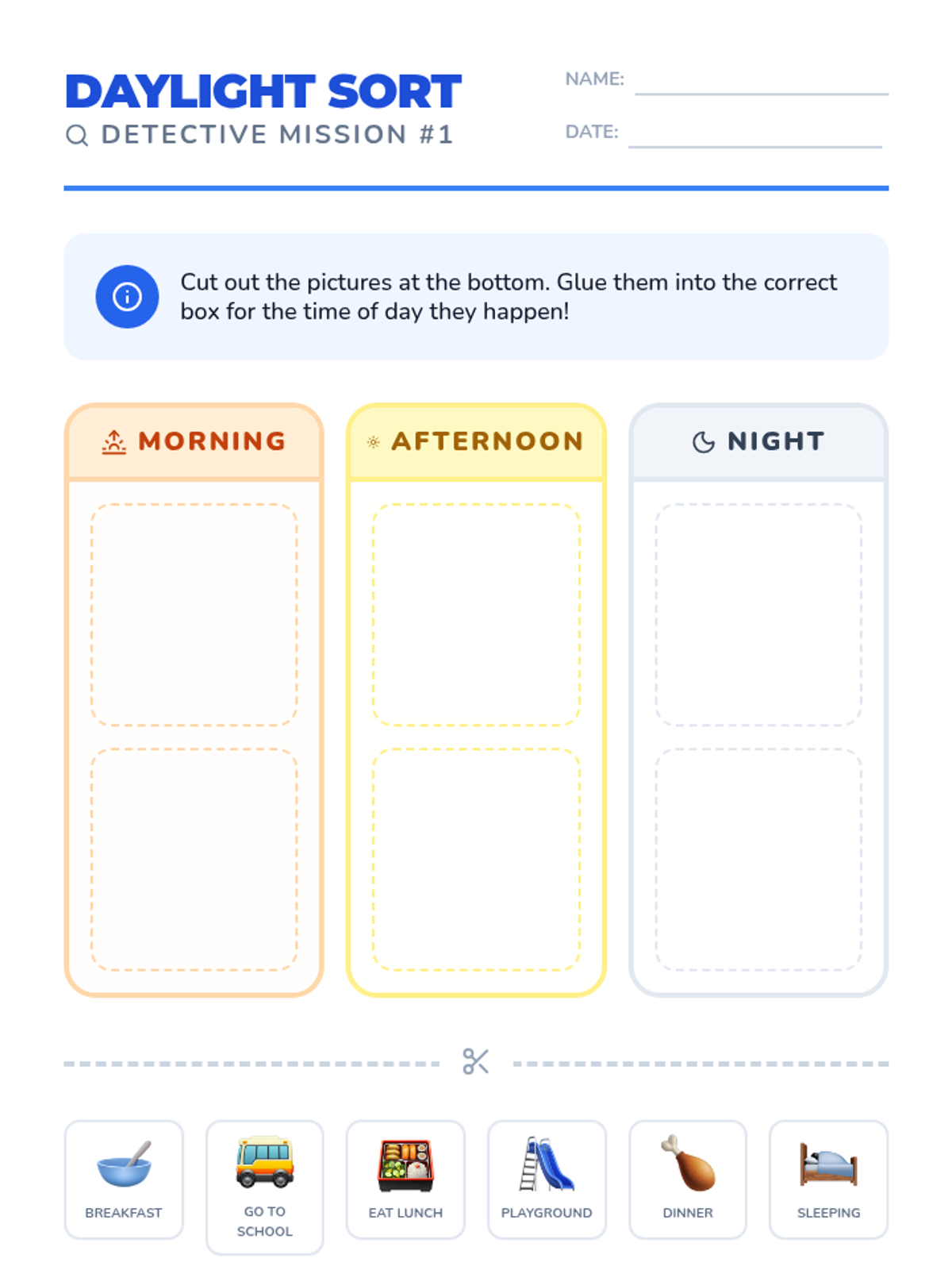
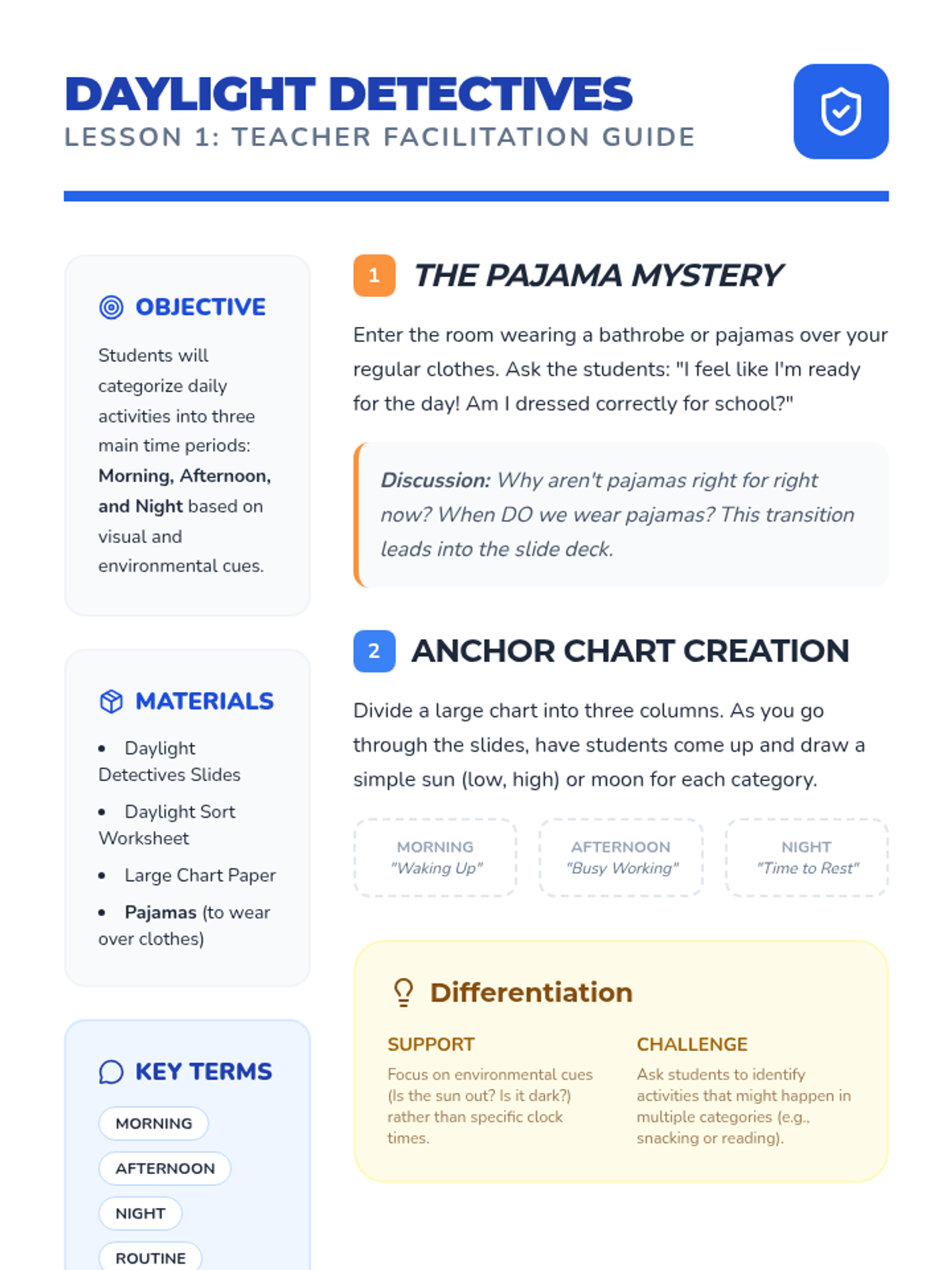
A Kindergarten sequence focused on understanding the concept of time through daily routines and the logical order of events. Students learn to categorize times of day, sequence school routines, use temporal language, and understand the importance of order.
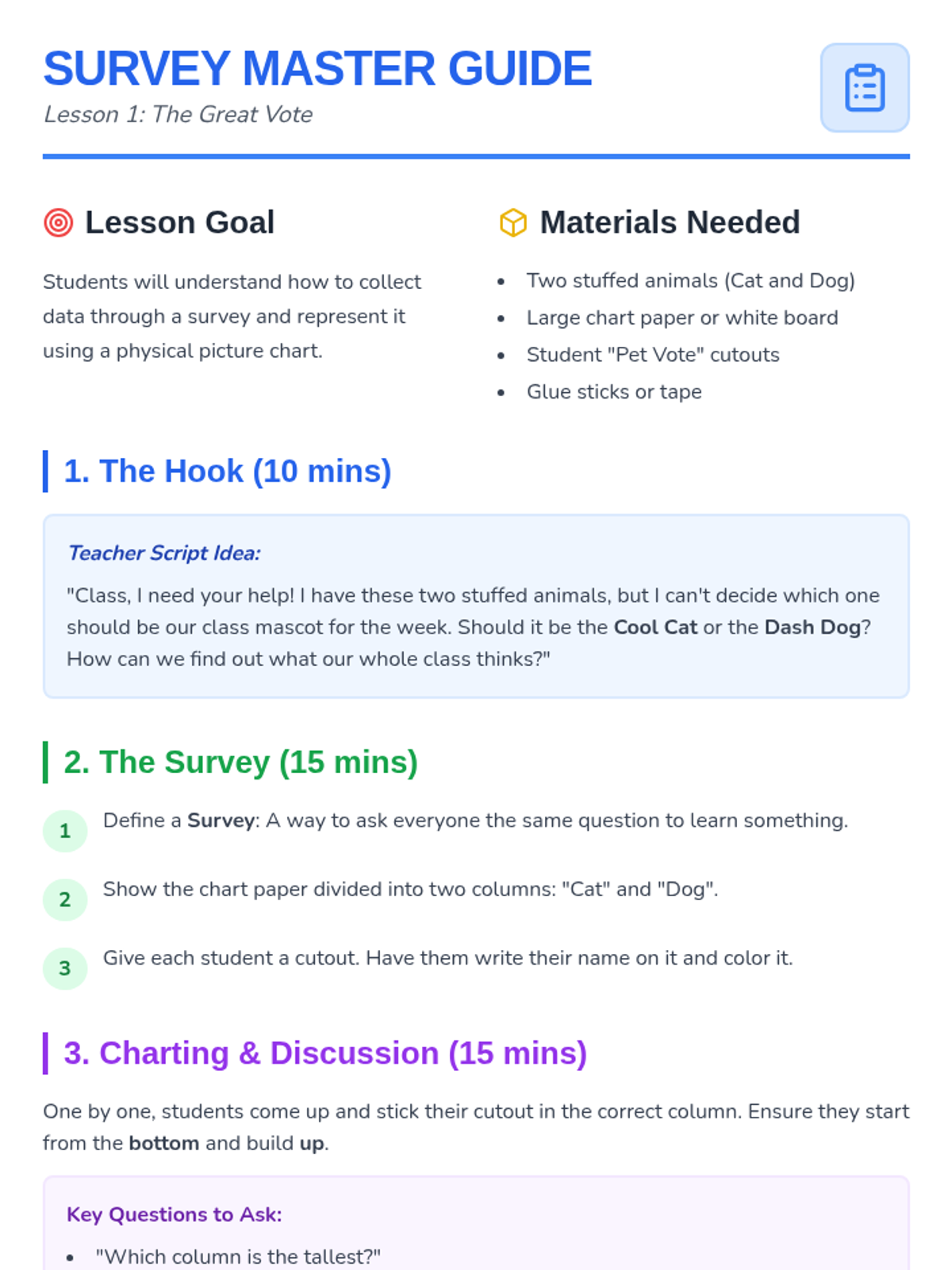
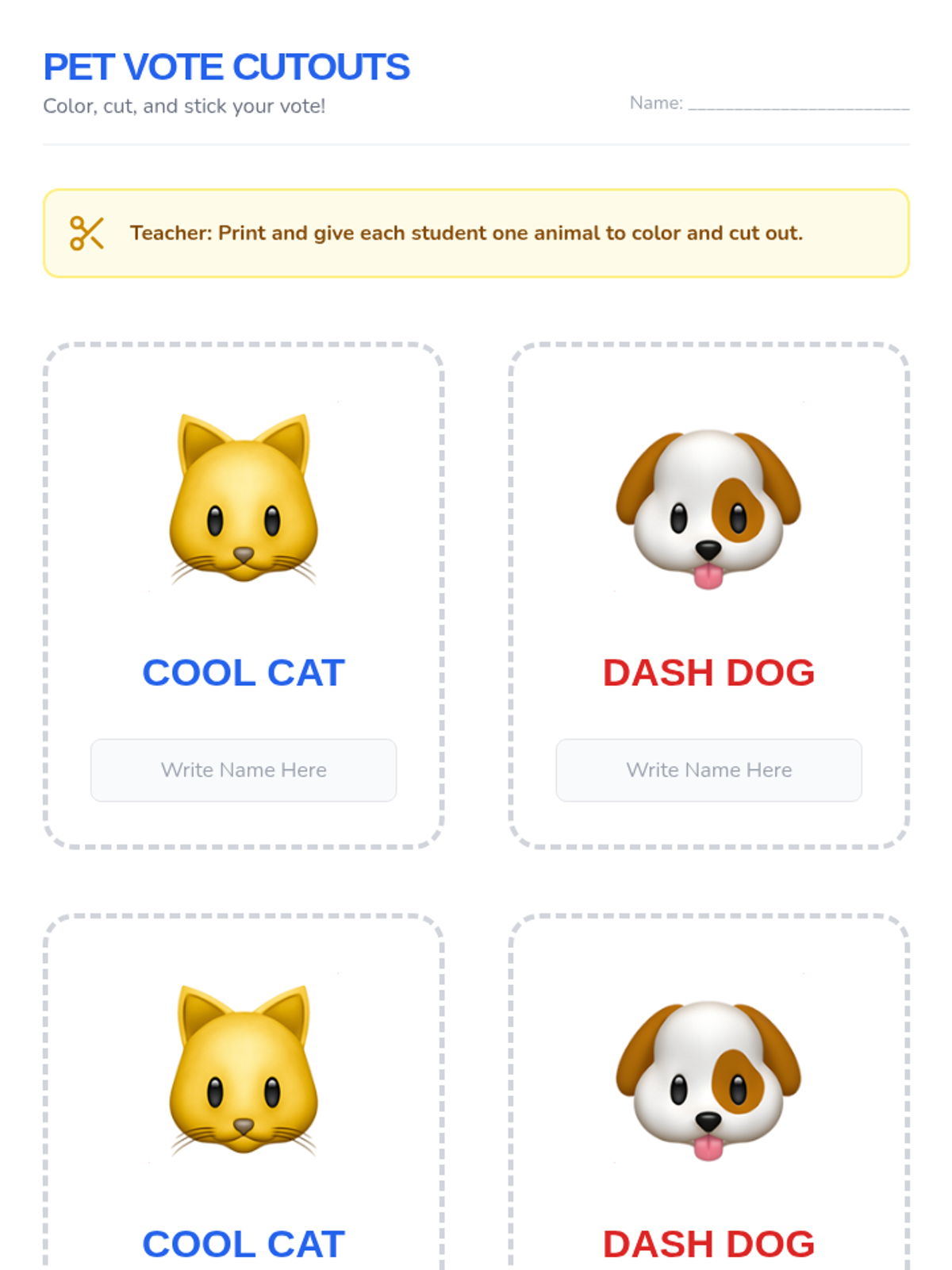
A Kindergarten math sequence introducing pictographs through surveys, vertical and horizontal construction, and data interpretation. Students move from whole-class voting to independent data art projects.
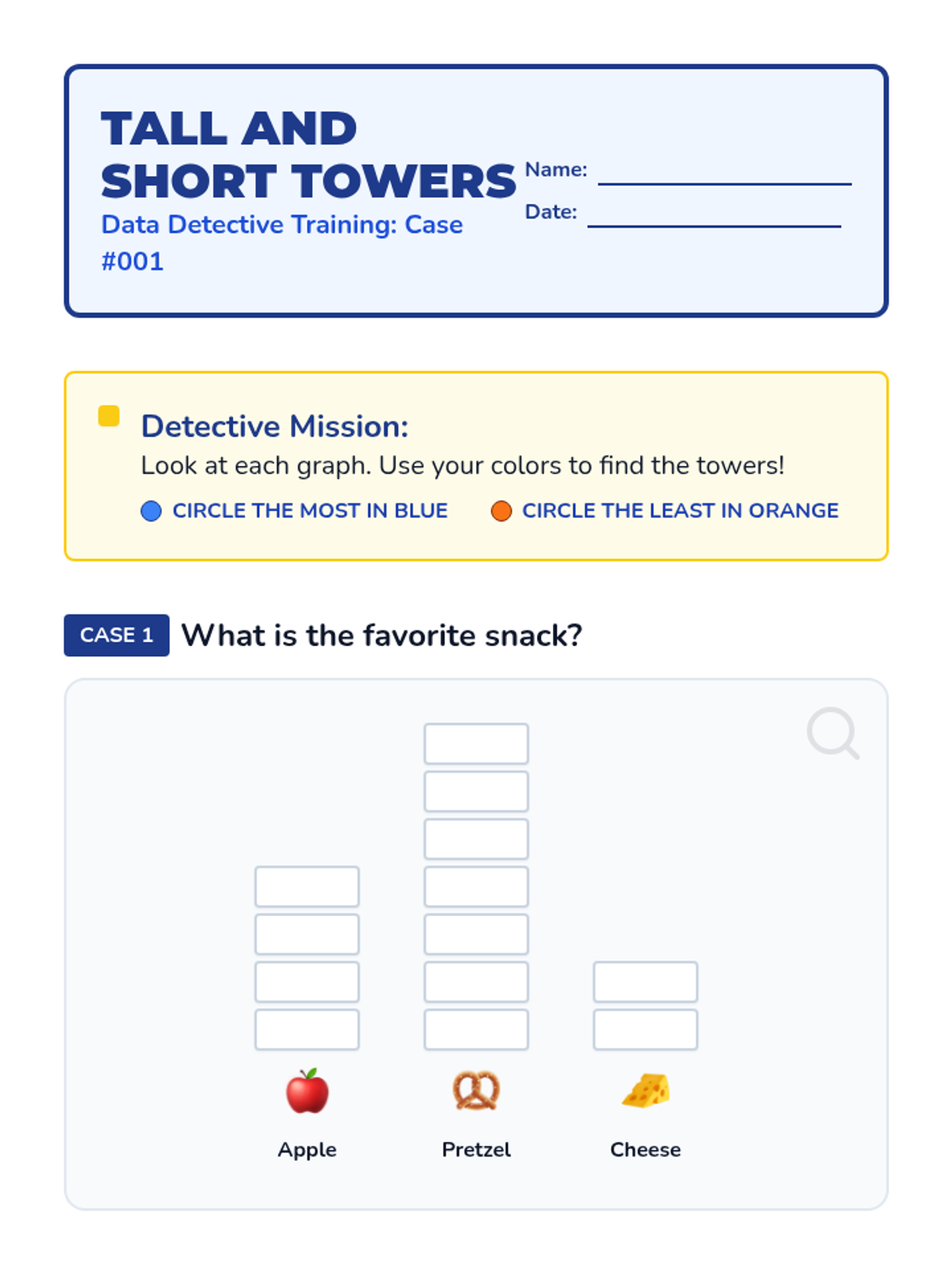
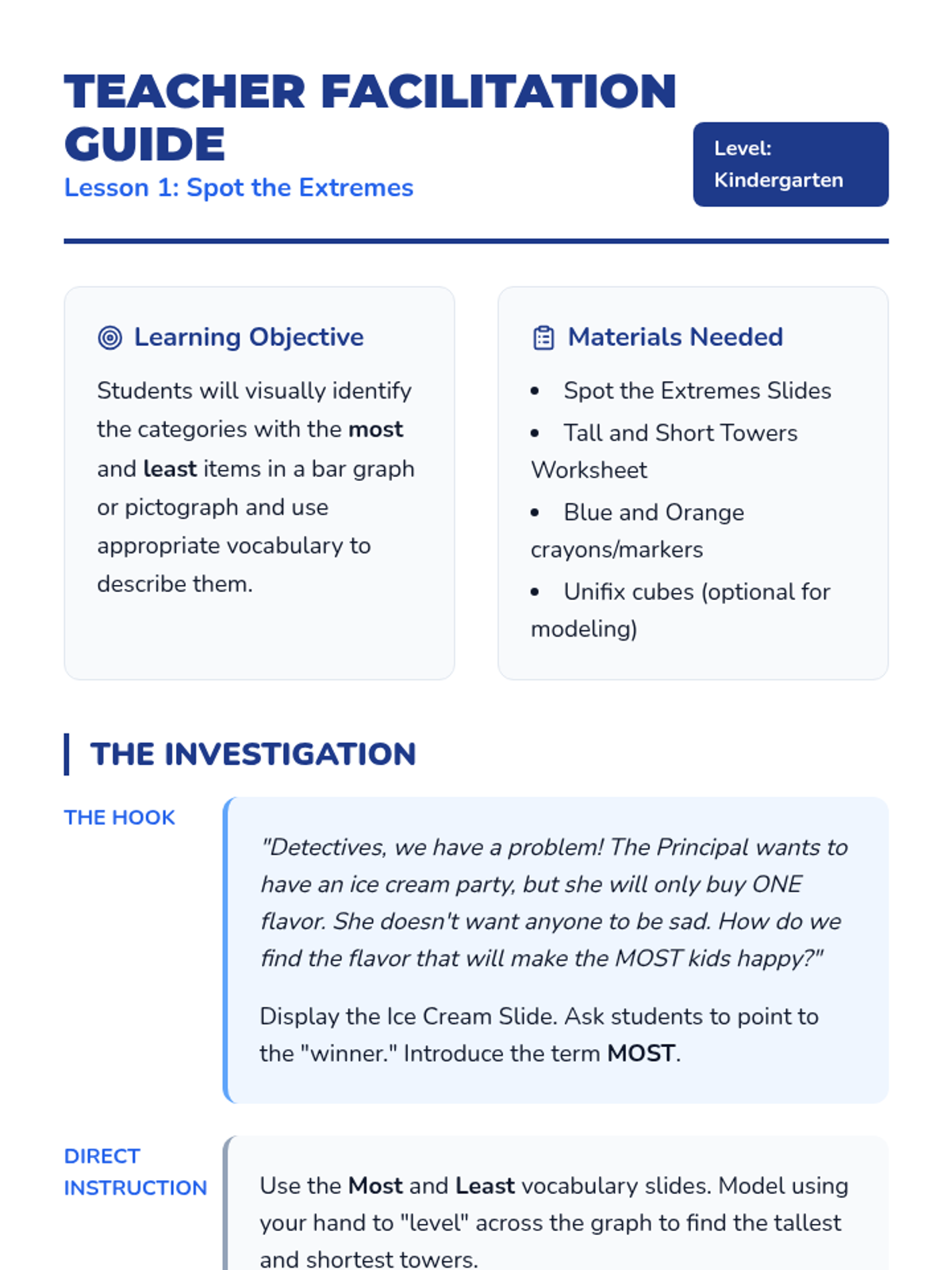
A Kindergarten sequence focused on the analytical side of data: identifying extremes, comparing categories, and finding totals to solve real-world problems. Students use a detective-themed lens to 'crack the code' of bar graphs and pictographs.
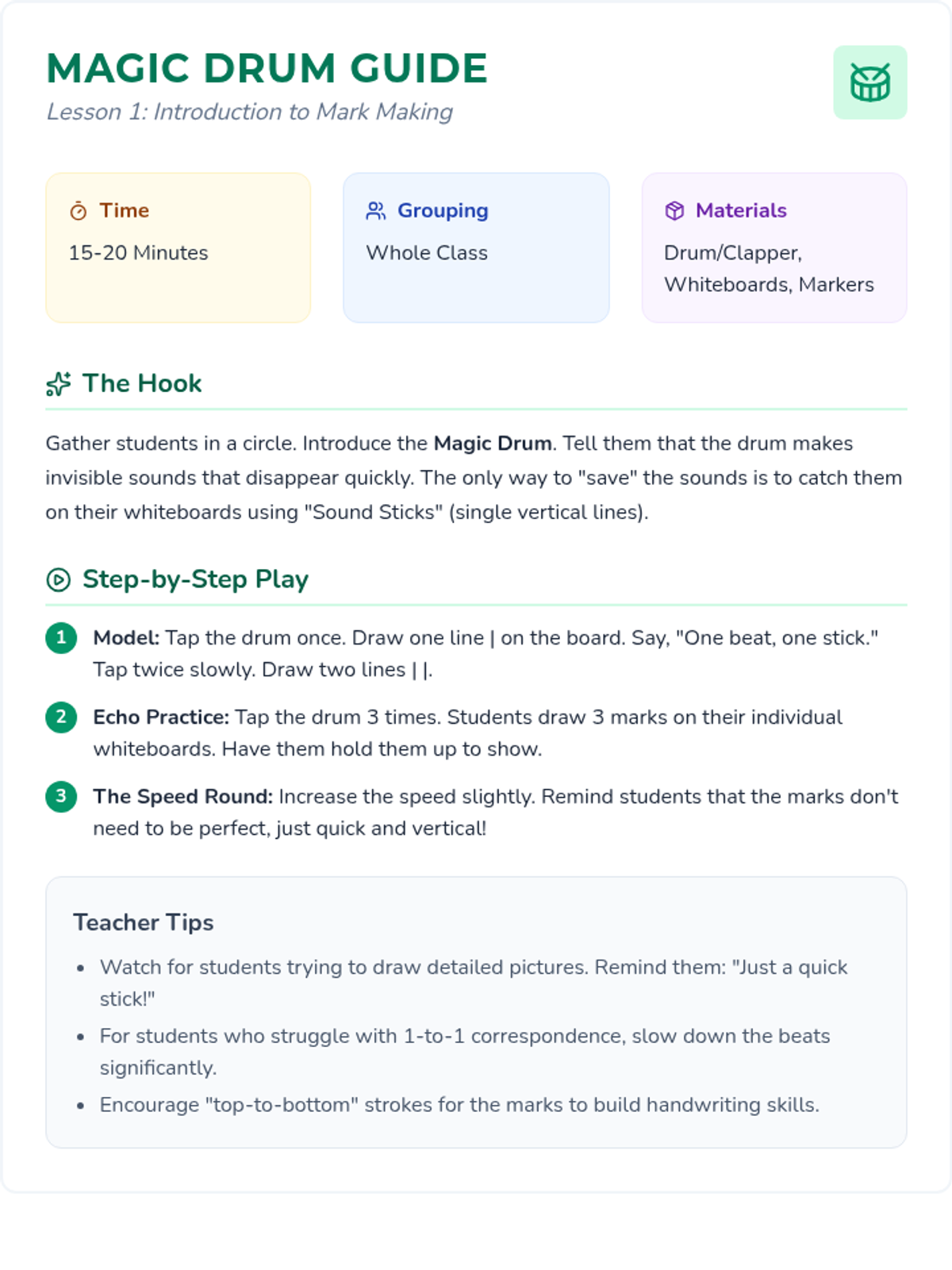
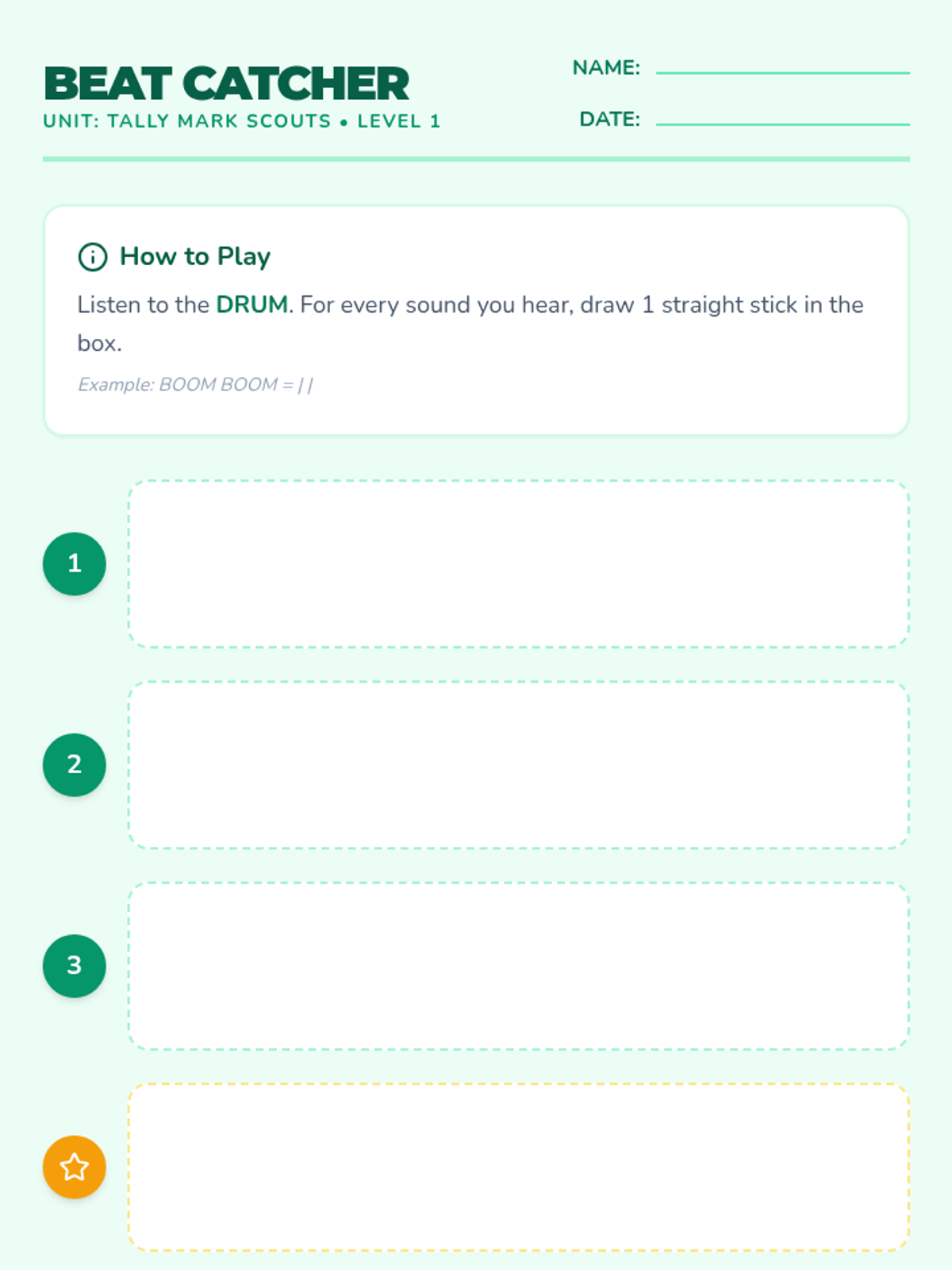
A Kindergarten math sequence introducing tally marks as a method for recording data. Students progress from simple vertical marks to groups of five, culminating in real-world data collection and interpretation.
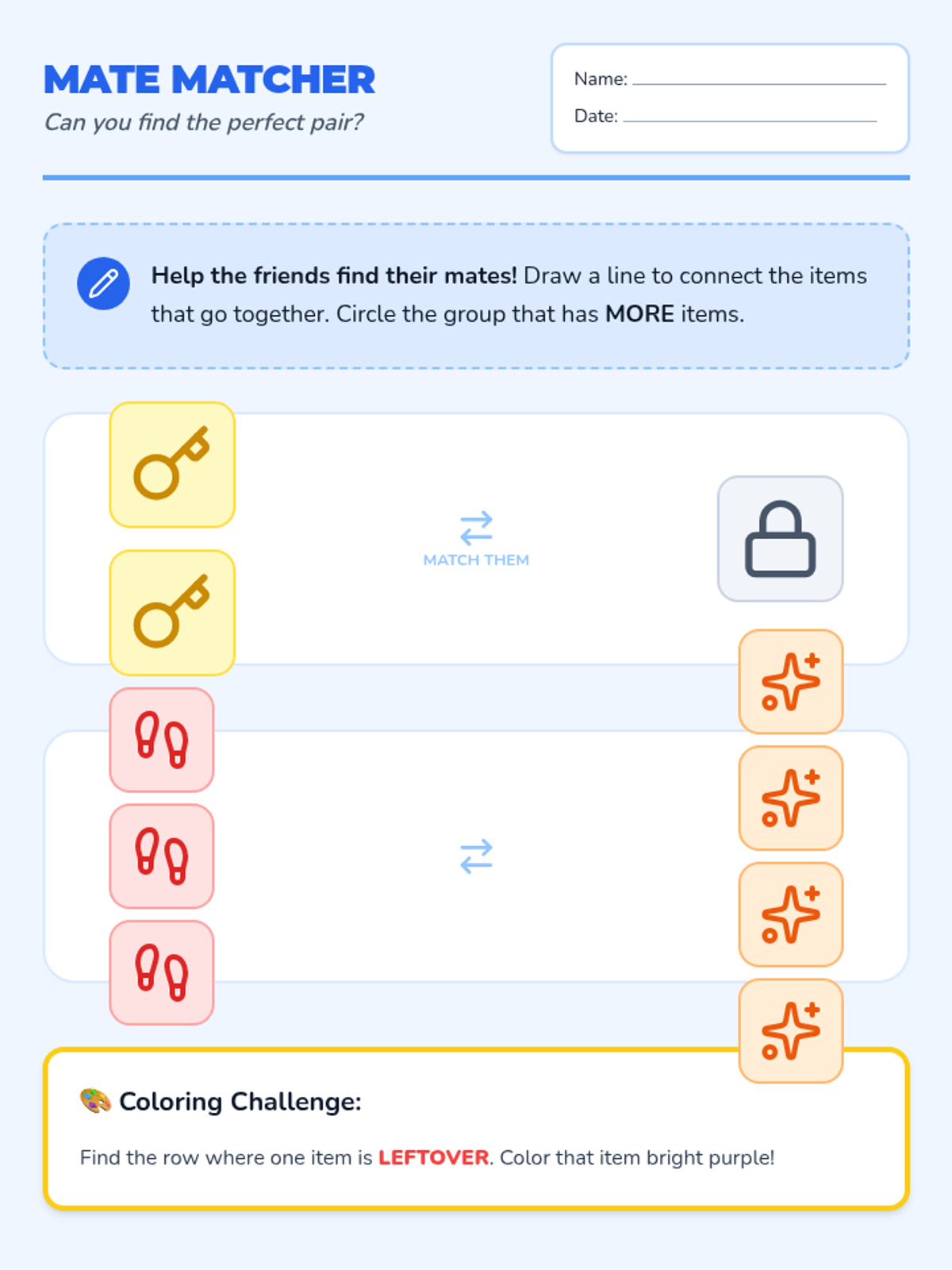
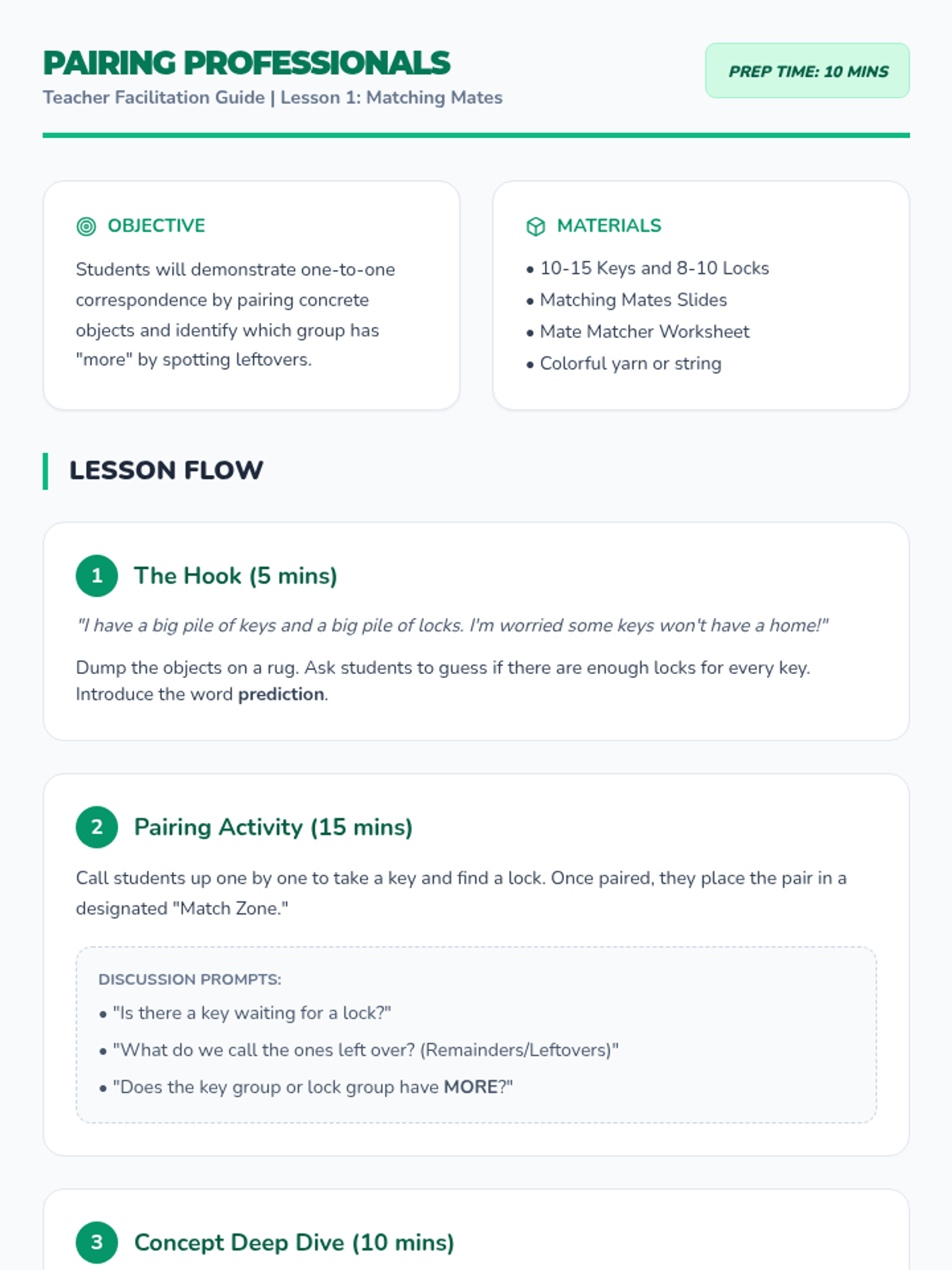
A foundational Pre-K math sequence focusing on one-to-one correspondence and visual comparison of quantities. Students explore concepts of more, less, and fewer through physical pairing, tower building, voting, and balancing scales.
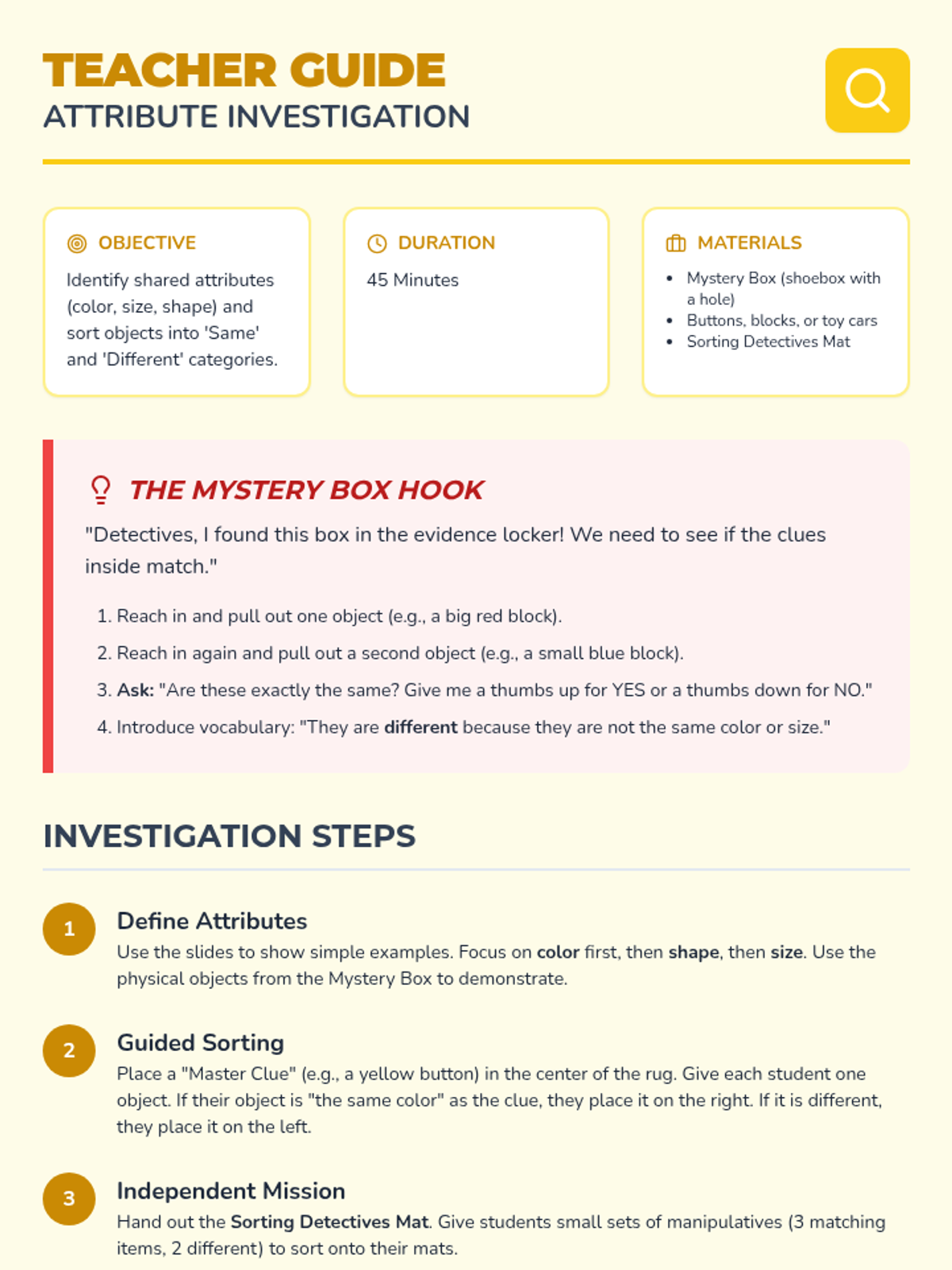
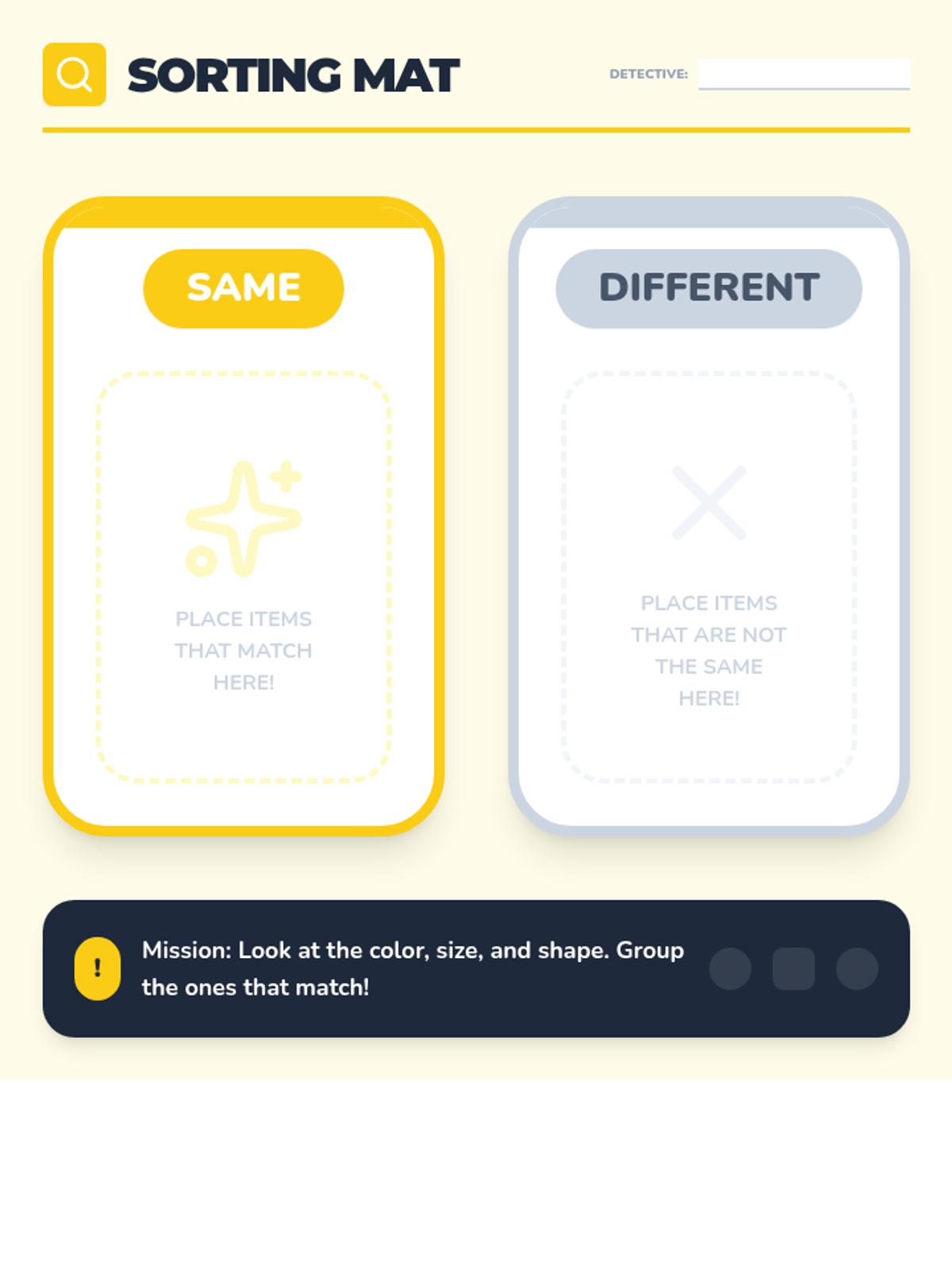
A foundational sequence for Kindergarten students to explore 'same' and 'different'. Students transition from physical object sorting to using graphic organizers like T-charts and Venn diagrams, culminating in verbal comparisons using sentence frames.
A Kindergarten sequence focused on the foundational skills of data analysis, including sorting by attributes, counting categories, using tally marks, and constructing and interpreting simple graphs. Students move from concrete physical sorting to abstract visual representations.