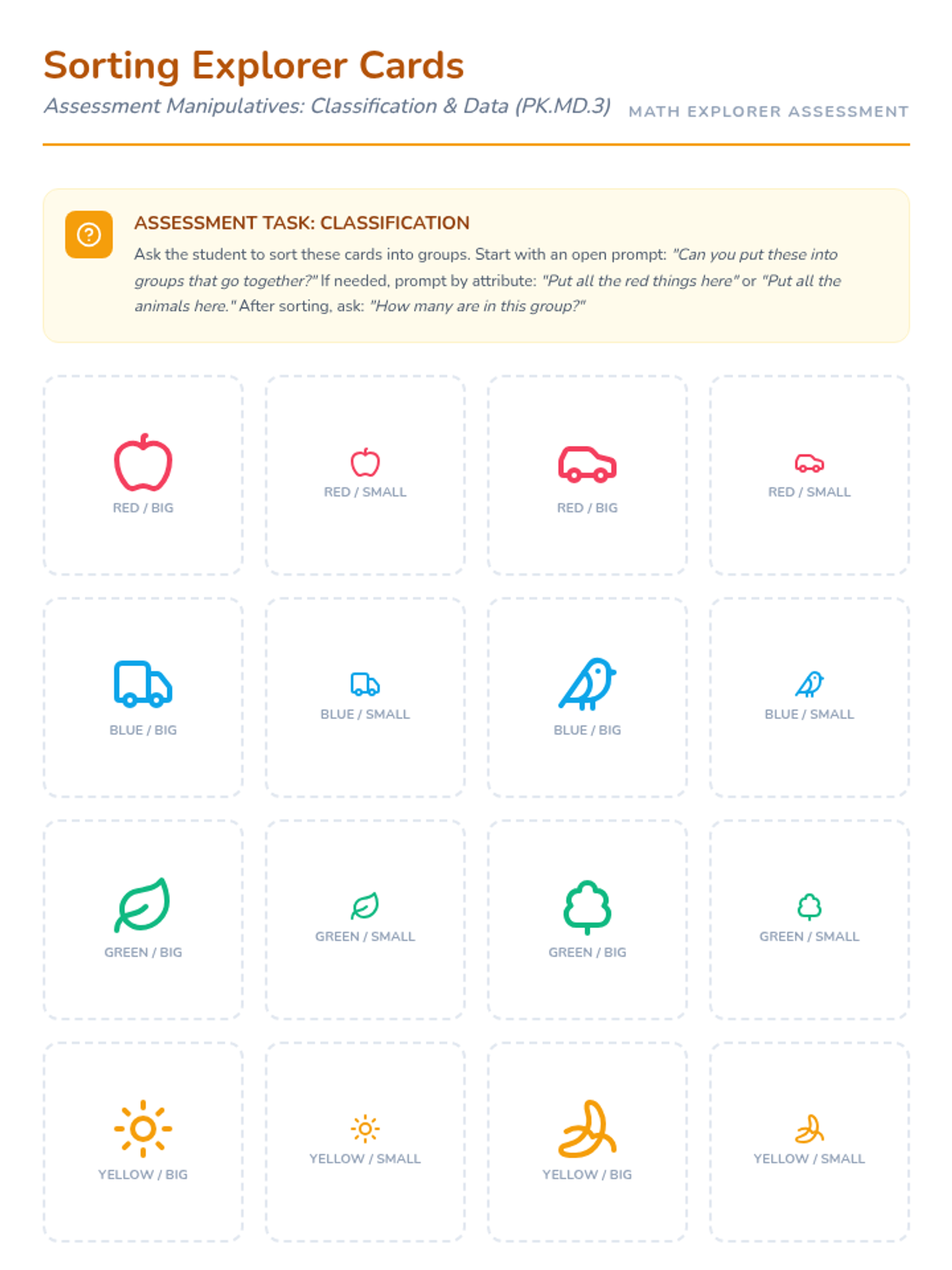
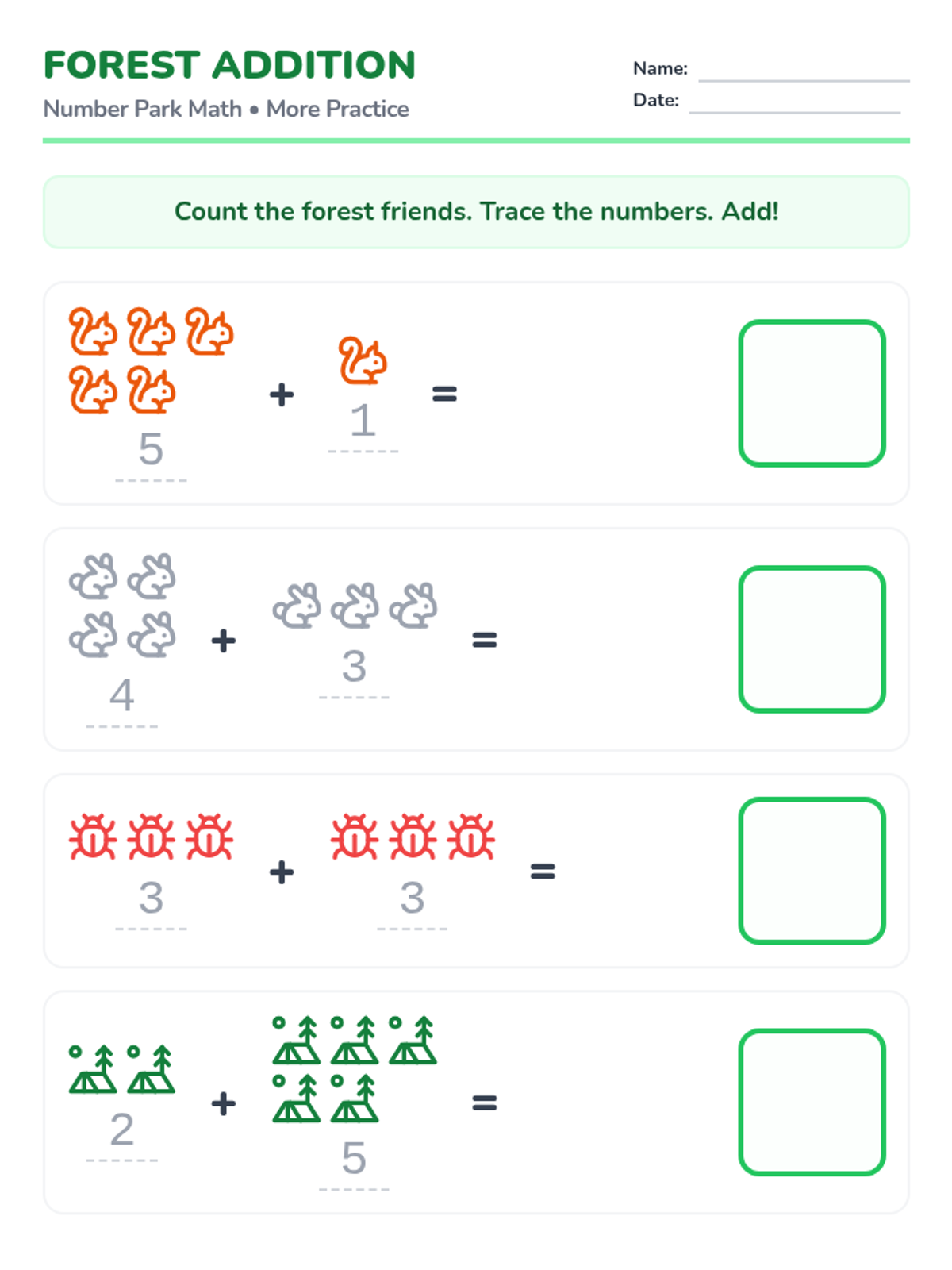
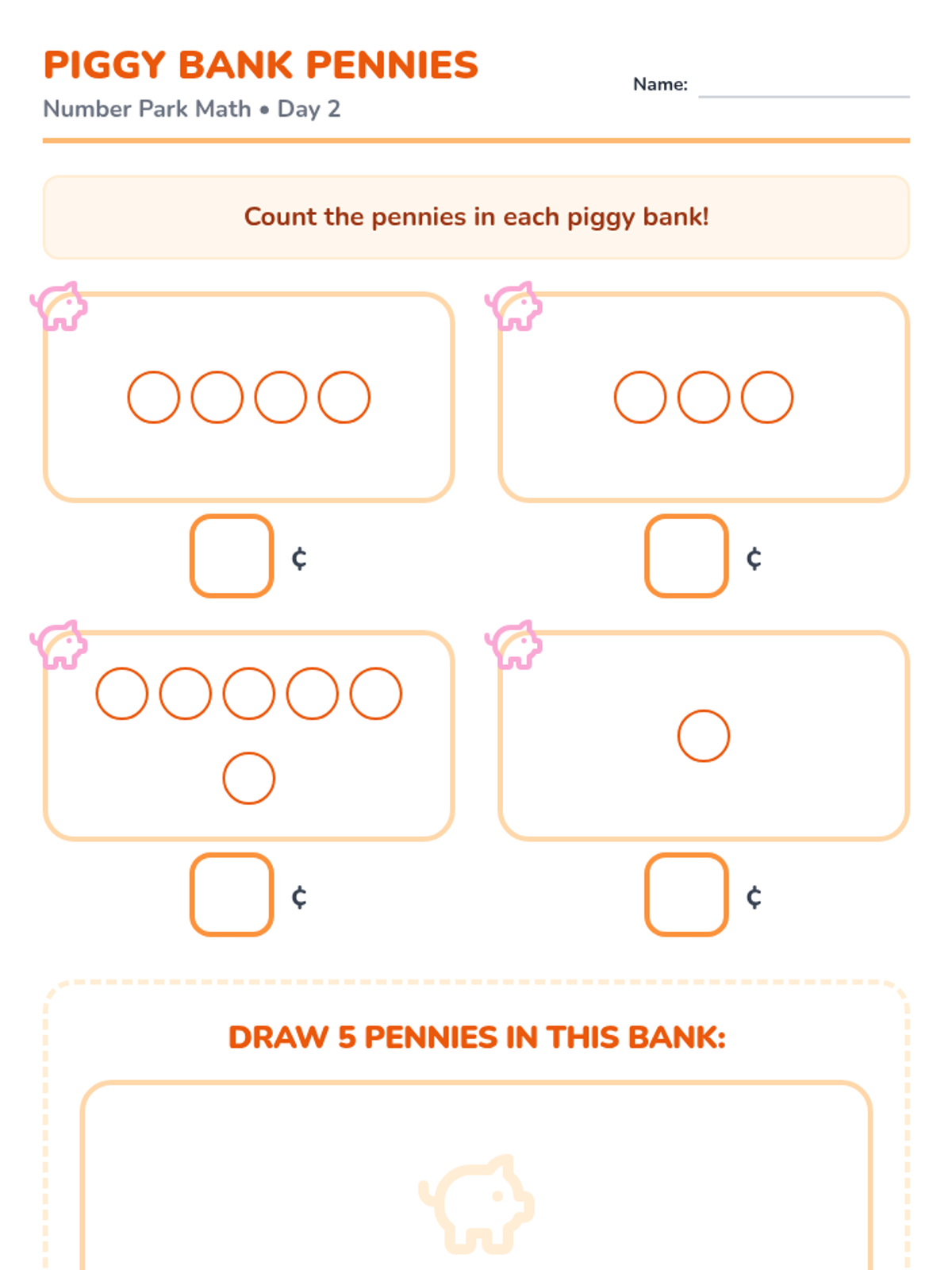
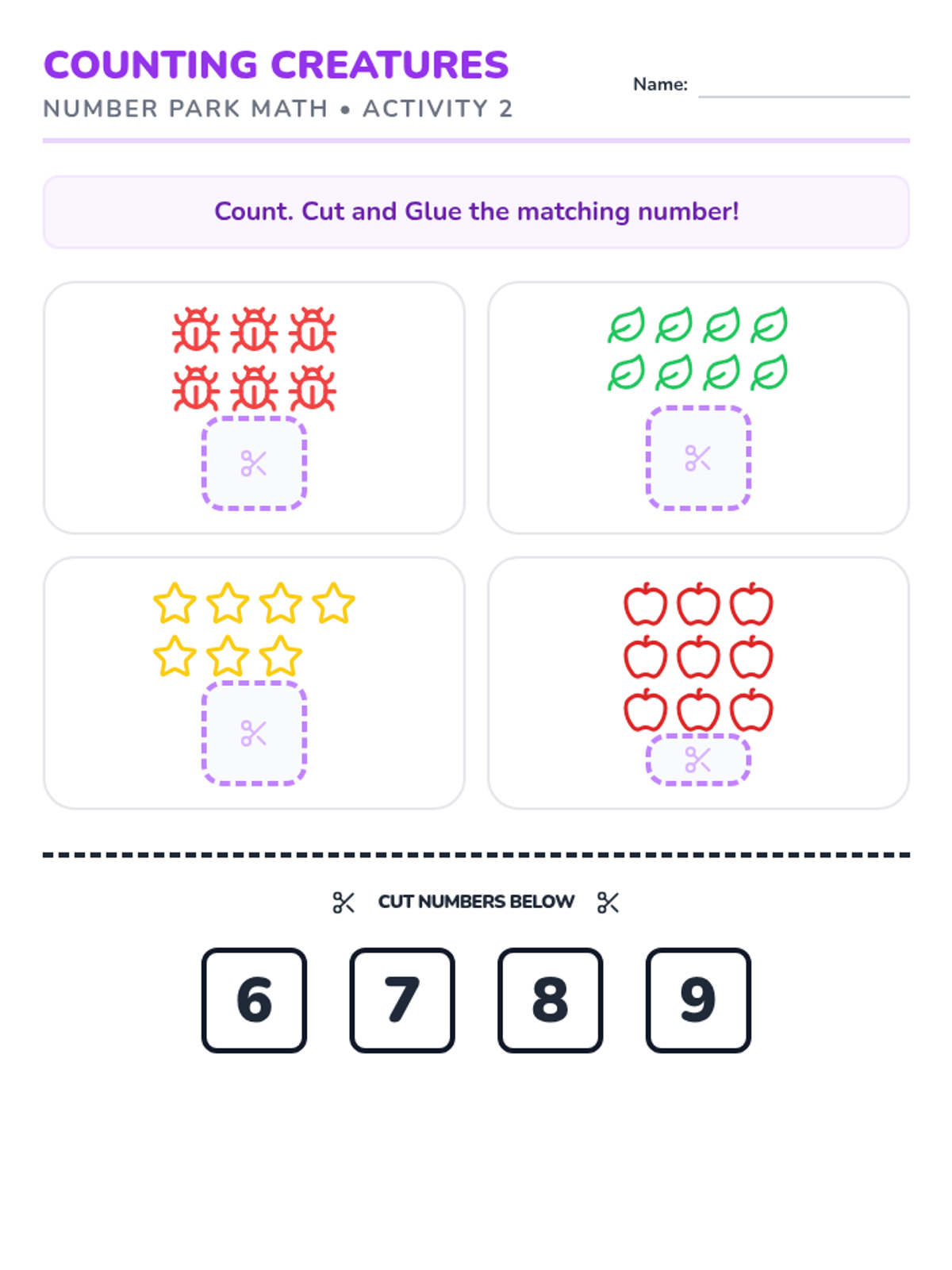
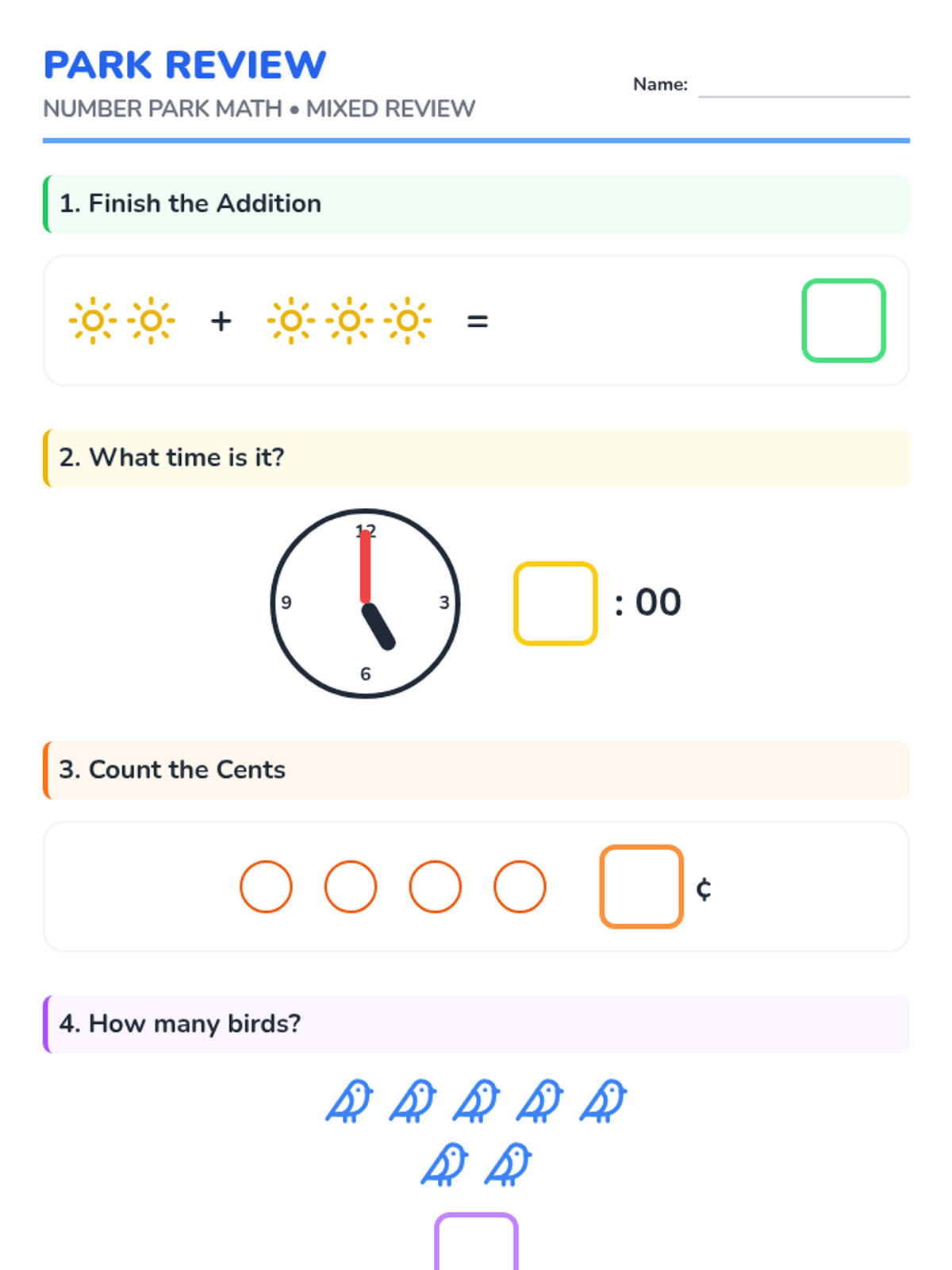
Develops proficiency in estimating and measuring length, area, volume, and mass using standard units and unit conversions. Integrates time, money, angle measurement, and data classification through counting and arithmetic applications.
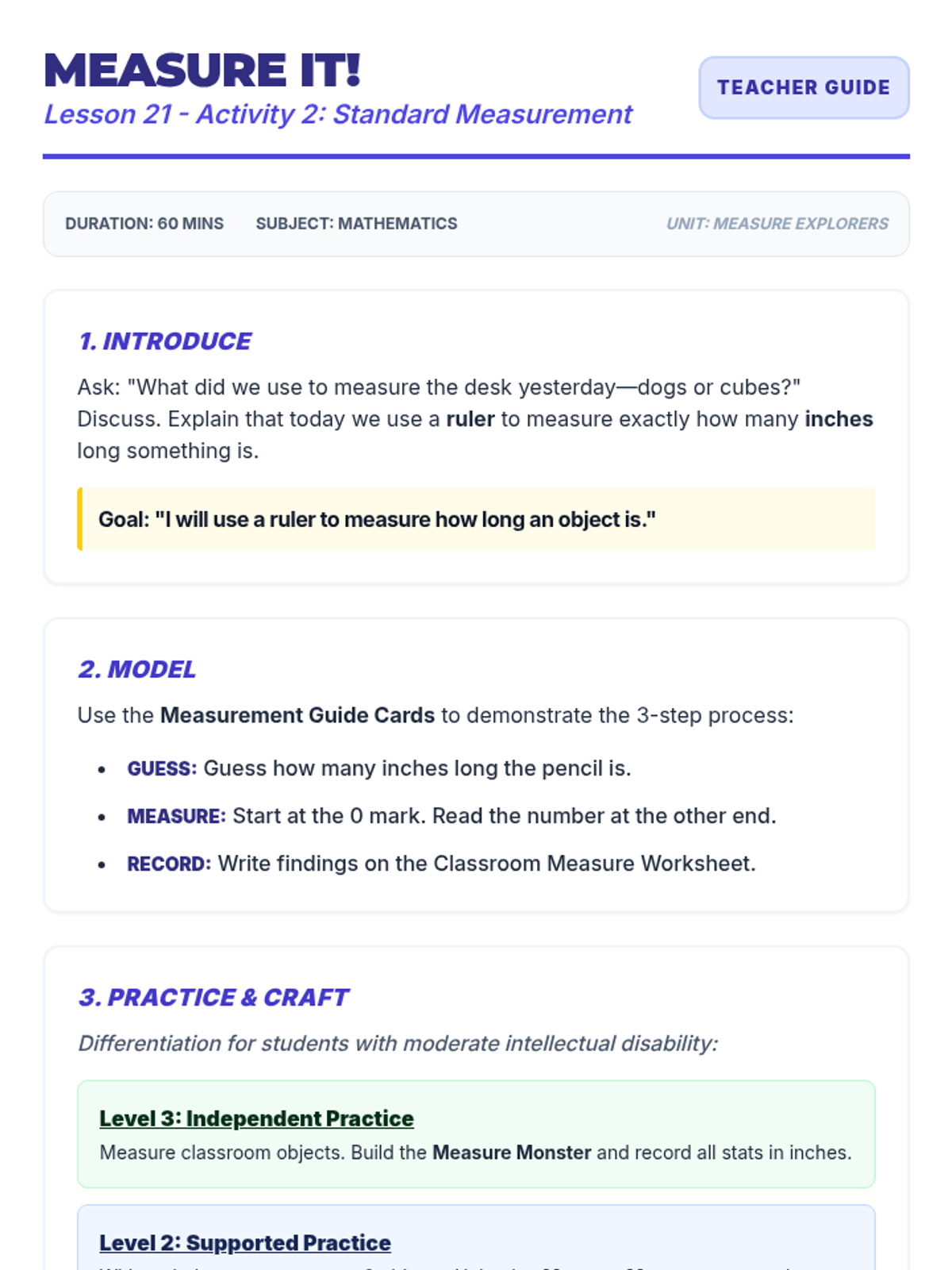
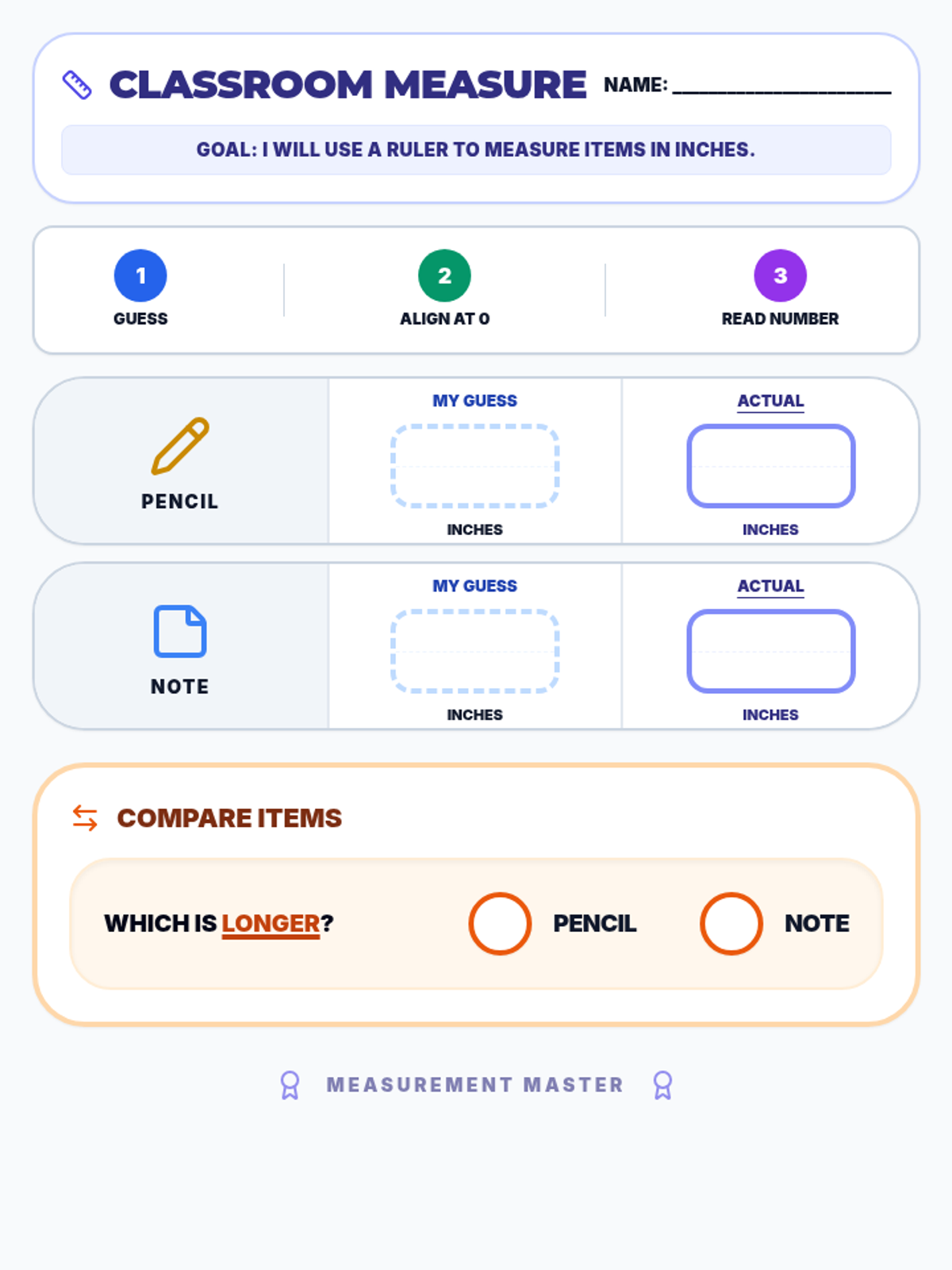
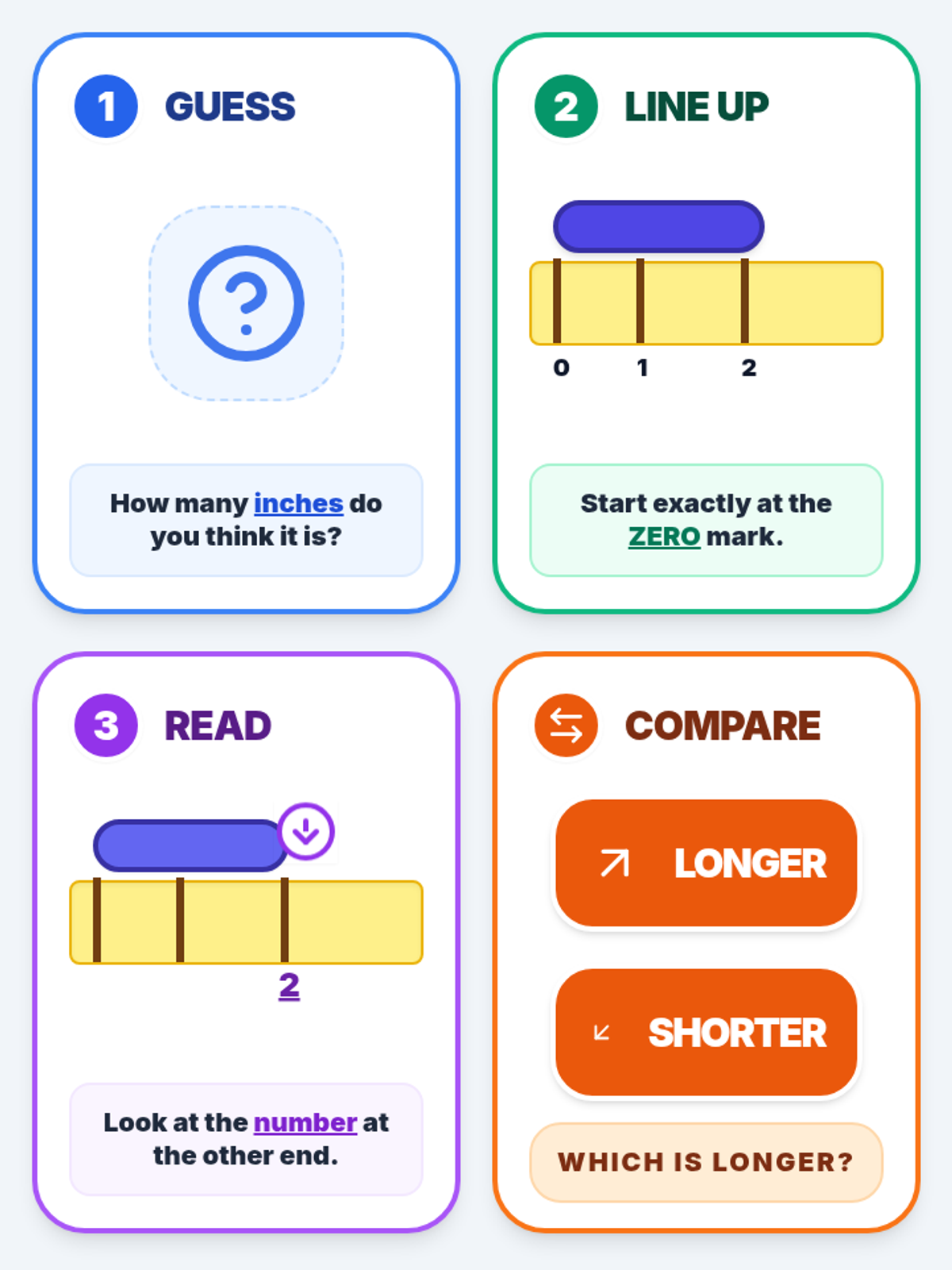
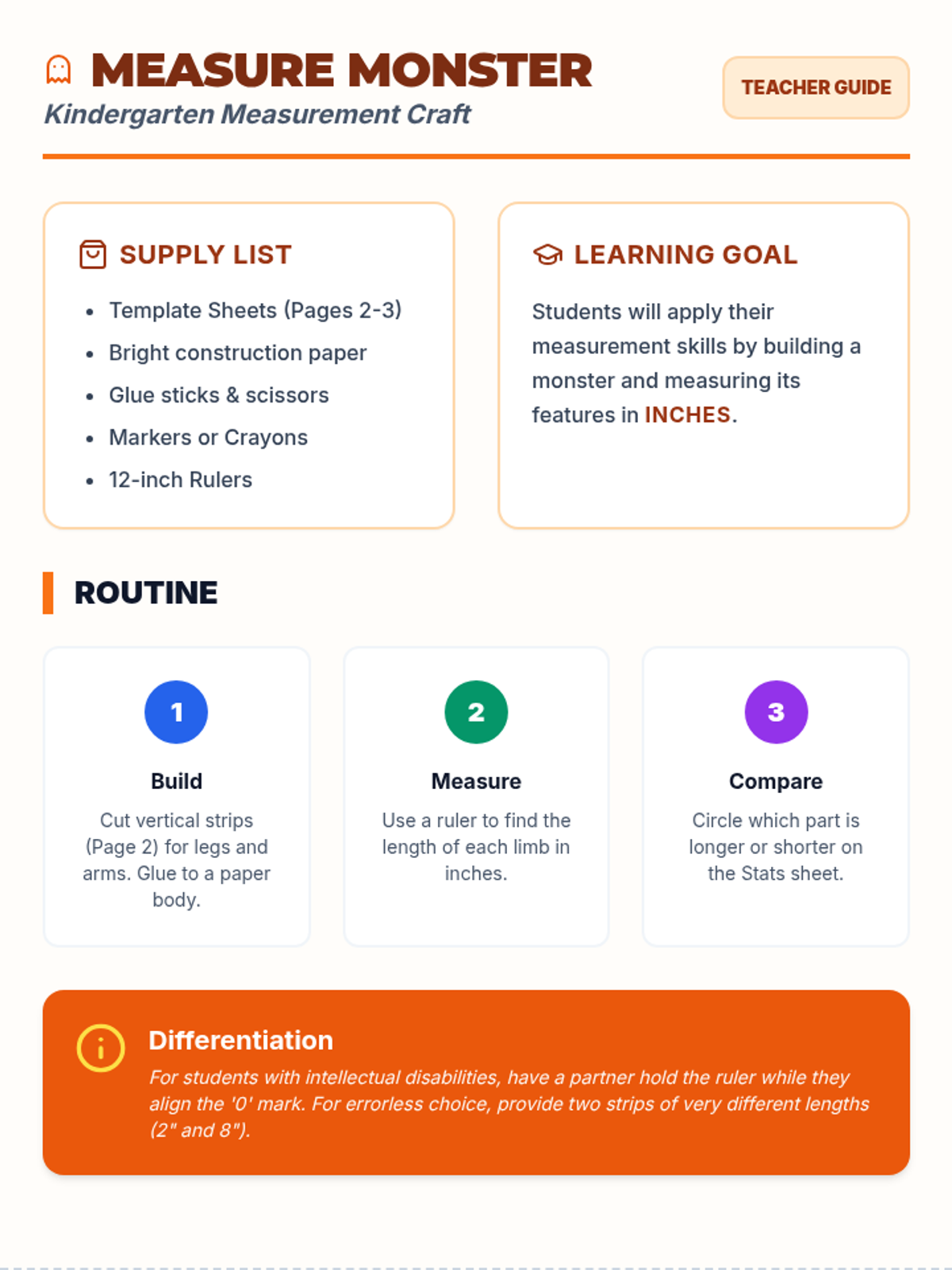
Introducing standard measurement using inches and rulers, focusing on estimating, measuring, and comparing classroom objects with tiered supports.
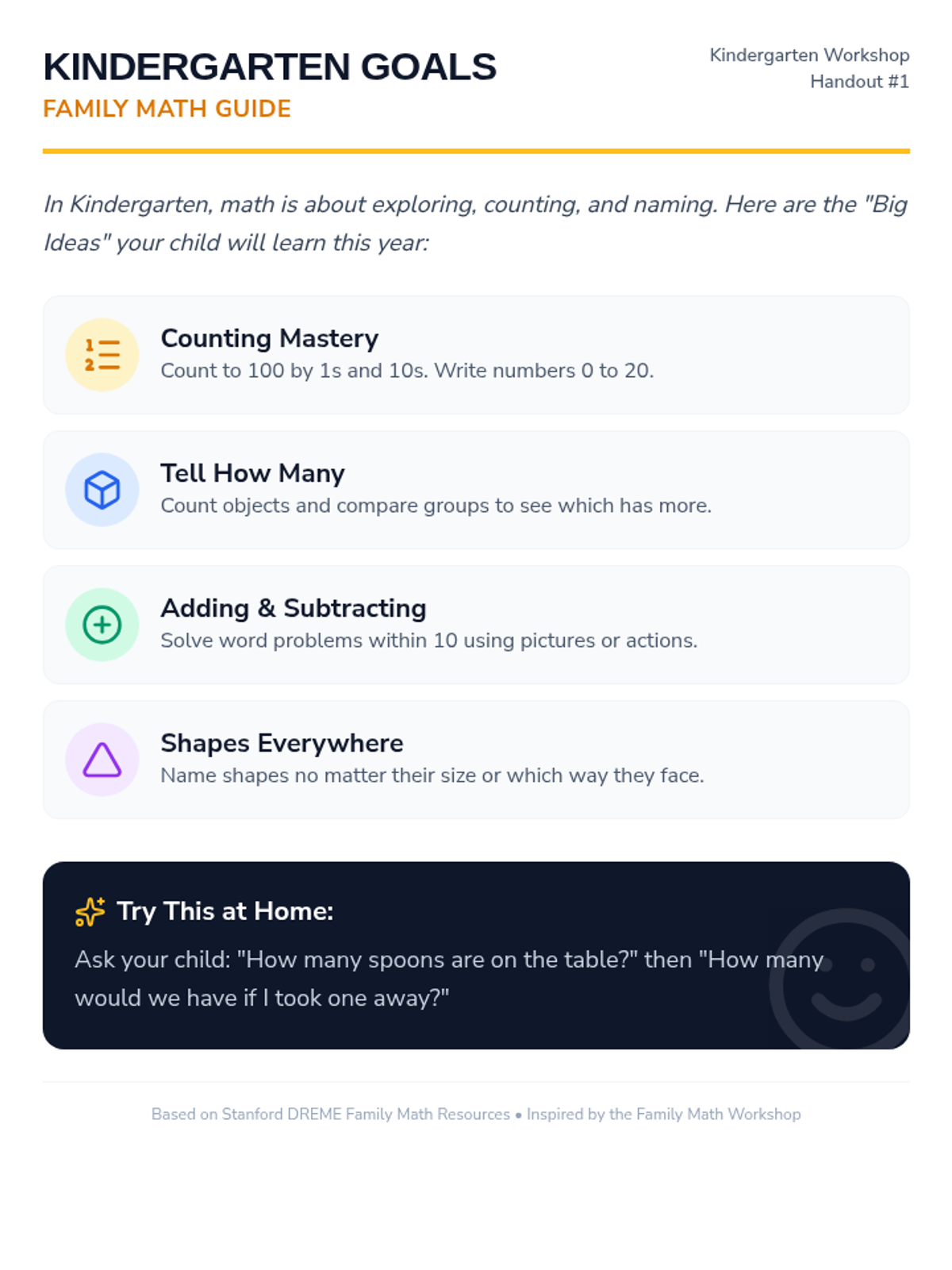
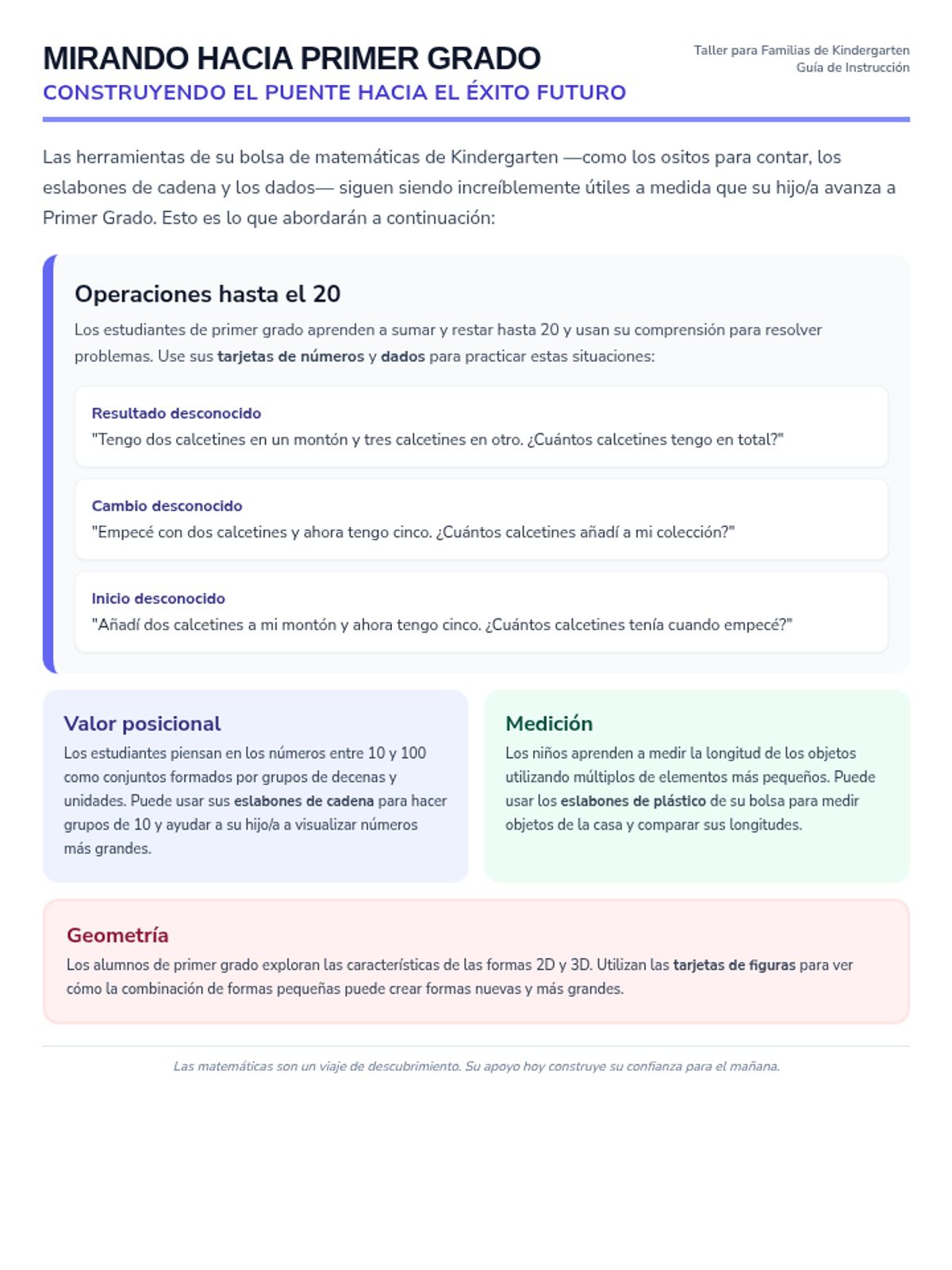
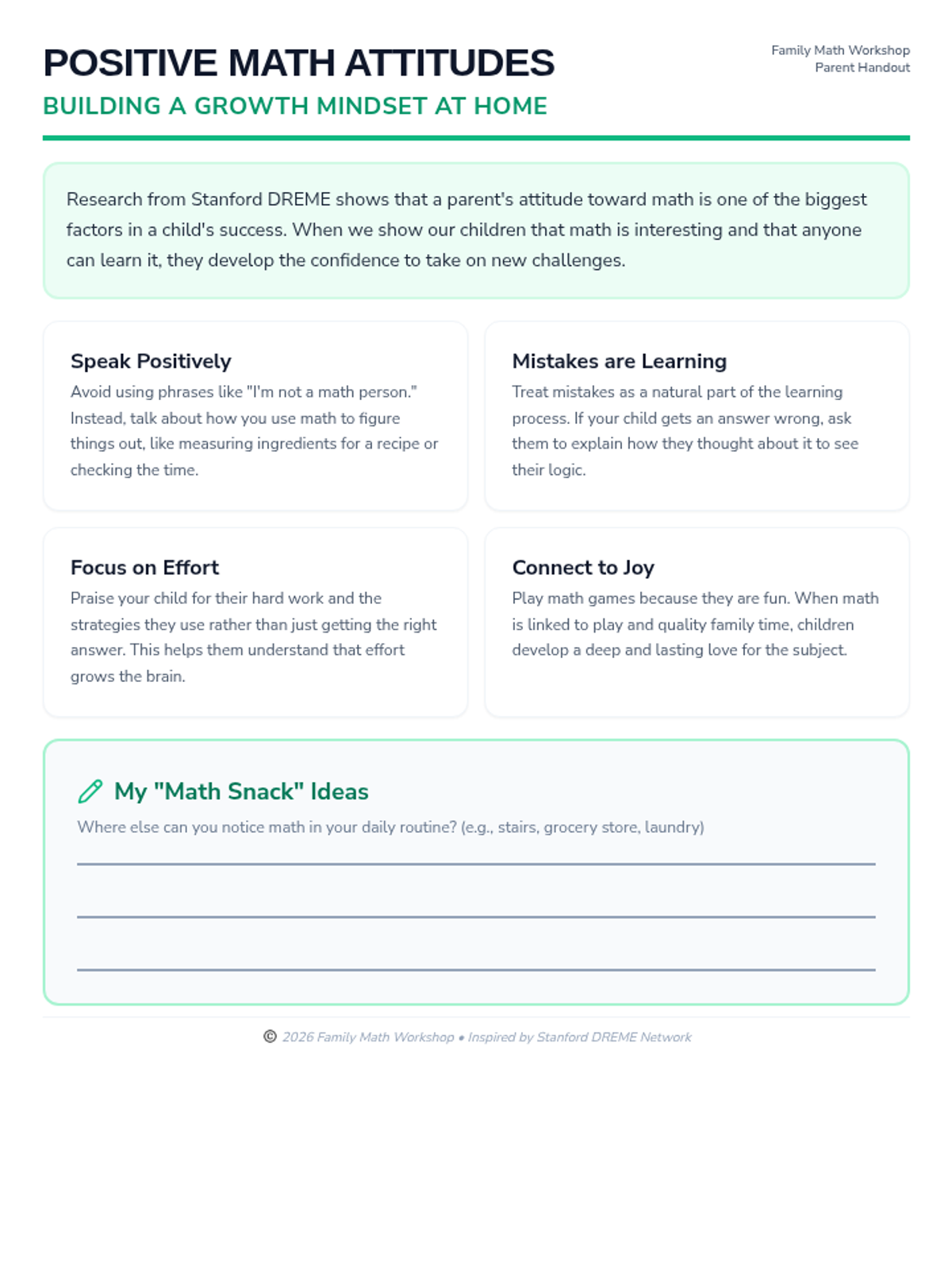
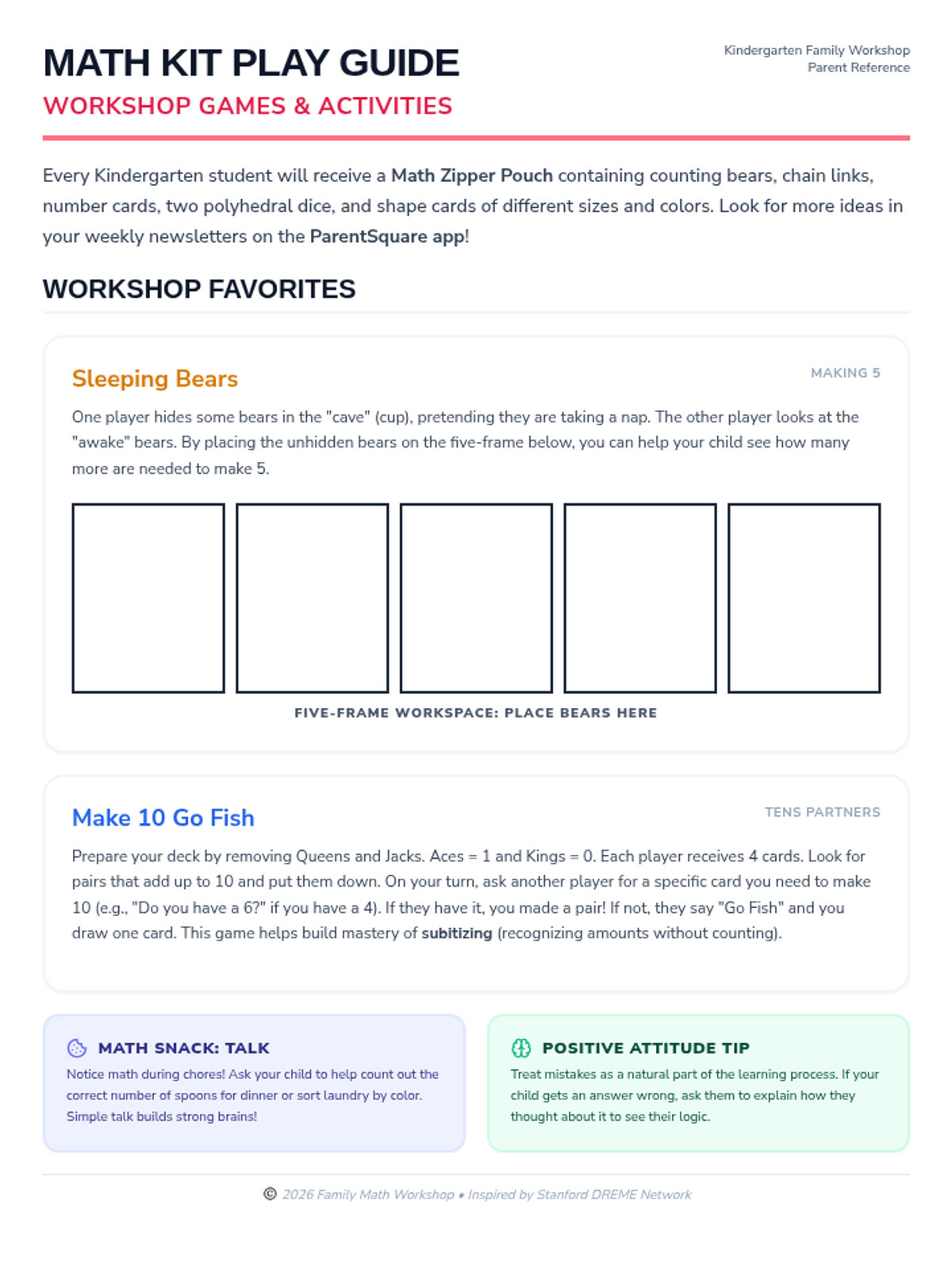
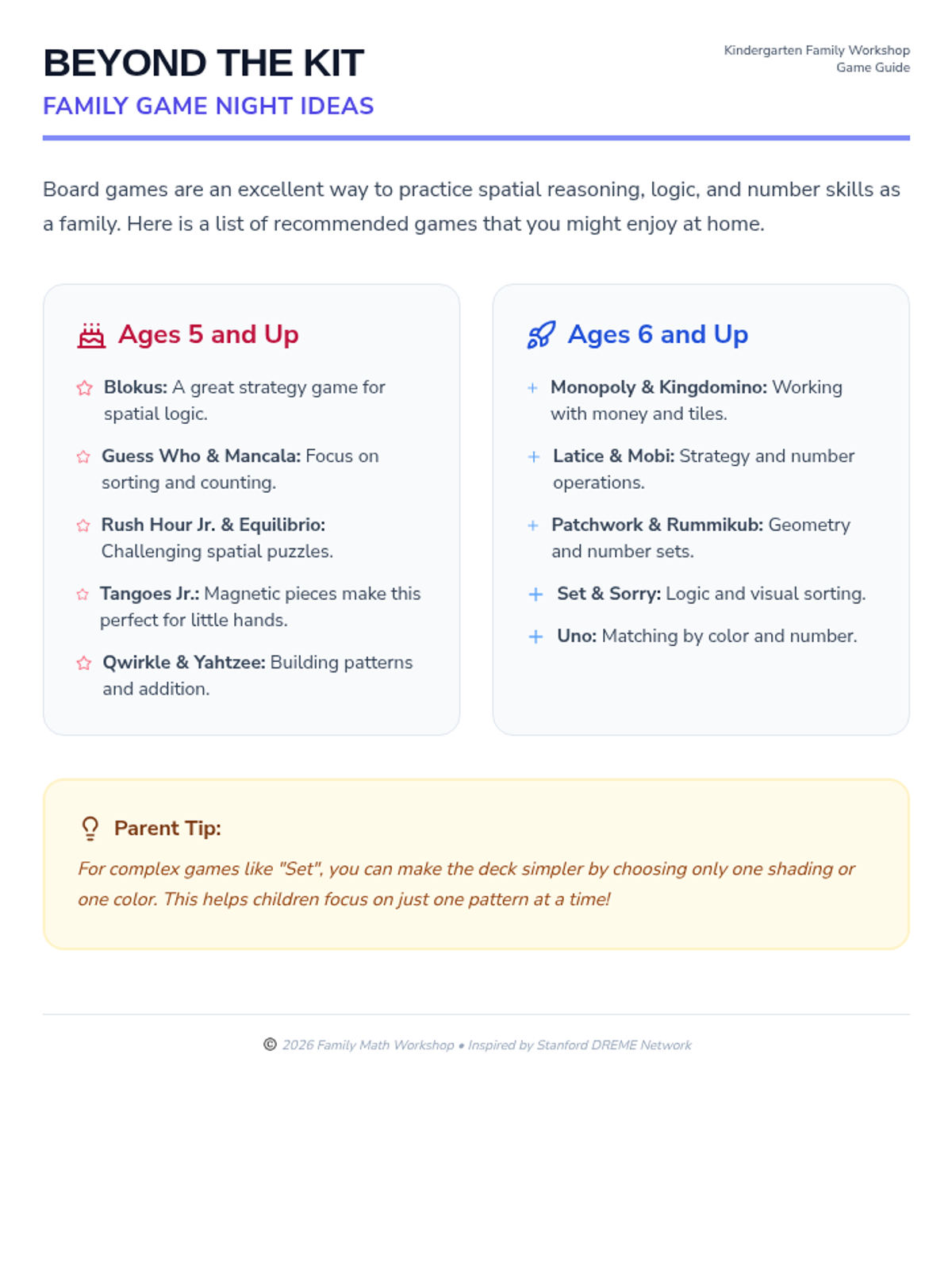
A comprehensive workshop for Kindergarten parents and guardians focused on building positive math attitudes and supporting math learning at home through play and daily routines. Based on Stanford DREME research.
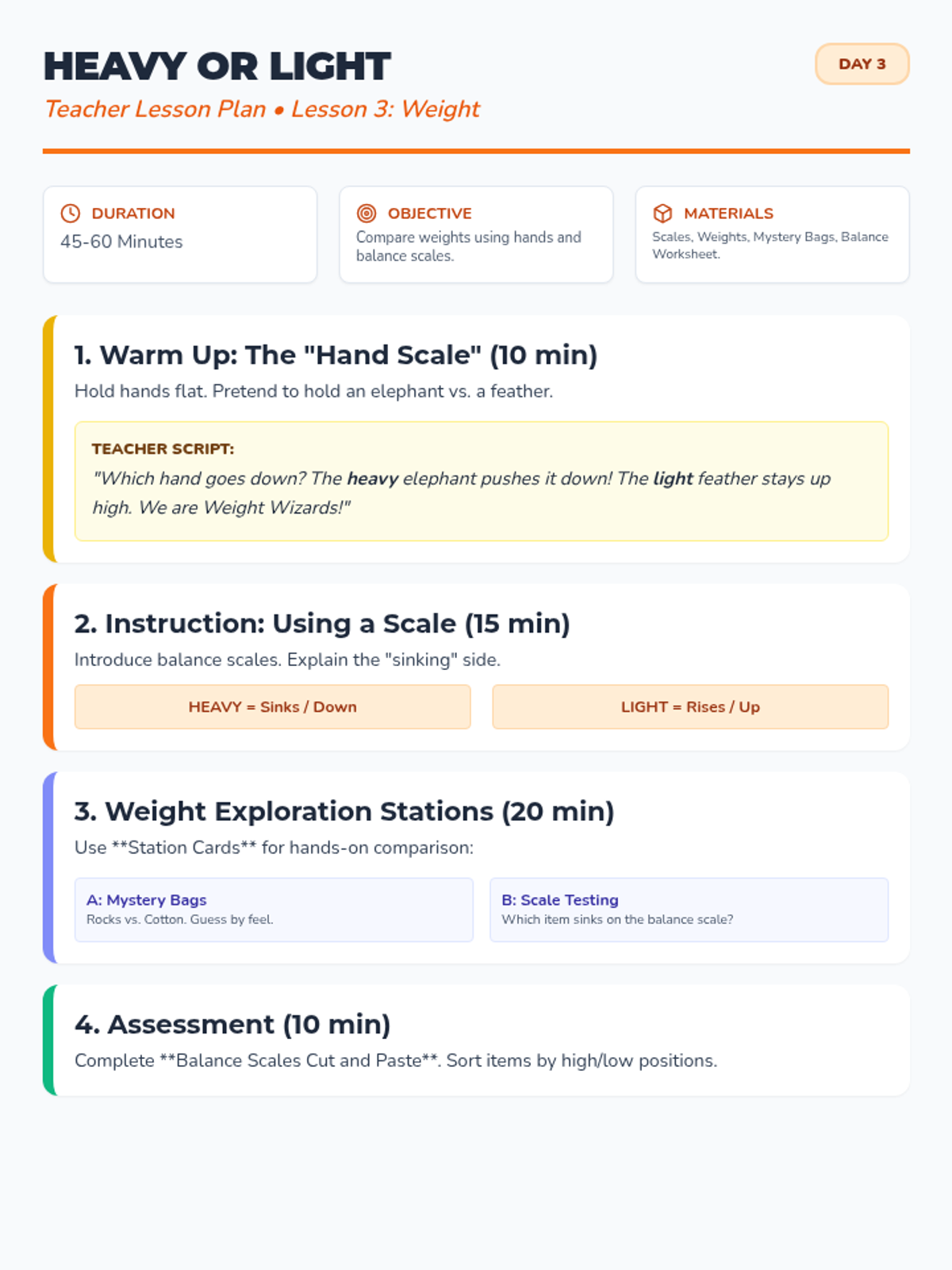
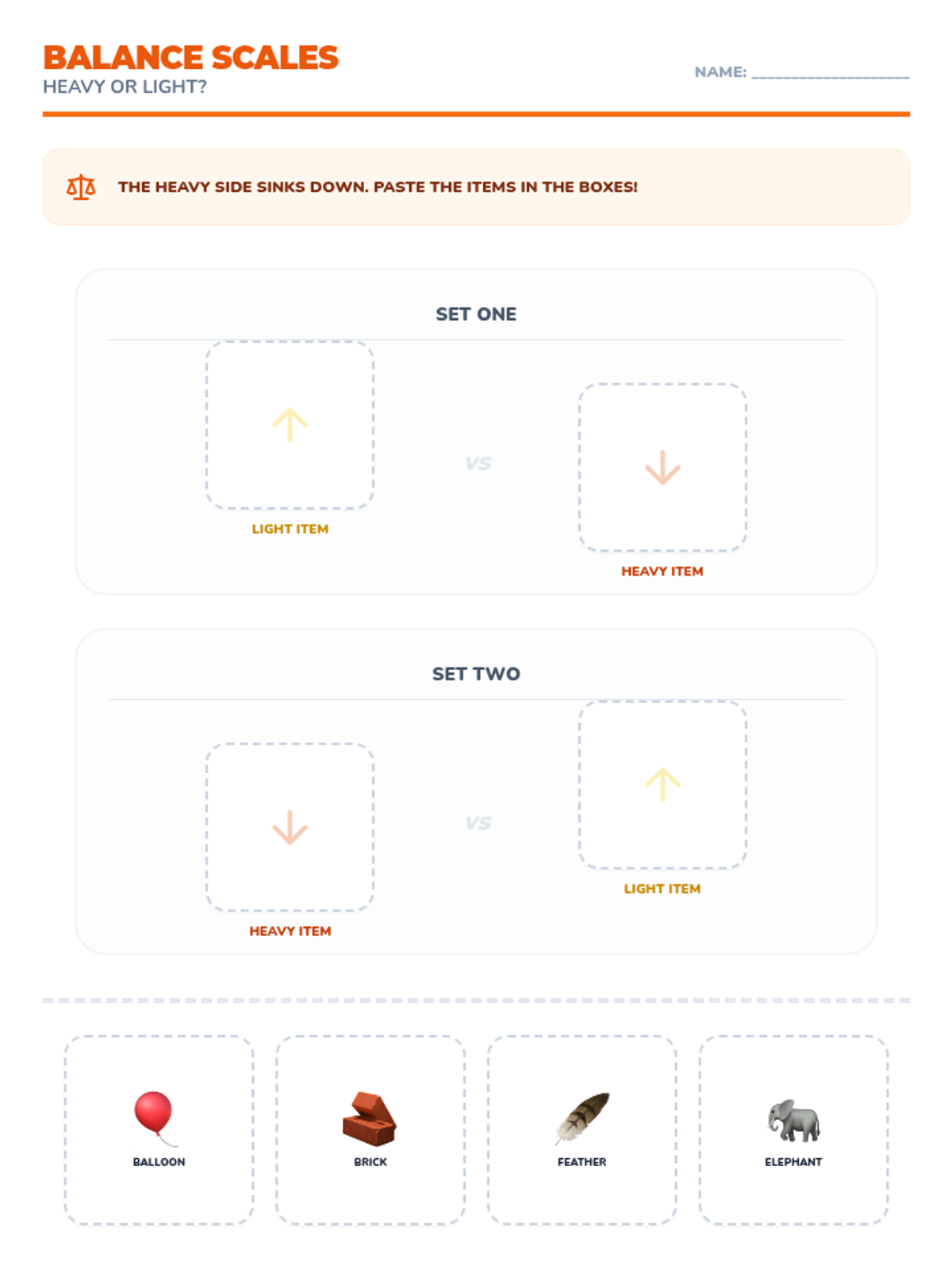
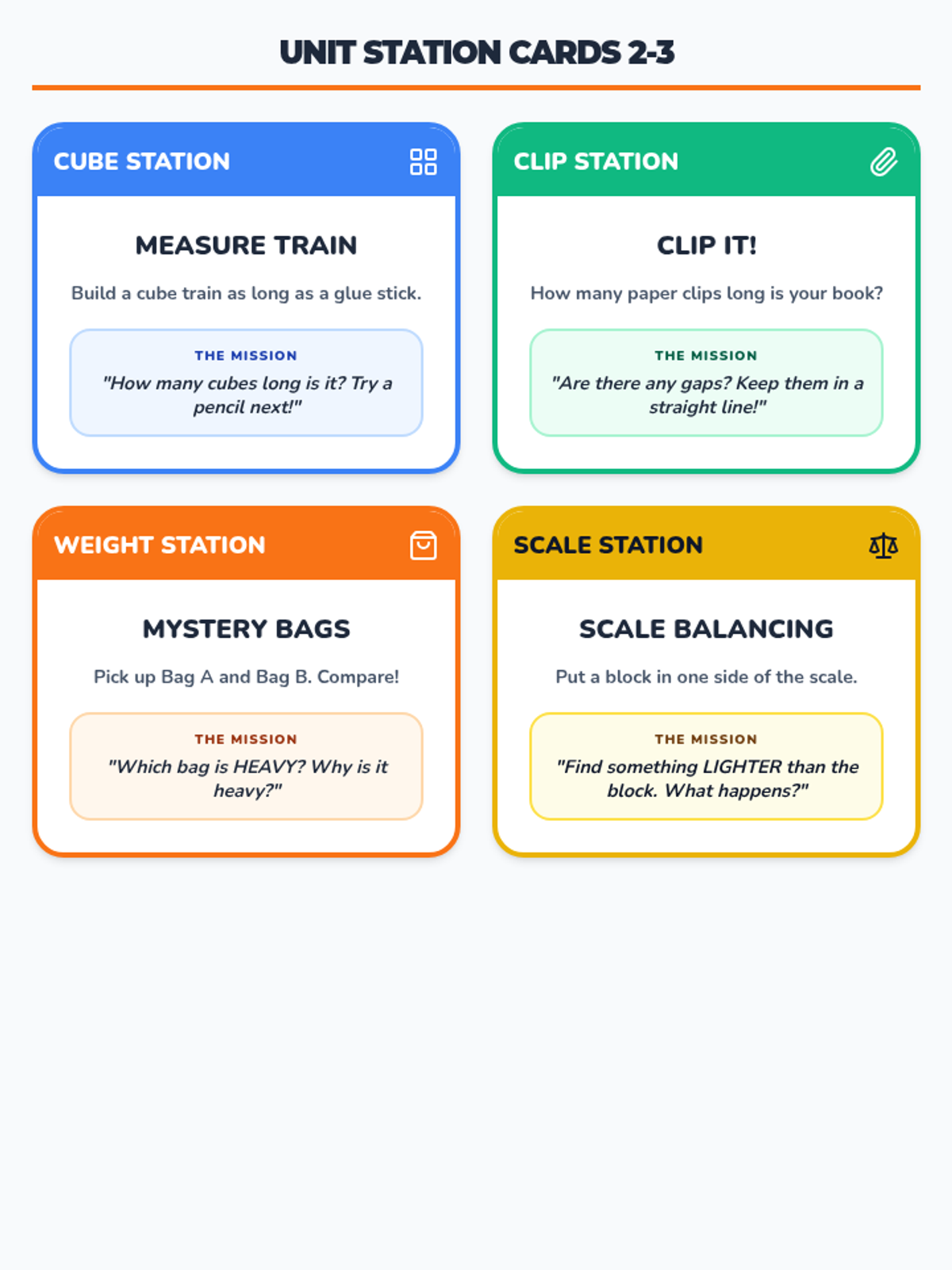
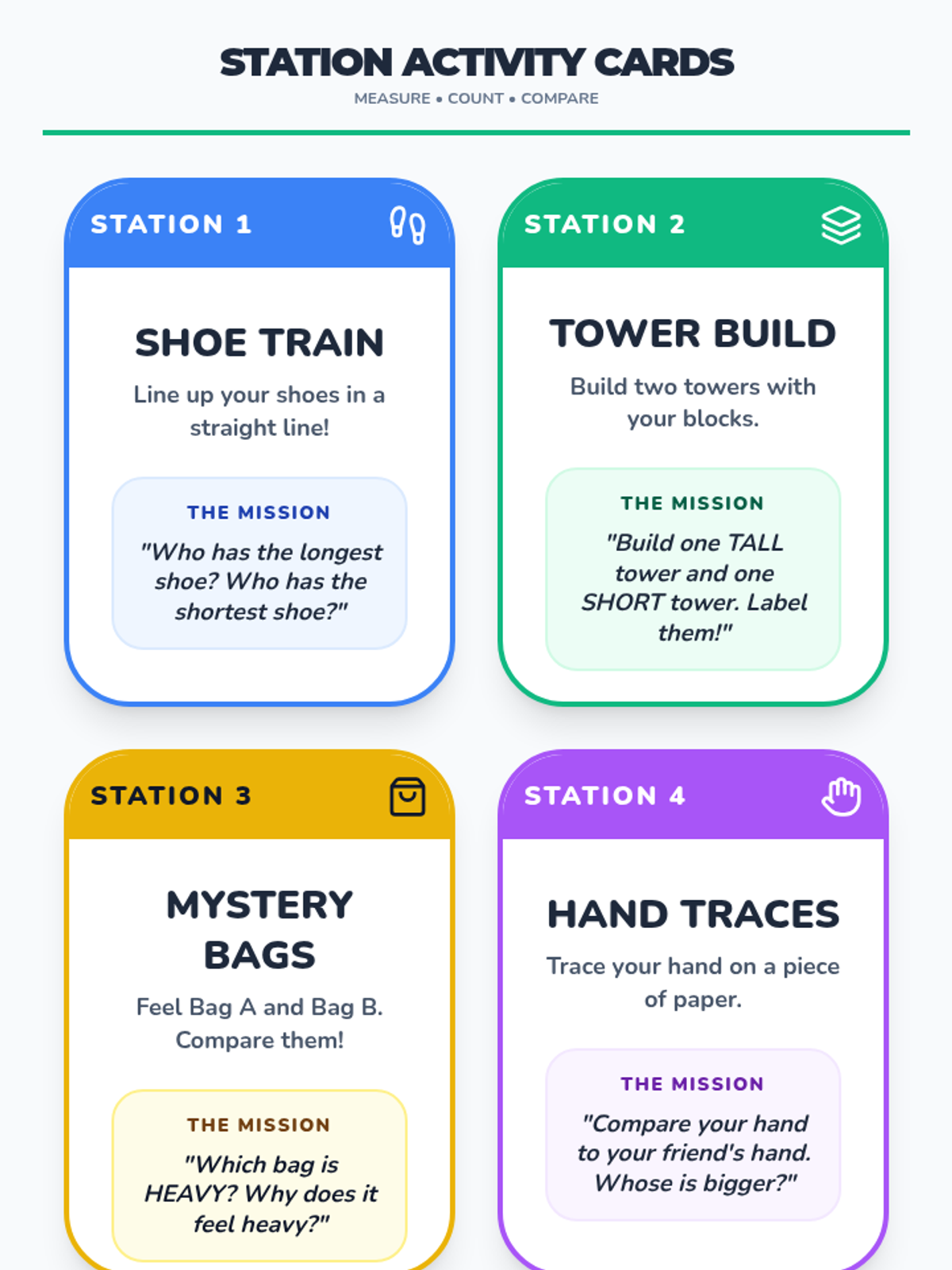
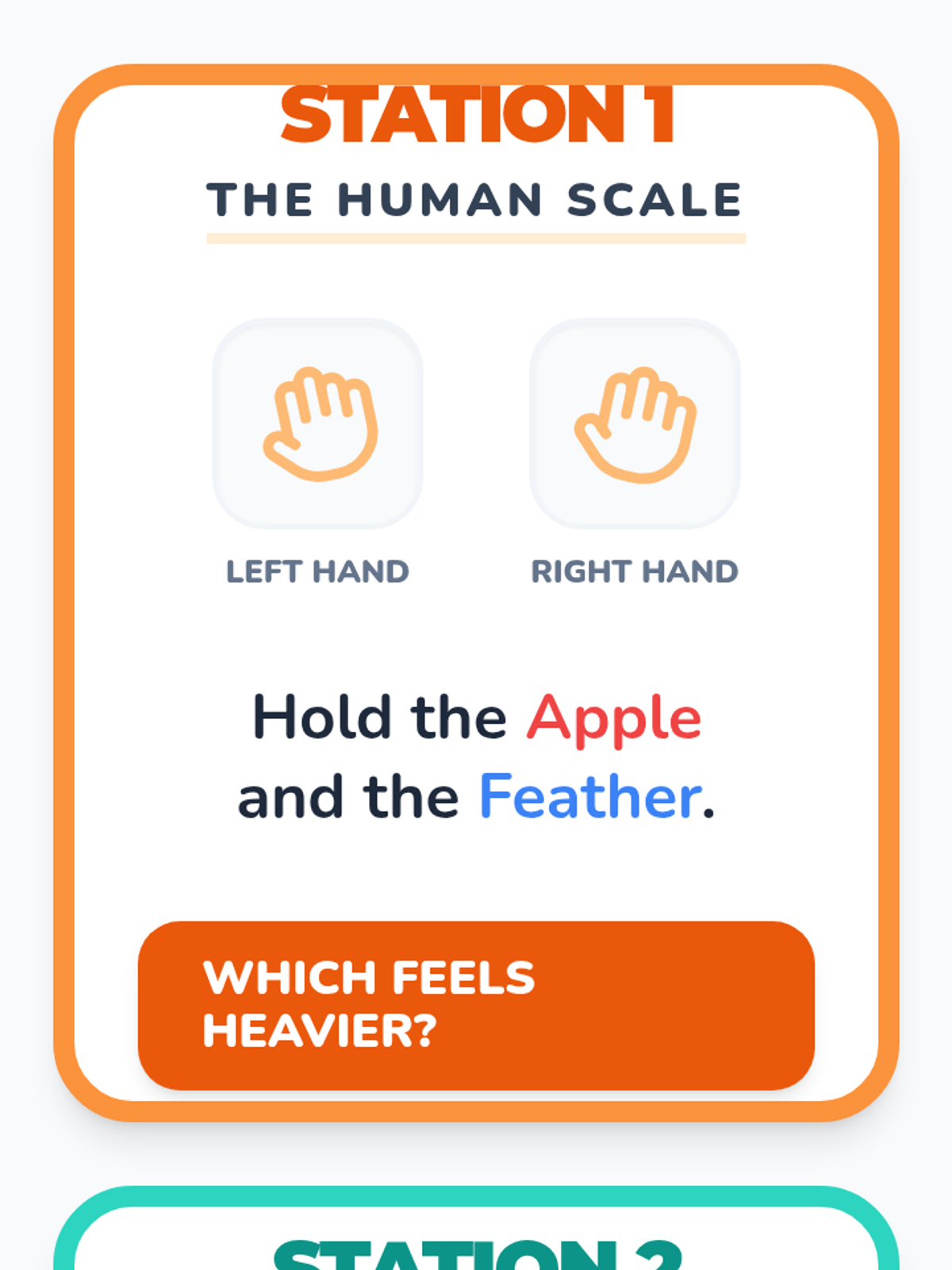
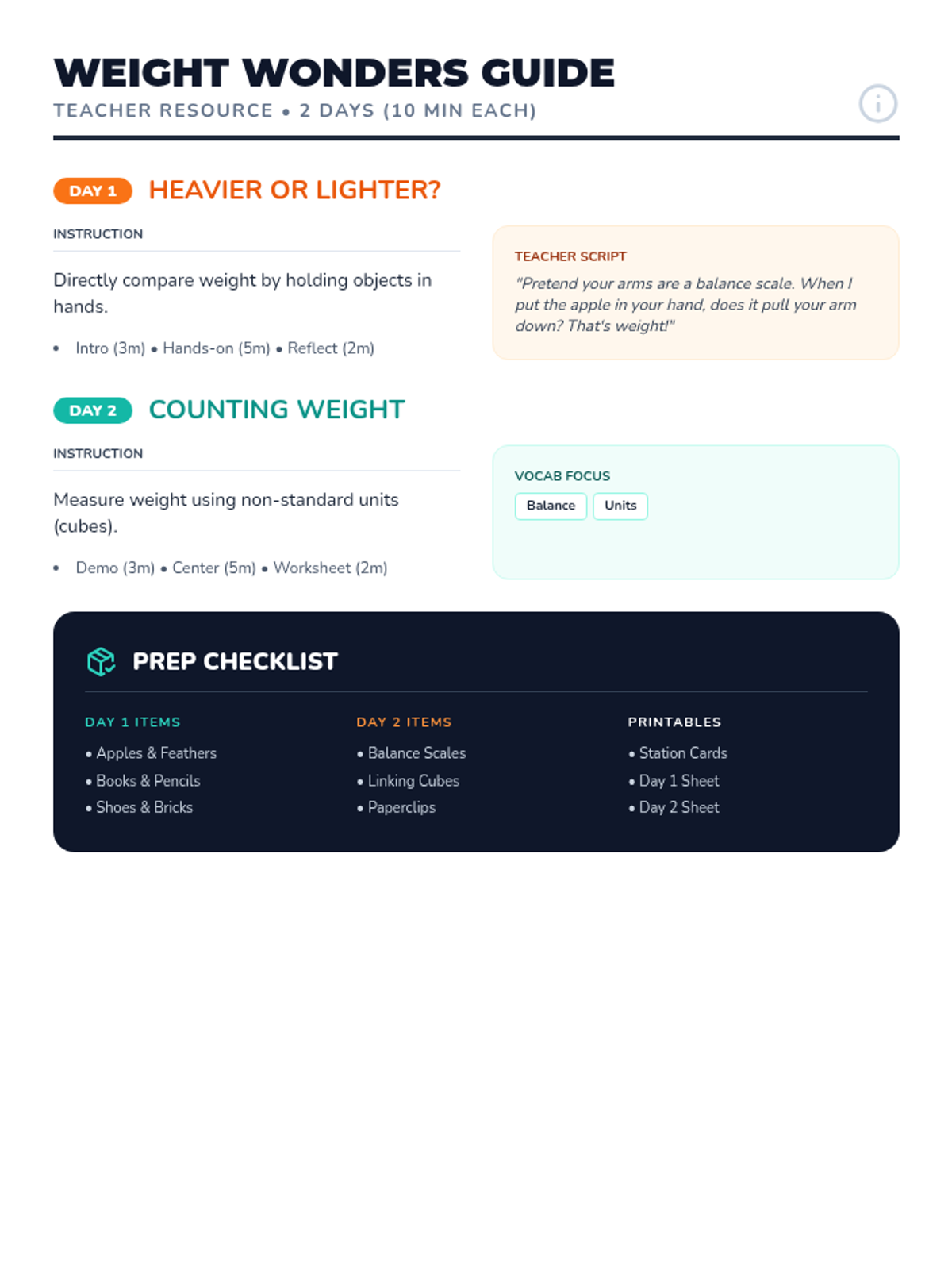
Exploring weight by comparing heavy and light objects using hands and balance scales.
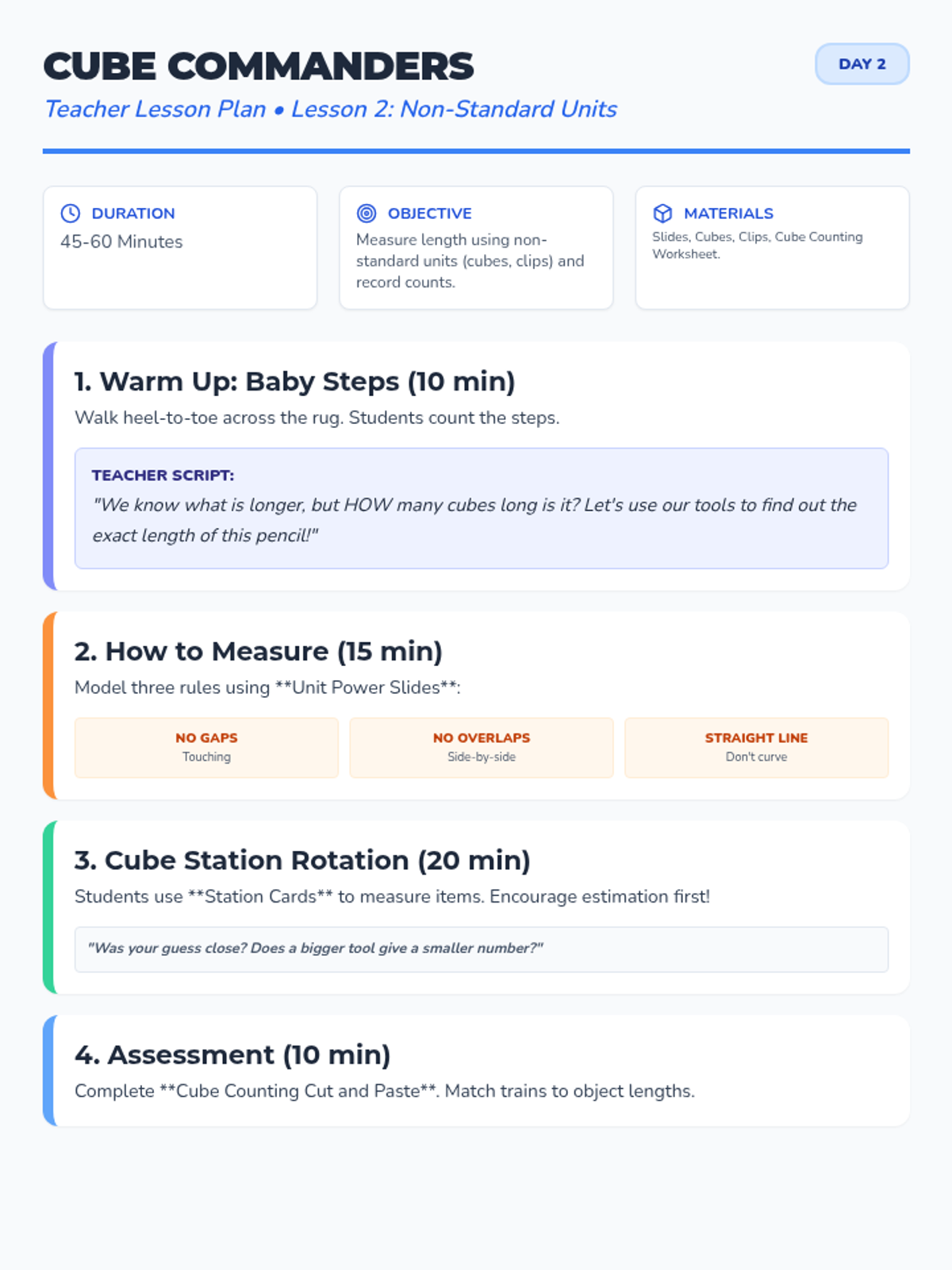
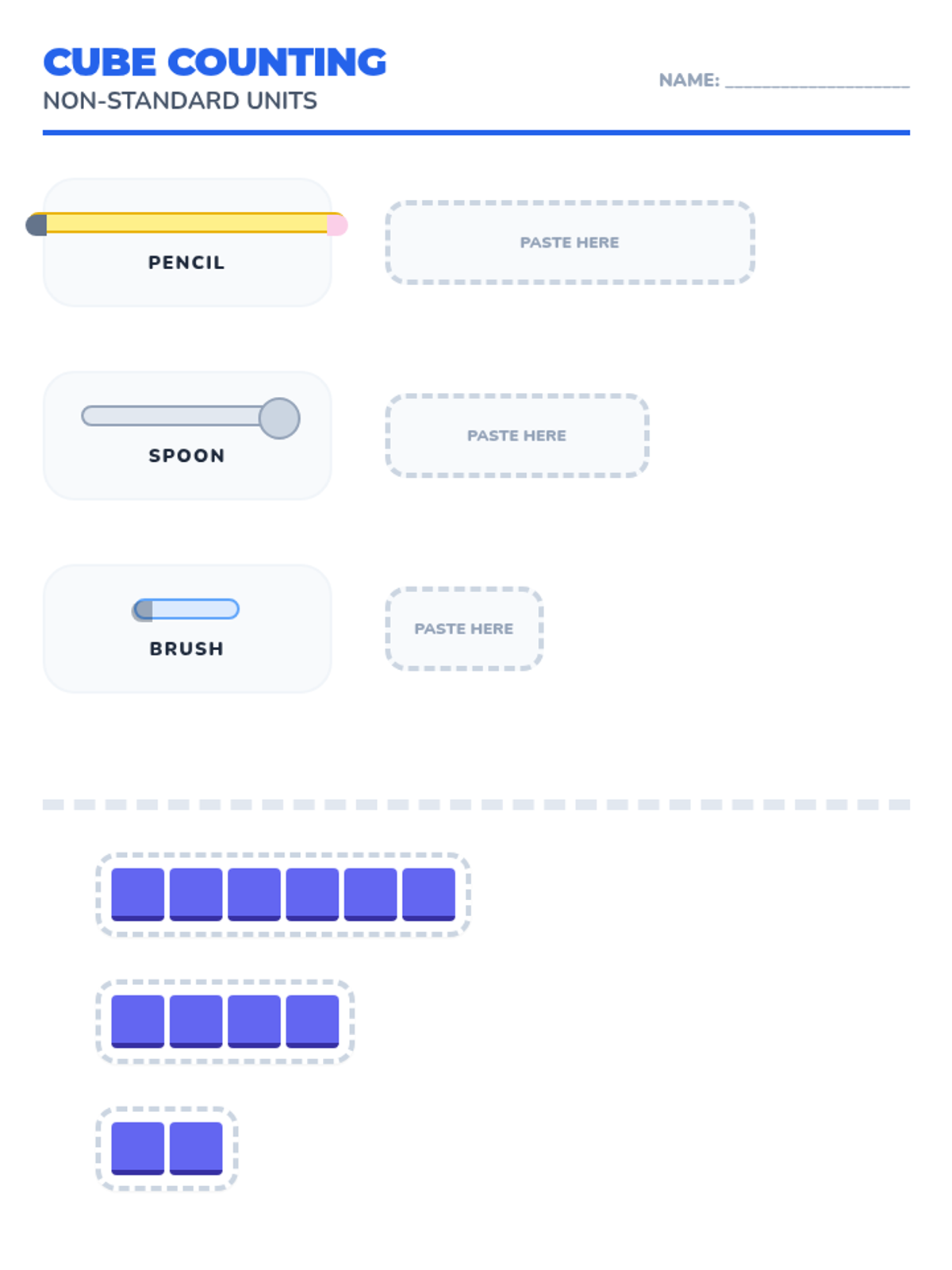
Learning to measure objects using non-standard units like snap cubes, paper clips, and handprints.
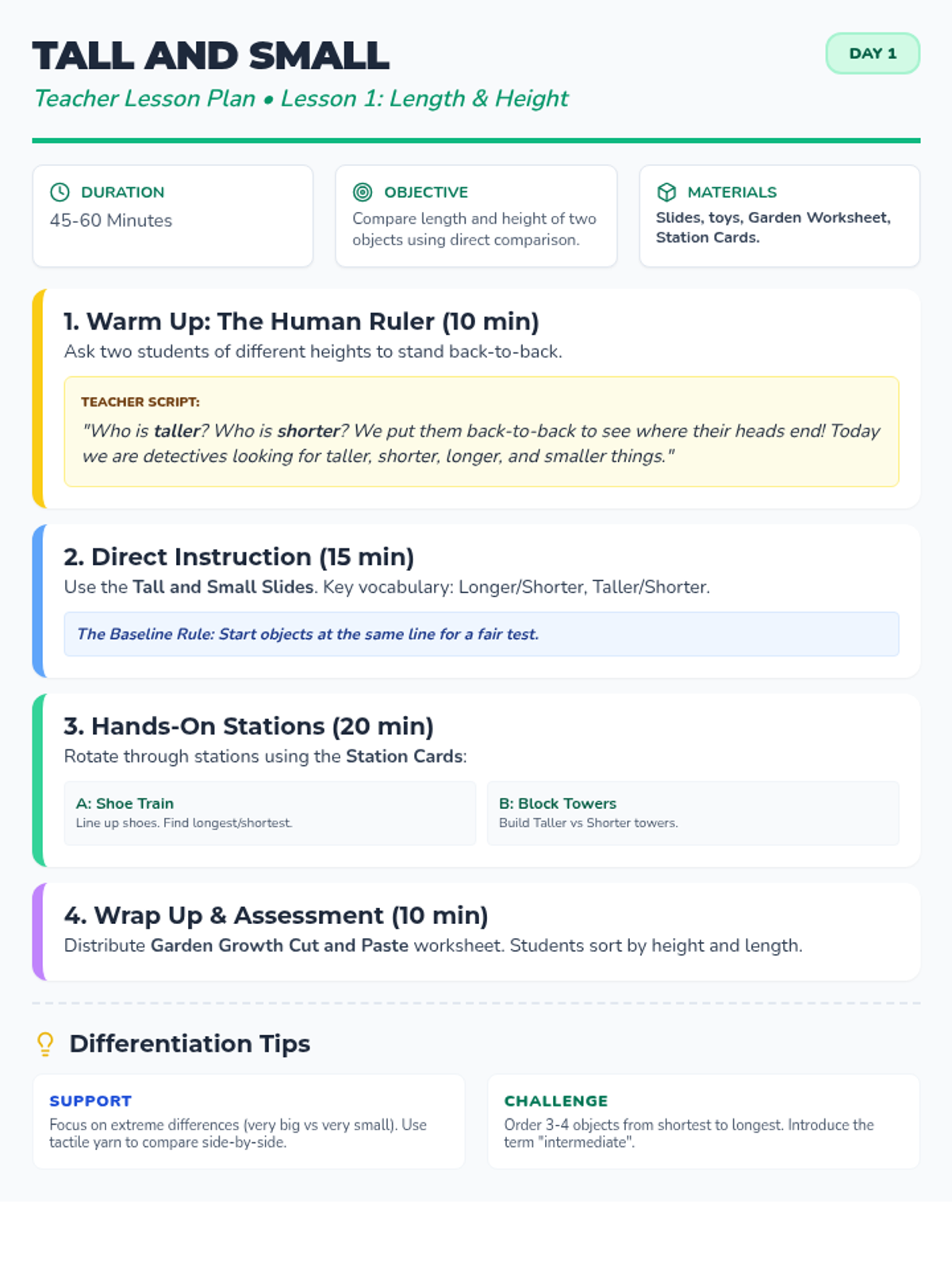
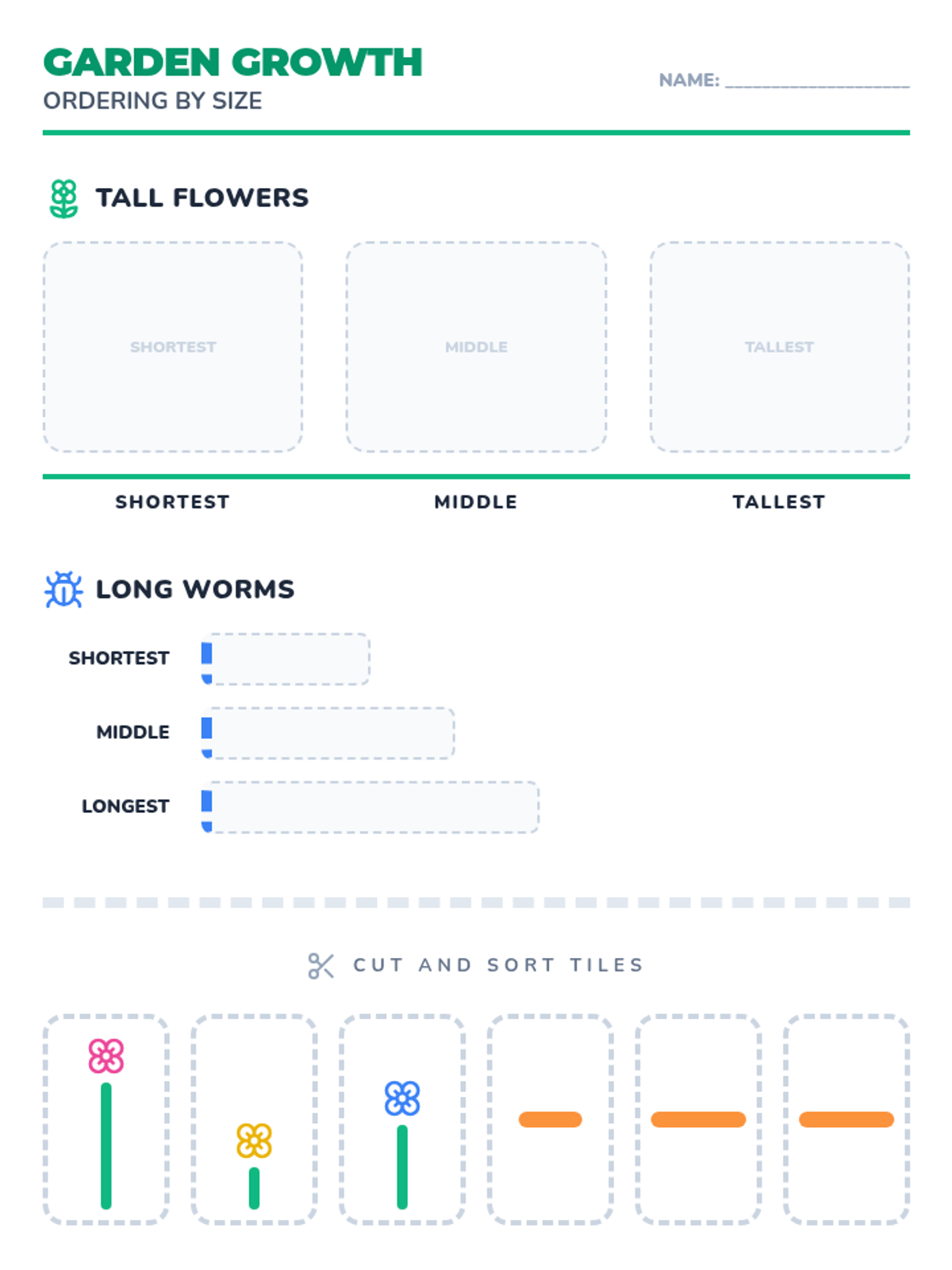
Introduction to comparing length and height using terms like 'longer', 'shorter', 'taller', and 'smaller'.
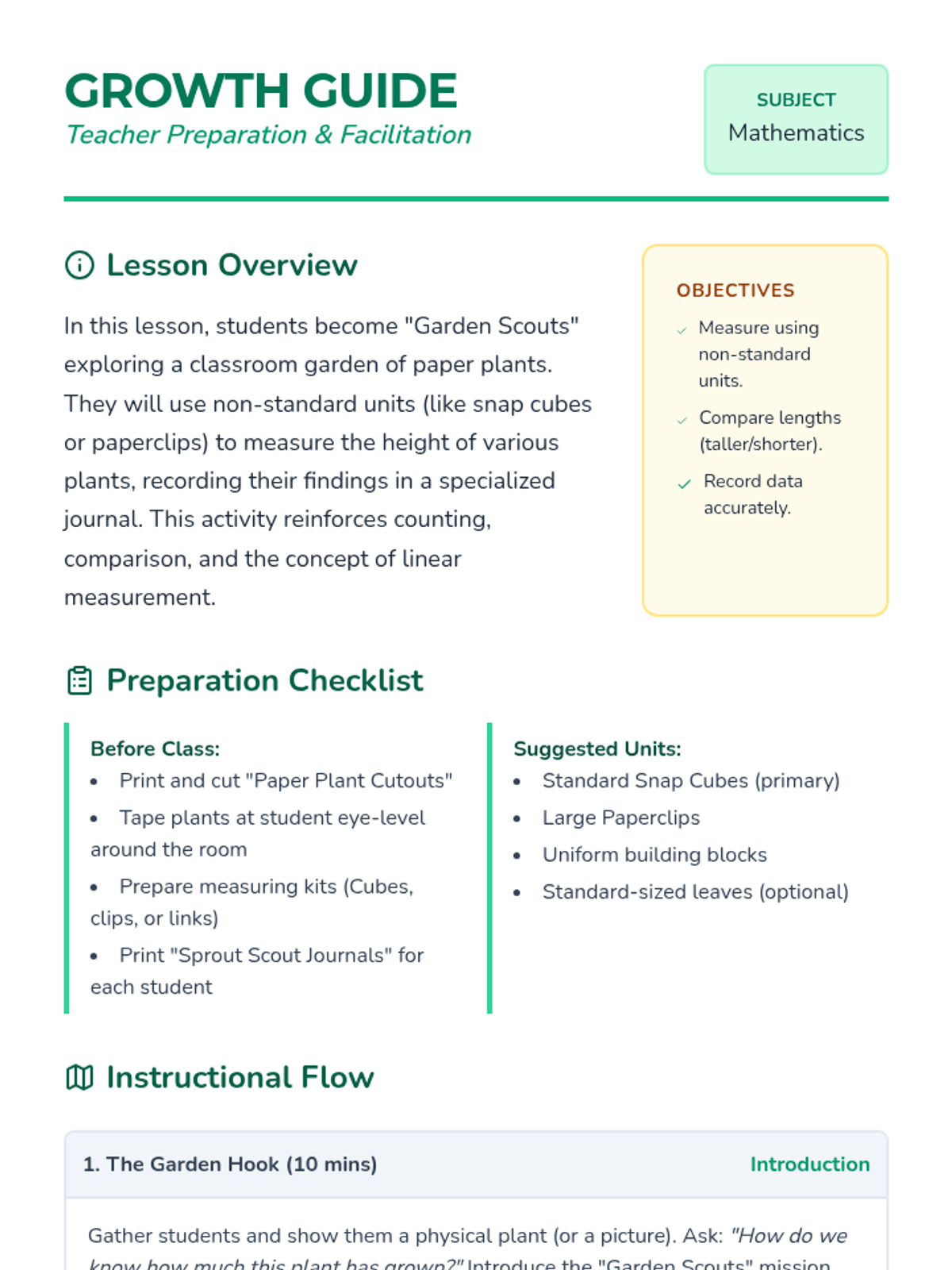
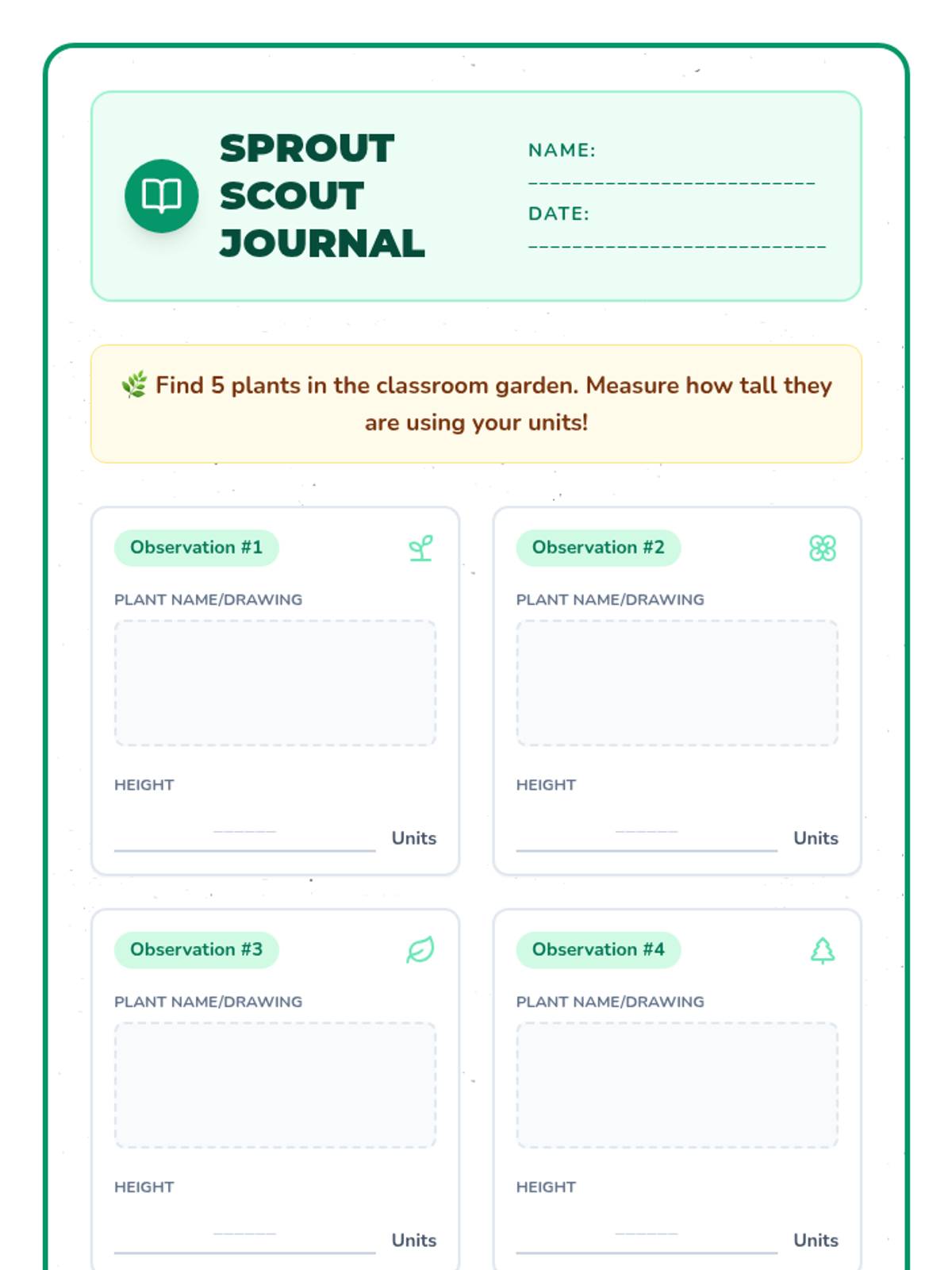
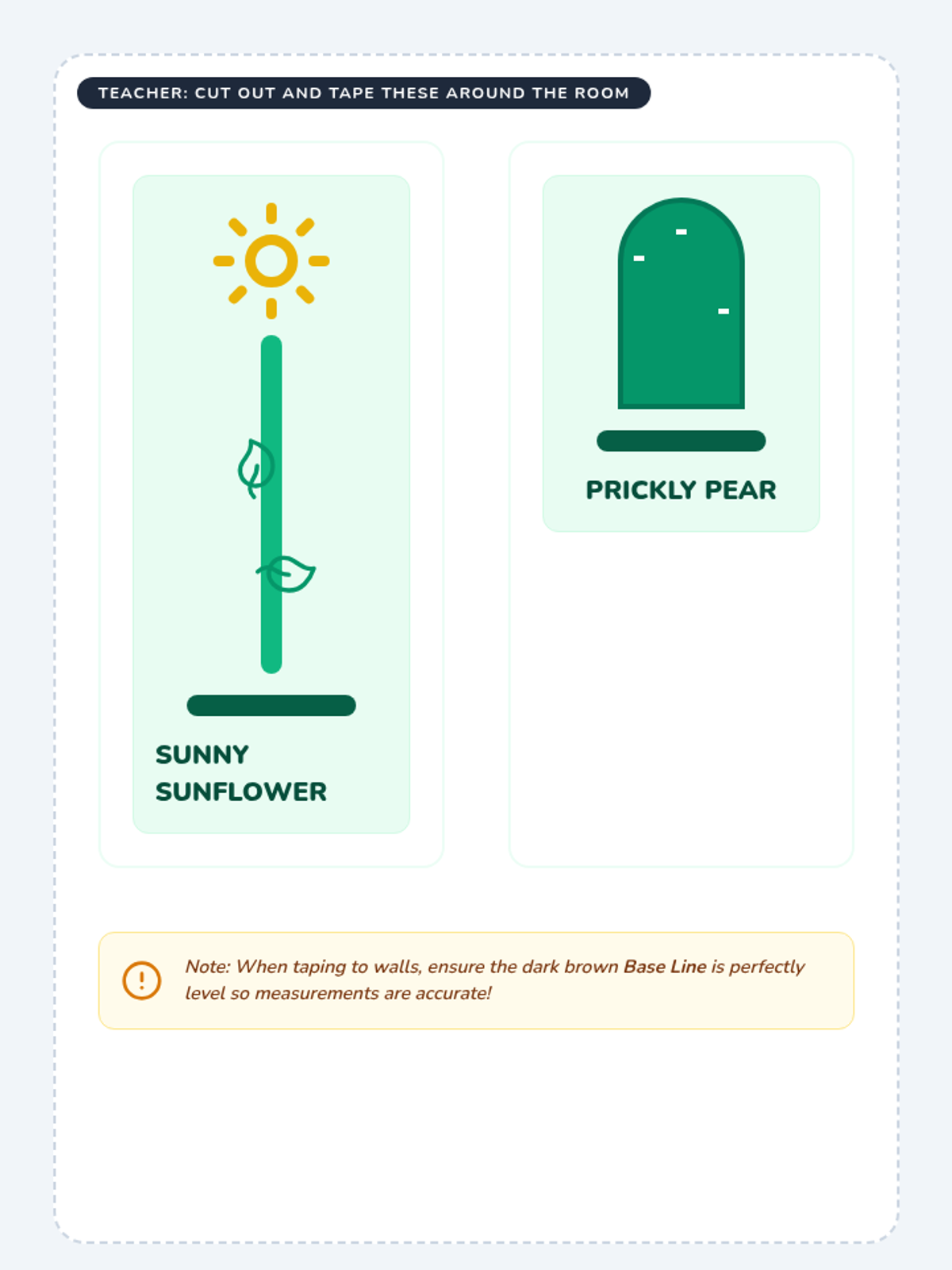
A hands-on measurement lesson where students use non-standard units to measure paper plants, fostering number sense and comparison skills through movement-based learning.
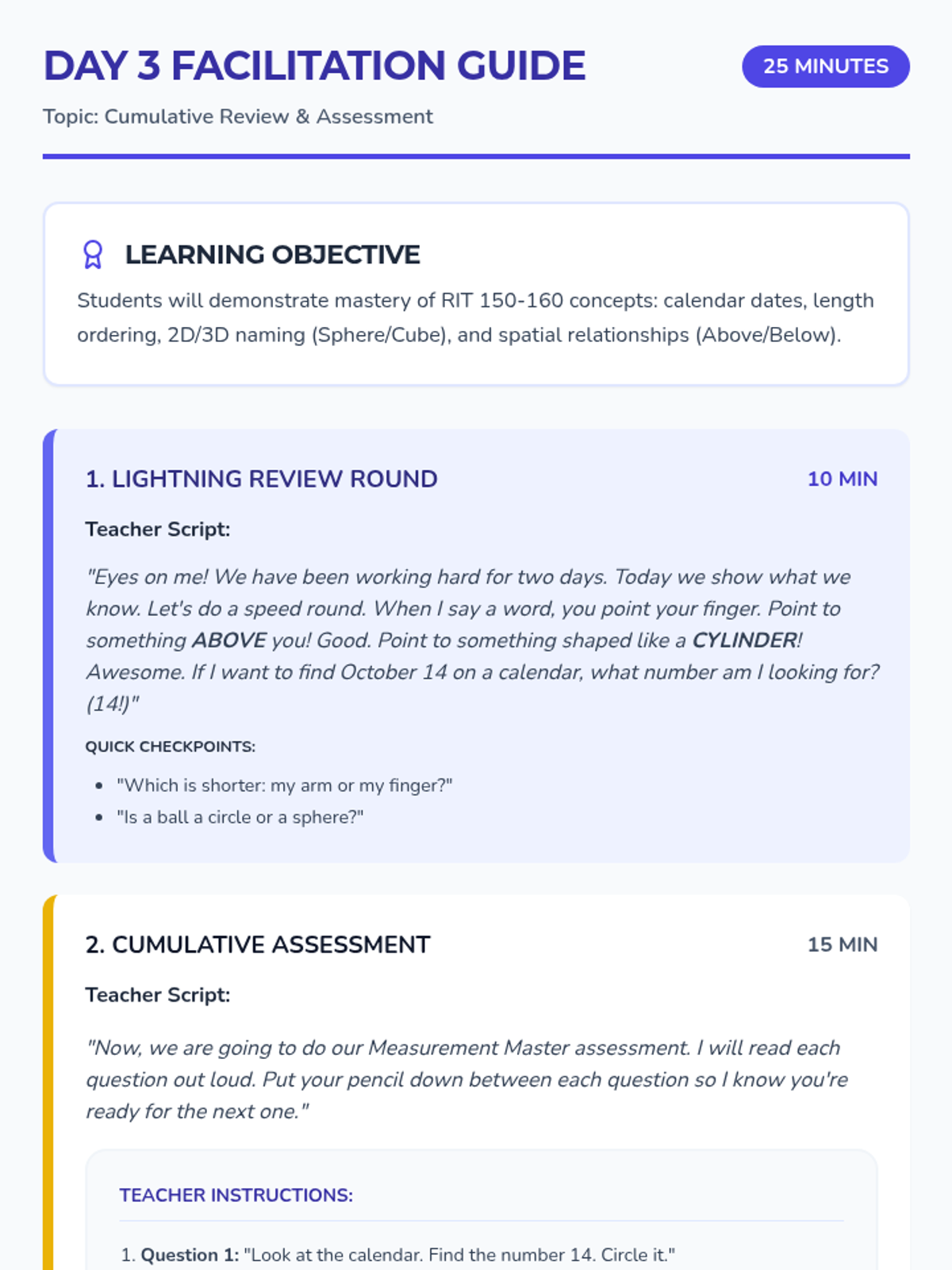
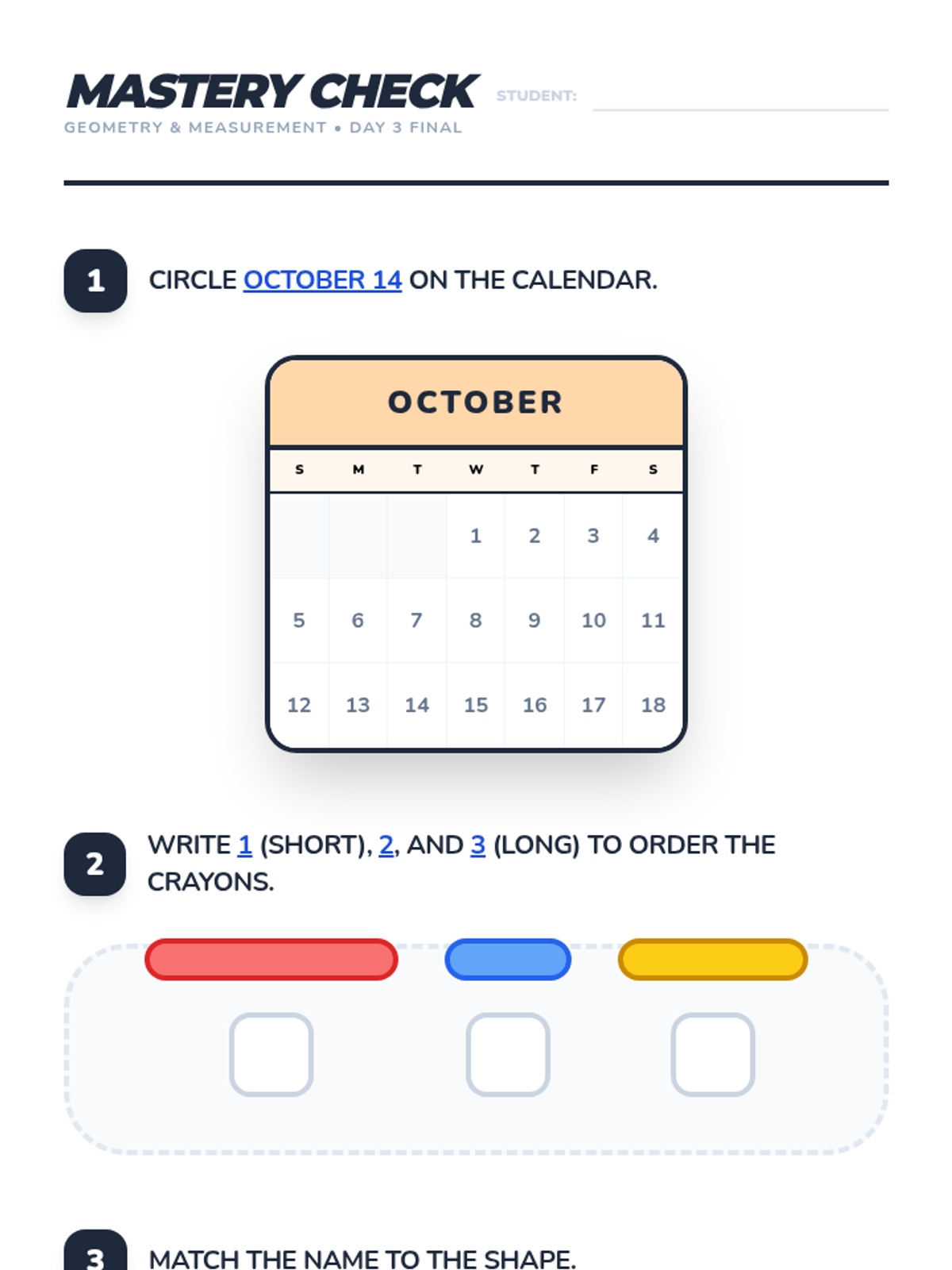
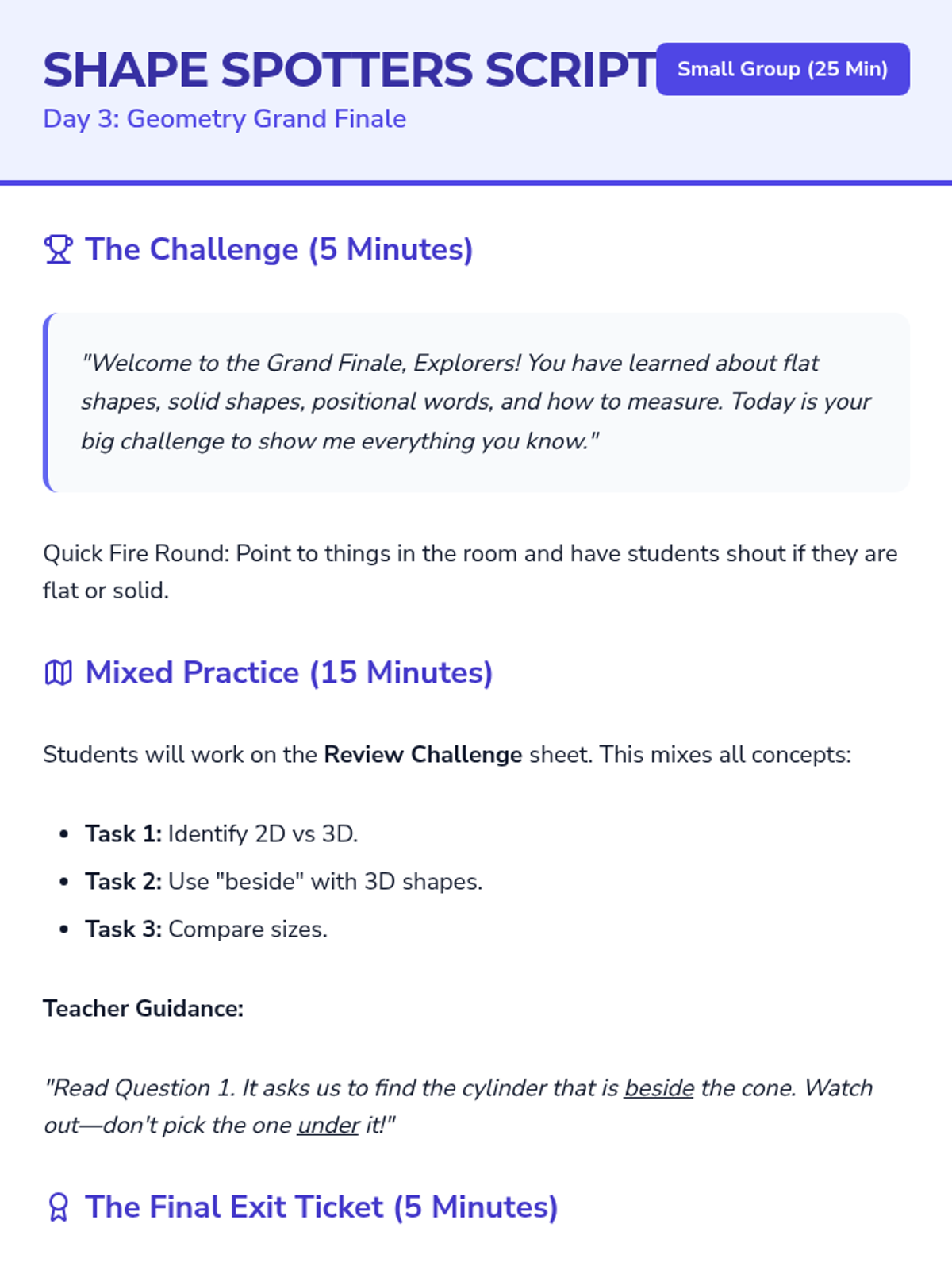
Day 3 provides a comprehensive review of all measurement and geometry concepts from the week, culminating in a cumulative assessment.
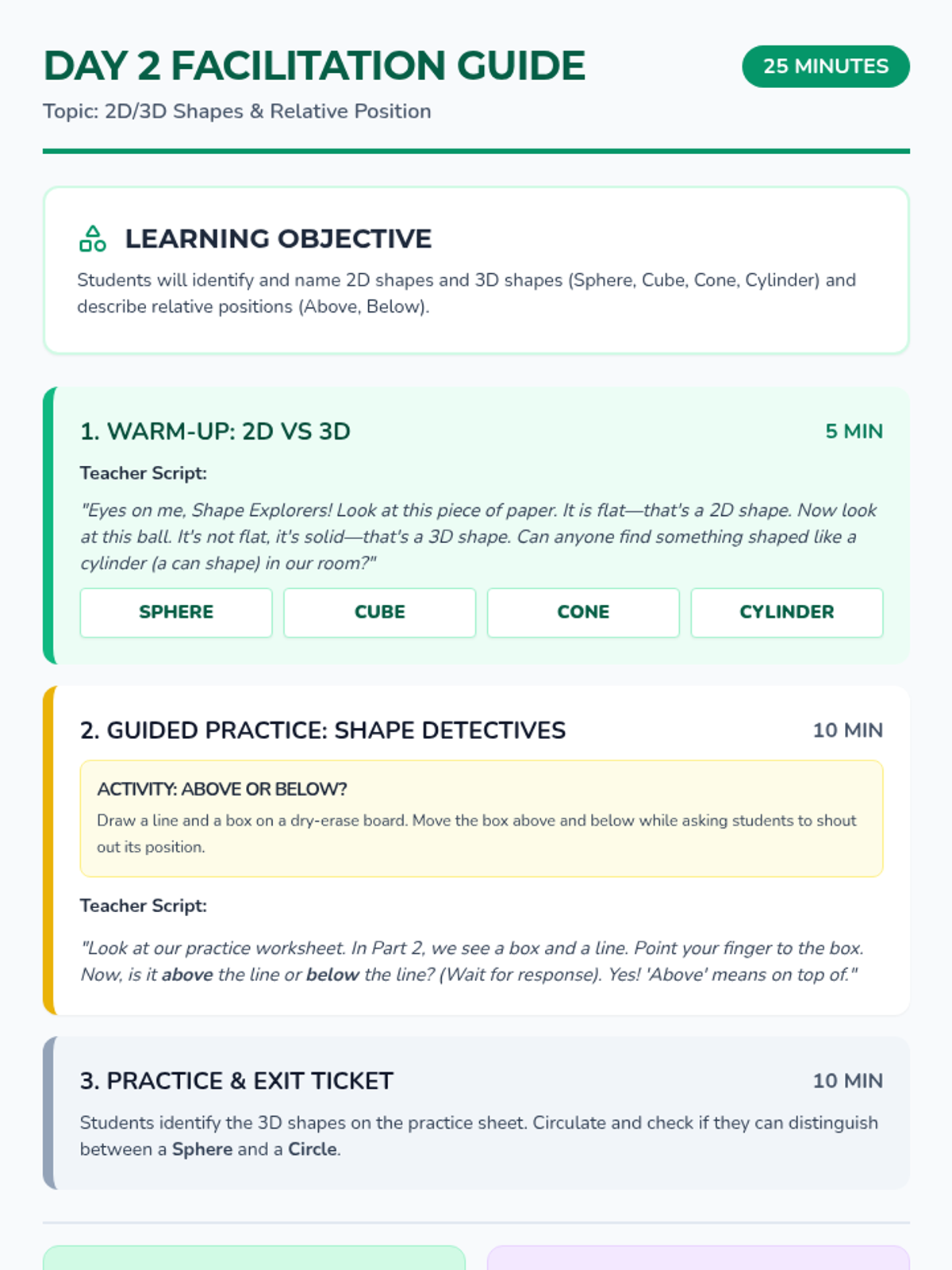
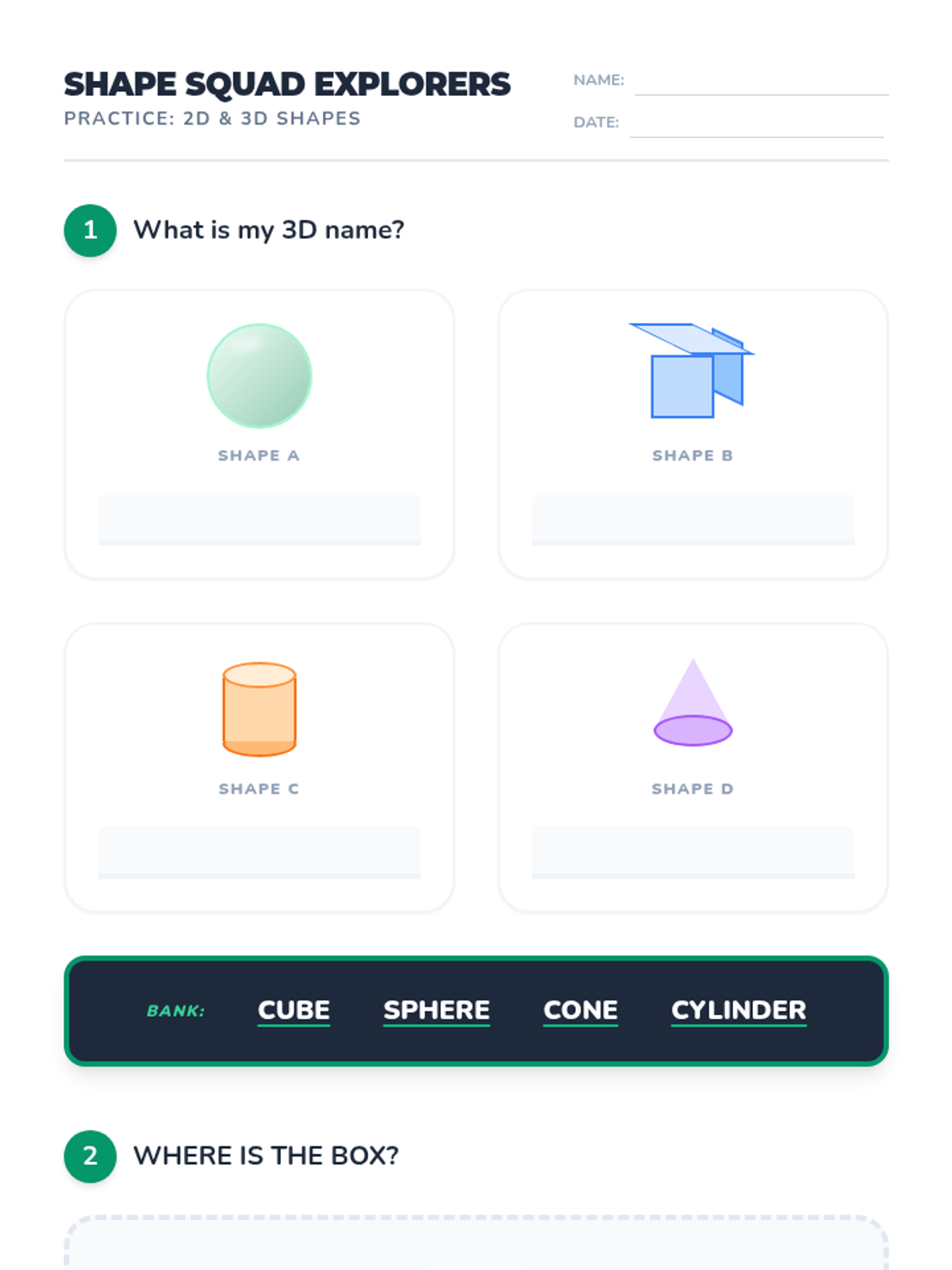
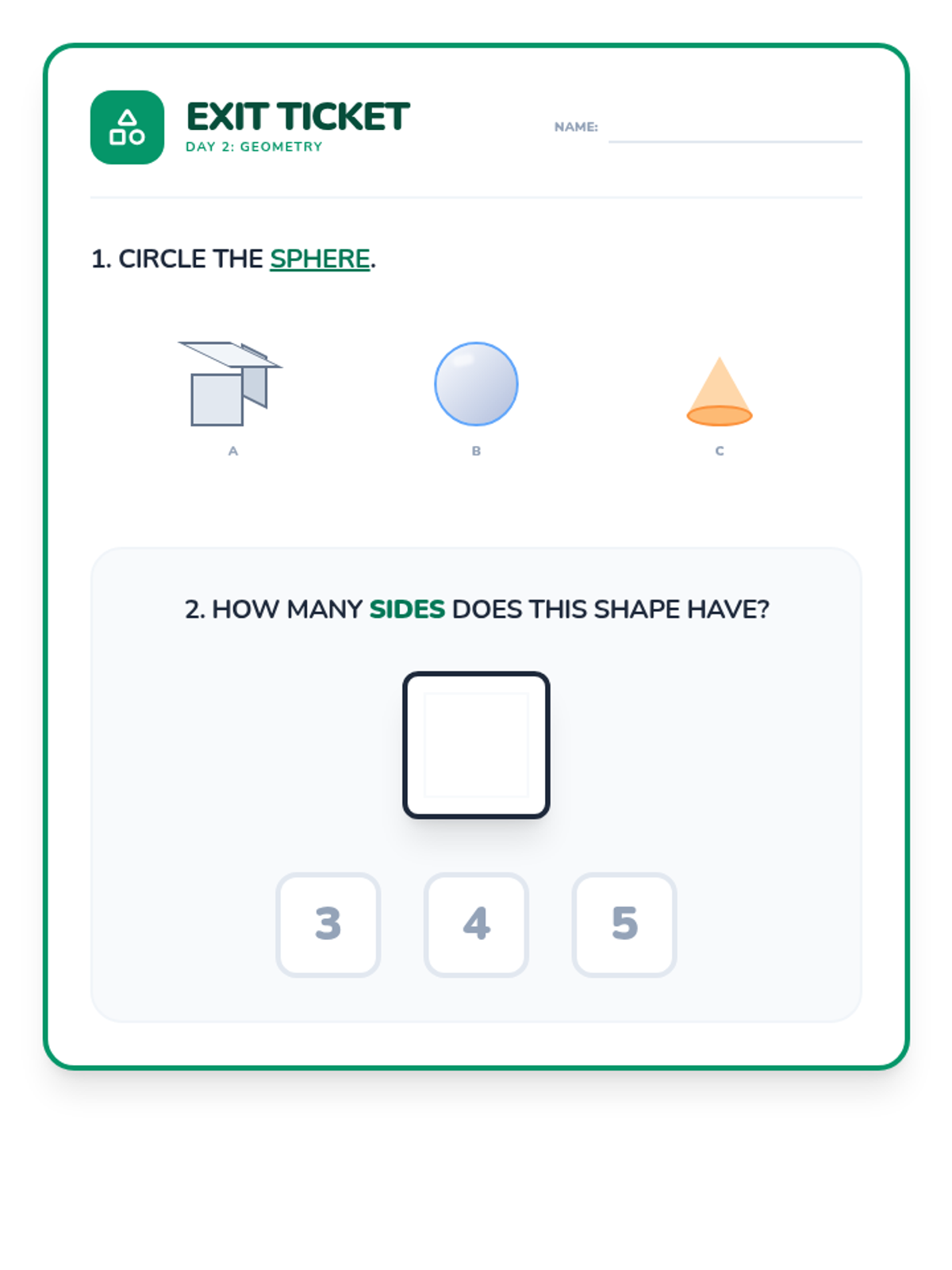
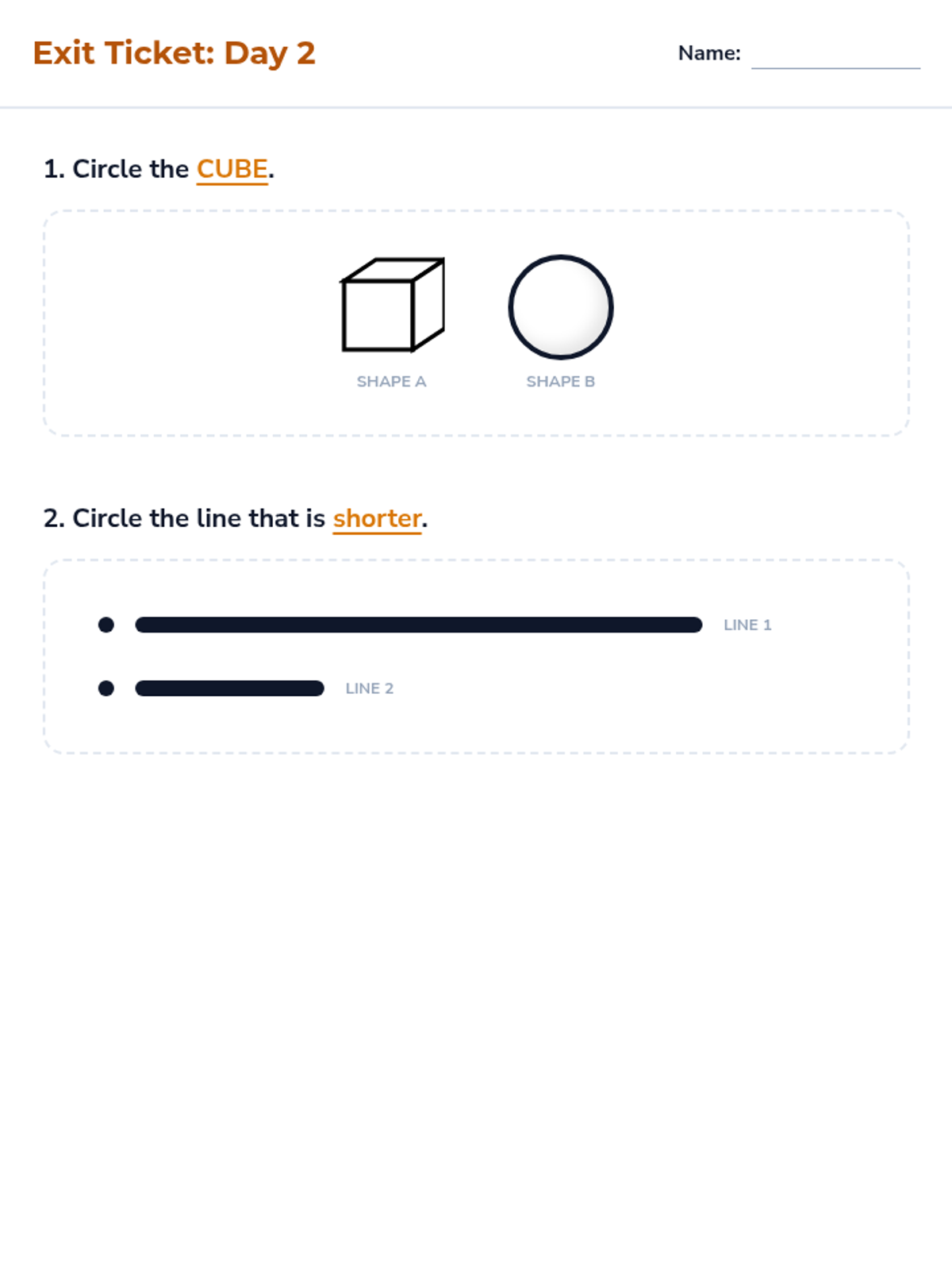
Day 2 covers identifying 2D and 3D shapes by name and attributes, as well as mixed geometry concepts like relative position and composite shapes.
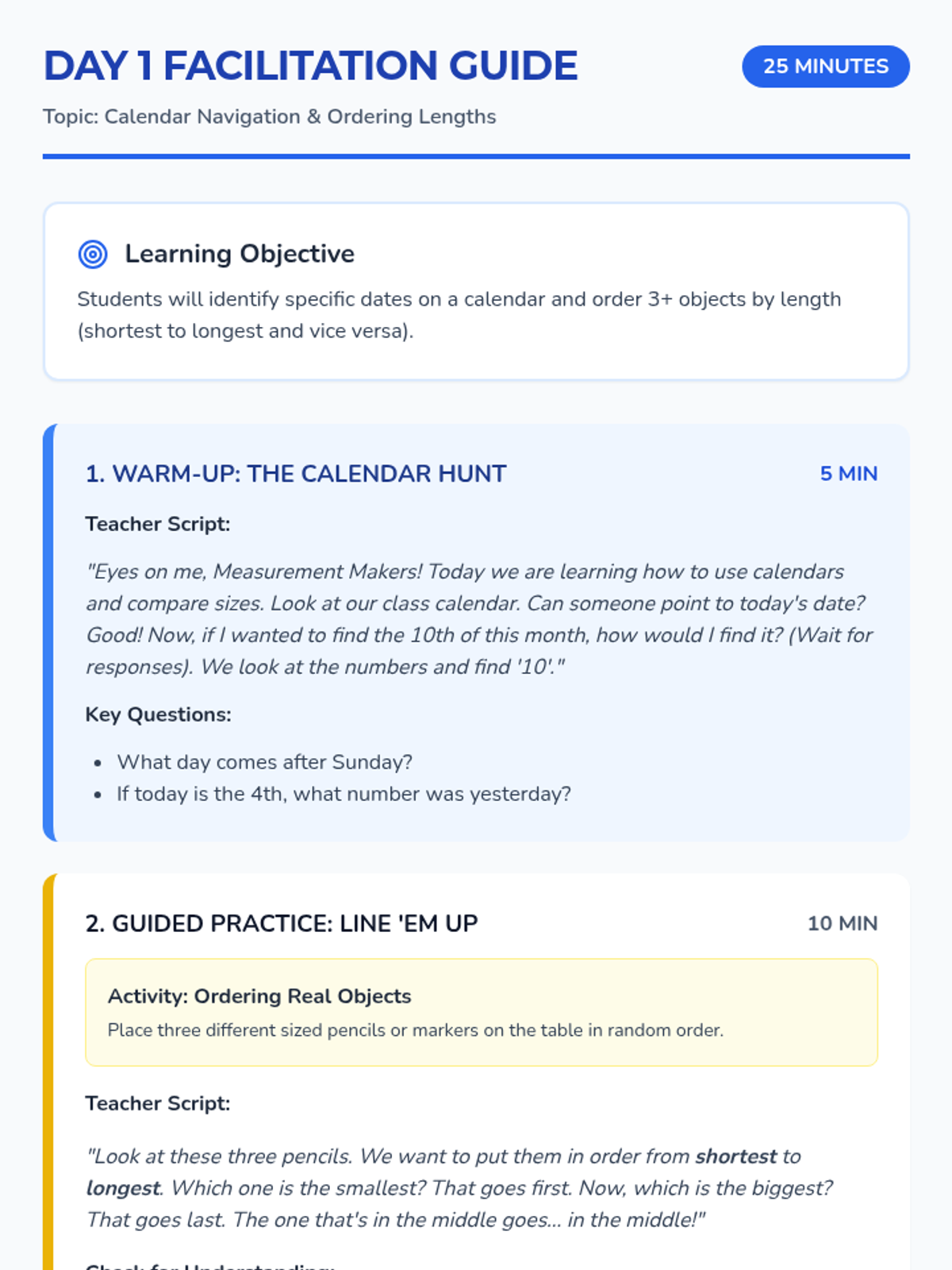
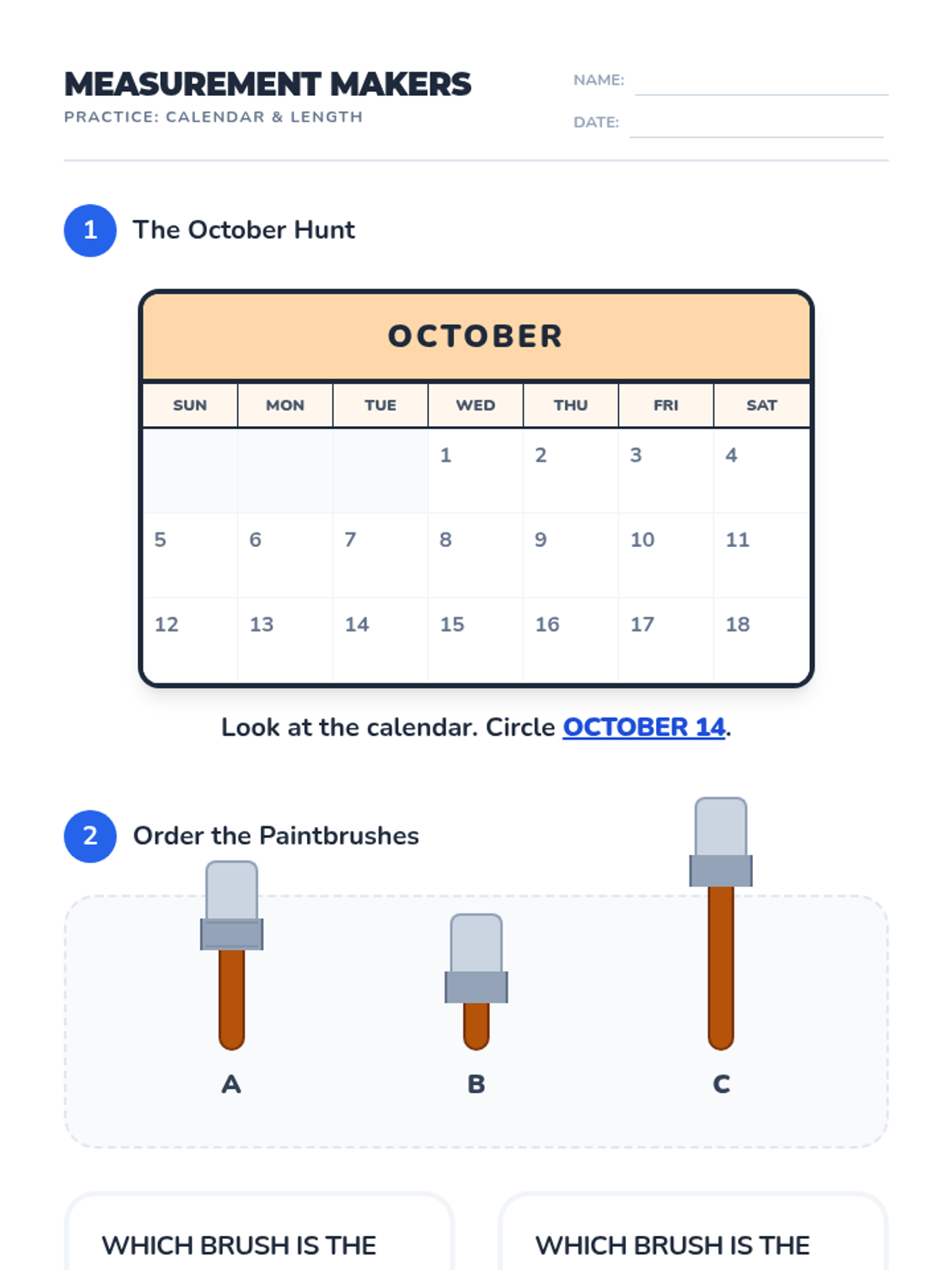
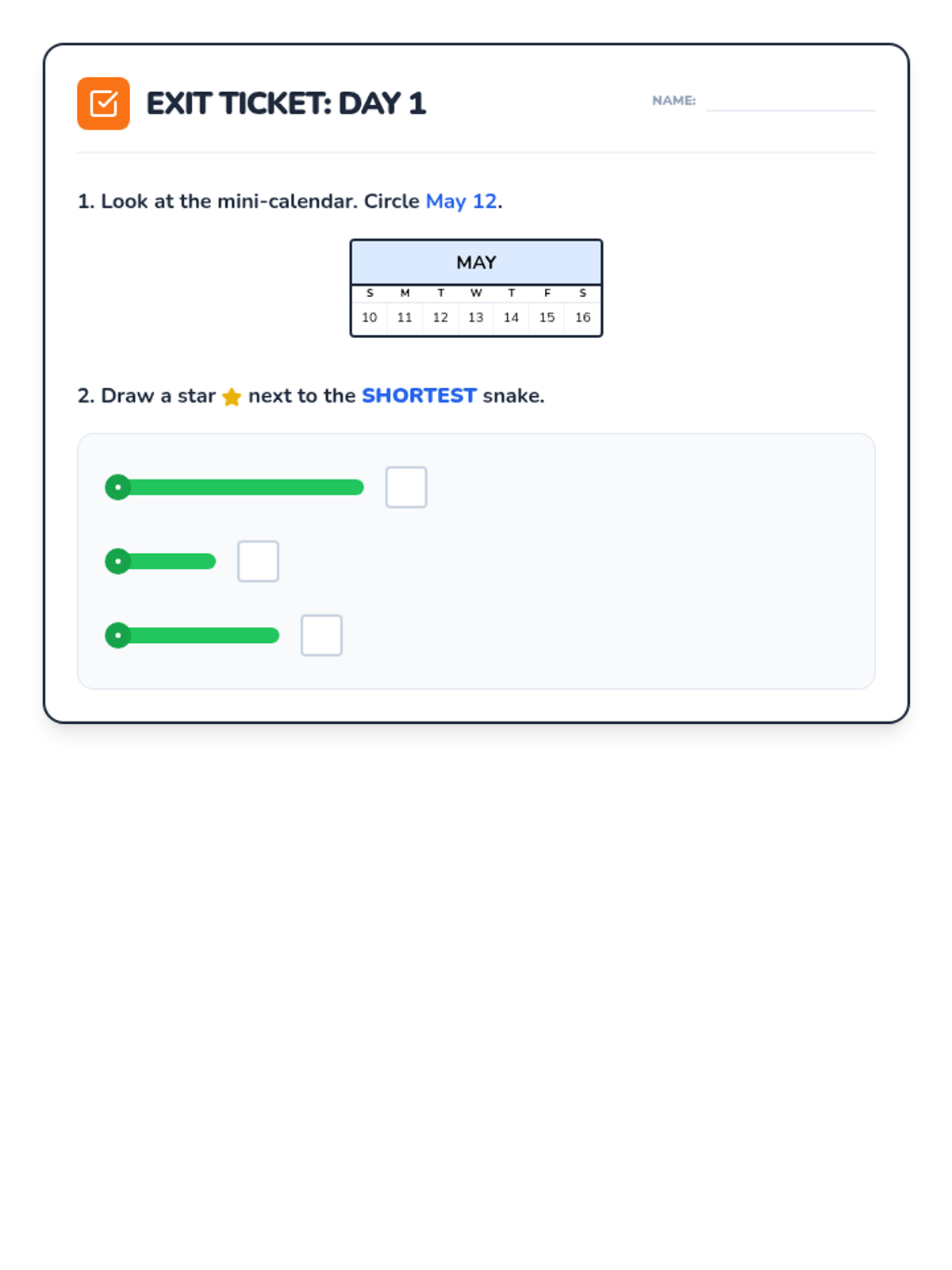
Day 1 focuses on calendar navigation (finding specific dates) and ordering objects by length, targeting foundational RIT 150-160 skills.
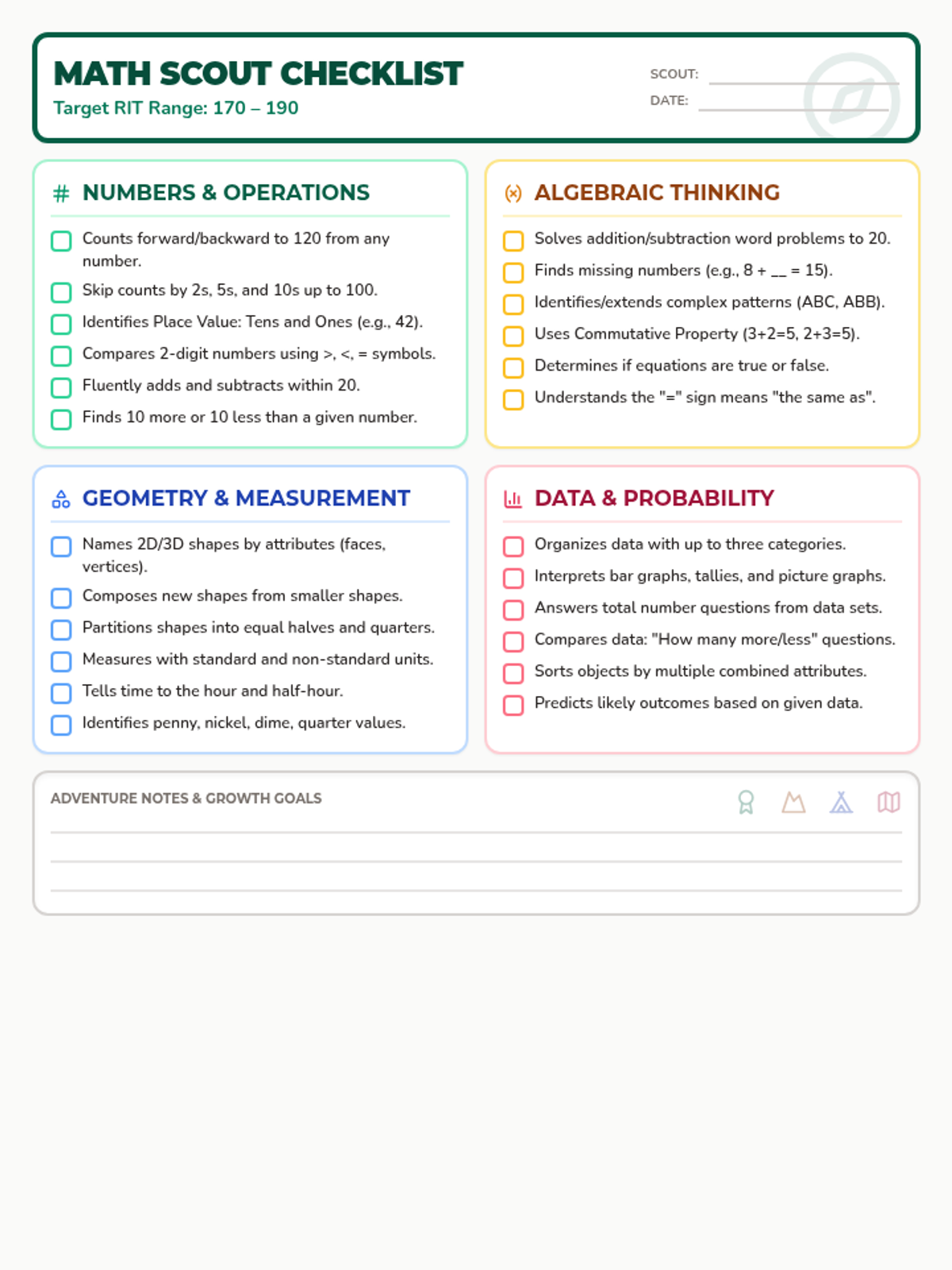
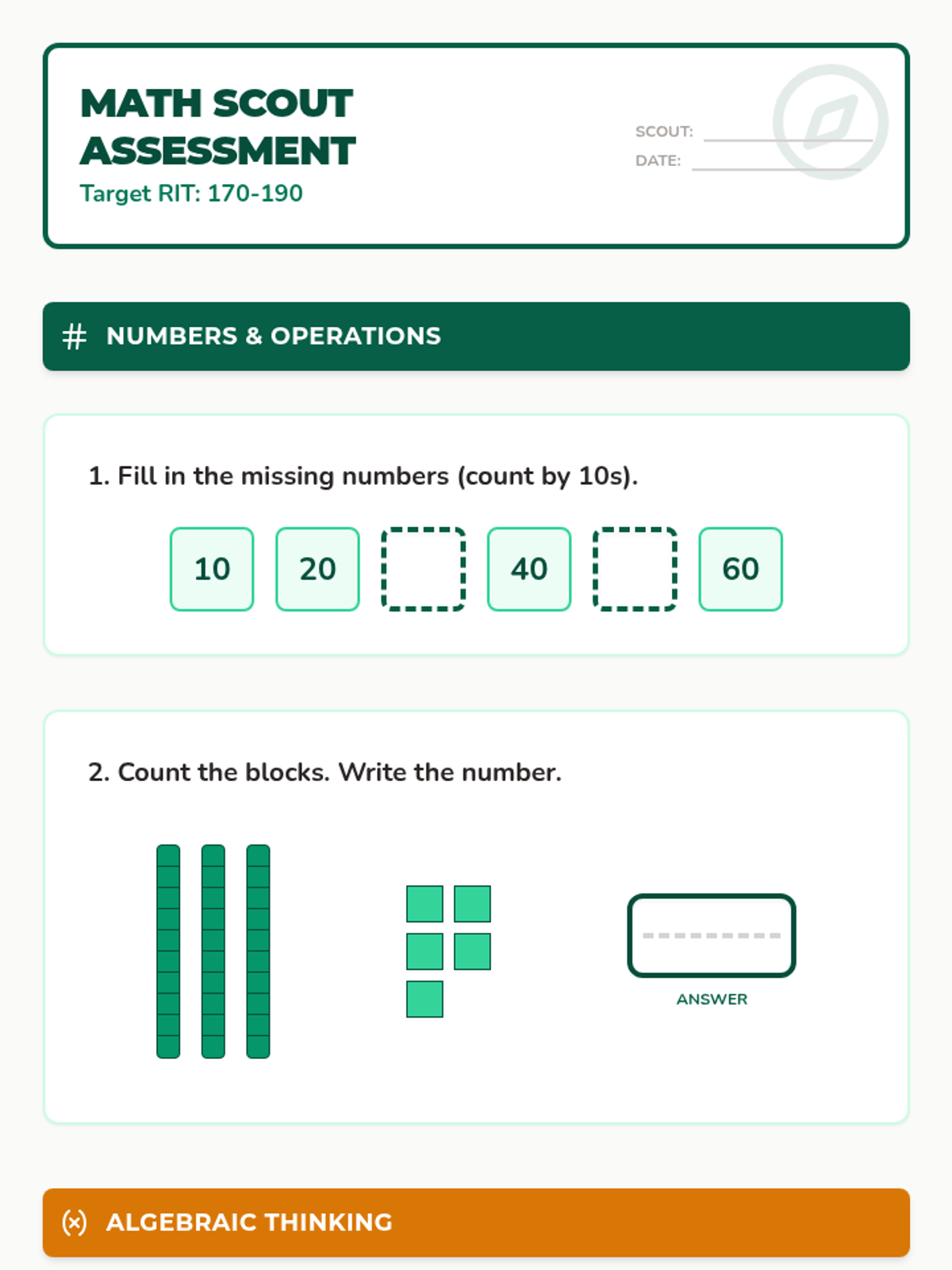
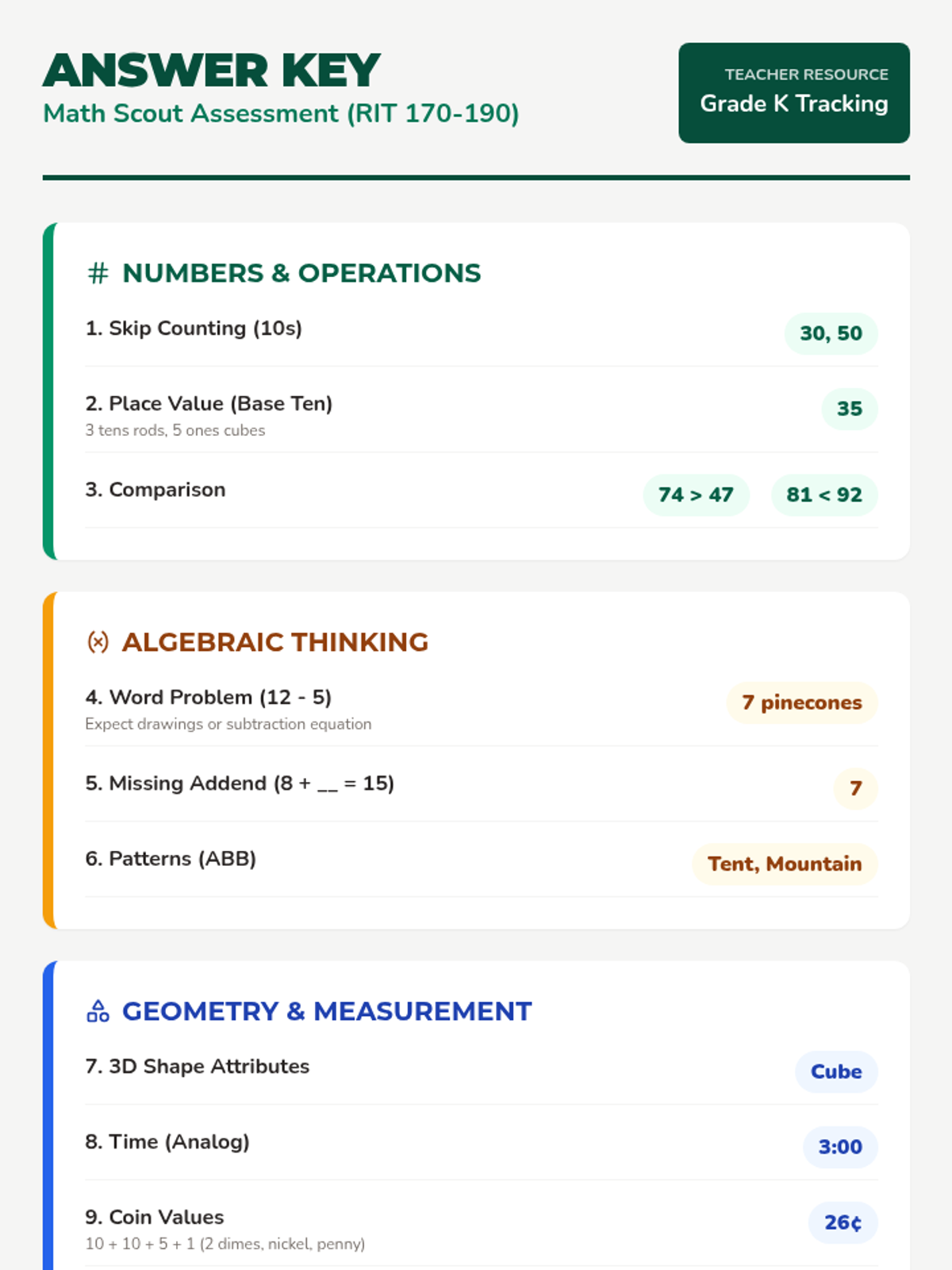
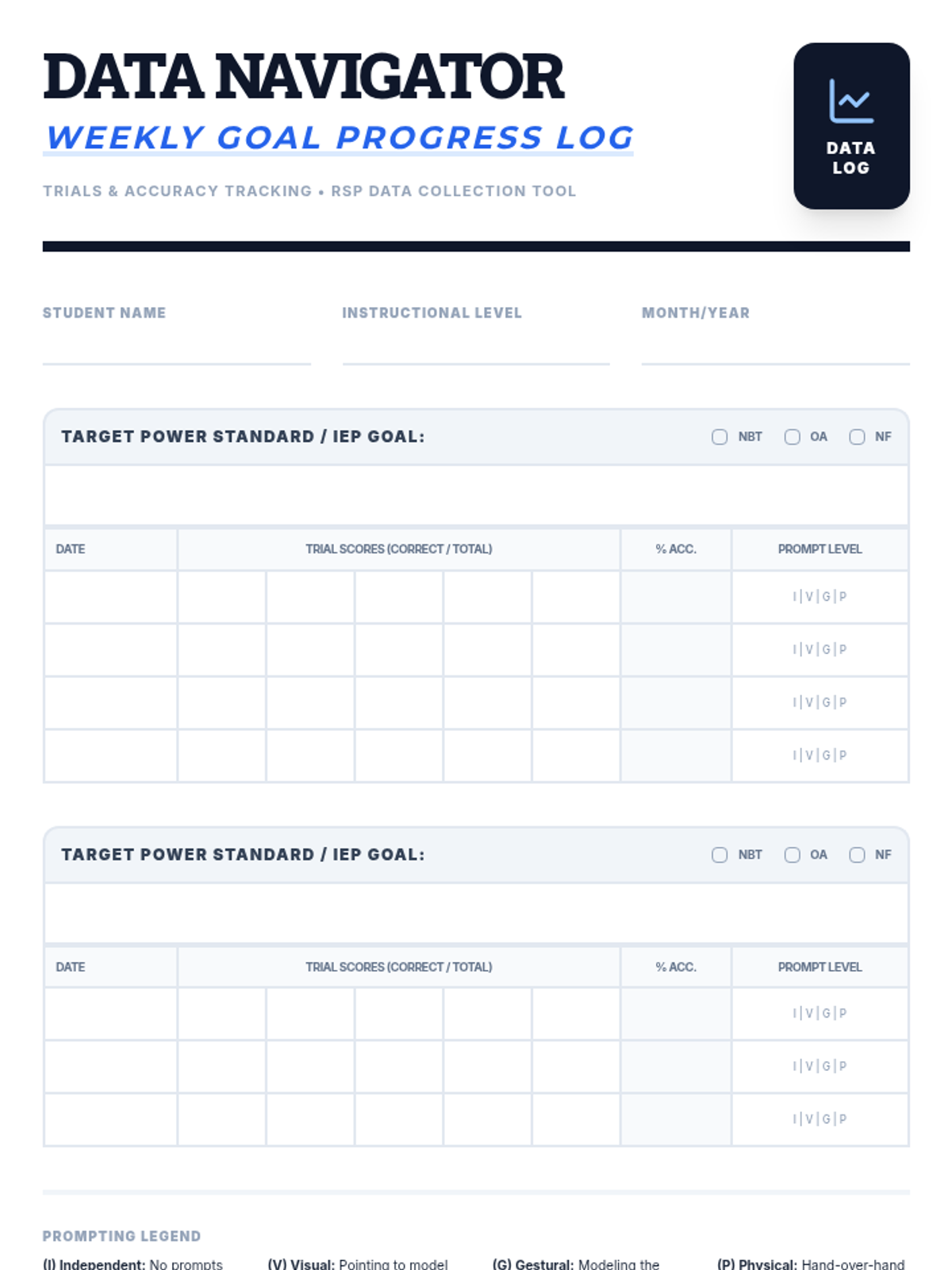
A comprehensive tracking resource for Kindergarten students aiming for advanced NWEA MAP RIT scores in mathematics, covering all key domains.
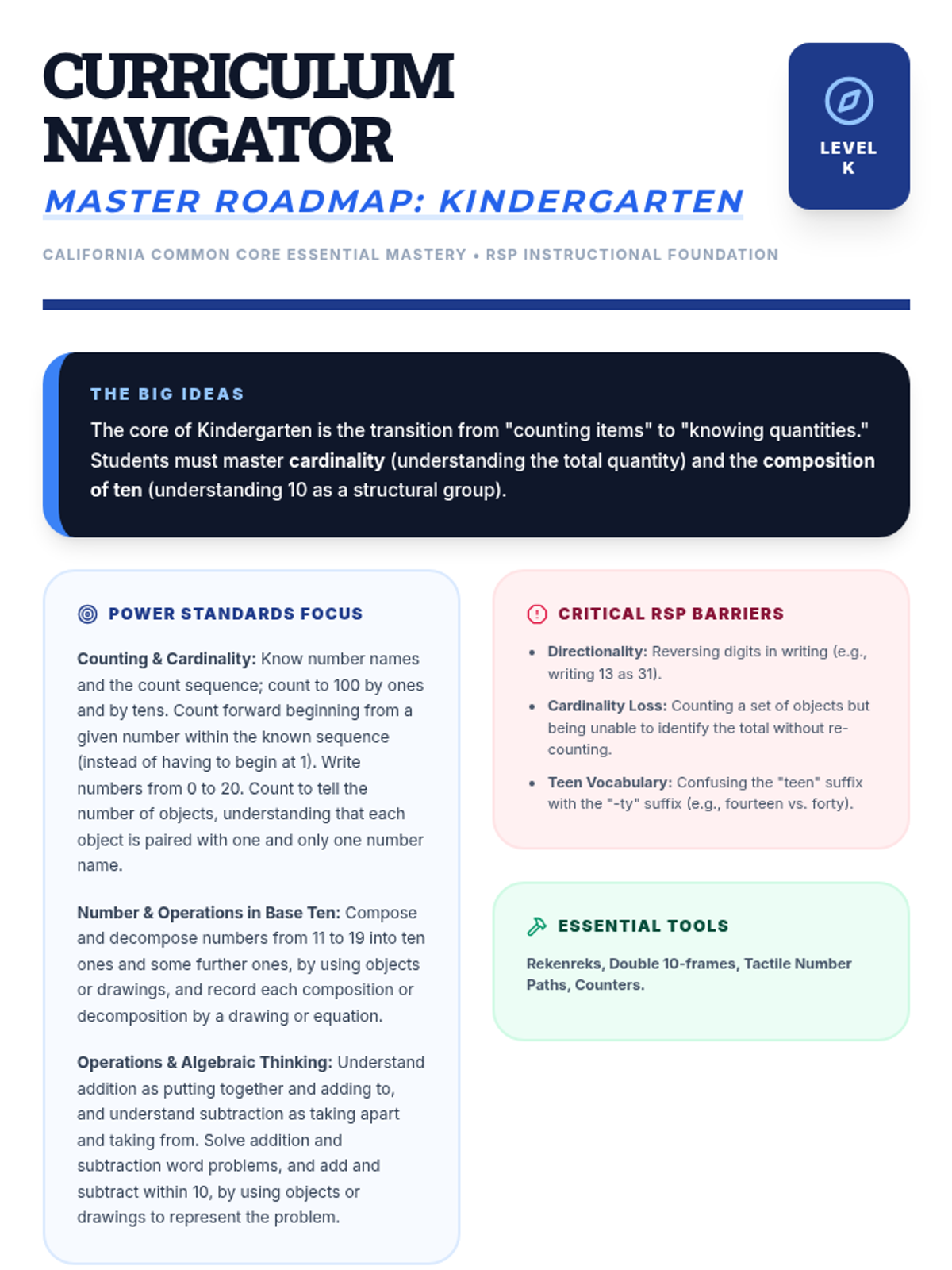
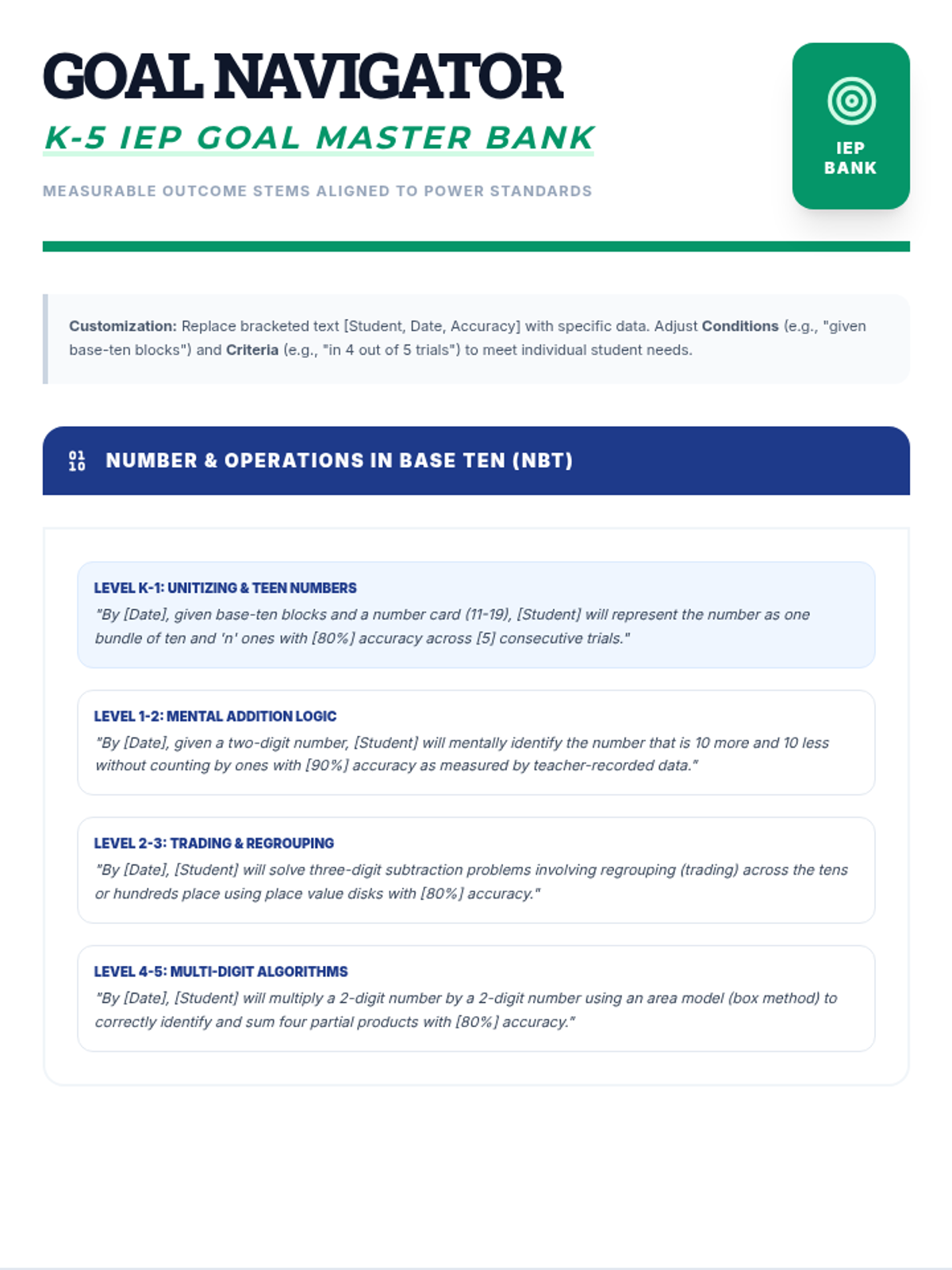
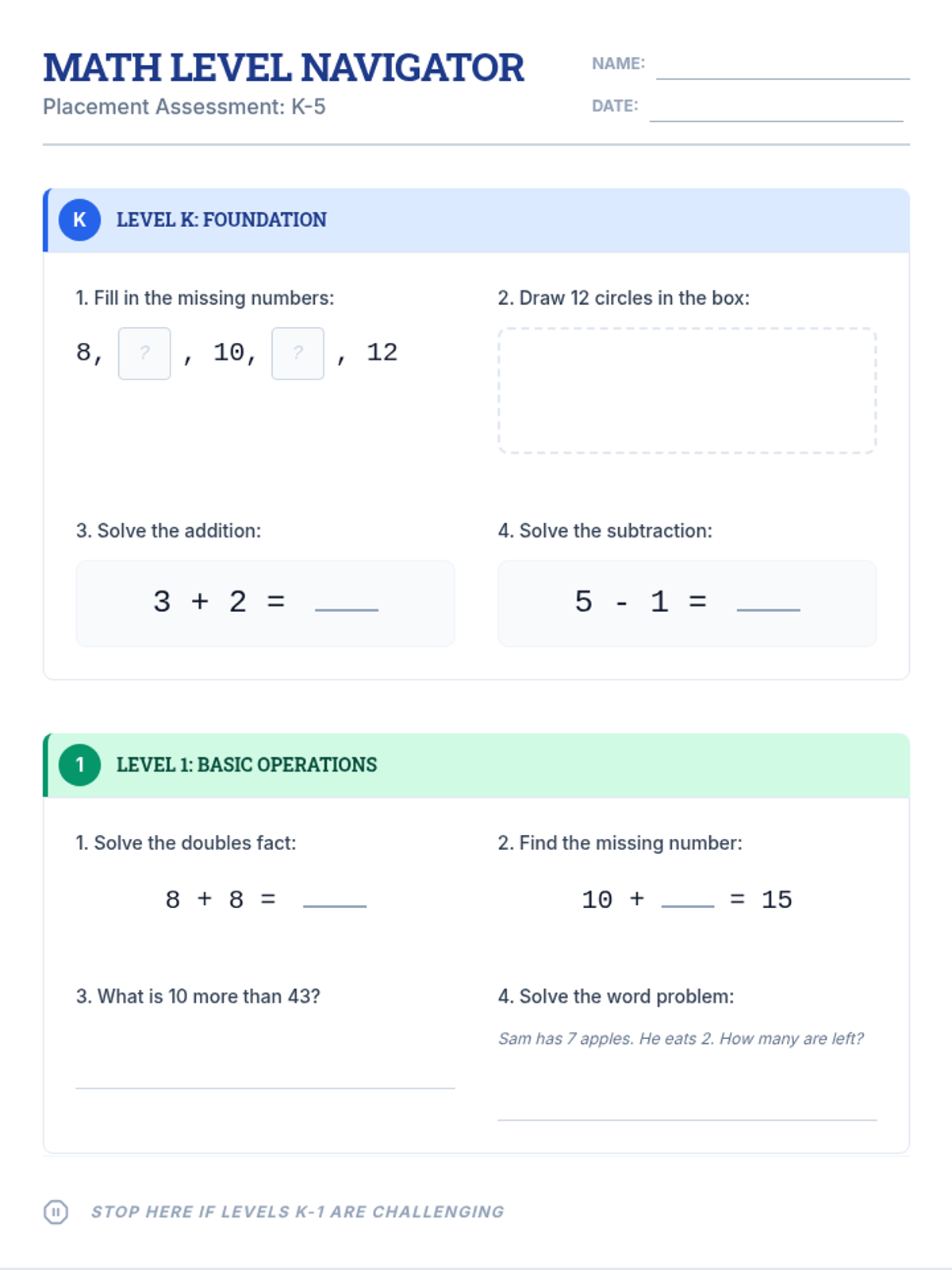
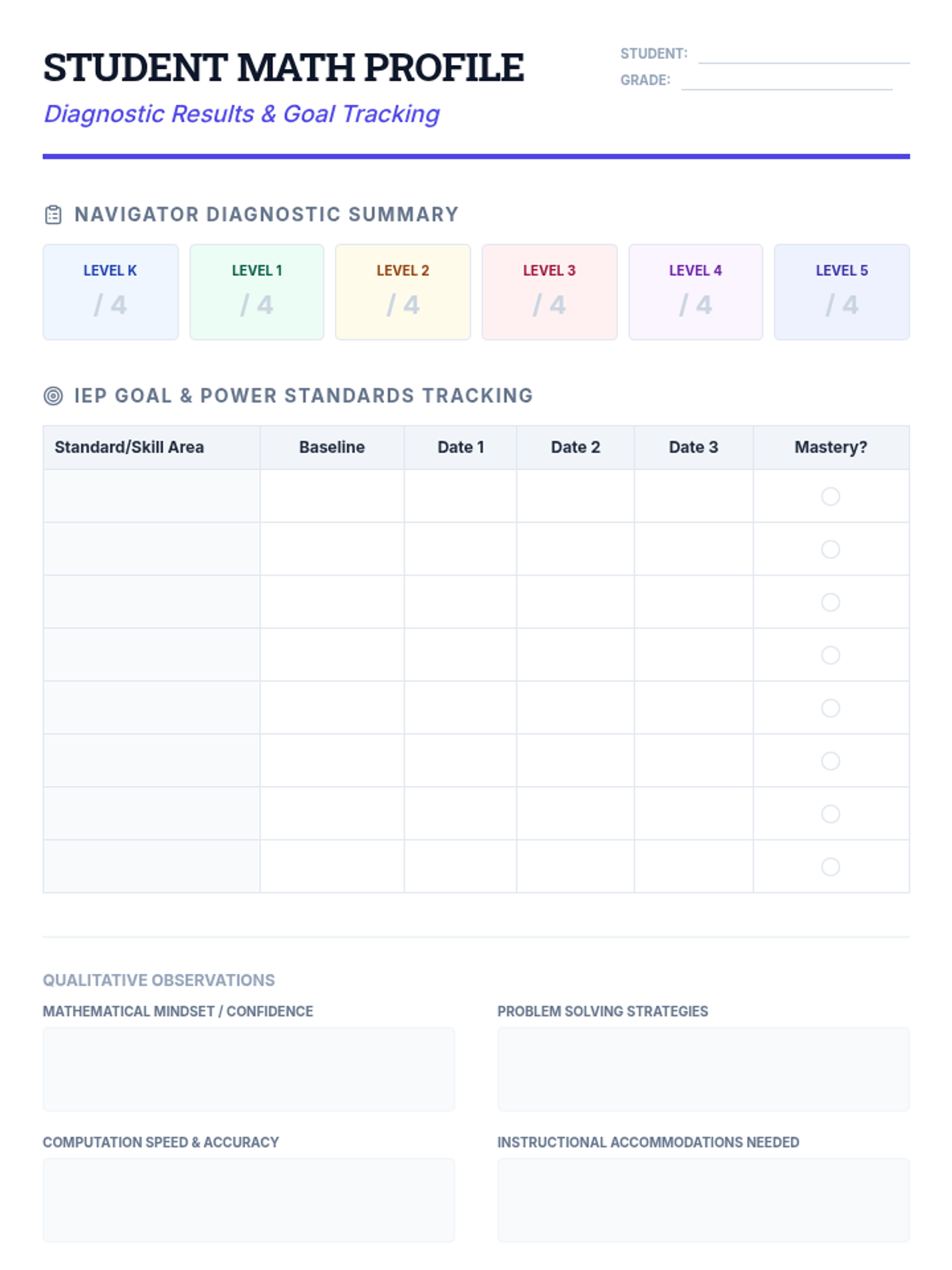
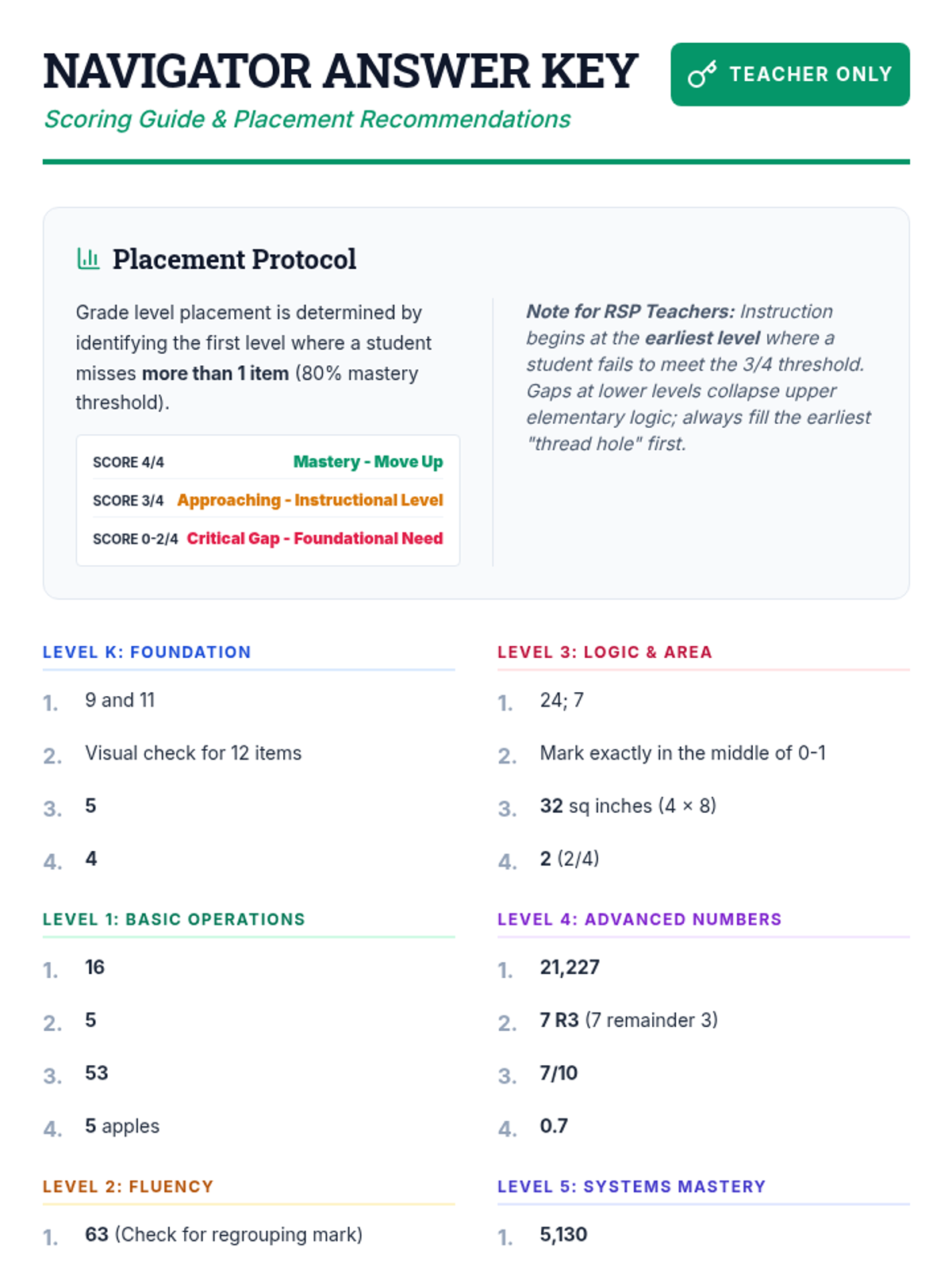
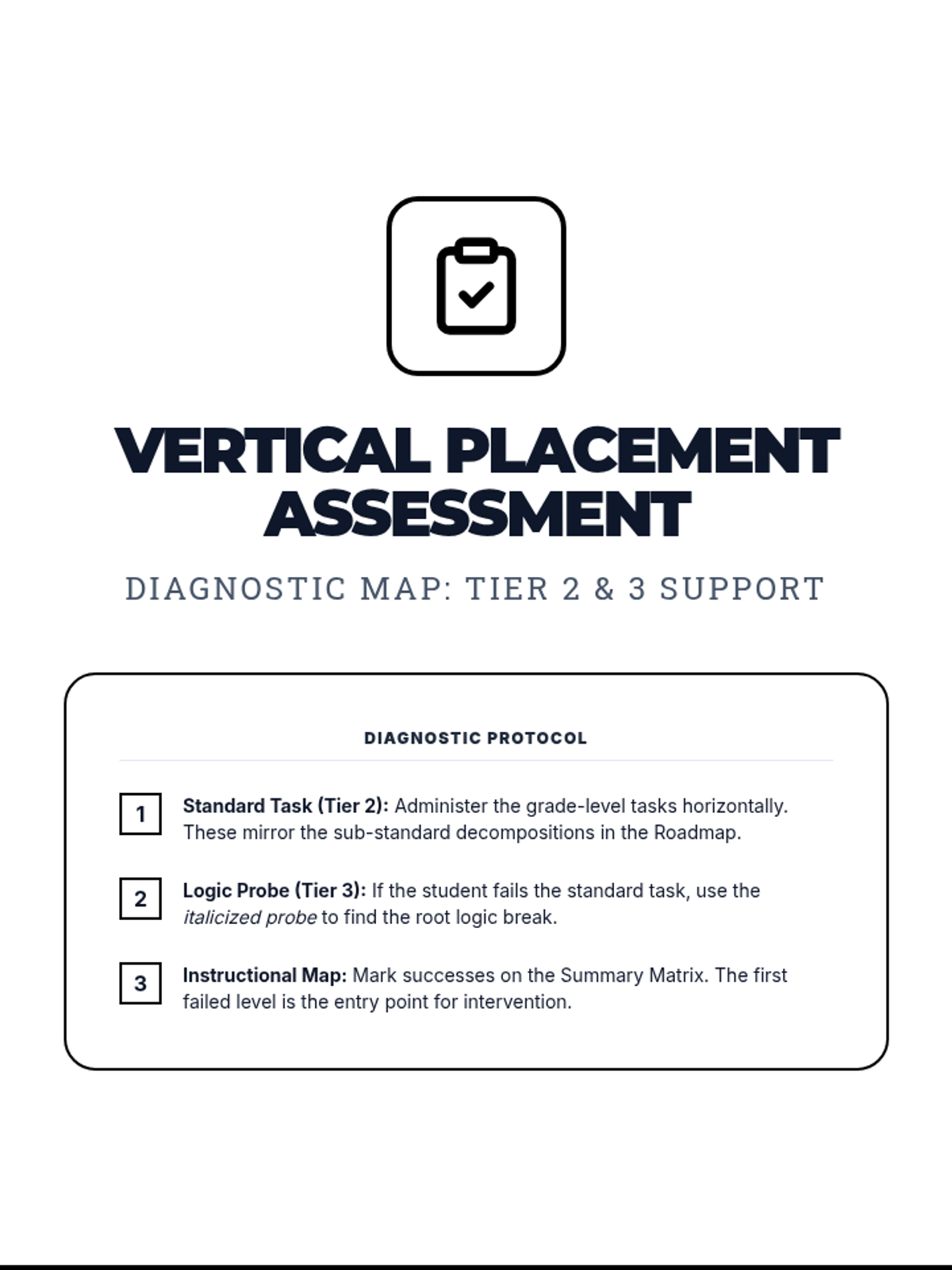
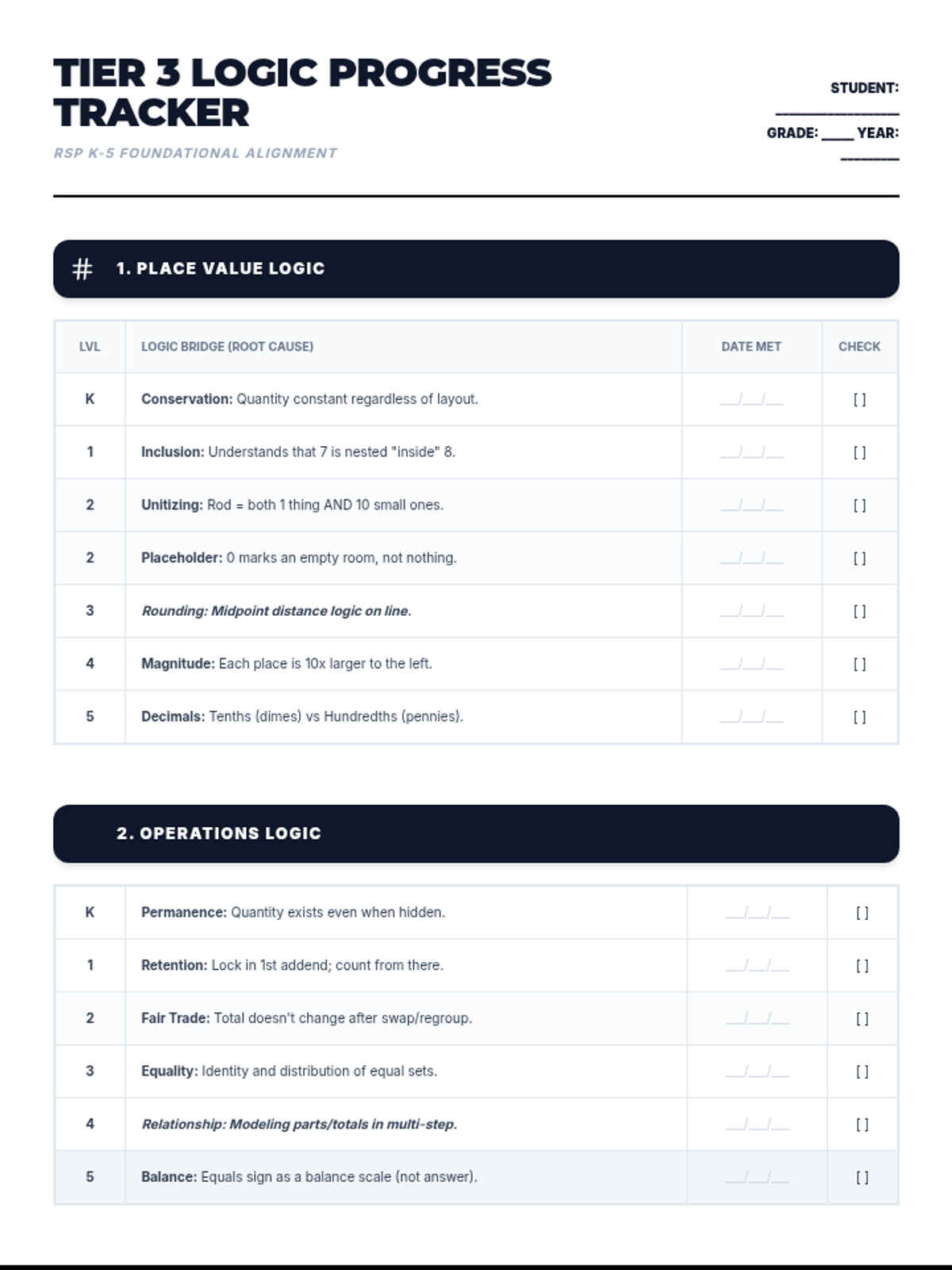
Foundational tools for assessing student levels and planning instruction based on California Power Standards across grades K-5.
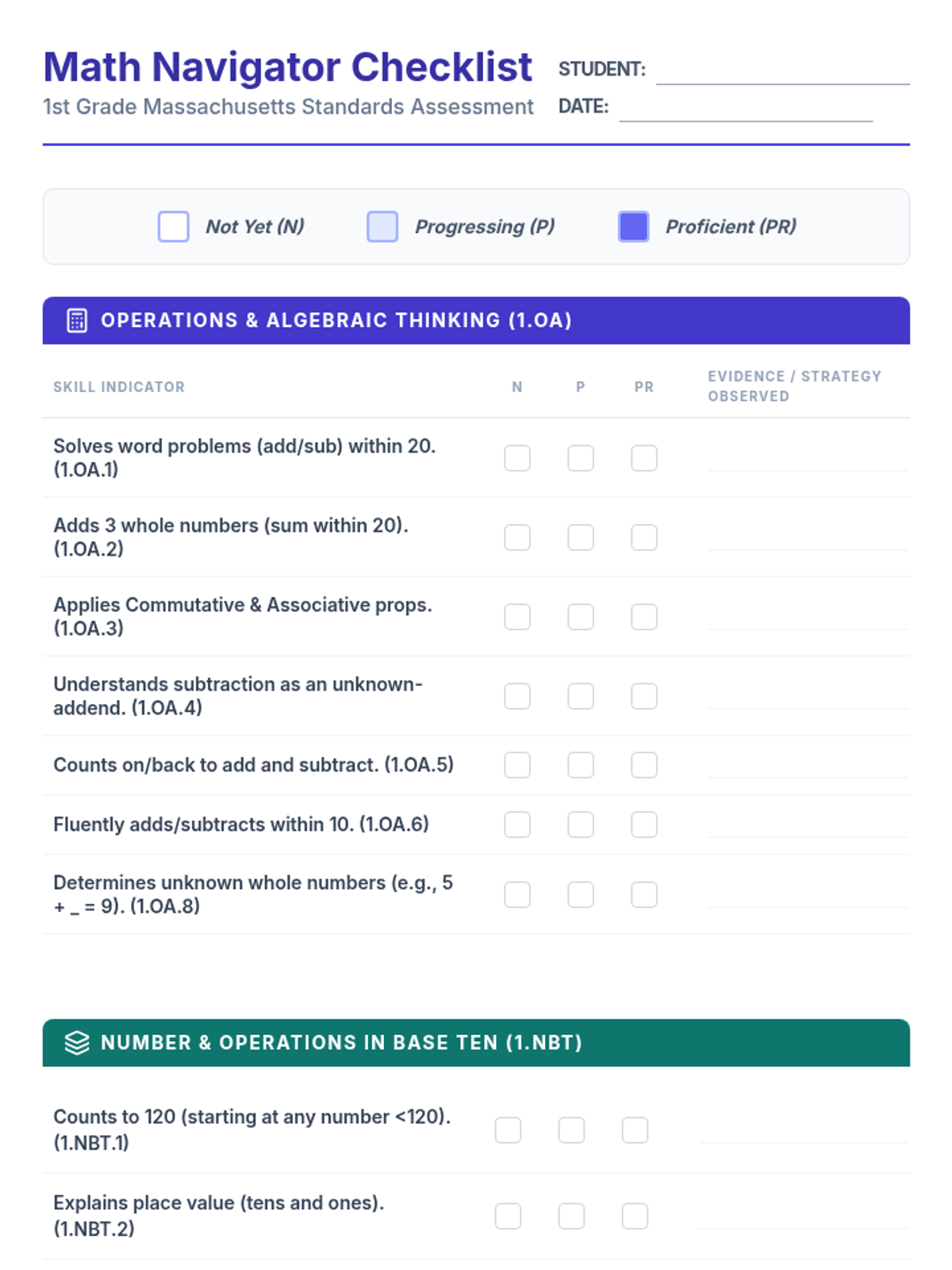
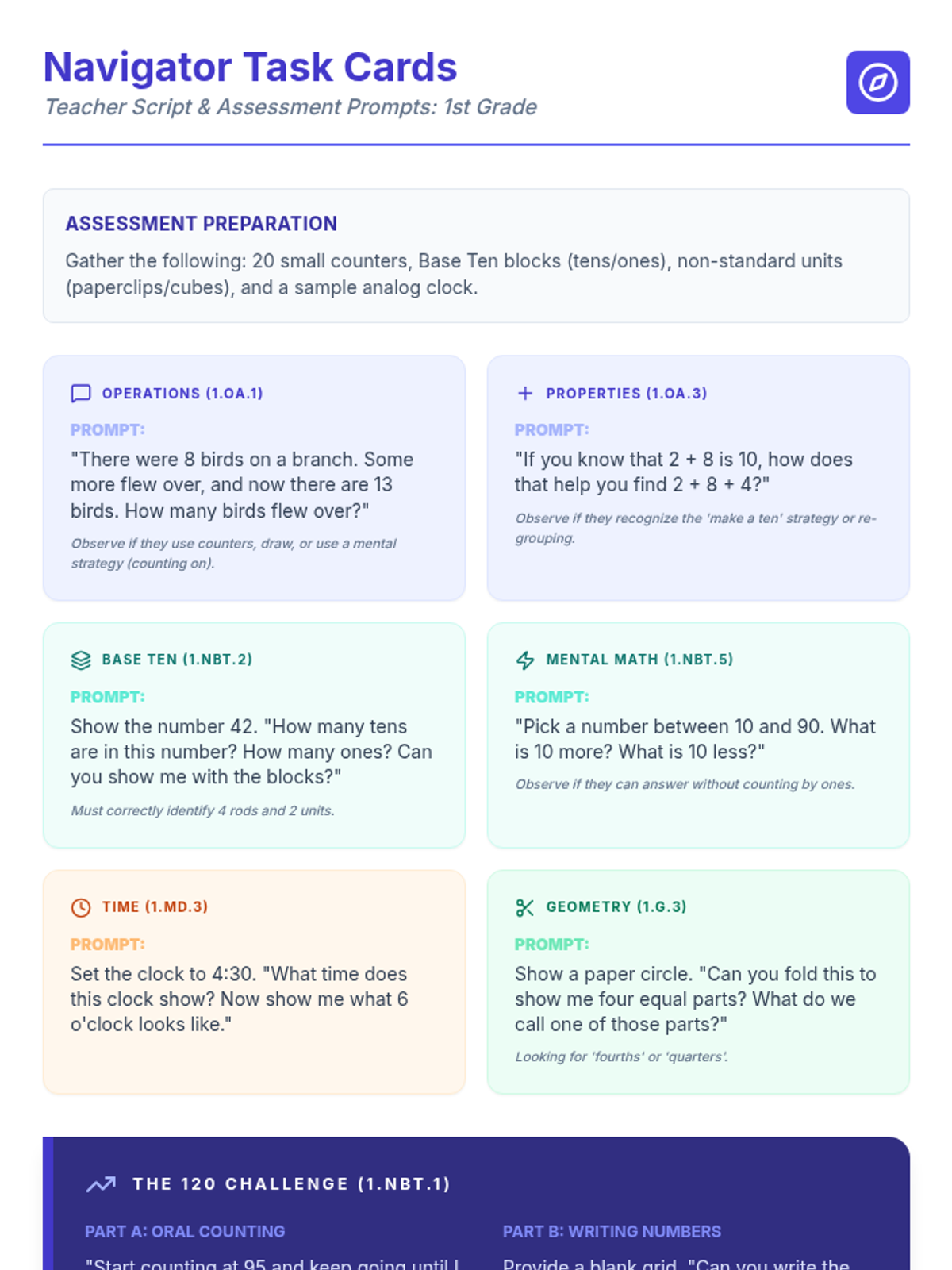
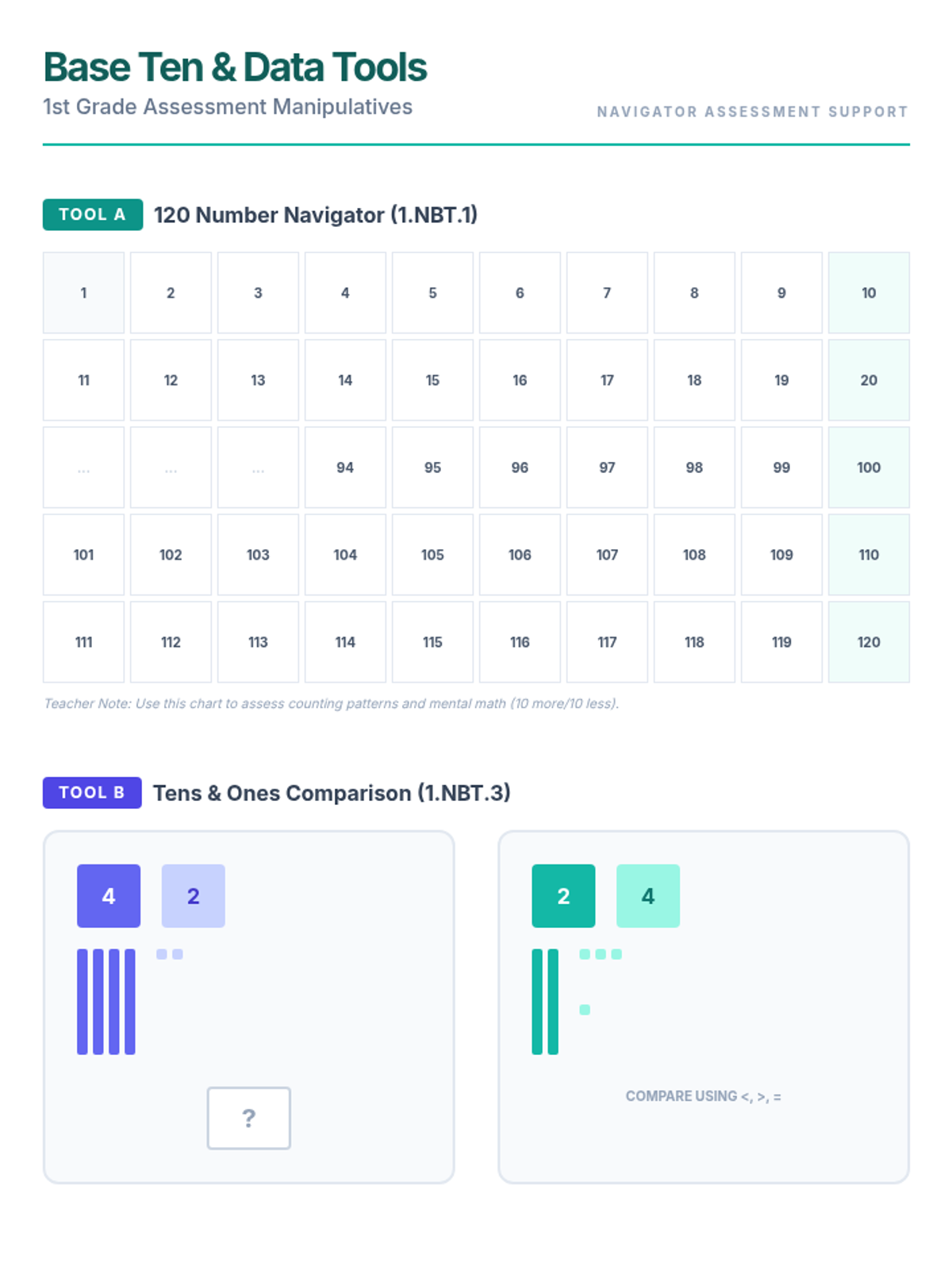
A comprehensive assessment package for 1st Grade mathematics based on the Massachusetts Curriculum Frameworks, including an observation checklist and a teacher's task guide for conducting the assessment.
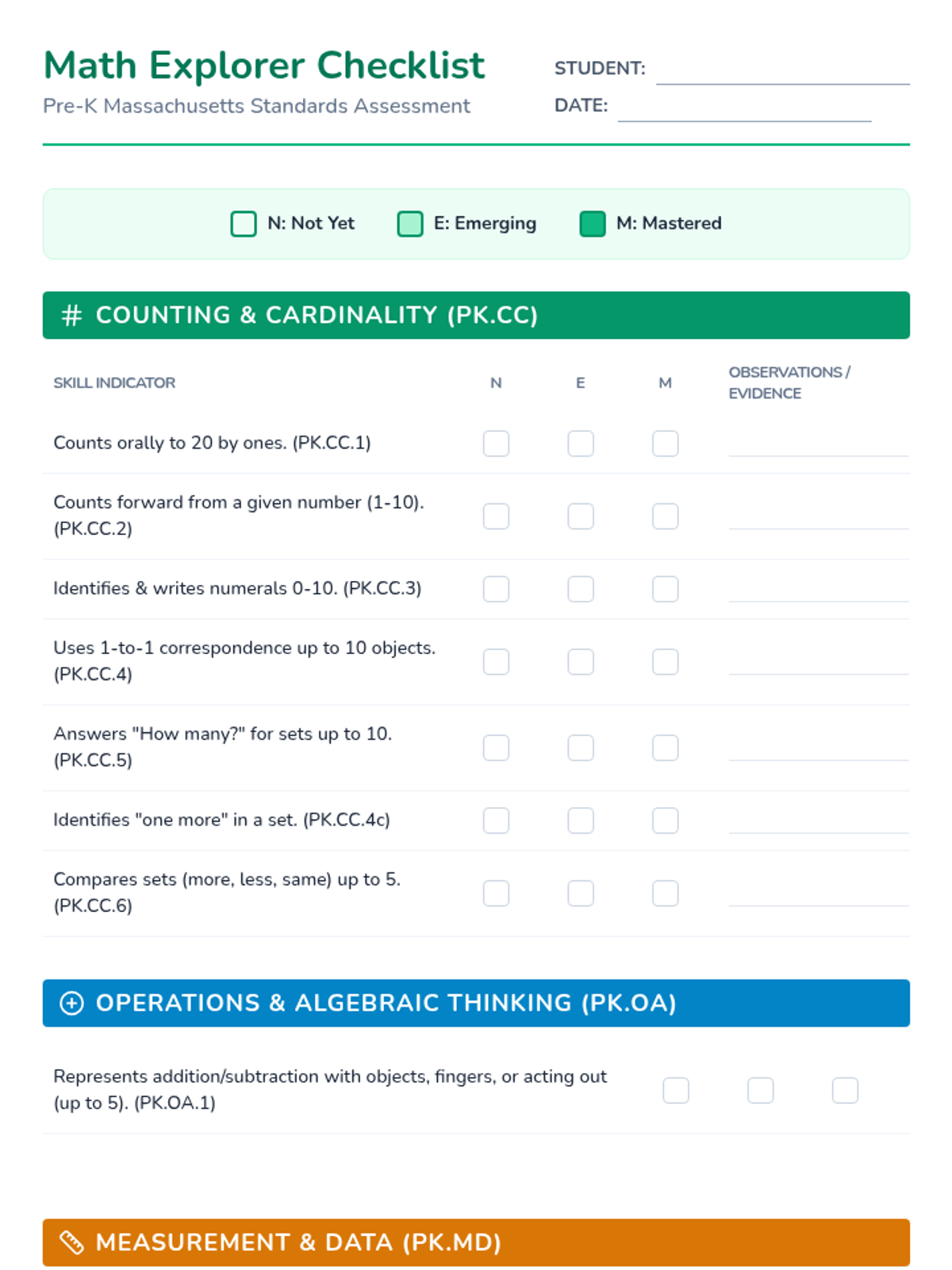
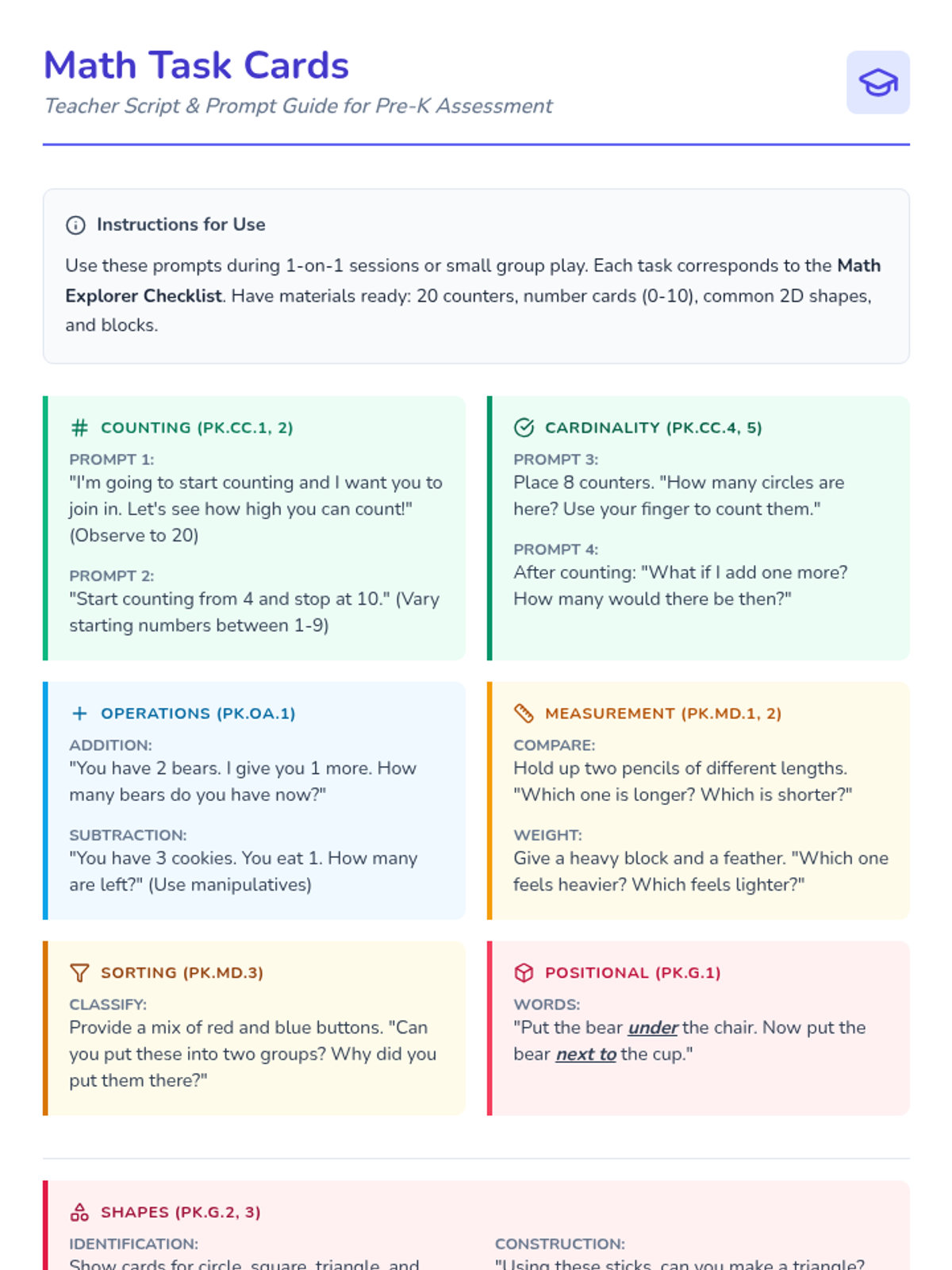
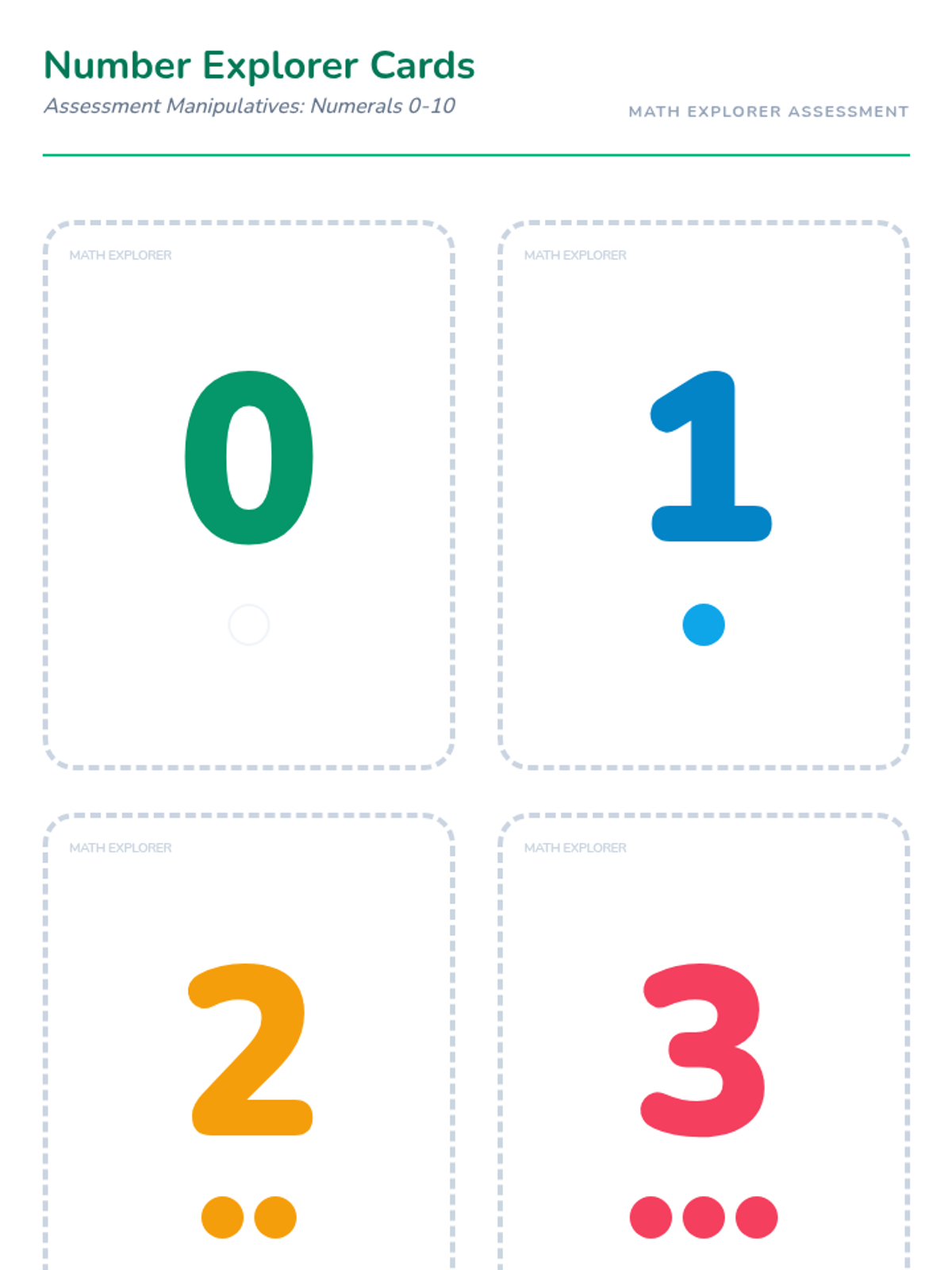
A comprehensive assessment package for Pre-K mathematics based on the Massachusetts Curriculum Frameworks, including an observation checklist and a teacher's task guide for conducting the assessment.
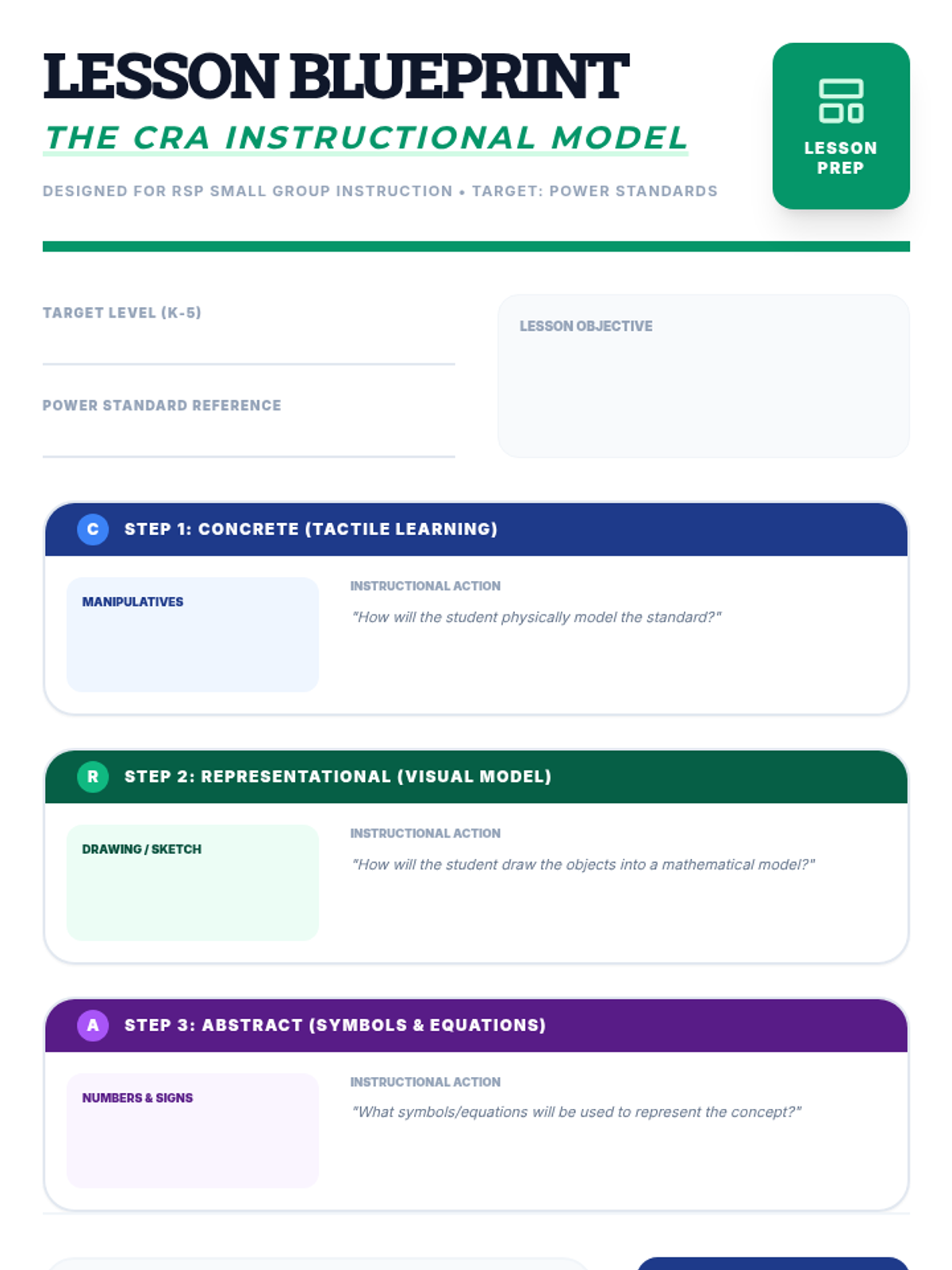
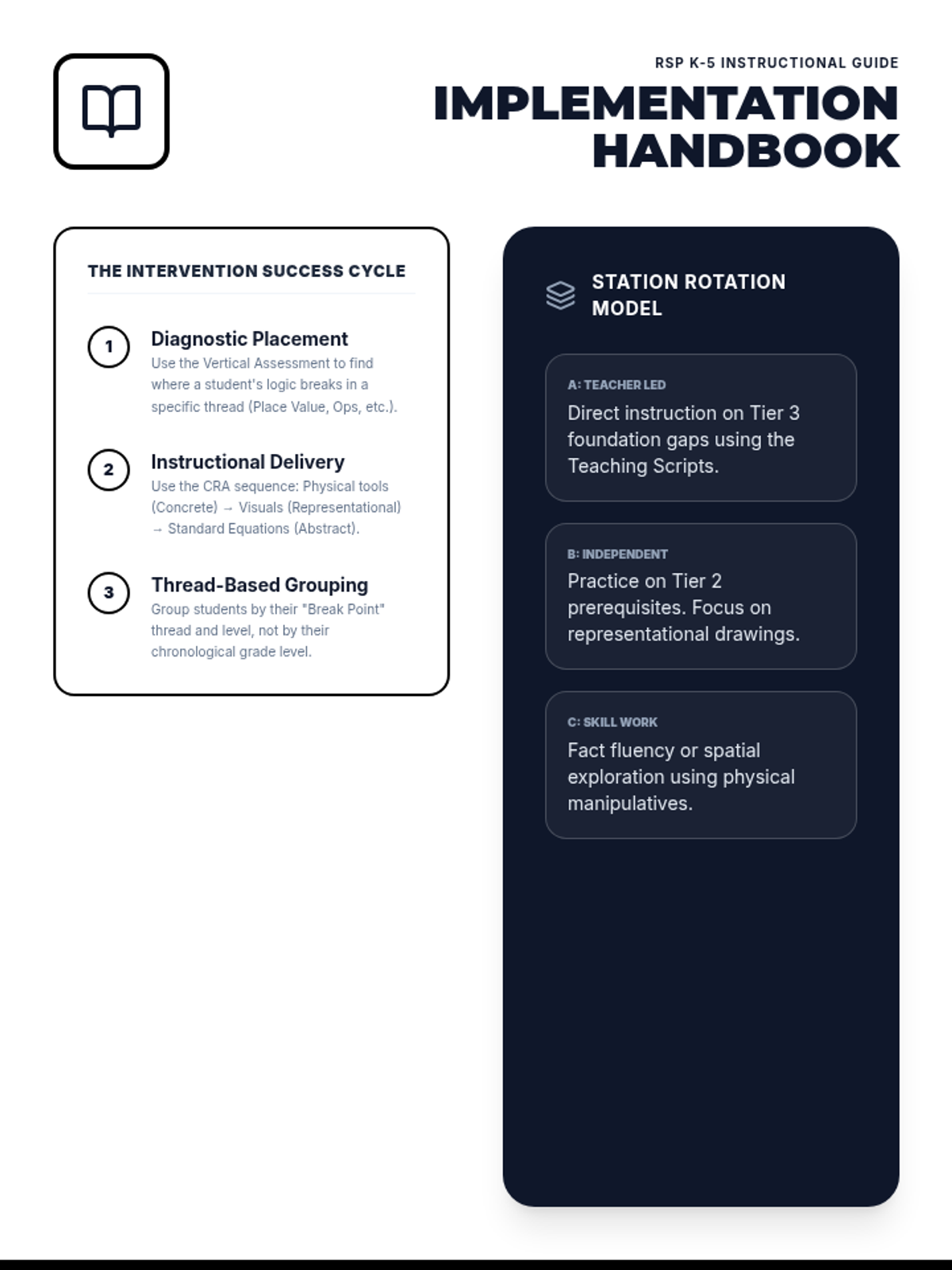
A toolkit for RSP teachers to transform a scope and sequence into a functional daily curriculum. Includes instructional frameworks, diagnostic tools, and planning templates specifically designed for multi-grade math intervention.
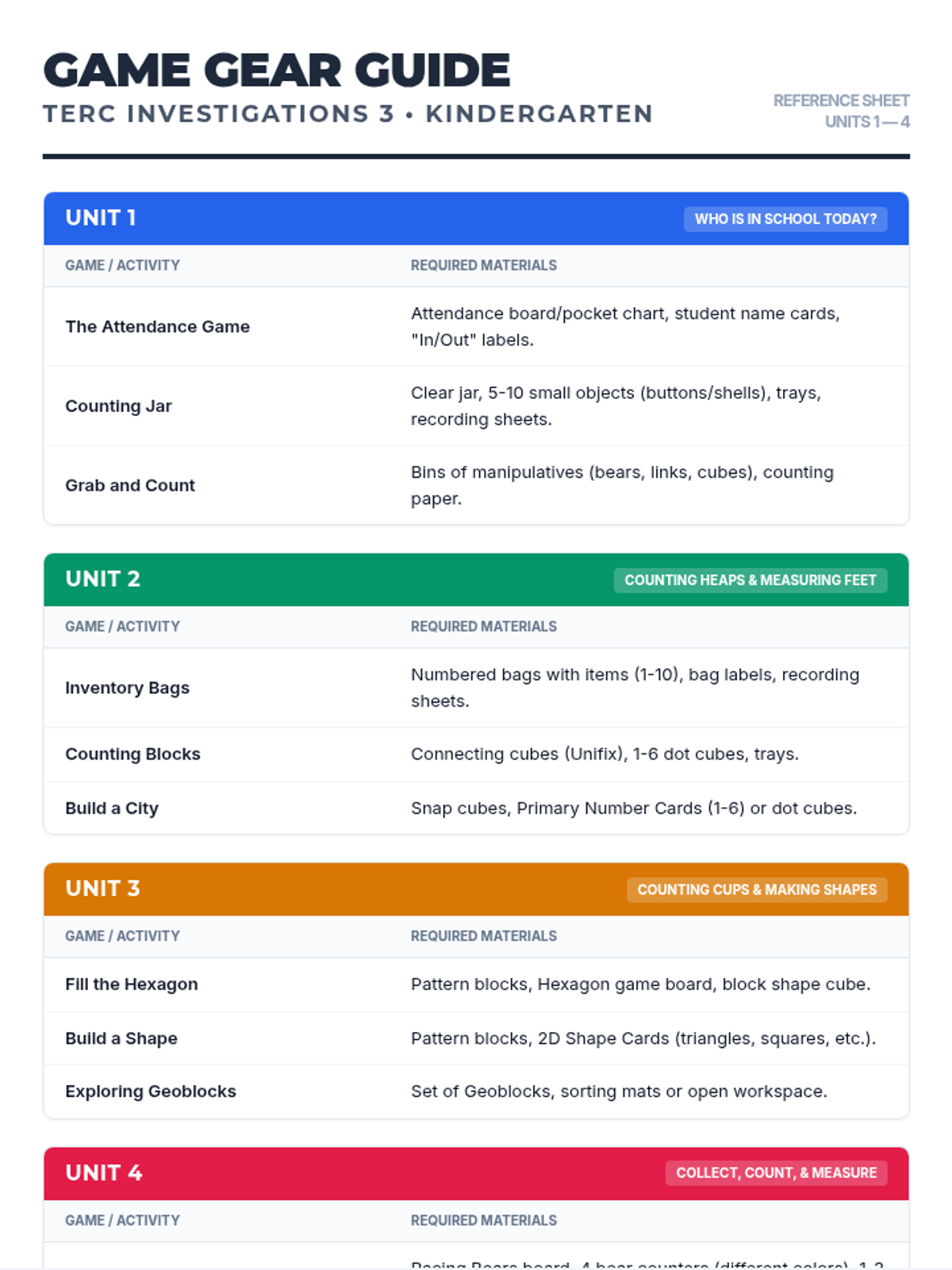
A comprehensive guide for kindergarten teachers using the TERC Investigations 3 math curriculum, detailing every game and the necessary materials for all eight units.
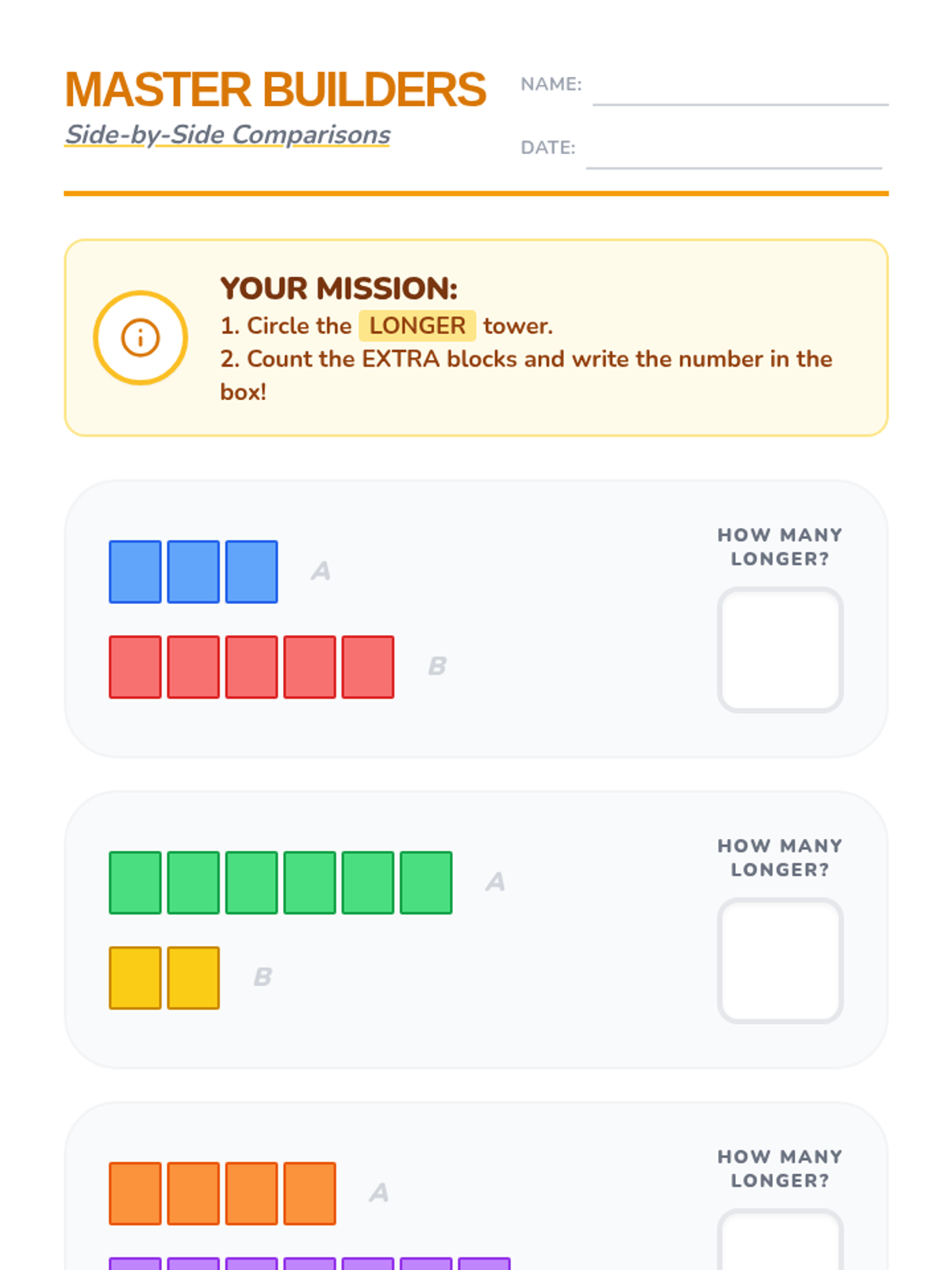
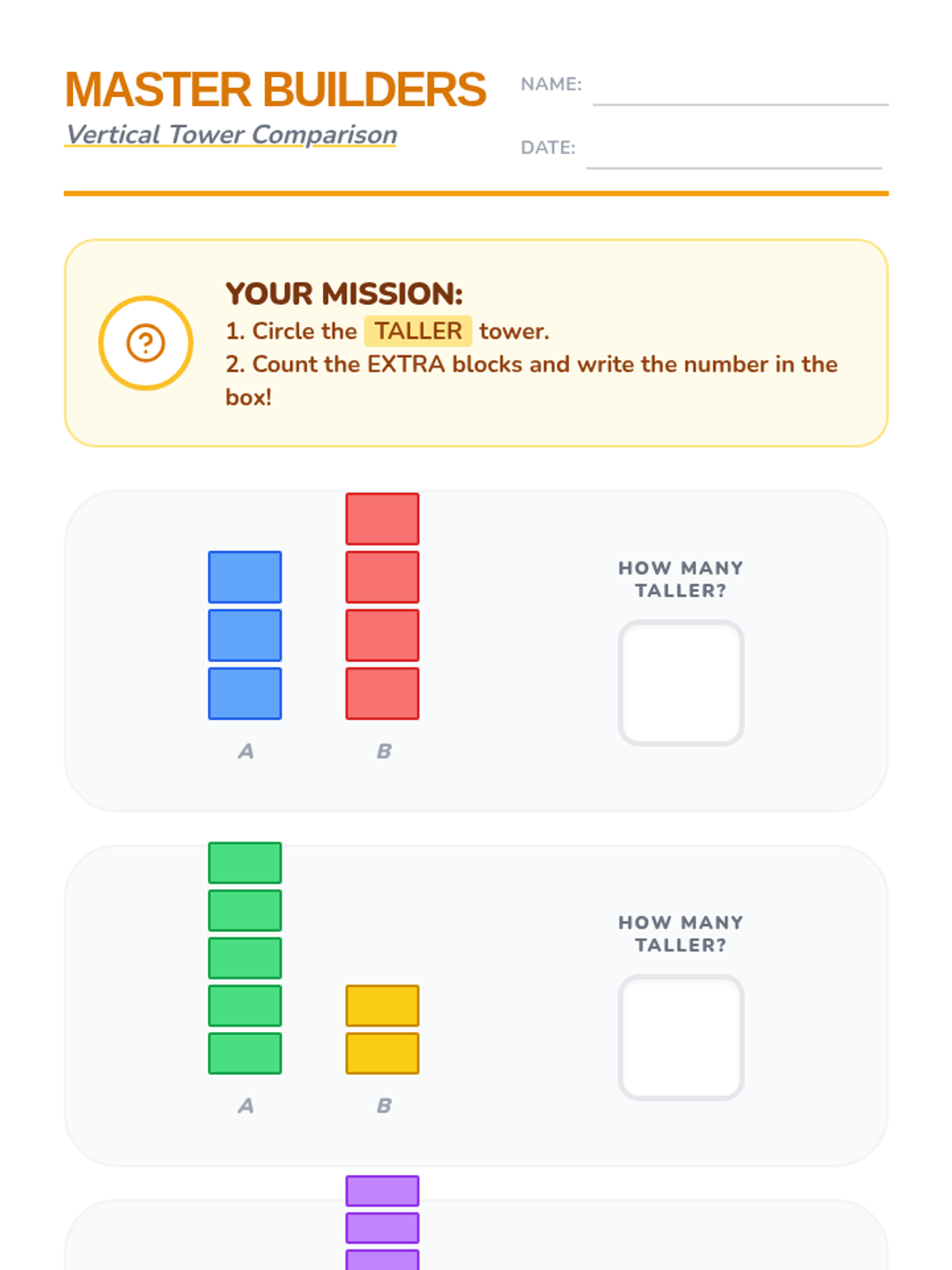
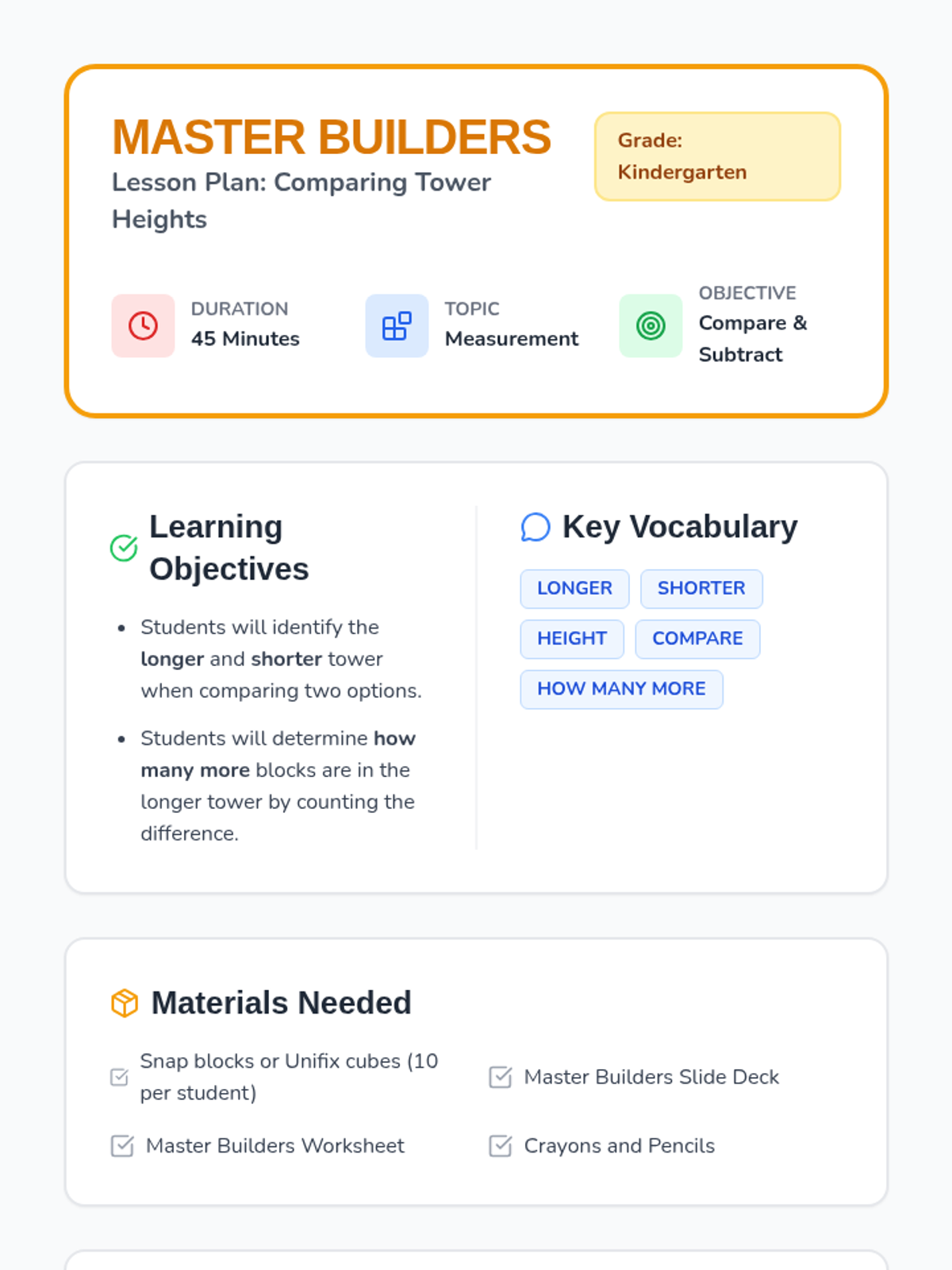
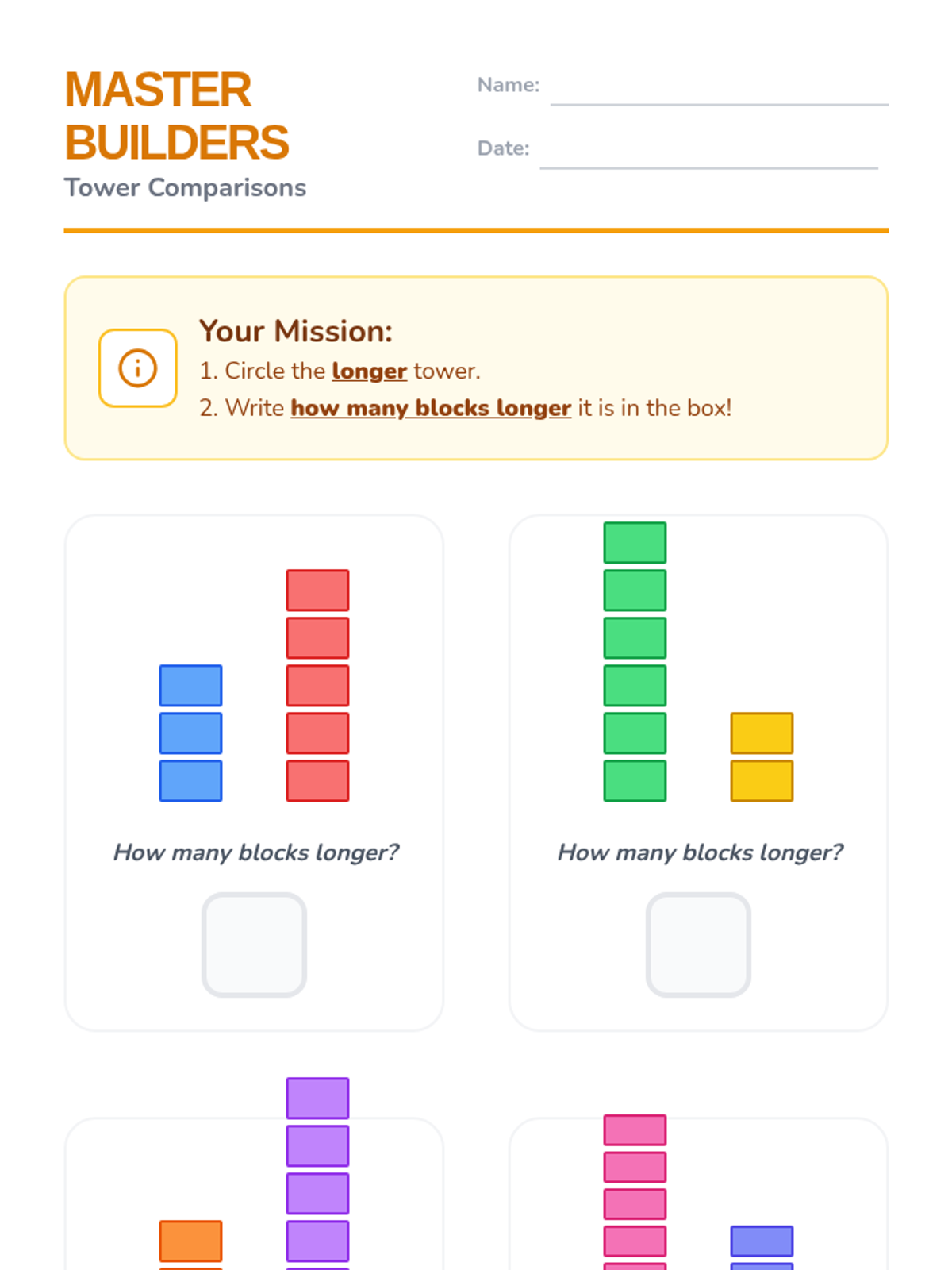
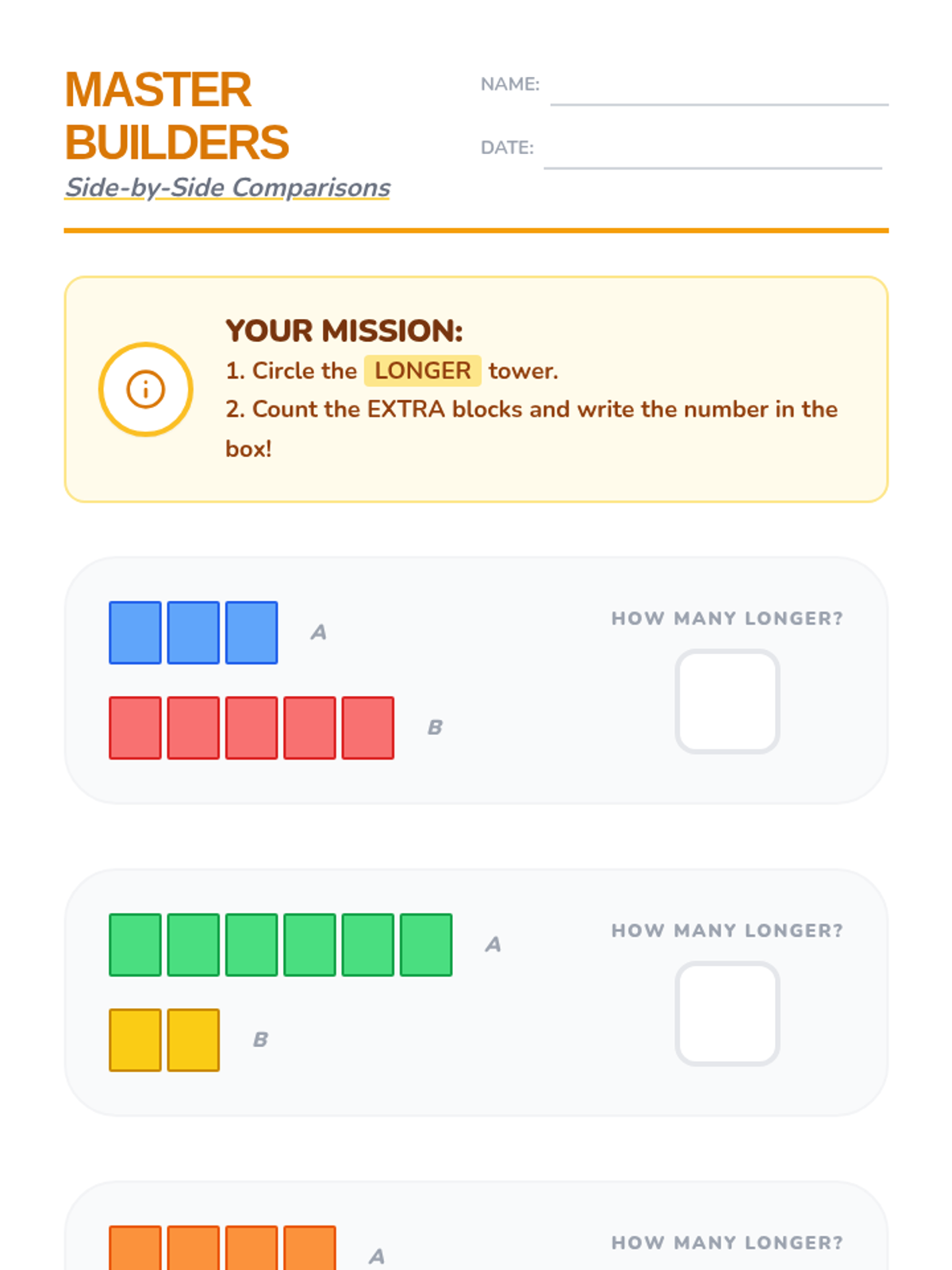
A Kindergarten lesson focused on comparing the length (height) of block towers and determining the difference in length by counting individual block units.
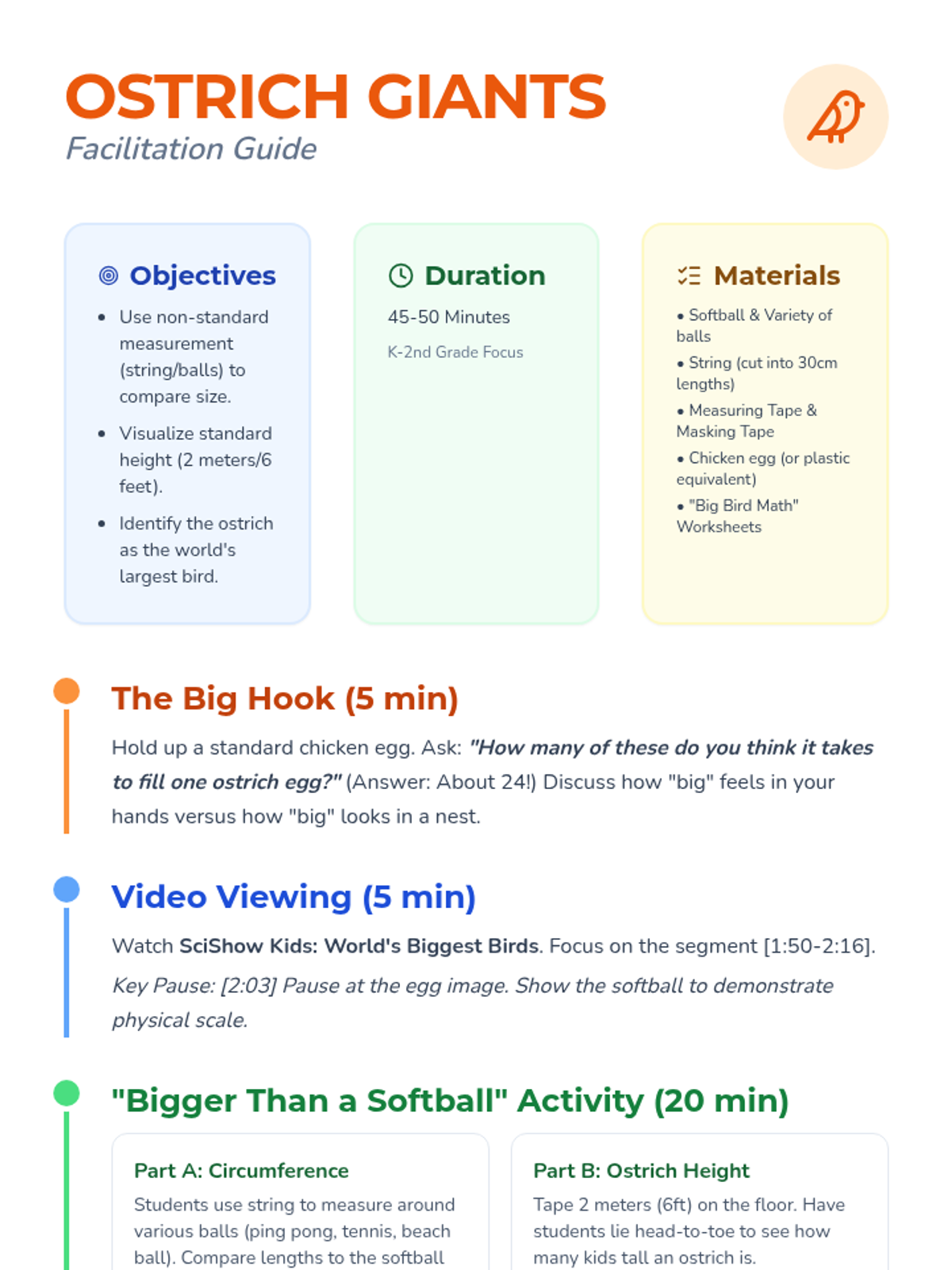
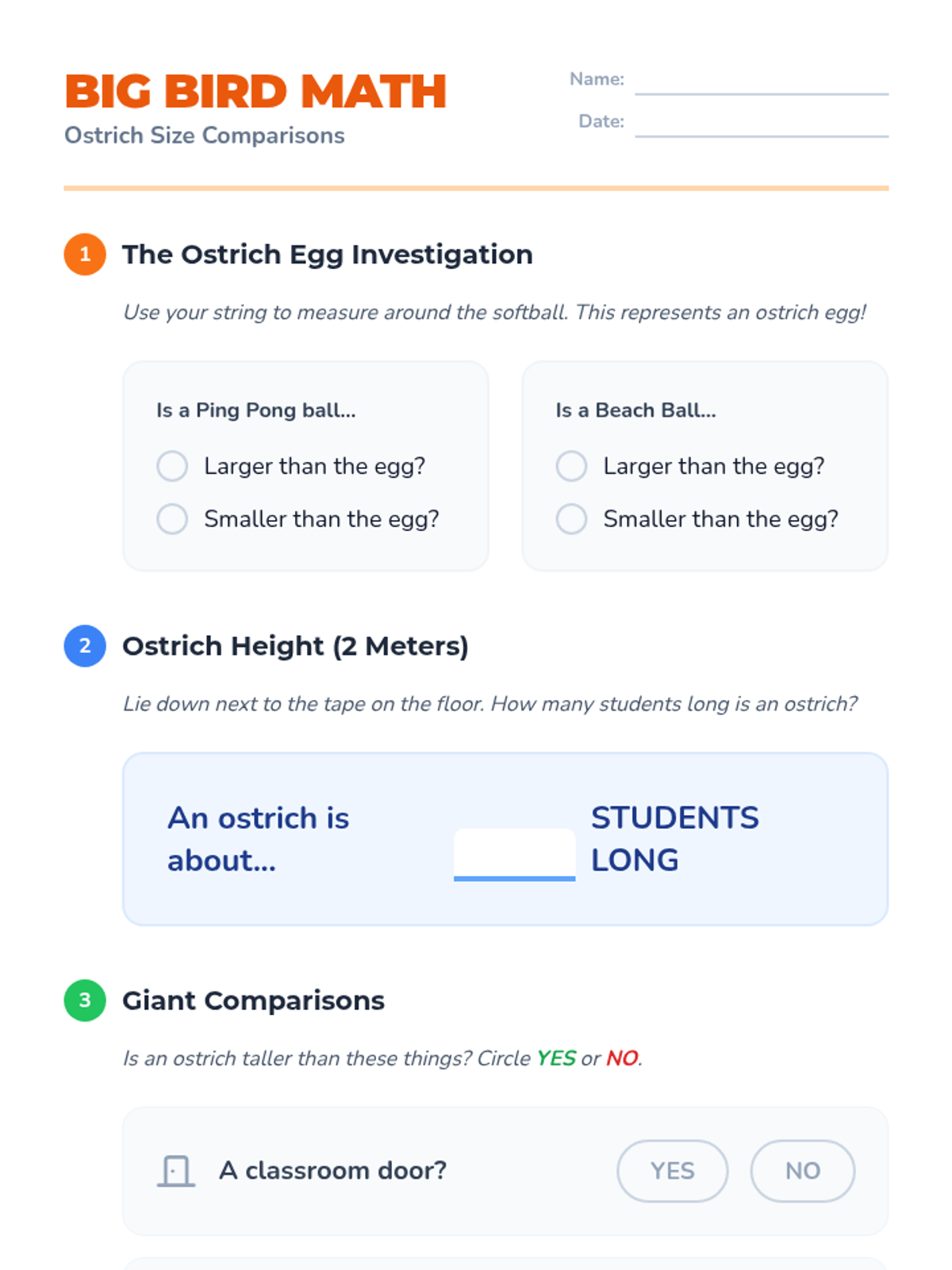
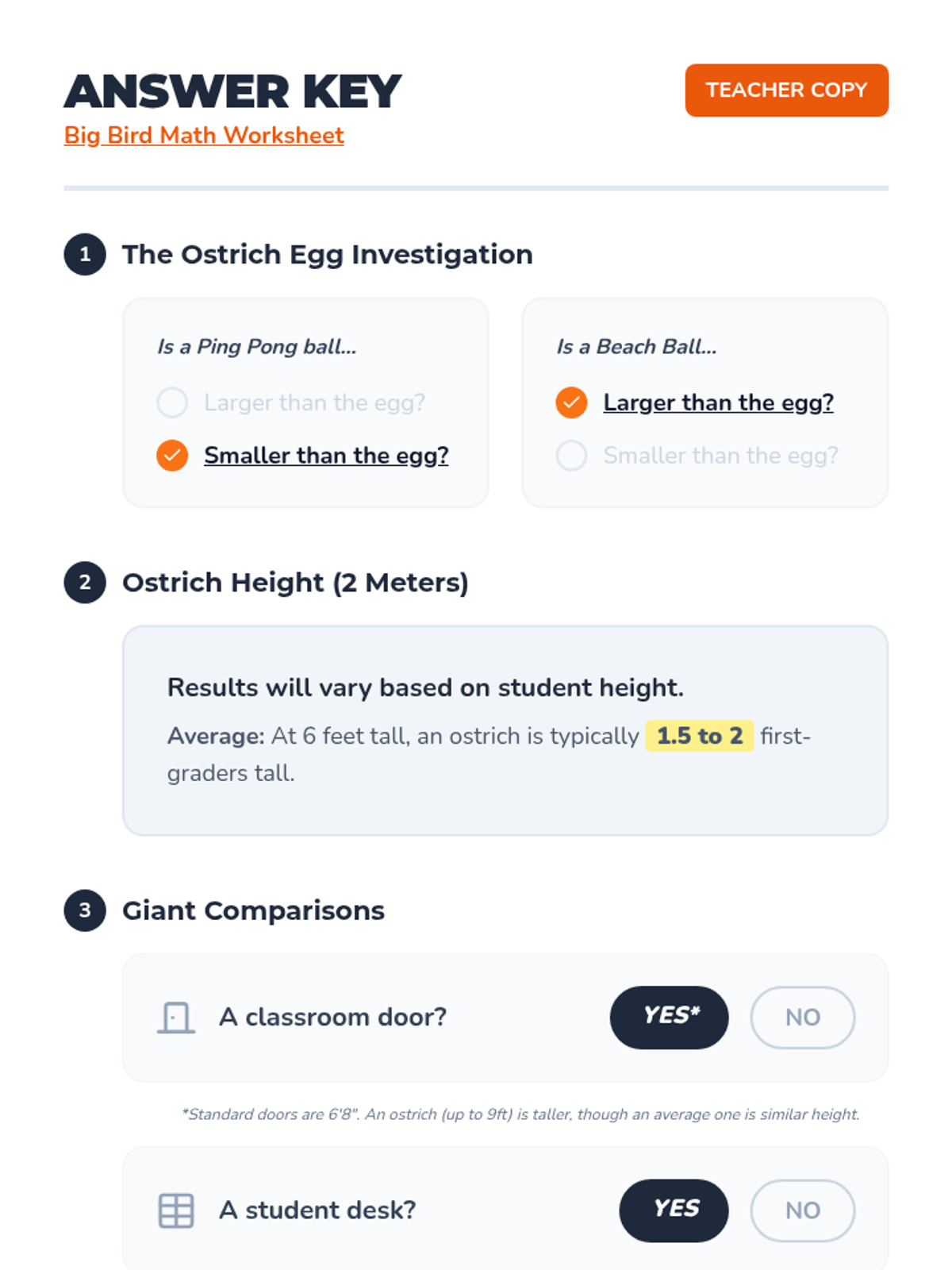
A lesson for K-2nd grade students exploring non-standard and standard measurement through the lens of the world's largest bird, the ostrich. Students will compare egg sizes, measure circumferences with string, and visualize heights using tape measures and their own bodies.
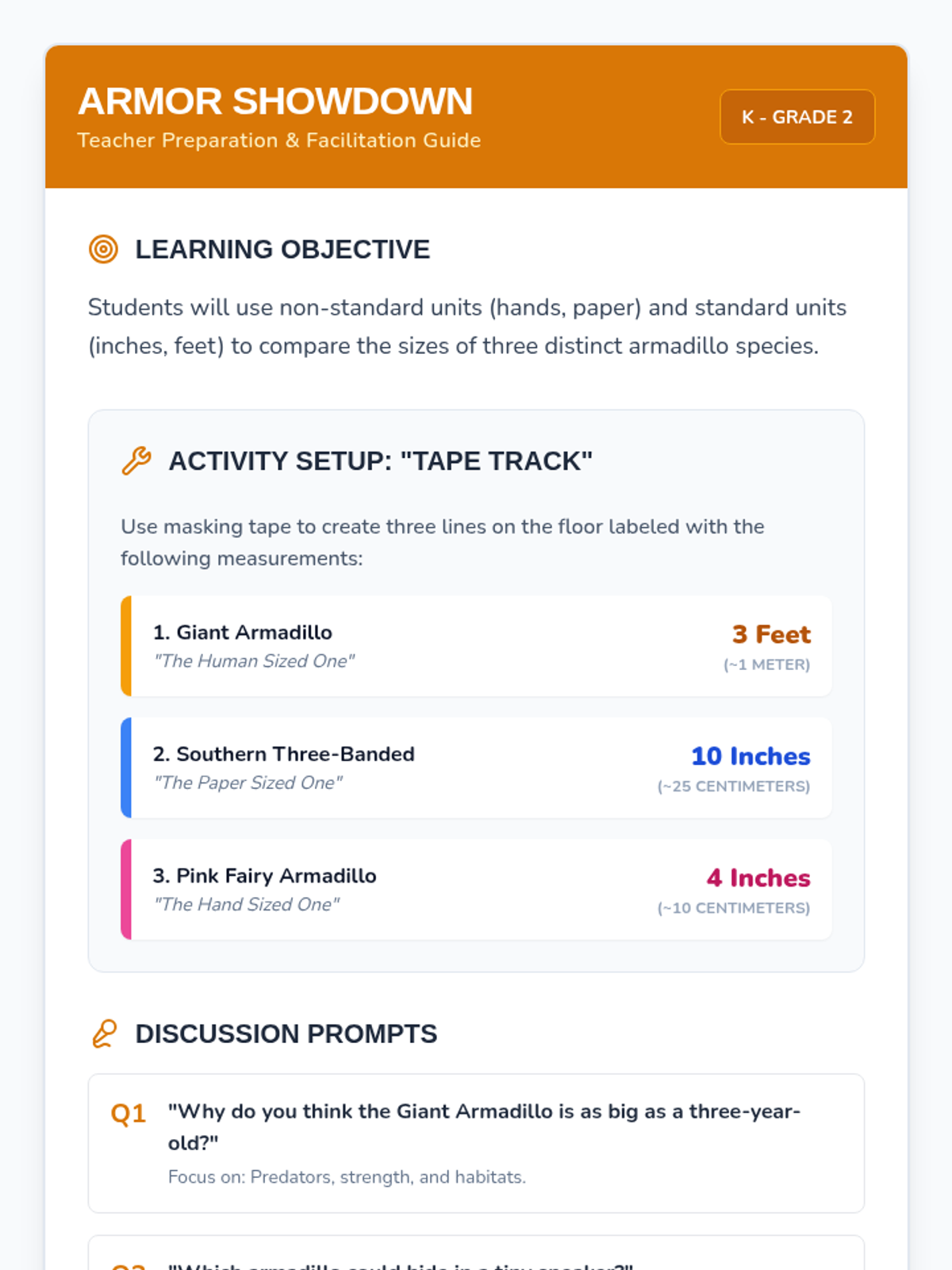
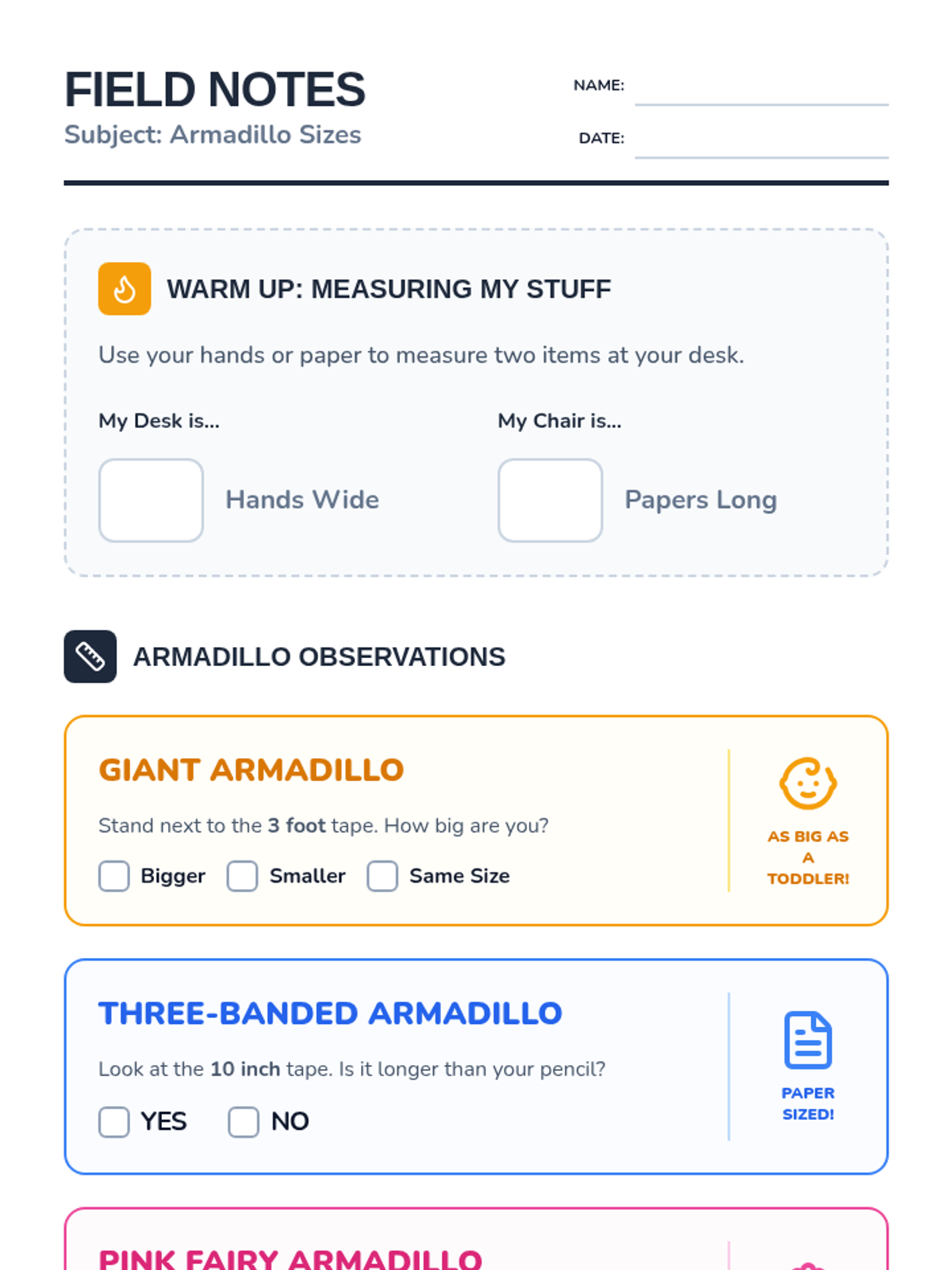
Students will explore animal diversity and measurement by comparing different armadillo species using non-standard units (hands, paper) and standard units (inches, feet).
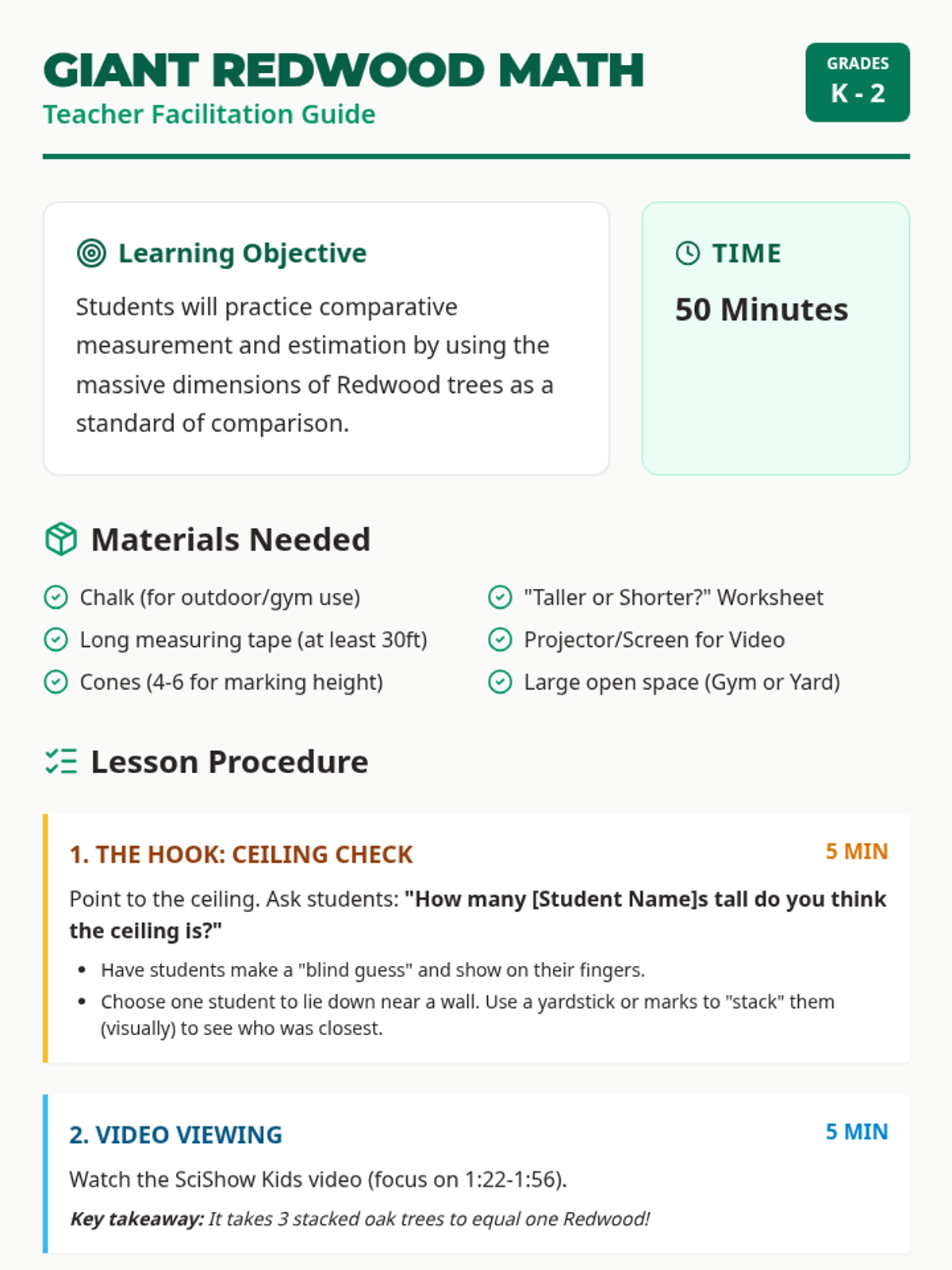
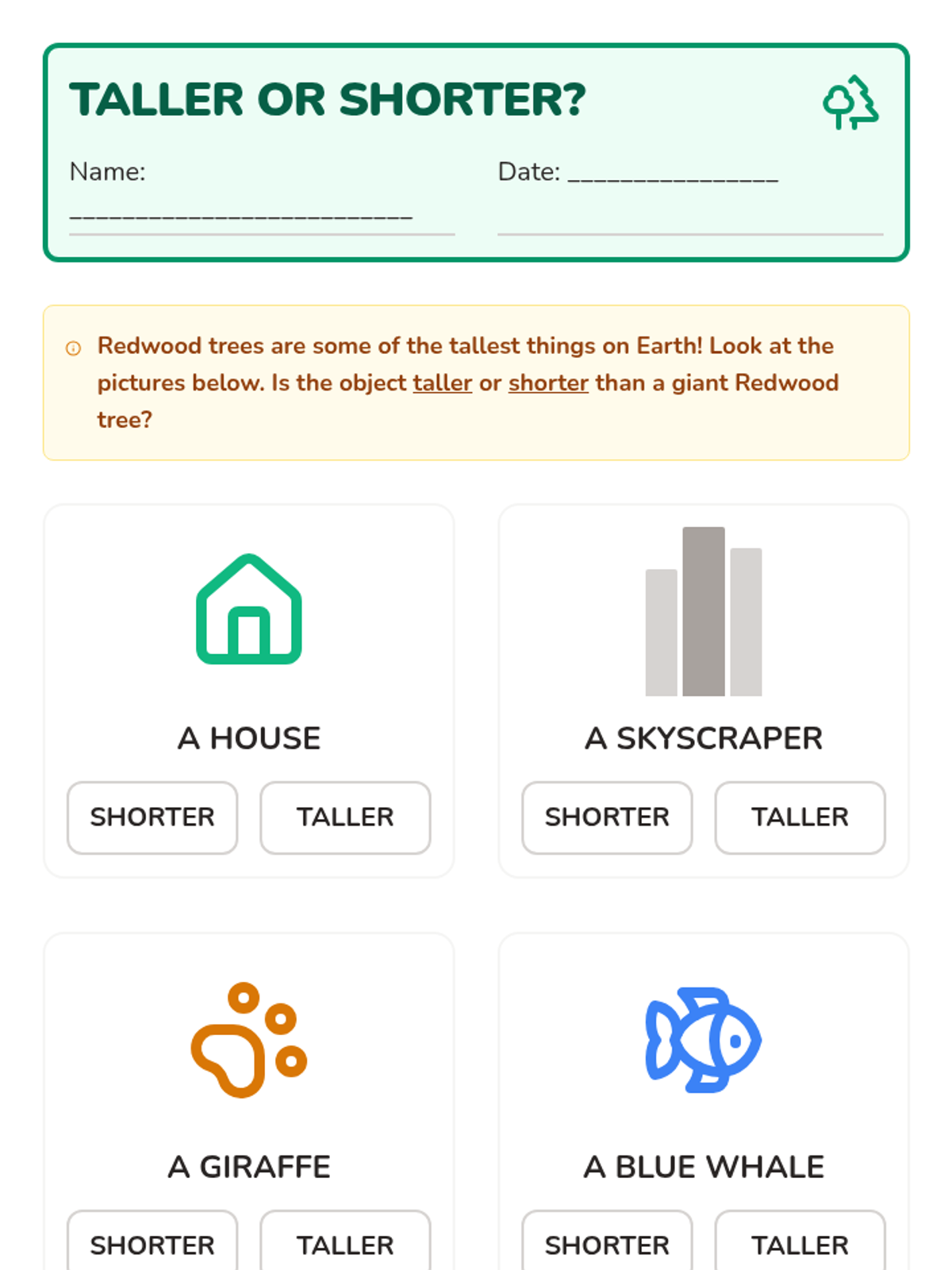
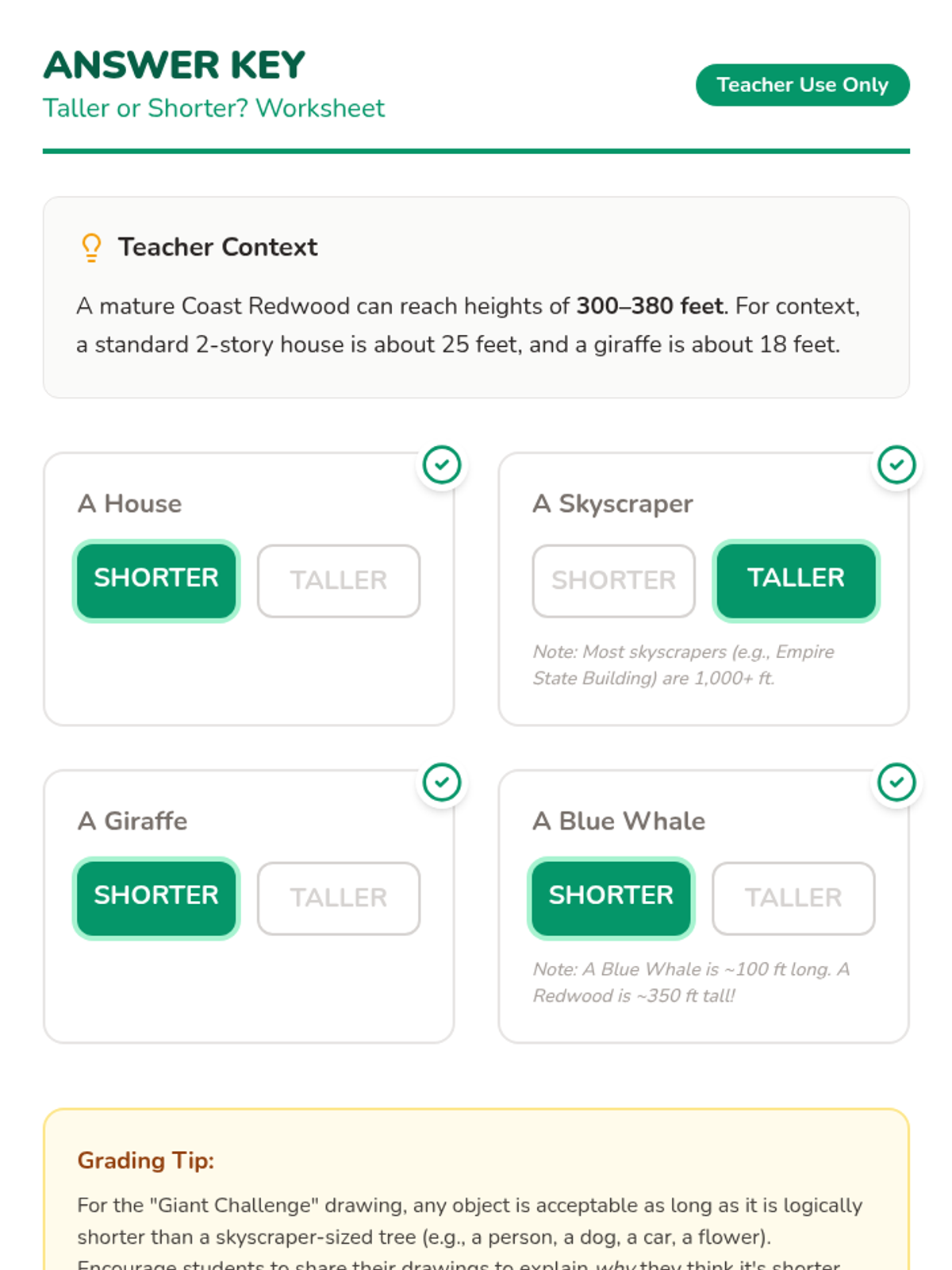
A hands-on measurement lesson where students use the massive scale of Redwood trees to practice estimation and comparative measurement through interactive physical activities and visual comparisons.
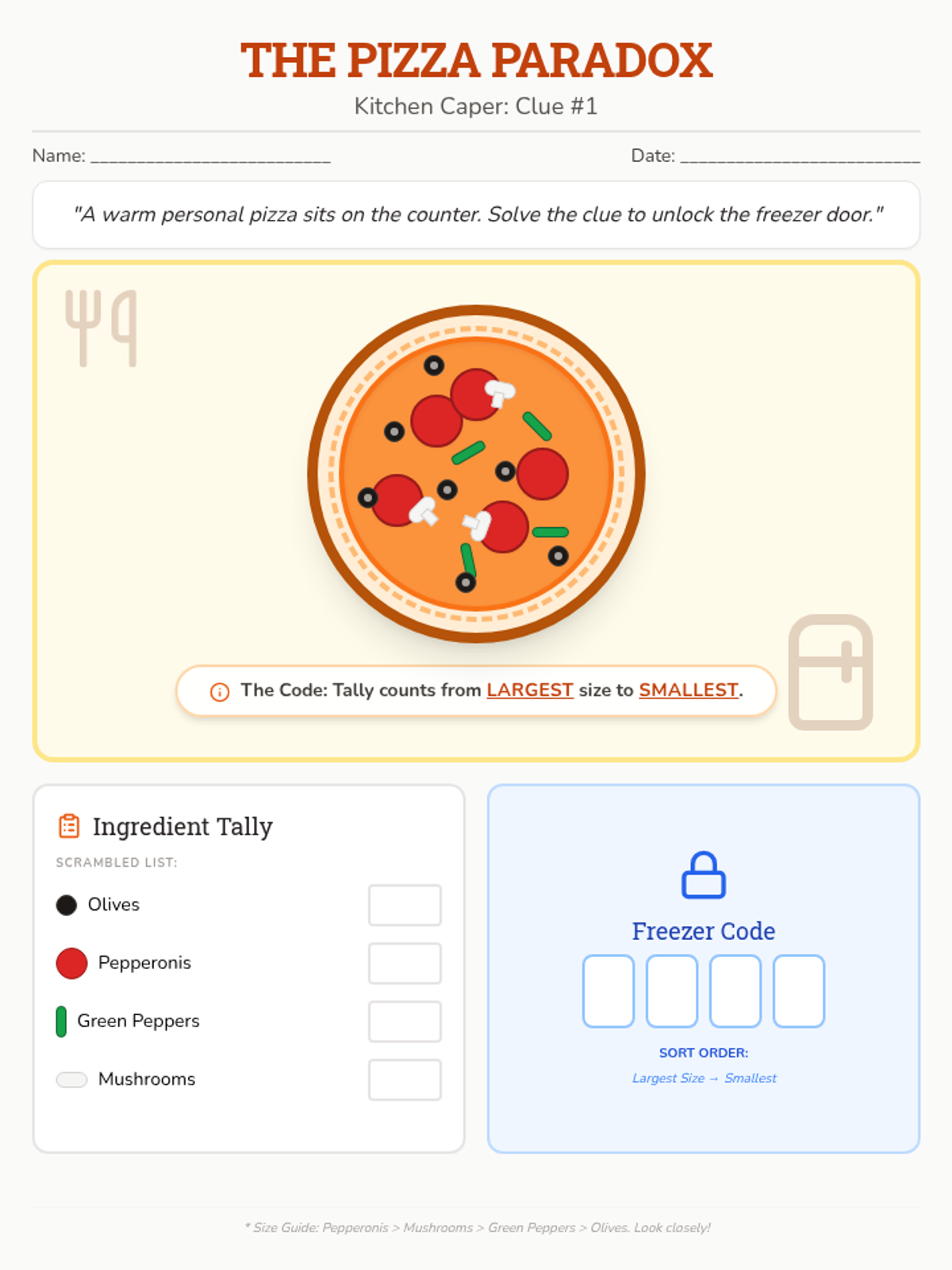
A mini-mystery centered around a kitchen scene where students use observation and logic to solve a visual puzzle.
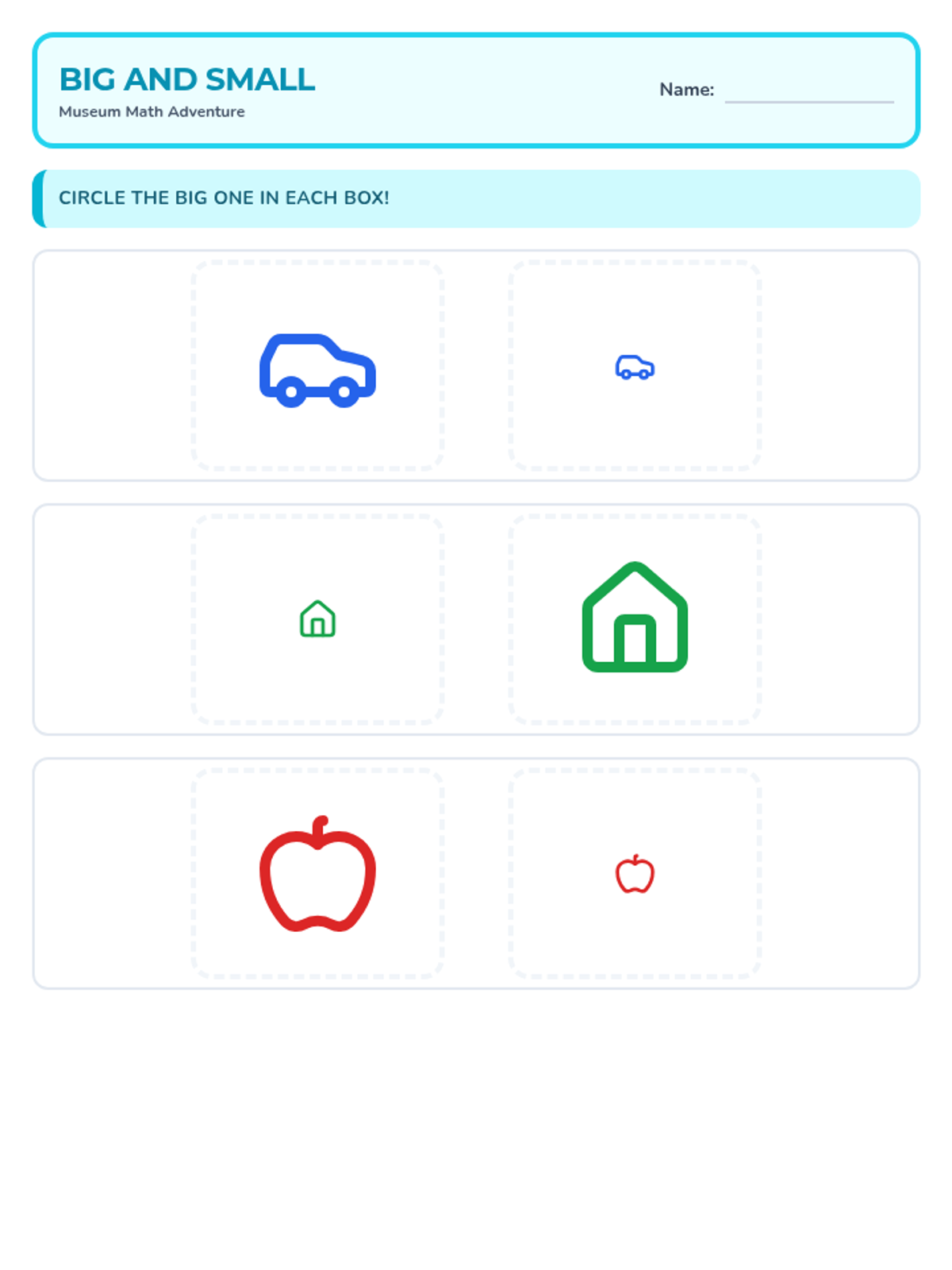
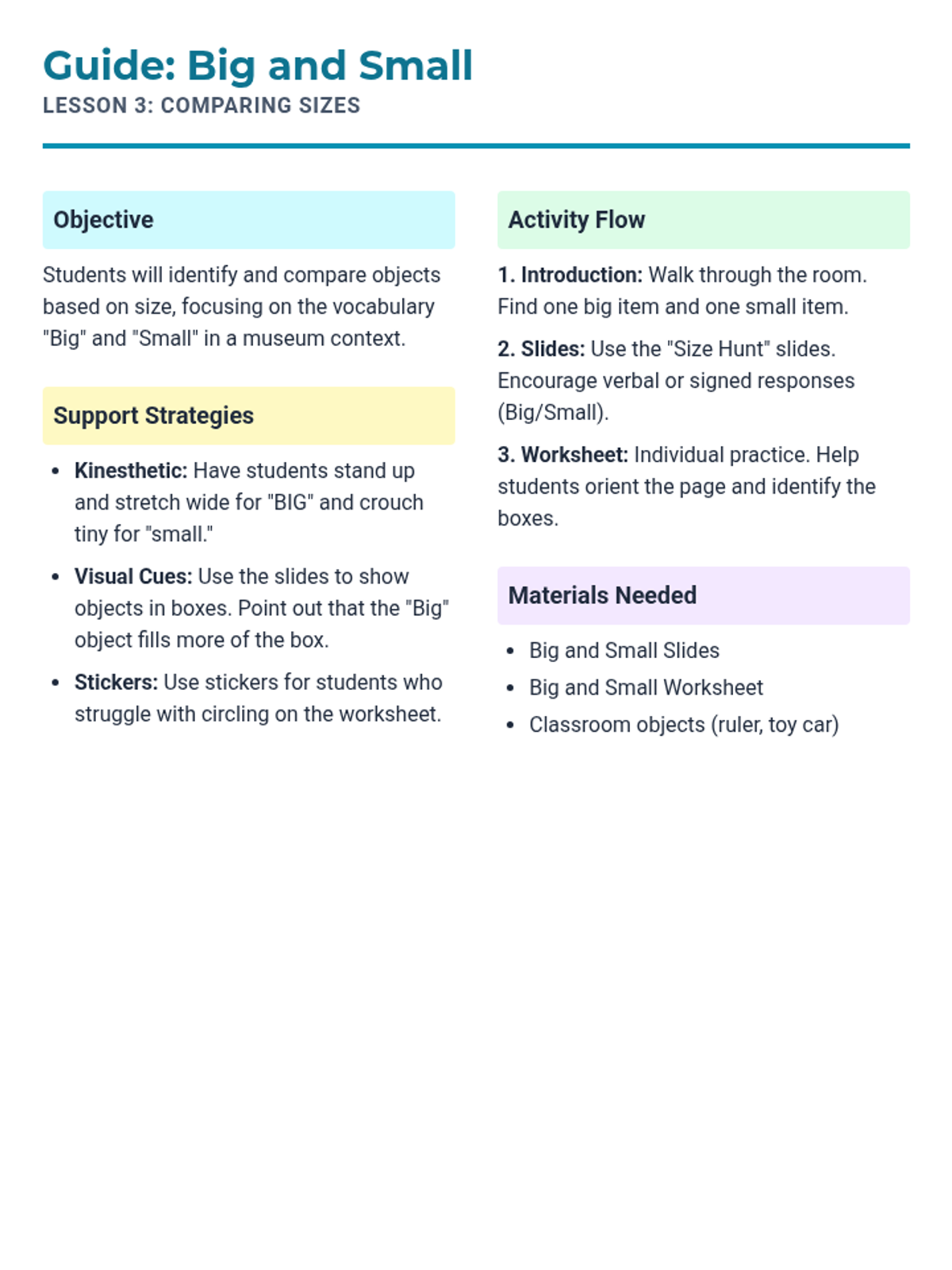
Students will explore the concepts of big, medium, and small by comparing various objects in the museum exhibits, promoting vocabulary development and visual discrimination.
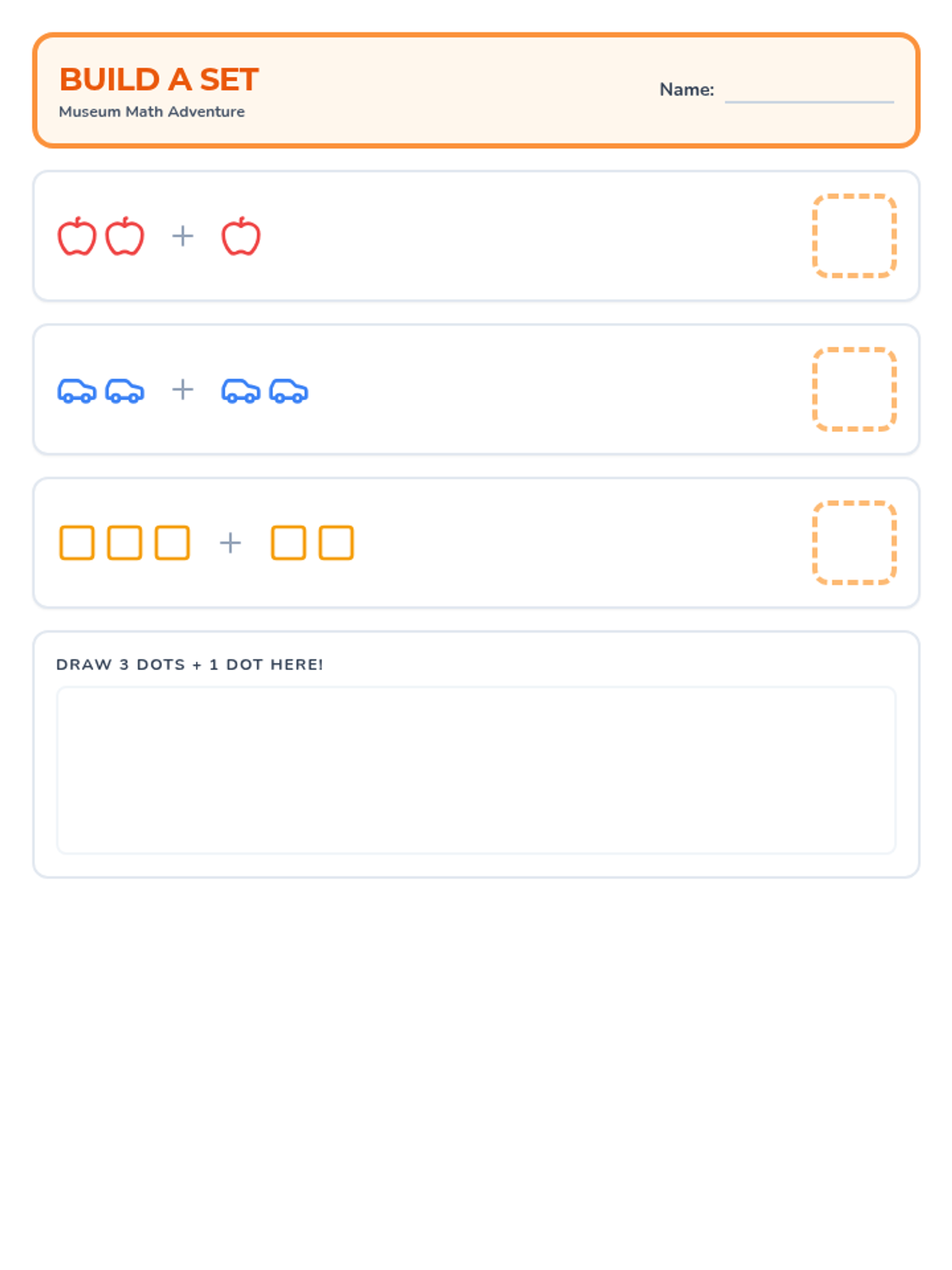
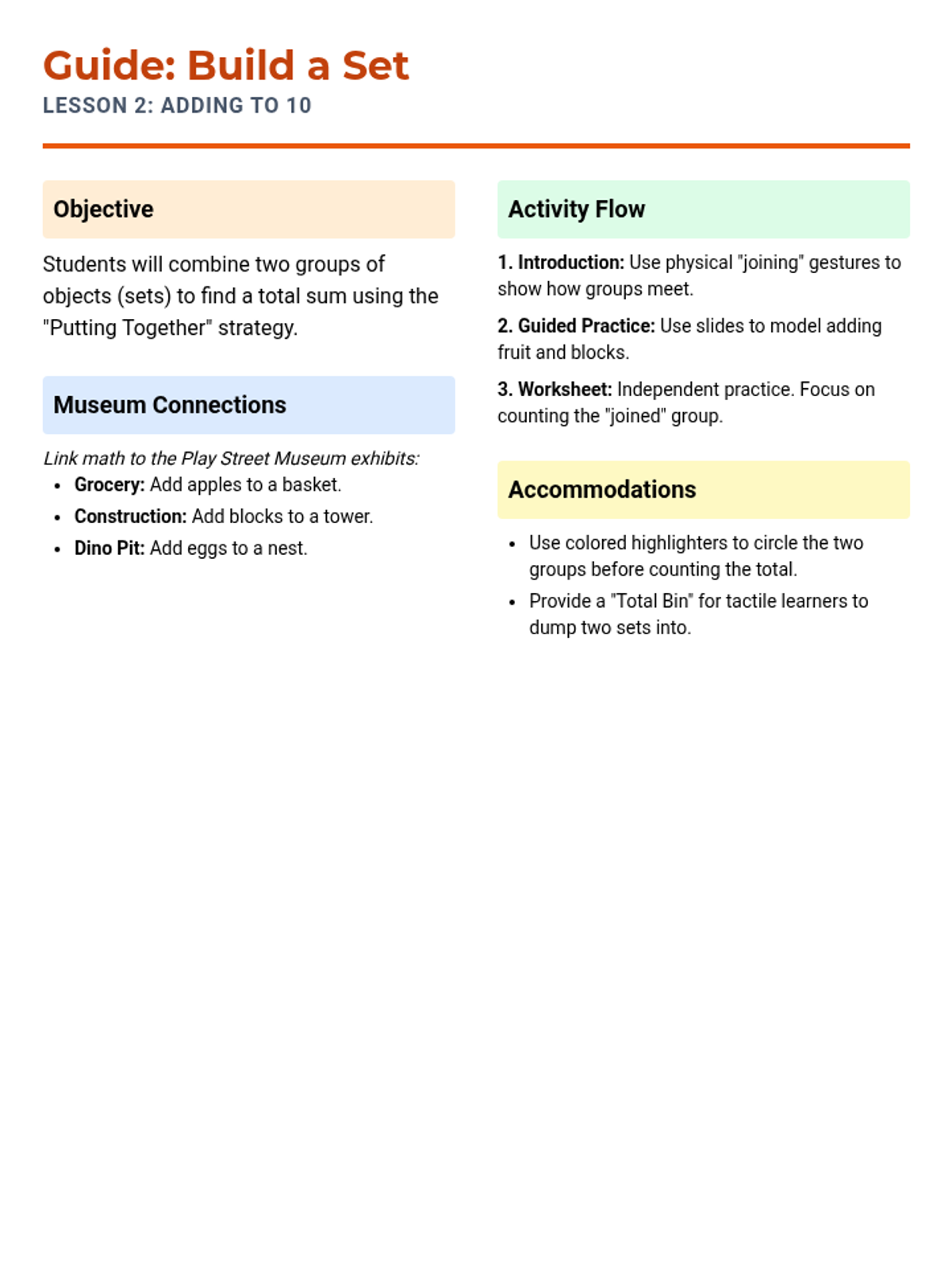
An introduction to simple addition by combining groups of museum objects, focusing on the concept of 'putting together' using visual aids and tactile play scenarios.
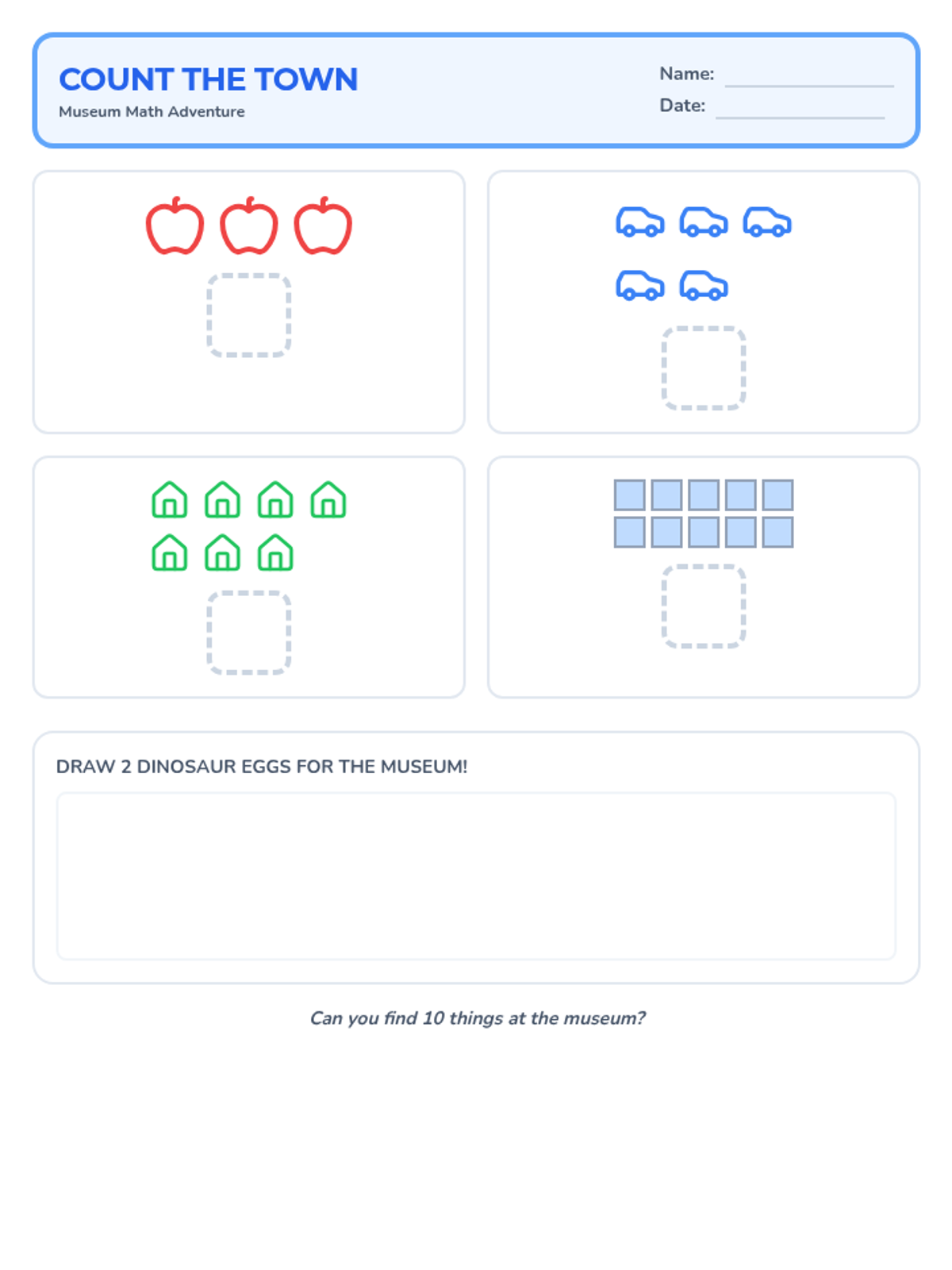
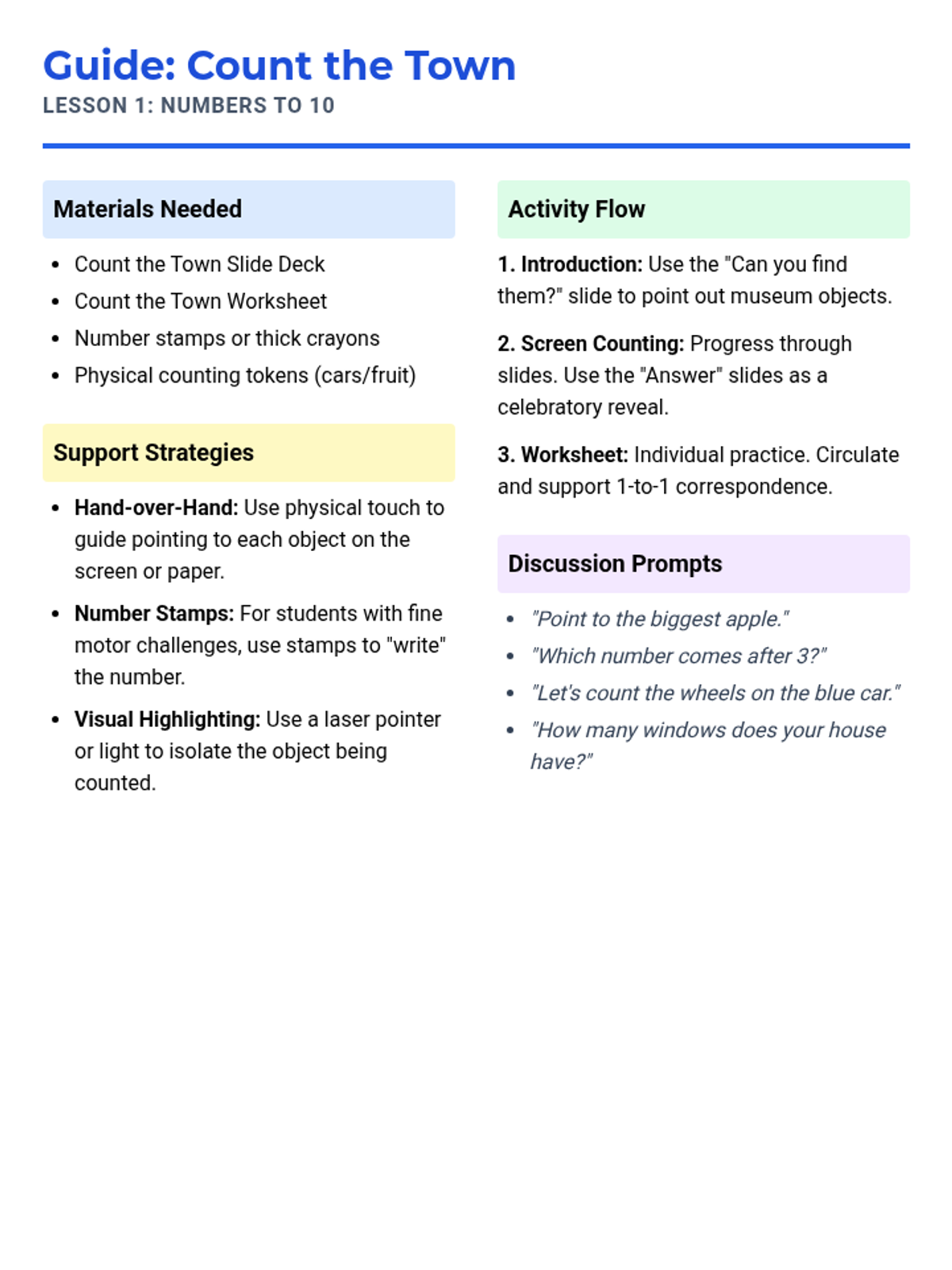
Students will practice identifying and counting numbers 1-10 using common items found in a play museum setting, such as grocery items, toy cars, and house windows.
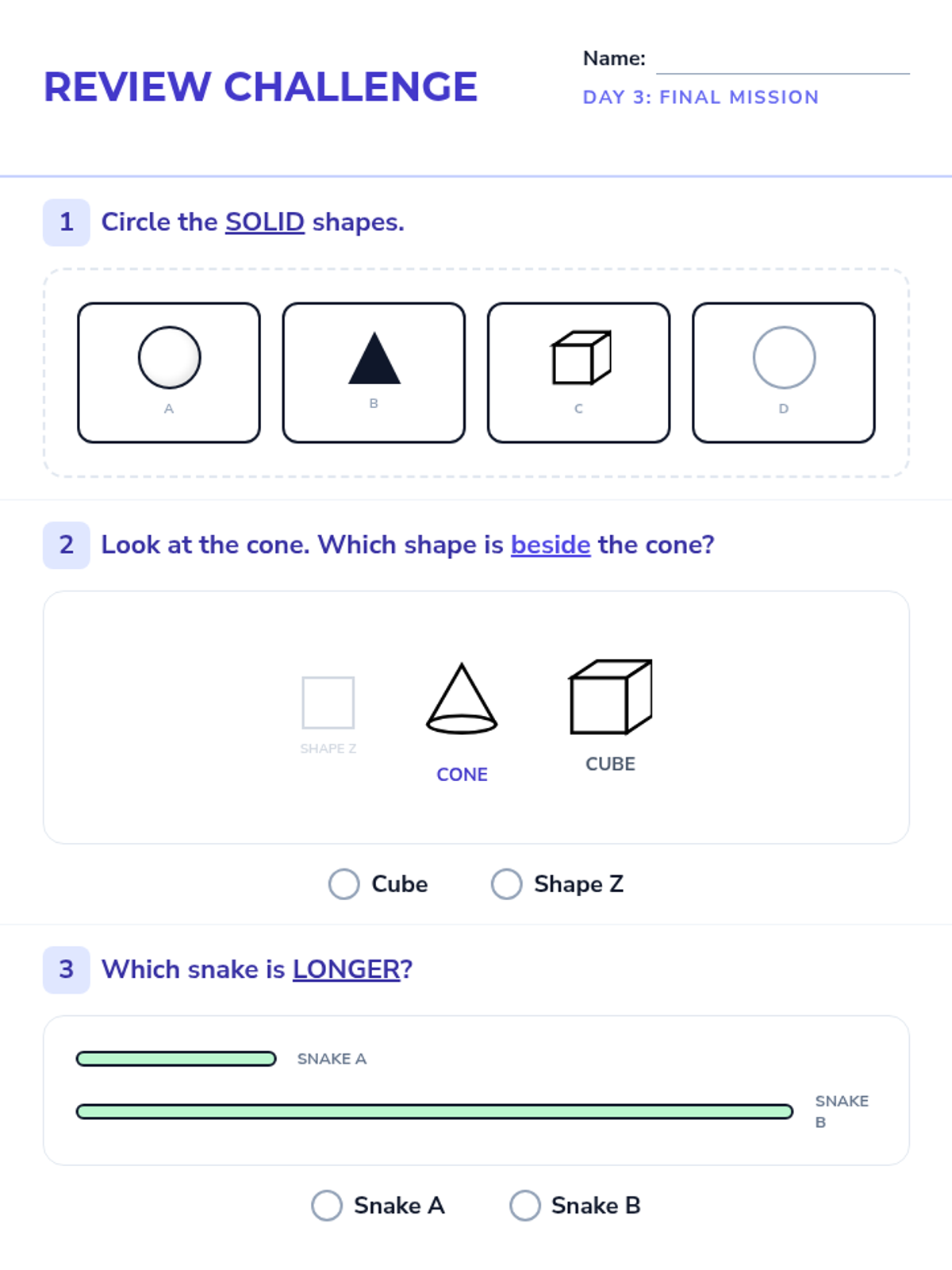
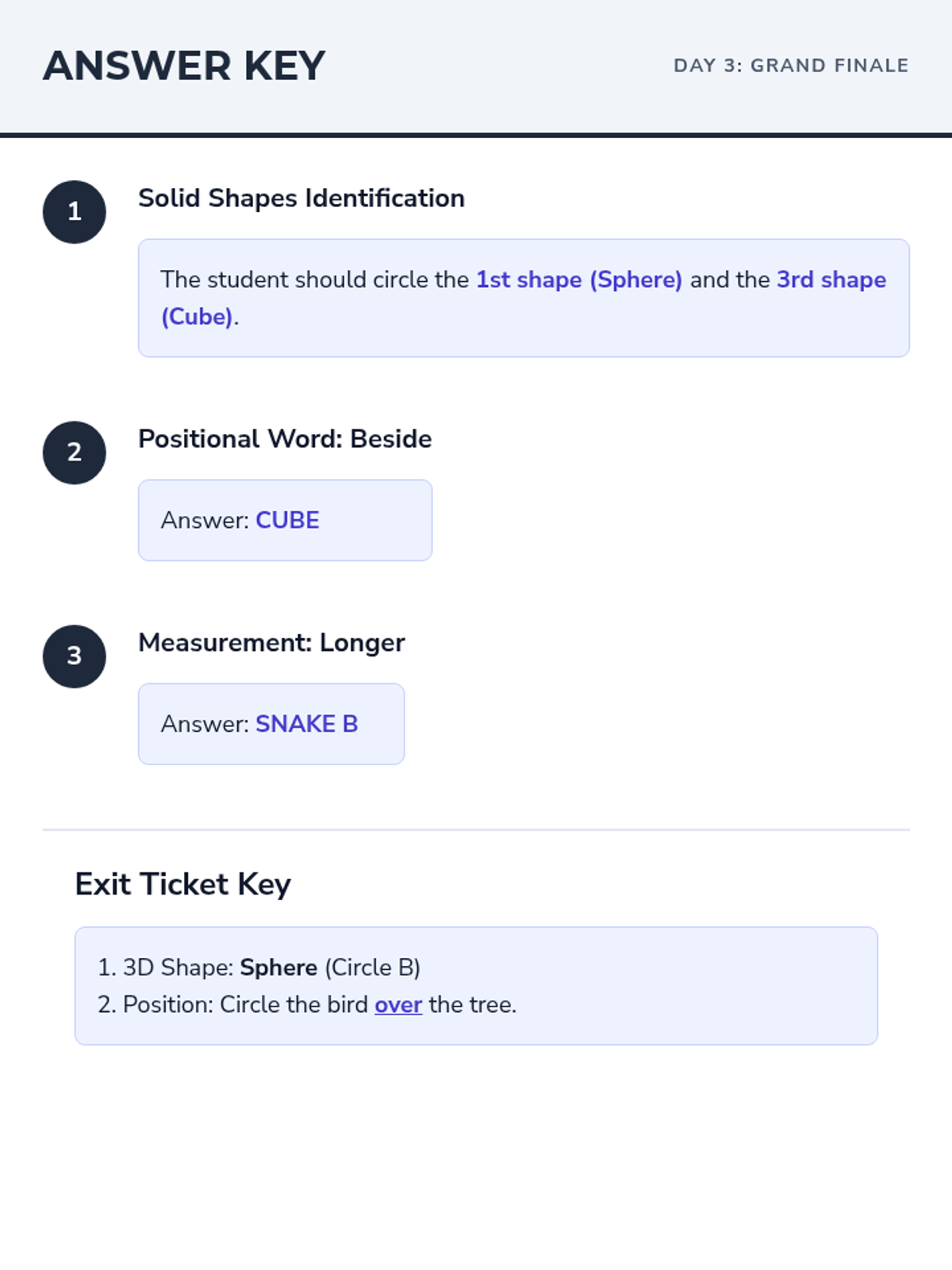
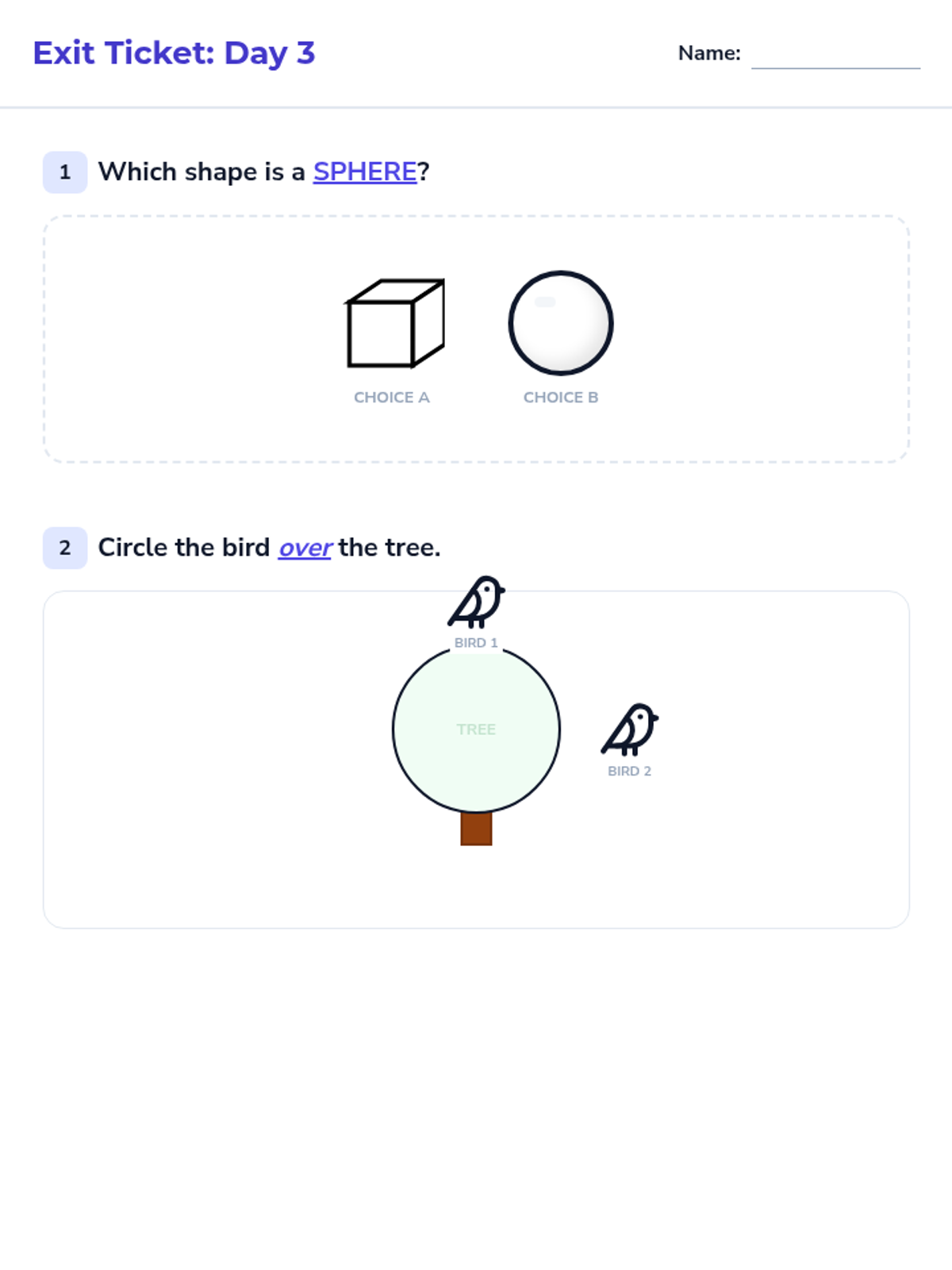
A cumulative review of 2D/3D shapes, positional words, and measurement comparisons to assess mastery.
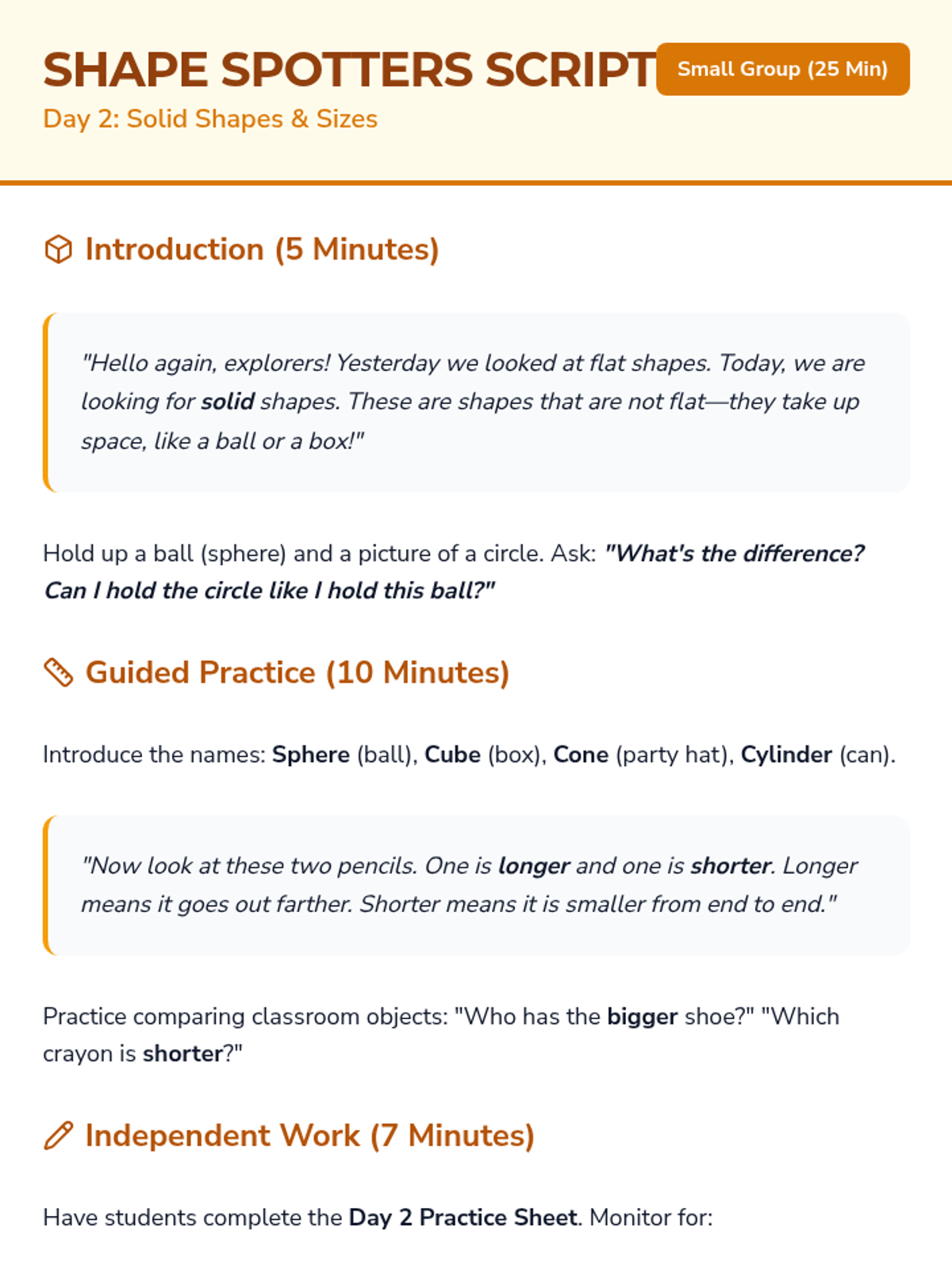
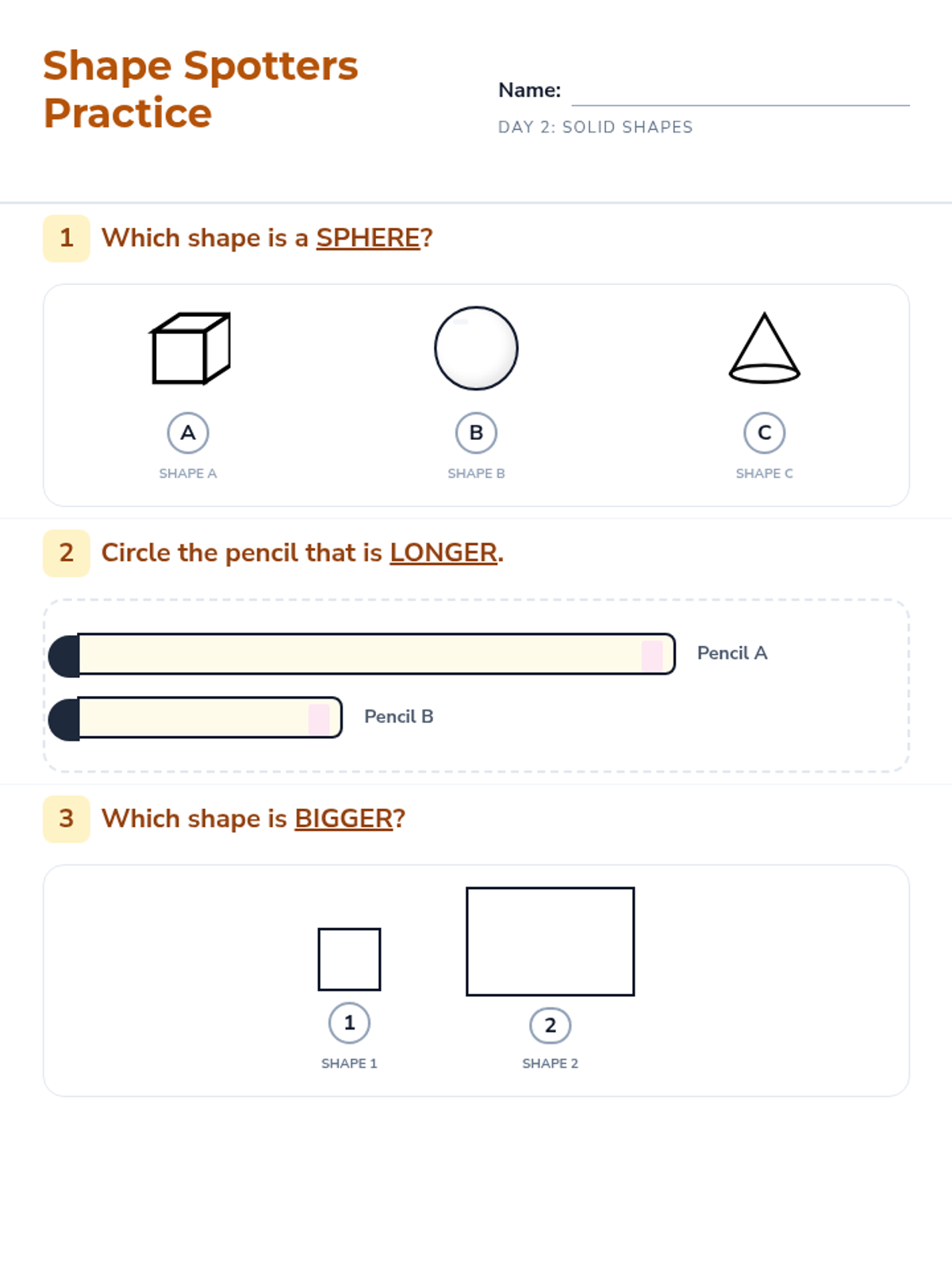
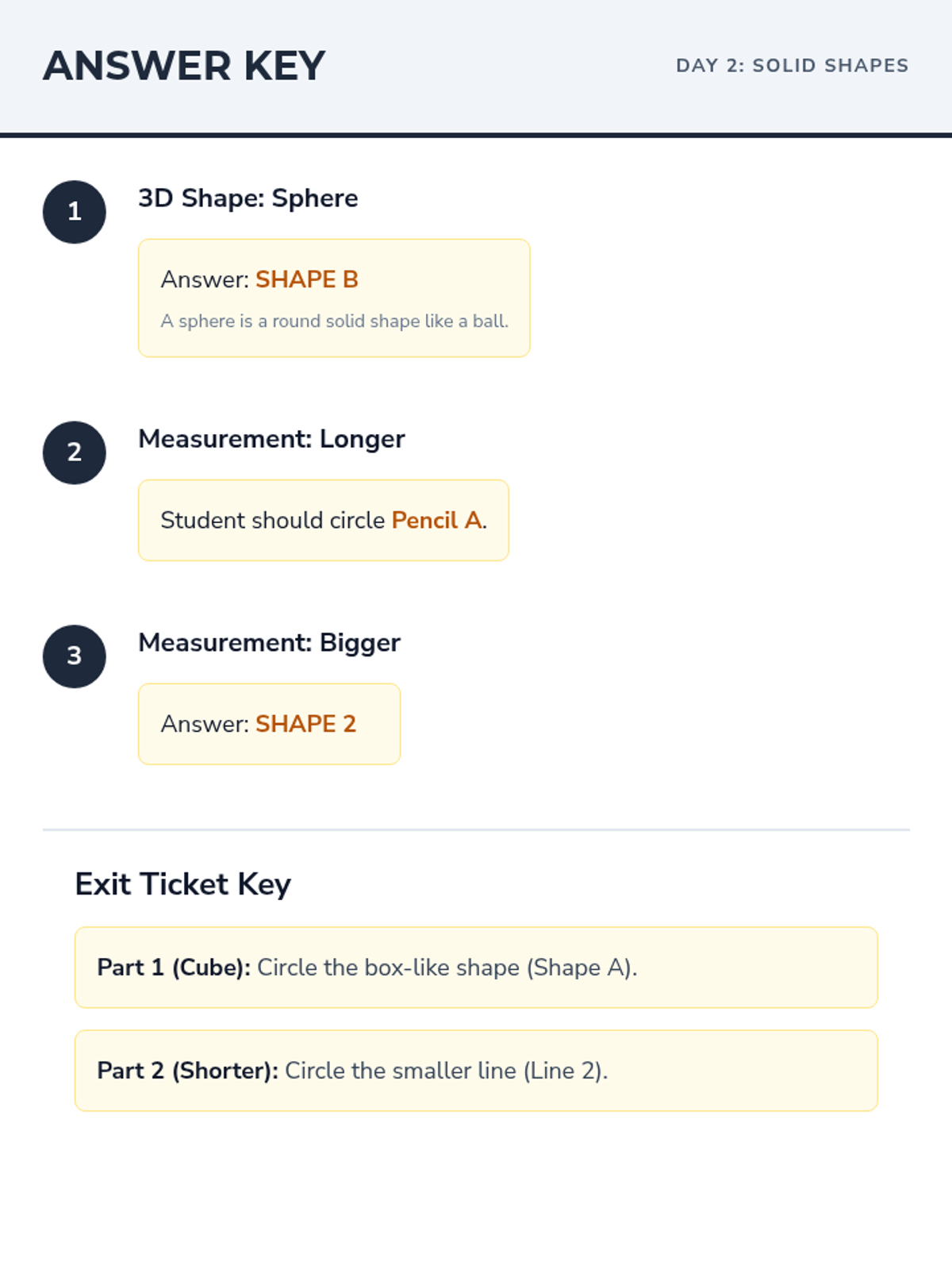
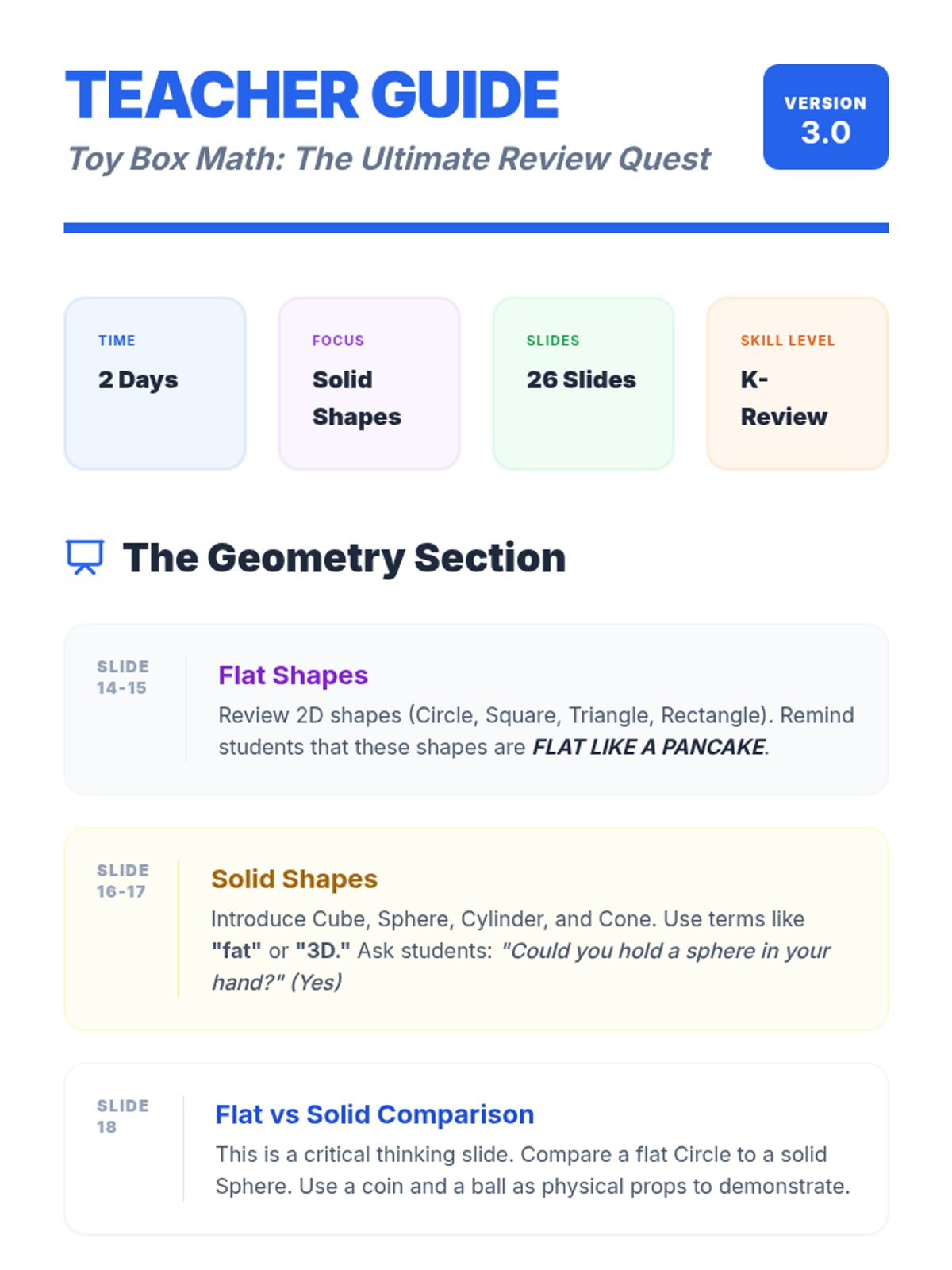
Students identify 3D shapes (cube, sphere, cone, cylinder) and compare objects based on size and length.
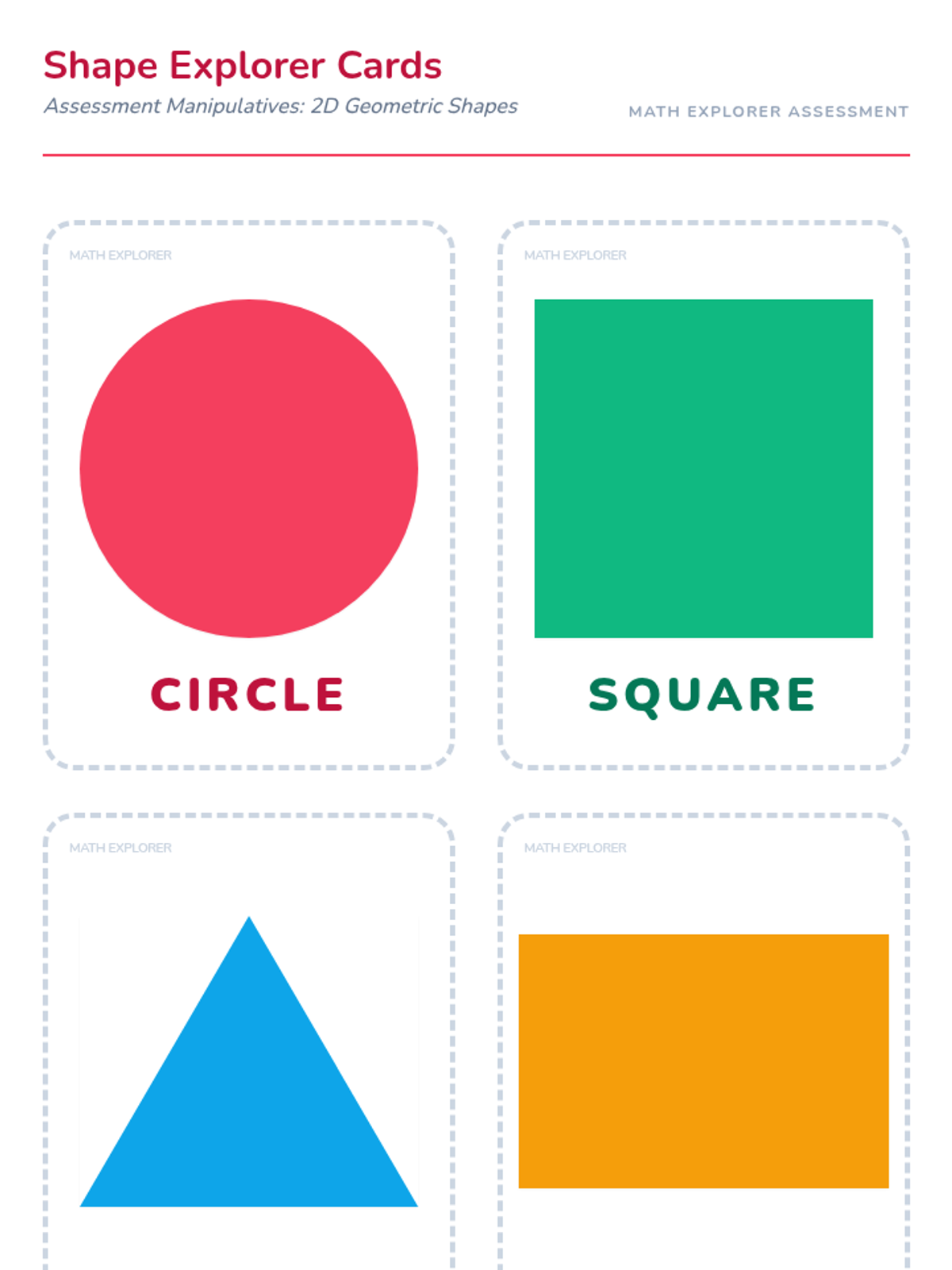
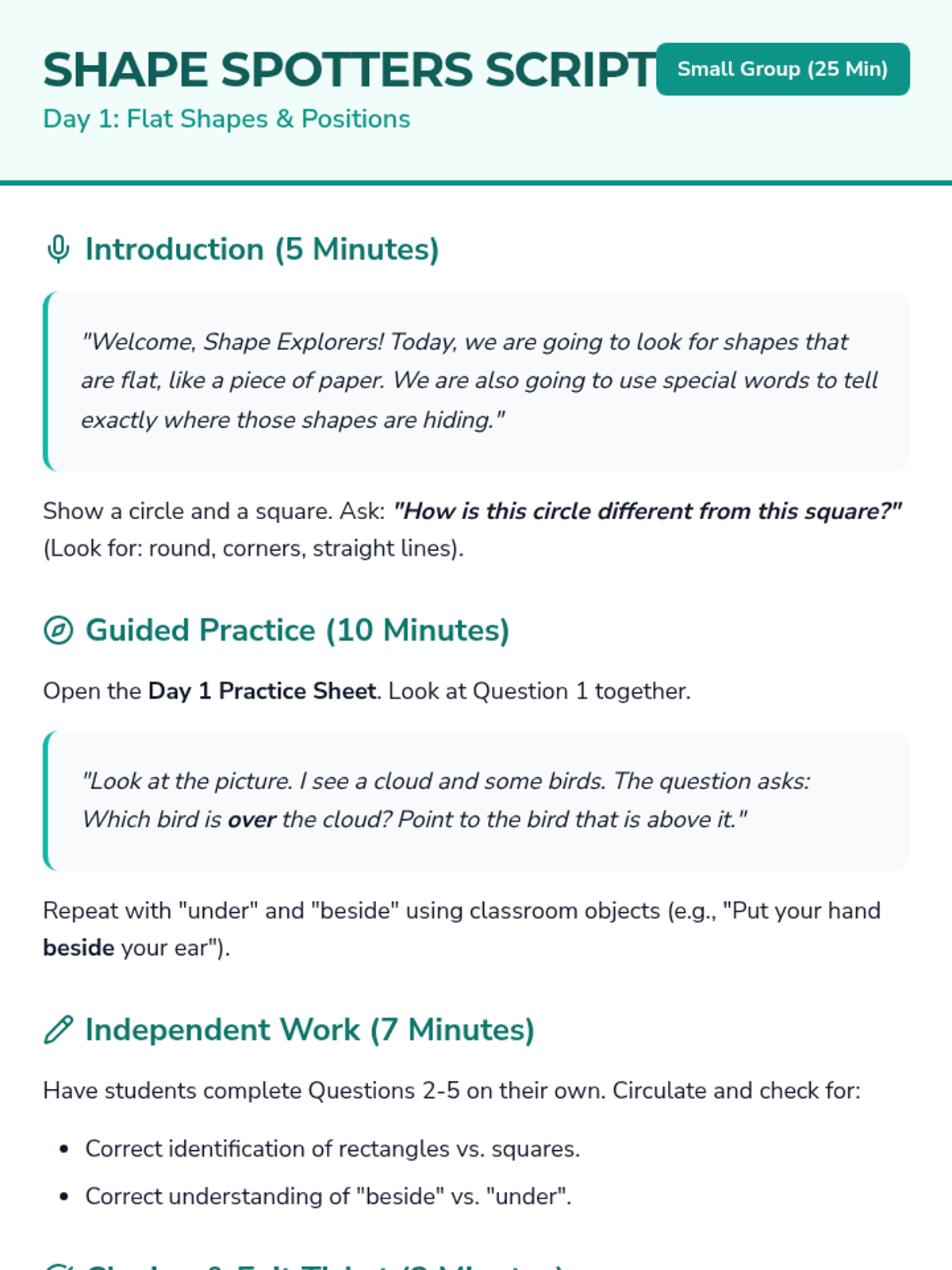
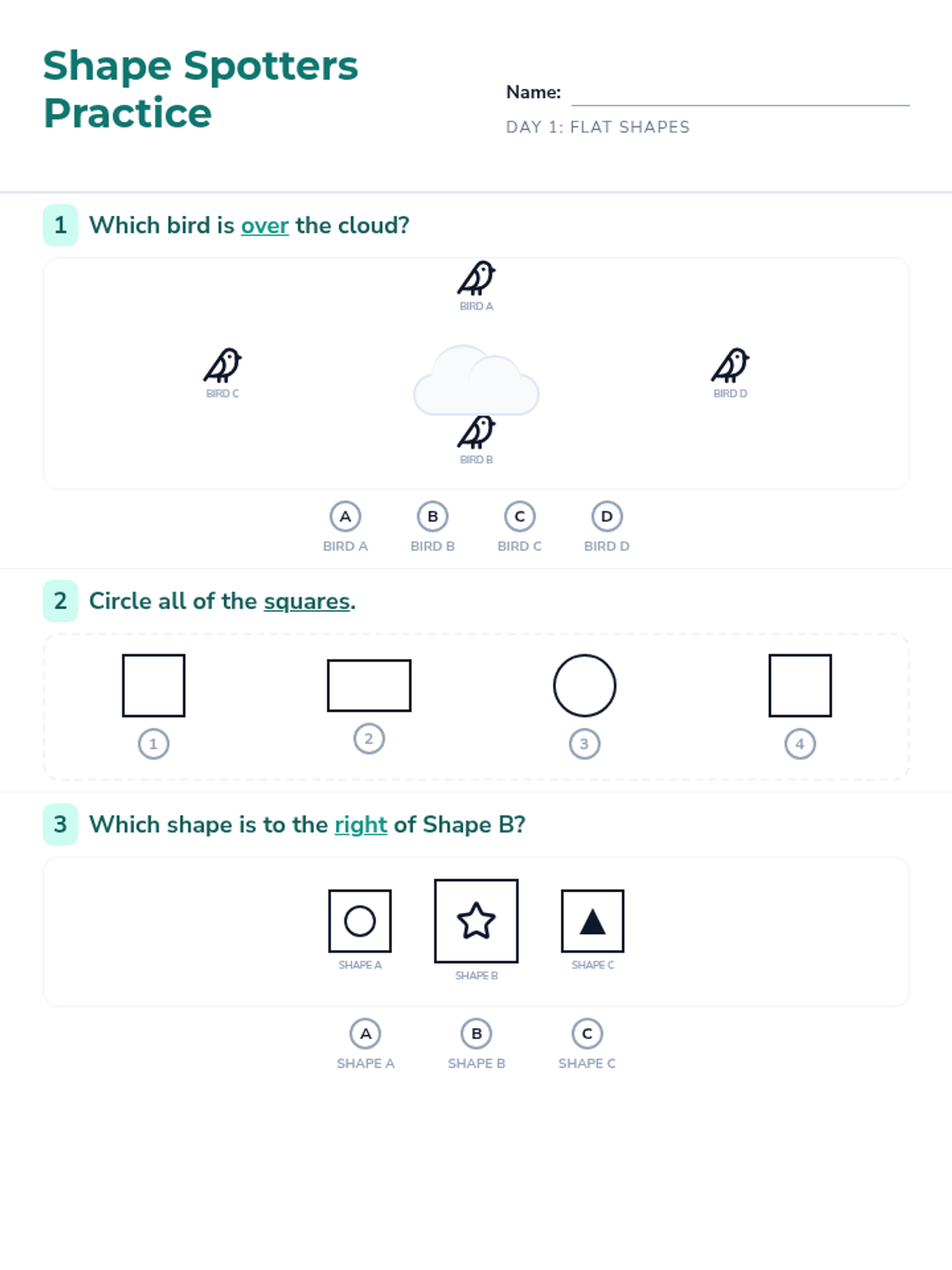
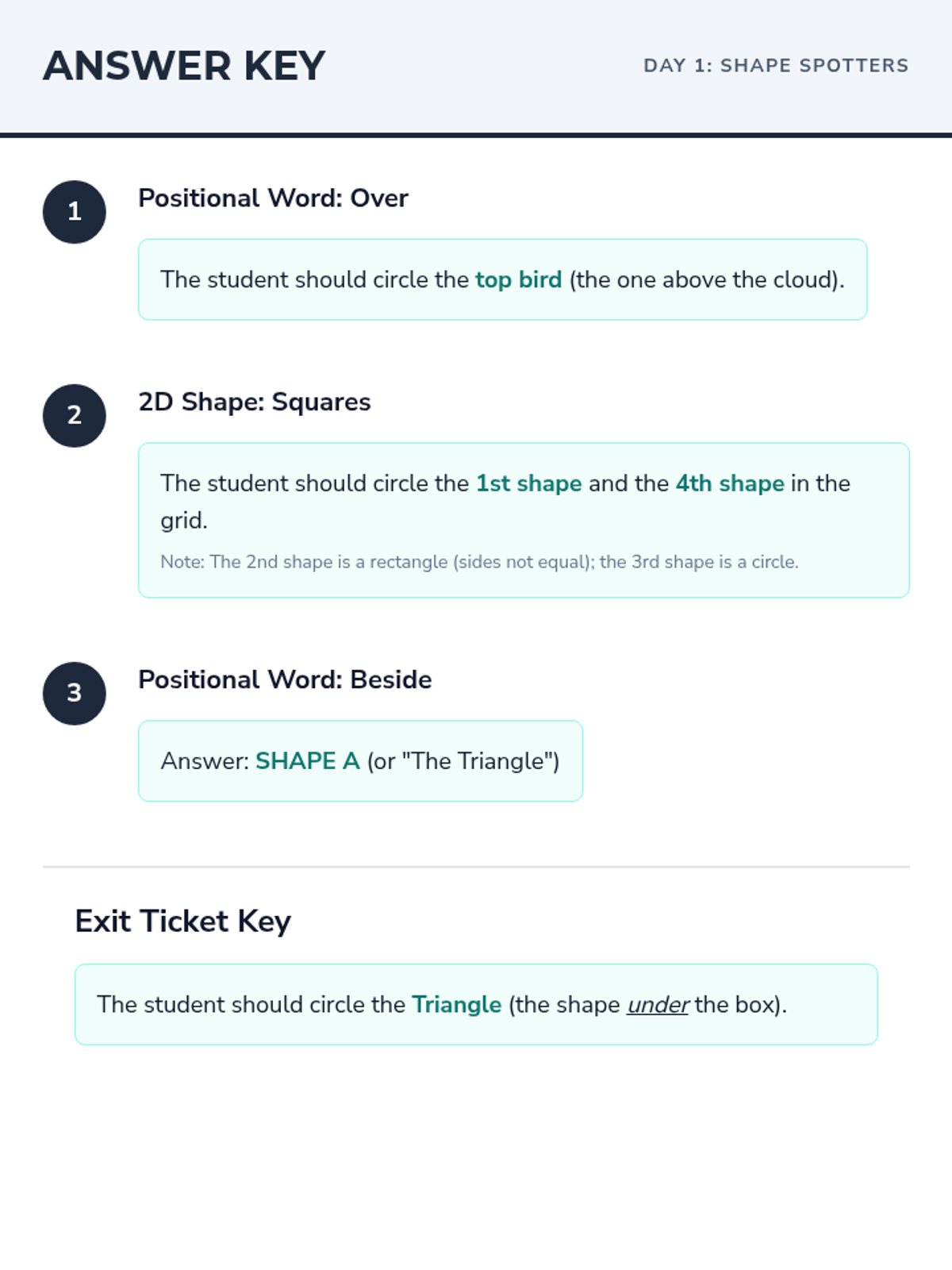
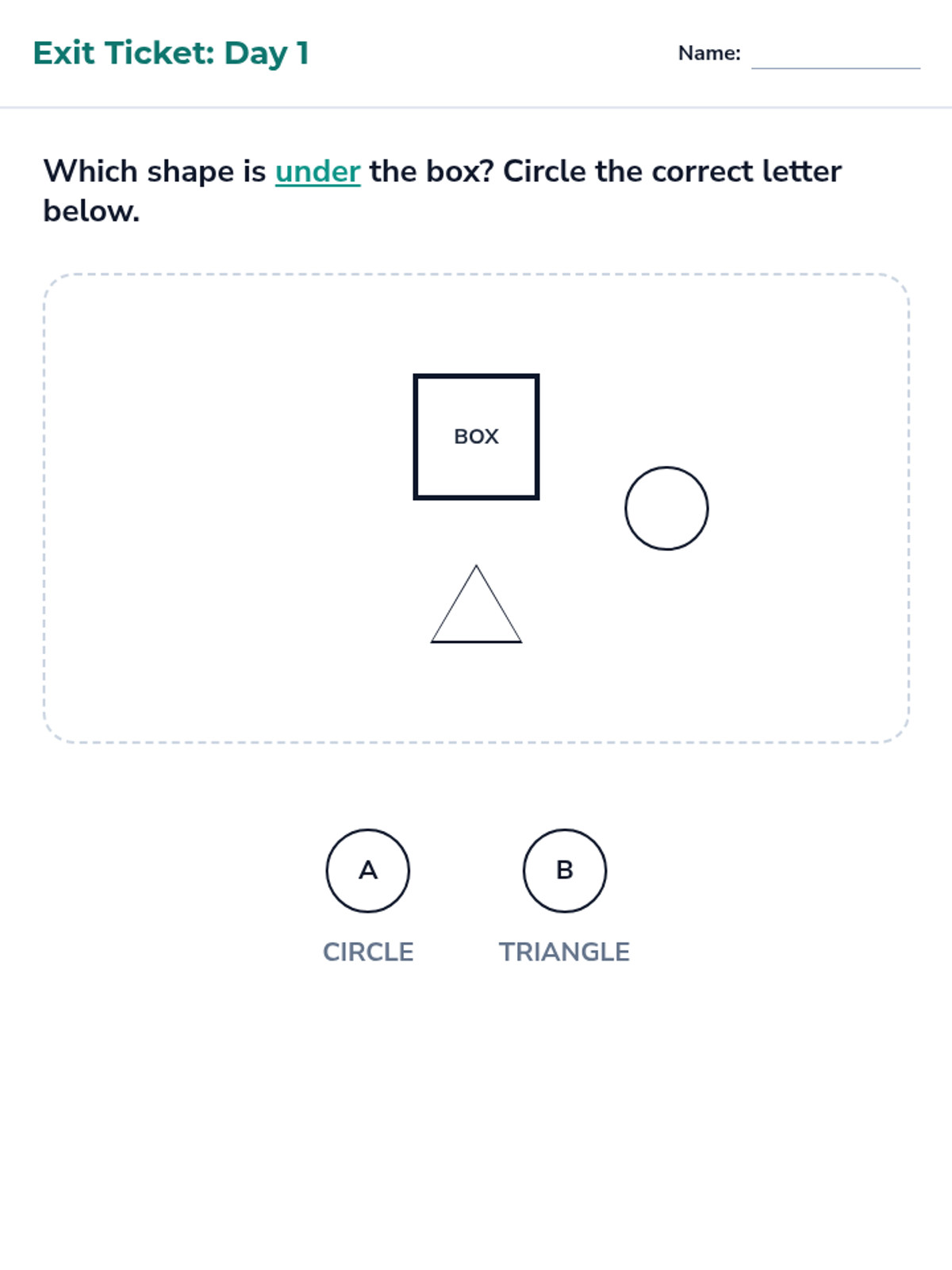
Students identify 2D shapes (circle, square, triangle, rectangle) and use positional language (over, under, beside) to describe location.
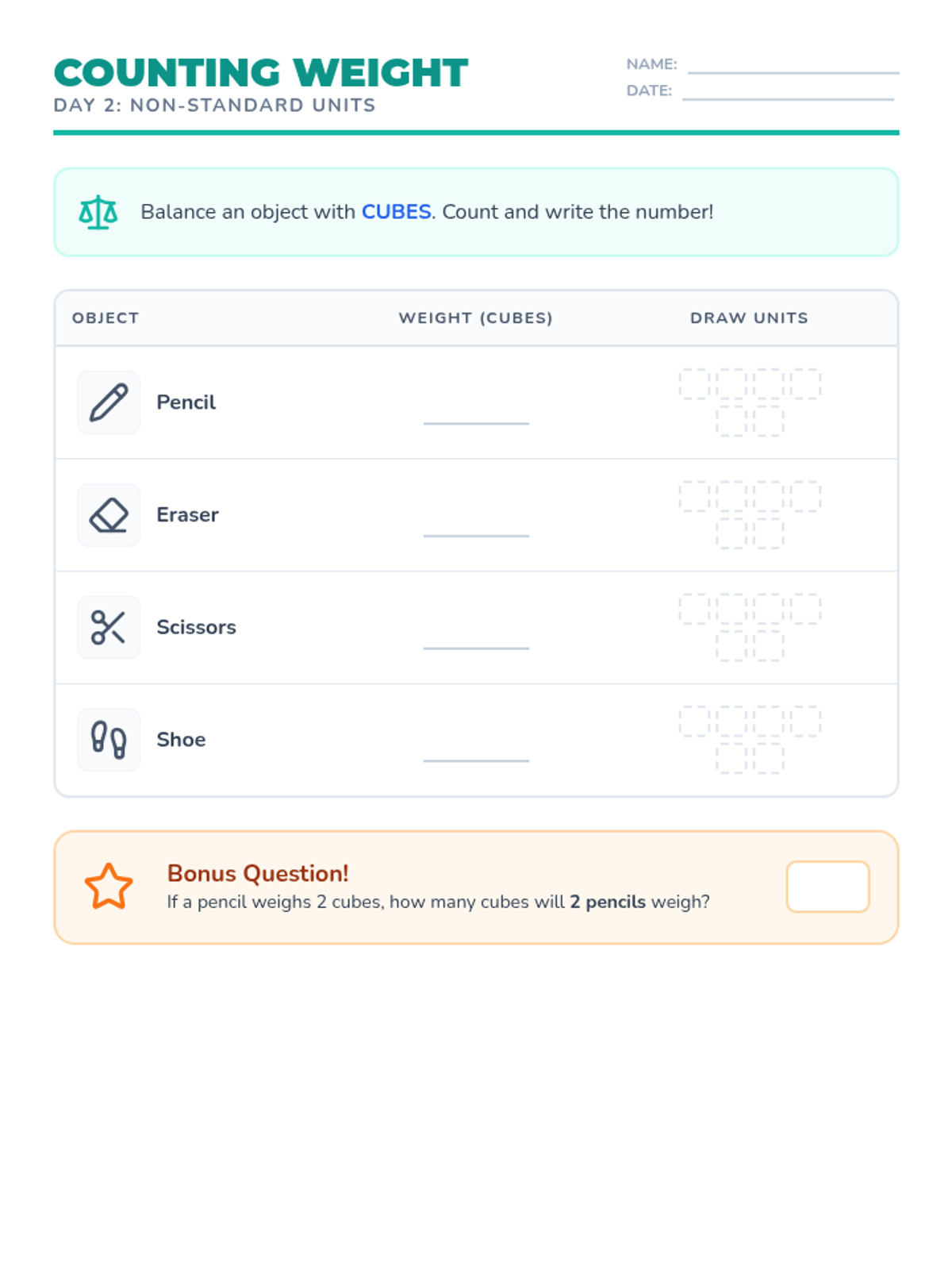
Students measure the weight of objects using non-standard units like cubes and paperclips with a balance scale.
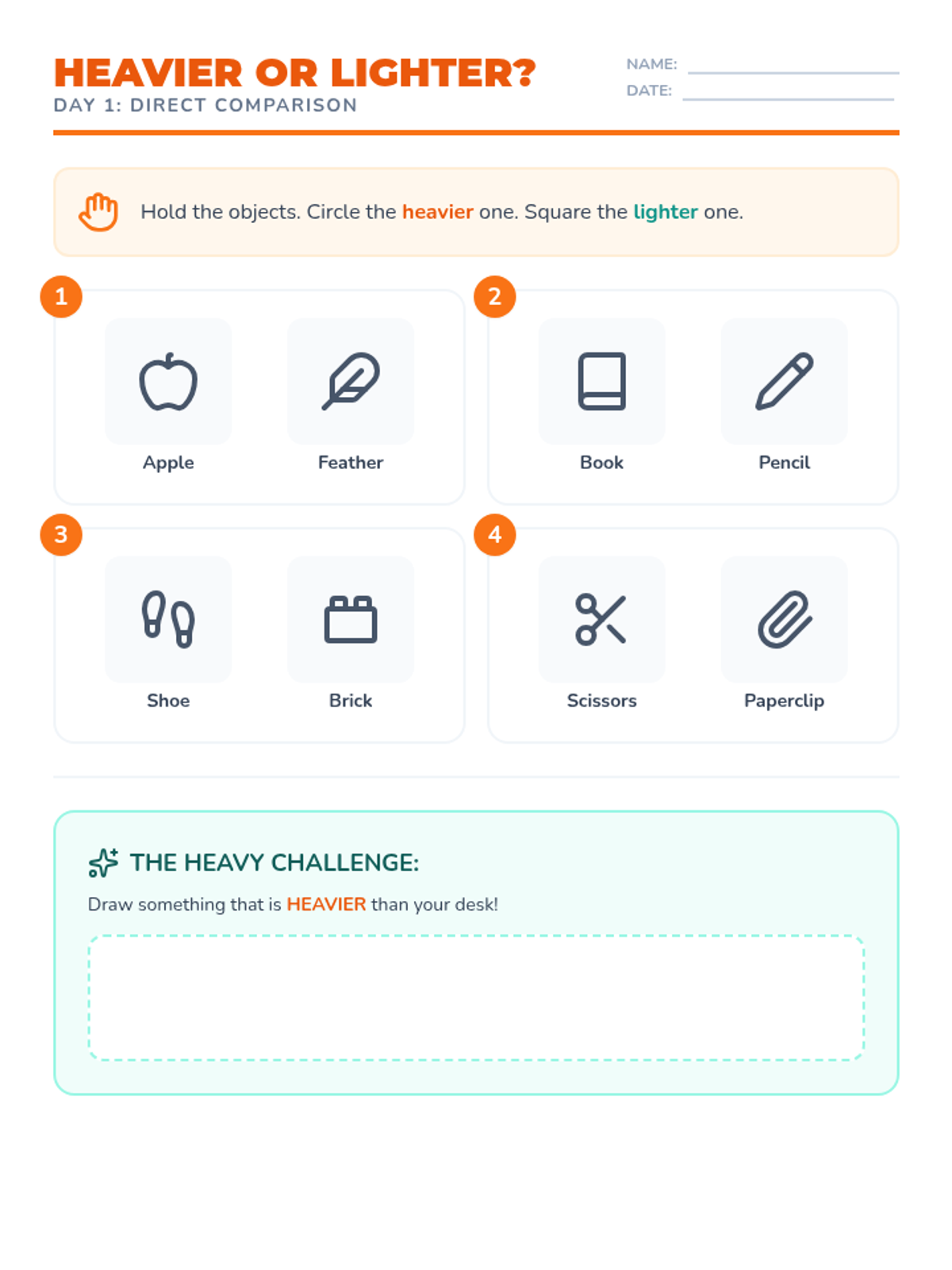
Students learn to compare the weight of two objects directly by holding them and using the terms 'heavier' and 'lighter'.
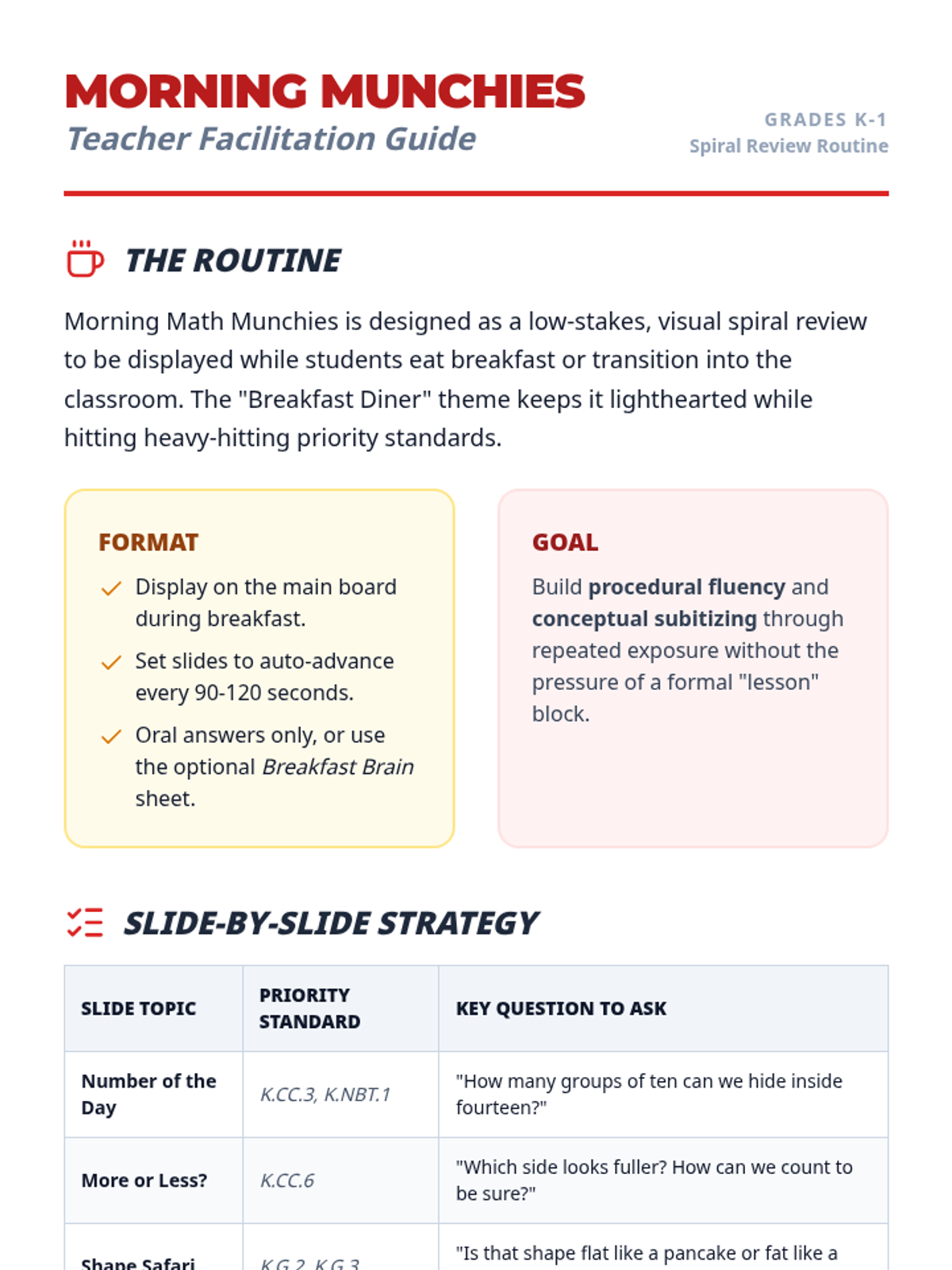
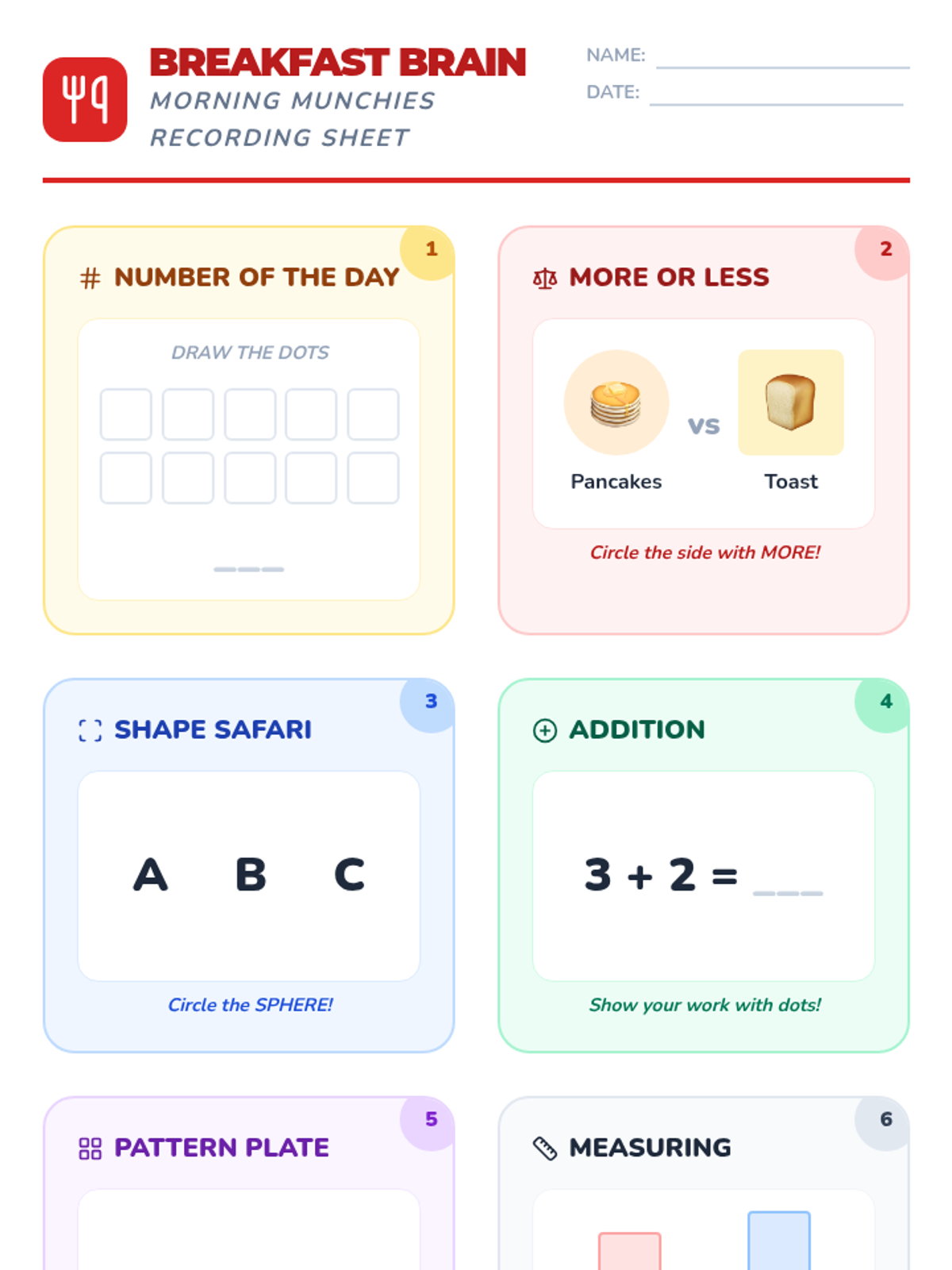
A daily spiral review of priority Kindergarten math standards, designed to be visually engaging and accessible for students to view during breakfast or morning routines.
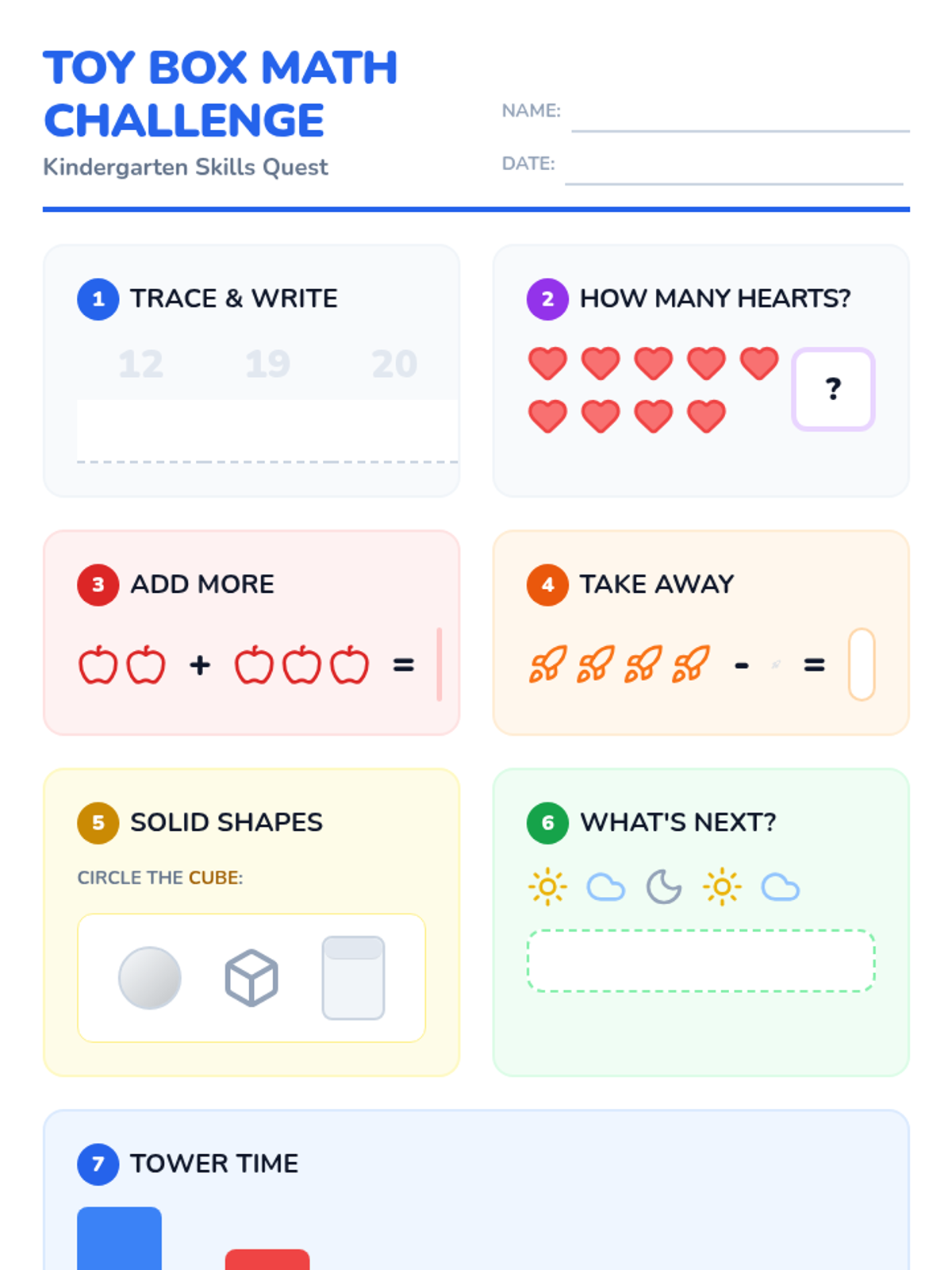
A comprehensive review of essential kindergarten math concepts including counting, addition, subtraction, shapes, and measurement, featuring high-contrast visuals and picture-supported problems.
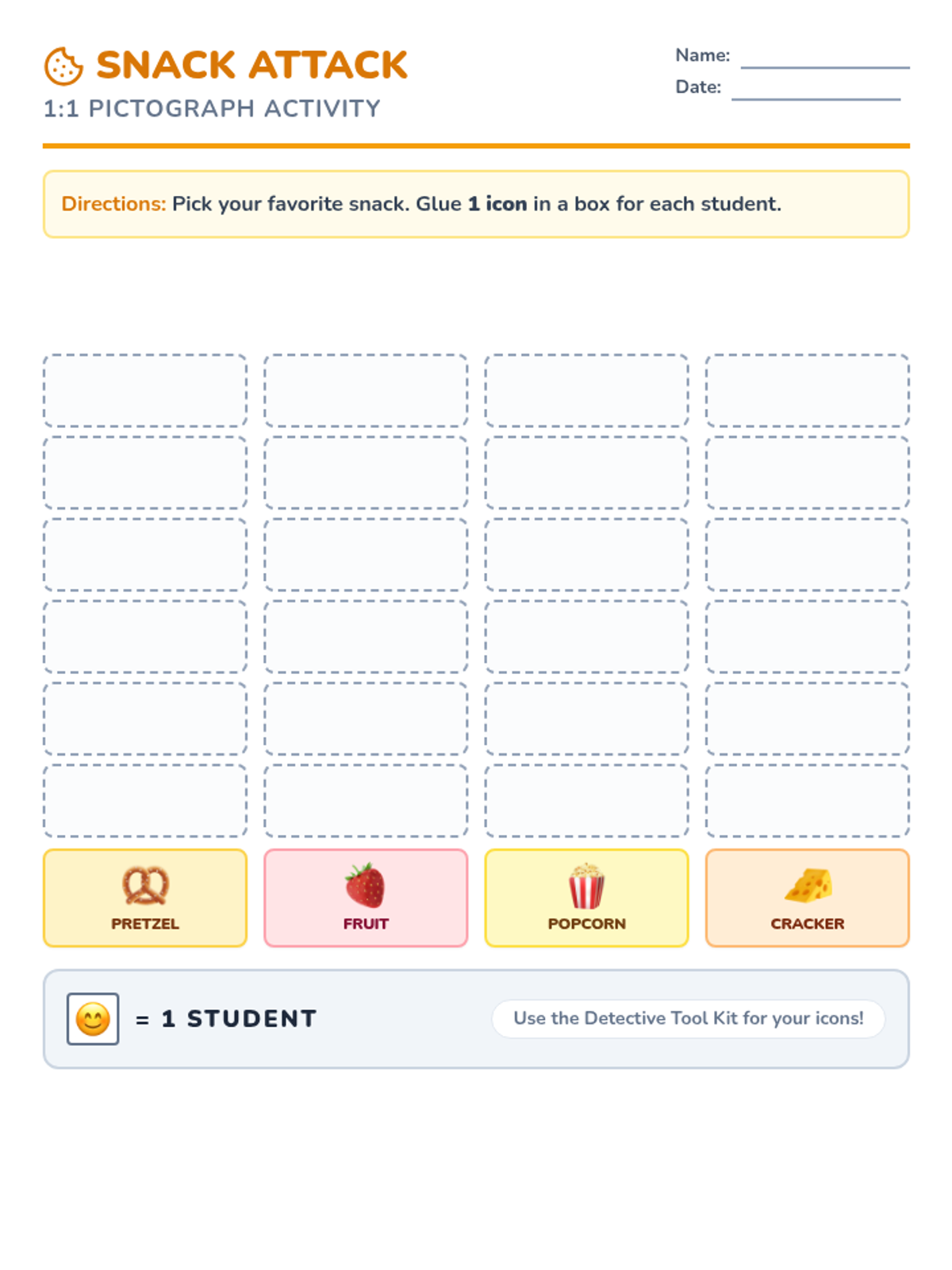
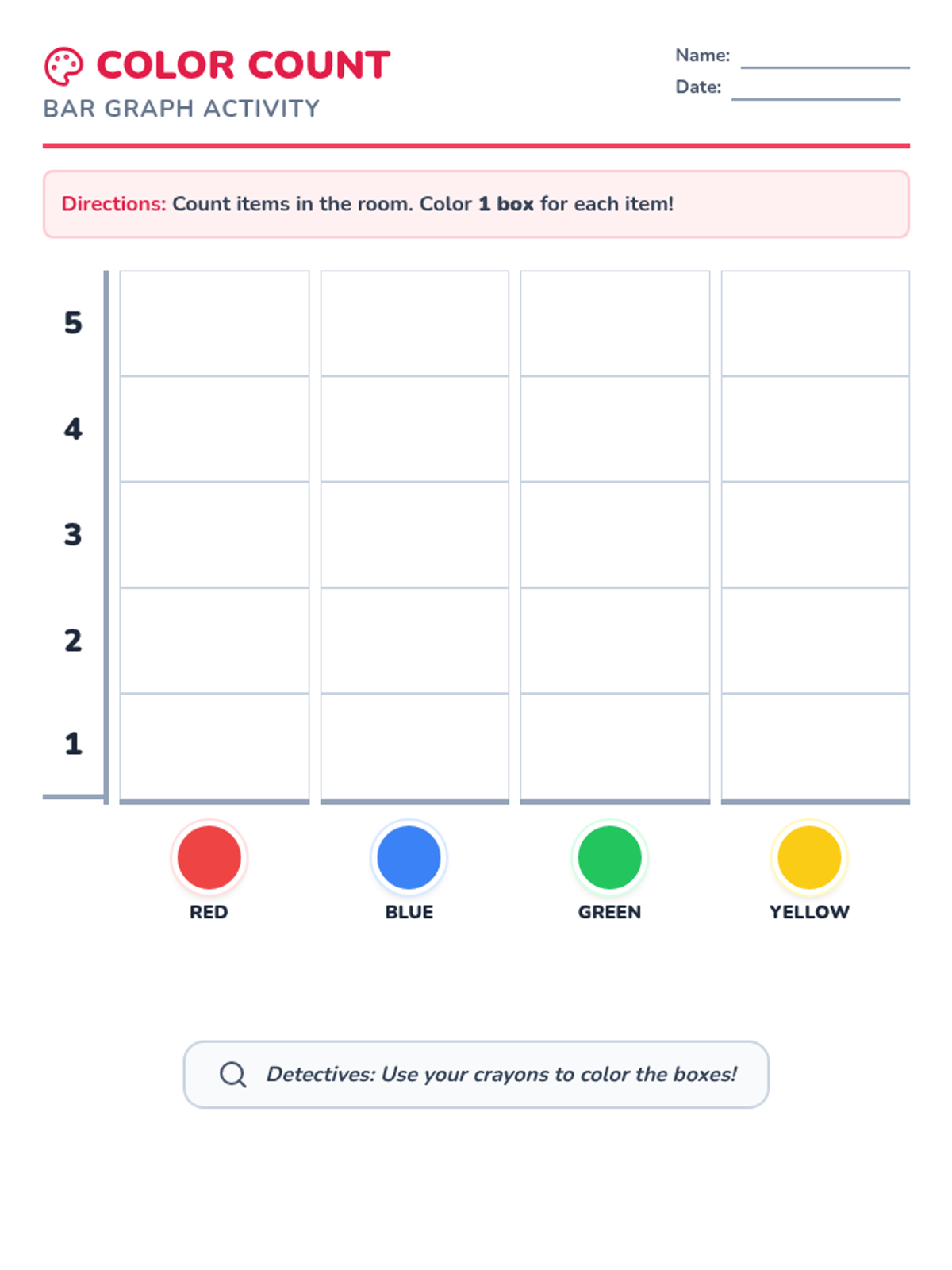
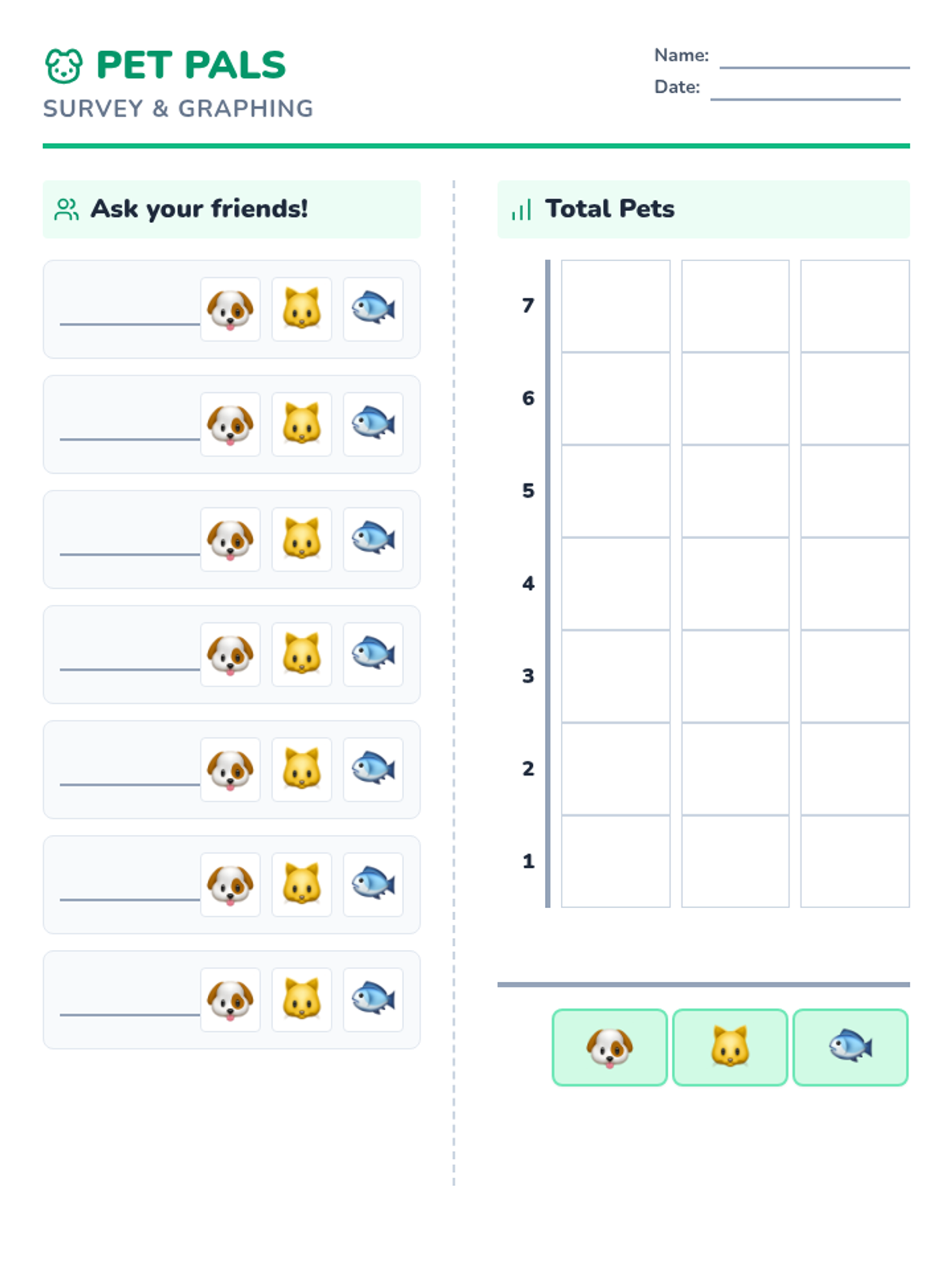
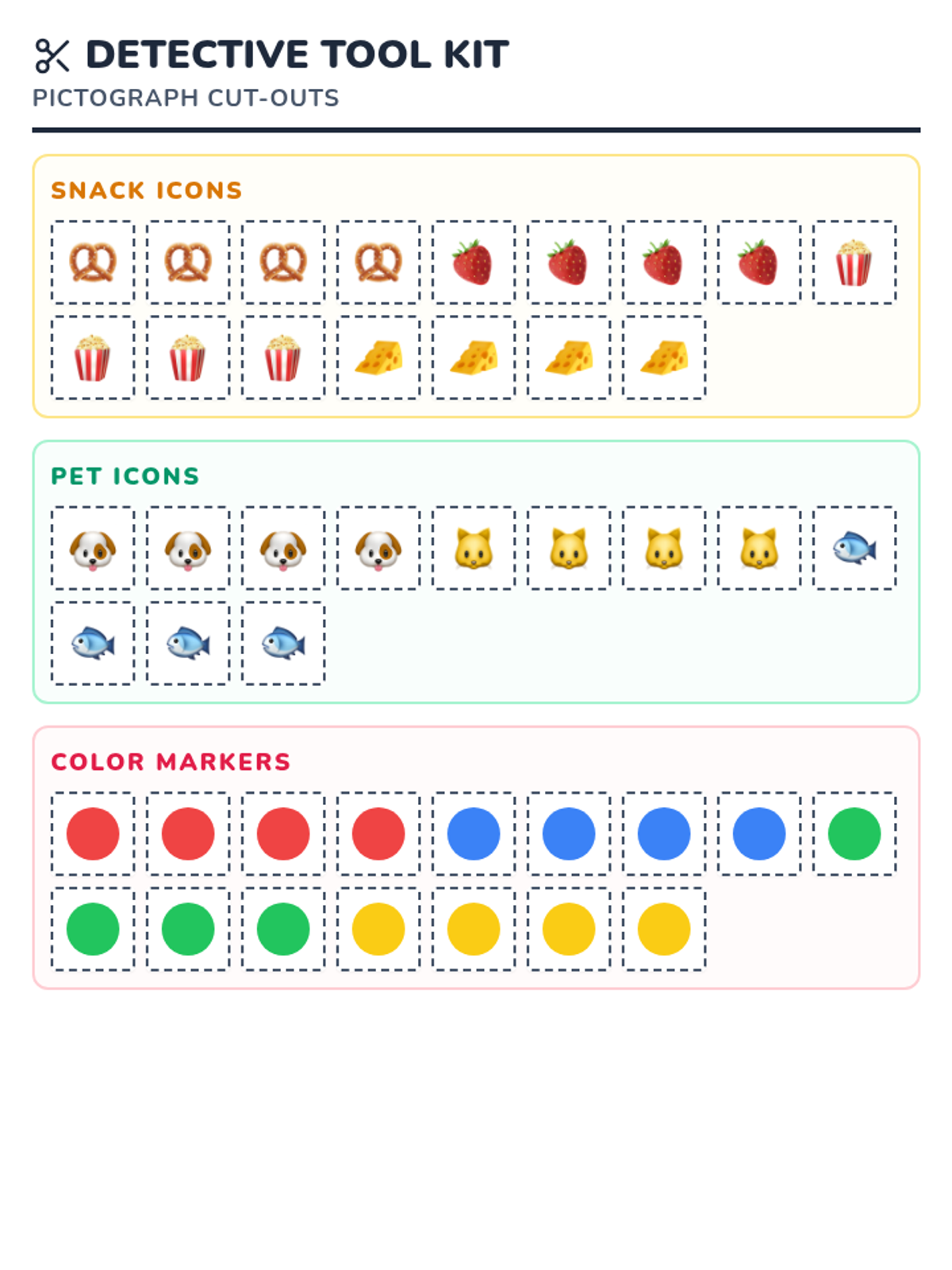
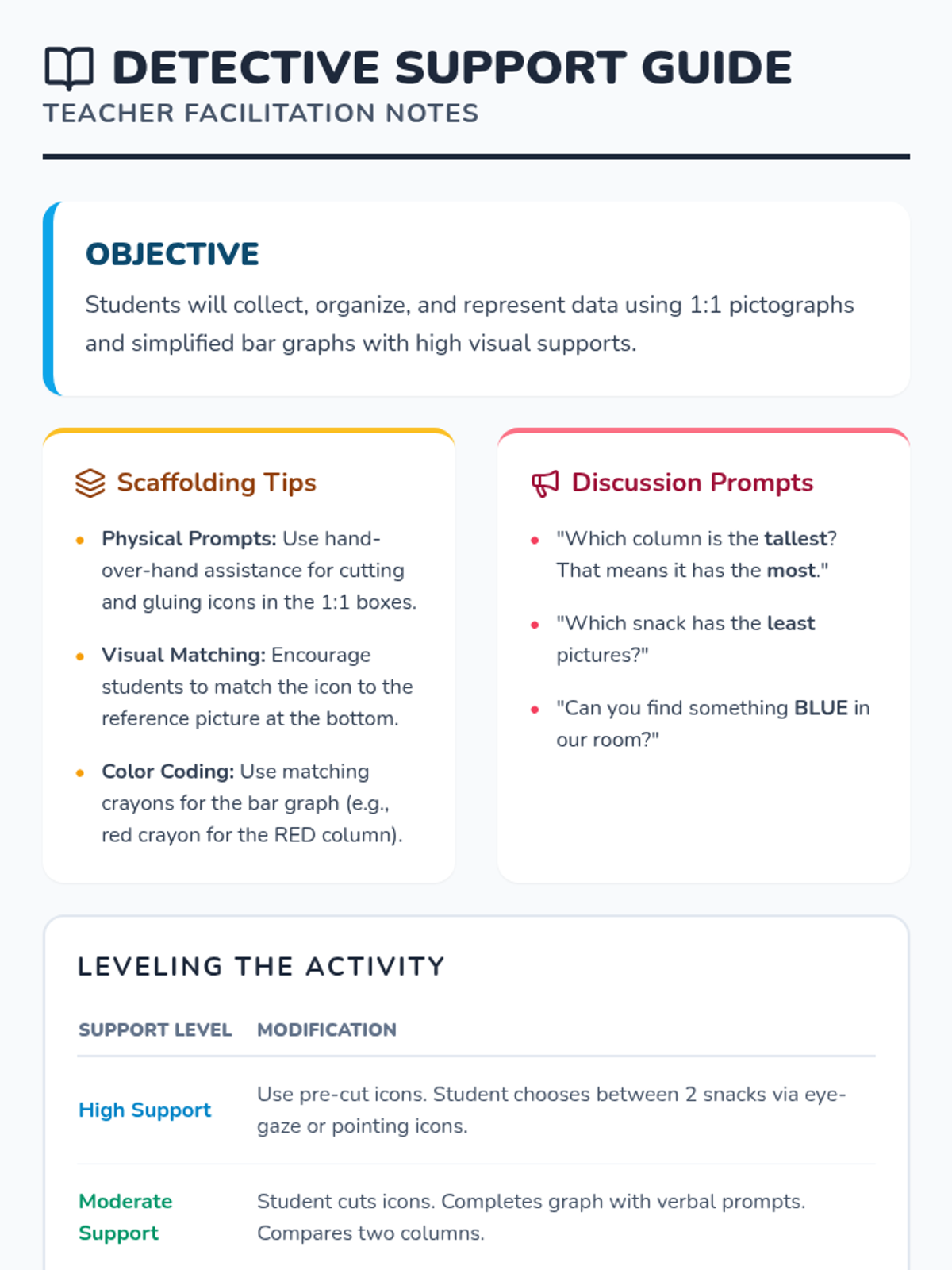
A hands-on graphing lesson designed for Essential Skills students, focusing on 1:1 pictographs and bar graphs using snack, color, and pet data with heavy visual supports.
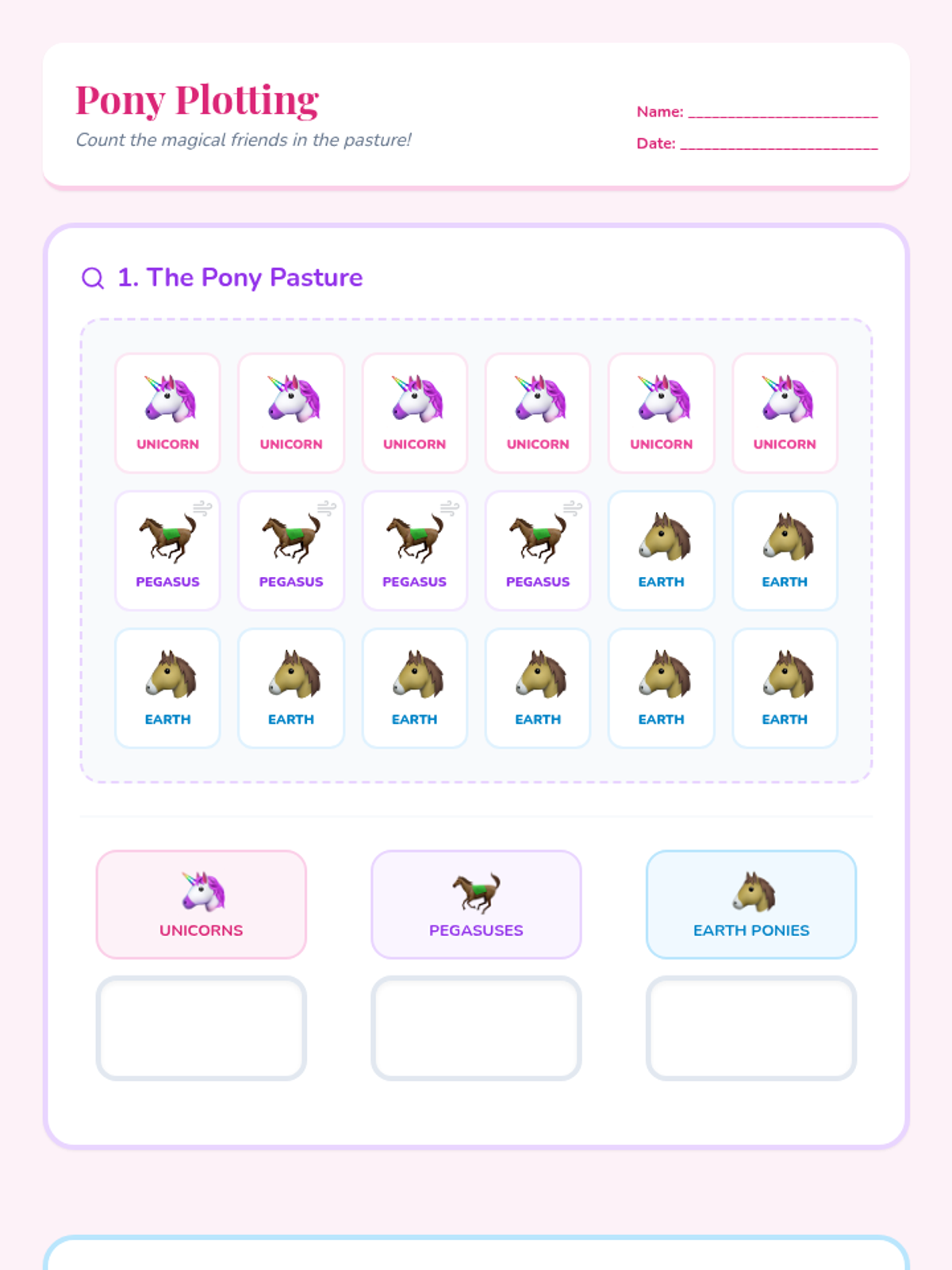
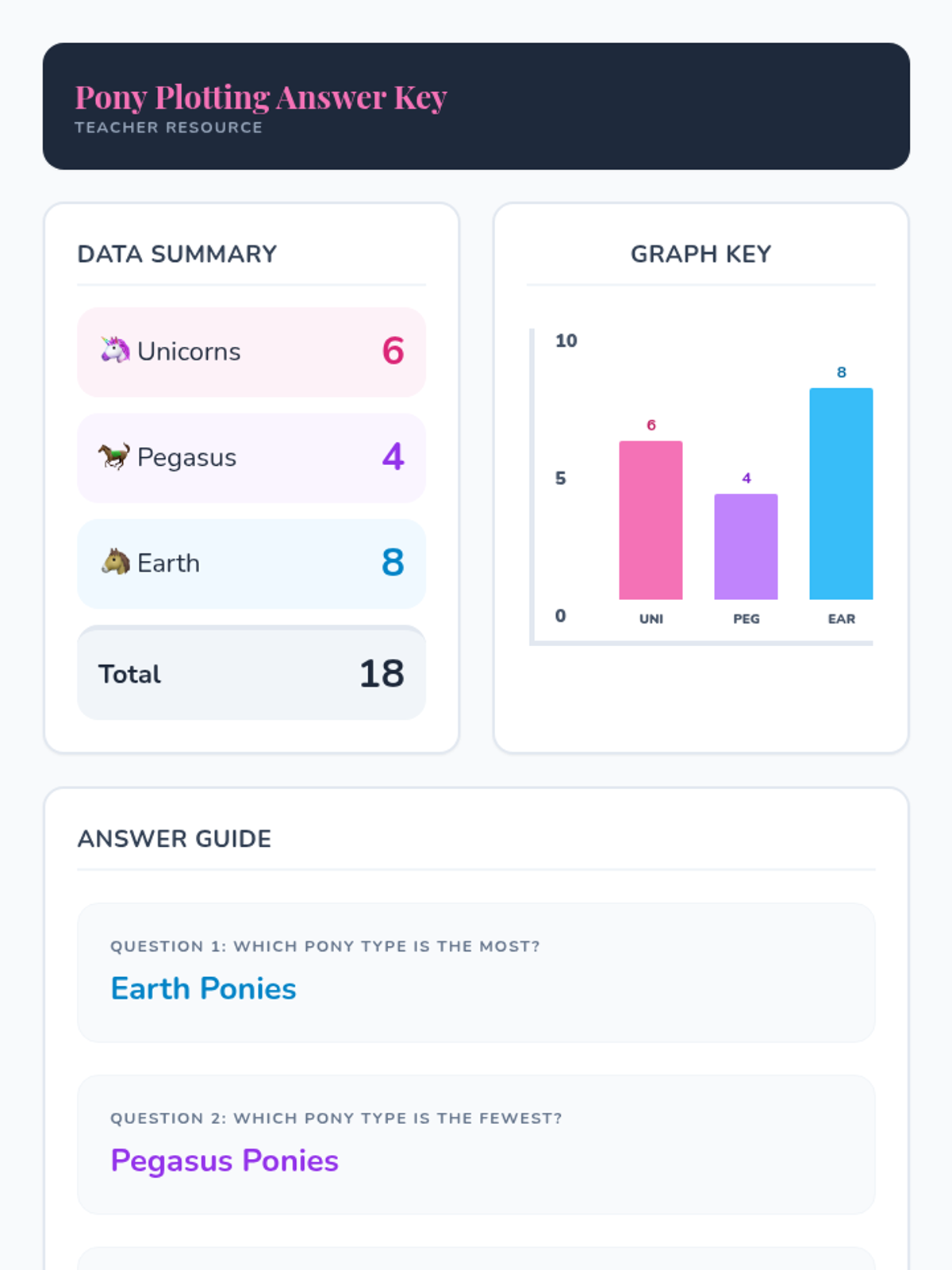
A magical math lesson where students count, sort, and graph different types of ponies to practice data representation and comparison skills.
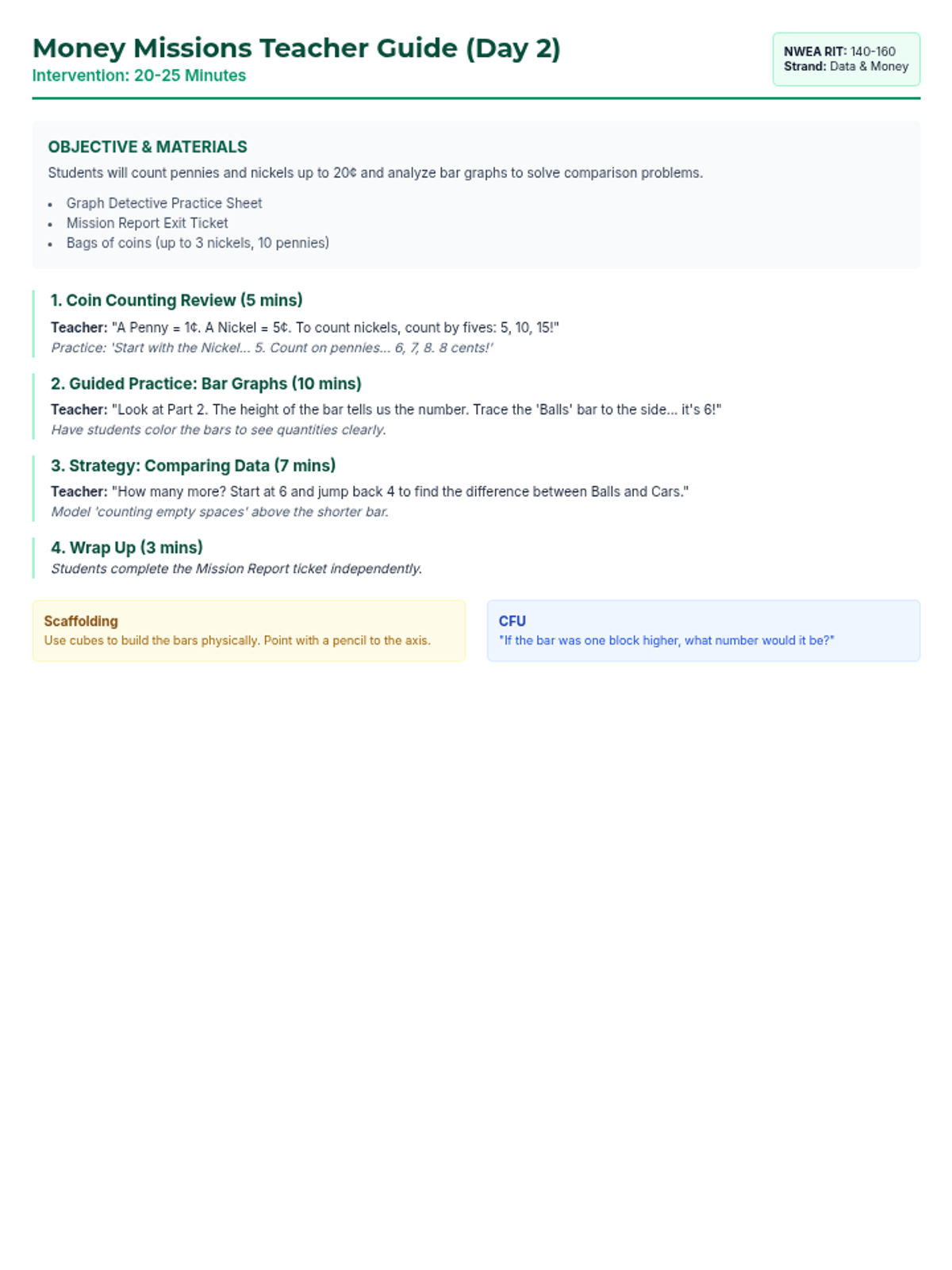
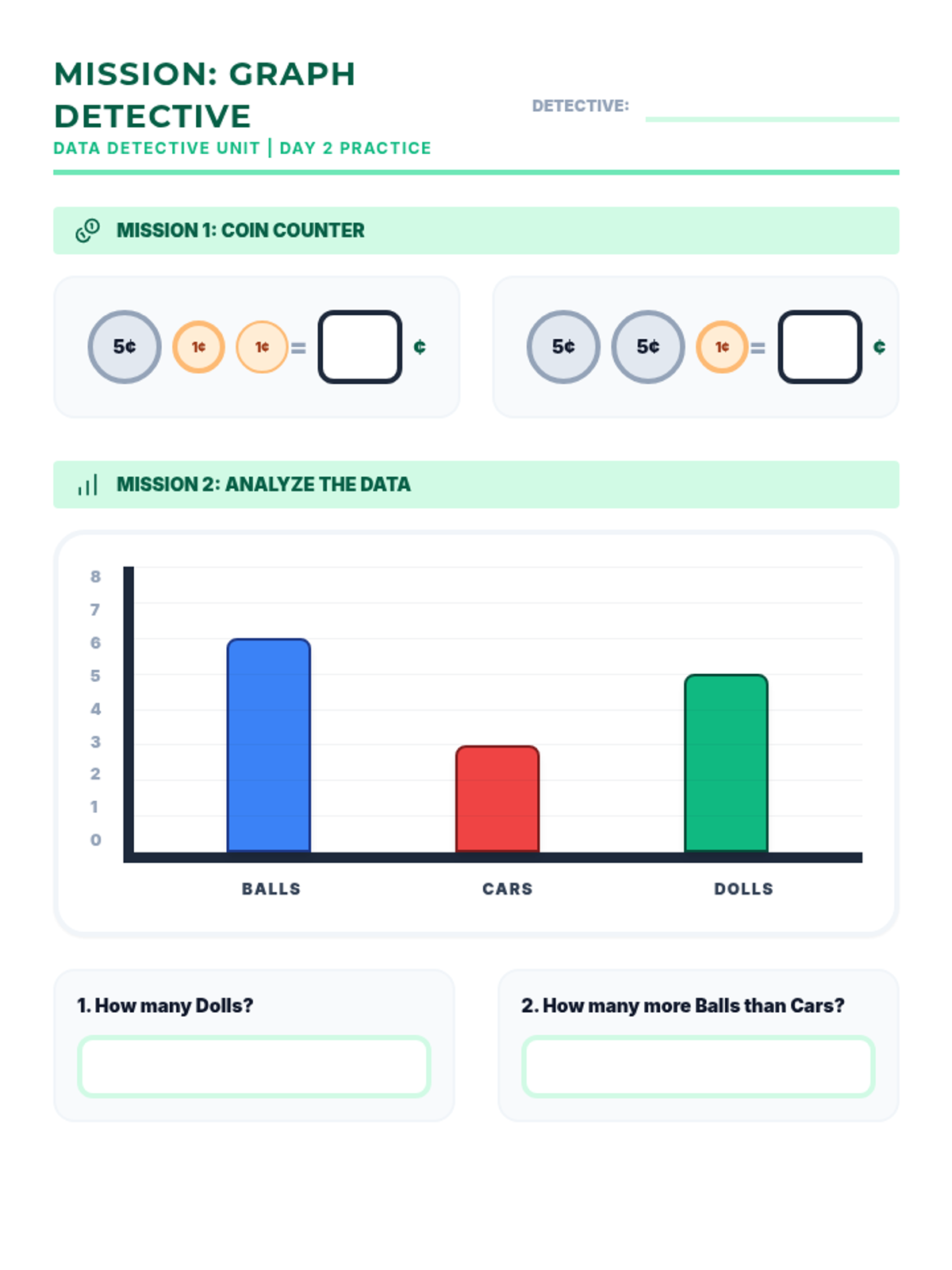
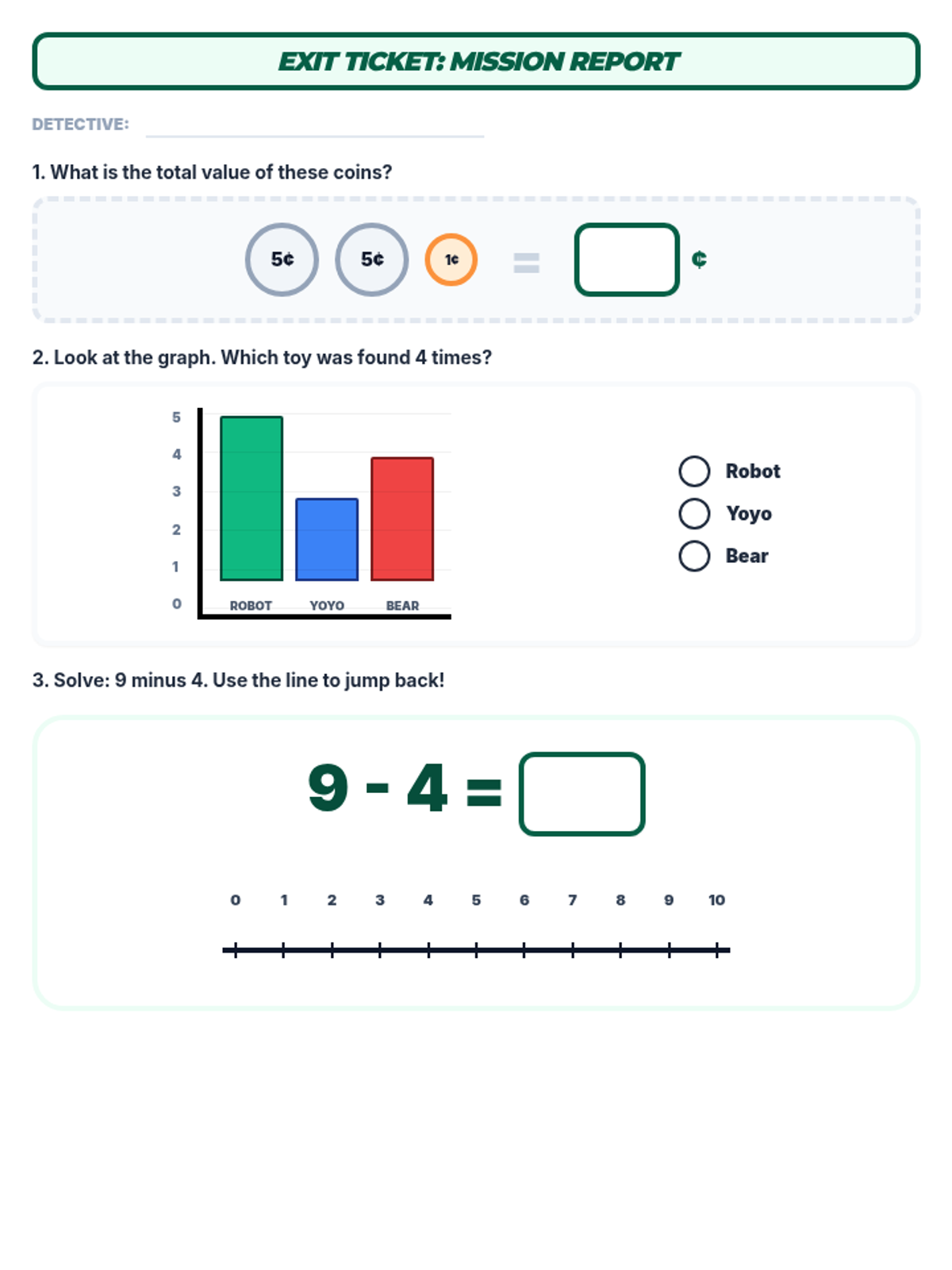
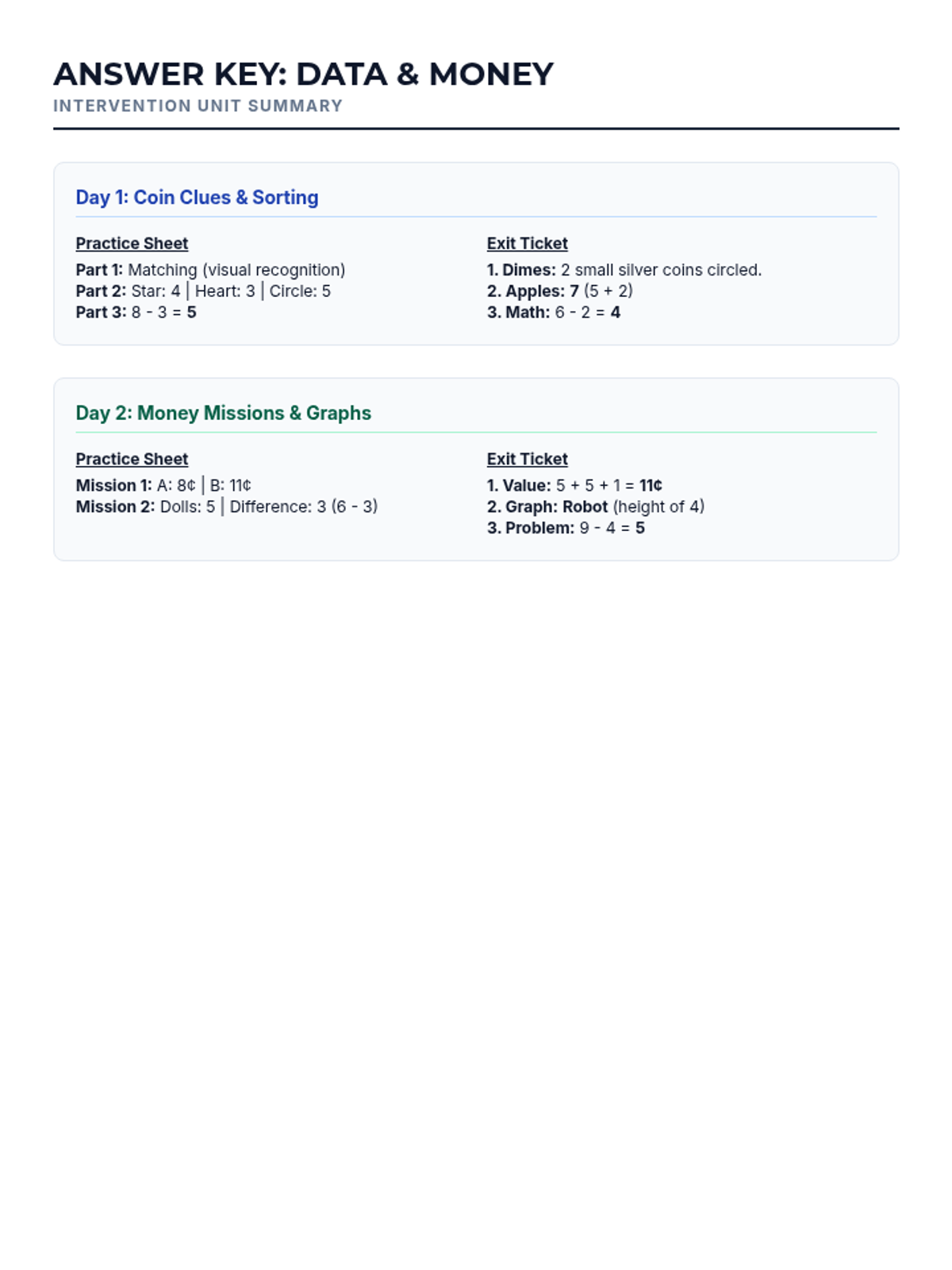
Students count sets of pennies and nickels and analyze data from bar graphs to solve comparison problems. Subtraction skills are reinforced through data-based word problems.
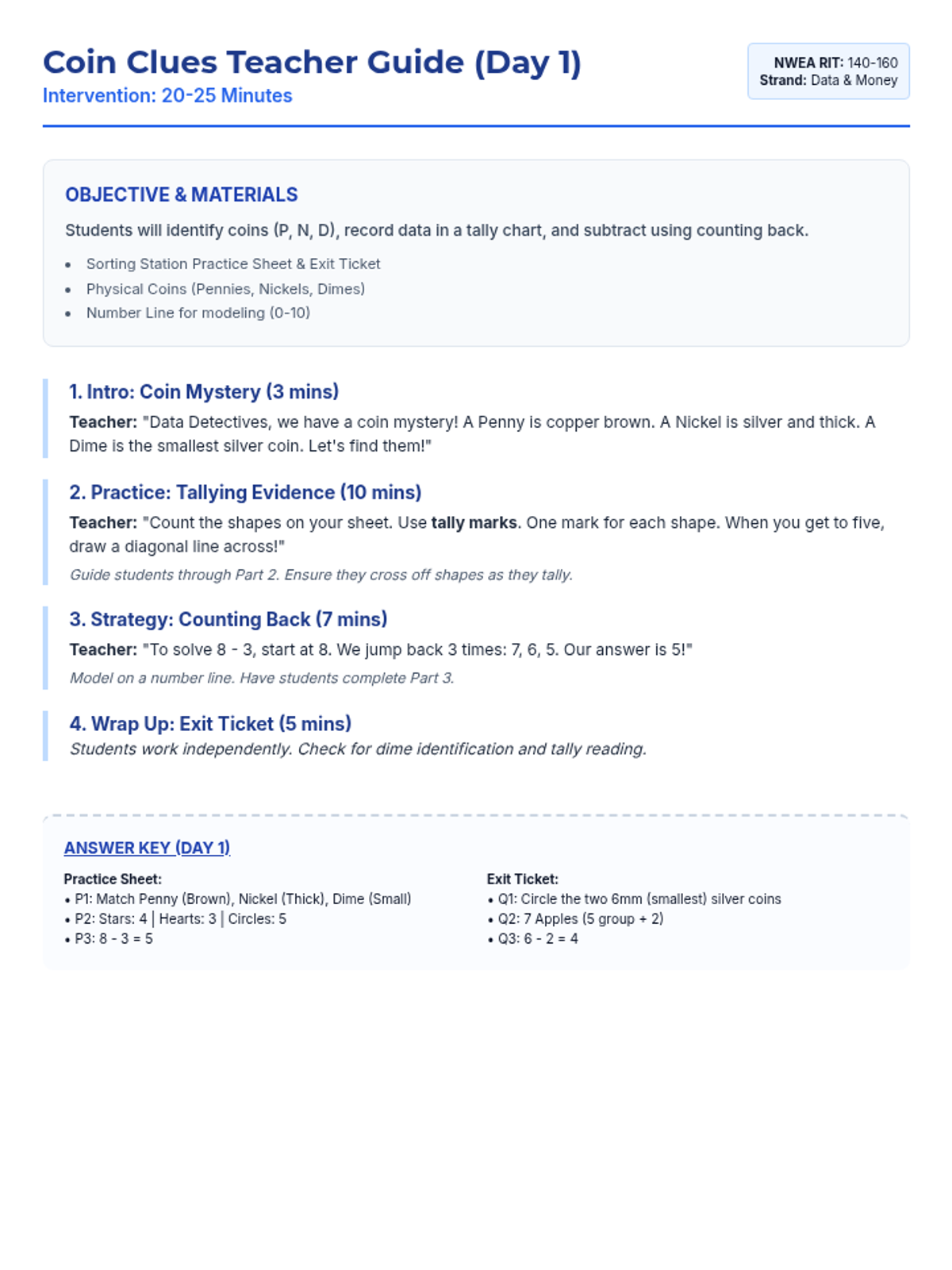
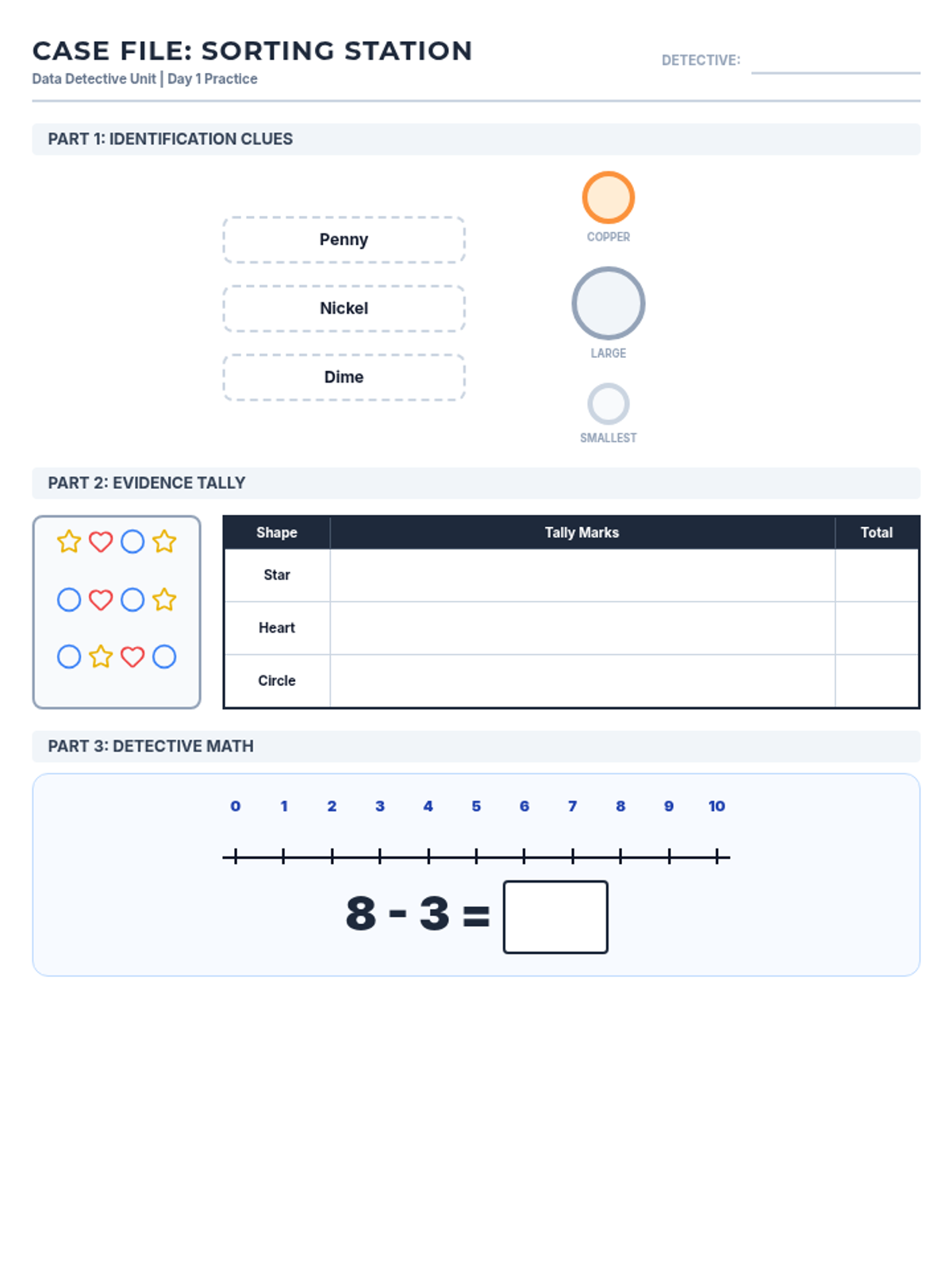
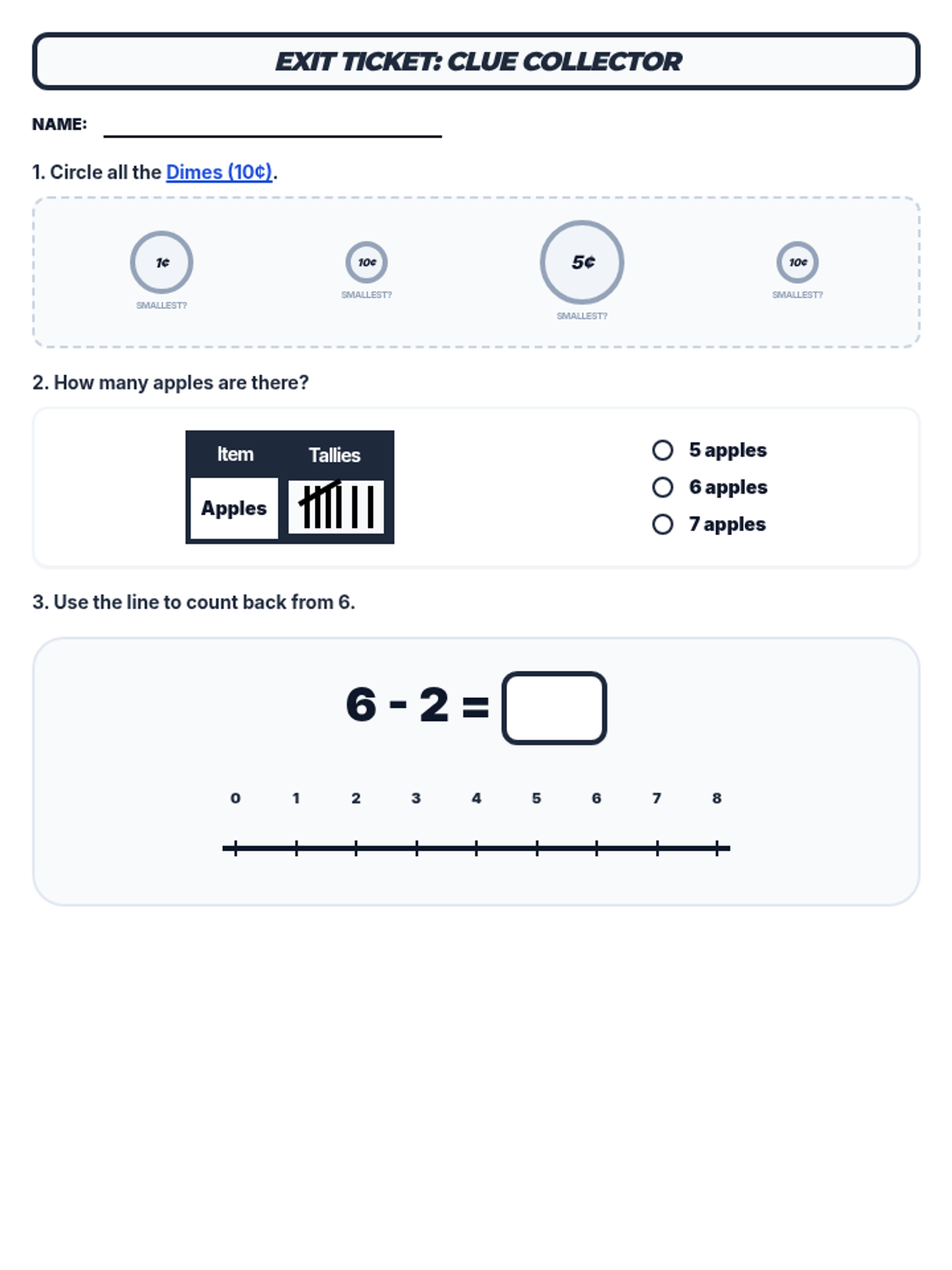
Students identify pennies, nickels, and dimes, sort objects into categories, and record data using tally charts. The lesson also introduces subtraction by counting back on a number line.
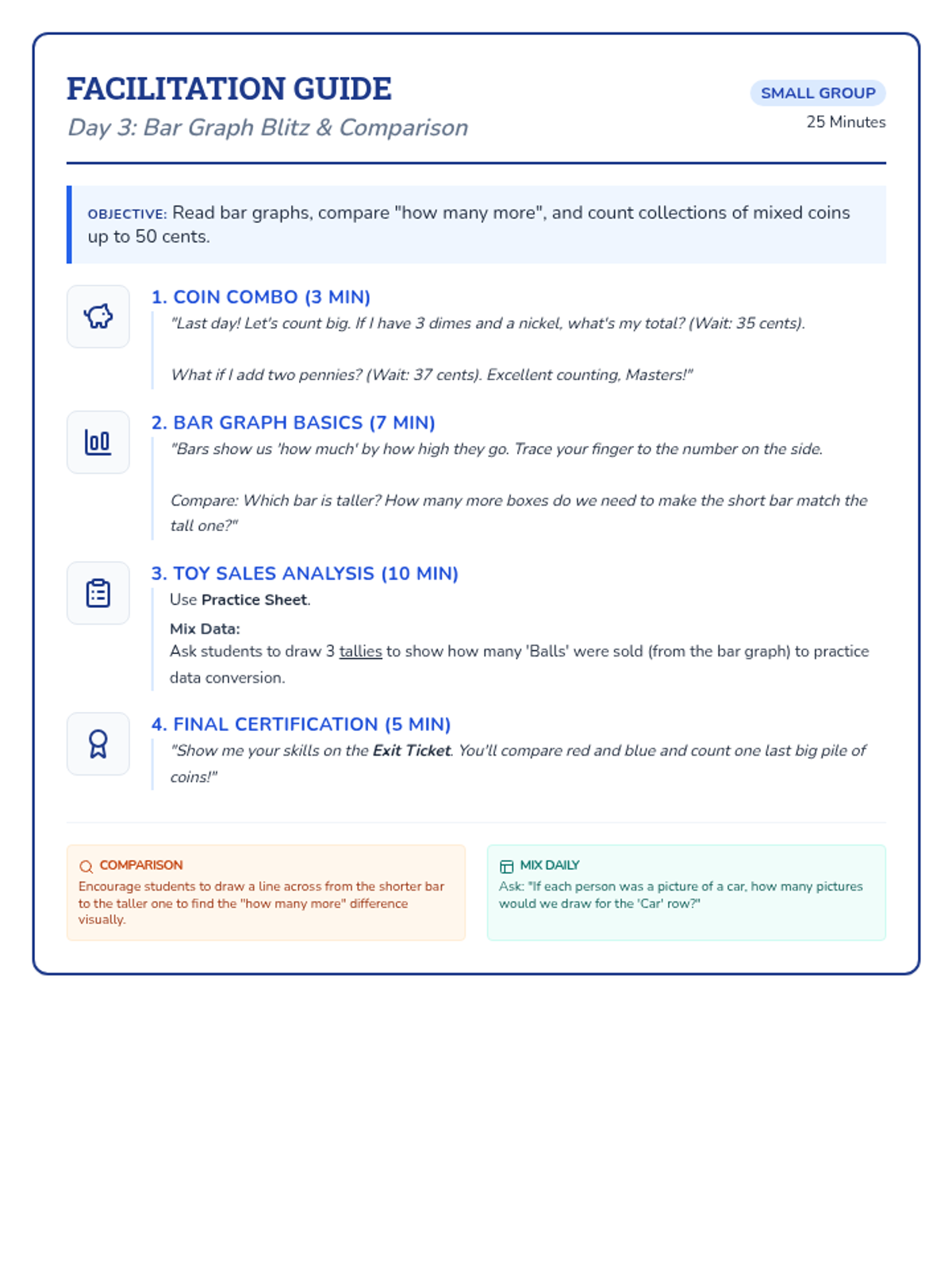
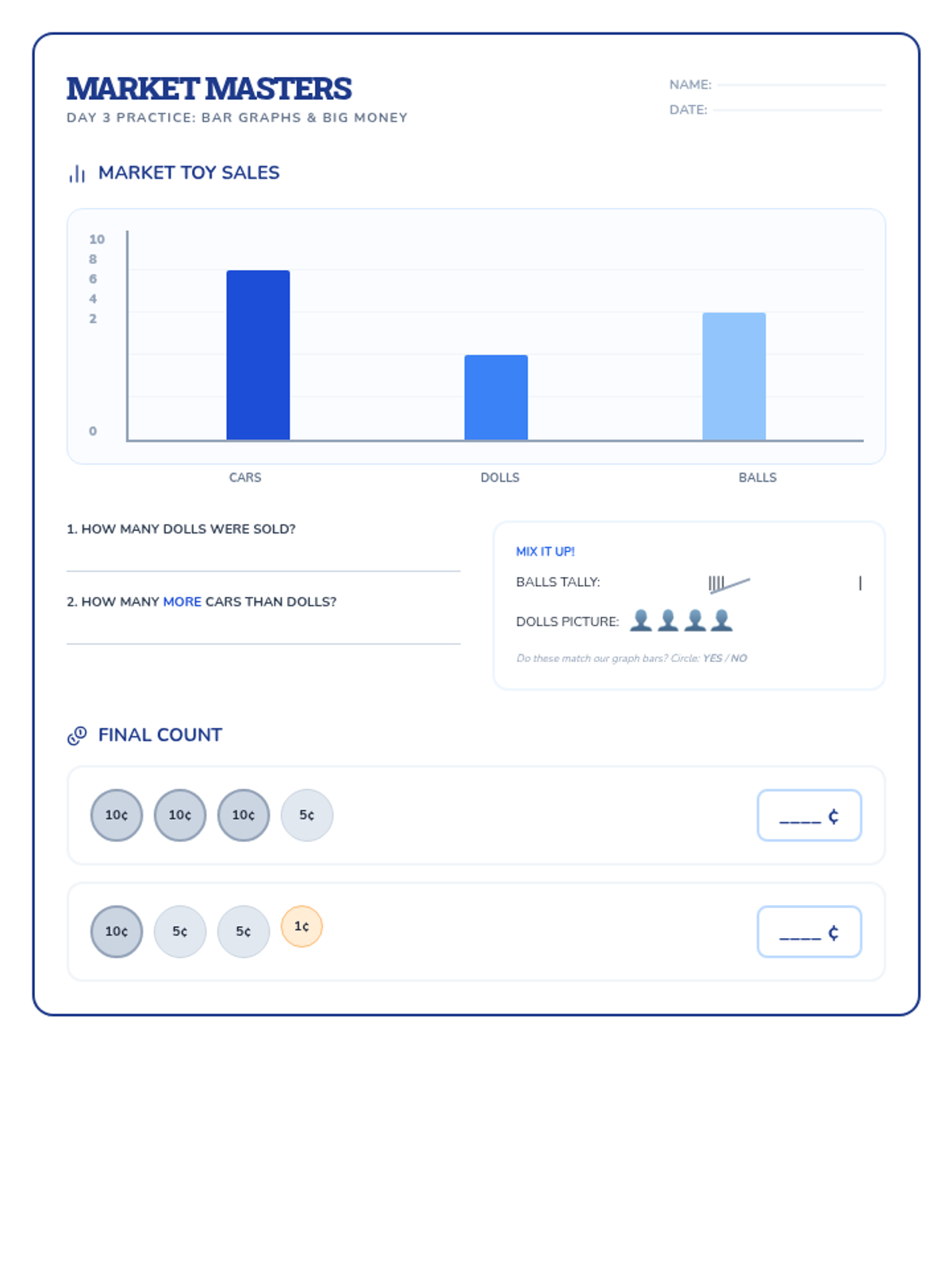
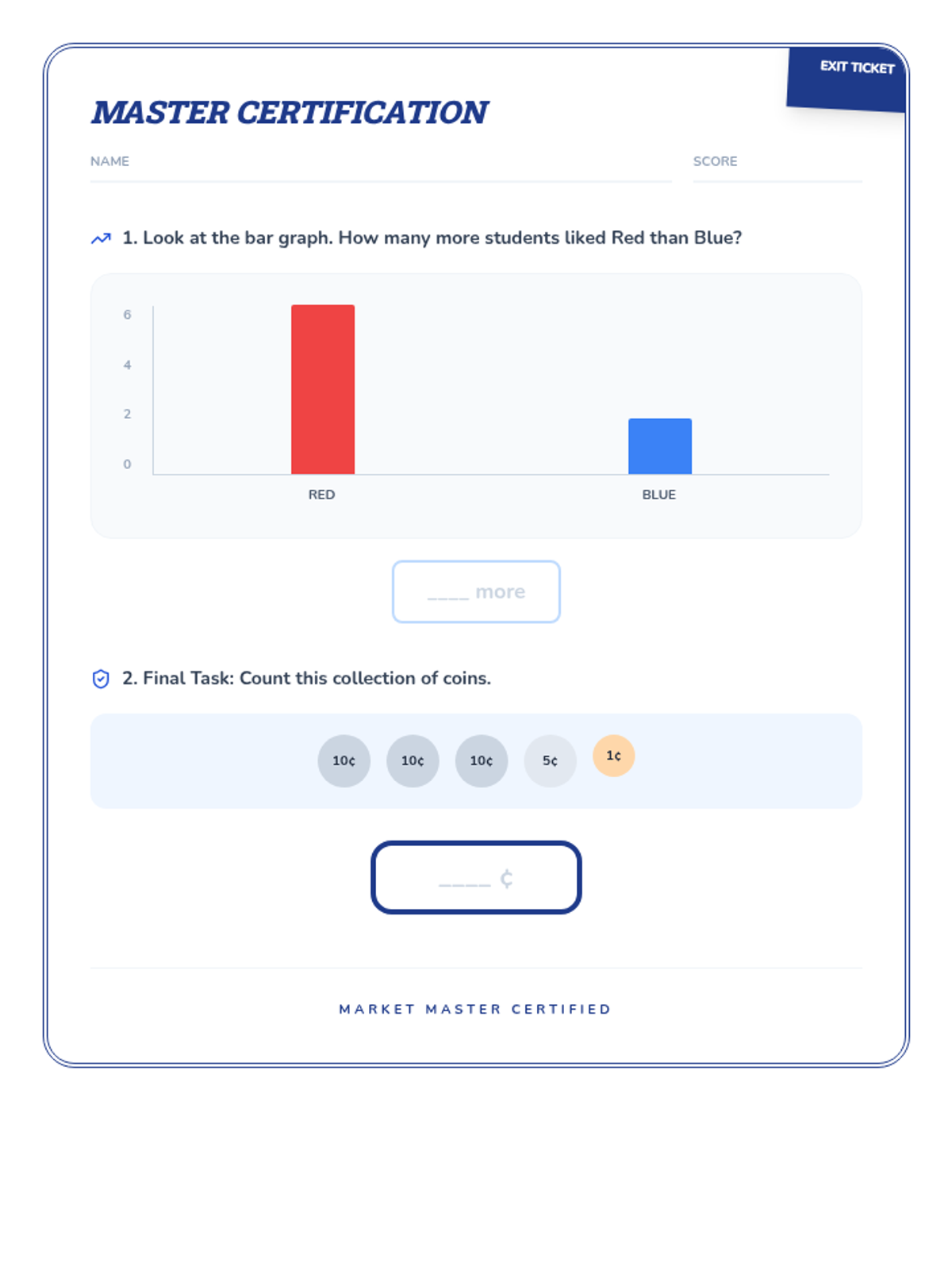
Focuses on bar graphs and comparing data. Students analyze categories and count collections of mixed coins.
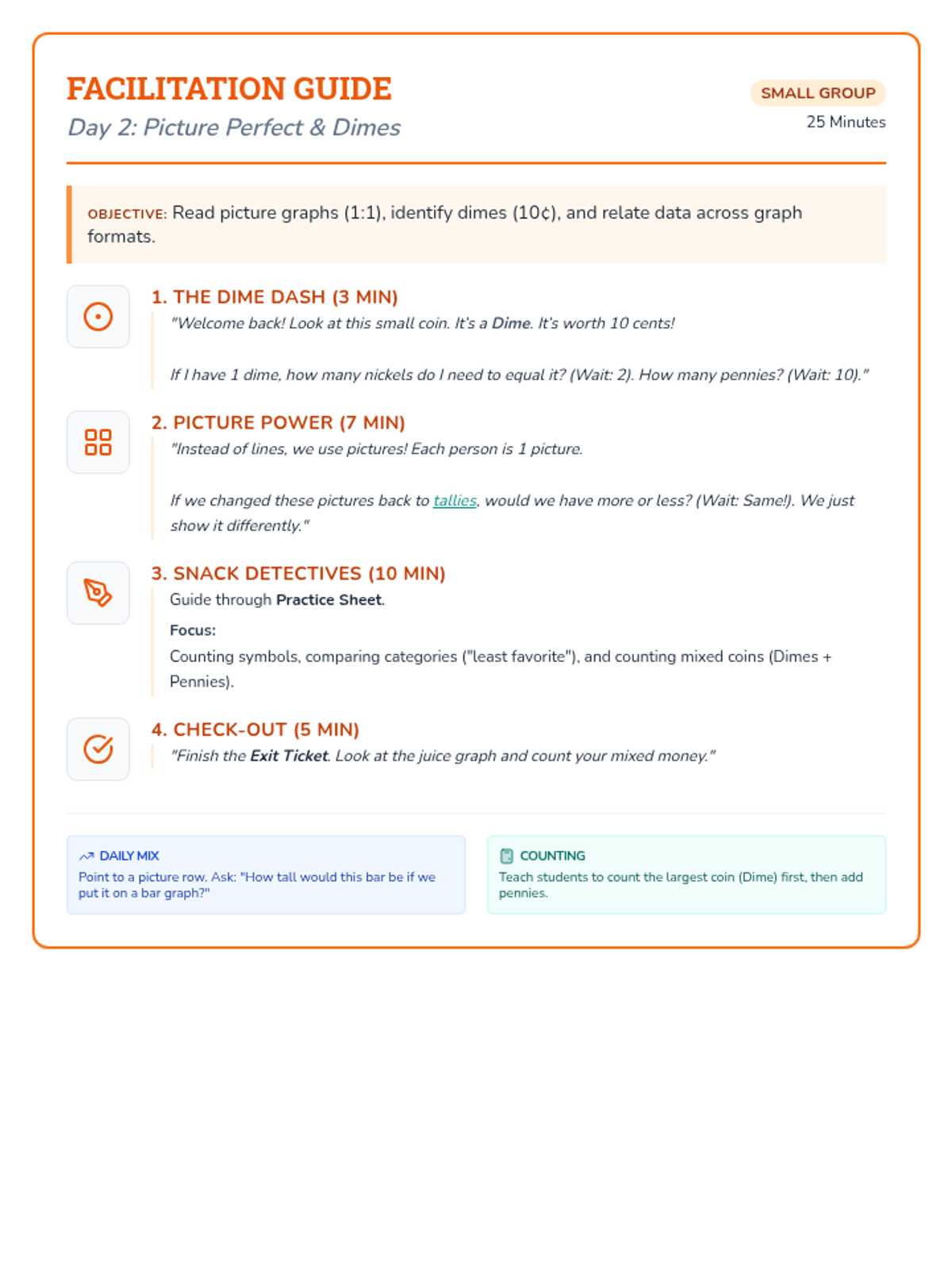
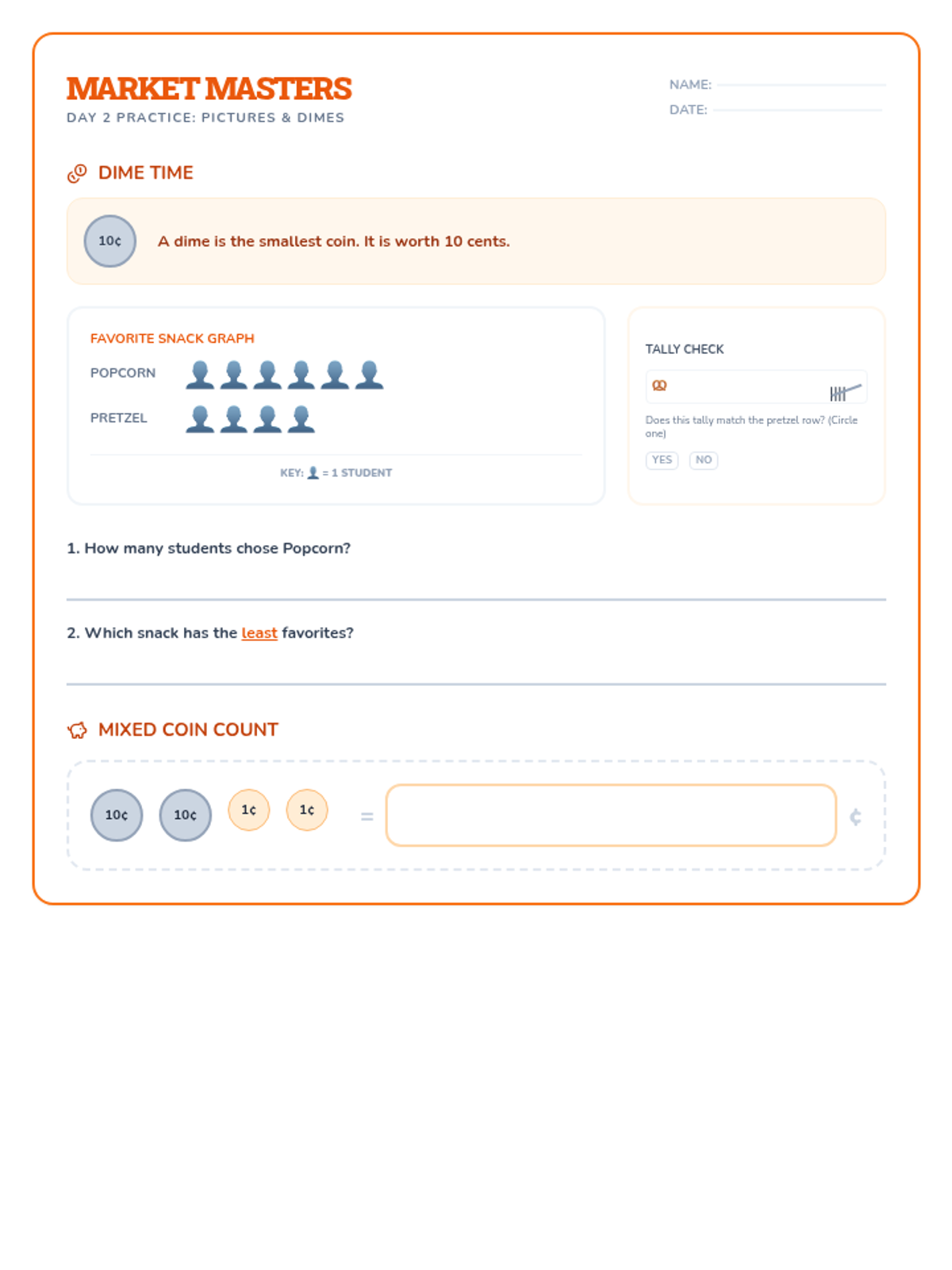
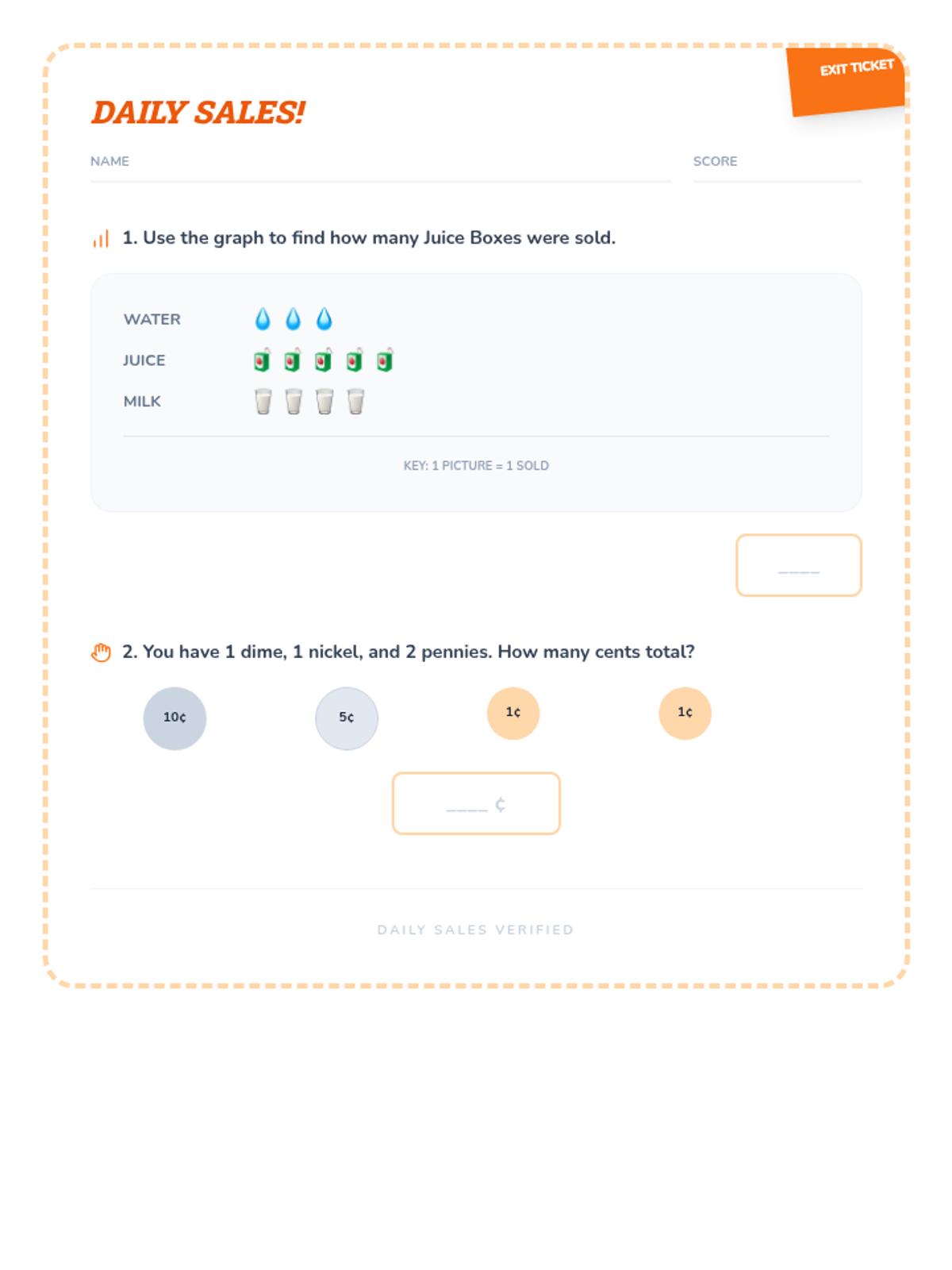
Focuses on picture graphs and dimes. Students interpret data with 1:1 correspondence and count mixed coins.
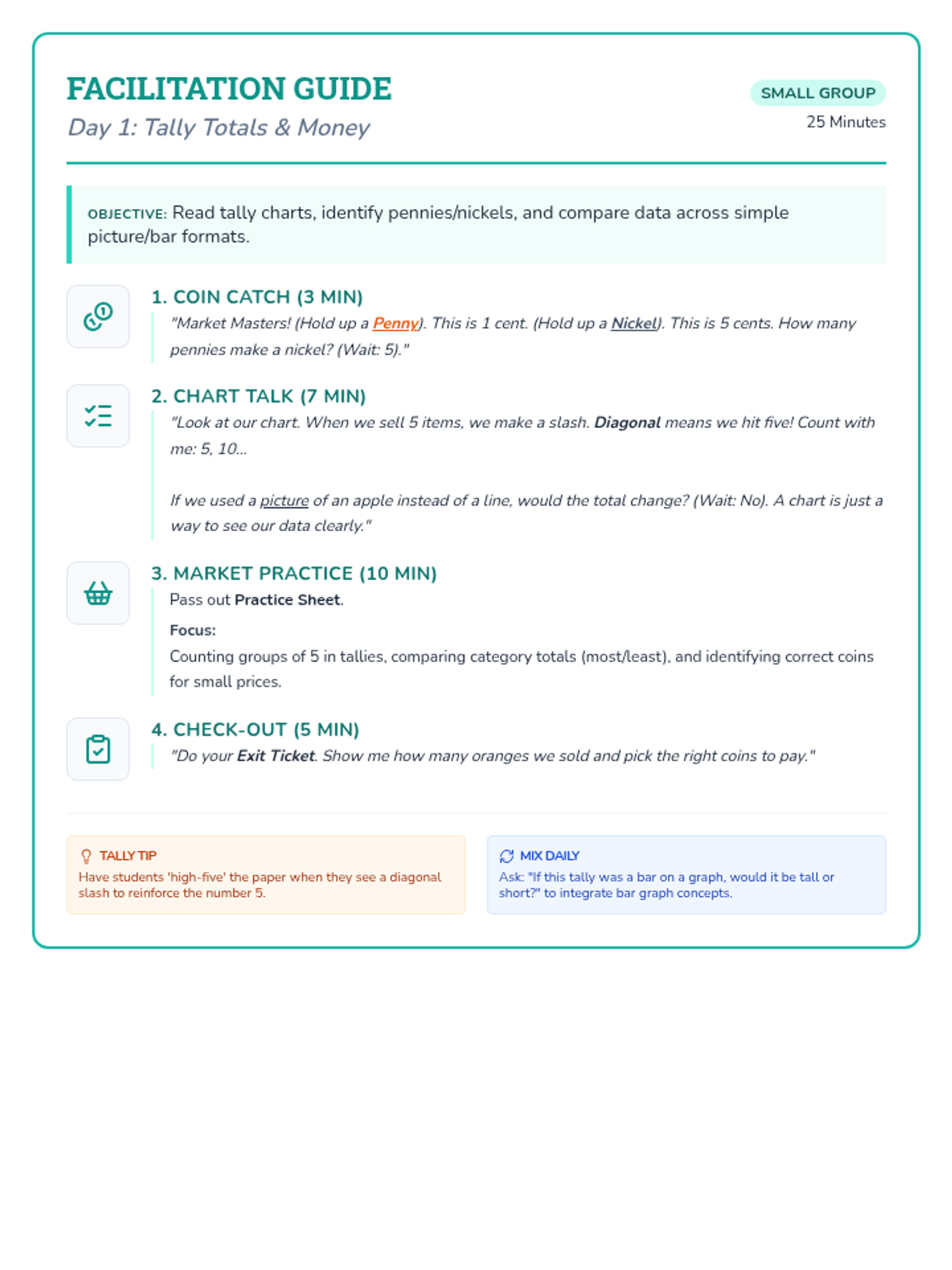
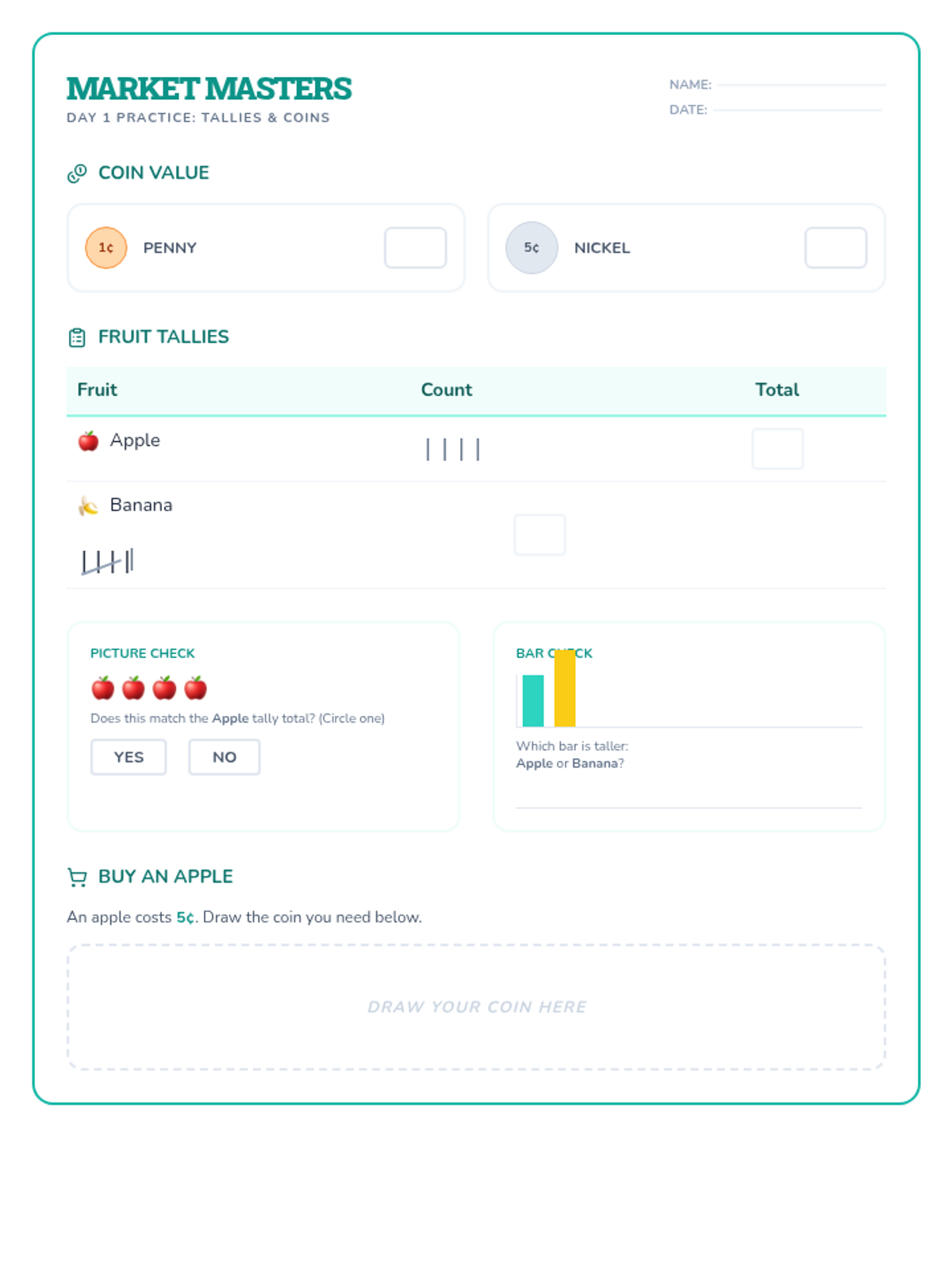
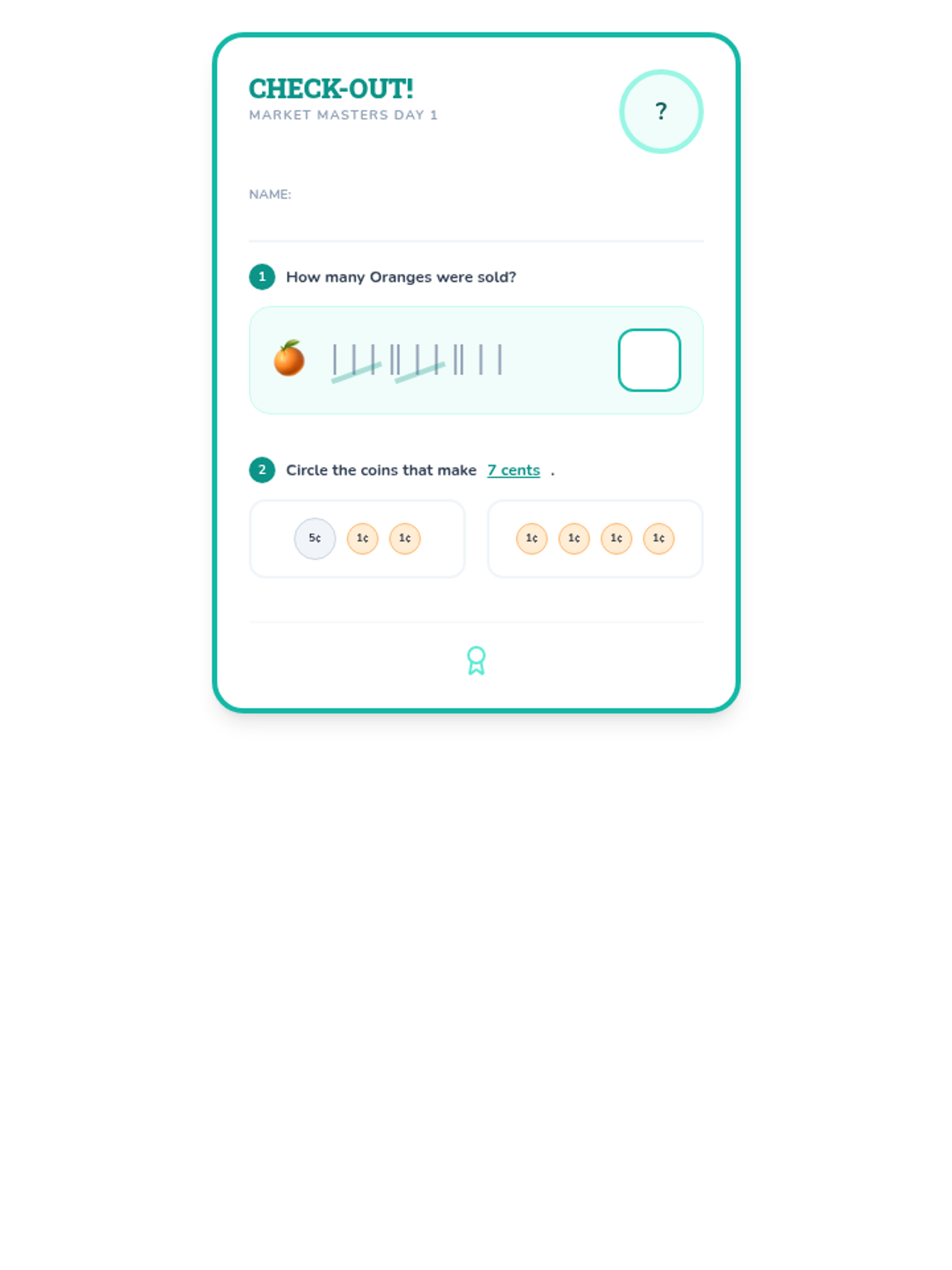
Focuses on tally charts and pennies/nickels. Students learn to read tallies and identify coins to 'buy' items from the market.
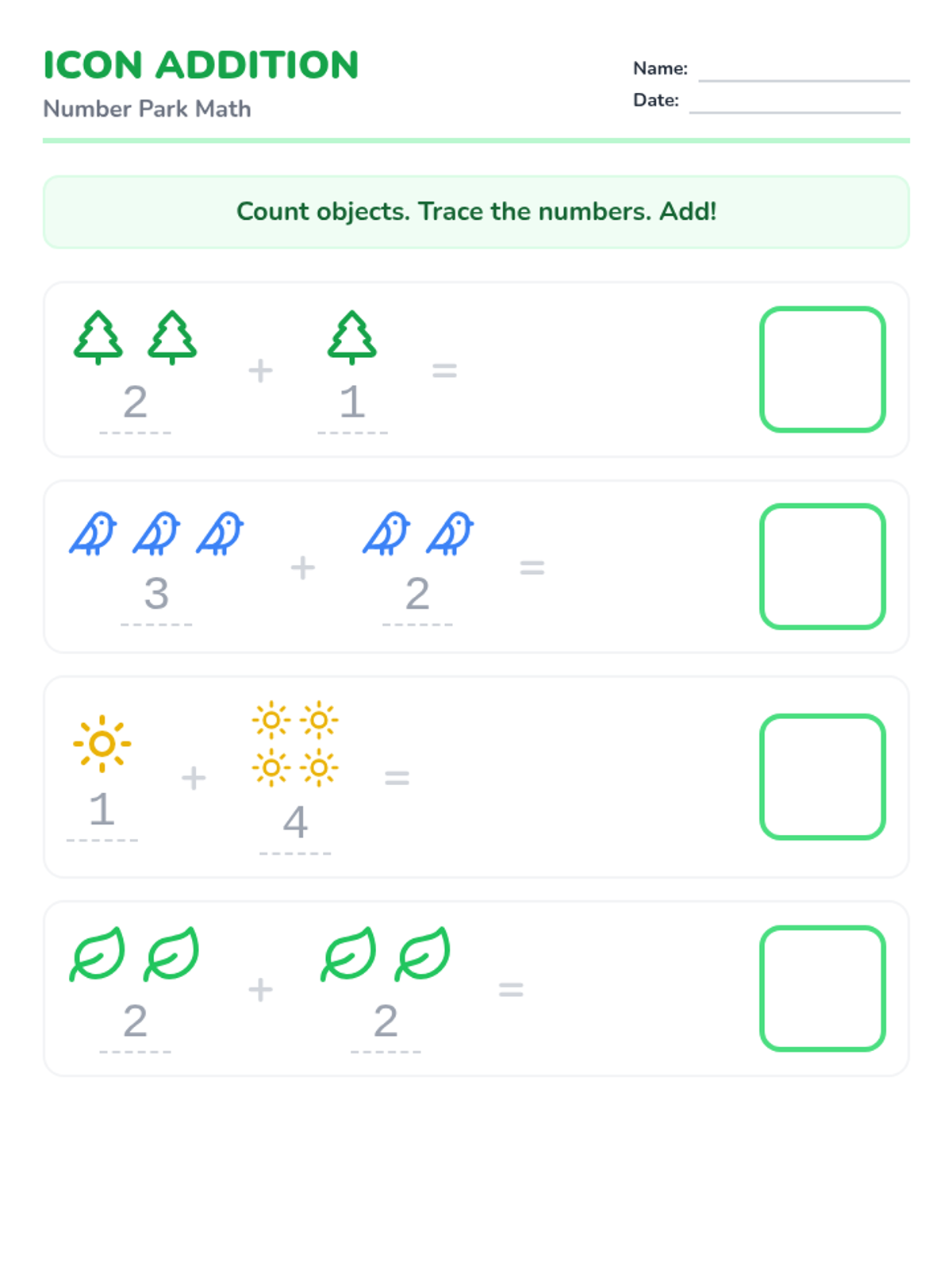
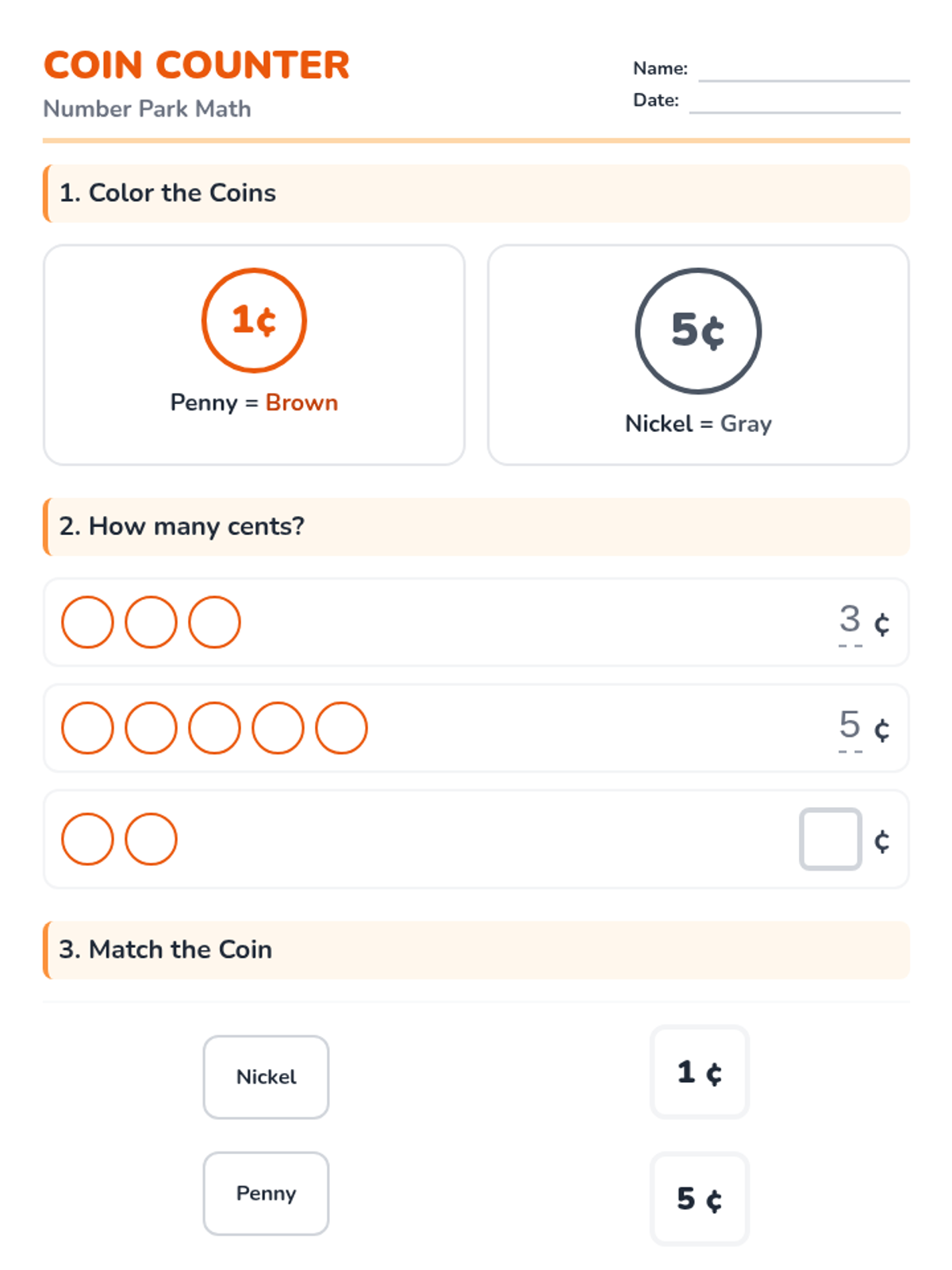
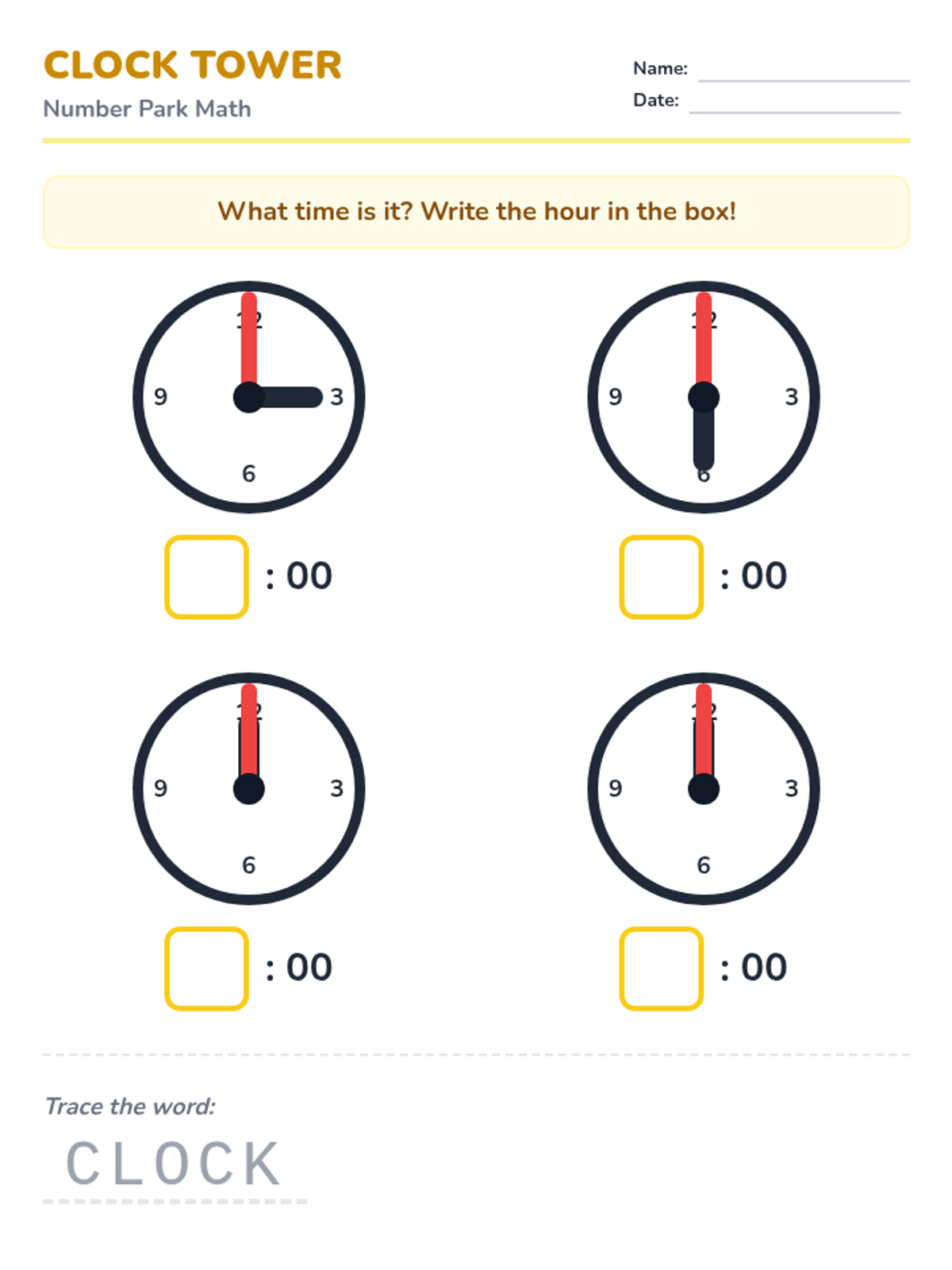
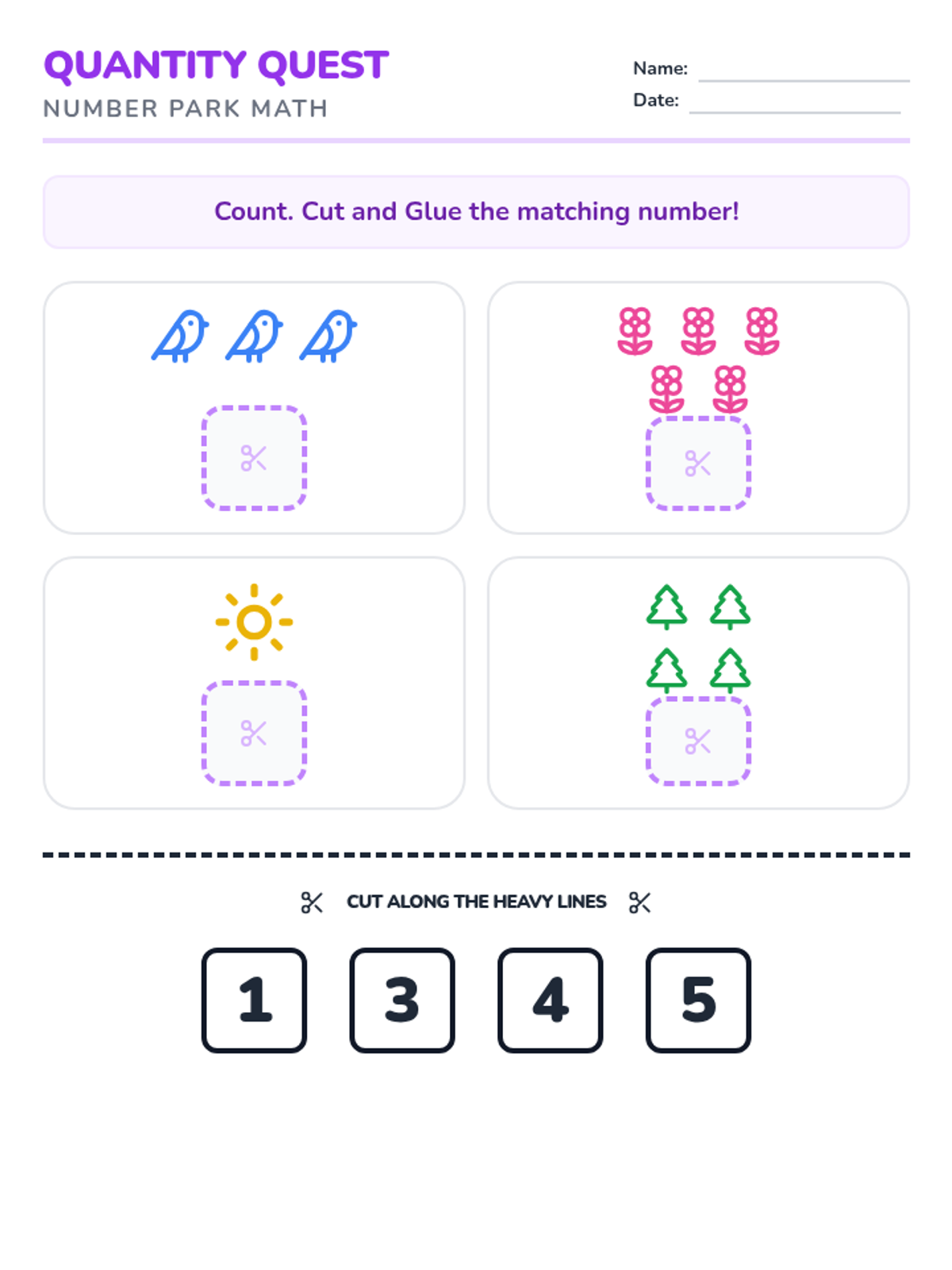
An expanded foundational math unit focusing on single-digit addition, coin identification, telling time to the hour, and number-quantity matching. This comprehensive packet includes multiple worksheets per skill for multi-day practice.
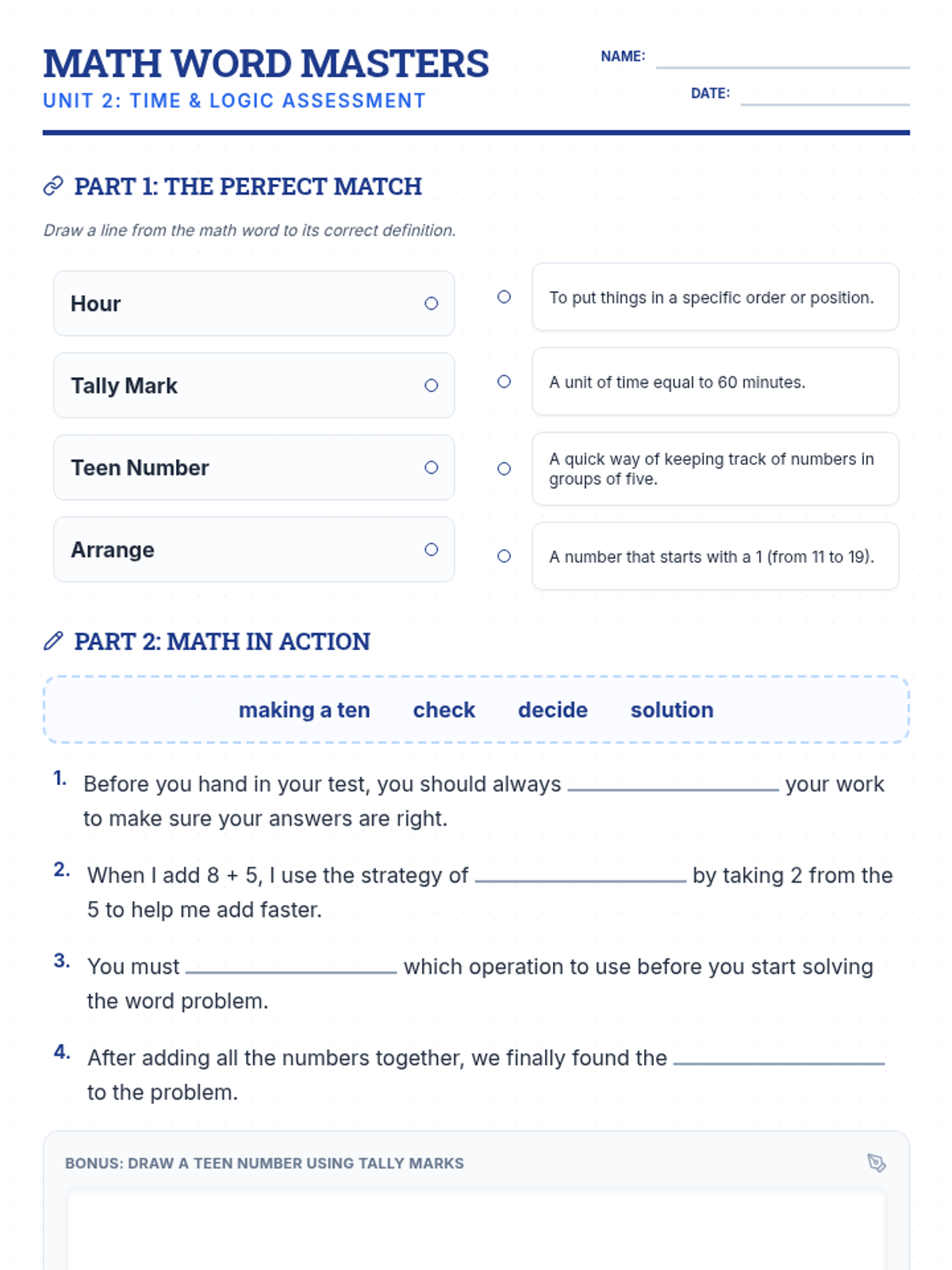
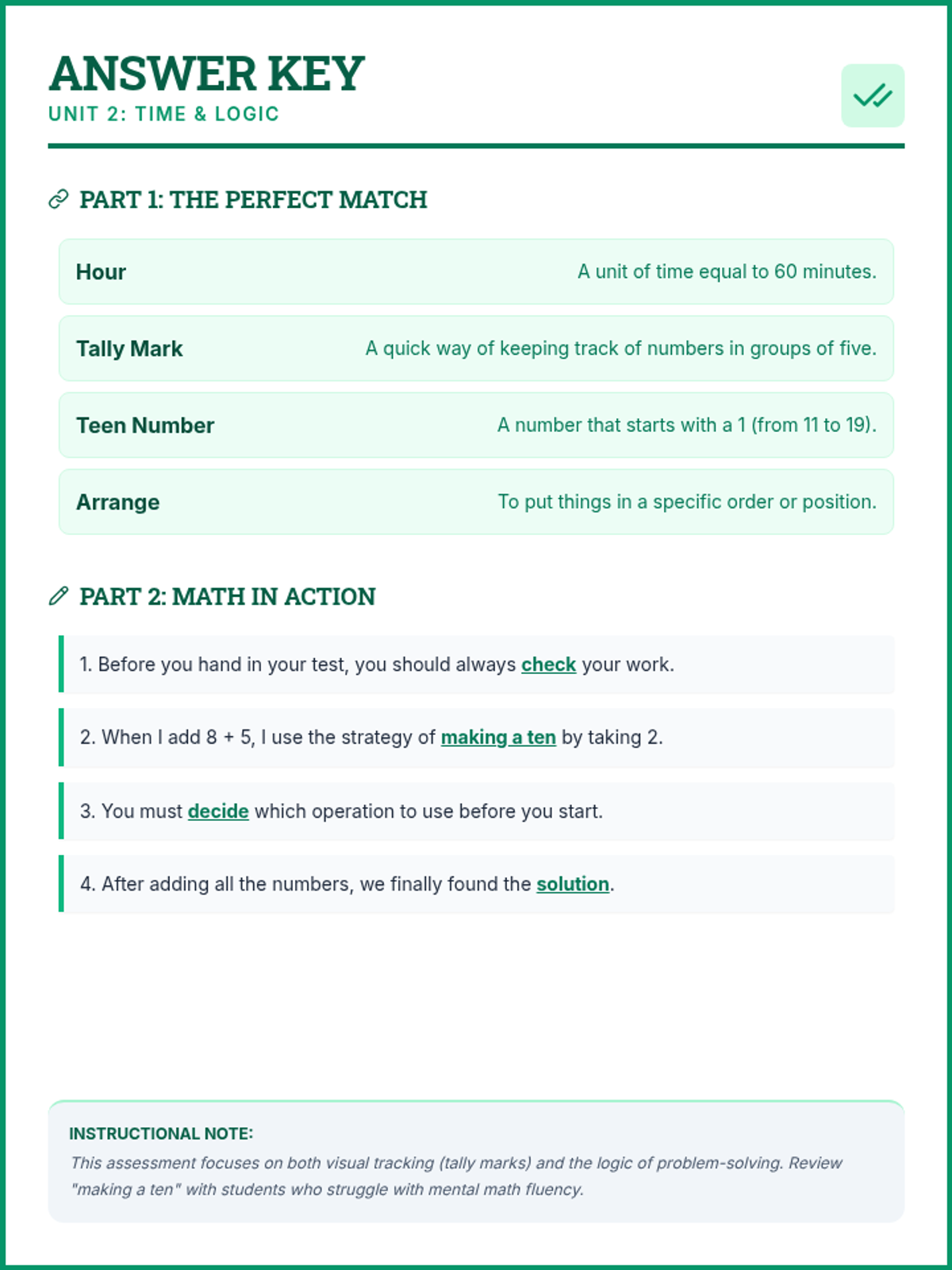
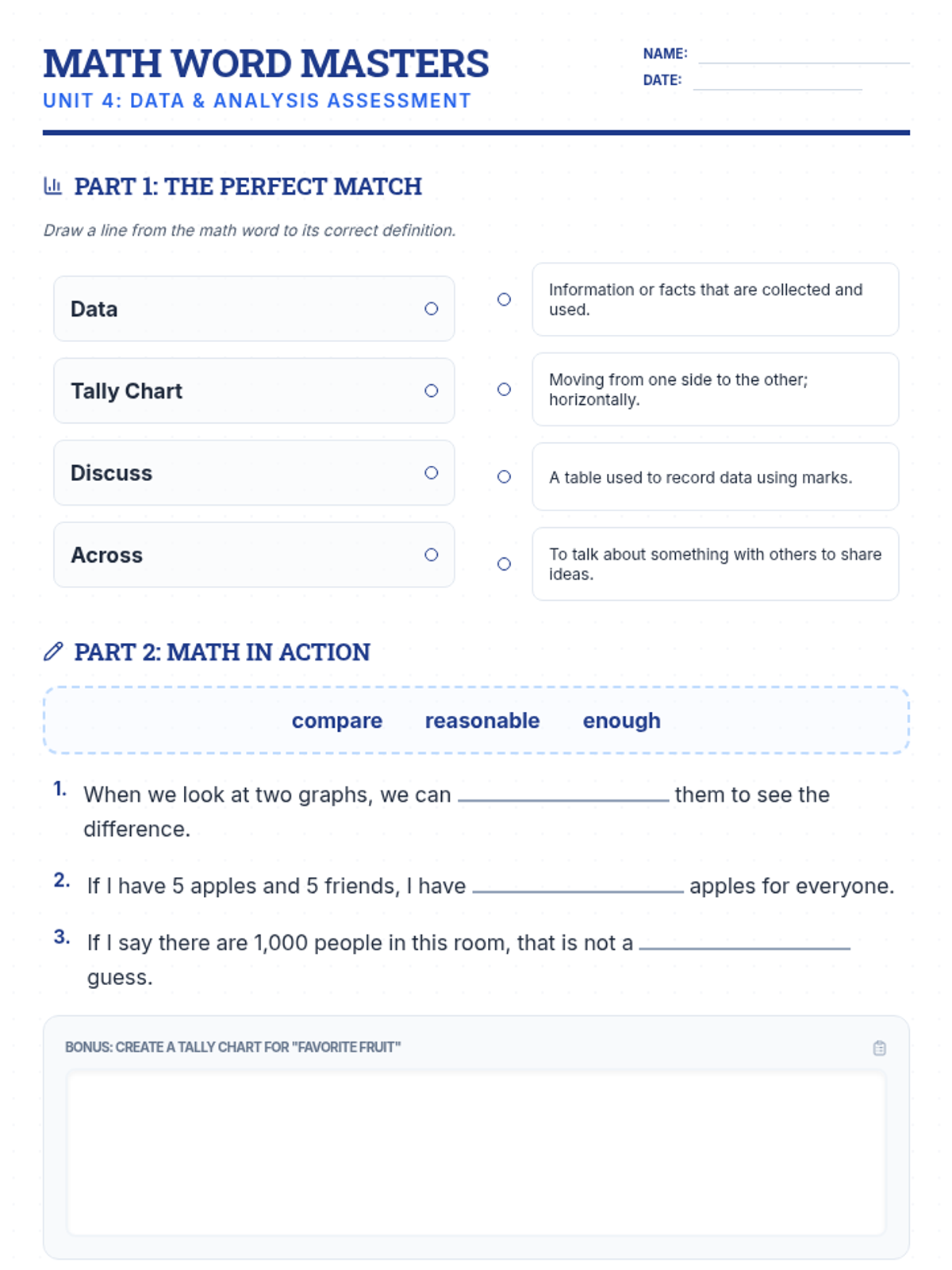
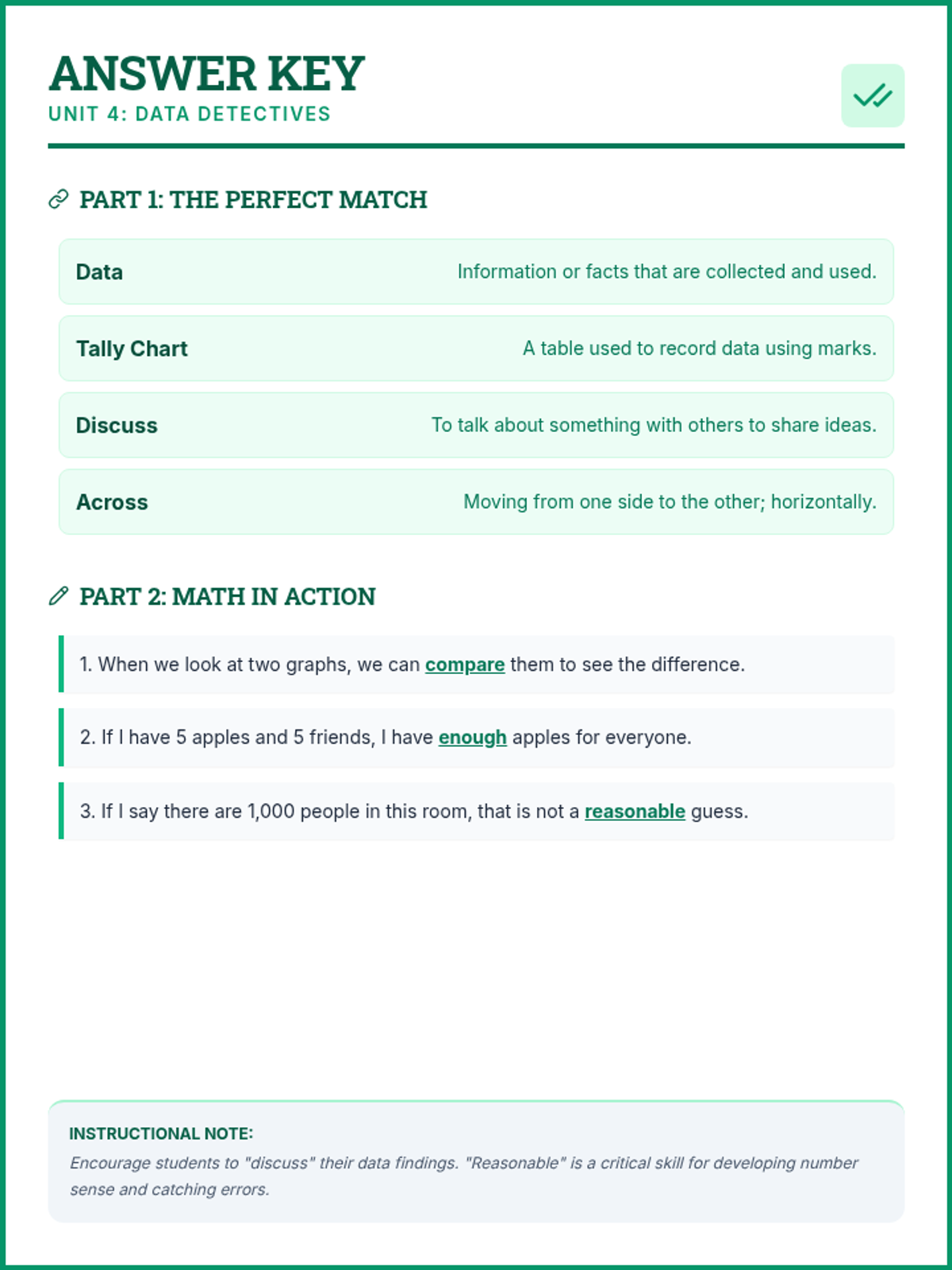
Vocabulary assessment for Unit 2 covering time, counting, and problem-solving strategies.
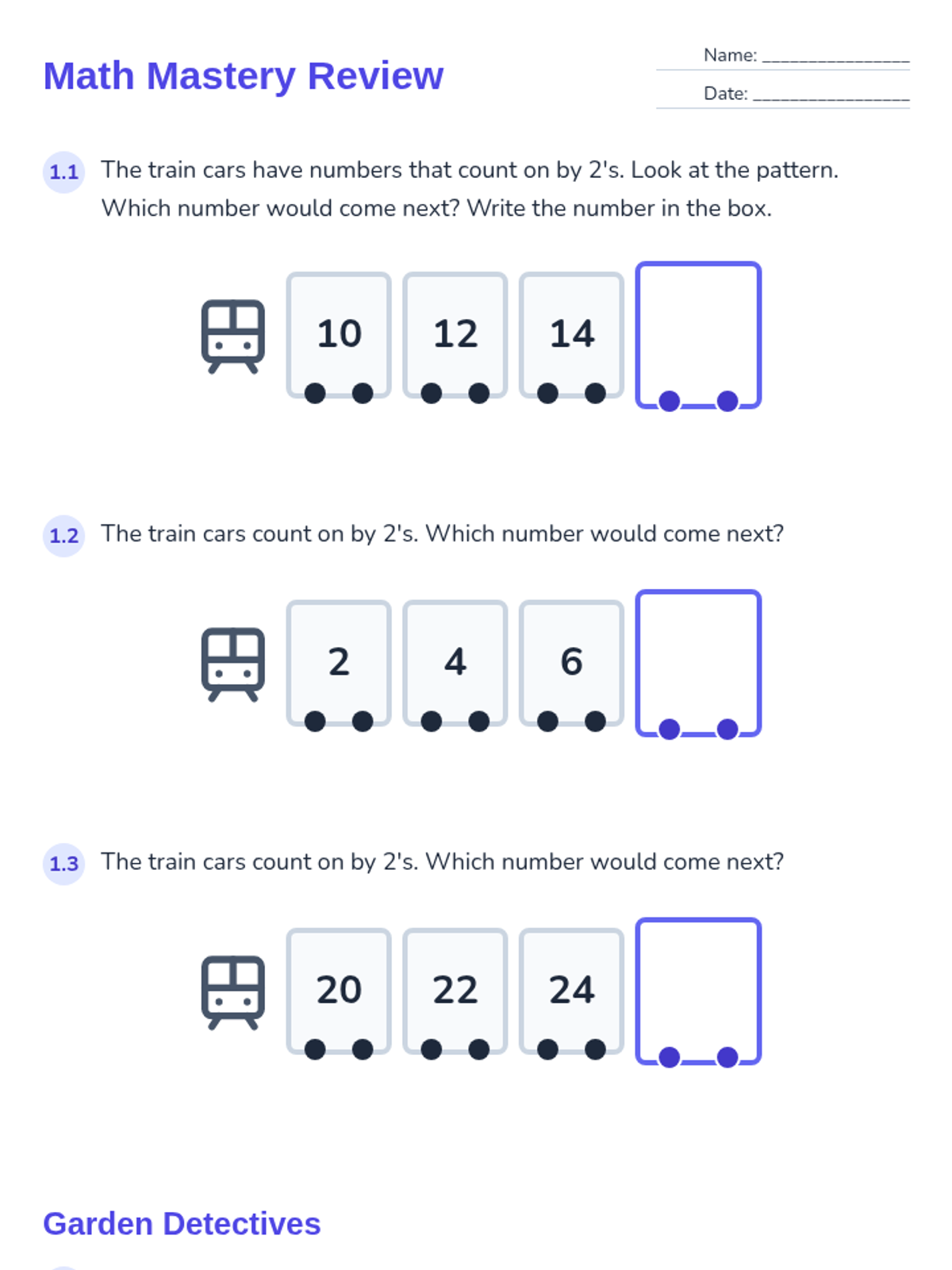
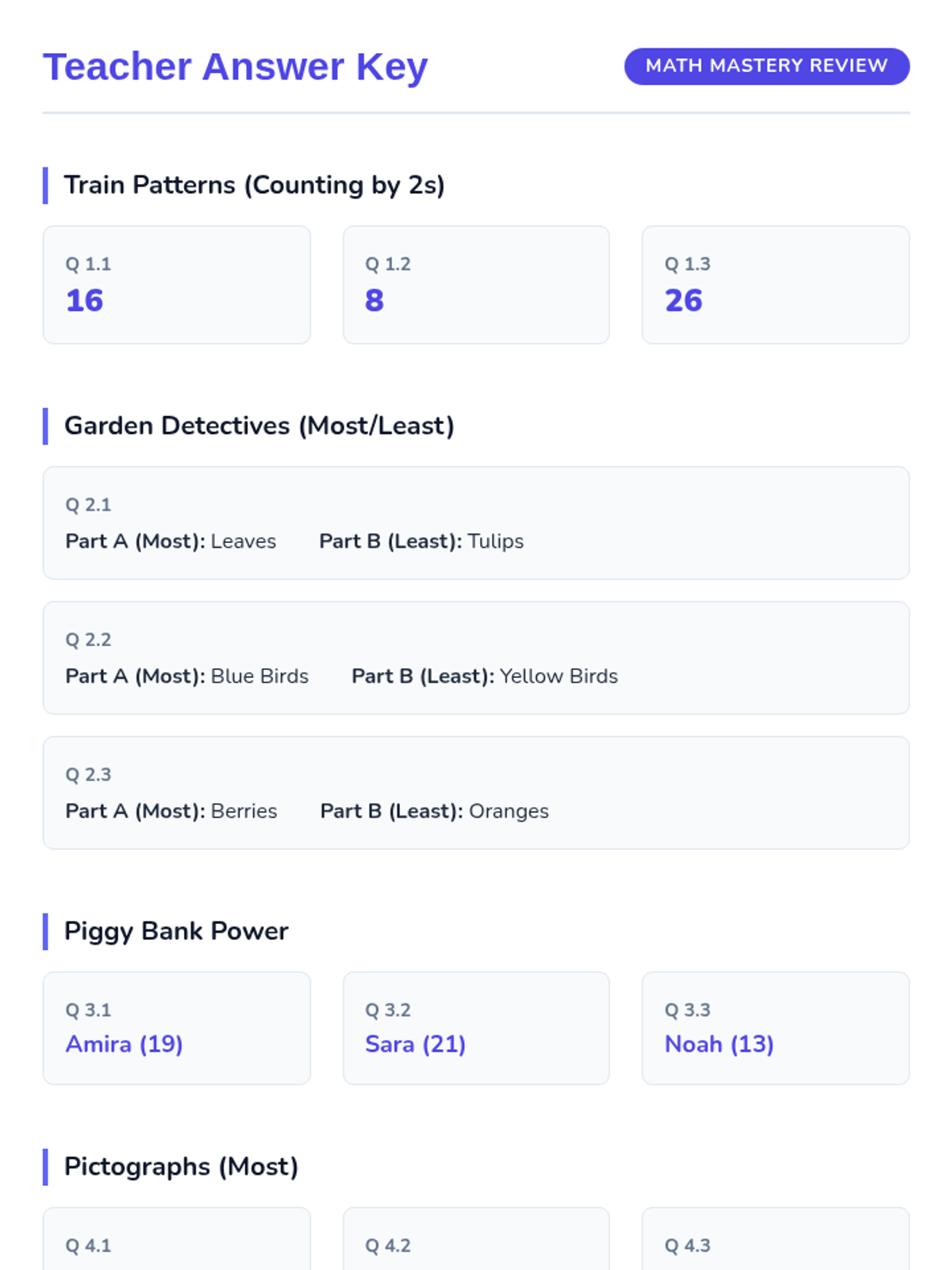
A comprehensive Kindergarten math review covering skip counting by 2s, comparing quantities, identifying numbers, reading graphs, and number writing practice. This lesson provides repeated practice ('at bats') for core skills to build fluency and confidence.
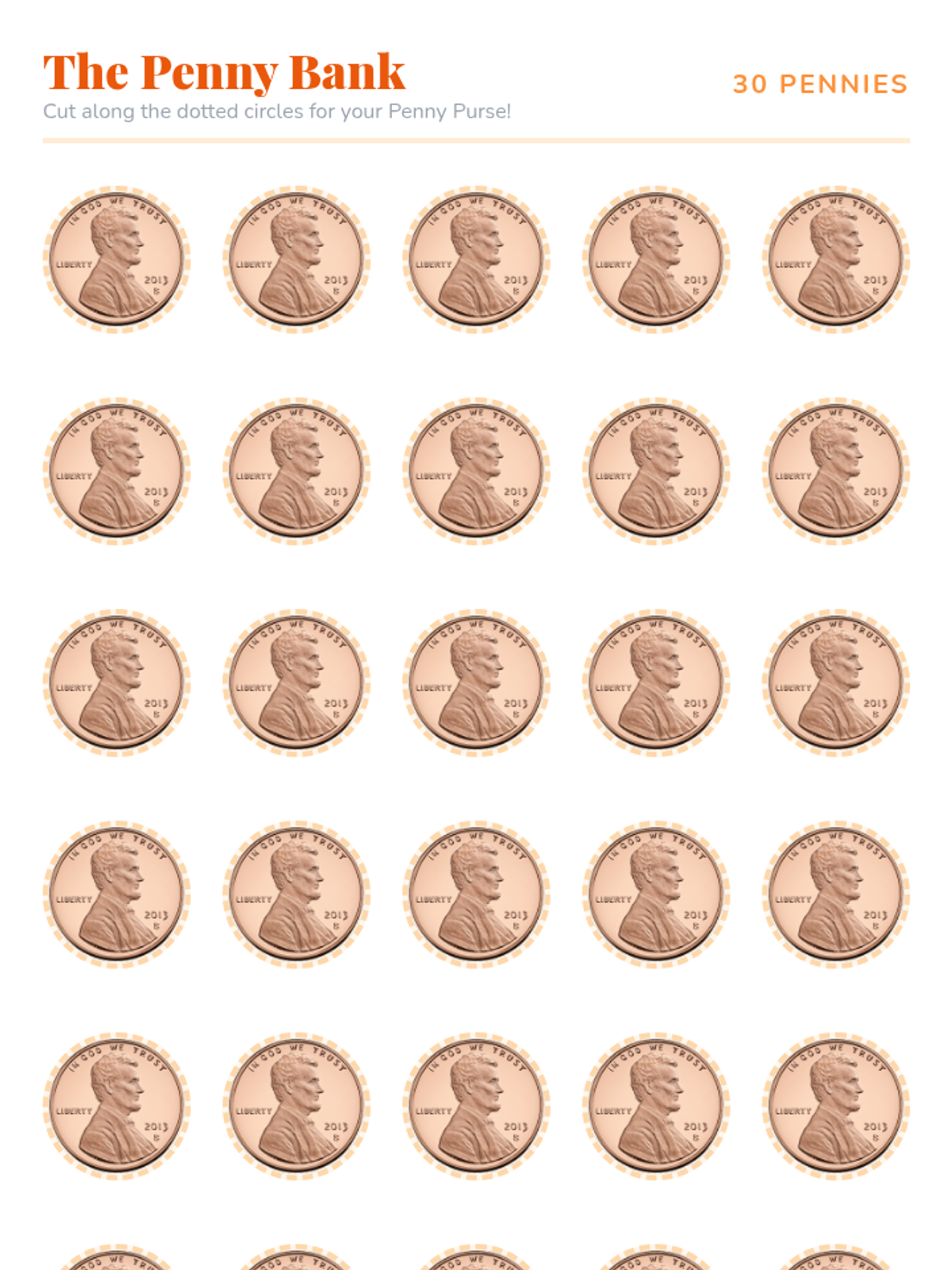
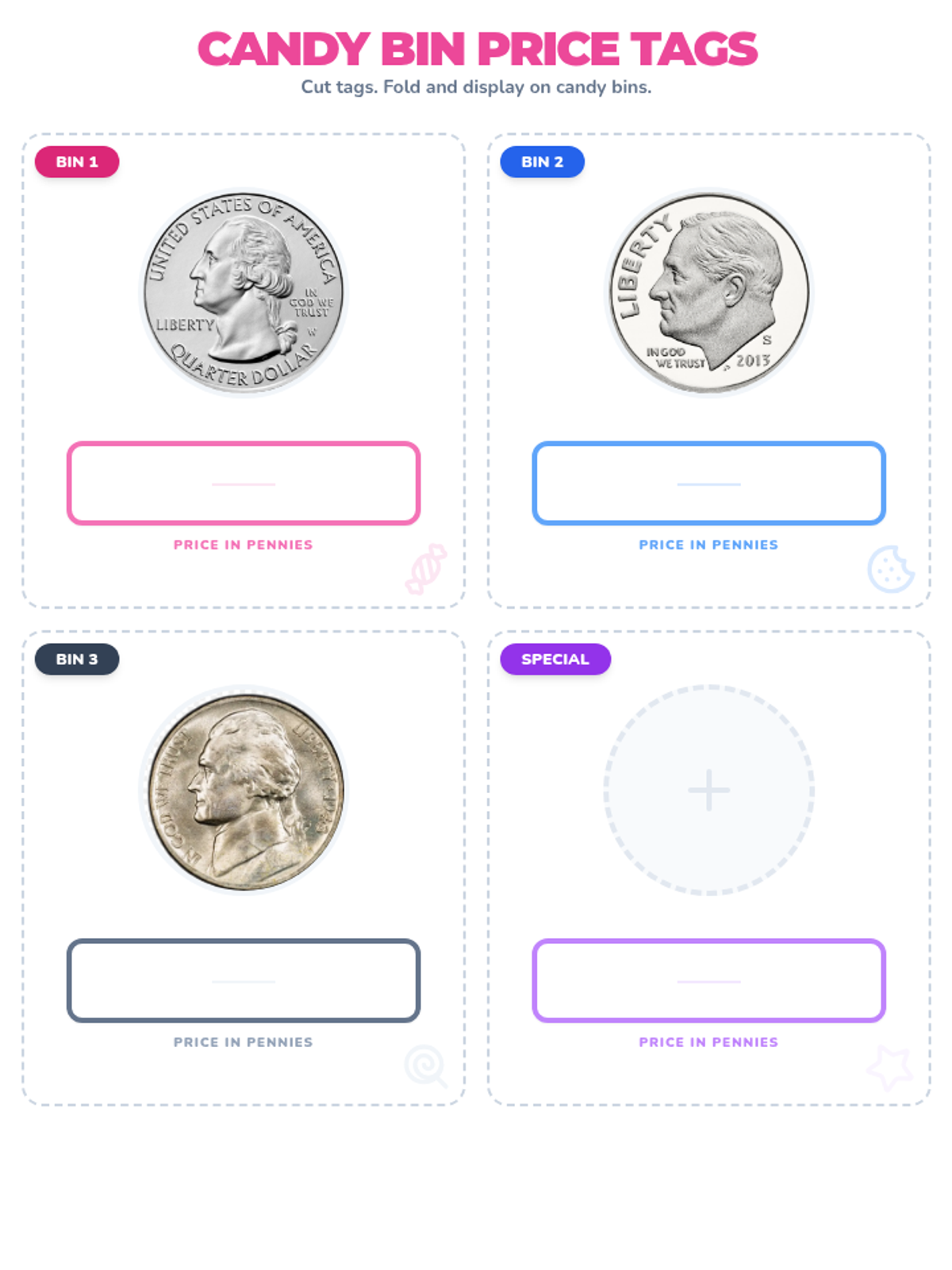
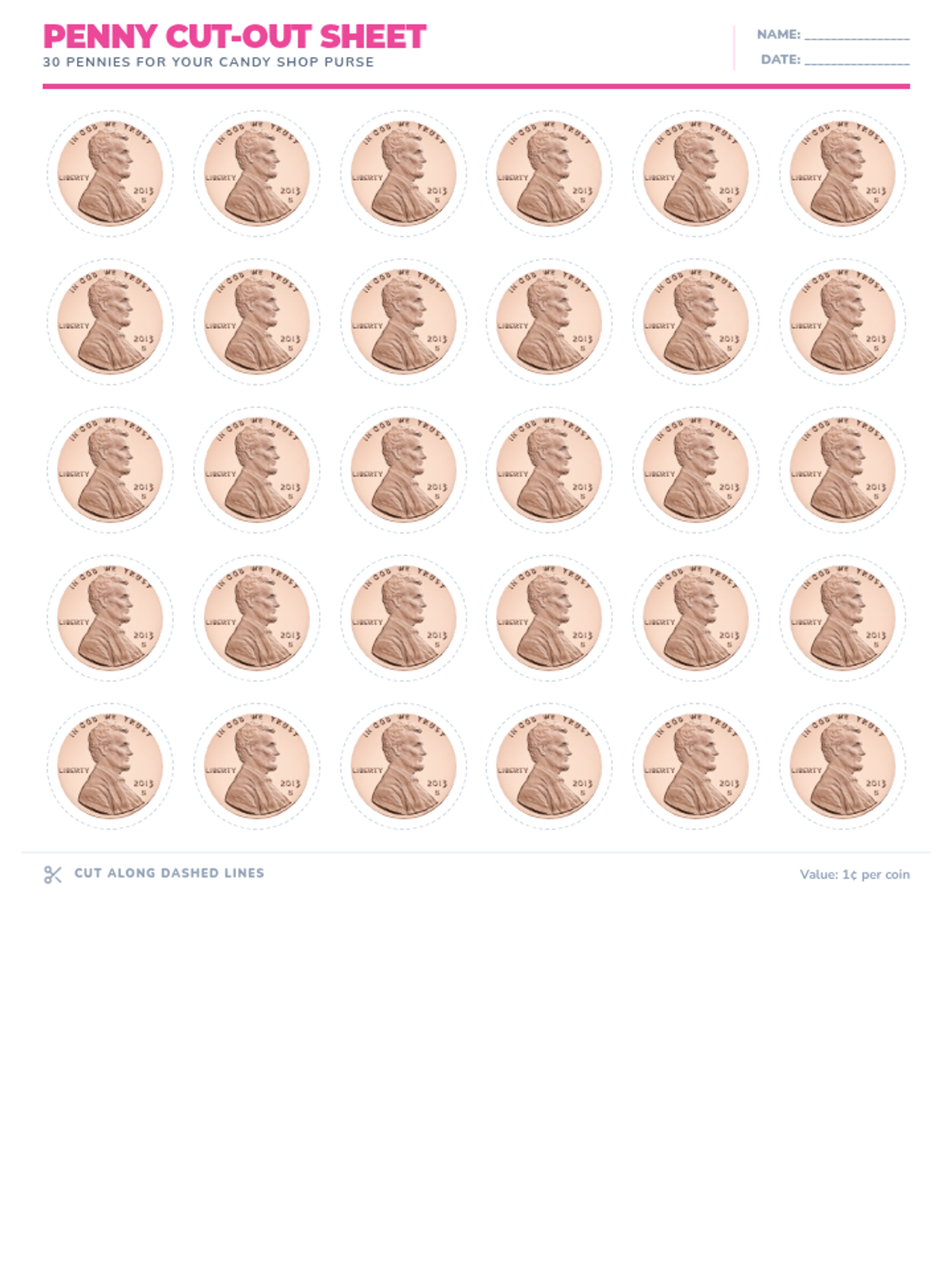
A sweet introduction to North Carolina standard M.D.5 where students identify quarters, dimes, nickels, and pennies, then practice their values by "buying" candy with pennies.
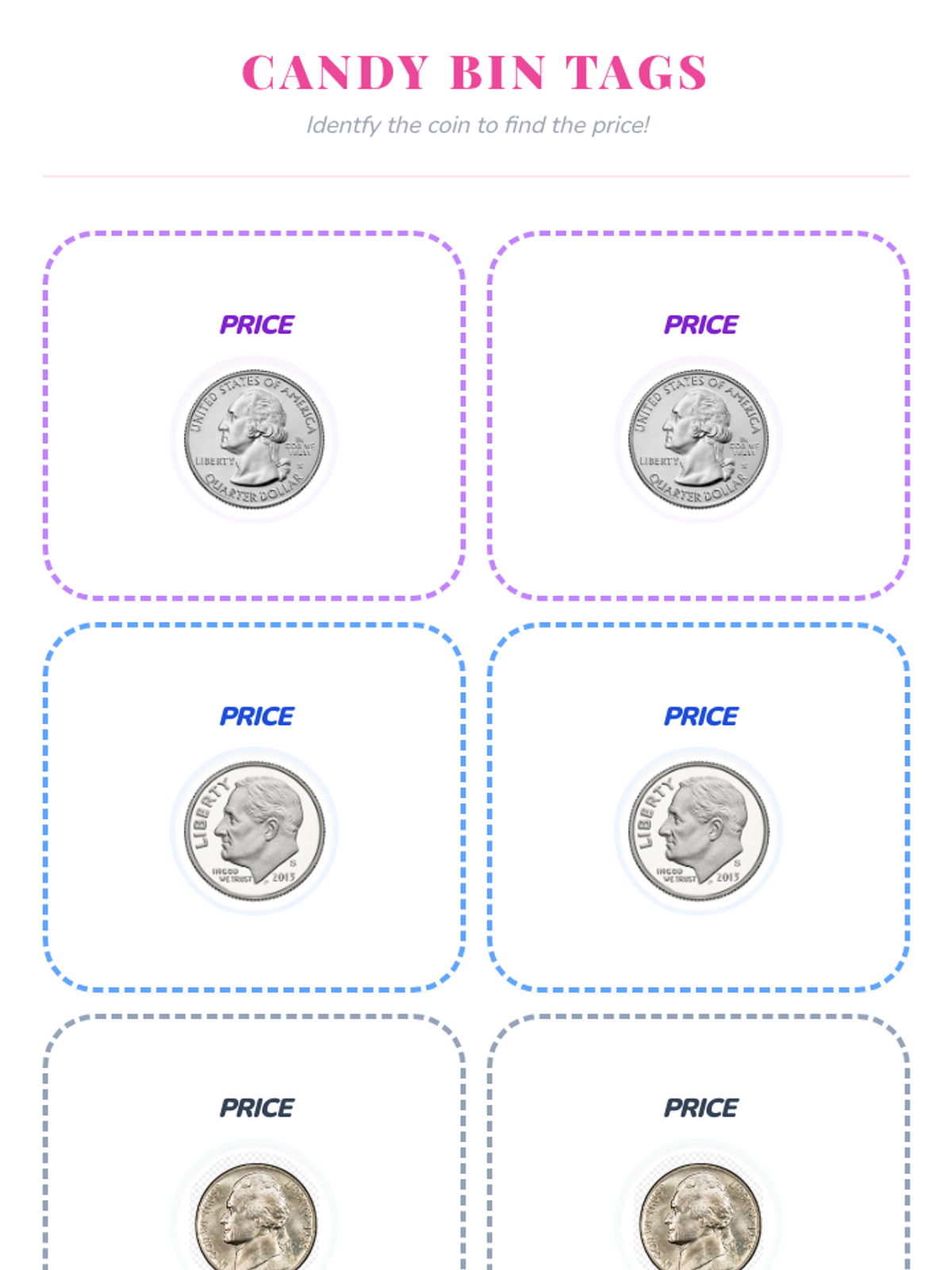
A candy-shop themed lesson where students identify pennies, nickels, dimes, and quarters and their values, culminating in a hands-on activity using pennies to 'buy' candy from price-labeled bins.
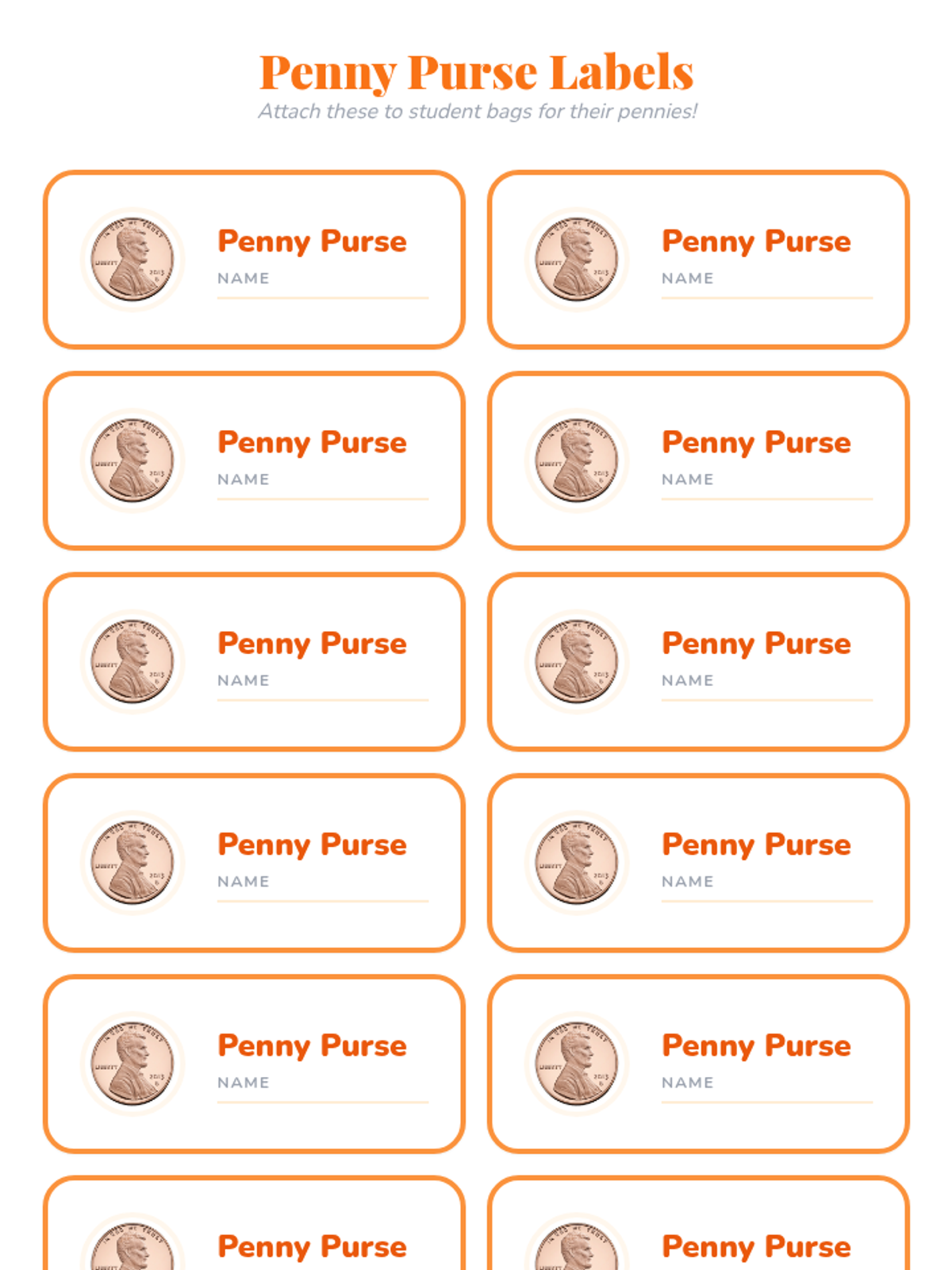
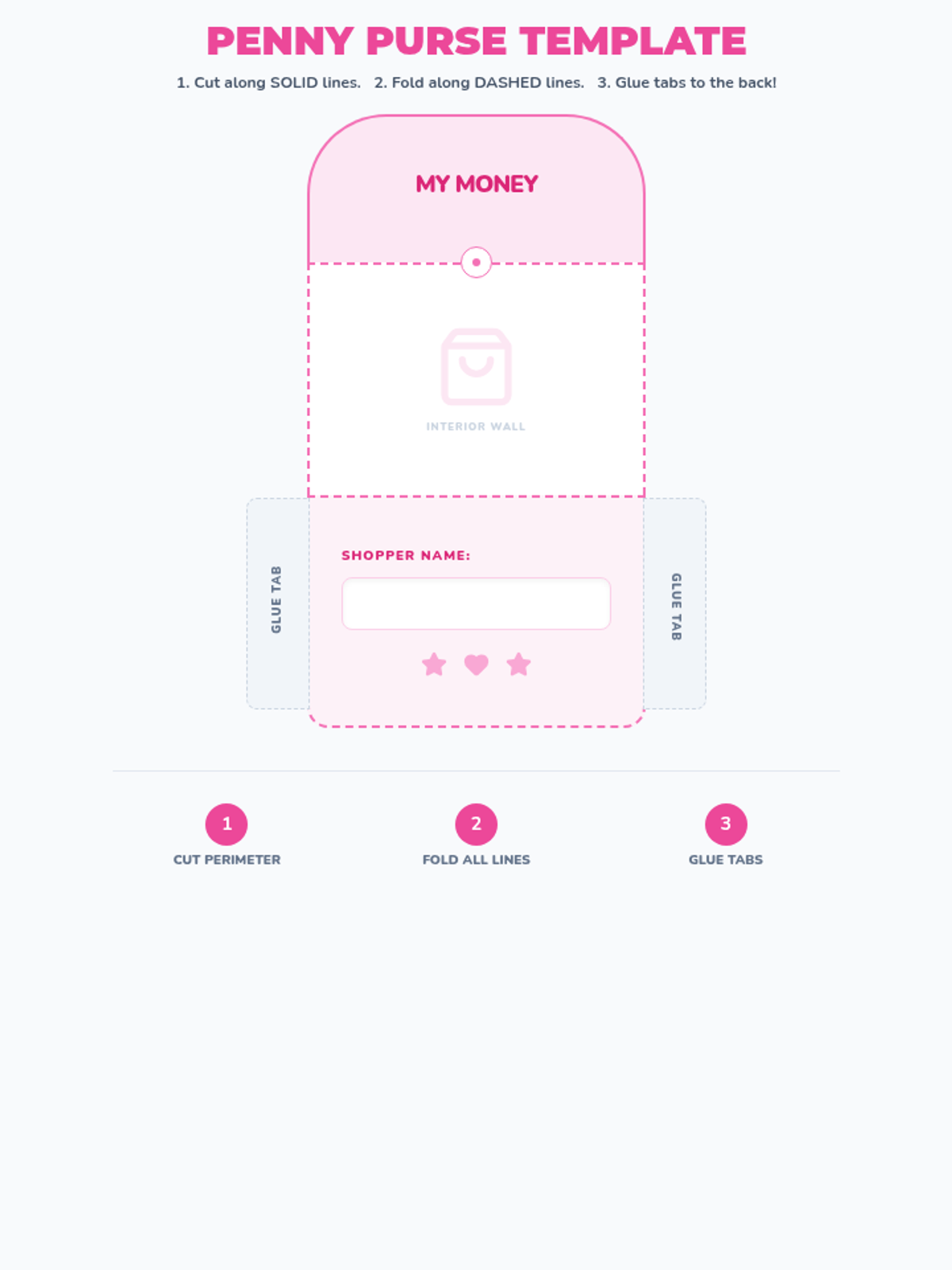
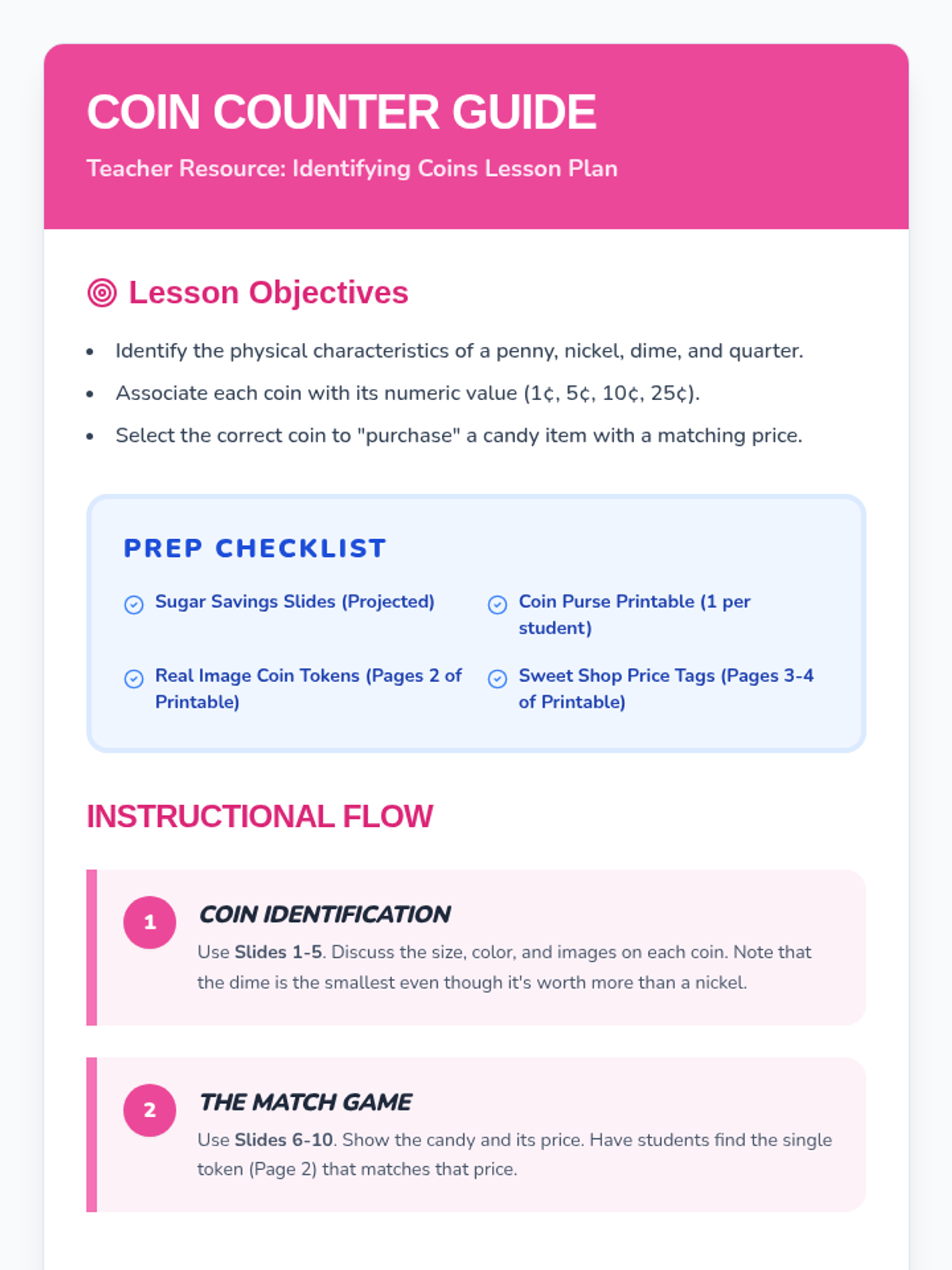
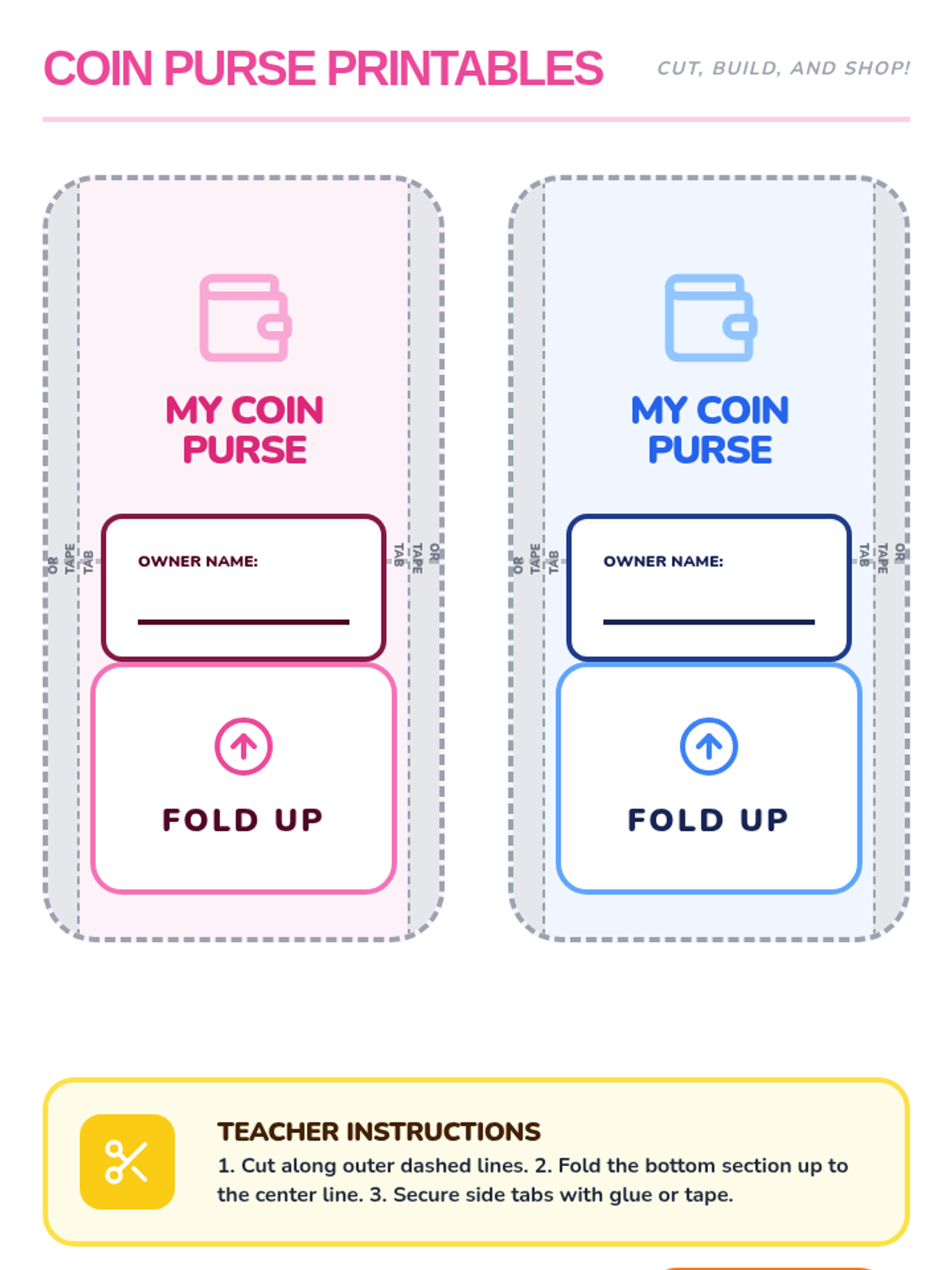
A sweet introduction to identifying and counting coins. Students visit a virtual candy shop, learn to recognize pennies, nickels, dimes, and quarters, and use their own 'coin purses' to buy treats.
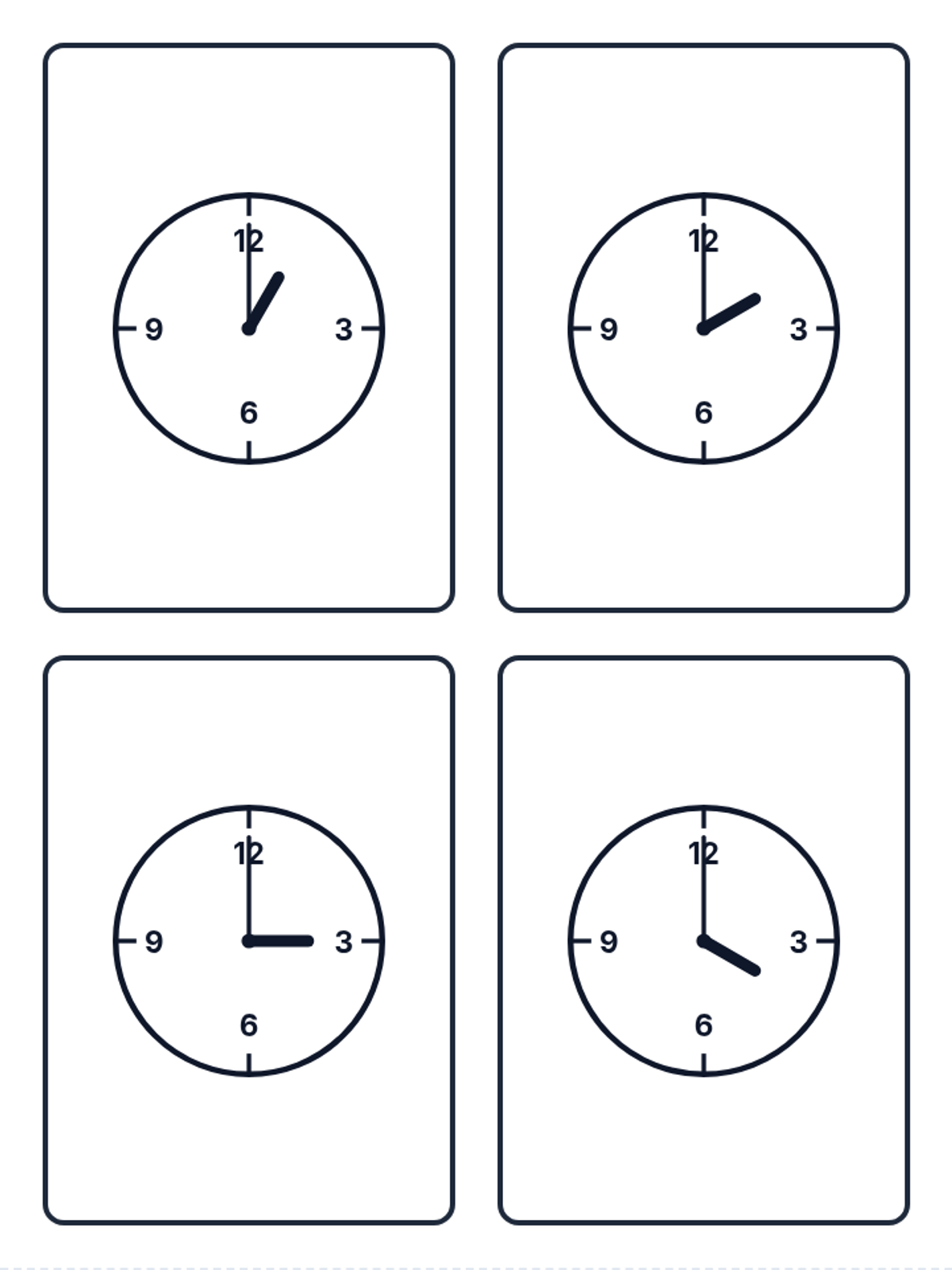
A foundational lesson on telling time to the nearest hour using analog and digital clocks. Students will practice identifying the hour hand's position and translating it to digital format.
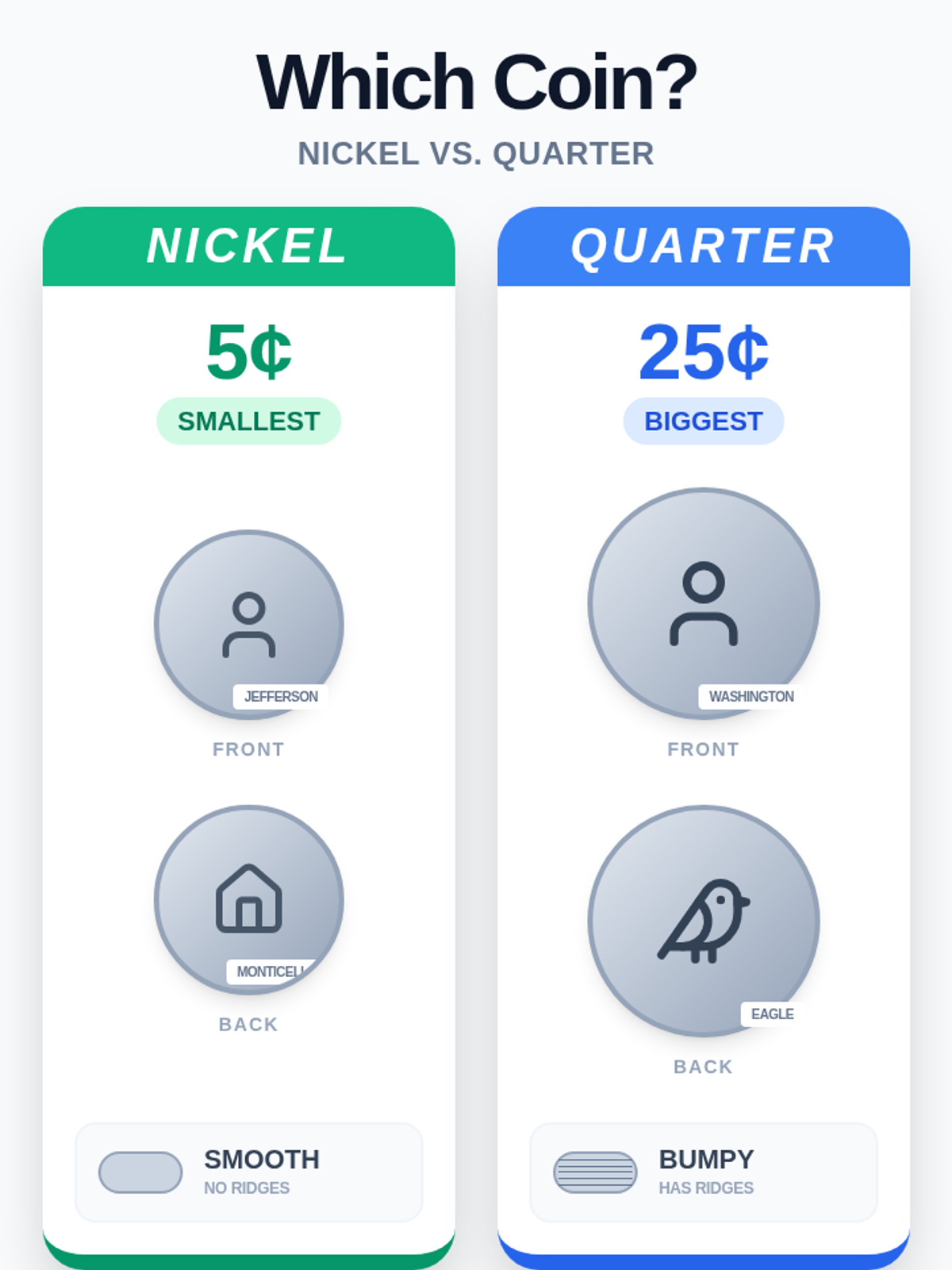
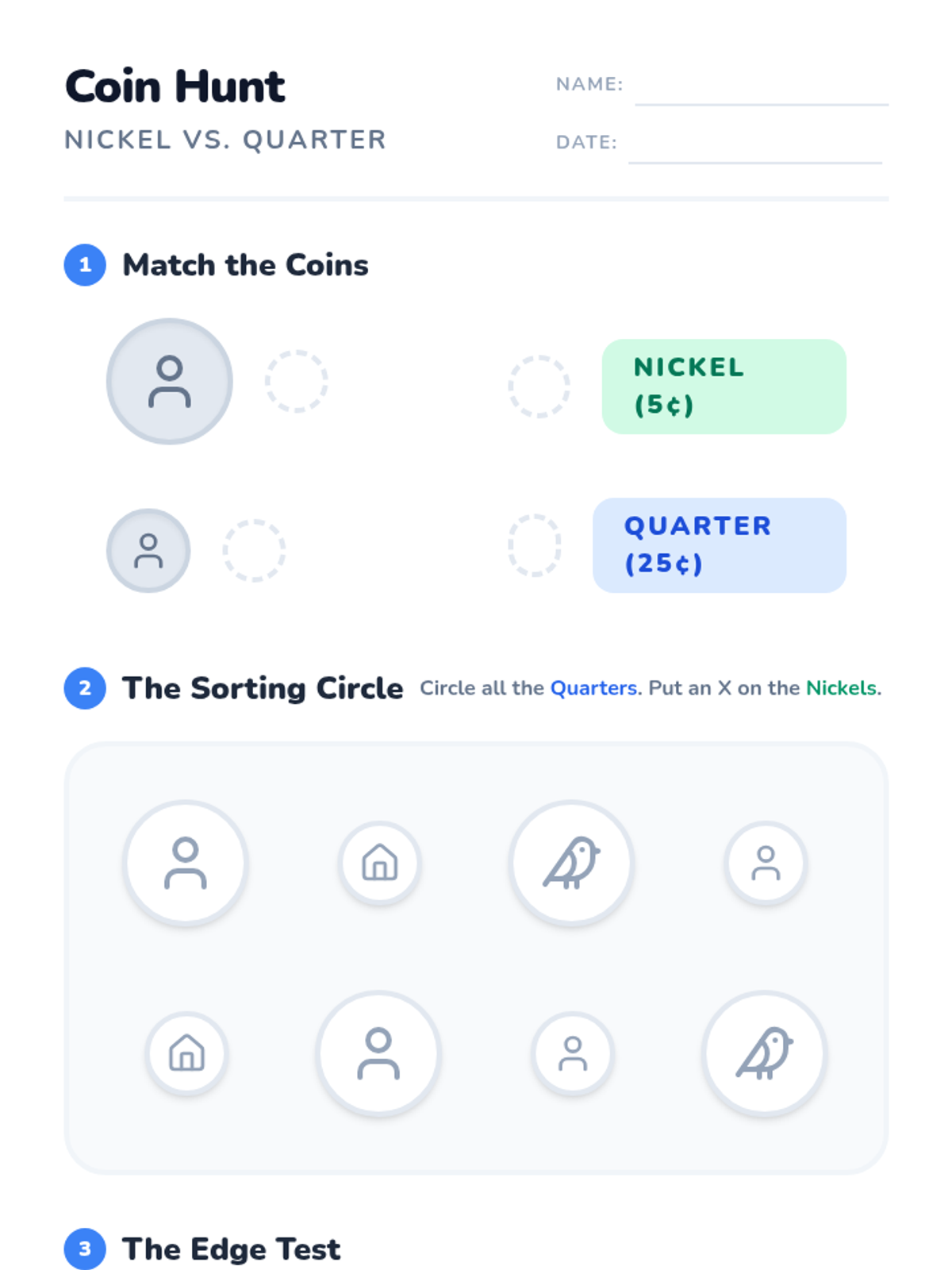
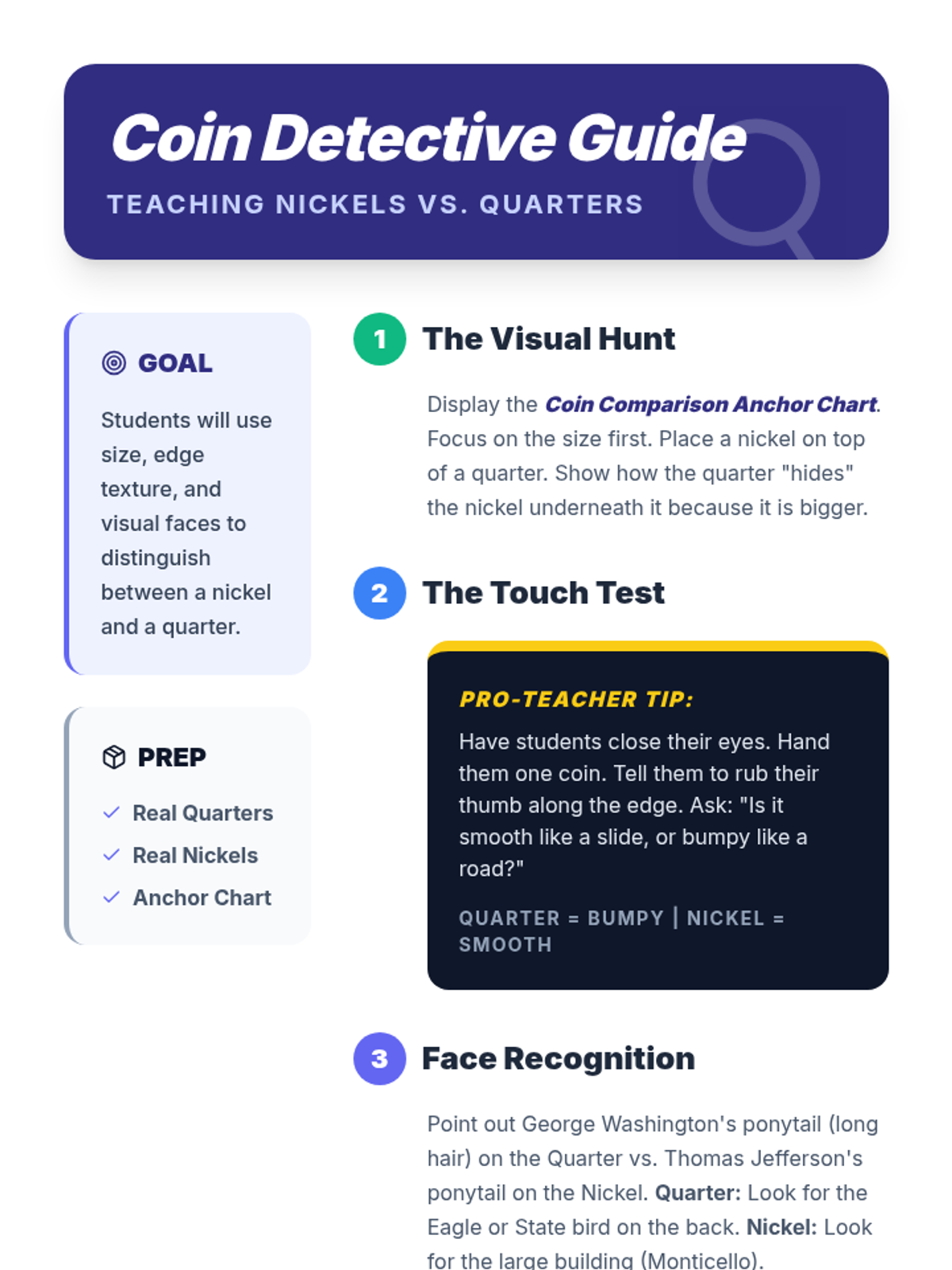
A lesson focused on identifying and distinguishing between nickels and quarters through visual cues and physical characteristics.
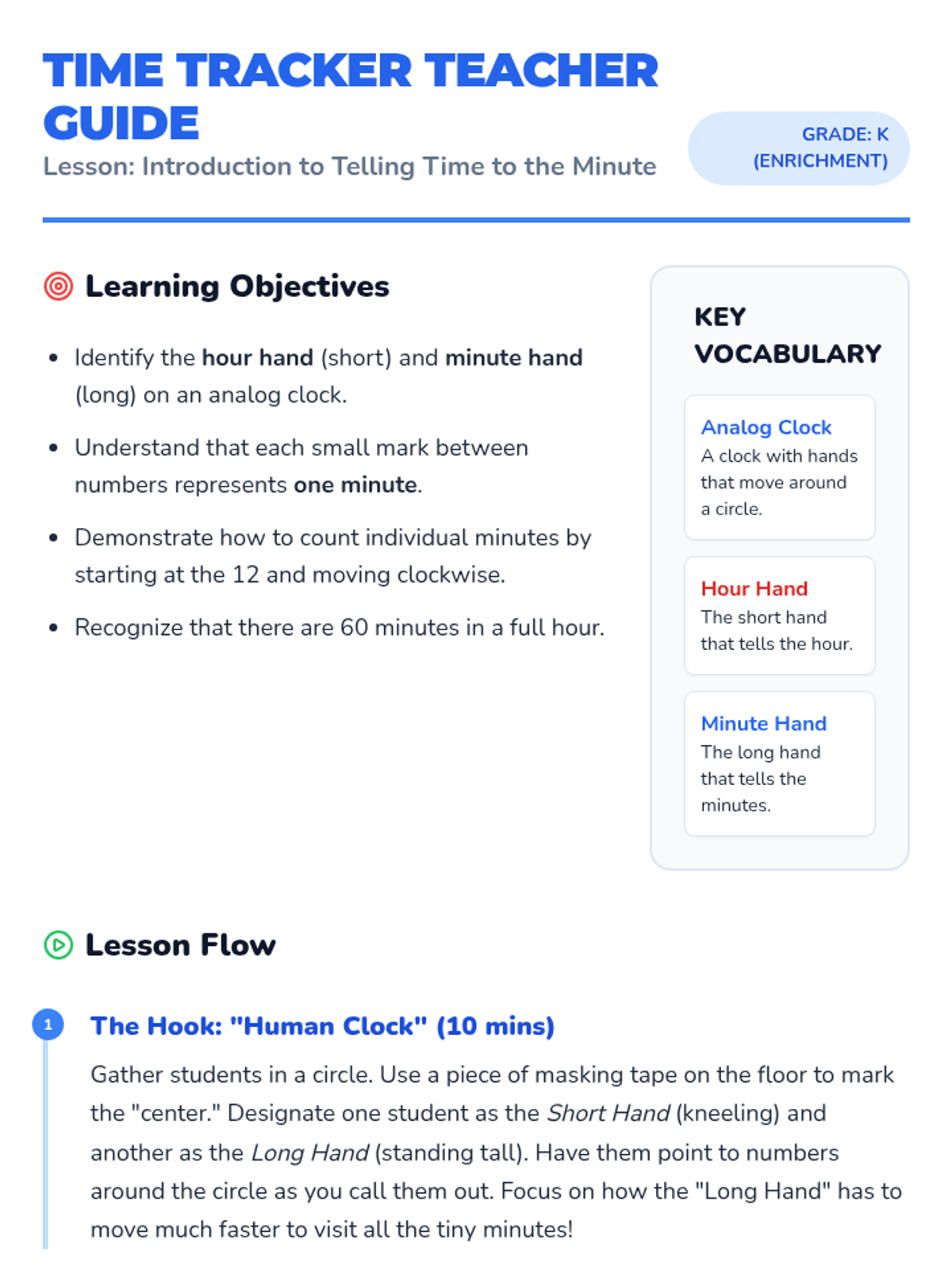
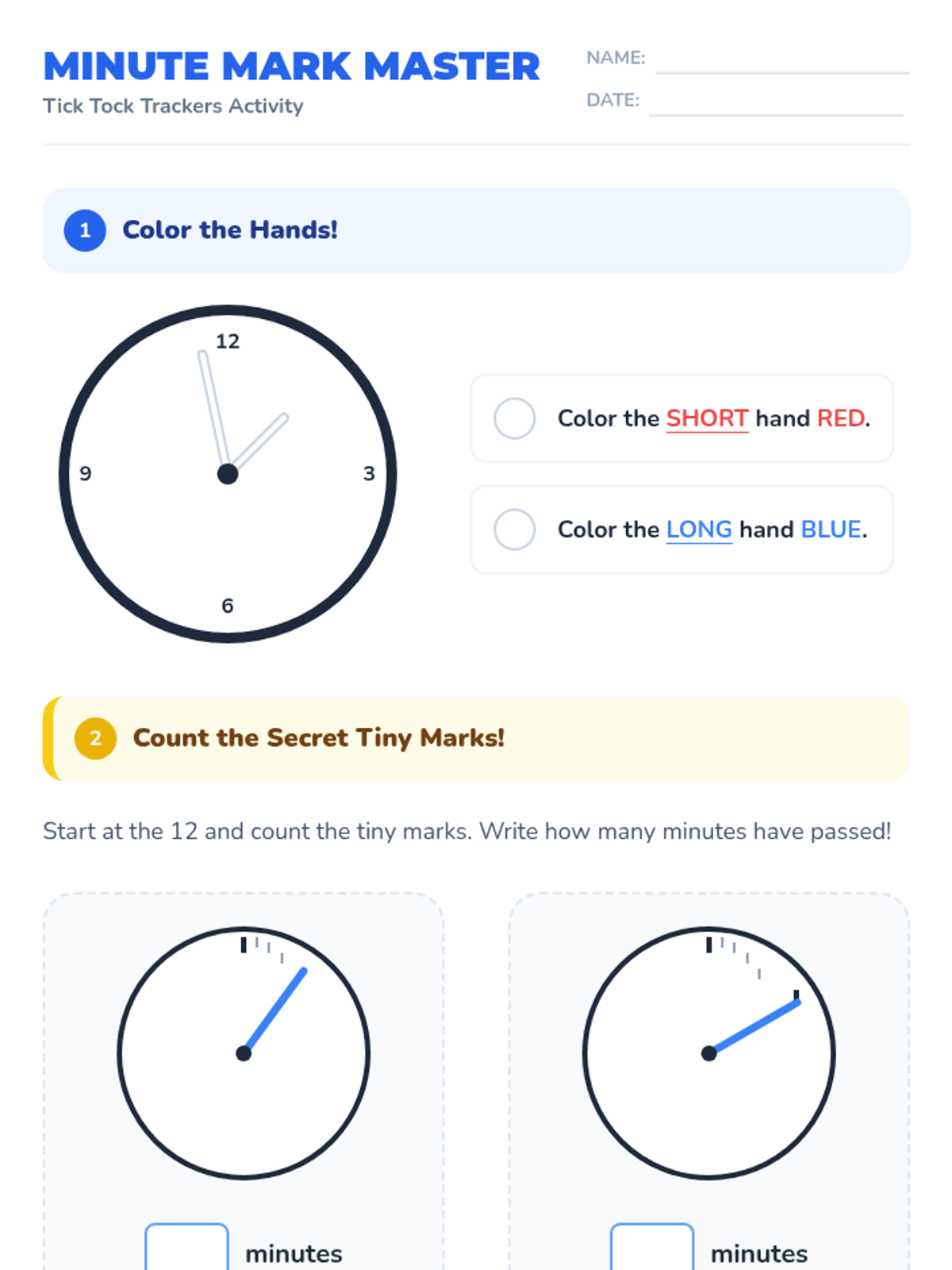
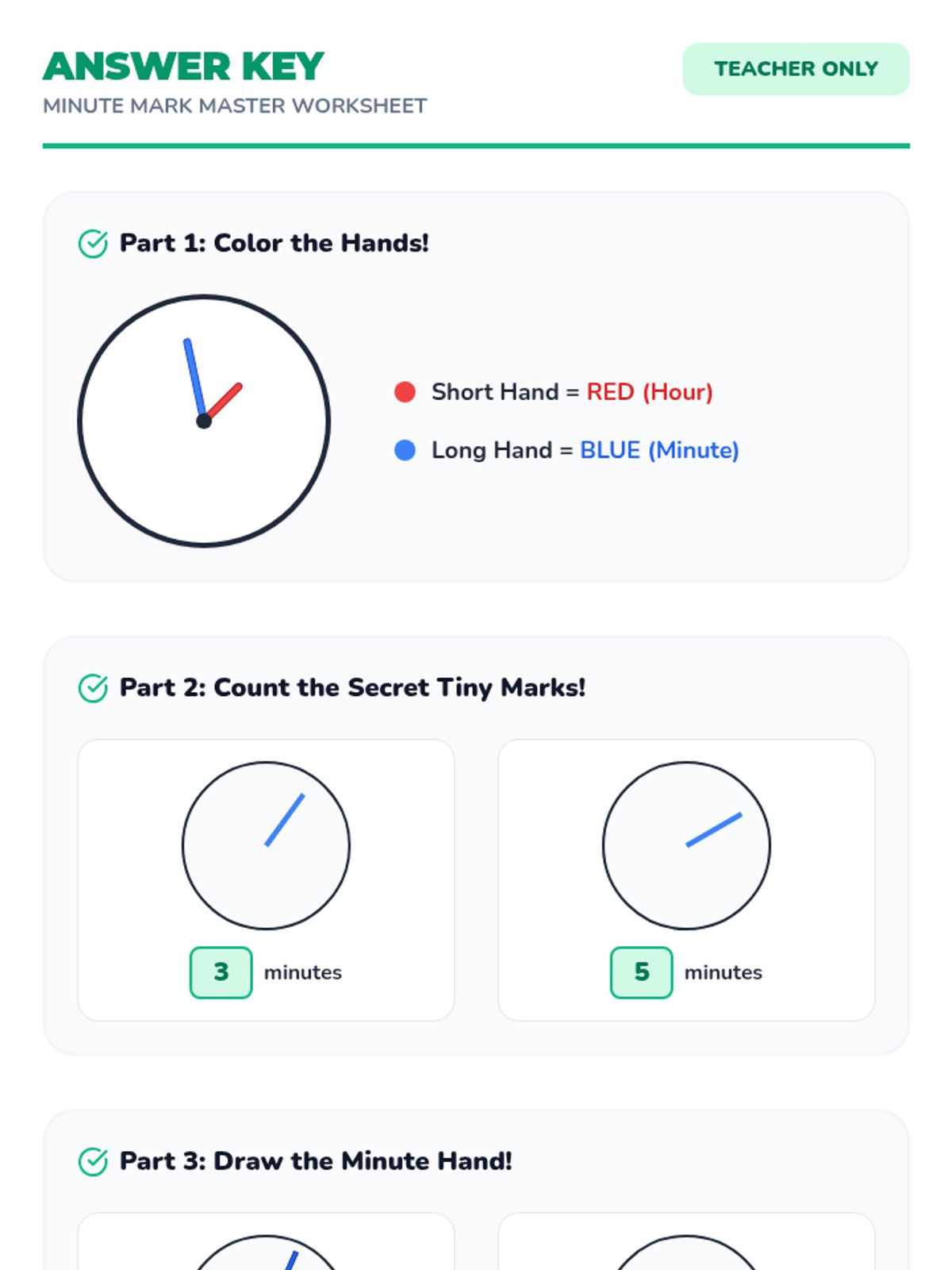
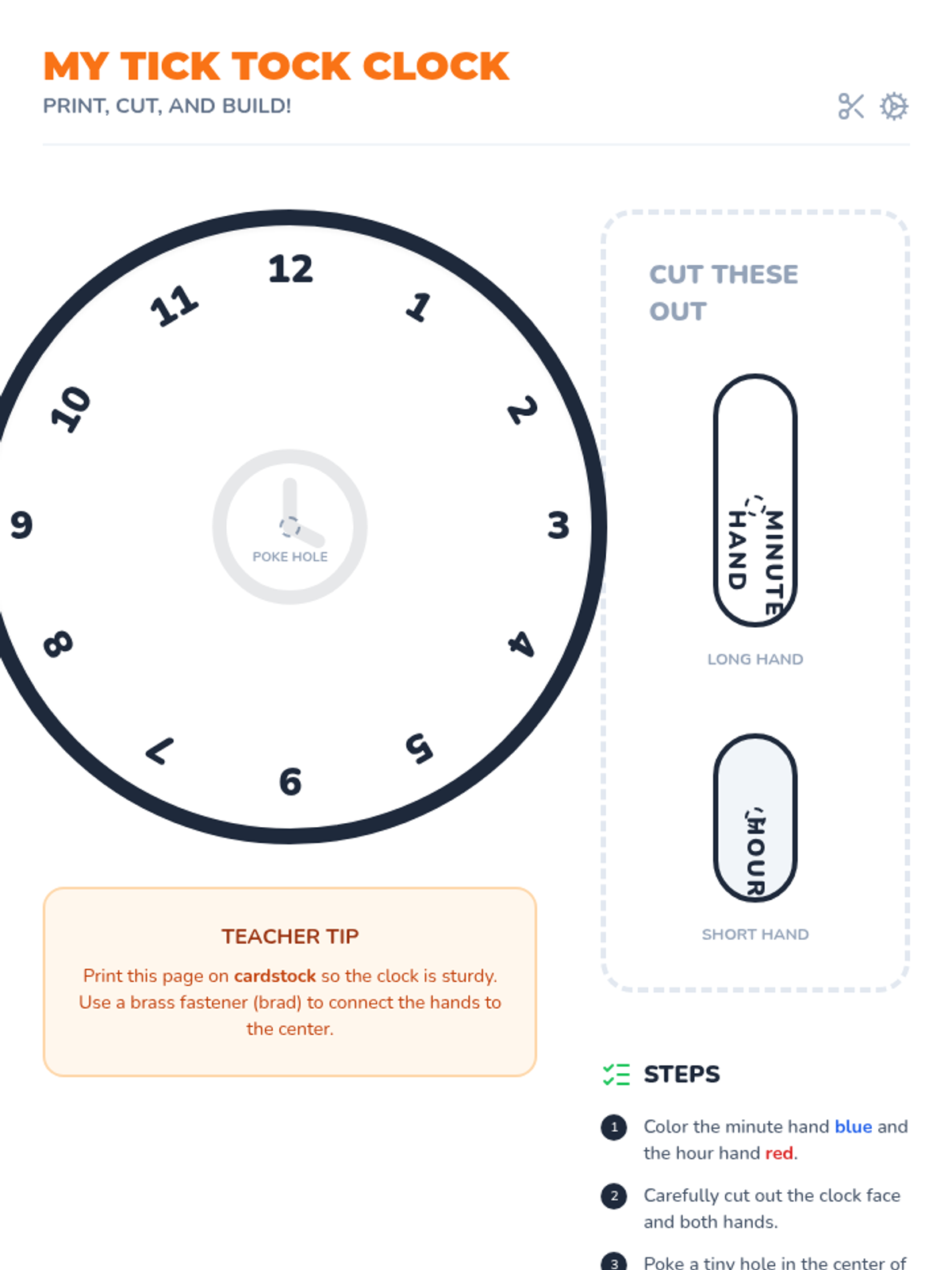
A comprehensive introduction to telling time, focusing on identifying clock parts and understanding how the minute hand moves to specific marks. Designed for advanced Kindergarten learners or as an enrichment unit.
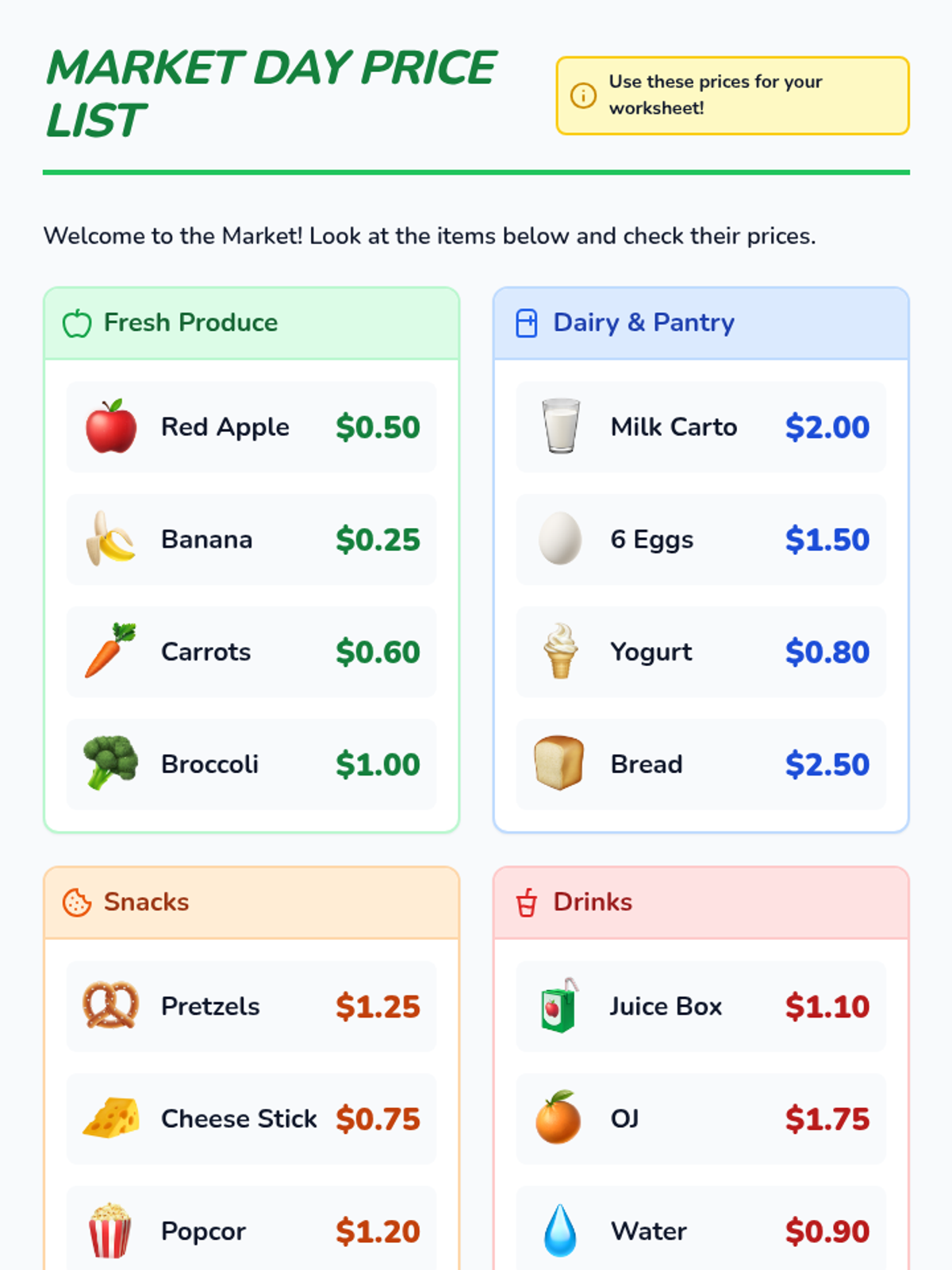
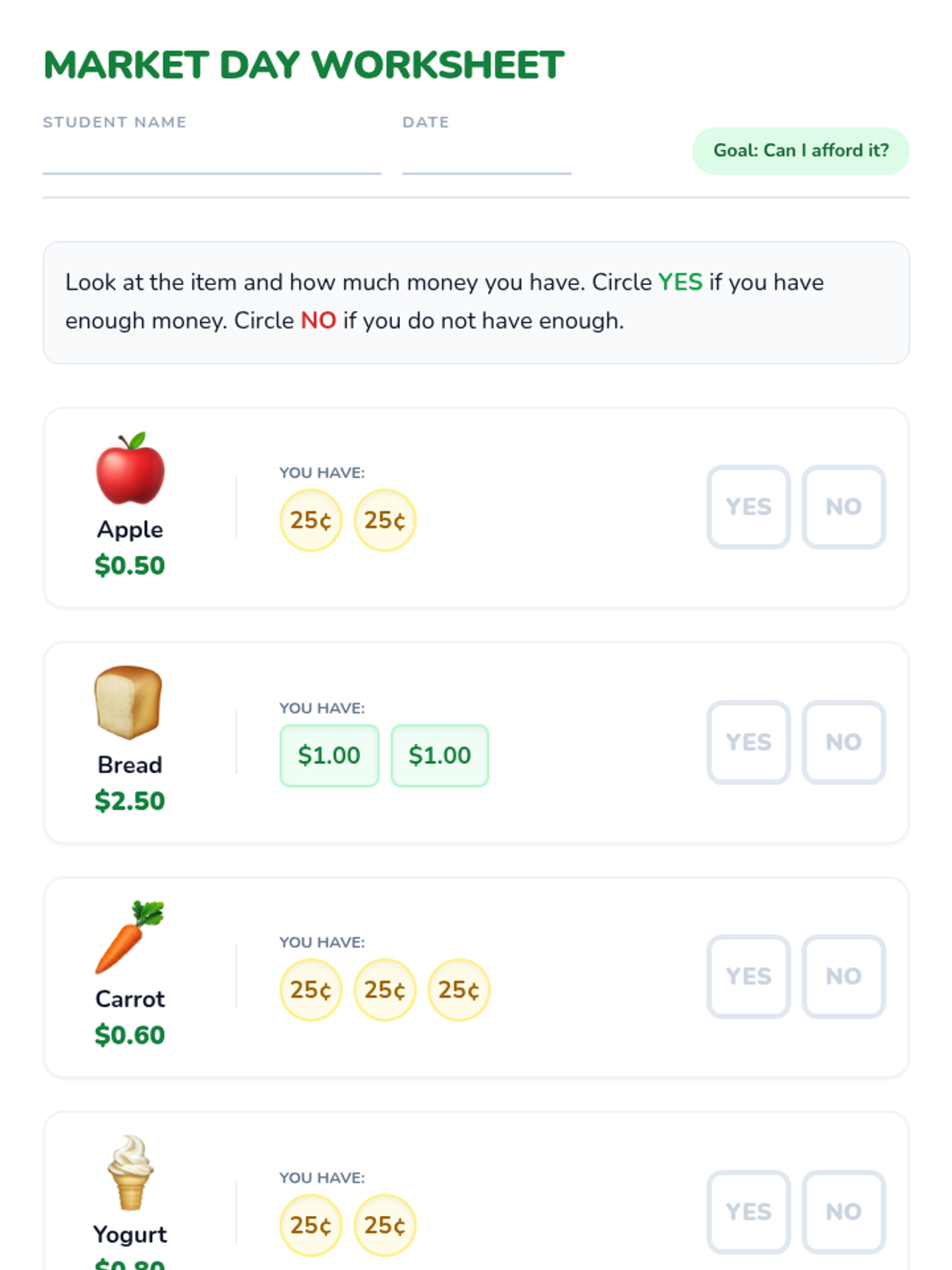
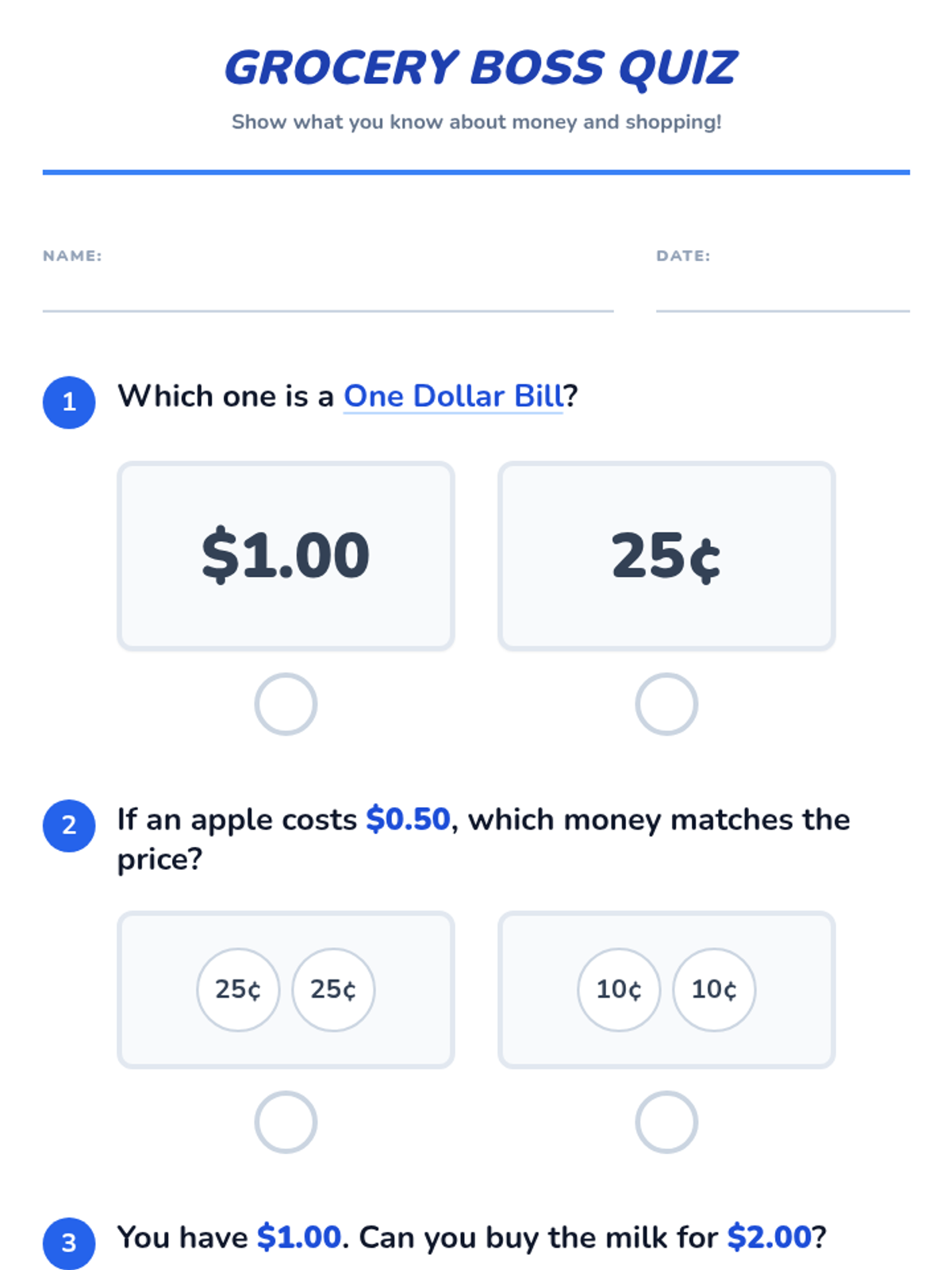
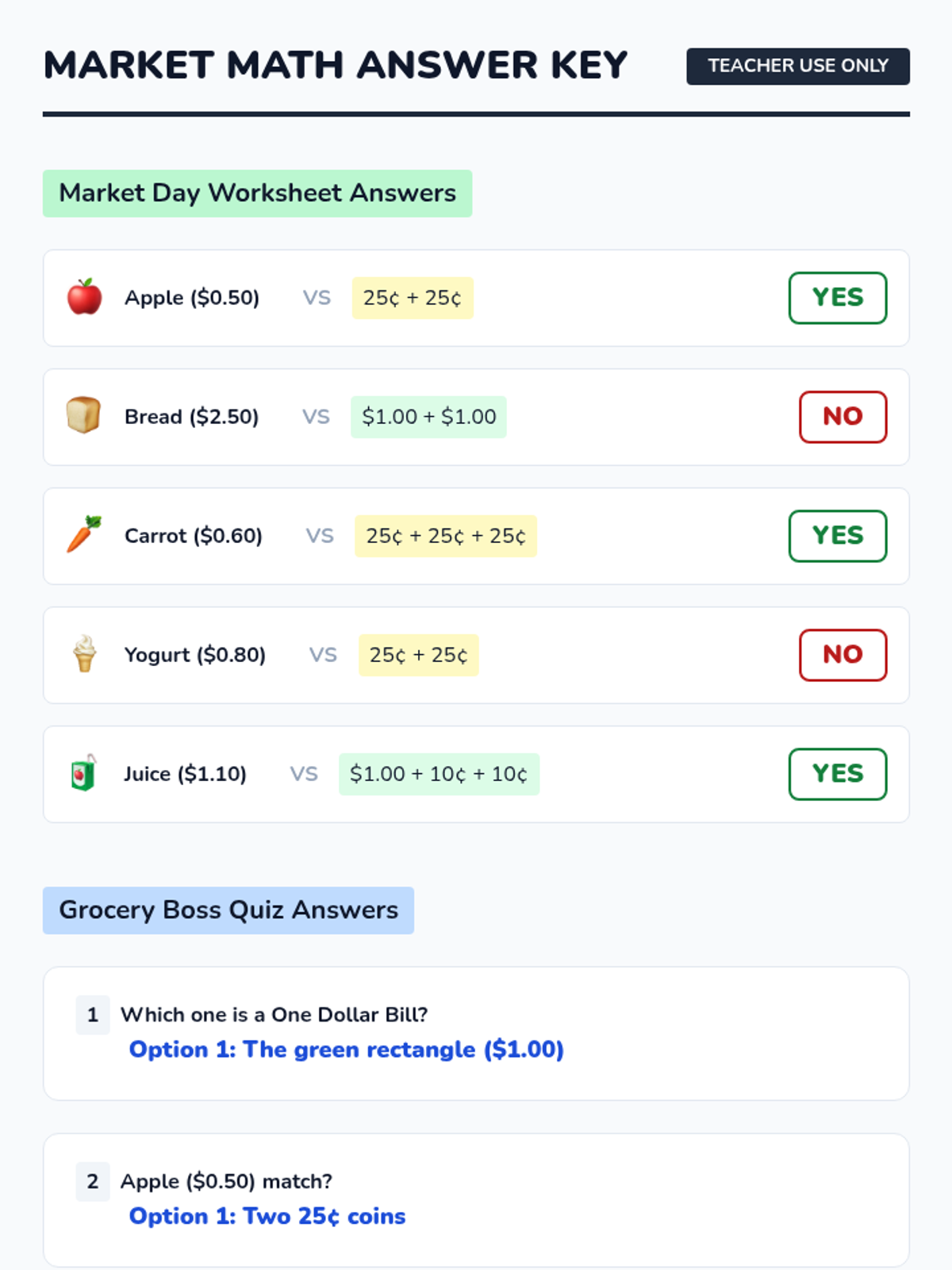
A hands-on introduction to basic budgeting and grocery shopping. Students practice identifying prices, comparing costs, and making simple purchasing decisions using dollars and cents with high visual support.