Geometric classification, measurement of area and volume, and the study of transformations and rigid motions. Builds toward complex proofs, trigonometry for general triangles, and the algebraic representation of conic sections.
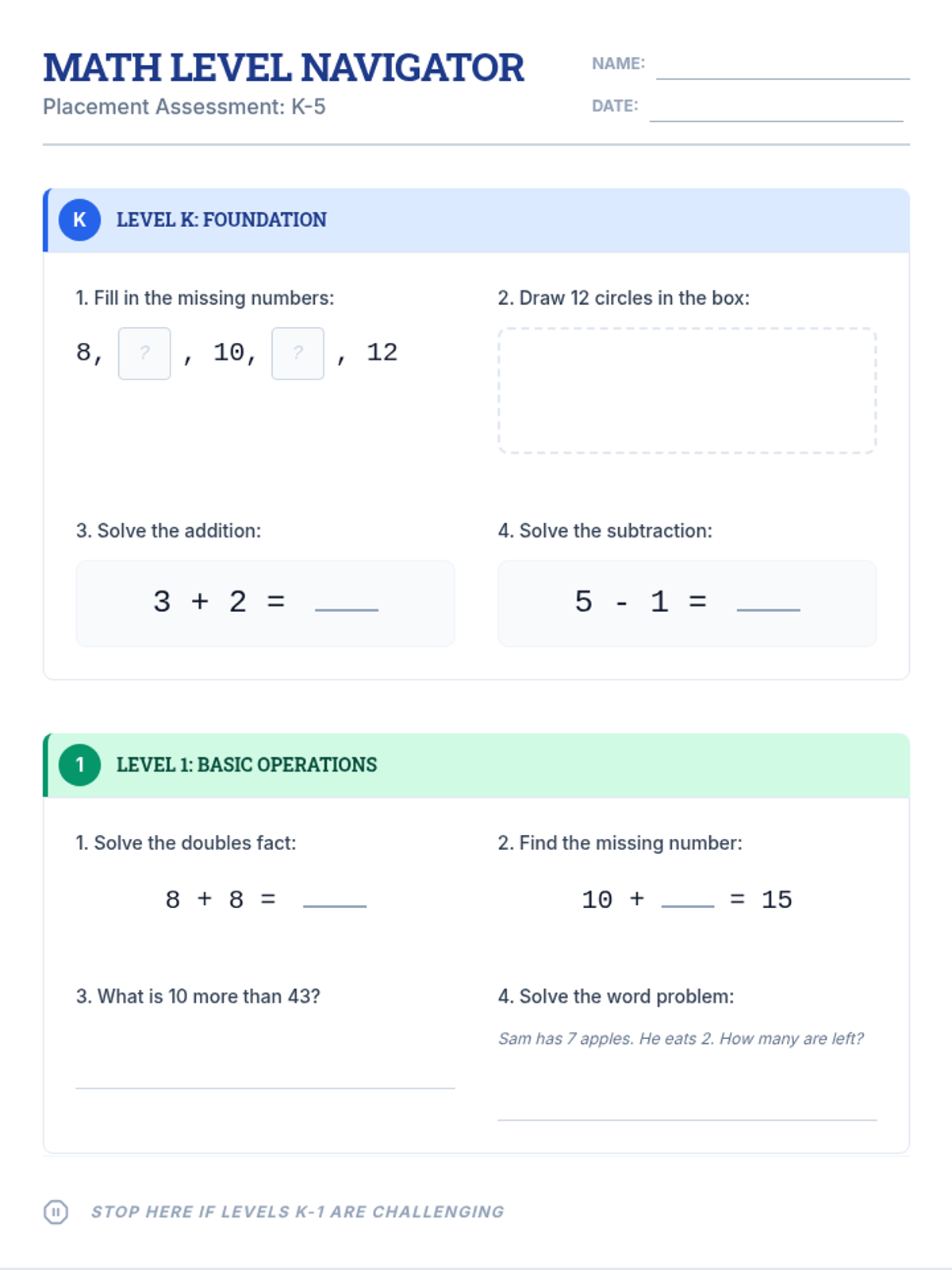
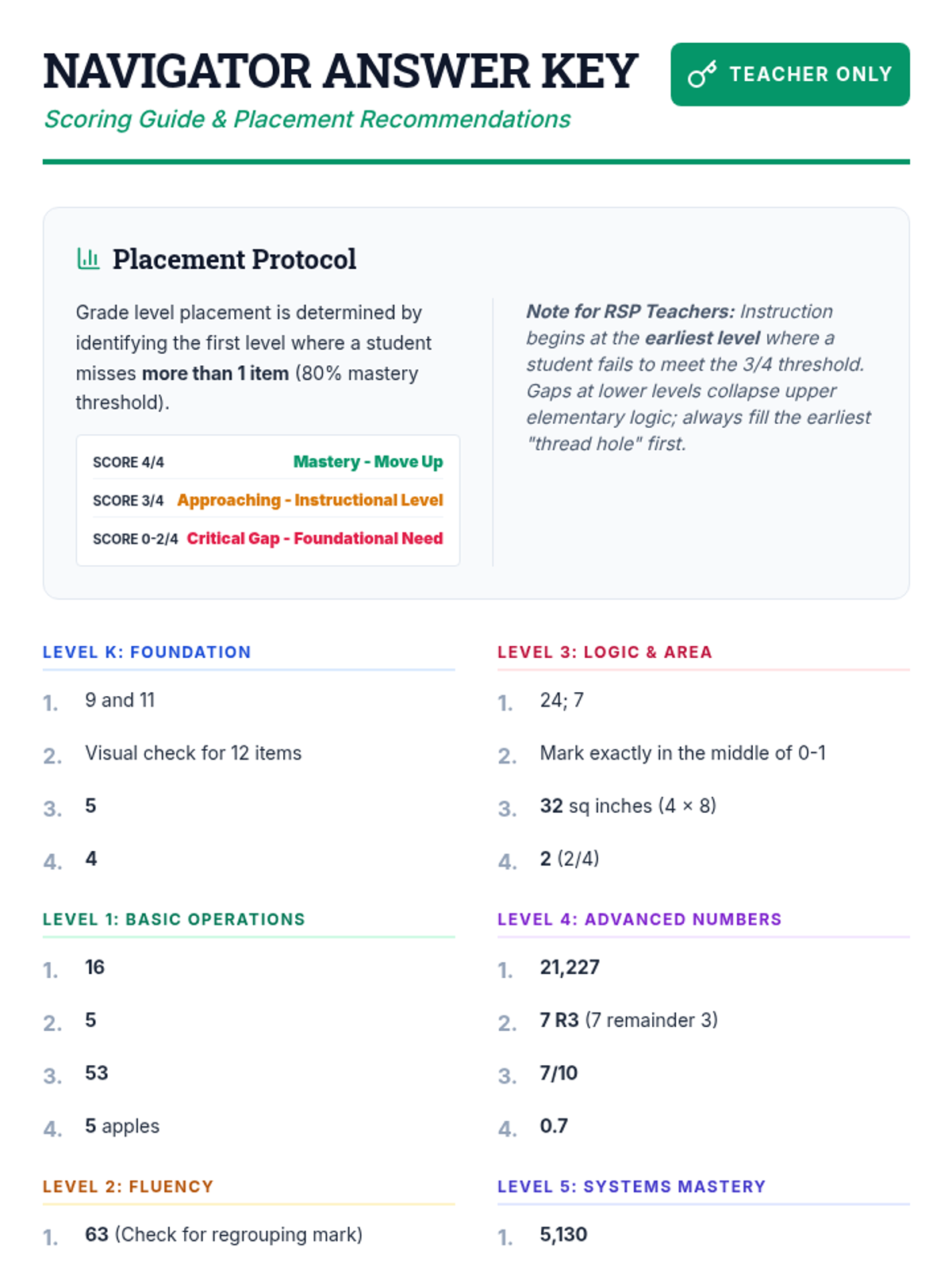
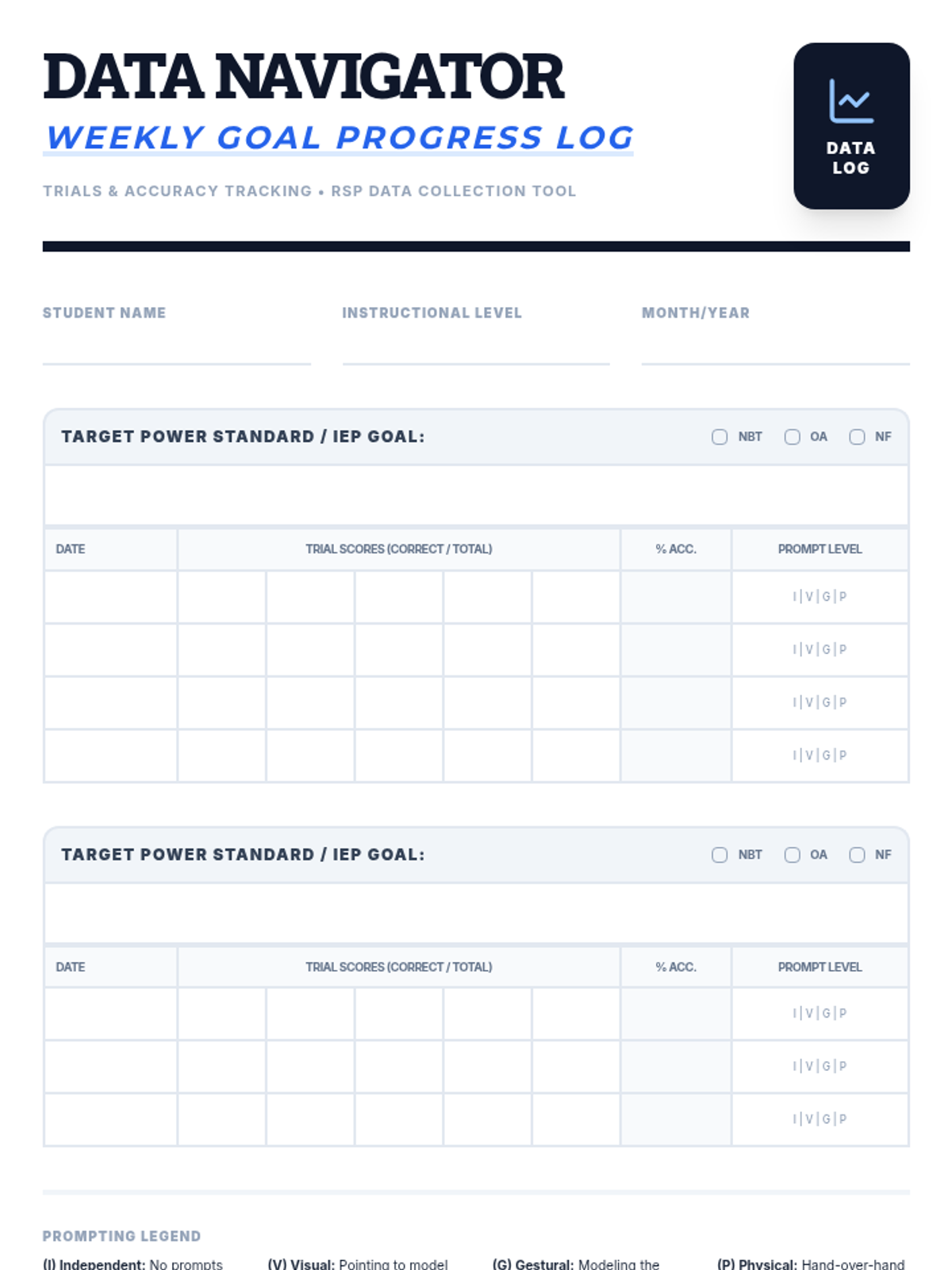
Foundational tools for assessing student levels and planning instruction based on California Power Standards across grades K-5.
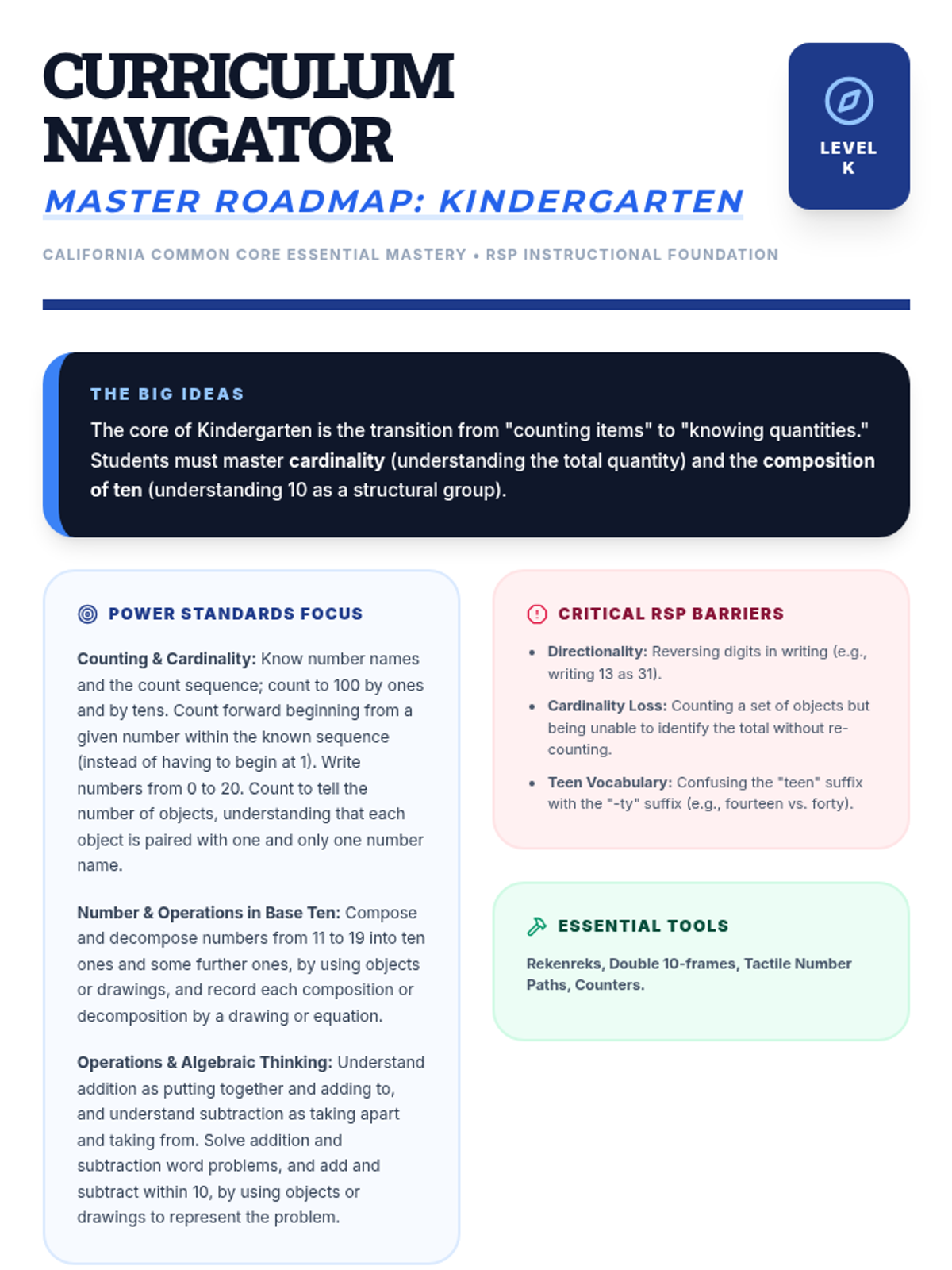
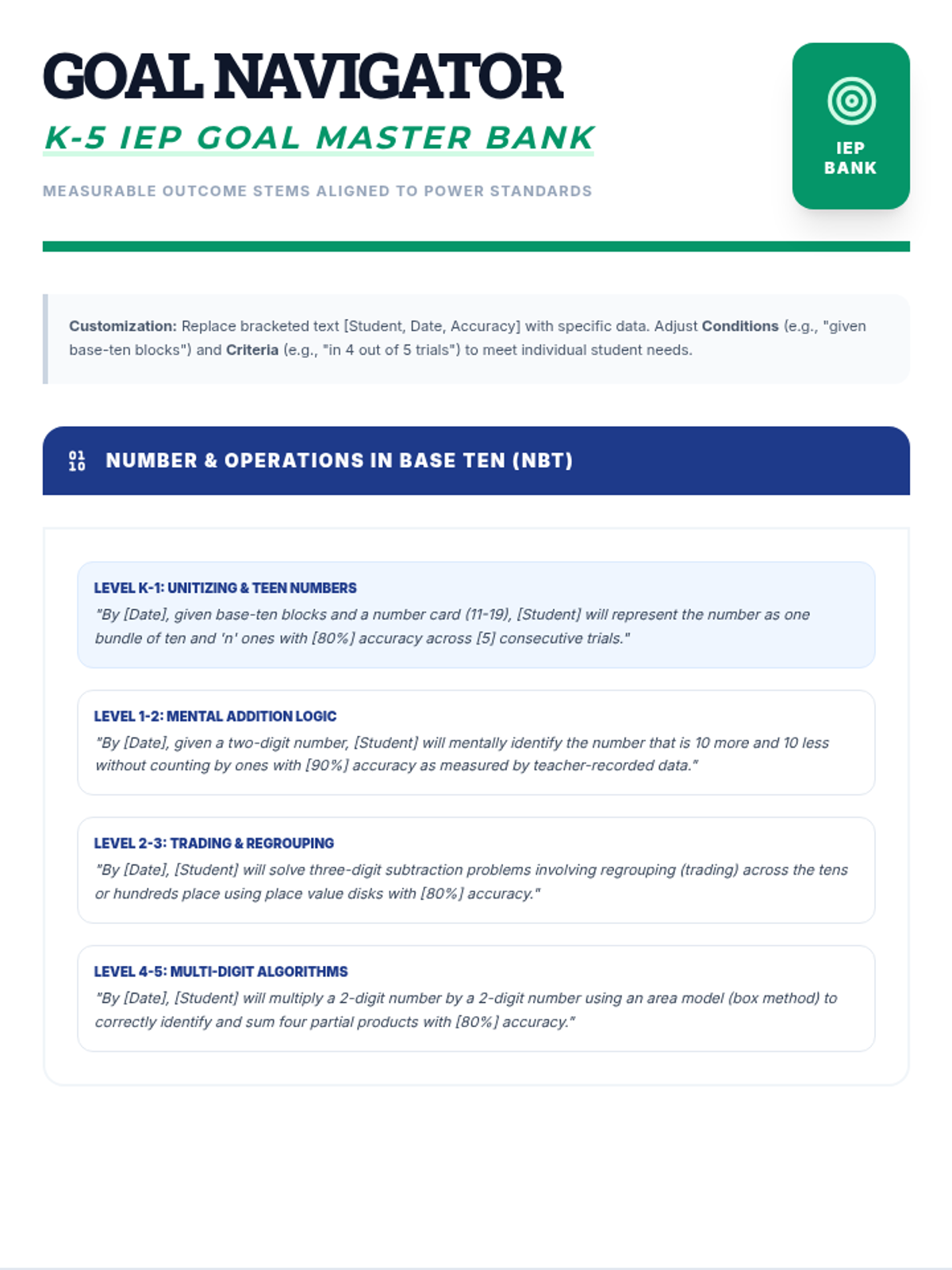
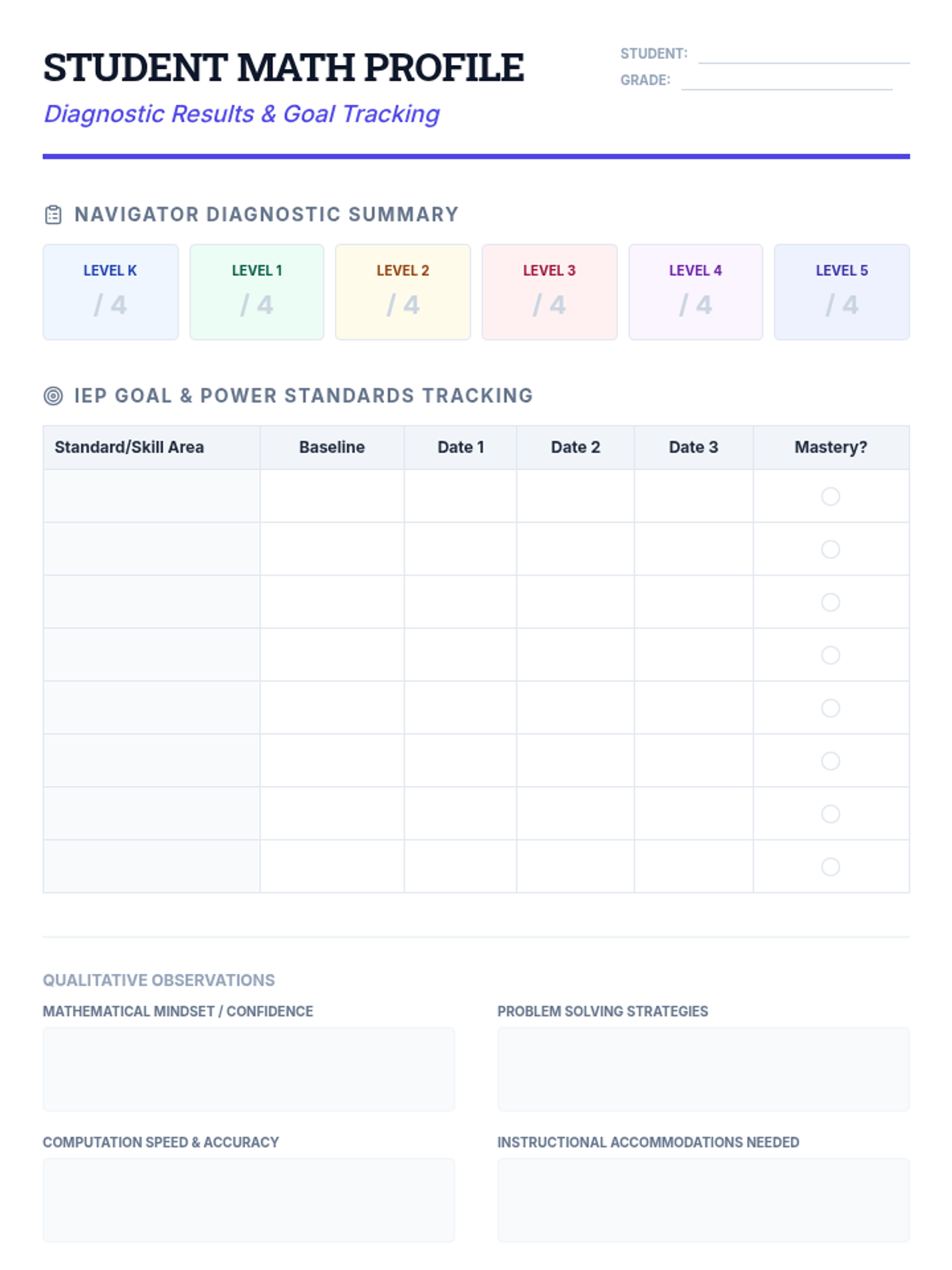
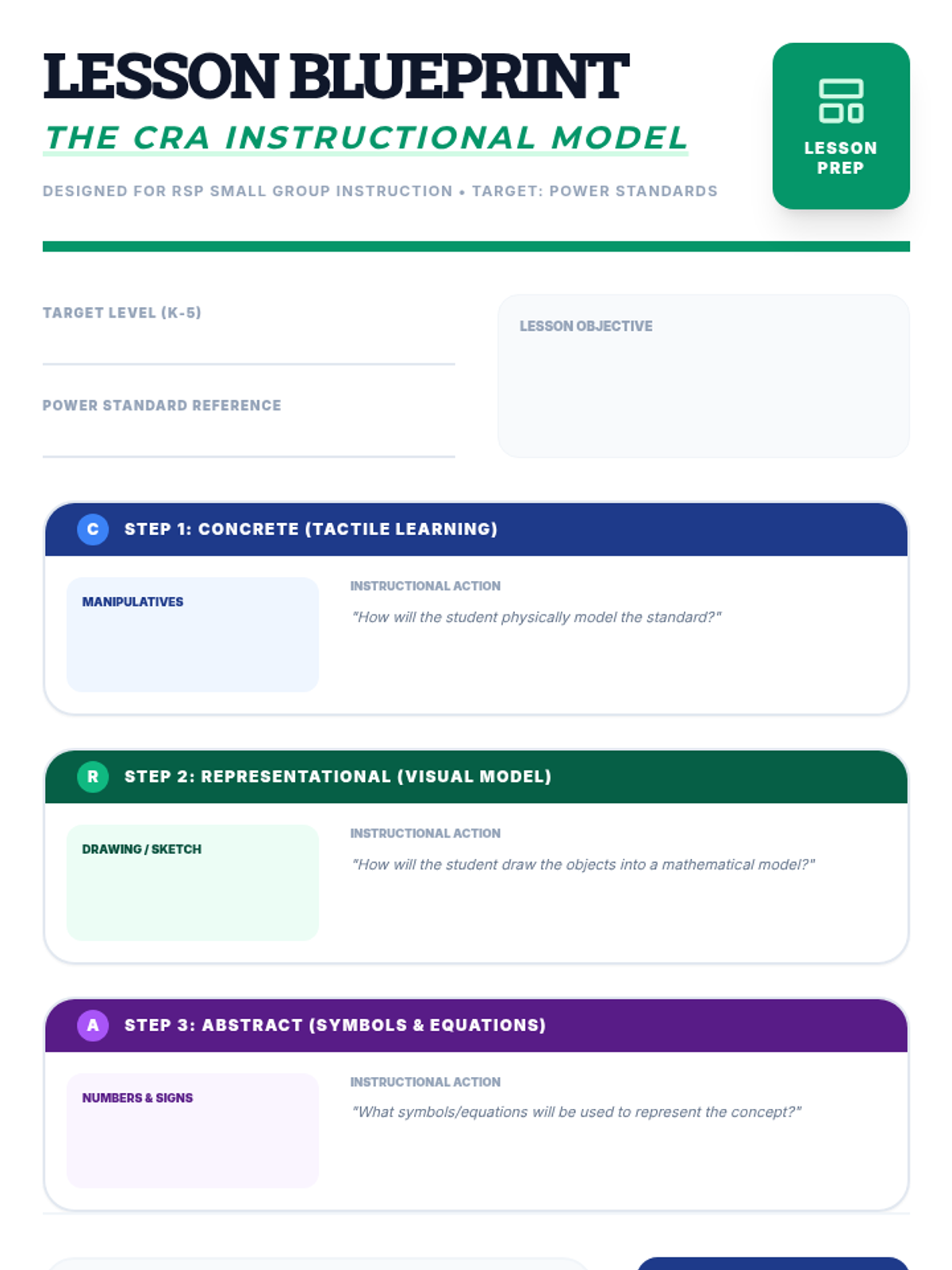
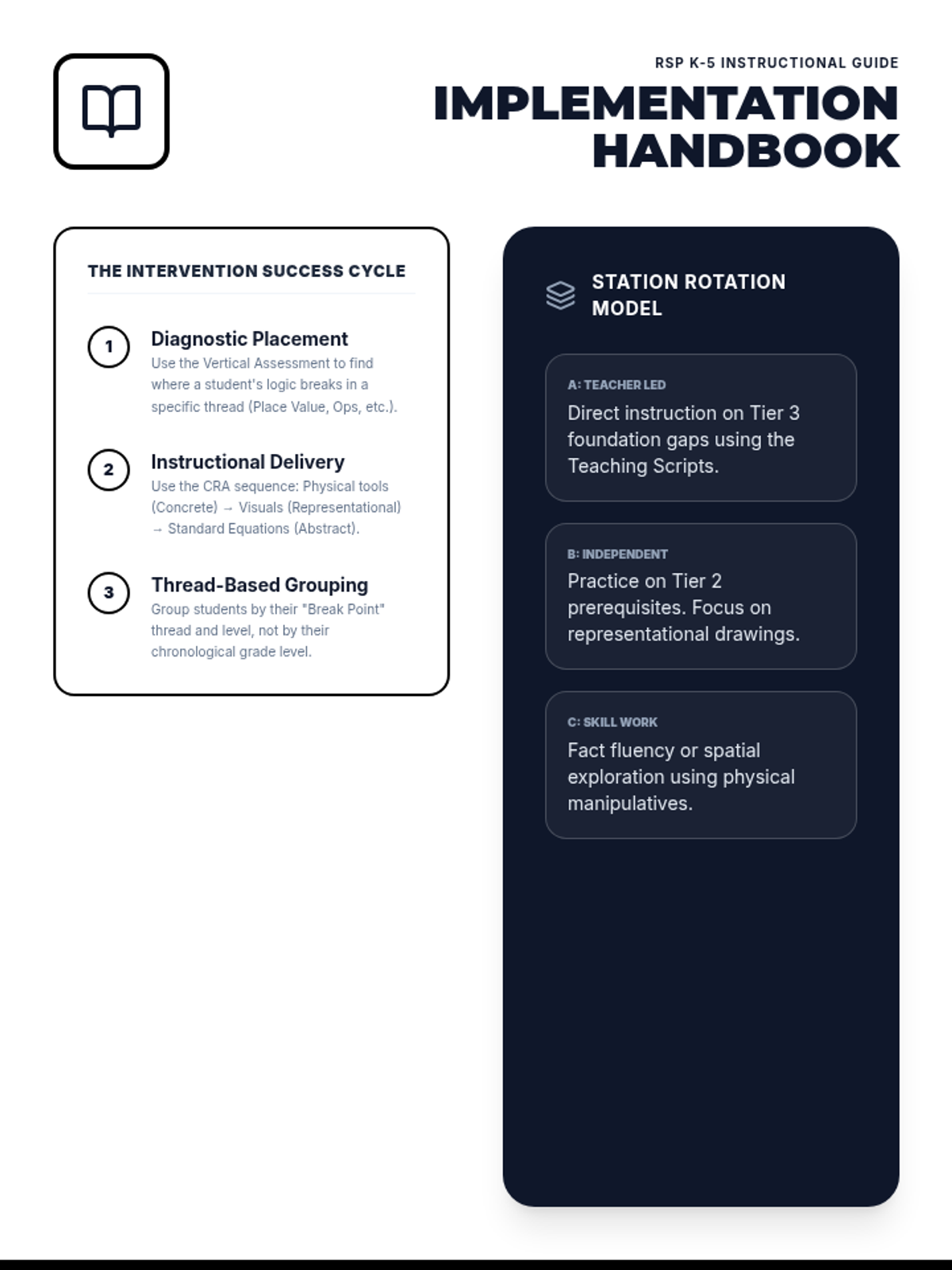
A toolkit for RSP teachers to transform a scope and sequence into a functional daily curriculum. Includes instructional frameworks, diagnostic tools, and planning templates specifically designed for multi-grade math intervention.
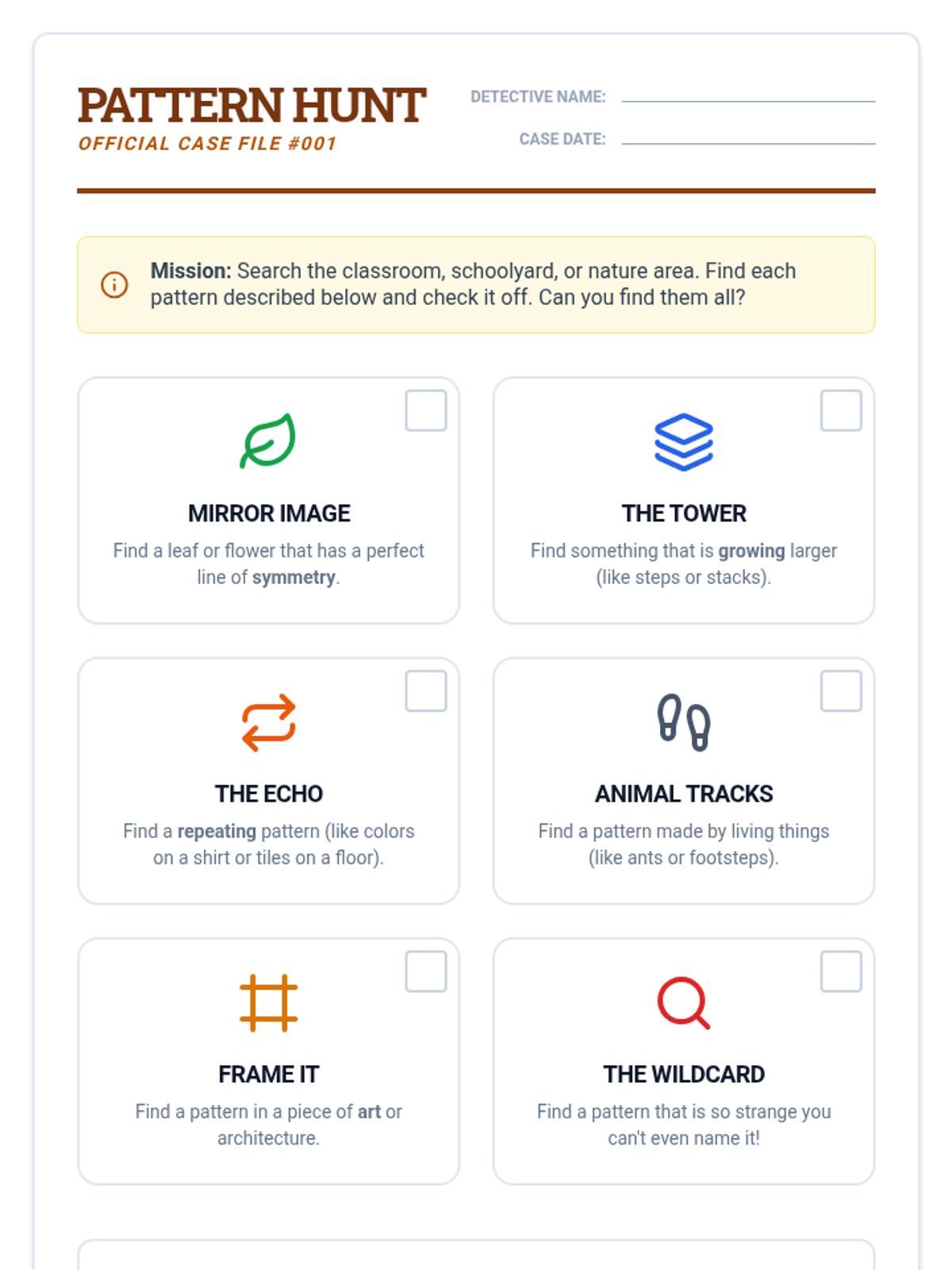
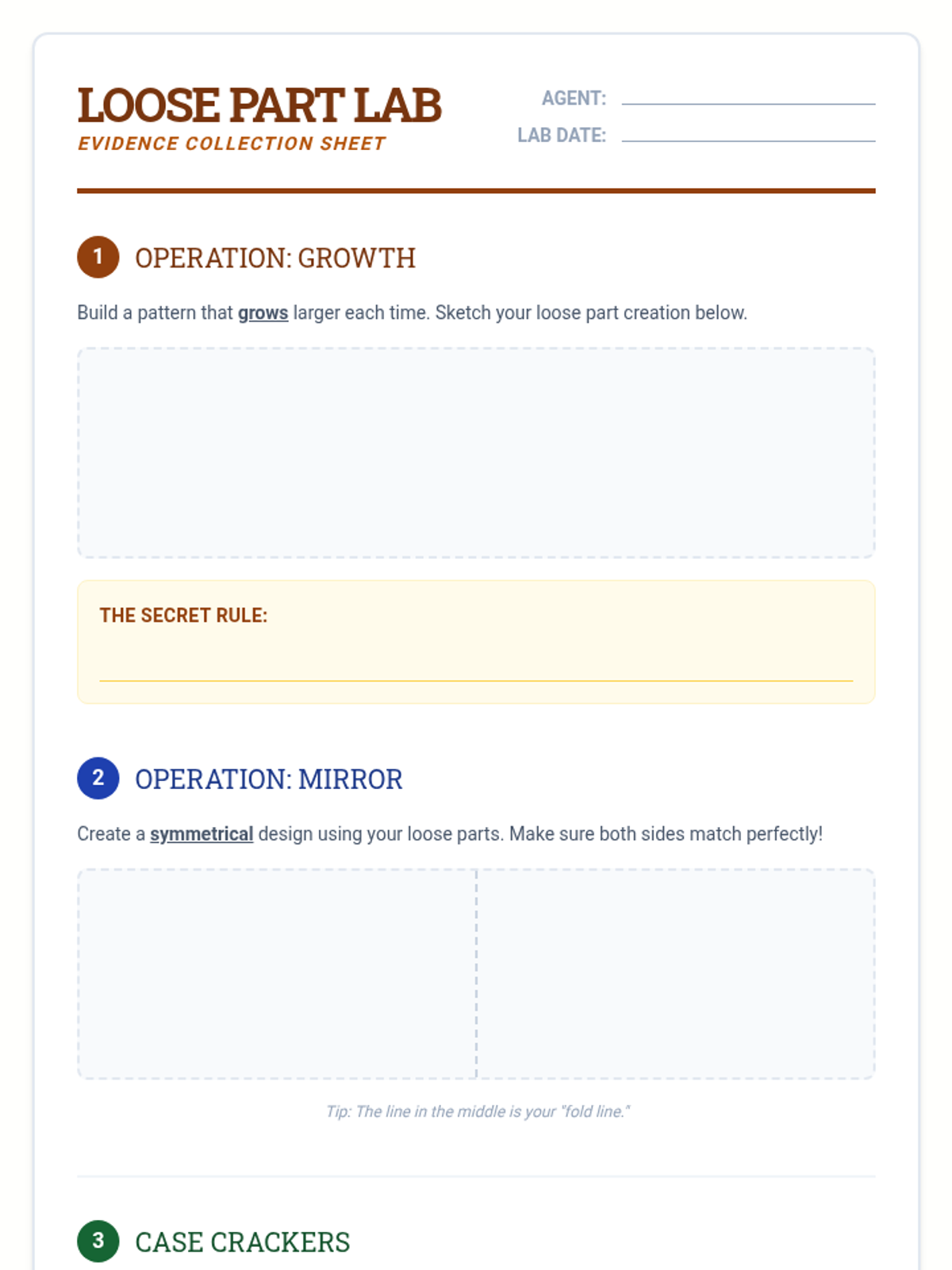
A hands-on exploration of patterns in nature, art, and the environment. Students move beyond simple repetition to discover growing patterns and symmetry using loose parts and detective-style observation.
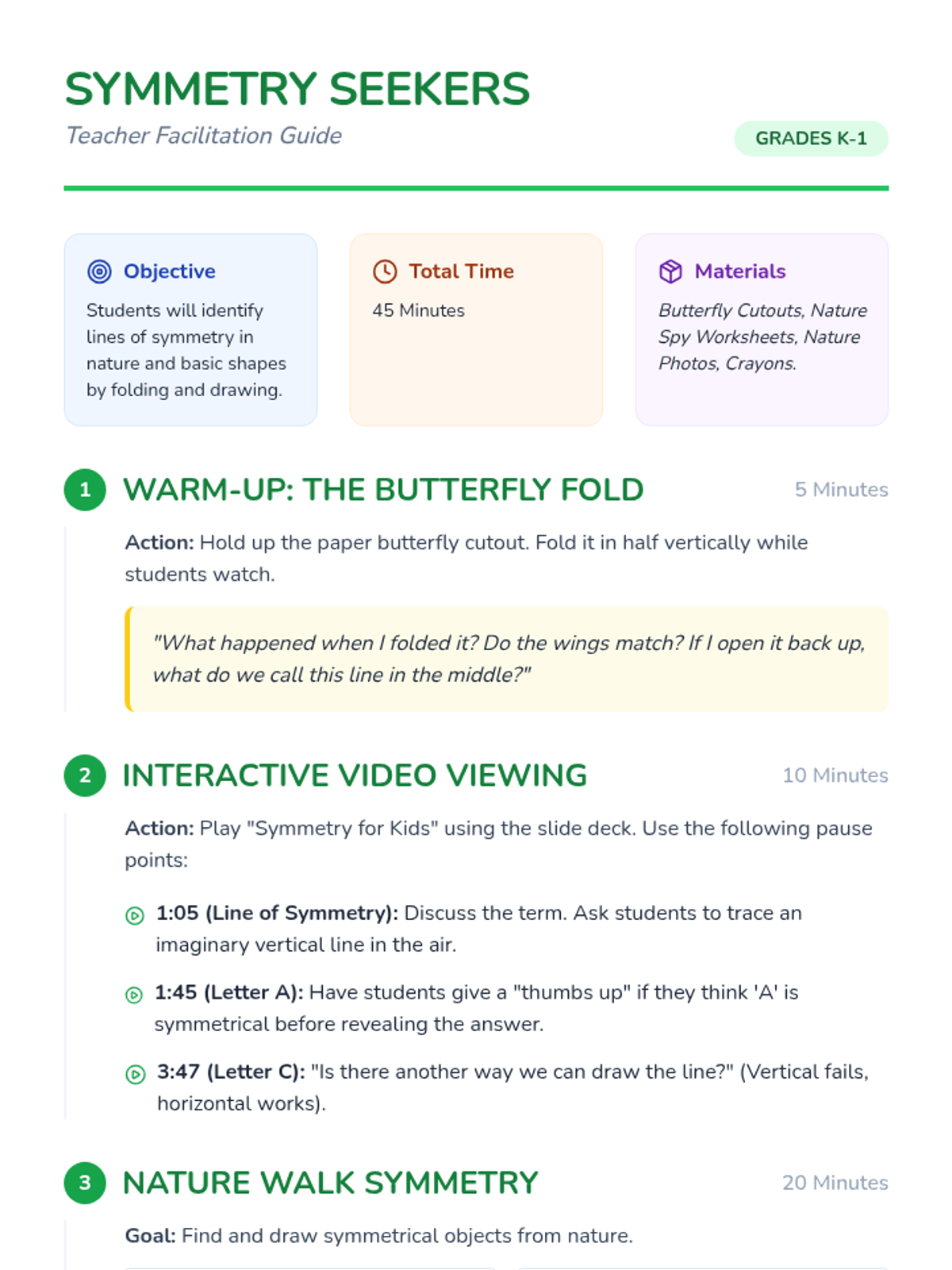
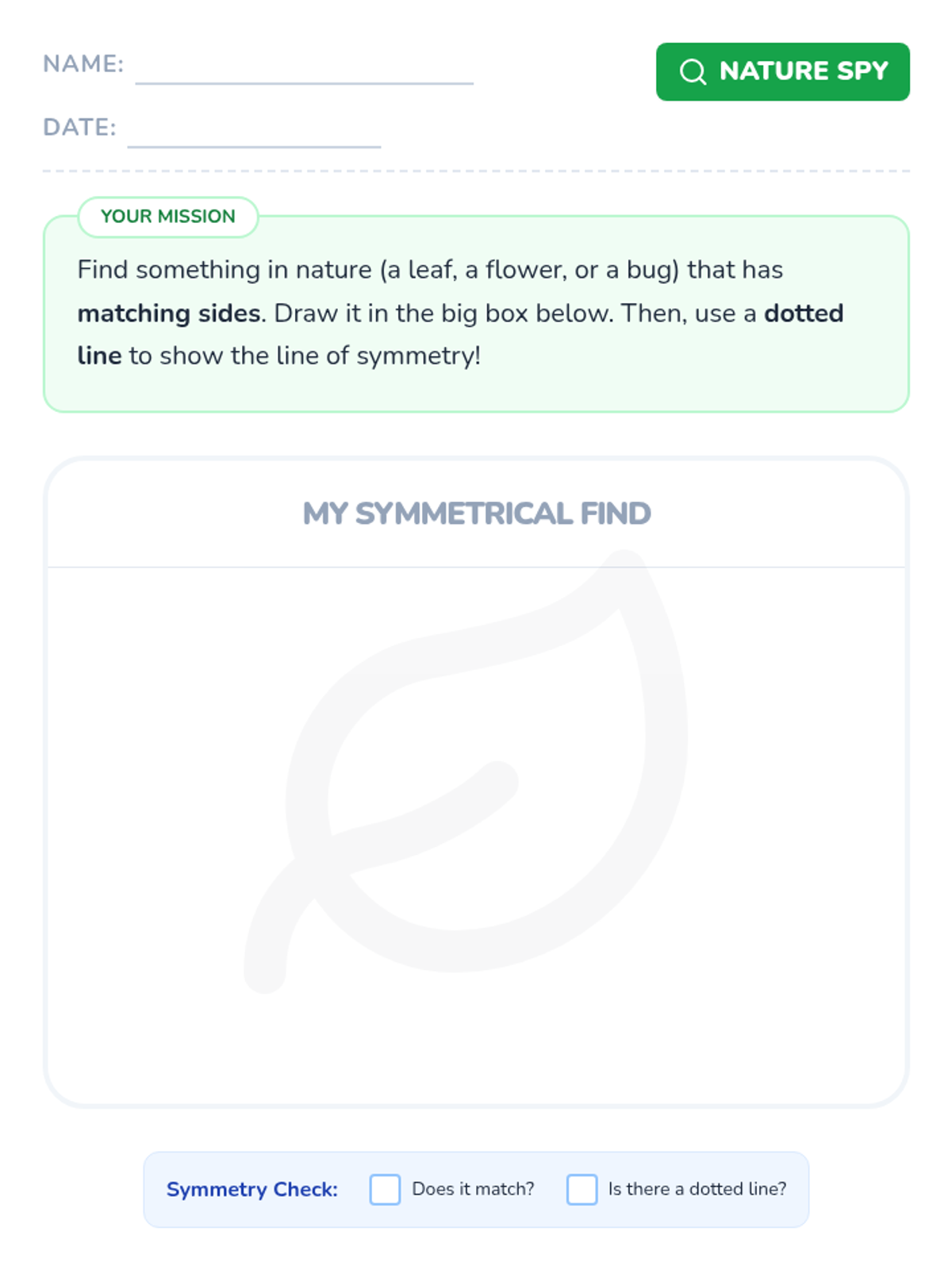
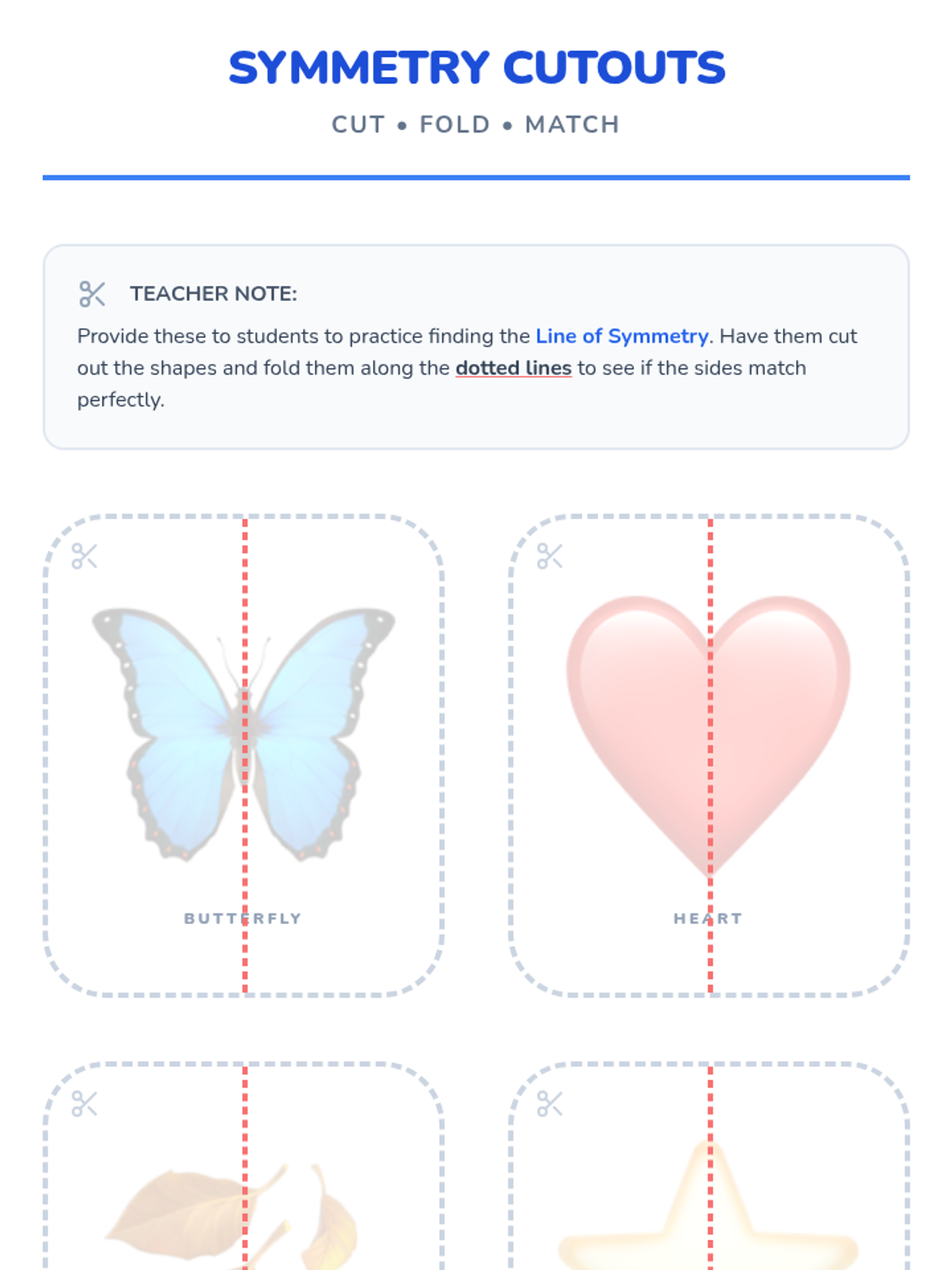
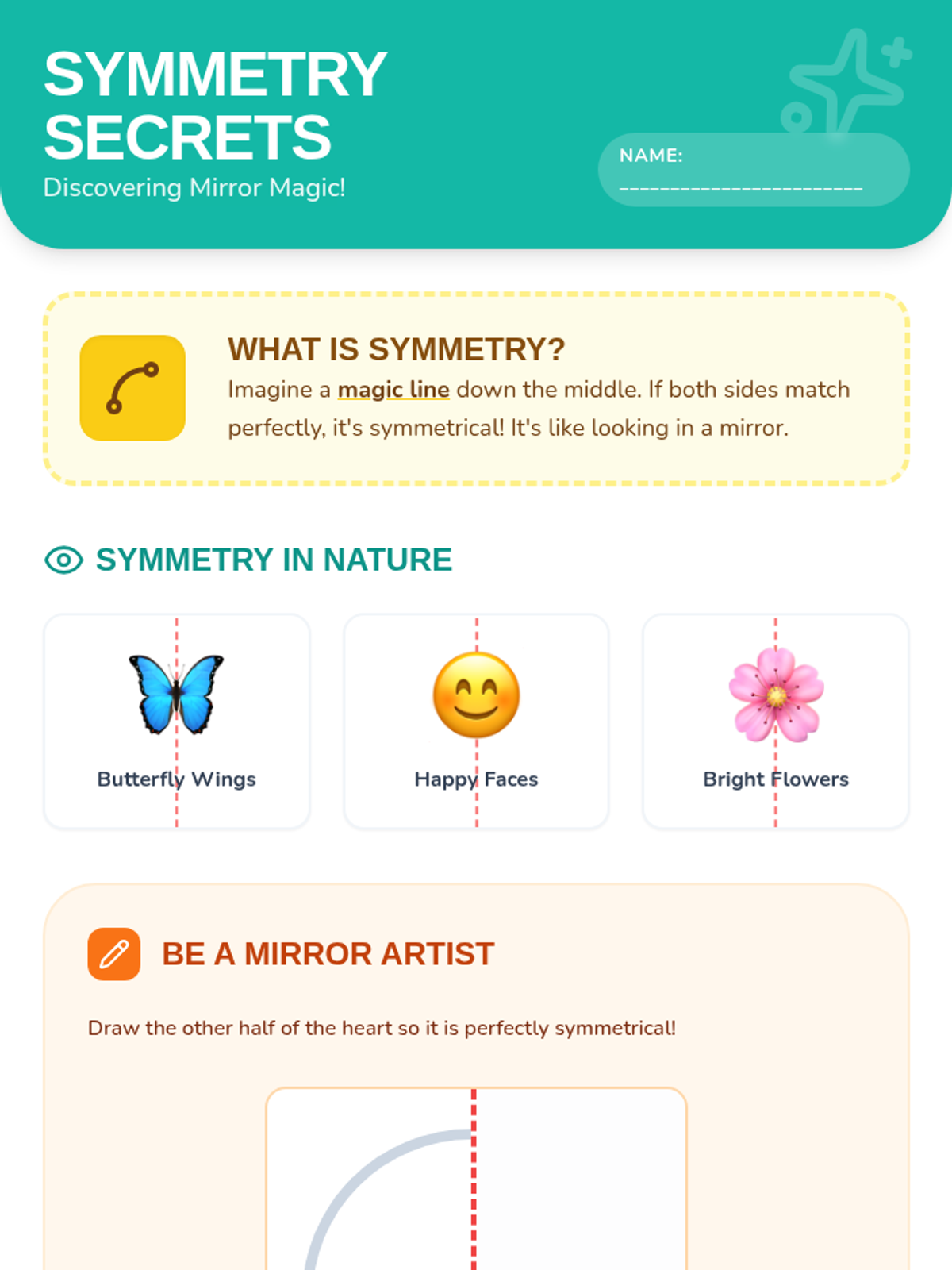
A hands-on introduction to symmetry for Kindergarten and 1st Grade students, using nature and letters to explore how things match. Students will identify lines of symmetry in the real world through a nature walk and creative drawing.
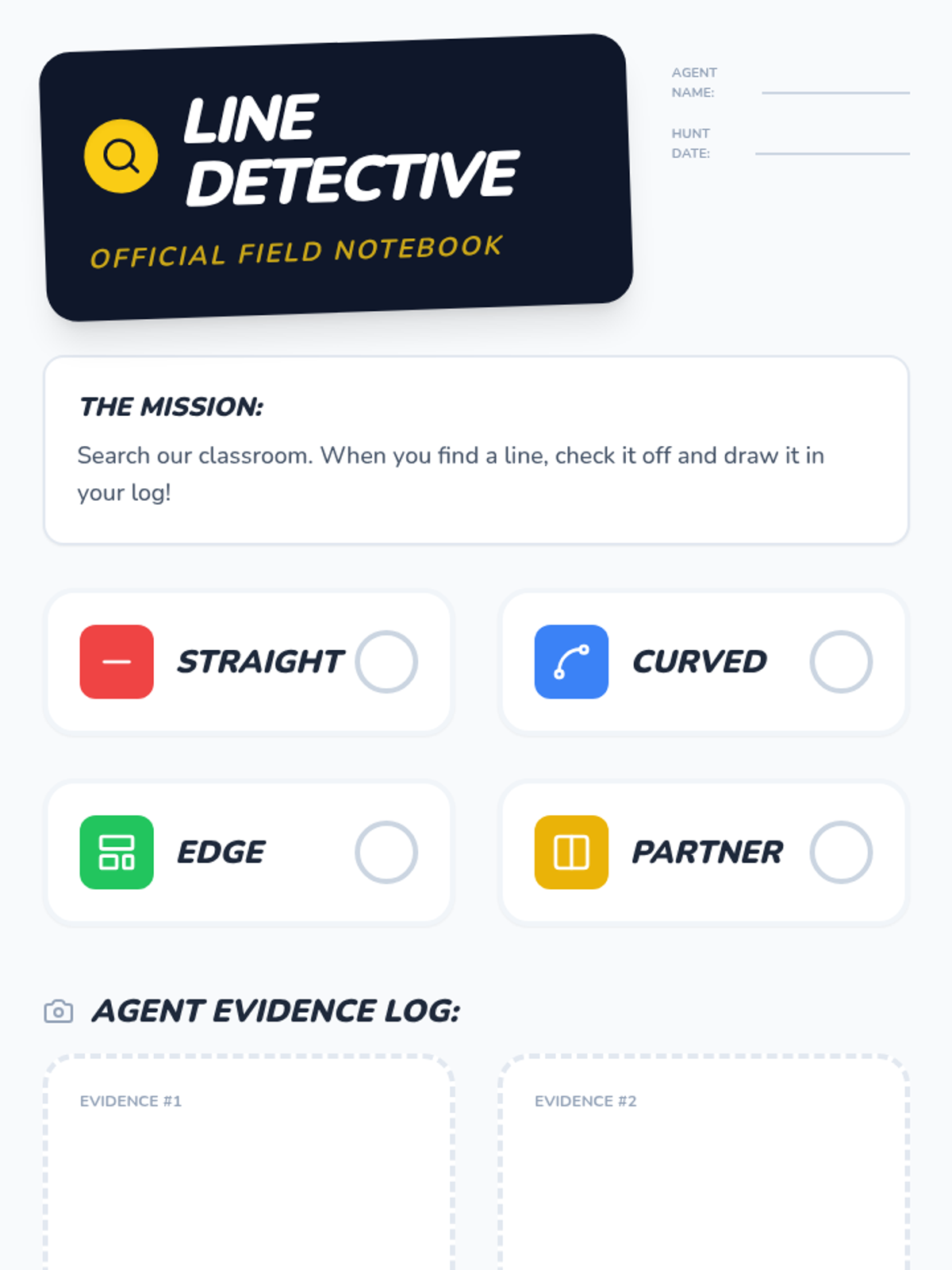
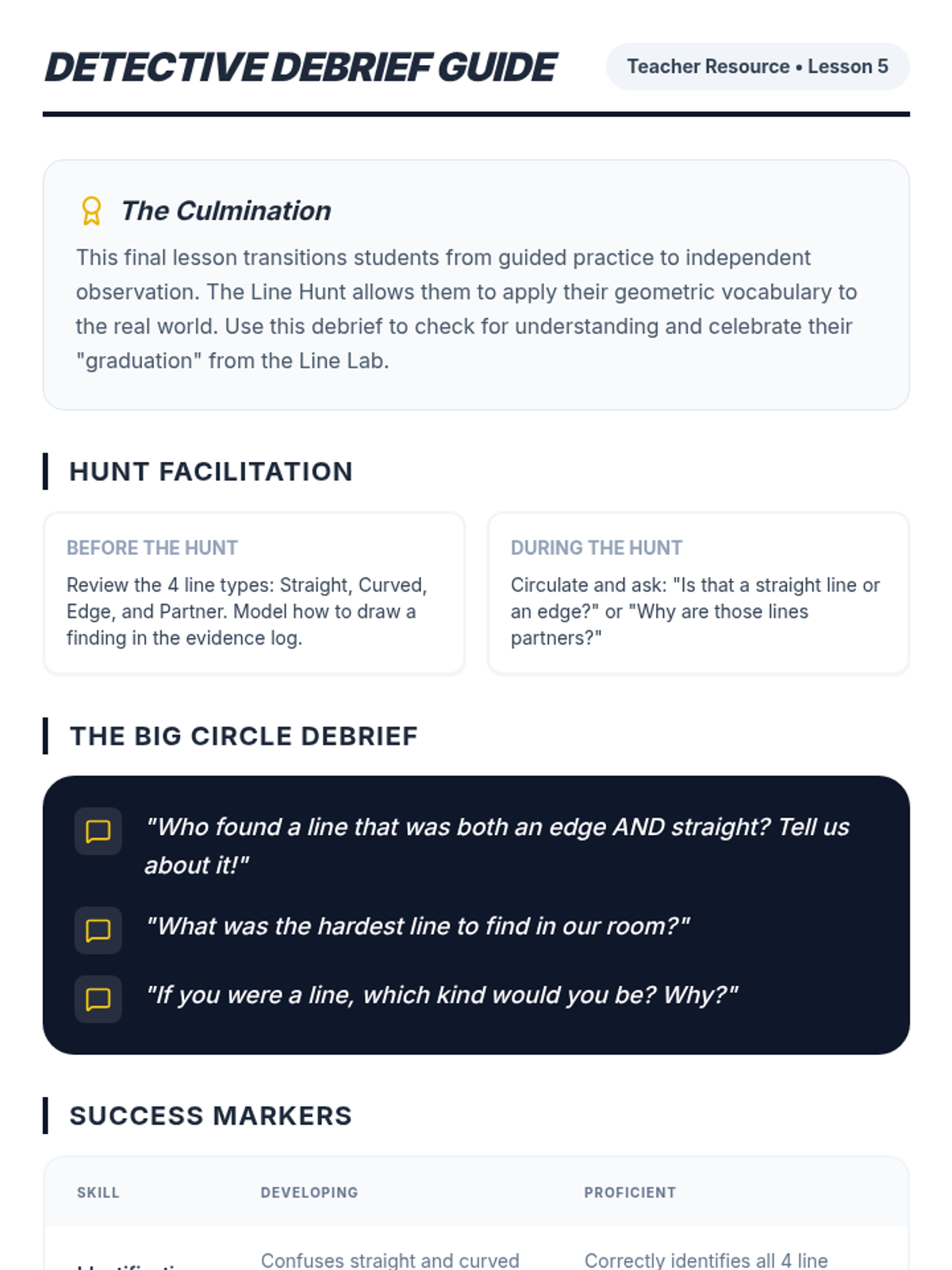
A culminating classroom scavenger hunt where students apply their knowledge to find and document different types of lines in their environment.
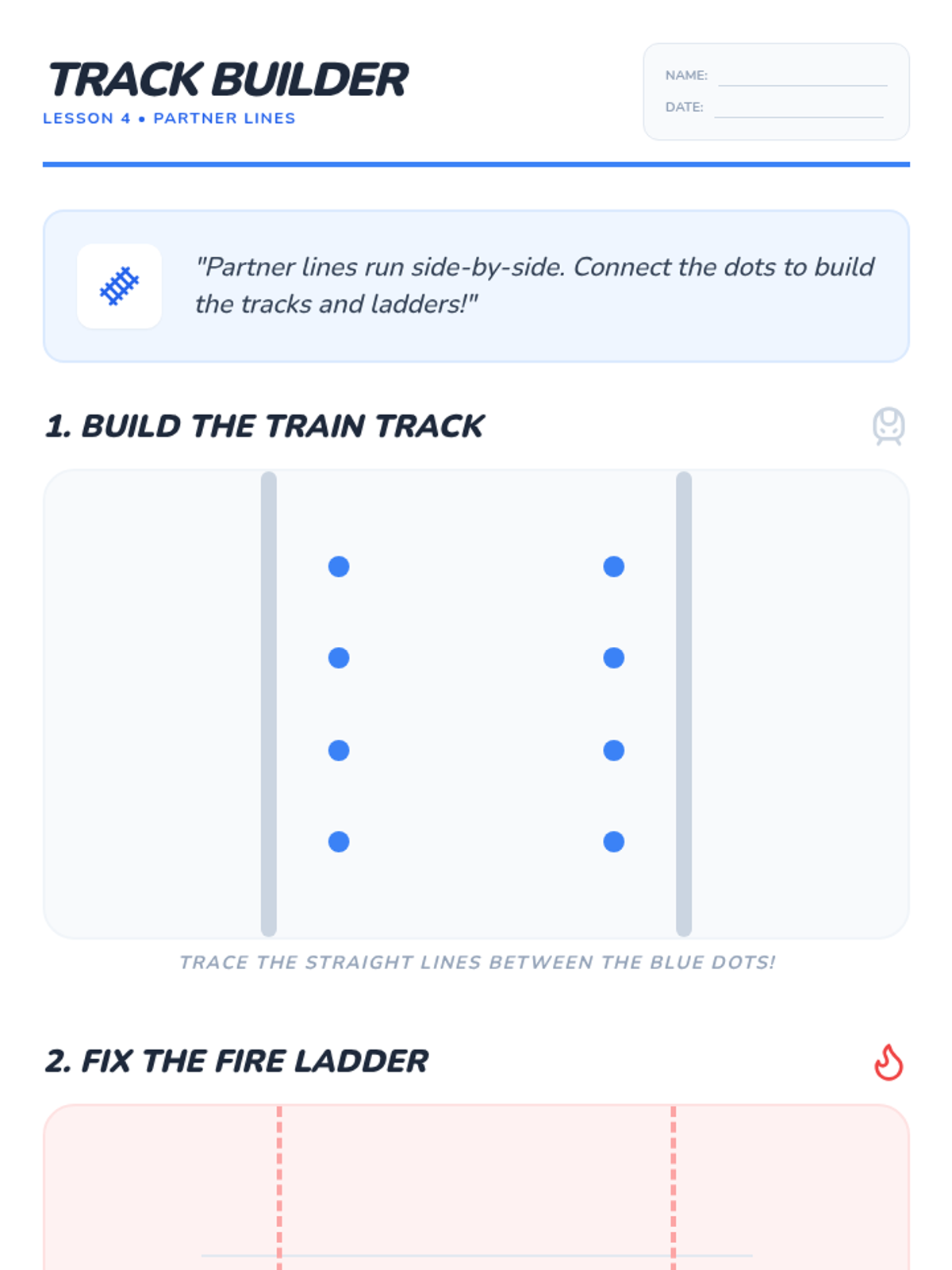
An introductory look at lines that run side-by-side using the imagery of train tracks and ladders to explore parallel concepts.
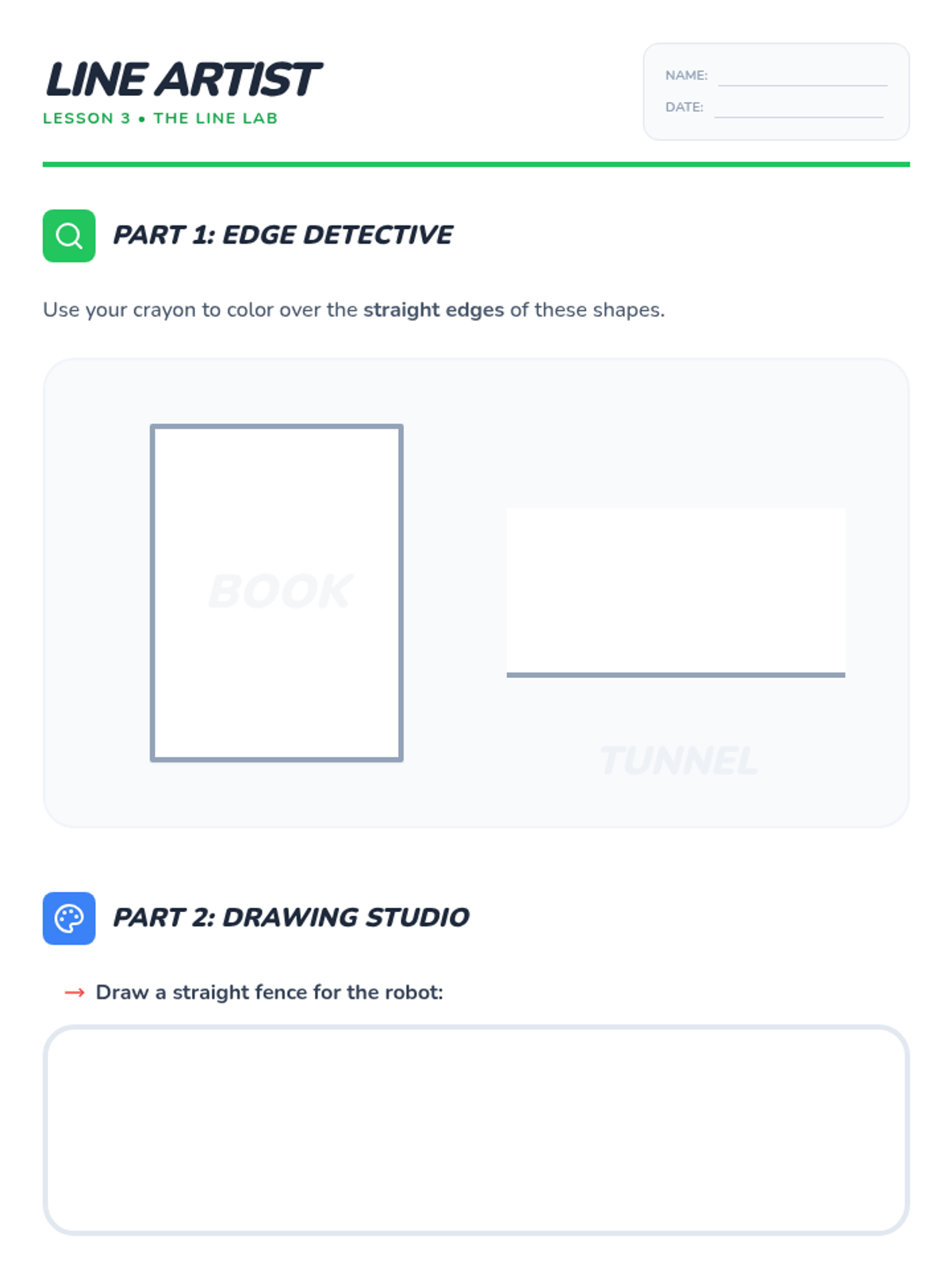
Students transition to drawing lines and learn the concept of an 'edge' as a specific straight line found on real-world objects.
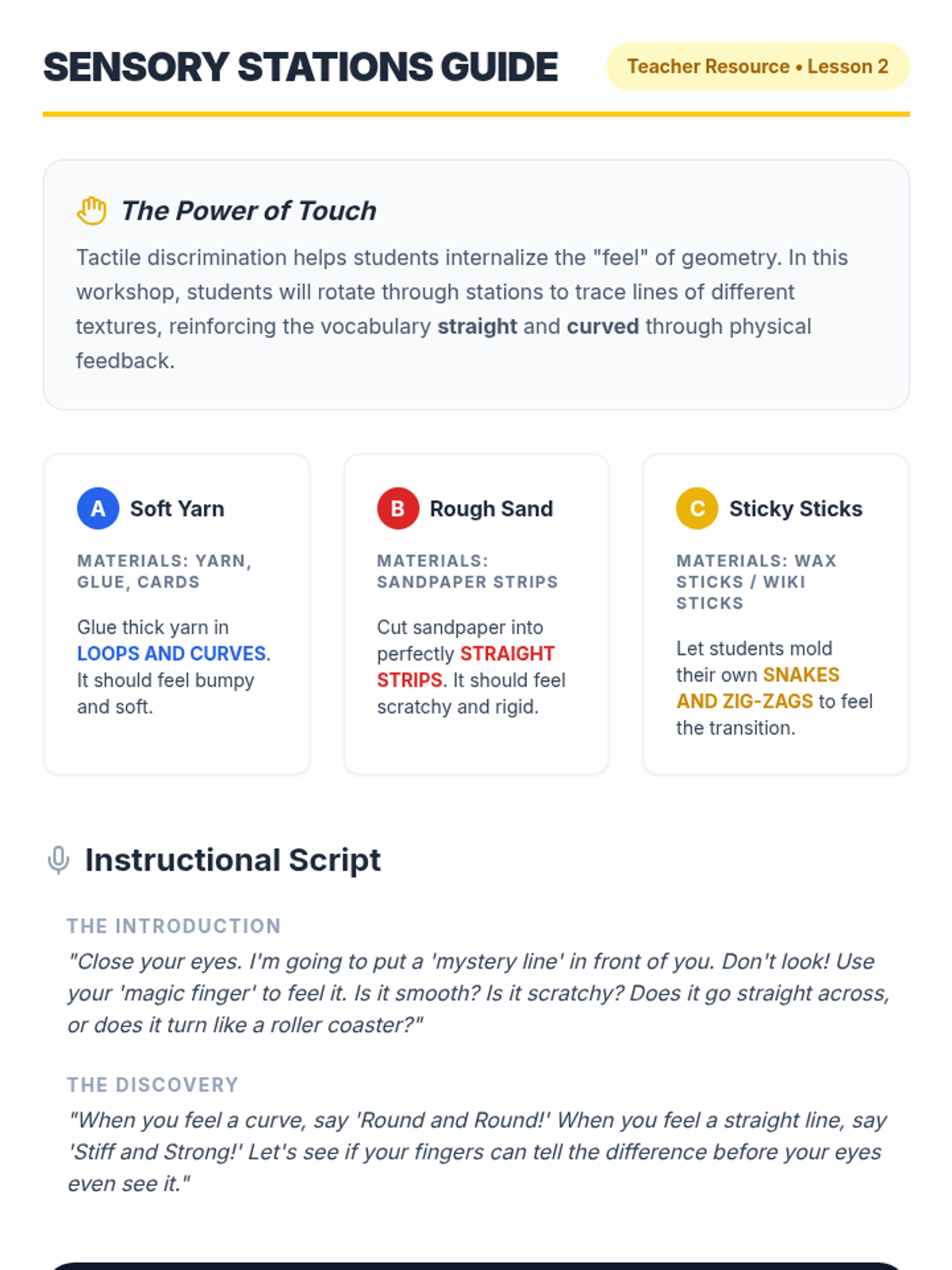
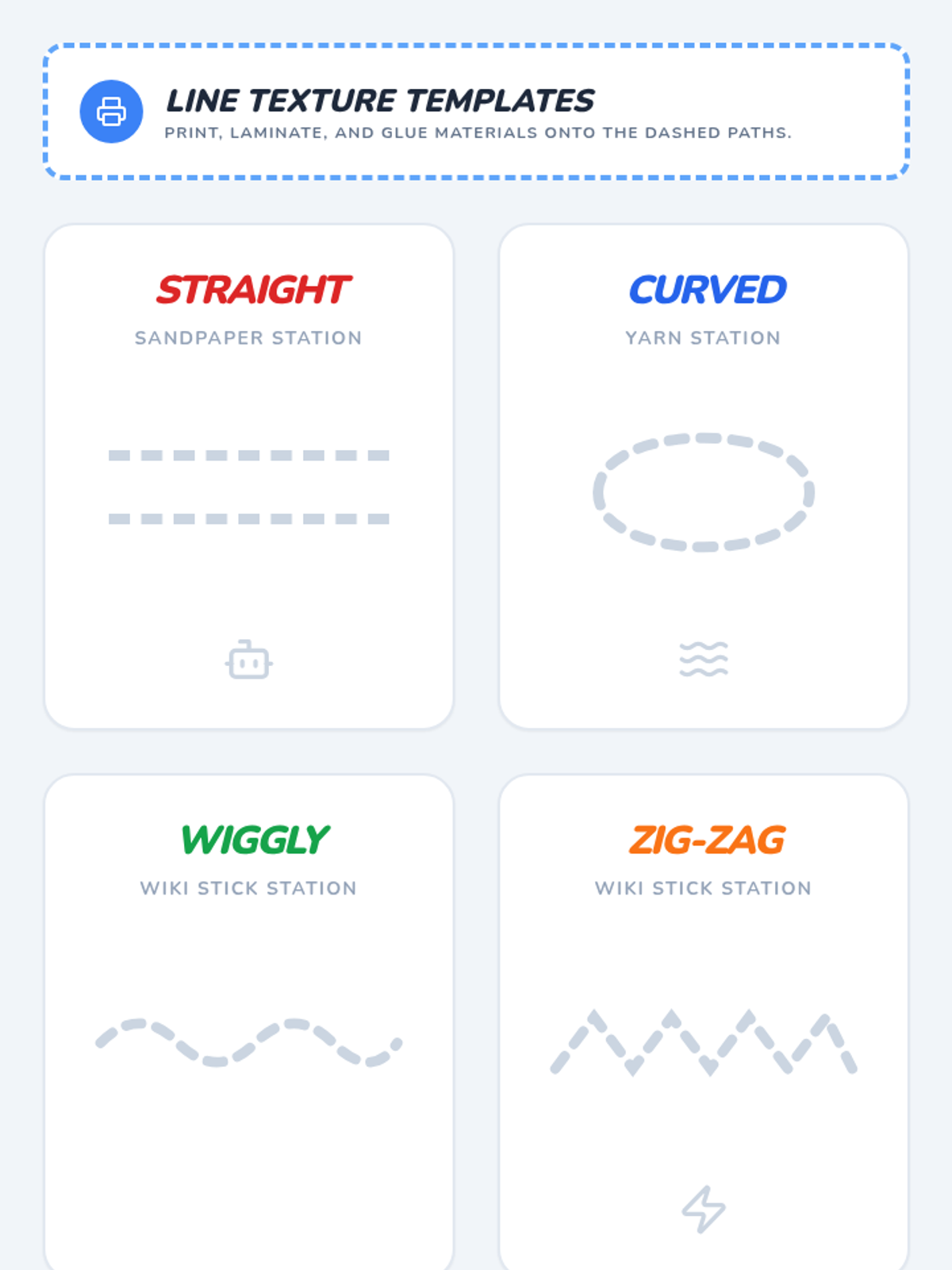
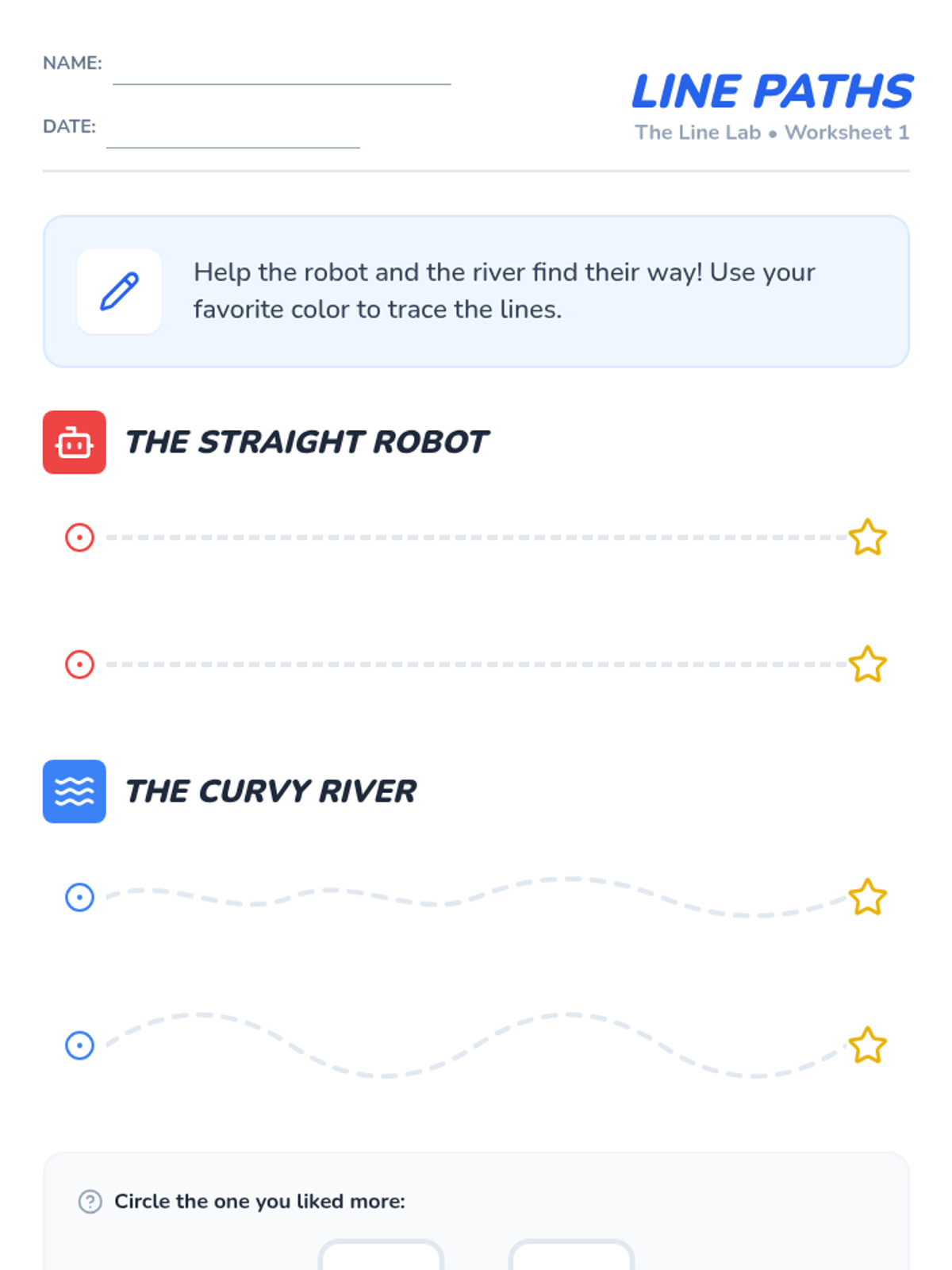
A sensory-rich lesson where students trace lines of different textures to build fine motor control and tactile understanding of line shapes.
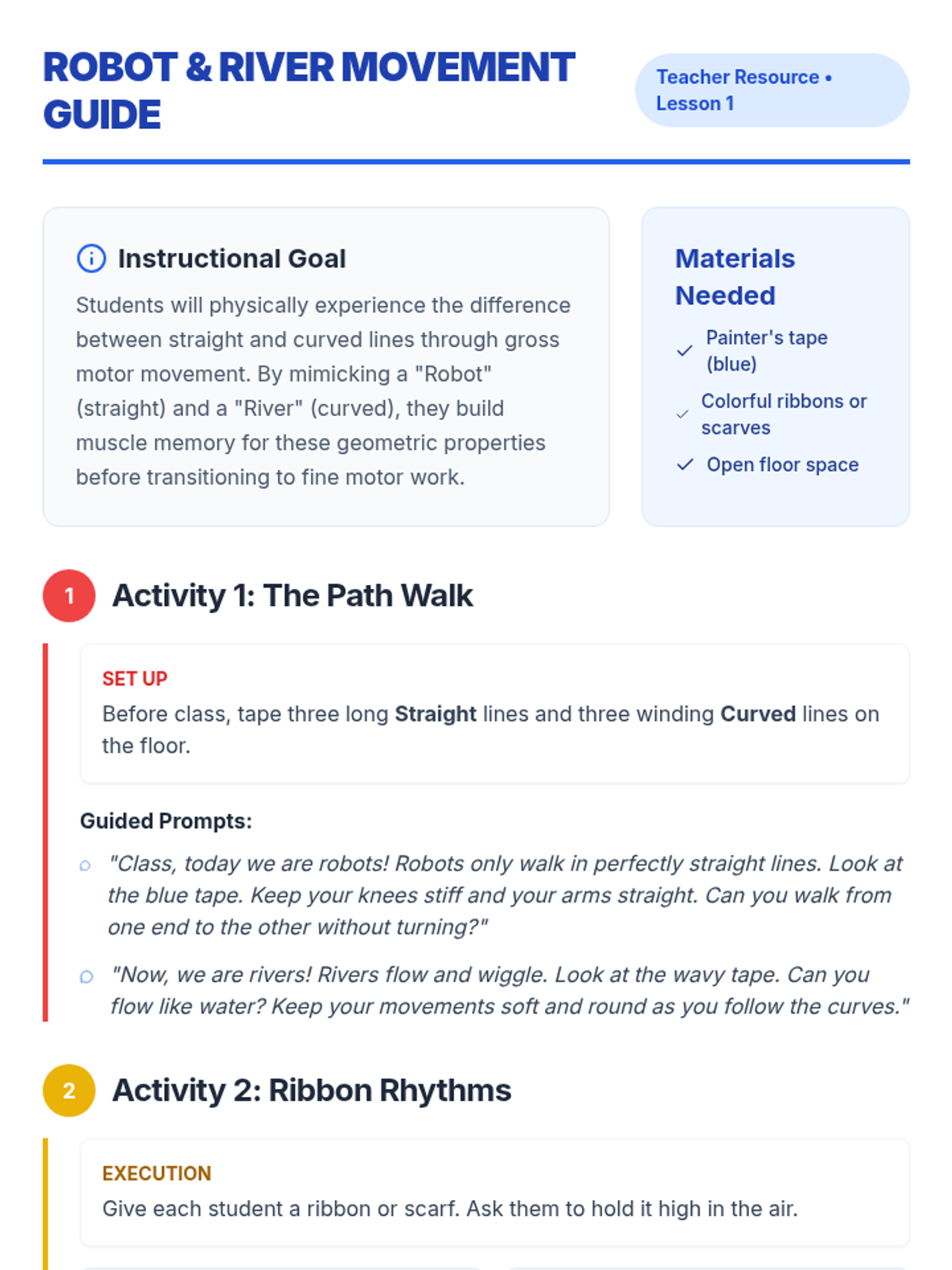
Students use gross motor skills to walk along paths and move ribbons, experiencing the physical difference between 'robot' (straight) and 'river' (curved) movements.
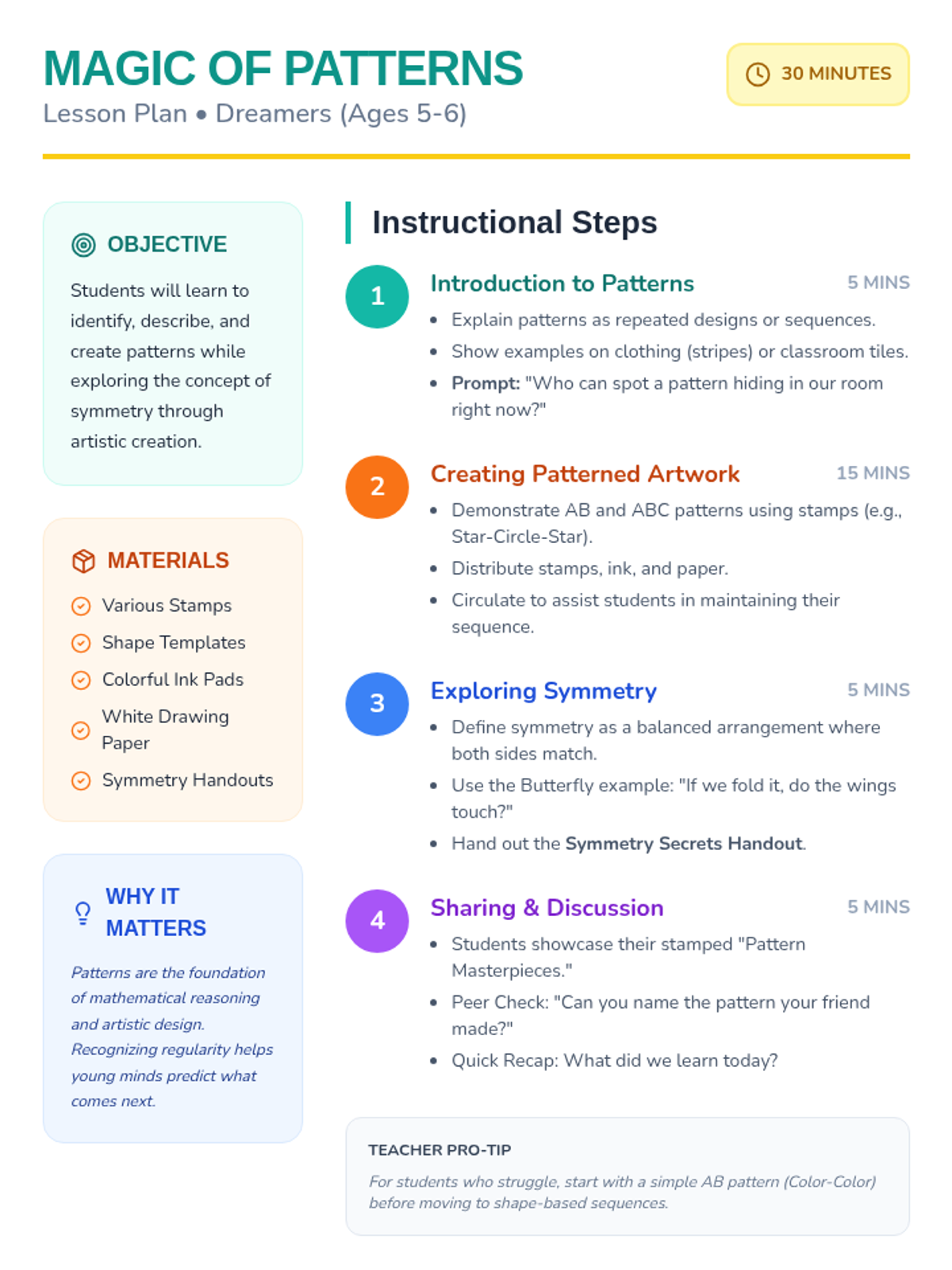
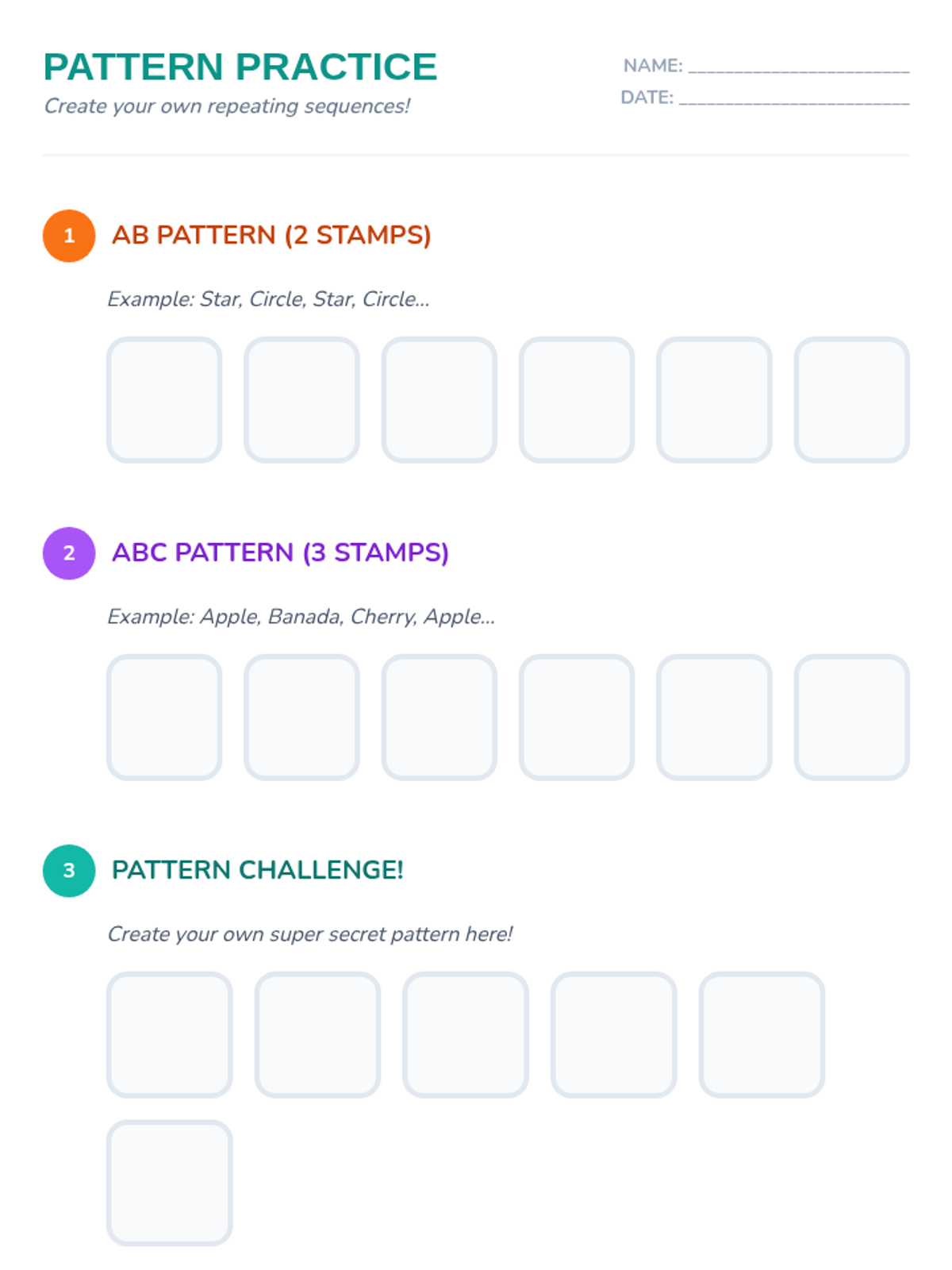
Students explore the foundational concepts of patterns and symmetry through hands-on stamping and visual analysis, developing their mathematical and artistic reasoning.
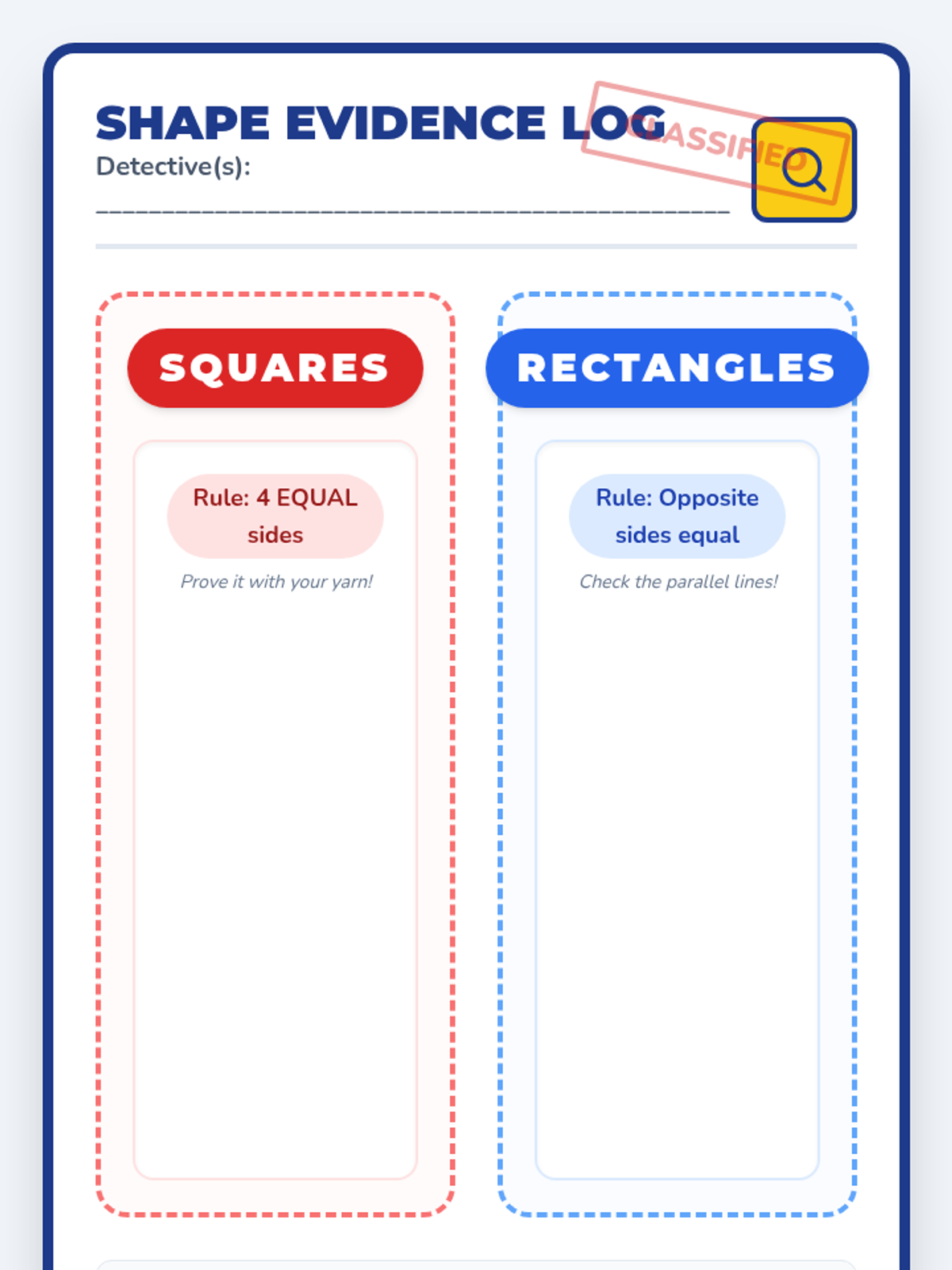
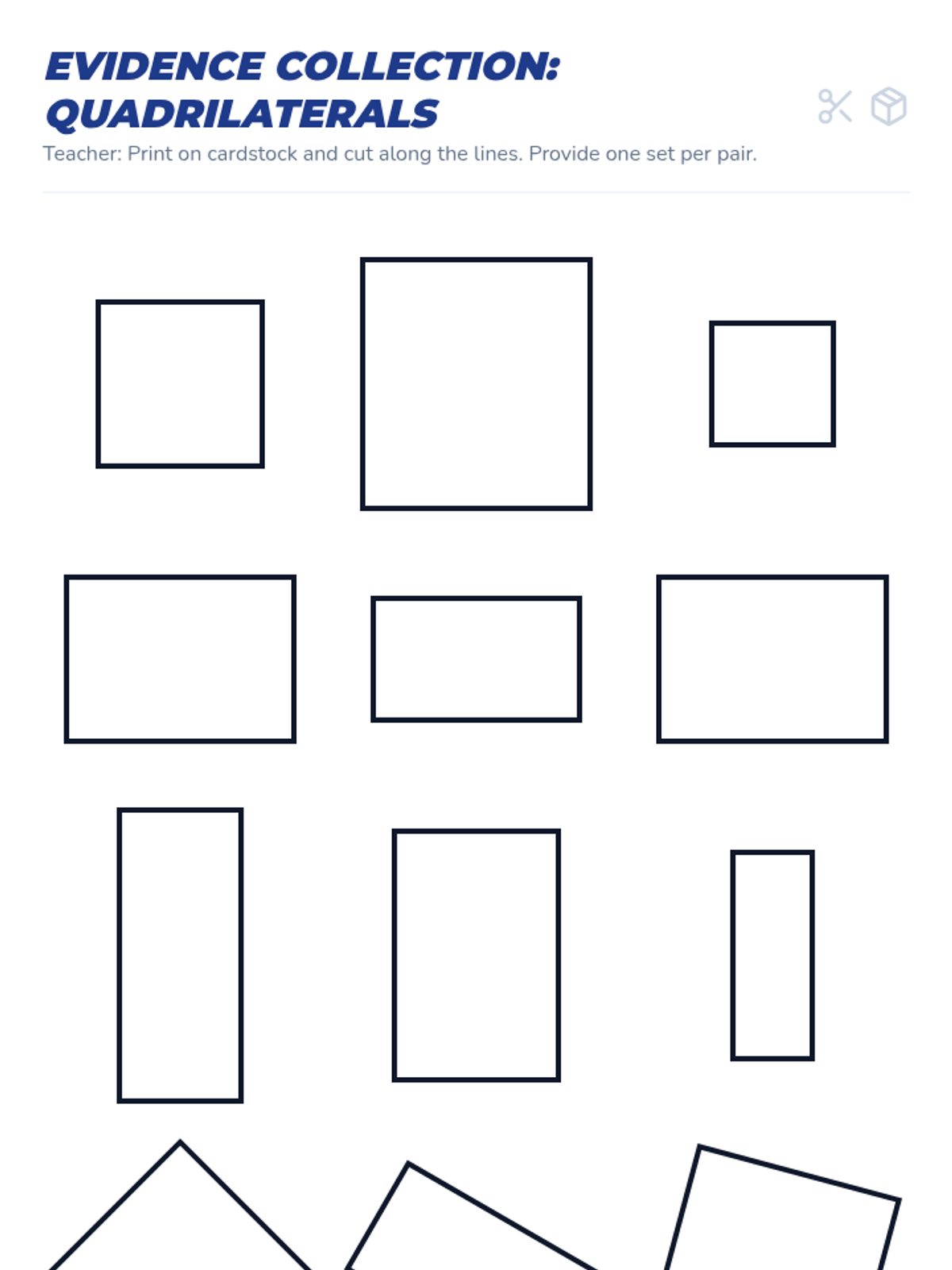
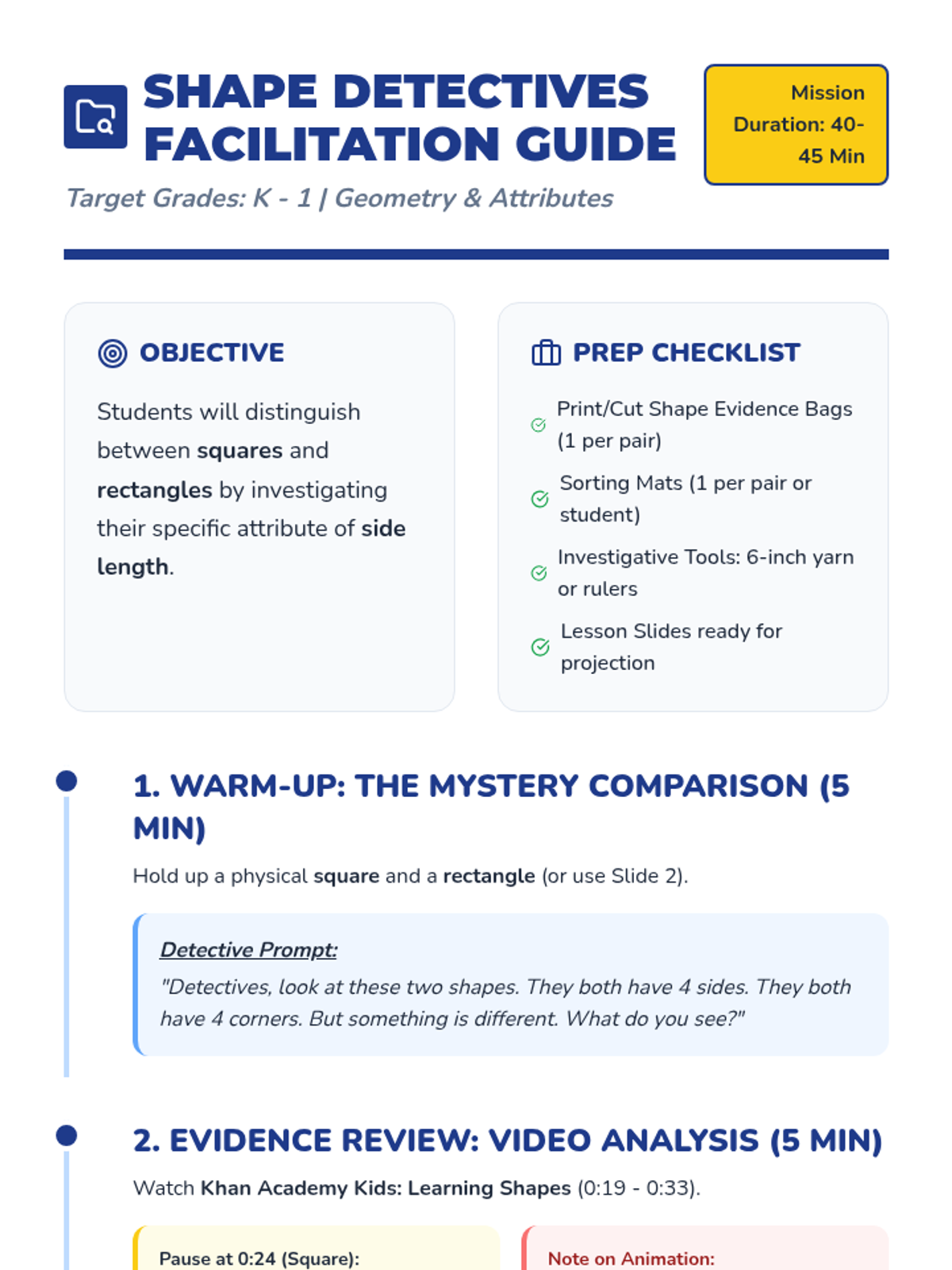
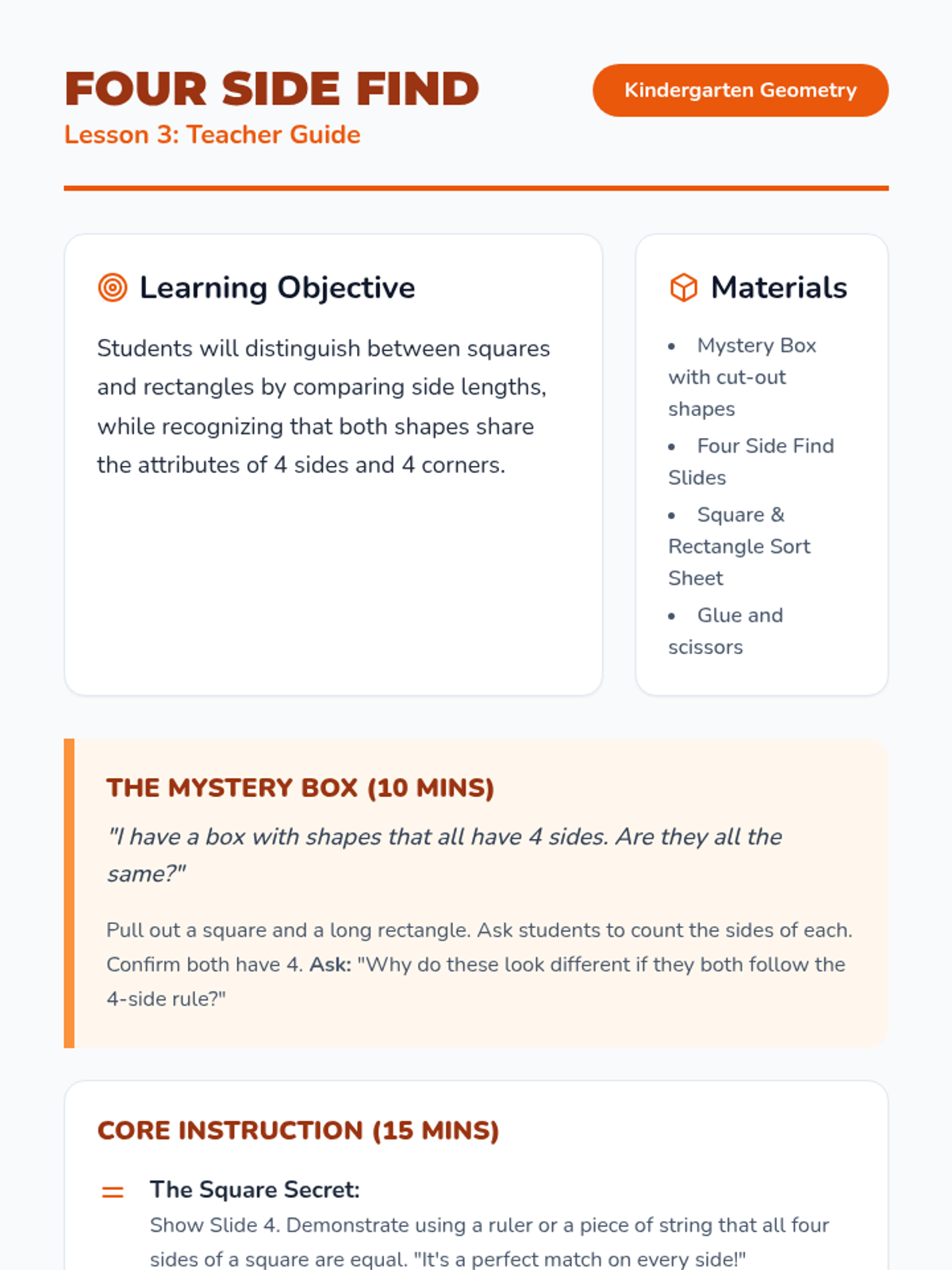
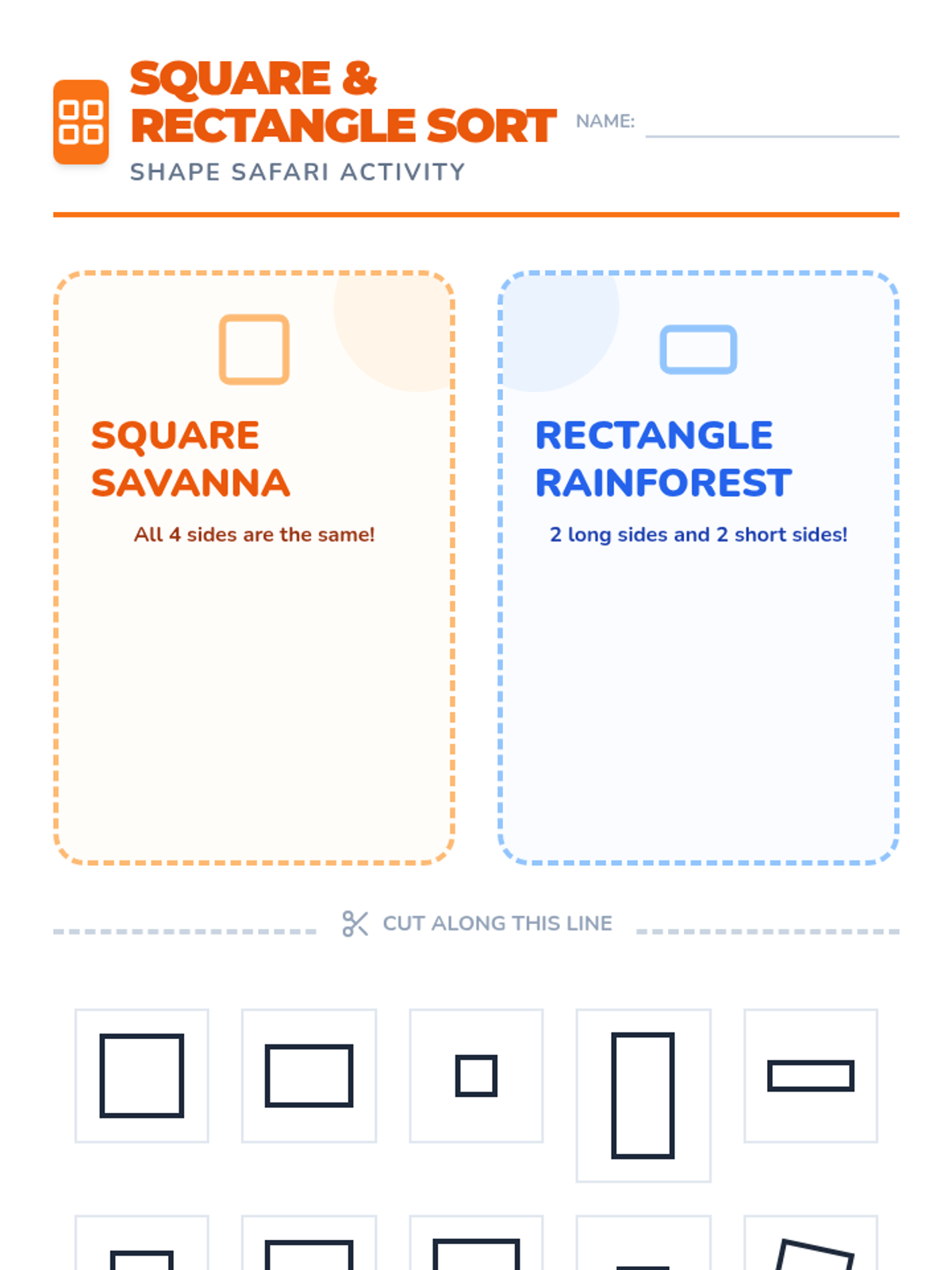
A Kindergarten to 1st Grade lesson where students become 'Shape Detectives' to distinguish between squares and rectangles by investigating side lengths and using the concept of 'equal' sides.
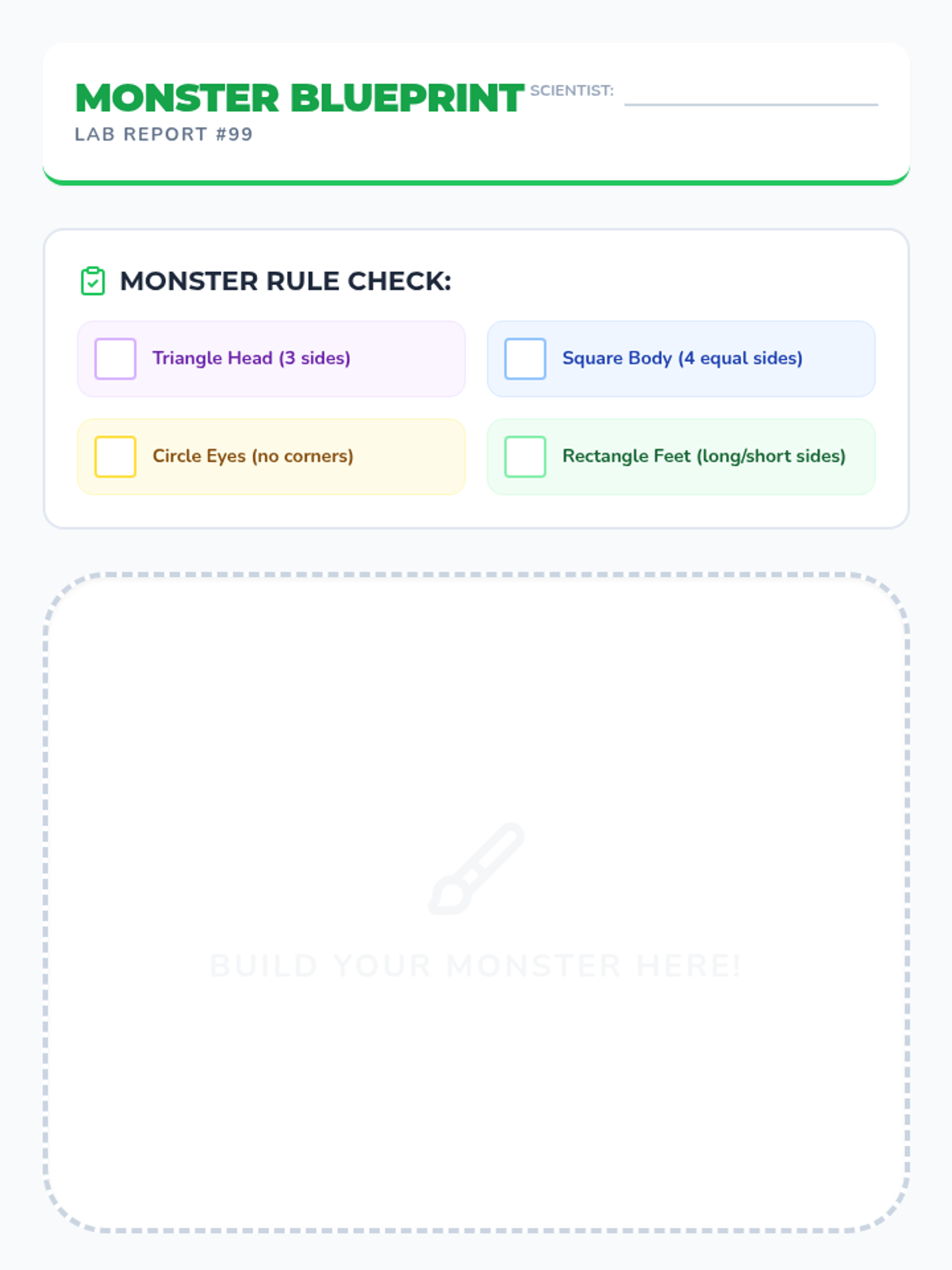
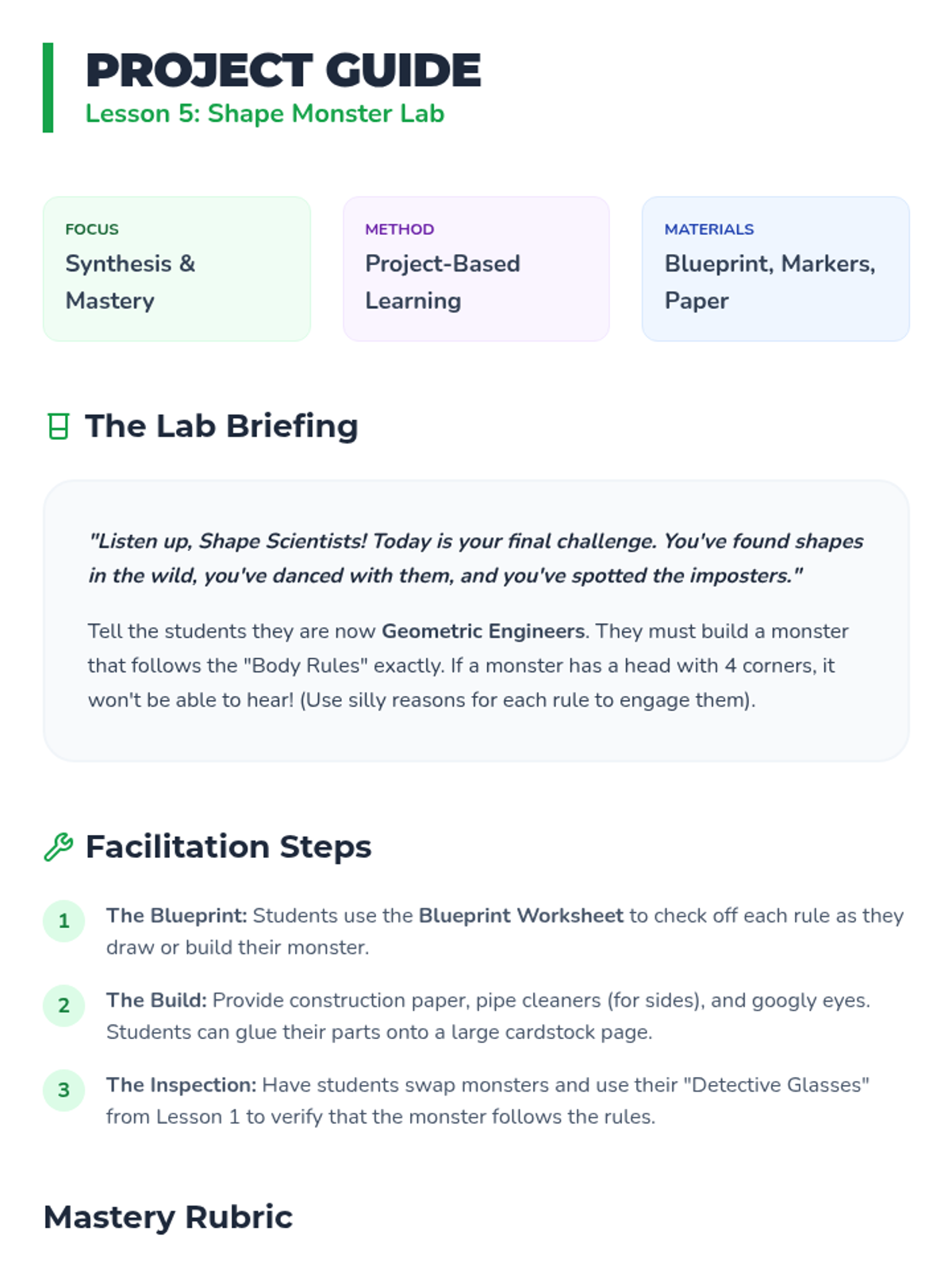
A creative project where students apply their knowledge of geometric attributes to build and describe their own 'Shape Monsters'.
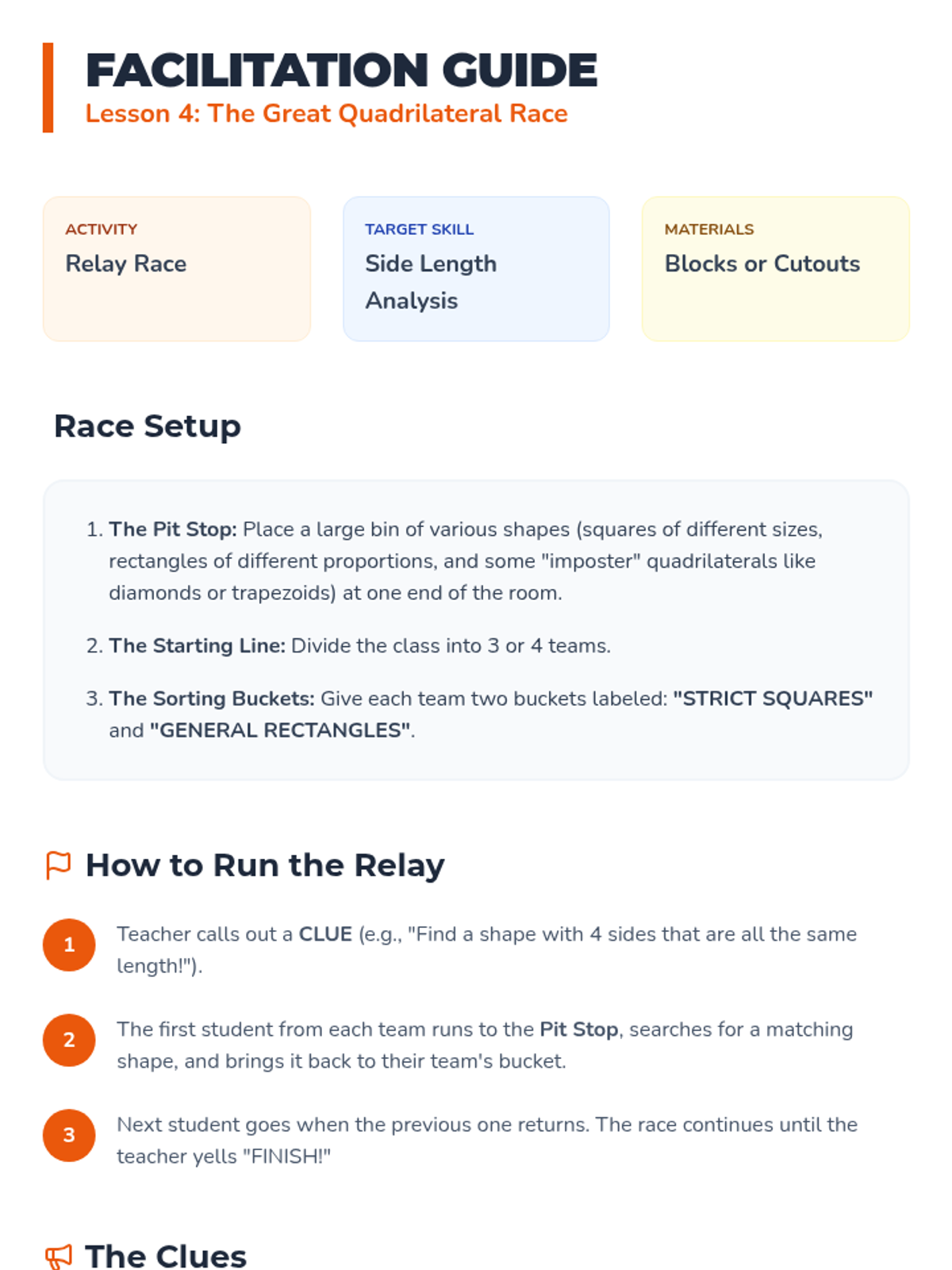
A fast-paced relay race where students distinguish between squares and rectangles based on specific side-length clues.
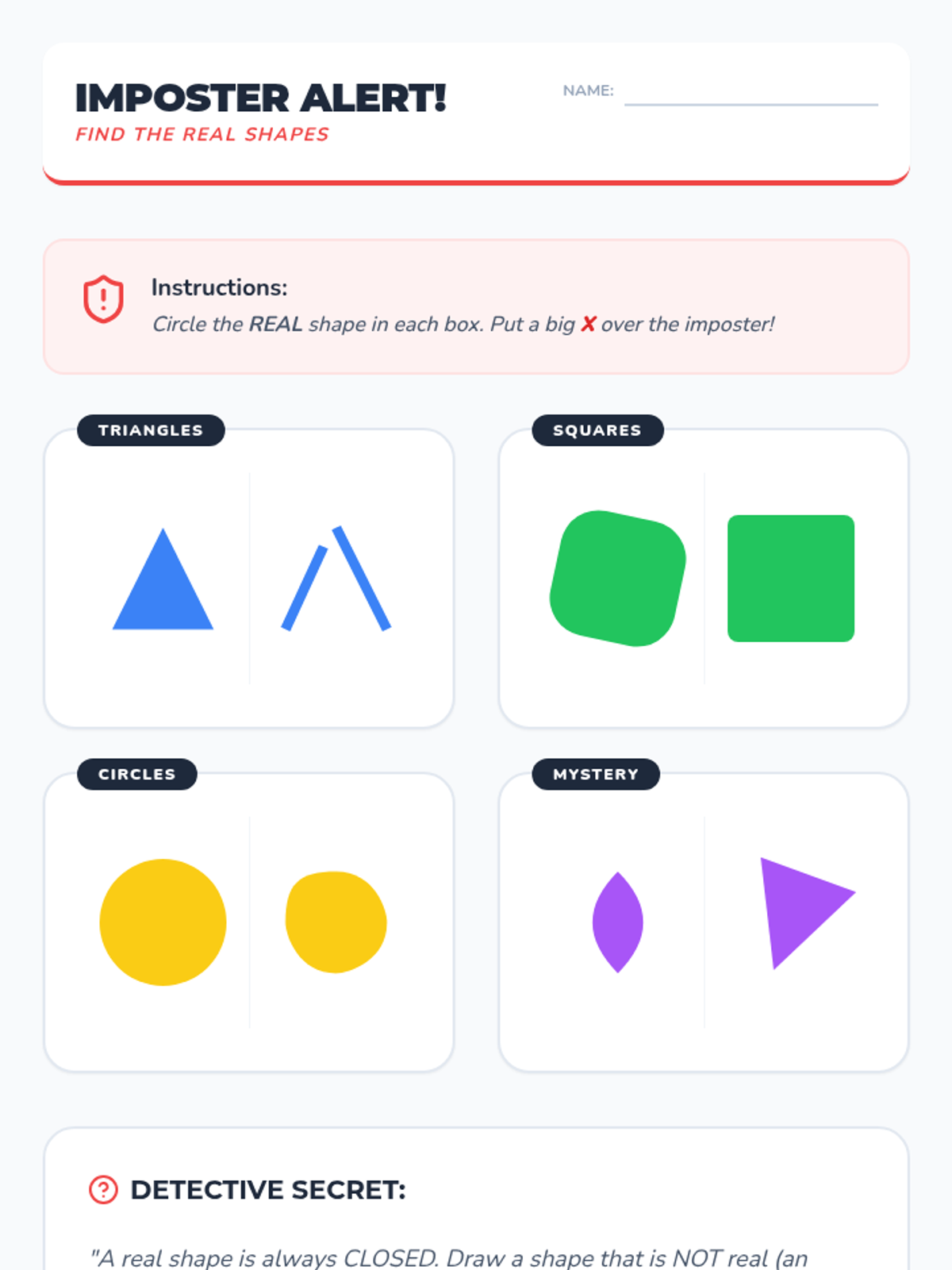
Students identify 'imposter' shapes by focusing on defining attributes like closed sides and straight lines.
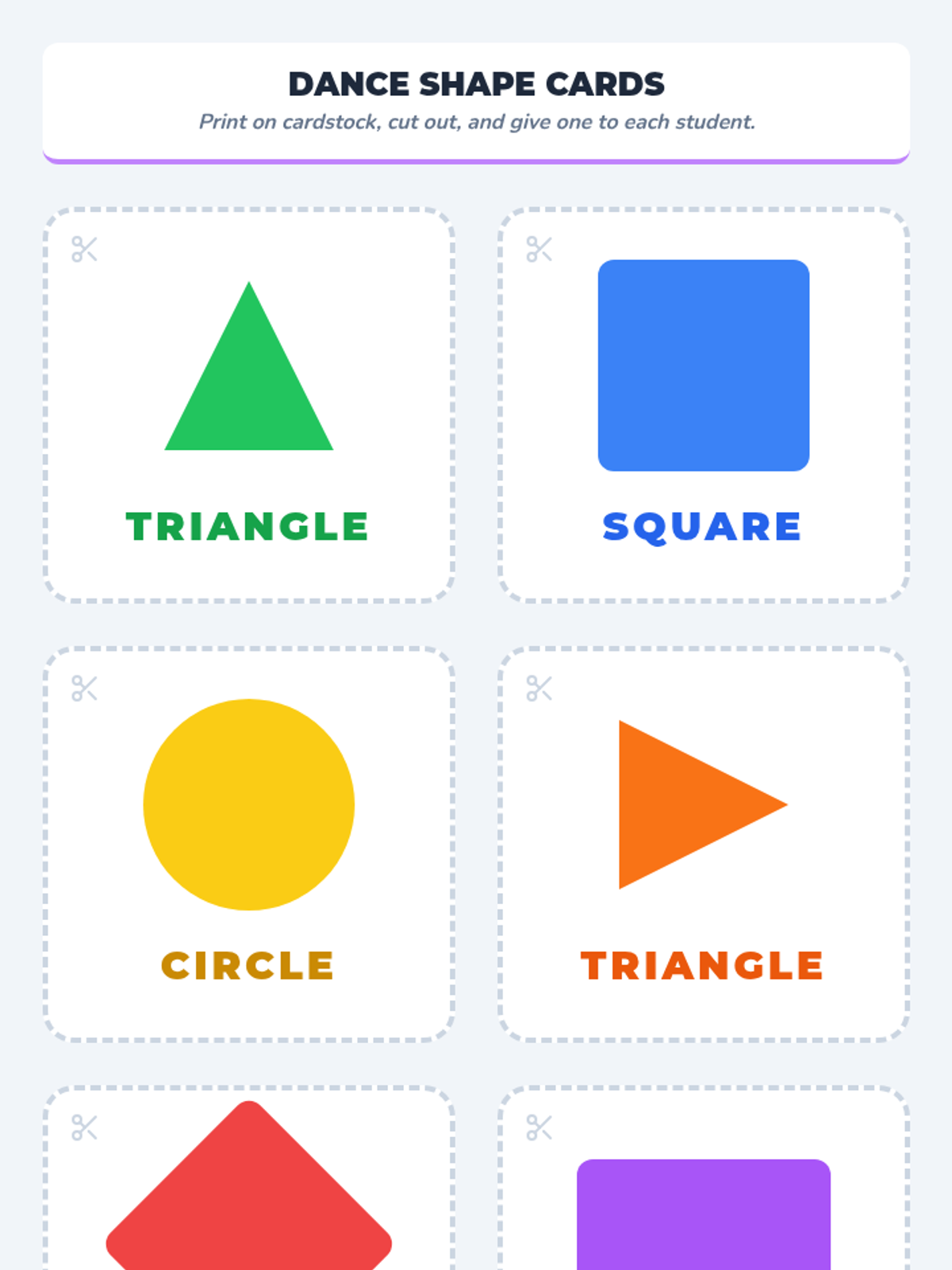
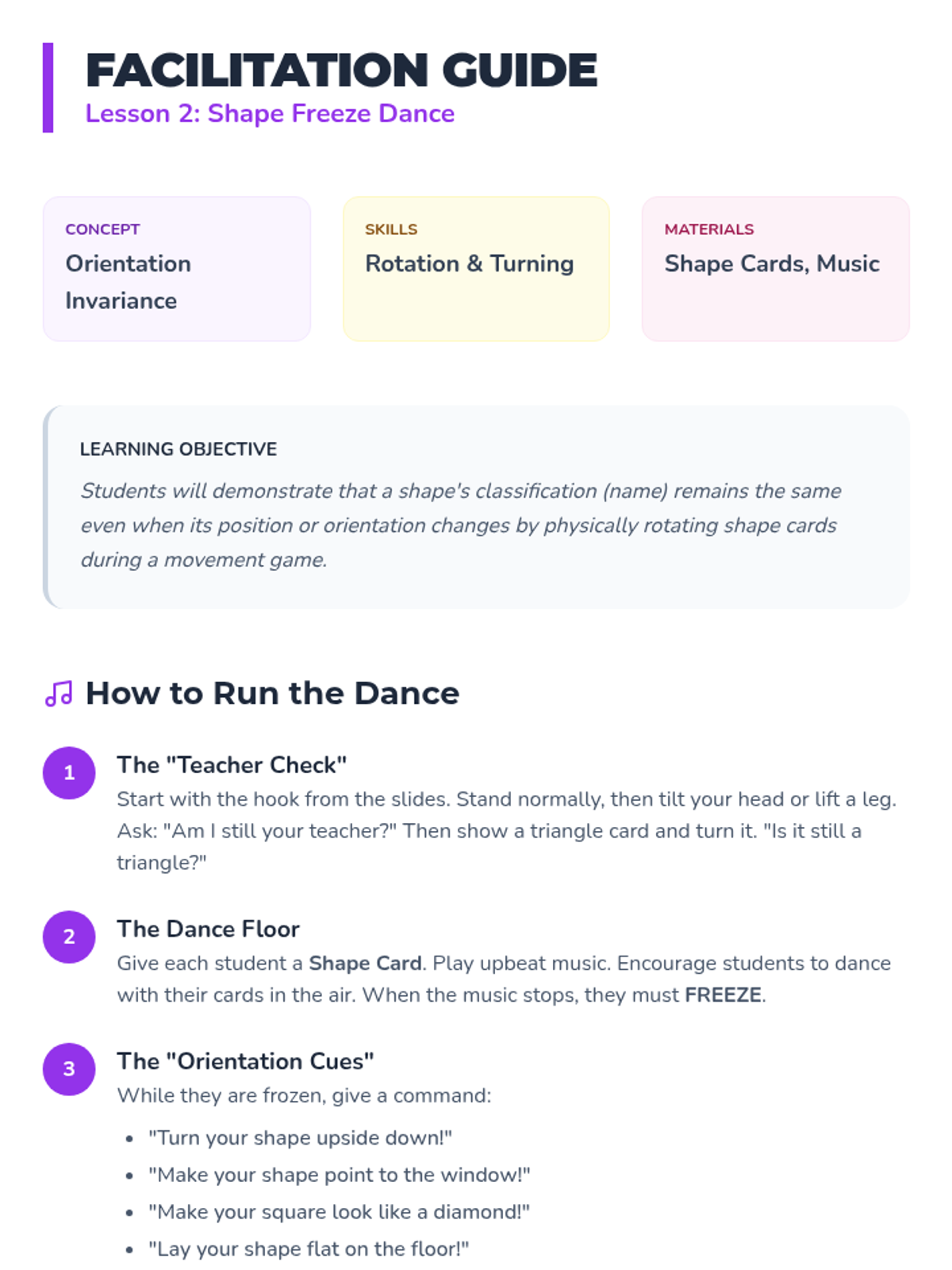
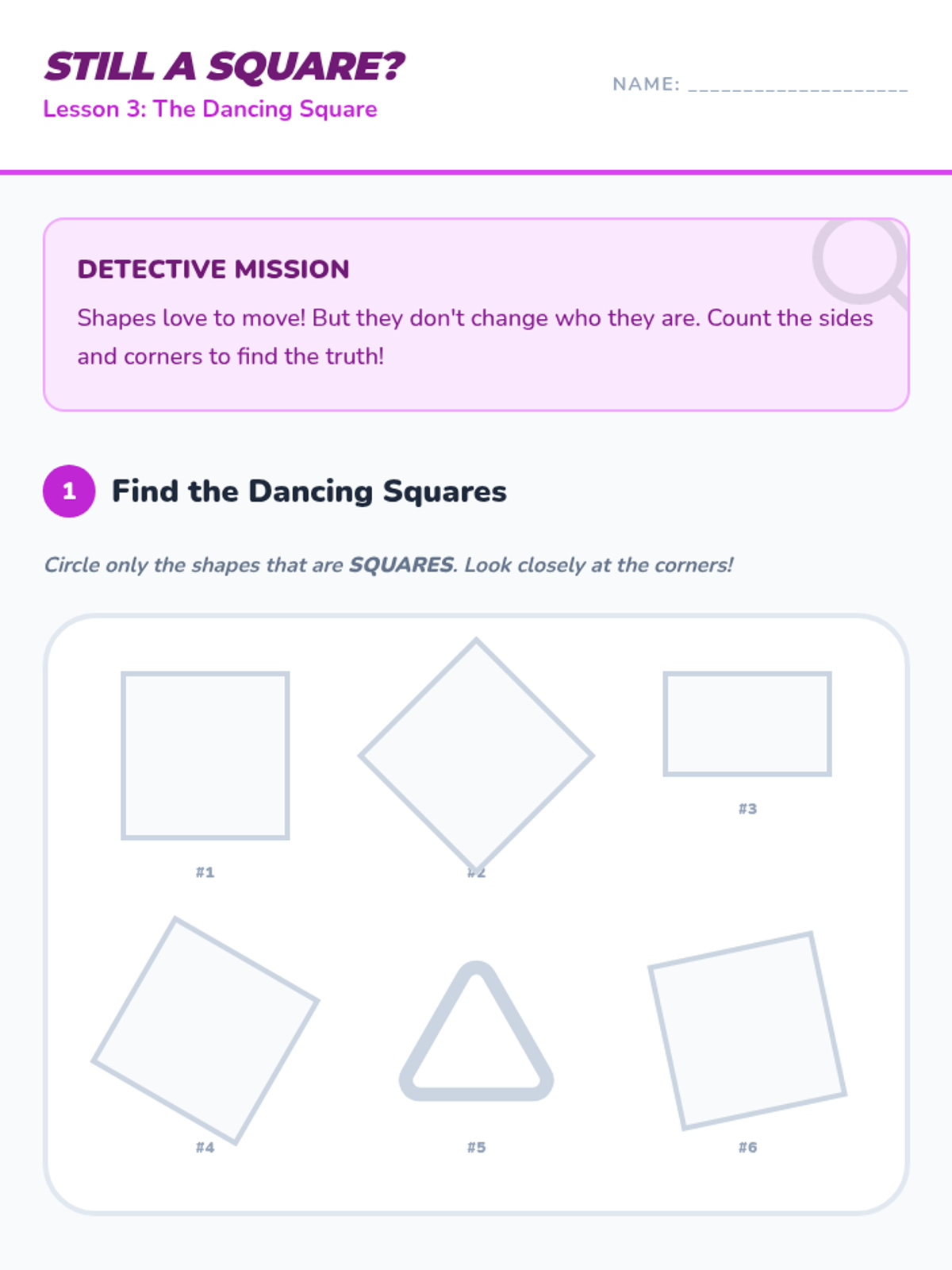
A kinesthetic dance activity where students rotate shapes to understand that a shape's name doesn't change when its orientation does.
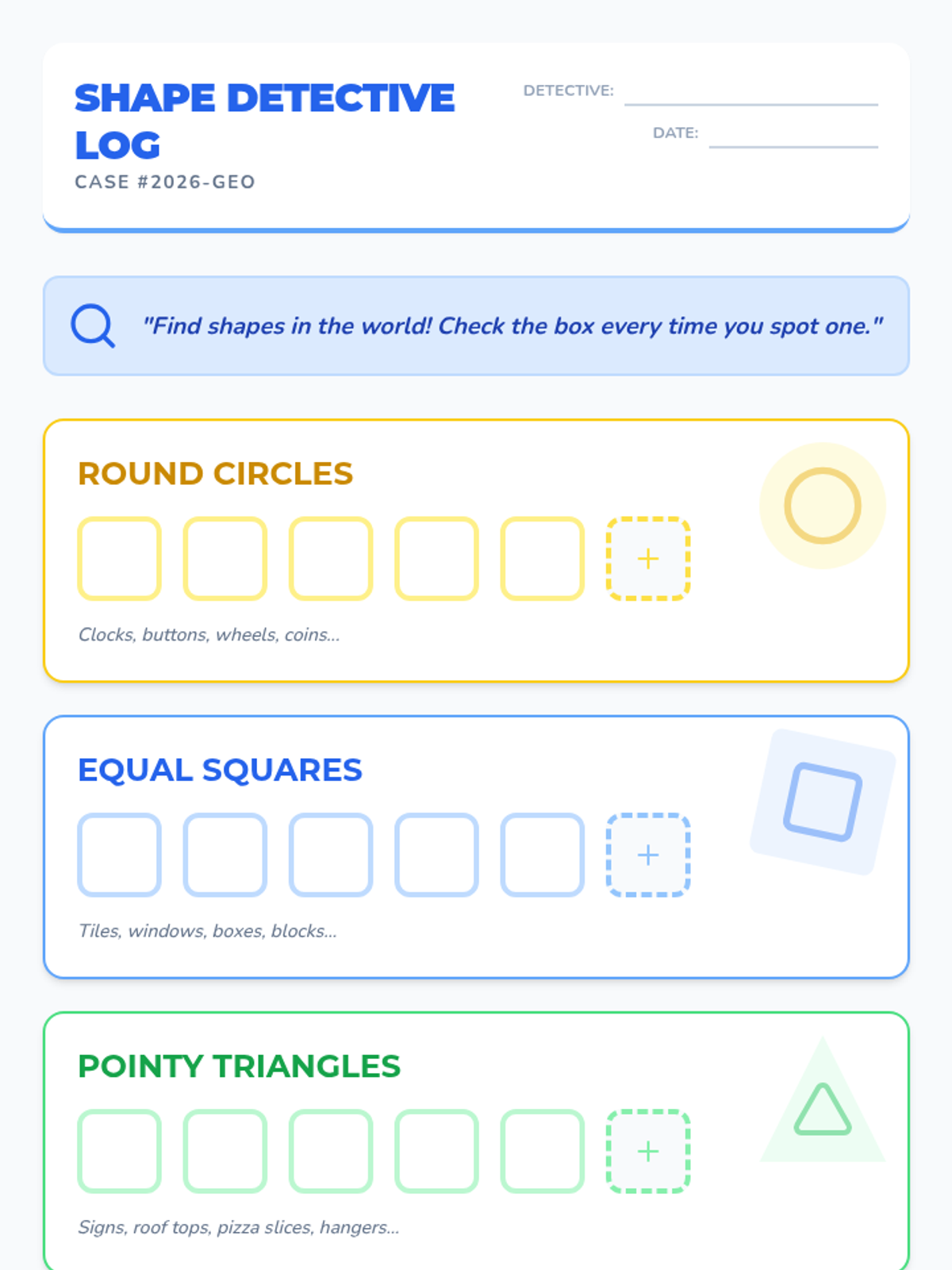
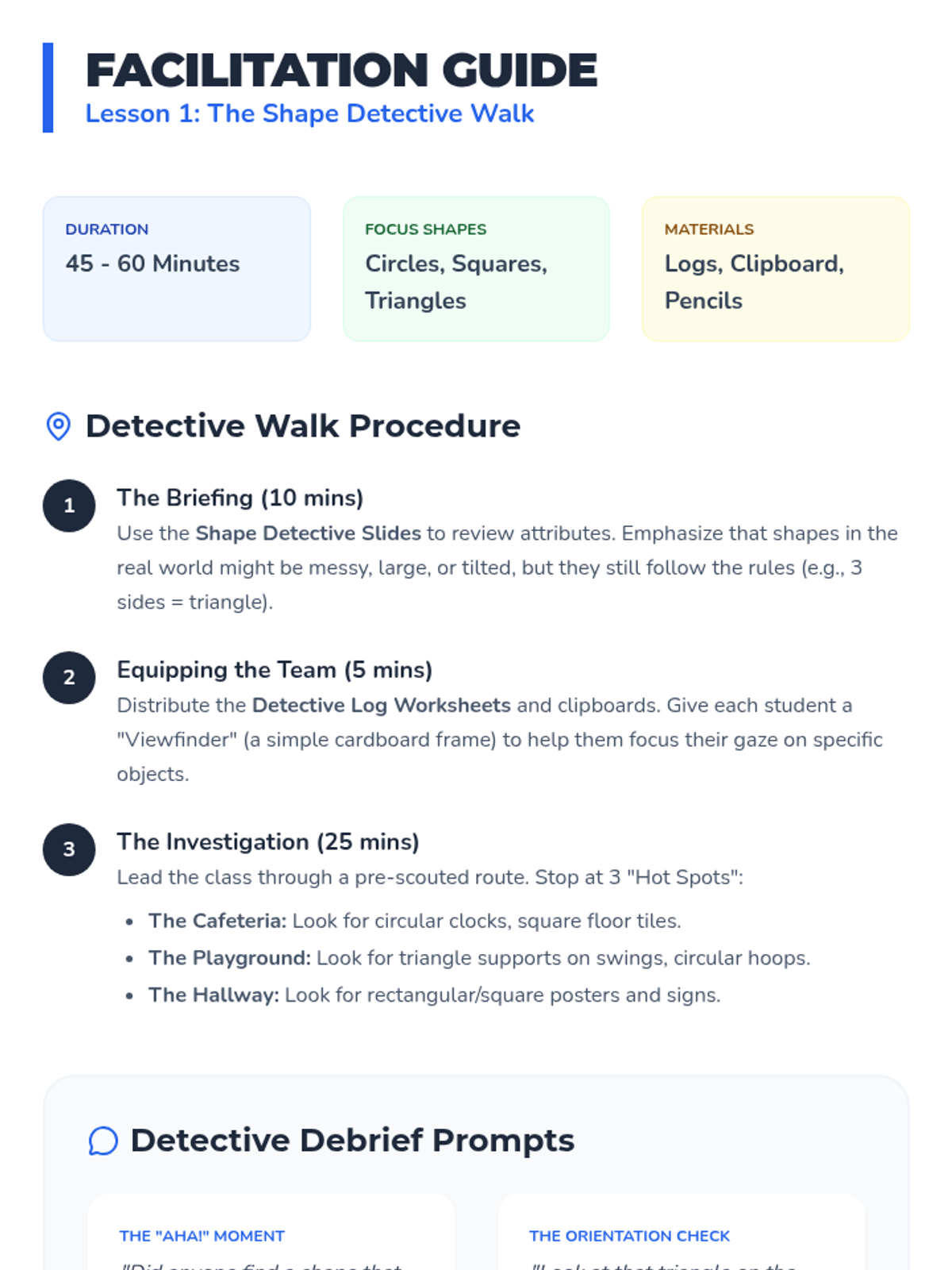
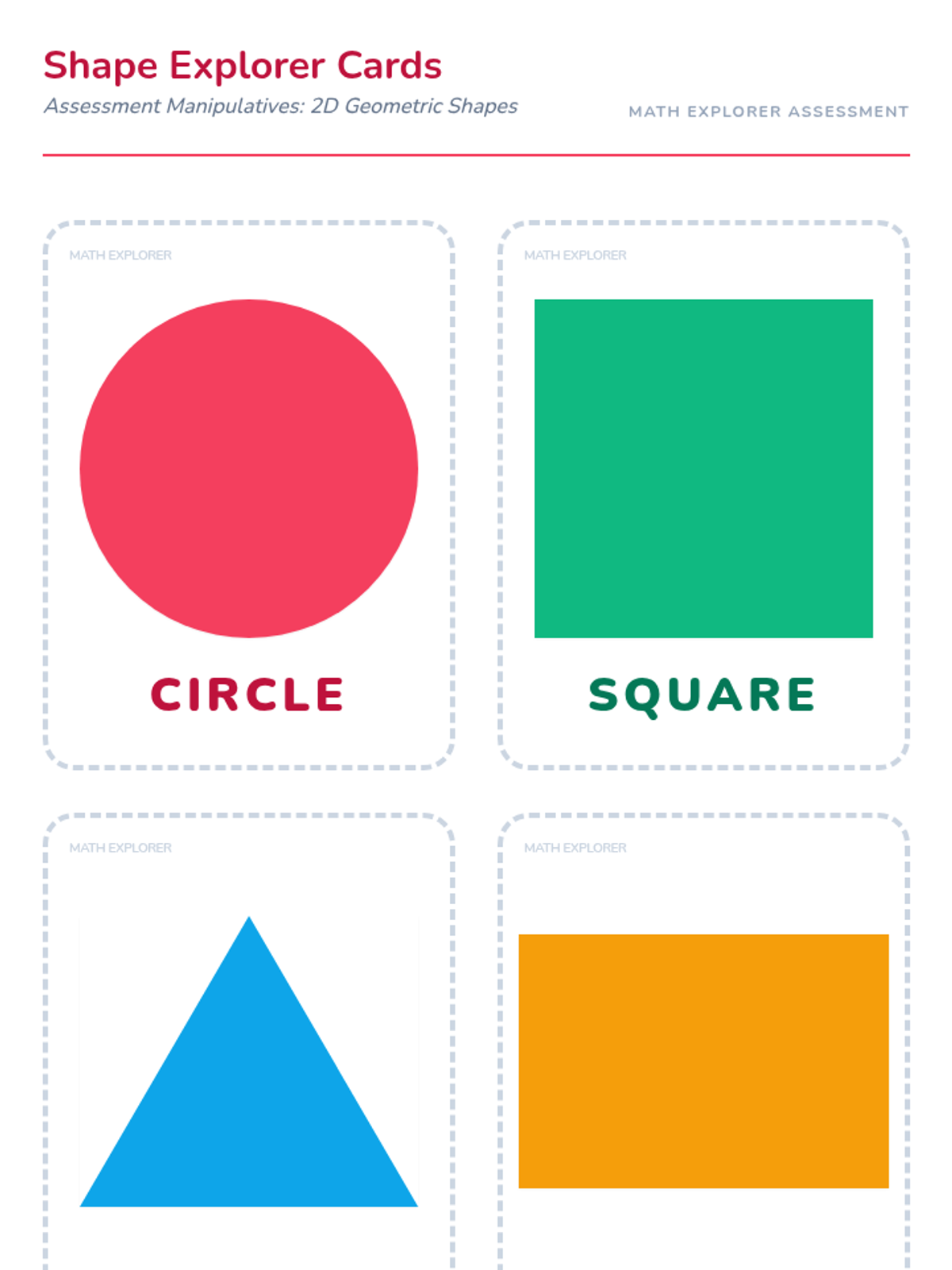
Students become detectives to find circles, squares, and triangles in their environment, learning that geometric shapes exist beyond classroom blocks.
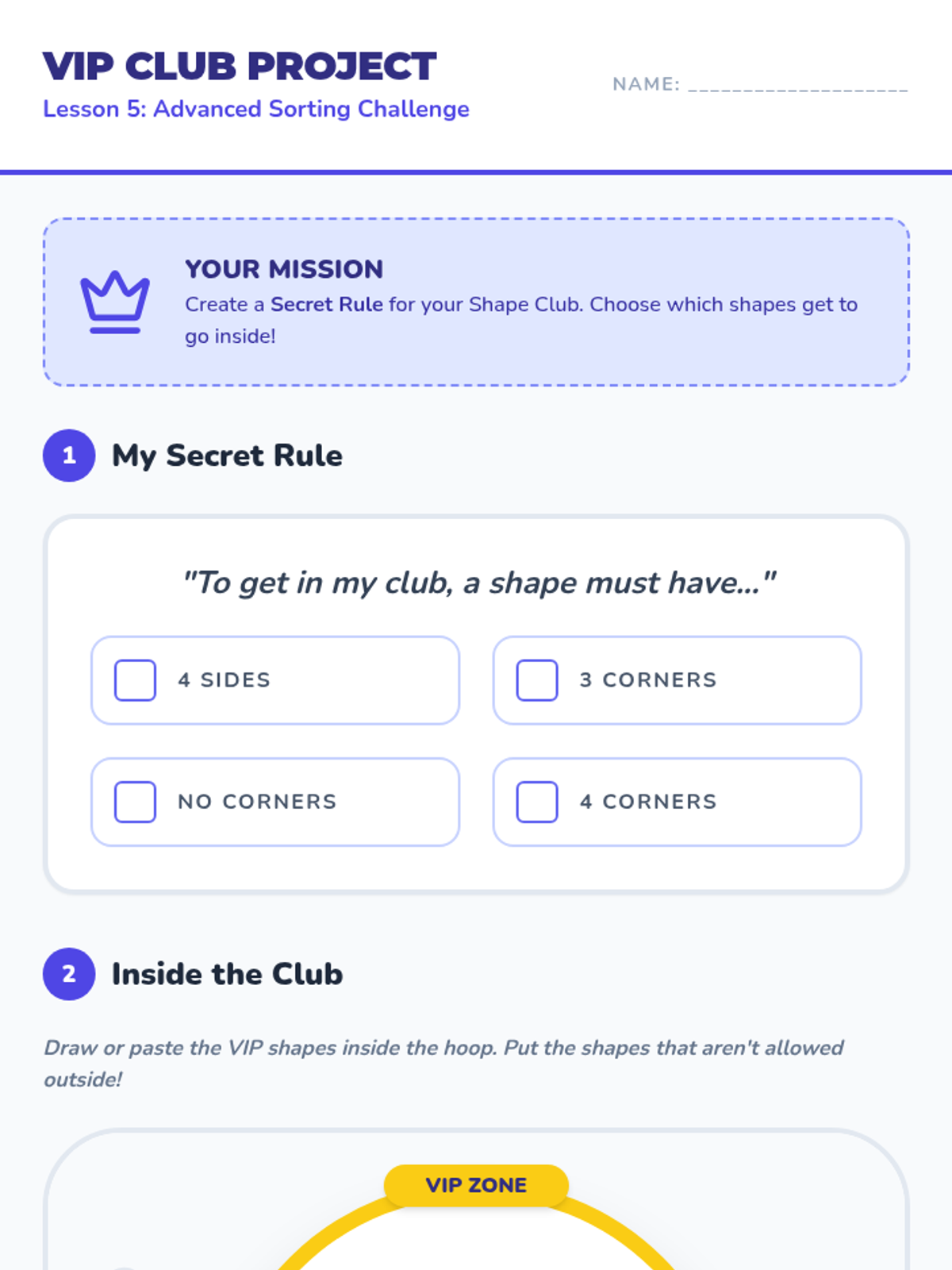
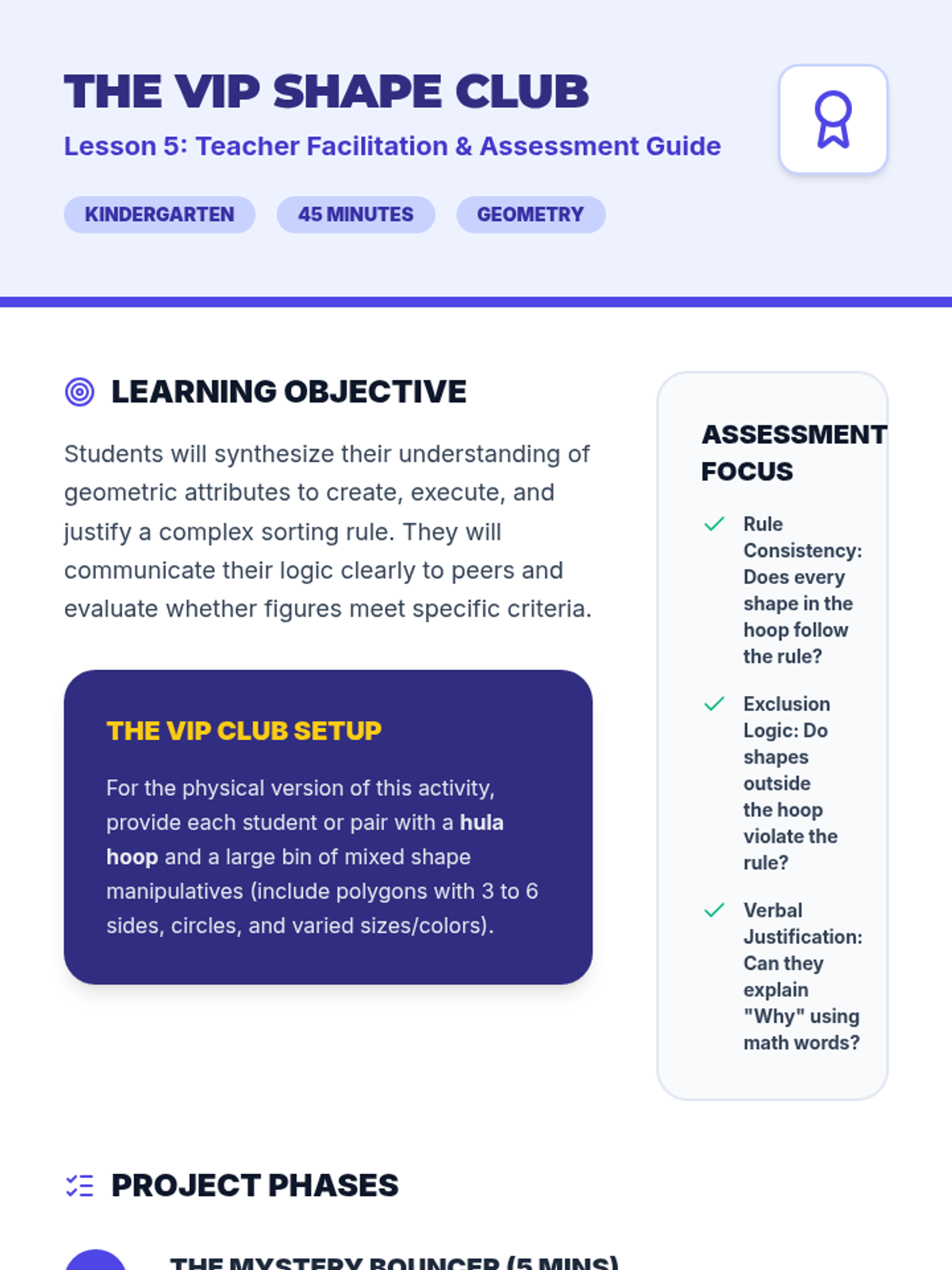
Students create their own sorting rules for complex polygons and explain their logic to peers.
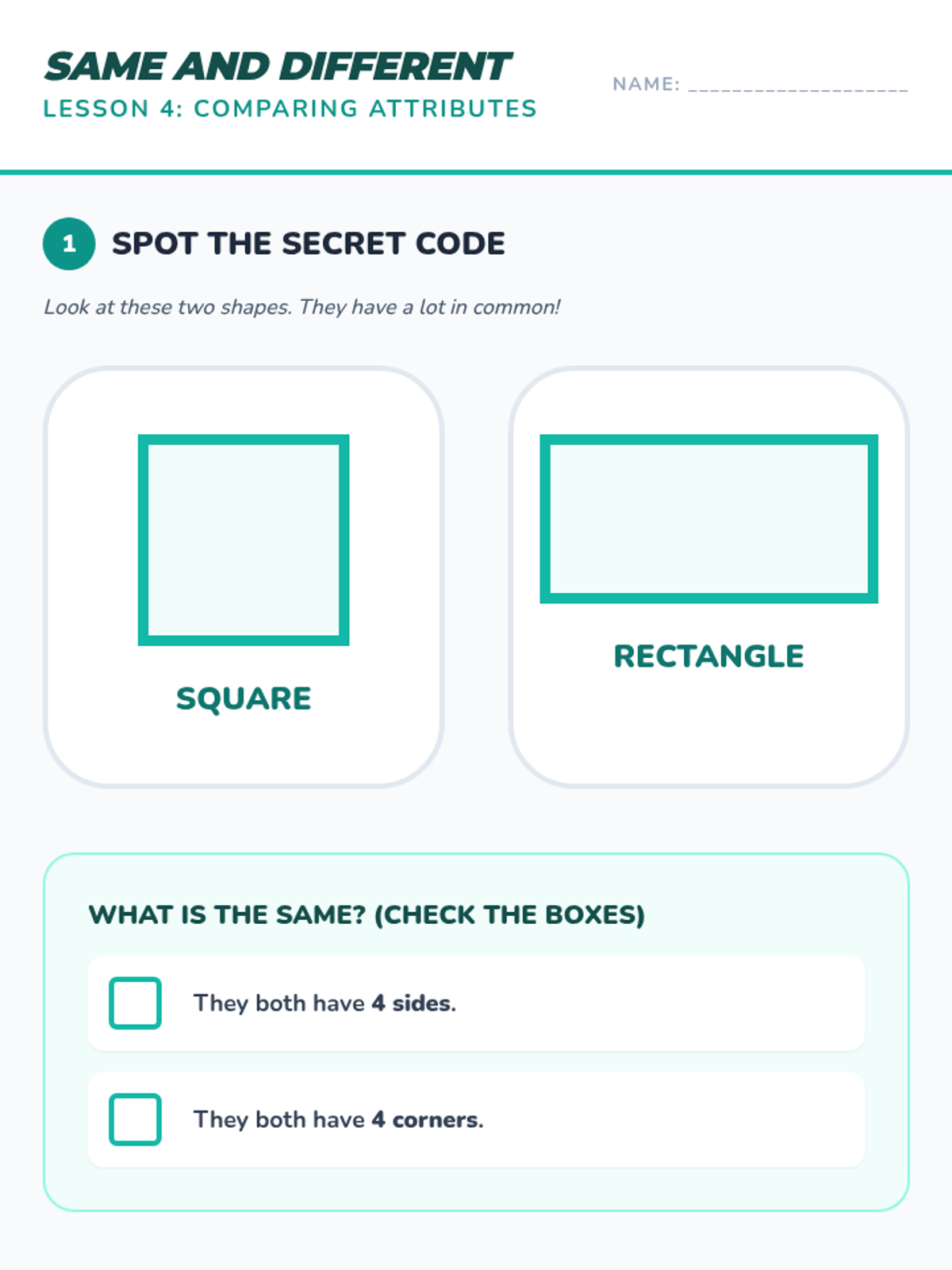
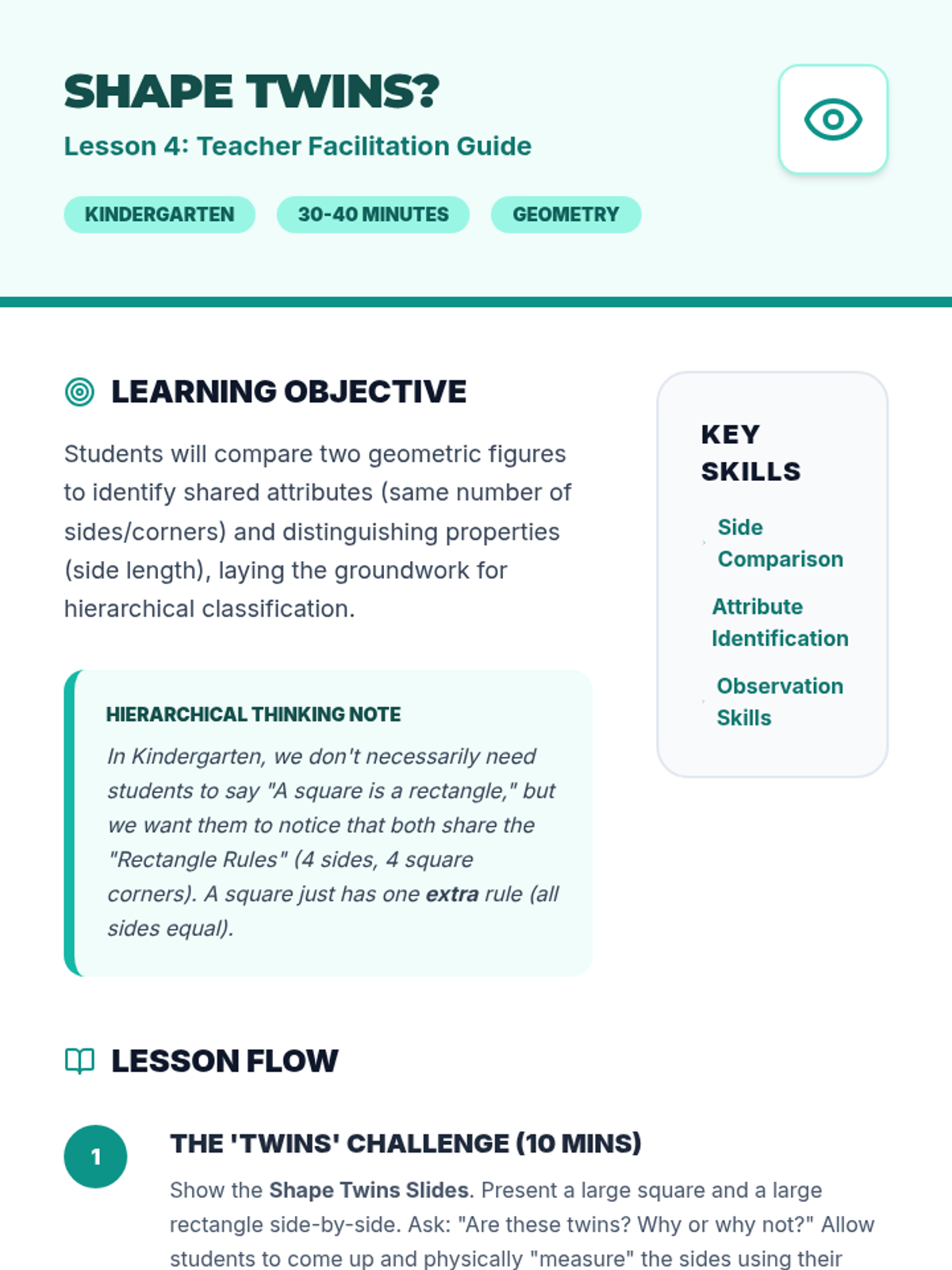
Students compare pairs of shapes to identify similarities and differences in their attributes.
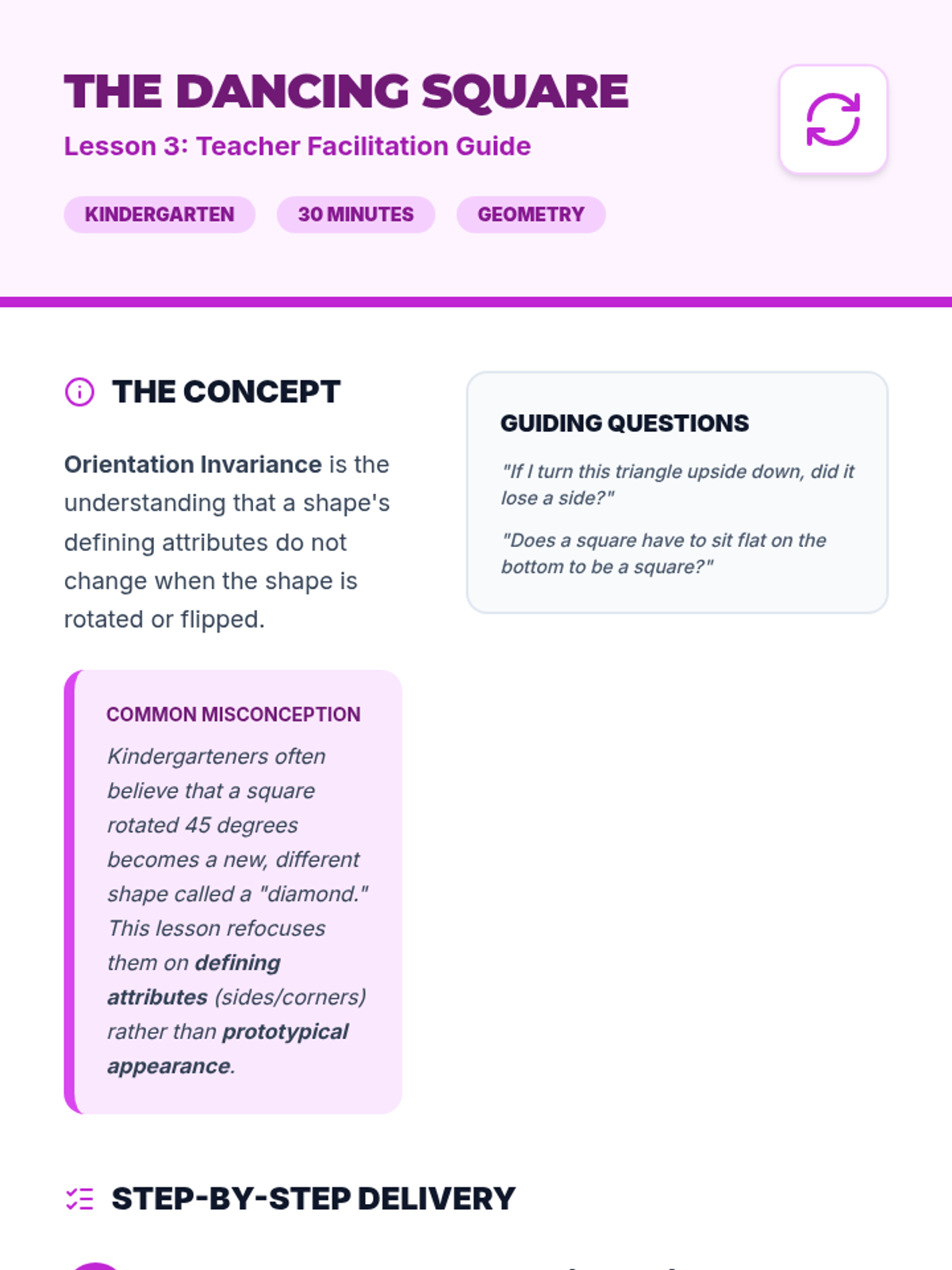
Students learn that a shape's identity remains the same regardless of its orientation or rotation.
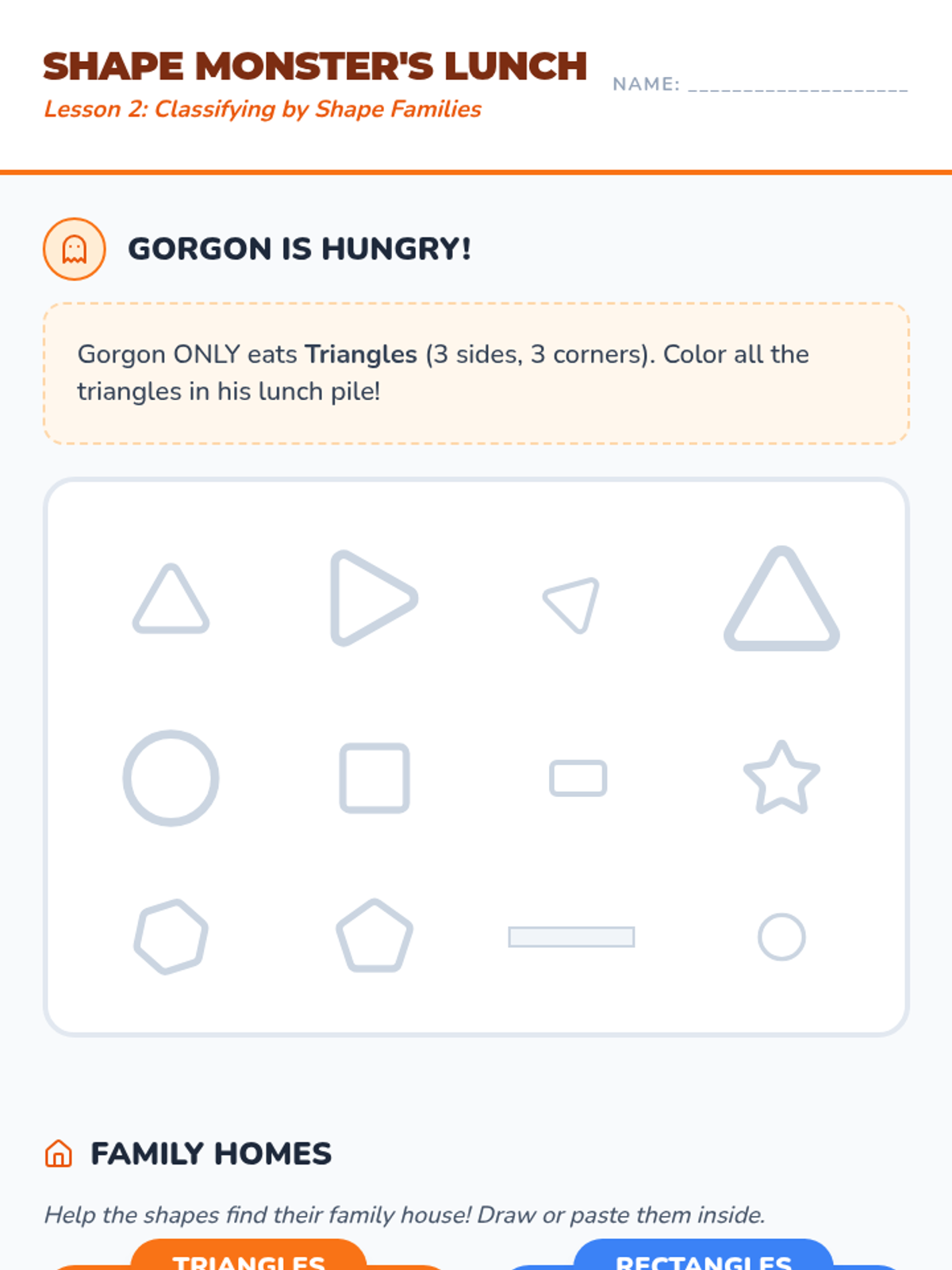
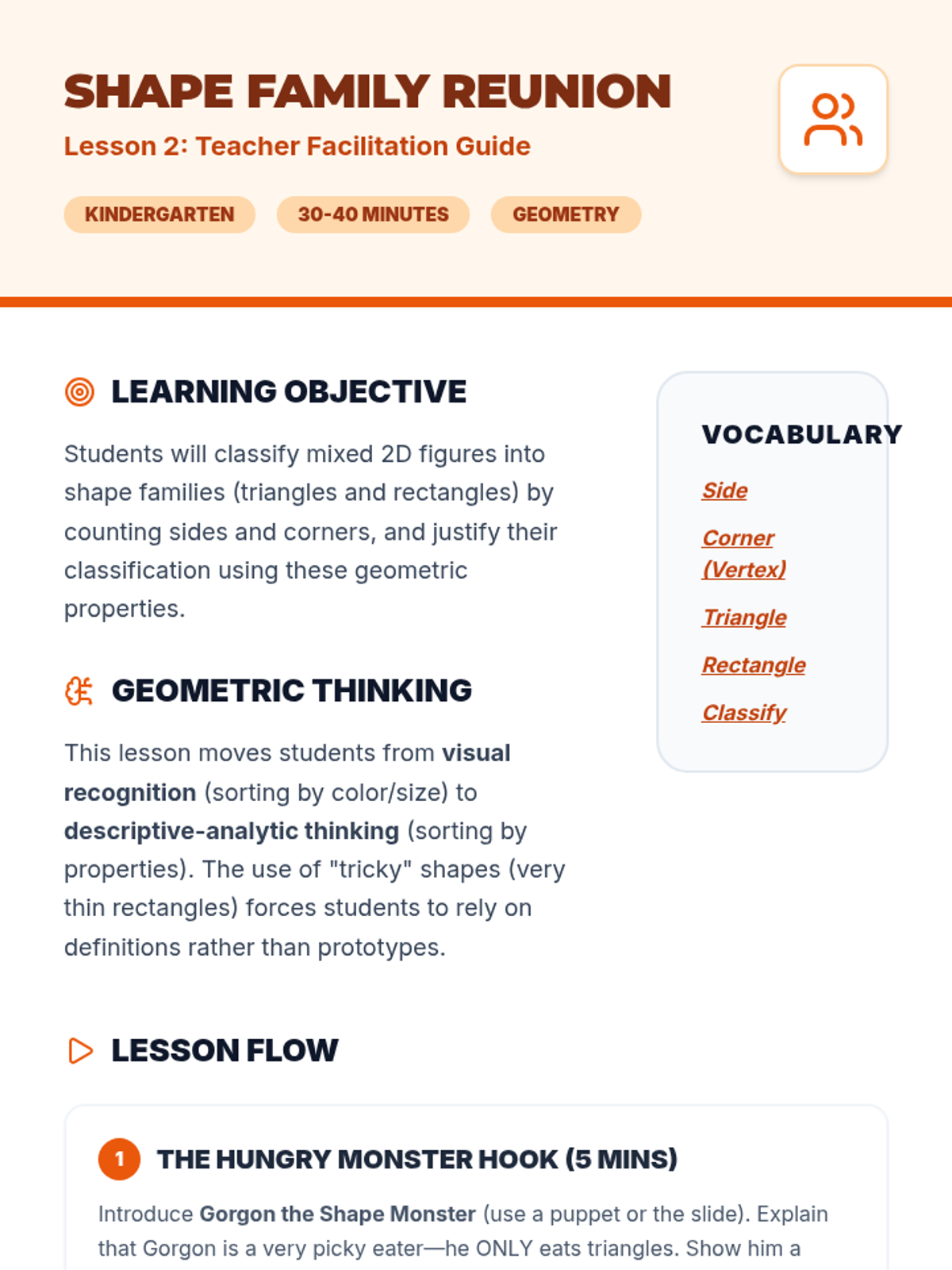
Students classify figures into shape families (triangles, squares, circles, rectangles) and justify their choices based on geometric properties.
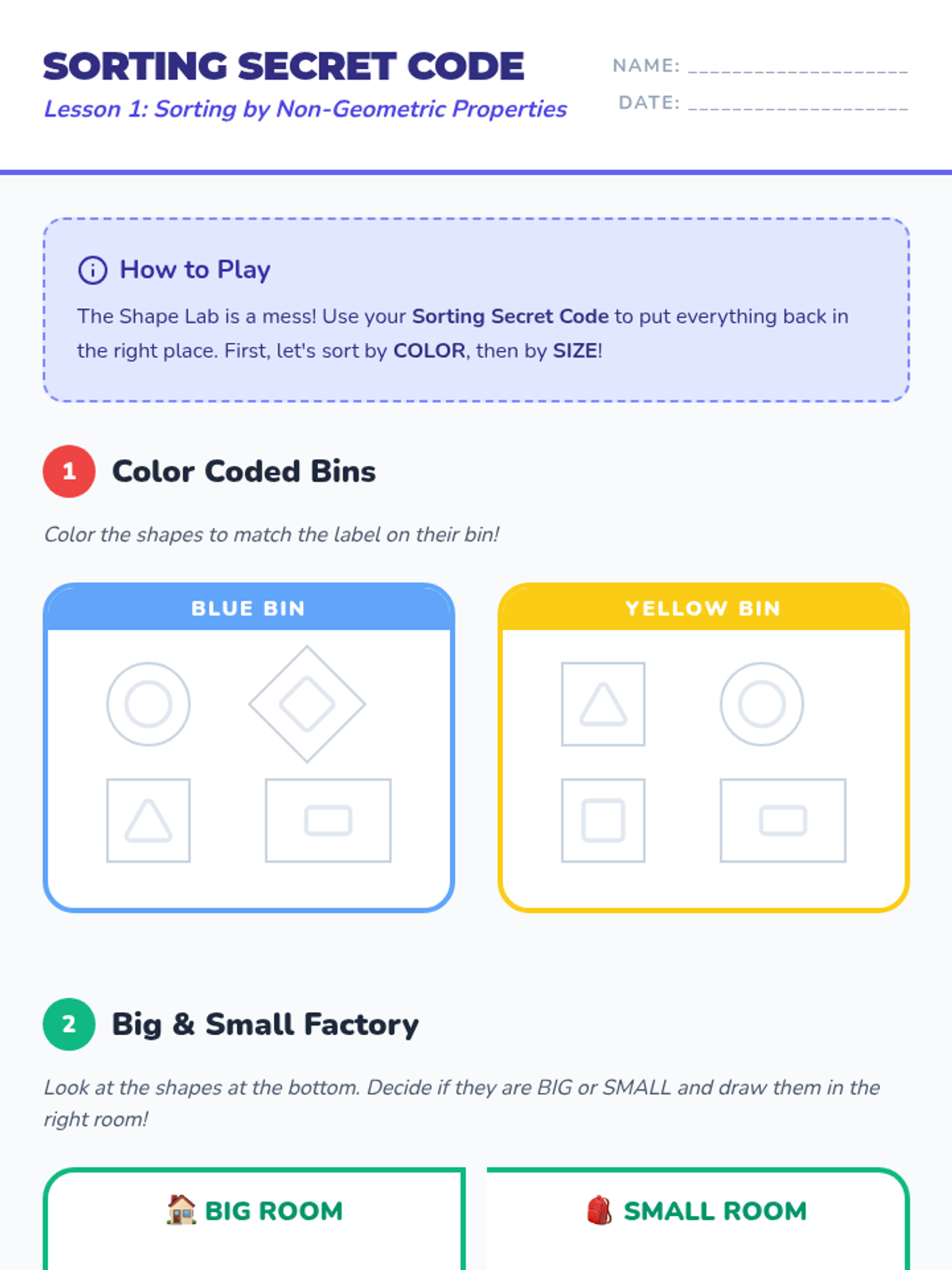
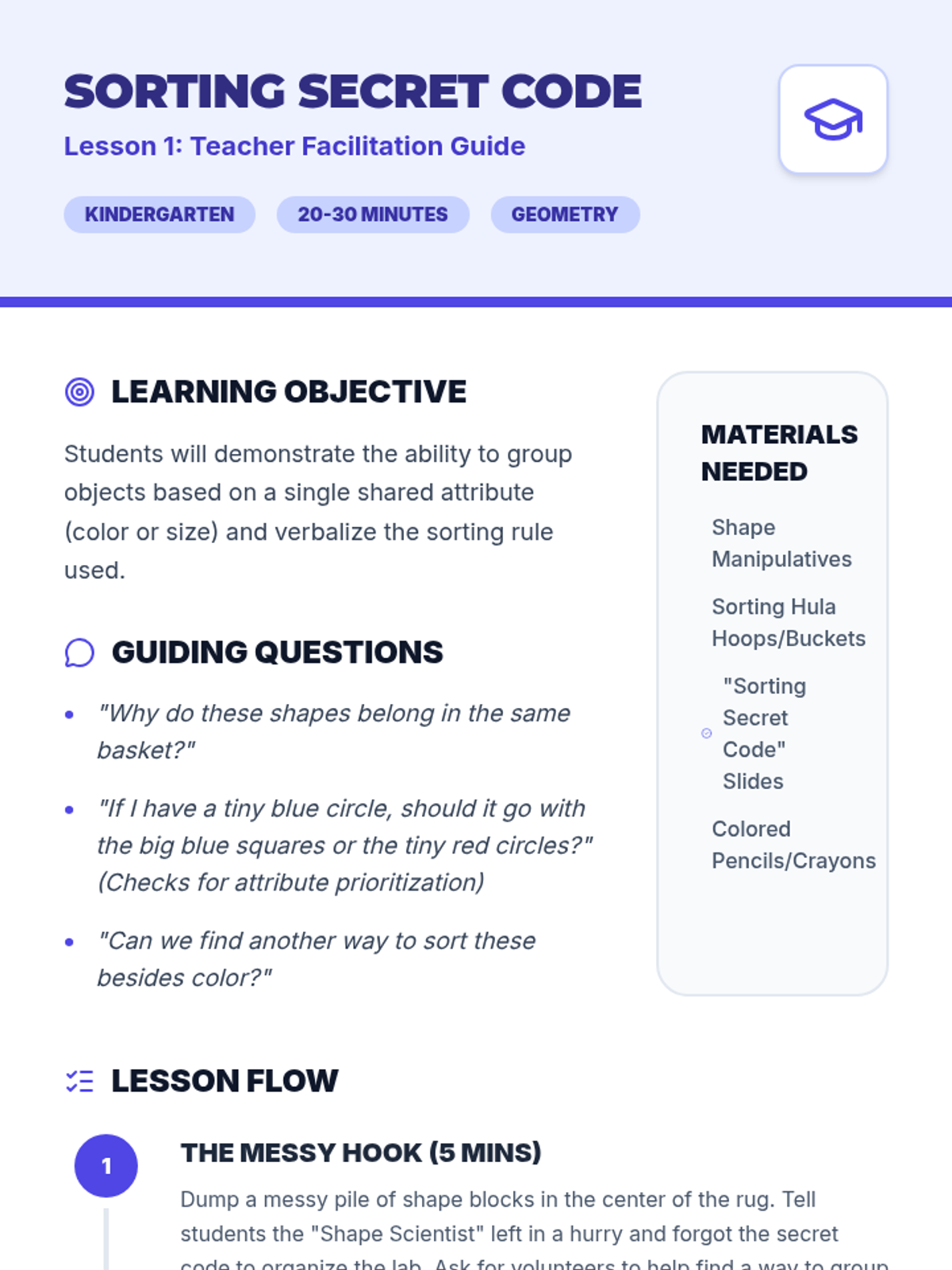
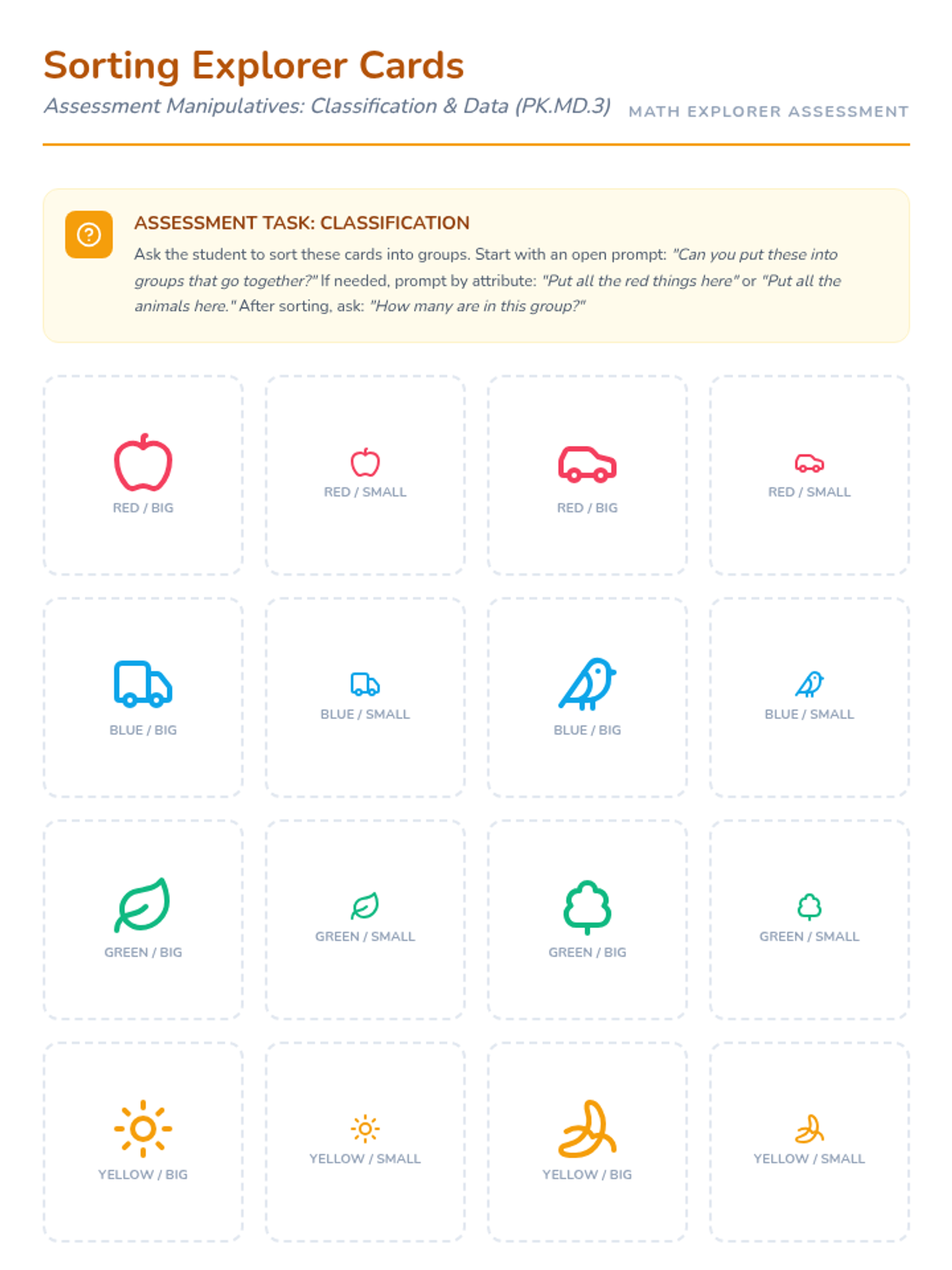
Students practice sorting shapes by non-geometric properties such as color and size to build a foundation for classification logic.
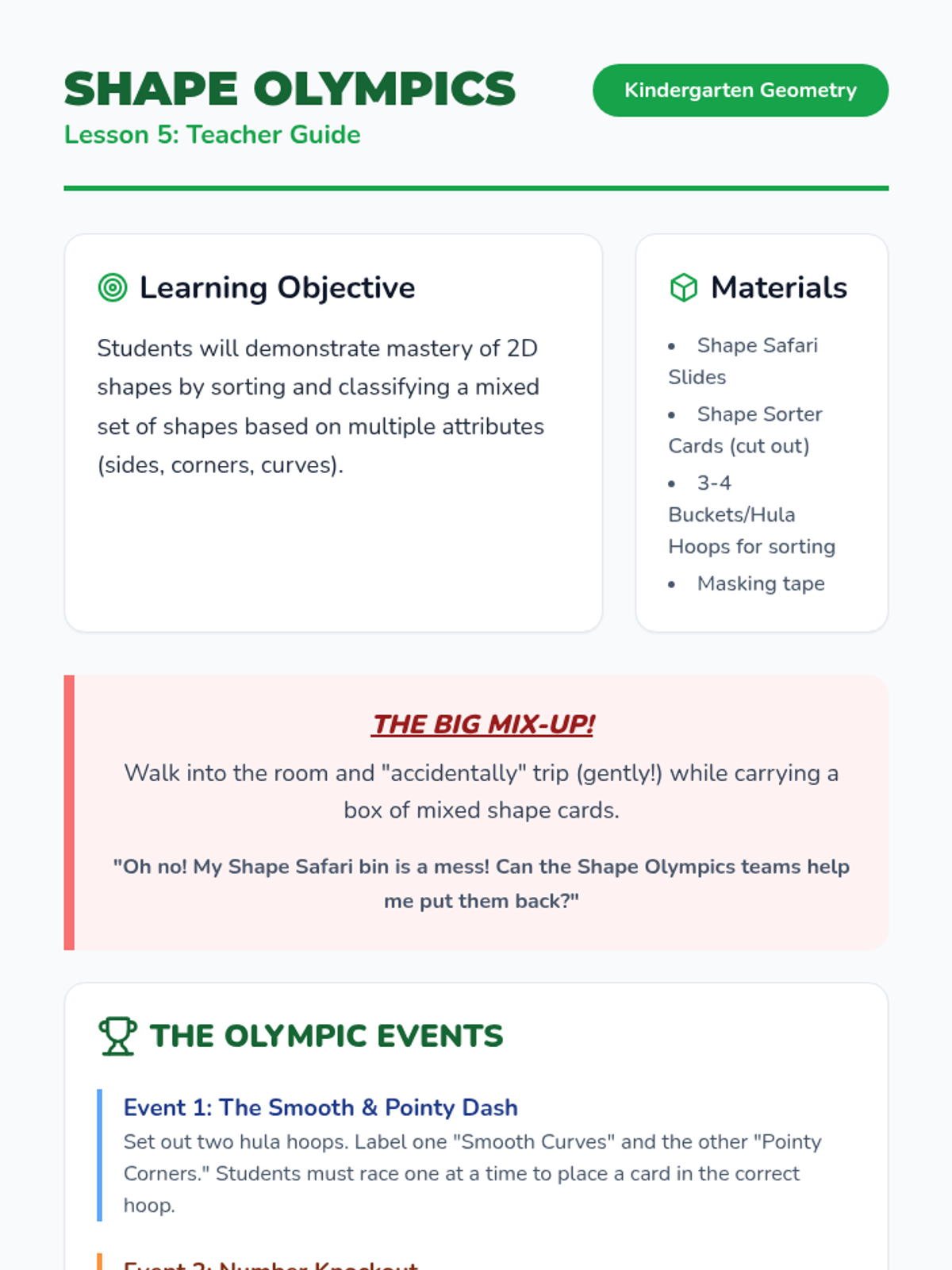
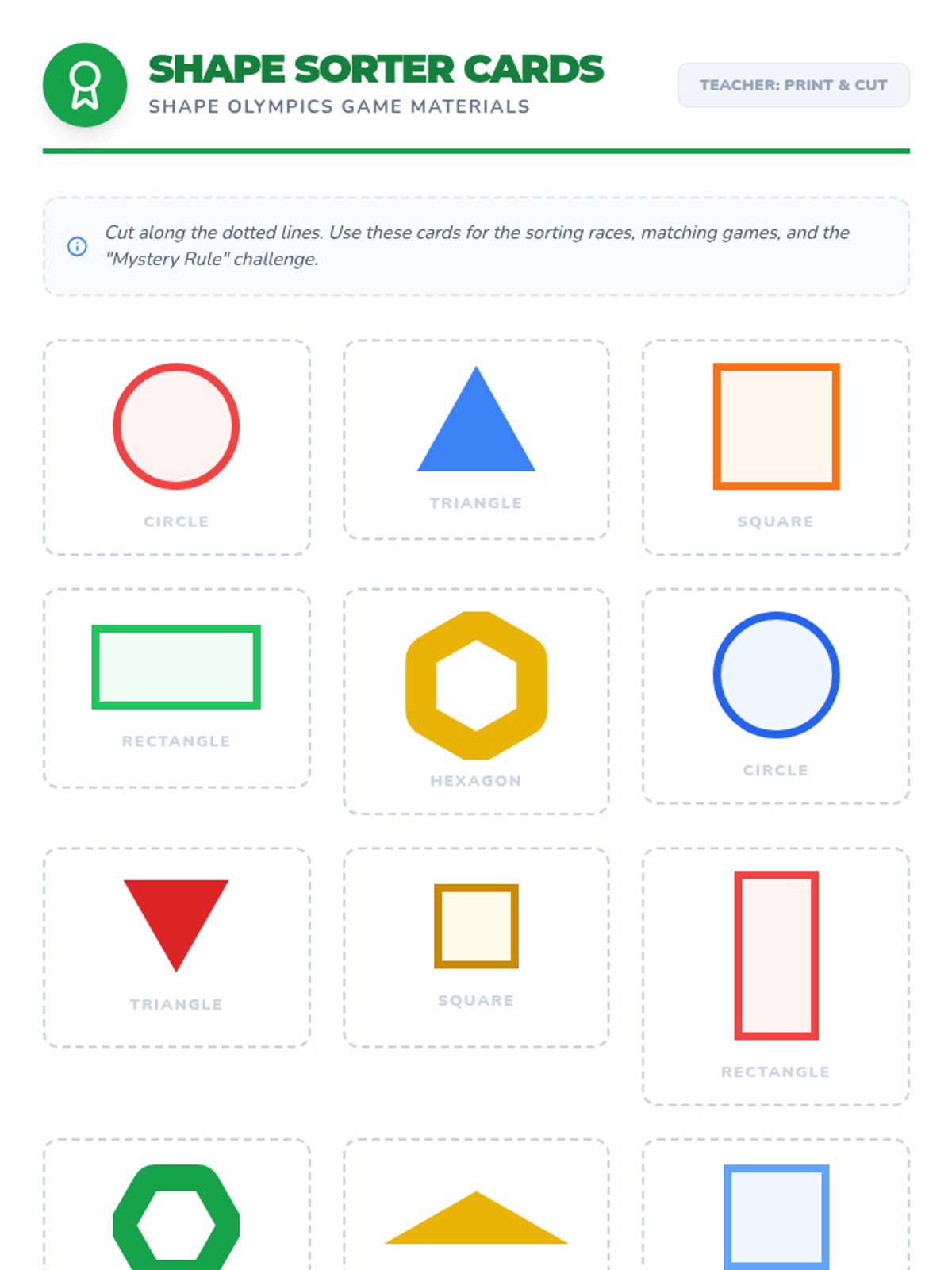
A culminating 'Shape Olympics' where students sort various 2D shapes based on their learned attributes like number of sides and curves.
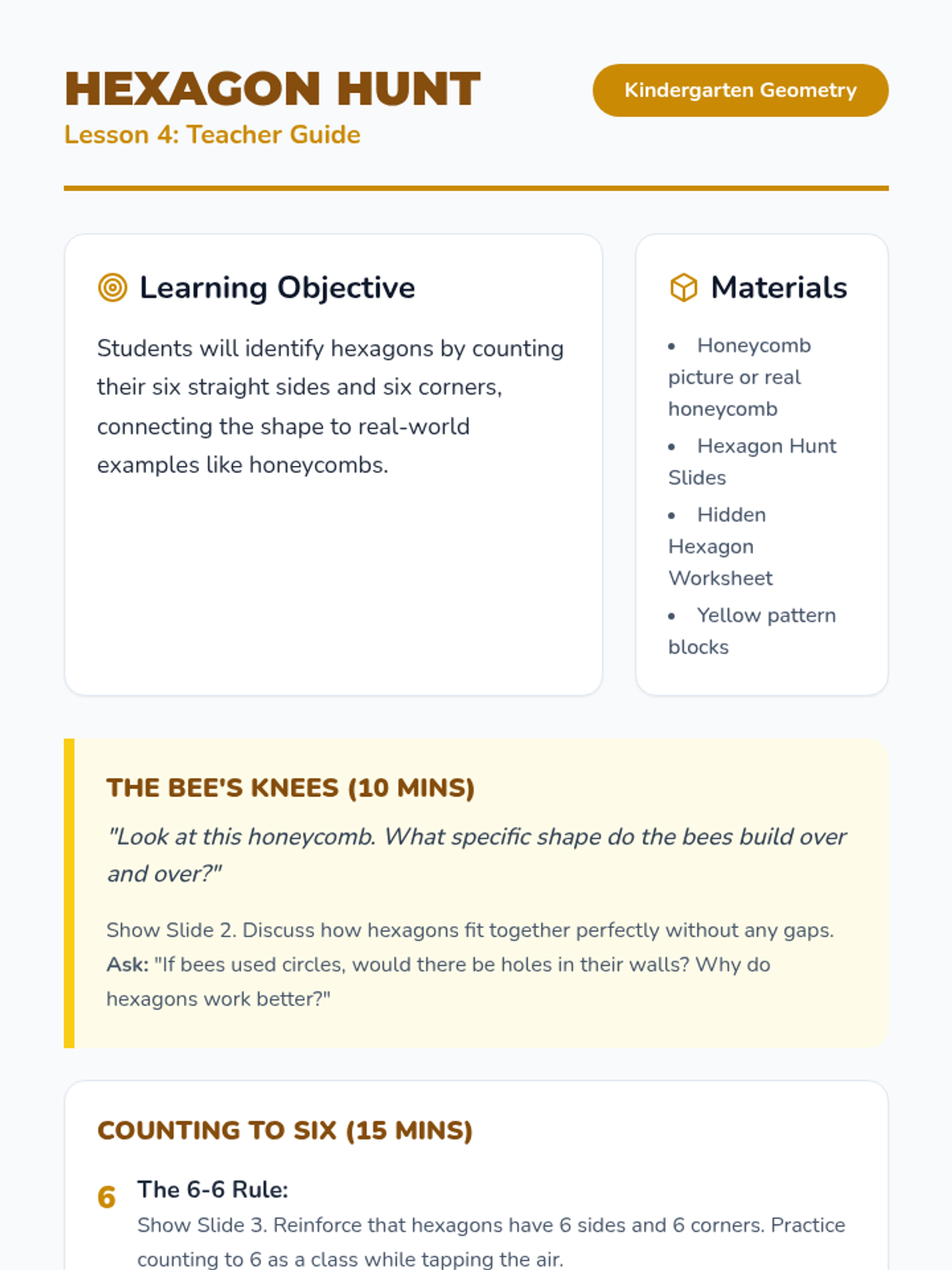
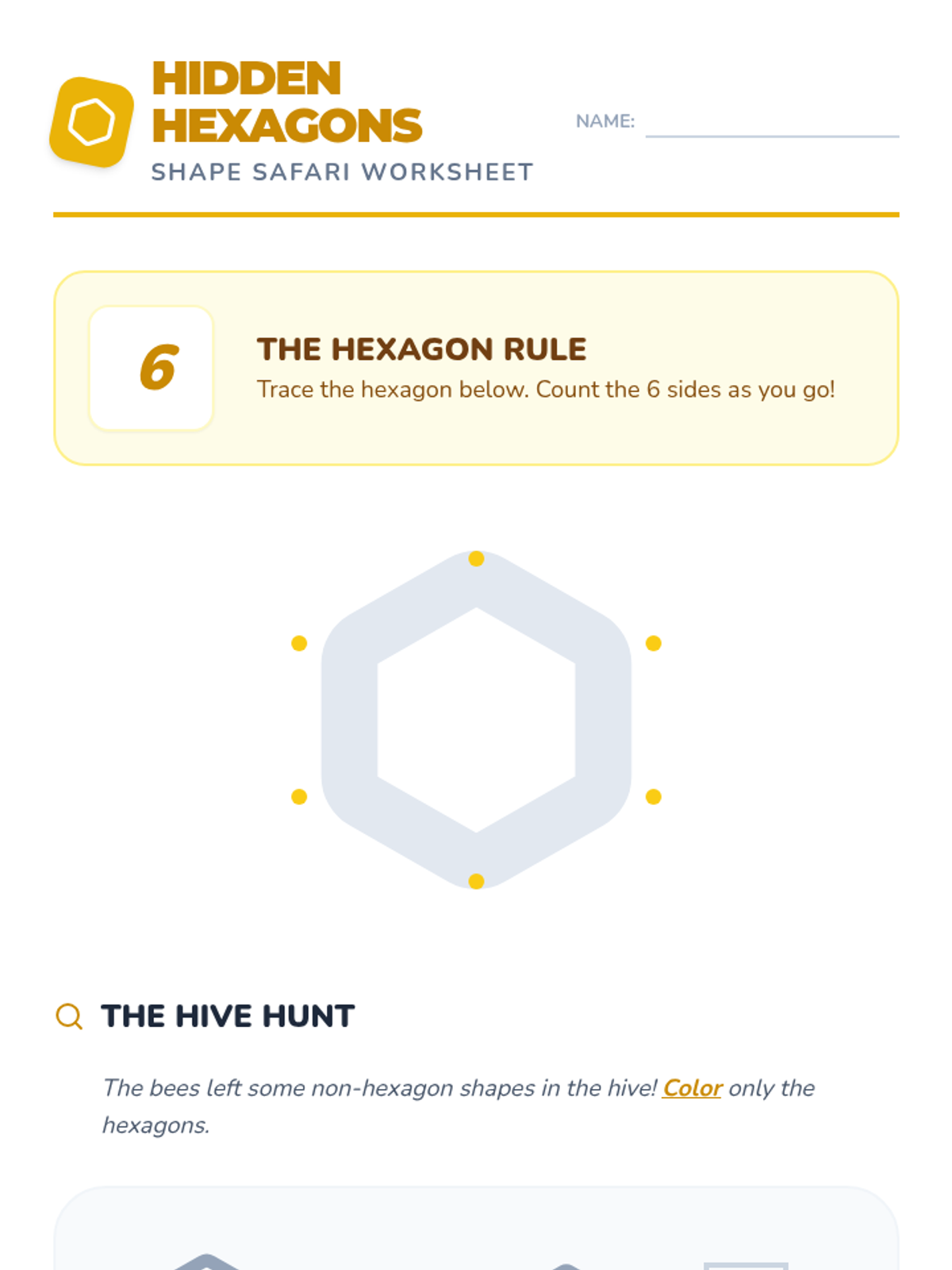
Students are introduced to the six-sided hexagon, finding them in nature and patterns while practicing counting to six.
Students compare squares and rectangles to understand similarities (4 sides, 4 corners) and differences in side lengths.
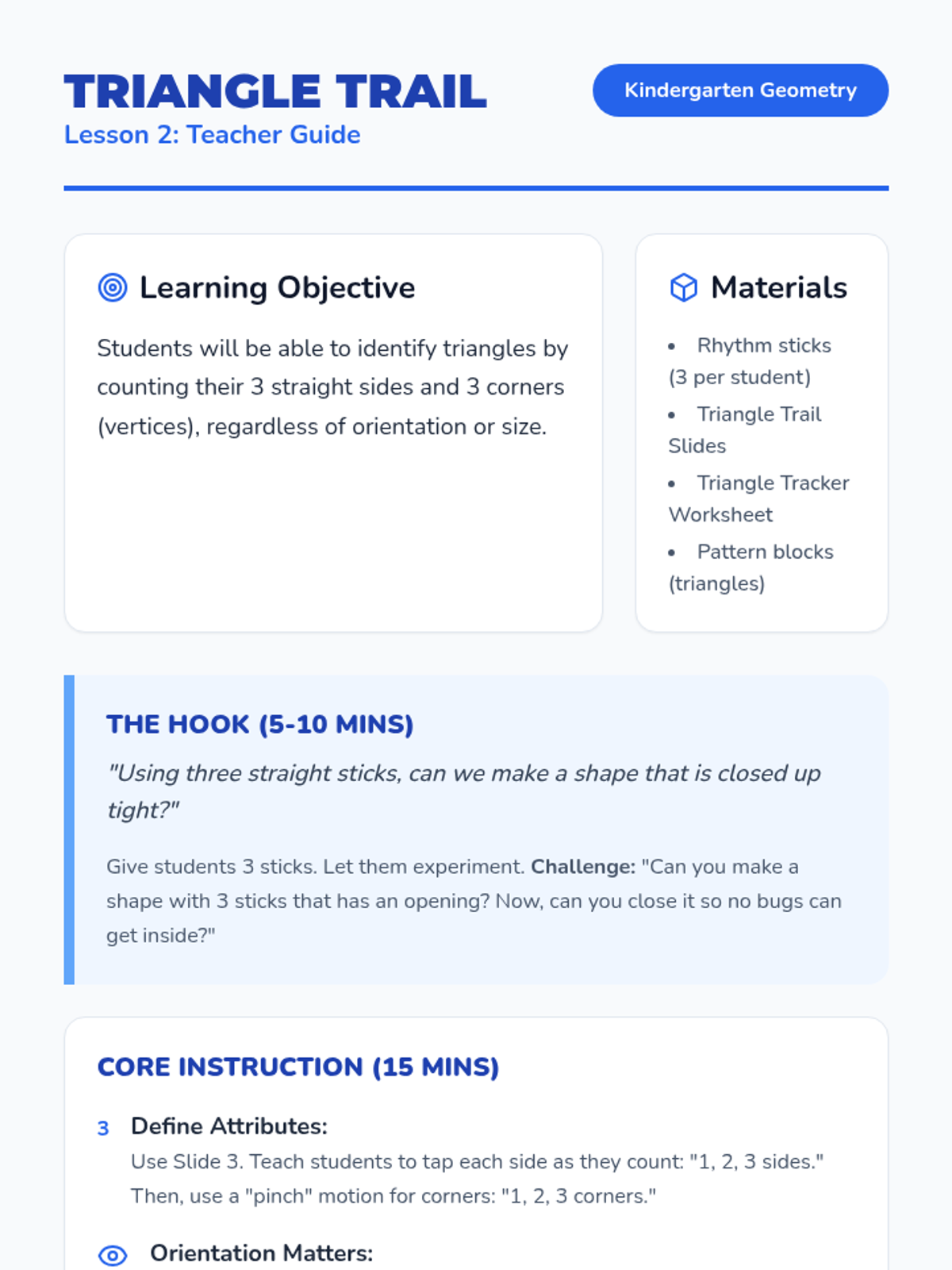
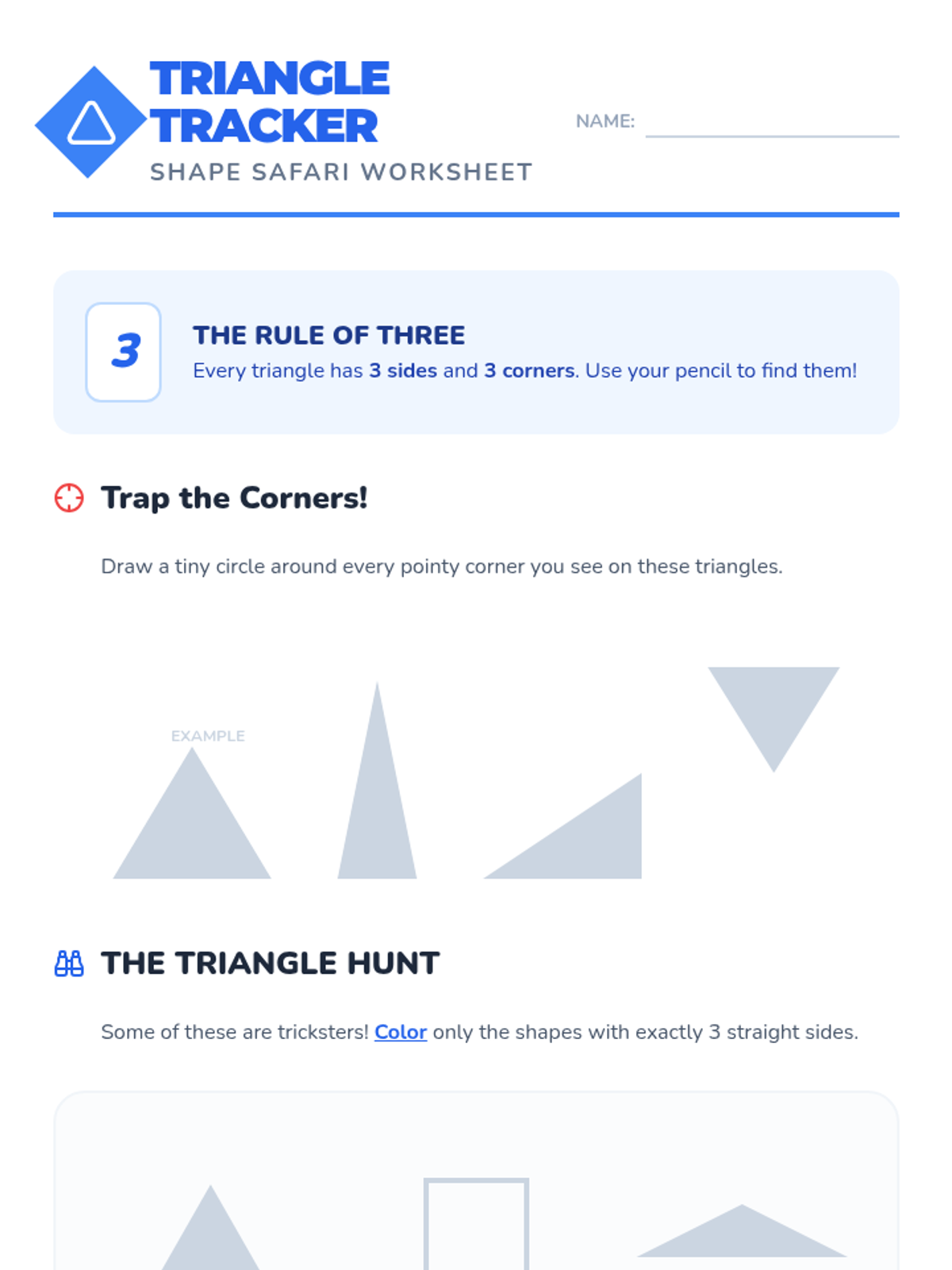
Students explore triangles by counting their three sides and three corners using tactile materials and visual recognition.
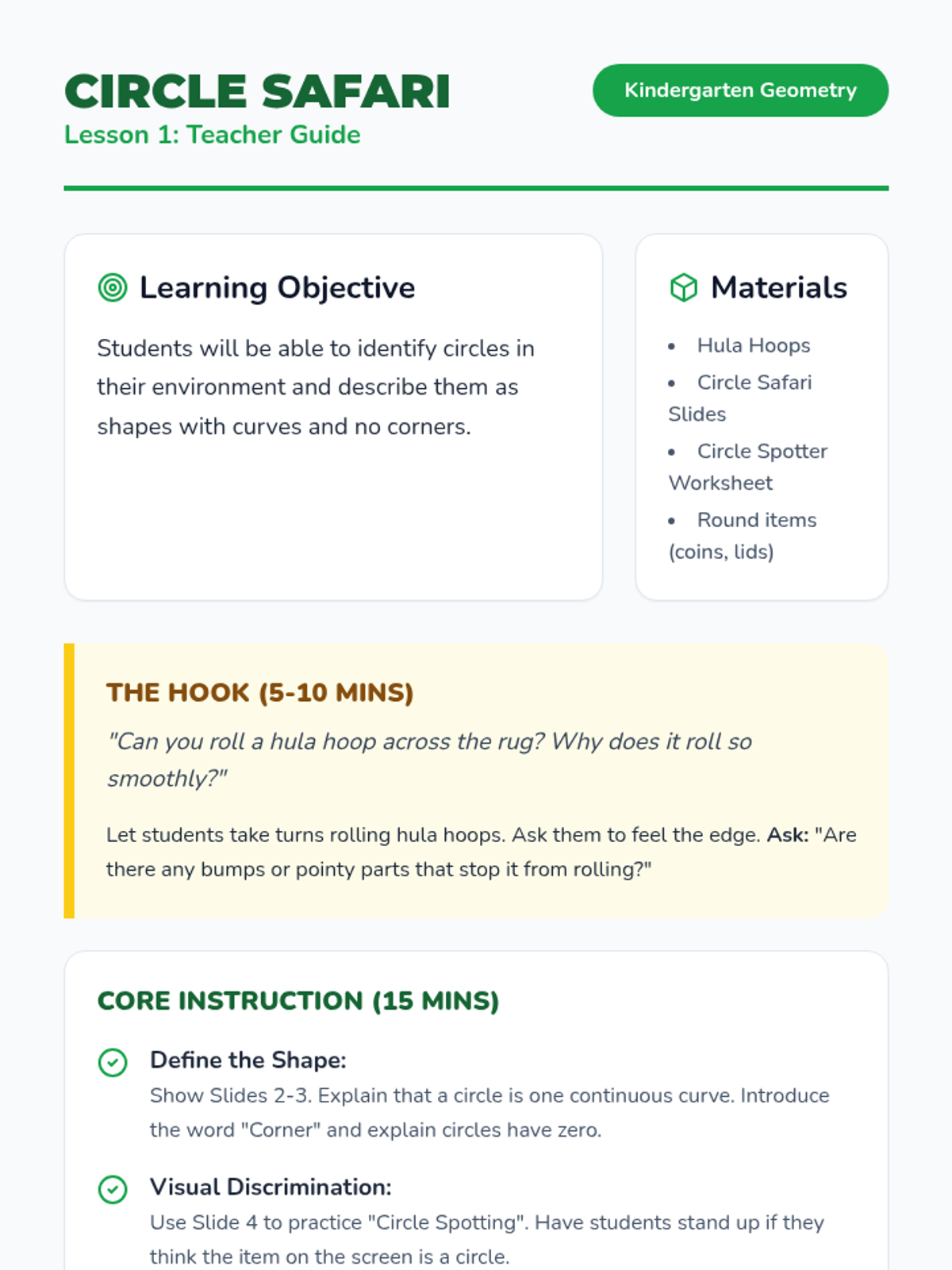
Students investigate round objects and drawings to identify the properties of a circle, focusing on curves and the absence of corners.
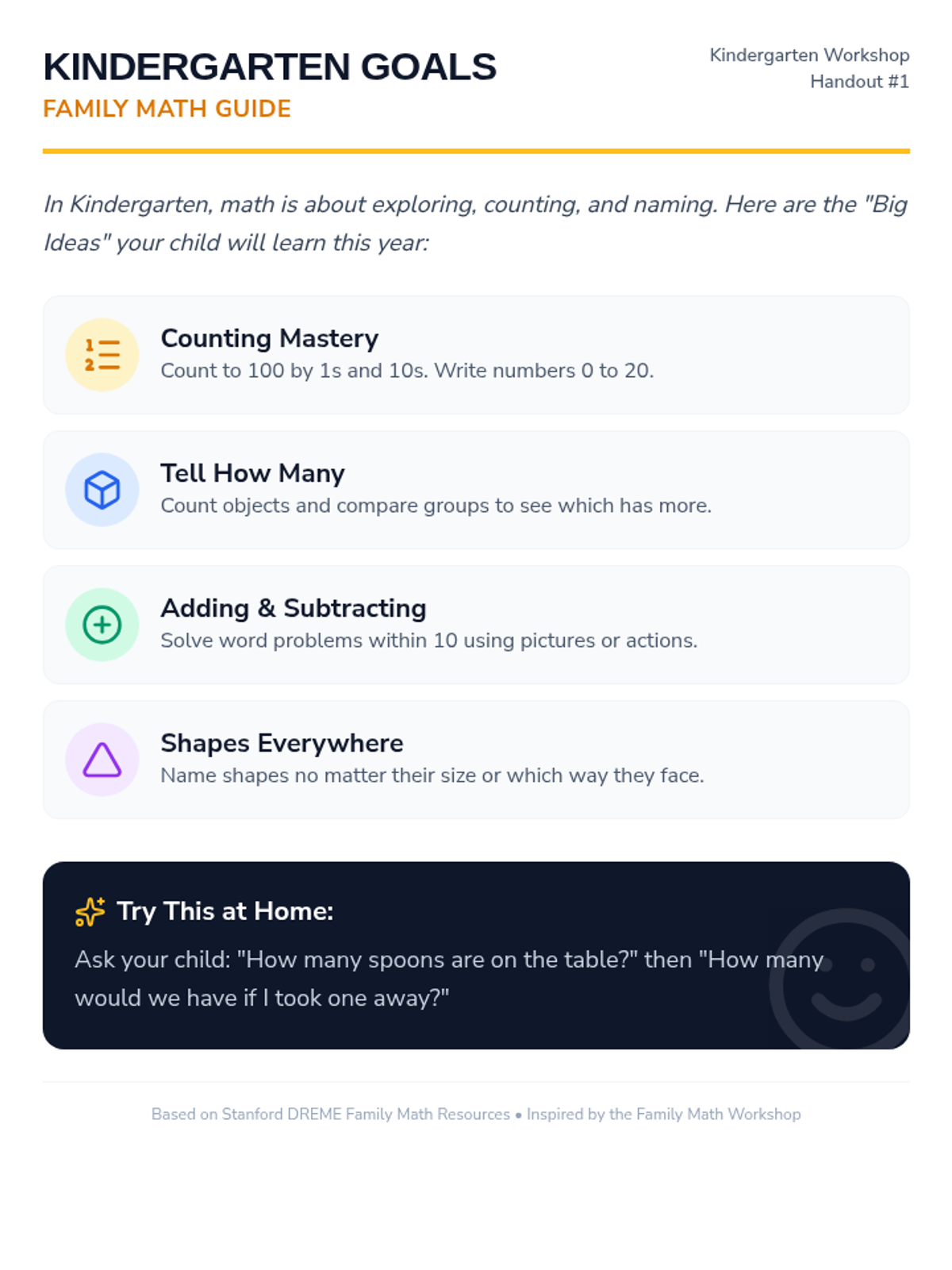
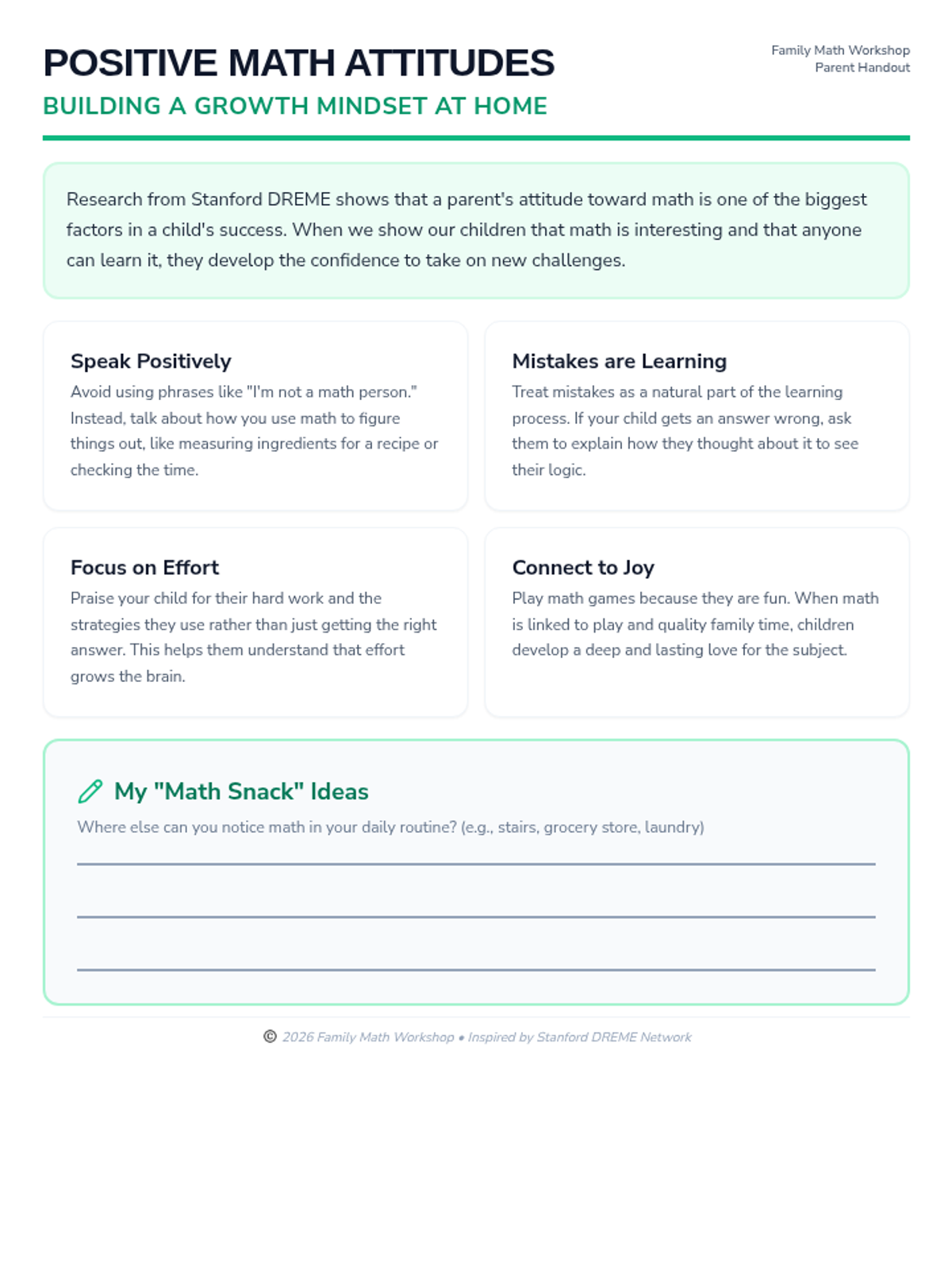
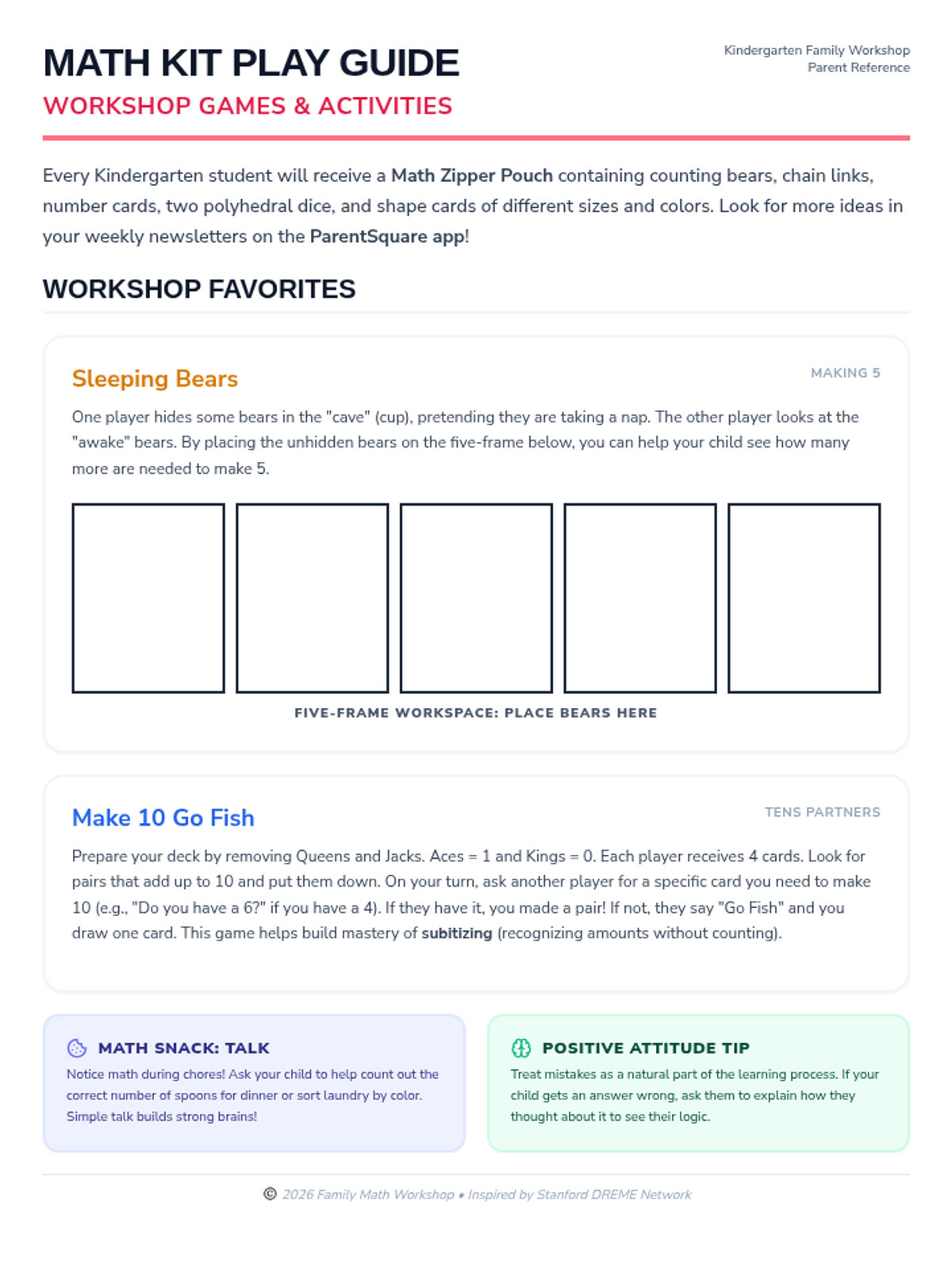
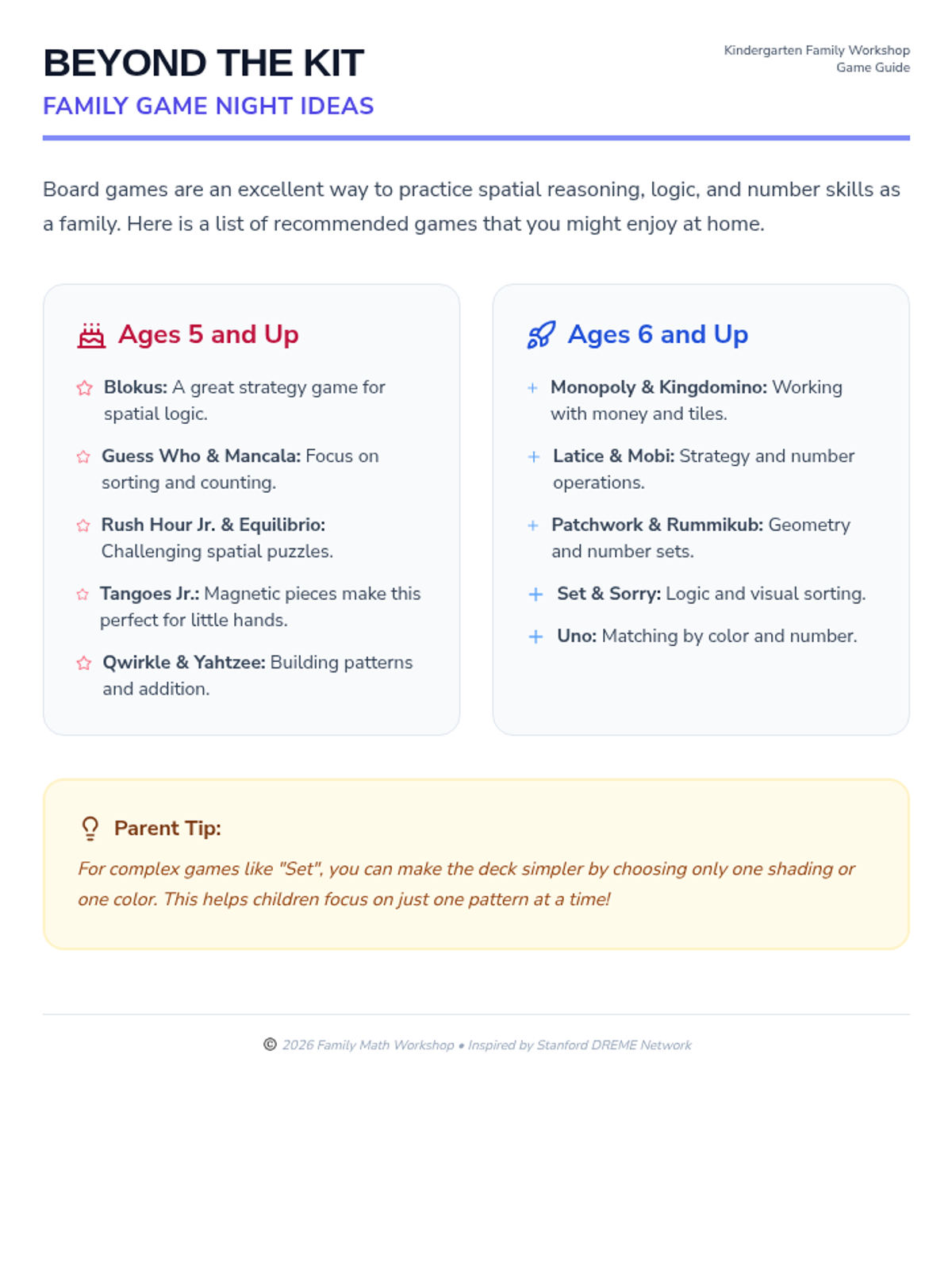
A comprehensive workshop for Kindergarten parents and guardians focused on building positive math attitudes and supporting math learning at home through play and daily routines. Based on Stanford DREME research.
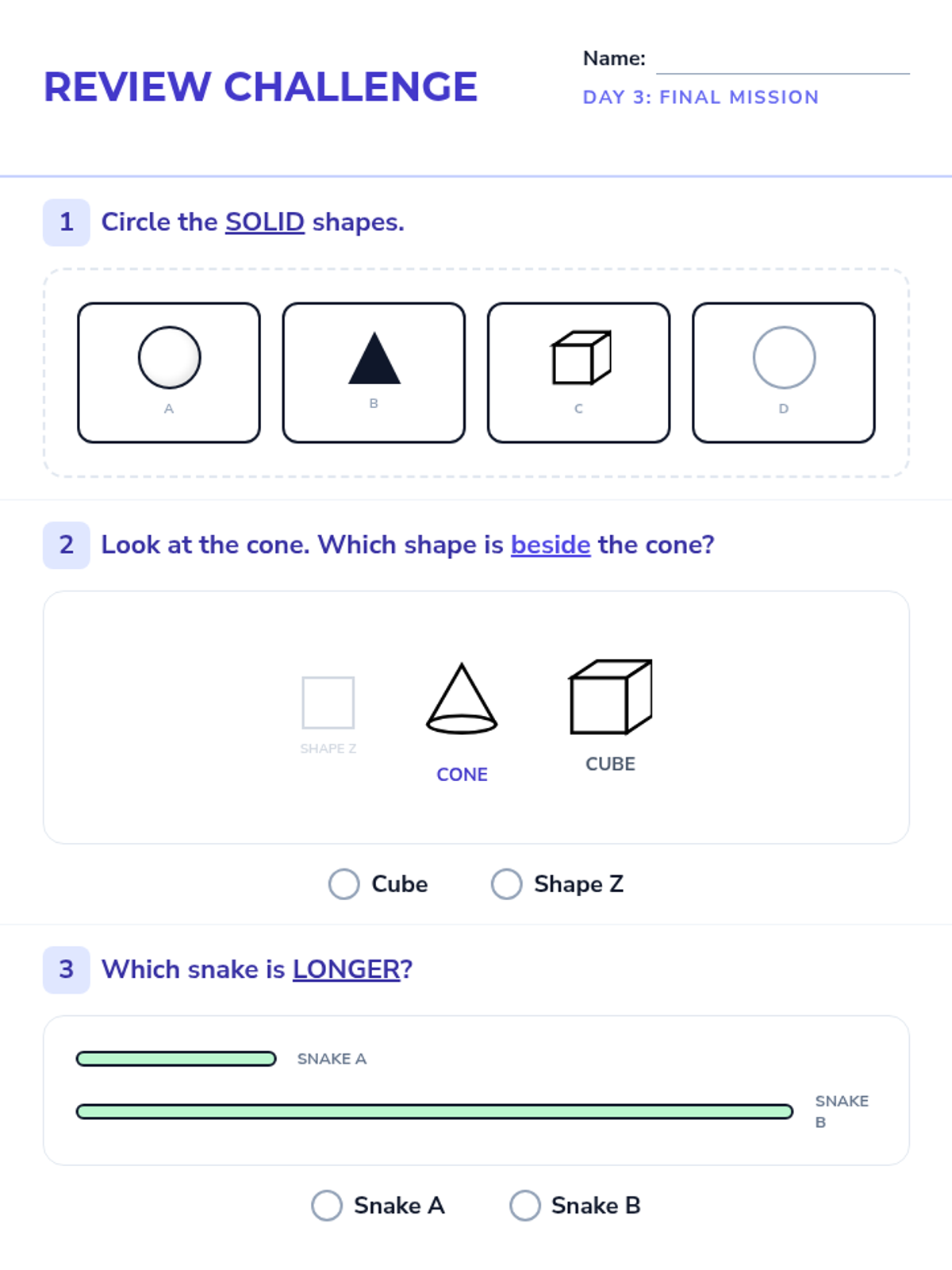
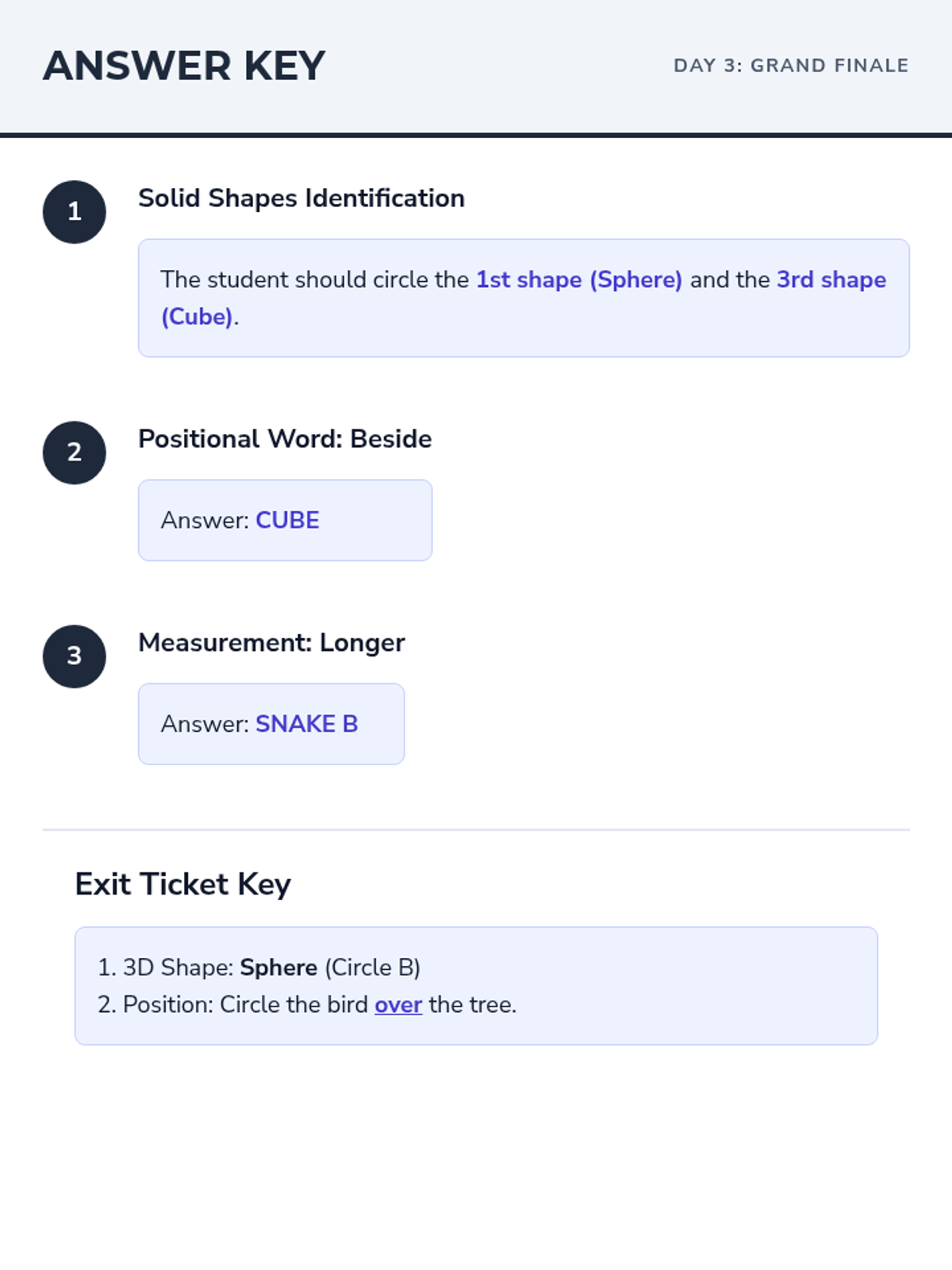
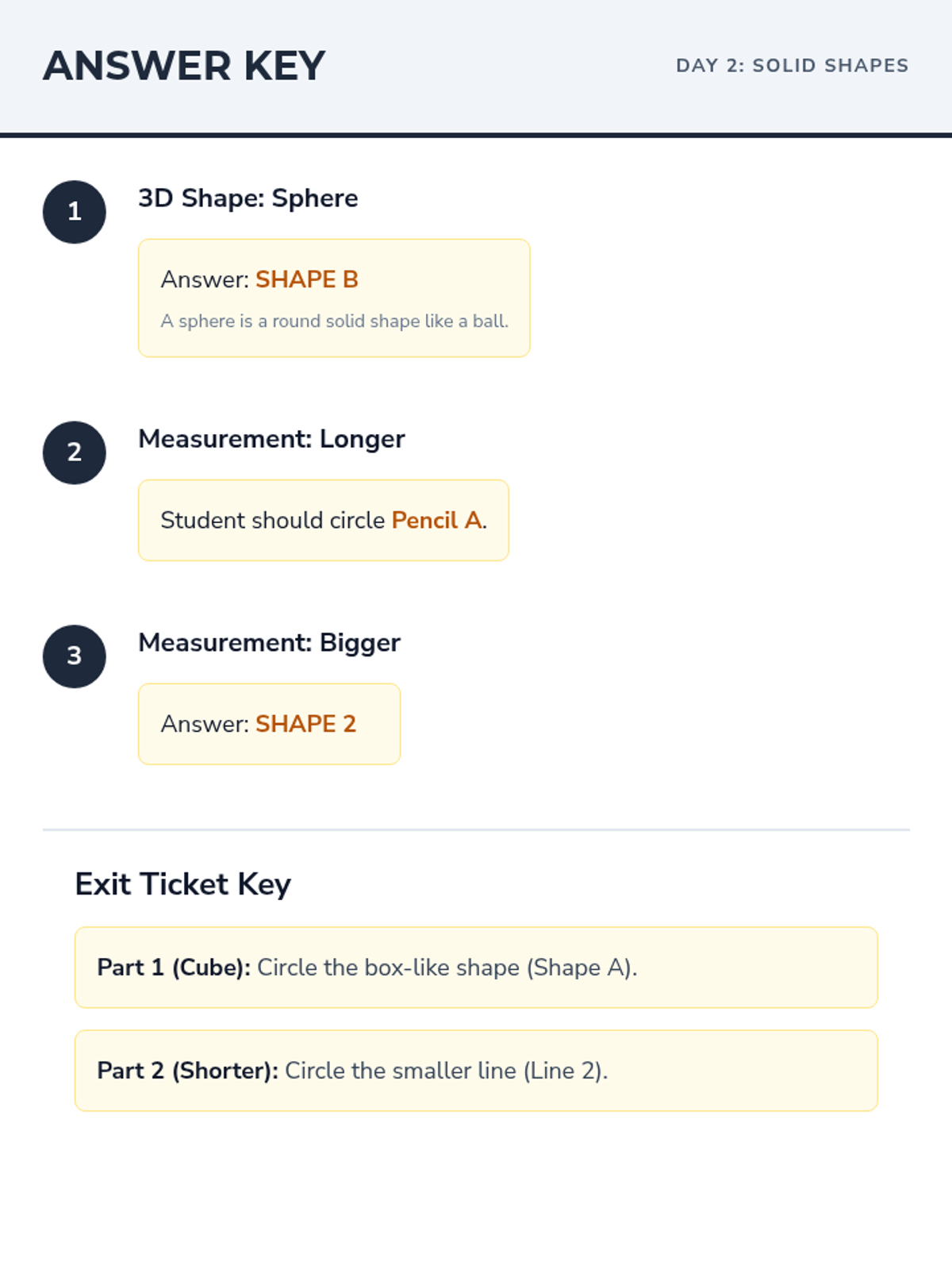
A cumulative review of 2D/3D shapes, positional words, and measurement comparisons to assess mastery.
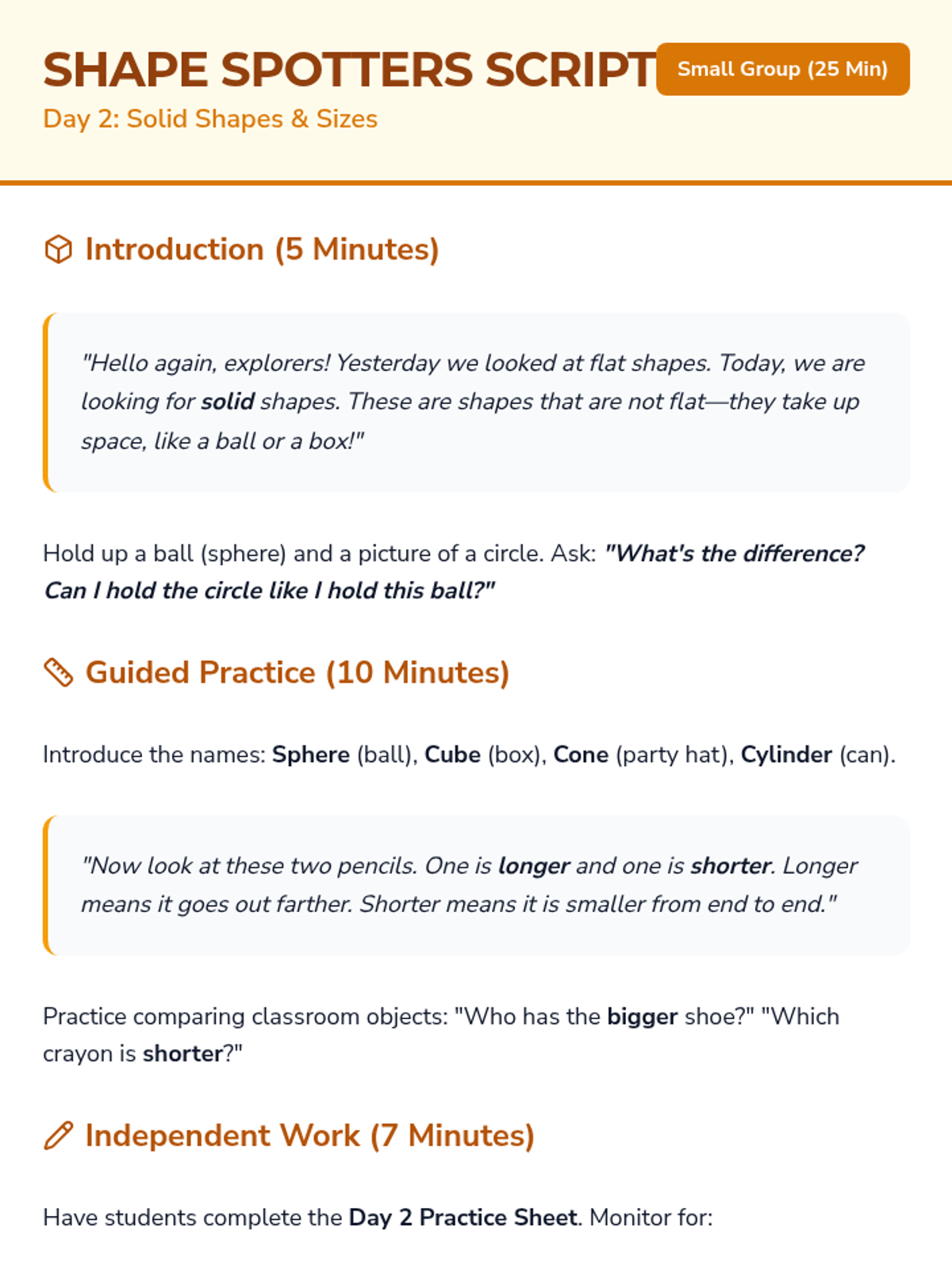
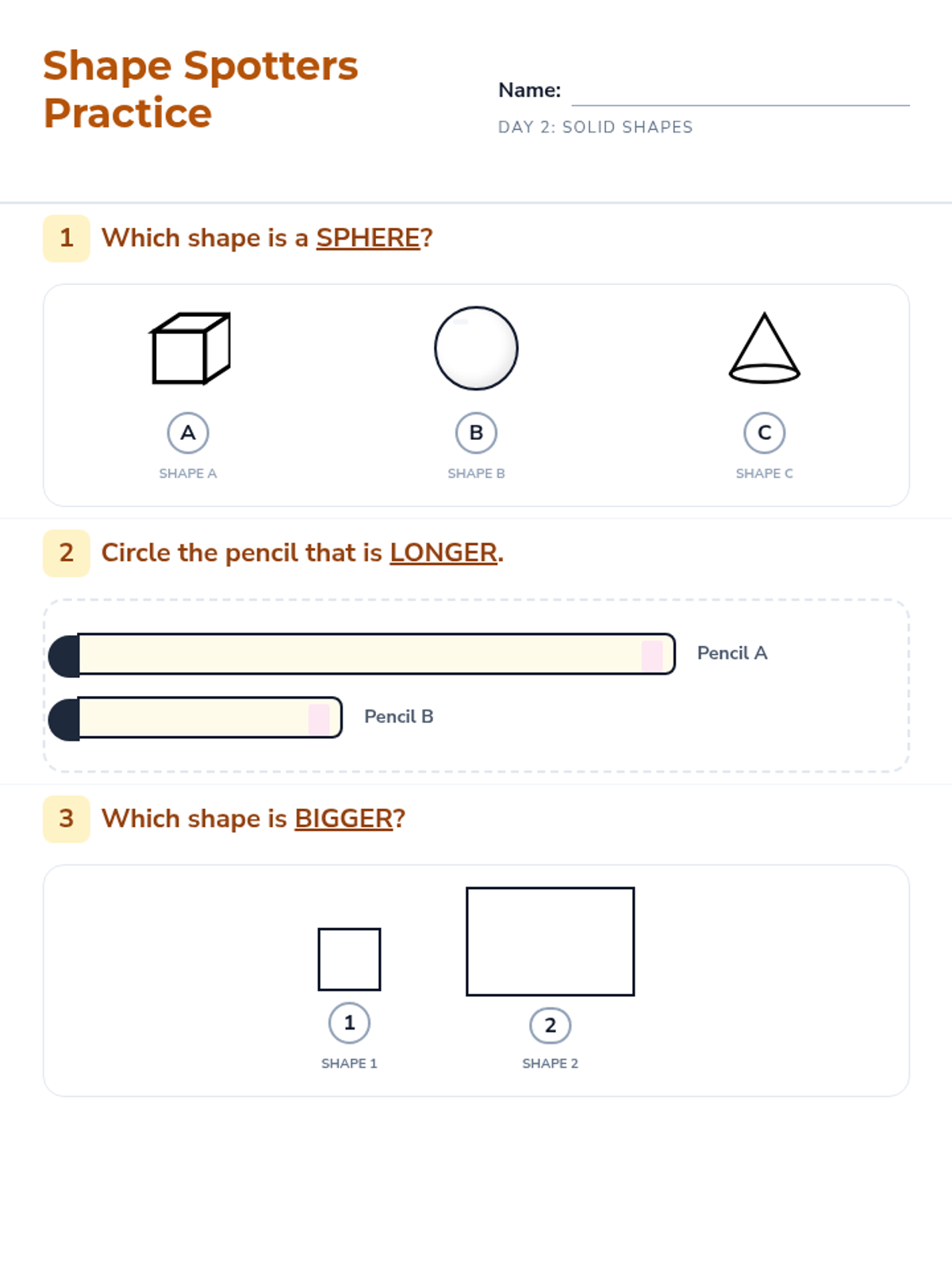
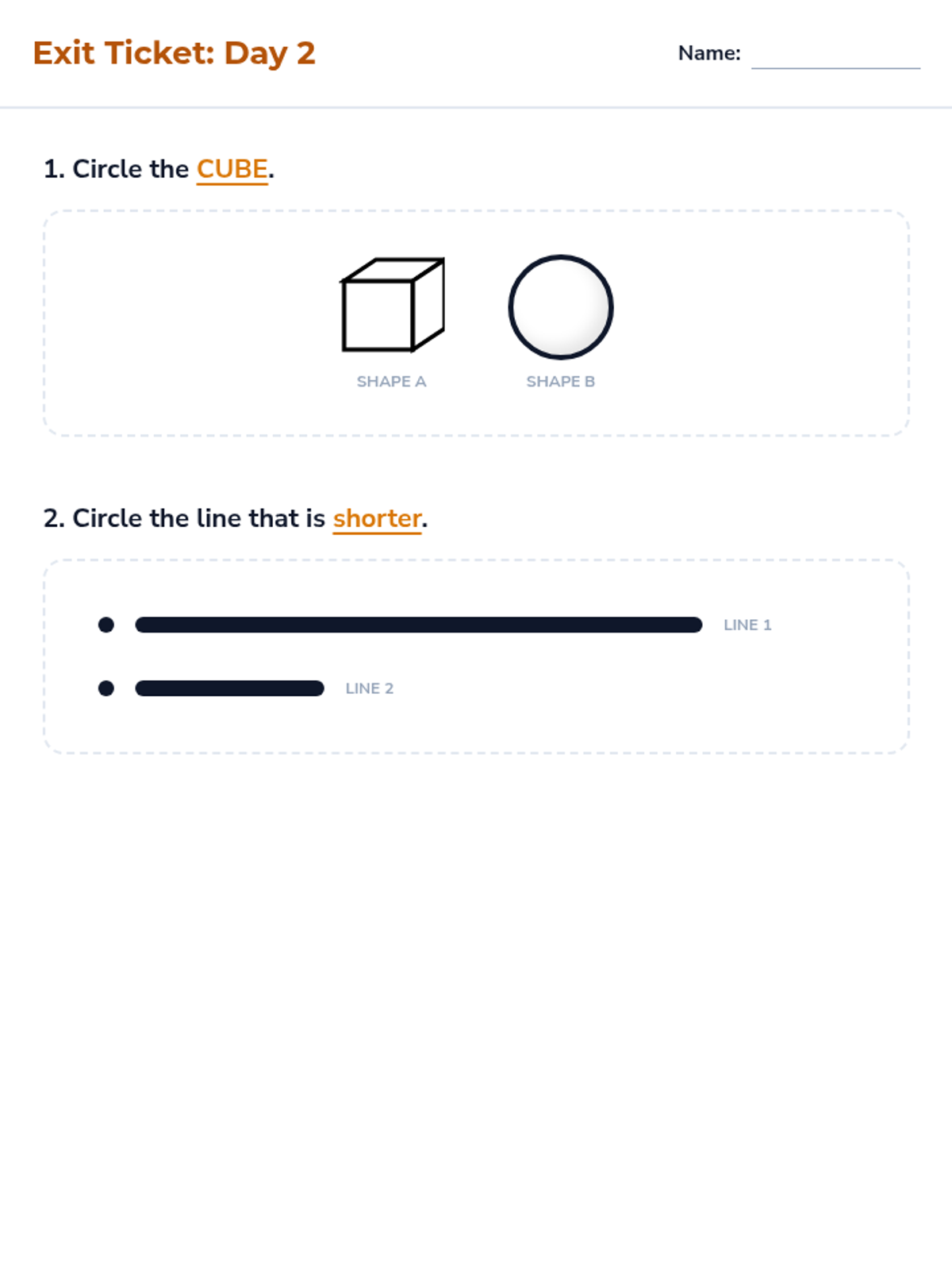
Students identify 3D shapes (cube, sphere, cone, cylinder) and compare objects based on size and length.
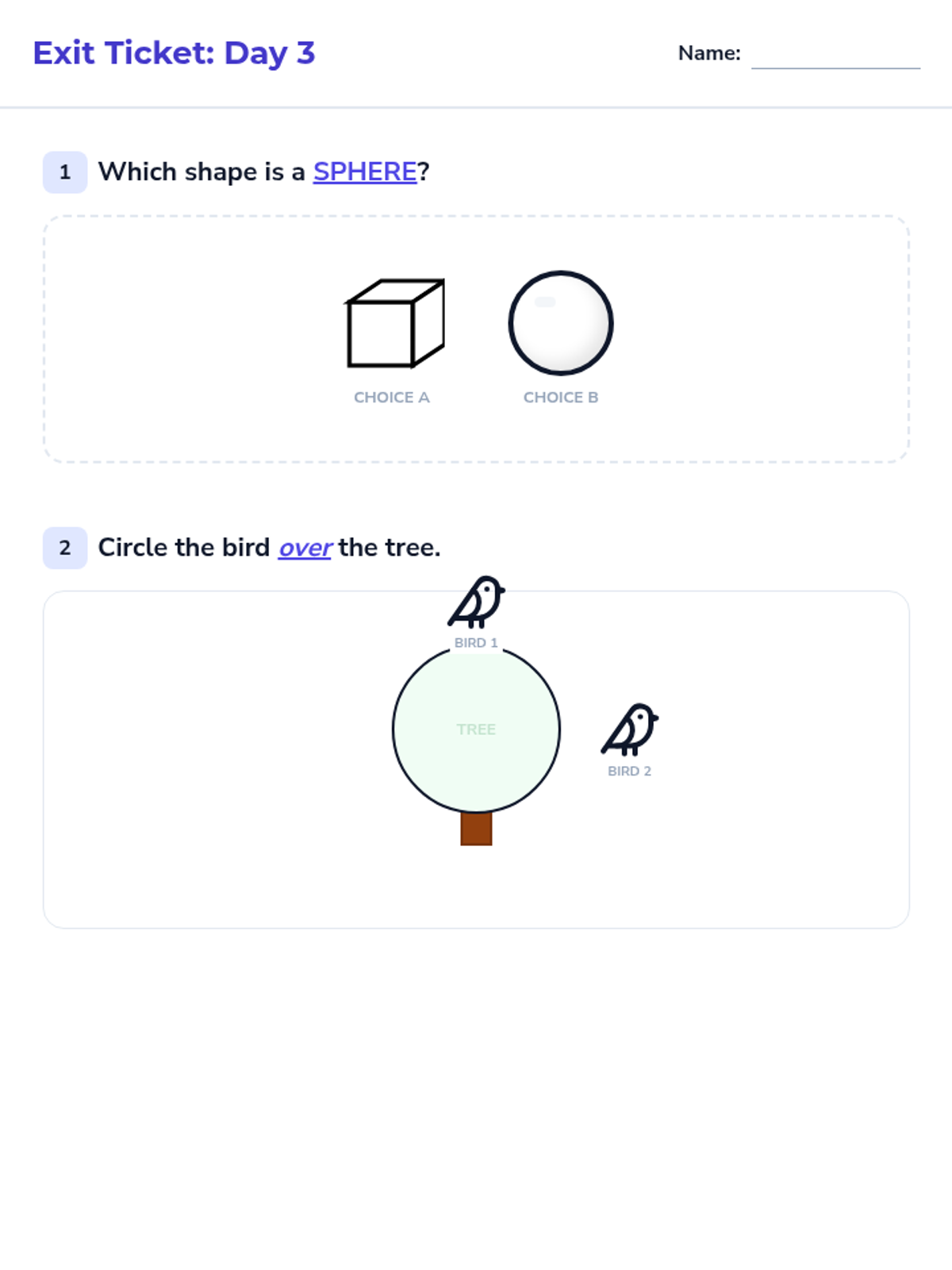
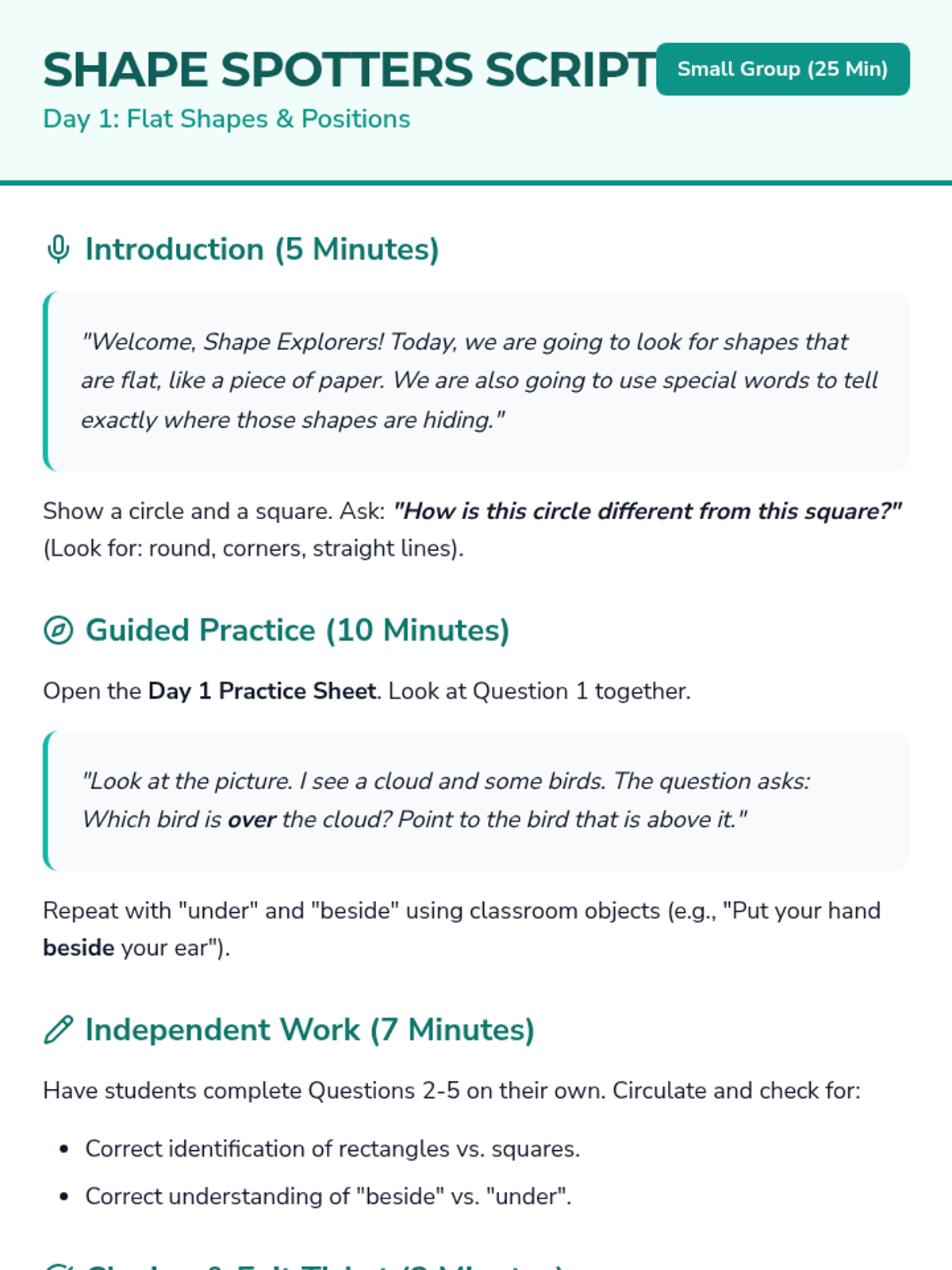
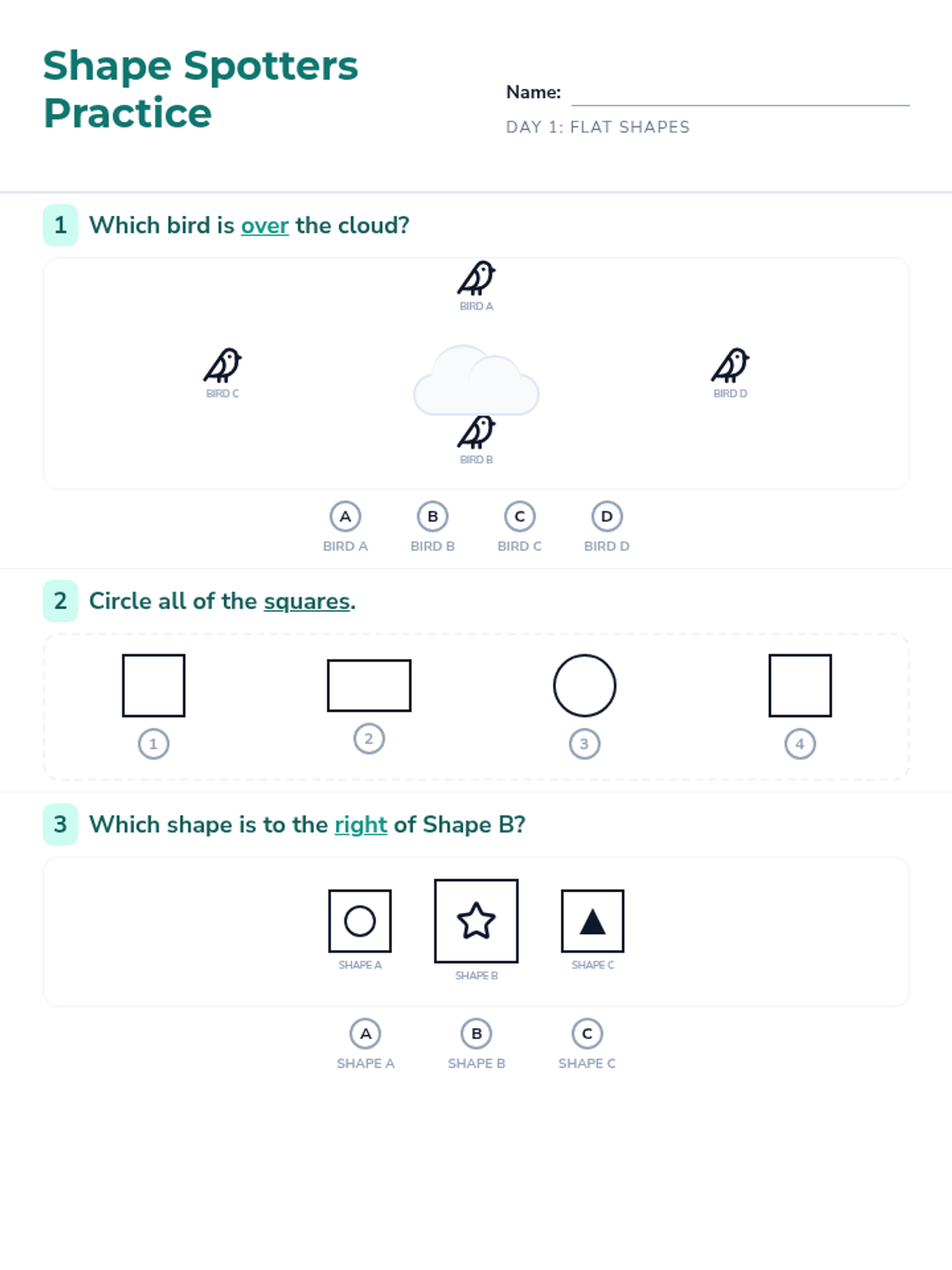
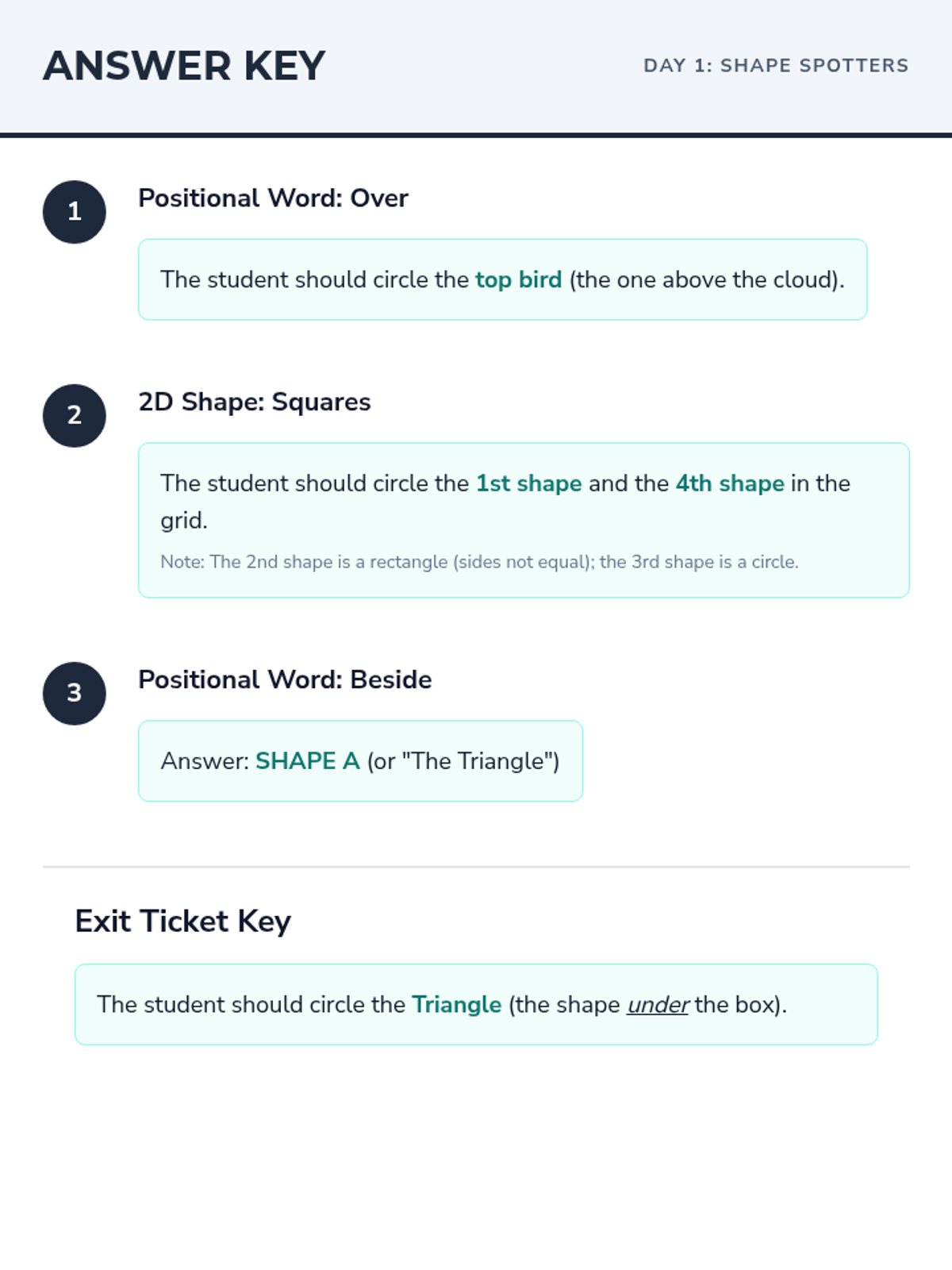
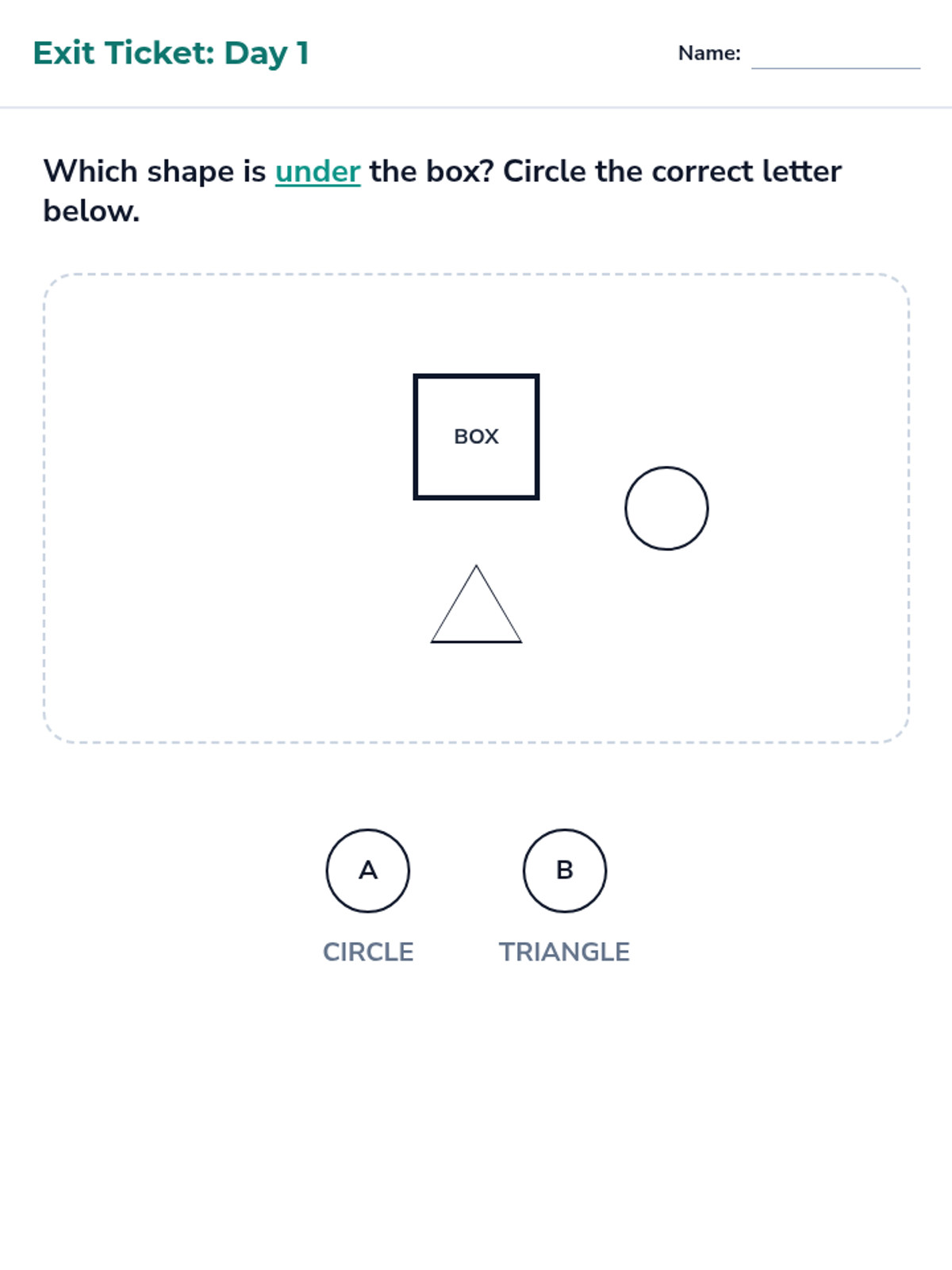
Students identify 2D shapes (circle, square, triangle, rectangle) and use positional language (over, under, beside) to describe location.
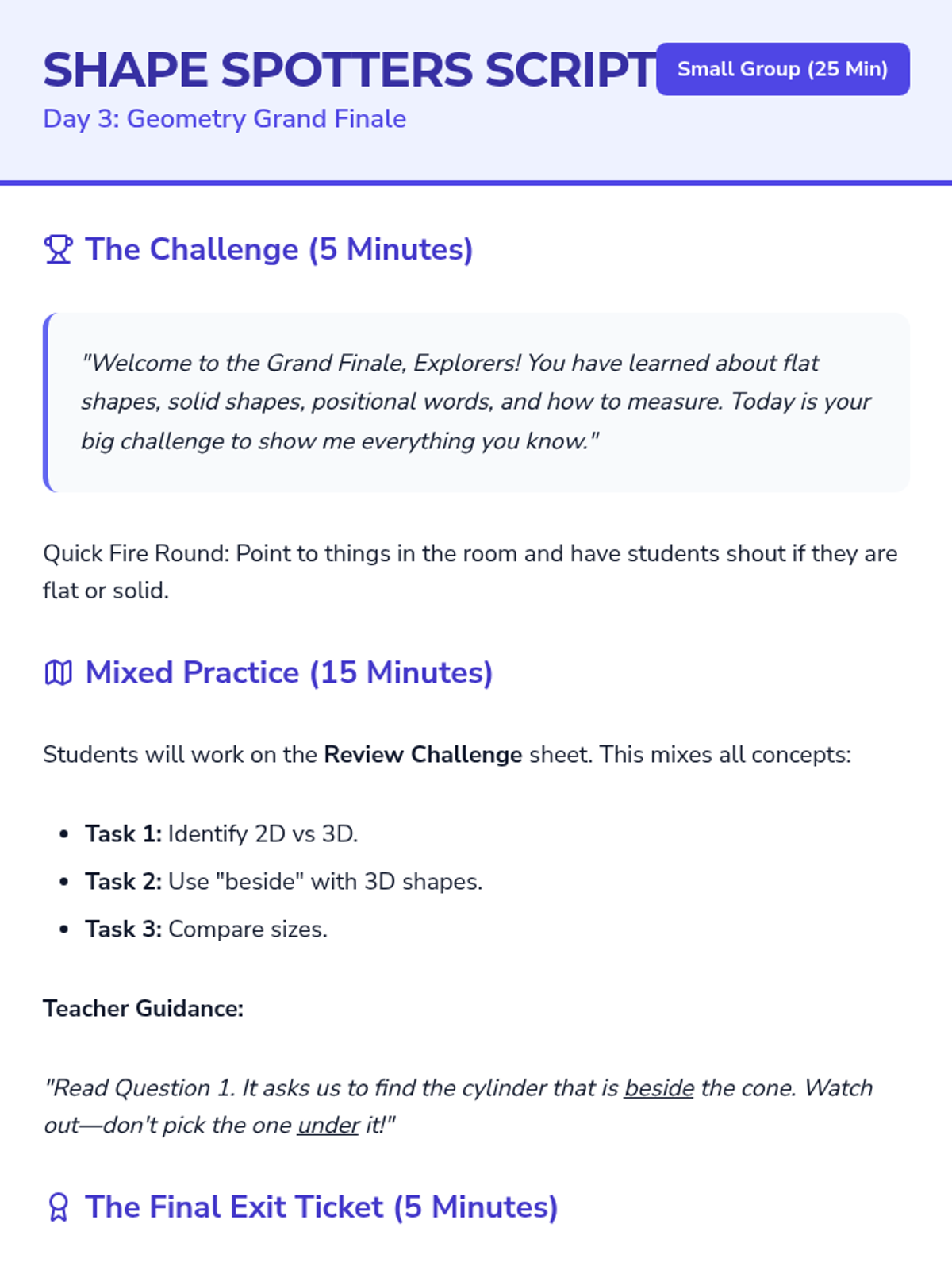
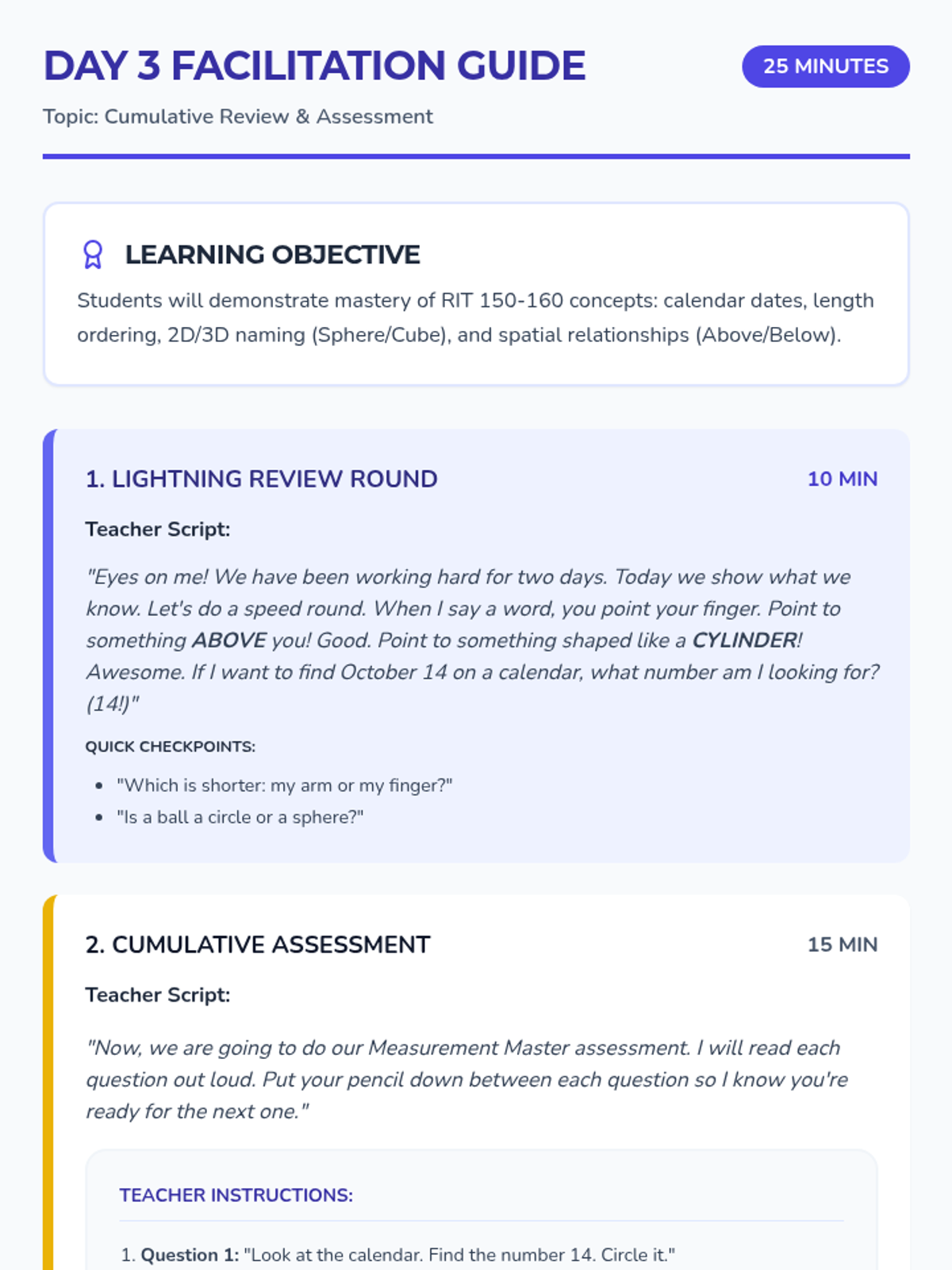
Day 3 provides a comprehensive review of all measurement and geometry concepts from the week, culminating in a cumulative assessment.
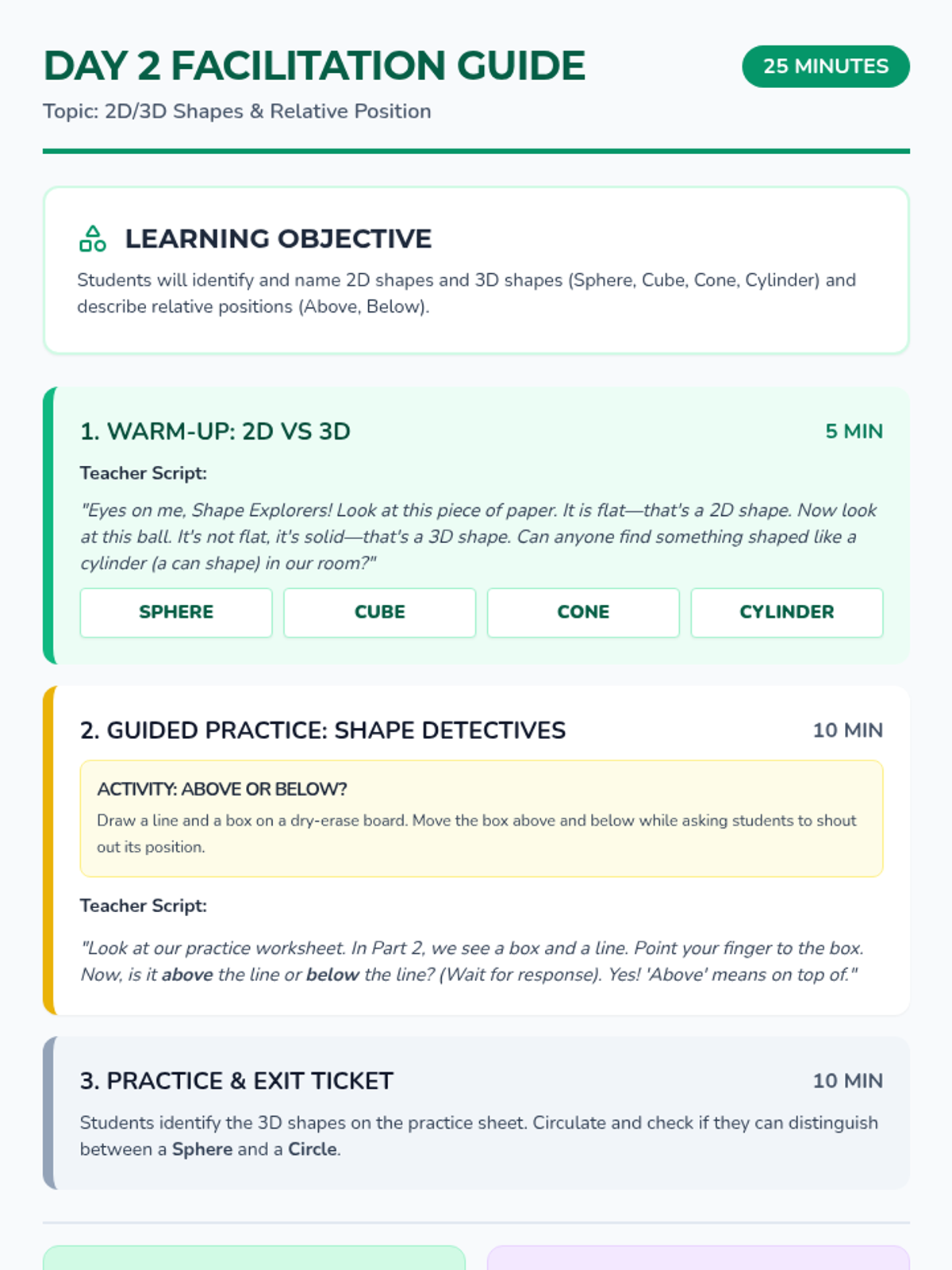
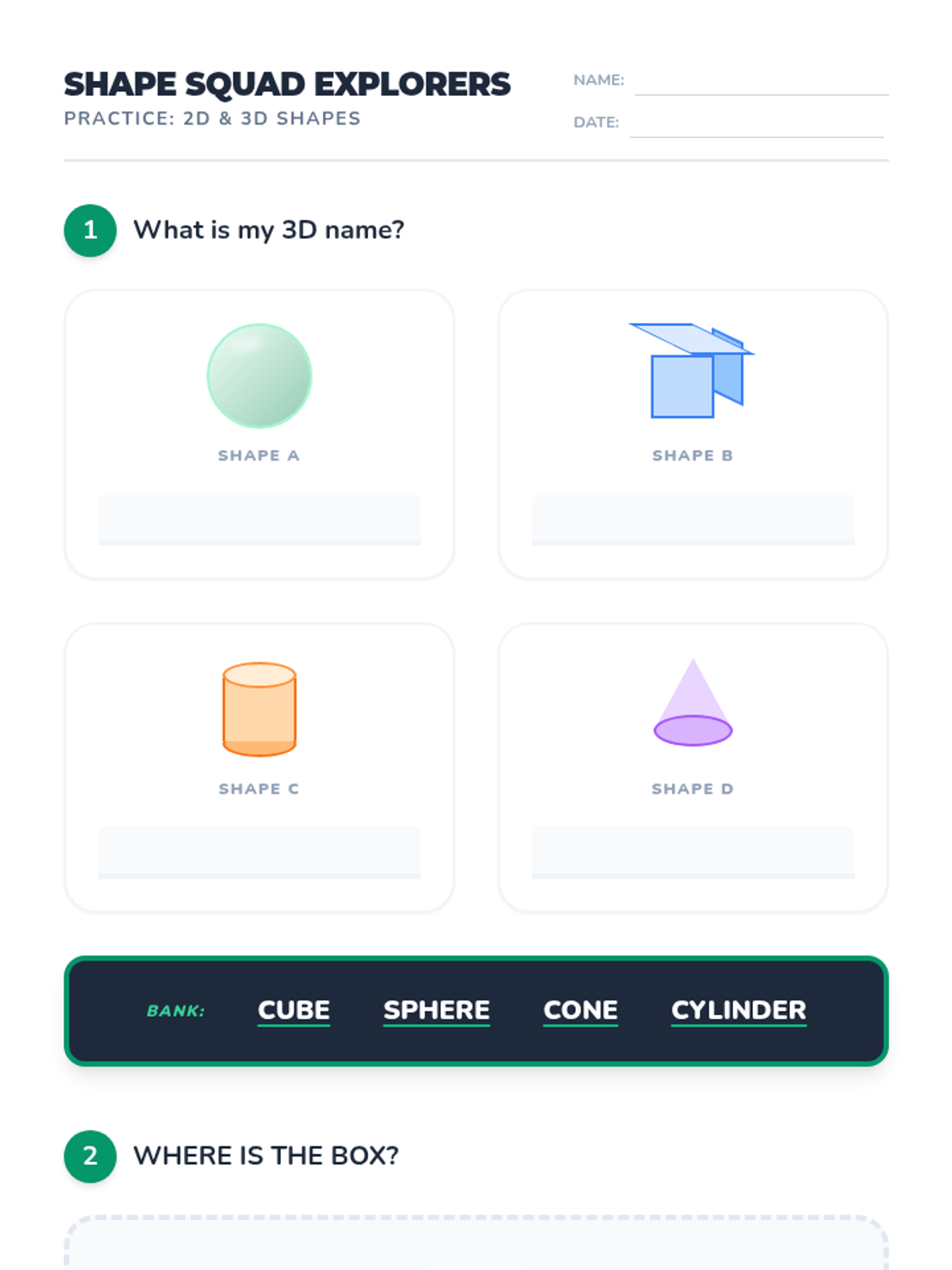
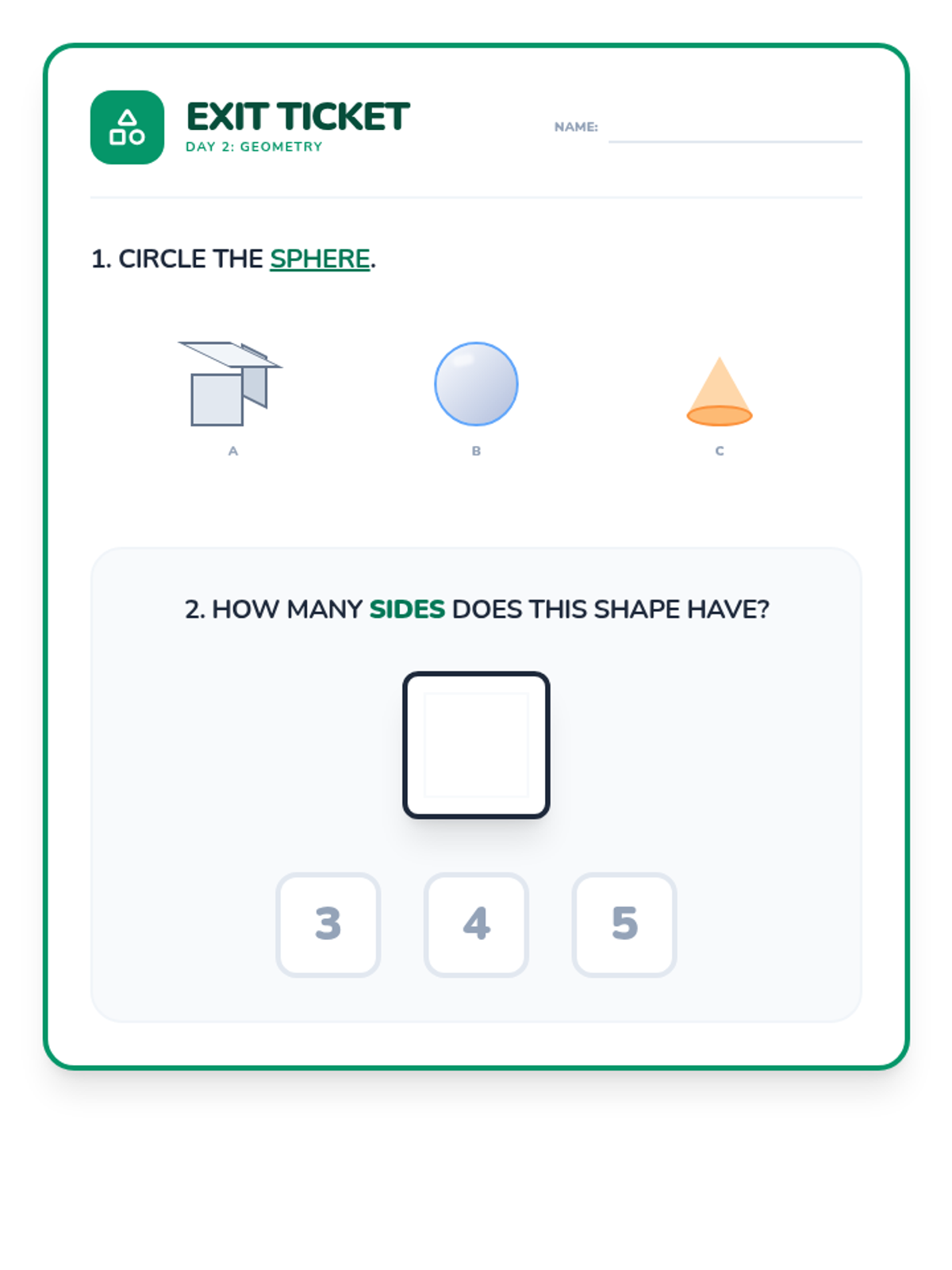
Day 2 covers identifying 2D and 3D shapes by name and attributes, as well as mixed geometry concepts like relative position and composite shapes.
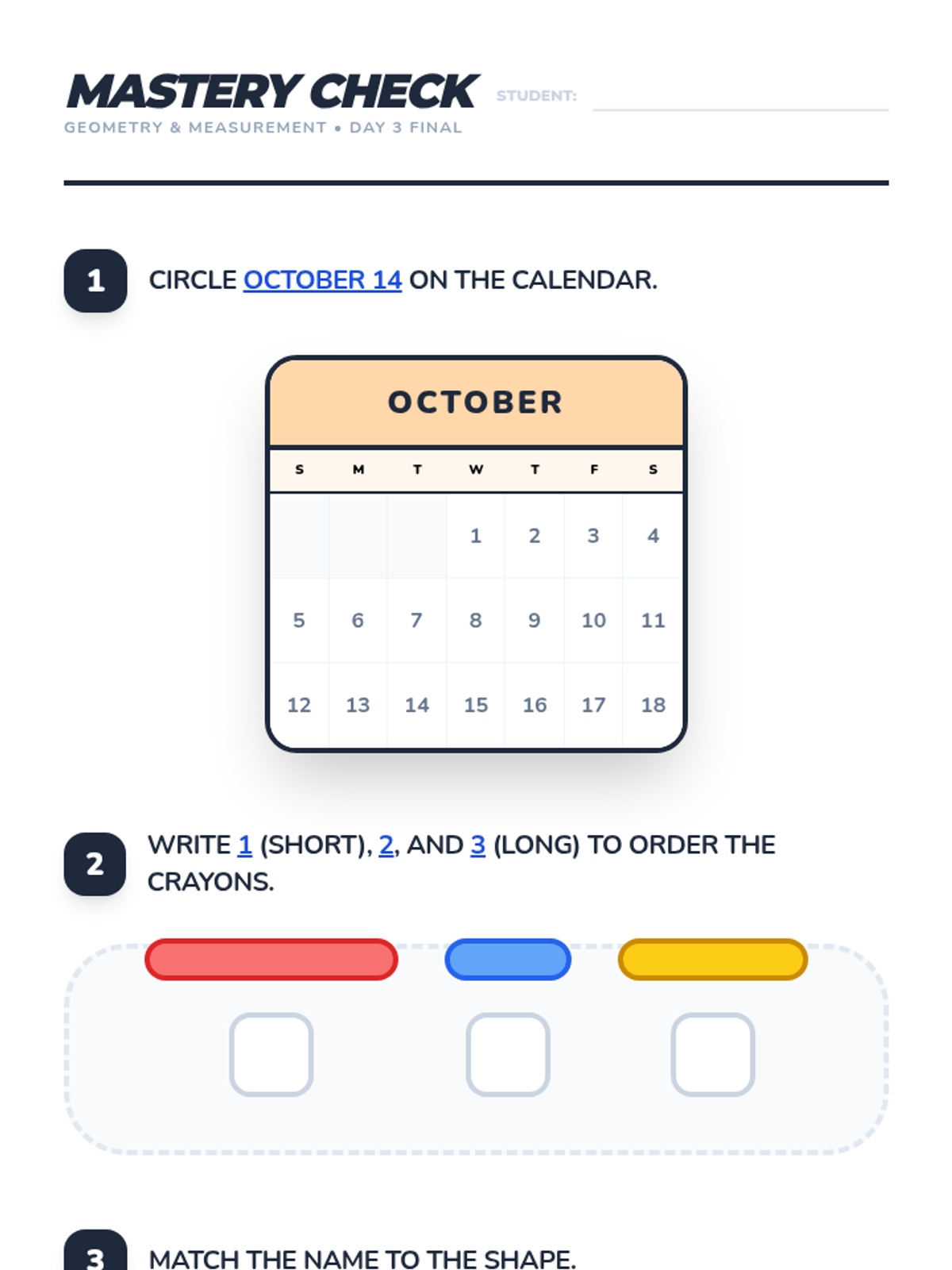
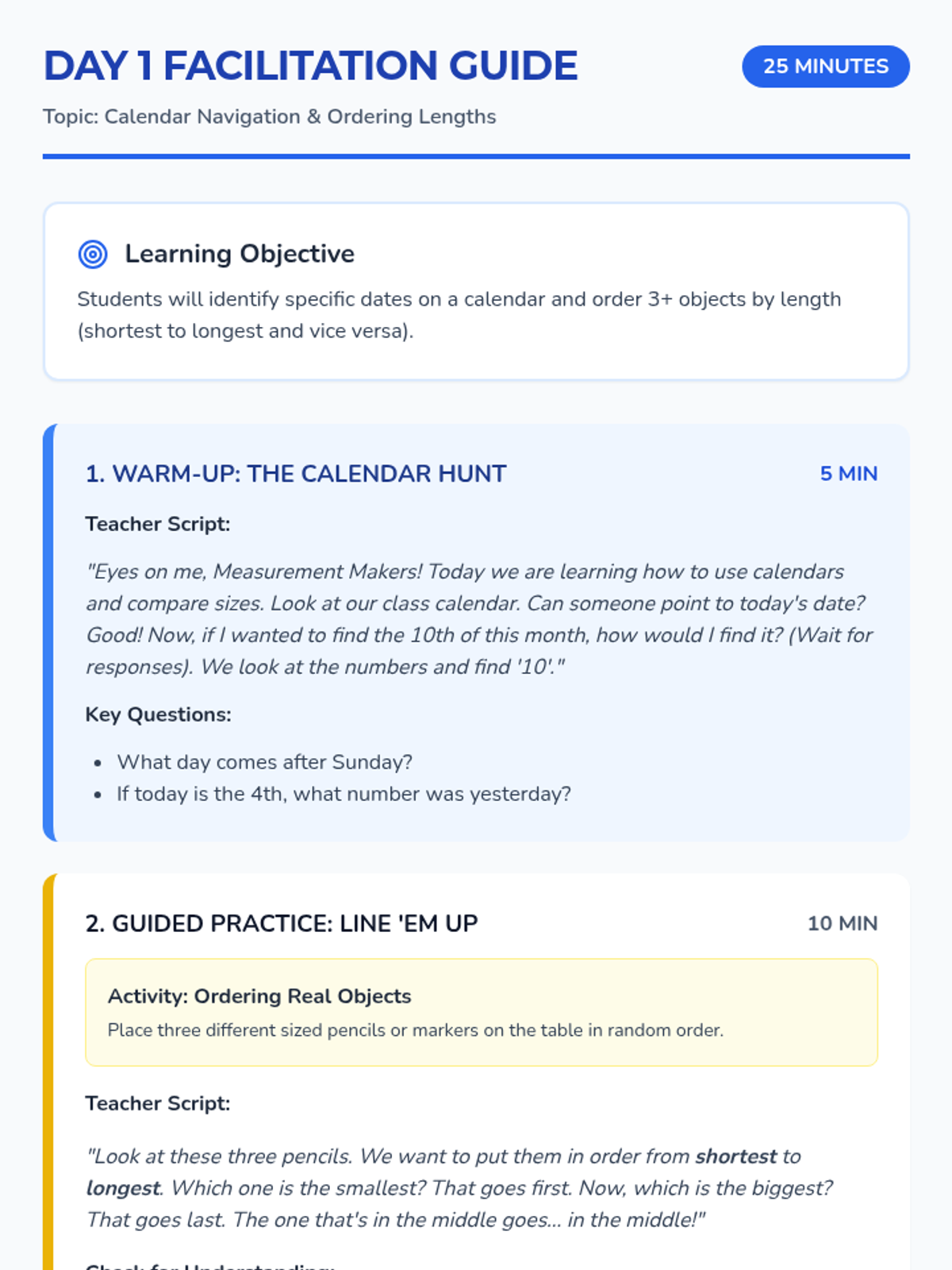
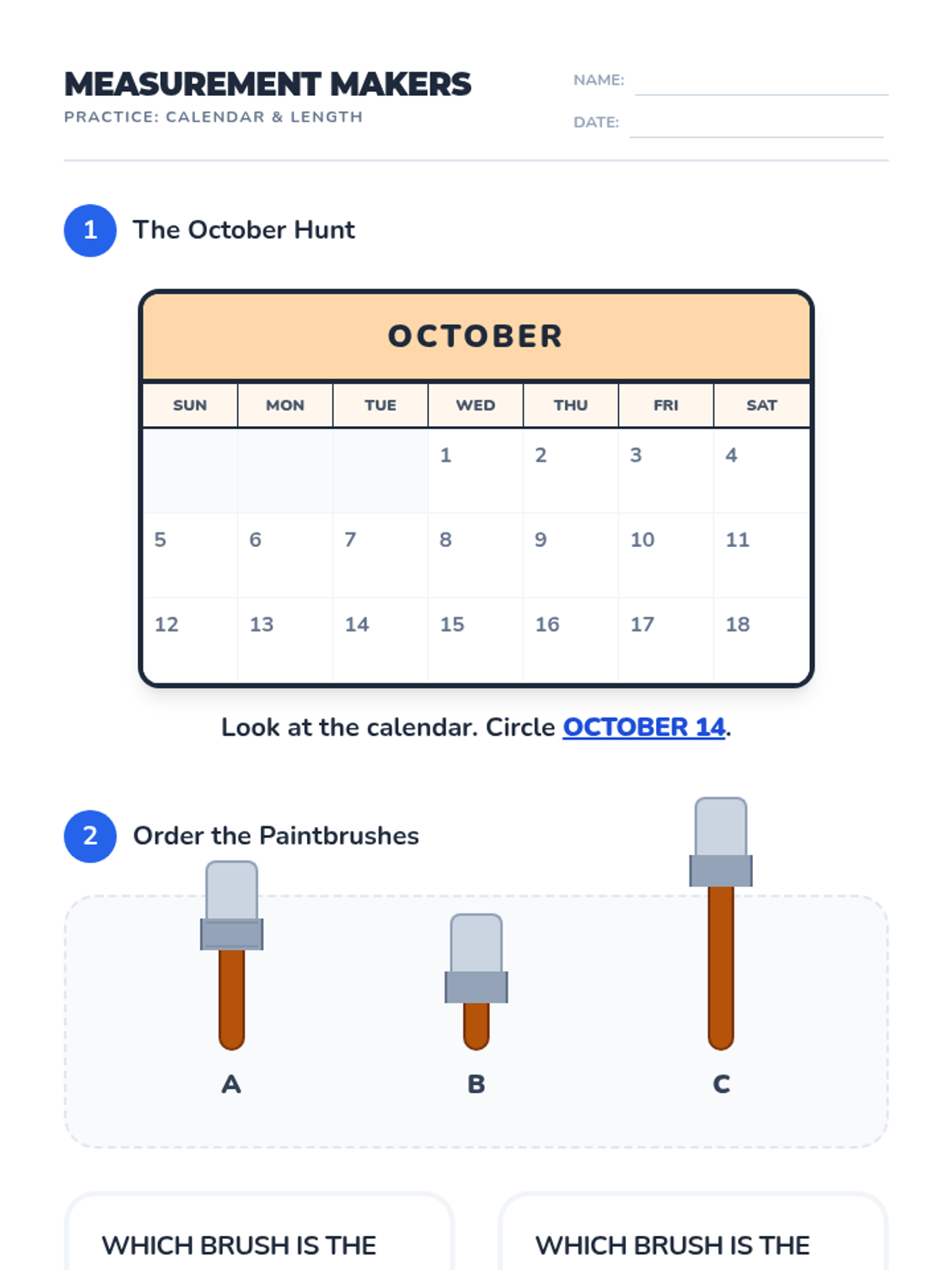
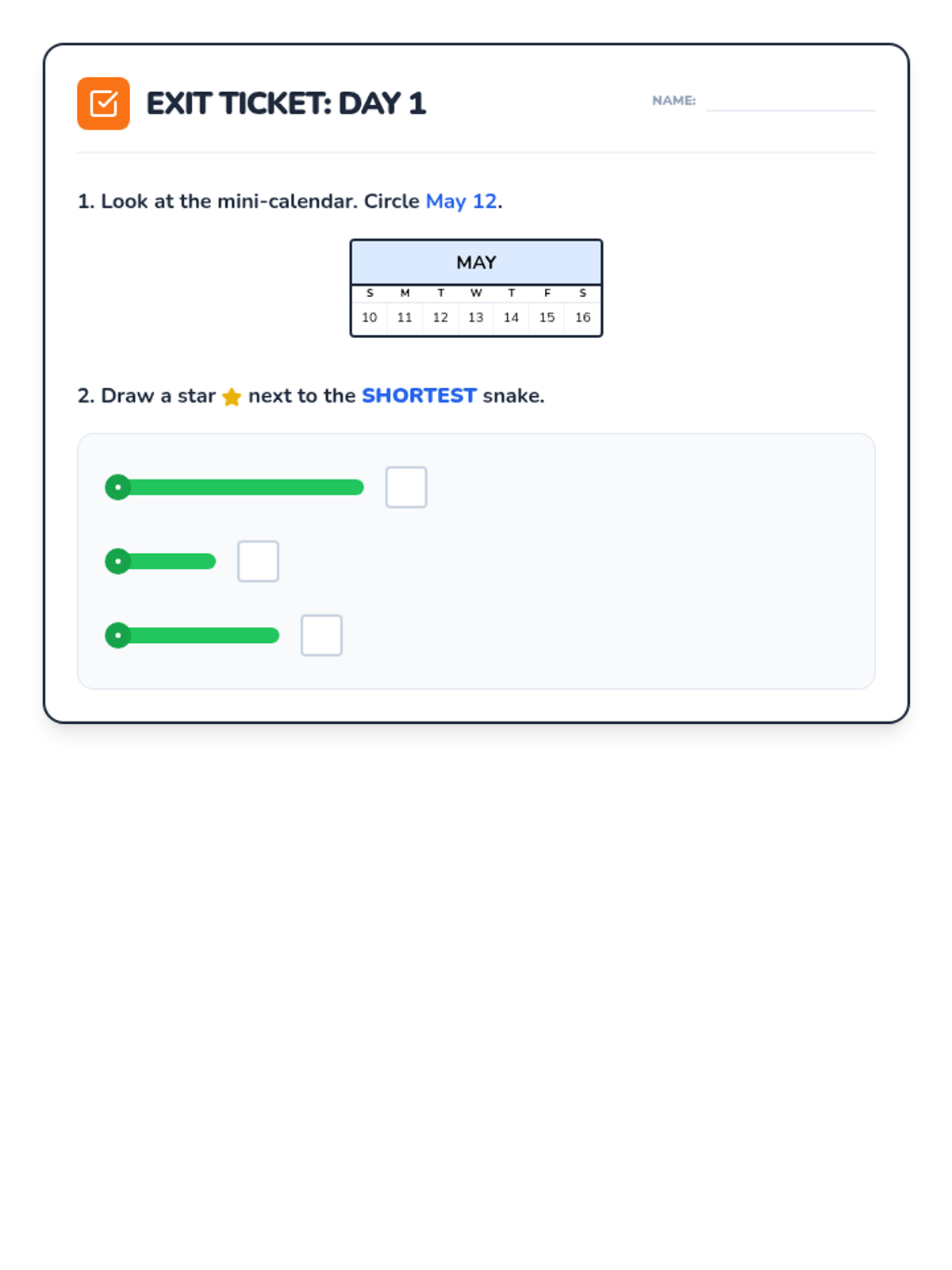
Day 1 focuses on calendar navigation (finding specific dates) and ordering objects by length, targeting foundational RIT 150-160 skills.
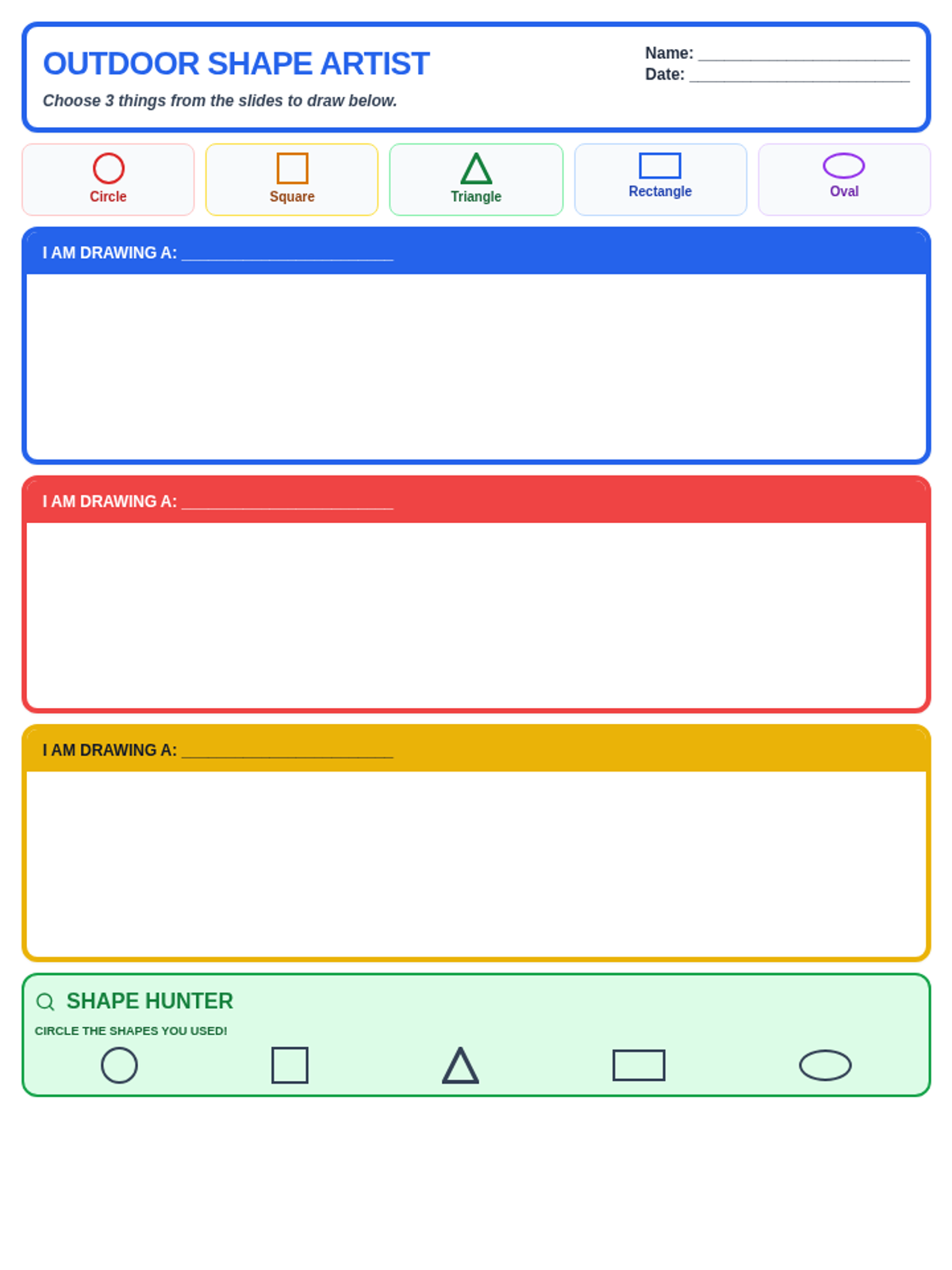
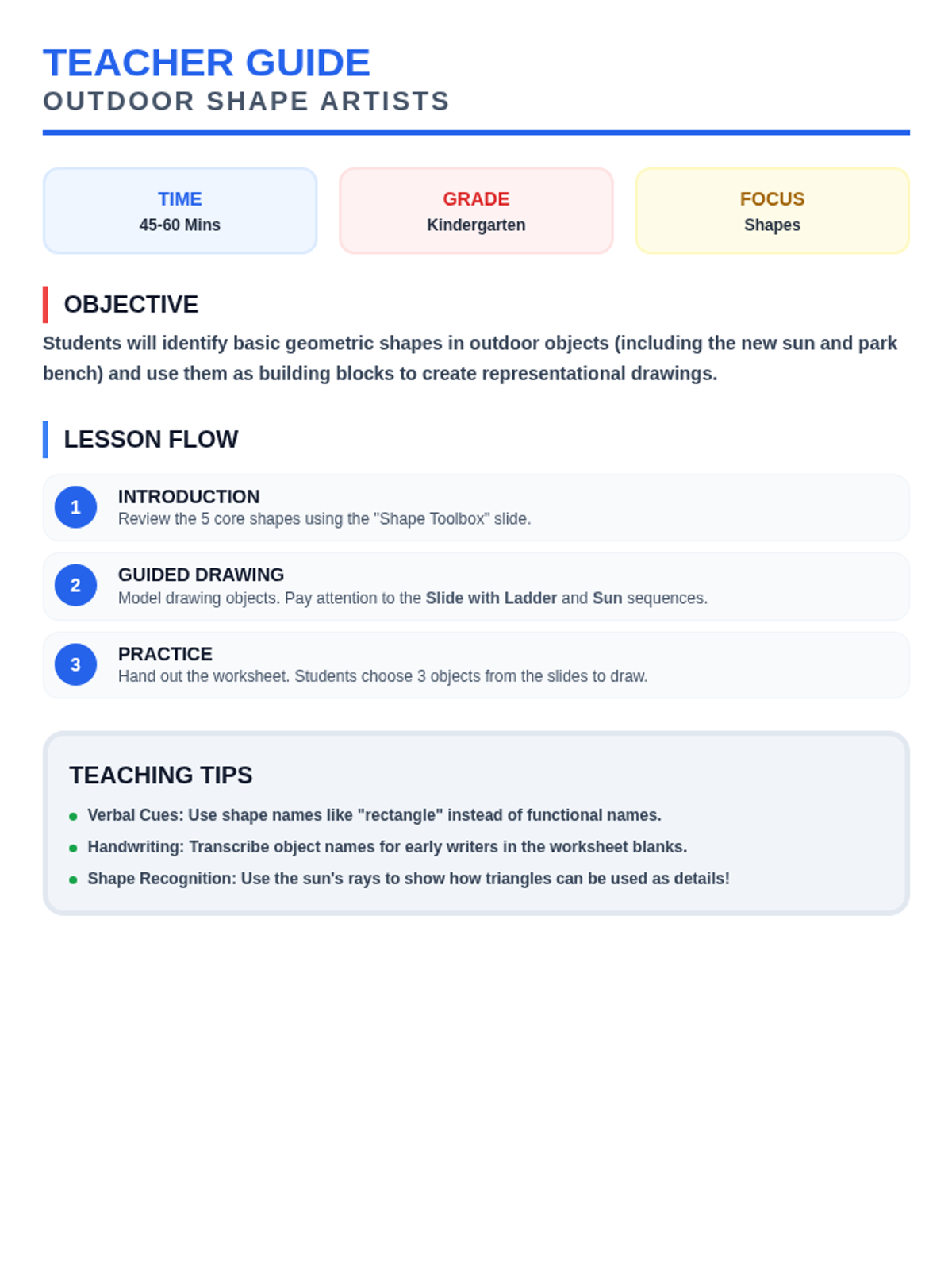
A kindergarten lesson focused on identifying and using basic geometric shapes (circle, square, triangle, rectangle, oval) to draw familiar outdoor objects. Students follow three-step visual guides to build their artistic confidence through shape recognition.
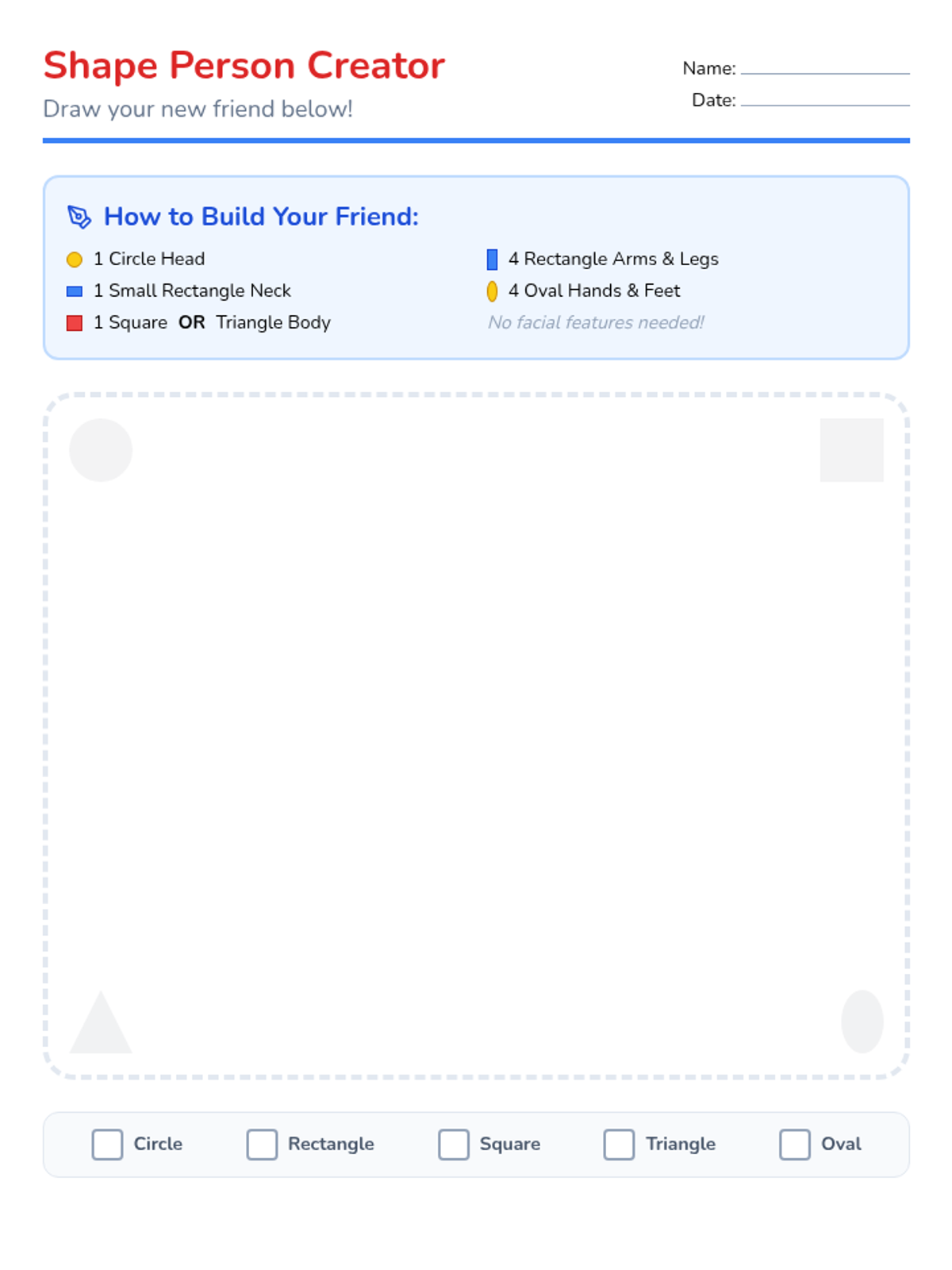
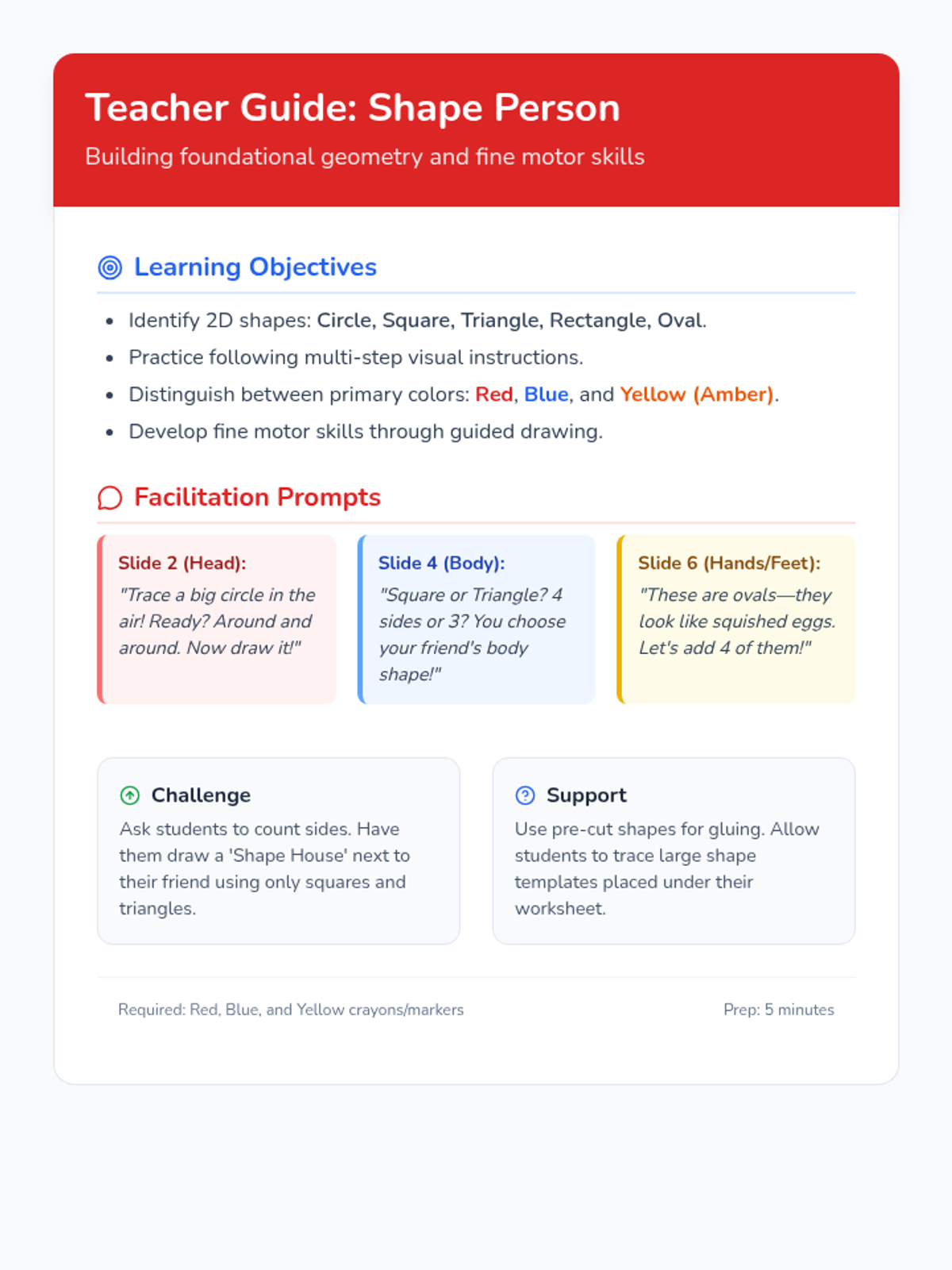
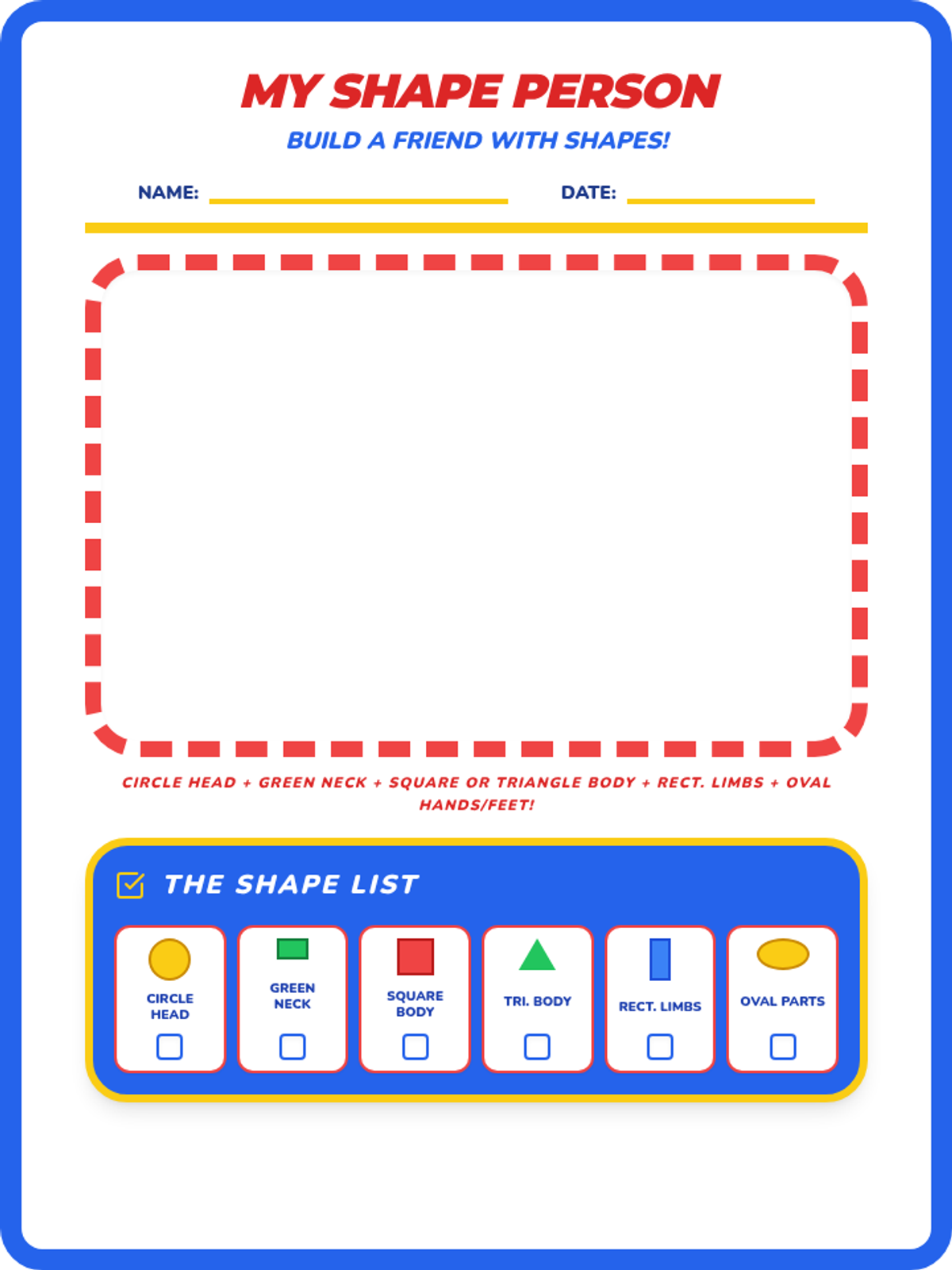
A fun, interactive lesson where kindergarten students learn to identify and draw basic shapes by constructing their very own 'Shape Person' using circles, squares, triangles, rectangles, and ovals.
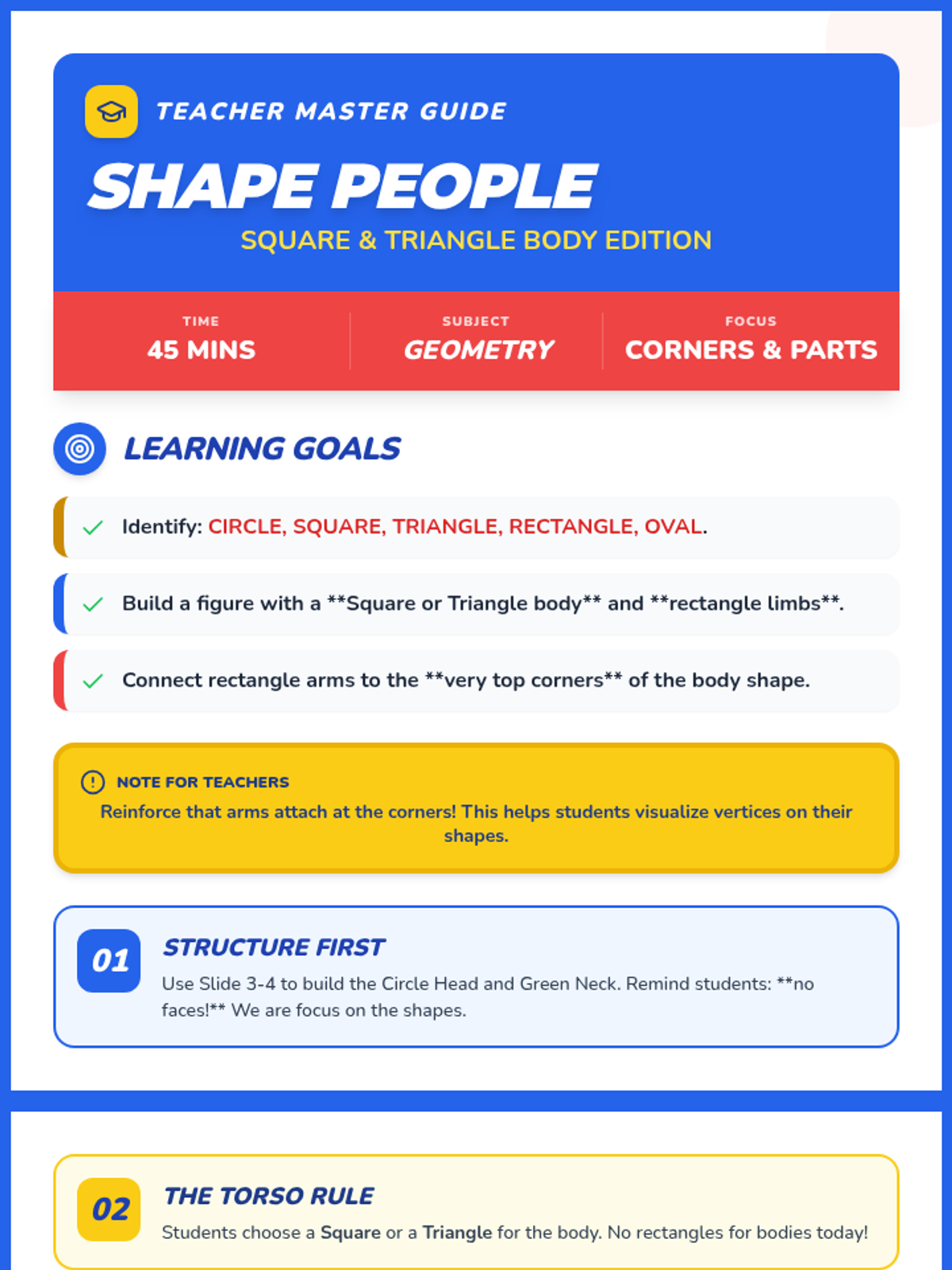
A kindergarten art and geometry lesson where students learn to construct human figures using five basic shapes: circles, triangles, squares, rectangles, and ovals.
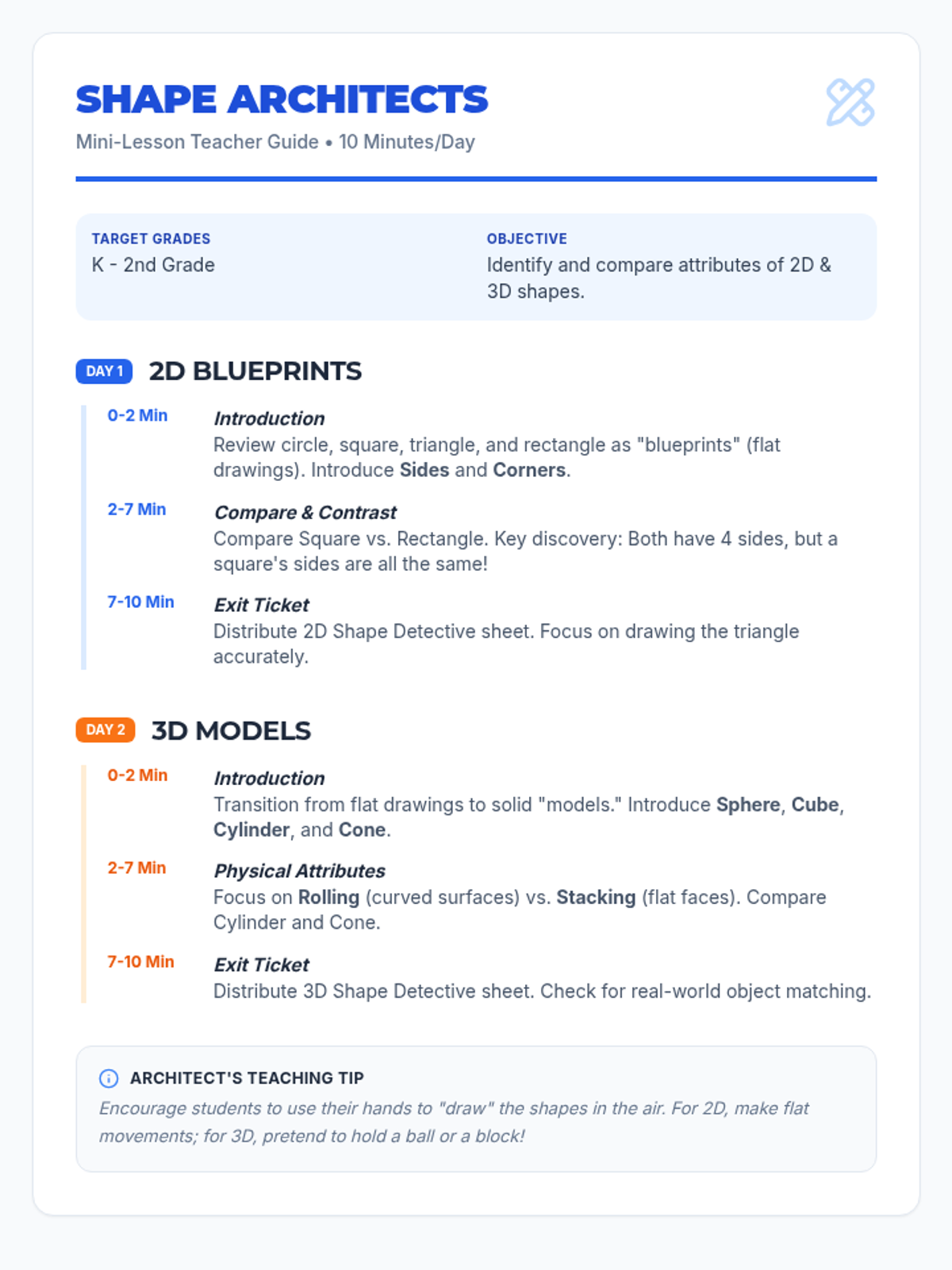
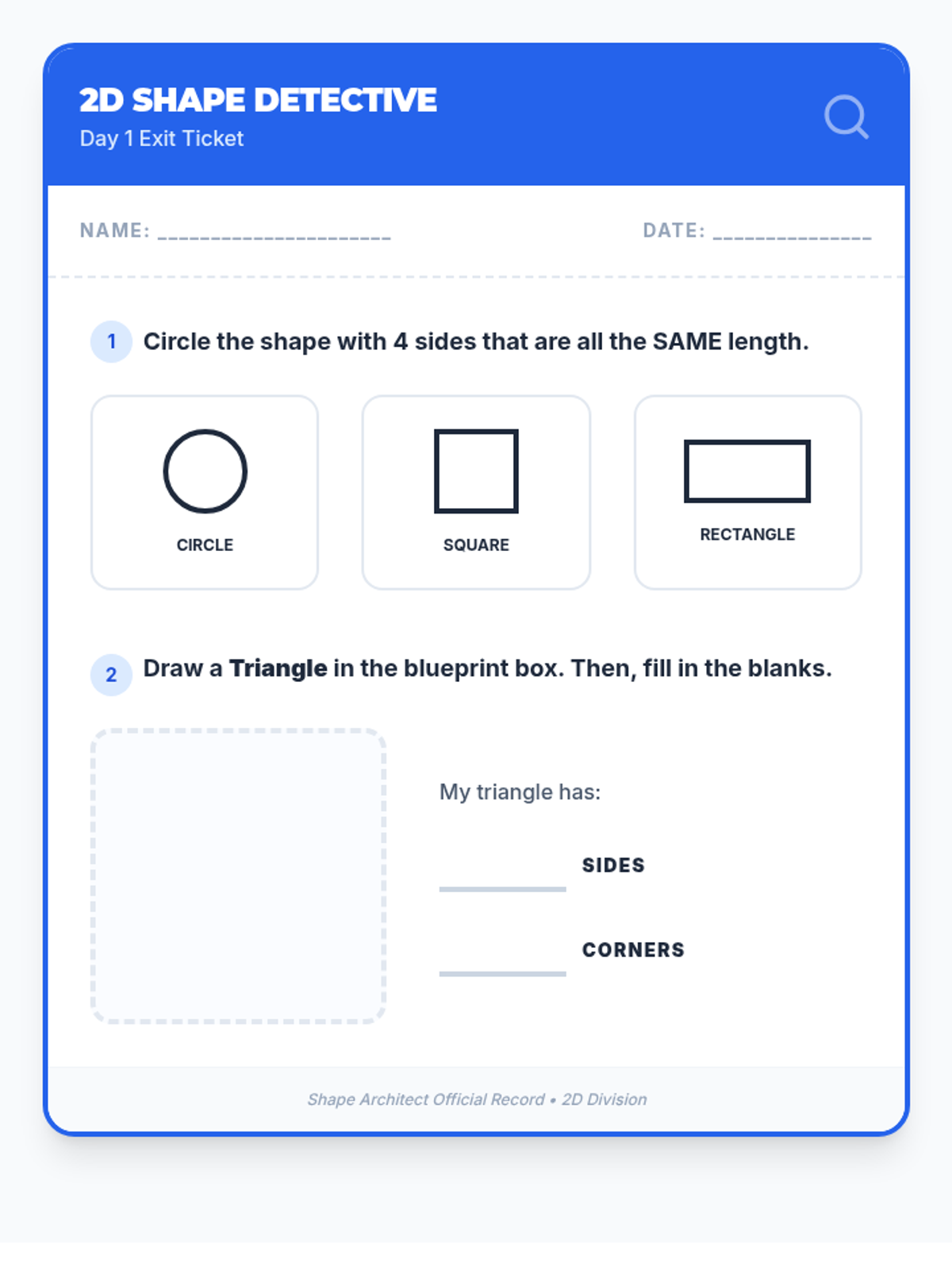
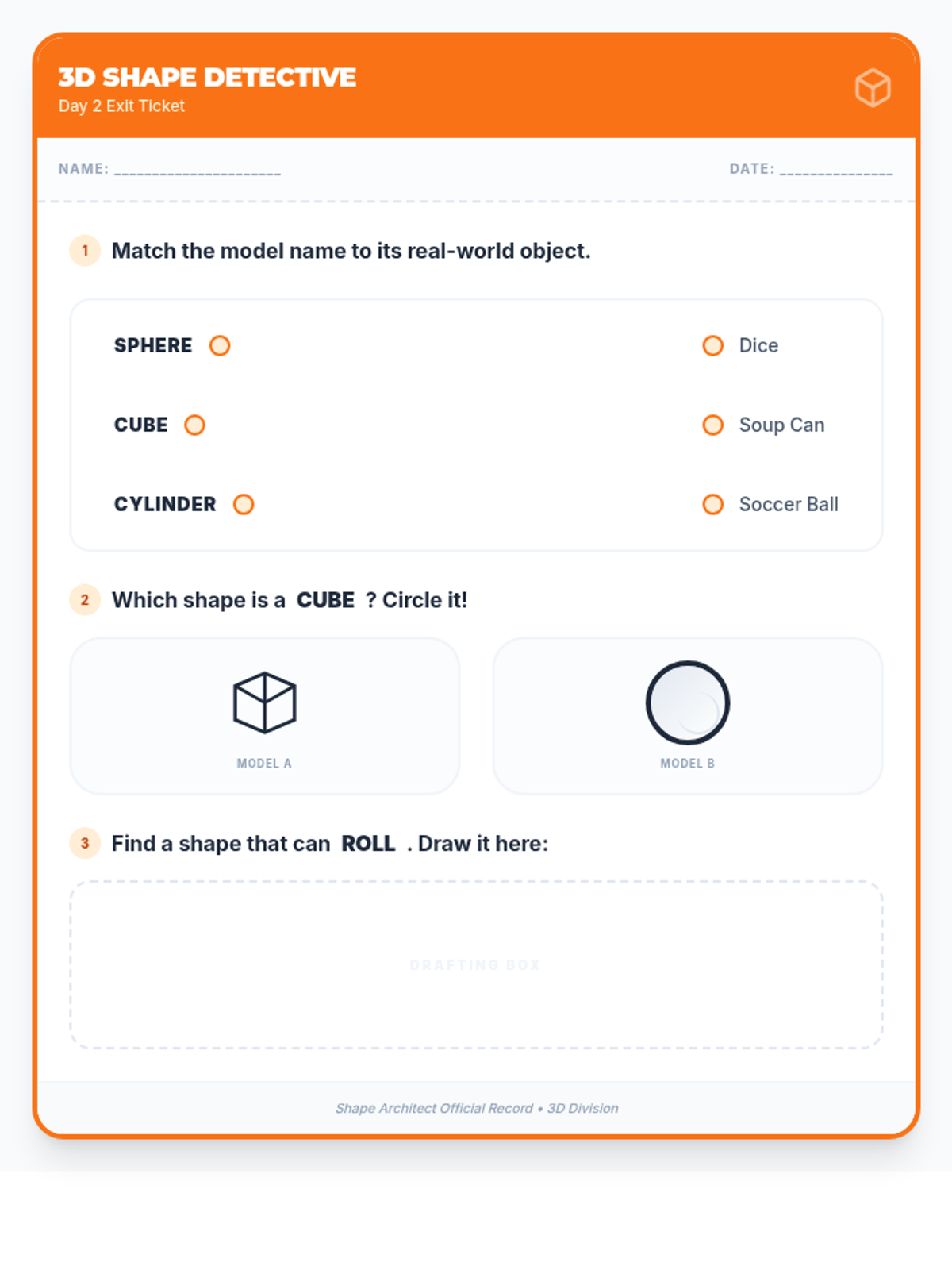
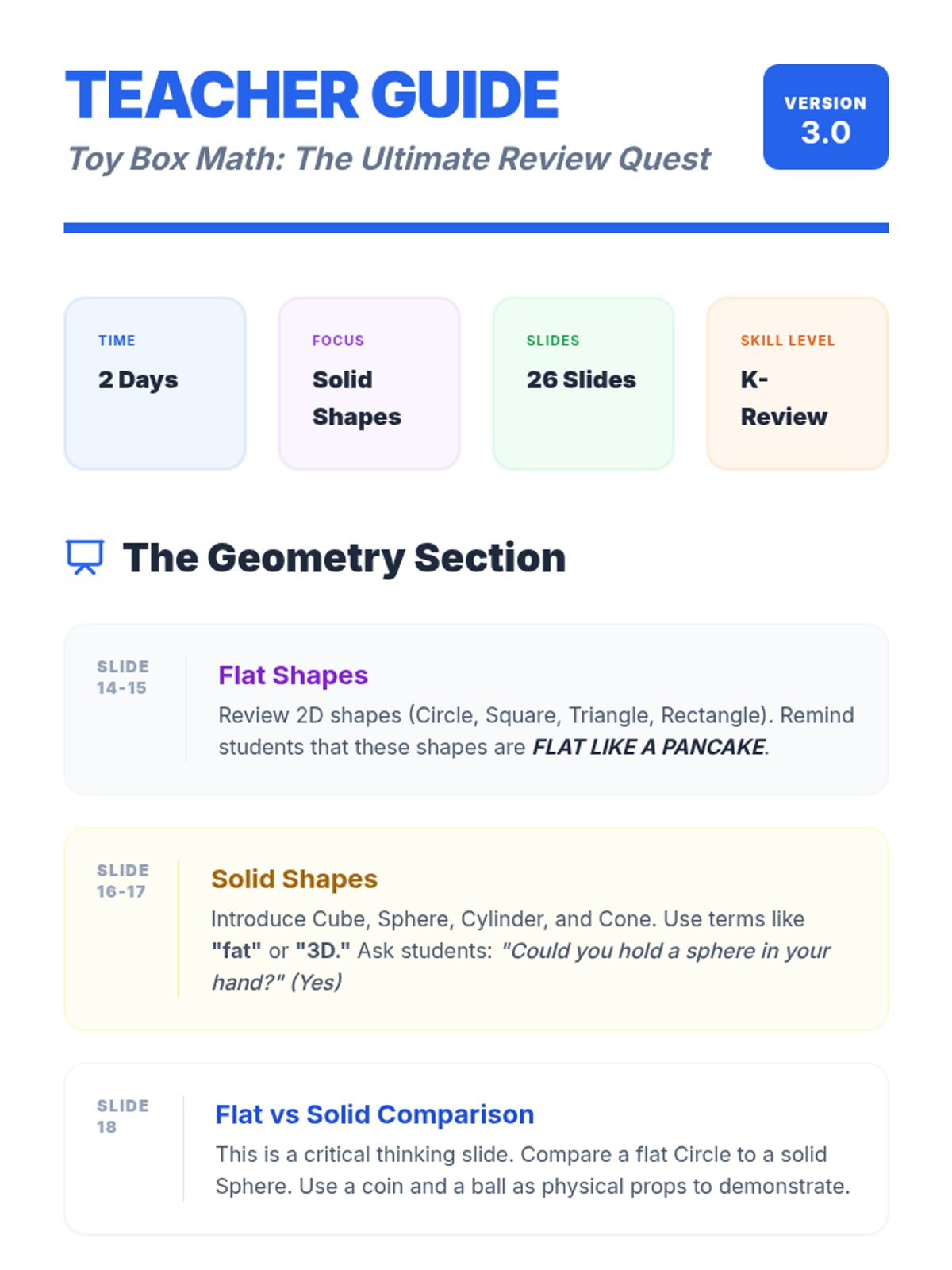
A two-day mini-lesson sequence focused on identifying, describing, and comparing 2D and 3D shapes through the lens of a "Shape Architect". Day 1 covers flat shapes (circles, squares, triangles, rectangles), while Day 2 explores solid shapes (spheres, cubes, cylinders, cones).
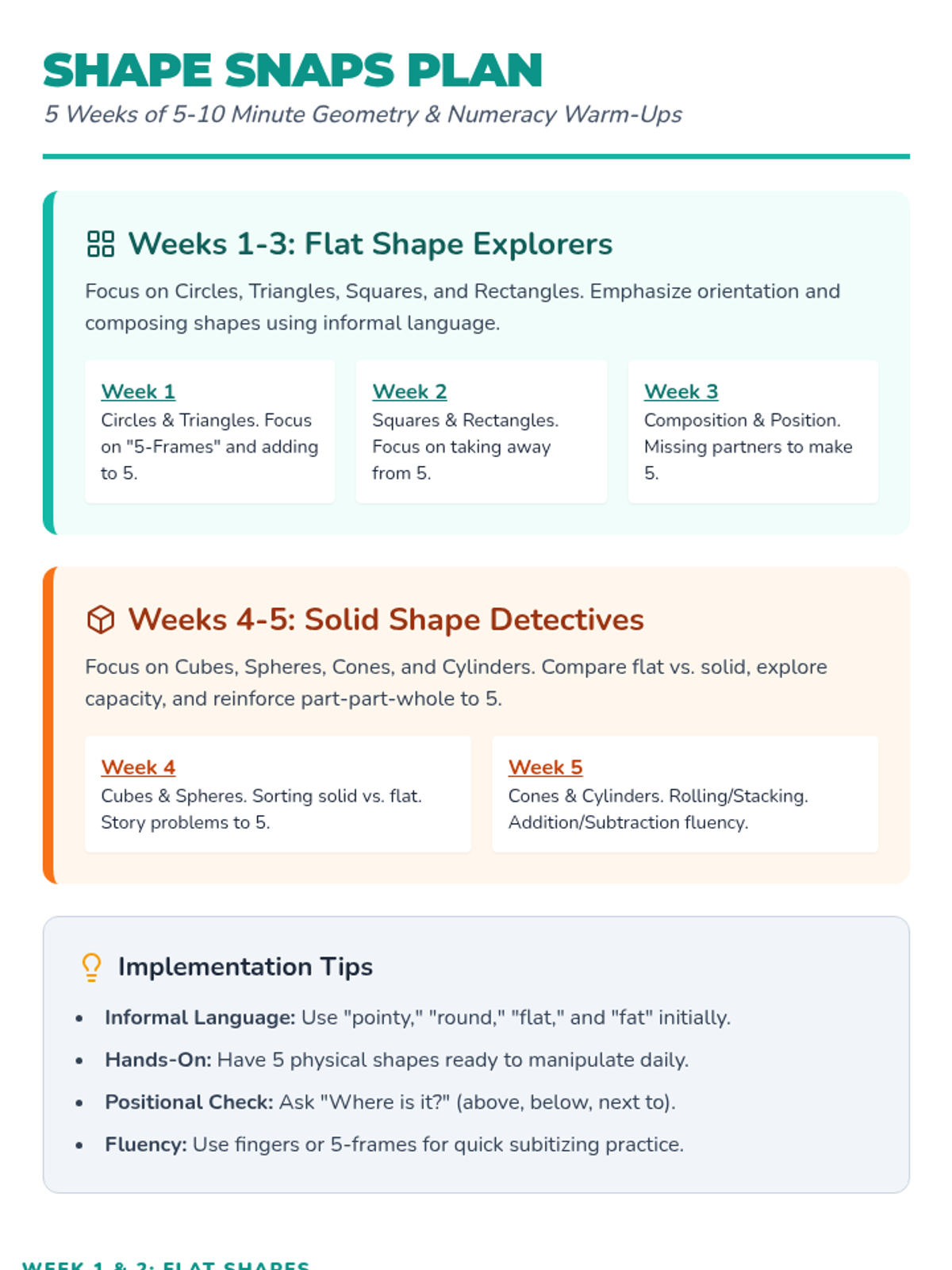
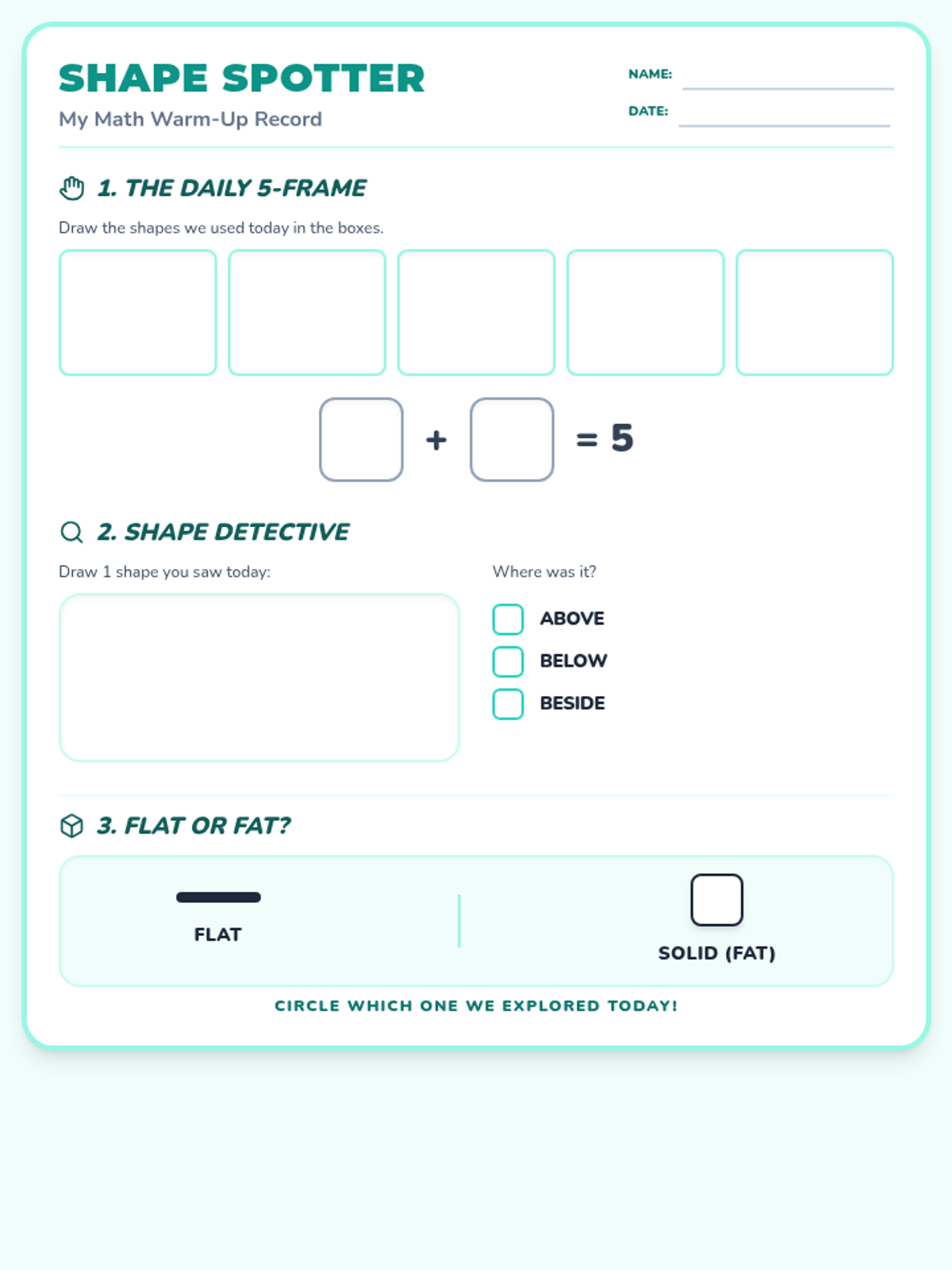
A 5-week instructional plan and a set of 25 activity cards that combine Kindergarten geometry standards with daily numeracy fluency exercises.
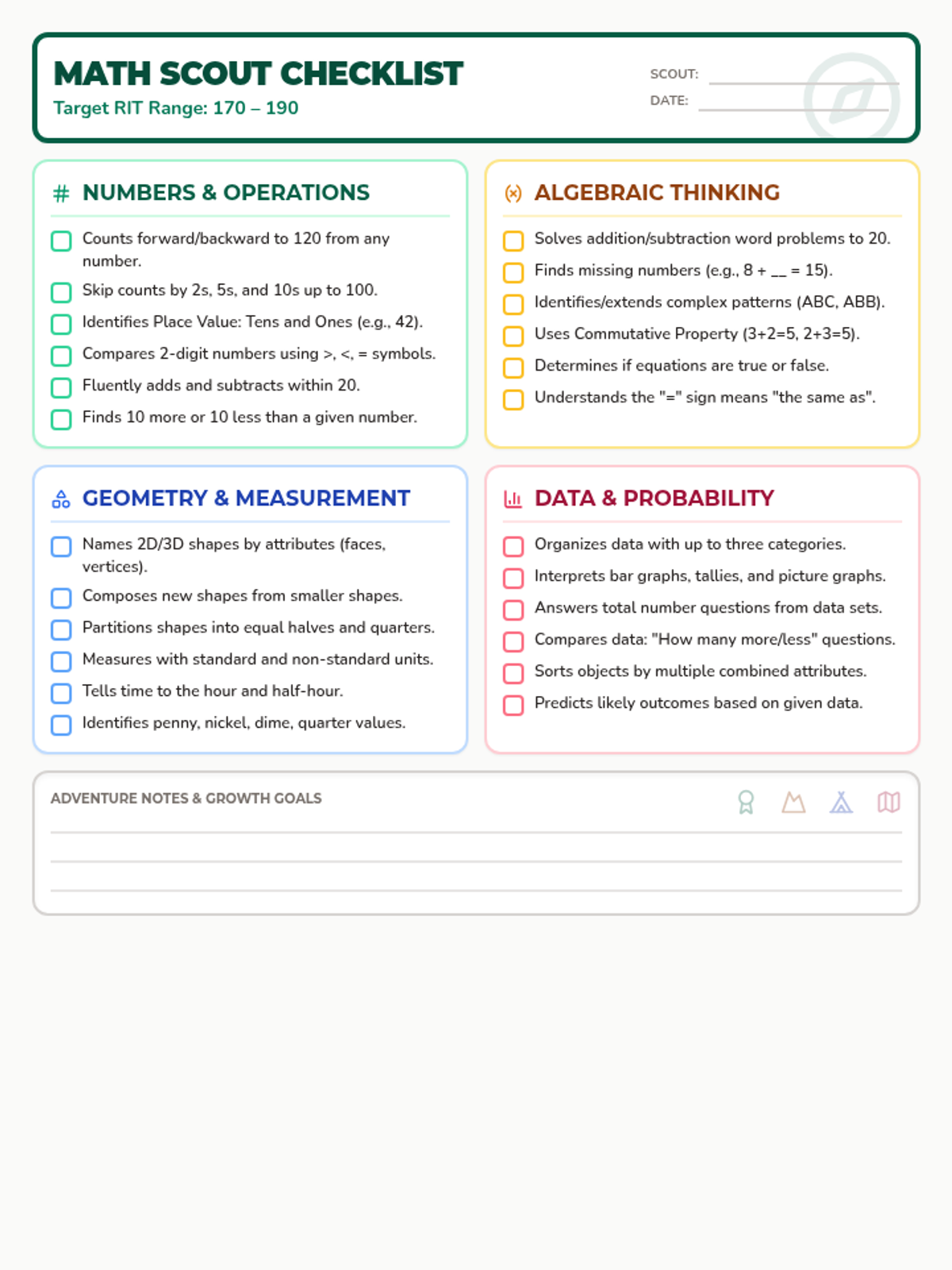
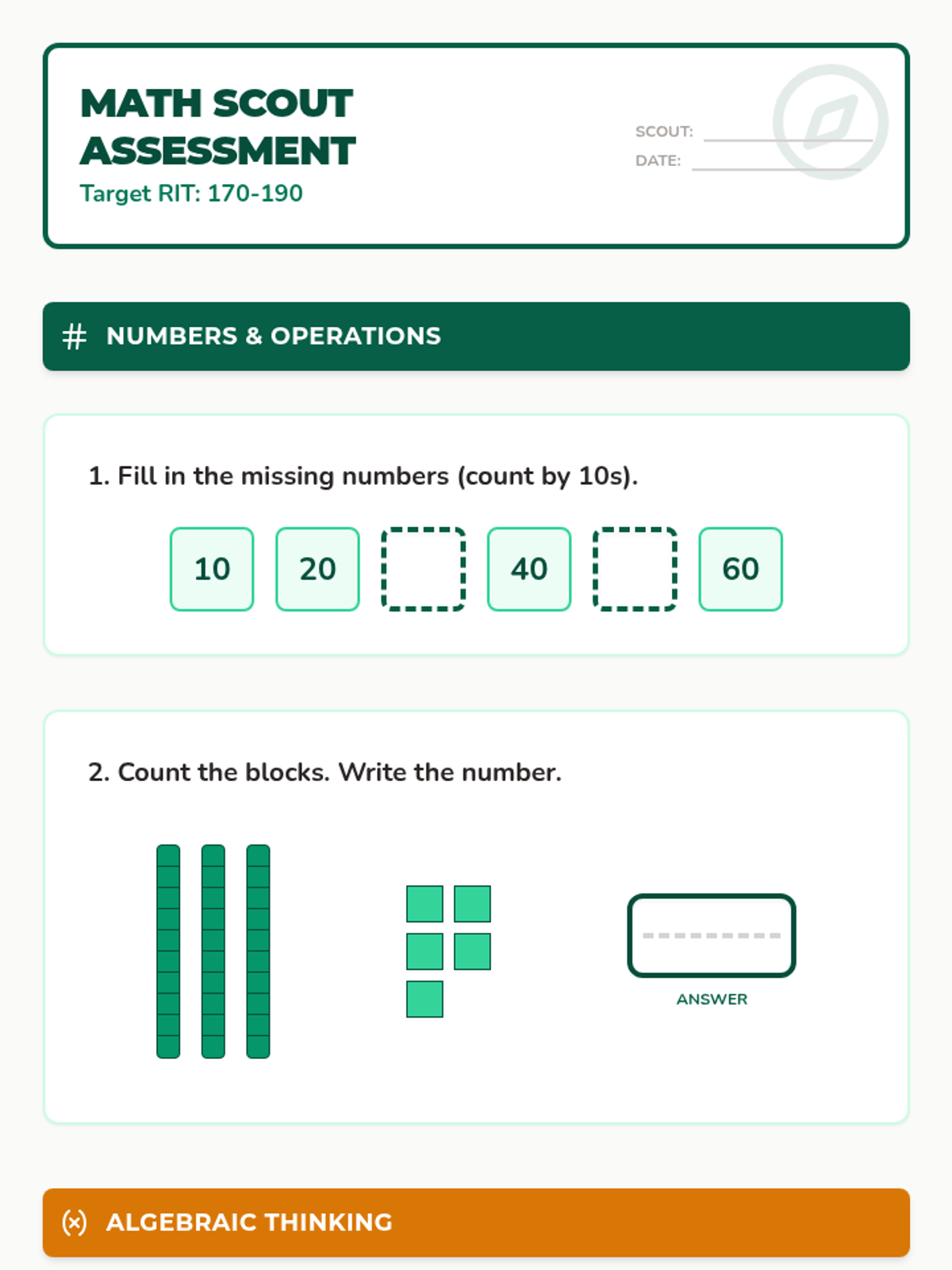
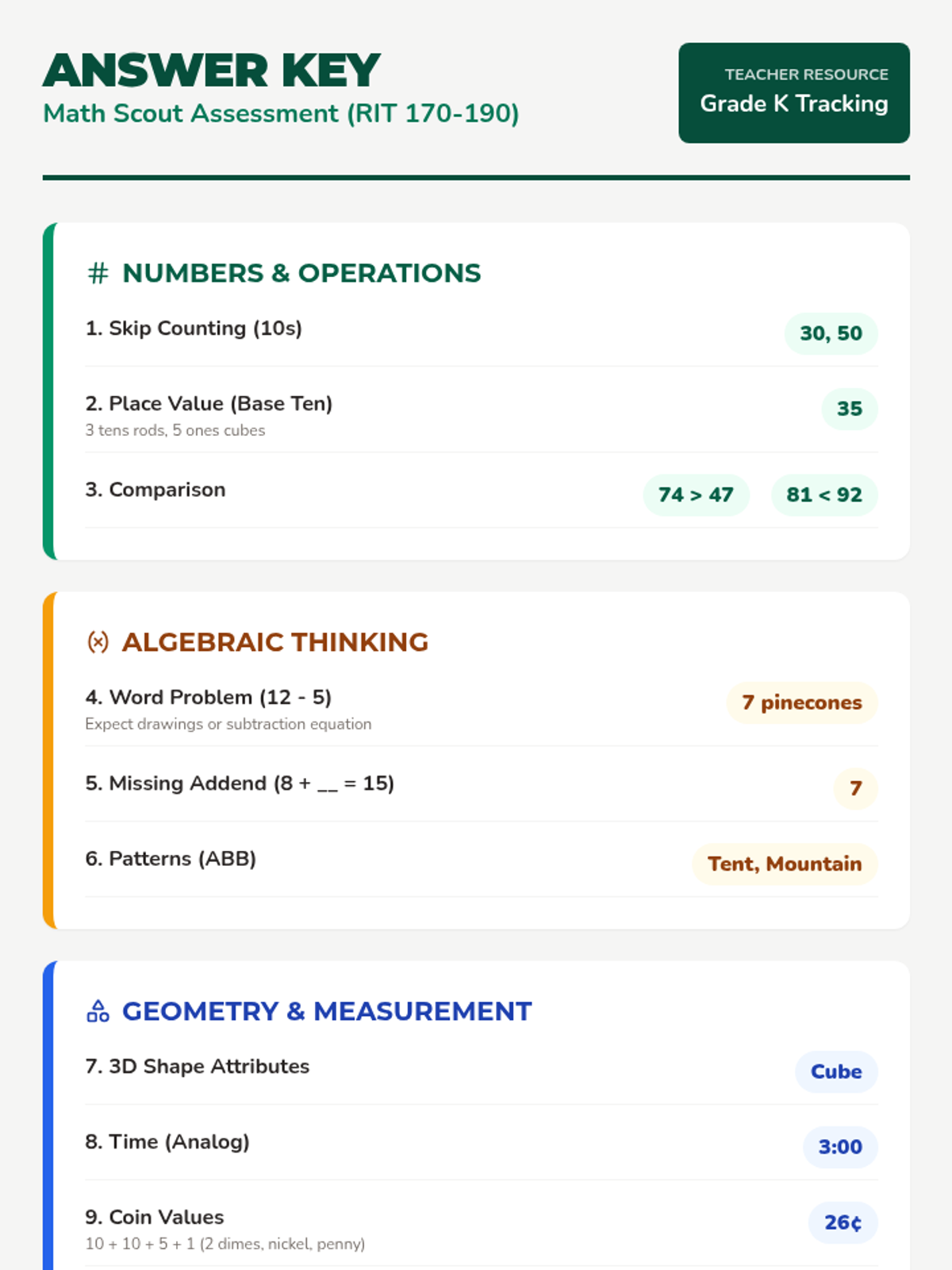
A comprehensive tracking resource for Kindergarten students aiming for advanced NWEA MAP RIT scores in mathematics, covering all key domains.
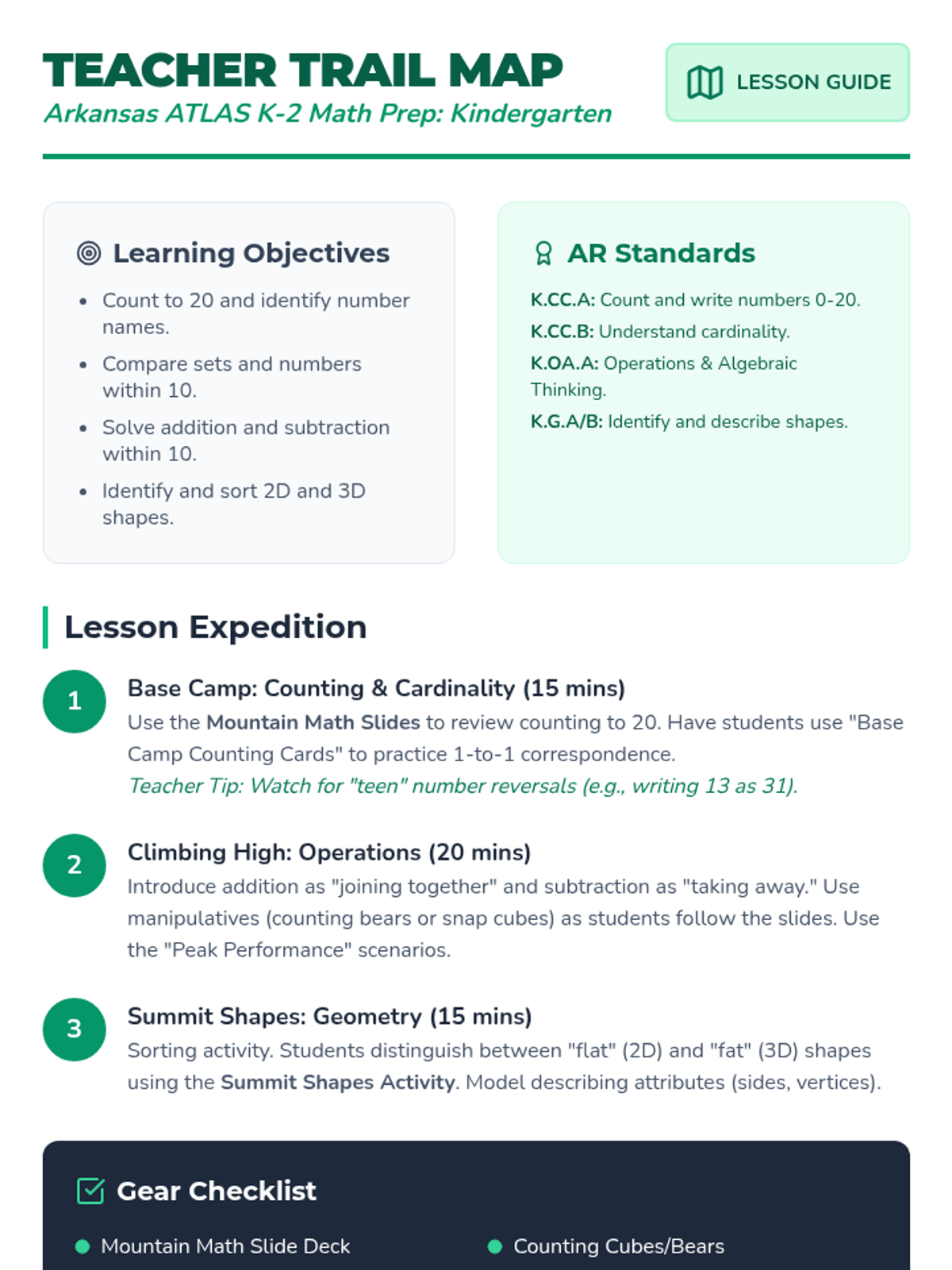
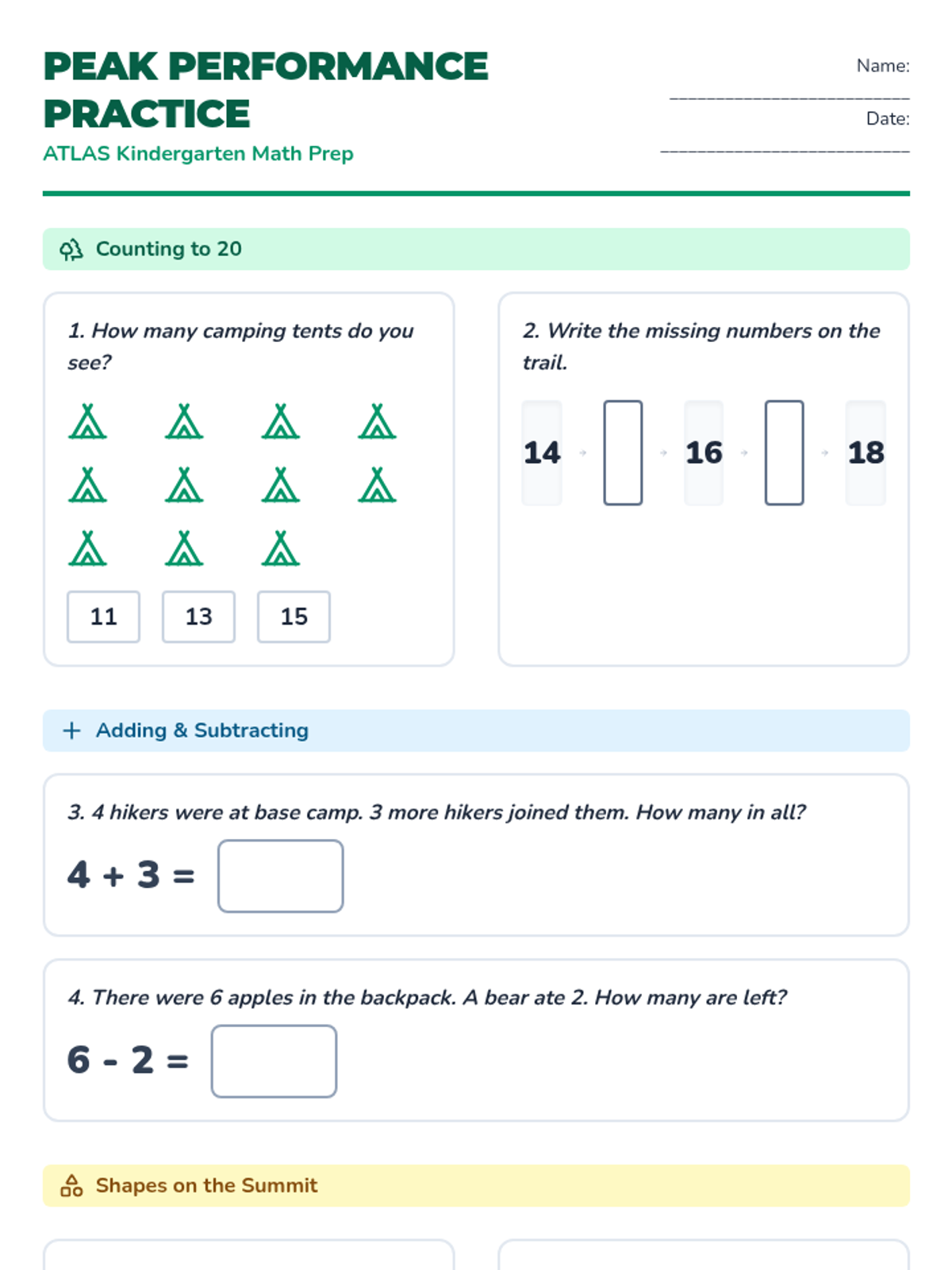
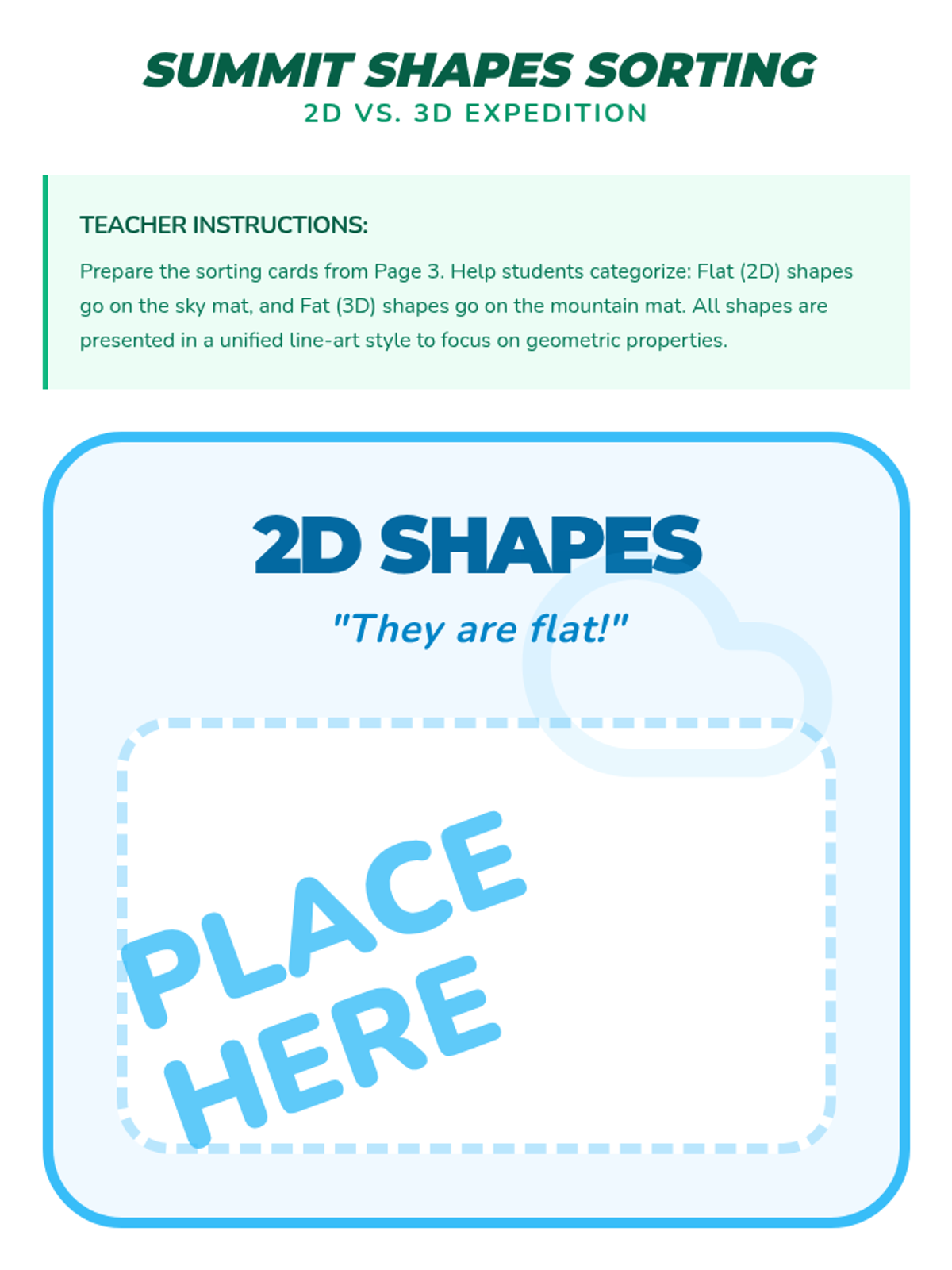
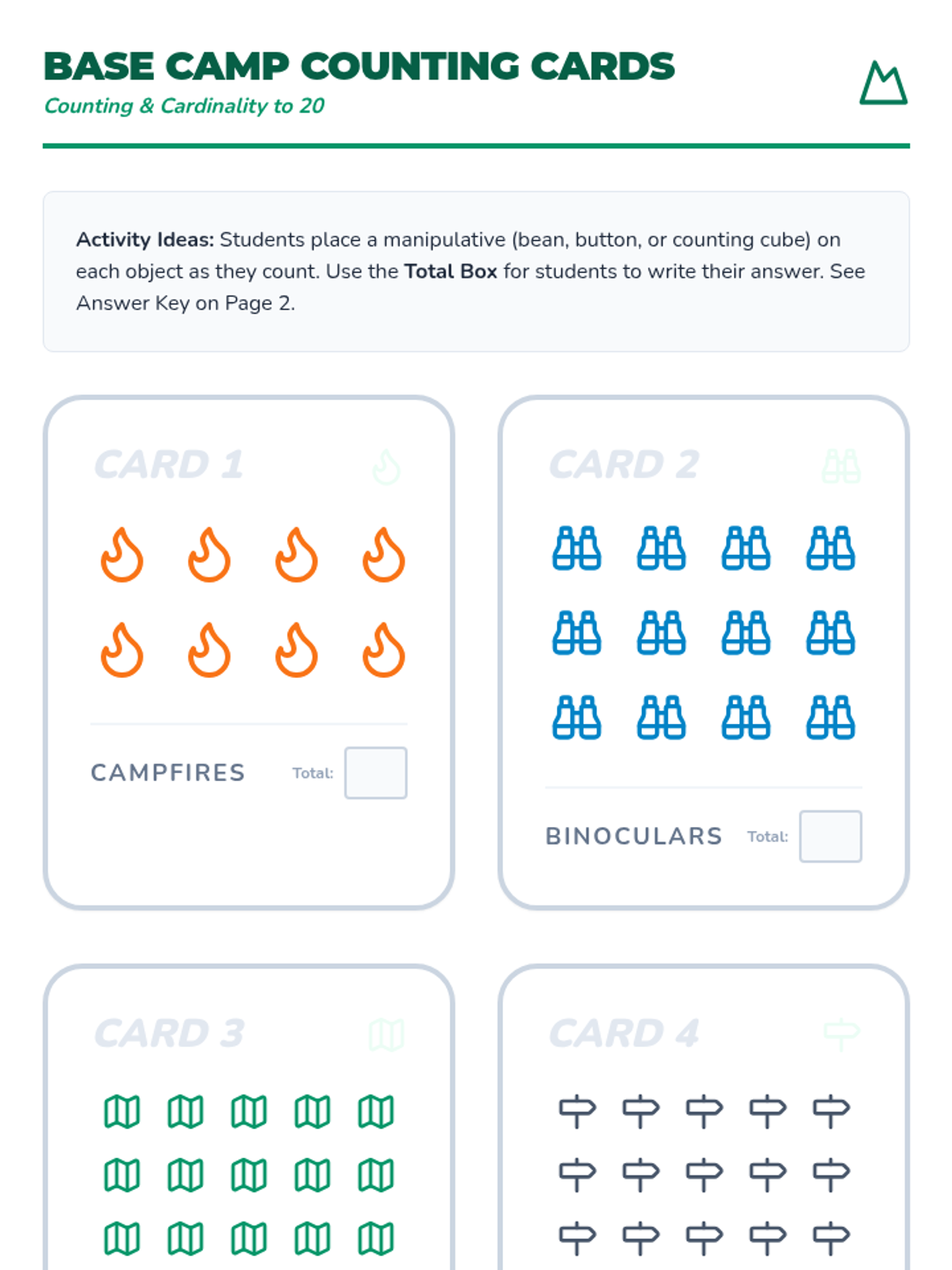
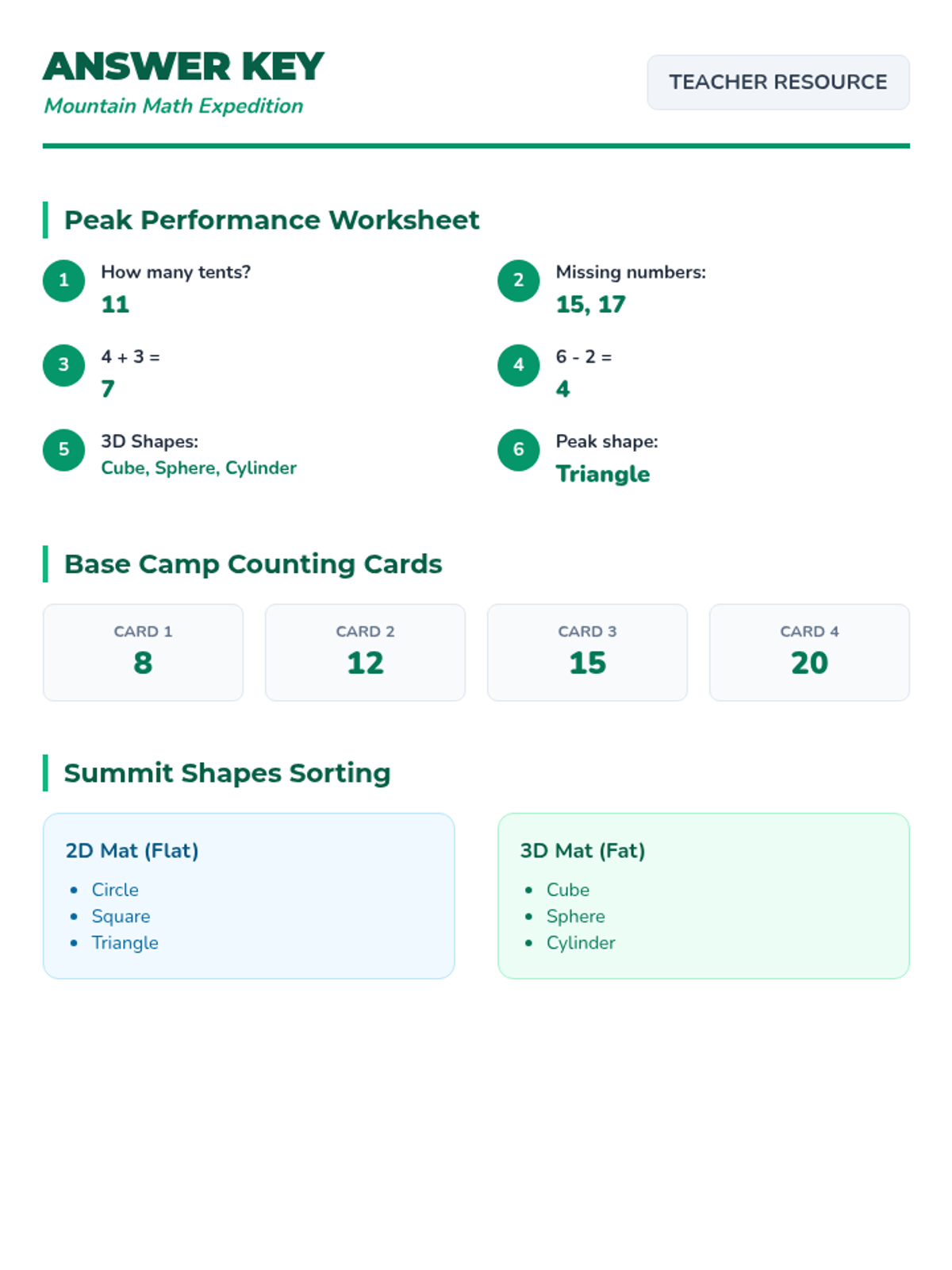
A comprehensive Kindergarten math test prep lesson aligned to Arkansas ATLAS standards, focusing on counting to 20, number sense, basic operations, and geometry through a hiking and mountain climbing theme.
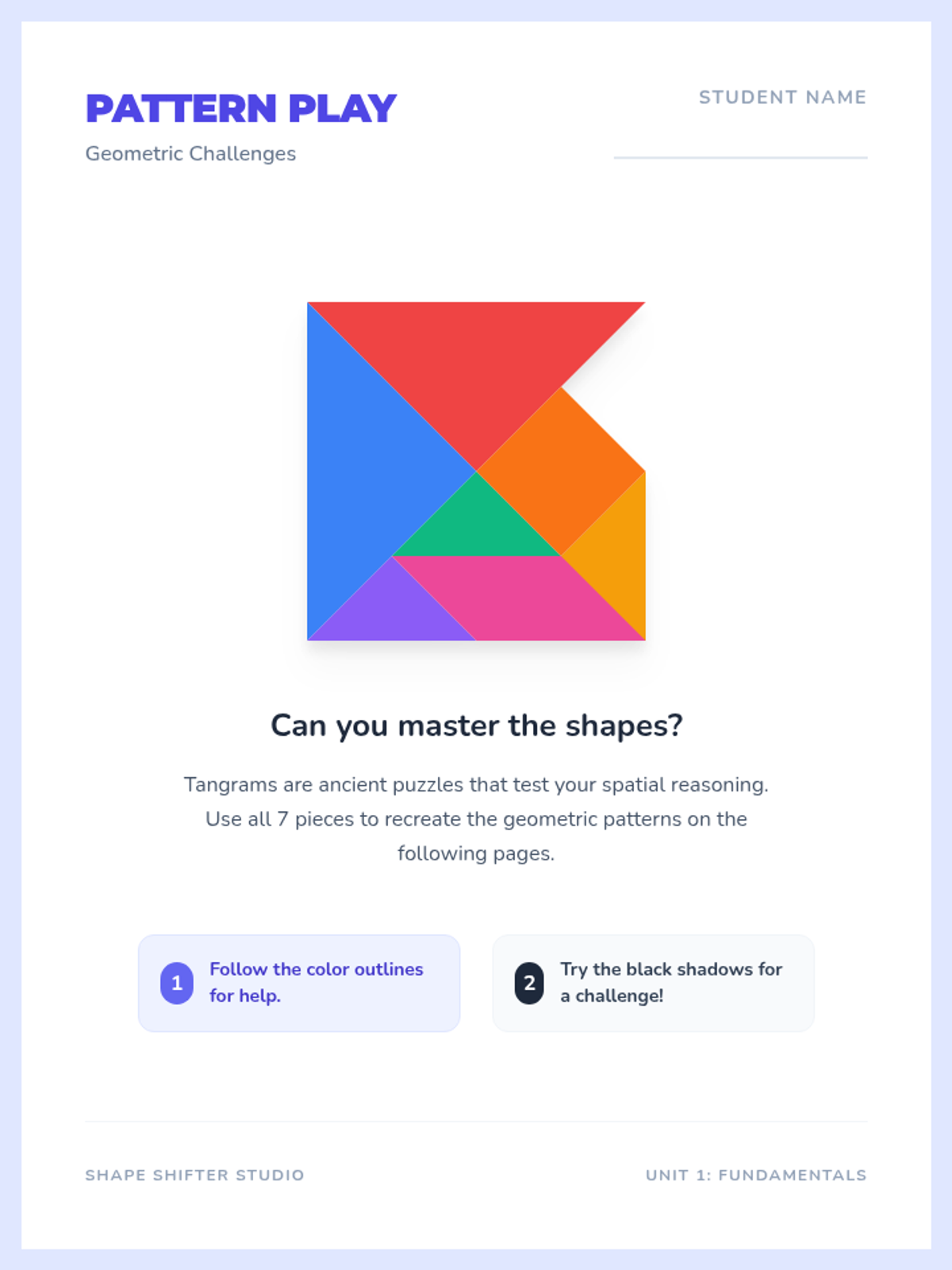
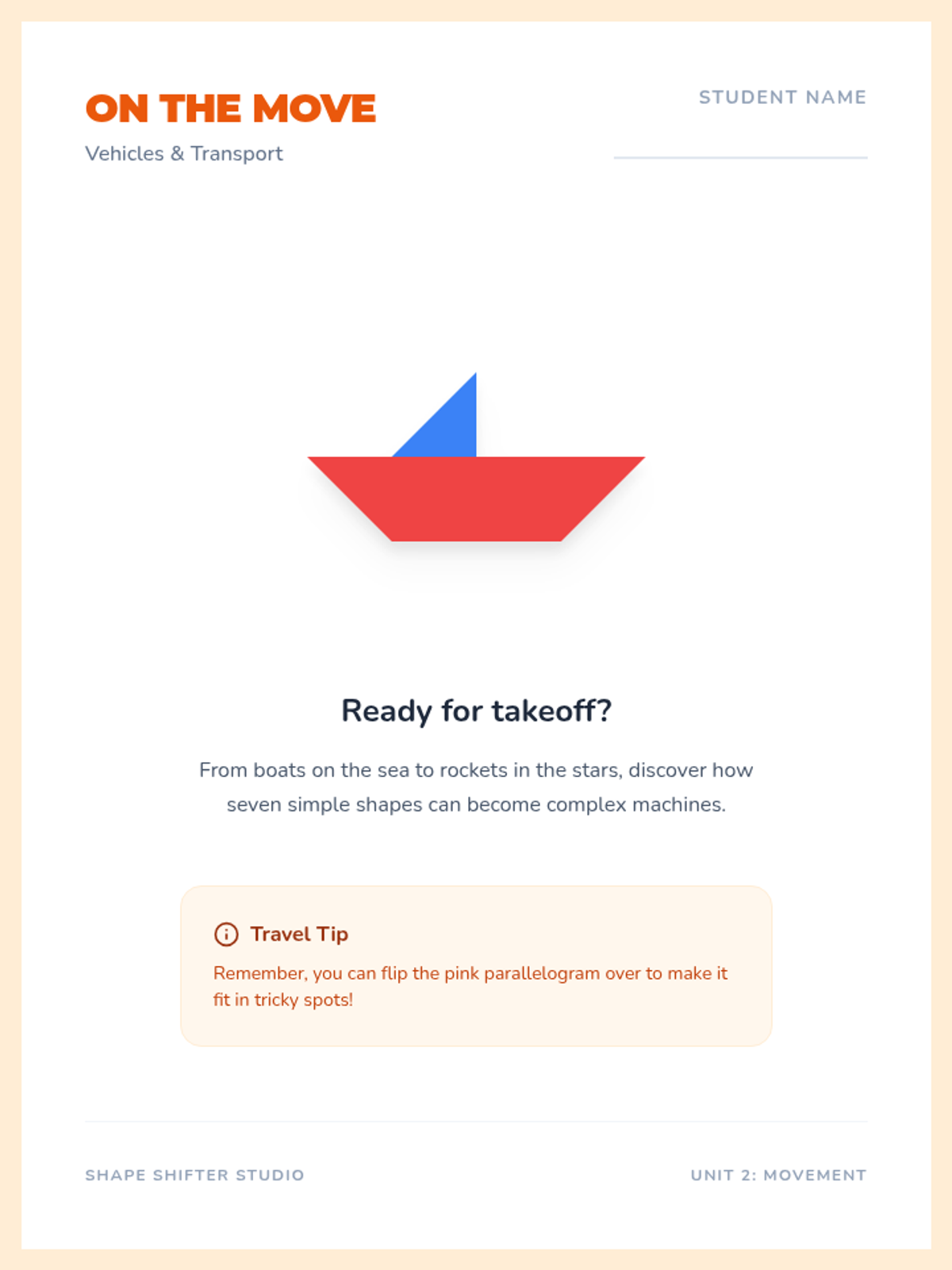
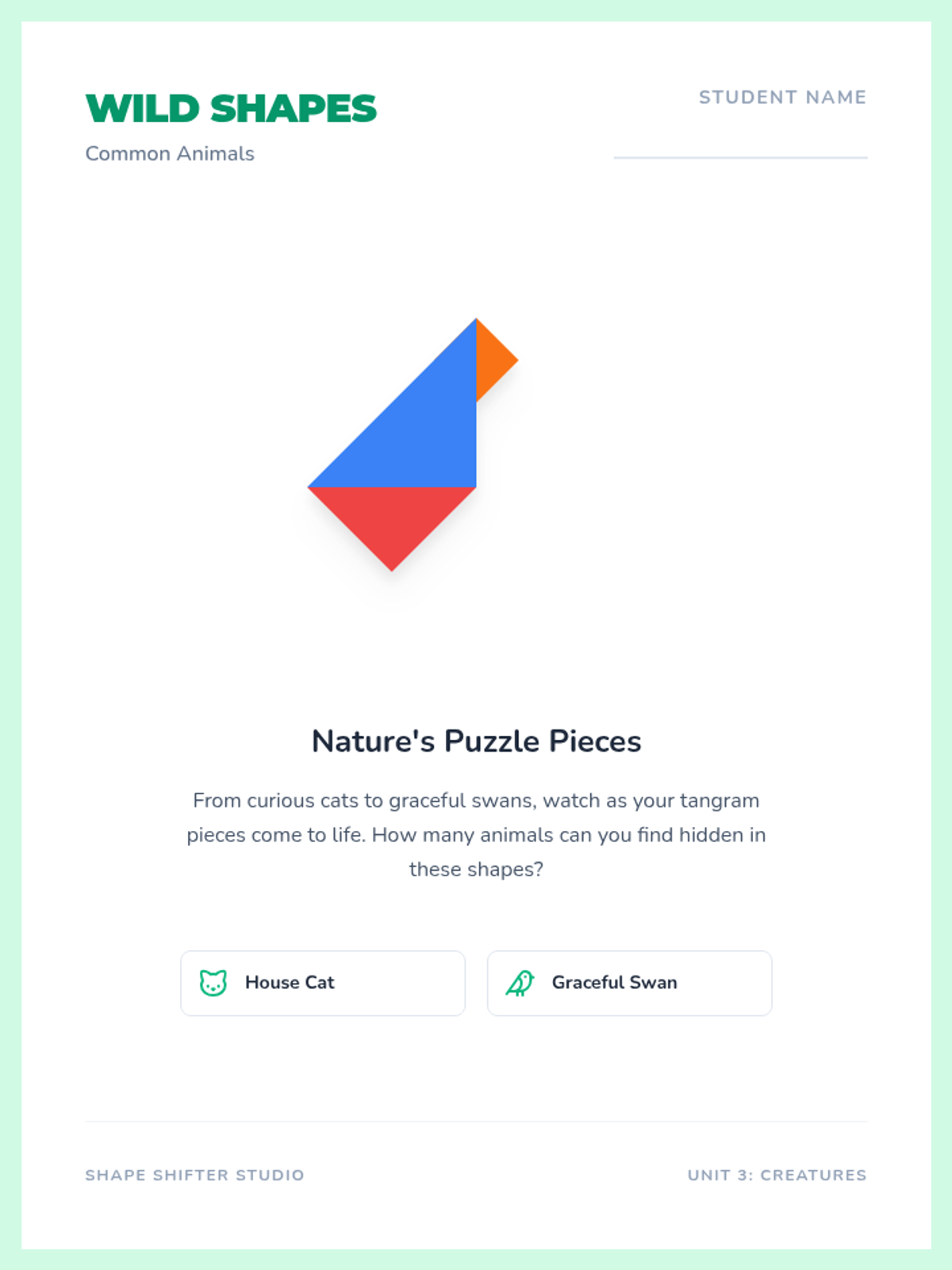
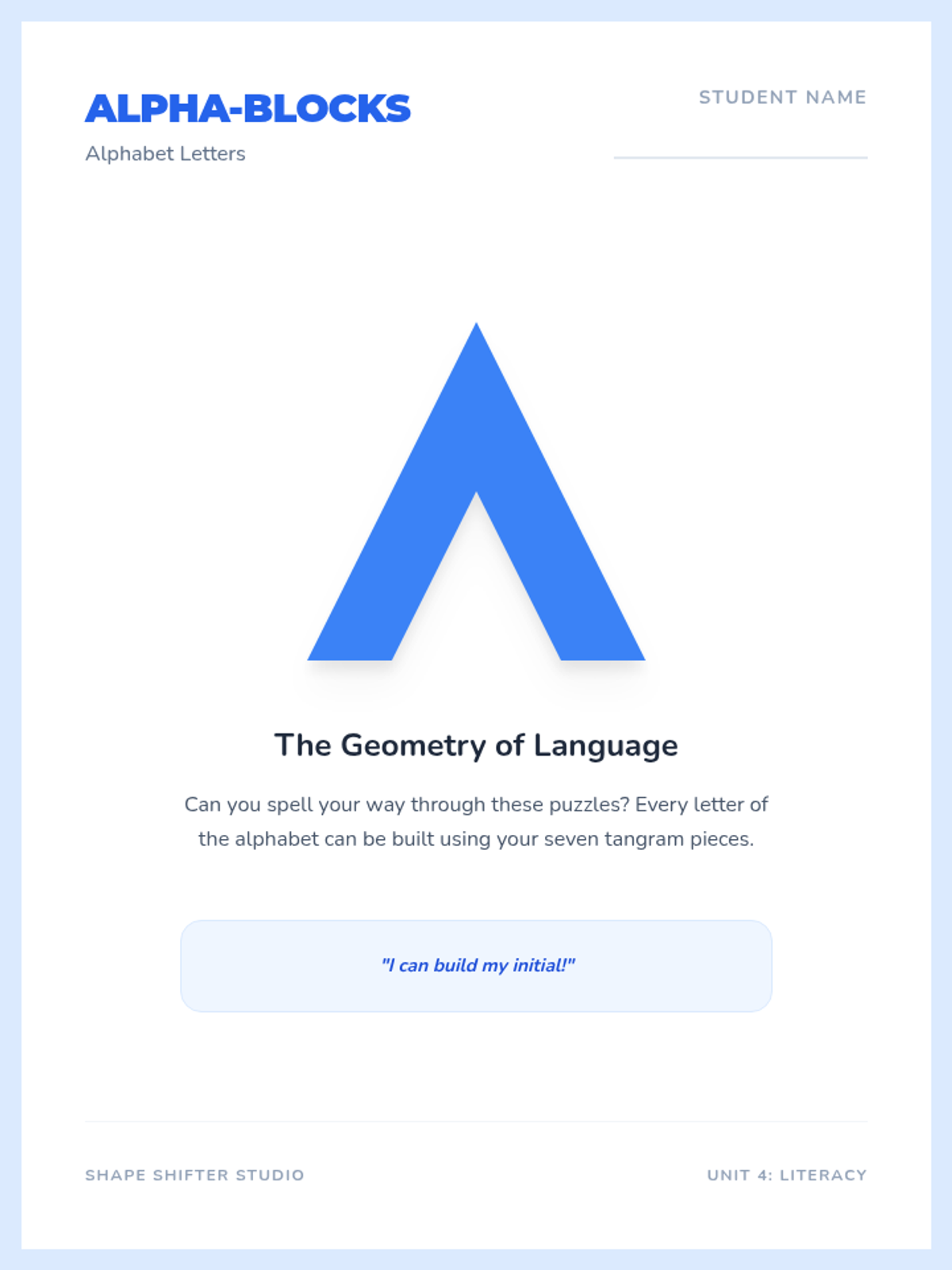
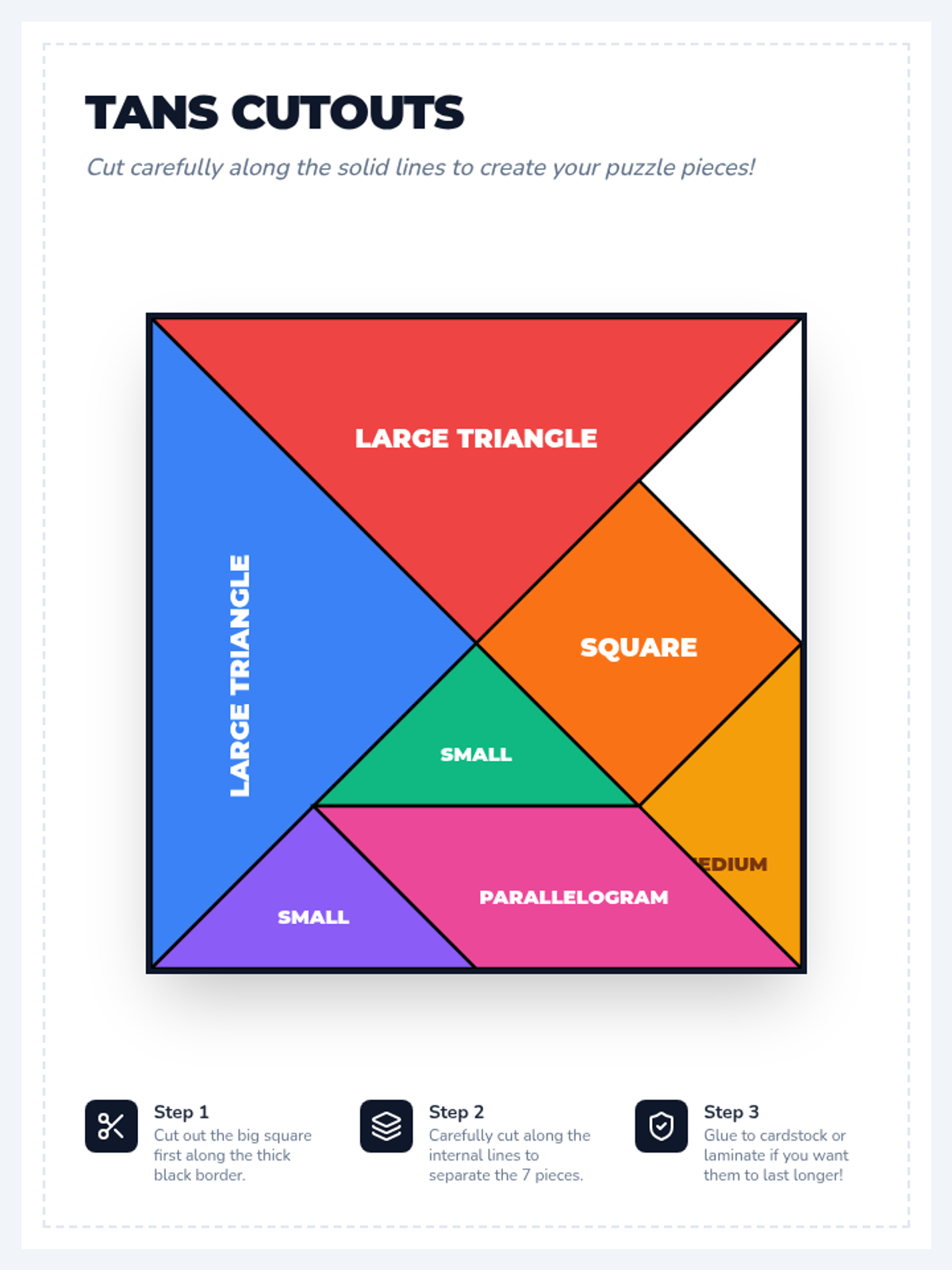
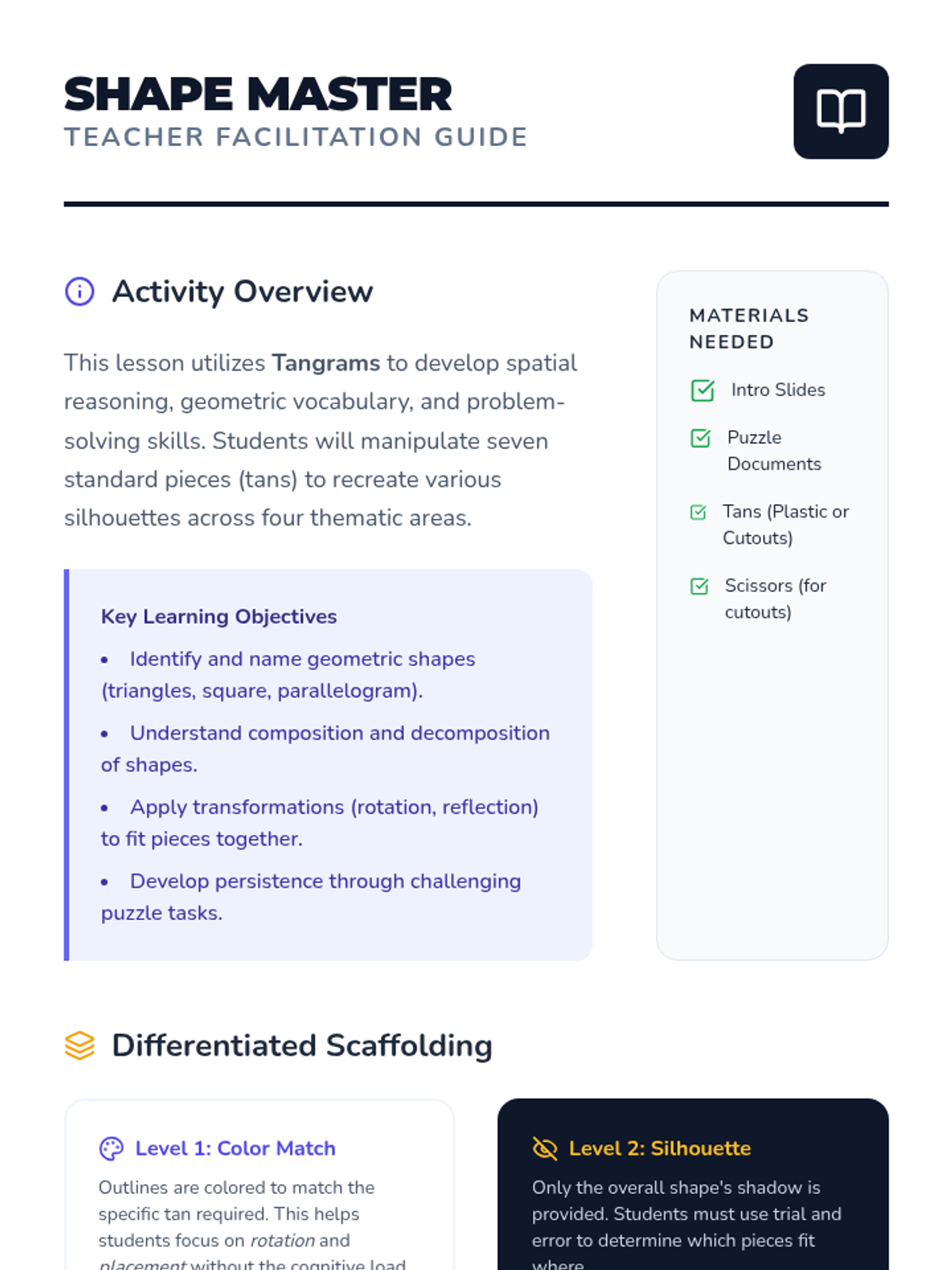
A hands-on exploration of geometry and spatial reasoning using tangrams, featuring puzzles across four diverse themes with varying difficulty levels.
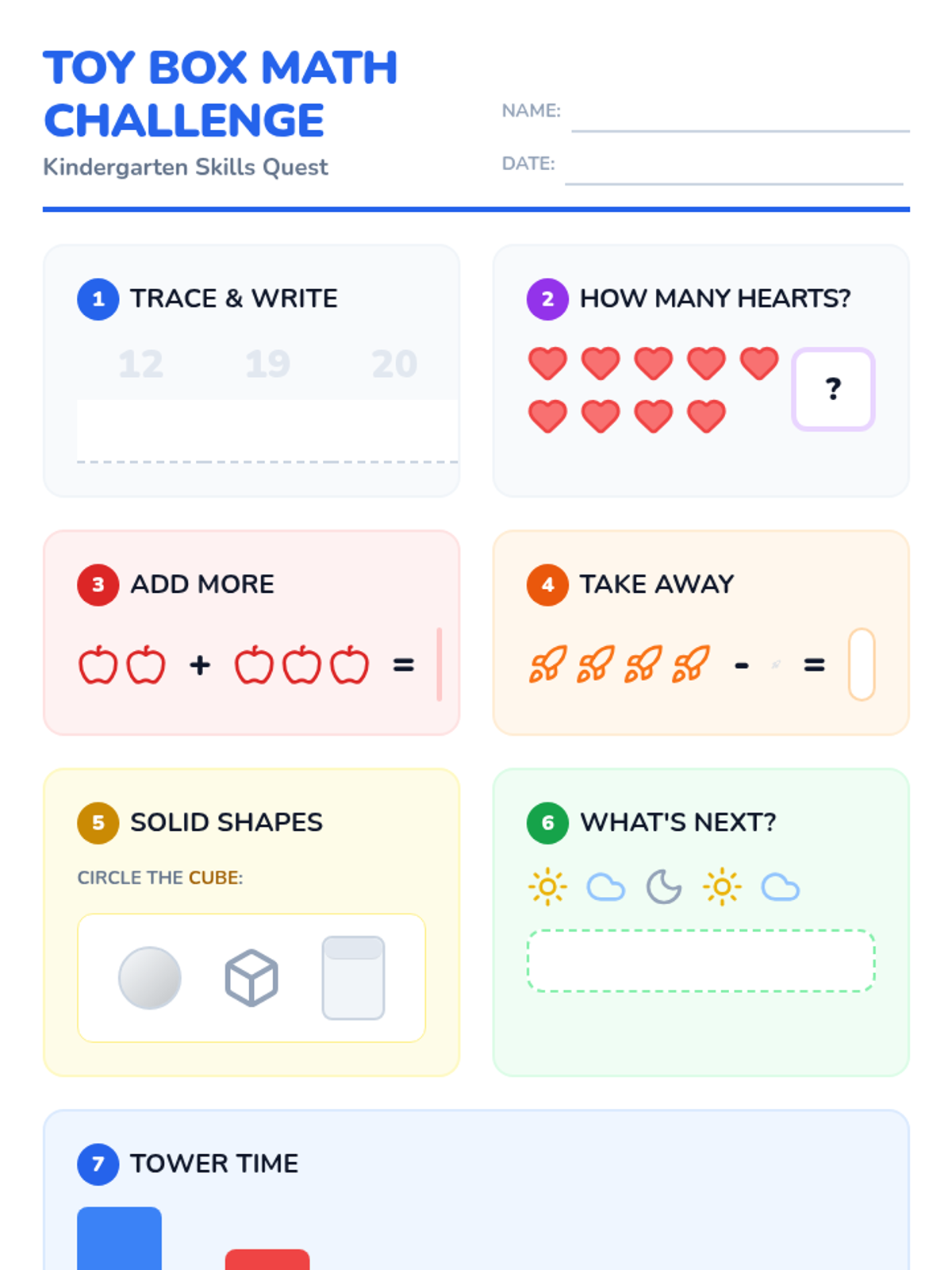
A comprehensive review of essential kindergarten math concepts including counting, addition, subtraction, shapes, and measurement, featuring high-contrast visuals and picture-supported problems.
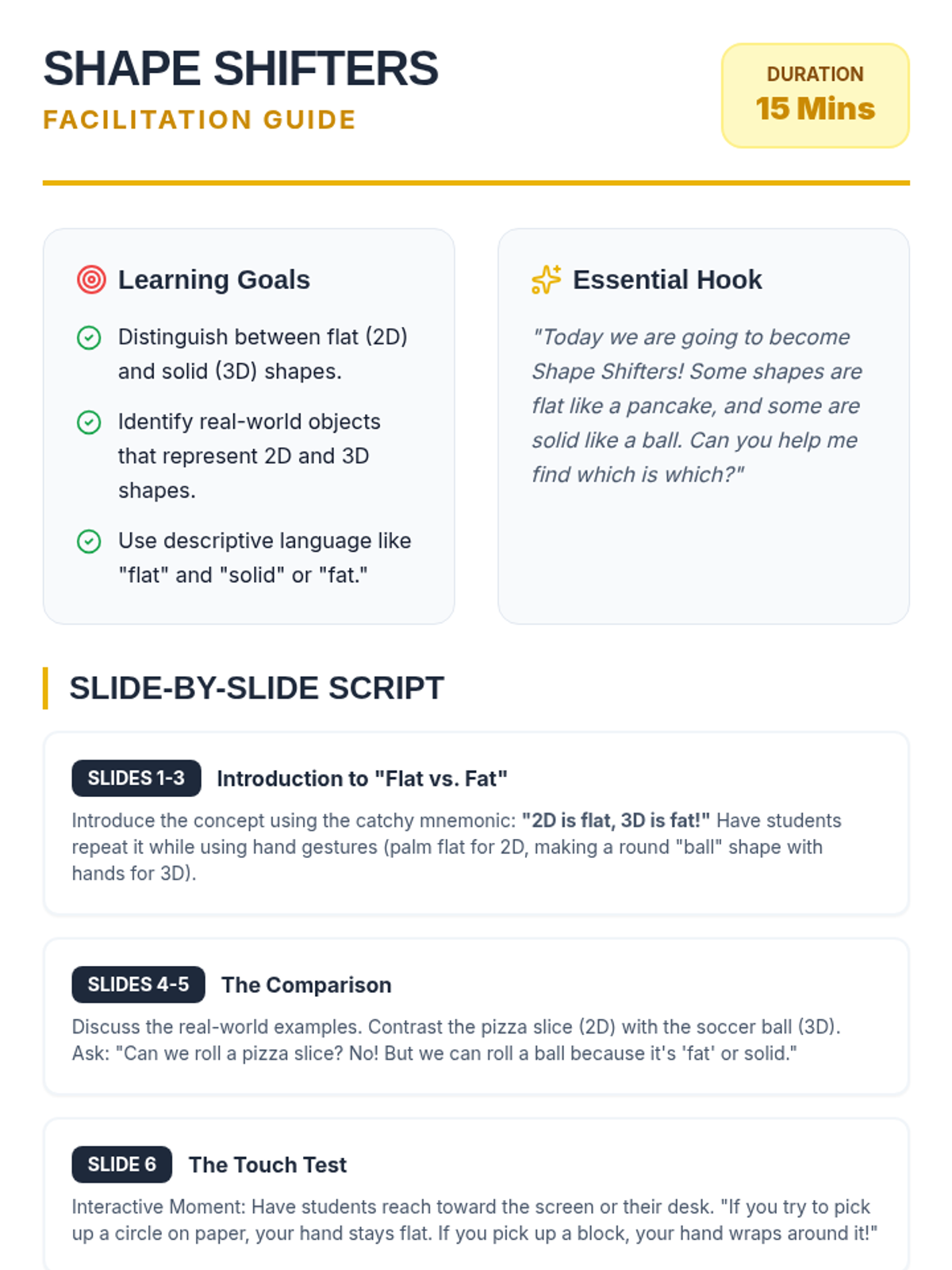
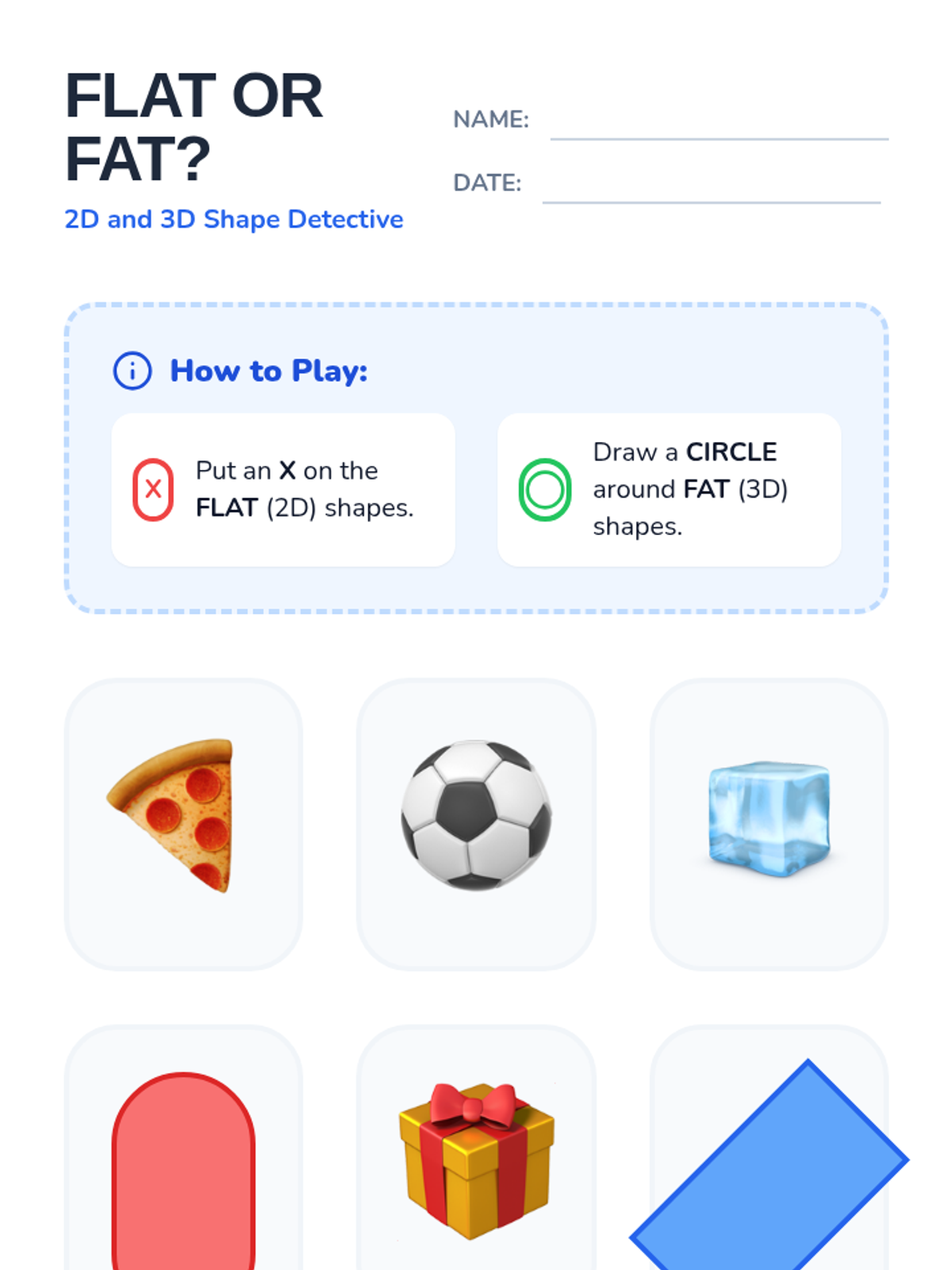
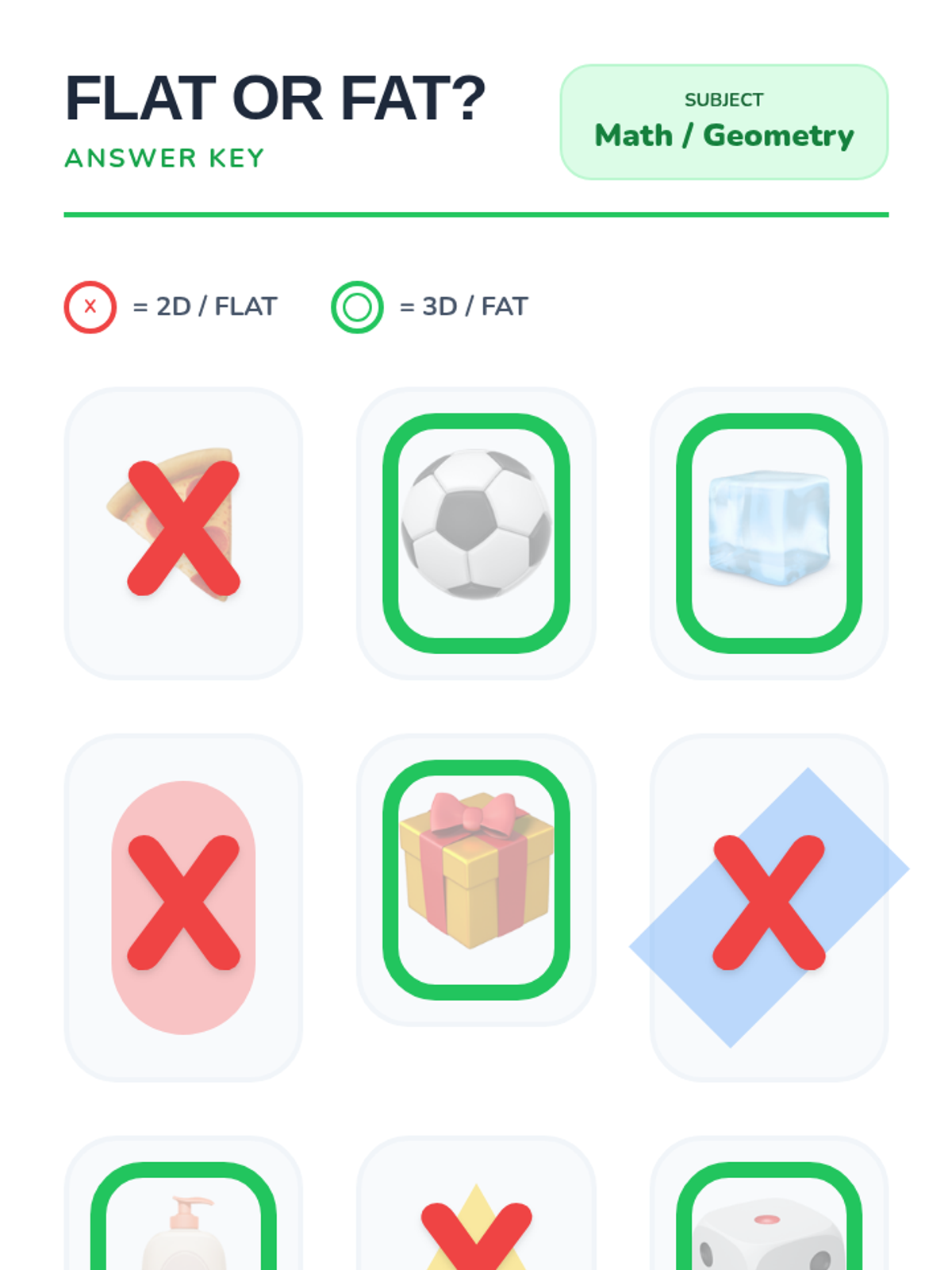
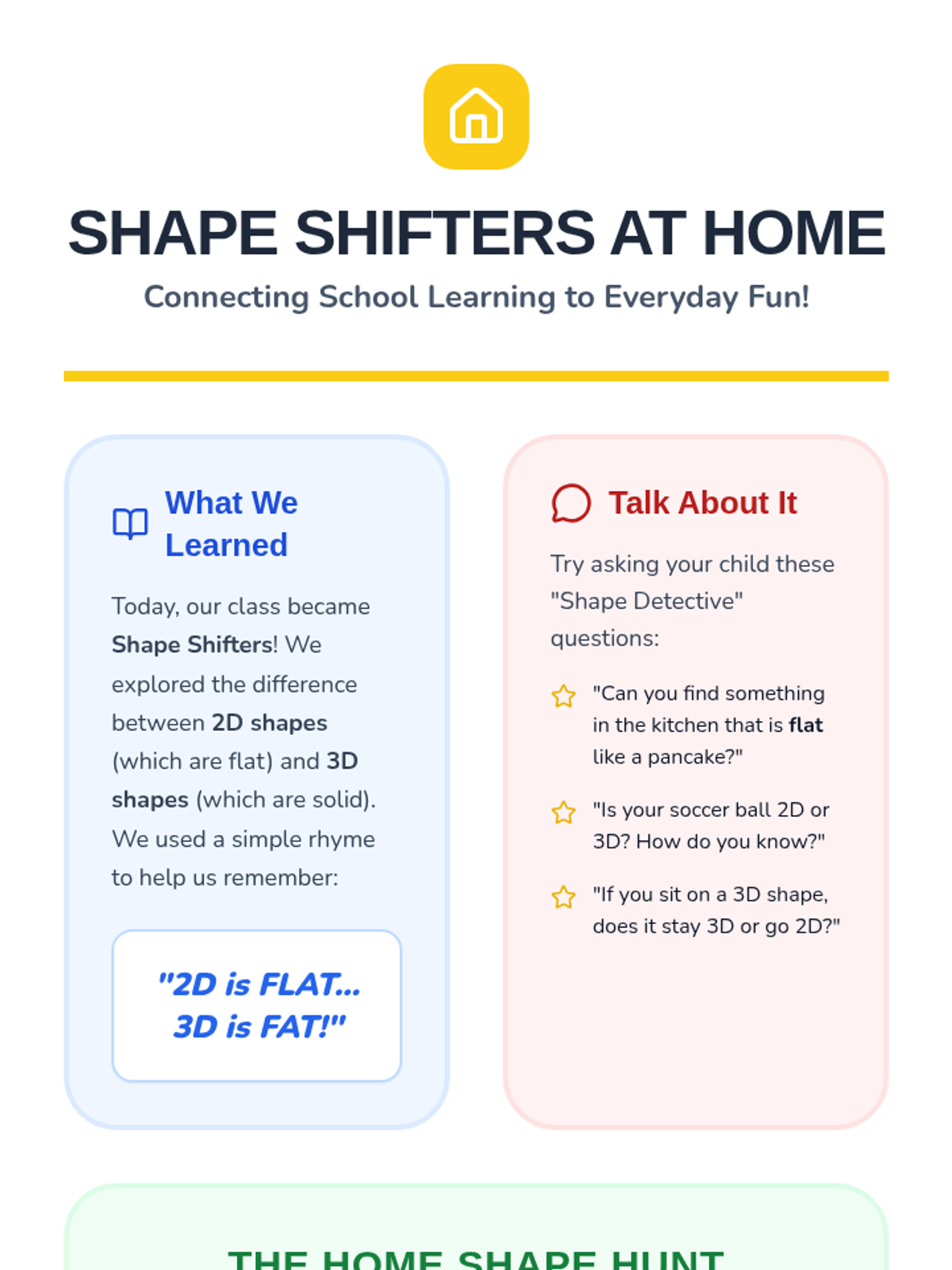
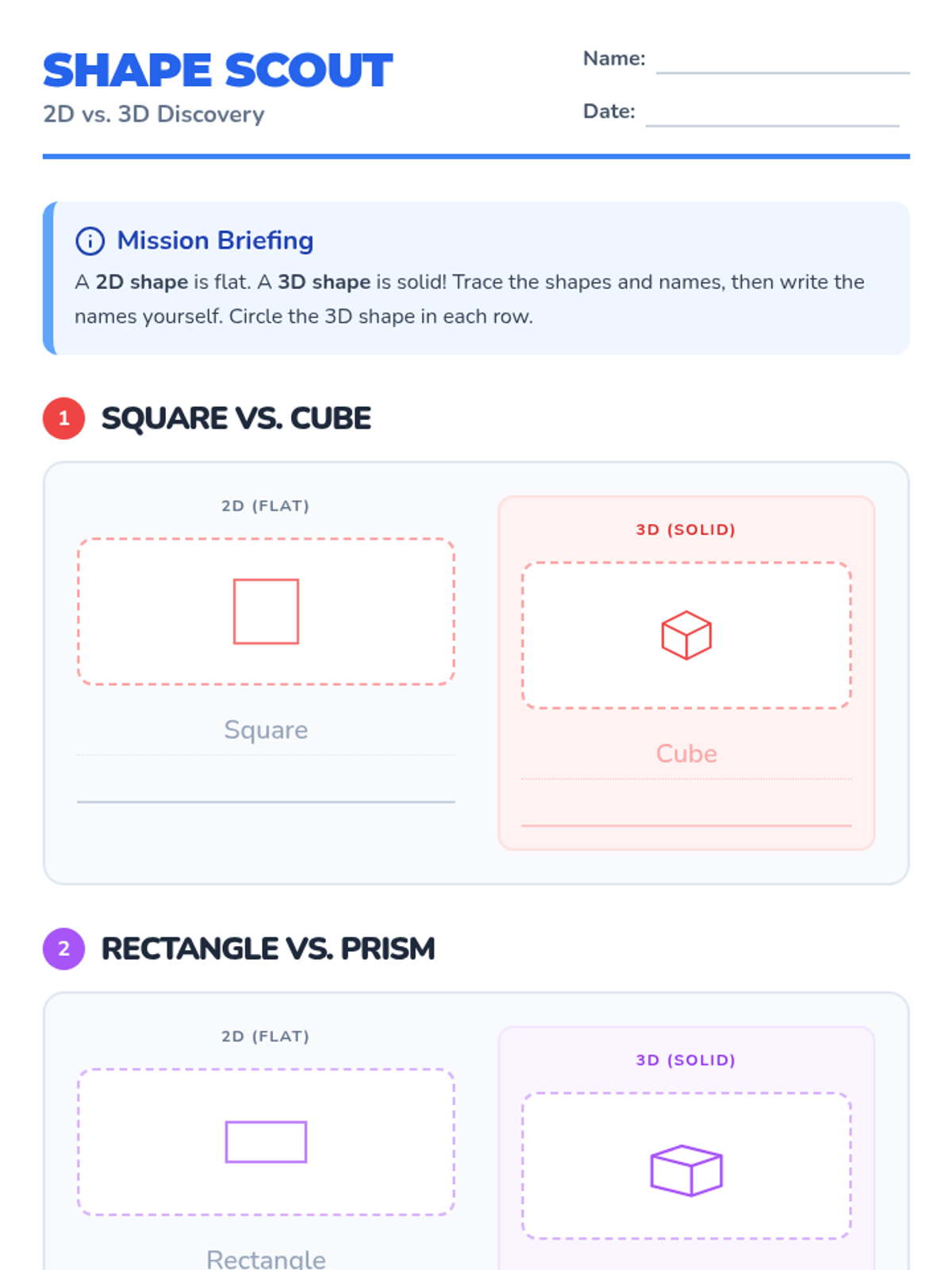
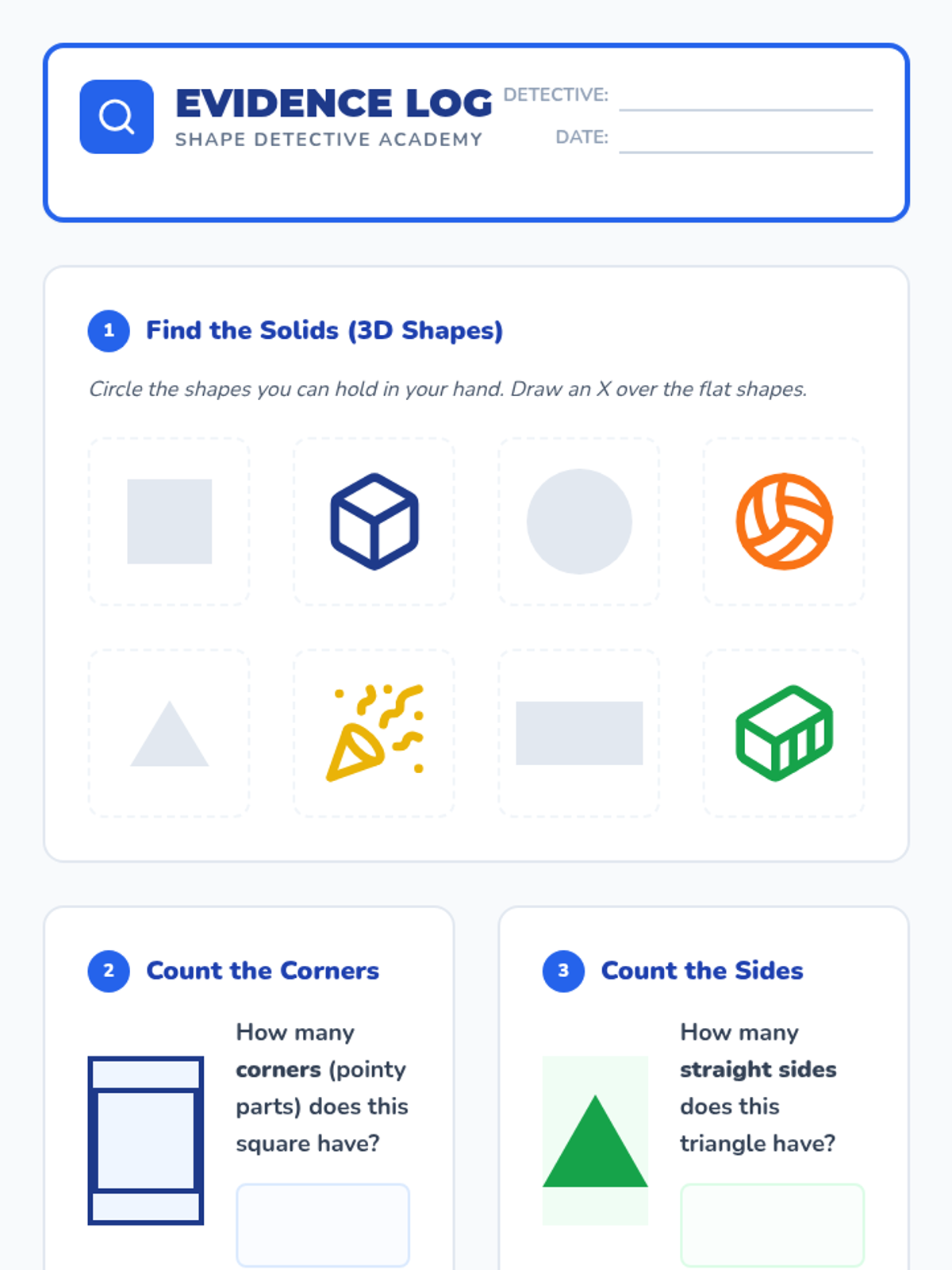
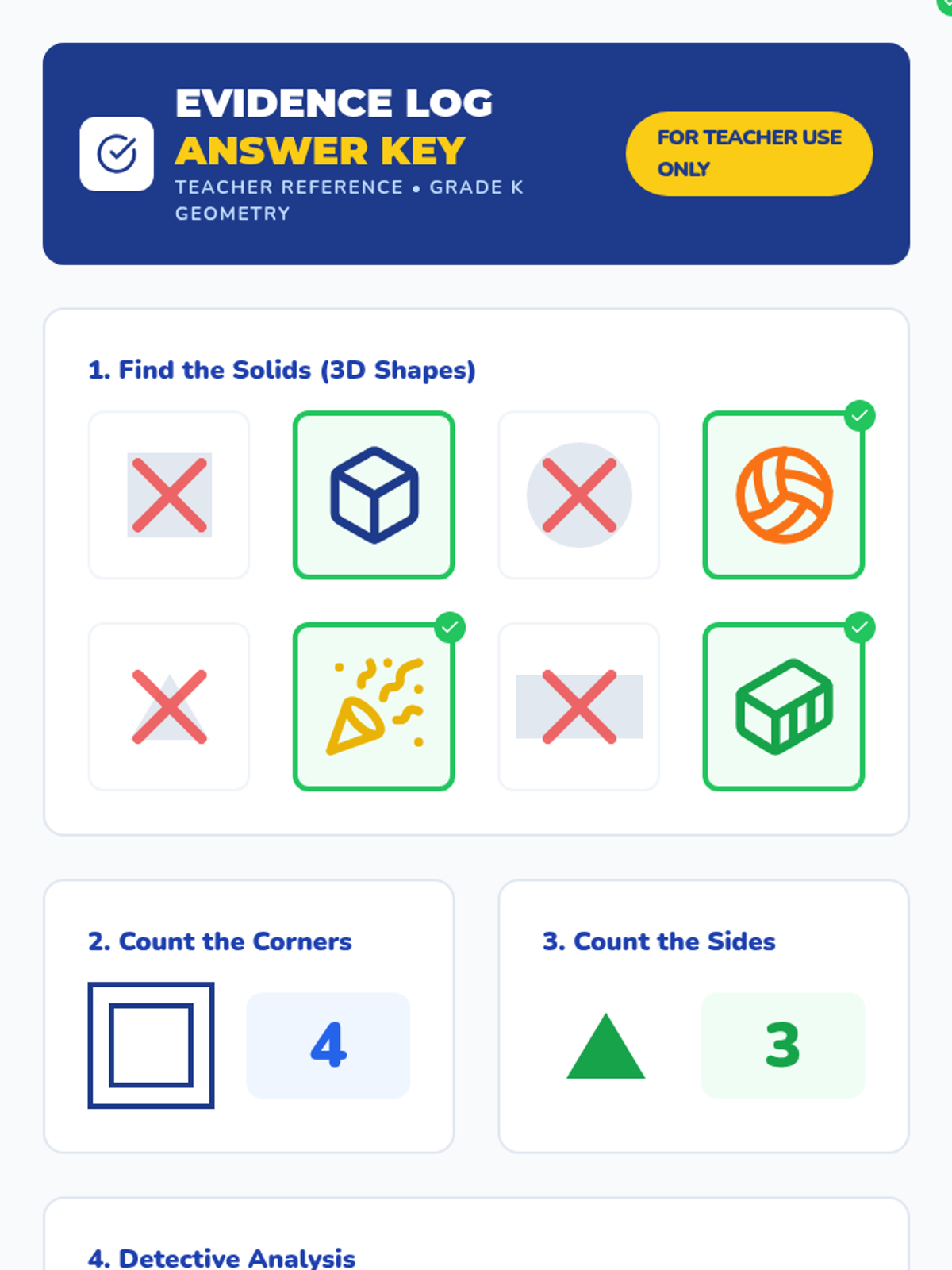
An introductory lesson for kindergarteners to distinguish between flat 2D shapes and solid 3D shapes using real-world examples and simple comparisons.
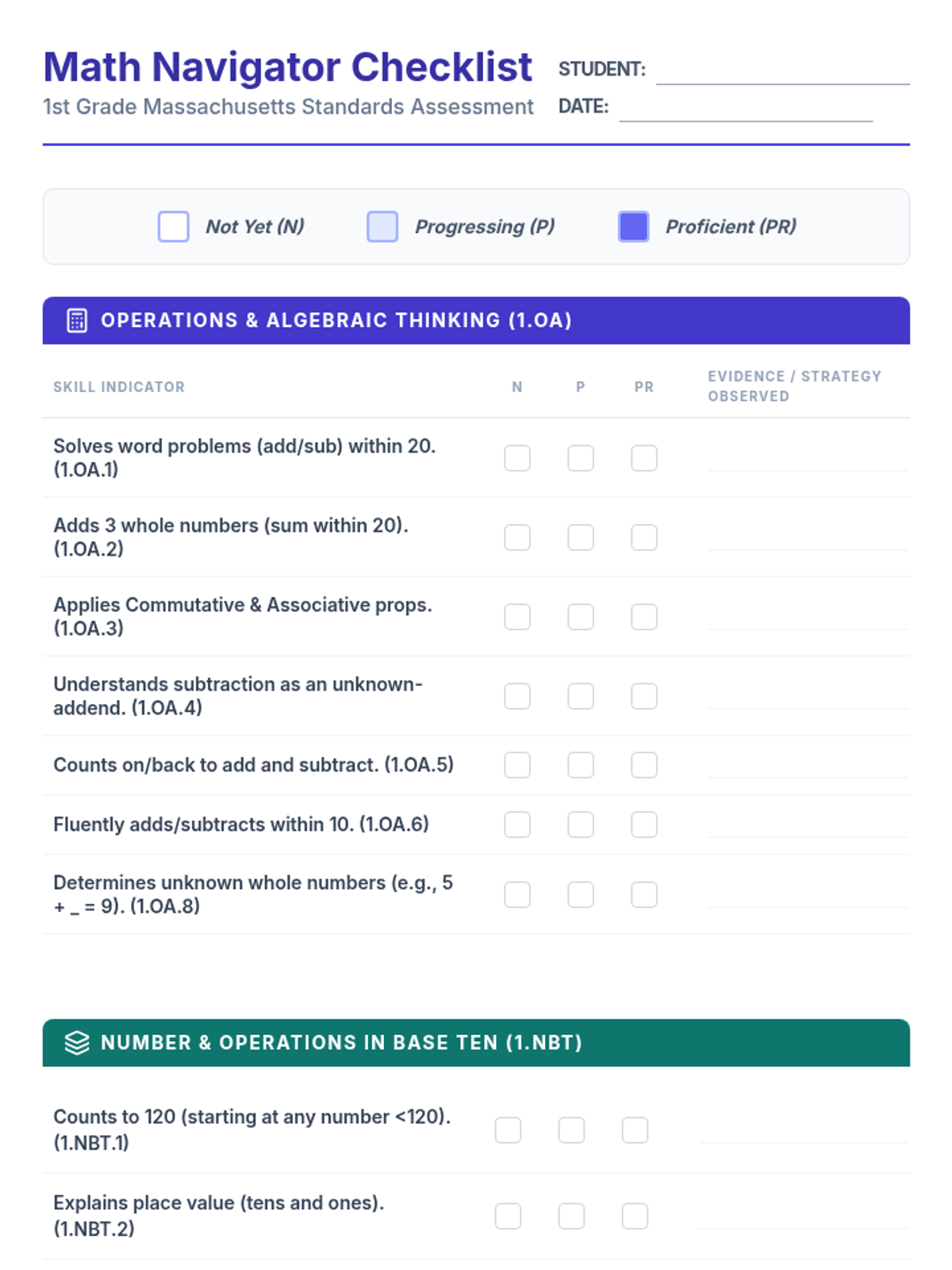
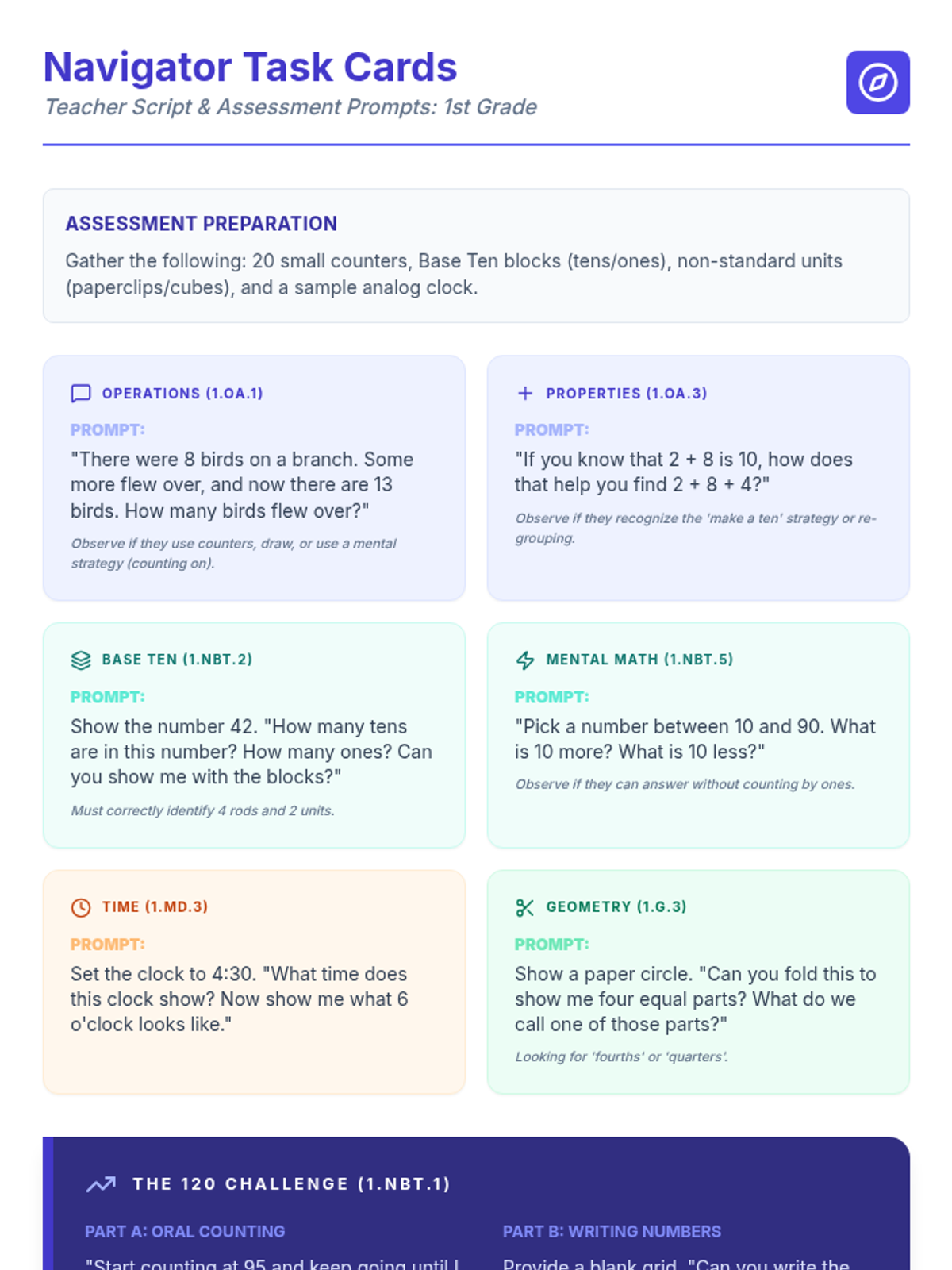
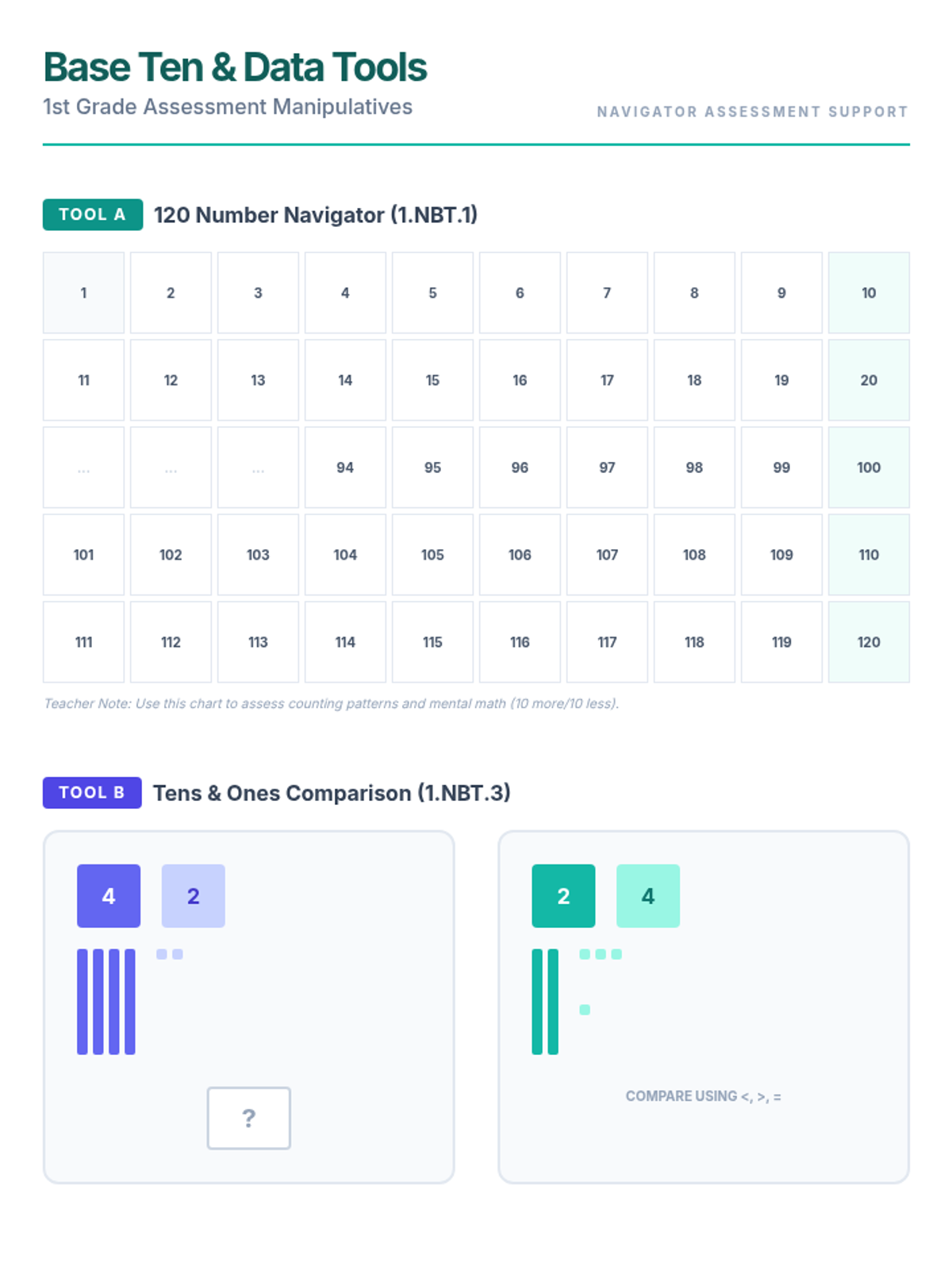
A comprehensive assessment package for 1st Grade mathematics based on the Massachusetts Curriculum Frameworks, including an observation checklist and a teacher's task guide for conducting the assessment.
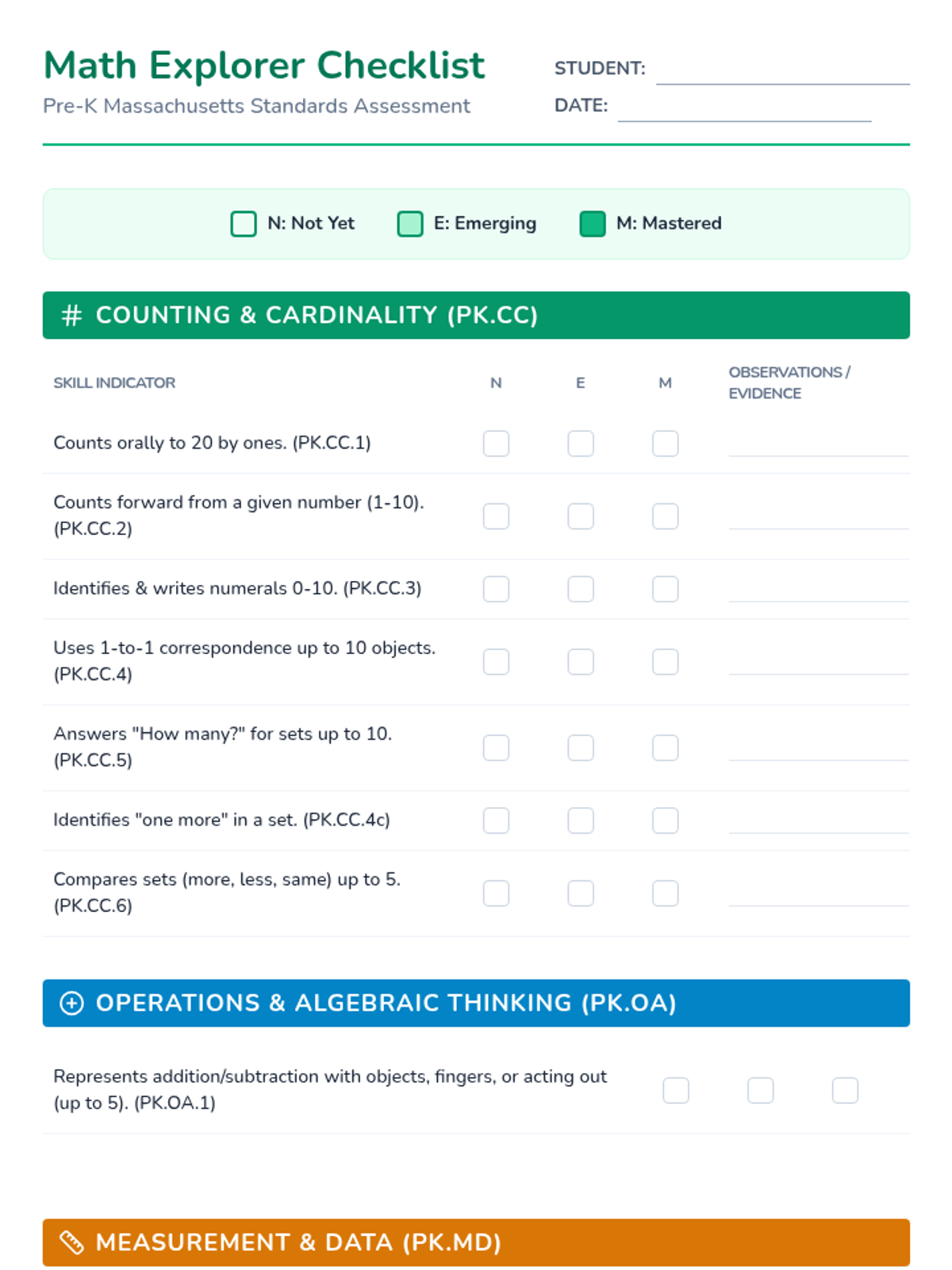
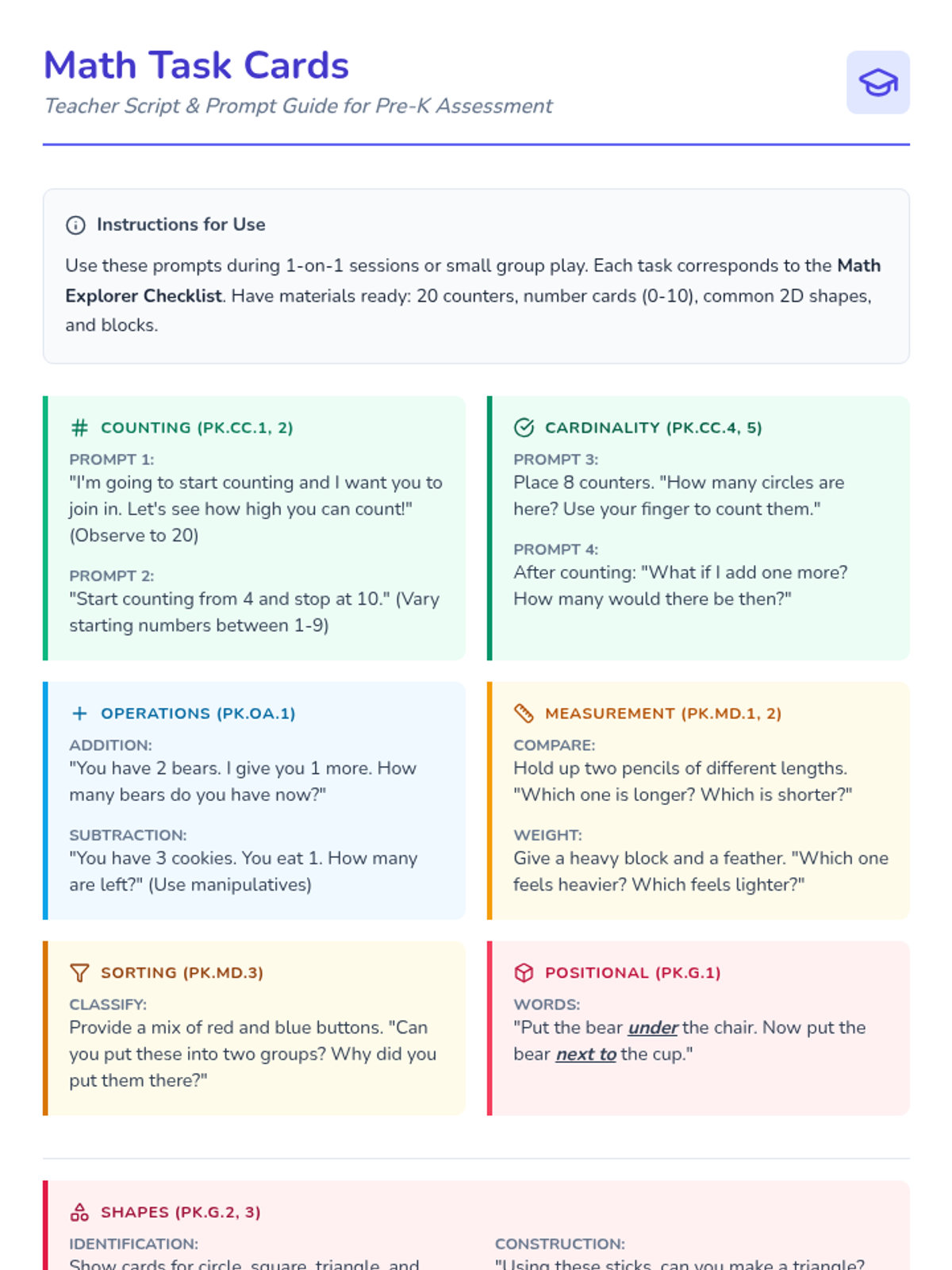
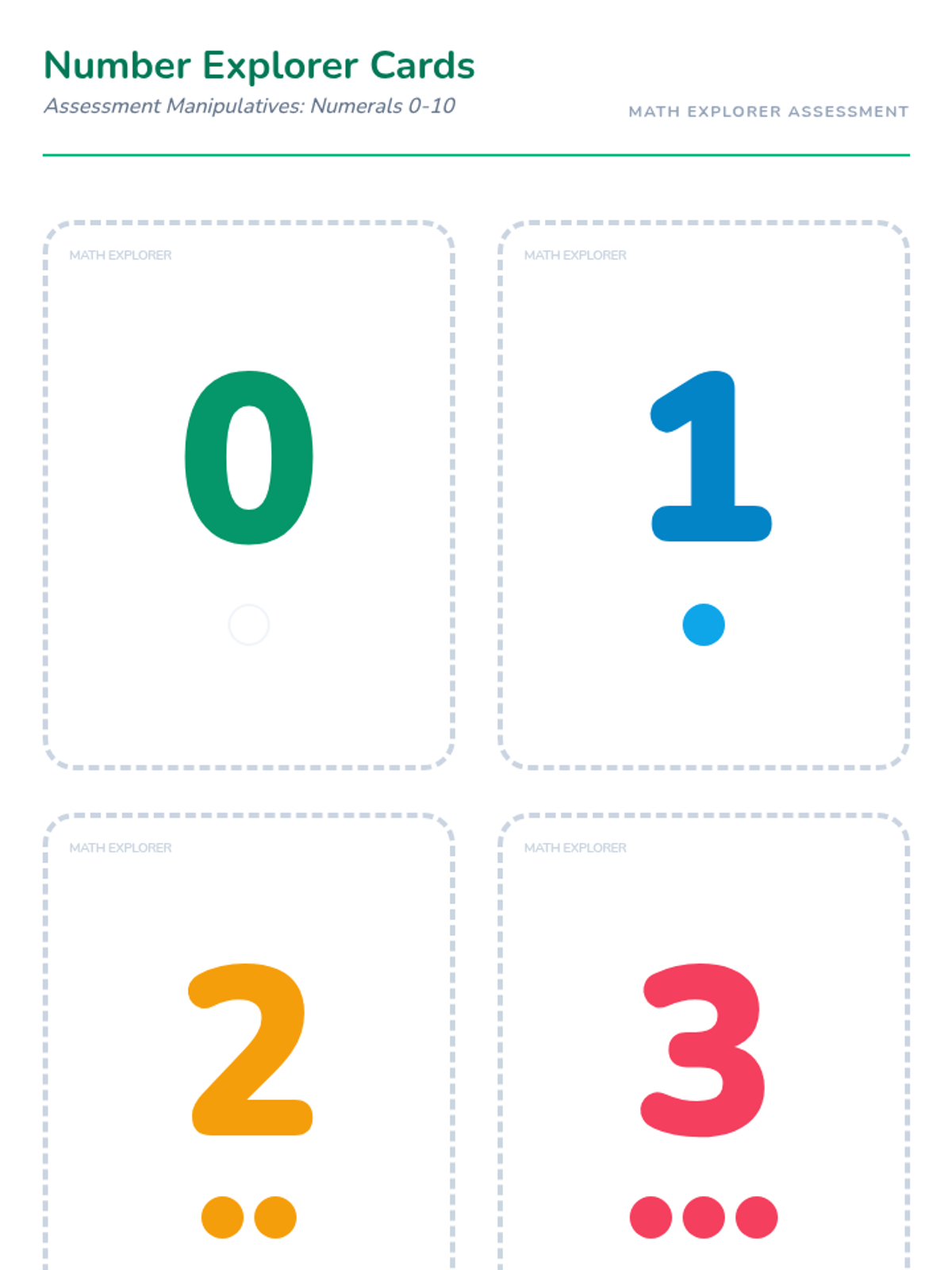
A comprehensive assessment package for Pre-K mathematics based on the Massachusetts Curriculum Frameworks, including an observation checklist and a teacher's task guide for conducting the assessment.
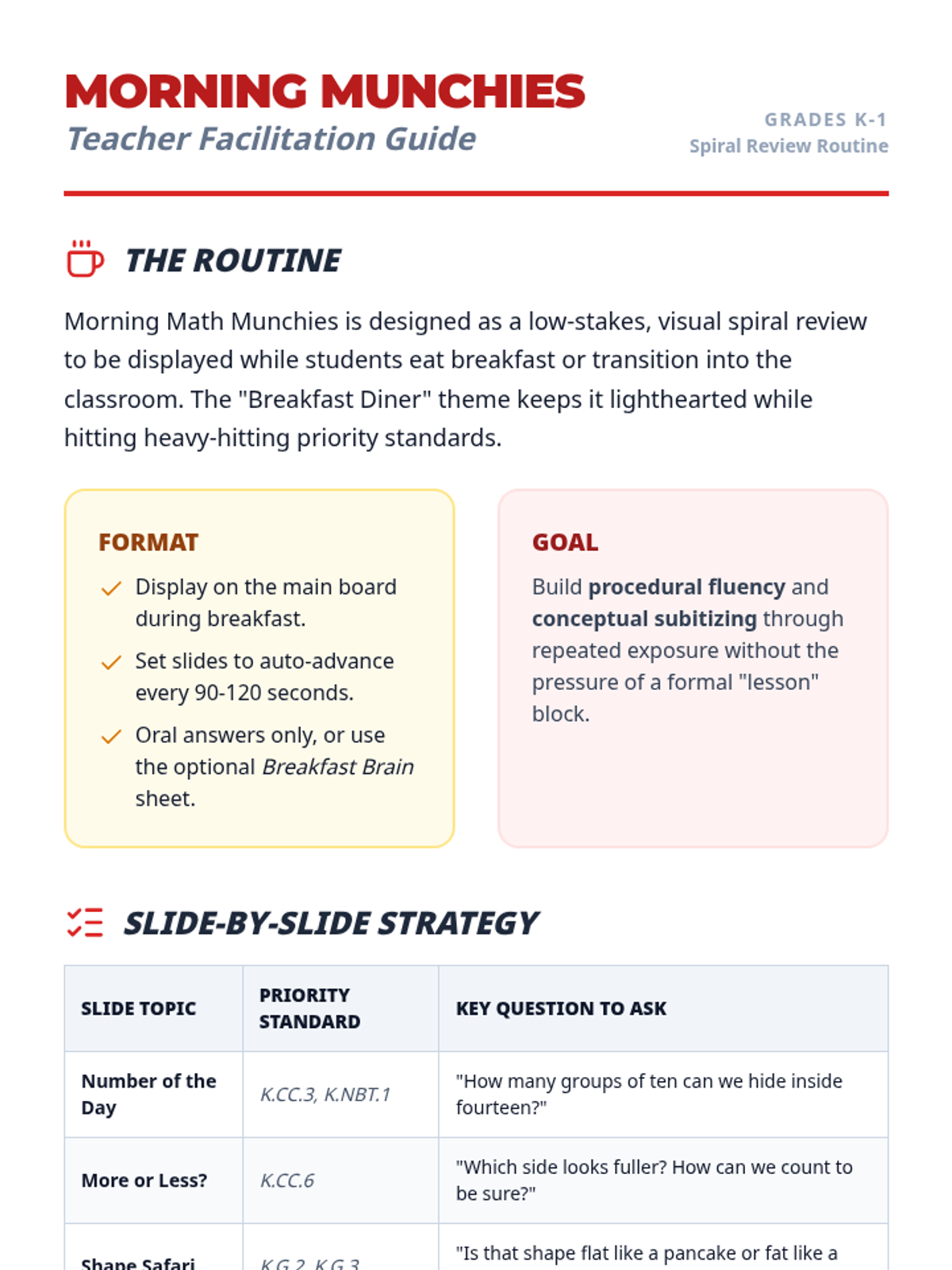
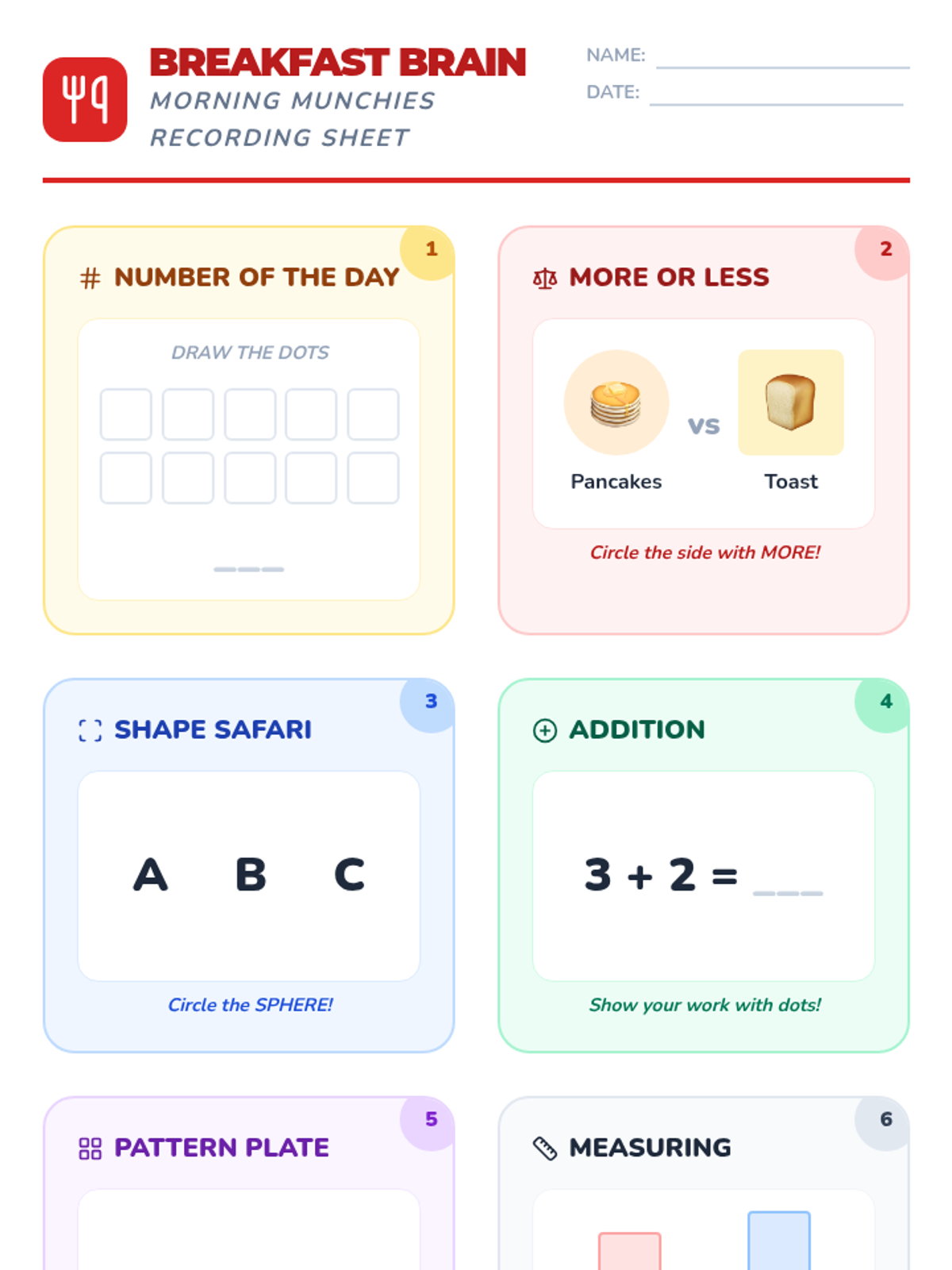
A daily spiral review of priority Kindergarten math standards, designed to be visually engaging and accessible for students to view during breakfast or morning routines.
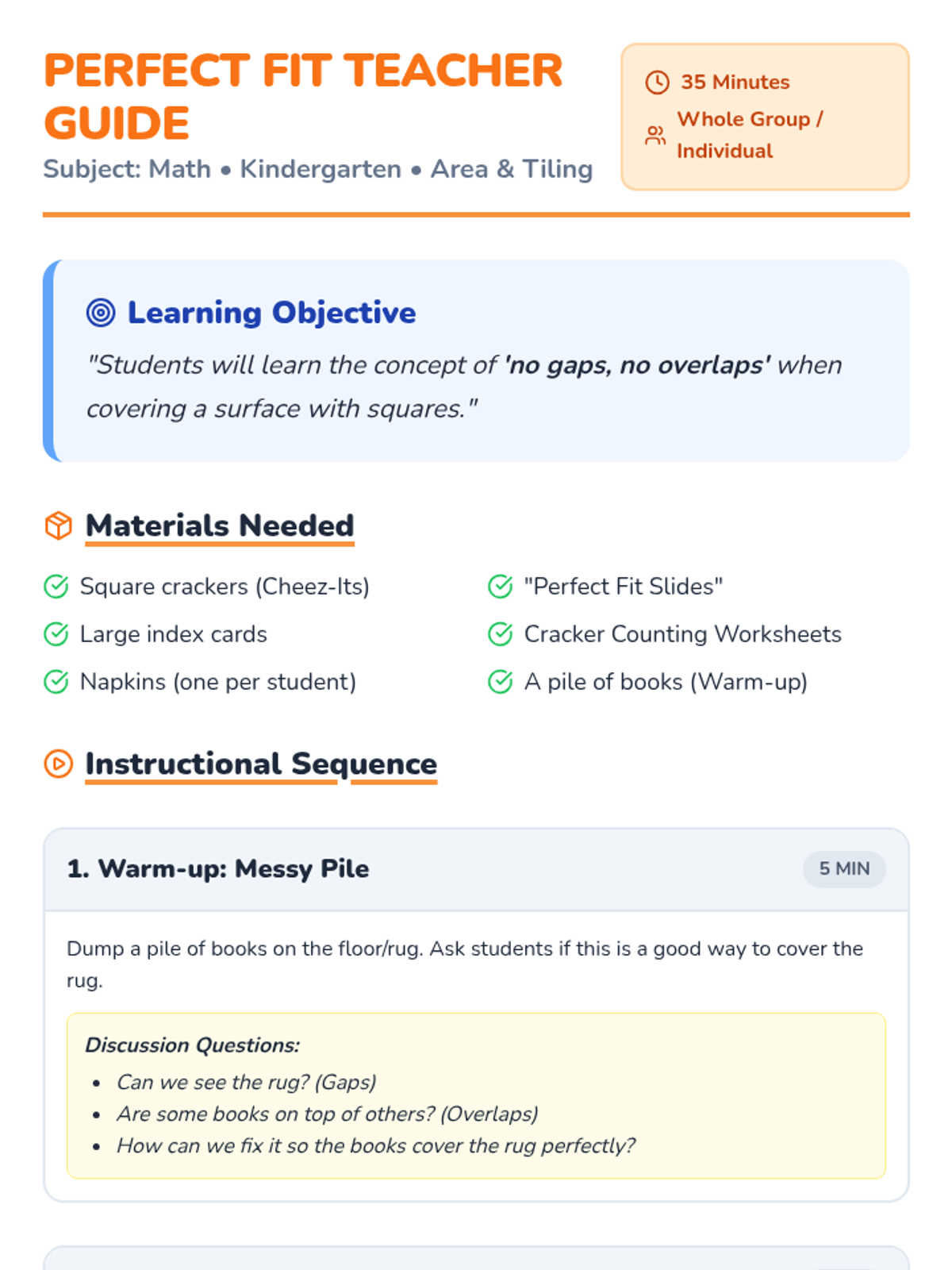
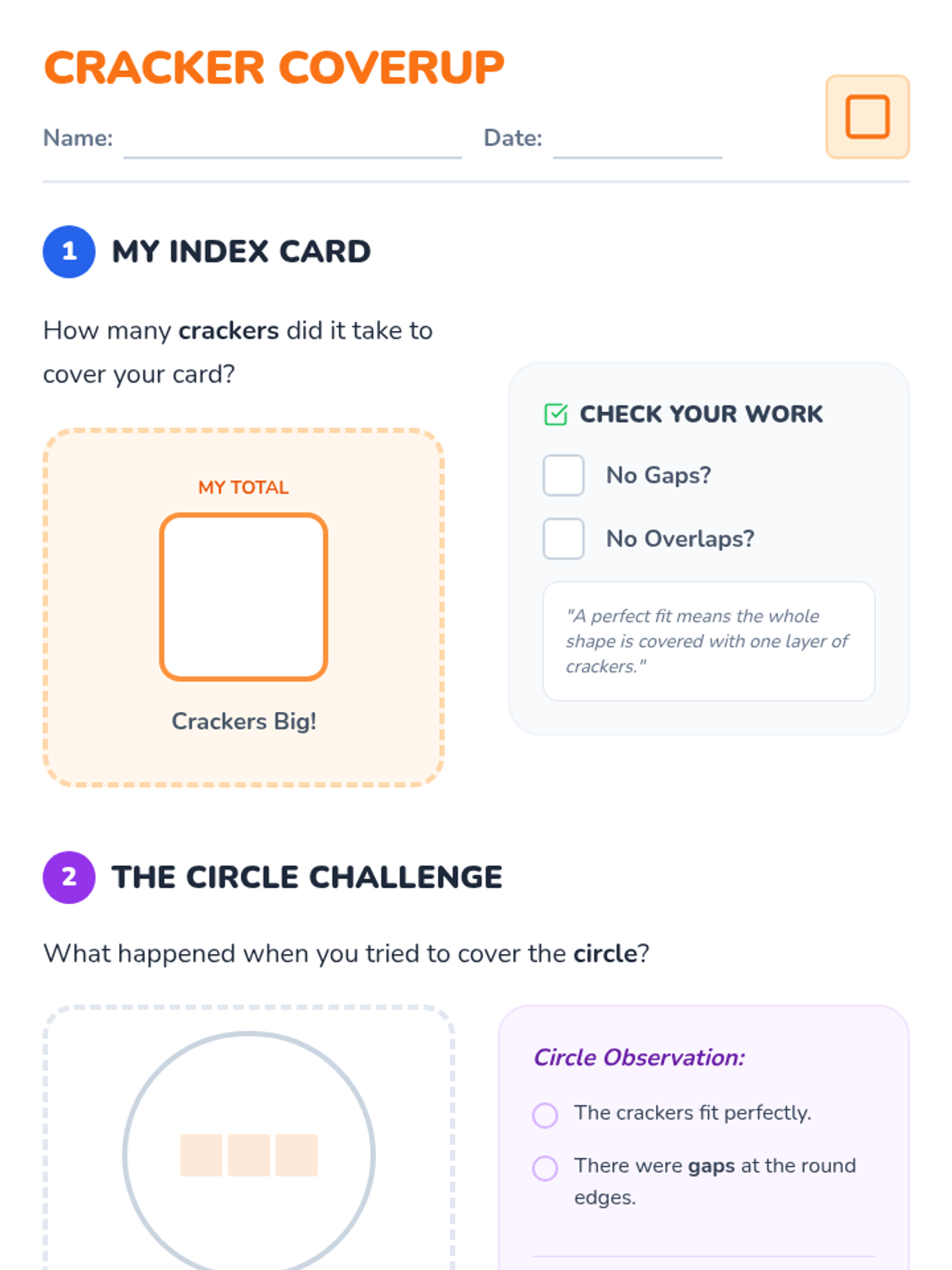
A Kindergarten math lesson introducing the concept of area through 'no gaps, no overlaps' using square crackers to cover rectangular and circular shapes.
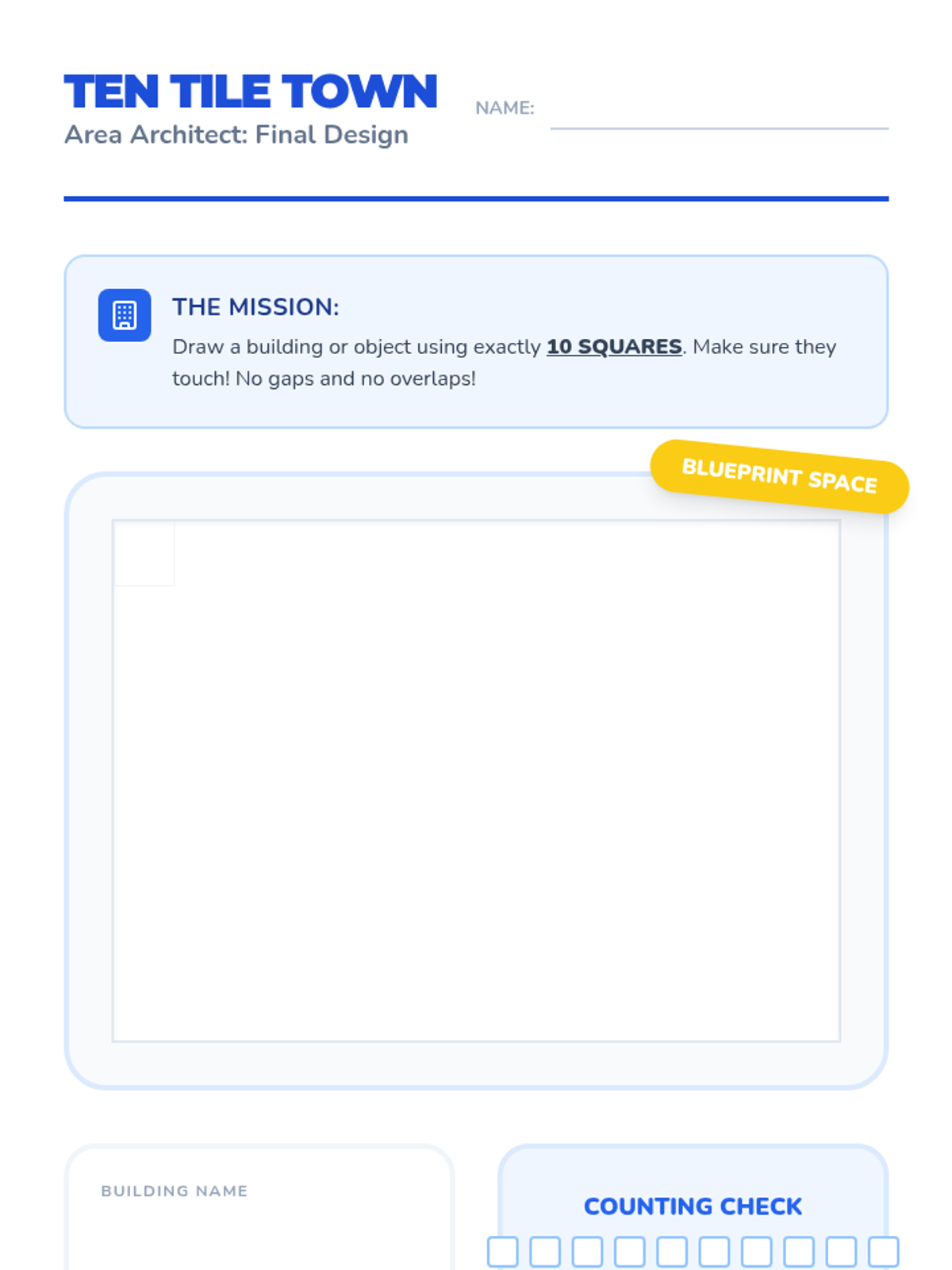
A creative project where students design a picture or map using exactly 10 tiles, reinforcing area as a count of units.
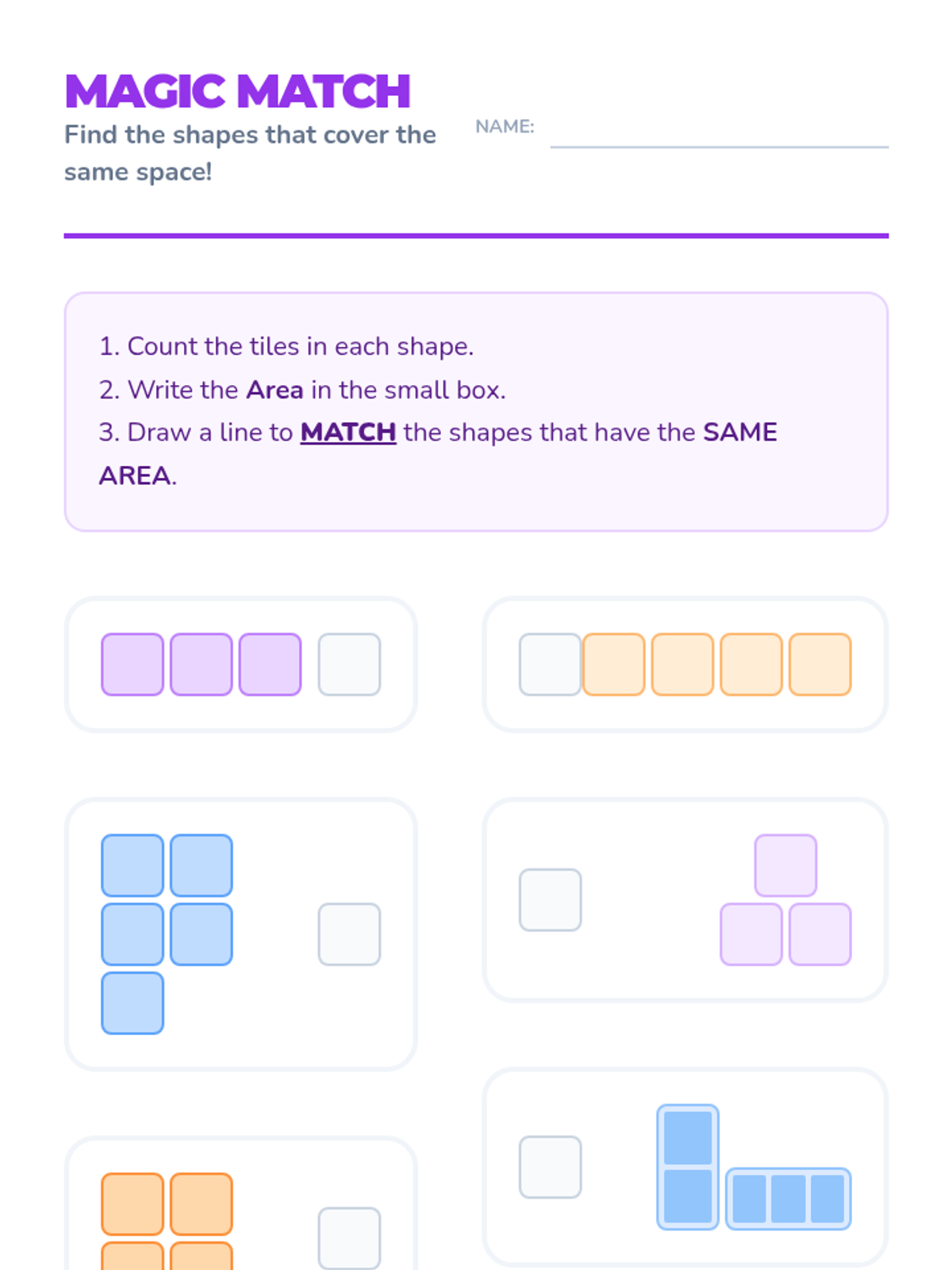
Inquiry into how different shapes can have the same area. Students cover different shapes with the same number of units to see they take up equal space.
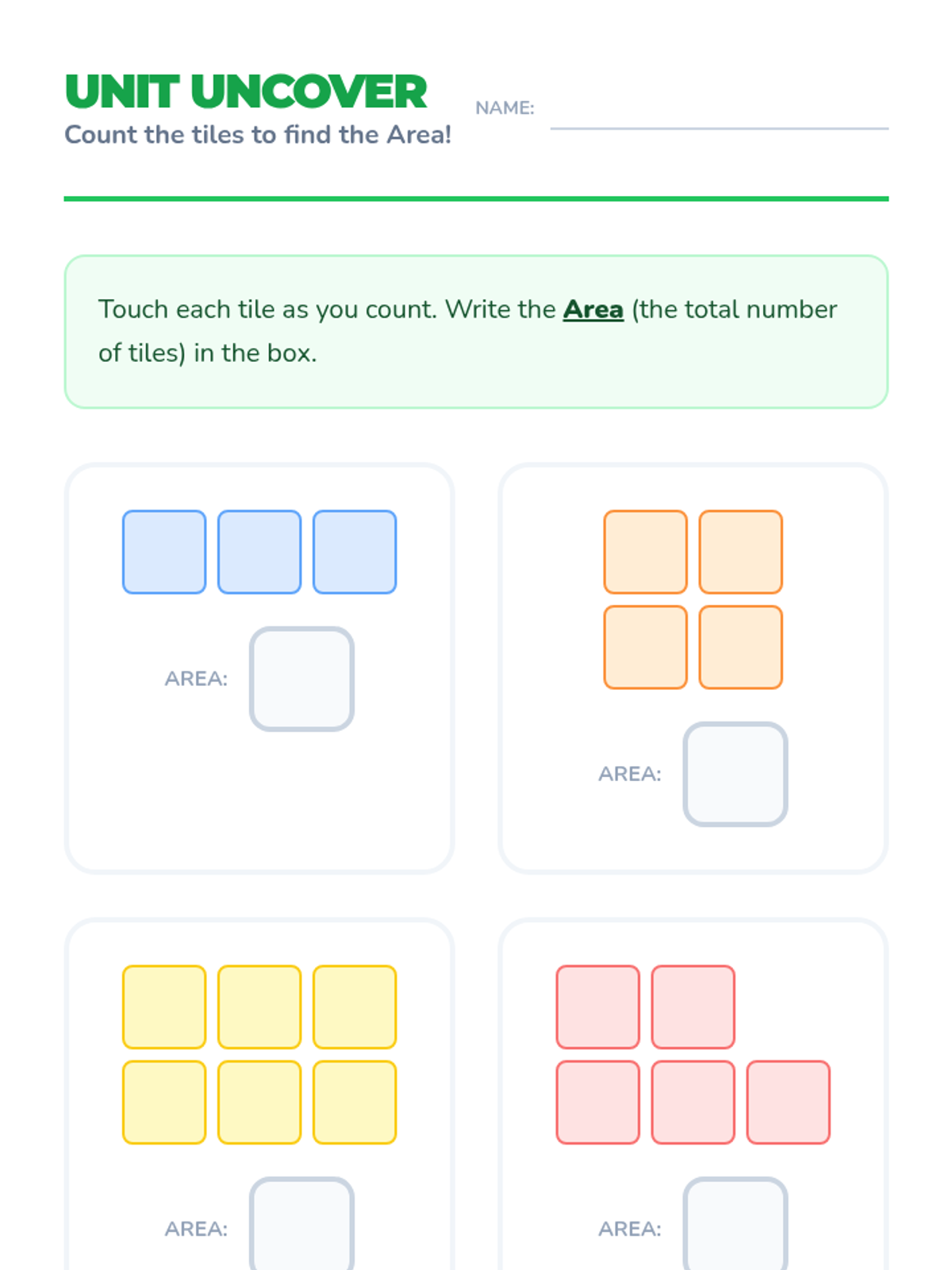
Students use square tiles to cover rectangles and count the number of units used, transitioning from qualitative coverage to quantitative measurement.
Focuses on the technique of tiling using pattern blocks. Students learn to cover a region completely without leaving gaps or overlapping the blocks.
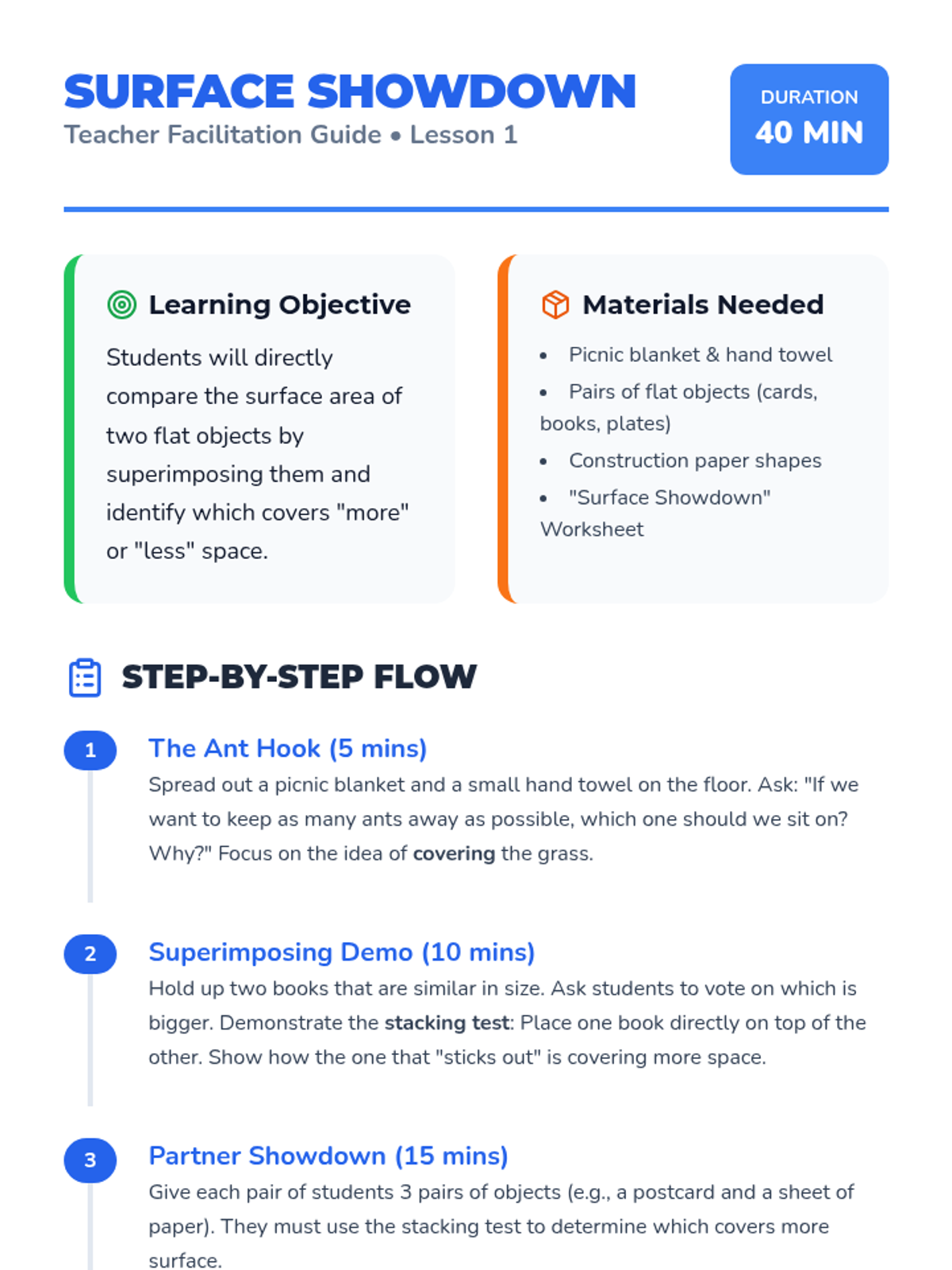
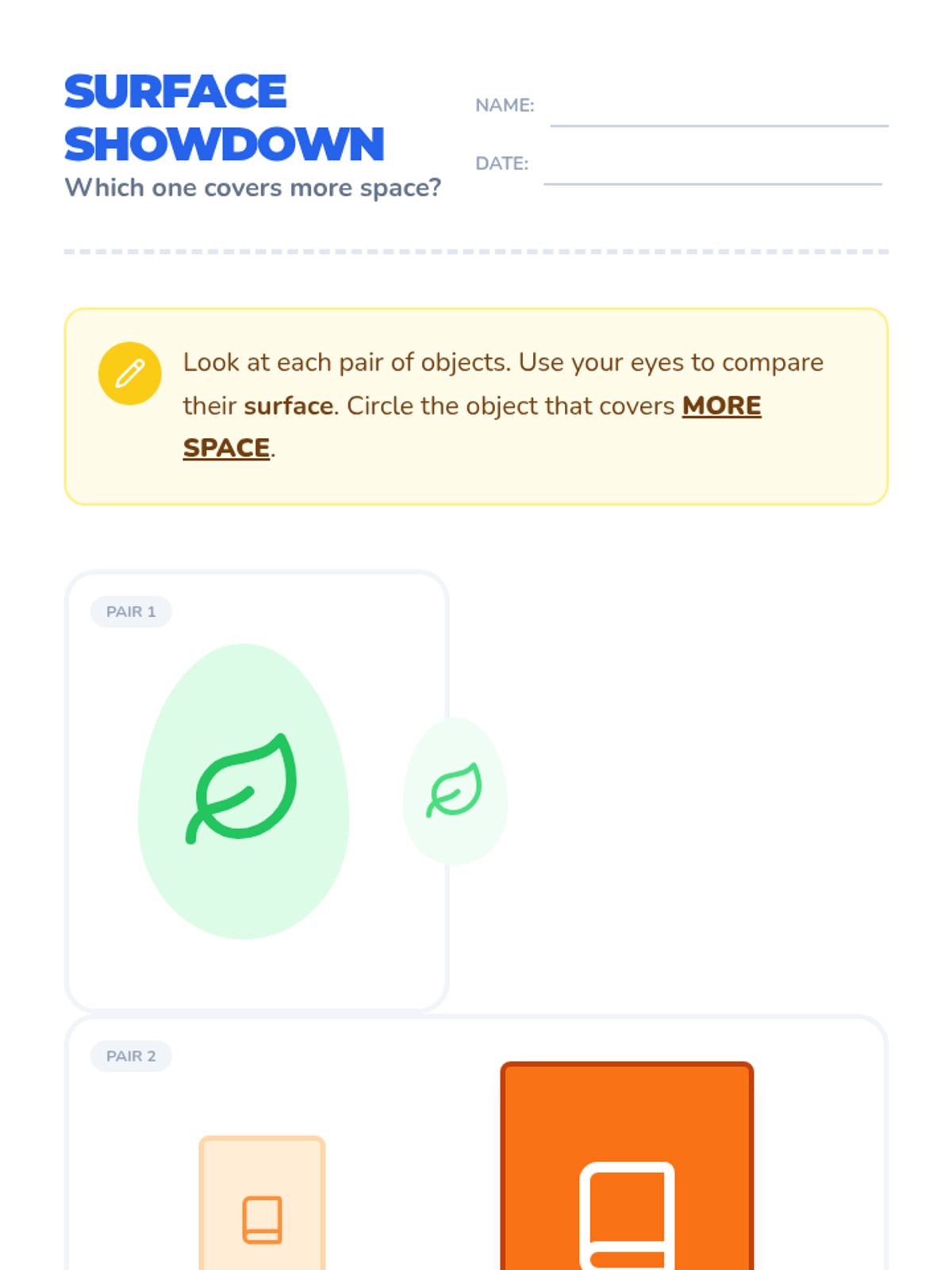
Students compare two flat objects to see which covers more surface by superimposing them. They use vocabulary like 'more space' and 'bigger surface' to describe their findings.
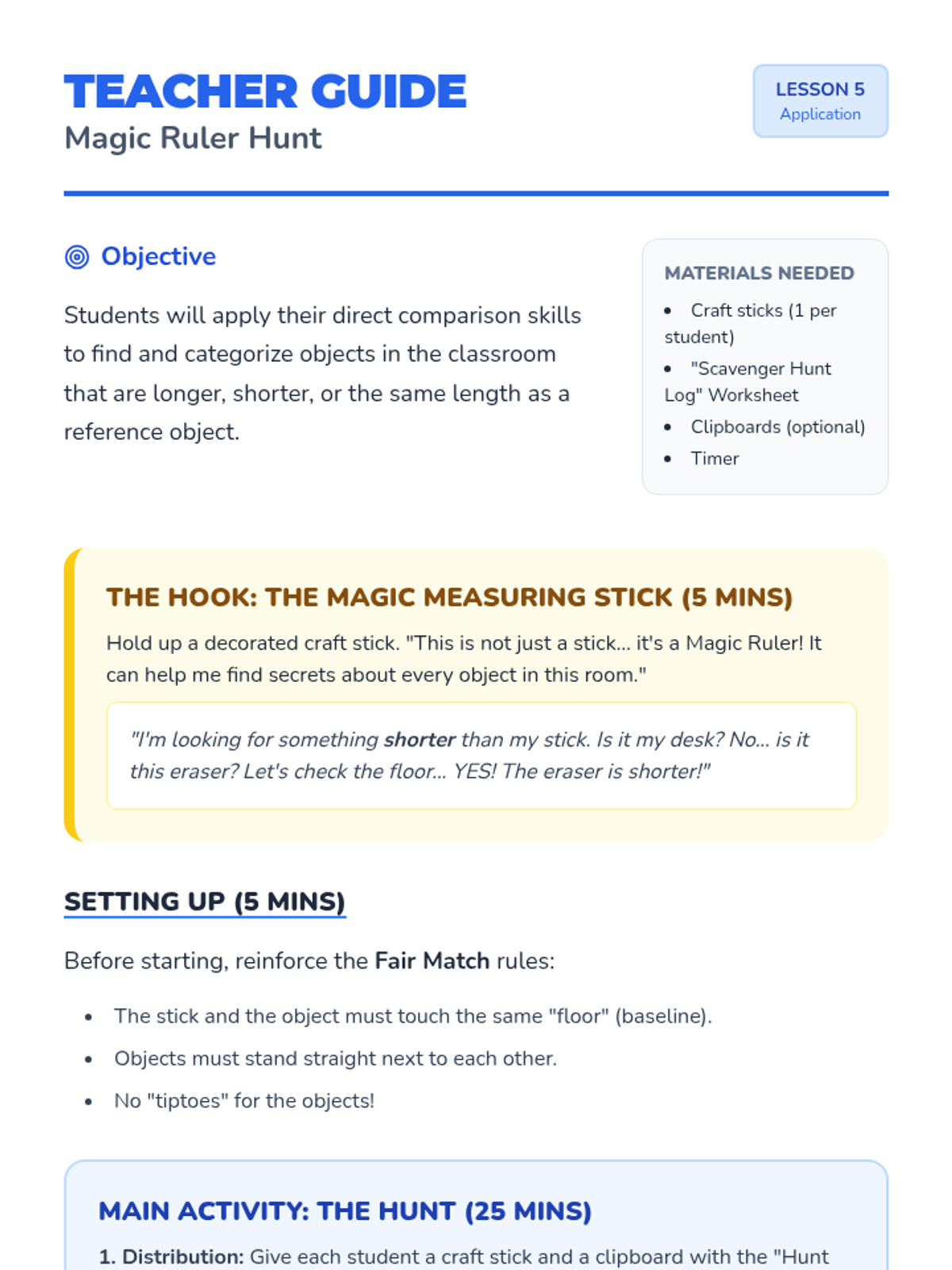
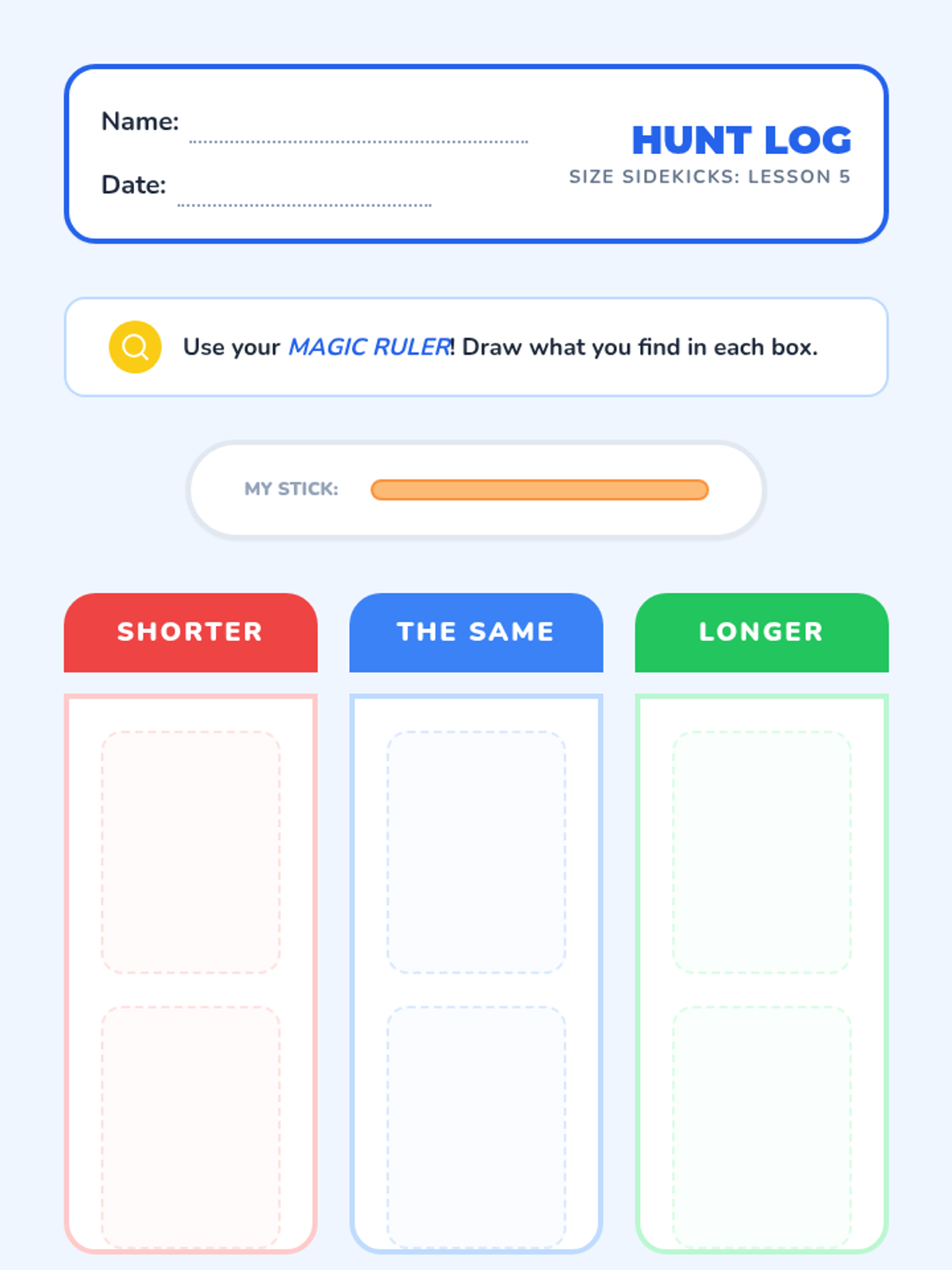
In this culminating activity, students use a reference object (like a craft stick) to find items in the room that are longer, shorter, or the same length. They record their findings by drawing the objects in appropriate columns. This reinforces direct comparison in a real-world setting.
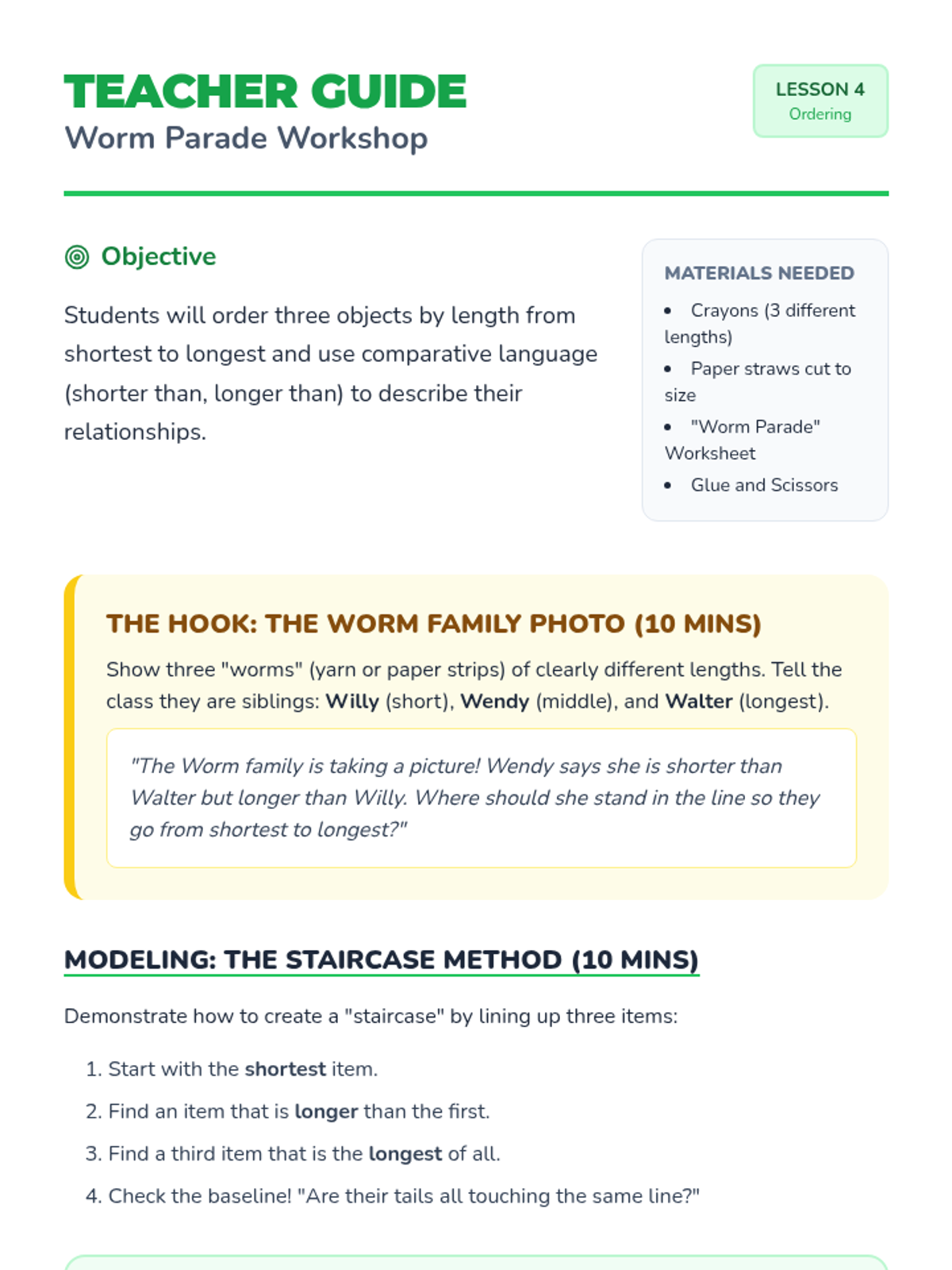
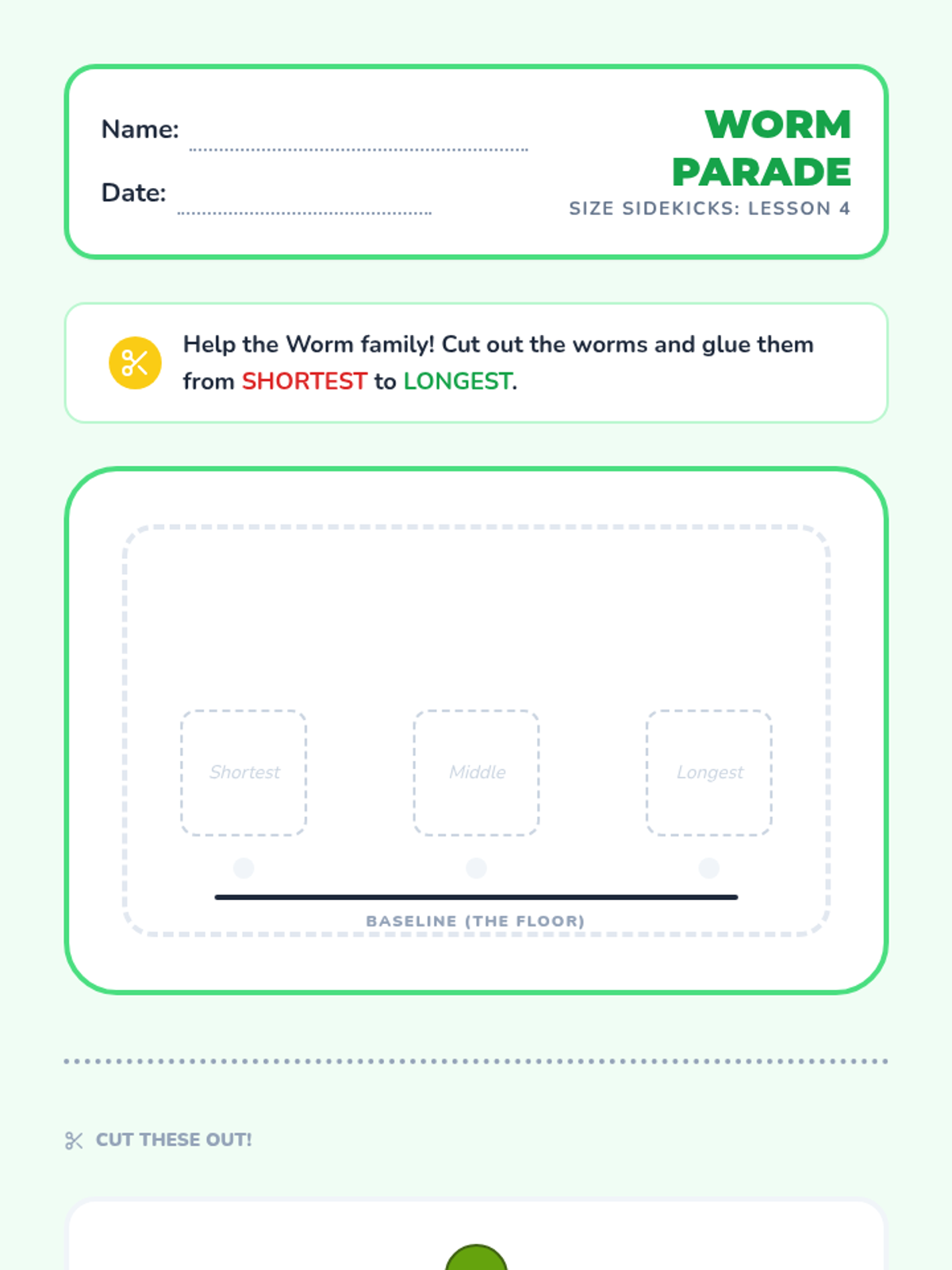
Moving beyond comparing just two items, students practice arranging sets of three items from shortest to longest. They manipulate physical objects like crayons or straws to create ordered sequences. This introduces the concept of transitivity in a concrete, age-appropriate way.
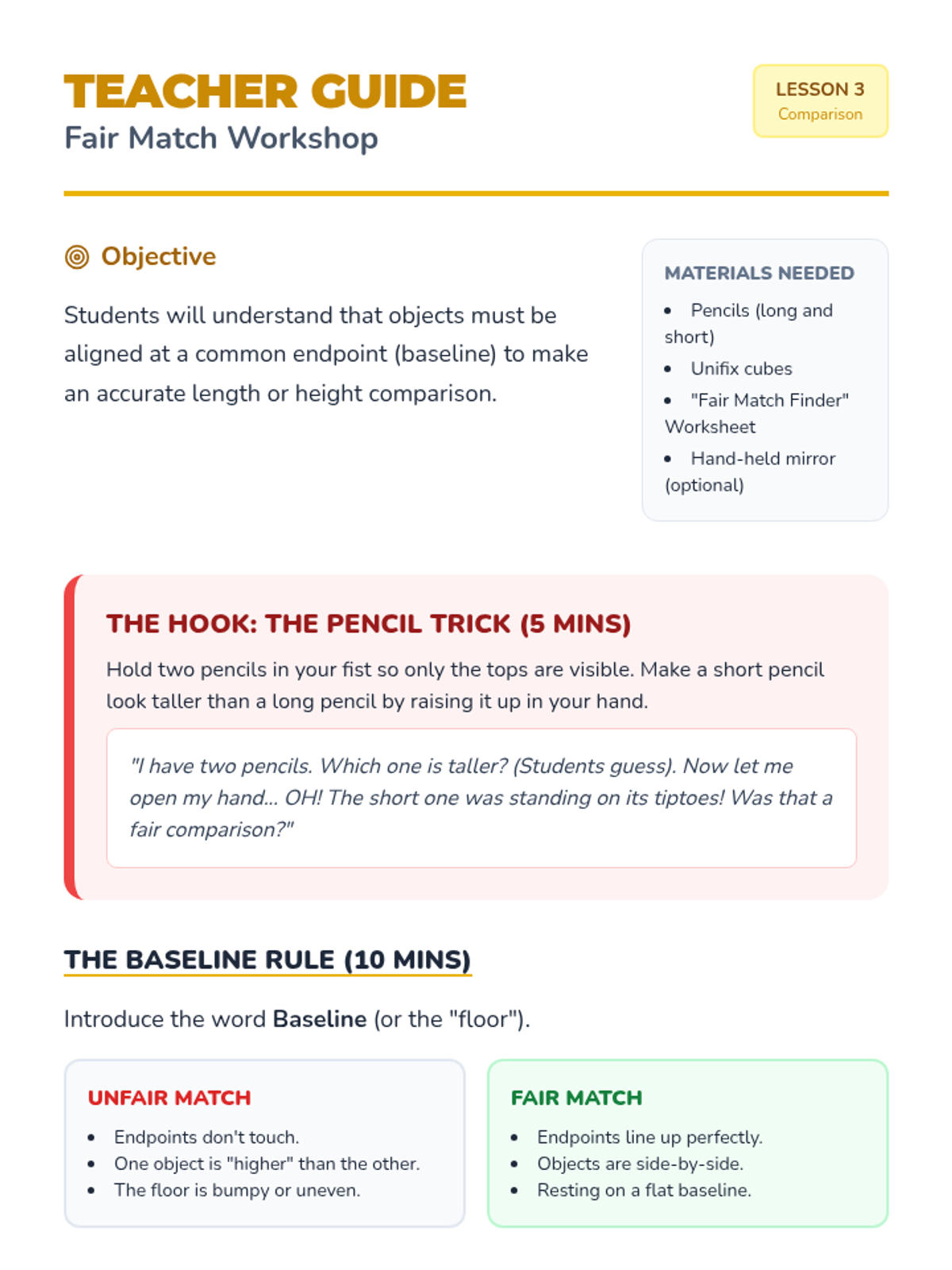
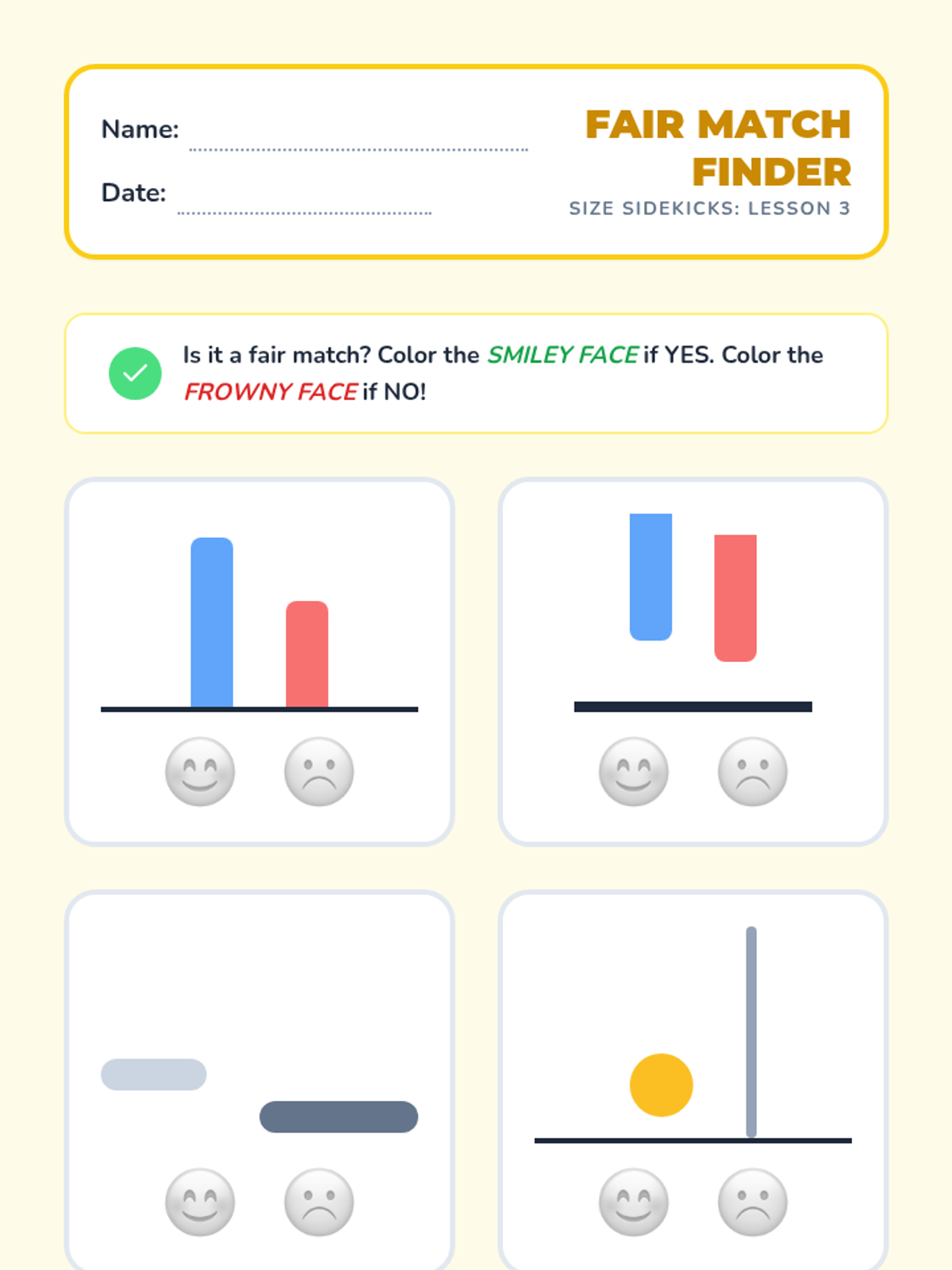
This lesson focuses on the concept of a 'fair match' by teaching students to align objects at a common baseline. Students troubleshoot 'trick' comparisons where objects are offset, learning that accurate comparison requires starting at the same point. They practice correcting misaligned objects to find the true difference in length.
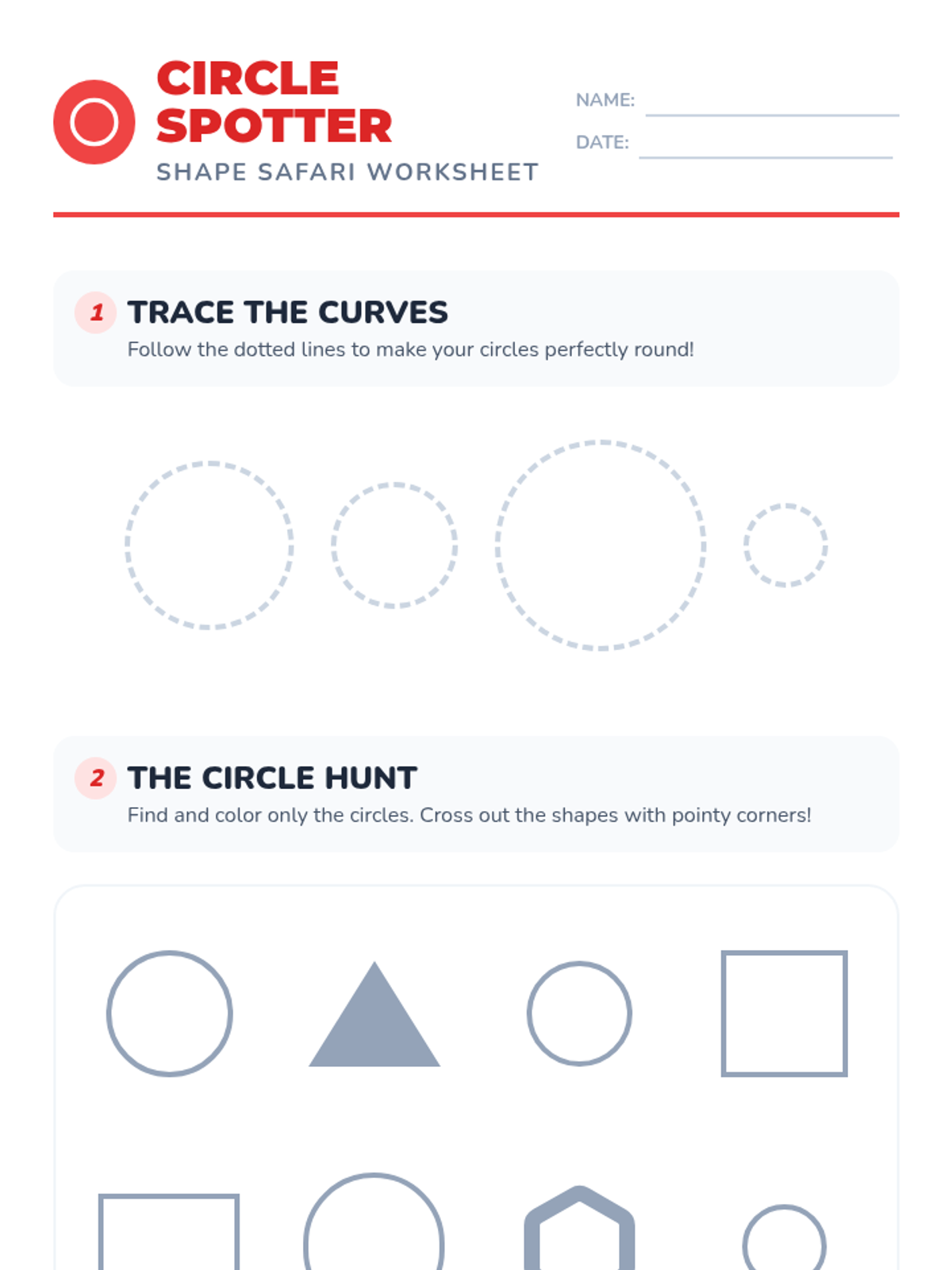
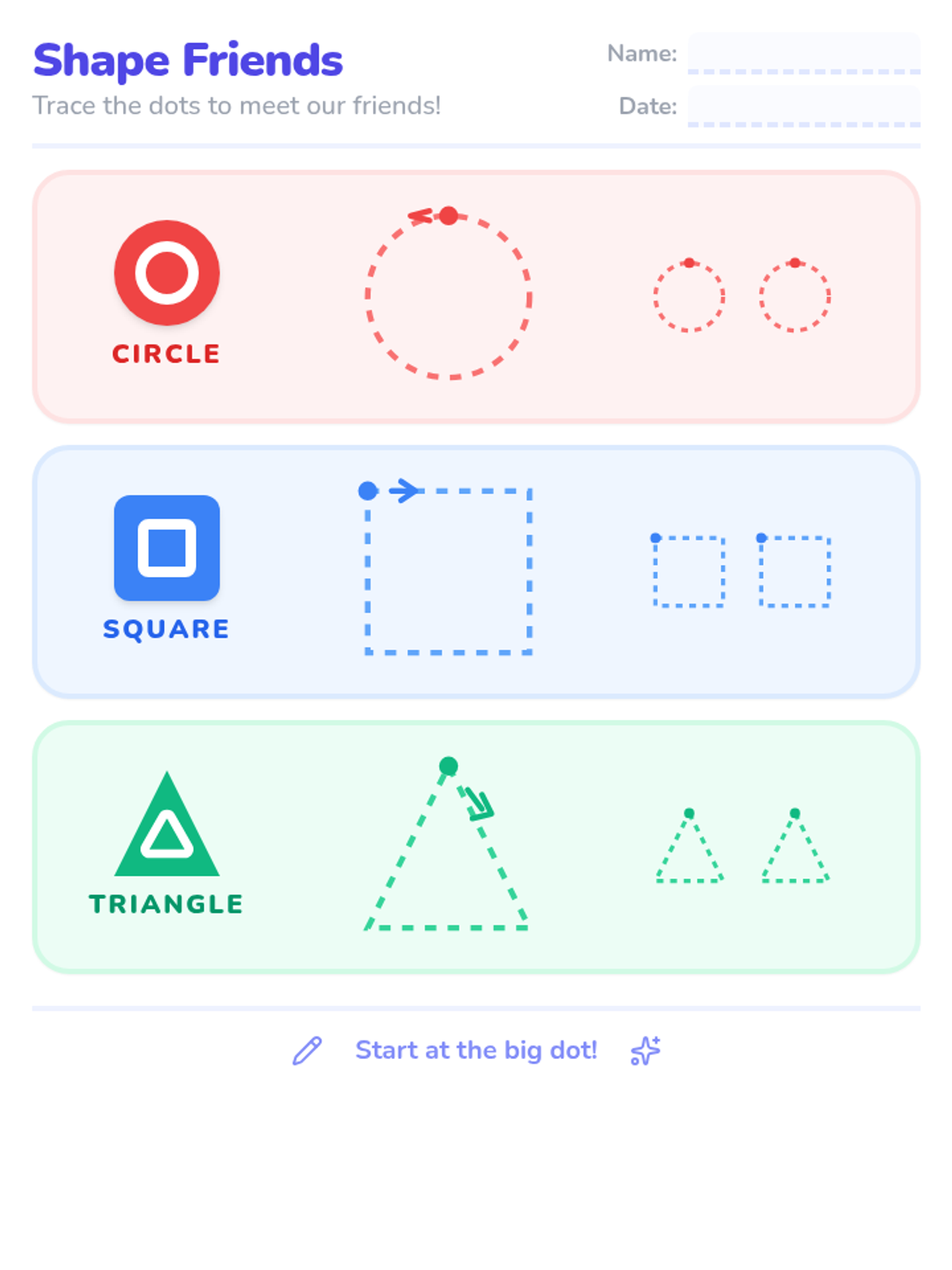
A fun introduction to basic shapes through tracing and recognition activities.
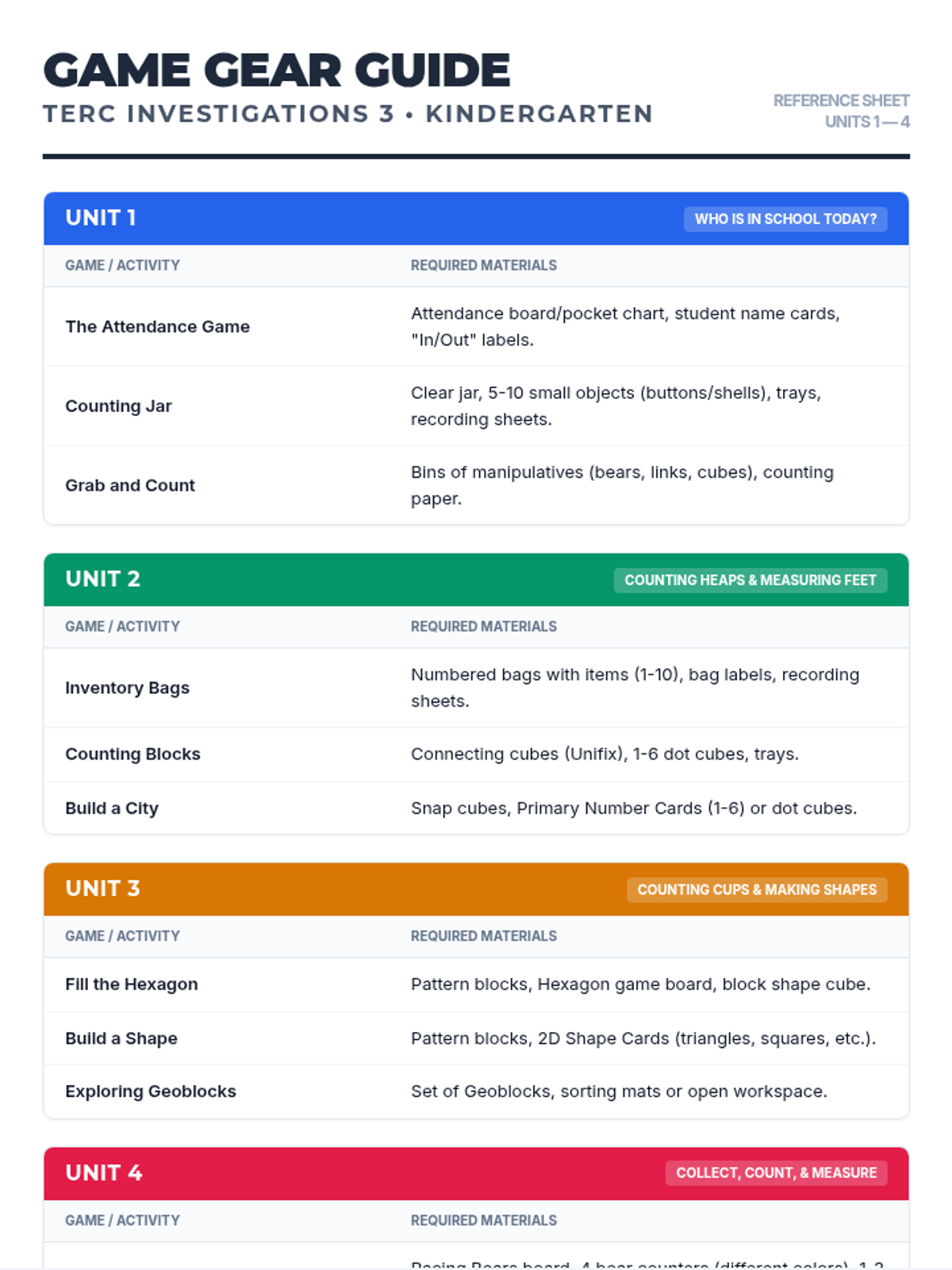
A comprehensive guide for kindergarten teachers using the TERC Investigations 3 math curriculum, detailing every game and the necessary materials for all eight units.
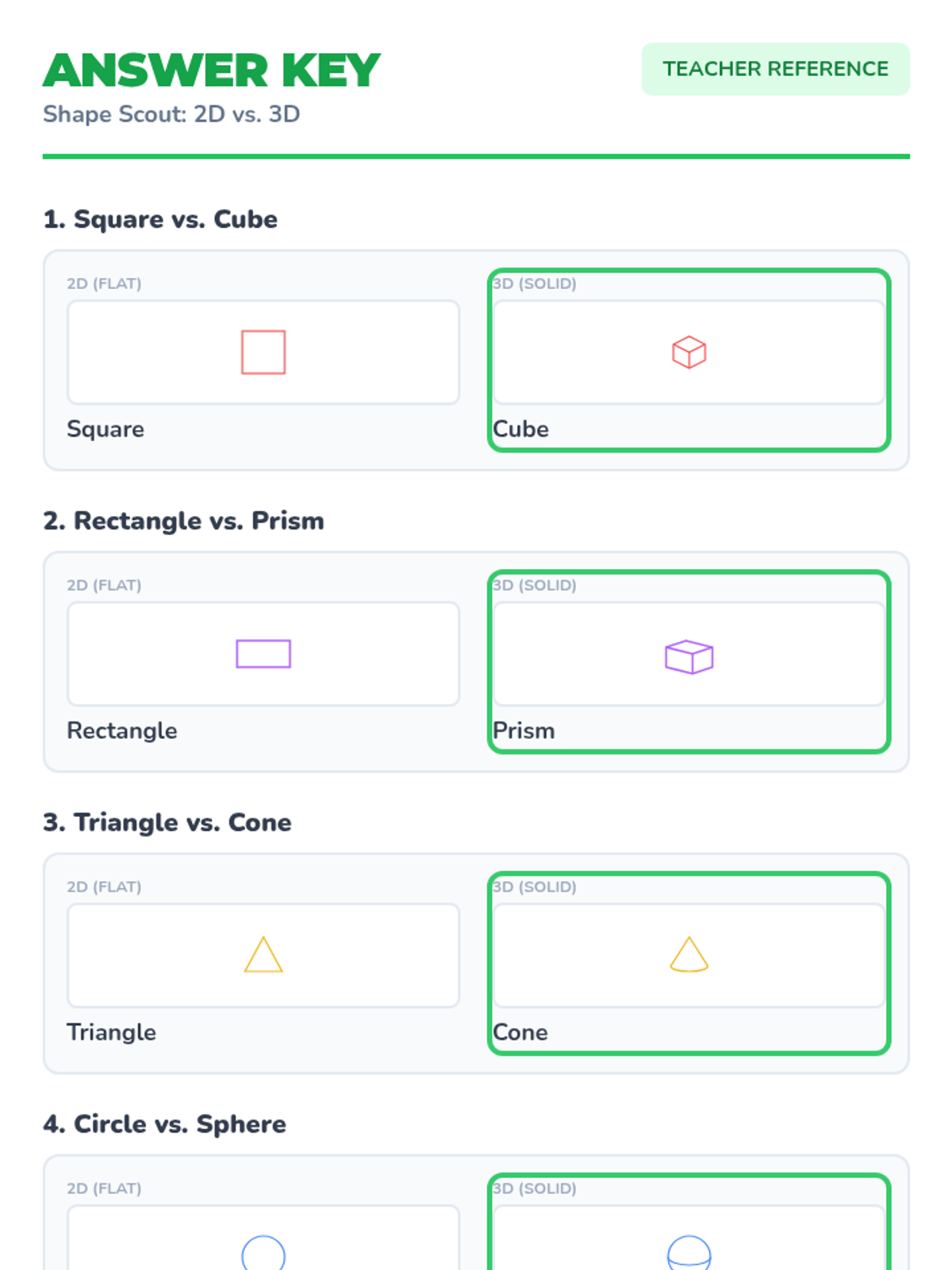
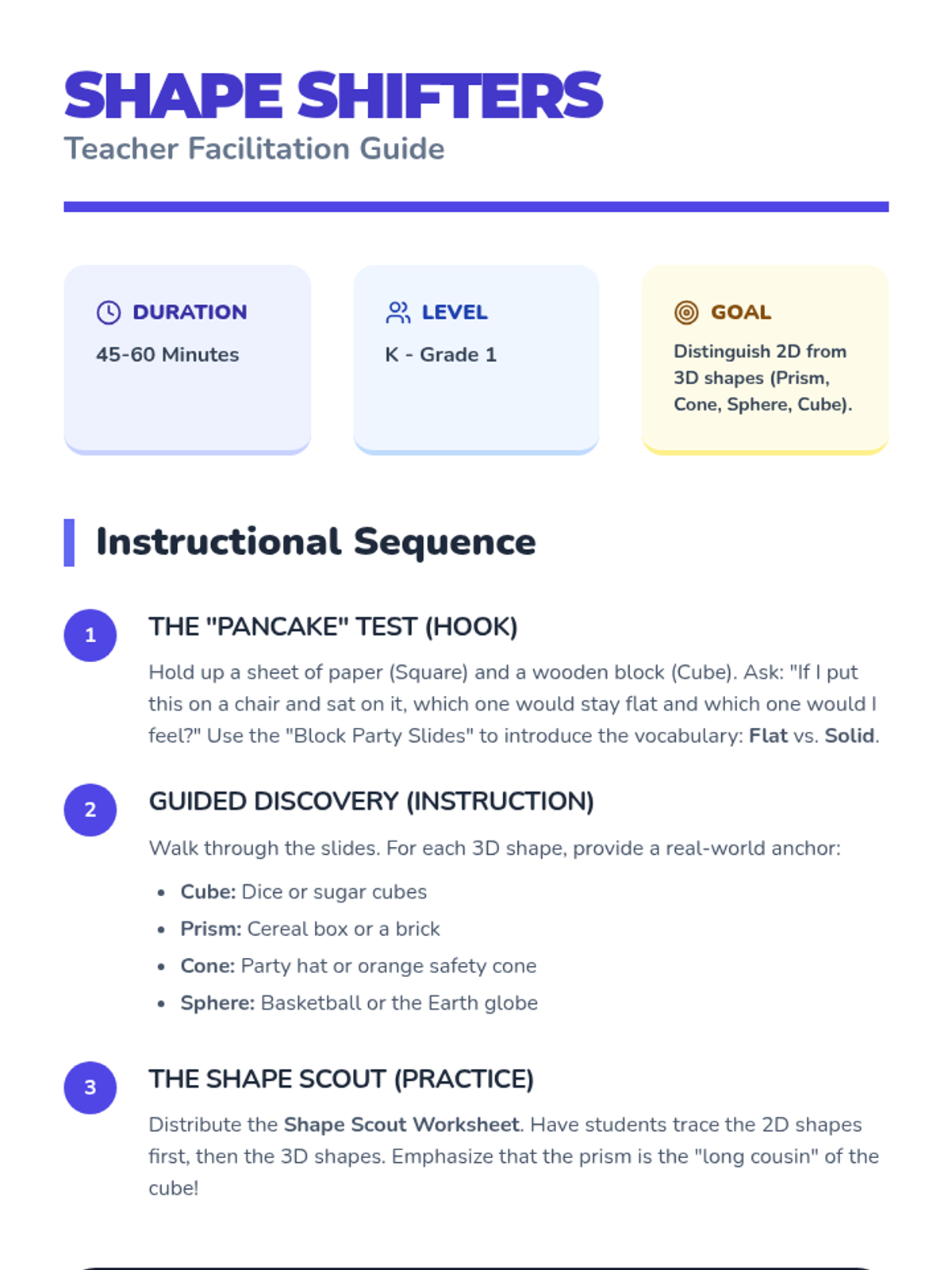
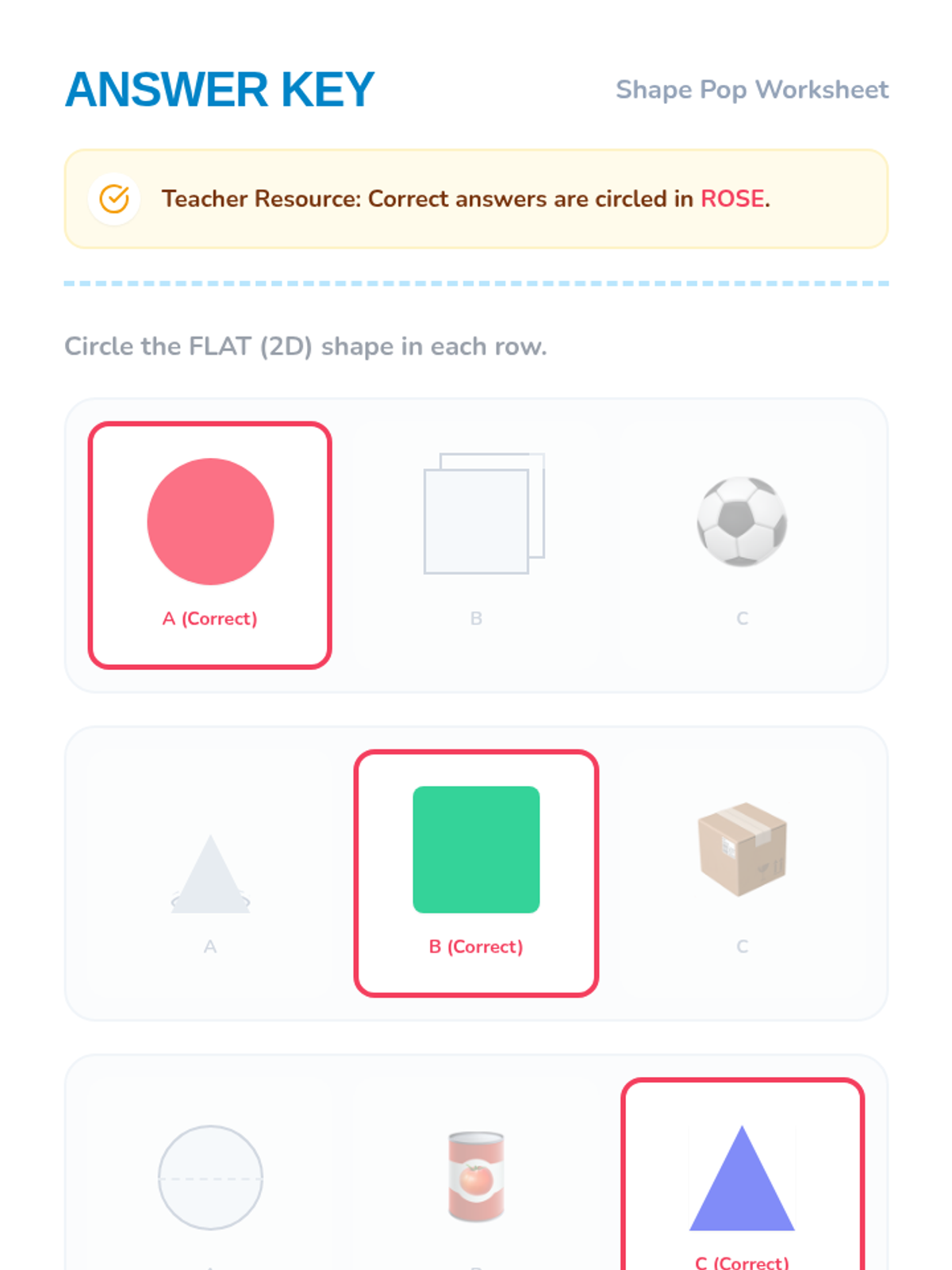
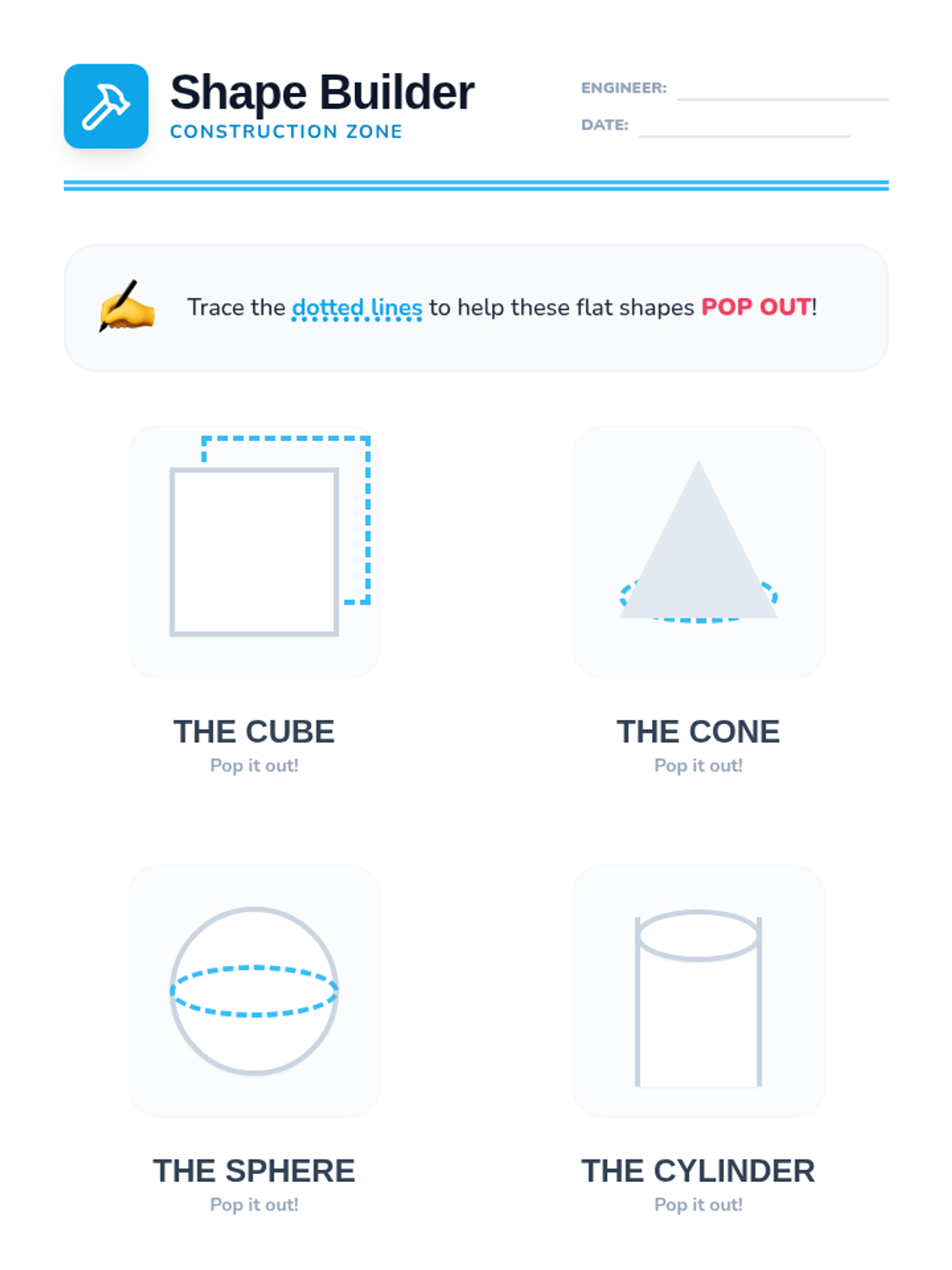
A foundational lesson exploring the differences between flat 2D shapes and solid 3D shapes, focusing on squares, cubes, triangles, cones, circles, and spheres. Students will learn to identify, trace, and name these geometric figures.
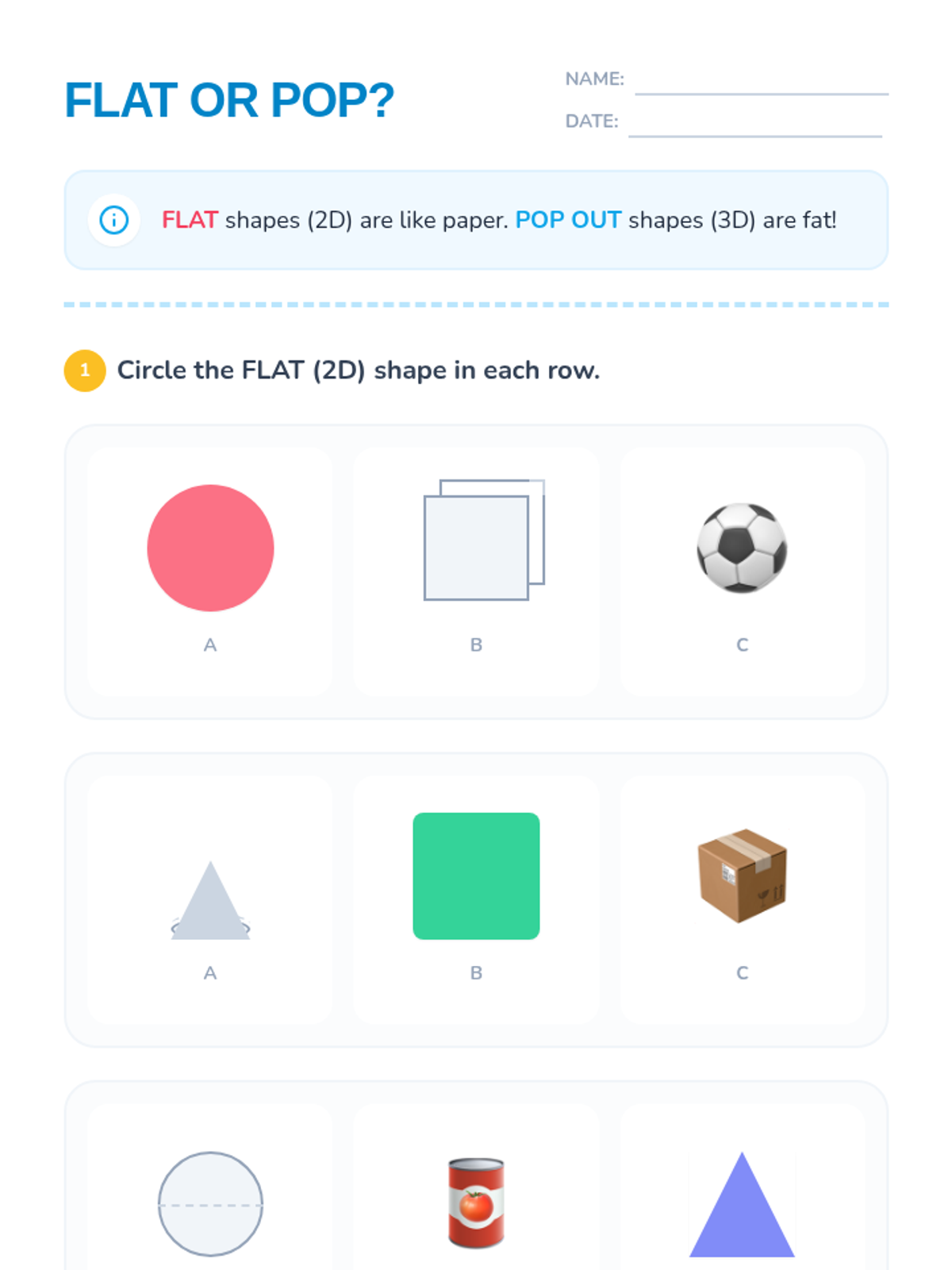
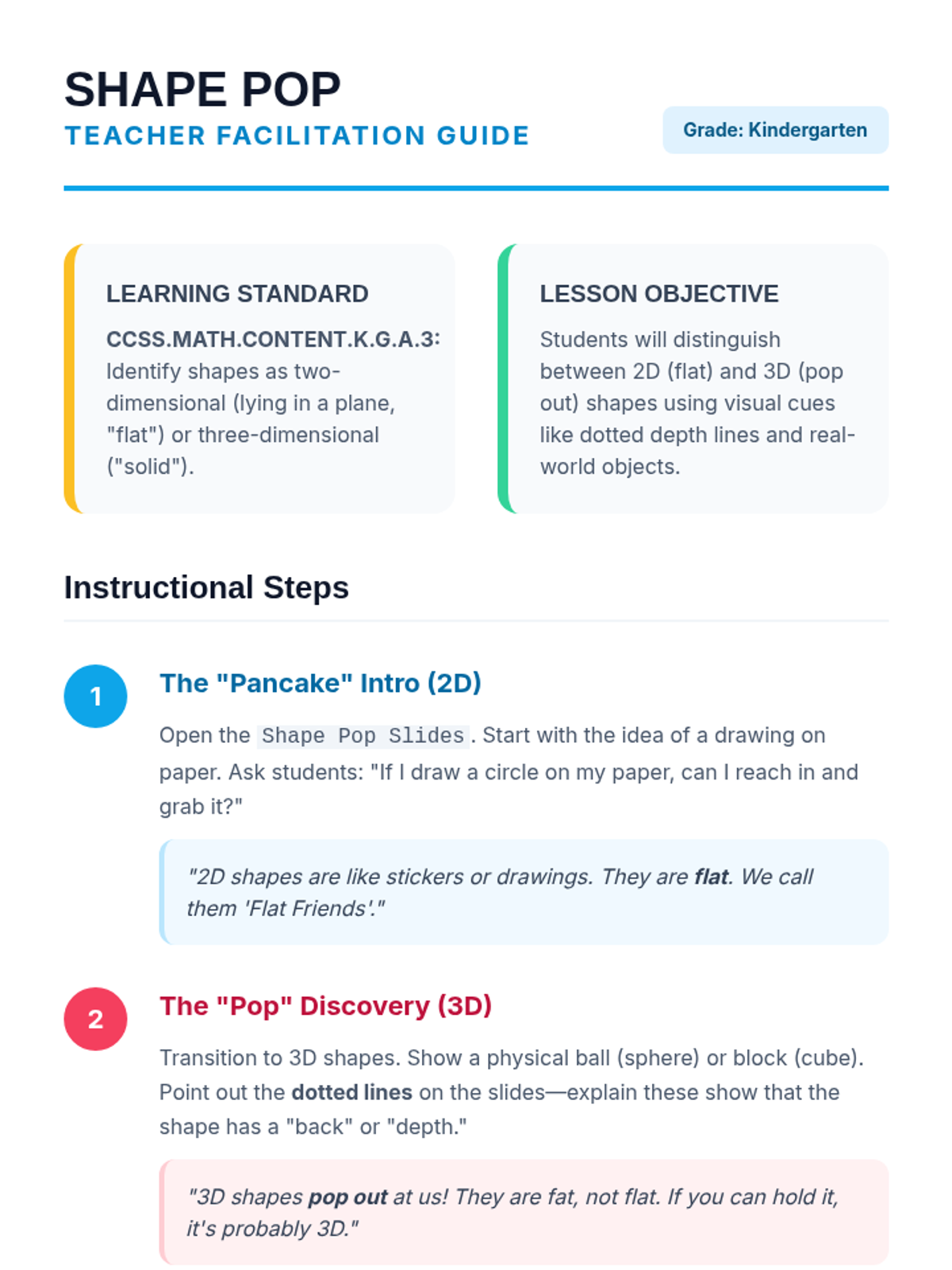
A beginner-friendly introduction to geometry for Kindergarteners, focusing on the distinction between flat 2D shapes and solid 3D shapes that "pop out." Students learn to identify shapes in their environment and distinguish between dimensions using visual cues like dotted lines for depth.
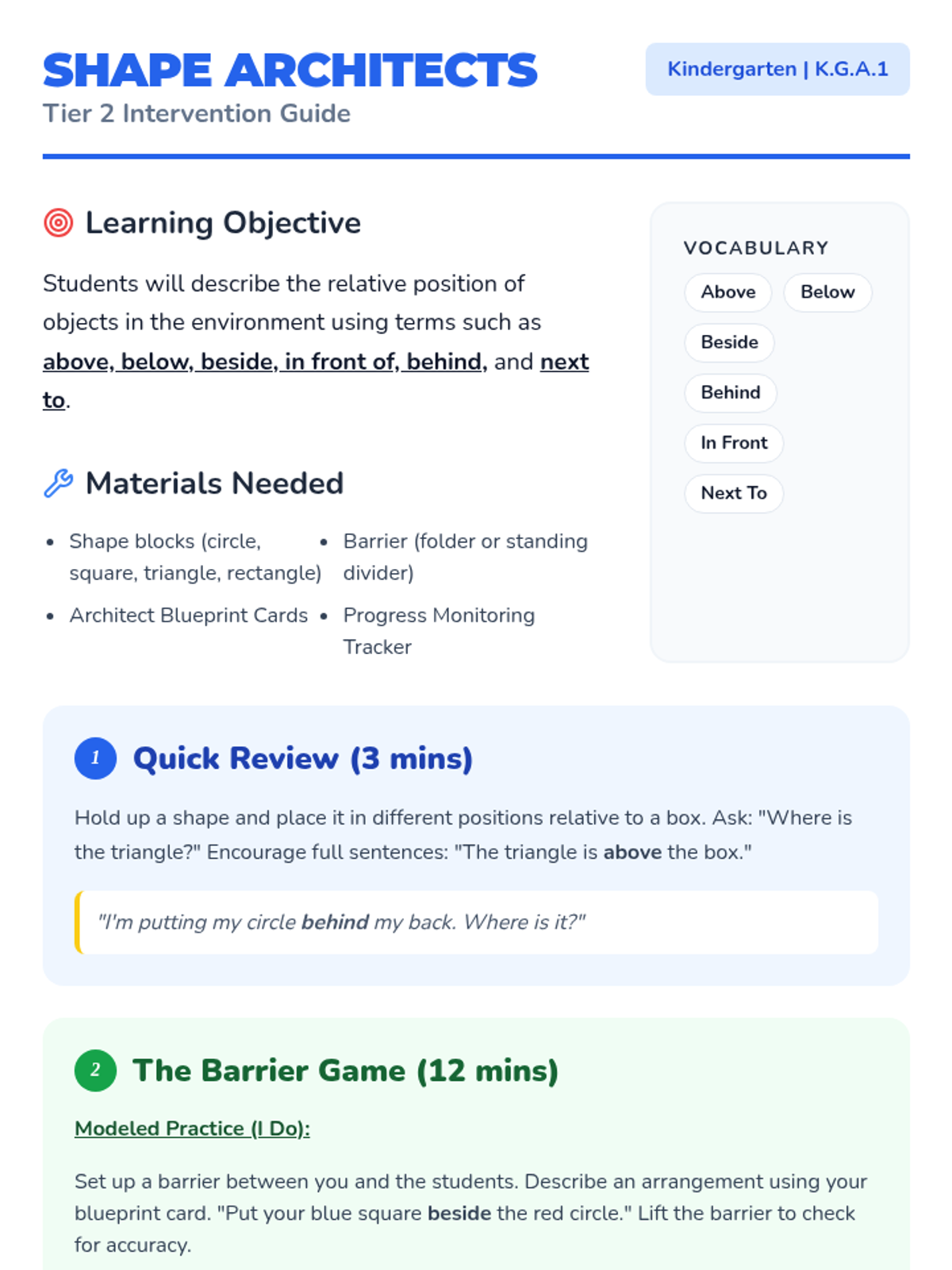
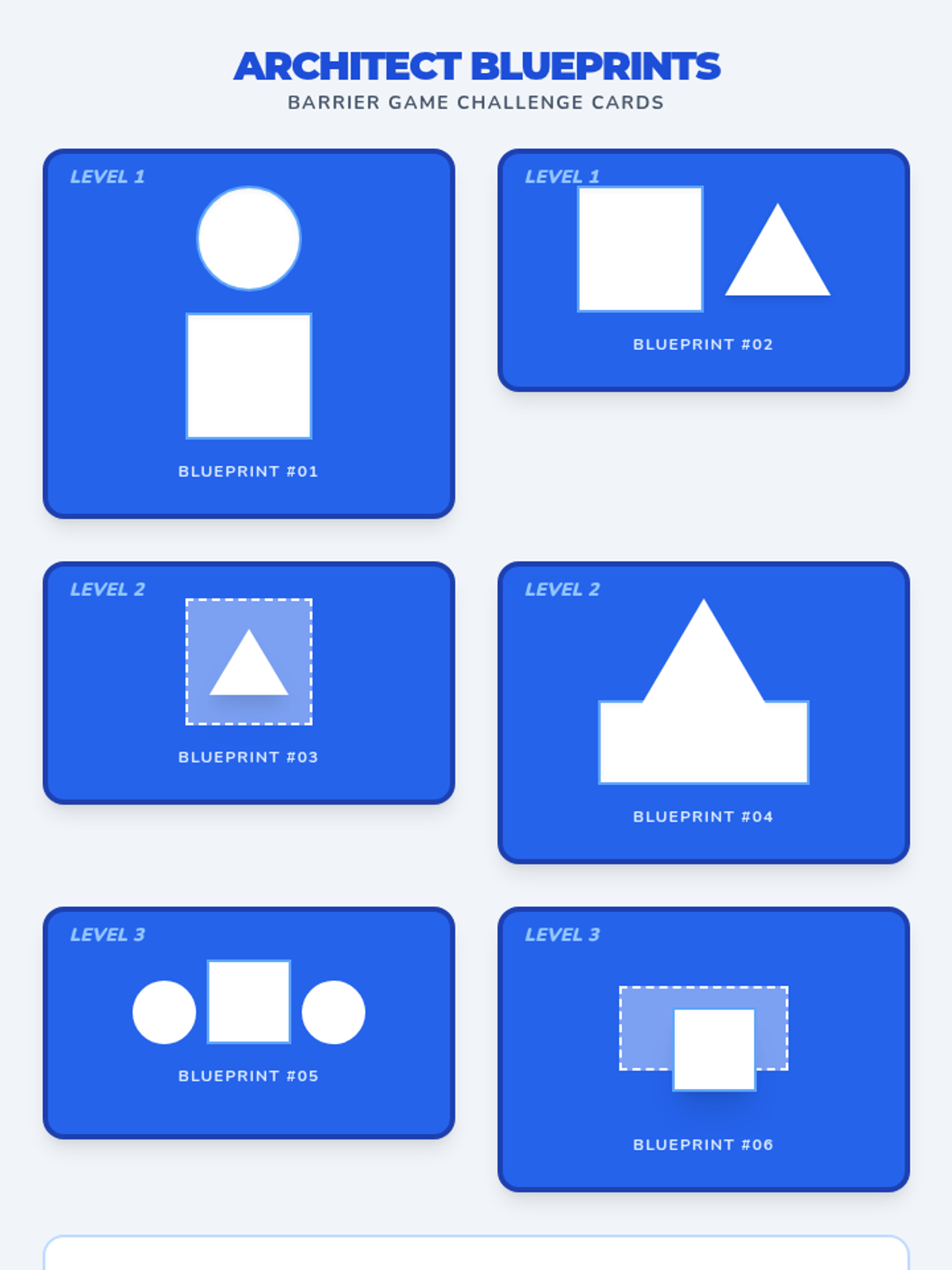
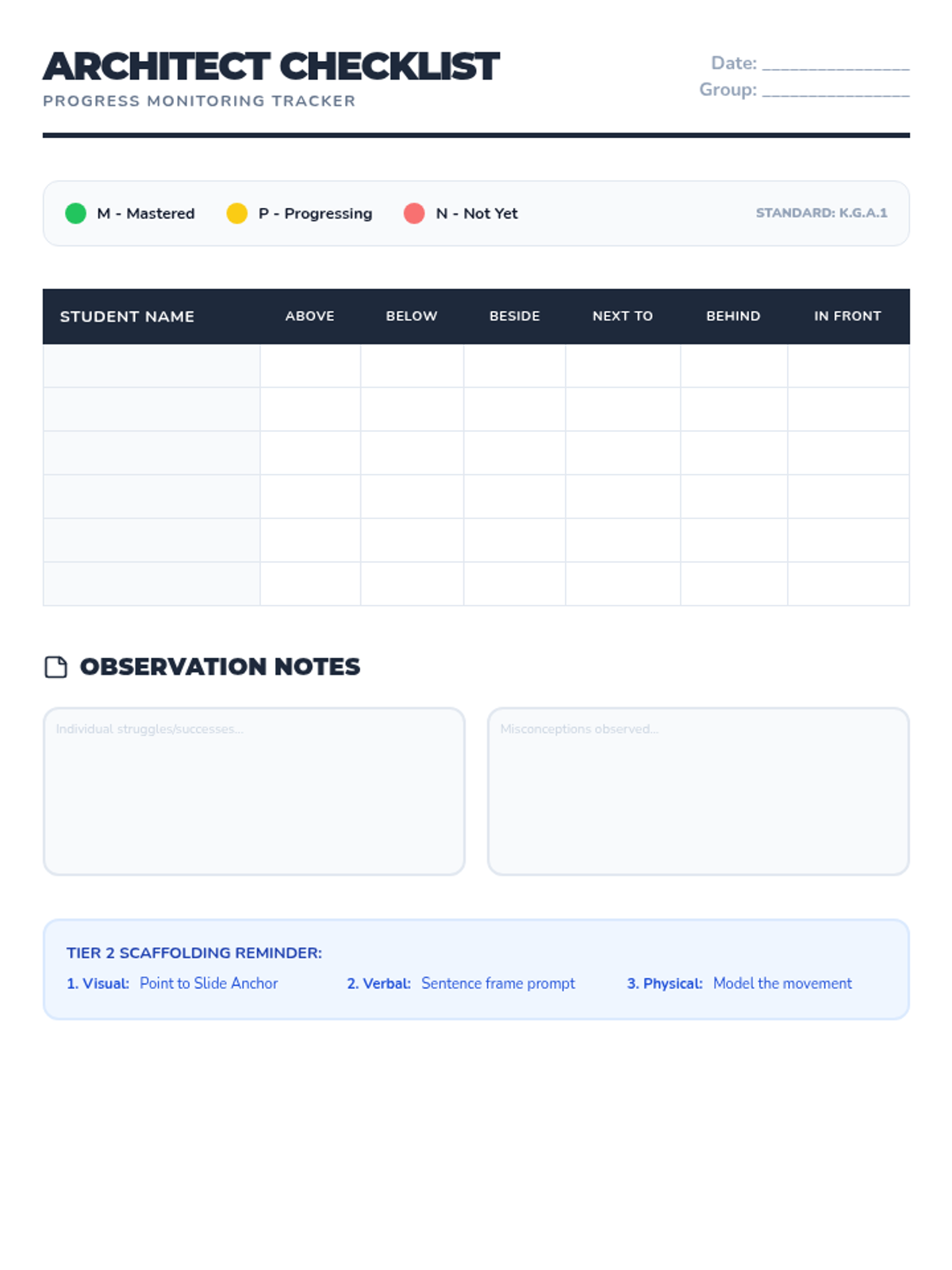
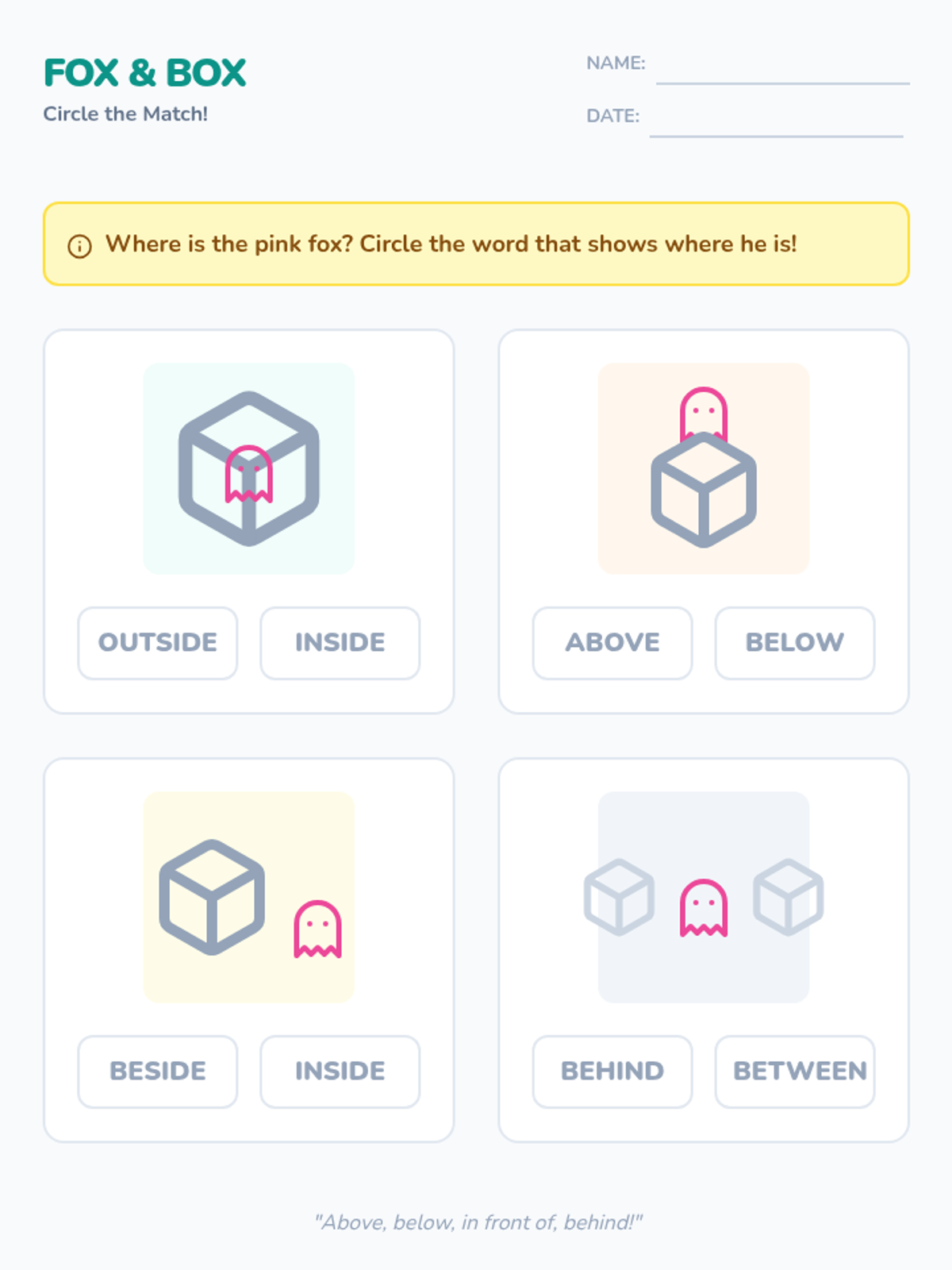
A Tier 2 intervention lesson focused on identifying shapes and using positional language (above, below, beside, etc.) through collaborative barrier games.
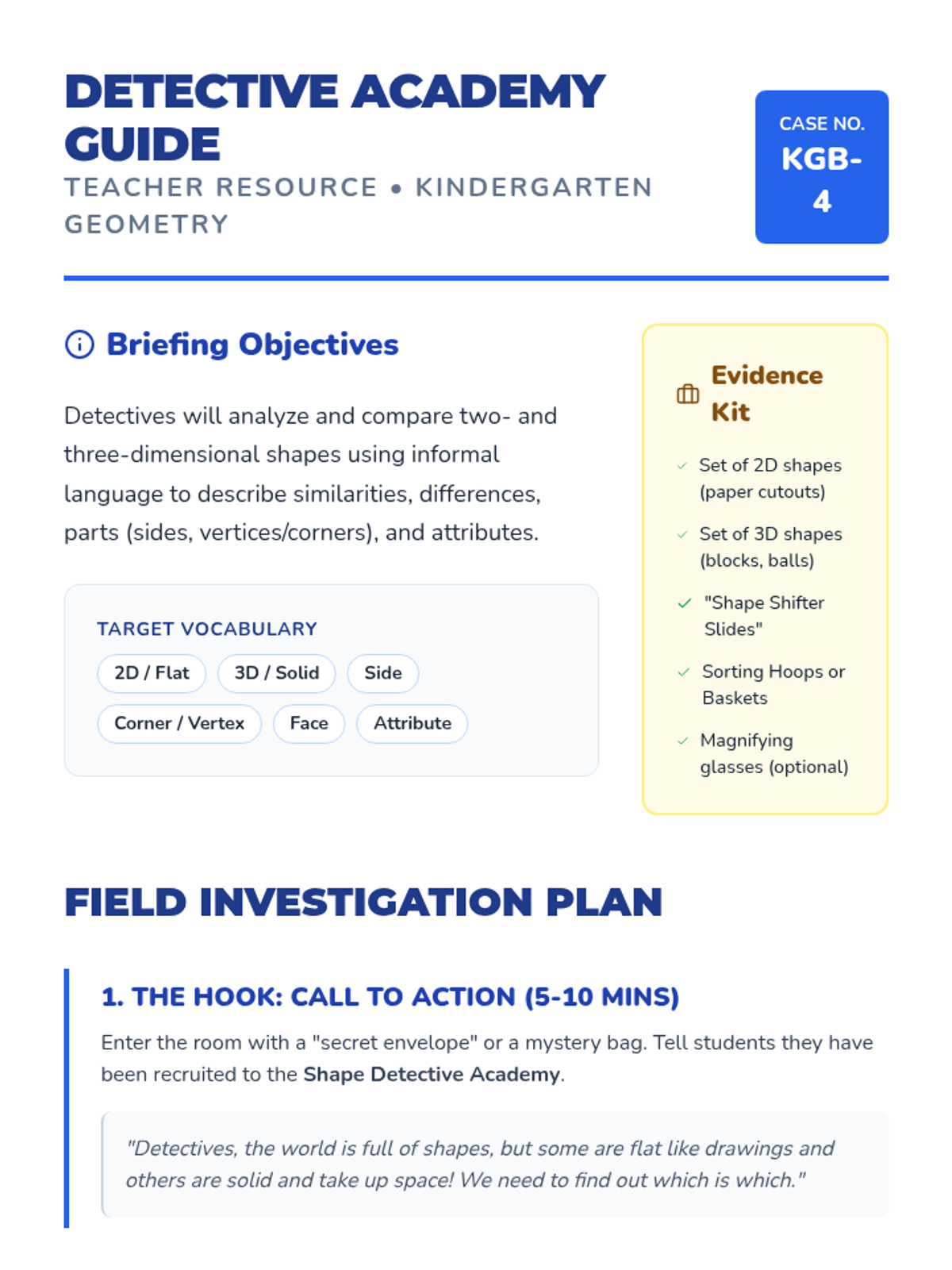
A Kindergarten lesson focused on analyzing and comparing 2D and 3D shapes through exploration, informal language, and hands-on sorting. Students will identify sides, corners, and attributes to describe how shapes are alike and different.
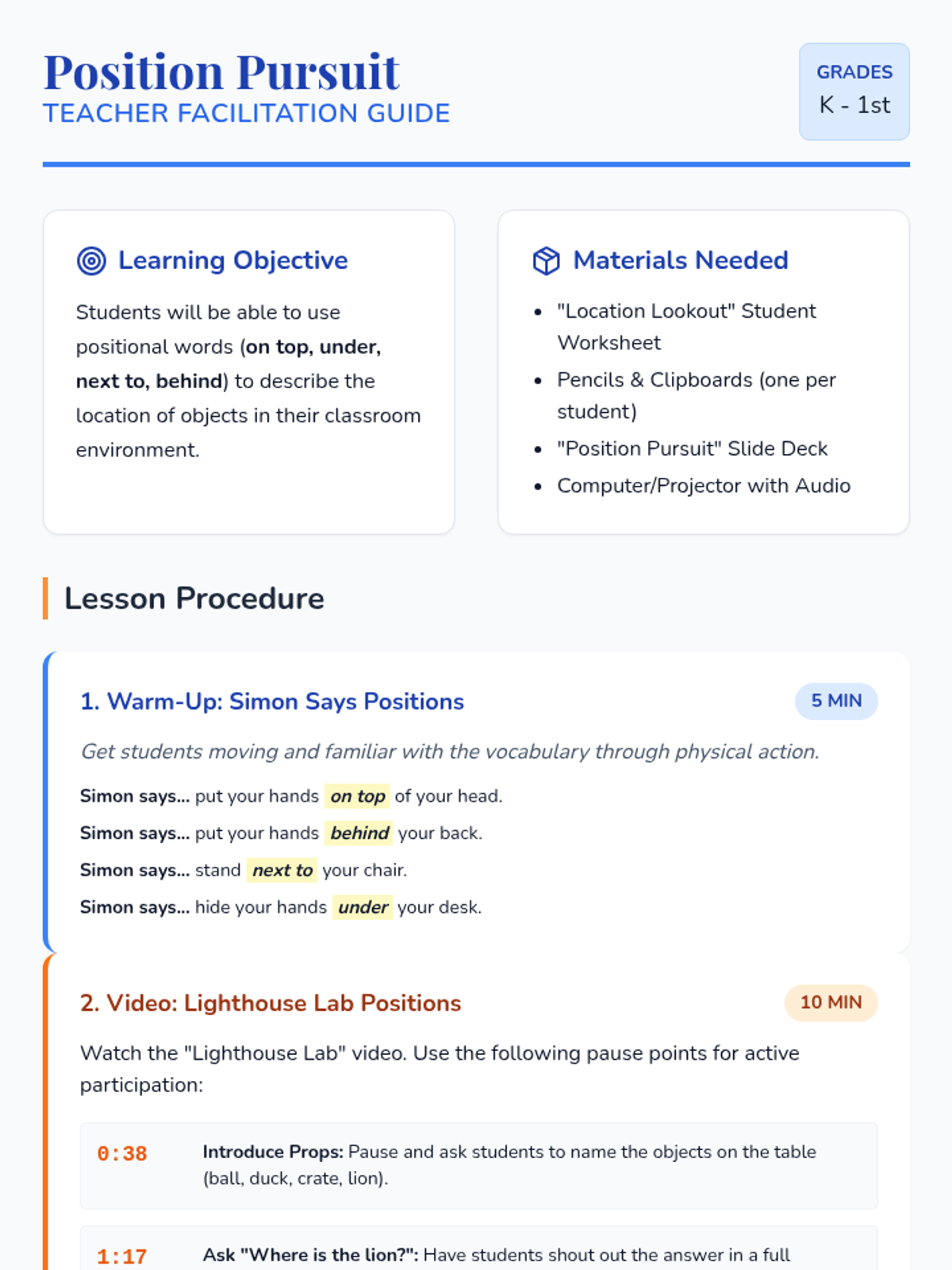
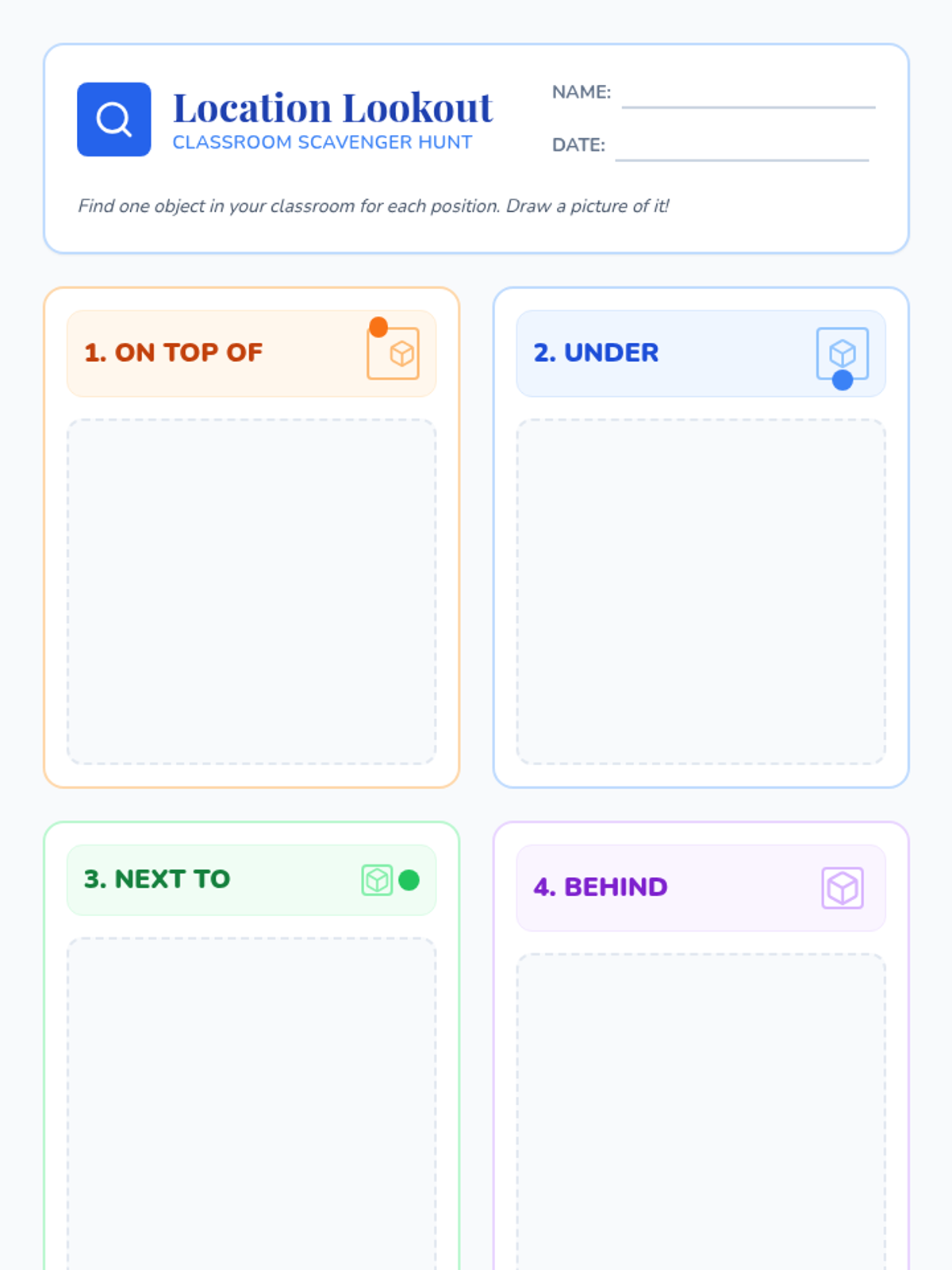
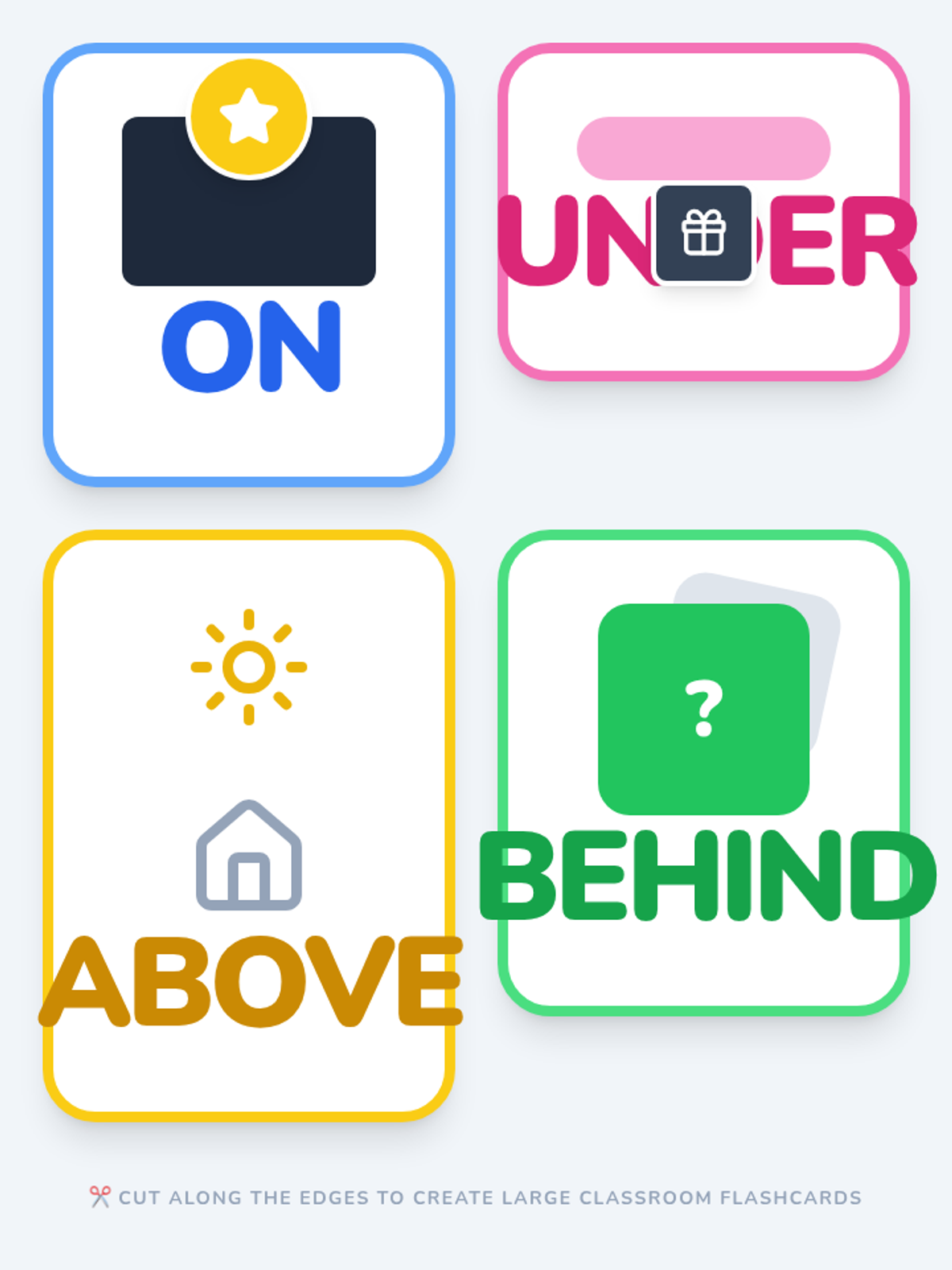
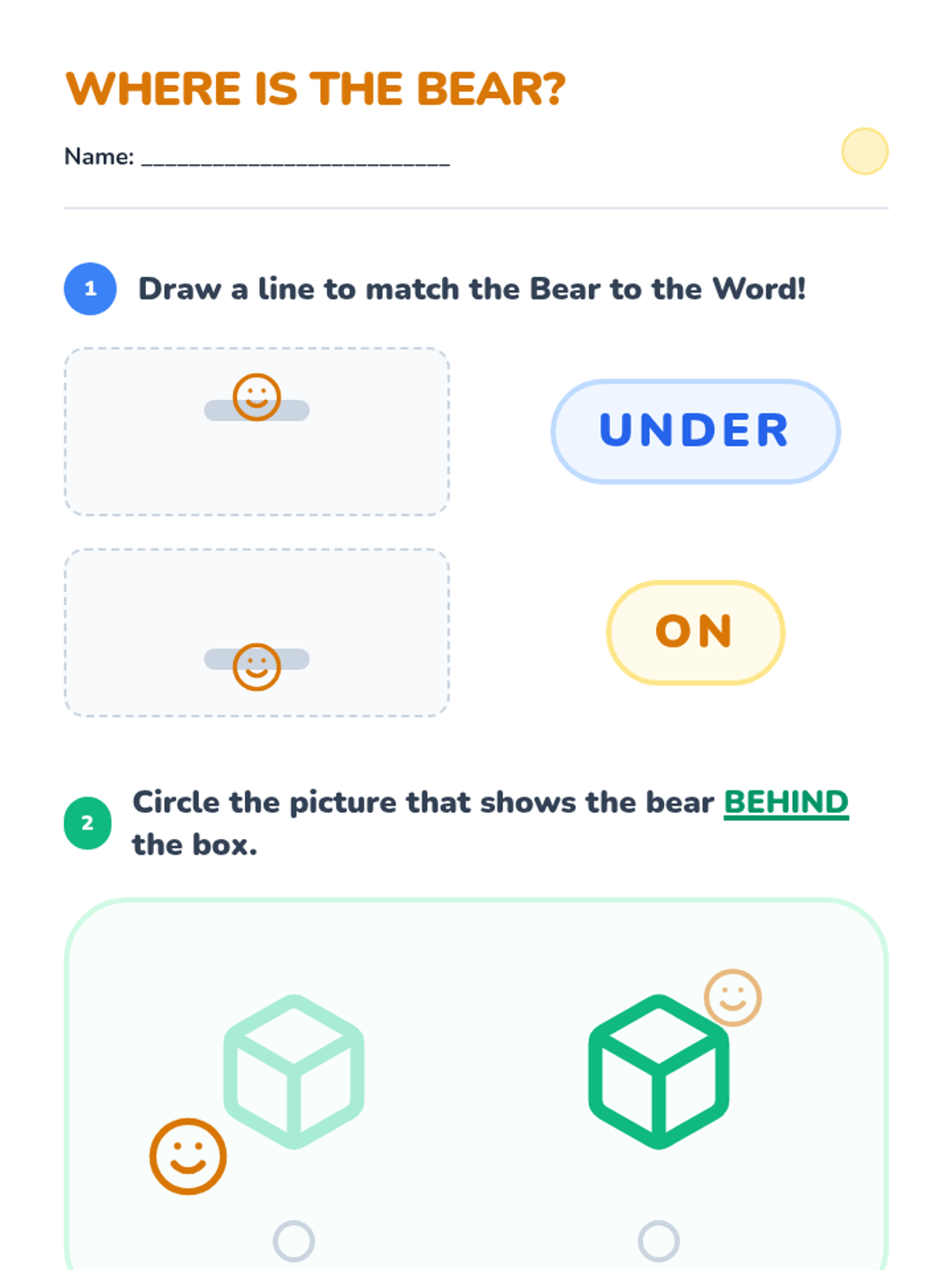
A foundational lesson for K-1 students to learn and practice positional words through a classroom scavenger hunt and interactive video viewing. Students will identify and describe locations using terms like 'on top', 'under', 'next to', and 'behind'.
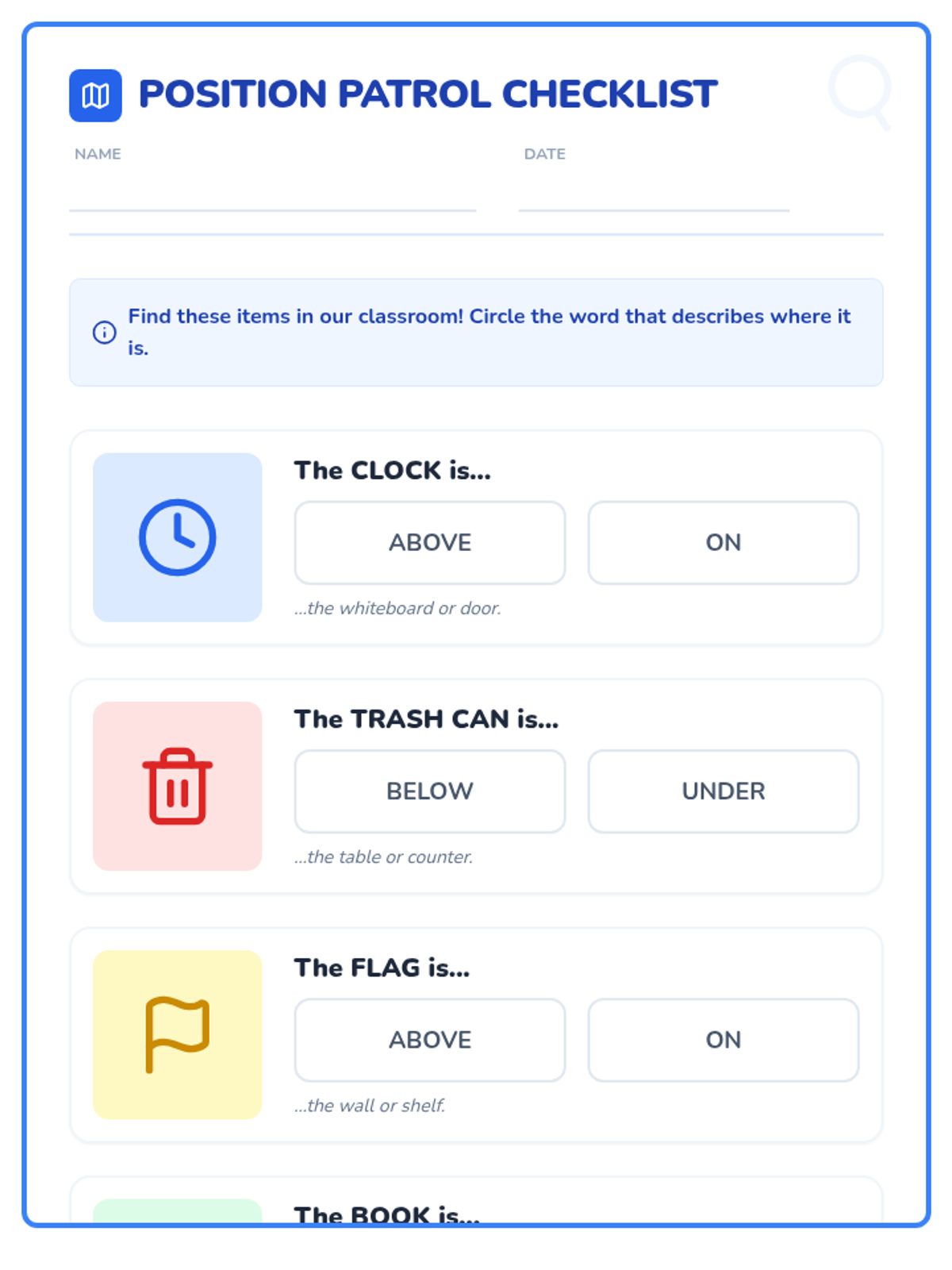
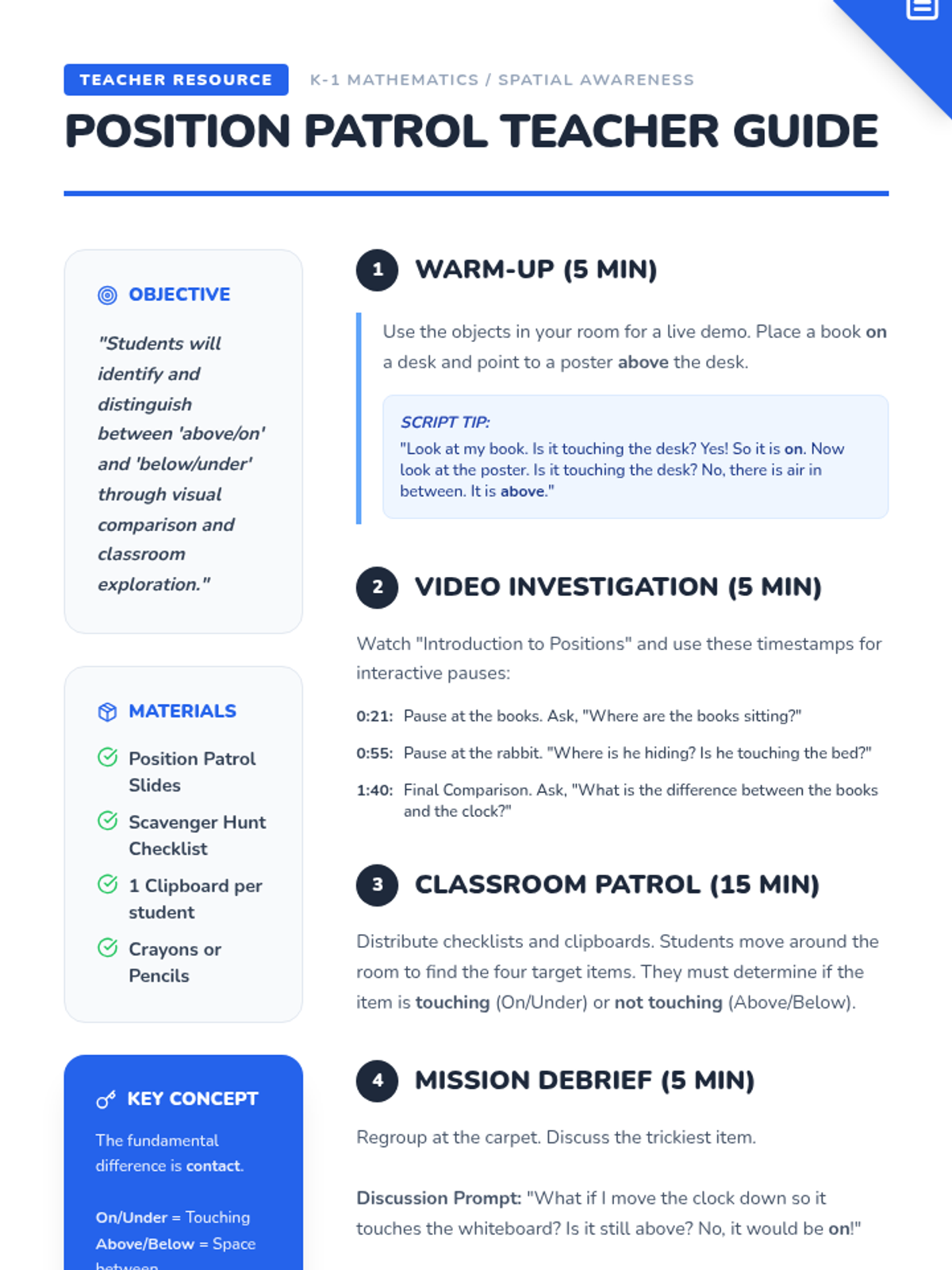
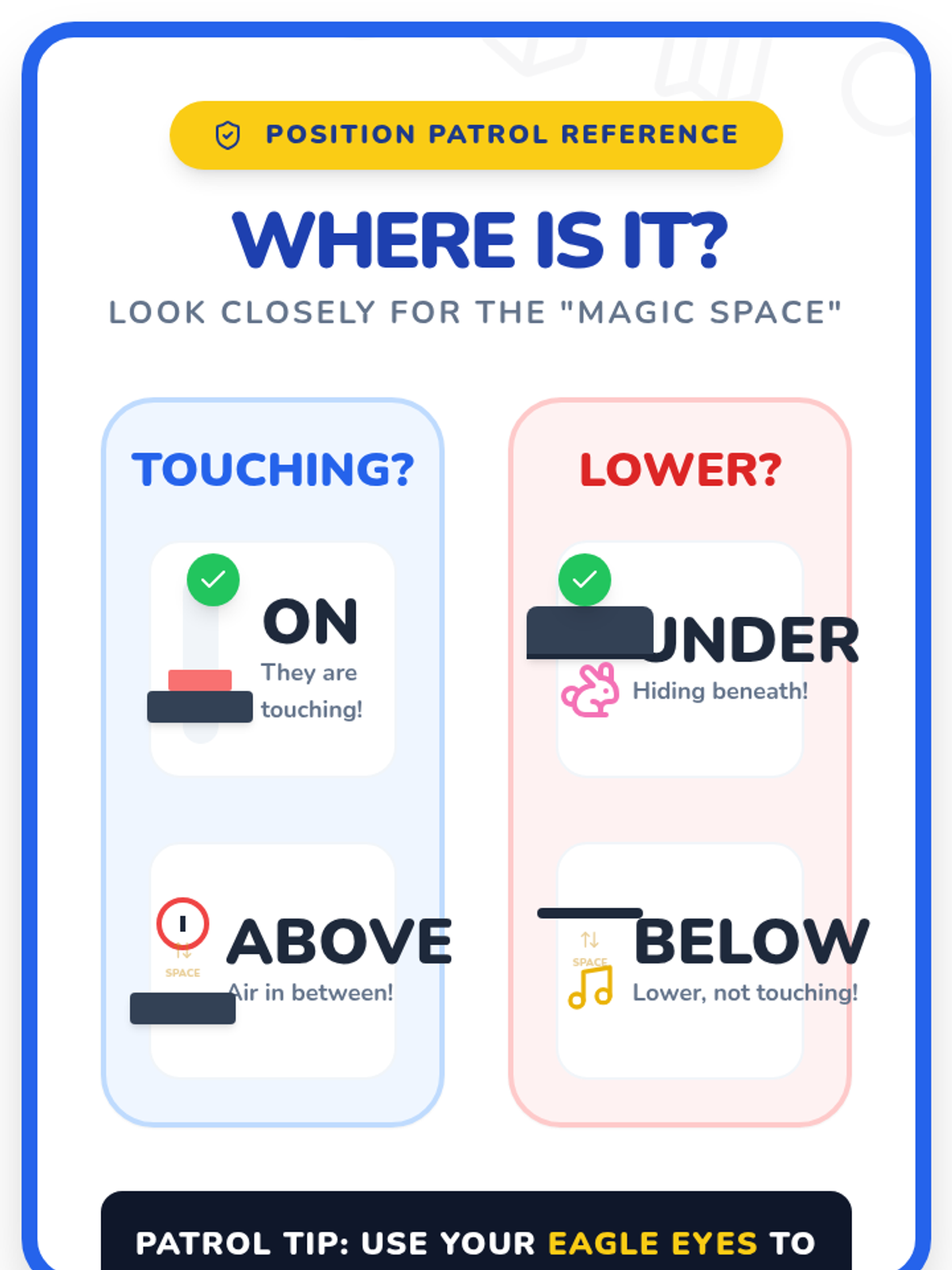
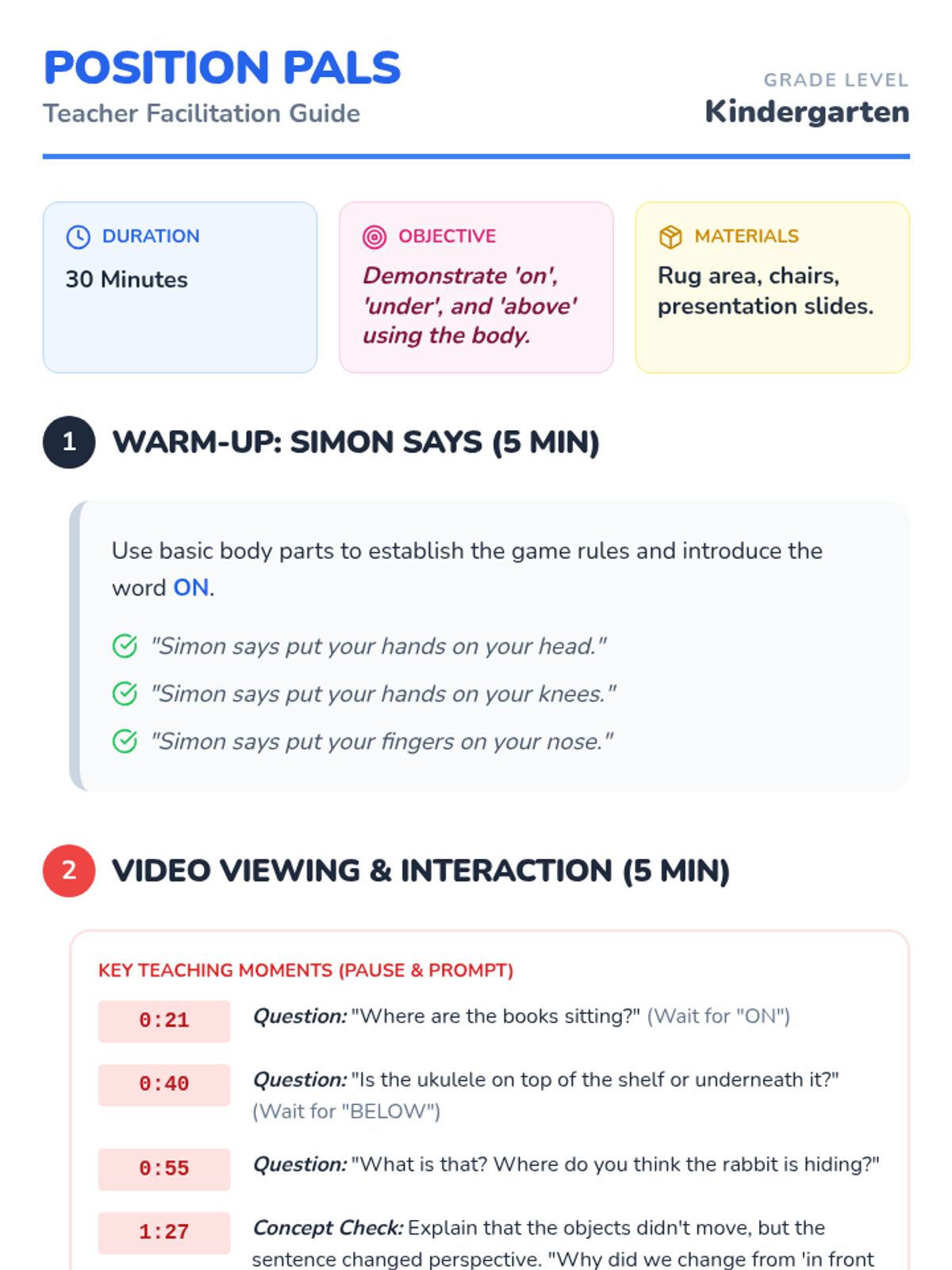
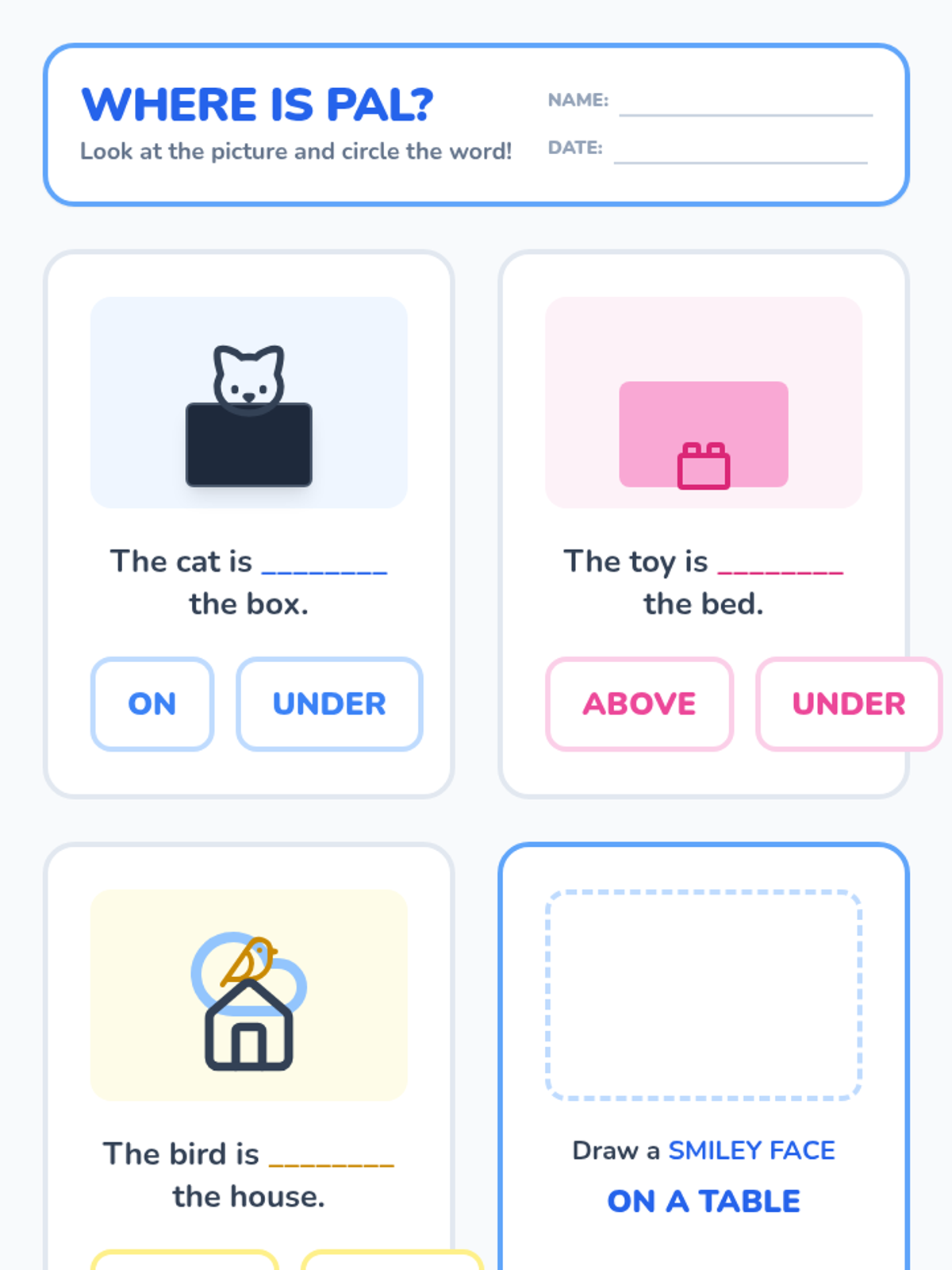
Students learn to identify and distinguish between 'above/on' and 'below/under' through a video, classroom discussion, and a hands-on scavenger hunt. This lesson emphasizes the difference between contact (on/under) and non-contact (above/below) positions.
A Kindergarten lesson focused on spatial awareness and positional vocabulary (on, under, above, behind, in front of) using interactive games, a guided video, and hands-on movement.
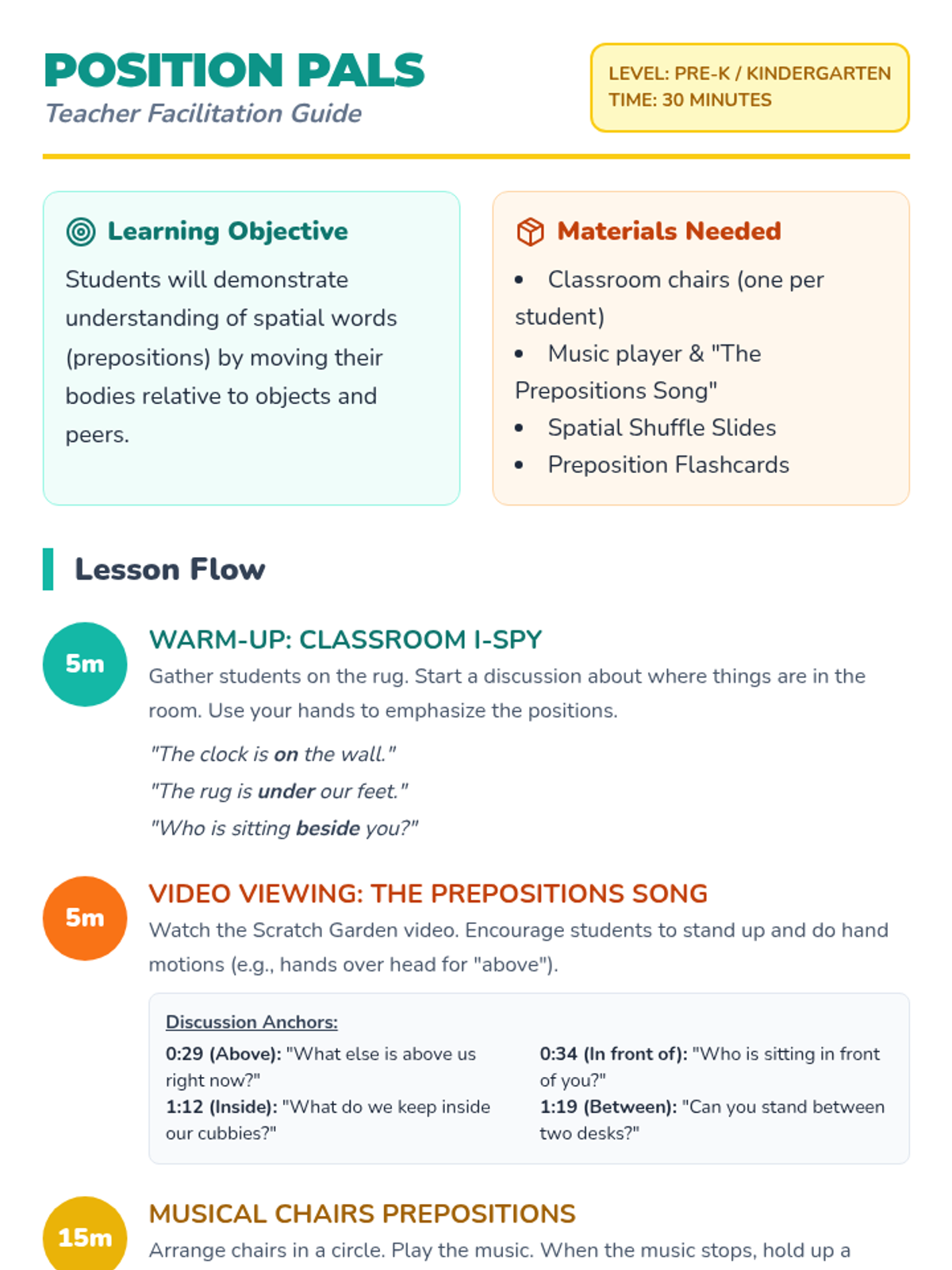
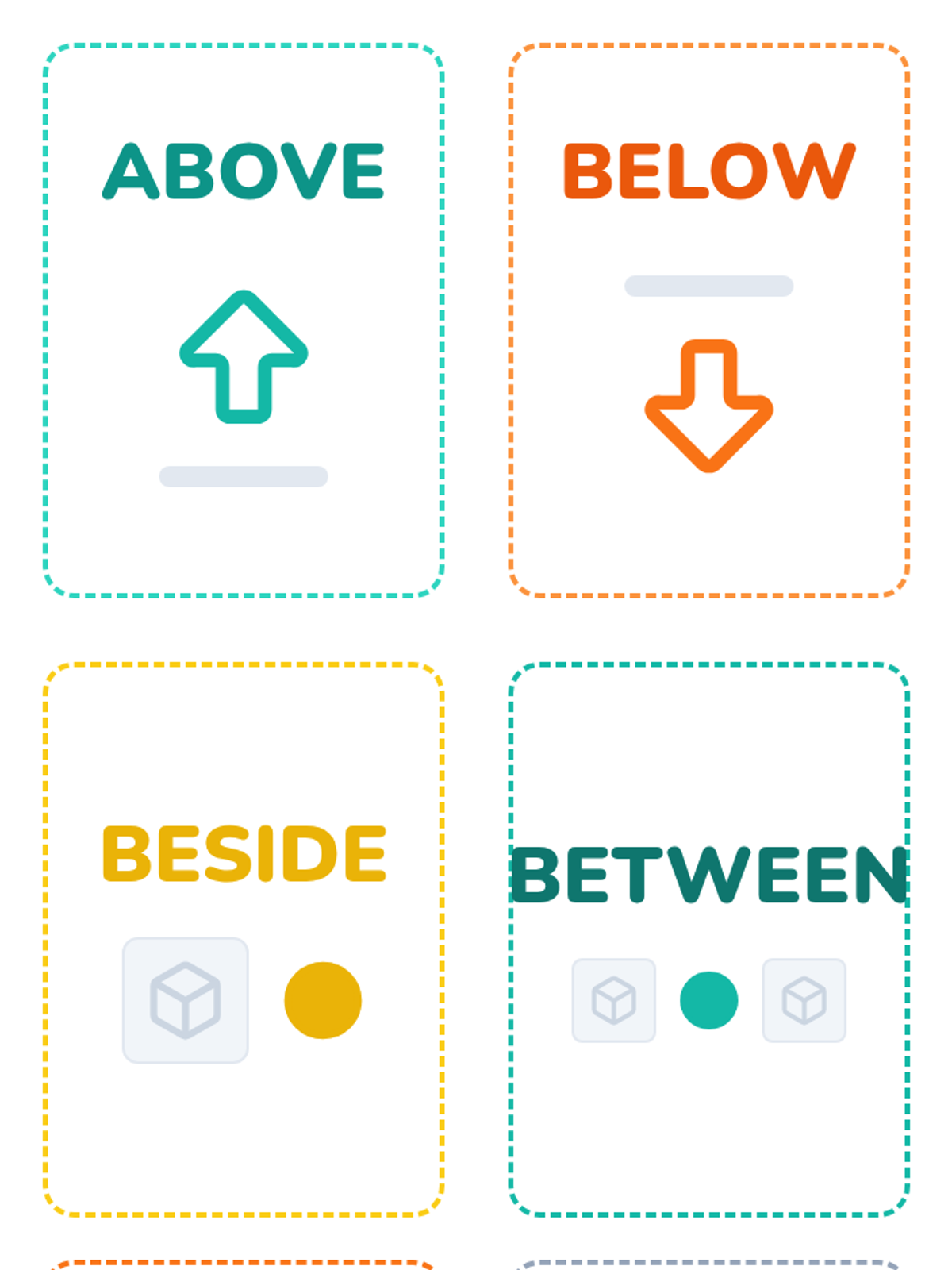
A high-energy, movement-based lesson for Pre-K and Kindergarten students to learn prepositions like above, below, beside, and between through a catchy song and a modified game of musical chairs.
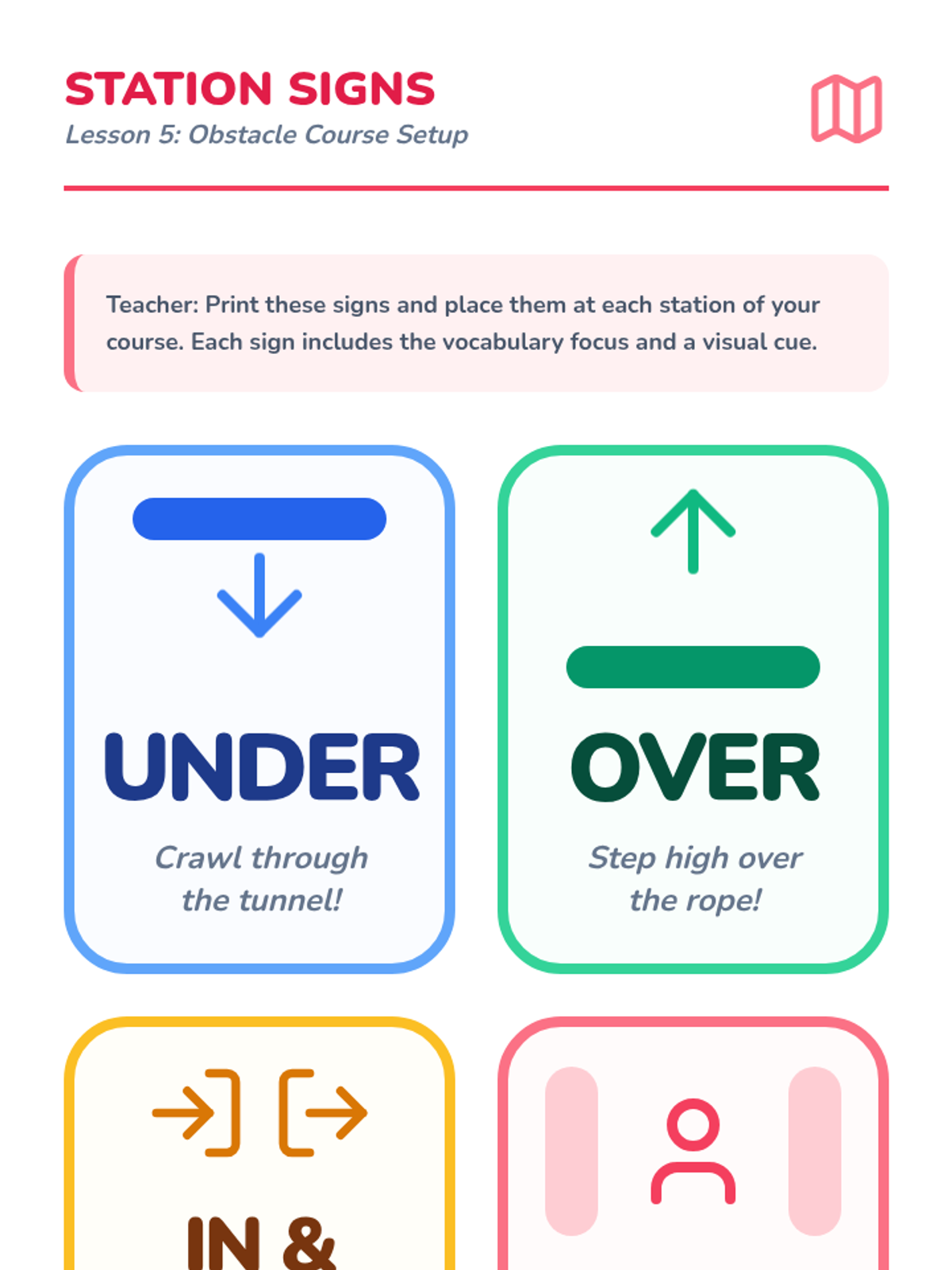
Students navigate a physical obstacle course using their knowledge of spatial terms to complete specific movements like crawling under and stepping over.
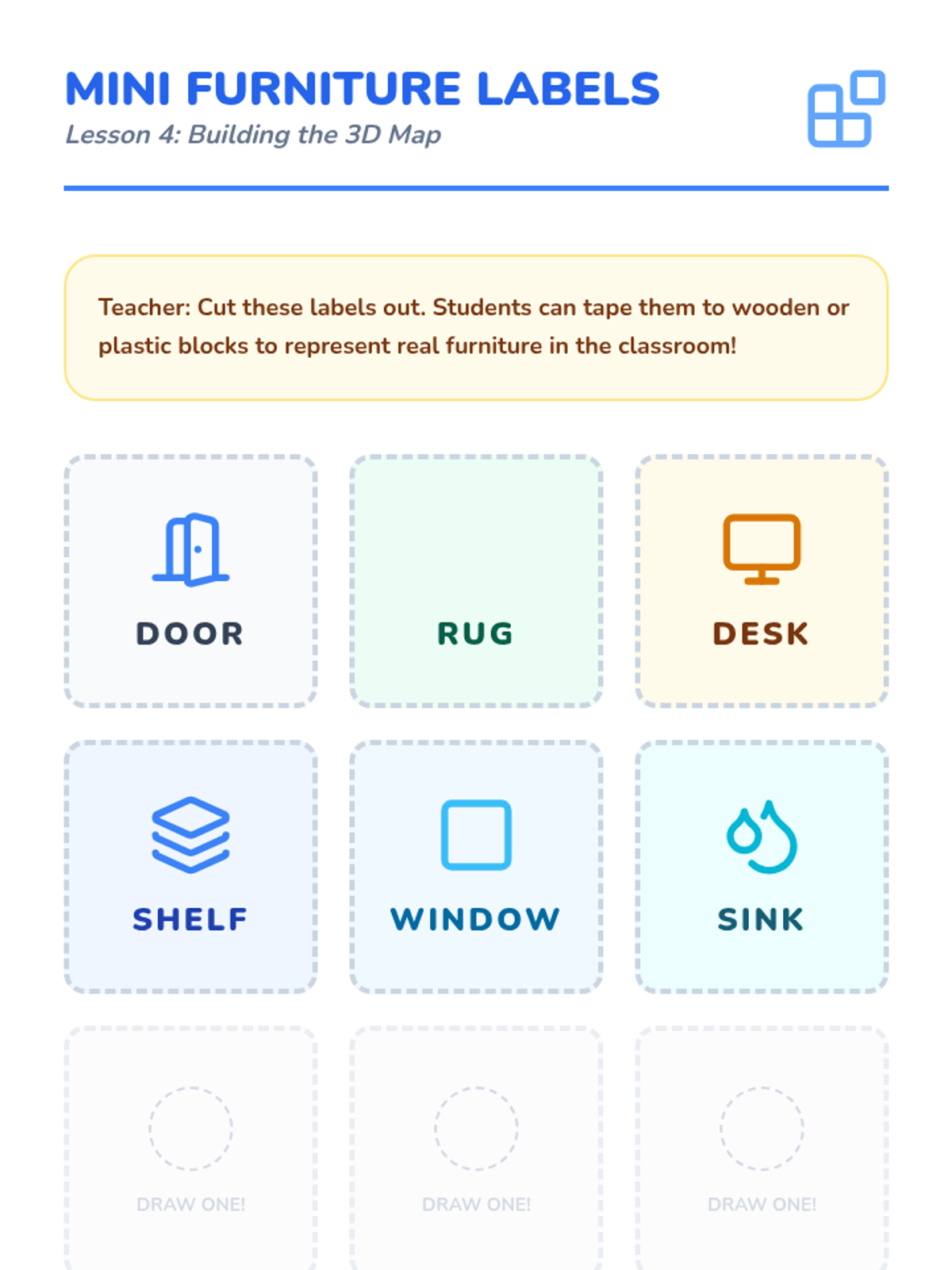
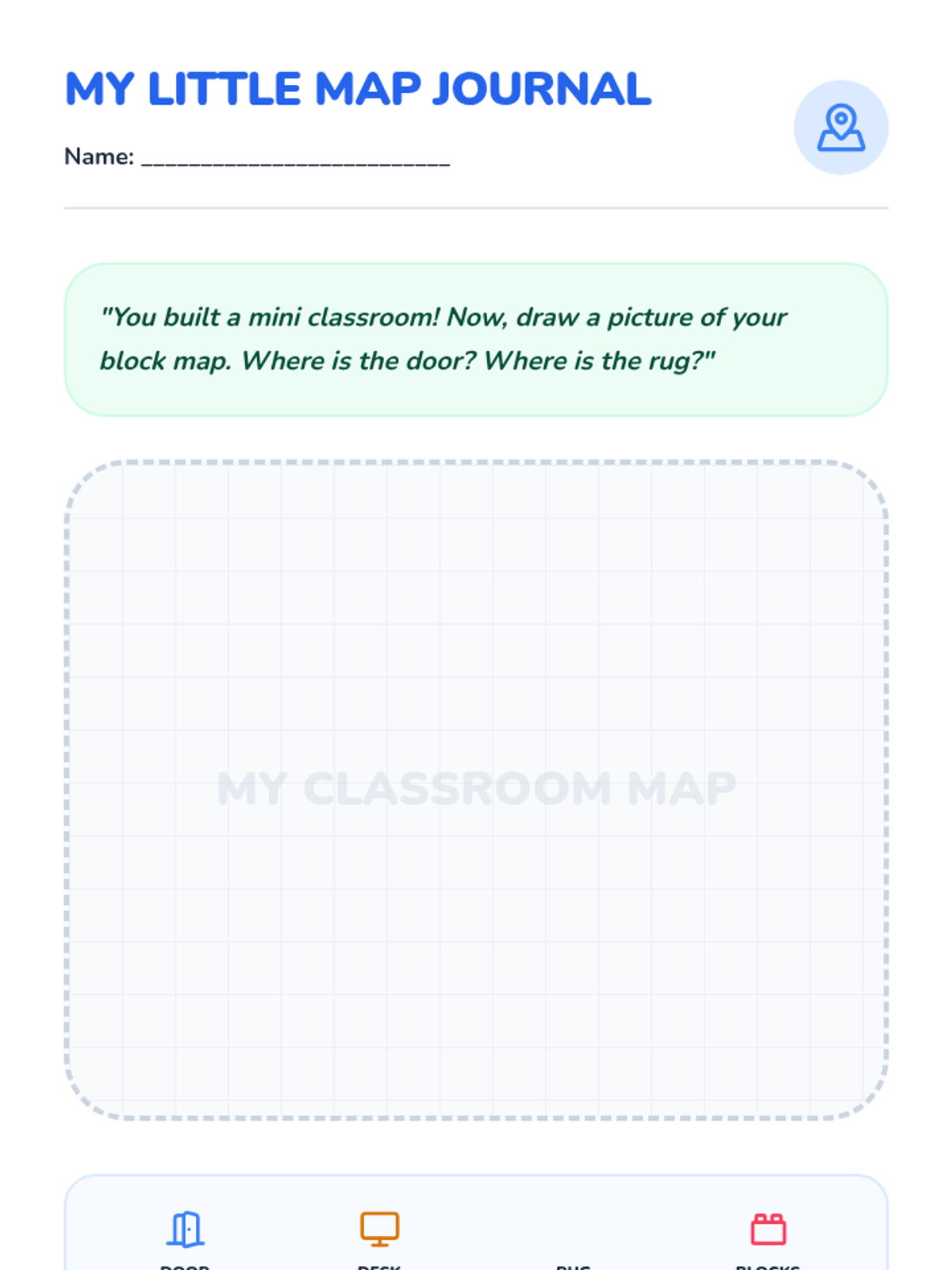
Students create 3D block maps of their classroom to represent furniture and paths, developing abstract reasoning and scale visualization skills.
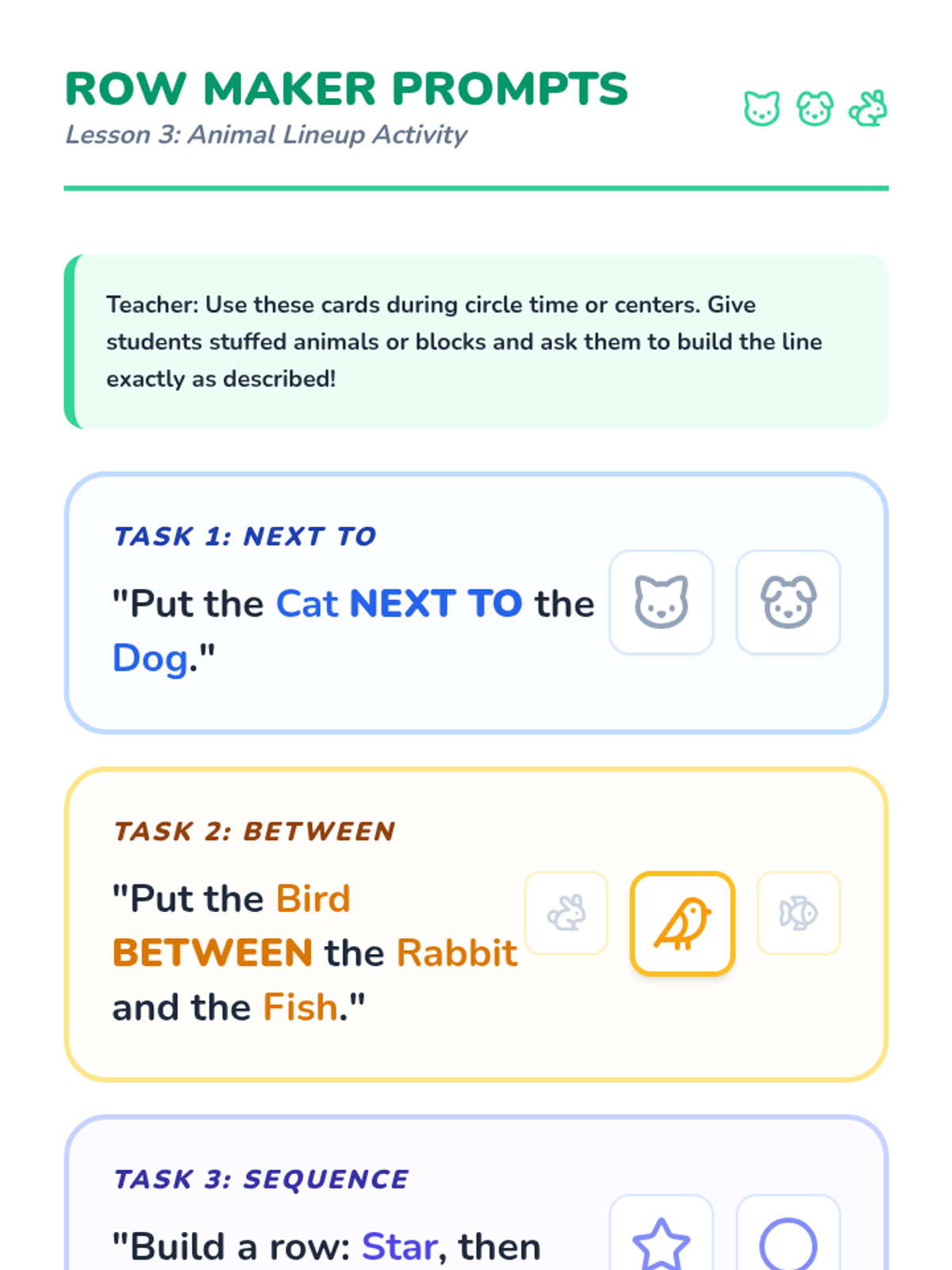
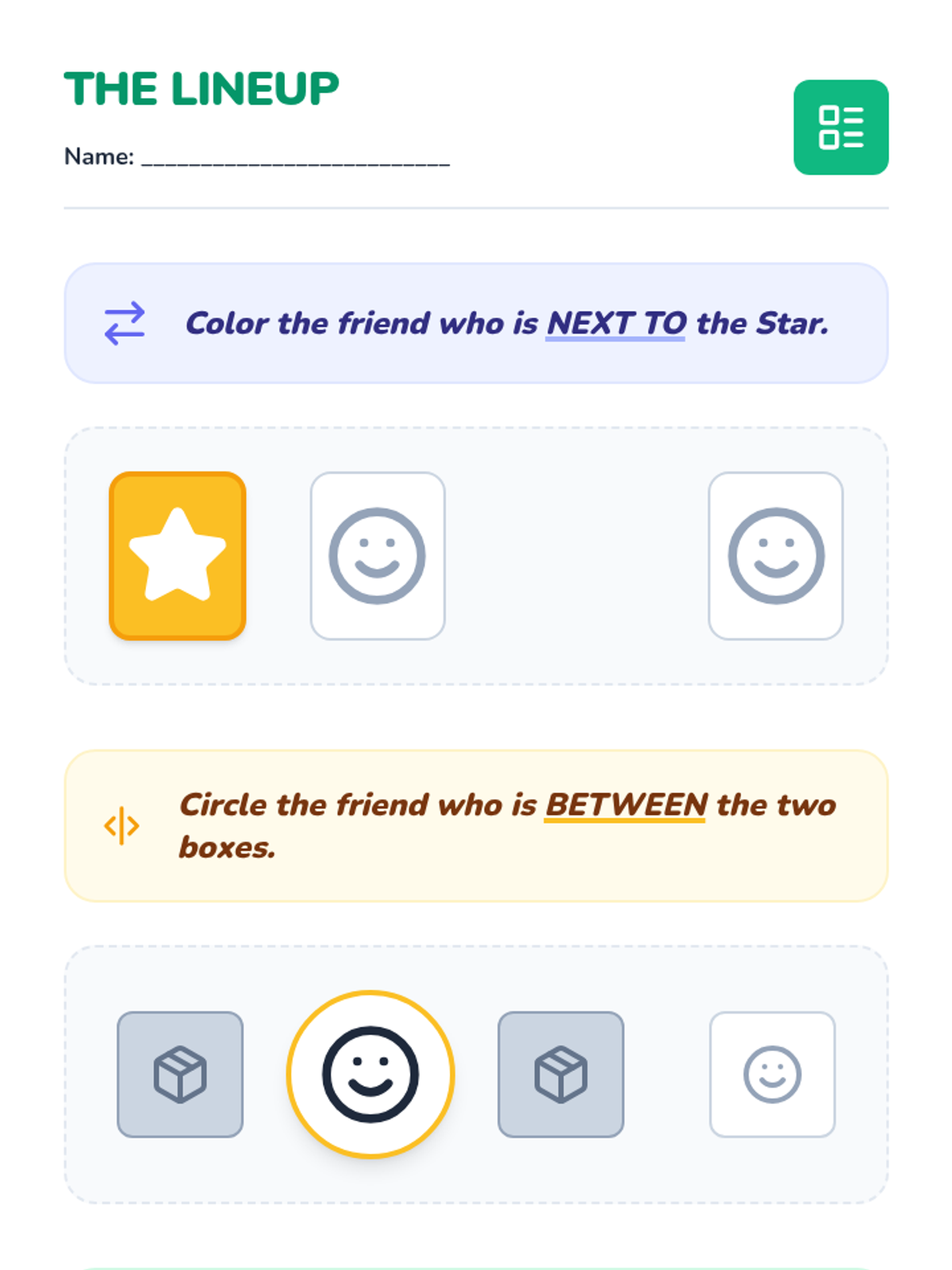
Students focus on lateral relationships by arranging objects in rows and identifying which items are 'next to' or 'between' others.
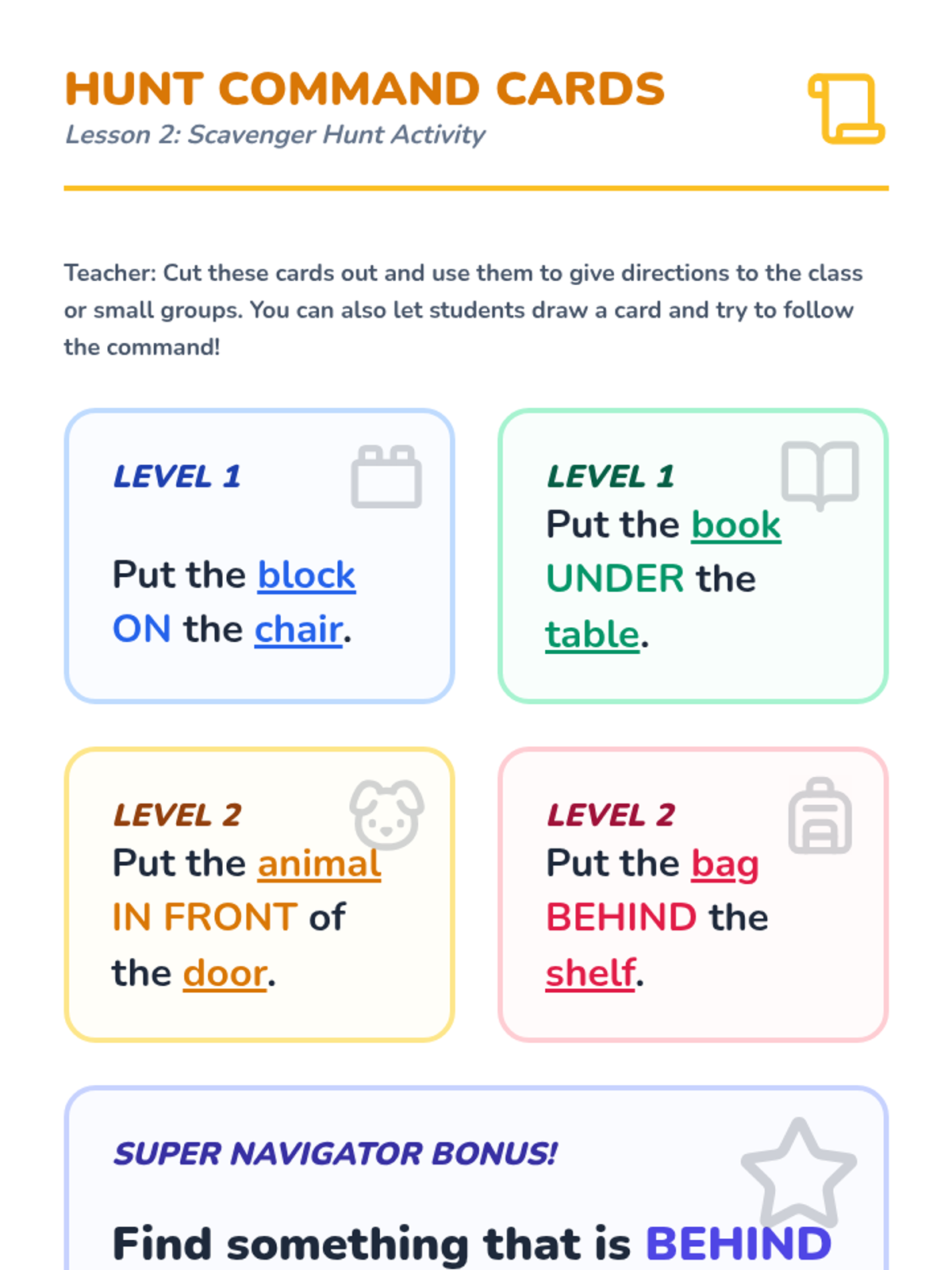
Students follow and give directions to place objects in specific locations relative to classroom furniture, reinforcing vocabulary like 'on,' 'under,' 'in front,' and 'behind.'