Geometric classification, measurement of area and volume, and the study of transformations and rigid motions. Builds toward complex proofs, trigonometry for general triangles, and the algebraic representation of conic sections.
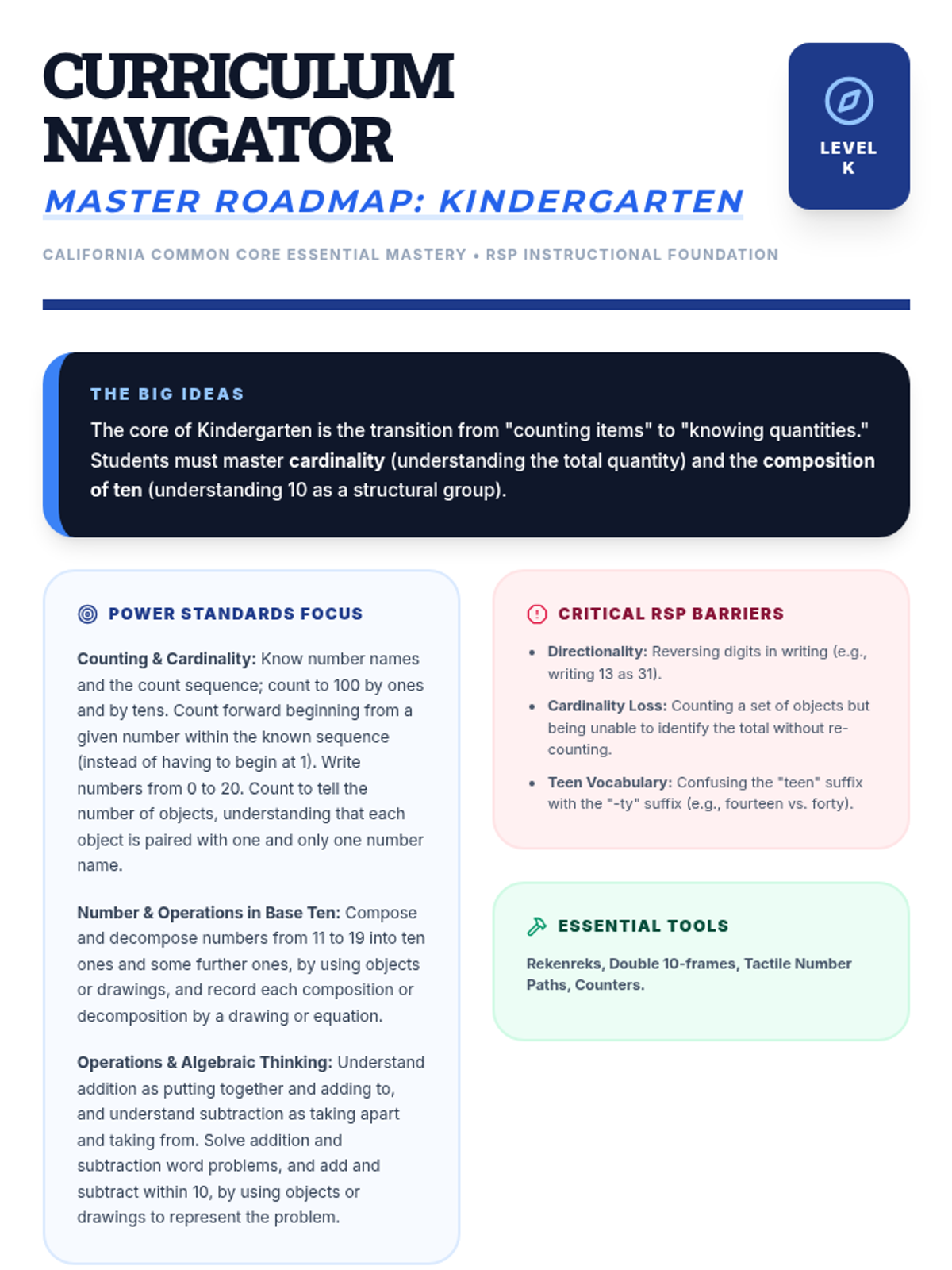
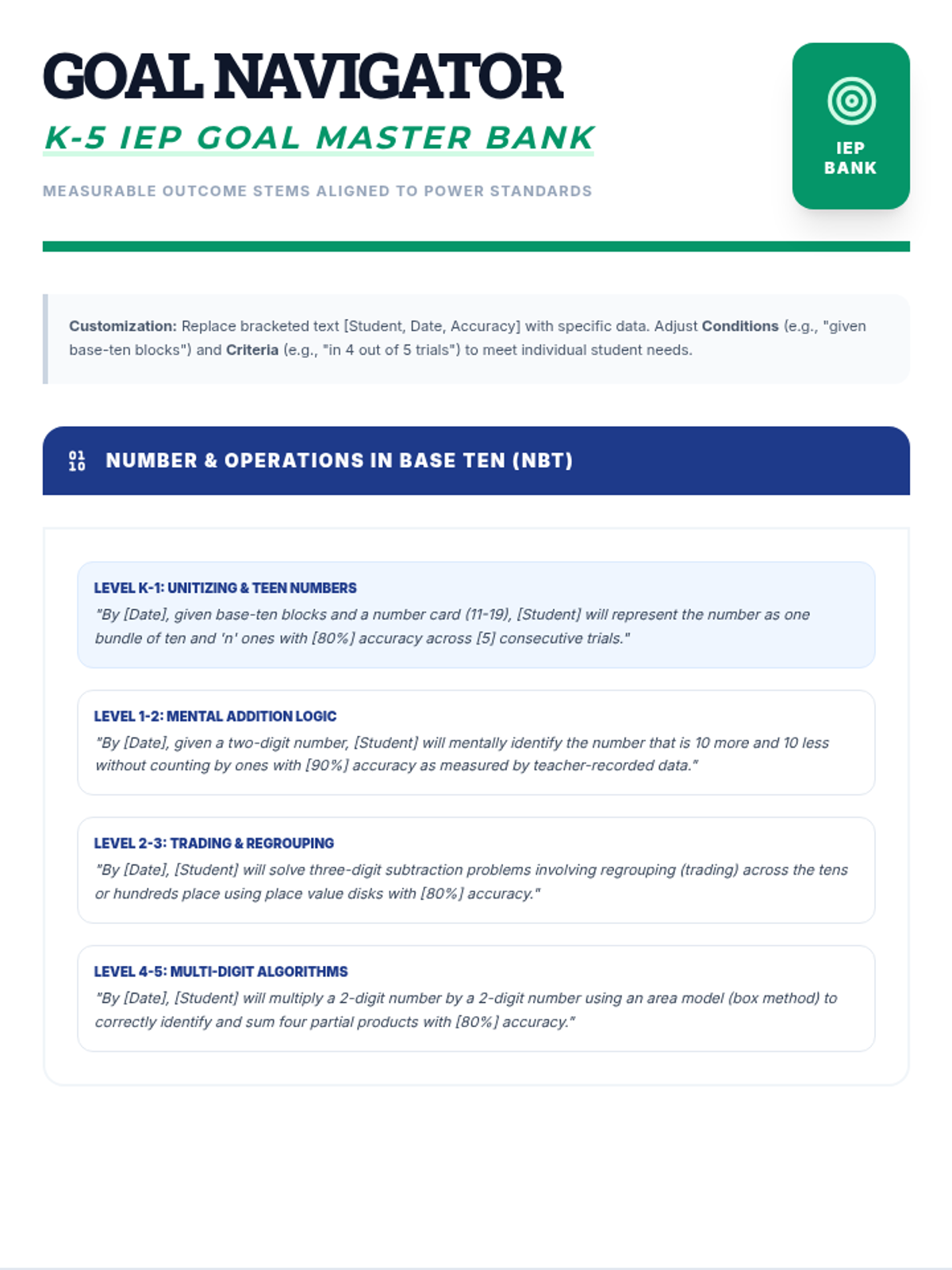
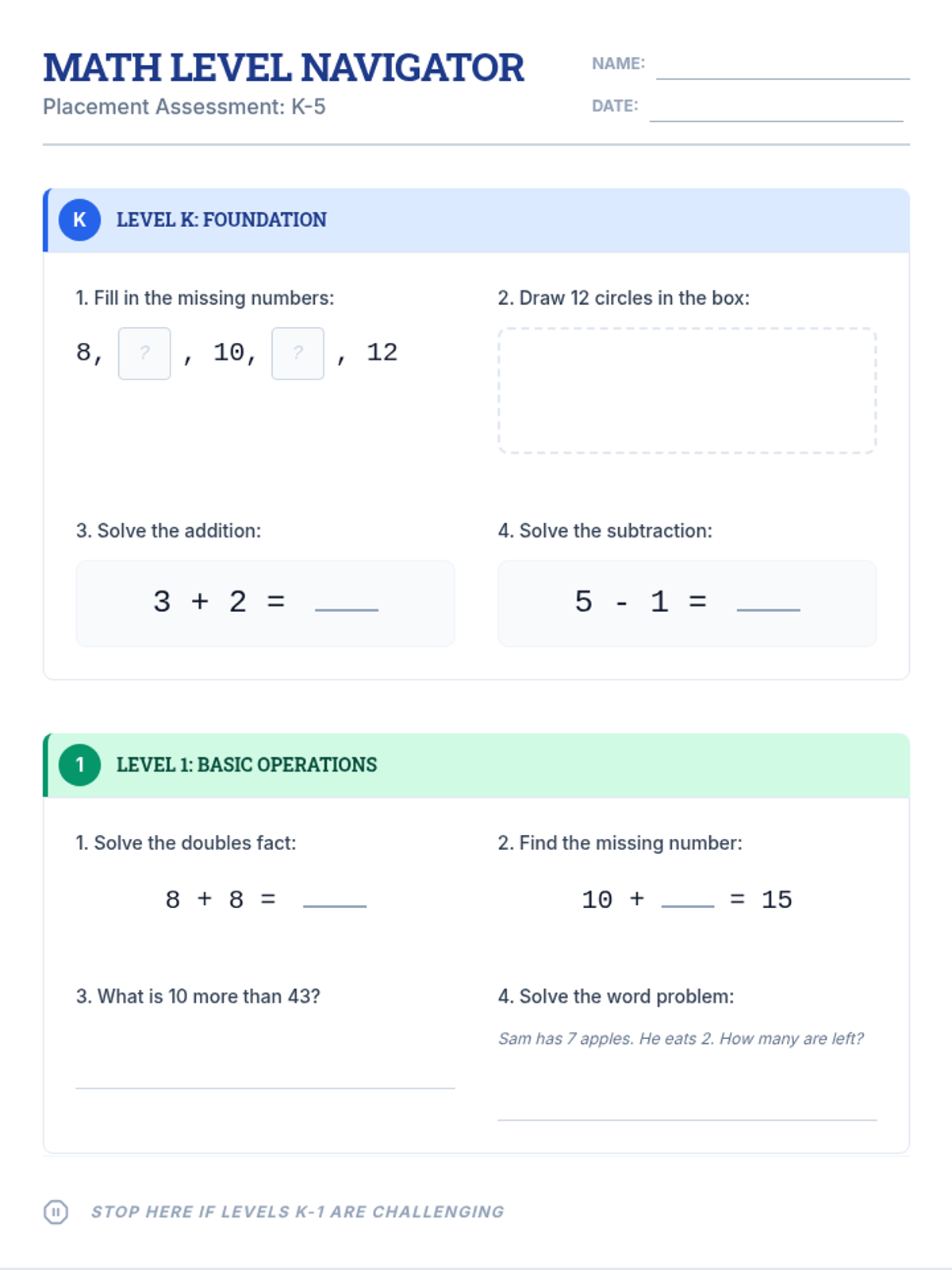
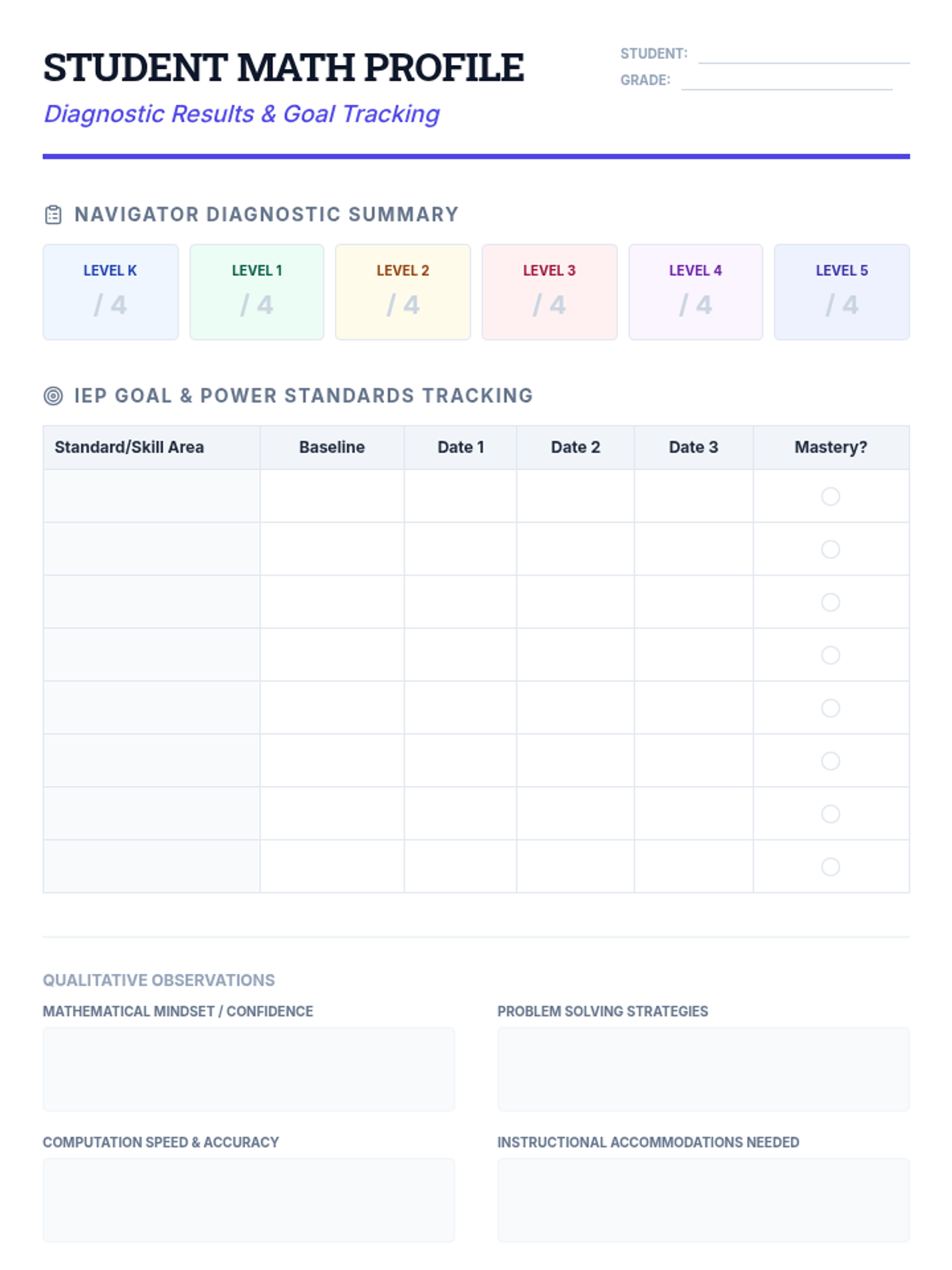
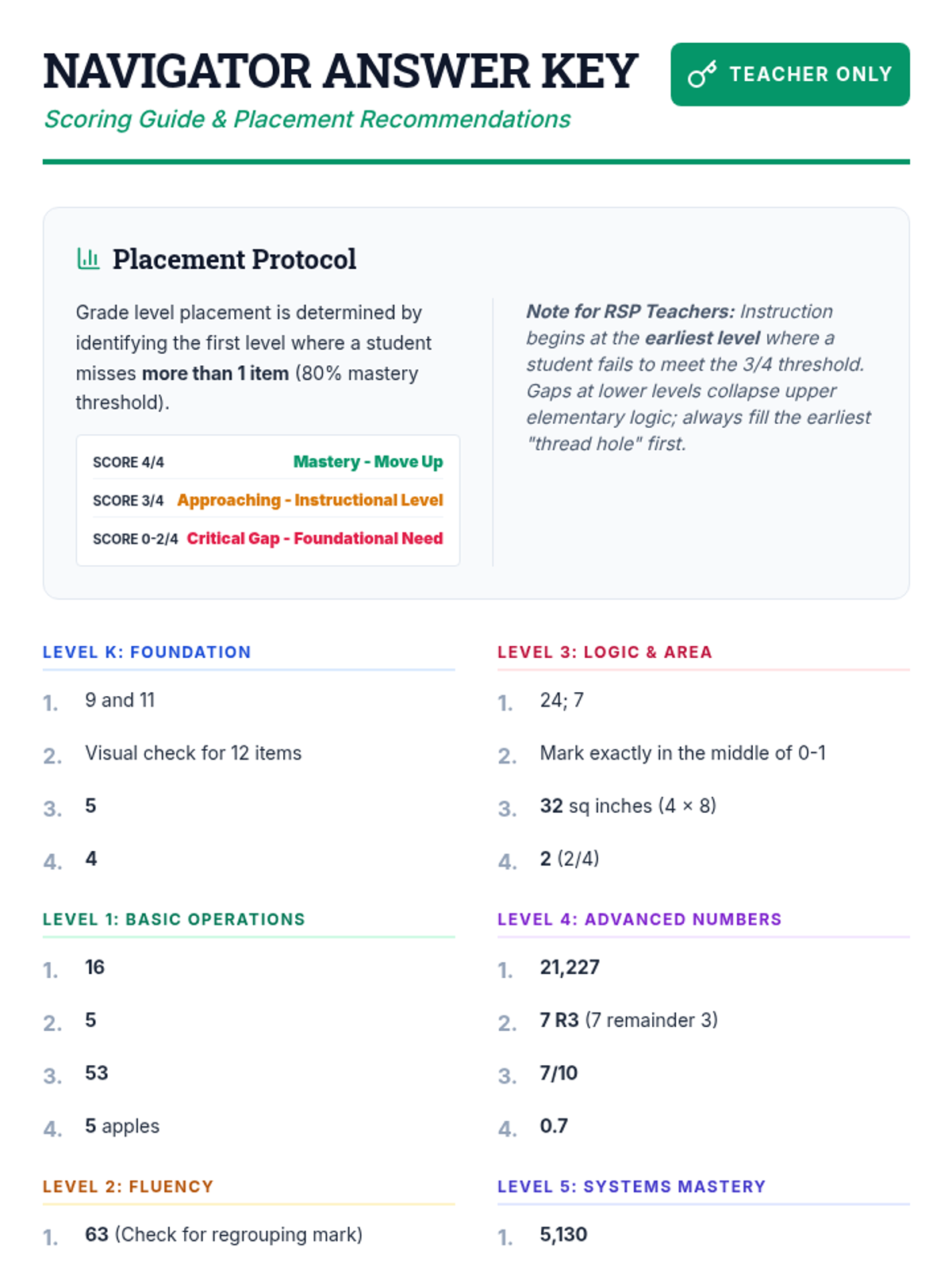
A comprehensive framework for K-5 RSP math instruction, including a California Common Core aligned scope and sequence of power standards and a leveled placement diagnostic.
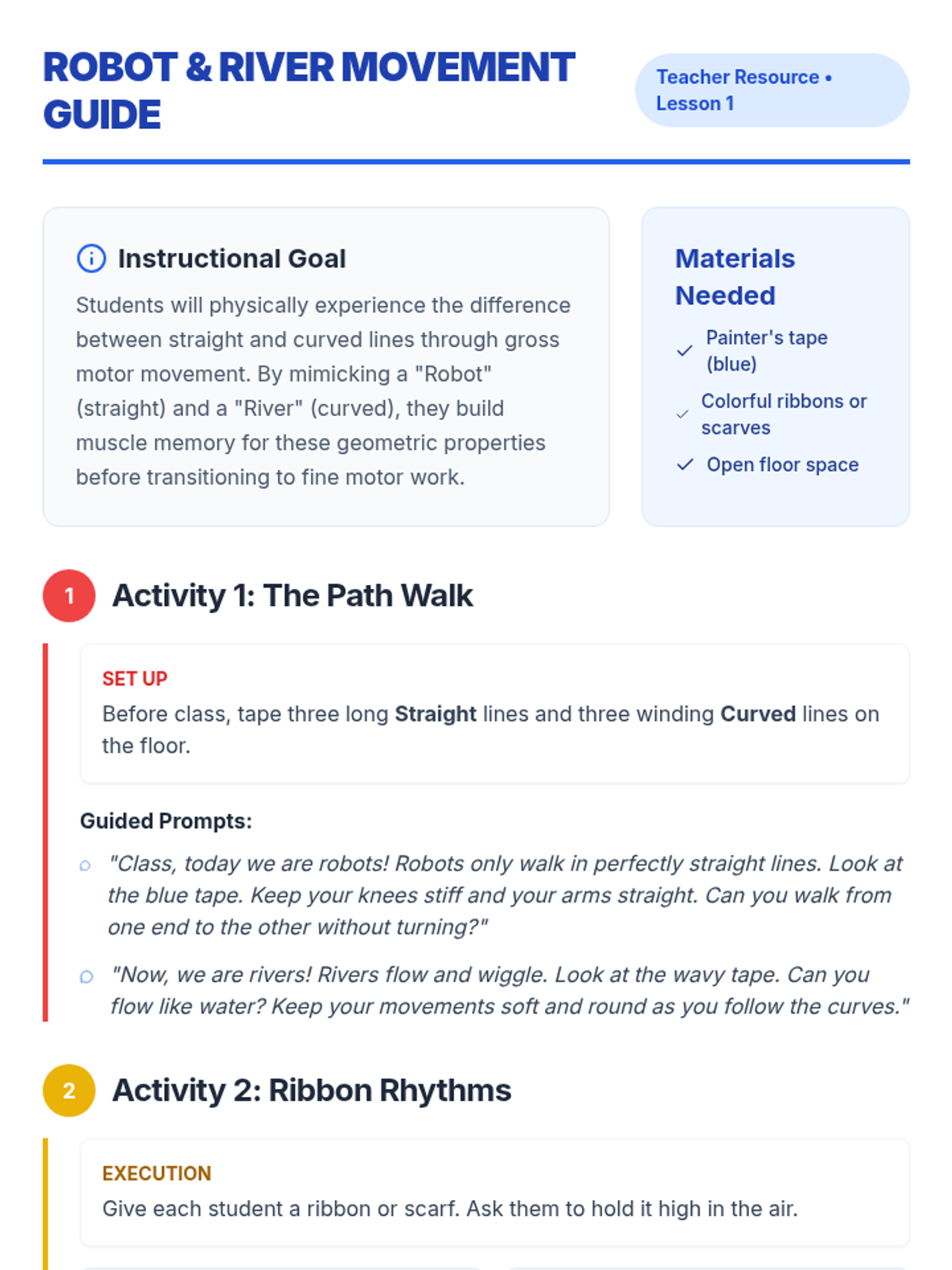
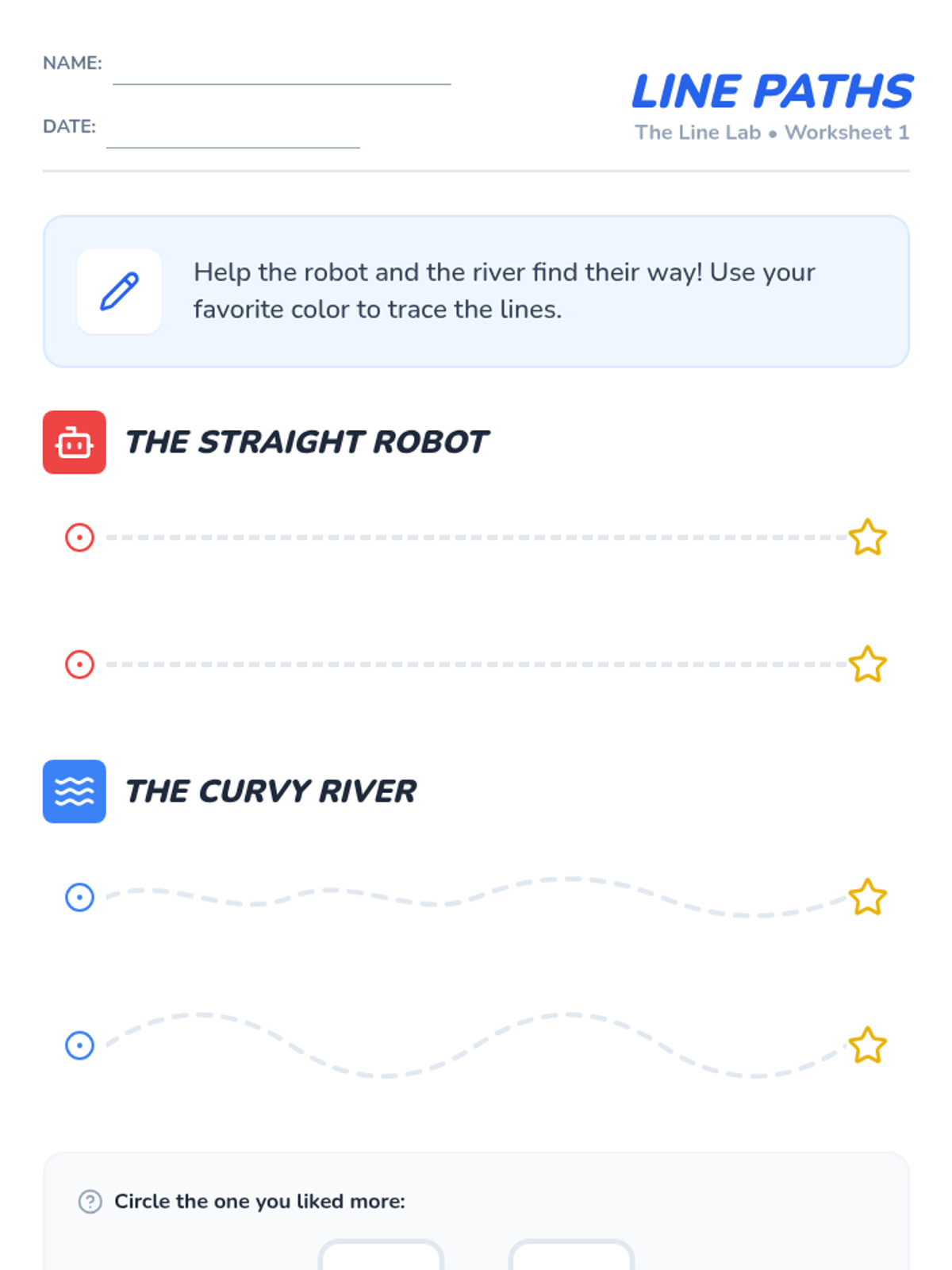
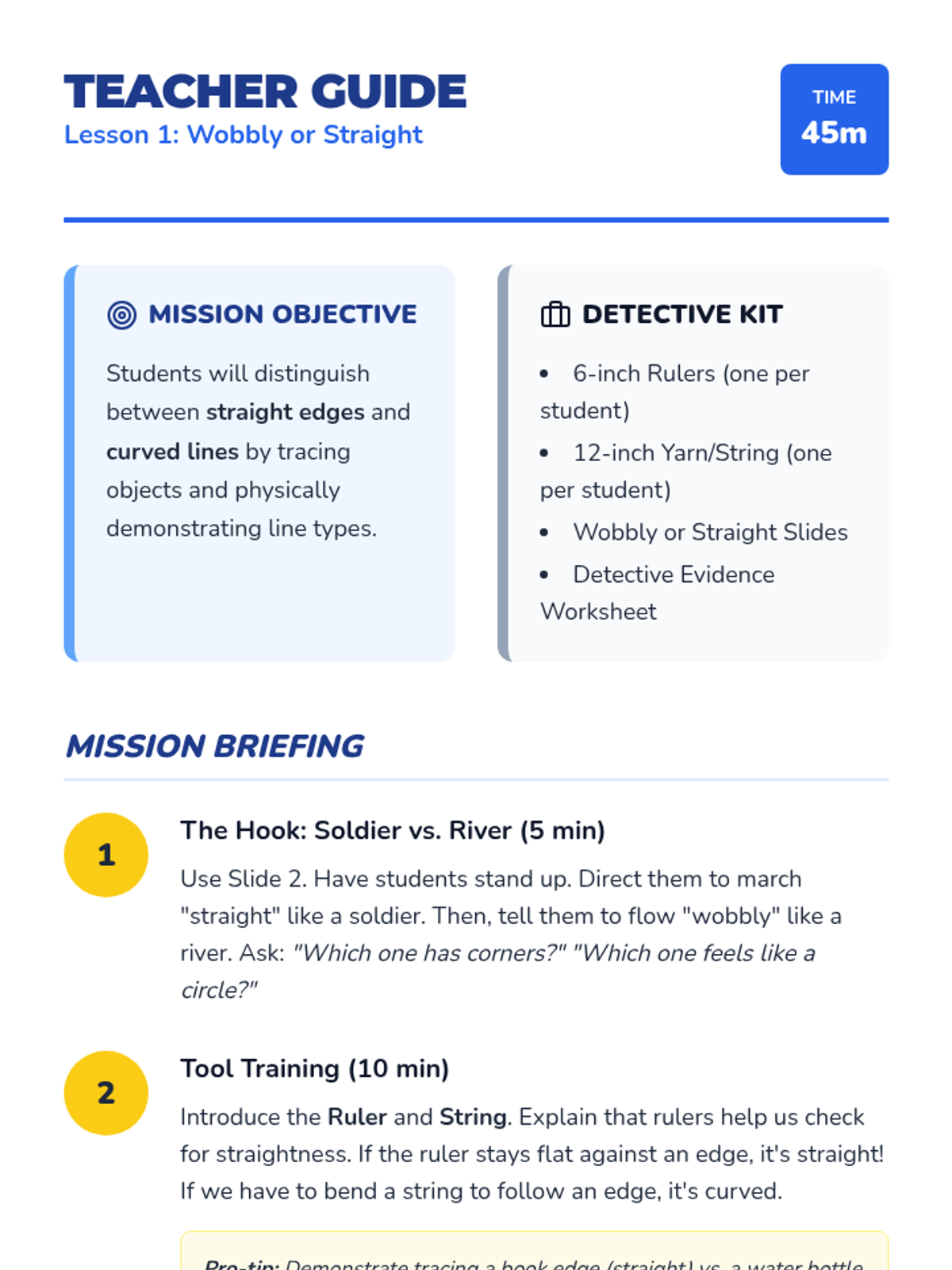
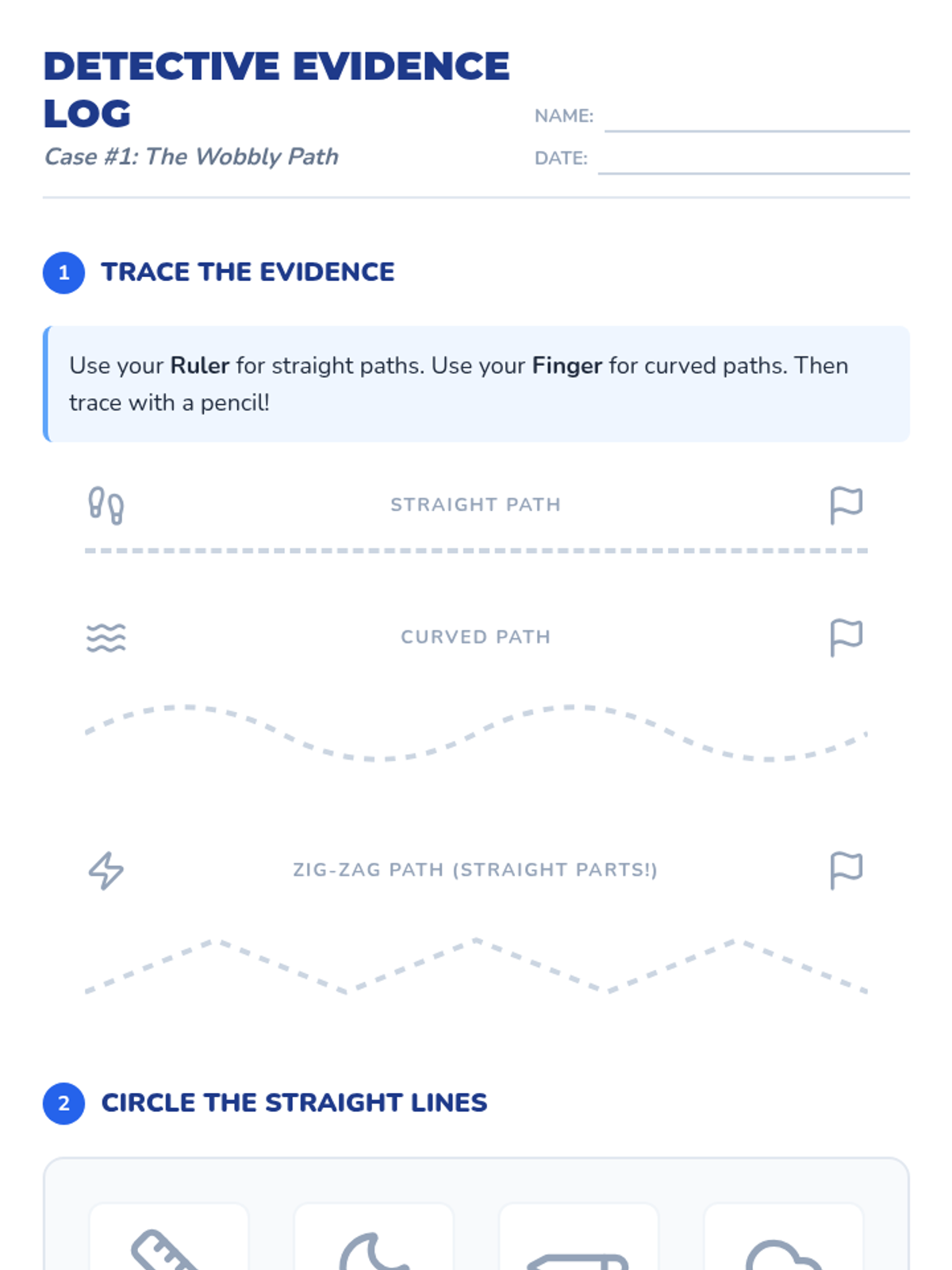
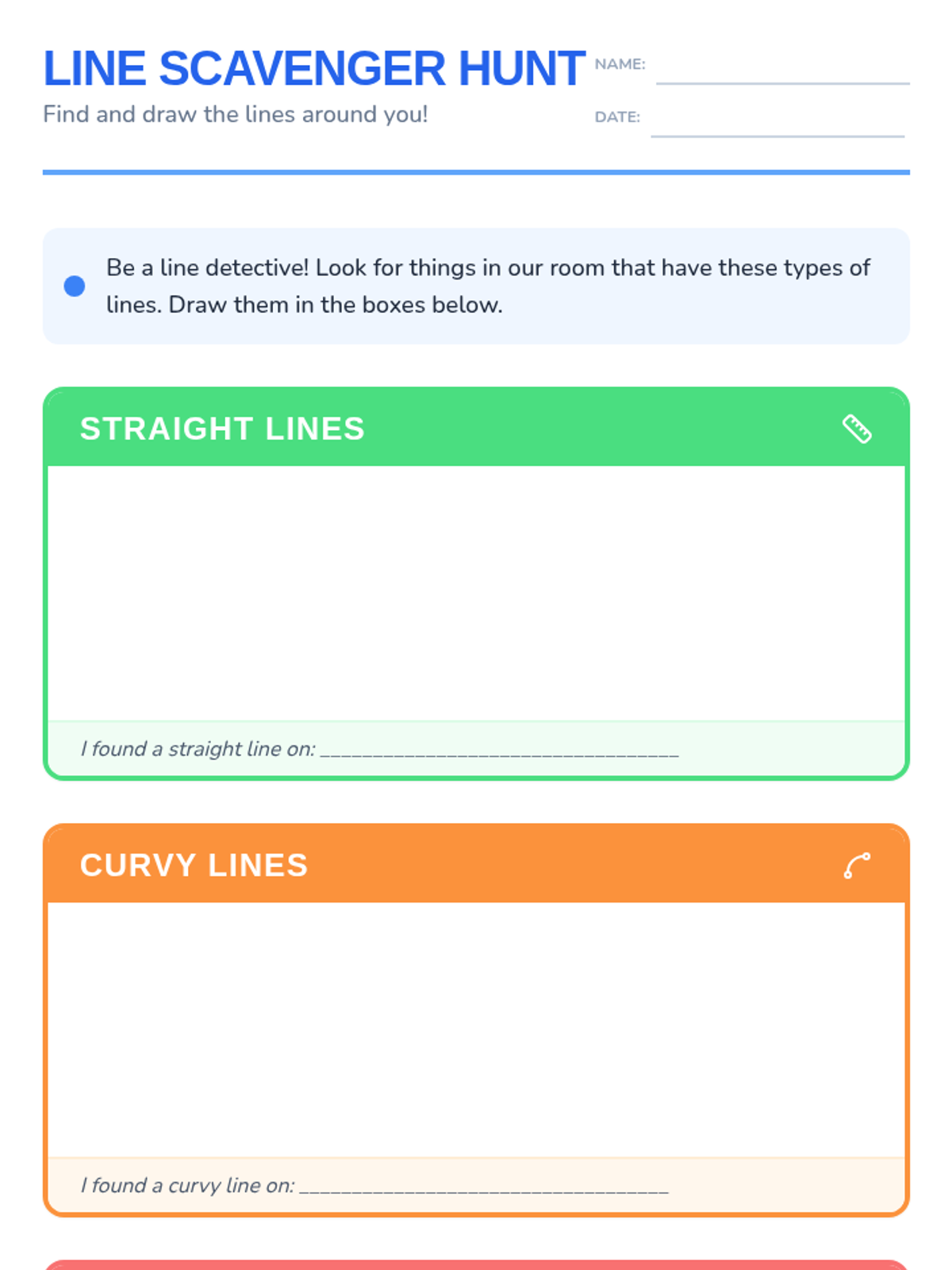
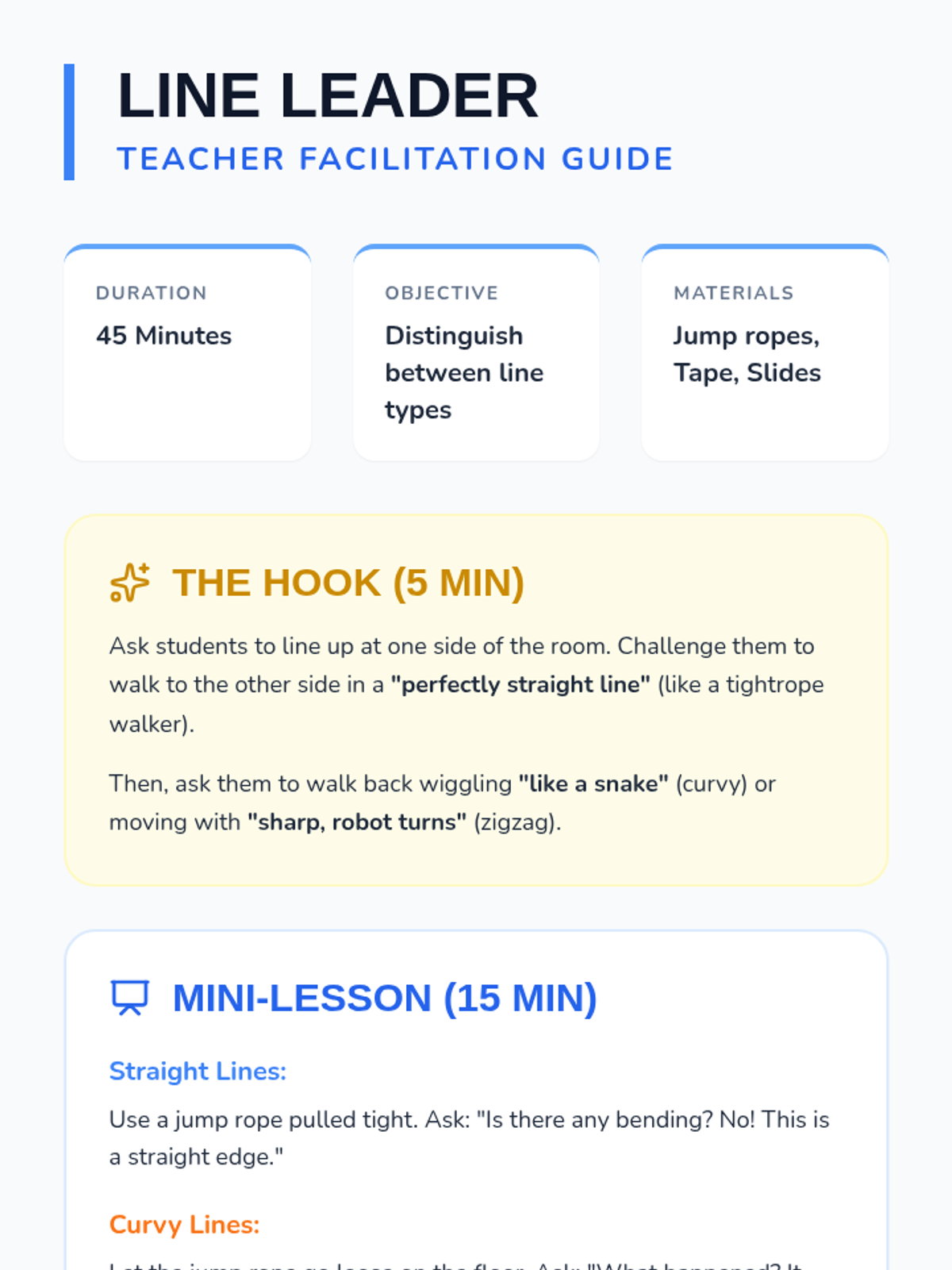
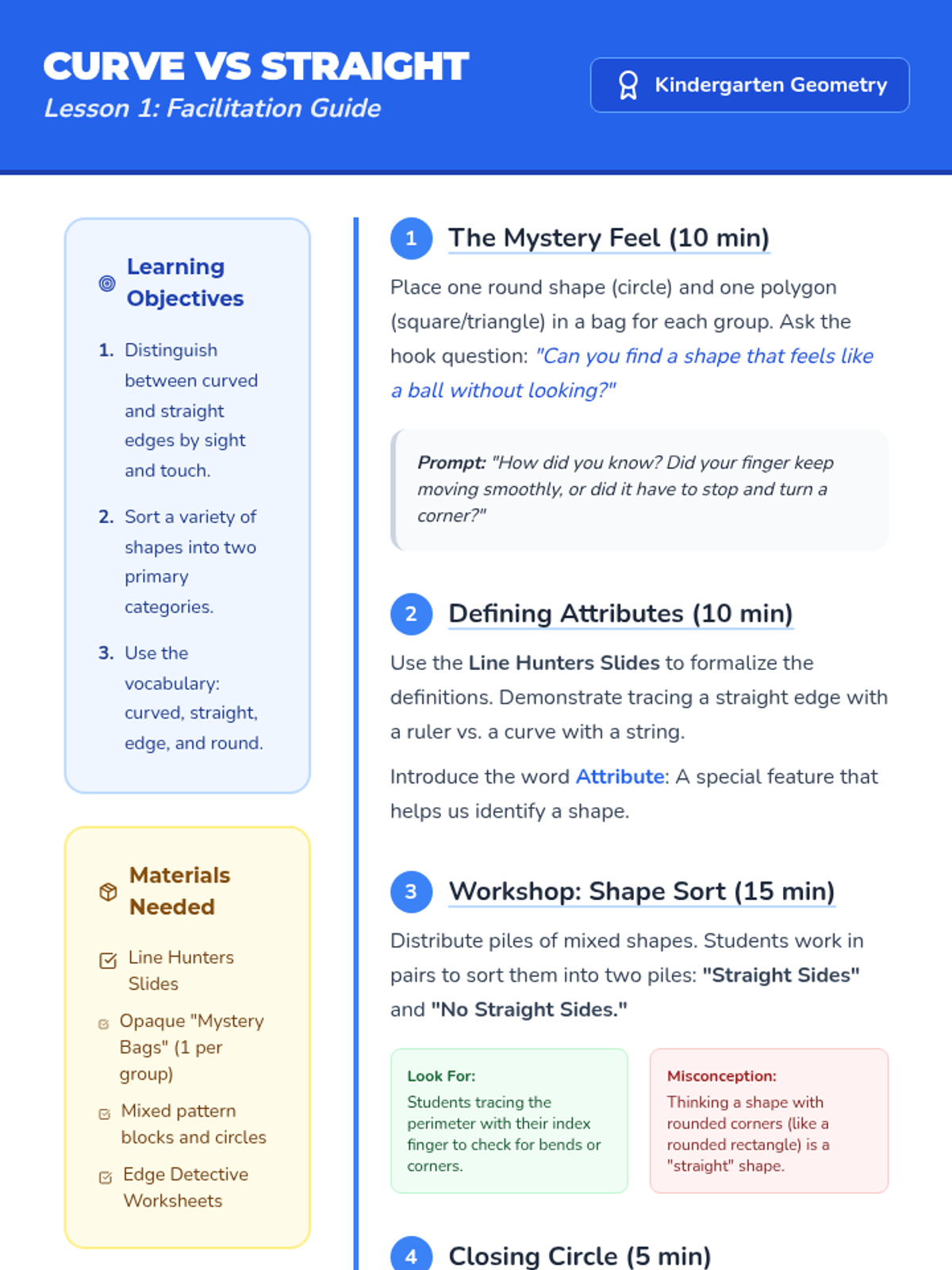
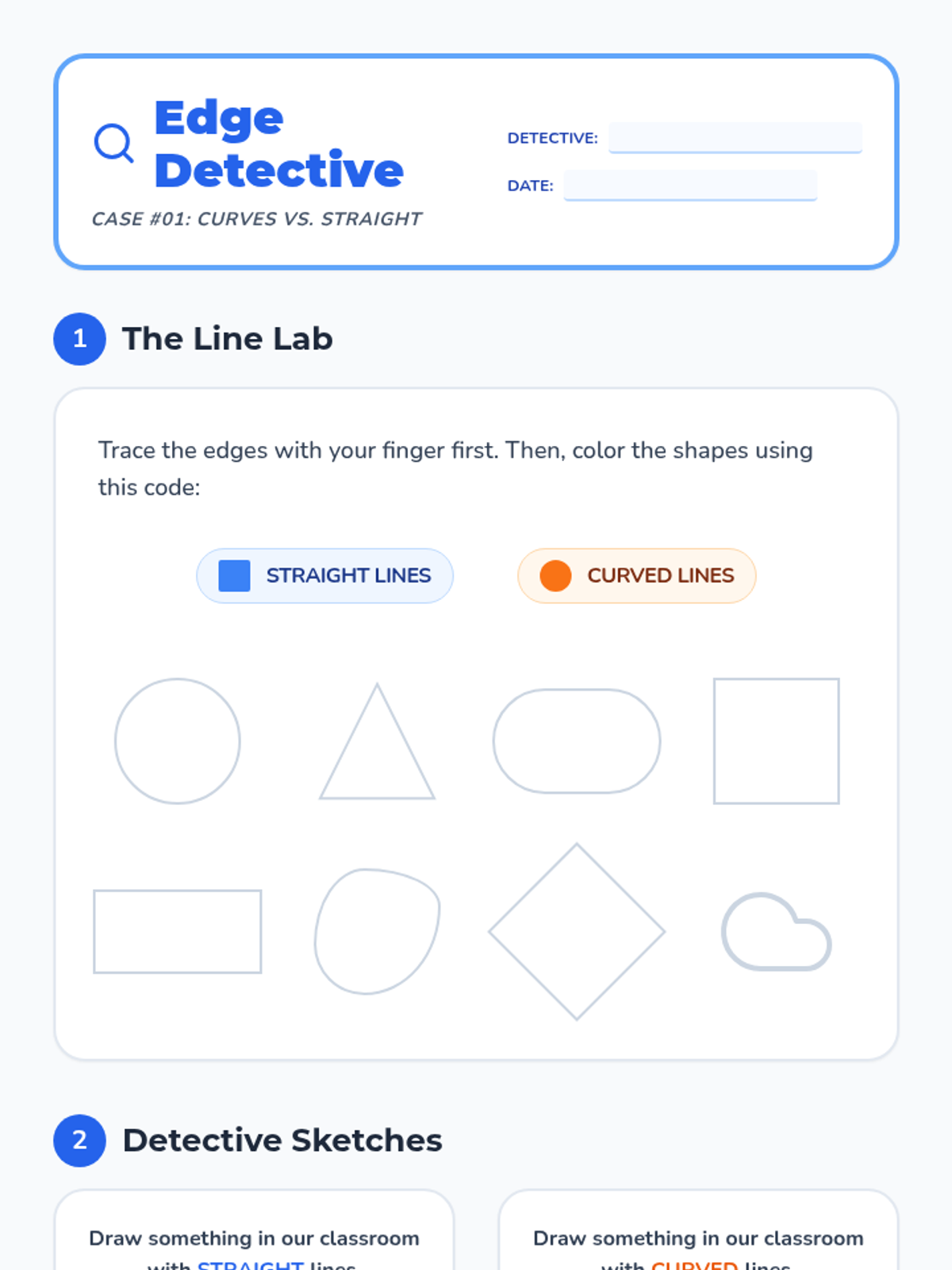
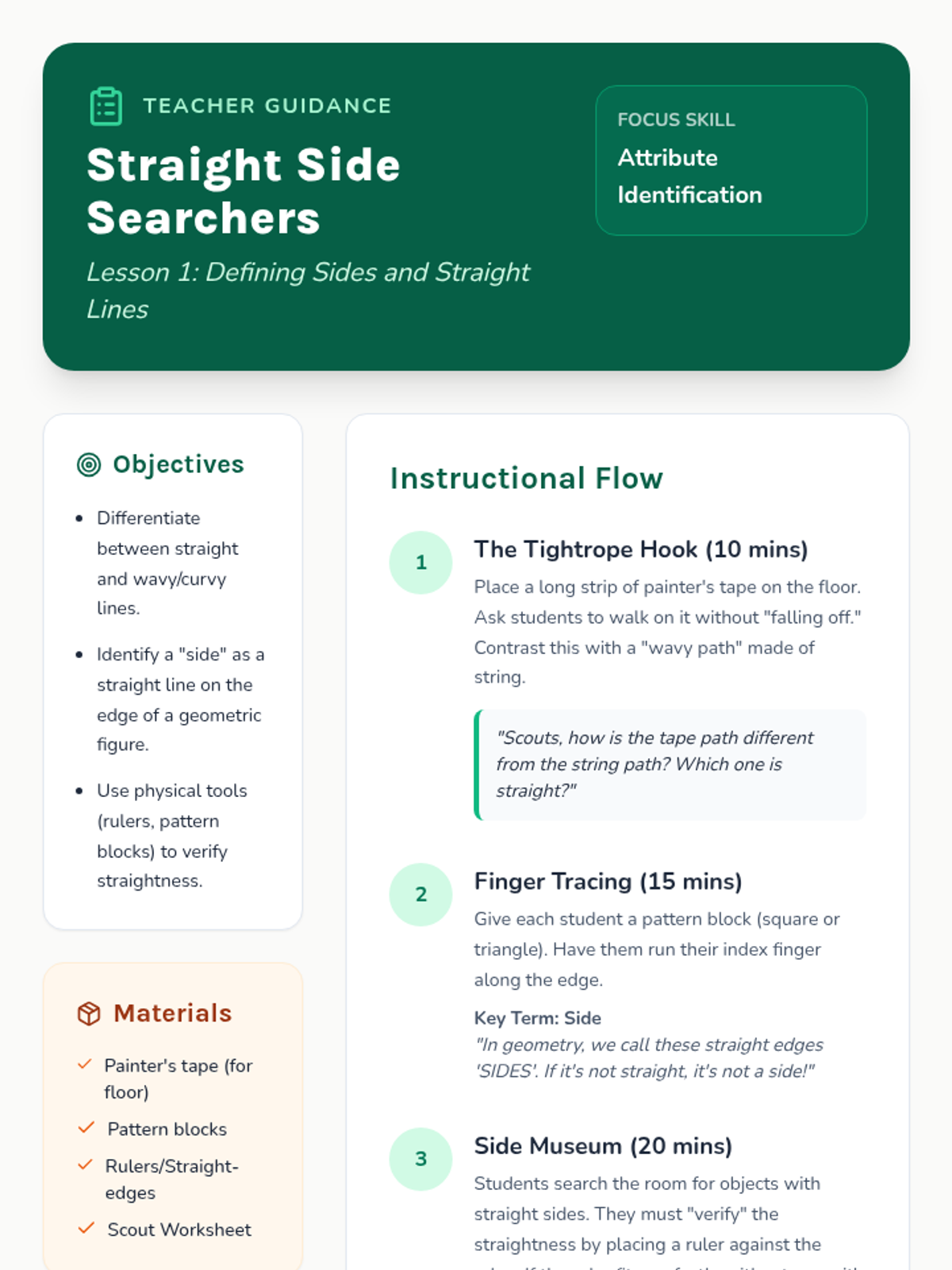
A foundational geometry sequence for Kindergarteners focusing on distinguishing between straight and curved lines through gross motor activities, tactile exploration, and environmental observation. Students progress from body movement to fine motor tracing and identifying 'edges' in their world.
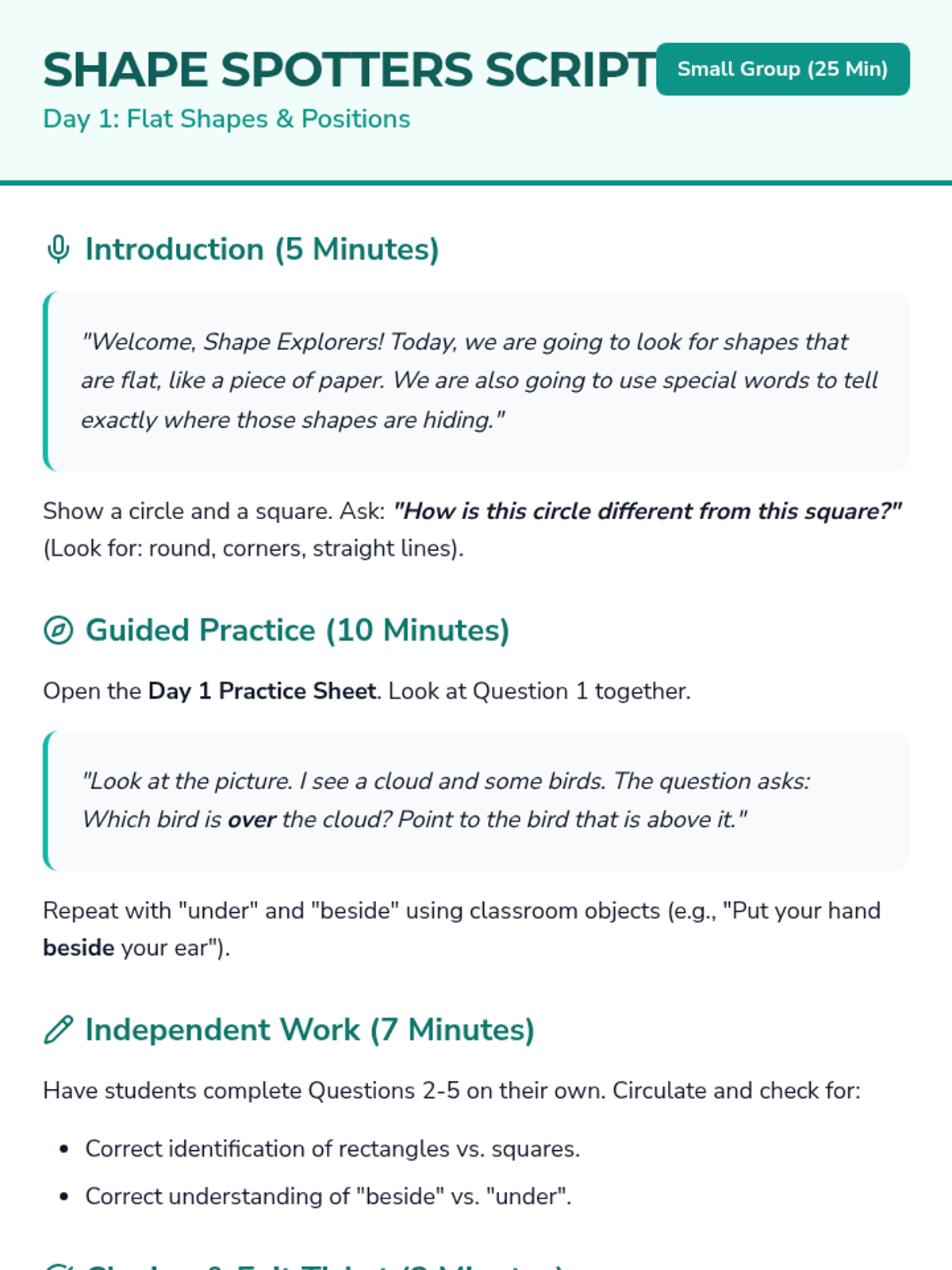
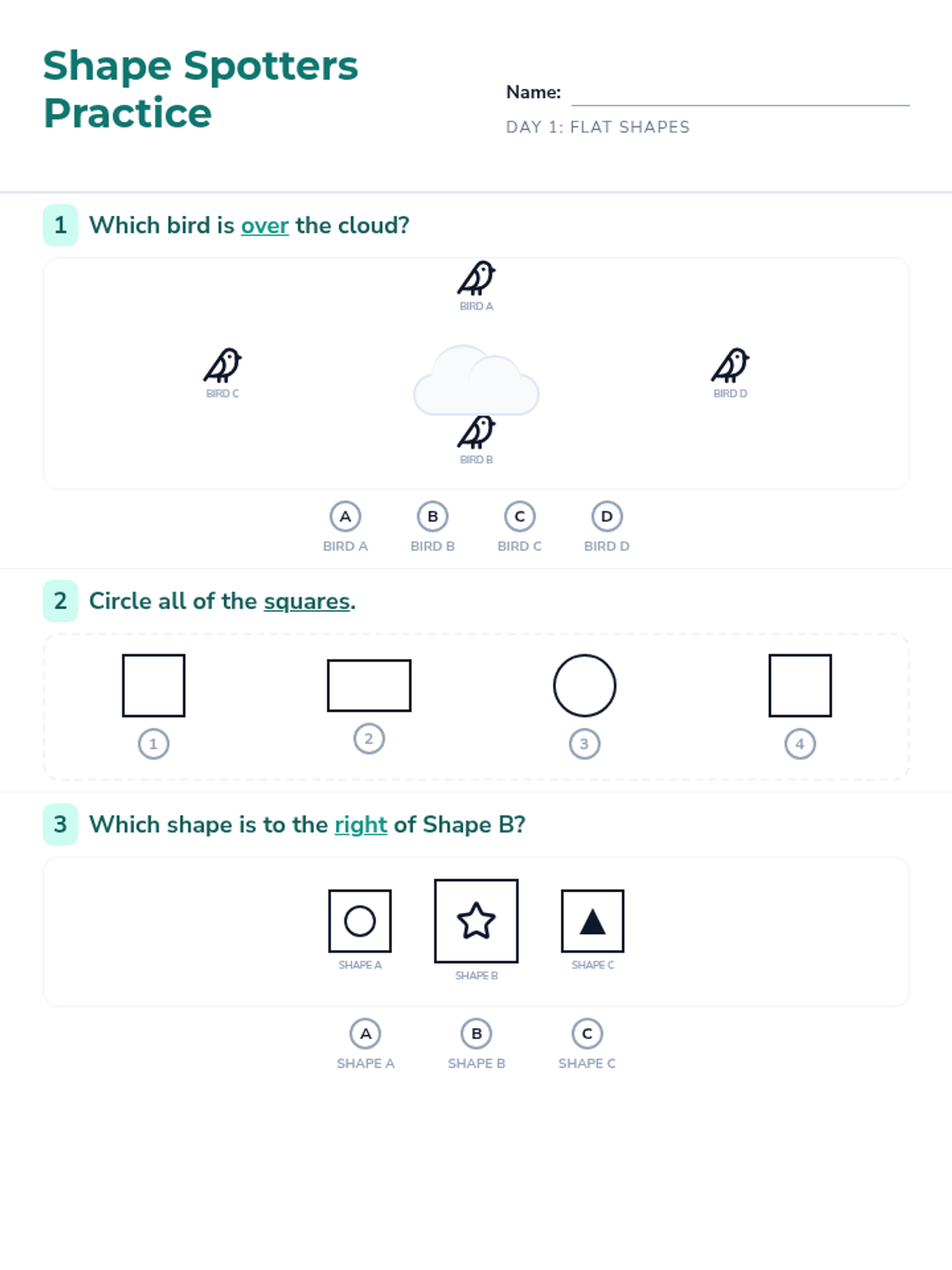
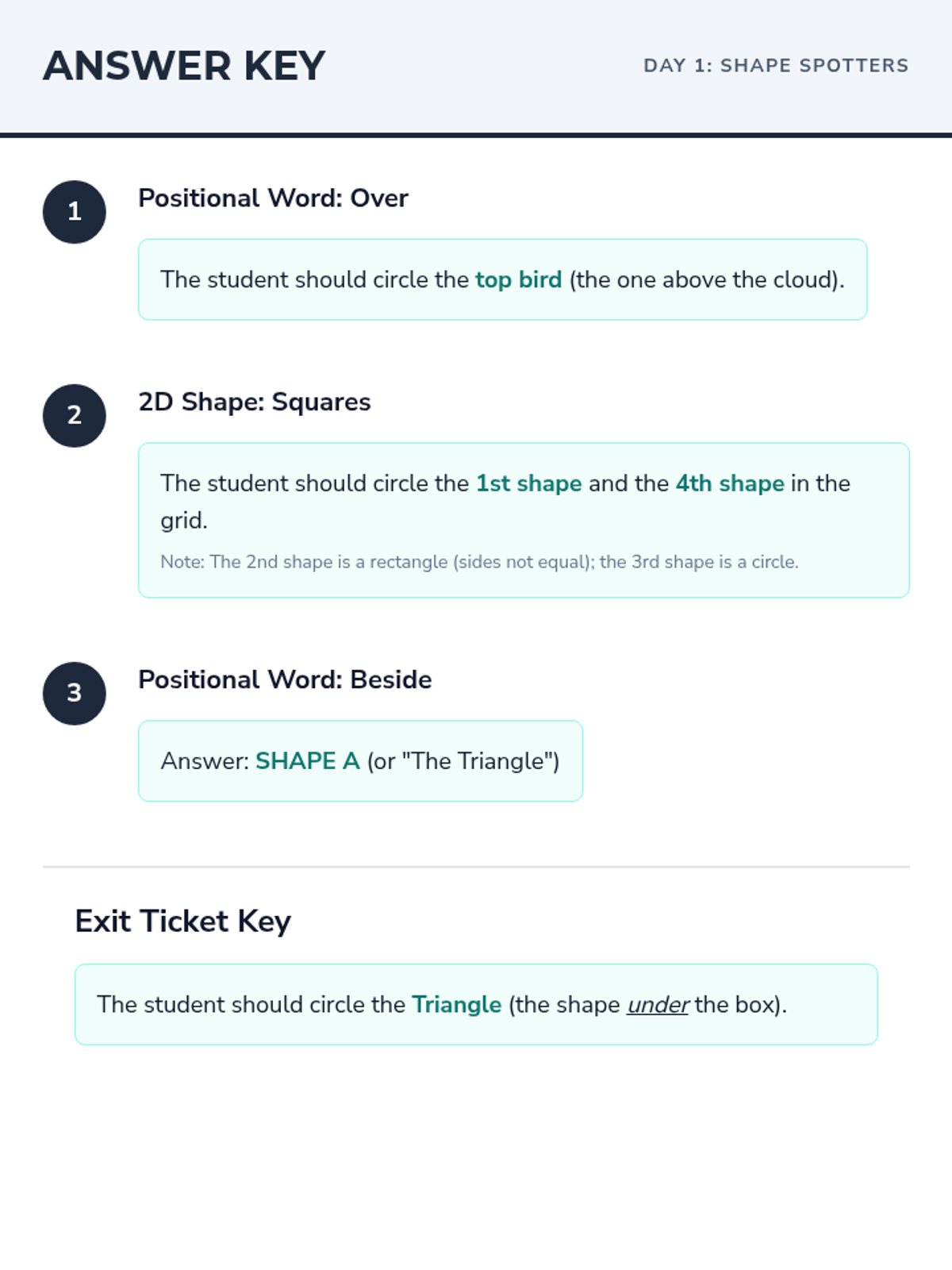
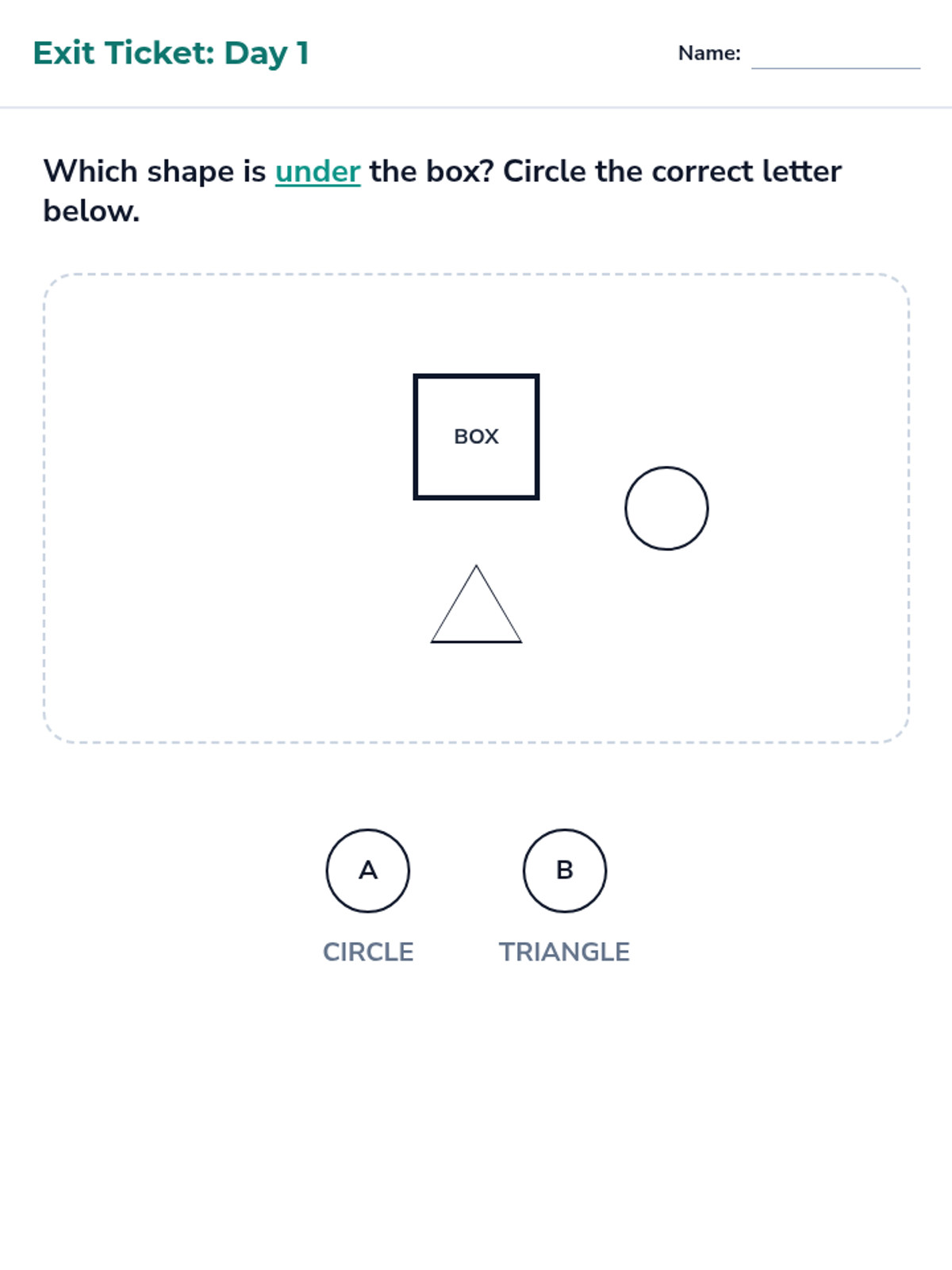
A 3-day small group intervention sequence focused on NWEA RIT 120-130 geometry and measurement standards, including 2D/3D shapes, positional words, and size comparisons.
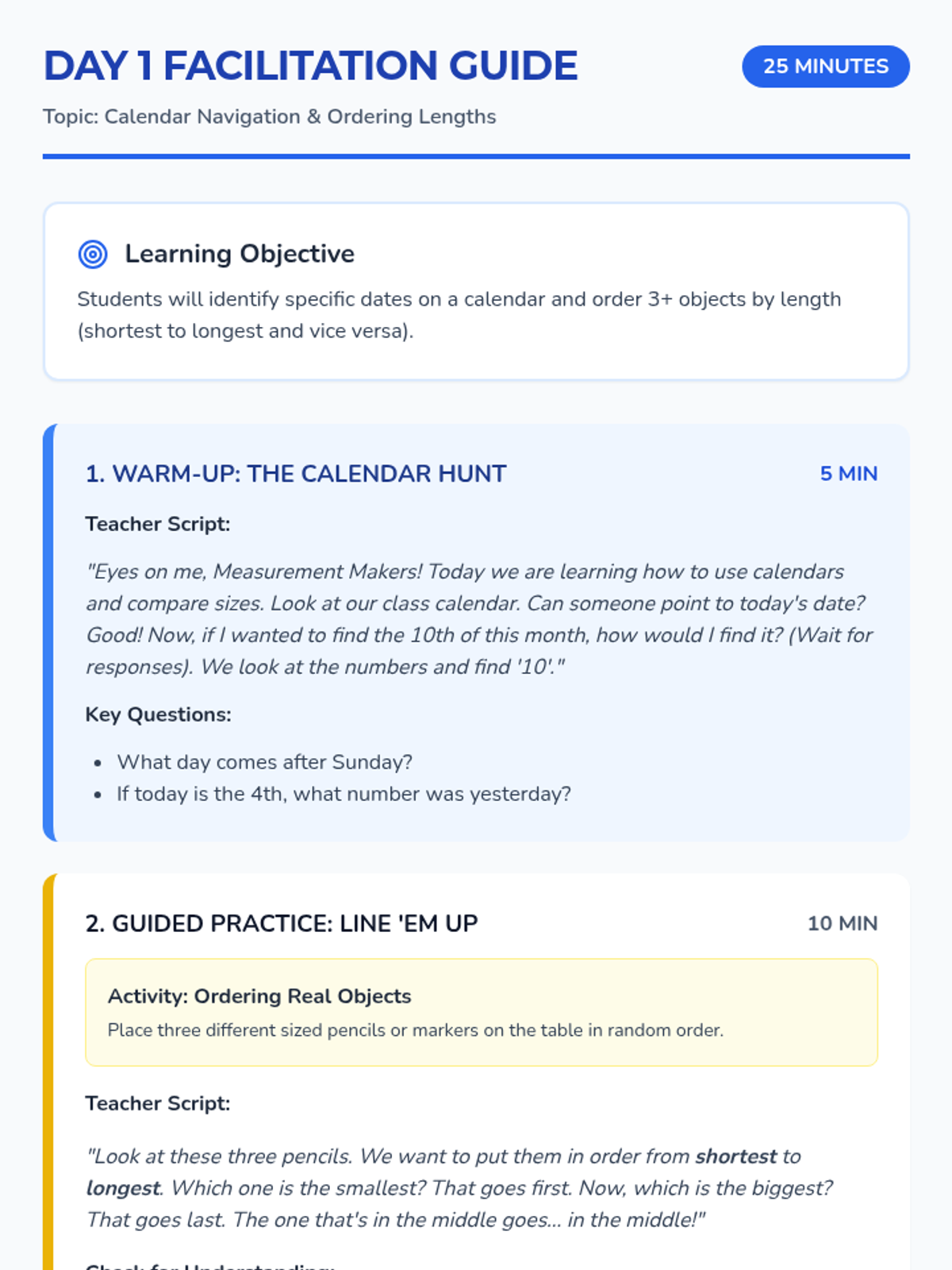
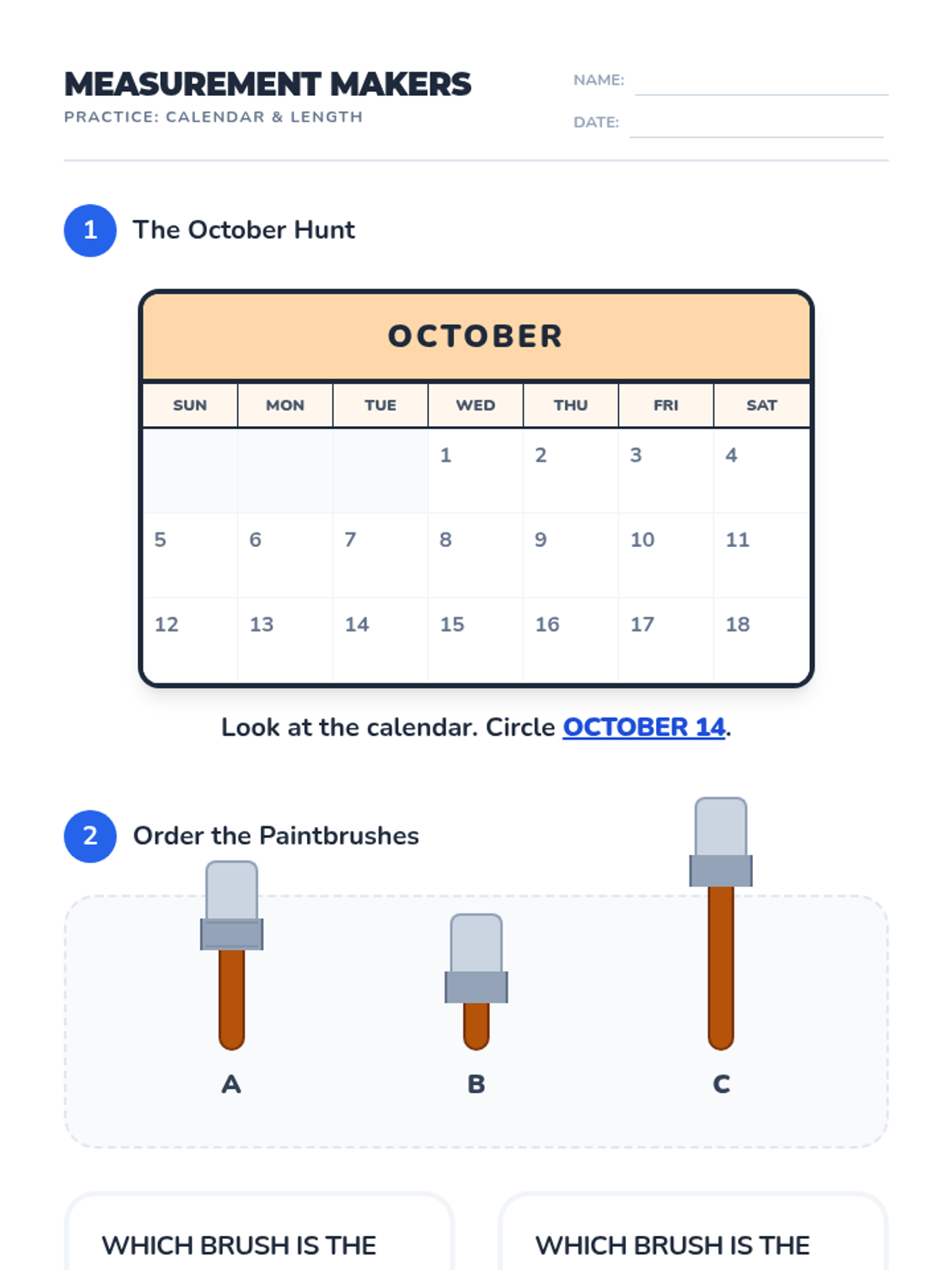
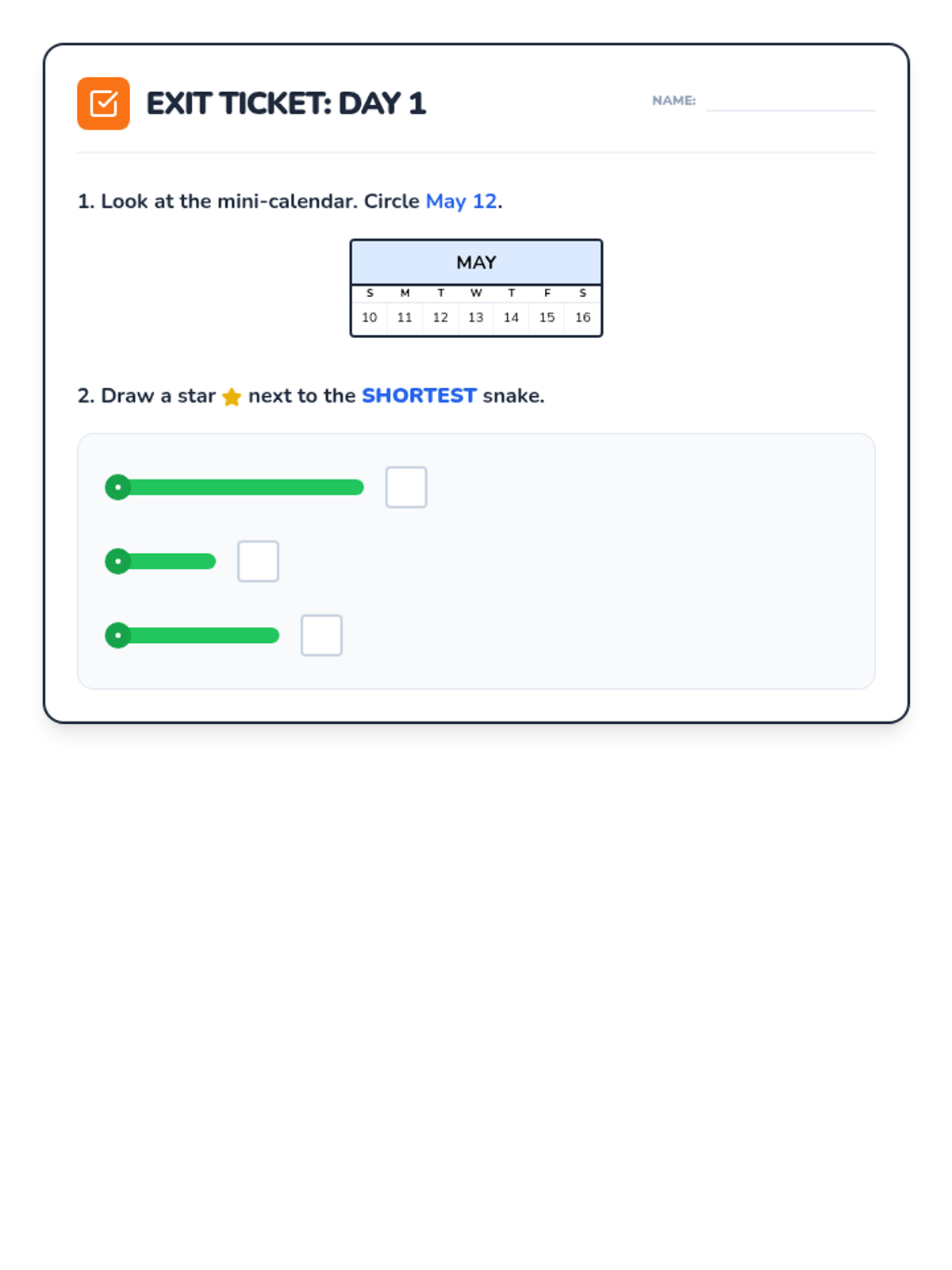
A 3-day small group math sequence designed to move students from NWEA RIT 140-150 to 150-160 in Geometry and Measurement. Focuses on calendar skills, time, length ordering, and 2D/3D shape identification.
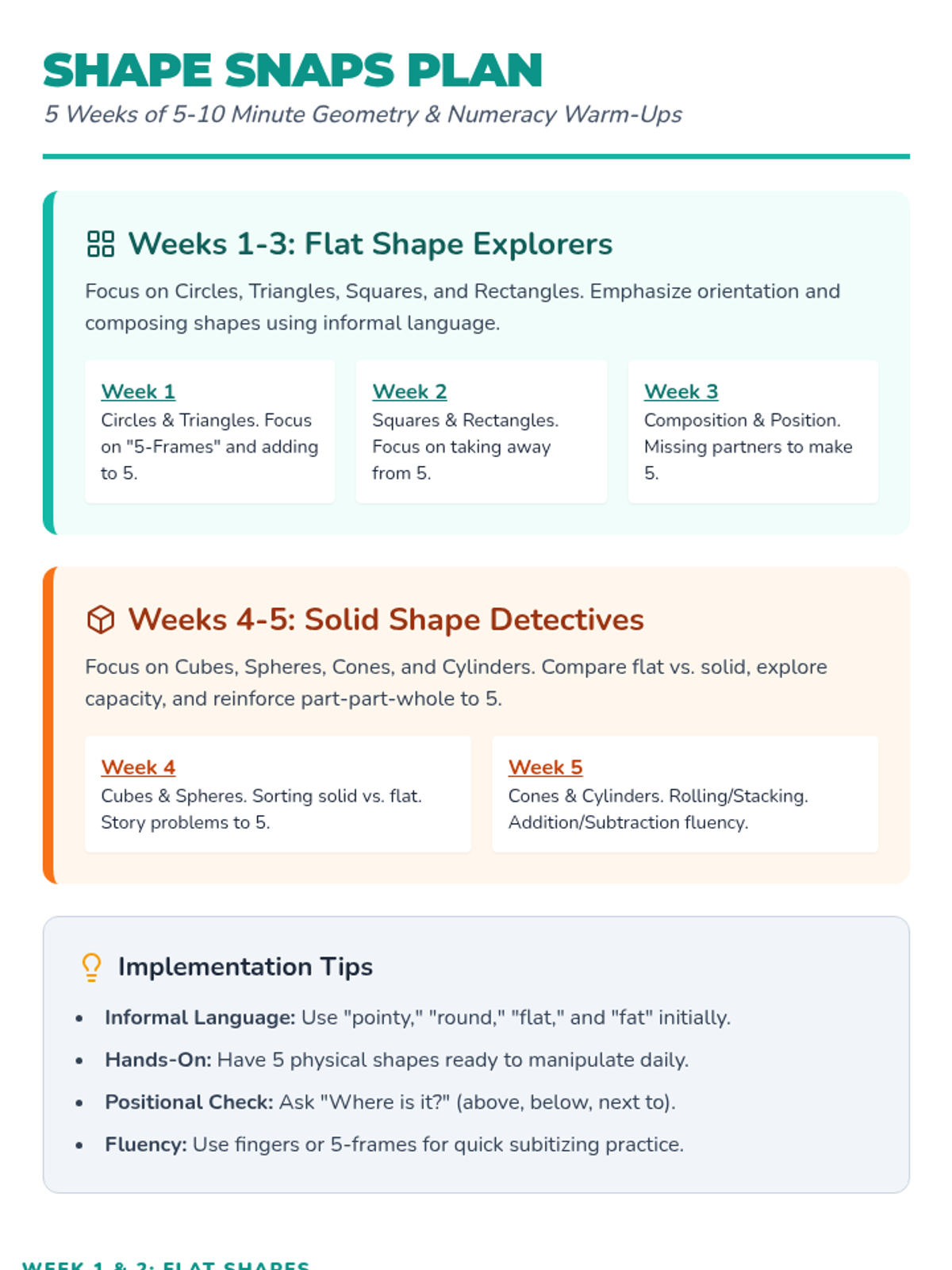
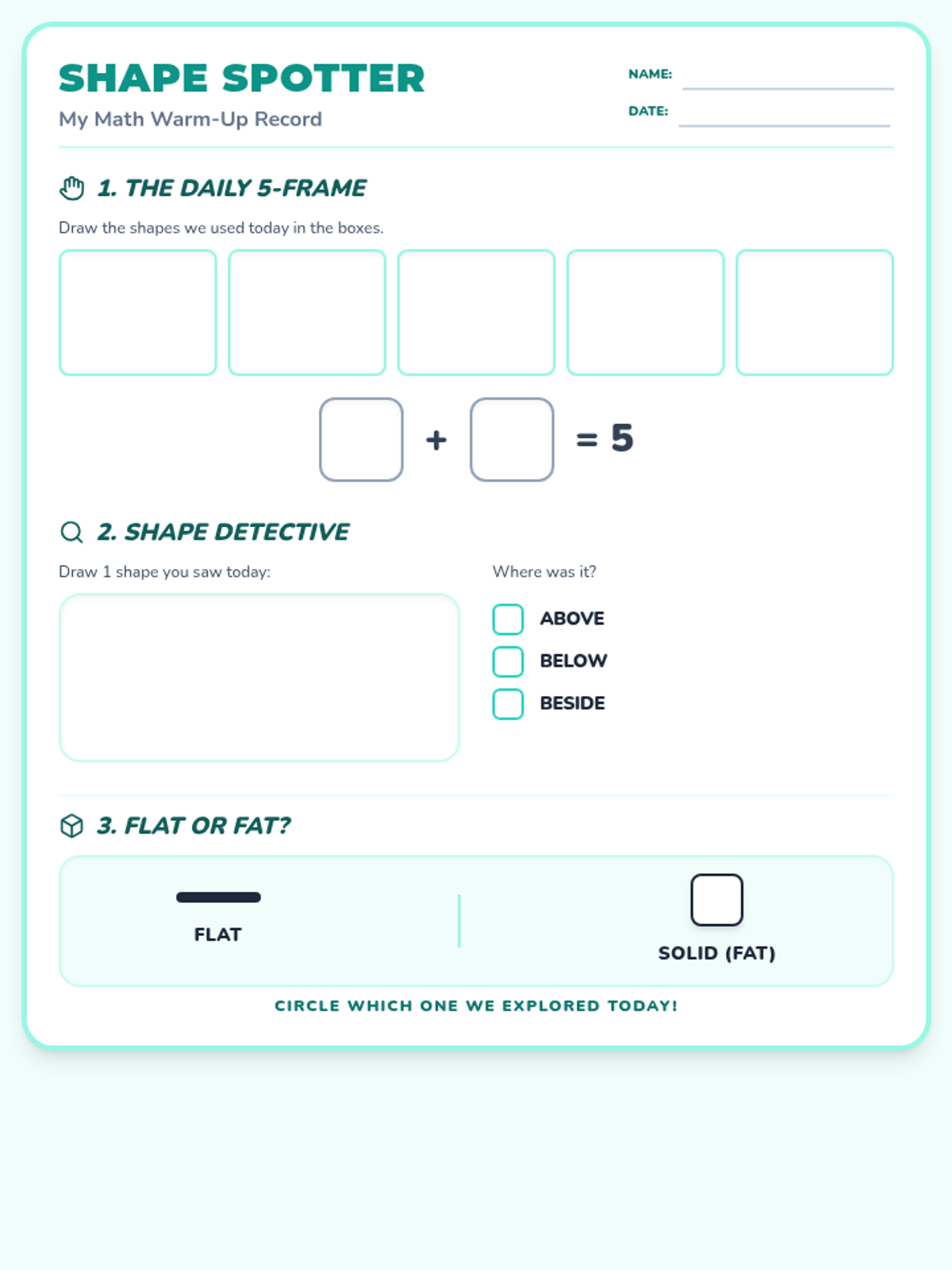
A 5-week program for Grade K that integrates foundational geometry (flat and solid shapes) with numeracy fluency focusing on combinations of 5 and the relationship between addition and subtraction. Activities are designed for 5-10 minute morning meetings or math warm-ups.
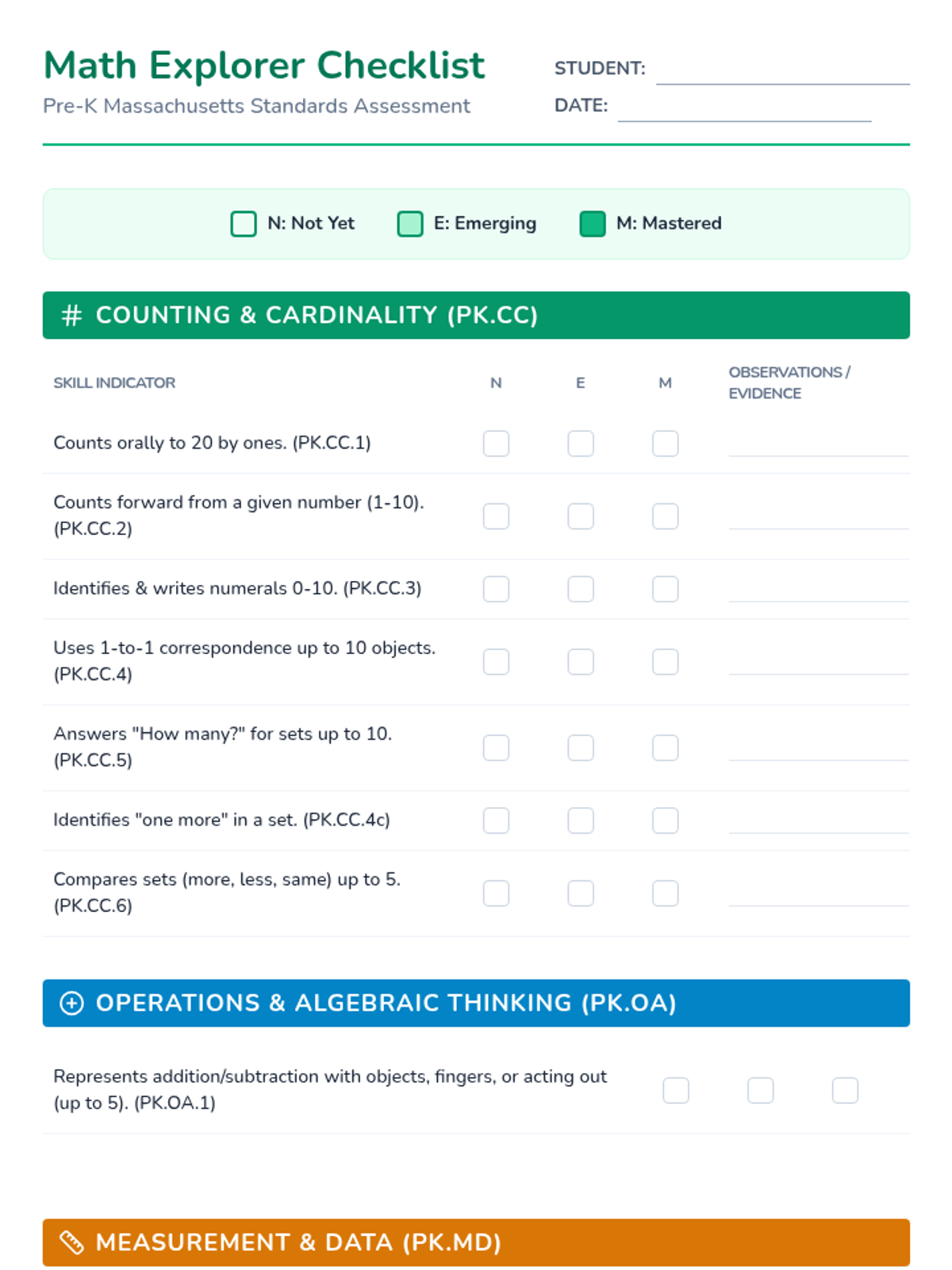
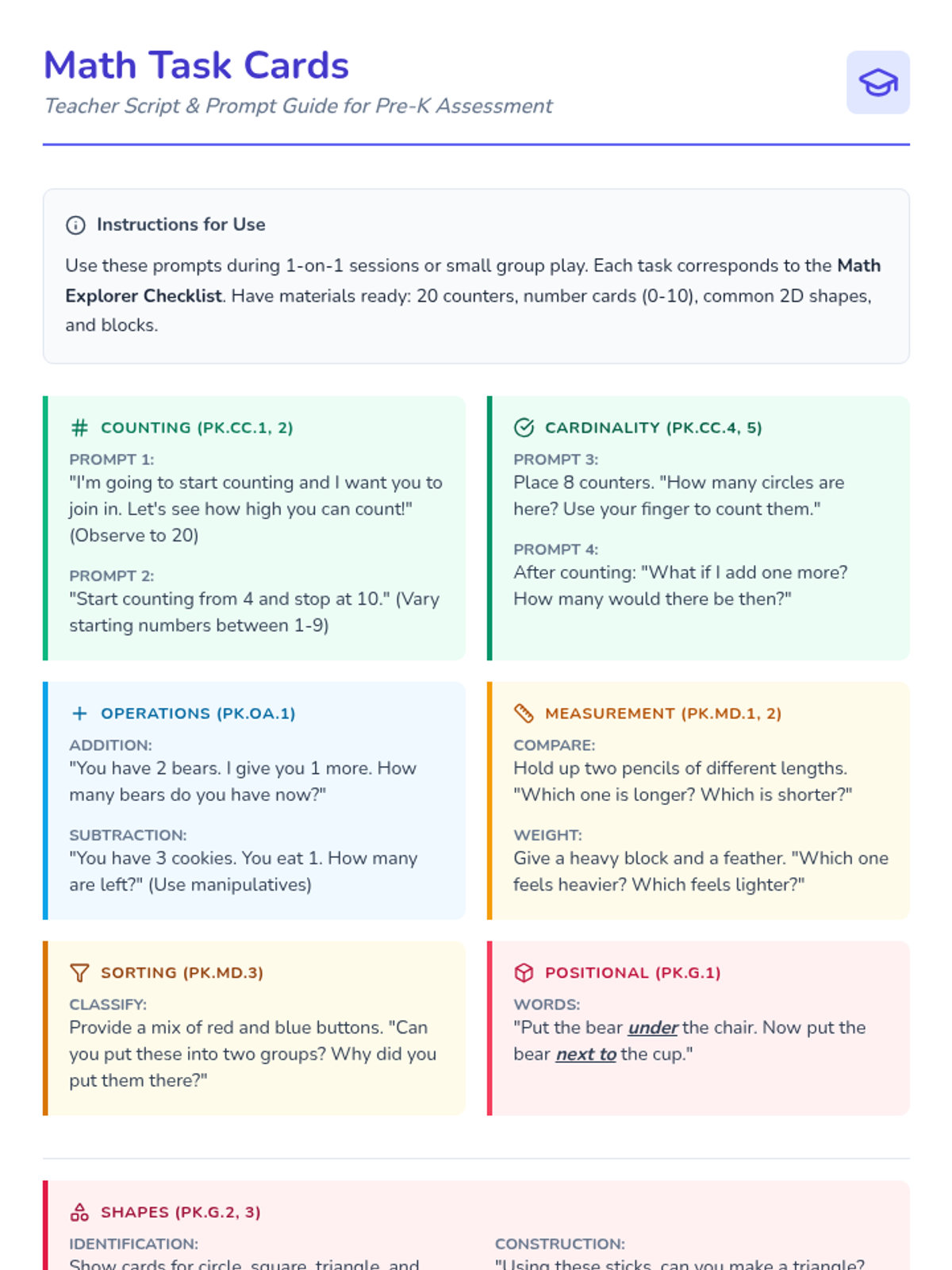
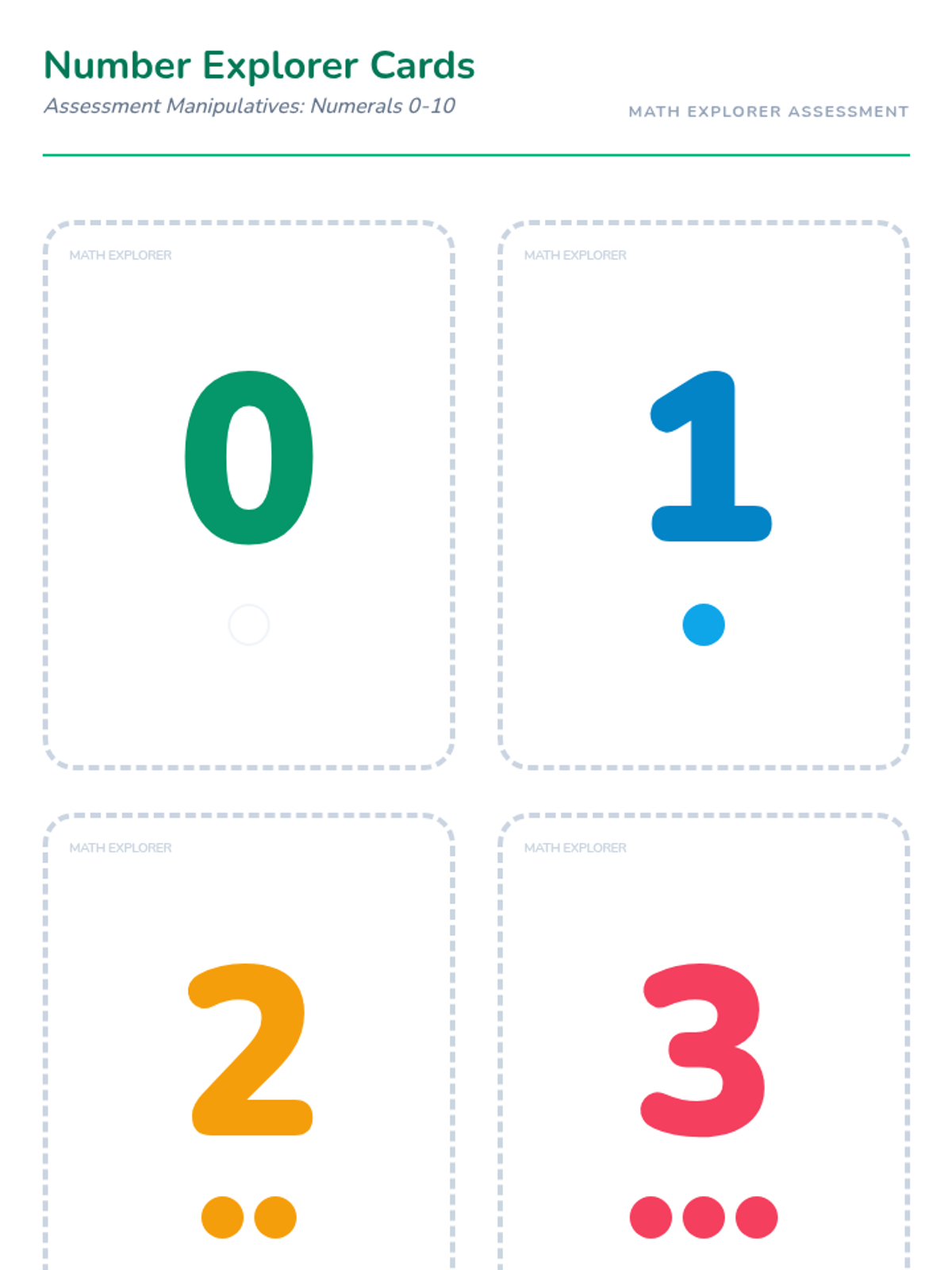
A series of assessment resources for foundational mathematics based on the Massachusetts Curriculum Frameworks, spanning Pre-K and early elementary grades.
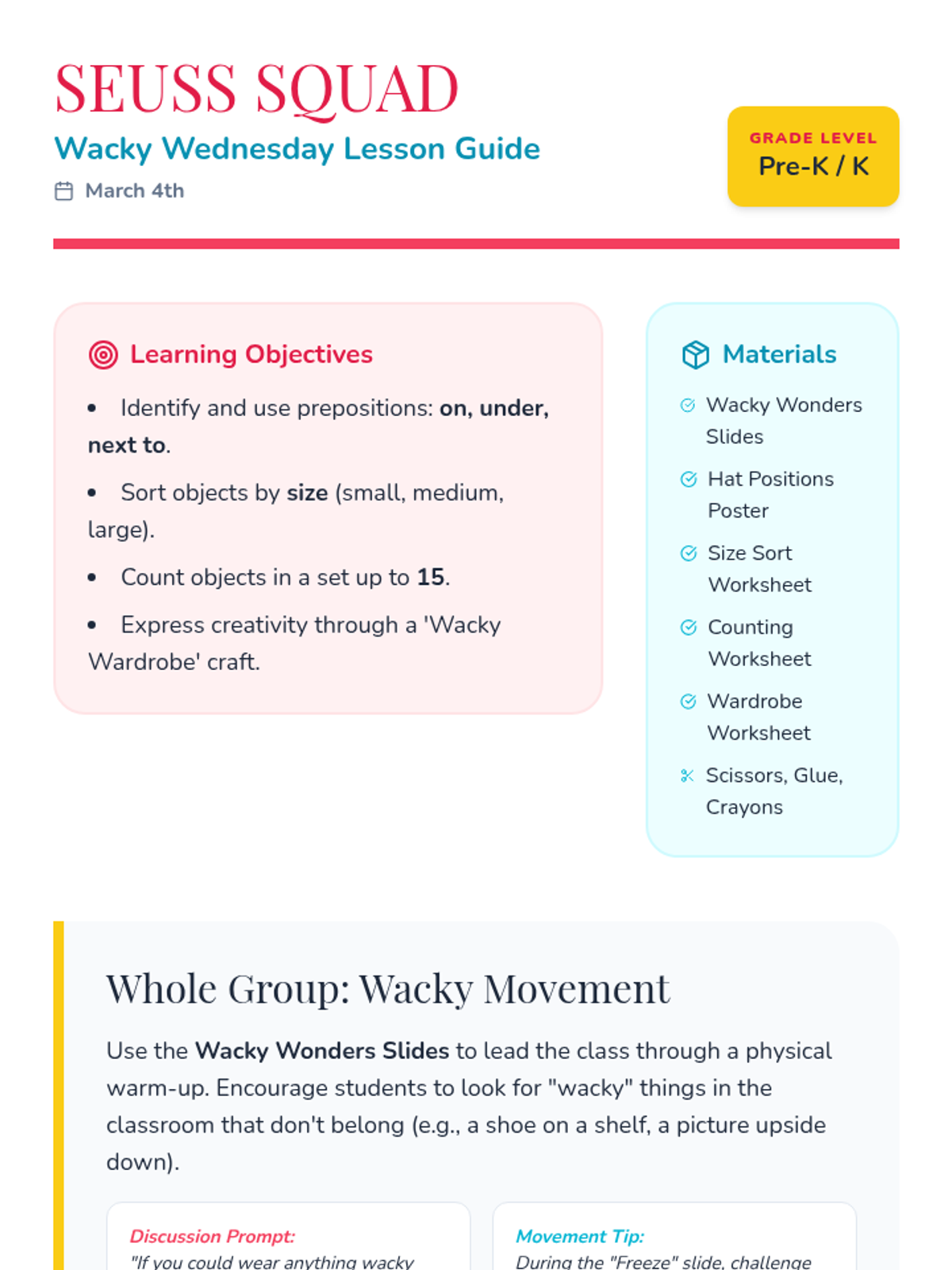
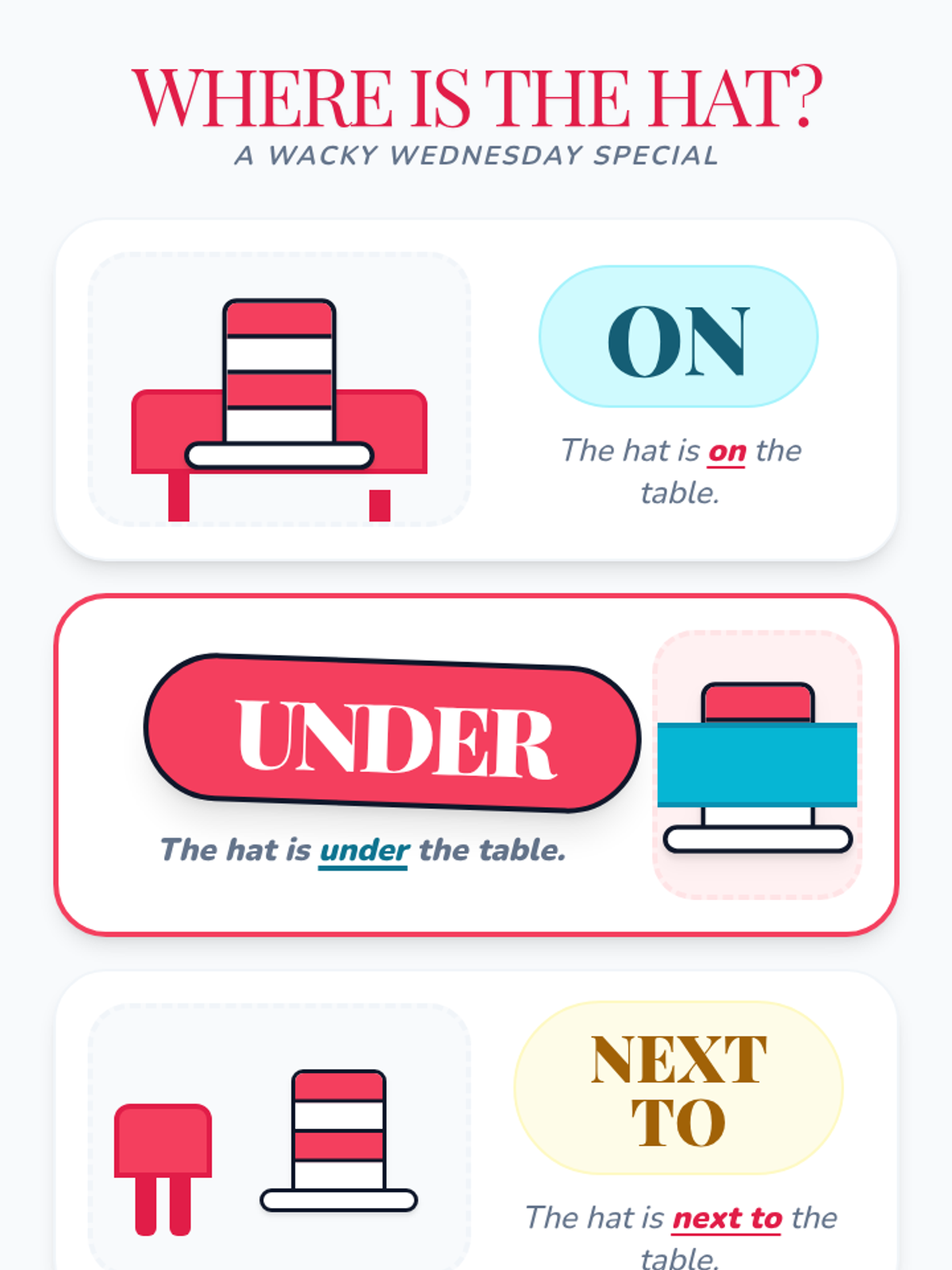
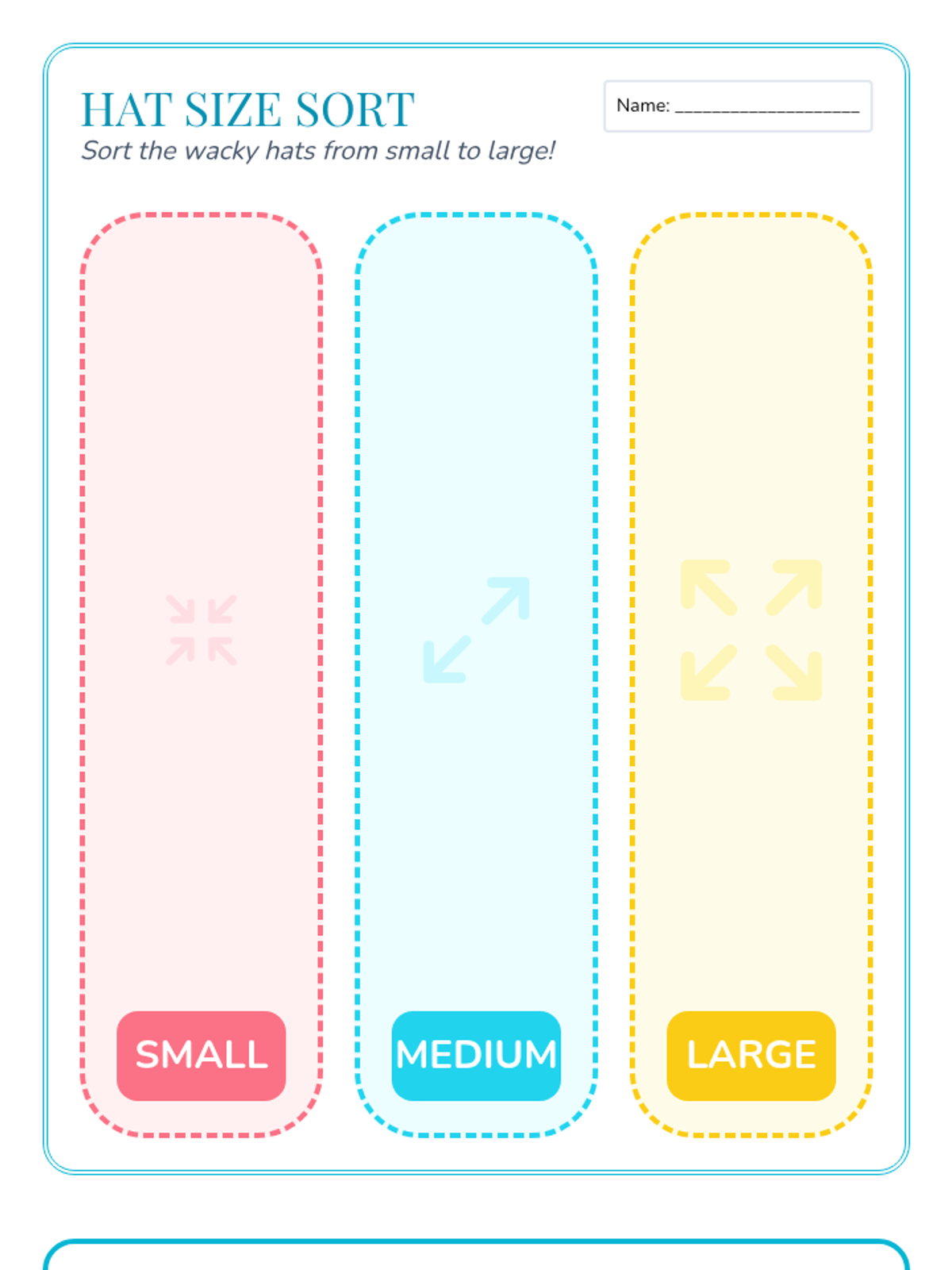
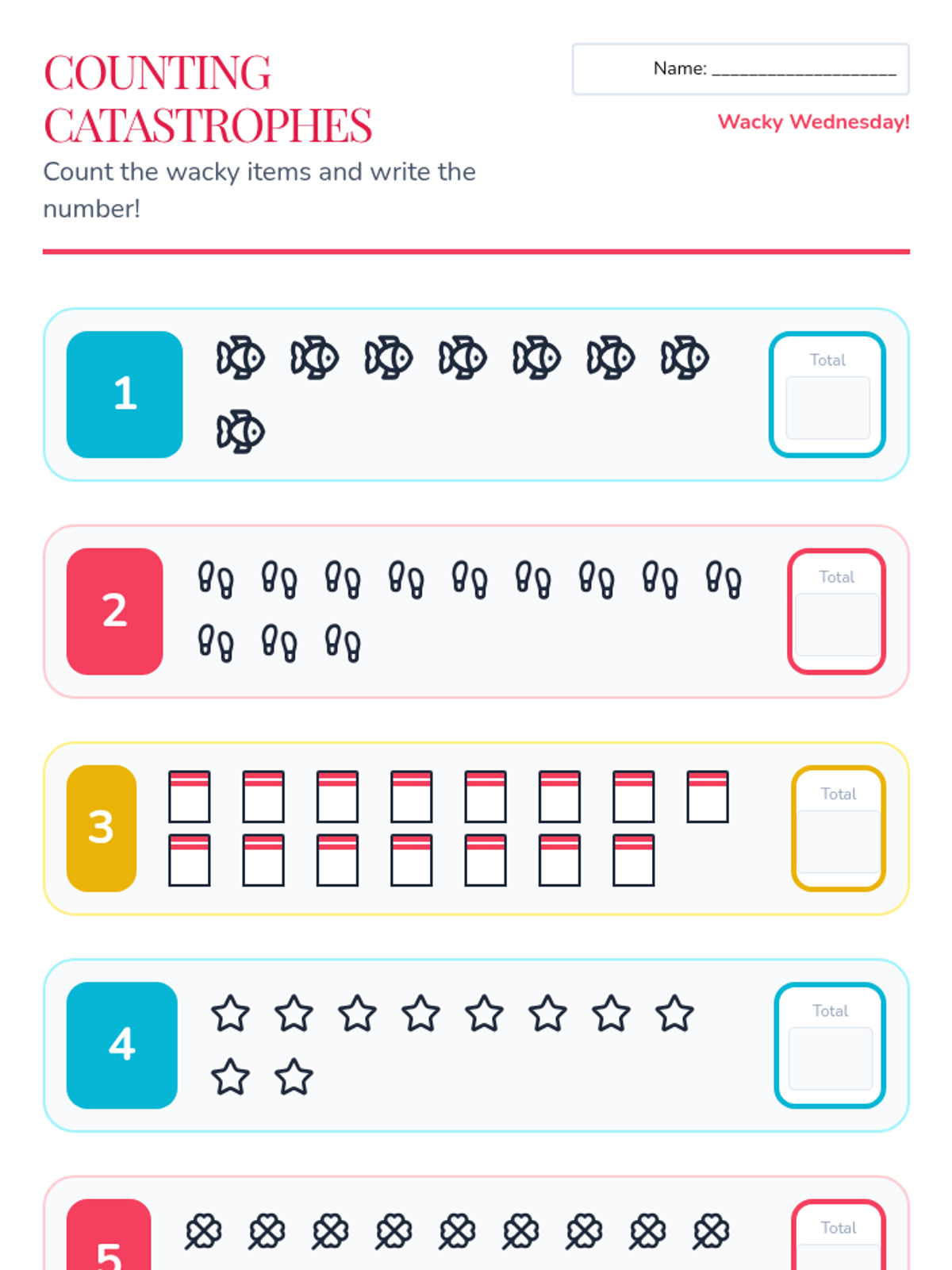
A Dr. Seuss-themed unit focusing on 'Wacky Wednesday' with a focus on counting, size sorting, prepositions, and creative expression for Pre-K and Kindergarten students.
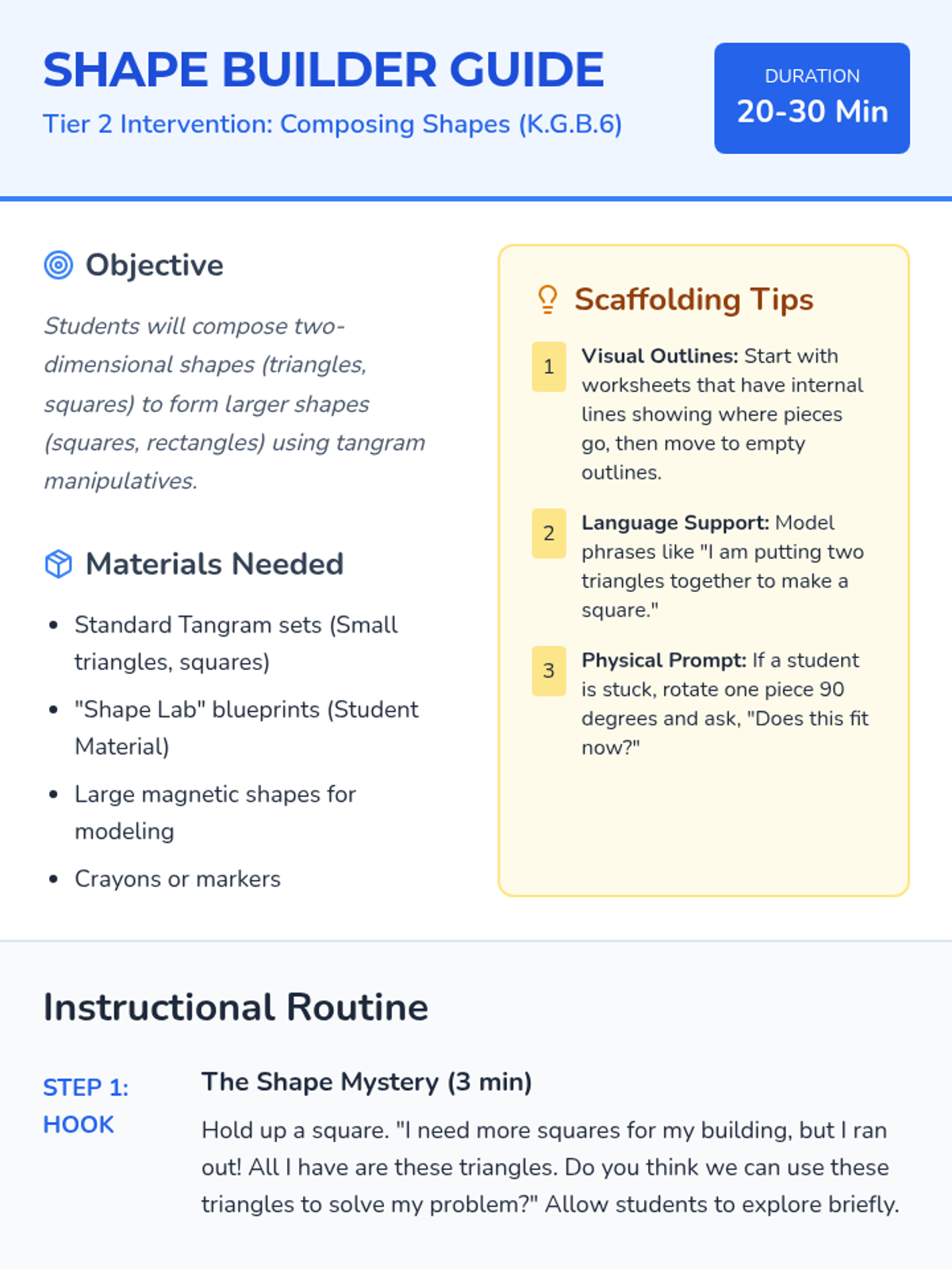
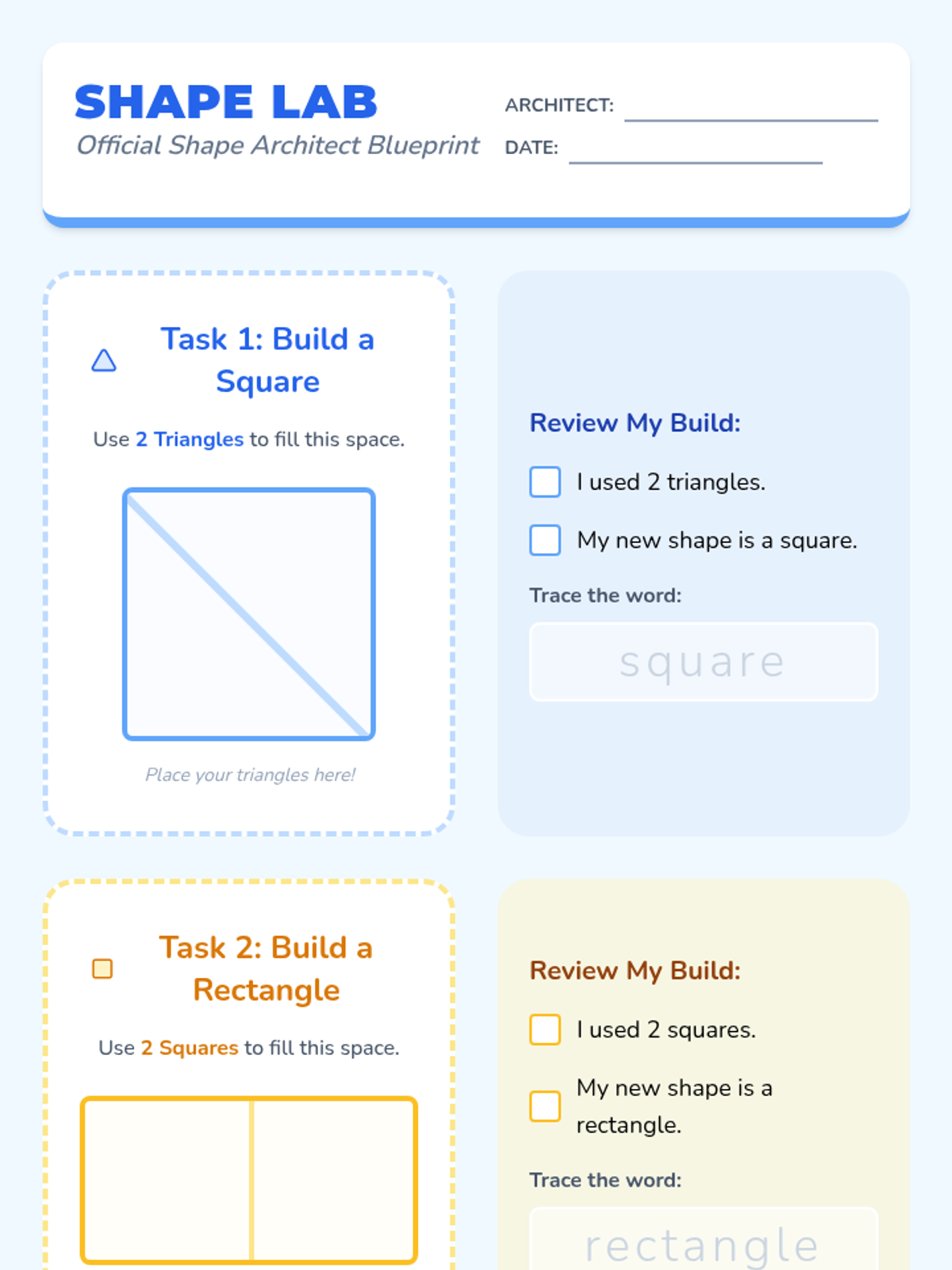
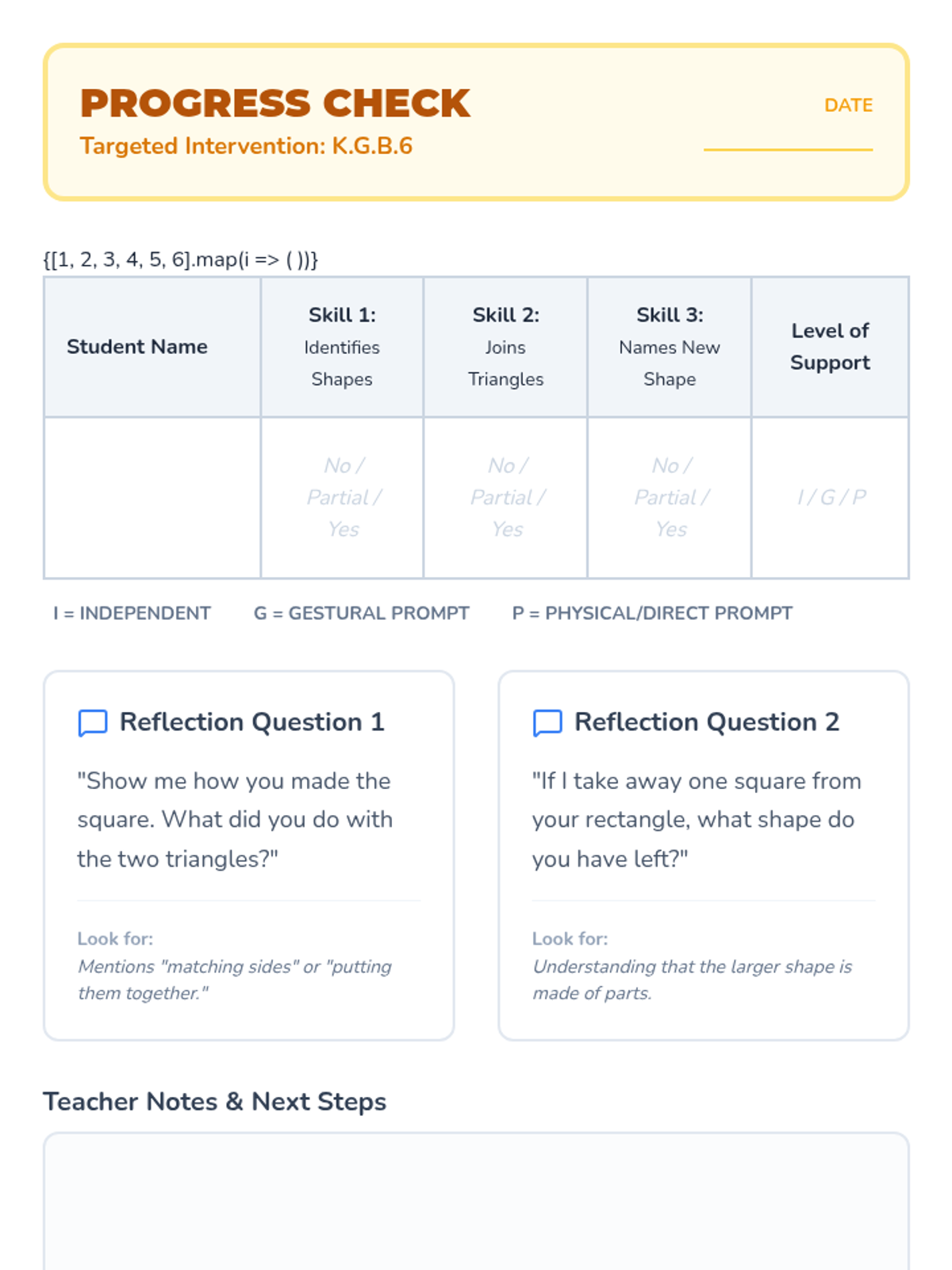
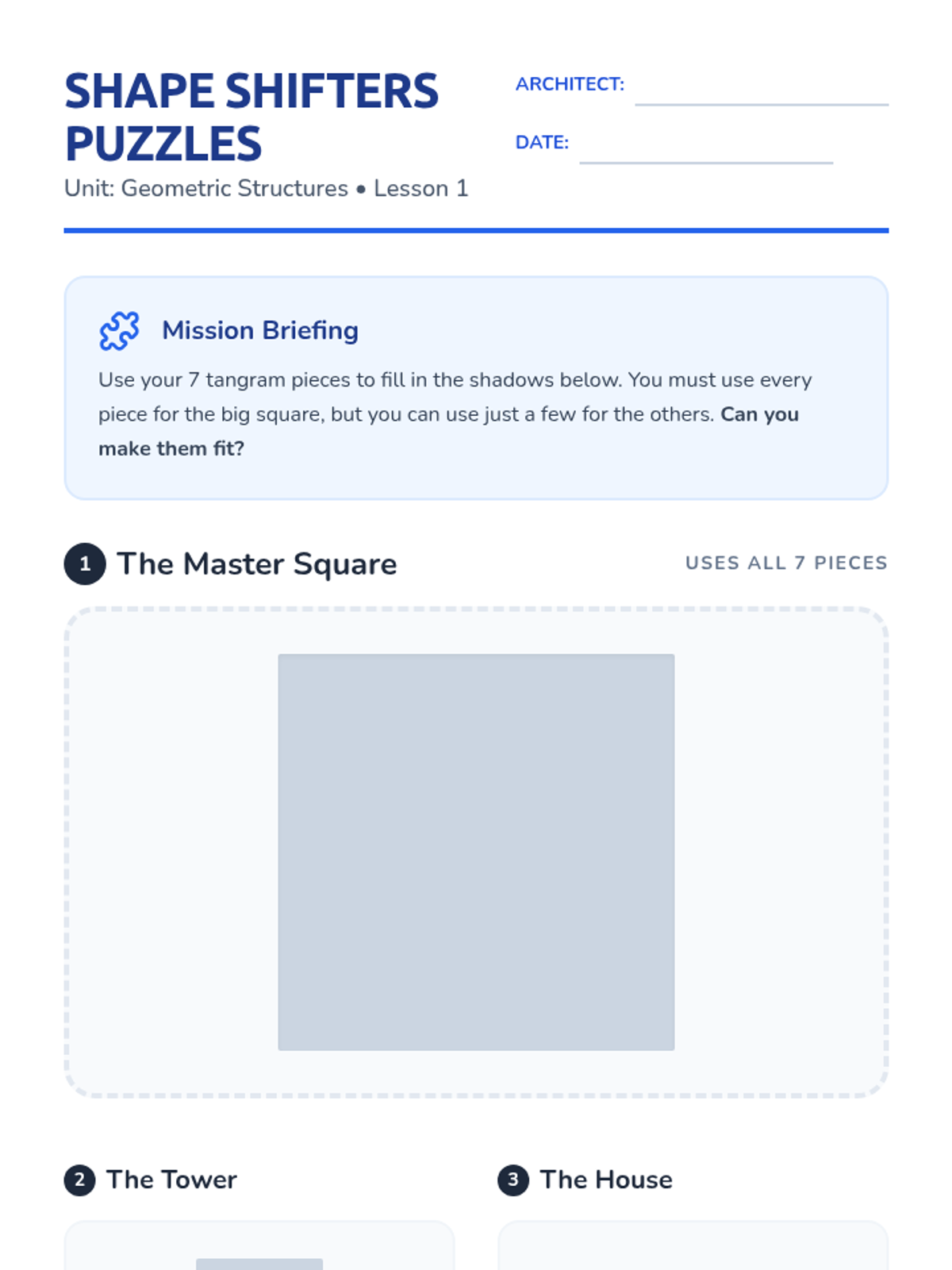
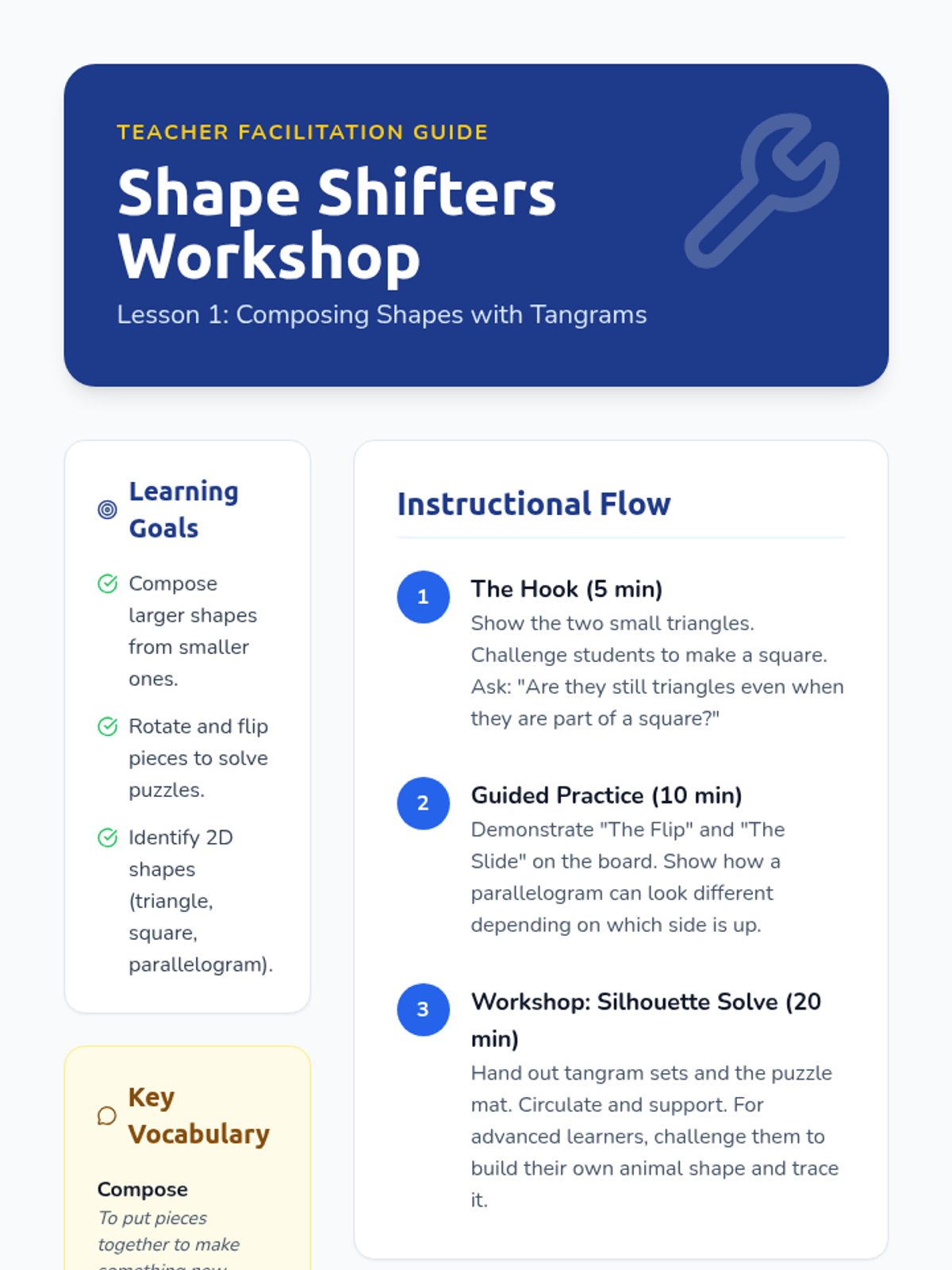
A targeted Tier 2 intervention sequence focused on helping Kindergarten students master the composition of geometric shapes using tangrams and guided discovery.
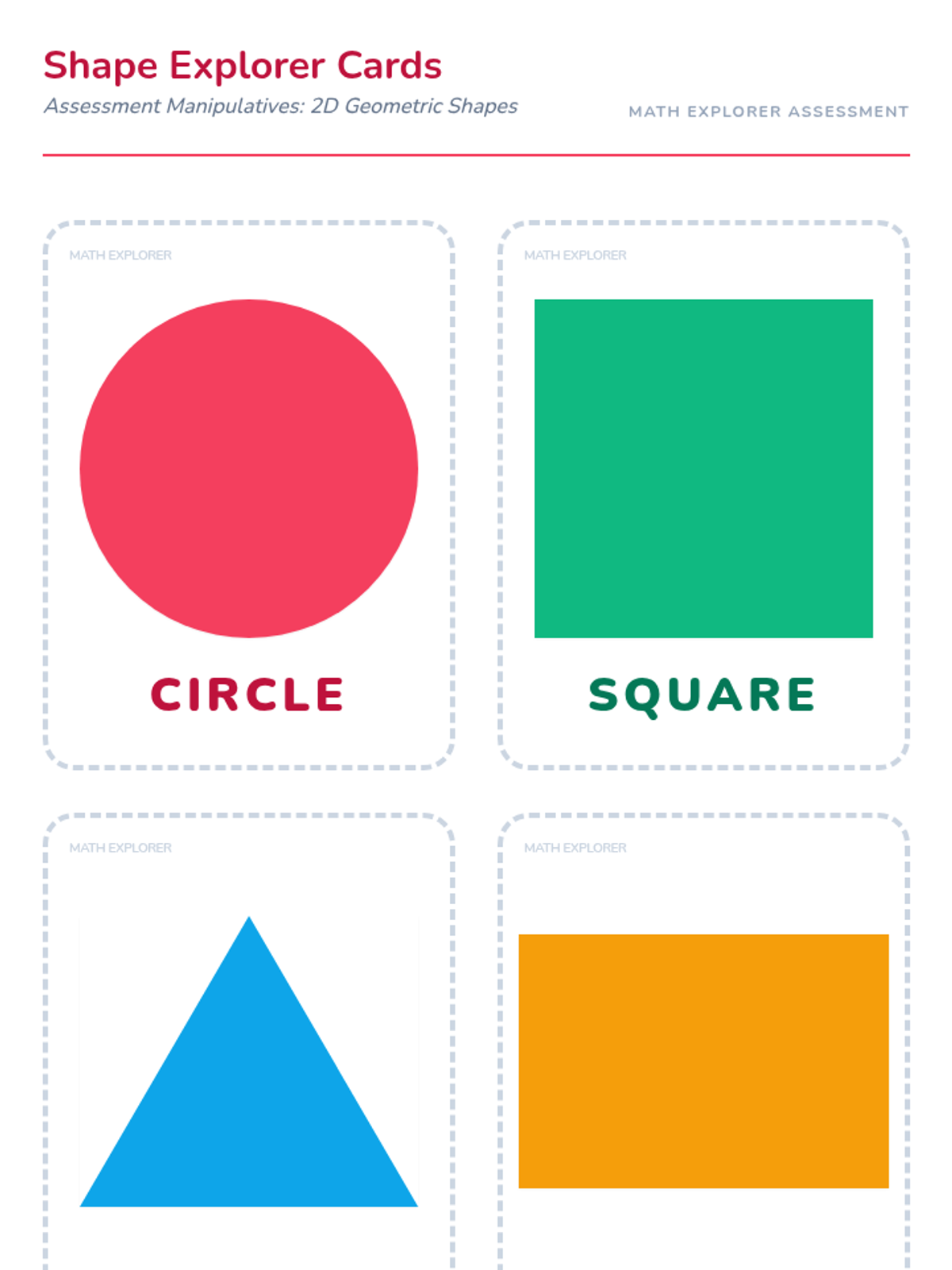
This sequence introduces Pre-K students to 2D shapes (circles, squares, rectangles, triangles) through sensory play, physical movement, and environmental exploration. Students will learn to distinguish shapes by their attributes like sides and corners.
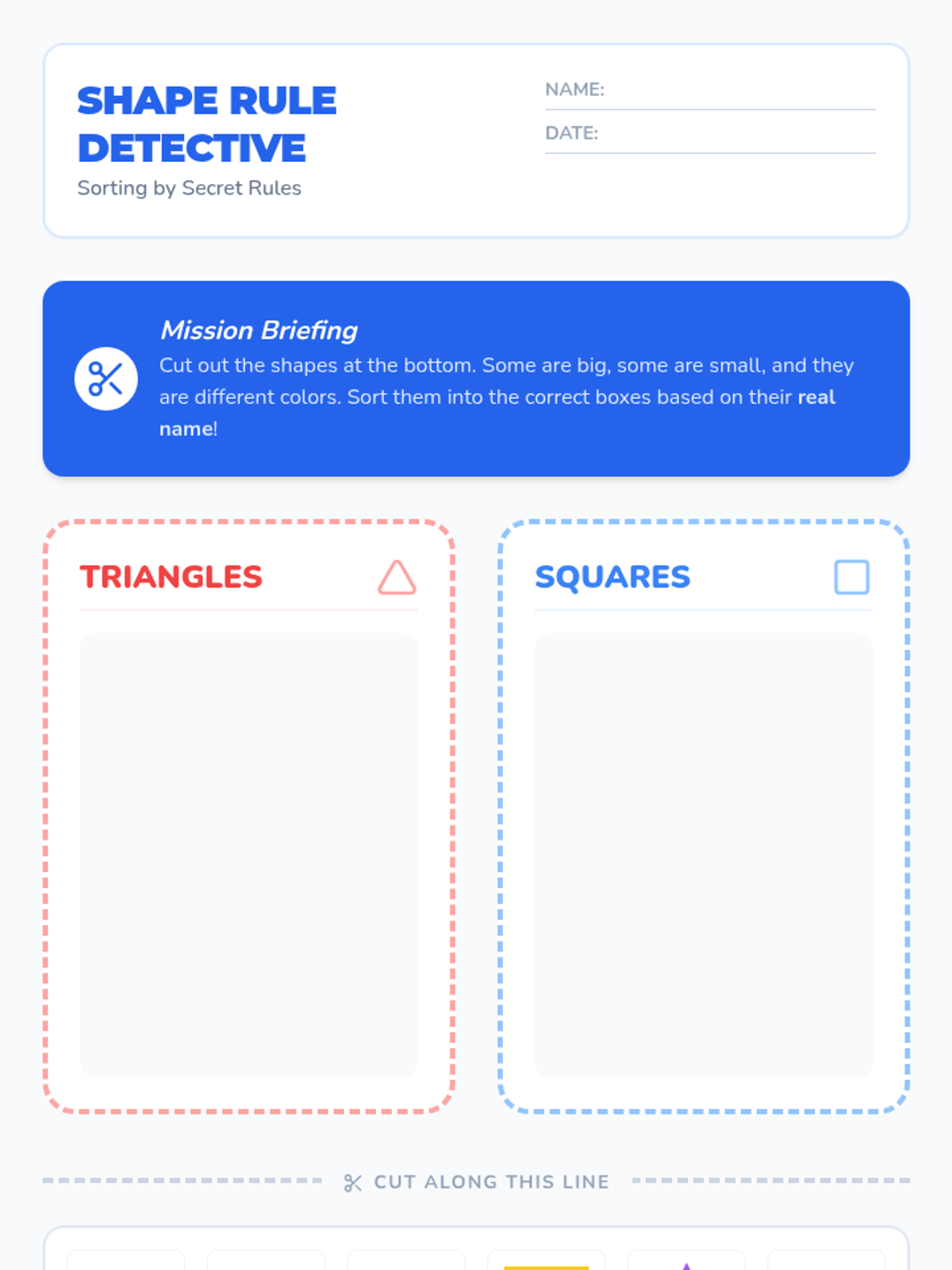
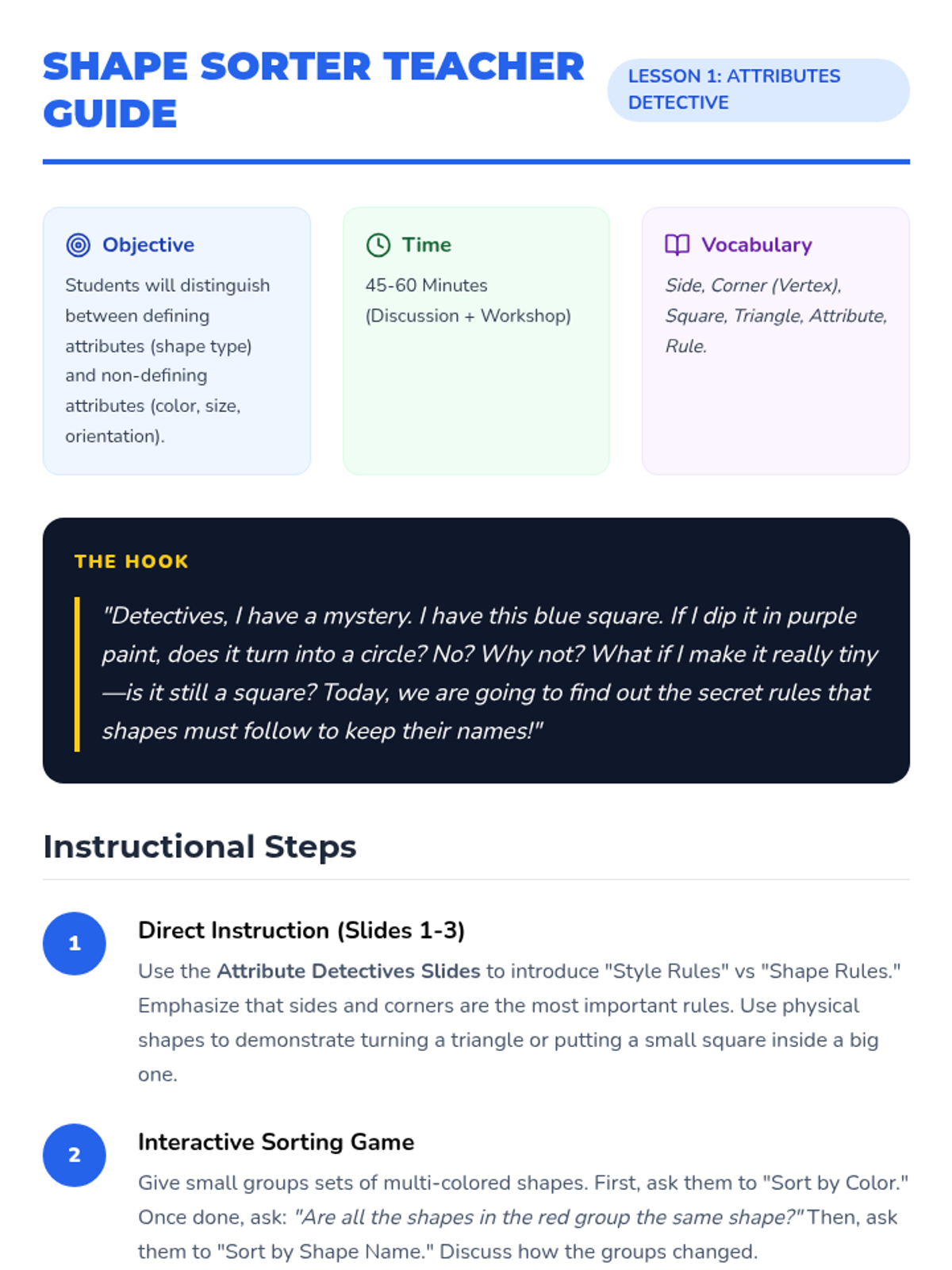
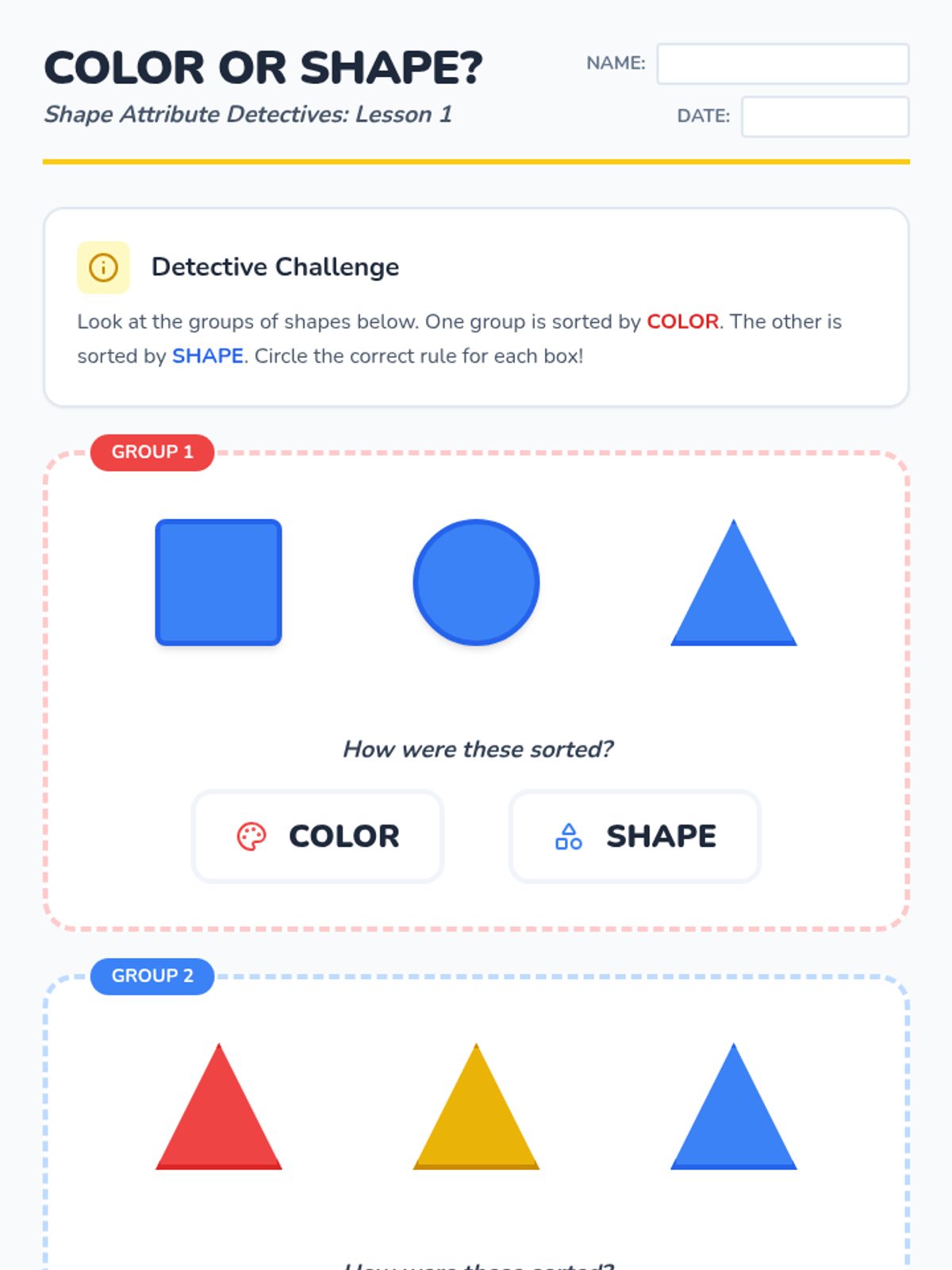
A Kindergarten sequence focusing on higher-level critical thinking skills by asking students to classify, sort, and analyze shapes based on defining versus non-defining attributes. Students explore why color and size do not change a shape's name, while the number of sides and vertices do, and conclude with a mystery analysis challenge.
This Kindergarten sequence explores the intersection of geometry and engineering. Students learn to compose and decompose 2D shapes before applying those principles to 3D structural stability, culminating in a collaborative project to design a geometric city.
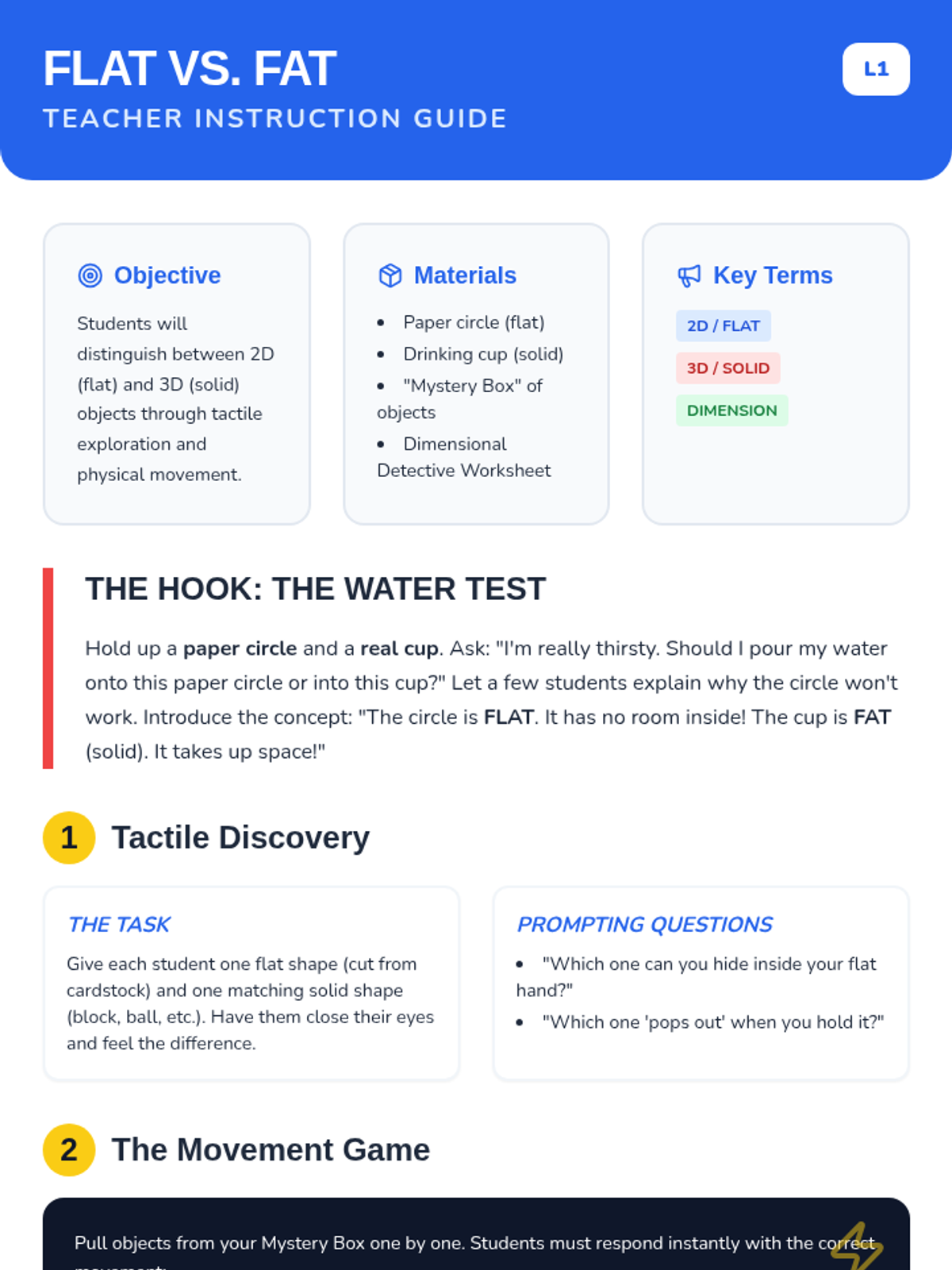
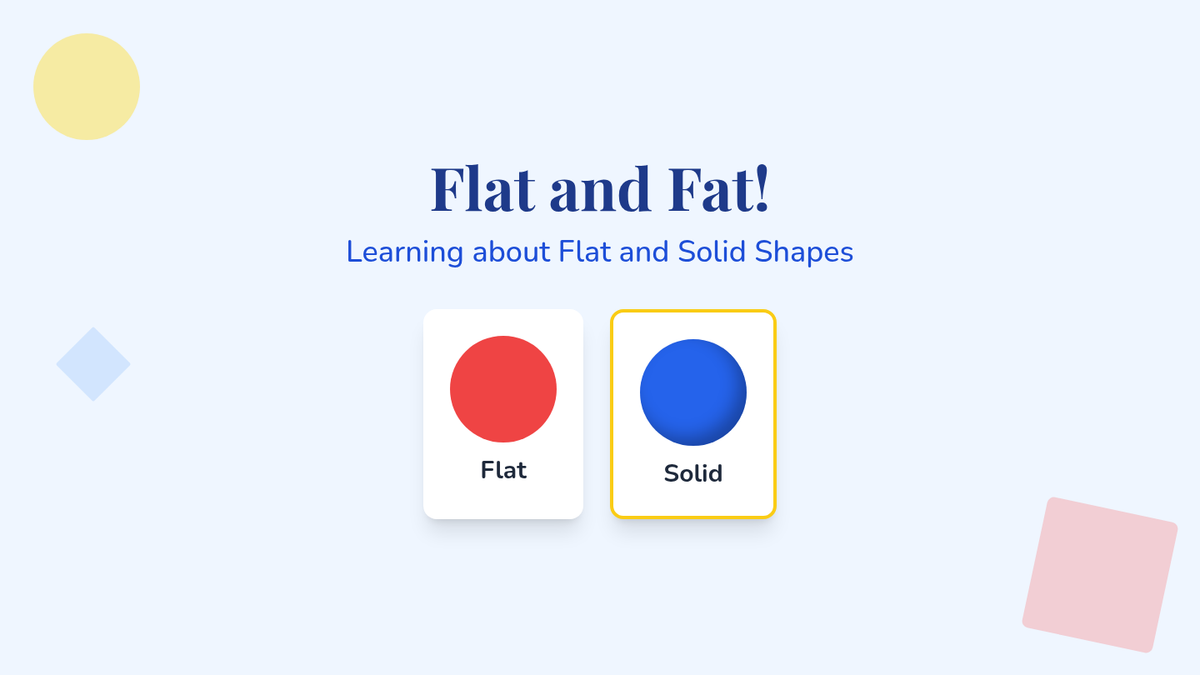
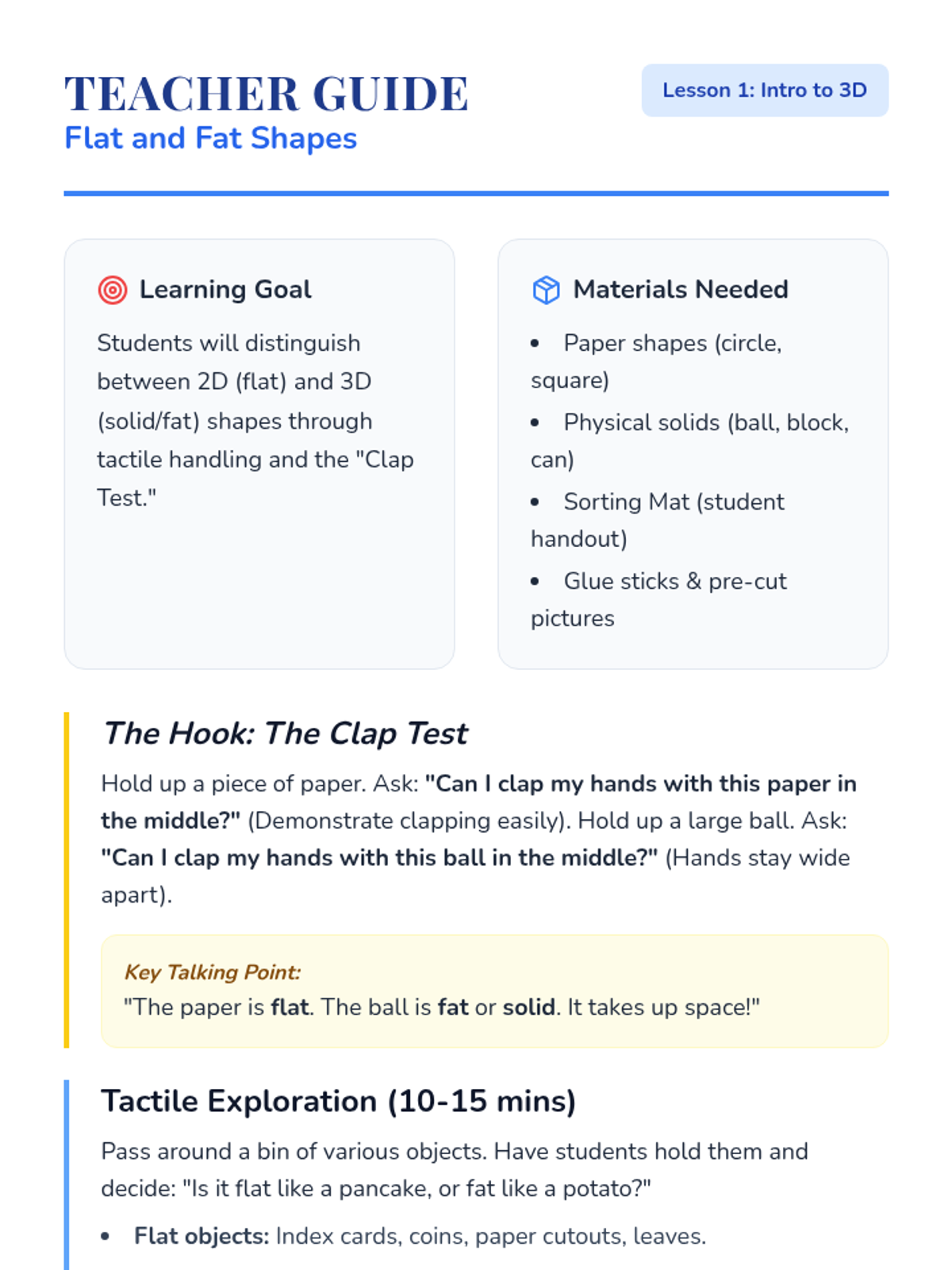
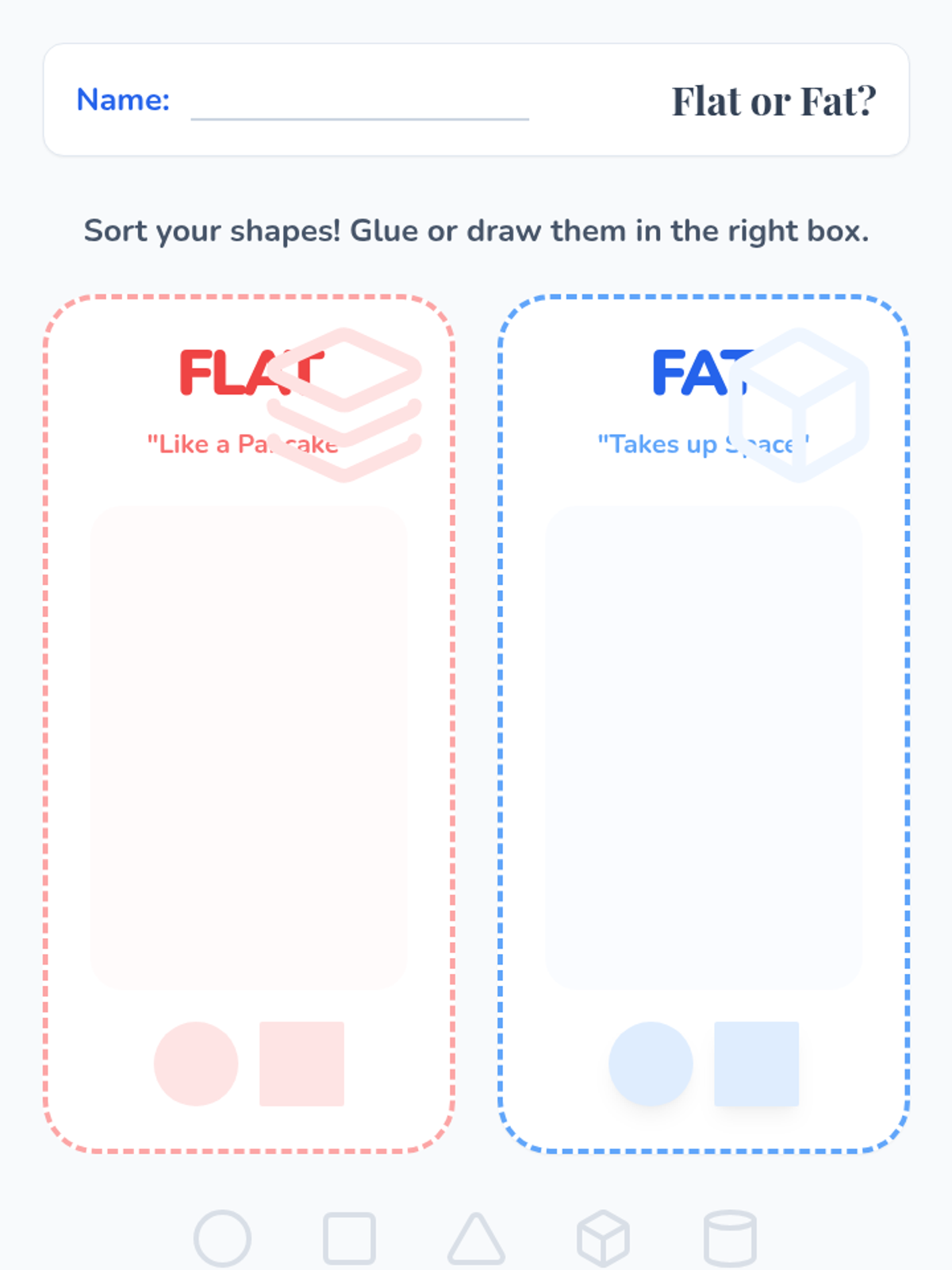
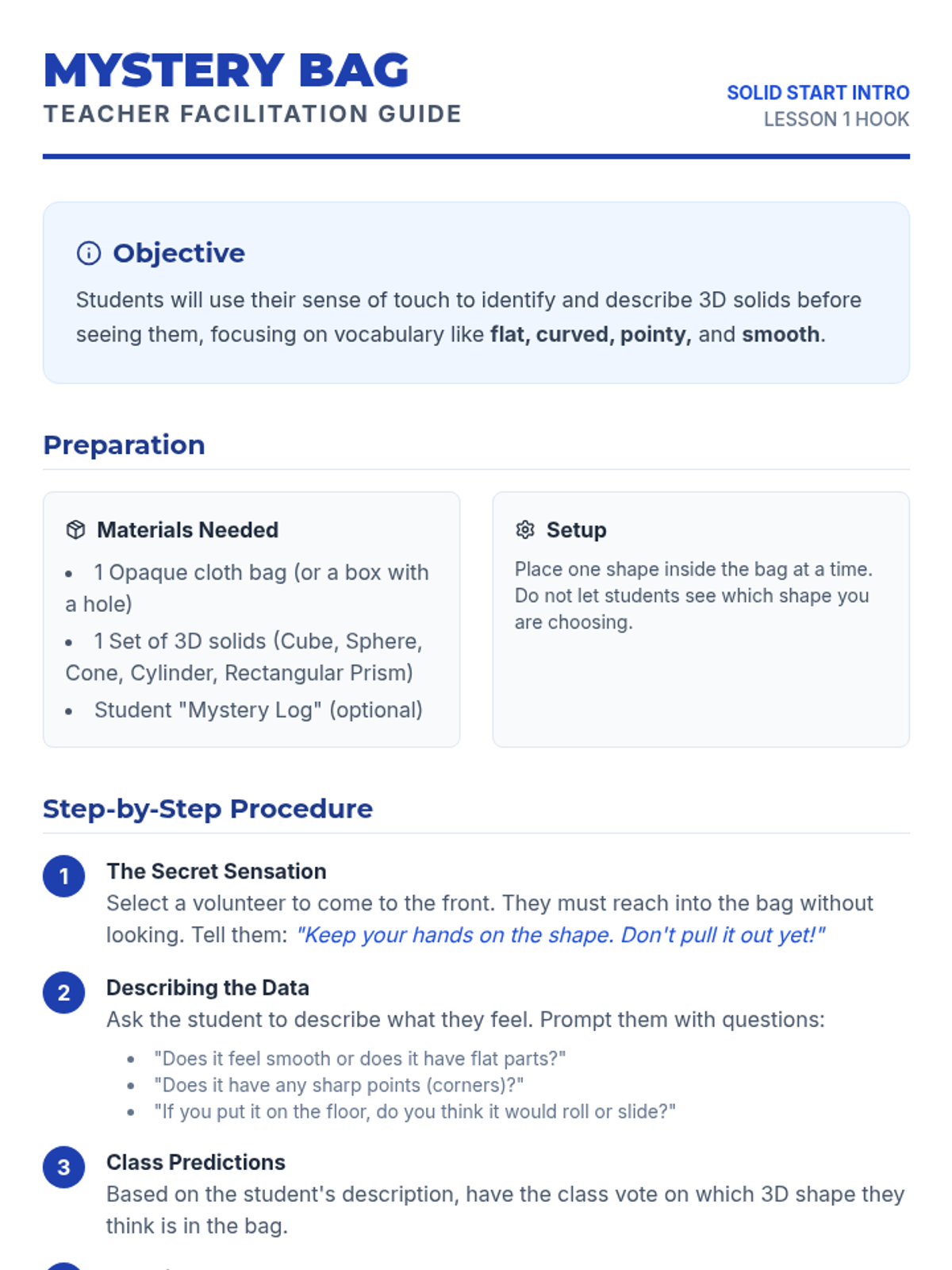
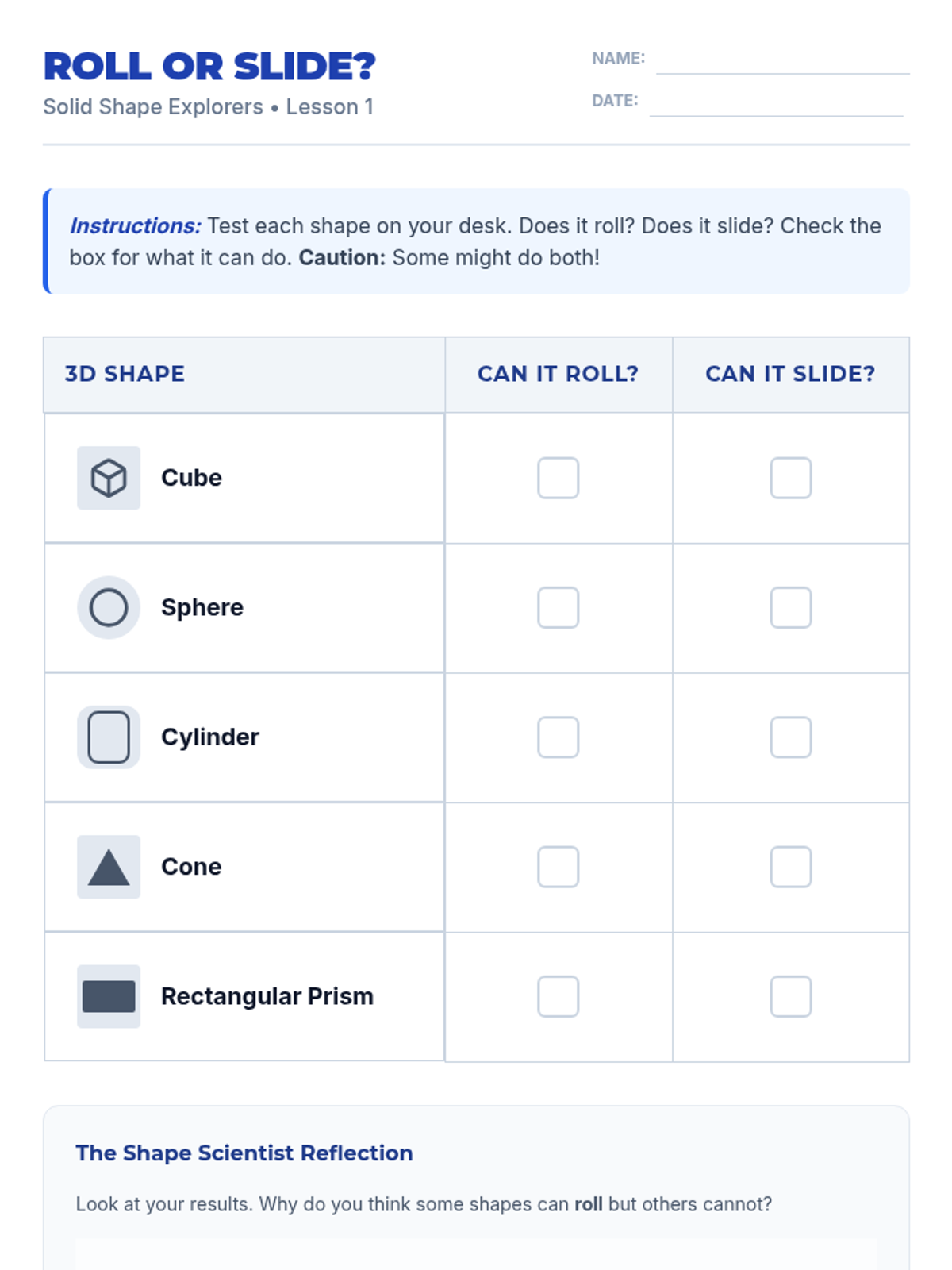
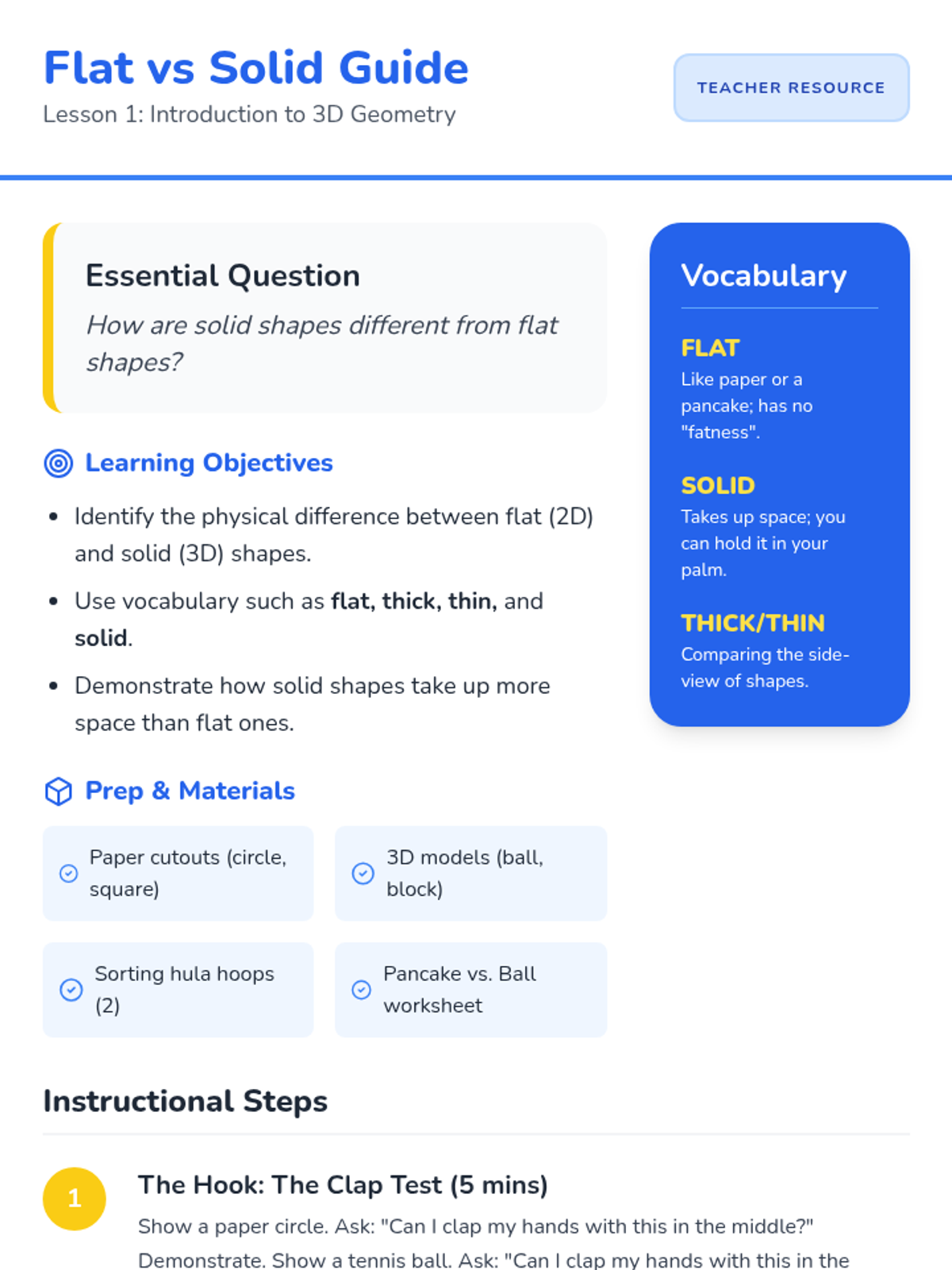
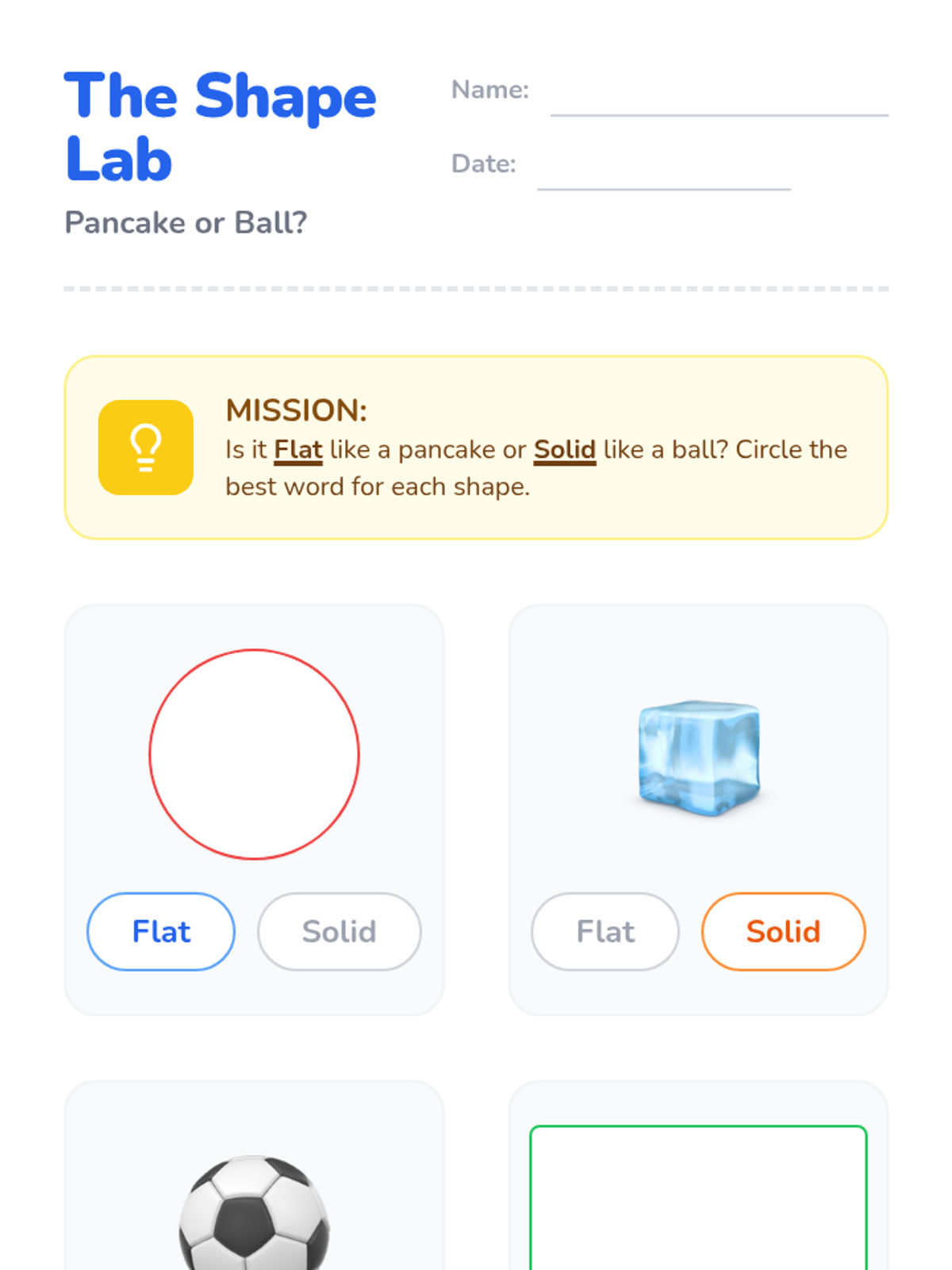
A Kindergarten physics sequence exploring the physical properties of 3D solids. Students compare flat and solid shapes, investigate movement (rolling, sliding, stacking), and identify geometric solids in the real world.
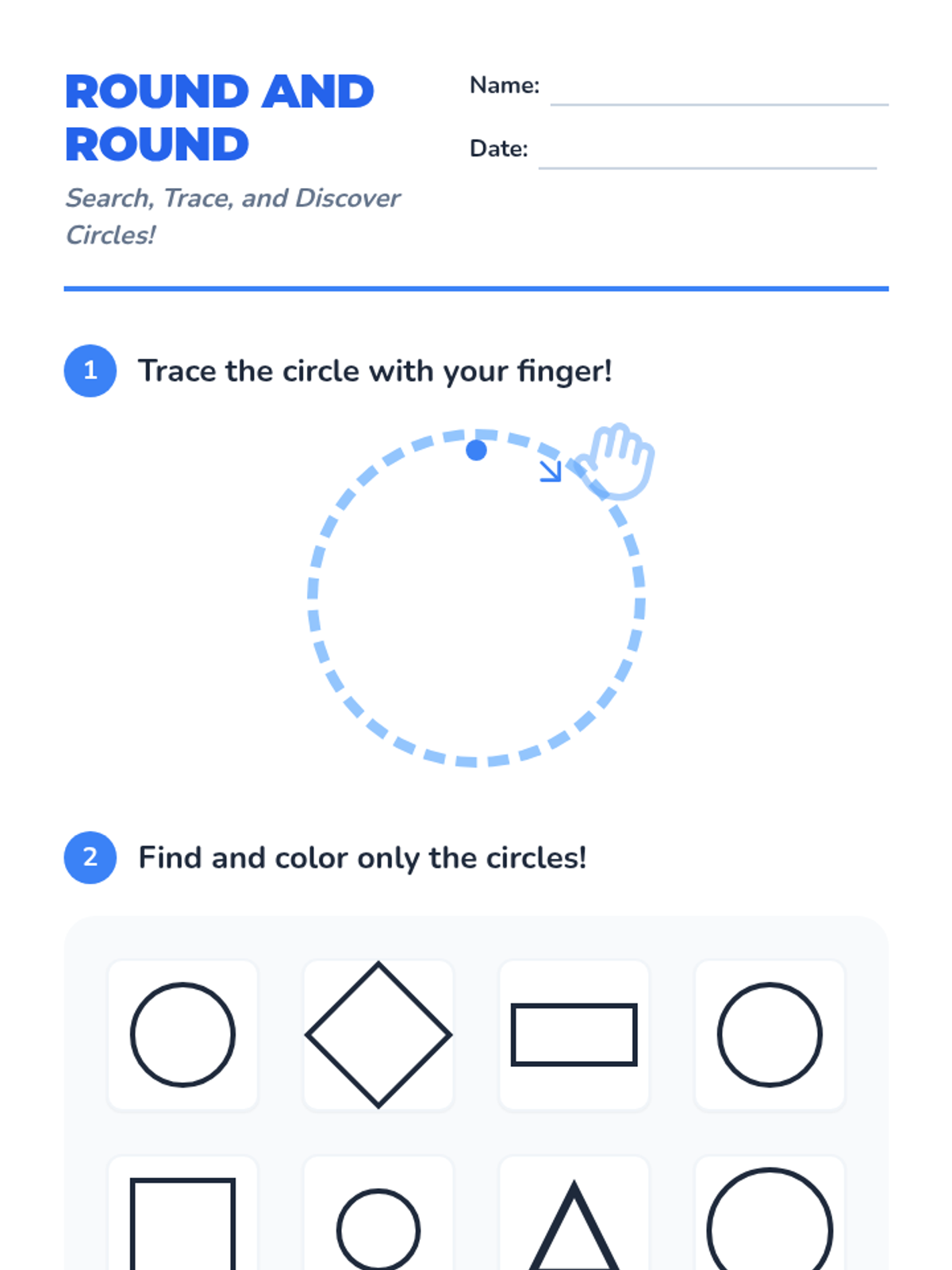
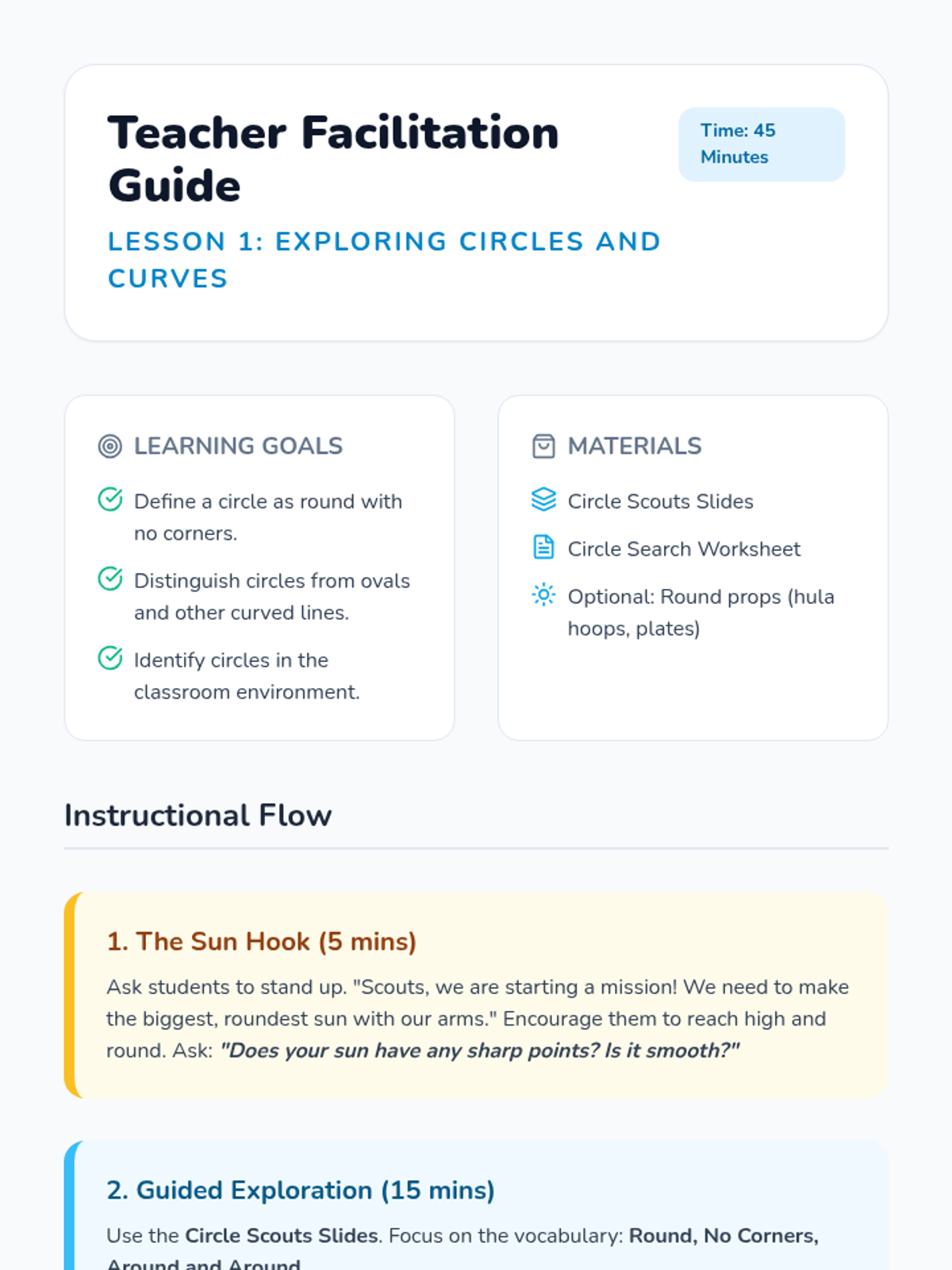
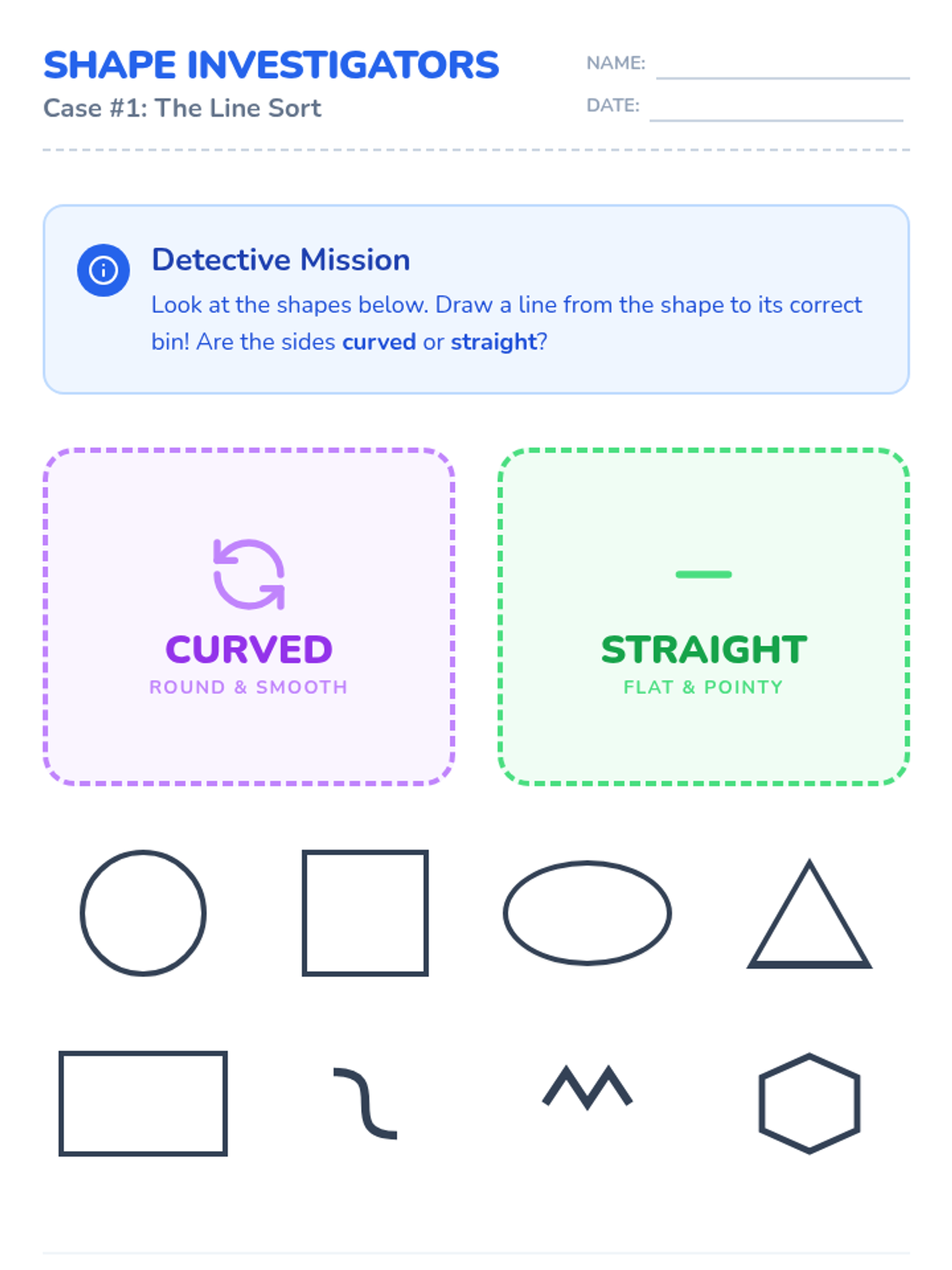
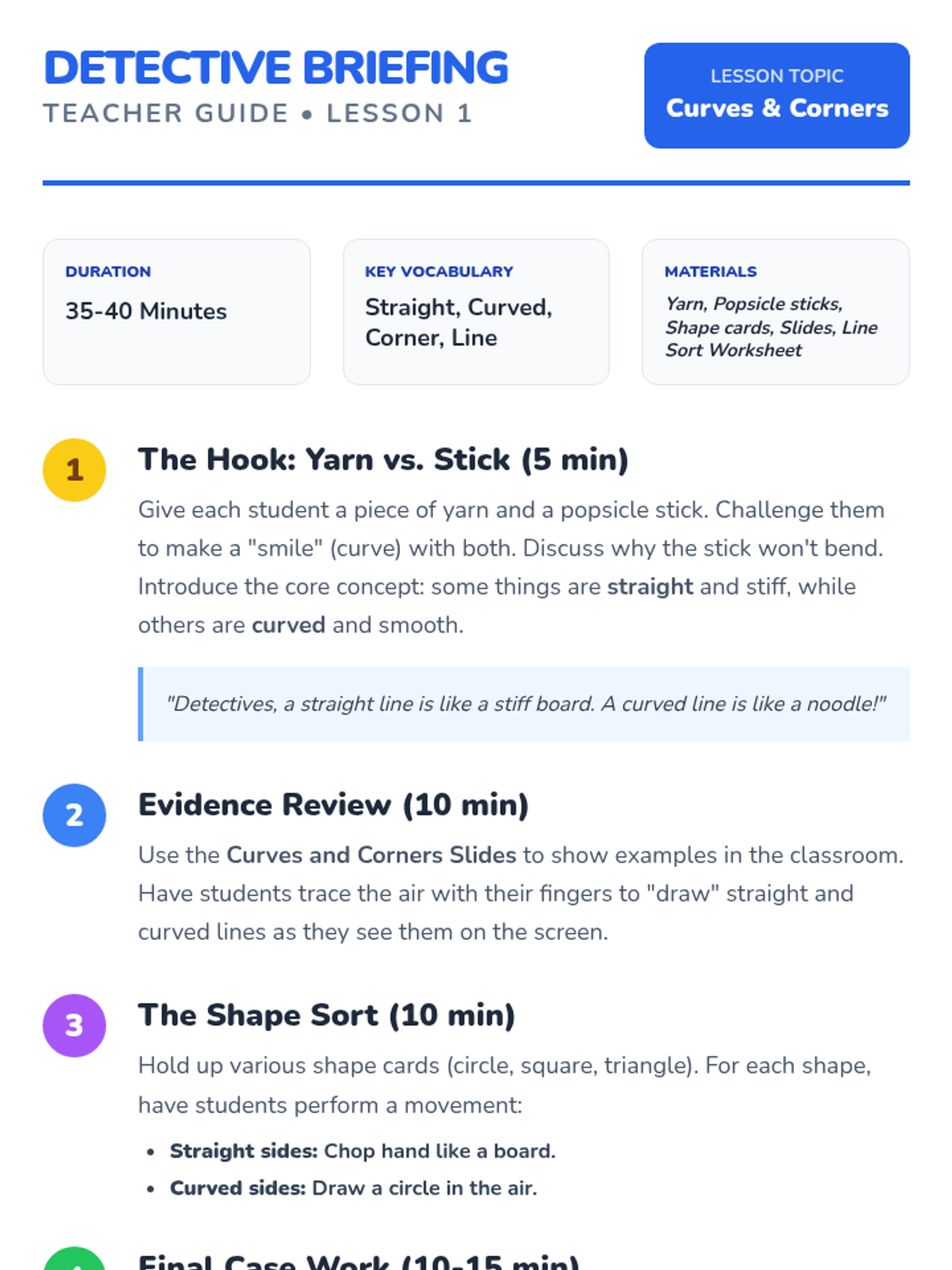
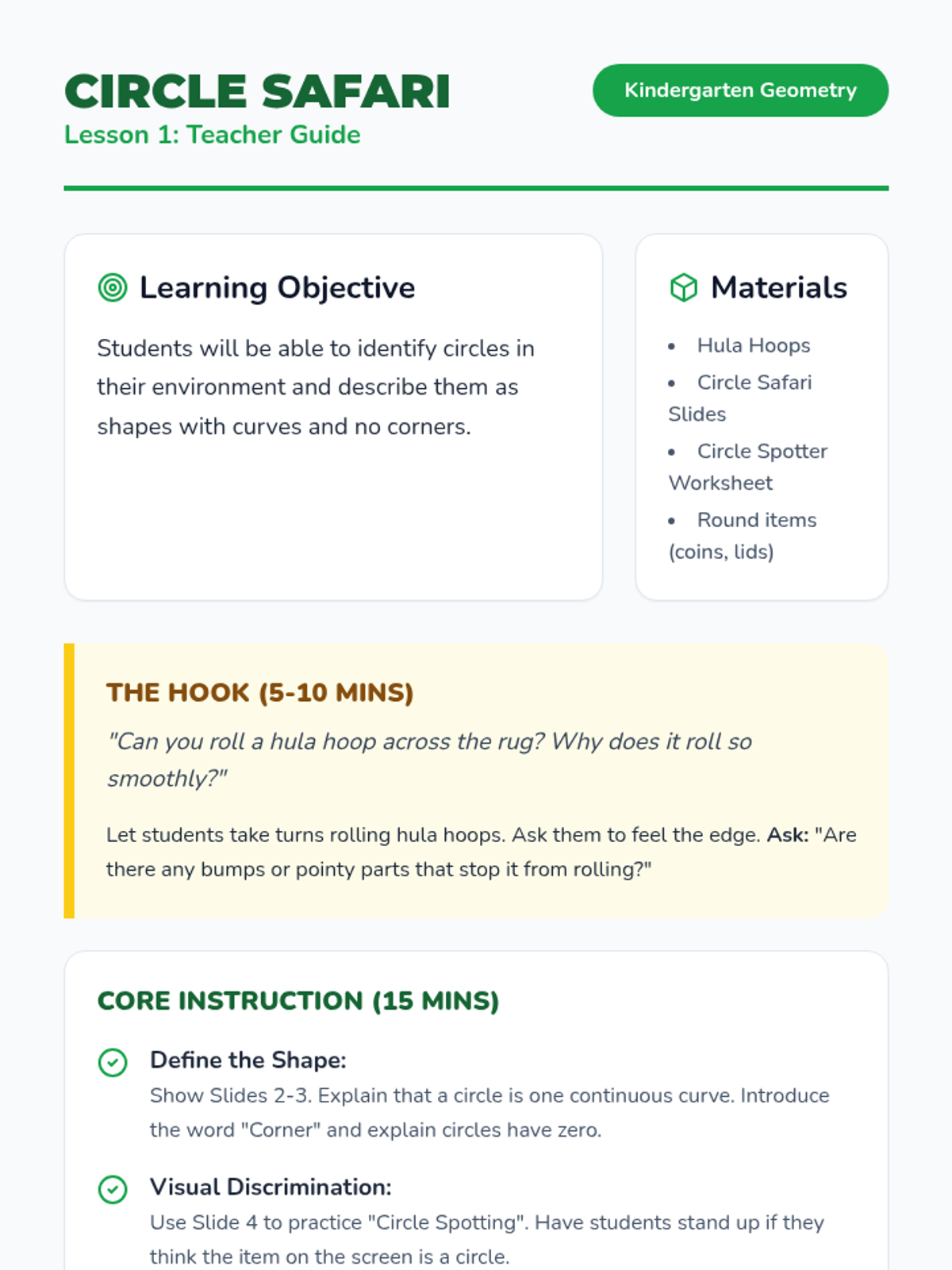
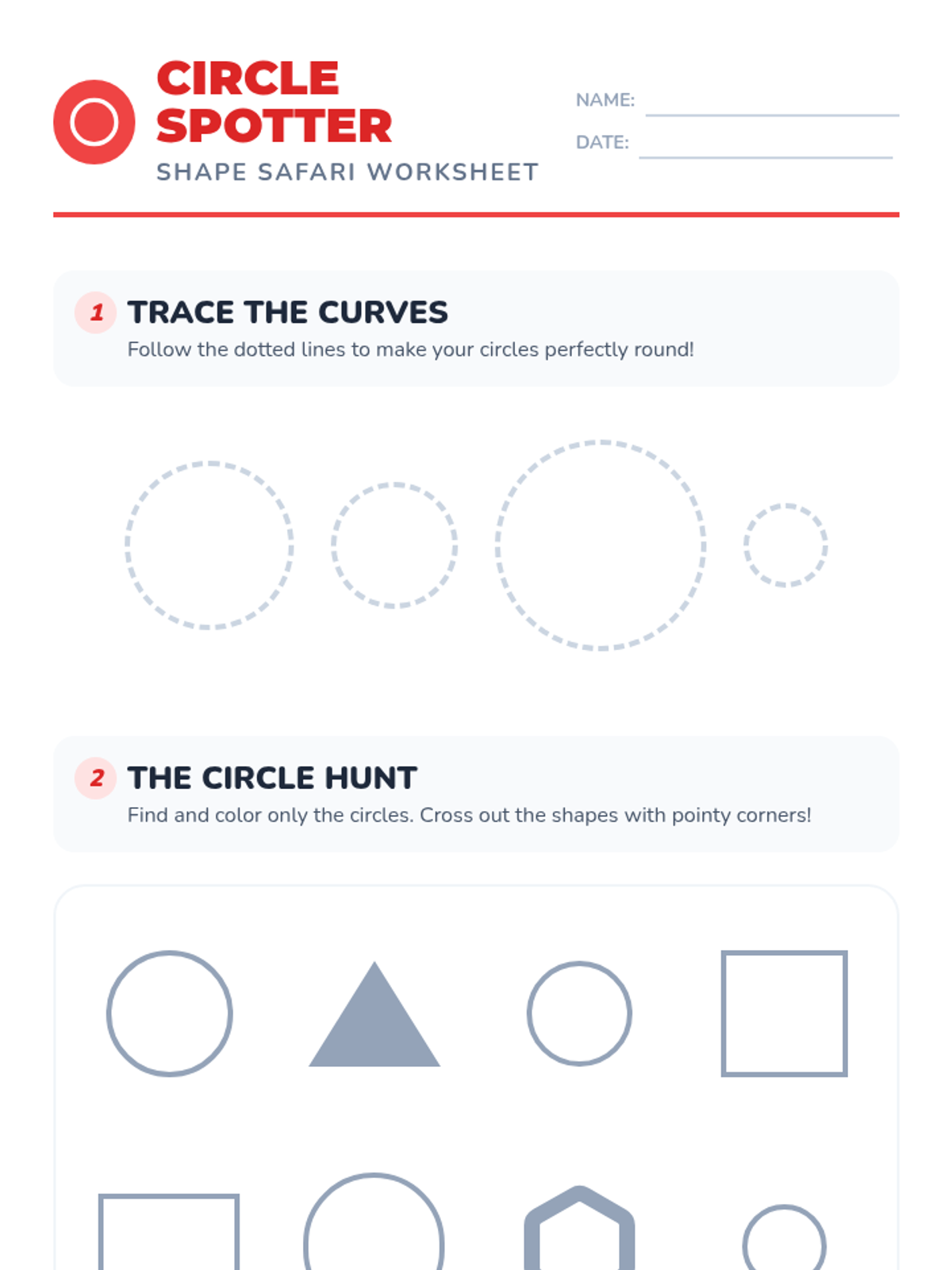
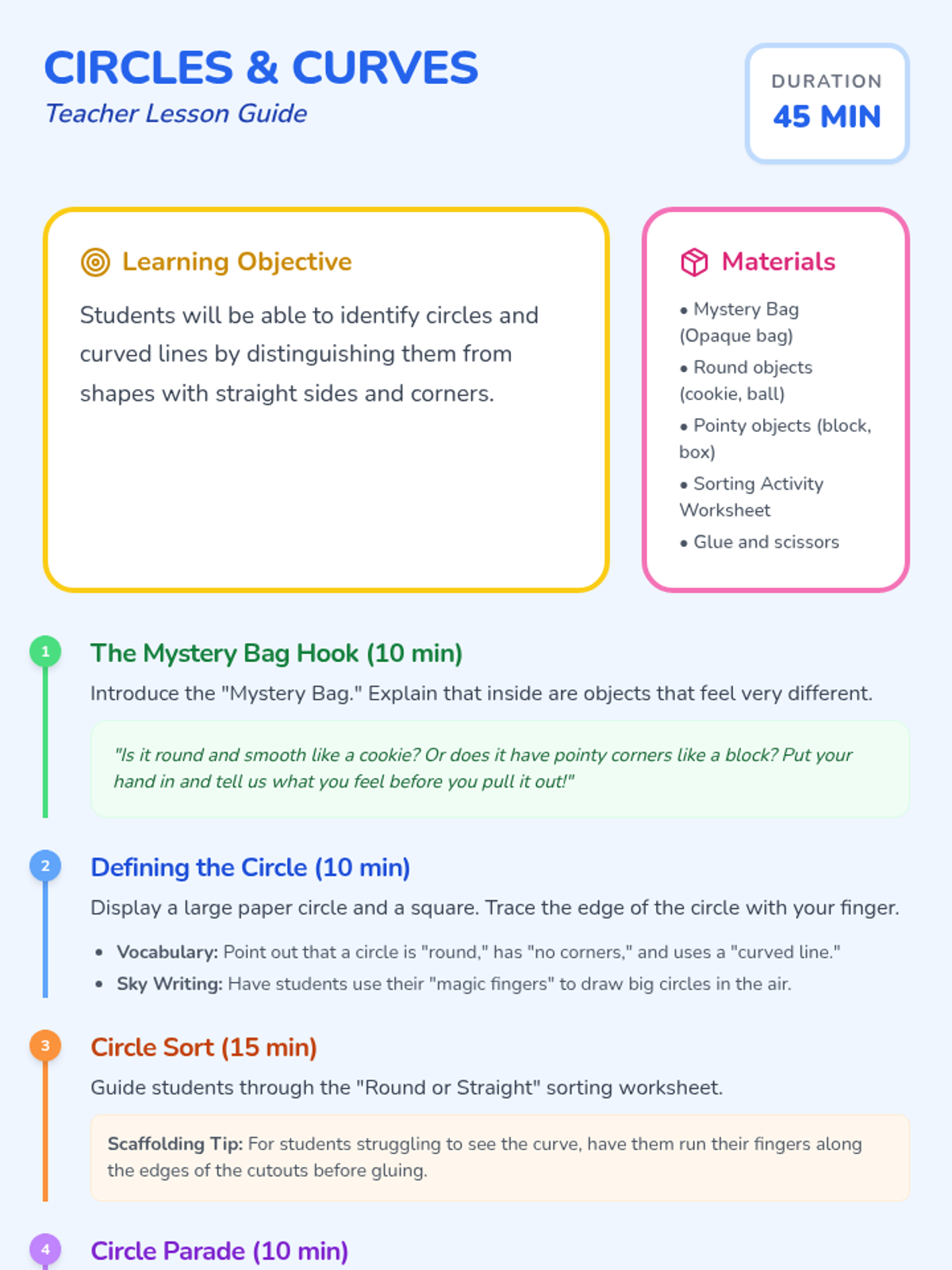
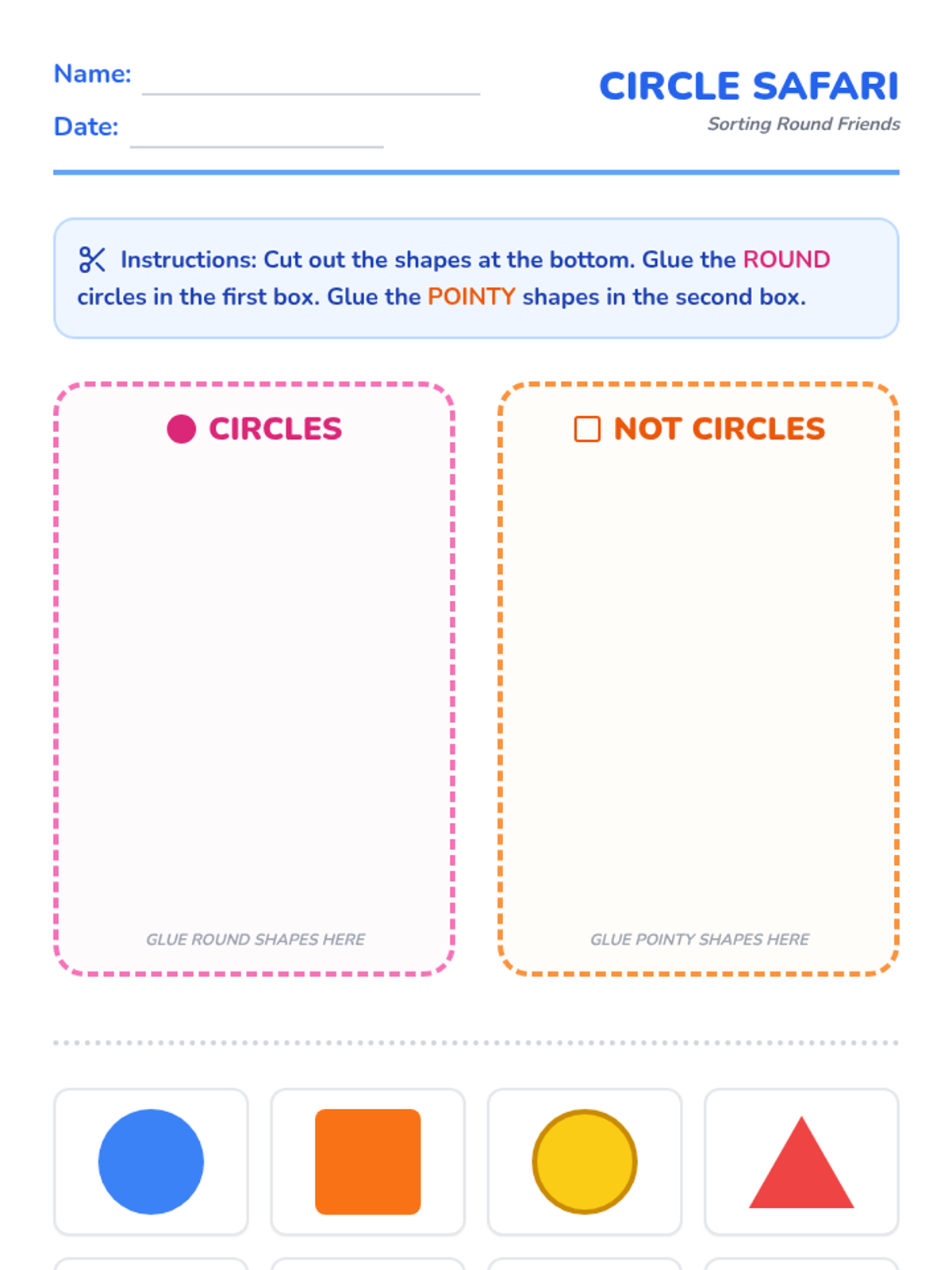
A Kindergarten sequence focused on the fundamental properties of 2D shapes, starting with the distinction between curves and straight lines and progressing to identifying triangles, quadrilaterals, circles, and hexagons by their attributes.
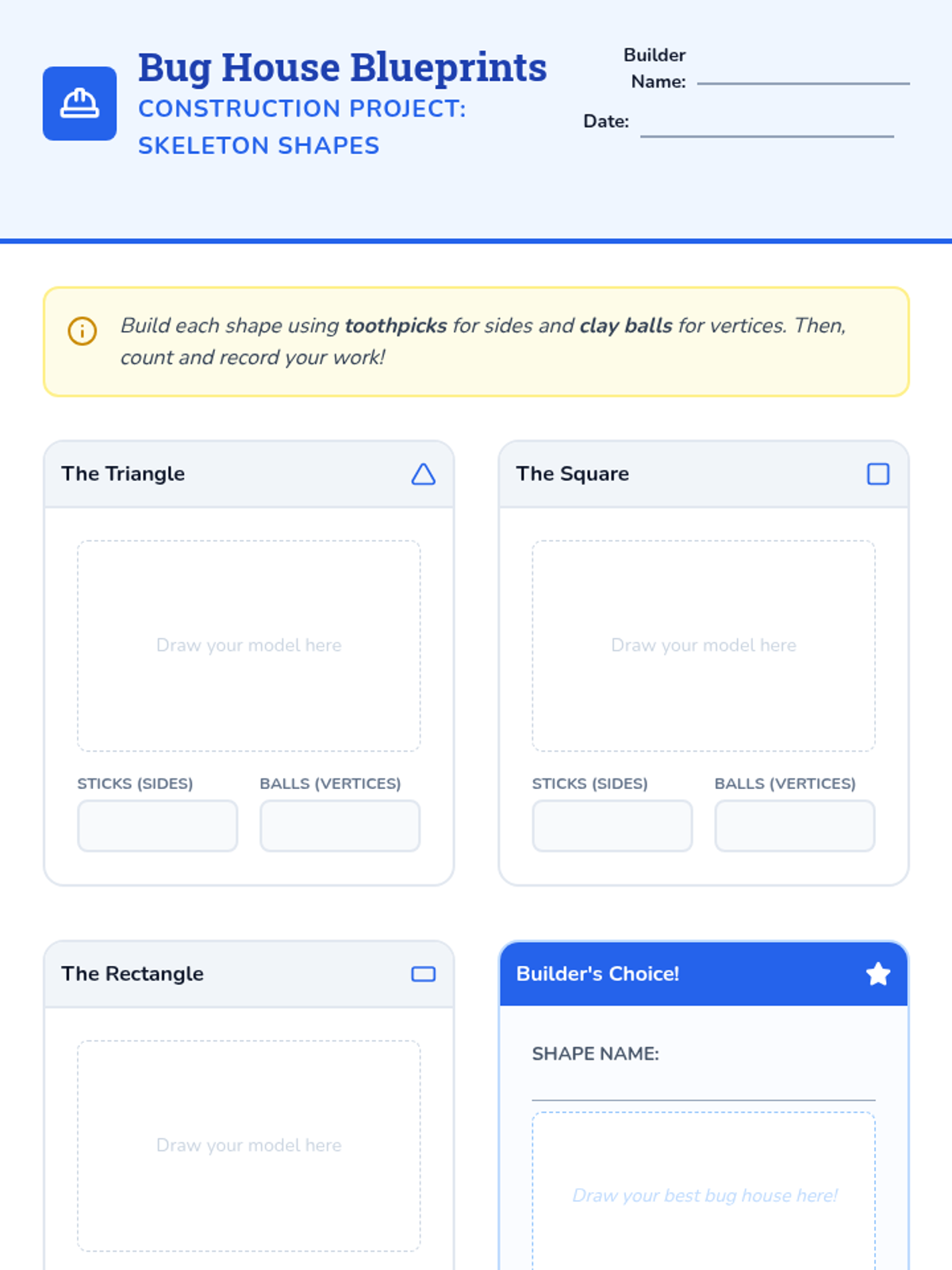
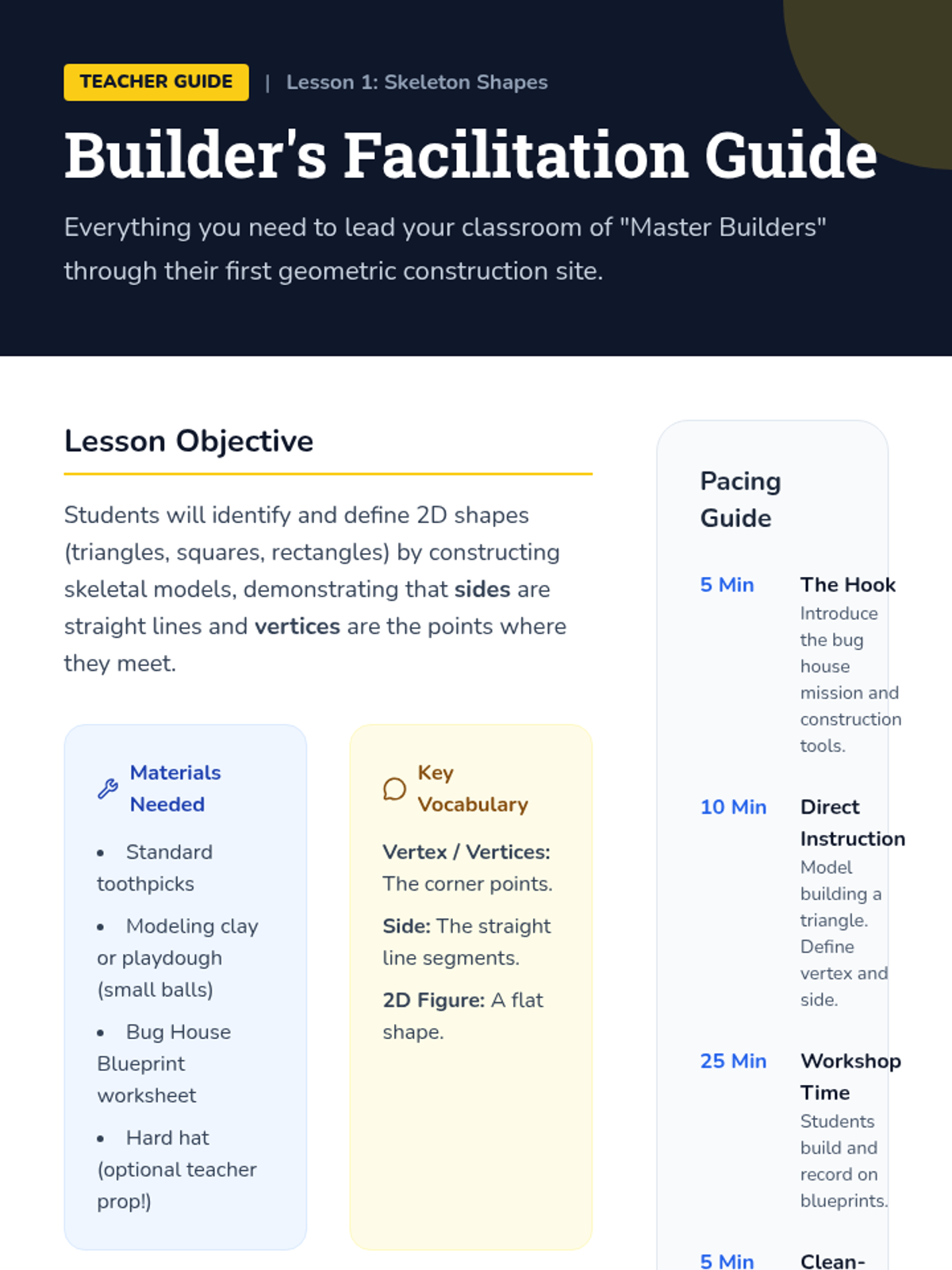
A project-based sequence focusing on the construction and composition of 2D shapes. Students move from building skeletal models to composing complex images using geometric components.
A foundational geometry sequence for Kindergarteners focused on identifying and naming 2D shapes (circles, triangles, squares, rectangles, hexagons) through tactile exploration and real-world application.
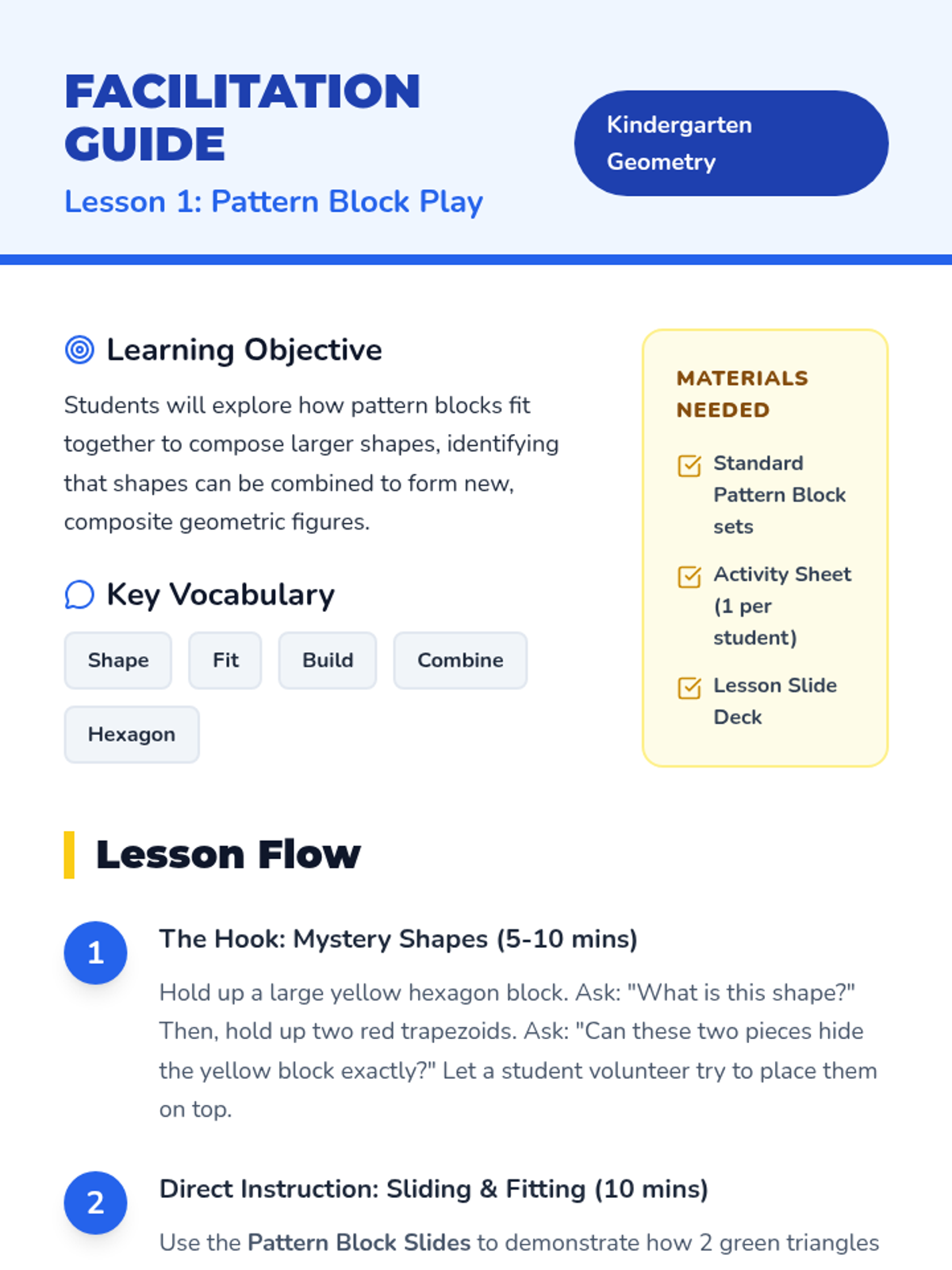
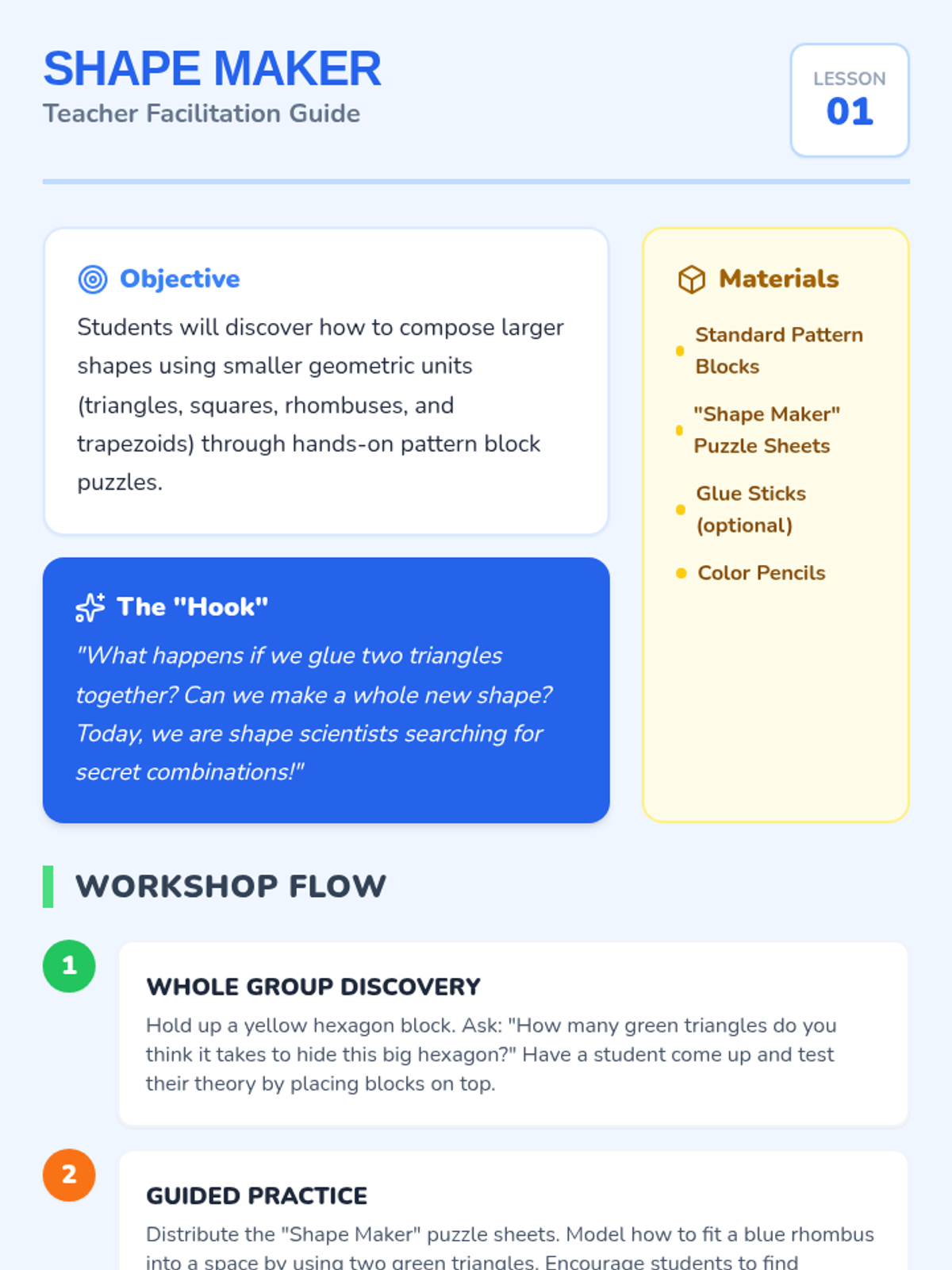
A Kindergarten geometry sequence focused on composing and decomposing shapes through hands-on play, puzzles, and art projects. Students discover how smaller shapes fit together to create larger ones and learn to identify component shapes in complex forms.
A comprehensive Kindergarten geometry unit that moves beyond naming shapes to analyzing their specific attributes like line types, vertices, closure, and symmetry. Students engage in tactile and movement-based activities to define what makes a shape unique.
A Kindergarten geometry sequence focused on comparing, contrasting, and categorizing 2D figures. Students learn to distinguish between defining attributes like side count and non-defining attributes like color and size through hands-on sorting, building, and games.
A Kindergarten math sequence that guides students from basic visual recognition of shapes to identifying 2D geometric figures by their specific attributes, such as number of sides and corners. Students progress from distinguishing curved and straight lines to classifying triangles, rectangles, squares, and hexagons.
This project-based sequence for Kindergarten focuses on spatial reasoning and shape composition. Students will explore how smaller shapes combine to form larger ones, master positional vocabulary, and apply their knowledge to build a 'Shape City'.
A Kindergarten geometry sequence that uses game-based learning to teach students to identify 2D shapes regardless of their size, color, or orientation. Students progress from real-world identification to mastering defining attributes and creating their own geometric figures.
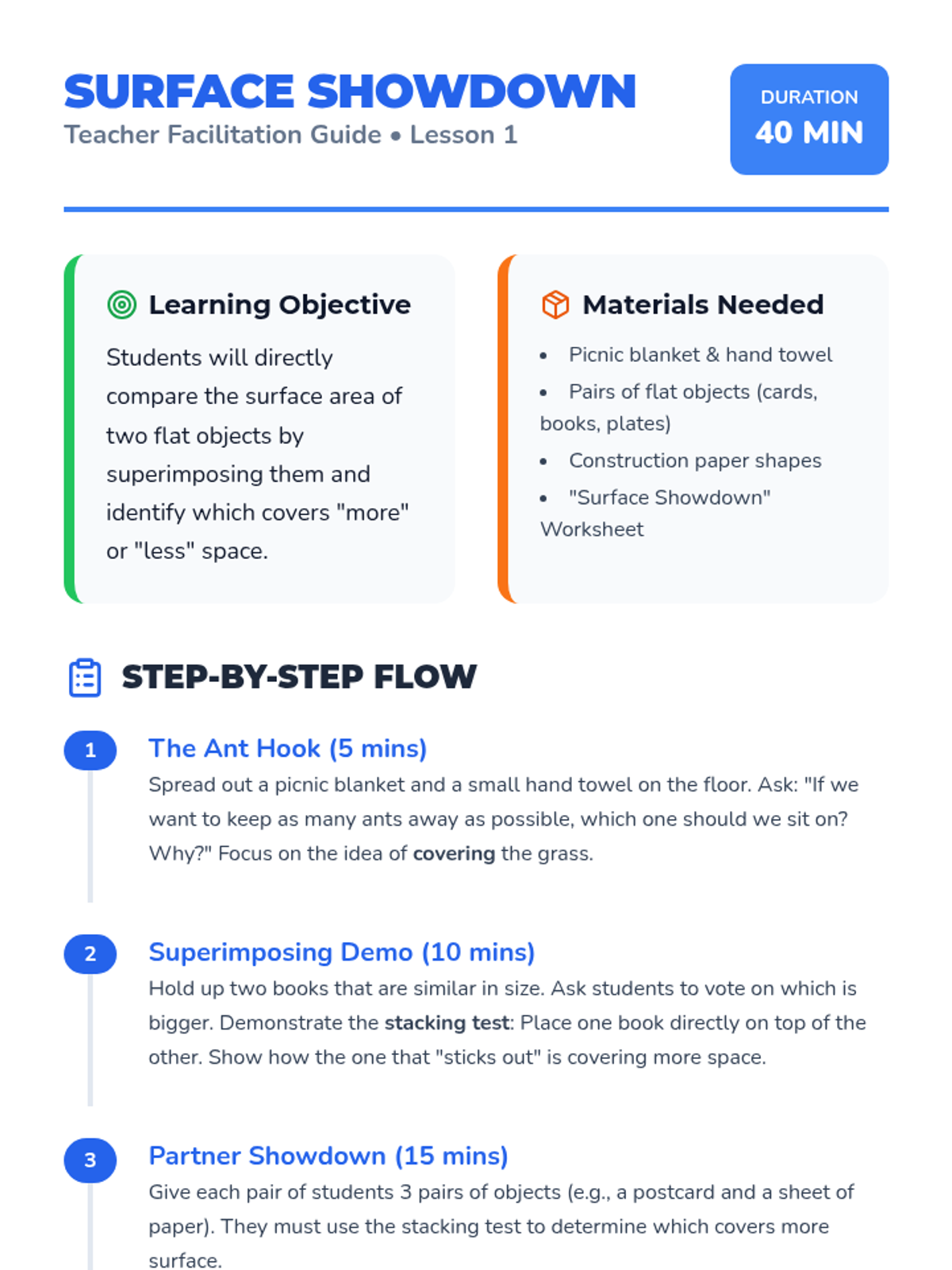
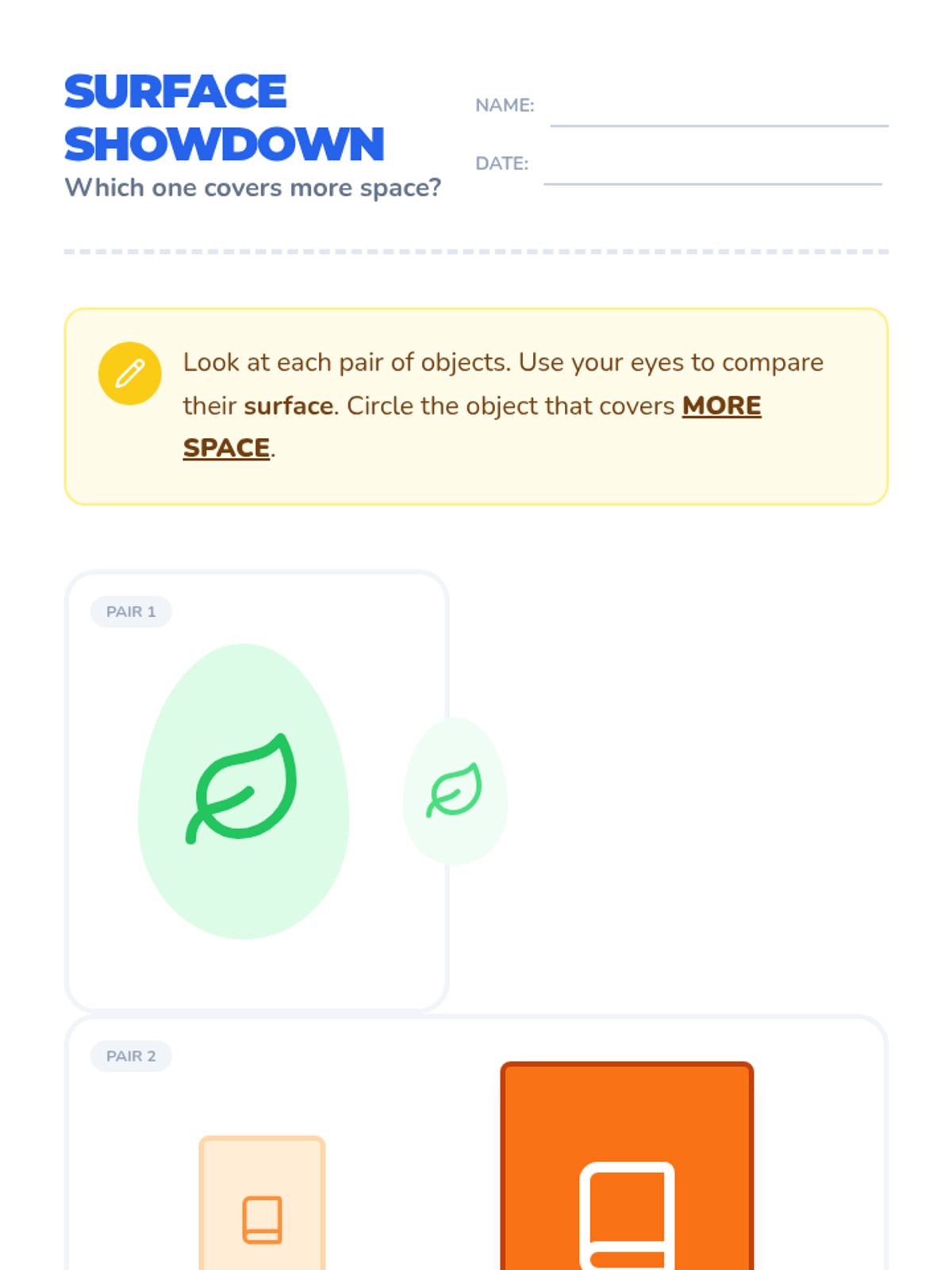
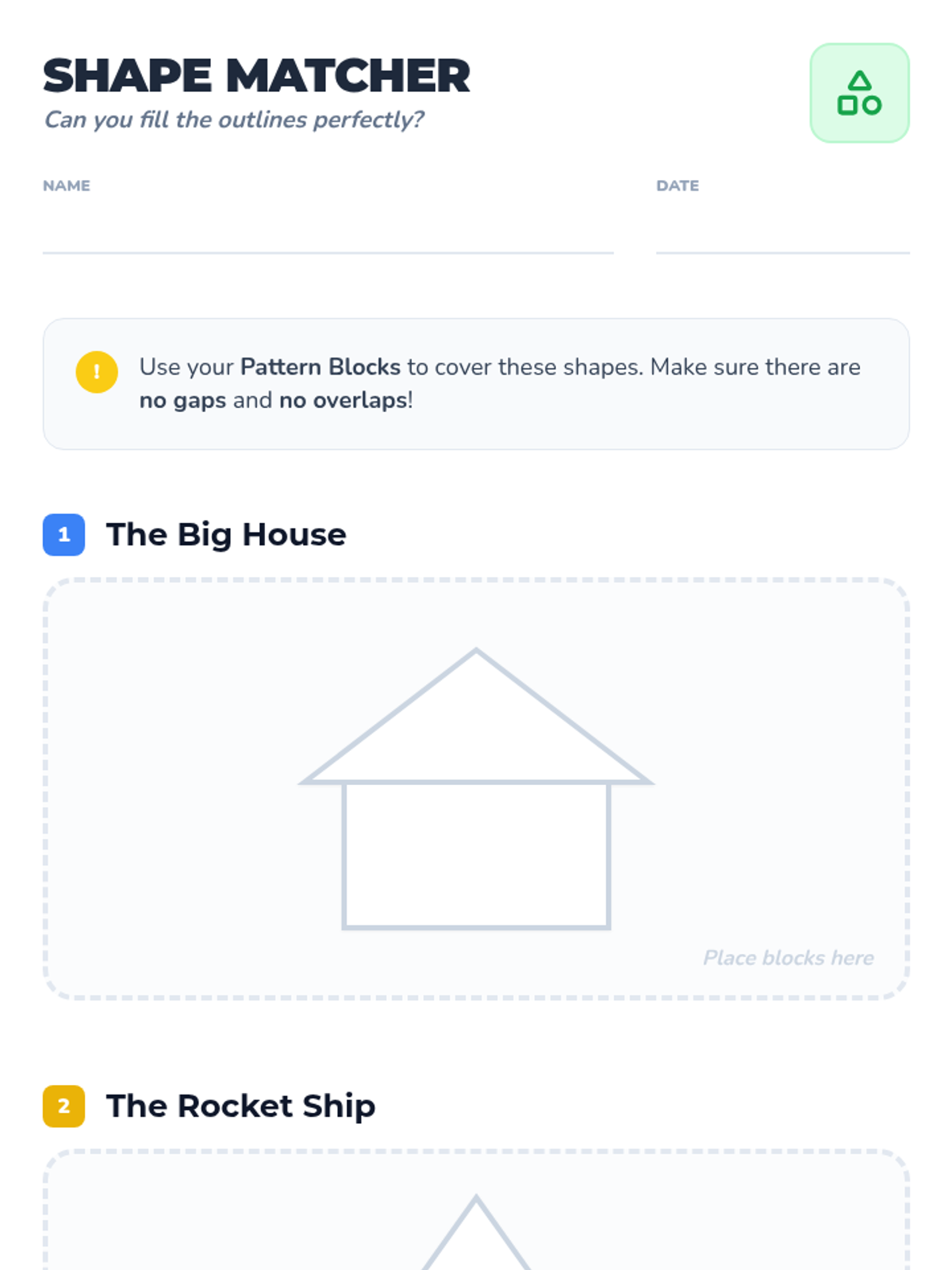
A Kindergarten geometry sequence exploring area through direct comparison, tiling with non-standard units, and counting units to quantify space. Students learn to cover regions without gaps or overlaps and discover that area is conserved across different shapes.
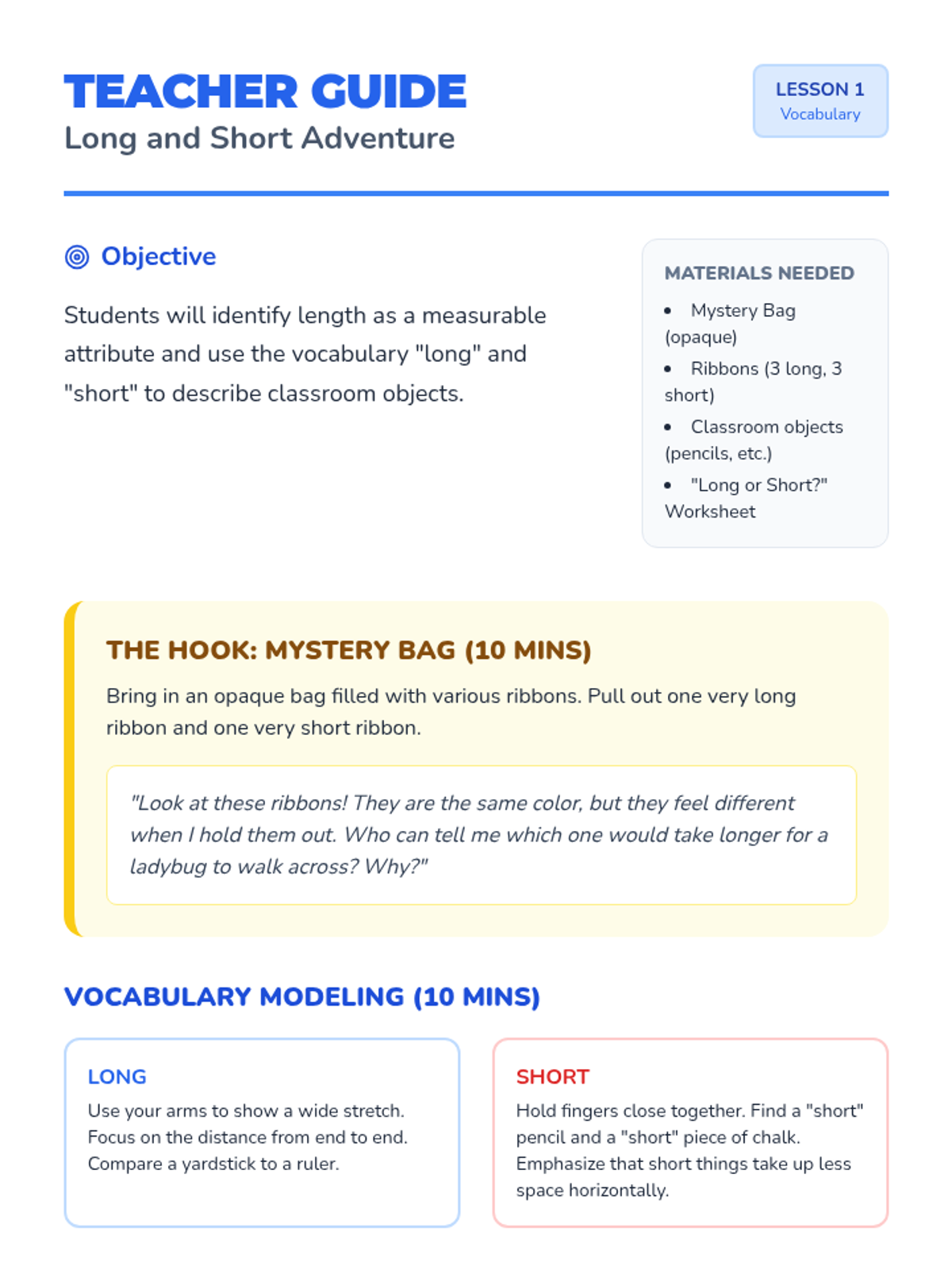
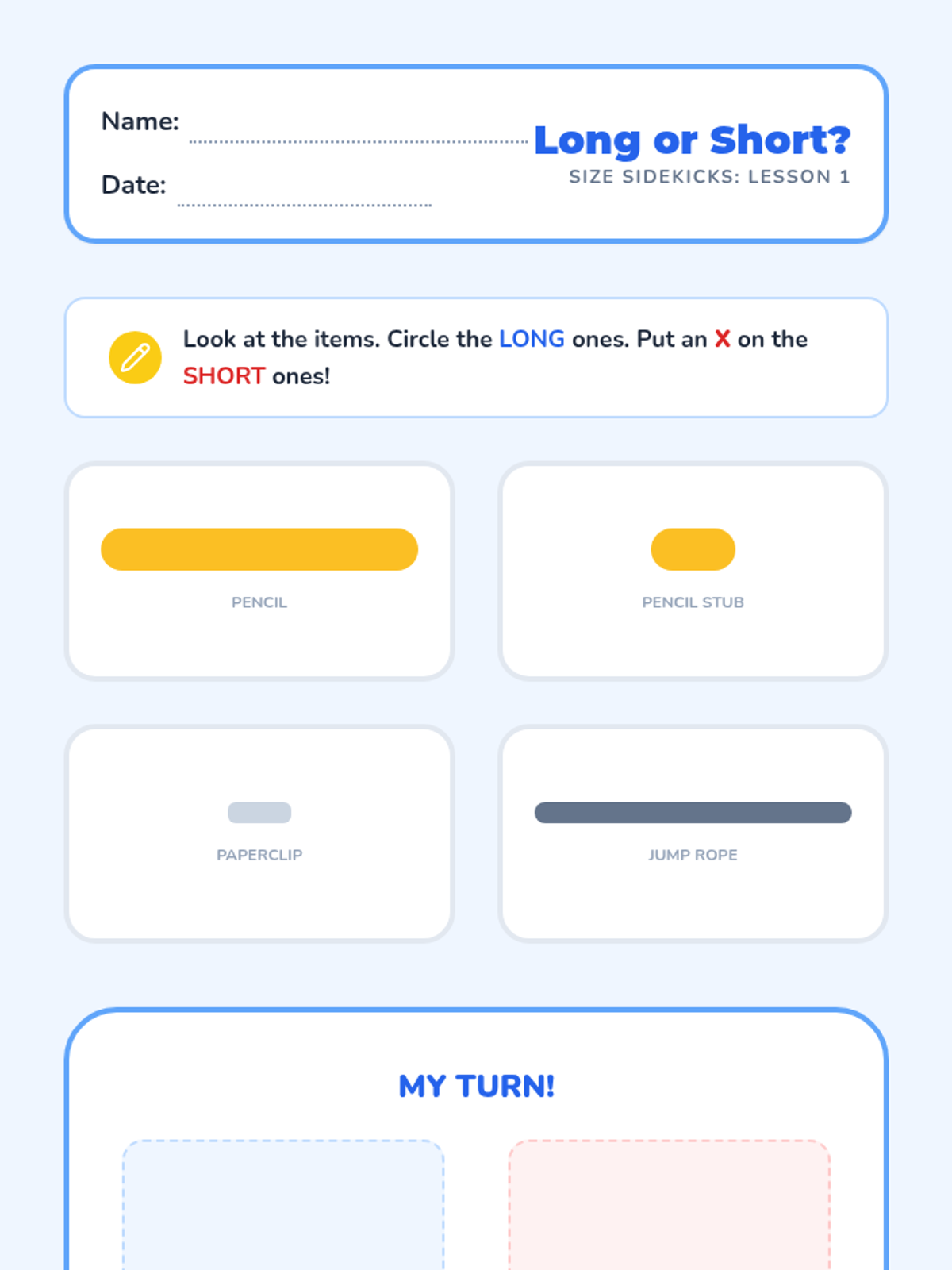
A foundational measurement unit for Kindergarten students focusing on length and height. Students explore vocabulary, endpoint alignment, and ordering objects through hands-on activities.
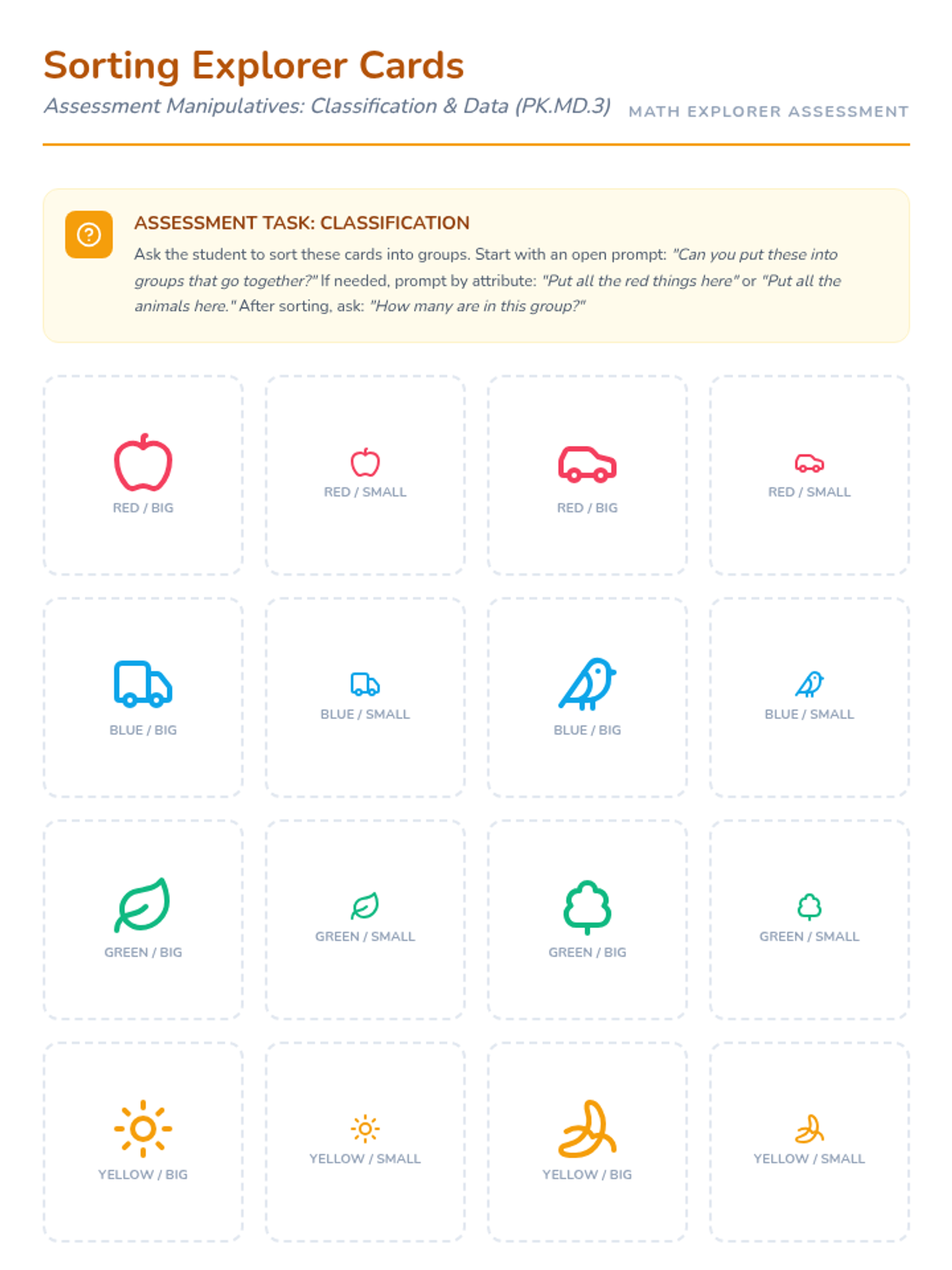
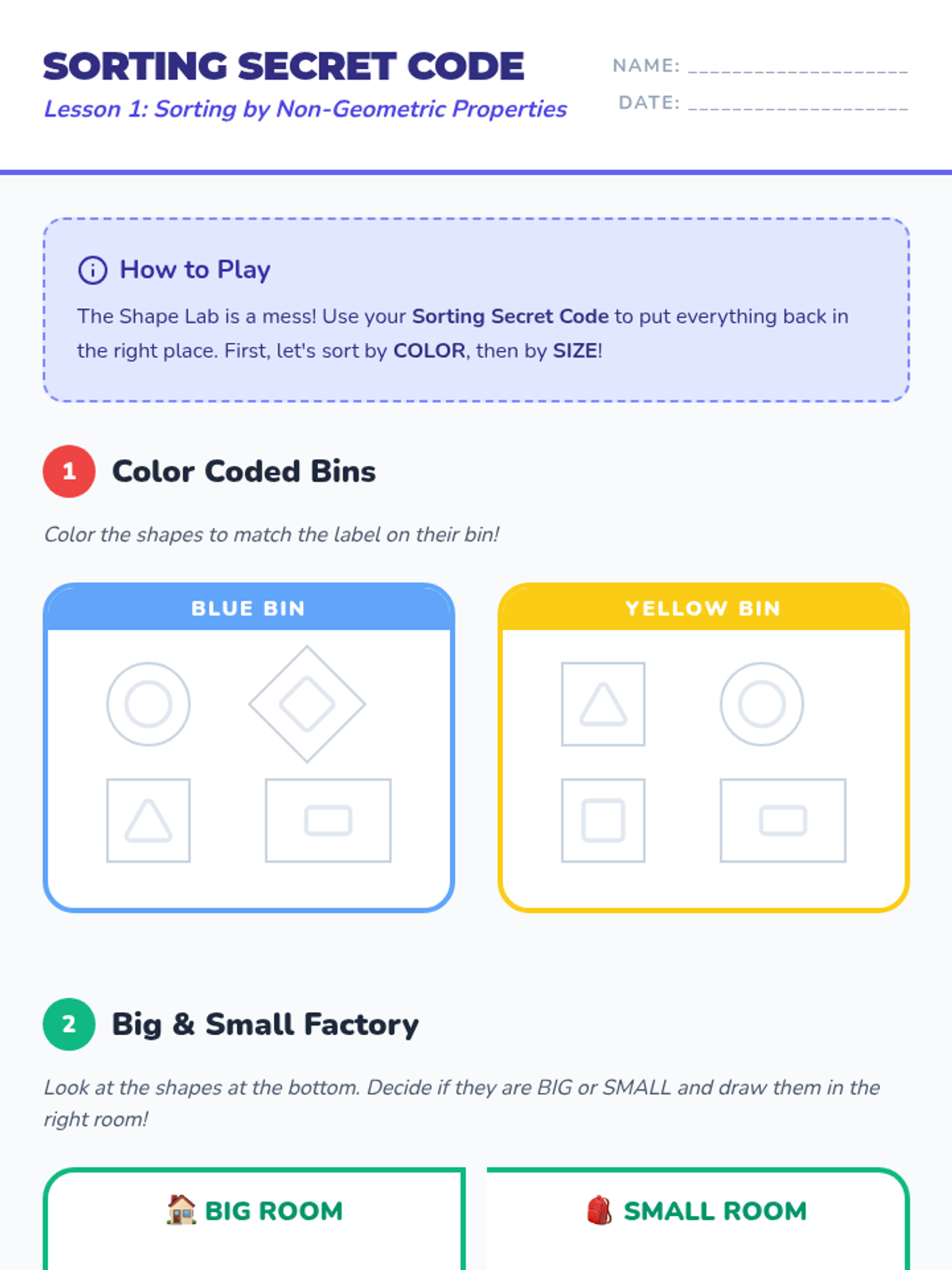
Students develop logical reasoning skills by comparing, sorting, and classifying 2D figures. The sequence covers non-geometric attributes, shape families, orientation invariance, and attribute comparison to build a foundation for geometric thinking.
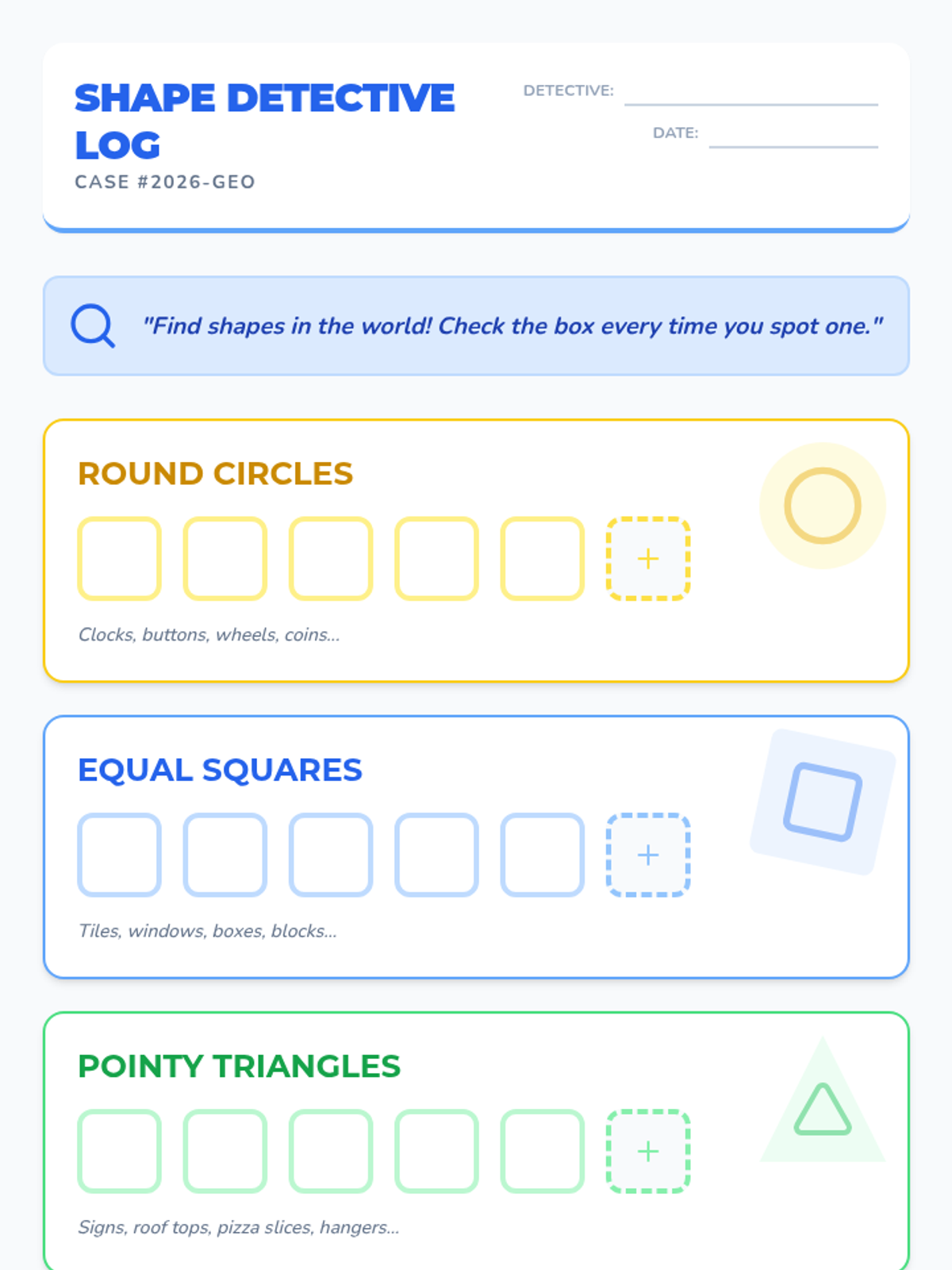
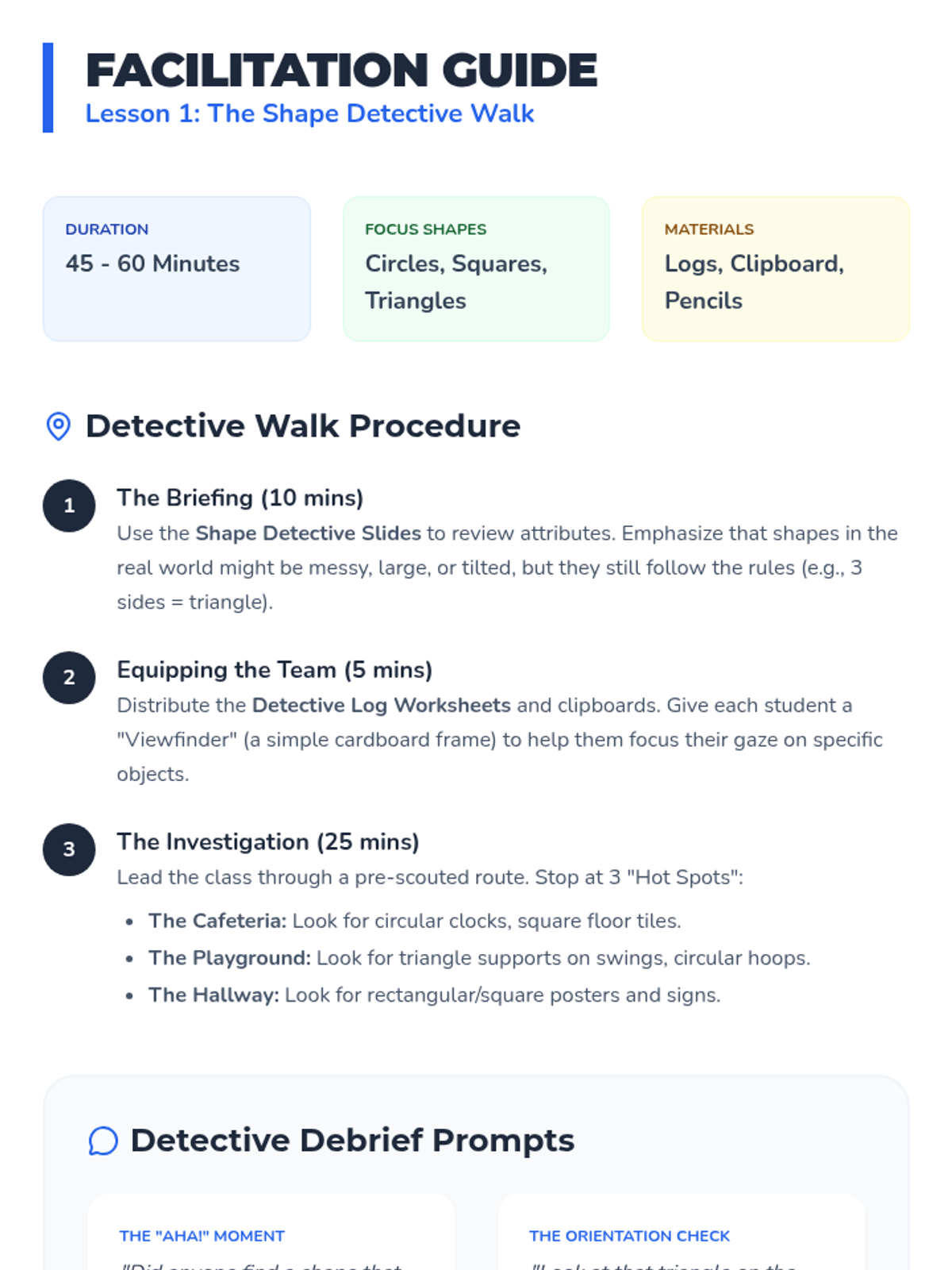
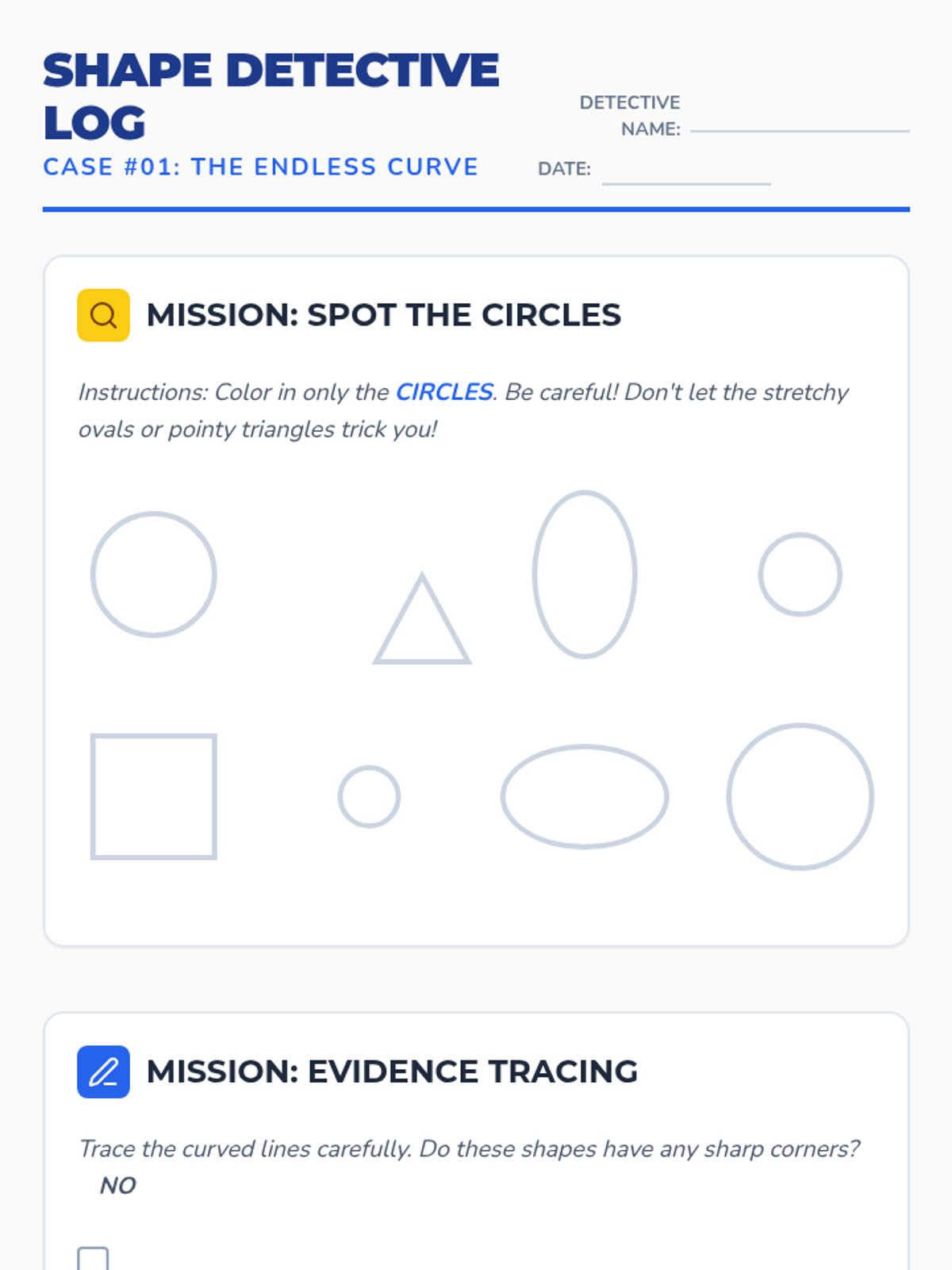
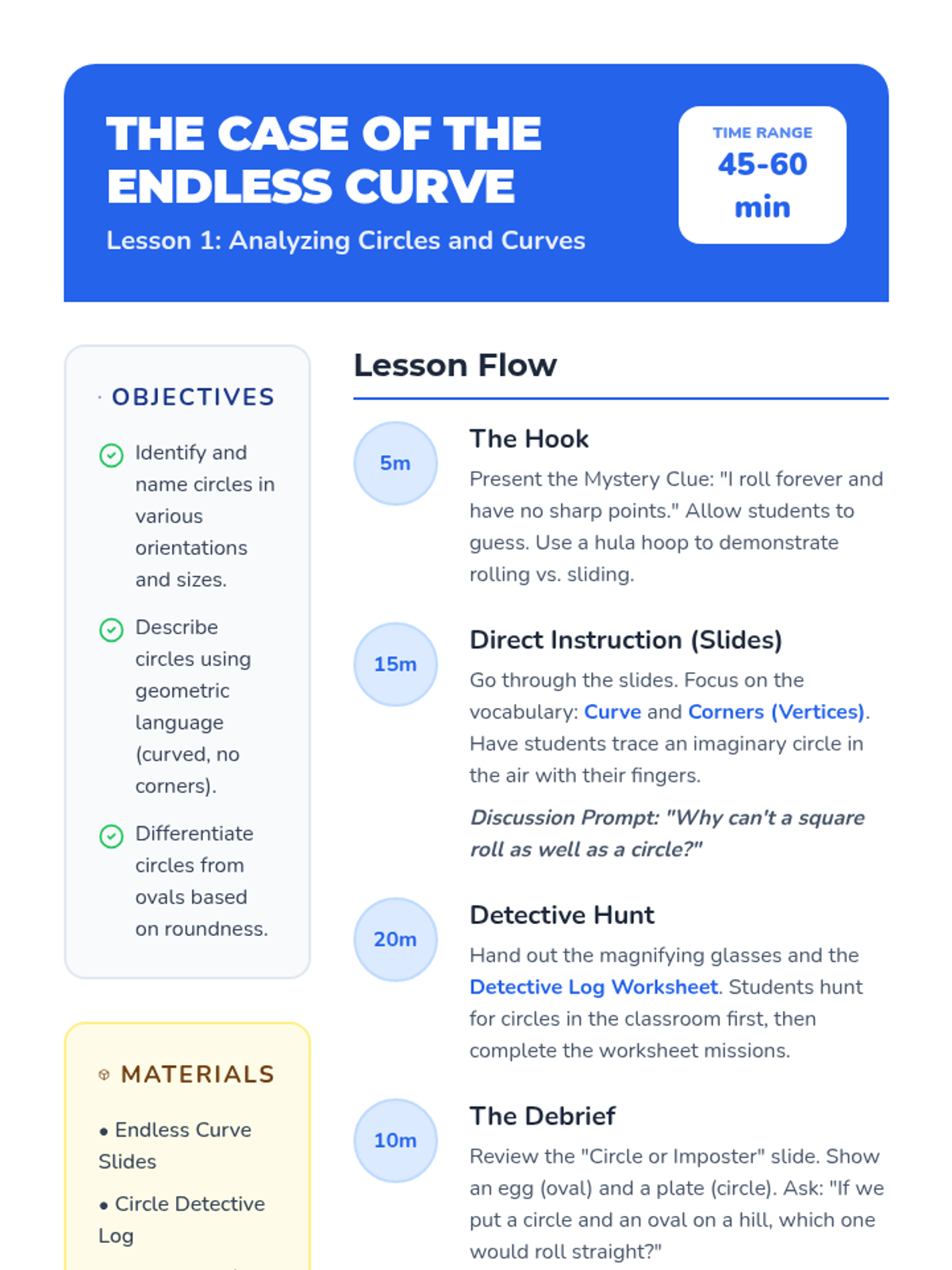
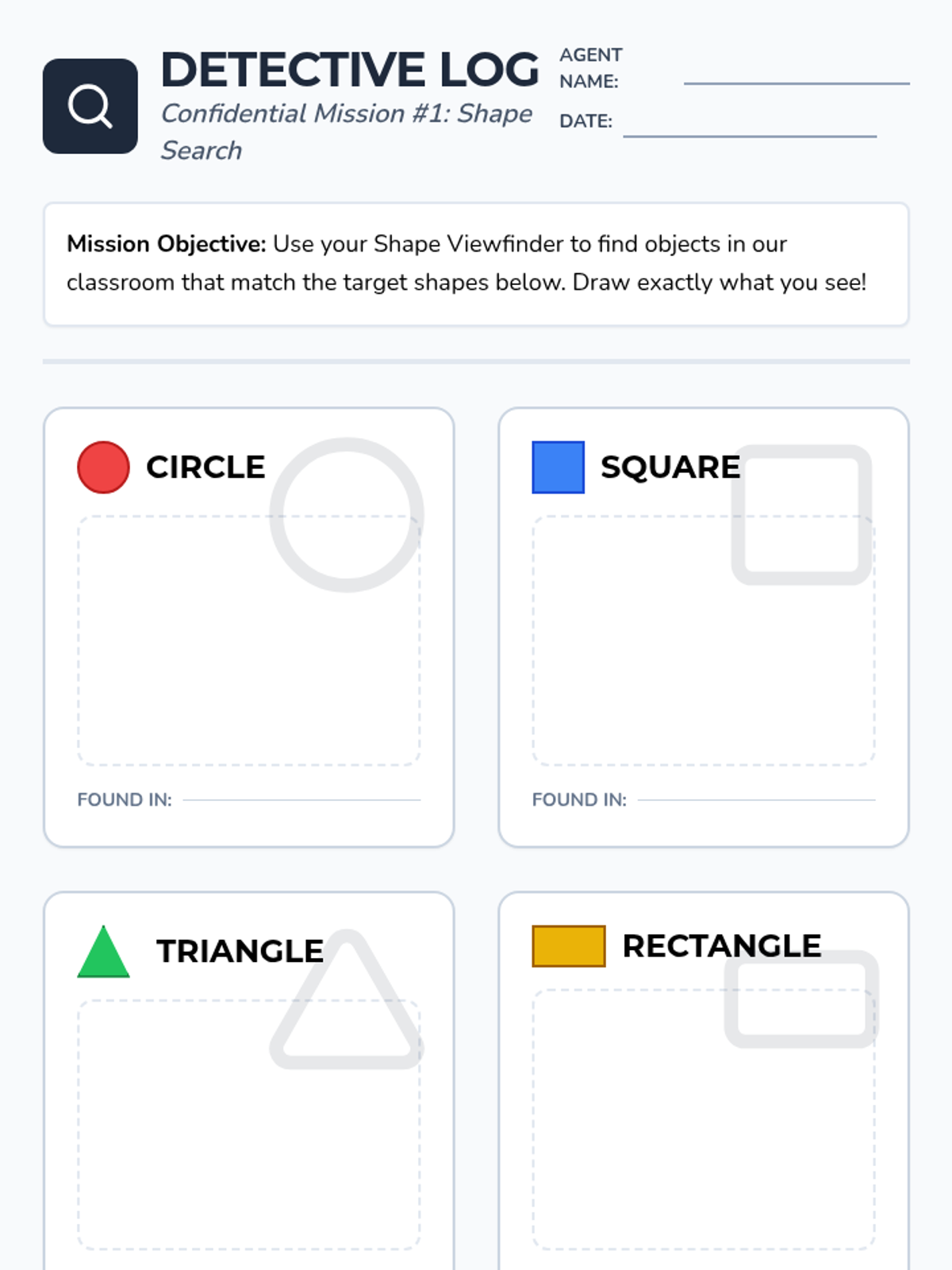
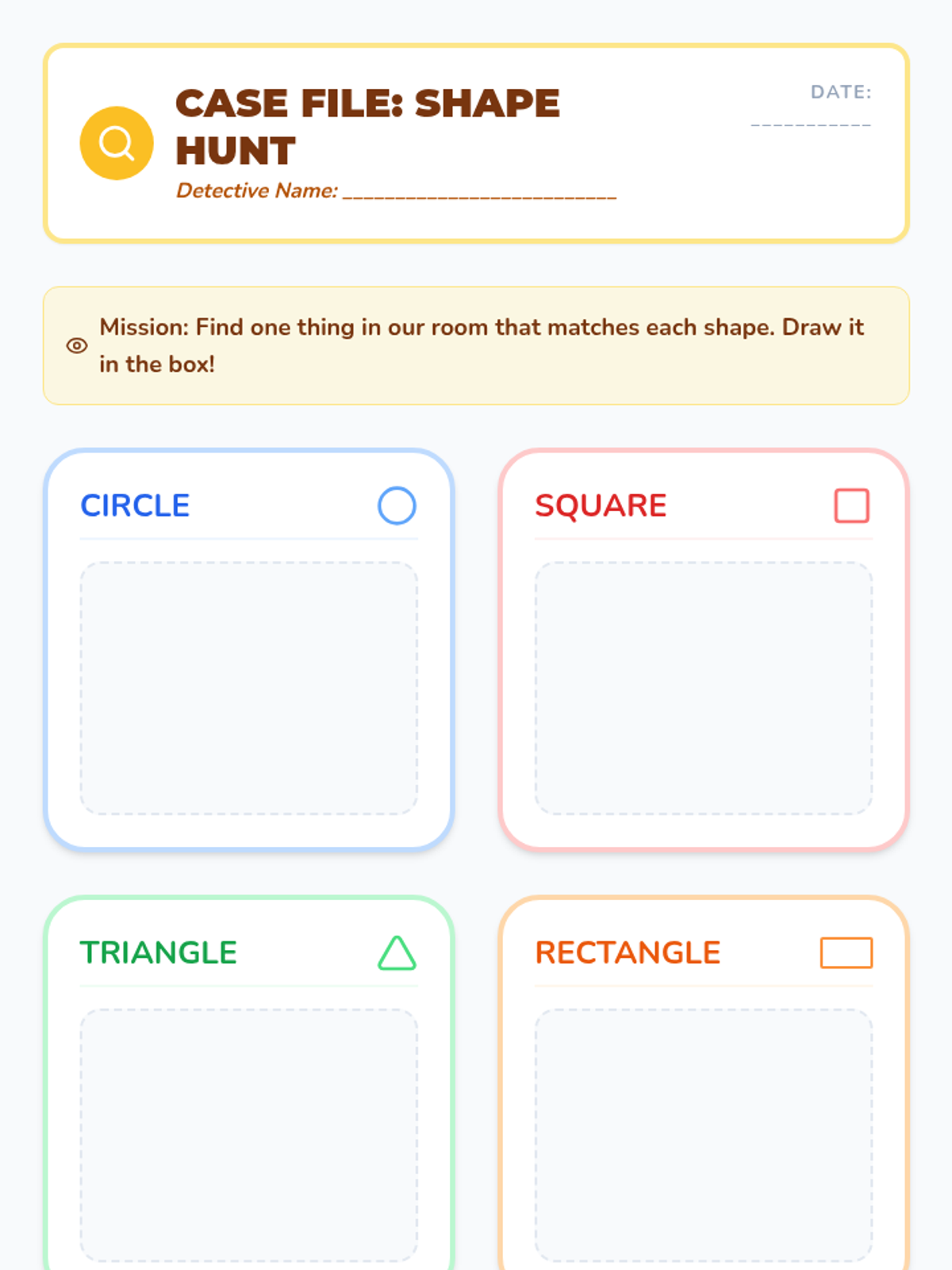
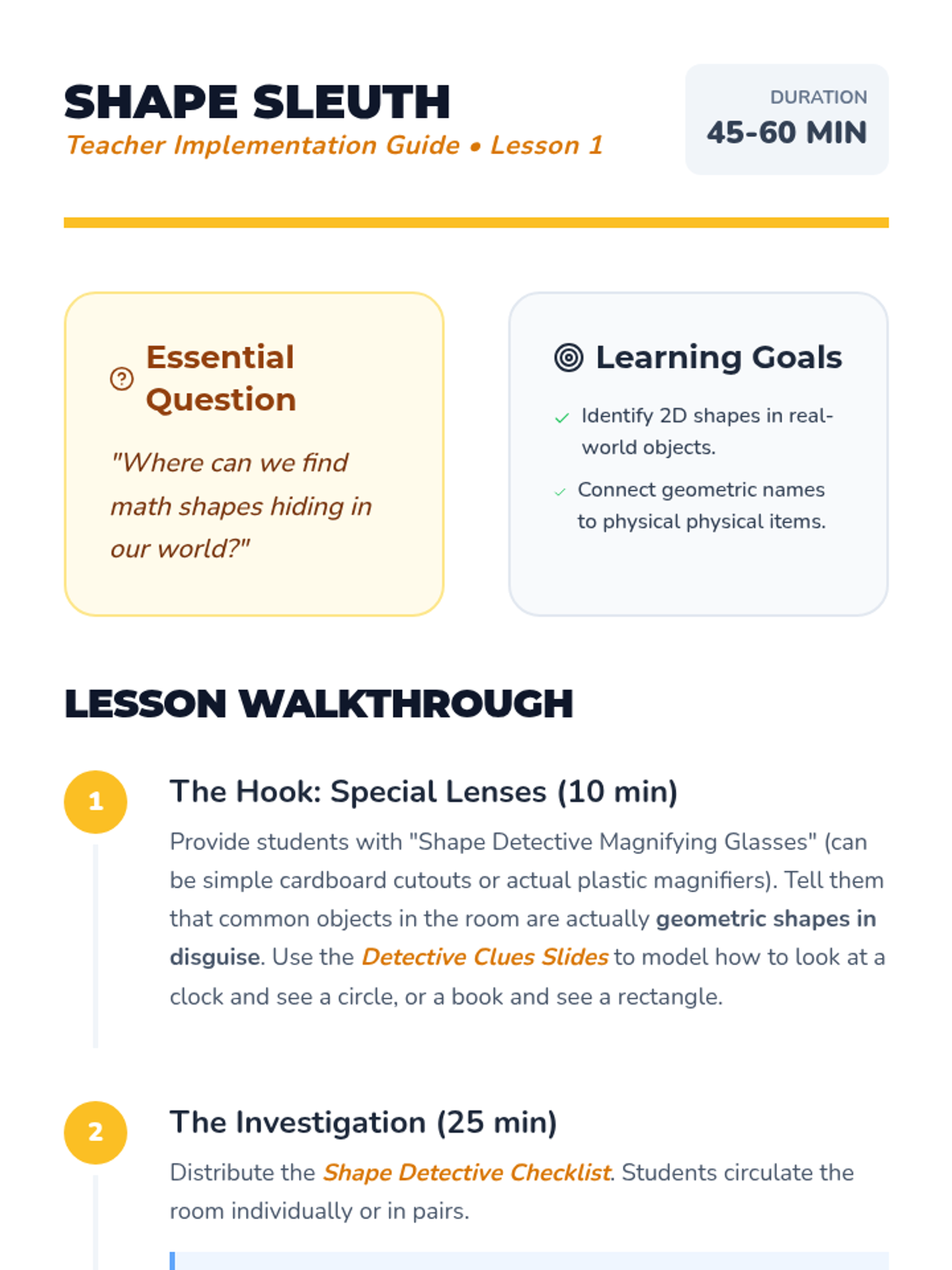
A comprehensive Kindergarten geometry sequence where students become 'Shape Detectives' to identify, describe, and sort 2D shapes (circles, triangles, squares, rectangles, and hexagons) based on their attributes like sides and corners.
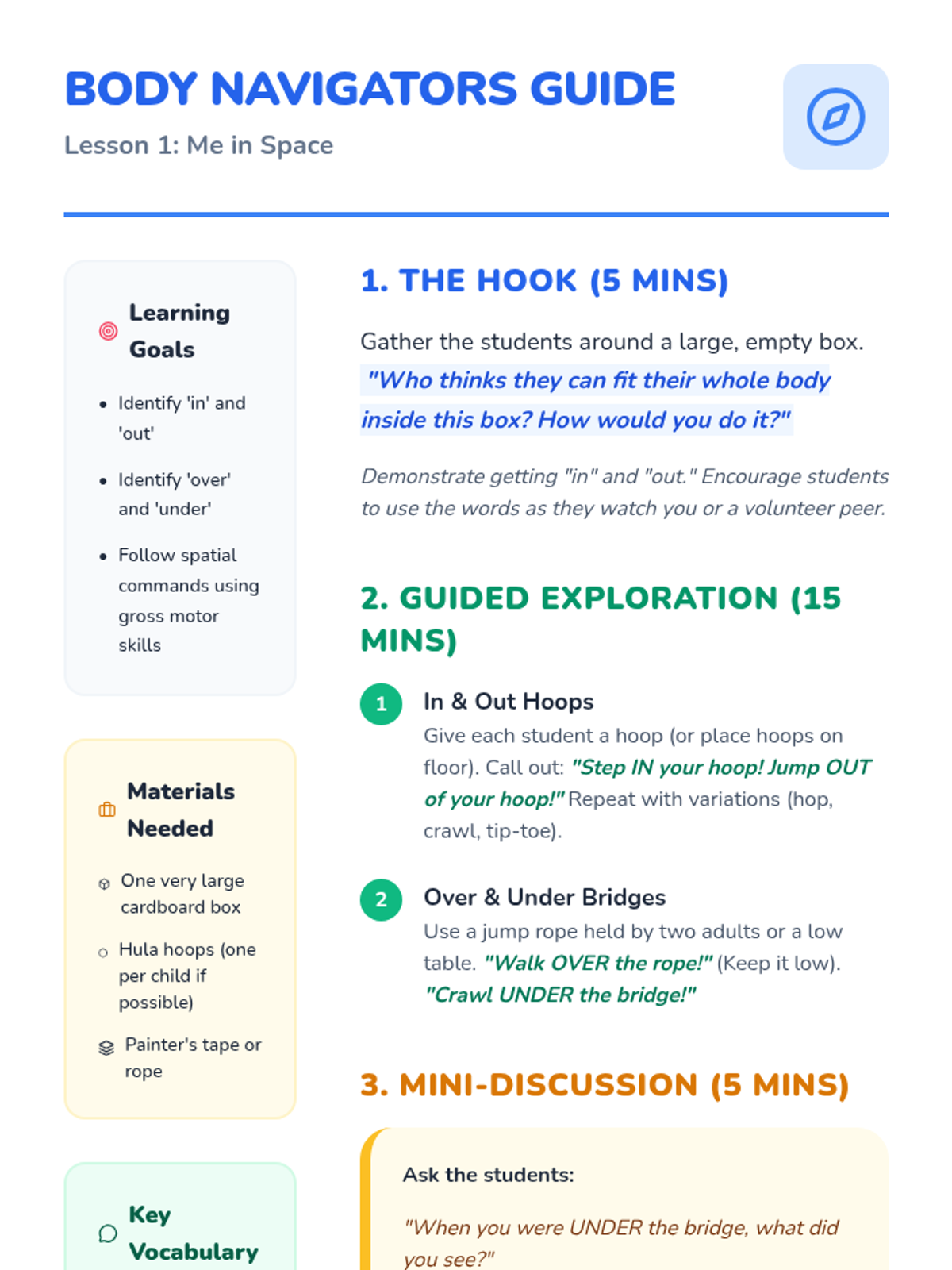
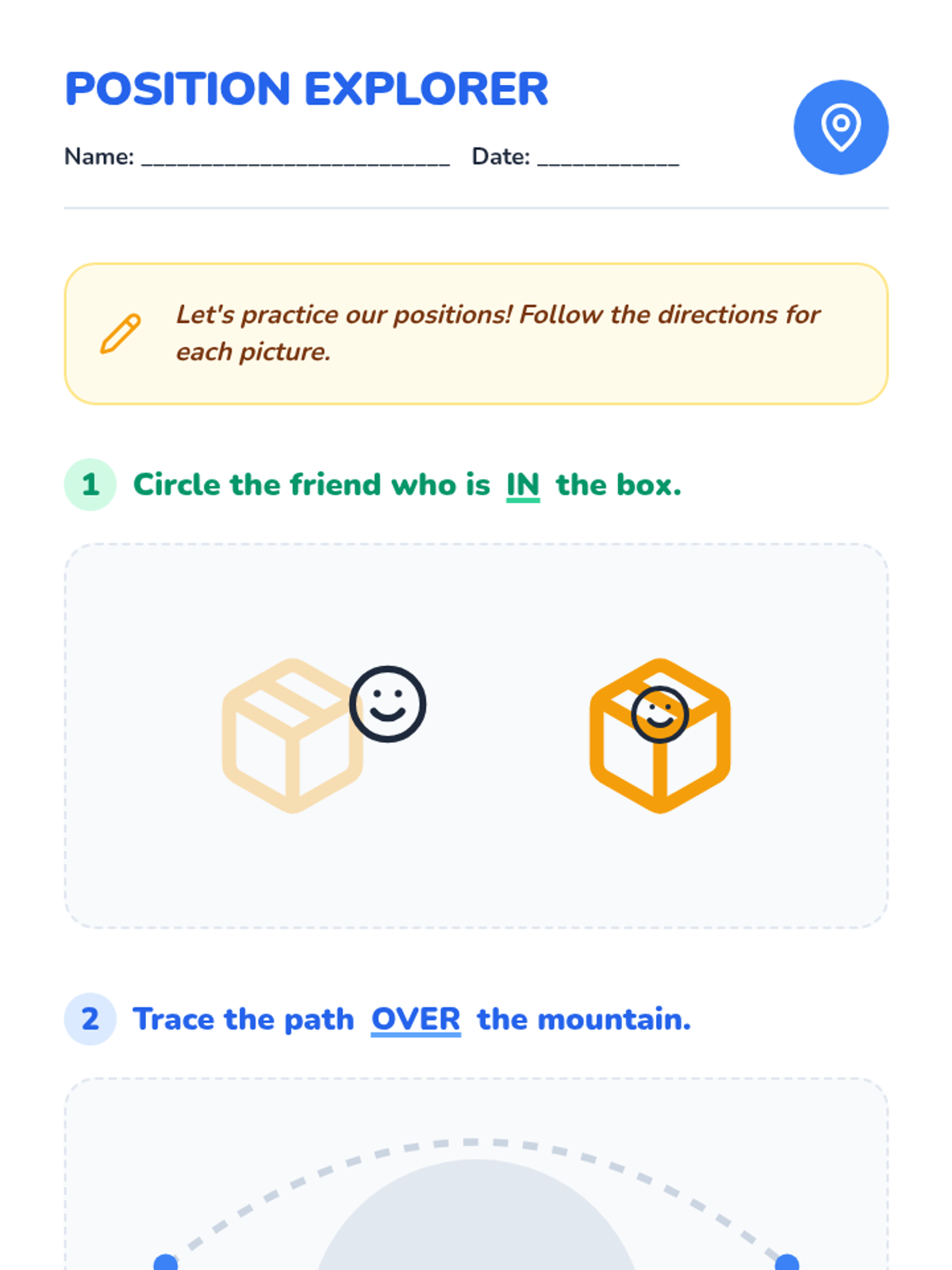
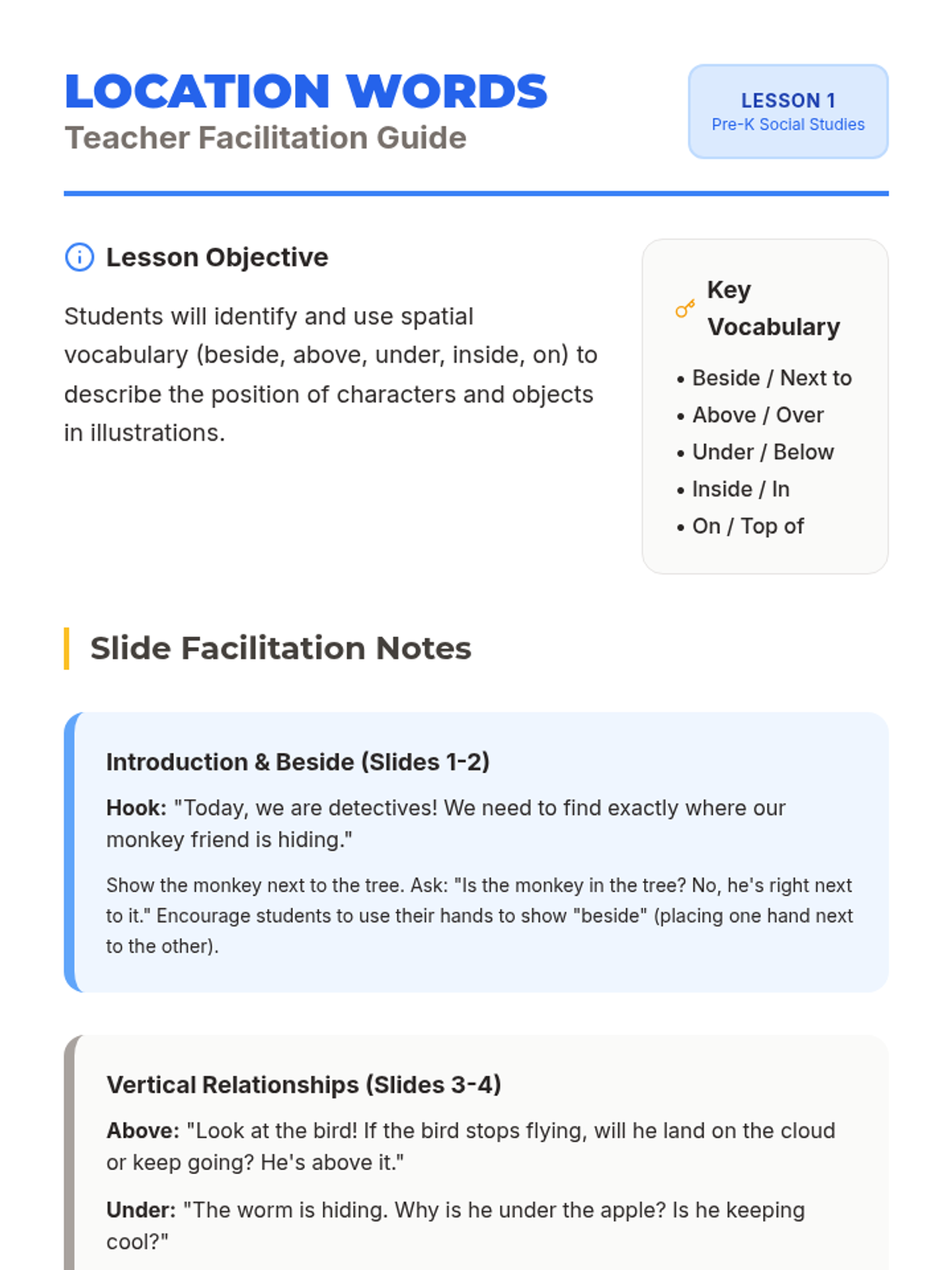
A Pre-K sequence focused on developing spatial awareness and positional vocabulary through physical movement, object manipulation, and classroom mapping. students explore terms like in, out, over, under, next to, and between.
A Pre-K sequence focused on identifying and using spatial vocabulary through visual analysis, hands-on sticker activities, puppet play, and drawing dictation. students will learn to articulate positions like 'on', 'under', 'beside', 'above', and 'behind'.
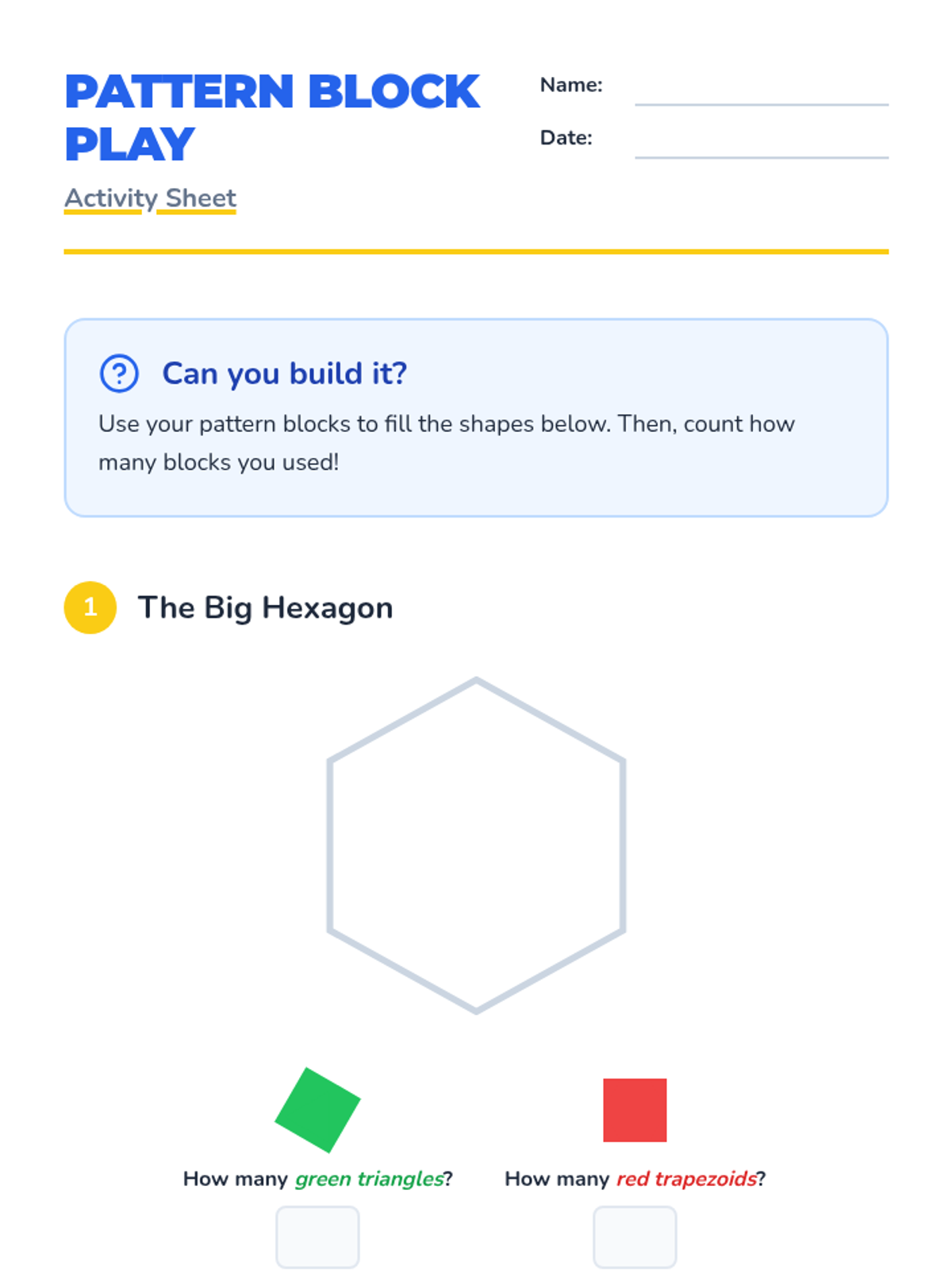
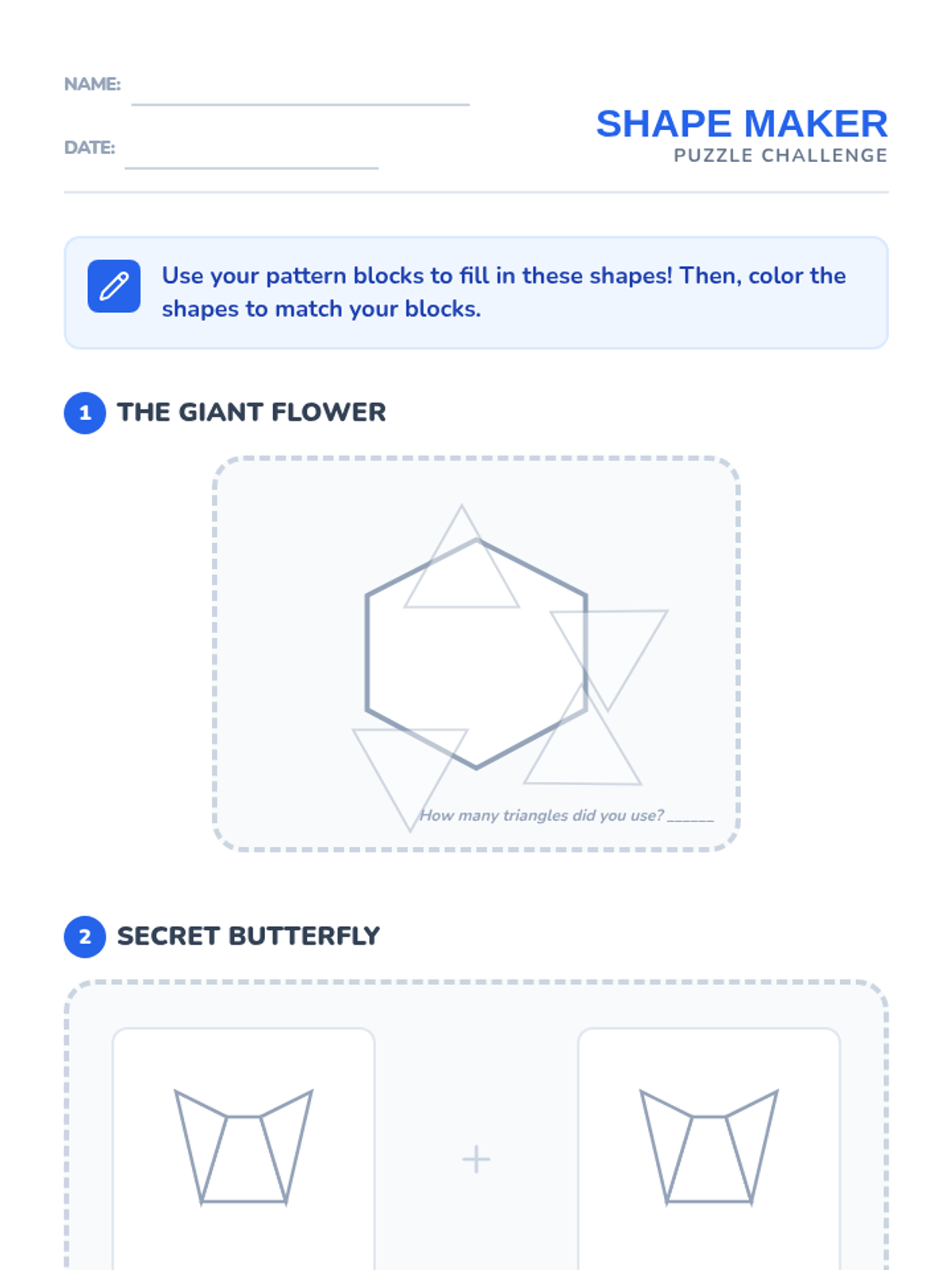
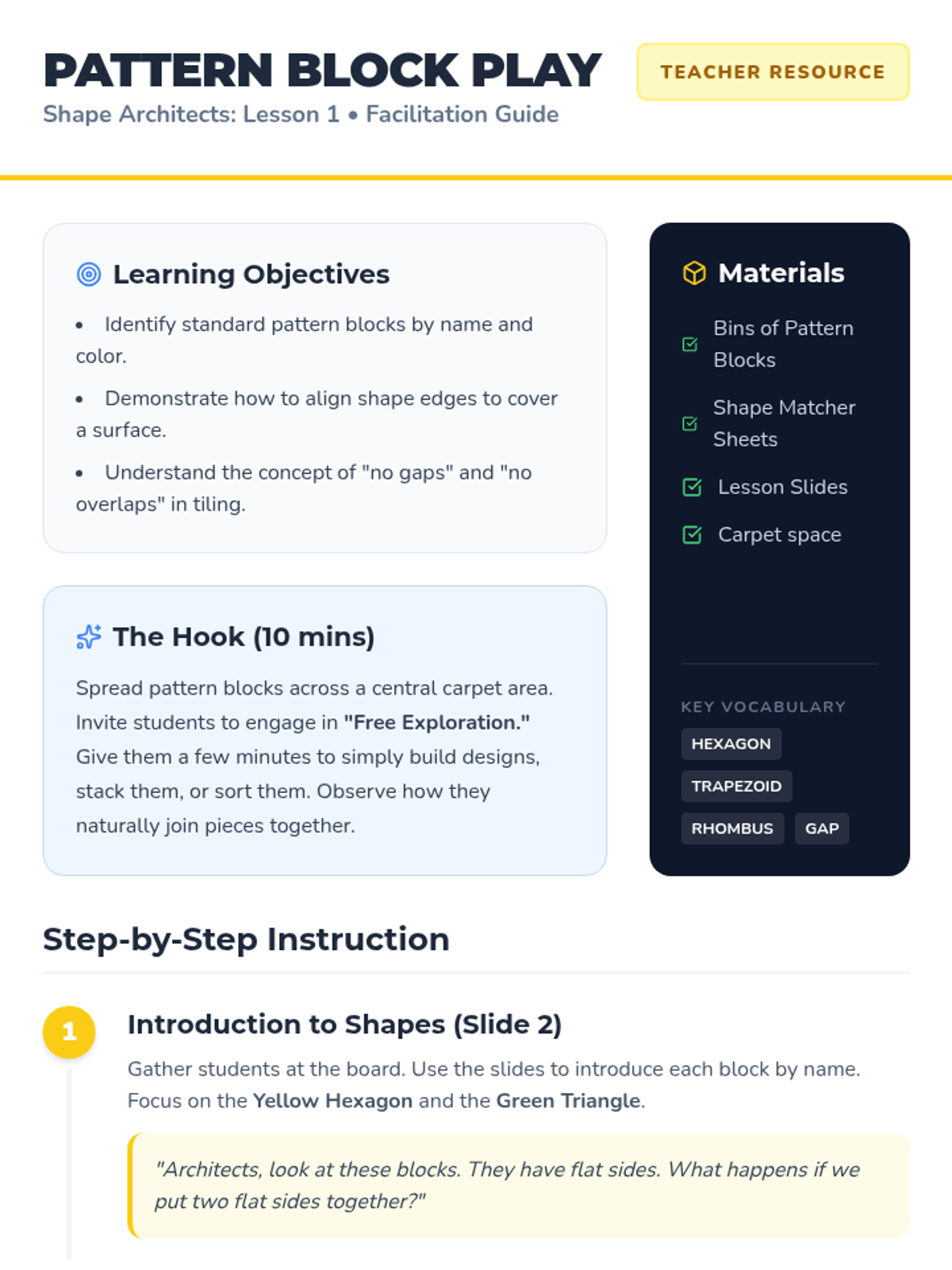
Students explore spatial reasoning through composing and decomposing 2D shapes using pattern blocks, tangrams, and paper cutting. They progress from simple puzzle filling to designing a geometric city, developing cognitive flexibility and geometric intuition.
A hands-on introduction to 3D geometry for Pre-K students, focusing on the physical properties of spheres, cubes, cylinders, and cones through tactile exploration and play.
A Kindergarten geometry sequence where students become 'Shape Detectives' to investigate and classify 2D shapes by their attributes, including sides, vertices, and curves.
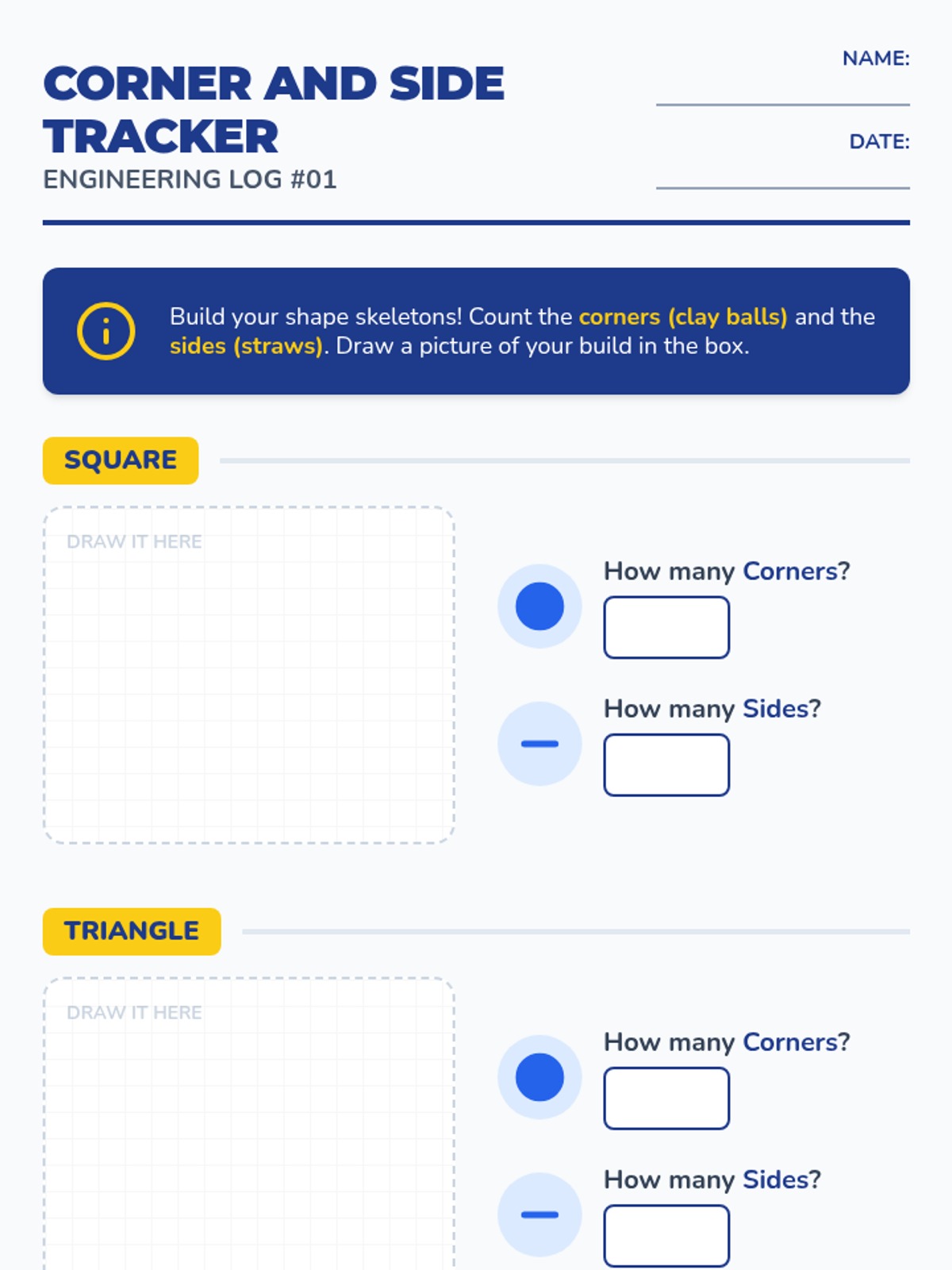
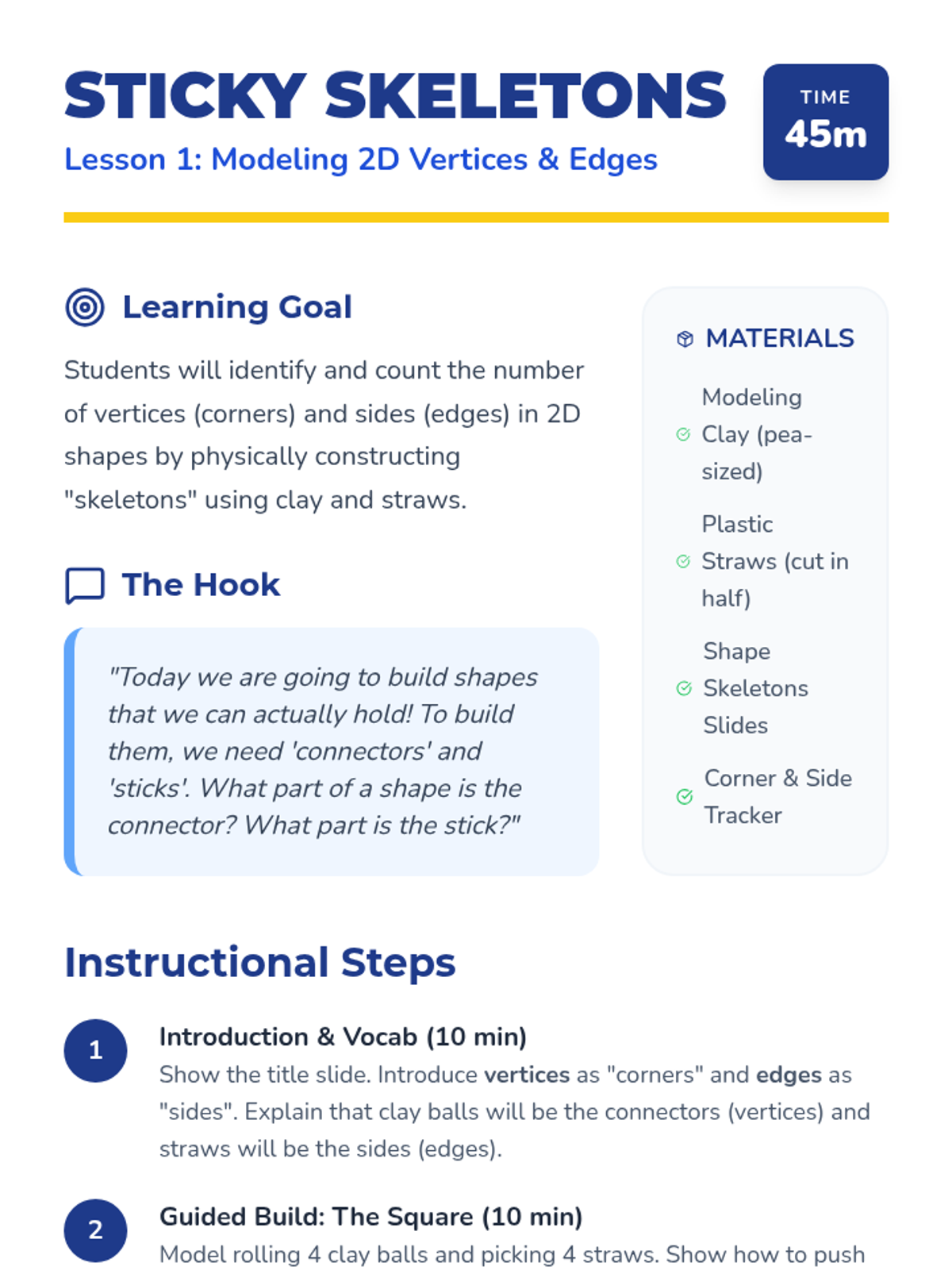
A hands-on kindergarten geometry sequence where students build 2D and 3D shapes using clay and straws, exploring vertices, edges, and structural stability through engineering challenges.
Students transition from flat geometry to solid geometry, exploring three-dimensional shapes and their components through tactile exploration, construction, and real-world application.
A Kindergarten geometry project where students transition from classroom observation to identifying shapes in nature and the real world, culminating in building a geometric city. Students learn to identify 2D and 3D shapes and use positional language to describe their locations.
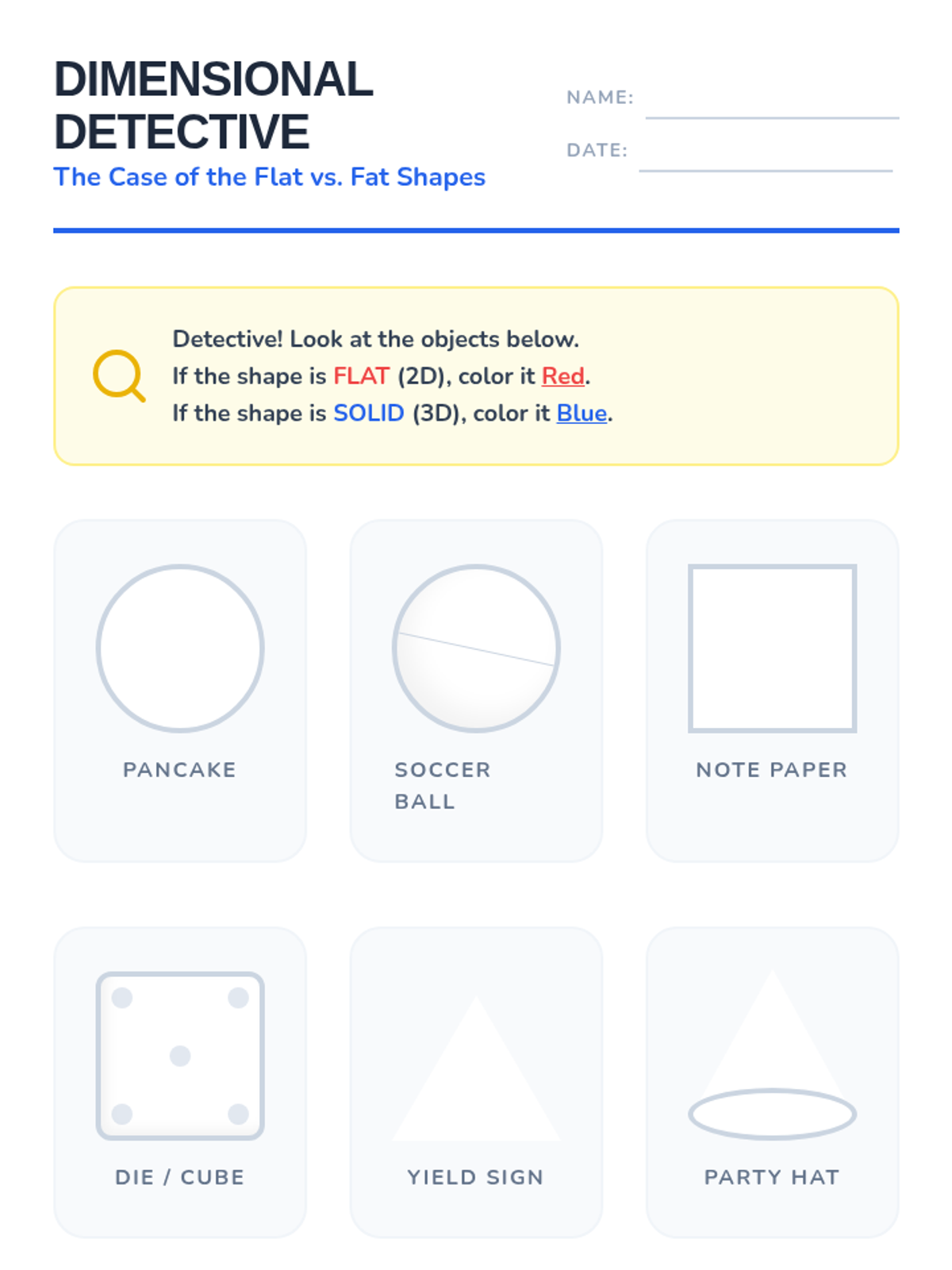
A Kindergarten sequence exploring 3D solids (spheres, cubes, cylinders, cones) through hands-on tactile exploration, movement experiments, and vocabulary building. Students learn to distinguish between flat 2D shapes and solid 3D shapes.
A Kindergarten geometry sequence where students learn to observe, describe, and classify 2D figures by counting sides and vertices, distinguishing between curves and straight lines.
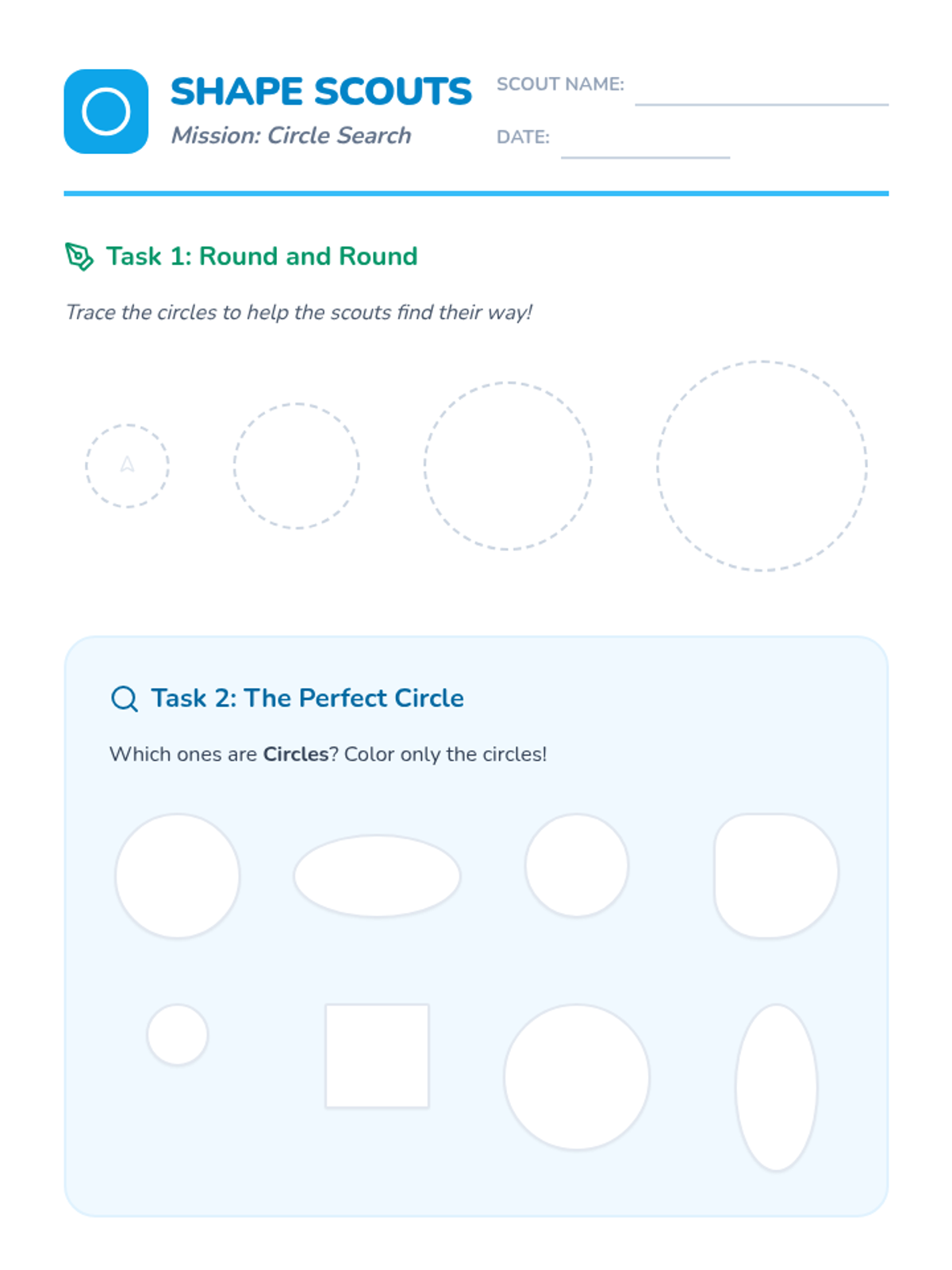
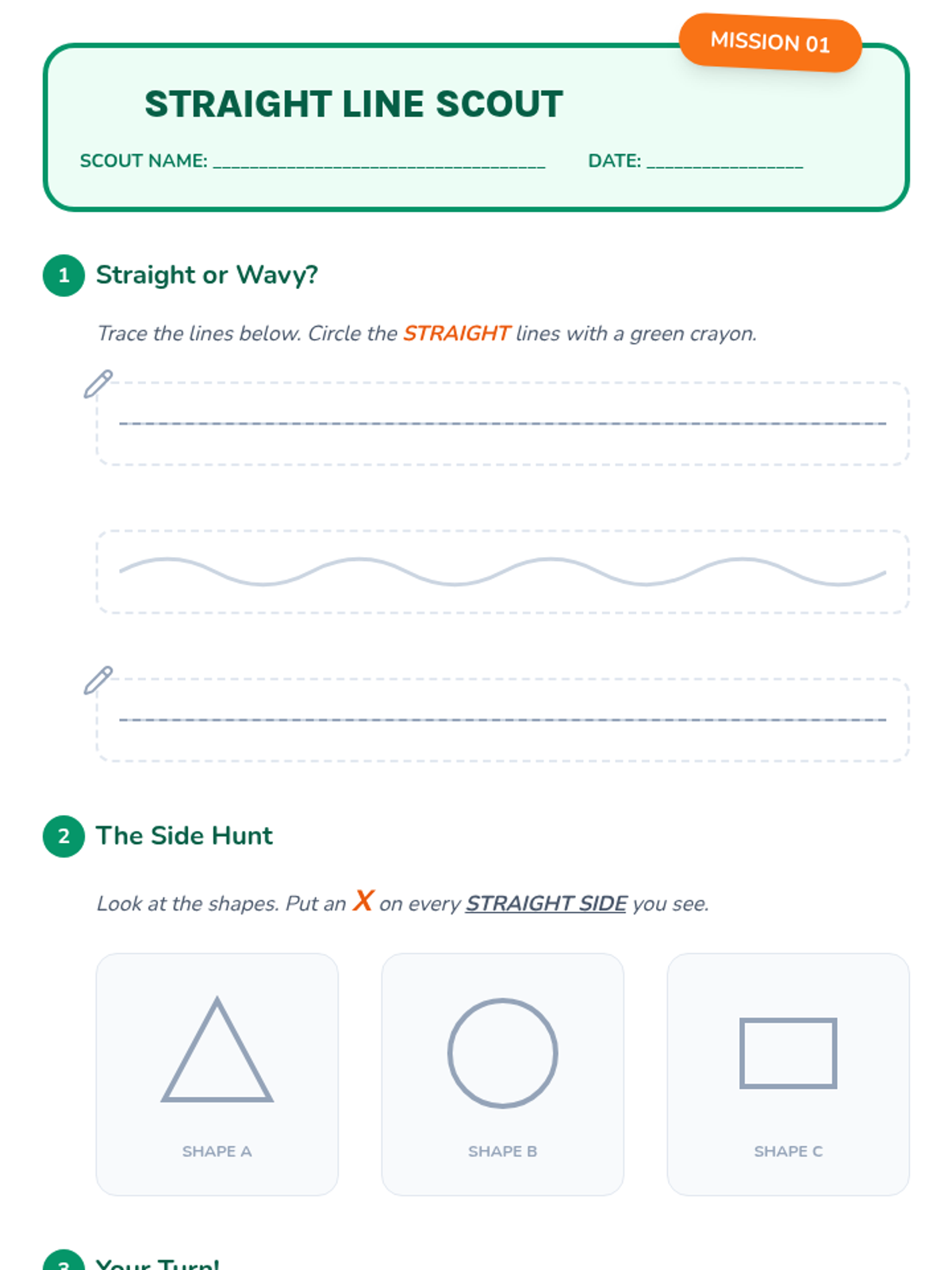
A Kindergarten geometry sequence where students become 'Shape Scouts' to investigate the attributes that define shapes, such as sides and vertices. Students move from simple identification to scientific classification using formal geometric language.
This sequence bridges abstract geometry with the physical world, encouraging Kindergarten students to recognize 2D shapes in their everyday environment. Through classroom hunts, traffic sign analysis, art exploration, and nature walks, students learn to identify and categorize circles, squares, triangles, rectangles, and more in real-life contexts.
A comprehensive introduction to 2D shapes for Kindergarten students, focusing on circles, squares, rectangles, triangles, and hexagons through tactile exploration and visual recognition.
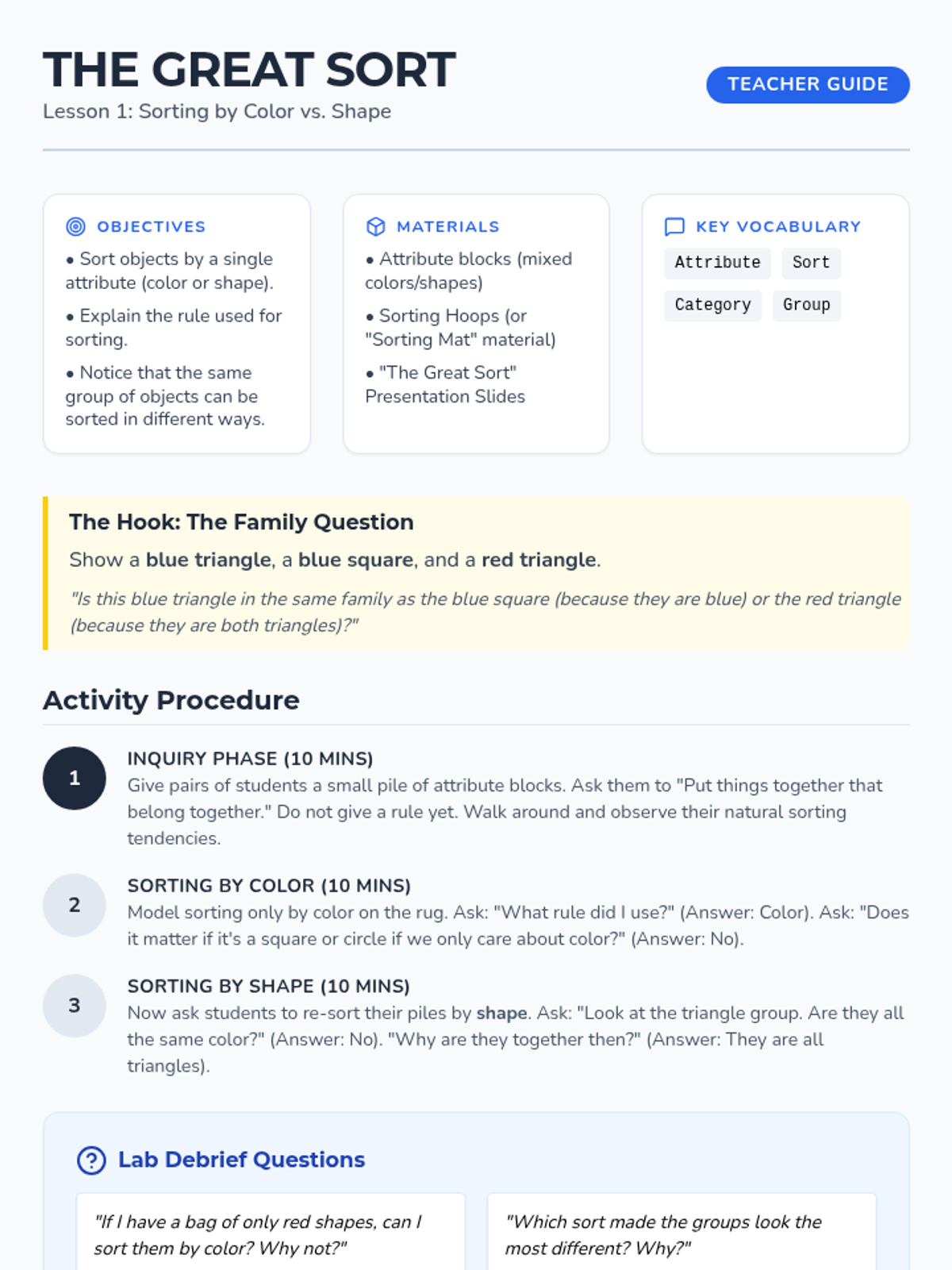
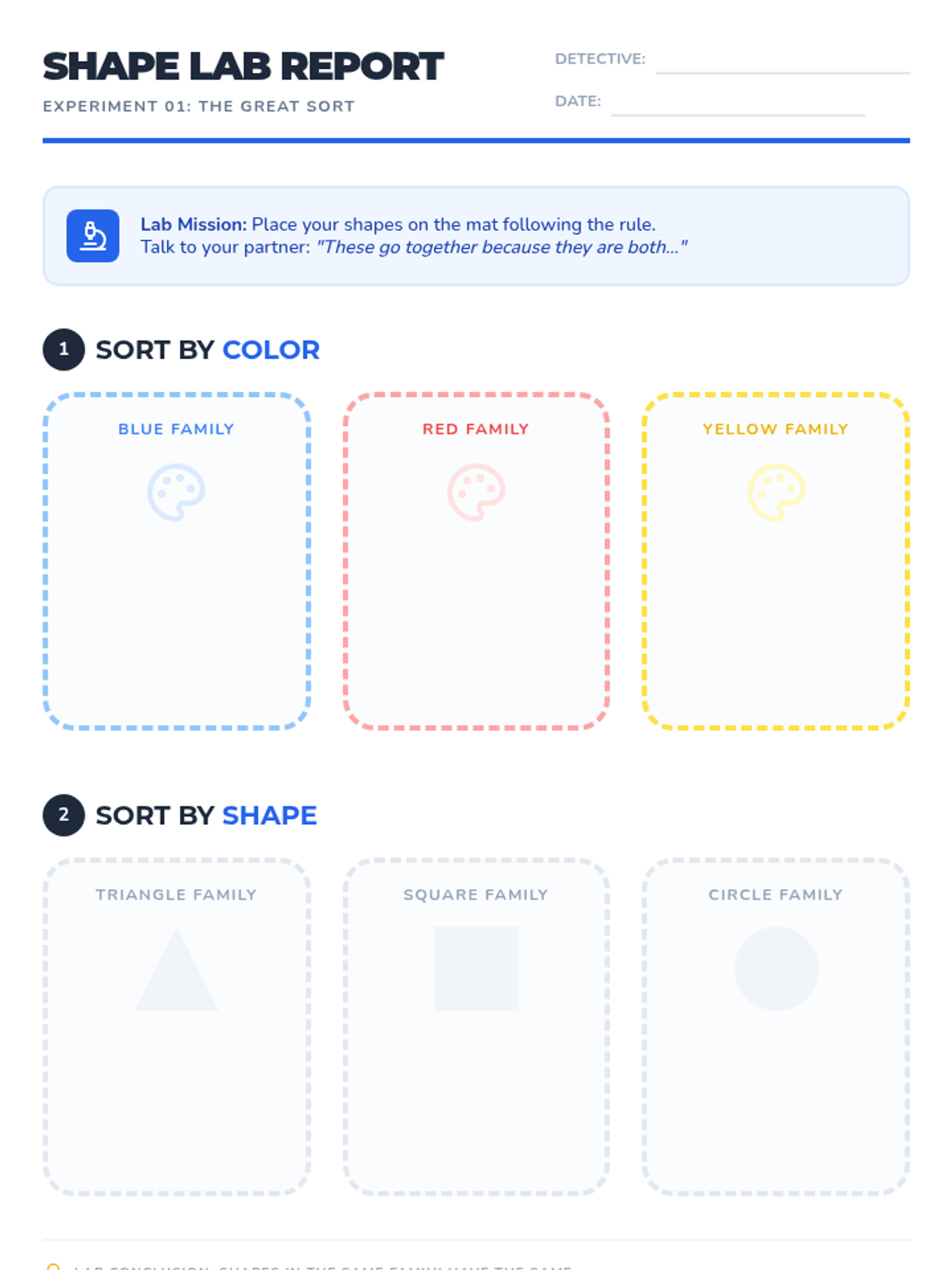
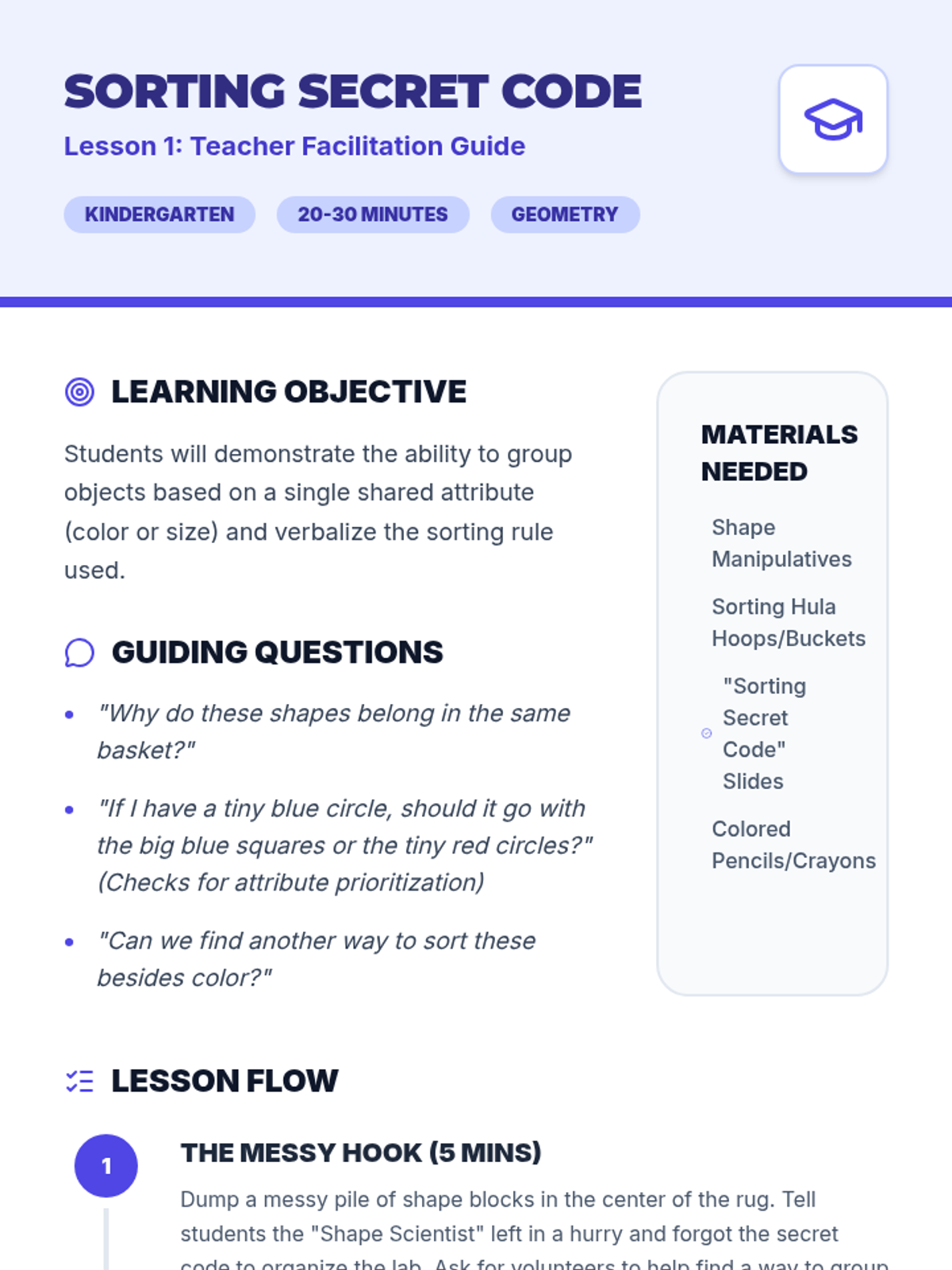
A Pre-K geometry sequence focused on classifying shapes by color, size, orientation, and numerical attributes like sides and corners. Students develop critical thinking by articulating sorting rules and identifying similarities and differences between geometric figures.
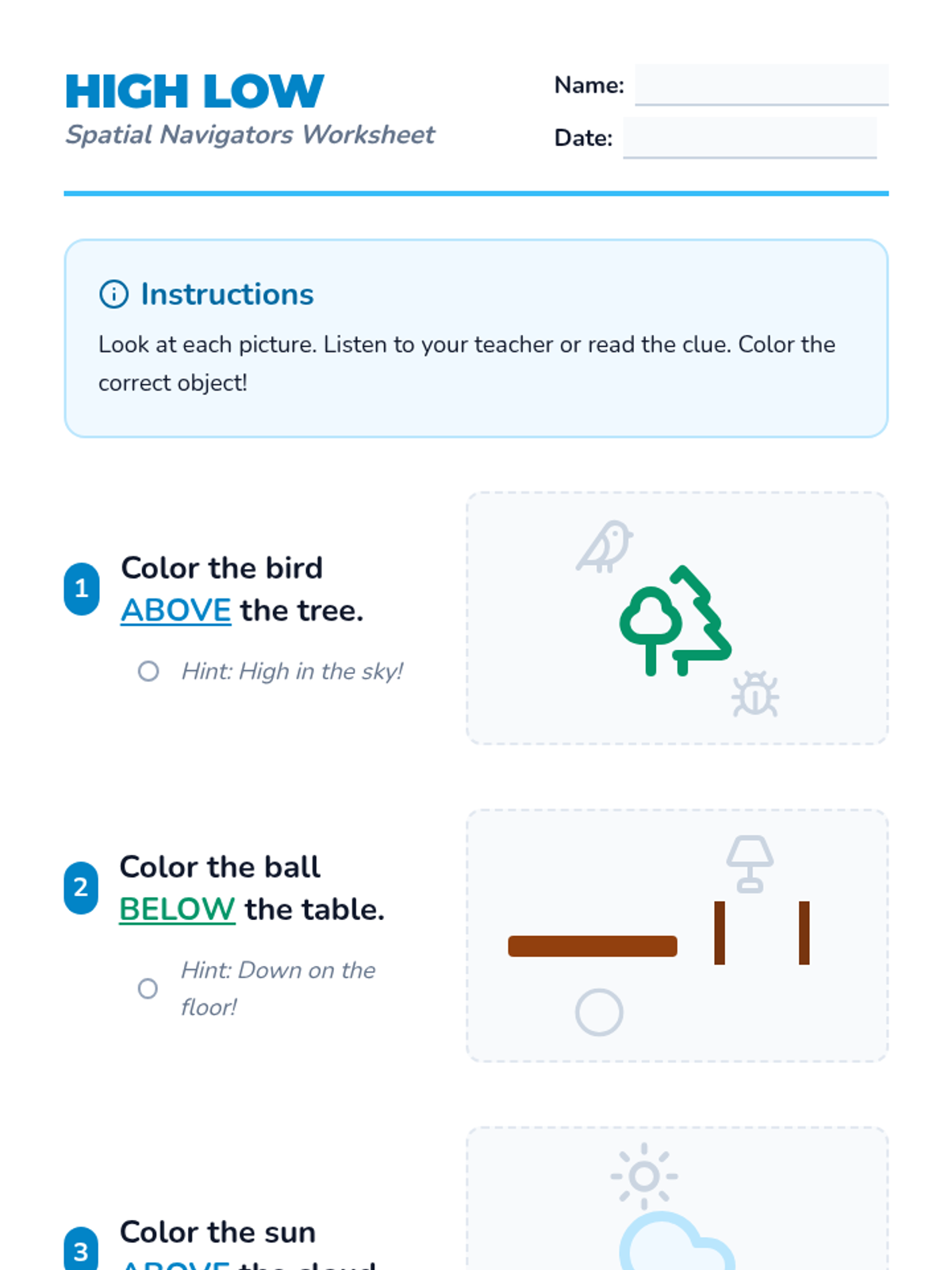
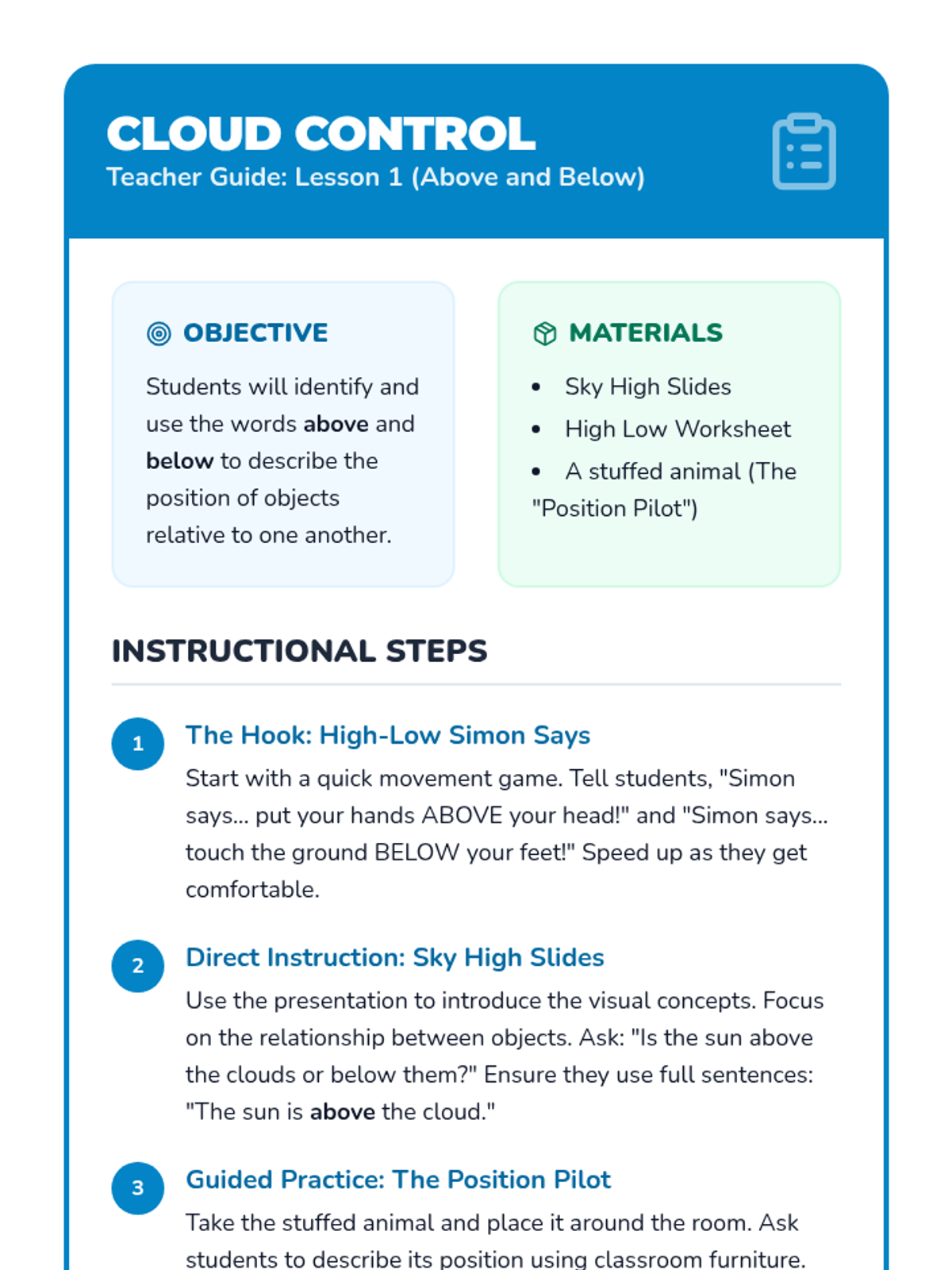
A foundational physics and spatial reasoning sequence for Kindergarten students focused on using positional vocabulary (above, below, beside, in front of, behind) to describe the relative location of objects. Students progress from physical movement to 2D mapping and verbal communication challenges.