Develops proficiency in estimating and measuring length, area, volume, and mass using standard units and unit conversions. Integrates time, money, angle measurement, and data classification through counting and arithmetic applications.
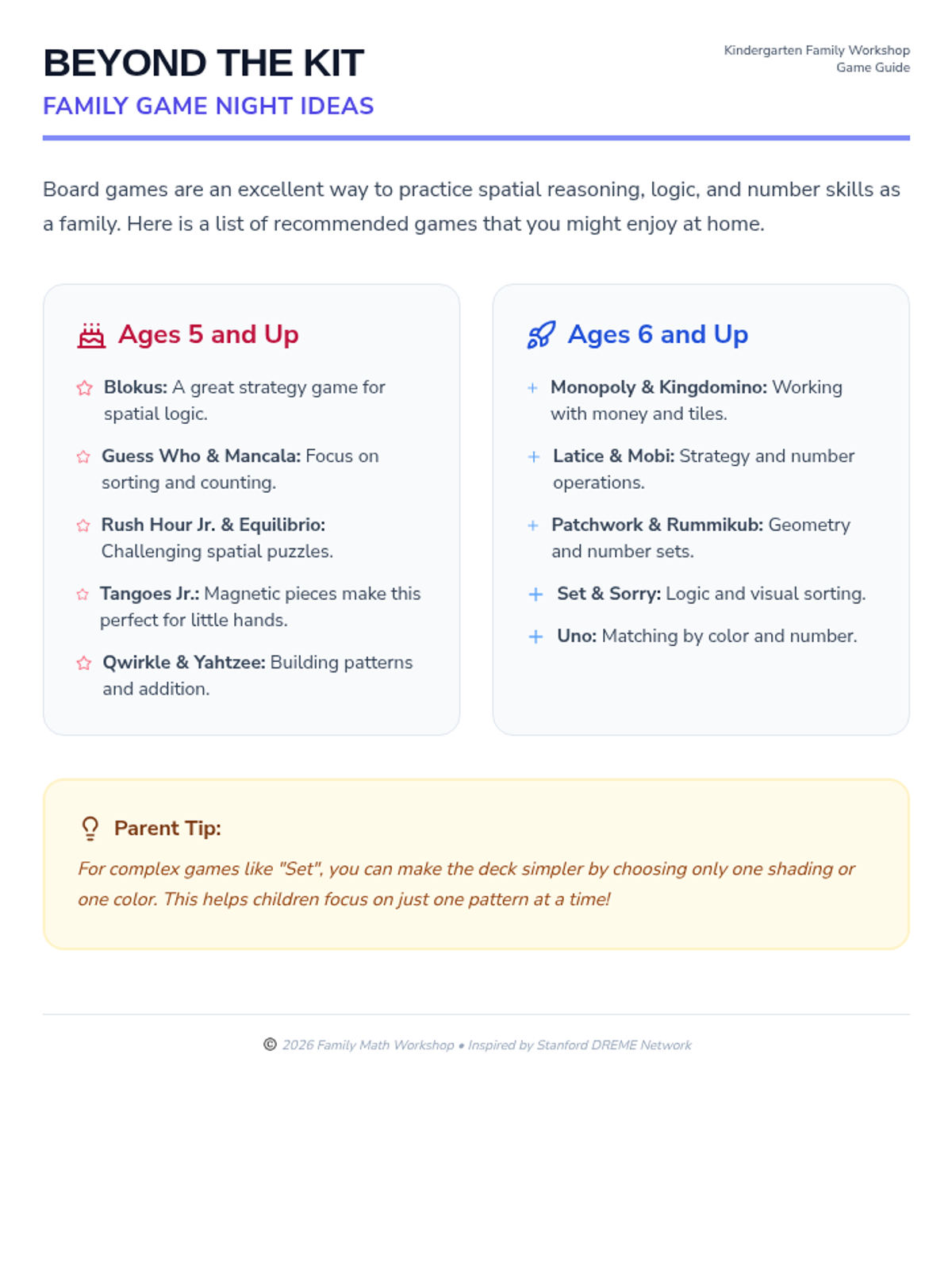
A curated list of store-bought board games for families, categorized by age and highlighting specific math skills like spatial reasoning and logic. Includes tips for simplifying complex games. Corrected inaccuracies and ensured single-page layout.
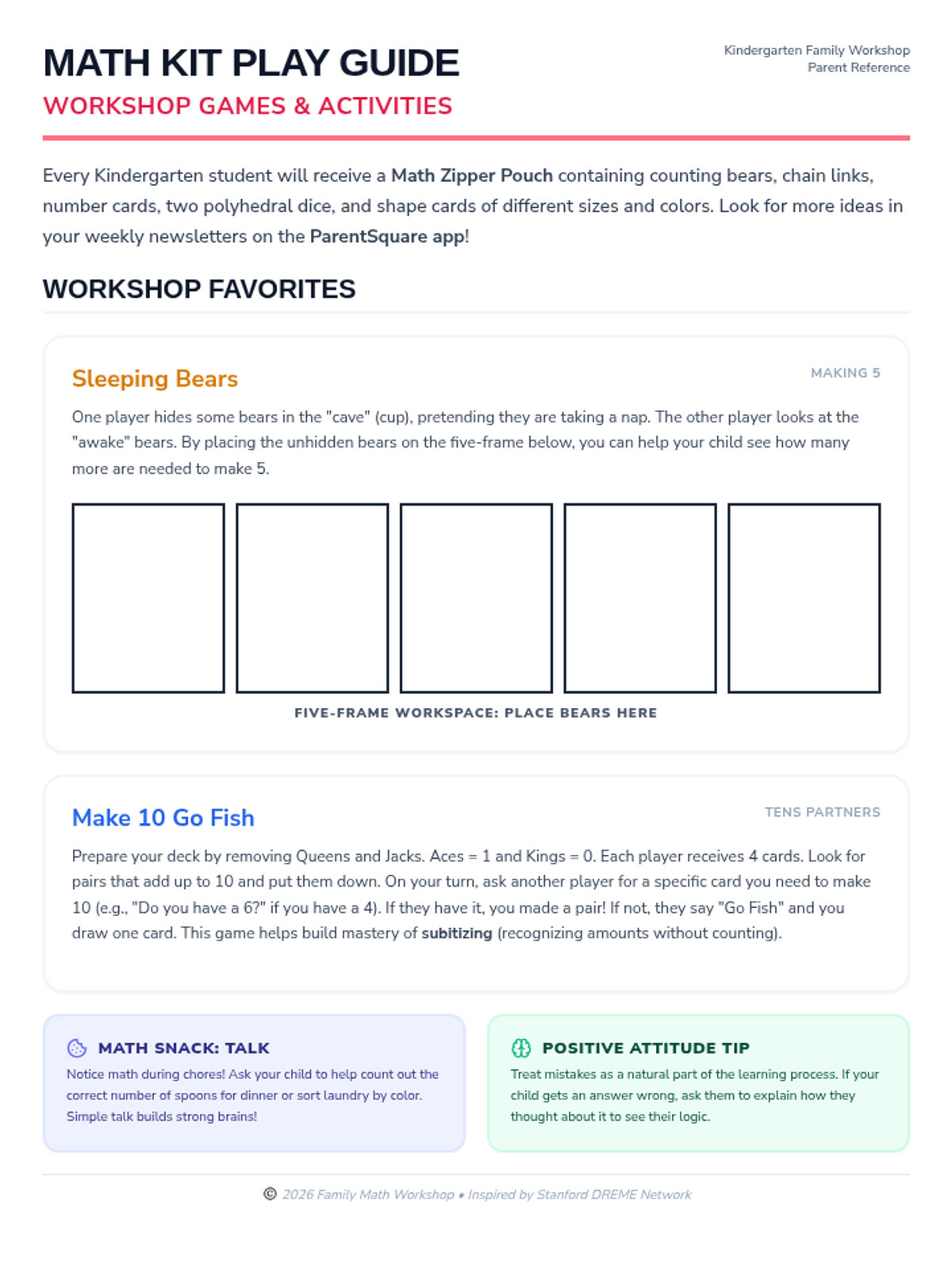
An activity guide for parents focused on using the Kindergarten Math Kit and common household items to support math learning. It includes detailed instructions for the 'Sleeping Bears' and 'Make 10 Go Fish' games demonstrated in the workshop. Workspace enlarged for counting bears. Delivery method for newsletters updated to ParentSquare app. Corrected instructions and added Math Snack content.
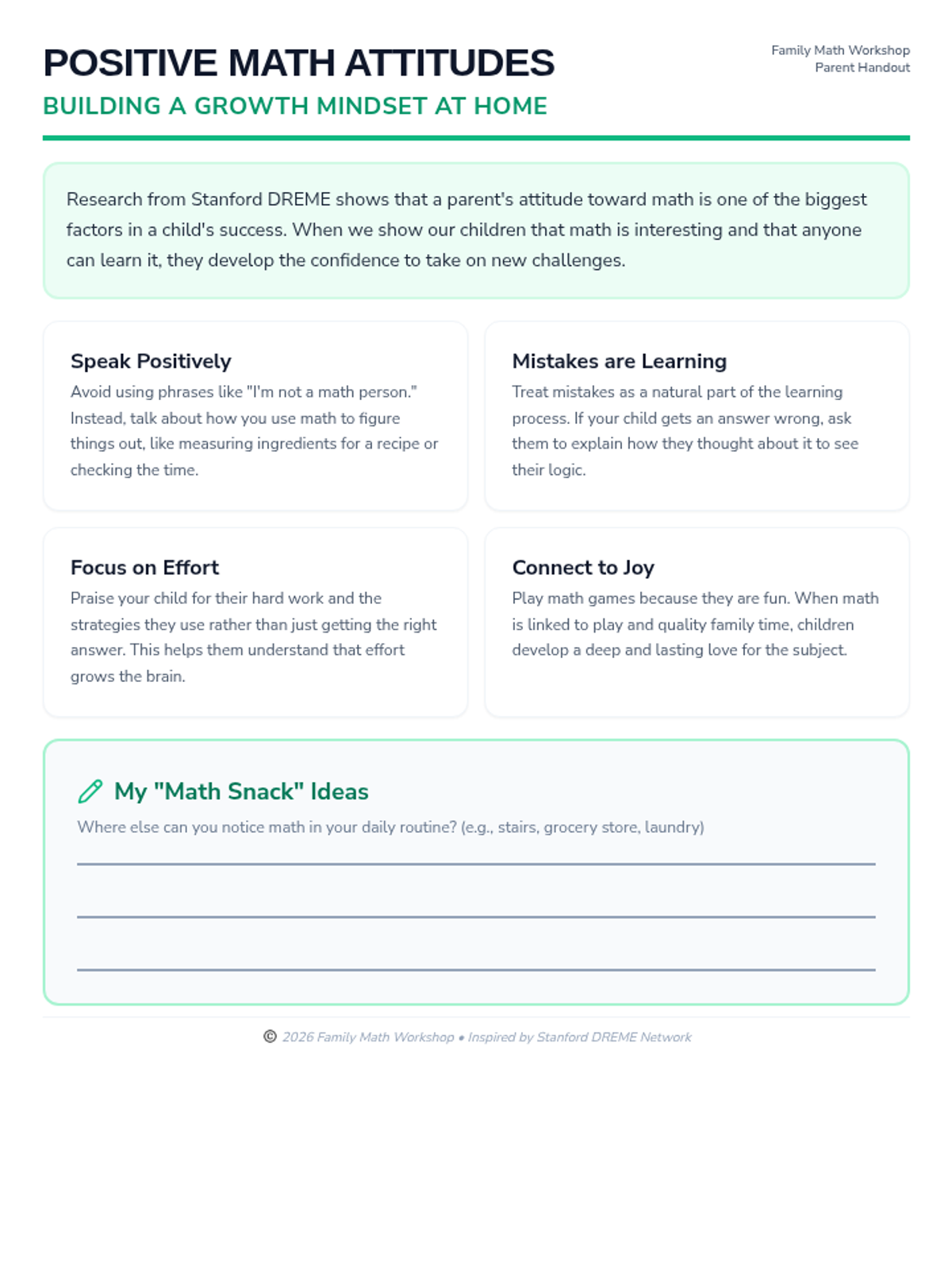
A parent handout focused on fostering positive math attitudes and a growth mindset at home, based on Stanford DREME research. Corrected spelling and layout to fit on one page with a space for parent notes. Hand-writing area spacing improved. Body text font size slightly increased for legibility.
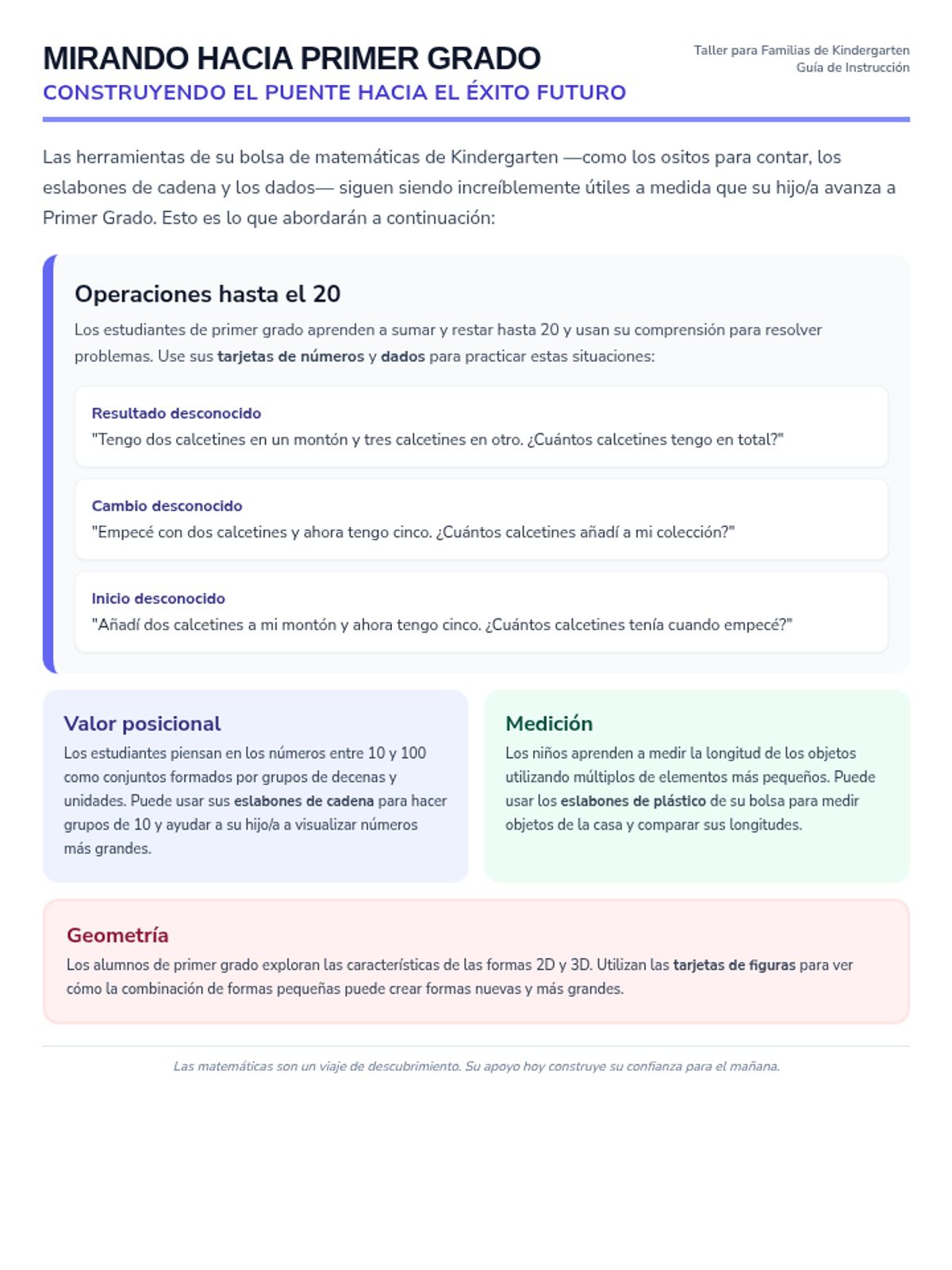
An updated bridge handout for parents that illustrates the major mathematics goals for First Grade, using descriptive full sentences to explain addition types, place value, measurement, and geometry. Layout tightened to fit on a single page. Darkened footer for better contrast.
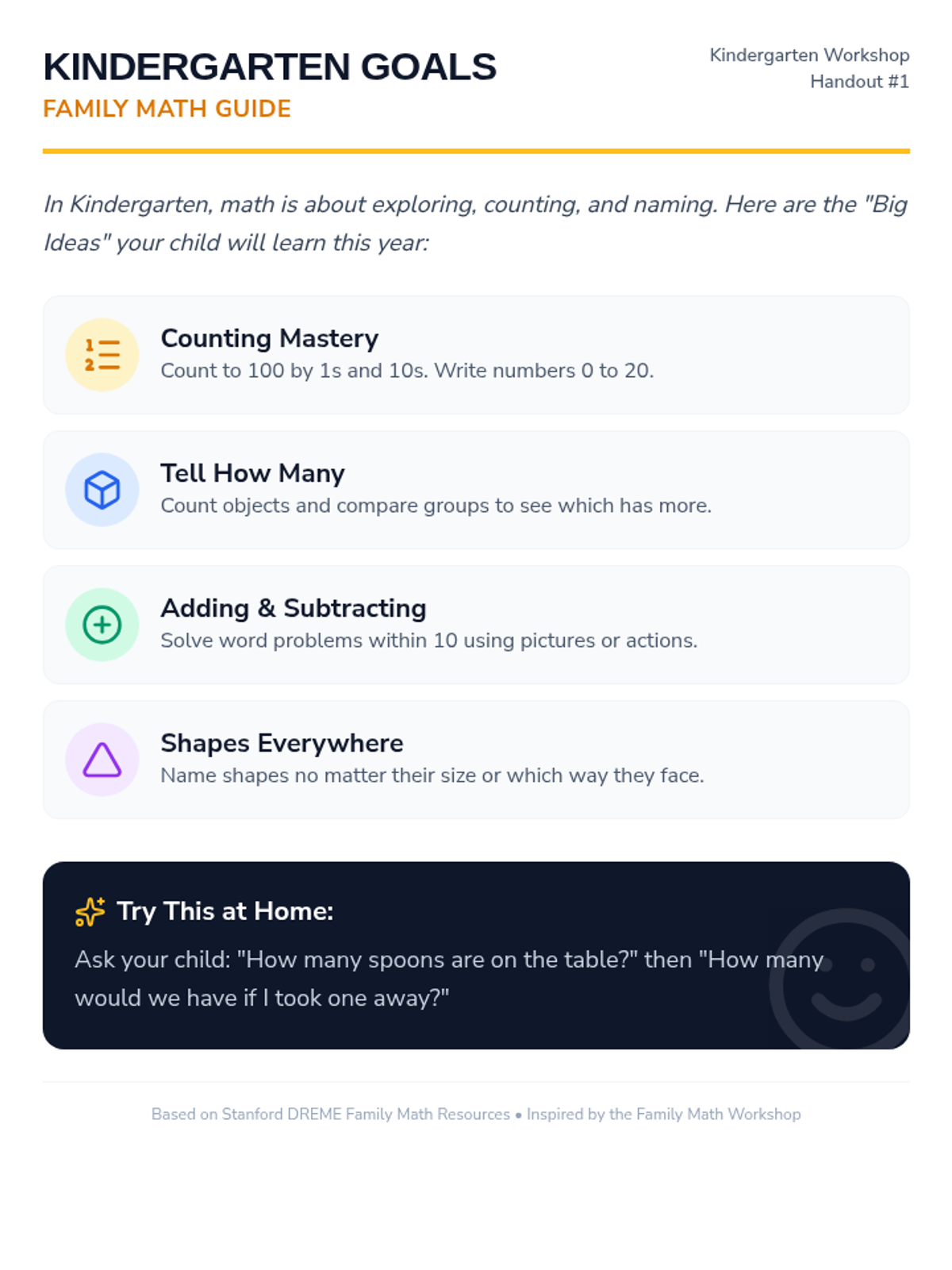
An updated parent handout outlining the major math focuses for Kindergarten, using more descriptive full sentences to explain counting, comparing groups, operations within 10, and geometry concepts. Layout tightened to fit on a single page. Now includes a mention of the zipper pouch math kit. Body text font size increased for legibility.
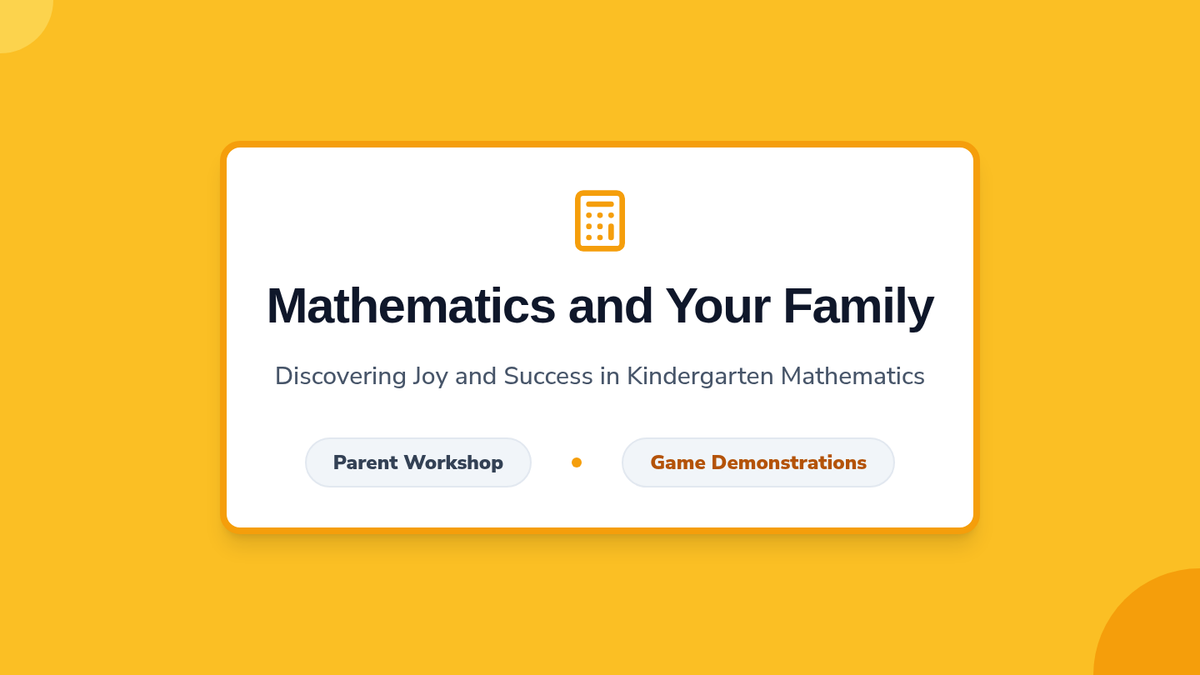
A revised 16:9 slide presentation for a Family Math Workshop, featuring updated demo games (Sleeping Bears, Make 10 Go Fish), a focus on the Kindergarten Math Kit (zipper pouch), and DREME-aligned advice on building positive math attitudes using full, professional sentences. Newsletter delivery method updated to ParentSquare app. Hierarchy issues and spacing overlap corrected. Contrast on kit cards improved. Title colors corrected.
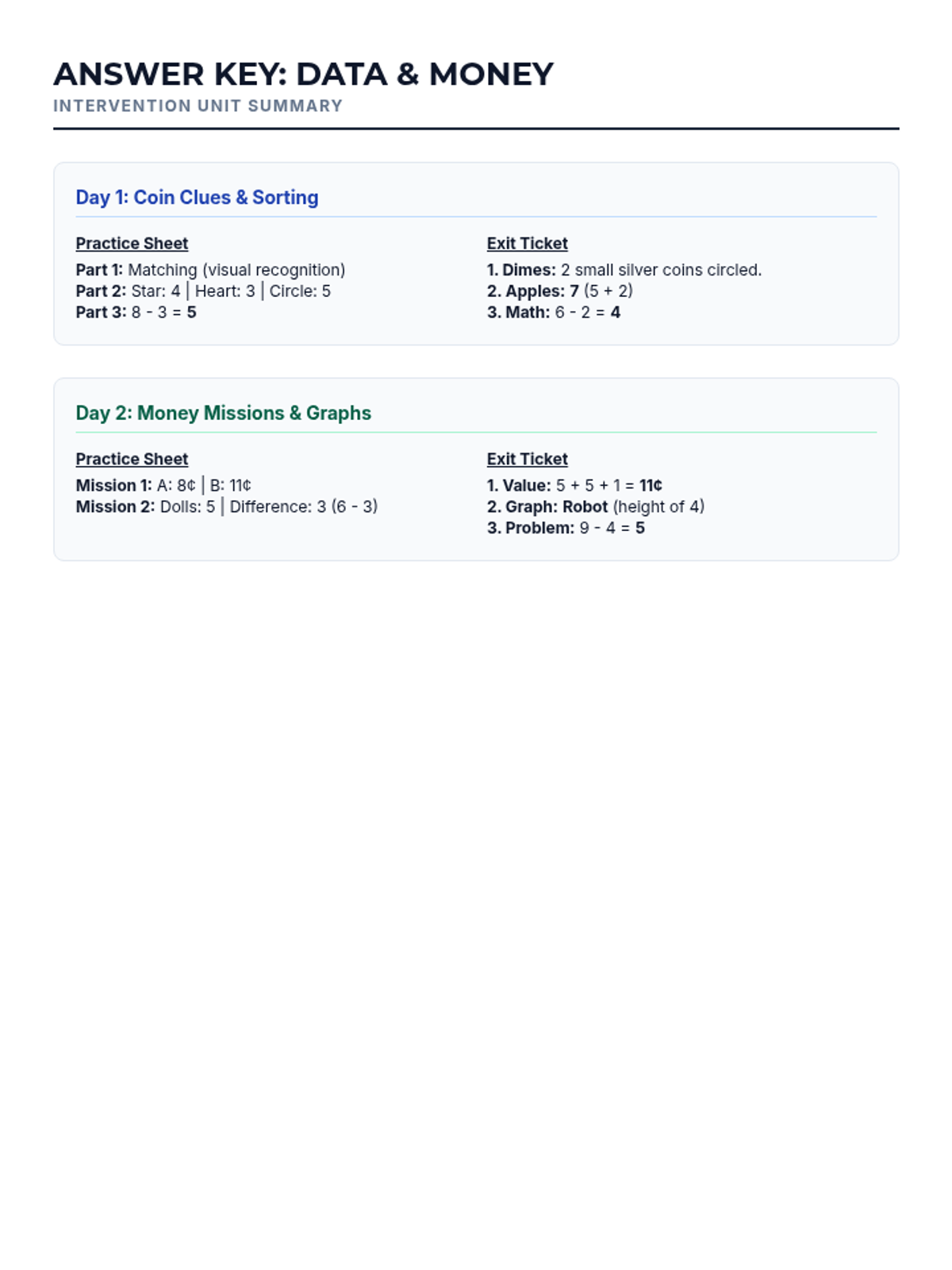
A combined answer key for all Day 1 and Day 2 student materials, provided for teacher reference. Condensed to a single page.
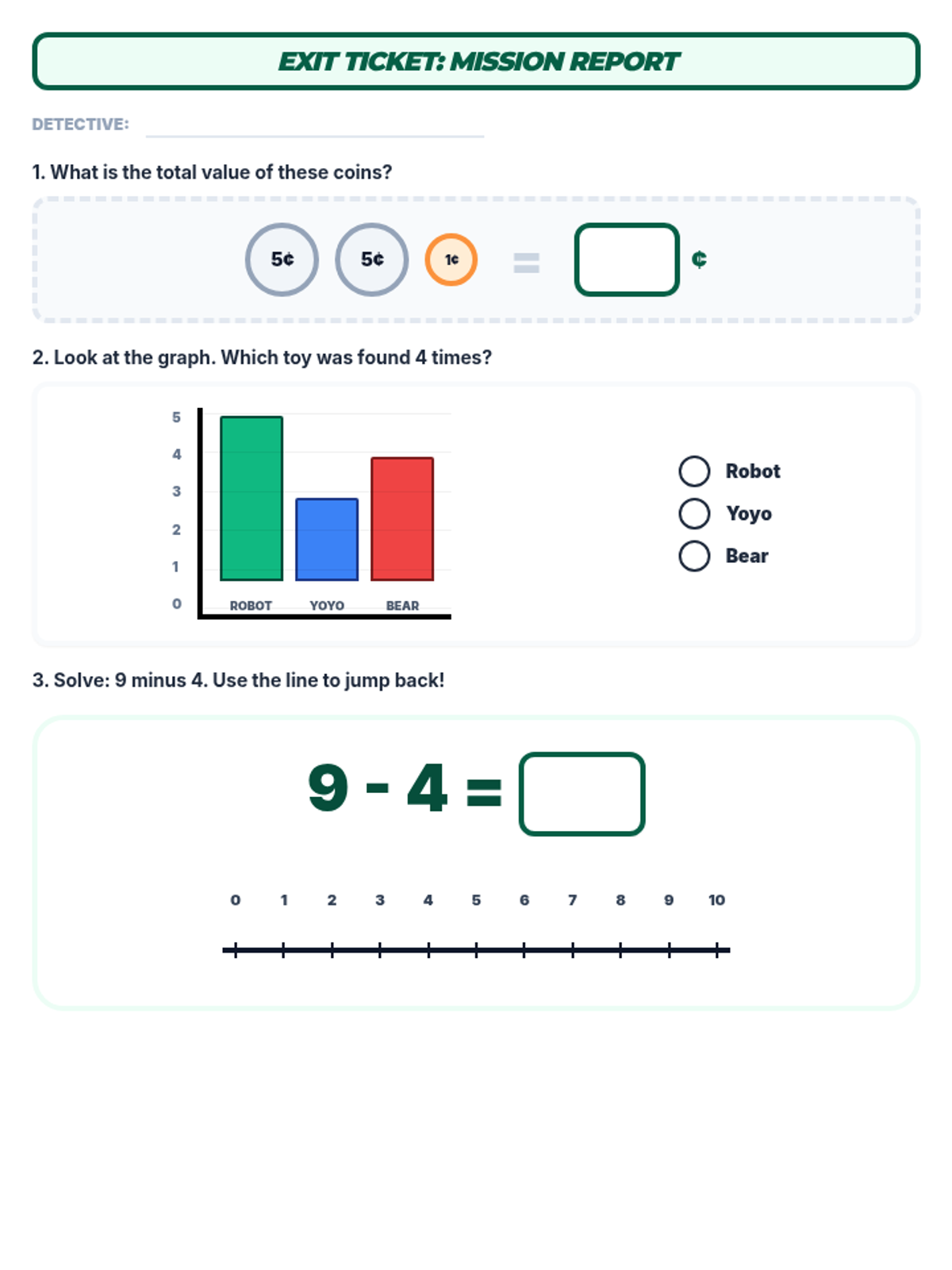
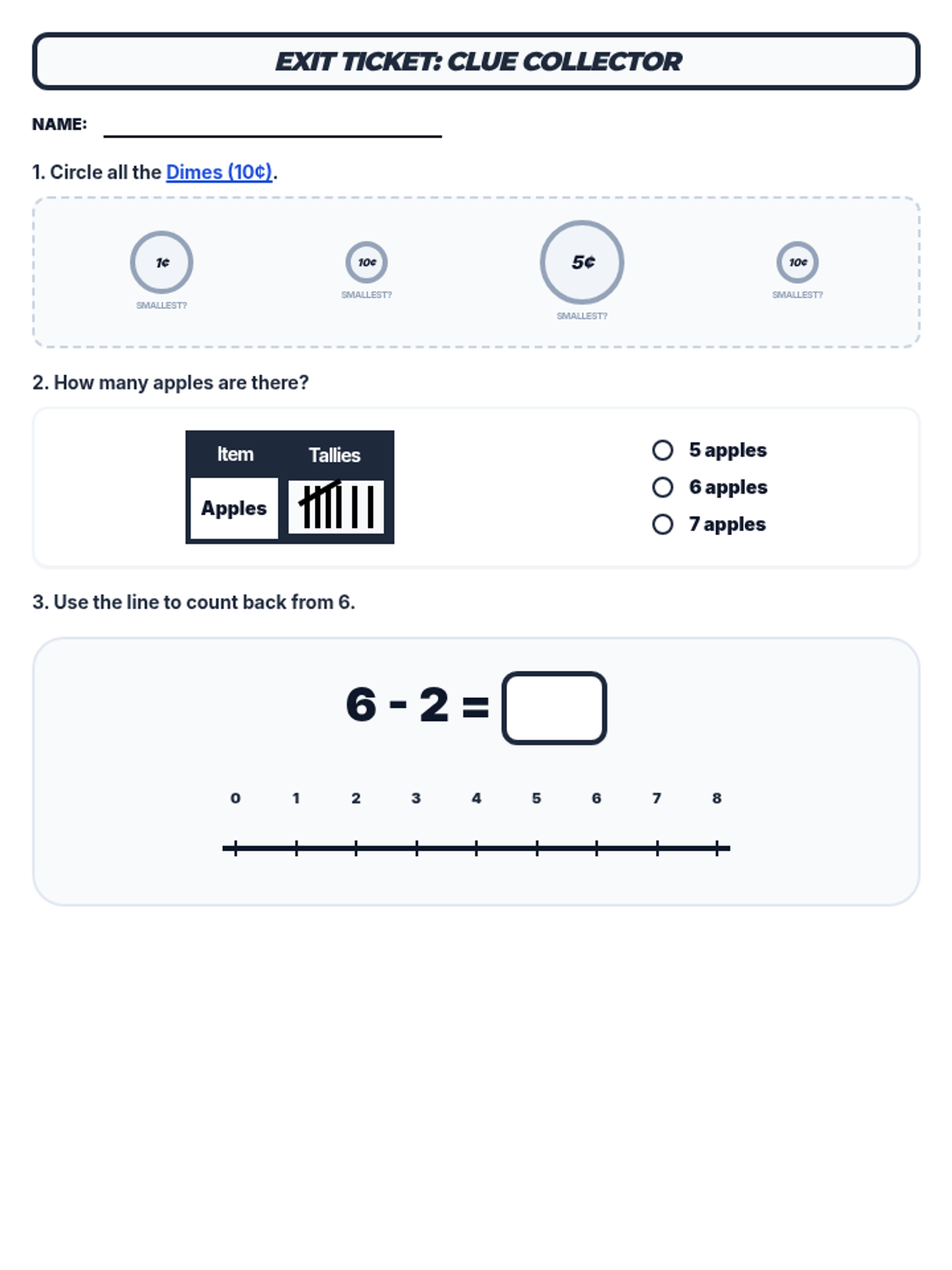
Day 2 exit ticket assessing student ability to count nickels and pennies, identify categories from a bar graph, and solve a subtraction word problem using the counting back strategy. Condensed to a single page with labels under the graph bars.
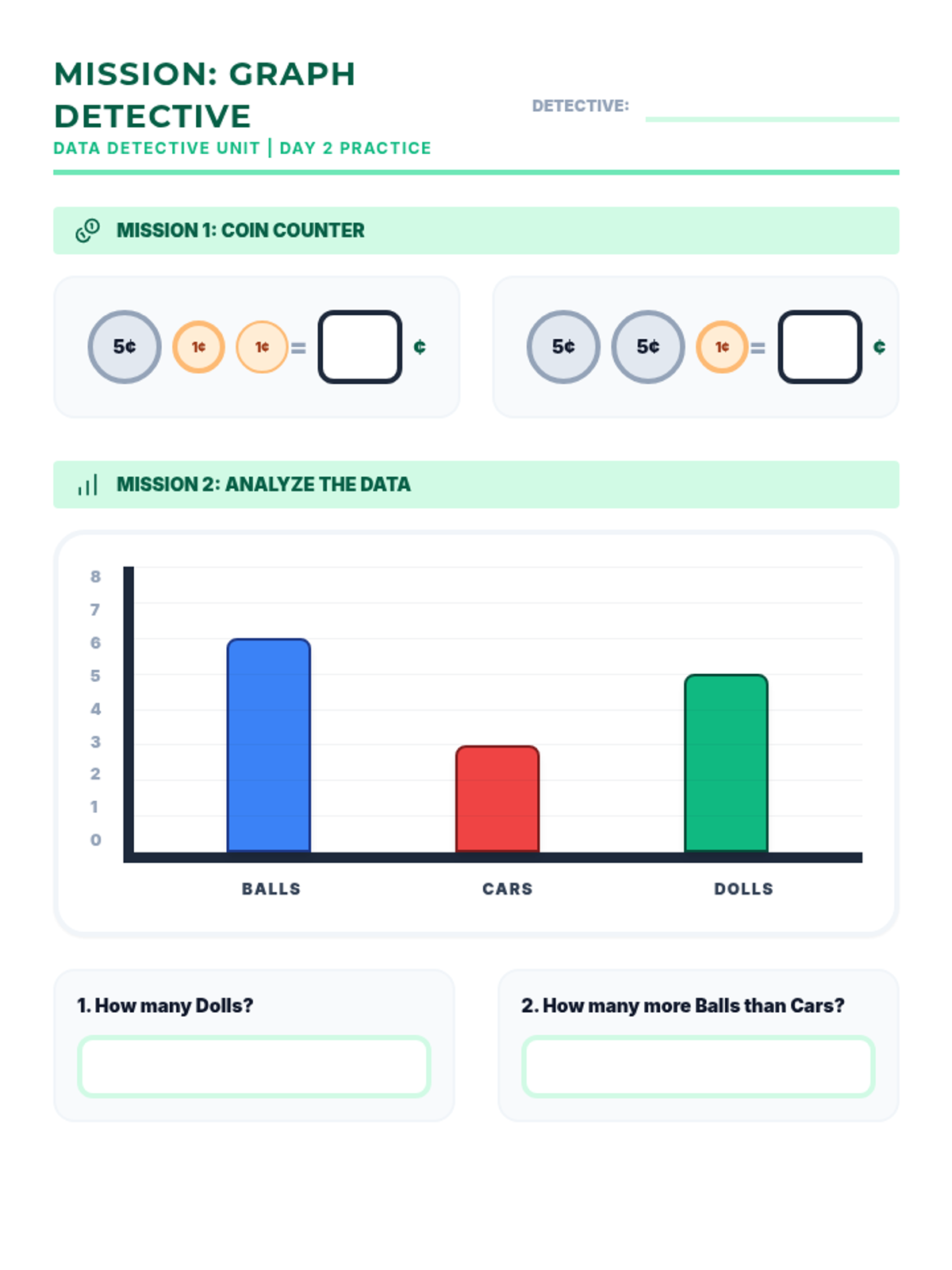
Student practice sheet for Day 2, featuring activities for counting combined sets of pennies and nickels and interpreting a bar graph to solve comparison problems. Condensed to a single page with high visual contrast.
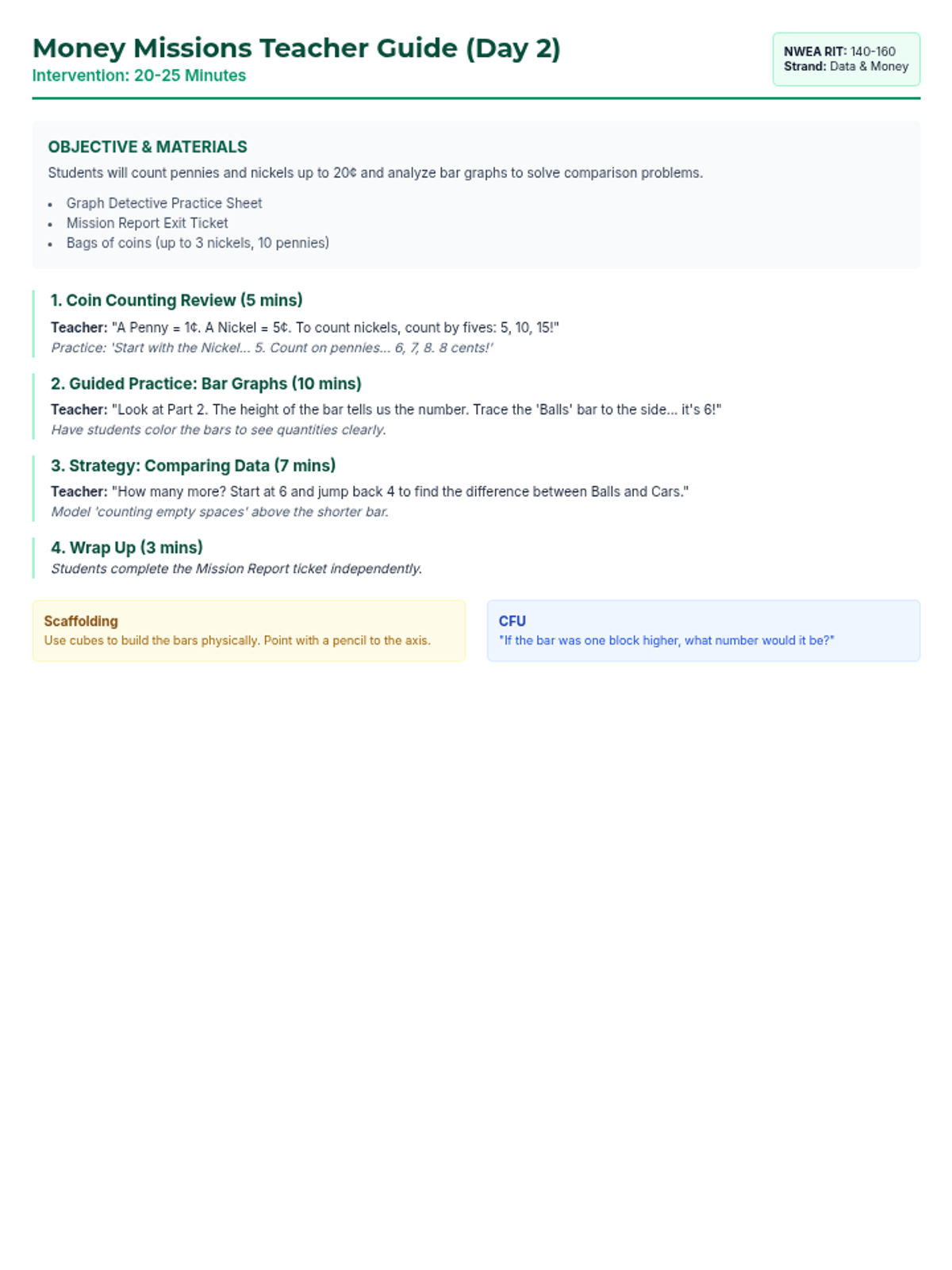
A compact, printer-friendly teacher guide for Day 2. Designed to fit on a single page with no cut-offs.
A short assessment for Day 1 to check student understanding of dime identification, reading tally marks, and solving subtraction through counting back. Condensed to a single page with high contrast and rigor.
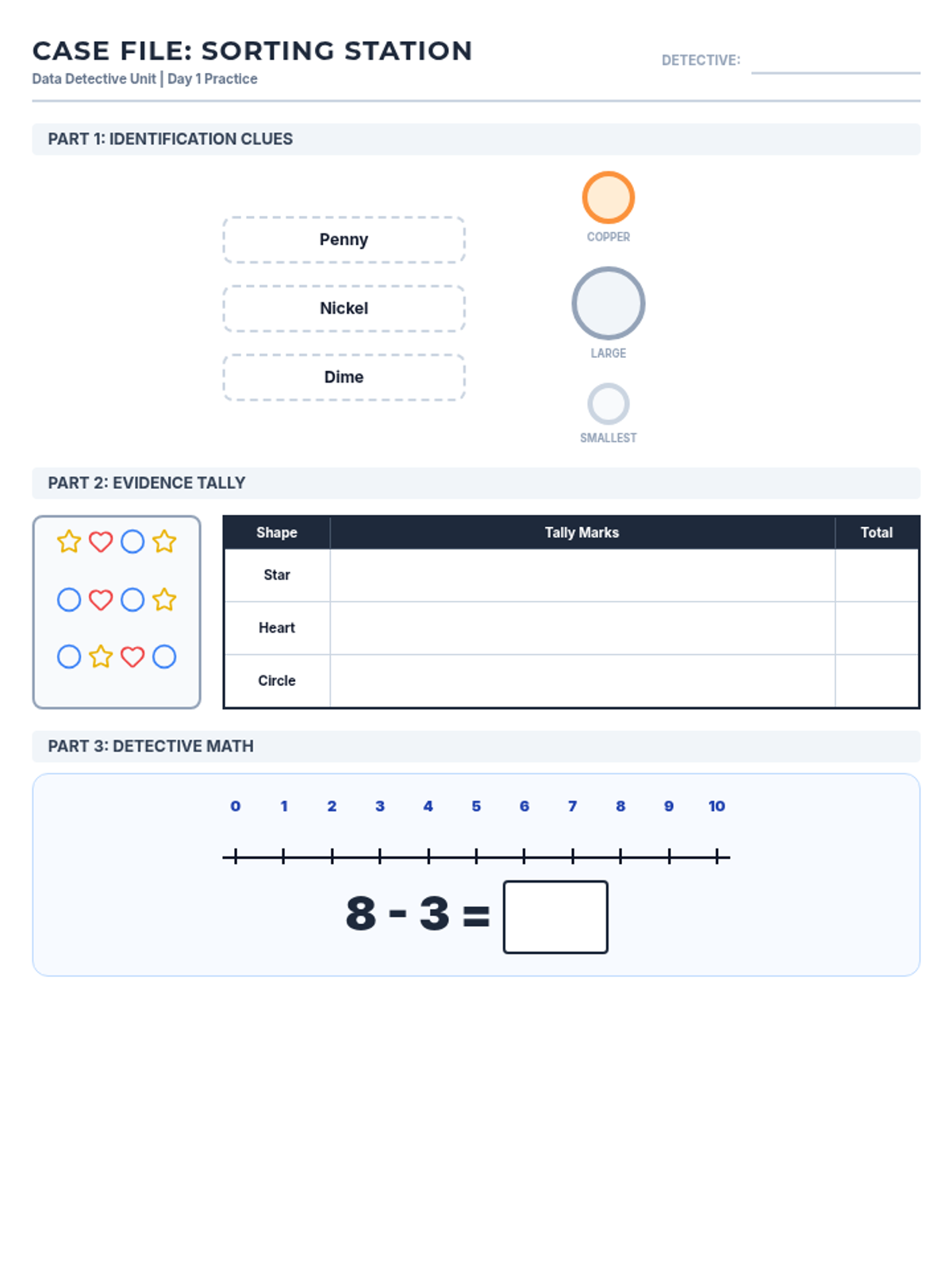
A student practice worksheet for Day 1, including coin matching, object sorting with tally marks, and a subtraction number line activity designed for RIT 140-160 students. Condensed to a single page with improved spacing for jumps.
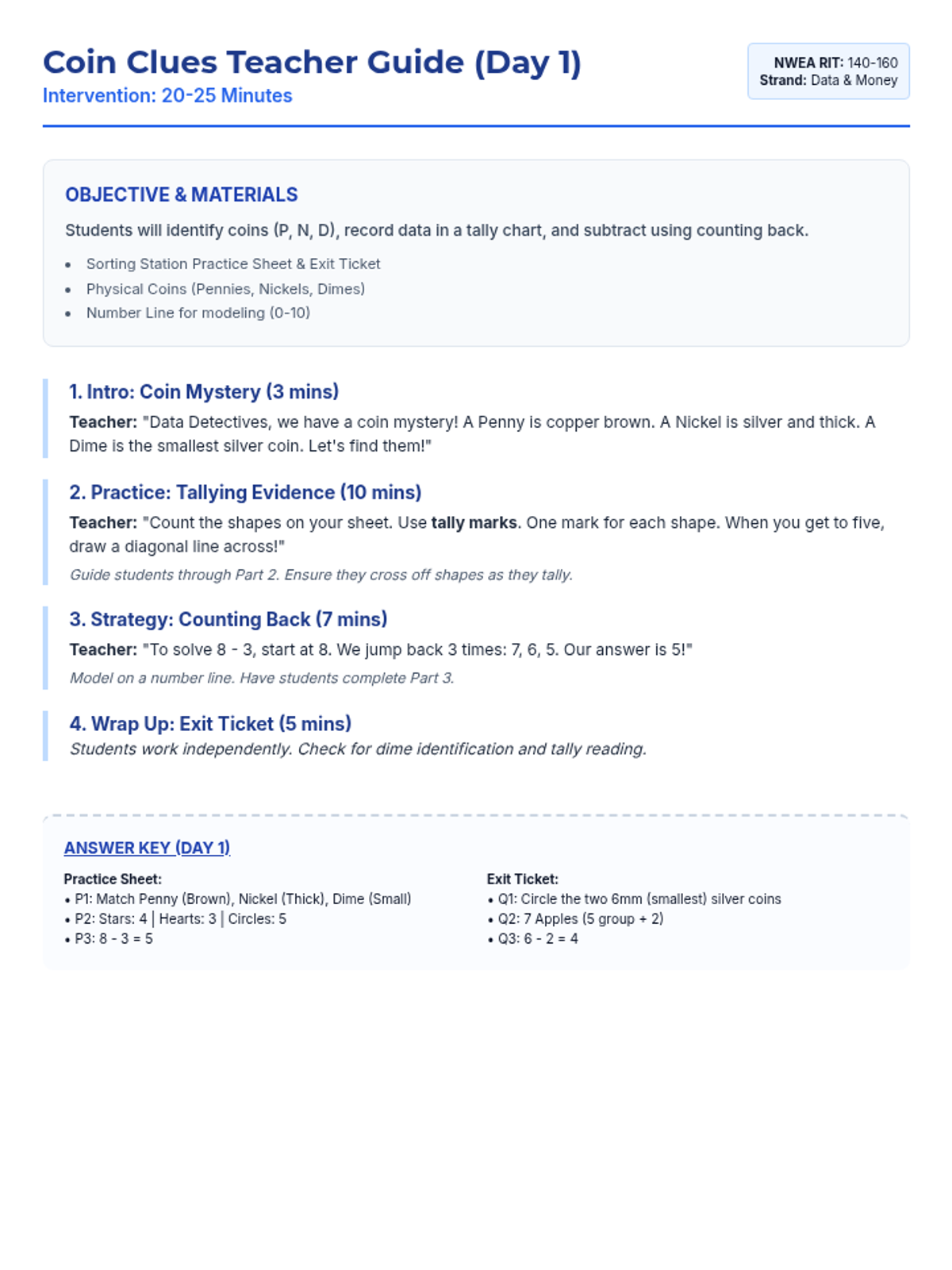
A compact, printer-friendly teacher guide for Day 1. Designed to fit on a single page with no cut-offs and includes an integrated answer key.
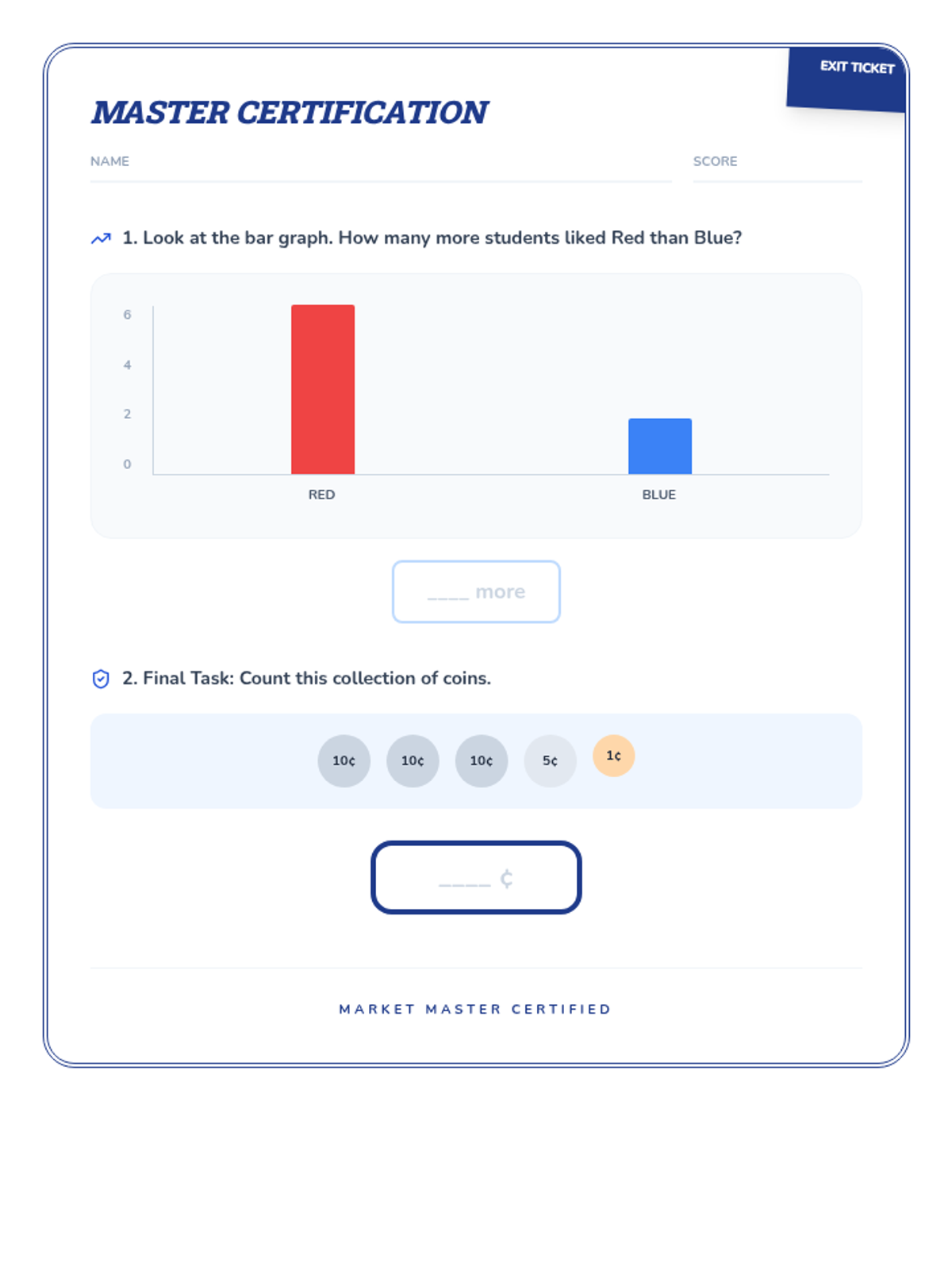
A final exit ticket for Day 3 where students calculate the difference between two categories on a bar graph and count a collection of mixed coins (3 dimes, 1 nickel, 1 penny).
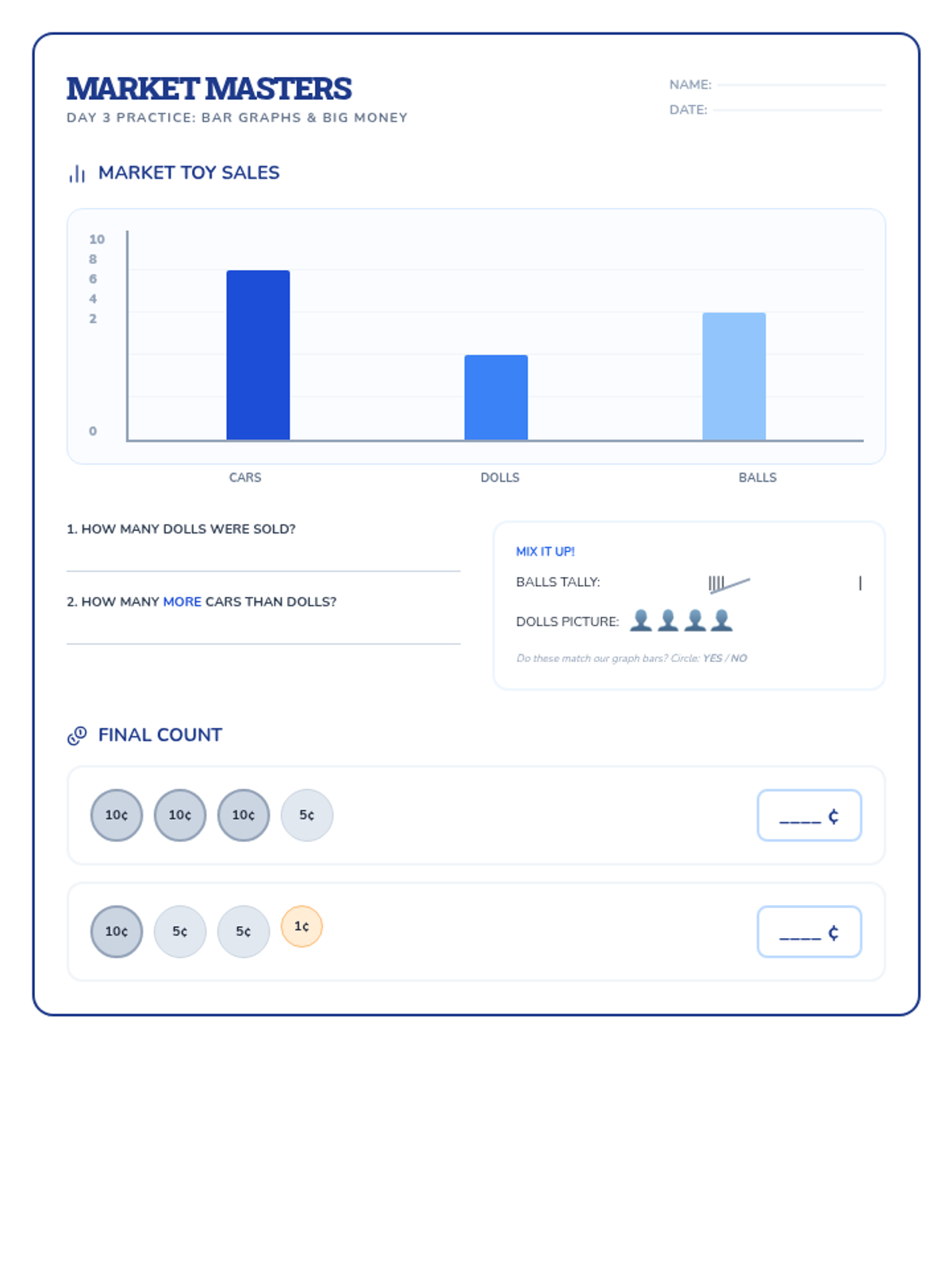
A student practice sheet for Day 3 focusing on bar graphs (interpreting values and comparing sets) and counting mixed coins (dimes and nickels), with mixed data integration.
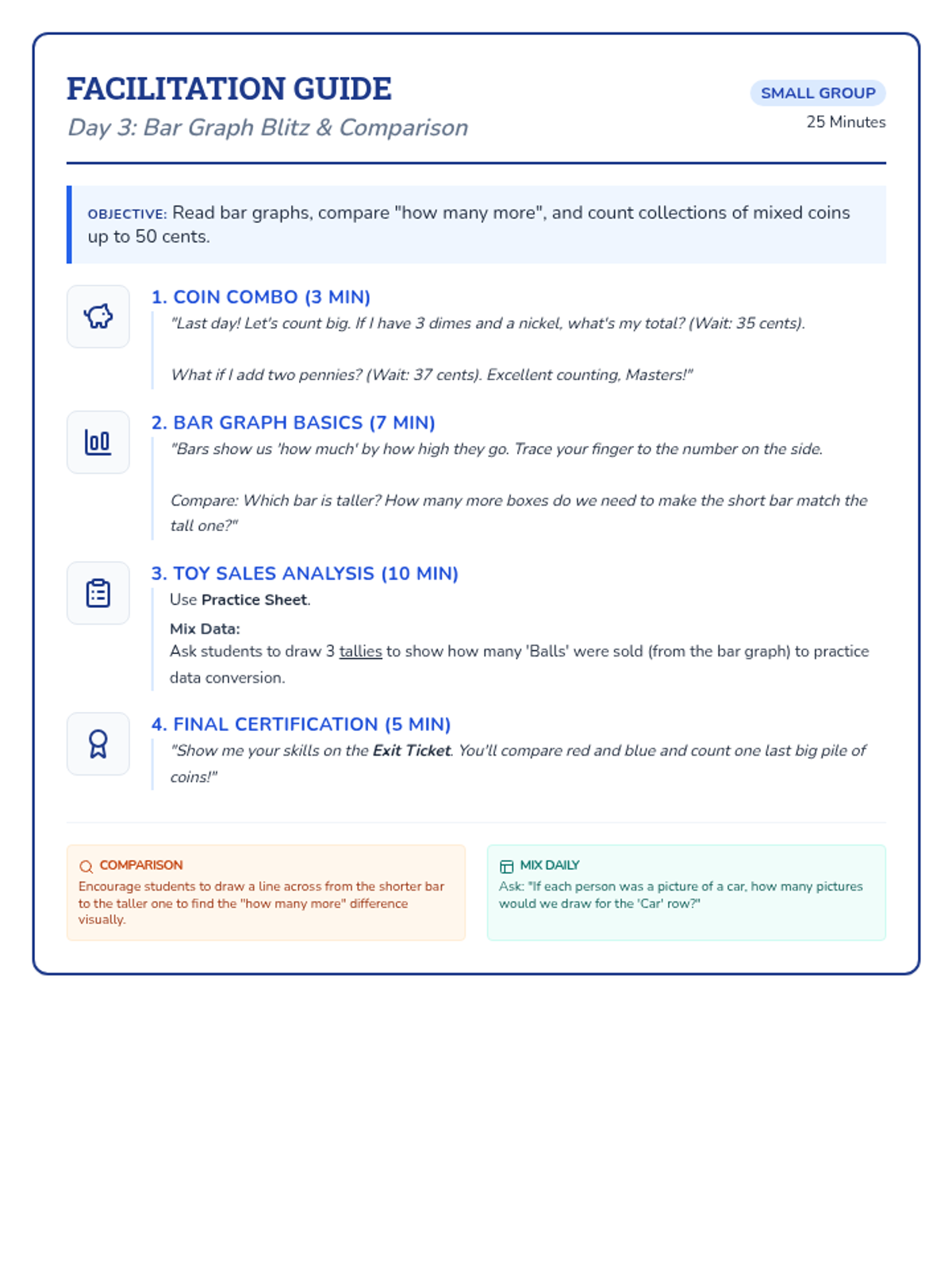
A facilitation guide for Day 3 of the Market Masters unit, focusing on bar graphs and comparing data sets, along with mixed coin counting. Simplified to one page.
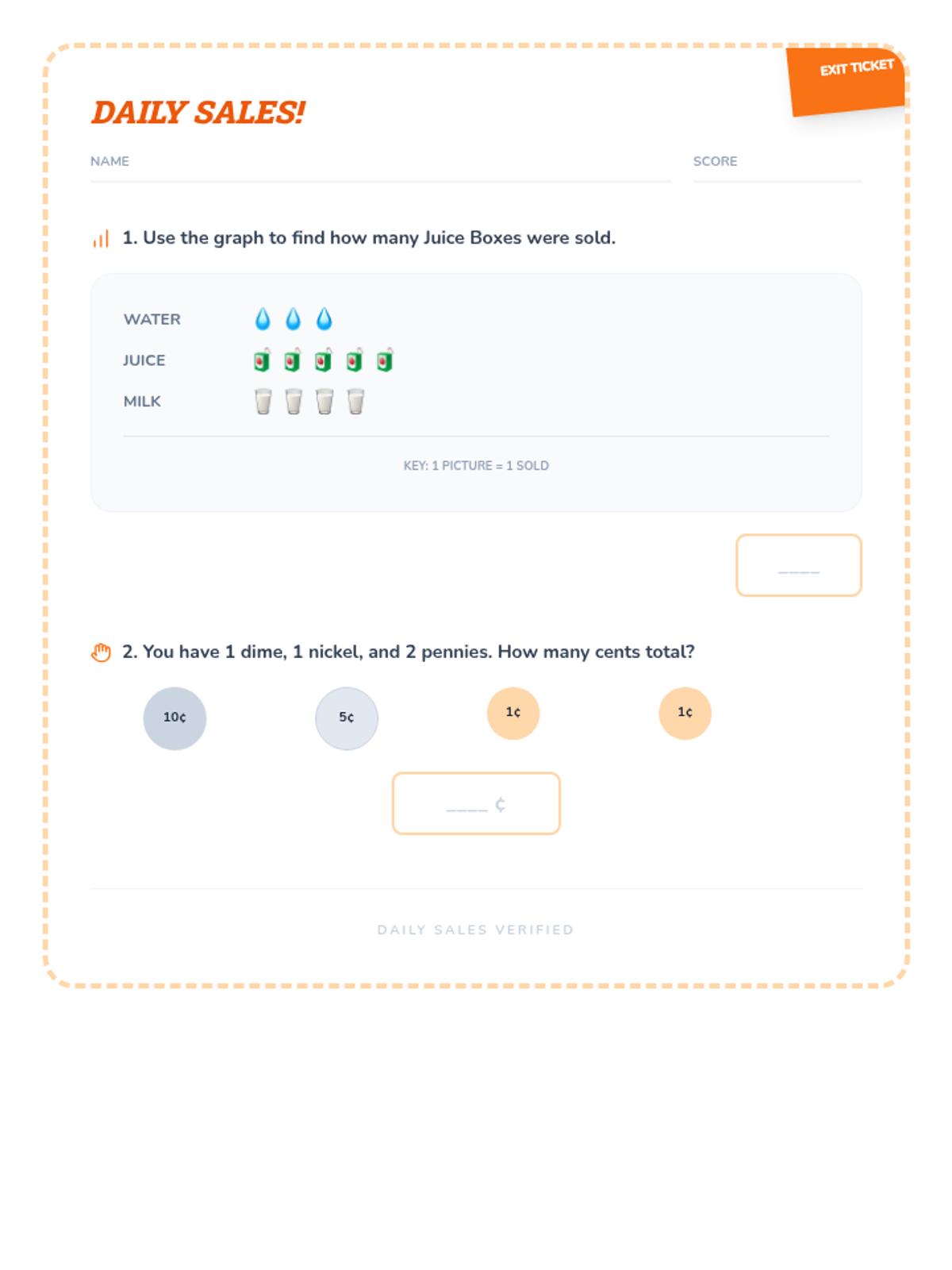
An exit ticket for Day 2 where students interpret a picture graph and count a mixed collection of coins (1 dime, 1 nickel, 2 pennies).
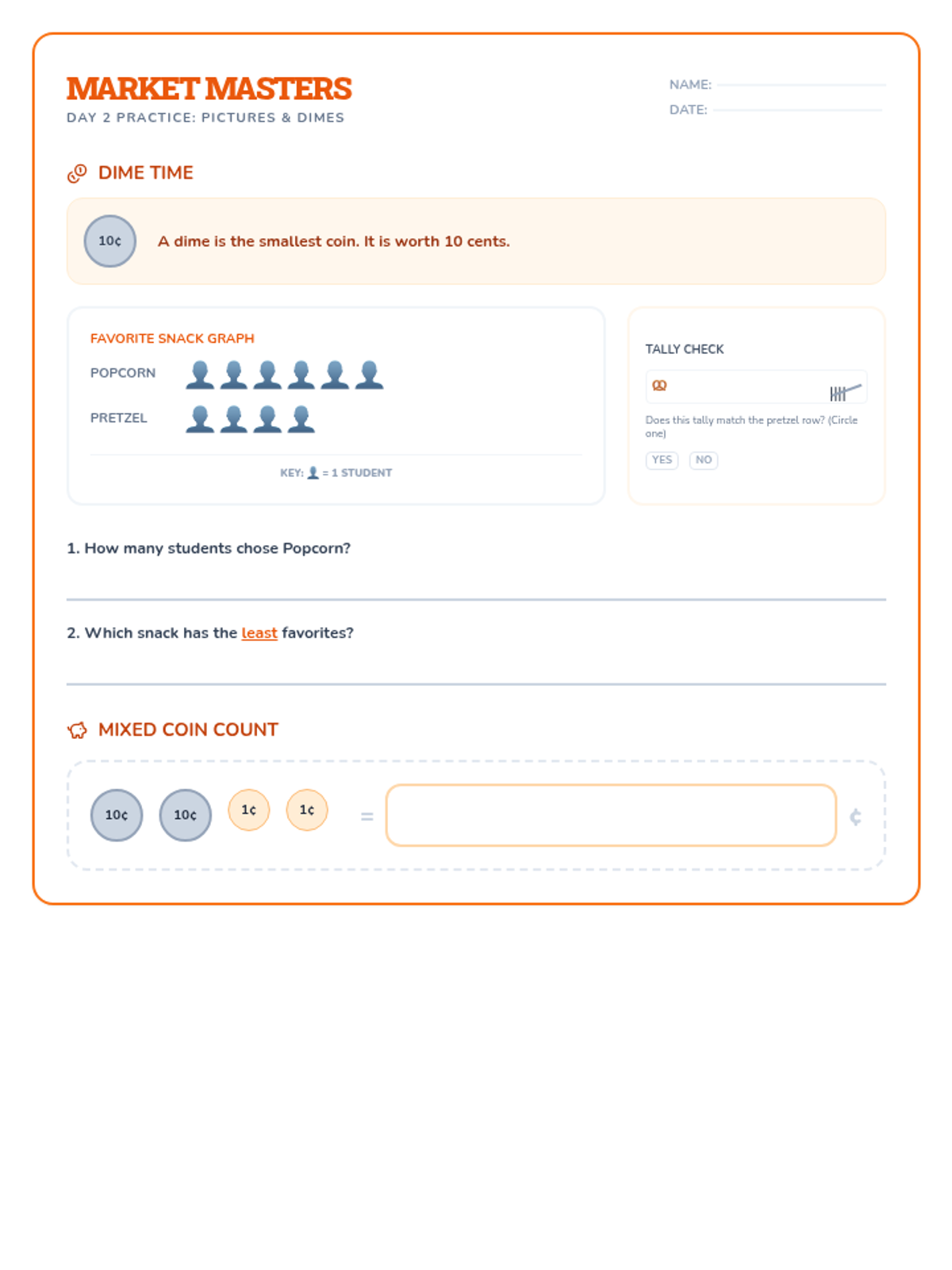
A student practice sheet for Day 2 focusing on interpreting picture graphs (1:1) and counting mixed coins (dimes and pennies), with mixed data integration.
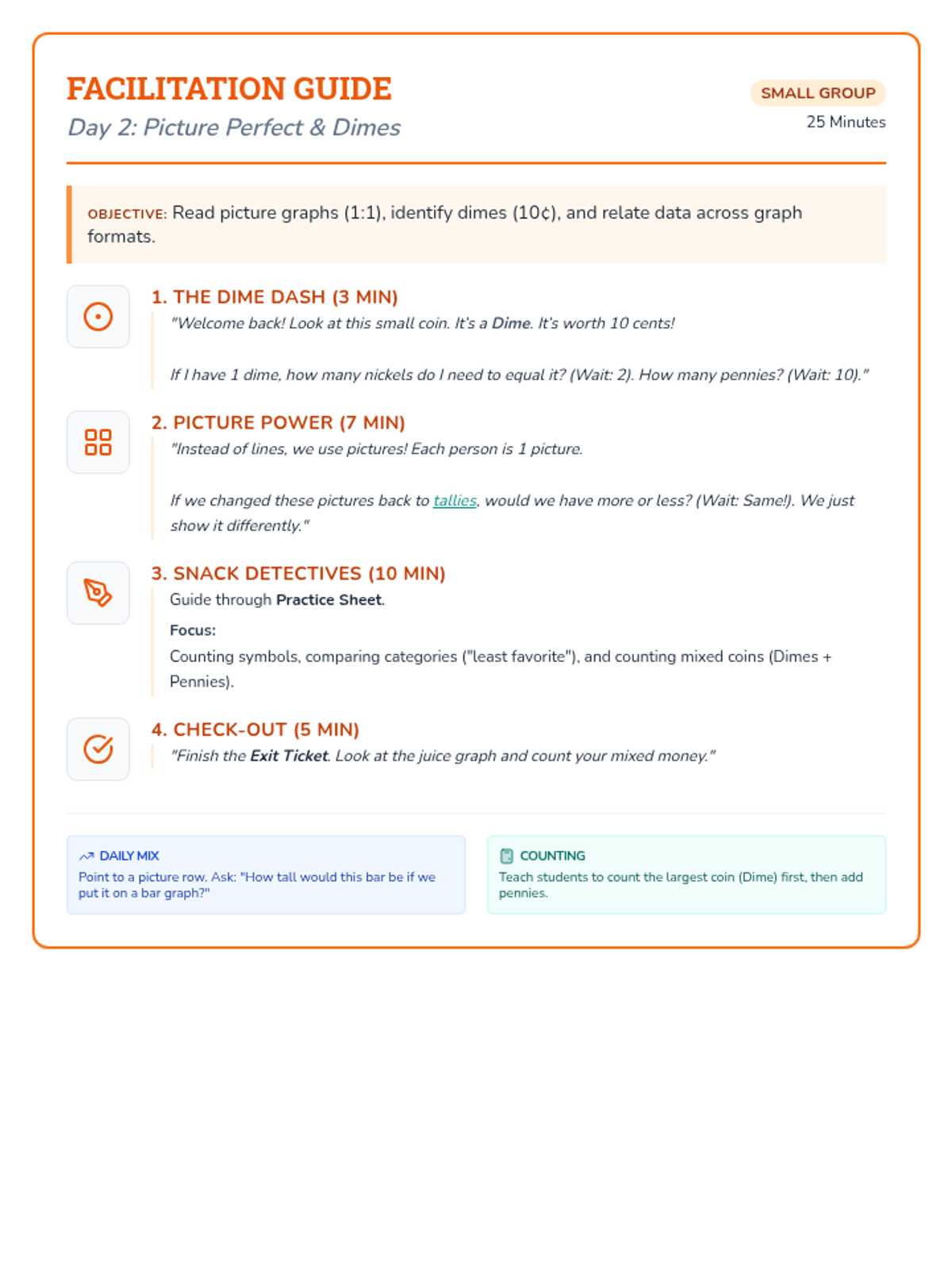
A facilitation guide for Day 2 of the Market Masters unit, focusing on picture graphs and the introduction of the dime (10¢). Simplified to one page.
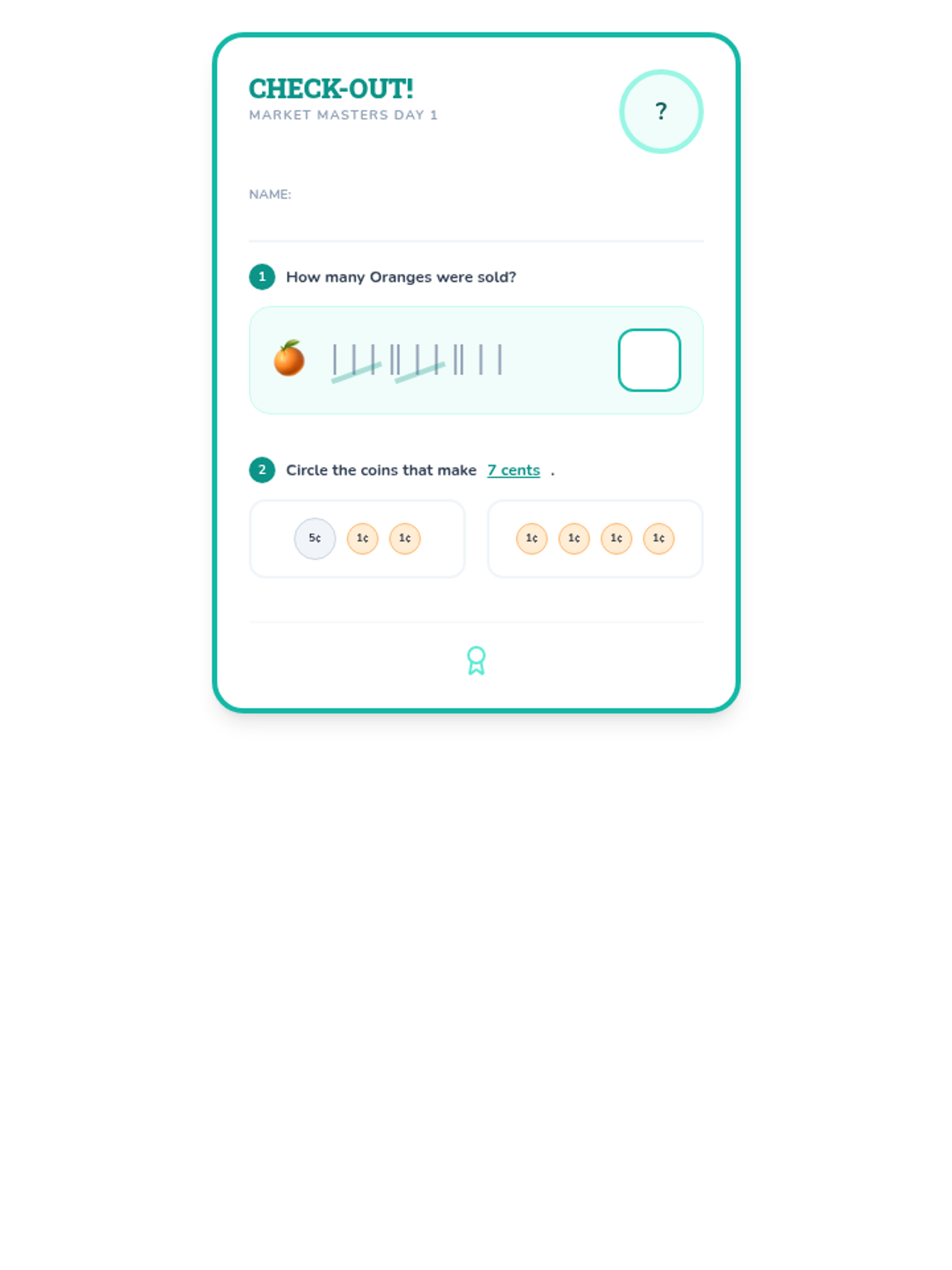
An exit ticket for Day 1 where students count complex tallies (13) and identify a set of coins totaling 7 cents. Corrected tally styling.
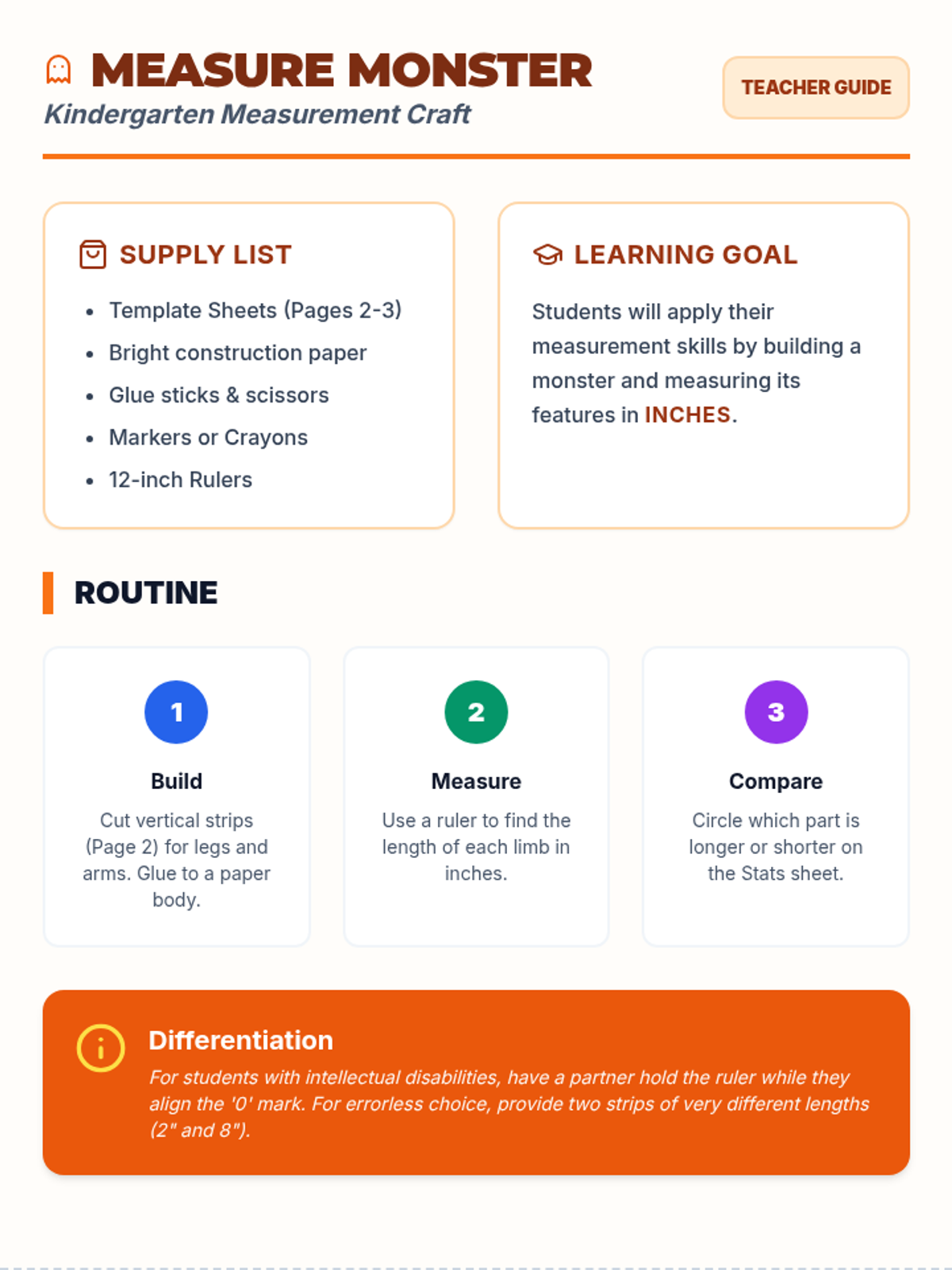
A three-page creative craft activity where students build a 'Measure Monster' and record its dimensions in inches, designed for kindergarten and supported for students with disabilities.
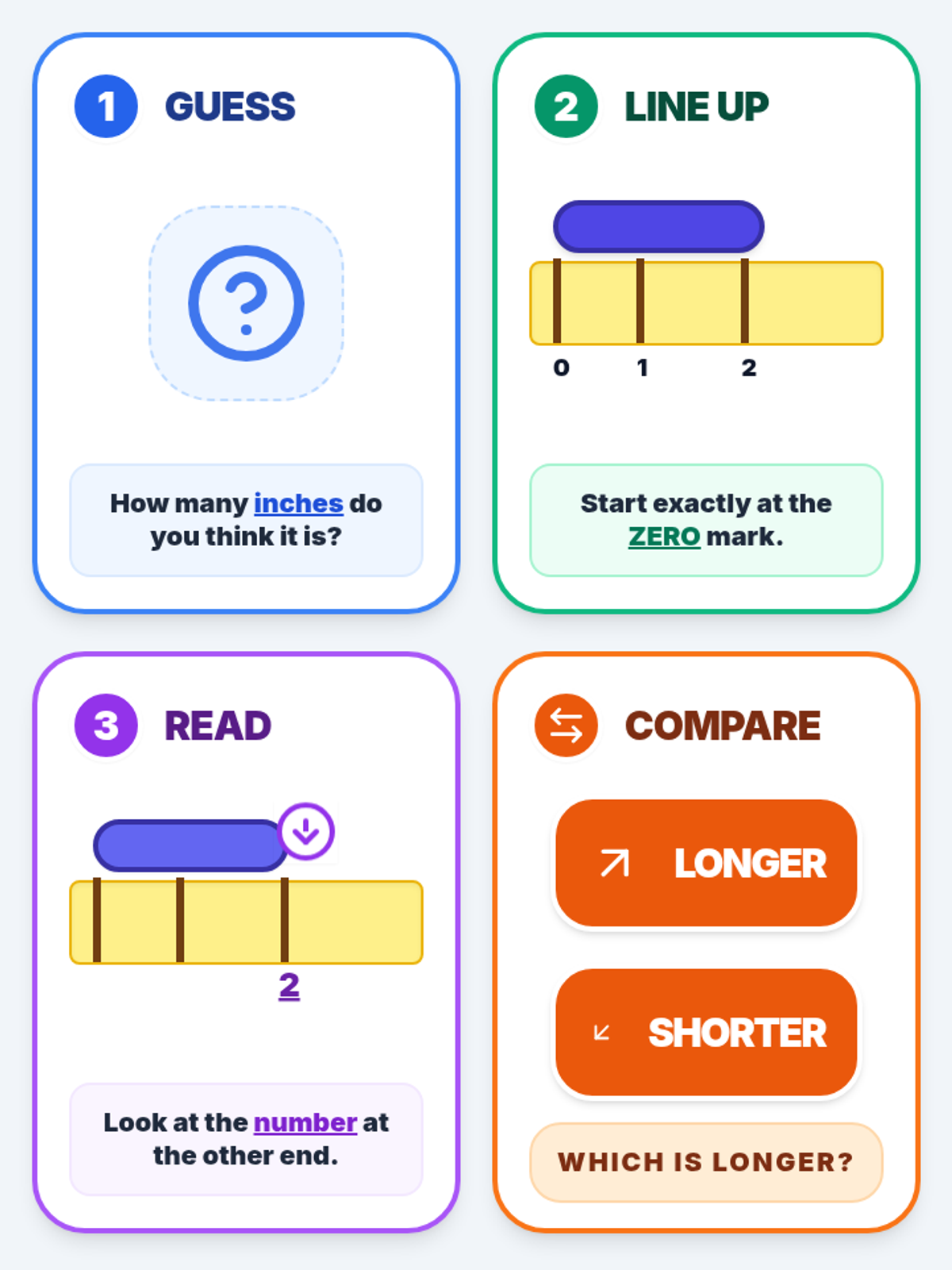
A set of four visual task cards for students to use during measurement activities, reinforcing the step-by-step process of using a ruler.
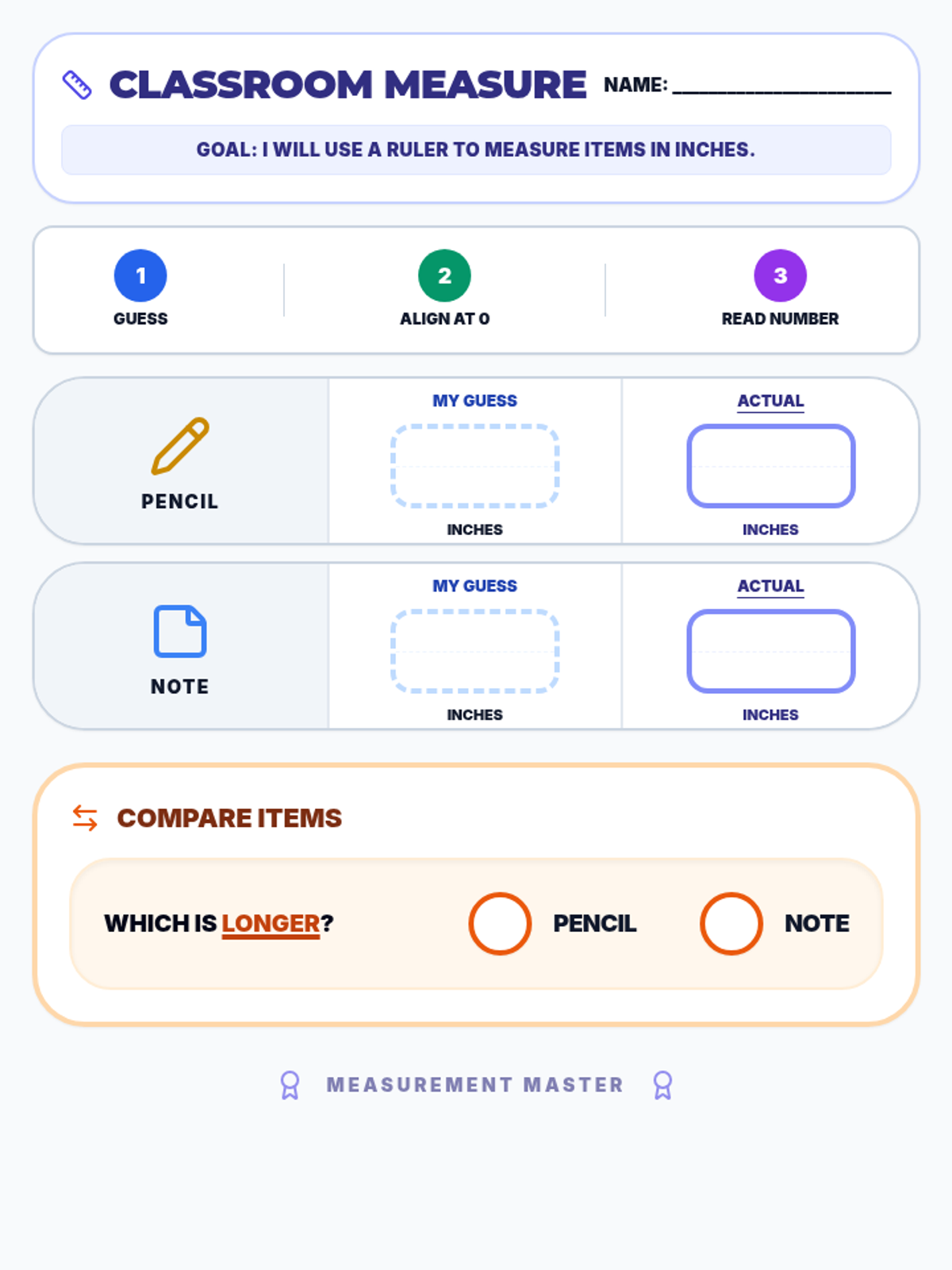
A structured student worksheet for measuring classroom objects with a ruler, featuring estimation boxes, actual measurement fields, and comparison prompts.
Instructional slides for measuring with a ruler, featuring step-by-step visuals for estimating, lining up at zero, and reading inch markings.
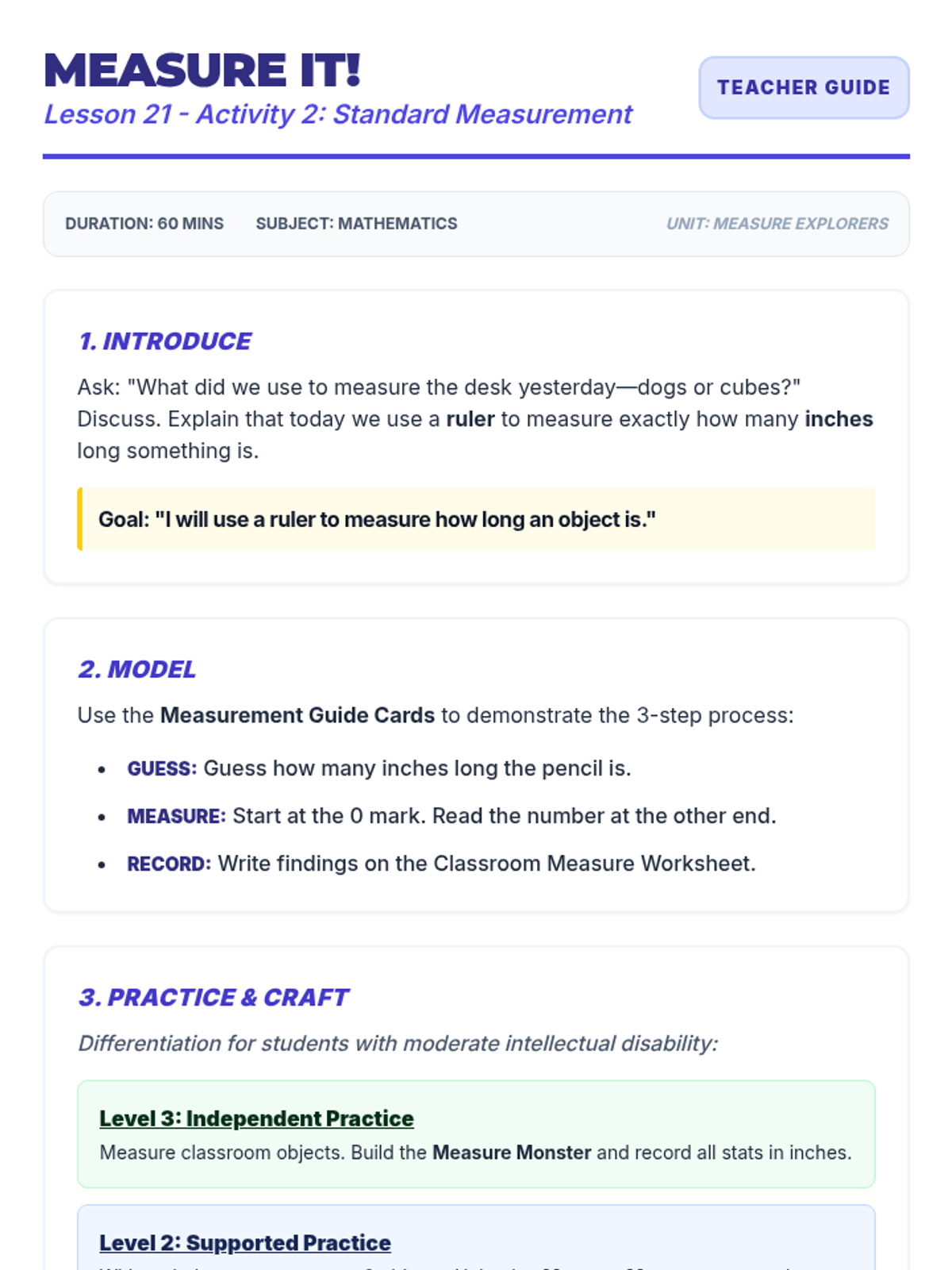
Teacher-facing lesson plan for standard measurement, including tiered support levels for students with moderate intellectual disabilities.
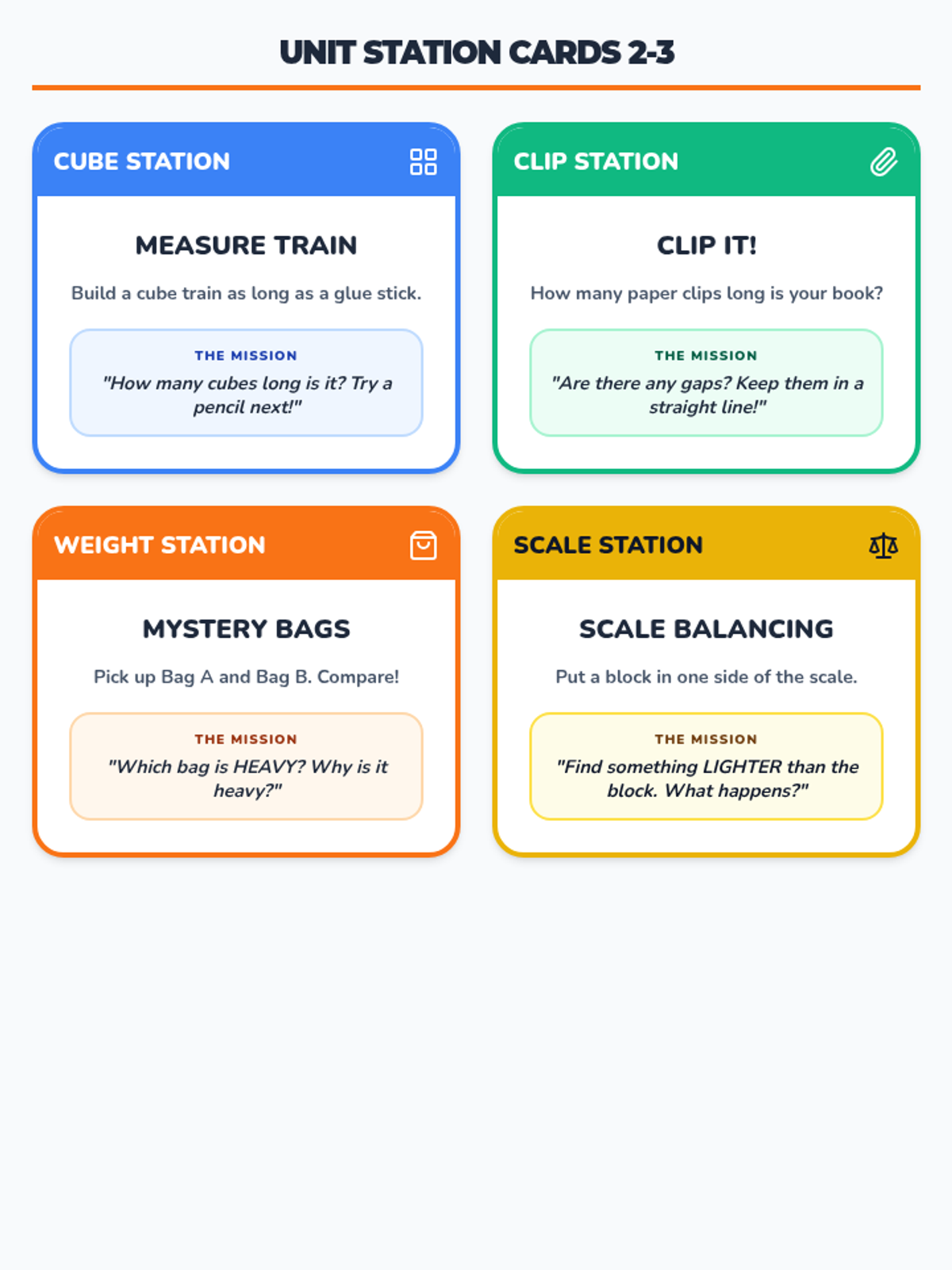
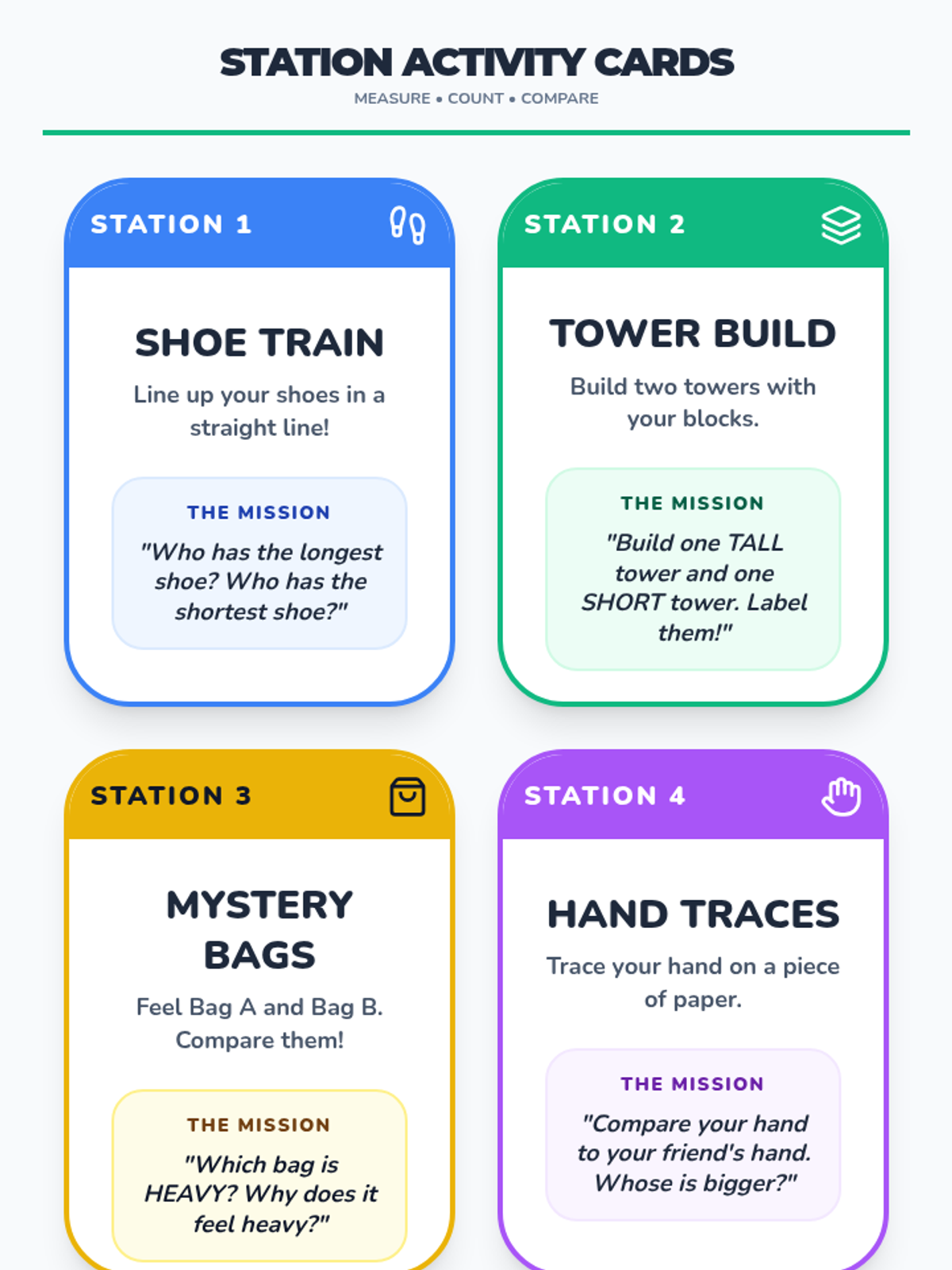
Additional station cards for Lessons 2 and 3, focusing on non-standard unit measuring and weight comparison using bags and scales.
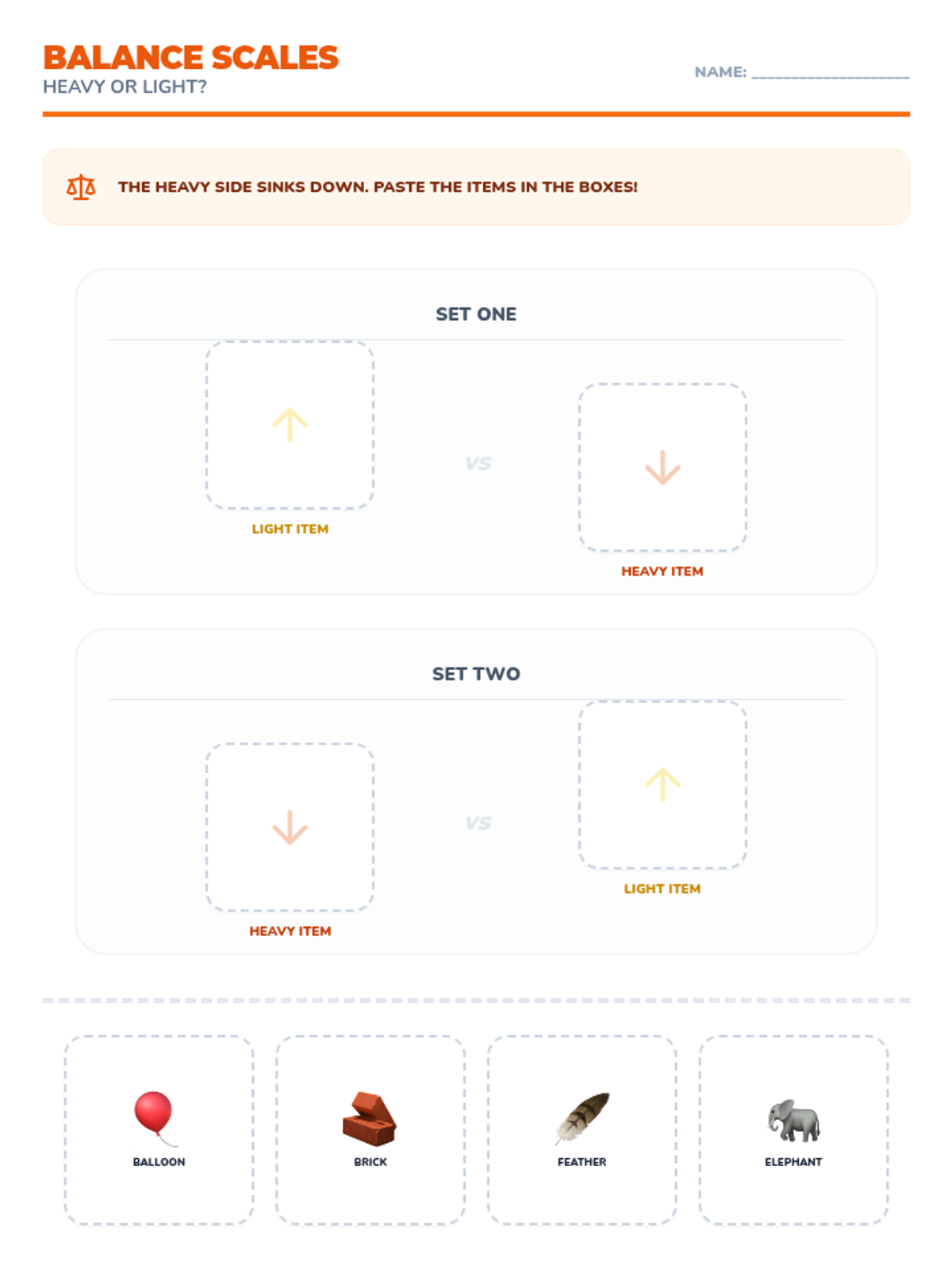
A cut-and-paste worksheet for Lesson 3 where students sort heavy and light objects onto the correct sides of a balance scale.
Instructional slides for Lesson 3, demonstrating how weight affects a balance scale and engaging students with "hand scale" activities.
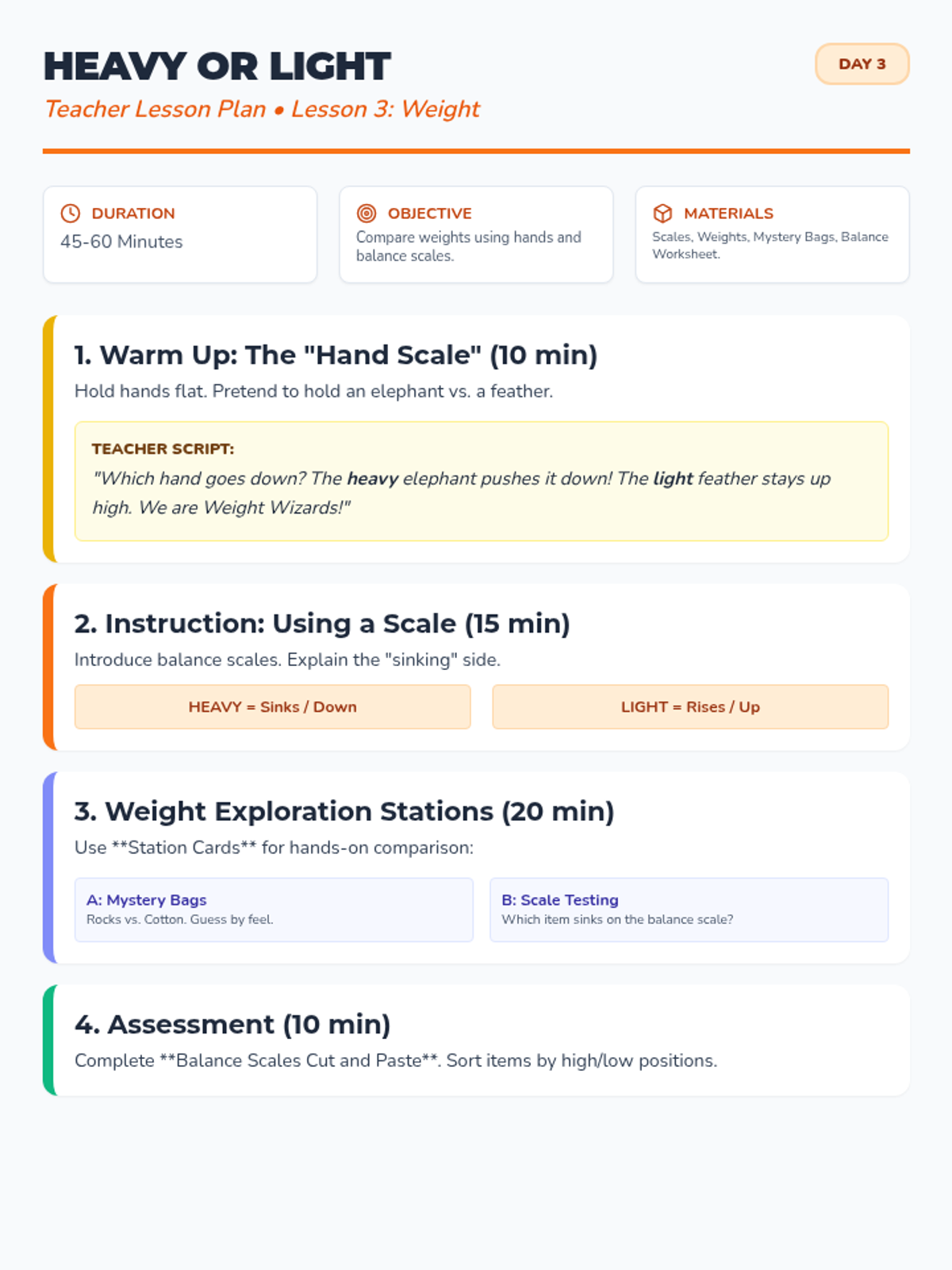
Teacher lesson plan for Lesson 3, exploring weight through tactile activities and the use of balance scales.
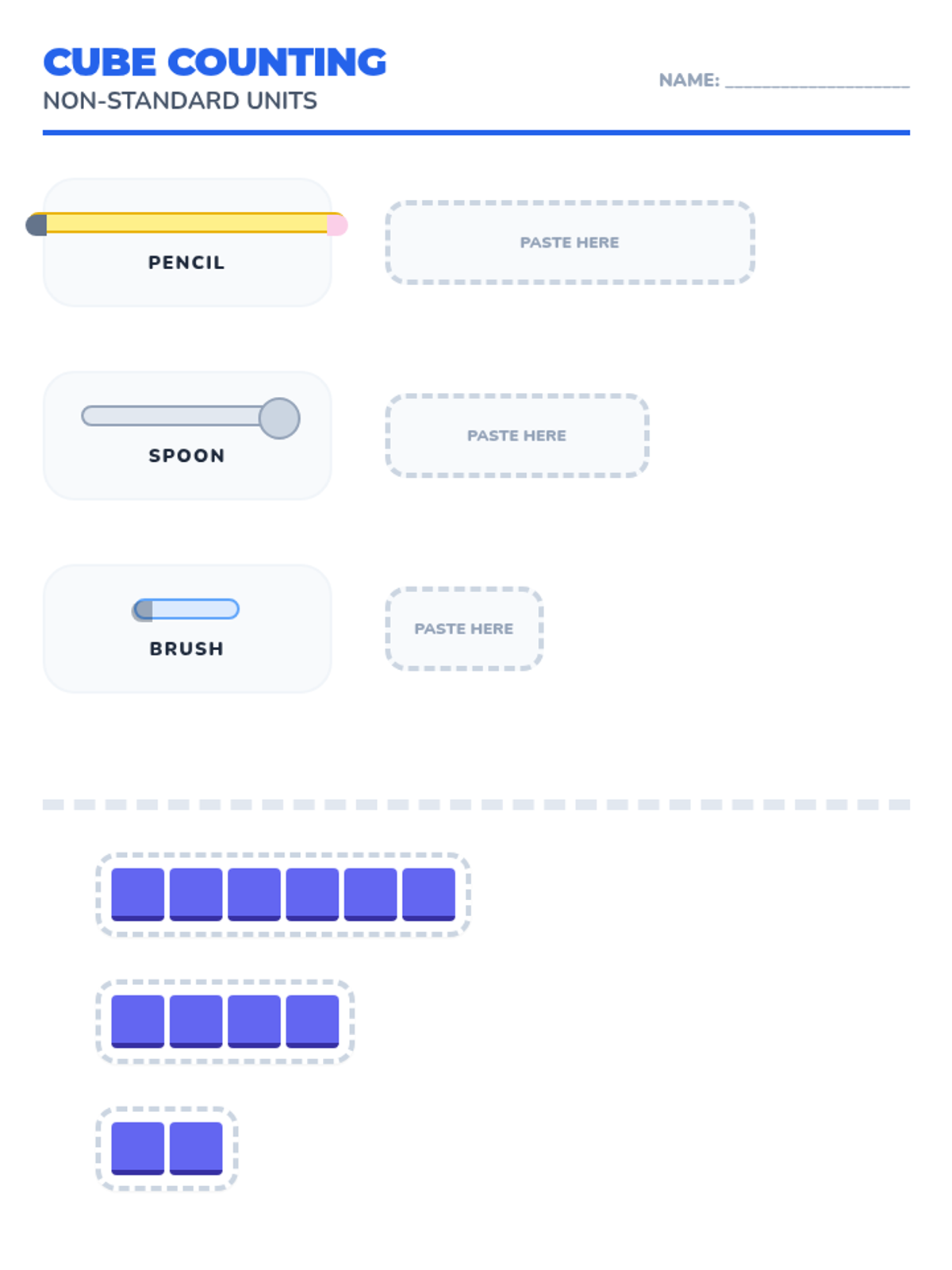
A cut-and-paste worksheet for Lesson 2 where students match the correct number of snap cubes to the length of various objects.
Instructional slides for Lesson 2, teaching the "No Gaps, No Overlaps, Straight Line" rules and providing a counting example with snap cubes.
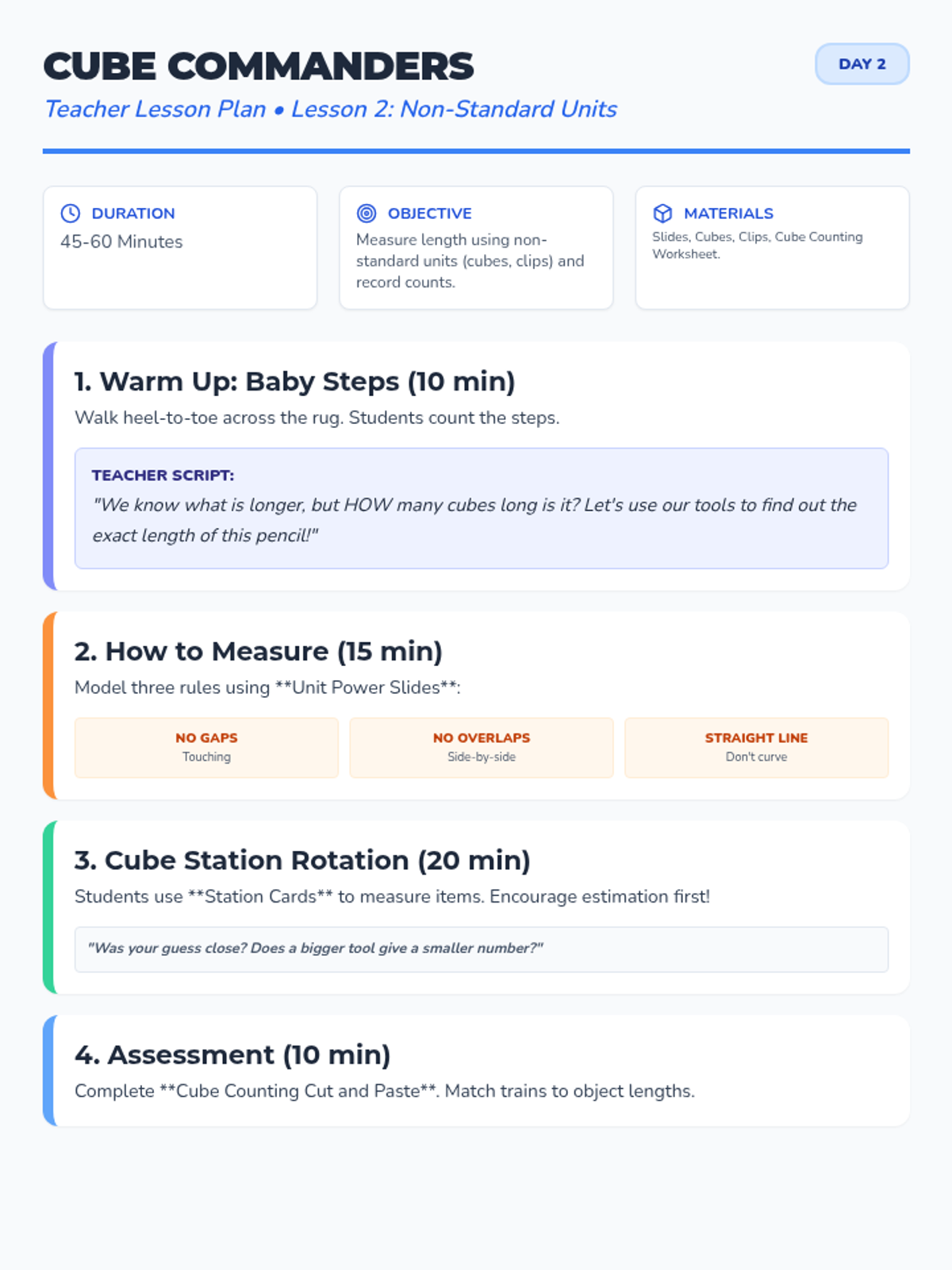
Teacher lesson plan for Lesson 2, focusing on the mechanics of non-standard measurement and the three rules for accurate measuring.
Handheld-sized station cards for Lesson 1, guiding students through practical length and height comparison activities.
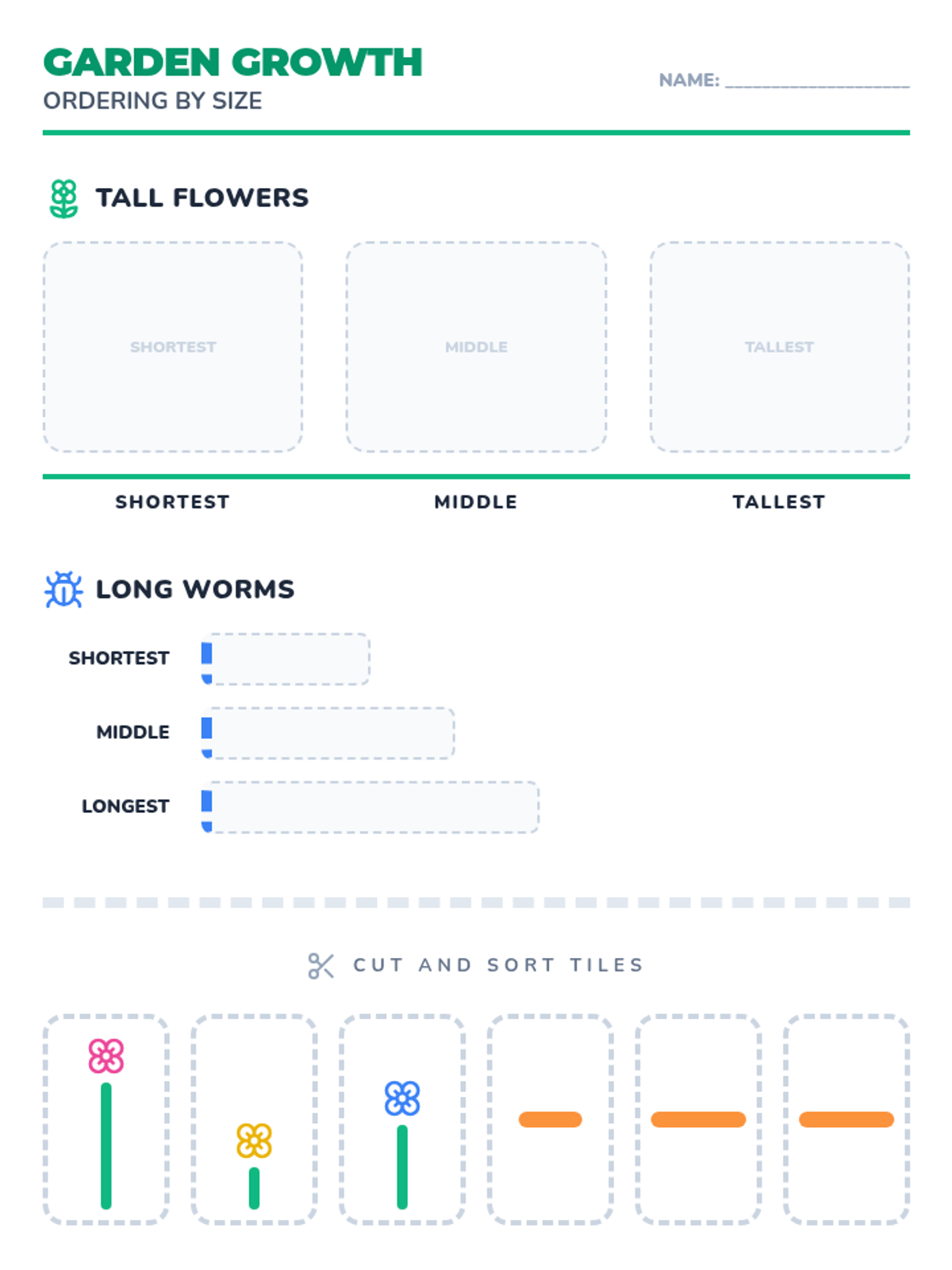
A kindergarten cut-and-paste worksheet for Lesson 1 where students sort flowers by height and worms by length.
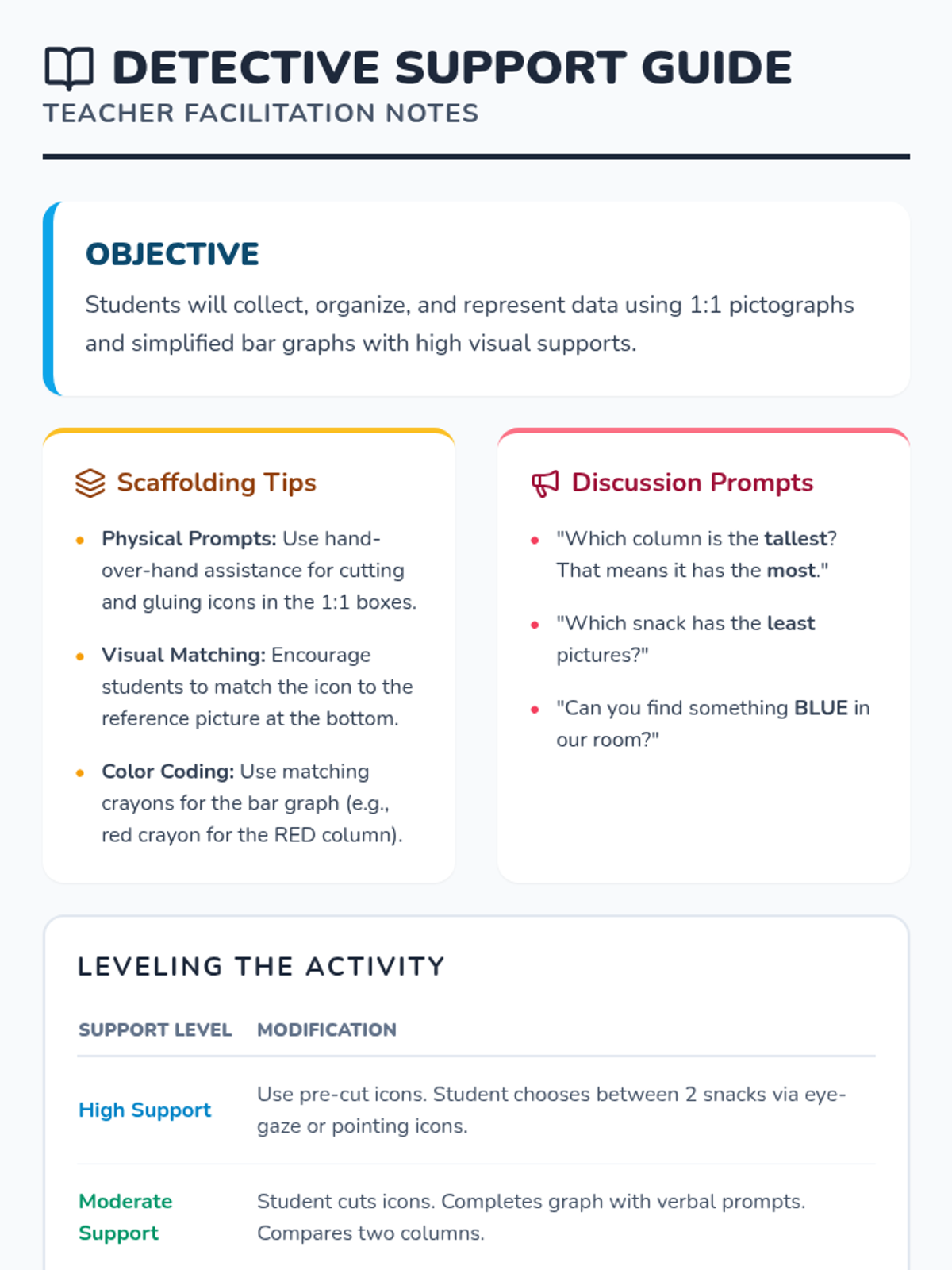
A teacher support guide providing scaffolding strategies, discussion prompts, and level-based modifications for the graphing activities. Includes tips for IEP alignment and physical accessibility.
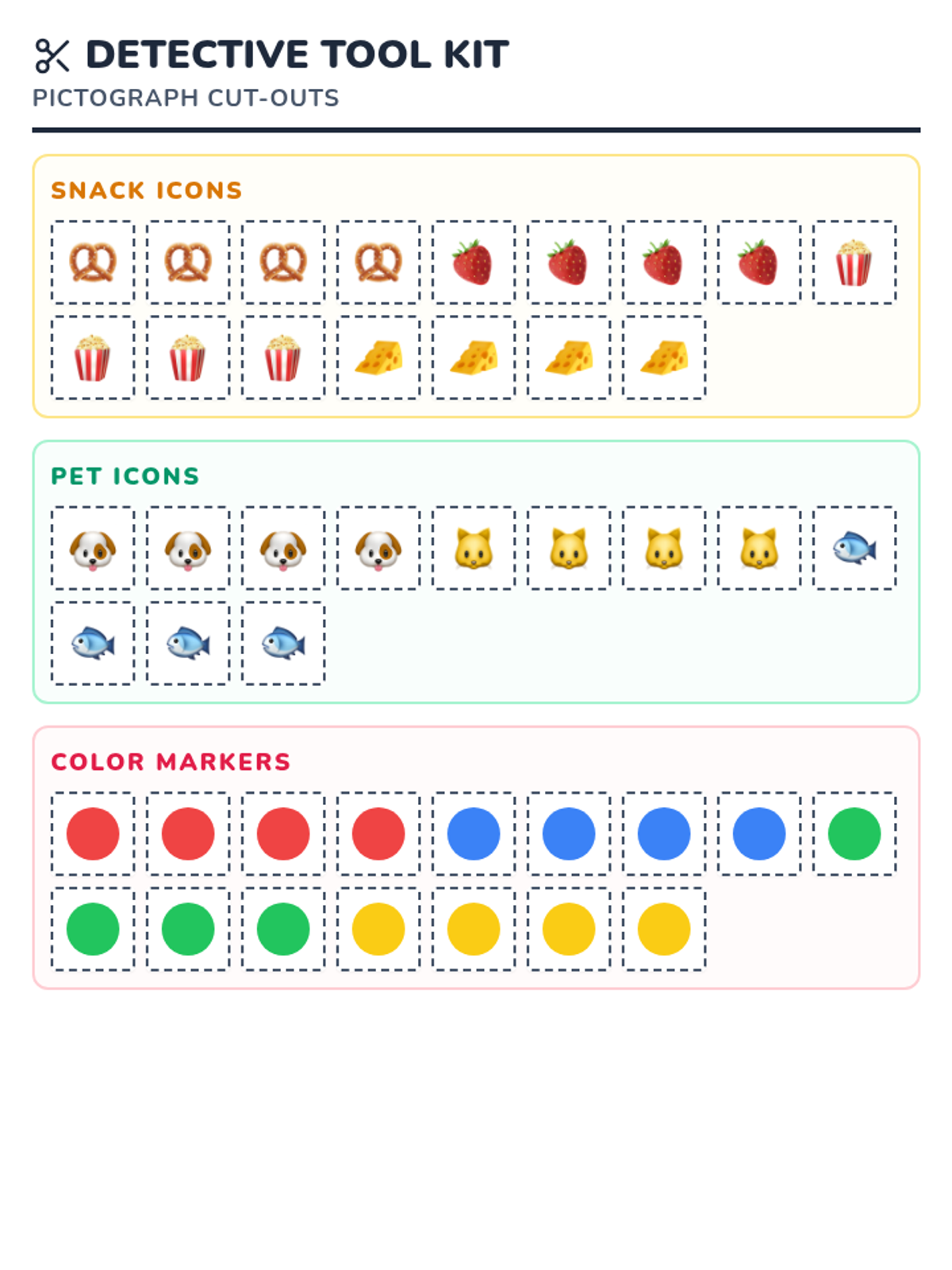
A collection of cut-out icons (snacks, pets, and colors) to be used with the pictograph activities. Designed with large dotted borders and high contrast to assist students with developing fine motor and visual skills.
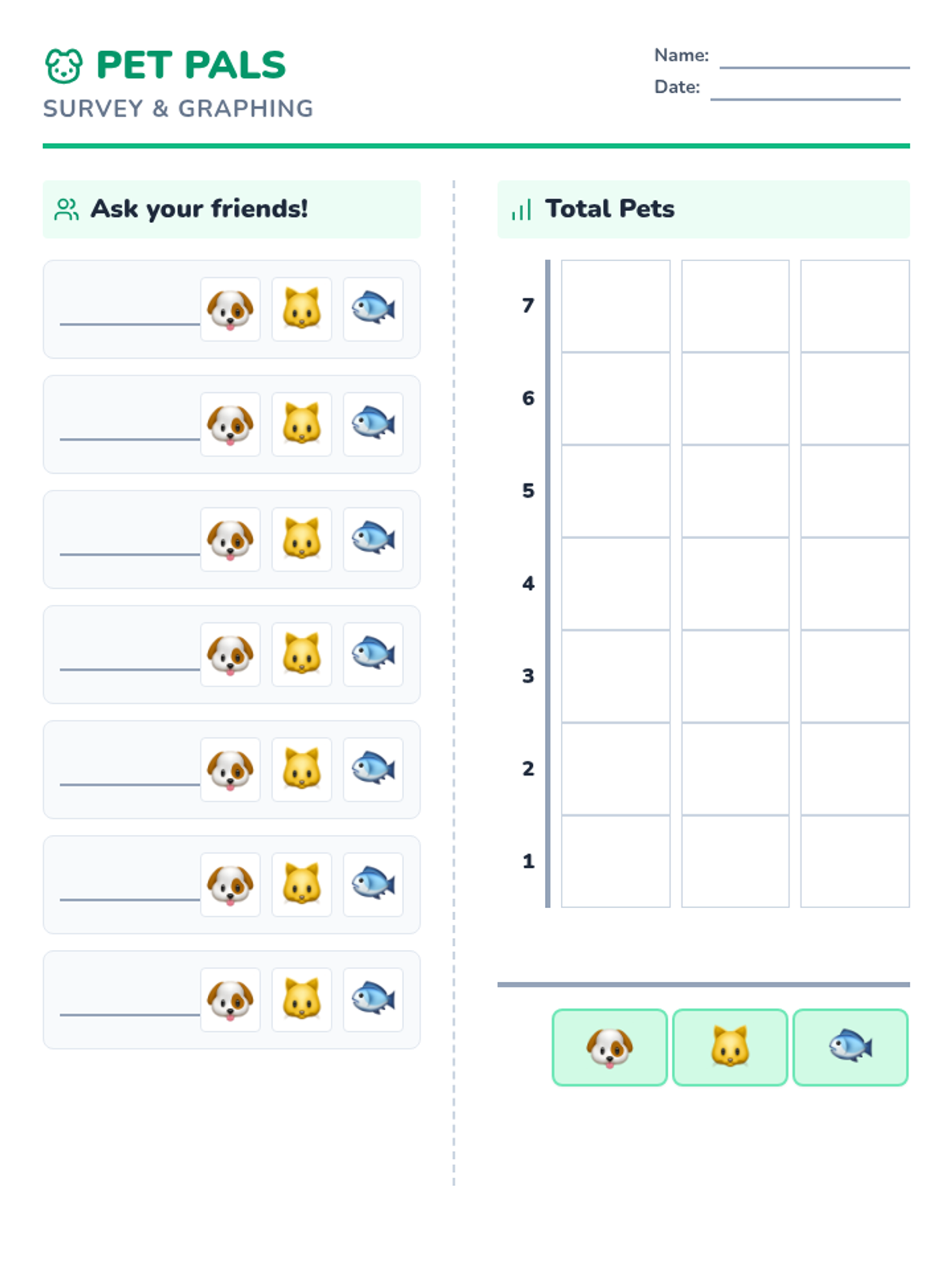
A two-part student activity sheet for pet preferences. Includes a survey section for peer interaction and a corresponding graphing area with visual supports for dogs, cats, and fish.
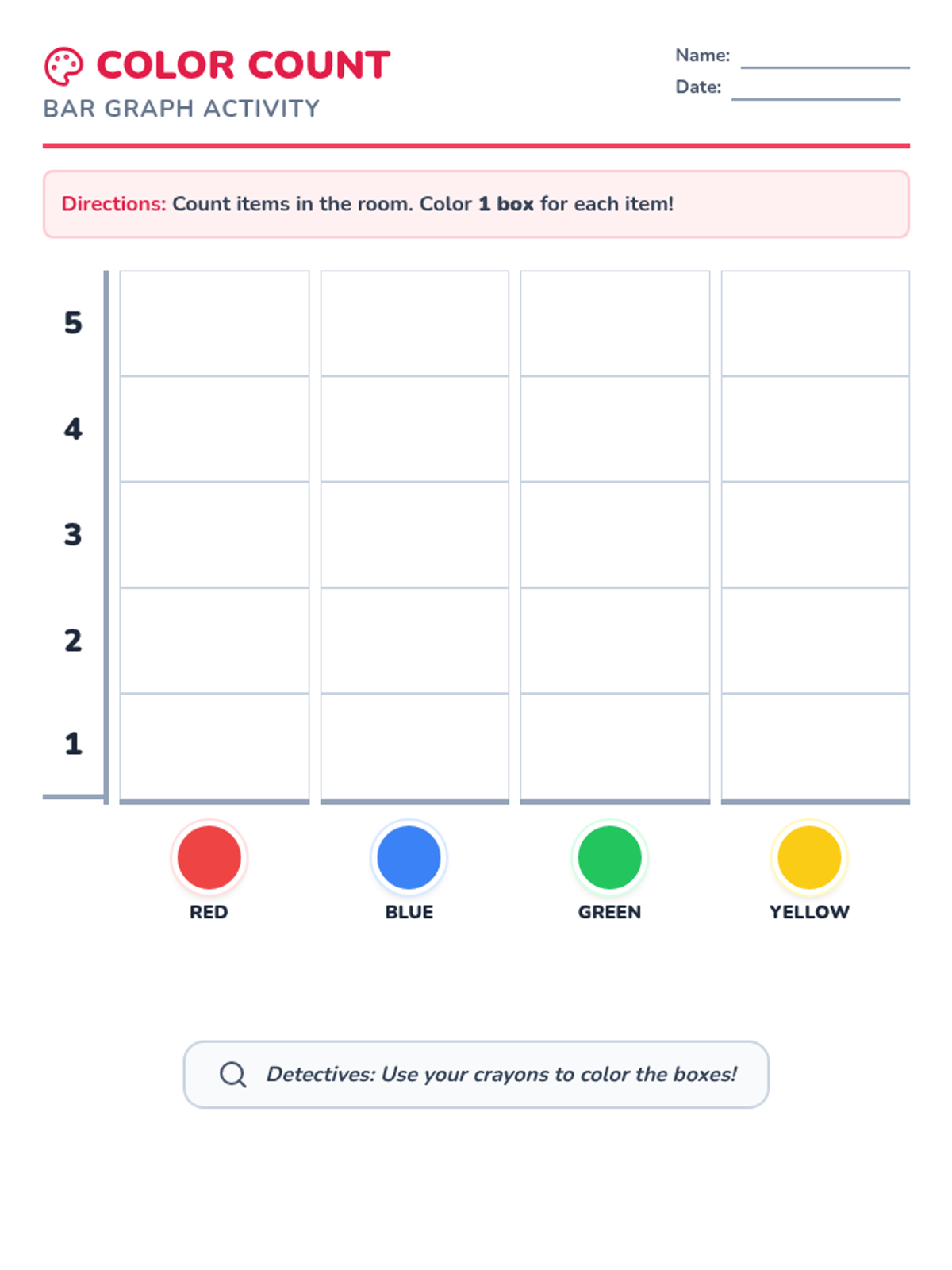
A bar graph worksheet for identifying and counting classroom colors (Red, Blue, Green, Yellow). Includes large grid boxes for coloring and visual color-swatch labels to support non-readers.
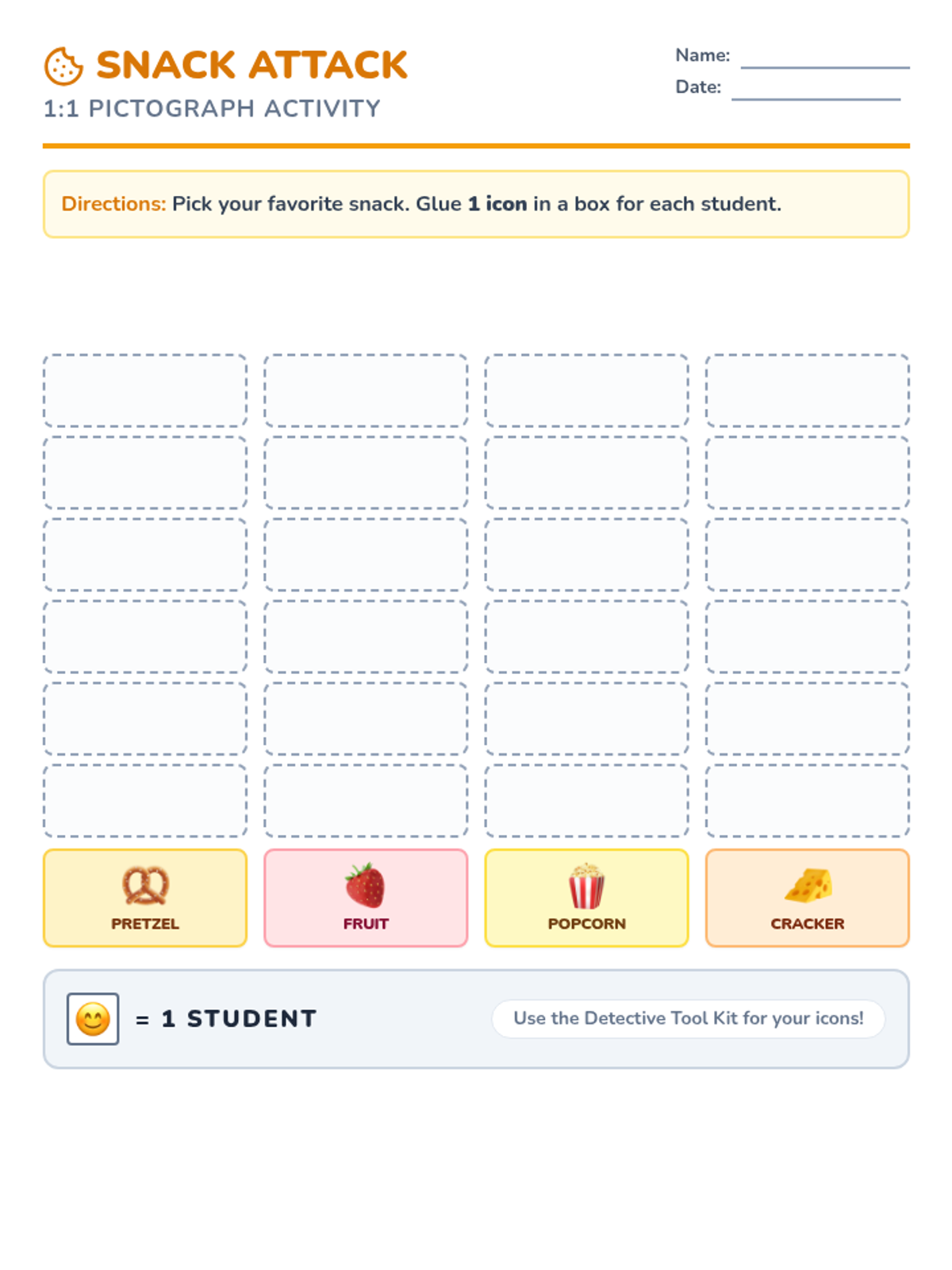
A 1:1 pictograph worksheet for student snack preferences. Features large, high-contrast columns with designated spaces for glue-on icons and clear emoji supports for pretzels, fruit, popcorn, and crackers.
A 5-slide visual presentation introducing graphing concepts with 1:1 pictographs and bar graphs using snack, color, and pet themes. Includes large icons and clear, simplified explanations for Essential Skills students.
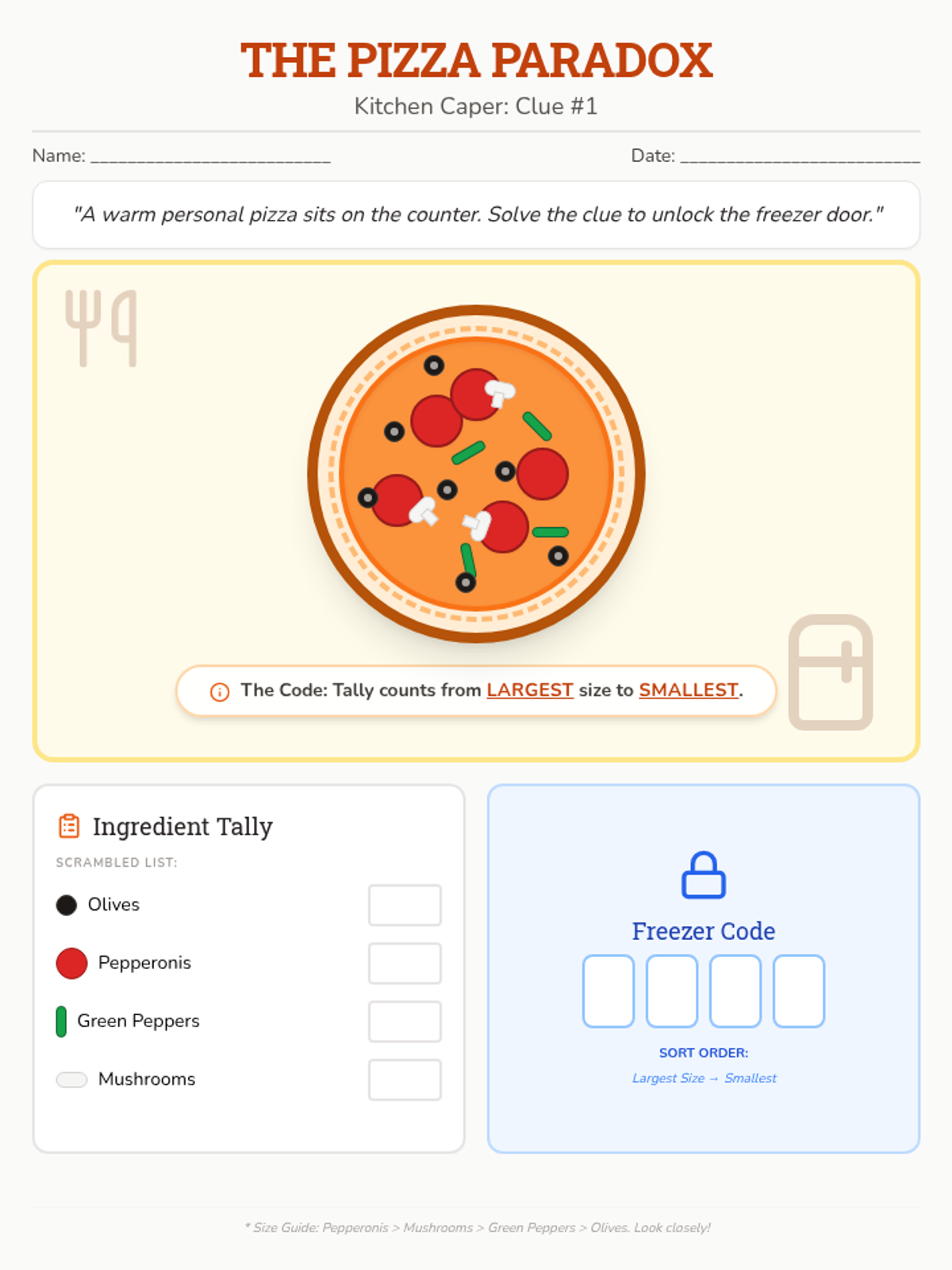
A visual observation puzzle where students tally pizza toppings to solve a freezer unlock code. Scrambled tally list and clarified size-based sorting logic. Fixed page break and opacity.
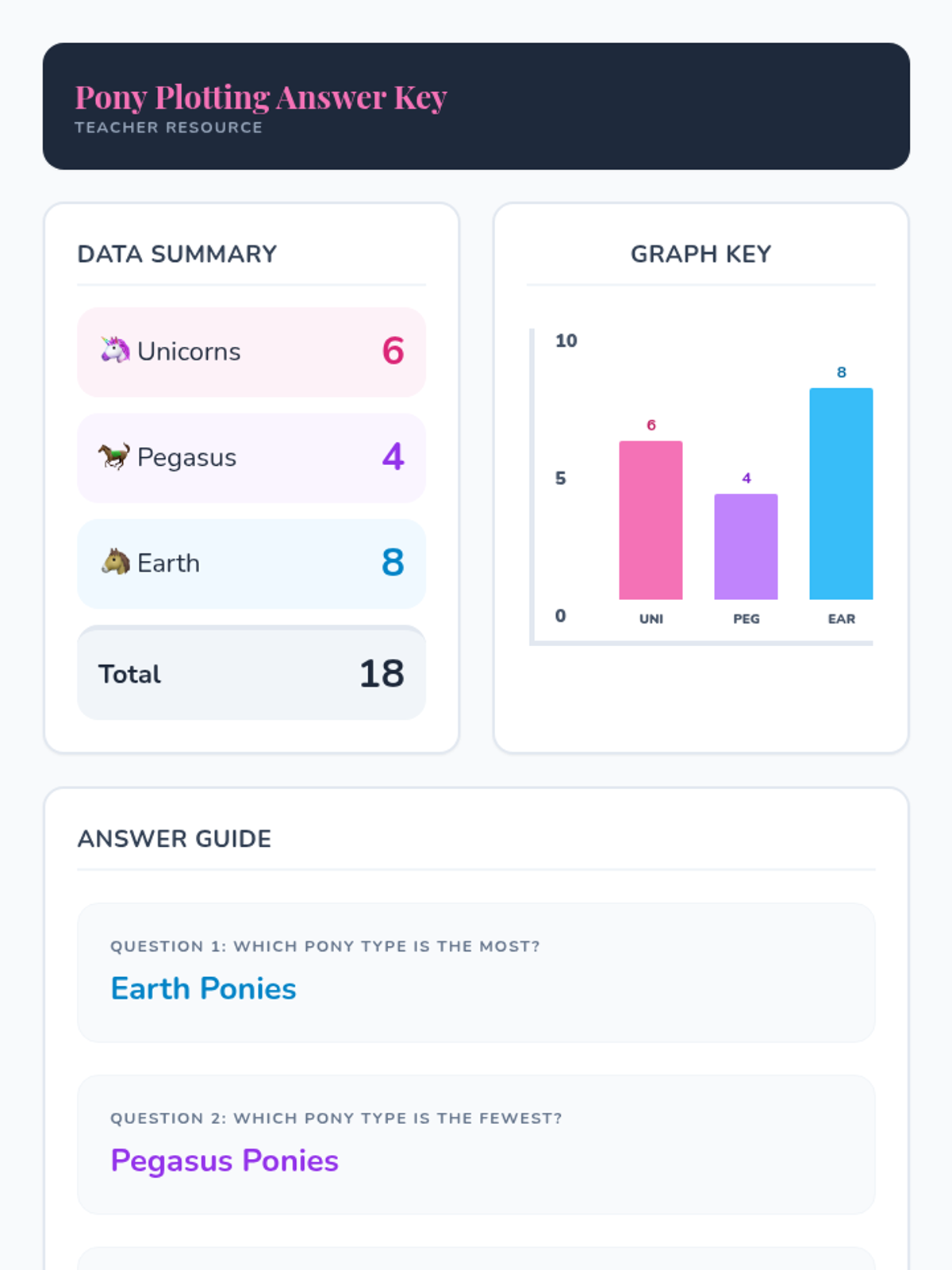
An answer key for the Pony Plotting Worksheet, providing correct counts, a visual graph representation, and final answers for the comparison questions. Now optimized for layout and readability.
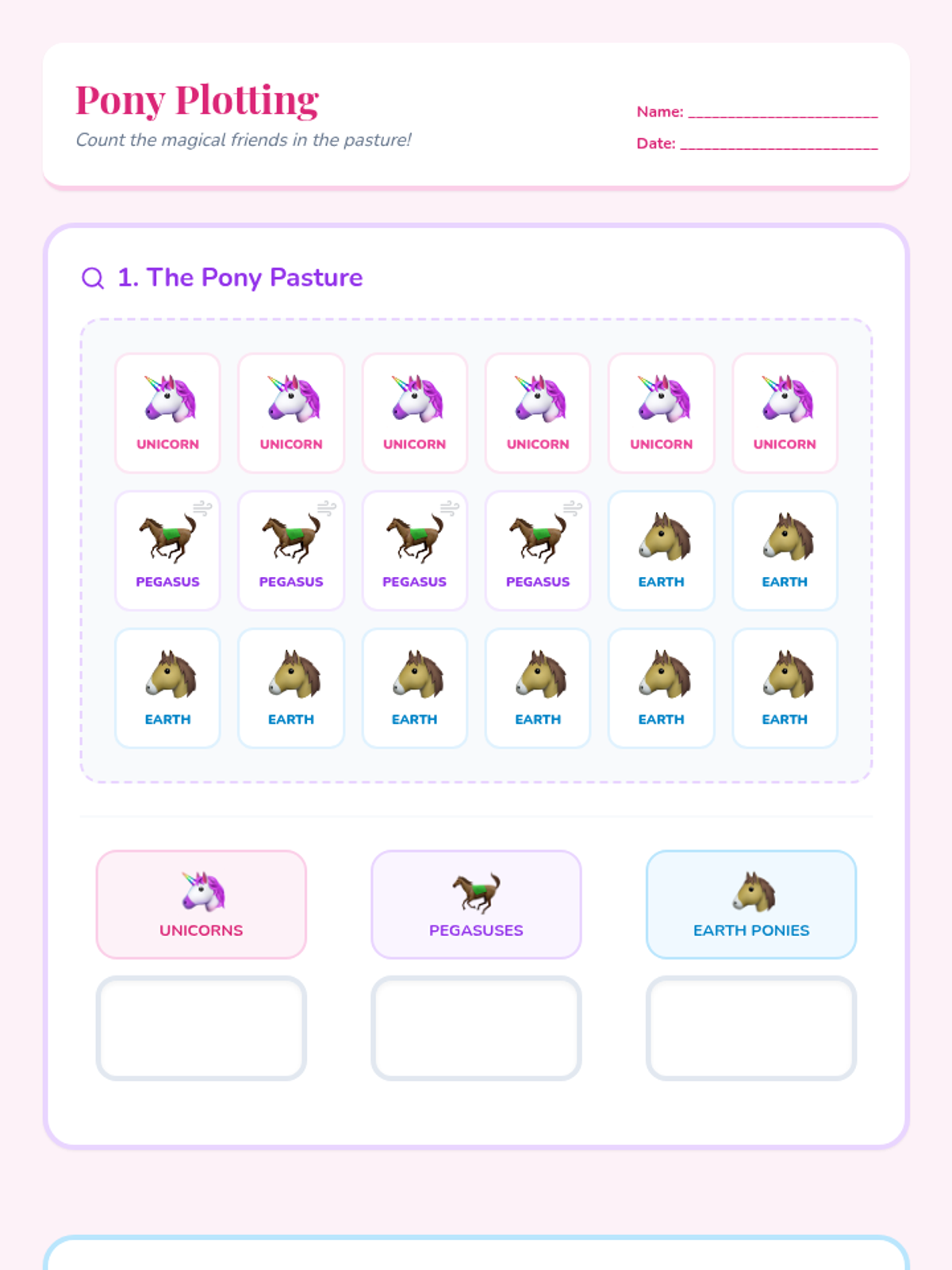
A magical sorting and graphing worksheet featuring three types of ponies. Students count the characters, fill in a tally box, create a colored bar graph, and answer comparison questions. Now includes improved layout and scale.
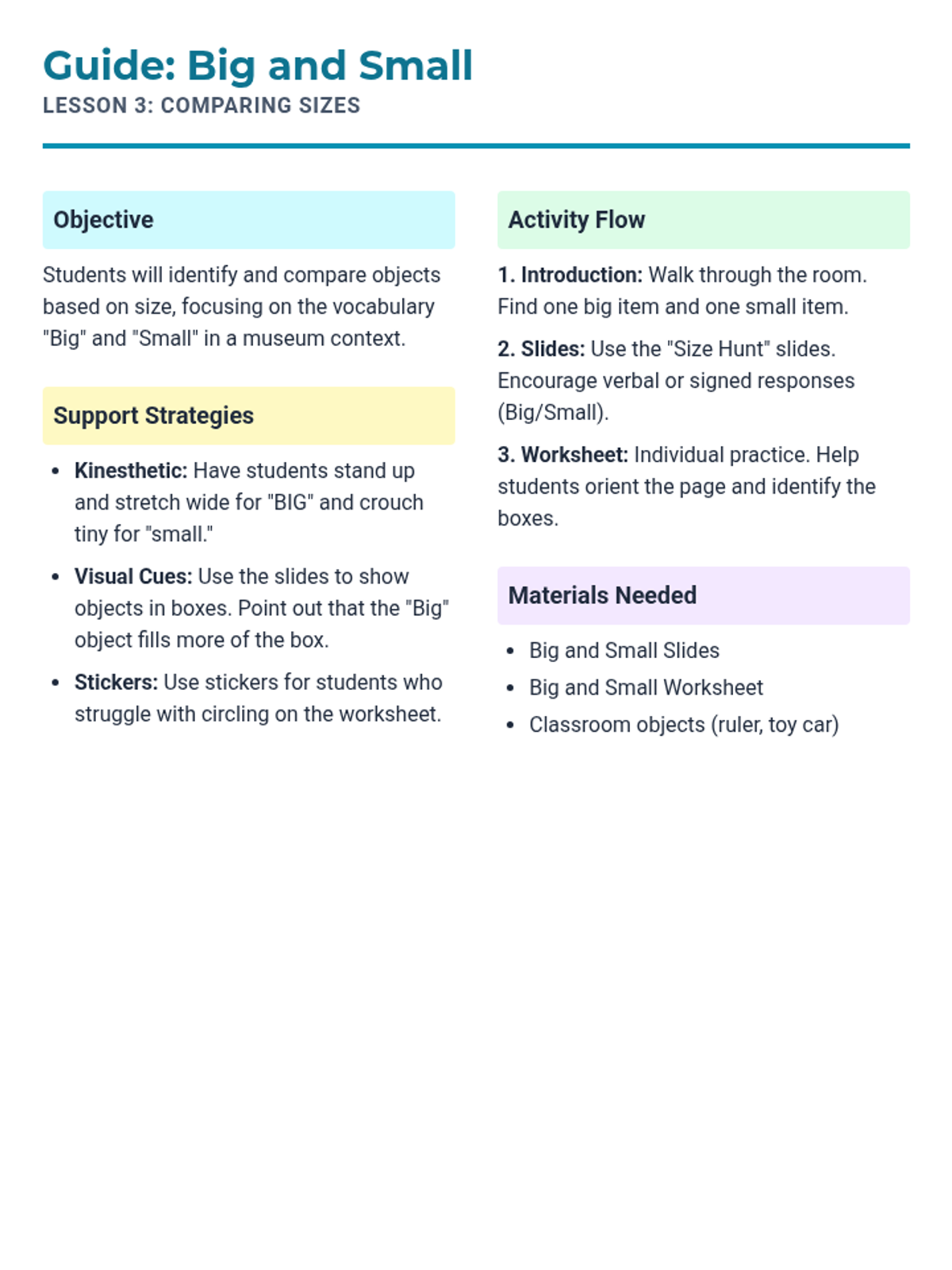
A facilitation guide for teaching size comparison, focusing on pre-field trip vocabulary and kinesthetic learning strategies for special needs preschool.
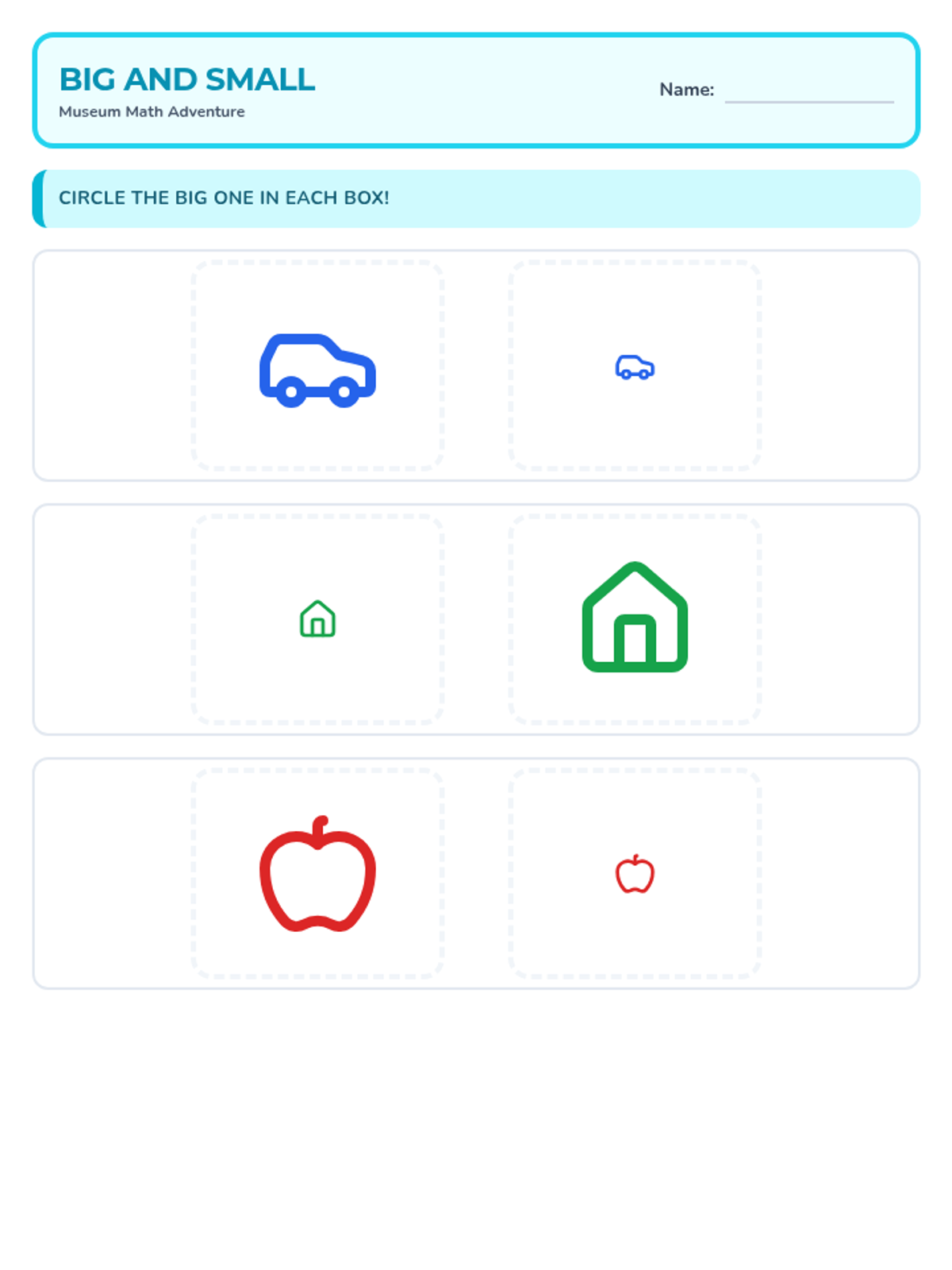
A size comparison worksheet where students circle the larger of two museum-themed objects, designed with clear, high-contrast icons for preschool accessibility.
A visual slide deck focusing on size comparison using museum-themed items (trucks, fruit, blocks) to develop vocabulary and discrimination skills for preschool students.
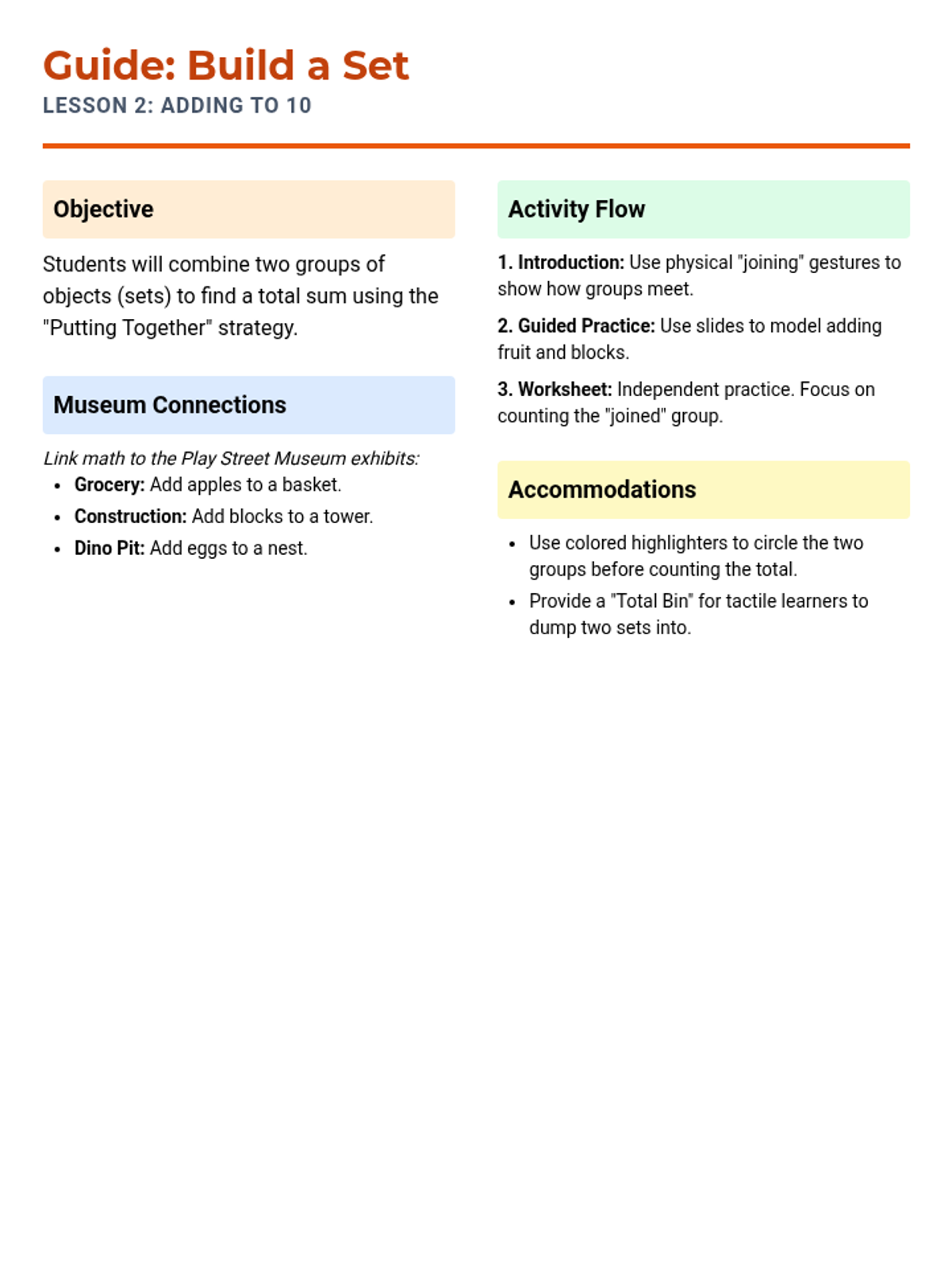
A facilitation guide for teaching simple addition, featuring the 'Putting Together' strategy and sensory-based accommodations for special needs learners.
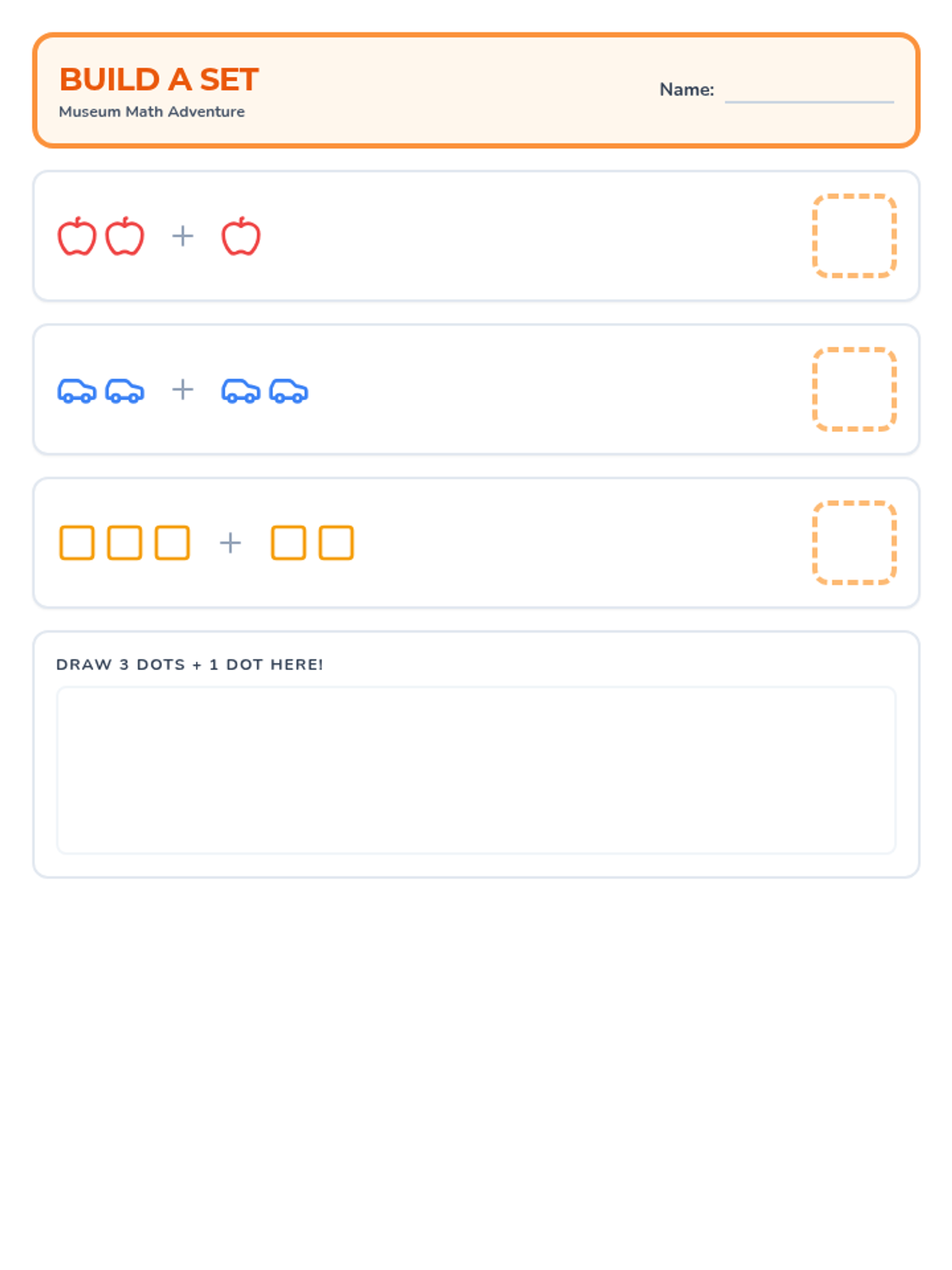
An addition worksheet with visual prompts and large work areas for preschool students to practice combining groups of museum-themed objects.
Interactive instructional slides for Lesson 1, introducing length, height, and the baseline rule with vibrant visuals and classroom practice prompts.
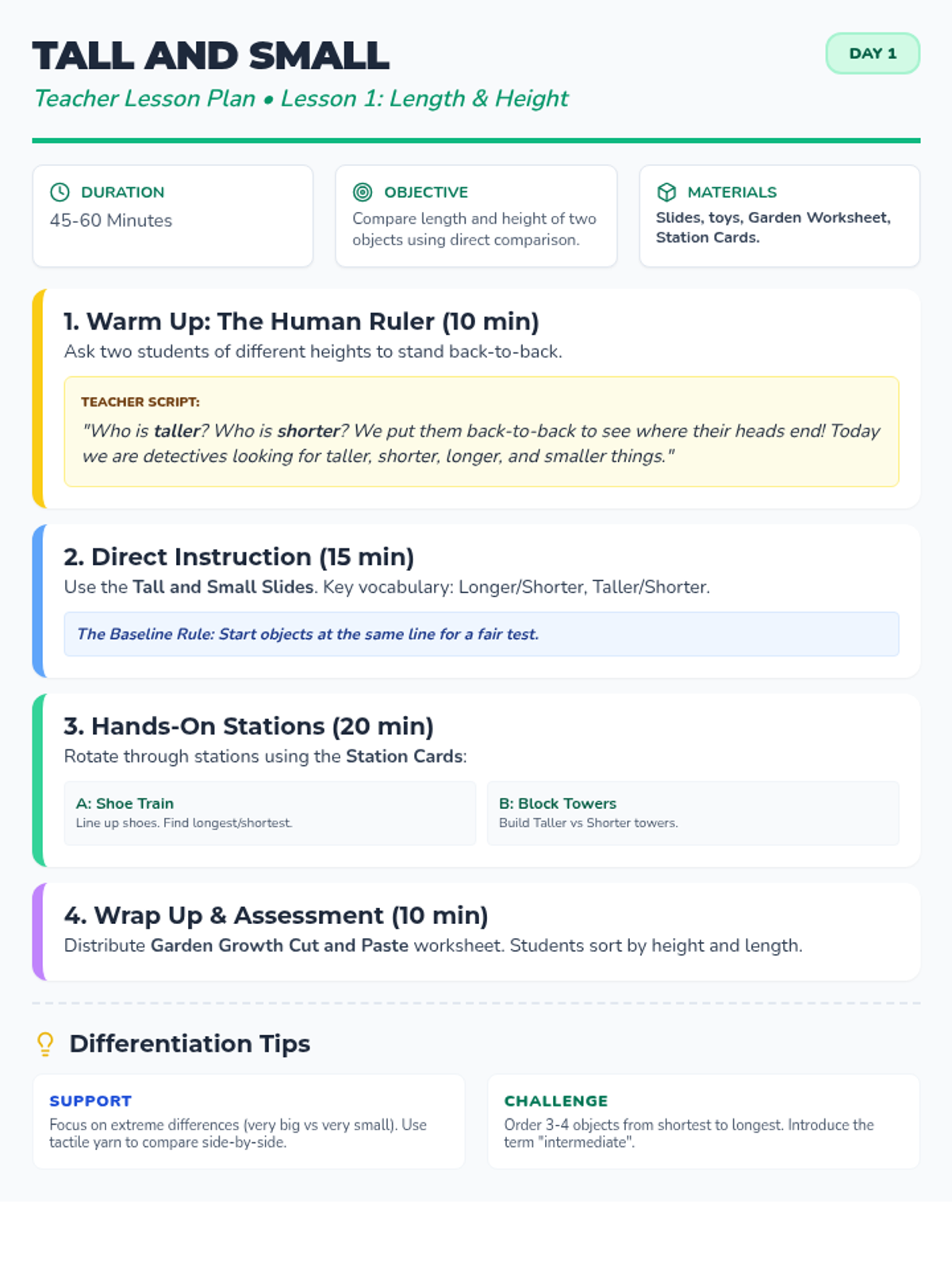
A comprehensive teacher lesson plan for Lesson 1, covering the comparison of length and height with warm-up activities, direct instruction, and station rotations.
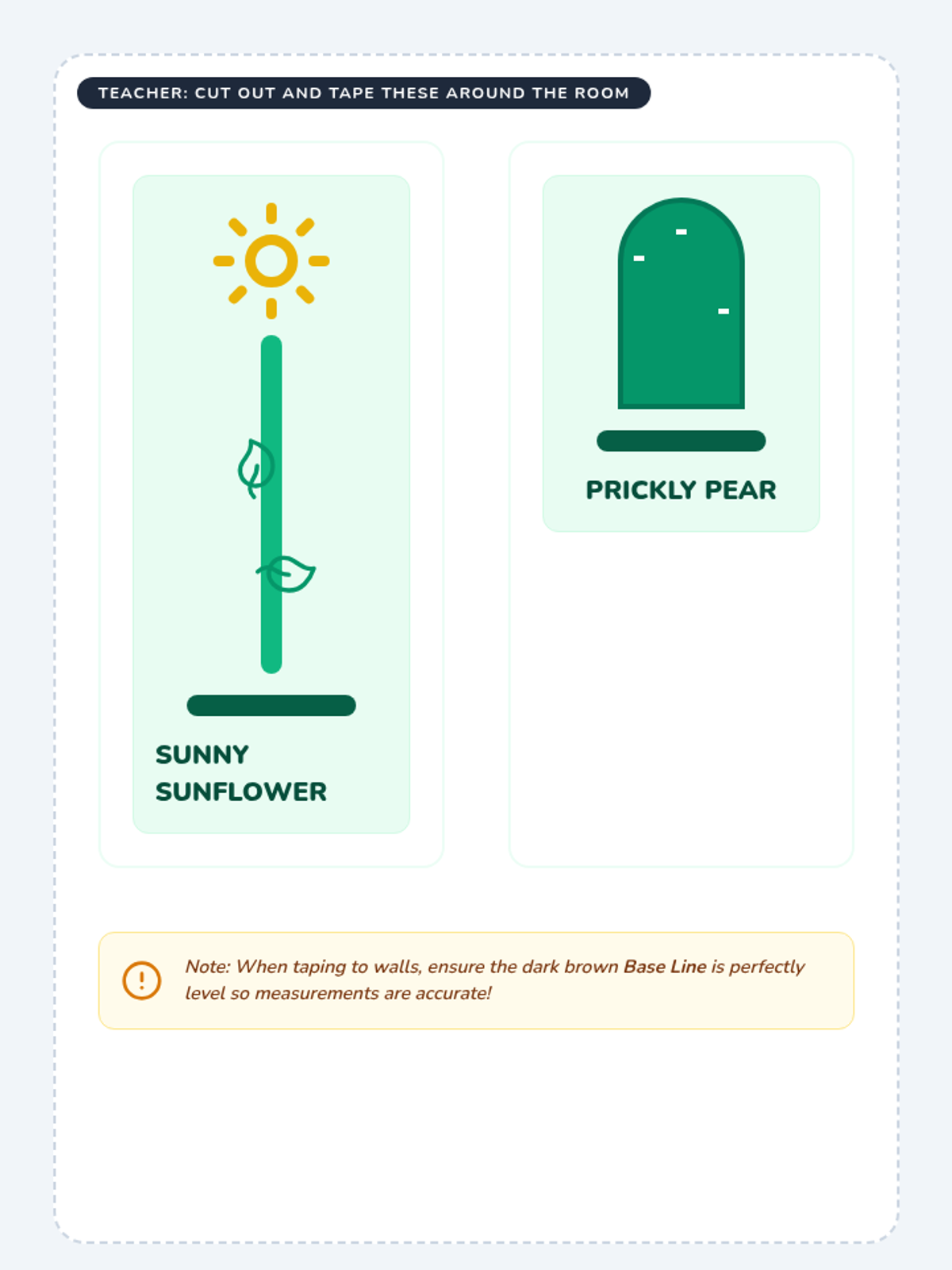
A set of printable paper plant cutouts designed for classroom walls, providing students with consistent visual targets for non-standard measurement practice.
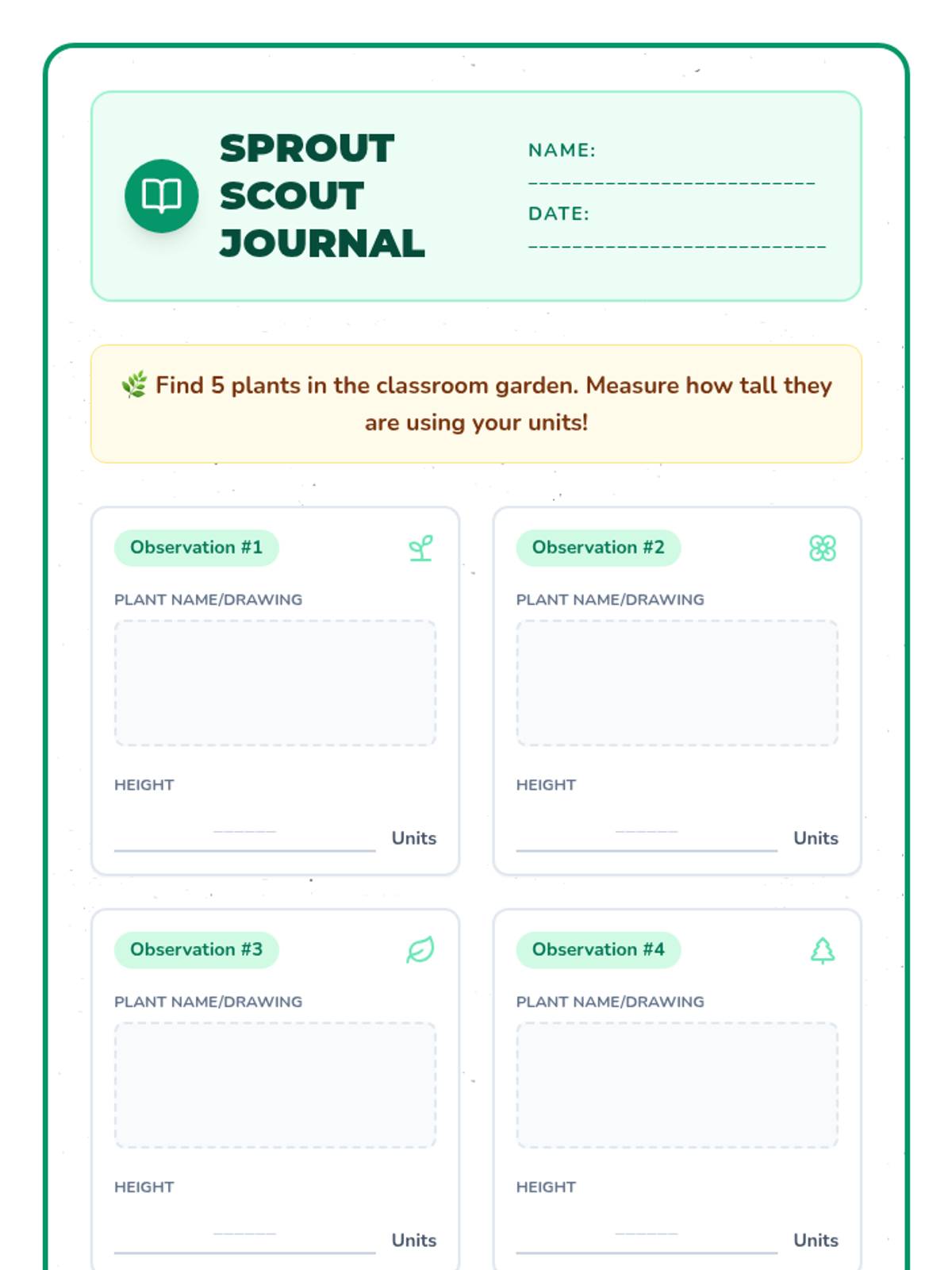
A student measurement log for recording data during the Garden Growth Giants activity, featuring drawing spaces and sections for non-standard units.
An engaging slide deck for the Garden Growth Giants lesson, introducing the 'Sprout Scout' mission and demonstrating proper non-standard measurement techniques with vibrant visuals.