One-to-one correspondence, numeral identification, and comparison of quantities using terms like greater than or less than. Establishes the foundation for numerical literacy and early arithmetic operations.
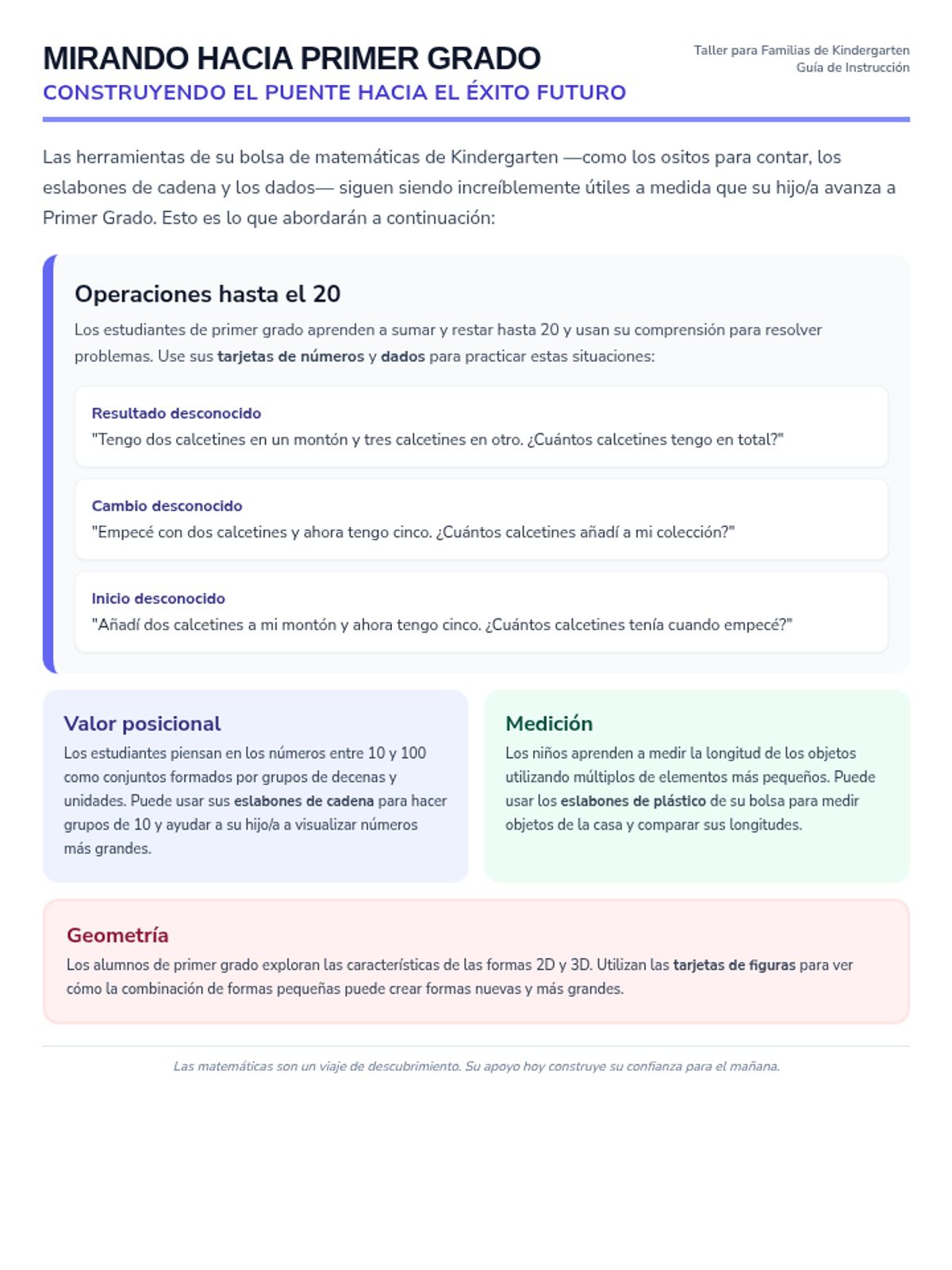
An updated bridge handout for parents that illustrates the major mathematics goals for First Grade, using descriptive full sentences to explain addition types, place value, measurement, and geometry. Layout tightened to fit on a single page. Darkened footer for better contrast.
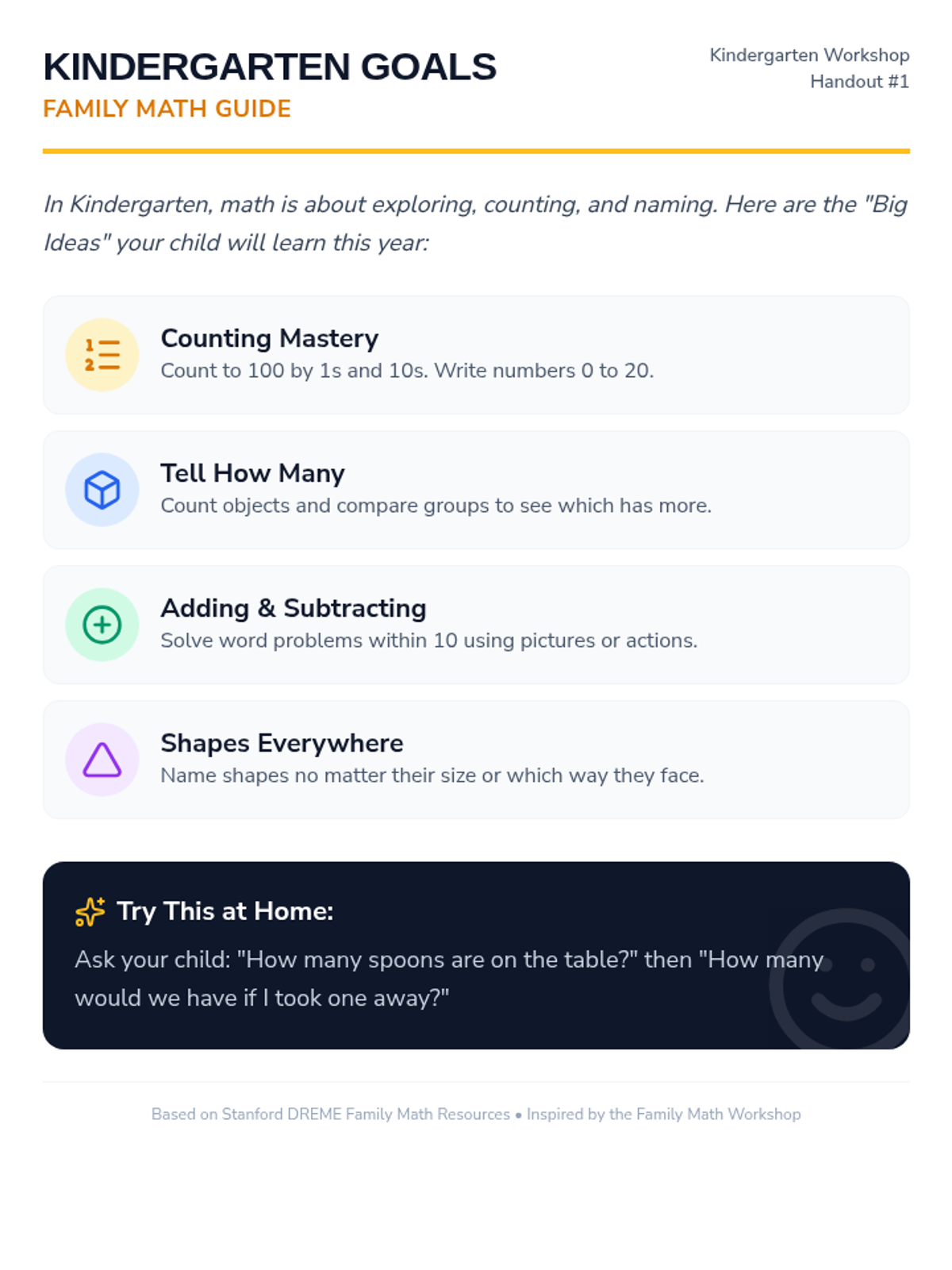
An updated parent handout outlining the major math focuses for Kindergarten, using more descriptive full sentences to explain counting, comparing groups, operations within 10, and geometry concepts. Layout tightened to fit on a single page. Now includes a mention of the zipper pouch math kit. Body text font size increased for legibility.
A revised 16:9 slide presentation for a Family Math Workshop, featuring updated demo games (Sleeping Bears, Make 10 Go Fish), a focus on the Kindergarten Math Kit (zipper pouch), and DREME-aligned advice on building positive math attitudes using full, professional sentences. Newsletter delivery method updated to ParentSquare app. Hierarchy issues and spacing overlap corrected. Contrast on kit cards improved. Title colors corrected.
Engaging visual slides to introduce the Bug Hunt activity. Explains the "mission," reviews target numbers (0-20), and clearly displays the color code for the class to see.
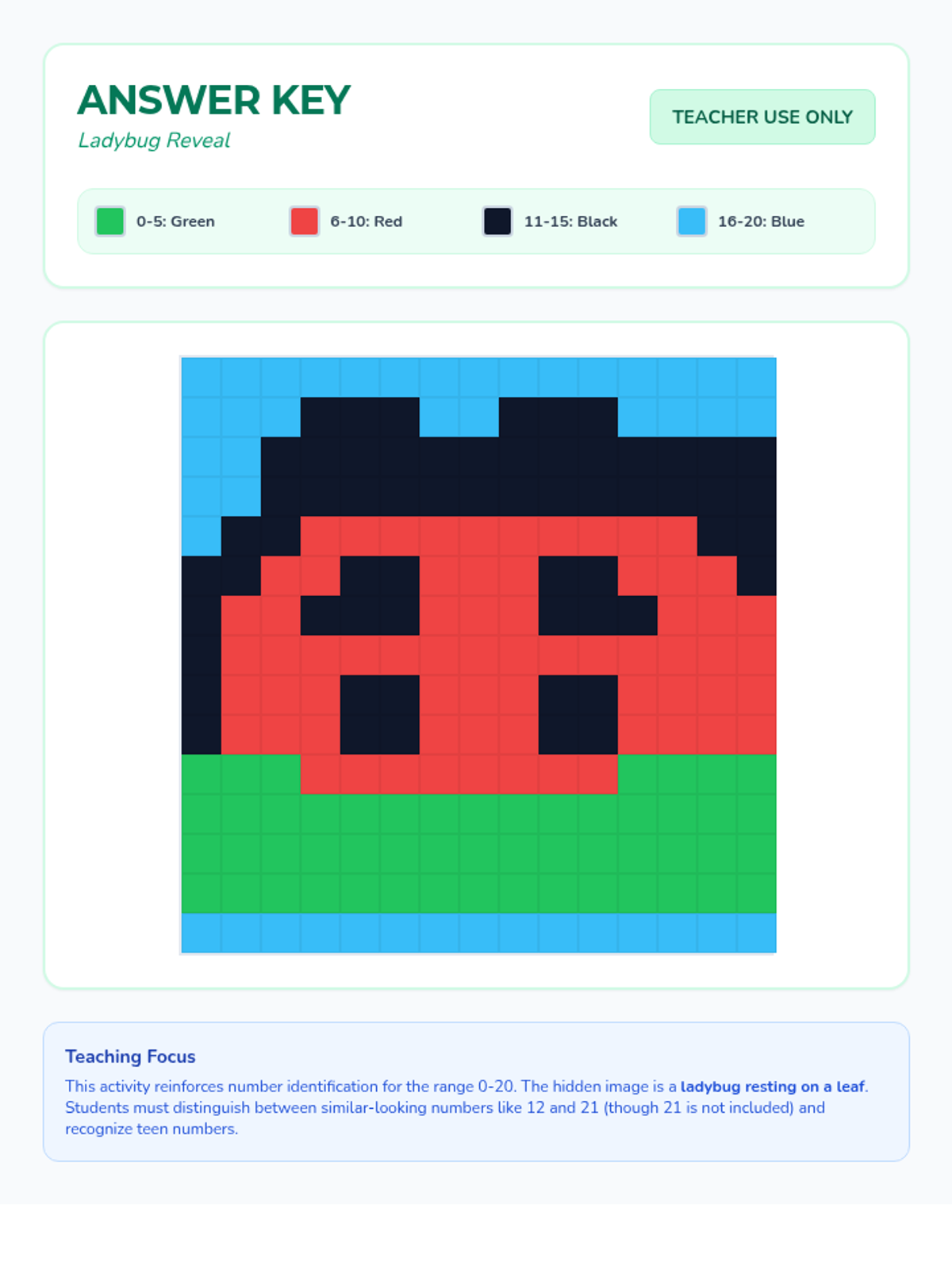
A teacher's answer key for the Bug Hunt Pixel Art activity, showing the final ladybug image. Includes teacher tips and differentiation strategies.
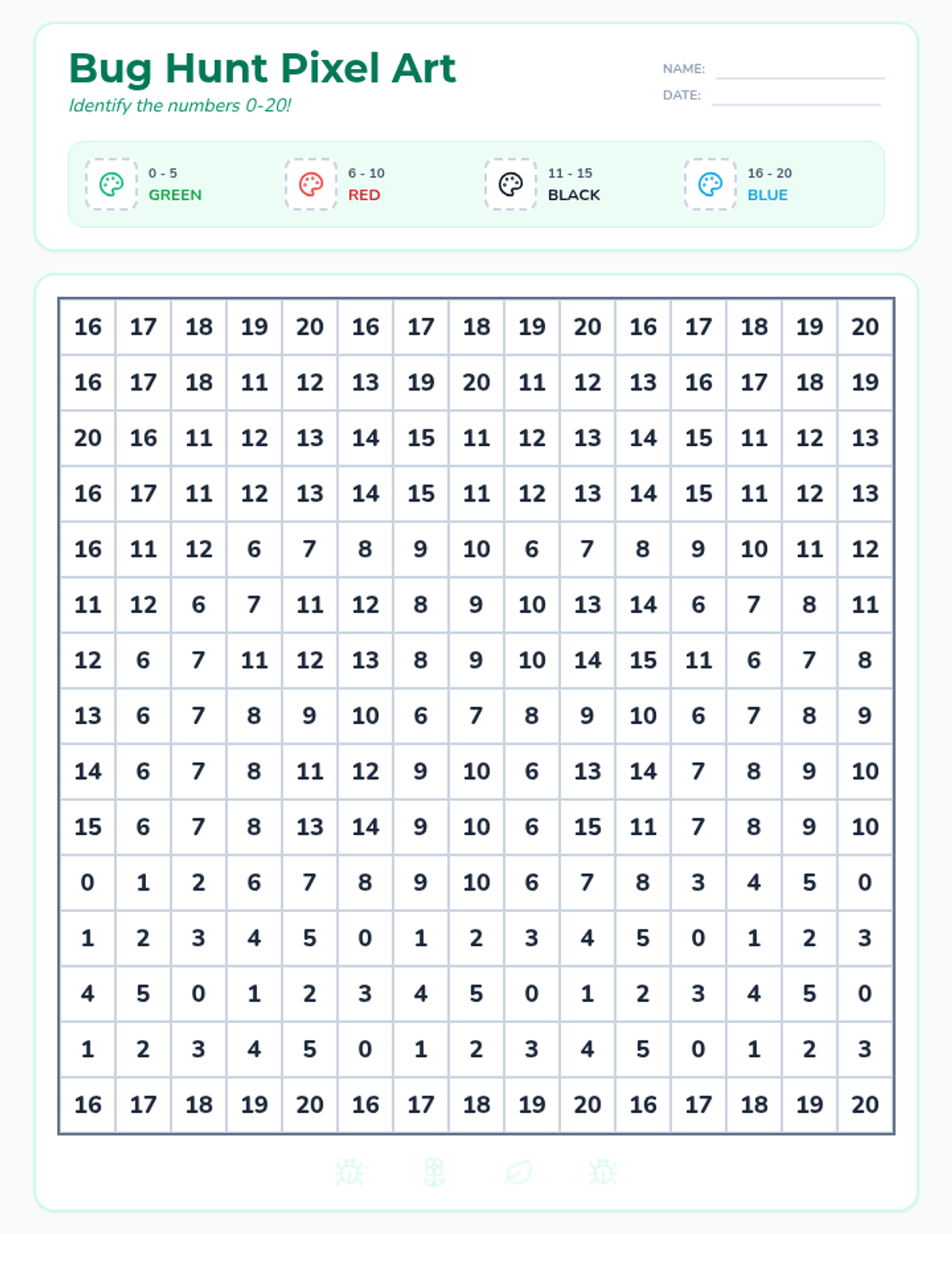
A color-by-number pixel art worksheet where students identify numbers 0-20 to reveal a hidden ladybug image. Includes a clear color key and garden-themed design.
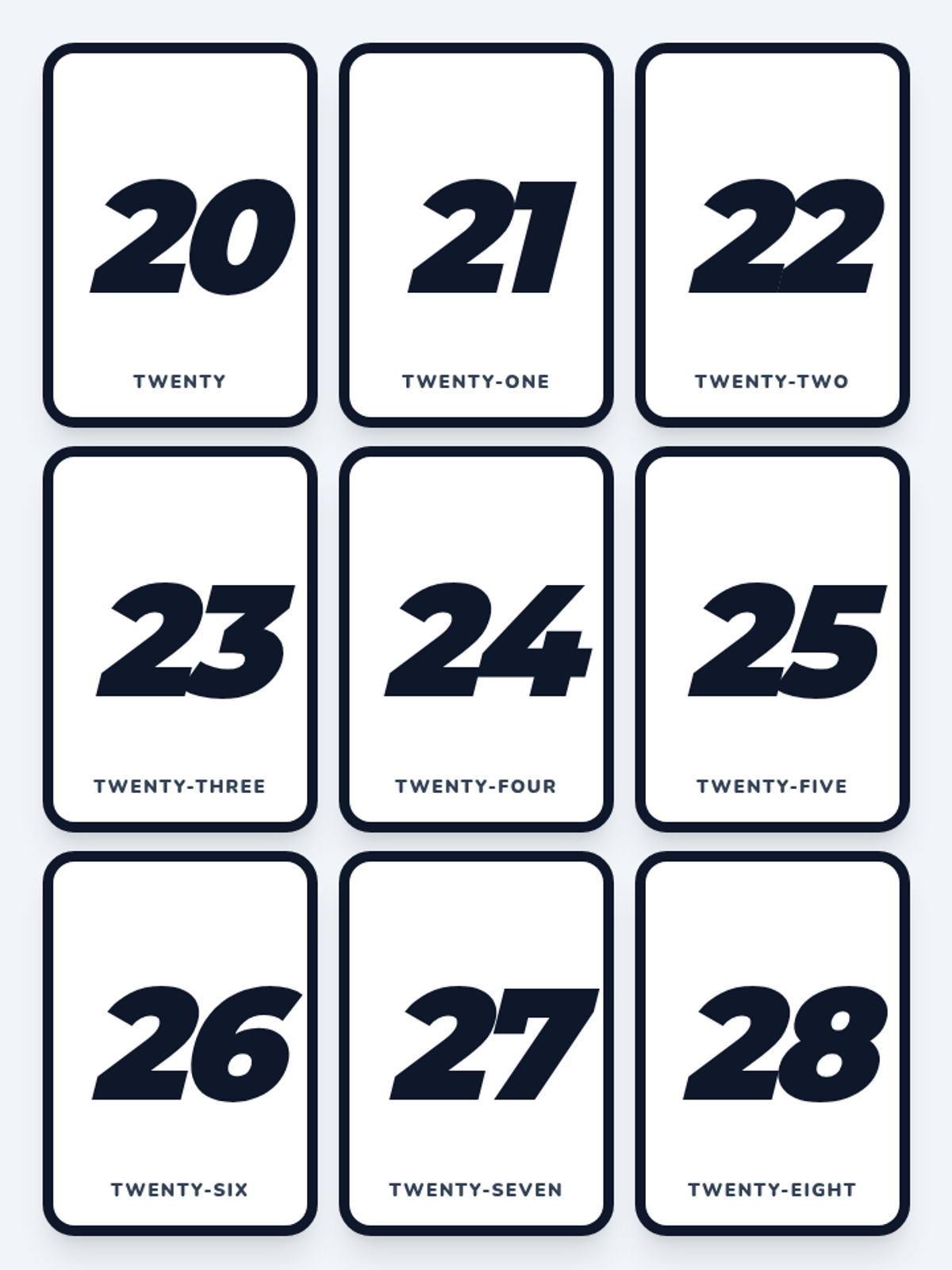
Printable ninja-themed flashcards for numbers 20-40. Designed with large, bold font for rapid identification and dark, readable text labels for name verification. Revised to include all numbers and ensure high contrast.
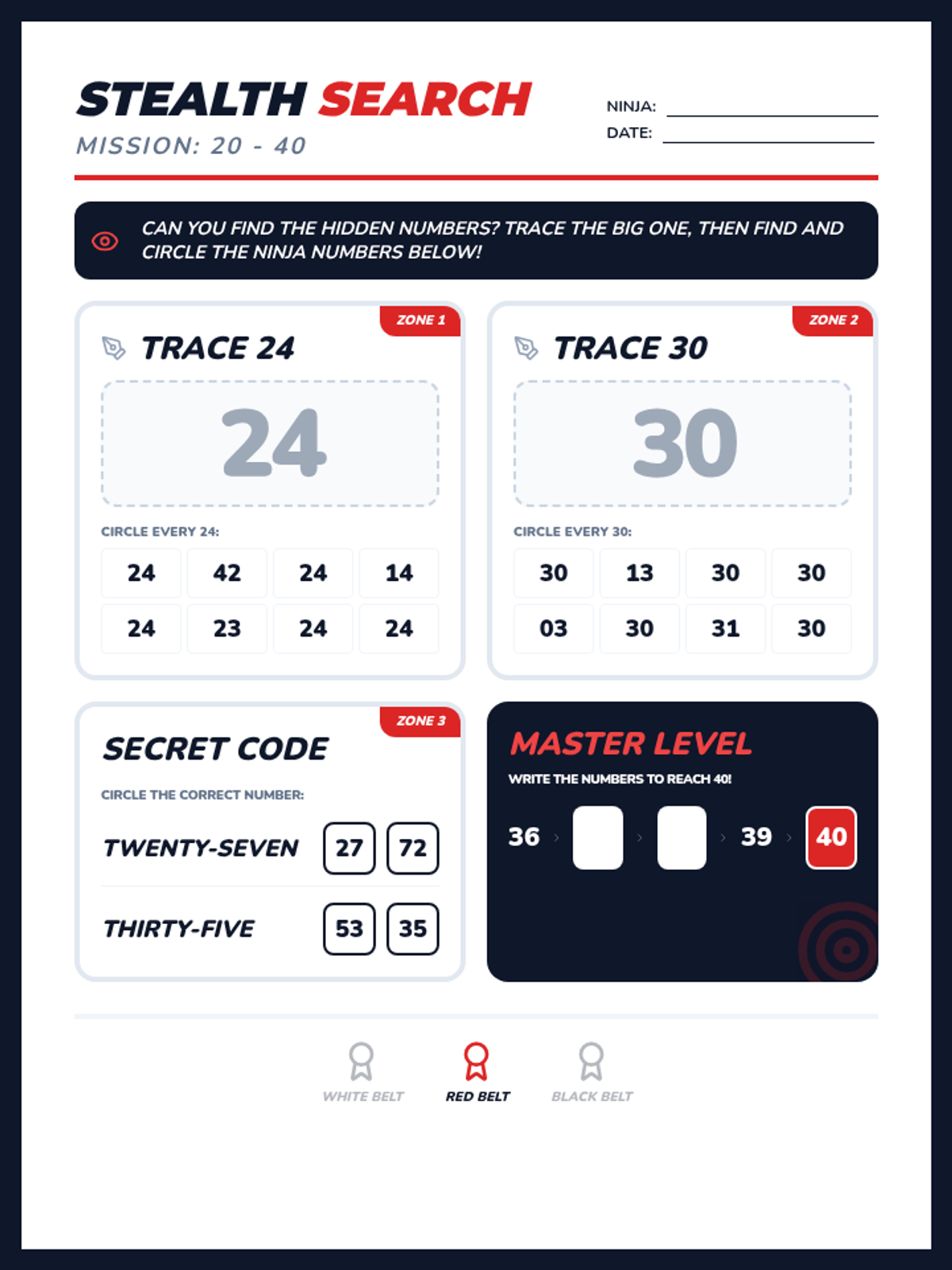
Engaging student worksheet for number identification (20-40). Features "Stealth Search" (discriminating numbers from distractors), tracing exercises, and a "Secret Code" matching challenge. Revised to ensure layout stability and answer choice uniformity.
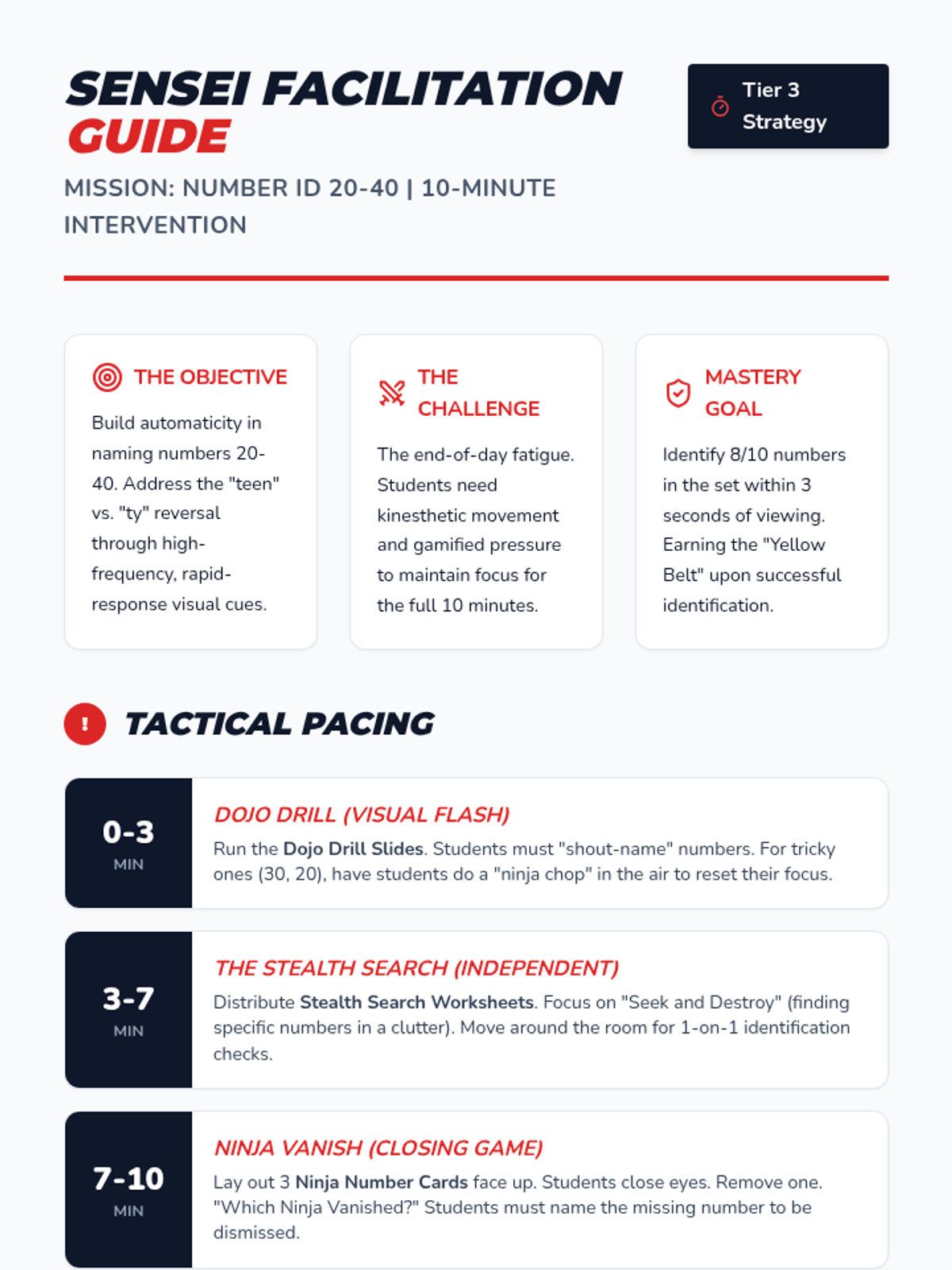
A high-impact facilitator's guide for teachers to deliver a 10-minute Tier 3 intervention. Includes tactical pacing, corrective feedback strategies for "teen" vs. "ty" reversals, and high-energy engagement tips.
High-energy visual identification slides for numbers 20-40, featuring a ninja dojo theme to engage off-task students. Includes rapid-fire drills, focus rounds, and a "Ninja Vanish" mystery number game. Revised to improve pacing and visibility.
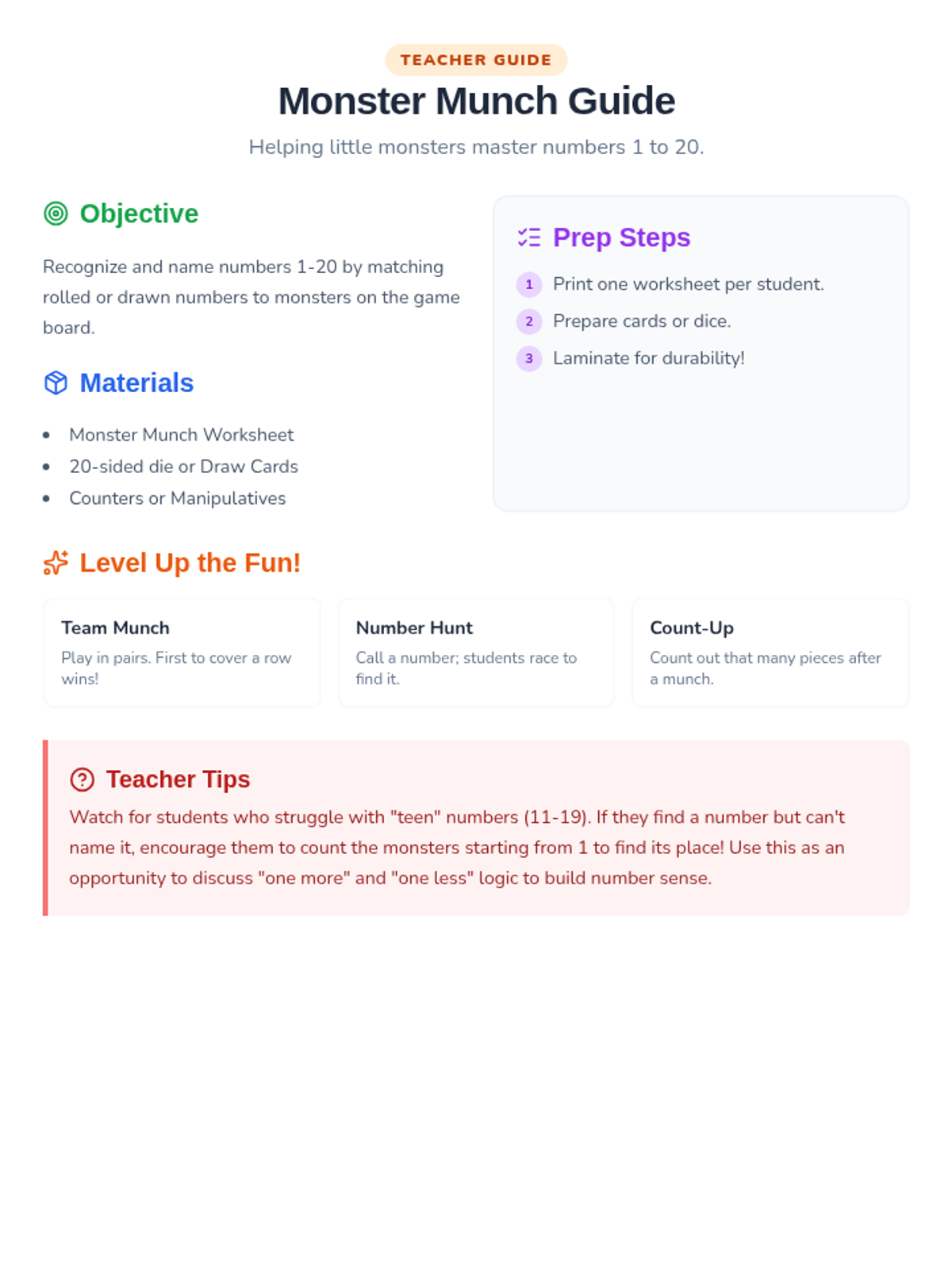
A detailed teacher guide for the Monster Munch game, including learning objectives, setup instructions, and gameplay variations for differentiation.
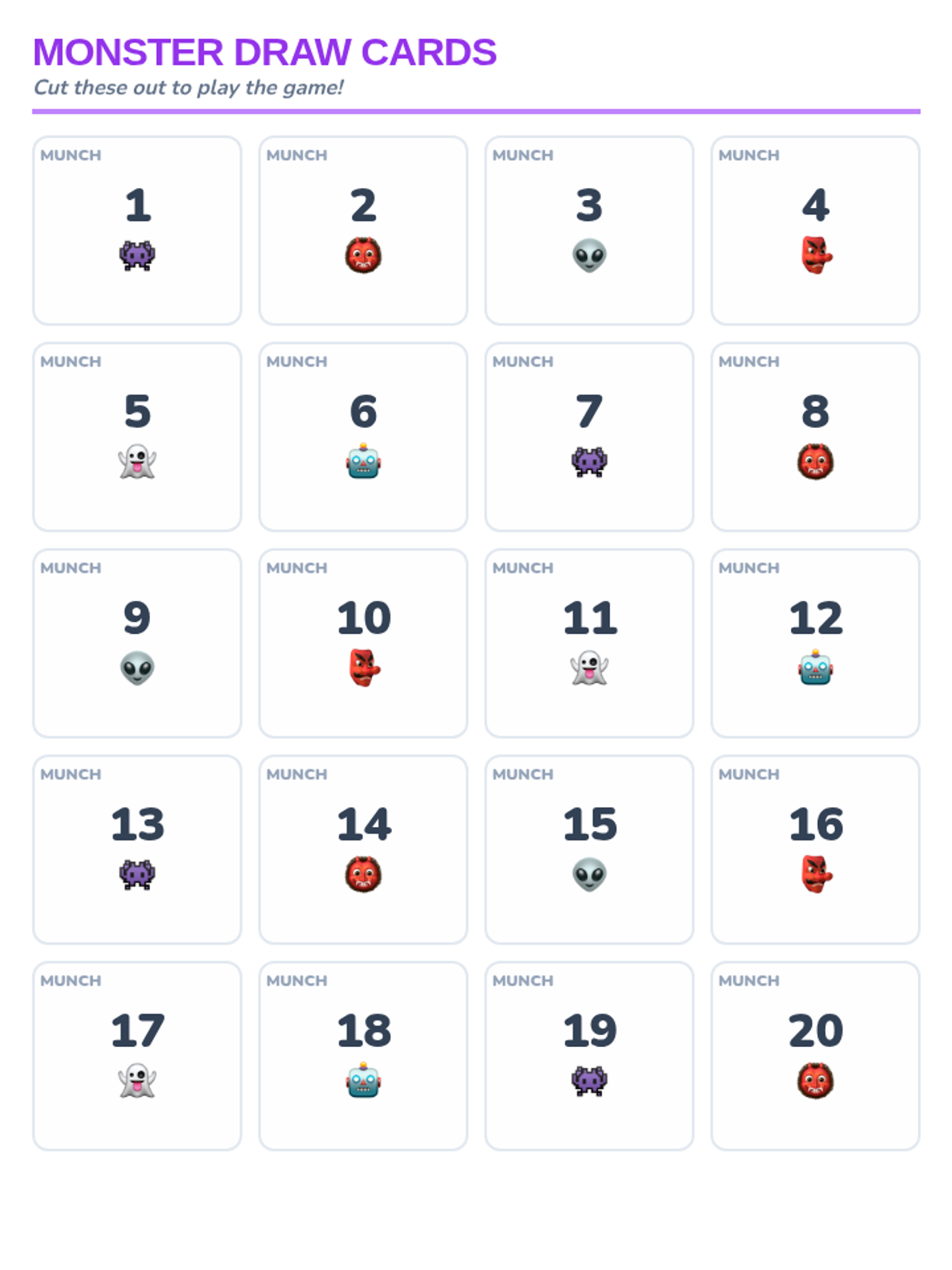
Printable number cards (1-20) to be used with the Monster Munch game if a 20-sided die is unavailable. features thick borders for easy cutting.
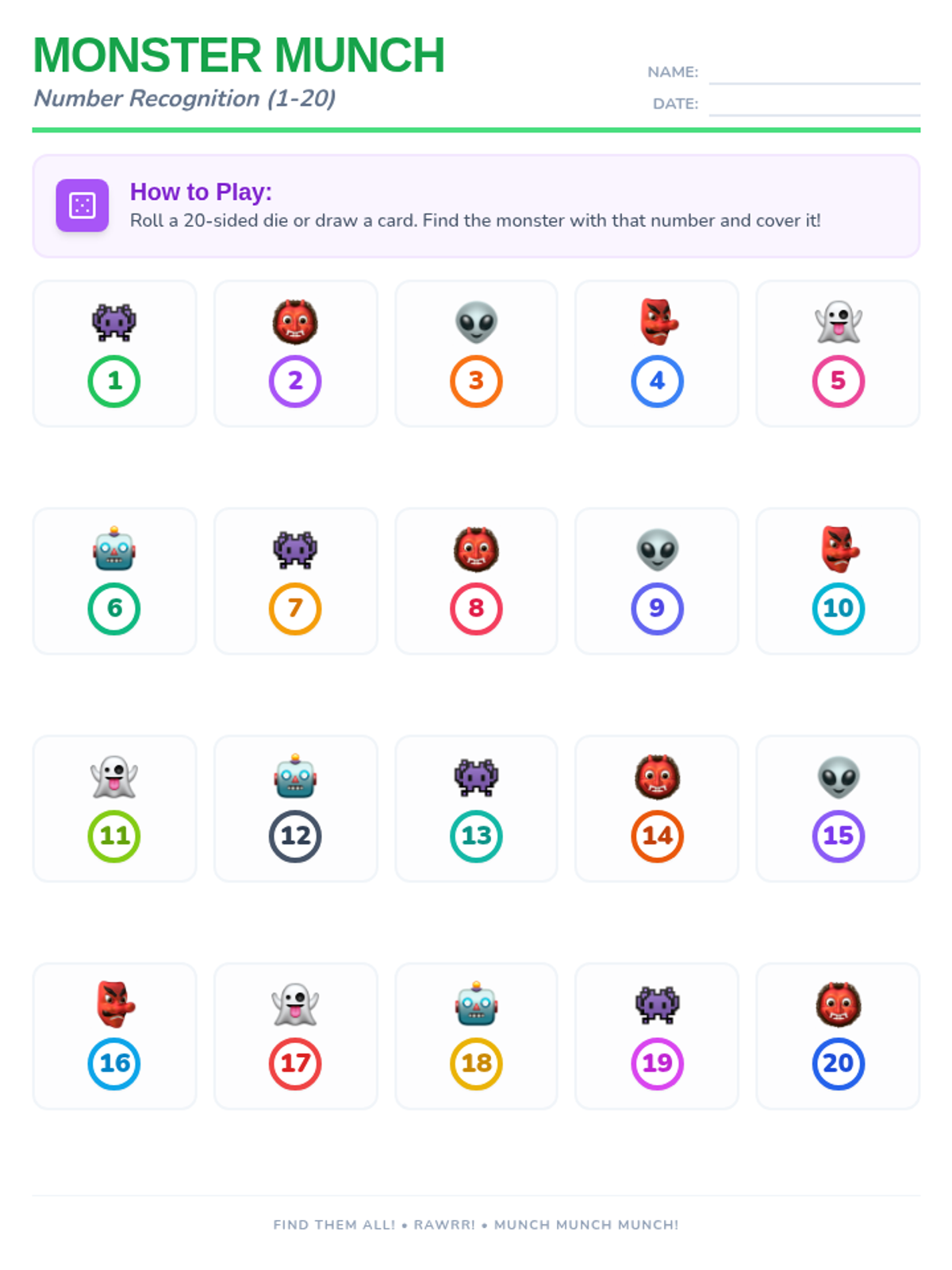
A vibrant, monster-themed 'Roll and Cover' game board where students identify and cover numbers 1-20. Designed for use with a 20-sided die or draw cards.
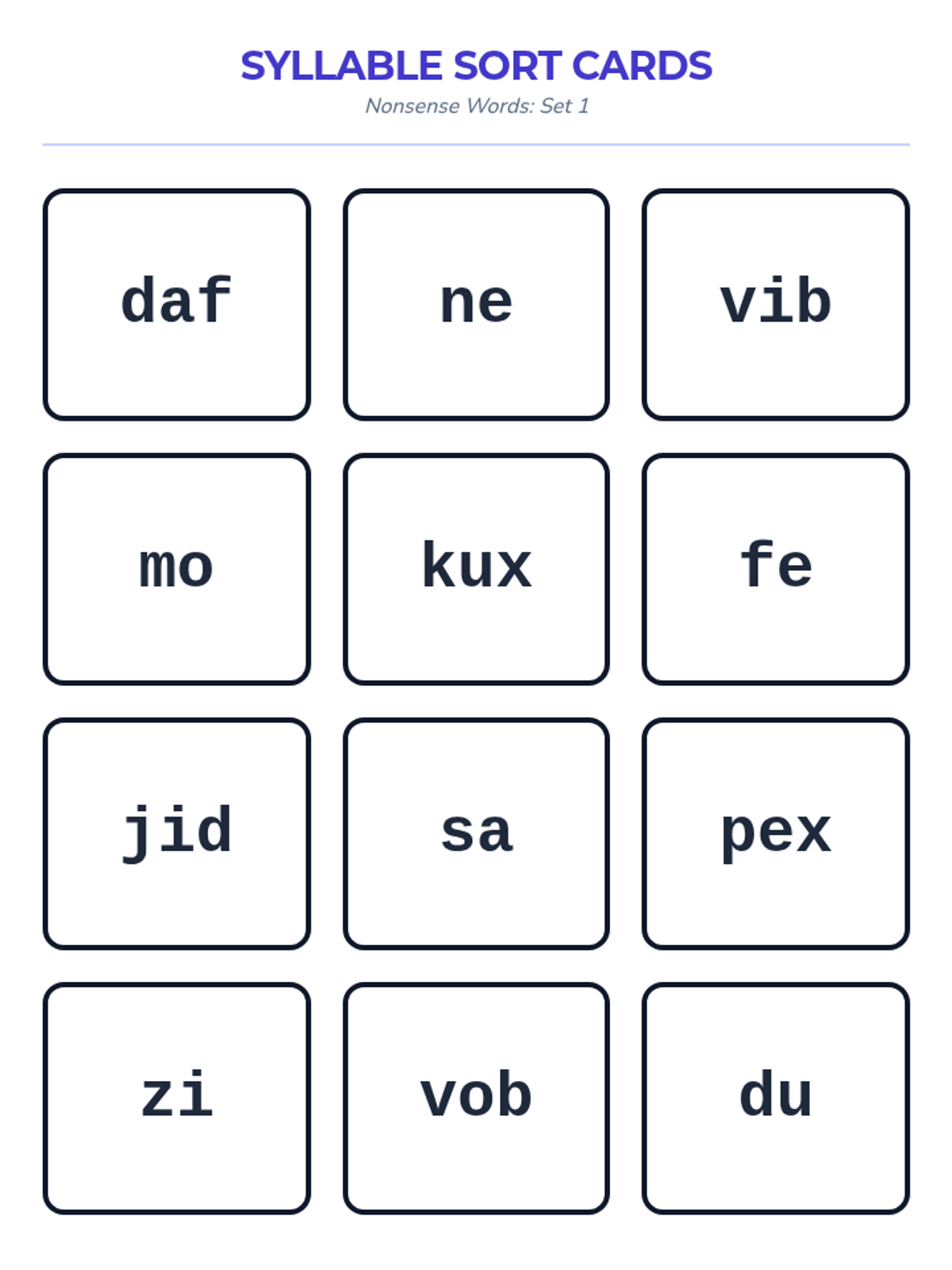
A printable set of 24 syllable sort cards featuring nonsense words with open and closed syllable patterns. Includes large font for easy reading and heavy borders for easy cutting and lamination. Contains "Open" and "Closed" header cards for sorting activities. Optimized for printing with clear page breaks.
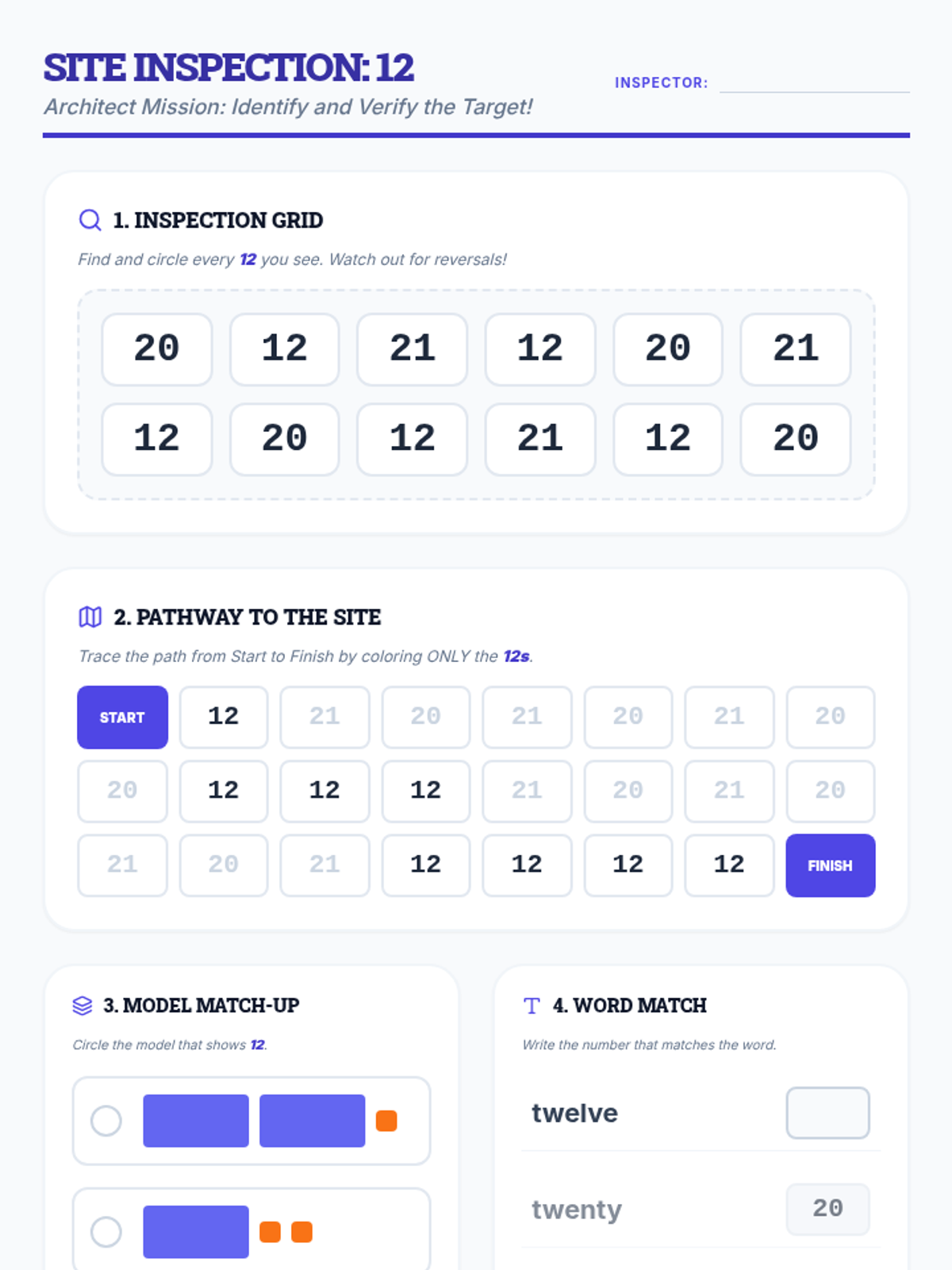
A student worksheet for identifying and distinguishing the number 12 from 20 and 21. Tasks include visual identification in a grid, a path maze of 12s, choosing the correct base-ten model, writing practice, and matching the word 'twelve' to its digits. Now with improved contrast, non-telegraphed practice, and inclusion of other teen numbers.
Instructional slides for identifying the number 12 and distinguishing it from 20 and 21. Includes a new practice slide for quick visual discrimination and clearer place value models. Now with improved text spacing and non-telegraphed practice.
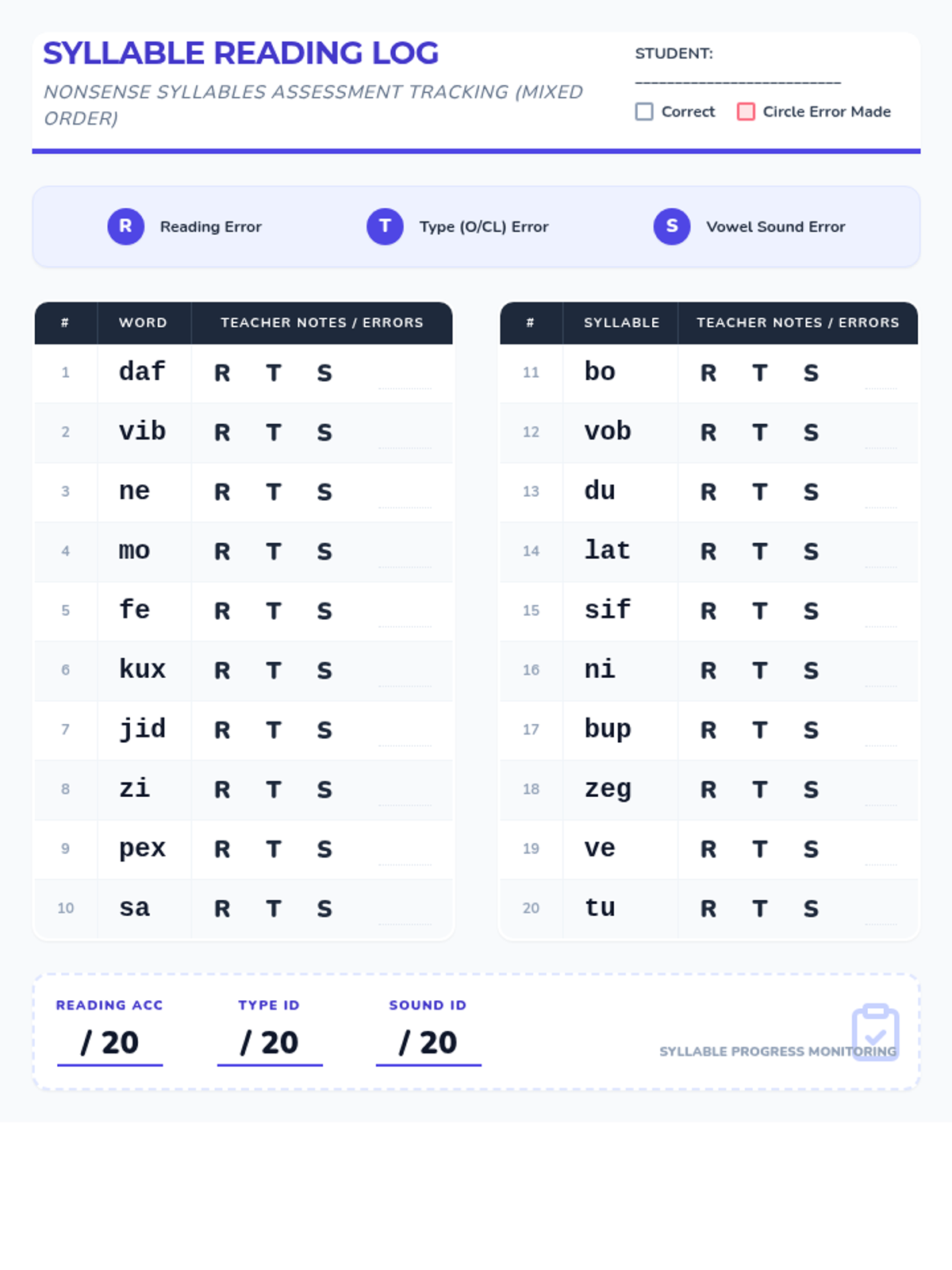
A teacher-facing recording sheet to track student performance on reading, classifying, and sounding out 20 nonsense open and closed syllables. Mixed order prevents predictable patterns. Includes error codes (R, T, S) for quick circling and space for notes. Now uses the primary-friendly Poppins font for syllables and the friendly Nunito font for instructions.
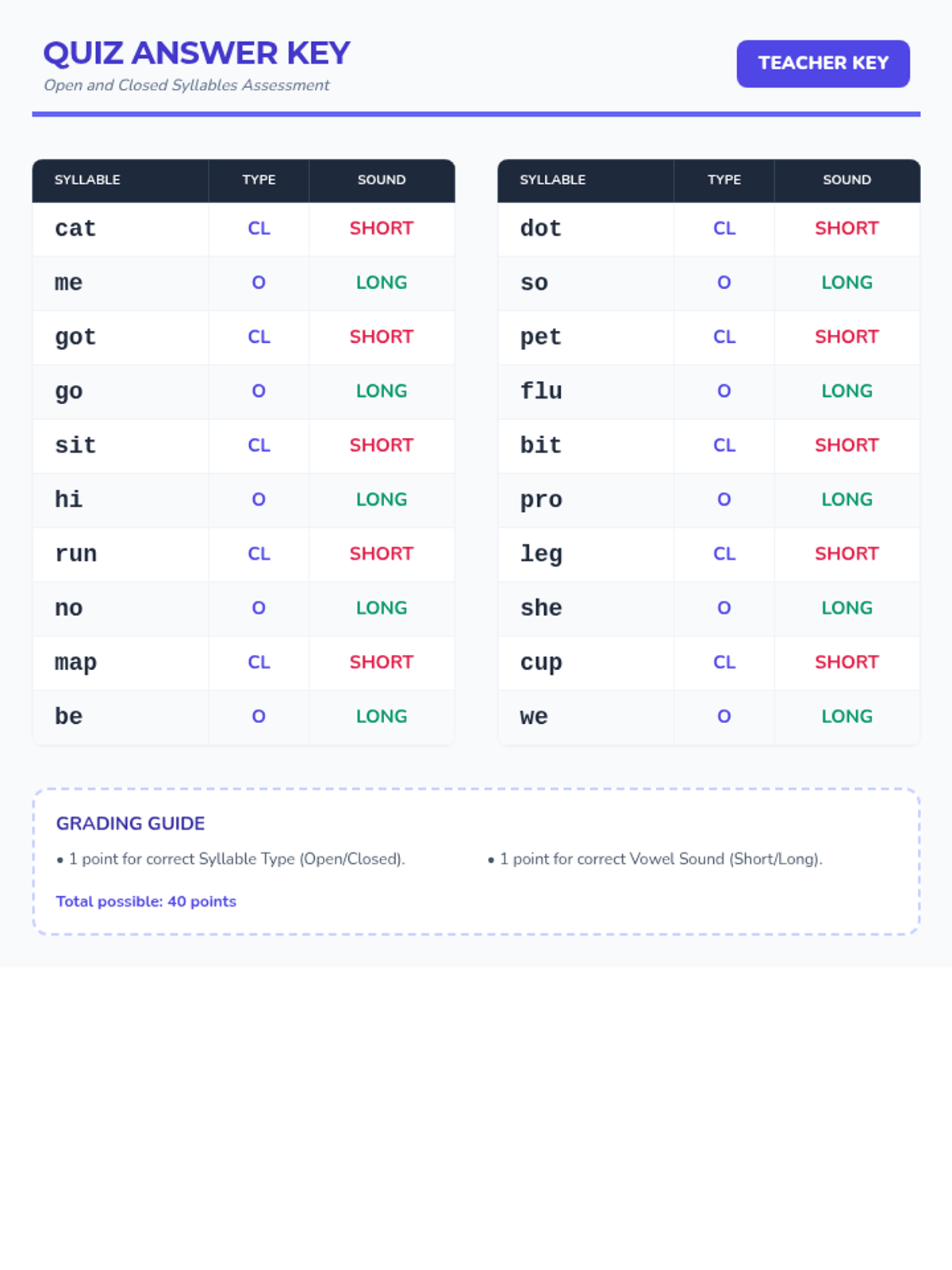
An answer key for the 20-item Open and Closed Syllable Quiz using nonsense words. Mixed order prevents predictable patterns. Syllables use the primary-friendly Poppins font. General text uses the friendly Nunito font.
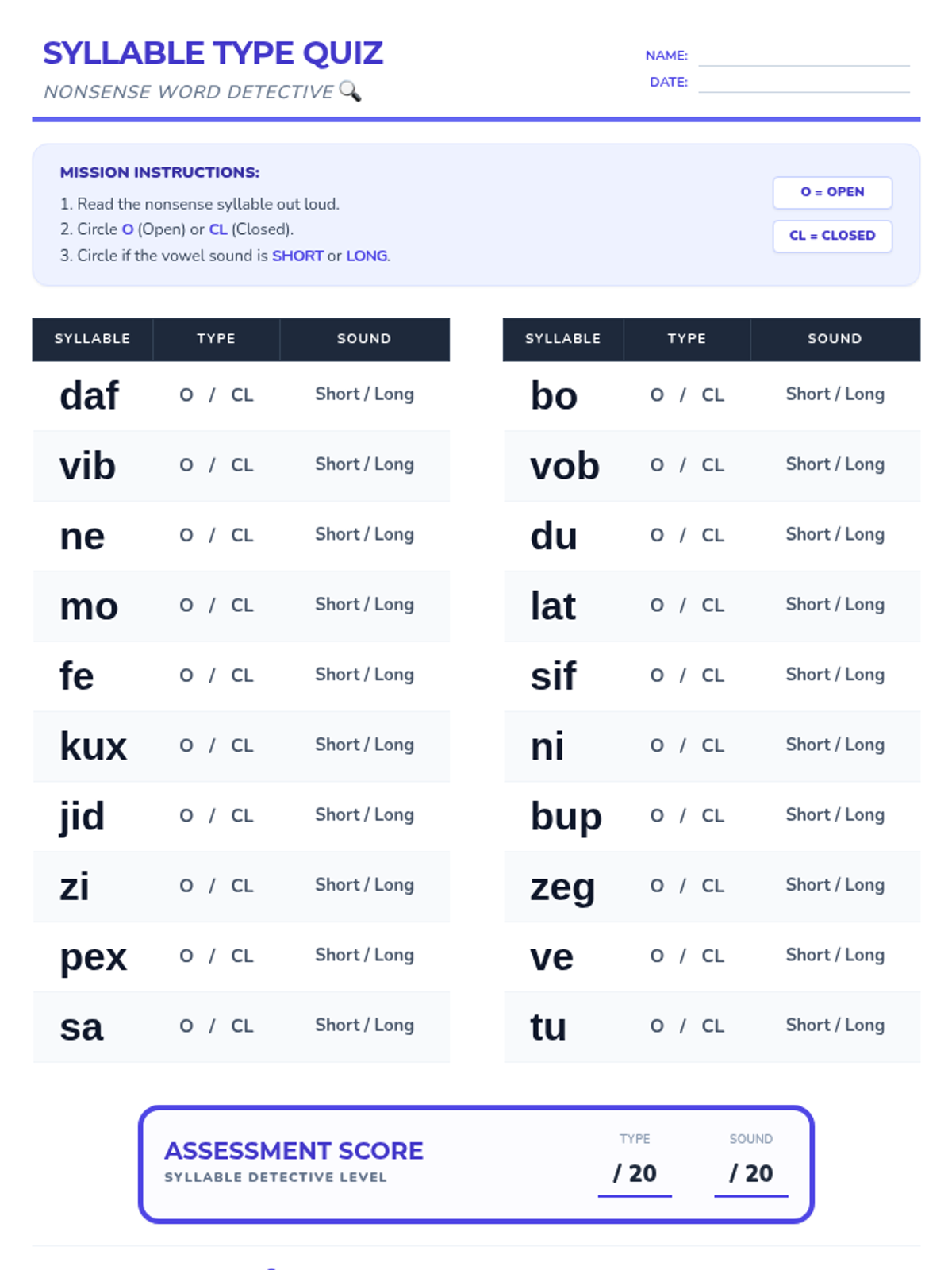
A 20-item assessment quiz for nonsense single syllables. Students must identify if the syllable is Open or Closed and determine if the vowel sound is Short or Long. Mixed order prevents predictable patterns. Syllables use a primary-friendly font for better character recognition. General text uses the friendly Nunito font.
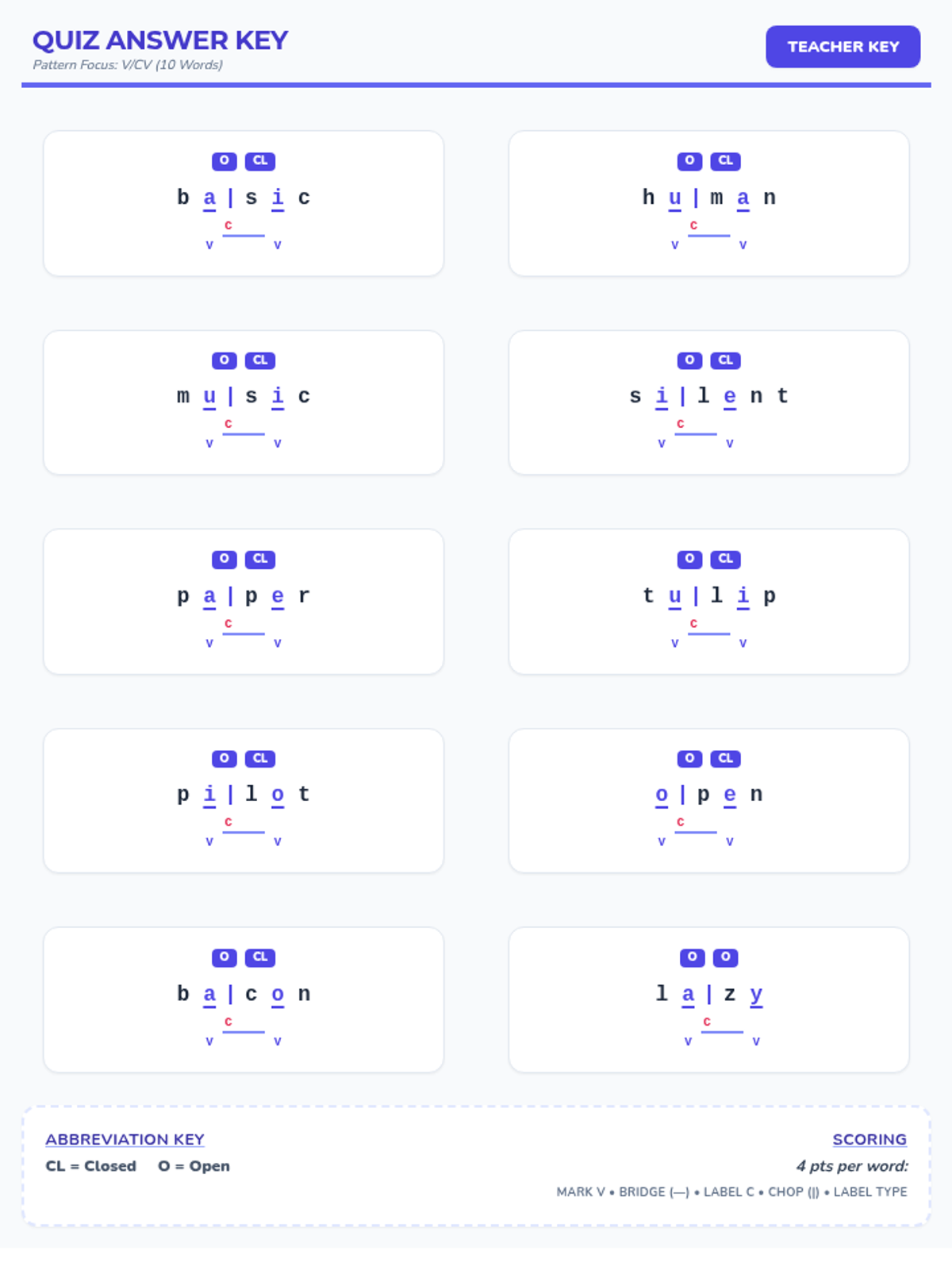
An answer key for the Syllable Division V/CV Quiz. It provides the correctly marked, bridged, labeled, and divided versions of the 10 target words (basic, human, music, silent, paper, tulip, pilot, open, bacon, lazy), along with a suggested scoring guide for teachers.
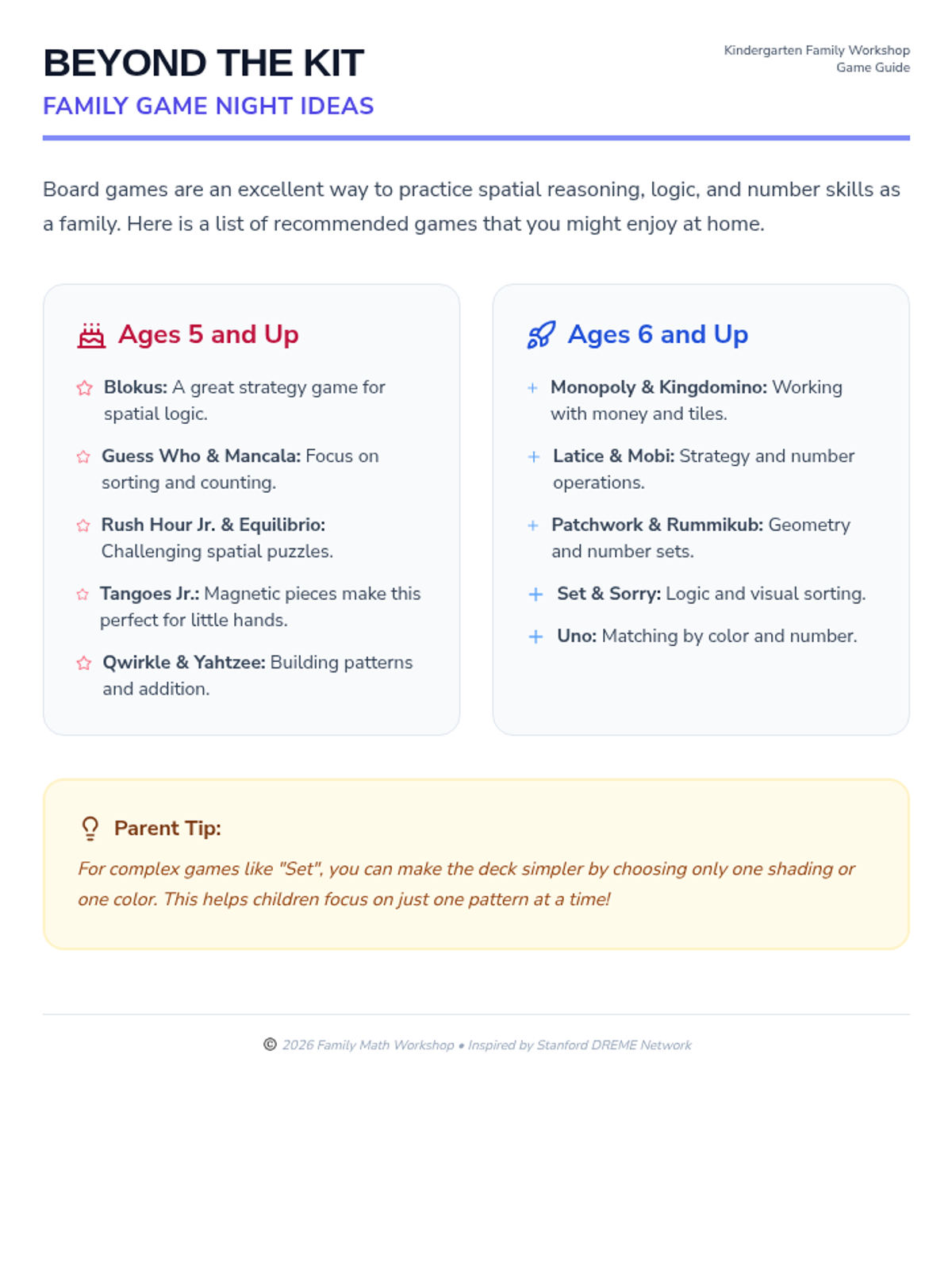
A curated list of store-bought board games for families, categorized by age and highlighting specific math skills like spatial reasoning and logic. Includes tips for simplifying complex games. Corrected inaccuracies and ensured single-page layout.
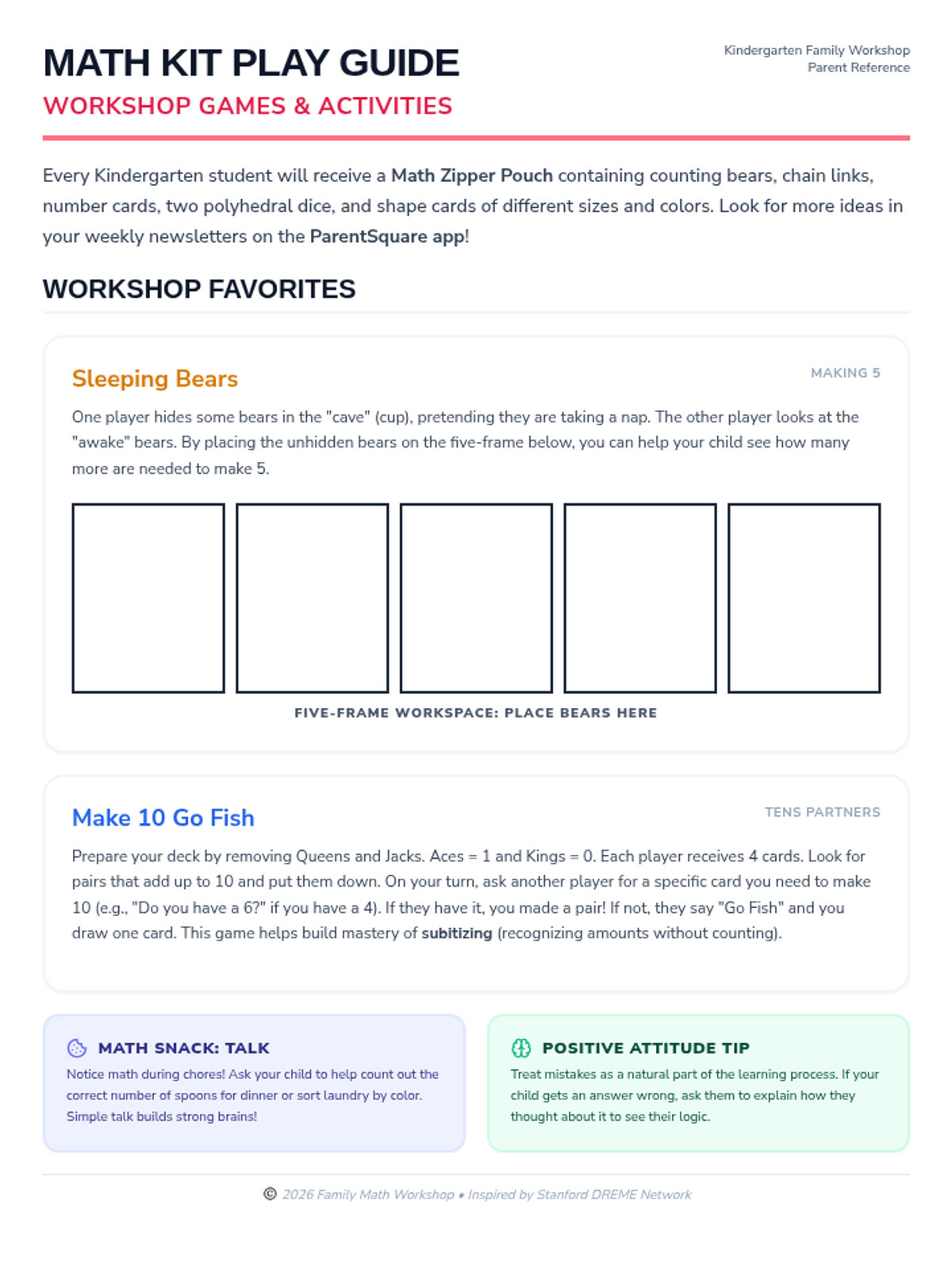
An activity guide for parents focused on using the Kindergarten Math Kit and common household items to support math learning. It includes detailed instructions for the 'Sleeping Bears' and 'Make 10 Go Fish' games demonstrated in the workshop. Workspace enlarged for counting bears. Delivery method for newsletters updated to ParentSquare app. Corrected instructions and added Math Snack content.
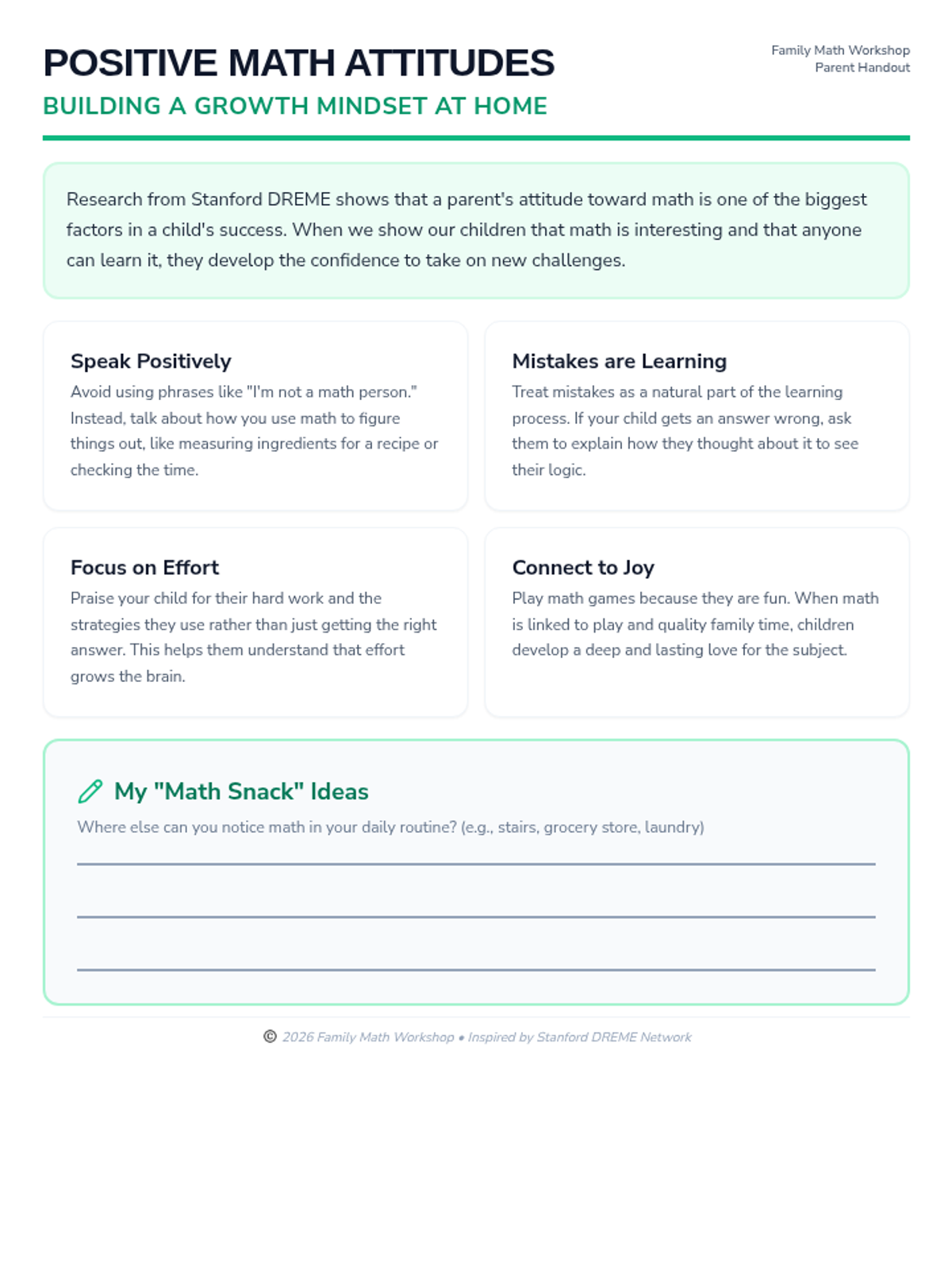
A parent handout focused on fostering positive math attitudes and a growth mindset at home, based on Stanford DREME research. Corrected spelling and layout to fit on one page with a space for parent notes. Hand-writing area spacing improved. Body text font size slightly increased for legibility.
A teacher's guide providing instructional strategies, high-energy games, and a suggested pacing guide for teaching numbers 50-100 to kindergarten students.
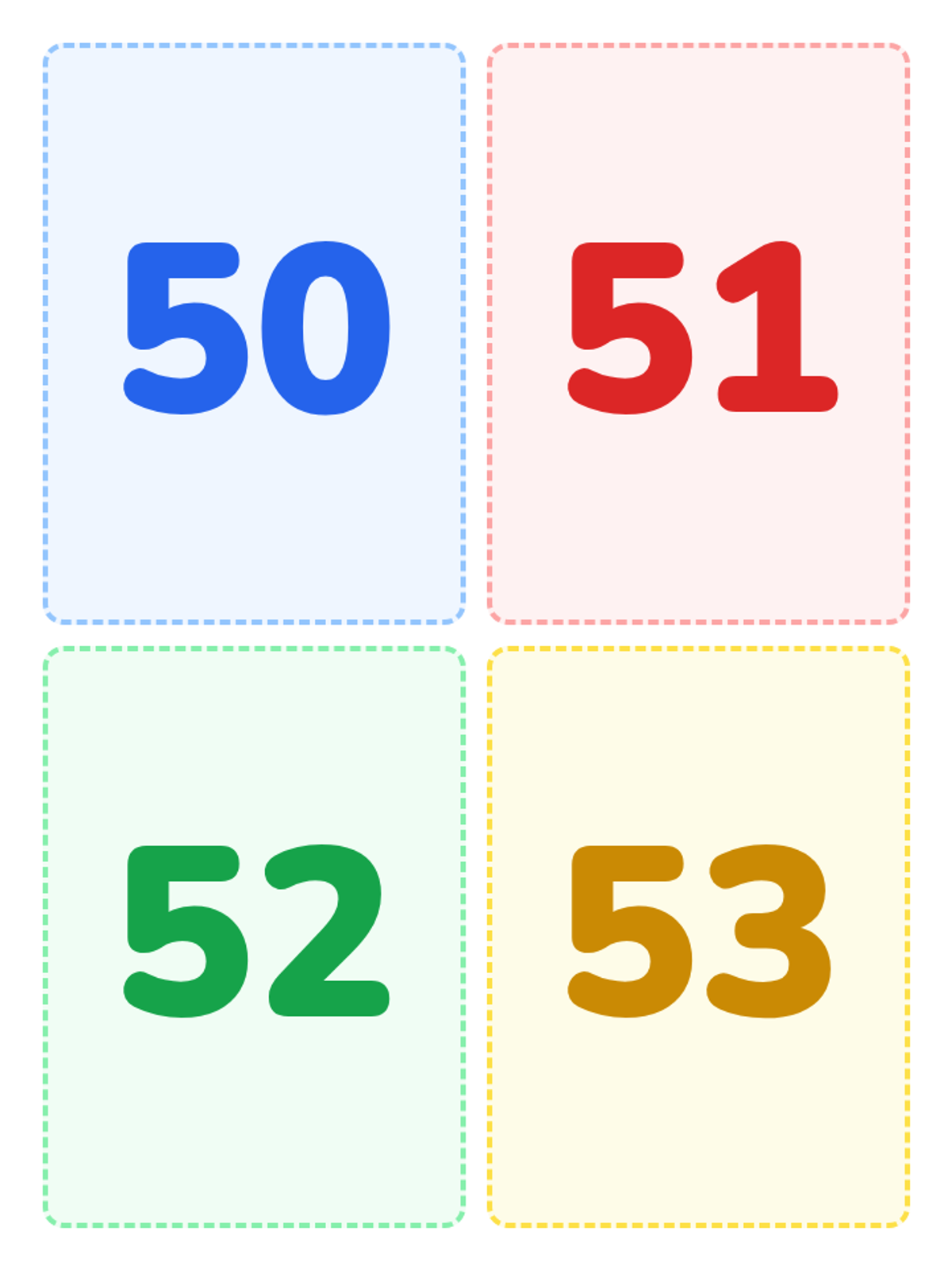
A comprehensive set of printable flashcards for numbers 50-100, featuring large, bold numerals with friendly colors and dashed cut-lines. Ideal for kindergarten number recognition and counting practice.
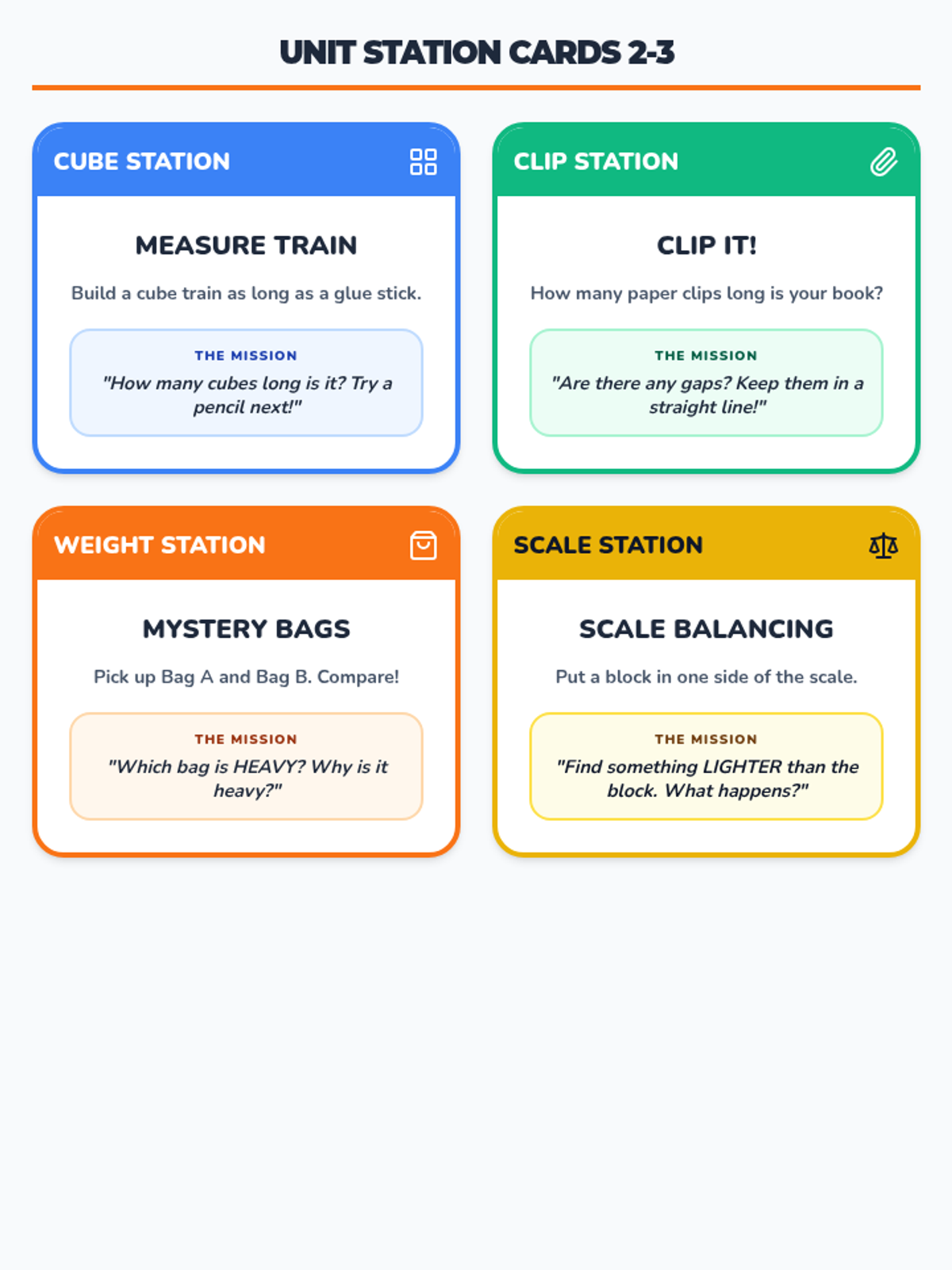
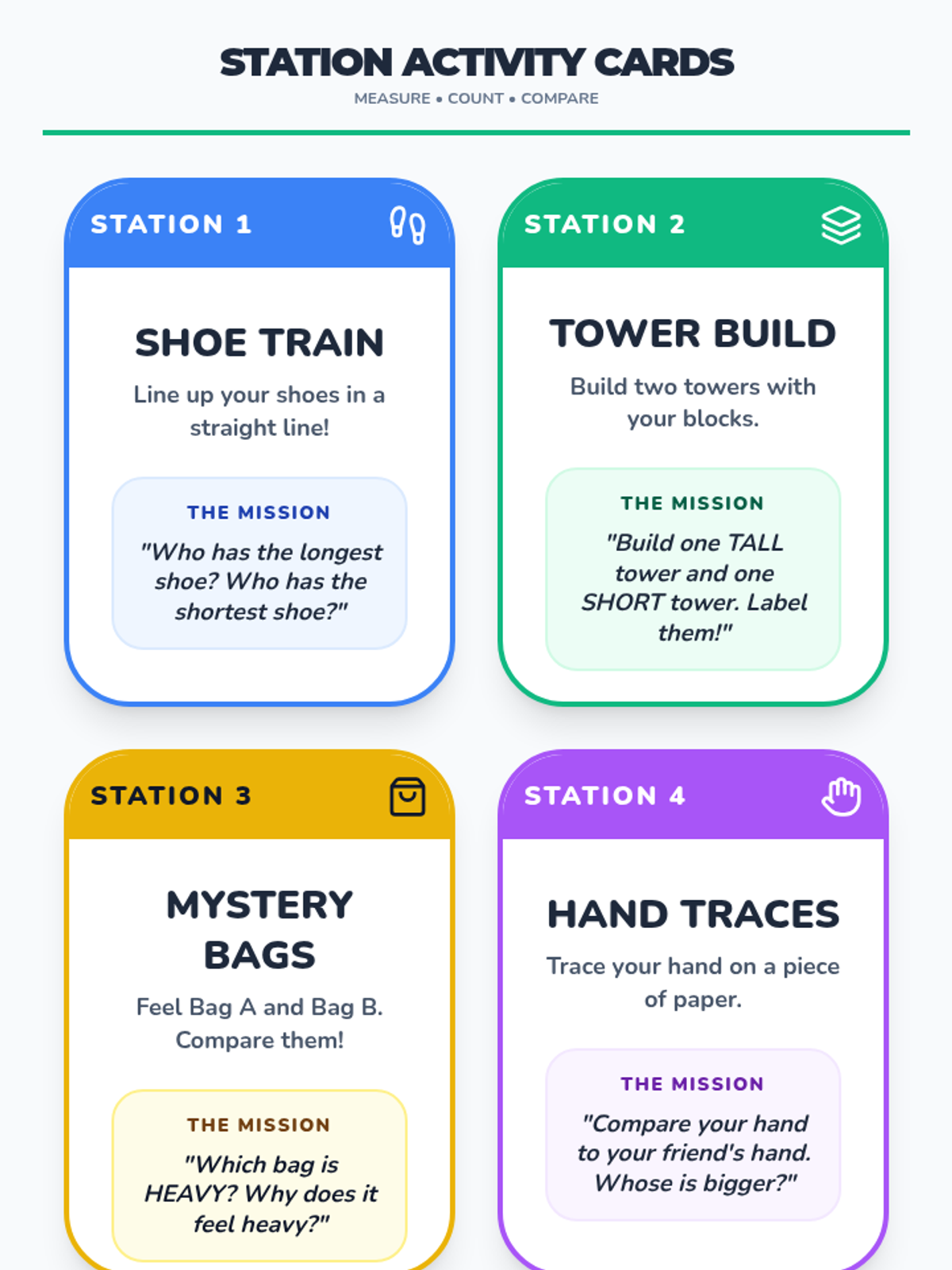
Additional station cards for Lessons 2 and 3, focusing on non-standard unit measuring and weight comparison using bags and scales.
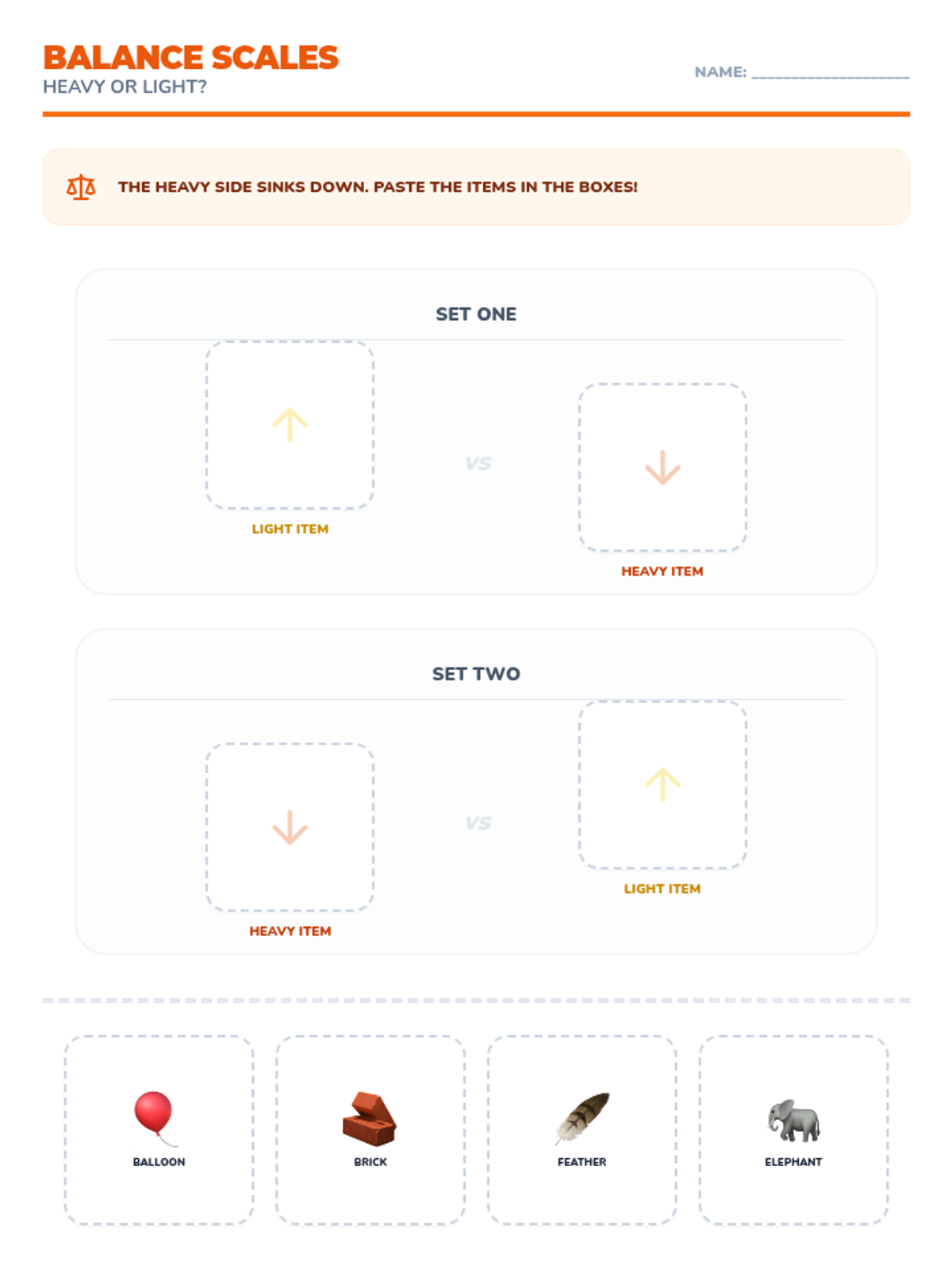
A cut-and-paste worksheet for Lesson 3 where students sort heavy and light objects onto the correct sides of a balance scale.
Instructional slides for Lesson 3, demonstrating how weight affects a balance scale and engaging students with "hand scale" activities.
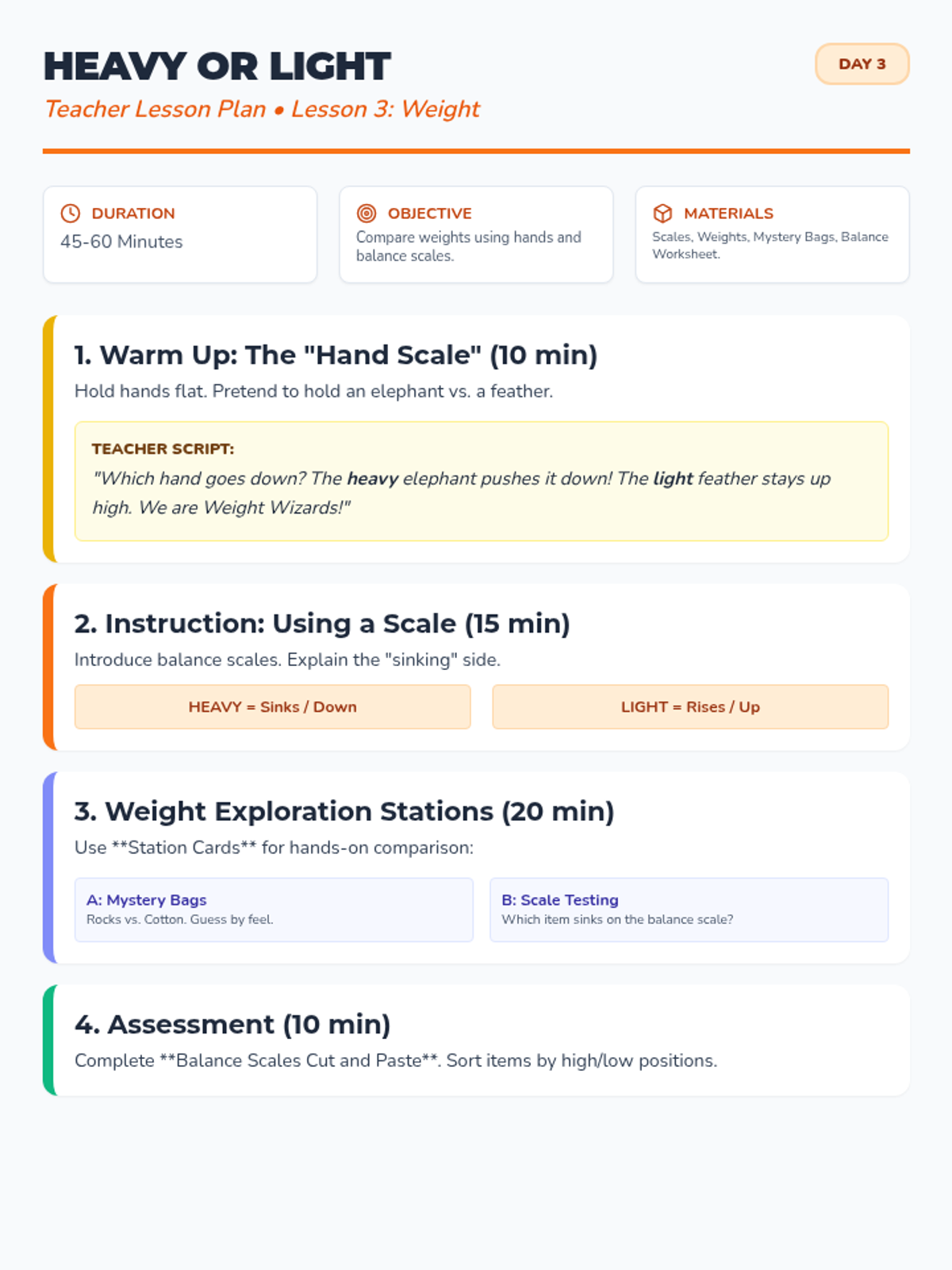
Teacher lesson plan for Lesson 3, exploring weight through tactile activities and the use of balance scales.
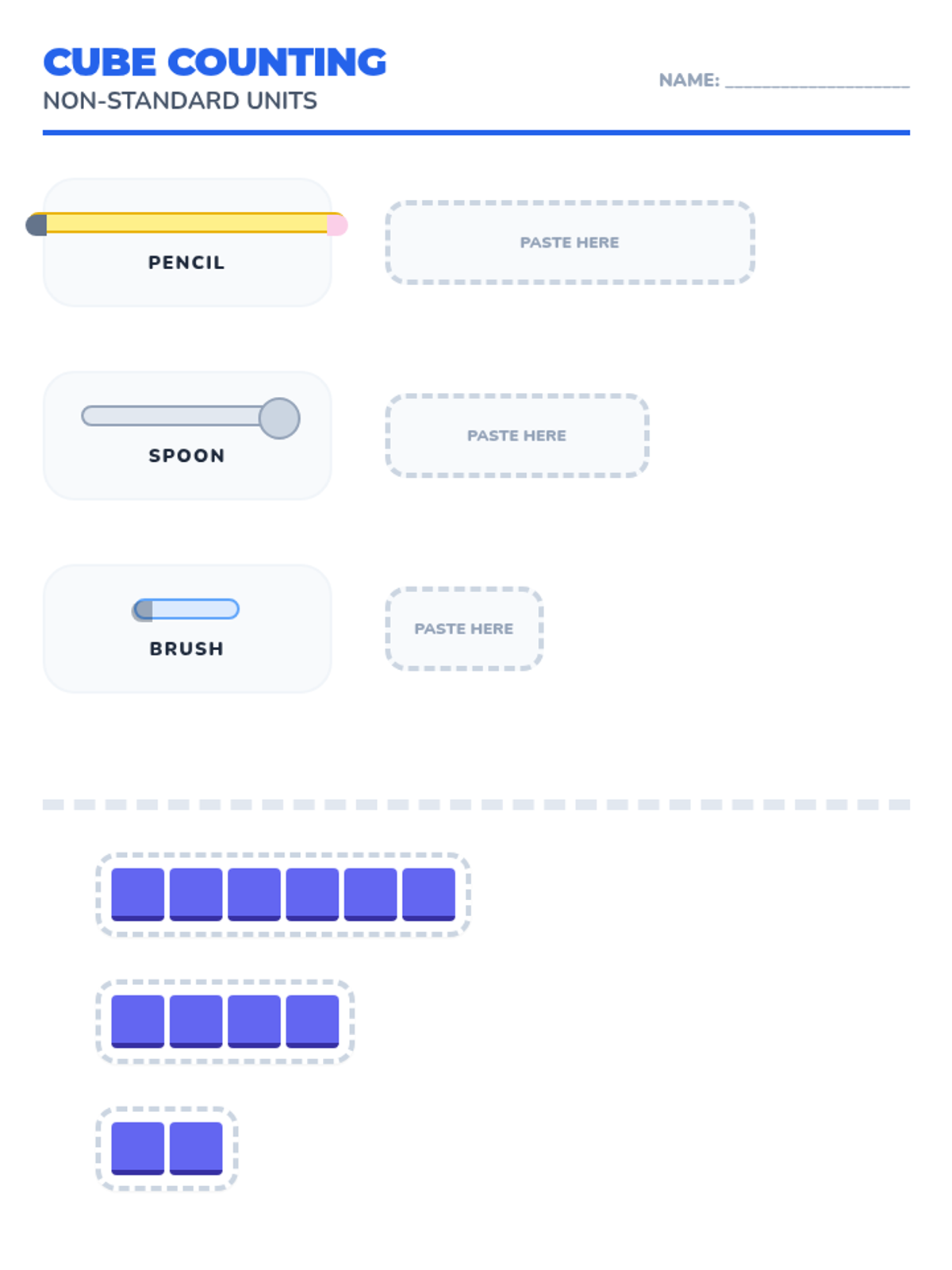
A cut-and-paste worksheet for Lesson 2 where students match the correct number of snap cubes to the length of various objects.
Instructional slides for Lesson 2, teaching the "No Gaps, No Overlaps, Straight Line" rules and providing a counting example with snap cubes.
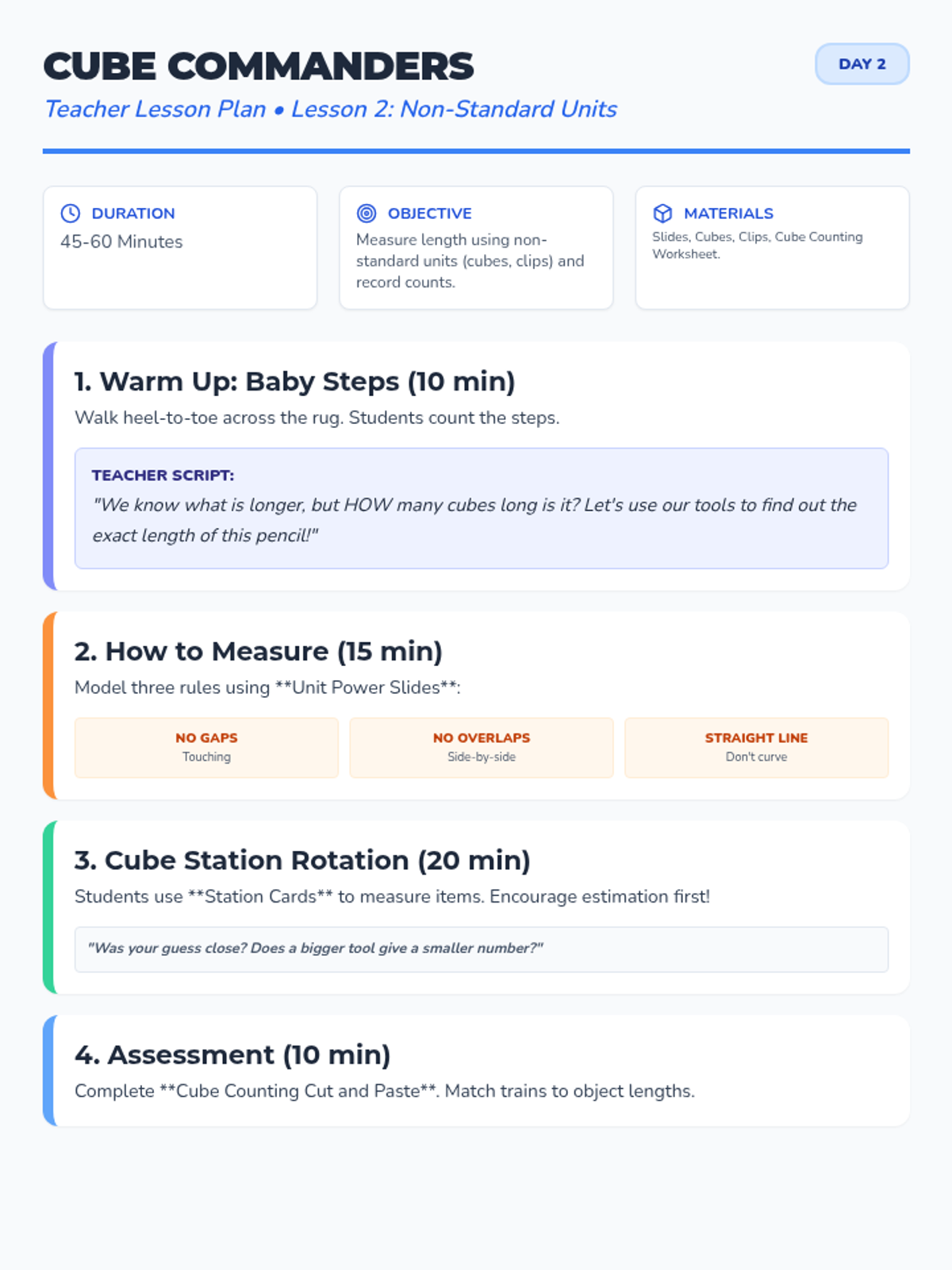
Teacher lesson plan for Lesson 2, focusing on the mechanics of non-standard measurement and the three rules for accurate measuring.
Handheld-sized station cards for Lesson 1, guiding students through practical length and height comparison activities.
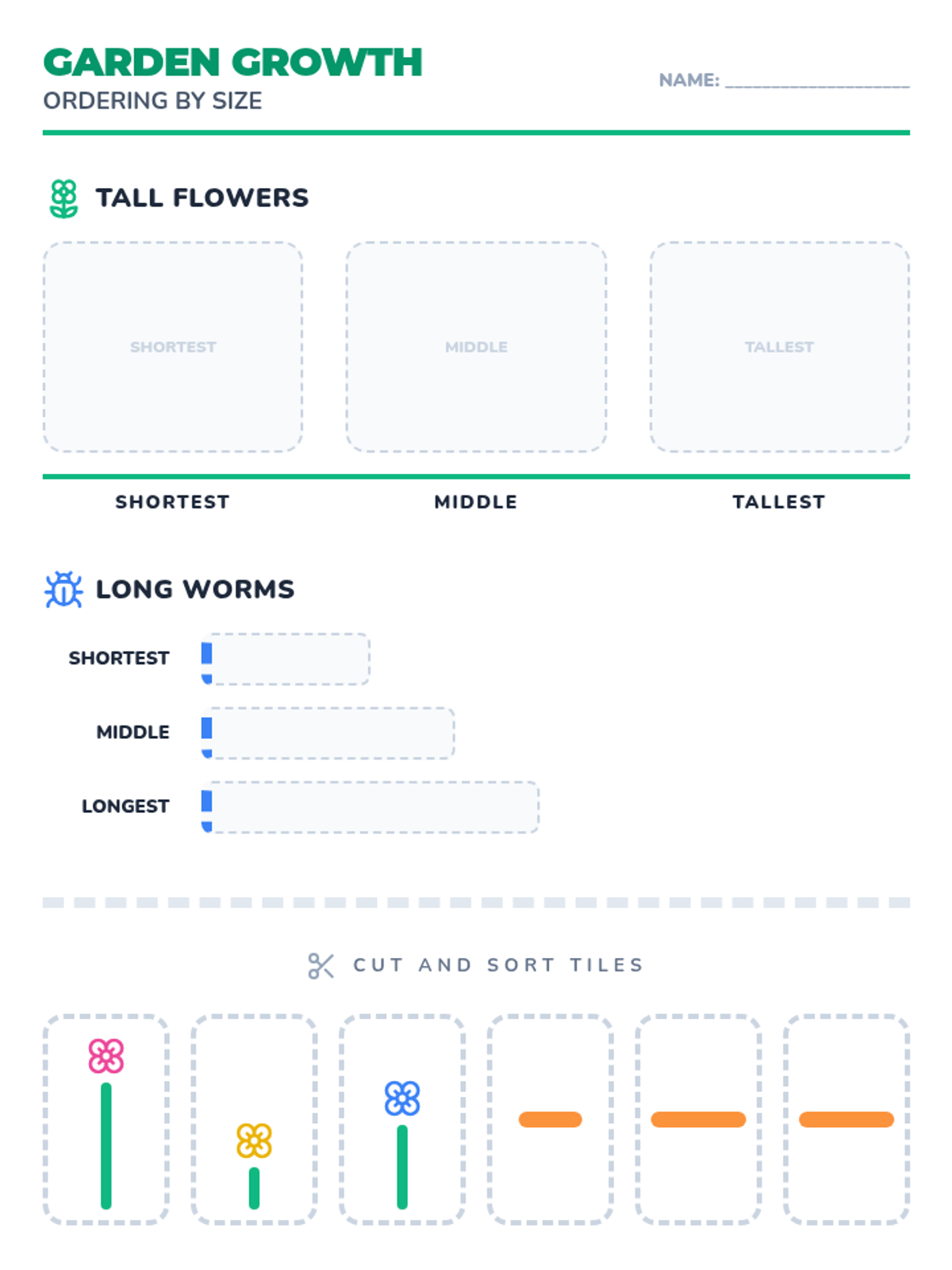
A kindergarten cut-and-paste worksheet for Lesson 1 where students sort flowers by height and worms by length.
Interactive instructional slides for Lesson 1, introducing length, height, and the baseline rule with vibrant visuals and classroom practice prompts.
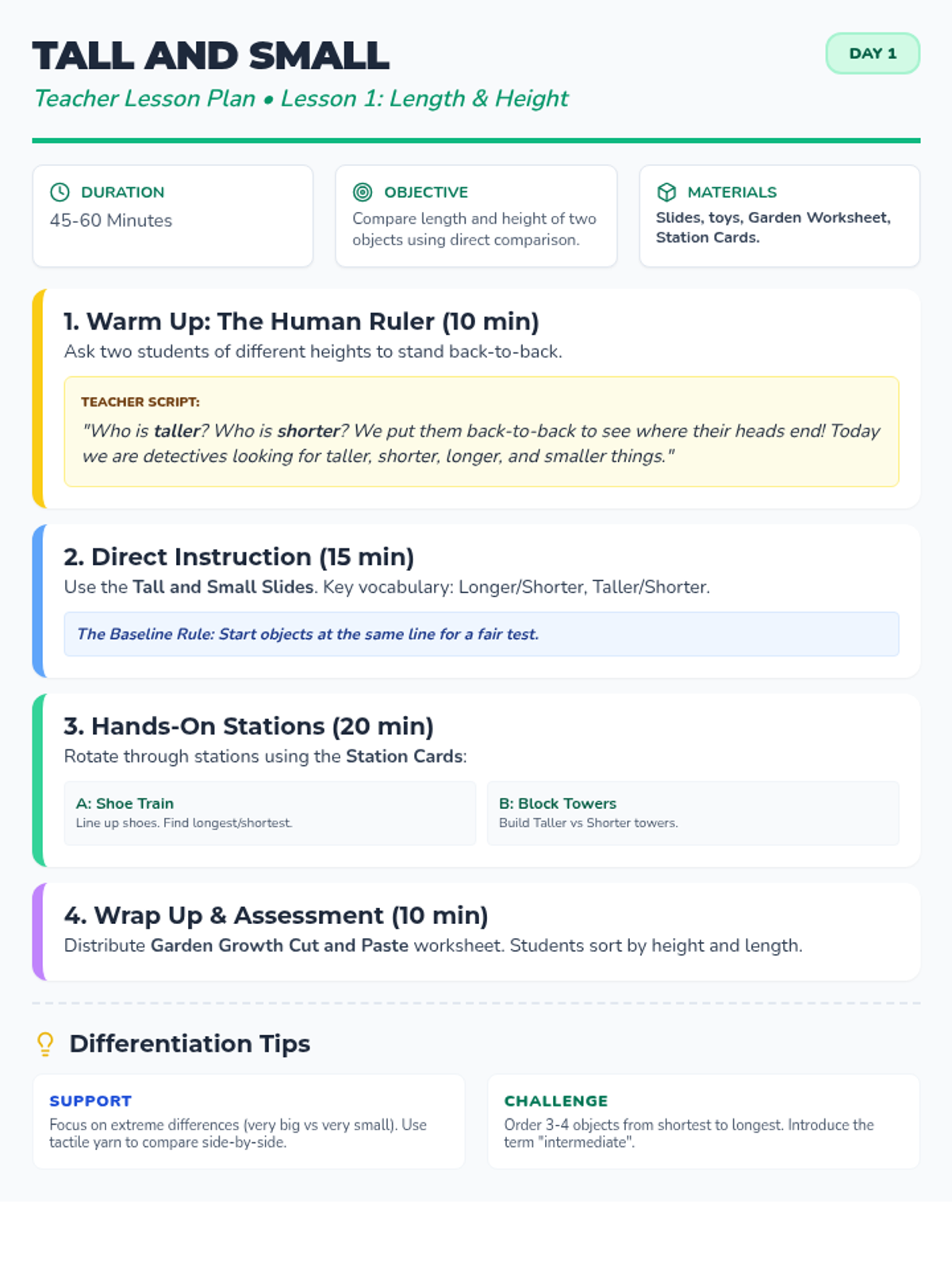
A comprehensive teacher lesson plan for Lesson 1, covering the comparison of length and height with warm-up activities, direct instruction, and station rotations.
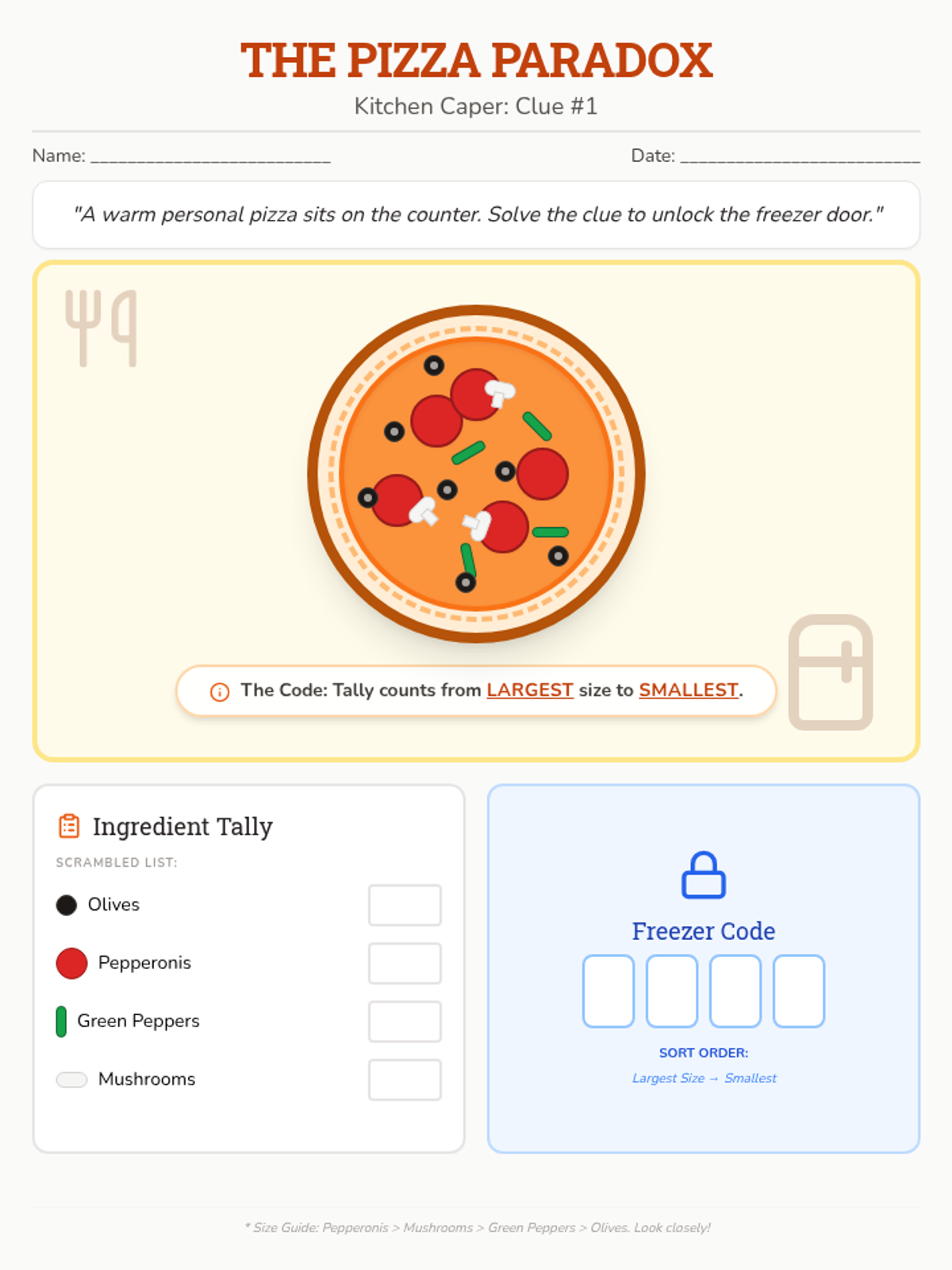
A visual observation puzzle where students tally pizza toppings to solve a freezer unlock code. Scrambled tally list and clarified size-based sorting logic. Fixed page break and opacity.
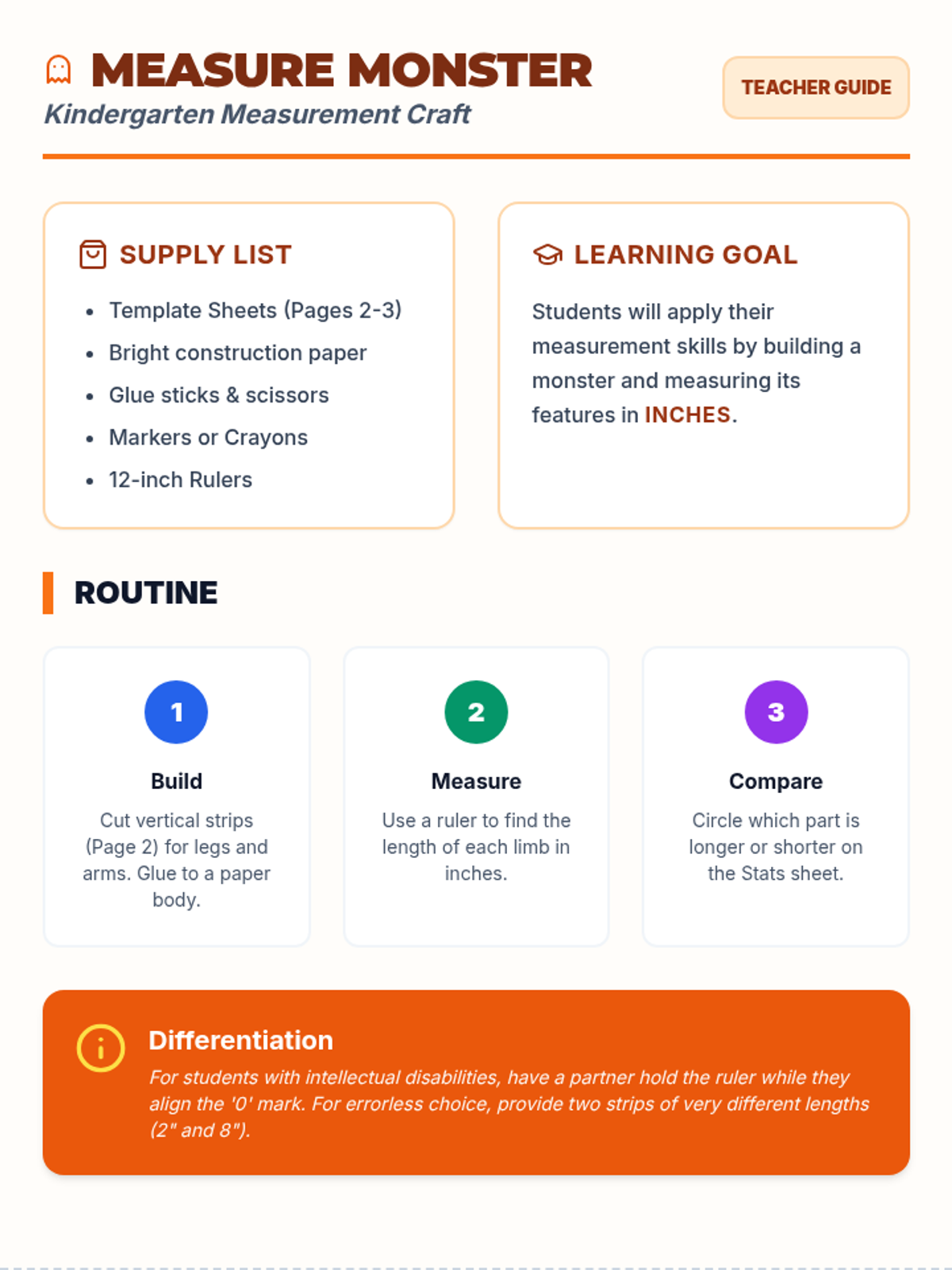
A three-page creative craft activity where students build a 'Measure Monster' and record its dimensions in inches, designed for kindergarten and supported for students with disabilities.
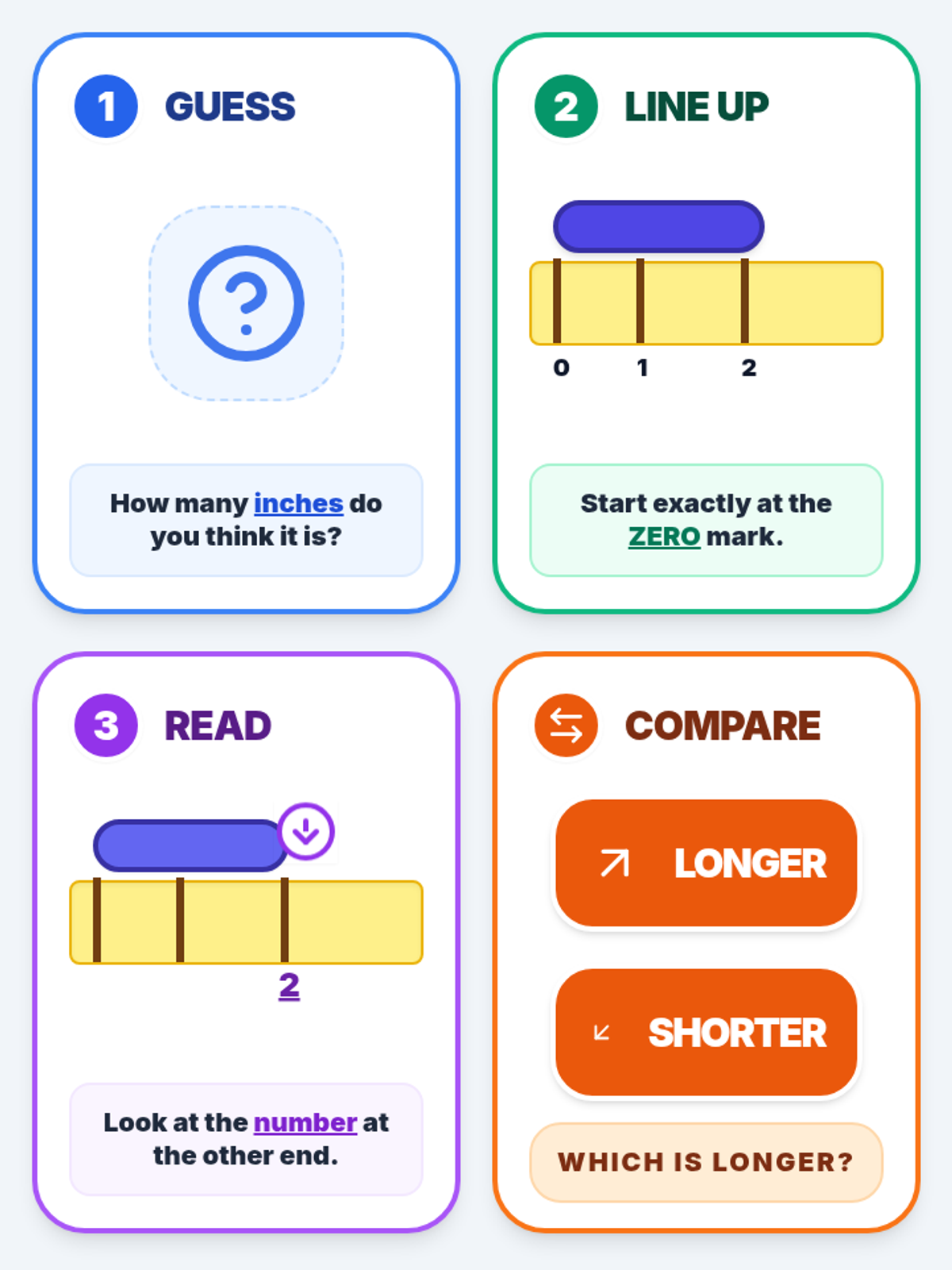
A set of four visual task cards for students to use during measurement activities, reinforcing the step-by-step process of using a ruler.
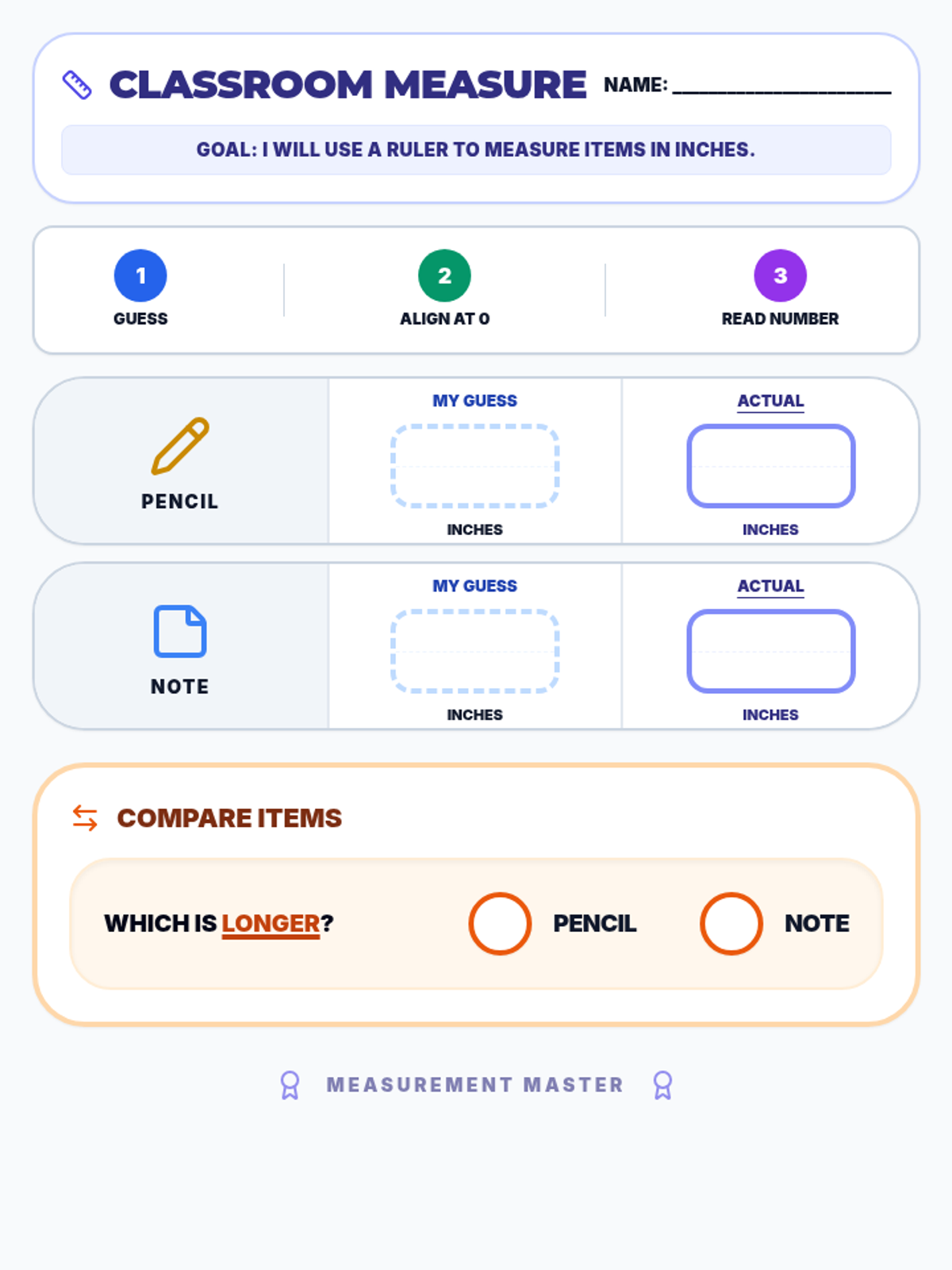
A structured student worksheet for measuring classroom objects with a ruler, featuring estimation boxes, actual measurement fields, and comparison prompts.
Instructional slides for measuring with a ruler, featuring step-by-step visuals for estimating, lining up at zero, and reading inch markings.
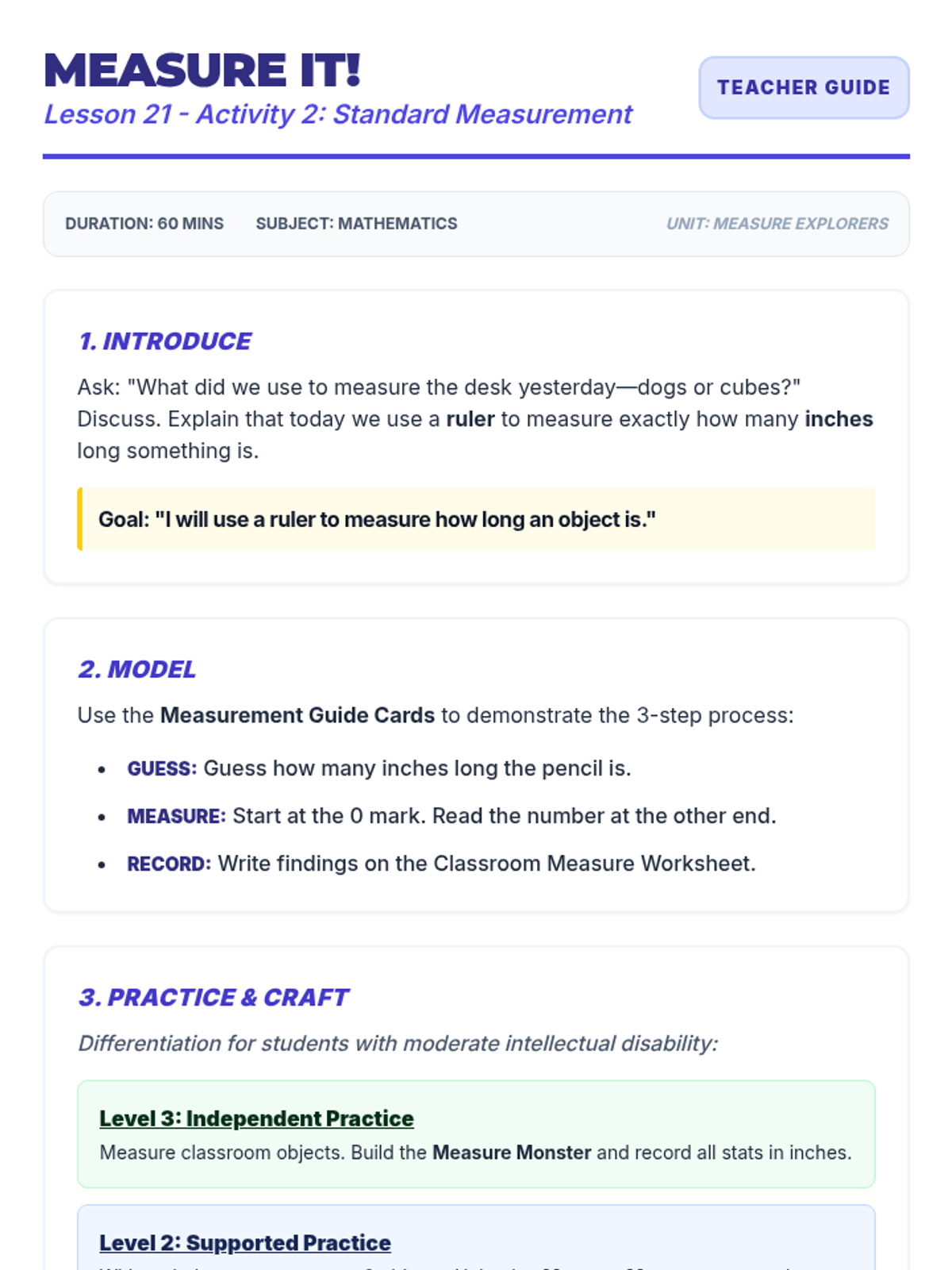
Teacher-facing lesson plan for standard measurement, including tiered support levels for students with moderate intellectual disabilities.