Techniques for brainstorming, collaborative project management, and individual artistic expression. Guides students through the iterative creative process from initial concept to final execution.
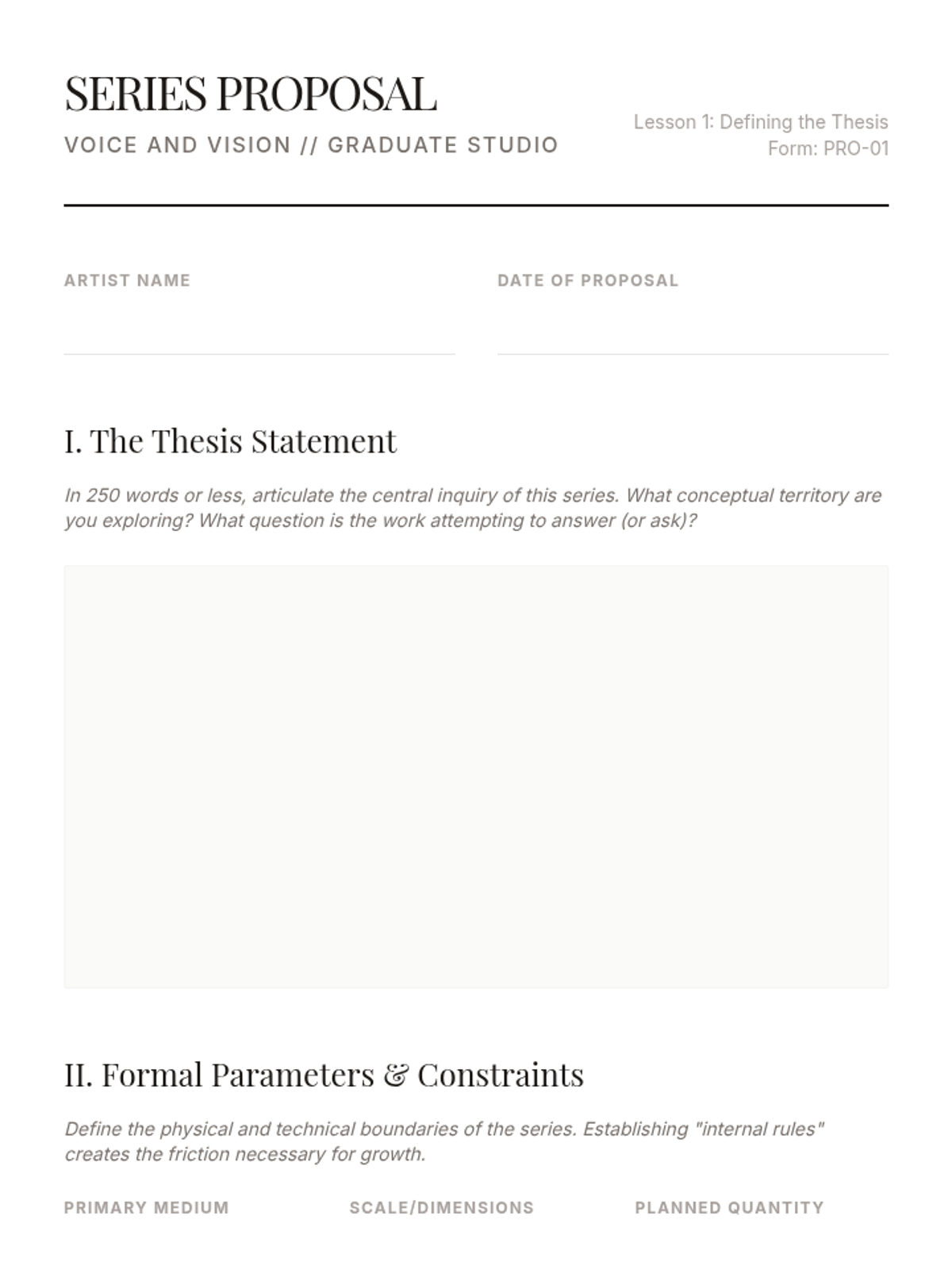
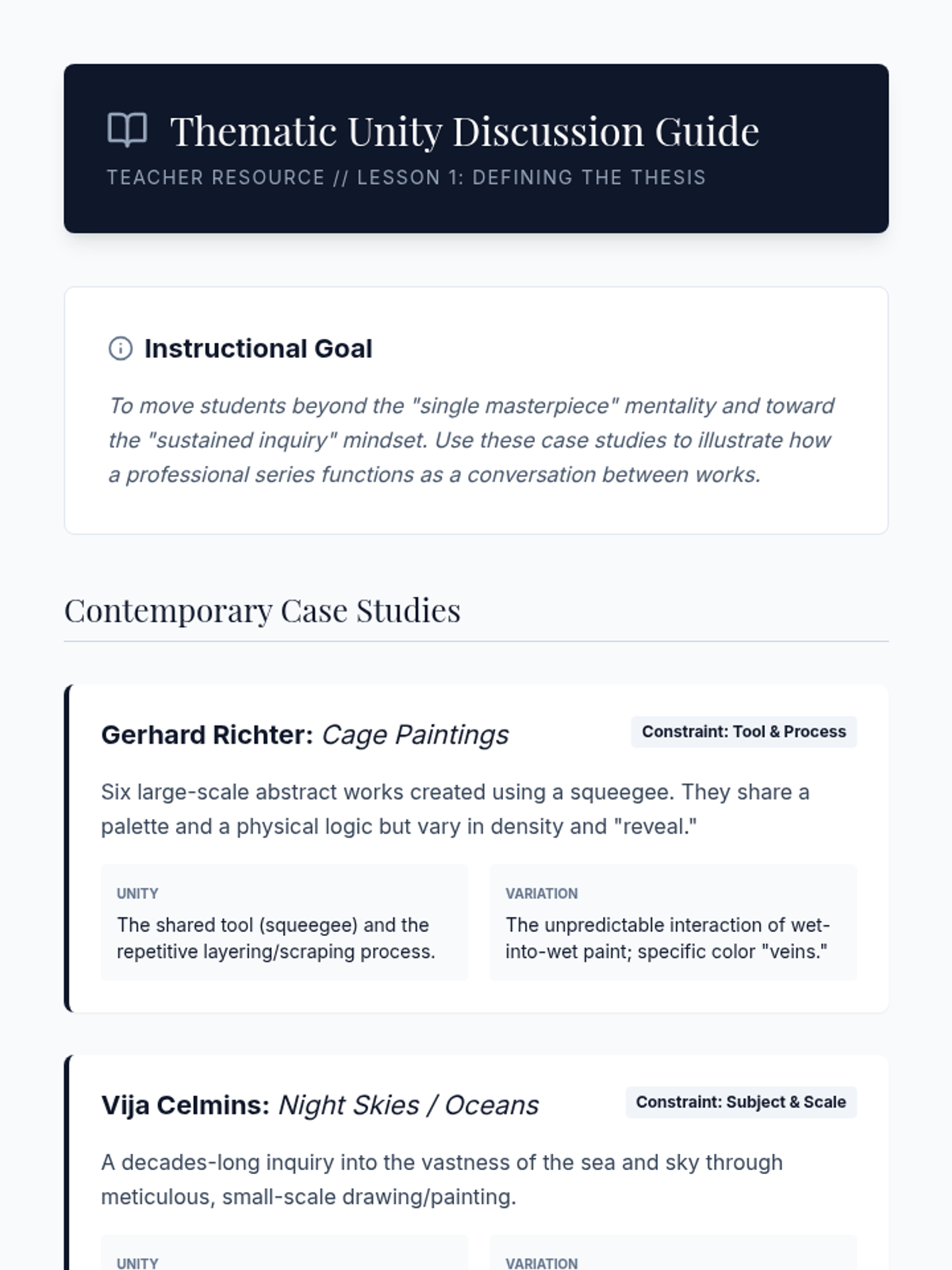
A graduate-level studio sequence focused on the transition from technical exercises to a cohesive, professional body of work. Students develop a thematic series, tackle the challenges of large-scale execution, engage in rigorous formal critiques, and curate a final presentation.
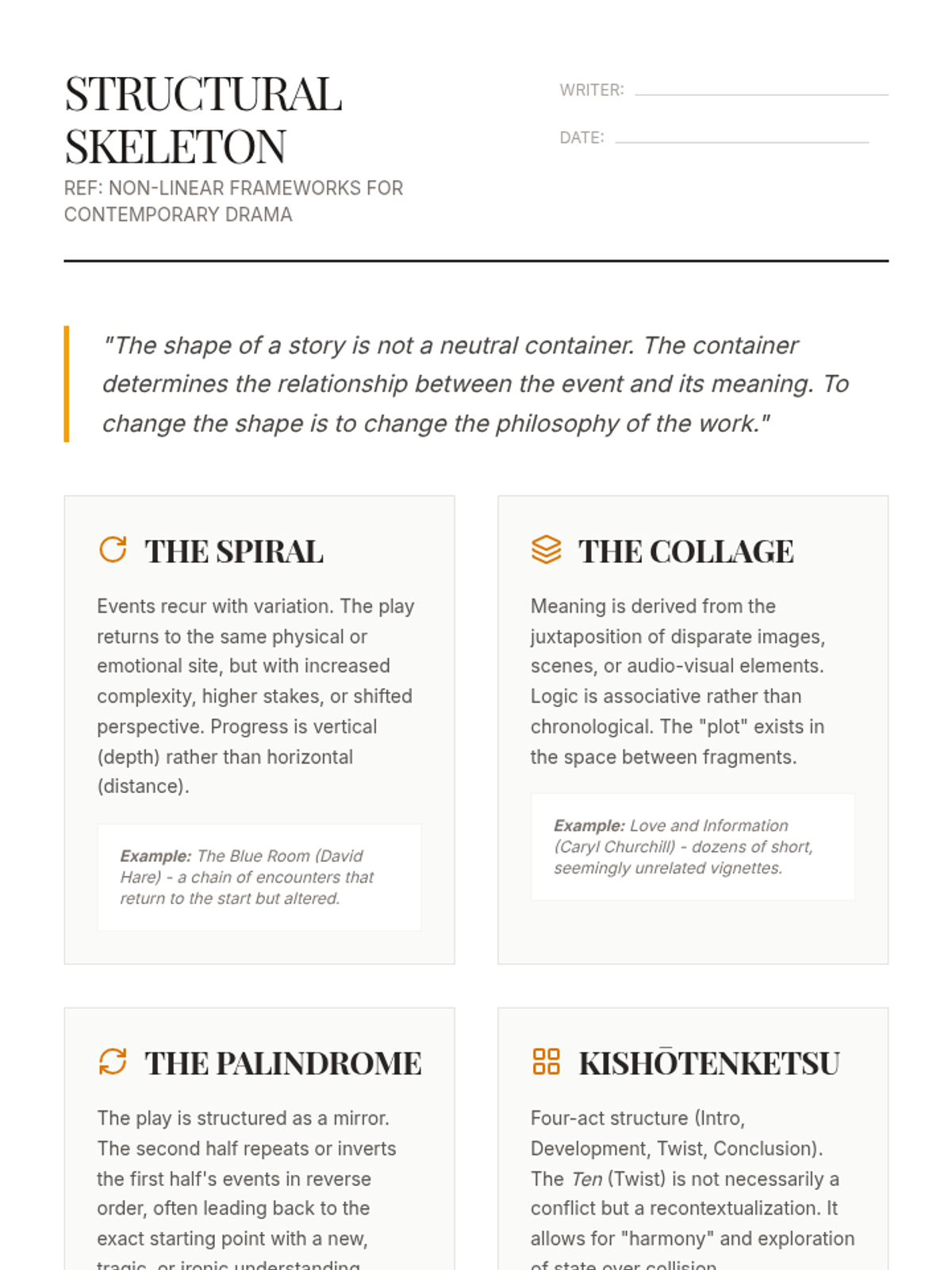
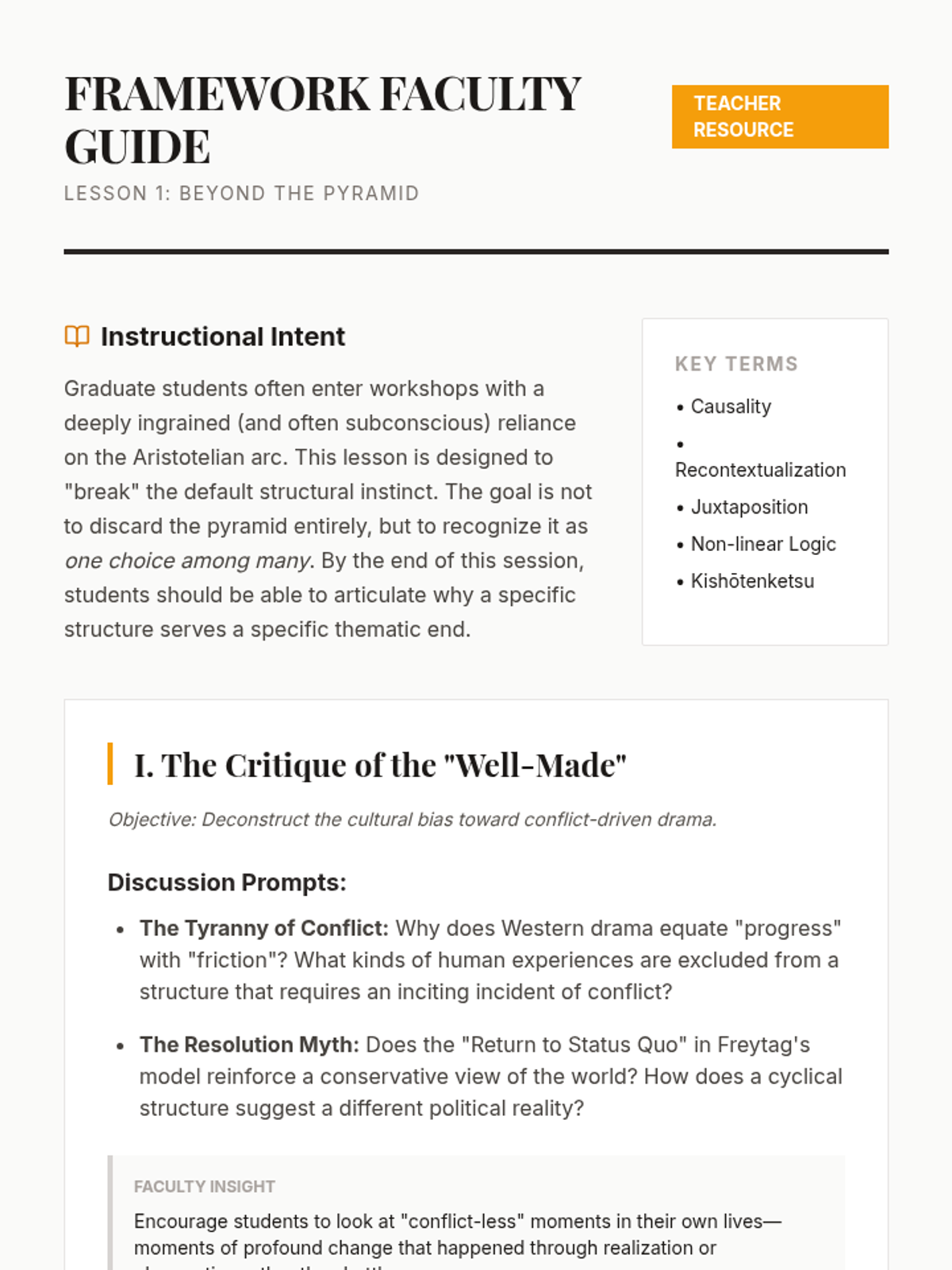
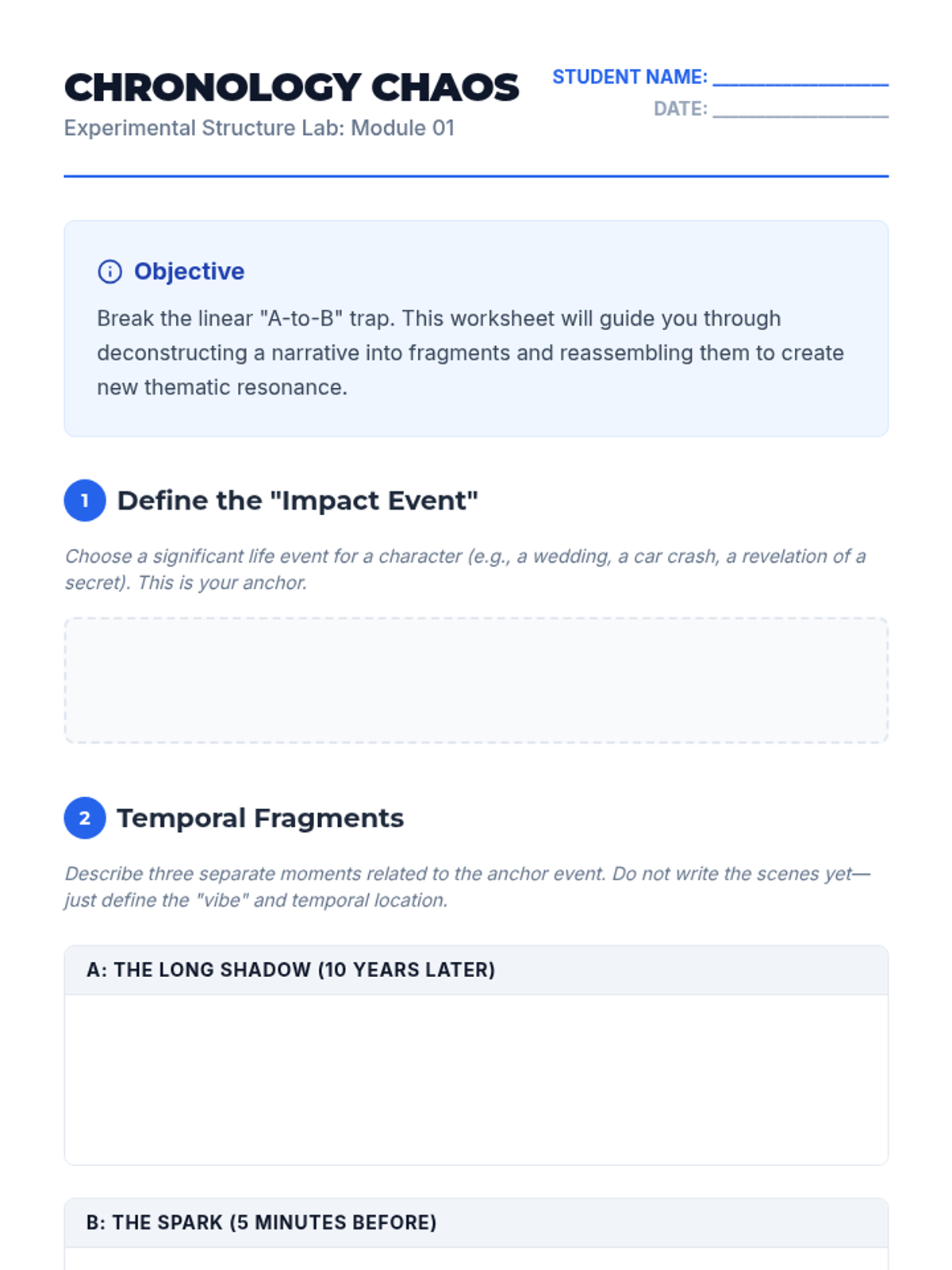
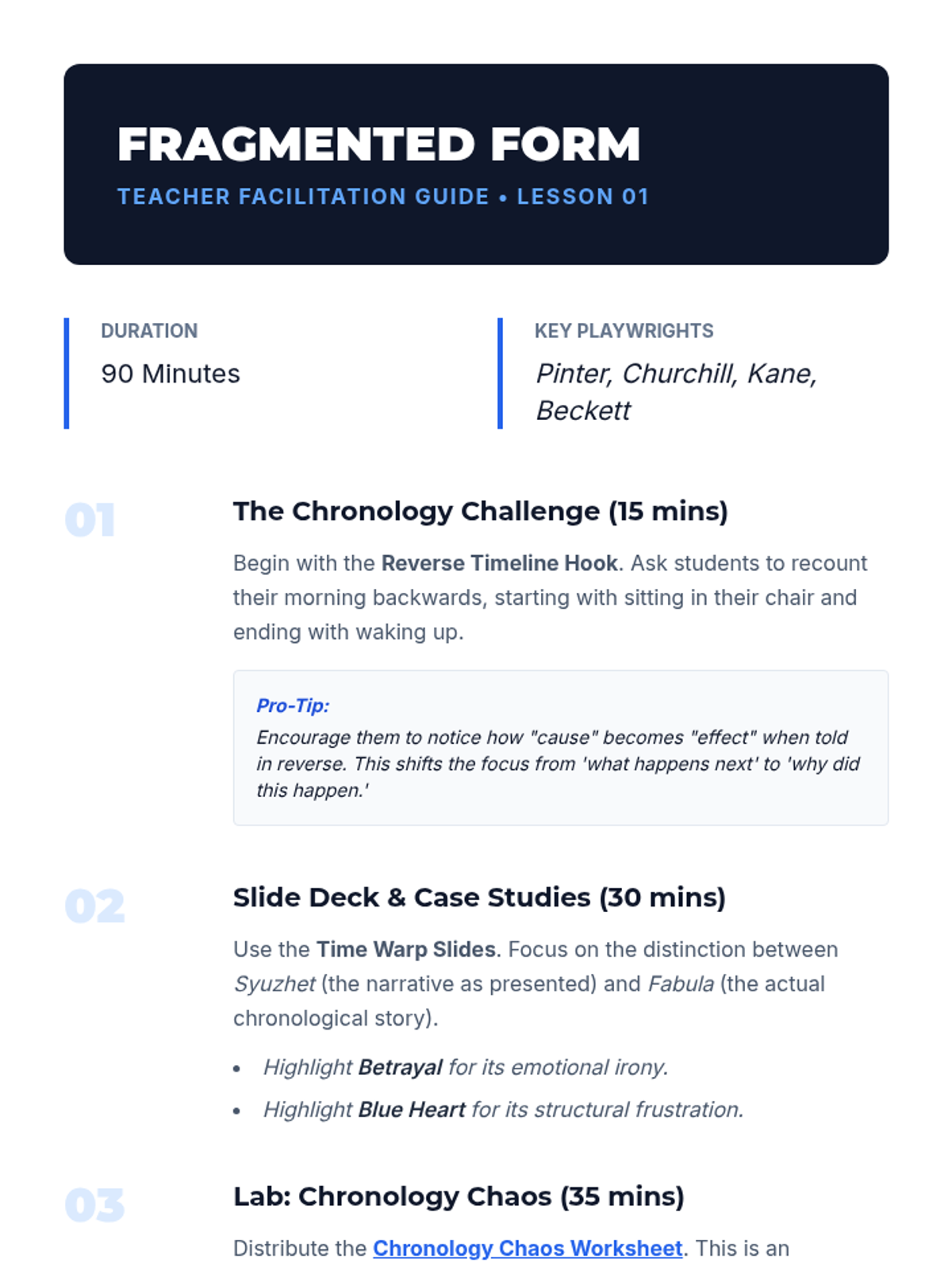
An advanced playwriting module for graduate students focusing on non-linear, fragmented, and experimental dramatic structures. Students interrogate traditional narrative shapes and develop a comprehensive structural blueprint for a full-length experimental work.
An advanced playwriting sequence for undergraduate students focusing on non-traditional structures, including non-linear time, verbatim theater, absurdism, meta-theatricality, and multimedia integration. Students will move from theoretical analysis of experimental playwrights to creating their own rule-breaking scripts.
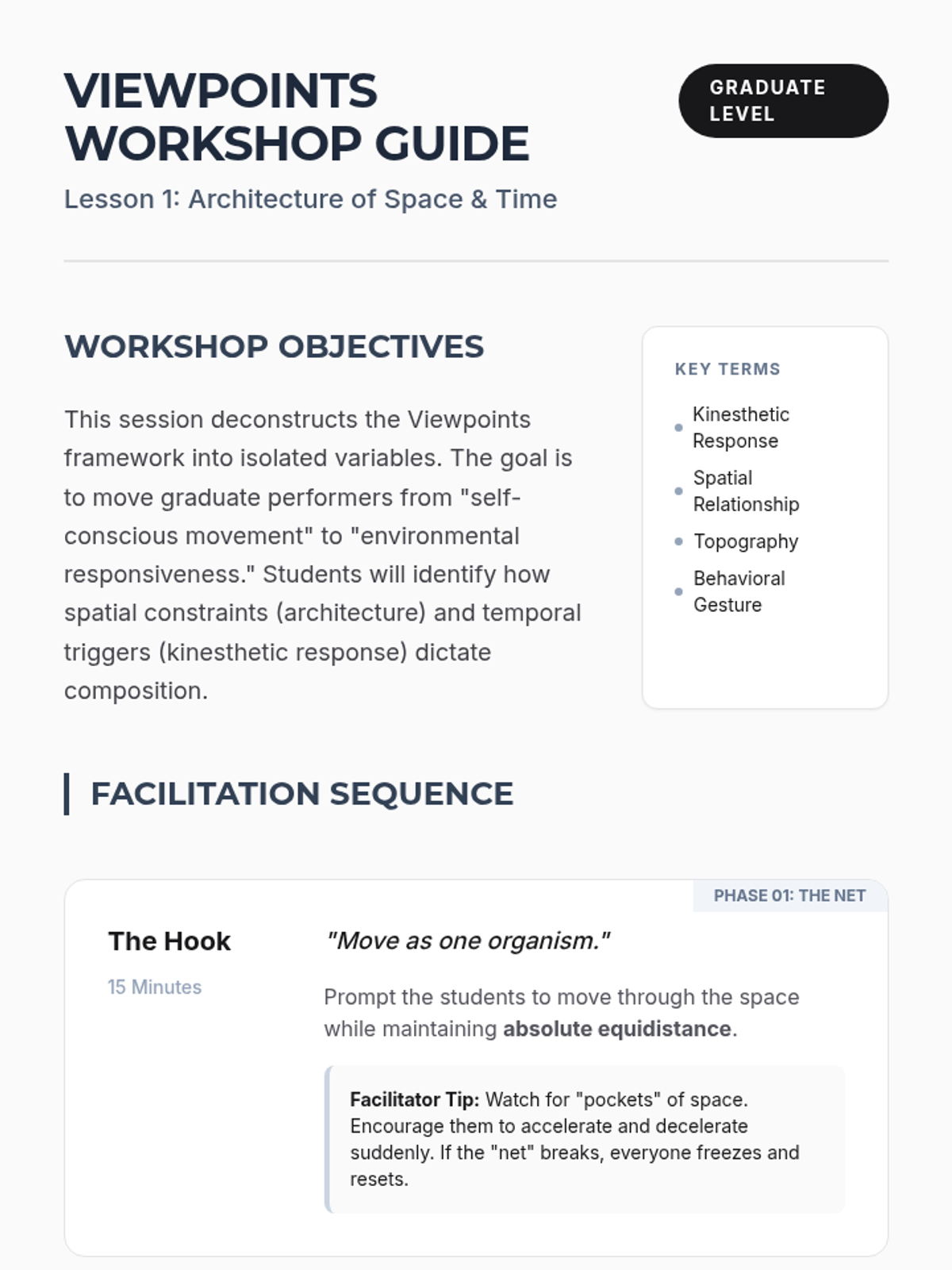
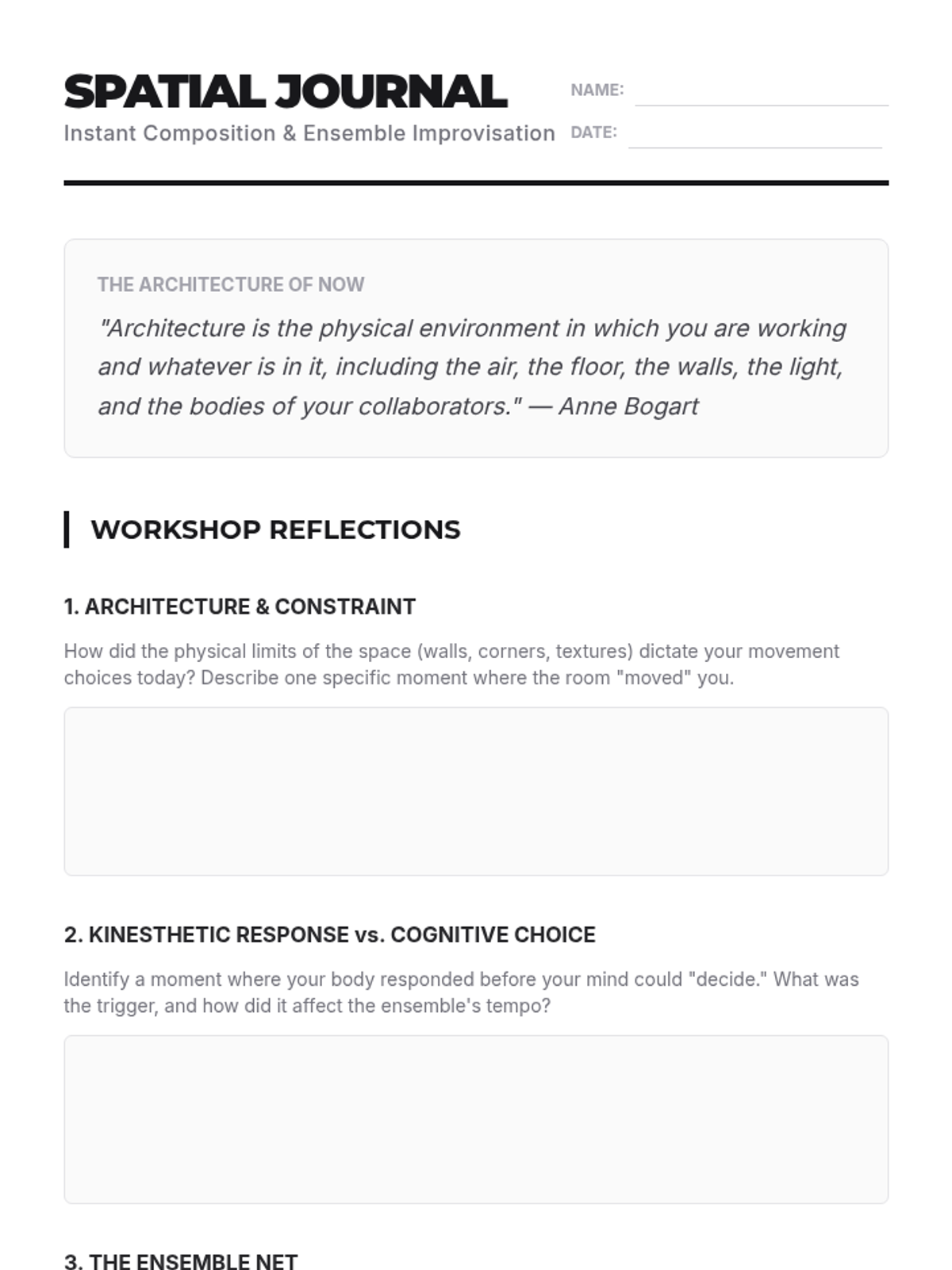
A high-level graduate sequence exploring the transition from solo improvisation to complex ensemble instant composition, utilizing Viewpoints, Contact Improvisation, and indeterminate scoring.
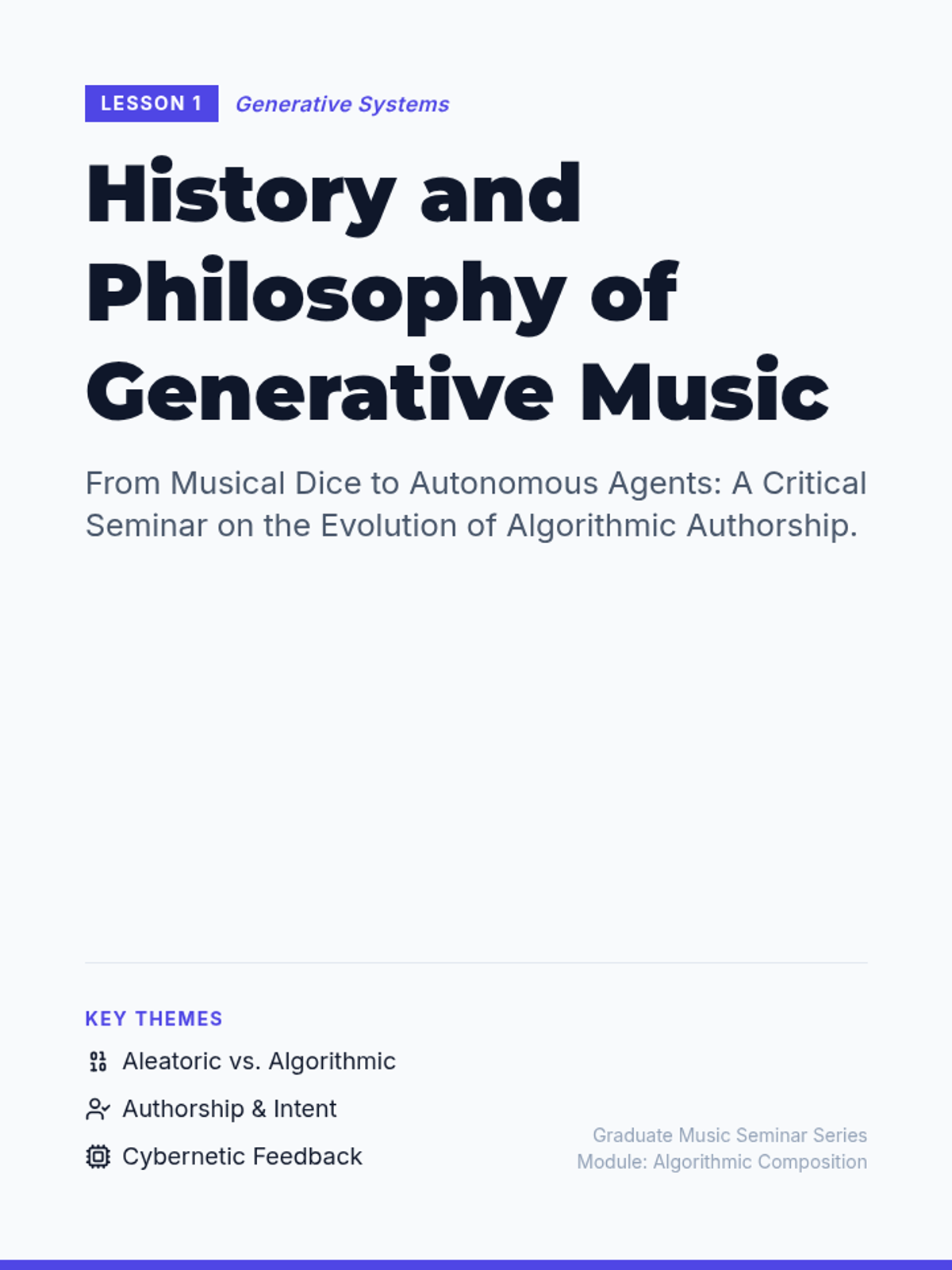
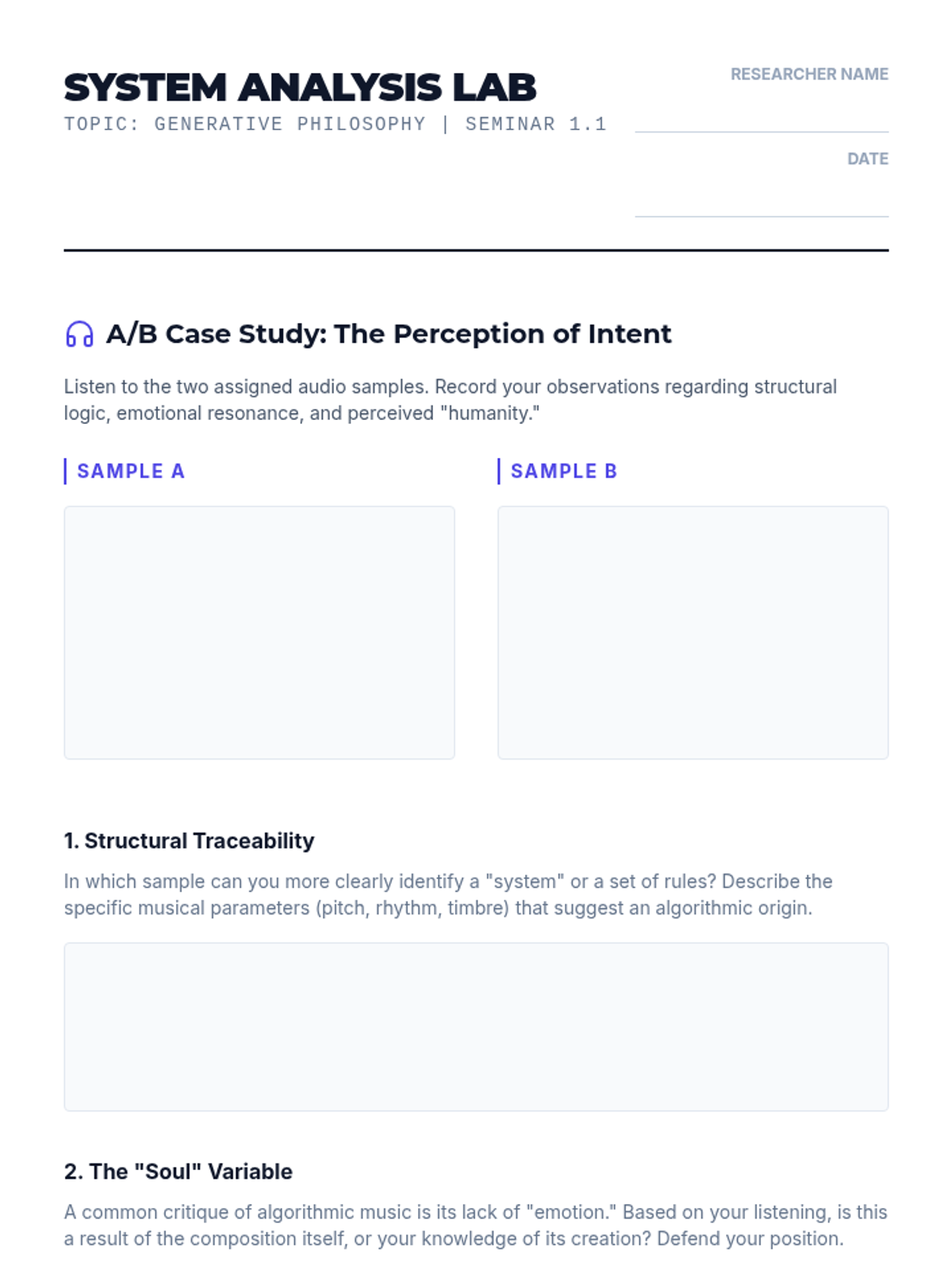
An advanced exploration of algorithmic music composition for graduate students, covering historical foundations, stochastic logic, feedback systems, data sonification, and generative installations.
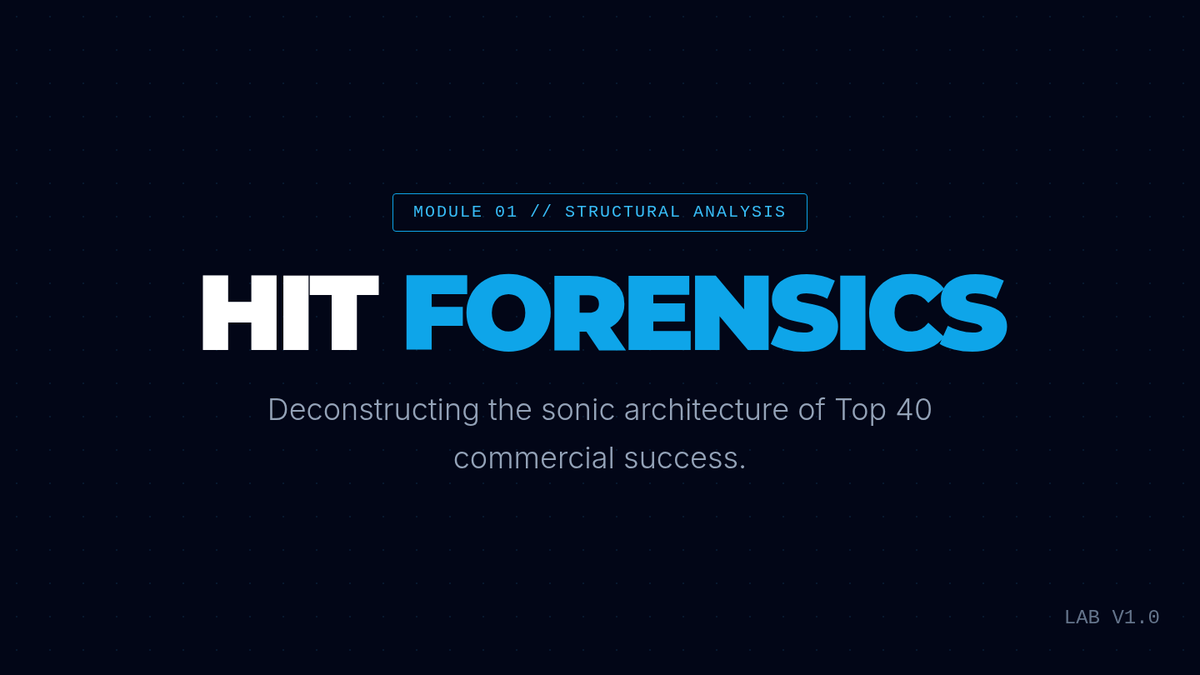
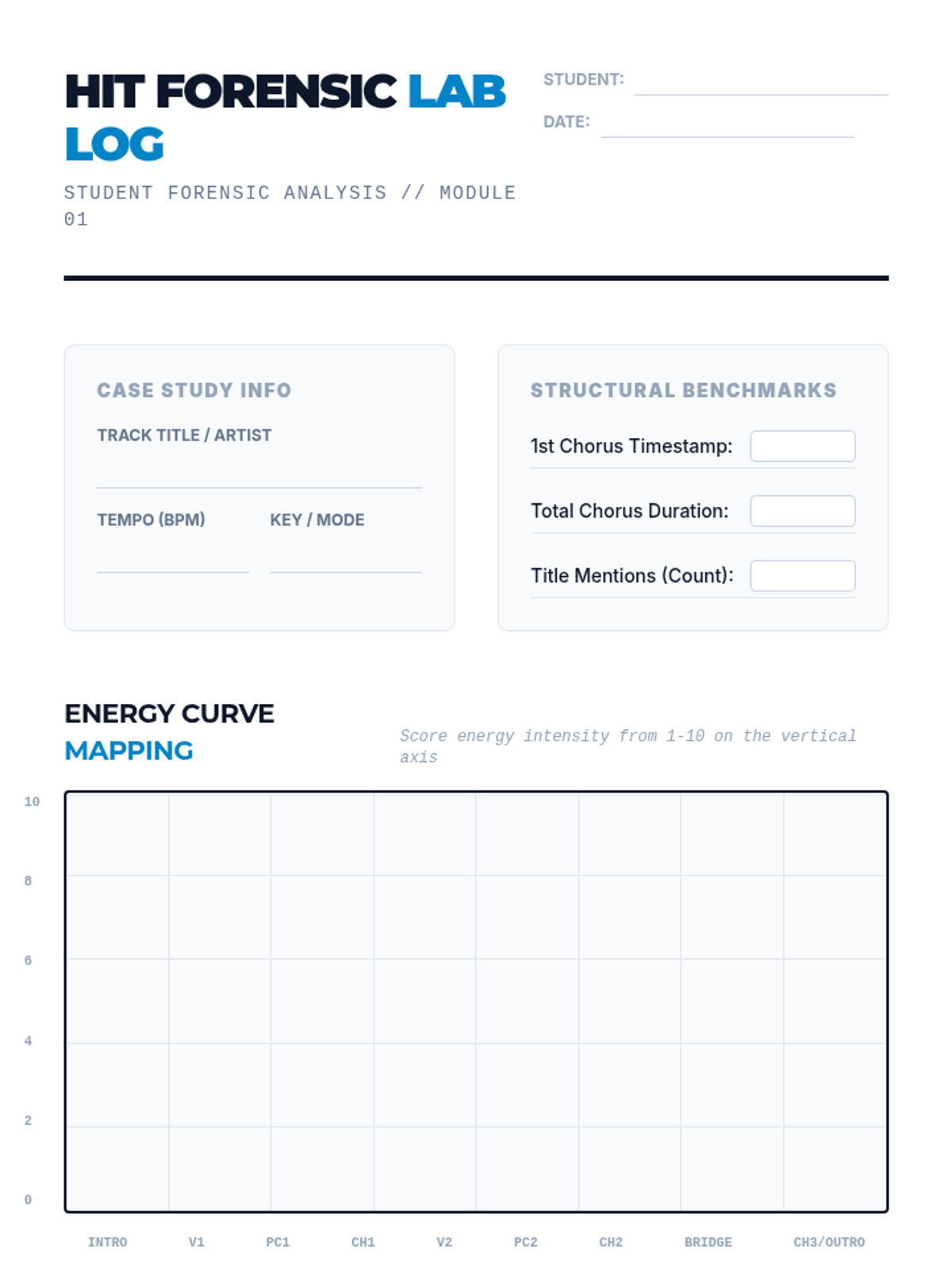
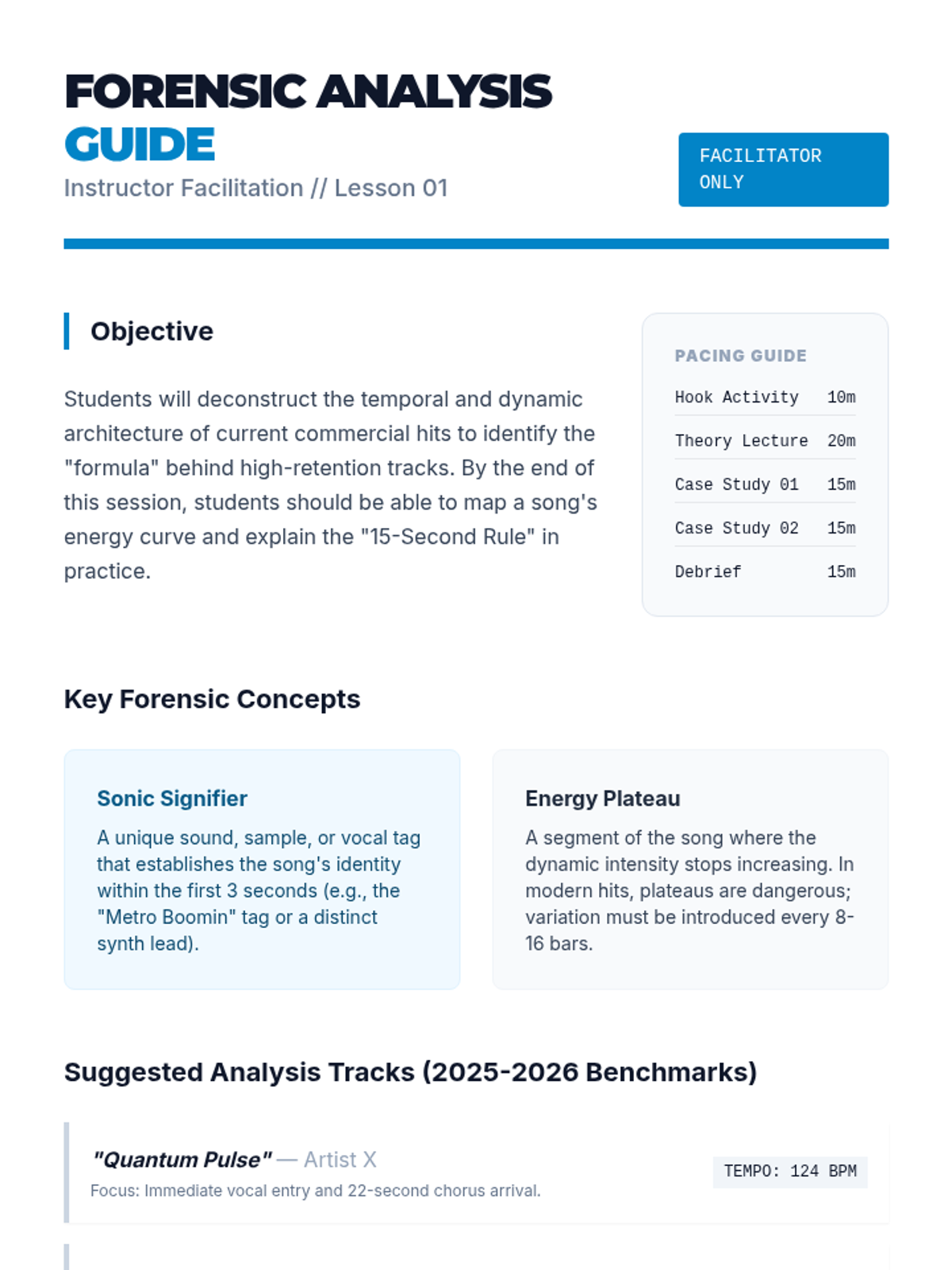
A high-level analysis of modern commercial music, focusing on melodic math, production-as-composition, and professional songwriting camp workflows for graduate students.
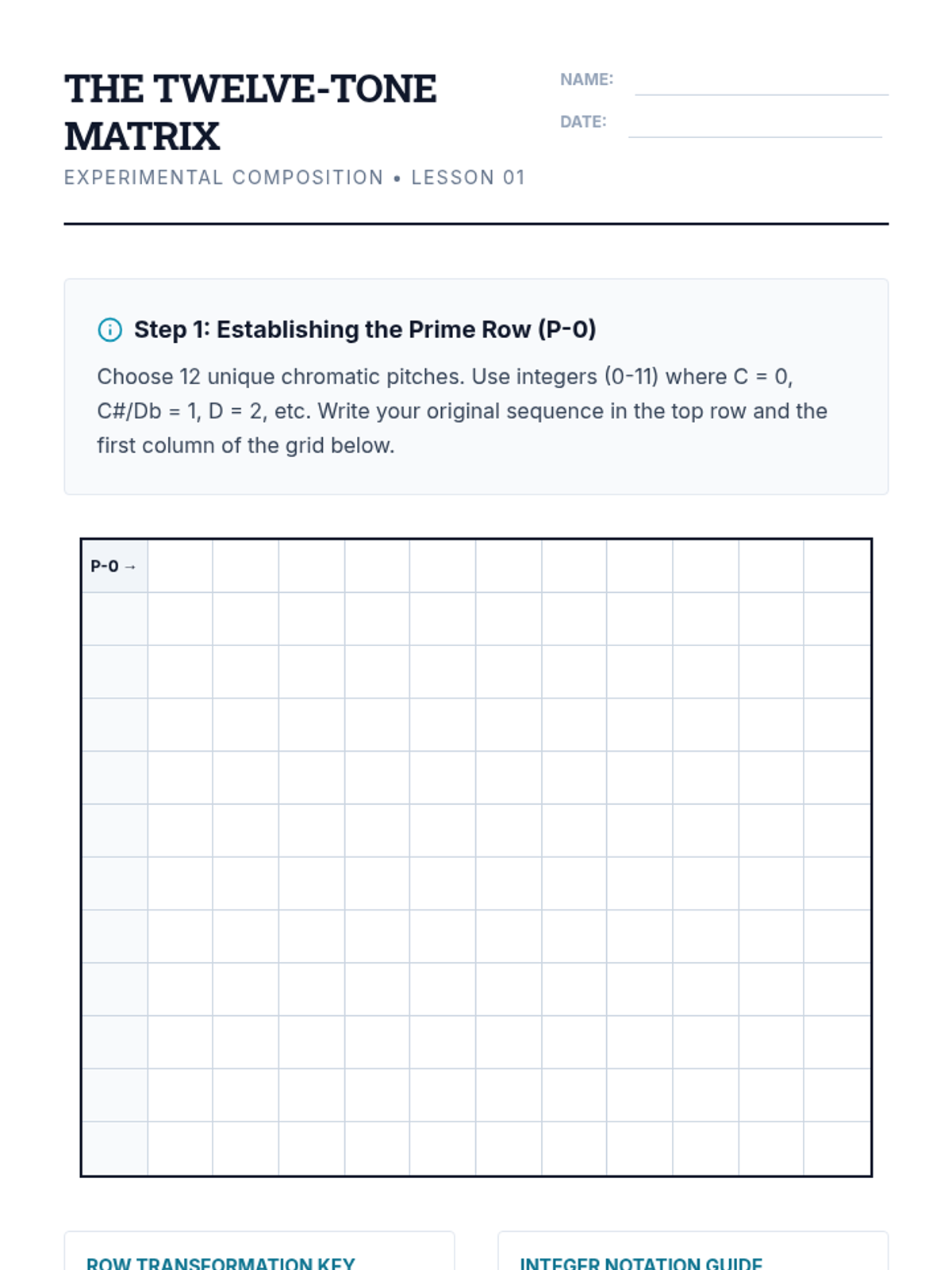
A deep dive into 20th and 21st-century avant-garde composition, exploring atonality, chance music, timbral exploration, and graphic notation for undergraduate music students.
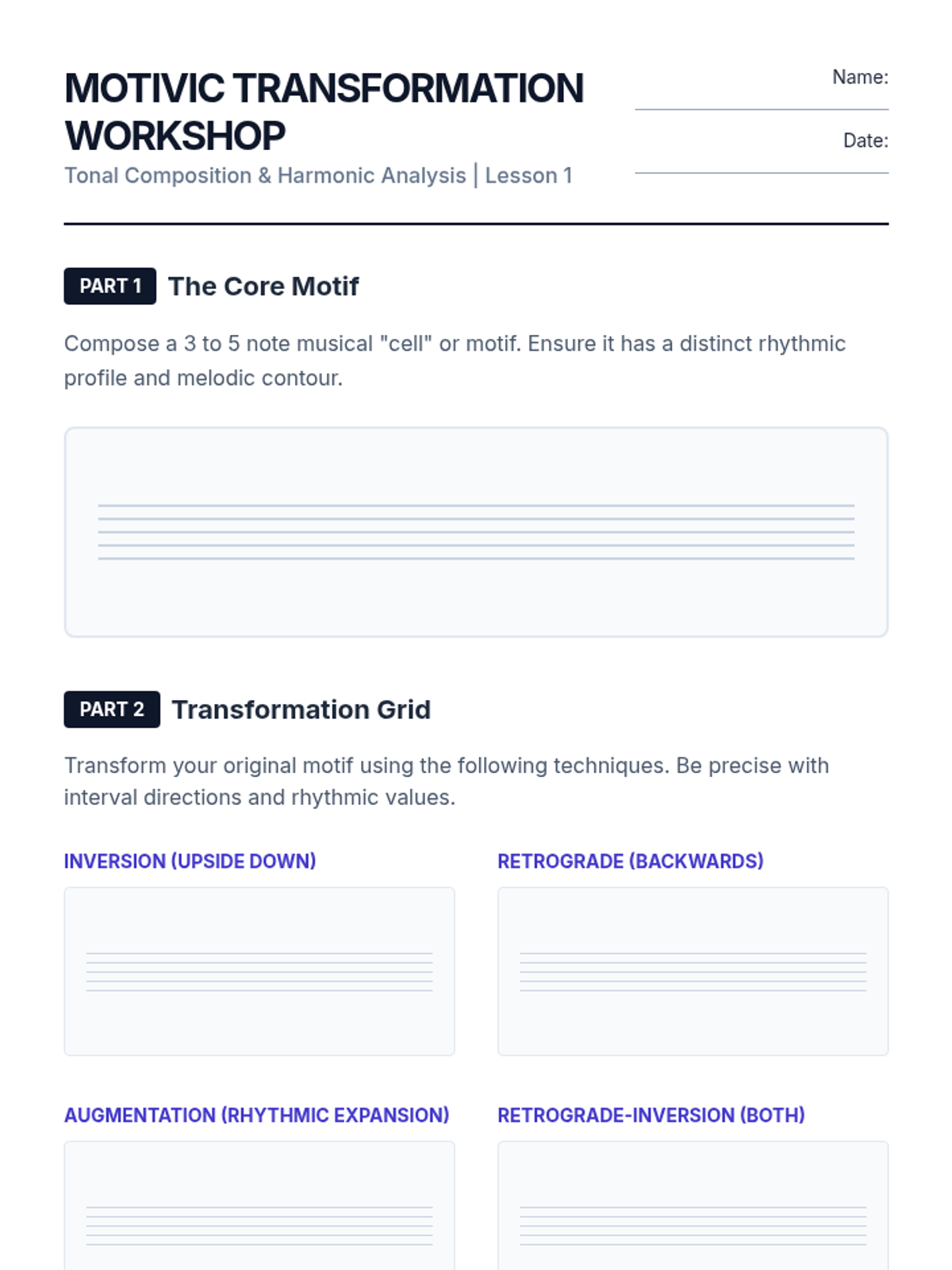
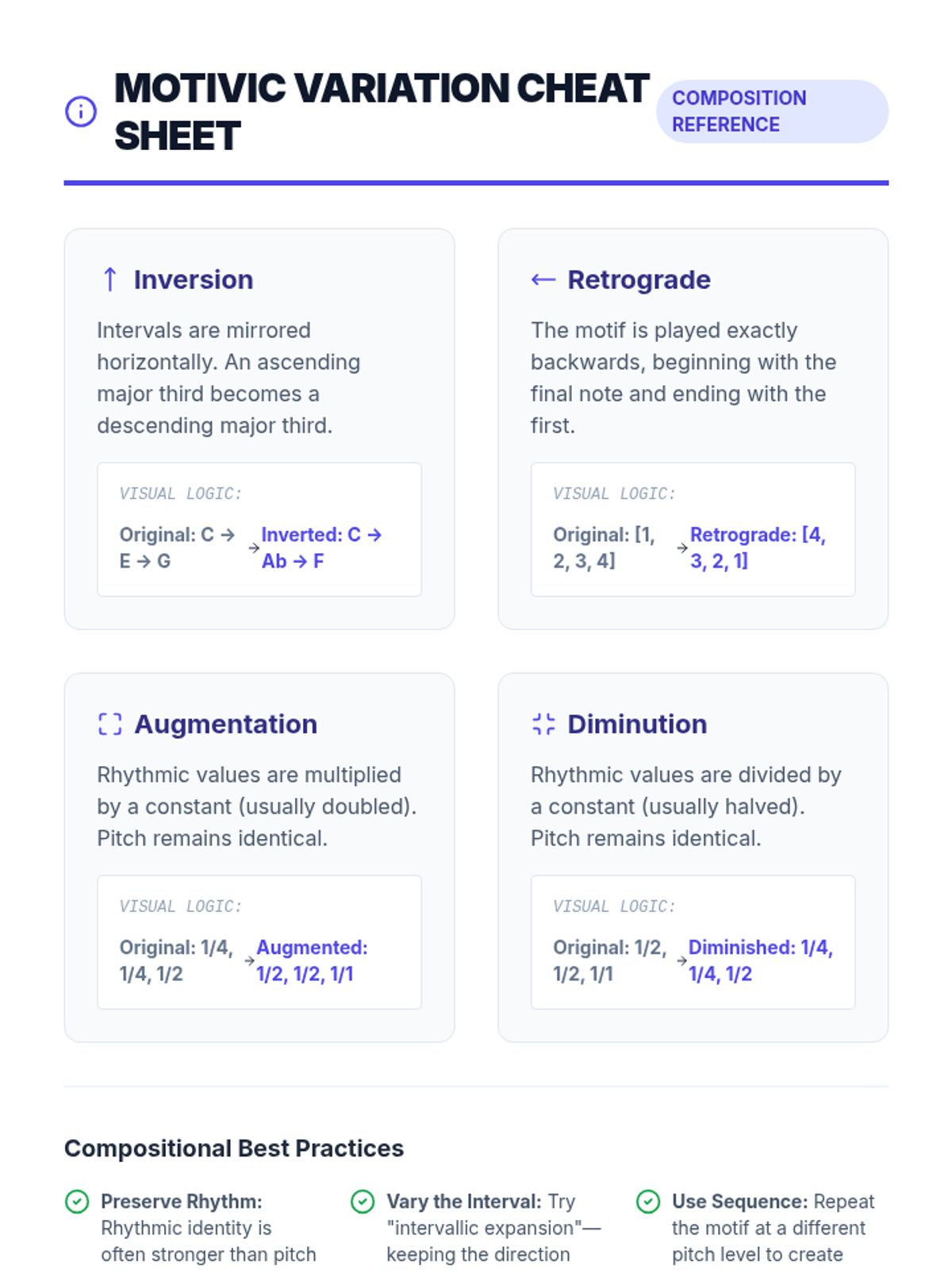
An intensive undergraduate sequence exploring the theoretical foundations of Western tonal composition, focusing on motivic development, advanced voice leading, chromatic harmony, and polyphonic textures, culminating in a chamber ensemble orchestration.
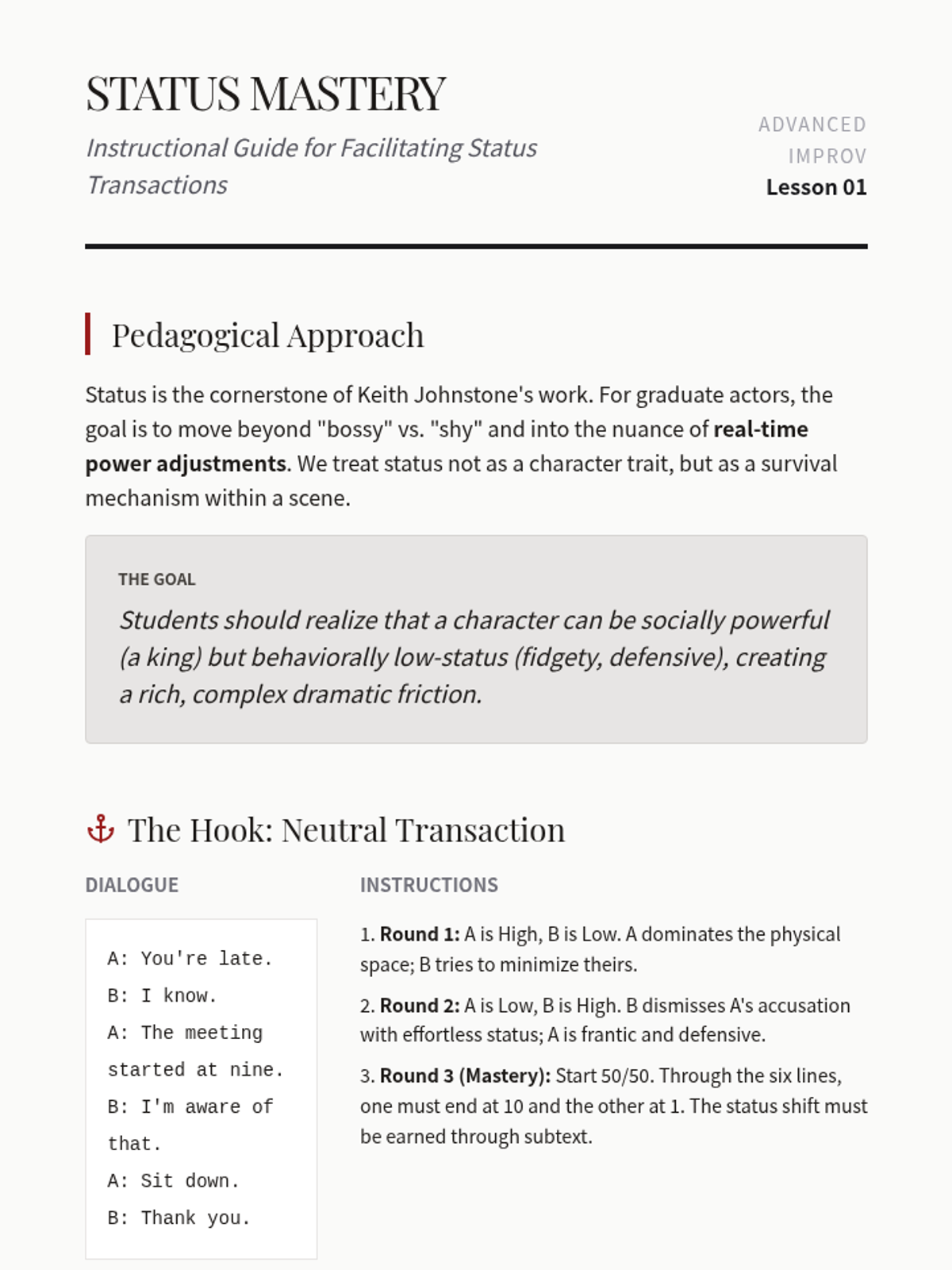
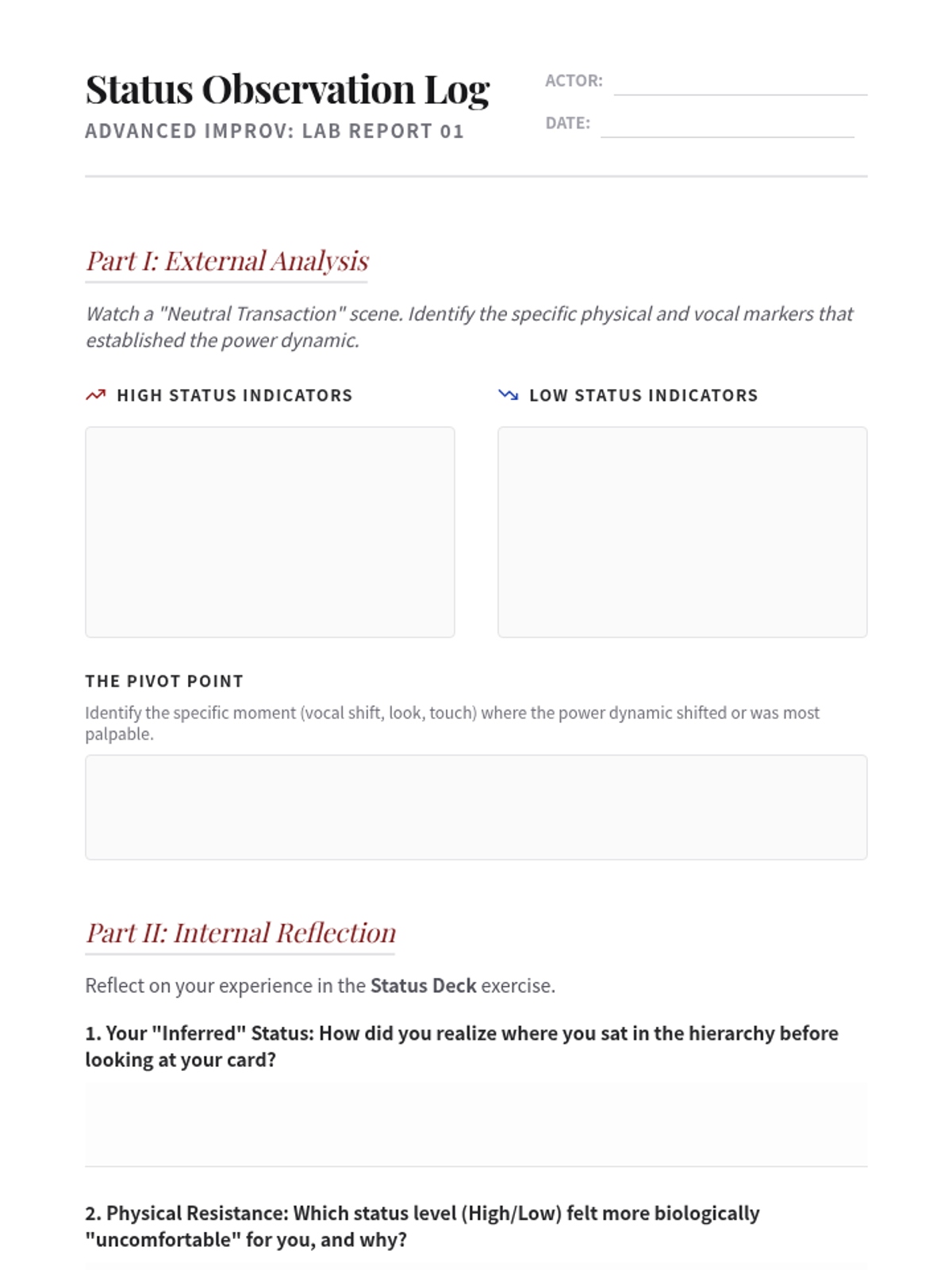
A graduate-level exploration of improvisation as a generative tool for devising original theatrical work. Students progress from micro-level status transactions to macro-level long-form structures, ultimately refining improvised moments into repeatable dramatic scripts.
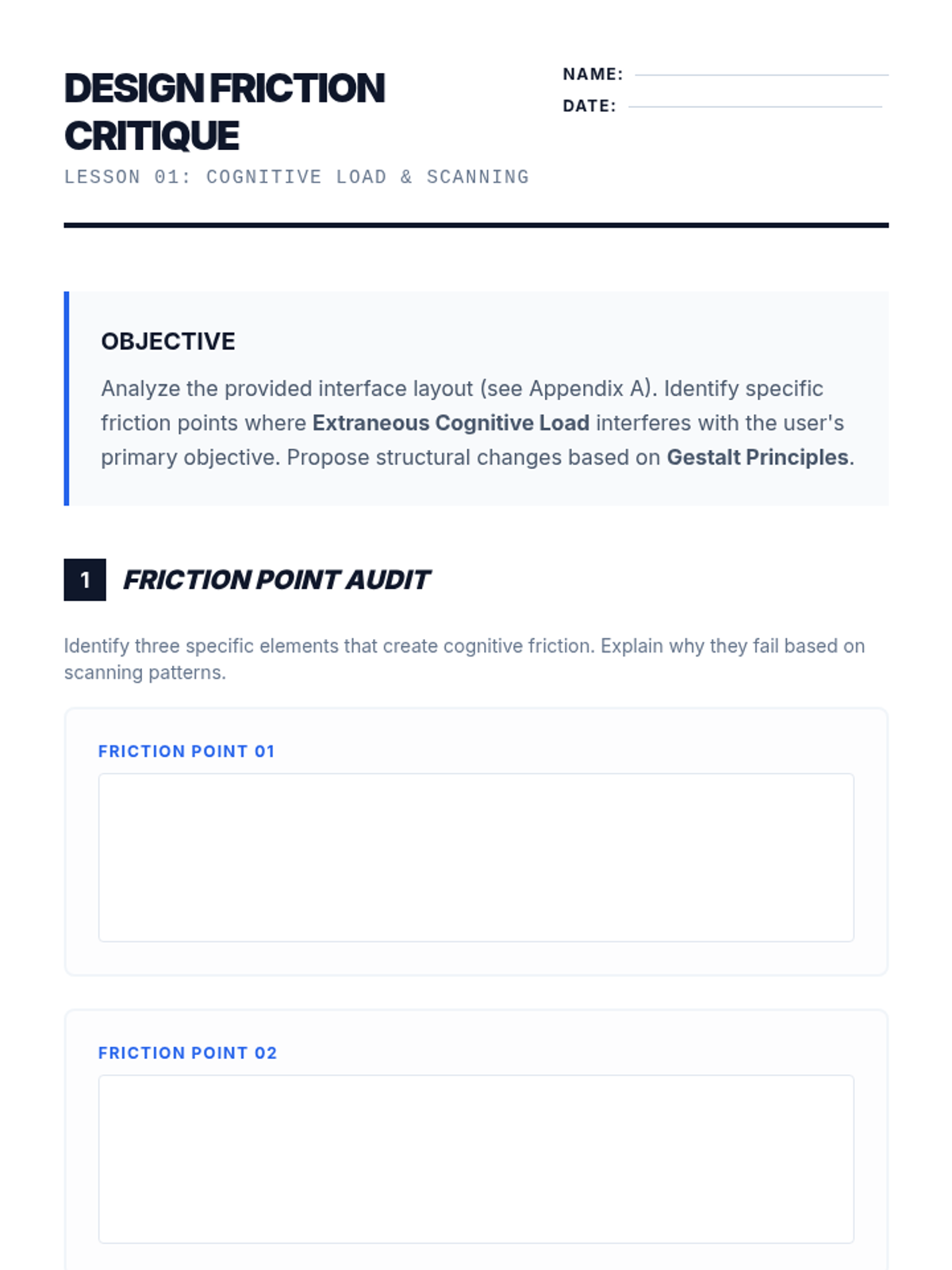
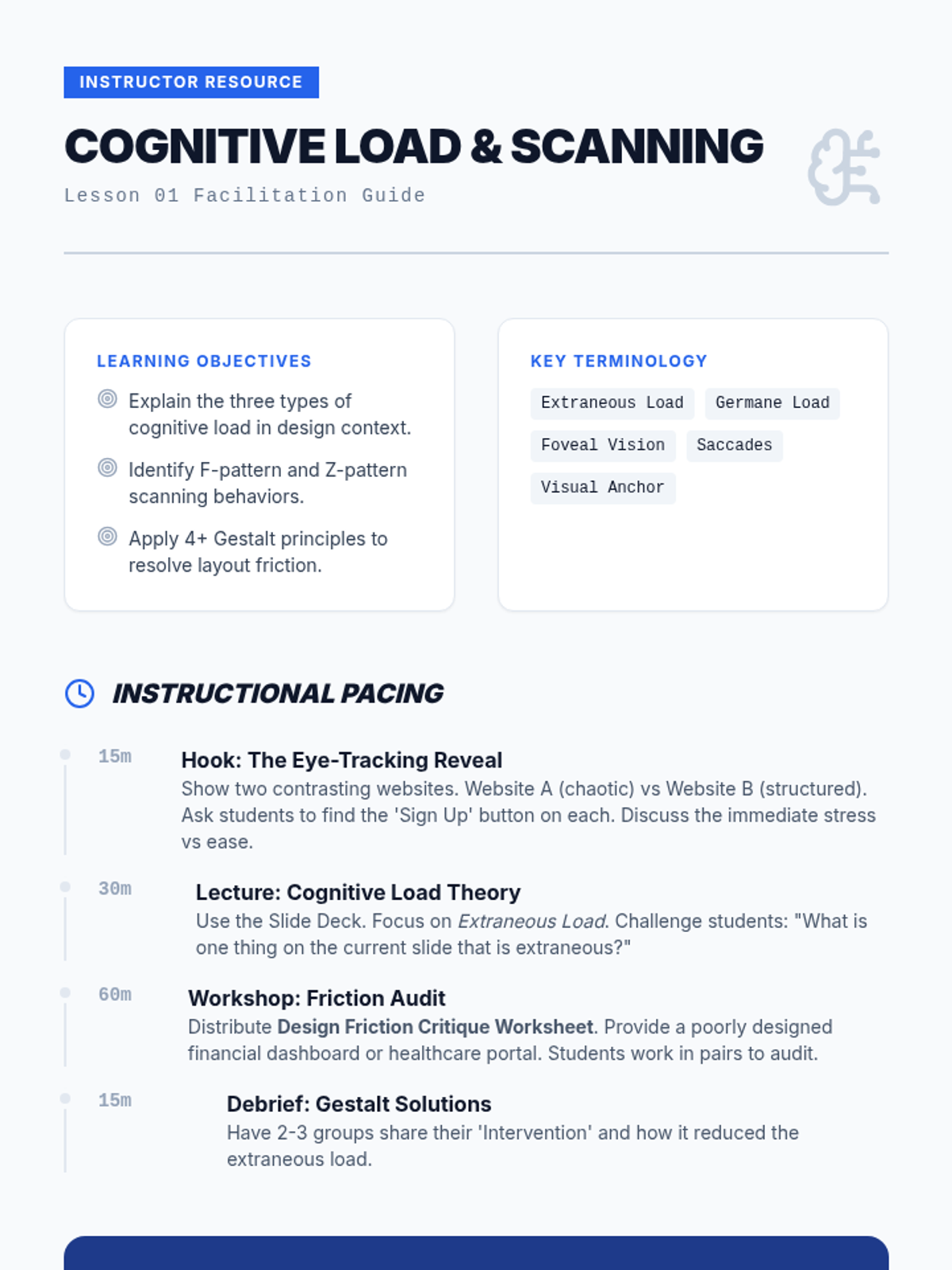
A graduate-level sequence exploring visual hierarchy, information design, and cognitive psychology. Students learn to reduce cognitive load through data visualization, accessibility standards, and wayfinding systems.
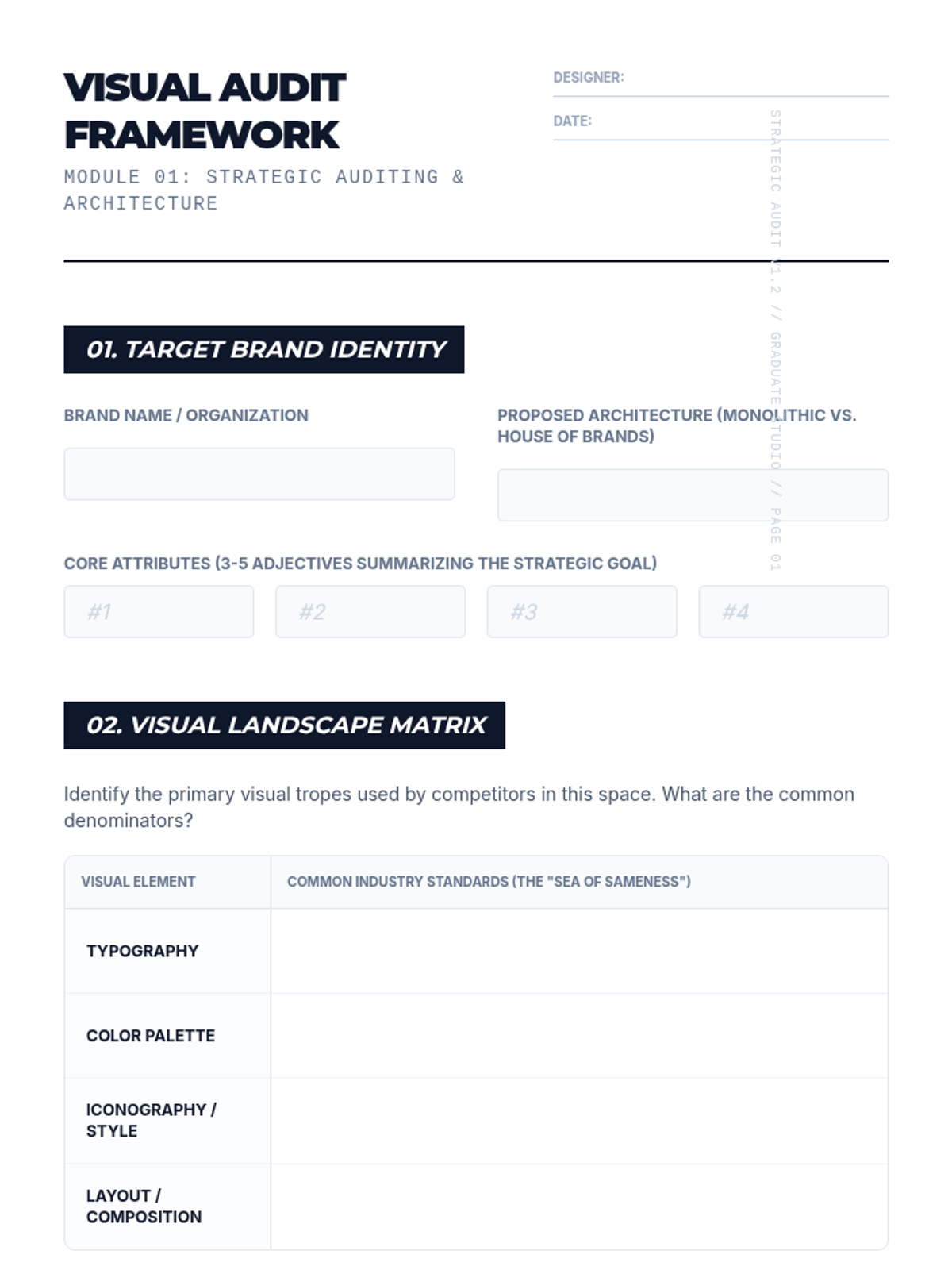
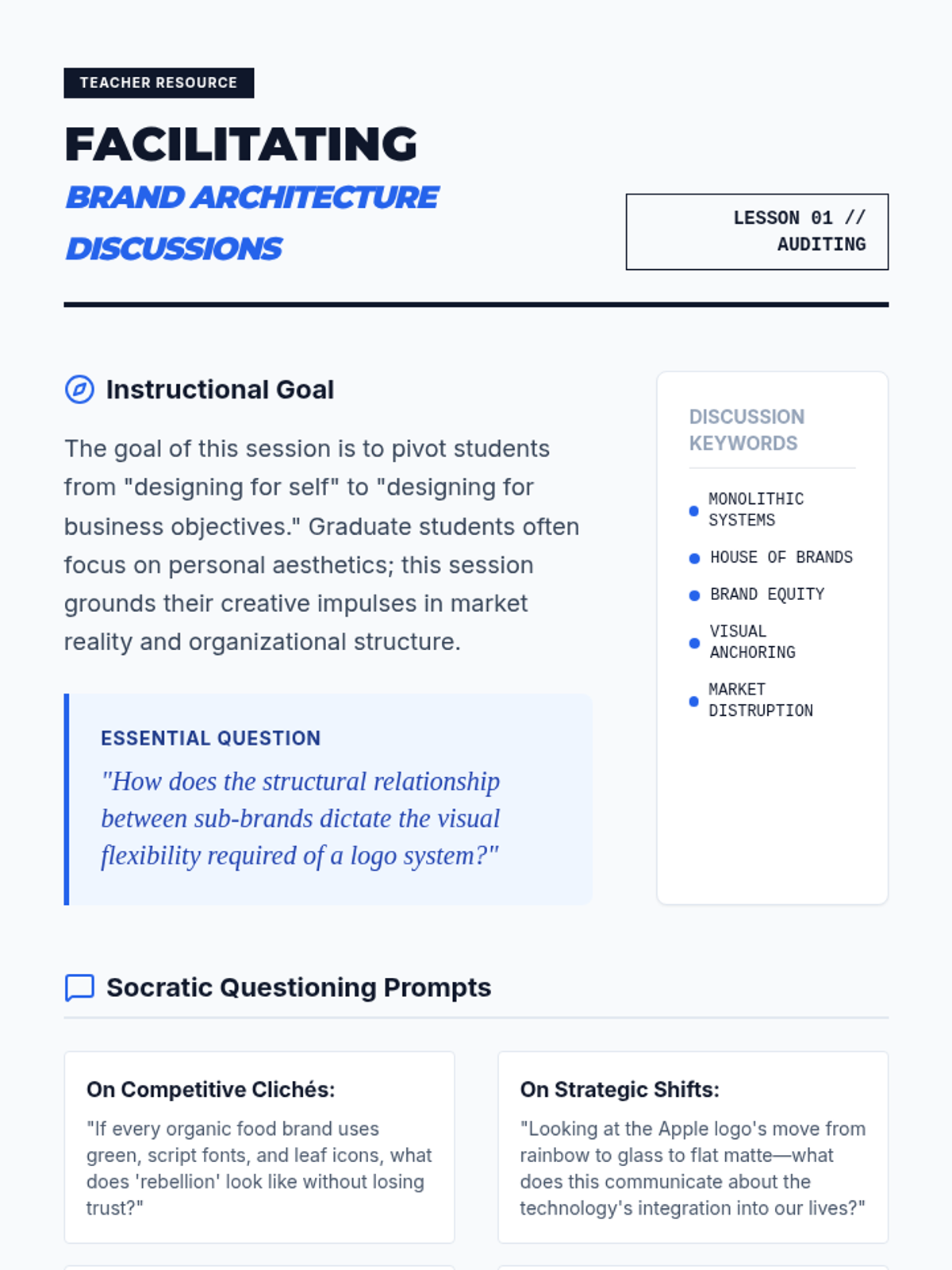
This graduate-level sequence explores the strategic intersection of visual design and brand identity, moving from surface-level aesthetics to deep strategic systems. Students learn to translate organizational values into scalable visual assets, culminating in the creation of a professional brand standards manual.
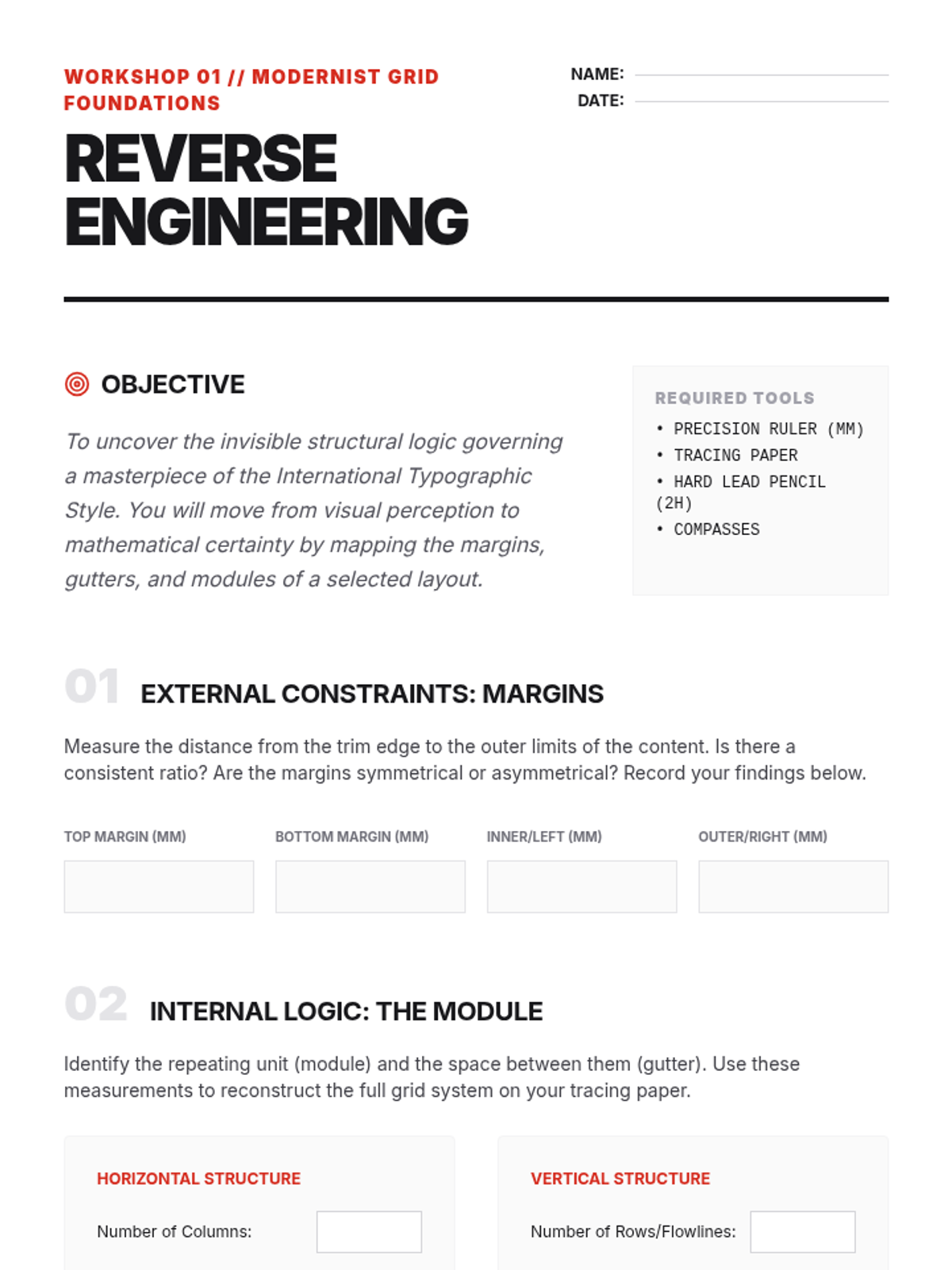
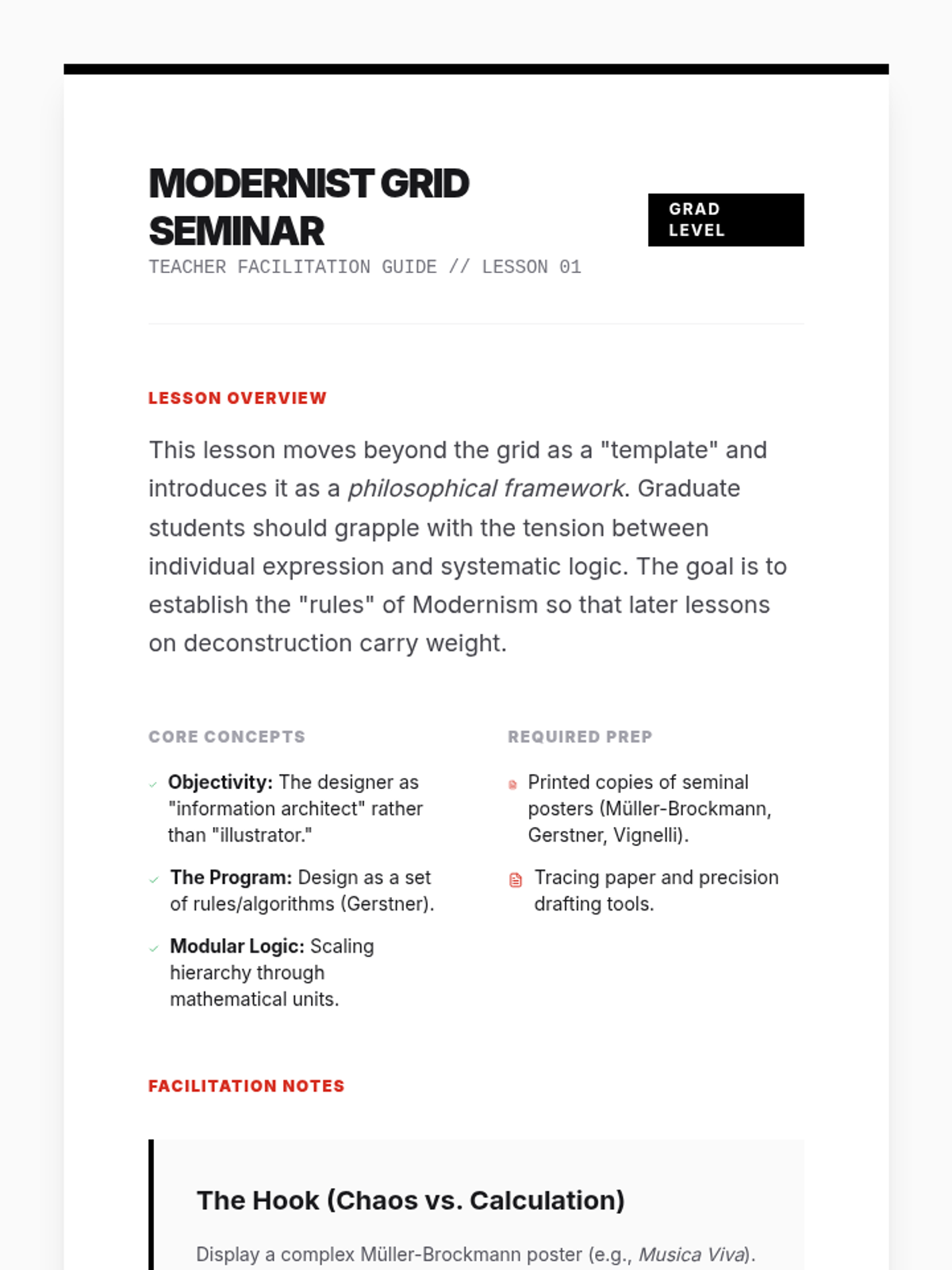
An advanced exploration of typographic systems, from the mathematical precision of Modernist grid structures to the expressive potential of post-modern deconstruction and kinetic typography. Students master micro-typography, complex hierarchy, and structural integrity in both print and digital environments.
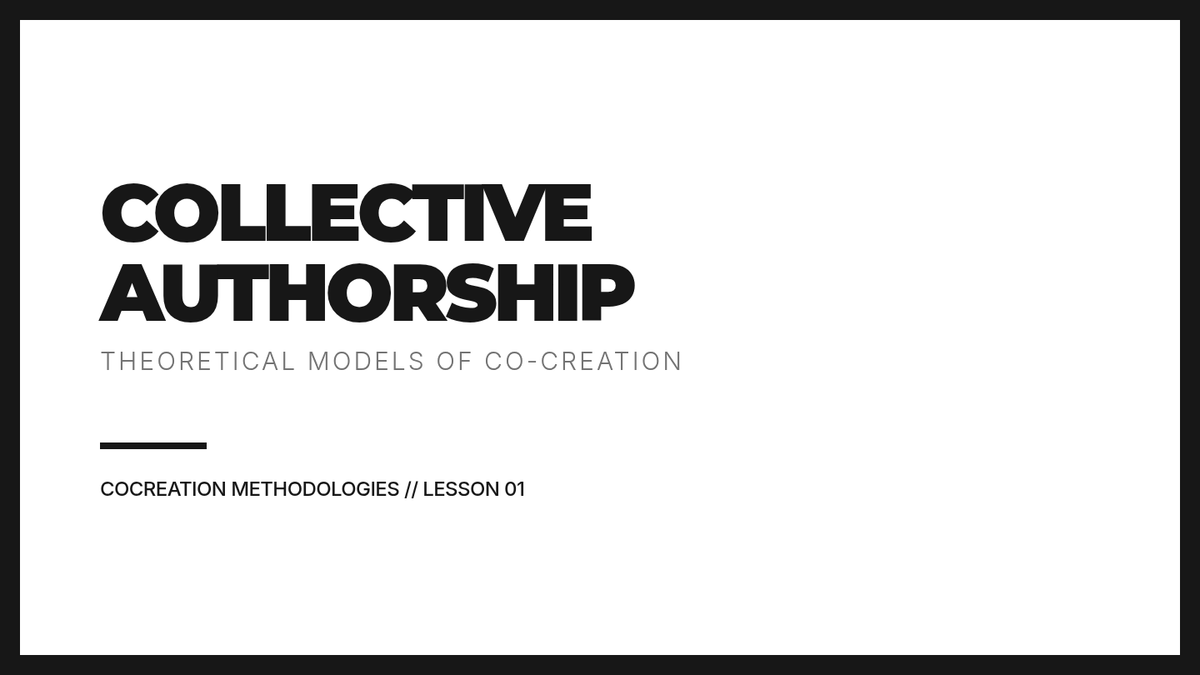
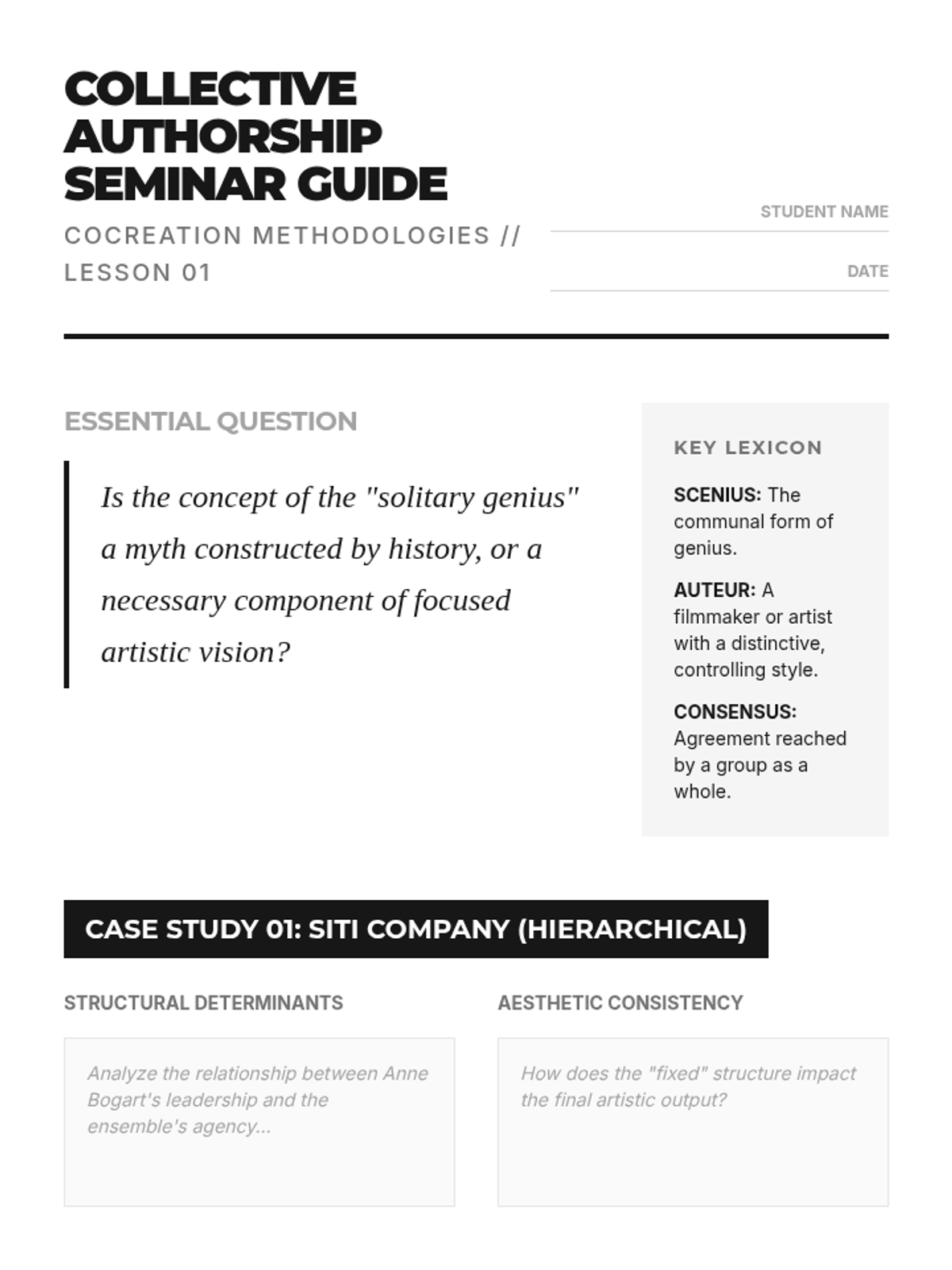
An advanced exploration of collective artistic creation for graduate students, moving from theoretical models of authorship to practical strategies for managing interpersonal friction and structured feedback in professional creative ensembles.
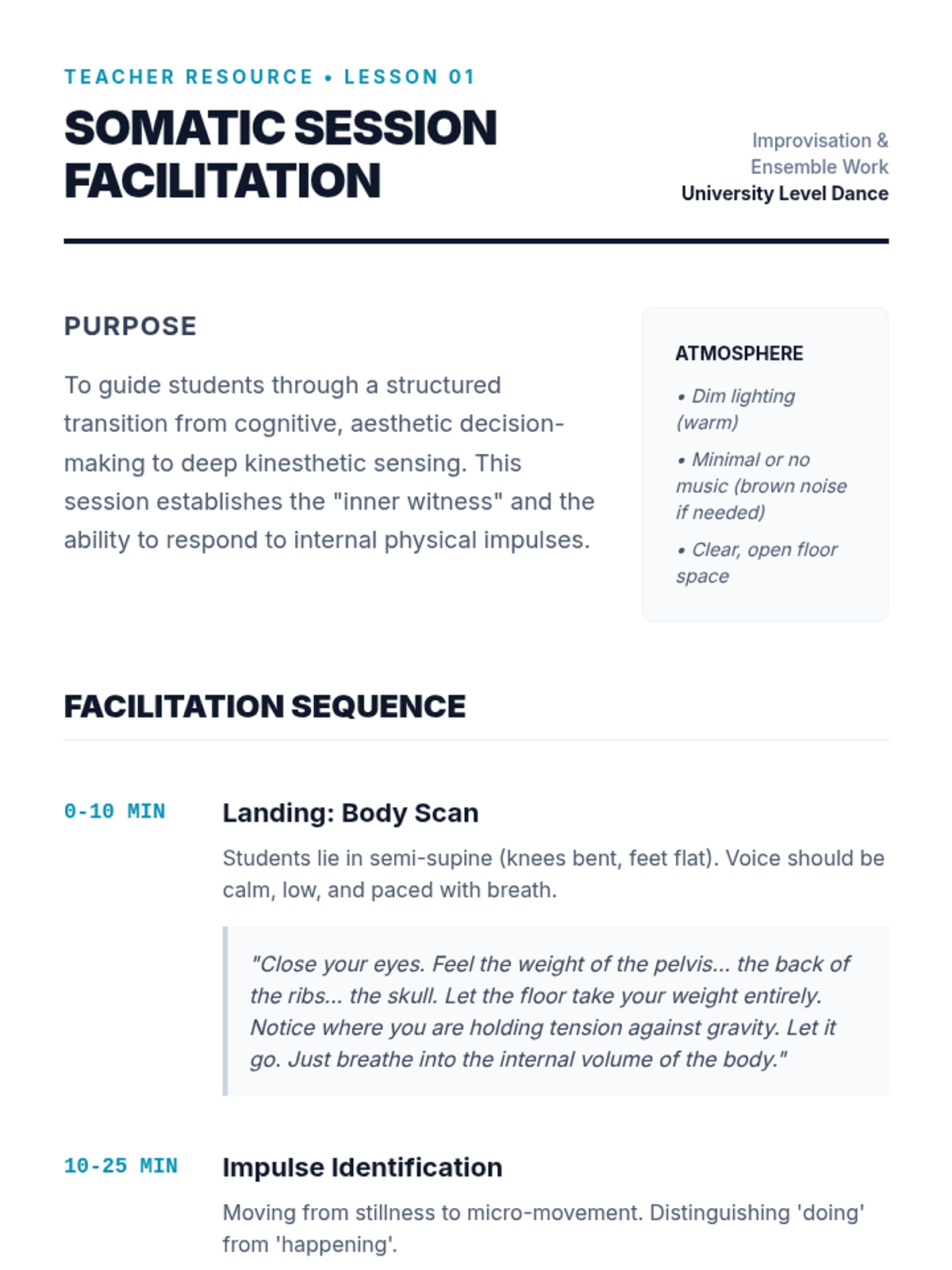
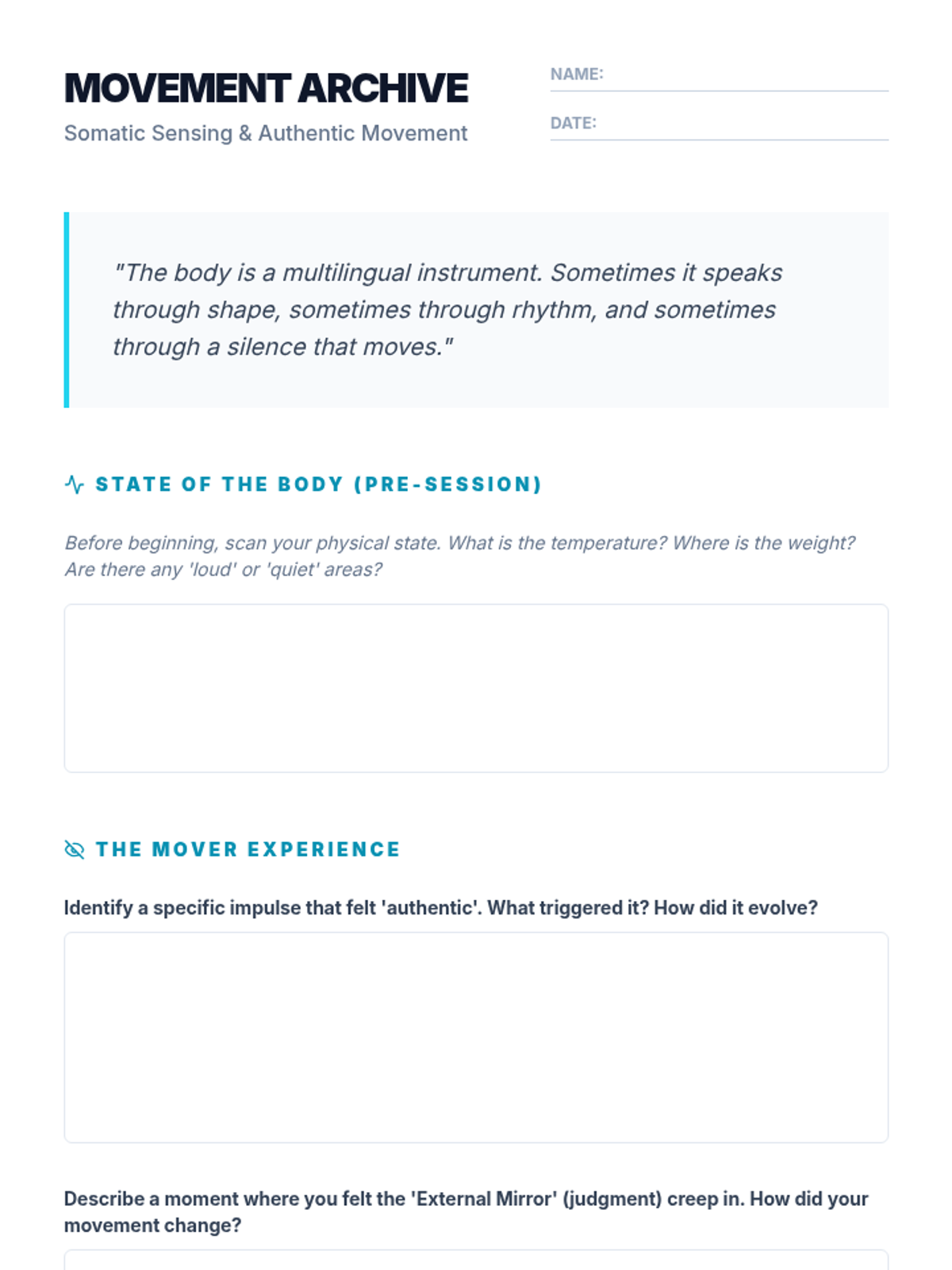
This sequence explores the generation of movement through improvisation and structured play. Undergraduate students build trust, spatial awareness, and real-time composition skills, moving from internal somatic sensing to complex group scores and ensemble weight sharing.
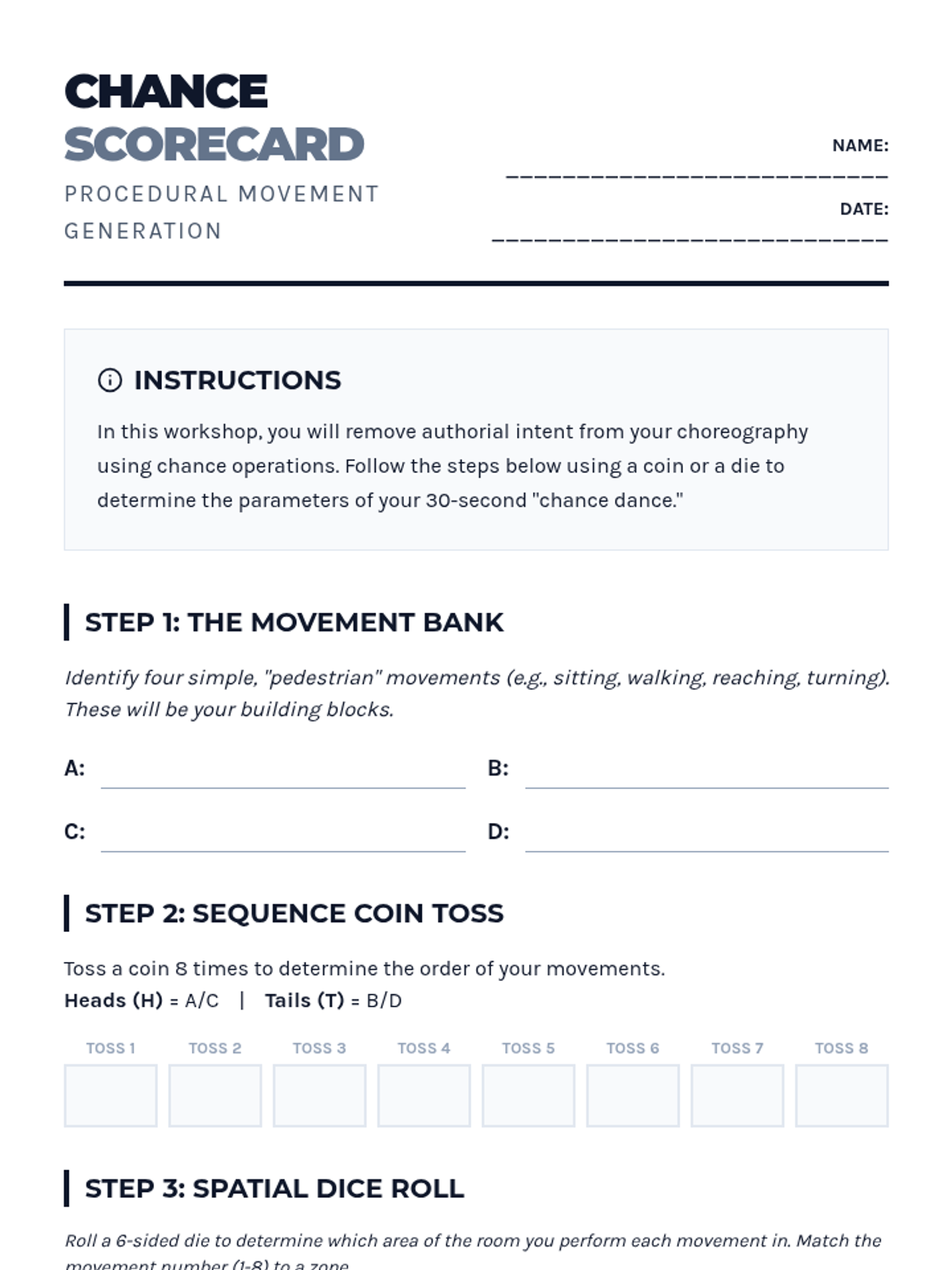
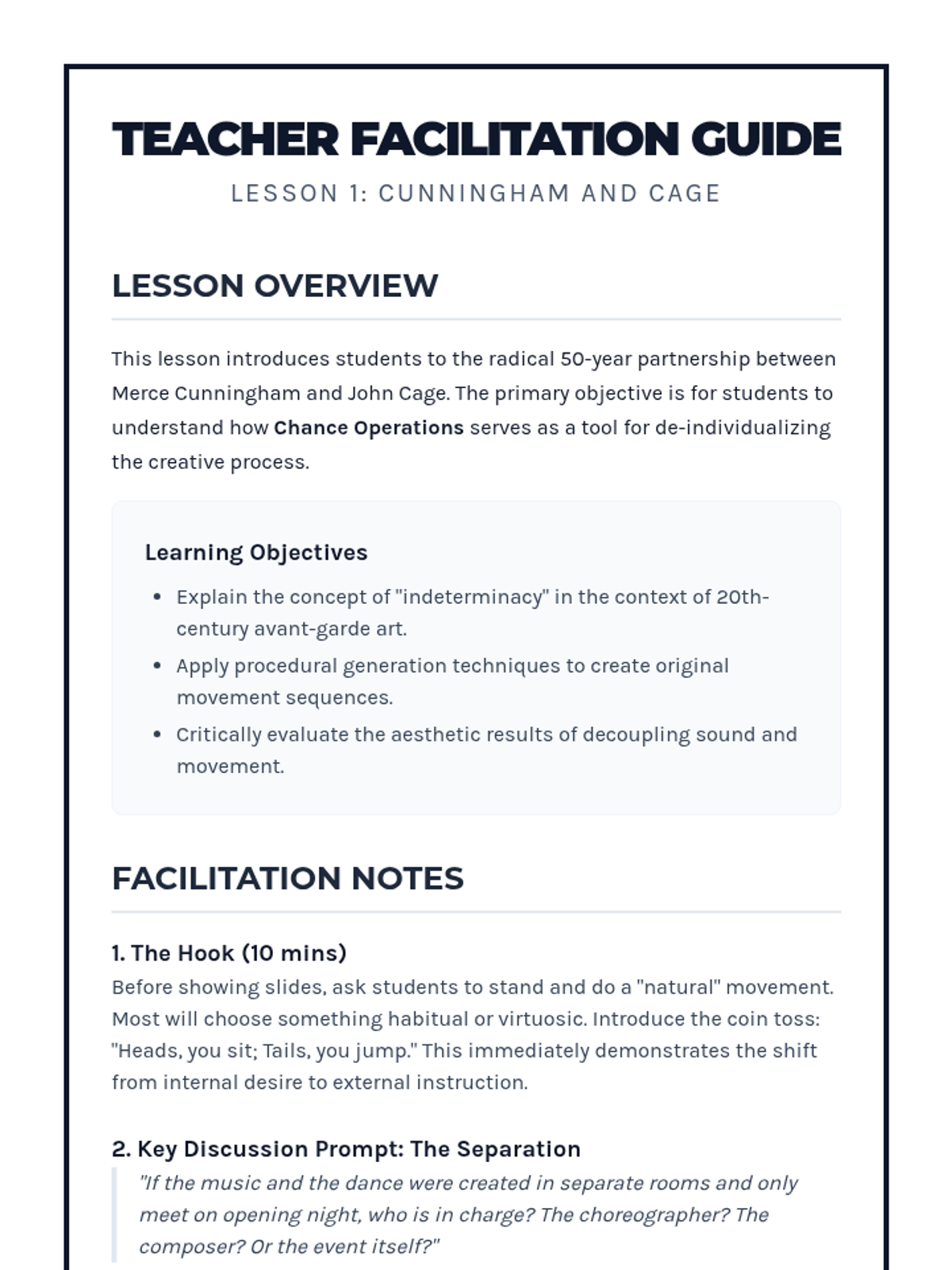
A deep dive into the 1960s-70s avant-garde dance movement, exploring how Merce Cunningham, the Judson Dance Theater, and Steve Paxton dismantled traditional virtuosity to redefine dance through chance, pedestrian movement, and physics.
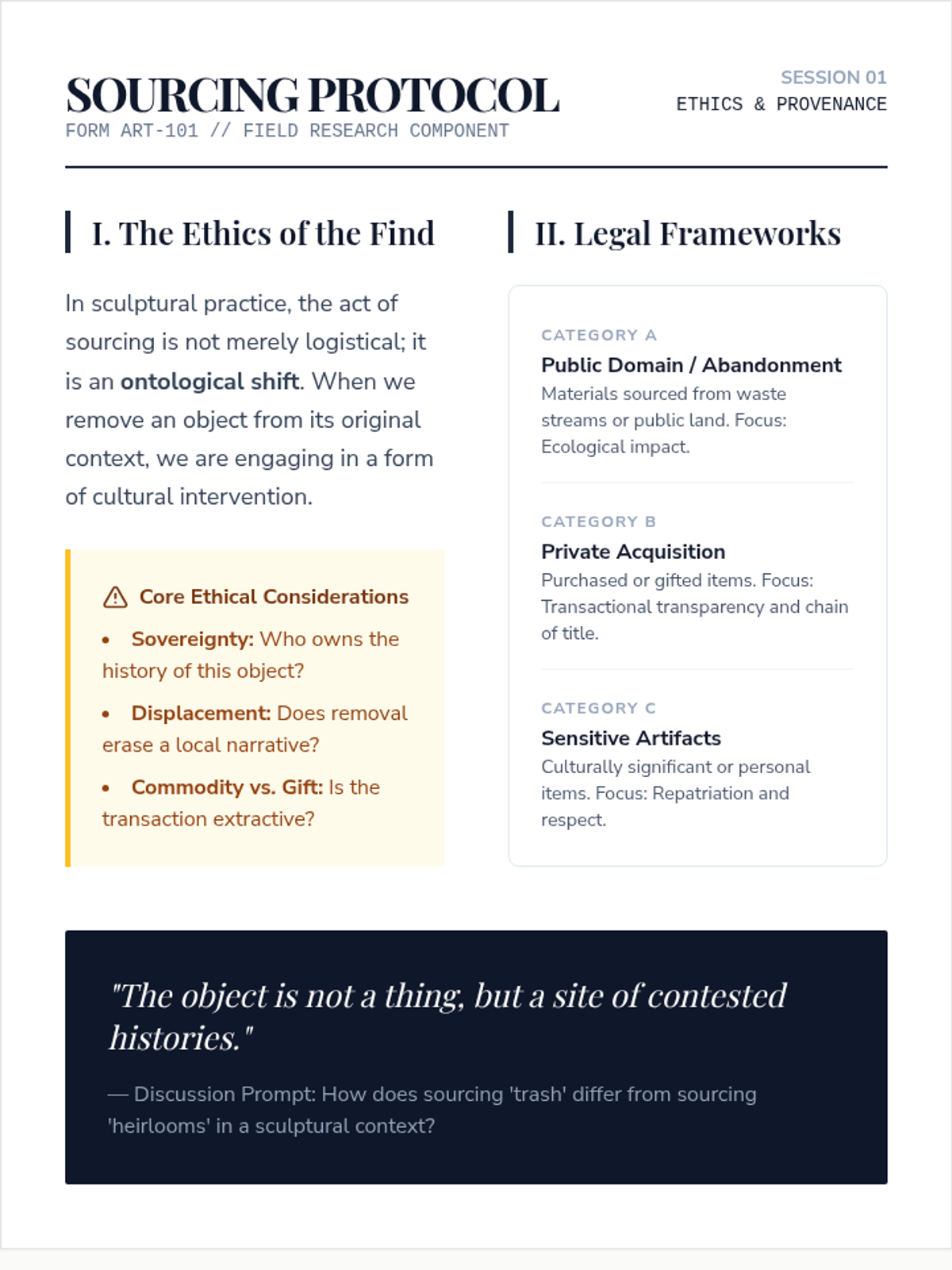
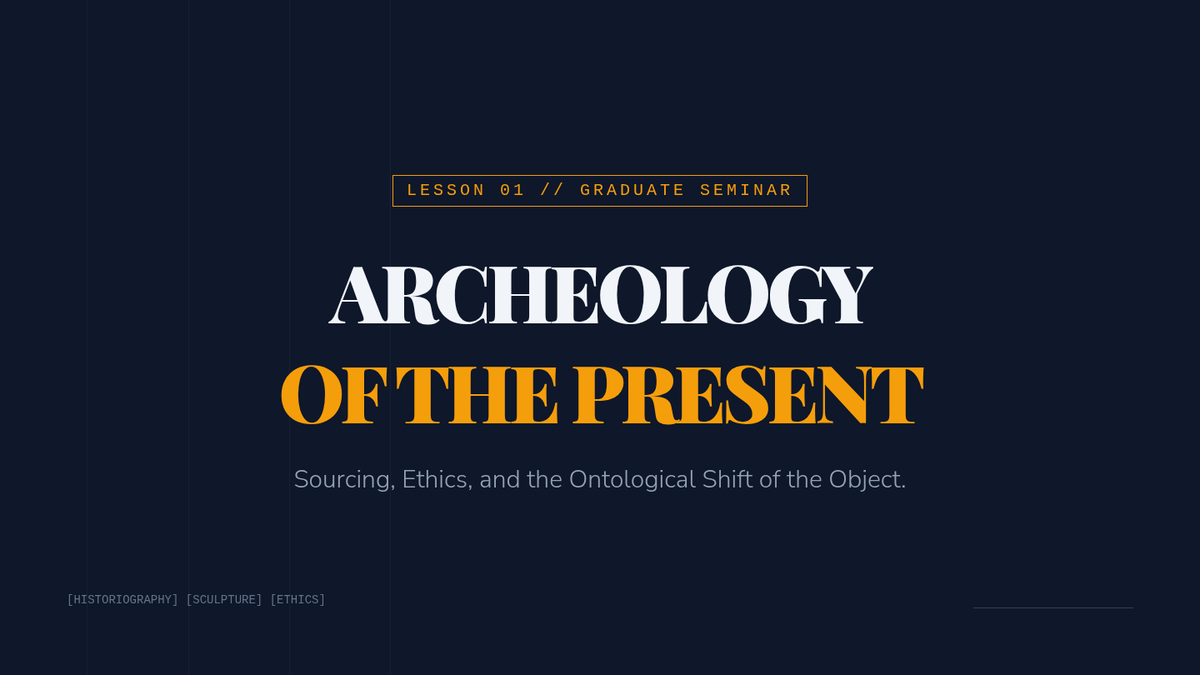
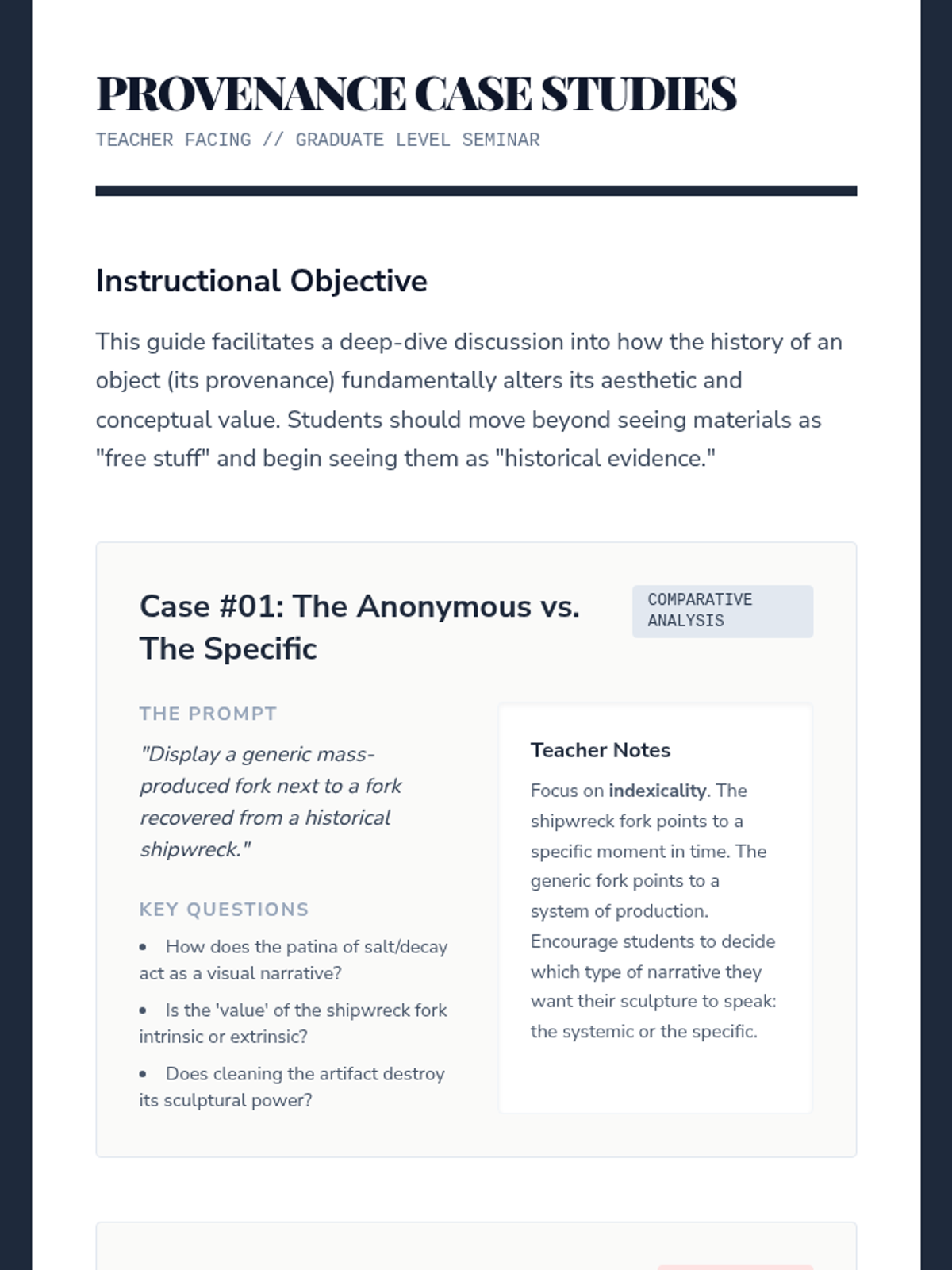
A graduate-level investigation into the intersection of sculpture, archival research, and historiography, focusing on the ethical sourcing and conceptual recontextualization of found objects.
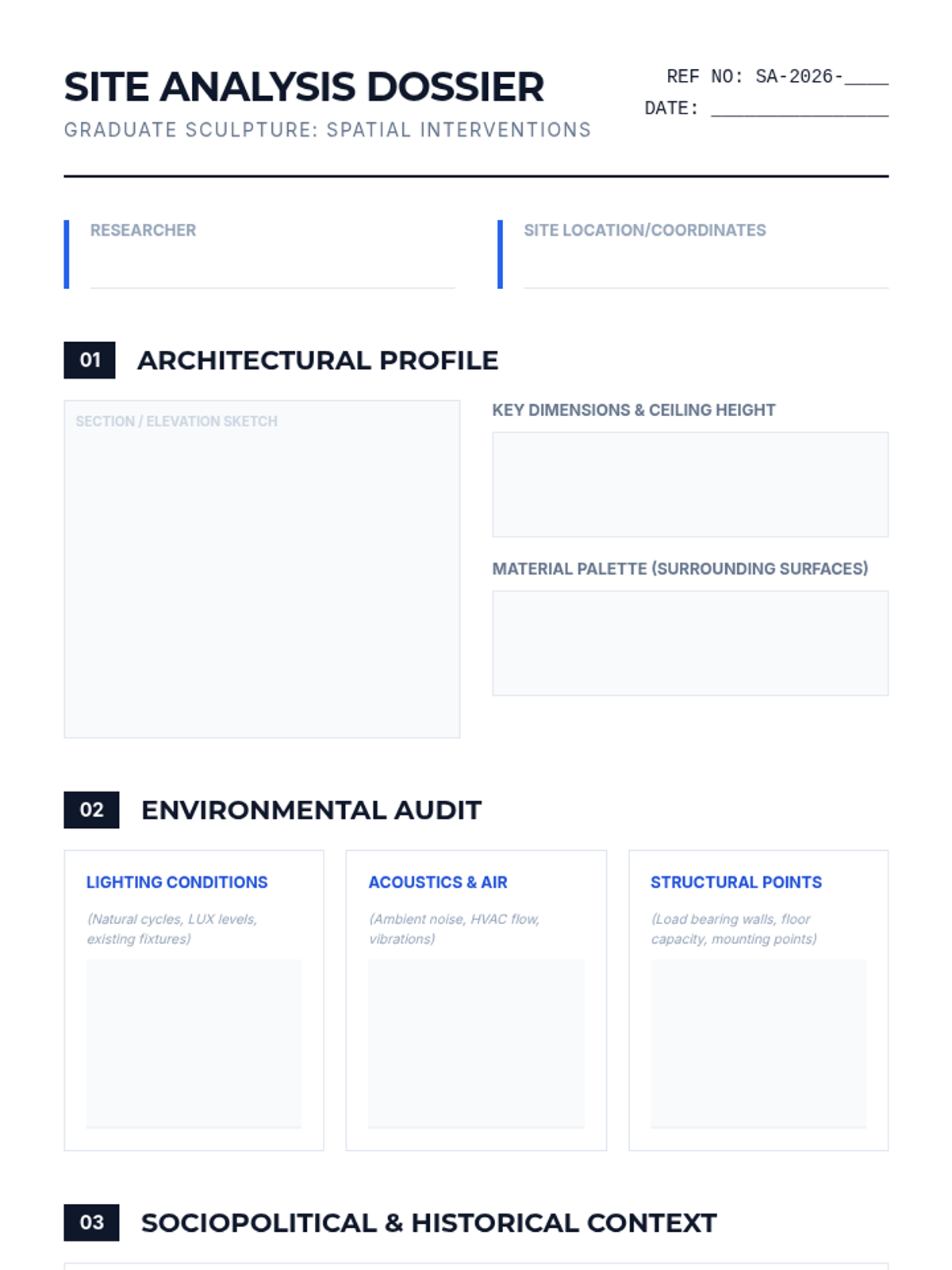
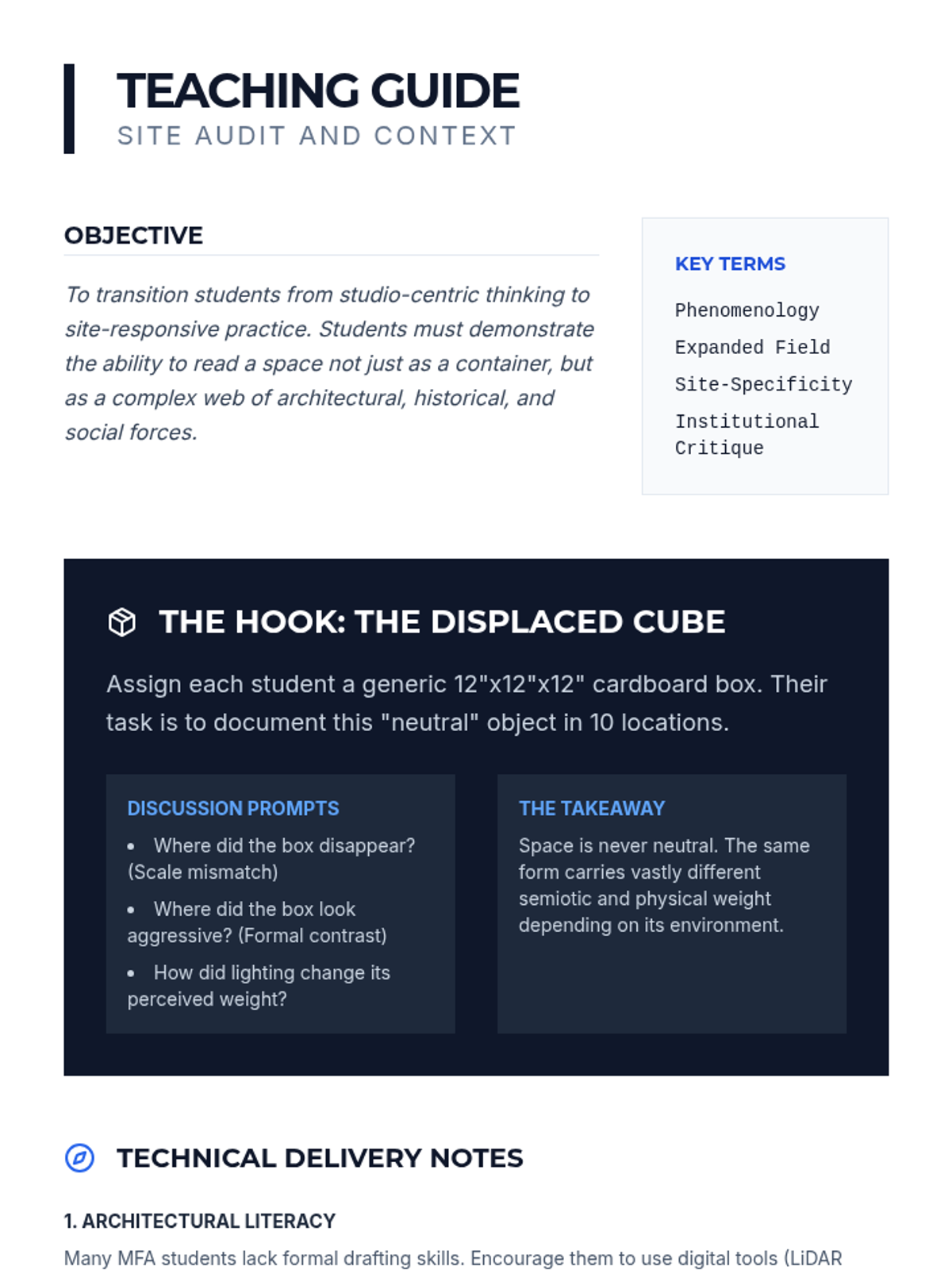
A graduate-level sequence exploring the methodology of site-specific sculpture, focusing on spatial analysis, professional proposal development, phenomenology, and archival documentation.
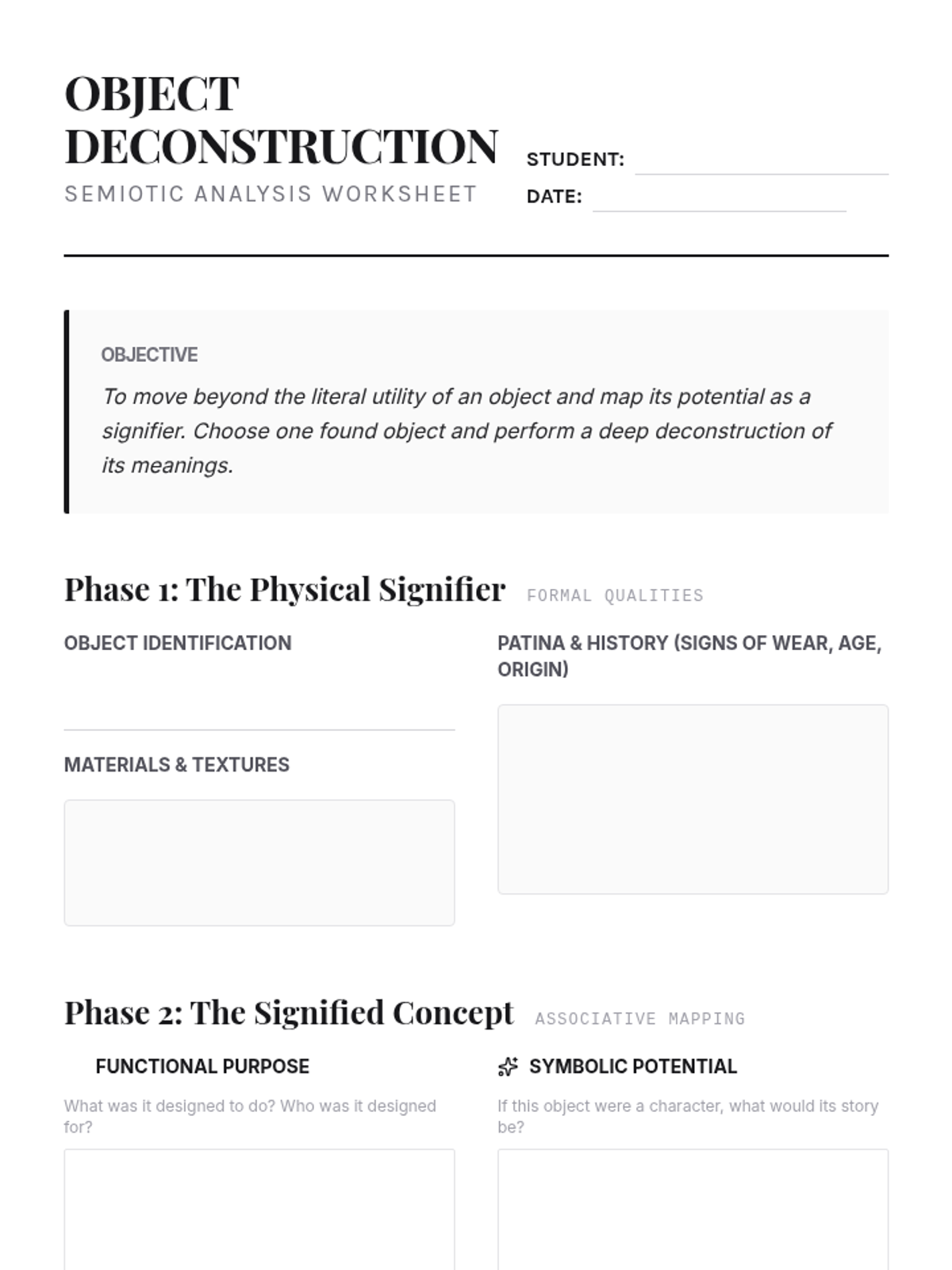
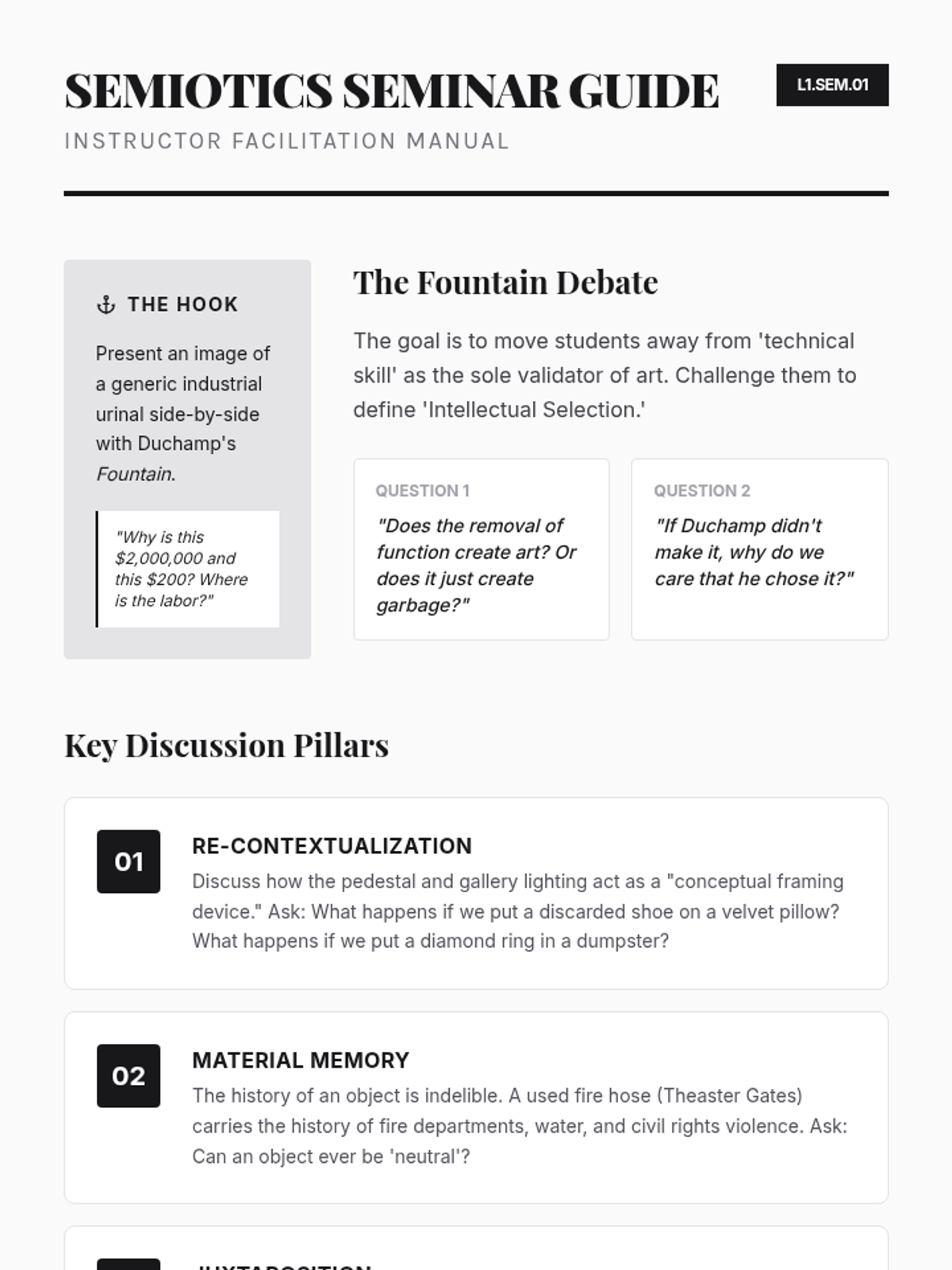
This undergraduate sequence explores the conceptual and technical dimensions of Found Object Assemblage. Students move from semiotic analysis and material sourcing to advanced joinery techniques, culminating in site-specific installations that communicate complex social or personal narratives.
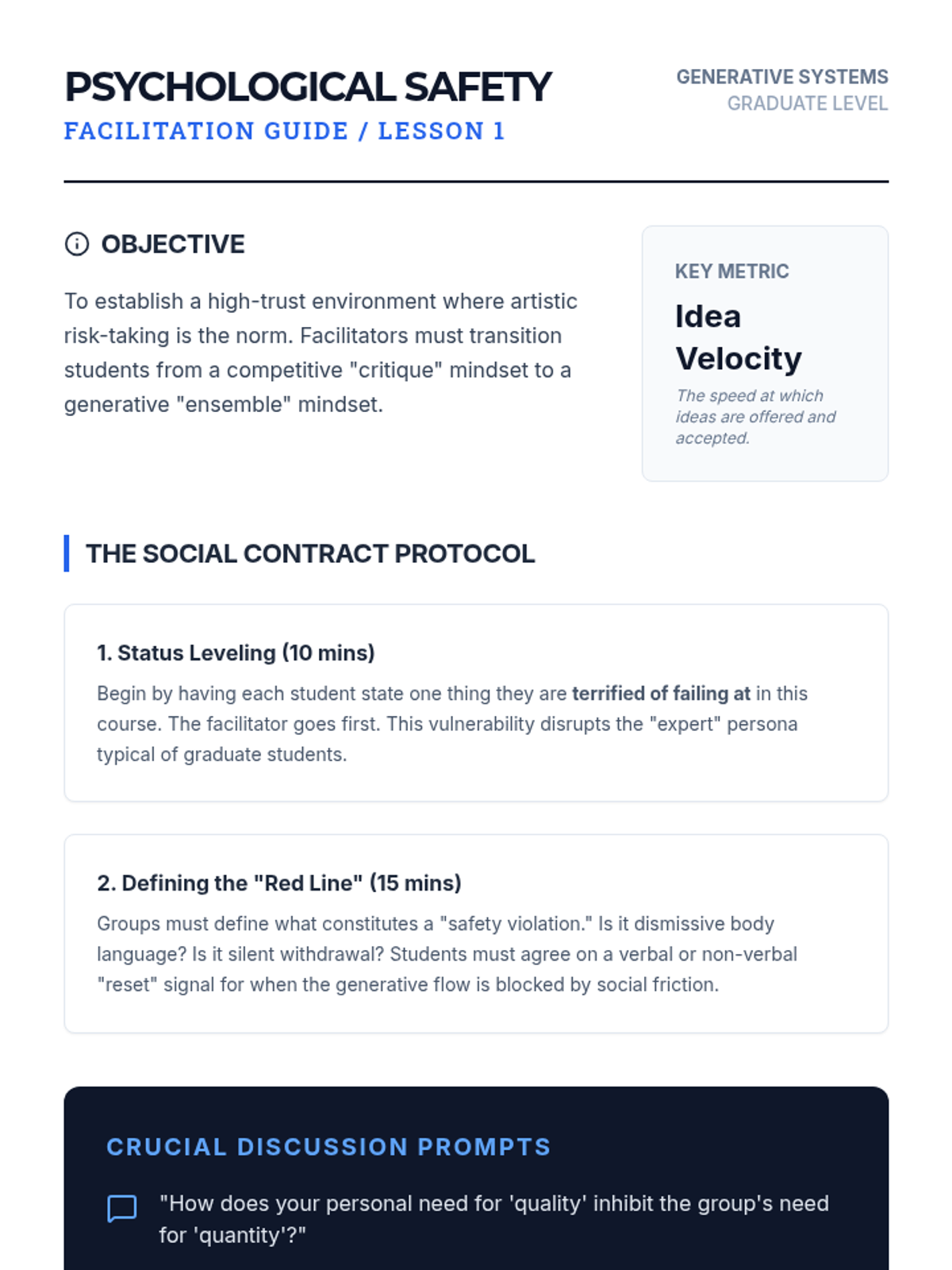
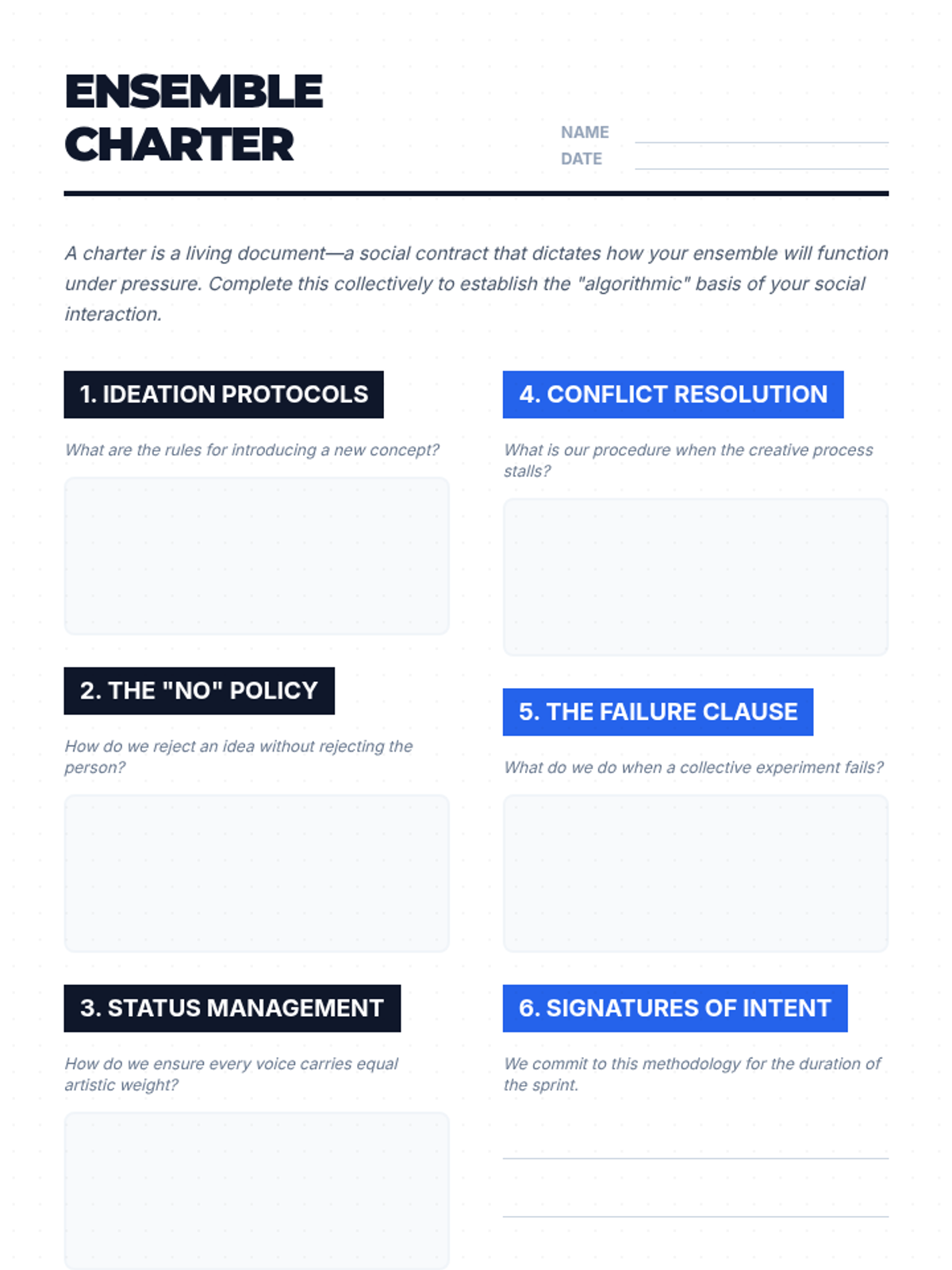
An advanced graduate-level exploration of collective invention in the arts. This sequence moves from the social foundations of psychological safety to algorithmic constraint-based ideation and swarm intelligence, culminating in the identification of a 'third voice'—the unique aesthetic signature of an ensemble.
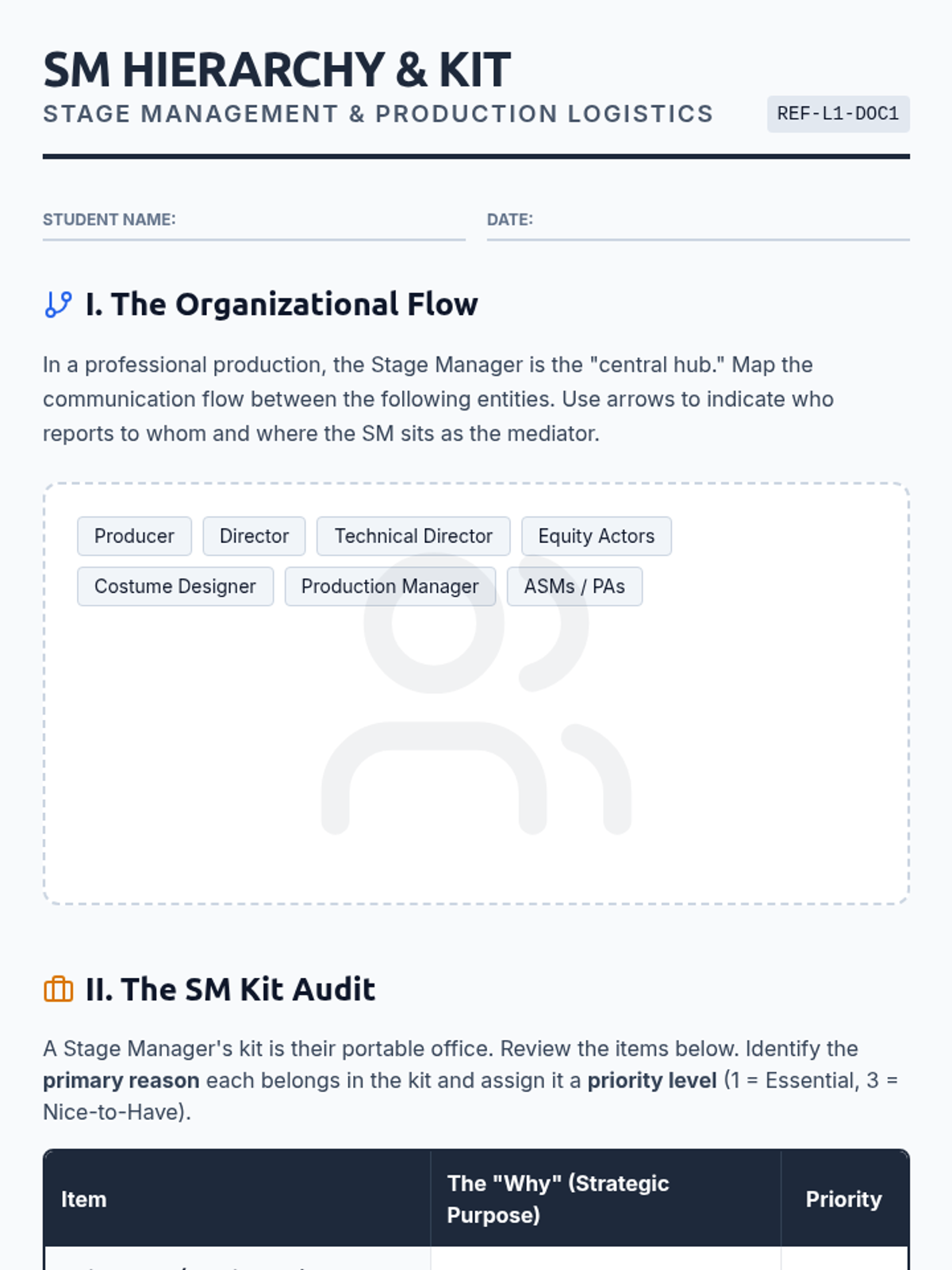
A comprehensive exploration of stage management for undergraduate students, covering organizational hierarchy, documentation, rehearsal management, and technical execution. Students transition from understanding the SM role to mastery of the prompt book and cue calling.
A comprehensive graduate-level course on the professional development of a new play, focusing on revision strategies, collaborative feedback, and industry-standard submission practices. Students transition from draft to a polished, professional-grade script and submission package.
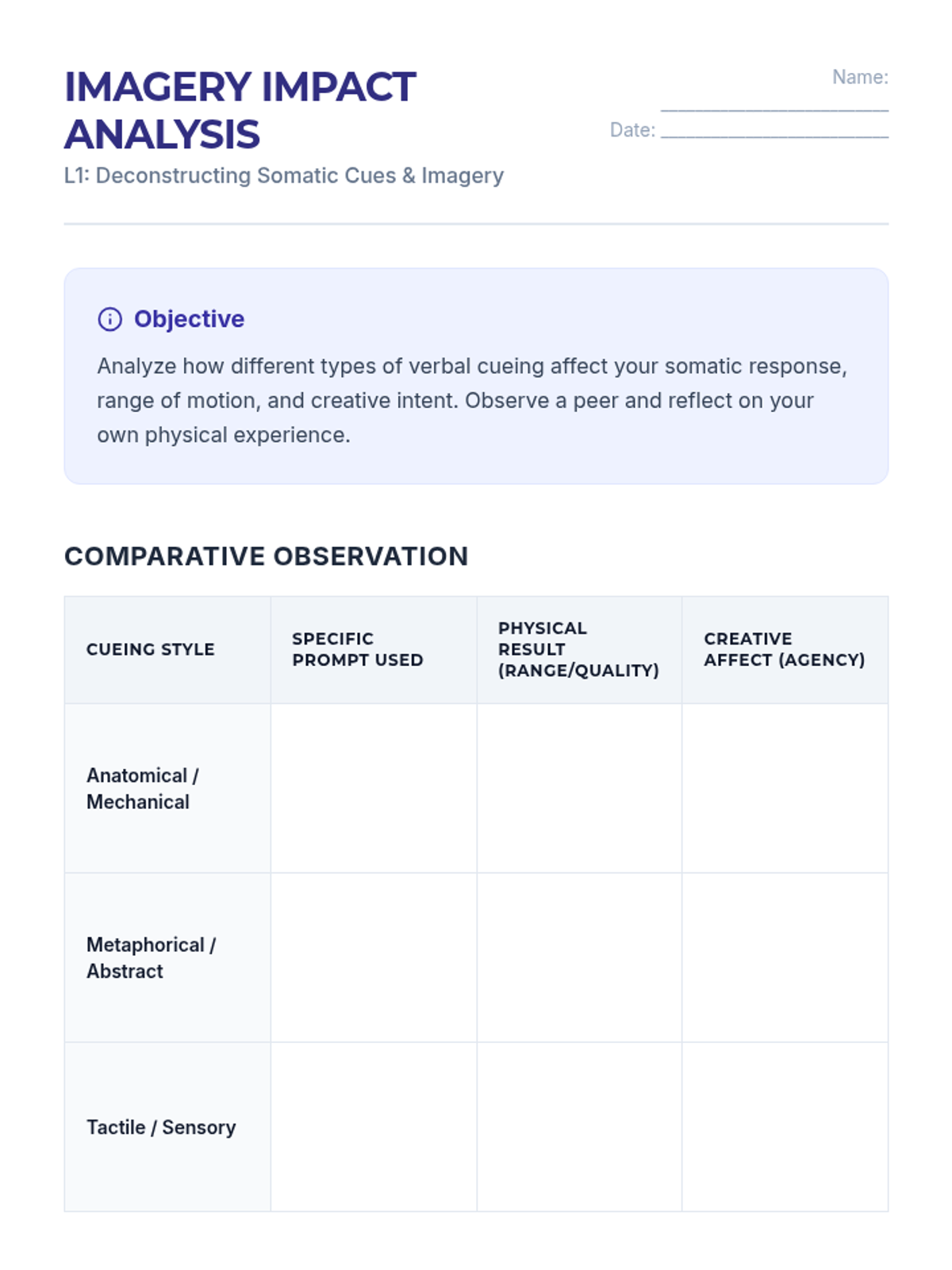
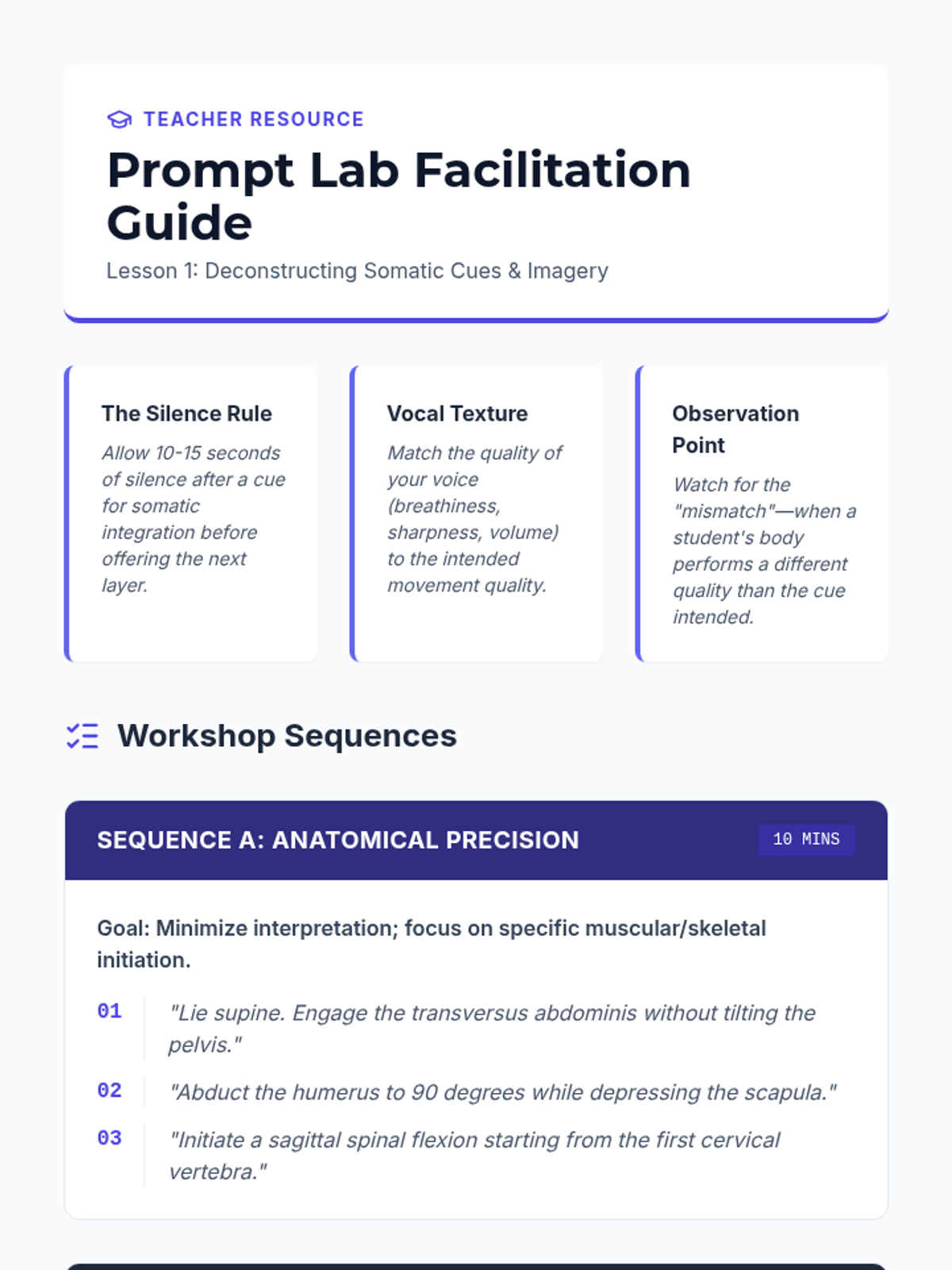
A graduate-level sequence exploring advanced pedagogical frameworks for creative movement facilitation. Students deconstruct somatic cues, developmental patterns, trauma-informed practices, and neurodiverse scaffolding to design inclusive and effective movement workshops.
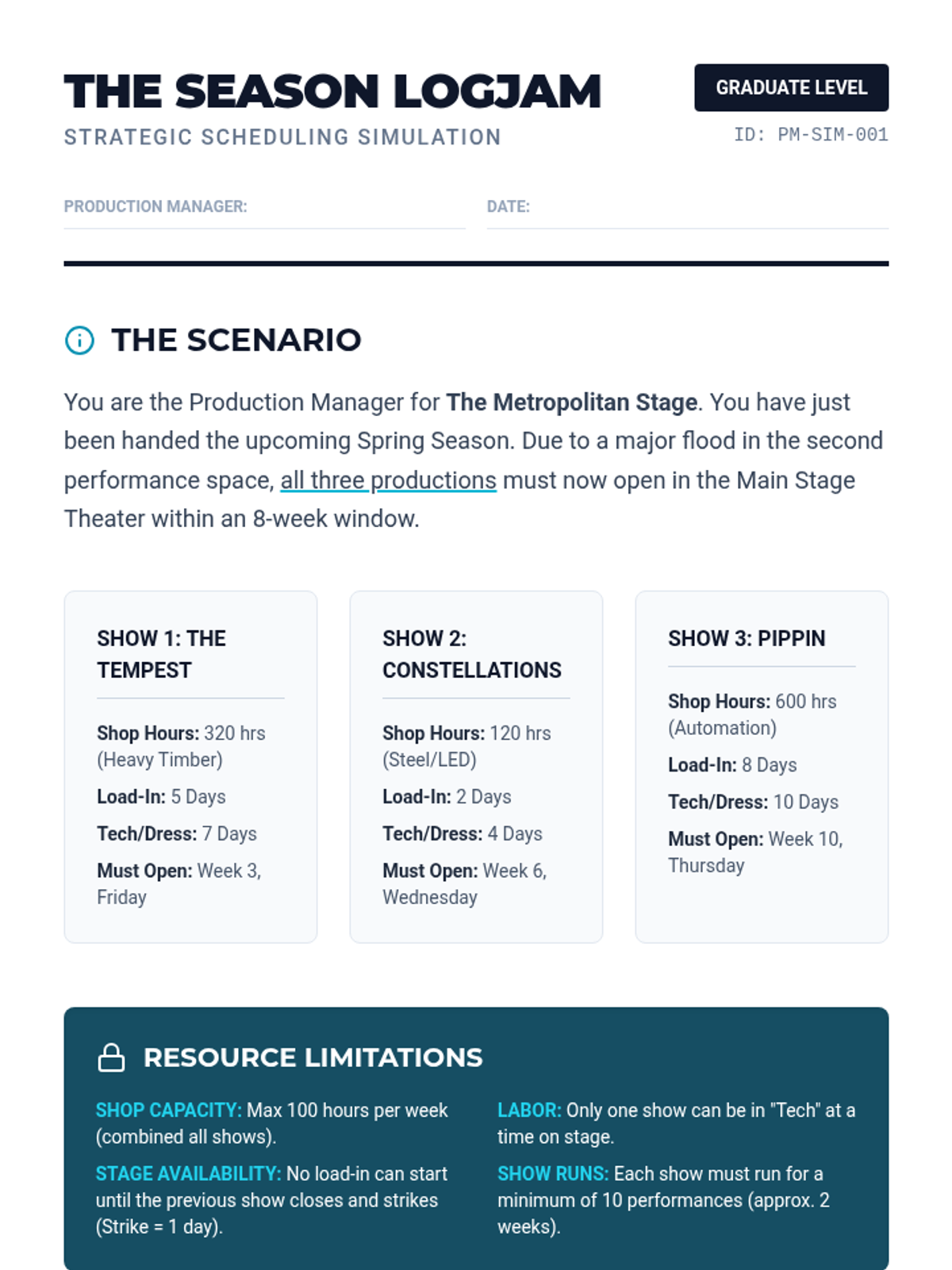
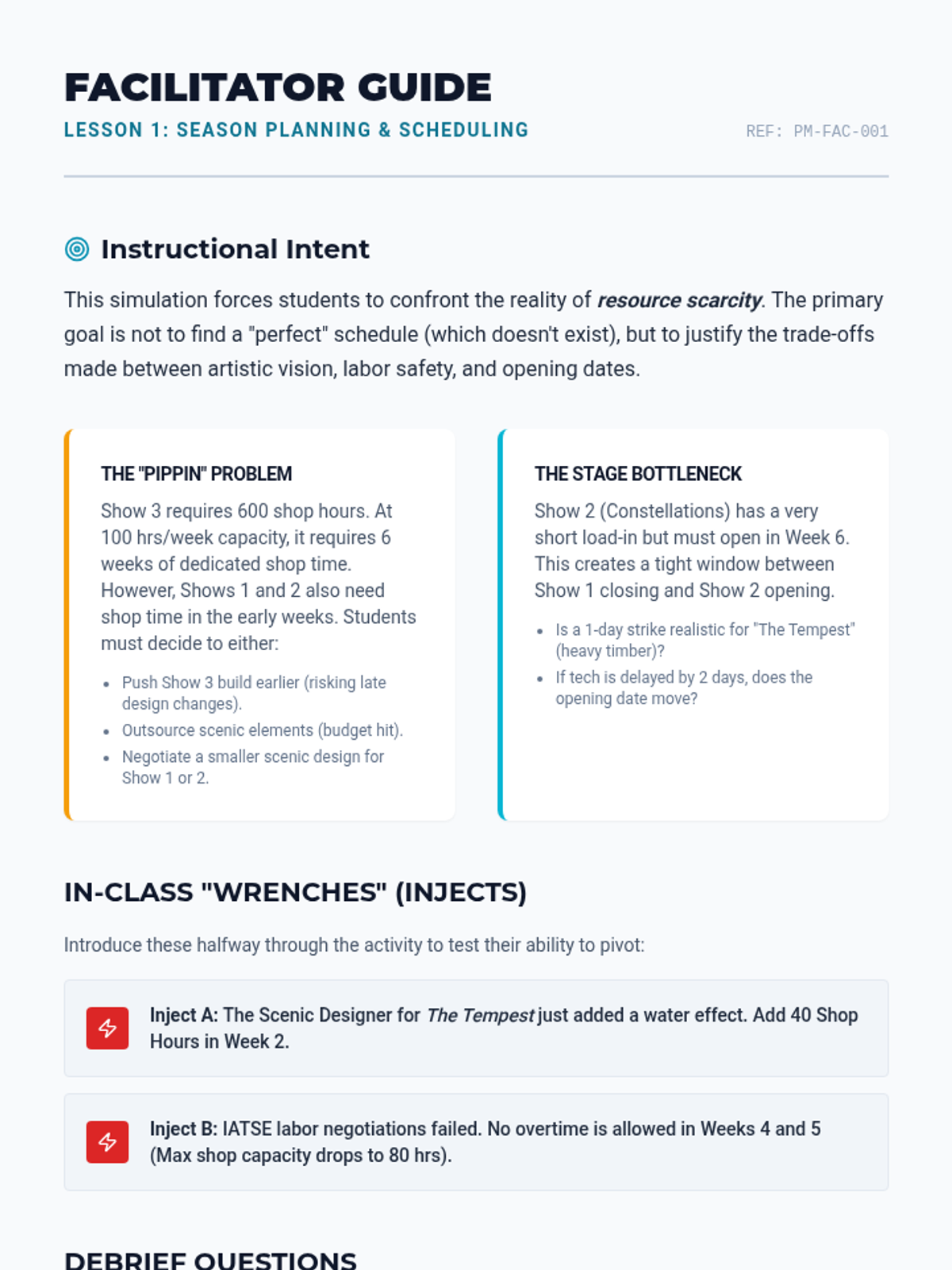
A graduate-level exploration of the macro-level logistics of theatrical production management, focusing on strategic planning, financial oversight, human resources, and facility management to balance artistic vision with finite resources.
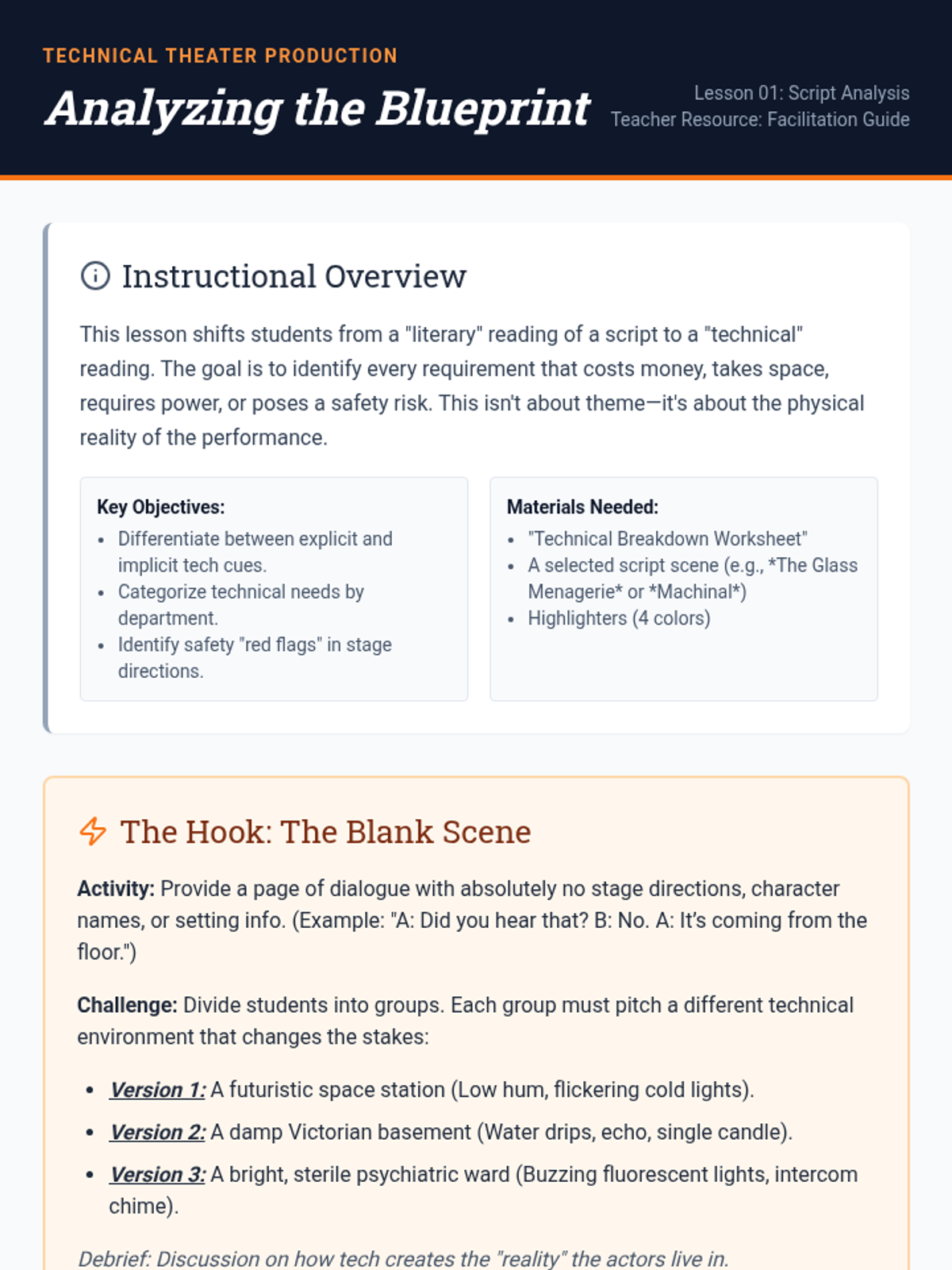
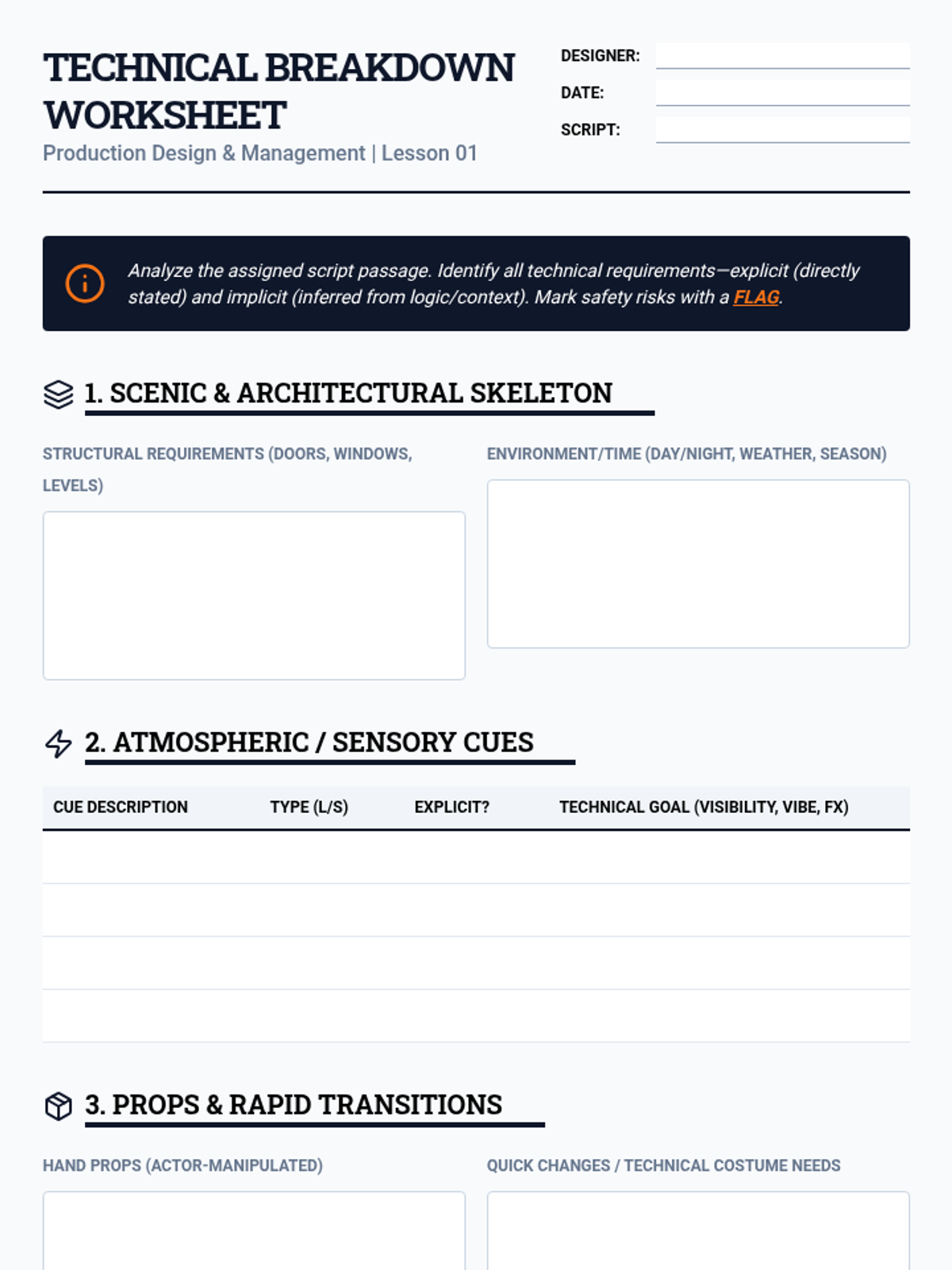
An advanced undergraduate sequence exploring the intersection of artistic vision and technical execution in theater. Students move from script analysis to technical design (lighting, sound, scenery) and professional stage management, culminating in a simulated 'paper tech' to test the feasibility and safety of their integrated production plans.
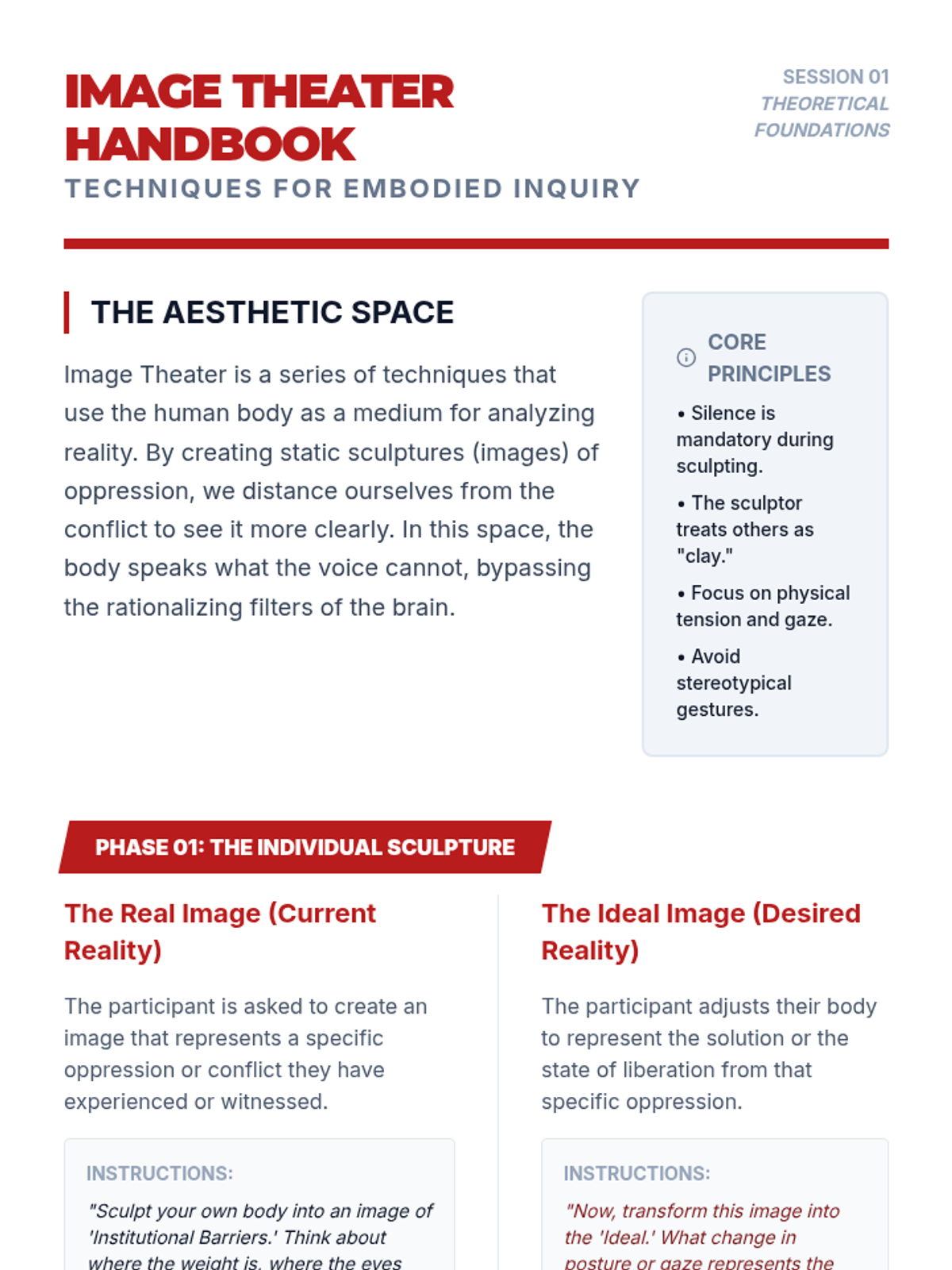
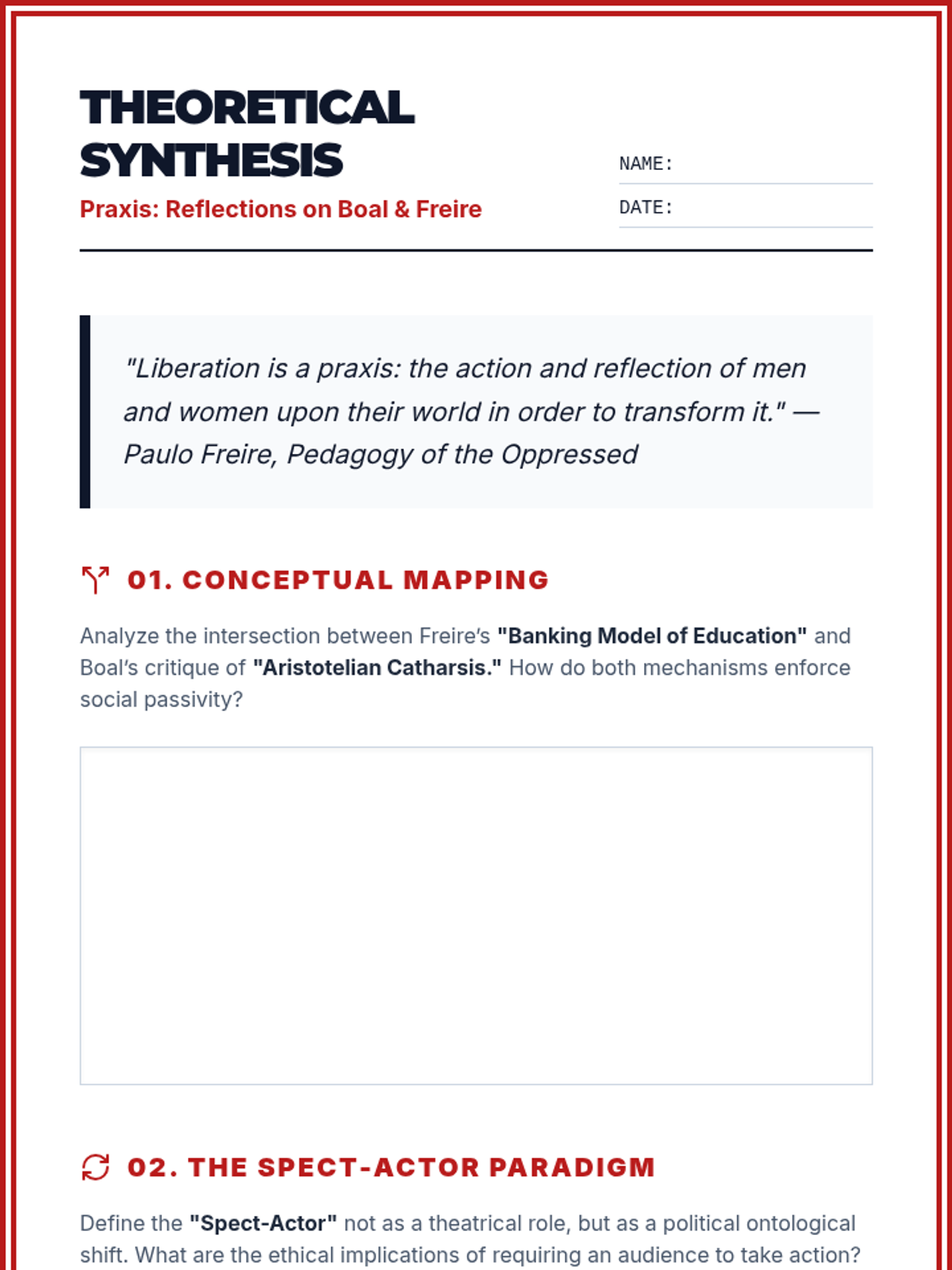
This graduate sequence explores Augusto Boal's Theater of the Oppressed, training students in the theoretical, physical, and ethical skills required to facilitate social change through dramatic play.
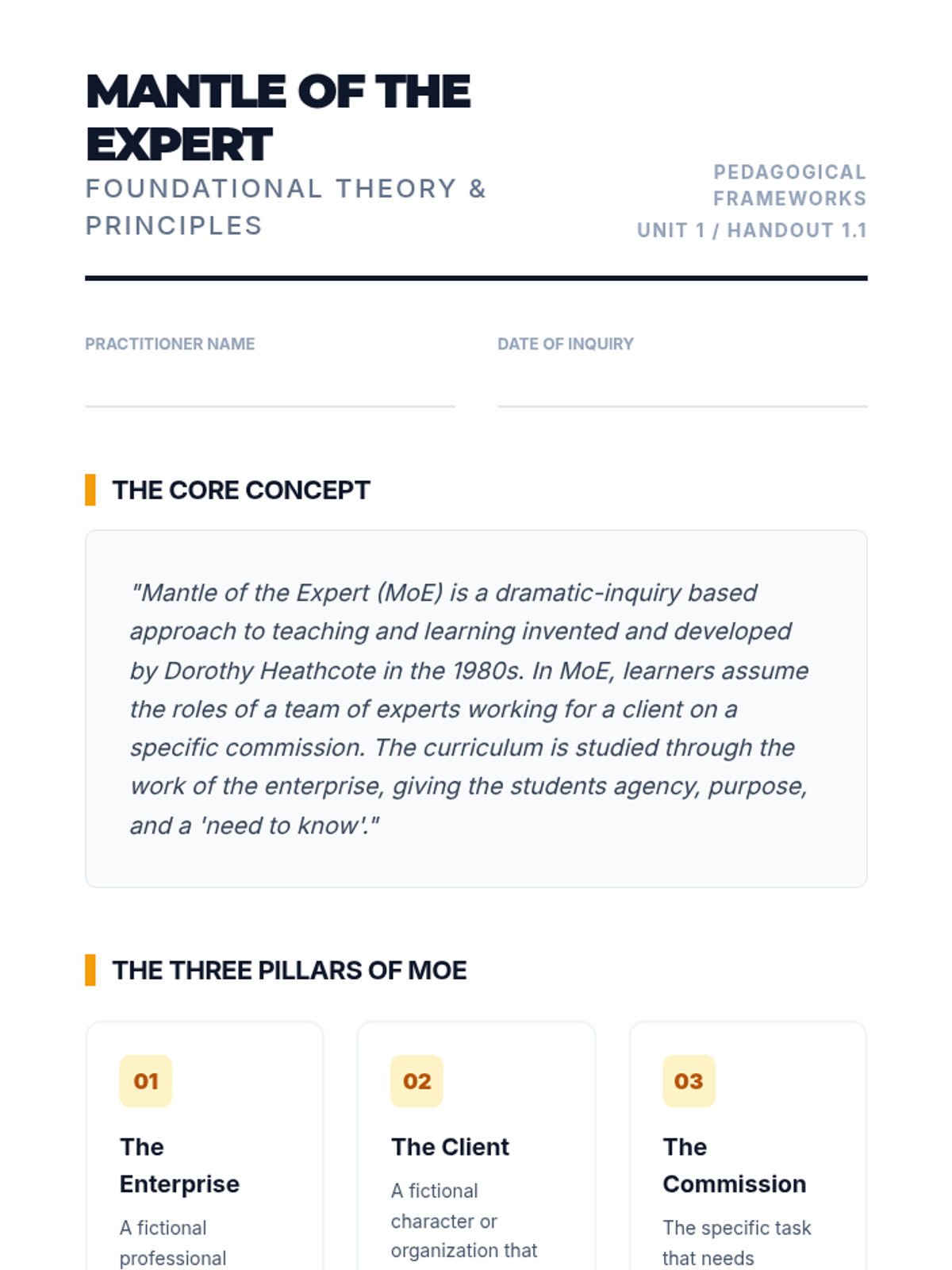
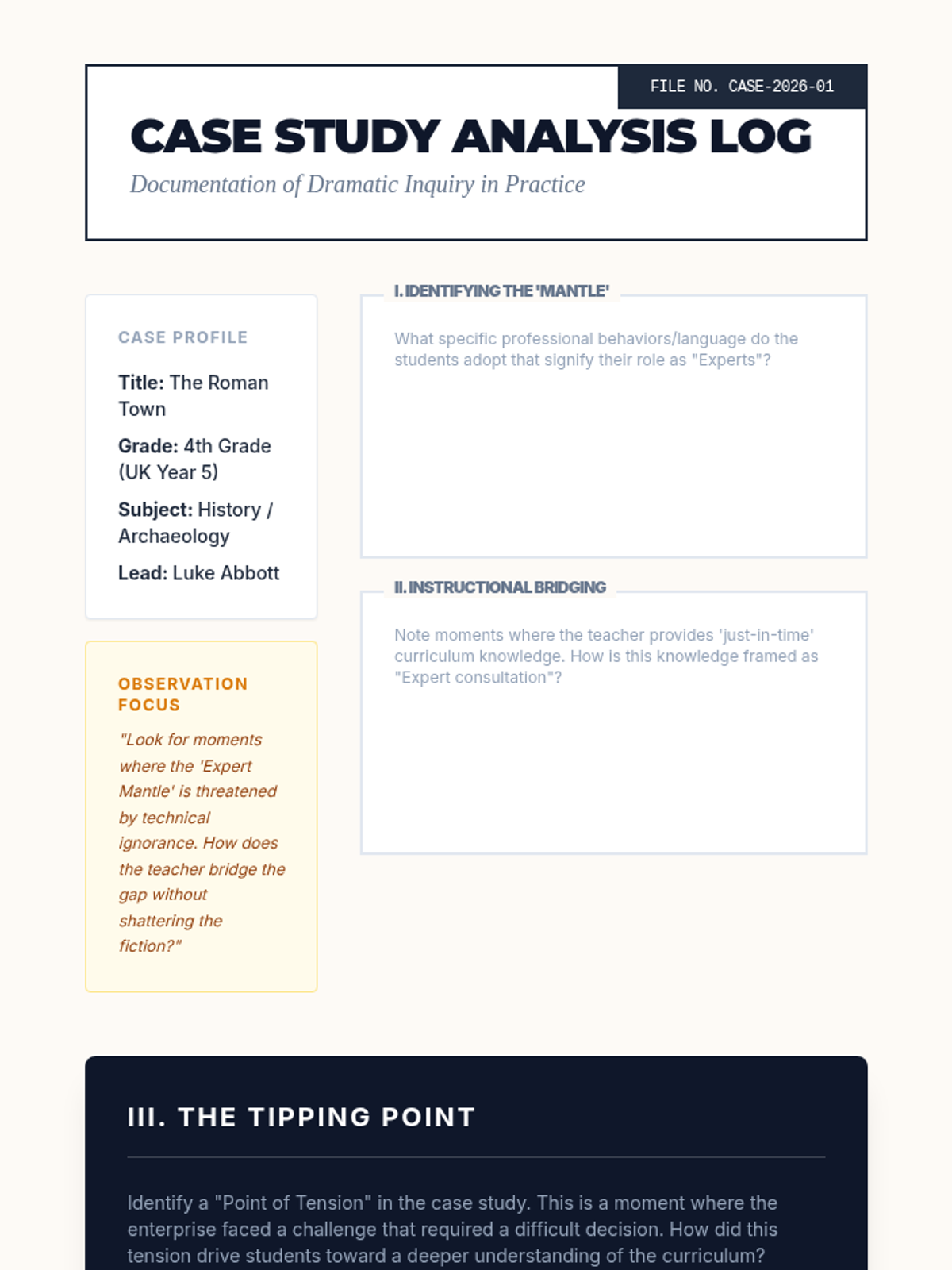
A comprehensive graduate-level course exploring the pedagogy of dramatic inquiry, focusing on Dorothy Heathcote’s Mantle of the Expert and its application in cross-curricular K-12 education. Students will master instructional design, teacher-in-role techniques, and the assessment of creative processes.
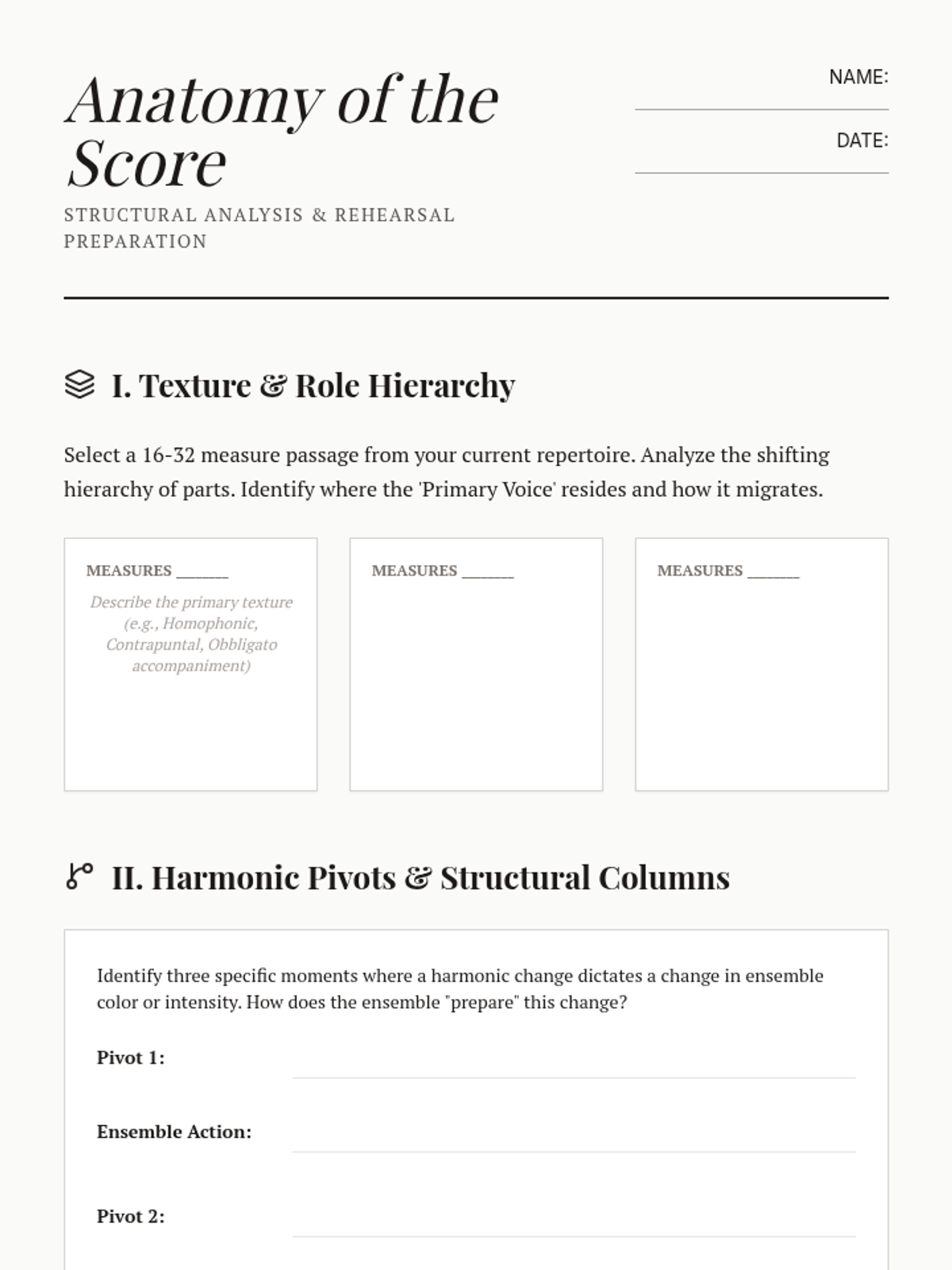
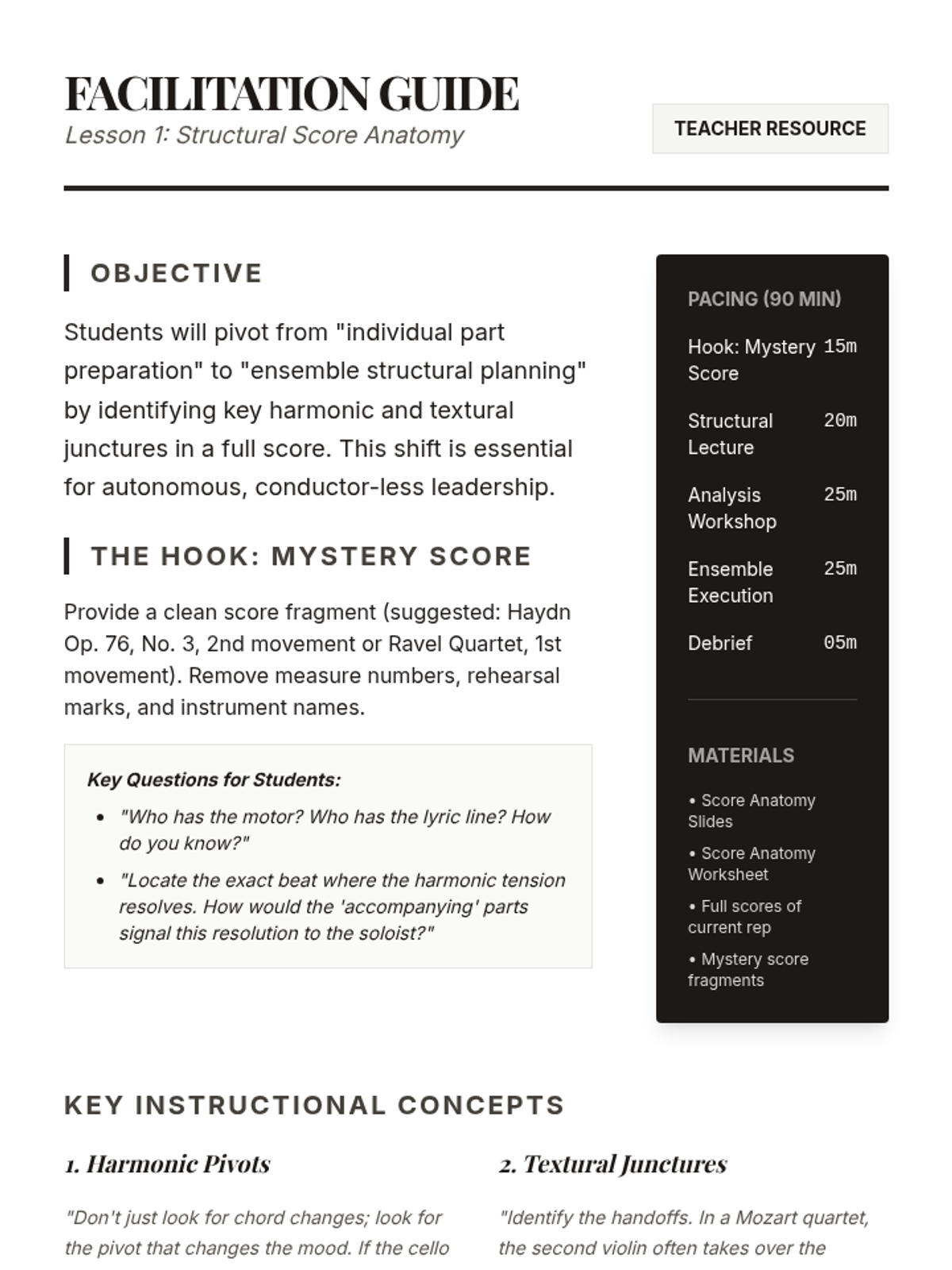
This advanced sequence for graduate music students explores the leadership, acoustics, and interpersonal dynamics of high-level chamber music. Students transition from individual practitioners to collaborative leaders through score analysis, pure tuning mastery, and non-verbal communication techniques.
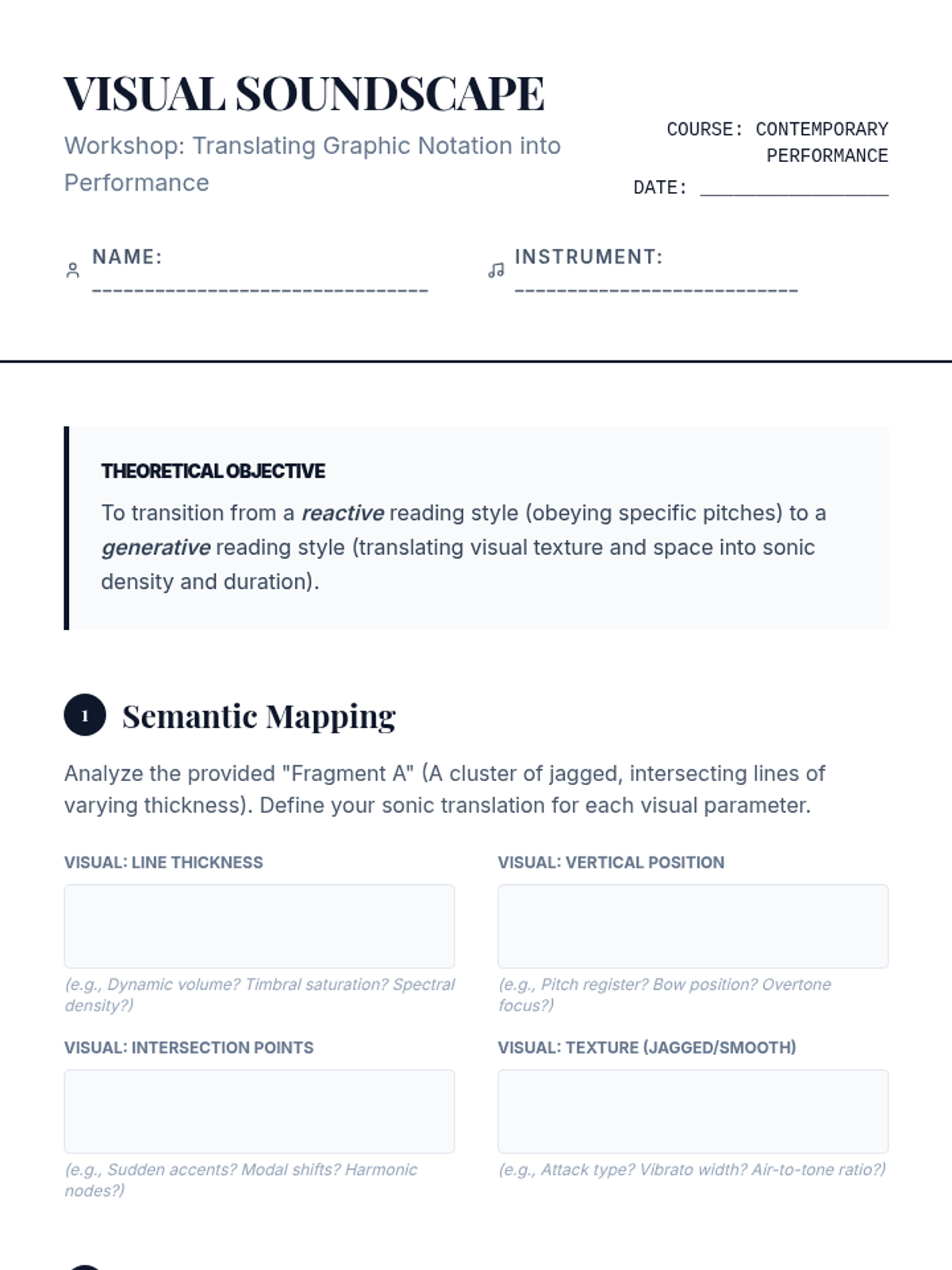
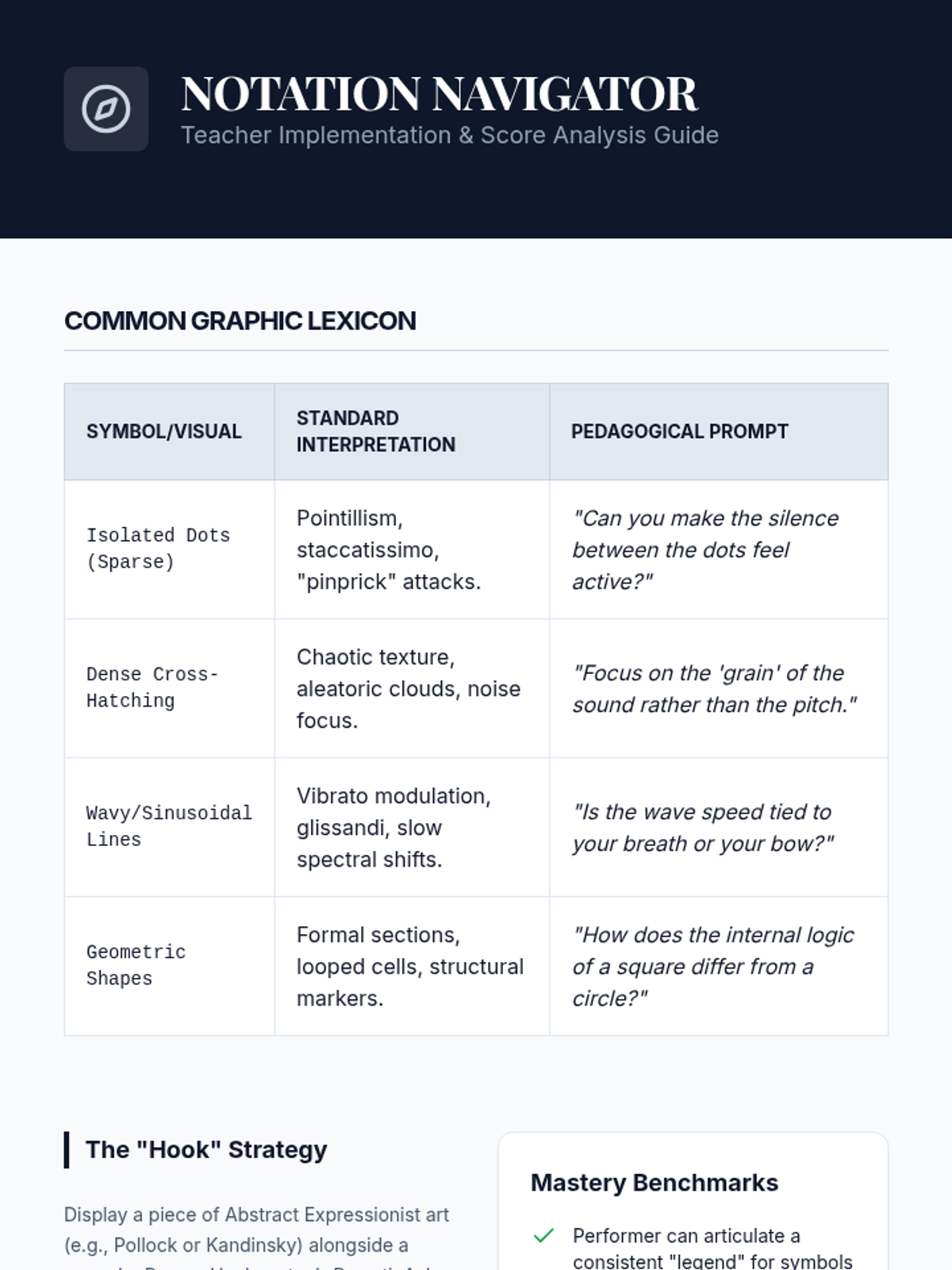
A graduate-level sequence focused on the technical and interpretive demands of 20th and 21st-century music, covering graphic notation, extended techniques, complex rhythms, and professional collaboration.
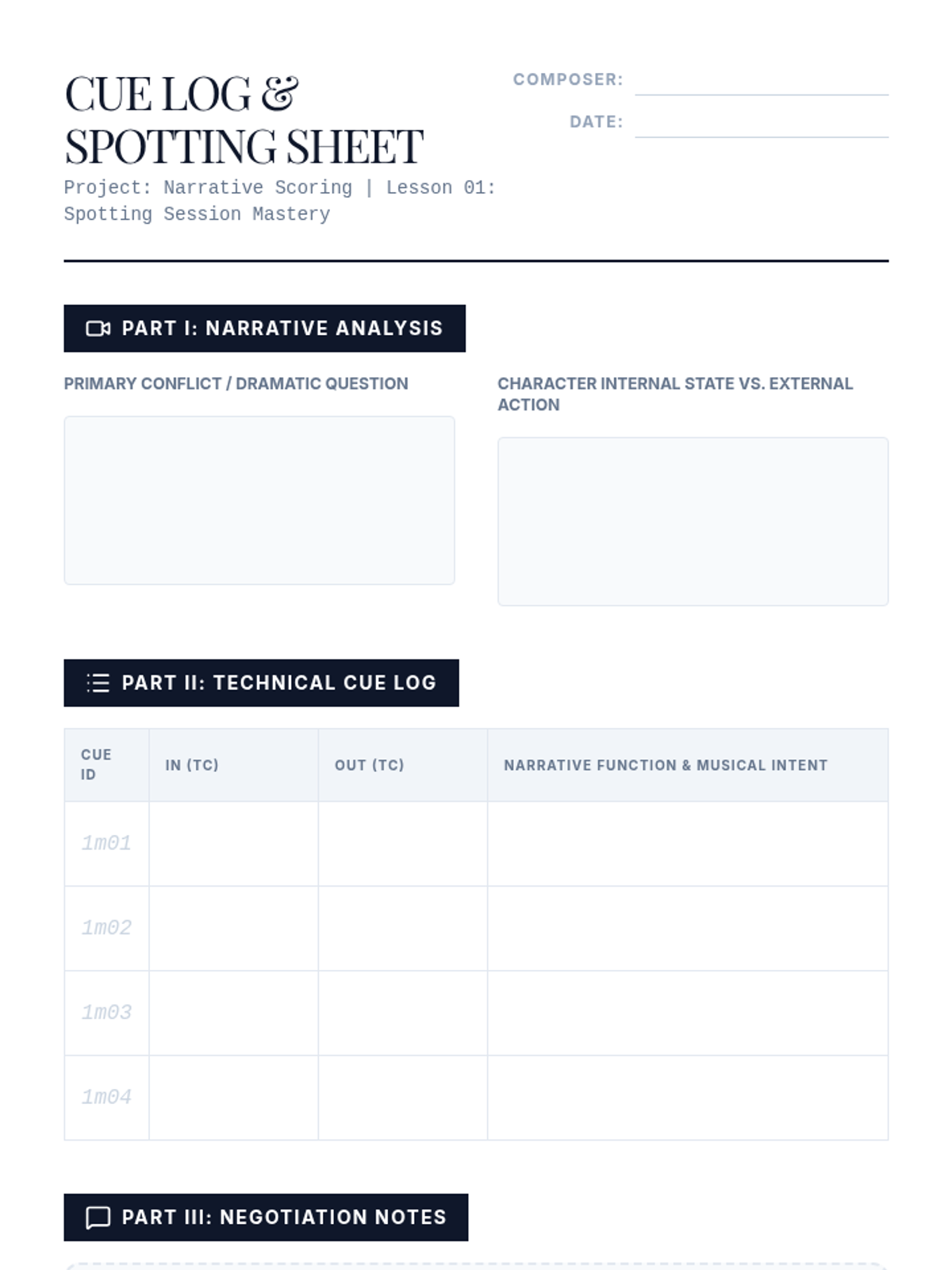
A graduate-level exploration of narrative film scoring, focusing on dramatic analysis, thematic development, psychological subtext, and technical synchronization. Students move from the conceptual spotting session to a fully synchronized final rescore project.
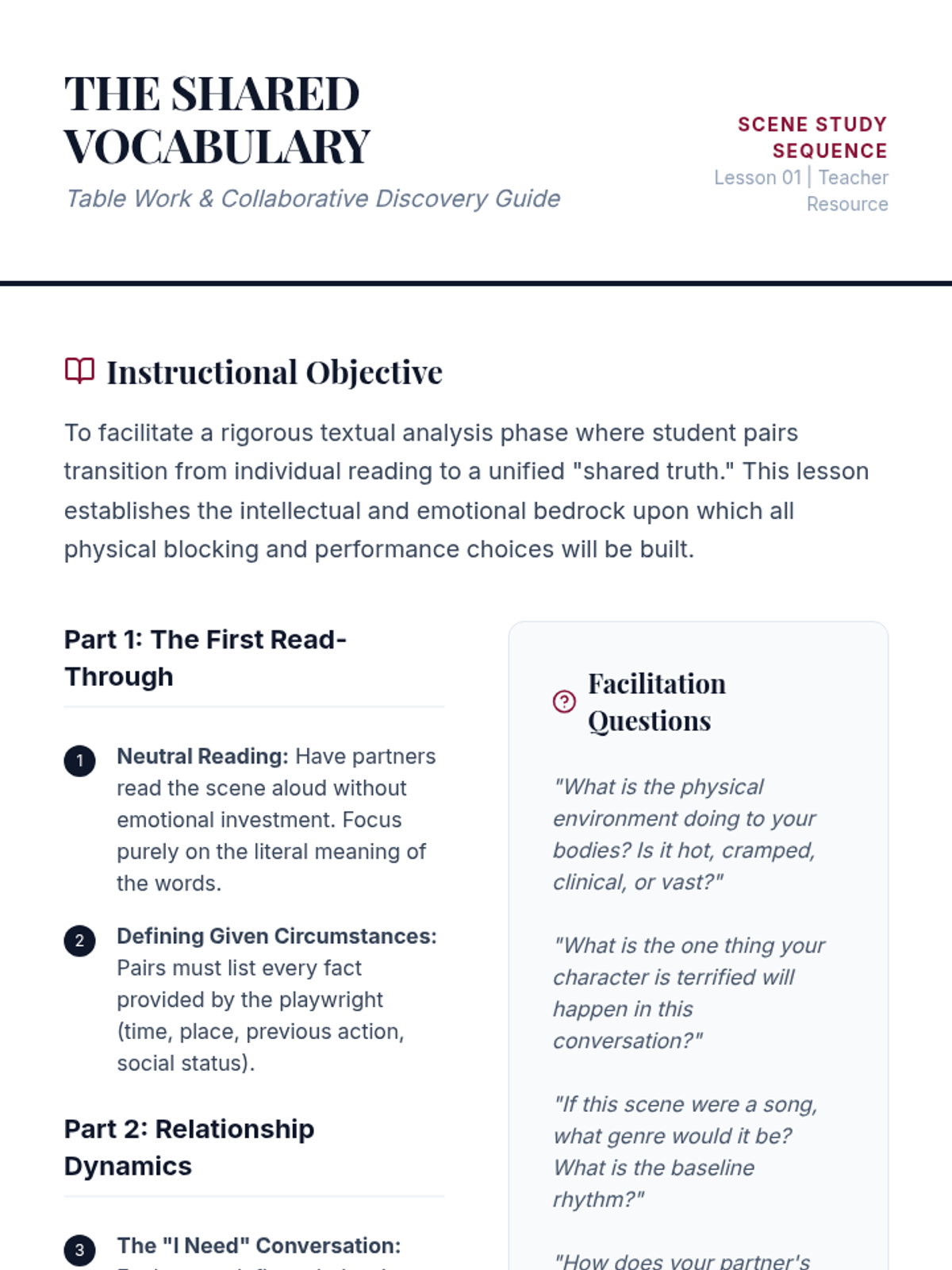
A graduate-level sequence focused on the professional rehearsal process, synthesizing character analysis, physical blocking, and rhythmic precision into a showcase-ready contemporary scene. Students move from deep textual analysis to technical mastery and industry-style critique.
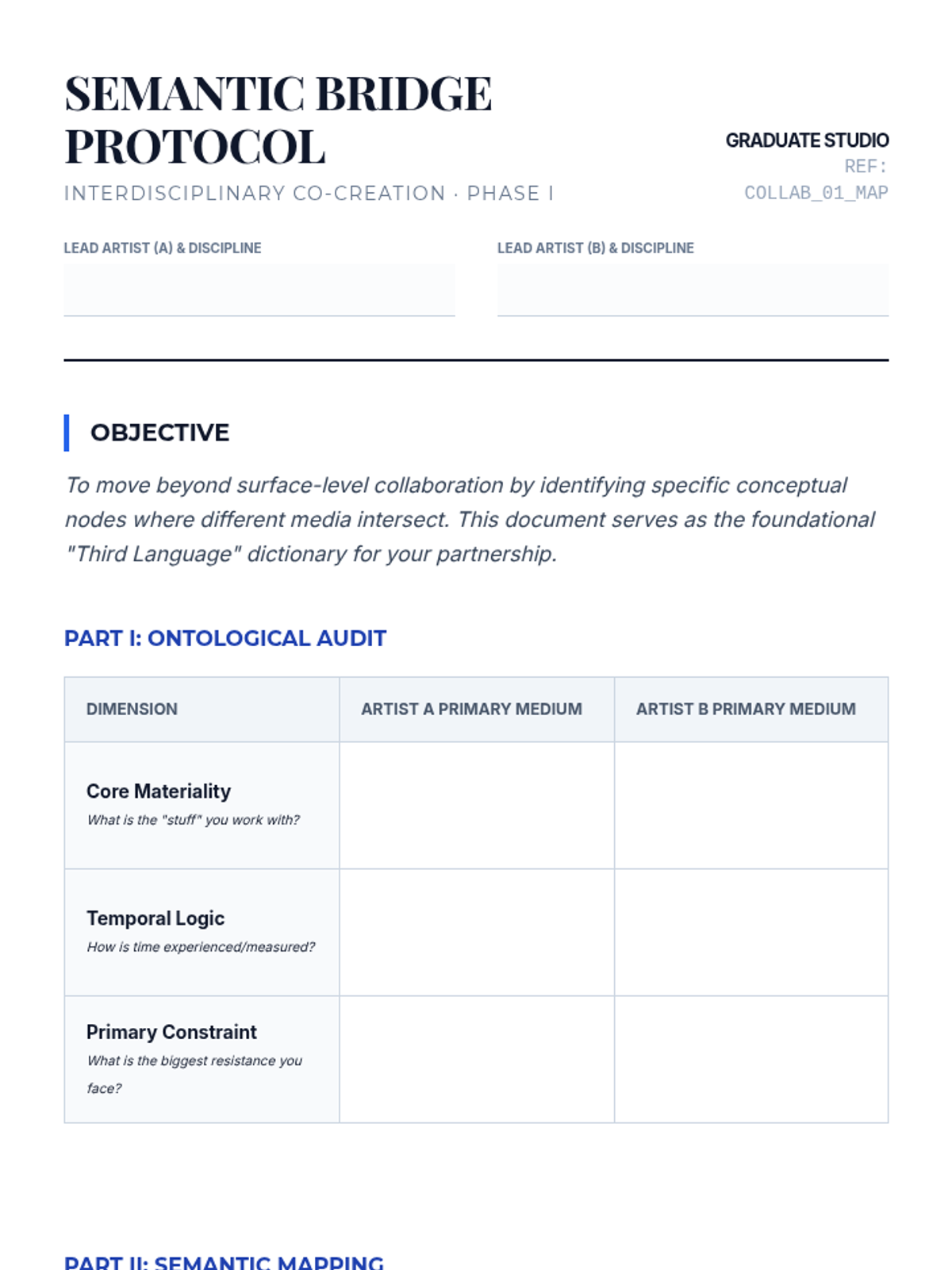
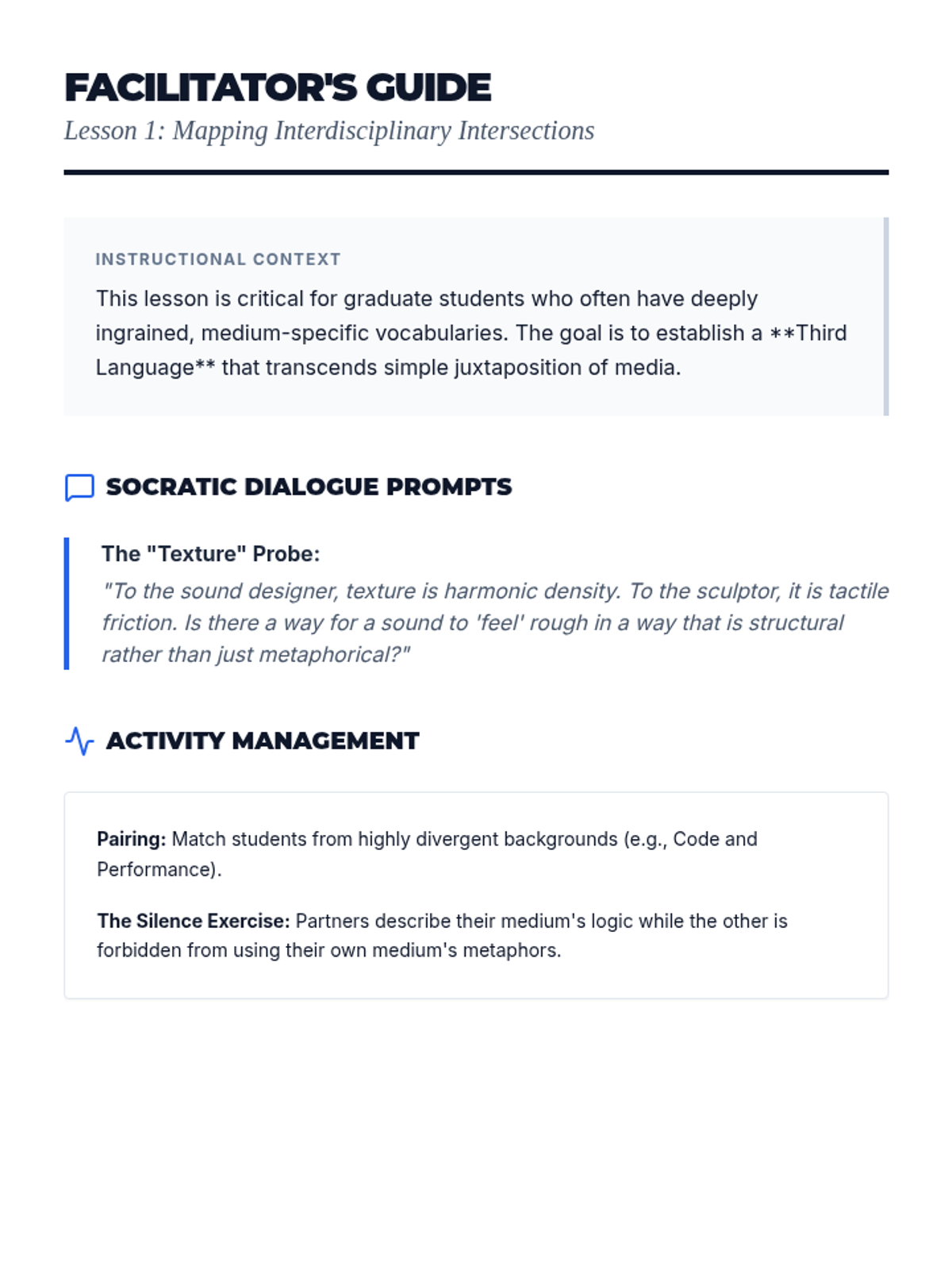
This graduate-level sequence guides artists across disciplines through the complex process of co-authoring transdisciplinary works. Students move from semantic mapping and vision negotiation to technical integration and final exhibition, focusing on creating a 'third language' that transcends simple juxtaposition of media.
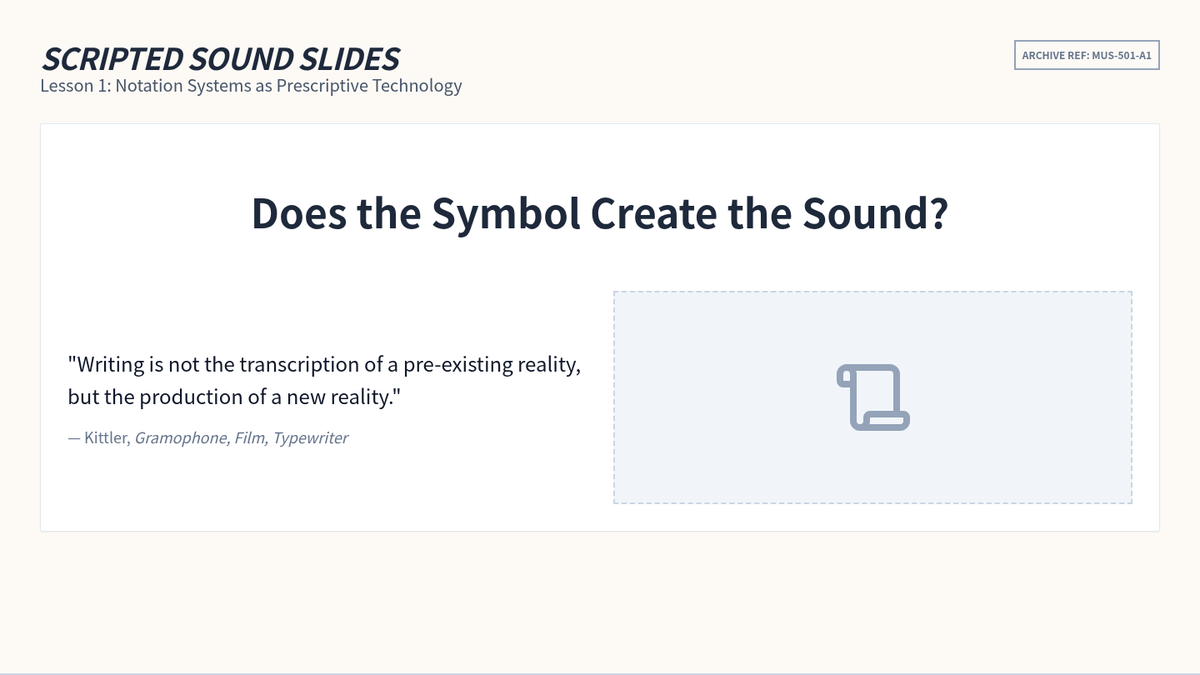
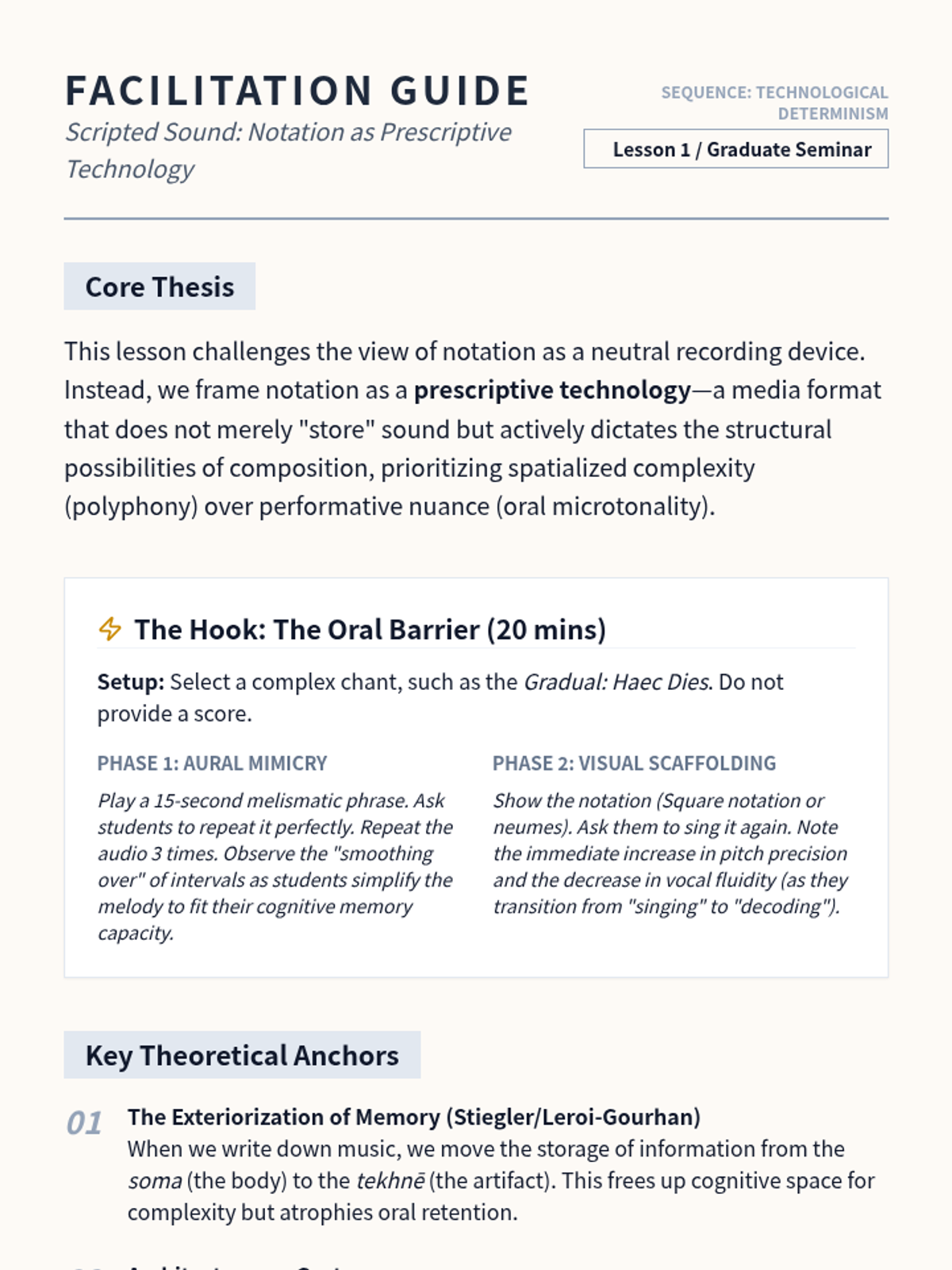
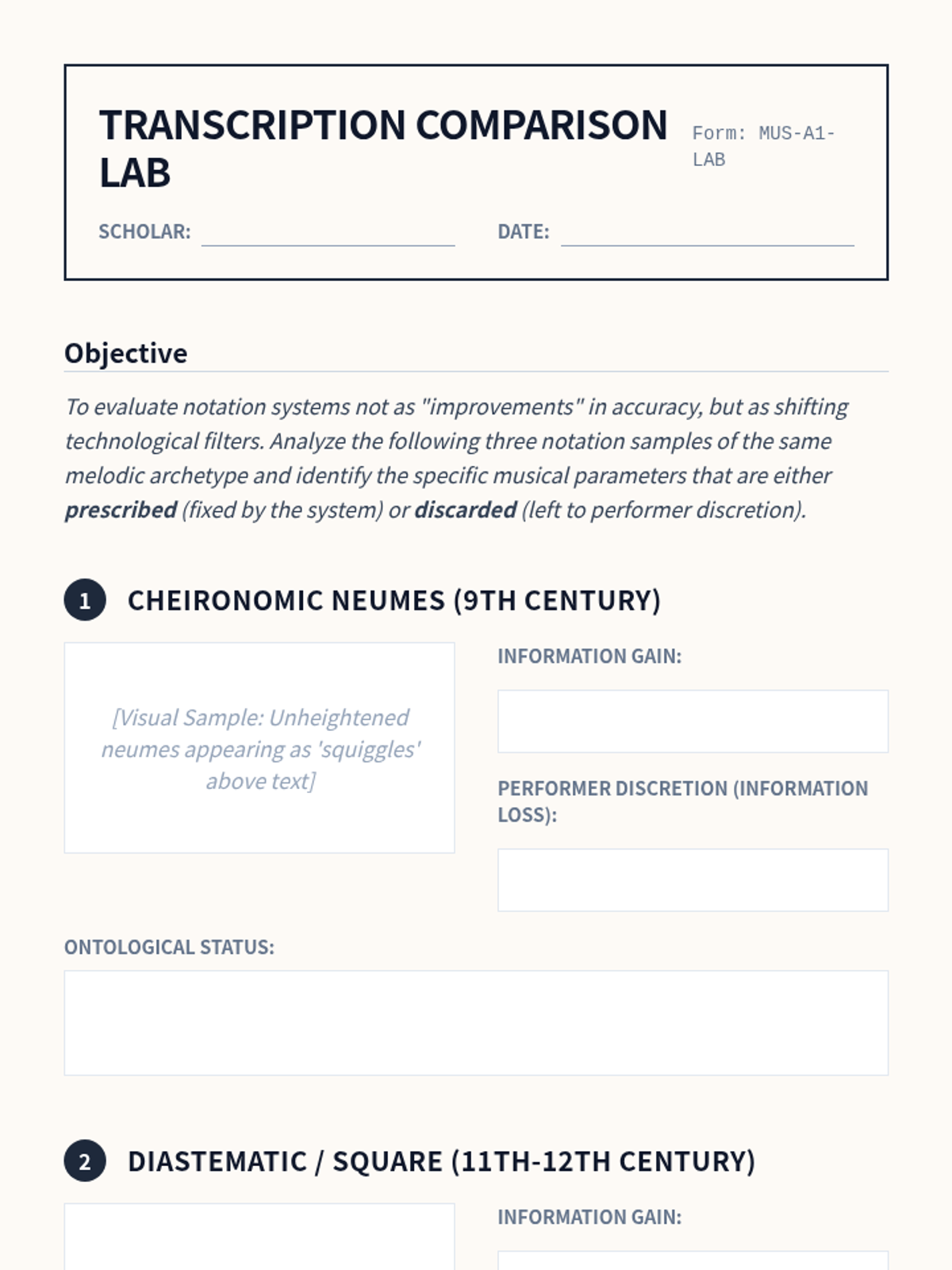
A graduate-level exploration of how technological advancement (from notation to algorithms) acts as a primary driver of musical aesthetics and evolution. Students analyze the reciprocal relationship between material culture and musical expression using media theory and organology.
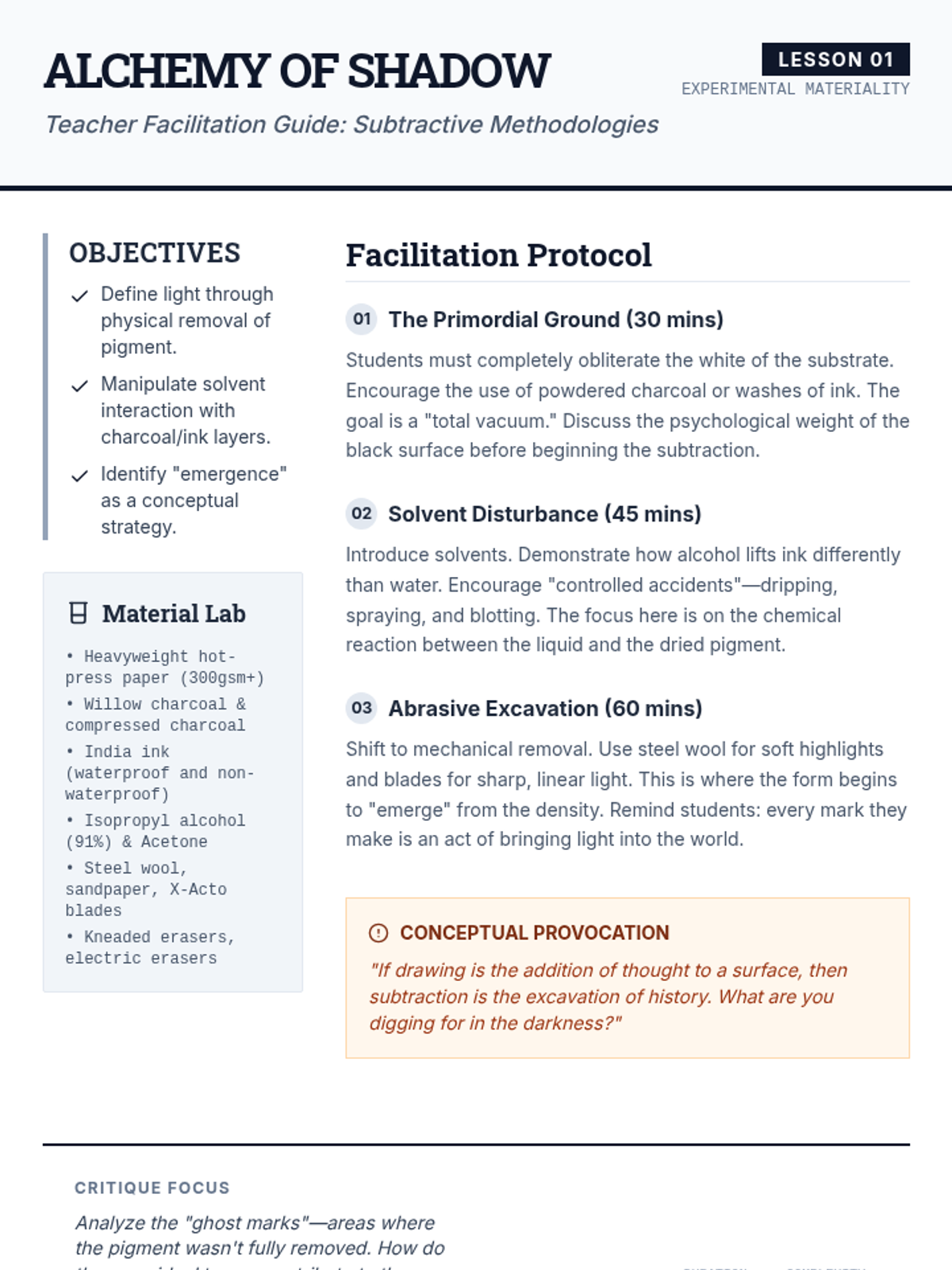
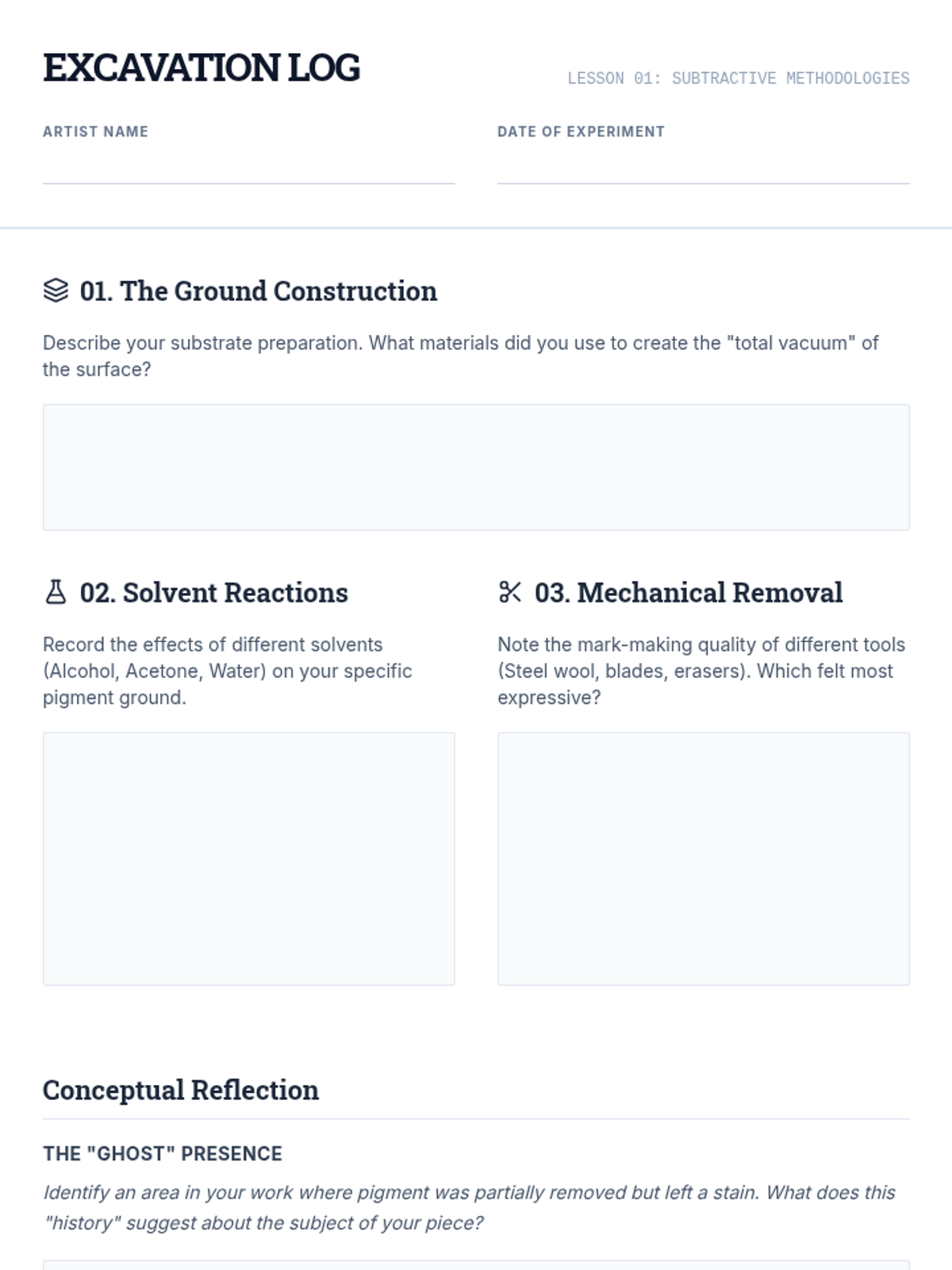
A graduate-level exploration of the intersection between medium and meaning. Students innovate with traditional materials, exploring chemical interactions, substrate manipulation, and mixed-media synthesis to develop a unique 'mark-making' vocabulary where physical texture contributes to conceptual depth.
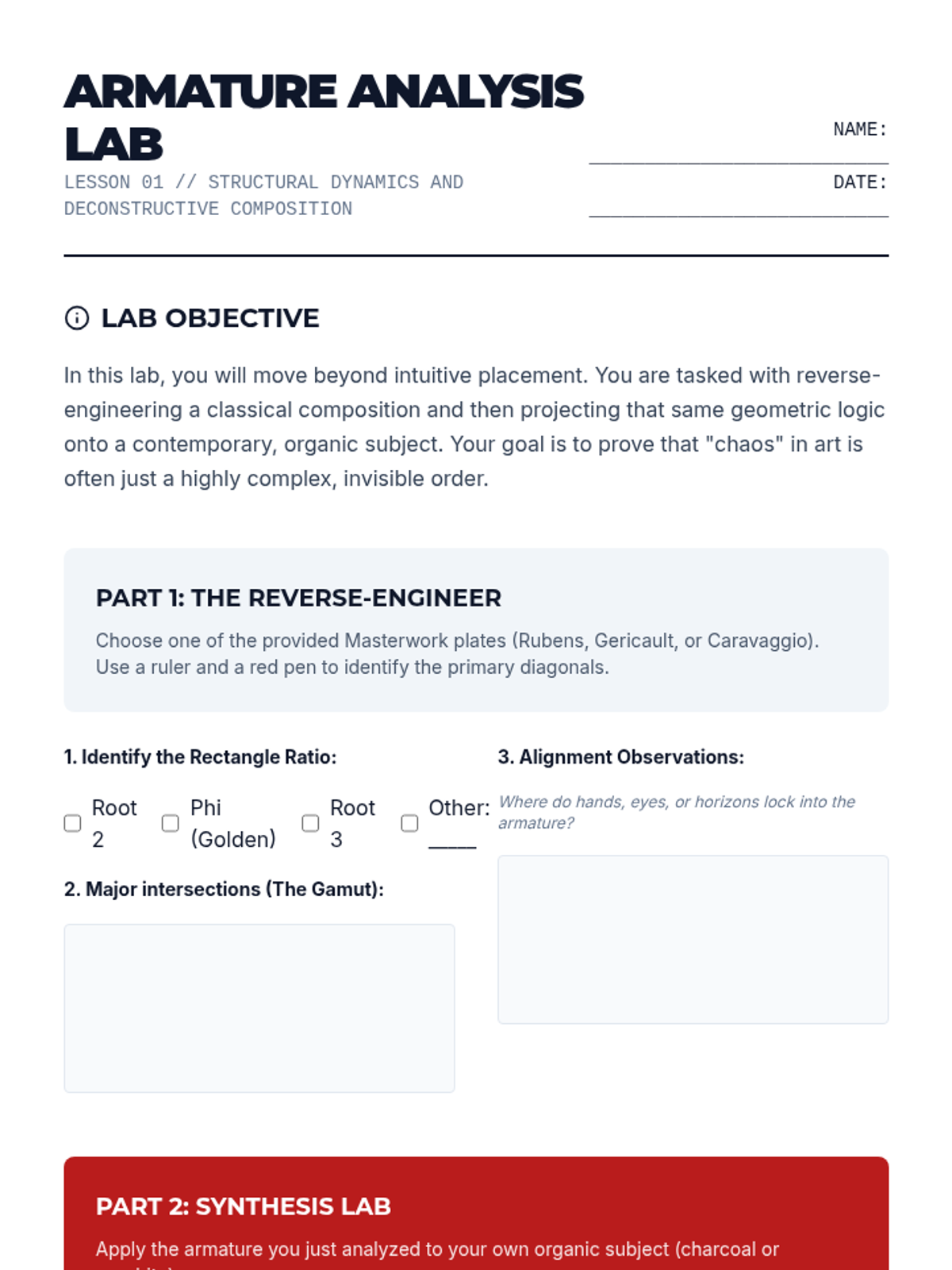
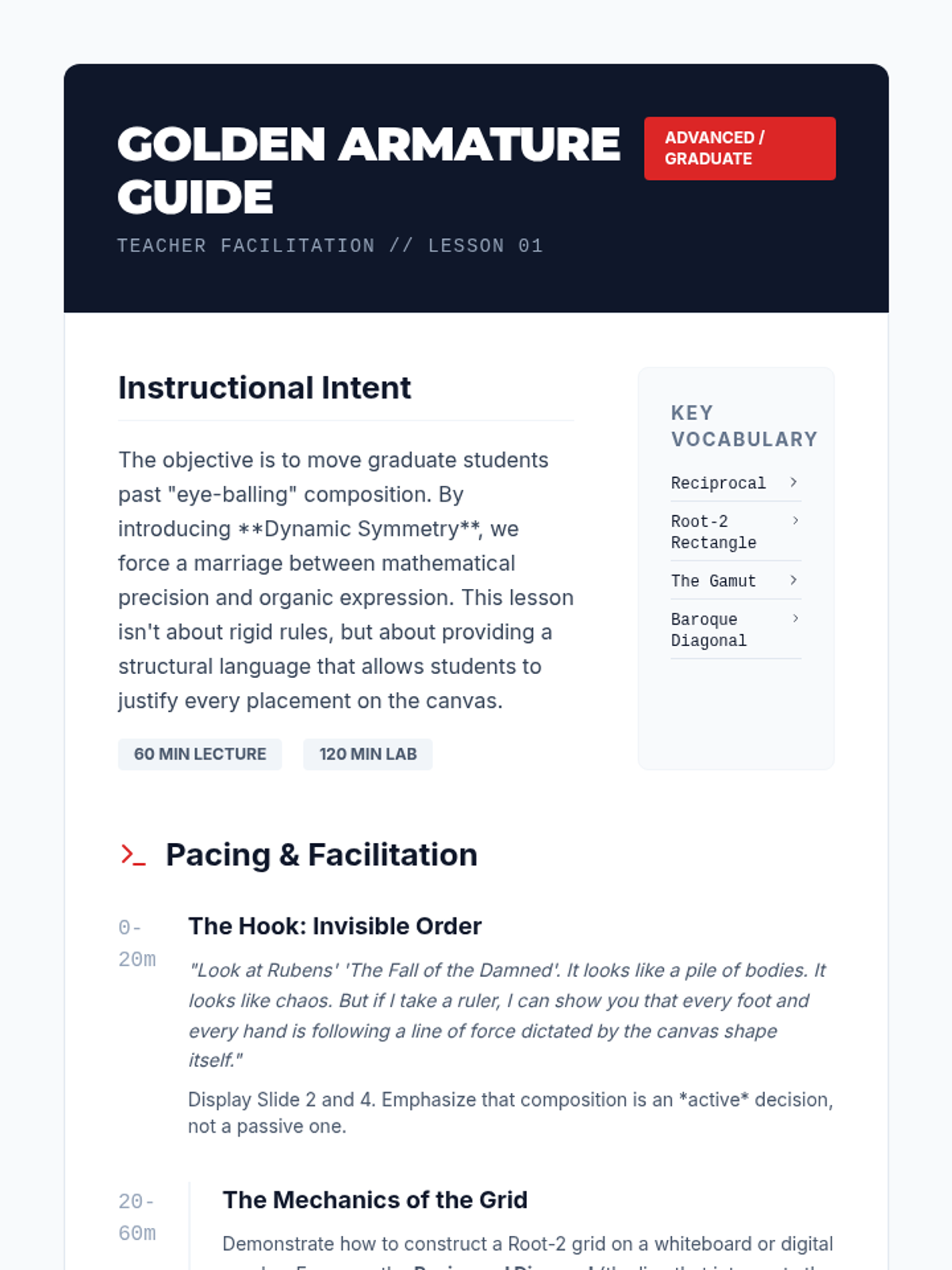
This advanced sequence for graduate students explores the deconstruction of classical composition through dynamic symmetry, edge tension, non-Euclidean perspective, and visual hierarchy. Students will move from rigid geometric analysis to 'anti-compositional' strategies to create contemporary, tension-filled imagery.
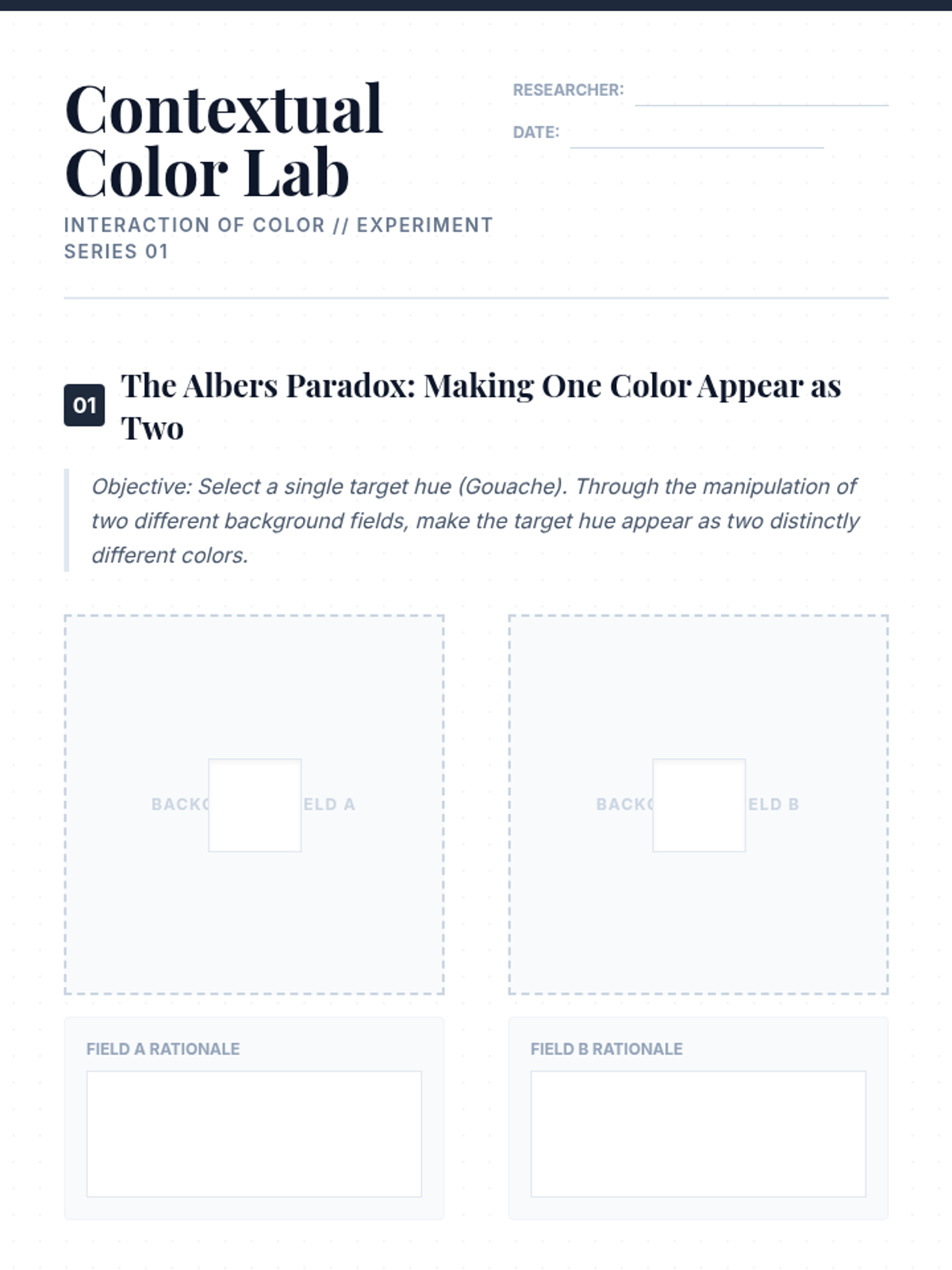
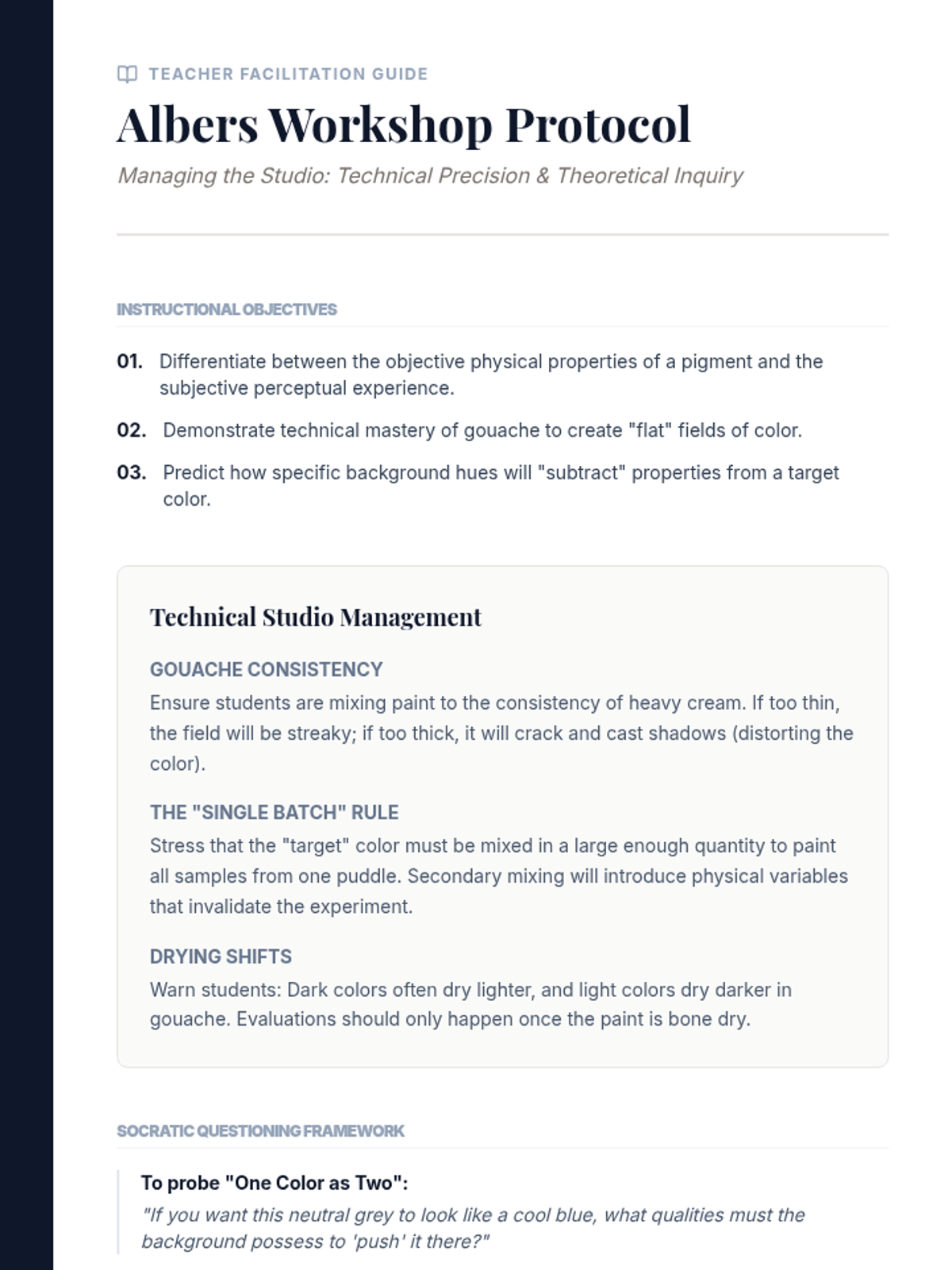
An intensive graduate-level investigation into the physics, psychology, and application of color in fine art, focusing on relativity, semiotics, and narrative.
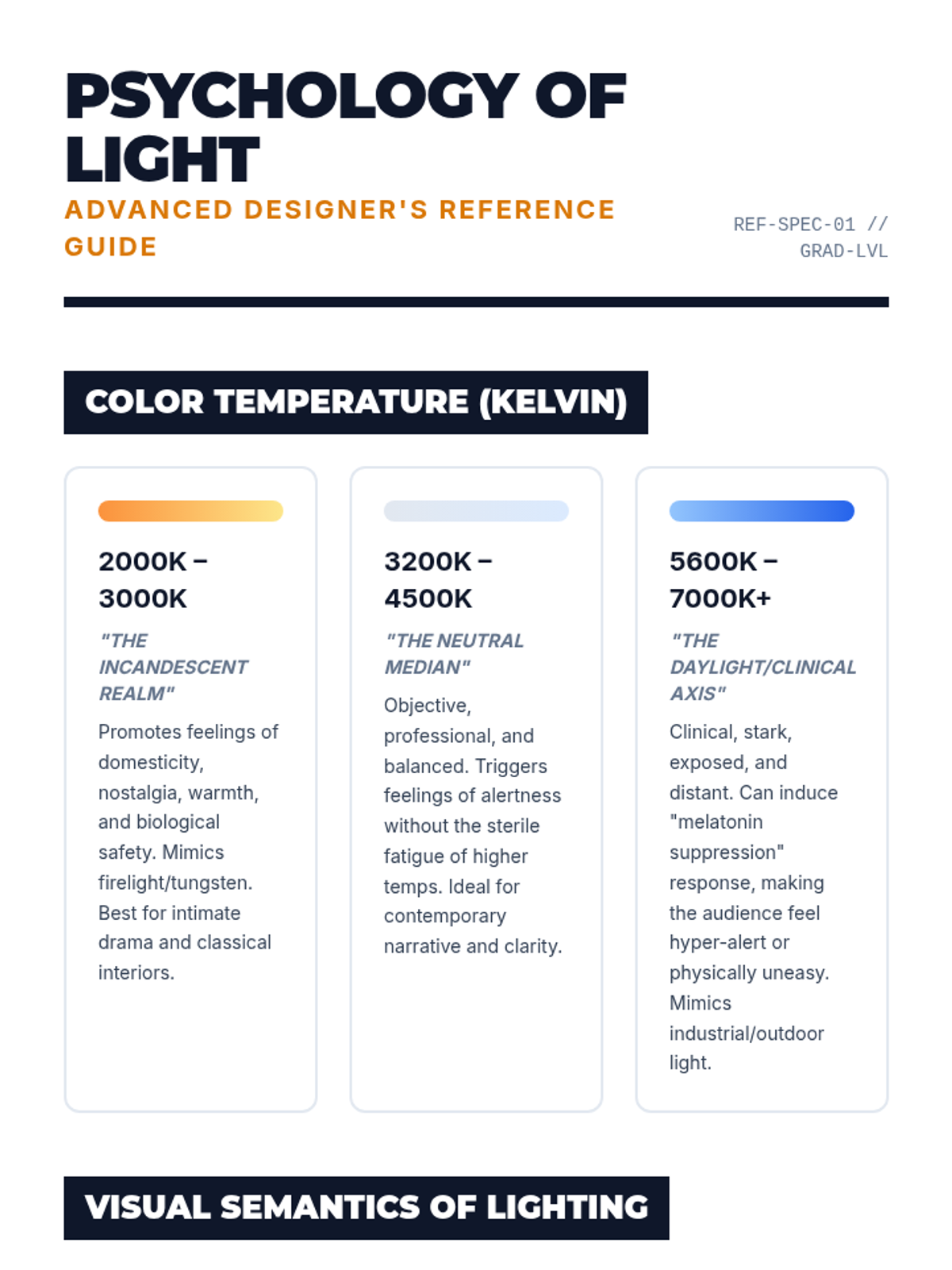
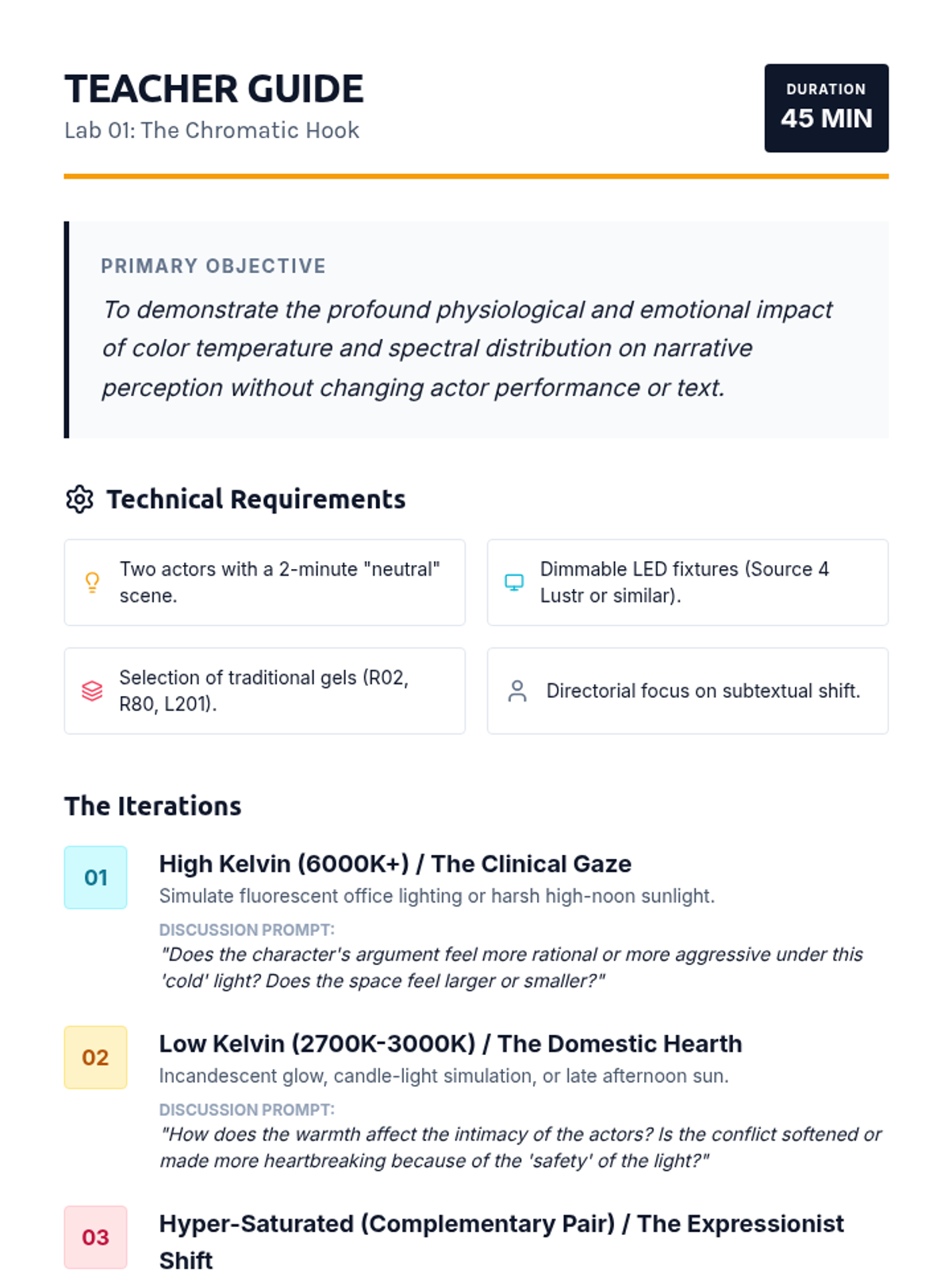
An advanced technical theater sequence for graduate students exploring the intersection of light physics, human perception, and visual storytelling. Students move from the biological mechanics of the eye to high-level system integration and dramaturgy.
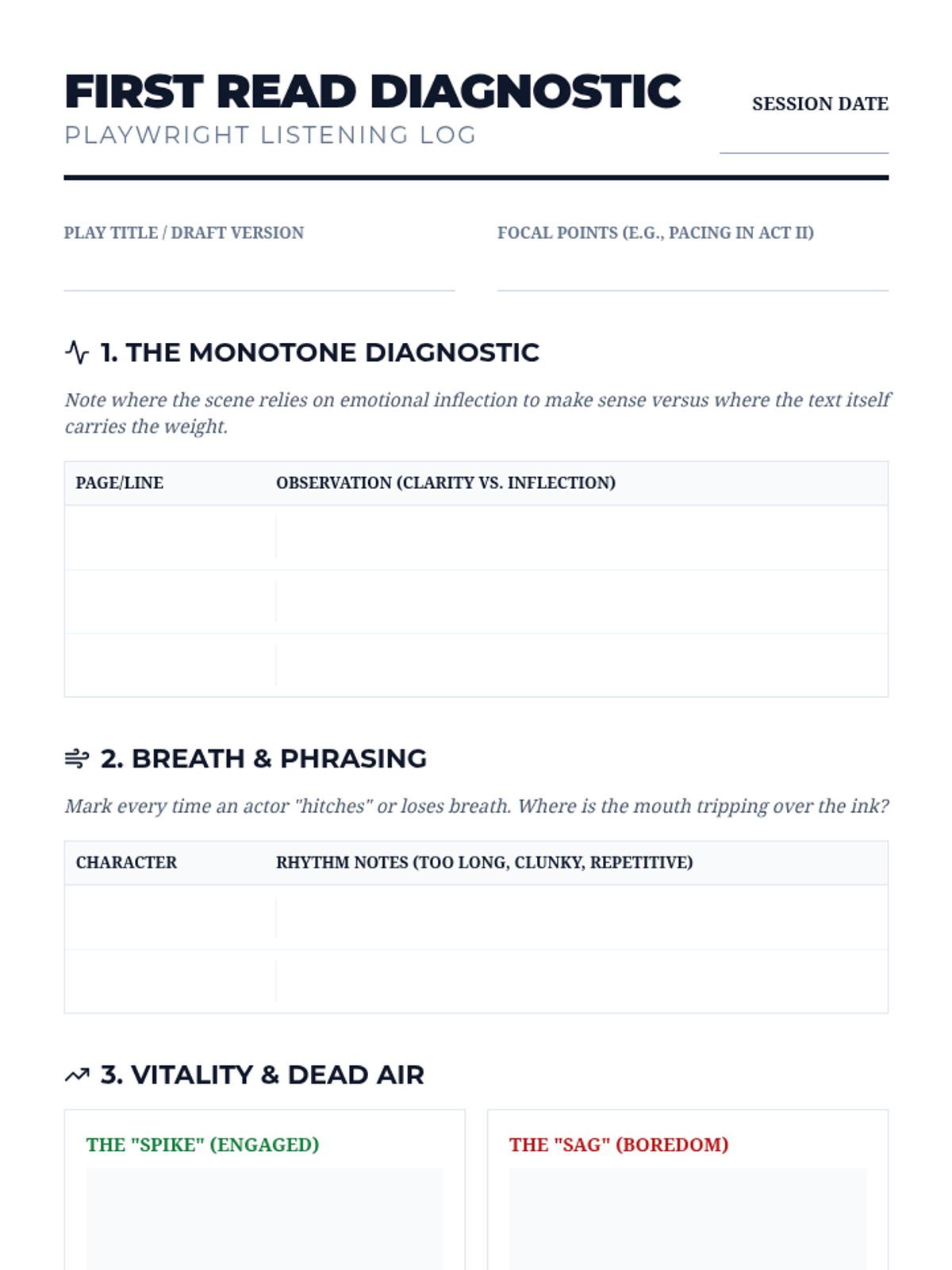
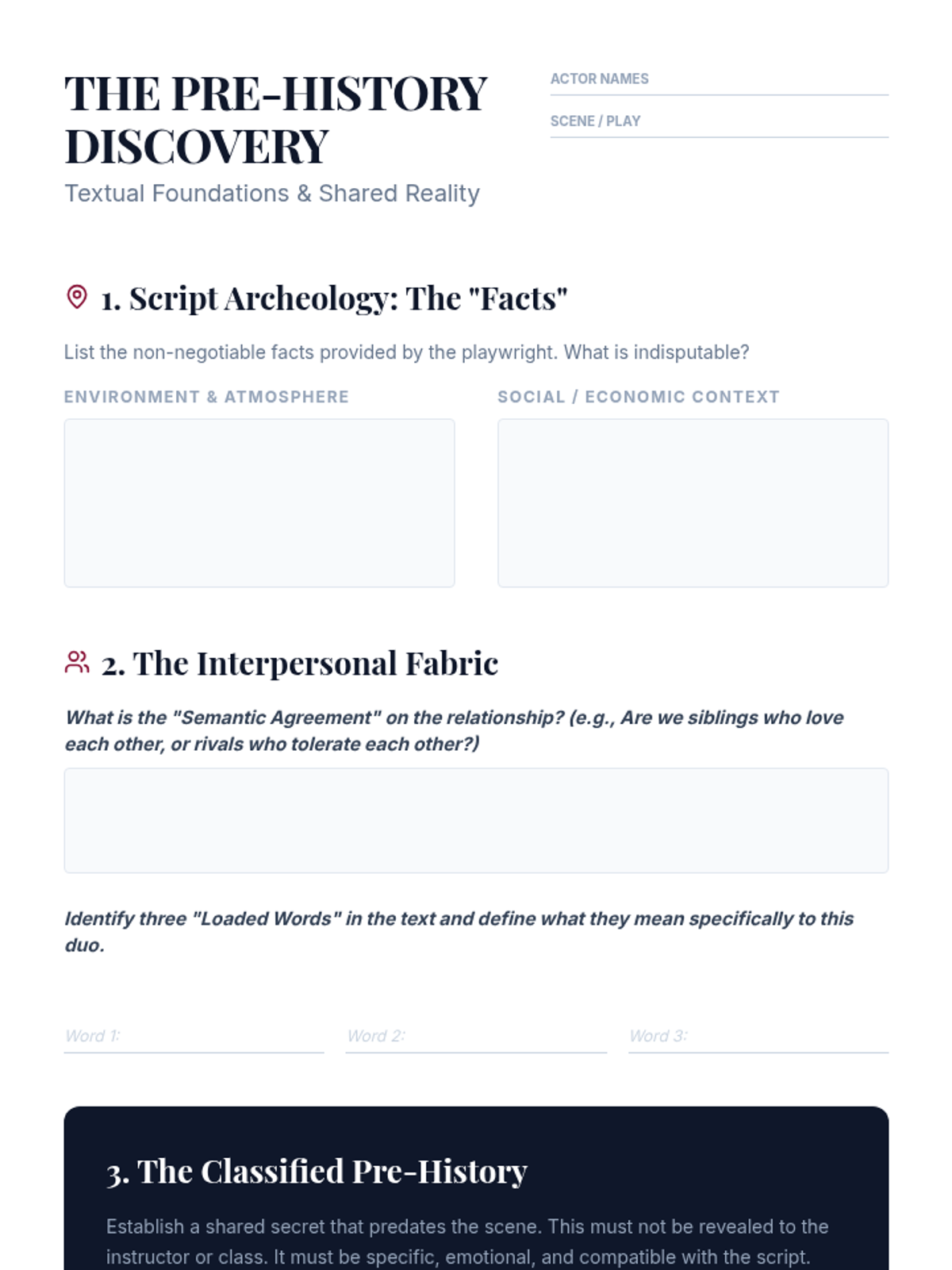
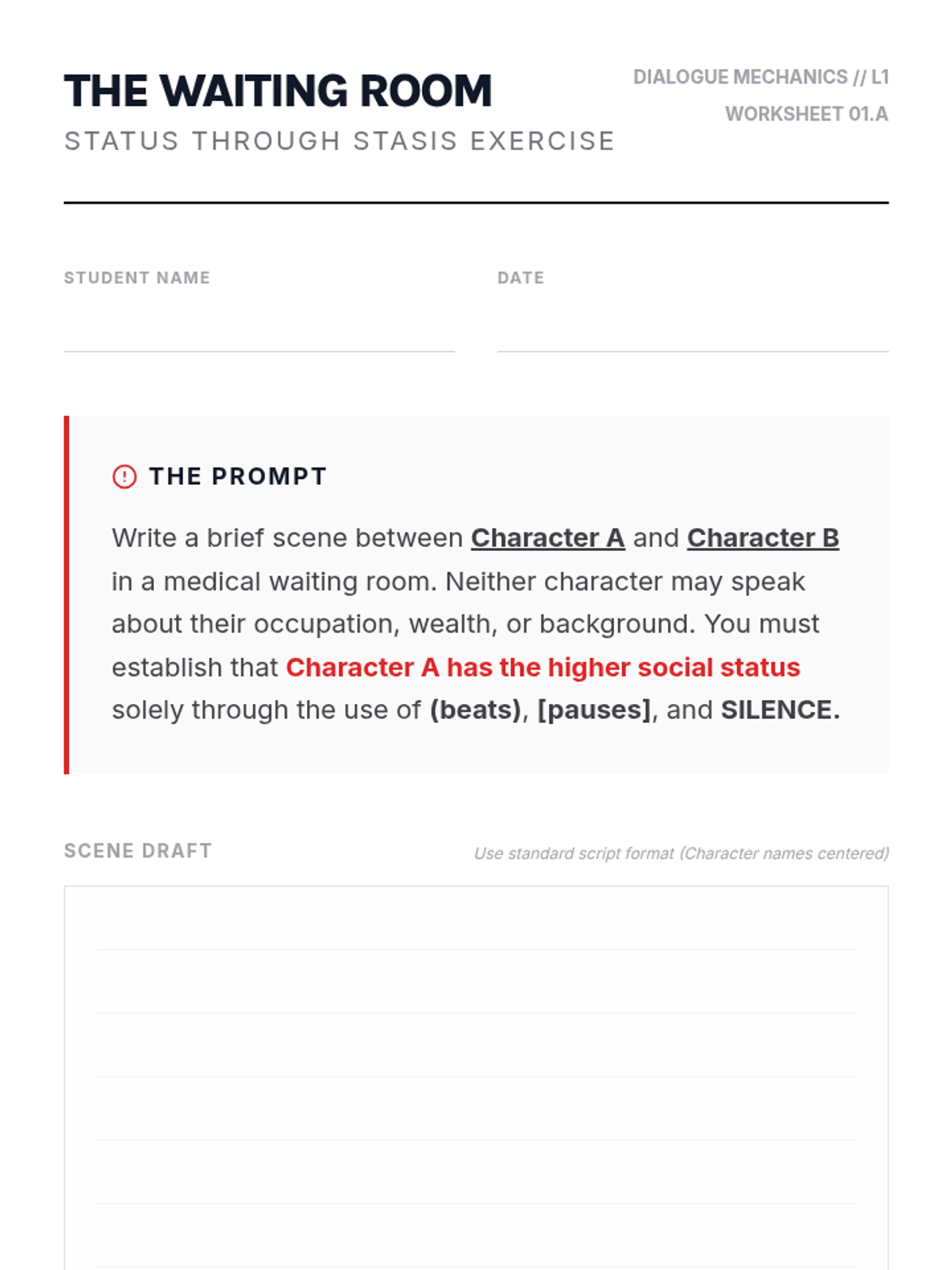
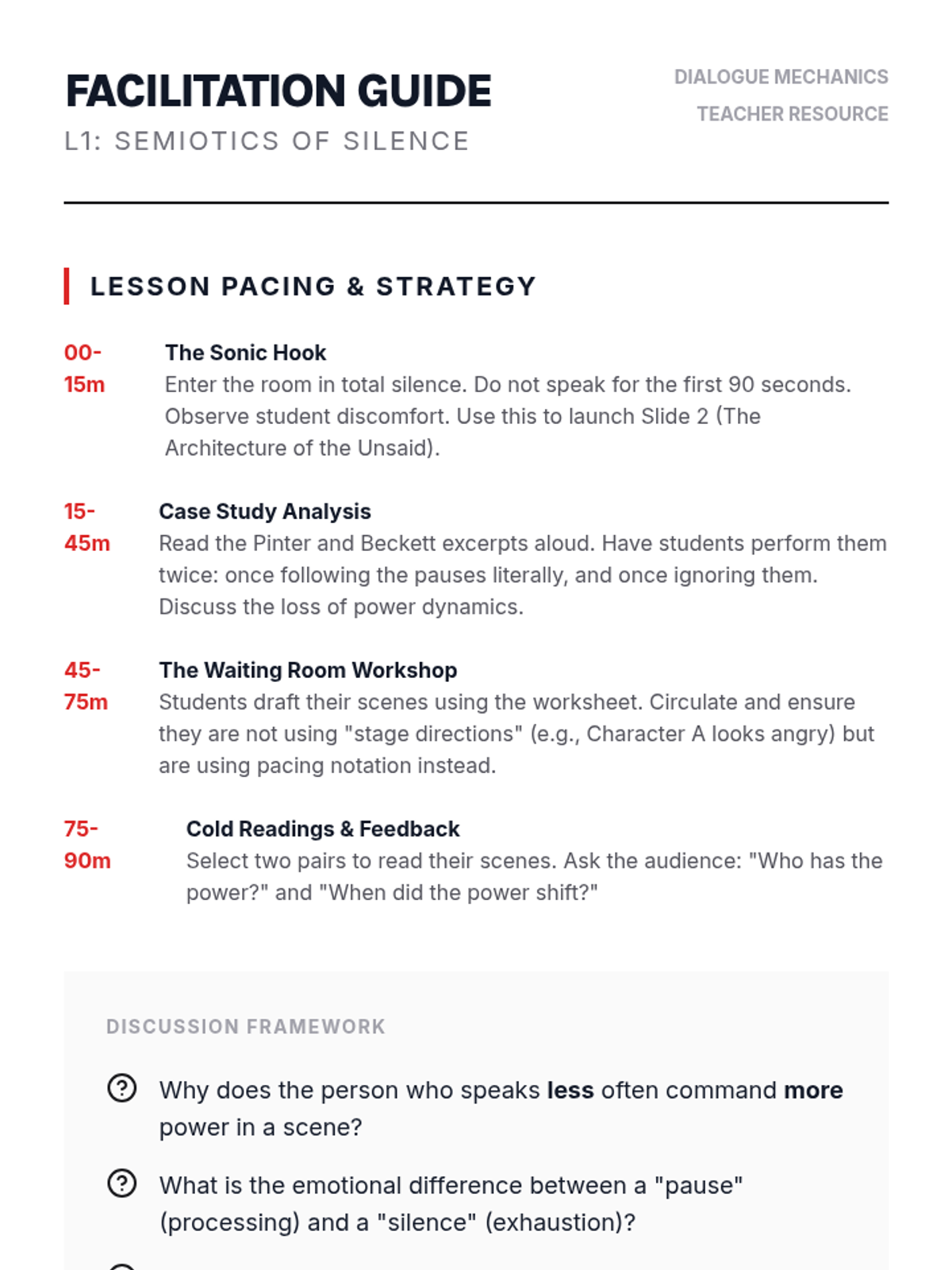
An advanced playwriting sequence for graduate students focusing on the technical mechanics of dialogue. It treats dramatic text as musical notation, exploring how rhythm, syntax, and silence construct power dynamics and atmosphere.
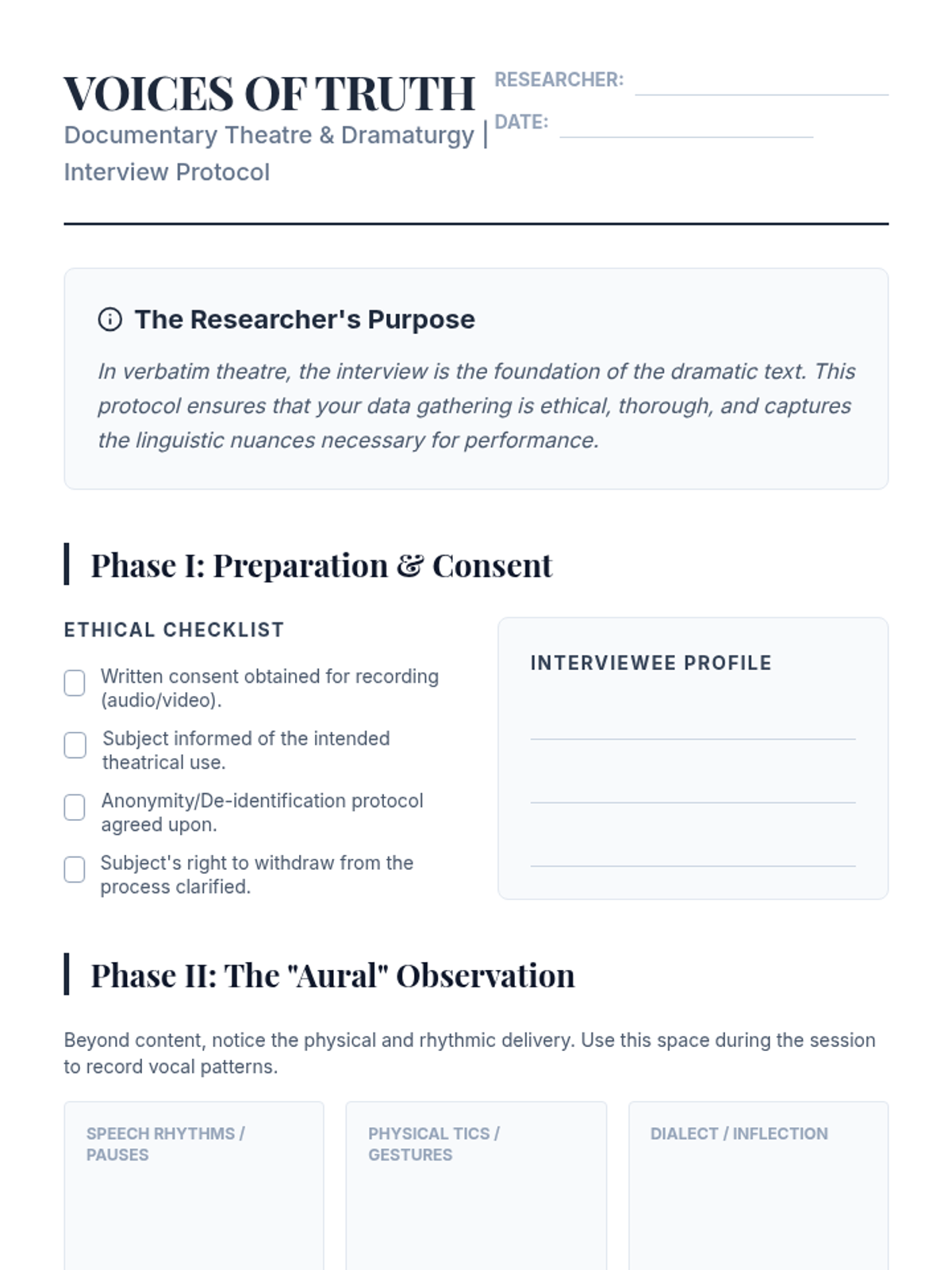
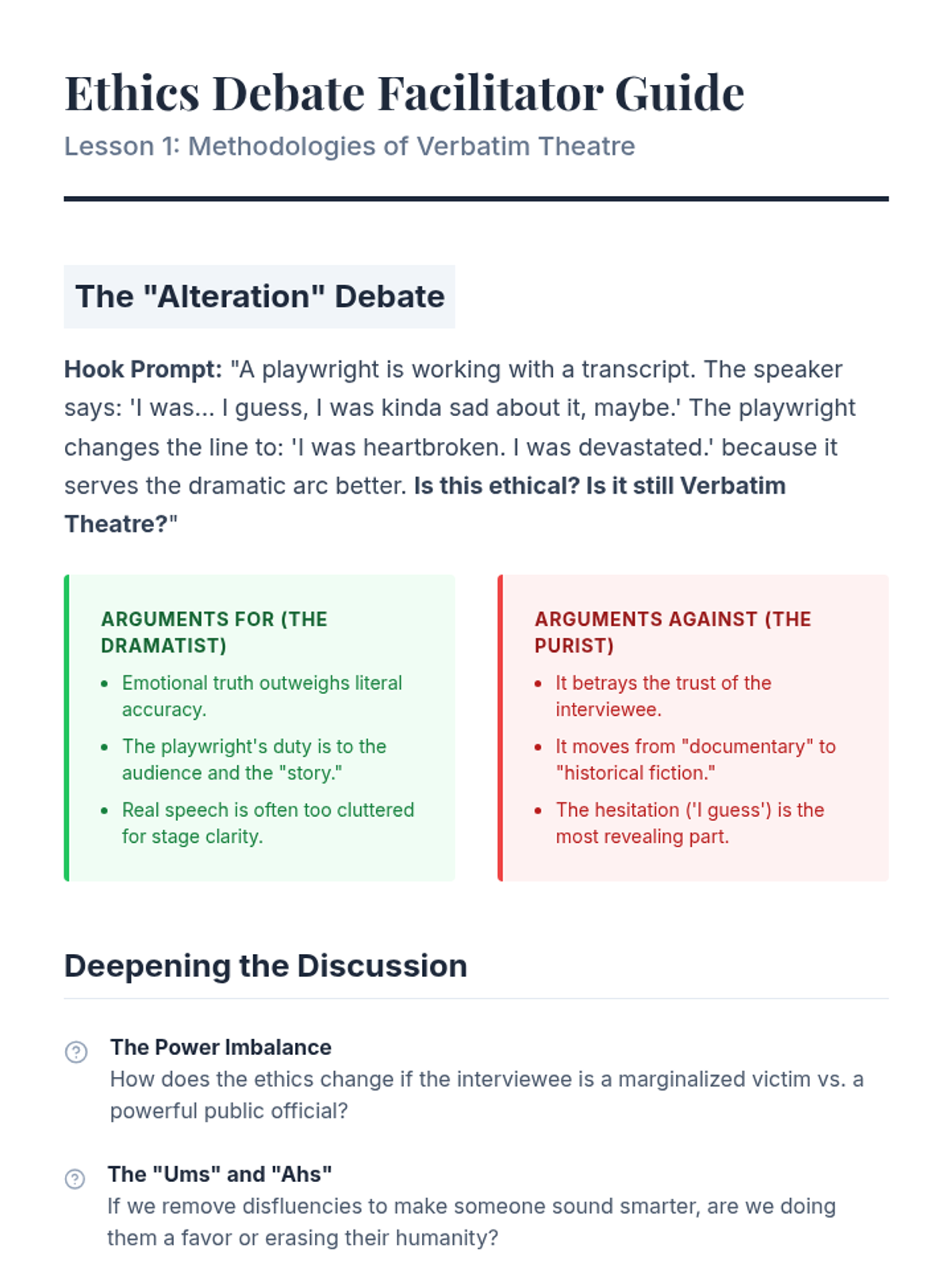
A comprehensive graduate-level exploration of Documentary and Verbatim Theatre, covering ethical research, archival mining, speech editing, character synthesis, and theatrical staging. Students transition from researchers to dramatists, producing original documentary works based on real-world testimony and historical records.
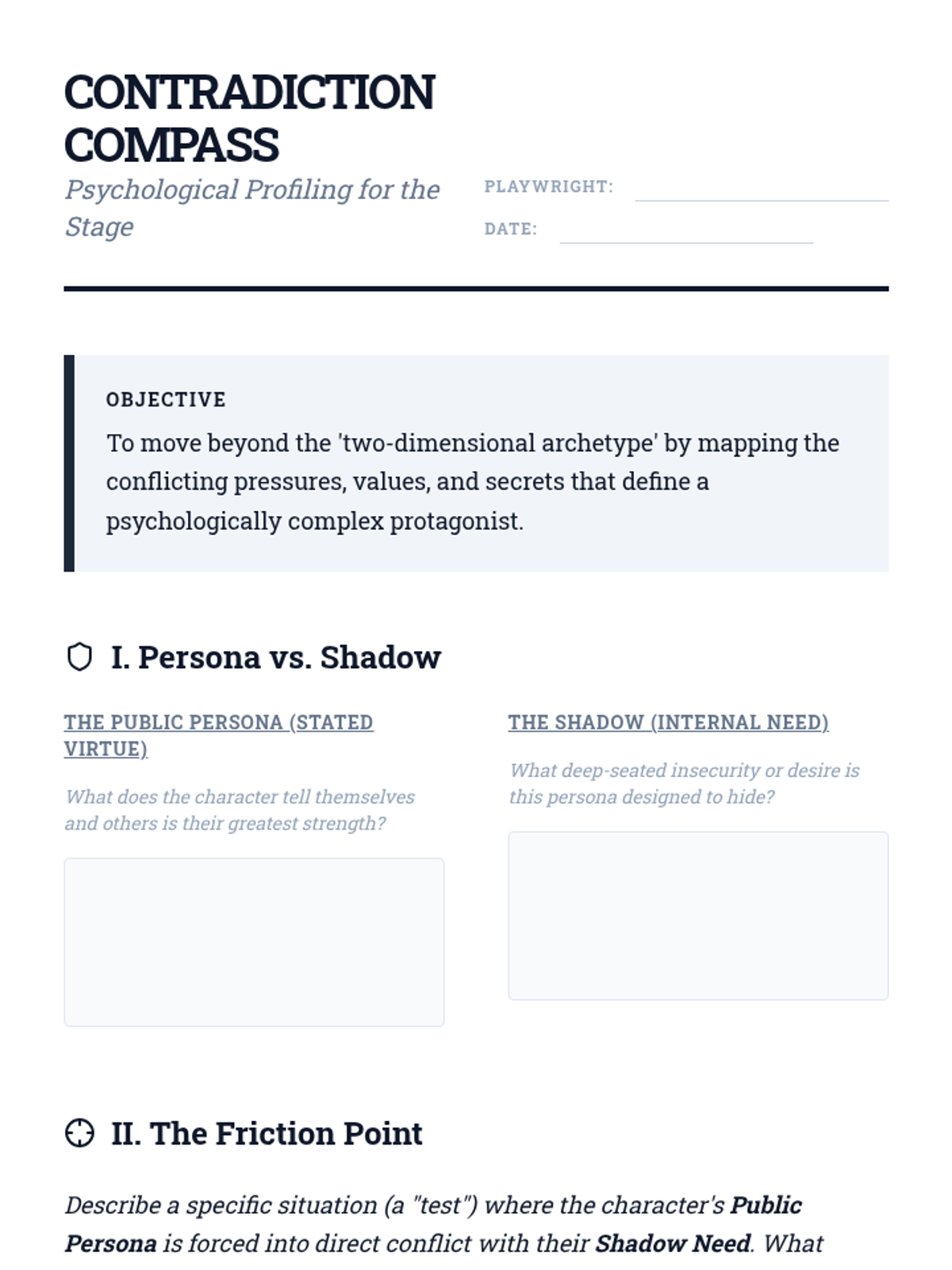
An advanced playwriting sequence for graduate students focusing on the psychological architecture of dramatic characters, subtextual dialogue, and character-driven narrative structures. Students progress from deconstructing archetypes to writing a one-act draft grounded in behavioral truth and internal contradiction.
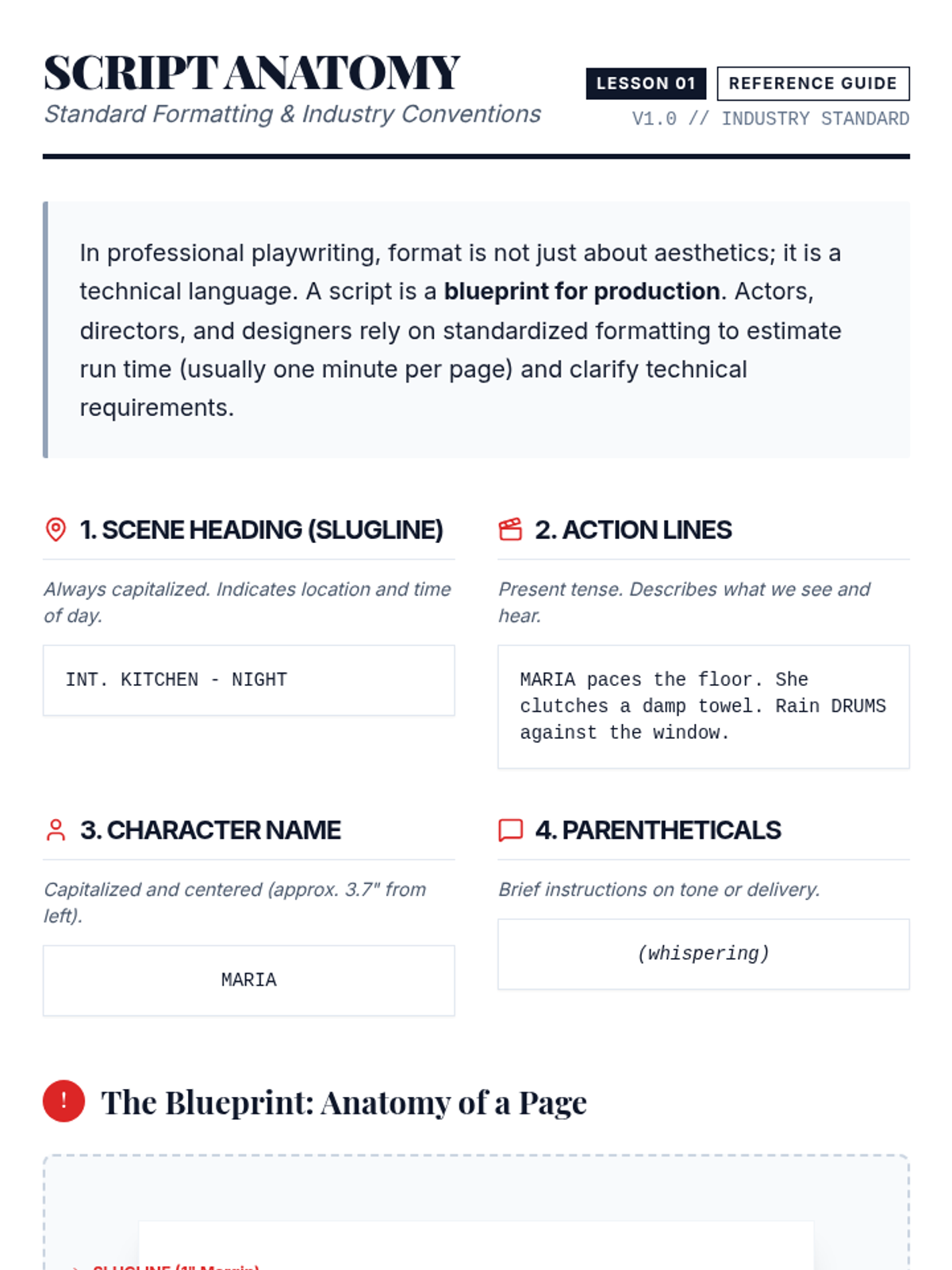
This sequence establishes the technical and structural foundations required for professional playwriting. Students master industry-standard formatting and deconstruct theatrical architecture using classic and contemporary models to understand how structure dictates pacing and dramatic tension.
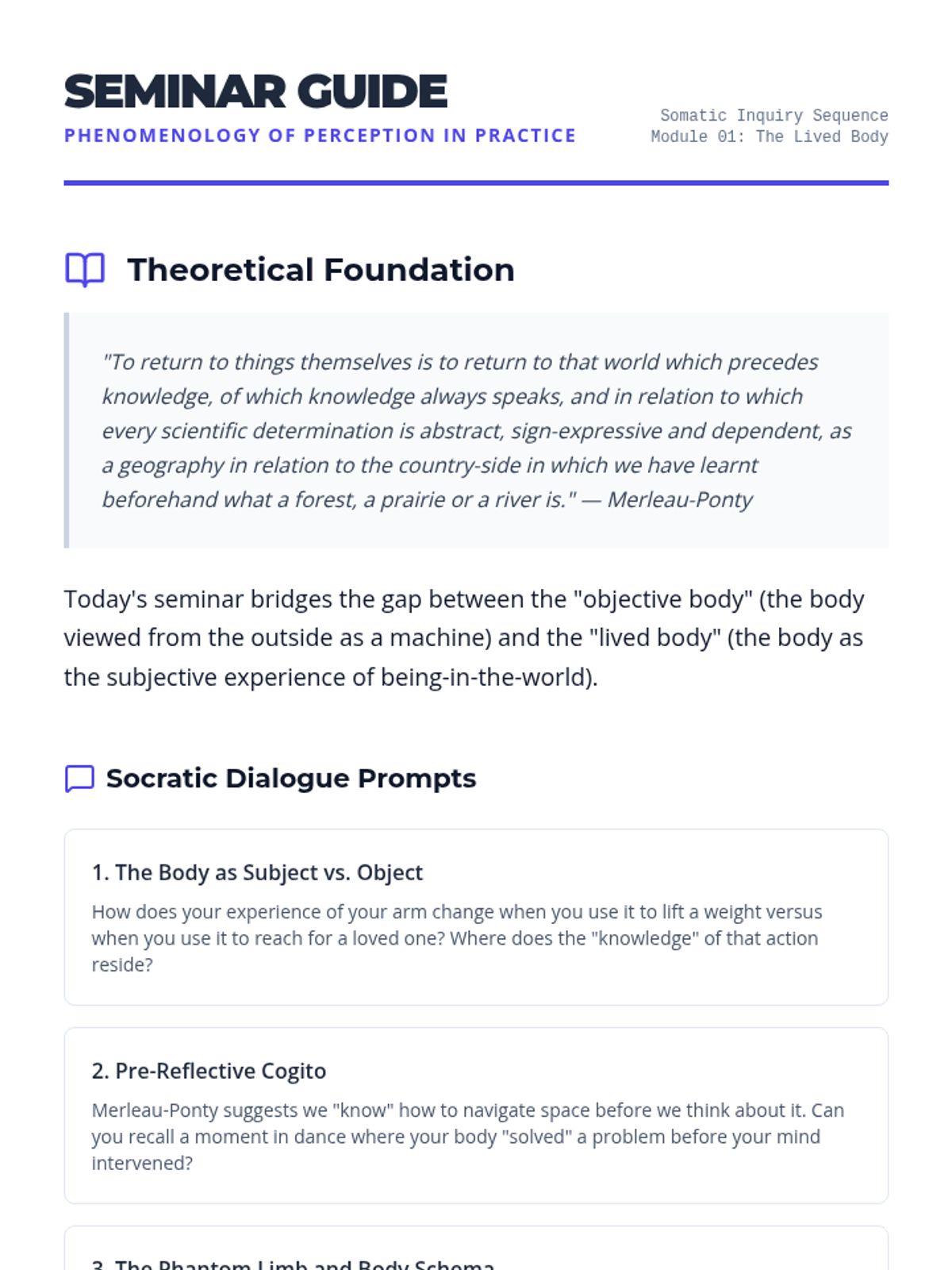
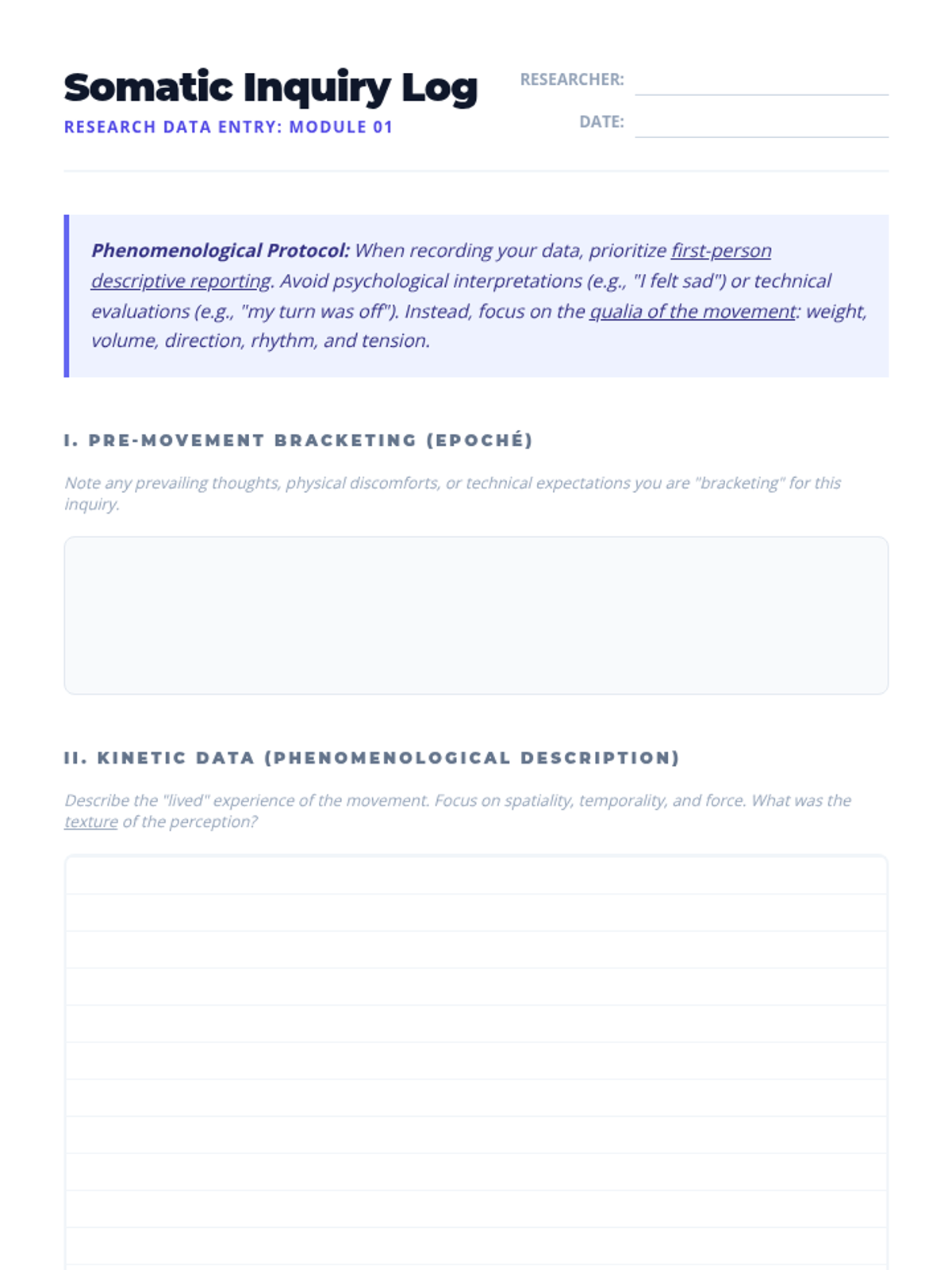
A graduate-level sequence exploring creative movement as a rigorous Practice-as-Research (PaR) methodology. It bridges phenomenological philosophy and somatic practice to investigate academic questions through the body.
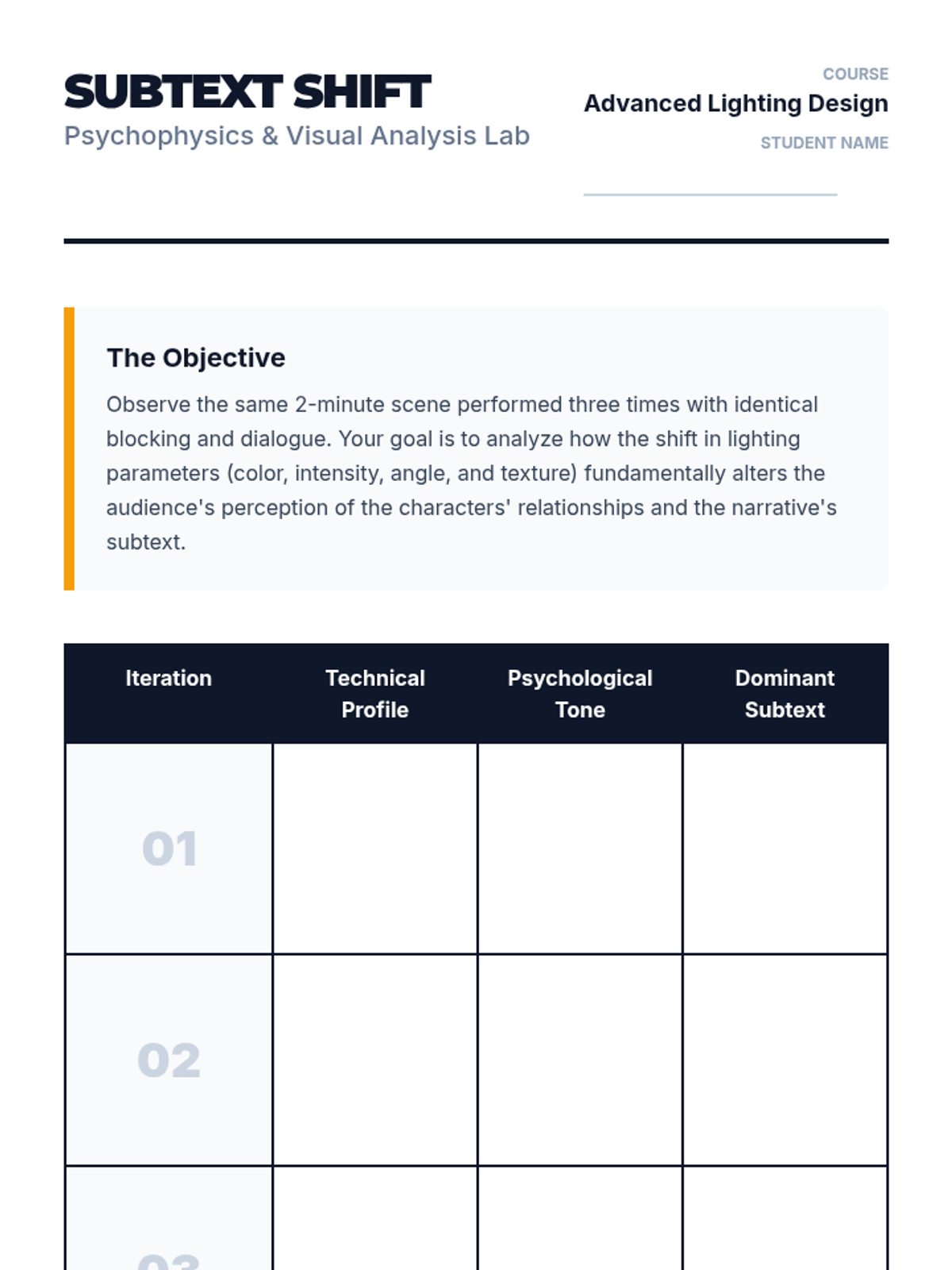
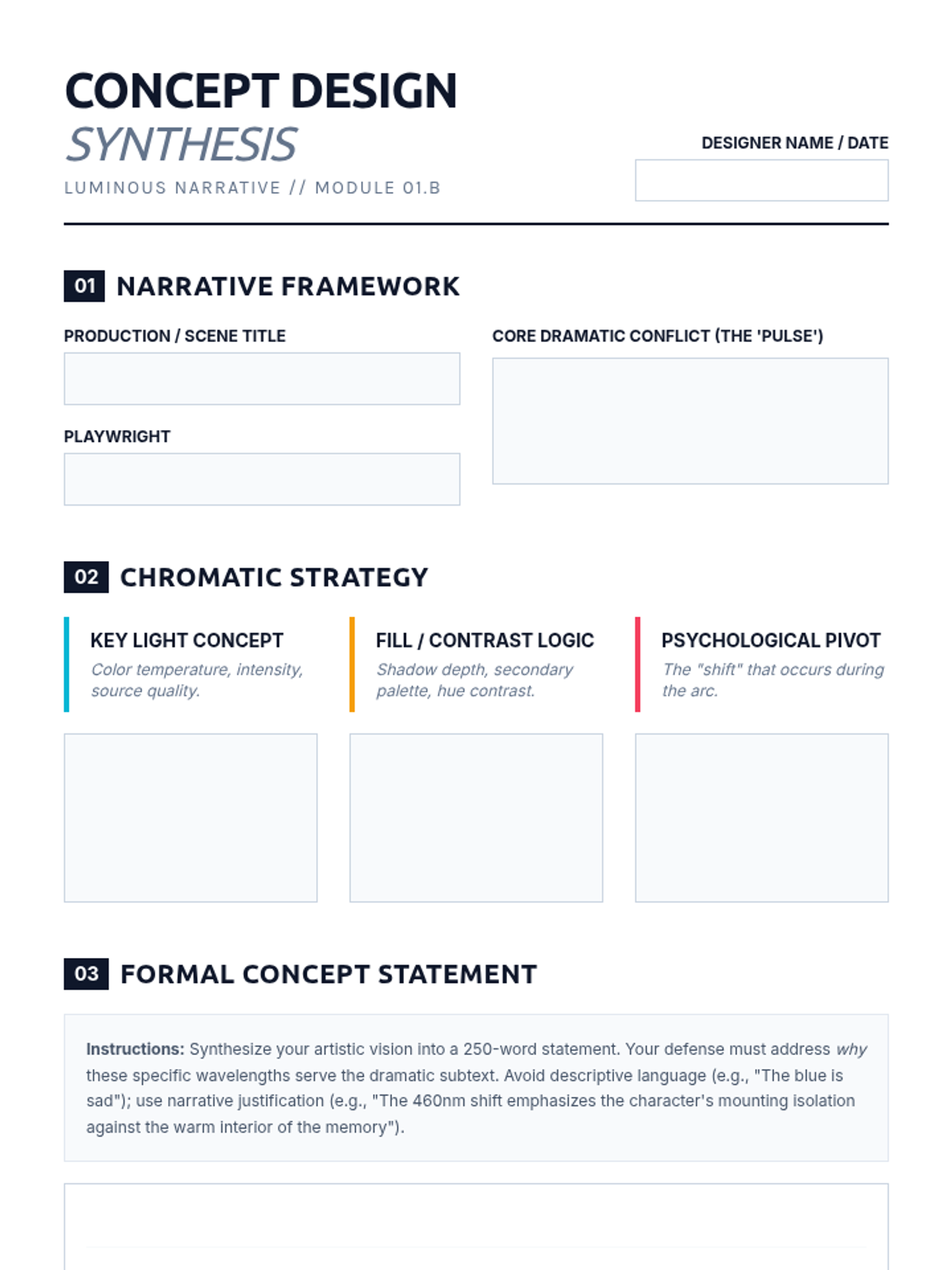
A graduate-level sequence exploring lighting design through color theory, photometrics, intelligent systems, and narrative cueing. Students synthesize technical mastery with artistic justification to create immersive visual environments.
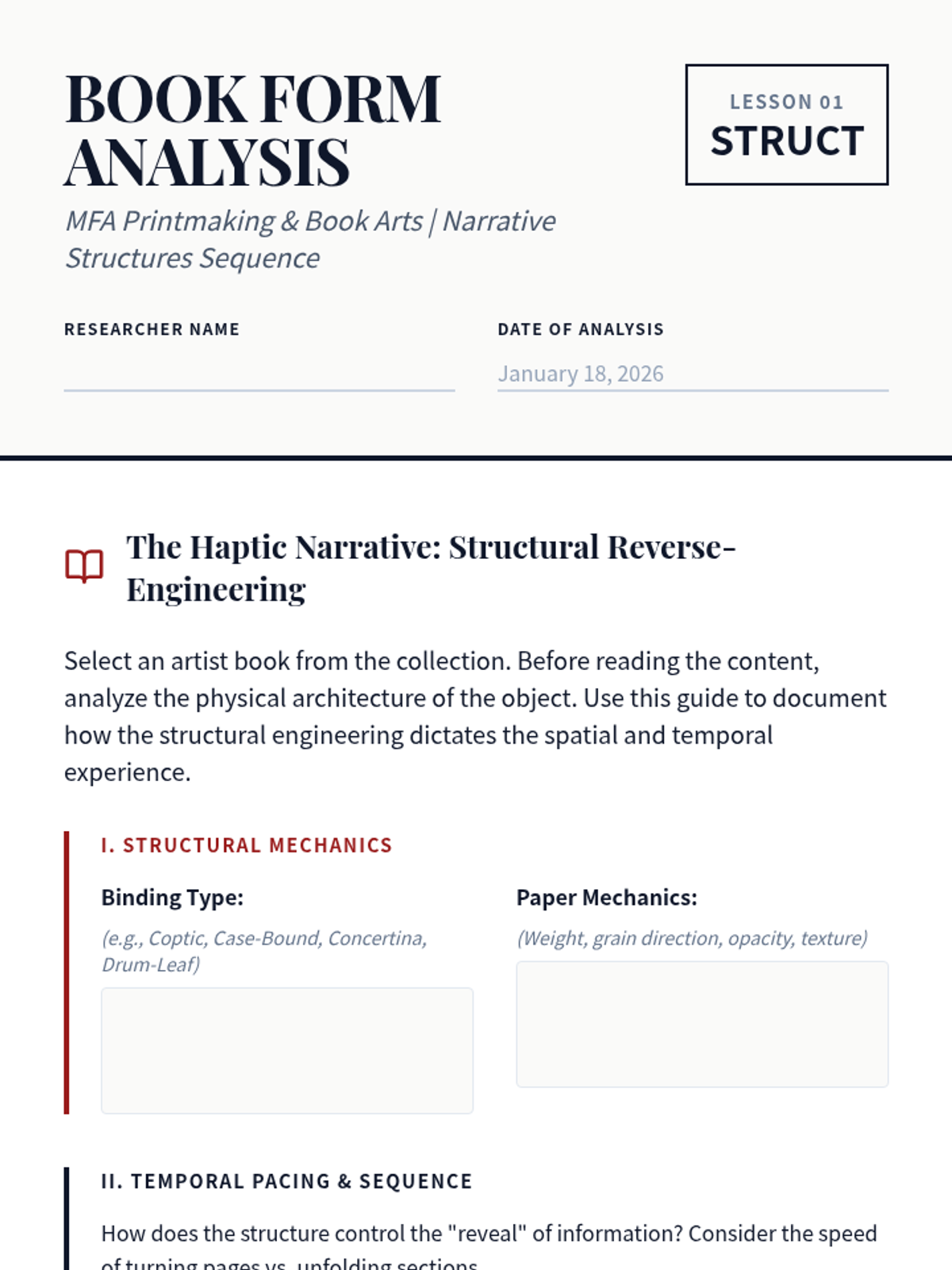
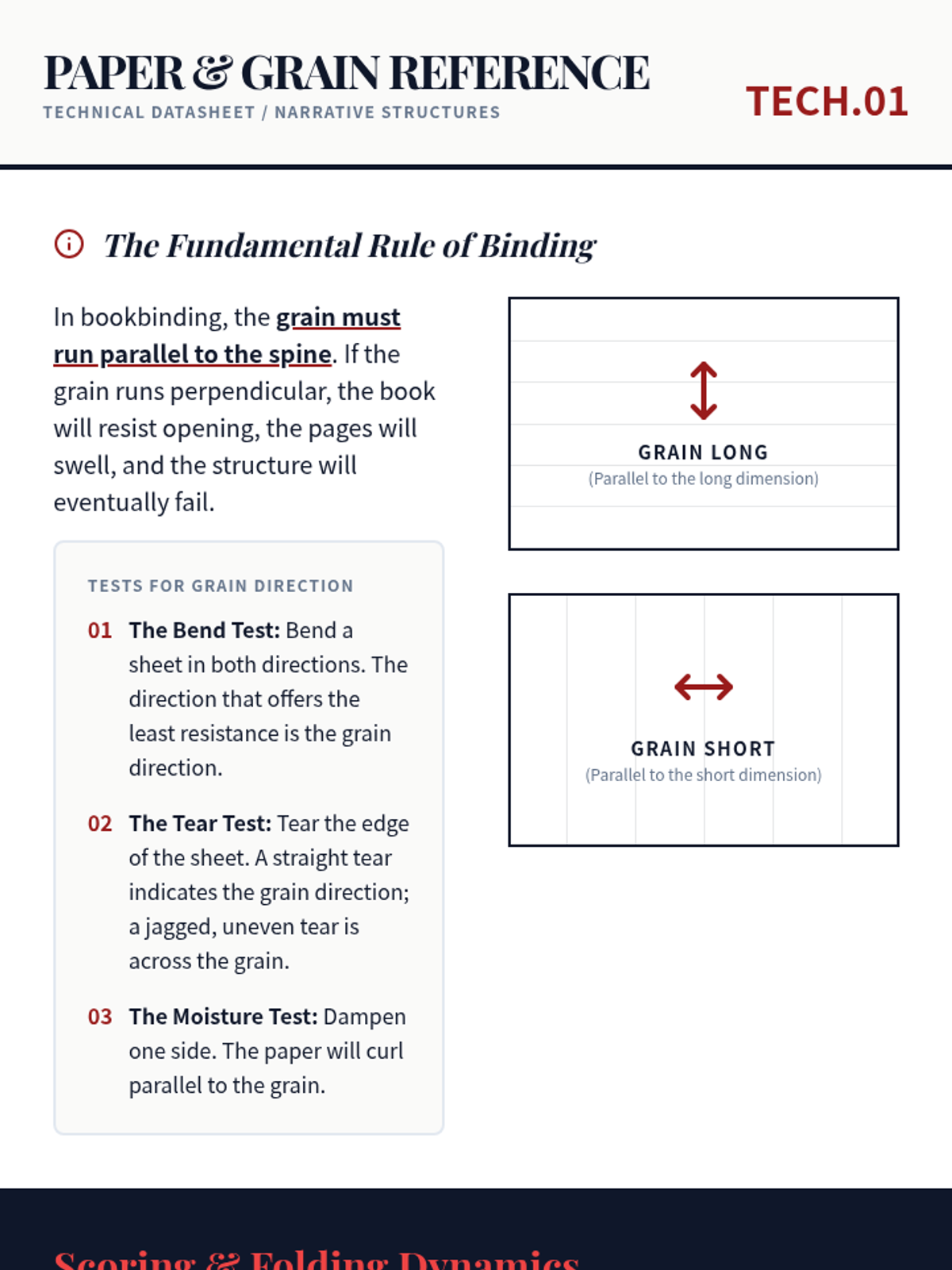
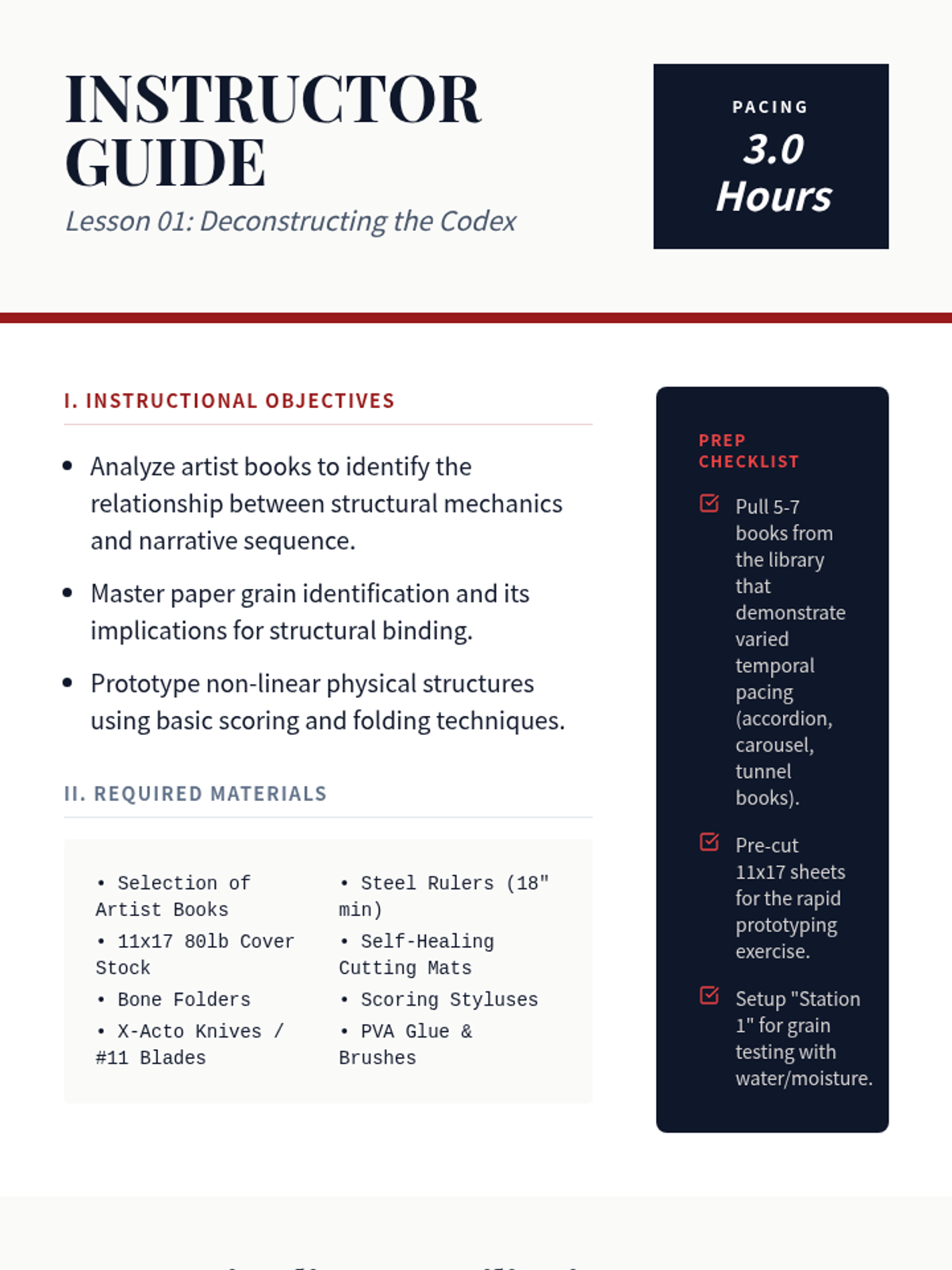
A graduate-level exploration of the artist book, integrating letterpress printing, relief graphics, and structural binding to investigate the relationship between physical form and narrative sequence.
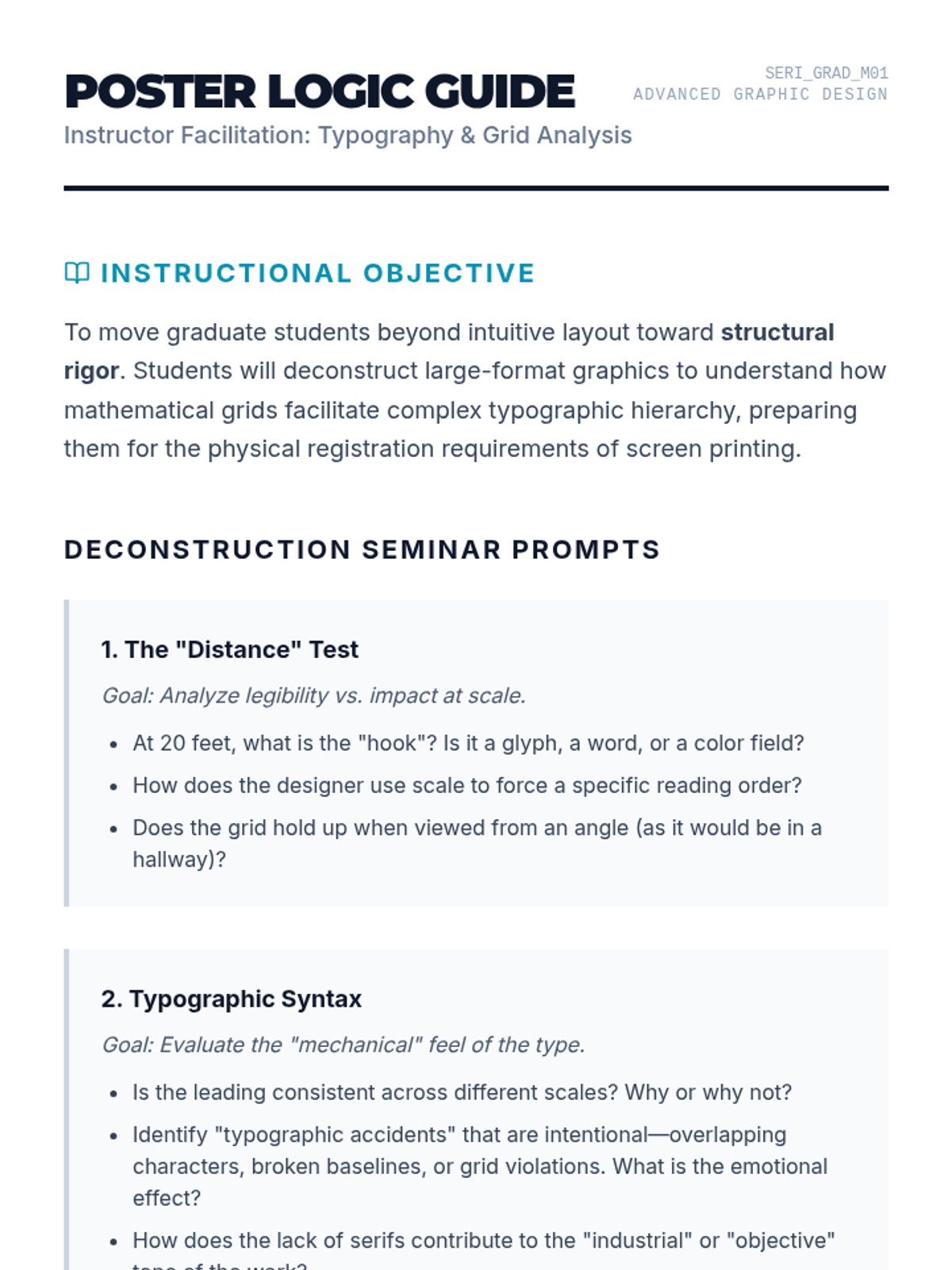
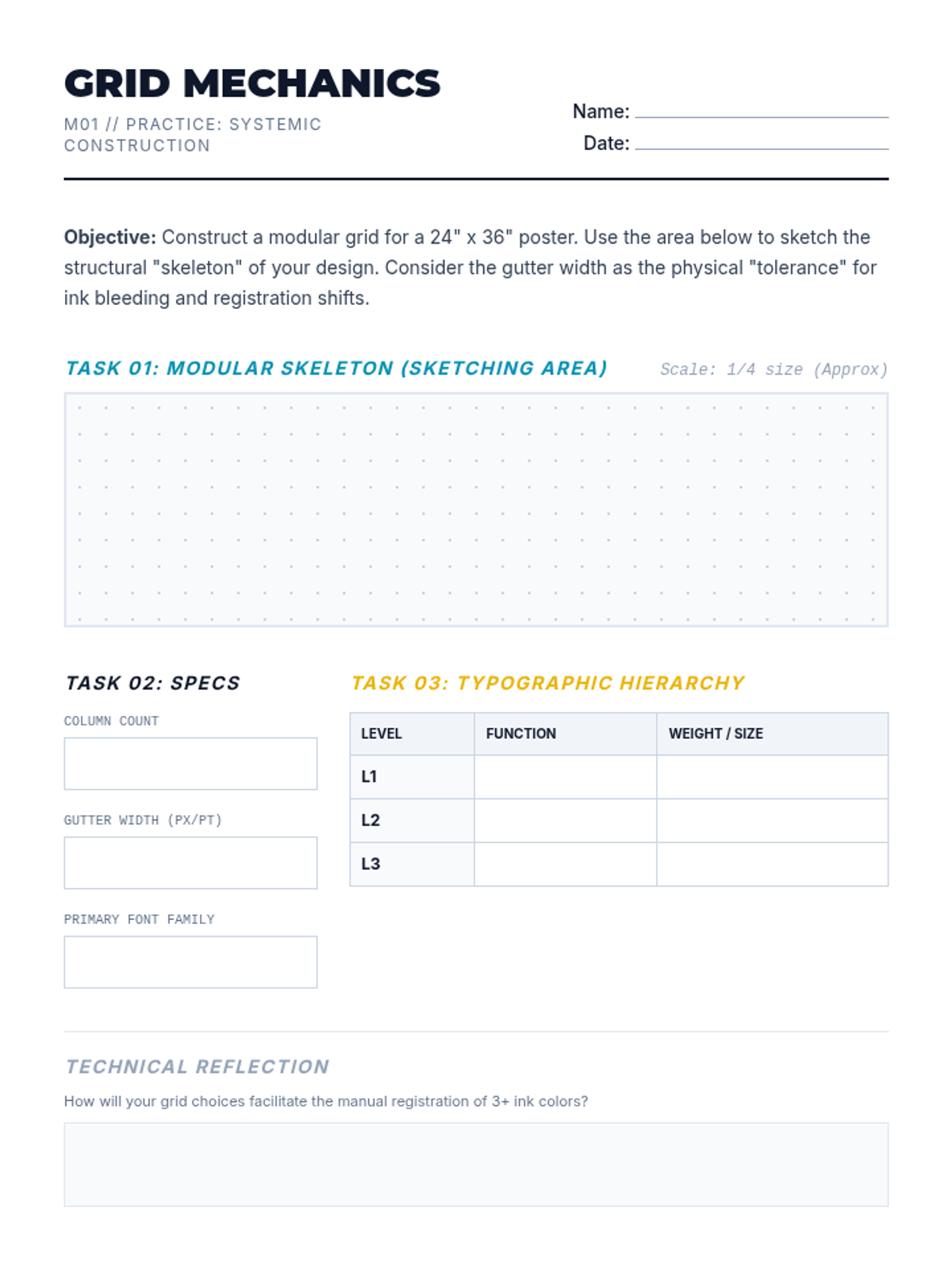
This advanced graduate-level sequence explores the intersection of typographic design and large-format screen printing. Students master complex grid systems, CMYK color separation, and high-precision technical execution to create impactful graphic narratives.
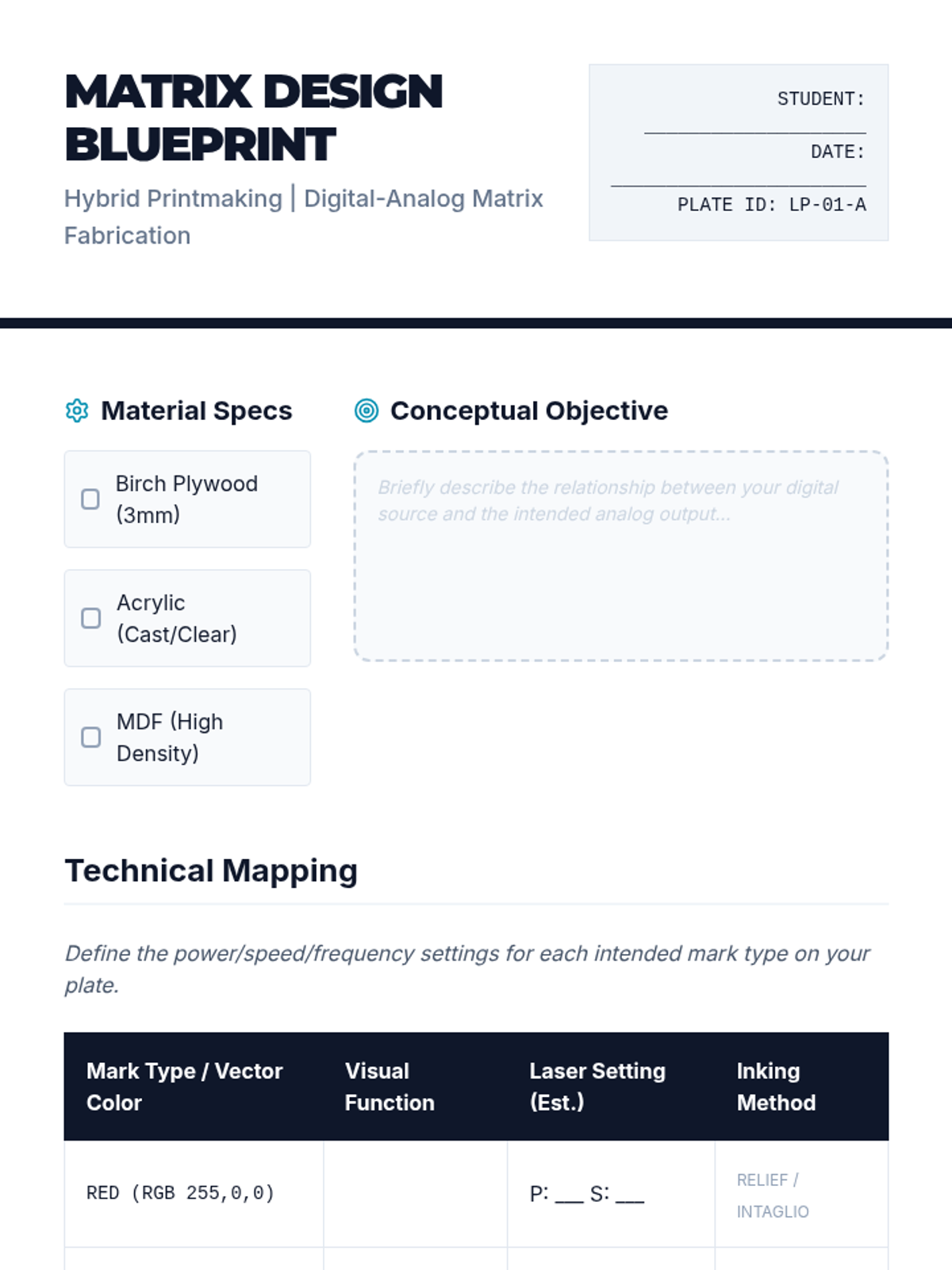
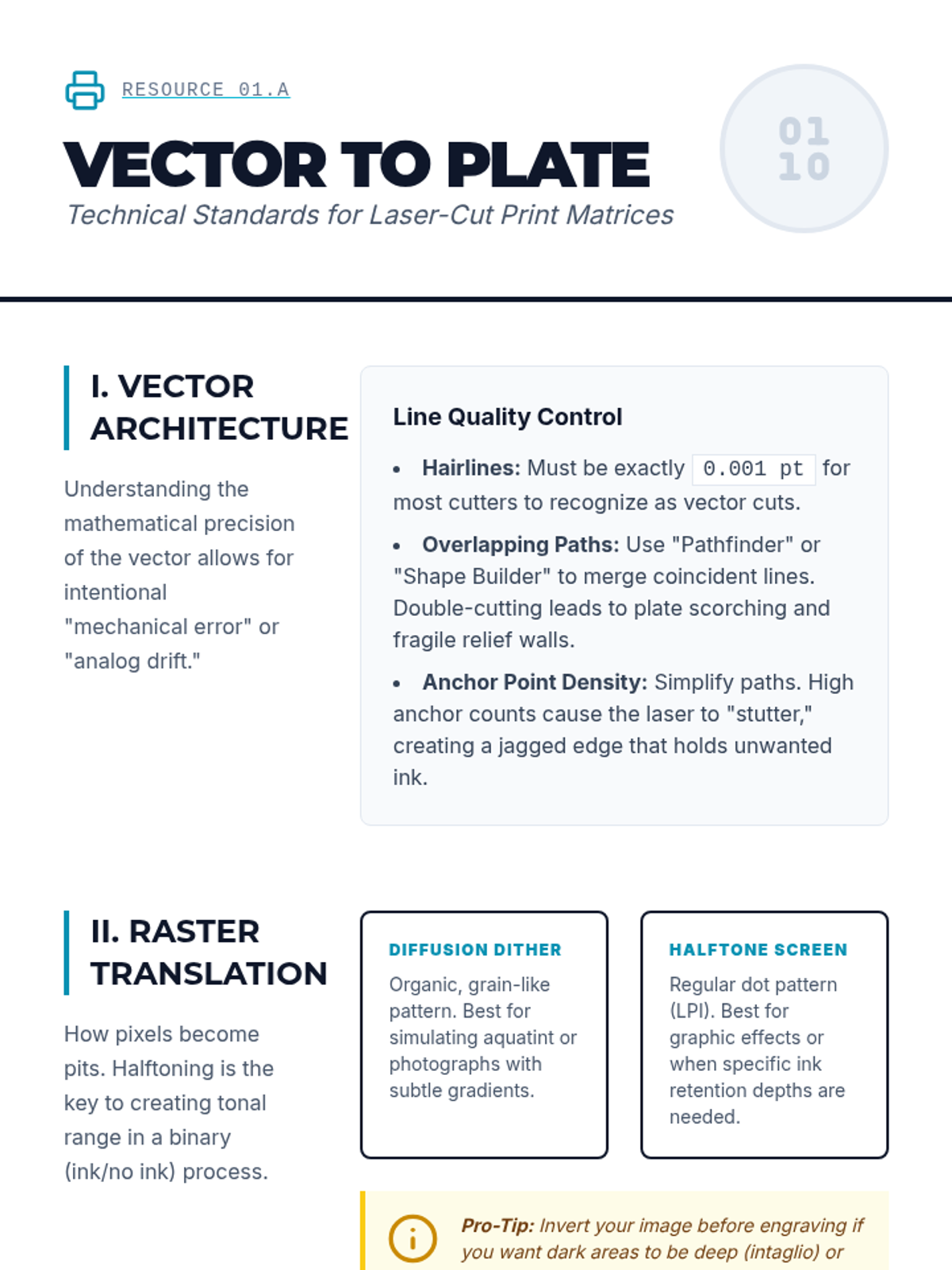
This advanced graduate sequence explores the intersection of traditional printmaking and digital fabrication, focusing on hybrid matrices, viscosity printing, and photopolymer processes. Students bridge the gap between digital precision and analog tactility to redefine the conceptual value of the printed 'multiple'.
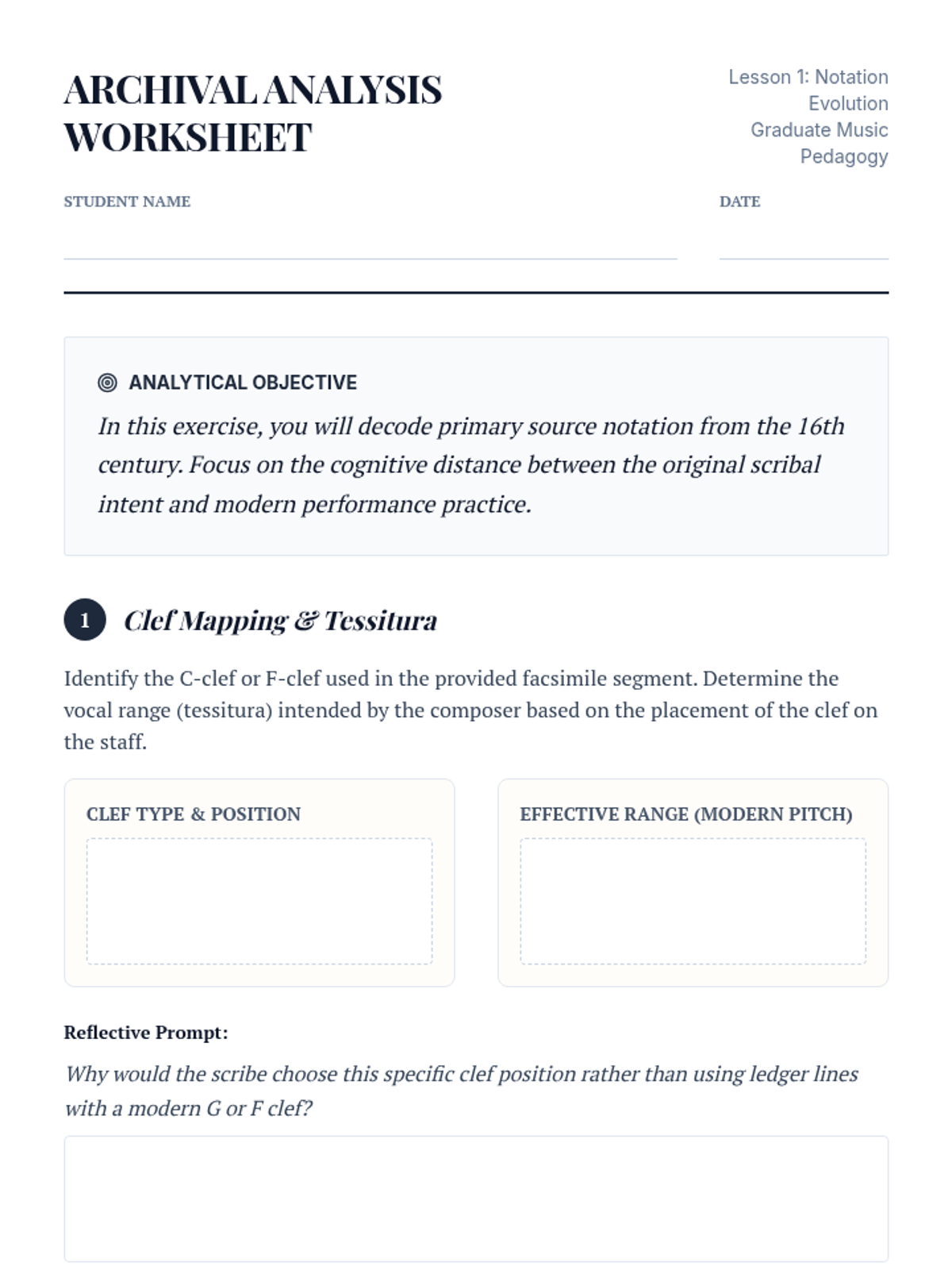
This sequence examines the evolution and cognitive mechanics of Western musical notation, designed for graduate students focusing on music education or musicology. Students will analyze the historical development of the staff, clefs, and accidentals, while simultaneously evaluating various pedagogical methodologies used to teach music literacy.