Techniques for brainstorming, collaborative project management, and individual artistic expression. Guides students through the iterative creative process from initial concept to final execution.
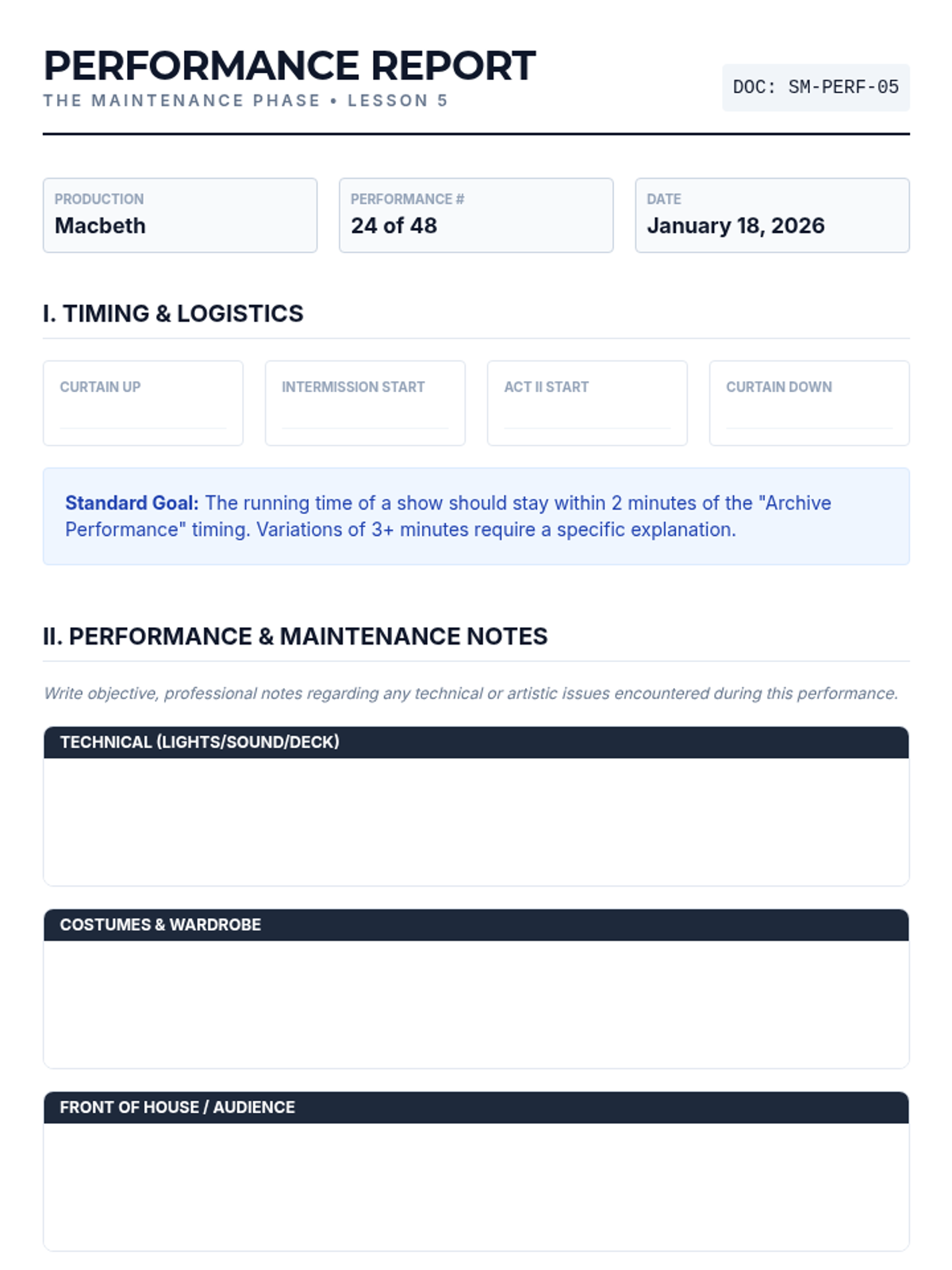
The final lesson covers the maintenance phase of a production run. Students learn to write performance reports, manage understudies, and maintain artistic integrity through note sessions.
The core skill of performance management is practiced here, as students learn to 'call' cues (lights, sound, deck moves) with precision and personal cadence.
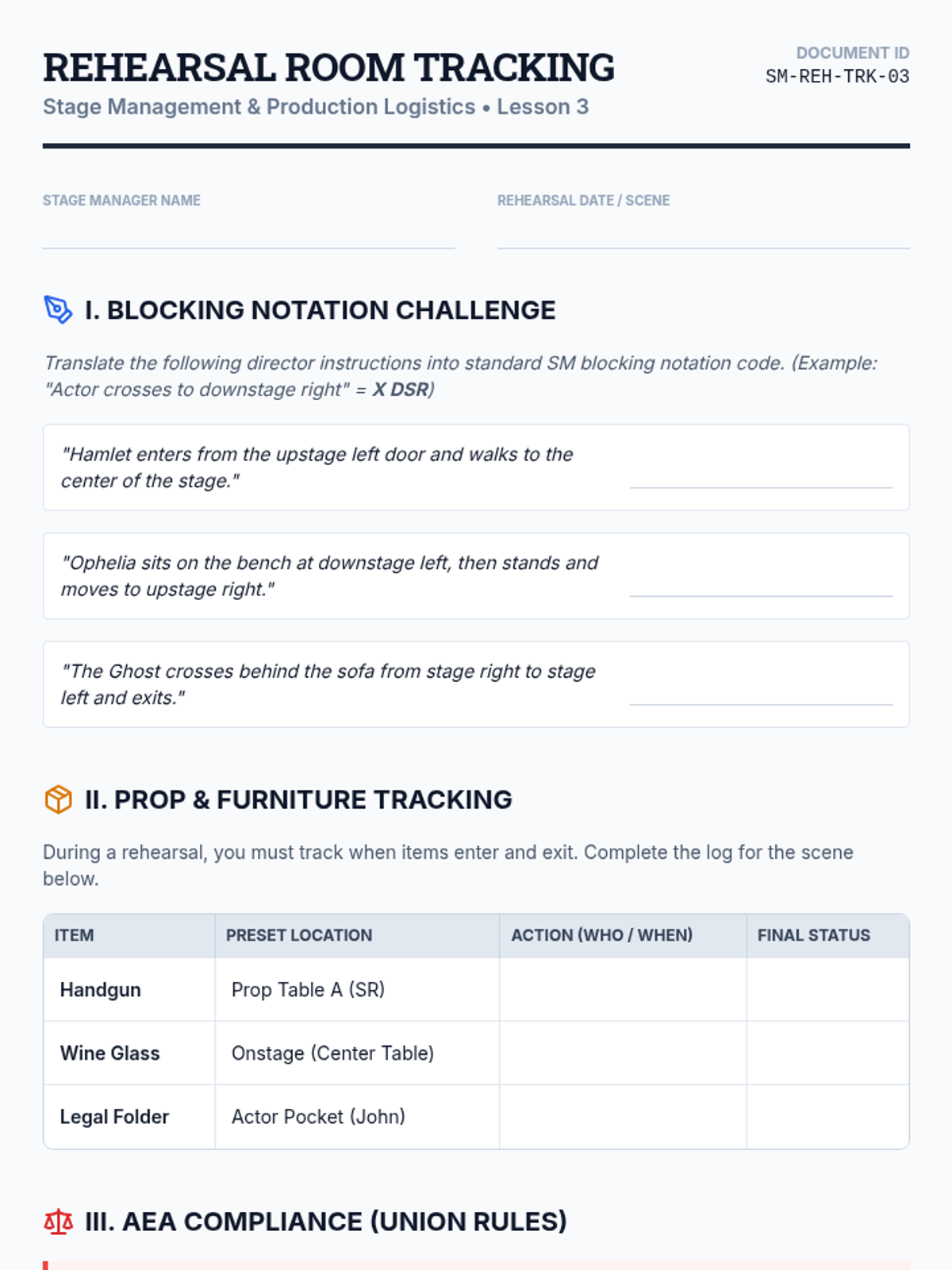
Students practice running a rehearsal room, including timing splits, tracking props, and notating actor movement. They learn to balance artistic needs with union regulations.
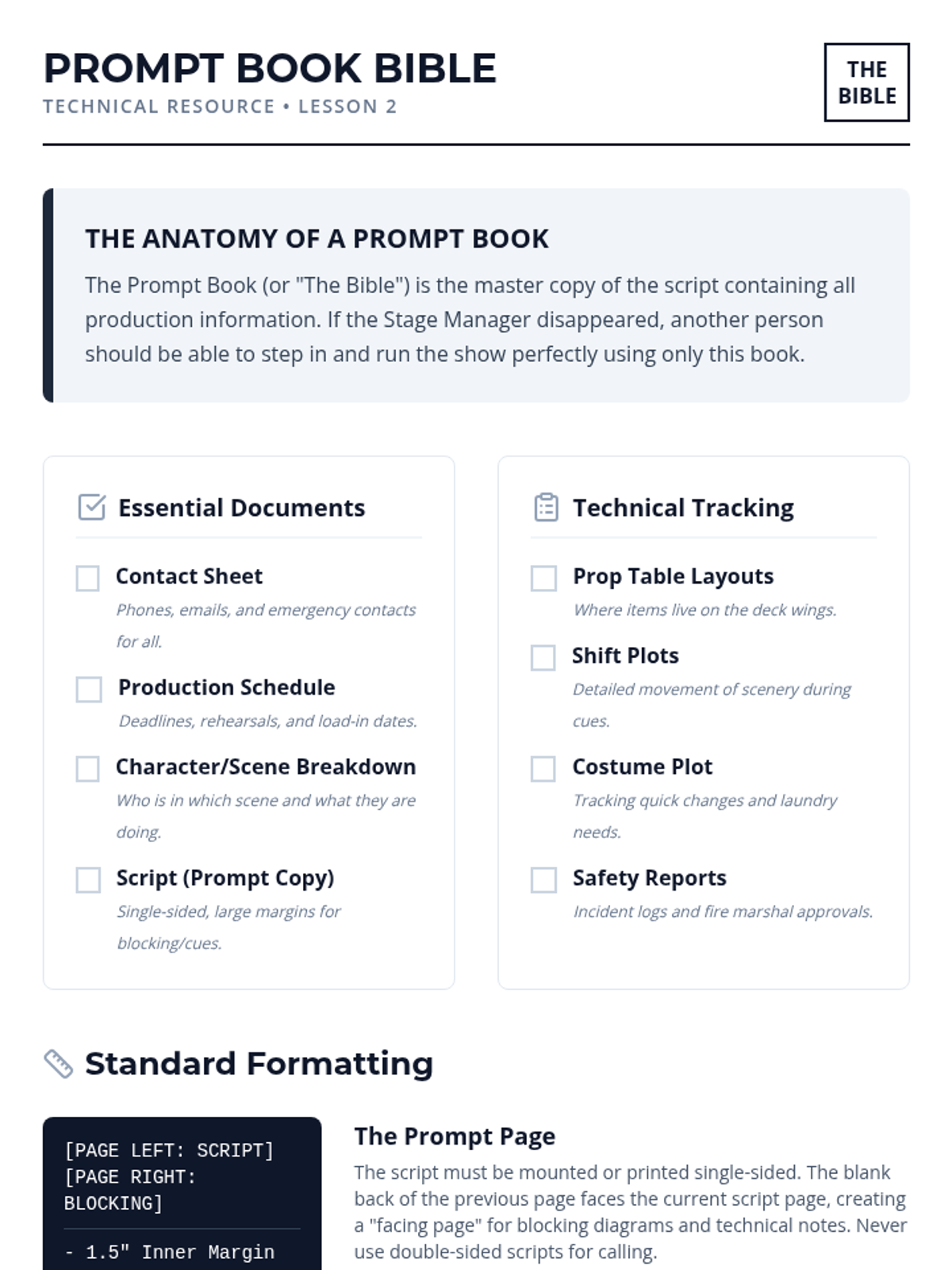
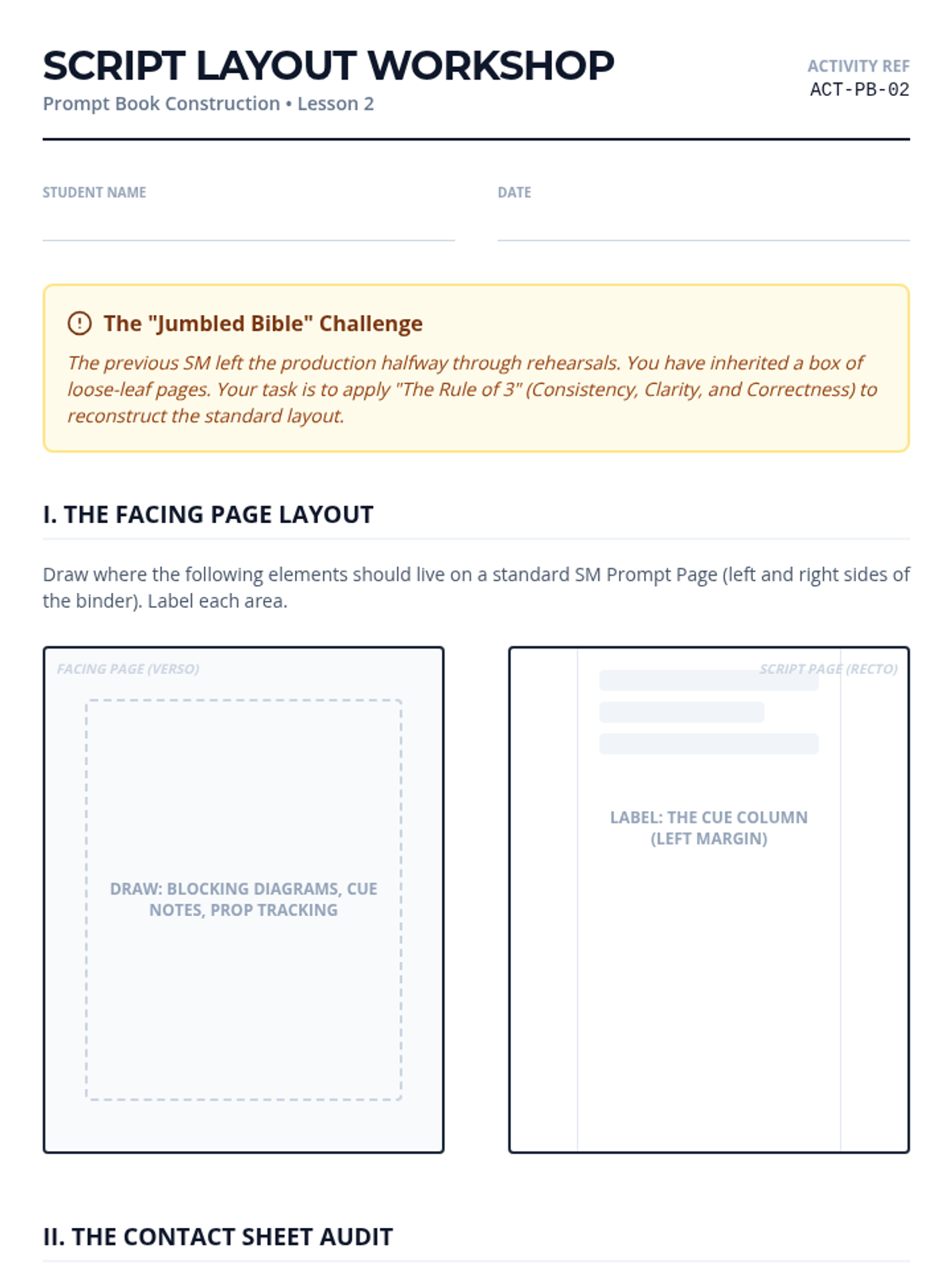
This workshop focuses on creating the 'Bible' of the production: the Prompt Book. Students learn formatting for blocking keys, script pagination, contact sheets, and rehearsal reports.
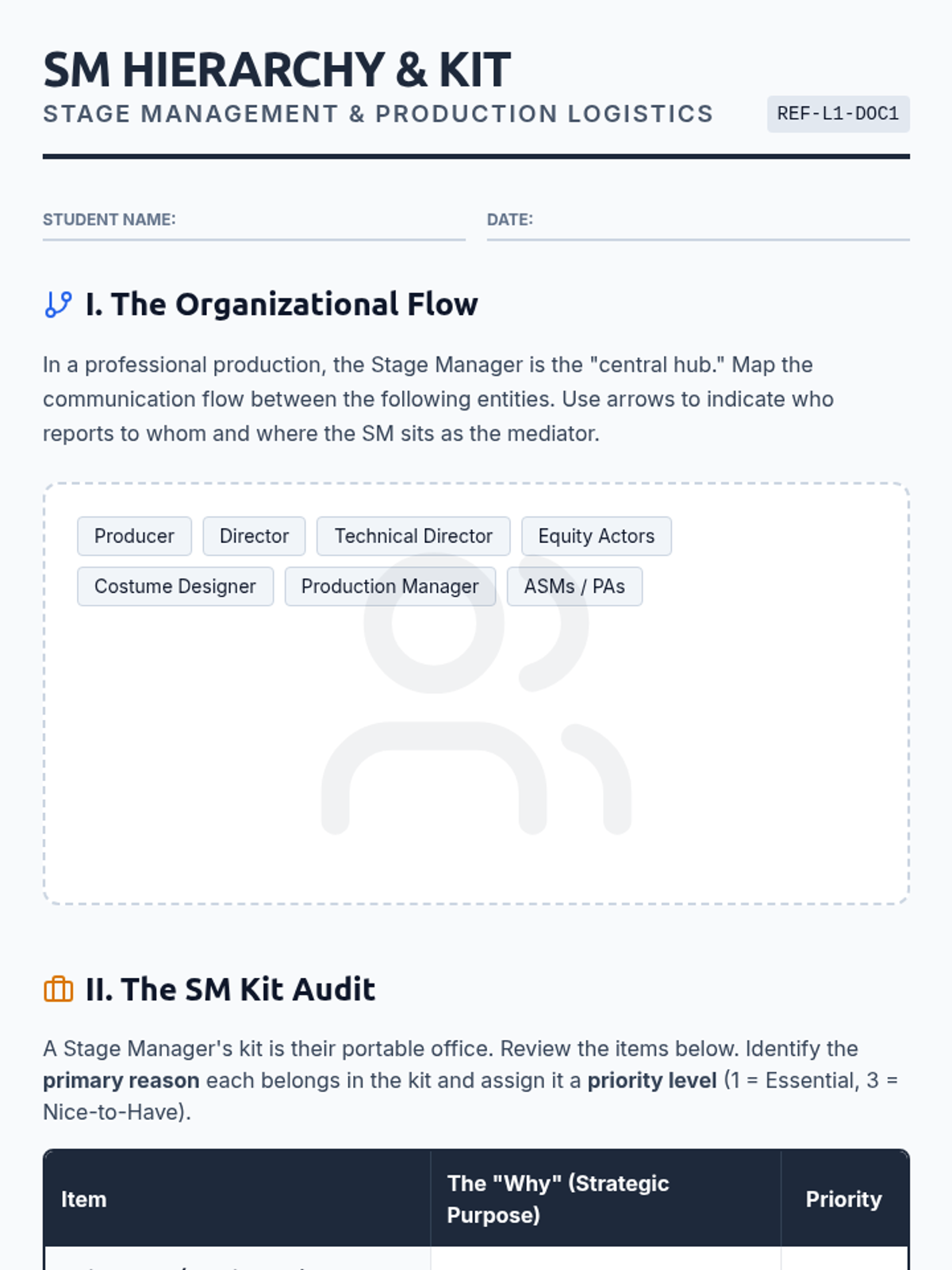
Students analyze the organizational structure of professional theater companies and the specific responsibilities of the Stage Management team. They assemble a theoretical 'SM Kit' and discuss the leadership dynamics within artistic groups.
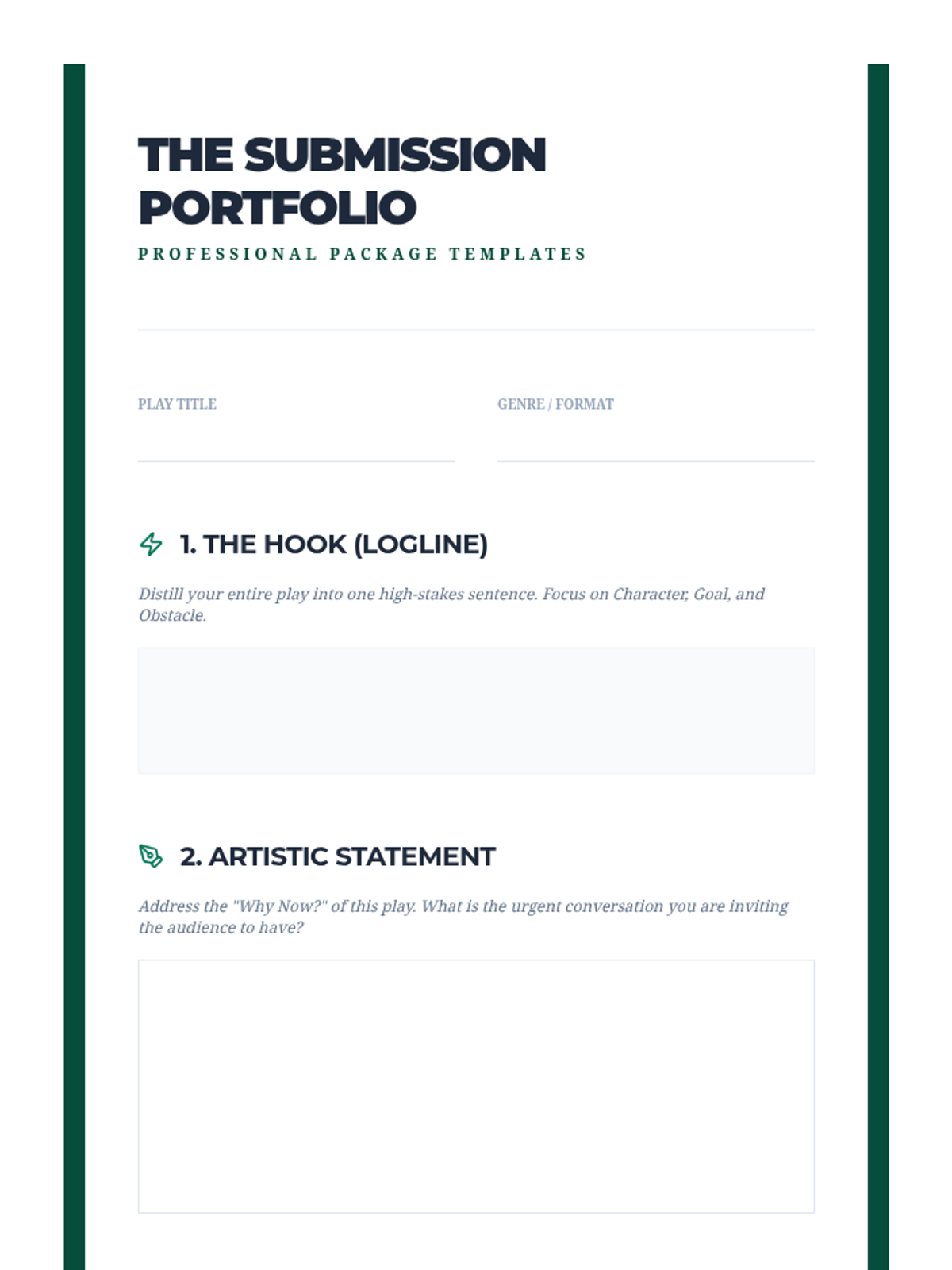
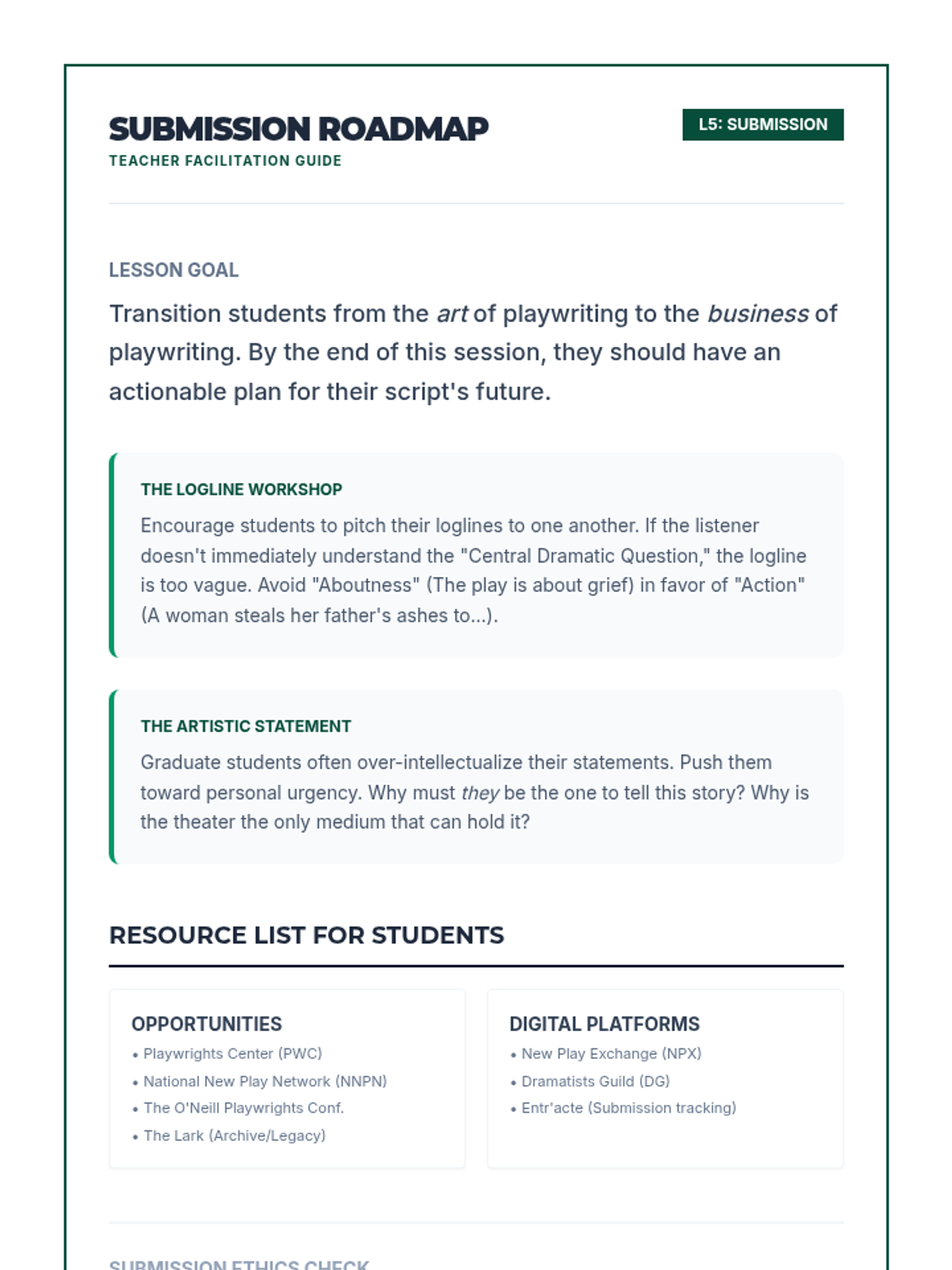
Covers the professional side of playwriting, including crafting artistic statements, synopses, and query letters to prepare students for the competitive landscape of script submissions.
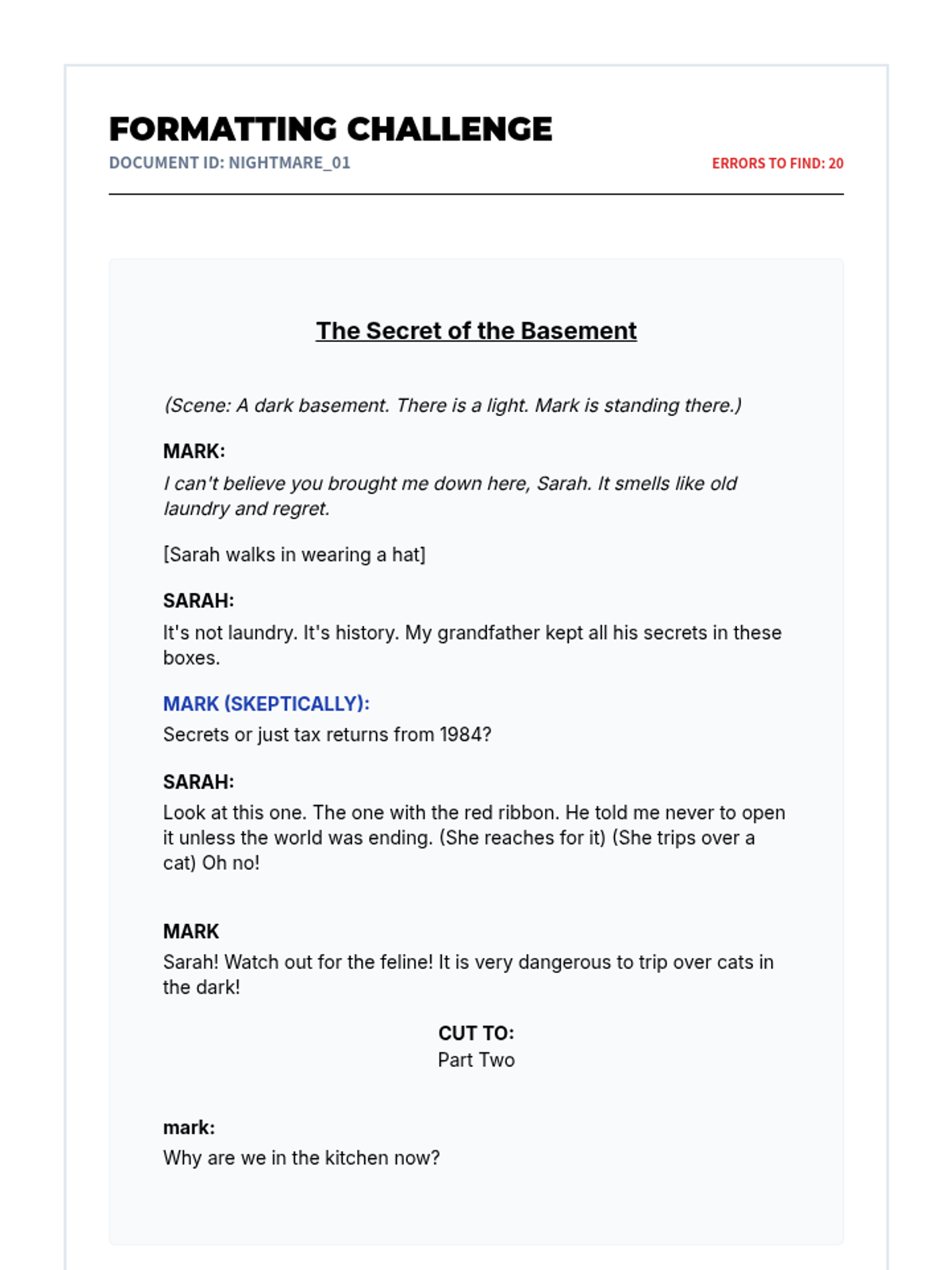
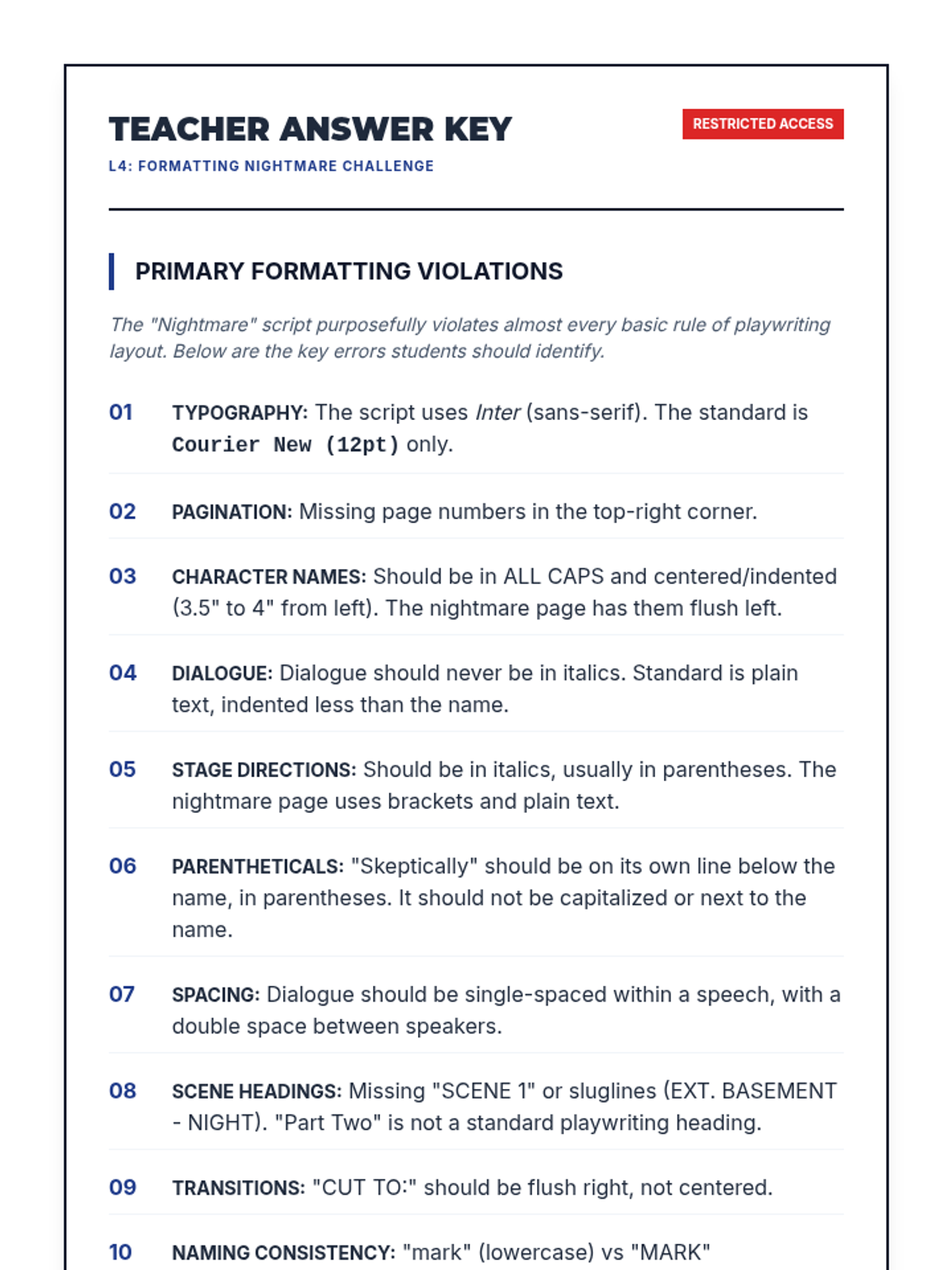
A technical dive into industry-standard formatting. Students master the visual language of professional scripts and identify common technical errors that distract from the narrative.
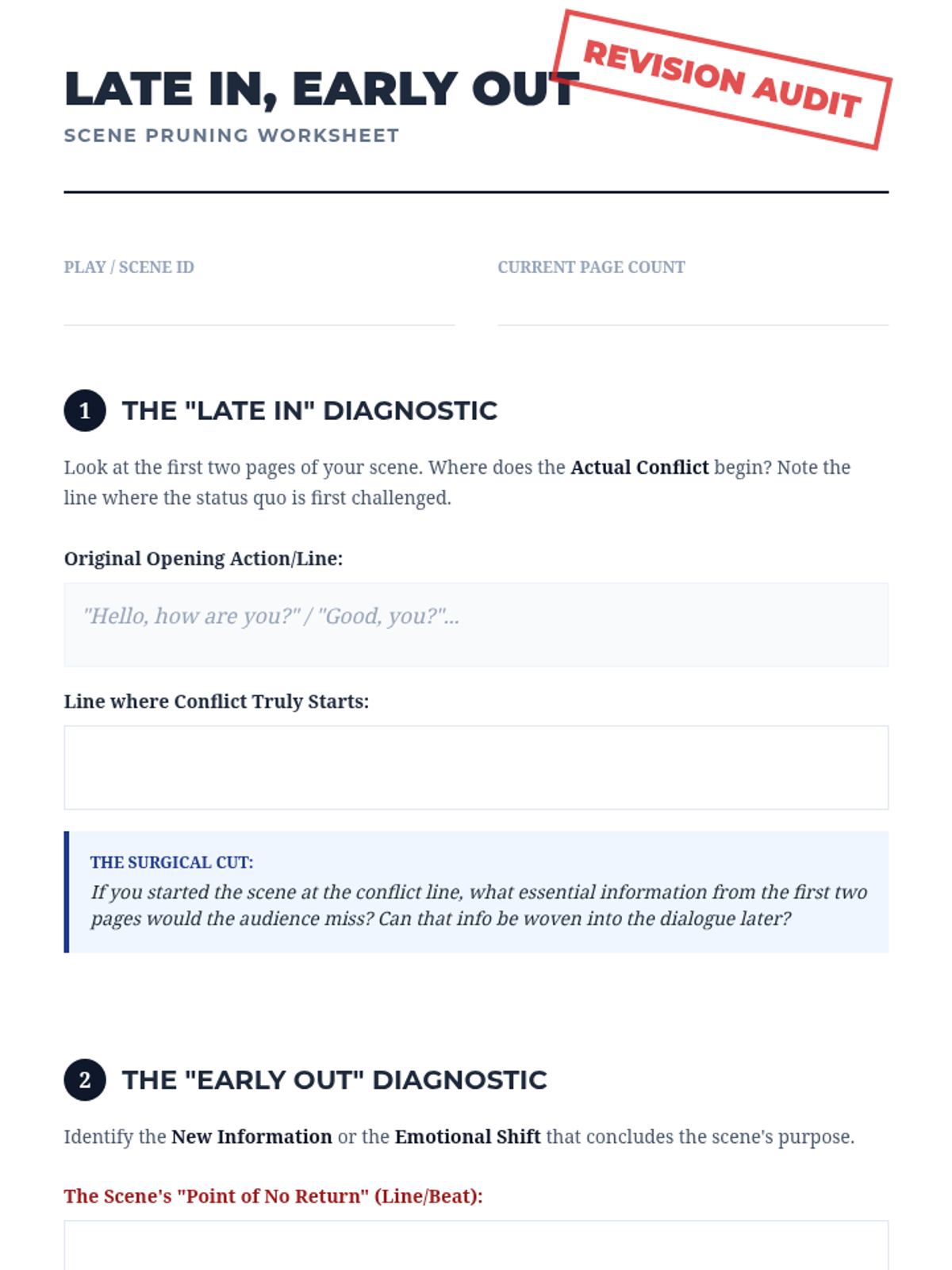
Provides concrete strategies for tightening and refining a script. Techniques include scene pruning, character consolidation, and mastery of the 'late in, early out' philosophy of playwriting.
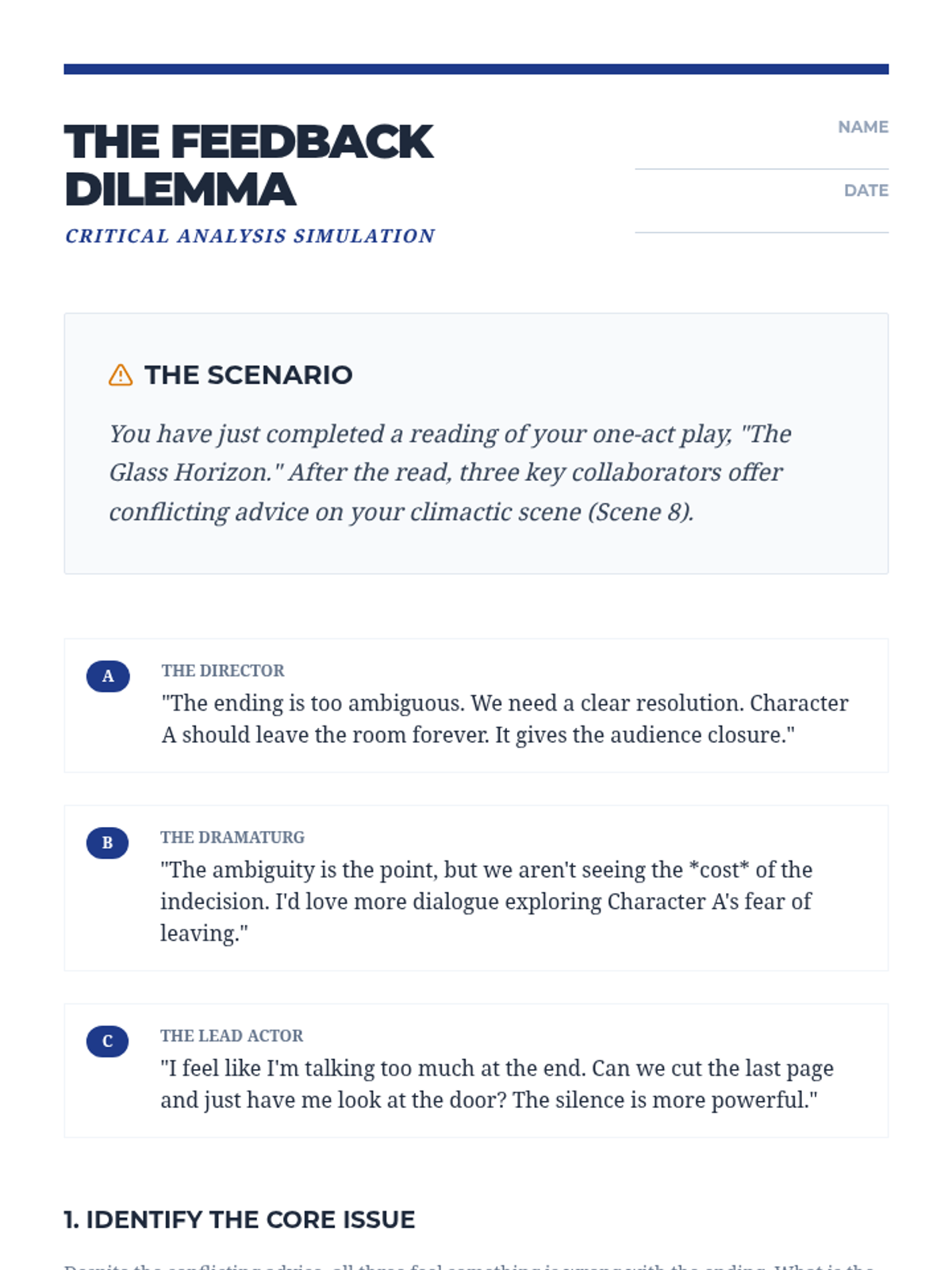
Simulates the collaborative workshop environment using structured feedback models. Students learn to filter critiques, manage conflicting artistic opinions, and prioritize their own vision while remaining open to dramaturgical insight.
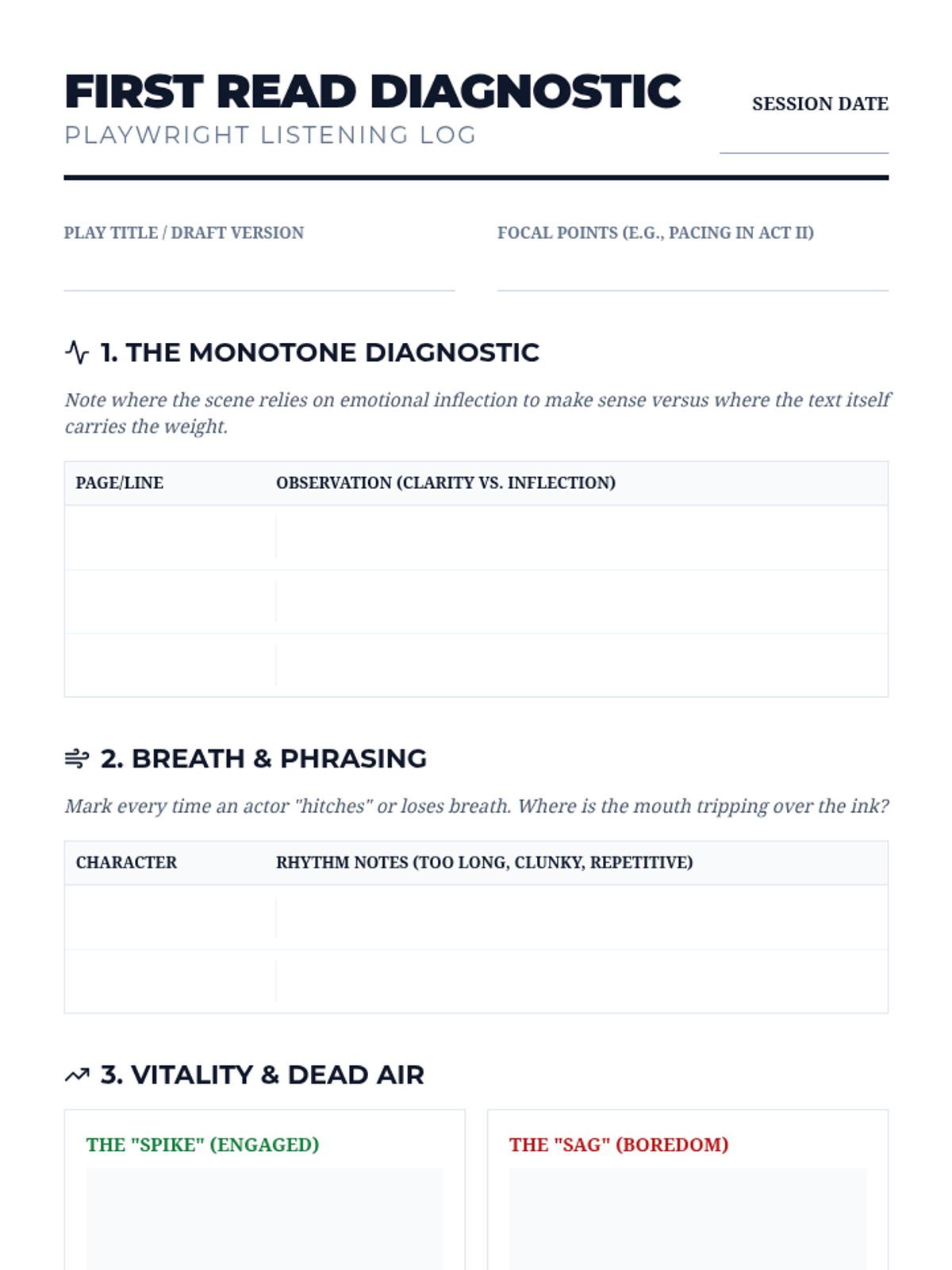
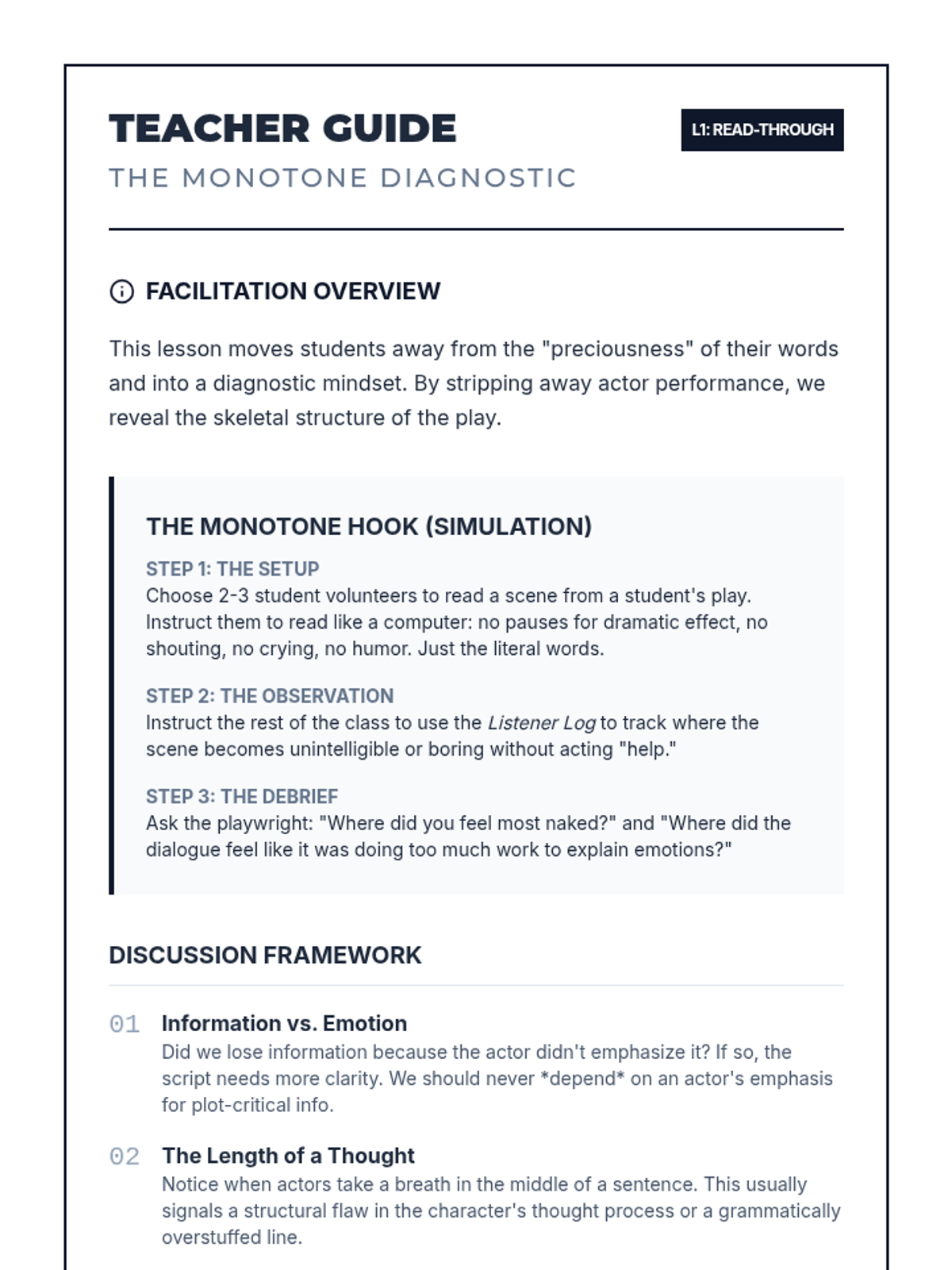
Focuses on the transition from page to stage through the initial read-through. Students learn professional etiquette, critical listening skills, and how to identify structural flaws when work is performed aloud.
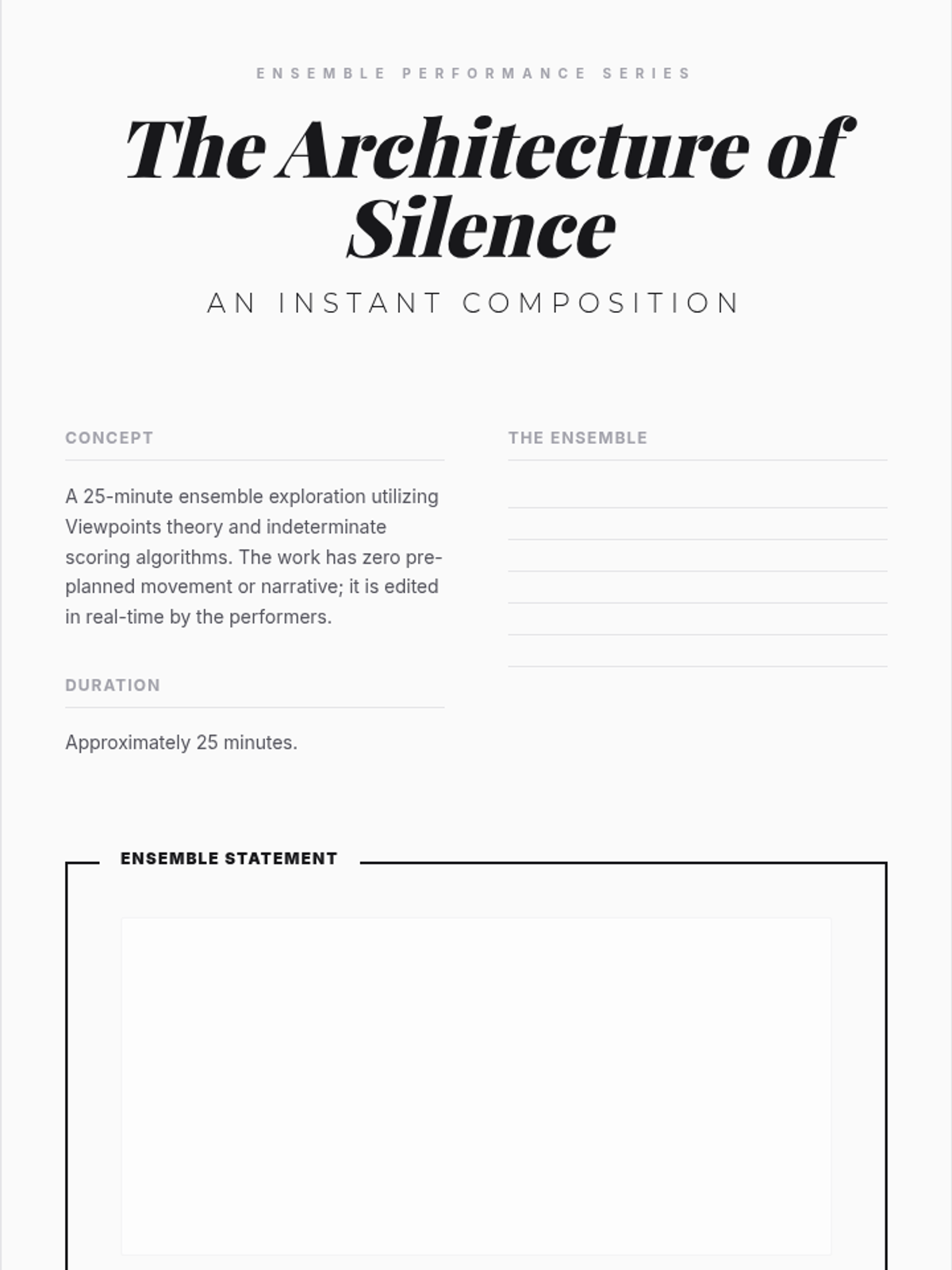
Culminates the sequence with a long-form instant composition performance, demonstrating ensemble mastery and compositional rigor.
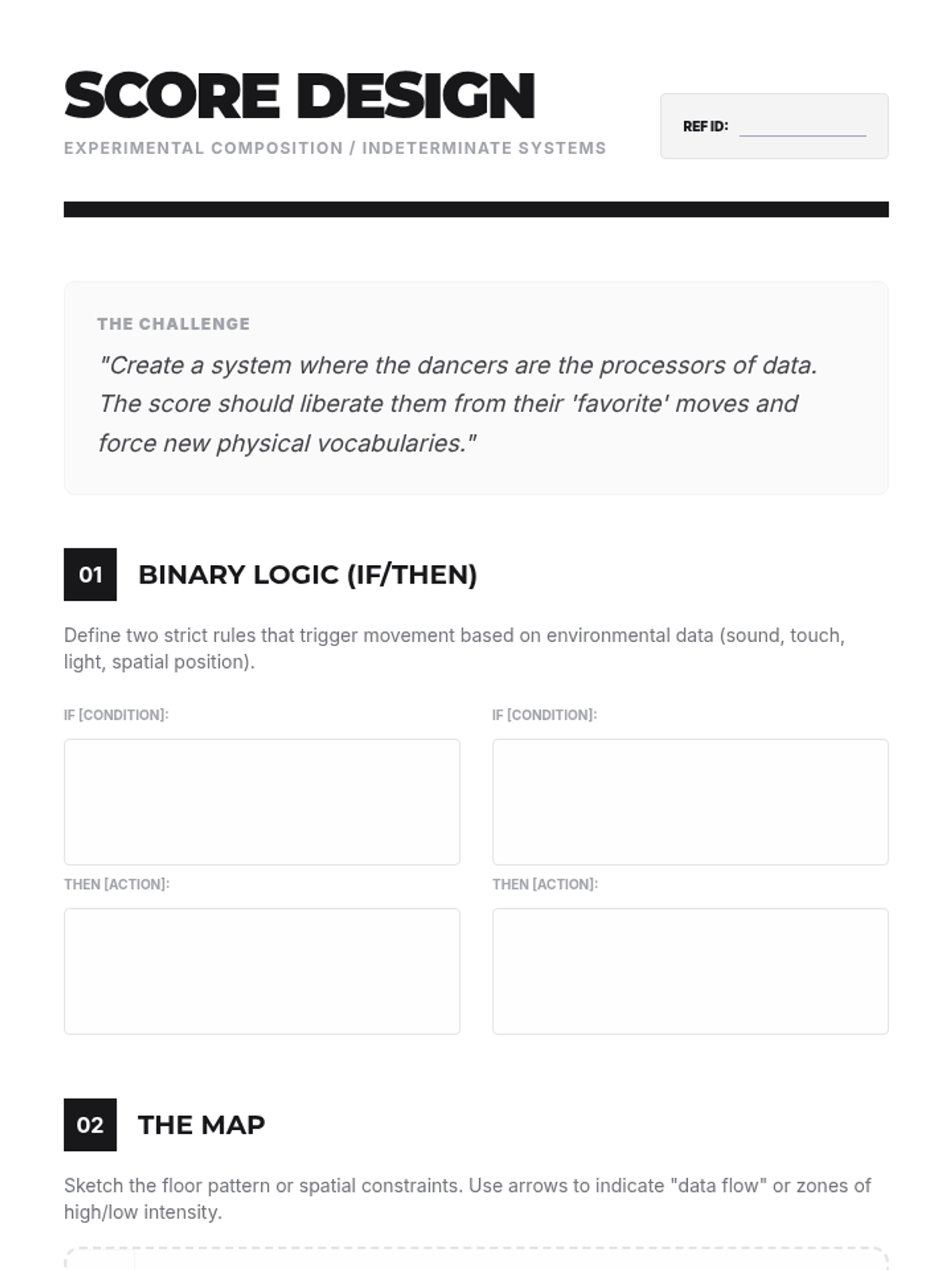
Investigates the history and practice of indeterminate scoring, using constraints to drive experimental movement.
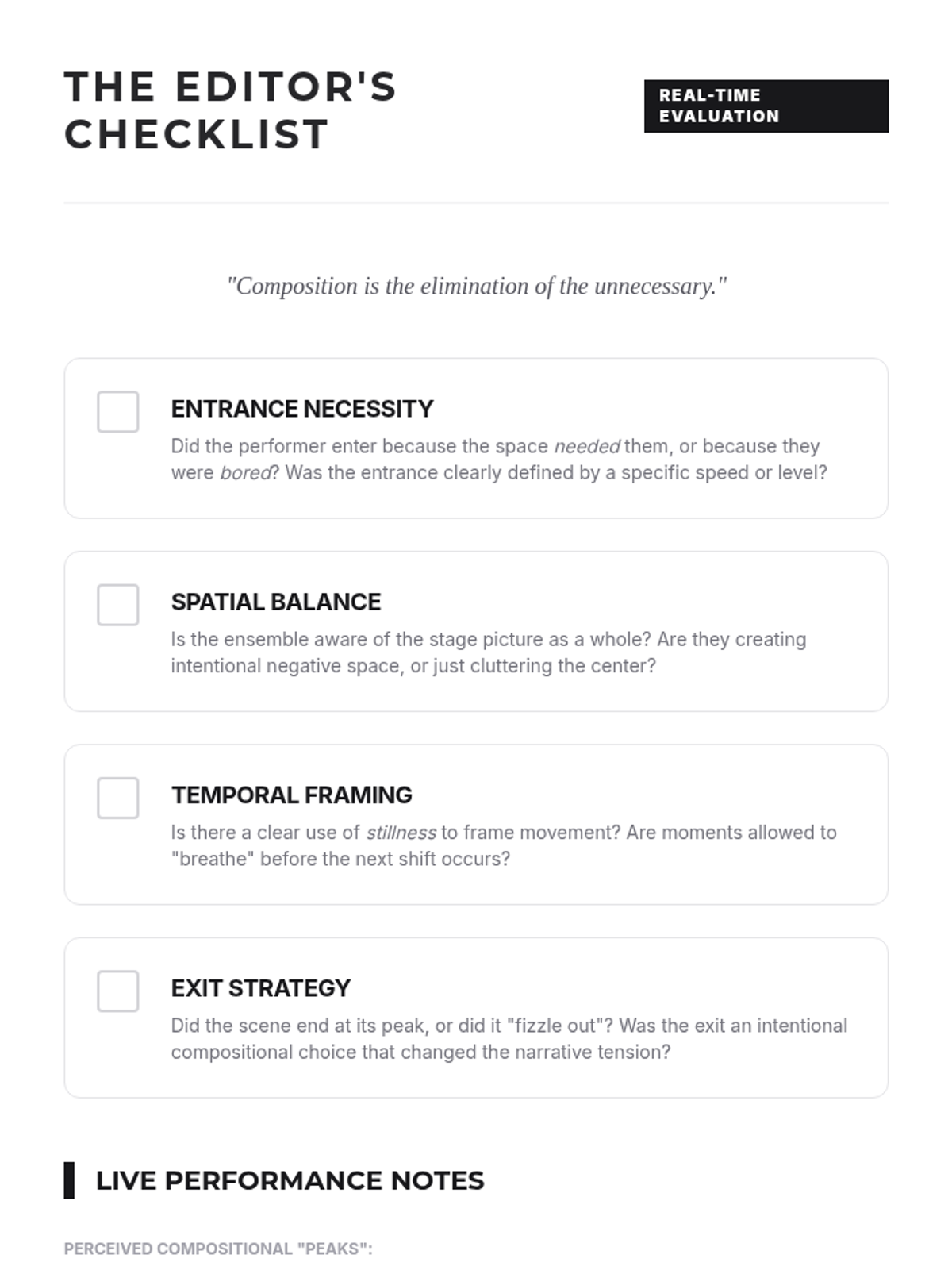
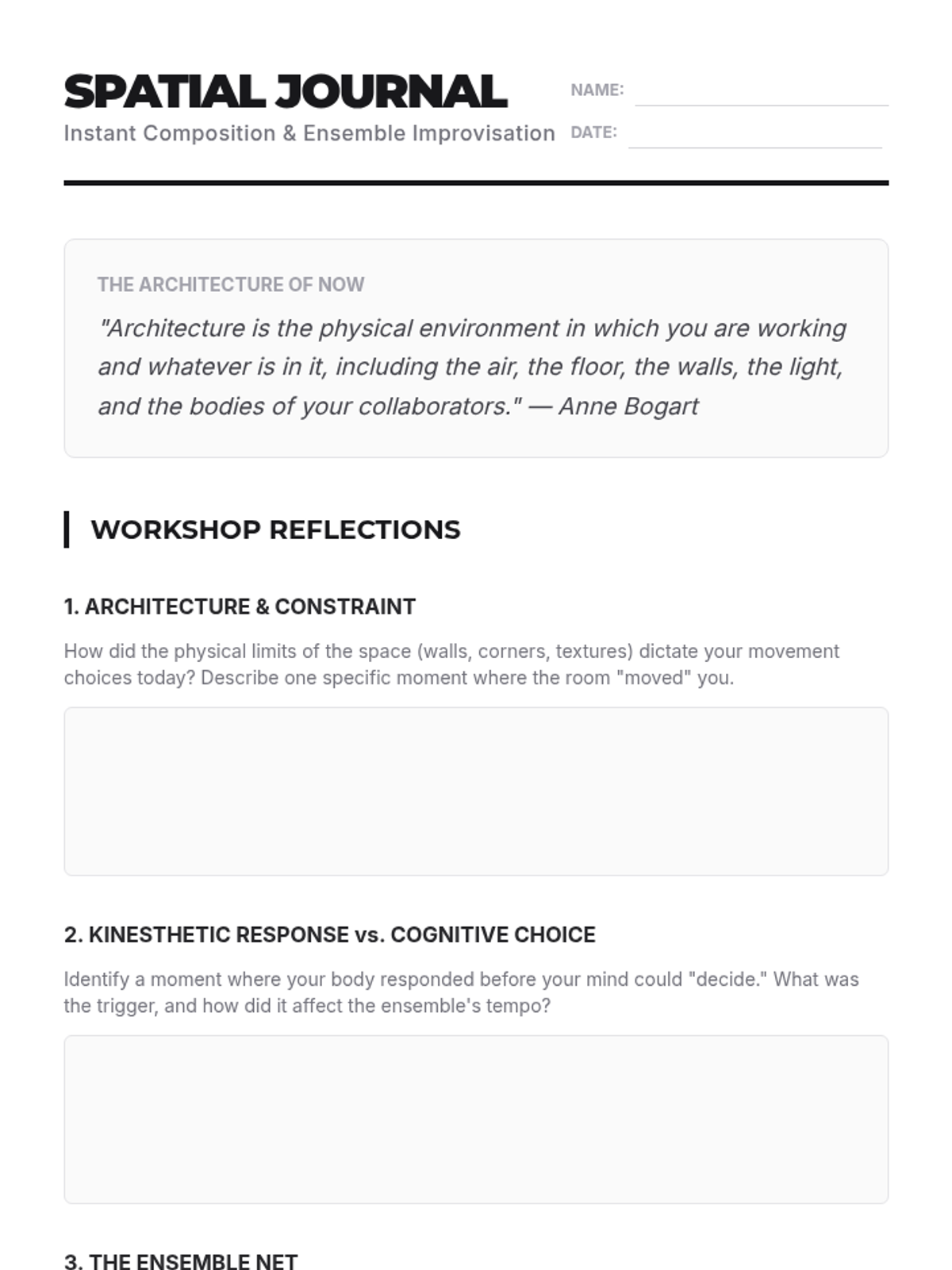
Develops the skill of real-time editing, distinguishing intentional composition from unstructured 'jamming.'
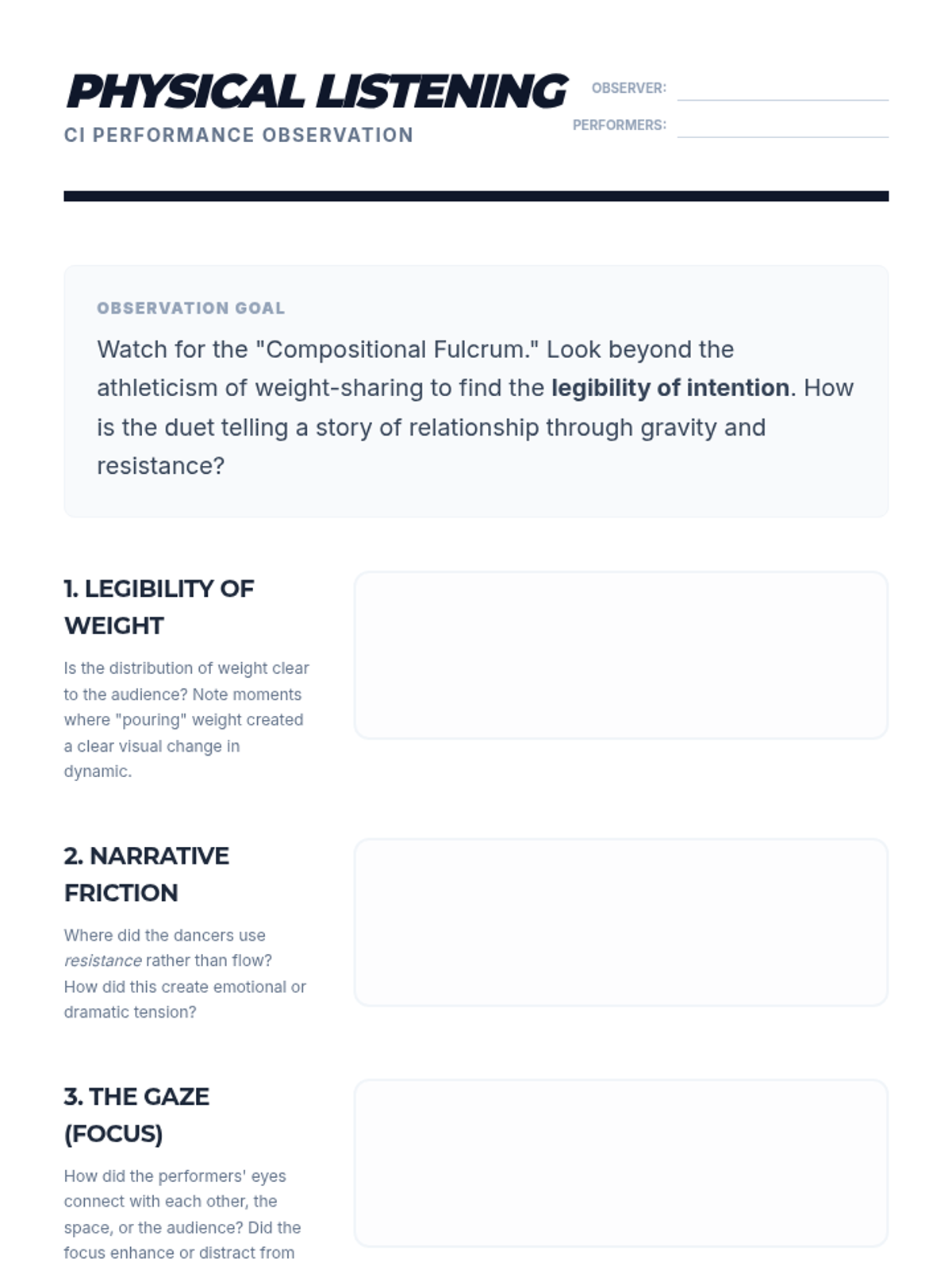
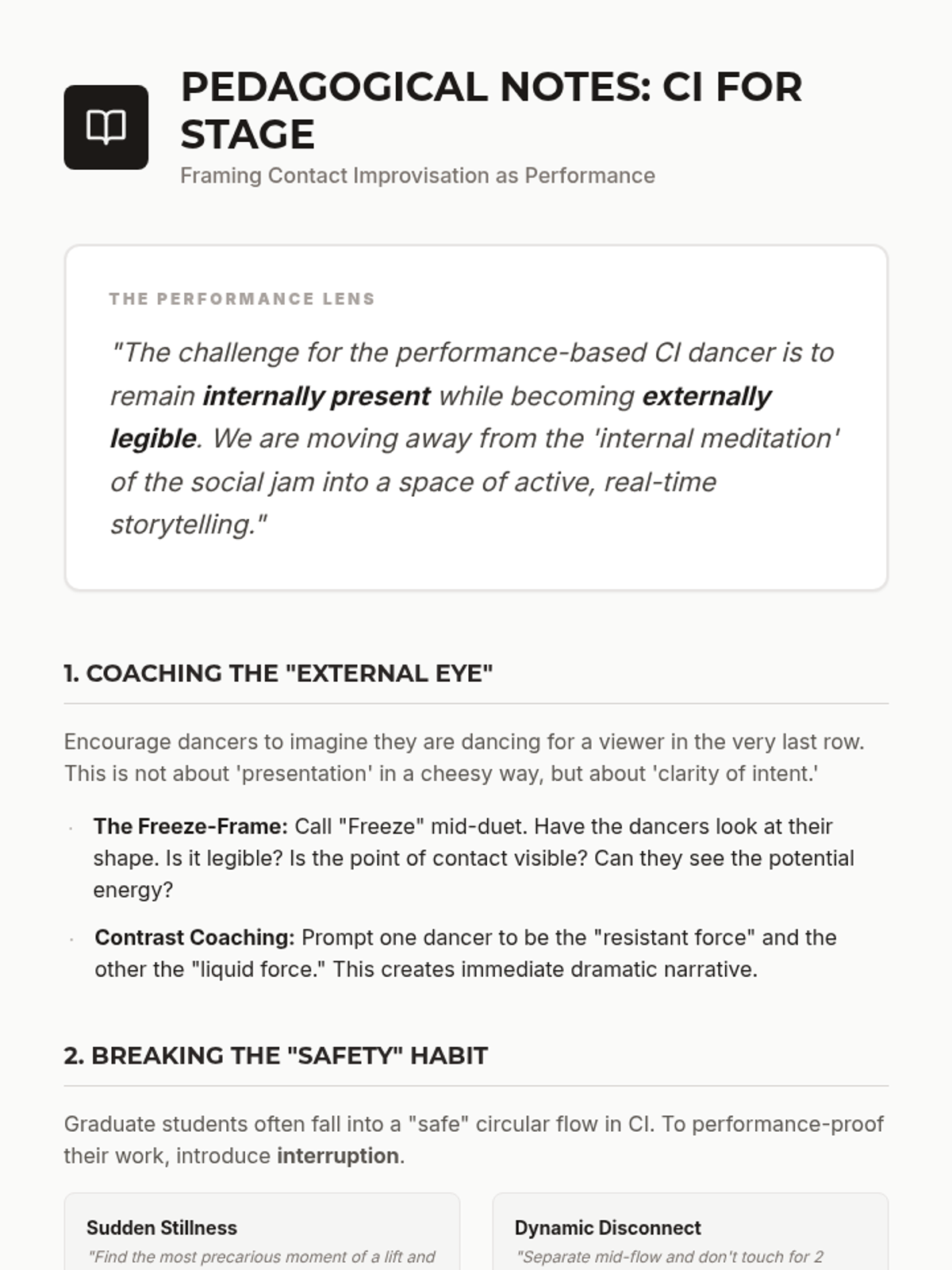
Explores Contact Improvisation as a performance tool, emphasizing weight-sharing and physical listening to create narrative tension.
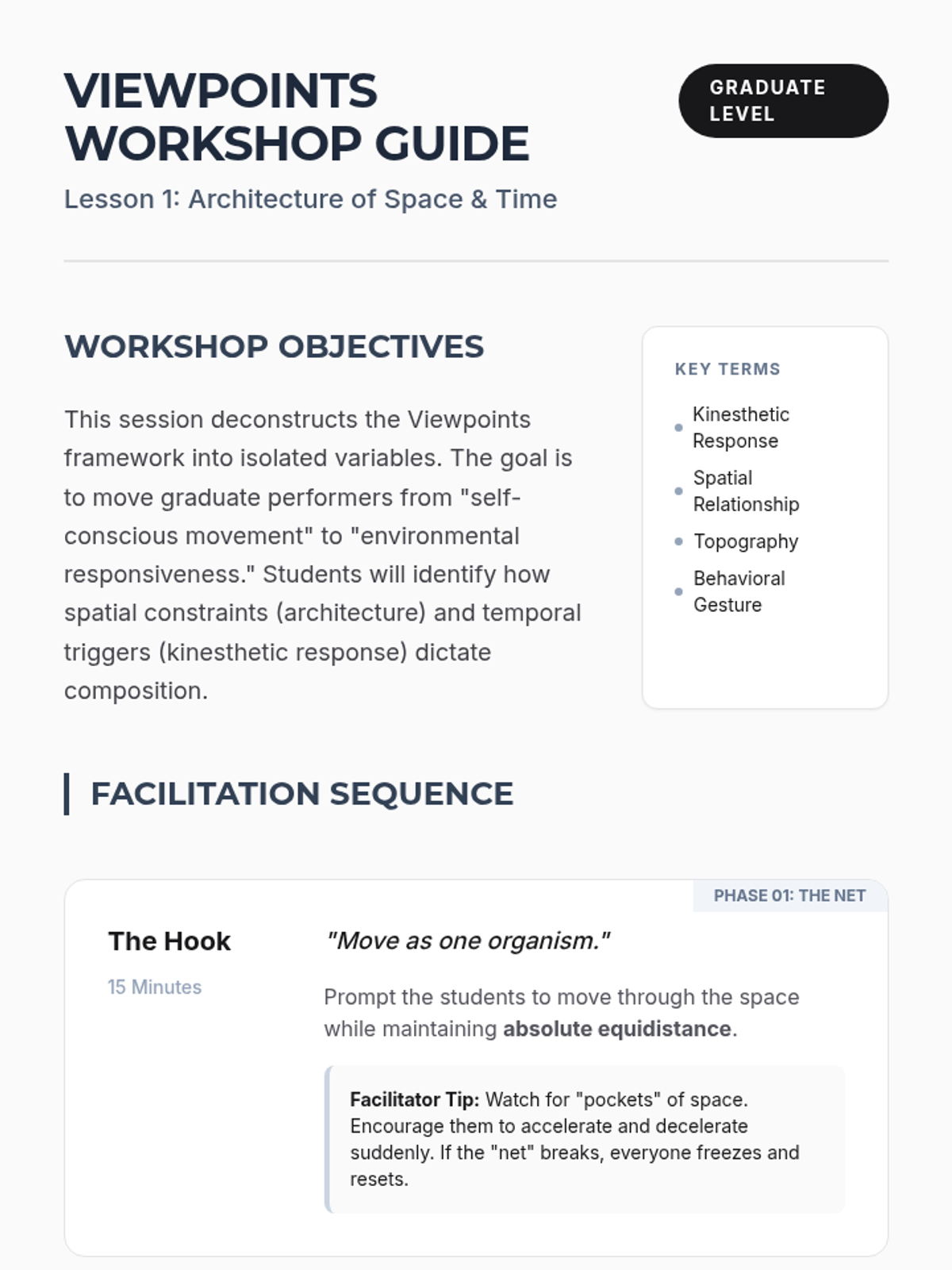
Focuses on deconstructing the Viewpoints technique to heighten spatial and temporal awareness within an ensemble.
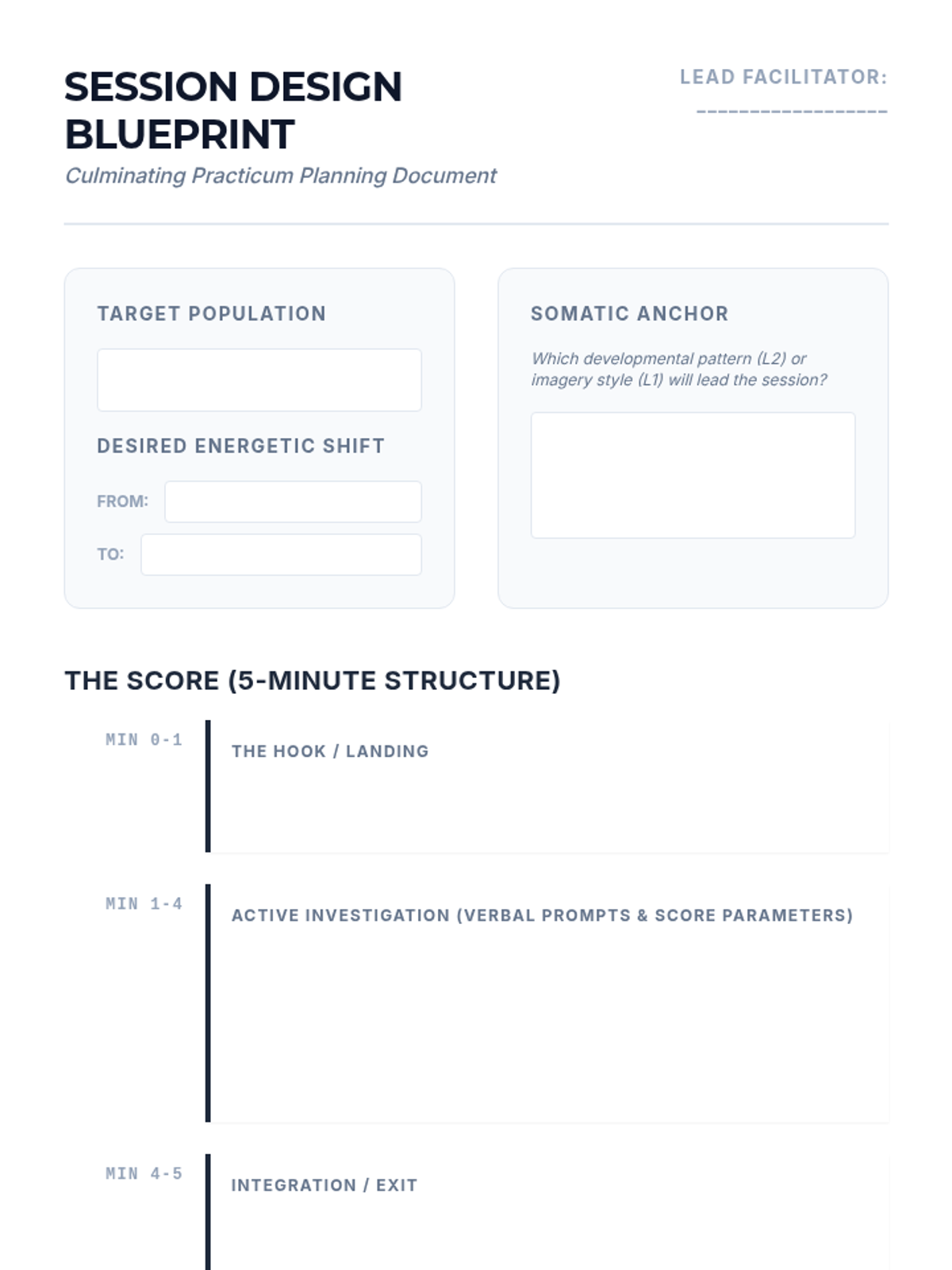
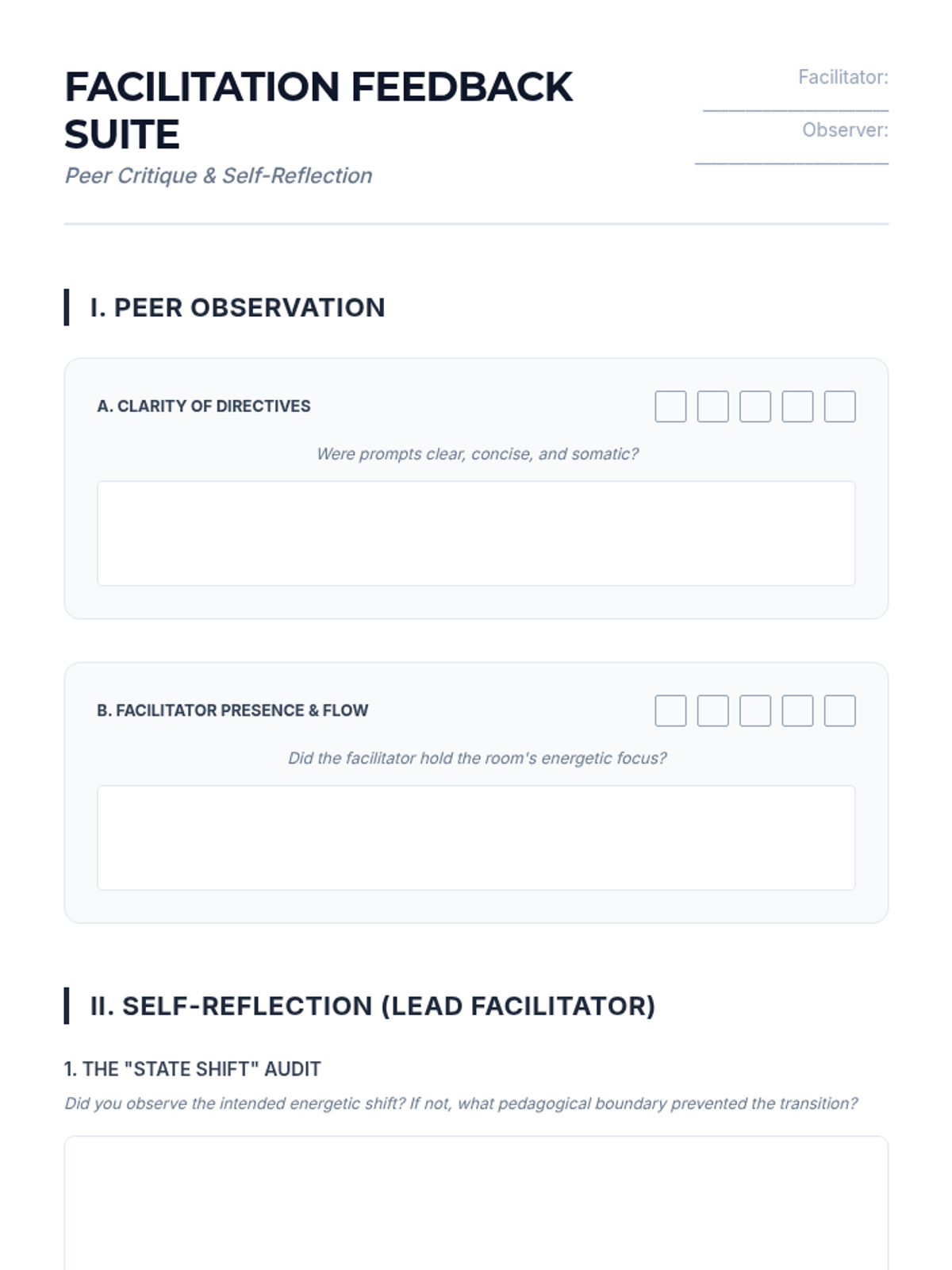
A culminating practicum where students lead a creative movement session and receive peer critique on their facilitation techniques.
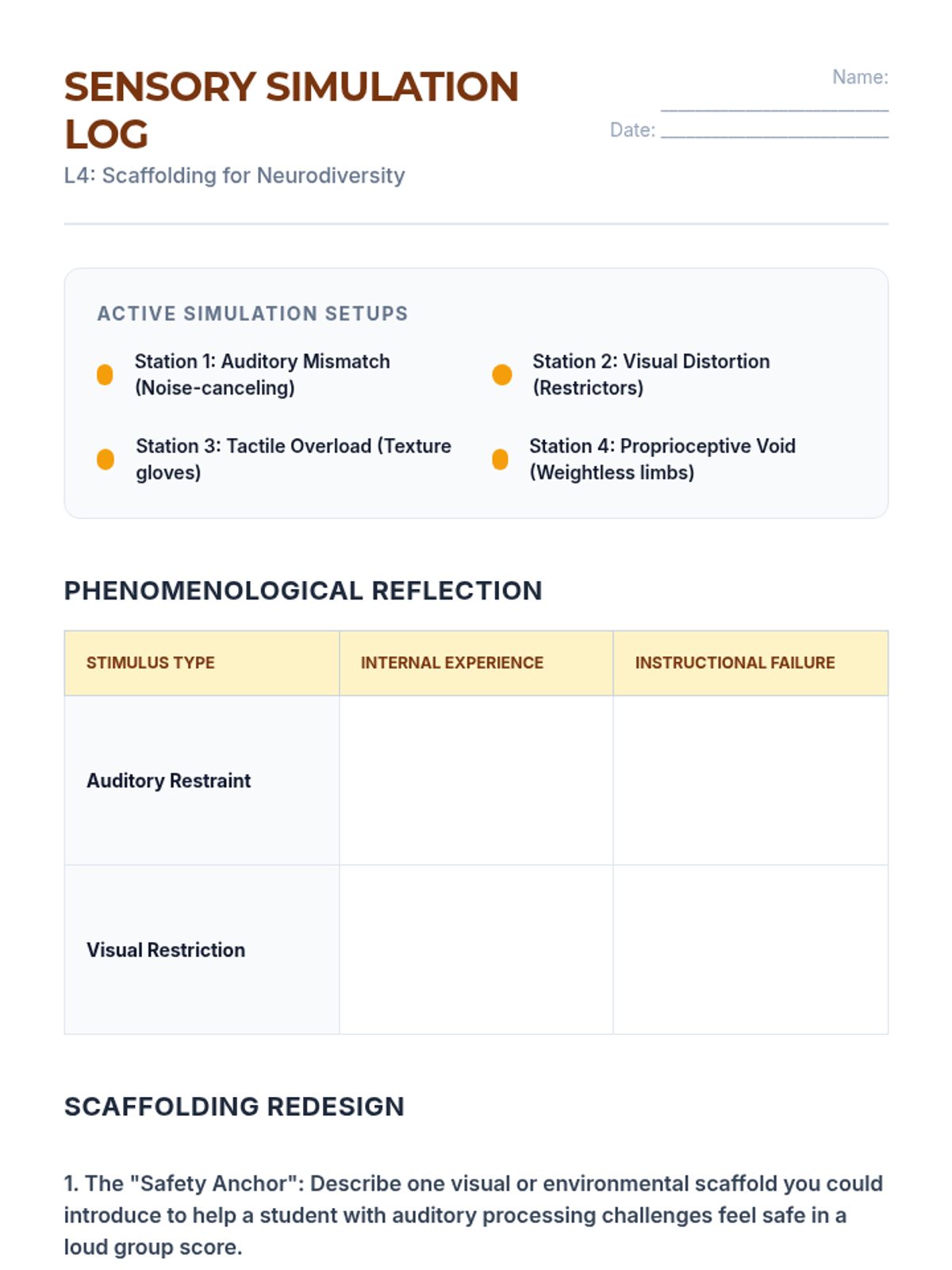
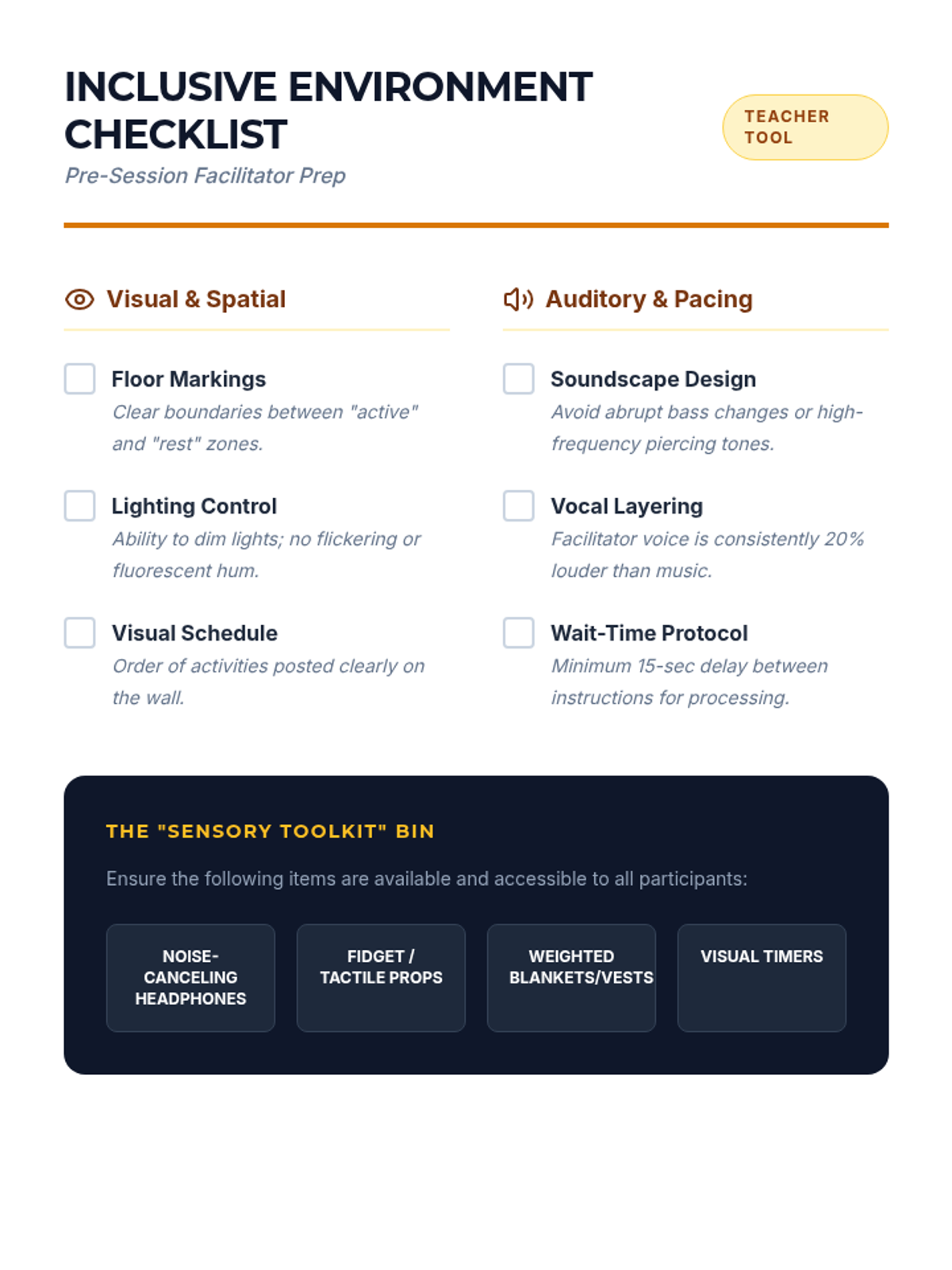
Research and apply sensory-friendly practices and scaffolding techniques for neurodiverse populations in movement settings.
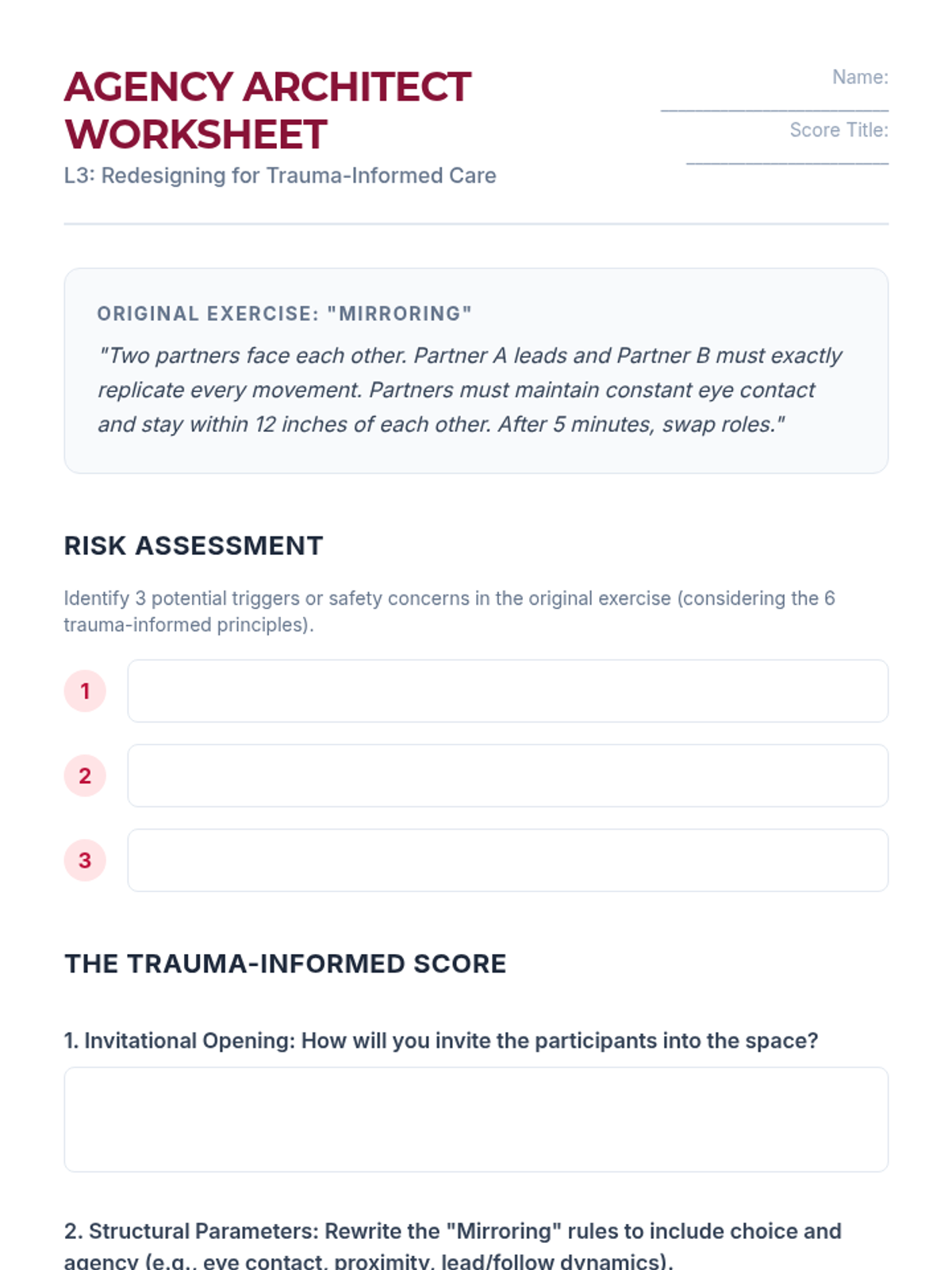
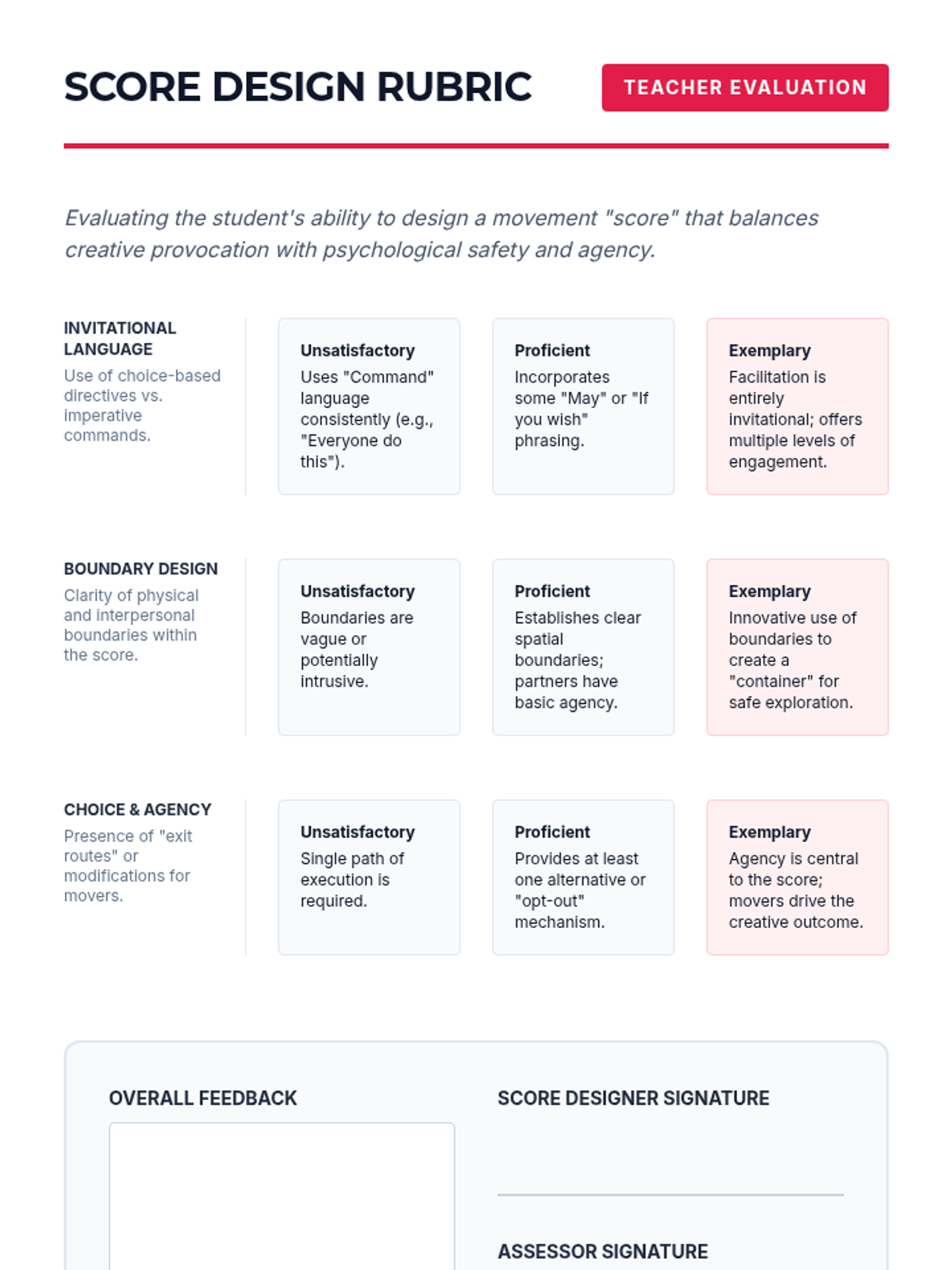
Investigate the intersection of movement and emotional safety through the design of trauma-informed 'scores'.
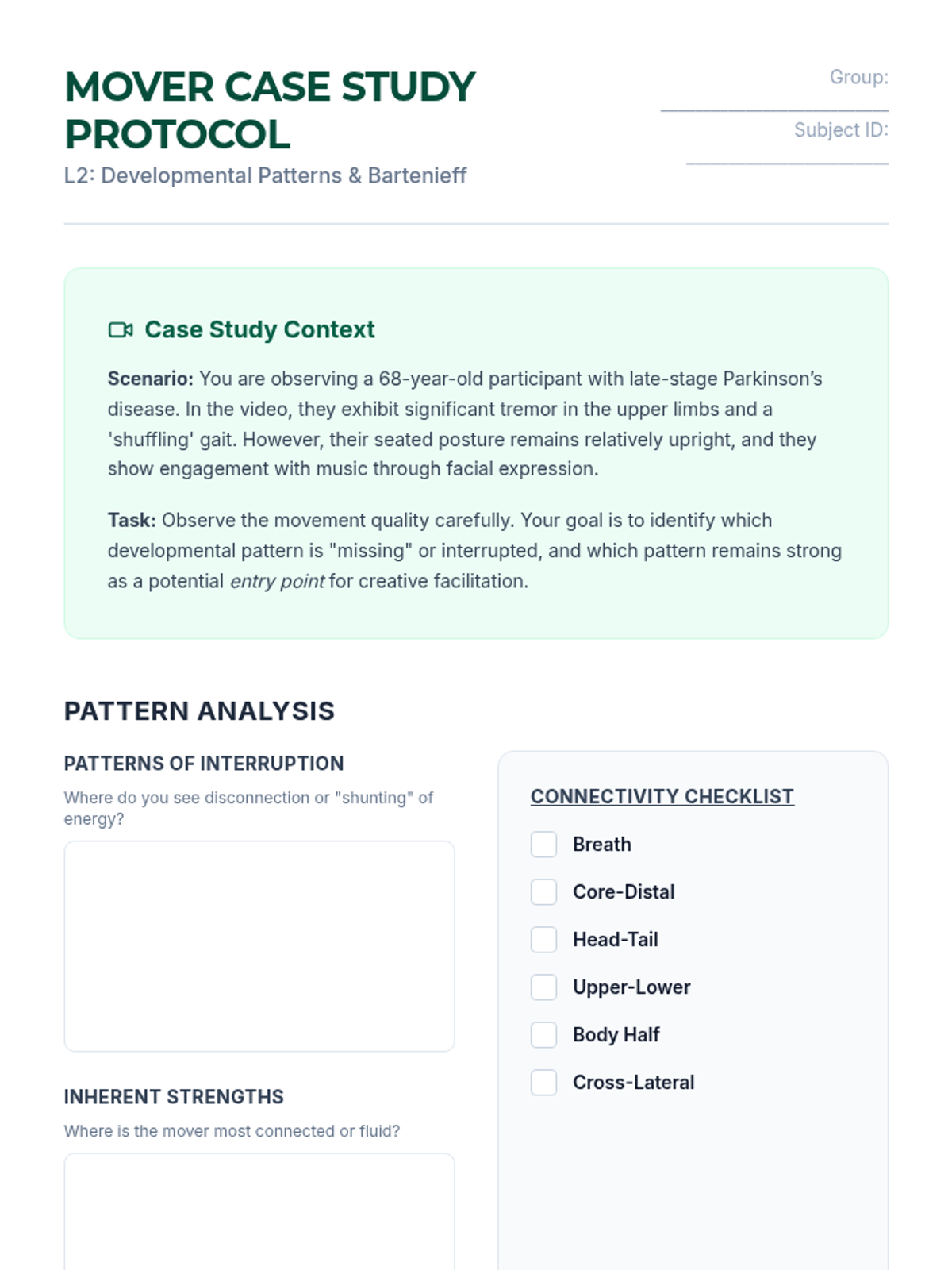
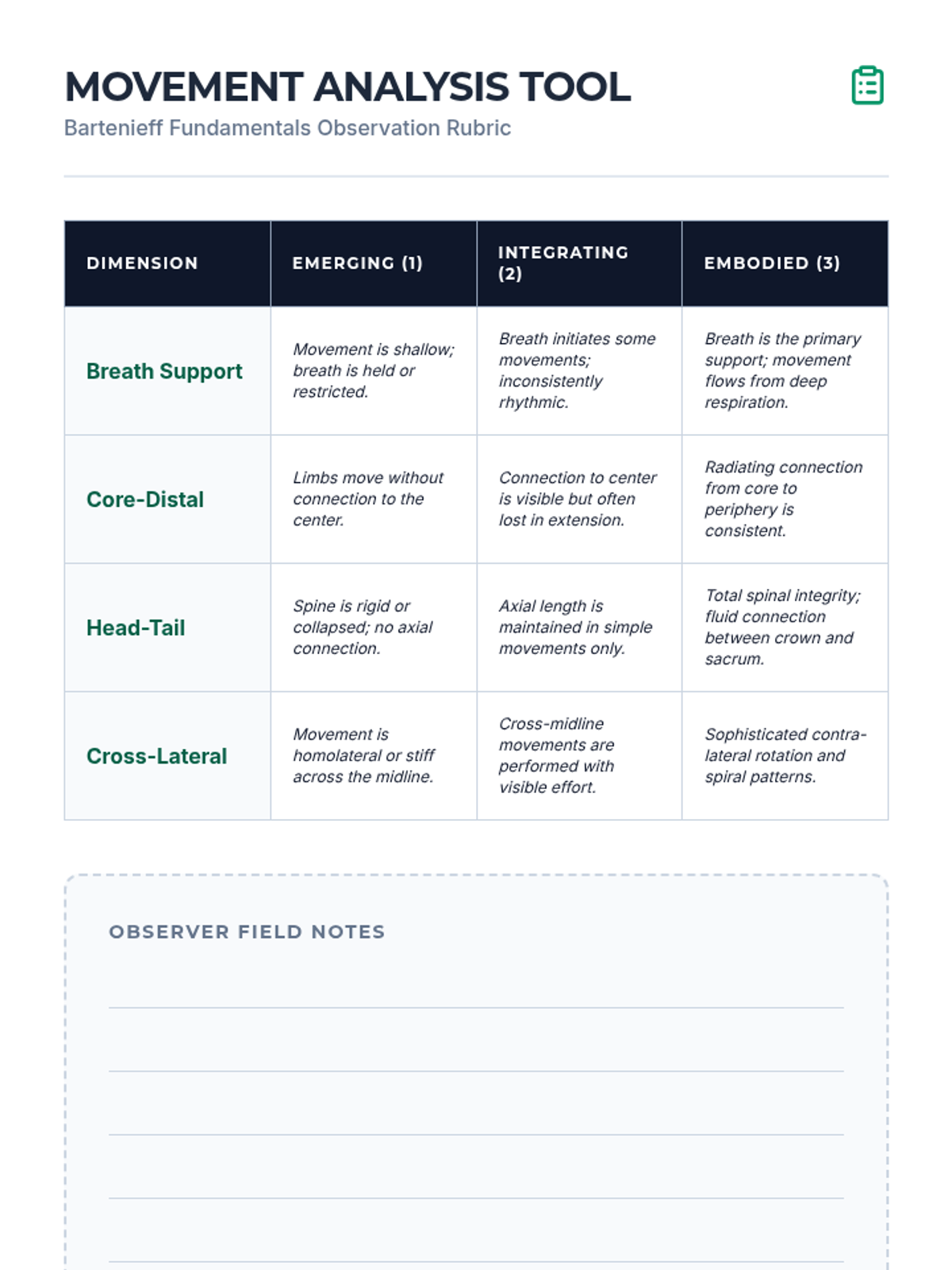
Connect creative movement to Bartenieff Fundamentals and developmental patterns to support movers with diverse physical abilities.
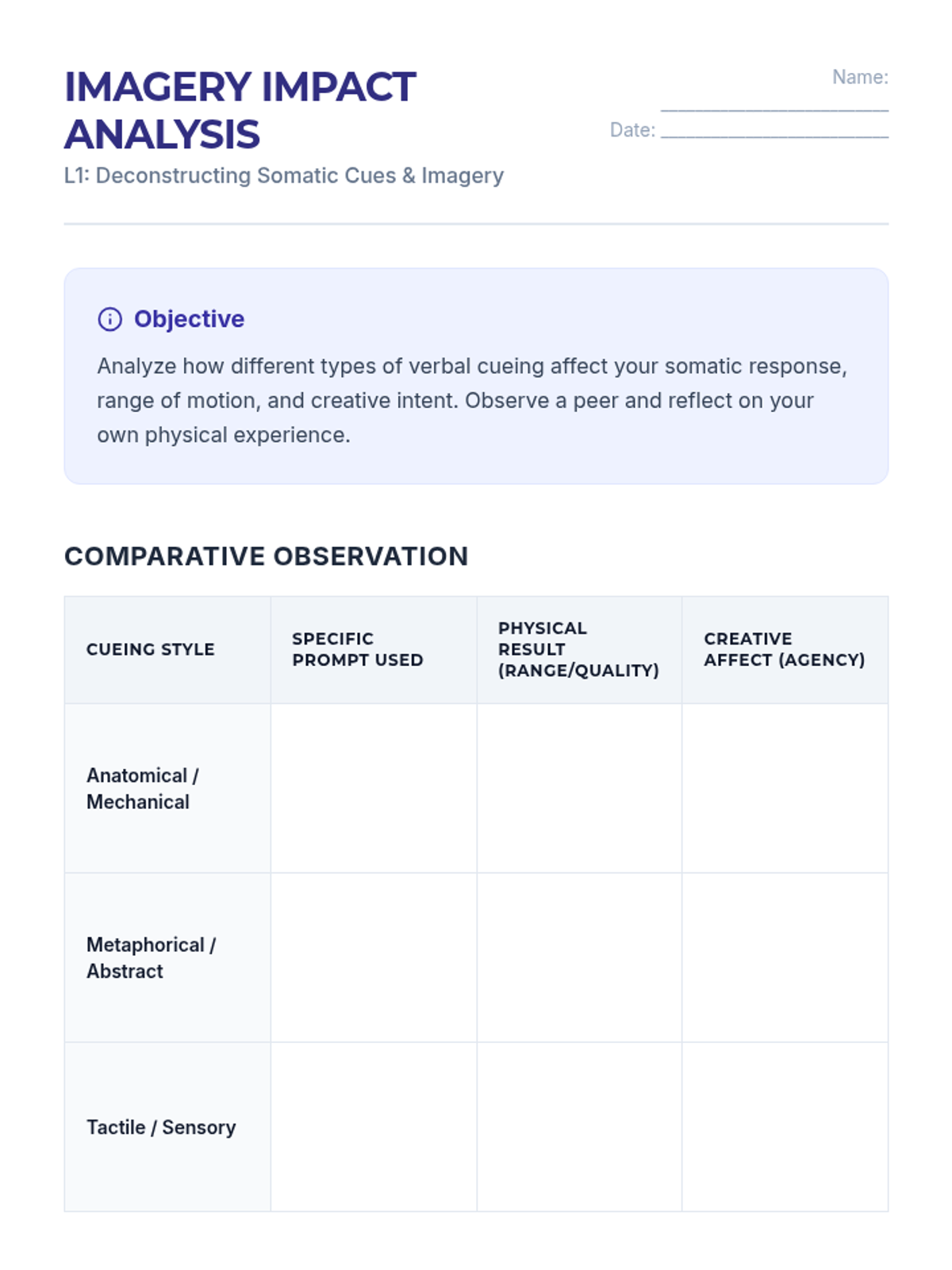
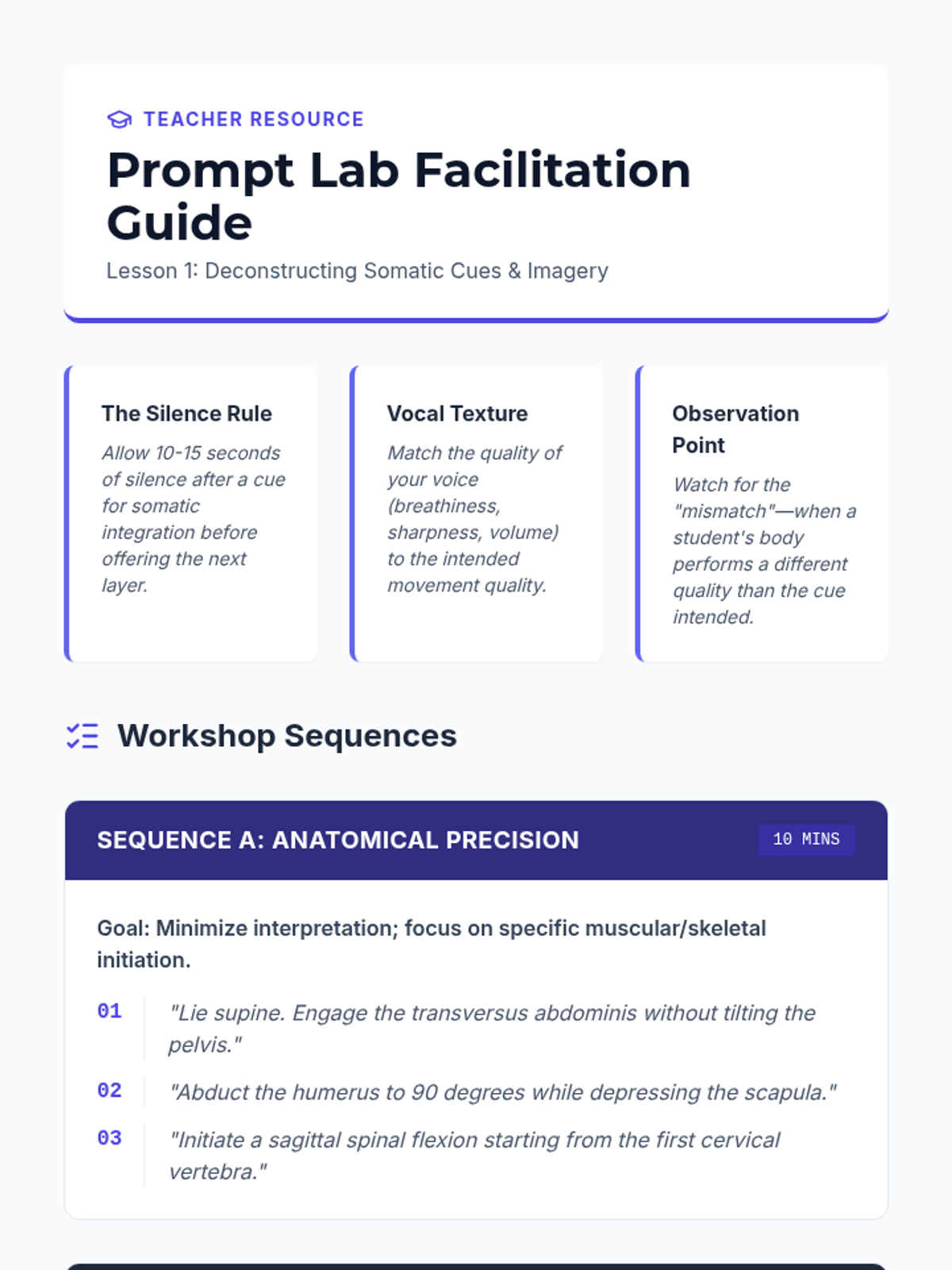
Analyze the efficacy of anatomical versus metaphorical cueing in generating movement quality and somatic response.
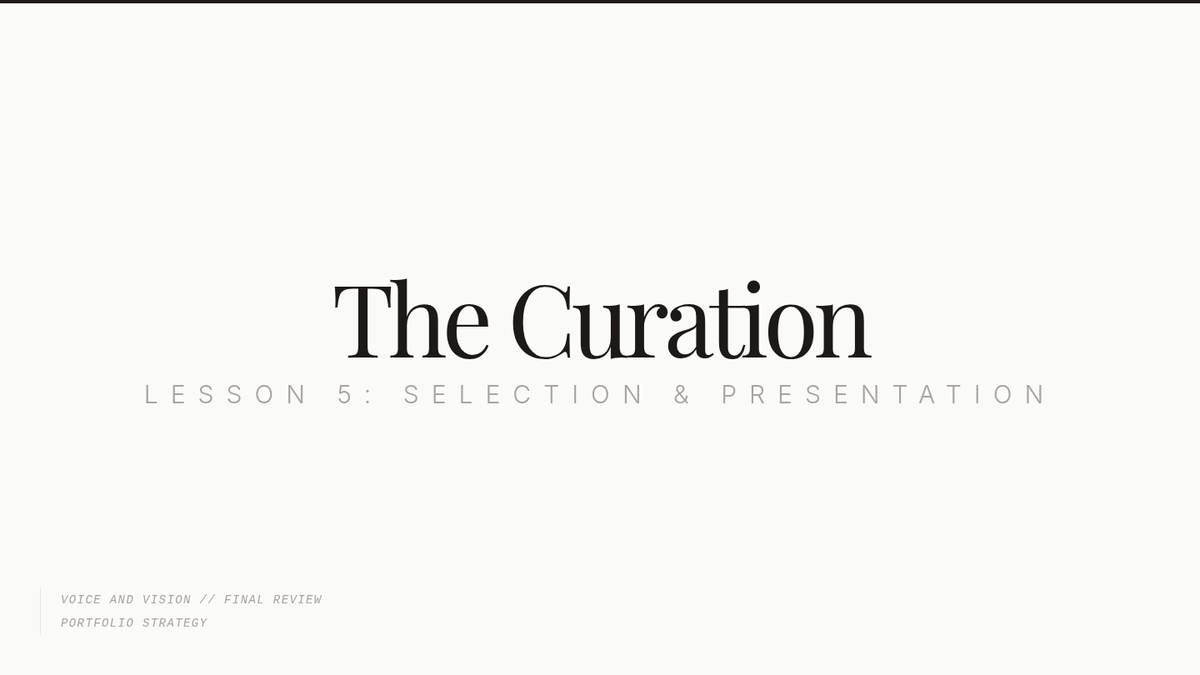
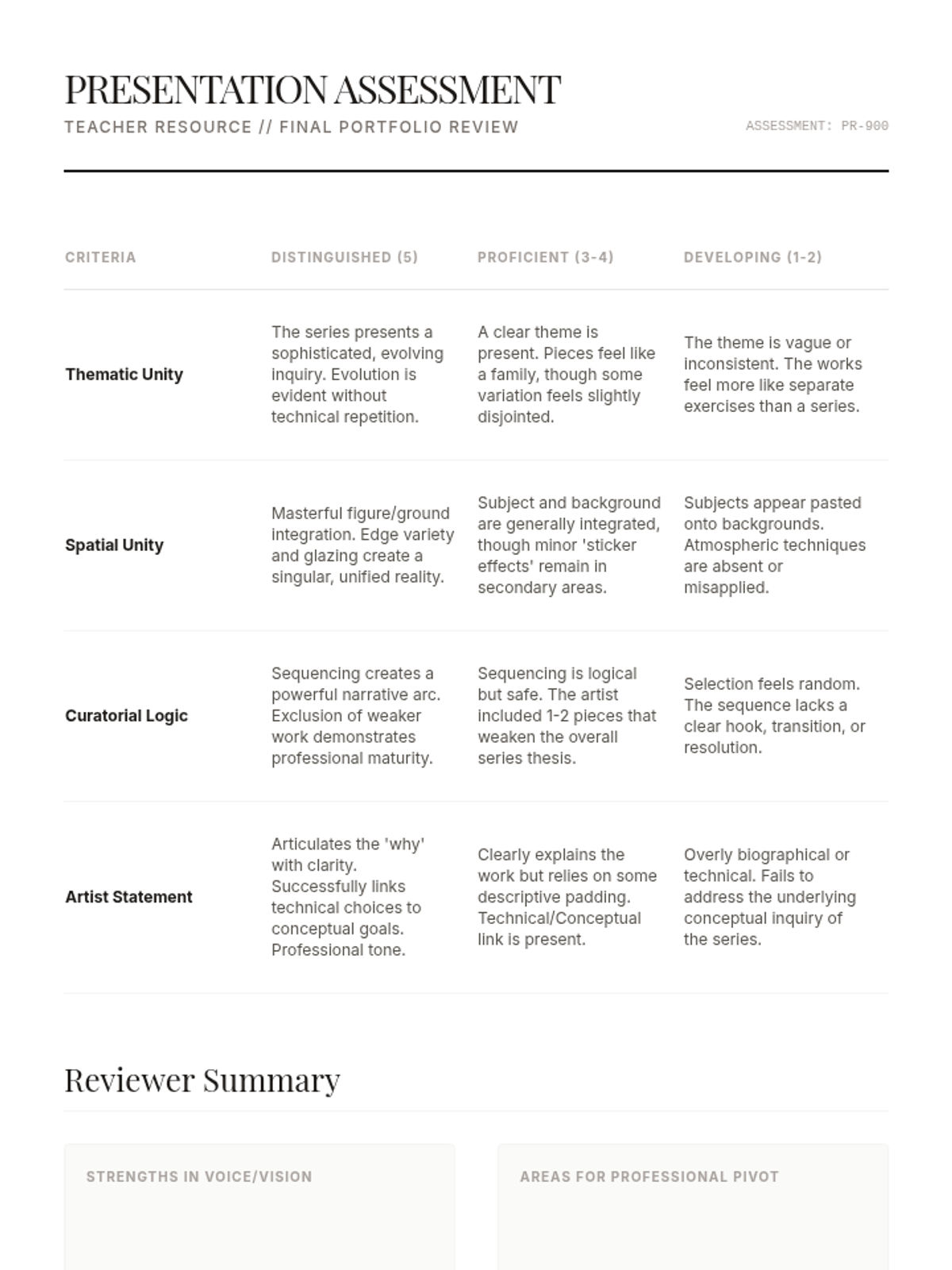
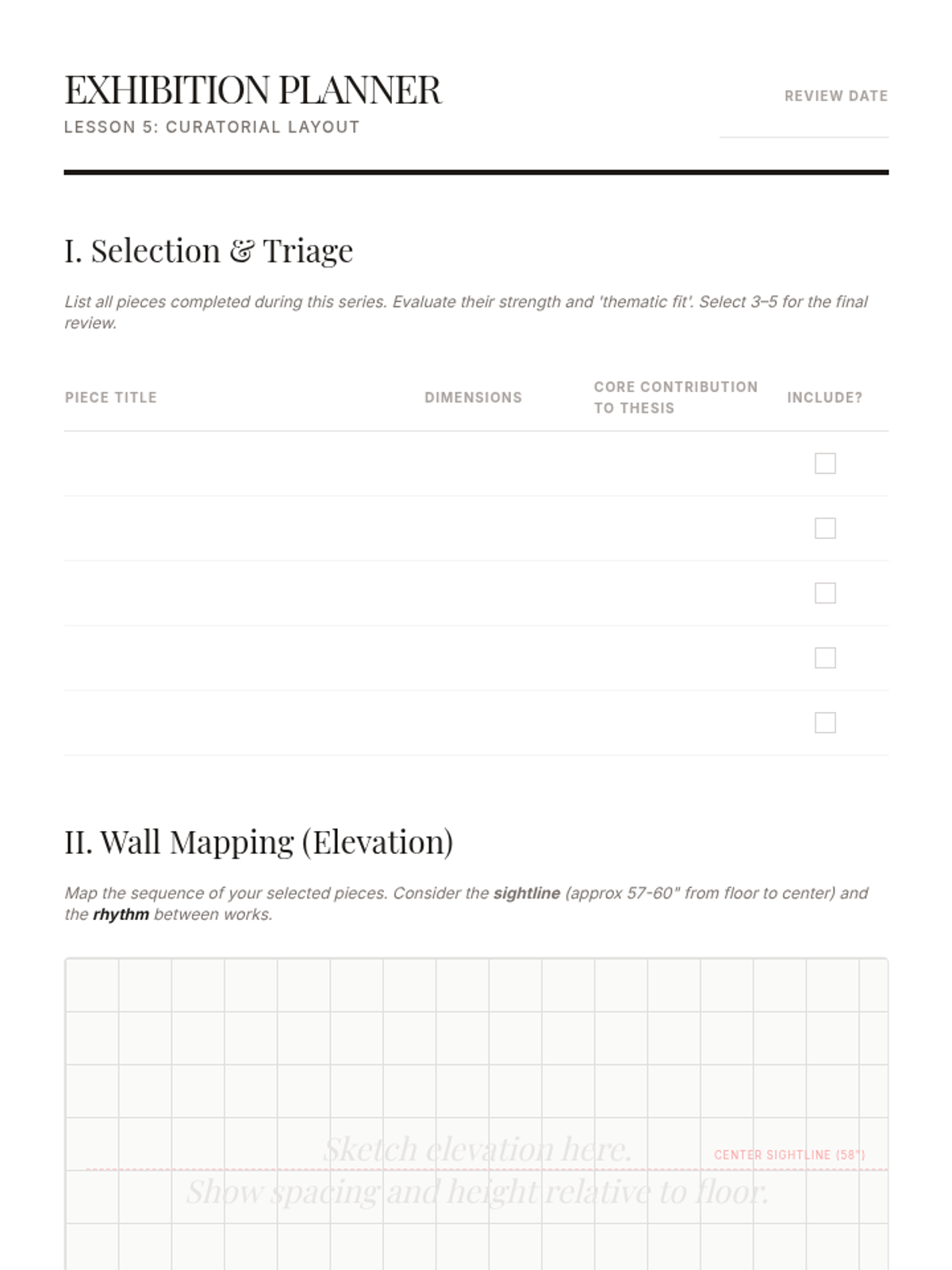
Students curate their series for final review, sequencing work to control narrative flow and drafting a professional artist statement.
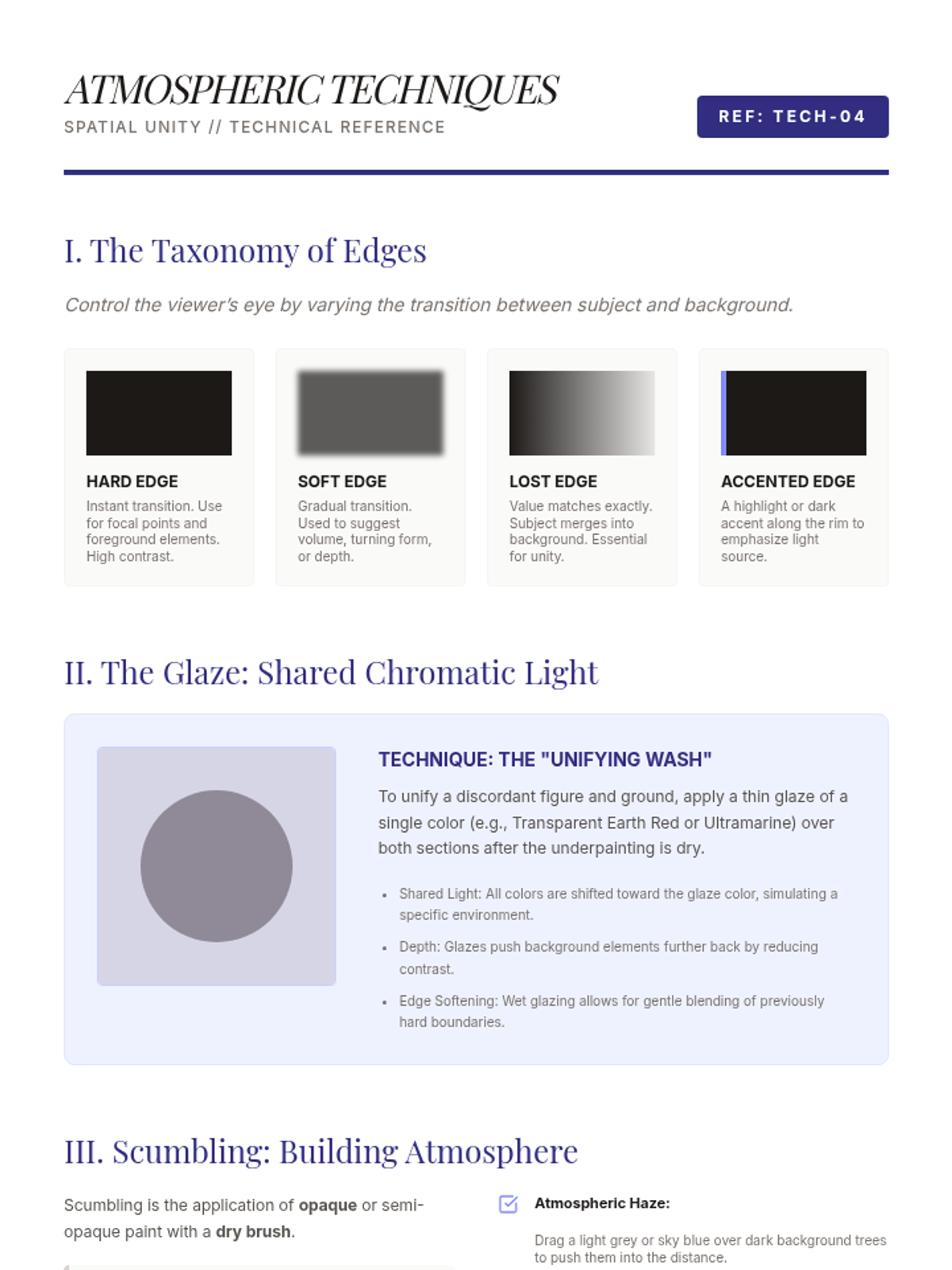
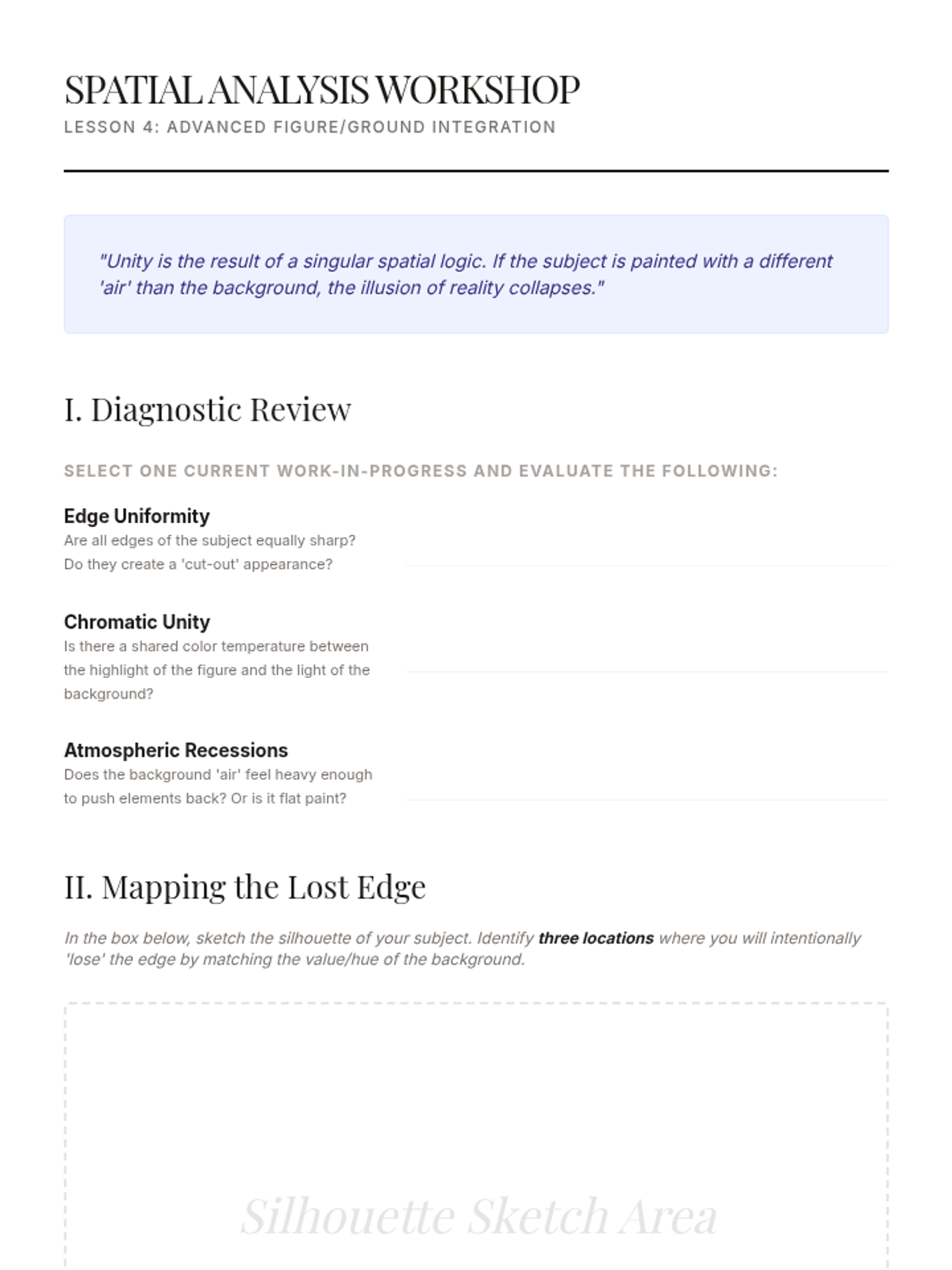
Students master the integration of subject and background through glazing, scumbling, and edge manipulation to create a unified spatial reality.
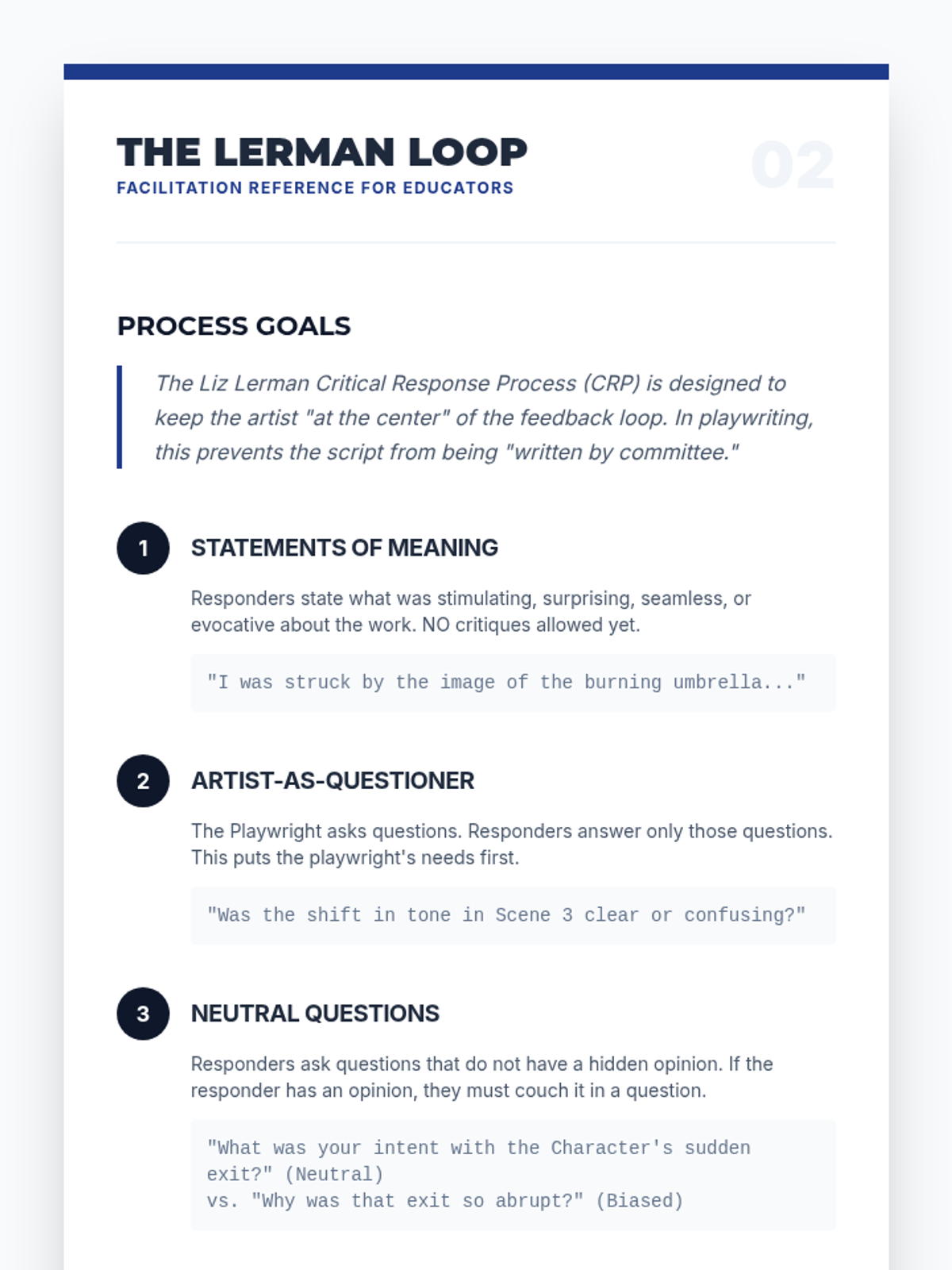
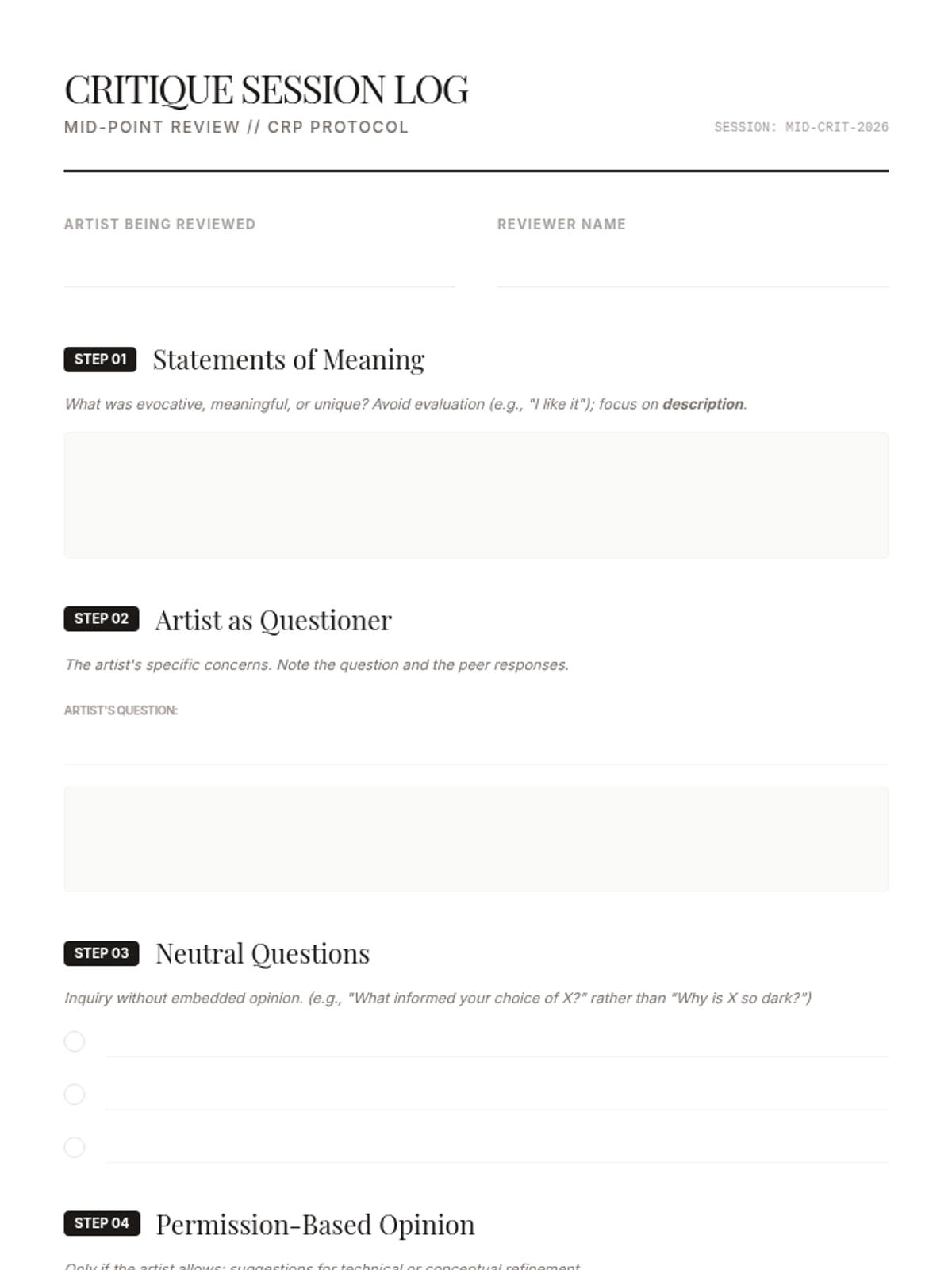
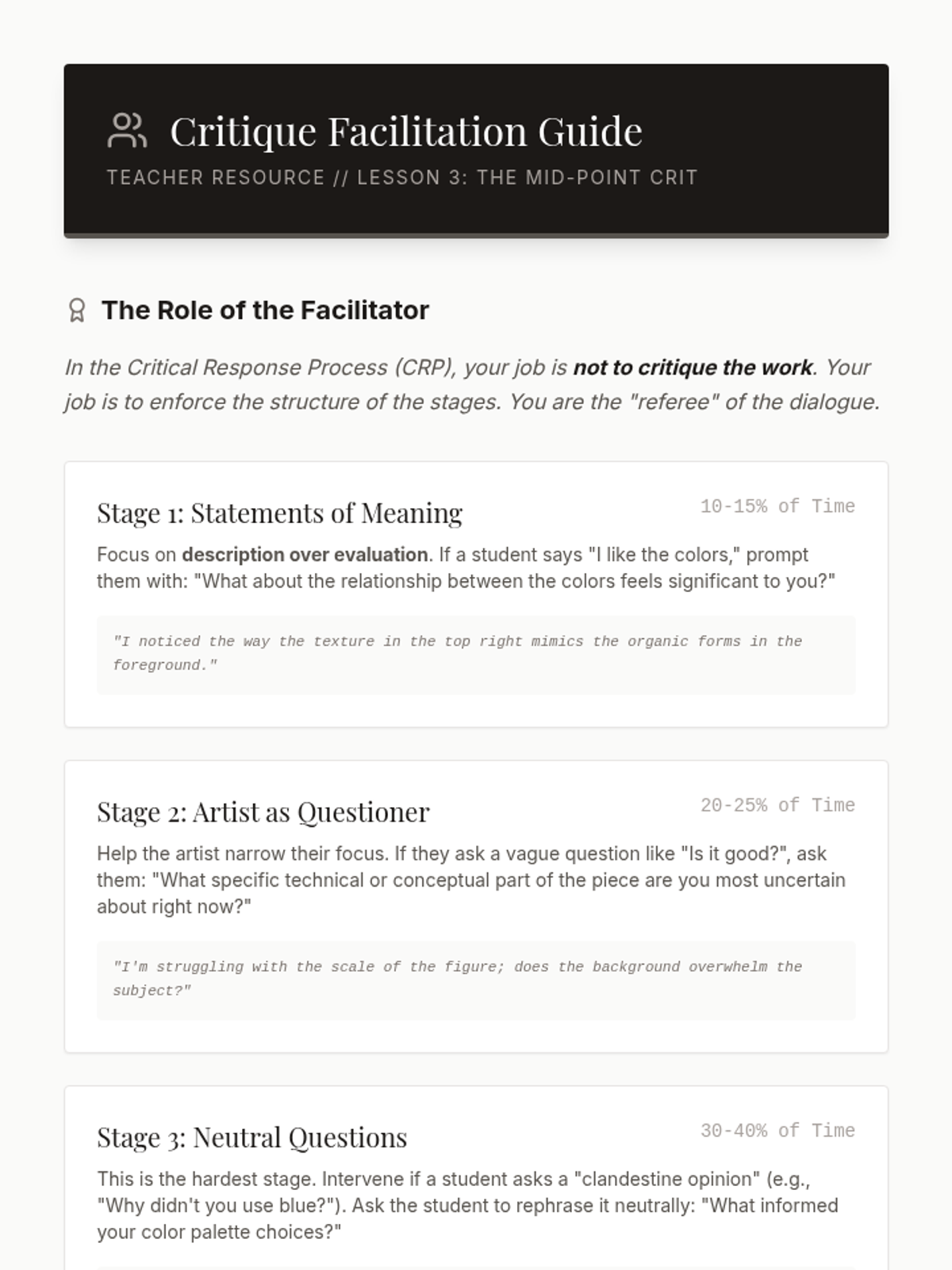
A formal critique simulation utilizing the Critical Response Process to provide actionable feedback and drive iterative refinement of works-in-progress.
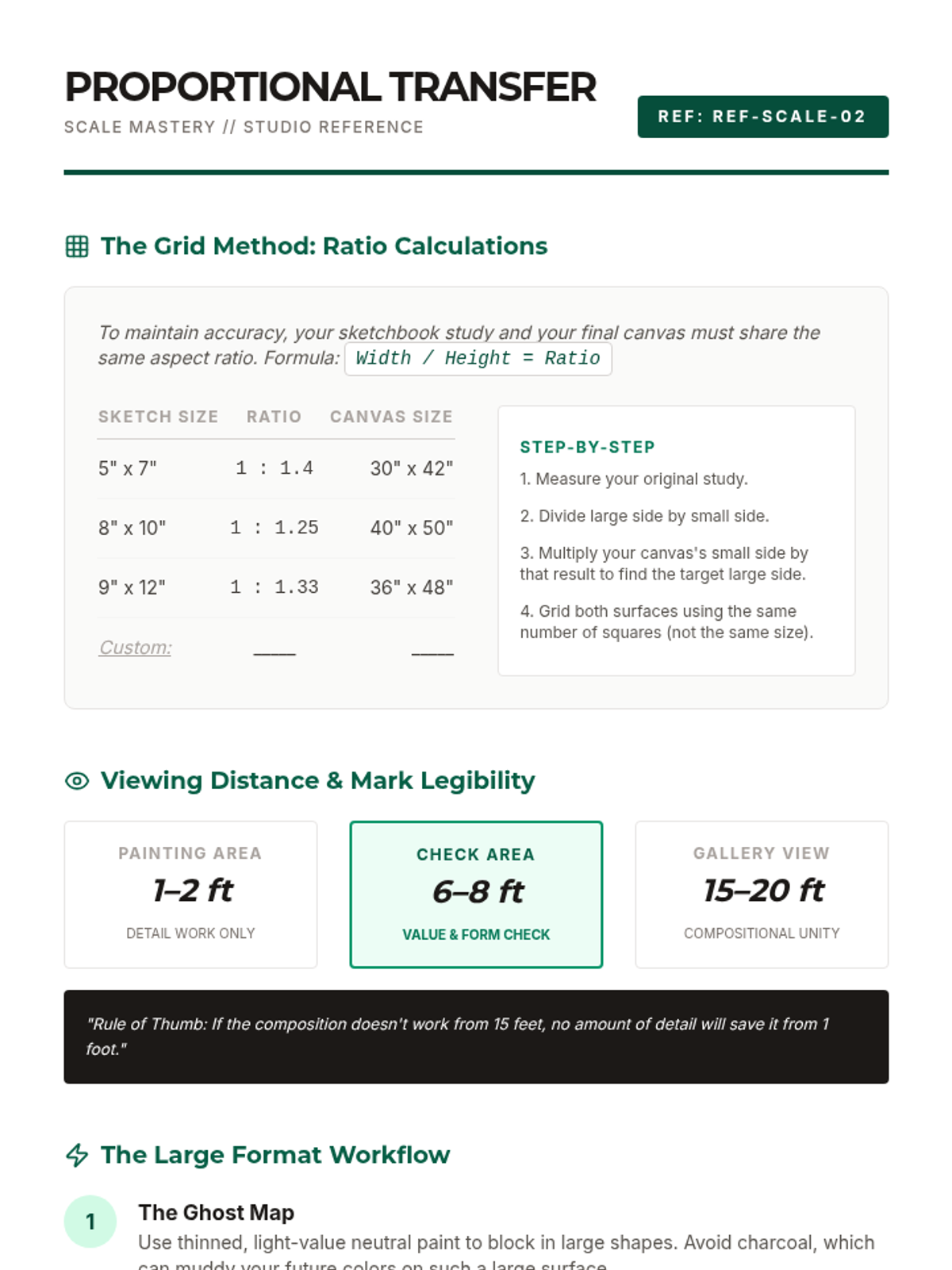
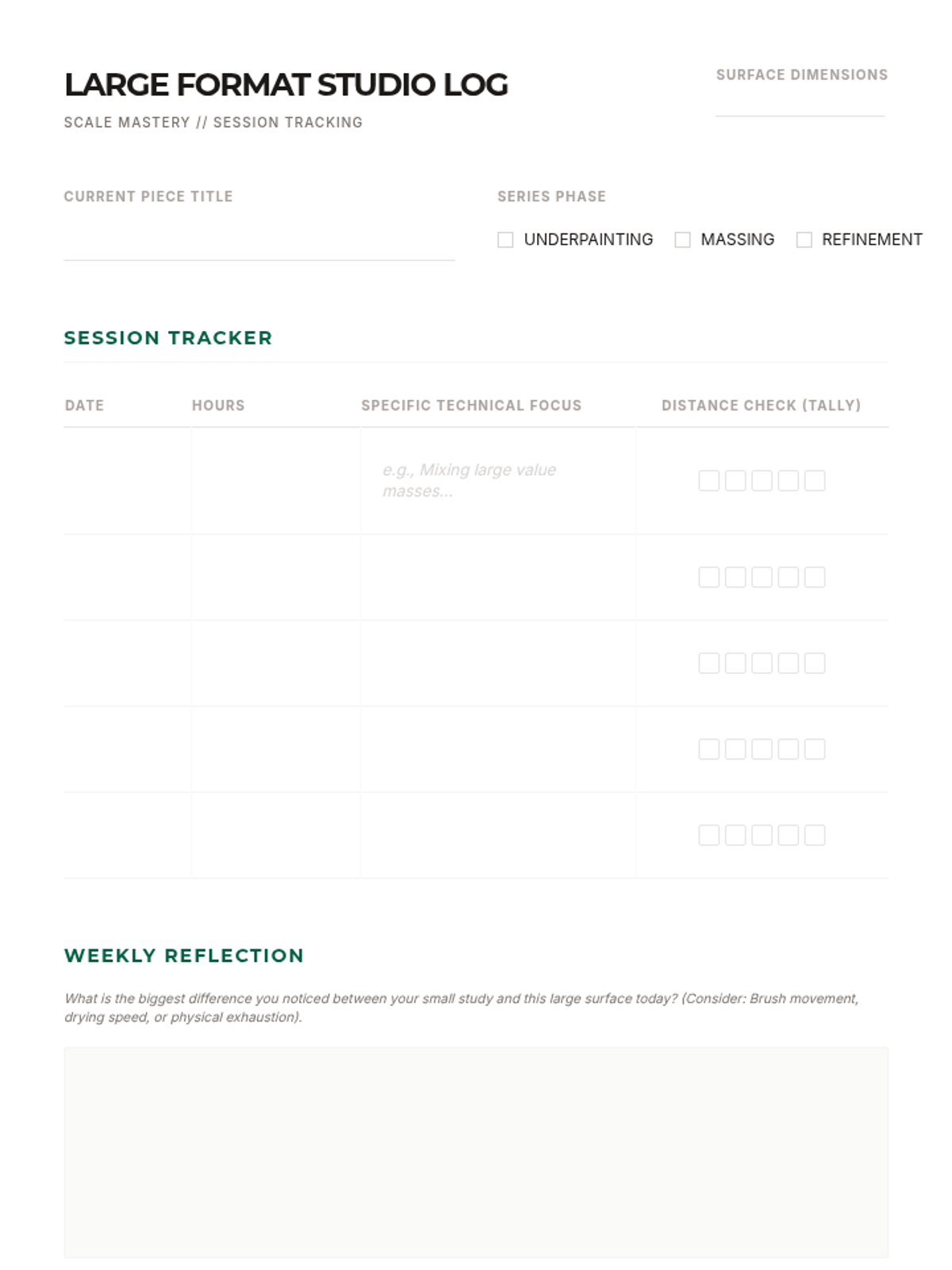
Students address the physical and perceptual challenges of large-scale work by transferring small studies to large formats, focusing on brush economy and viewing distance.
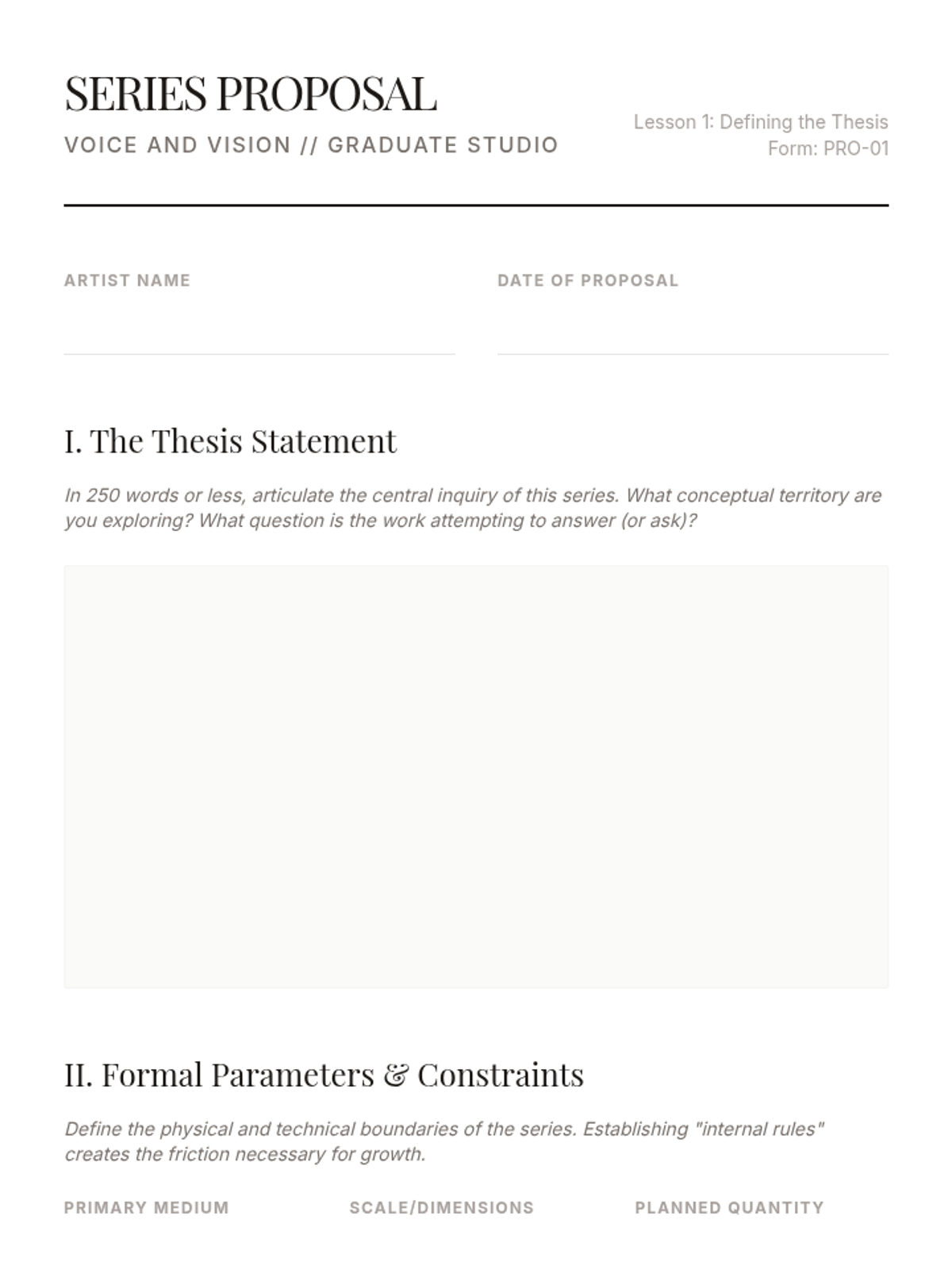
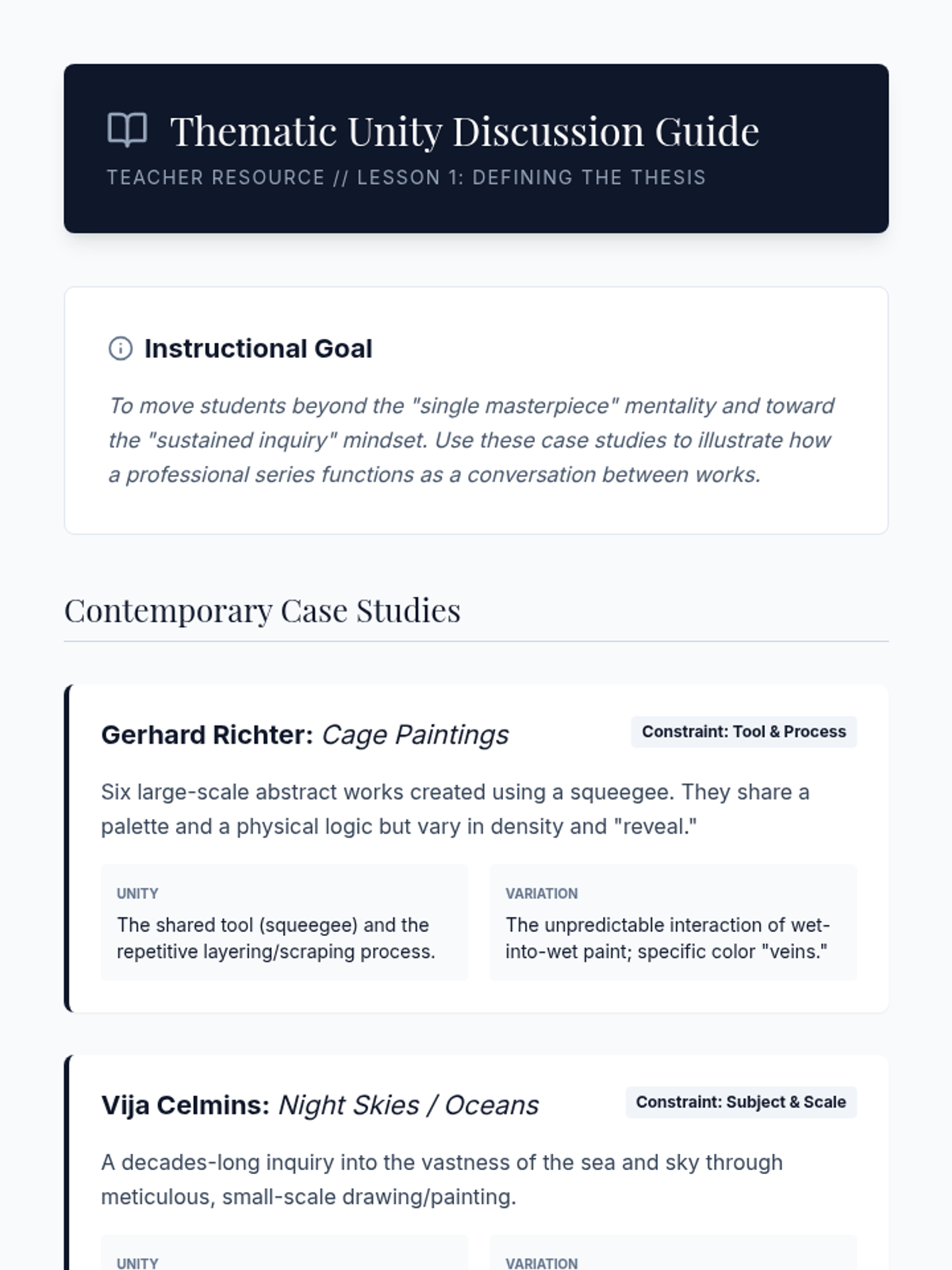
Students brainstorm and propose a thematic series of 3-5 works, defending their choice of subject matter and medium while analyzing contemporary thematic consistency.
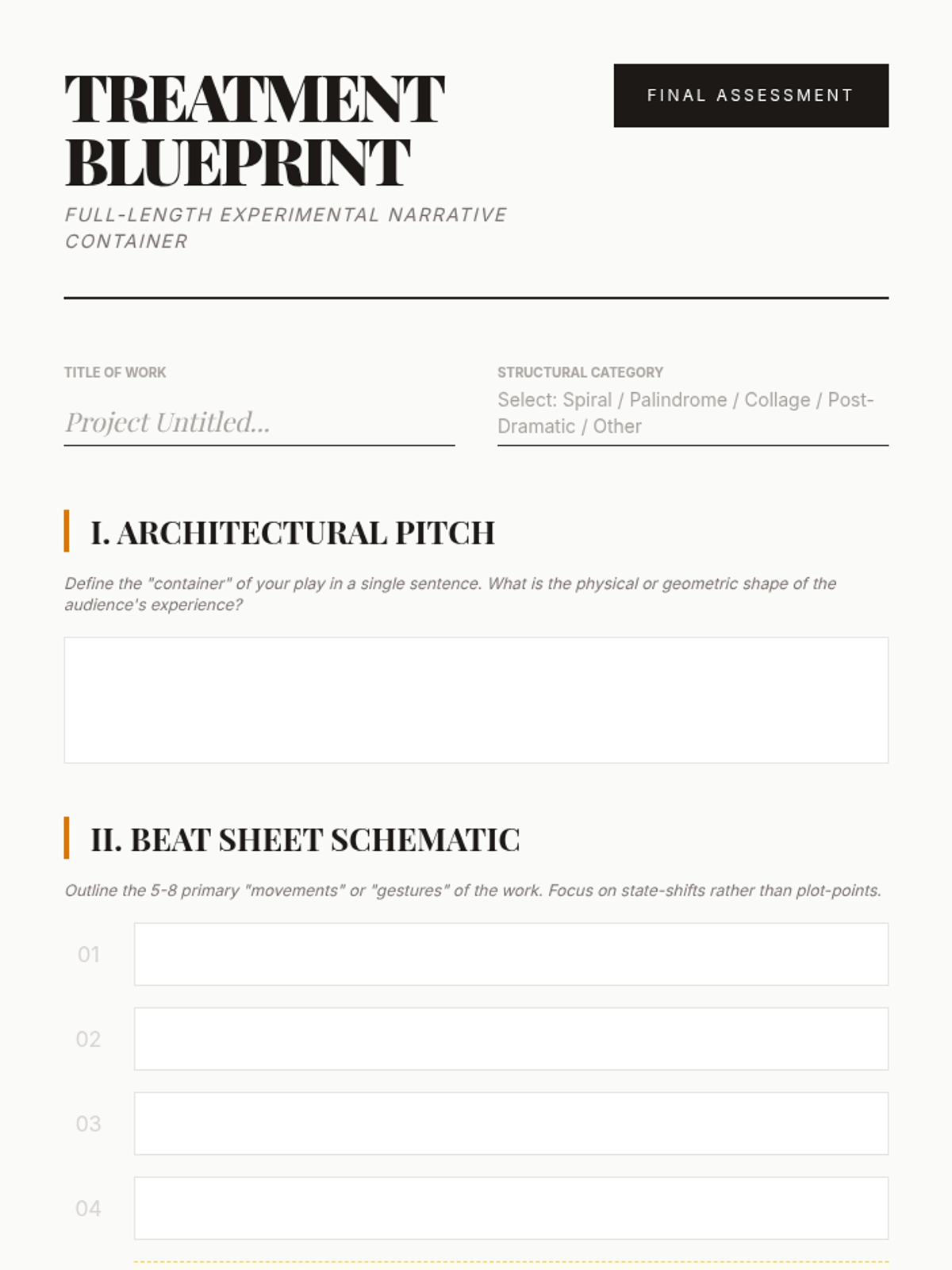
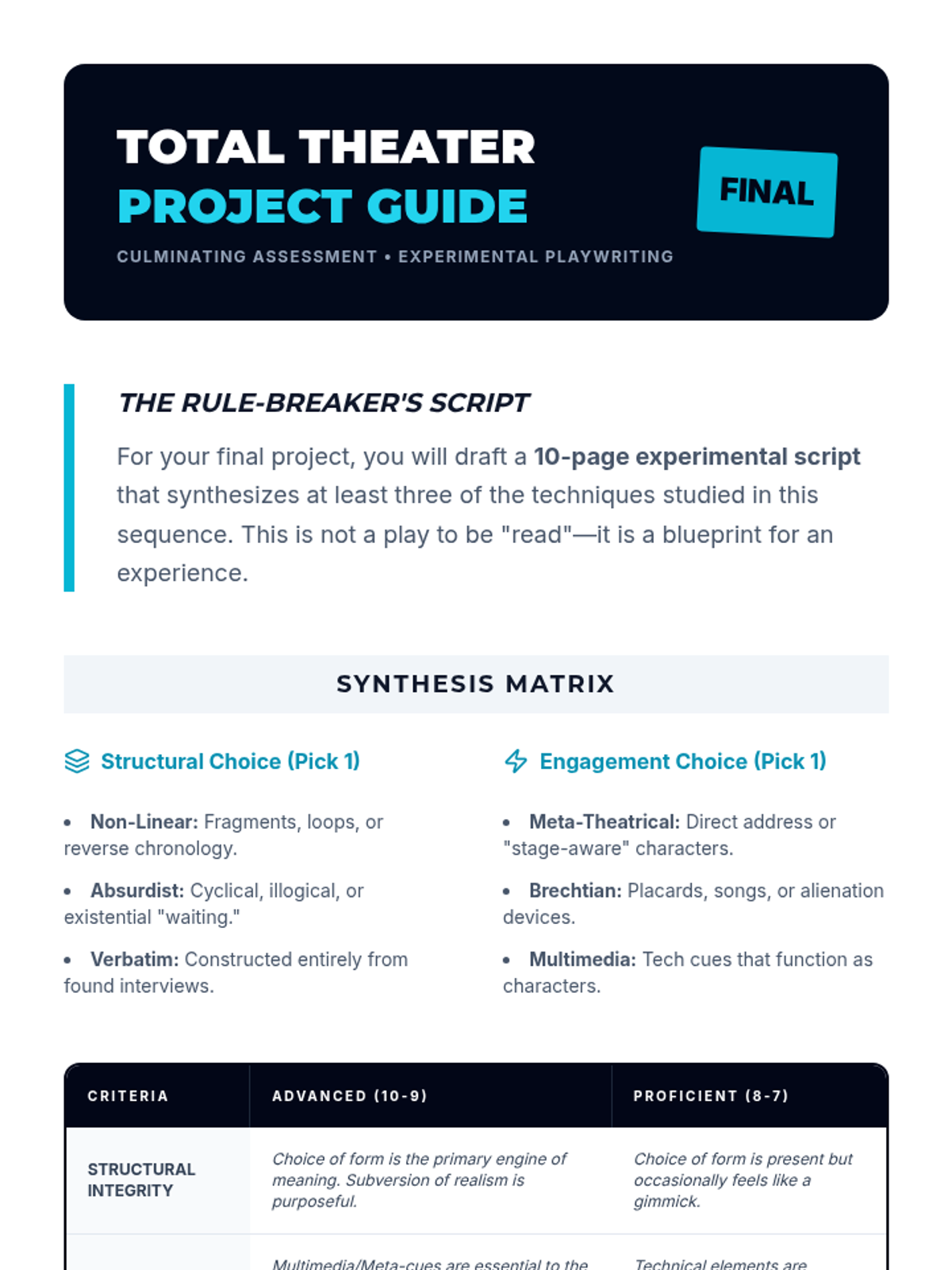
Students synthesize their structural experiments into a comprehensive outline or 'beat sheet' for a full-length play. The session focuses on pacing, intermission placement, and sustaining tension across a longer duration.
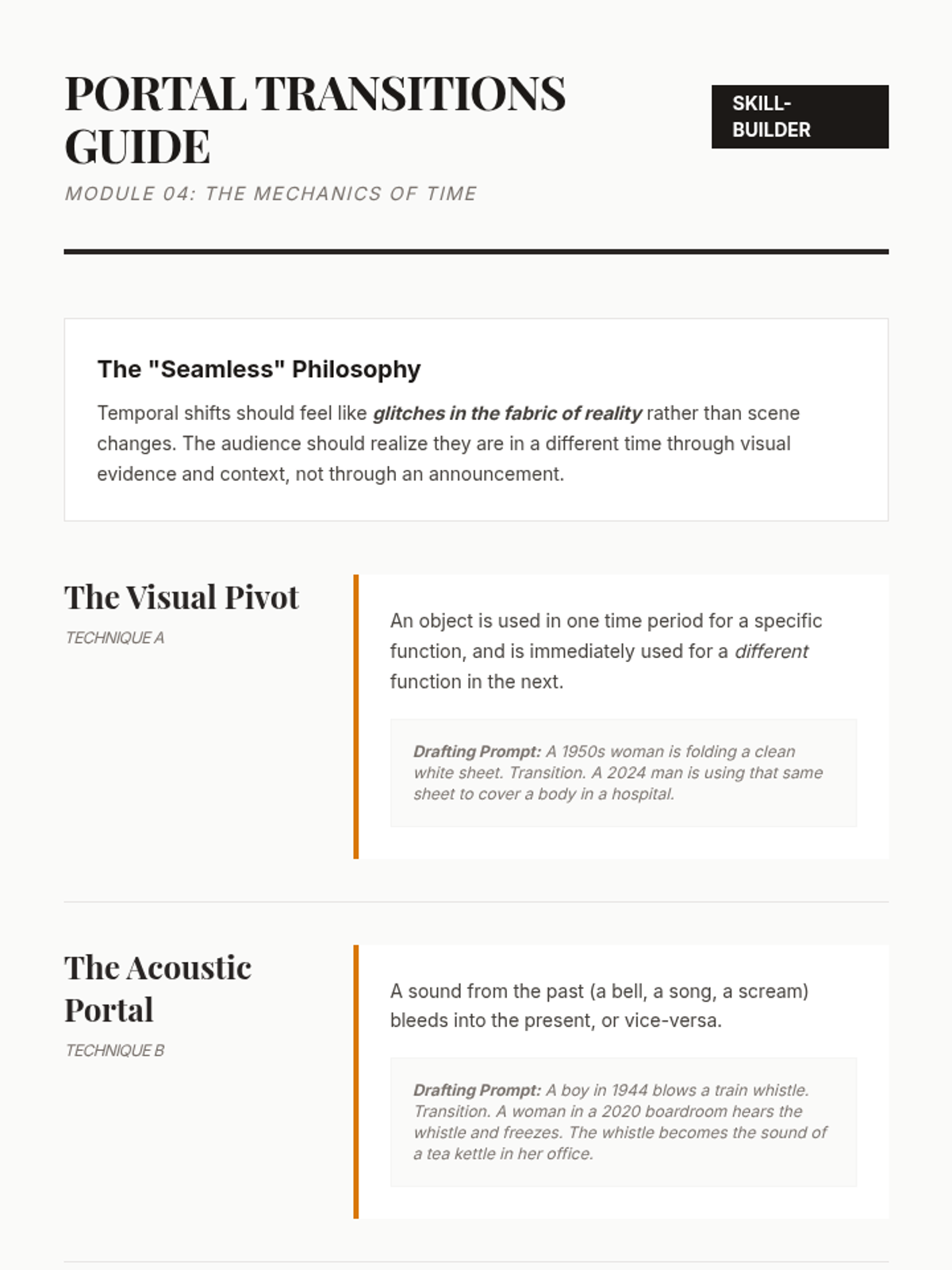
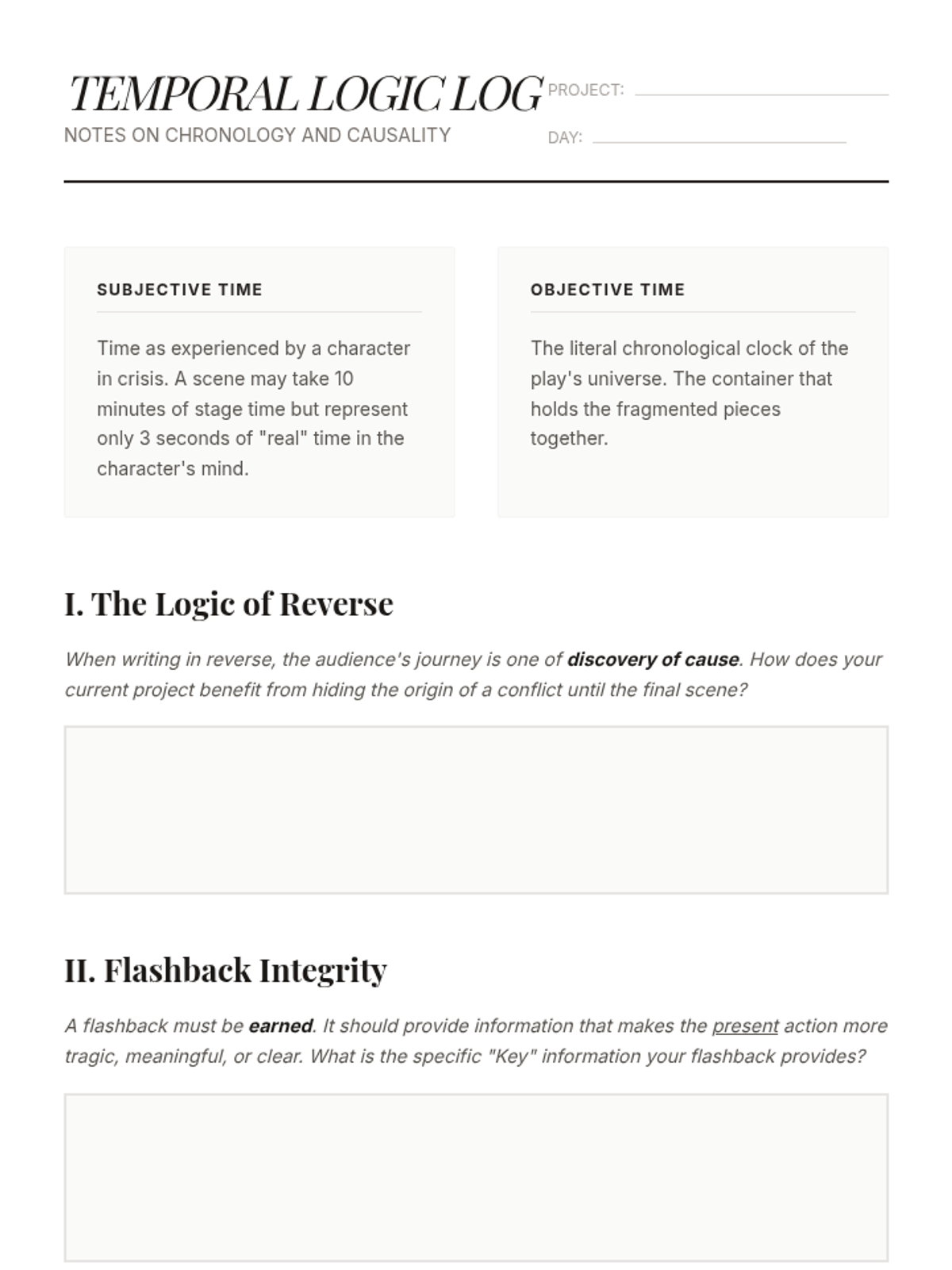
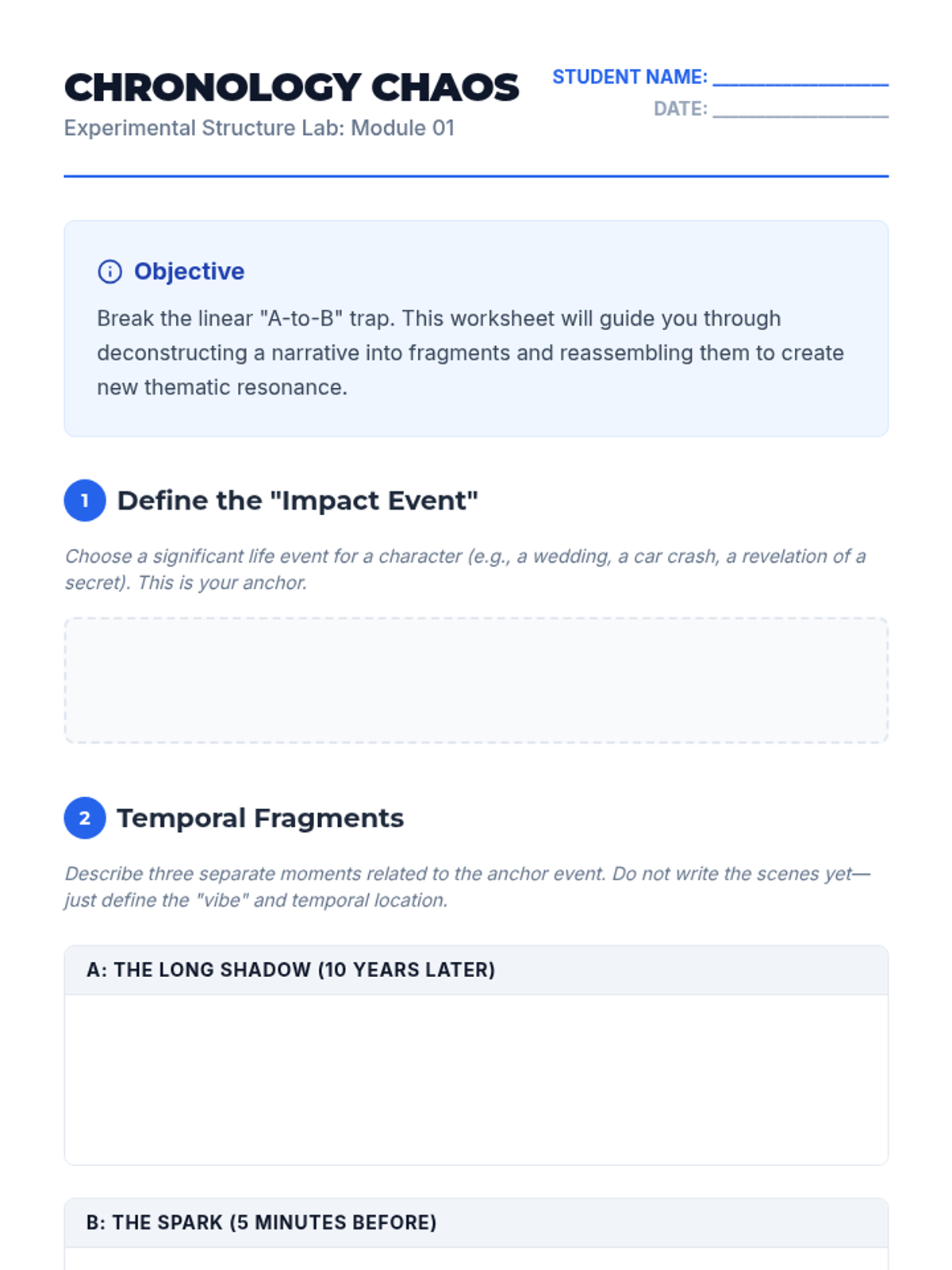
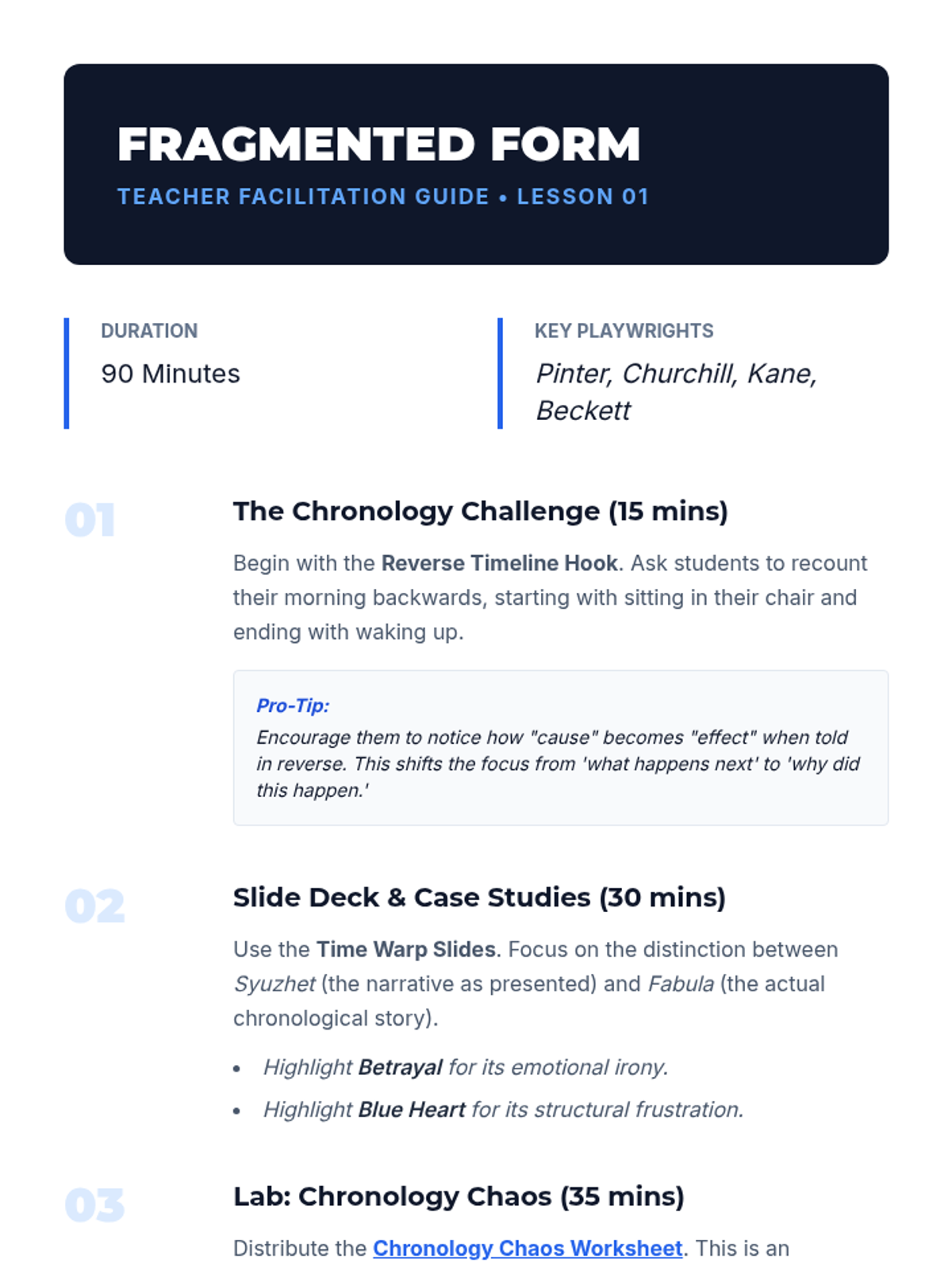
This lesson covers the mechanics of flashbacks, flash-forwards, and reverse chronology. Students write transitions that bridge time gaps fluidly, ensuring the audience can follow the temporal shifts without heavy-handed exposition.
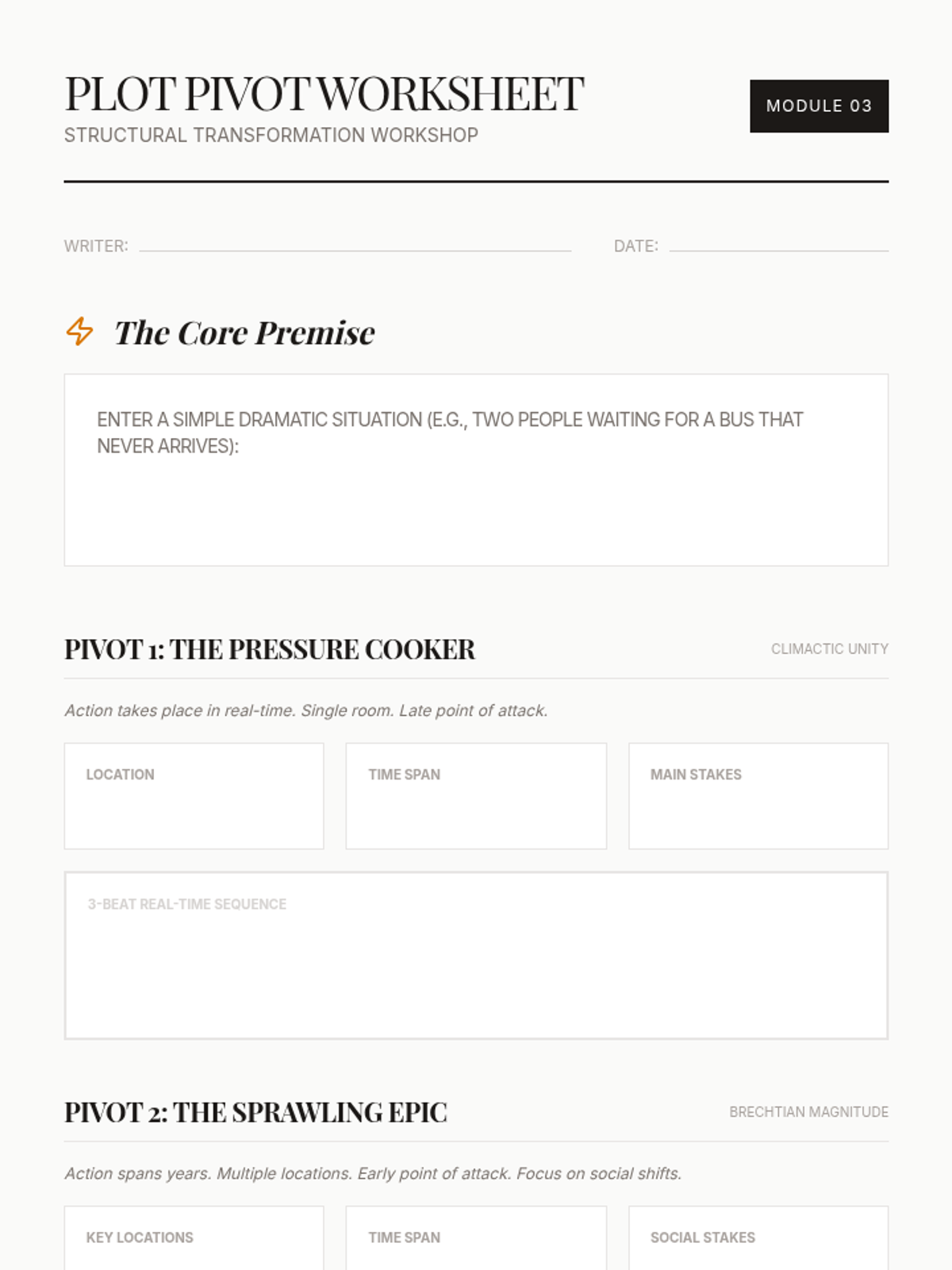
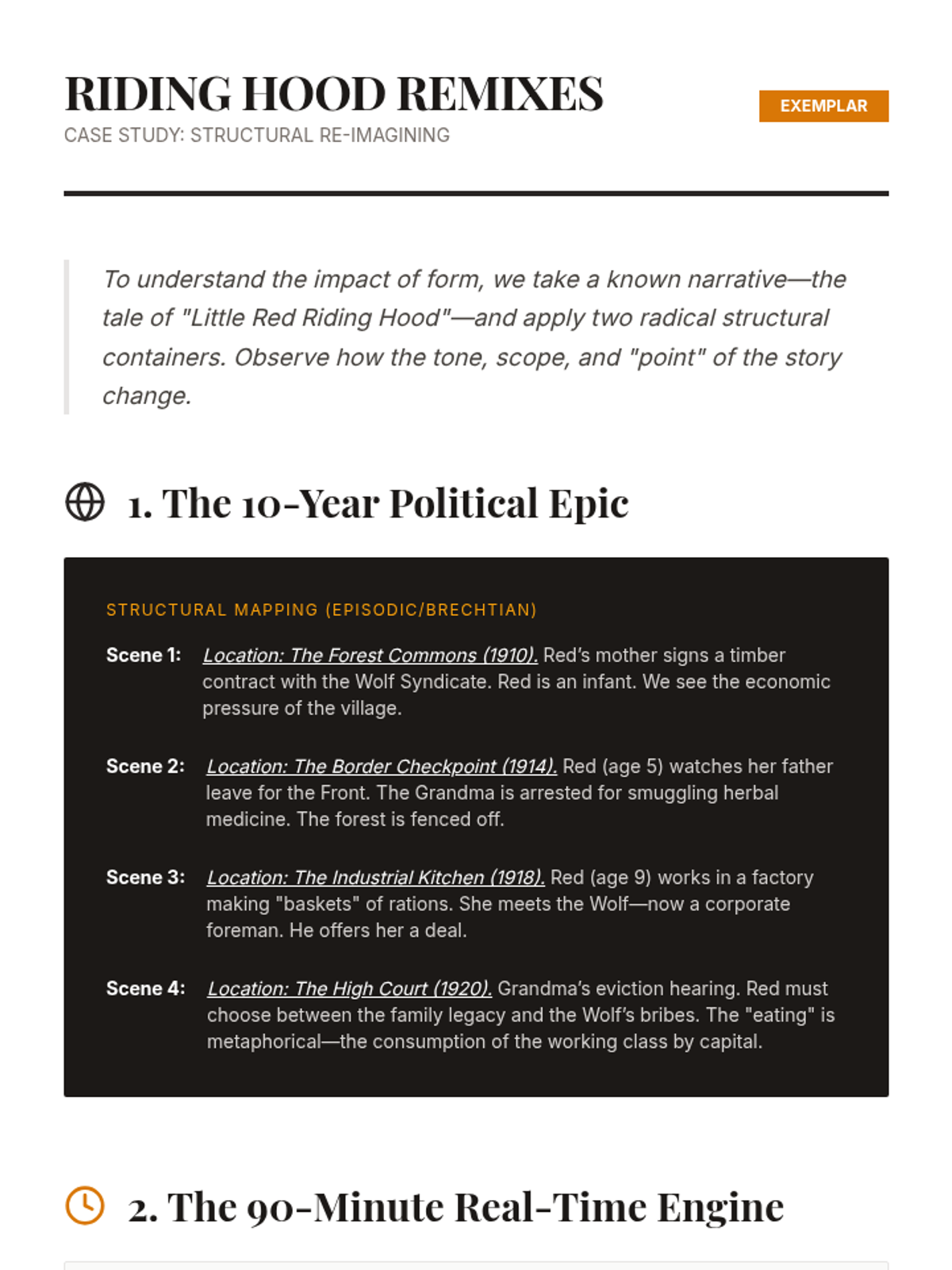
Students conduct a comparative analysis of episodic (Brechtian) structures versus climactic (tightly compressed) structures. They then take a single premise and outline it twice: once as a sprawling epic and once as a real-time pressure cooker.
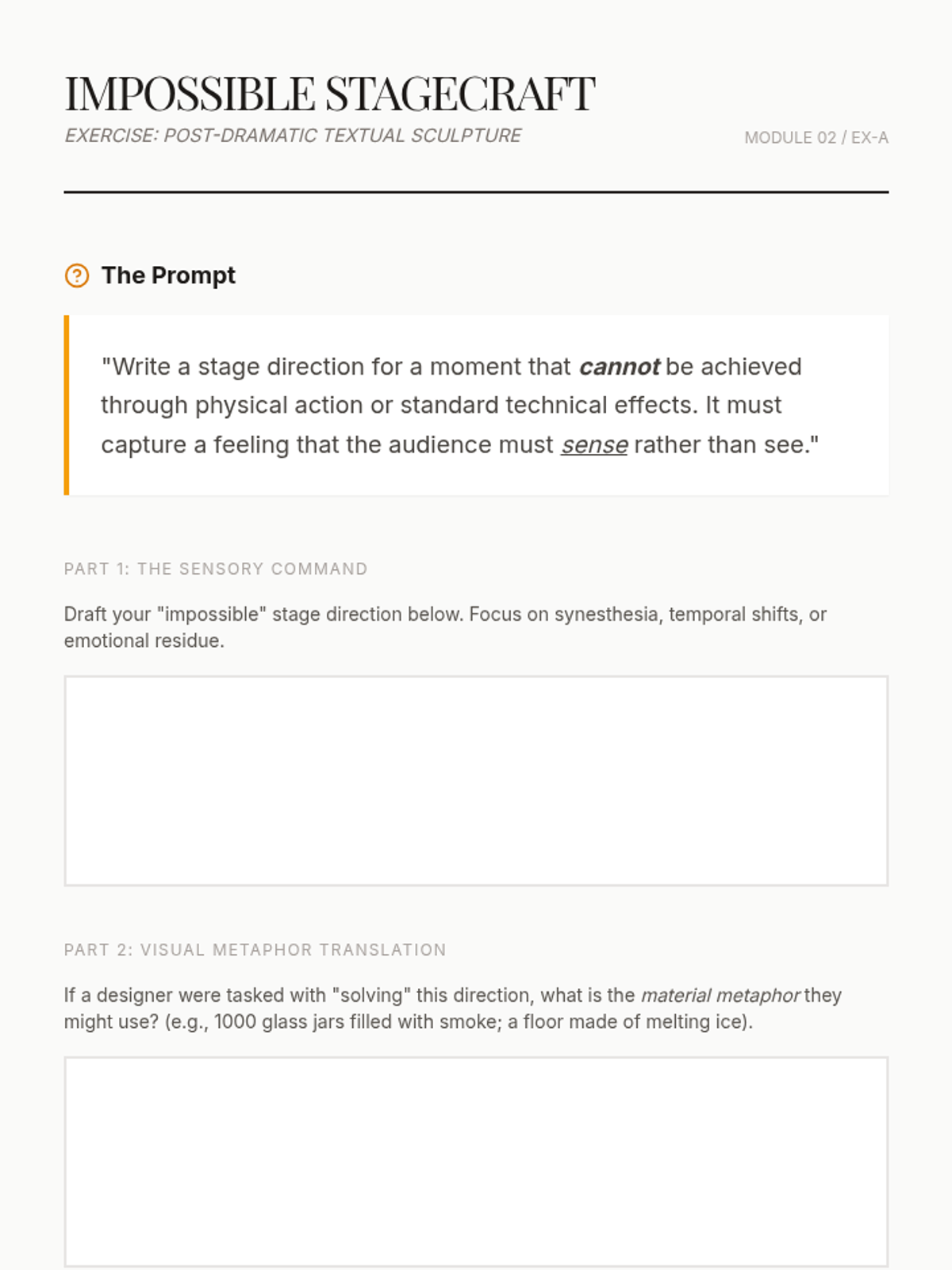
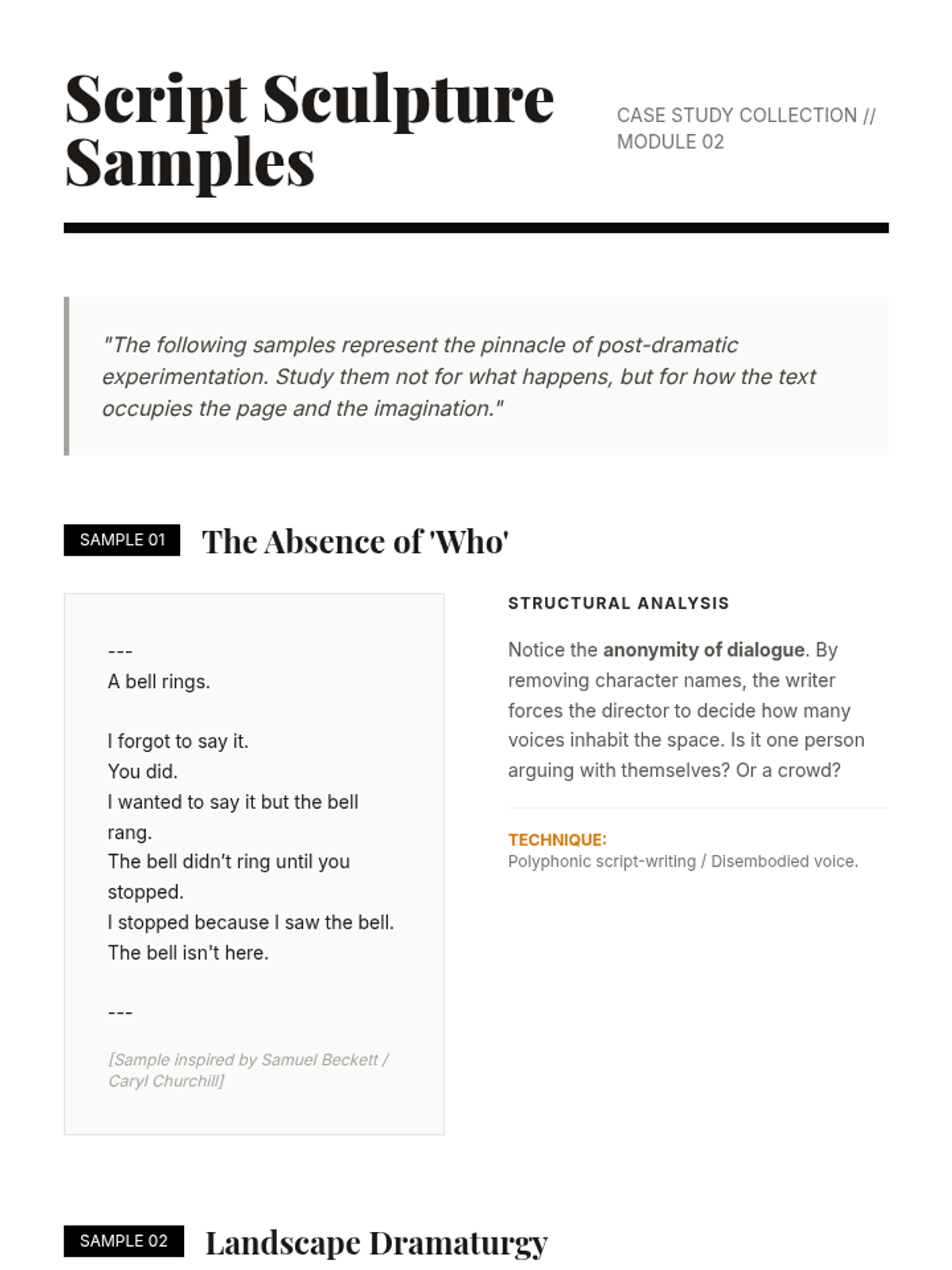
Focusing on post-dramatic theater, this lesson asks students to write scenes that prioritize atmosphere, image, or theme over plot progression. Students experiment with 'impossible' stage directions and non-narrative cohesion.
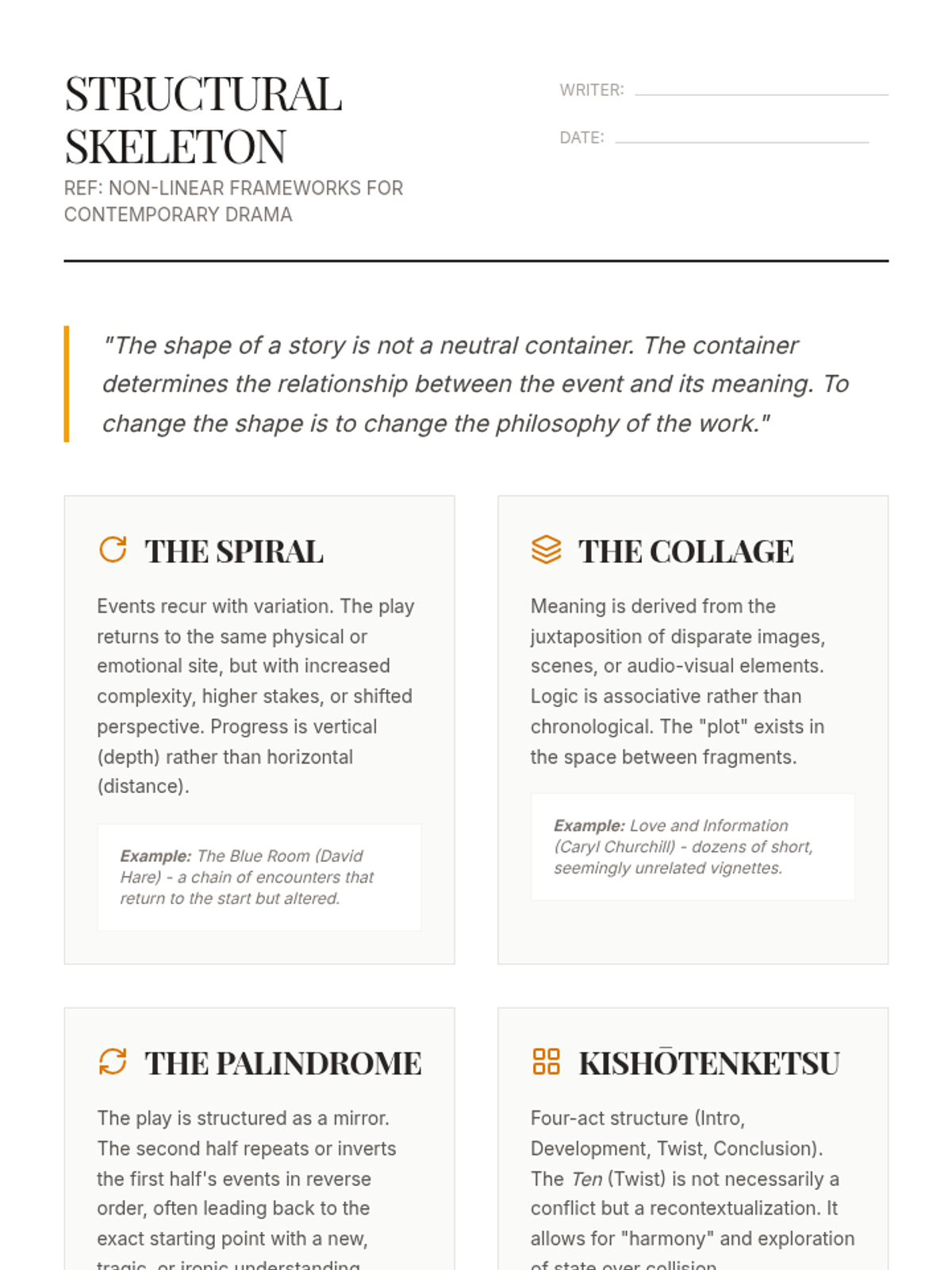
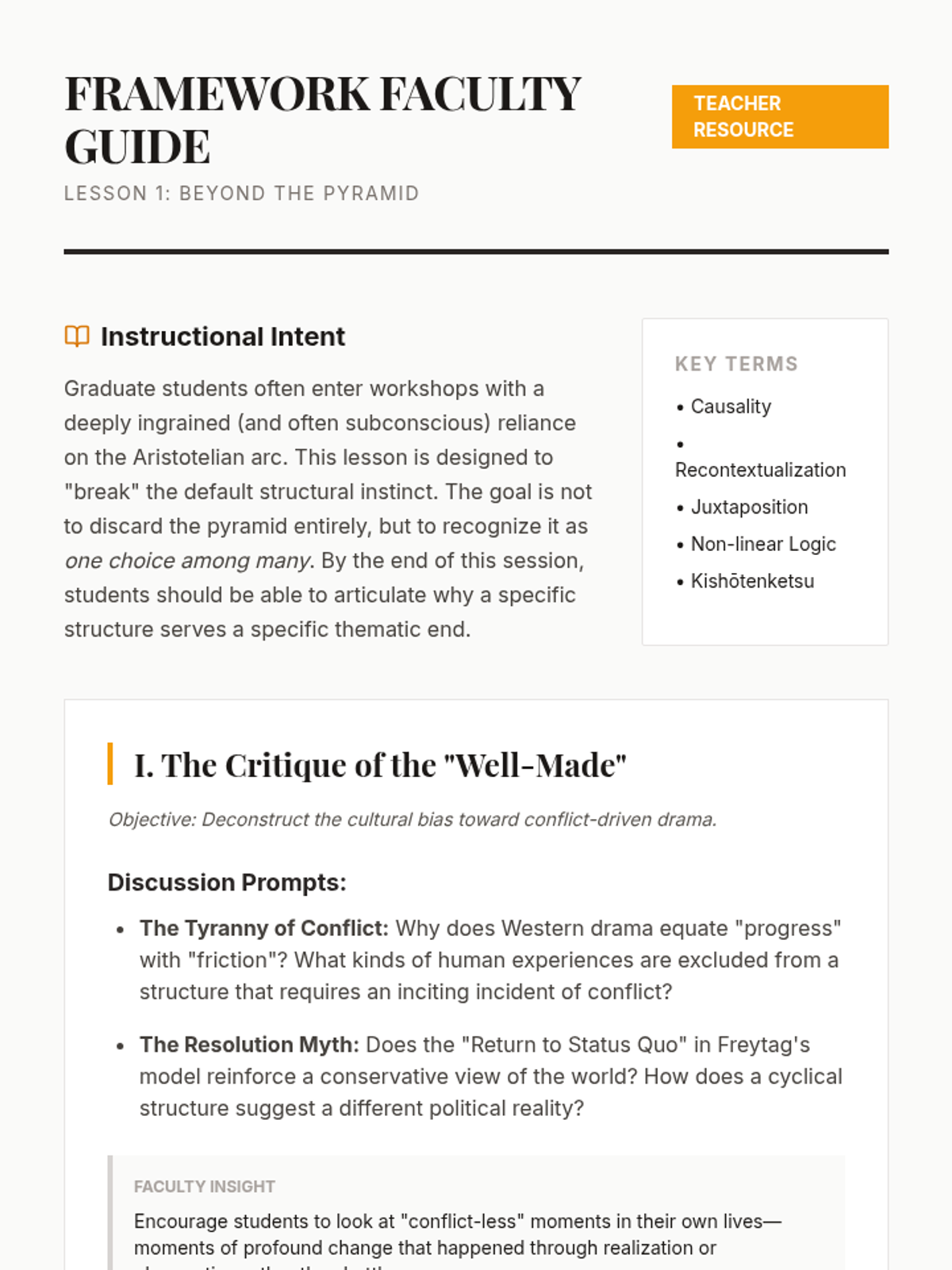
Students critique the traditional Freytag's Pyramid and explore alternative narrative shapes like spirals, collages, and the Kish\u014dtenketsu structure.
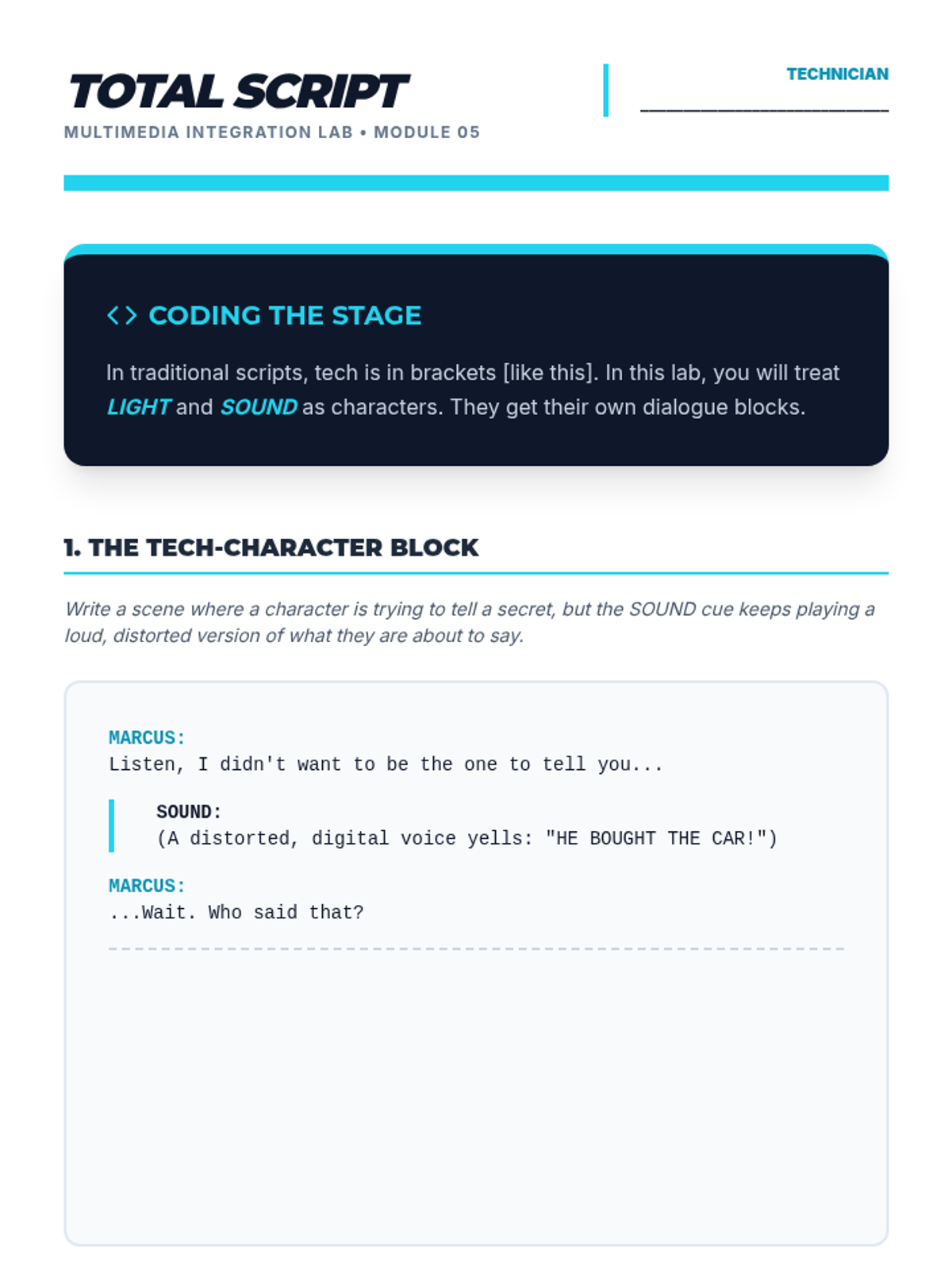
Focuses on writing for technical elements—projections, soundscapes, and lighting—as integral narrative drivers in the script.
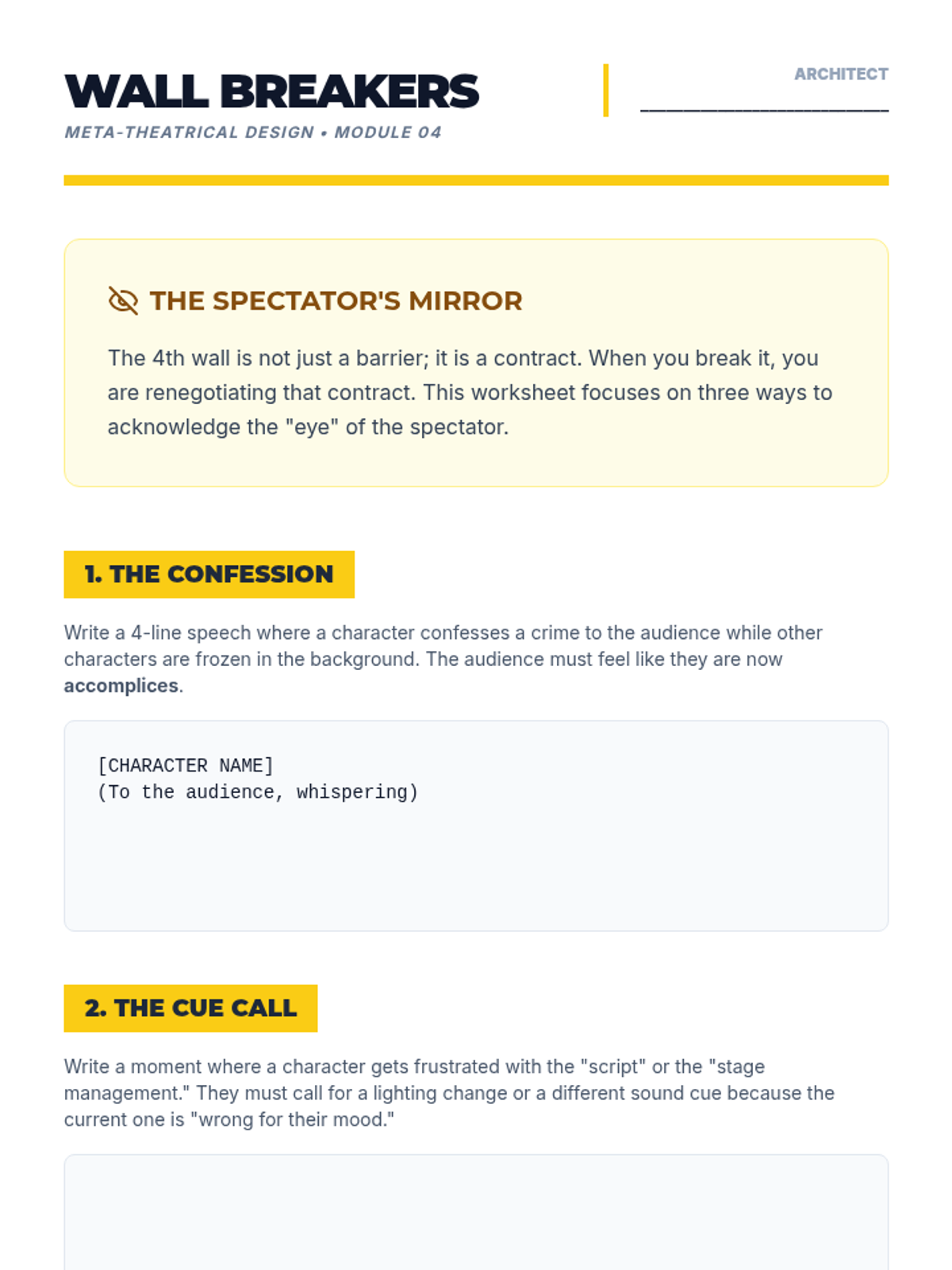
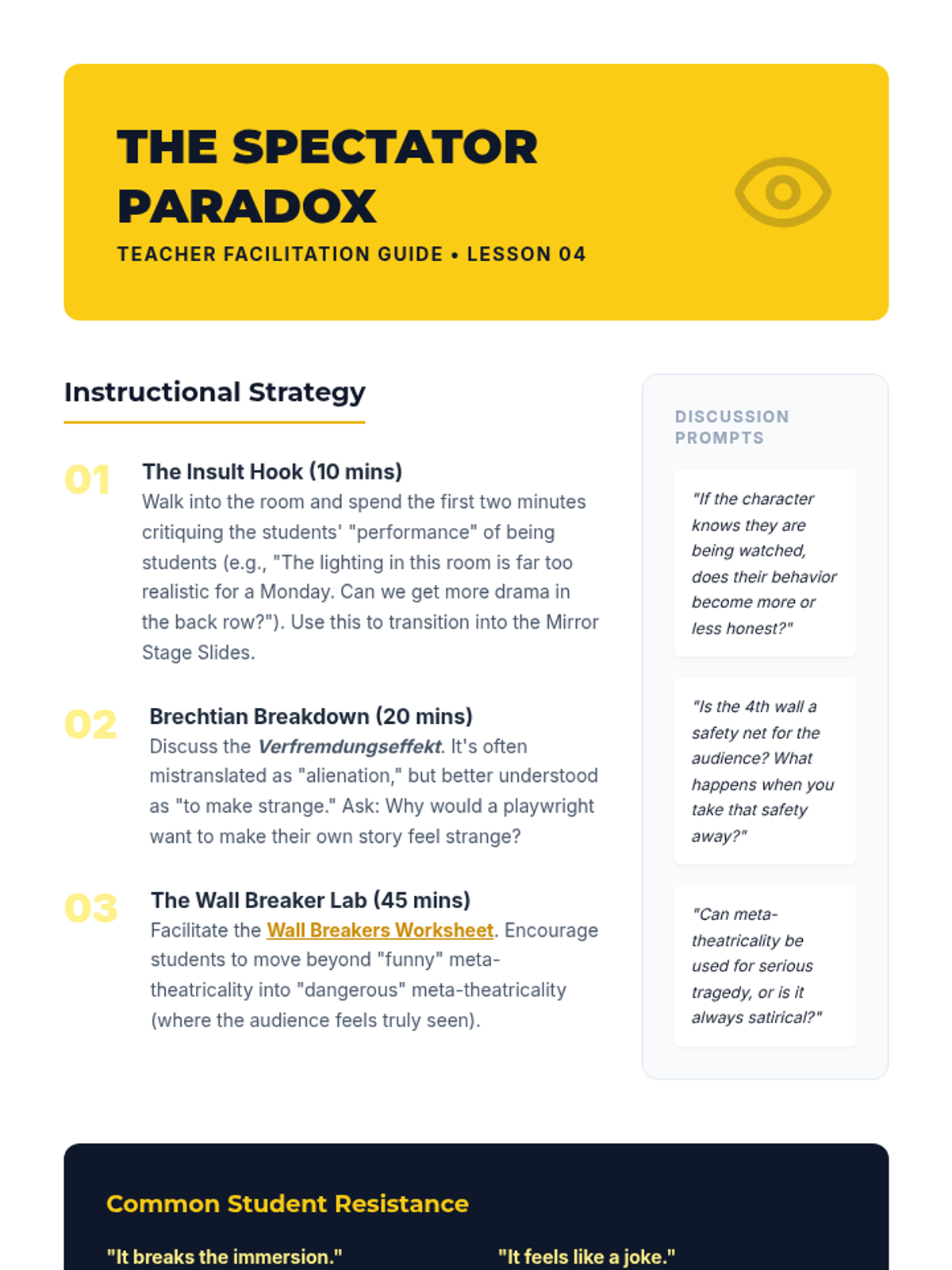
A study of direct address and self-referential writing, exploring how acknowledging the audience shifts the theatrical relationship.
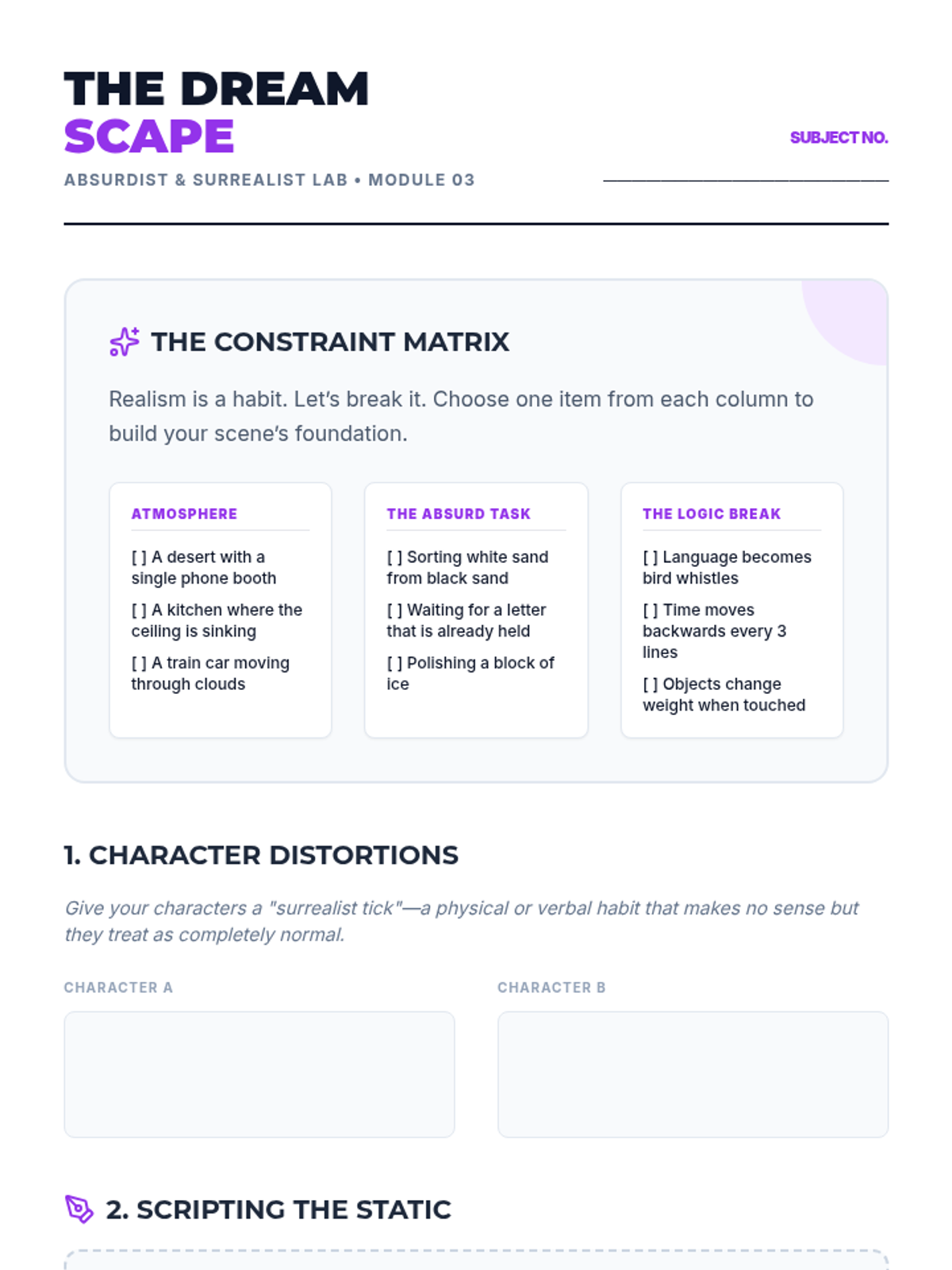
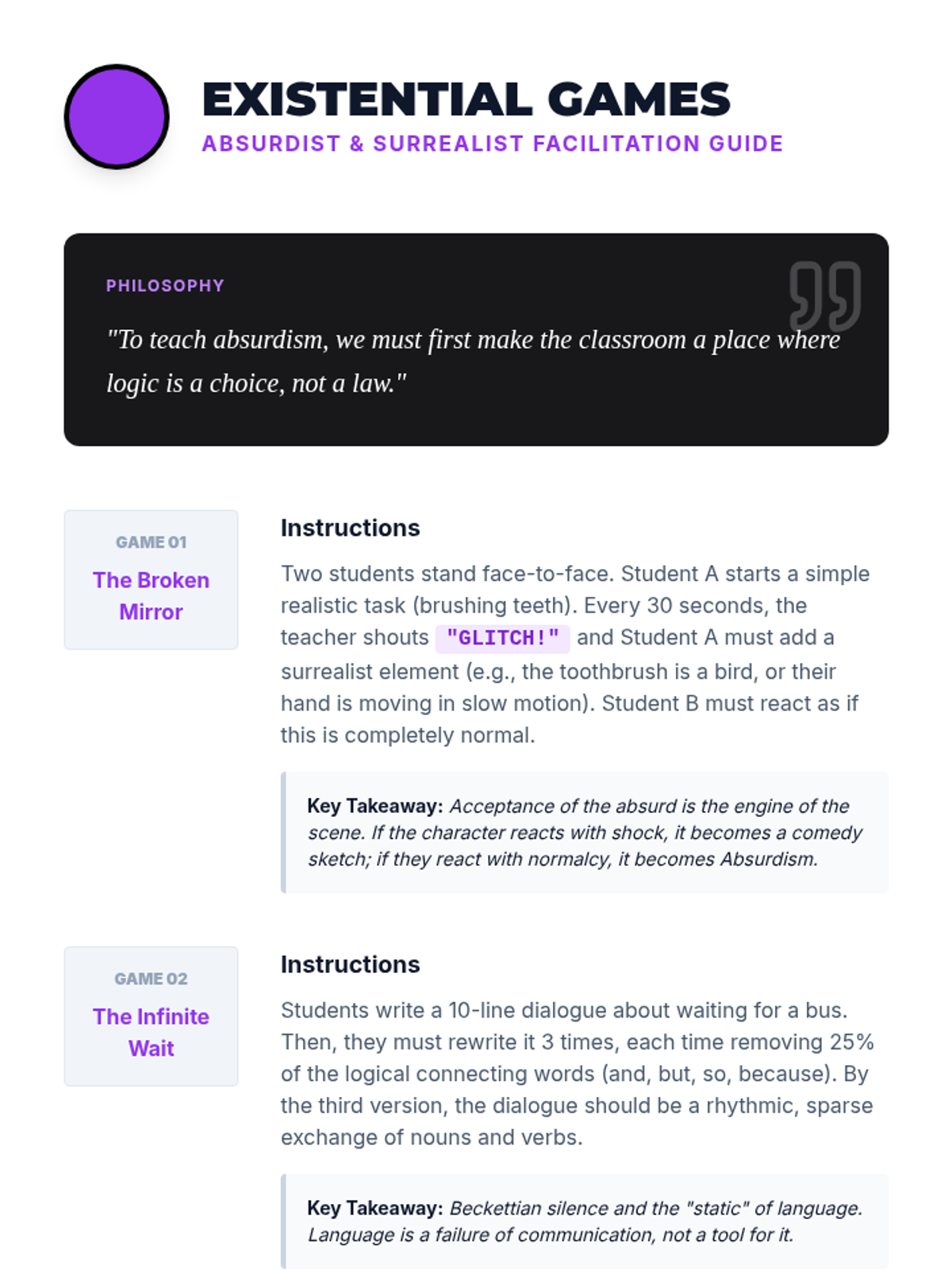
Students investigate the Theater of the Absurd and Surrealism, writing scenes that prioritize existential atmosphere and dream logic over realism.
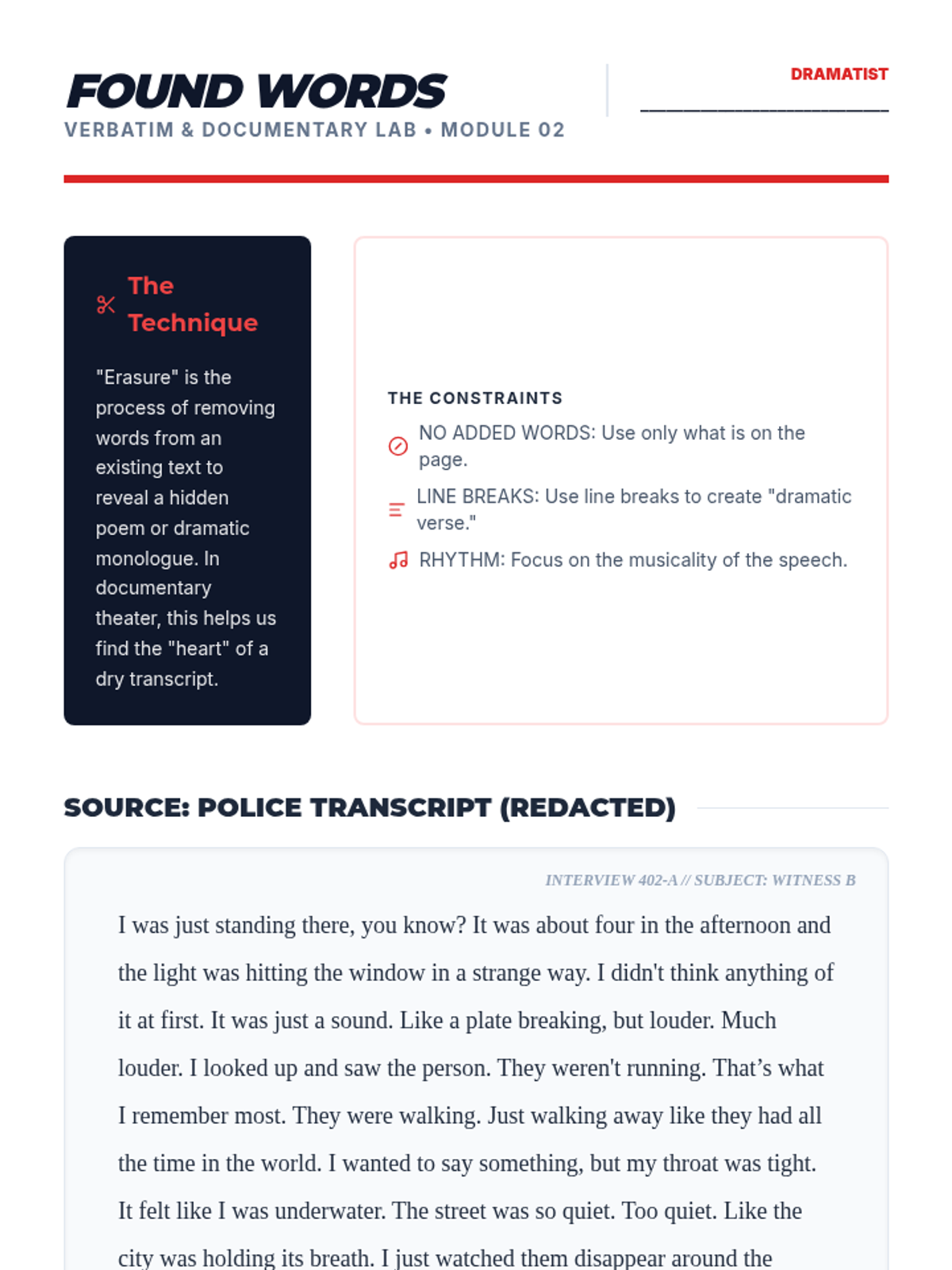
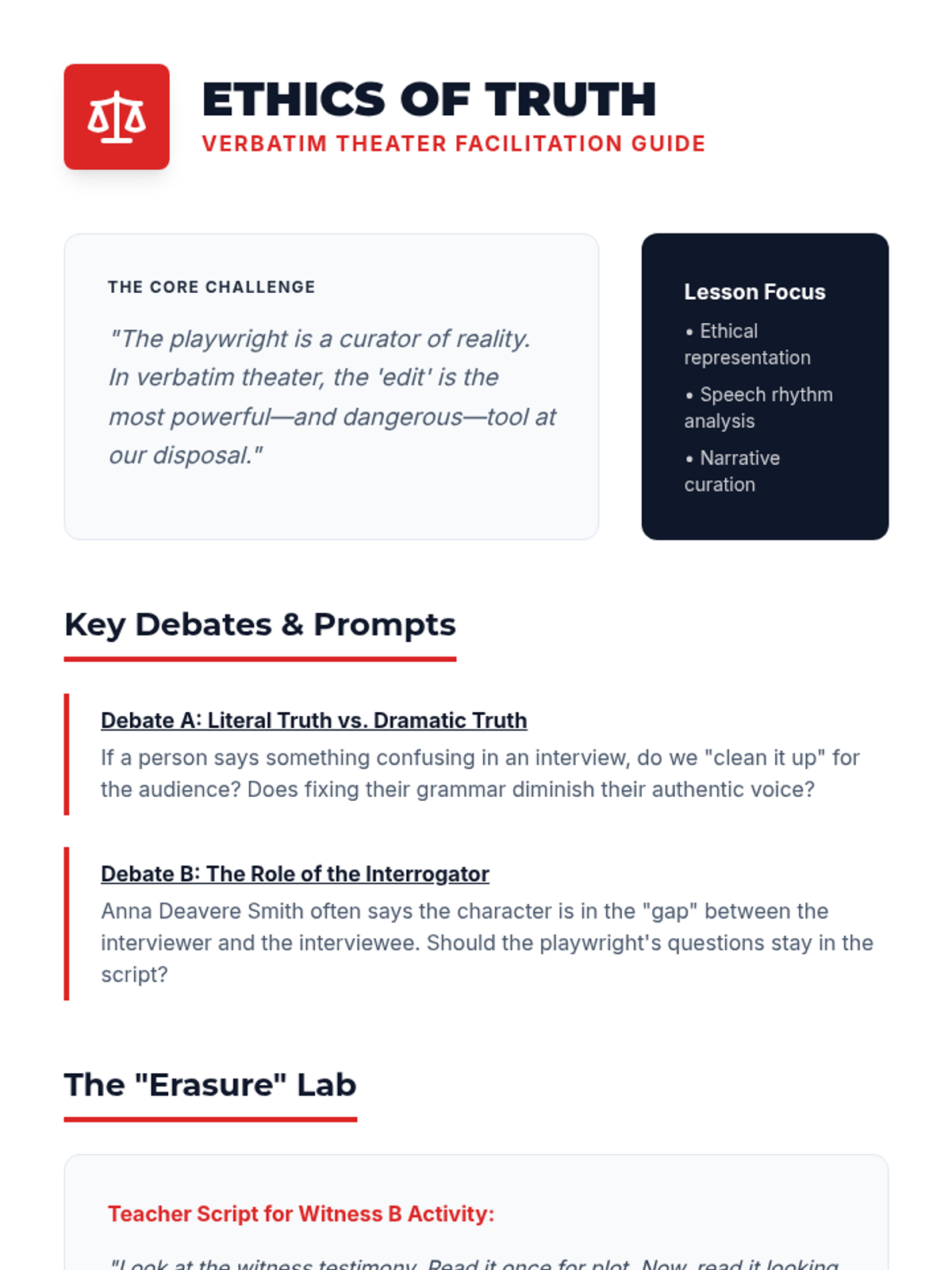
An exploration of the ethical and technical challenges of verbatim theater, focusing on editing raw interviews into dramatic scripts.
Students explore plays that disrupt chronological time, experimenting with flashbacks, flash-forwards, and simultaneous action to reveal thematic depth.
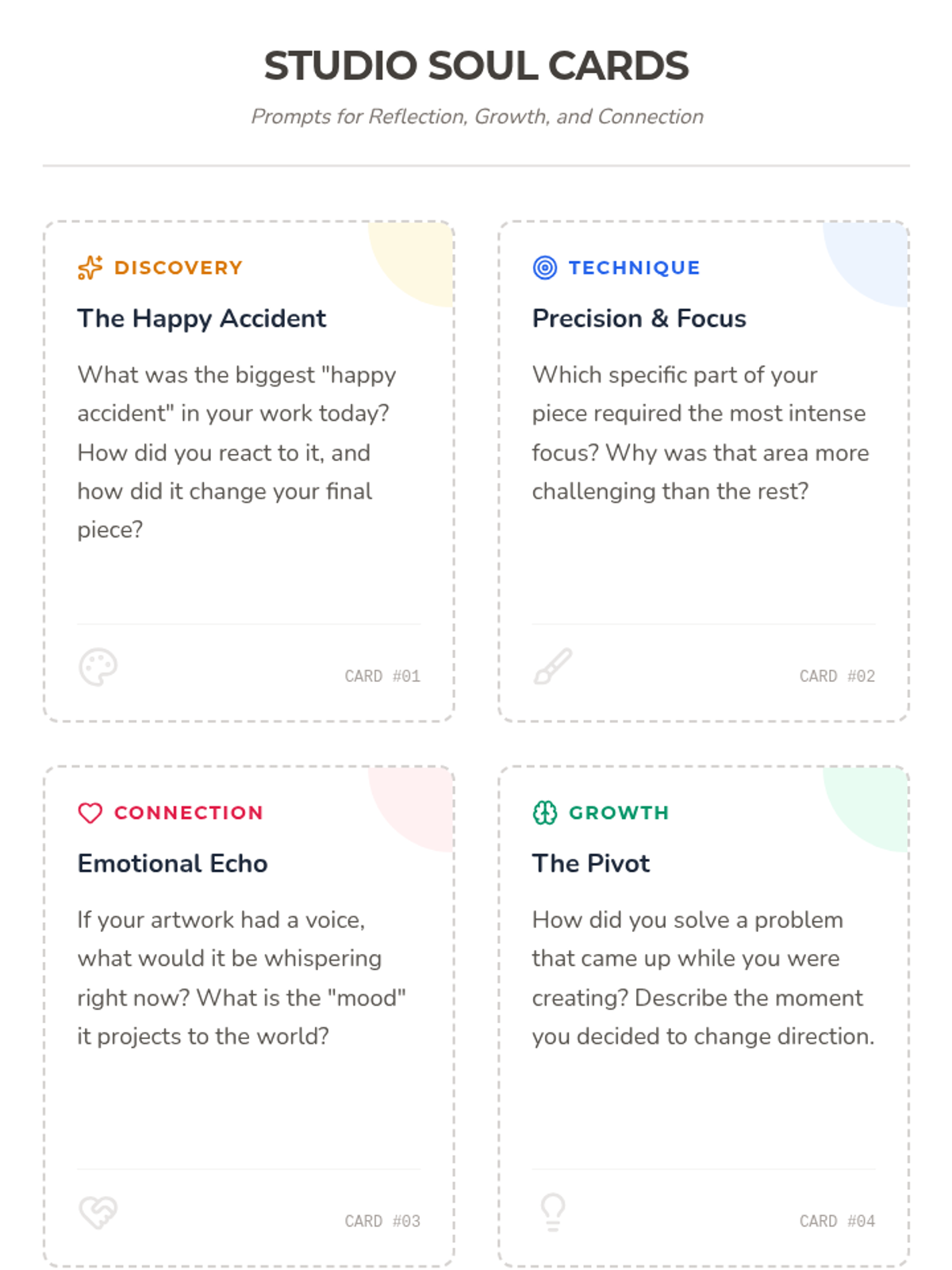
A collection of reflection prompts designed to deepen students' connection to their creative process and personal expression in the art studio.
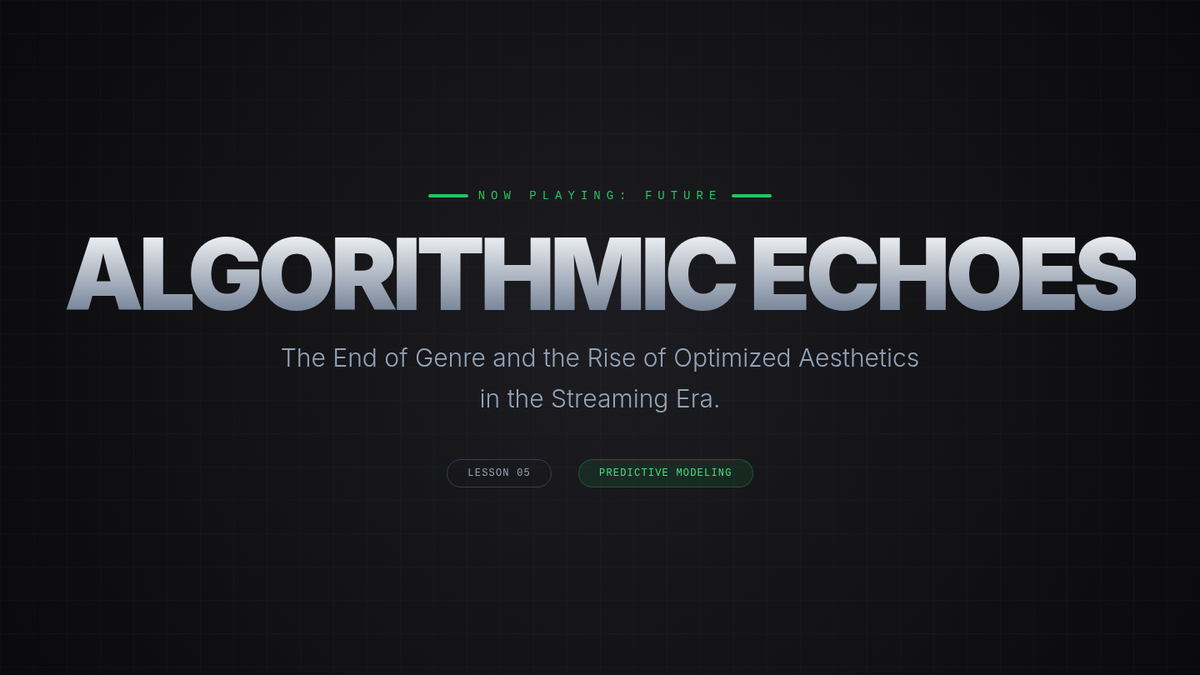
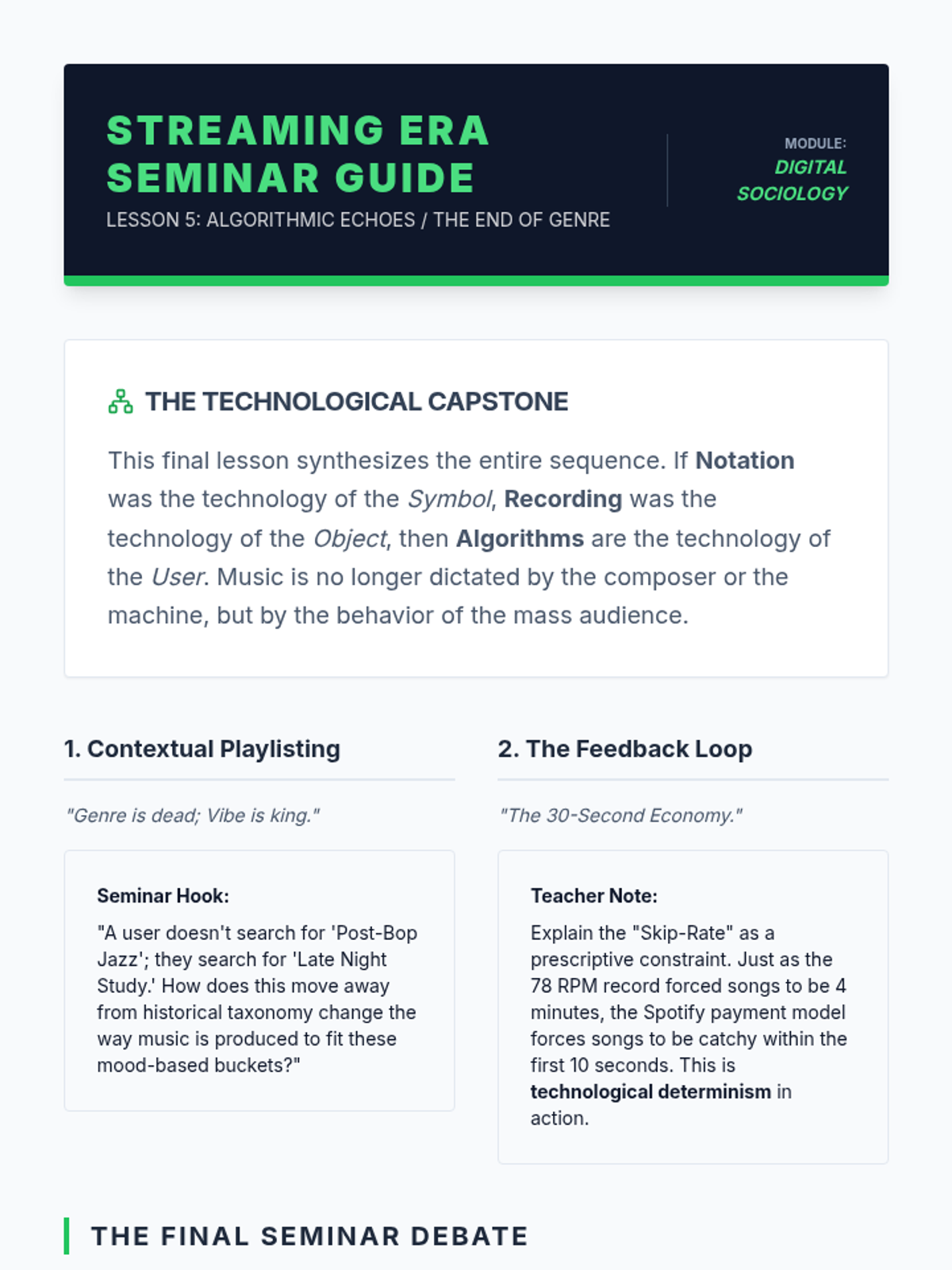
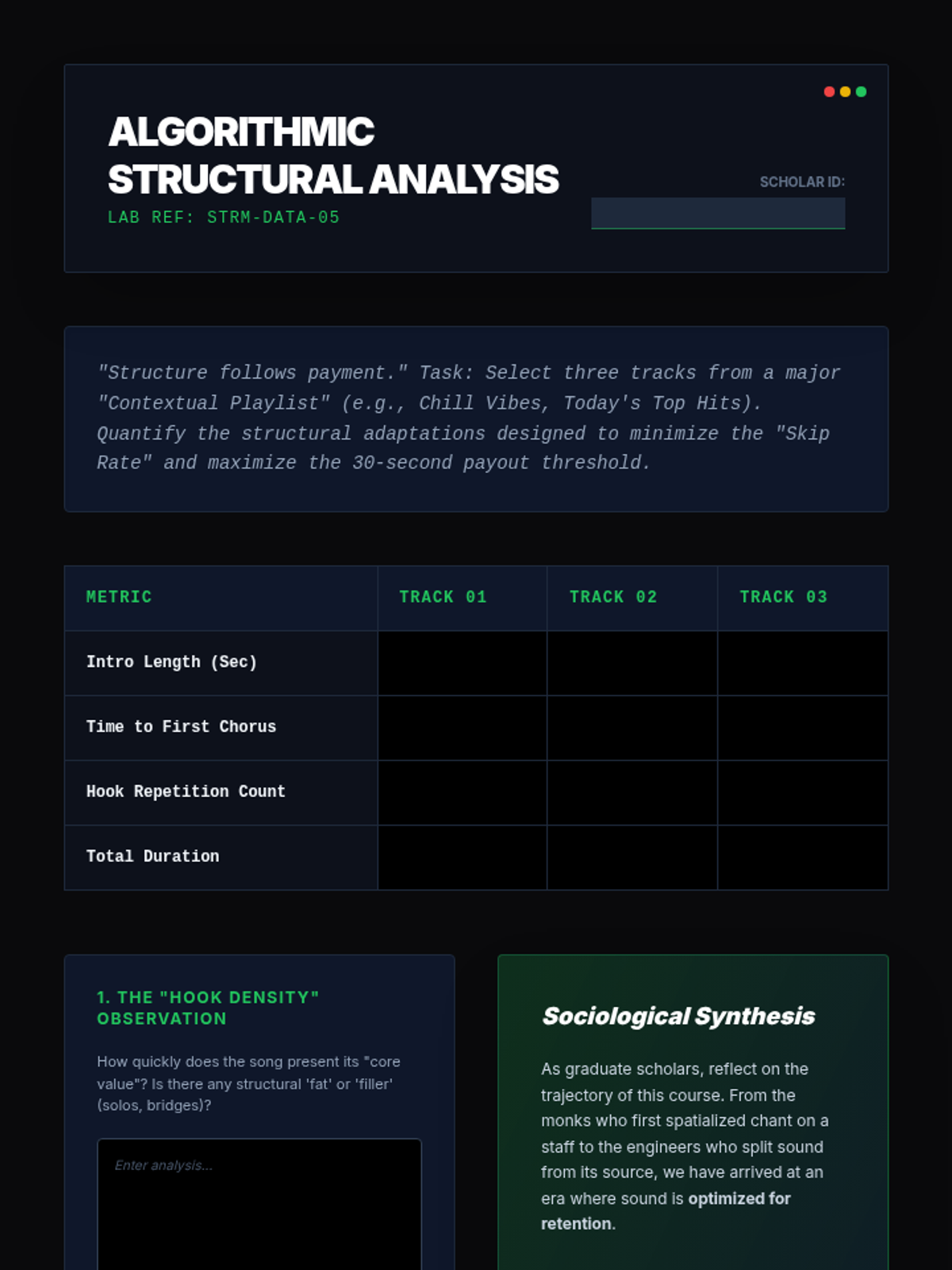
Concludes with an analysis of how streaming algorithms and metadata influence modern song structure and the sociological phenomenon of the 'end of genre.'
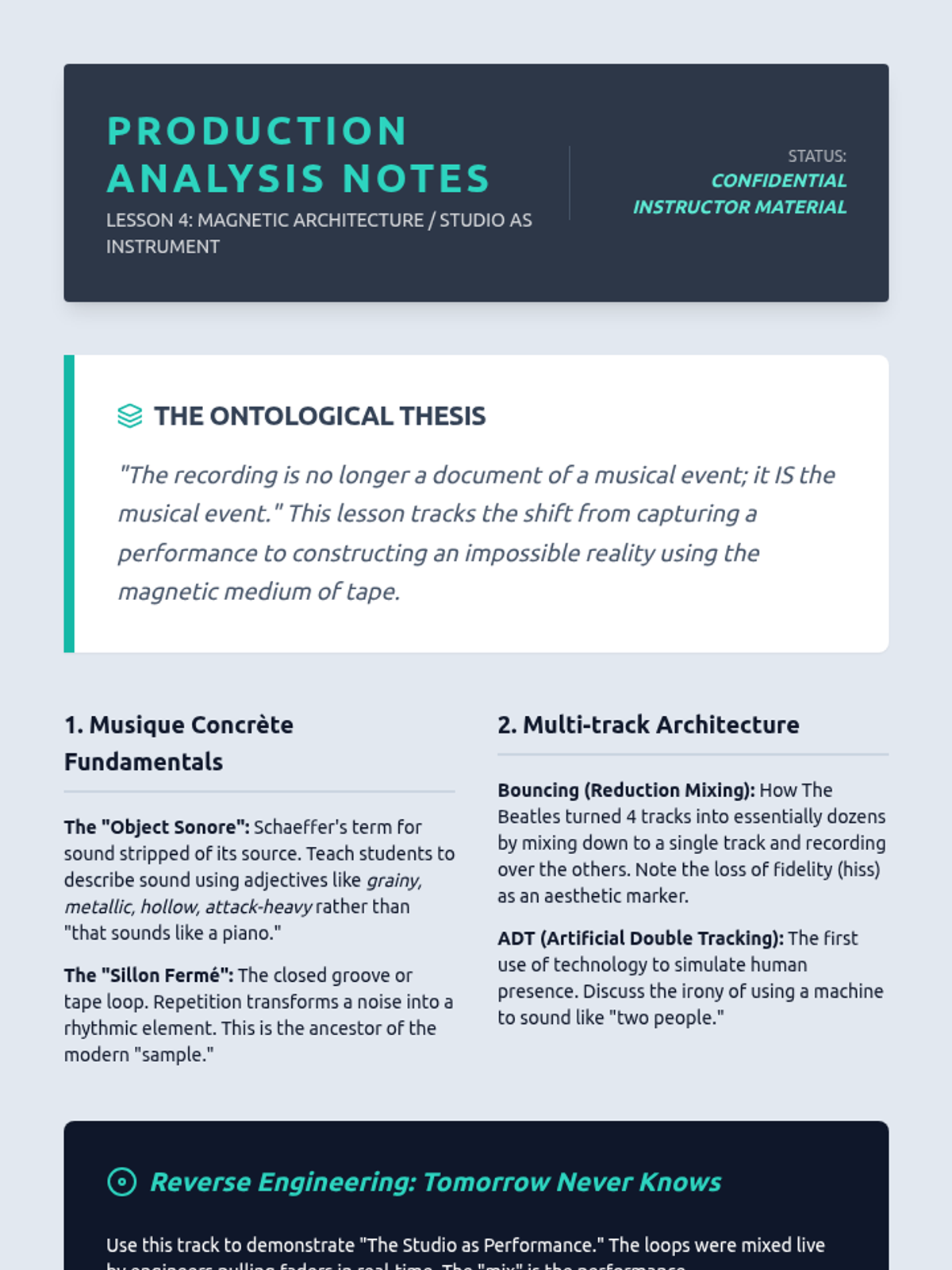
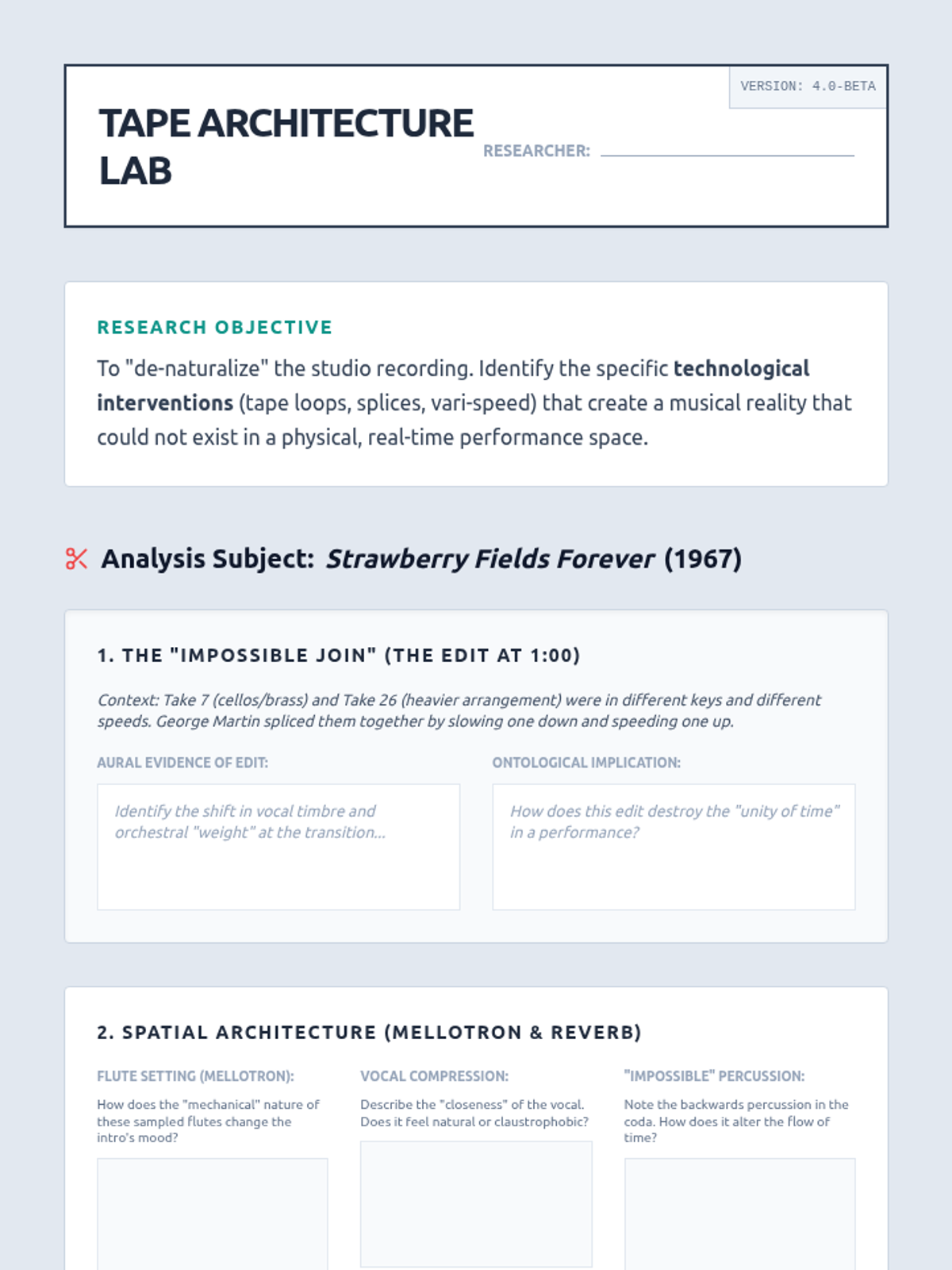
Explores the recording studio as a primary compositional tool, moving from Musique Concrète to multi-track recording and the ontological shift from score to recording.
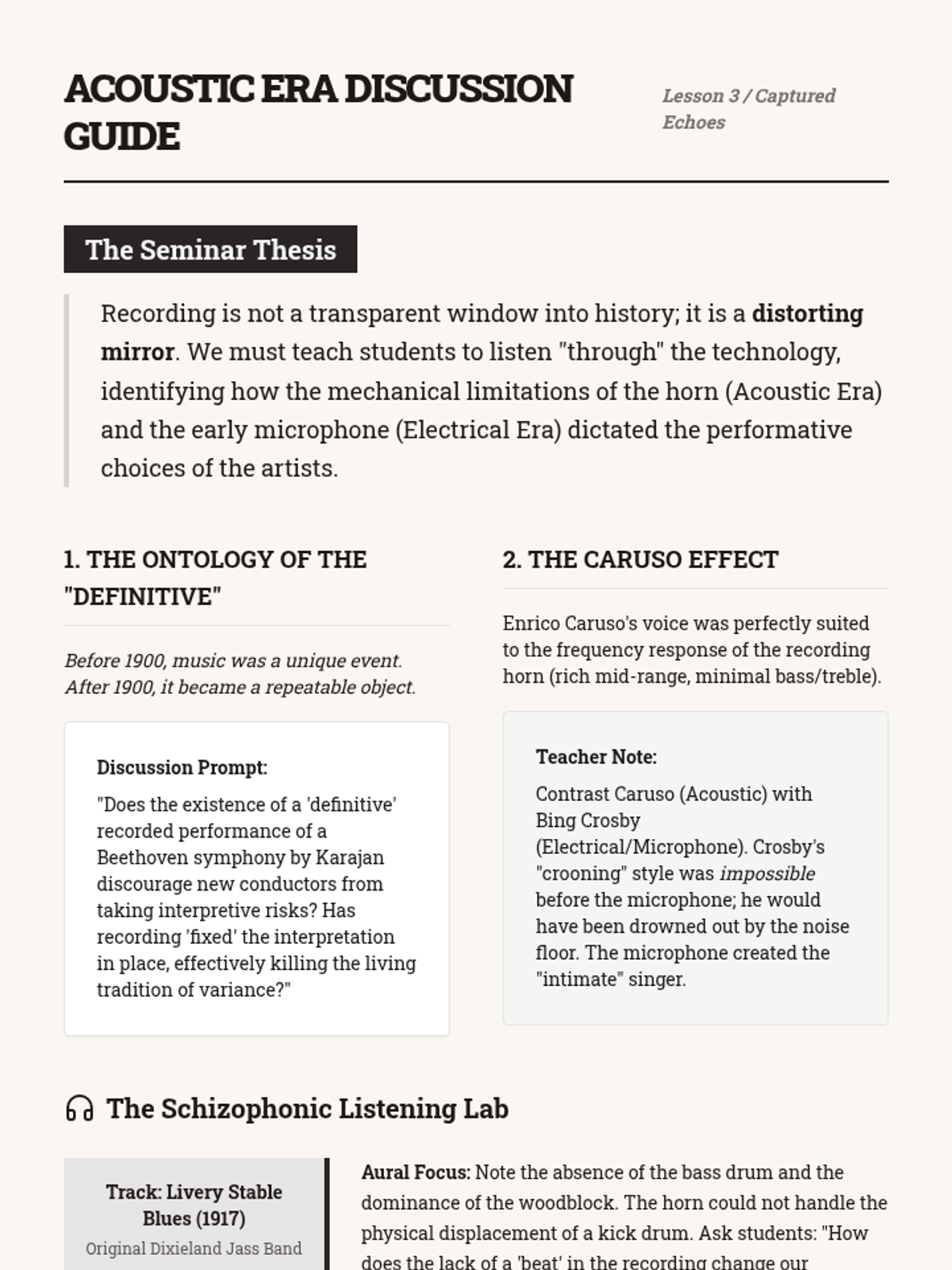
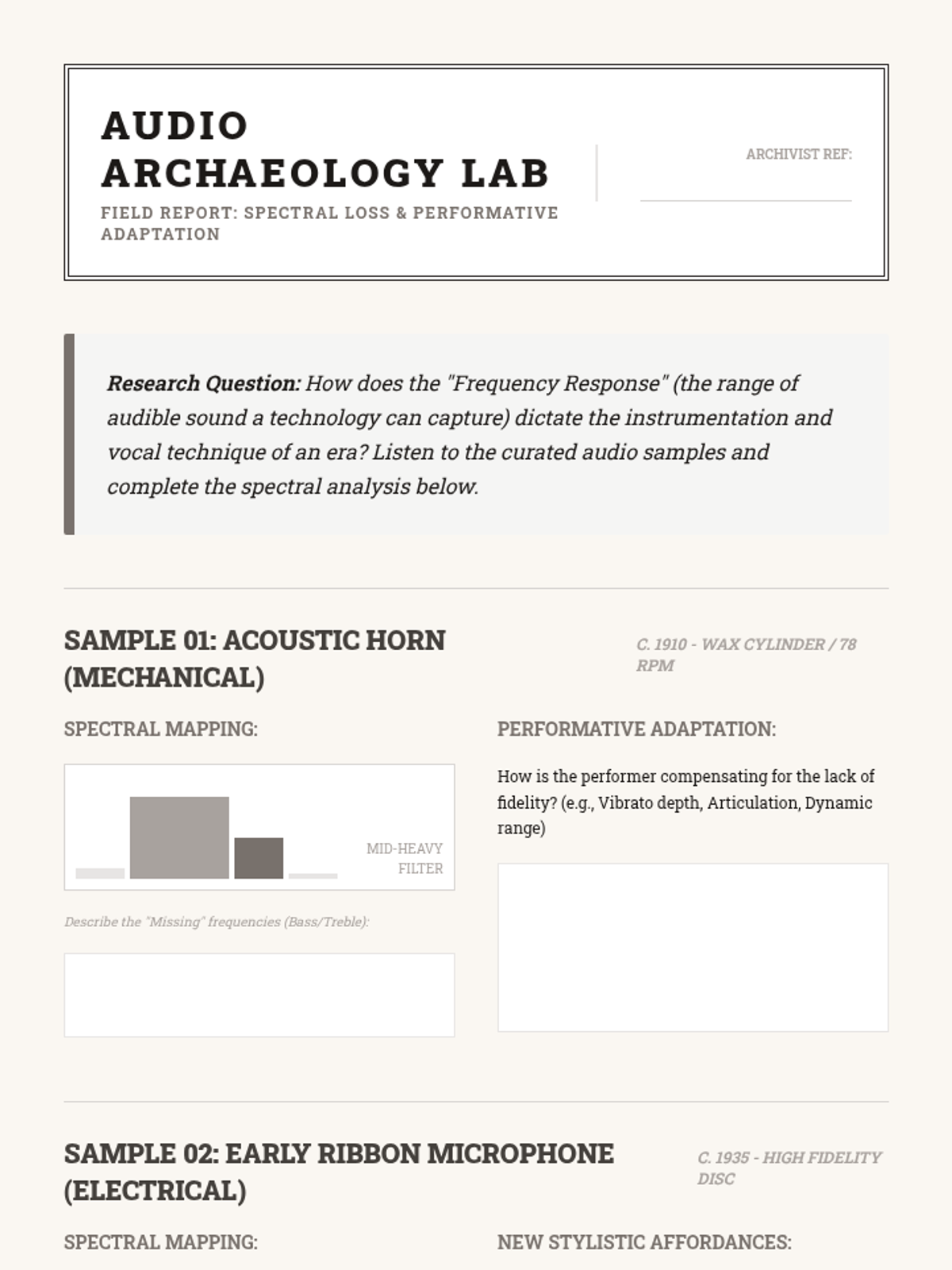
Investigates the separation of sound from its source (schizophonia) and how early recording limitations influenced performance practice and the concept of the 'definitive performance.'
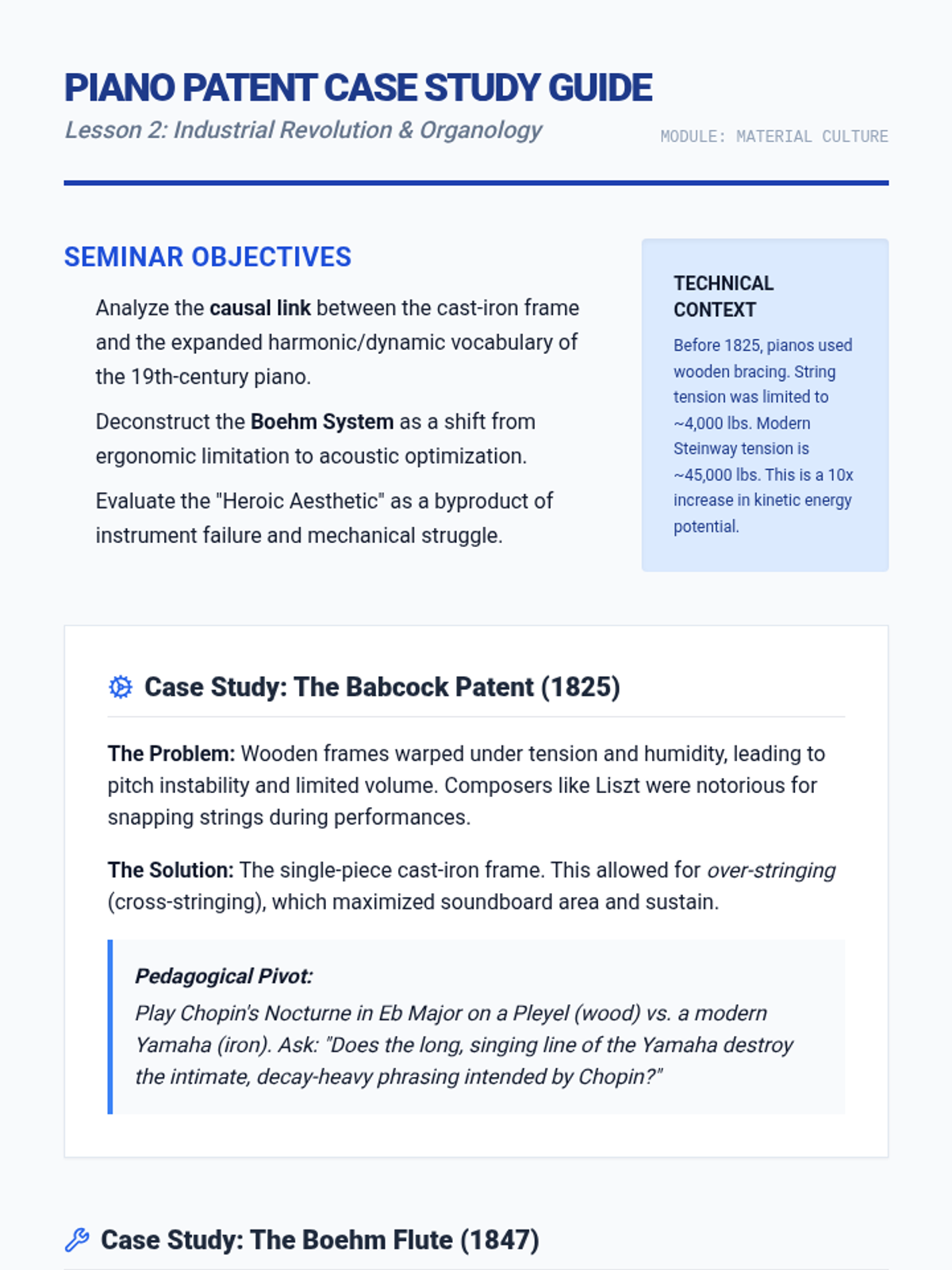
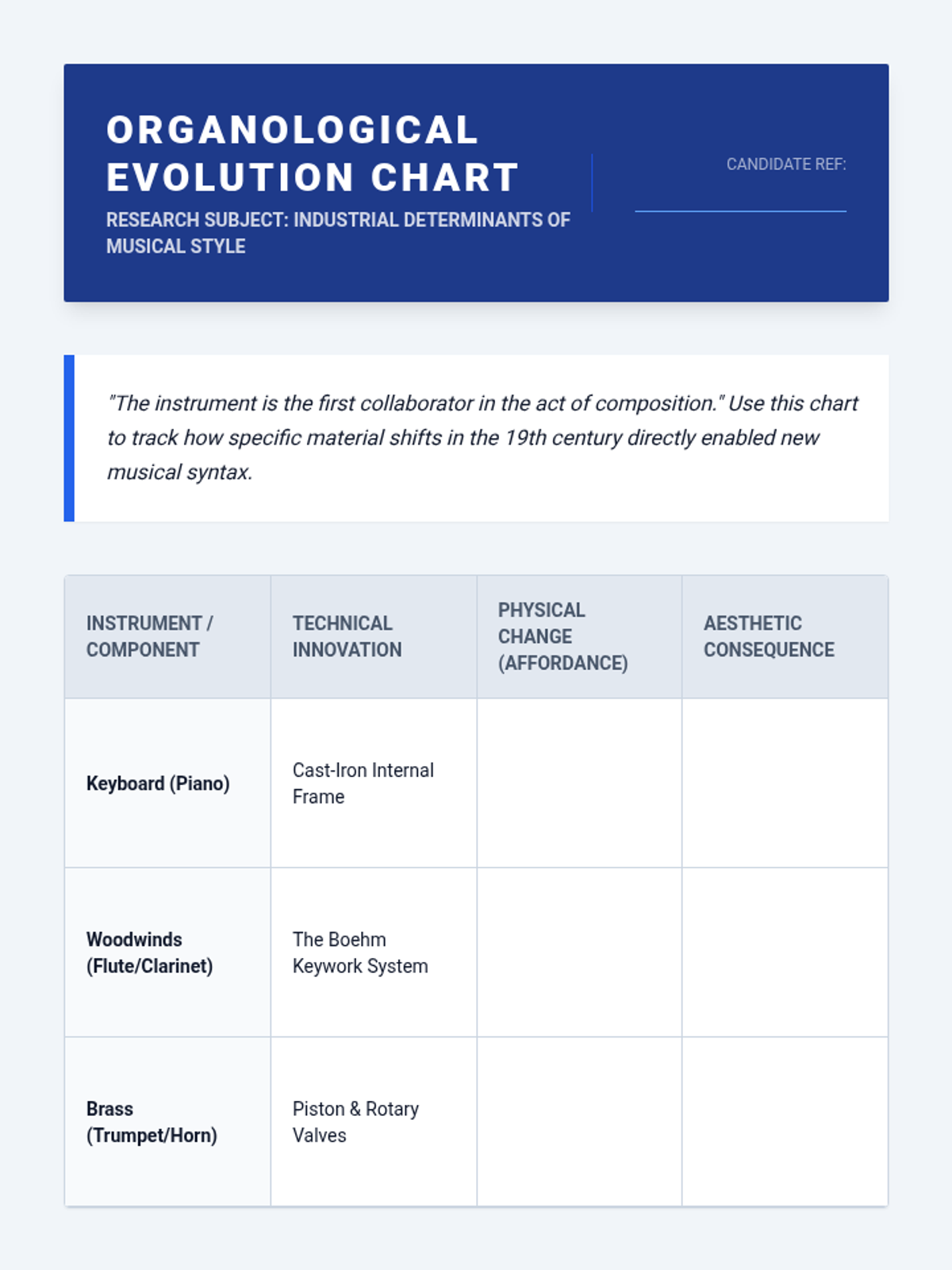
Examines how the physical evolution of instruments during the Industrial Revolution, such as the cast-iron piano frame, dictated Romantic era orchestration and the rise of the virtuoso.
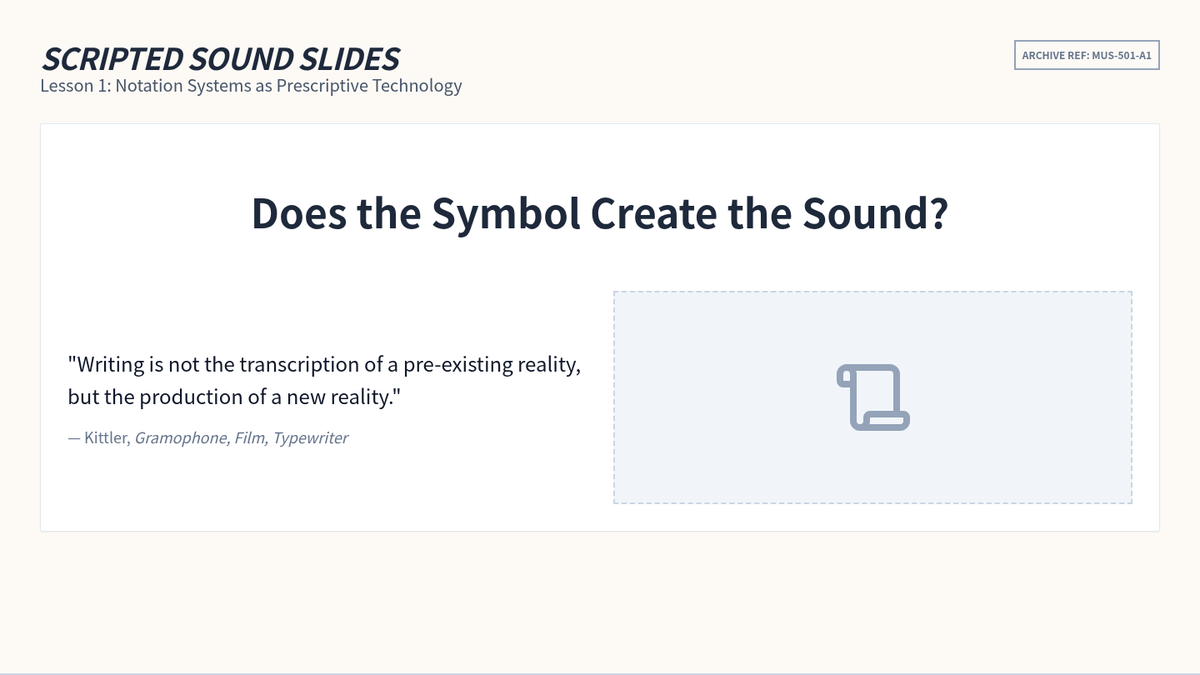
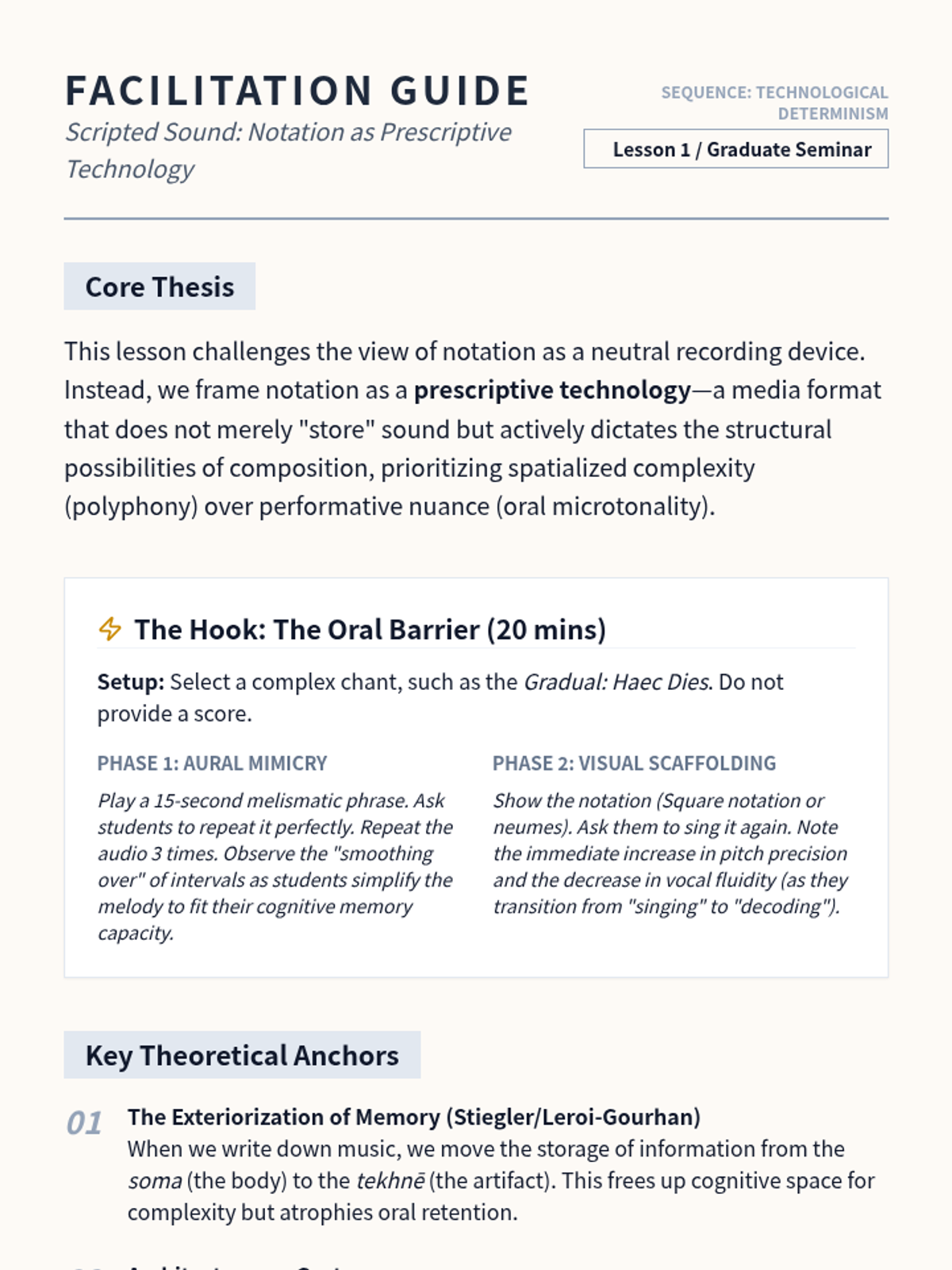
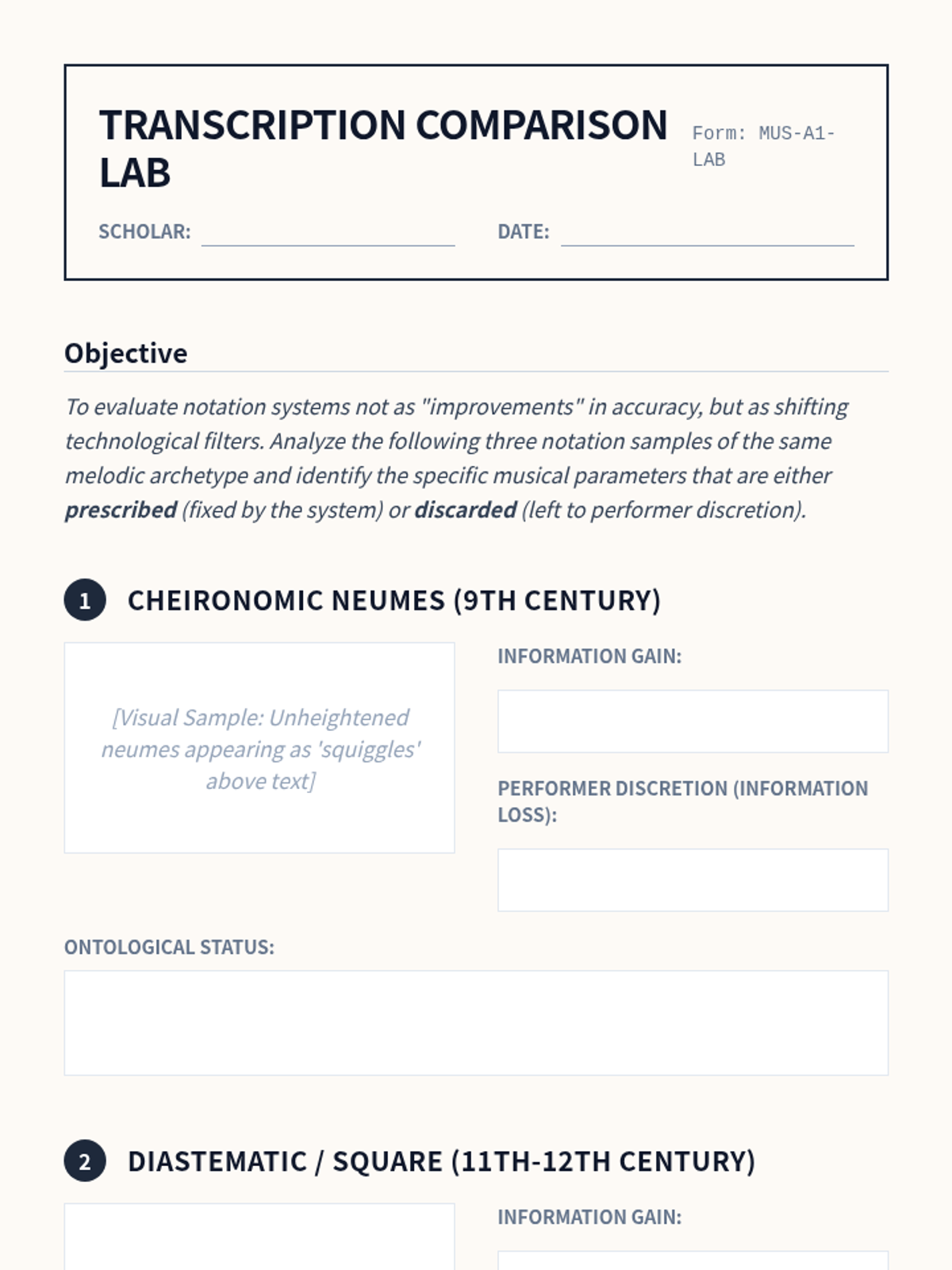
Analyzes the shift from oral tradition to fixed notation and how the technology of 'writing' music enabled new levels of polyphonic complexity while altering musical memory.
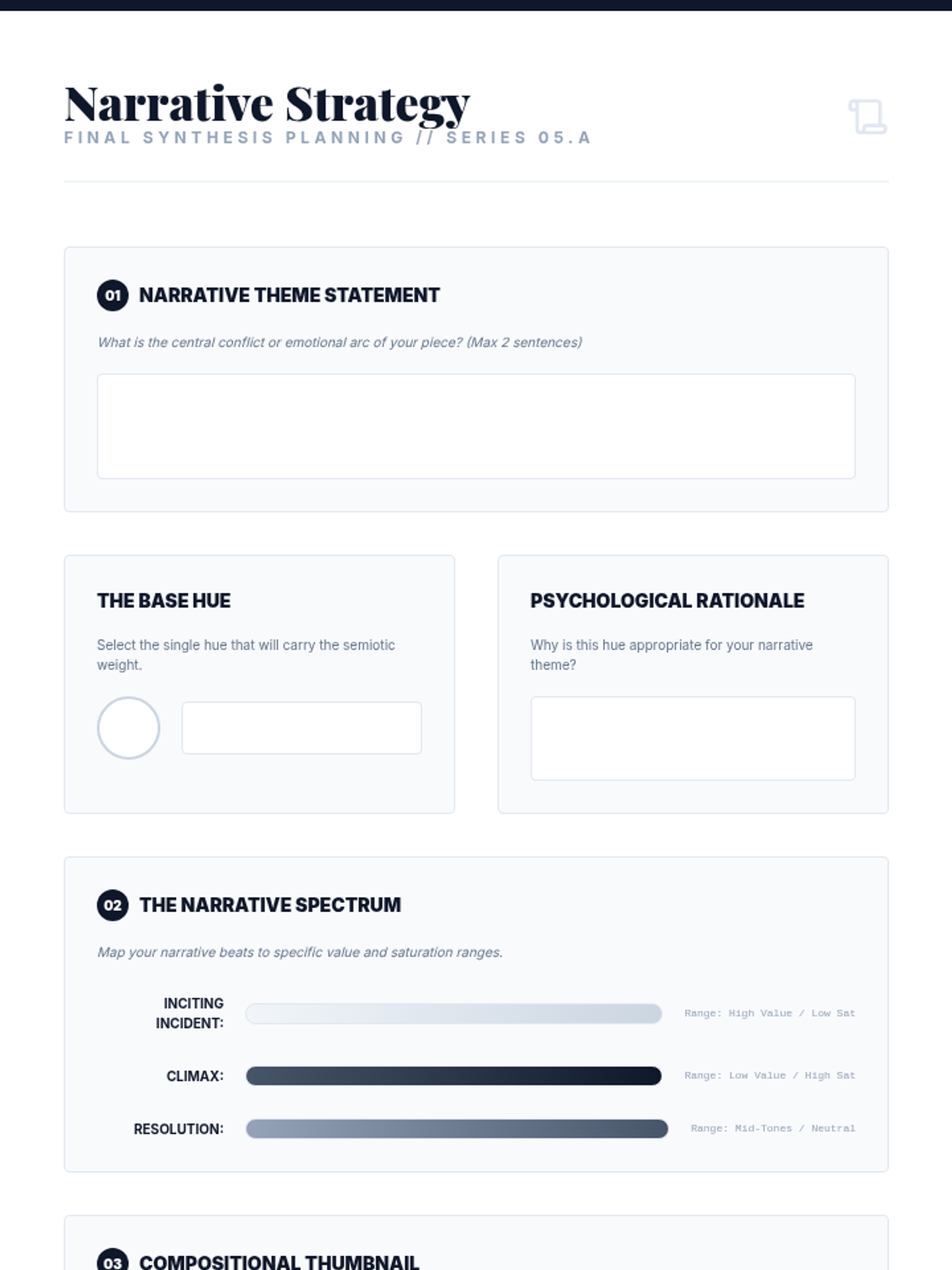
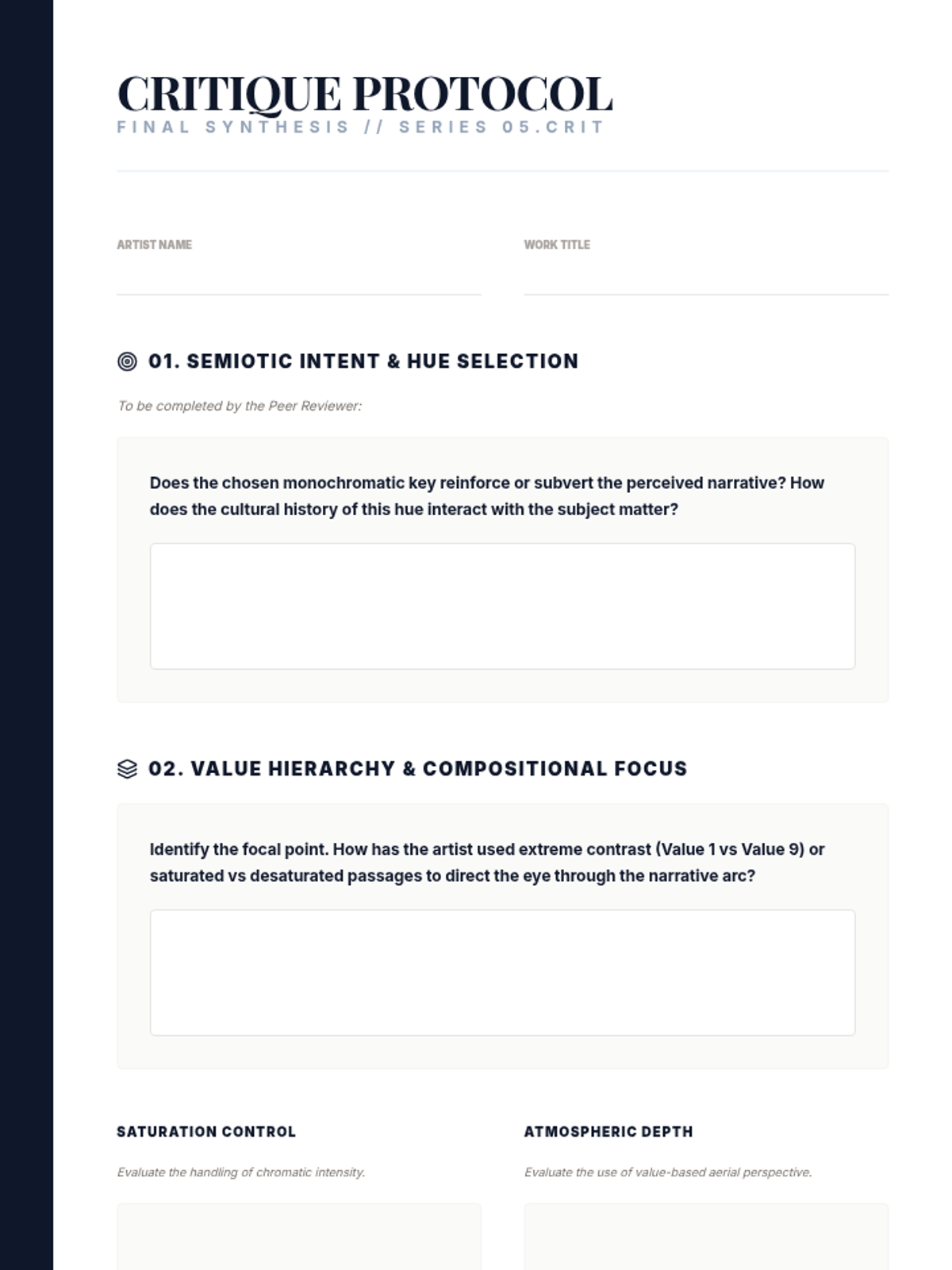
In this culminating critique, students present a major work executed in a monochromatic or analogous scheme that conveys a complex narrative usually reserved for full-color spectrums. Peers critique the work based on how effectively value and saturation were used to replace hue as the primary storytelling device.
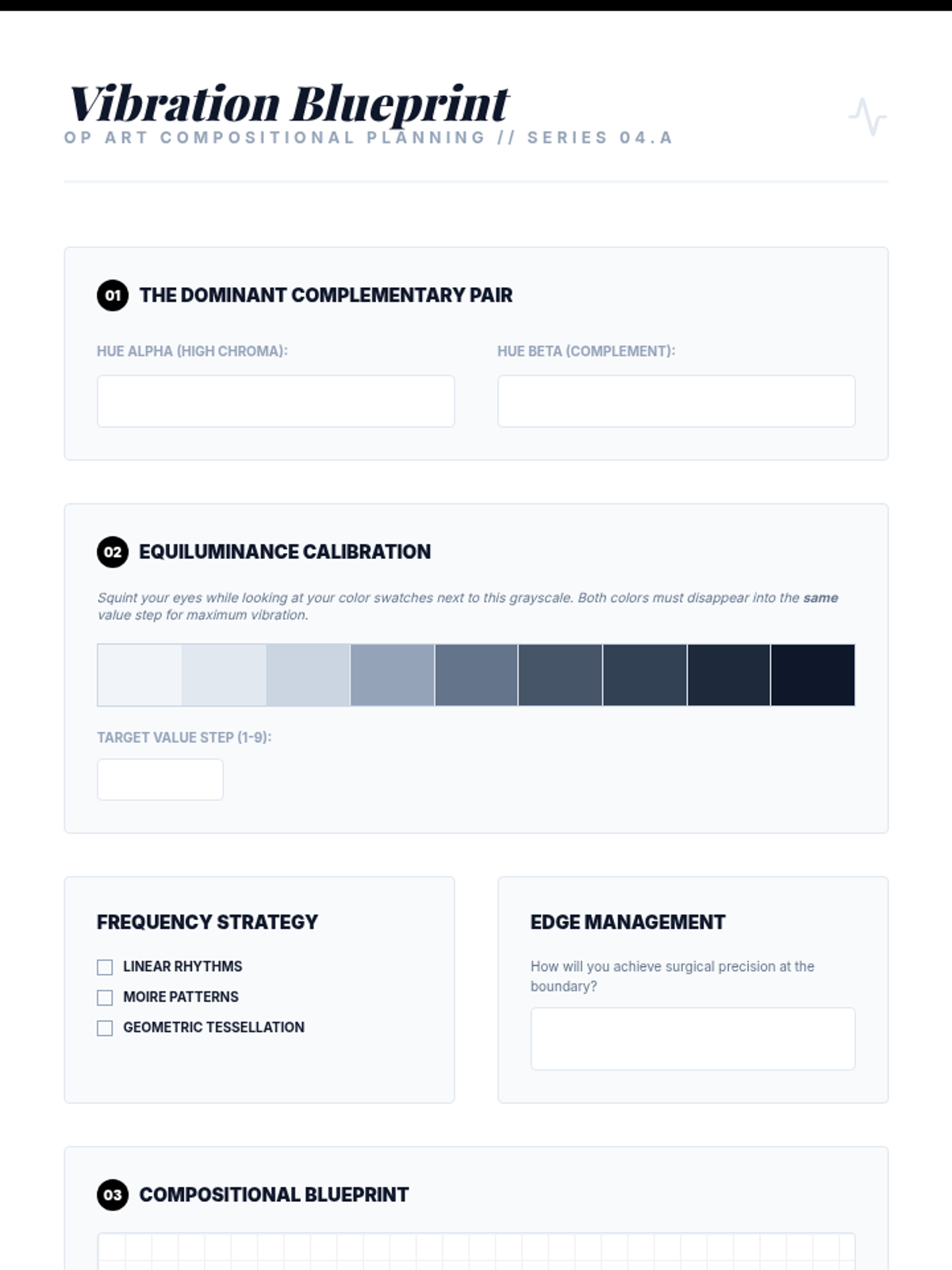
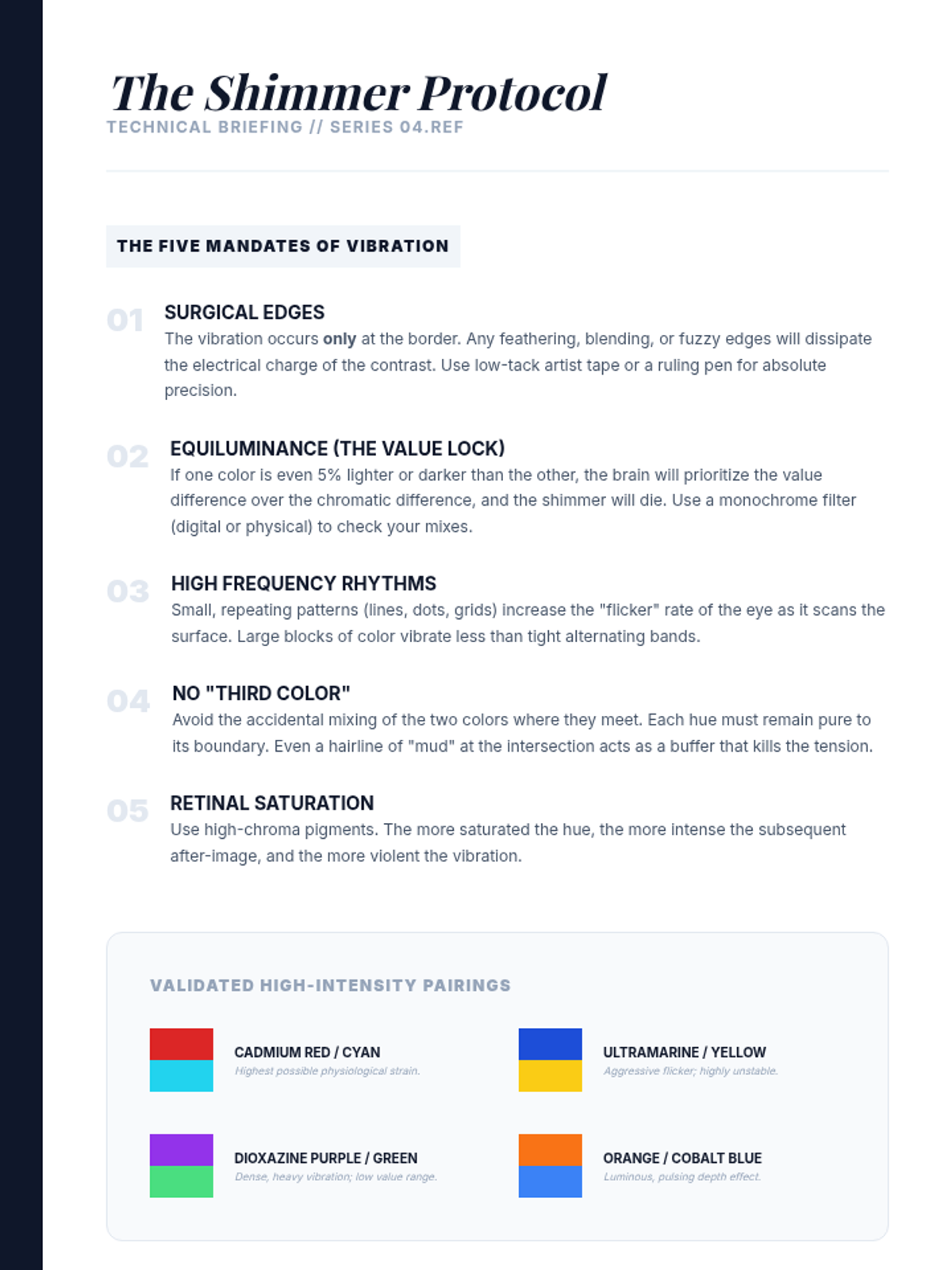
Focusing on complementary contrasts and simultaneous contrast, students create a composition designed to produce visual vibration or 'shimmer.' The lesson explores the boundary between aesthetic harmony and physiological visual discomfort, pushing the limits of what is comfortable for the viewer to observe.
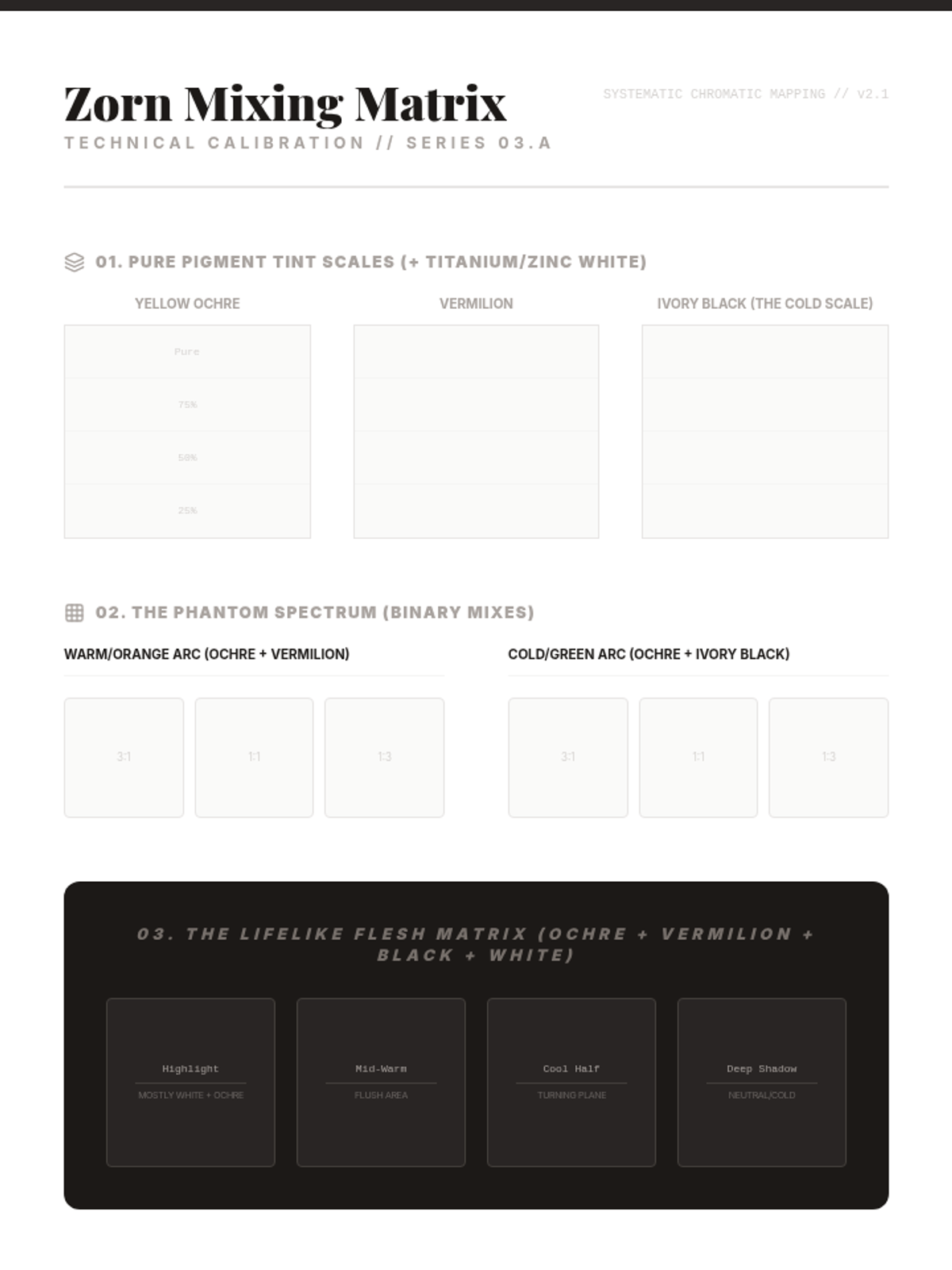
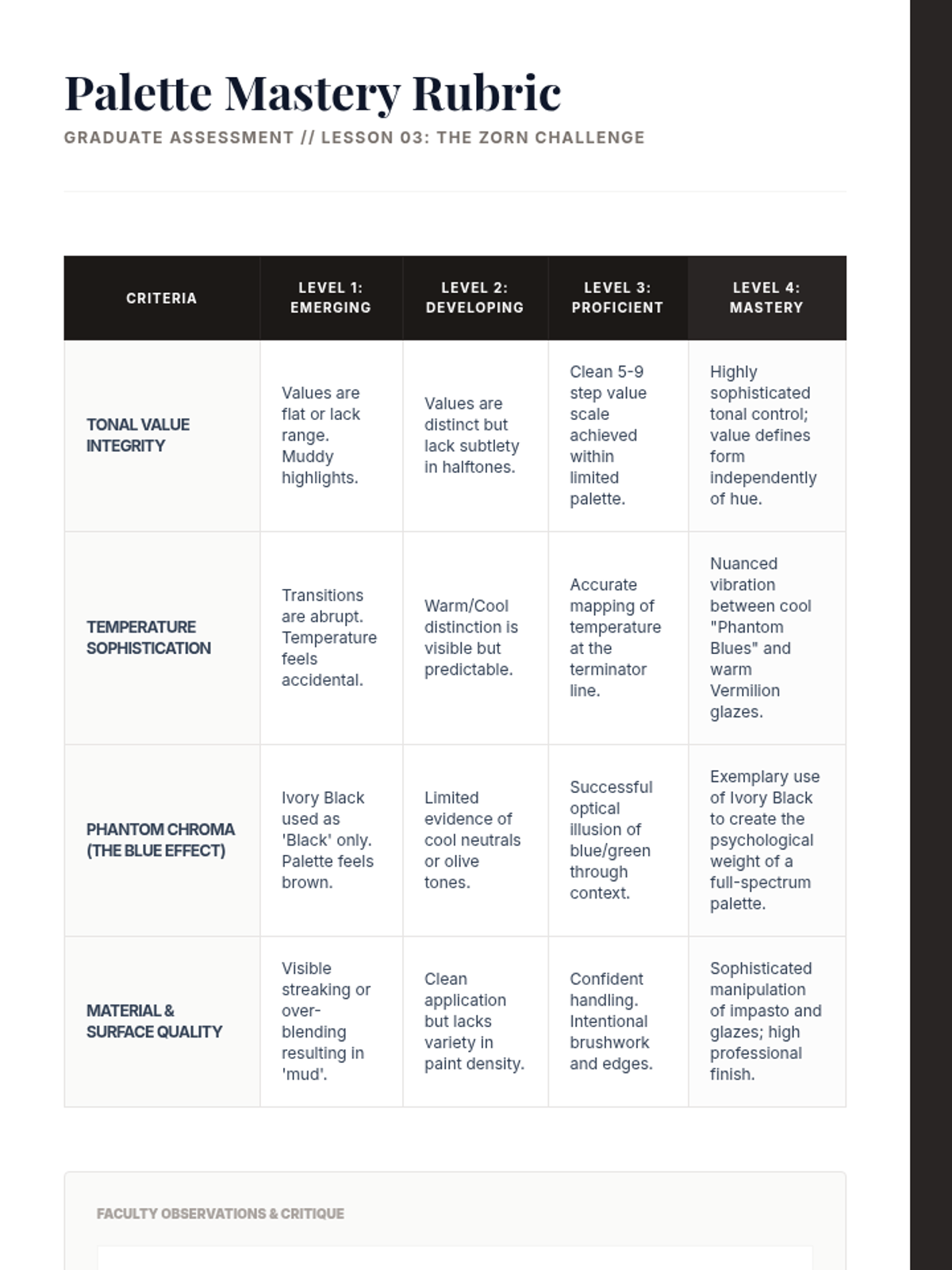
Students restrict their materials to the 'Zorn Palette' (Yellow Ochre, Vermilion, Ivory Black, and White) to master temperature control without relying on high-chroma pigments. By removing the crutch of convenient tube colors, students must demonstrate sophisticated mixing skills to achieve lifelike flesh tones and atmospheric depth.
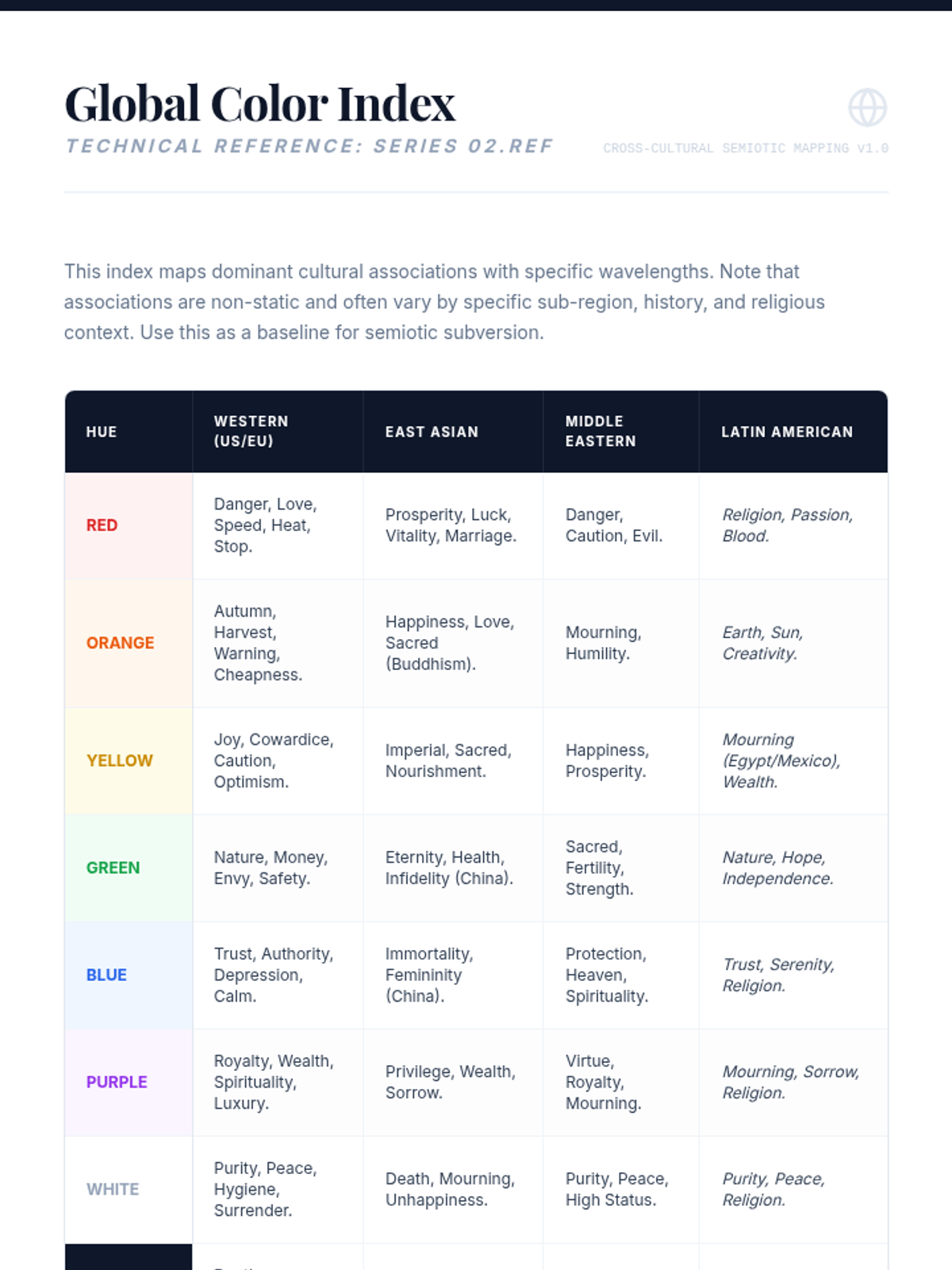
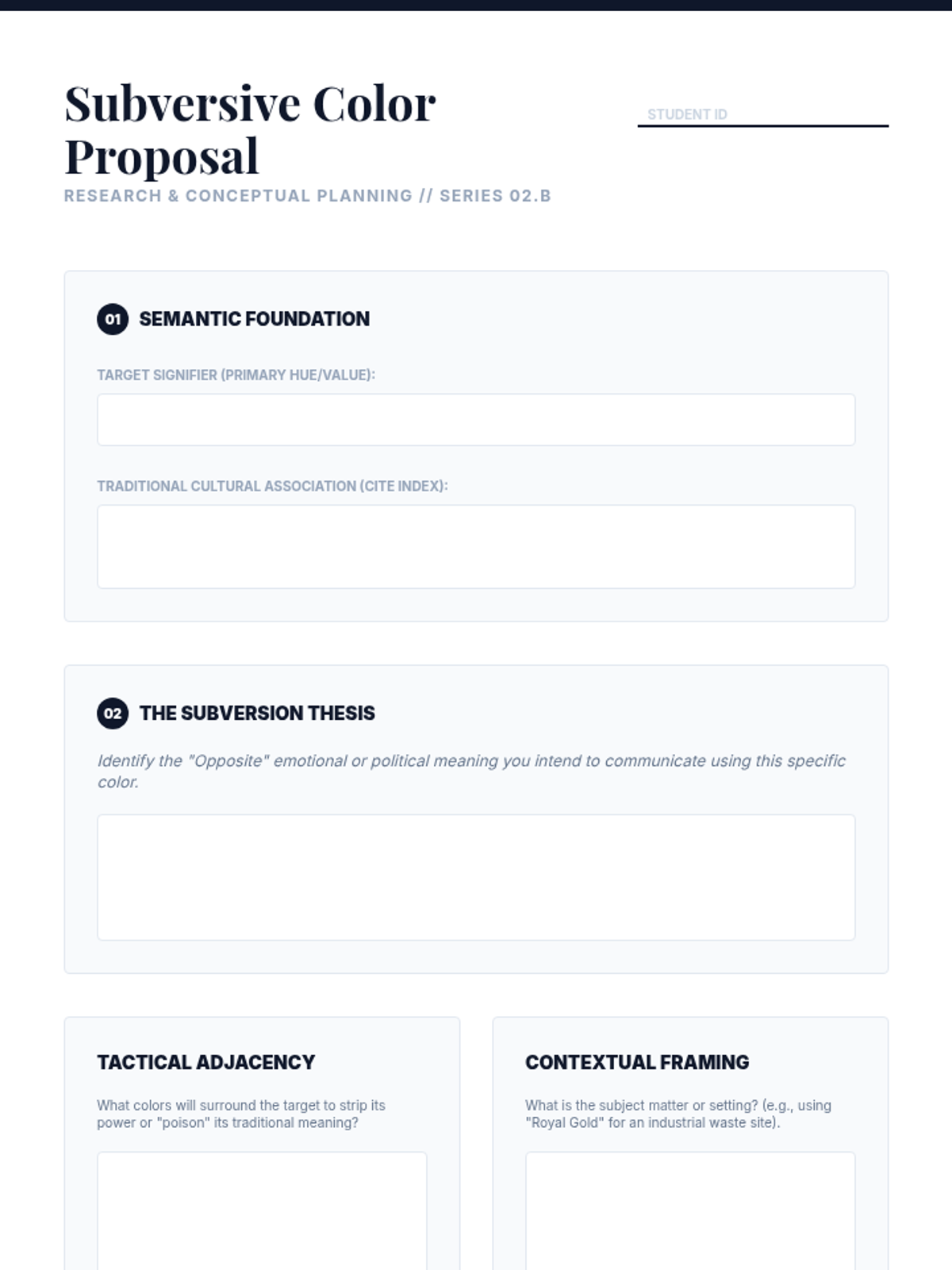
This seminar-style lesson examines the psychological impact of color and its cultural specificities through a global lens. Students analyze case studies of contemporary artists who leverage color for political or emotional manipulation, then draft a proposal for a piece that utilizes color to subvert traditional cultural associations.
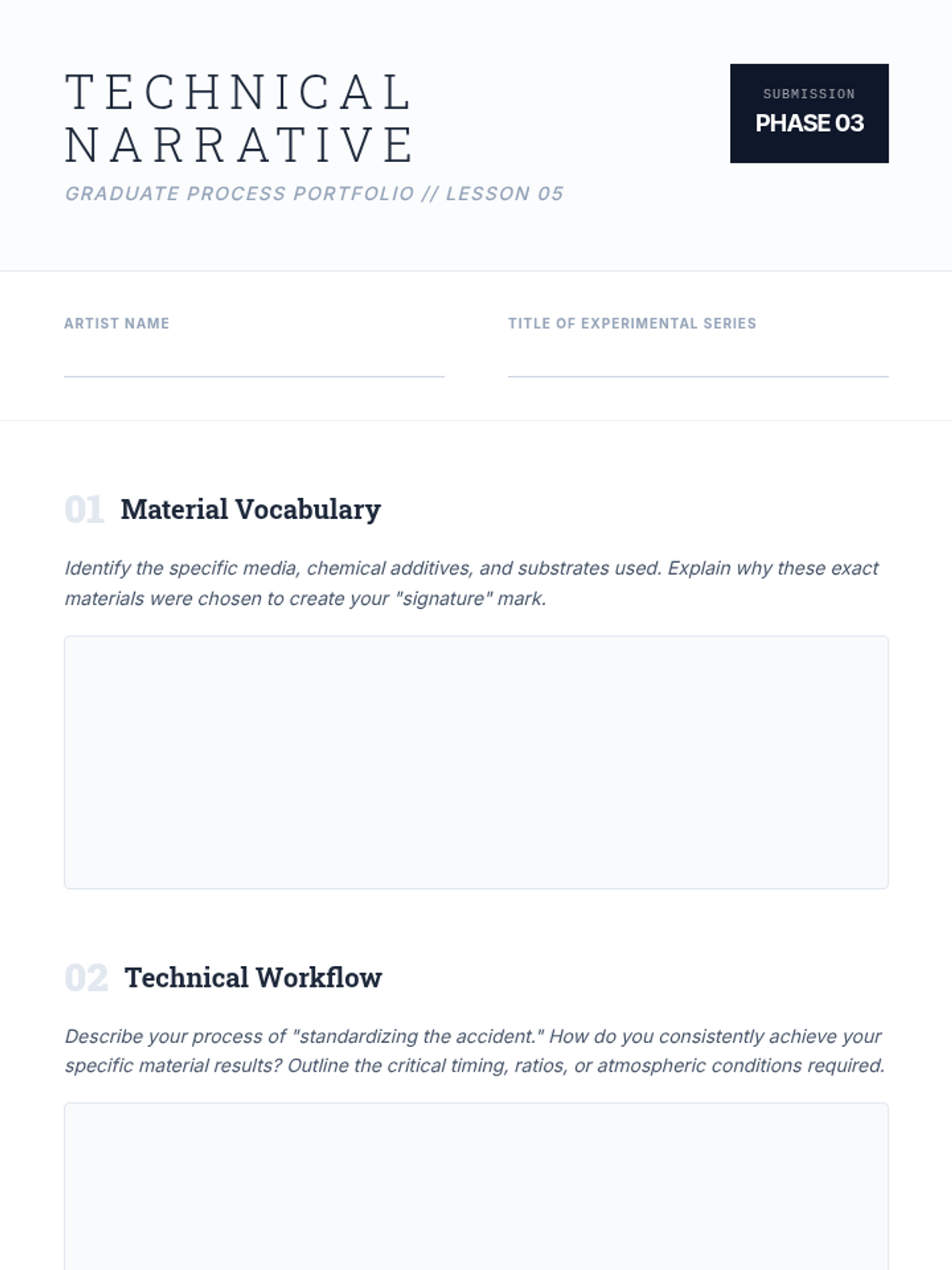
Students refine their successful experimental techniques into polished, gallery-ready pieces. They produce a technical artist statement explaining how their material handling supports their conceptual intent.
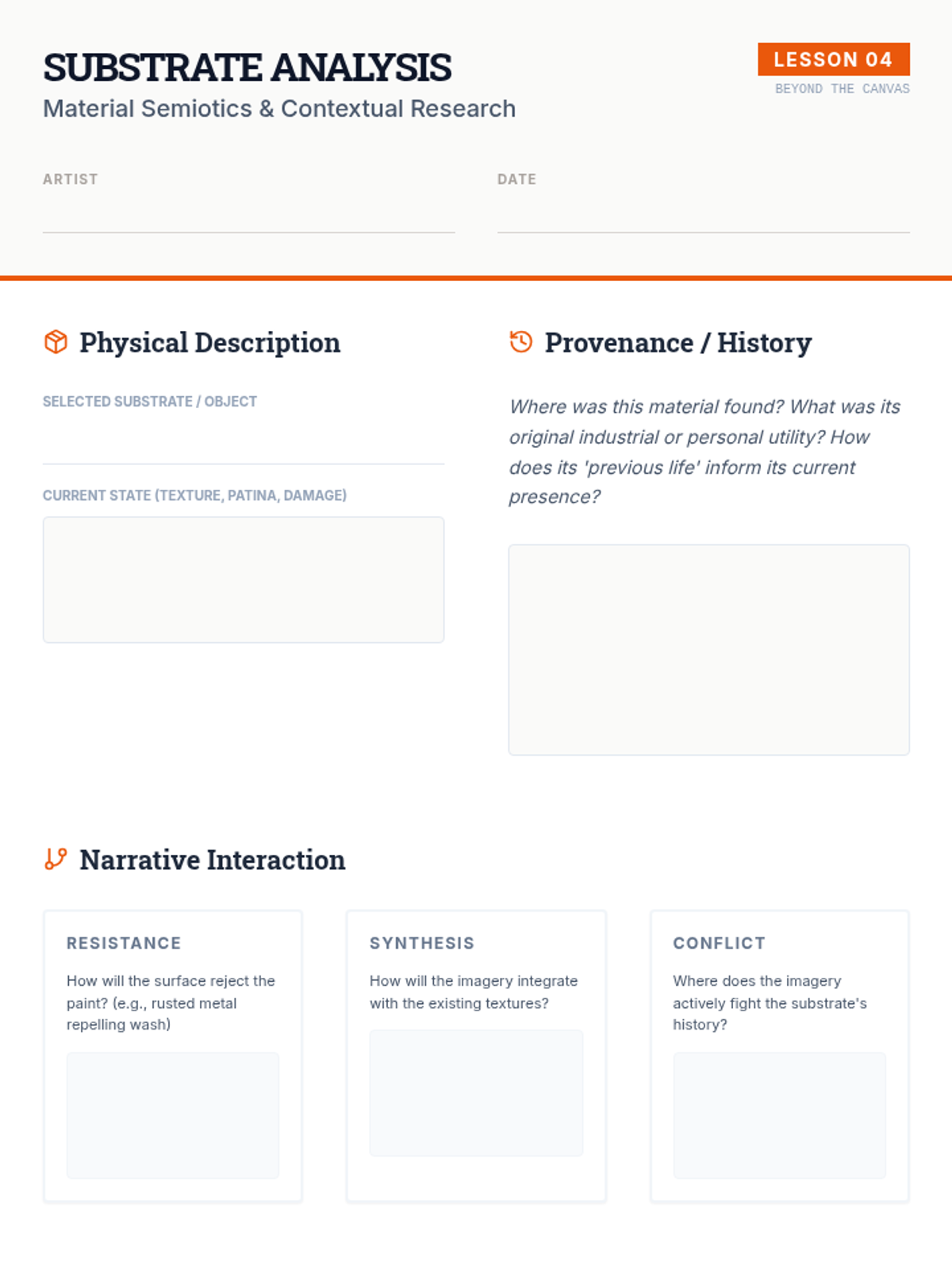
Students abandon traditional canvas to paint on found objects and raw materials. They analyze how the history and texture of a surface change the narrative and conceptual impact of the work.
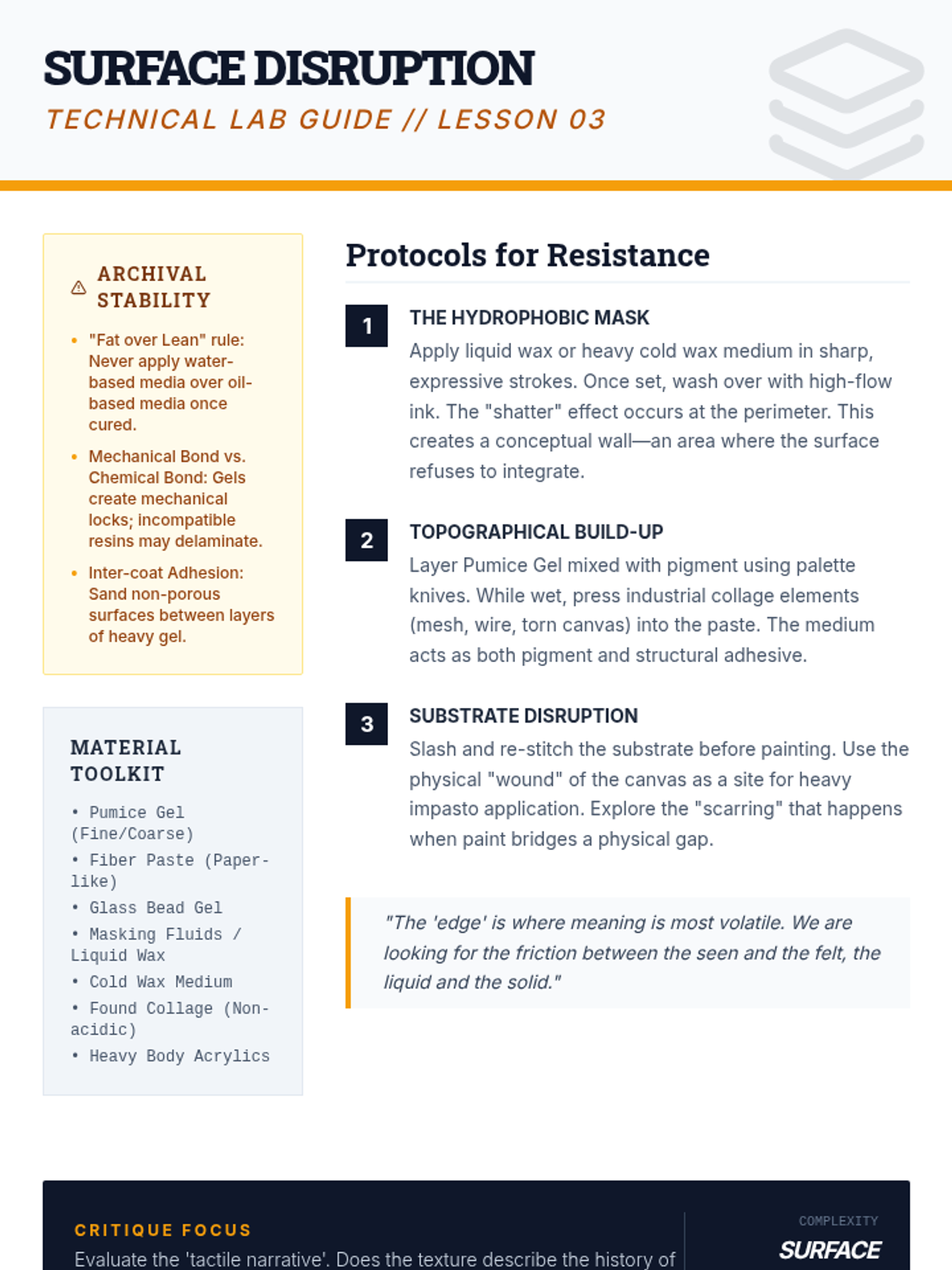
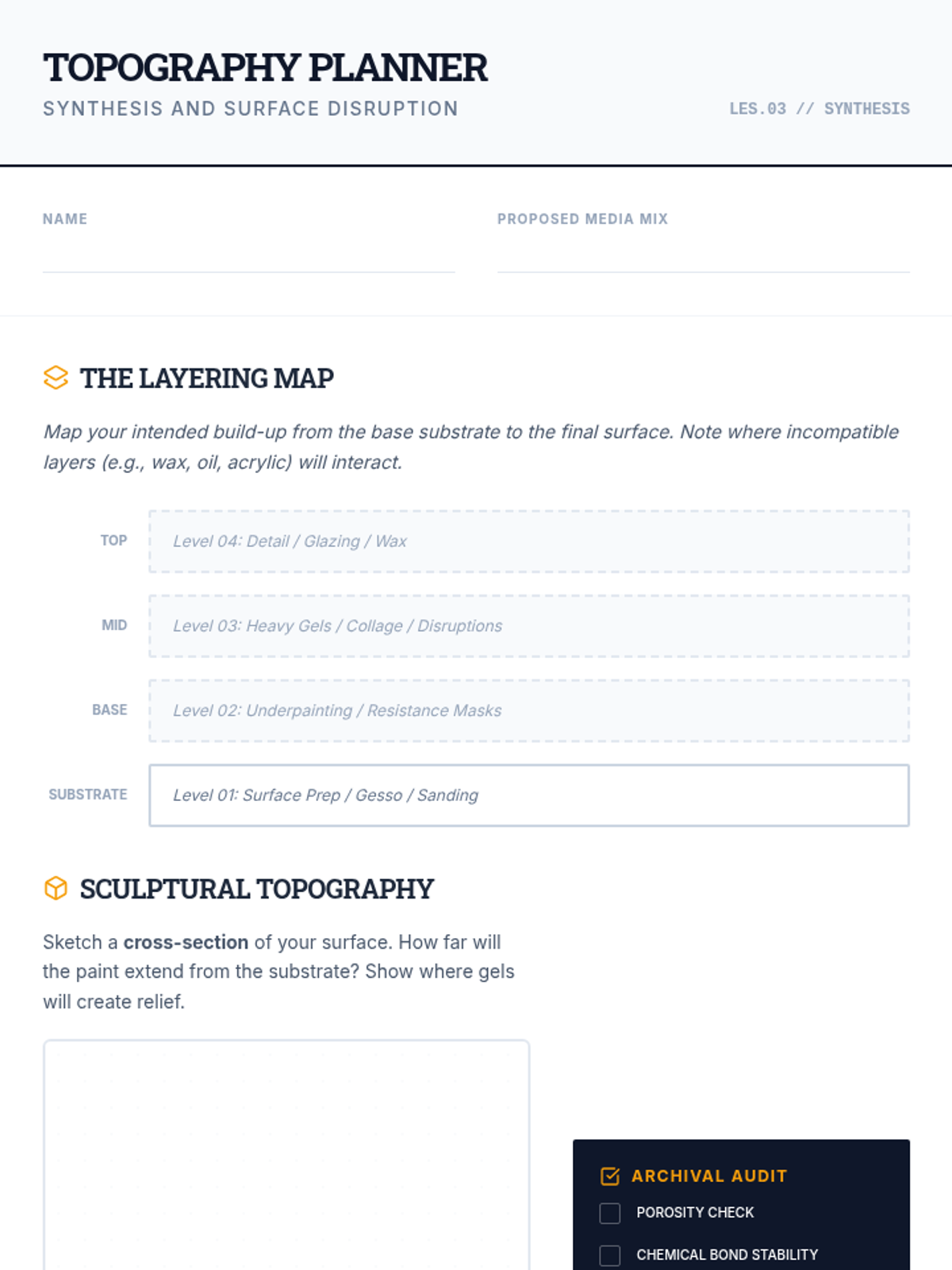
Students combine incompatible media and incorporate collage to disrupt the picture plane. The focus is on the 'edge' where materials meet, using resistance techniques and heavy gels to create sculptural topography.
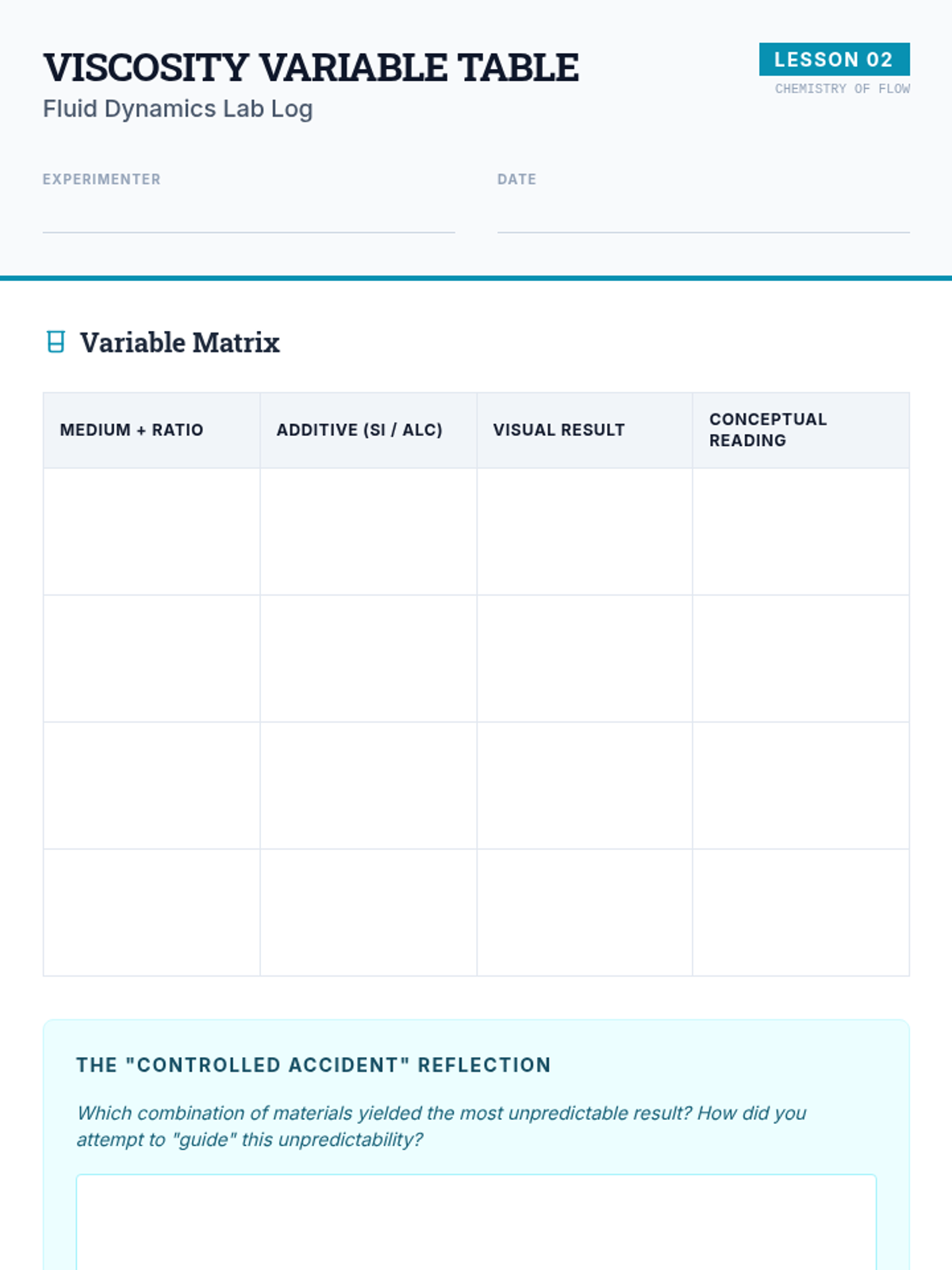
Investigating the properties of viscosity and flow, students treat painting as a controlled chemical reaction. They experiment with pouring mediums and high-flow acrylics to create organic, non-brush textures.
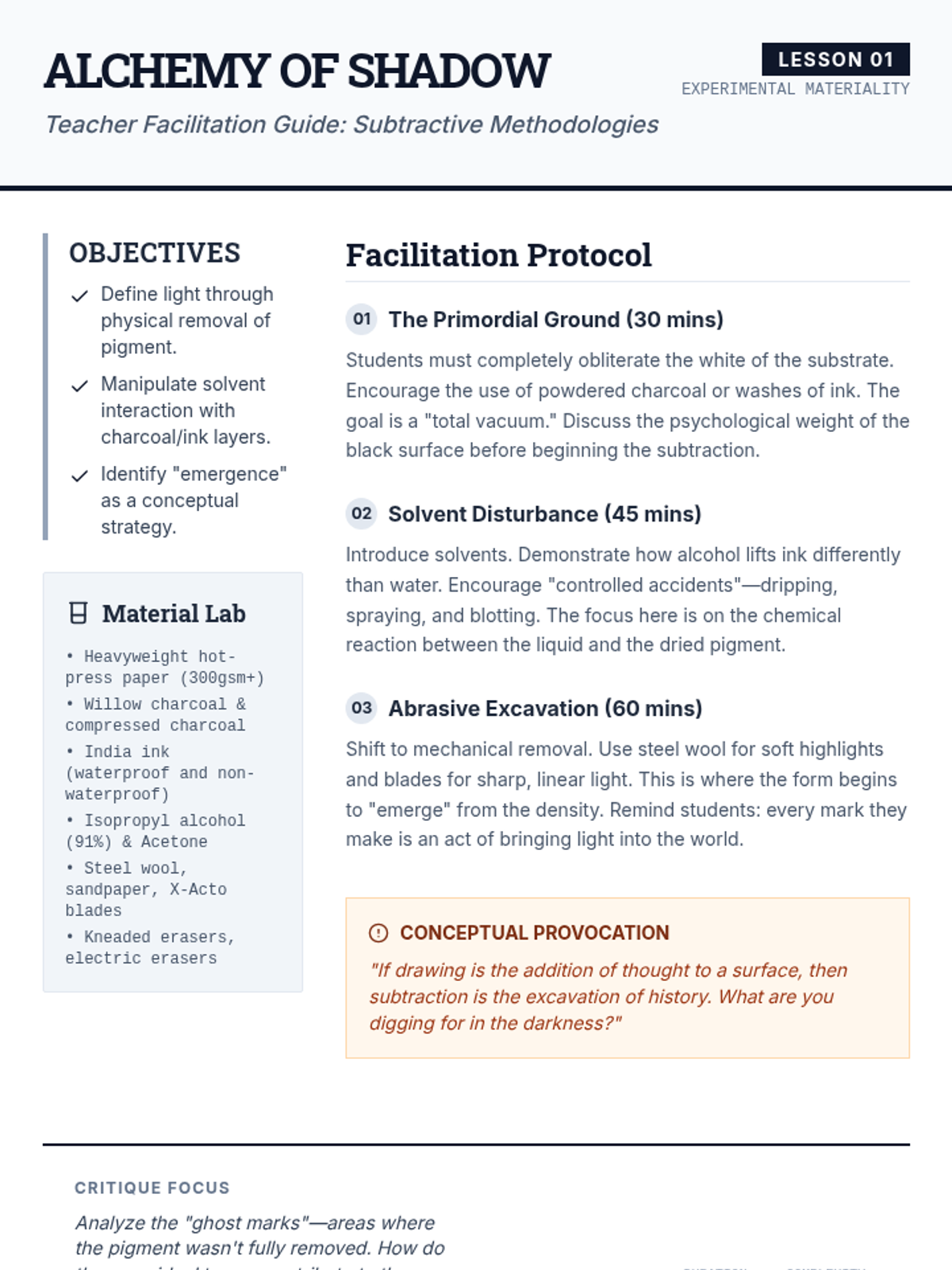
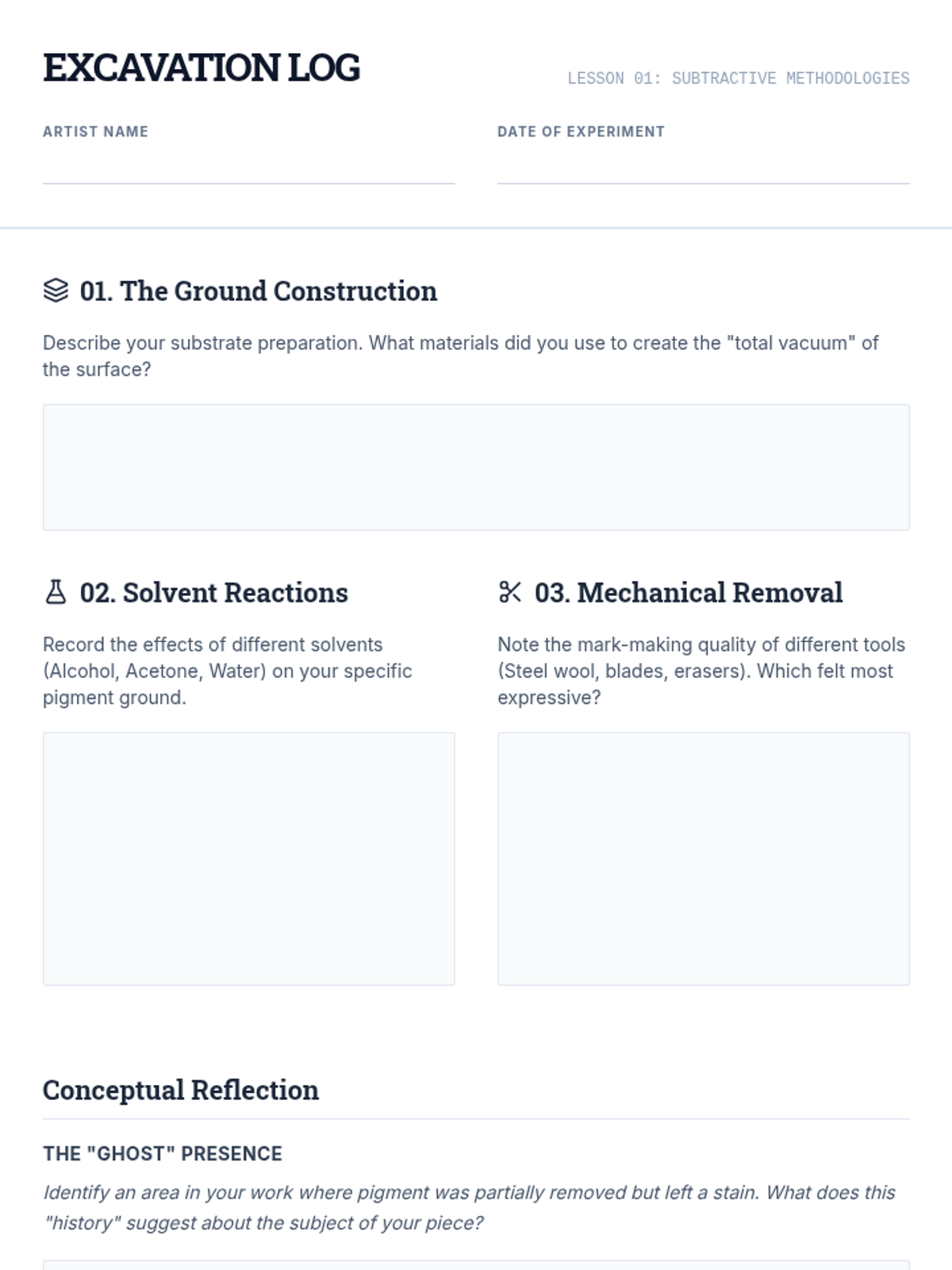
Students explore the concept of emergence by reversing the drawing process. By covering substrates in charcoal or ink and revealing images through subtraction, they treat light as a physical presence.