Techniques for brainstorming, collaborative project management, and individual artistic expression. Guides students through the iterative creative process from initial concept to final execution.
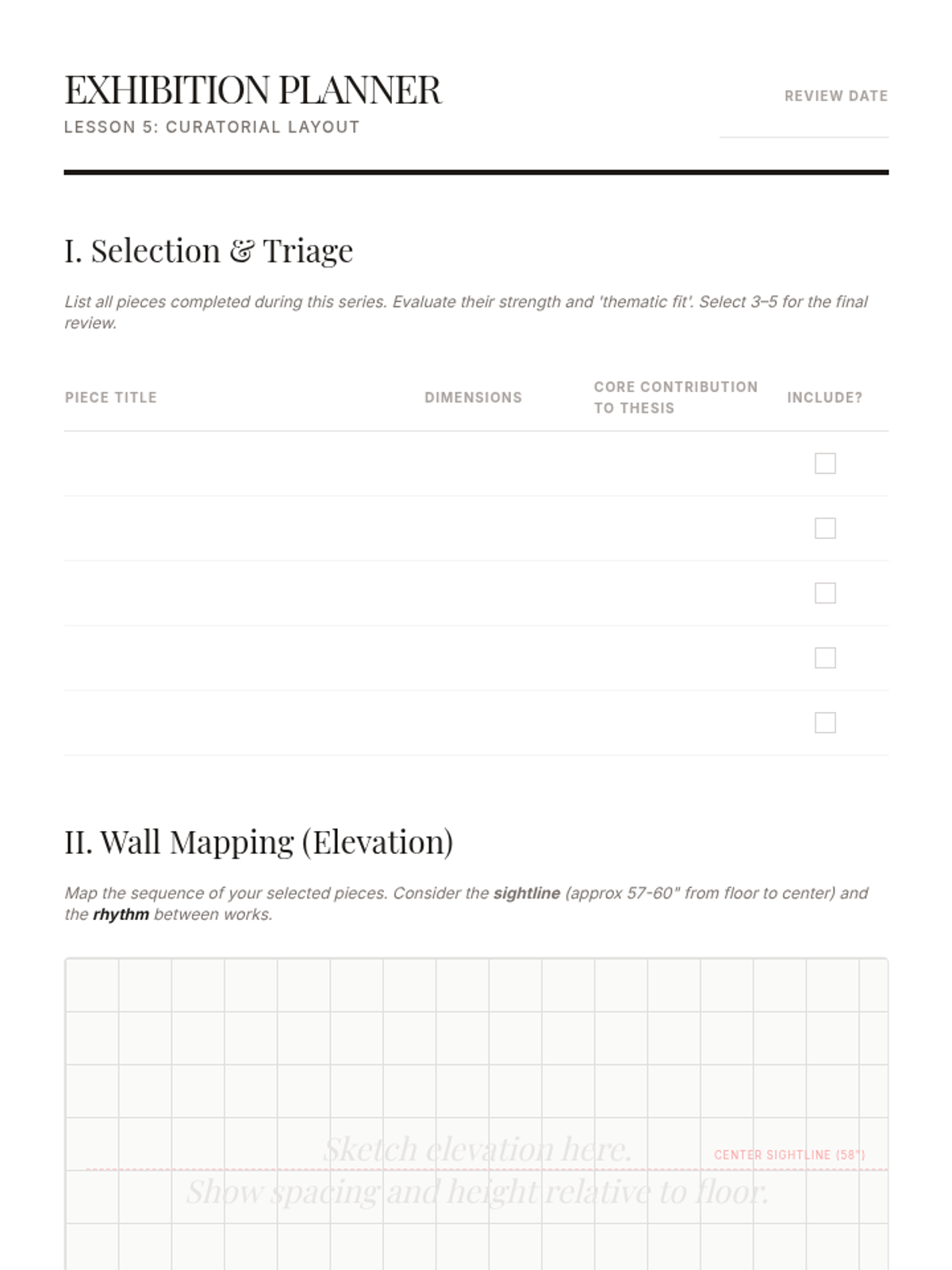
An exhibition layout planner for students to select and sequence their works, including wall elevations and lighting considerations.
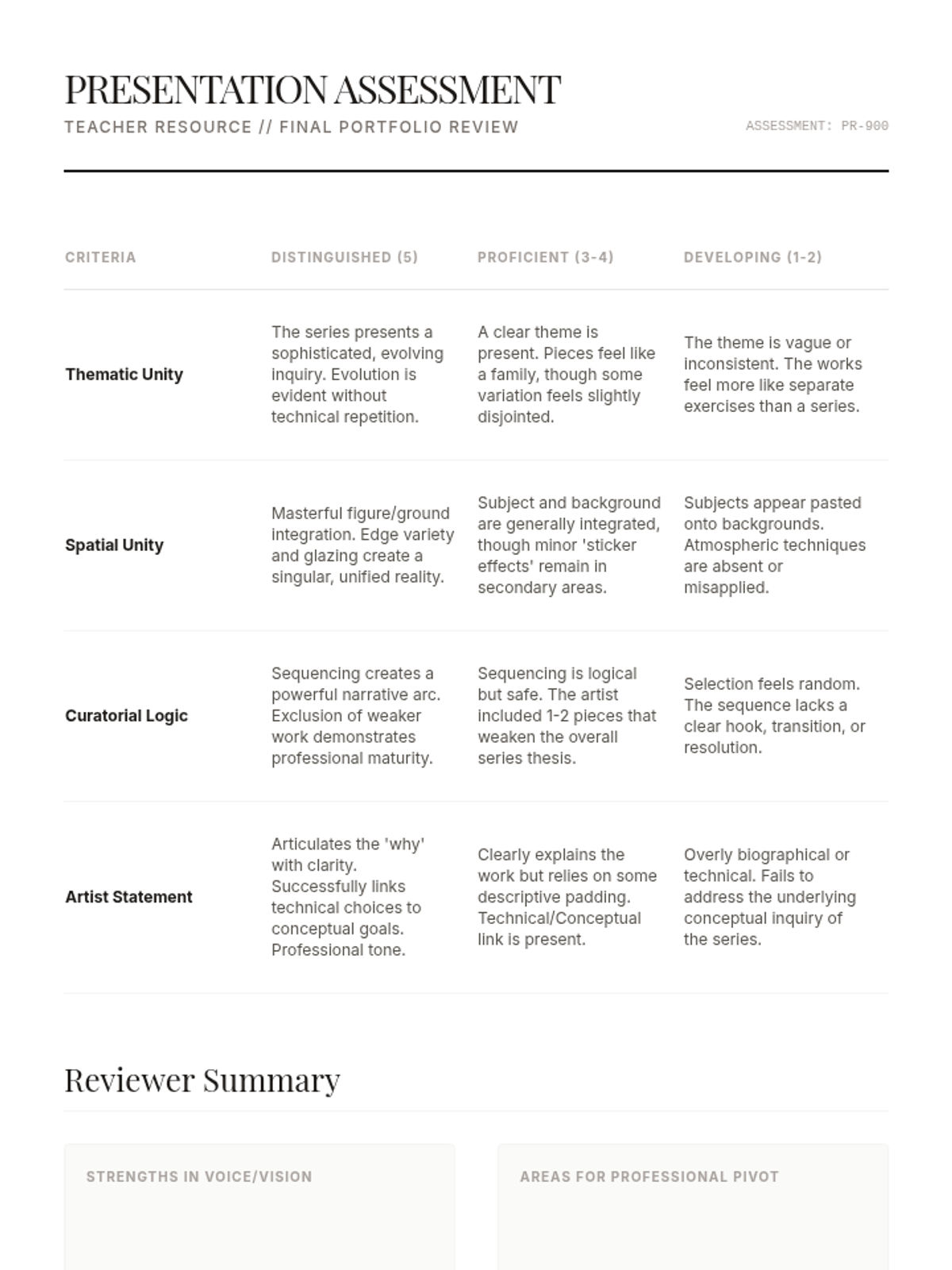
An assessment rubric for evaluating graduate students' final portfolio presentations, focusing on thematic unity, spatial integration, curation, and professional articulation.
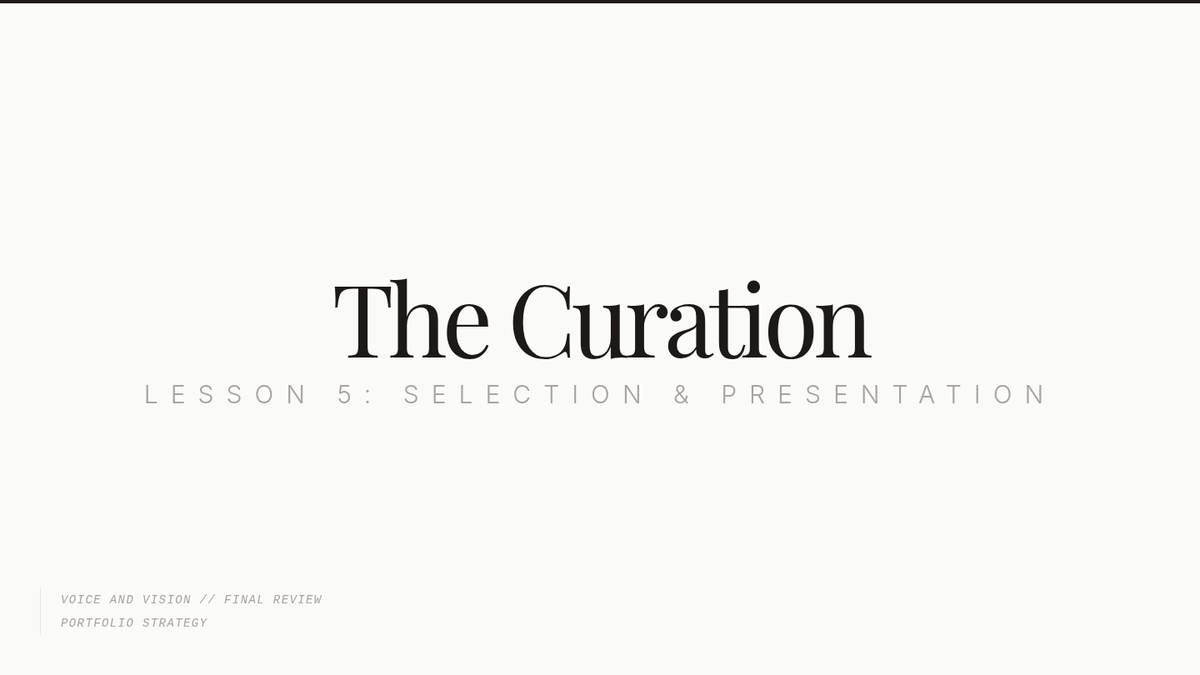
A professional slide deck addressing the principles of curation, sequencing, and artist statement writing for a final portfolio review.
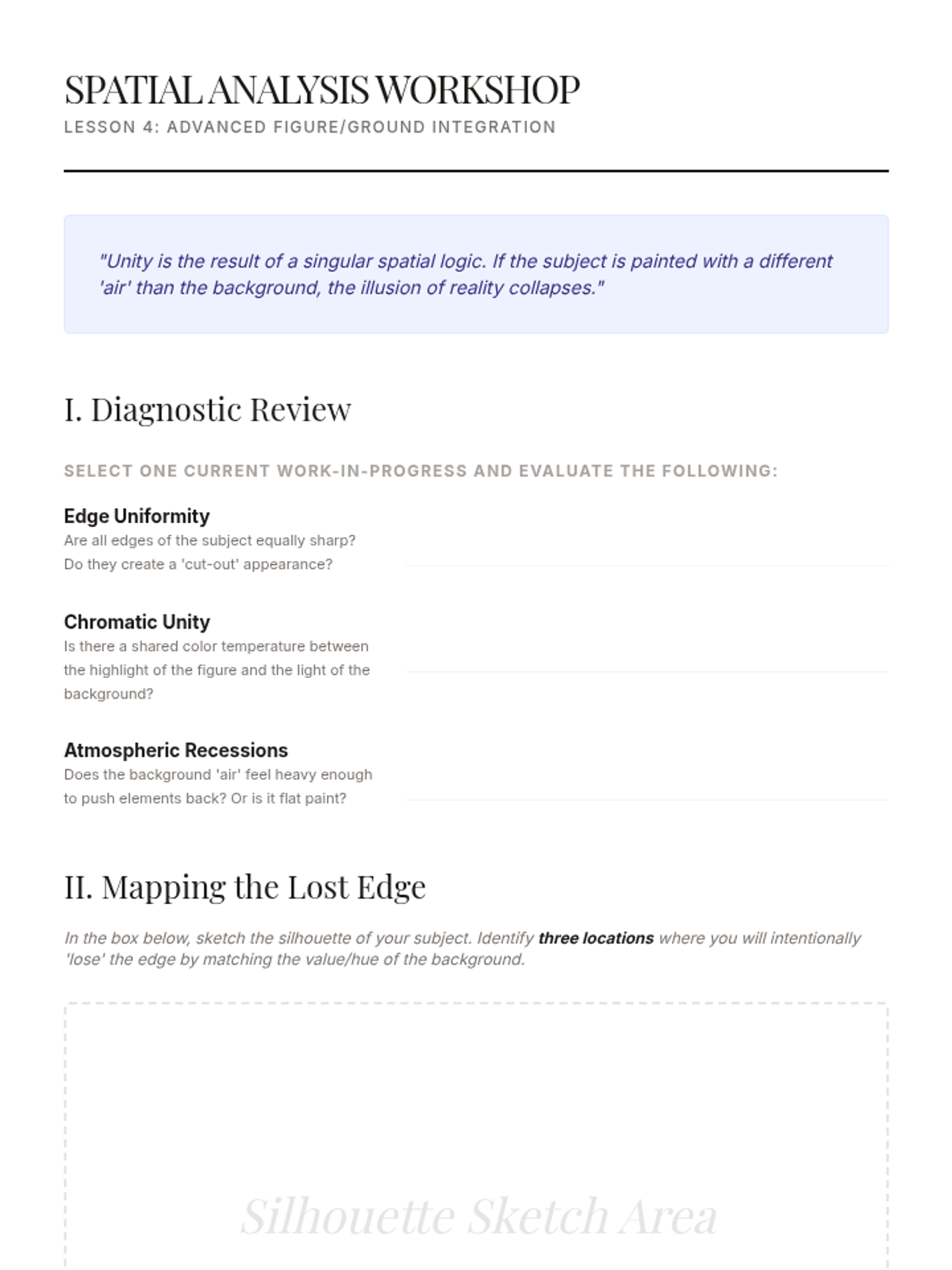
A structured spatial analysis workshop for students to evaluate and plan the integration of subject and background in their own paintings.
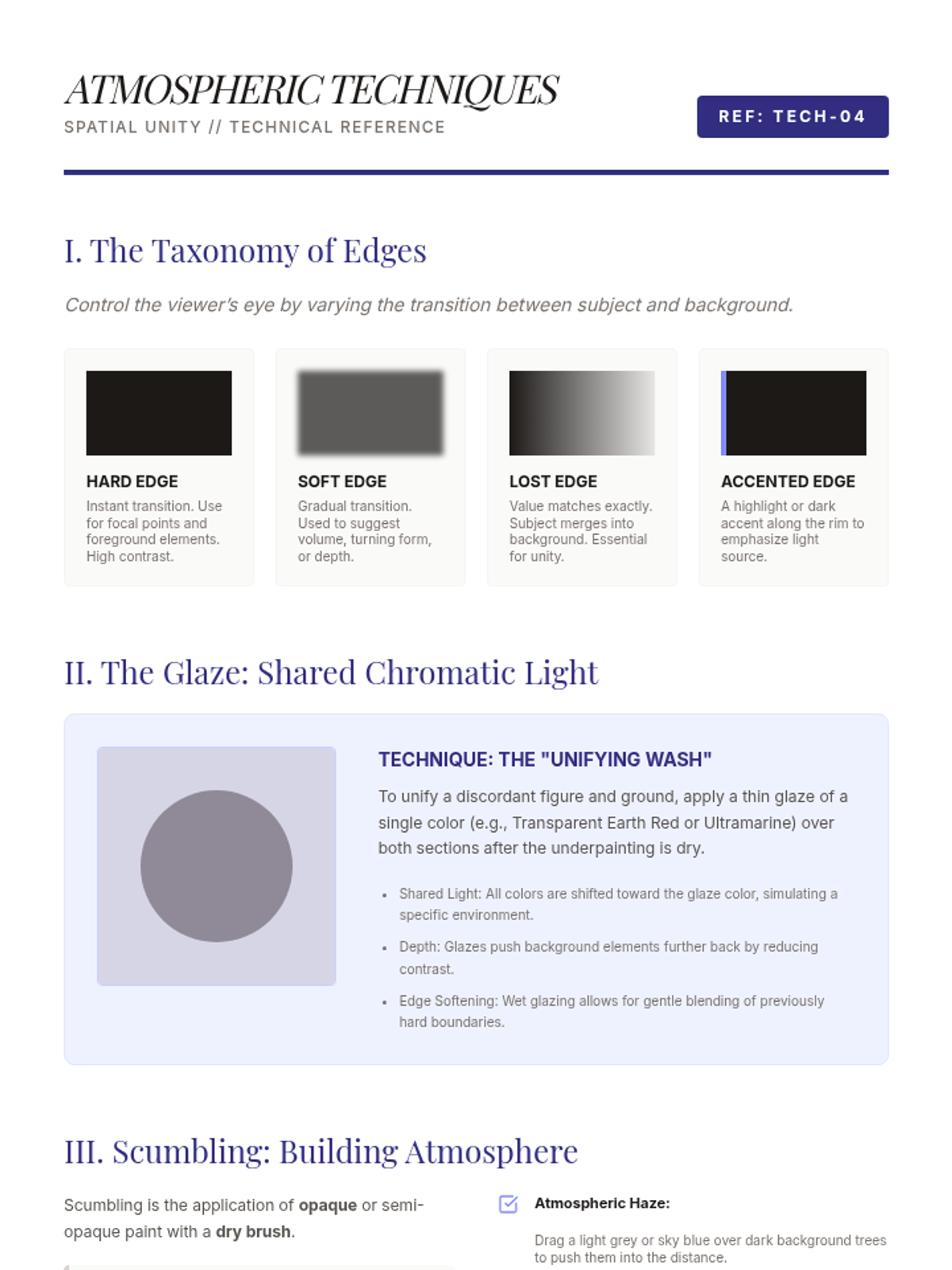
A technical reference for advanced figure/ground integration, covering edge variety, glazing for chromatic unity, and scumbling for atmospheric depth.
A technical slide deck addressing the integration of subject and background through glazing, scumbling, and edge manipulation to create a unified spatial reality.
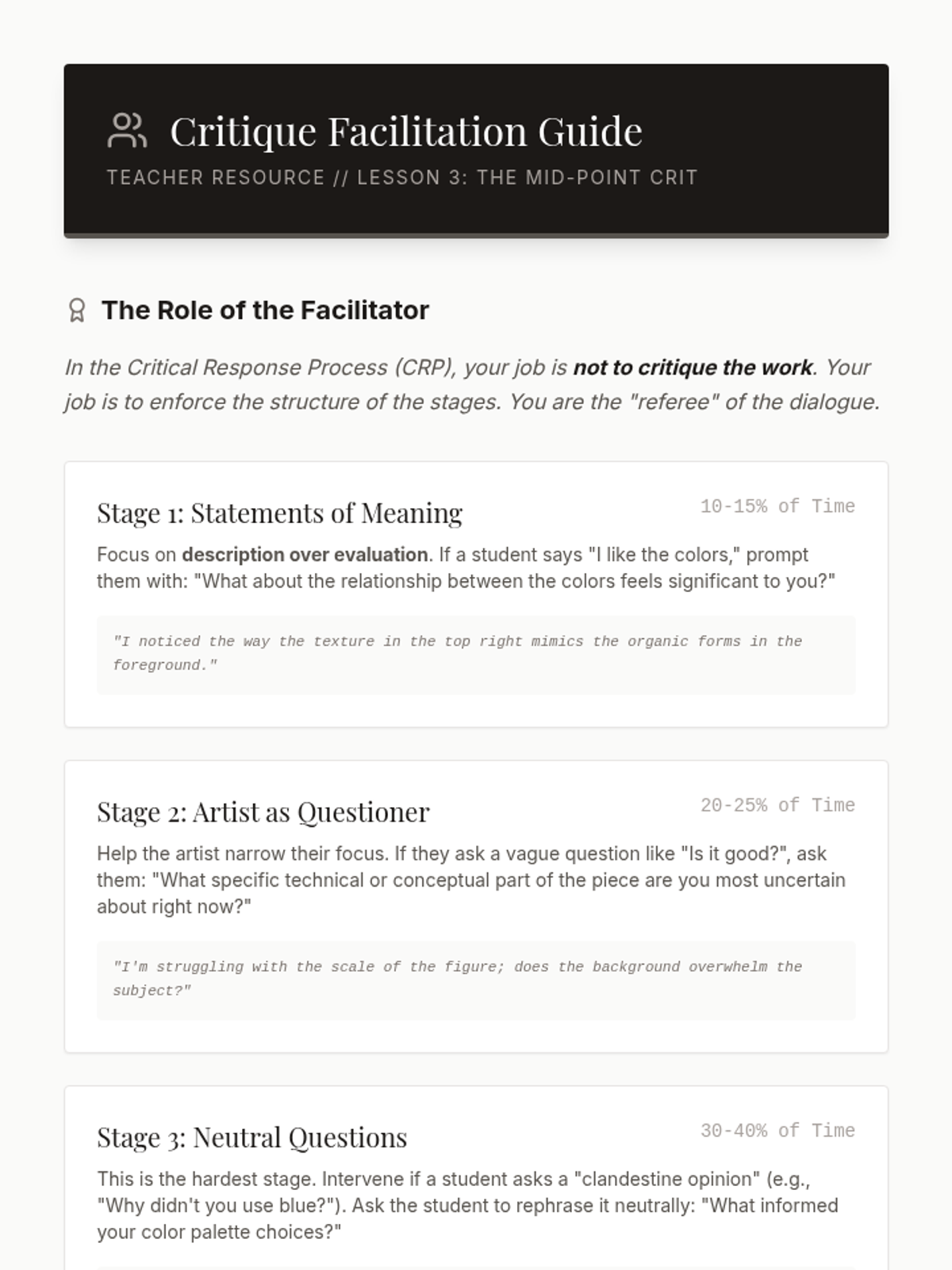
A teacher resource for facilitating the Critical Response Process during art critiques, providing stage-by-stage prompts and intervention strategies.
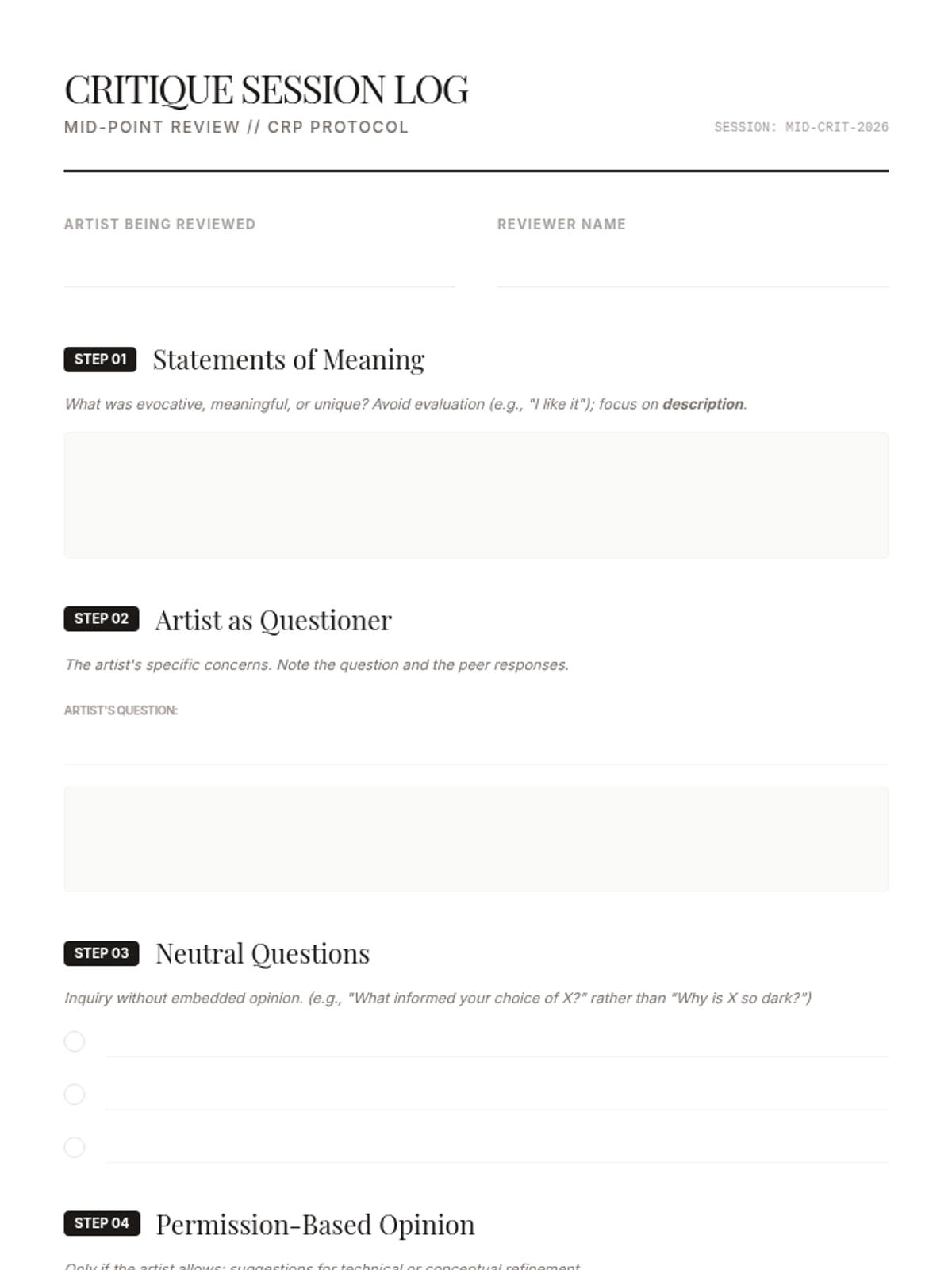
A structured feedback form based on the Critical Response Process, designed for students to document and process peer feedback during mid-point critiques.
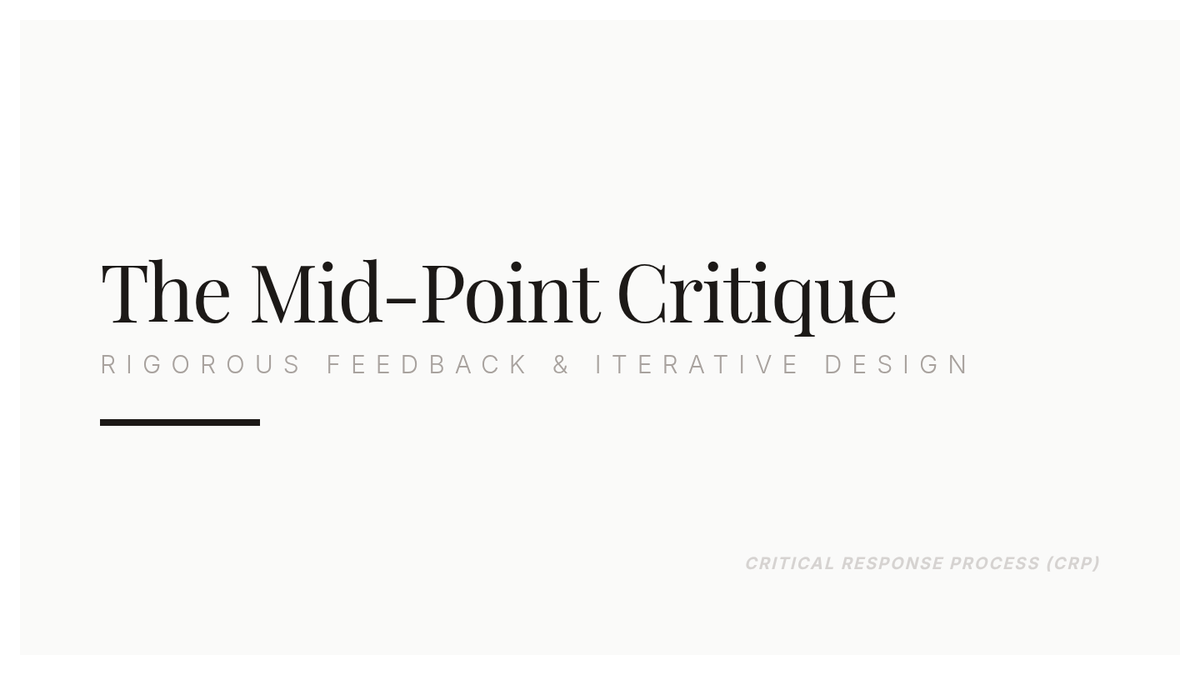
A formal slide deck introducing Liz Lerman's Critical Response Process for graduate-level art critiques, focusing on the power of neutral questioning.
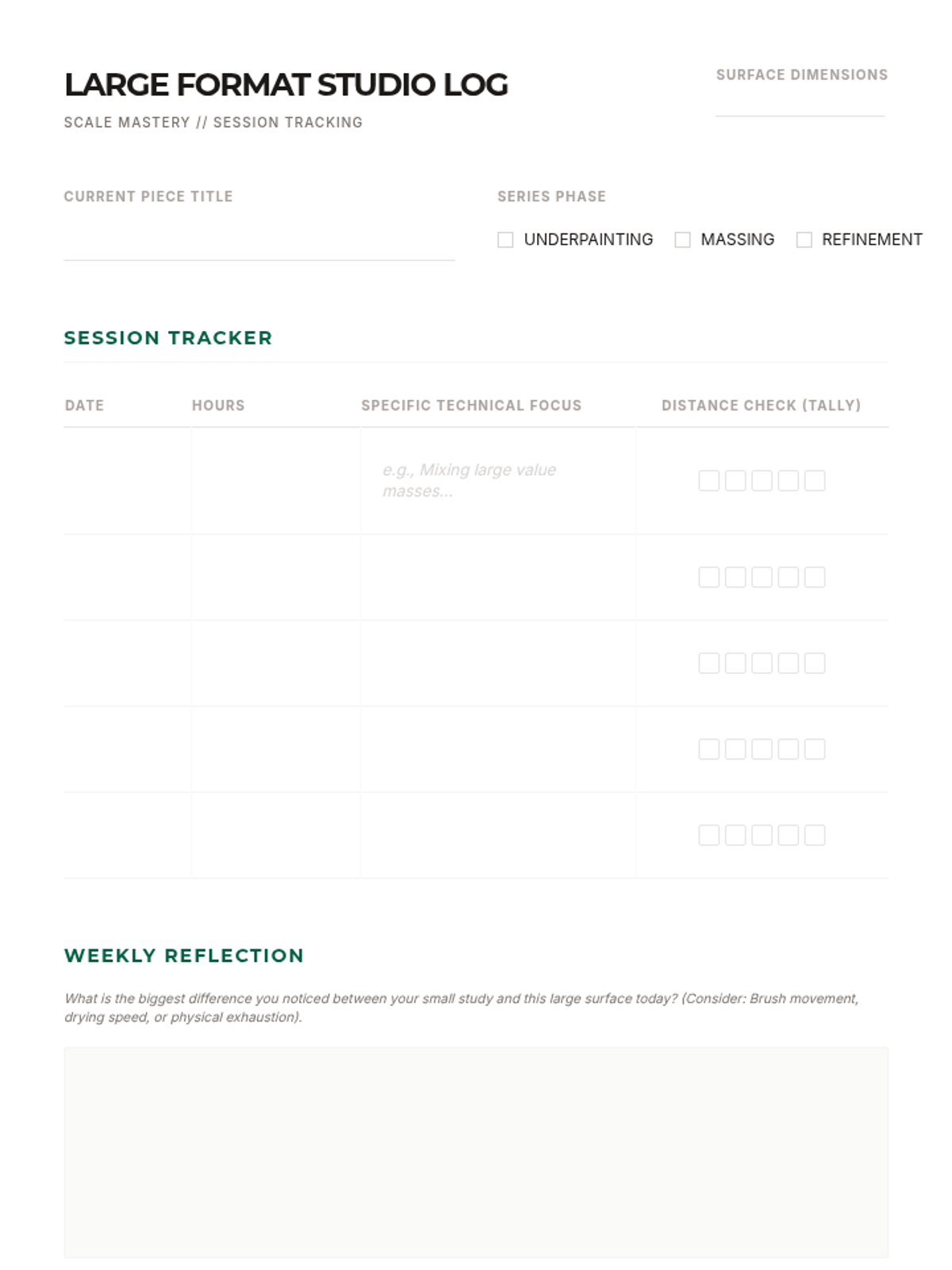
A functional studio log for students to track their progress on large-scale works, focusing on technical focus and perceptual checks.
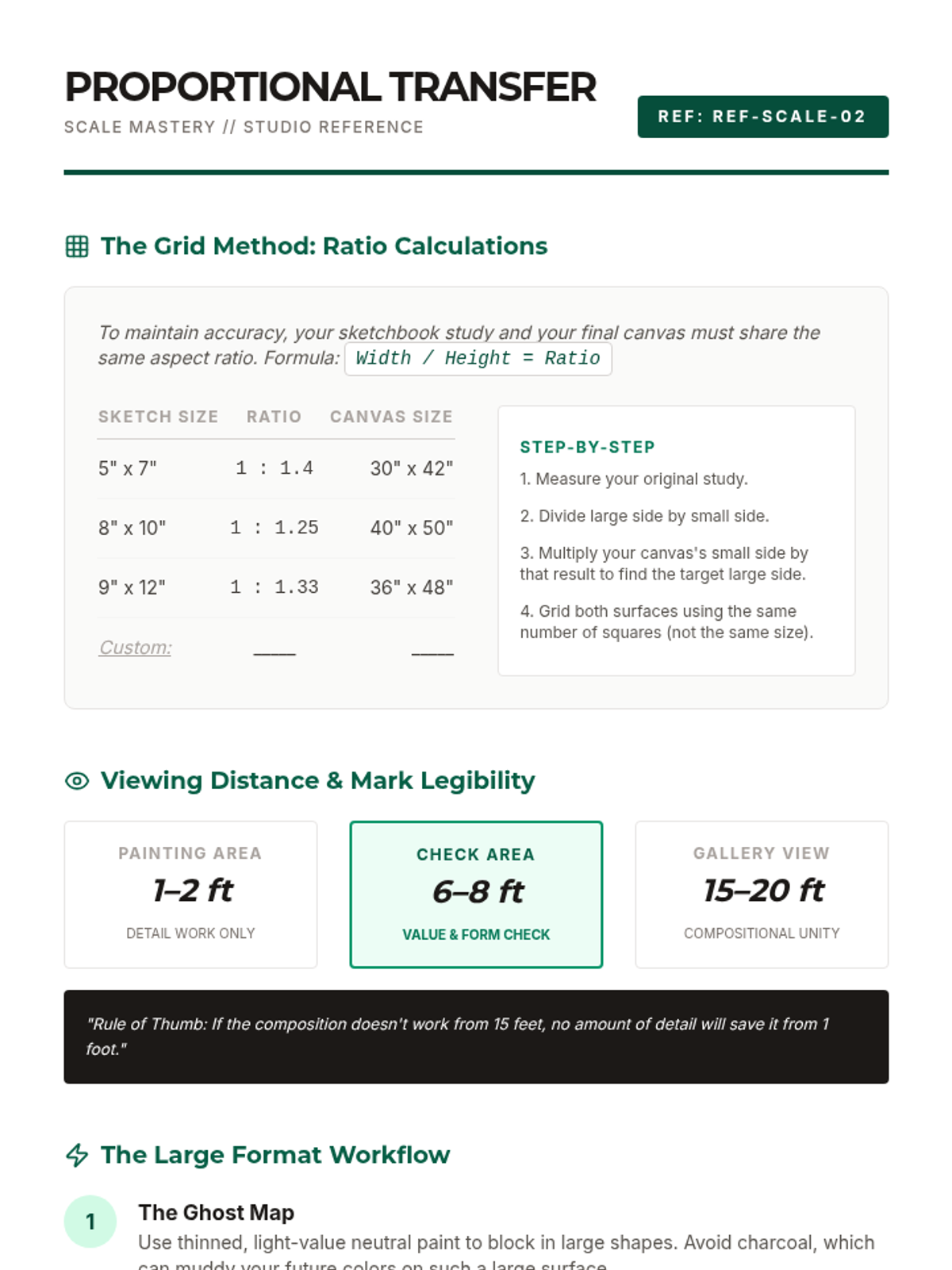
A technical reference guide for graduate students covering aspect ratio calculations, viewing distances, and large-scale painting workflows.
A technical slide deck addressing the physical and perceptual challenges of transferring small studies to large formats, focusing on viewing distance and brush economy.
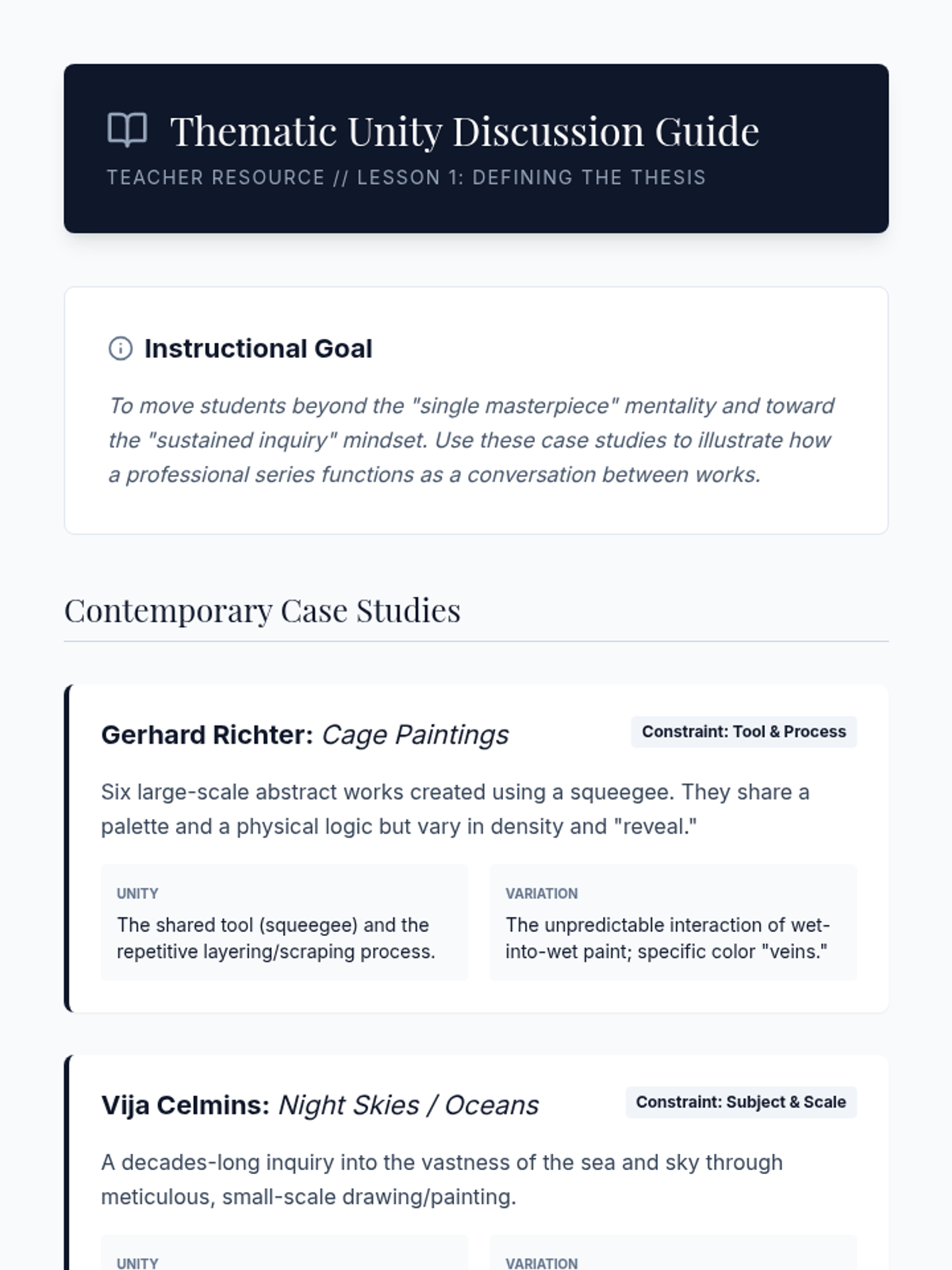
A teacher resource providing contemporary artist case studies and discussion prompts to help students understand thematic unity and artistic voice.
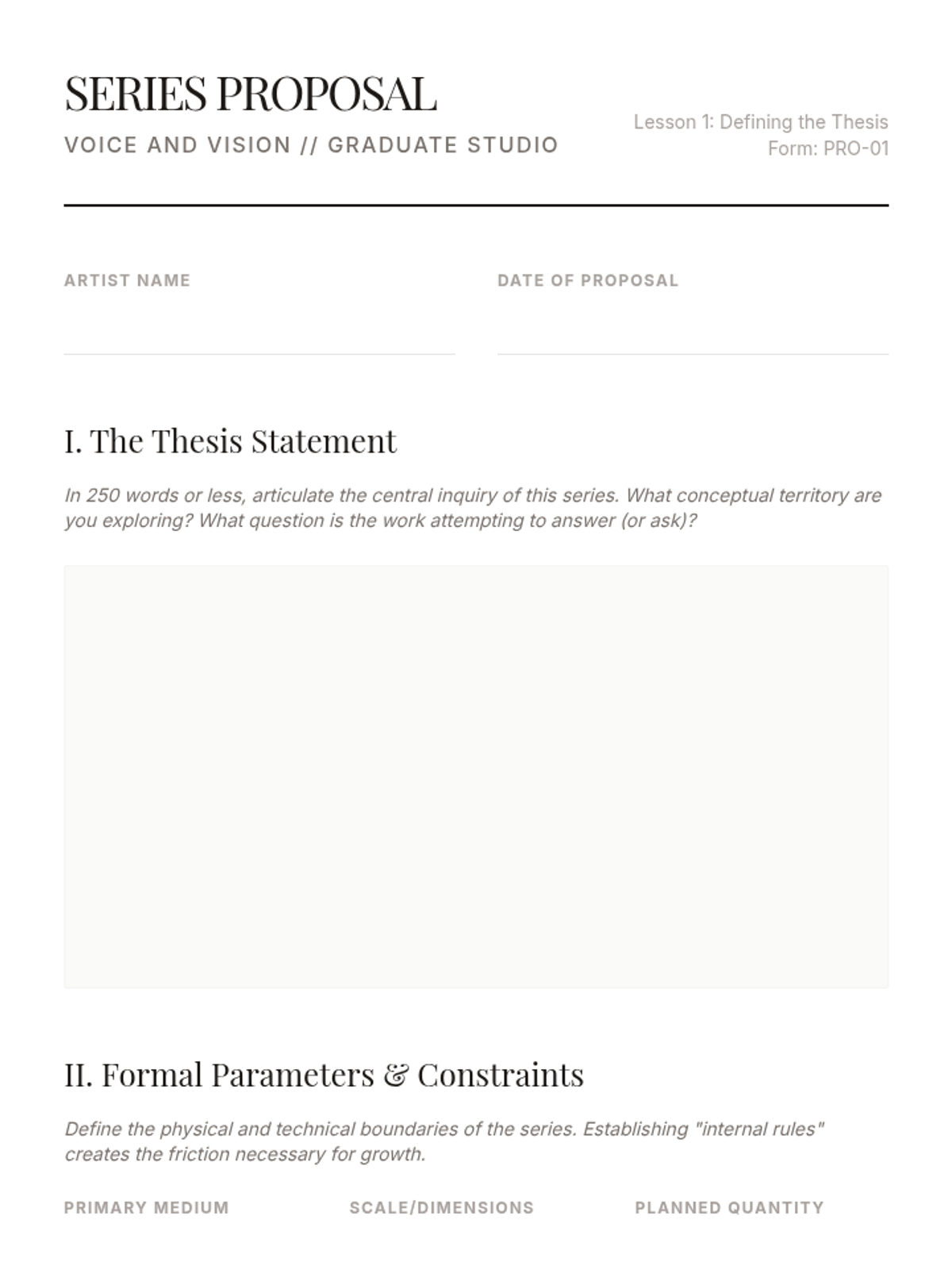
A comprehensive proposal document for graduate students to define their artistic thesis, including conceptual inquiry, formal constraints, and research influences.
A professional slide deck for graduate art students focusing on the concept of thematic unity and artistic voice. It covers the difference between repetition and variation within a series.
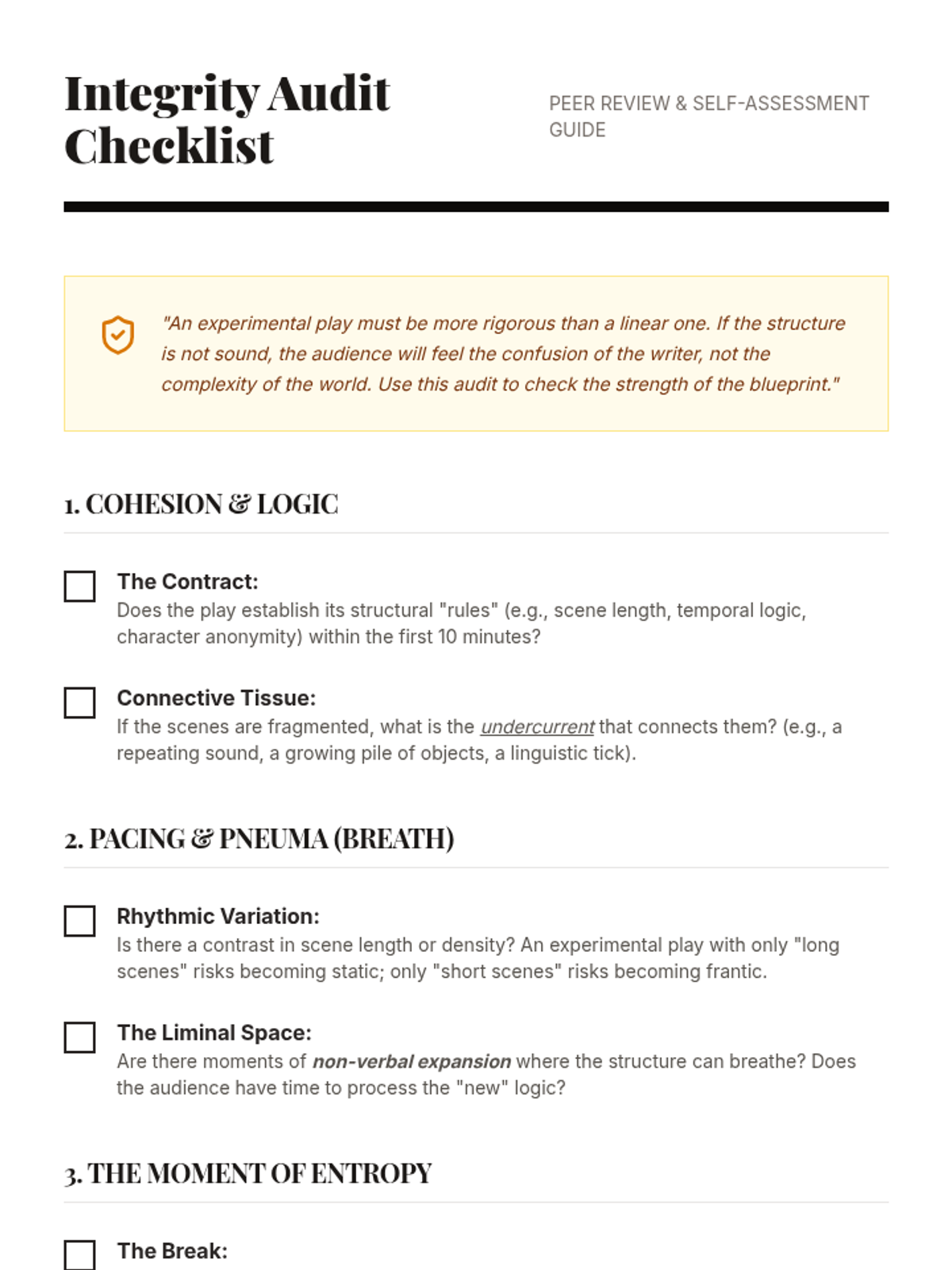
A peer-review and self-assessment checklist for graduate students to evaluate the structural integrity and pacing of their full-length experimental play blueprints.
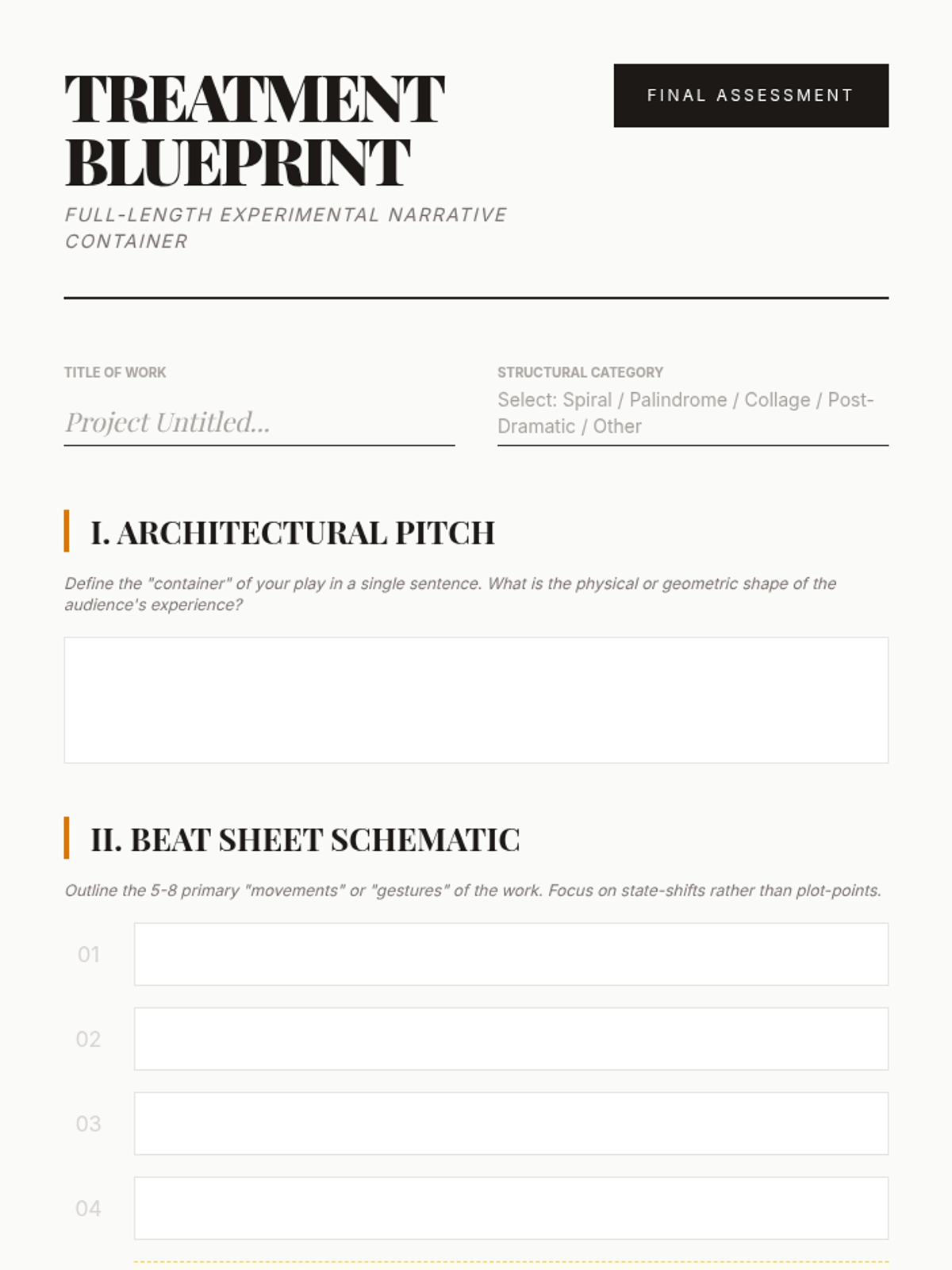
A comprehensive project template for graduate playwriting students to outline the structural "blueprint" for a full-length experimental play.
A slide deck for graduate playwriting students on architectural dramaturgy, focusing on sustaining tension in non-linear full-length plays.
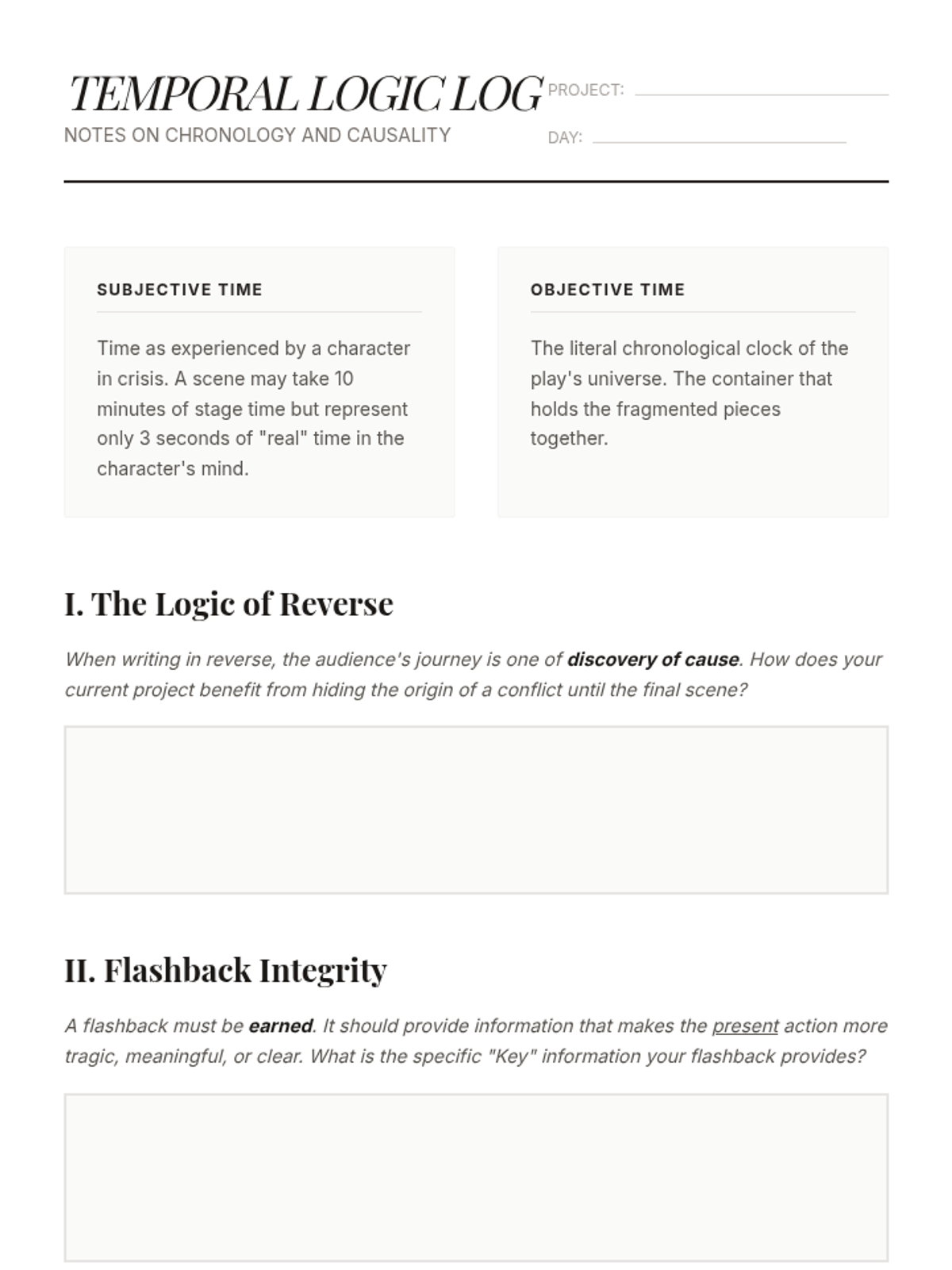
A student note-taking and reflection template for analyzing temporal logic and transition design in their playwriting projects.
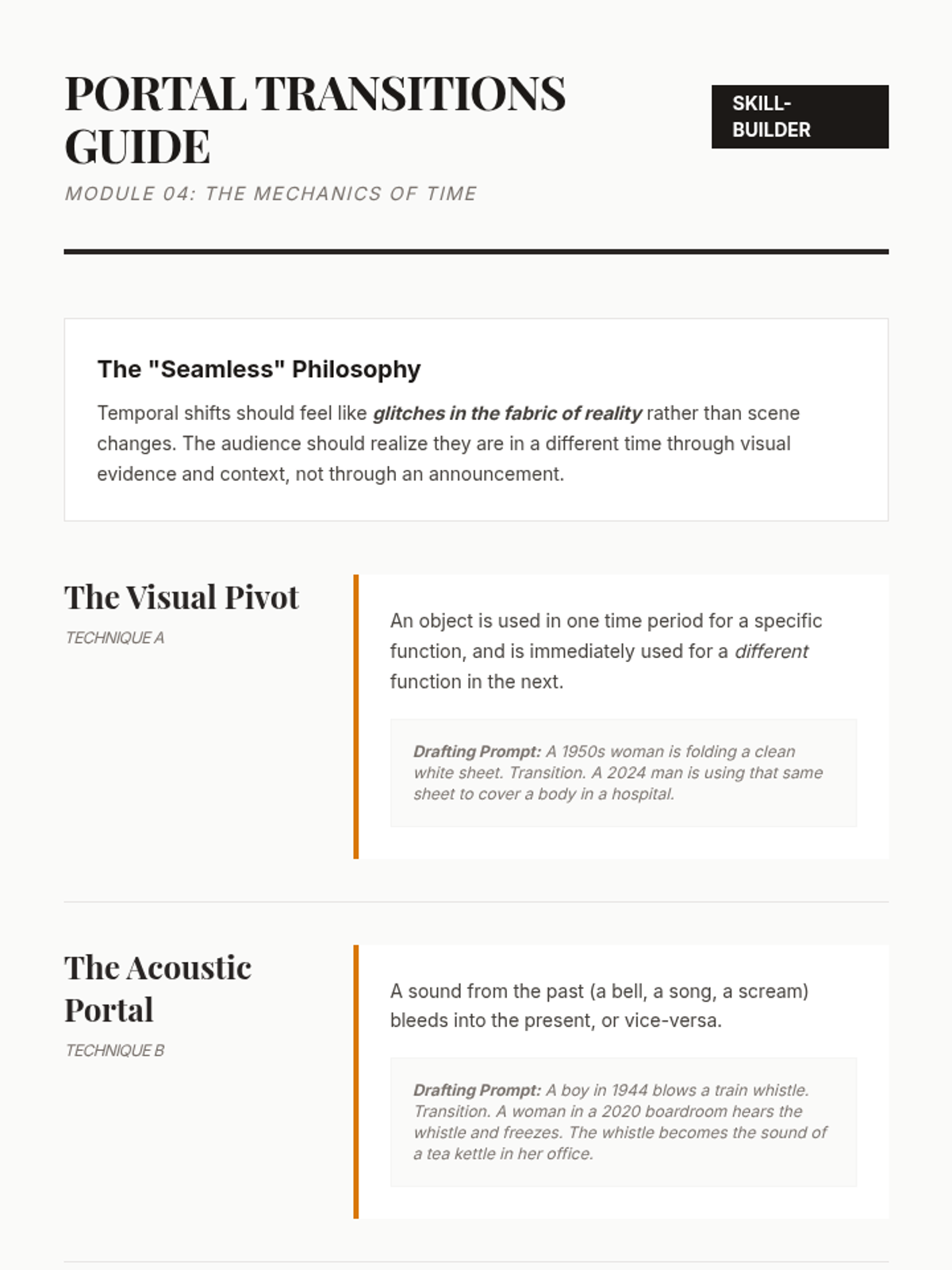
A technical workshop guide for graduate students on writing fluid transitions between different time periods in a script.
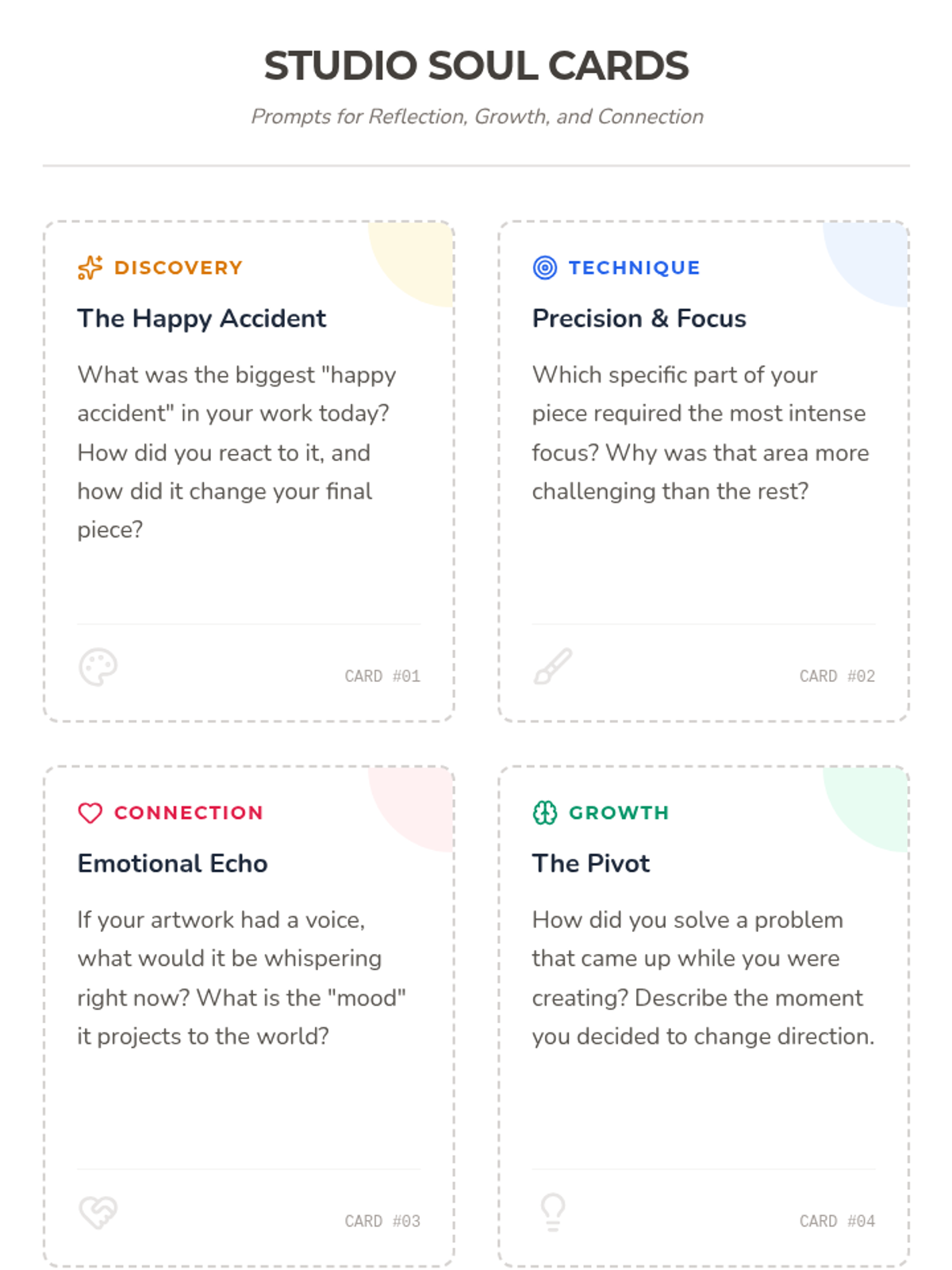
A complete set of 24 printable reflection cards for art students, featuring prompts for self-assessment, technique critique, and emotional connection to their creative work. Each card is designed with a distinct theme and color-coded category across six pages.
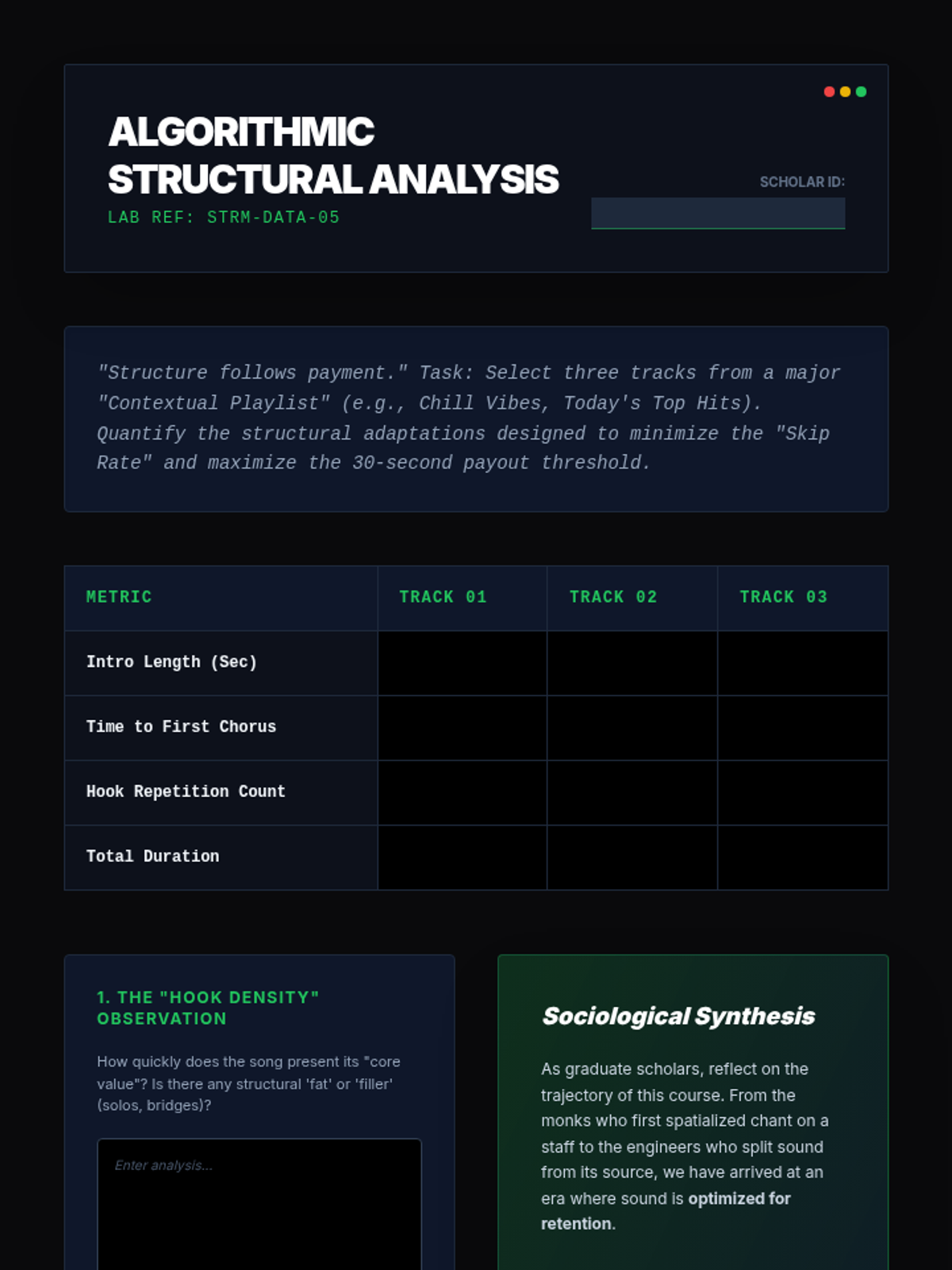
A student worksheet for analyzing song structure and hook density in top-charting streaming tracks to understand algorithmic influence.
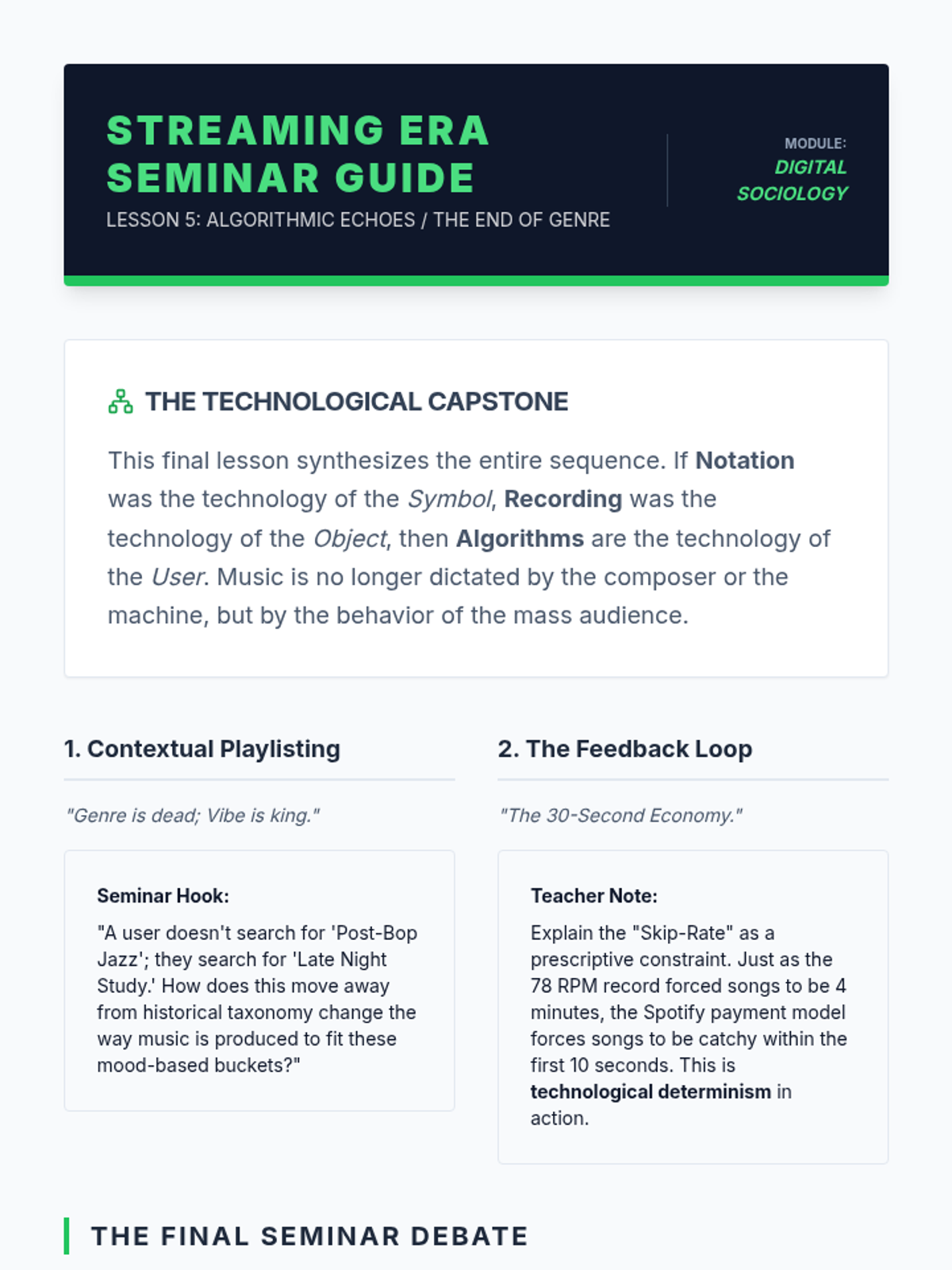
A facilitation guide for the "Algorithmic Echoes" lesson, focusing on the sociology of streaming, metadata, and the predictive future of music.
A slide deck for graduate students analyzing the impact of streaming algorithms and metadata on modern song structure and musical sociology.
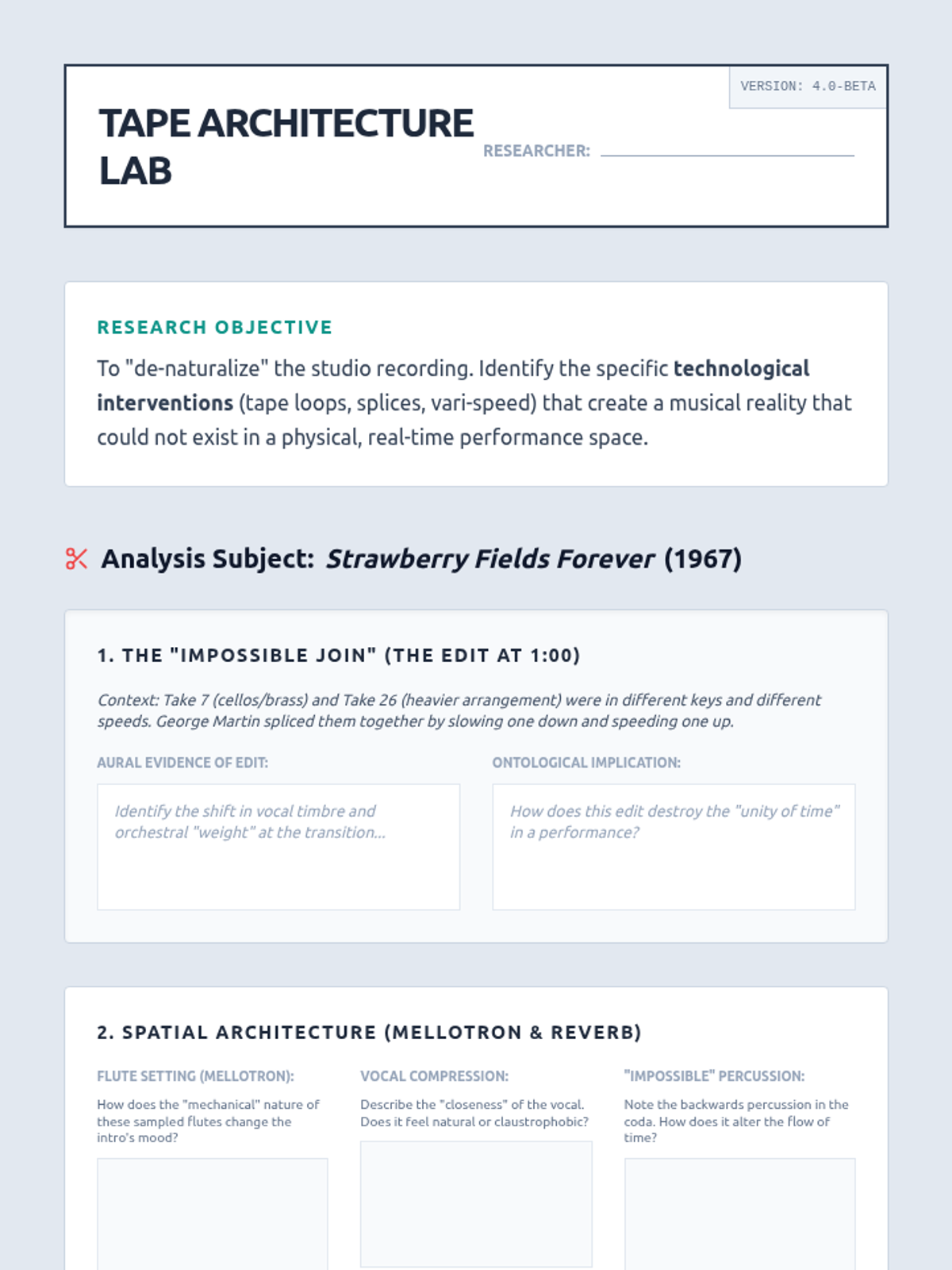
A student worksheet for deconstructing studio production techniques and the ontological shift from score to recording.
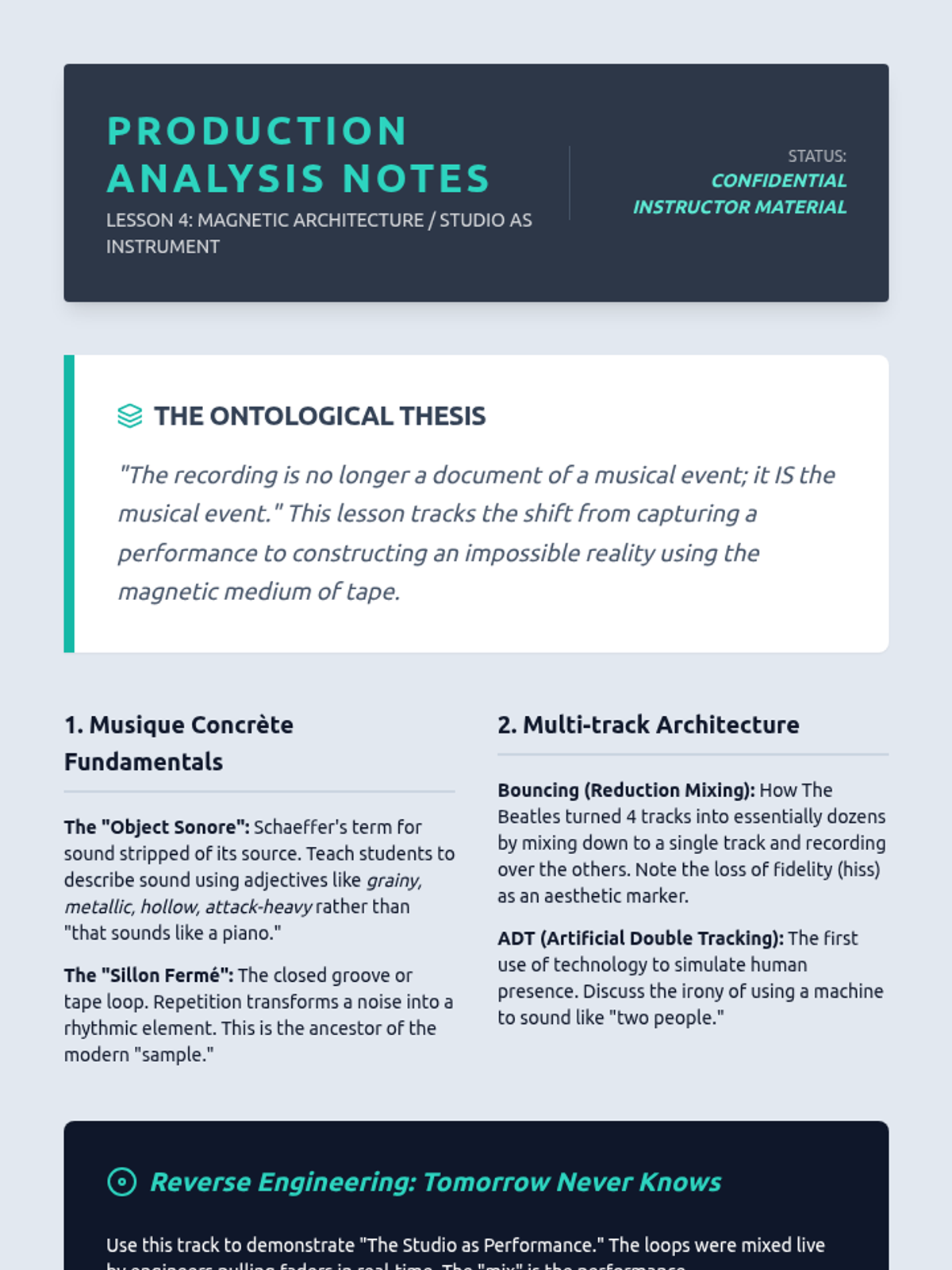
A facilitation guide for the "Magnetic Architecture" lesson, detailing production techniques and providing a case study of mid-century studio experiments.
A slide deck for graduate students exploring the recording studio as a primary compositional tool, moving from Musique Concrète to multi-track recording and the ontological shift from score to recording.
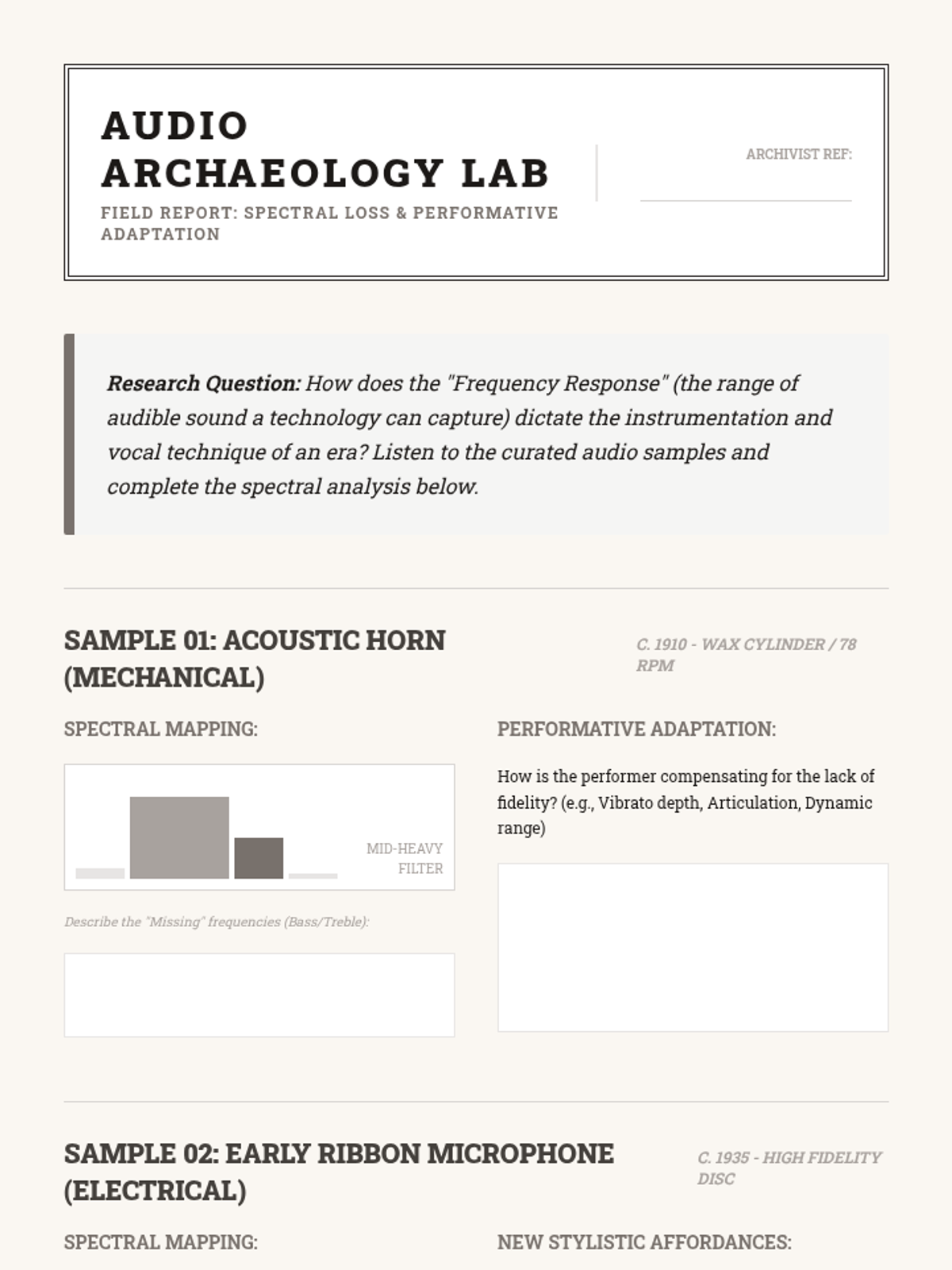
A student worksheet for identifying frequency response limitations and performative adaptations in early 20th-century recordings.
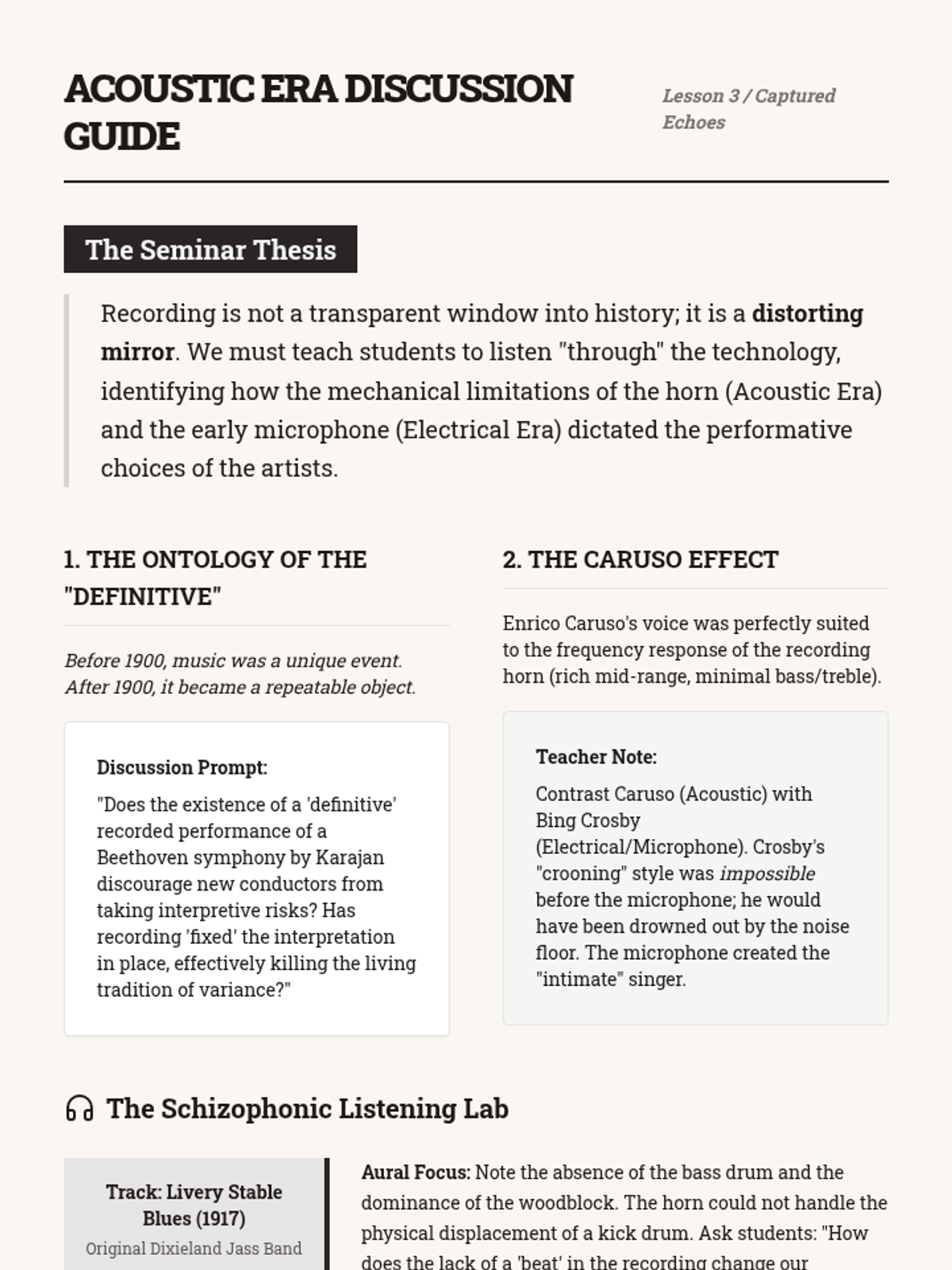
A facilitation guide for the "Captured Echoes" lesson, focusing on the transition from acoustic to electrical recording and the ontology of the "definitive performance."
A slide deck for graduate students exploring R. Murray Schafer's concept of schizophonia and the impact of early recording technology on musical performance.
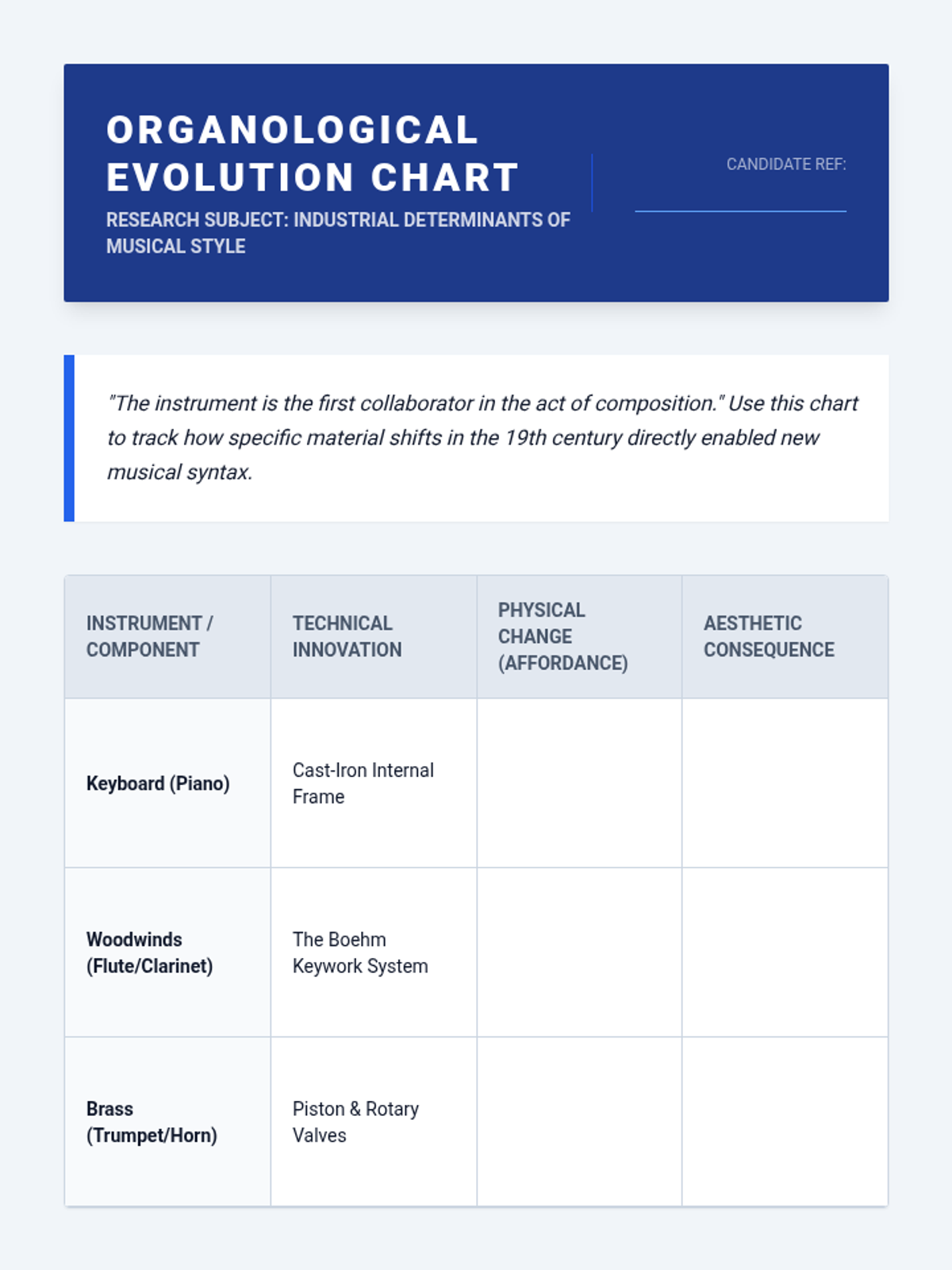
A student worksheet for tracking technical innovations in 19th-century instruments and their impact on musical aesthetics.
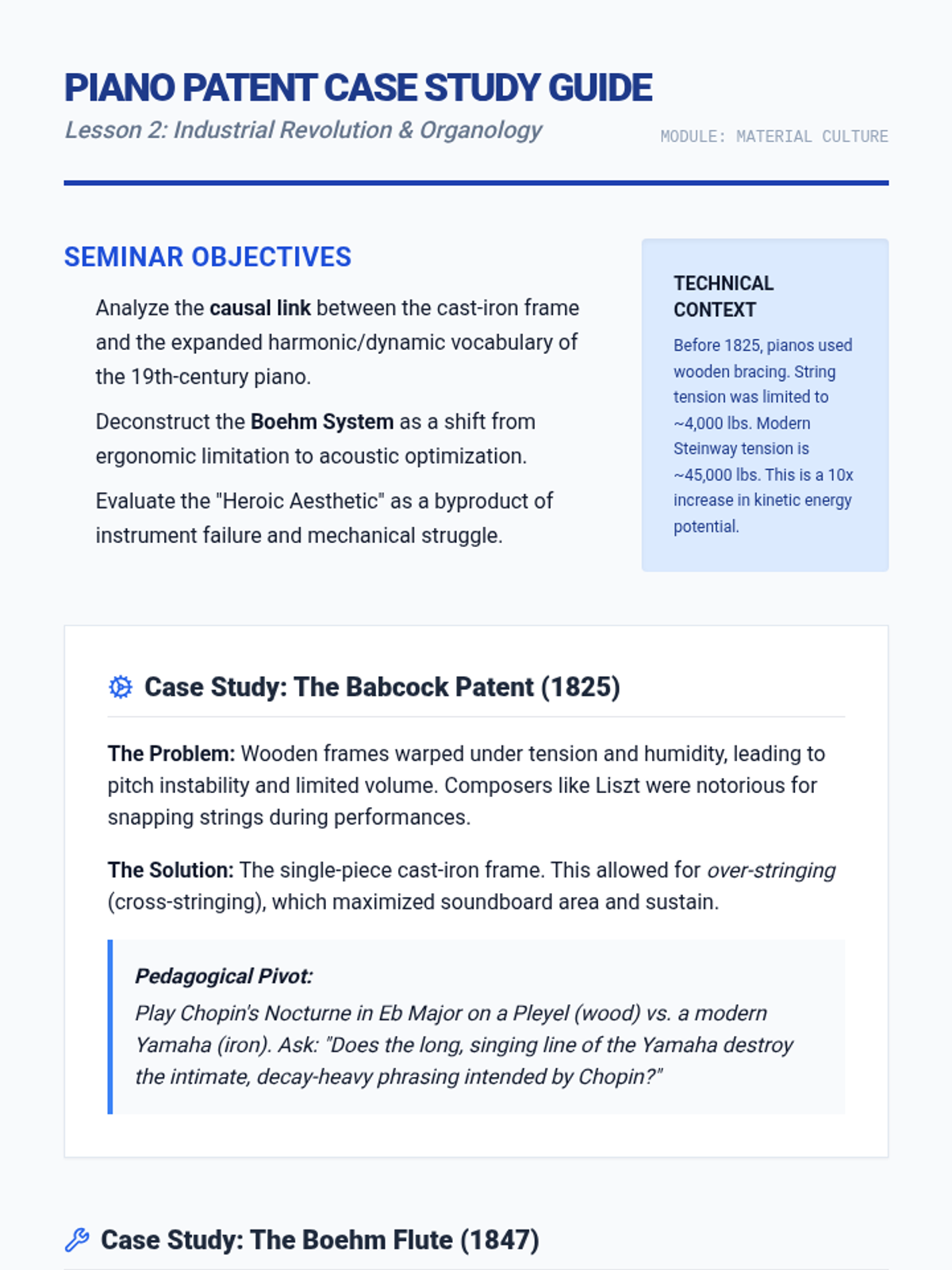
A facilitation guide for the "Iron and Ivory" lesson, providing technical context on piano manufacturing and woodwind evolution.
A slide deck for graduate students examining the impact of Industrial Revolution material science on musical instruments and Romantic aesthetics.
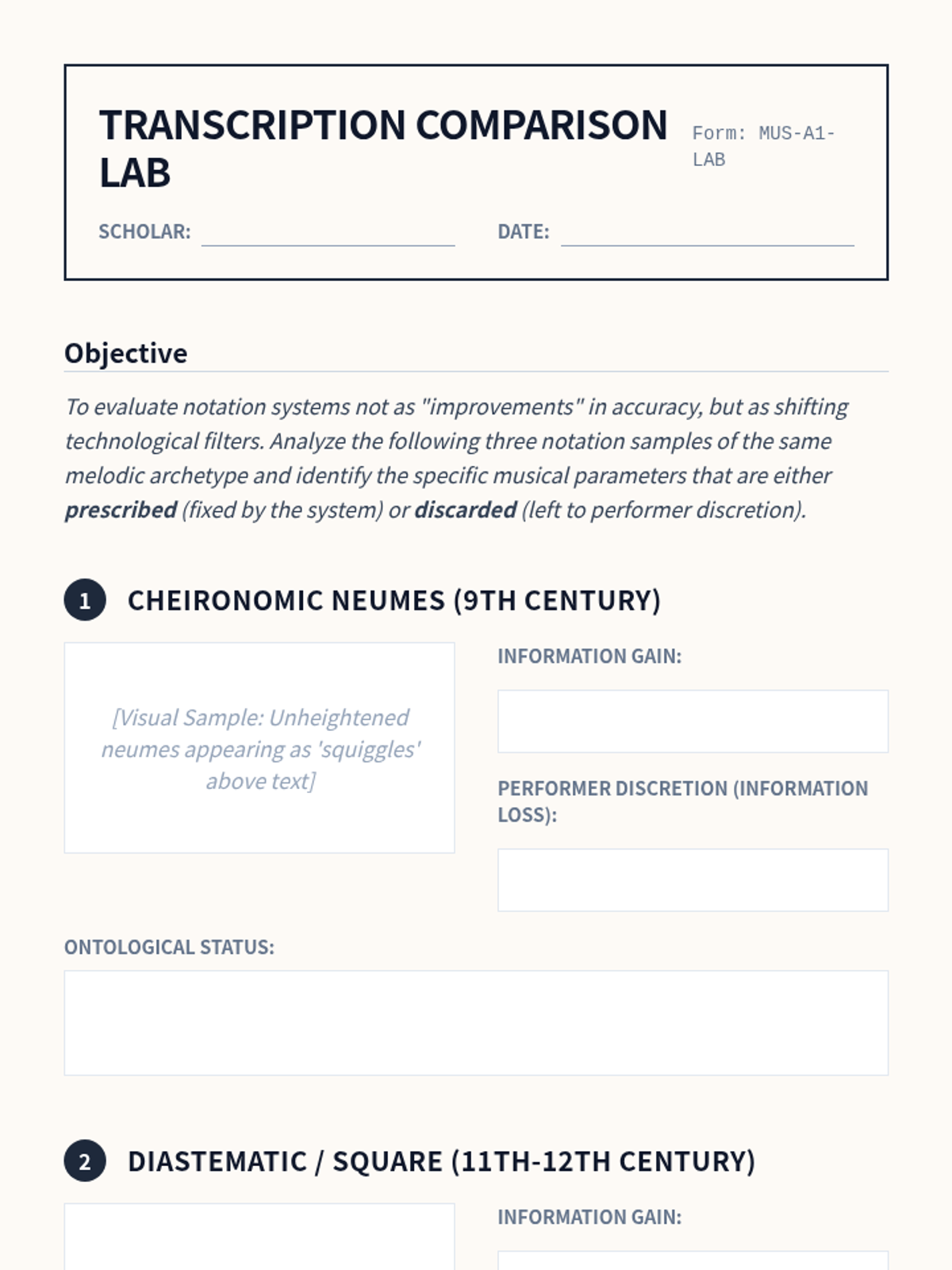
A graduate-level lab worksheet for analyzing the prescriptive power and information loss across historical notation systems.
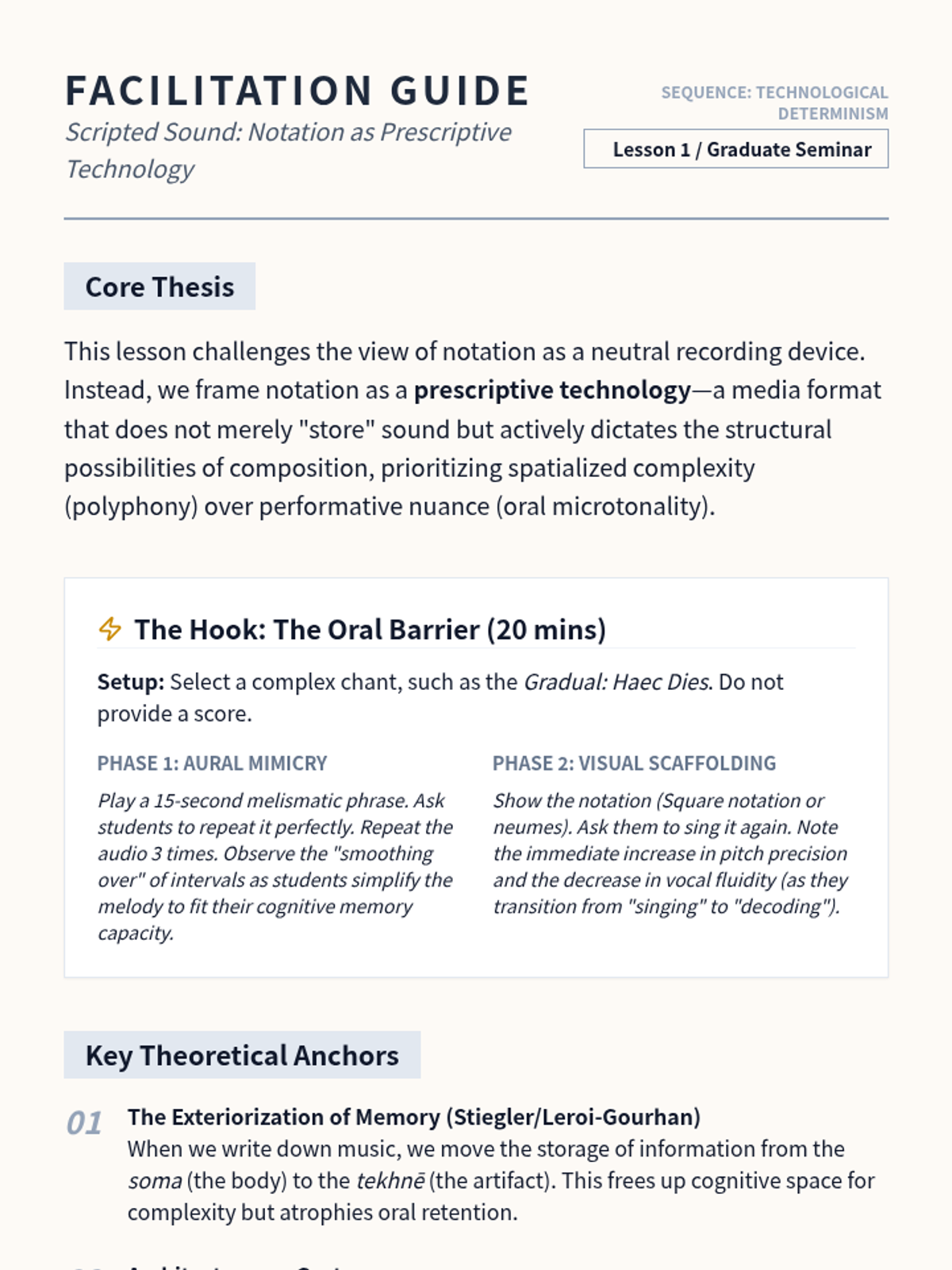
A facilitation guide for graduate instructors focusing on the theoretical implications of notation as a media technology.
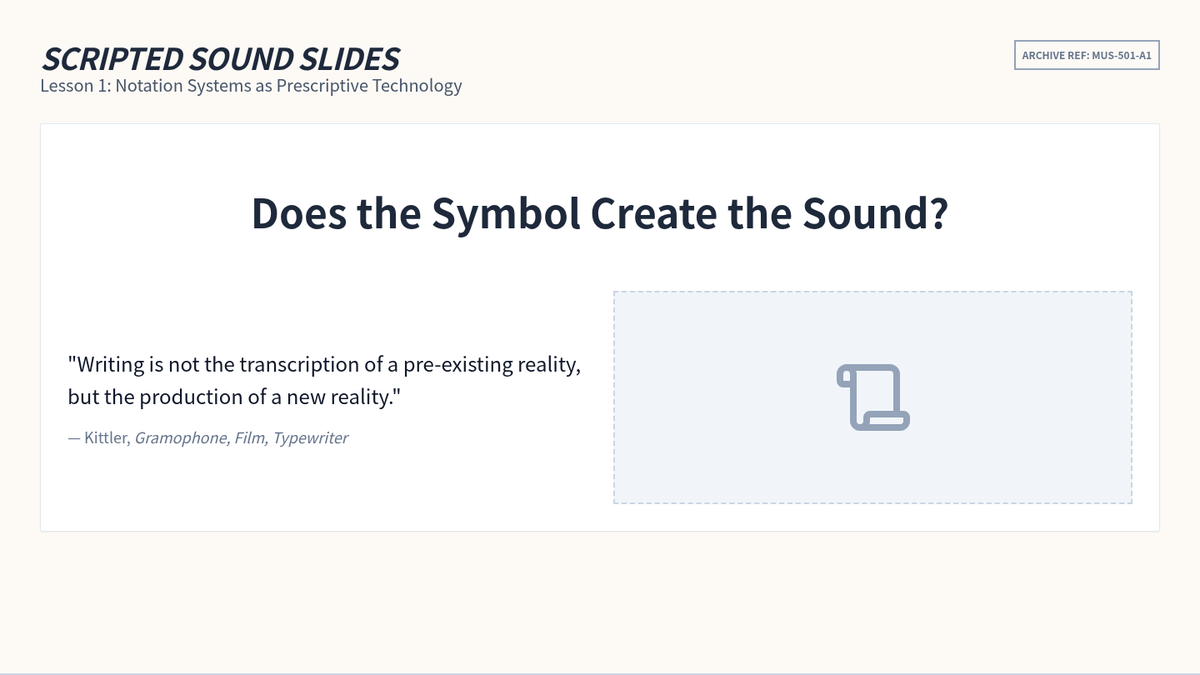
A graduate-level slide deck exploring notation as a prescriptive technology, moving from oral traditions to the architectural complexity of polyphony.
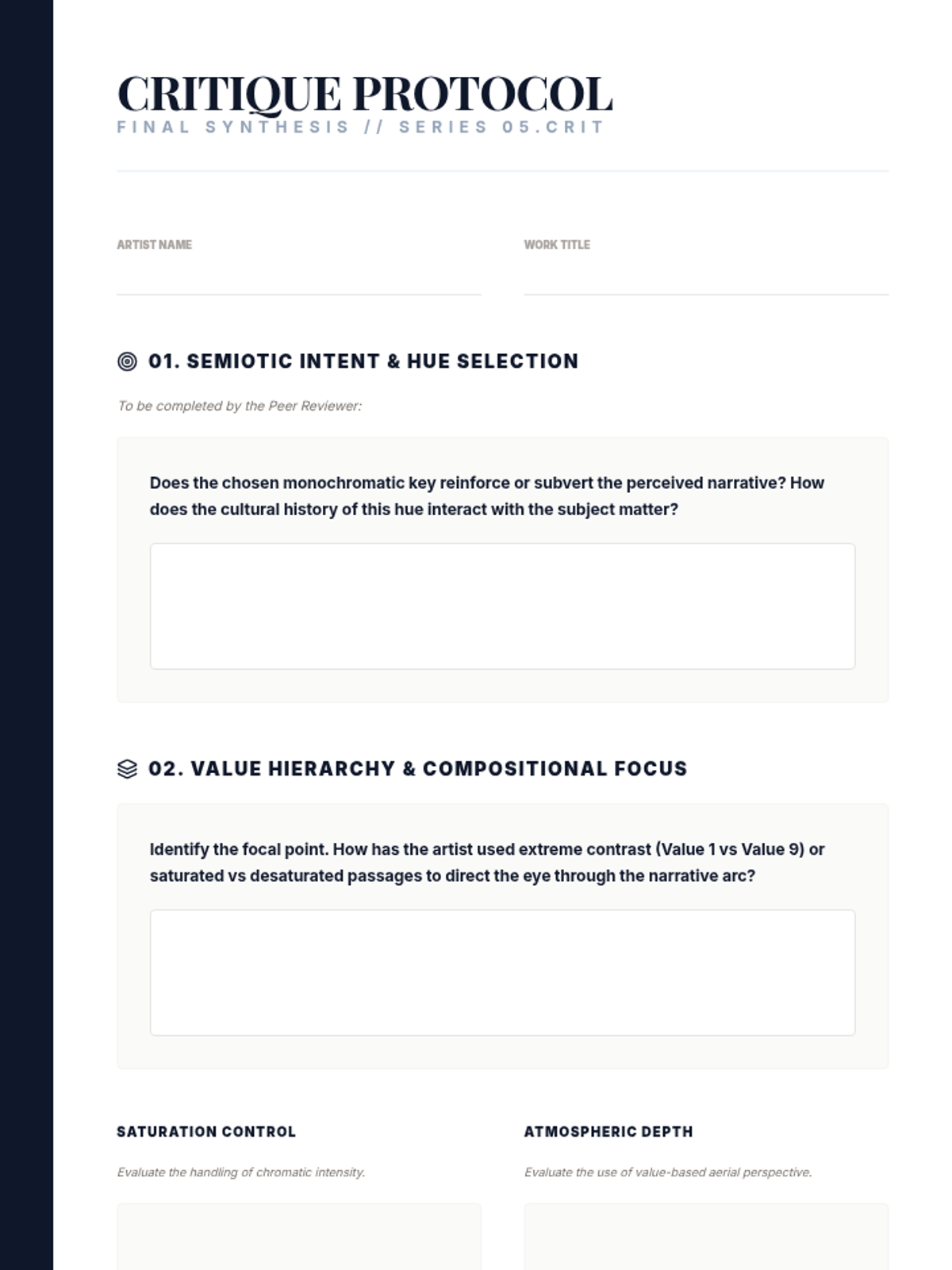
A structured peer critique protocol for graduate students to evaluate monochromatic narrative paintings, focusing on semiotic intent, value hierarchy, and narrative resonance.
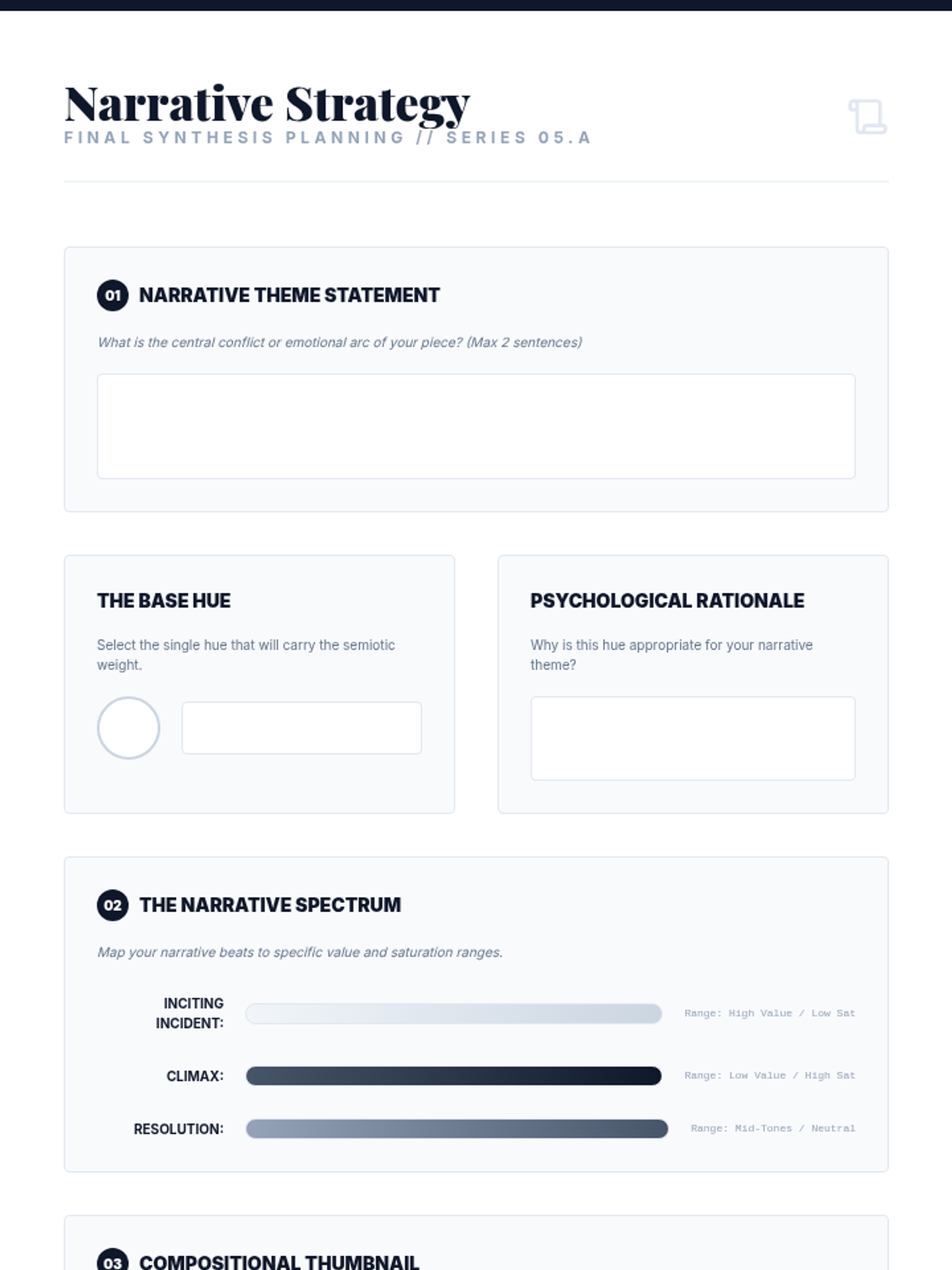
A strategy worksheet for graduate students to plan their final monochromatic painting, mapping narrative beats to specific value and saturation ranges within a single-hue palette.
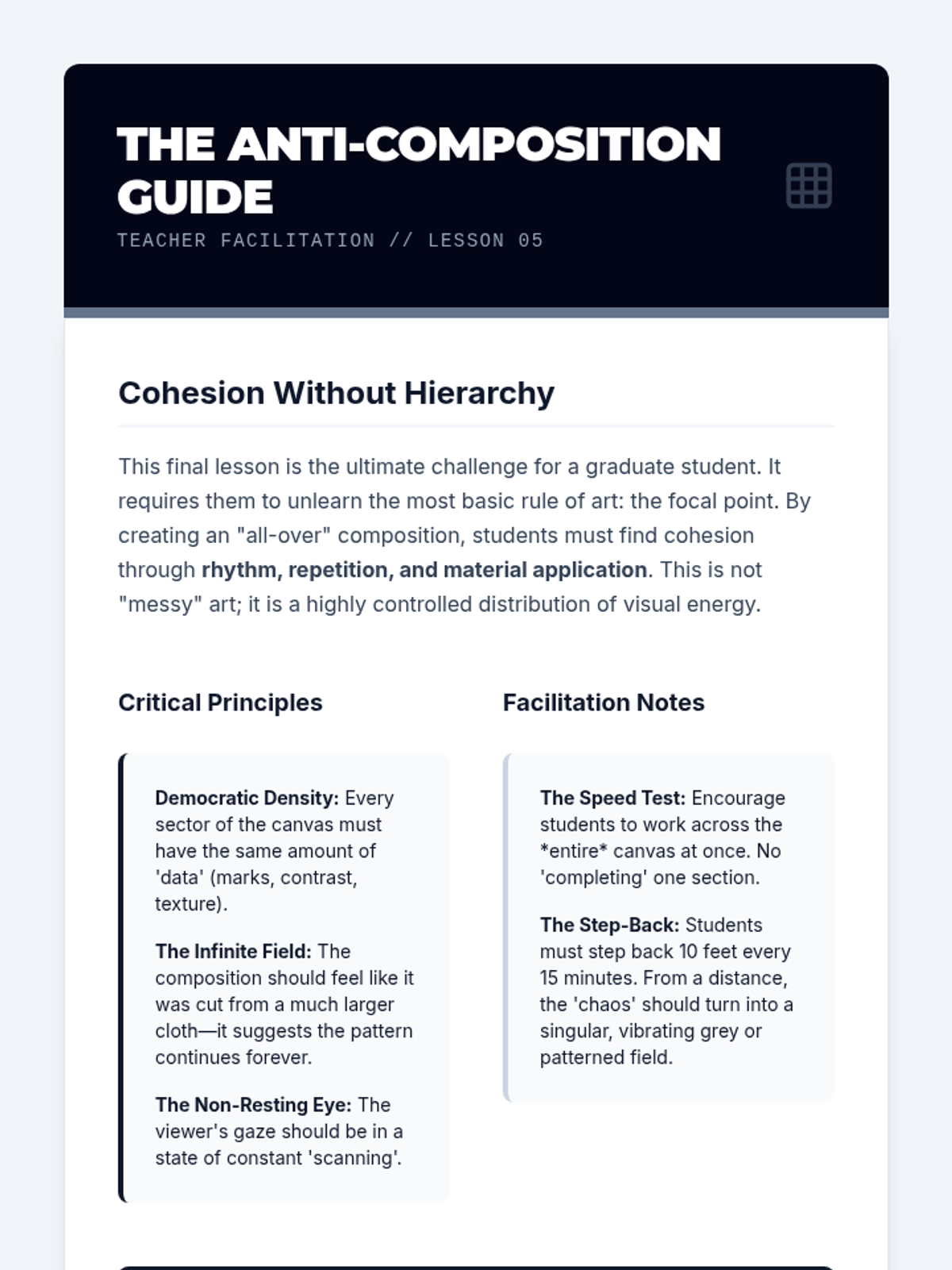
A facilitator guide for Lesson 5, focusing on teaching all-over compositions, rhythmic repetition, and final portfolio critique strategies for graduate-level art.
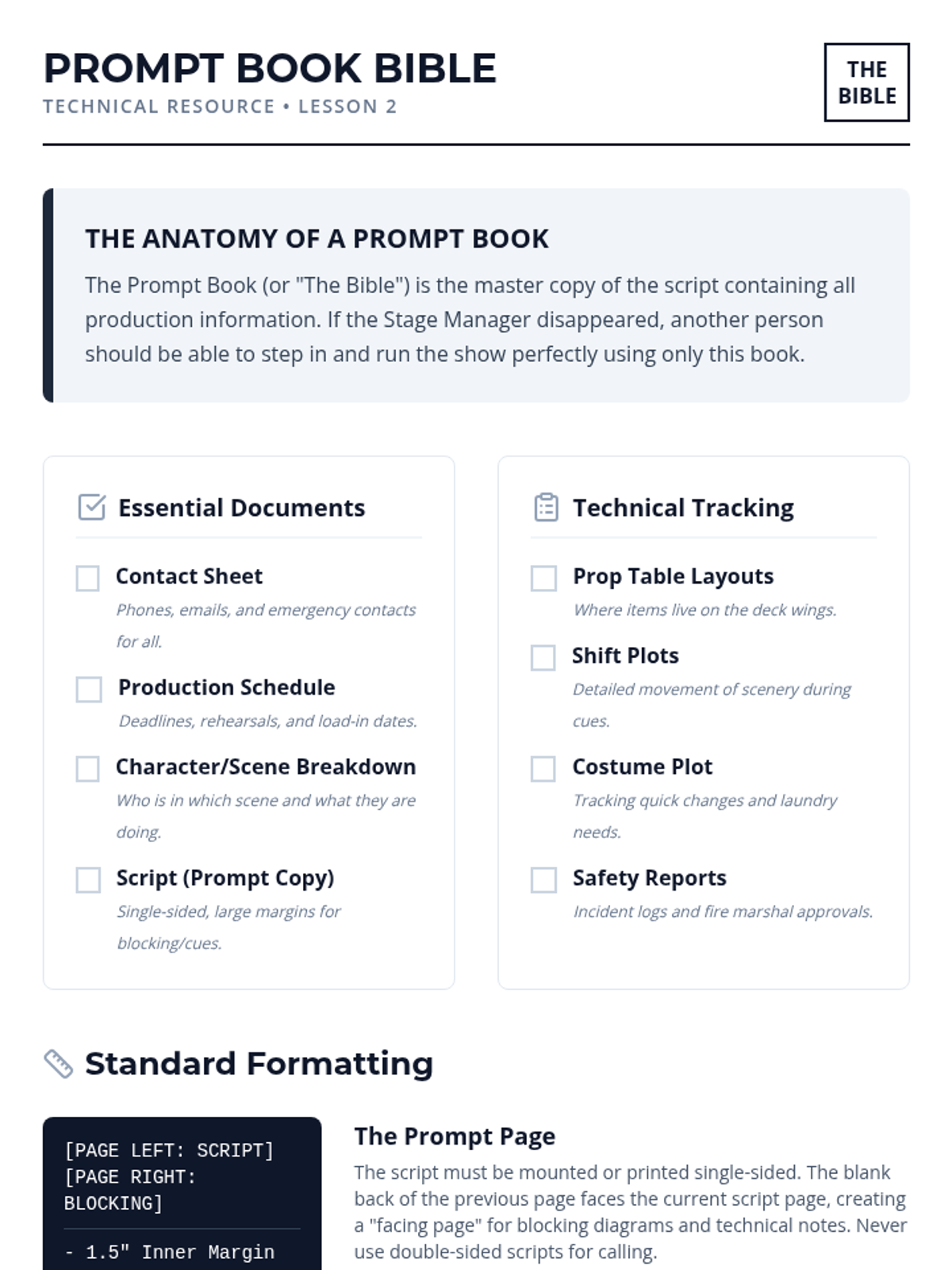
Instructional slides for Lesson 2, explaining the organizational structure, physical layout, and professional standards of a Stage Manager's Prompt Book.
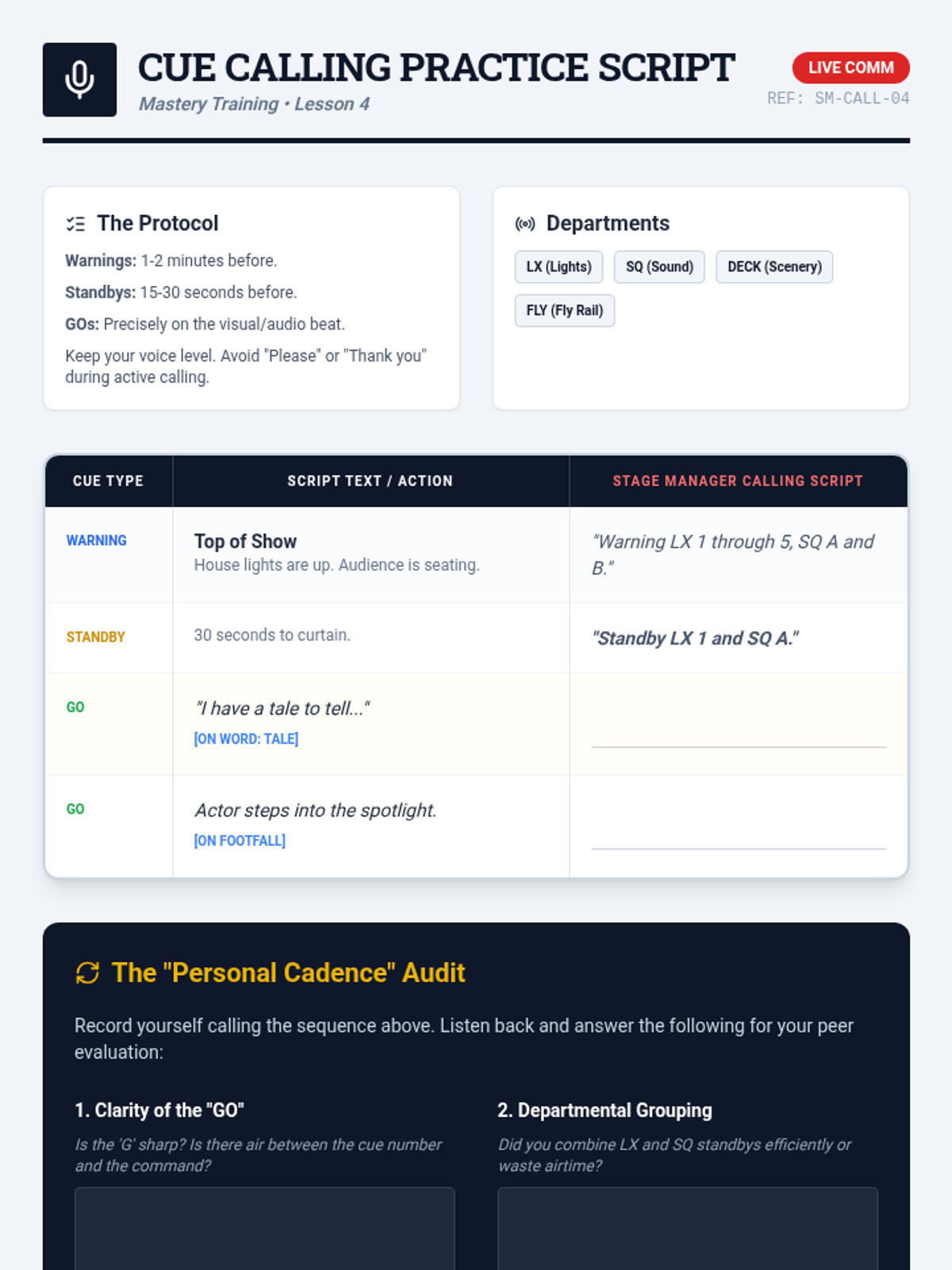
A practice script and evaluation worksheet for Lesson 4, allowing students to rehearse and refine their cue calling technique and cadence.
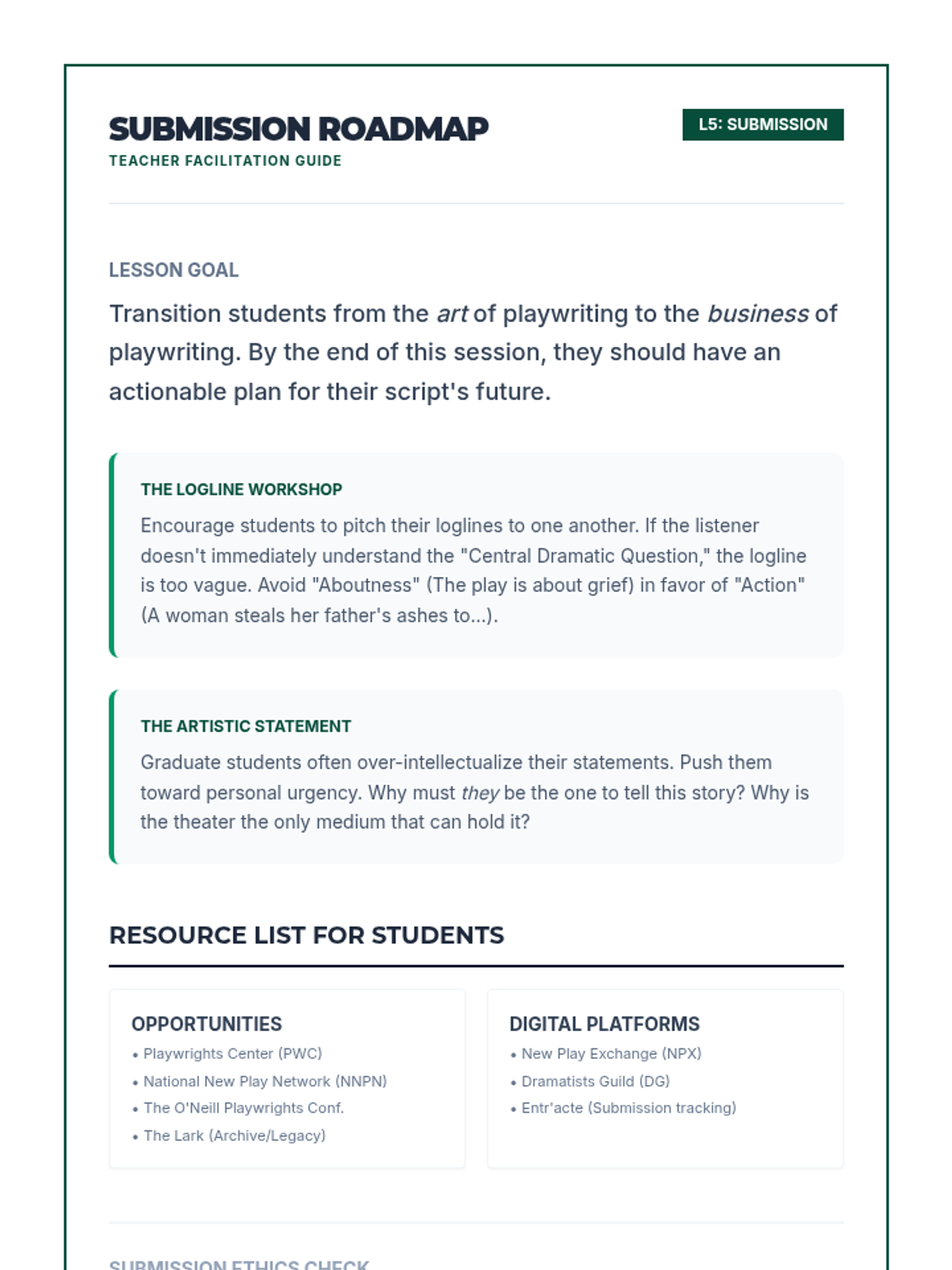
A guide for teachers to facilitate the final lesson on submission packages, including logline workshop strategies, resource lists, and submission etiquette.
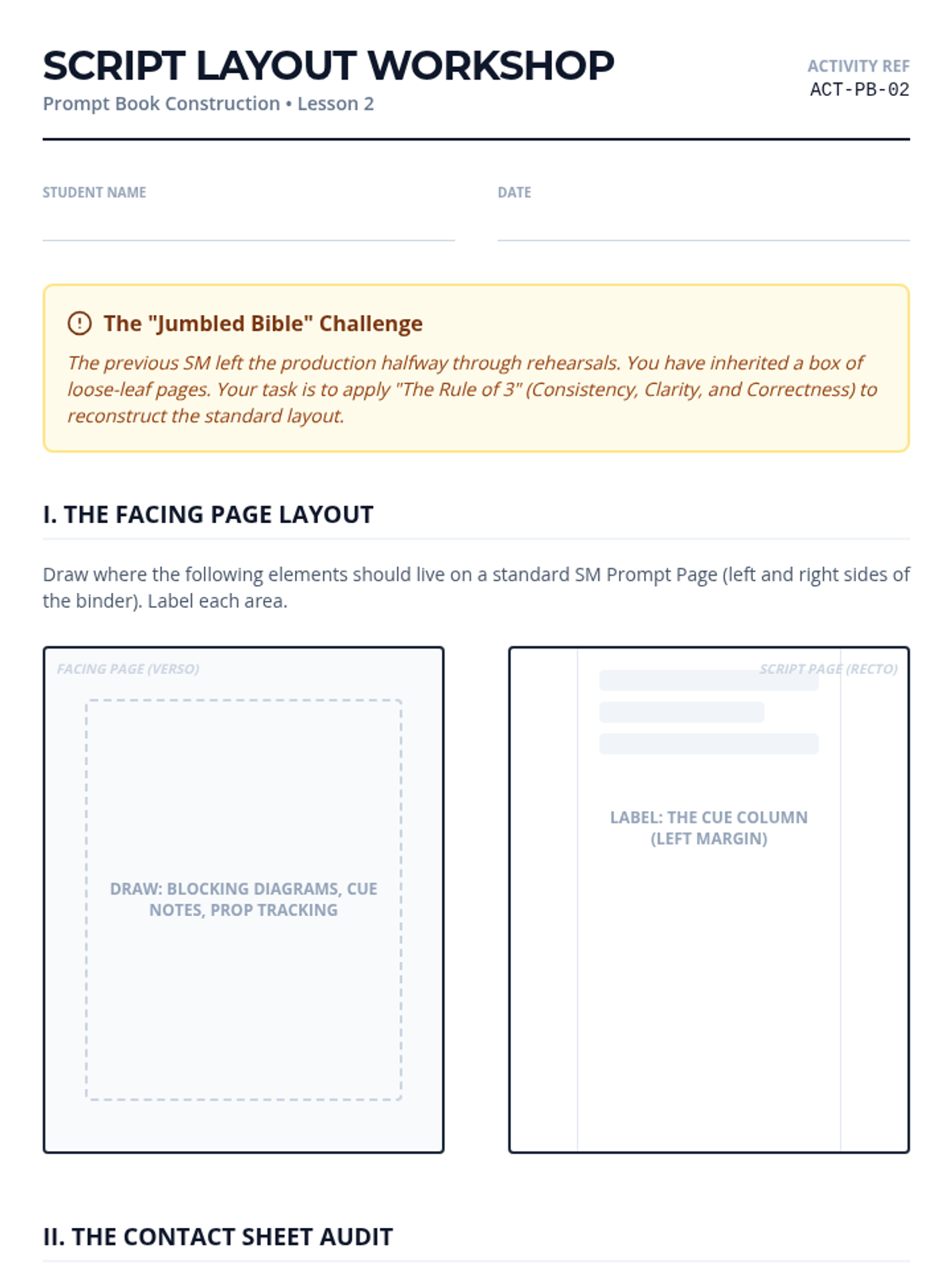
A workshop activity for Lesson 2 where students practice prompt book layout design and audit production contact sheets for professionalism and completeness.
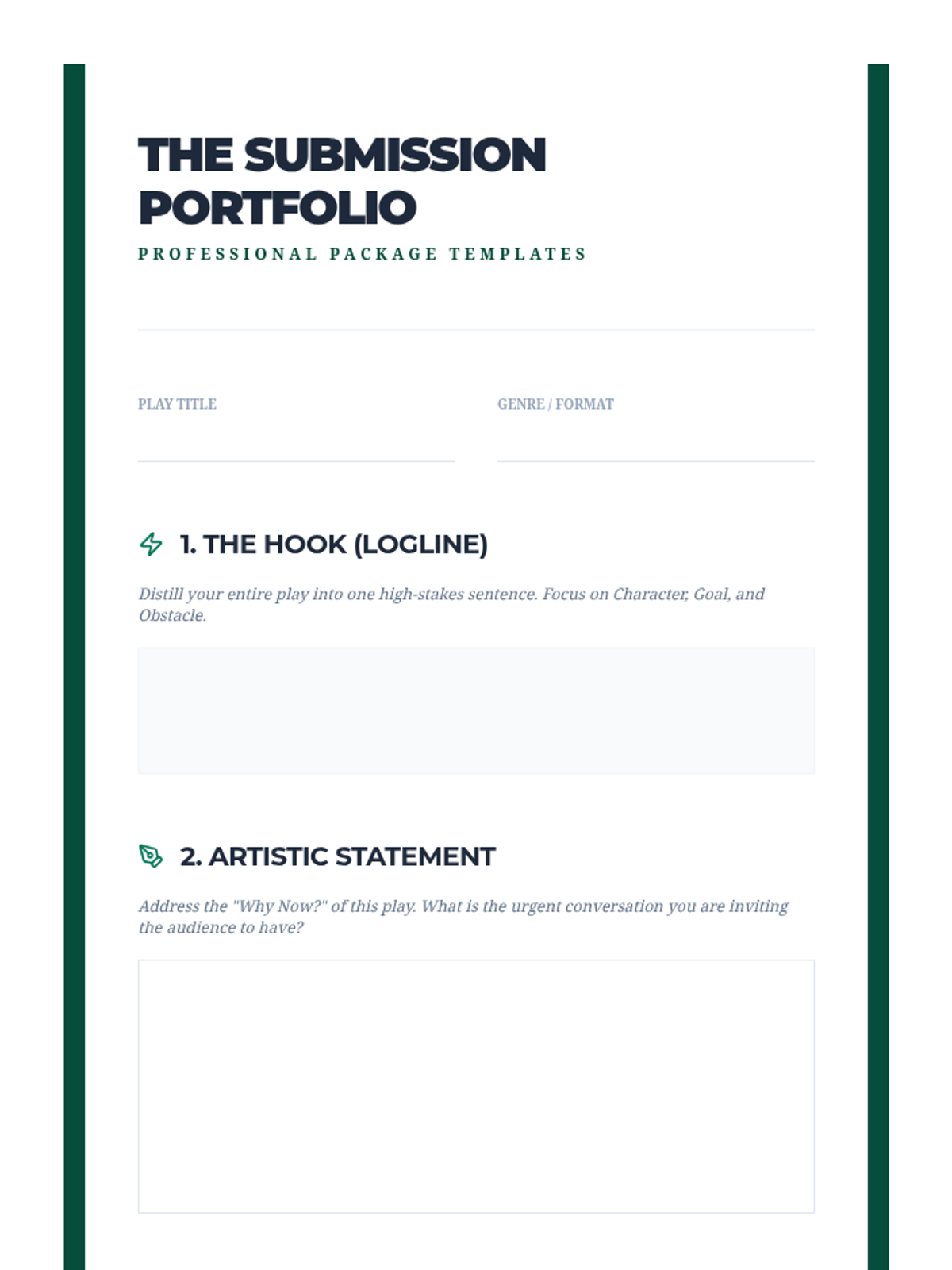
A comprehensive template for graduate students to draft their professional submission package, including space for a logline, artistic statement, synopsis, and submission roadmap.
Final slide deck for Lesson 5, focusing on building a professional submission package, writing effective loglines, and strategizing industry outreach.
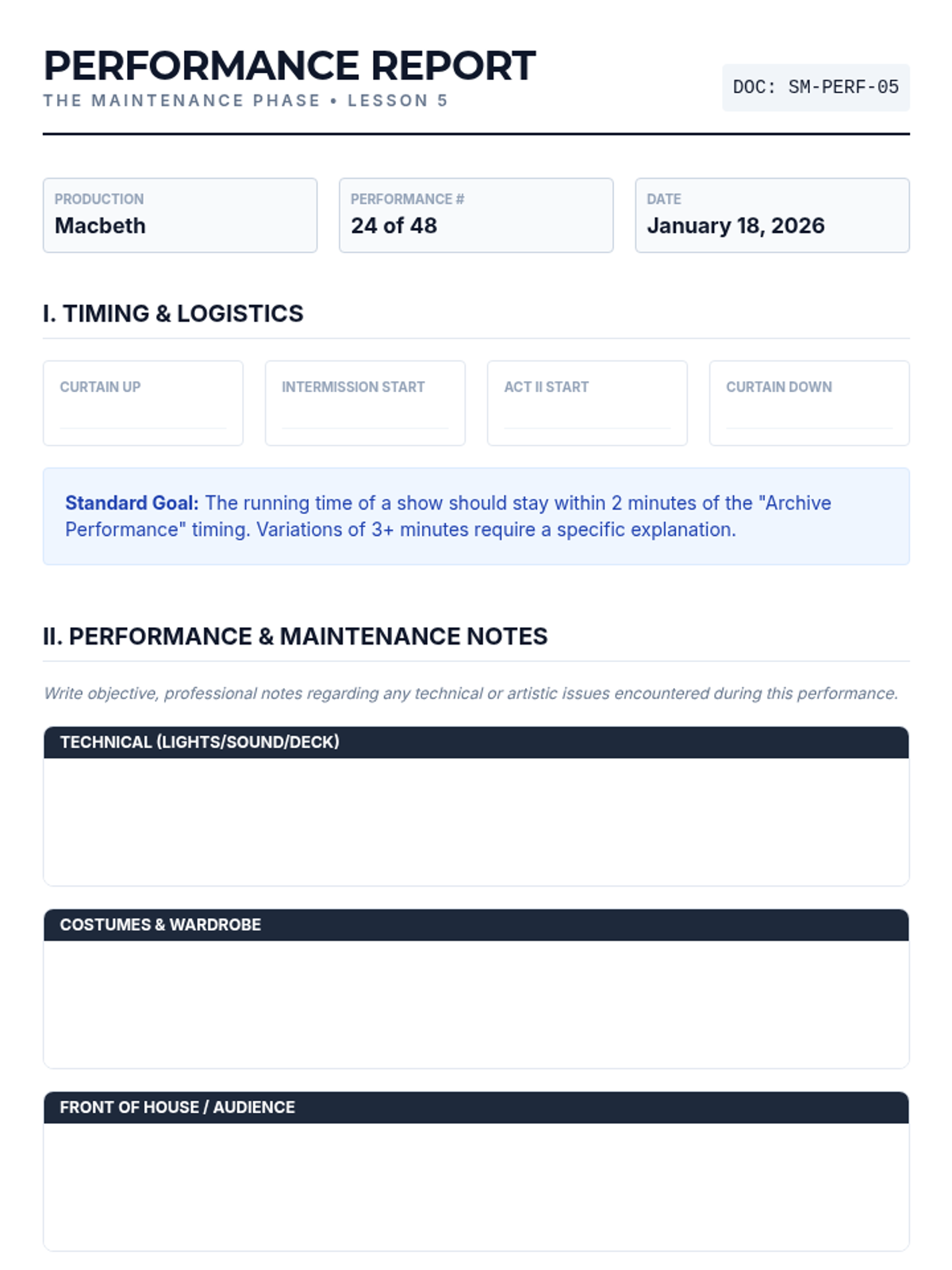
A worksheet for Lesson 5 where students practice writing professional performance reports and analyze a case study on maintaining artistic integrity during a production run.
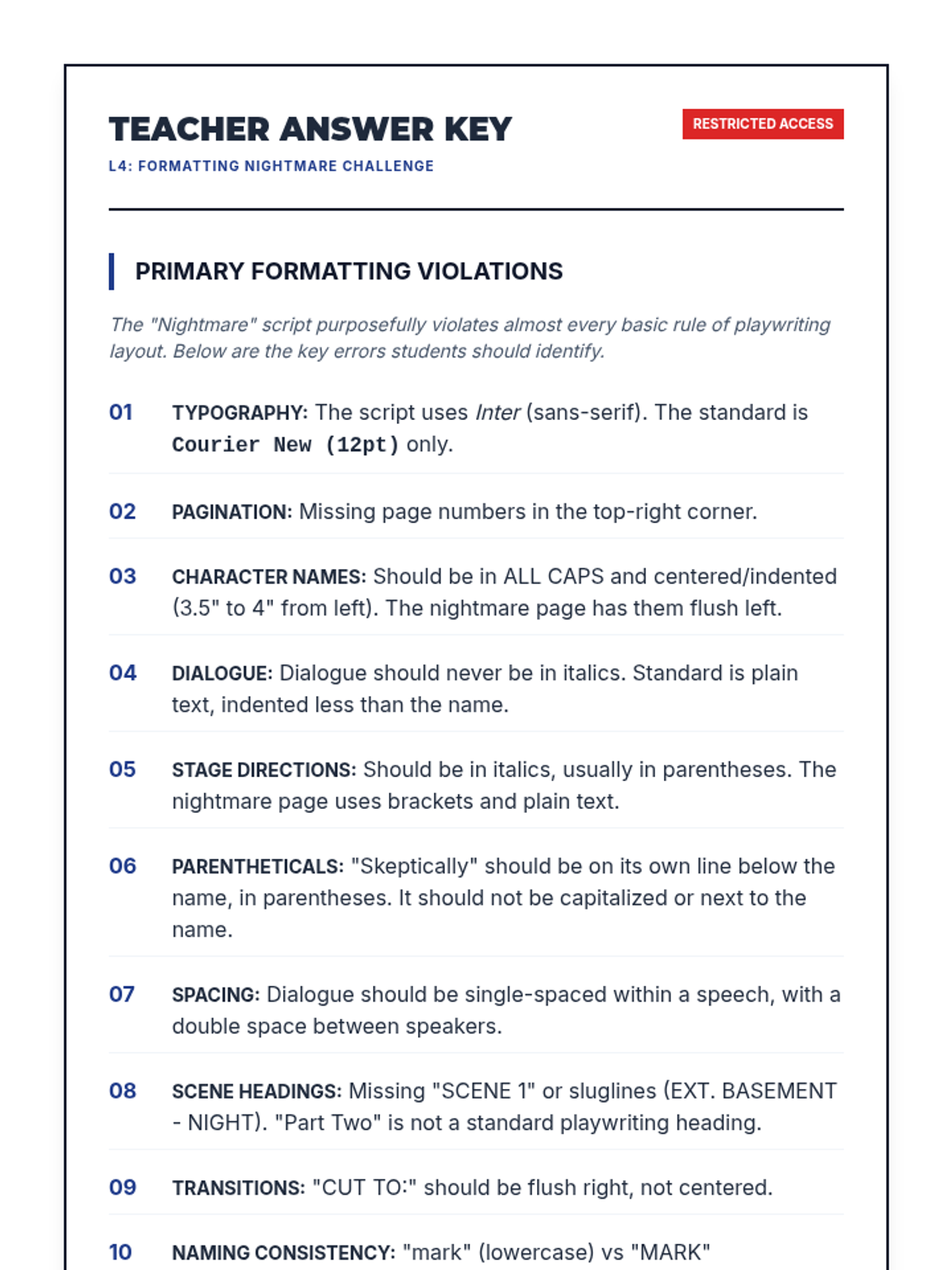
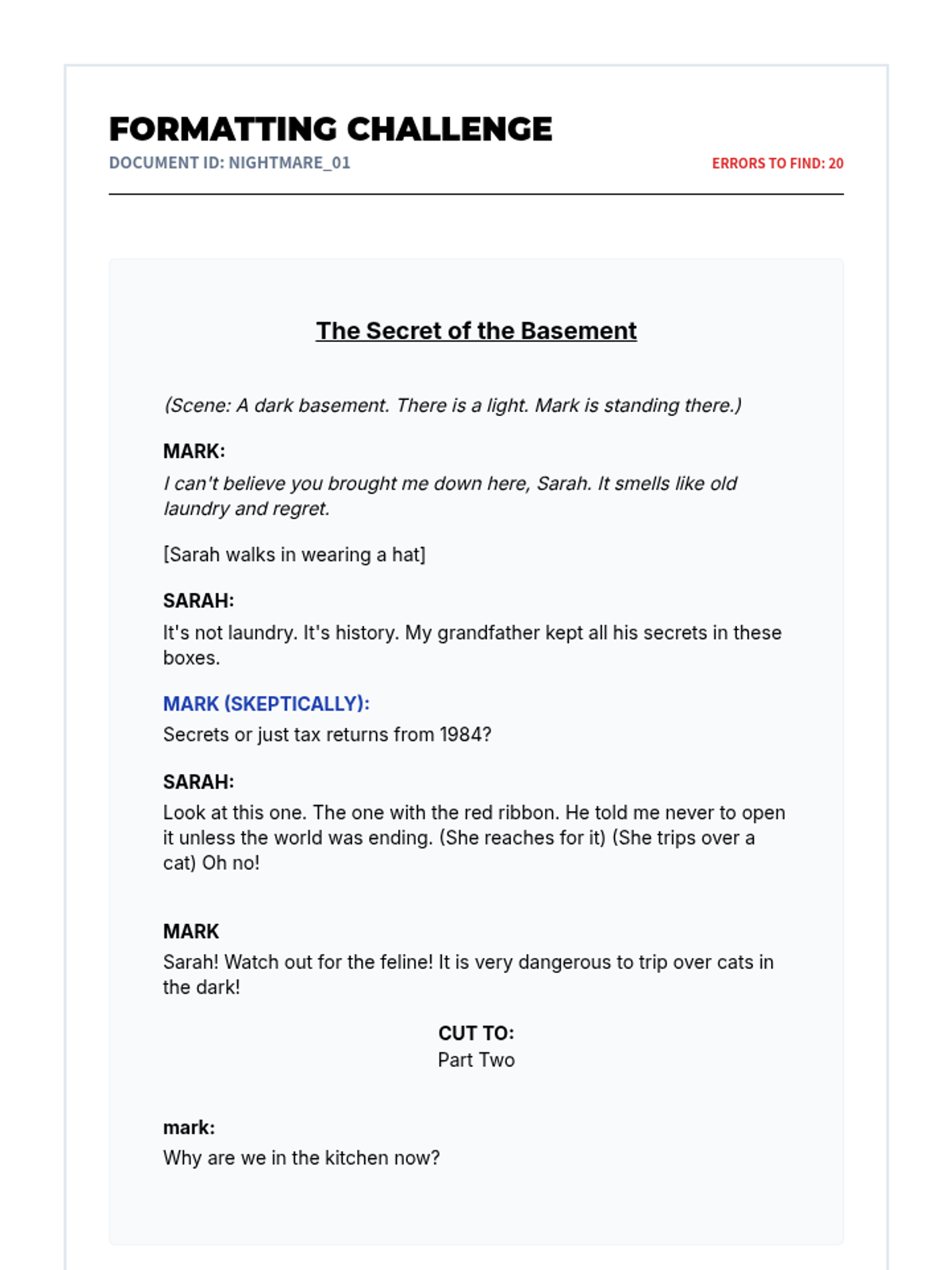
Teacher's answer key for the Formatting Nightmare Challenge, identifying the 20 technical errors and explaining the professional standards from the Dramatists Guild.
Instructional slides for Lesson 4, teaching the formal three-phase structure of cue calling (Warning, Stand By, GO) and the professional etiquette of headset communication.
A 'nightmare' script page for Lesson 4 that students must audit for 20 common formatting errors, applying Dramatists Guild standards to correct them.
Educational slides for Lesson 4 on industry-standard script formatting, covering Courier New 12pt, character indentation, and the difference between submission and acting editions.
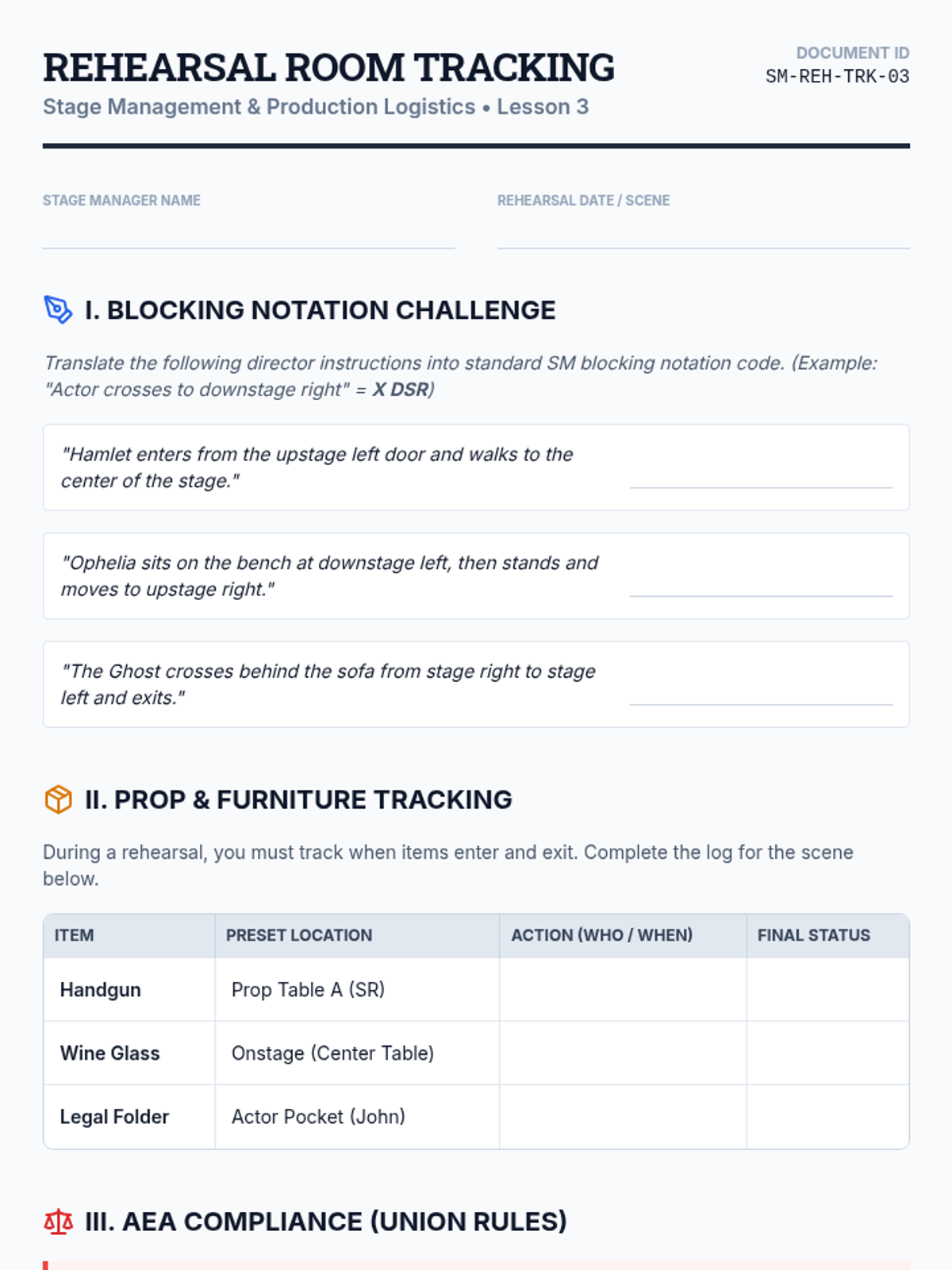
A worksheet for Lesson 3 focusing on blocking notation, prop tracking, and union regulation compliance (AEA) in the rehearsal room.
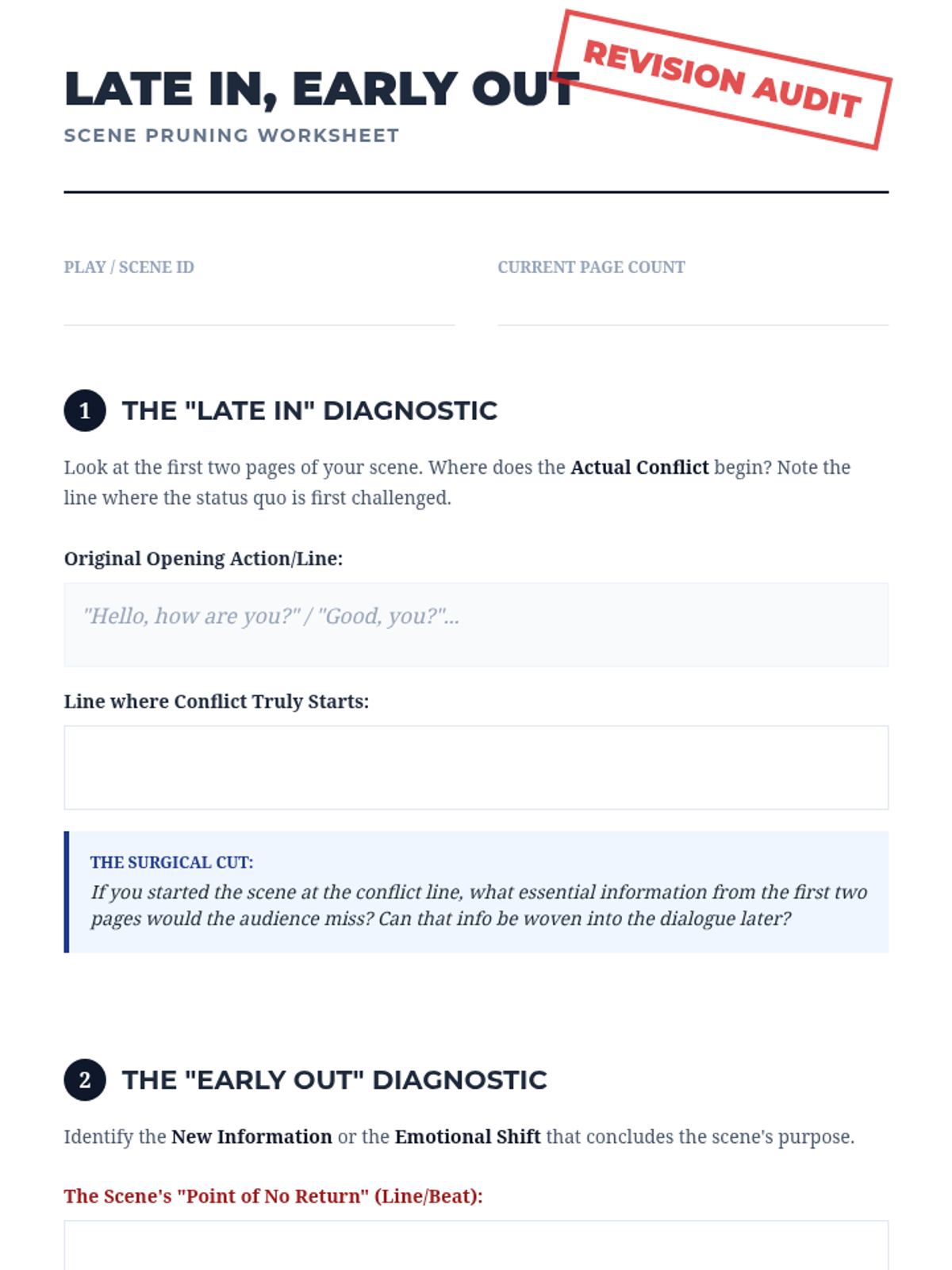
A technical revision worksheet for students to audit their scenes for 'late in, early out' opportunities, helping them identify and cut unnecessary exposition and resolution.
A reference checklist and formatting guide for Lesson 2, outlining the essential components of a professional Stage Manager's Prompt Book.
Slides for Lesson 3 on script revision, covering the 20% rule, 'late in, early out' techniques, and character consolidation strategies.
Introductory slides for Lesson 1, covering the multifaceted role of the Stage Manager, production hierarchy, and the strategic importance of the SM Kit.
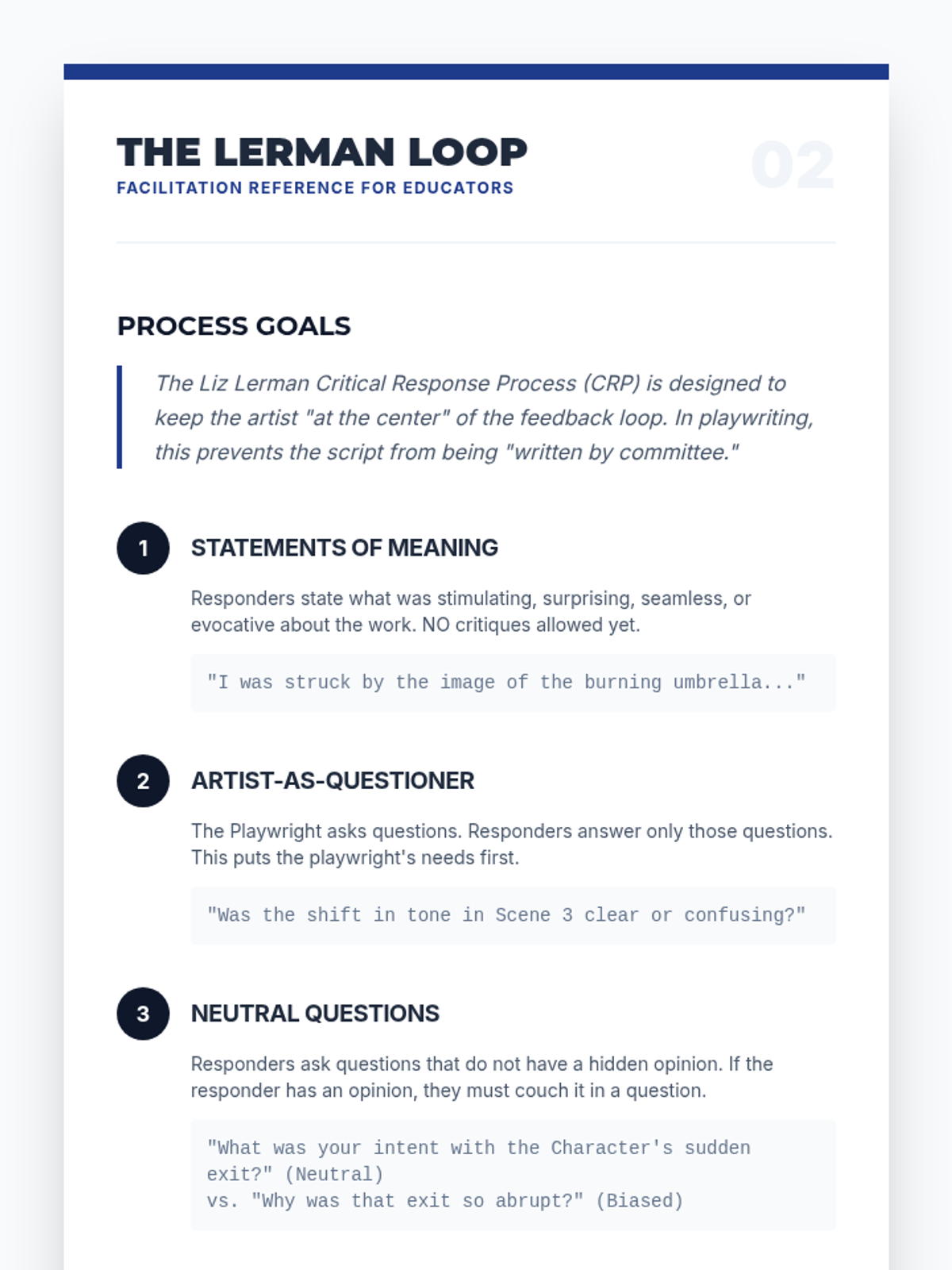
A professional summary of the Liz Lerman Critical Response Process for teacher use, including step-by-step facilitation instructions and tips for maintaining artist agency.
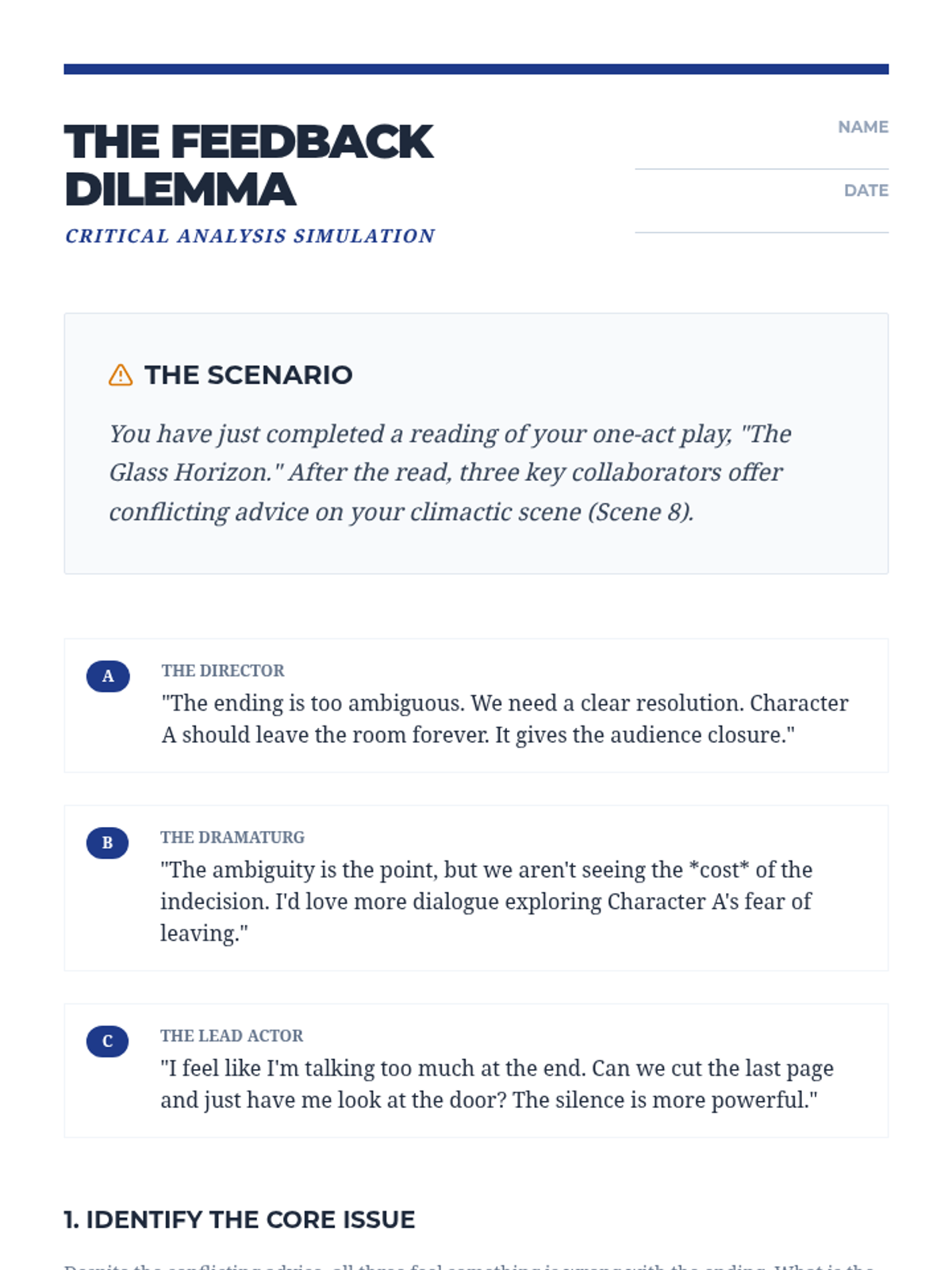
A simulation worksheet for Lesson 2 where students must analyze conflicting feedback from a director, dramaturg, and actor to determine their own revision path.
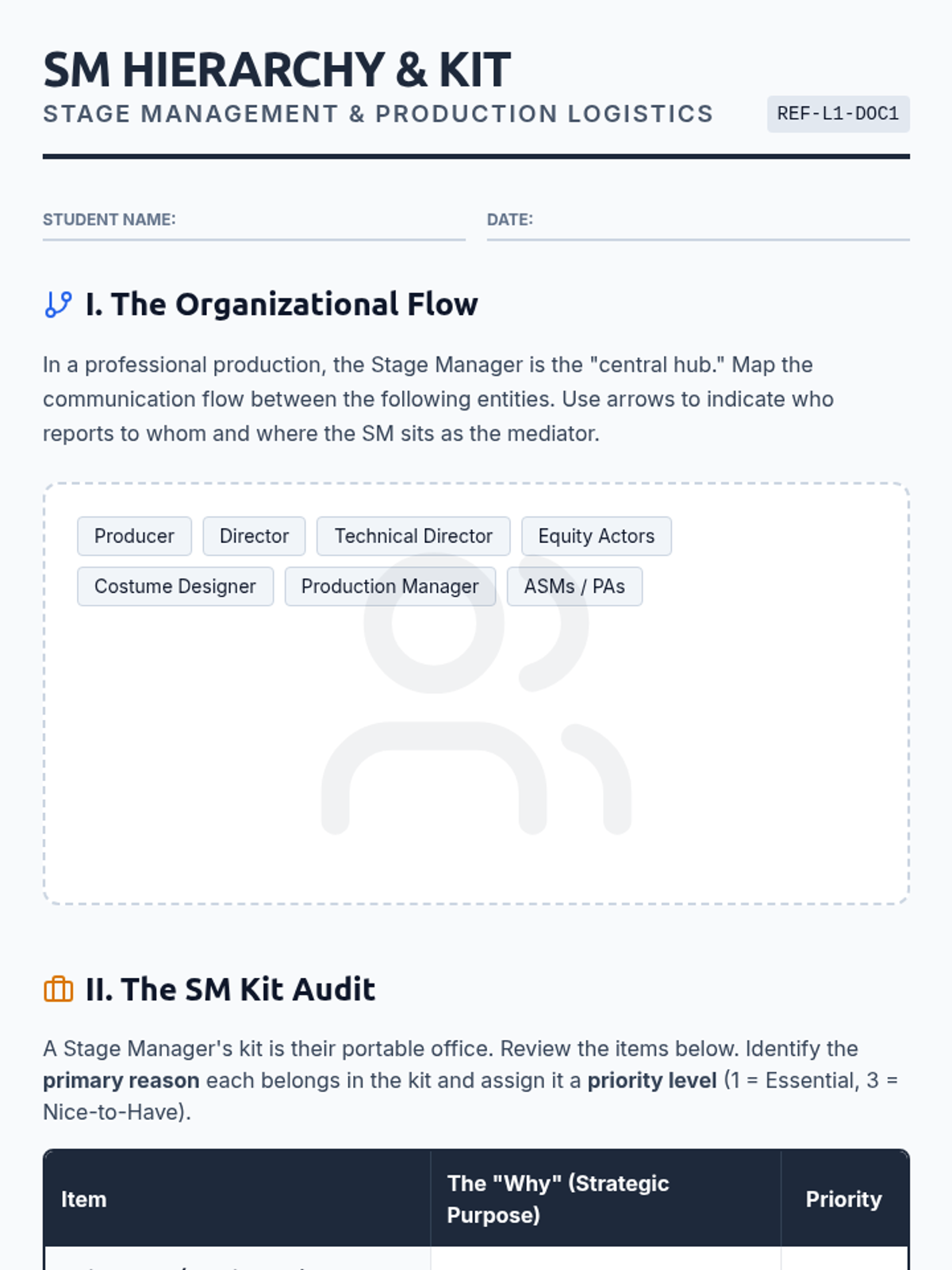
A worksheet for Lesson 1 where students map the organizational hierarchy of a theater production and audit the contents of a professional Stage Manager's kit.
Slide deck for Lesson 2 focusing on processing feedback using the Liz Lerman method, distinguishing between prescriptive and descriptive feedback, and managing conflicting advice.