Fundamental notation, instrumental proficiency, and vocal techniques across various genres. Connects historical analysis with original composition and creative performance skills.
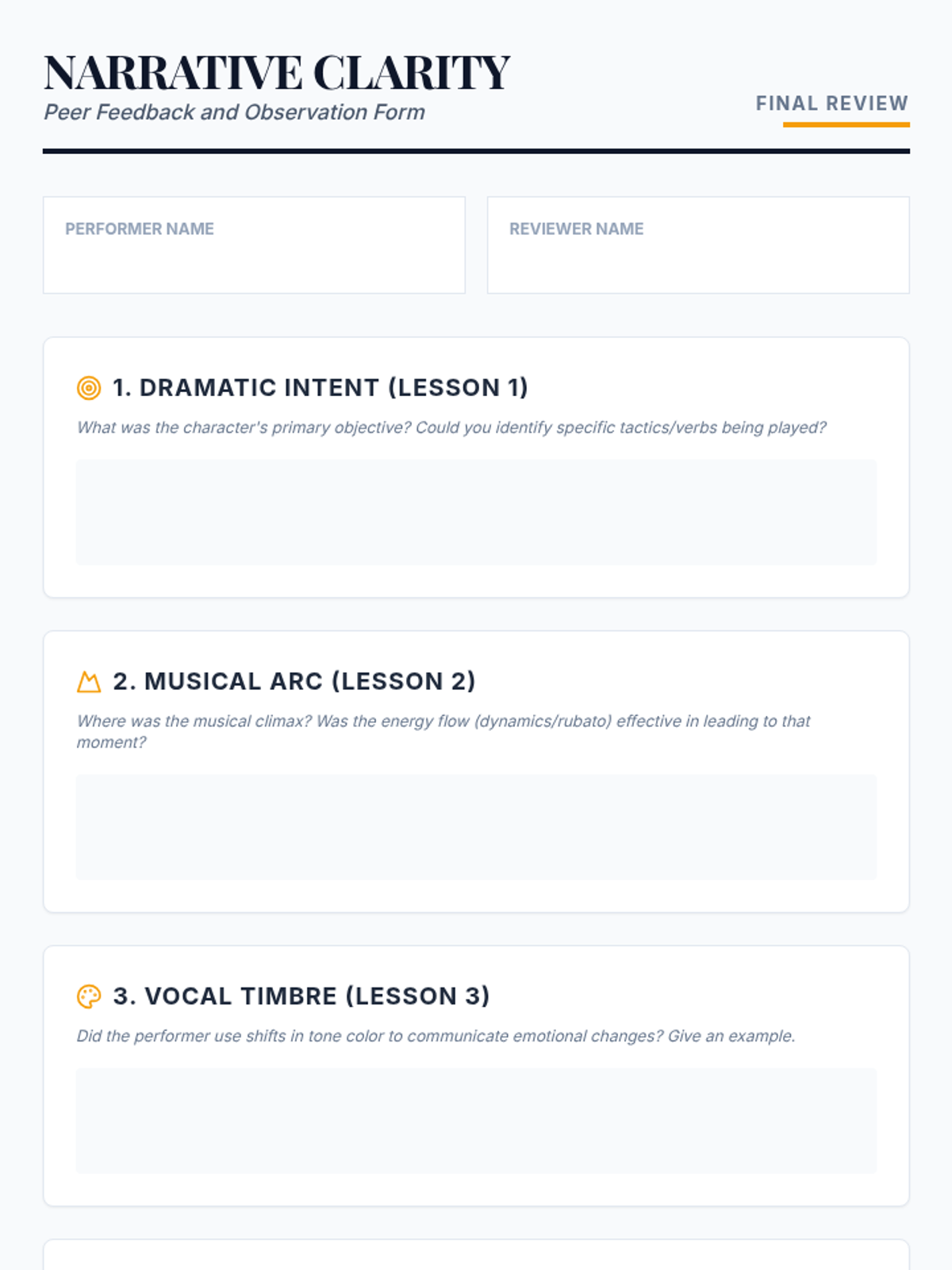
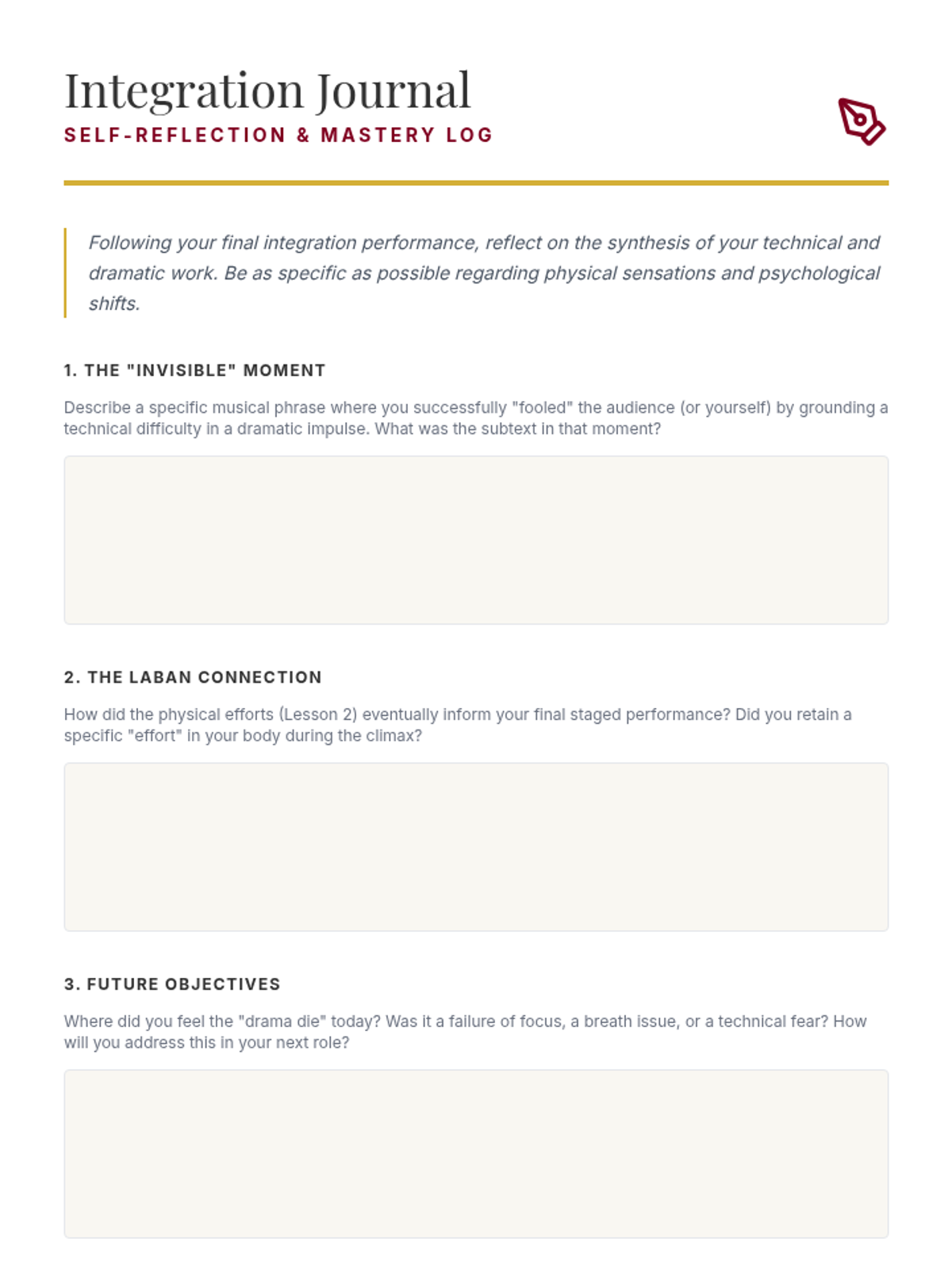
Students synthesize text analysis, phrasing, and historical context into a final performance, providing and receiving peer feedback on narrative clarity.
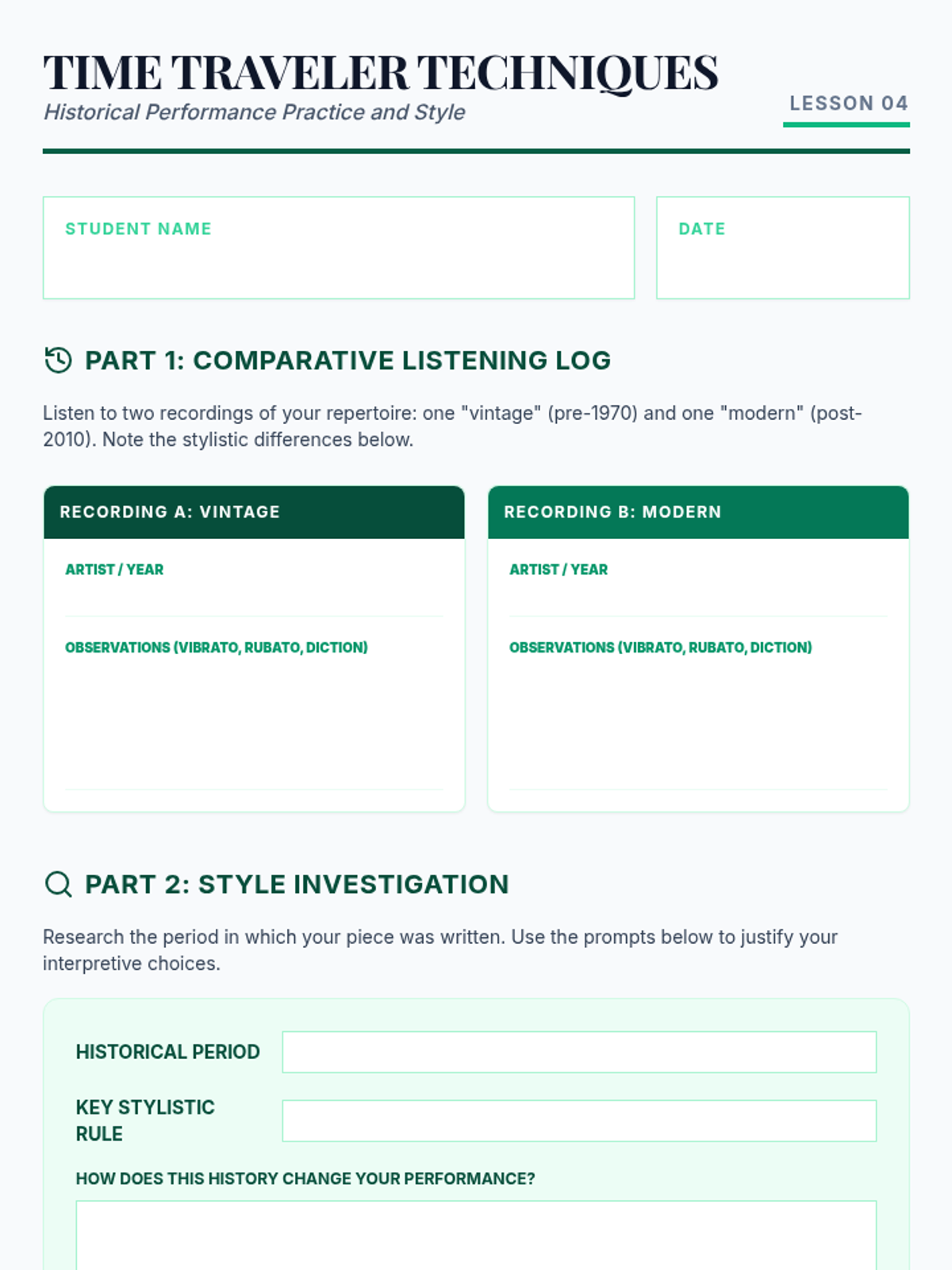
Students research the historical period and performance practices of their repertoire, comparing recordings to justify their interpretive choices.
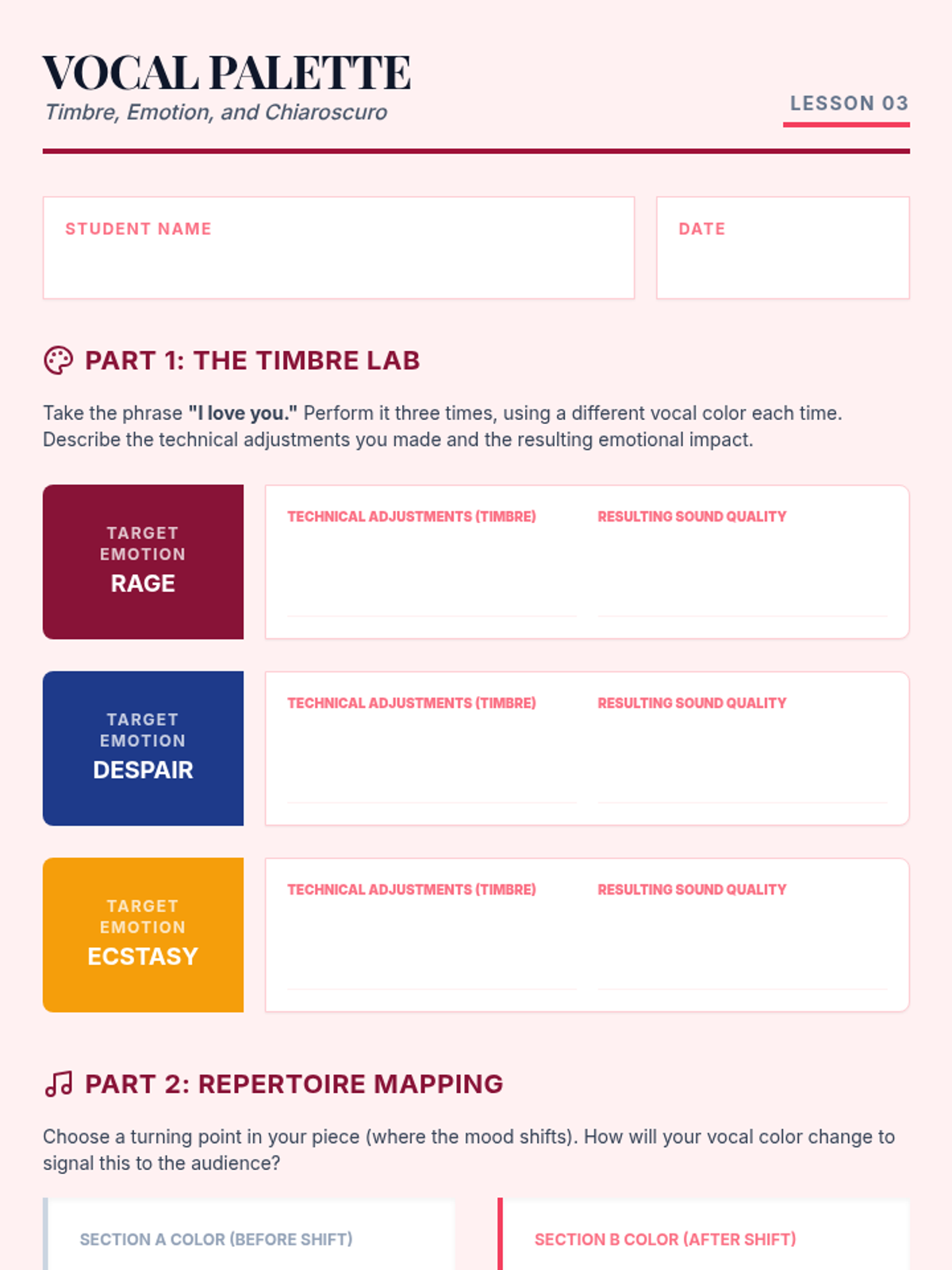
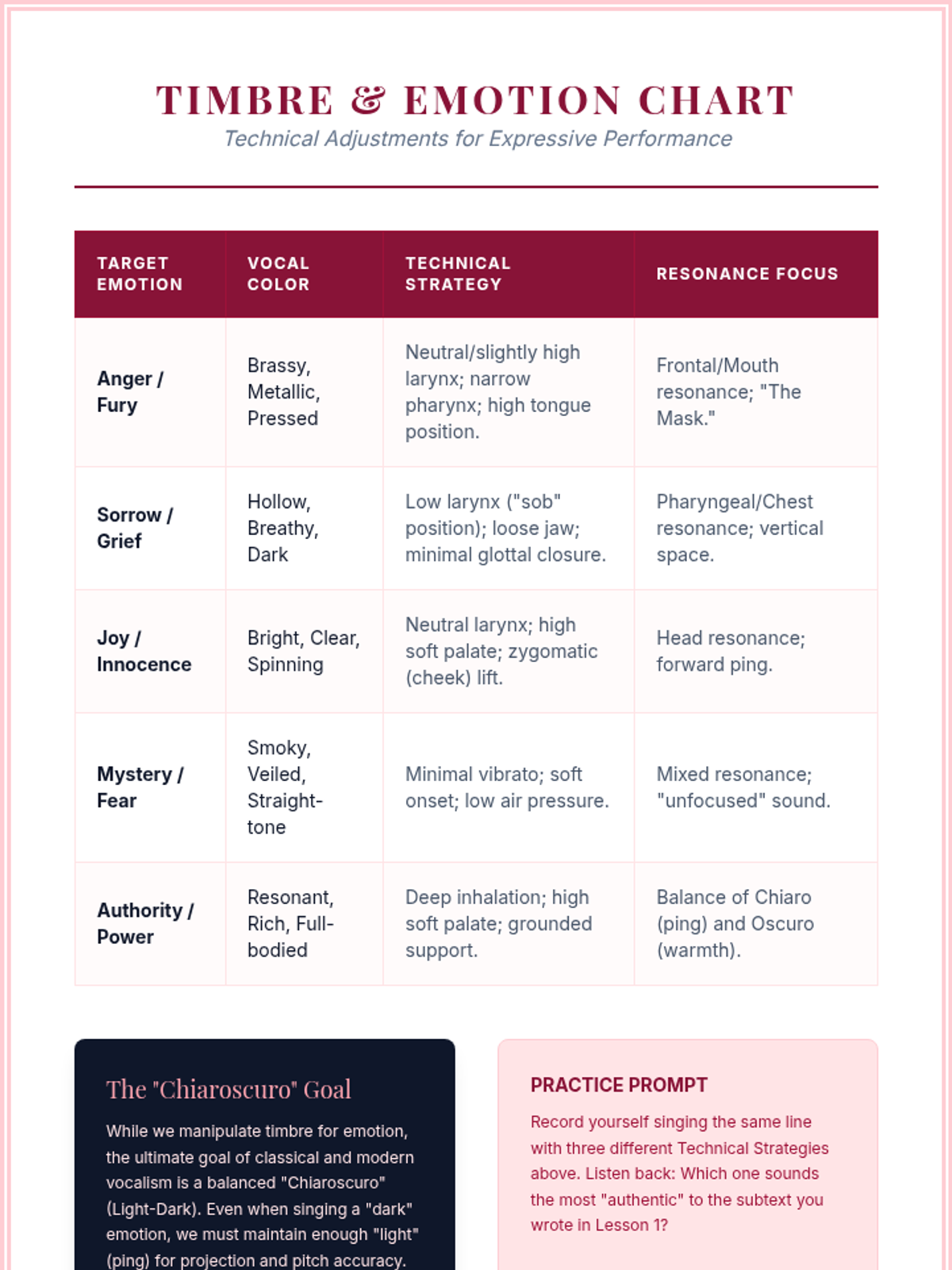
Students explore vocal timbre and color to convey emotion, learning to safely vary their sound to match the subtext of their repertoire.
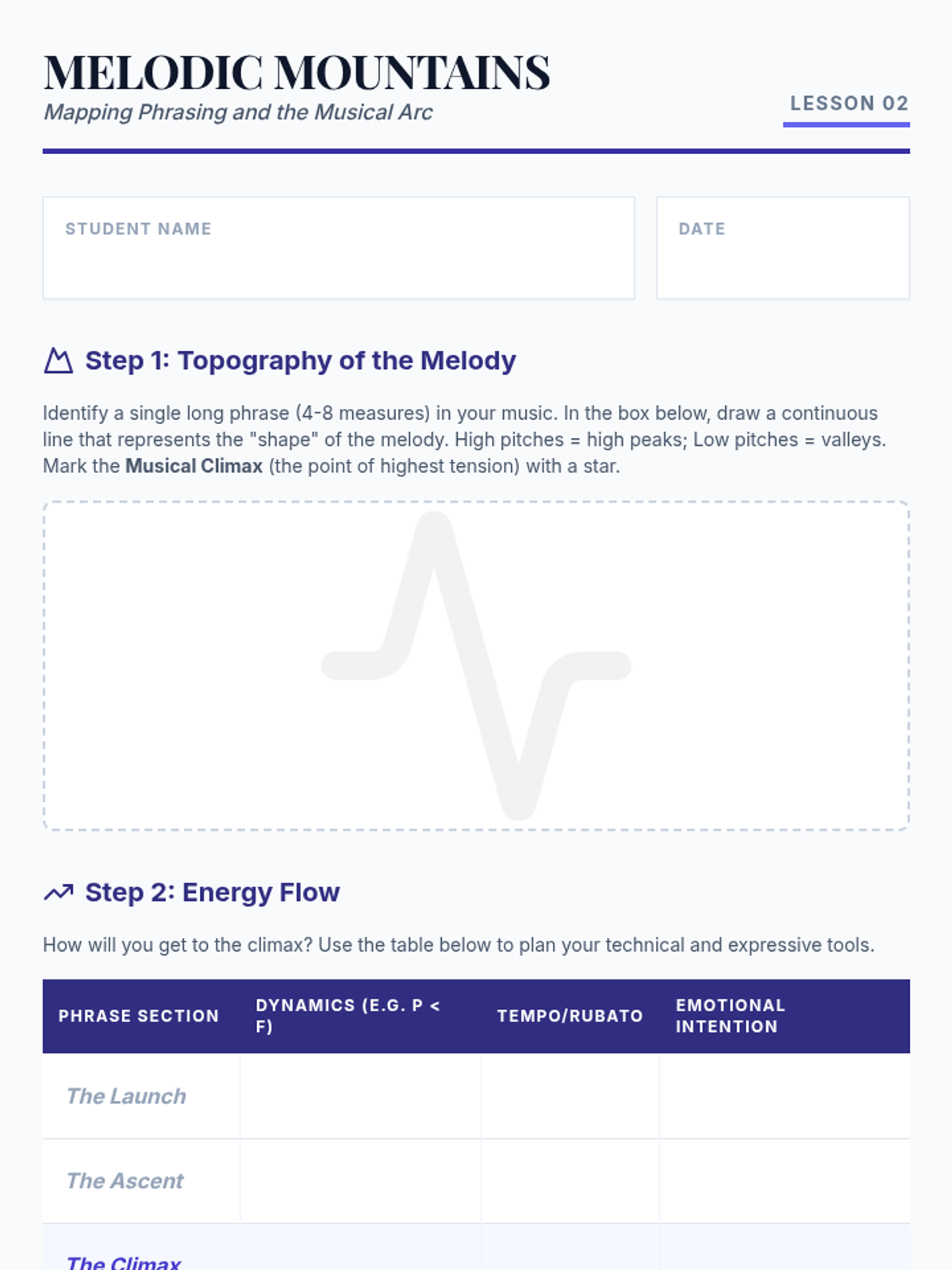
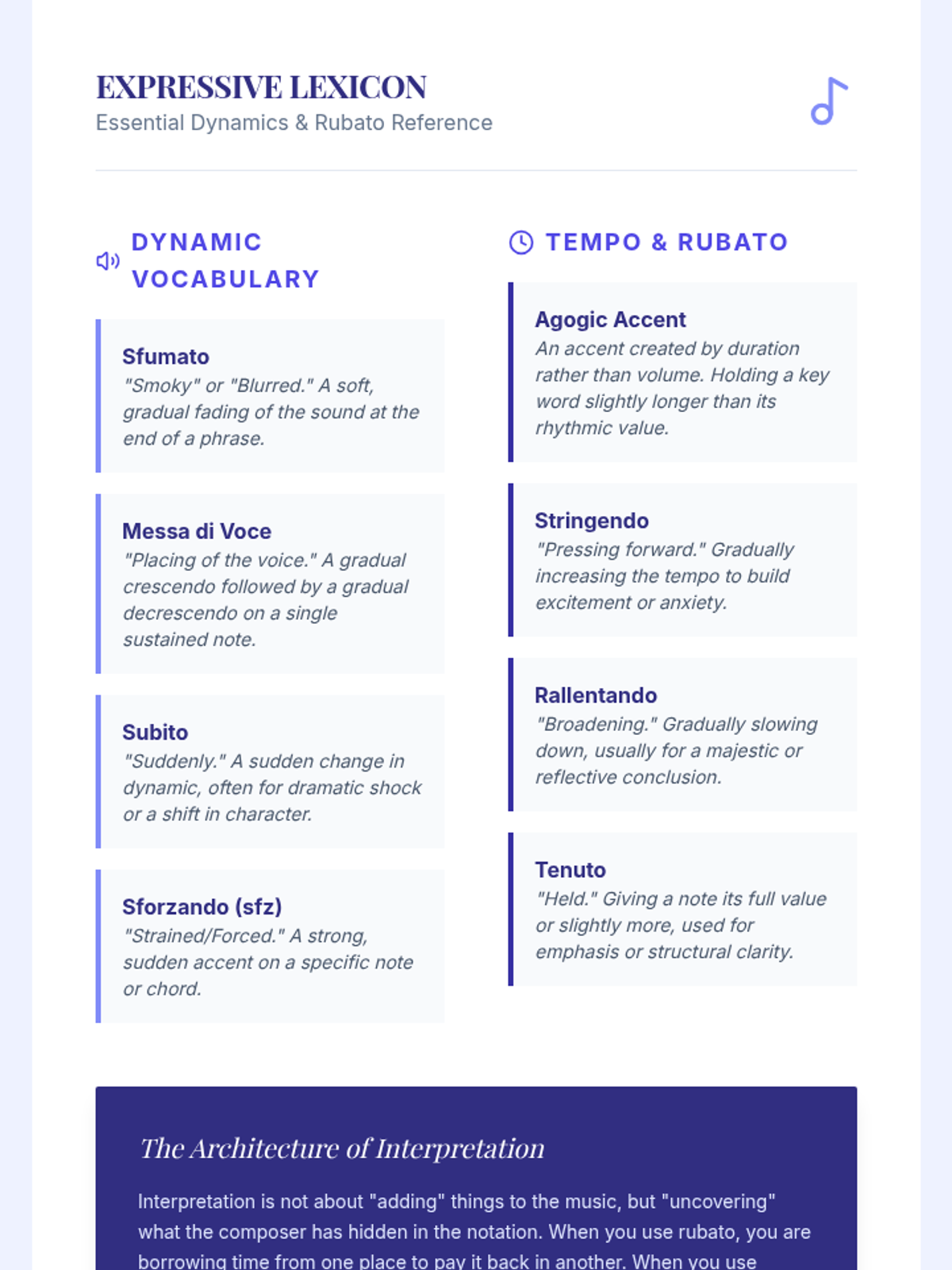
Students map the emotional and musical structure of their repertoire, identifying climaxes and planning dynamic/tempo choices to support the musical arc.
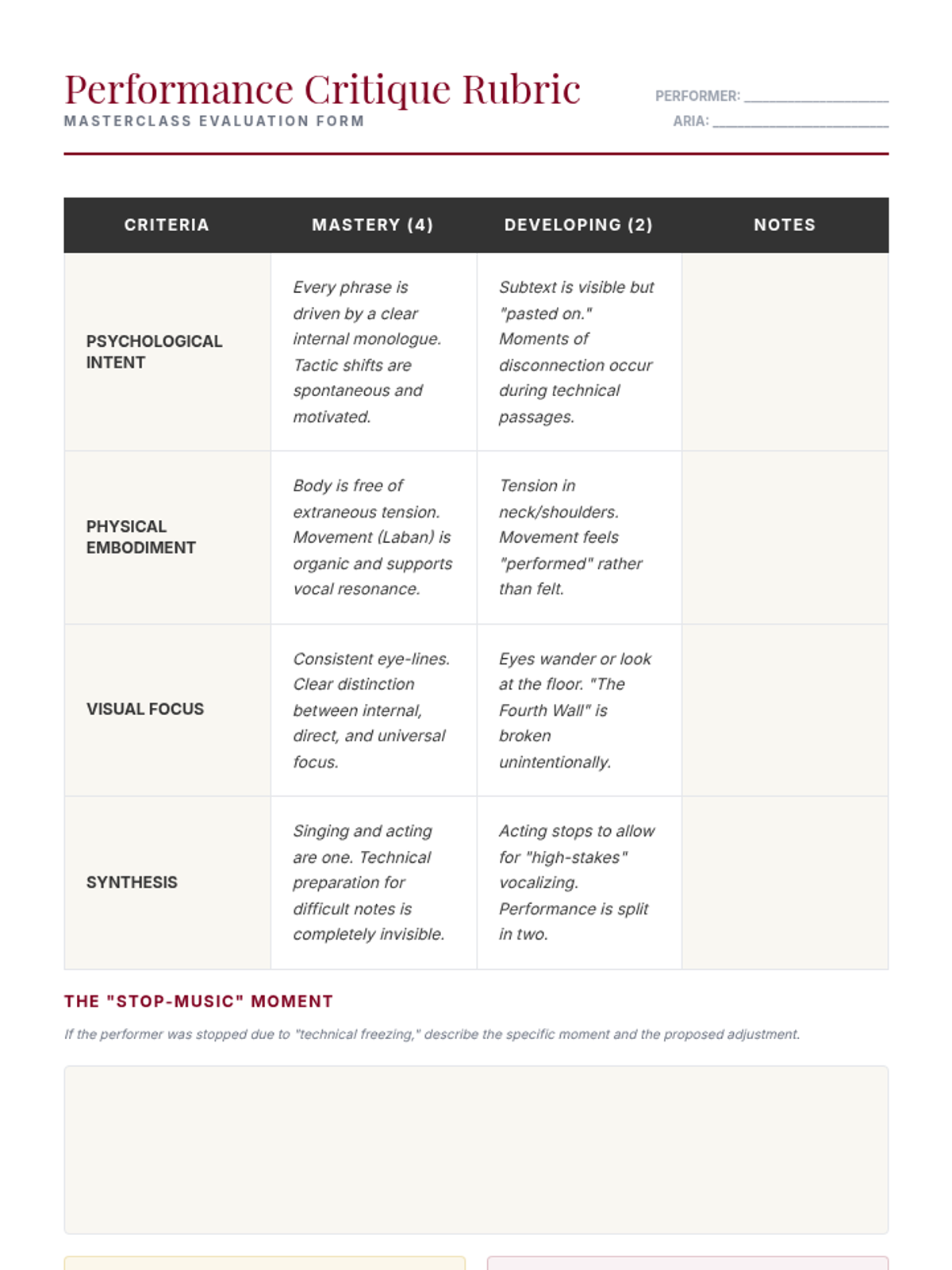
In this final synthesis, students perform their staged arias for critique, focusing on maintaining character through technical vocal challenges and high-stakes moments.
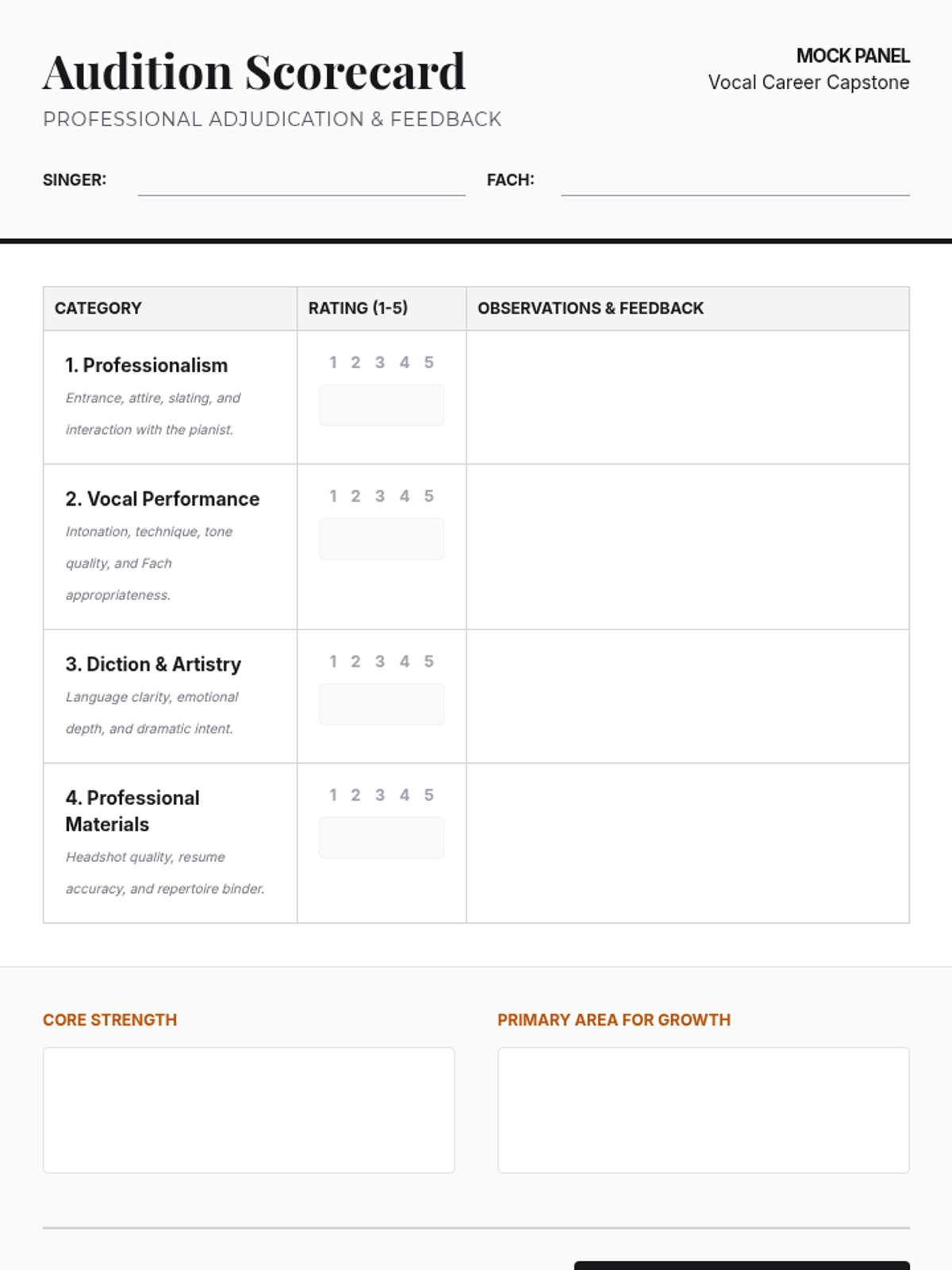
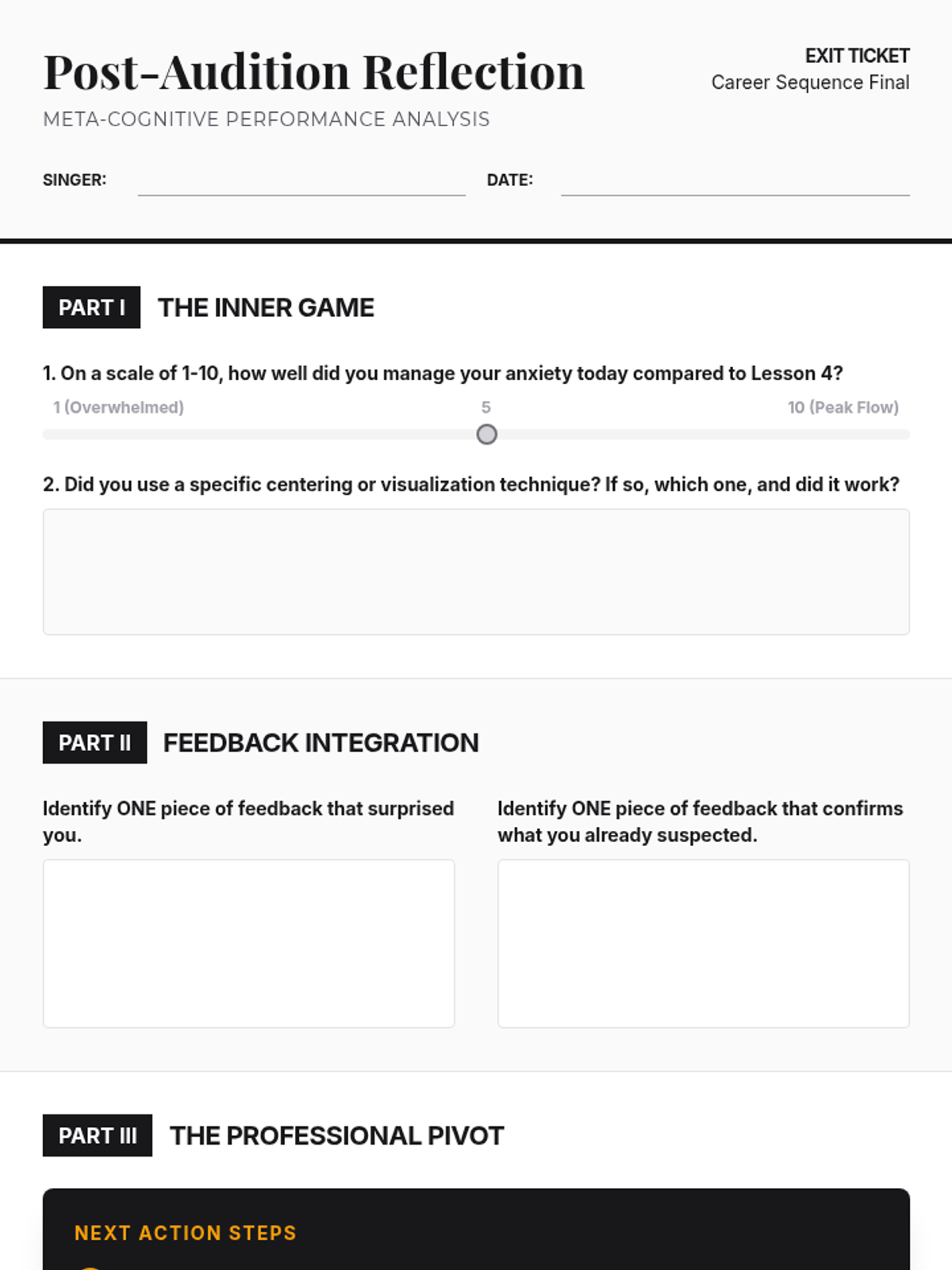
A culminating high-stakes simulation where students perform for a panel, followed by a formal feedback and debrief session.
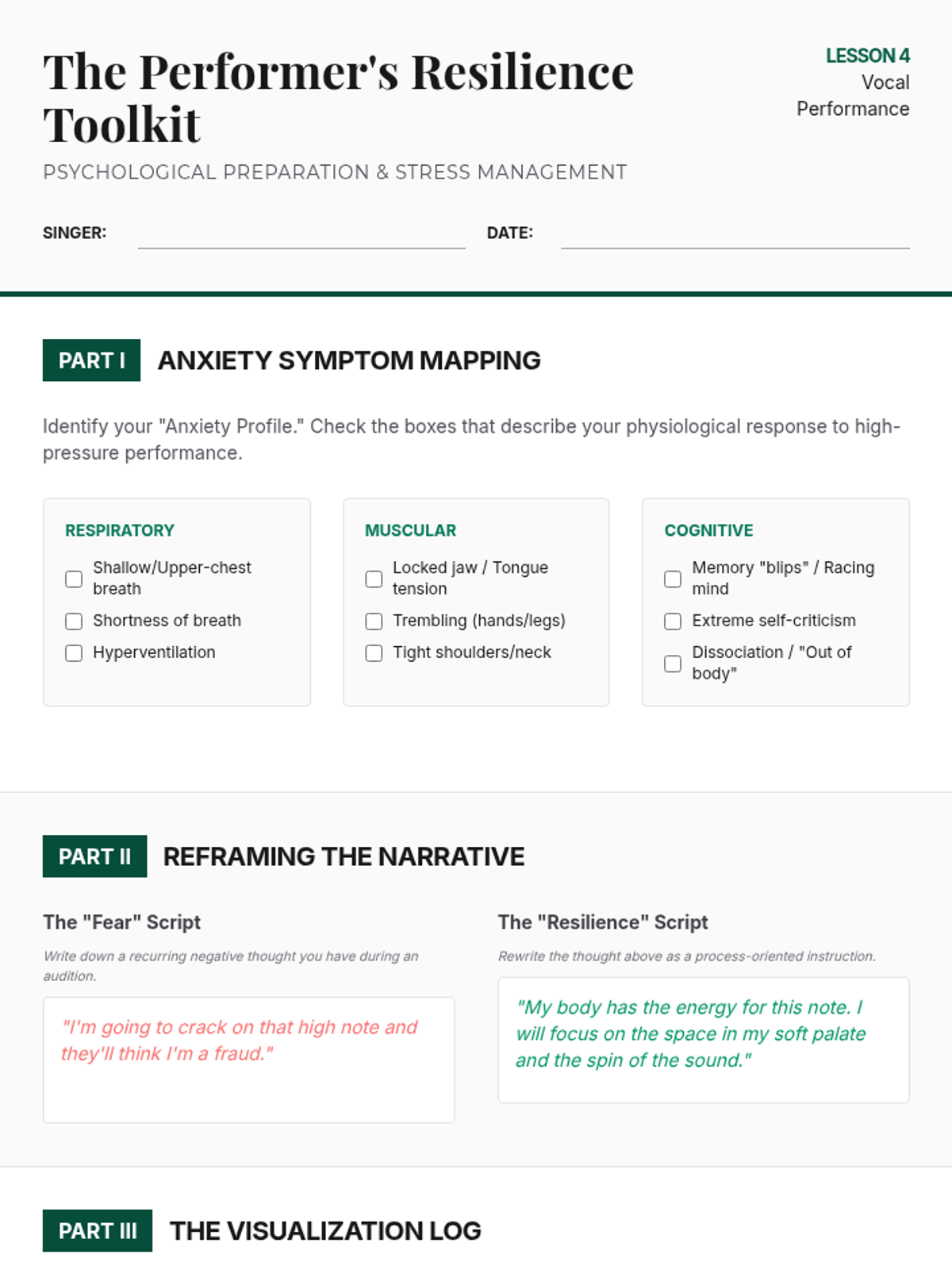
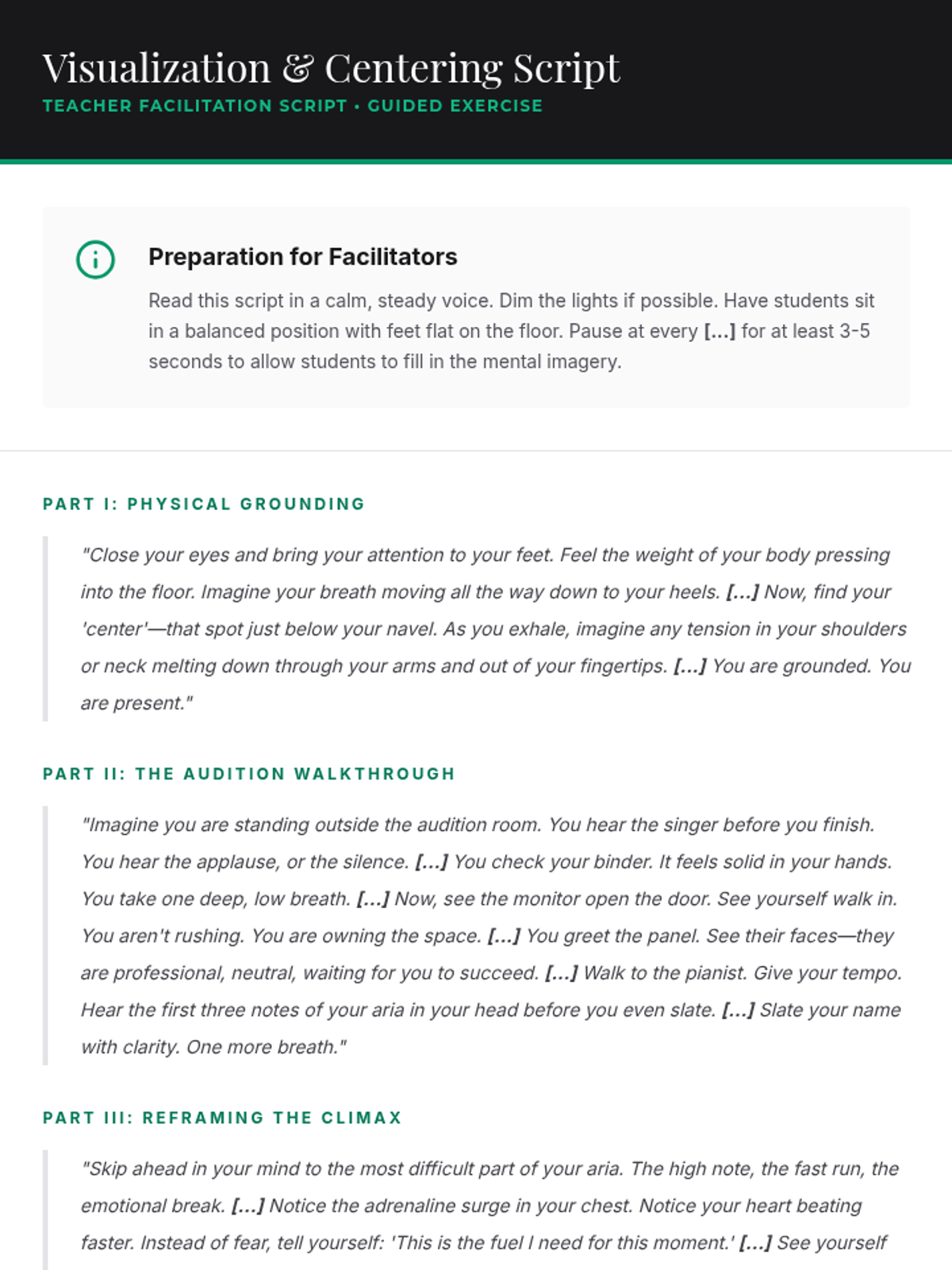
Explores the cognitive and physiological aspects of performance anxiety, providing students with a toolkit of visualization and management strategies.
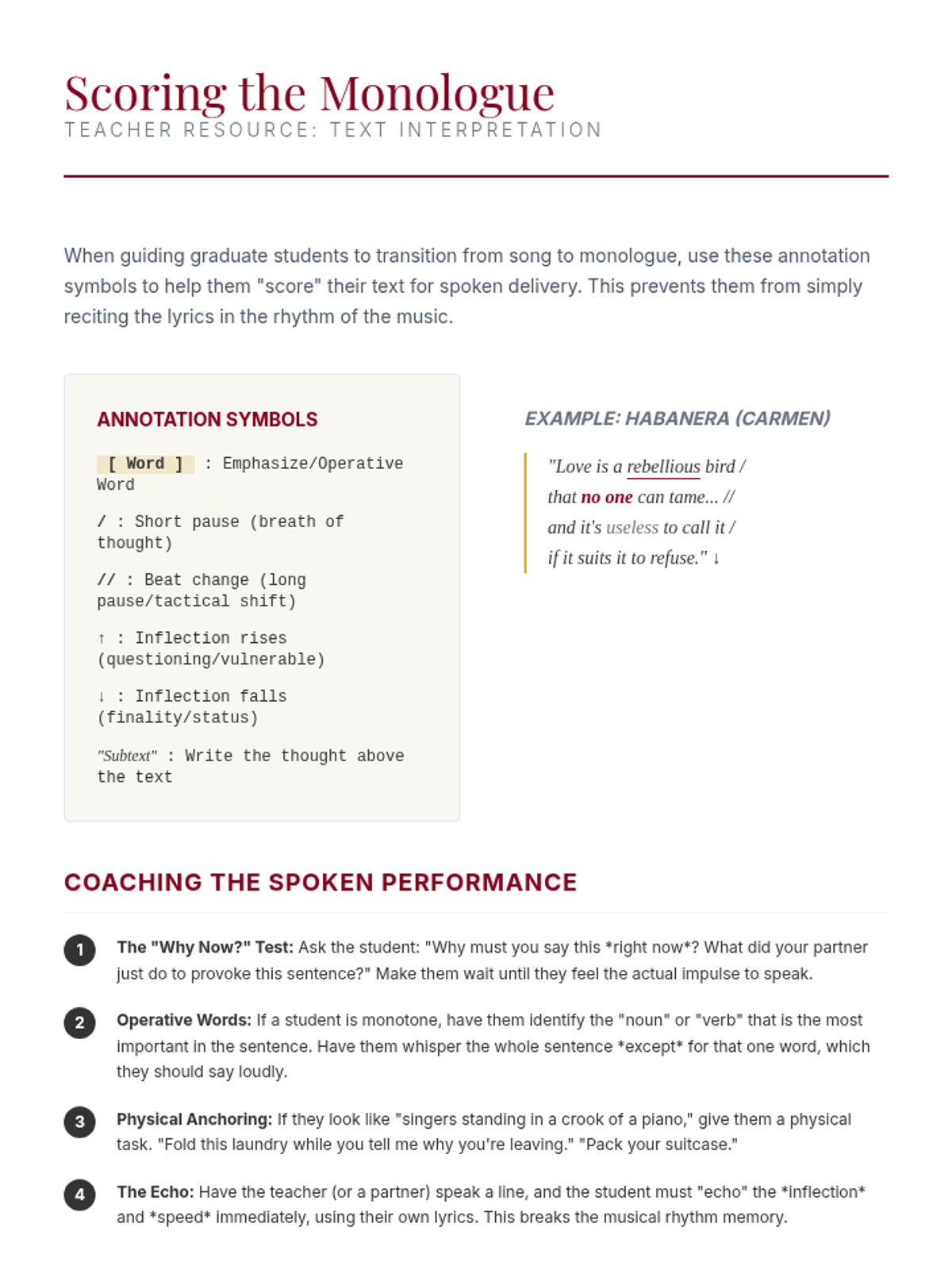
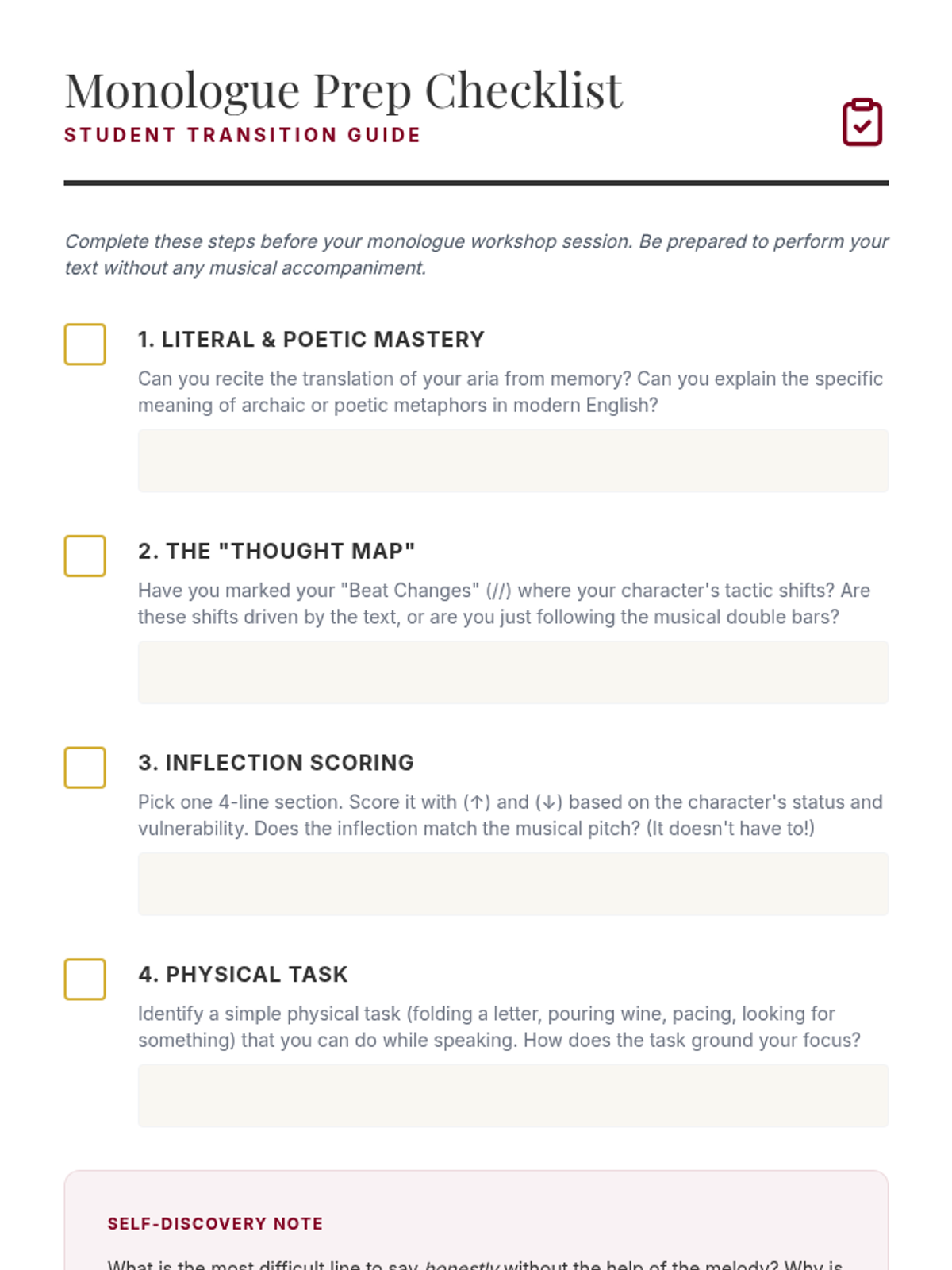
Students strip away the melody to perform their aria as a spoken monologue, identifying inherent rhythms and inflection in the text to deepen their dramatic connection.
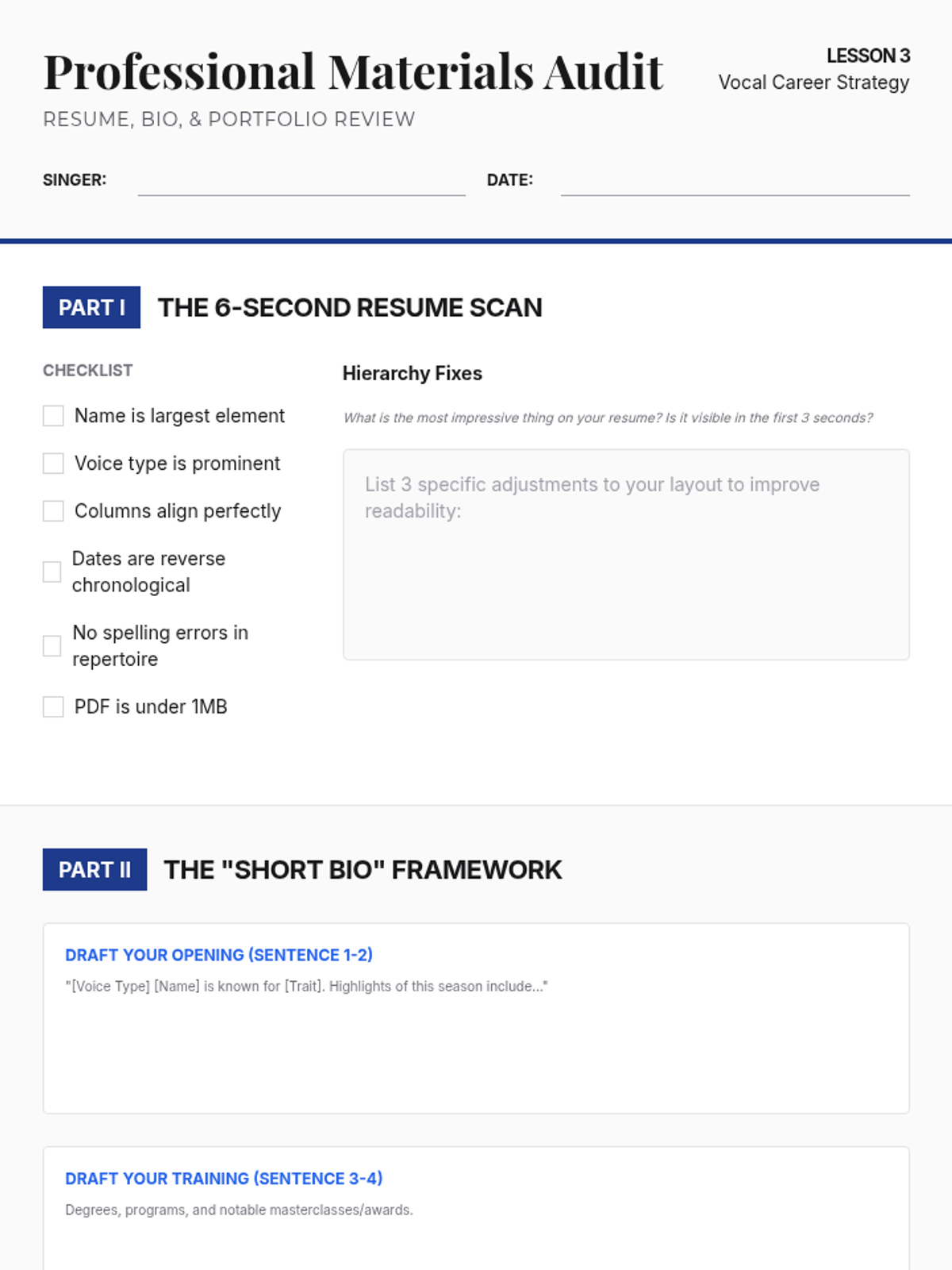
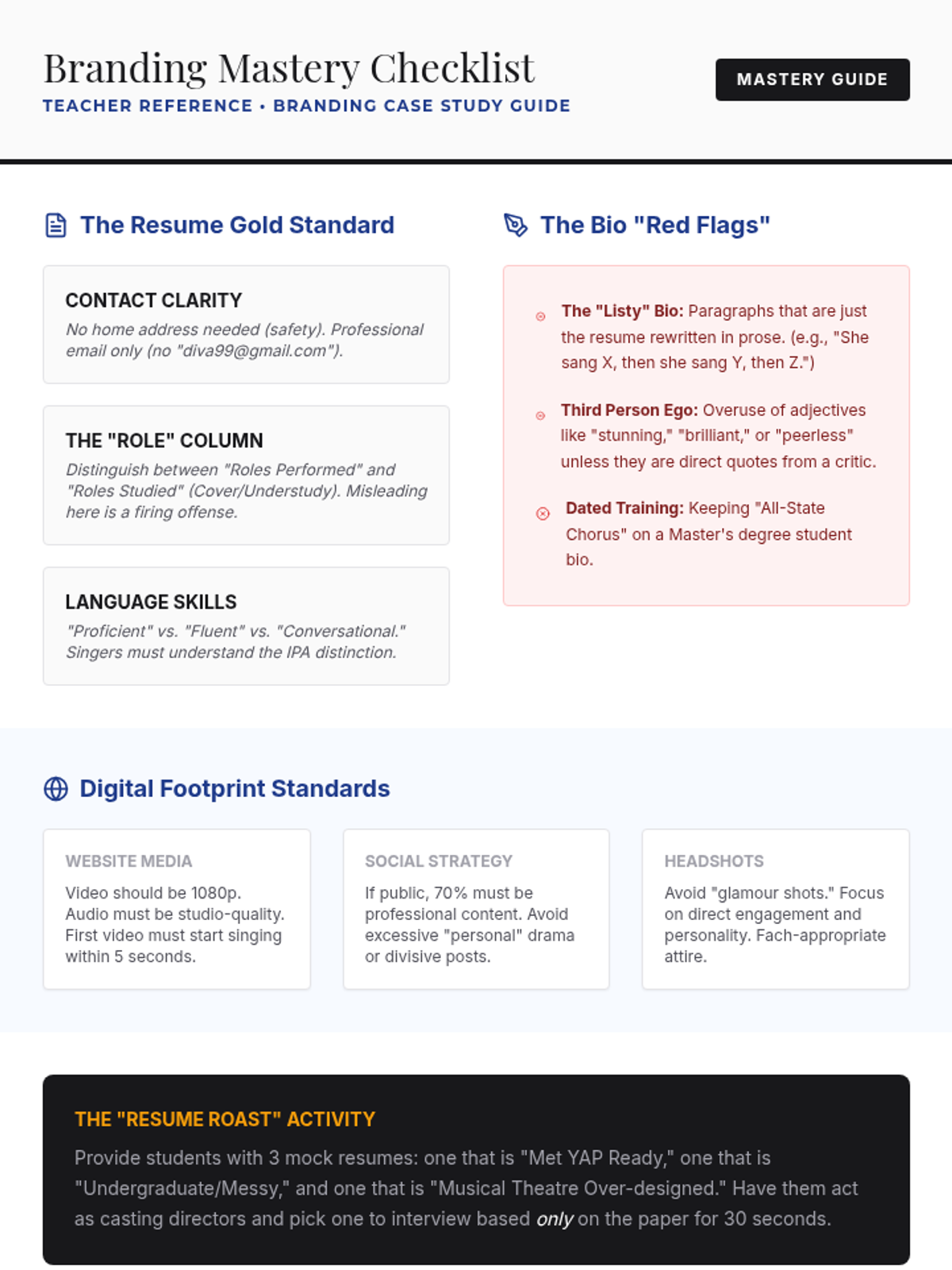
Students develop their professional identity through the creation of performance resumes, bios, and a discussion on visual branding and digital presence.
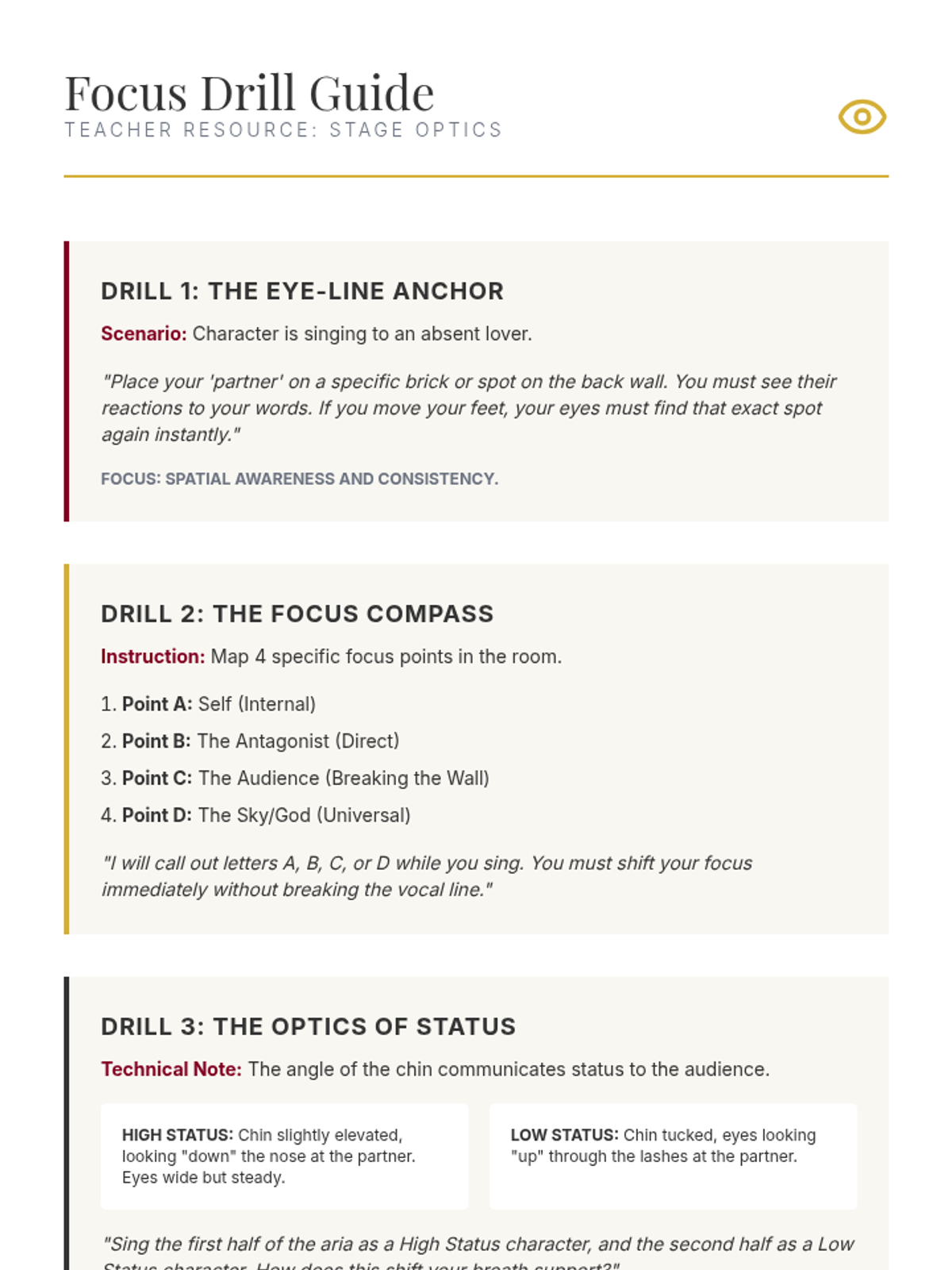
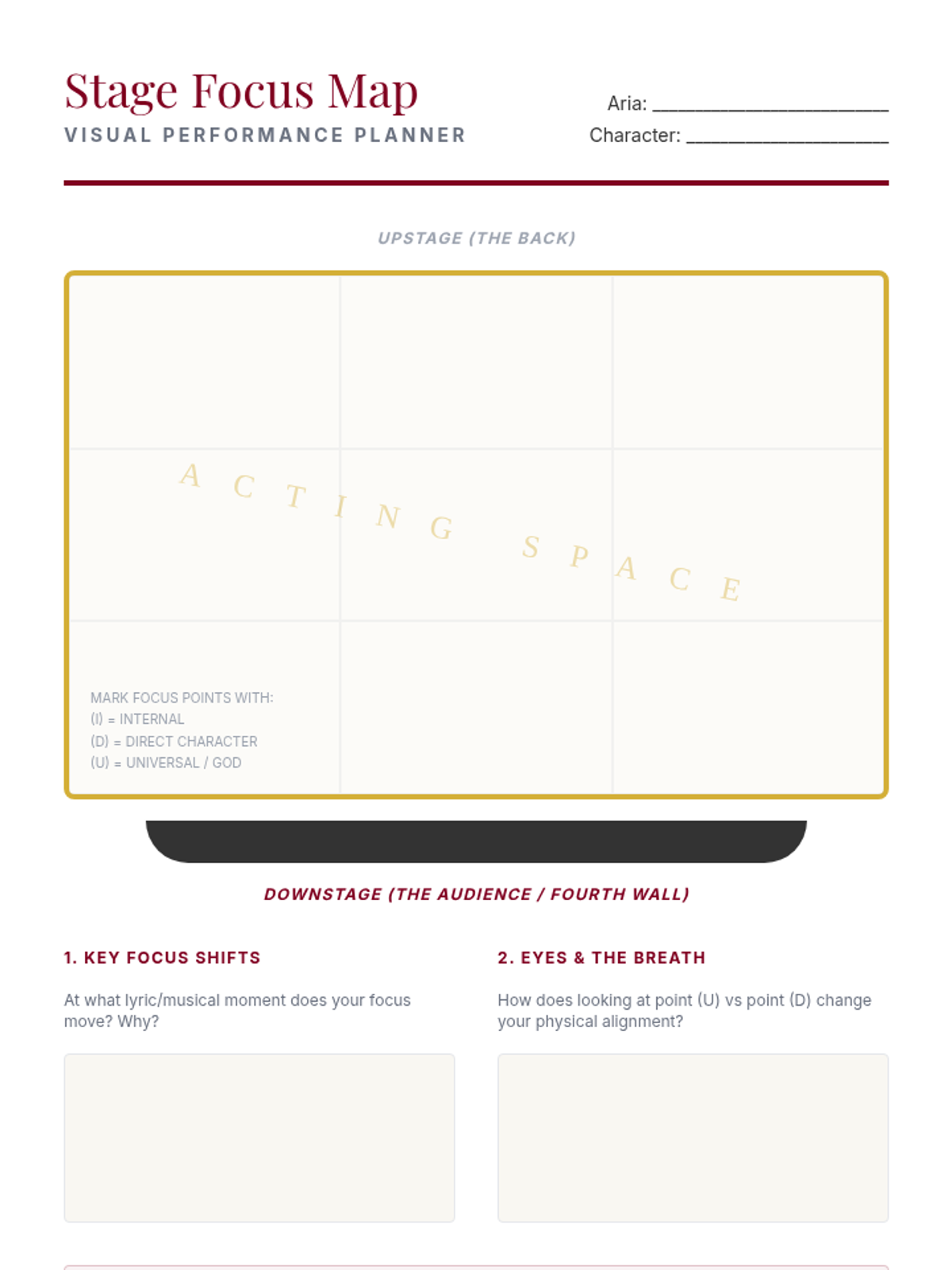
This lesson covers the technical optics of stage performance, focusing on eye-lines, the fourth wall, and how visual focus communicates status and emotional intimacy.
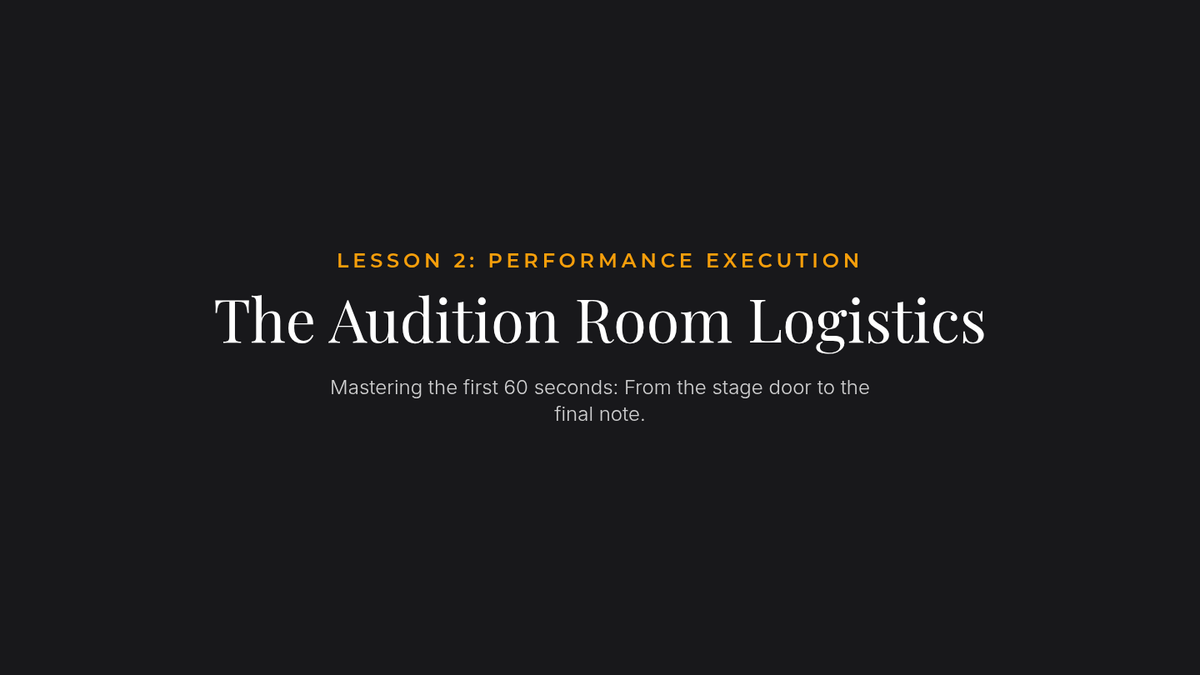
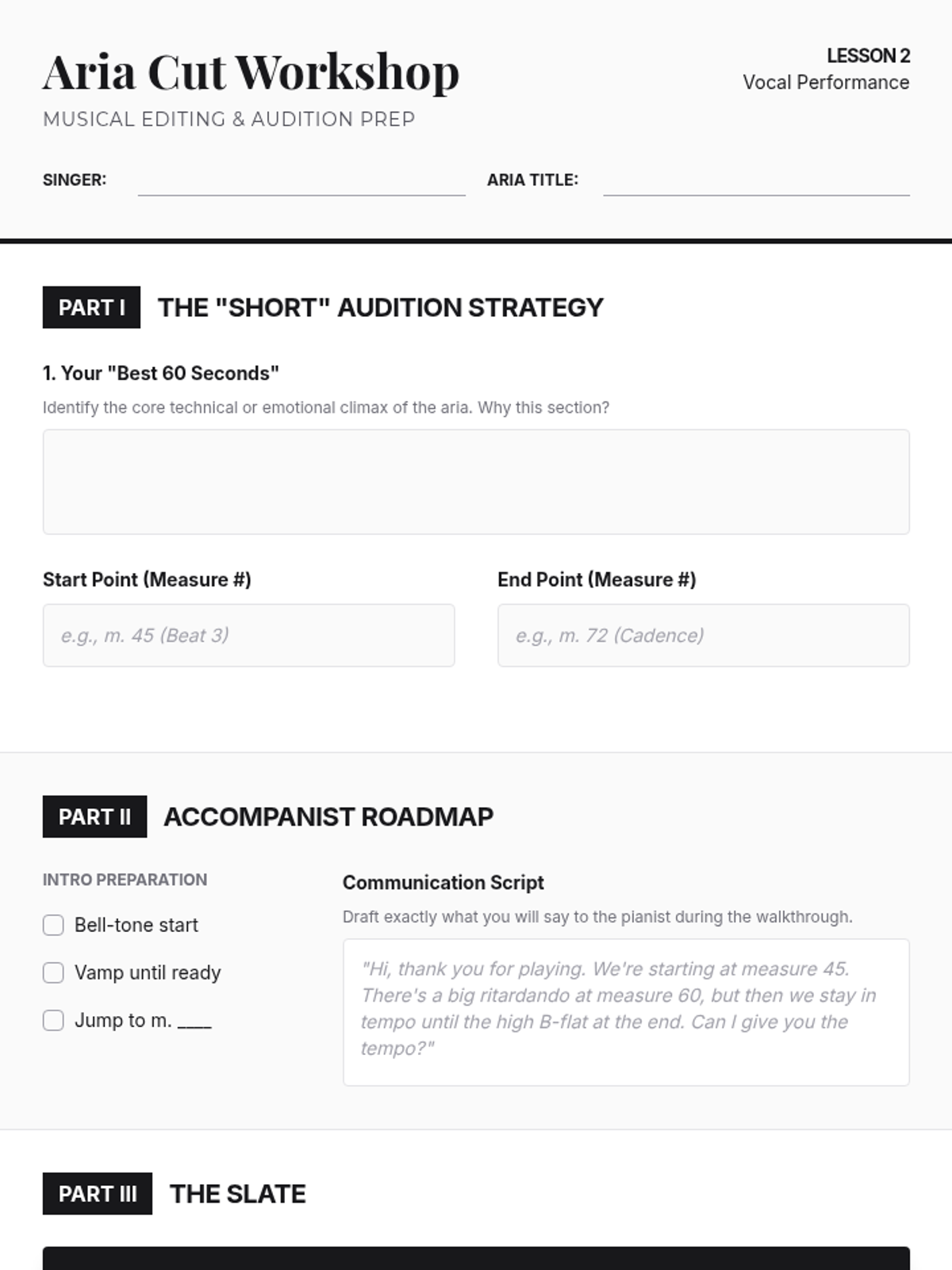
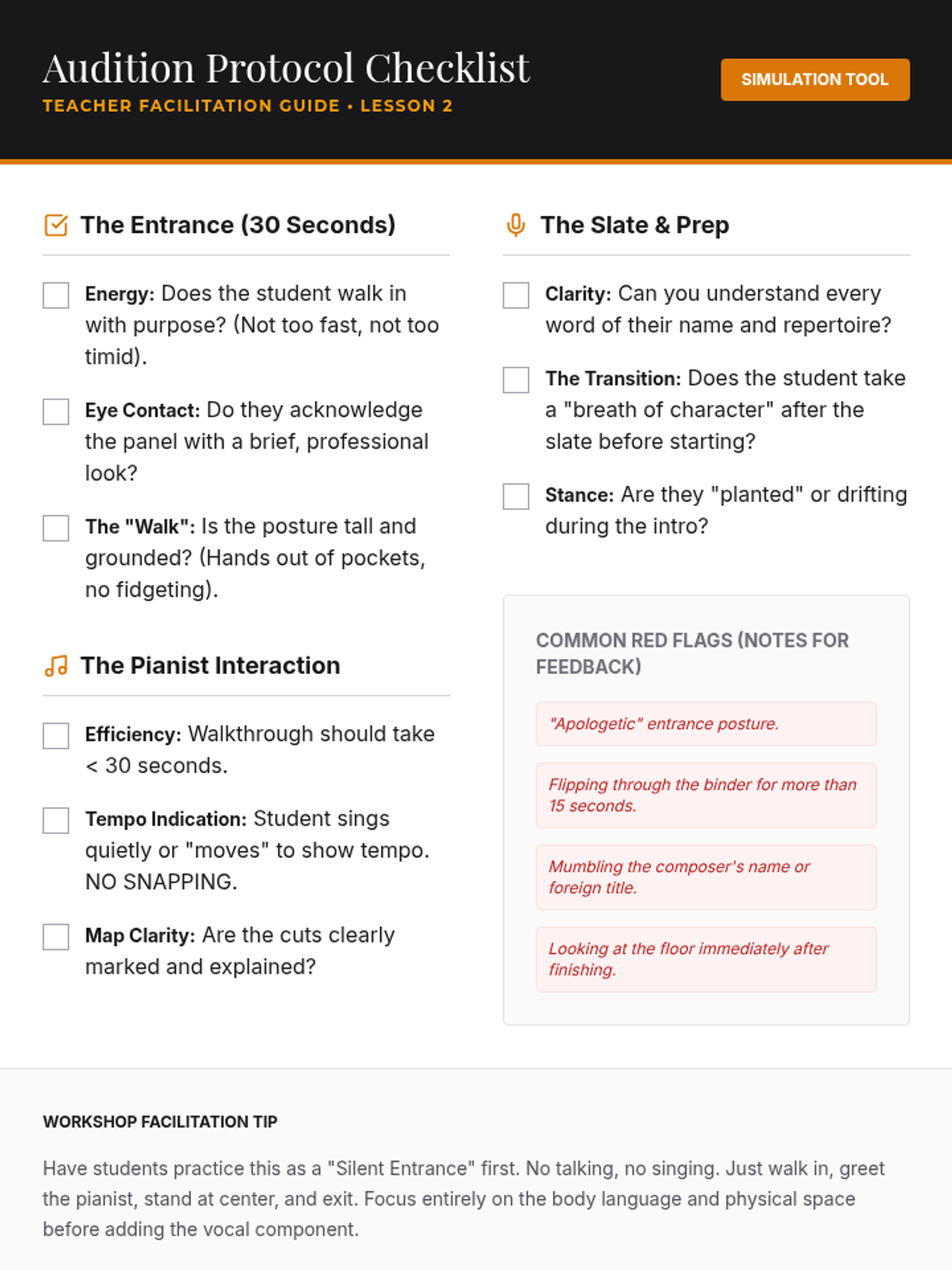
Focuses on the logistics of the audition room, including the 16-bar cut, slating, and effective communication with the collaborative pianist.
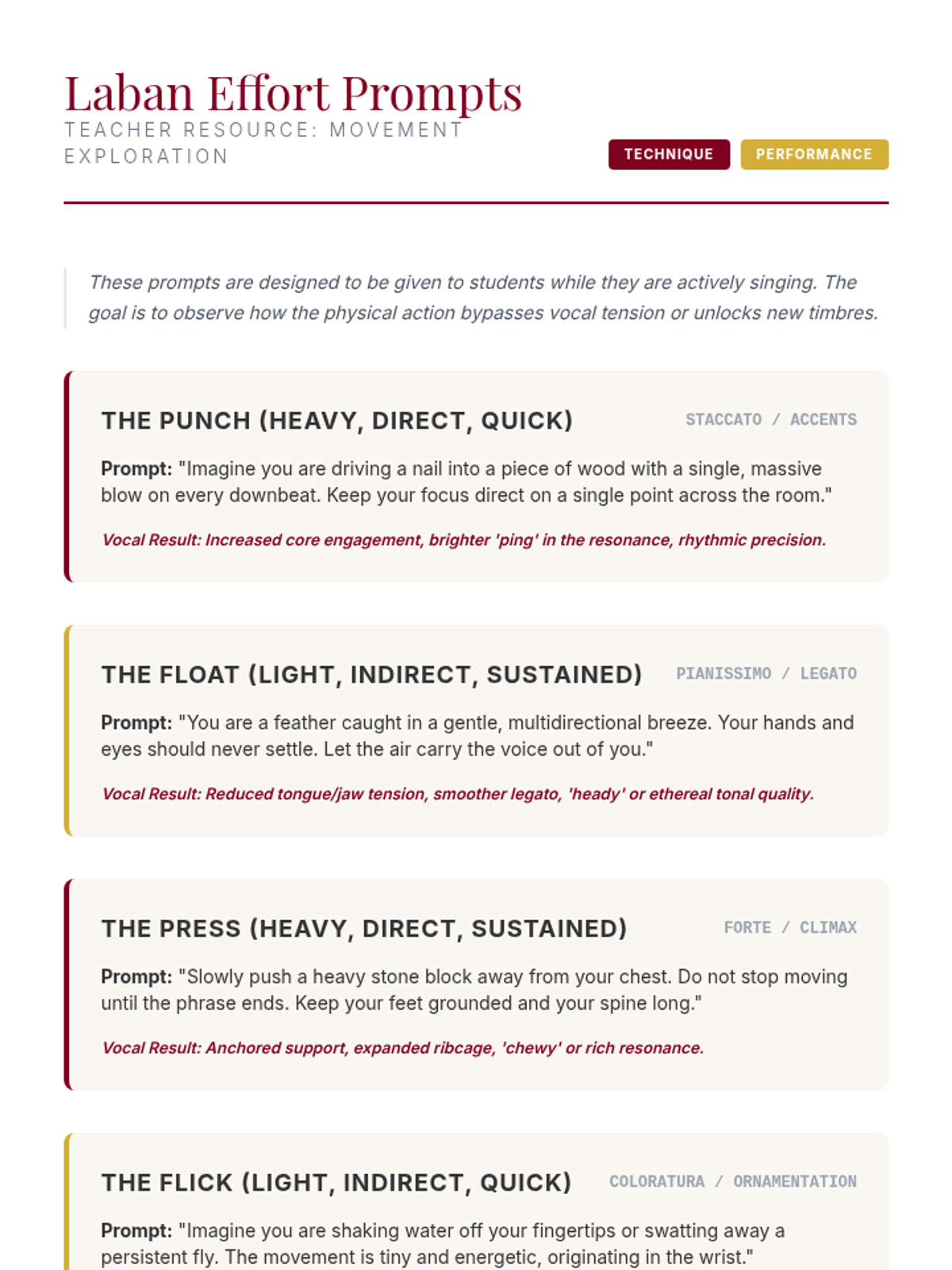
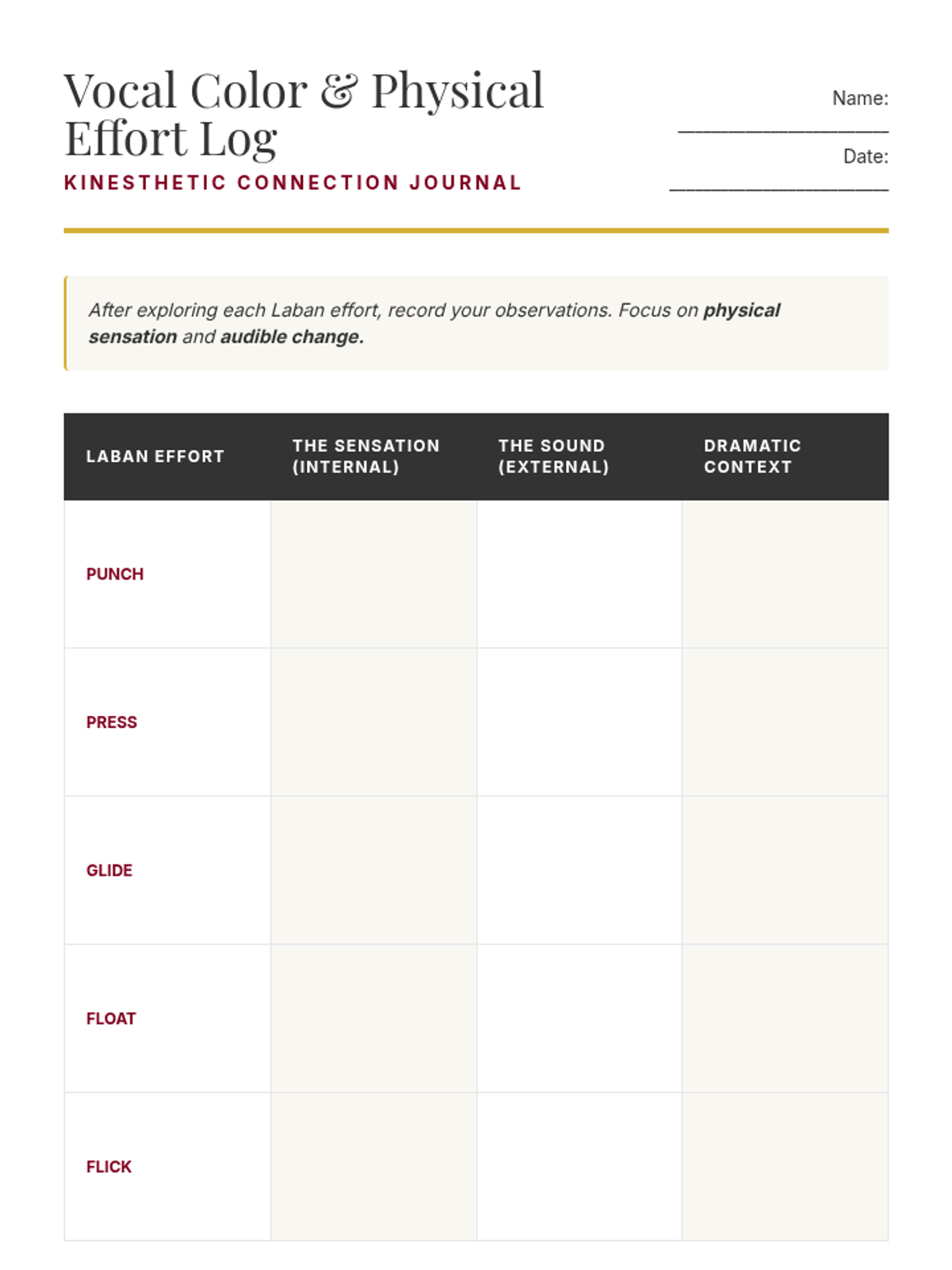
Using Laban Movement Analysis, students explore how physical efforts—such as gliding, punching, or floating—affect vocal color, resonance, and character physicality.
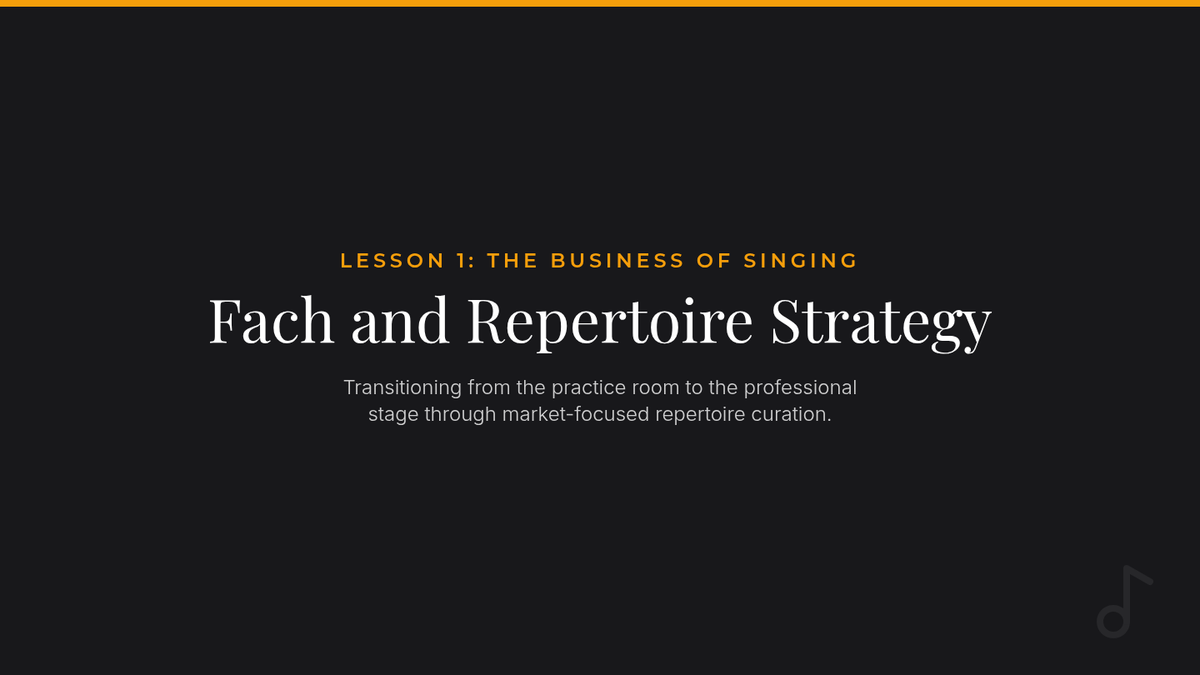
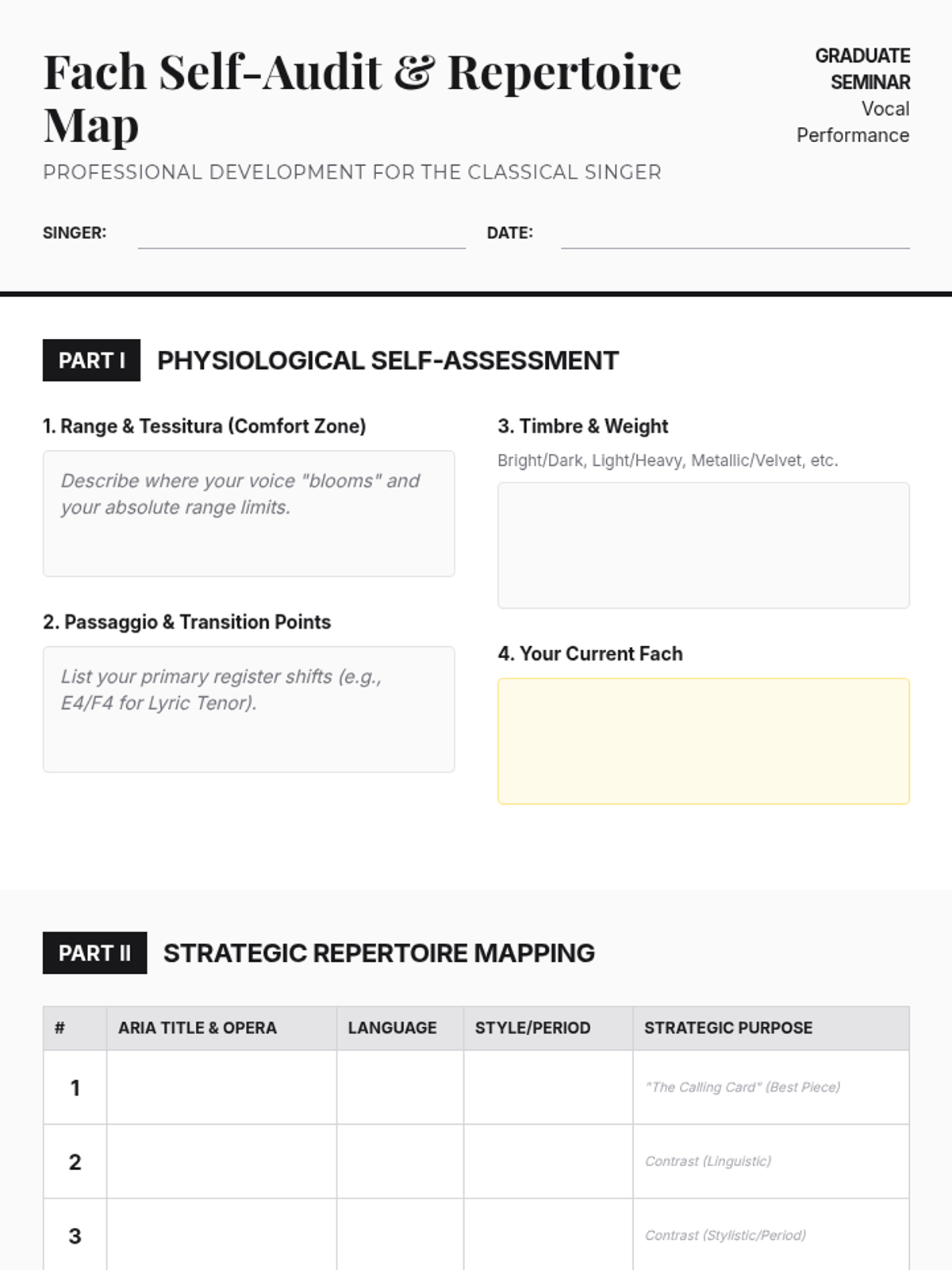
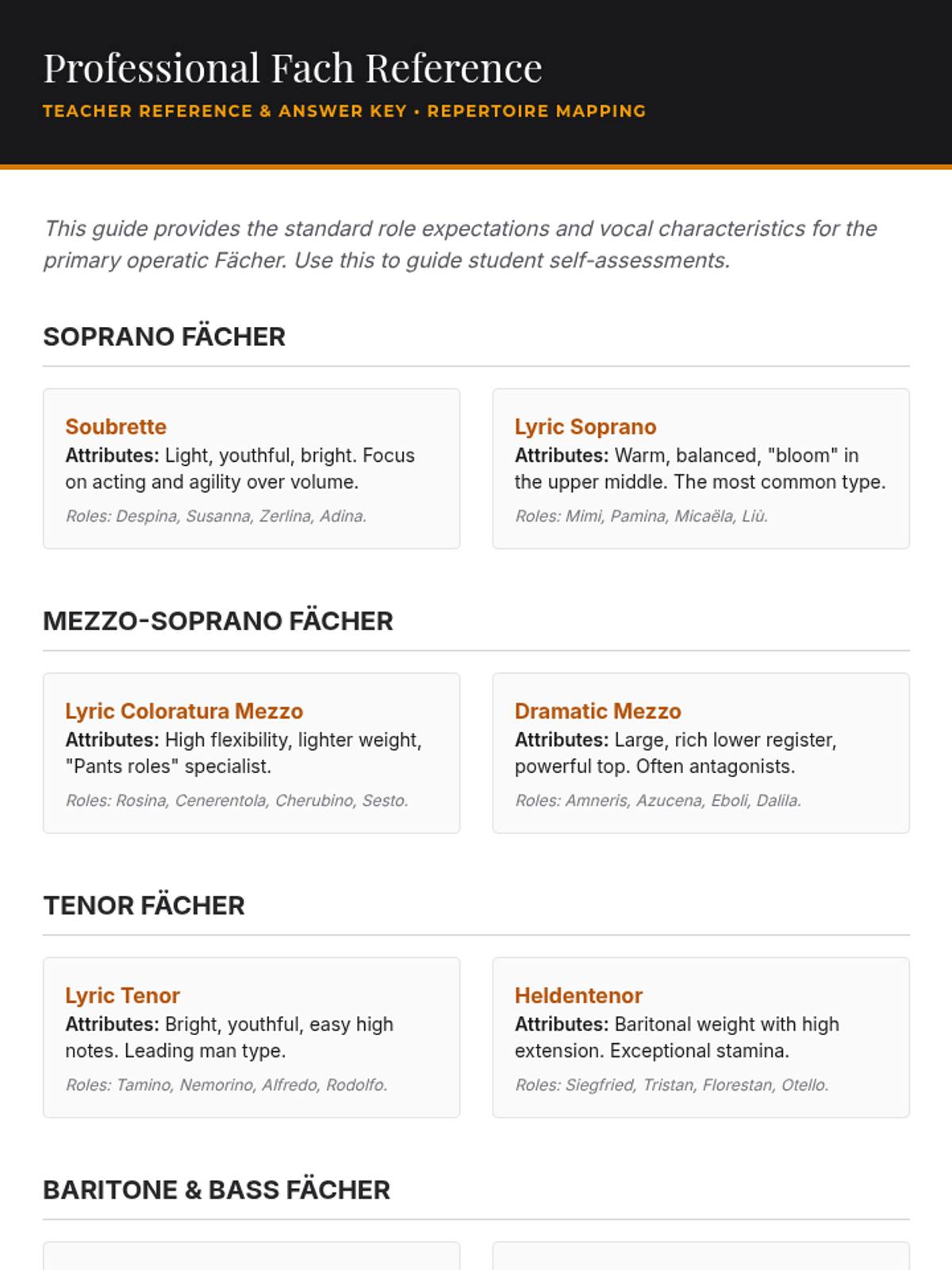
Students analyze their vocal Fach and curate a market-ready 5-aria package that demonstrates linguistic and stylistic versatility within their specific hiring category.
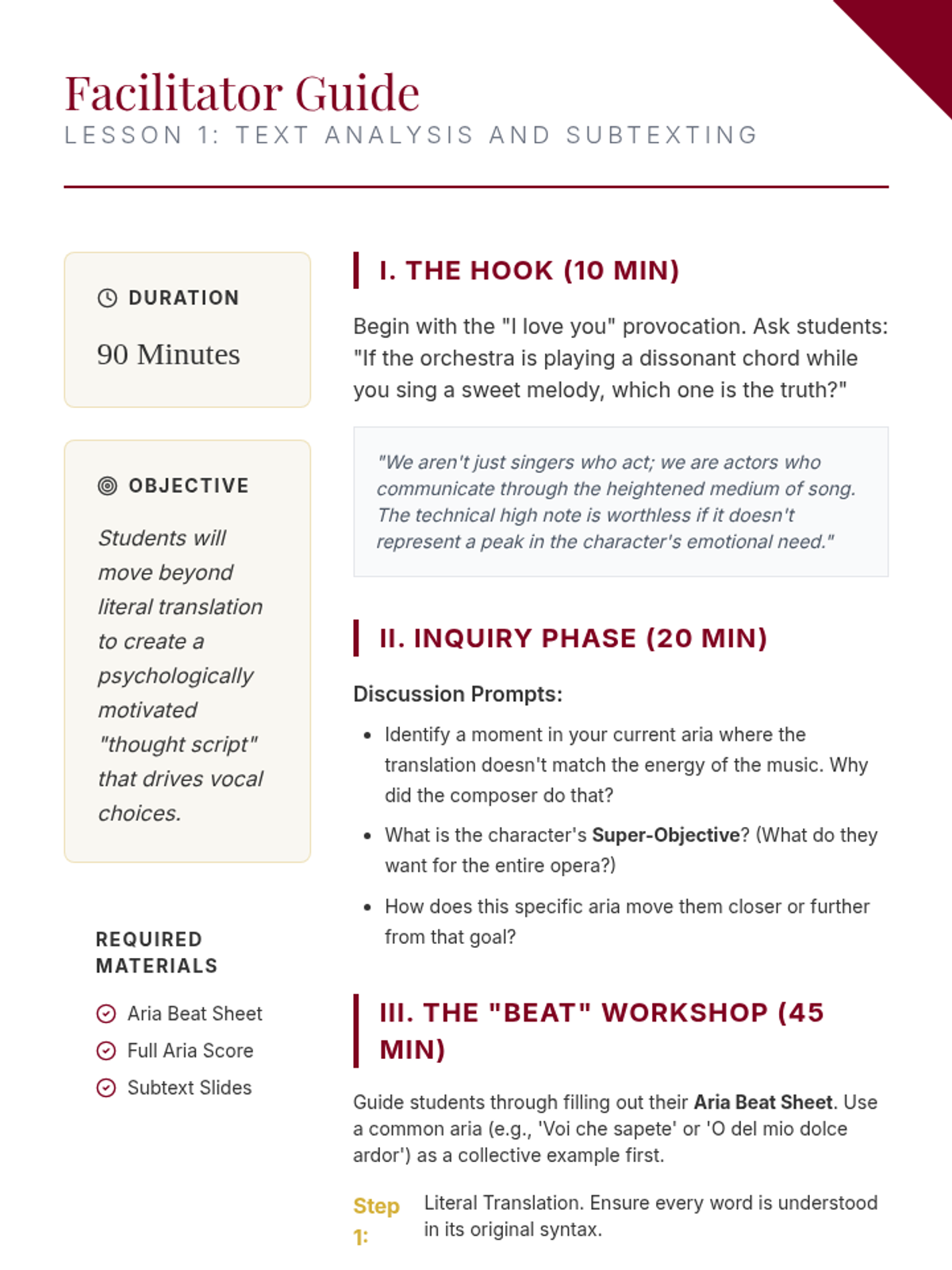
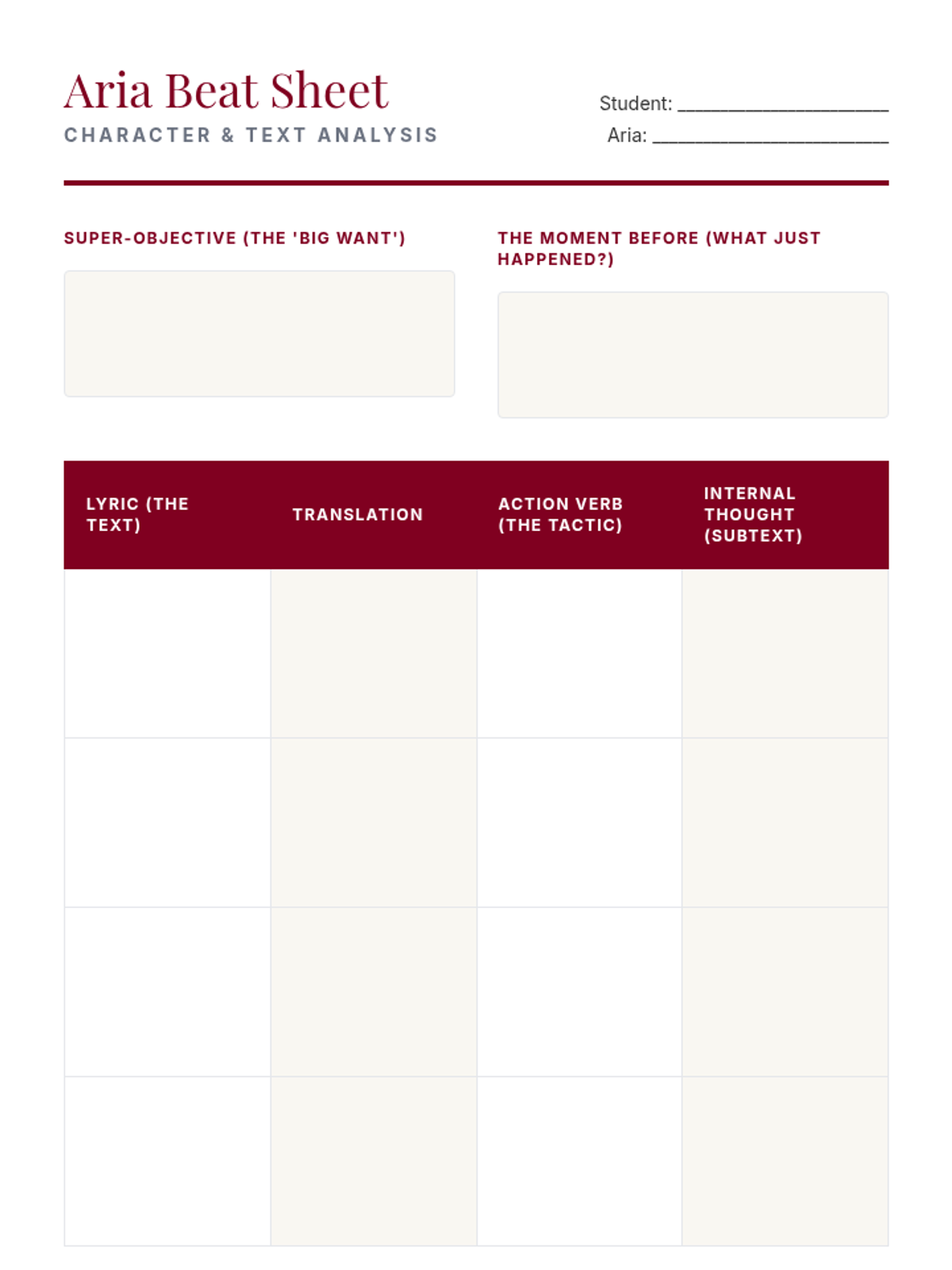
Students translate and analyze an aria, identifying psychological shifts ('beats') and drafting a subtextual script to ensure every musical phrase is motivated by specific internal thoughts.
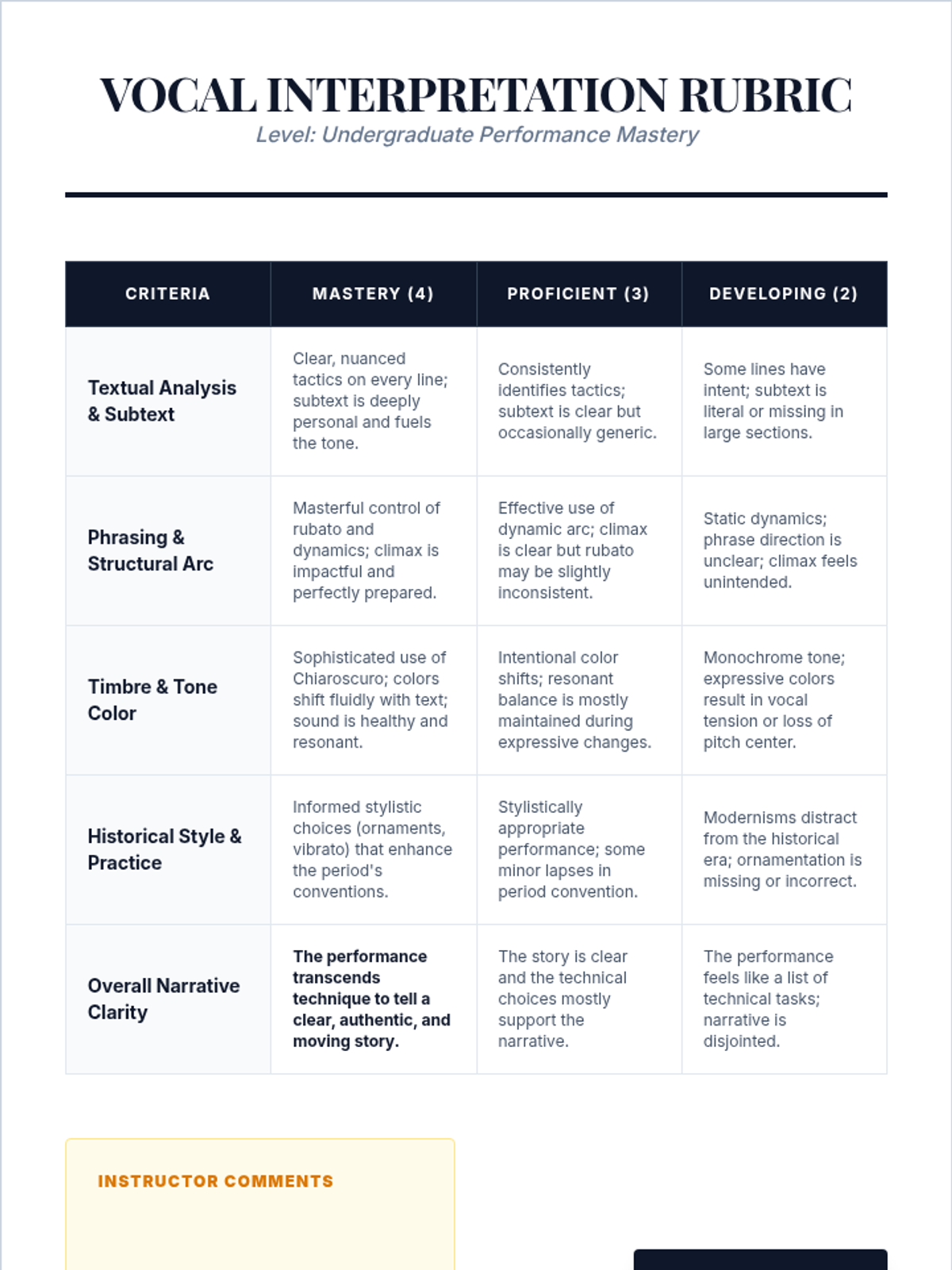
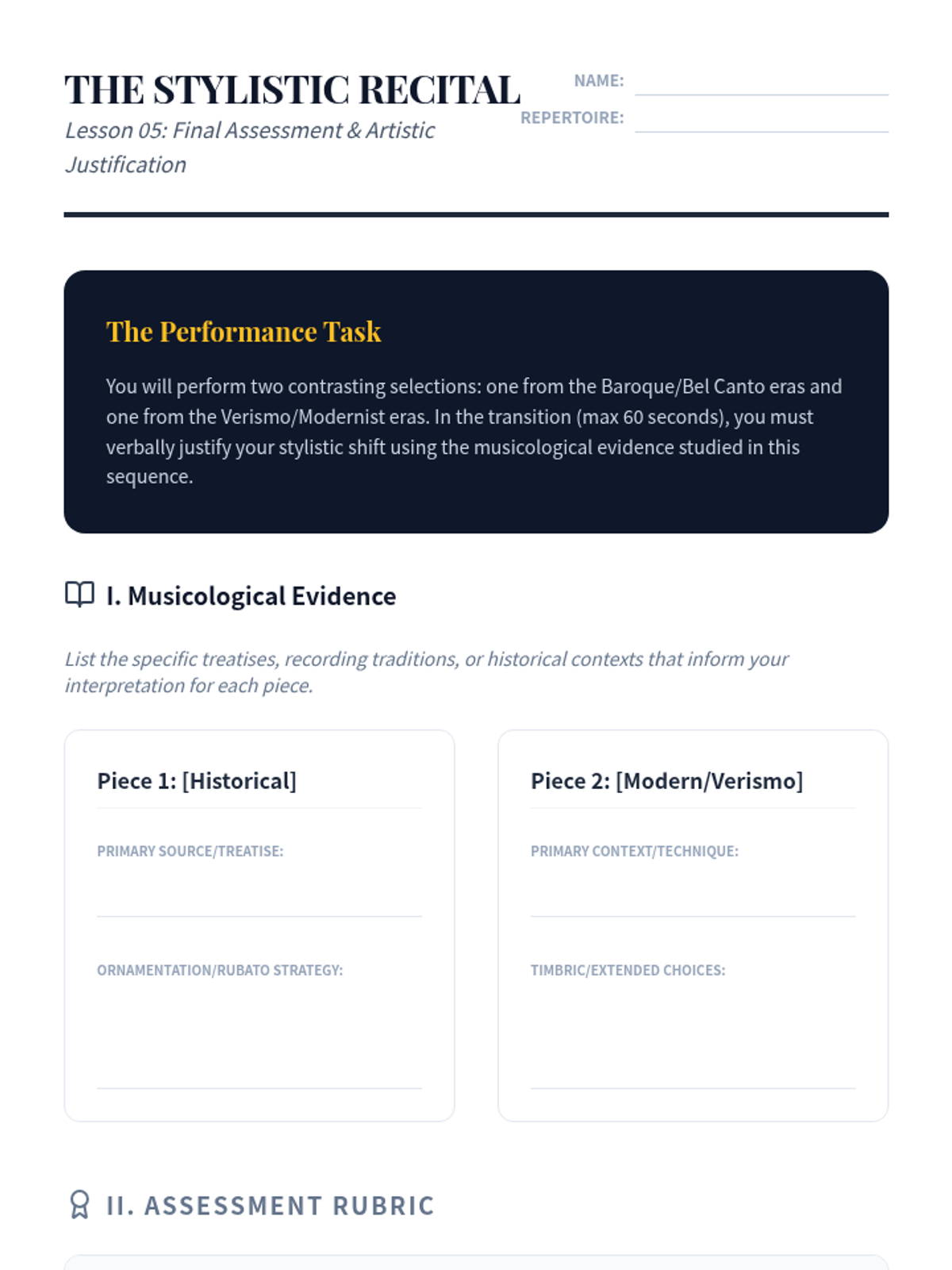
A final performance-based assessment where students demonstrate stylistic versatility and justify their interpretive choices.
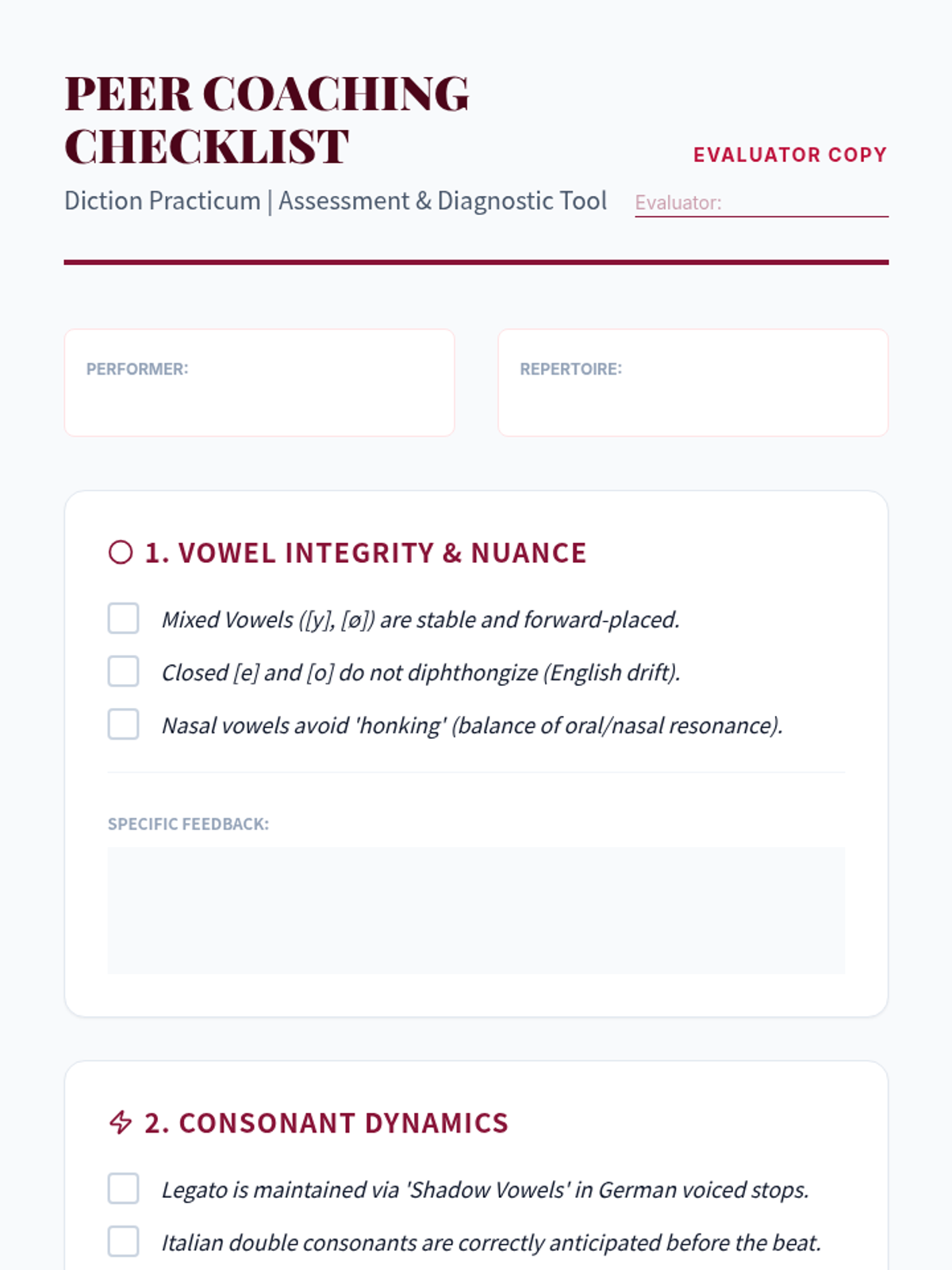
A culminating practicum where students apply diagnostic skills to coach peers on diction errors and anatomical adjustments.
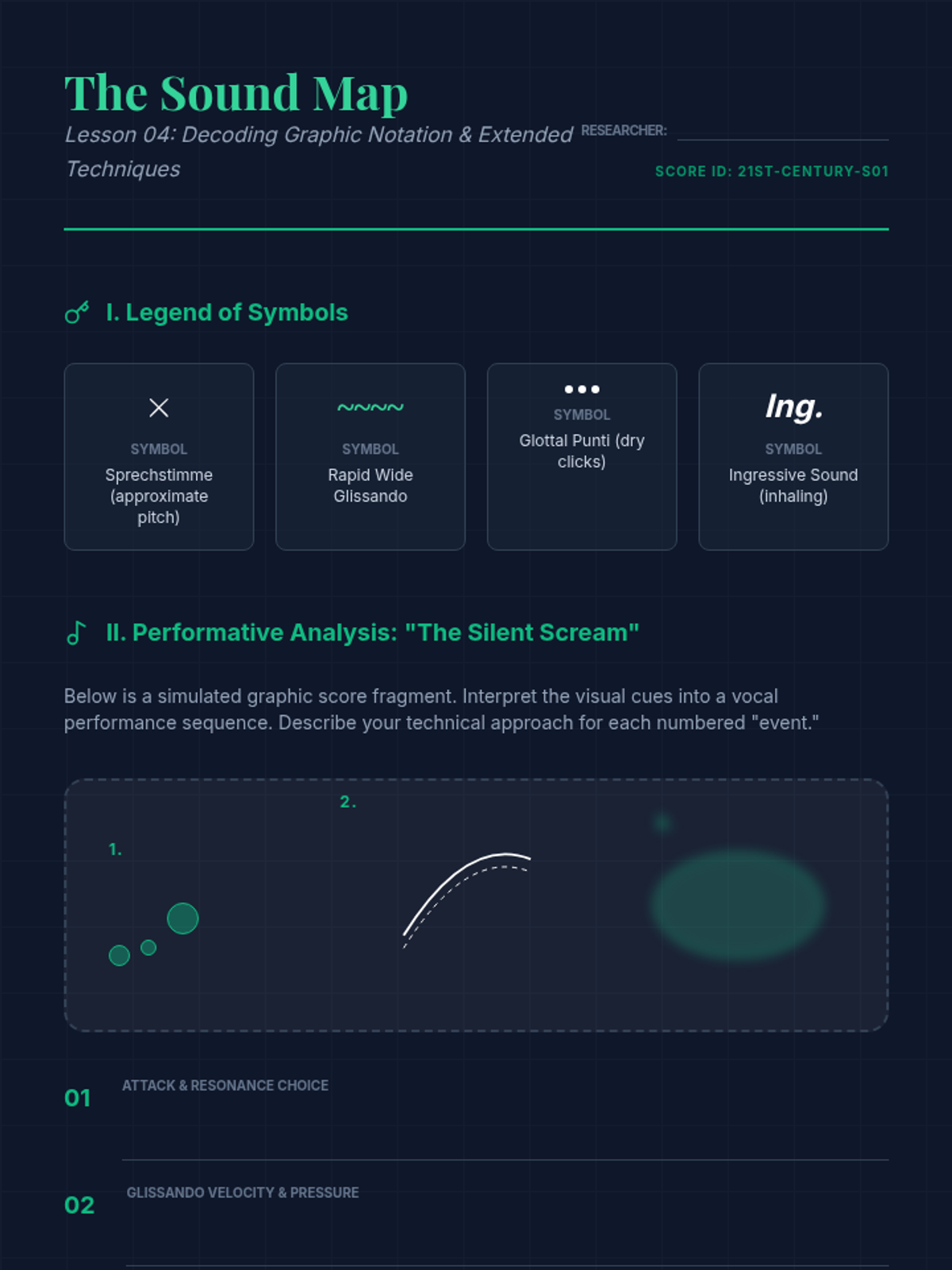
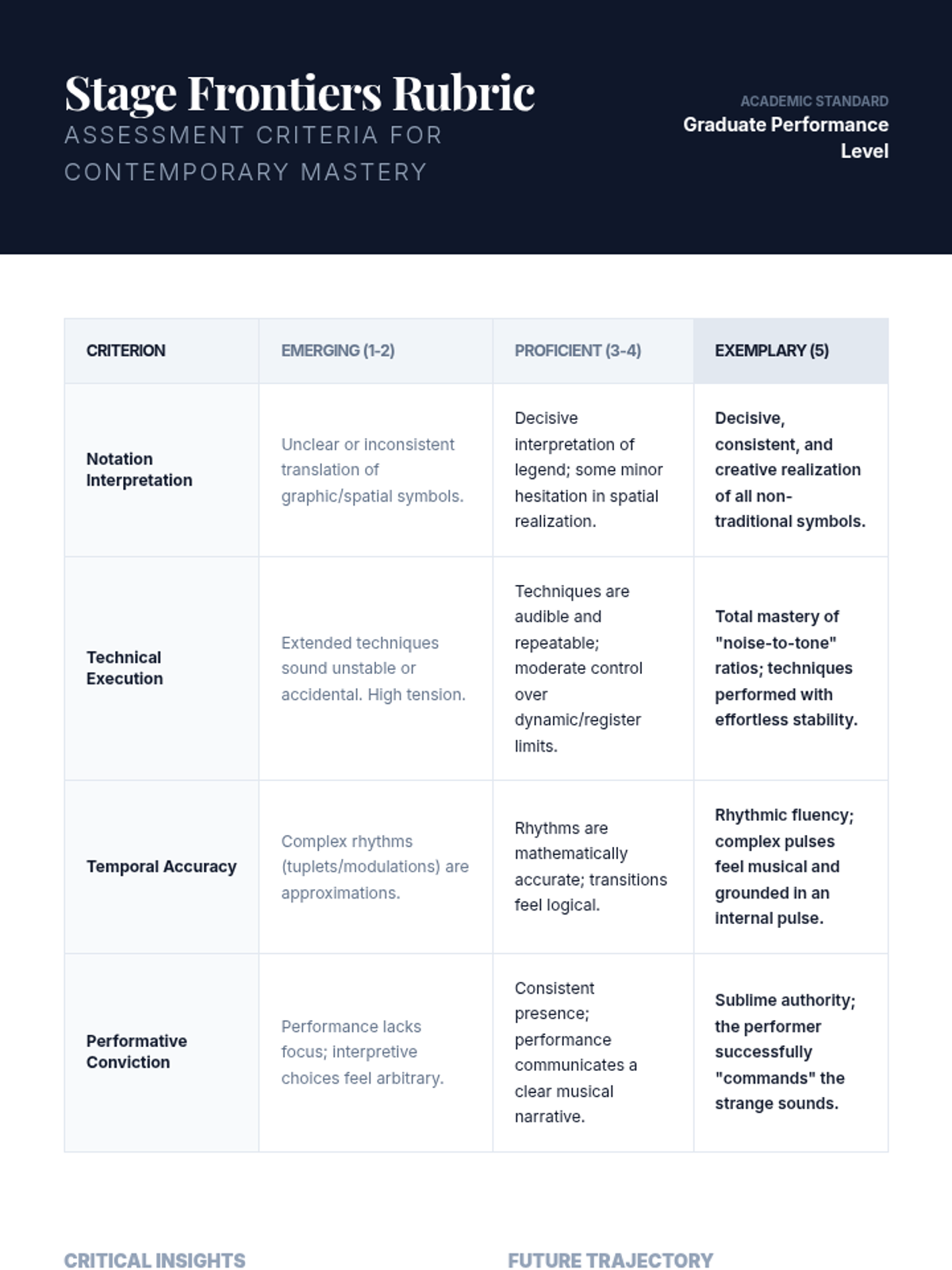
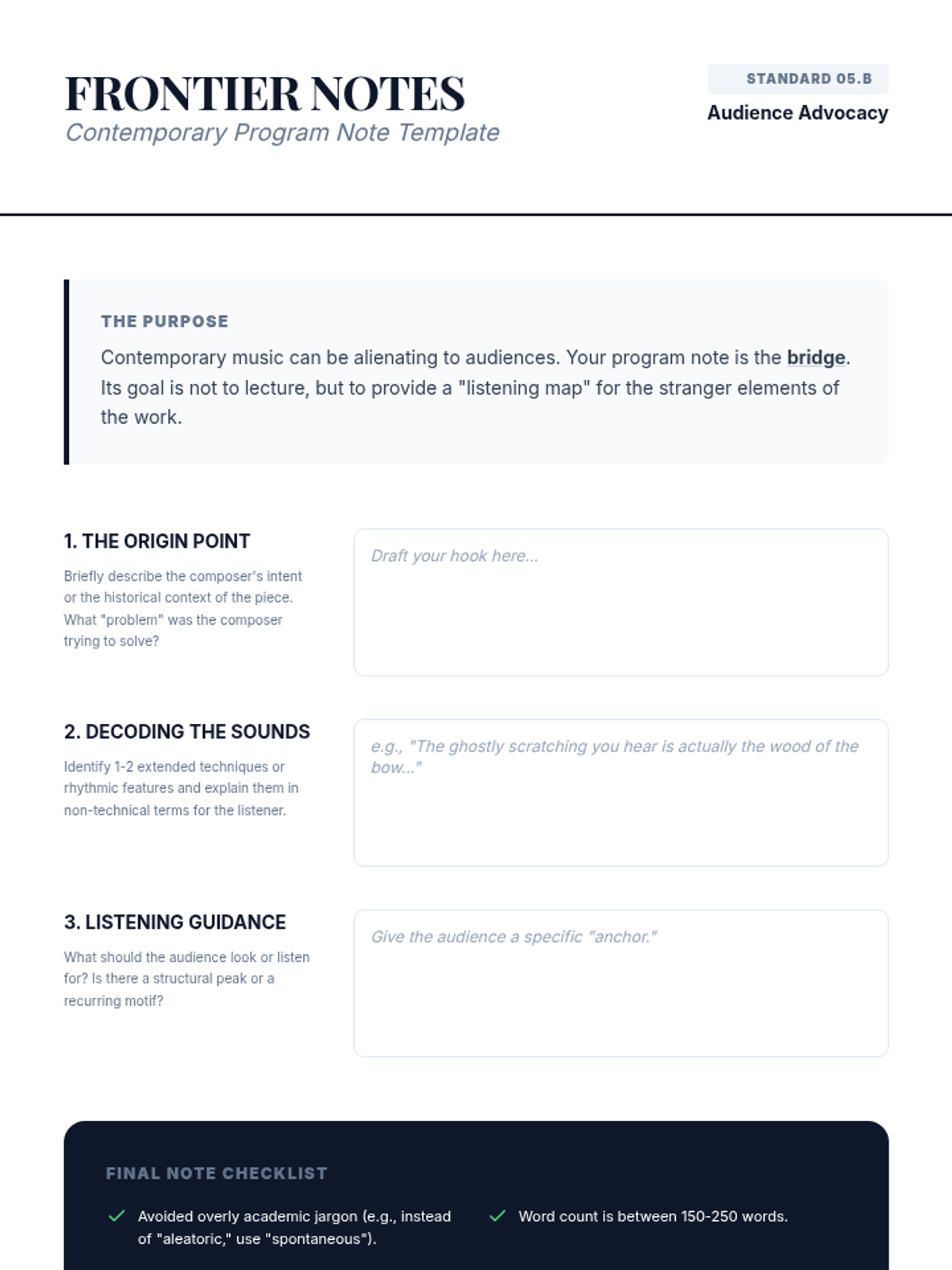
An introduction to extended vocal techniques and decoding contemporary graphic notation in 20th and 21st-century music.
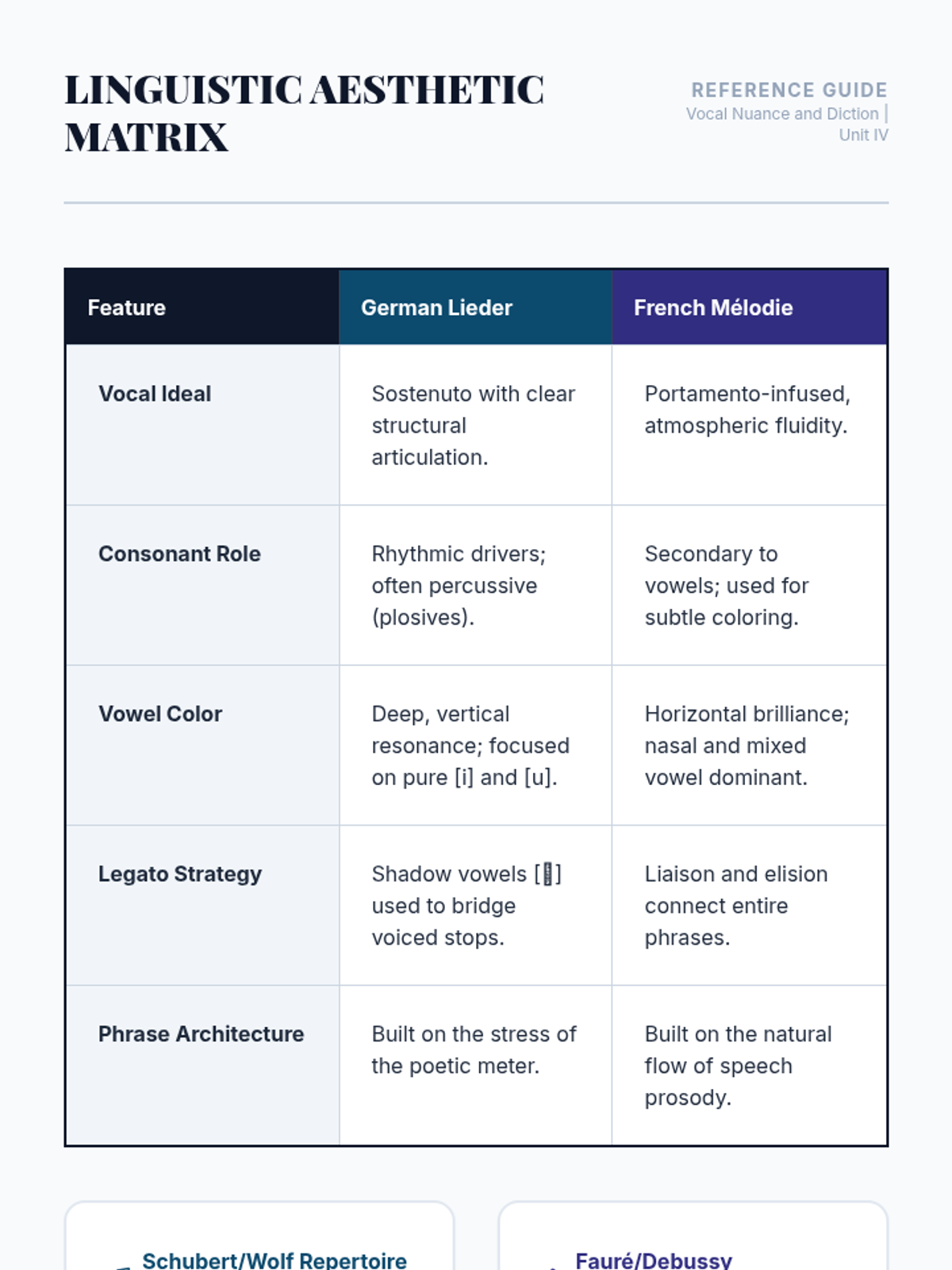
A comparative analysis of linguistic aesthetics in German Lieder and French Mélodie, focusing on how language dictates musical setting.
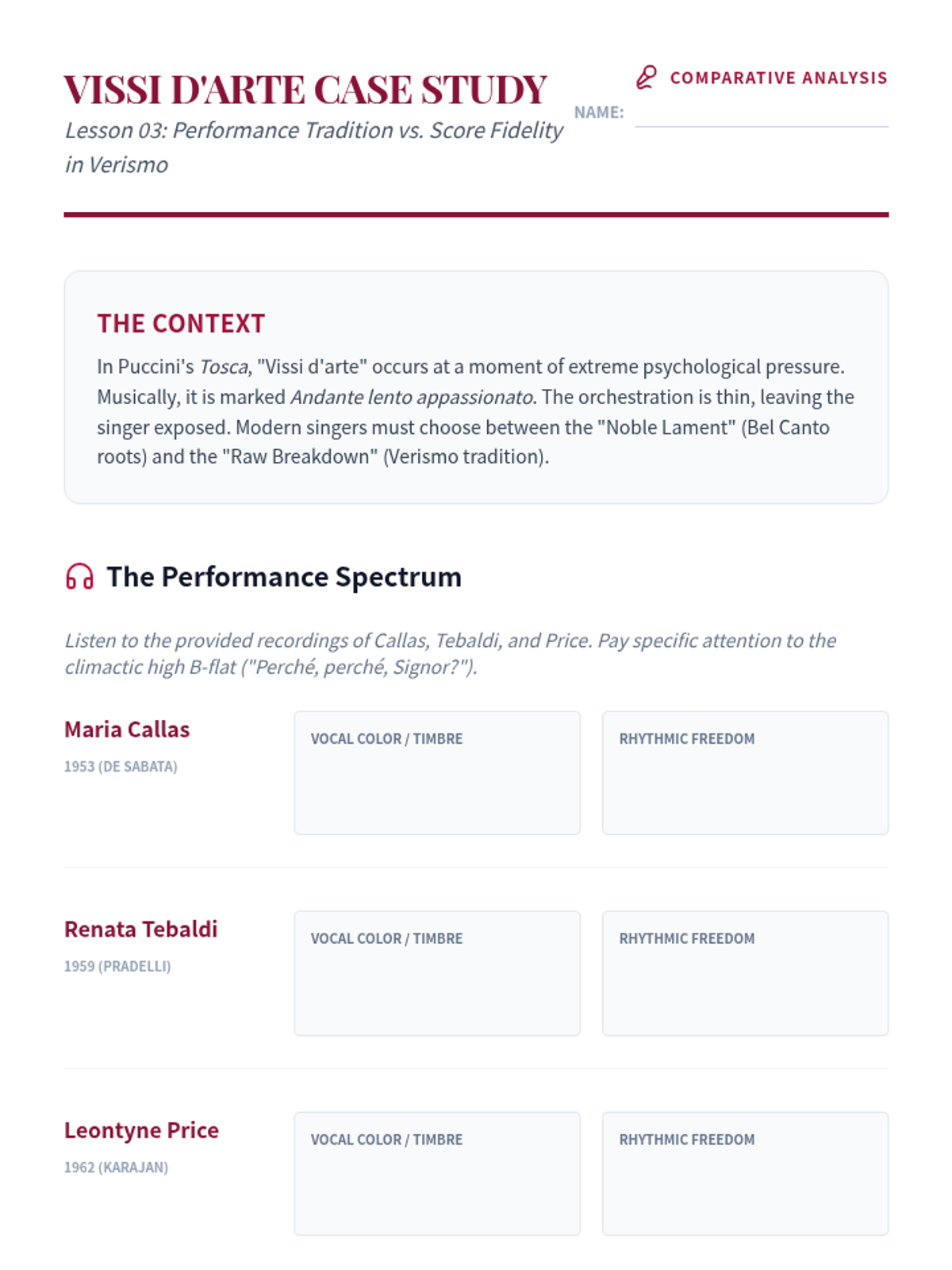
A discussion on the shift to realism in late 19th-century opera and the vocal techniques required to convey intense emotion safely.
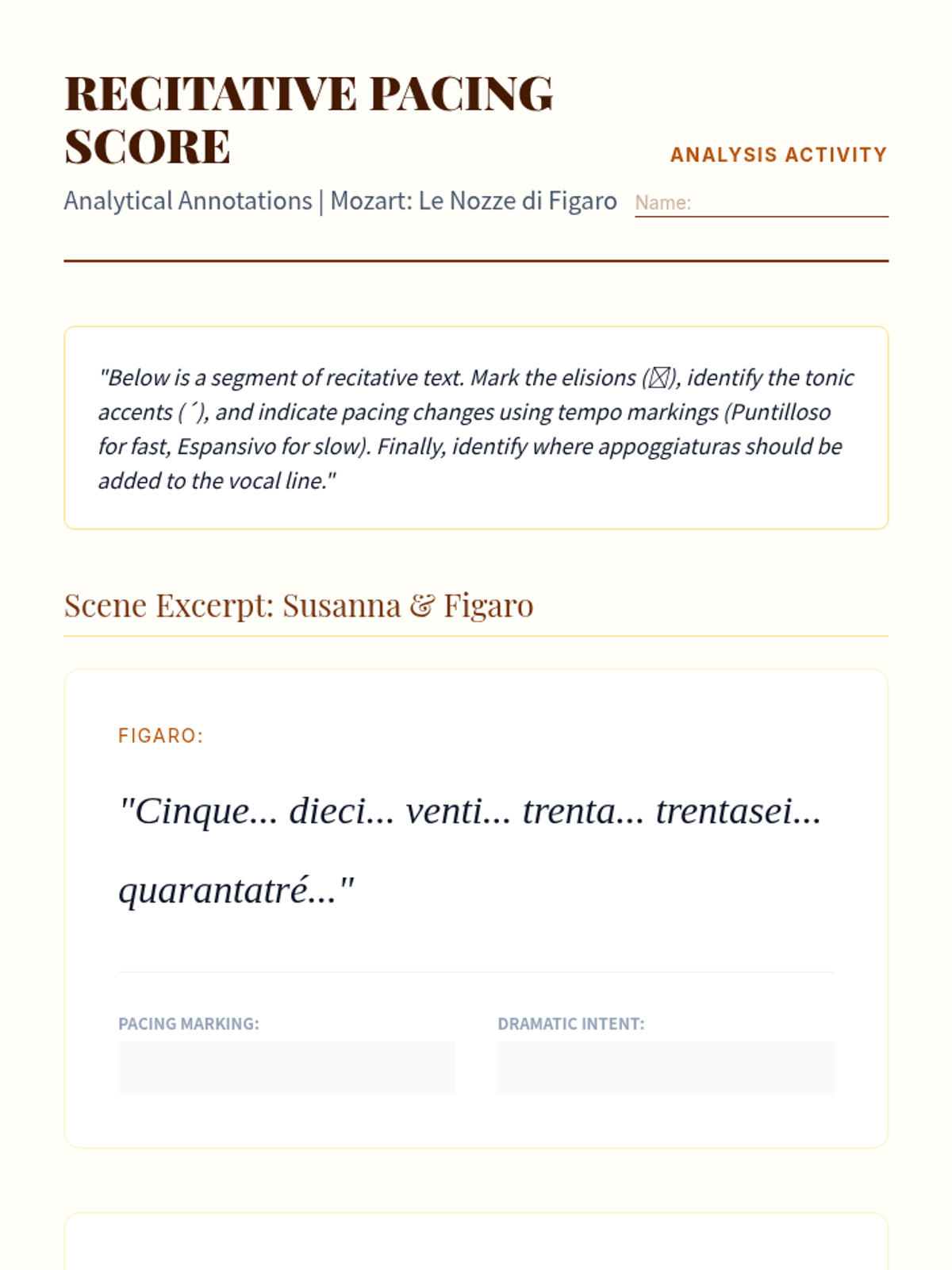
Analyzes the prosody of Italian speech to inform the rhythmic flexibility and pacing of secco recitative in Mozart and Rossini.
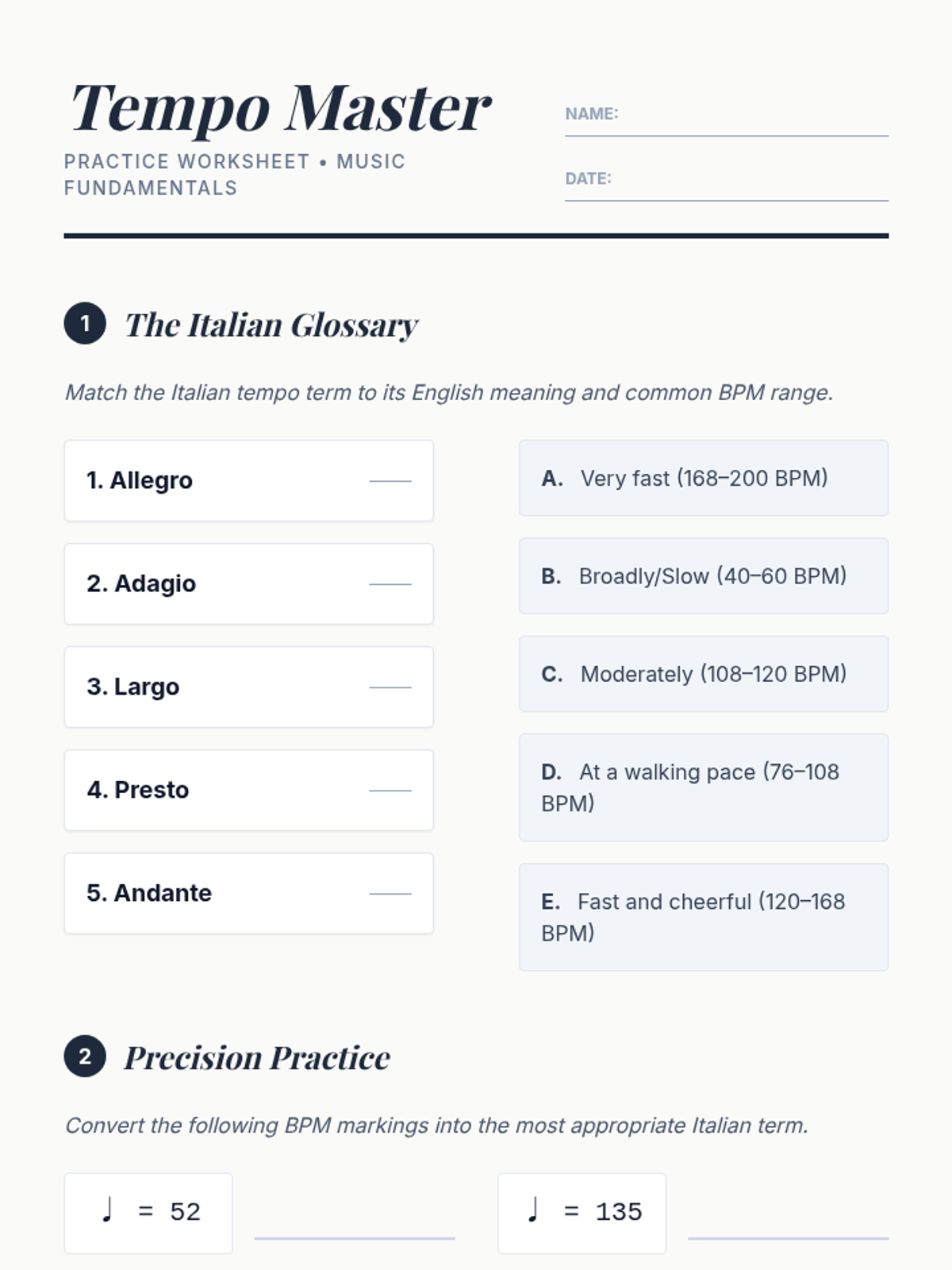
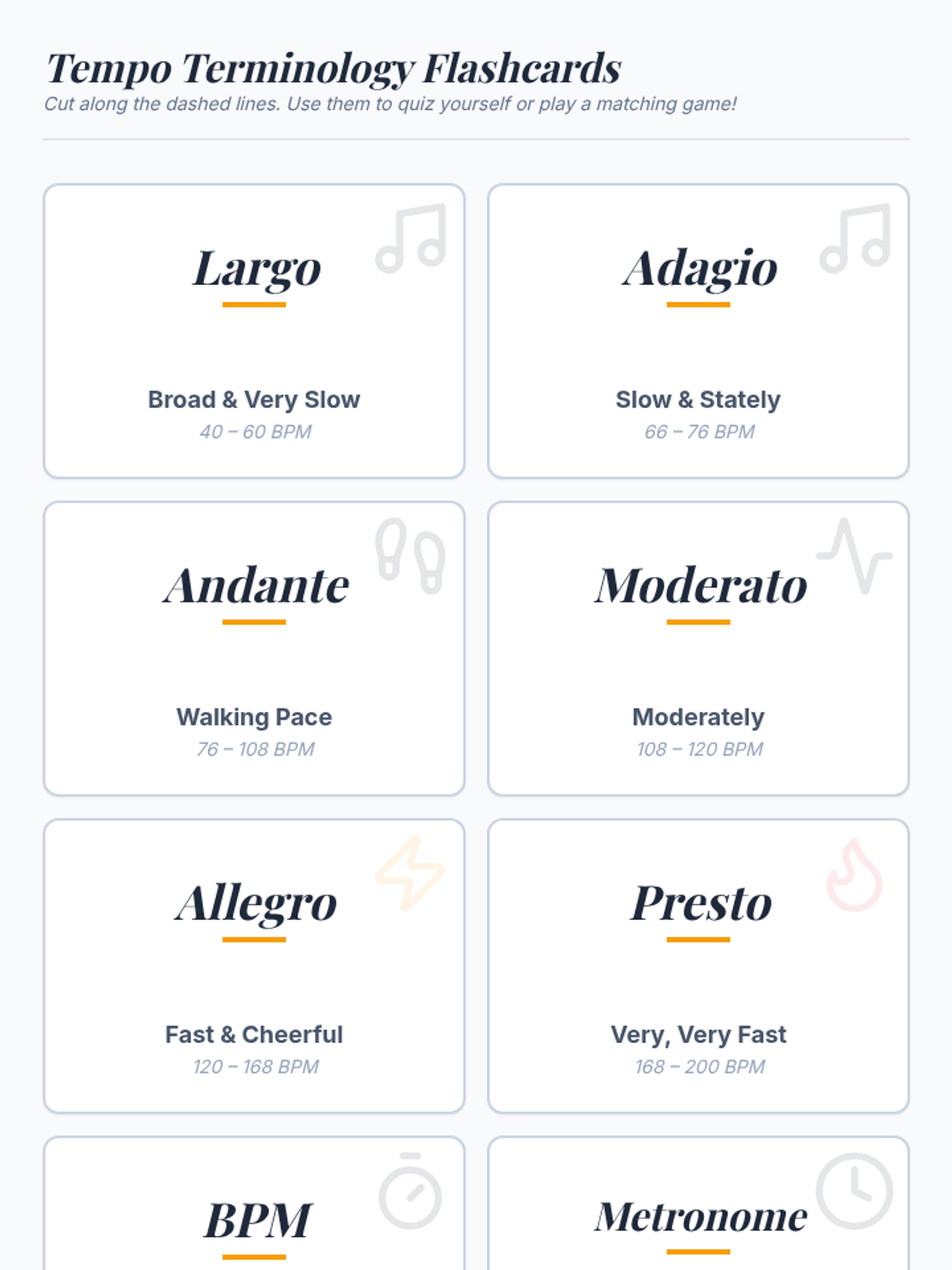
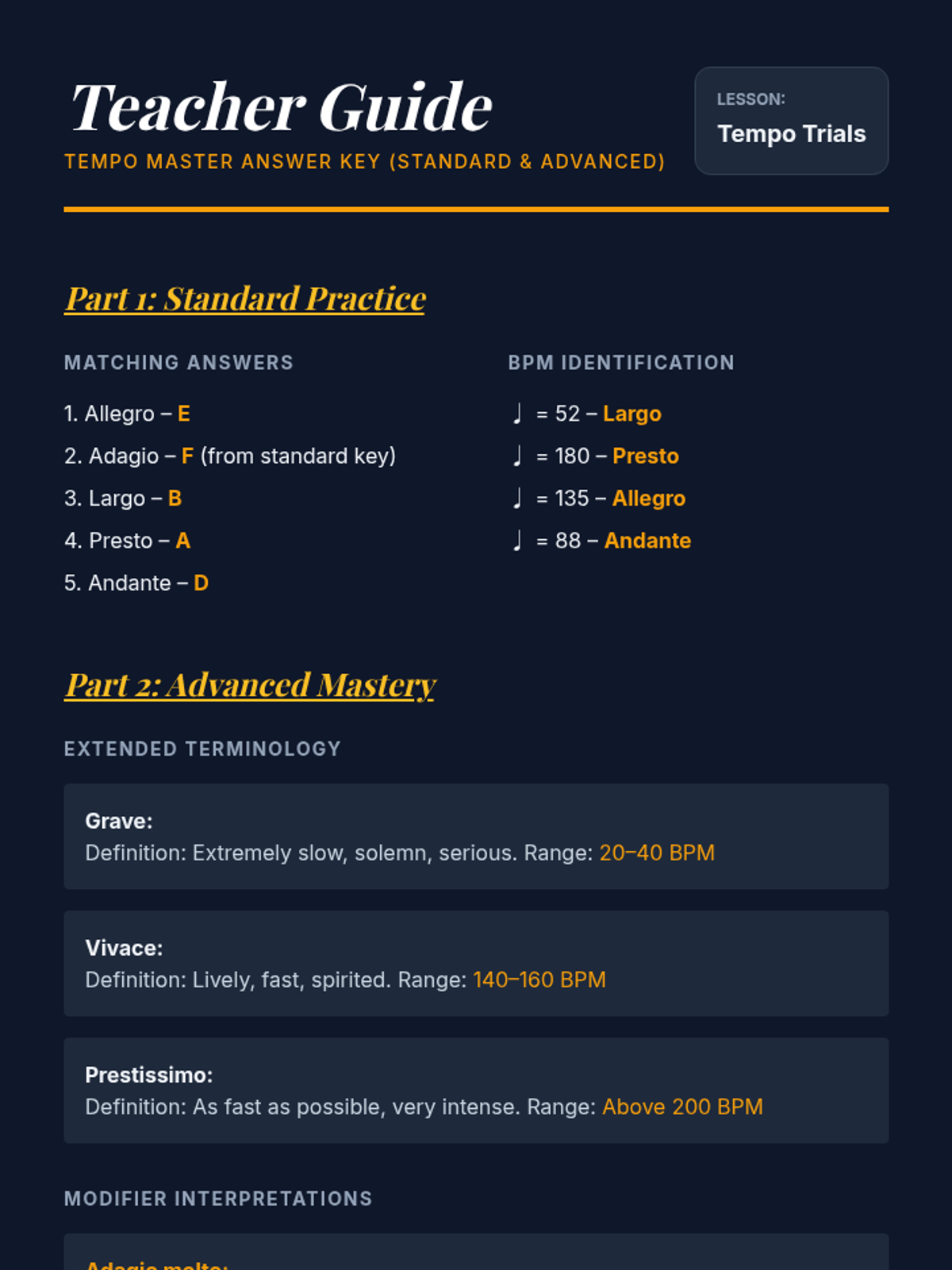
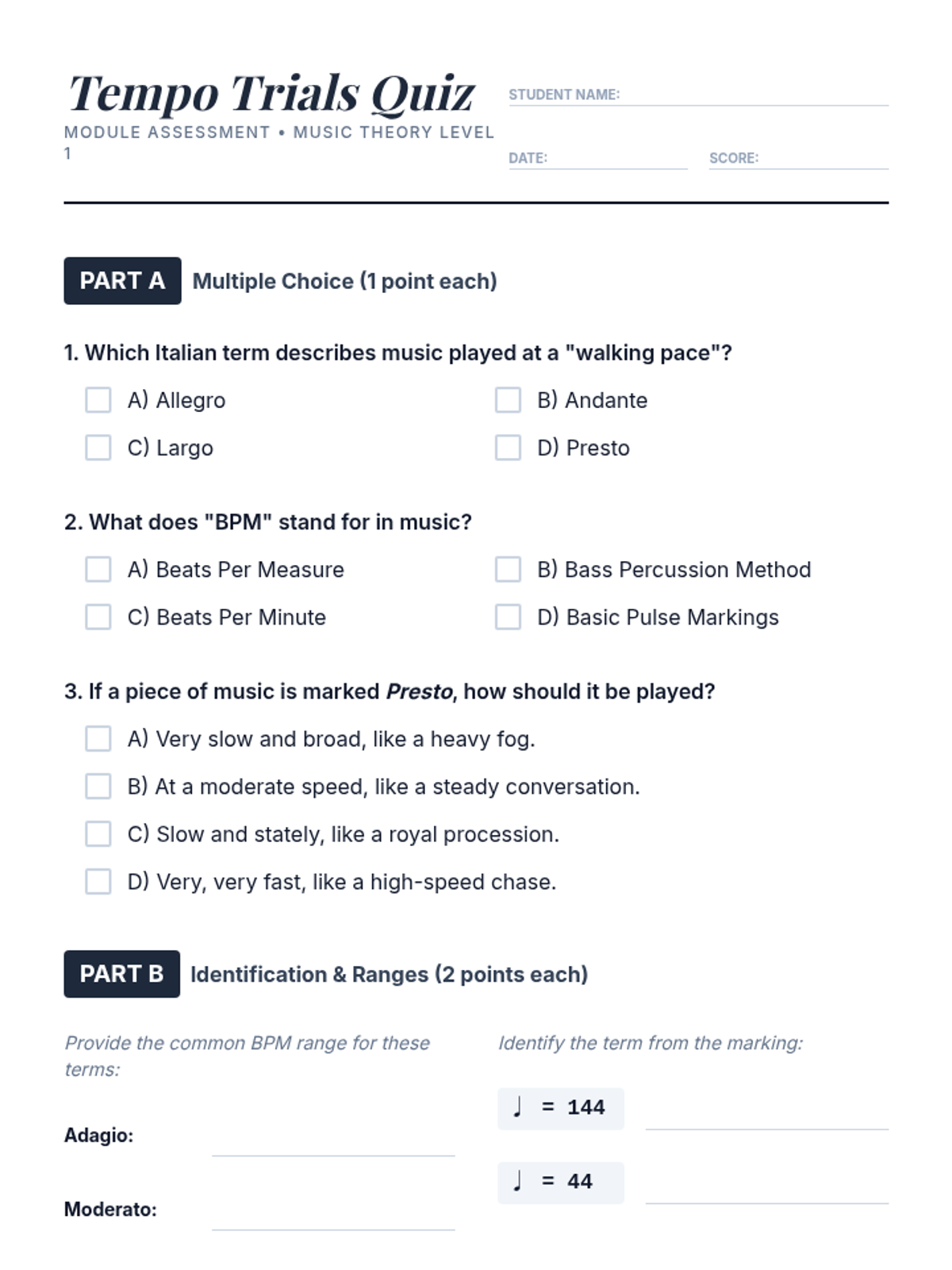
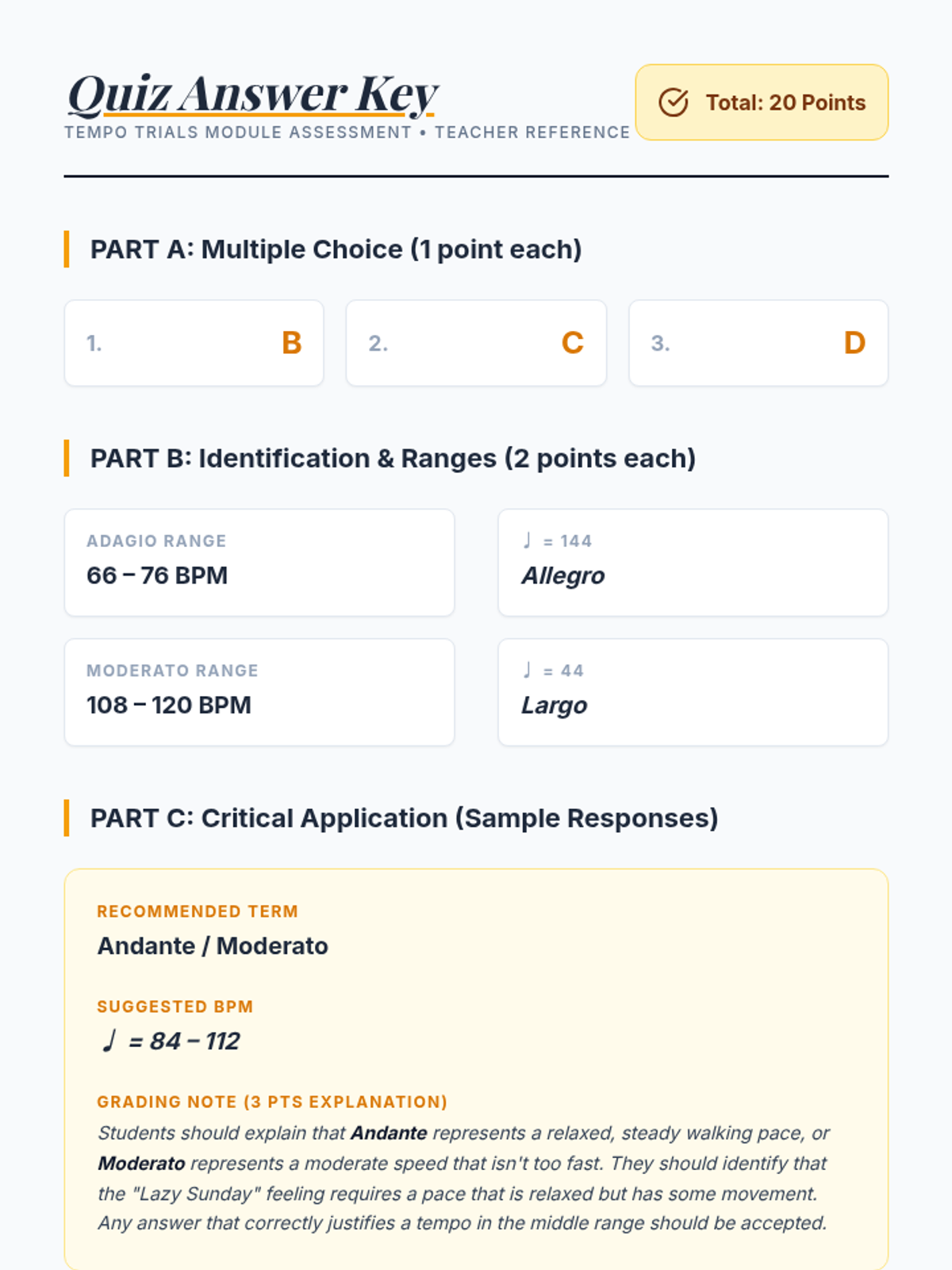
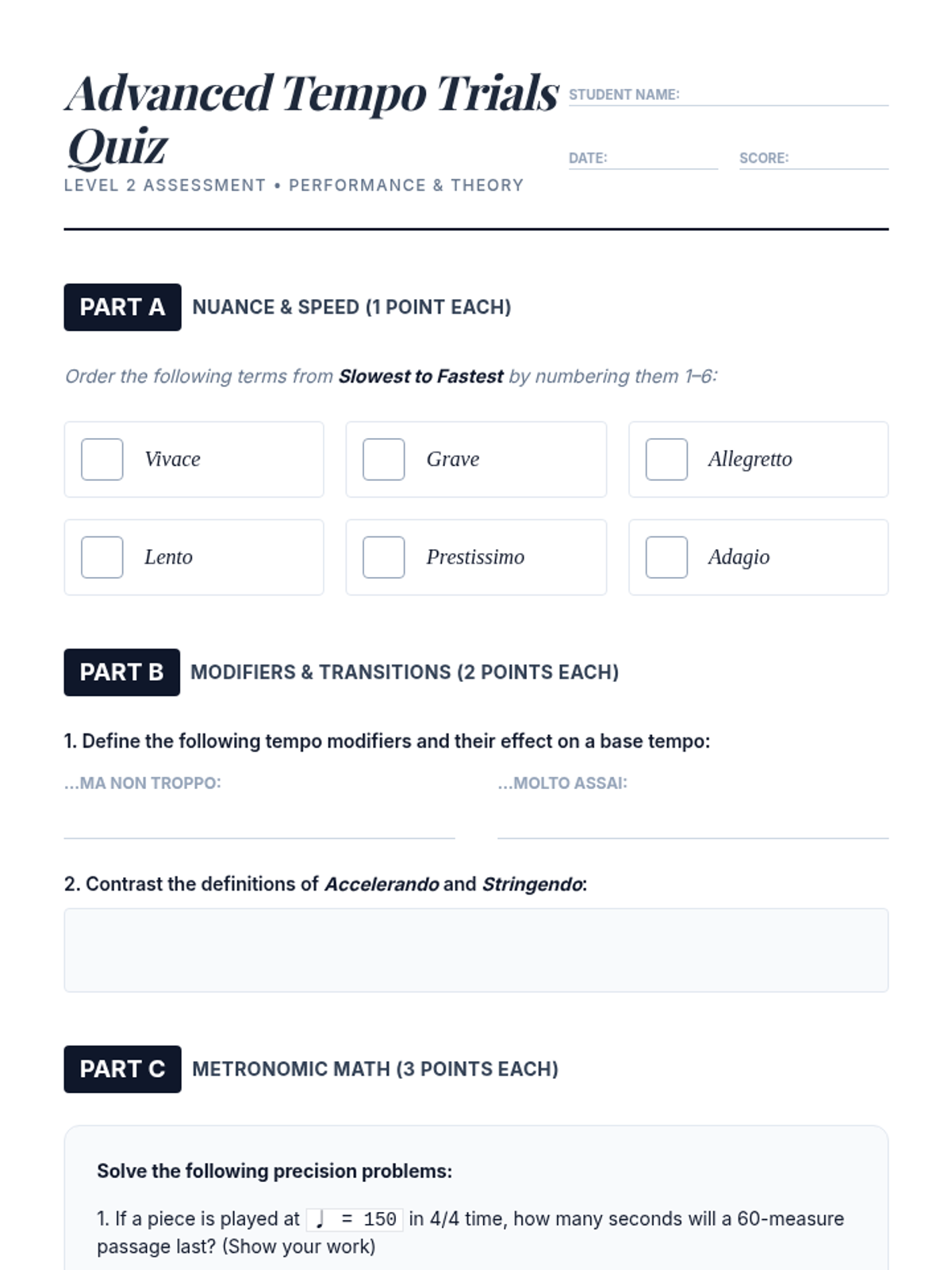
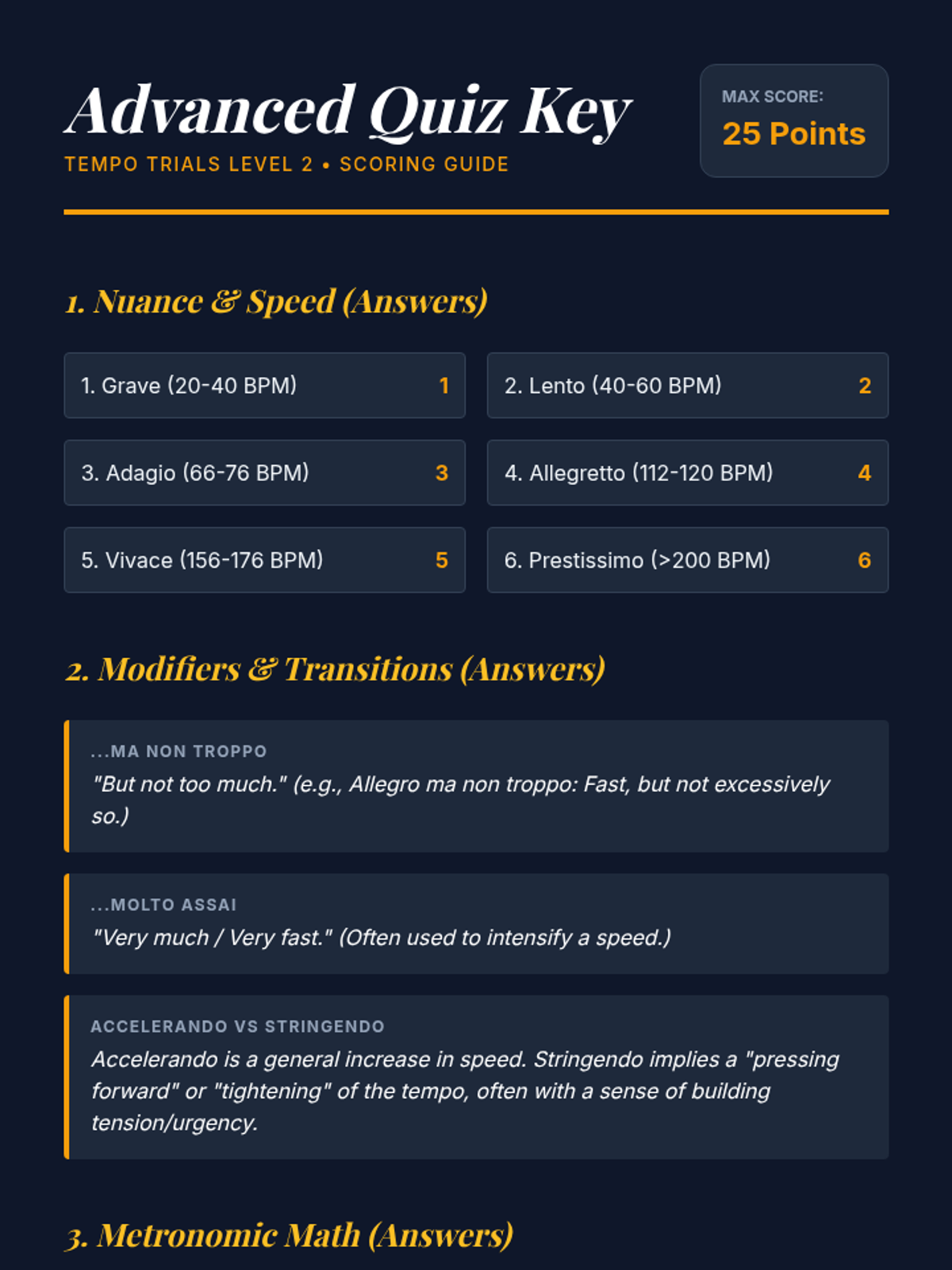
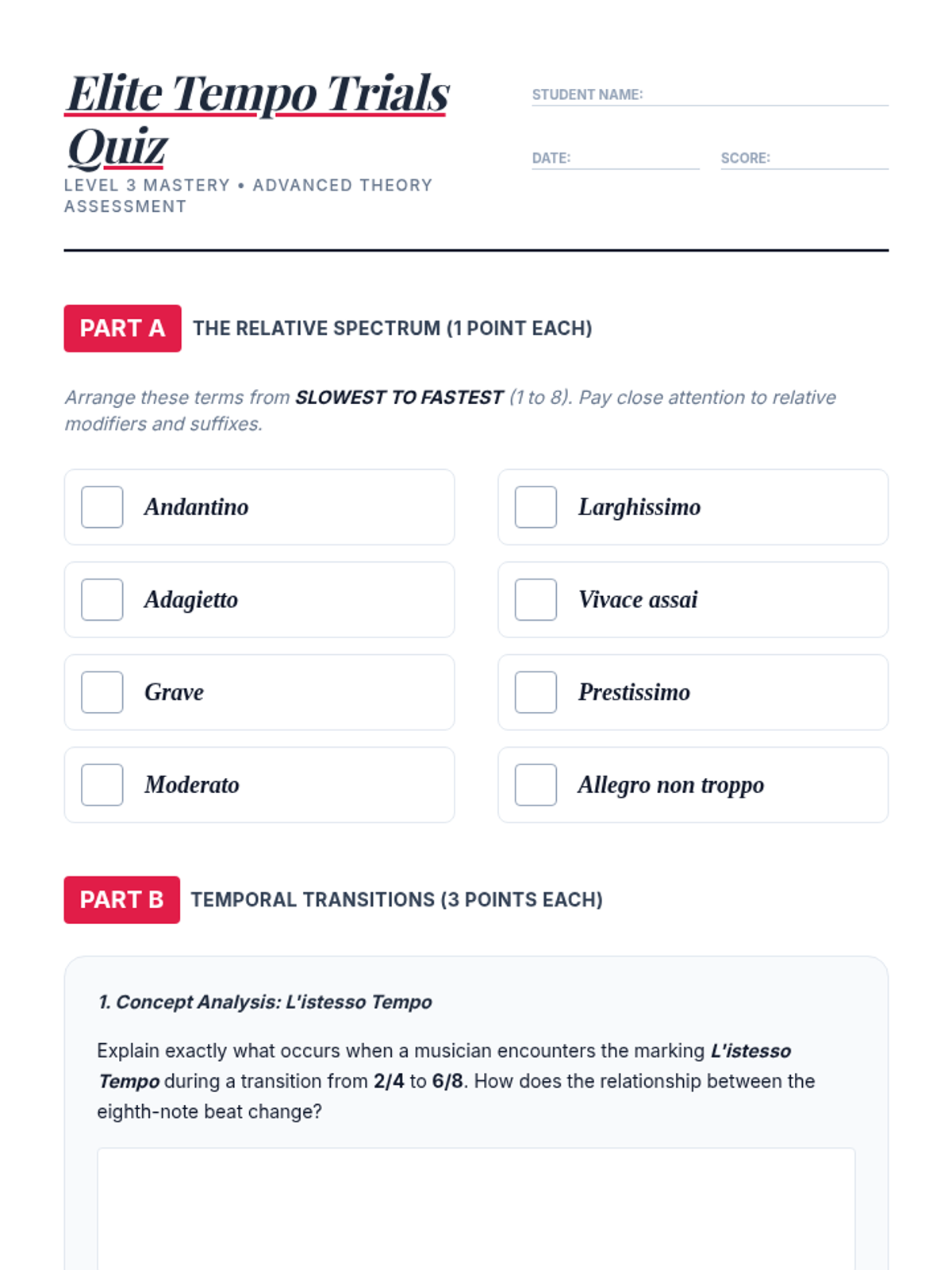
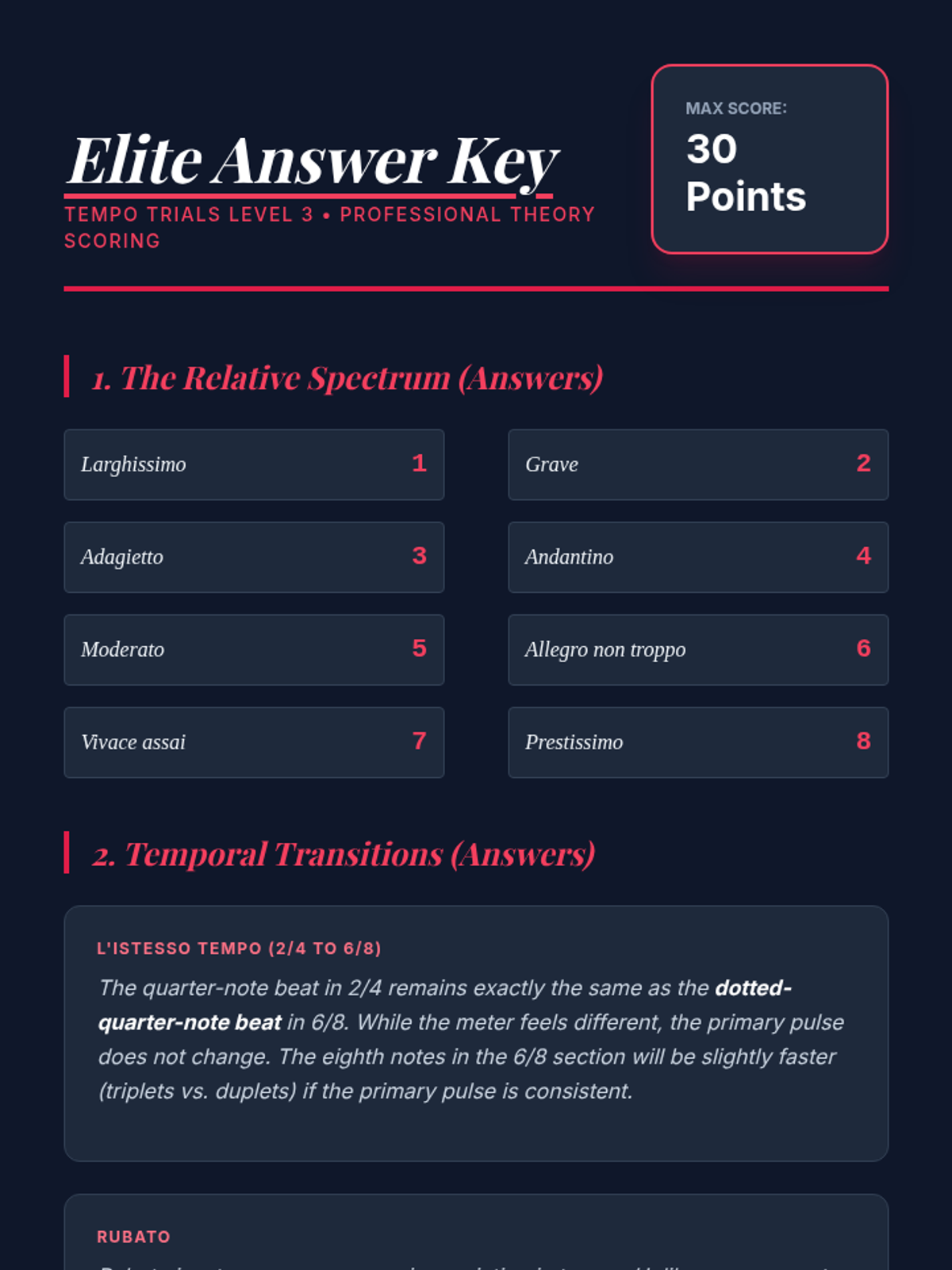
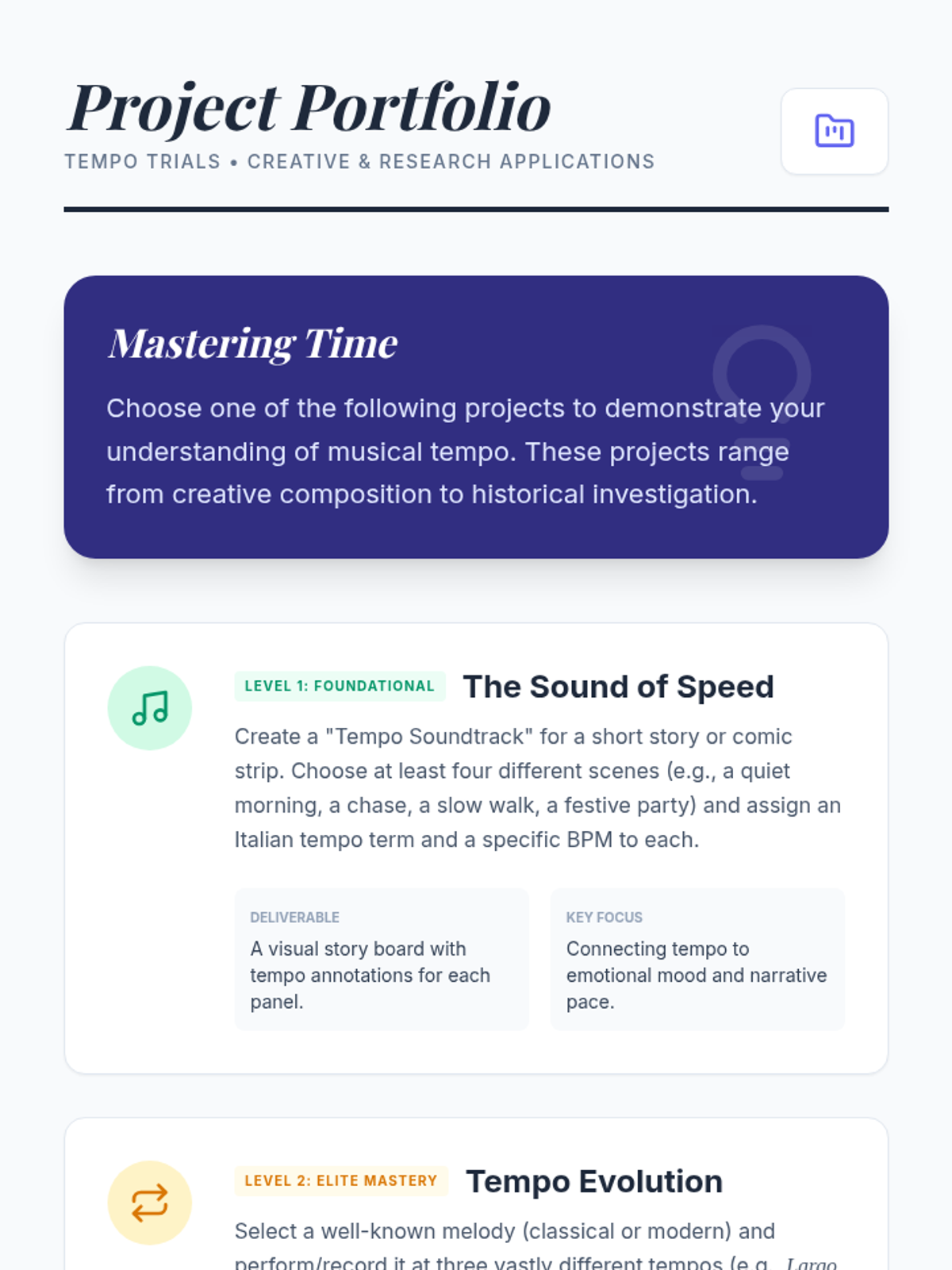
A comprehensive guide to understanding and applying musical tempo, covering Italian terminology, BPM, and metronome markings.
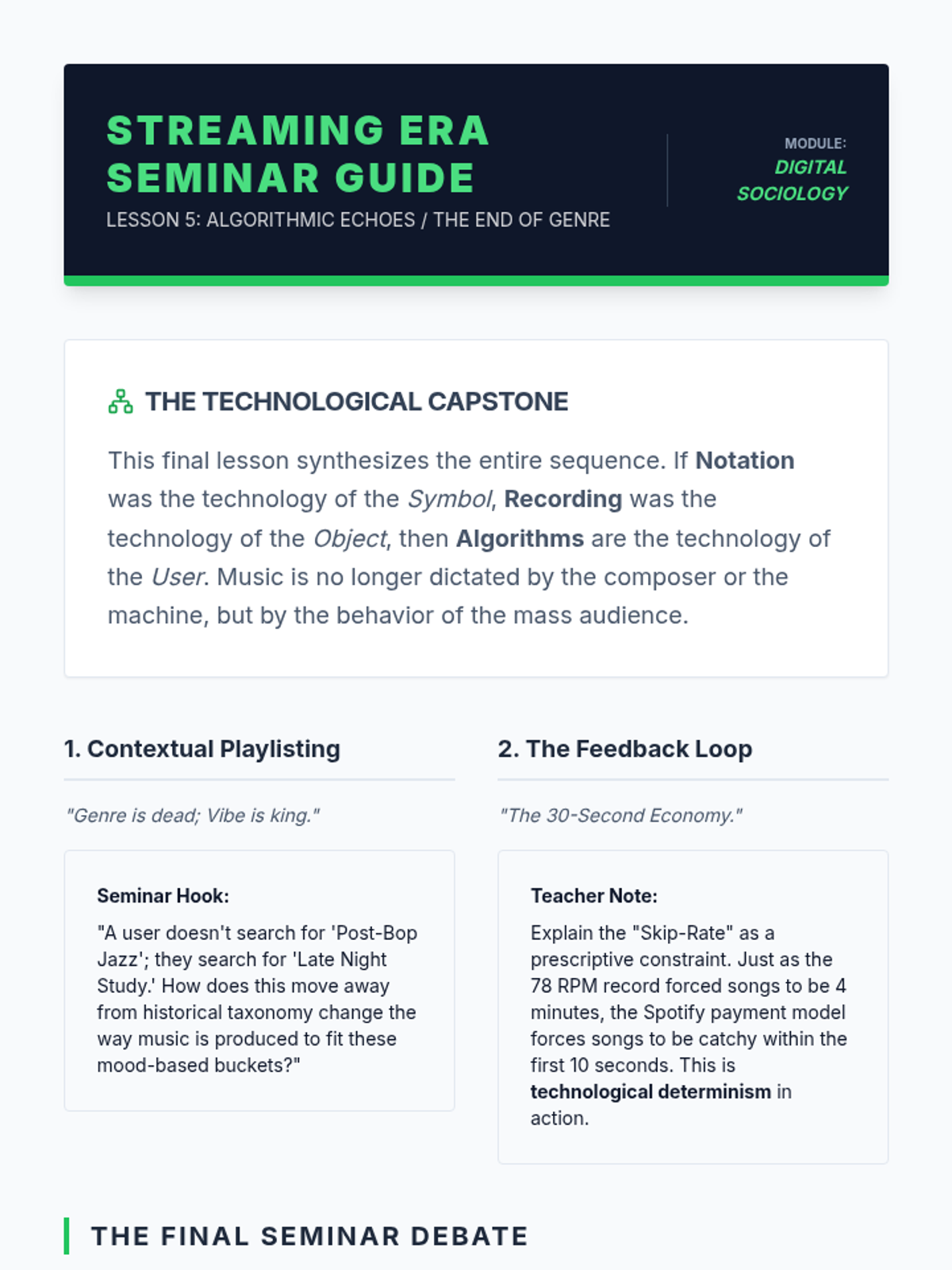
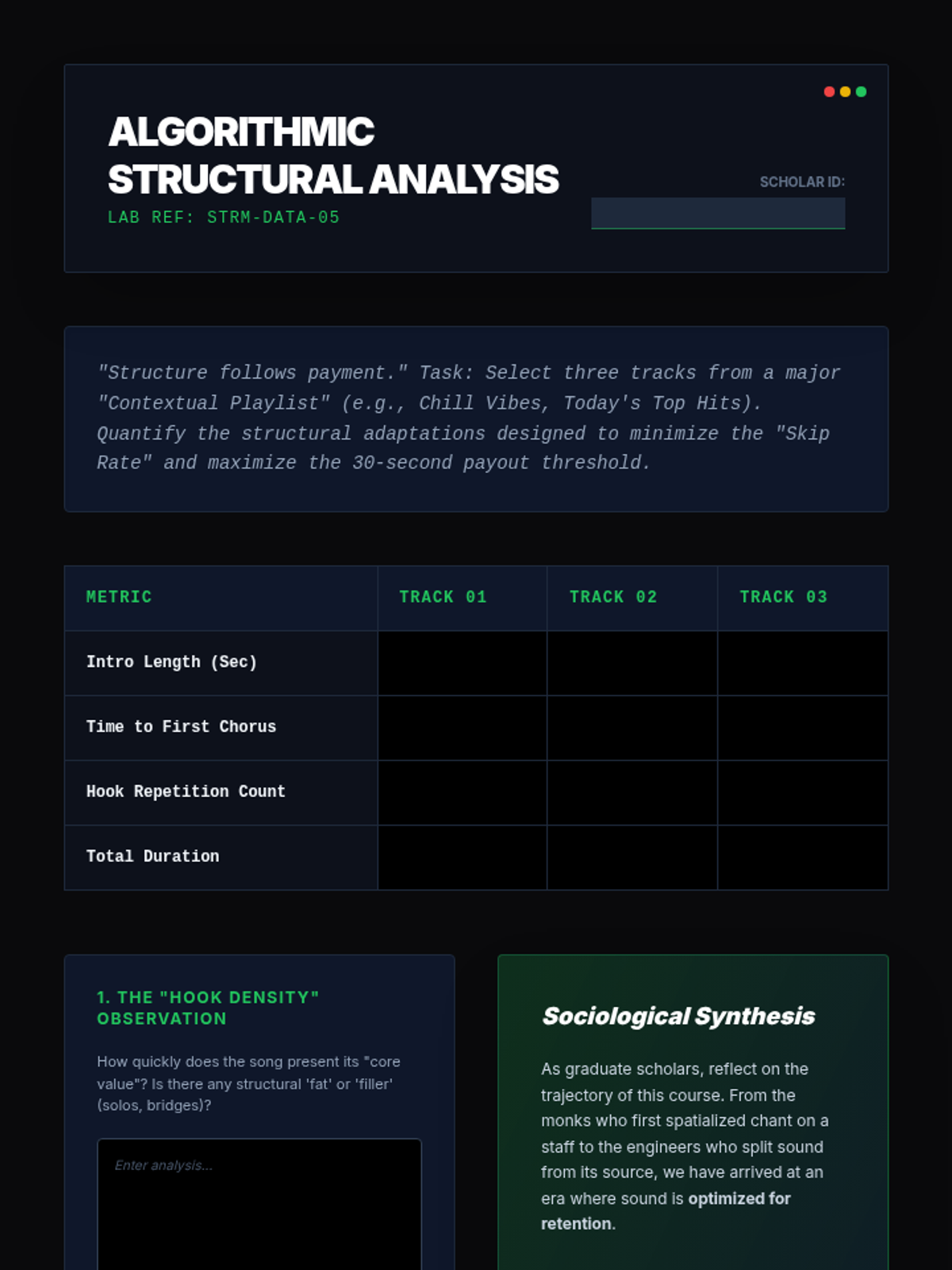
Concludes with an analysis of how streaming algorithms and metadata influence modern song structure and the sociological phenomenon of the 'end of genre.'
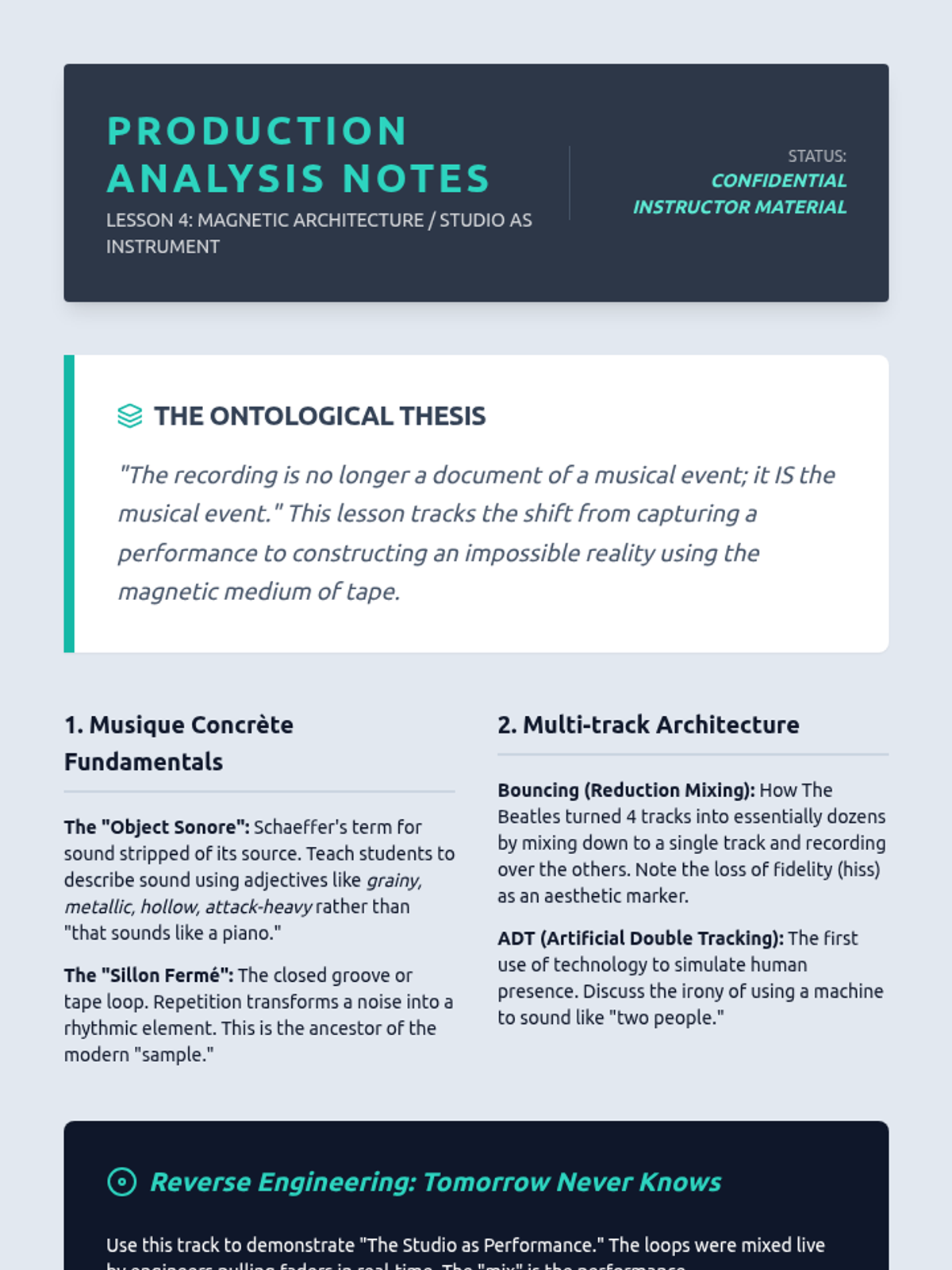
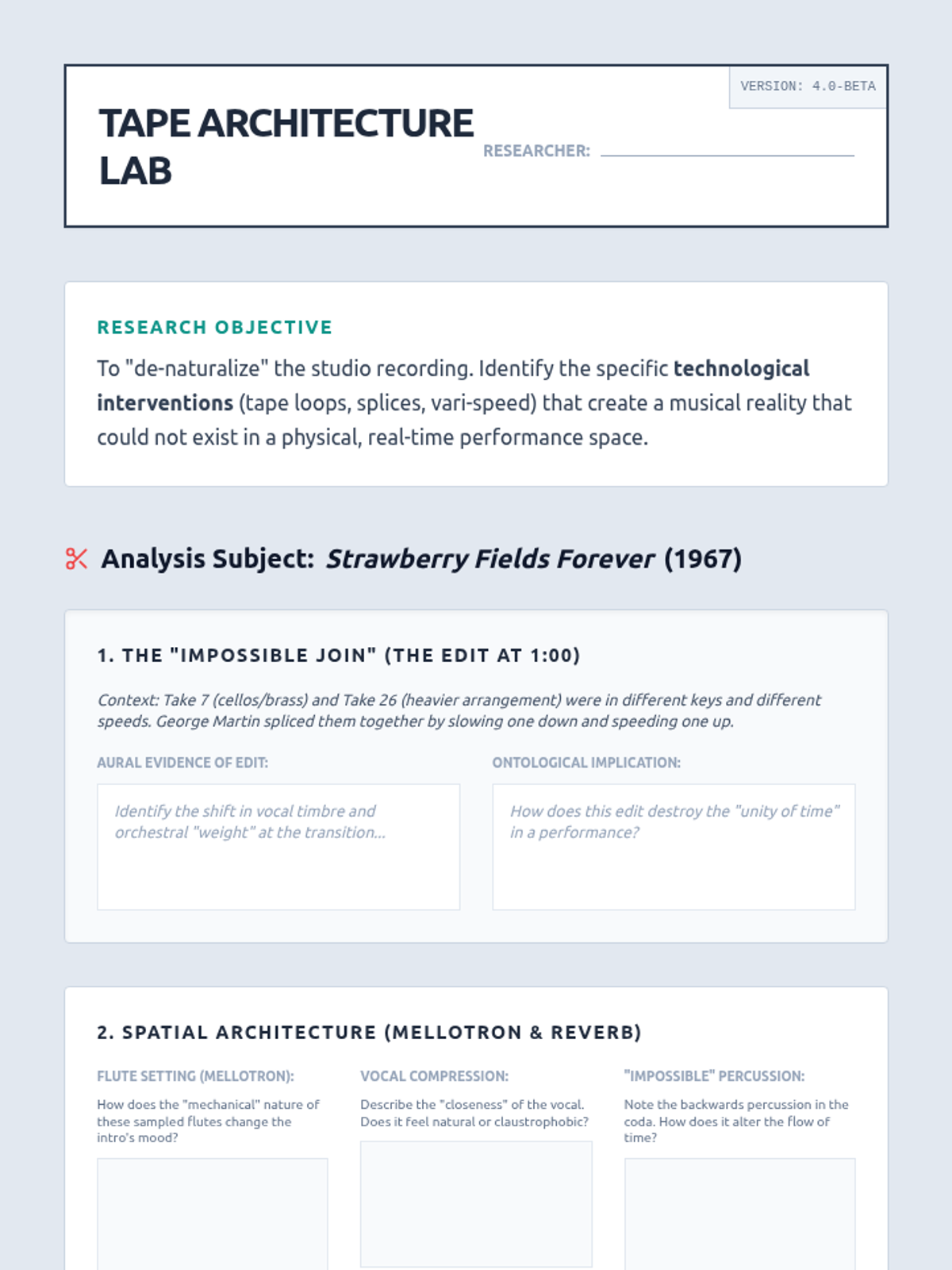
Explores the recording studio as a primary compositional tool, moving from Musique Concrète to multi-track recording and the ontological shift from score to recording.
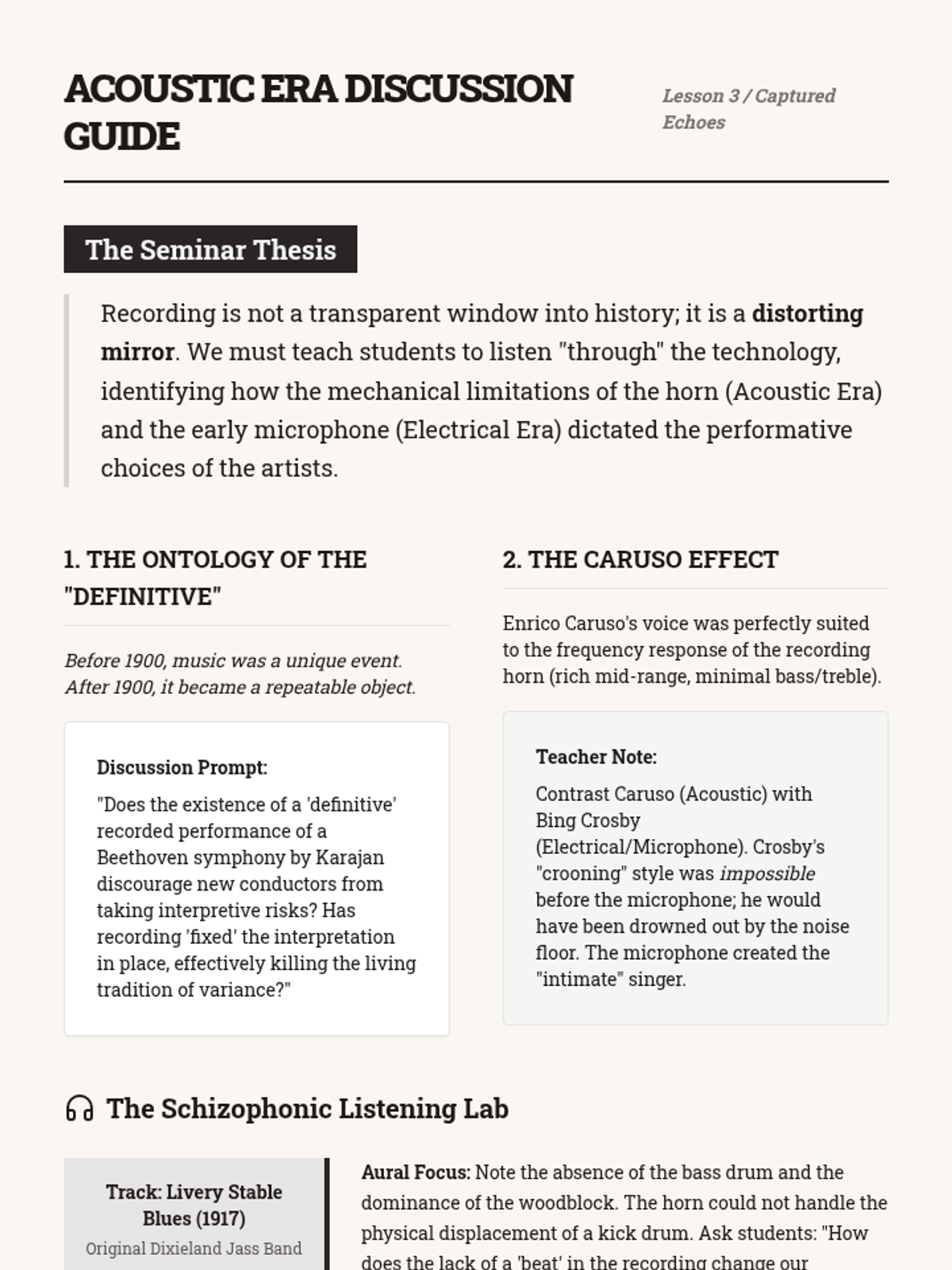
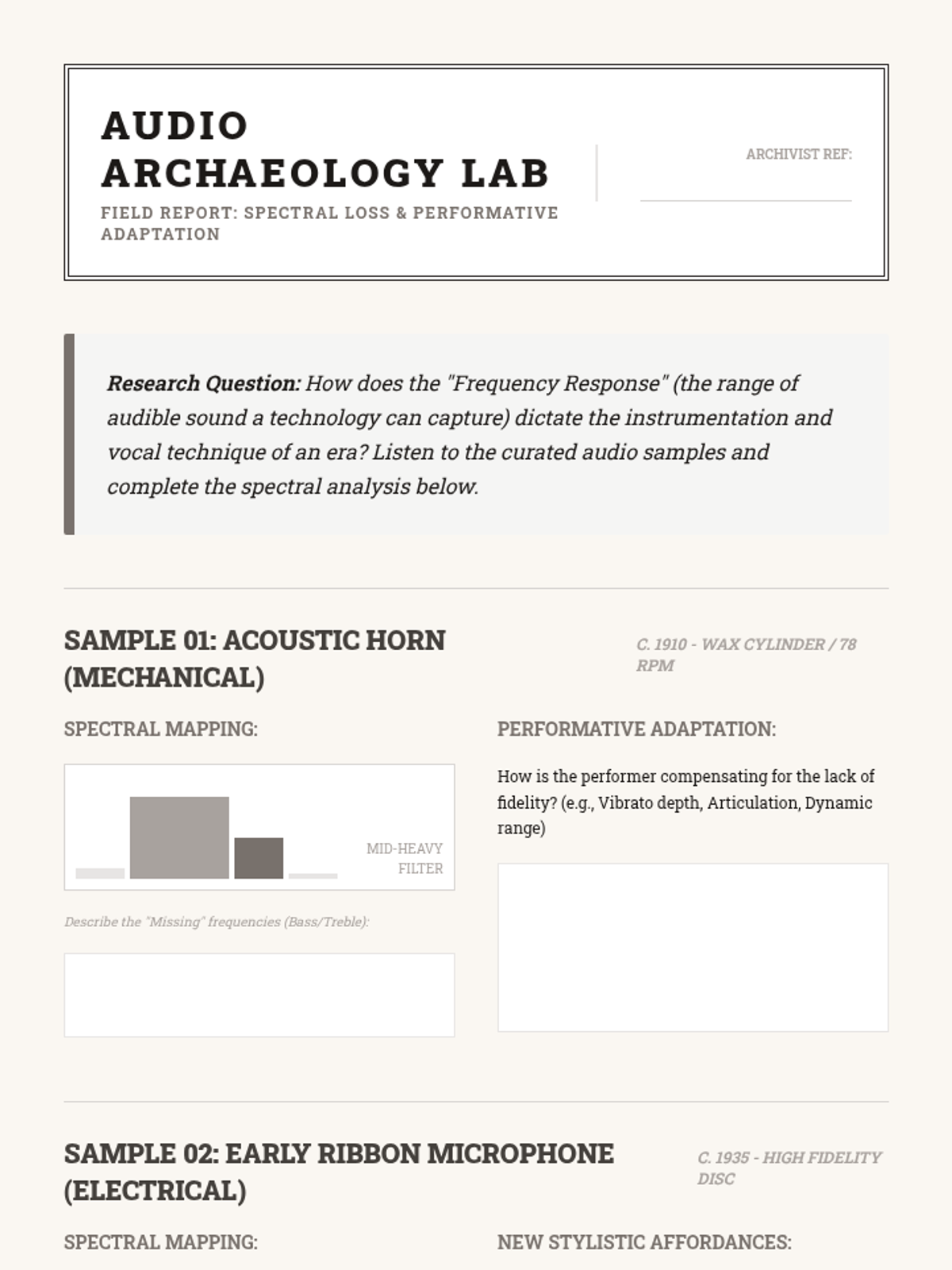
Investigates the separation of sound from its source (schizophonia) and how early recording limitations influenced performance practice and the concept of the 'definitive performance.'
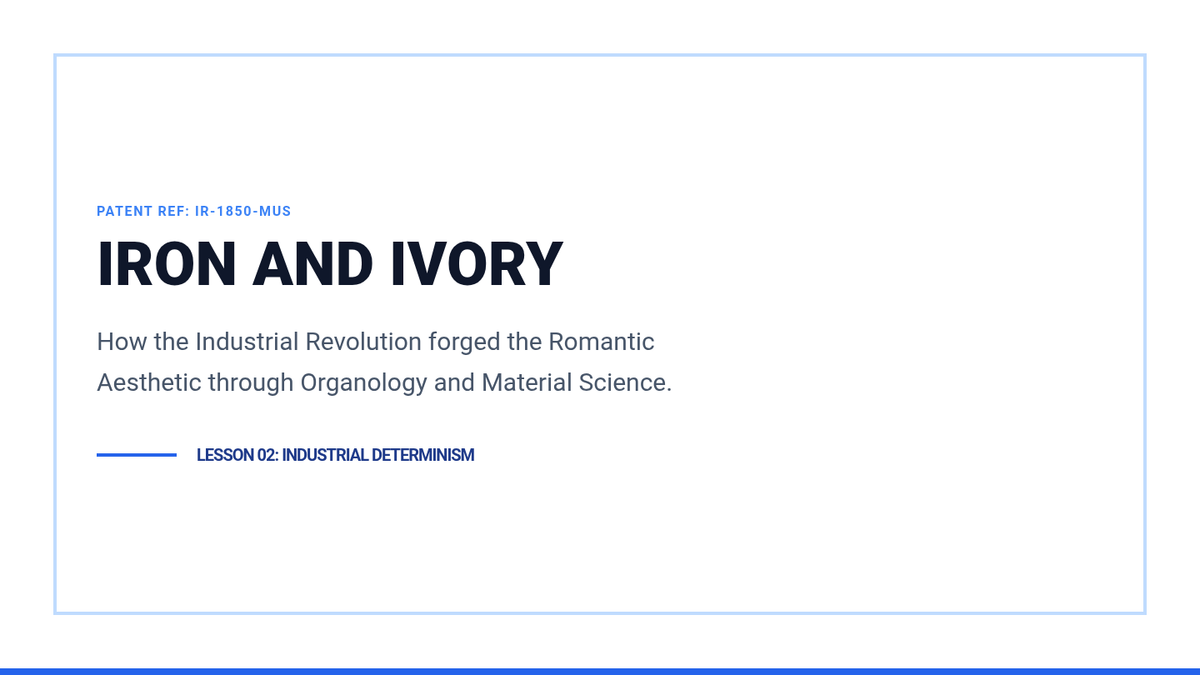
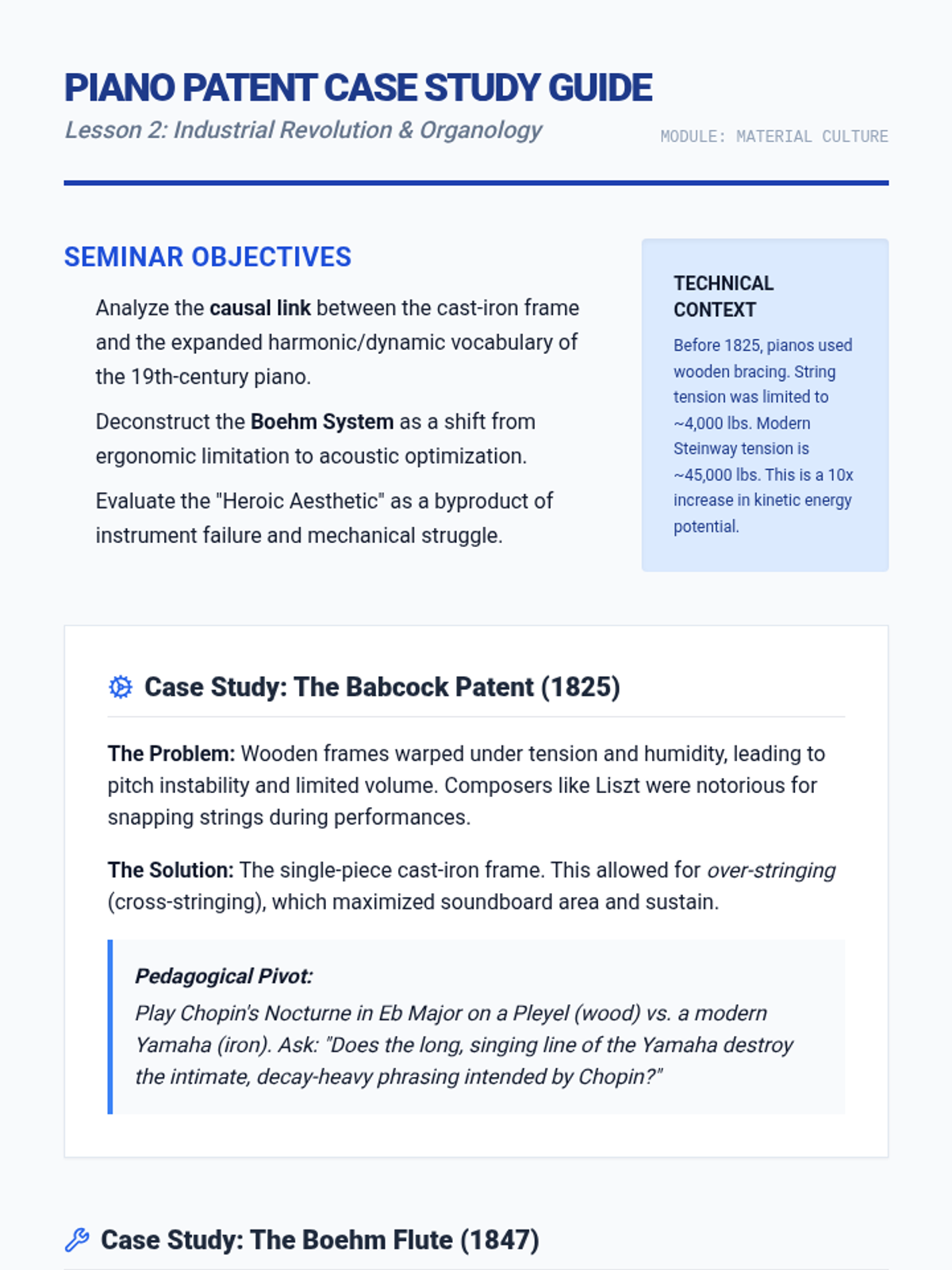
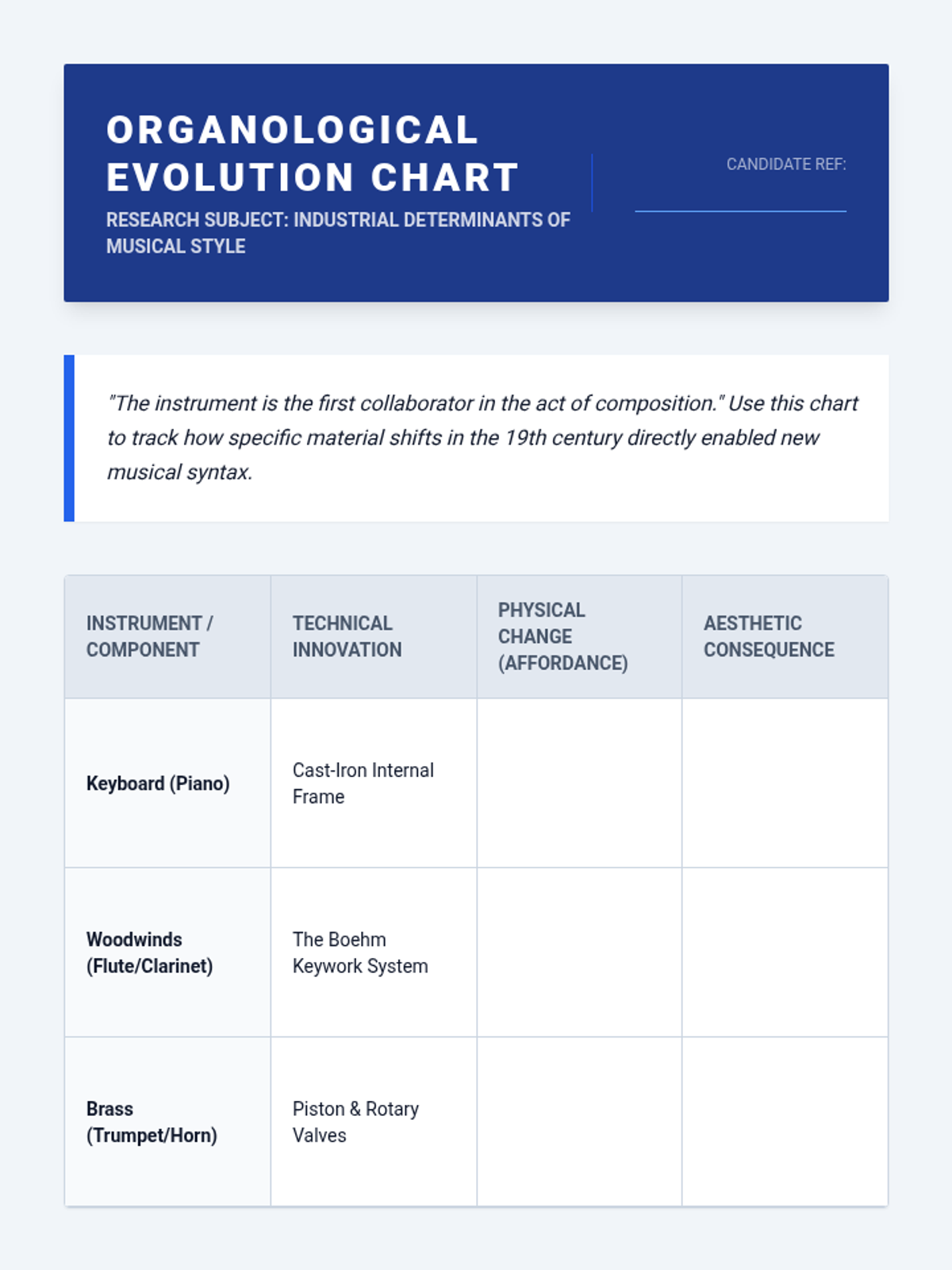
Examines how the physical evolution of instruments during the Industrial Revolution, such as the cast-iron piano frame, dictated Romantic era orchestration and the rise of the virtuoso.
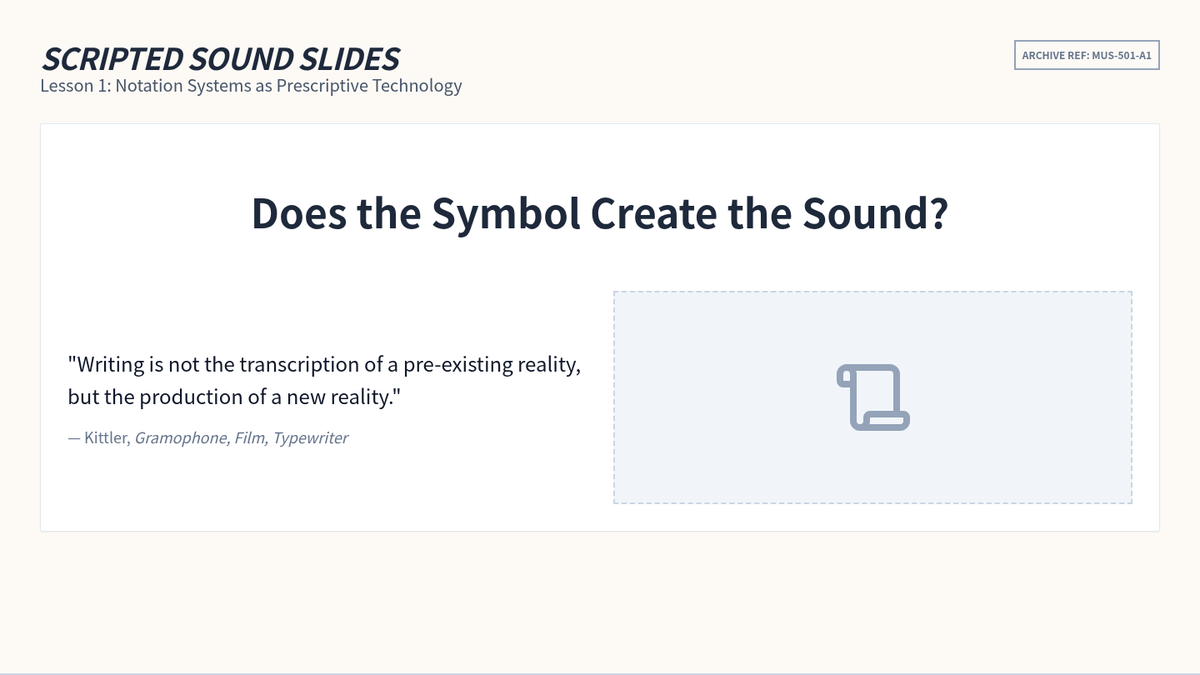
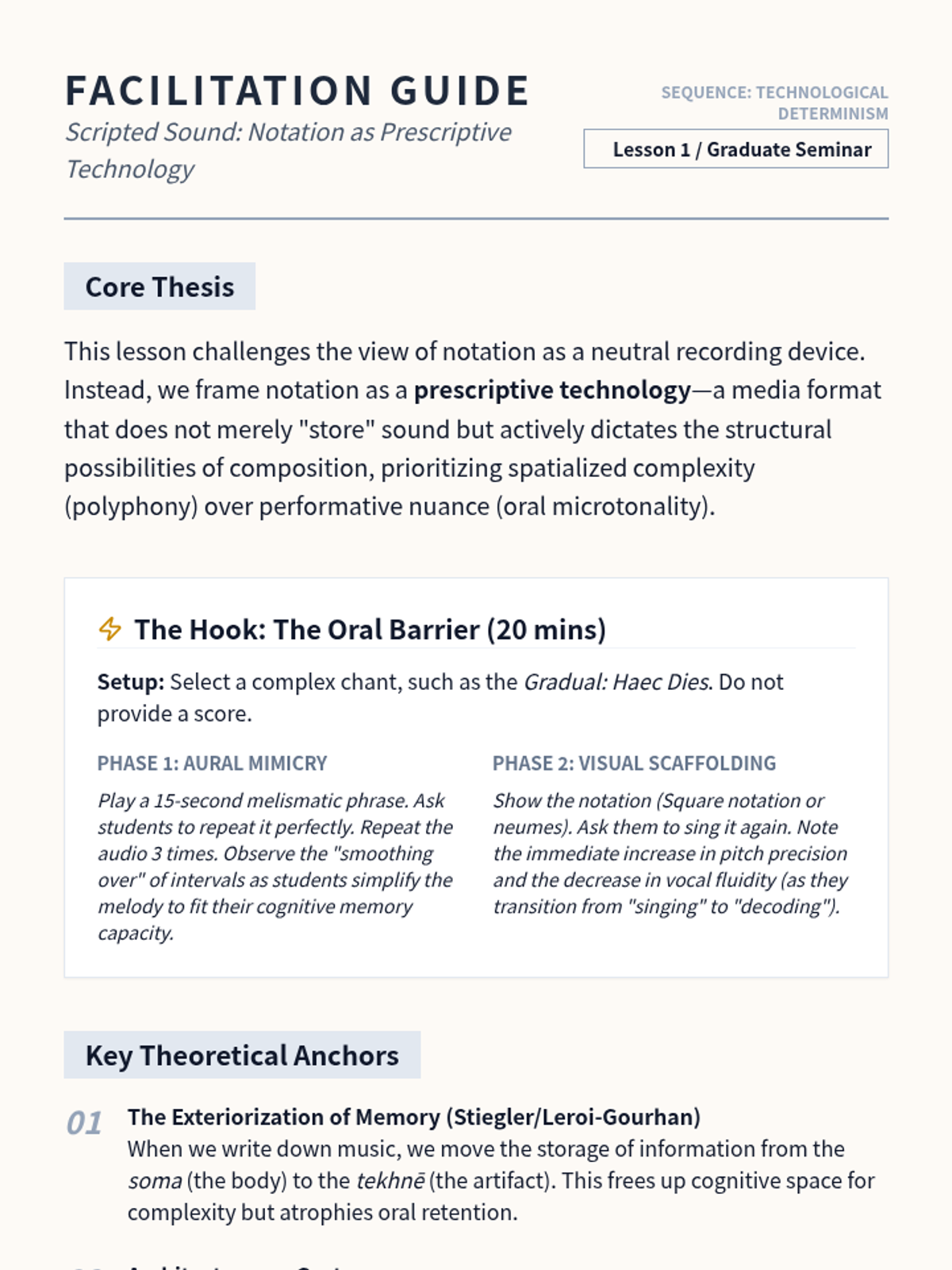
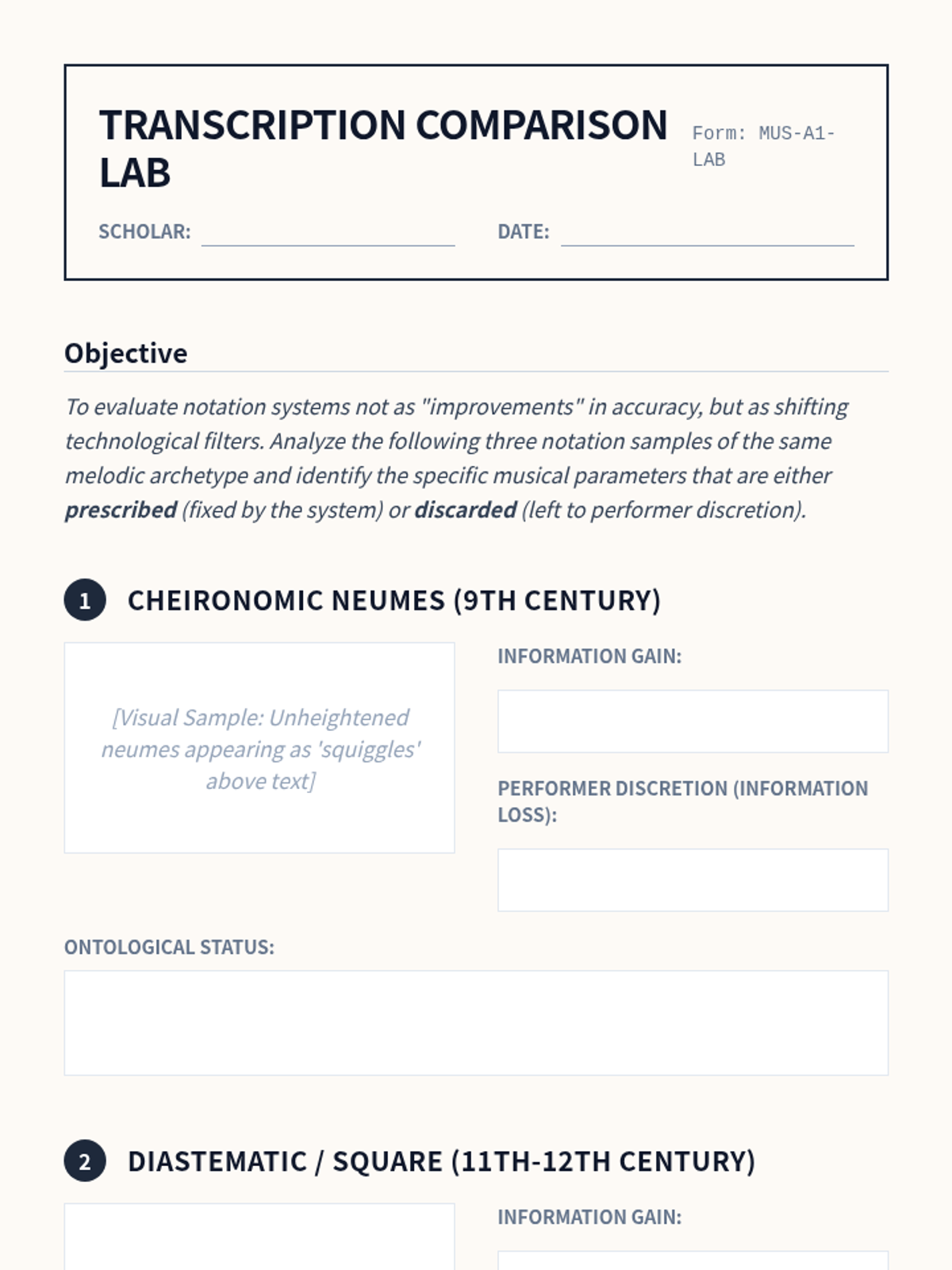
Analyzes the shift from oral tradition to fixed notation and how the technology of 'writing' music enabled new levels of polyphonic complexity while altering musical memory.
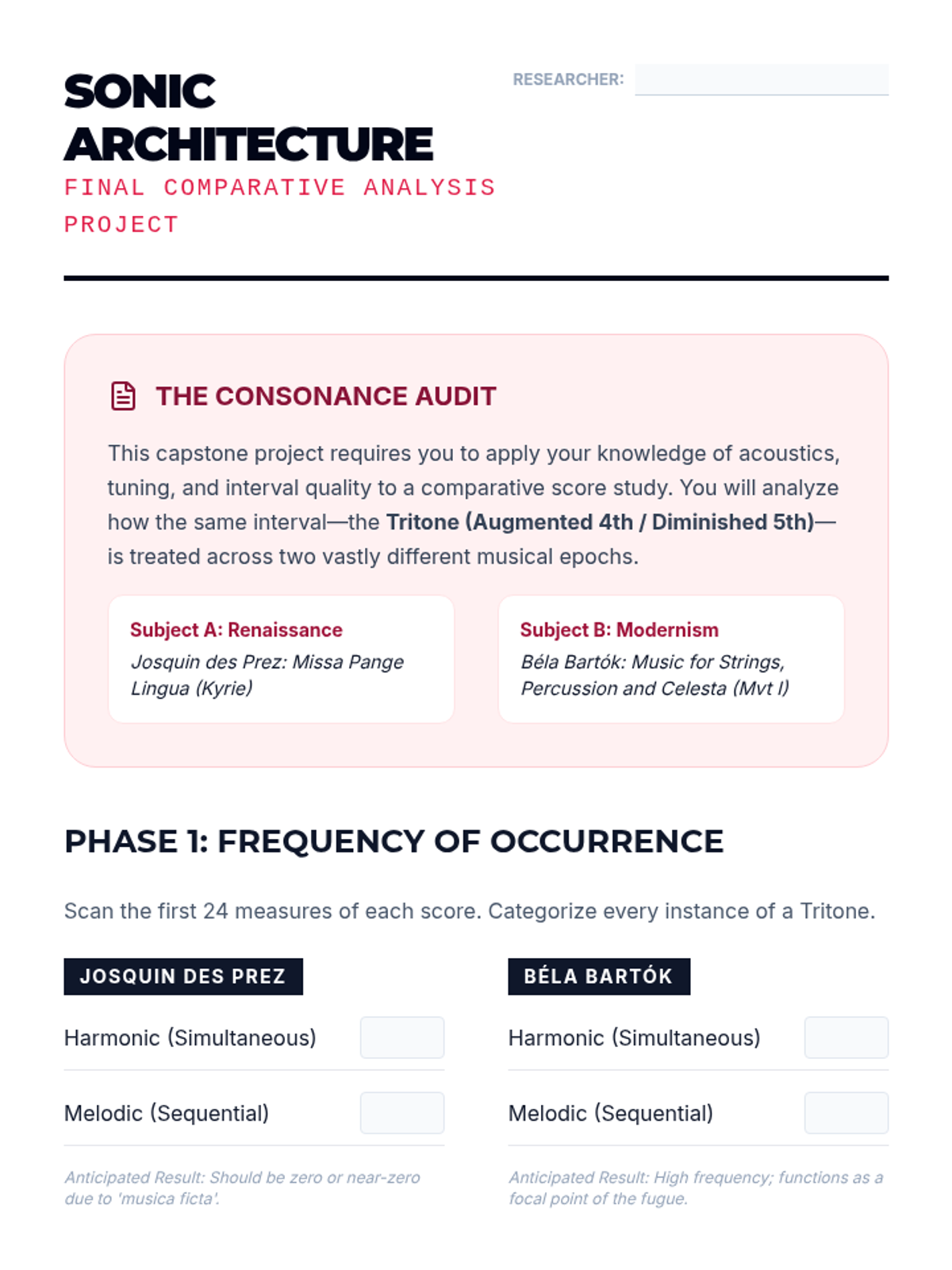
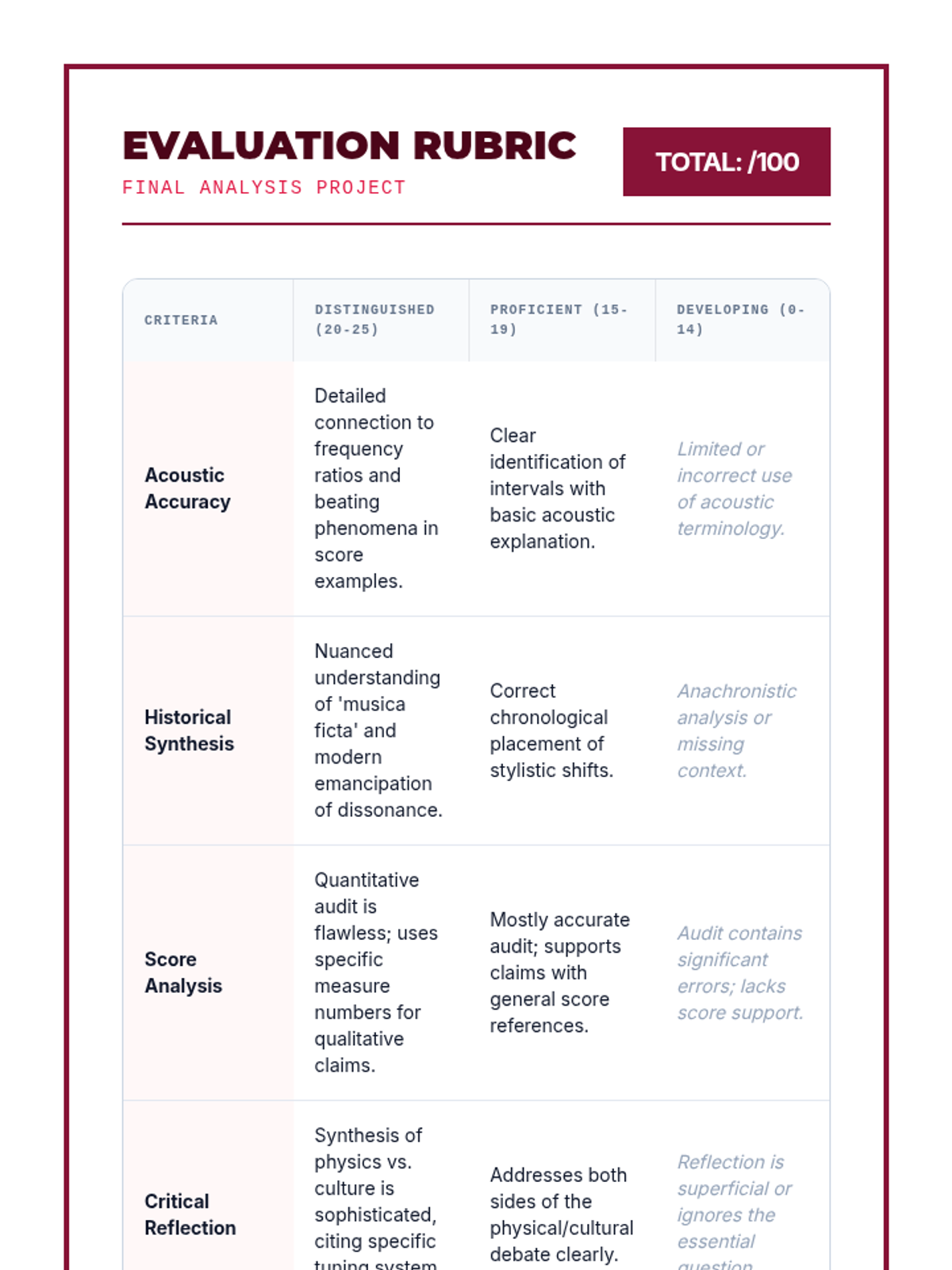
Examination of how intervals function in melodic versus harmonic contexts and the historical evolution of consonance and dissonance.
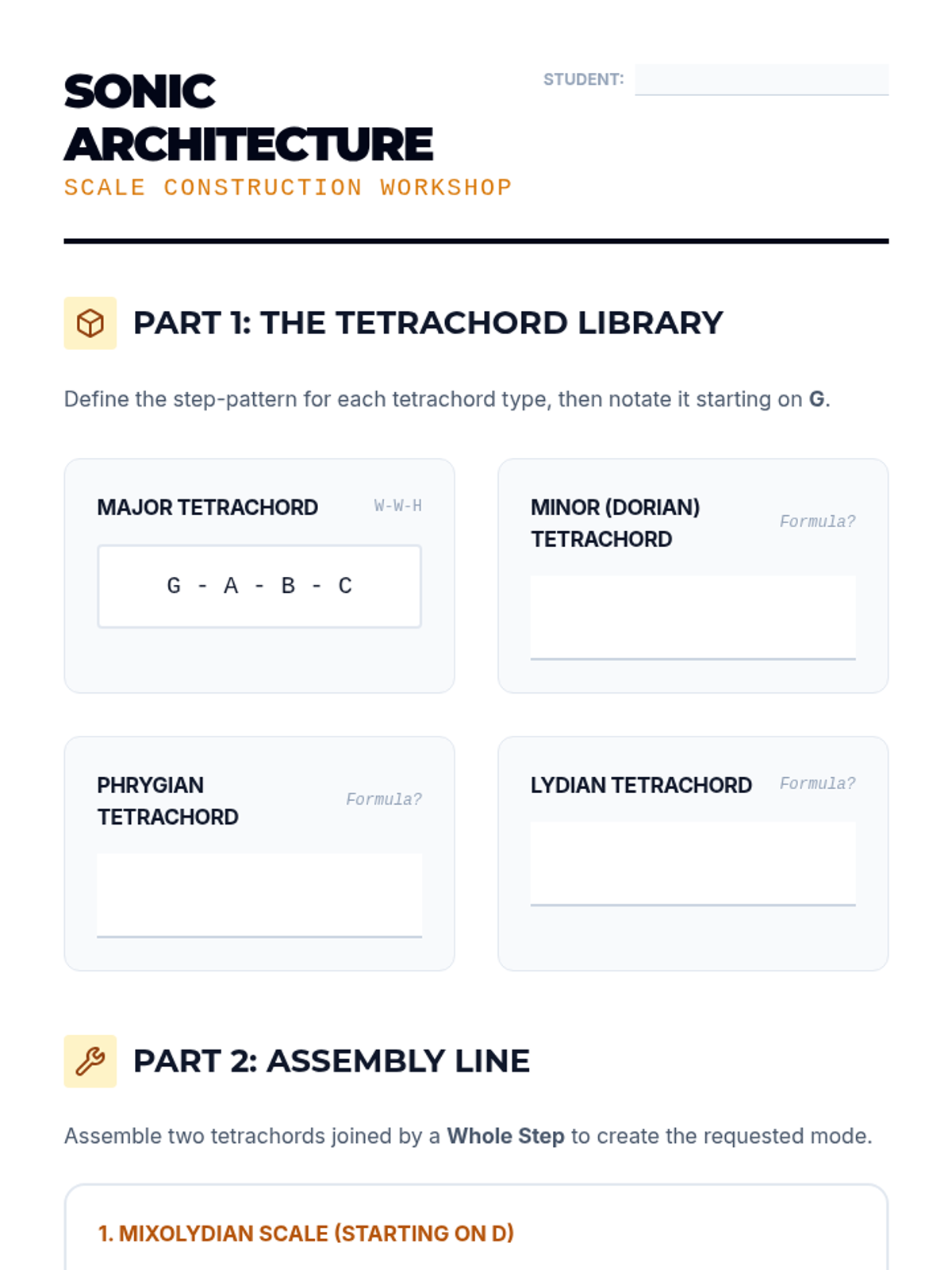
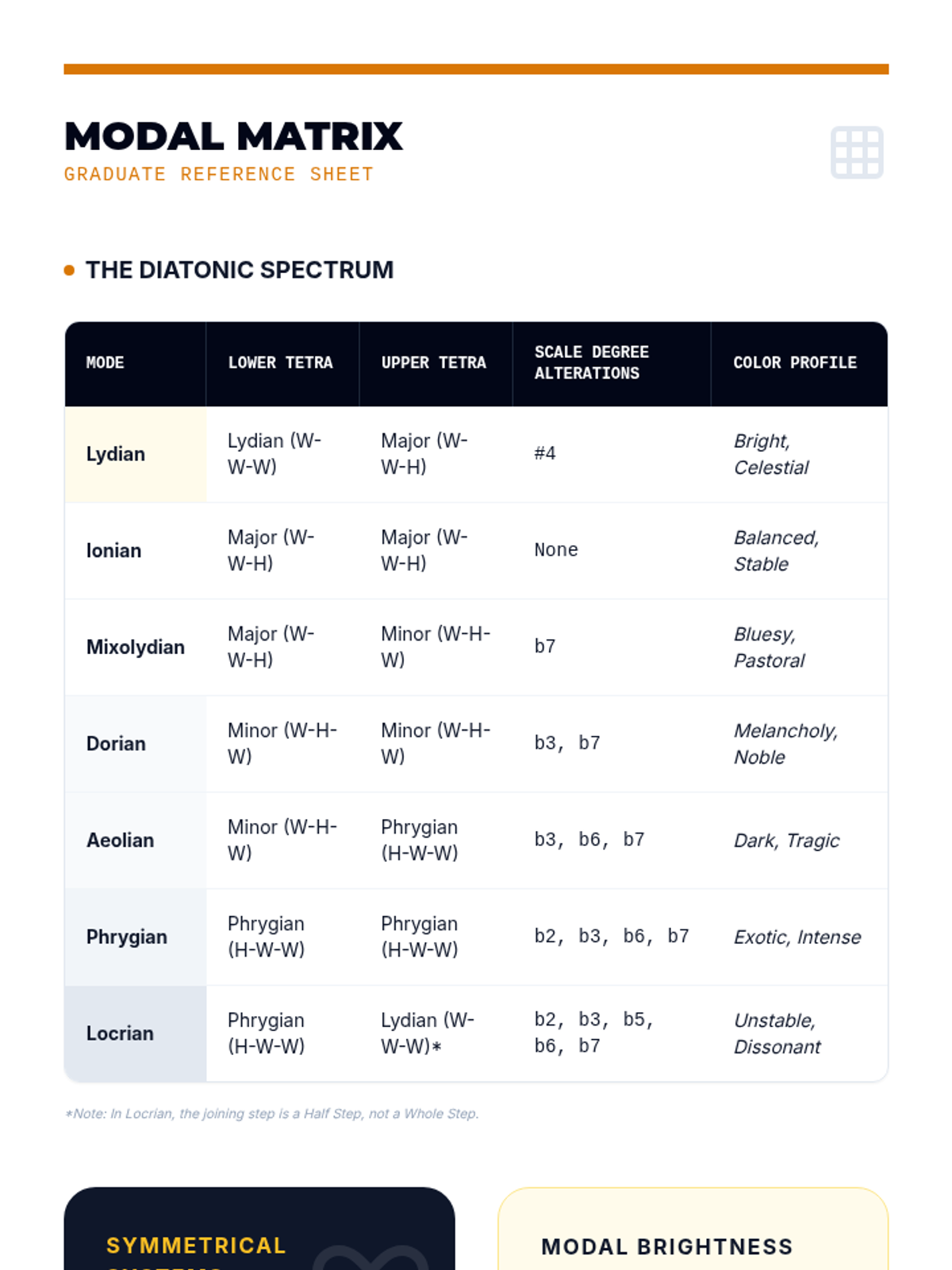
Deconstruction of scales into tetrachordal patterns and expansion into modal and synthetic scale theory.
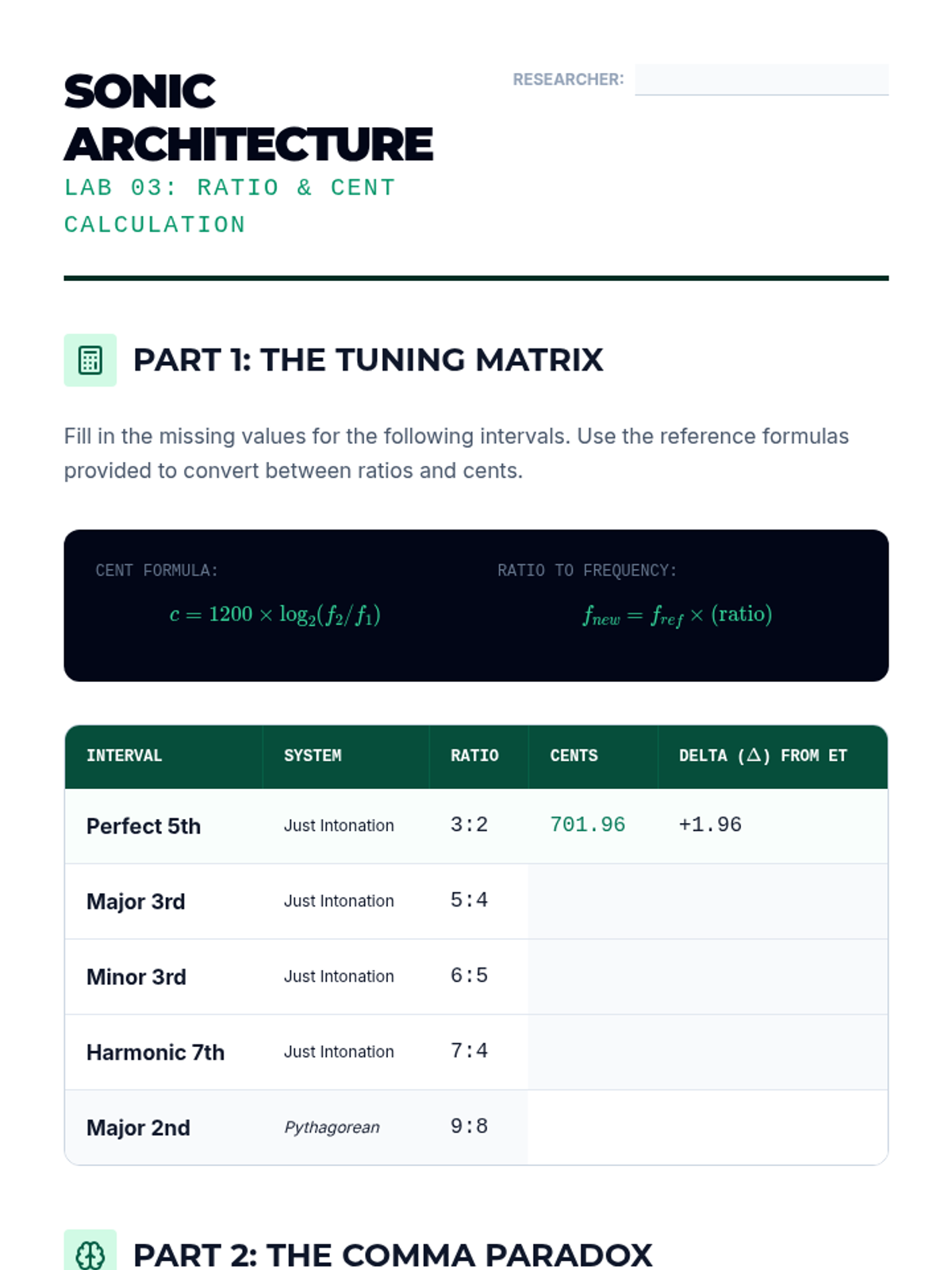
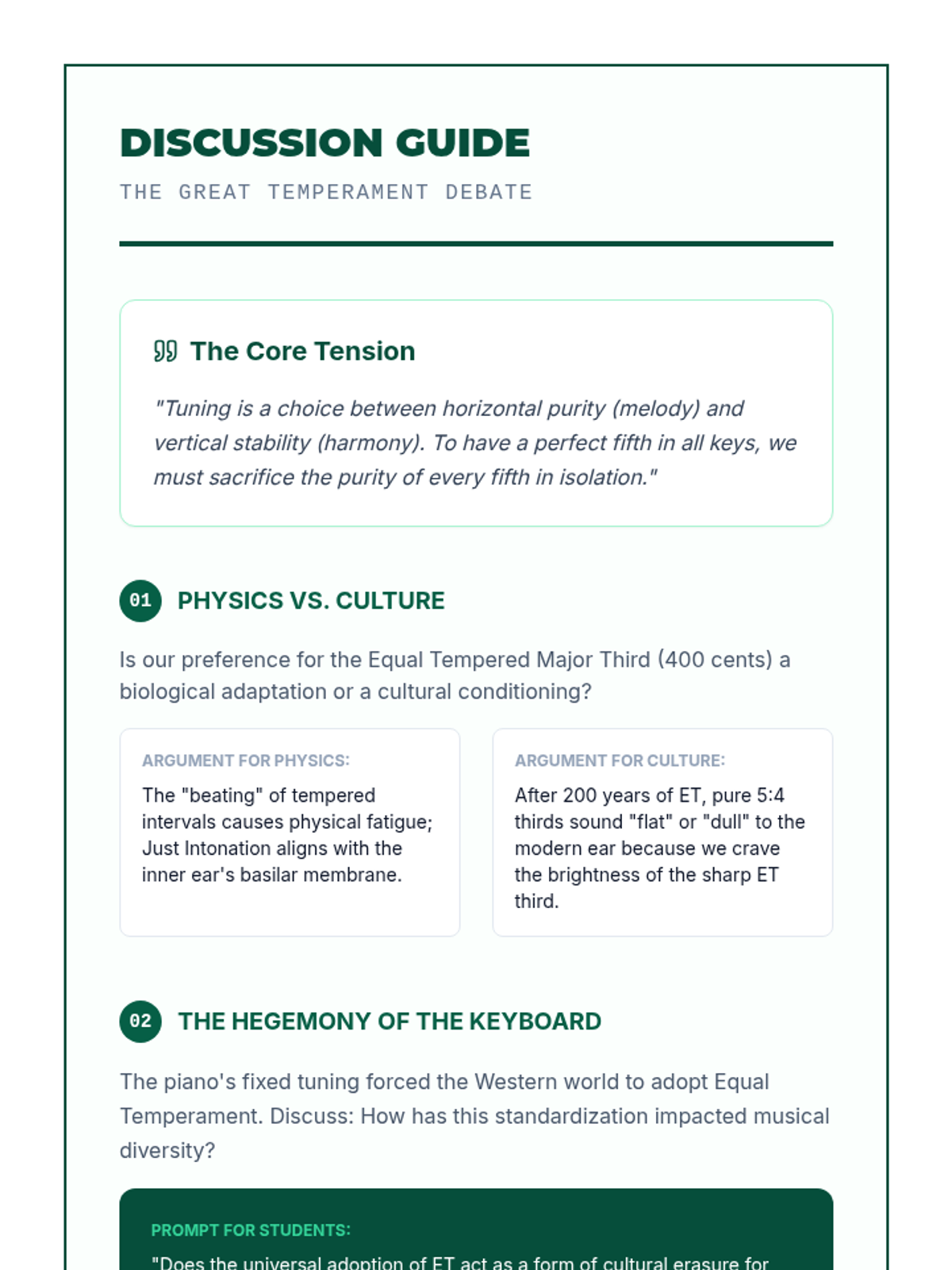
Calculation of frequency ratios for different tuning systems and comparison of Just Intonation versus Equal Temperament.
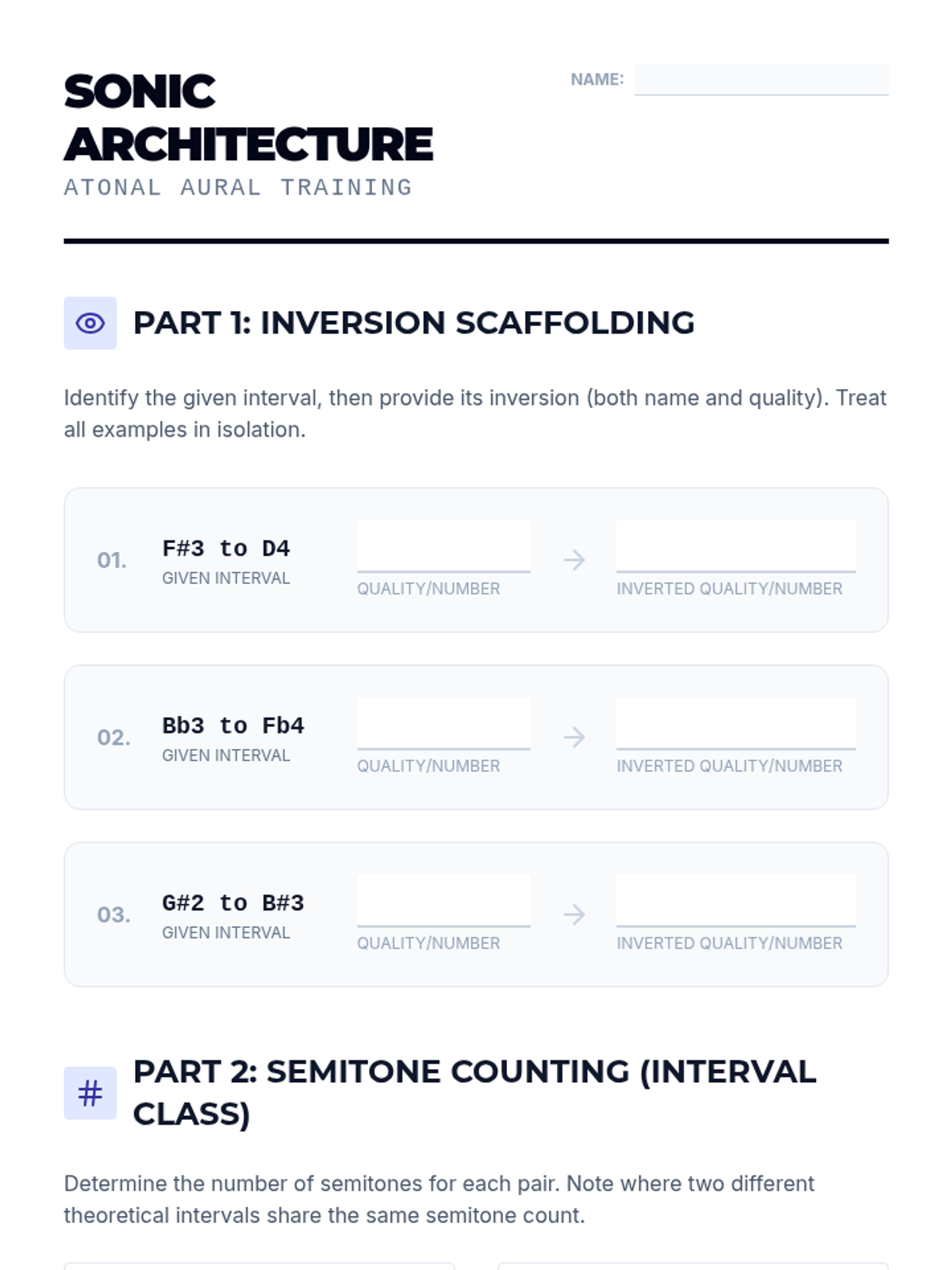
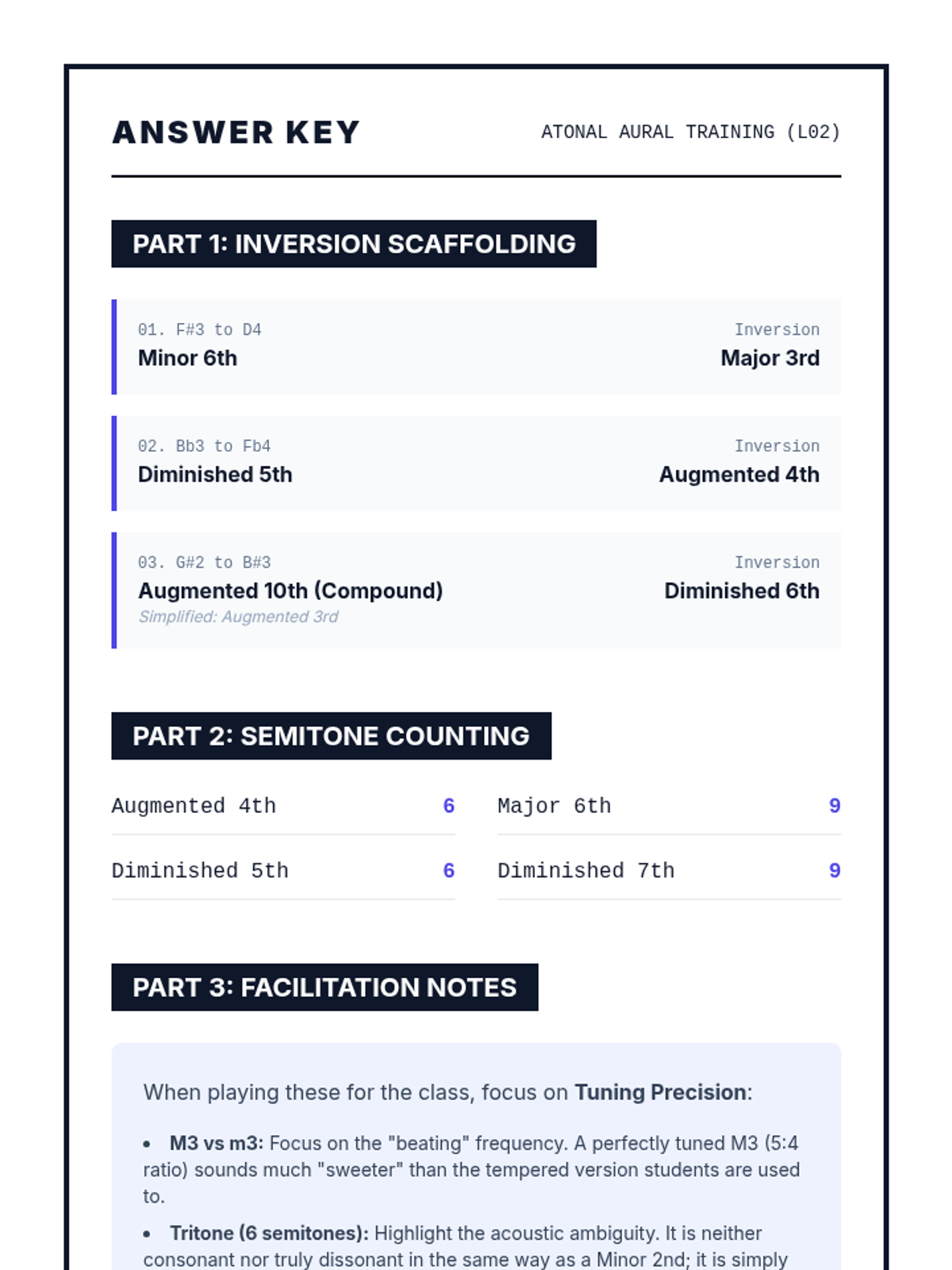
A systematic review of interval inversion and quality, identifying intervals in atonal contexts to remove cultural key-based bias.
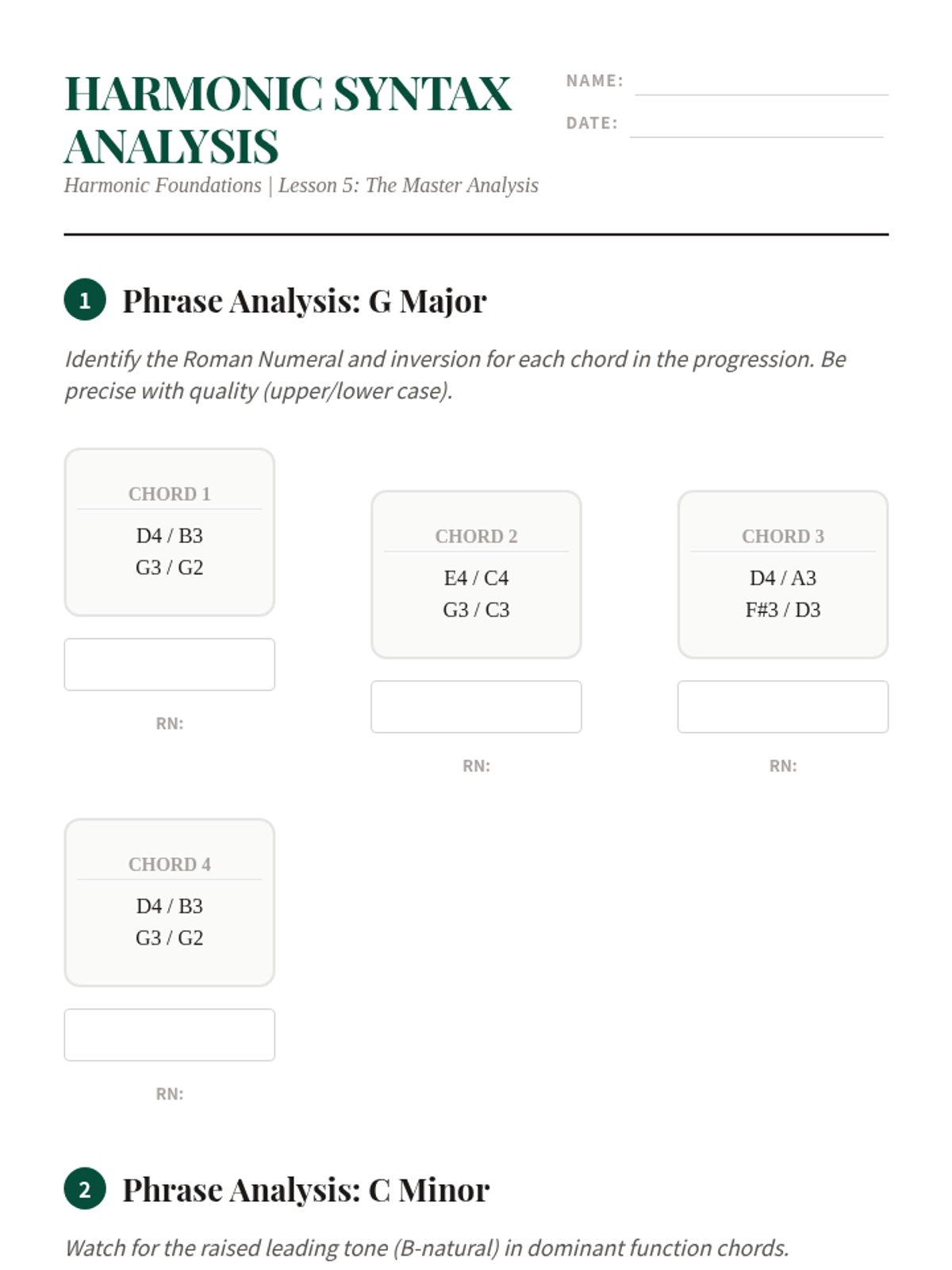
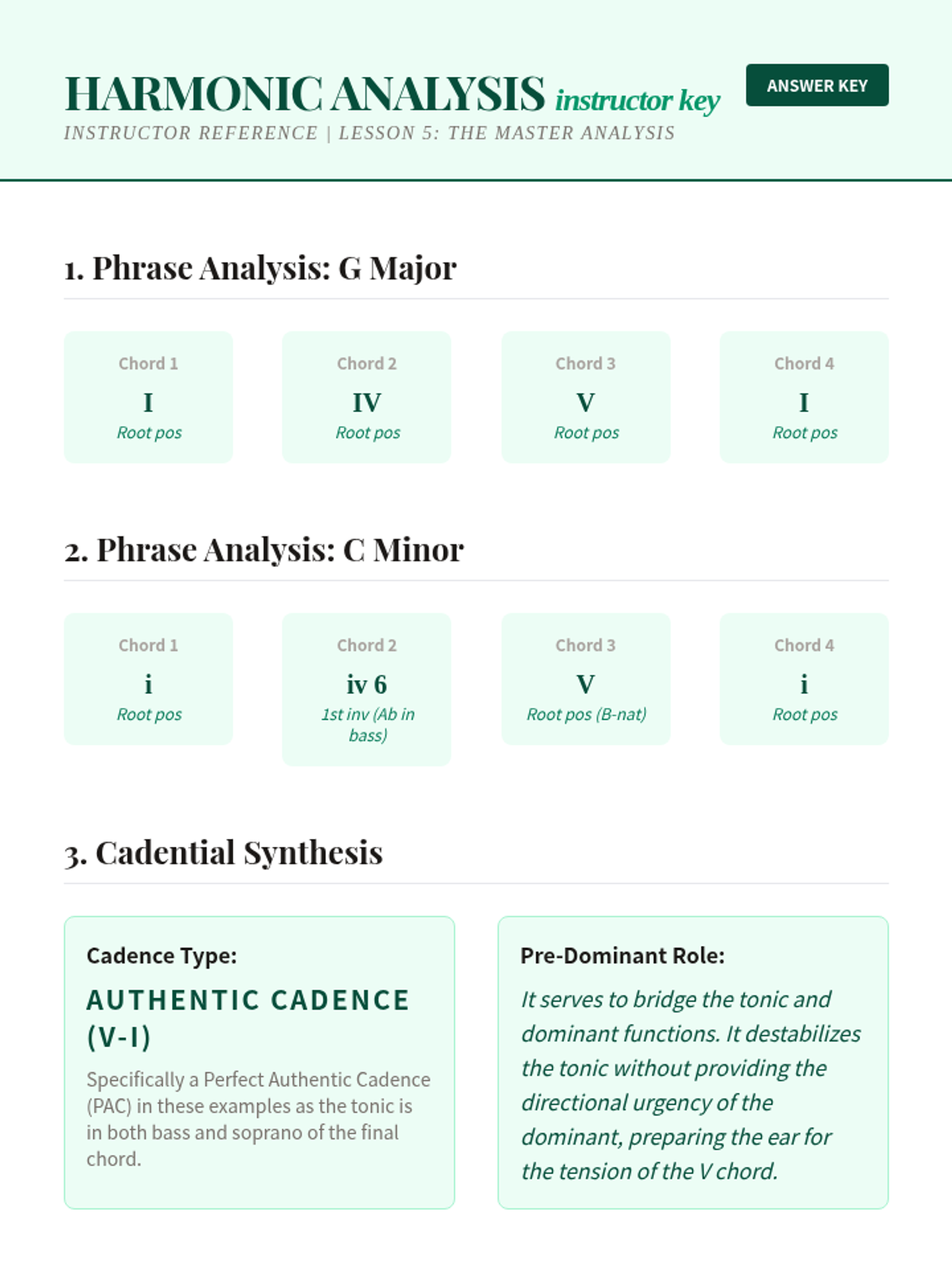
Culminating application of Roman Numeral analysis to musical phrases, identifying functional relationships and harmonic syntax.
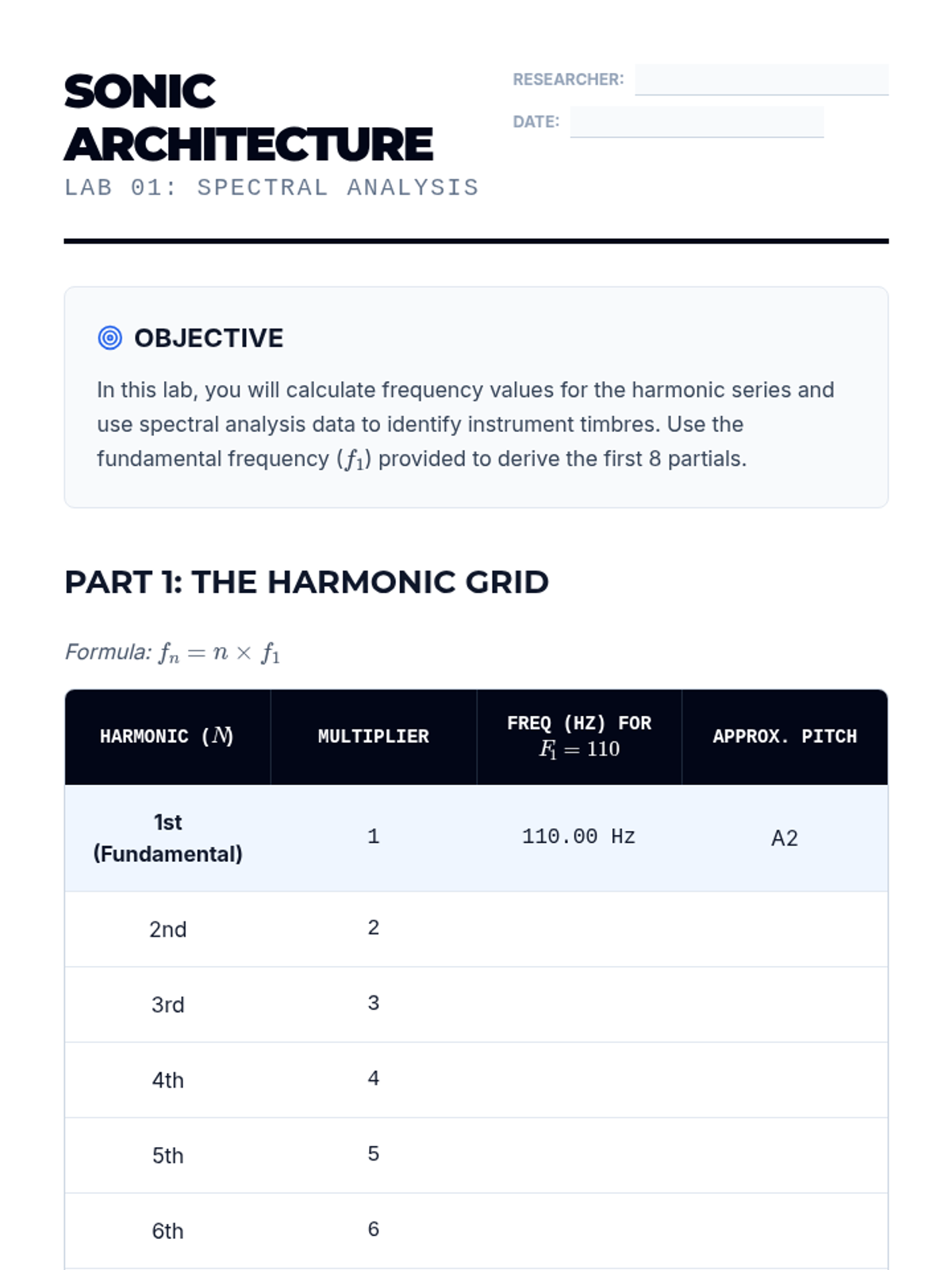
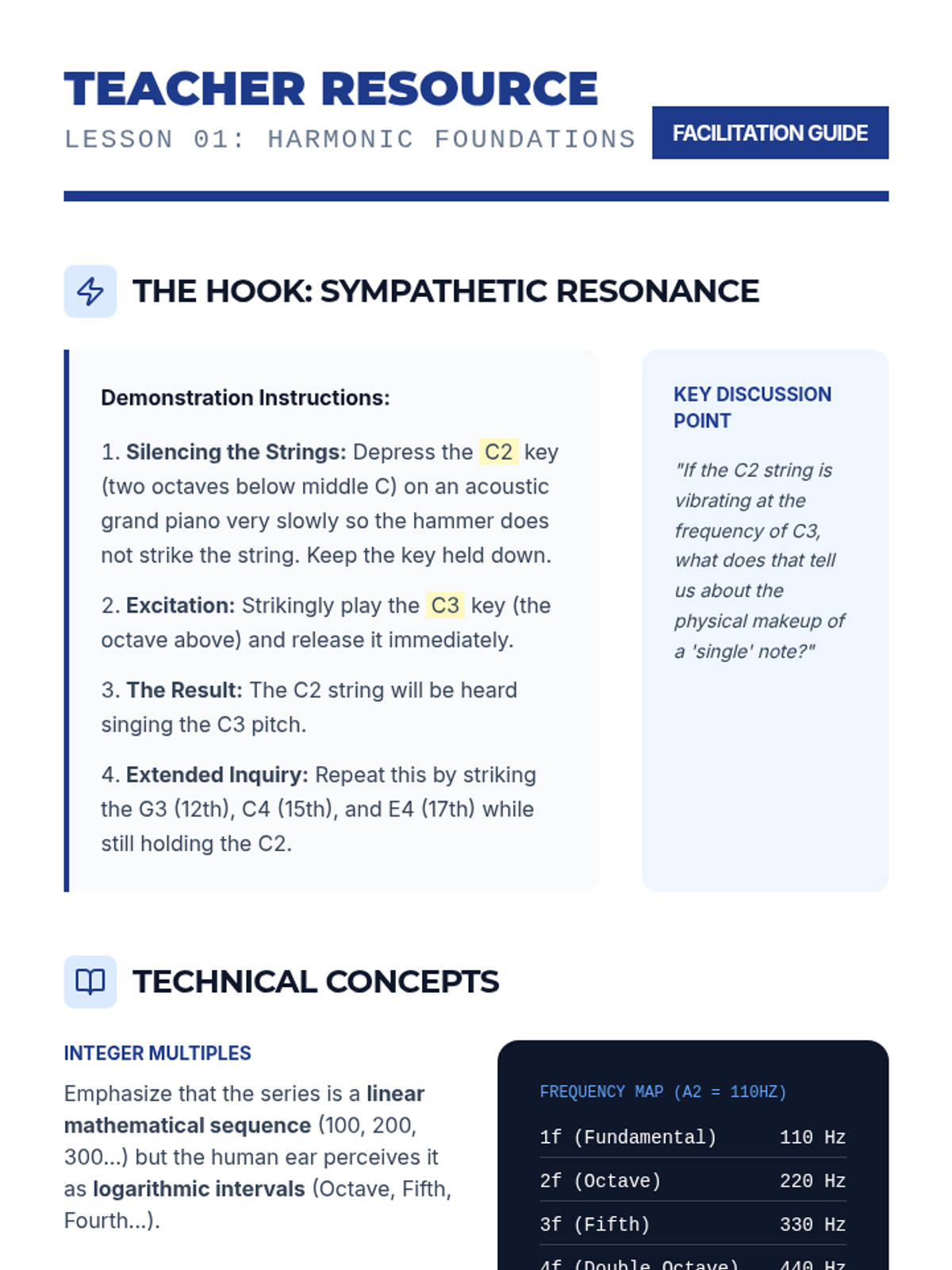
Students analyze the harmonic series to understand the origin of the octave, fifth, and major triad through frequency calculation and spectral analysis.
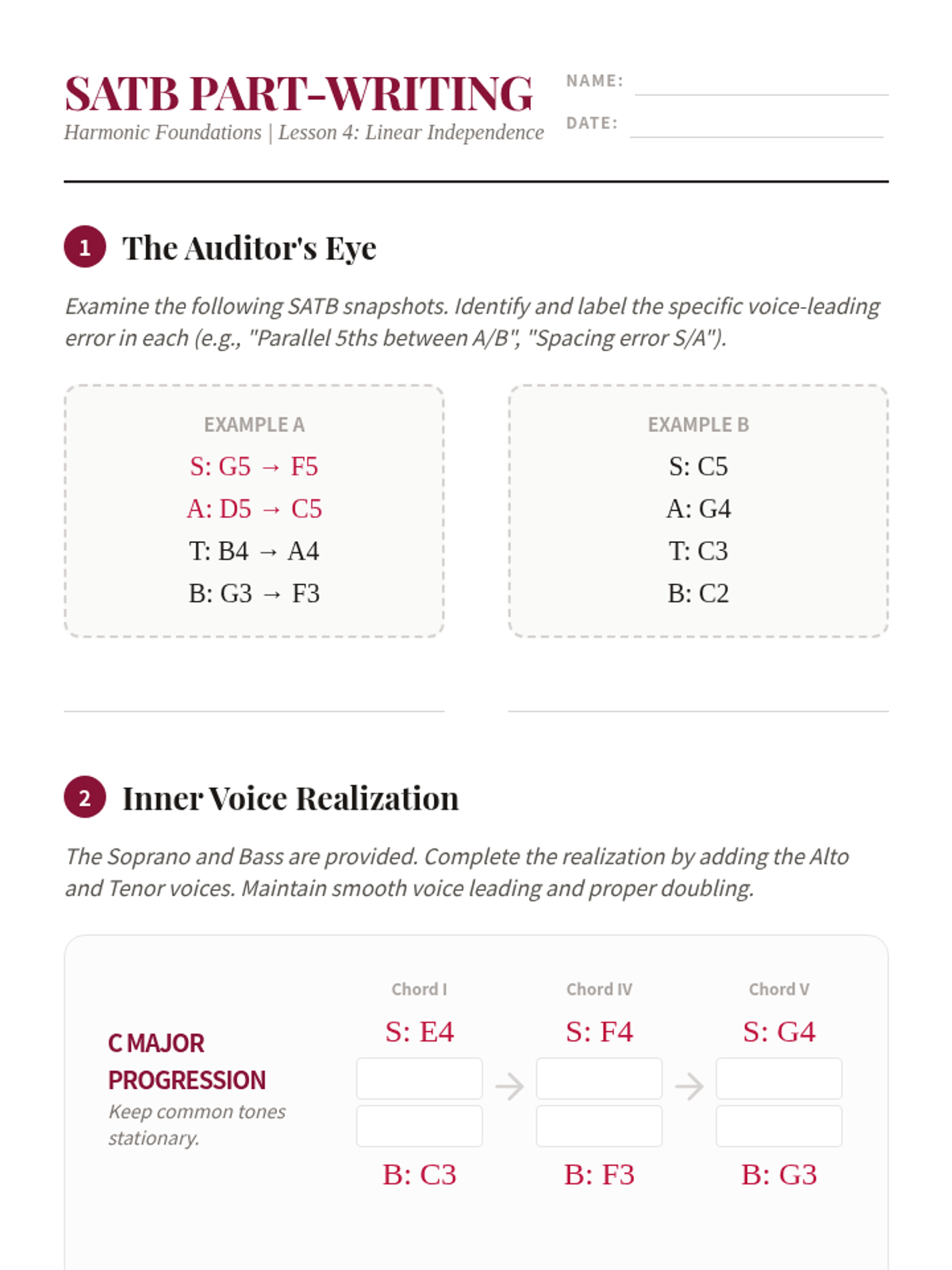
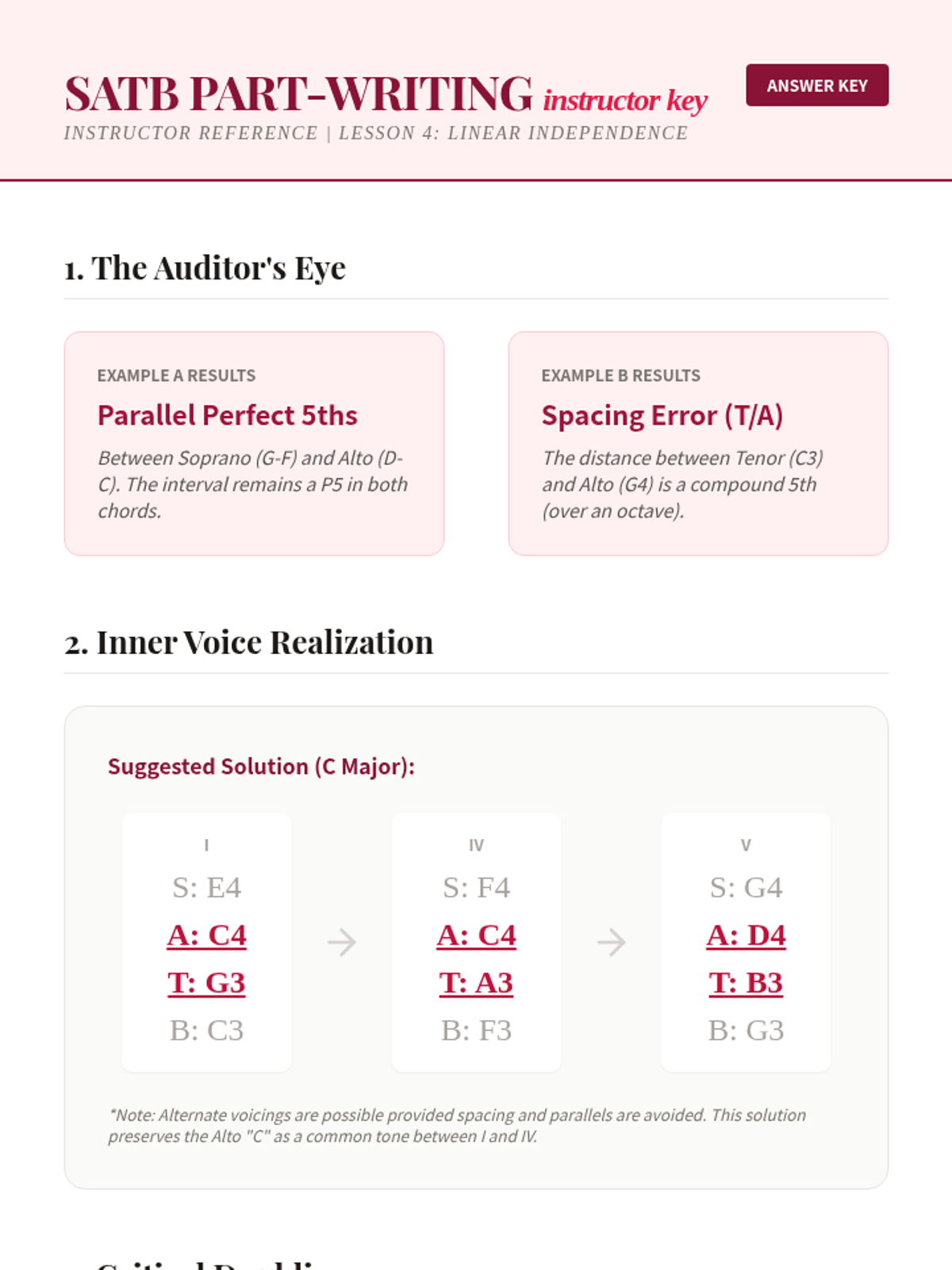
Mastery of four-part SATB writing, focusing on voice ranges, proper spacing, and the strict avoidance of parallel perfect intervals.
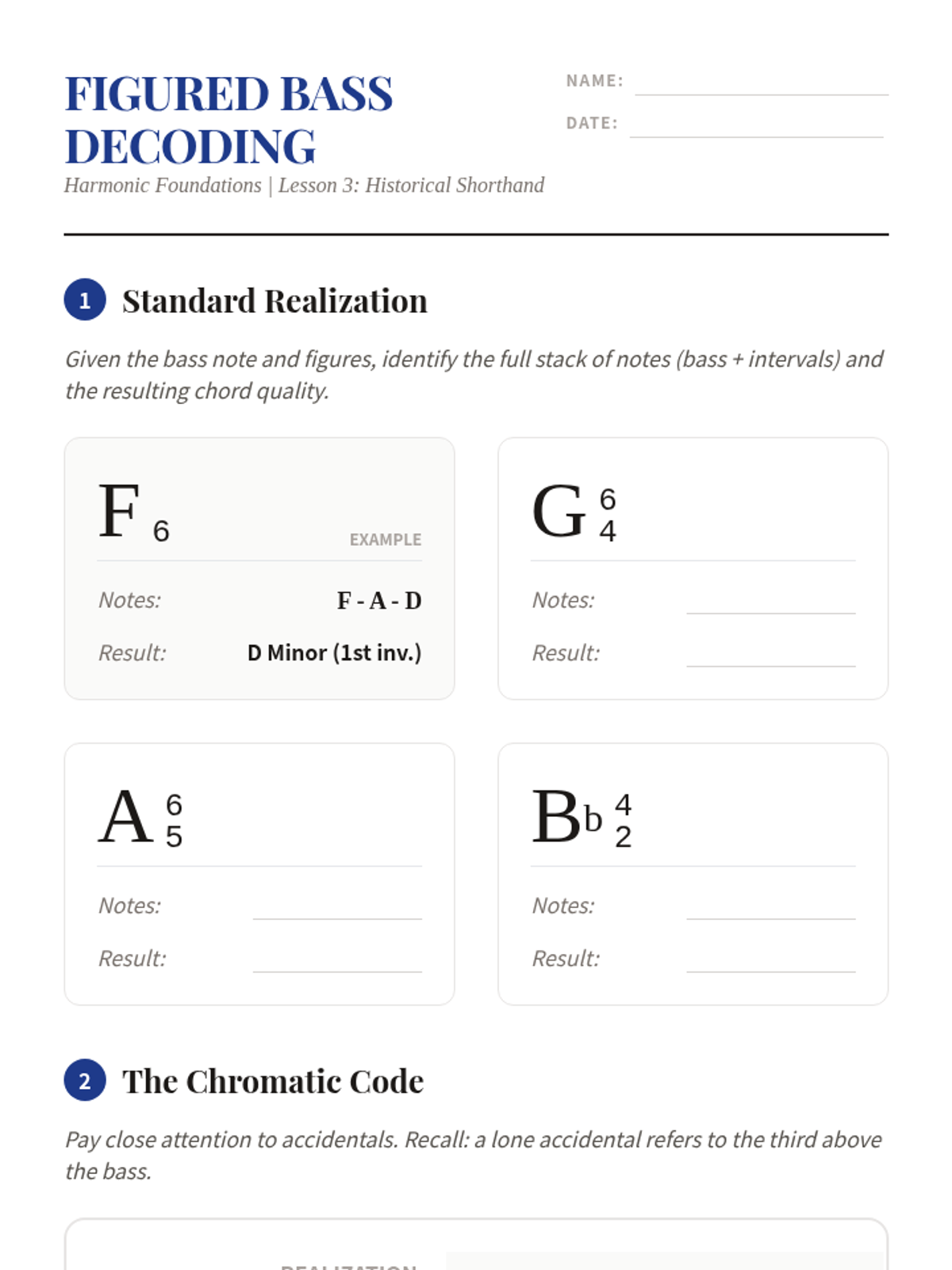
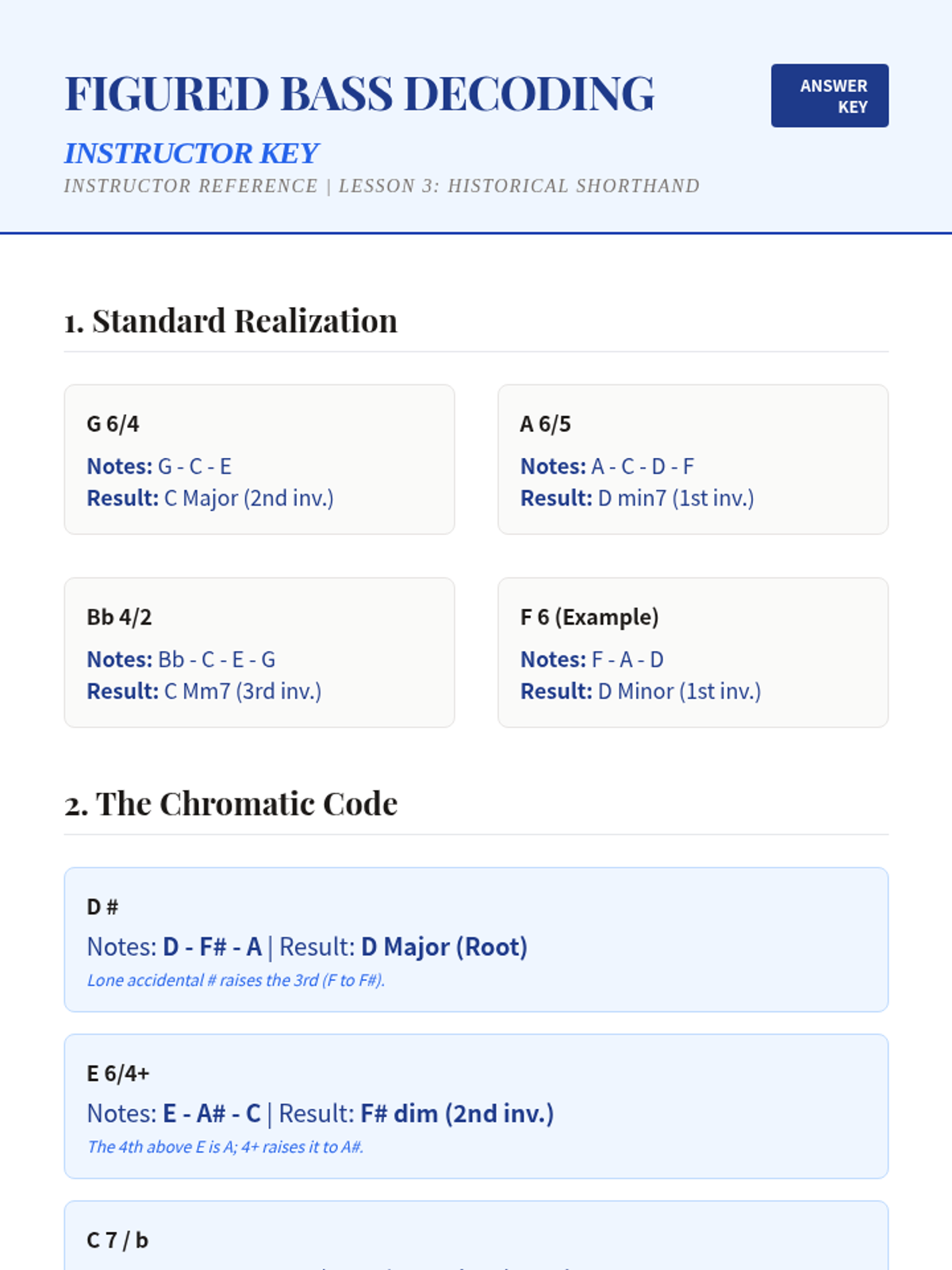
Introduction to the historical shorthand of figured bass, teaching students to realize harmonic structures from numeric indicators.
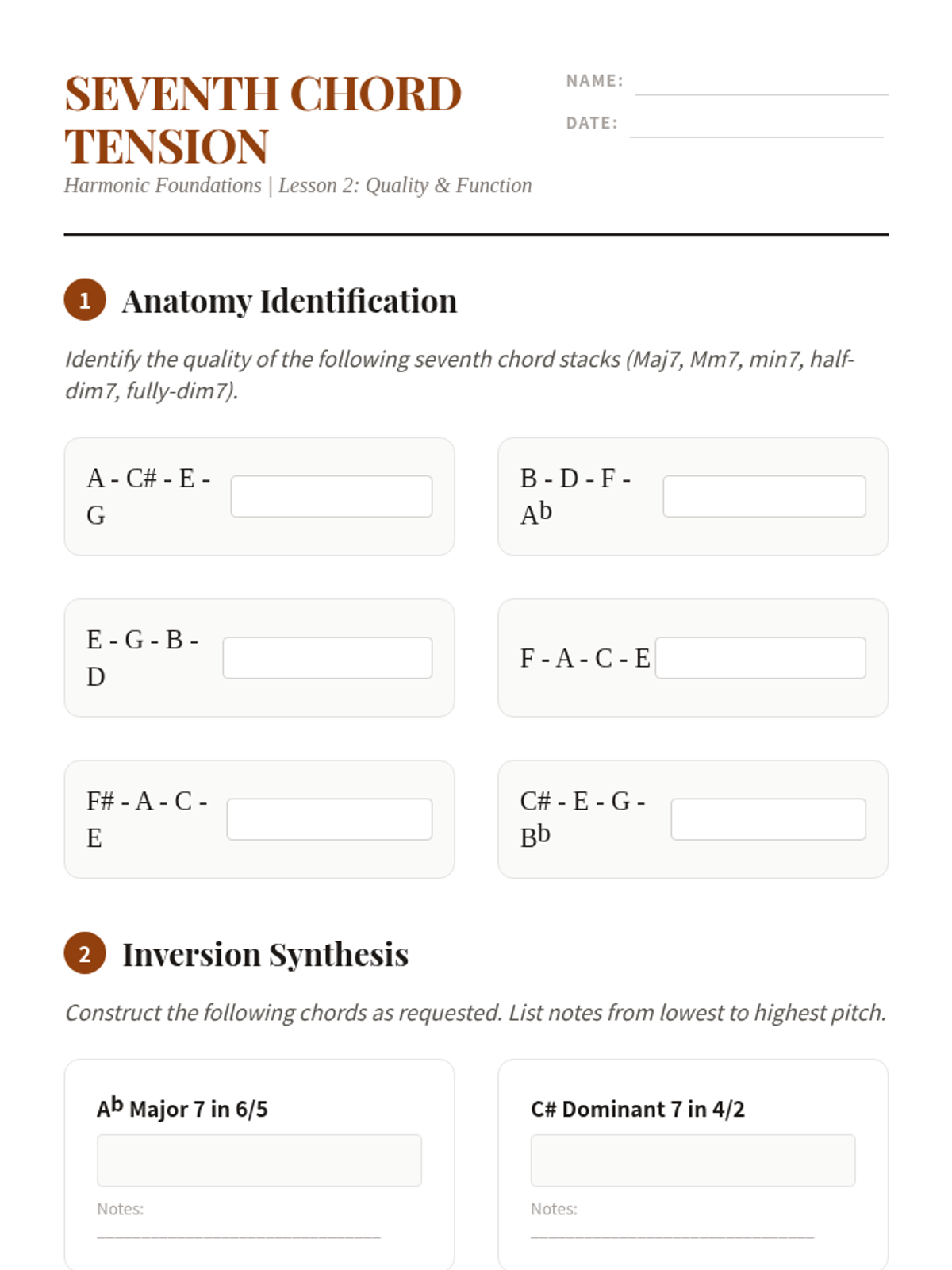
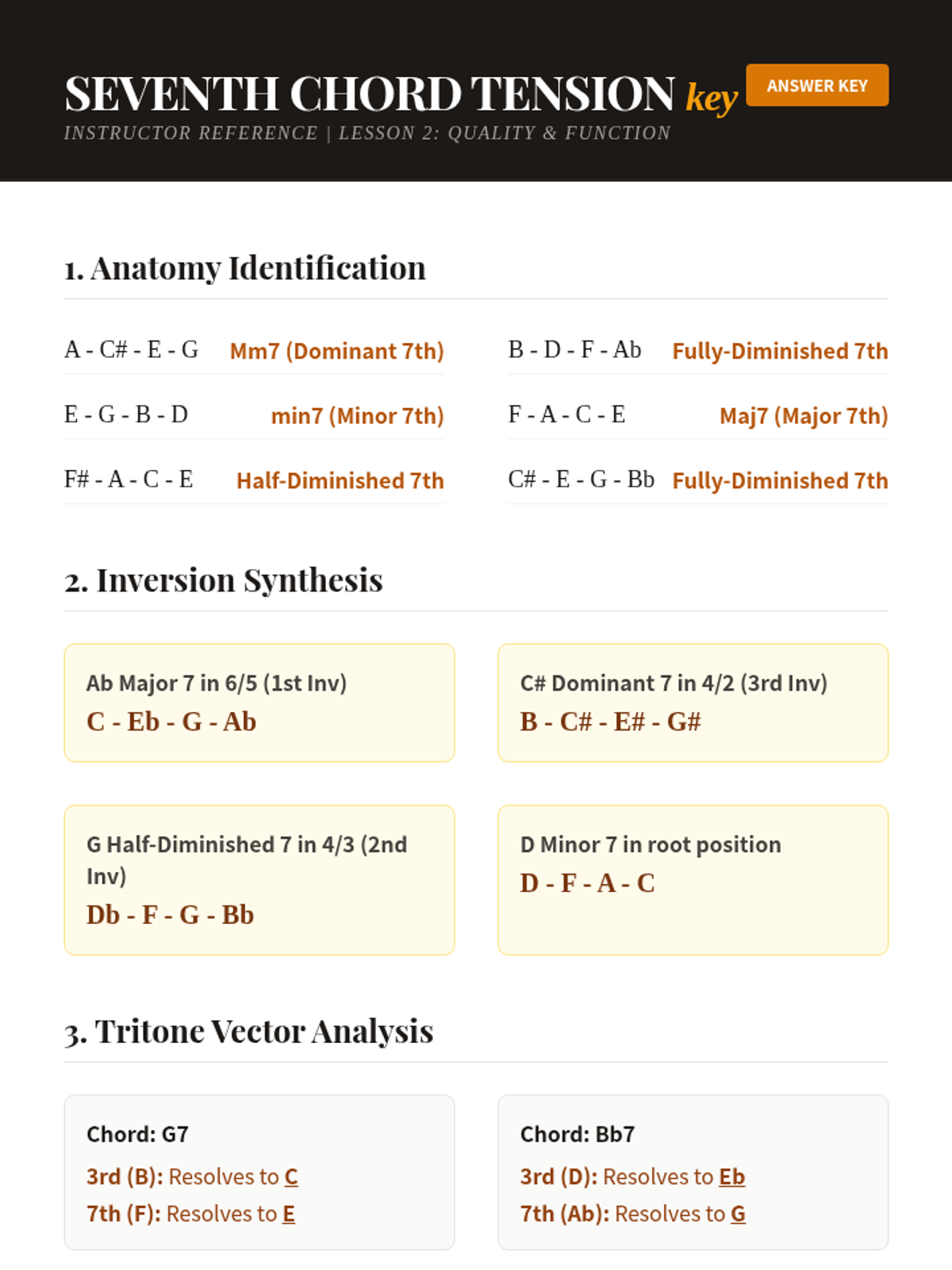
Exploration of the five seventh chord qualities, focusing on the tritone tension within dominant sevenths and their functional resolutions.
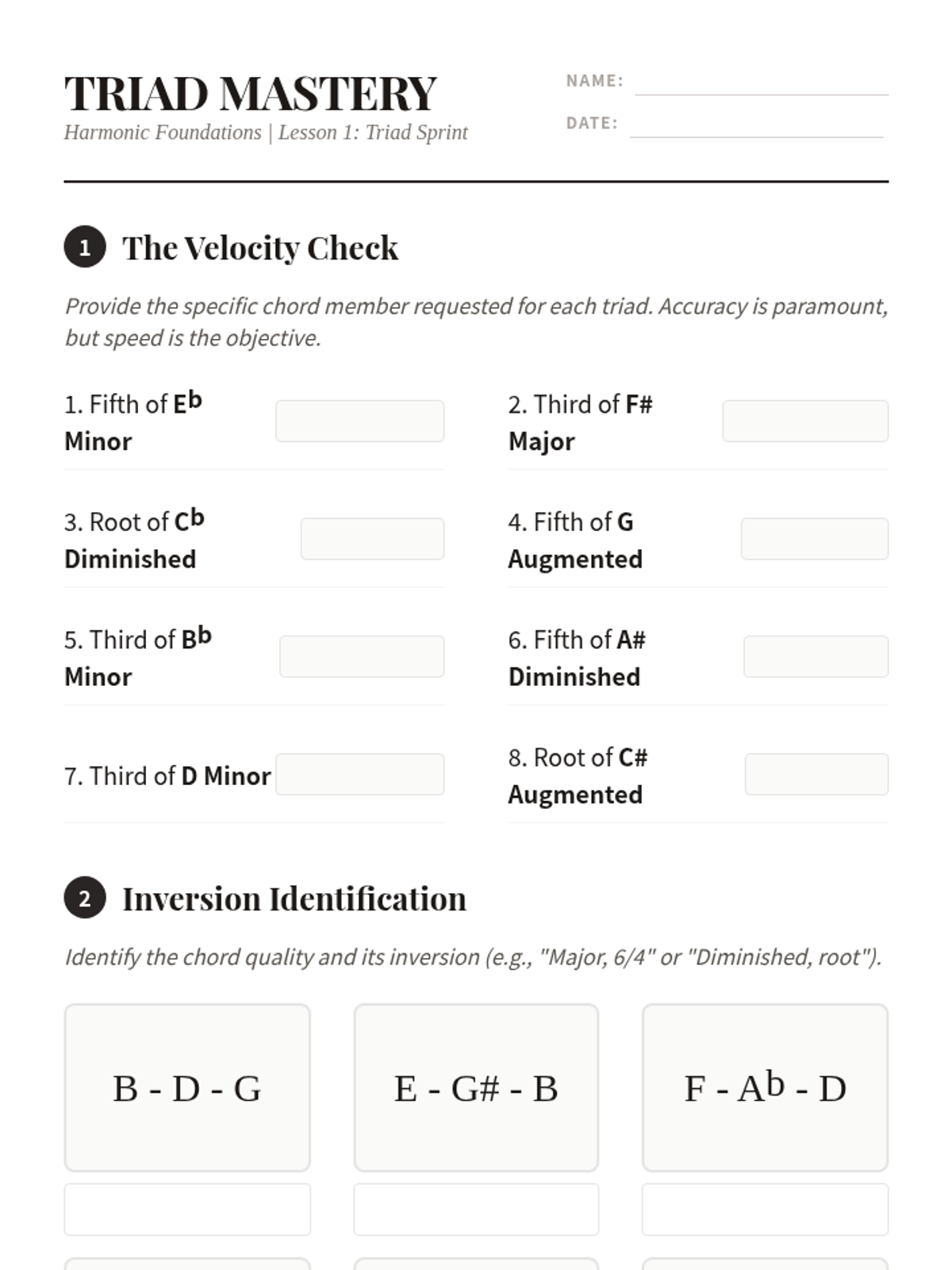
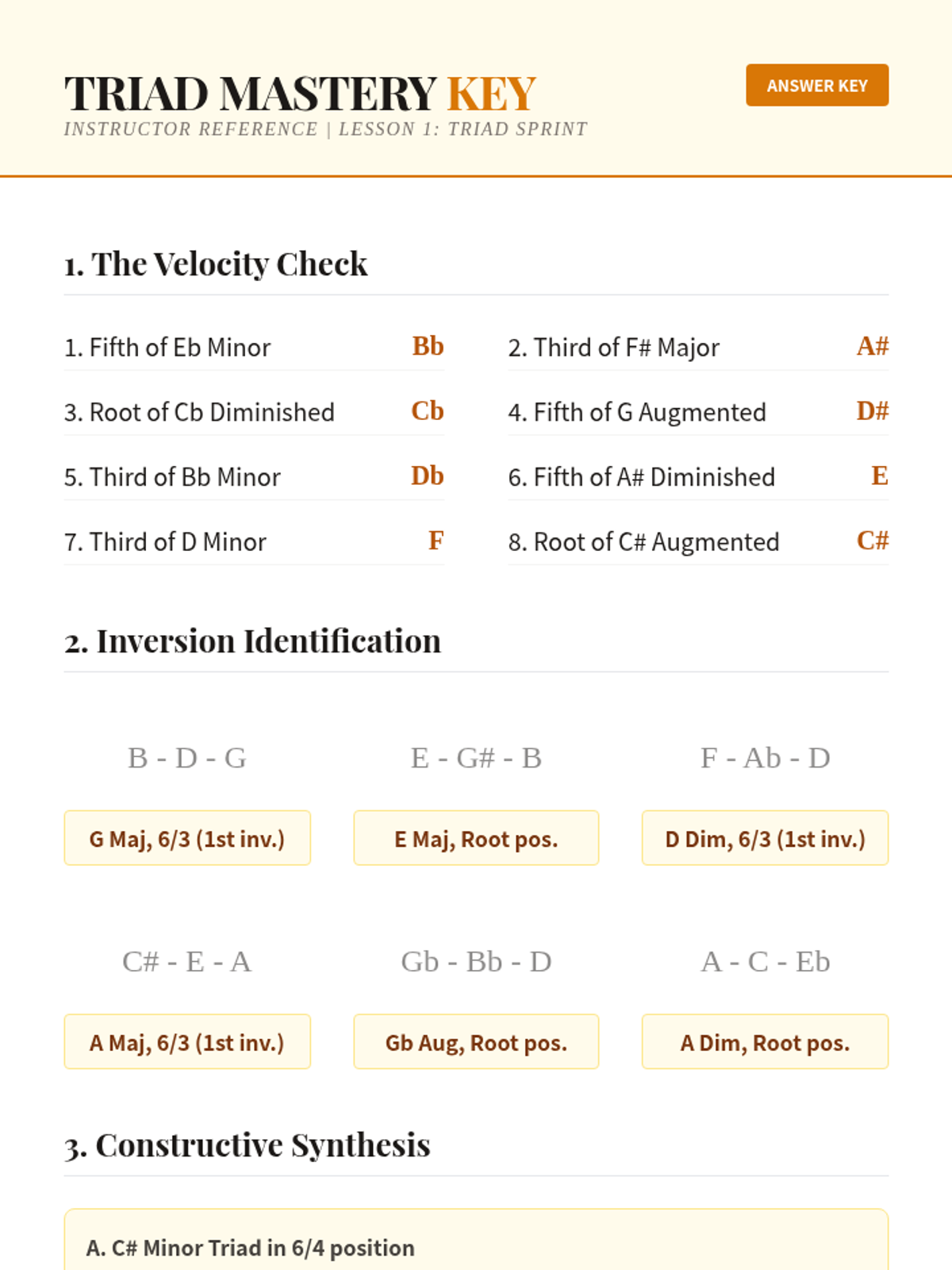
Rapid spelling and identification of major, minor, diminished, and augmented triads in all inversions, emphasizing keyboard visualization and mental agility.
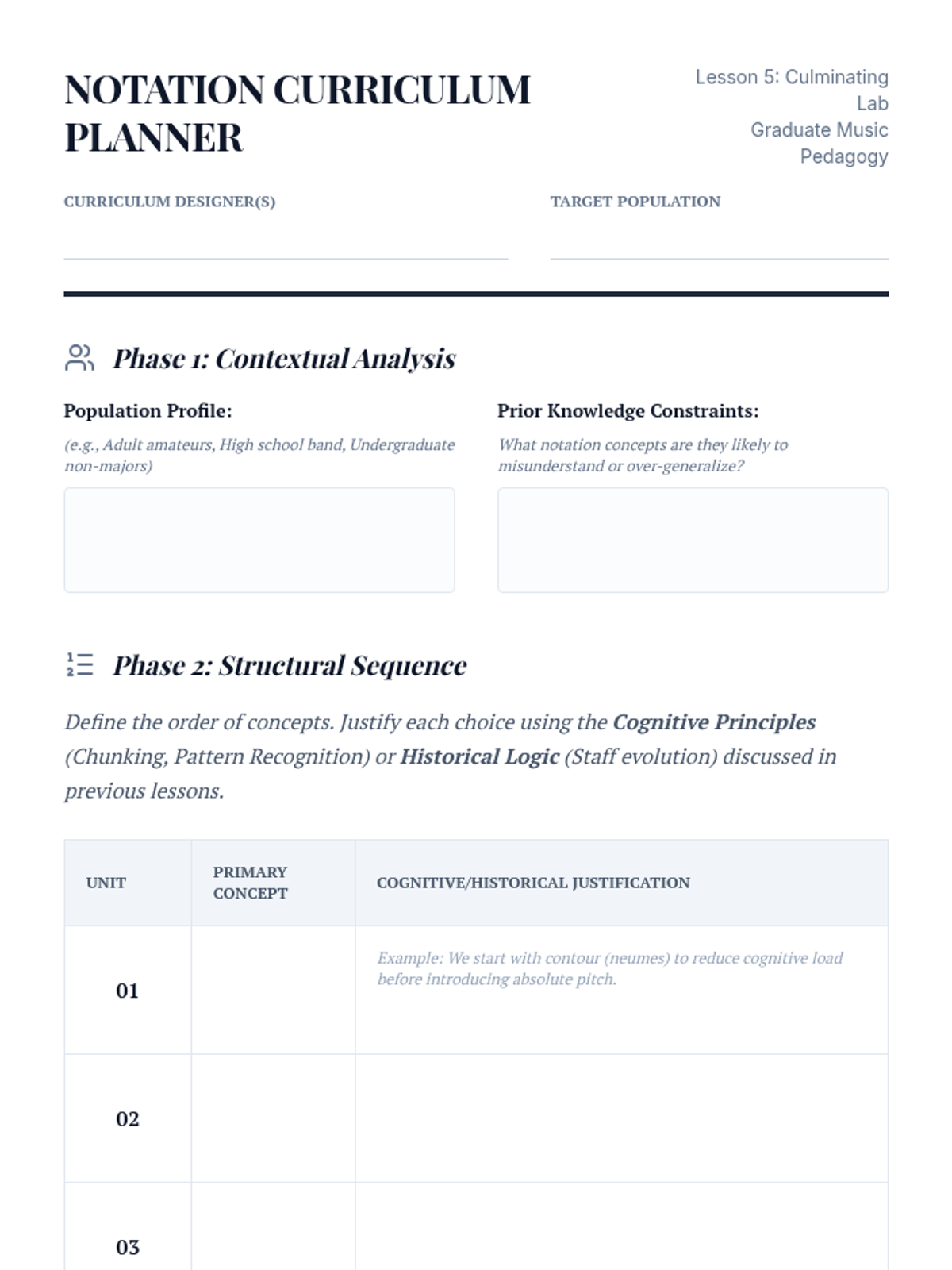
In this culminating session, students synthesize historical and cognitive knowledge to create a scope and sequence for teaching notation to a specific population.
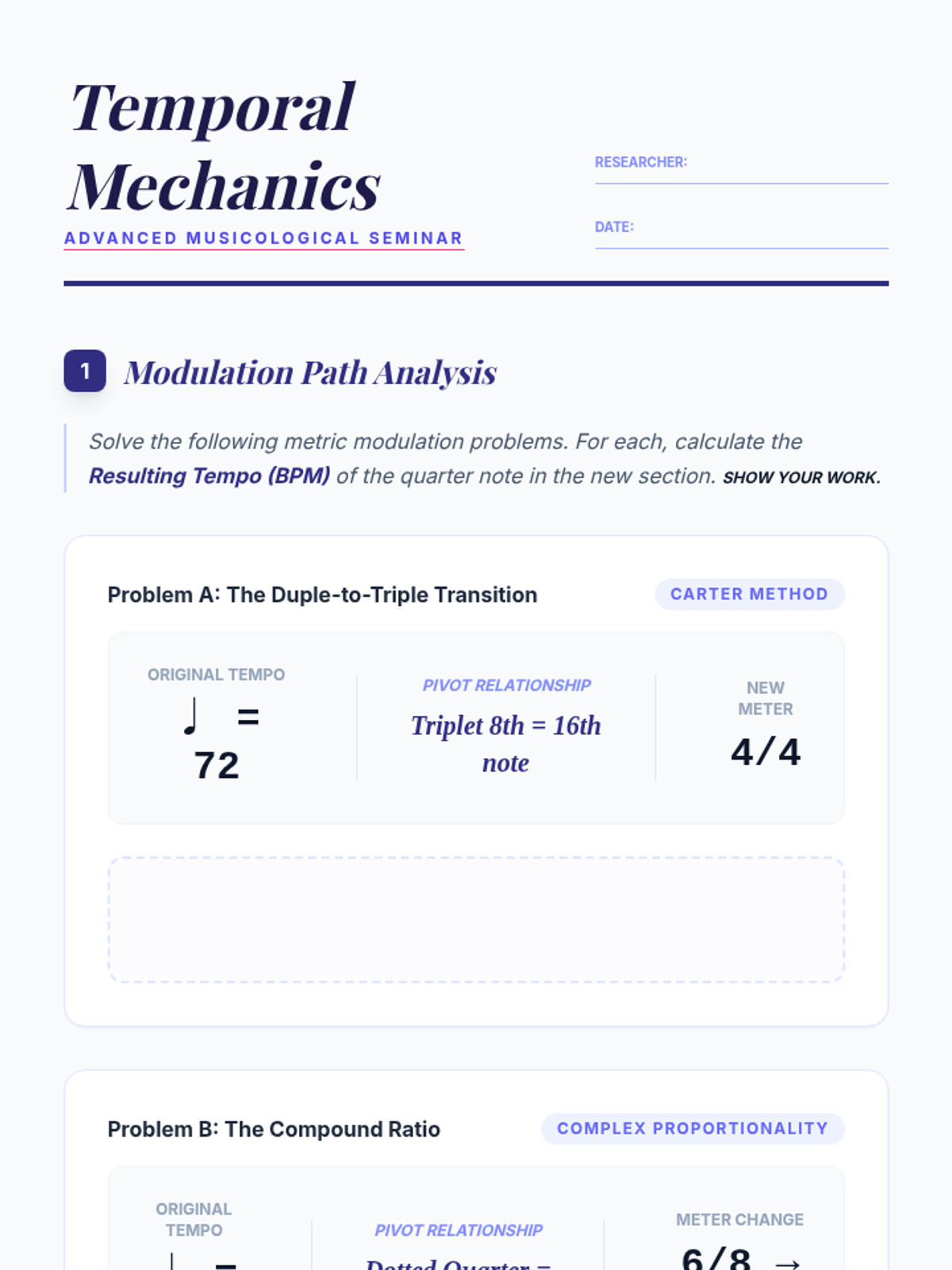
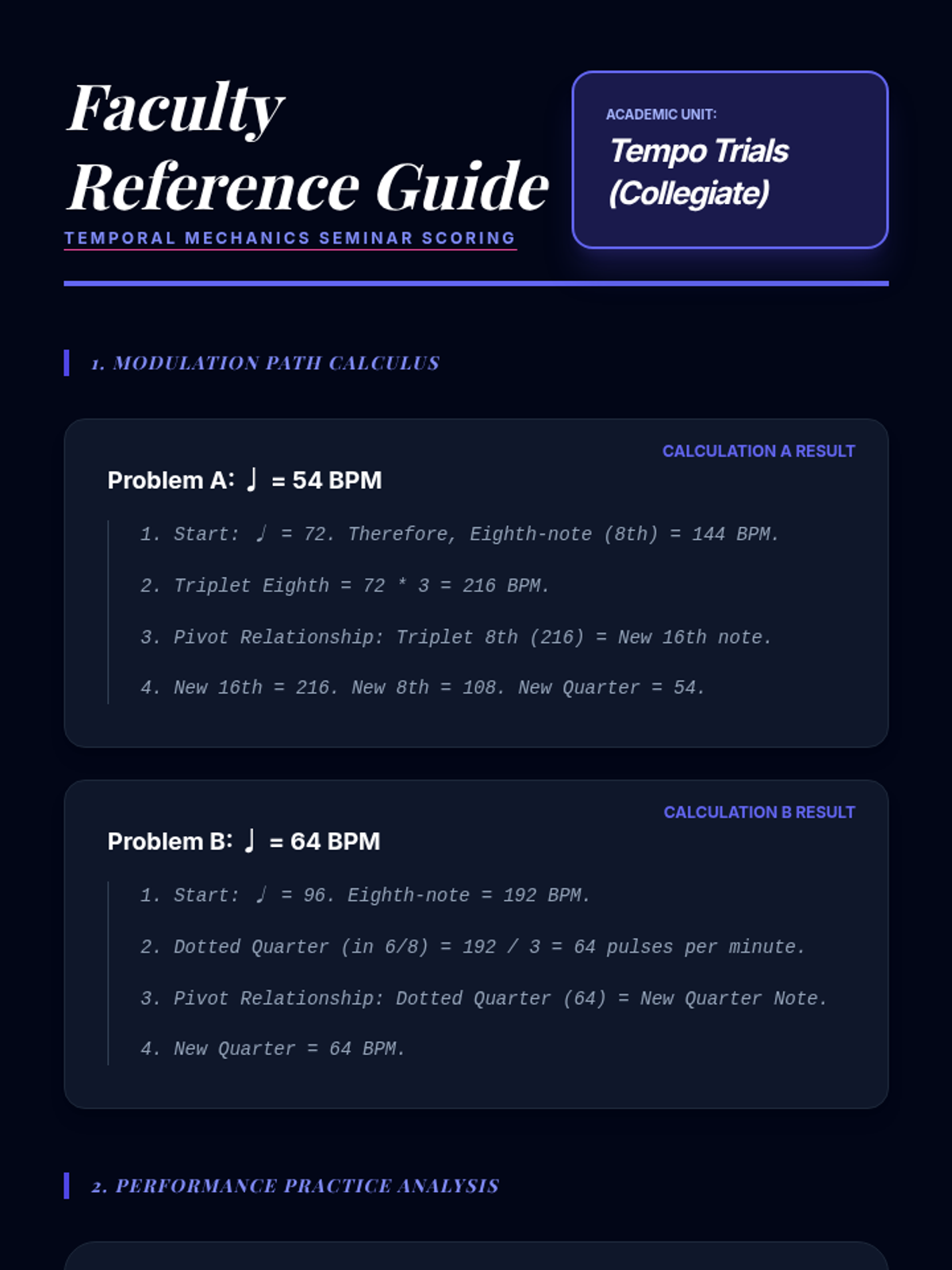
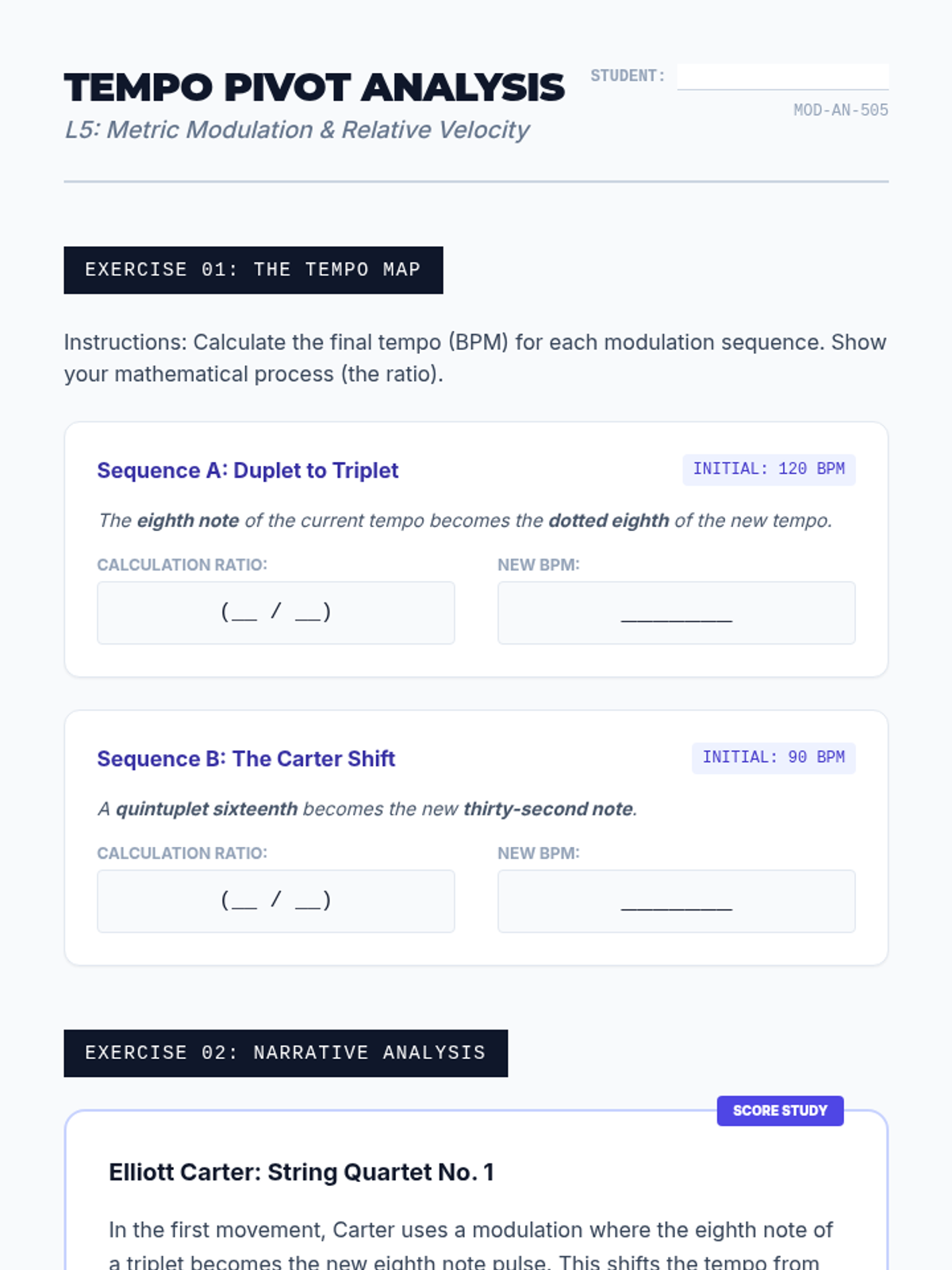
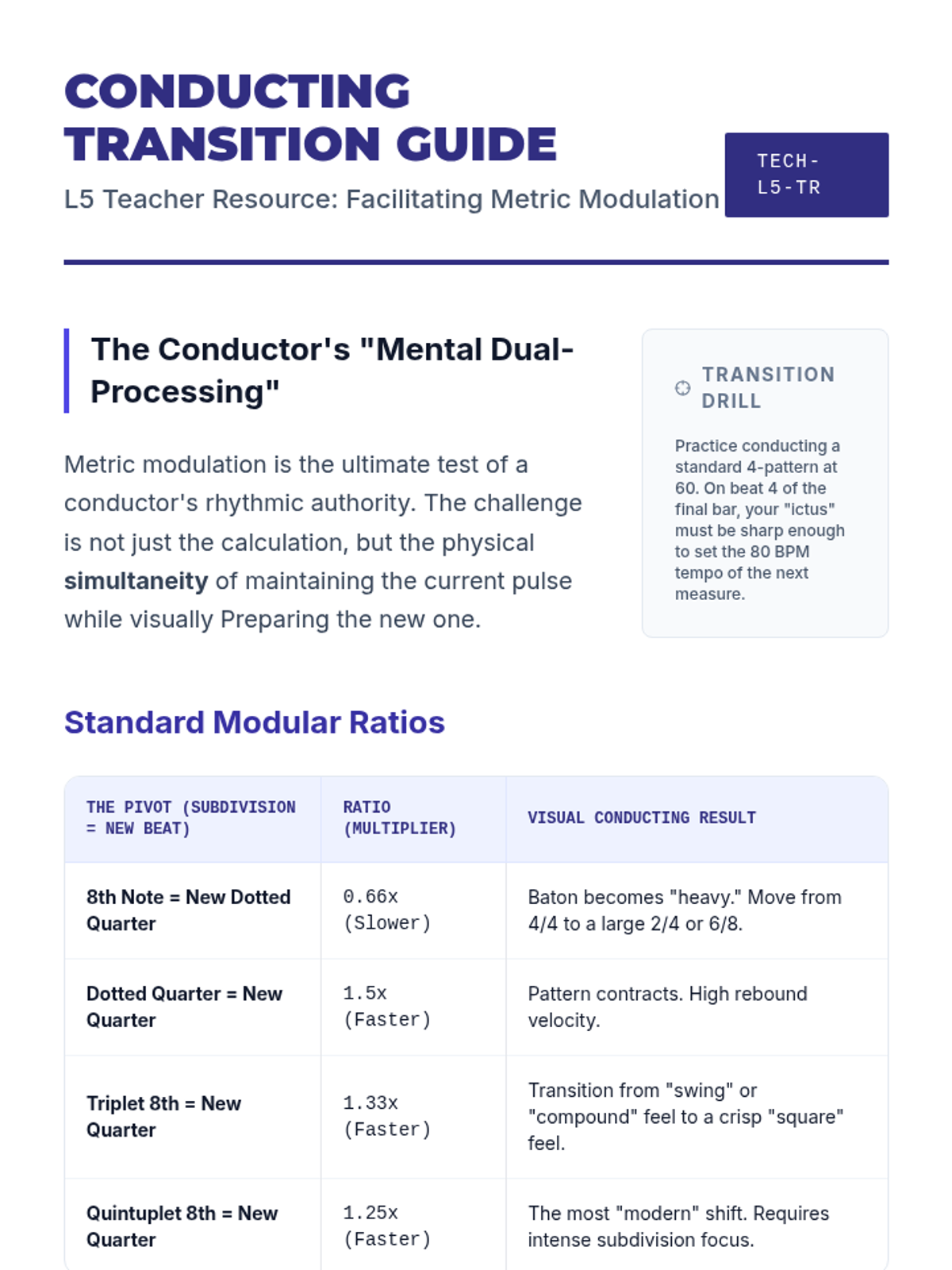
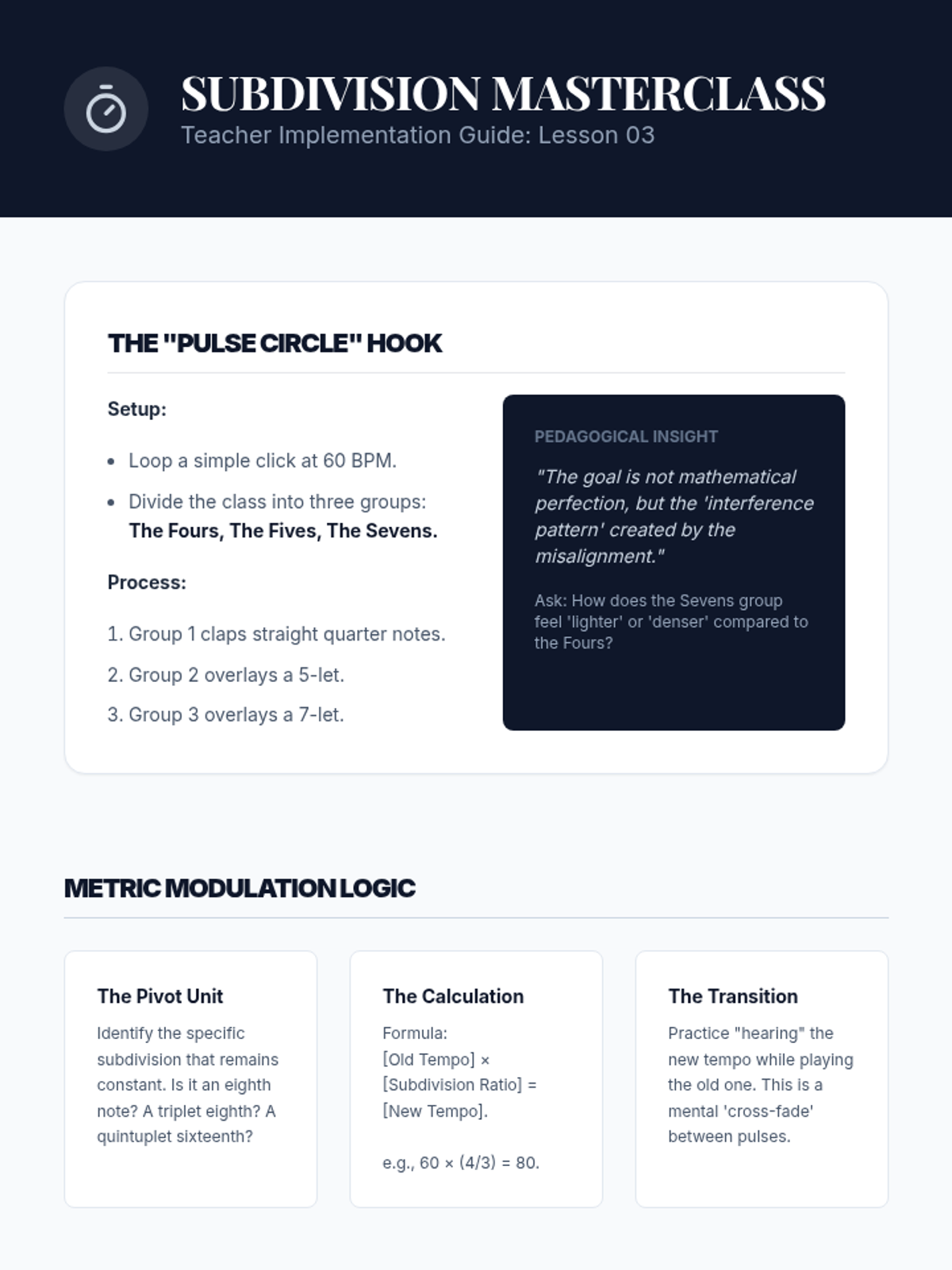
Investigates the mechanics of metric modulation, teaching students how to navigate complex tempo transitions in modern repertoire.
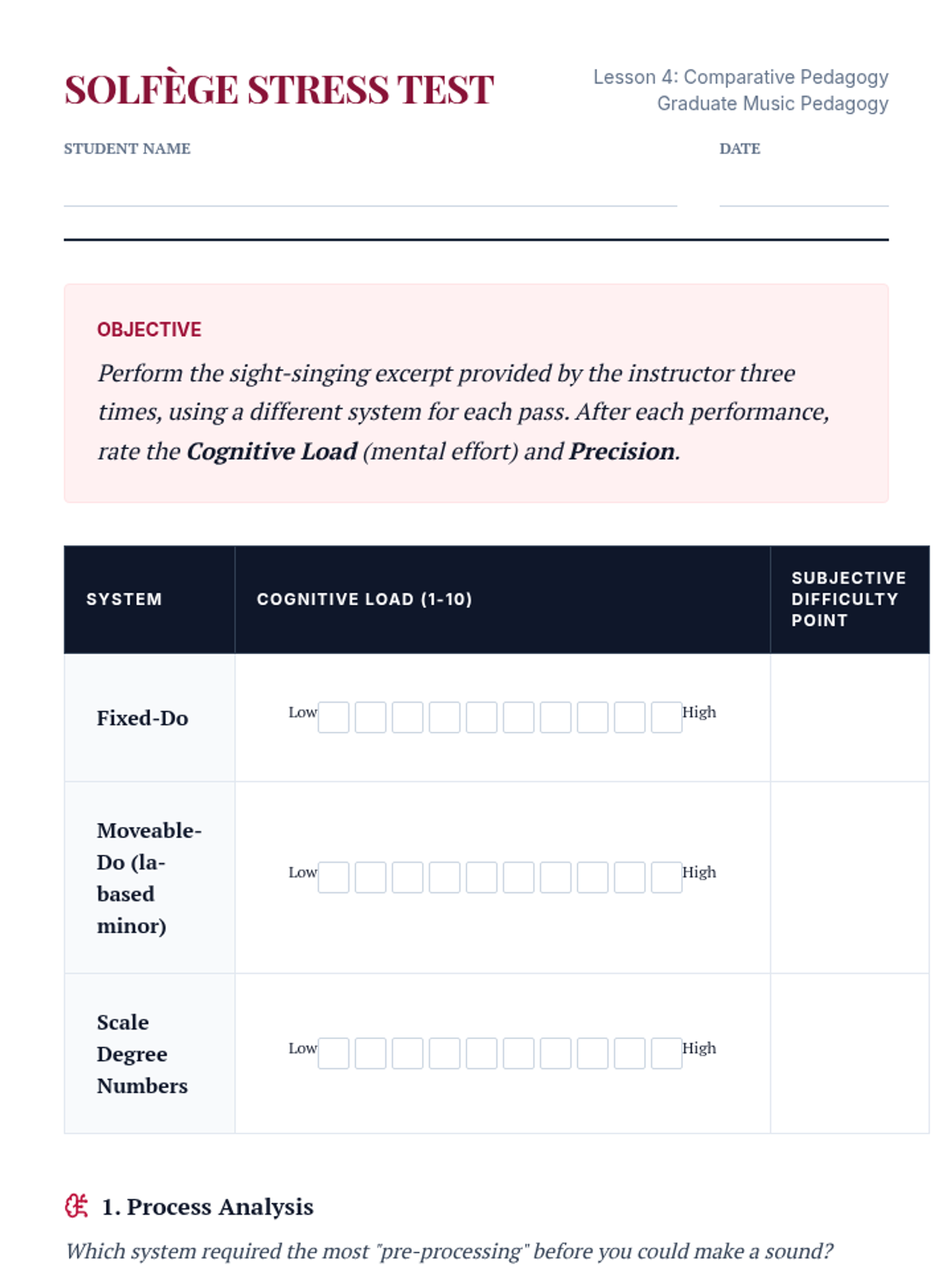
Students compare Fixed-Do, Moveable-Do, and Number systems, debating the efficacy of each for different repertoire types (atonal vs. tonal). Activities include sight-singing the same passage using multiple systems to analyze distinct mental processes.
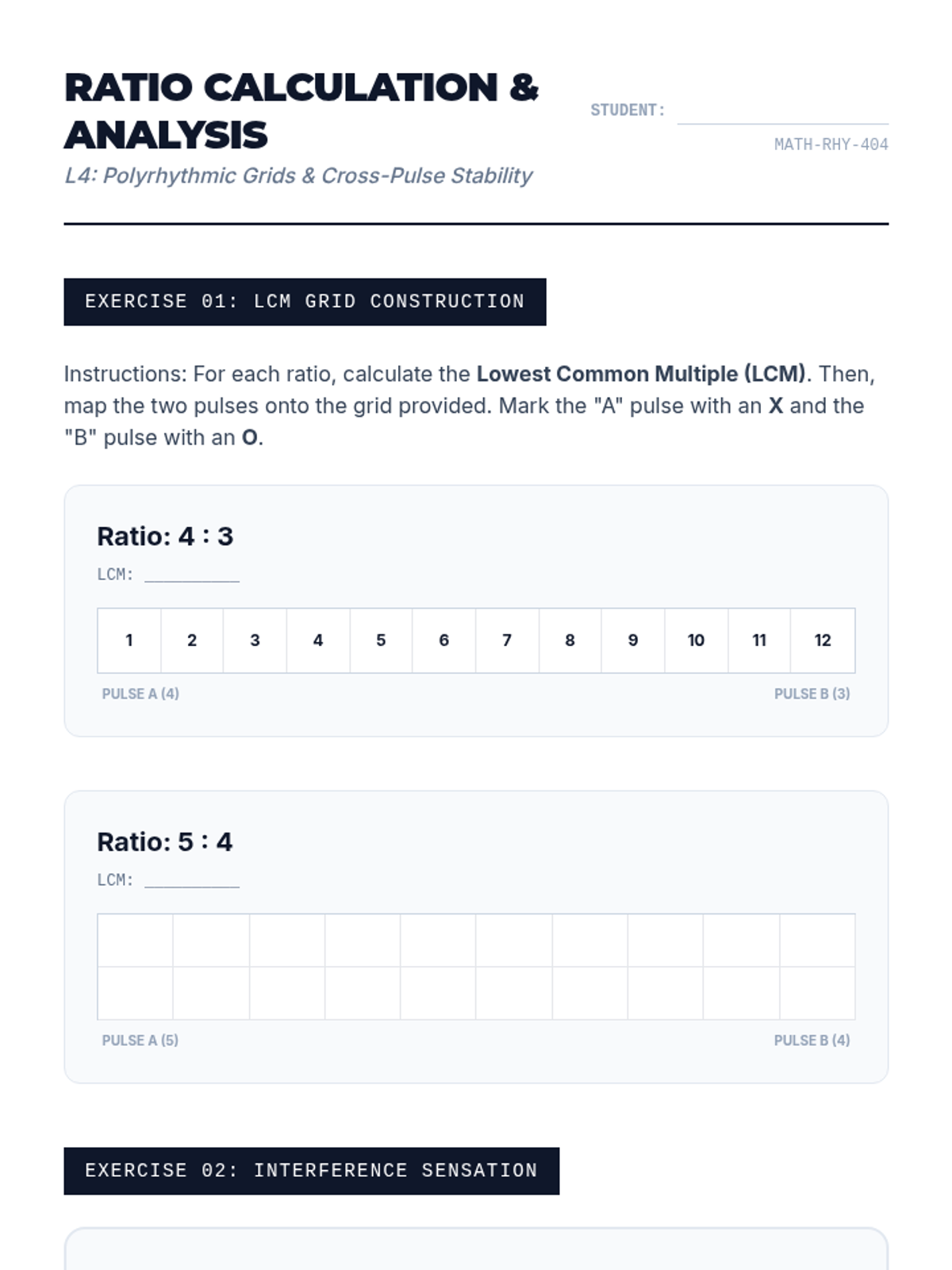
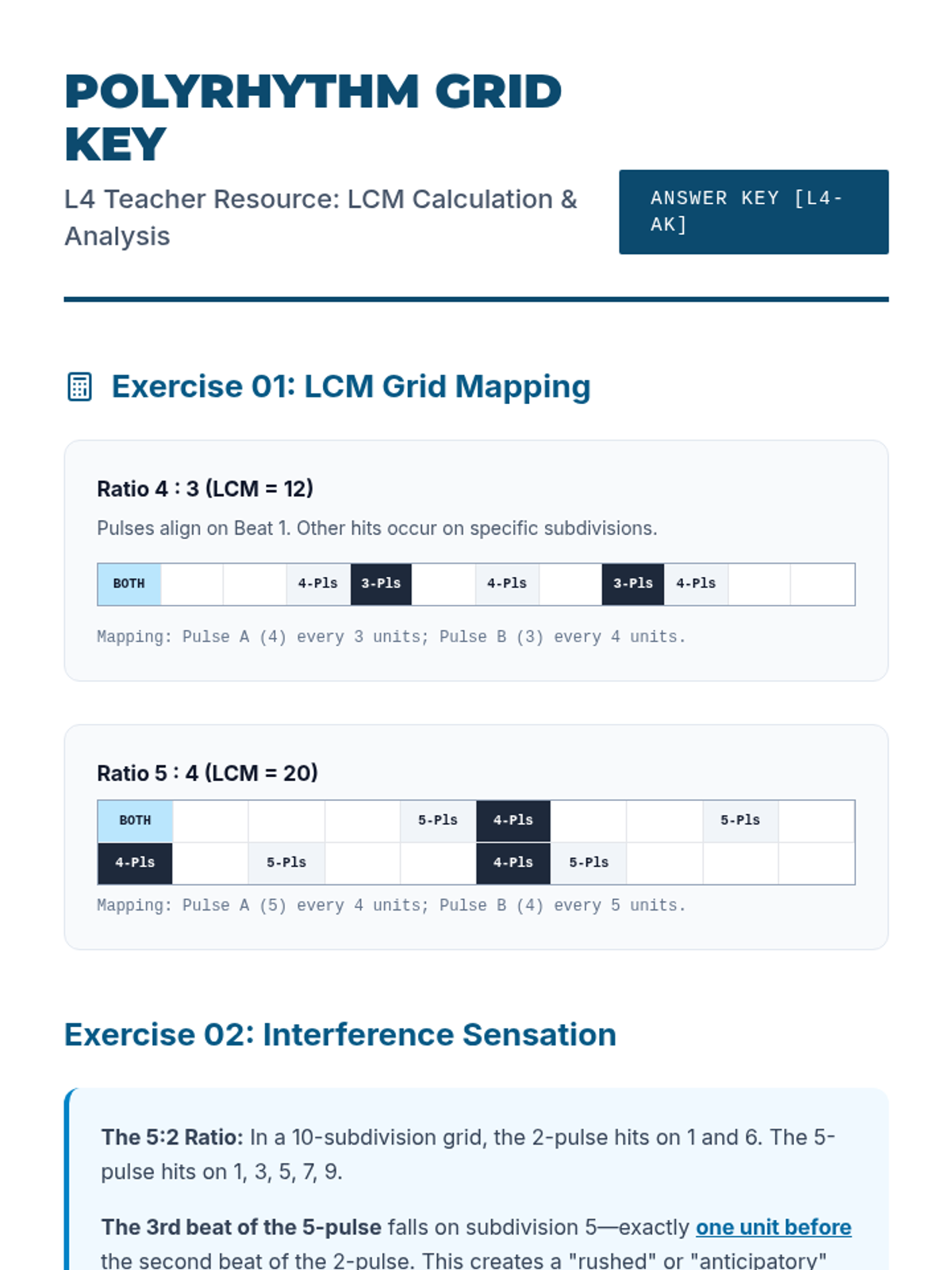
A mathematical and physical dive into artificial beat divisions, polyrhythms, and hemiola using lowest common multiple grids.
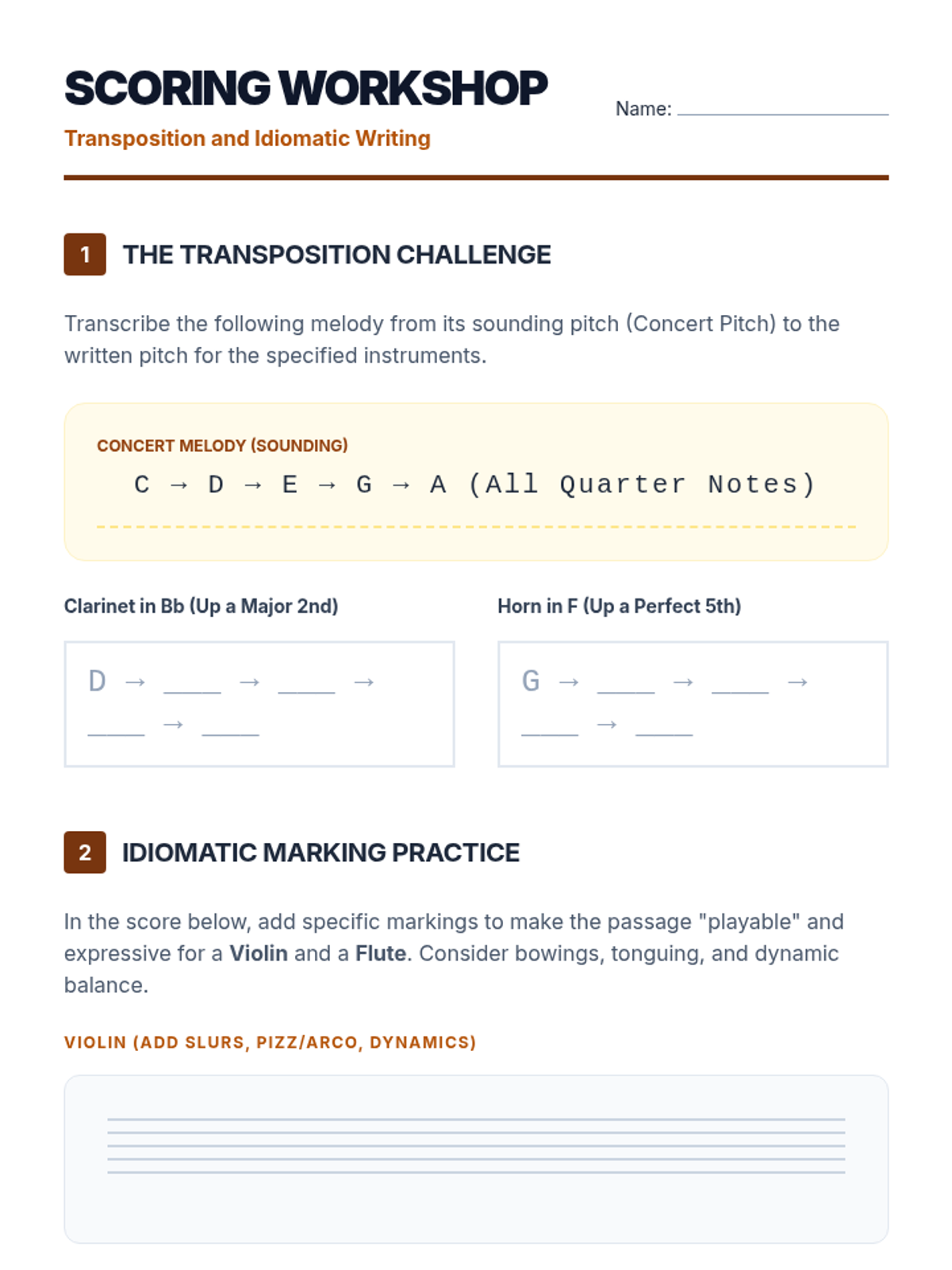
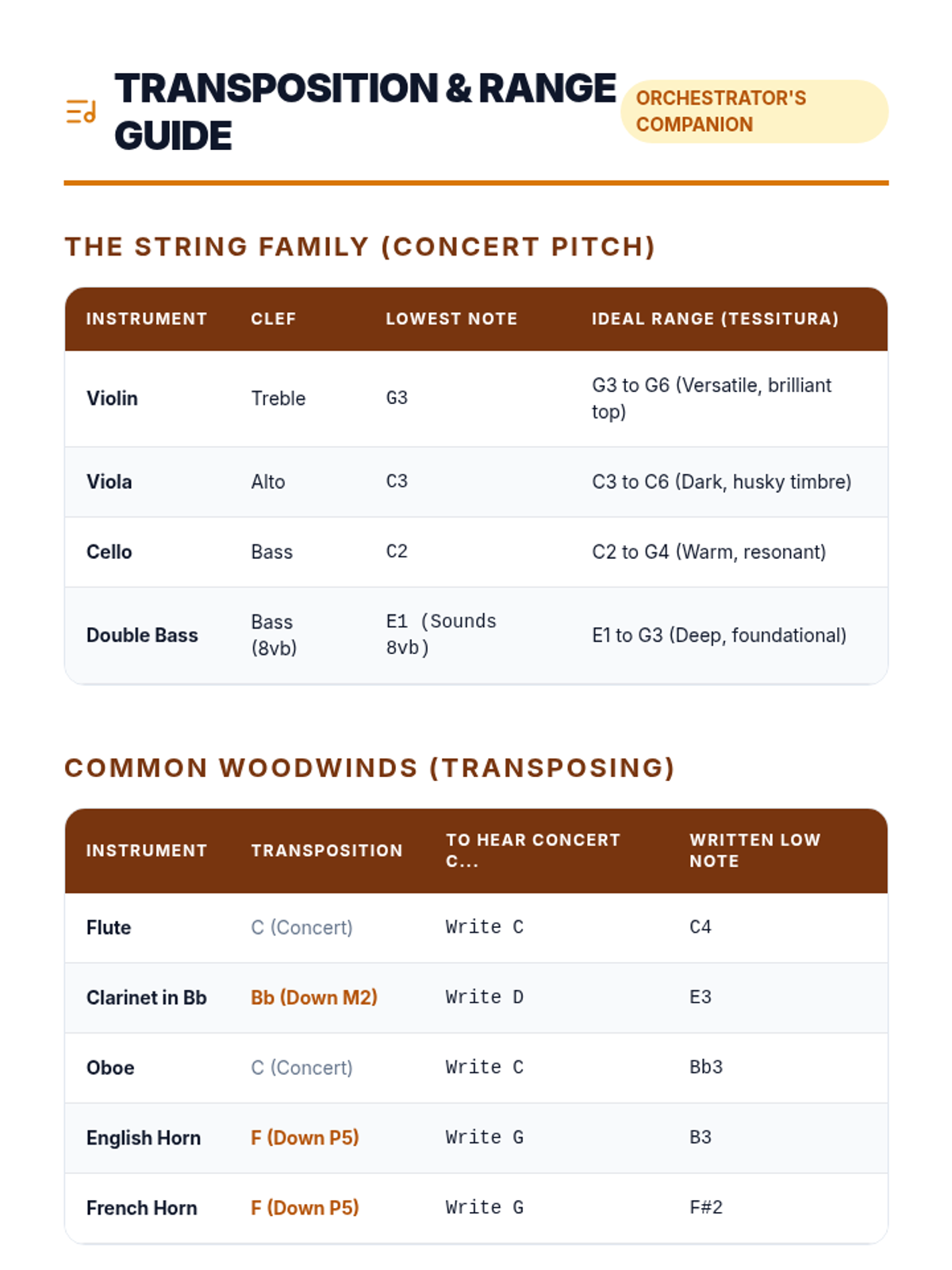
Students expand their compositional drafts into a score for a string quartet or woodwind trio, considering instrumental ranges and timbral combinations.
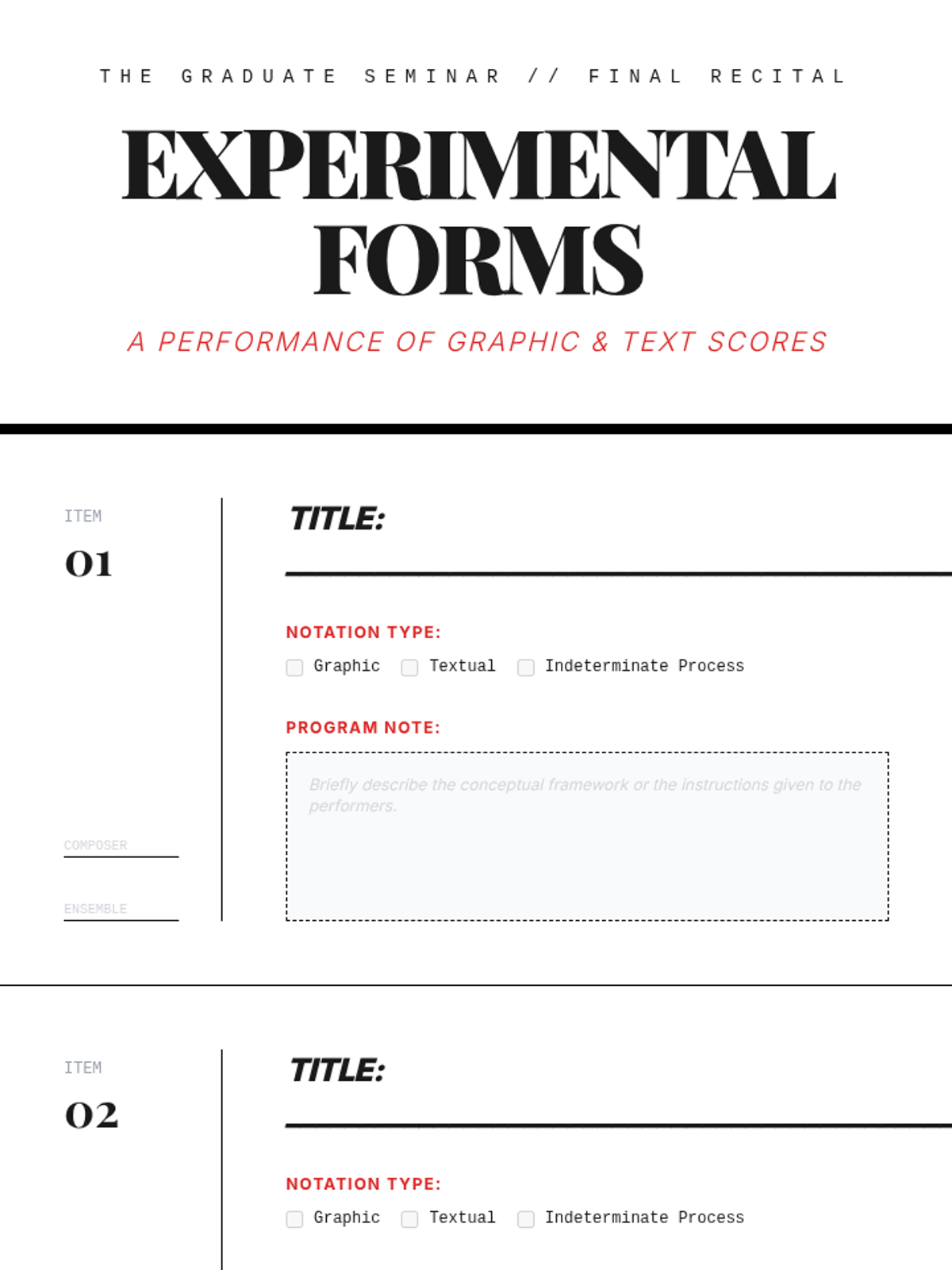
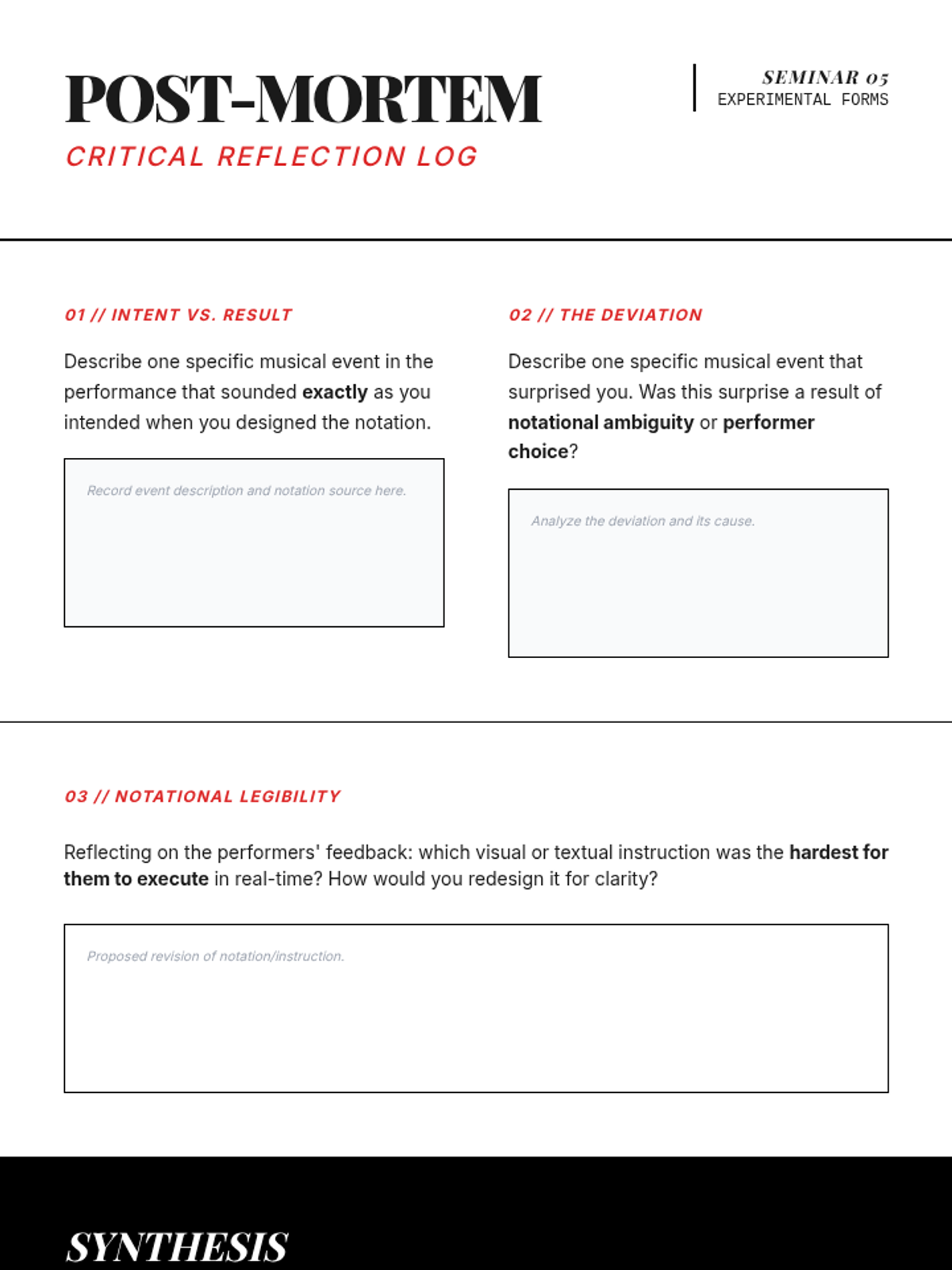
A culminating seminar where students perform, critique, and reflect upon the experimental scores created throughout the sequence.
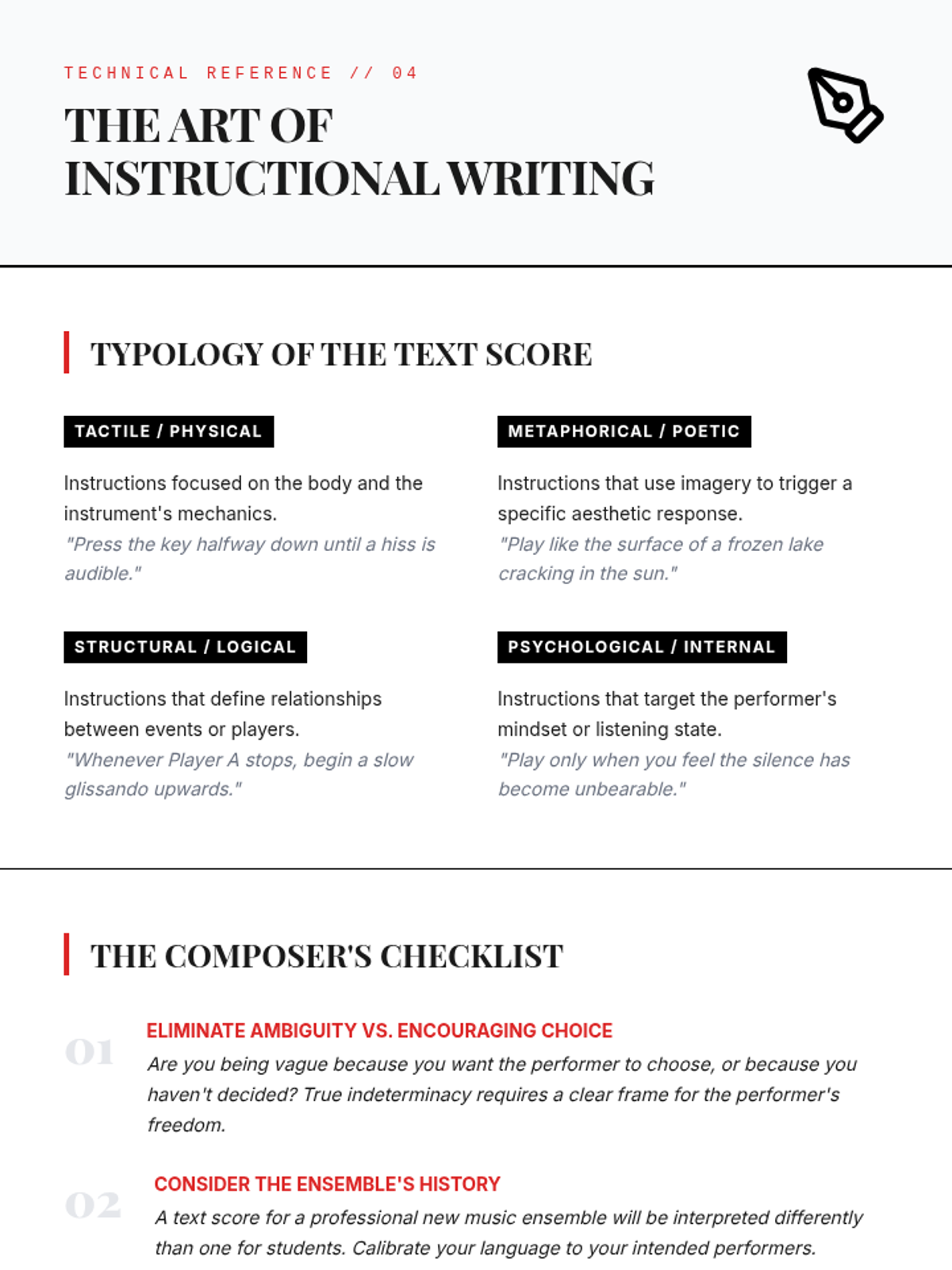
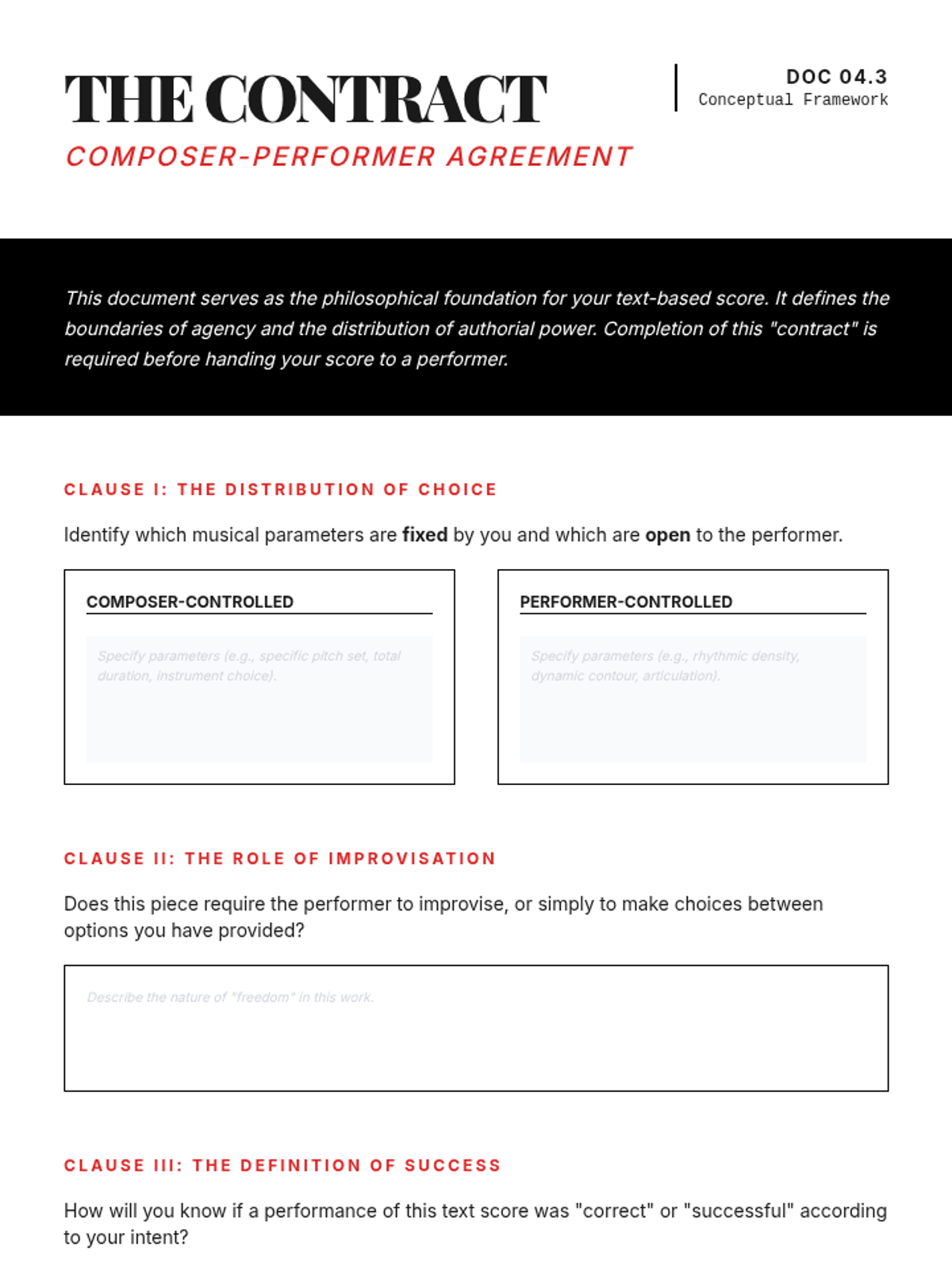
Examines the use of text-based instructions and conceptual frameworks to guide improvisation and redefine the power dynamics of performance.
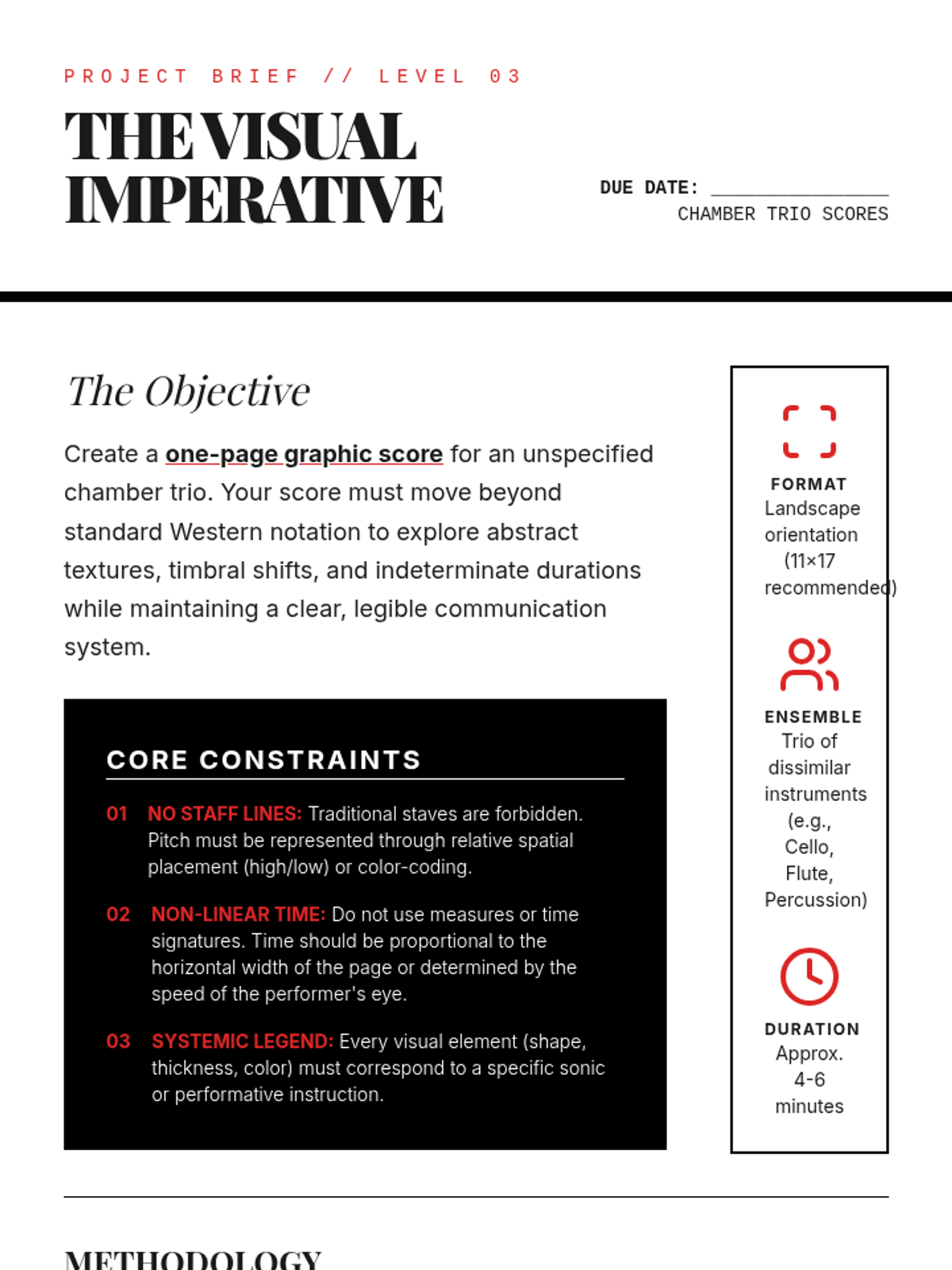
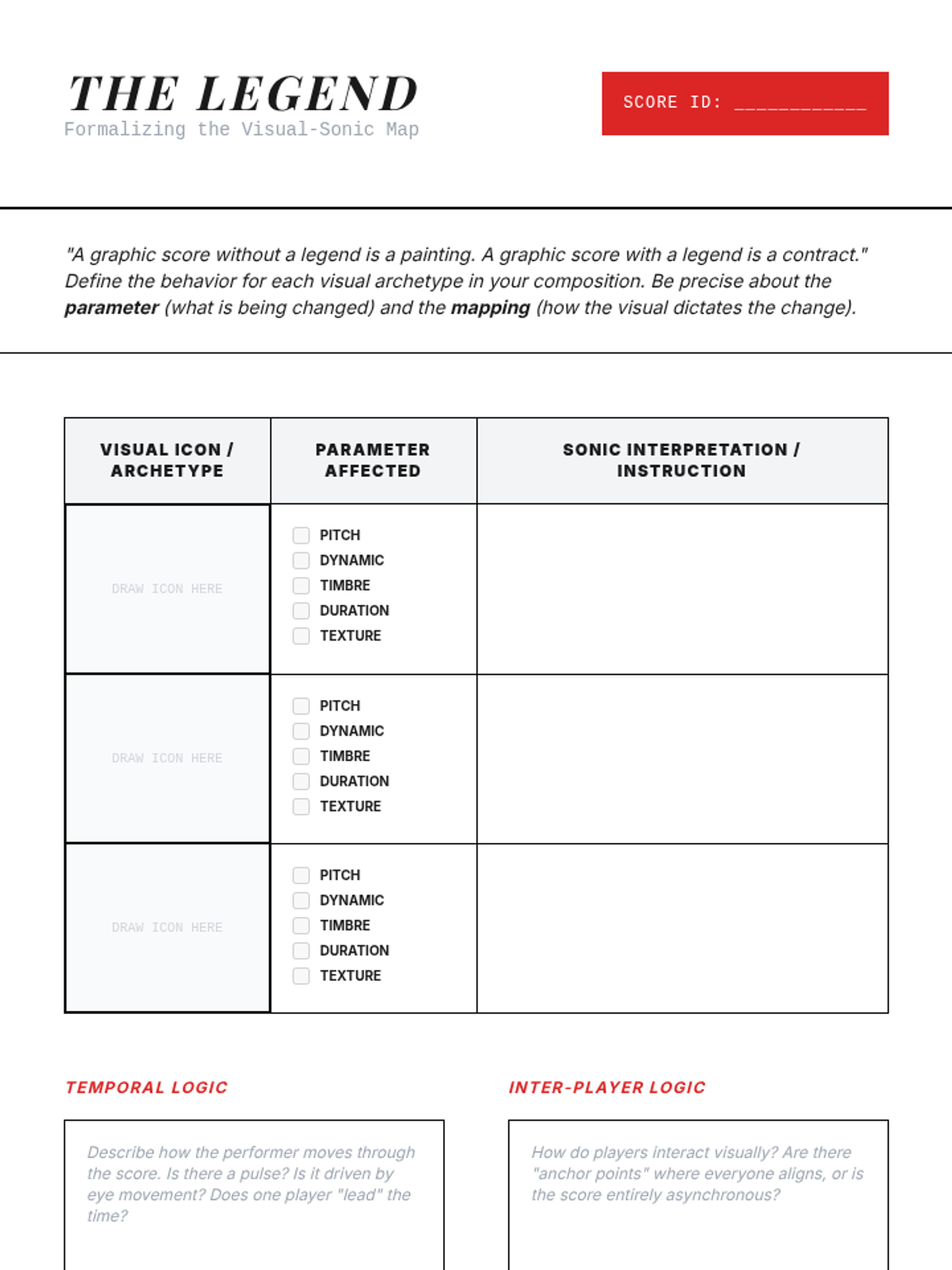
Focuses on the creation of non-stave visual scores, establishing novel communication systems between composer and performer through graphic design.
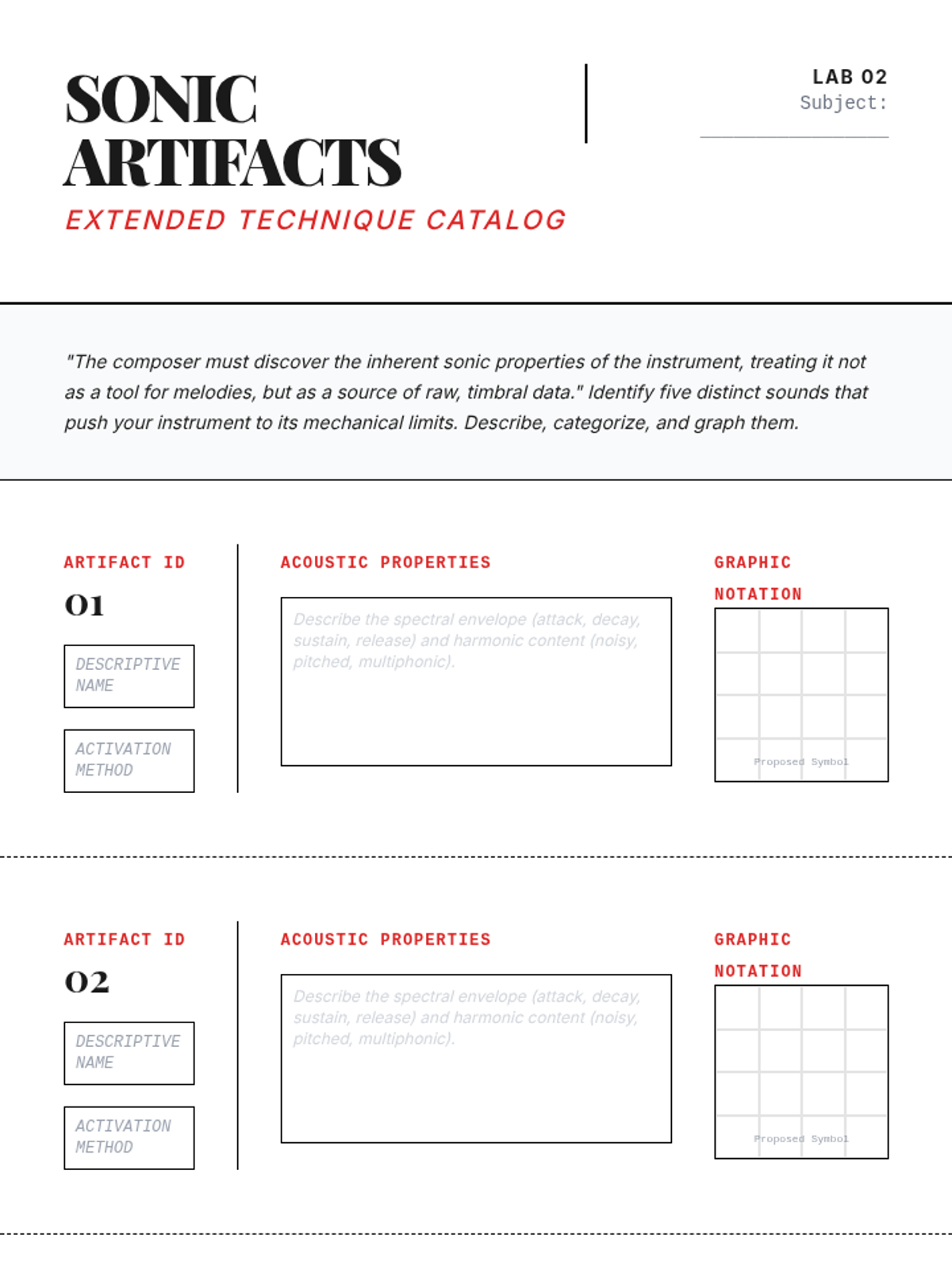
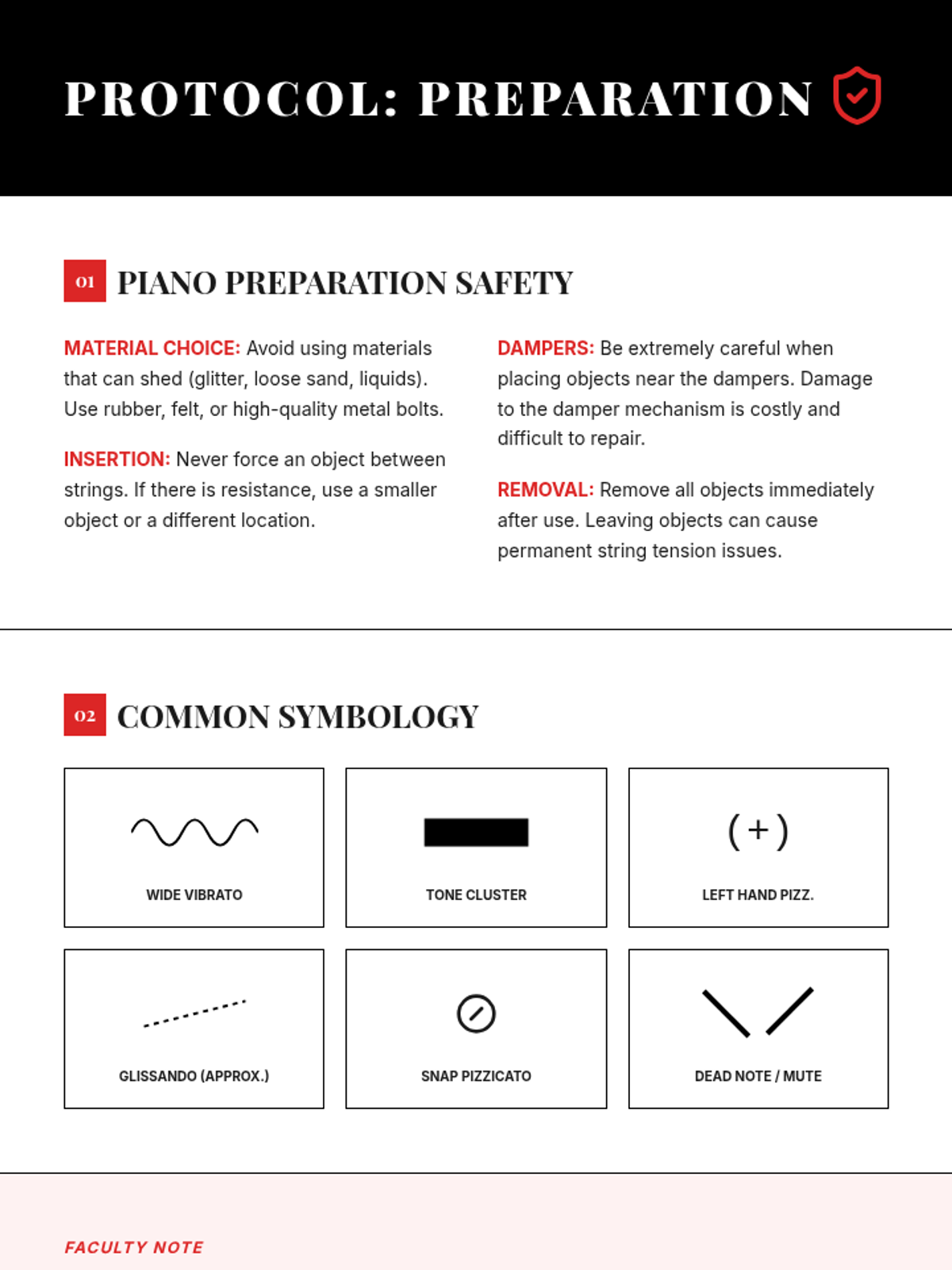
A technical and aesthetic exploration of non-traditional instrumental methods, including prepared piano and multiphonics, to expand the sonic palette.
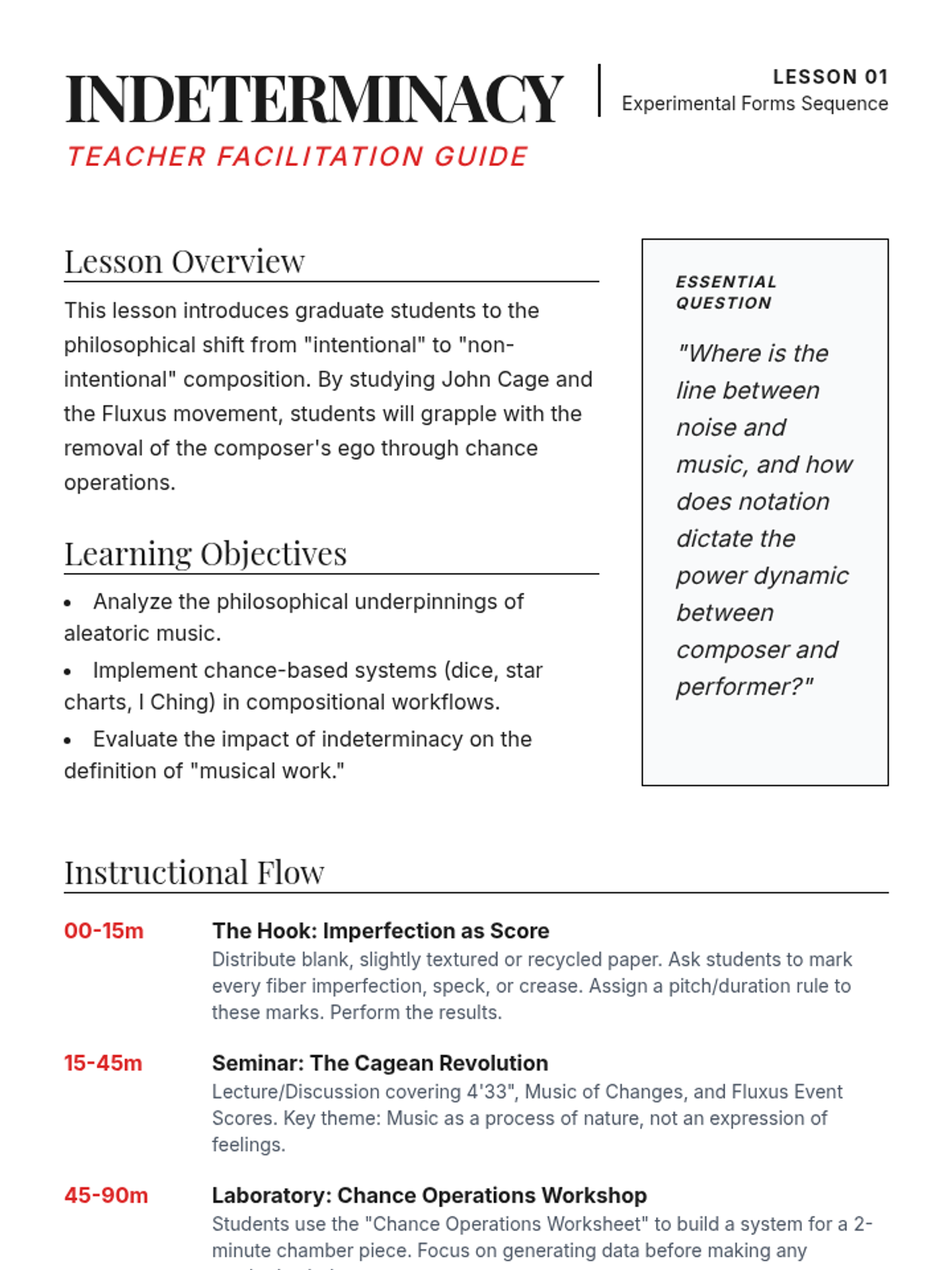
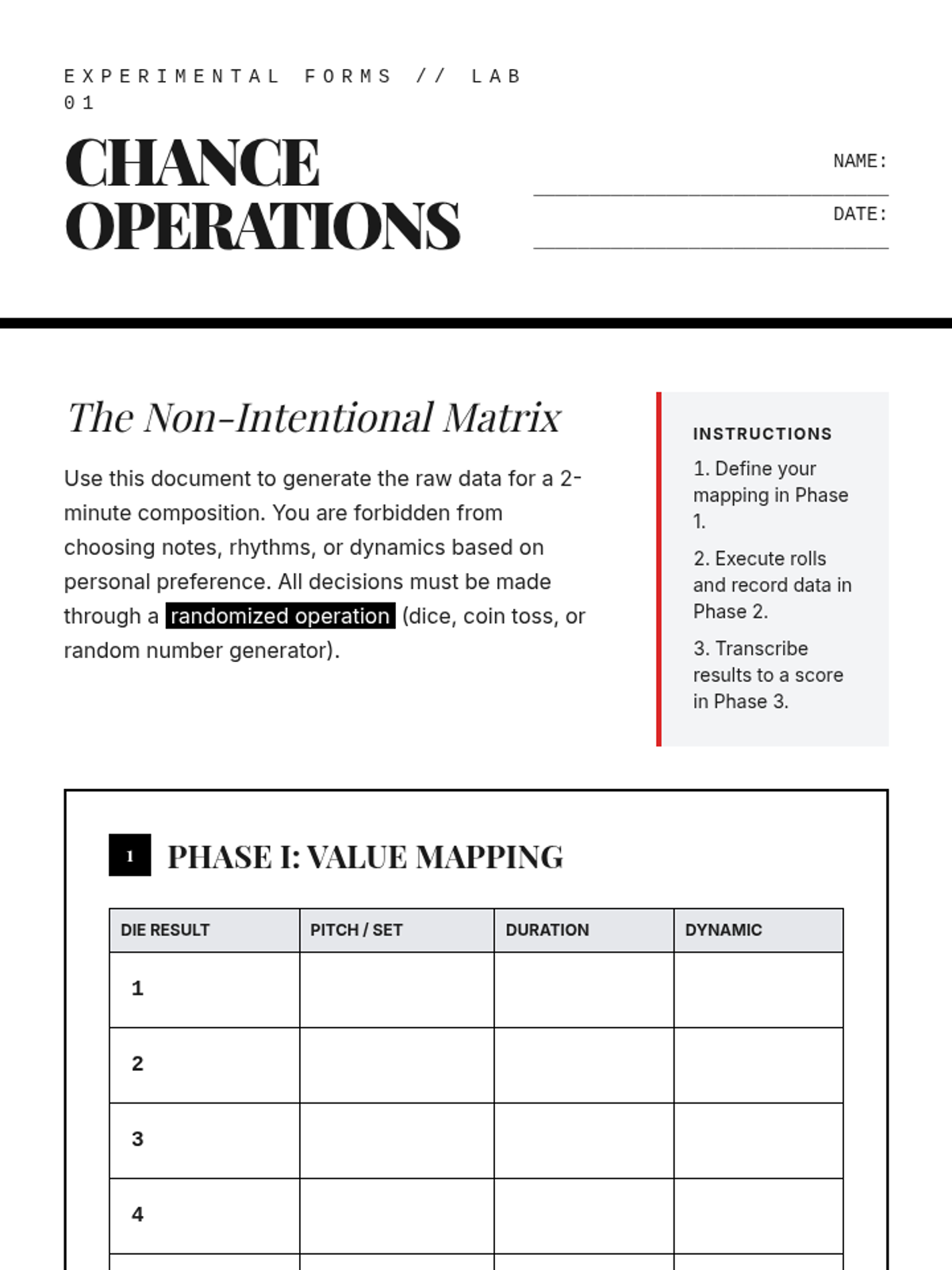
Explores the philosophy and practice of indeterminacy and chance operations, focusing on John Cage and the Fluxus movement to remove composer ego.
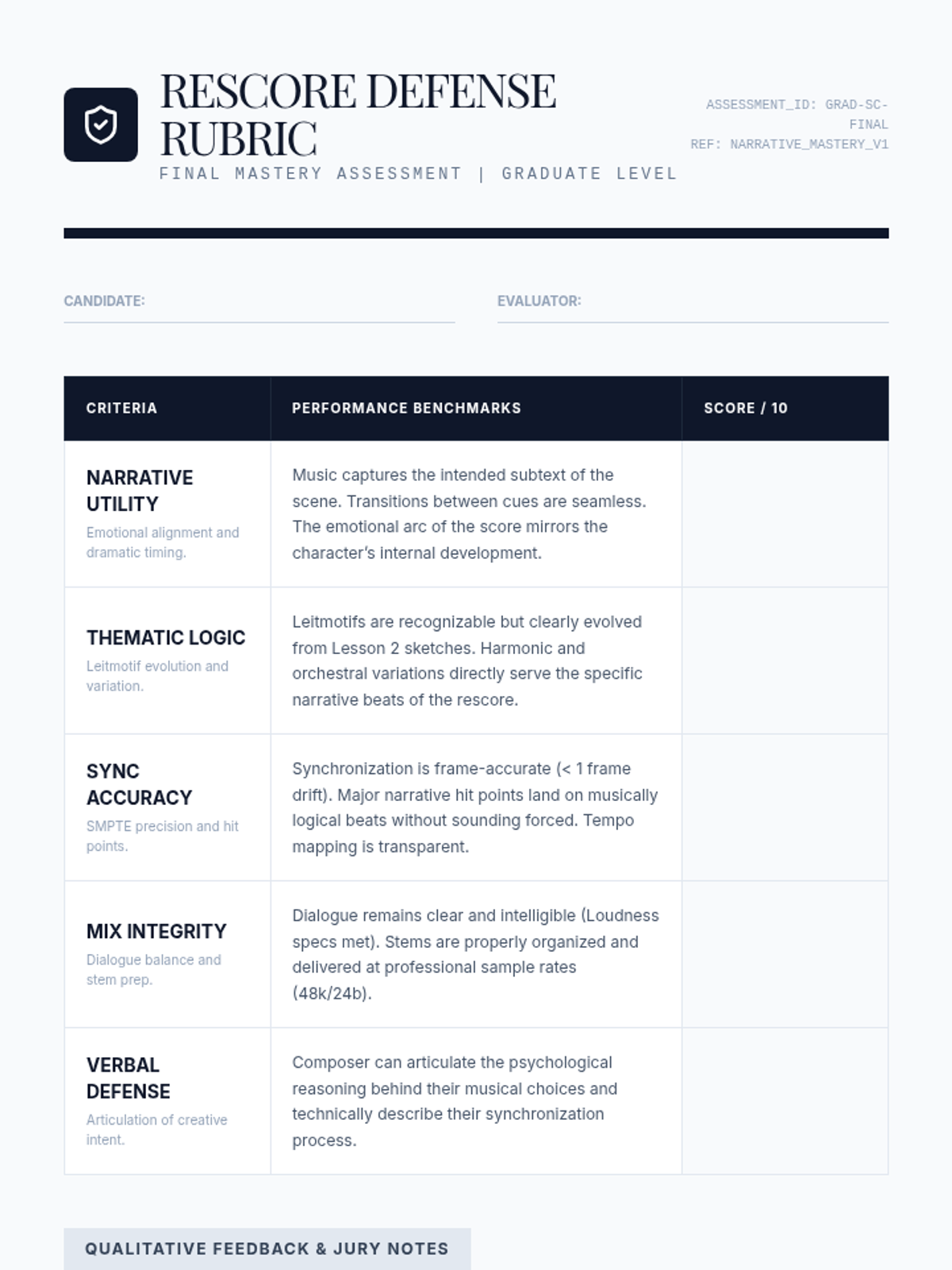
The culmination of the sequence where students present a 3-minute rescore. This lesson focuses on the technical mix, dramatic justification, and final delivery of a professional-grade score.
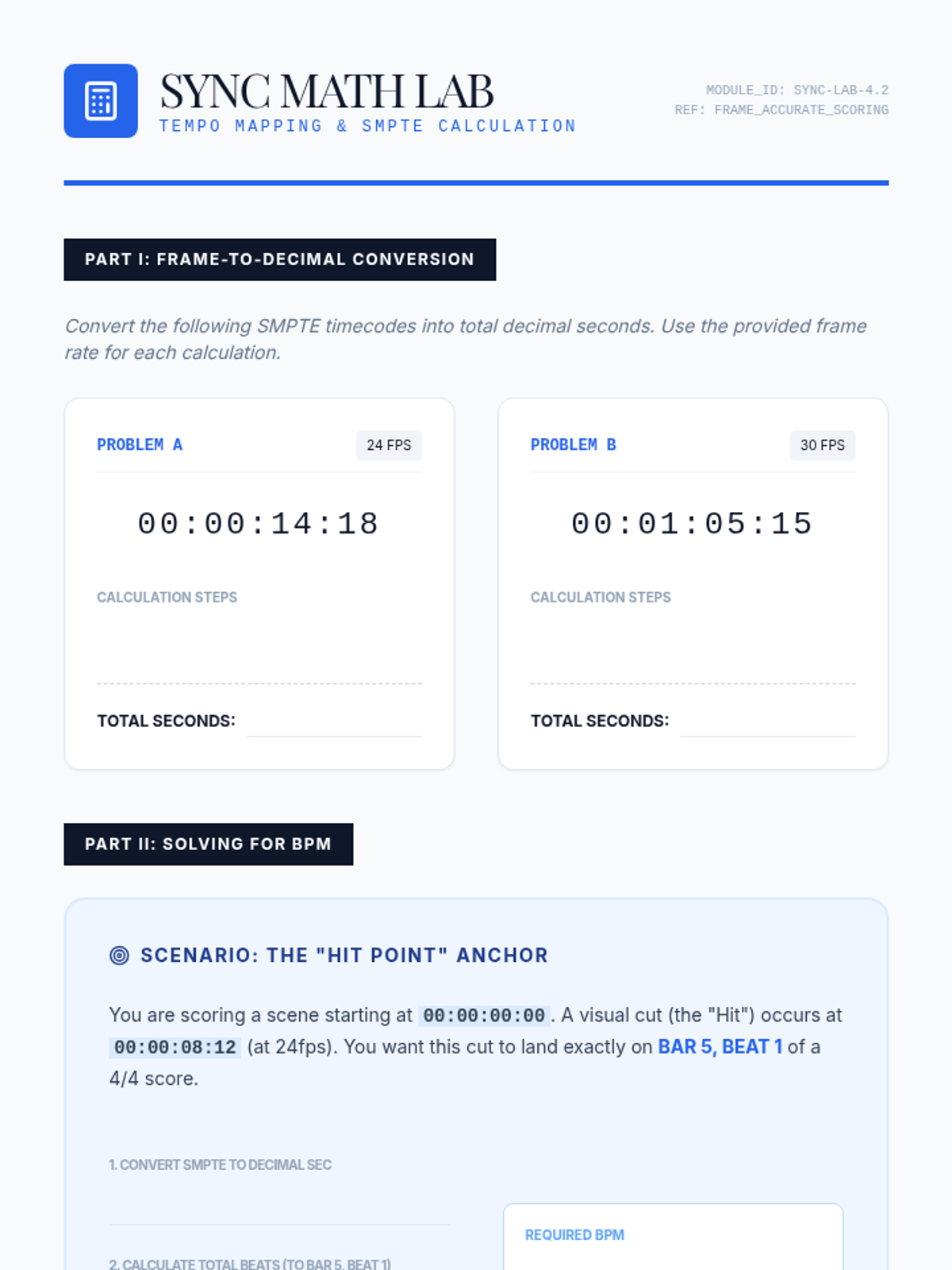
A technical dive into SMPTE timecode, frame rates, and tempo mapping. Students learn the mathematical and DAW-based techniques required for precise visual synchronization.
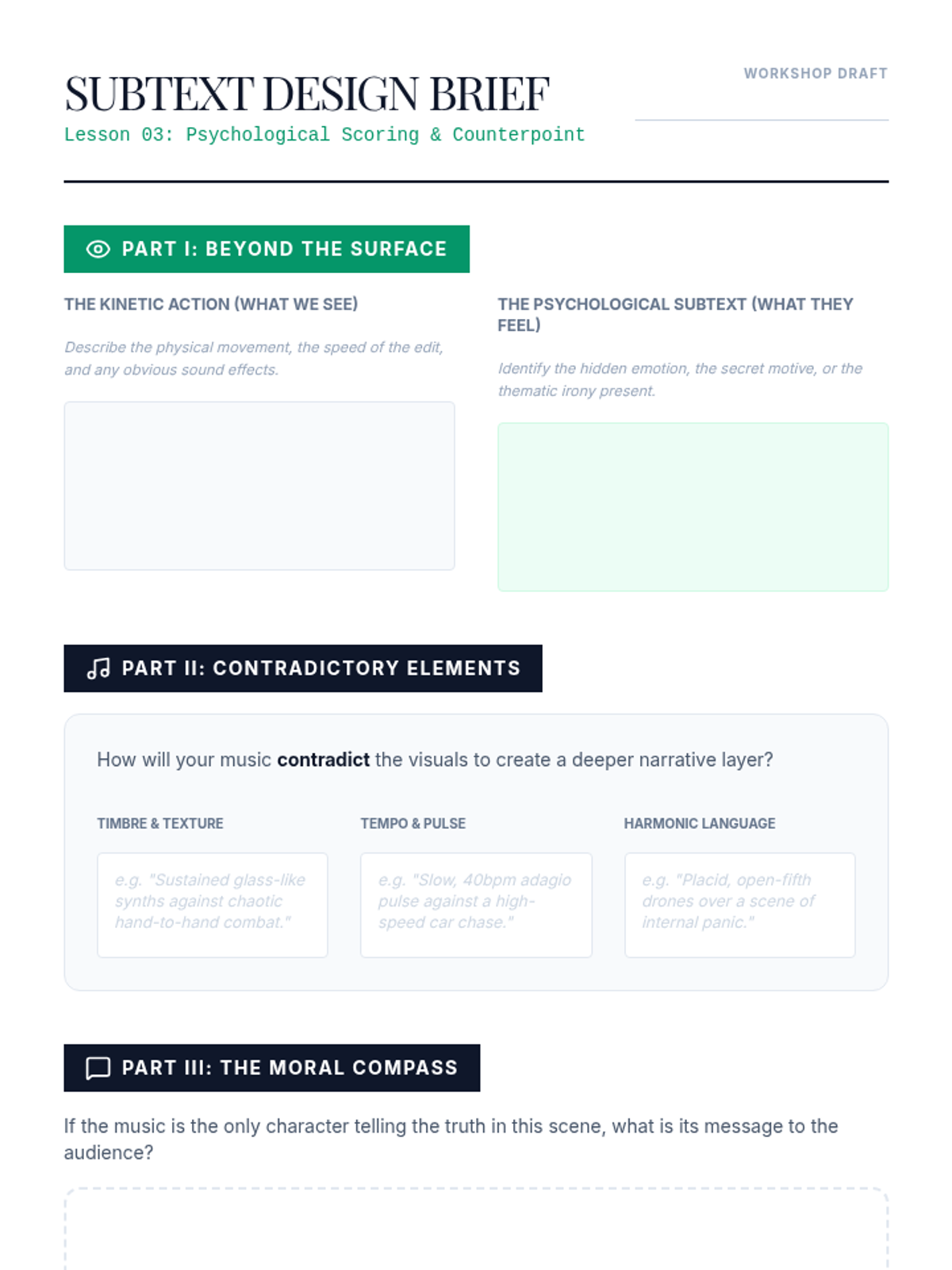
Examines musical counterpoint and scoring for emotional subtext. Students challenge the visuals by composing music that contradicts or deepens the immediate action on screen.
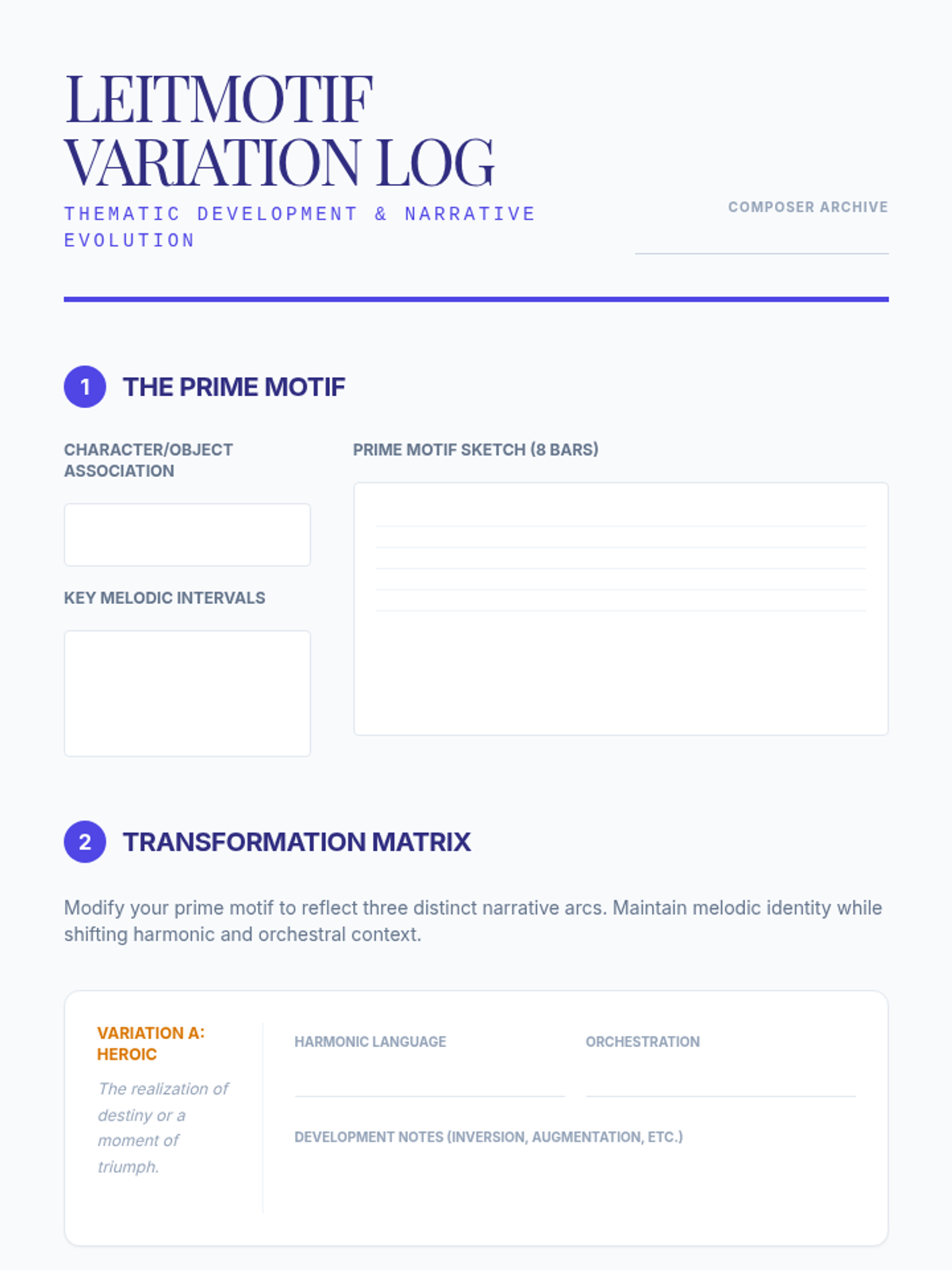
Explores the evolution and transformation of leitmotifs to reflect character arcs. Students learn to manipulate harmonic and melodic language to shift themes across different emotional landscapes.
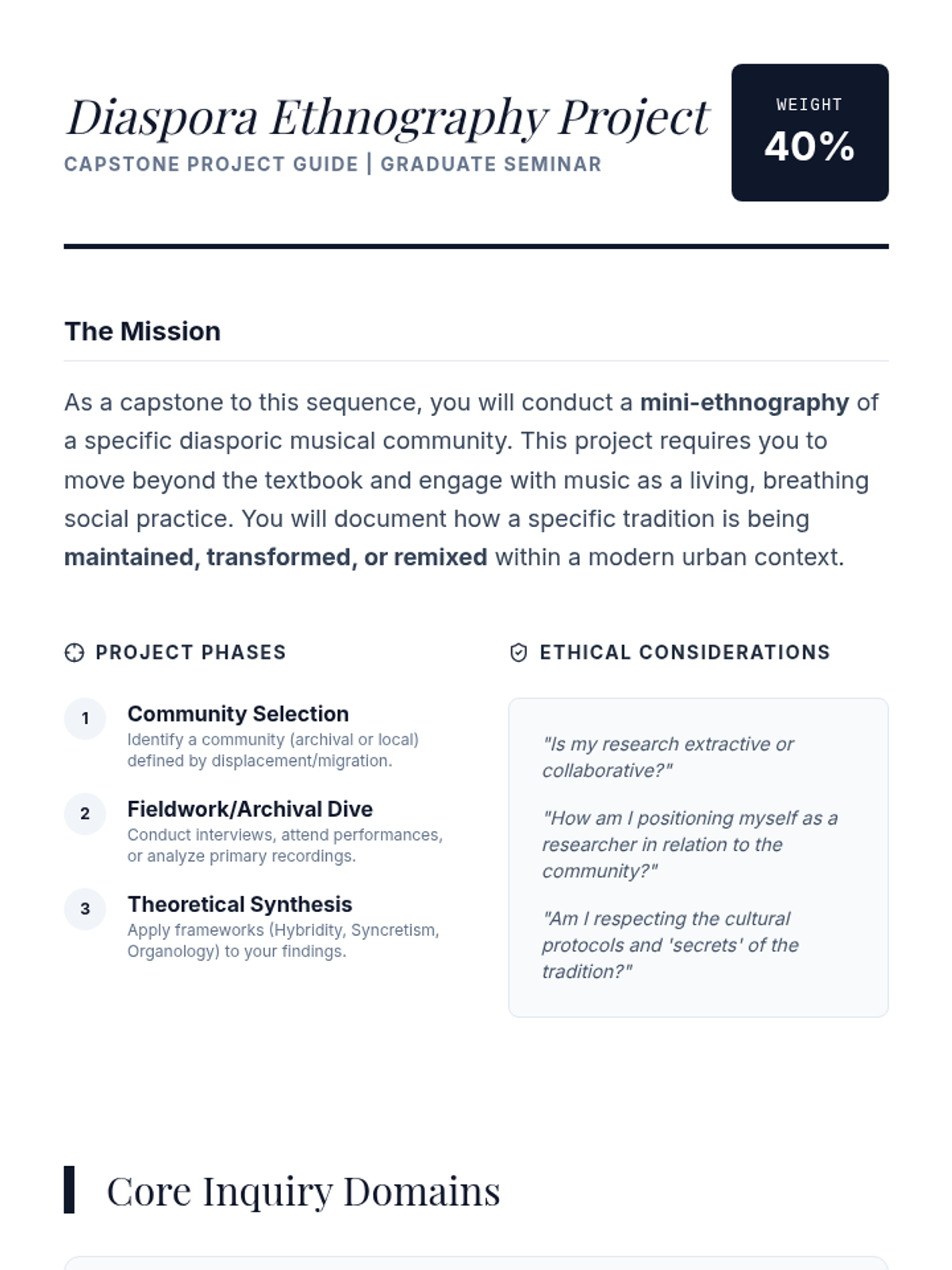
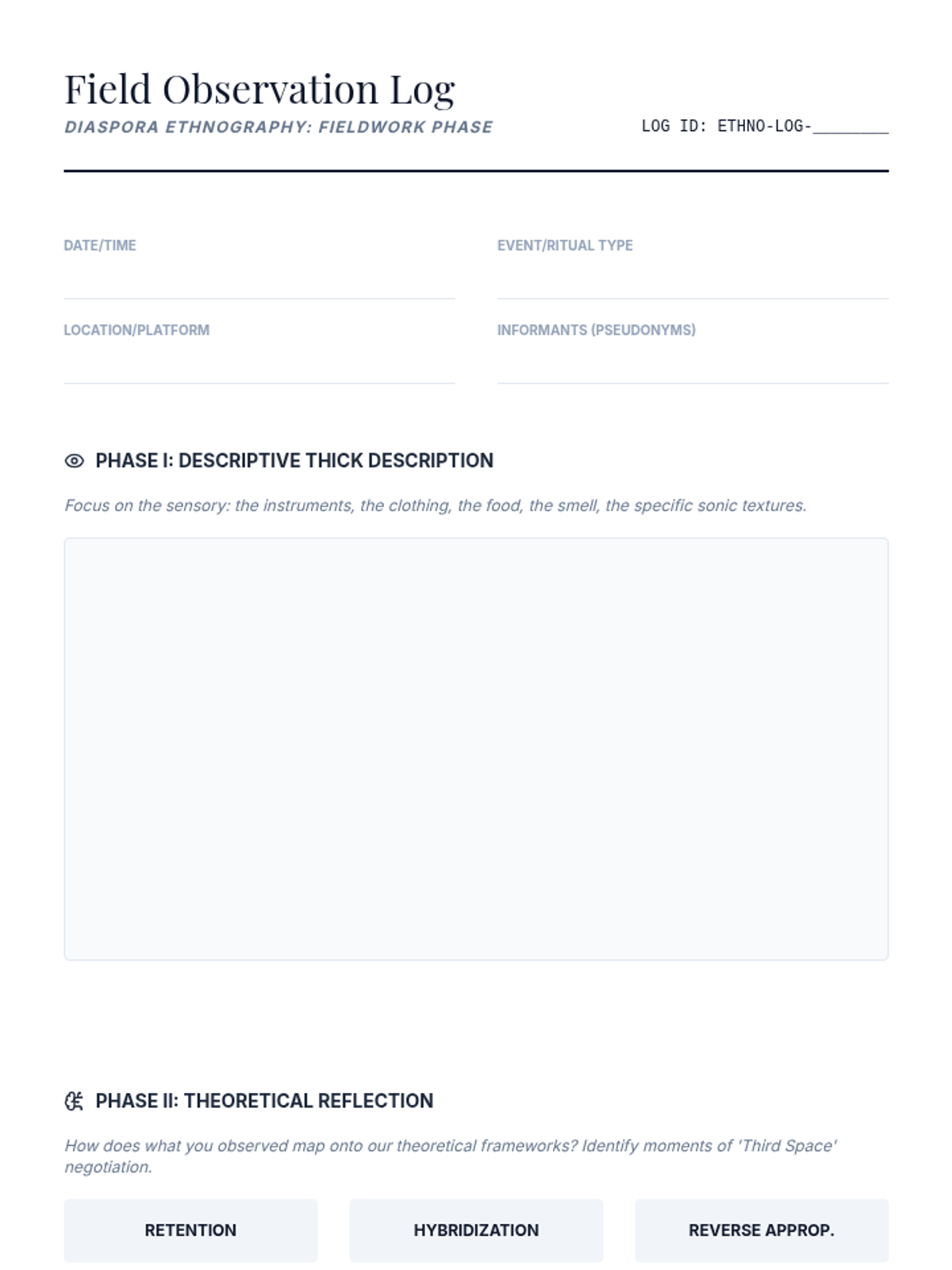
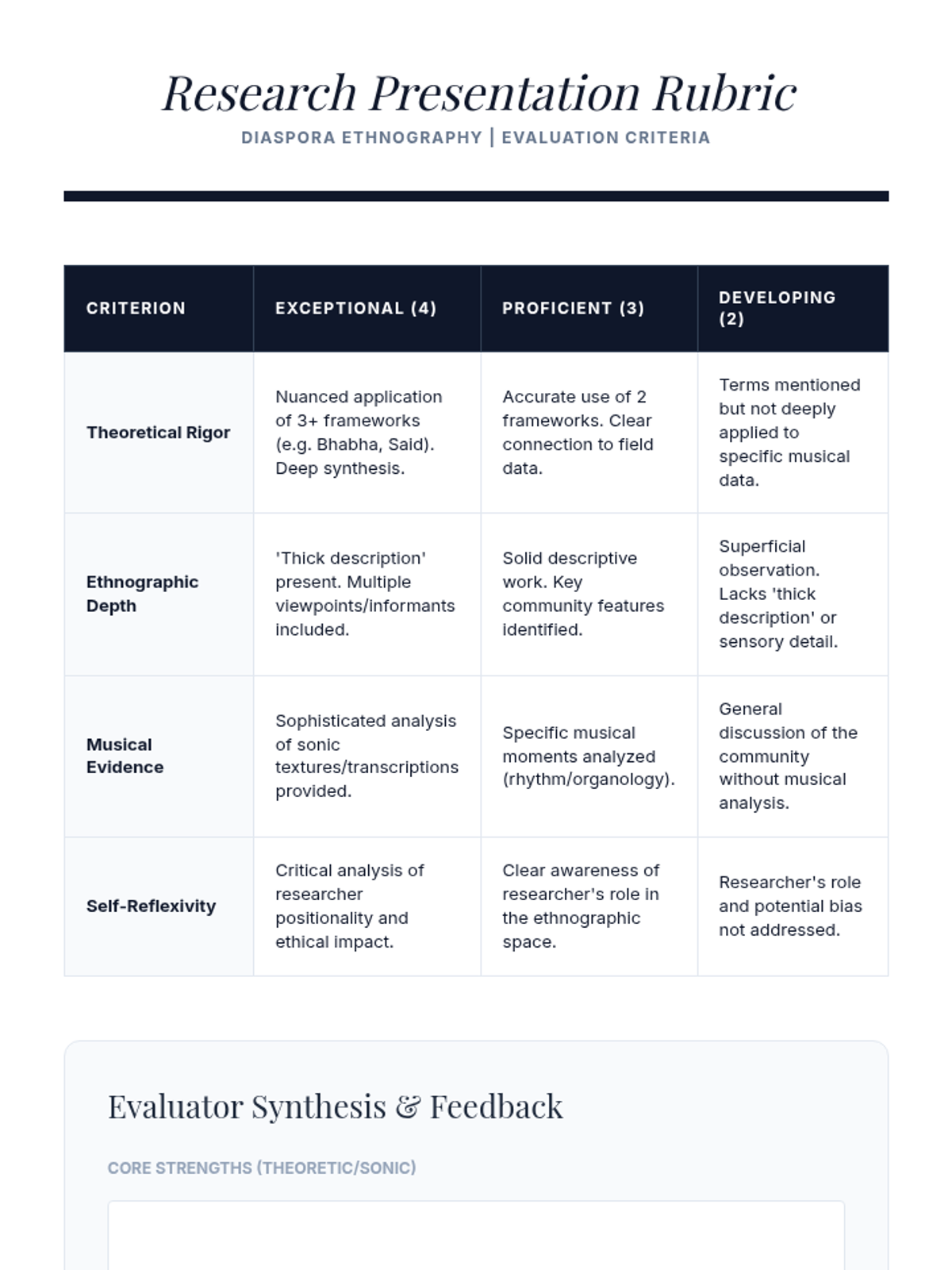
A project-based lesson where students design and conduct a mini-ethnography of a diasporic musical community, synthesizing theoretical frameworks into a research presentation.
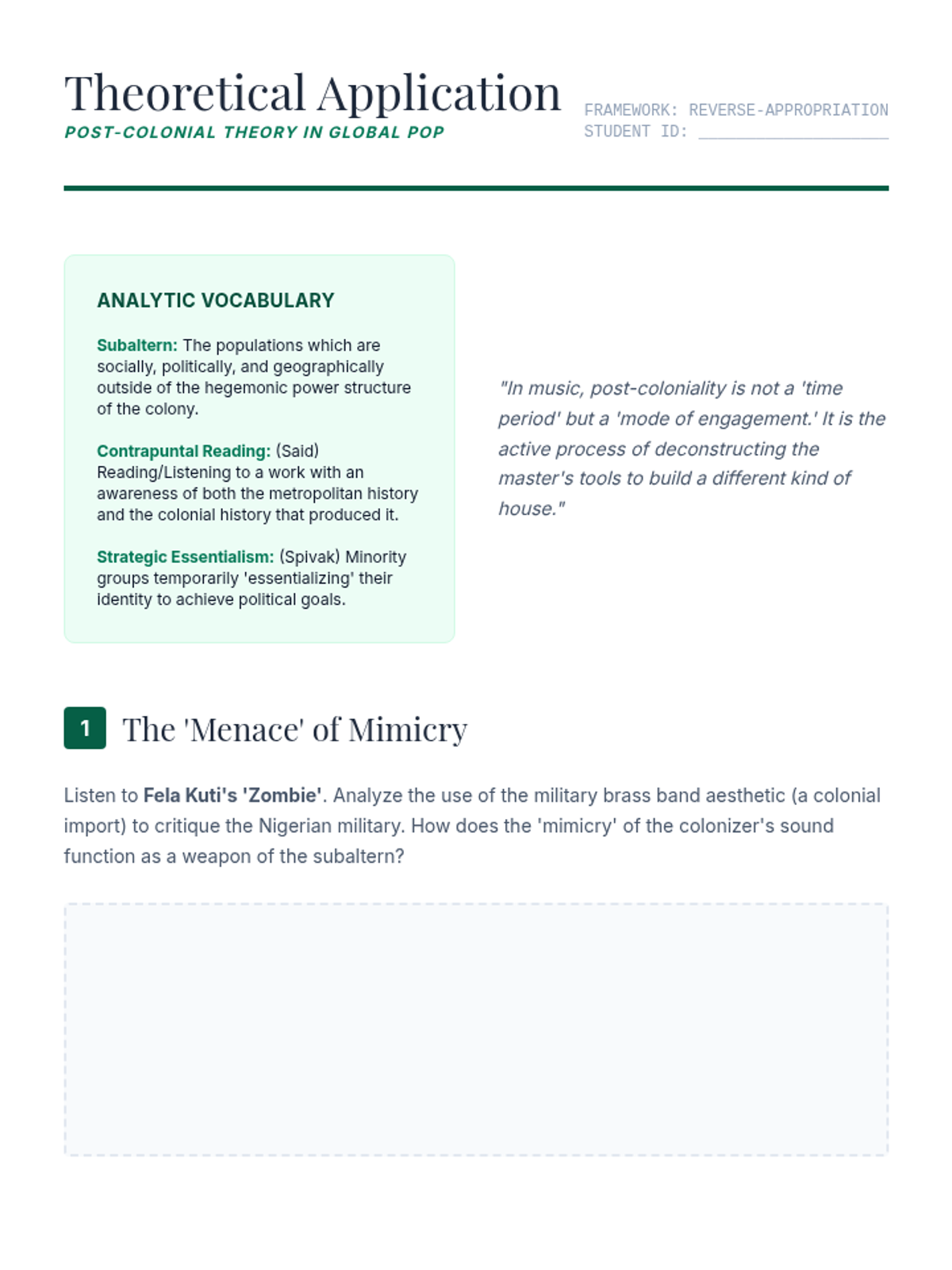
Applying post-colonial theory to late 20th-century global pop, exploring how formerly colonized nations reclaimed and remixed colonial instruments to assert cultural identity.
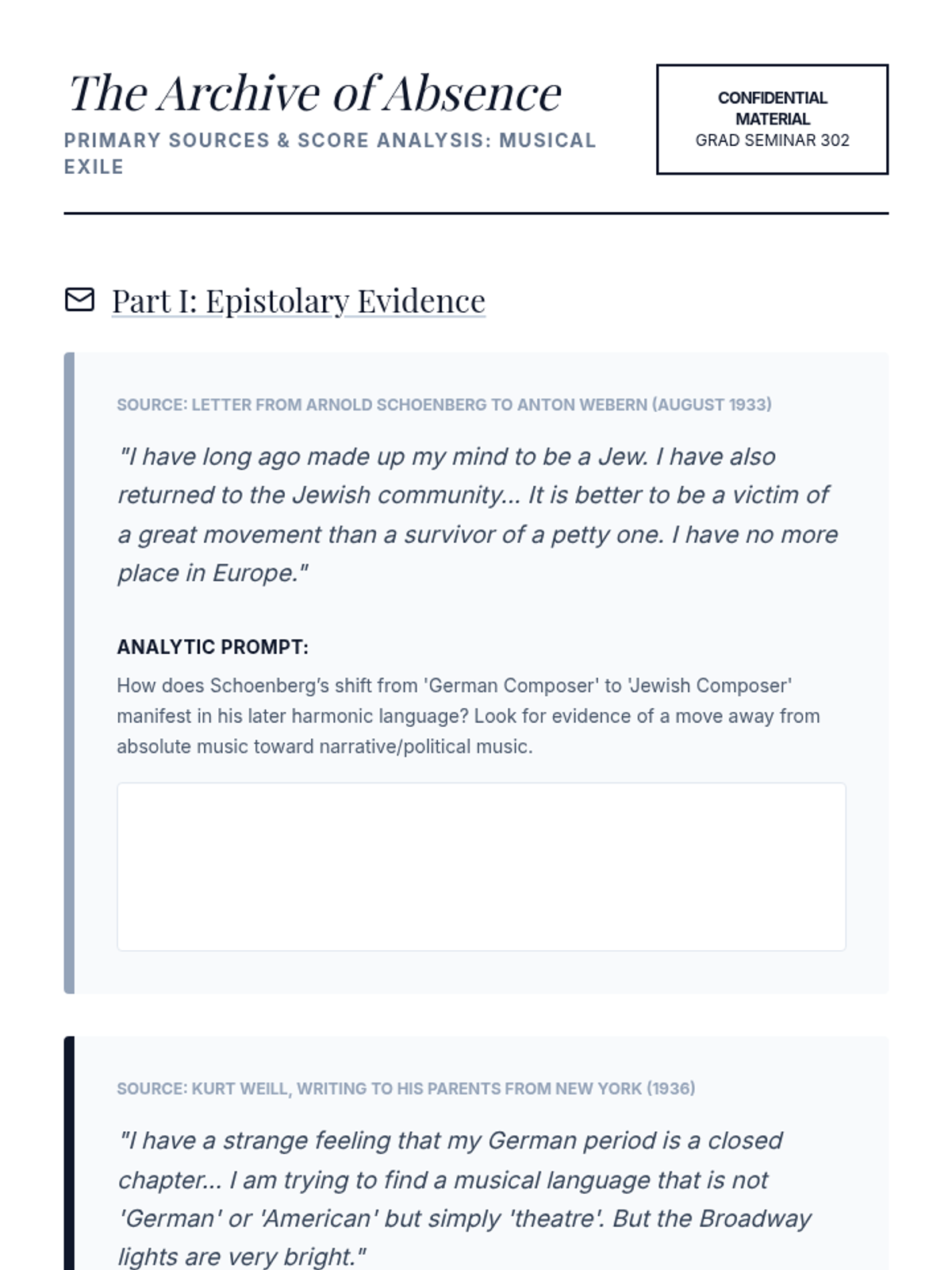
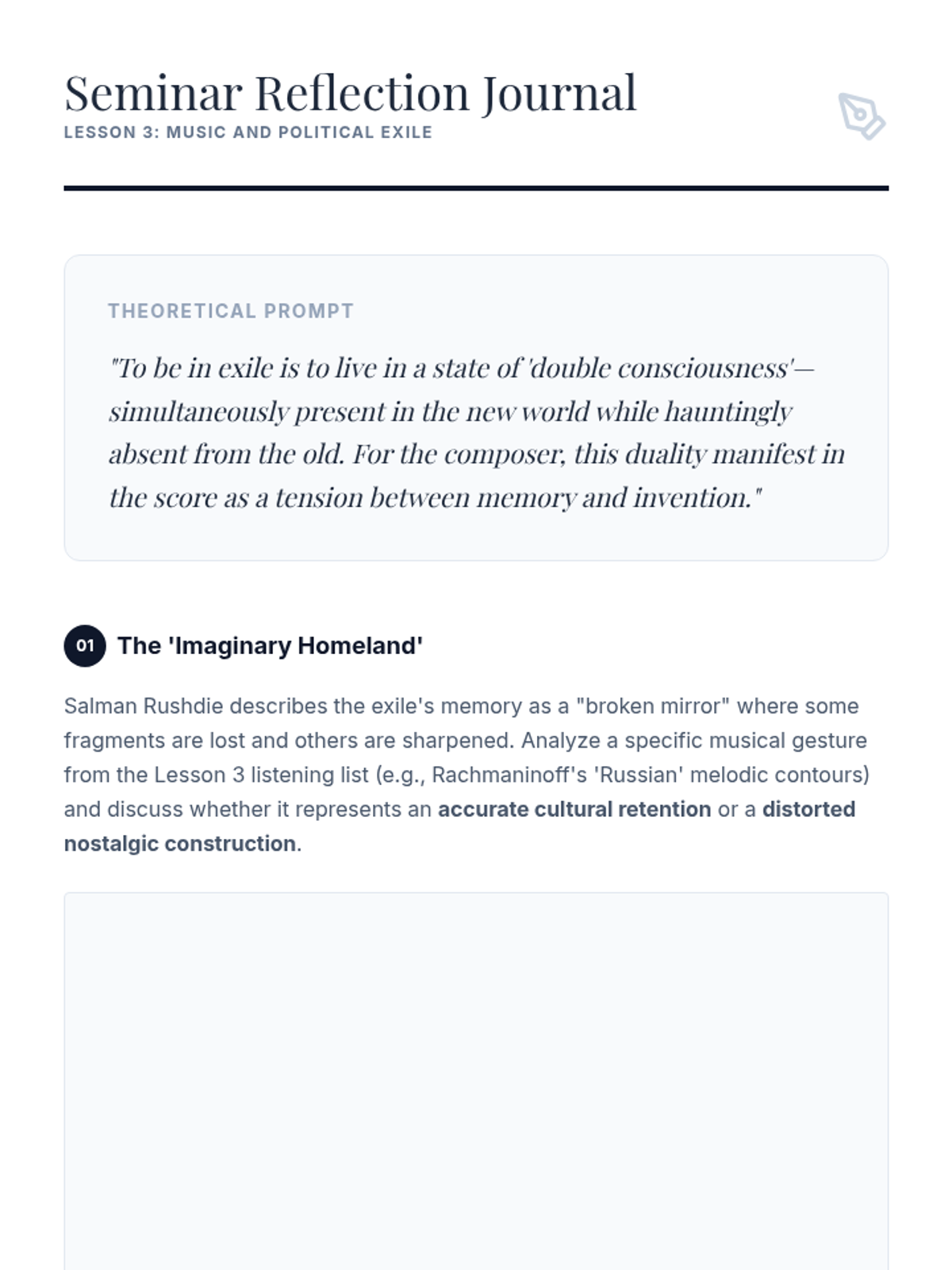
Investigating the impact of political displacement on 20th-century composers, examining how exile and the search for 'homeland' manifest in musical style and creative output.
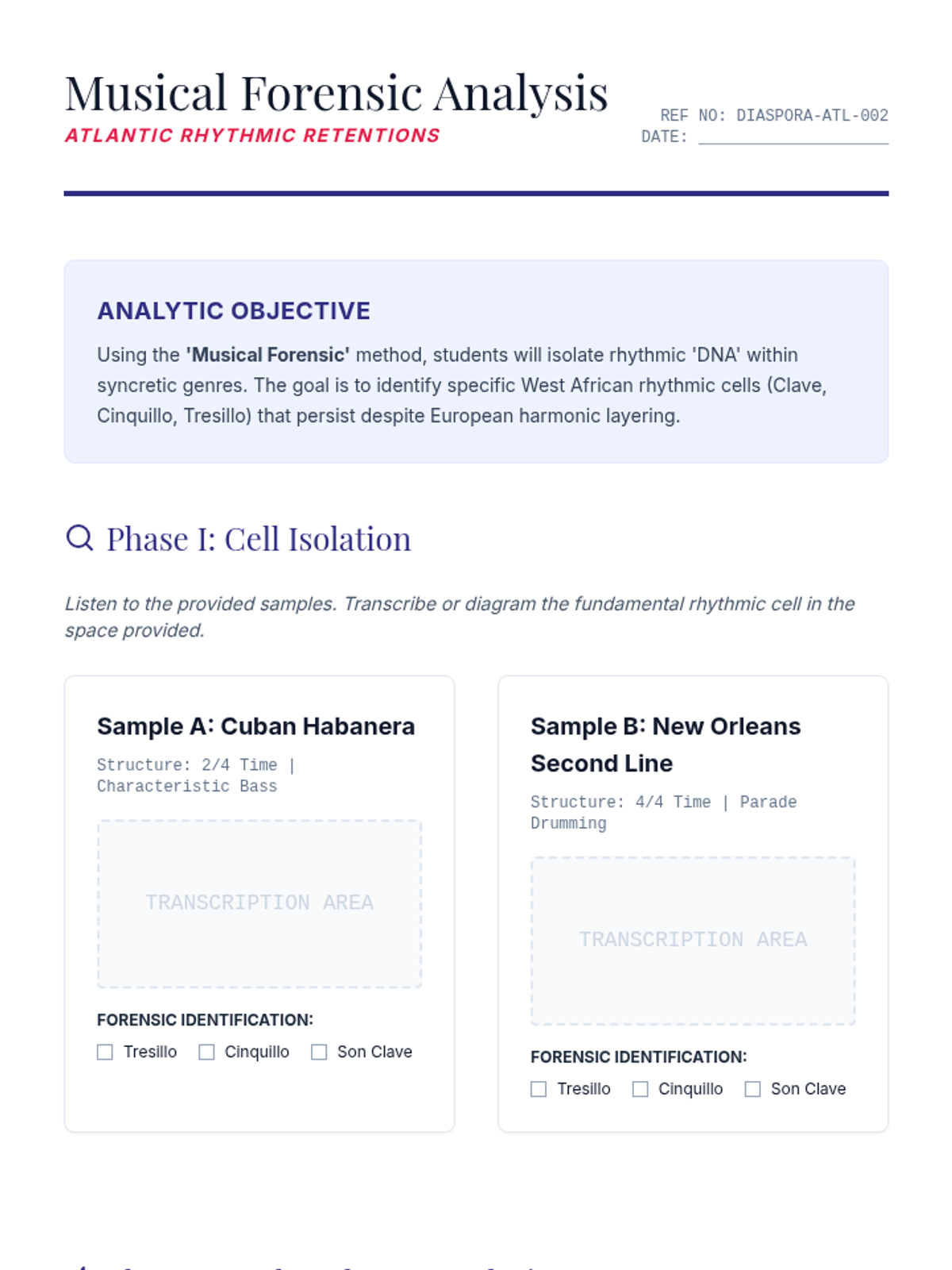
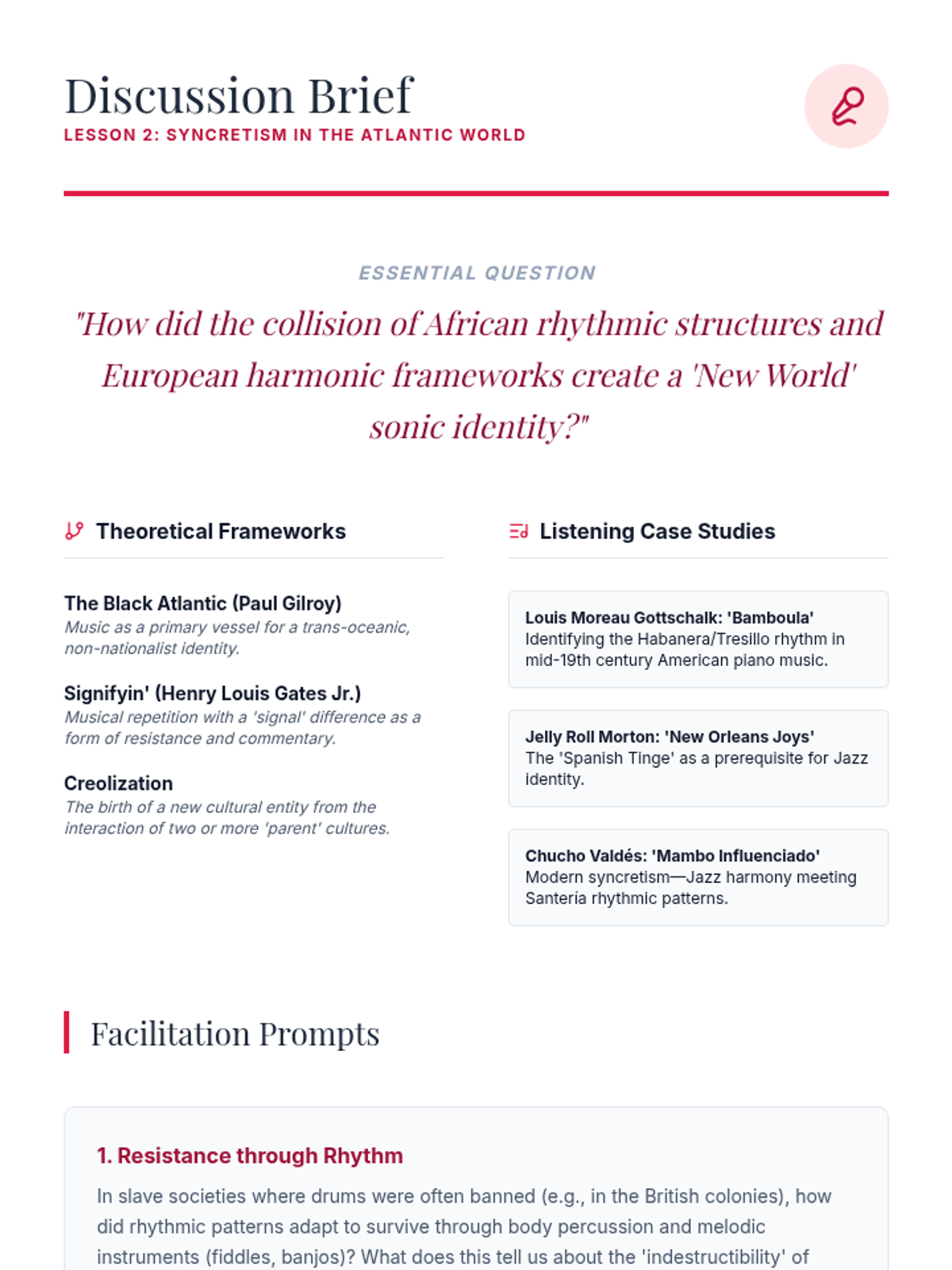
An analysis of the collision between African rhythmic structures and European harmonic traditions in the Americas, focusing on the genesis of syncretic genres like Jazz and Habanera.
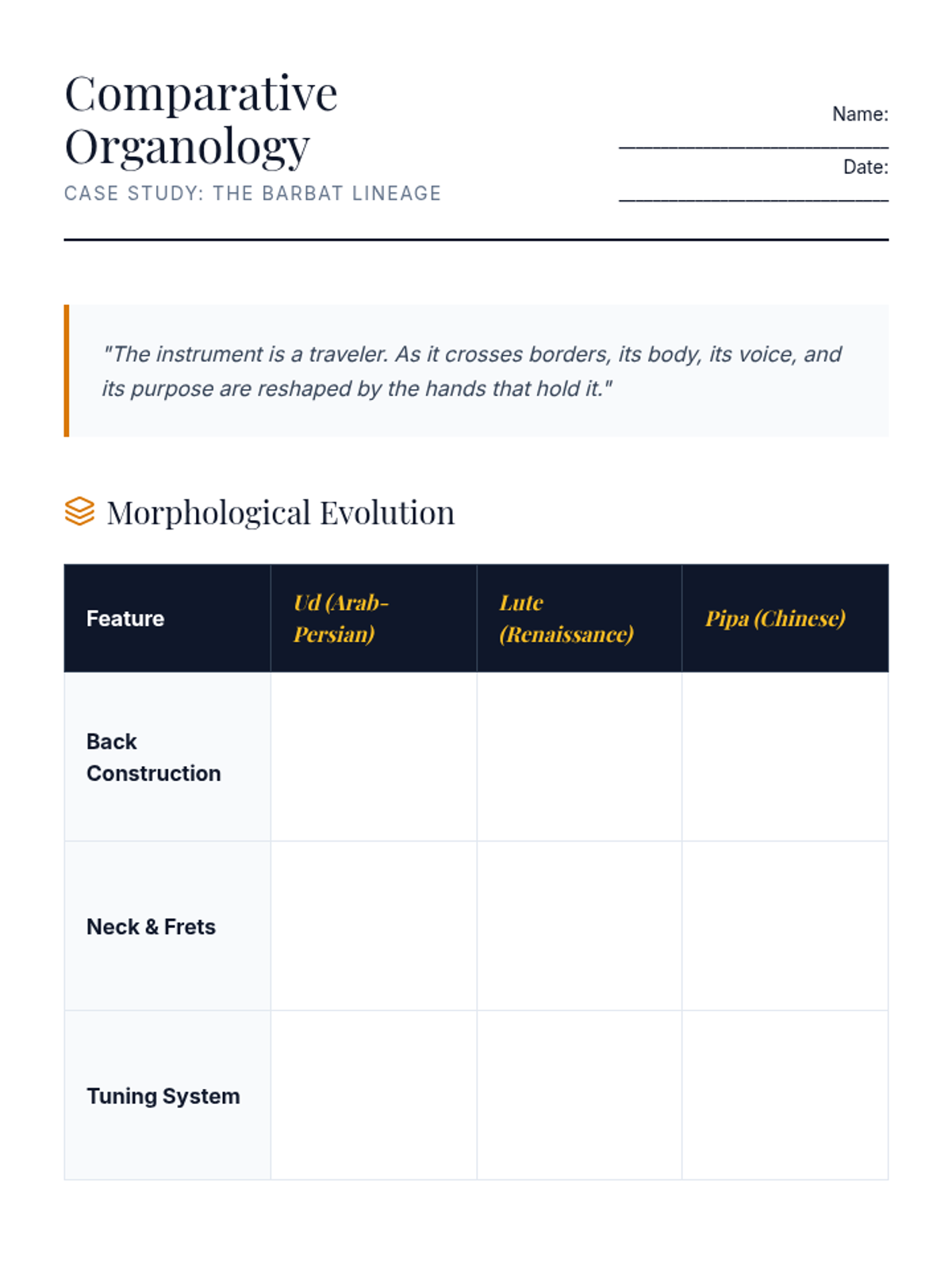
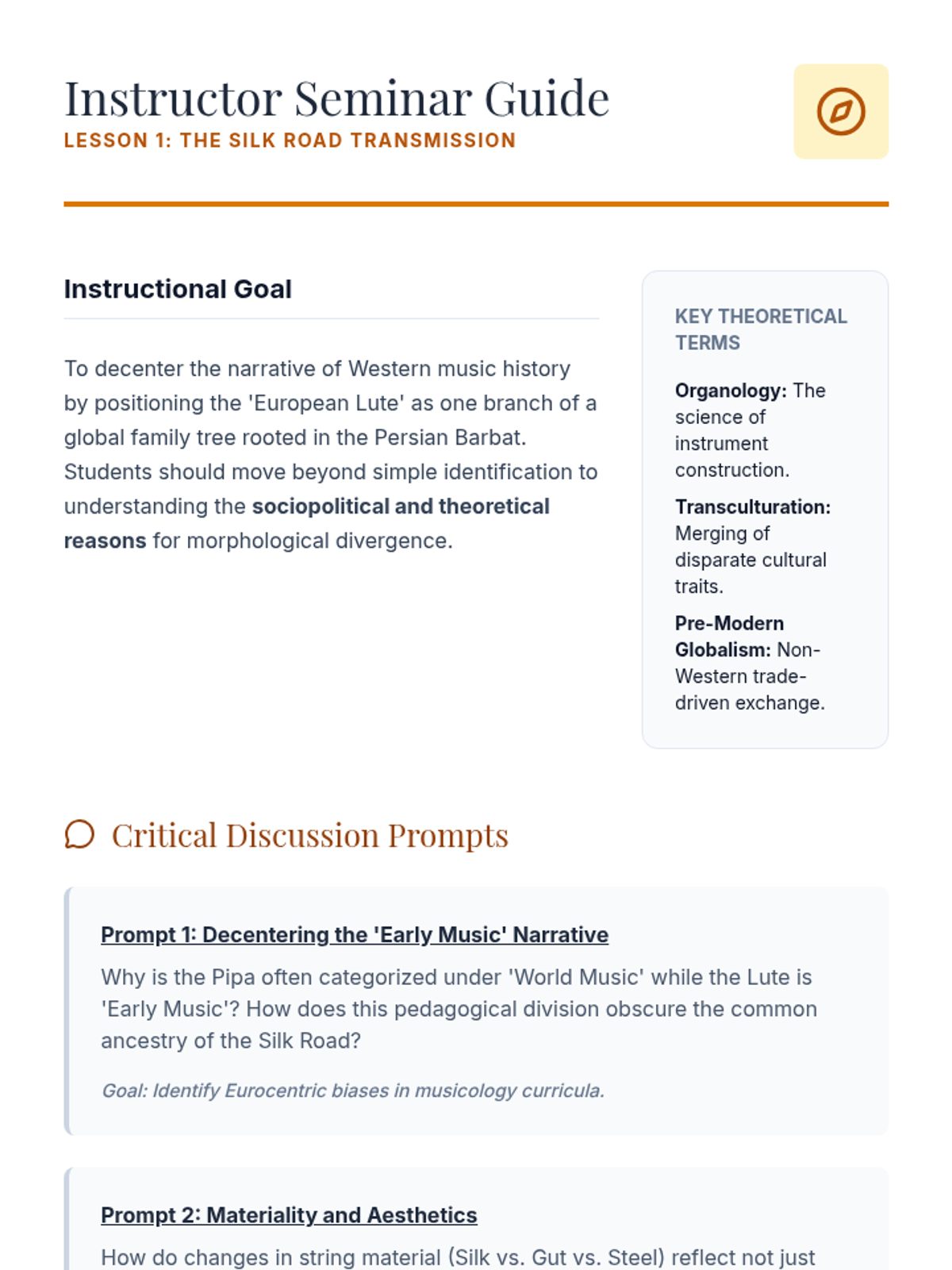
Students trace the organological evolution of string instruments along the Silk Road, exploring how pre-modern globalization facilitated trans-cultural musical flow between East and West.
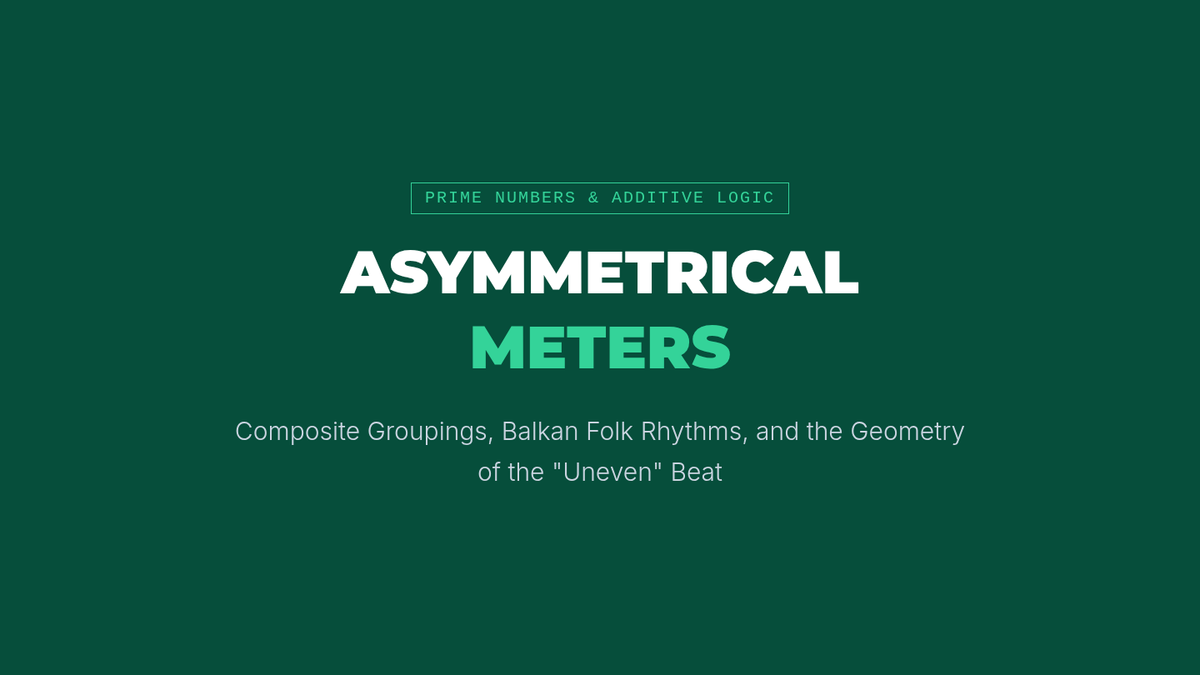
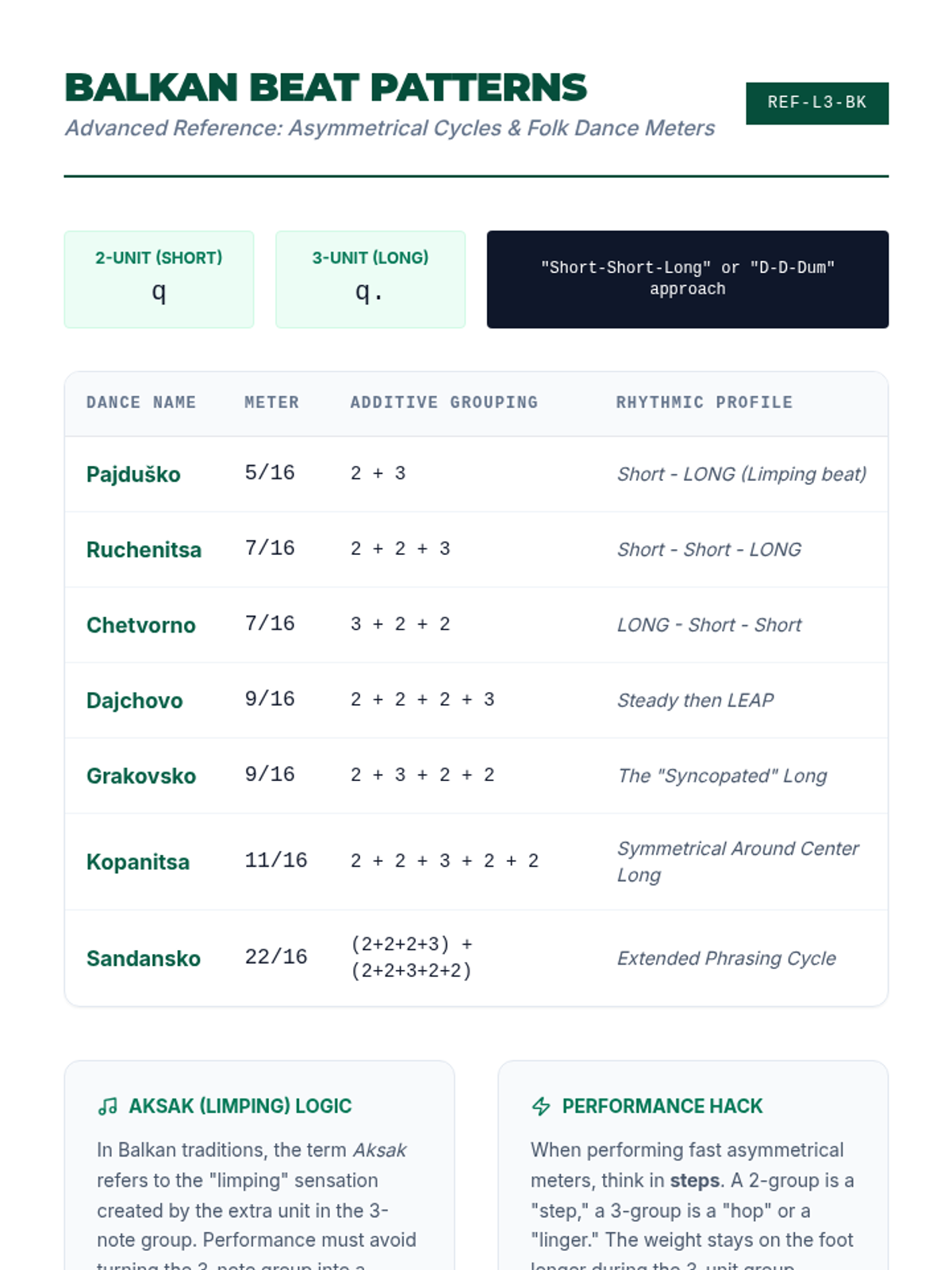
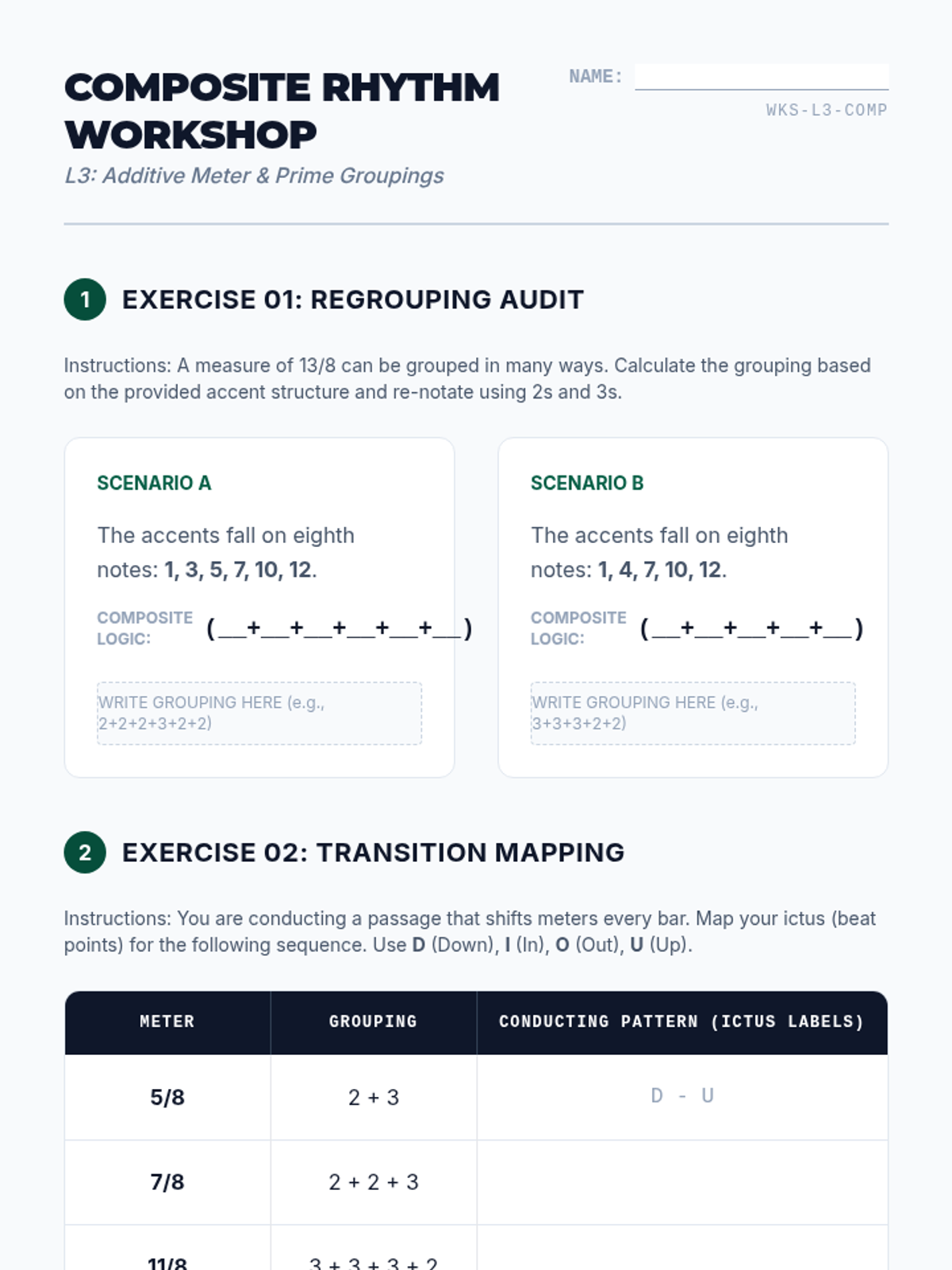
Explores prime number meters and composite groupings, featuring Balkan folk rhythms and conducting challenges in changing meters.
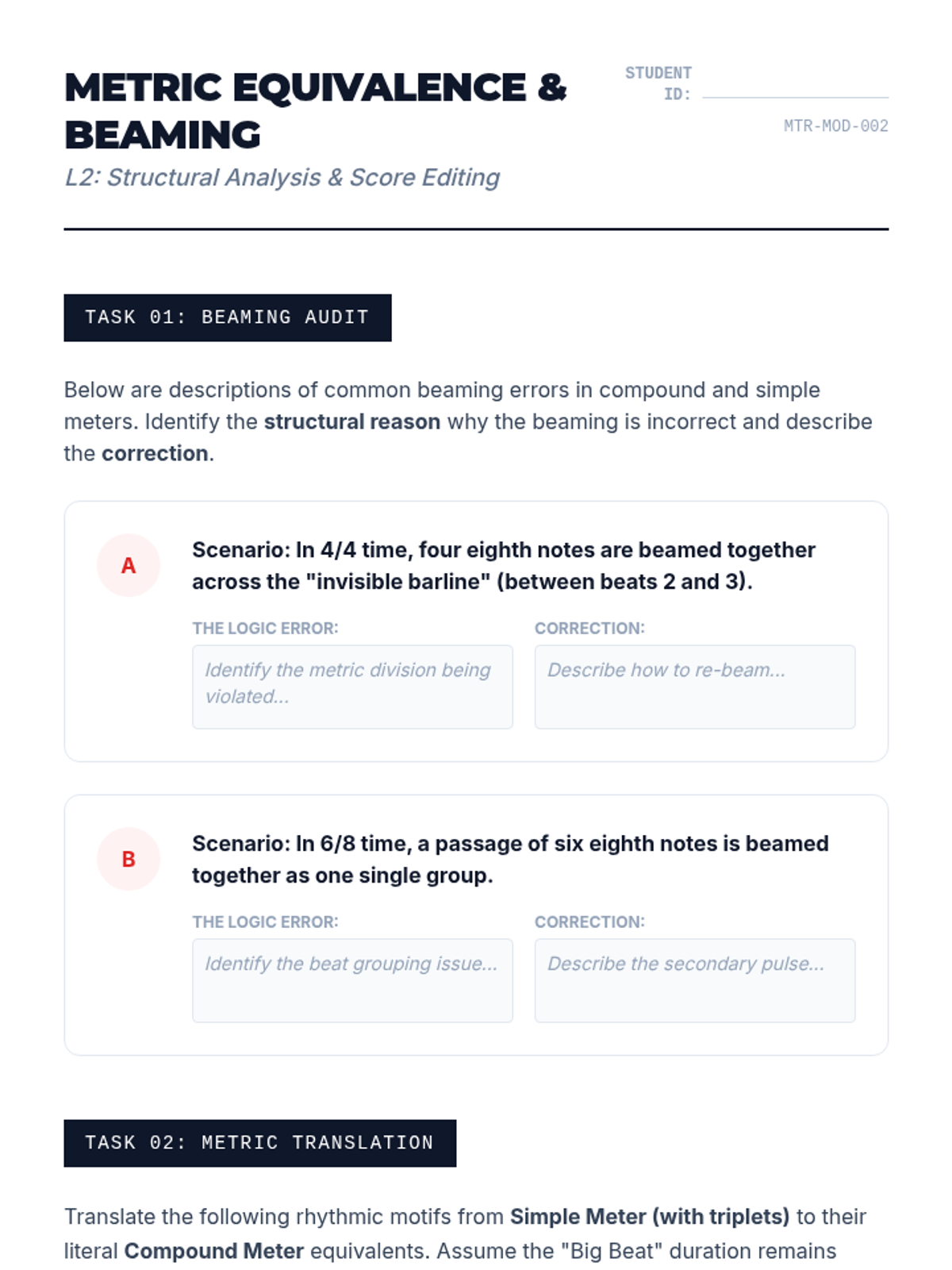
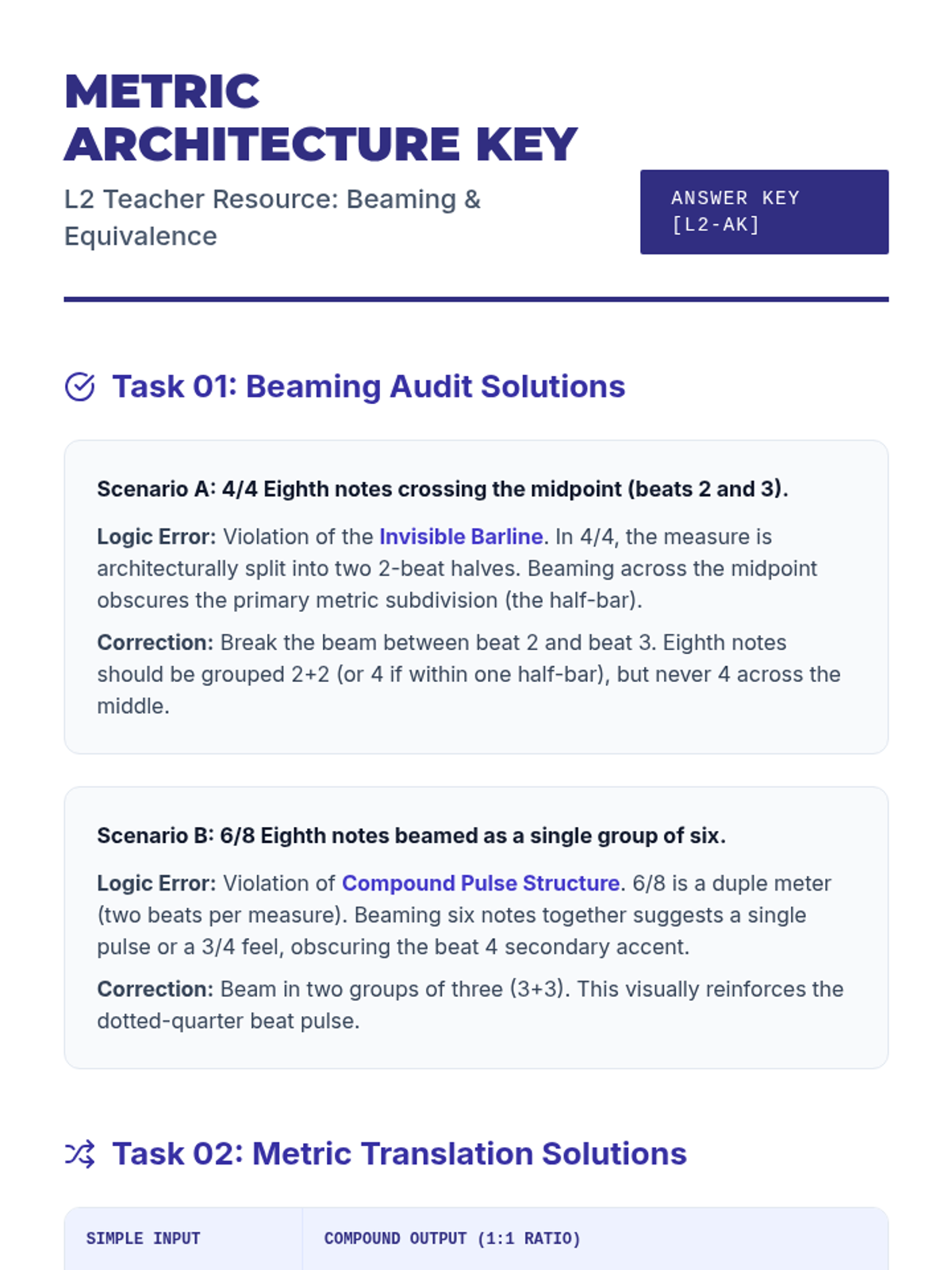
Analyzes the architectural differences between simple and compound meters, focusing on beaming, accent structures, and metric equivalence.
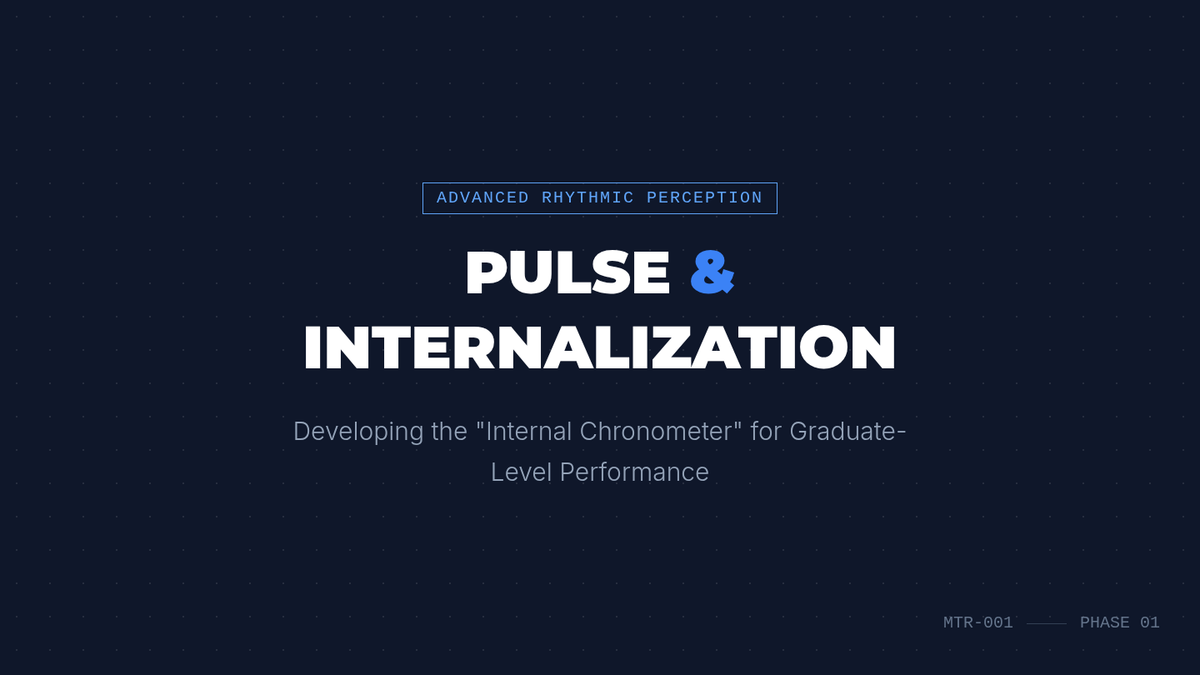
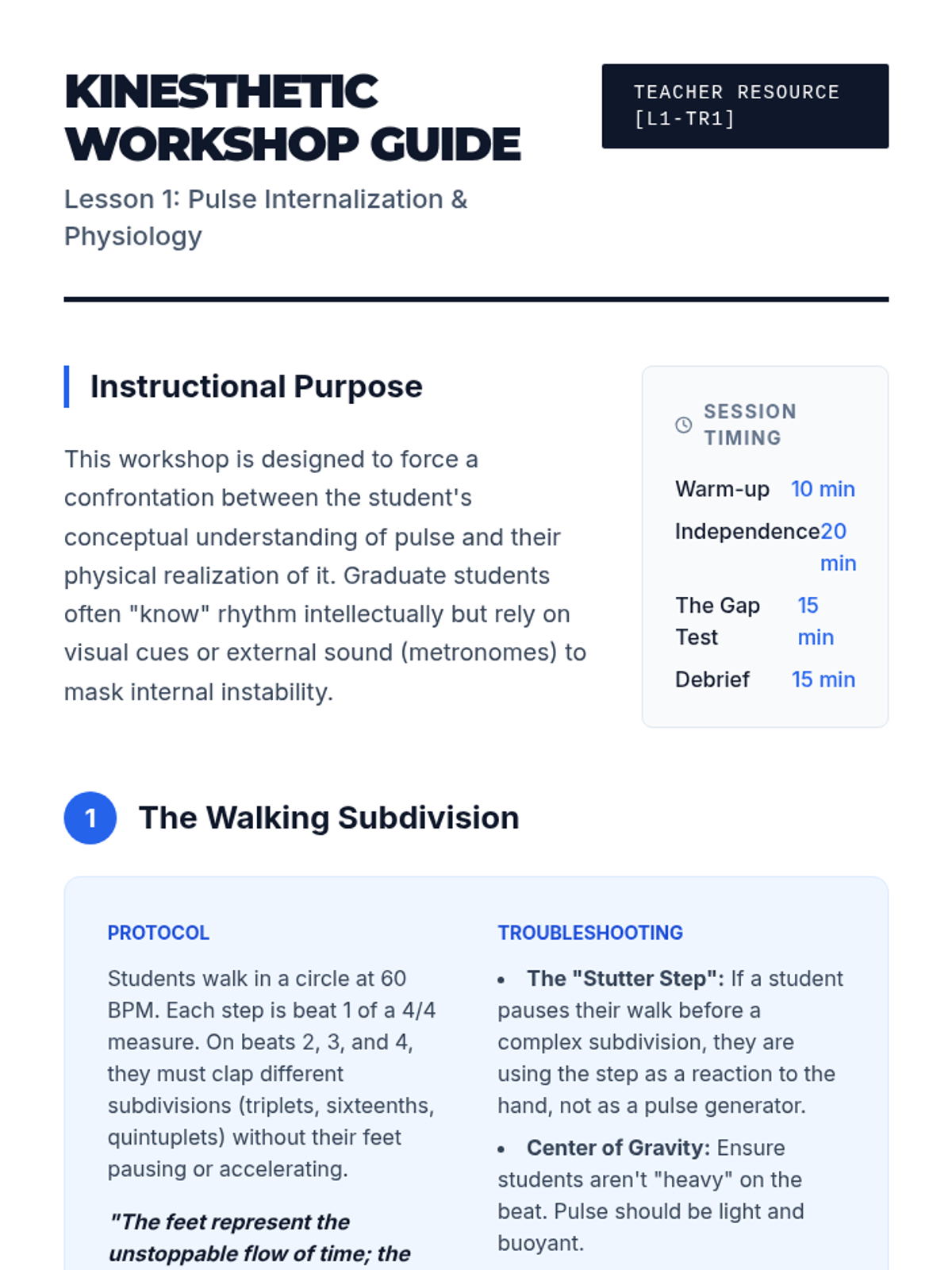
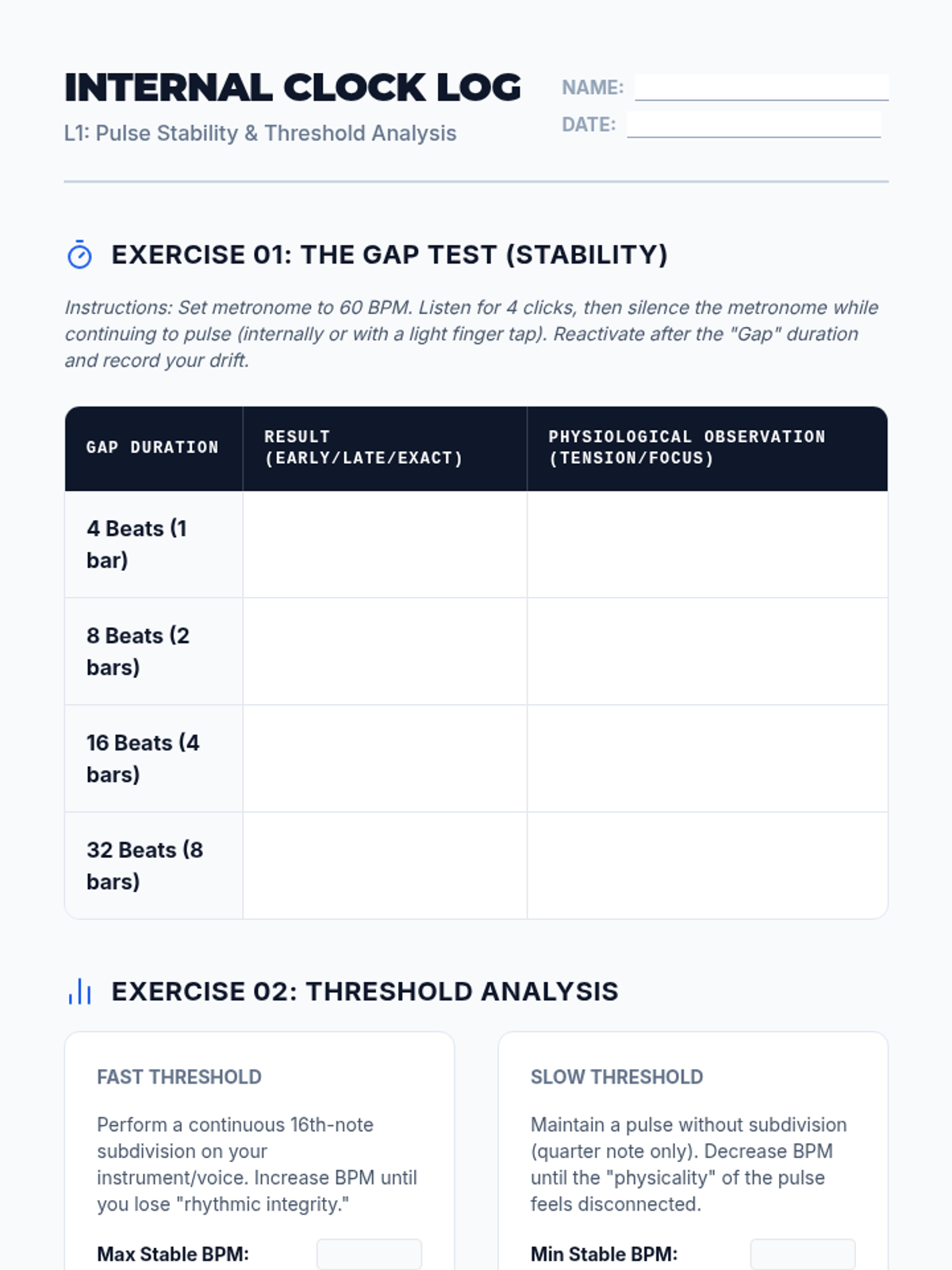
Focuses on the physical internalization of pulse and the physiology of keeping time. Students engage in eurhythmic exercises to decouple internal pulse from external performance.
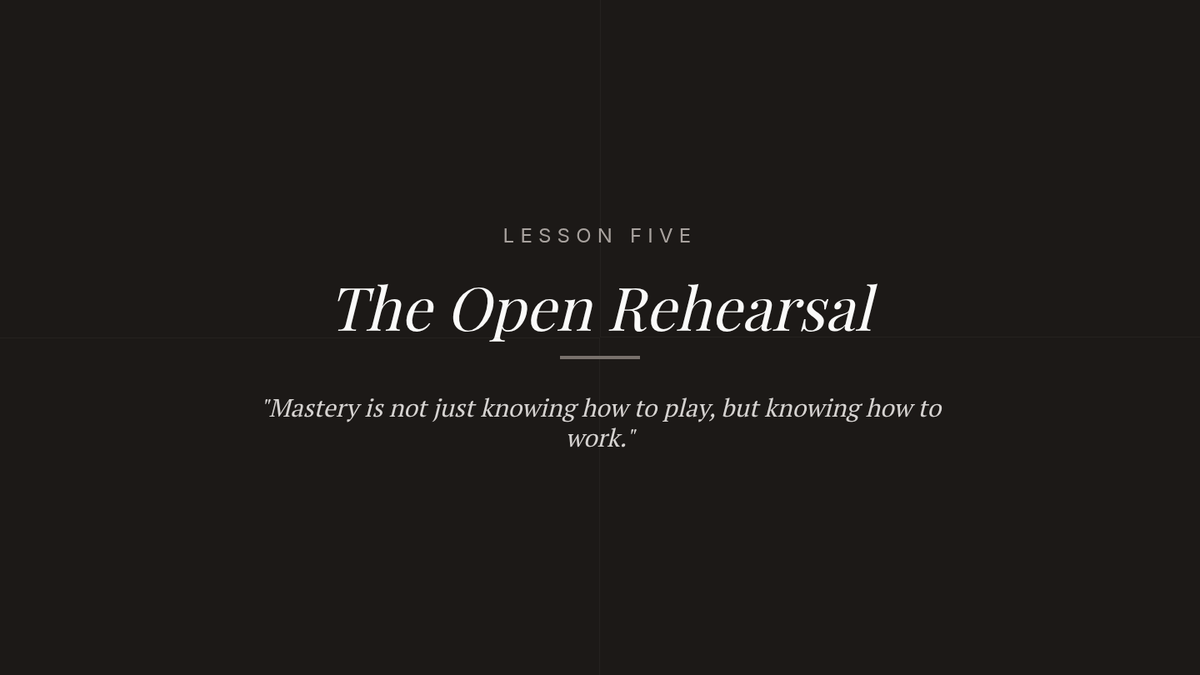
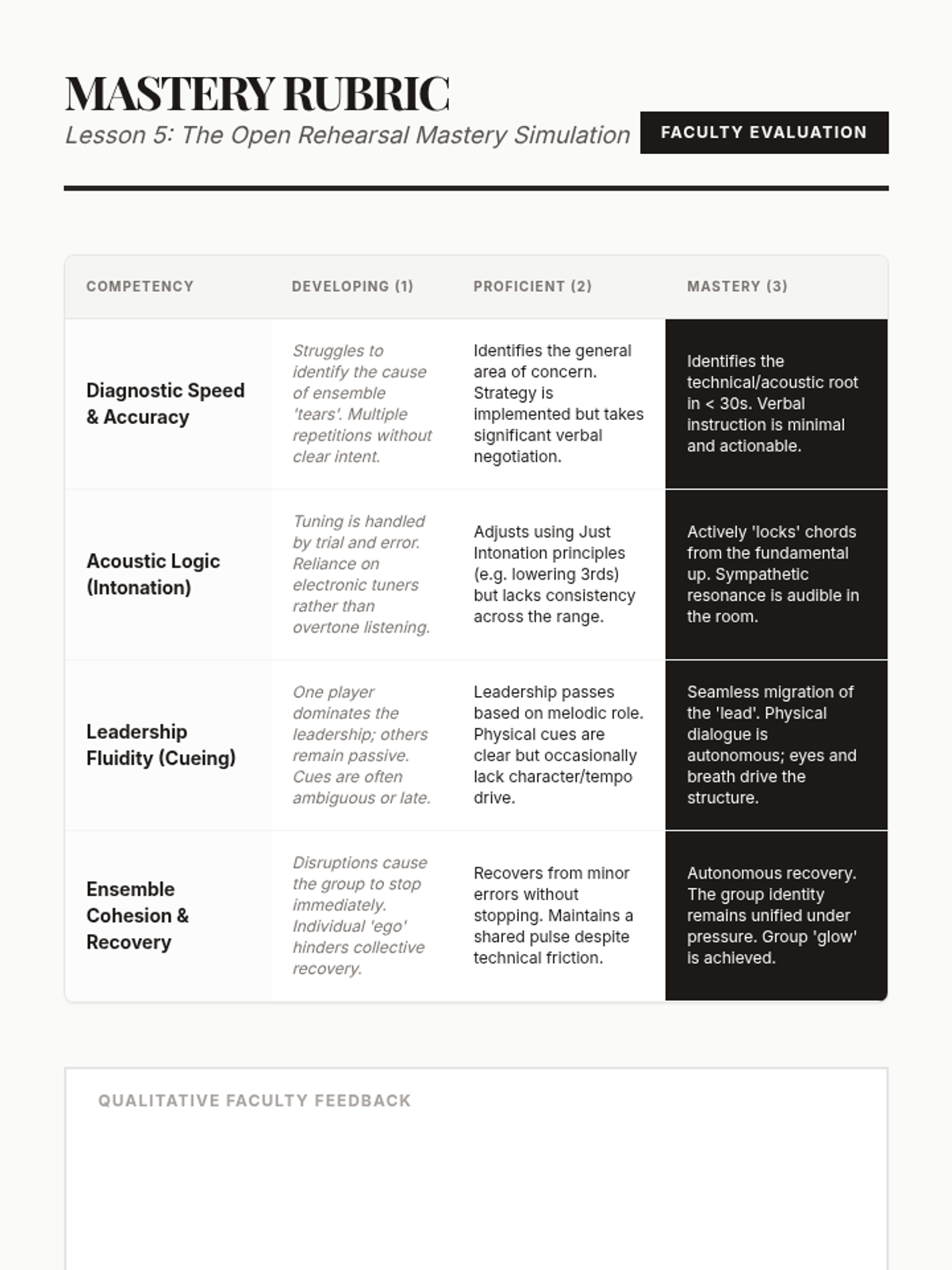
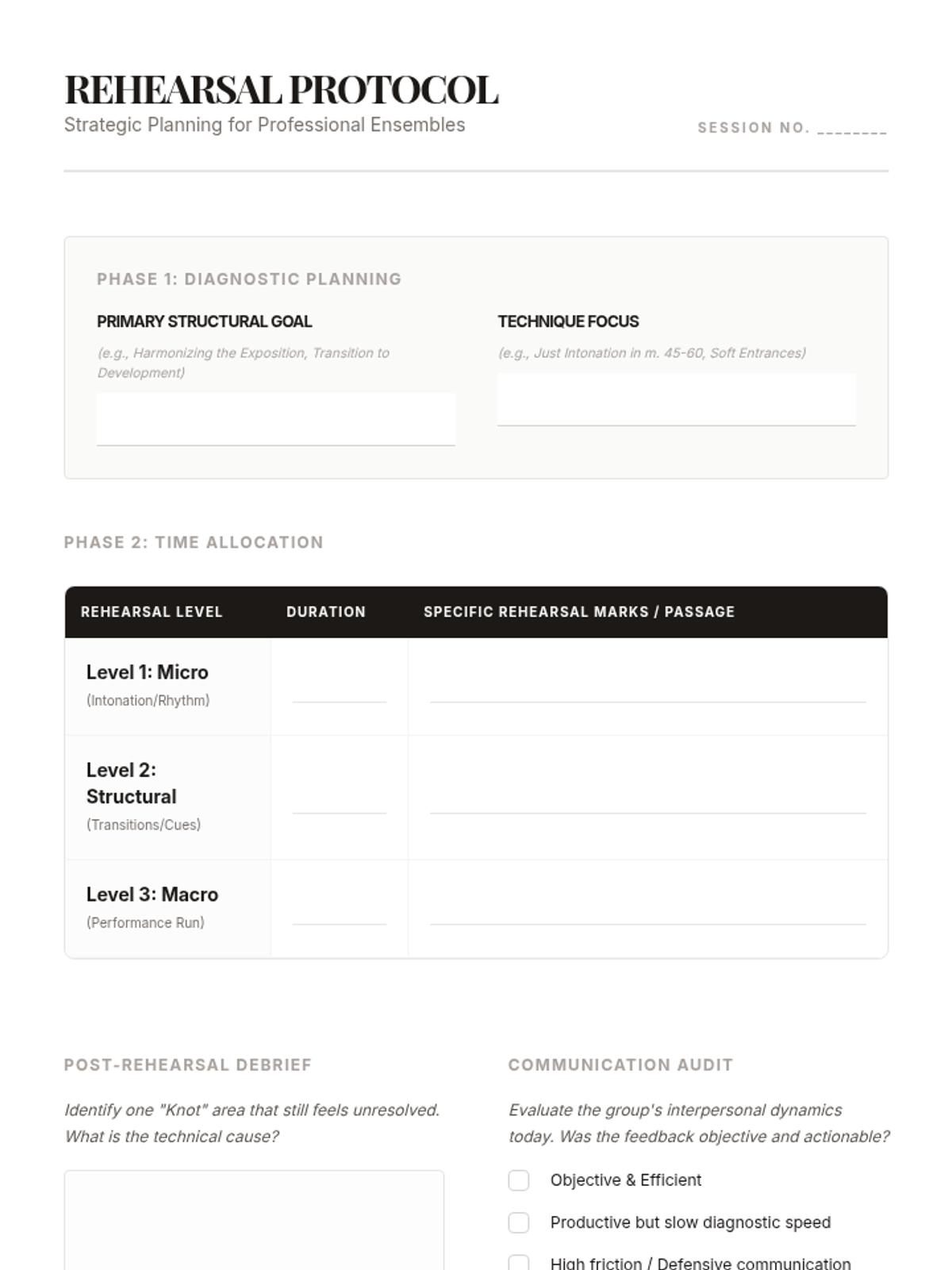
Students hold a rehearsal in front of an audience or faculty mentor, demonstrating their ability to stop, fix, and refine passages efficiently in real-time. They are evaluated on their diagnostic speed and group cohesion. This mirrors the pressure of professional chamber residencies.
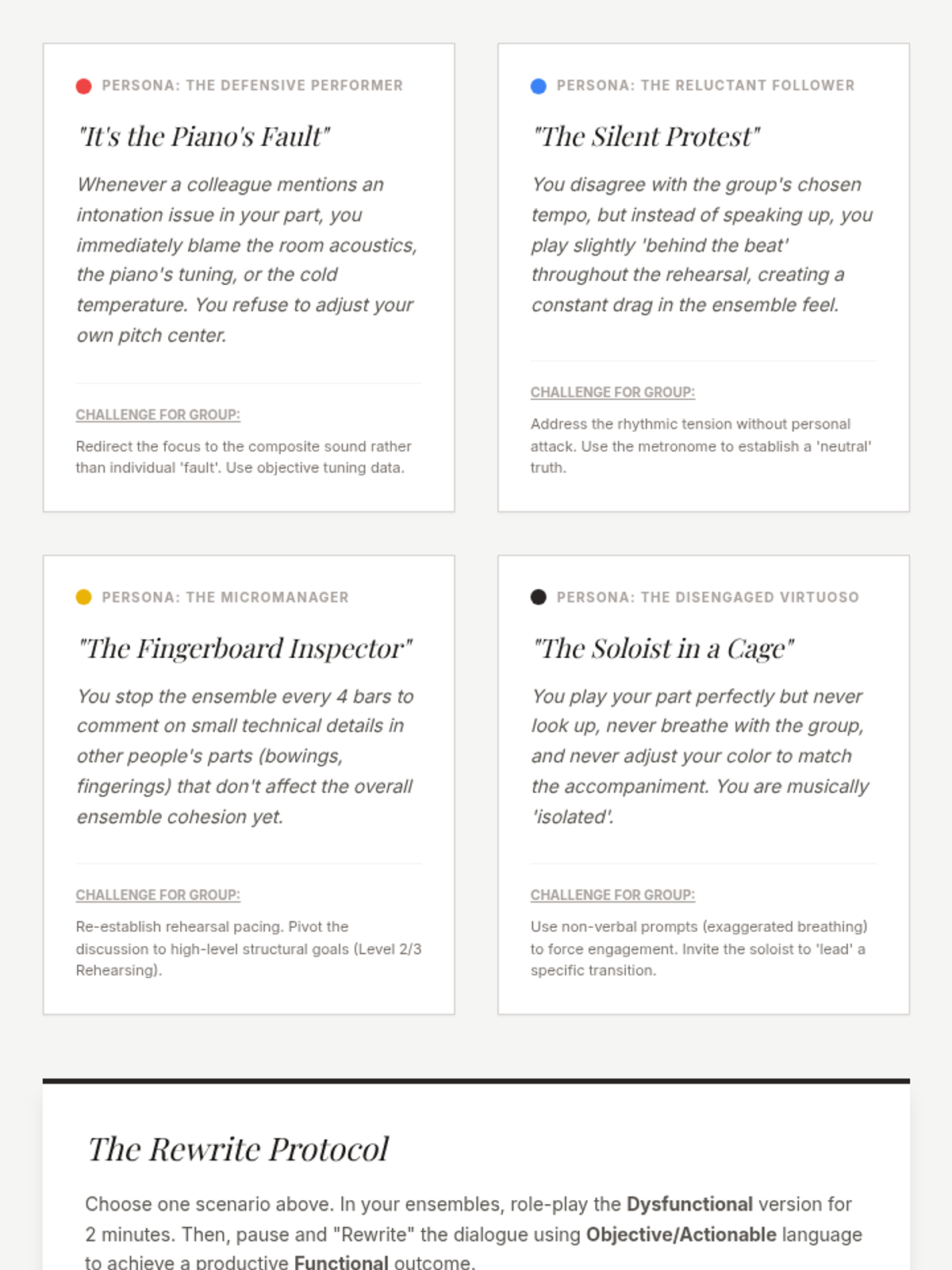
Focusing on the social aspect of ensembles, students role-play difficult rehearsal scenarios (e.g., disagreements on tempo, criticism of intonation). They learn conflict resolution strategies and efficient rehearsal pacing. This professionalizes the collaborative process.
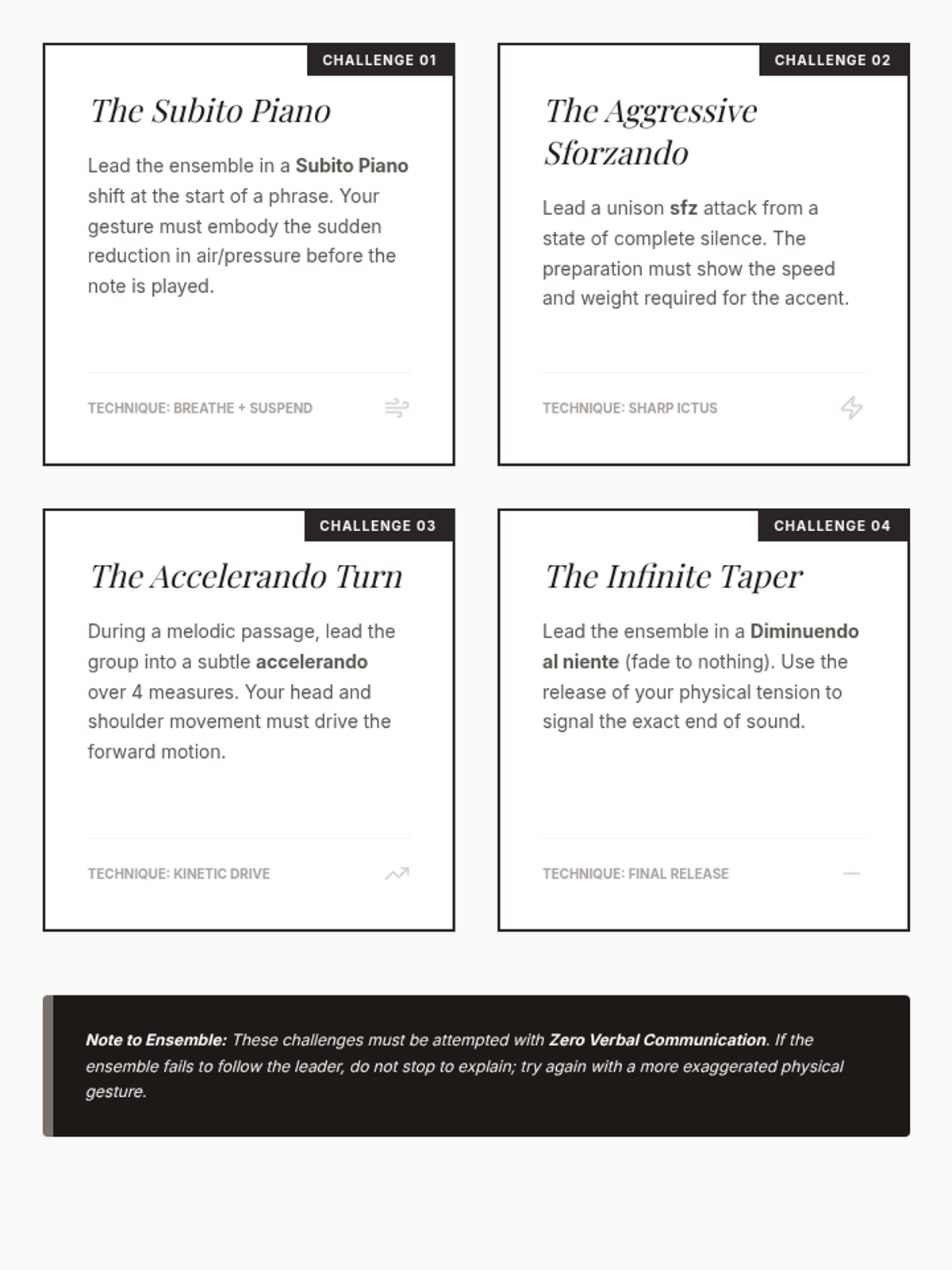
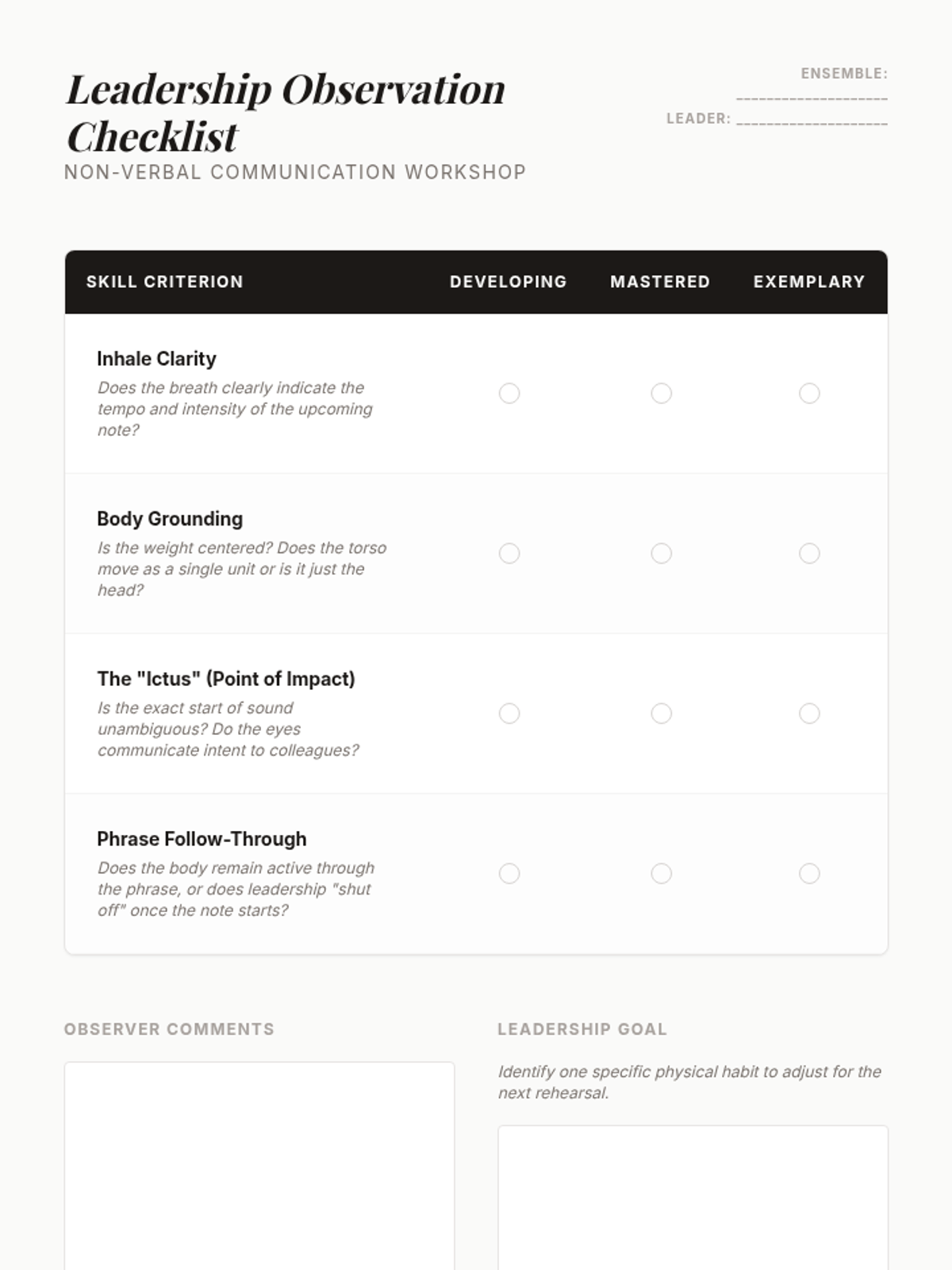
Students practice leading entrances, cut-offs, and tempo changes using only body language and breath. They experiment with leading from different chairs (e.g., the cellist leading the quartet). This builds the visual connection necessary for conductor-less performance.
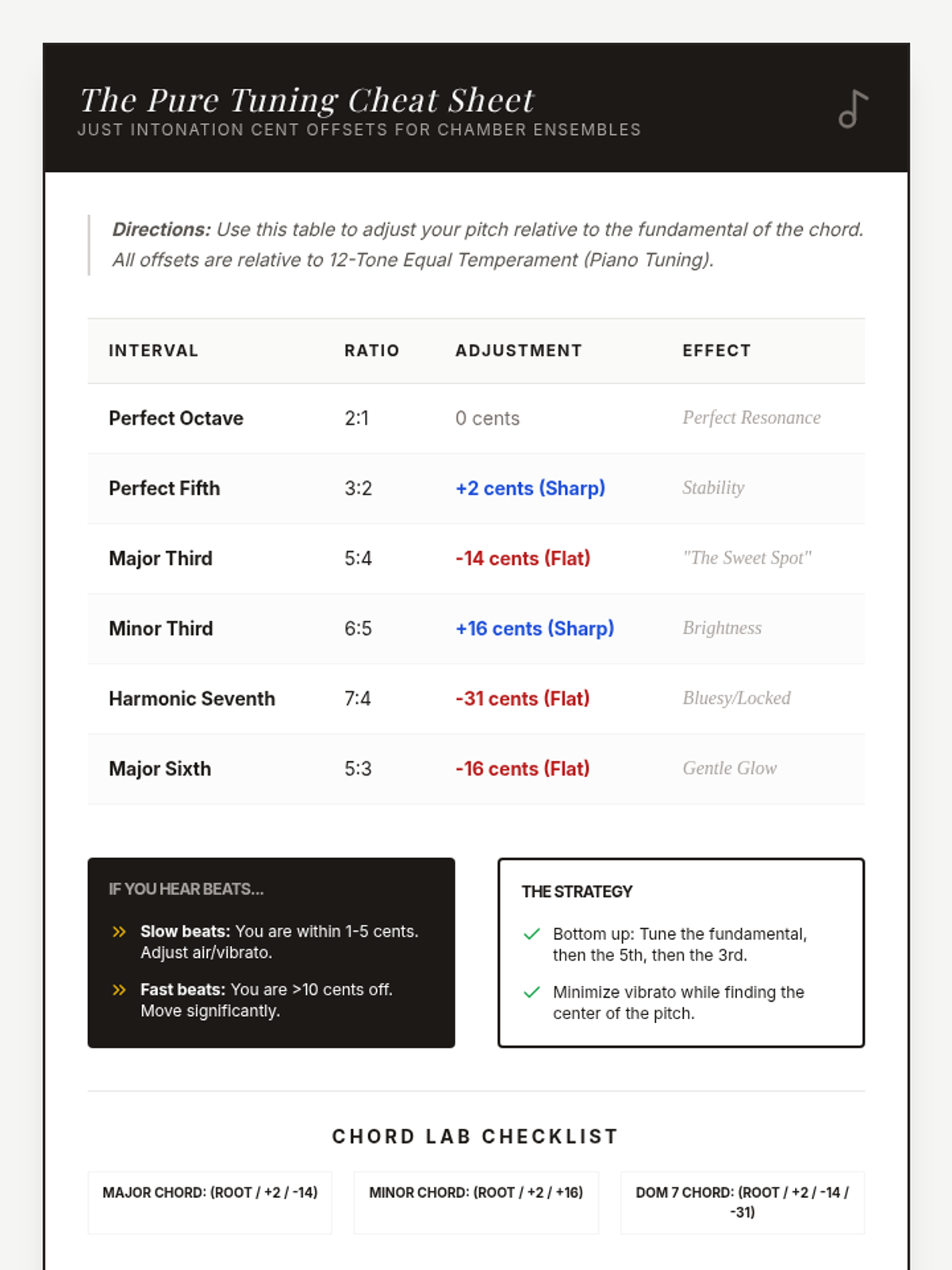
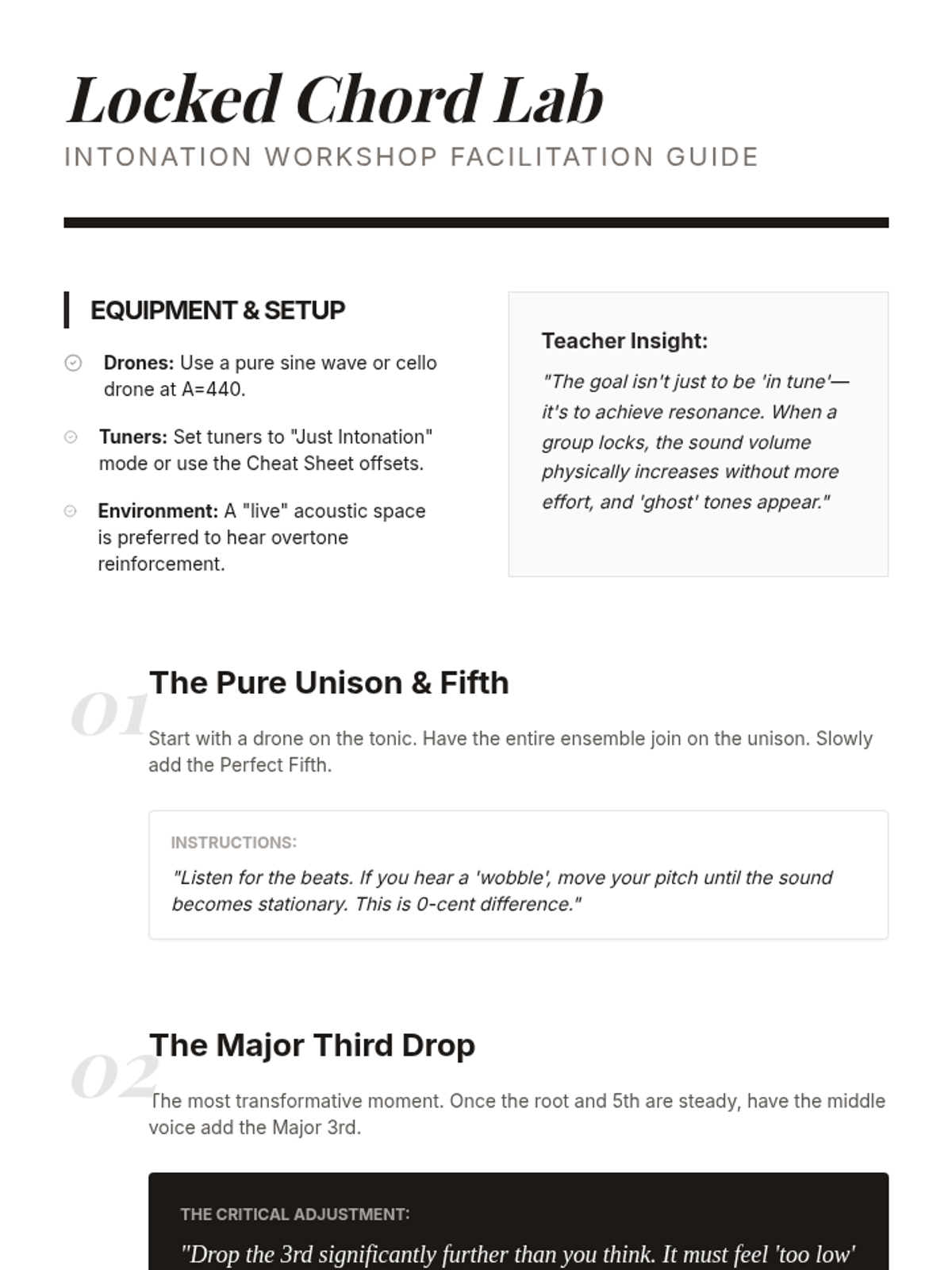
Students explore the physics of overtone series and the difference between tempered piano tuning and pure interval tuning. They practice adjusting thirds and sevenths in chordal passages to achieve 'locking' chords.
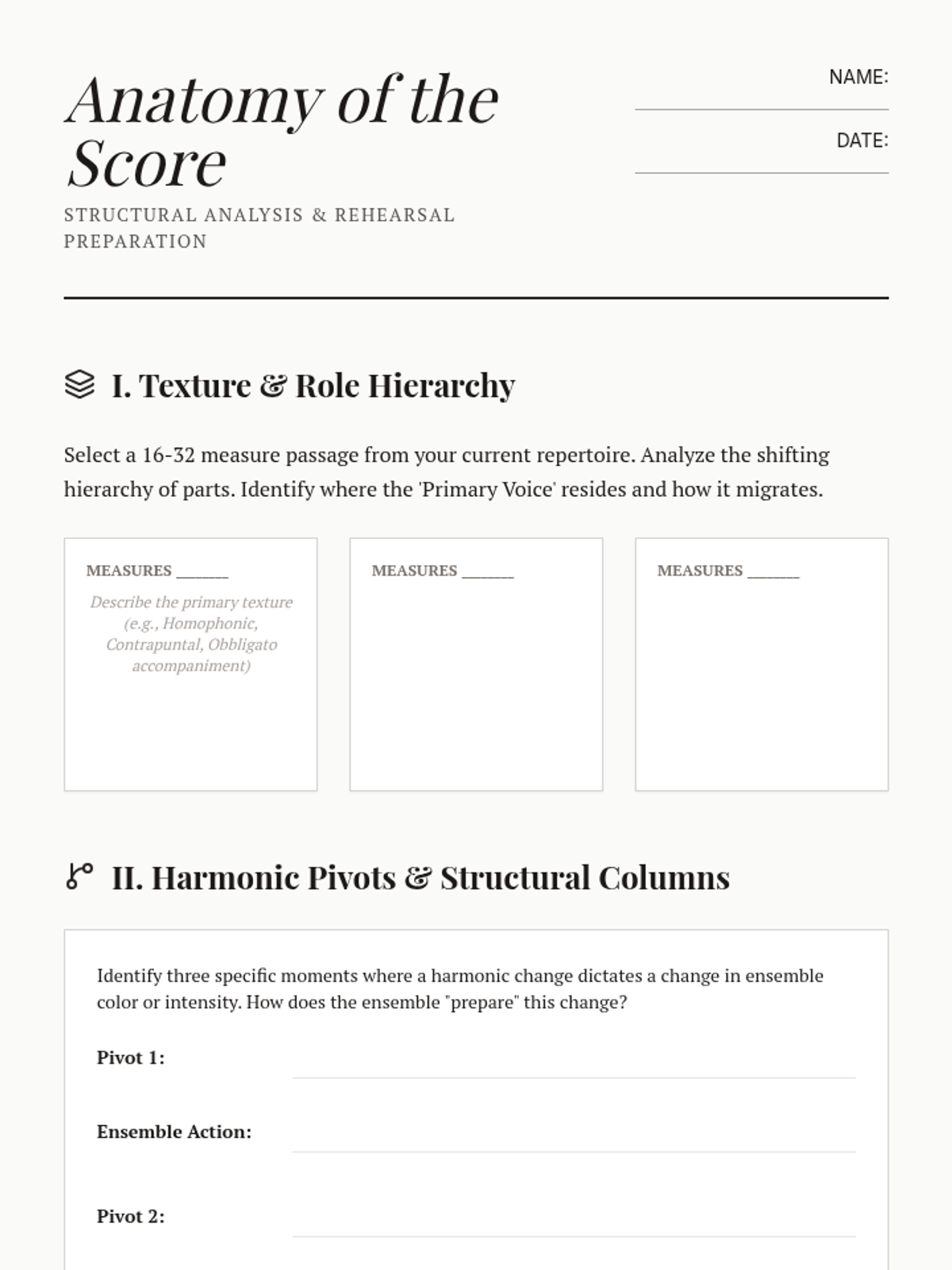
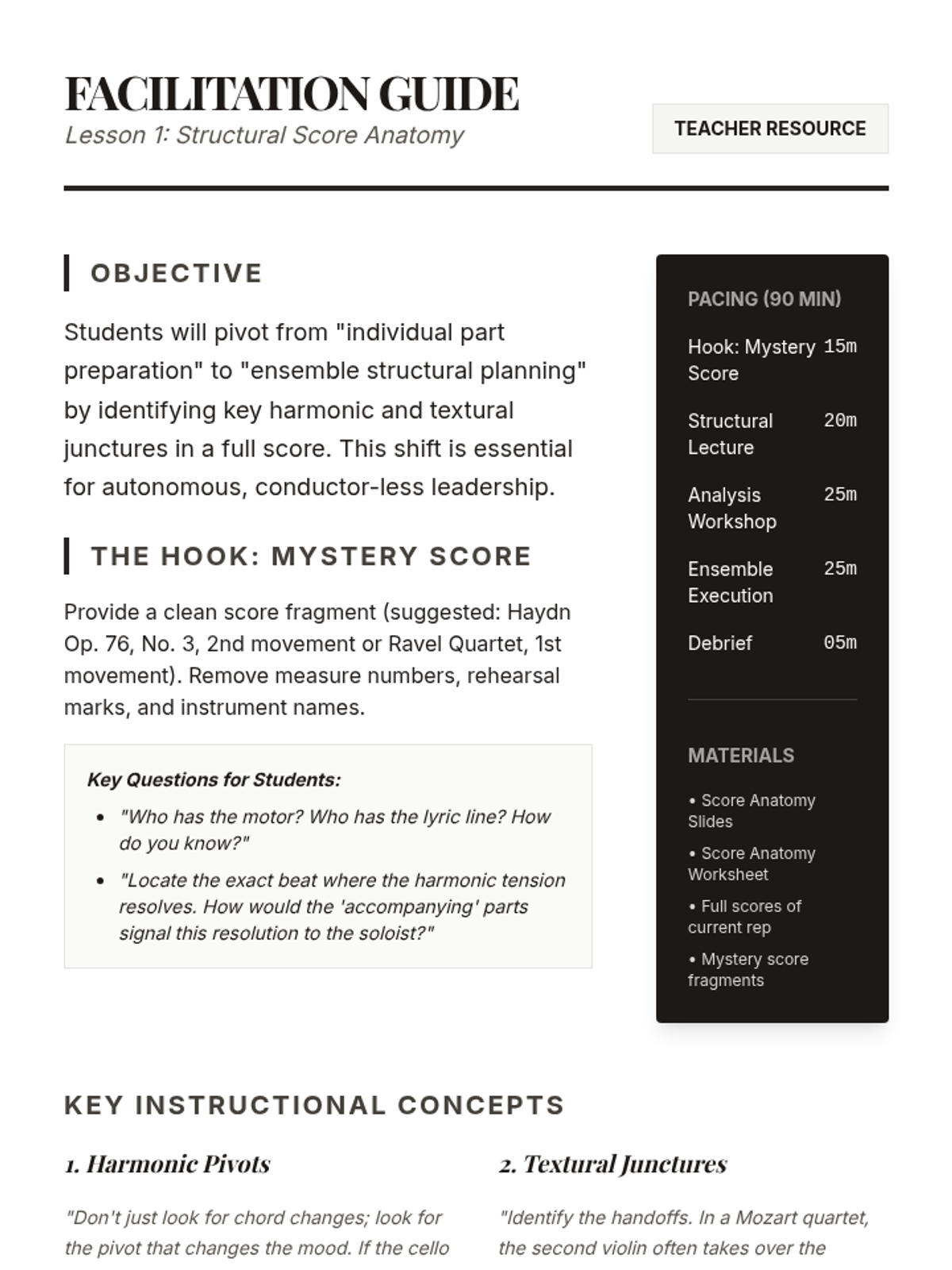
Students move beyond their individual parts to analyze the structural hierarchy and harmonic pivots of a full chamber score. This lesson emphasizes identifying role exchanges and planning ensemble cues based on structural analysis.
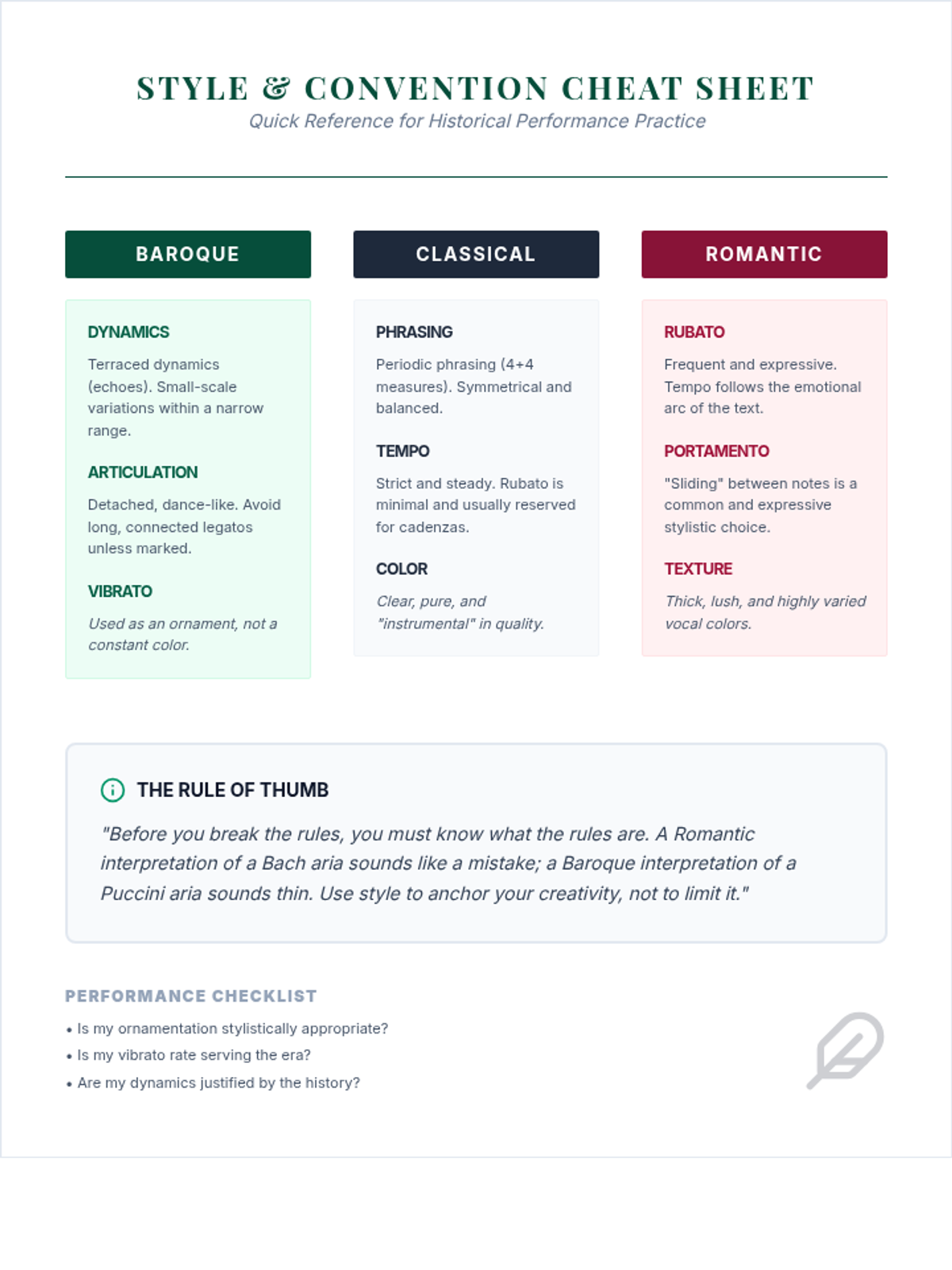
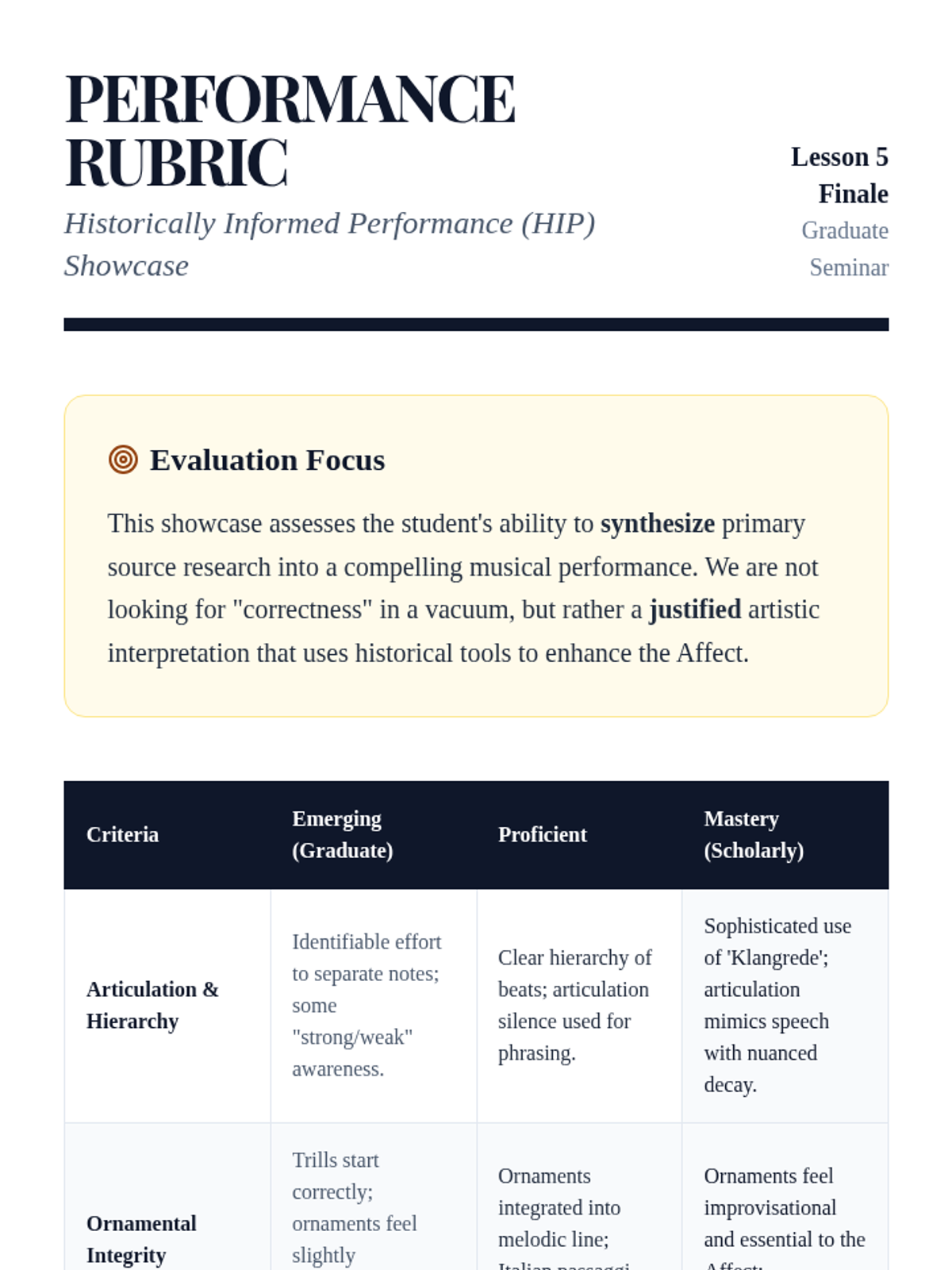
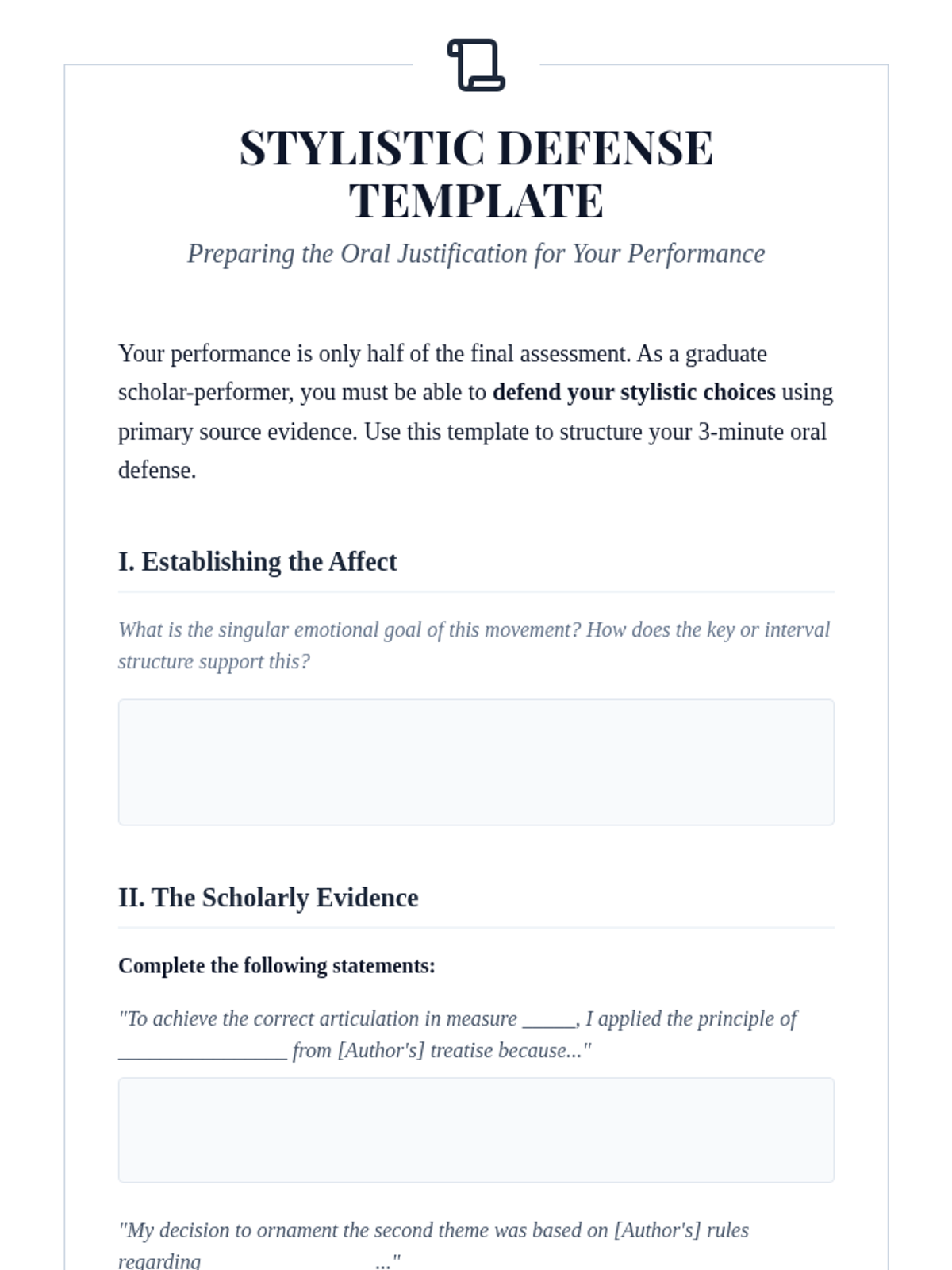
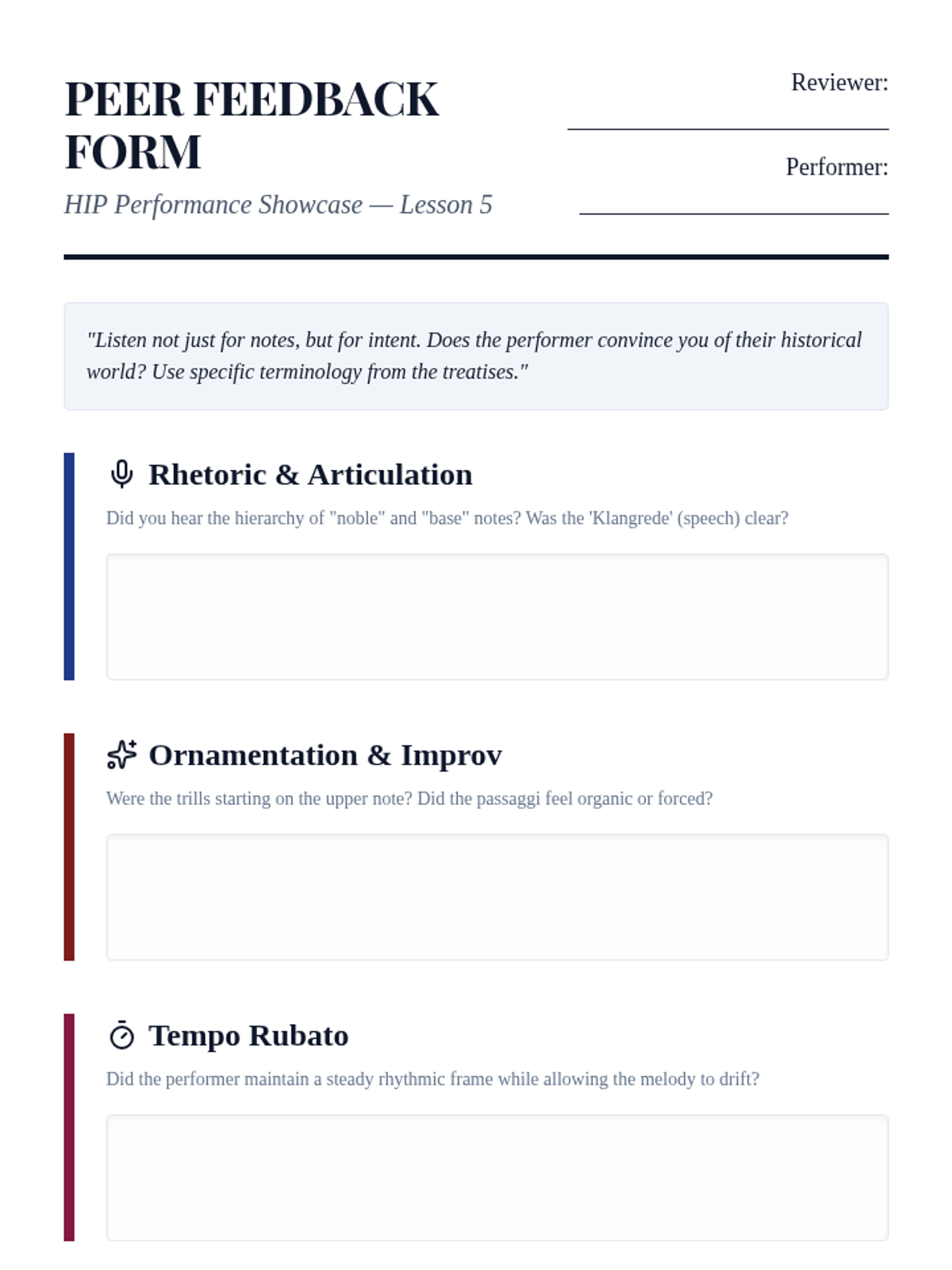
Students perform a movement of their choice, providing an oral defense of their stylistic decisions based on primary research.
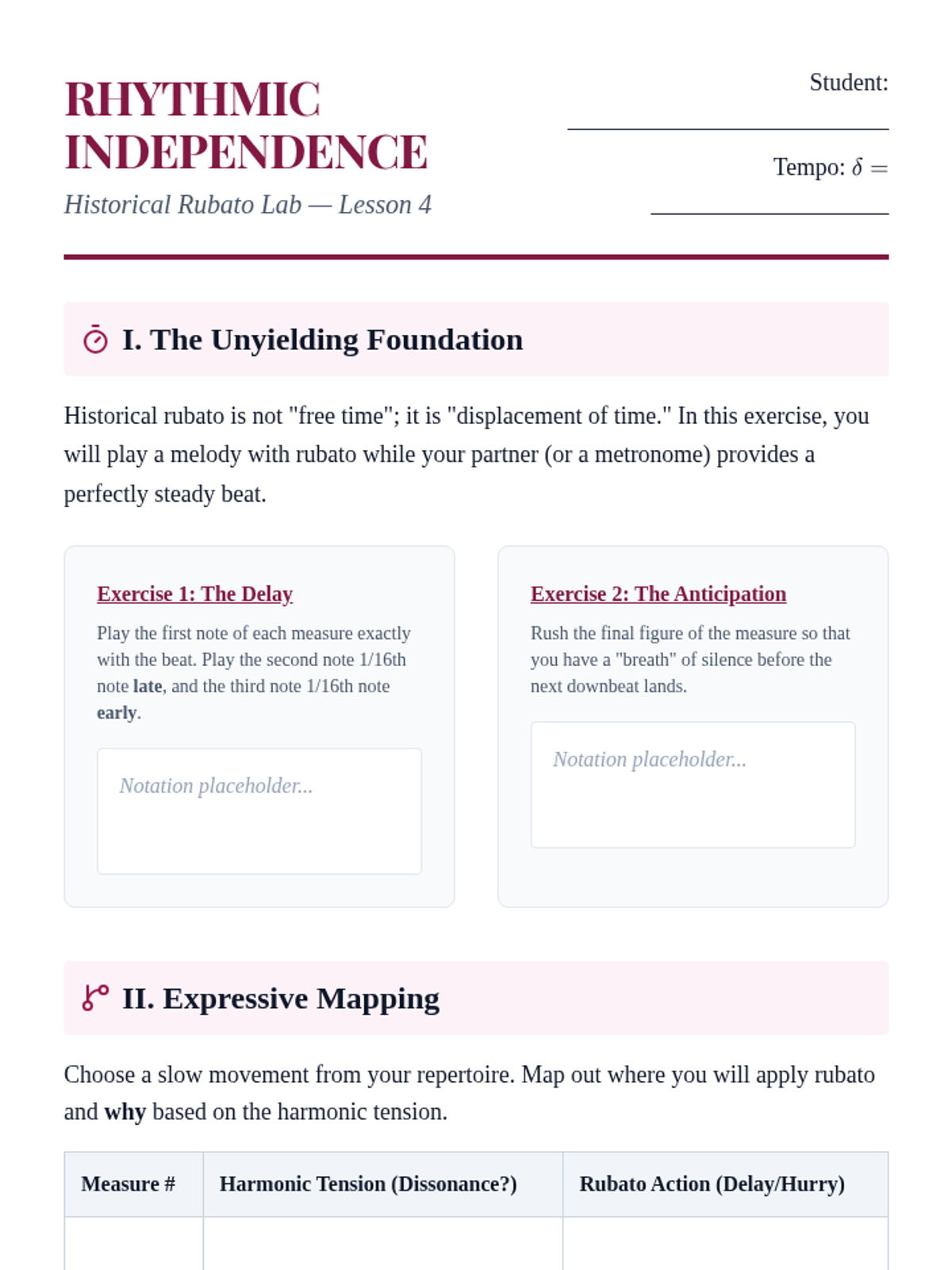
An investigation into historical rubato, contrasting the steady-beat accompaniment with the flexible melodic line.
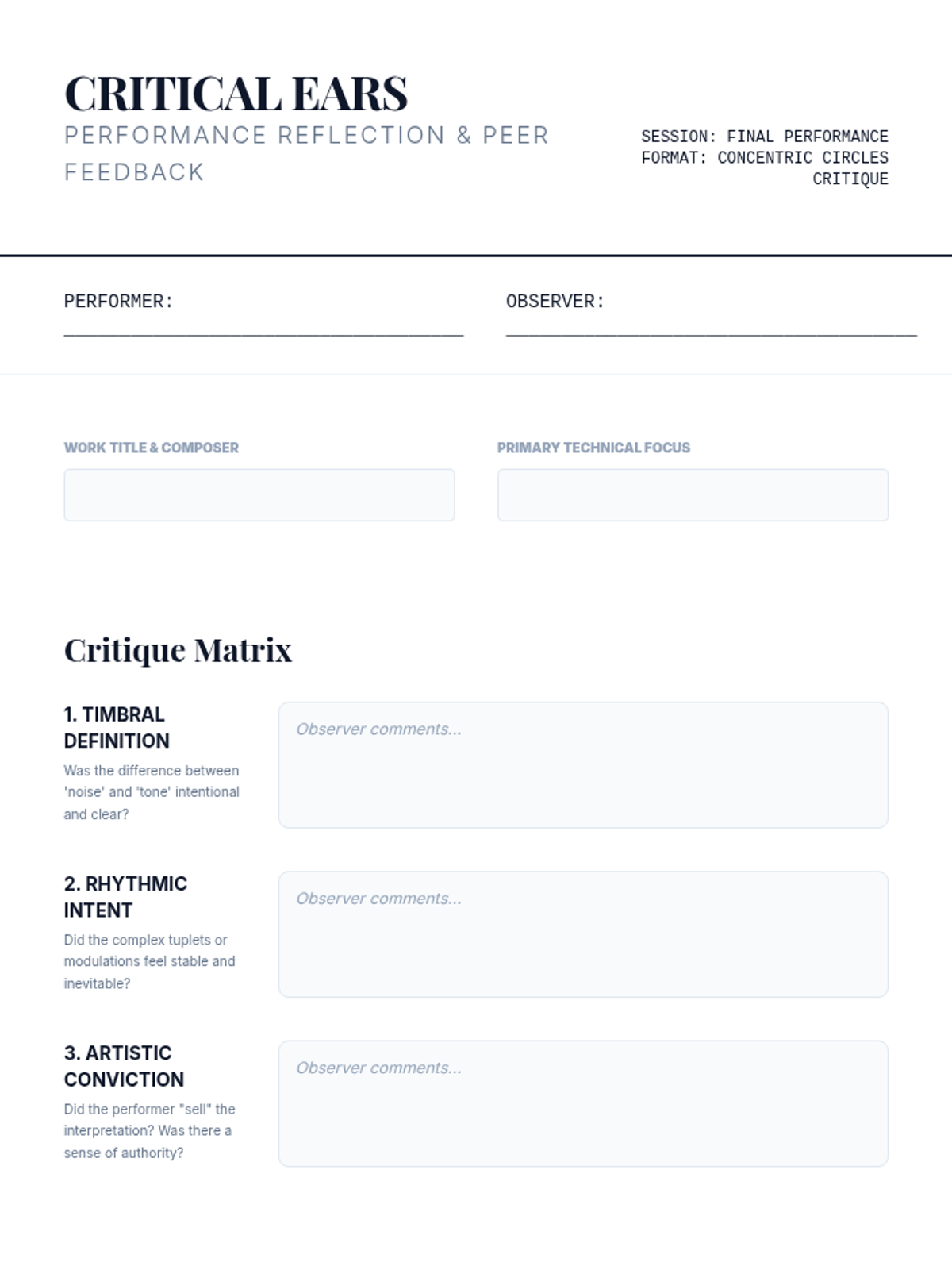
A culminating performance project where students apply all learned techniques to a contemporary work with peer critique.
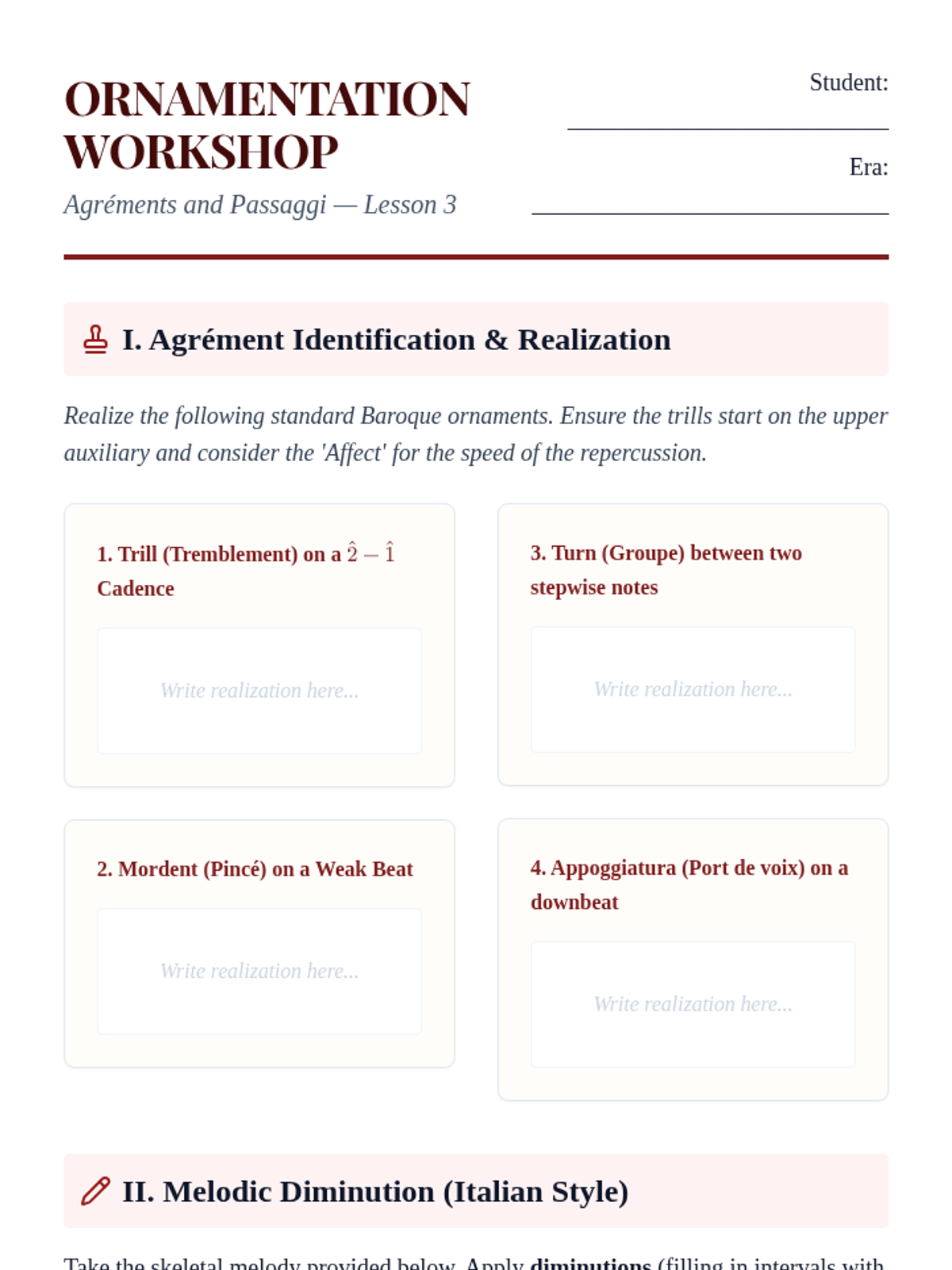
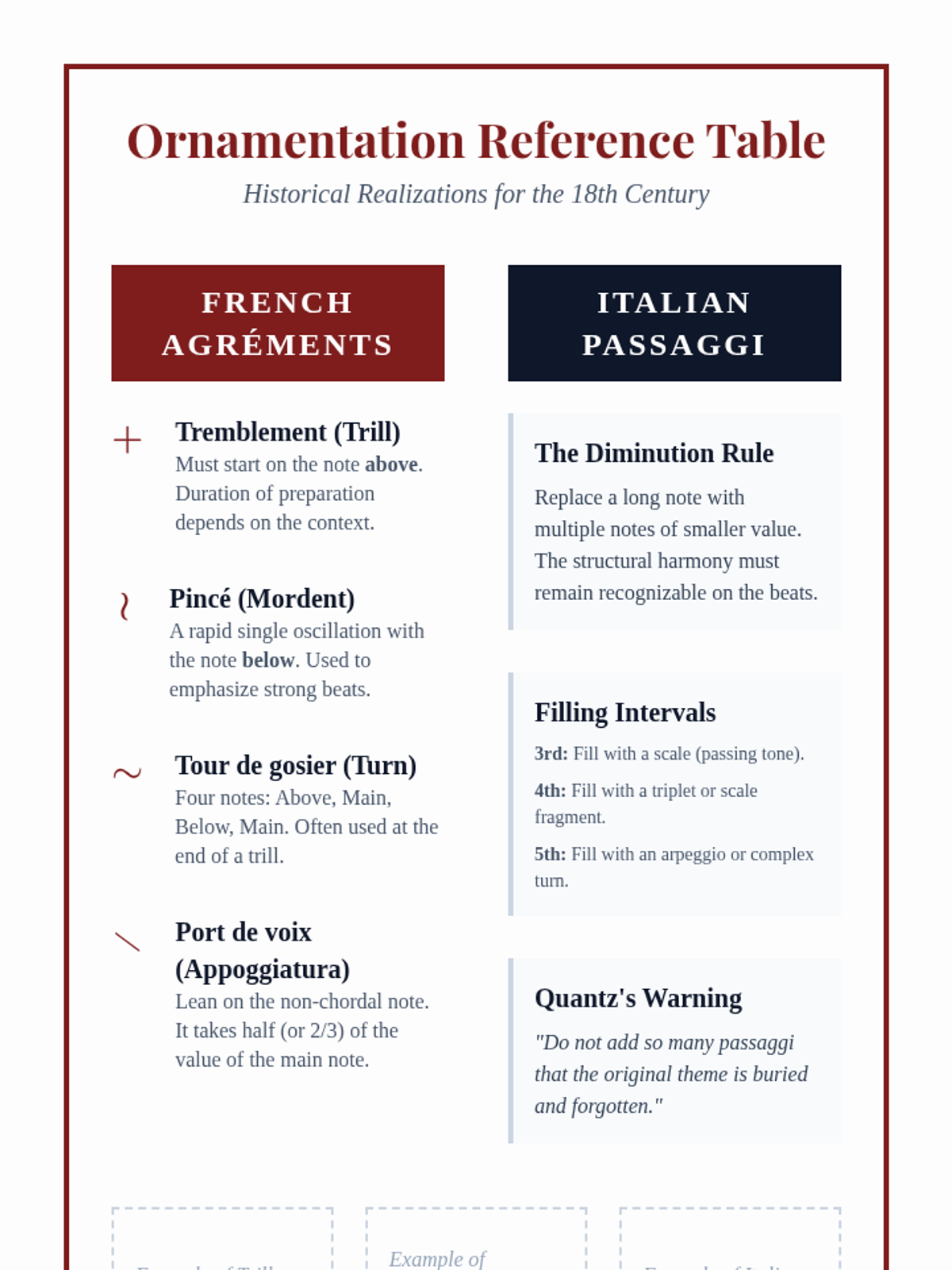
Students explore the rules and stylistic nuances of Baroque ornamentation, moving from mechanical execution to improvisational fluency.
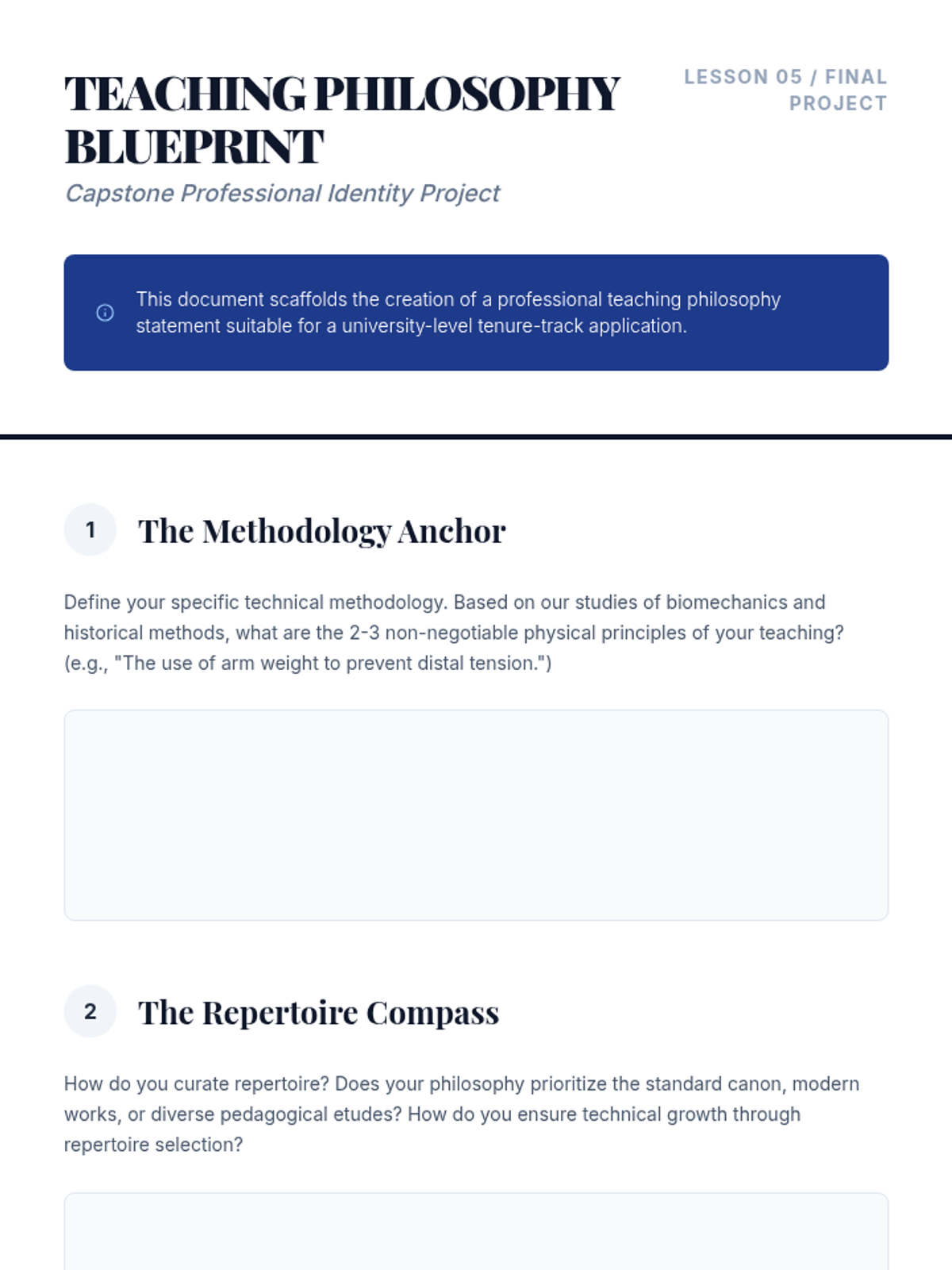
Synthesizing pedagogical knowledge into a professional teaching philosophy statement for university-level job applications.
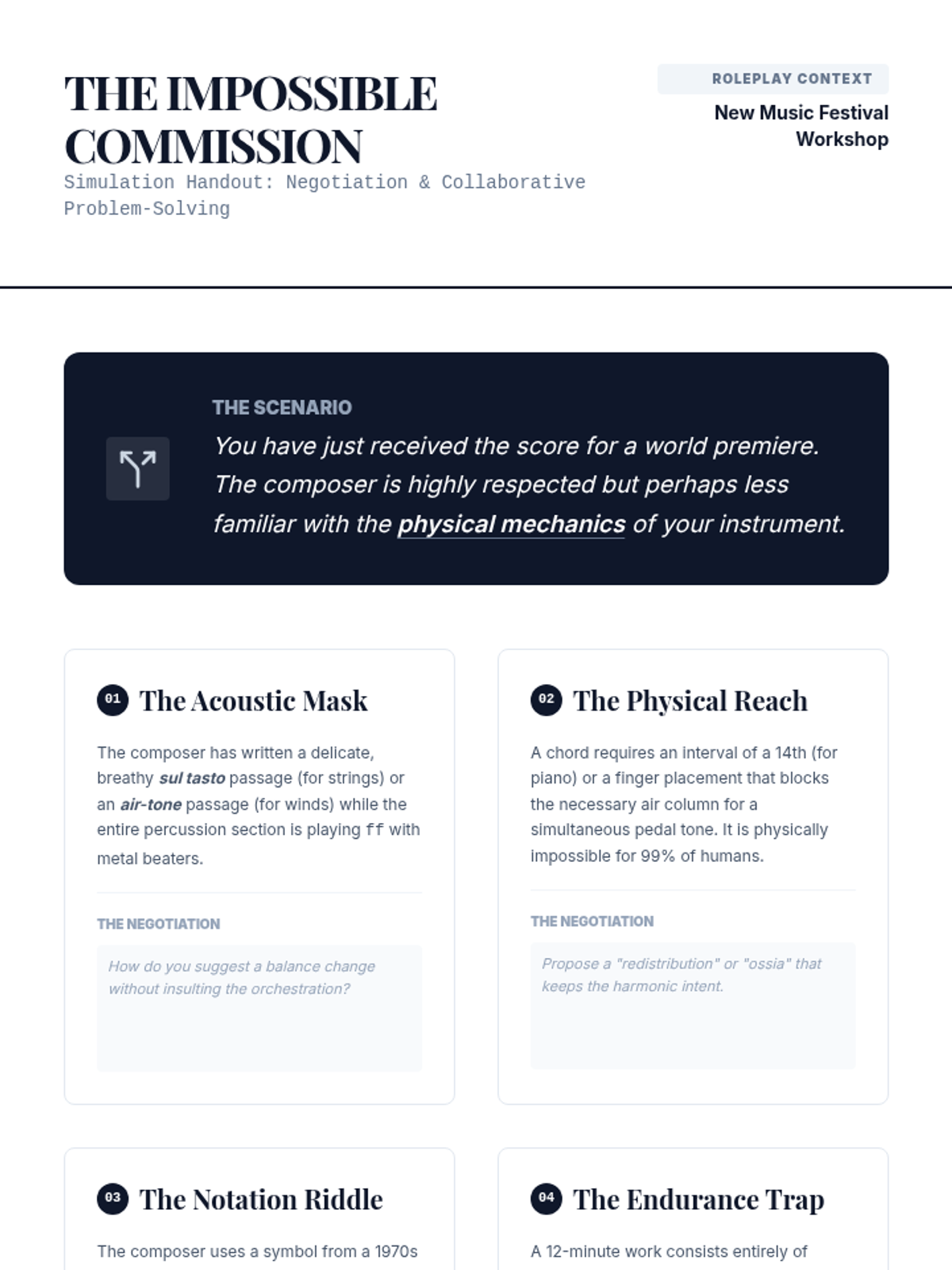
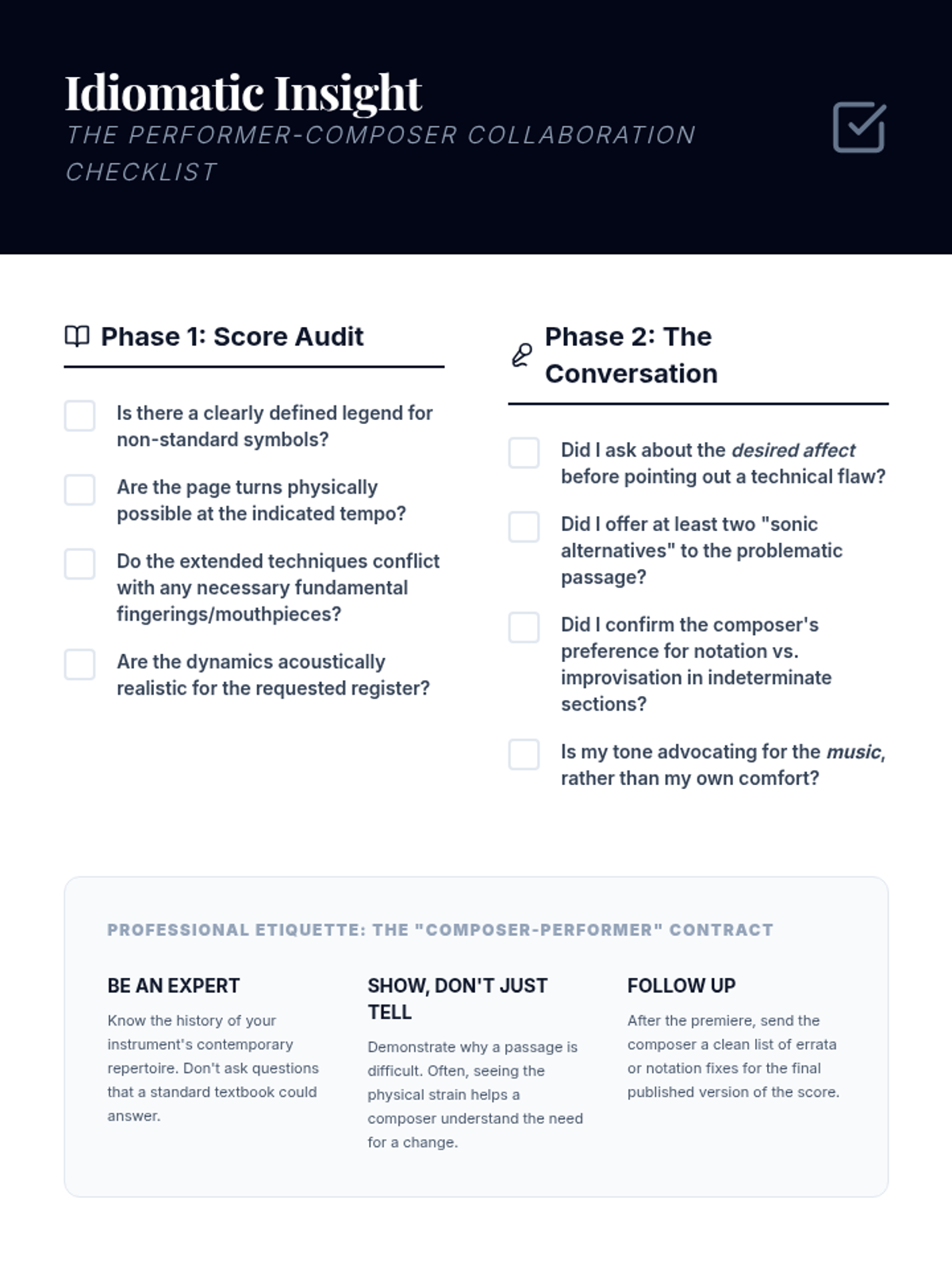
Develops professional skills for working with living composers, focusing on idiomatic writing and technical negotiation.
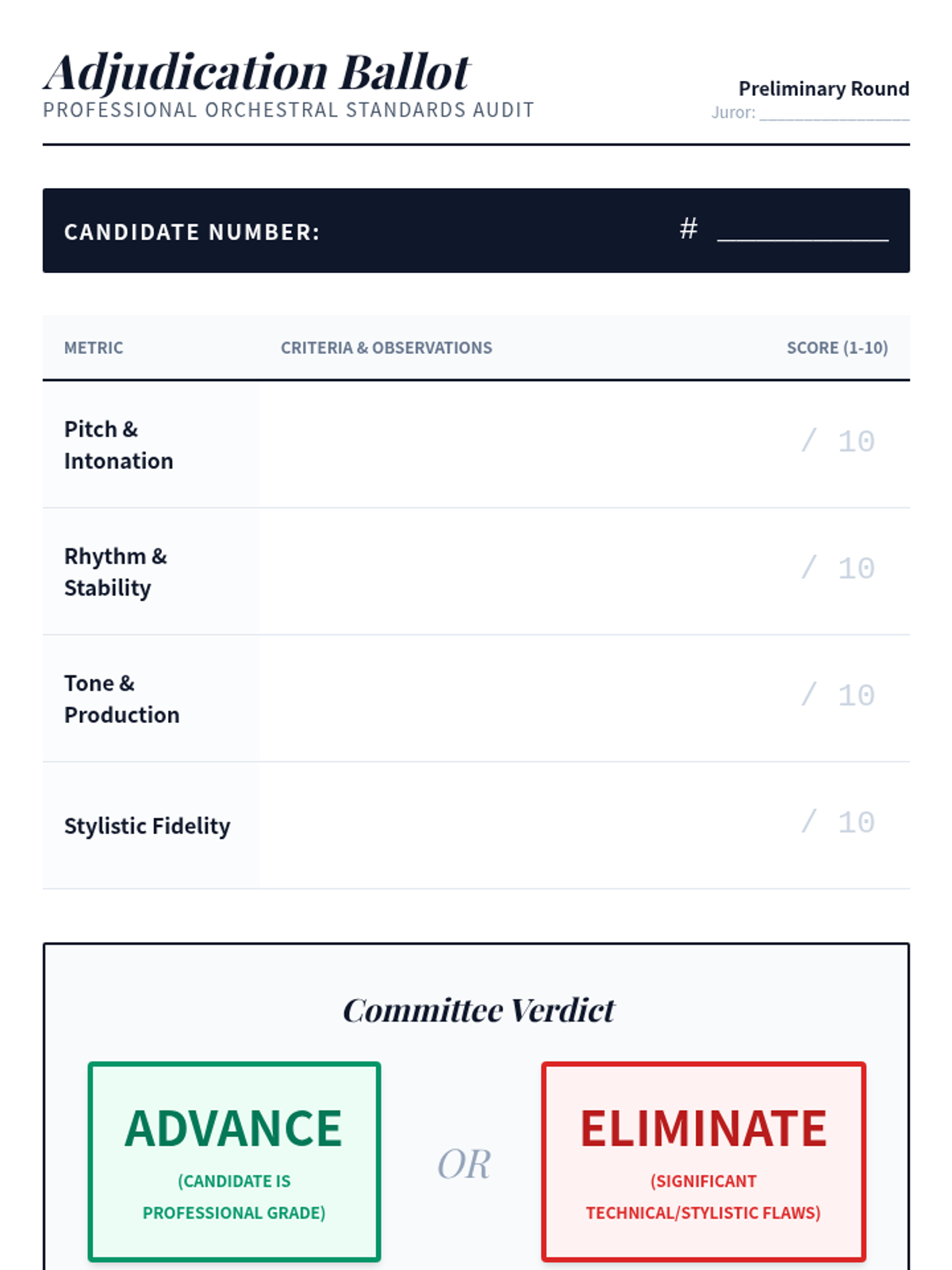
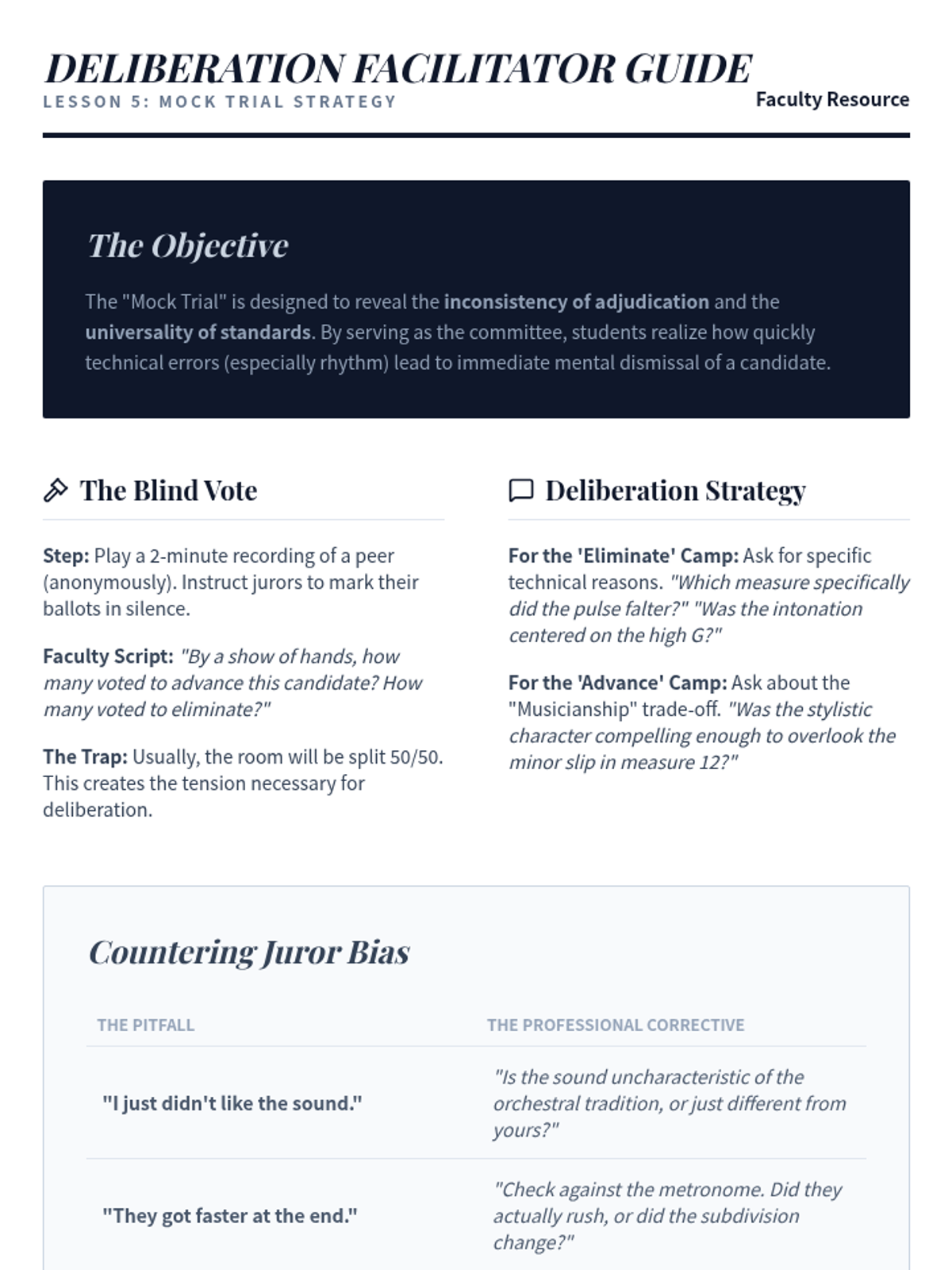
Students reverse roles to serve as the audition committee, adjudicating peer recordings and discussing the nuances of professional standards. This lesson provides insight into the committee's decision-making process.
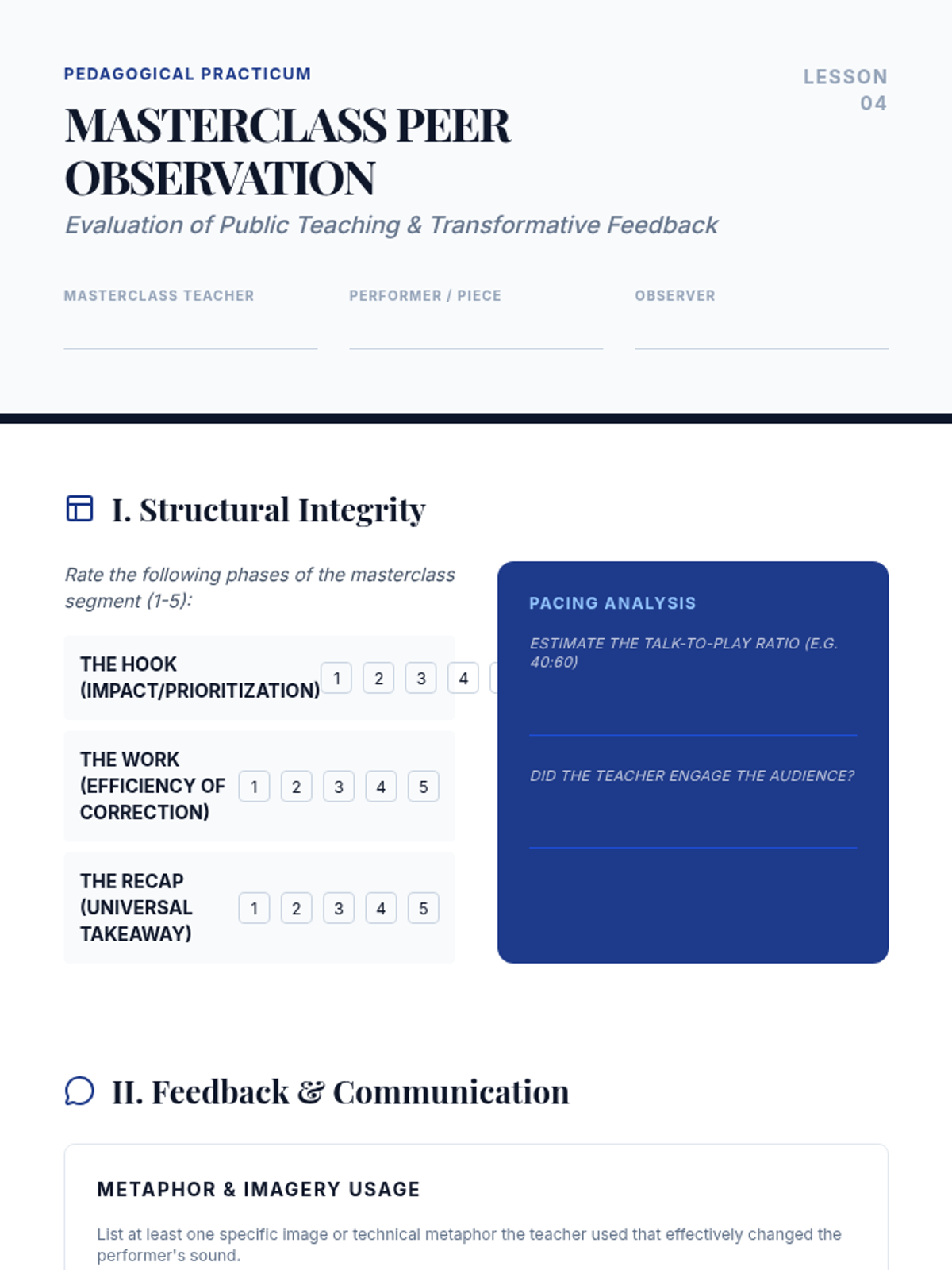
Students learn the art of public teaching, focusing on concise, transformative feedback and managing audience engagement in a masterclass setting.
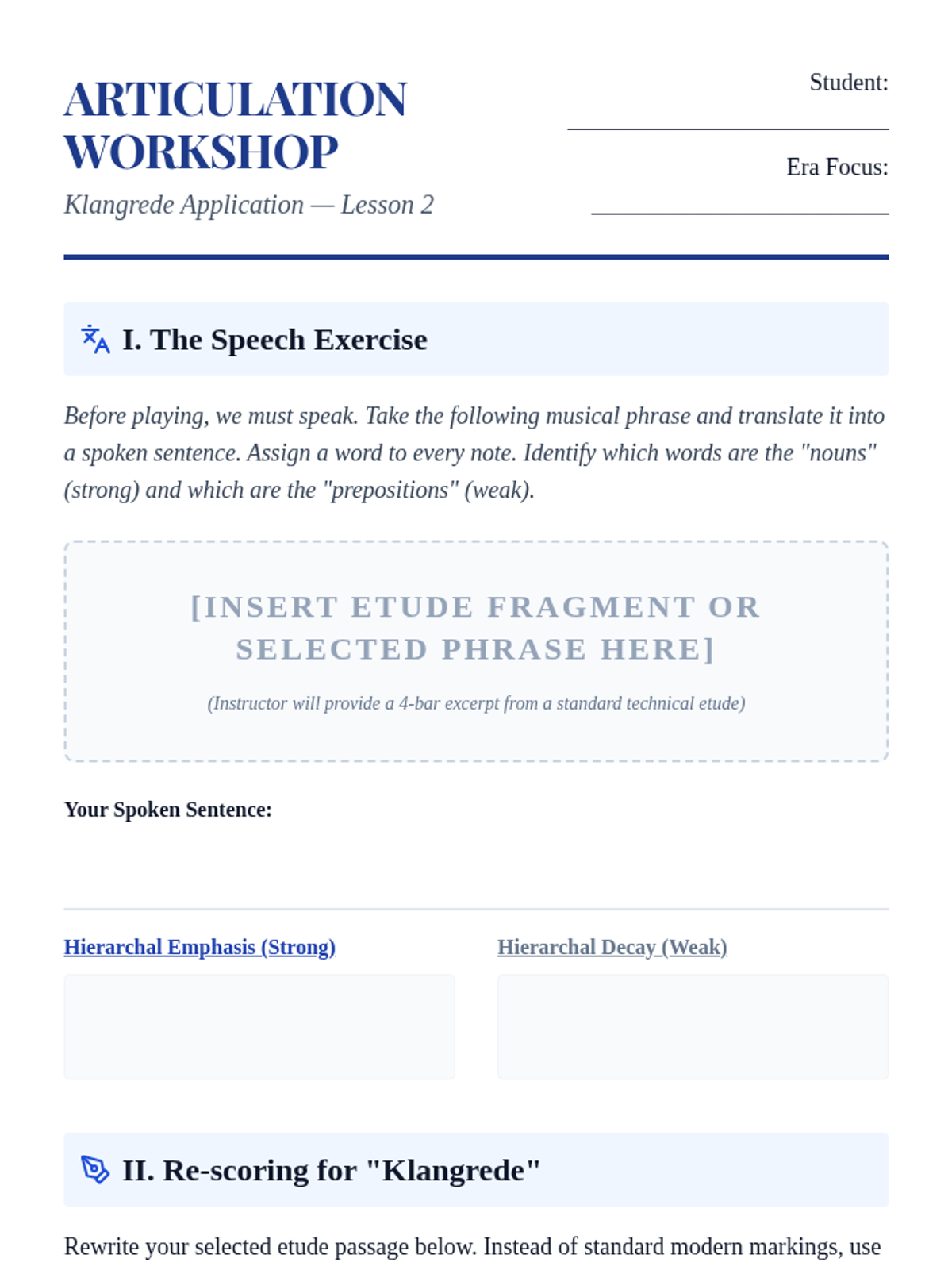
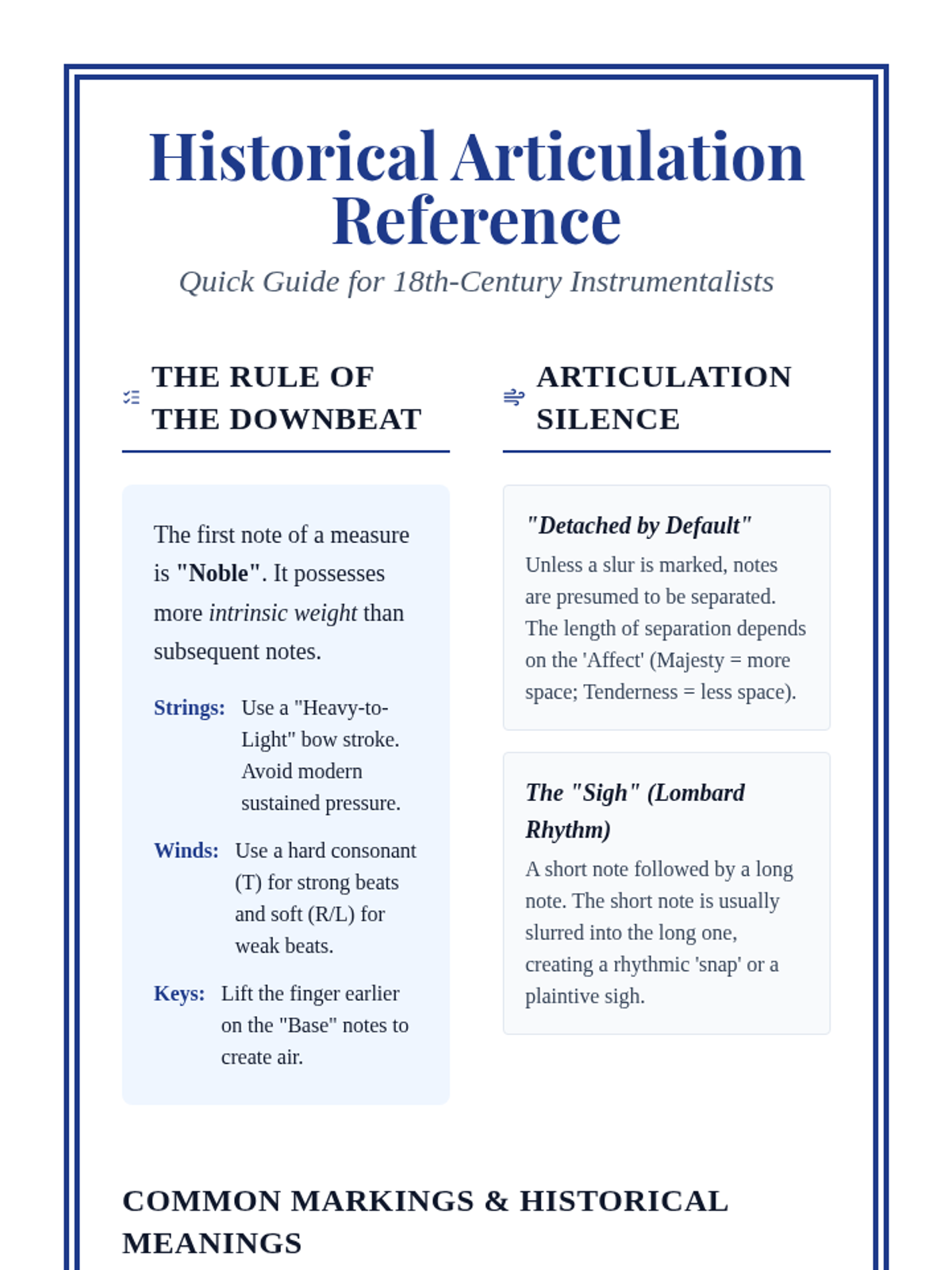
Focusing on 'Klangrede' (music as speech), students learn historical articulation hierarchies and how to apply them to phrasing.
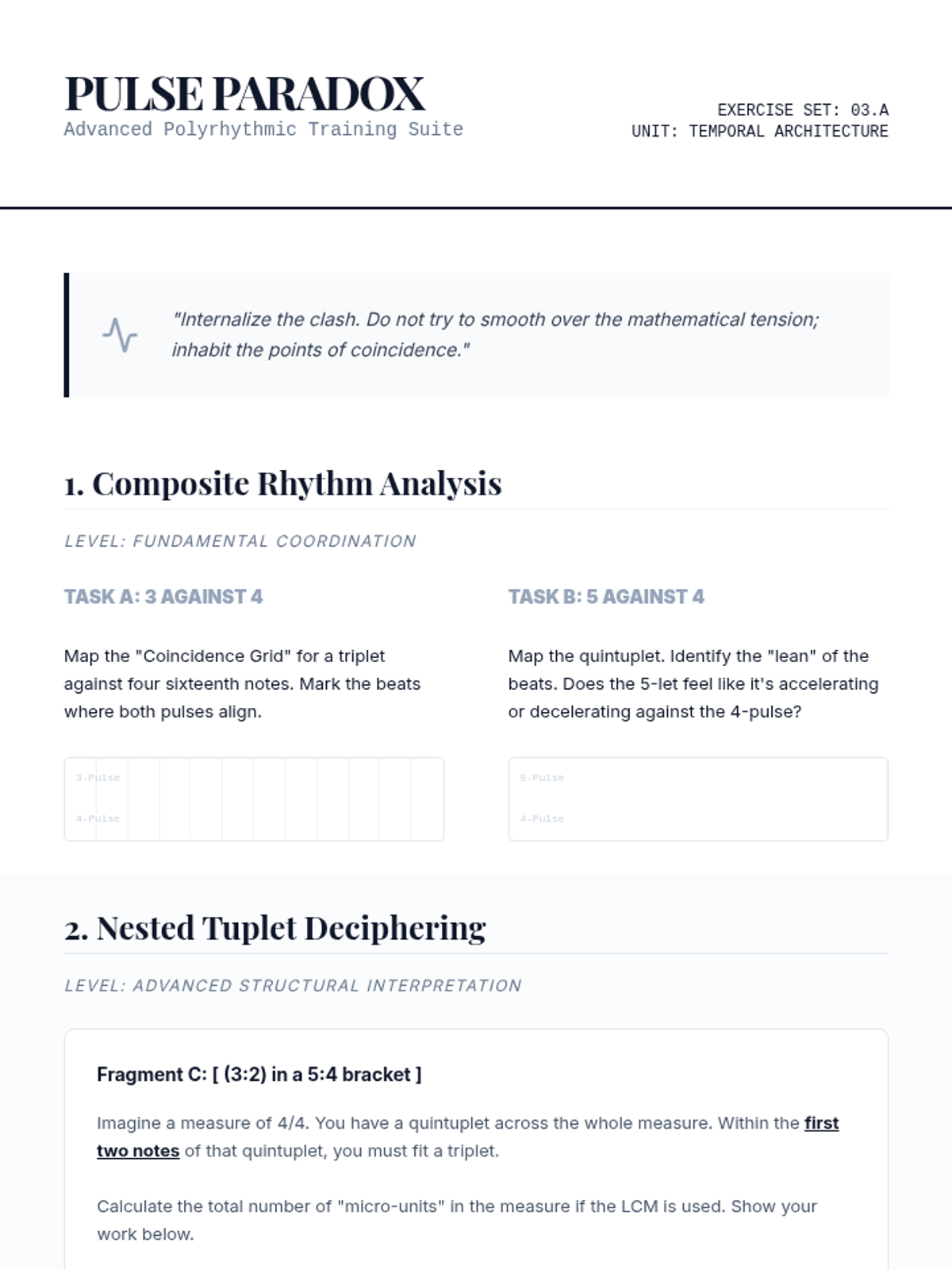
A deep dive into the mathematical and physical execution of nested tuplets and metric modulation.