Historical evolution of performance, technical stagecraft, and core acting techniques. Develops playwriting skills and fosters imaginative expression through script development and production management.
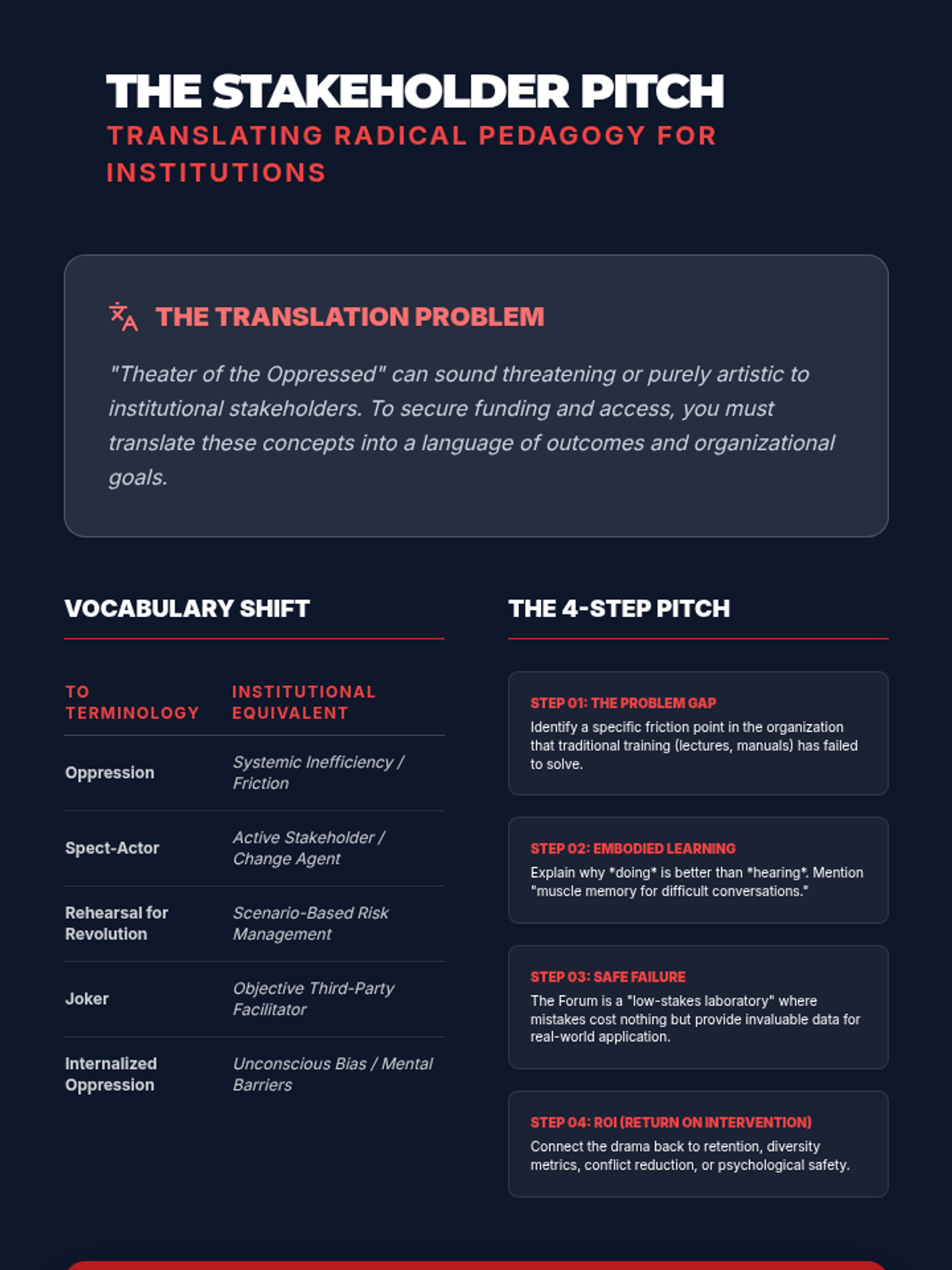
An exploration of Augusto Boal's Theatre of the Oppressed, covering its historical roots in Brazil, key techniques like Forum and Image Theatre, and its ongoing role in global social justice movements.
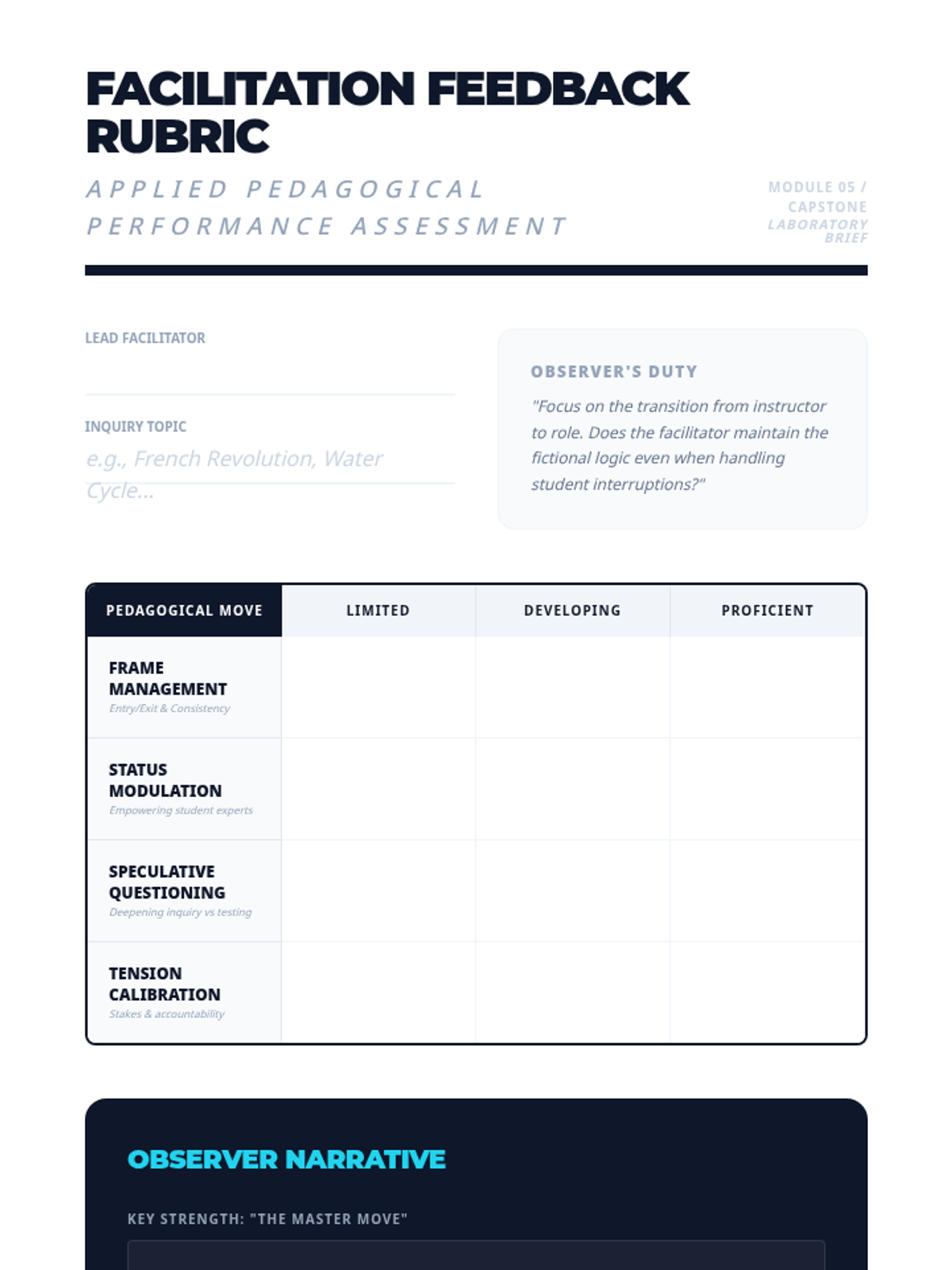
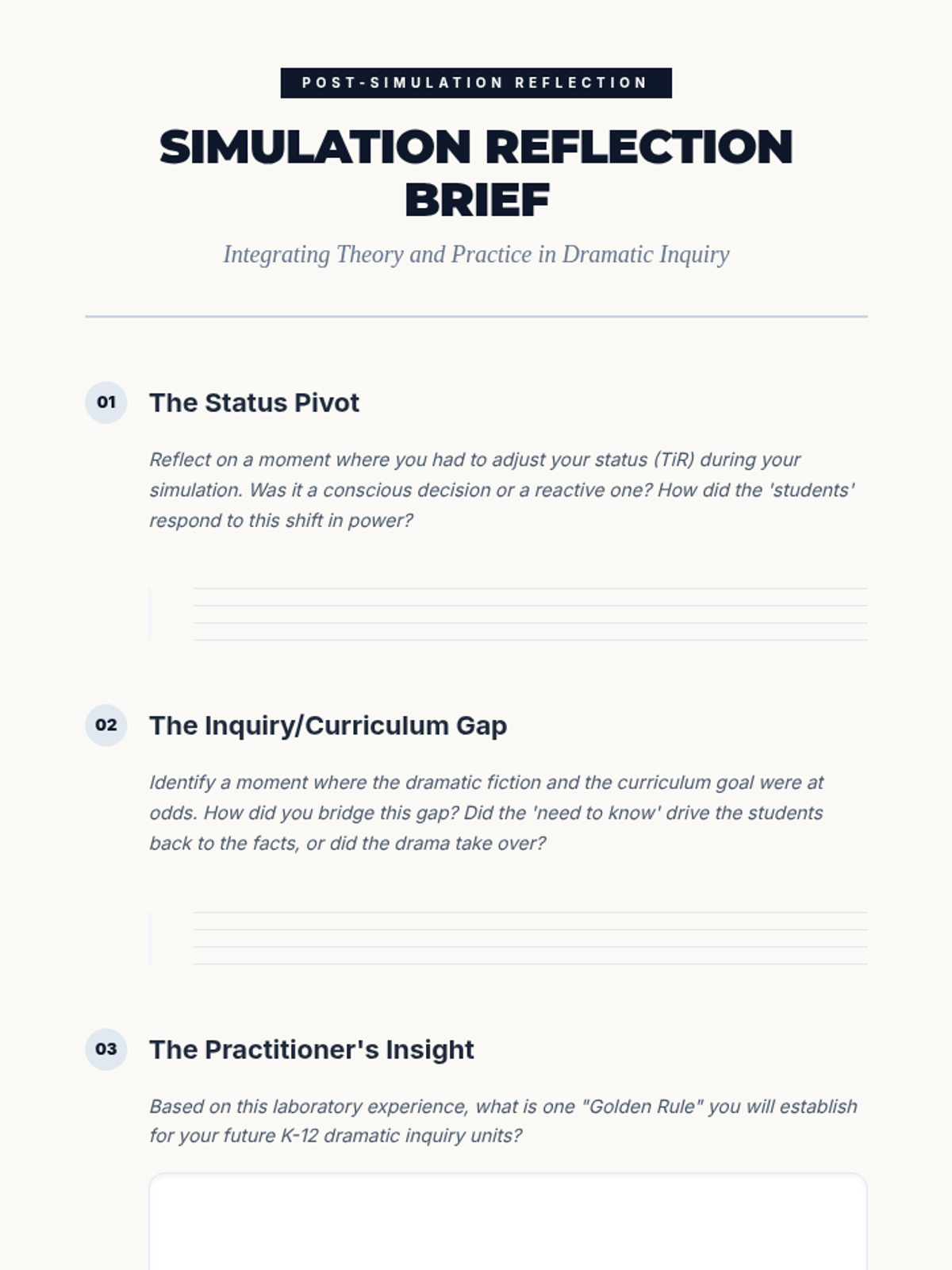
The capstone simulation where students facilitate their own dramatic inquiry segments. Peers act as K-12 learners, providing a laboratory environment for immediate pedagogical feedback.
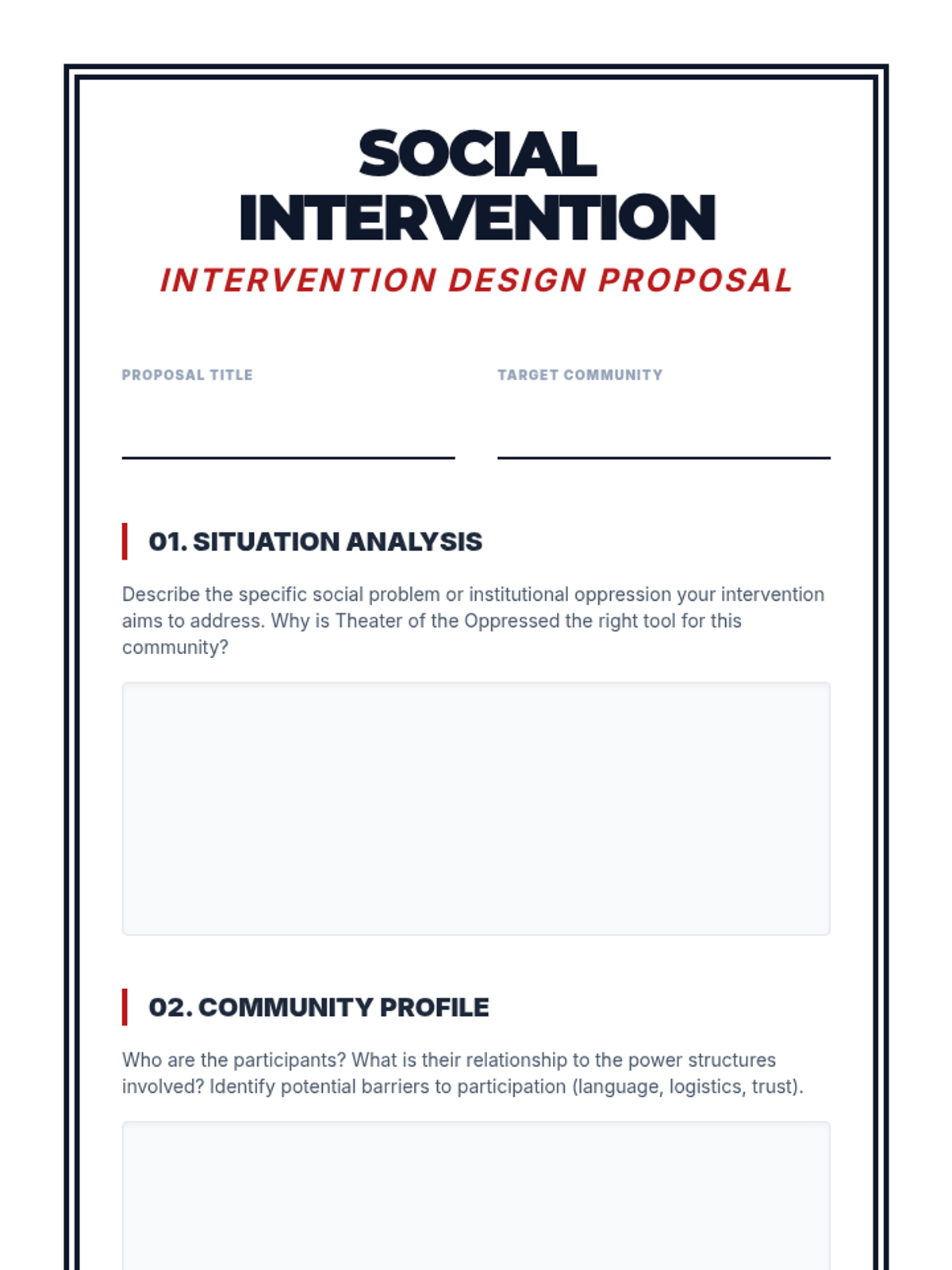
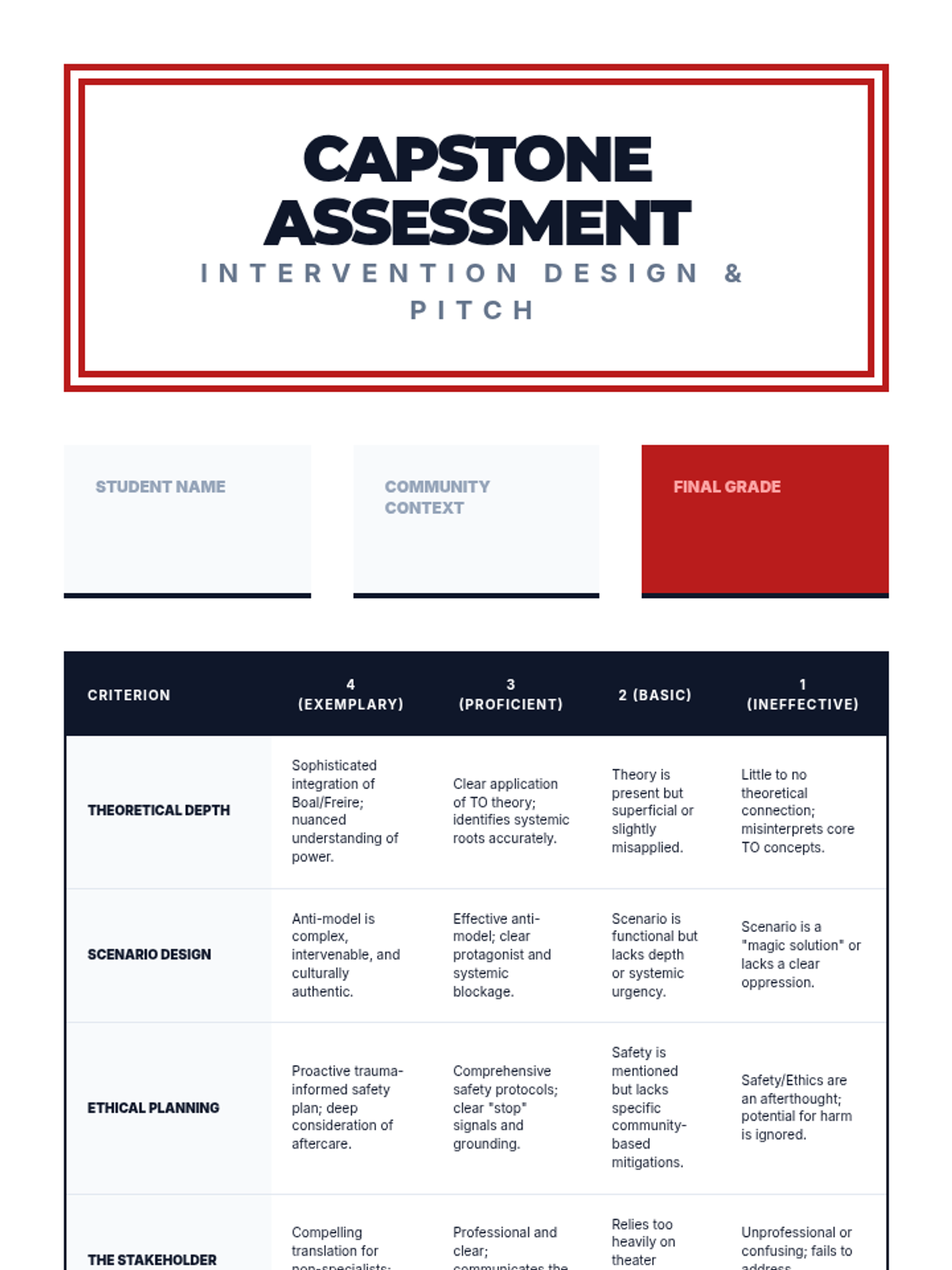
Synthesizes learning into a practical proposal for a theater-based social intervention in a specific community context.
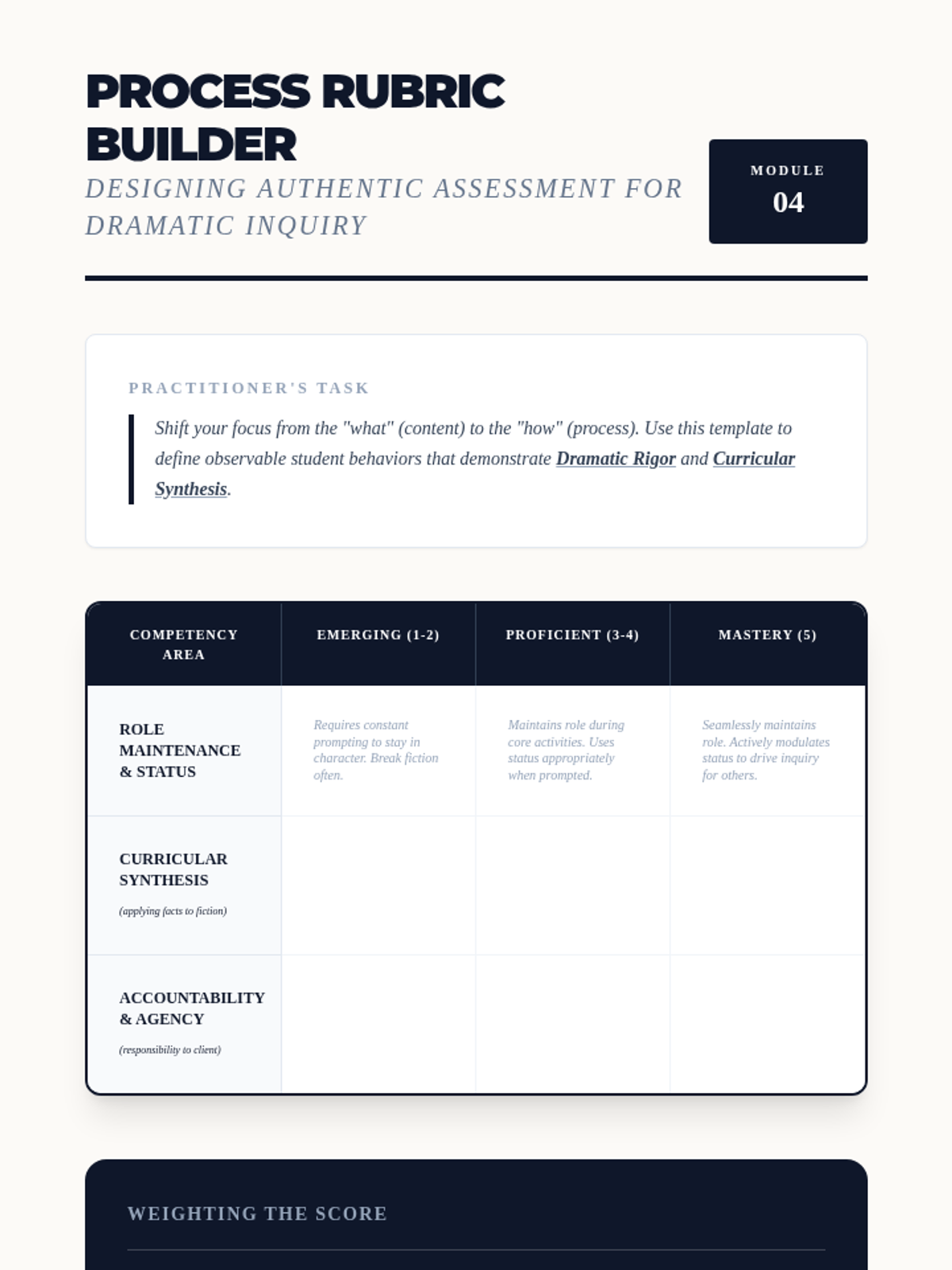
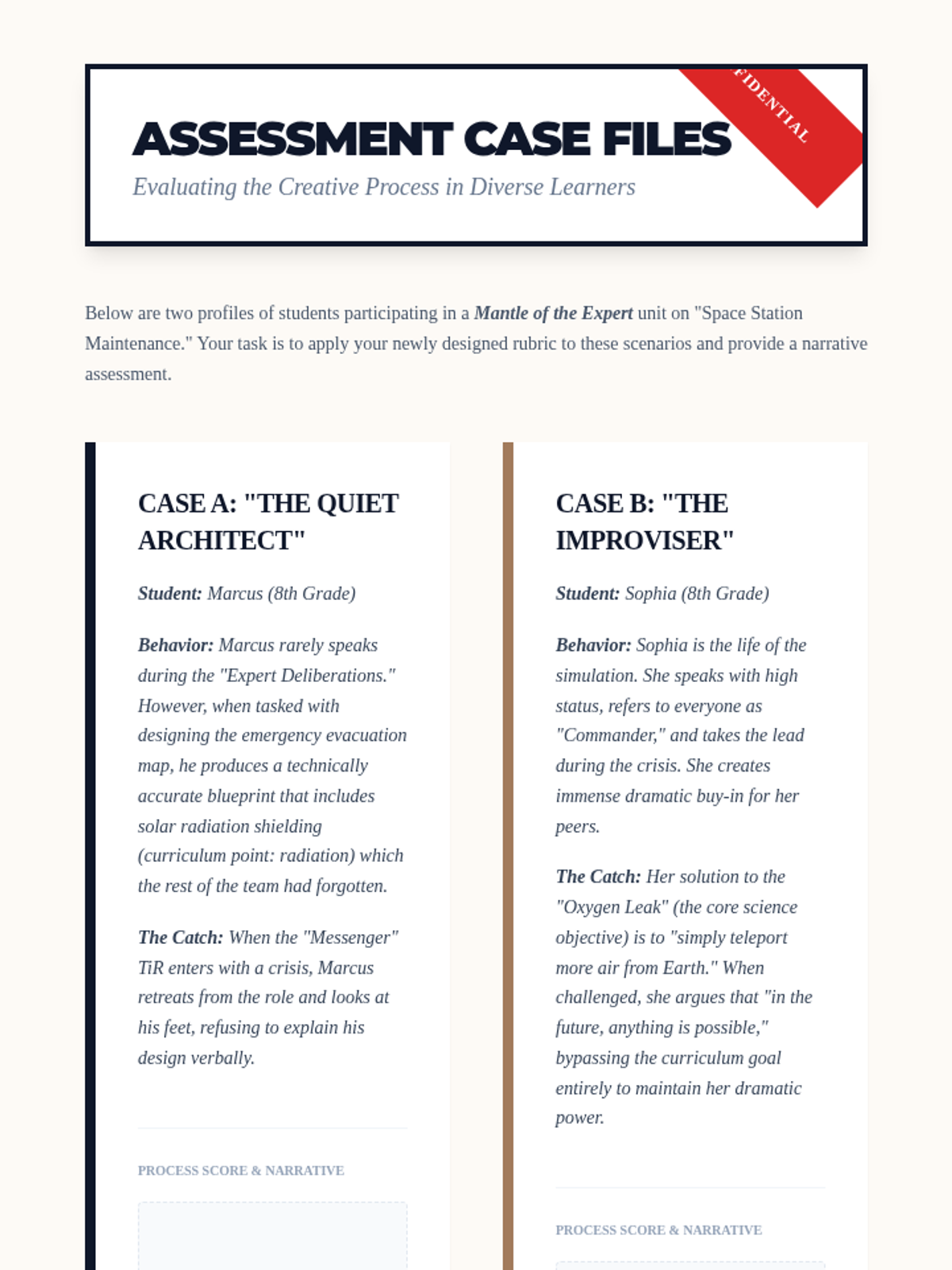
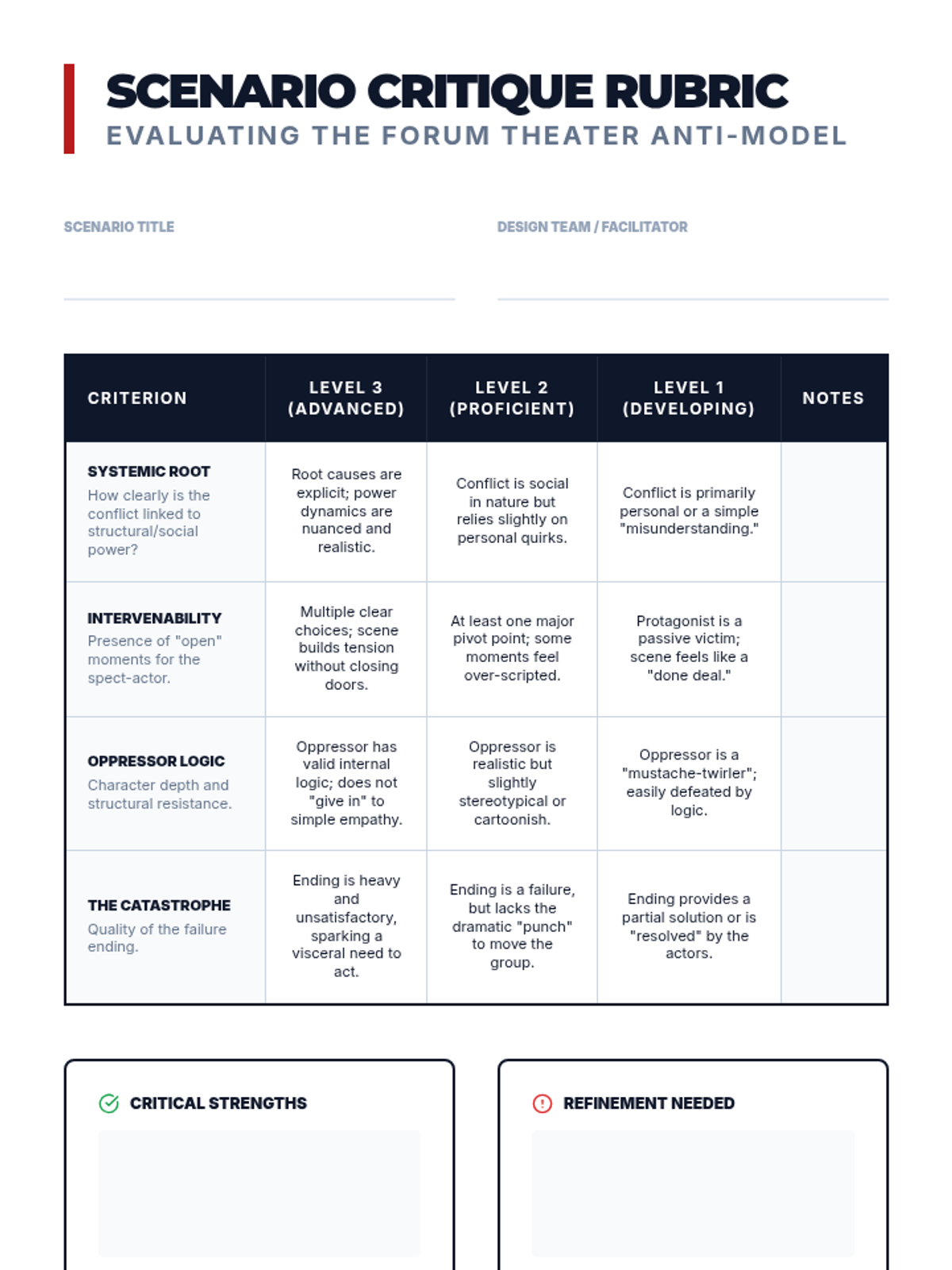
A seminar-style exploration of evaluating creative work. Students design rubrics that balance the assessment of dramatic products with the underlying collaborative and critical thinking processes.
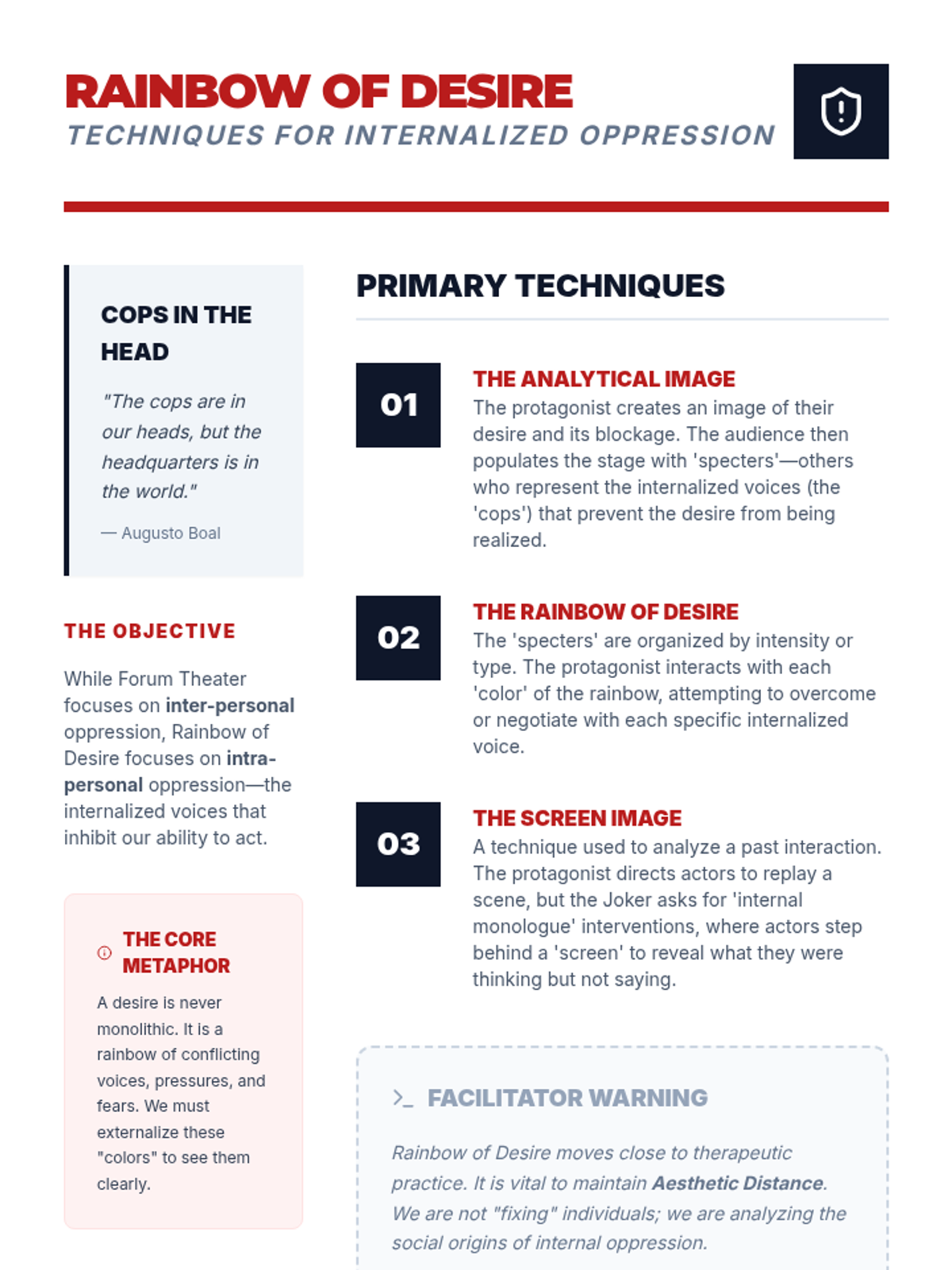
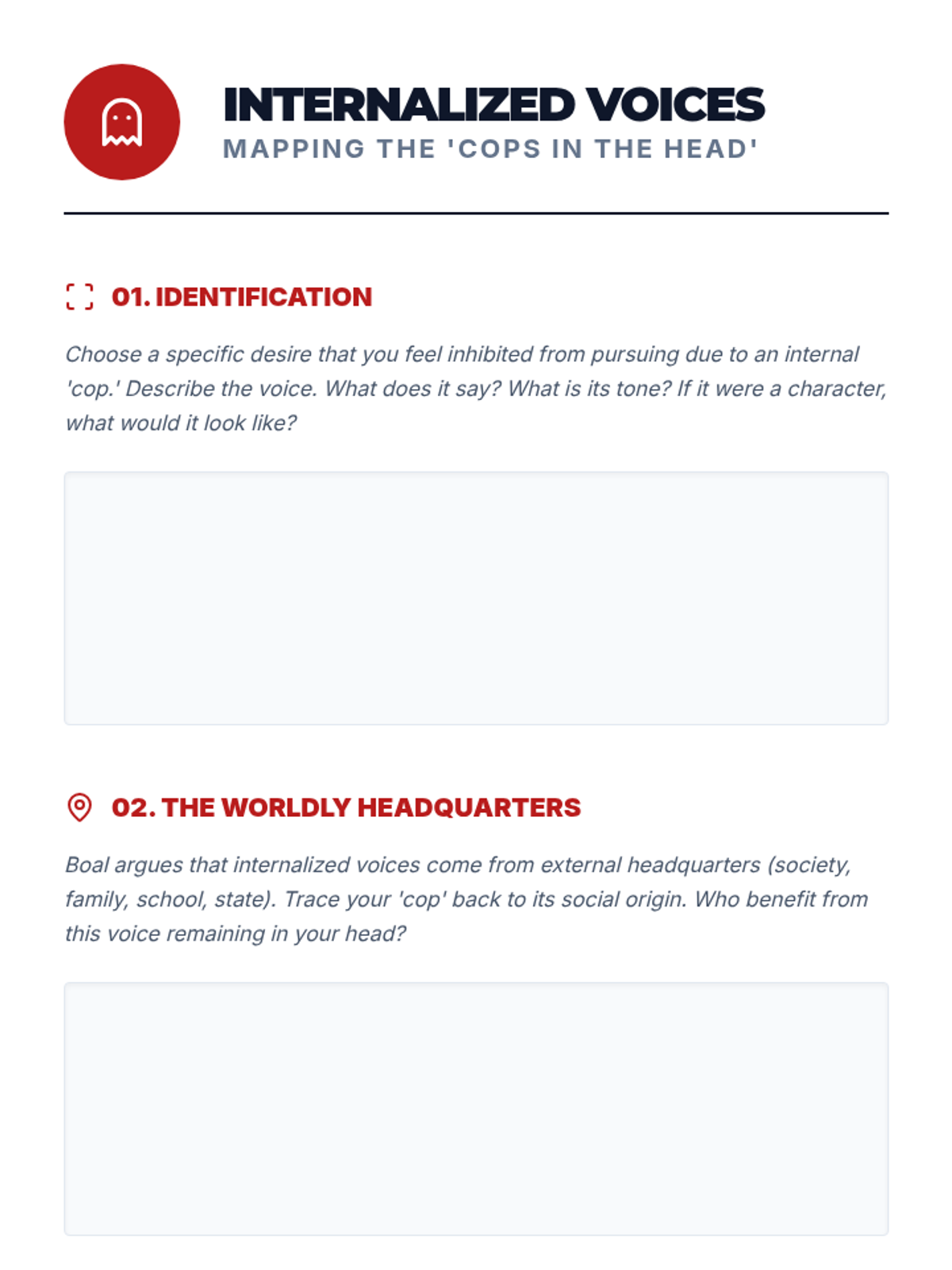
Investigates techniques for addressing internalized oppression and the 'Cops in the Head' phenomenon through dramatic introspection.
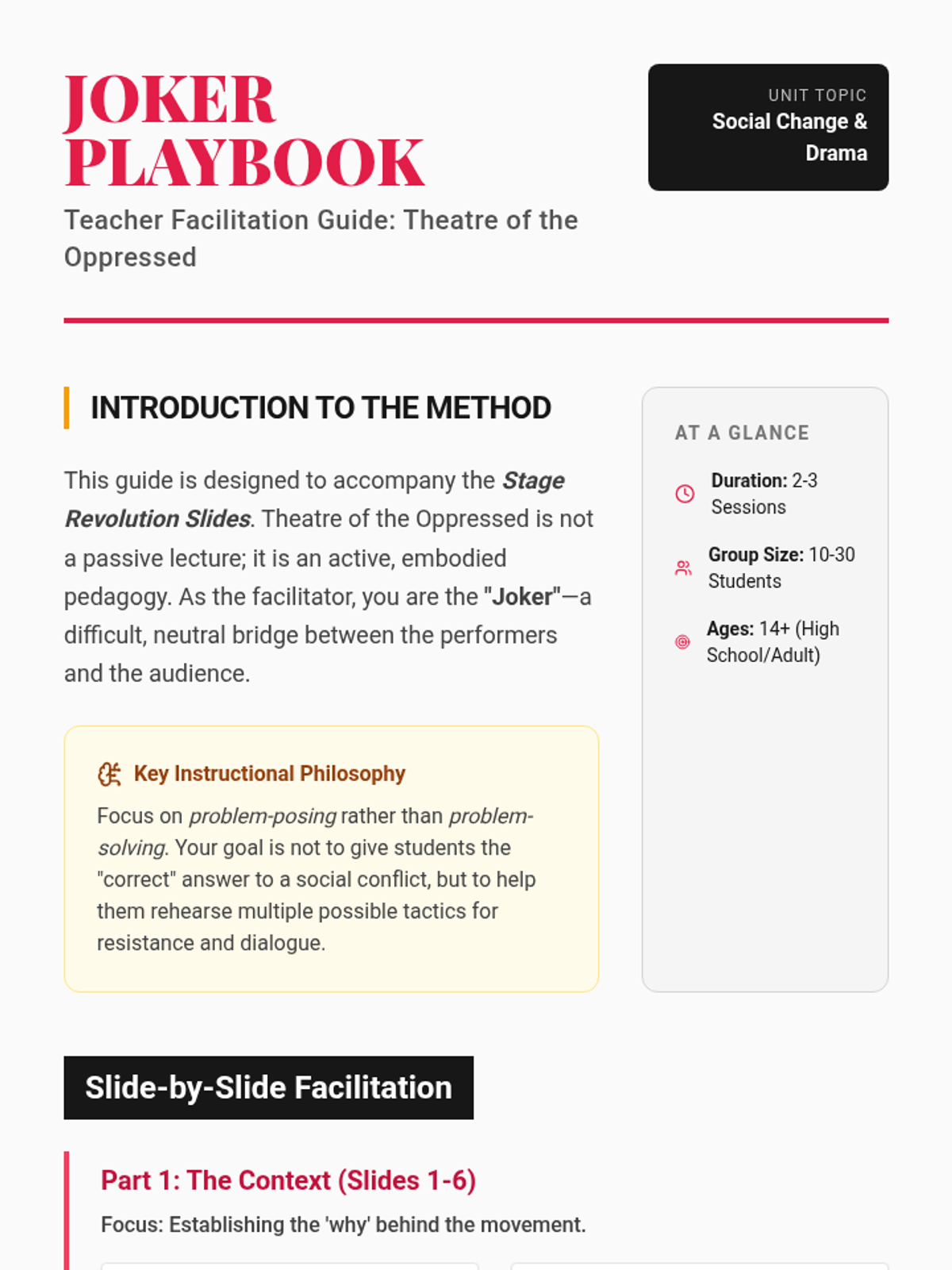
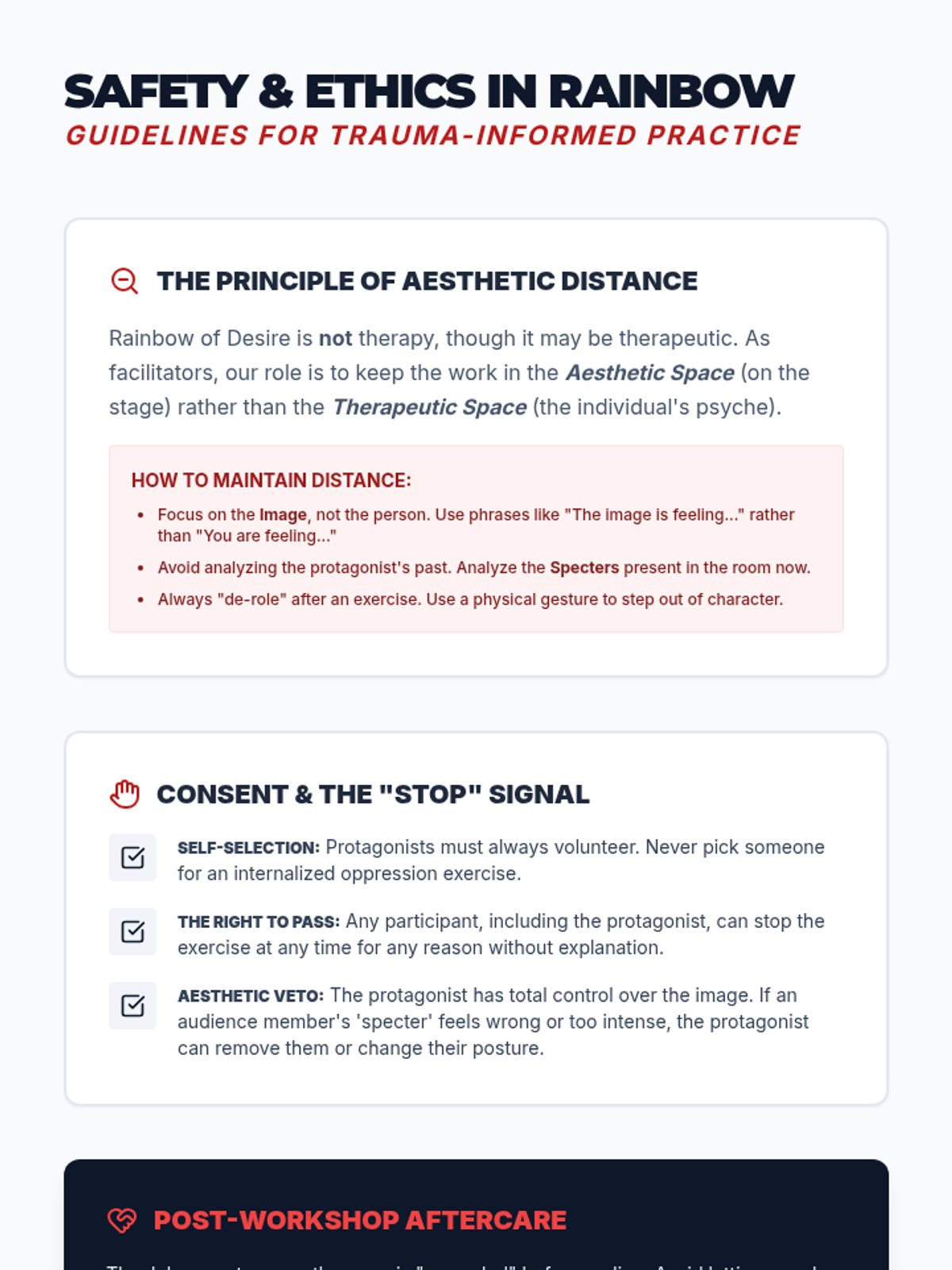
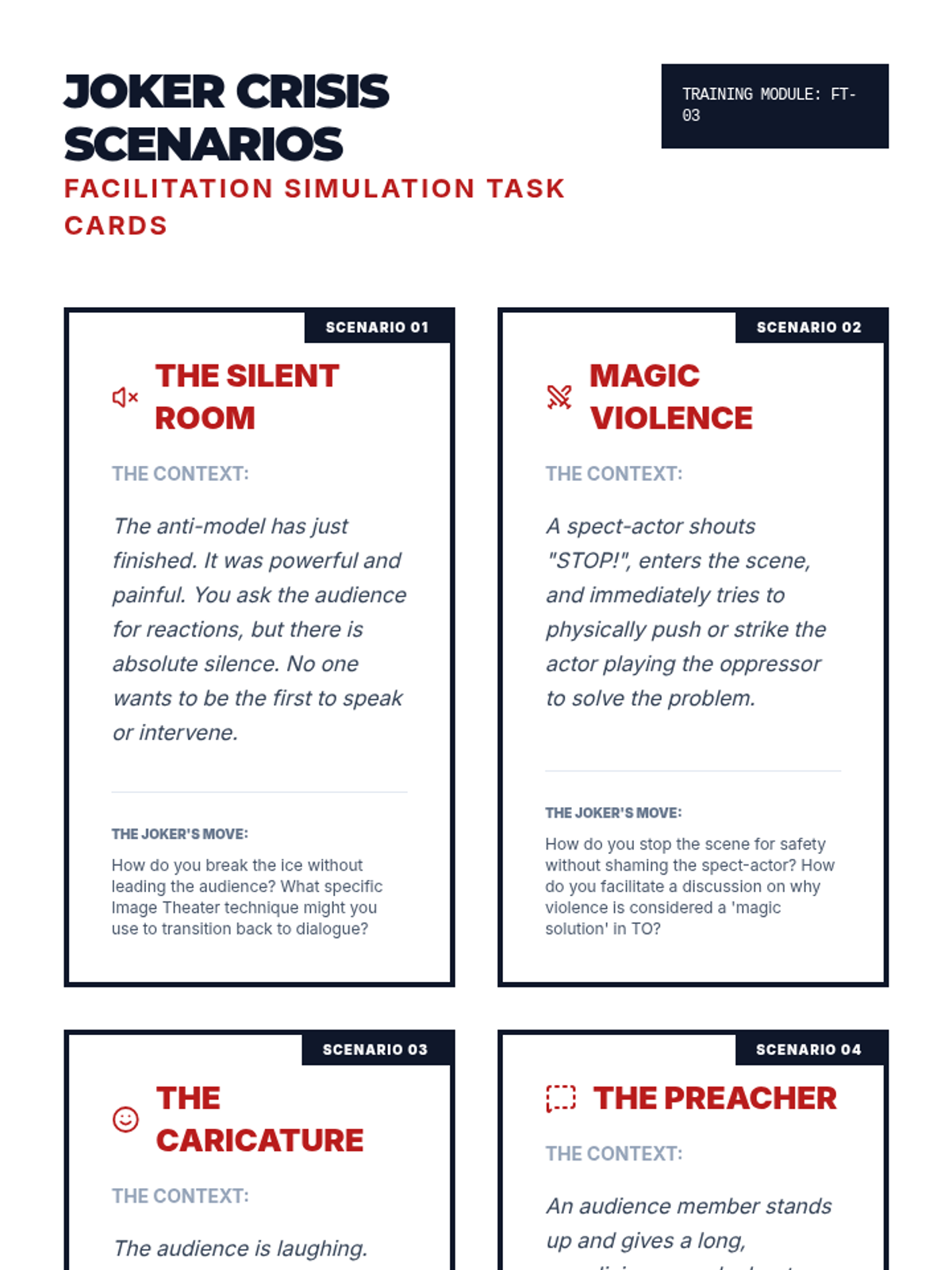
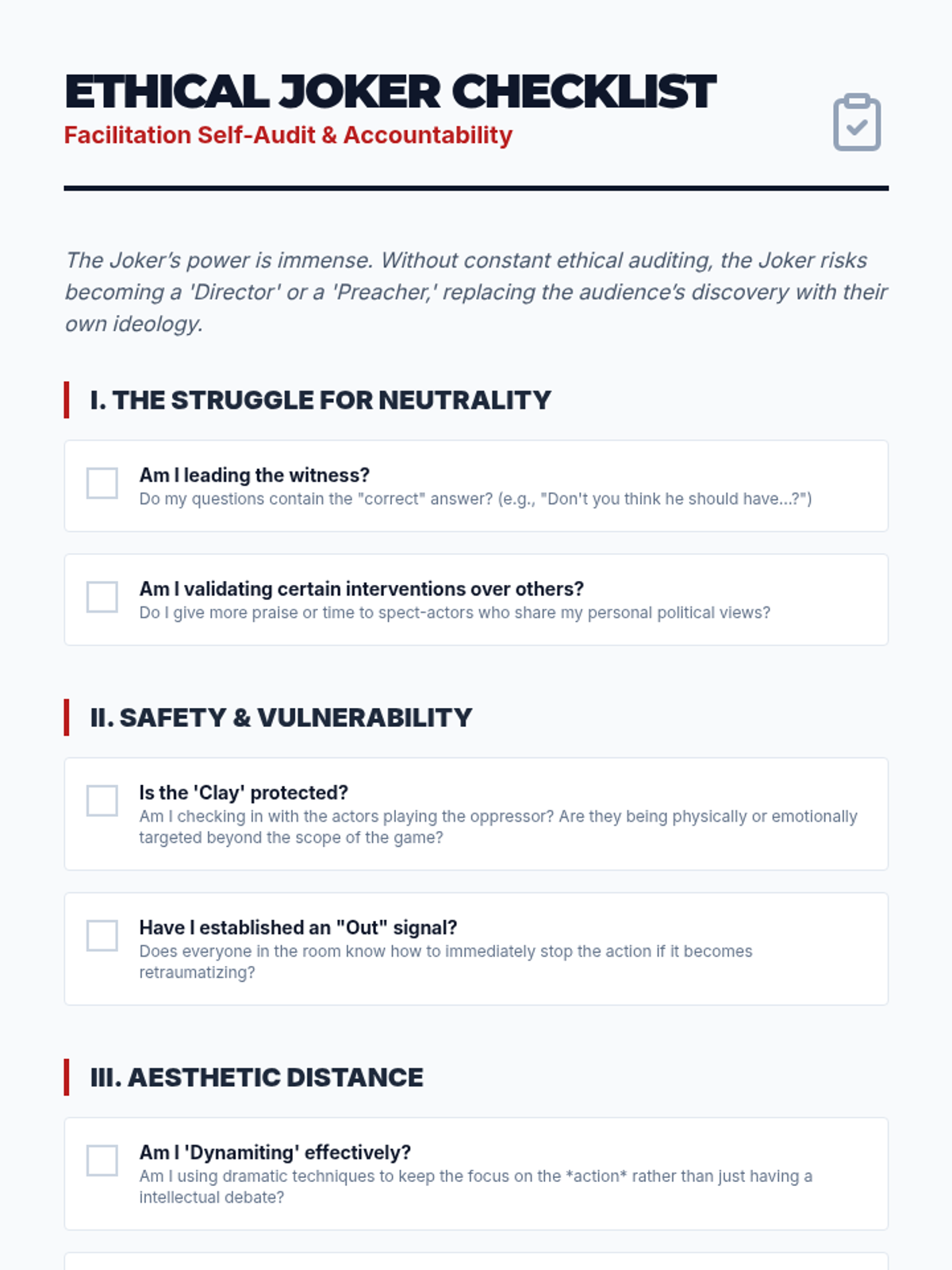
Examines the complex, neutral facilitation role known as the Joker, focusing on active listening and maintaining the aesthetic space.
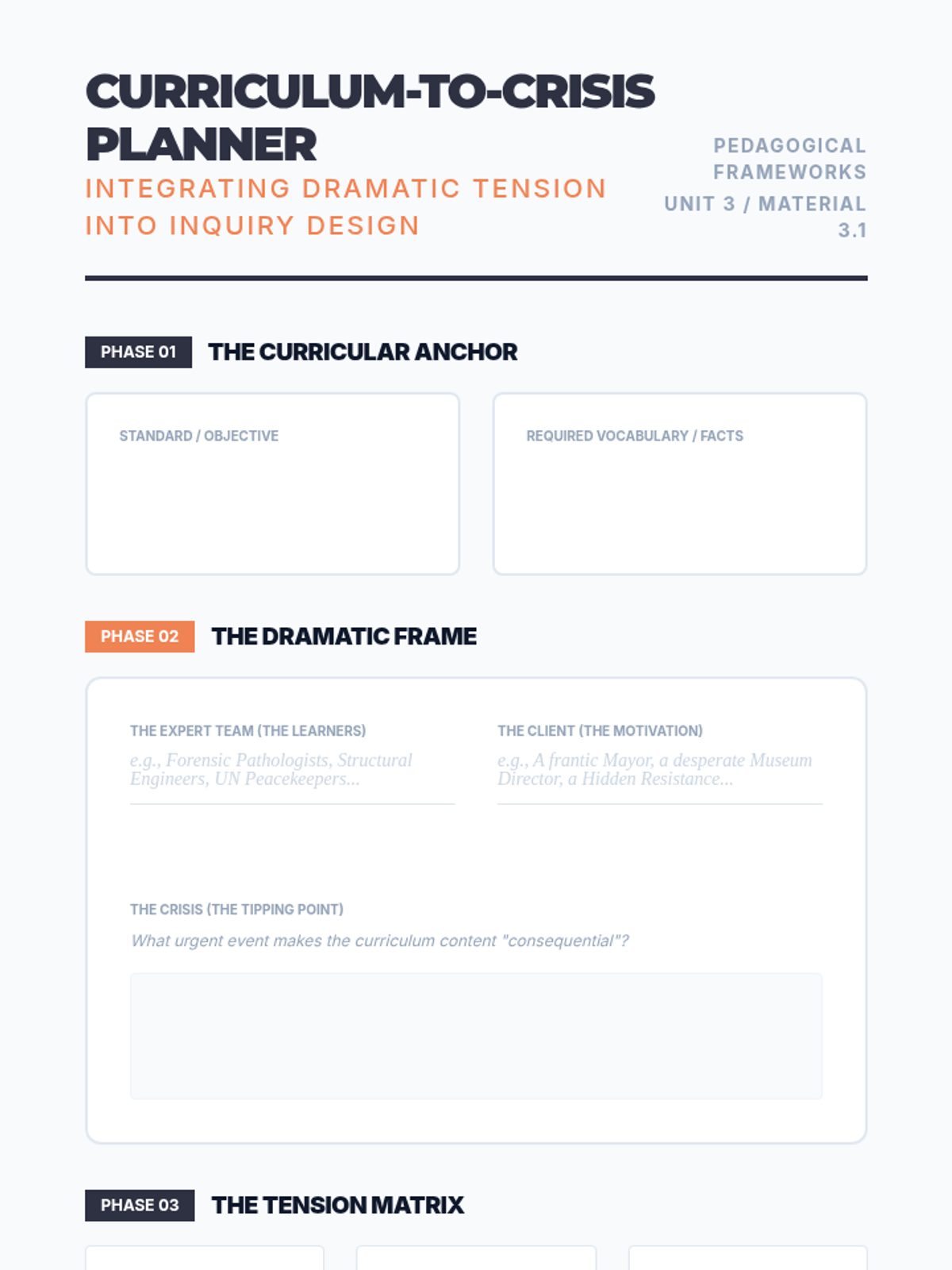
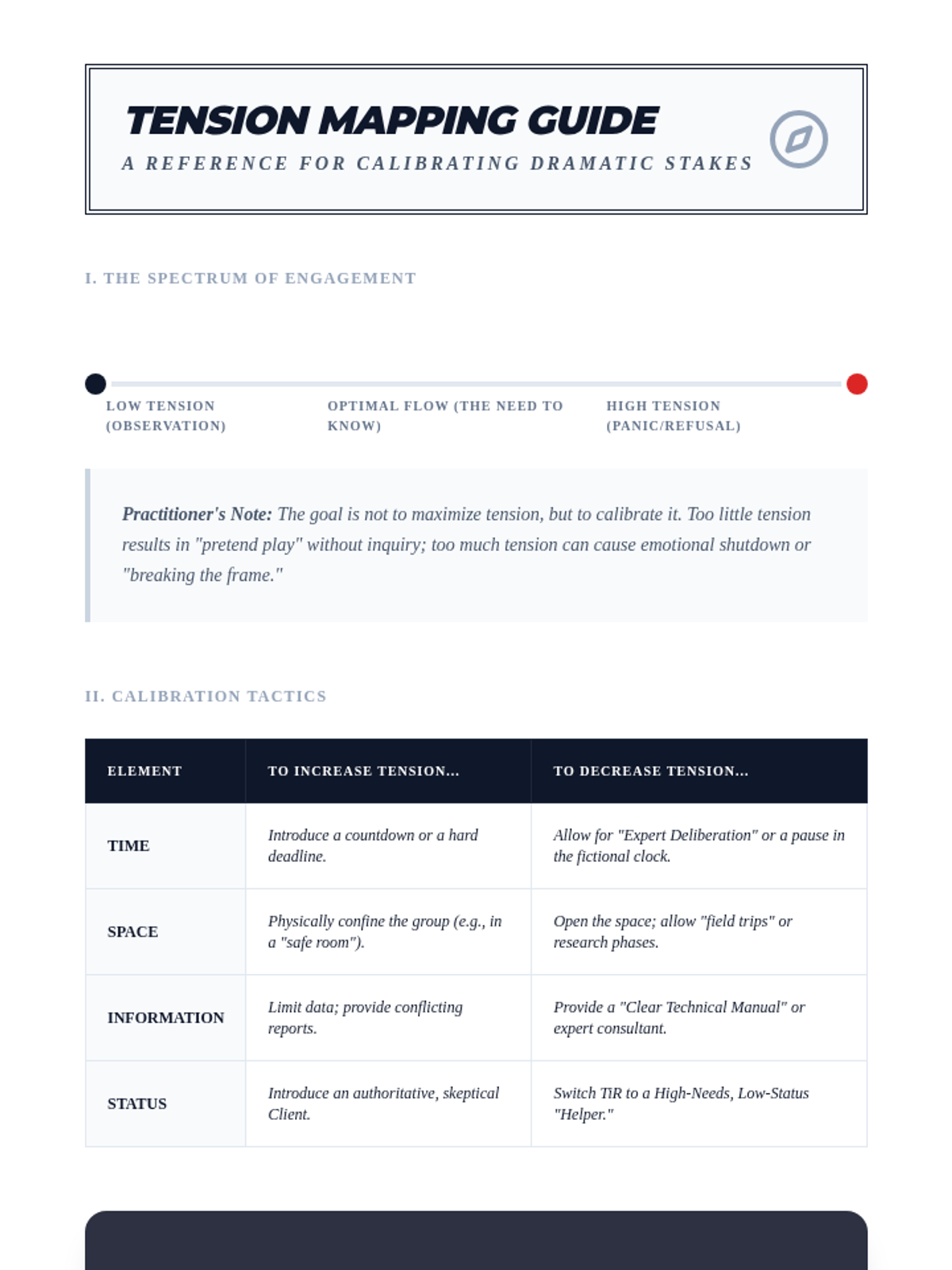
Instruction on how to integrate dramatic tension into standard curriculum content. Students design crisis-driven scenarios that require critical thinking and decision-making within a dramatic frame.
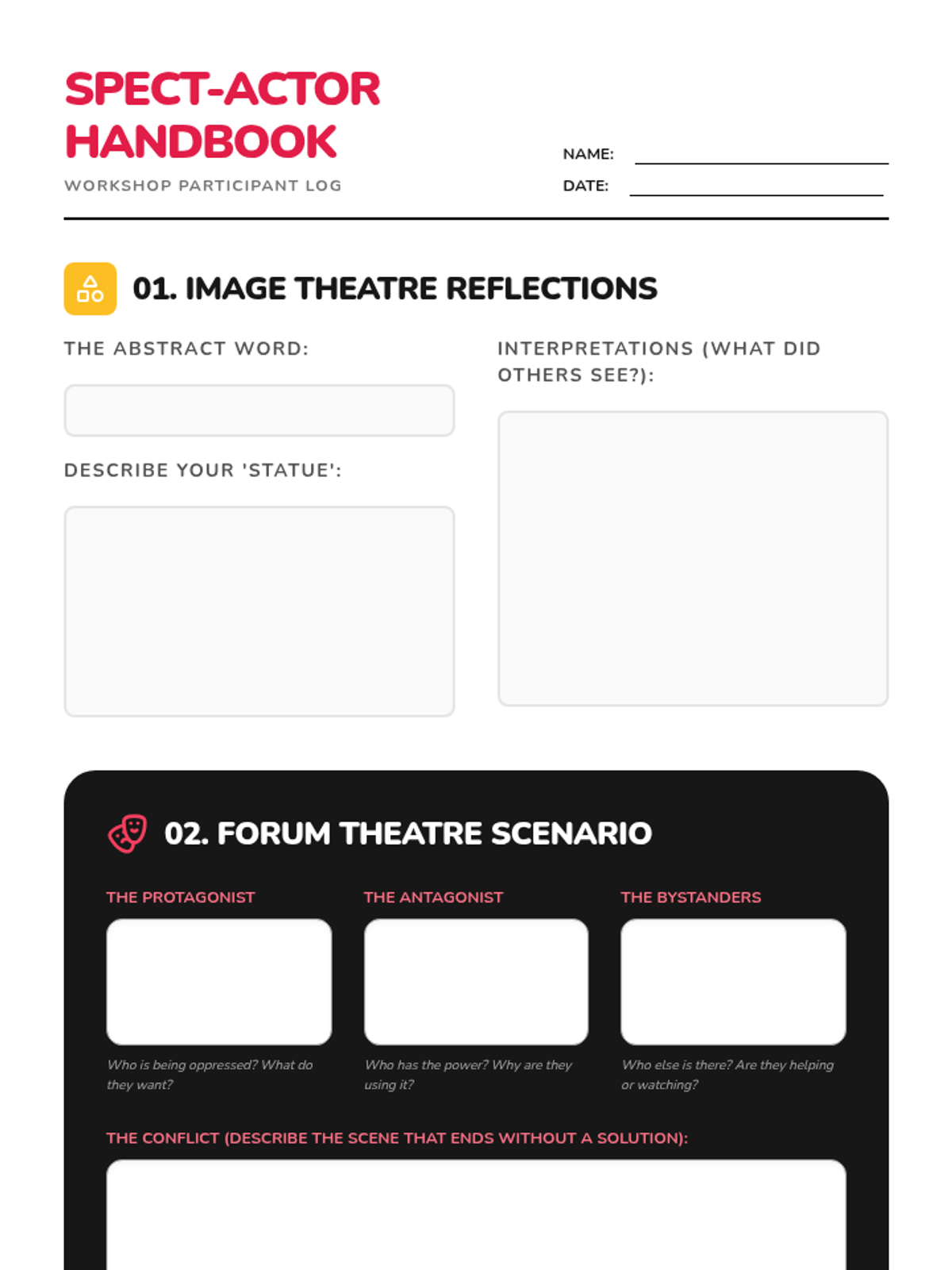
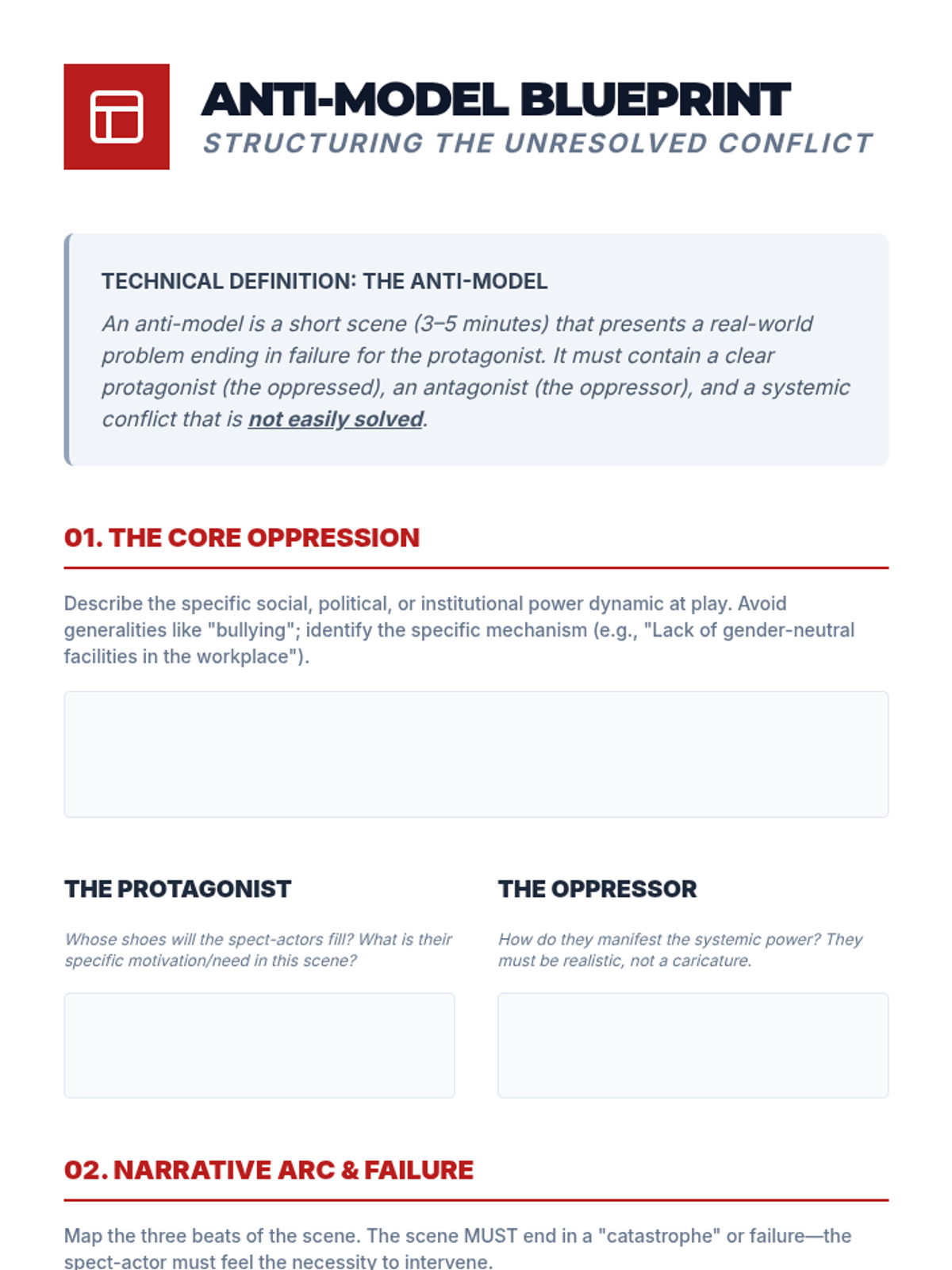
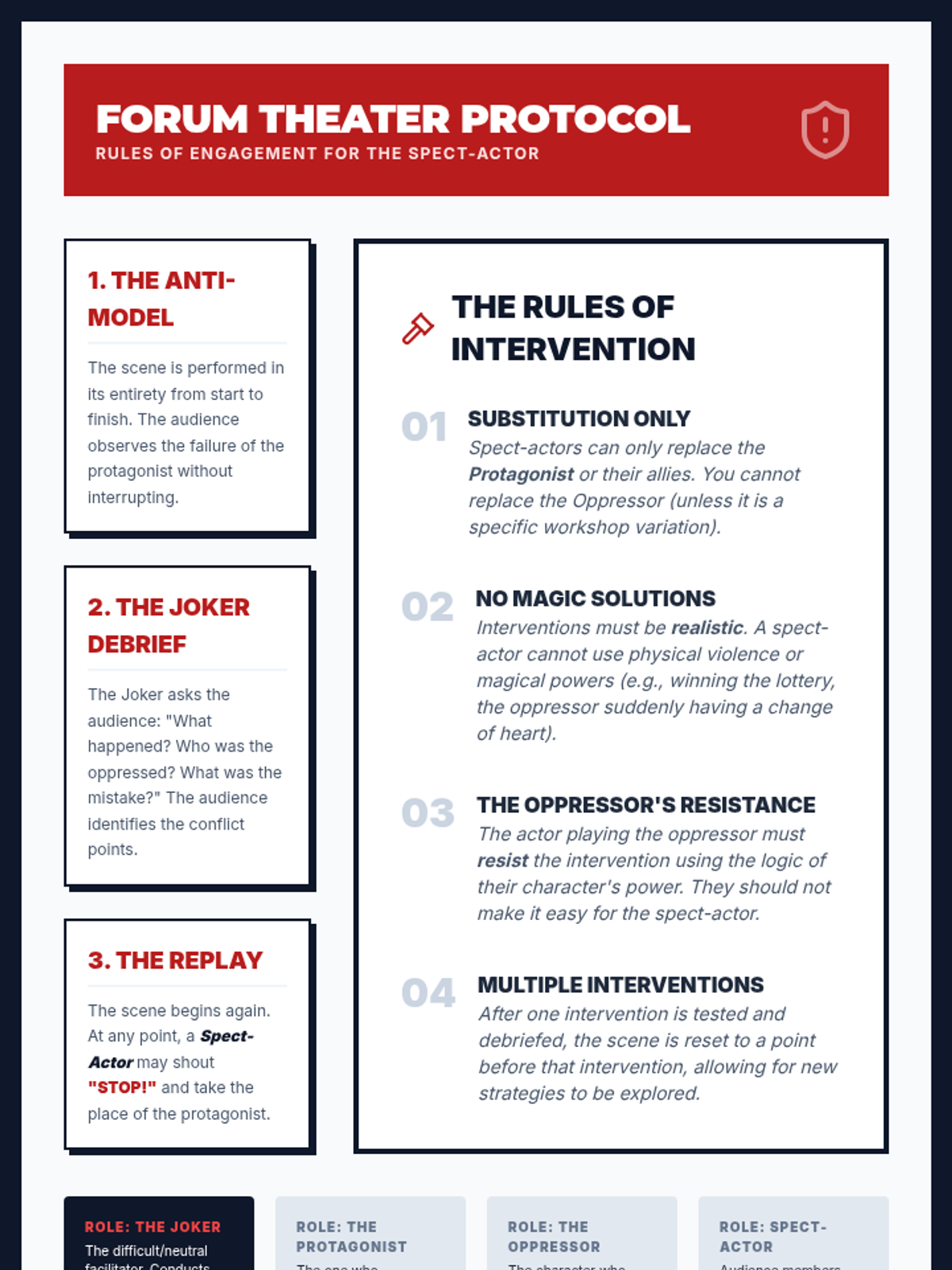
Focuses on the structural design of the anti-model and the technical rules of engagement for a successful Forum Theater intervention.
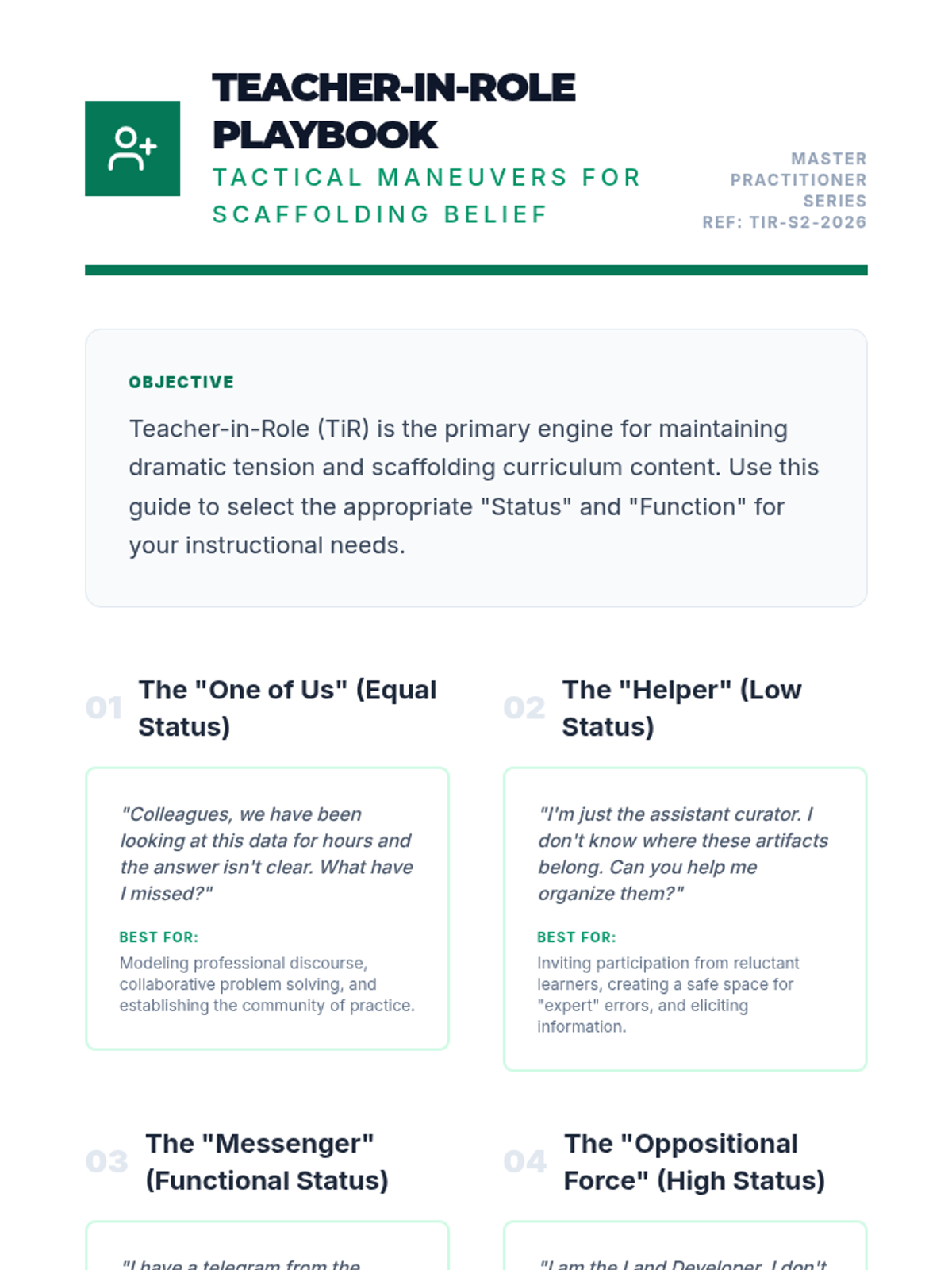
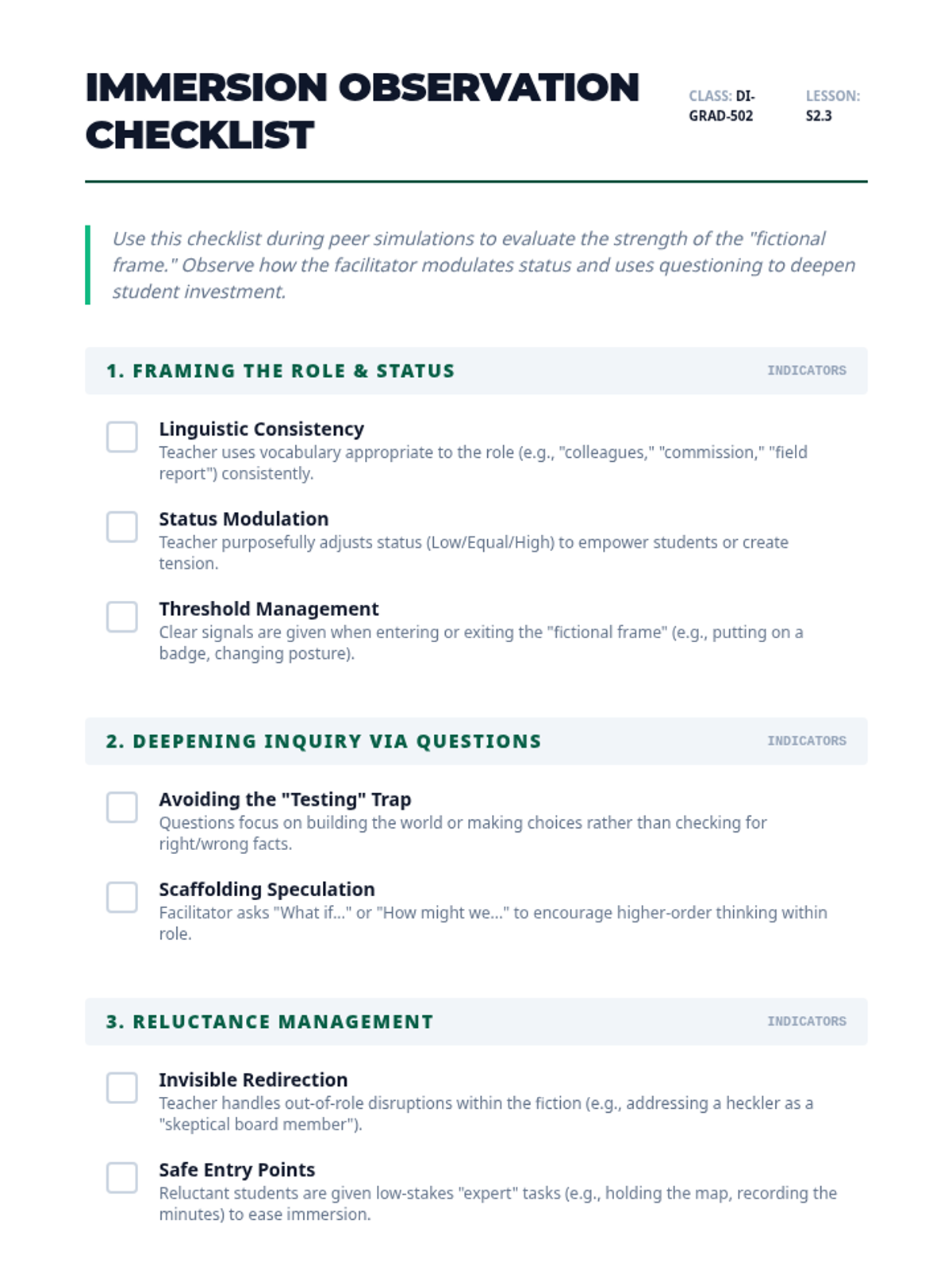
Exploration of techniques to build and maintain belief in fictional worlds. Students practice teacher-in-role strategies, status modulation, and questioning to scaffold immersion for diverse learners.
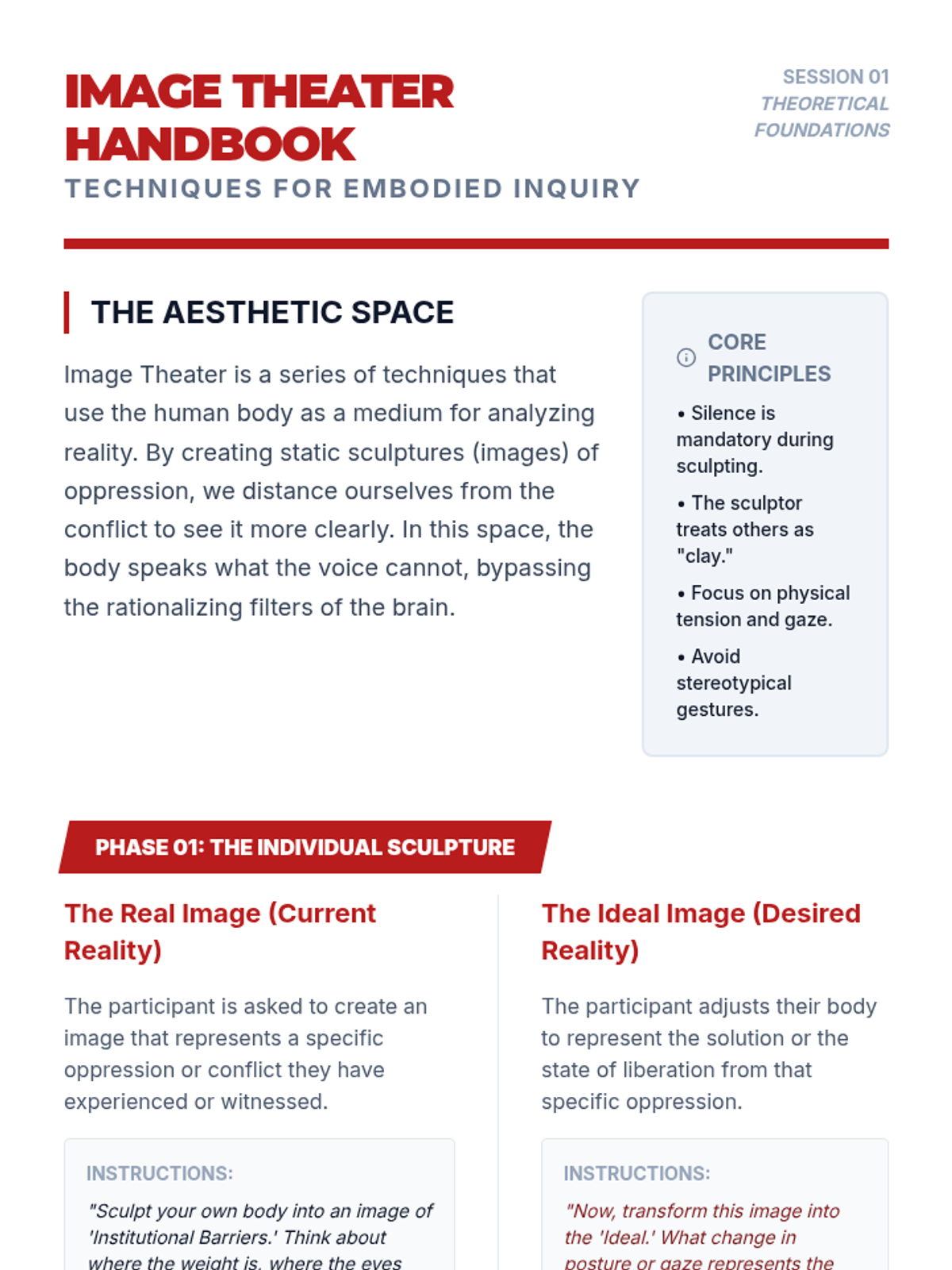
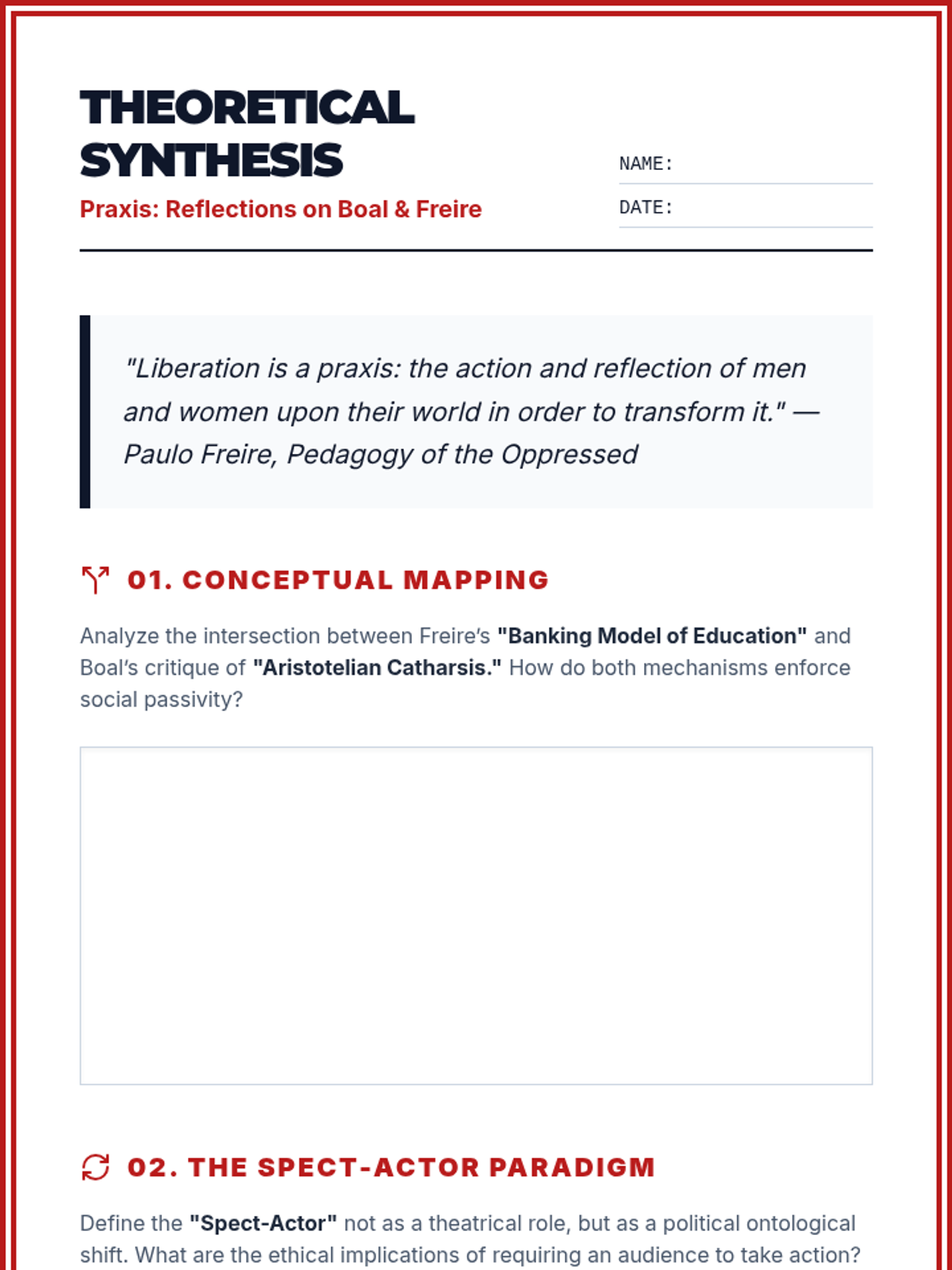
Analyzes the shift from passive spectatorship to active participation through the works of Boal and Freire, using Image Theater to embody abstract concepts.
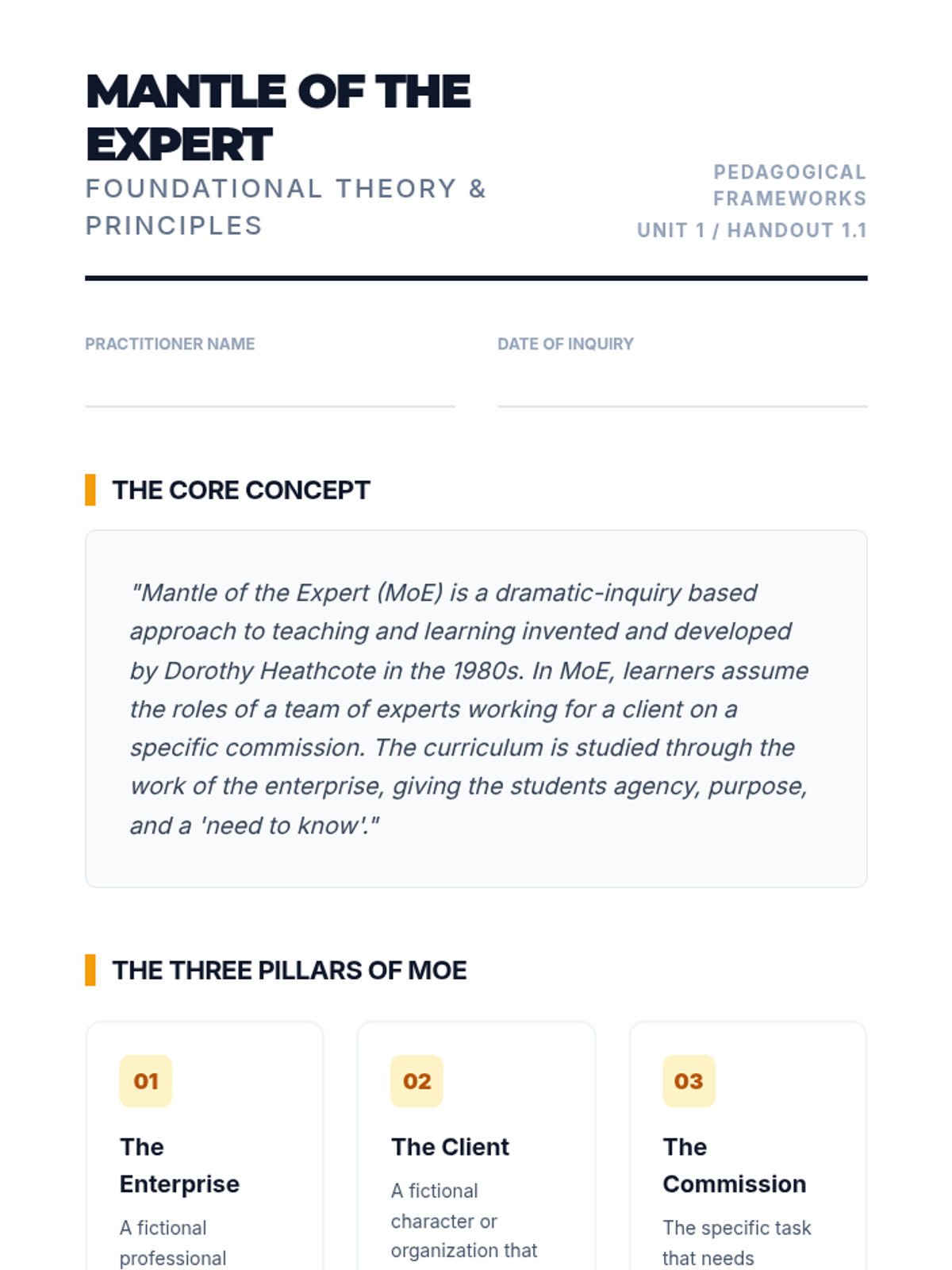
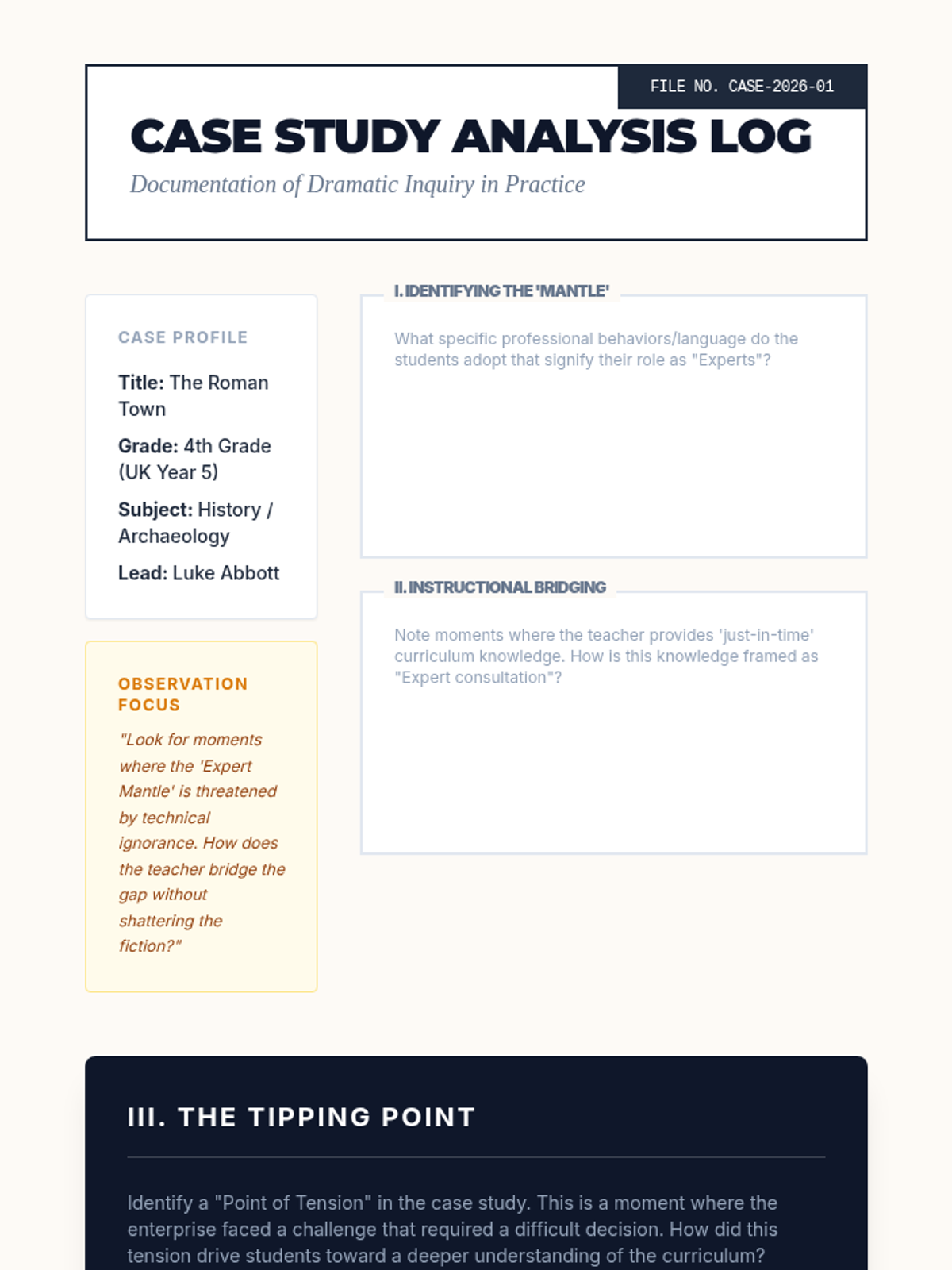
Introduction to the Mantle of the Expert (MoE) approach, where students transition from learners to experts within a fictional enterprise. This lesson covers the theoretical foundations and the mechanics of role assumption in dramatic pedagogy.
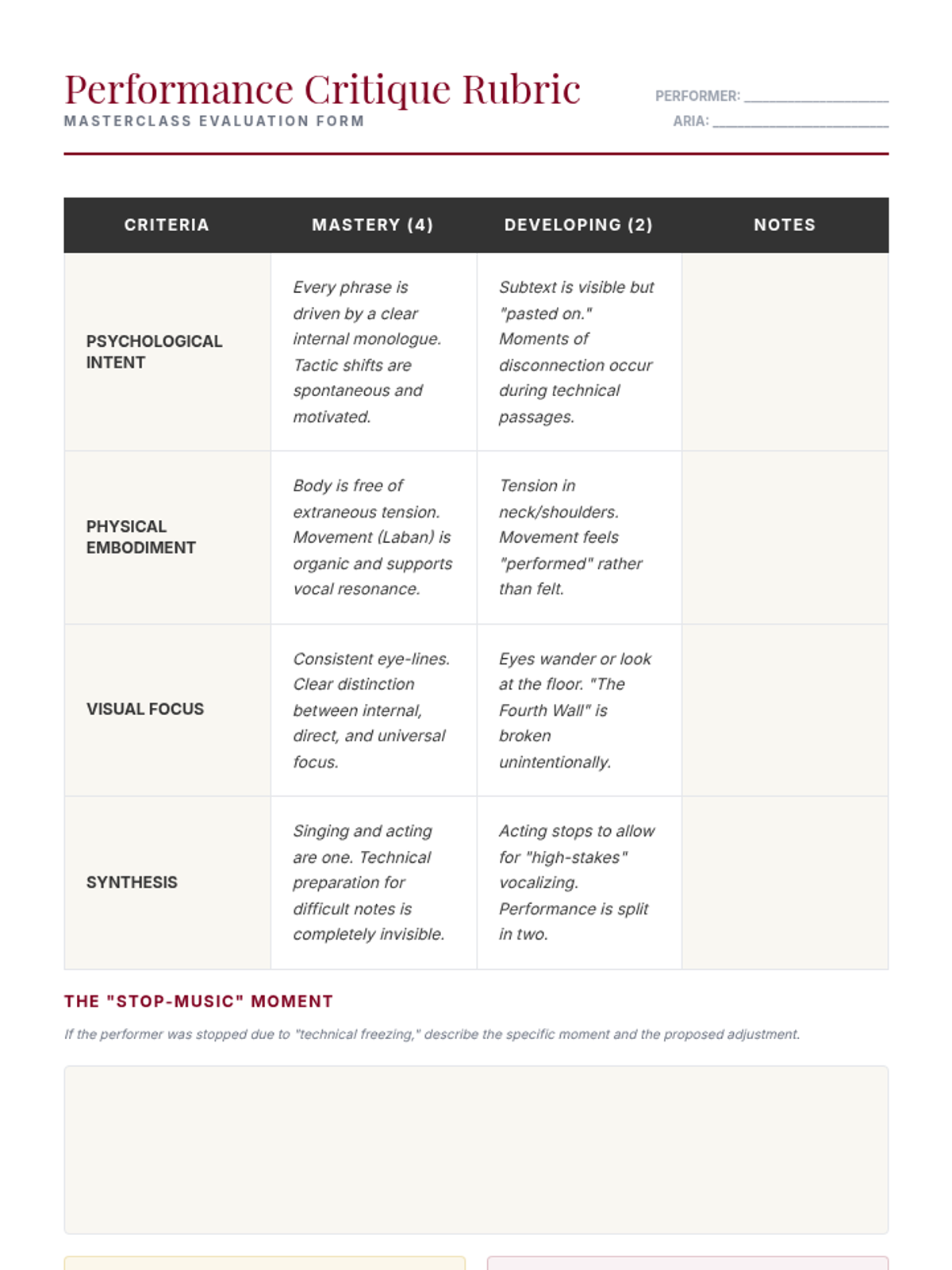
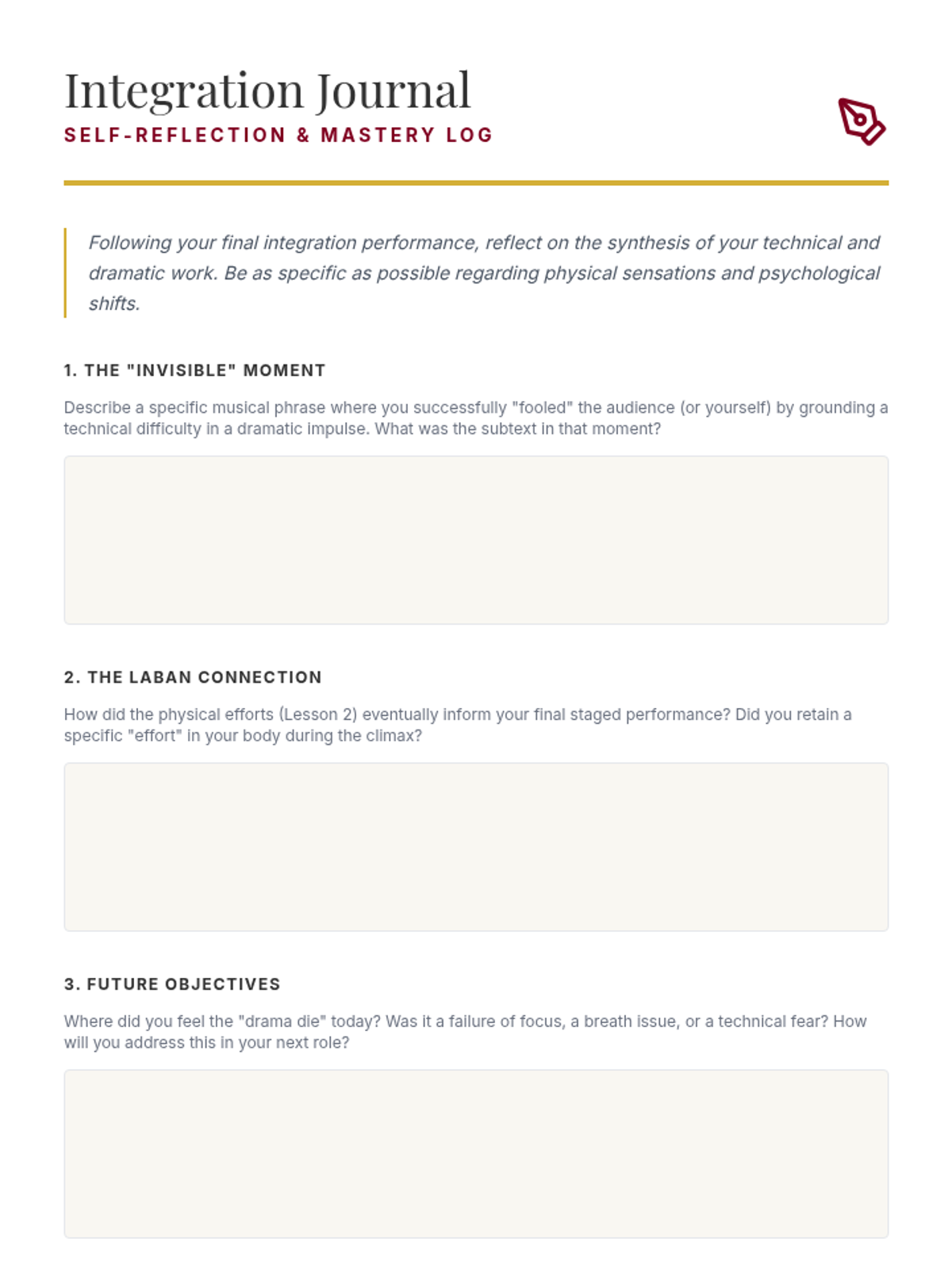
In this final synthesis, students perform their staged arias for critique, focusing on maintaining character through technical vocal challenges and high-stakes moments.
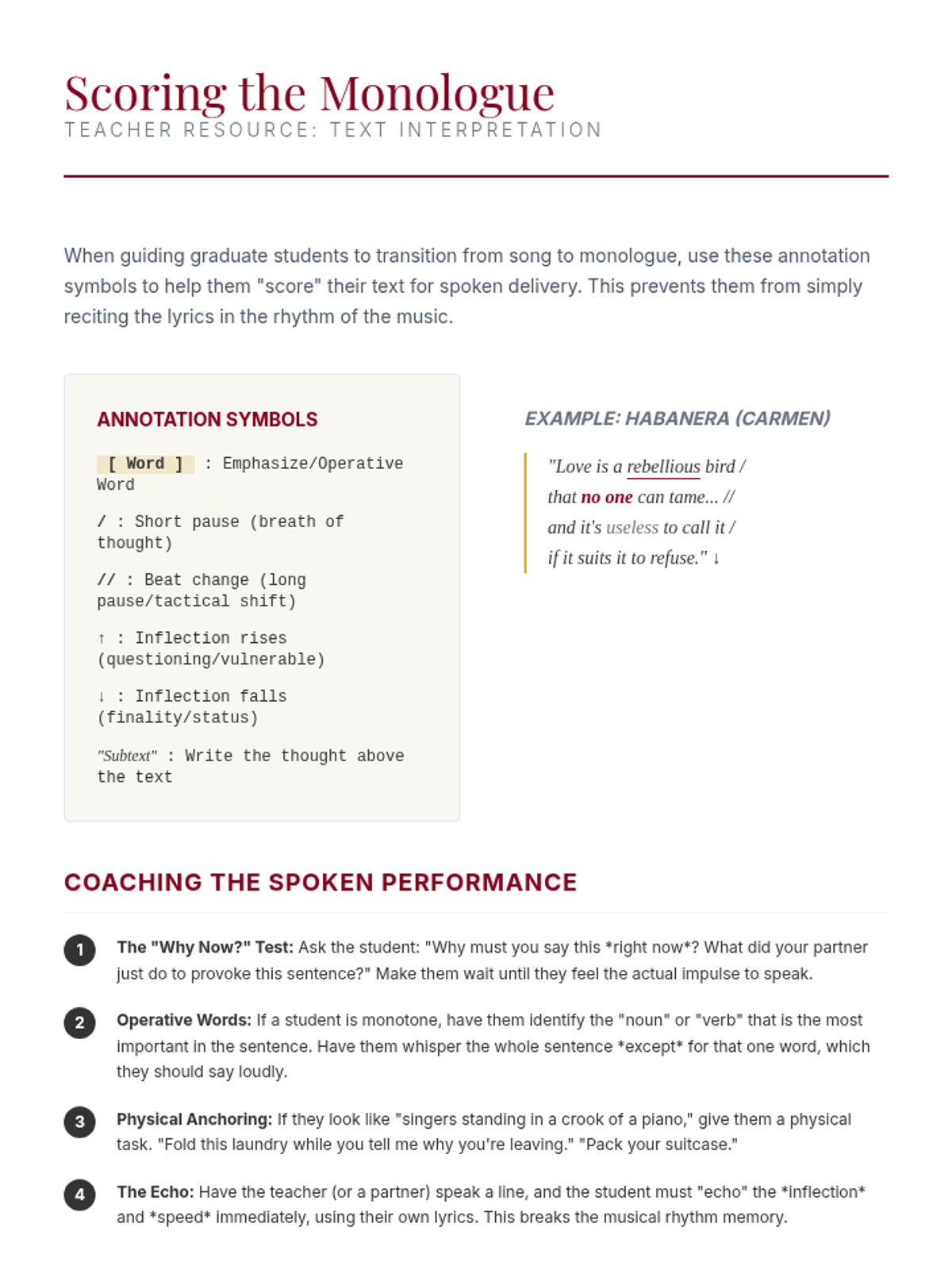
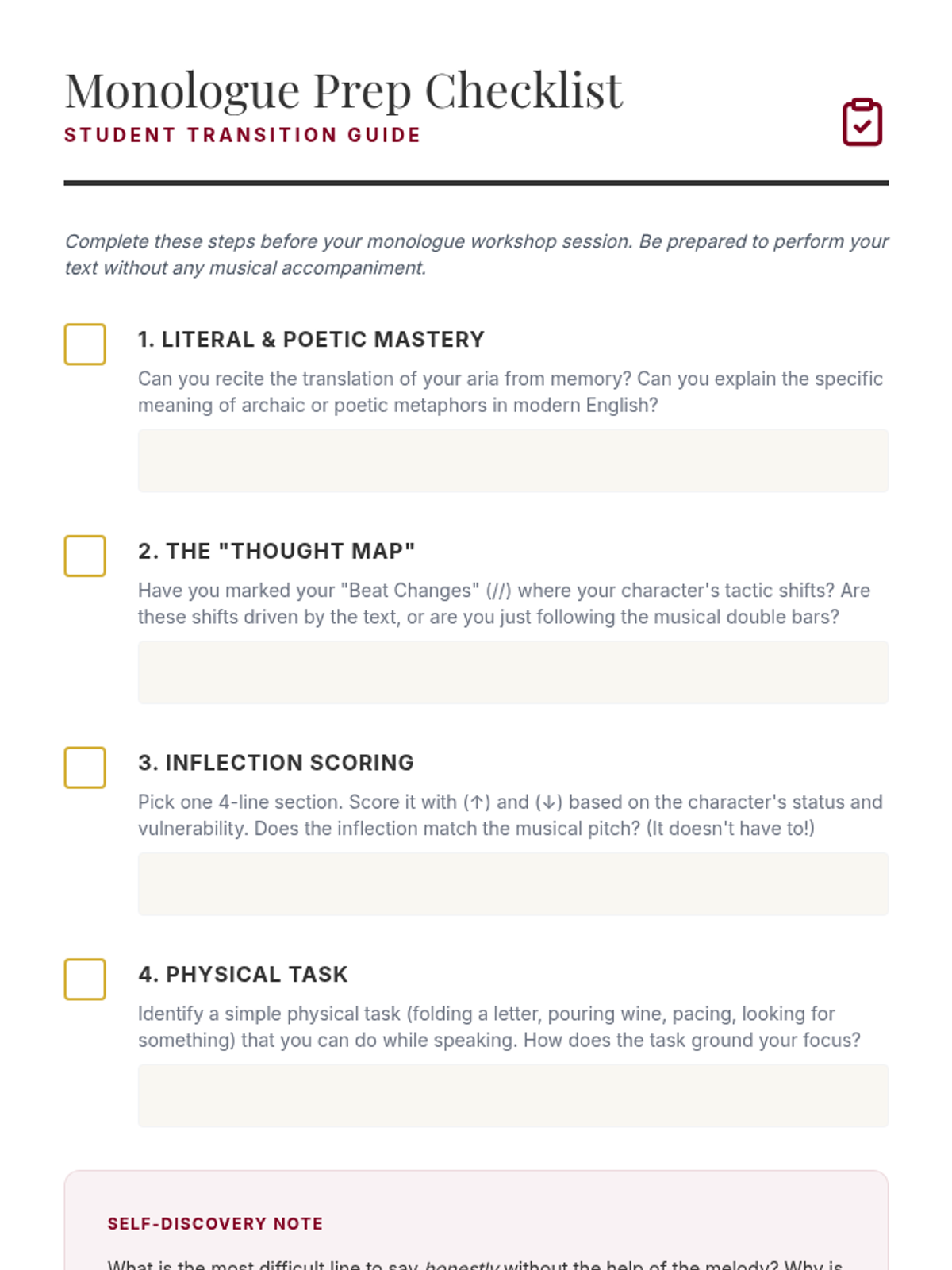
Students strip away the melody to perform their aria as a spoken monologue, identifying inherent rhythms and inflection in the text to deepen their dramatic connection.
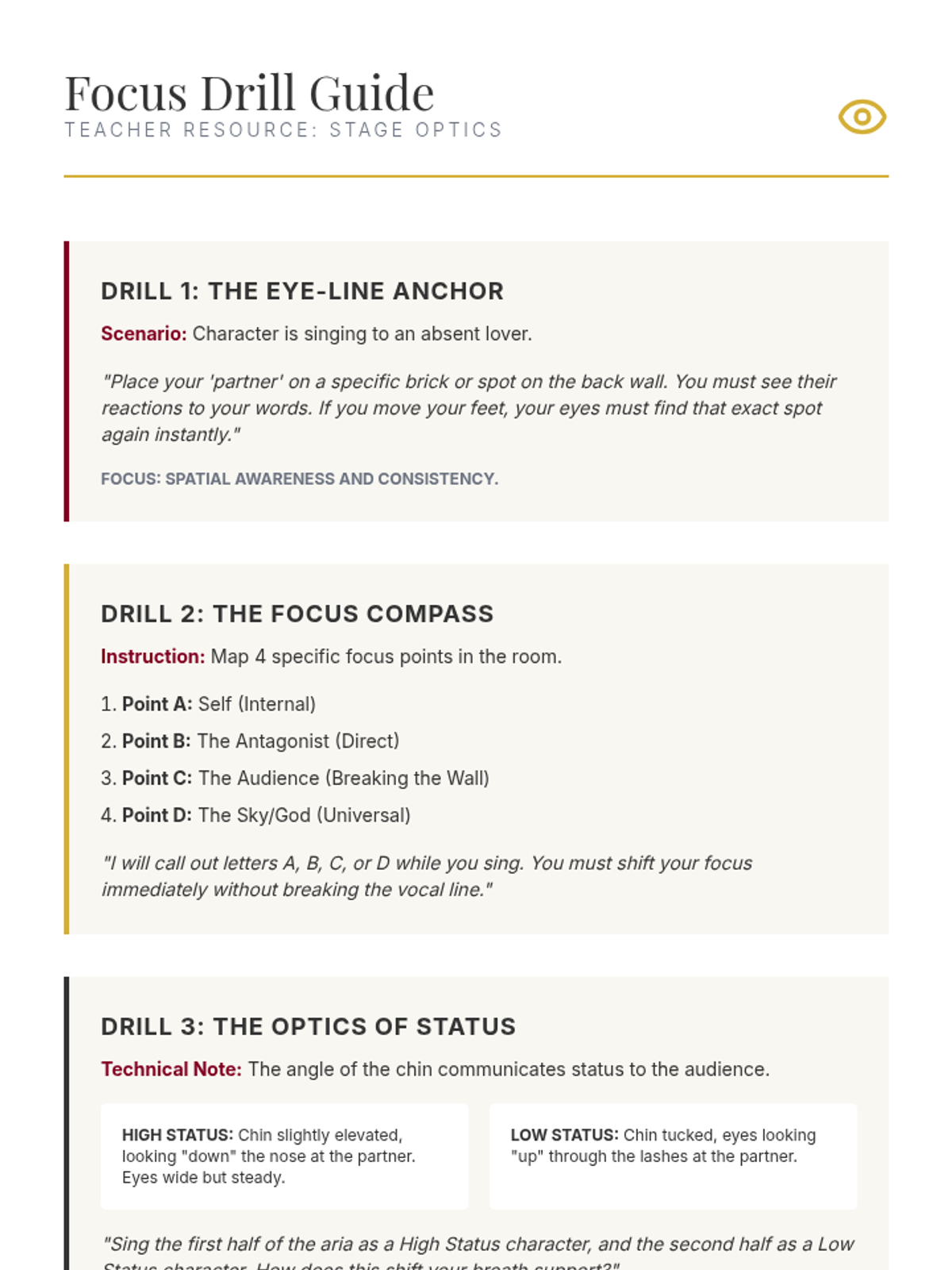
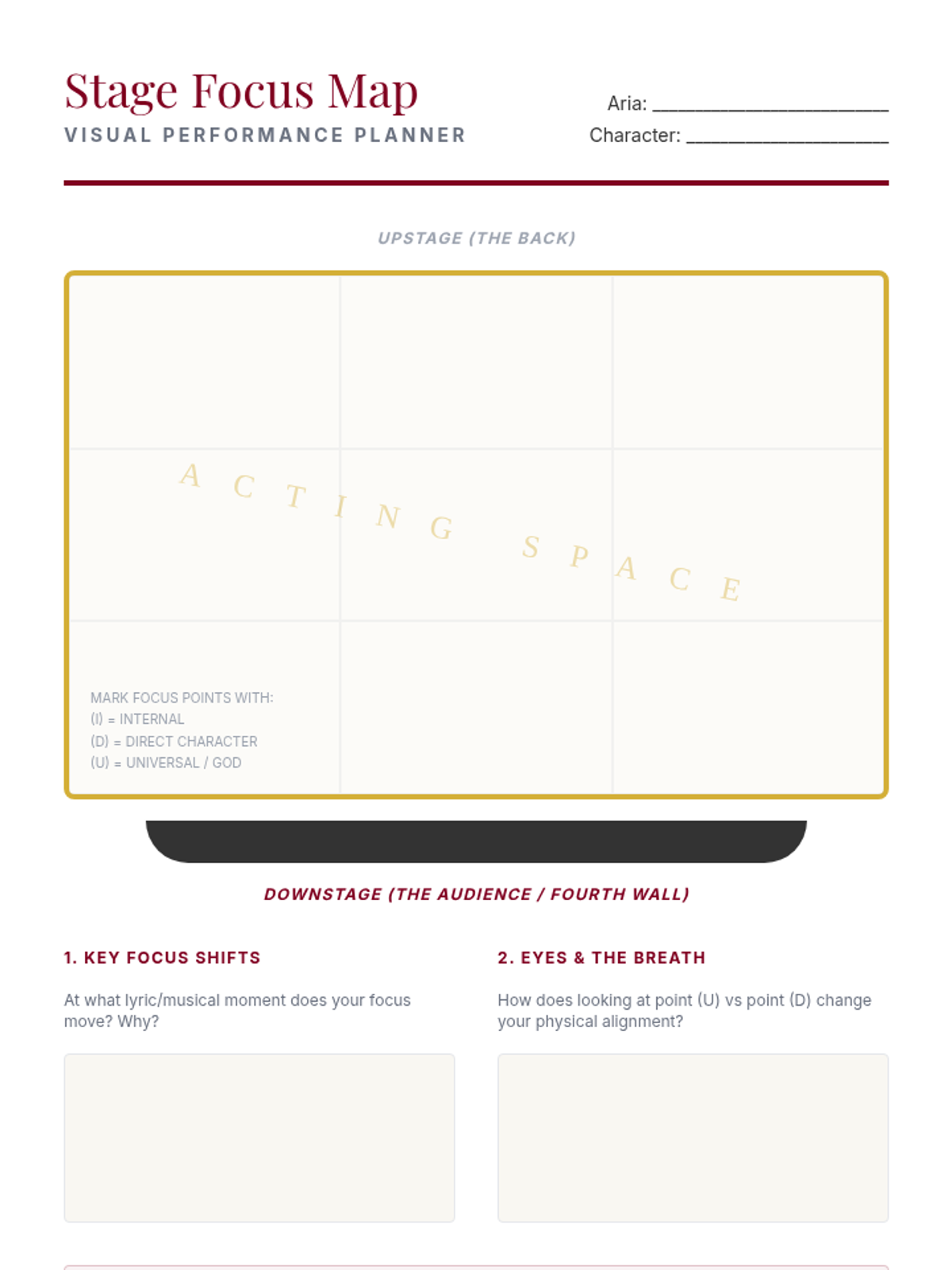
This lesson covers the technical optics of stage performance, focusing on eye-lines, the fourth wall, and how visual focus communicates status and emotional intimacy.
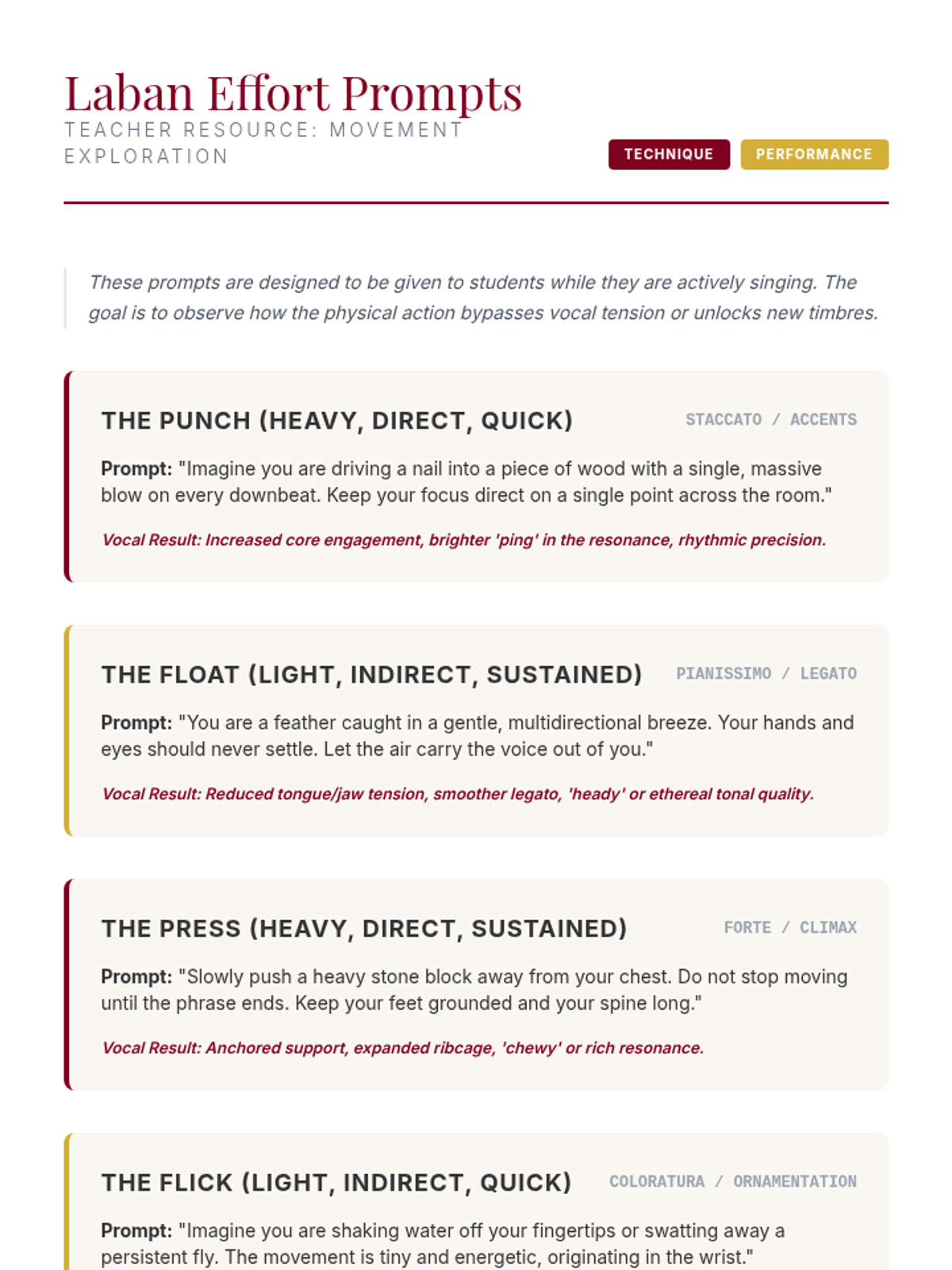
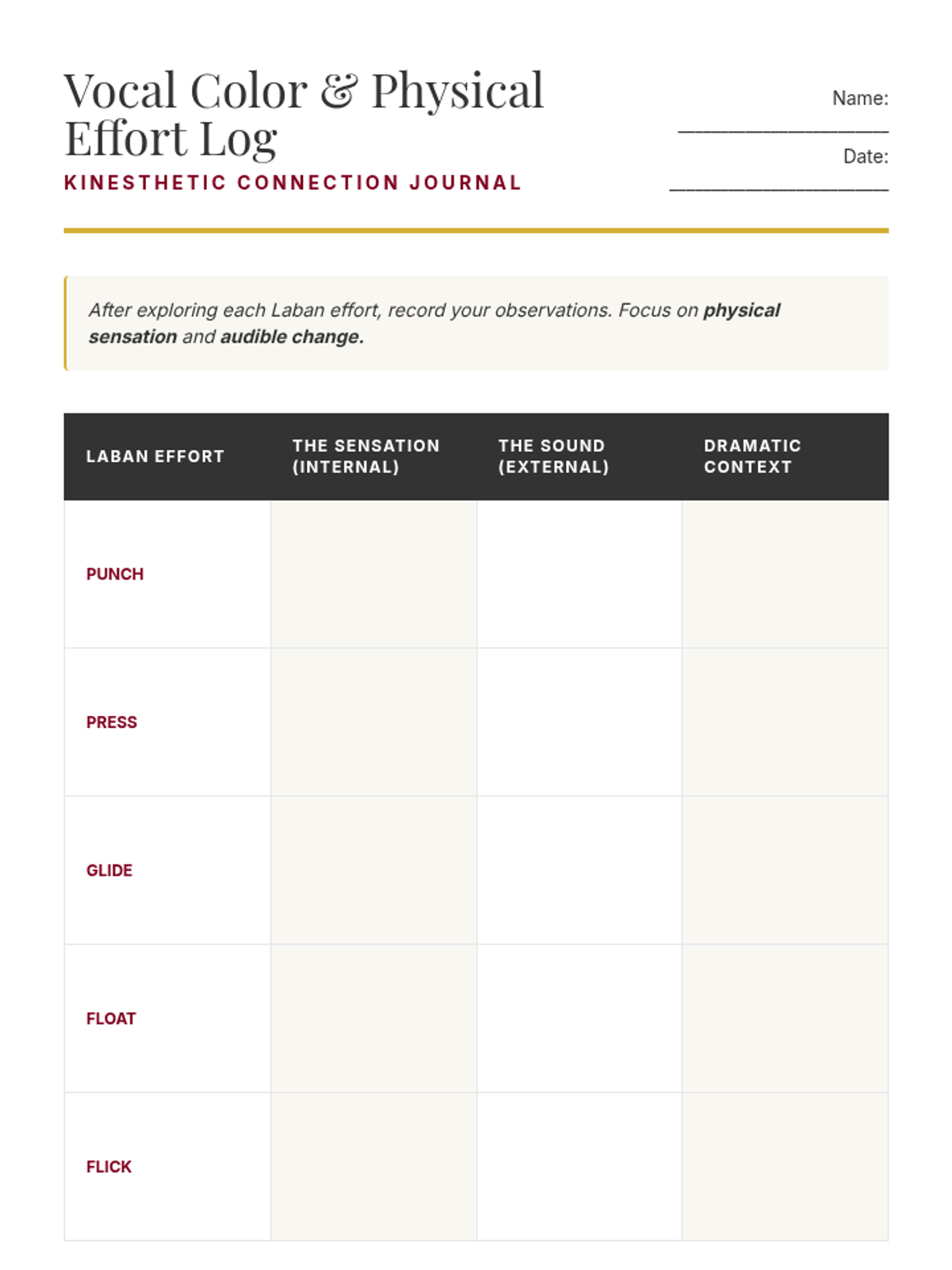
Using Laban Movement Analysis, students explore how physical efforts—such as gliding, punching, or floating—affect vocal color, resonance, and character physicality.
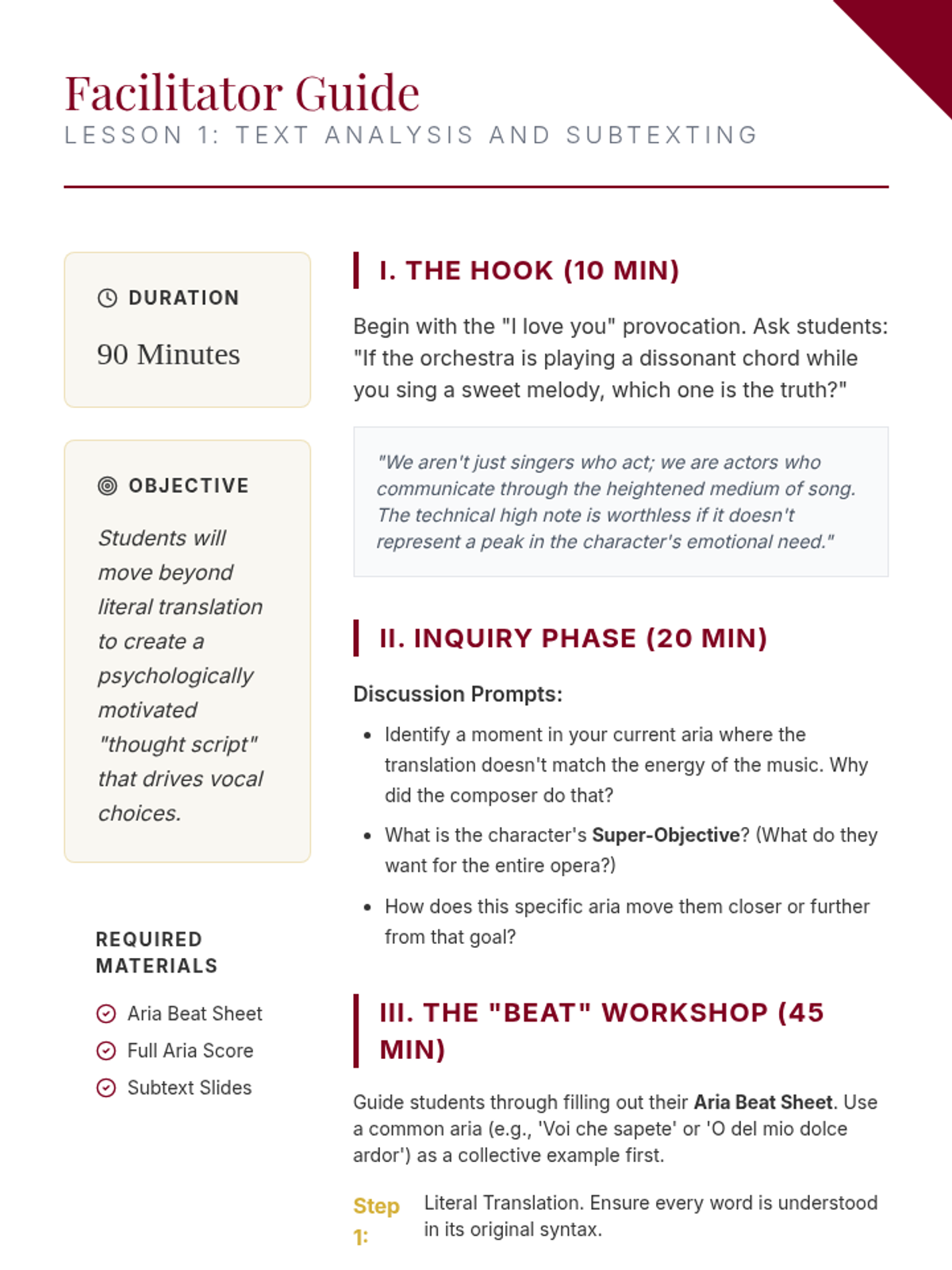
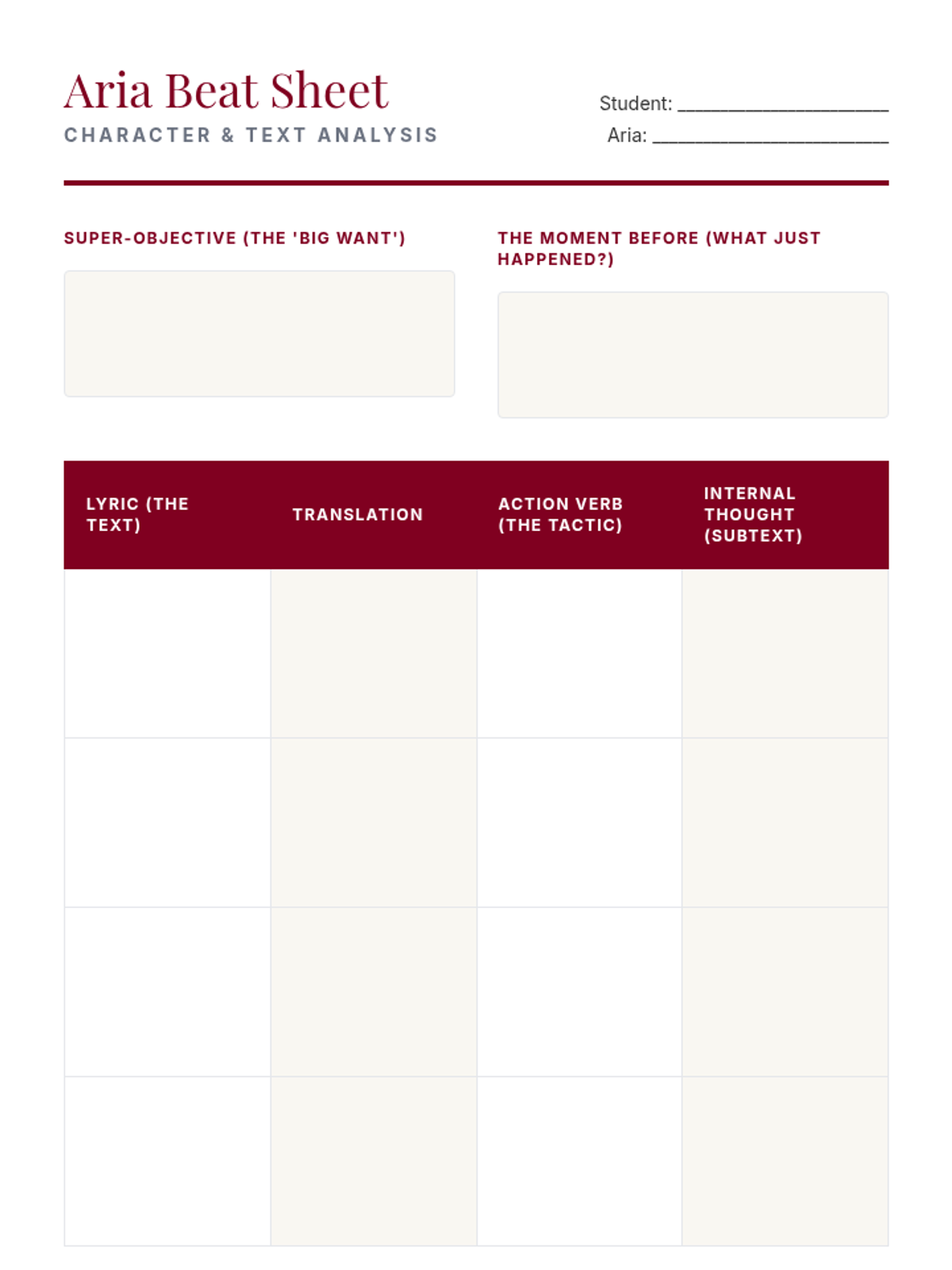
Students translate and analyze an aria, identifying psychological shifts ('beats') and drafting a subtextual script to ensure every musical phrase is motivated by specific internal thoughts.
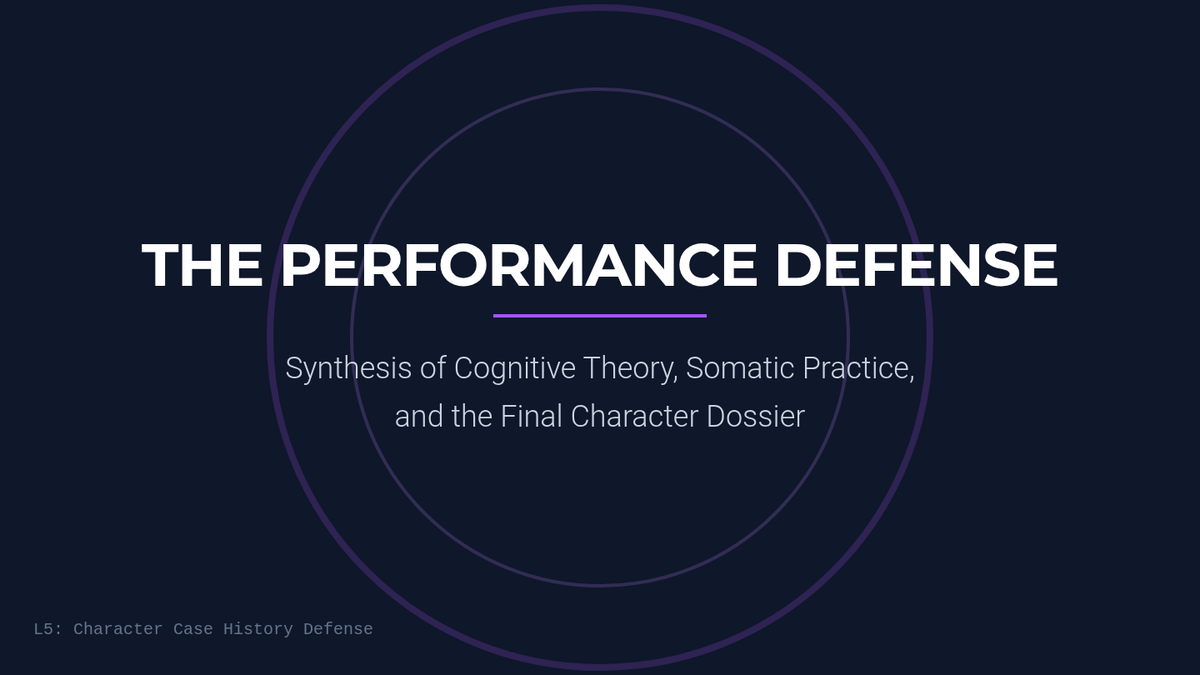
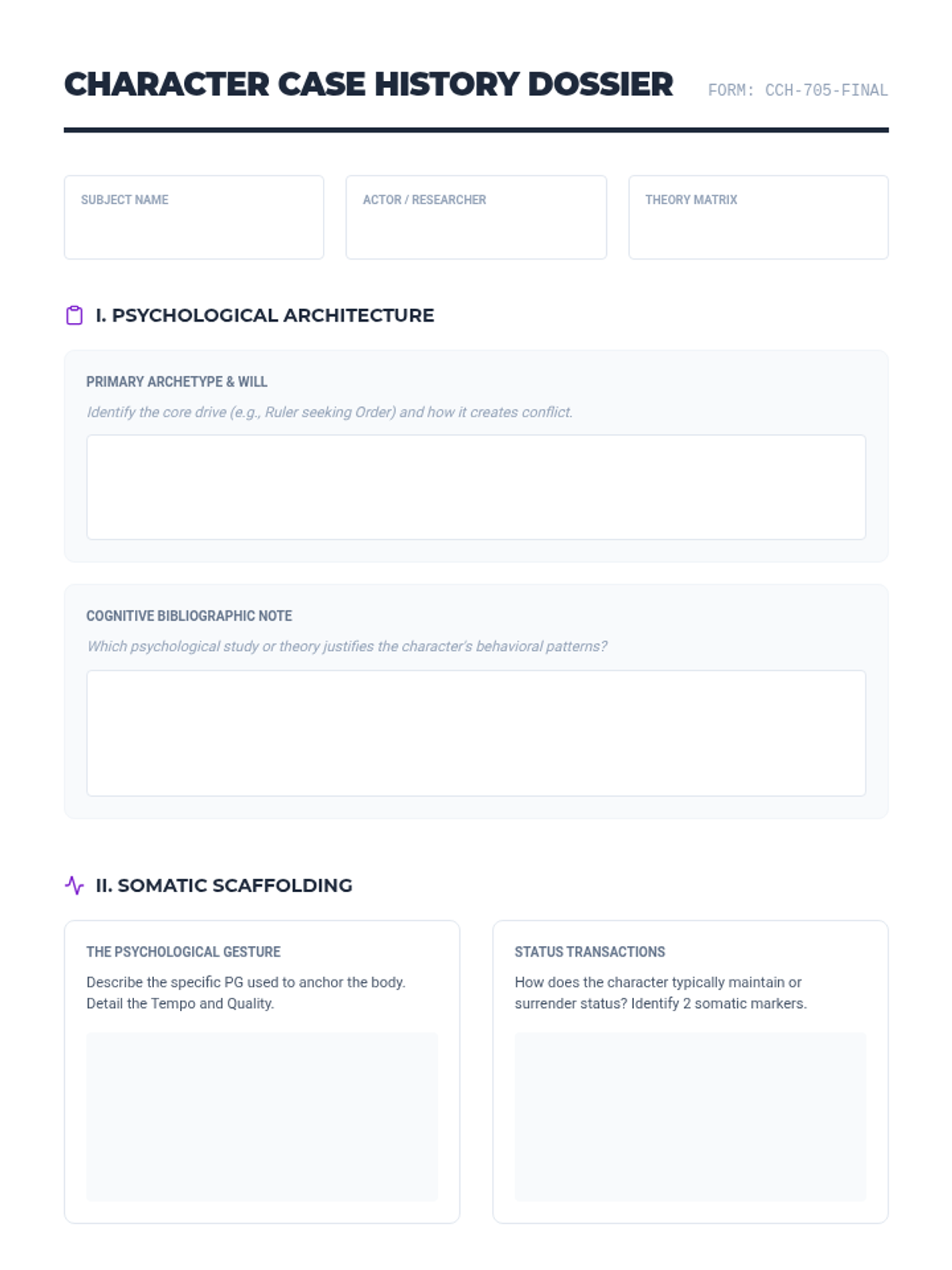
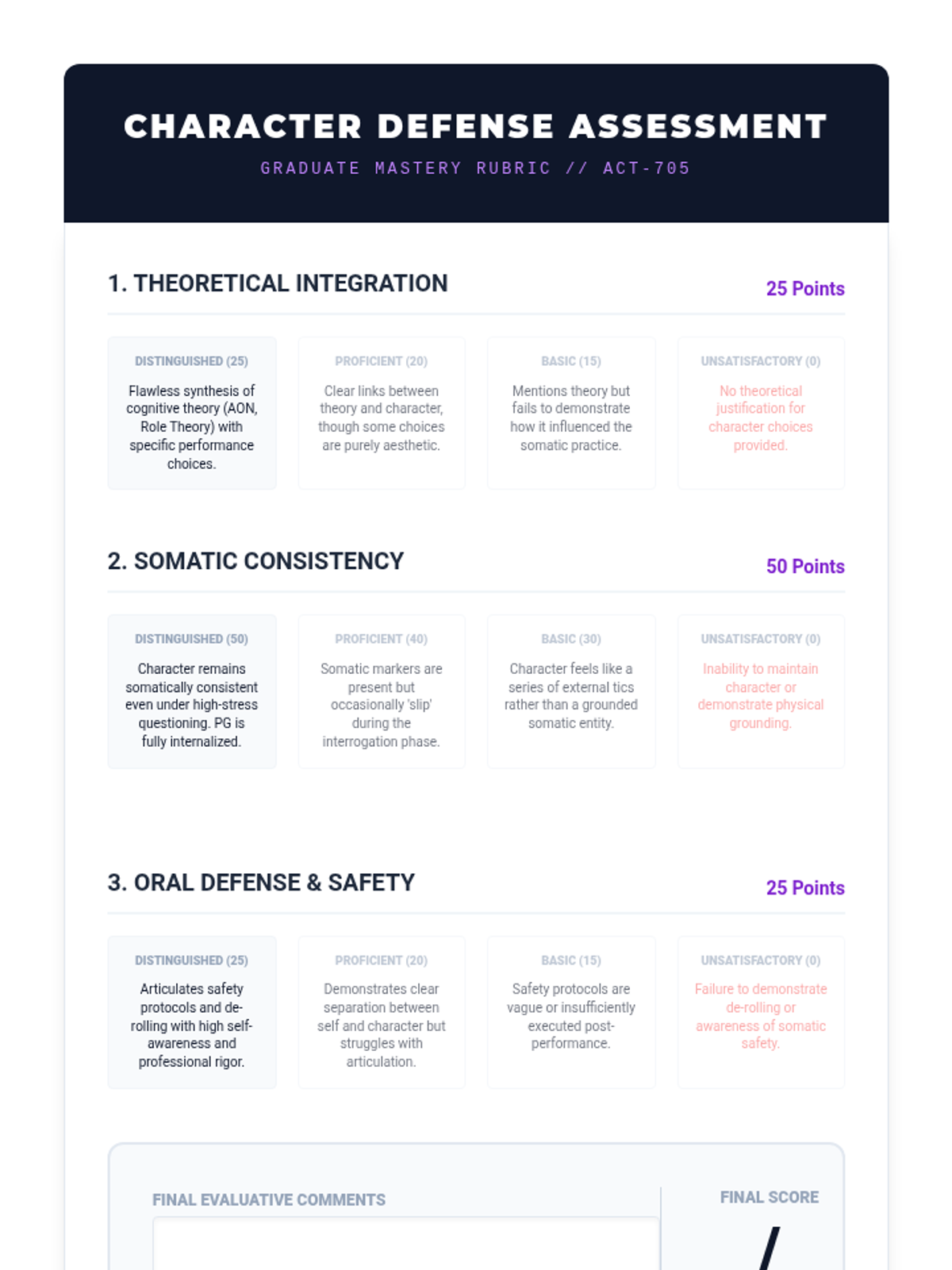
A culminating presentation and oral defense of a constructed character persona, supported by a psychological dossier.
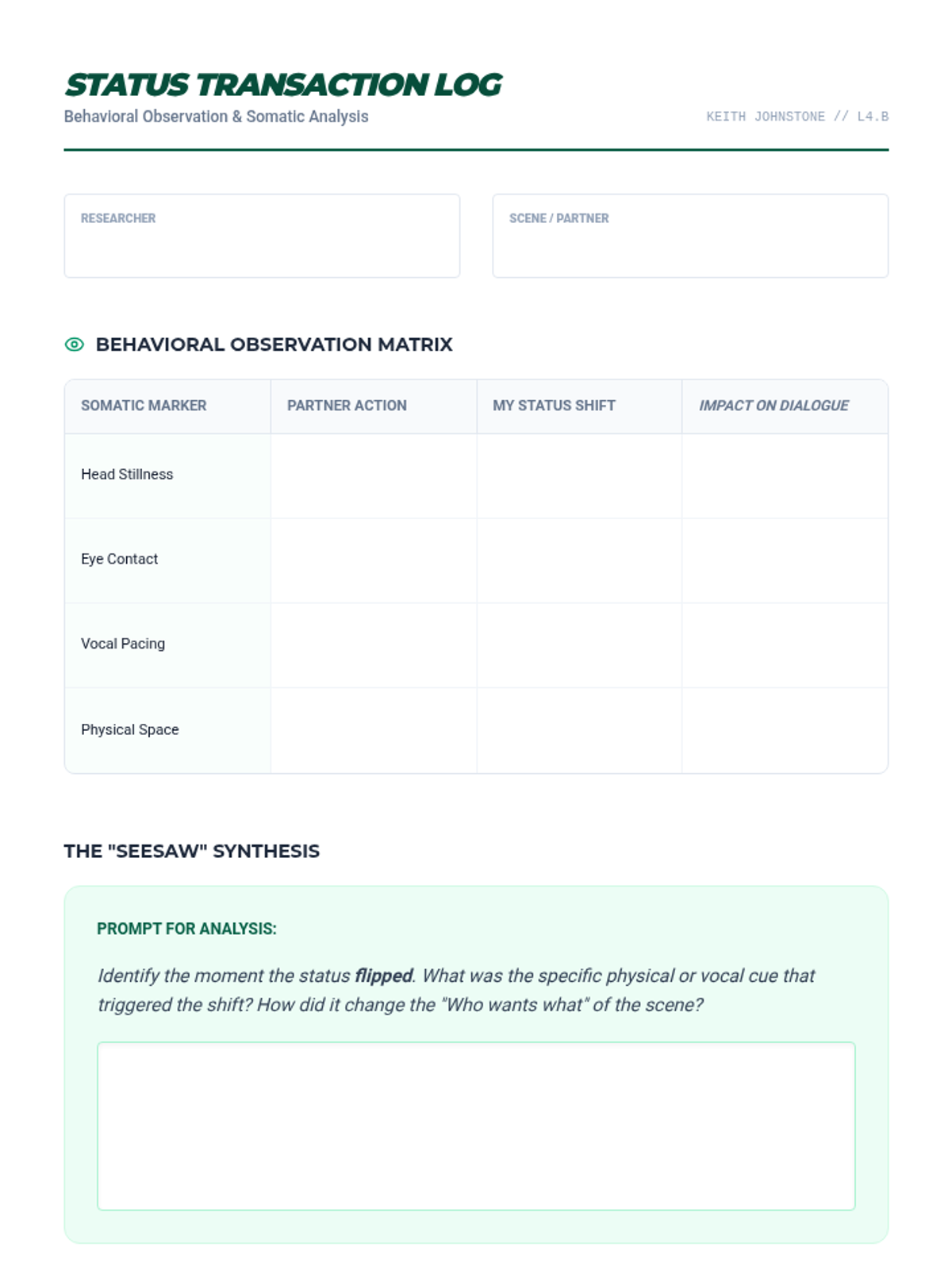
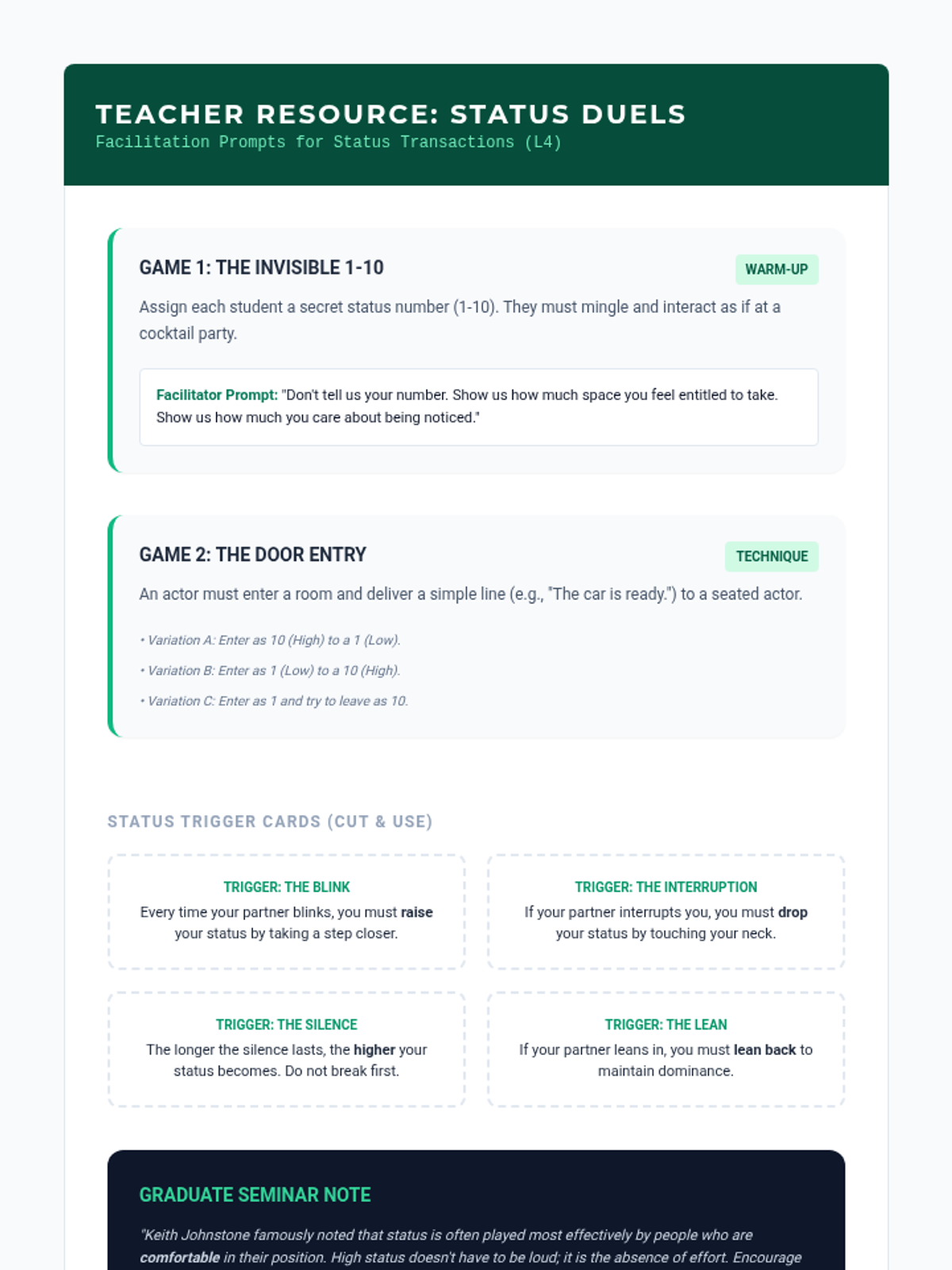
Explores Keith Johnstone’s status transaction theory to manipulate power dynamics through subtle vocal and physical cues in performance.
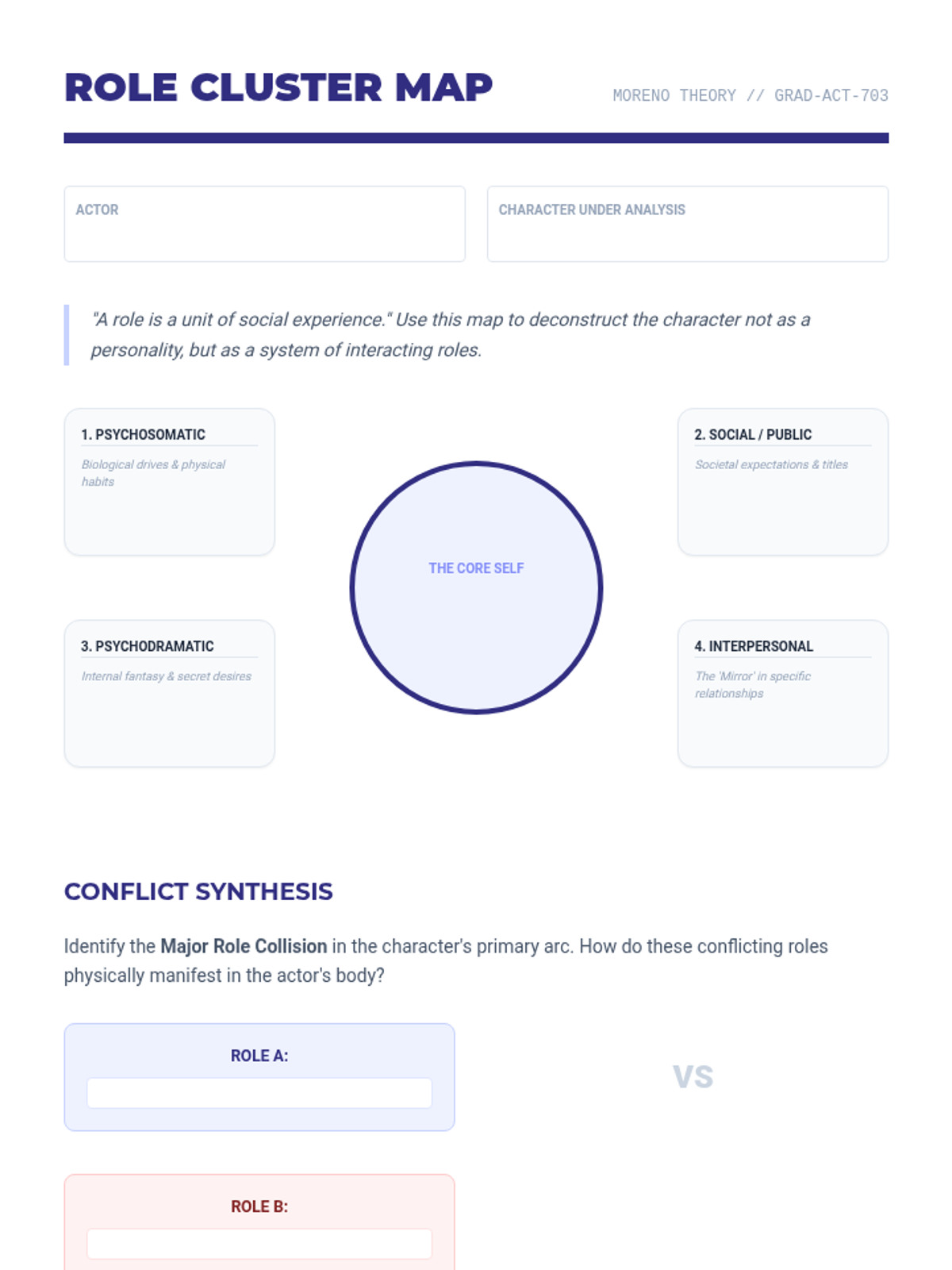
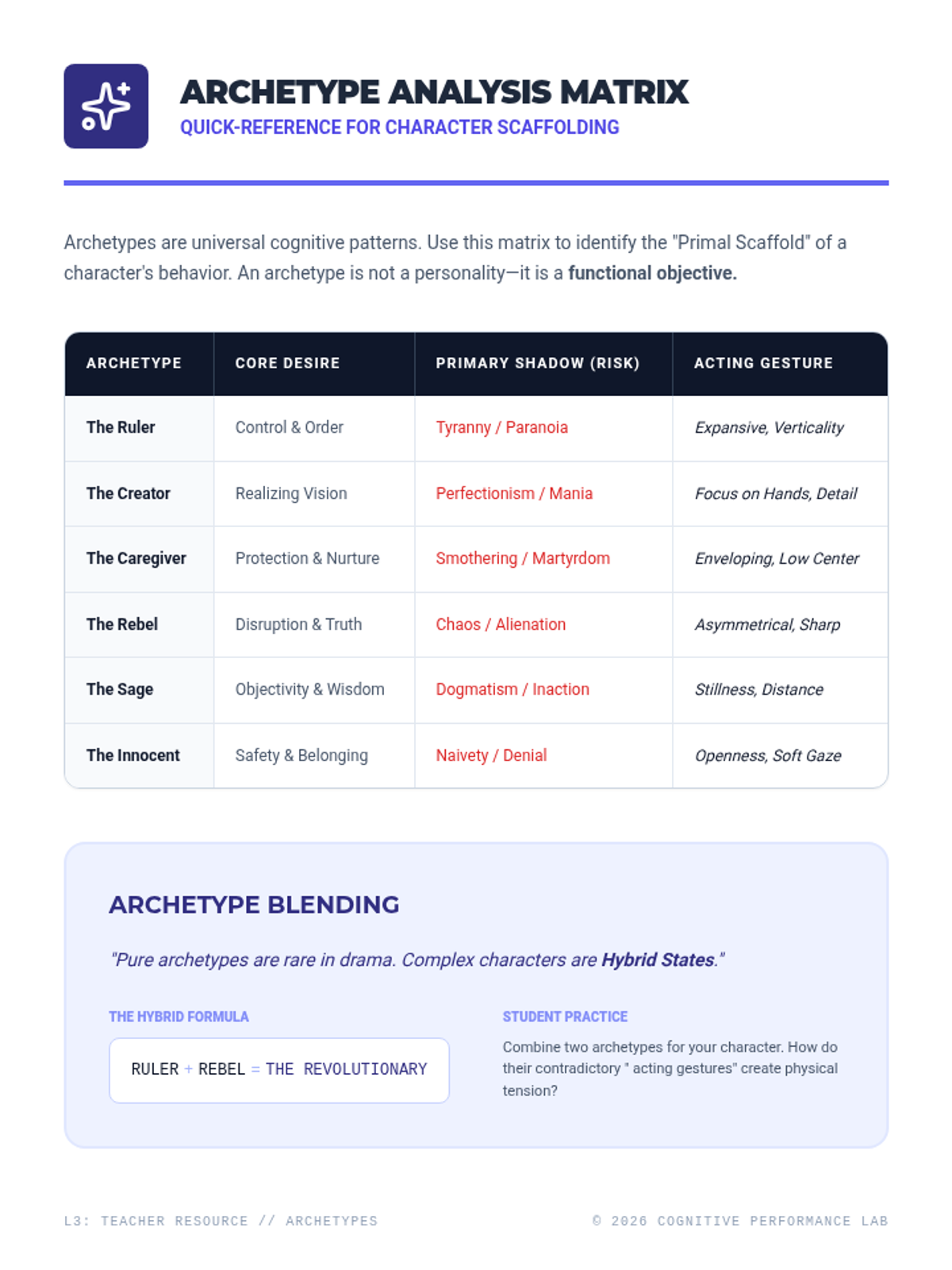
Applies Jacob Moreno’s Role Theory to analyze social archetypes and interpersonal dynamics through character deconstruction.
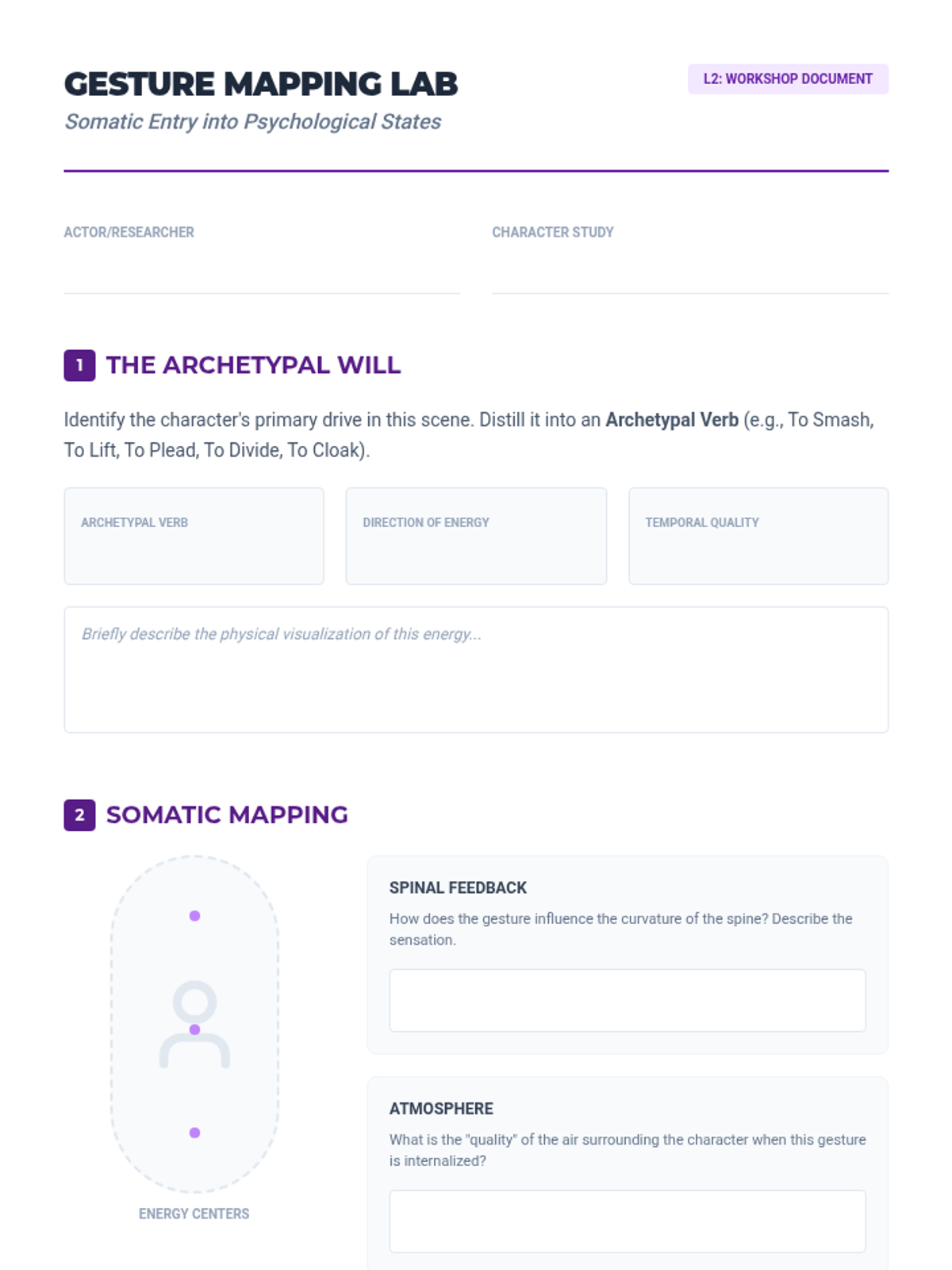
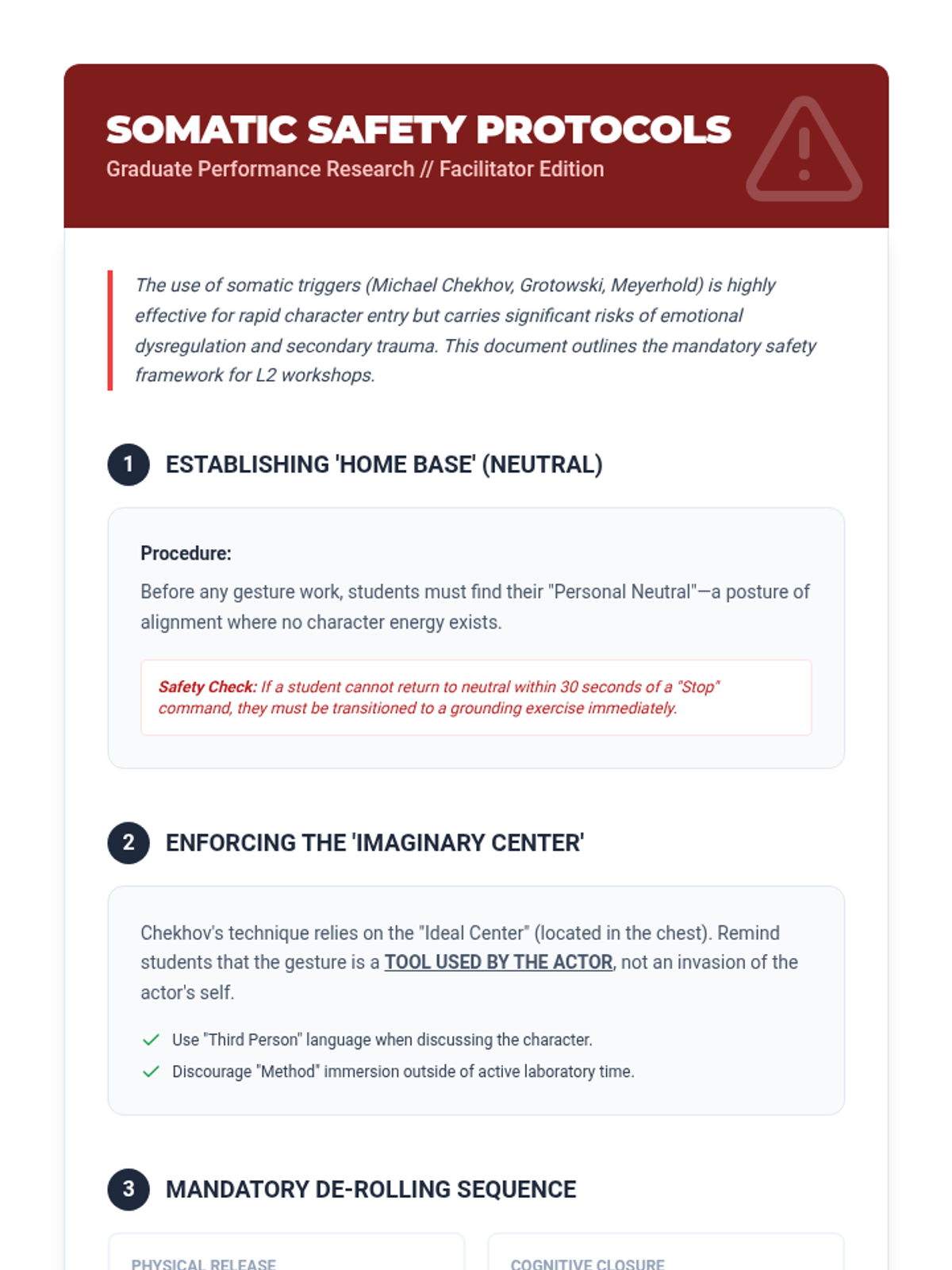
Introduces Michael Chekhov’s 'Psychological Gesture' as a somatic entry point for character development, focusing on emotional regulation and safety.
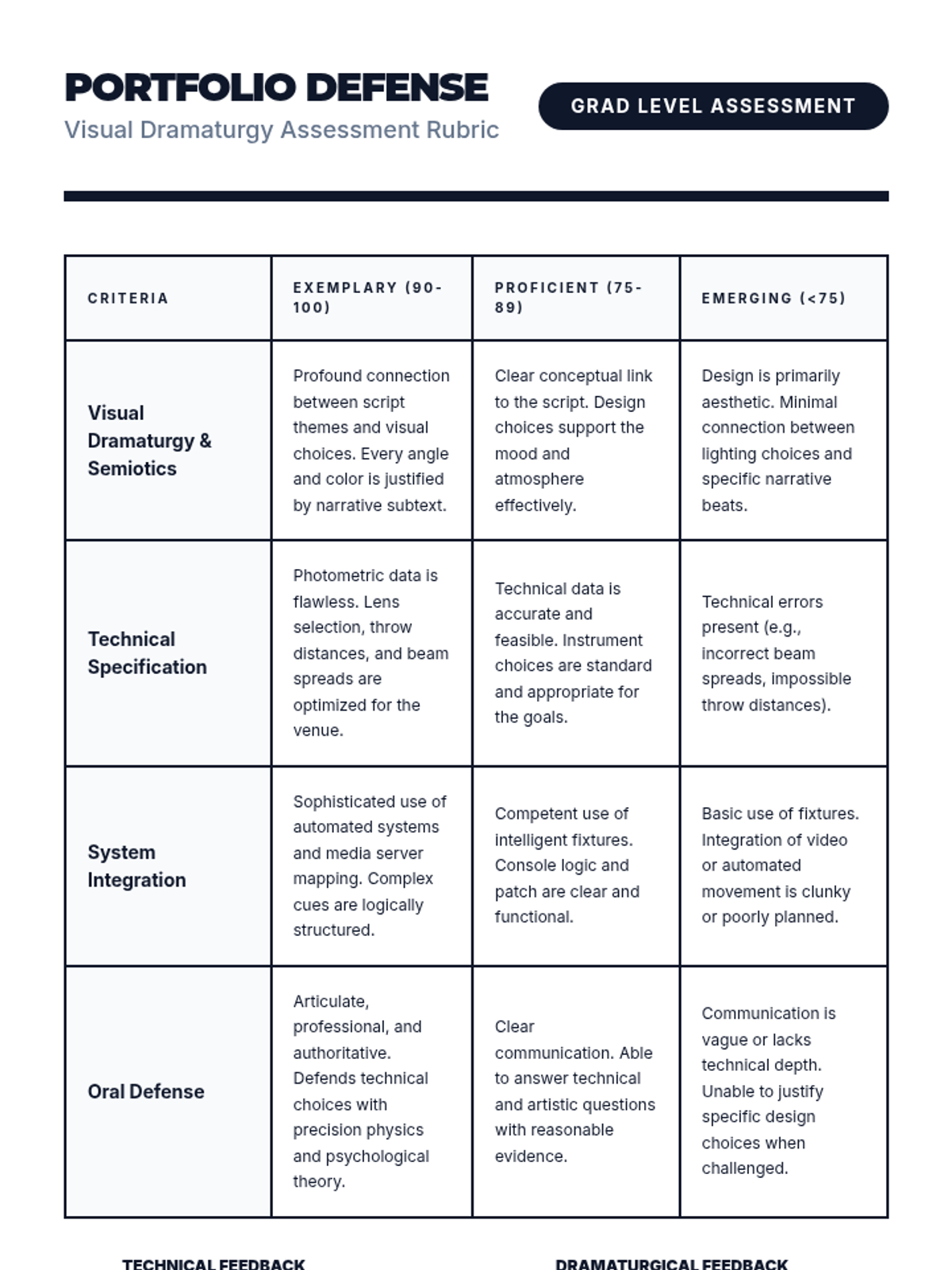
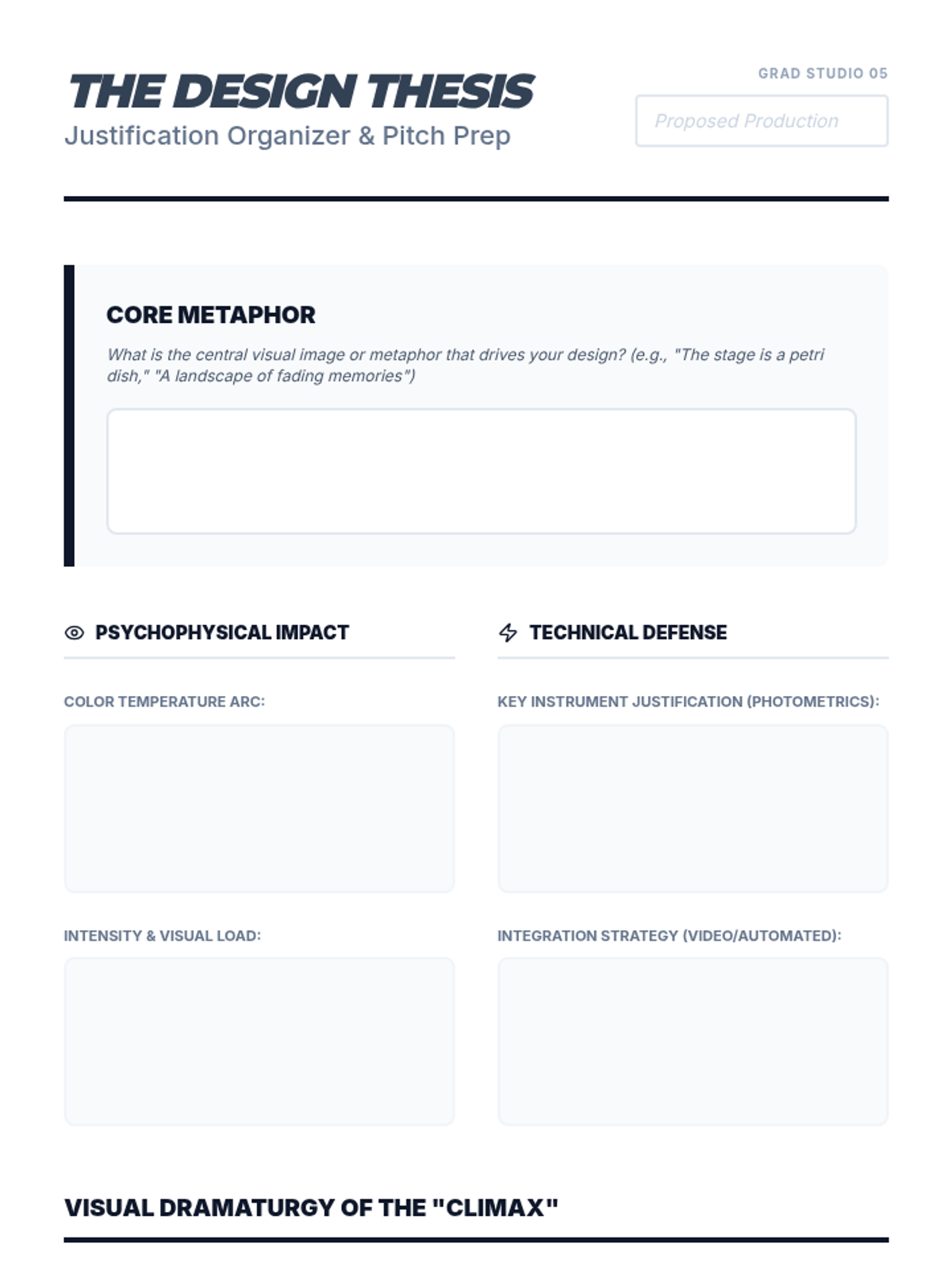
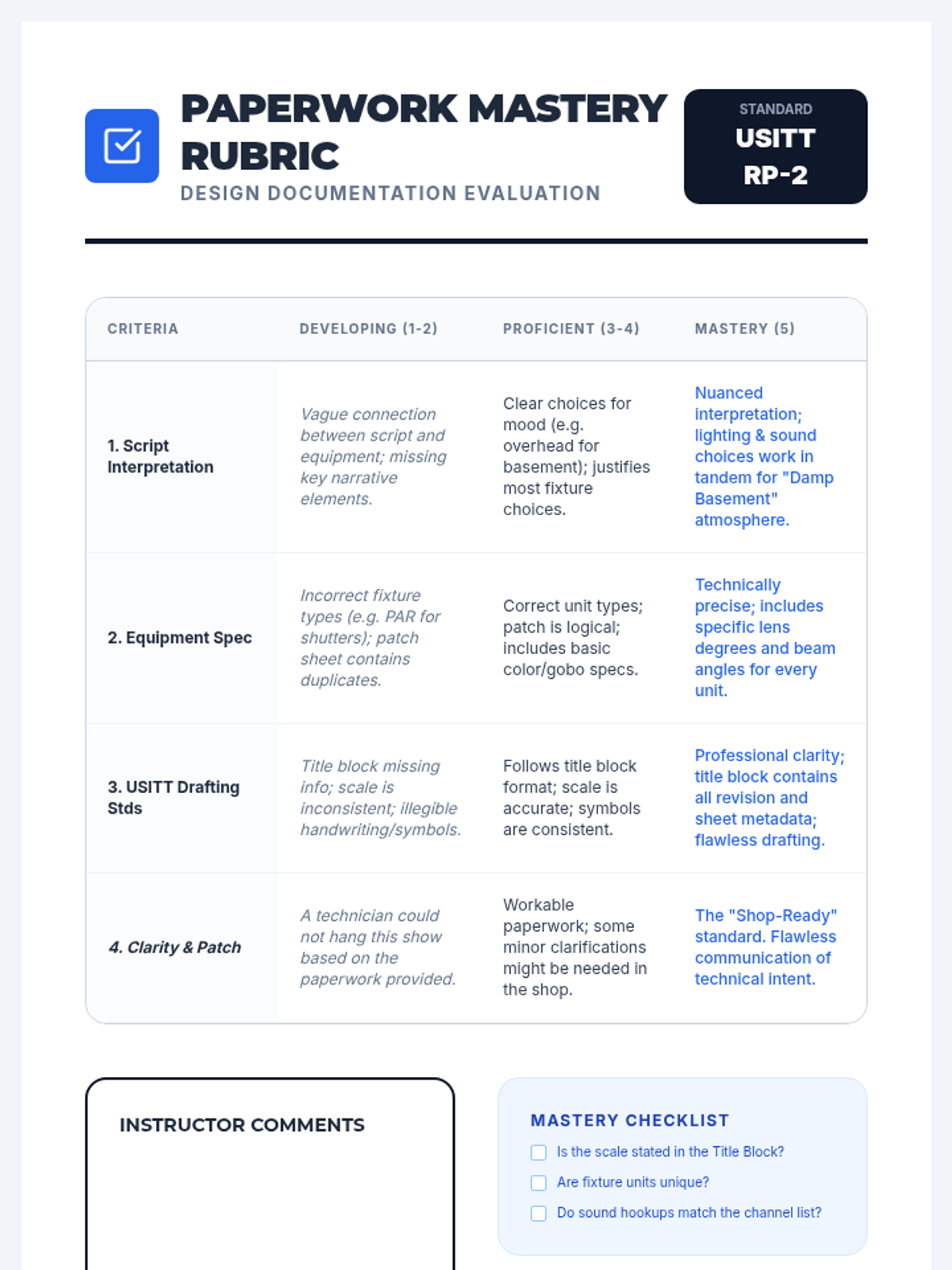
In this culminating session, students synthesize their technical skills and artistic vision into a professional design presentation. They defend their choices for a theoretical production, articulating how technical specifications support the thematic core of the script.
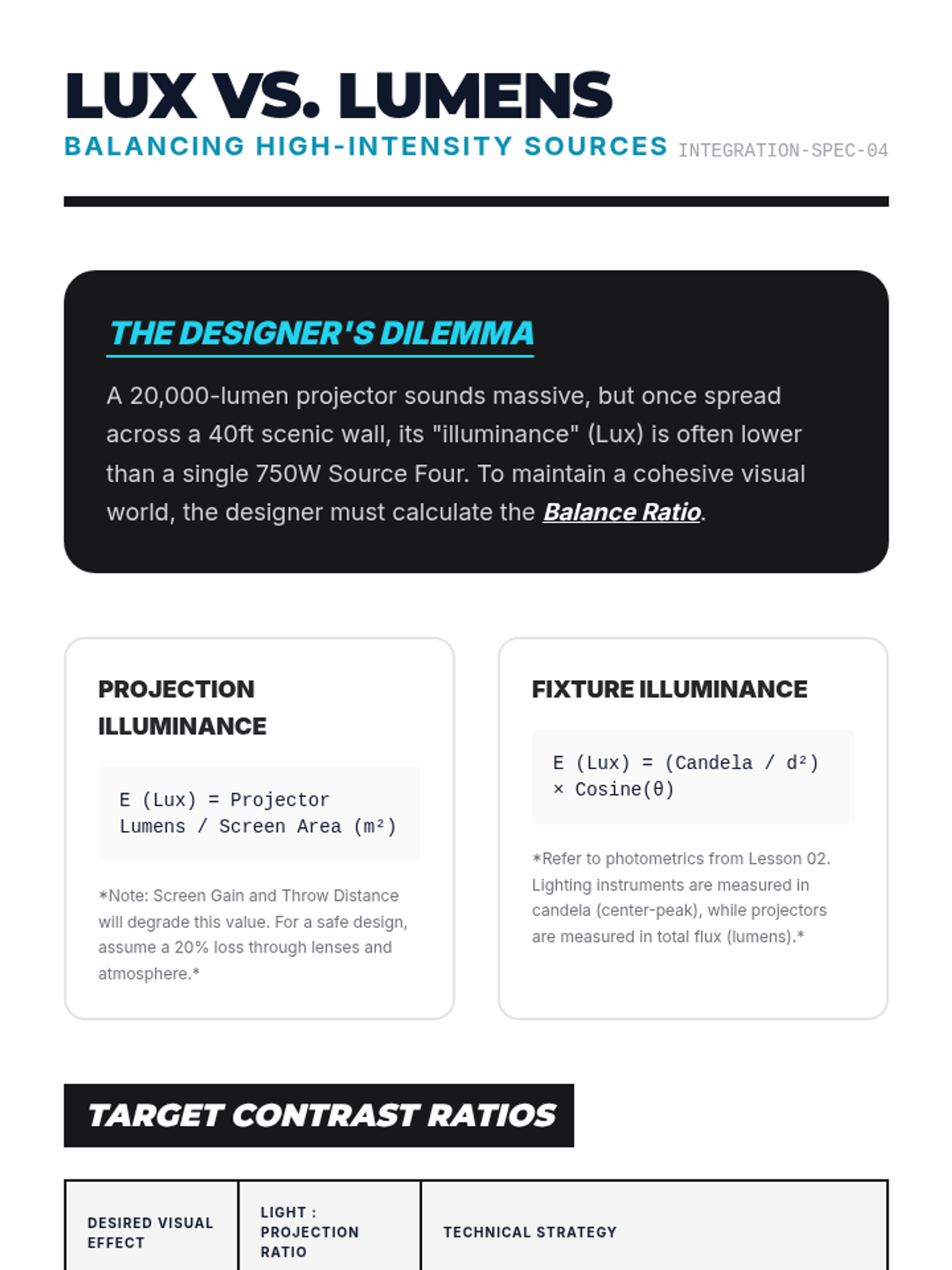
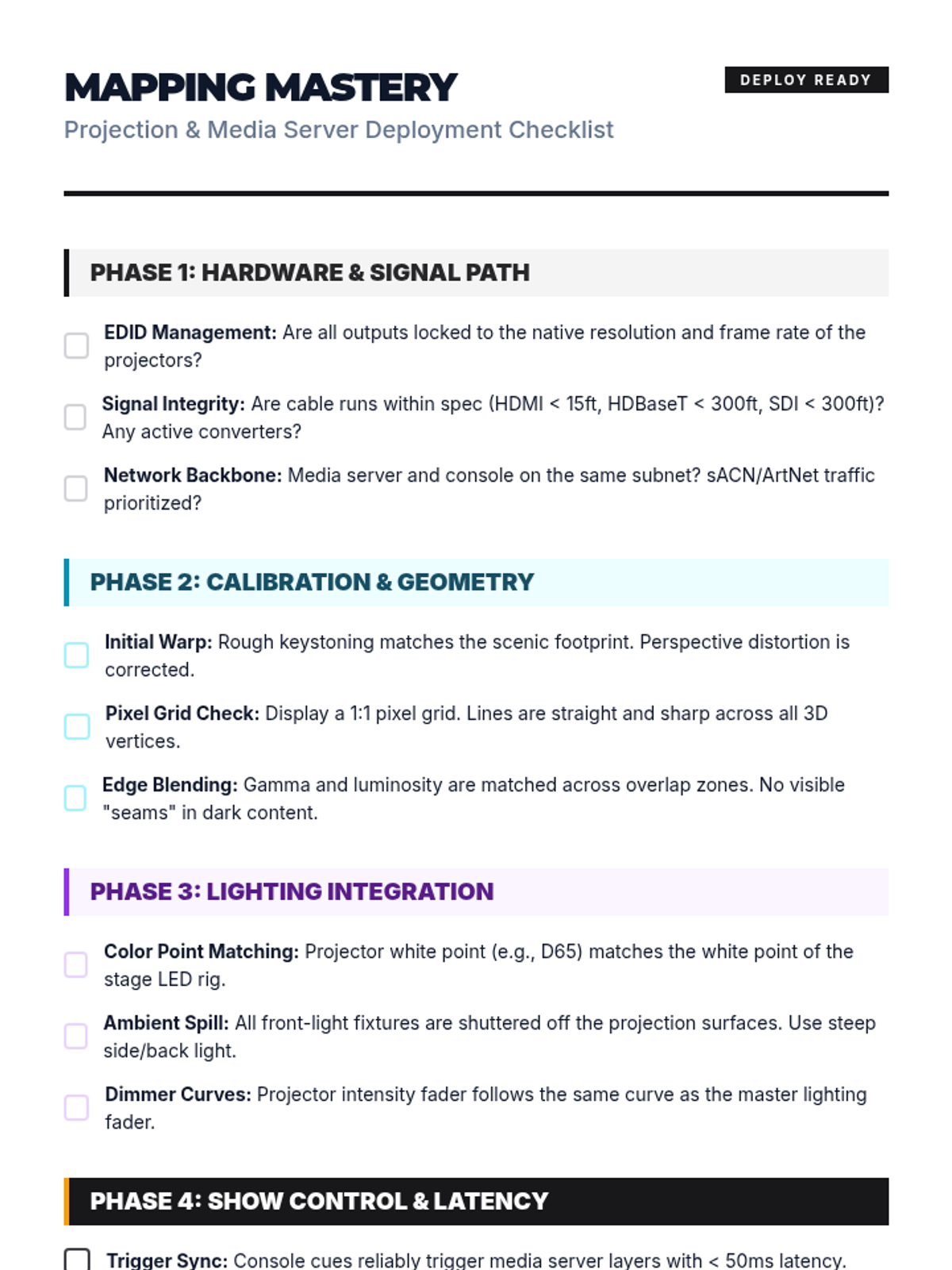
This lesson explores the convergence of lighting and video, utilizing media servers to map video content onto three-dimensional scenic elements. Students troubleshoot the challenges of balancing projector luminosity with stage lighting.
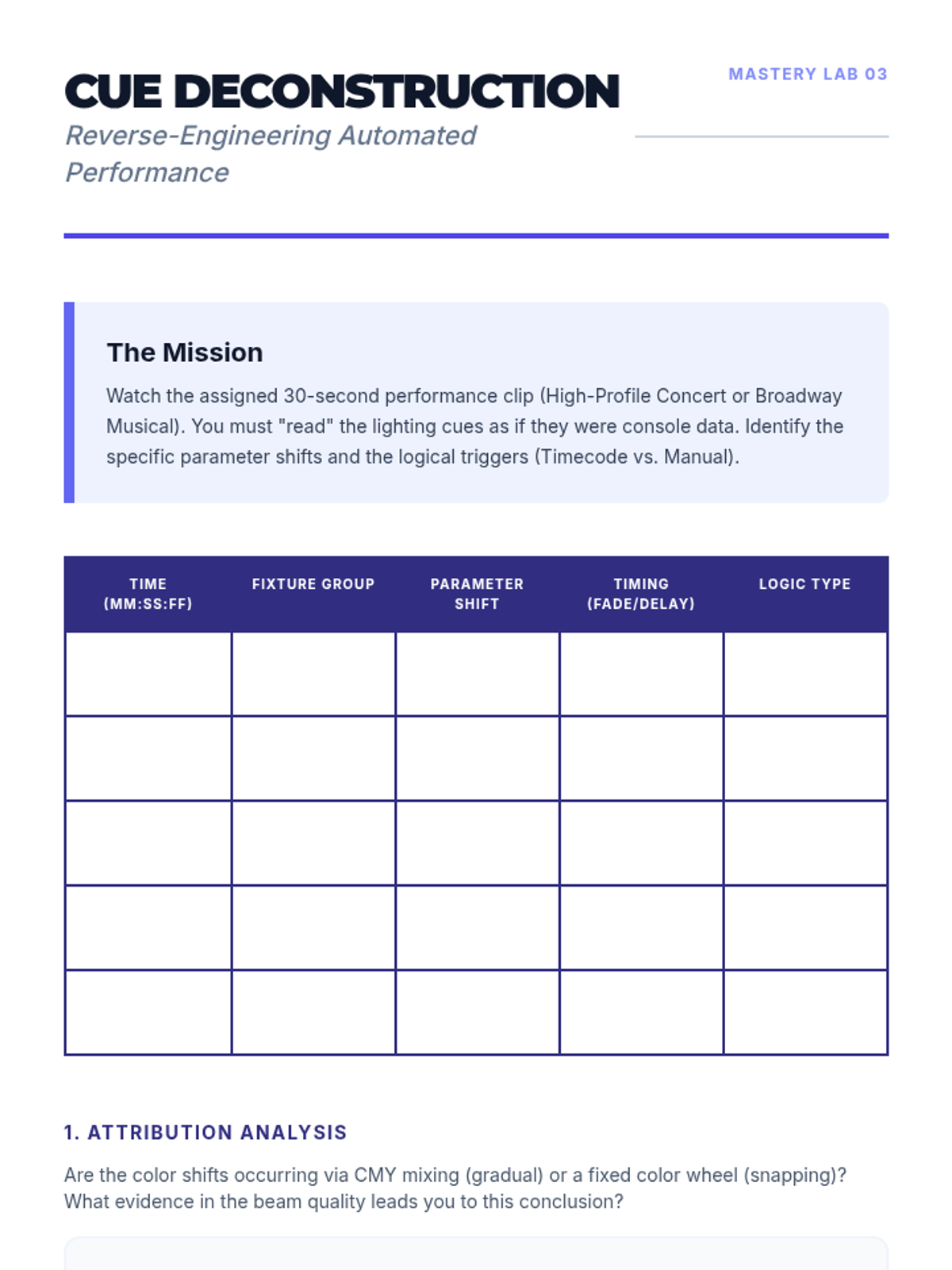
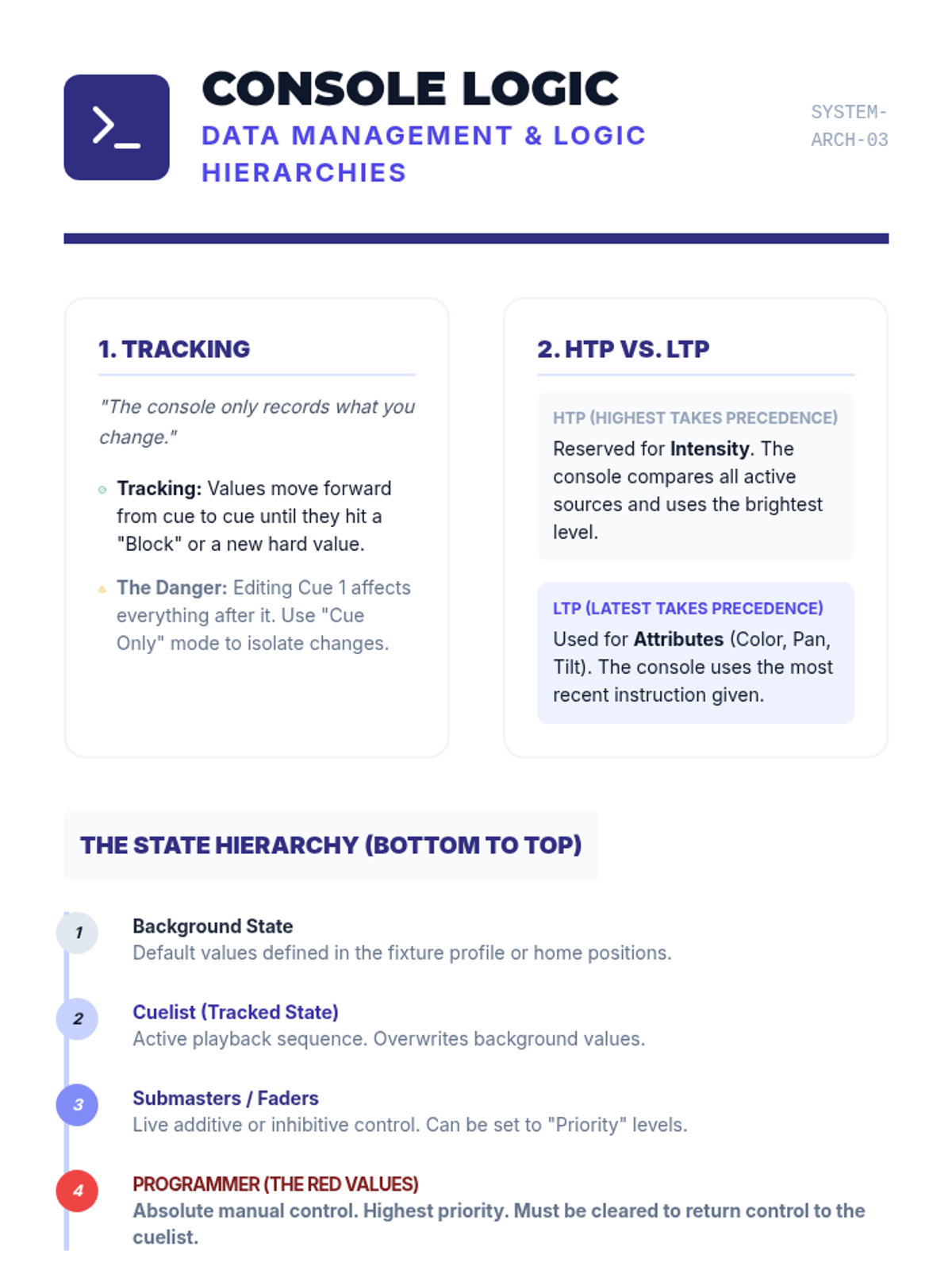
Students gain mastery over high-end lighting consoles, focusing on moving light attributes, effects engines, and timecode synchronization. The lesson involves programming a complex musical sequence.
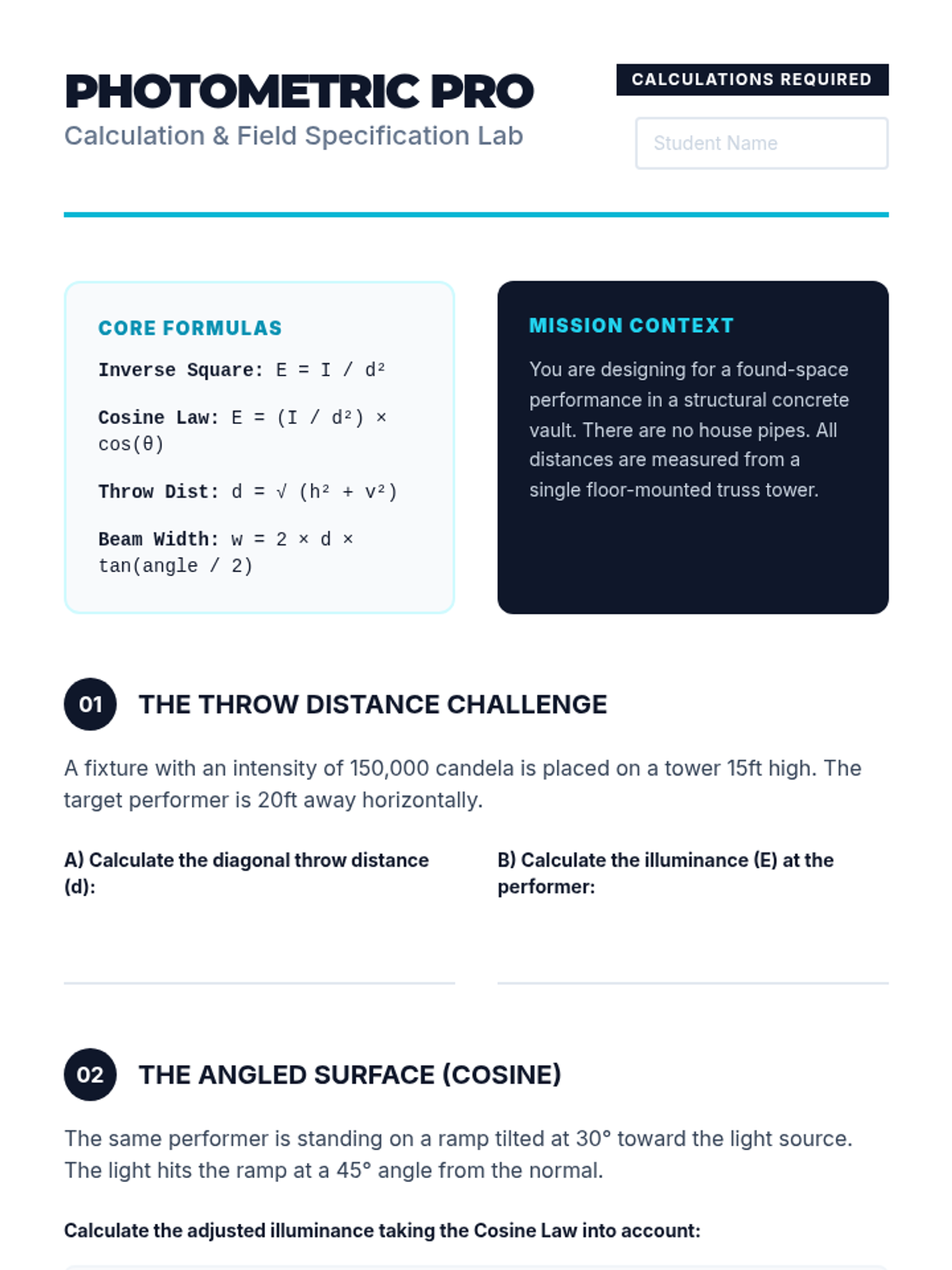
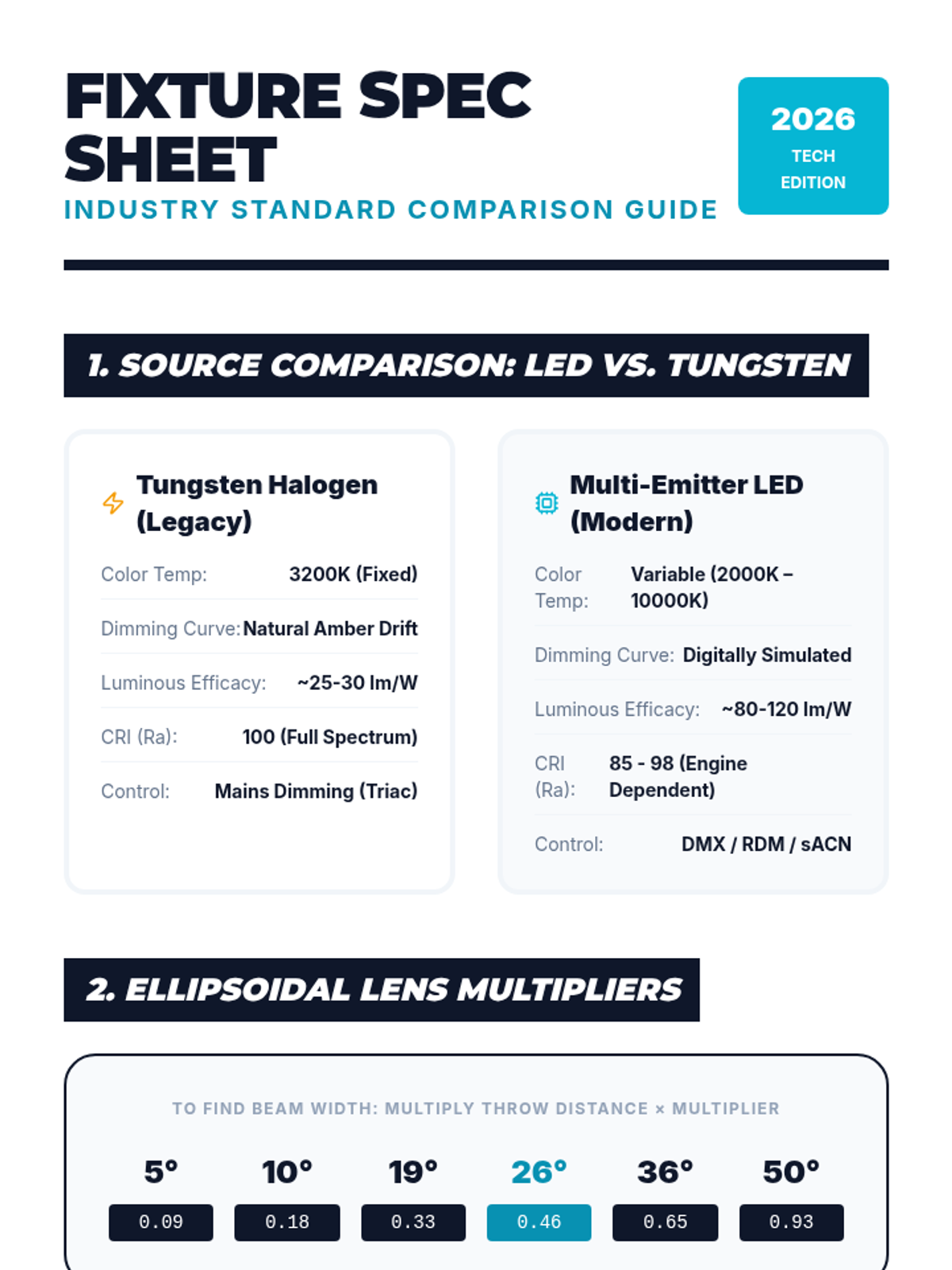
Focuses on the physics of light behavior, beam angles, and inverse square law calculations for complex venues. Students select instruments based on precise photometric data to maximize impact.
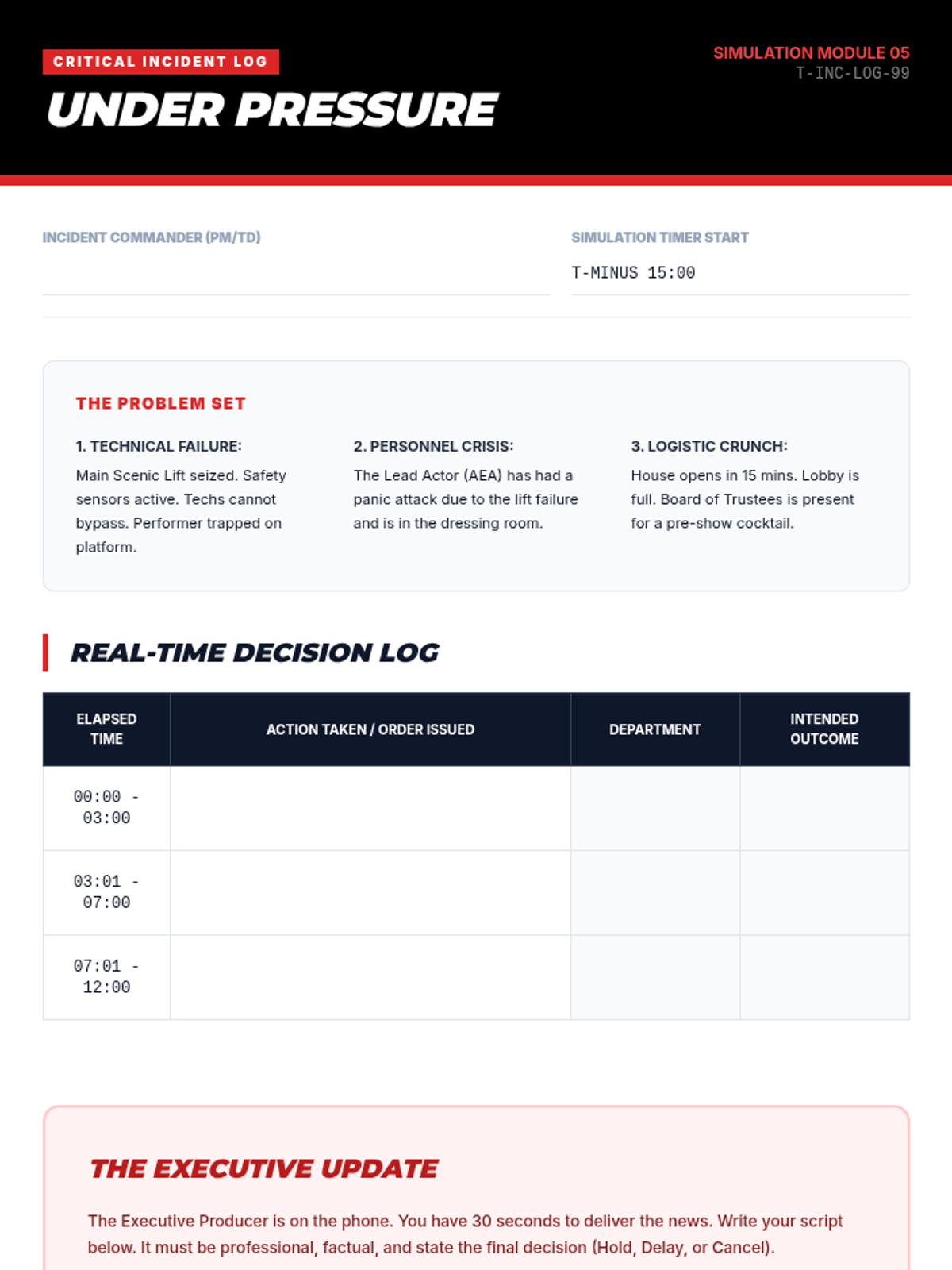
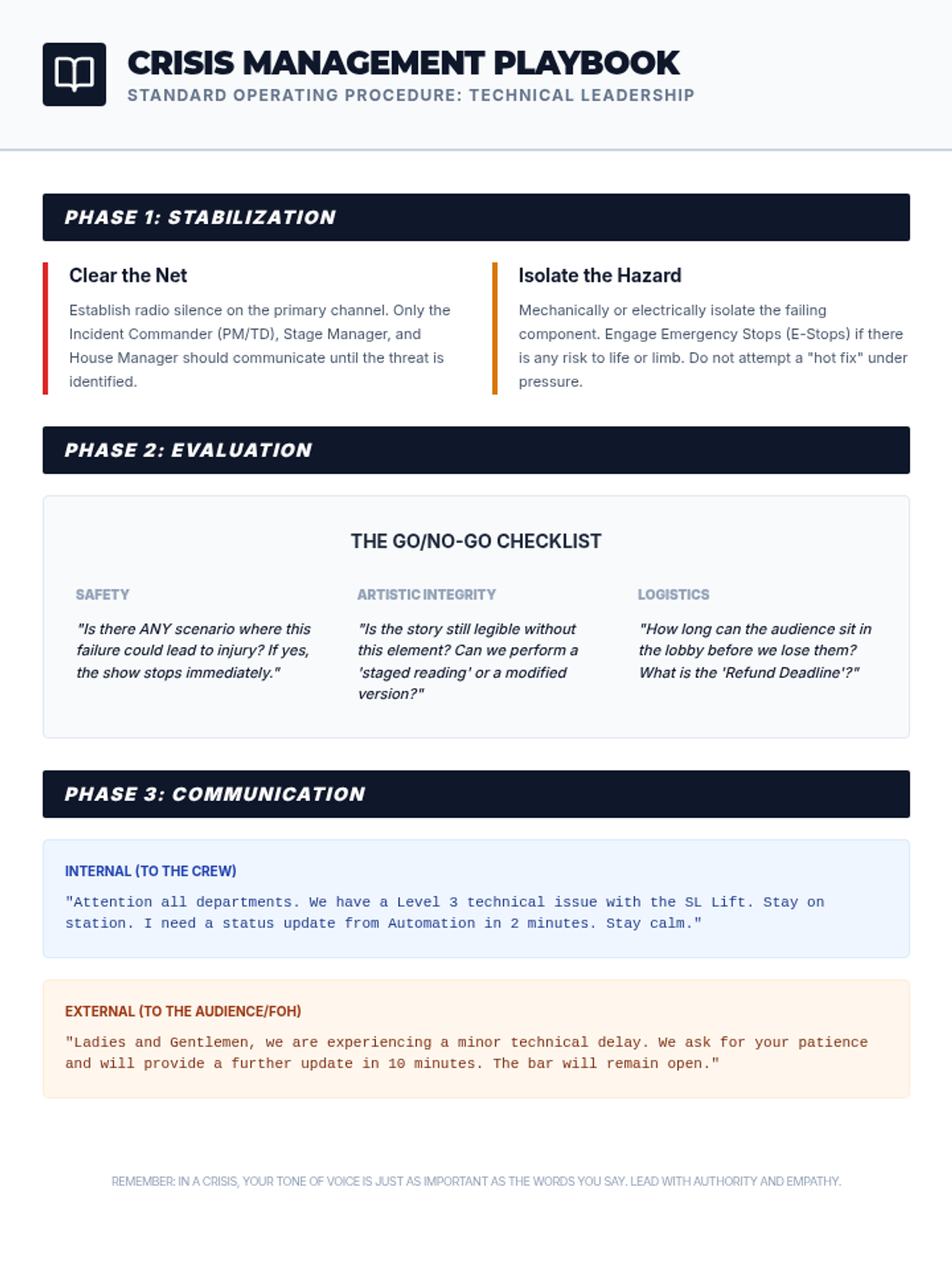
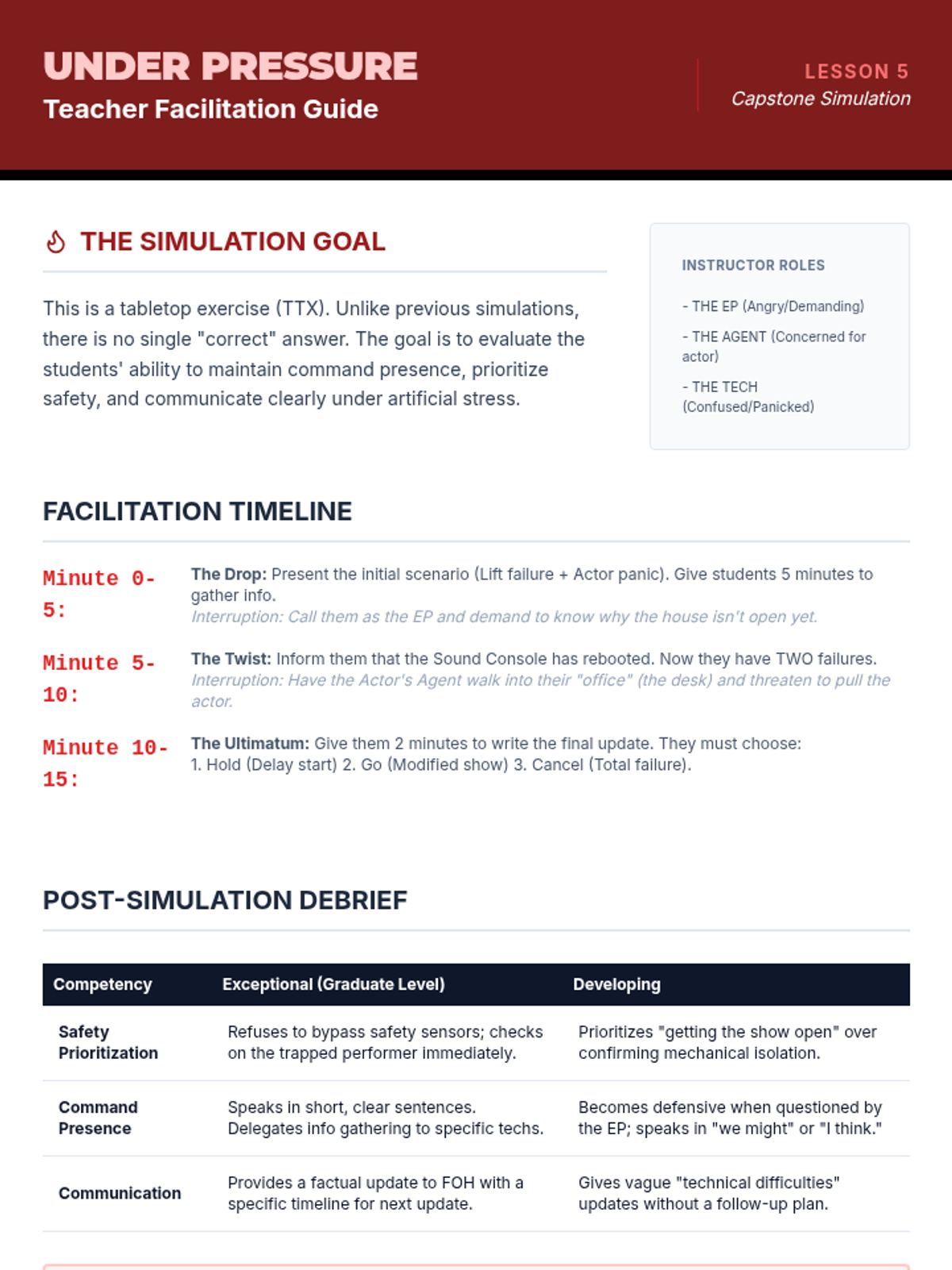
A real-time simulation where students manage cascading technical and personnel crises to test their leadership under pressure.
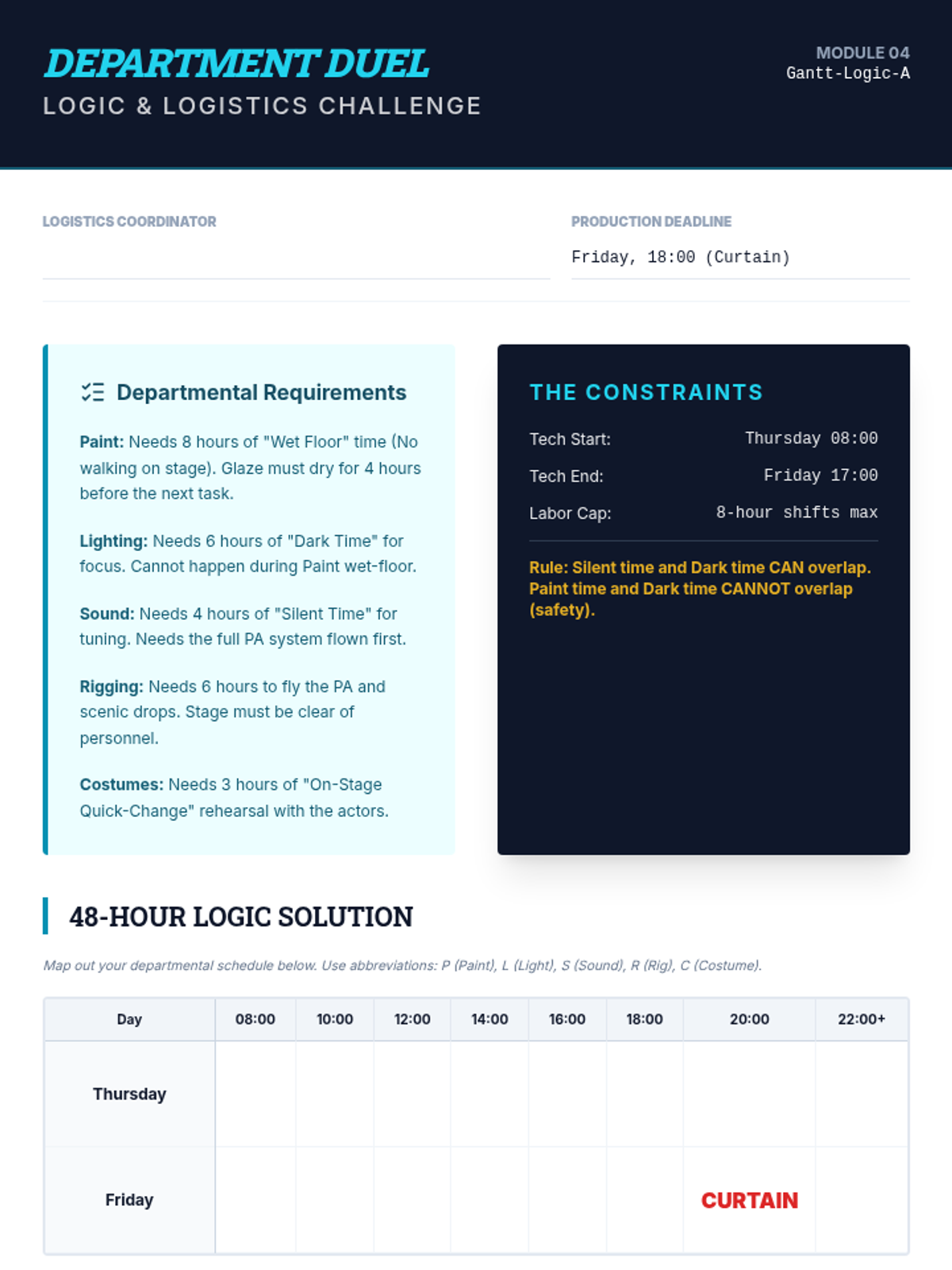
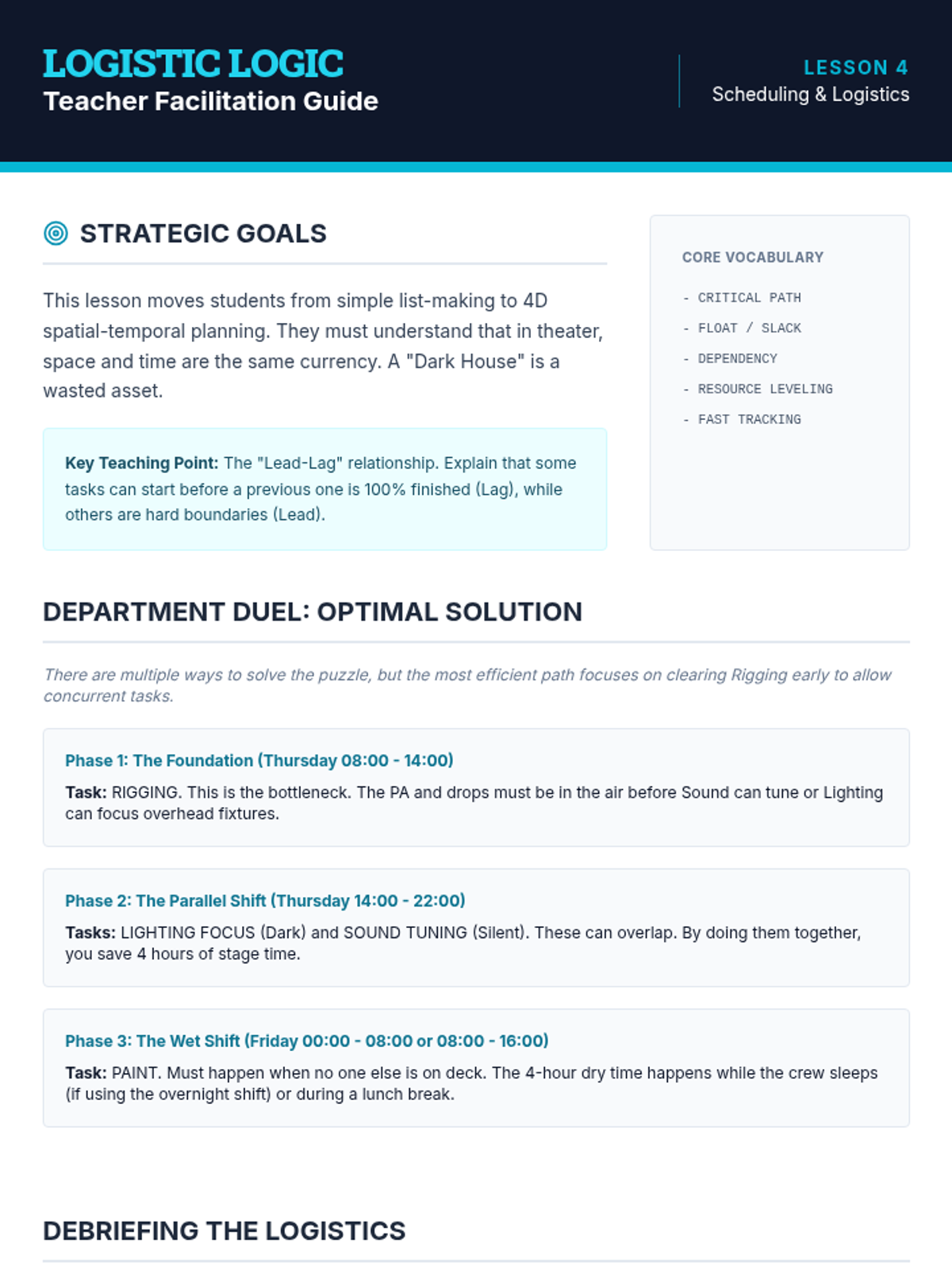
Covers the Critical Path Method and complex logistics coordination, requiring students to solve departmental scheduling conflicts.
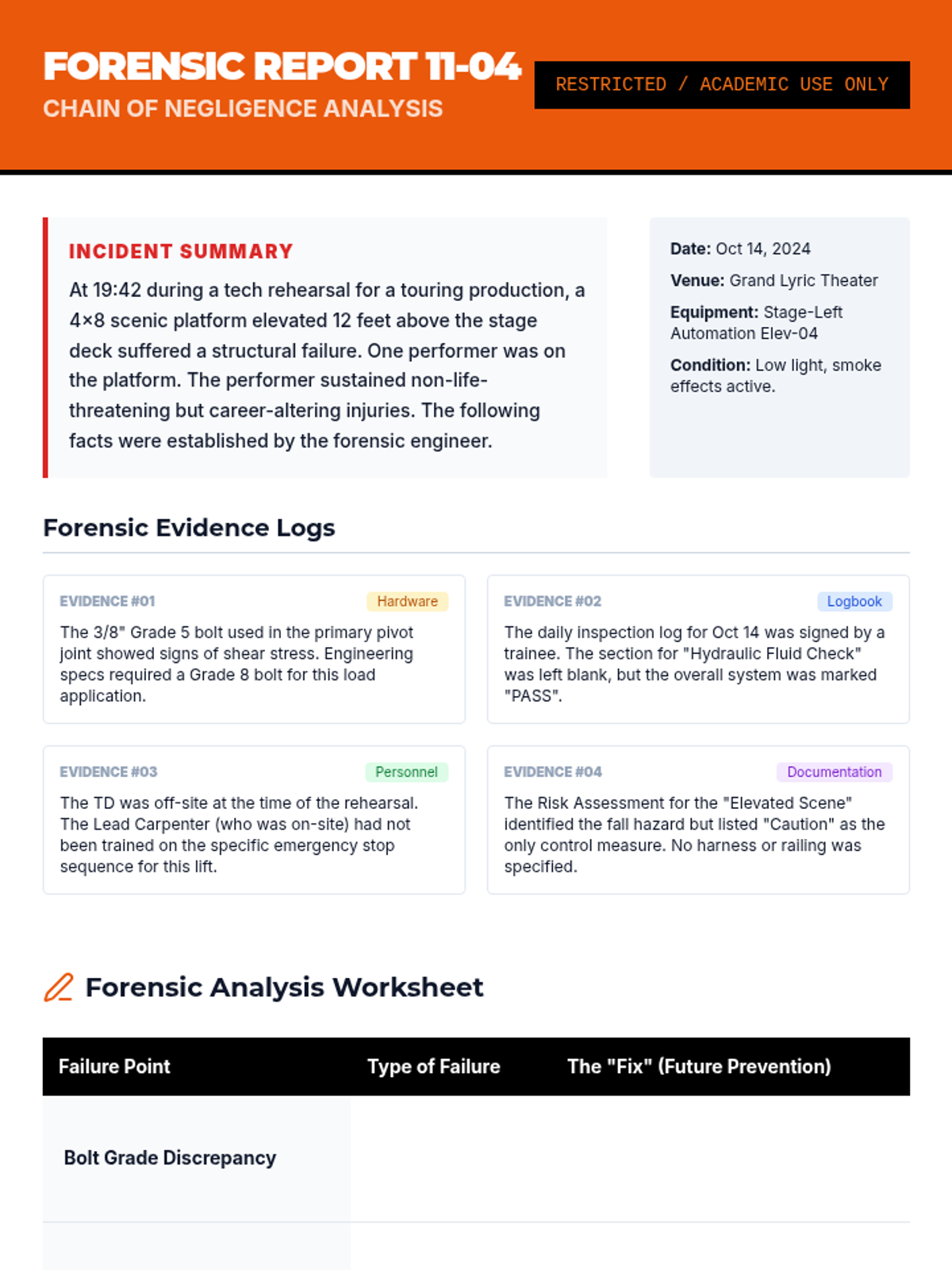
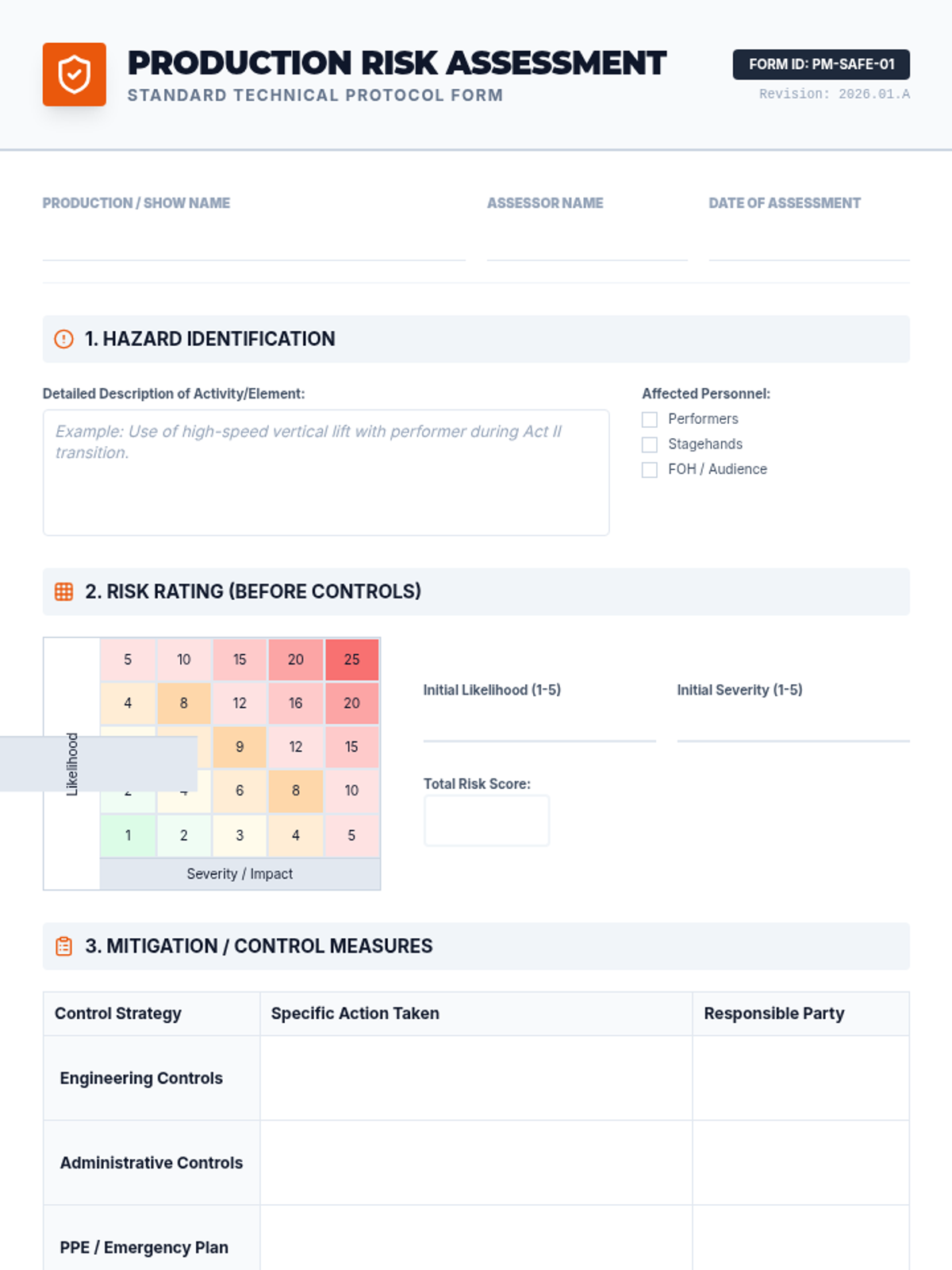
A deep dive into OSHA regulations, risk assessment writing, and the forensic analysis of stage accidents to prevent future negligence.
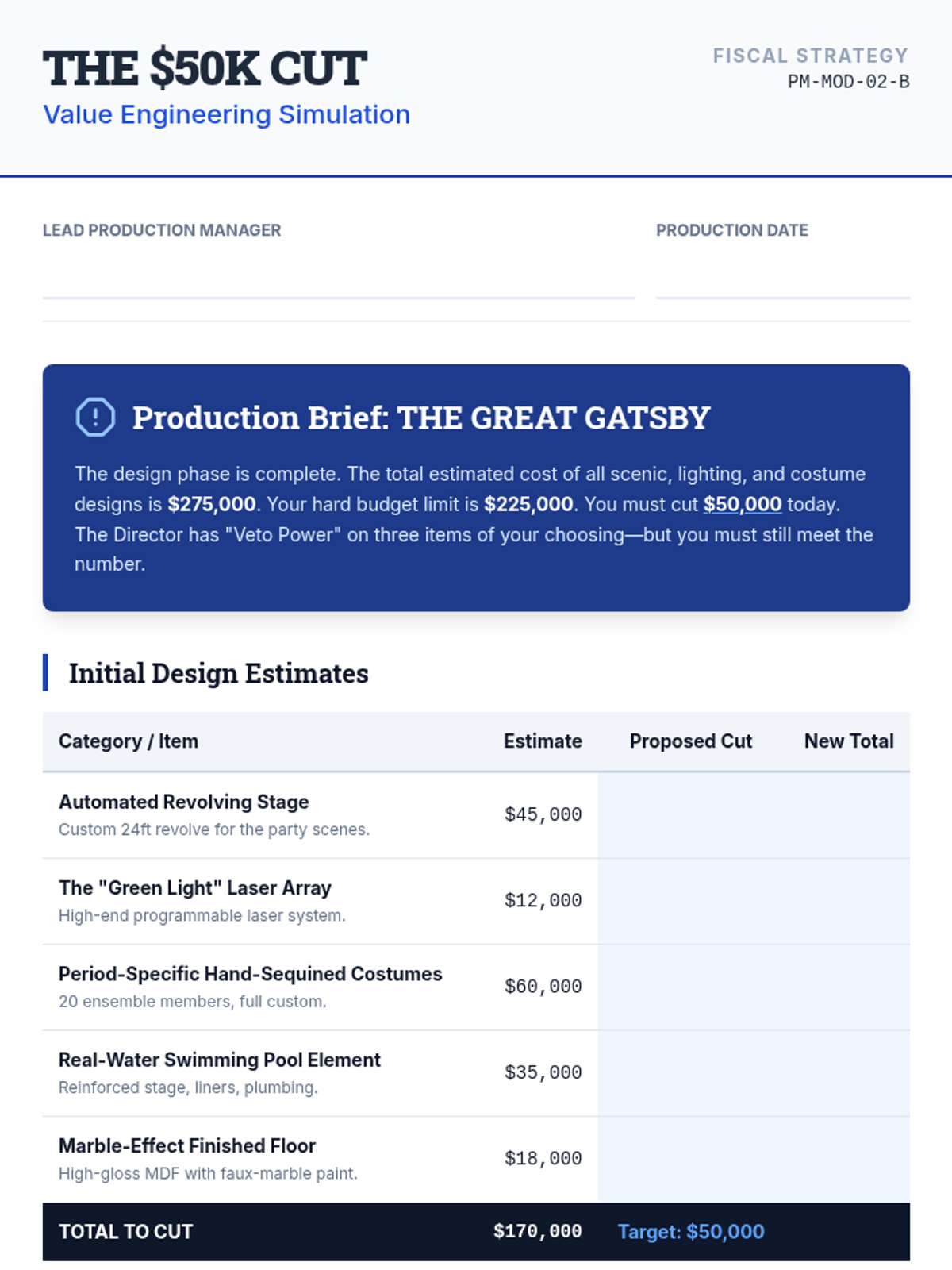
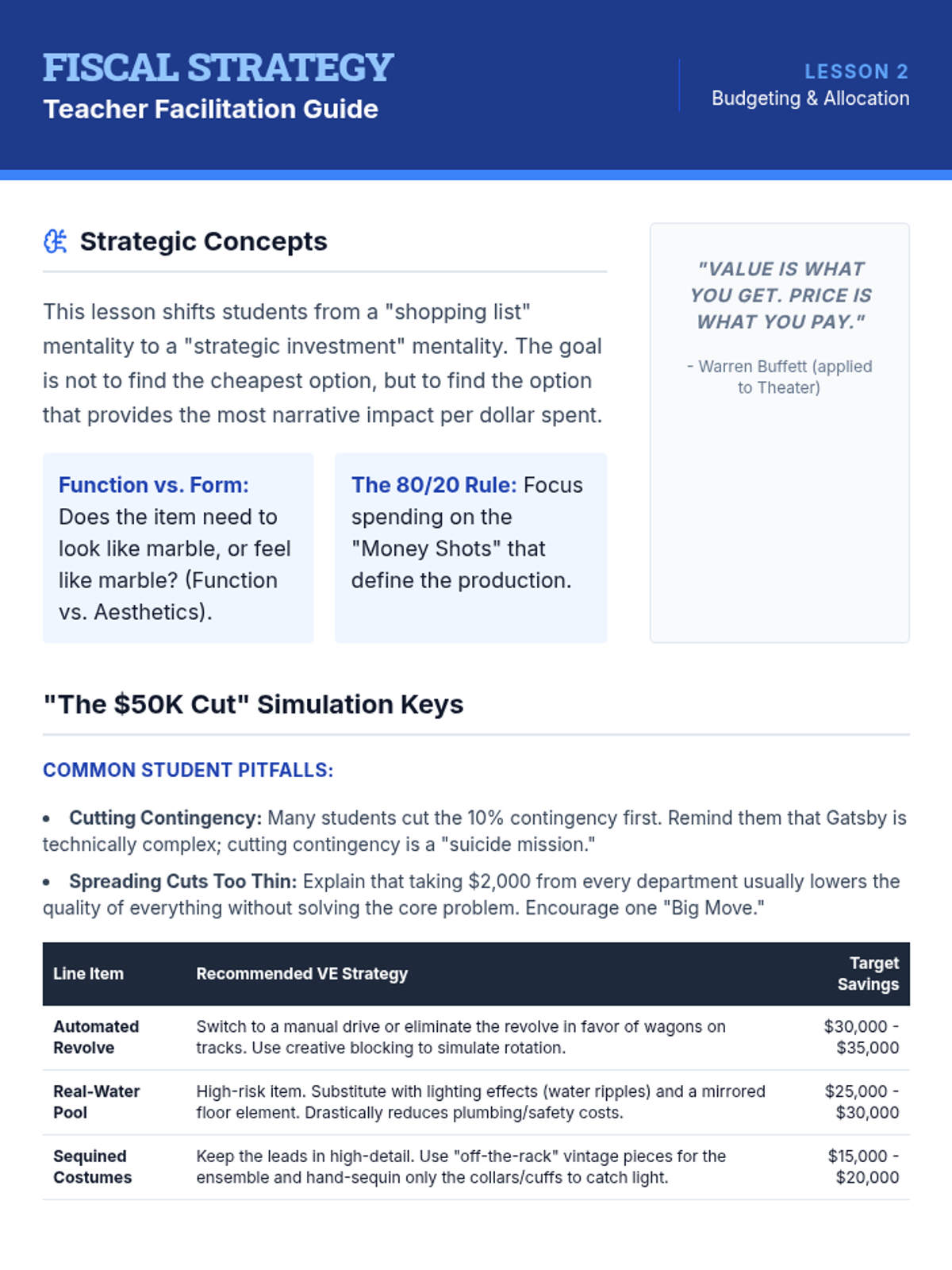
Focused on fiscal strategy, students learn to balance artistic vision with budgetary constraints through value engineering and strategic allocation.
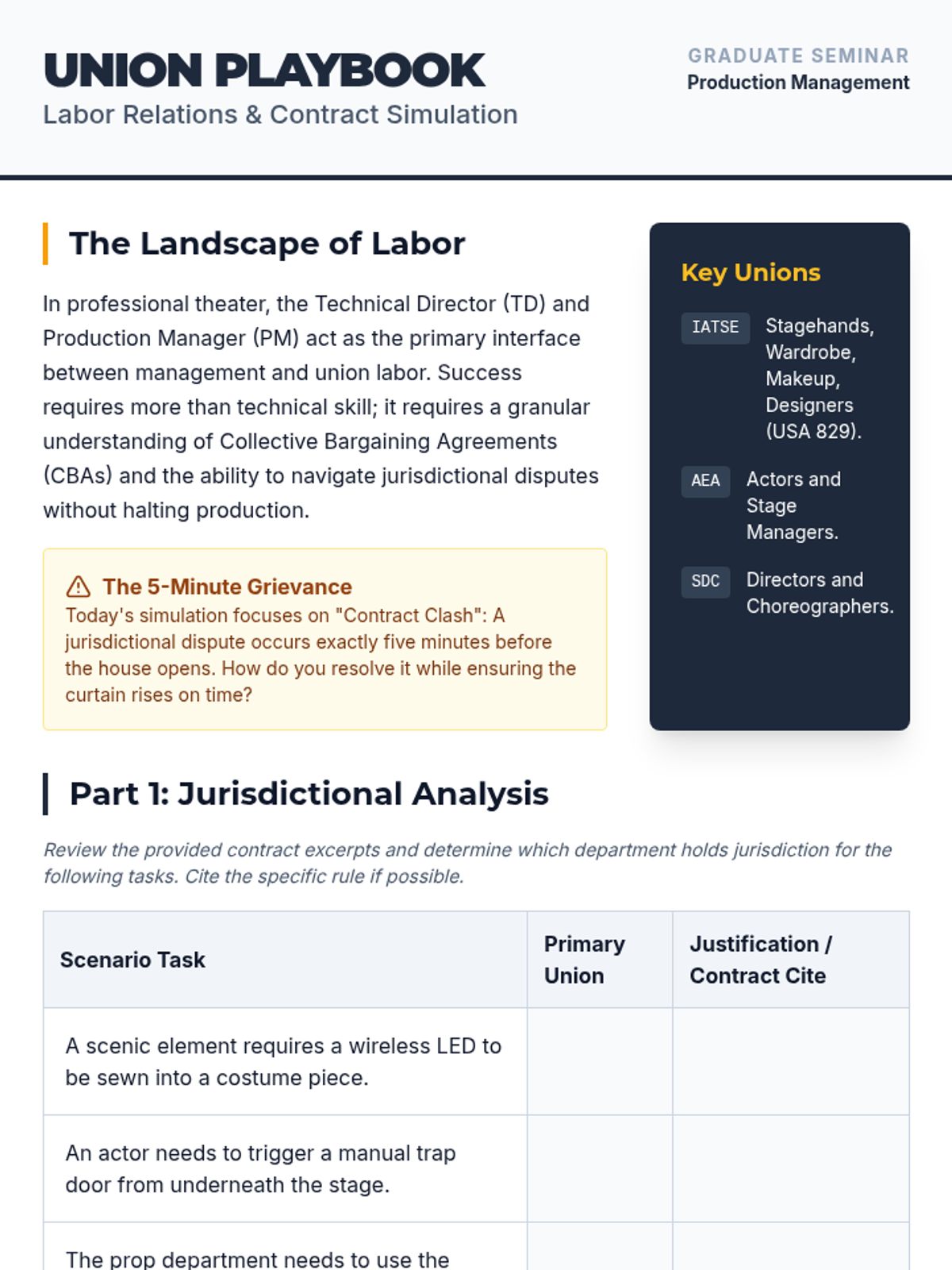
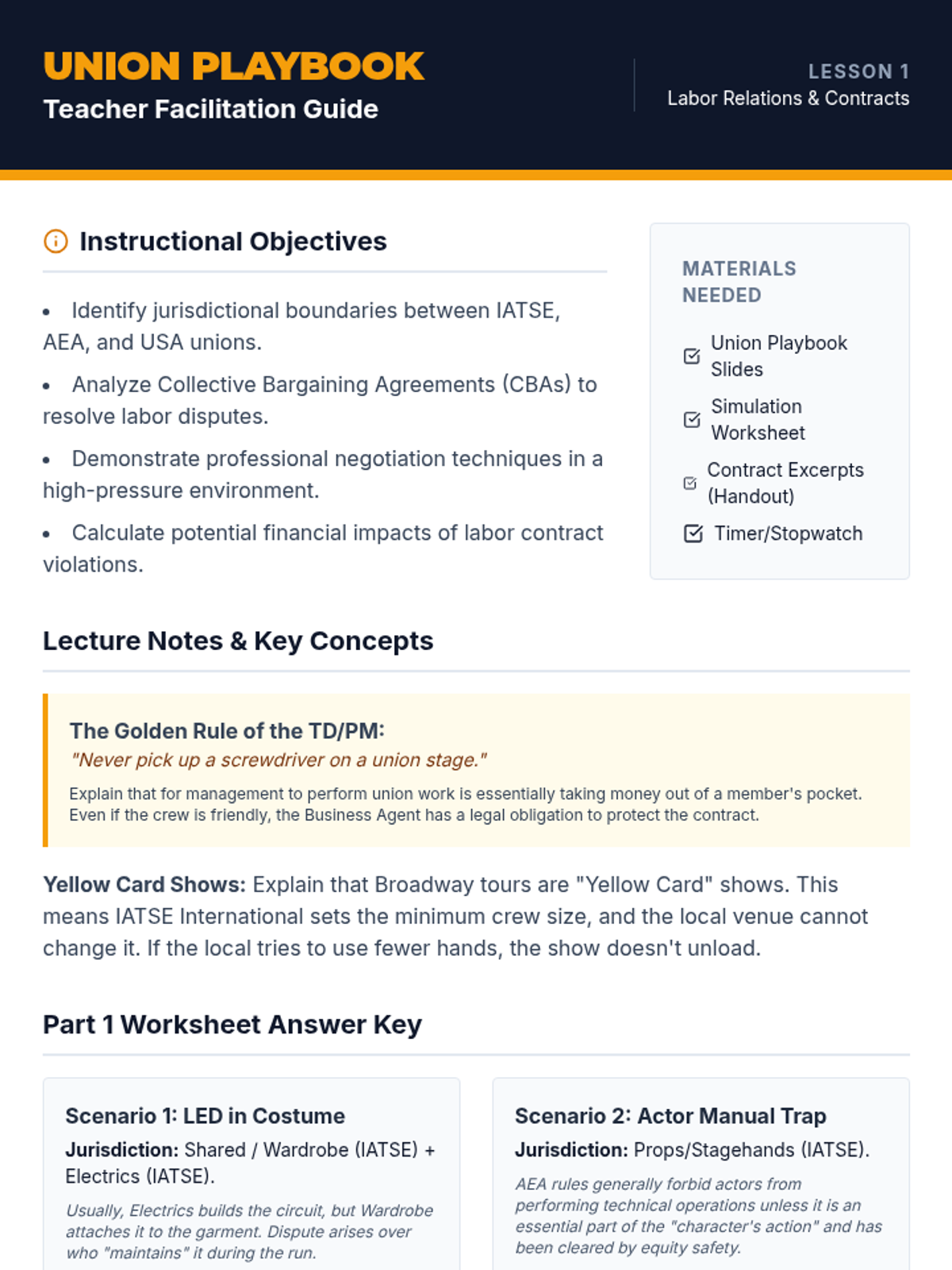
Students analyze IATSE, AEA, and USA contracts to understand jurisdictional boundaries and labor laws. The lesson culminates in a high-stakes grievance simulation.
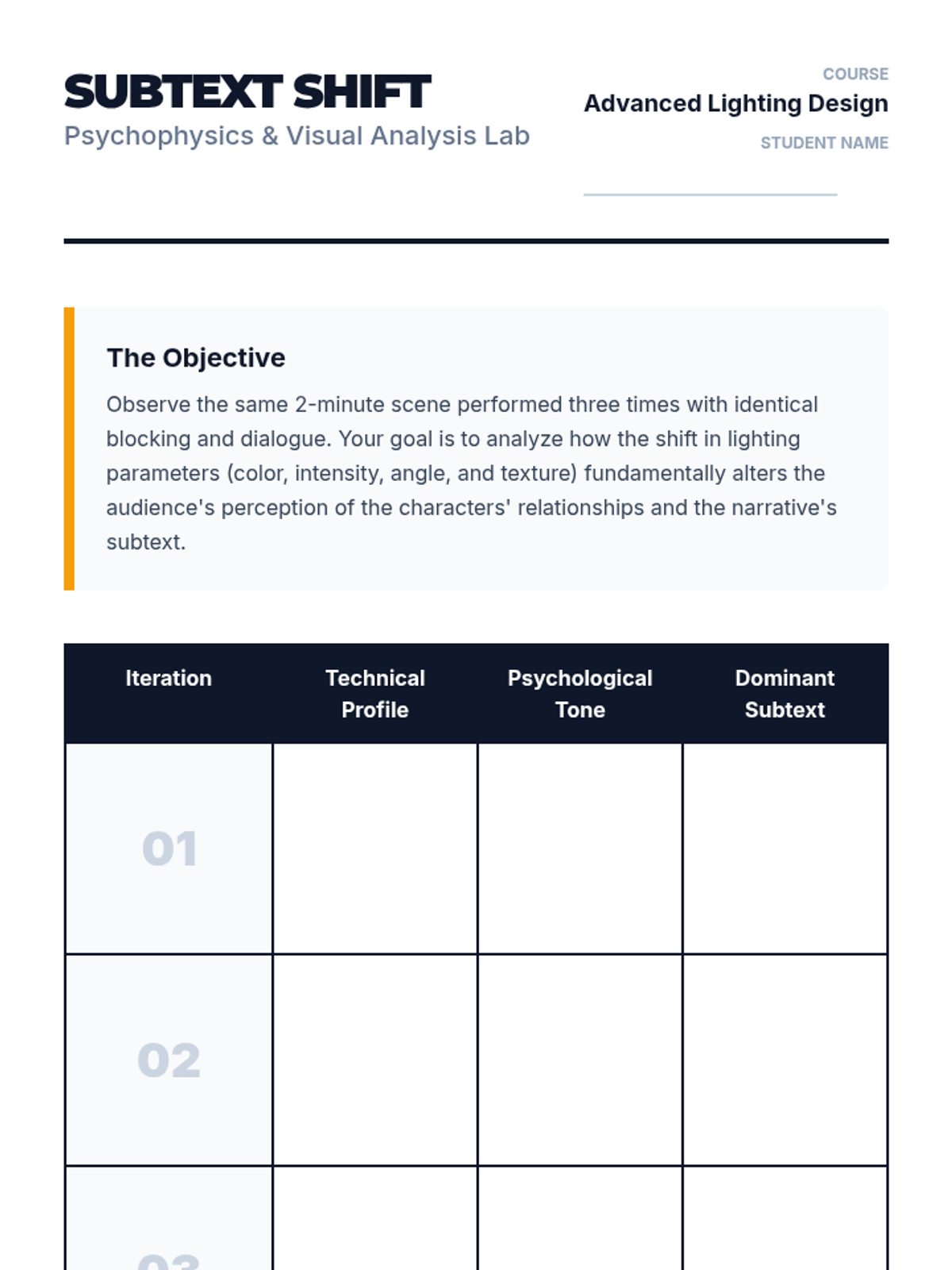
Explores the biological mechanics of the human eye and the psychological impacts of color temperature and intensity on narrative perception.
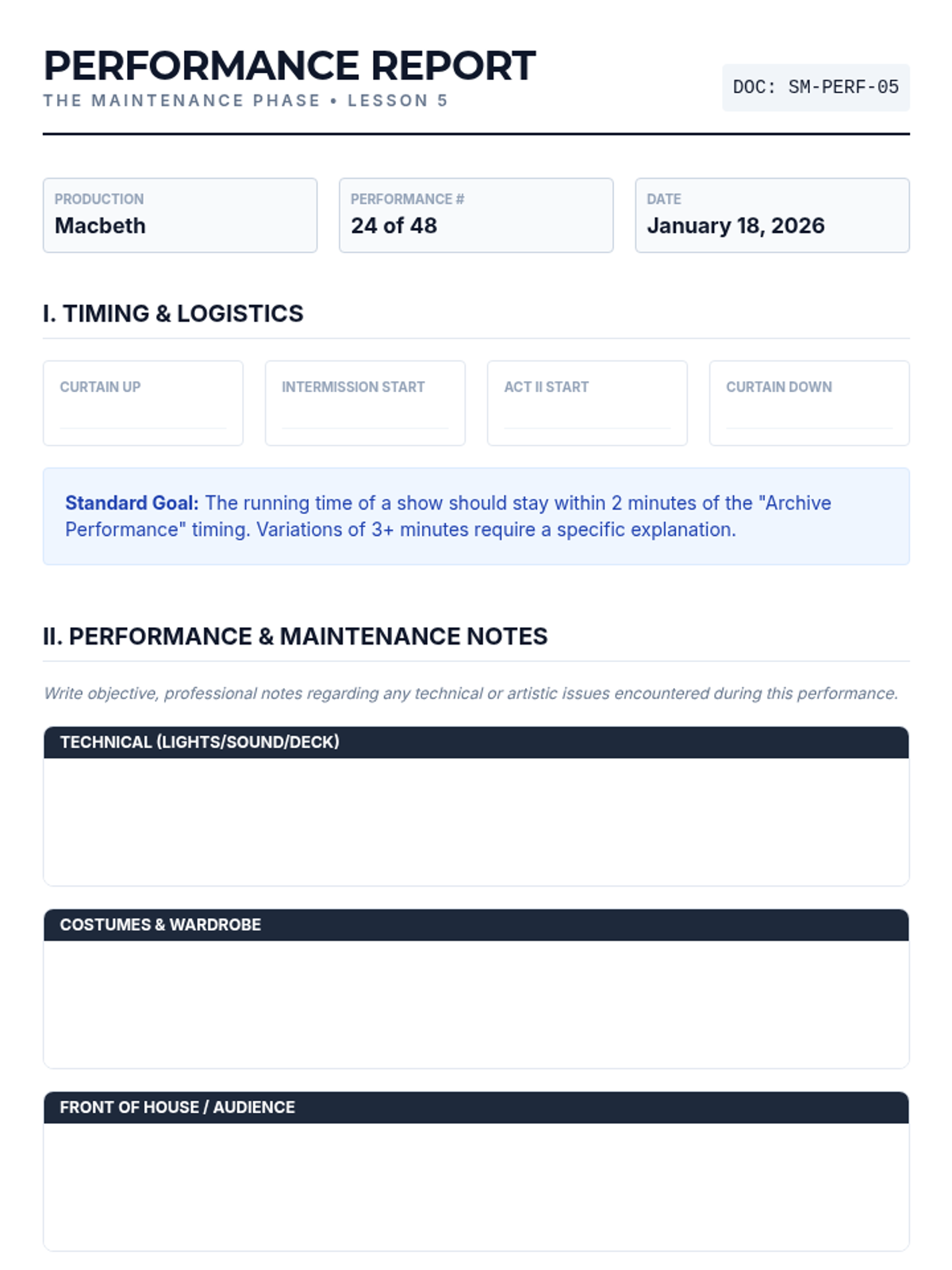
The final lesson covers the maintenance phase of a production run. Students learn to write performance reports, manage understudies, and maintain artistic integrity through note sessions.
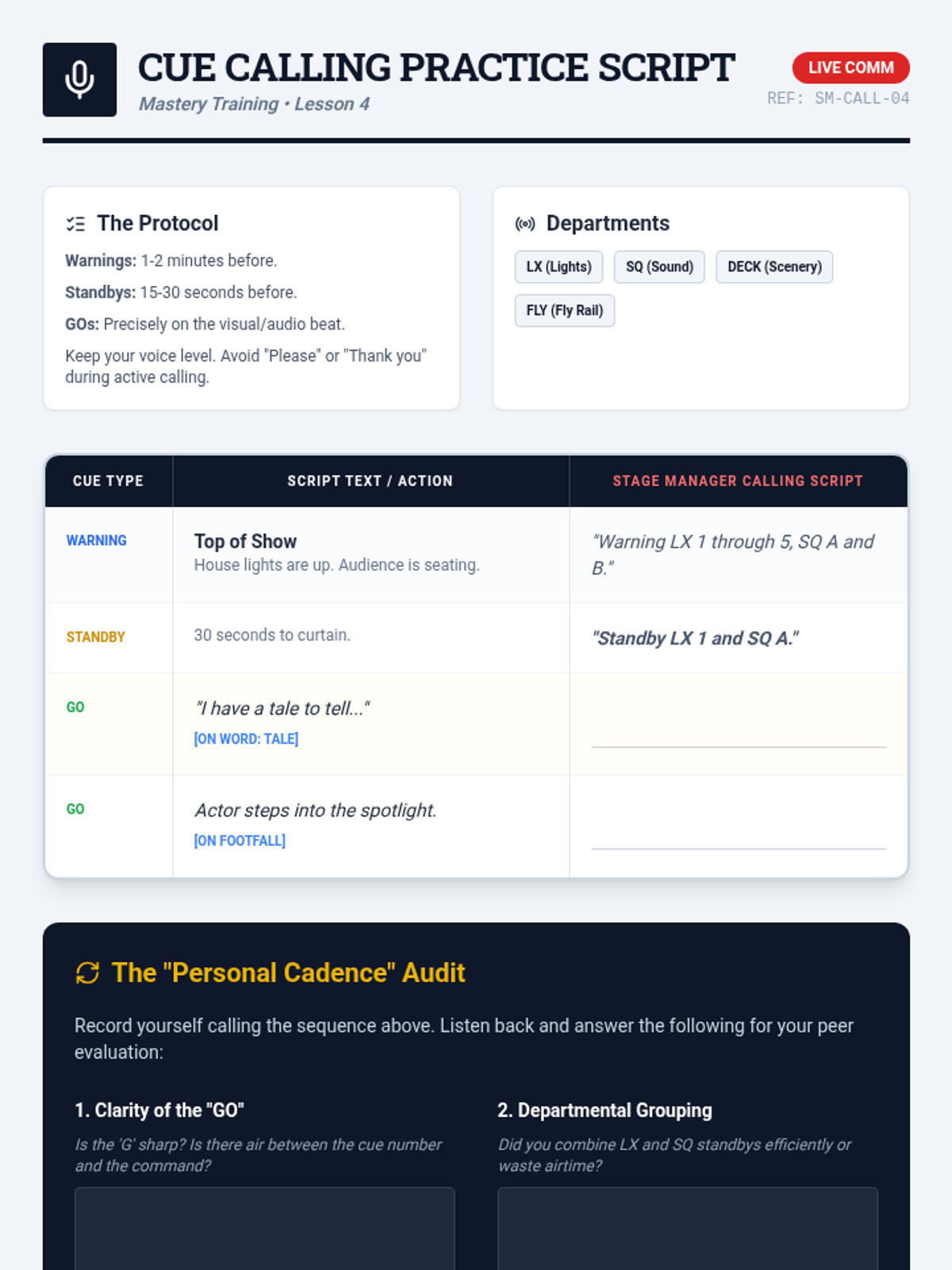
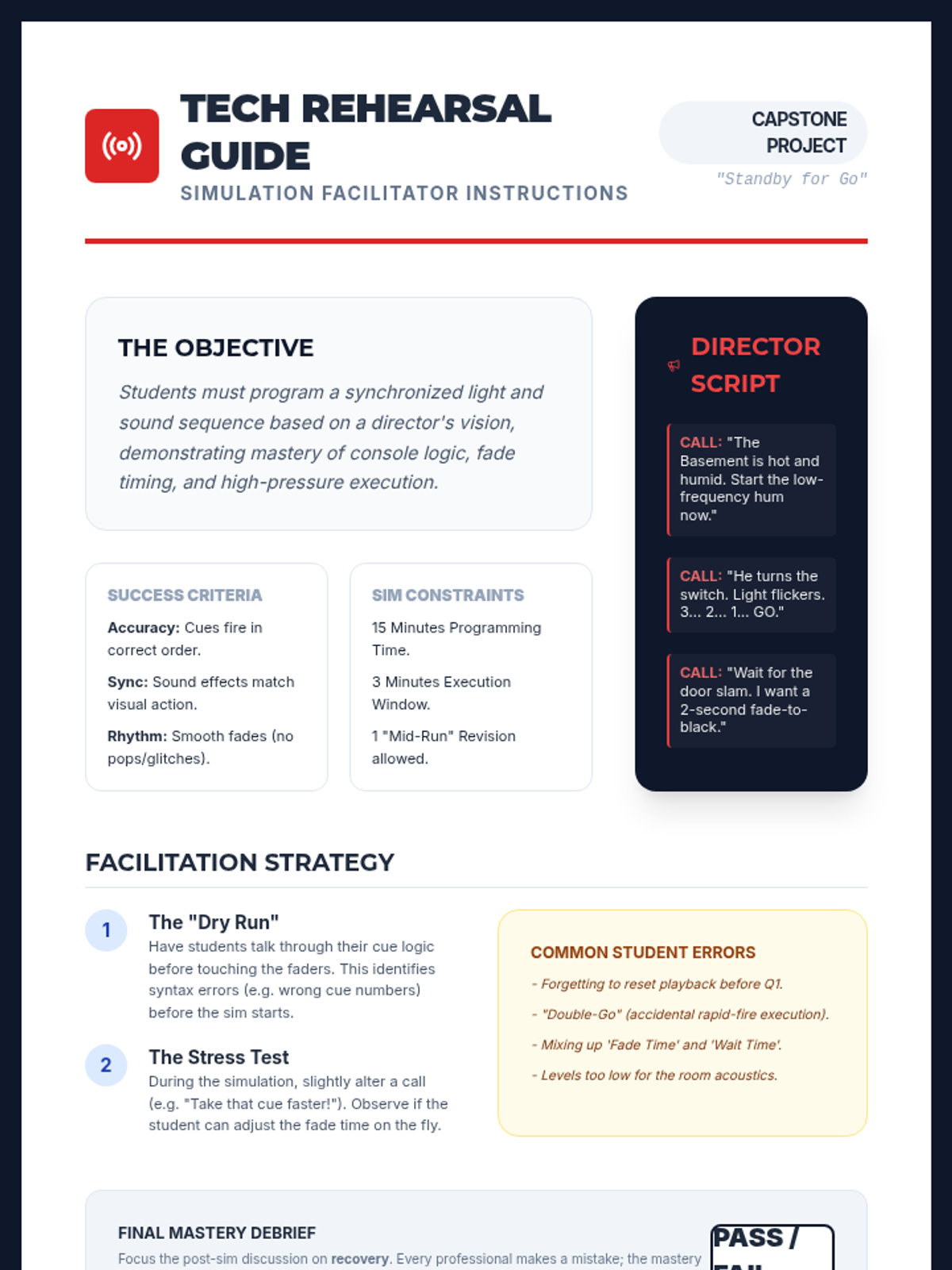
The core skill of performance management is practiced here, as students learn to 'call' cues (lights, sound, deck moves) with precision and personal cadence.
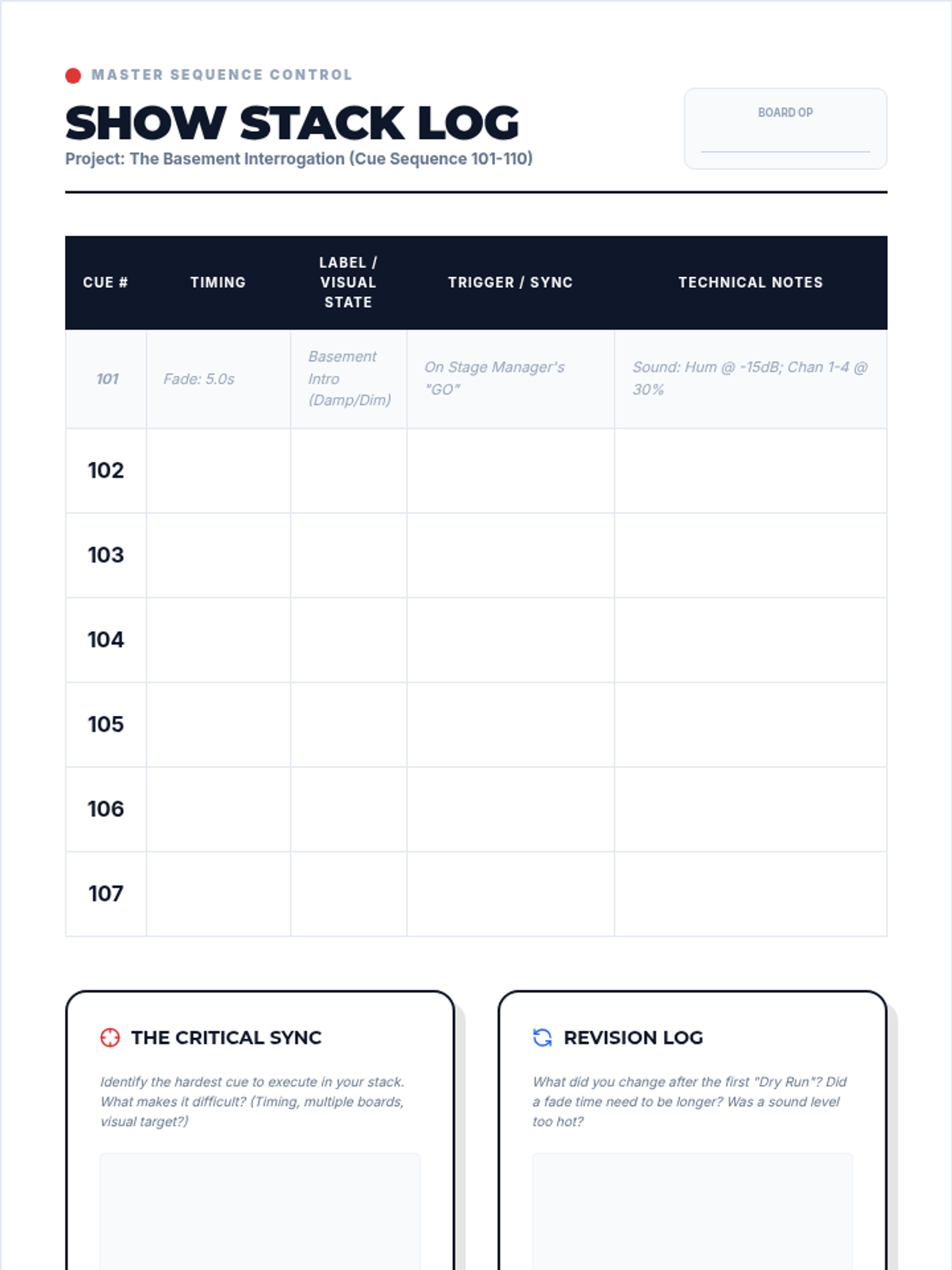
Mastery of control systems and the artistry of timing through cue programming and live execution.
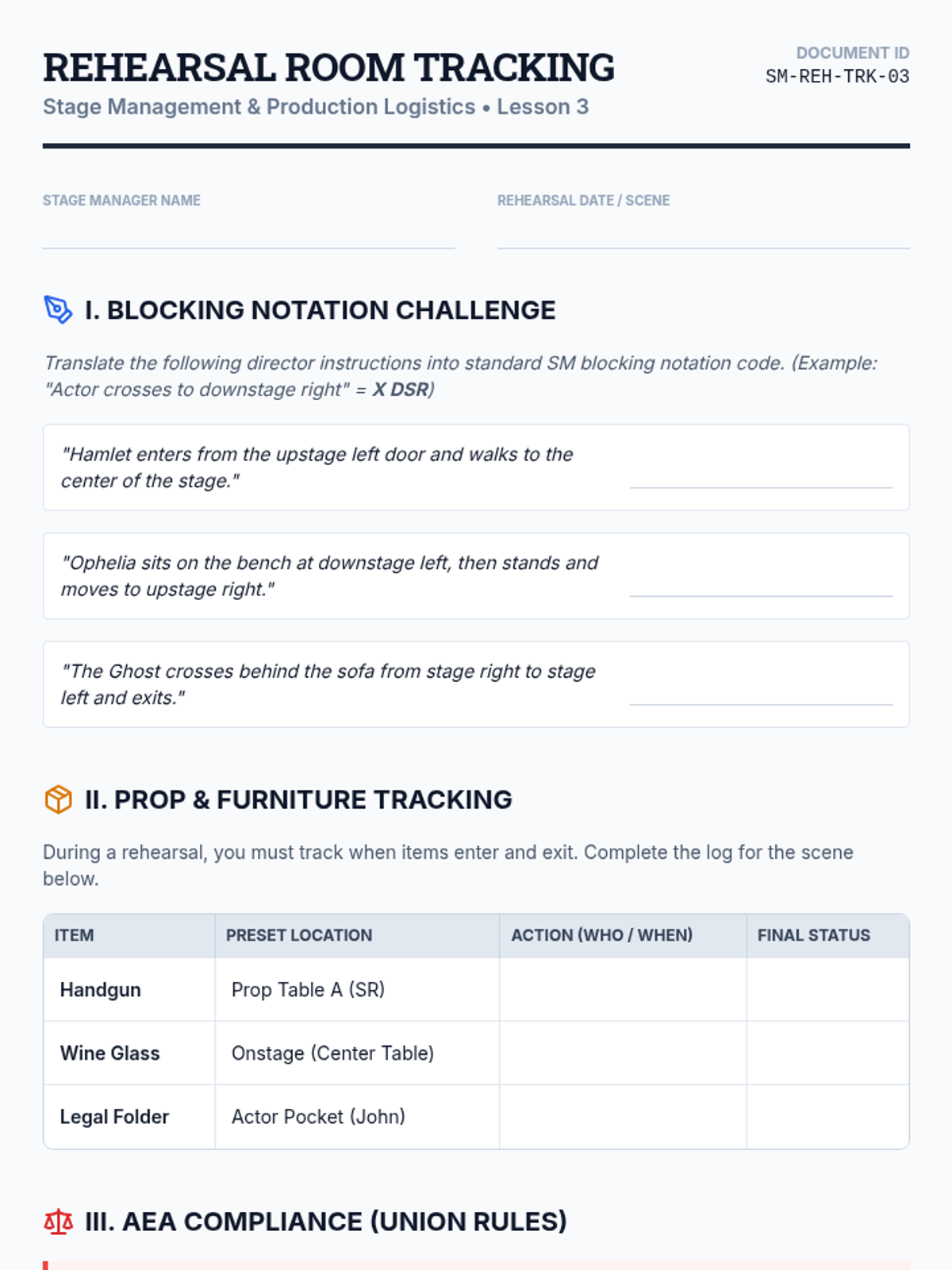
Students practice running a rehearsal room, including timing splits, tracking props, and notating actor movement. They learn to balance artistic needs with union regulations.
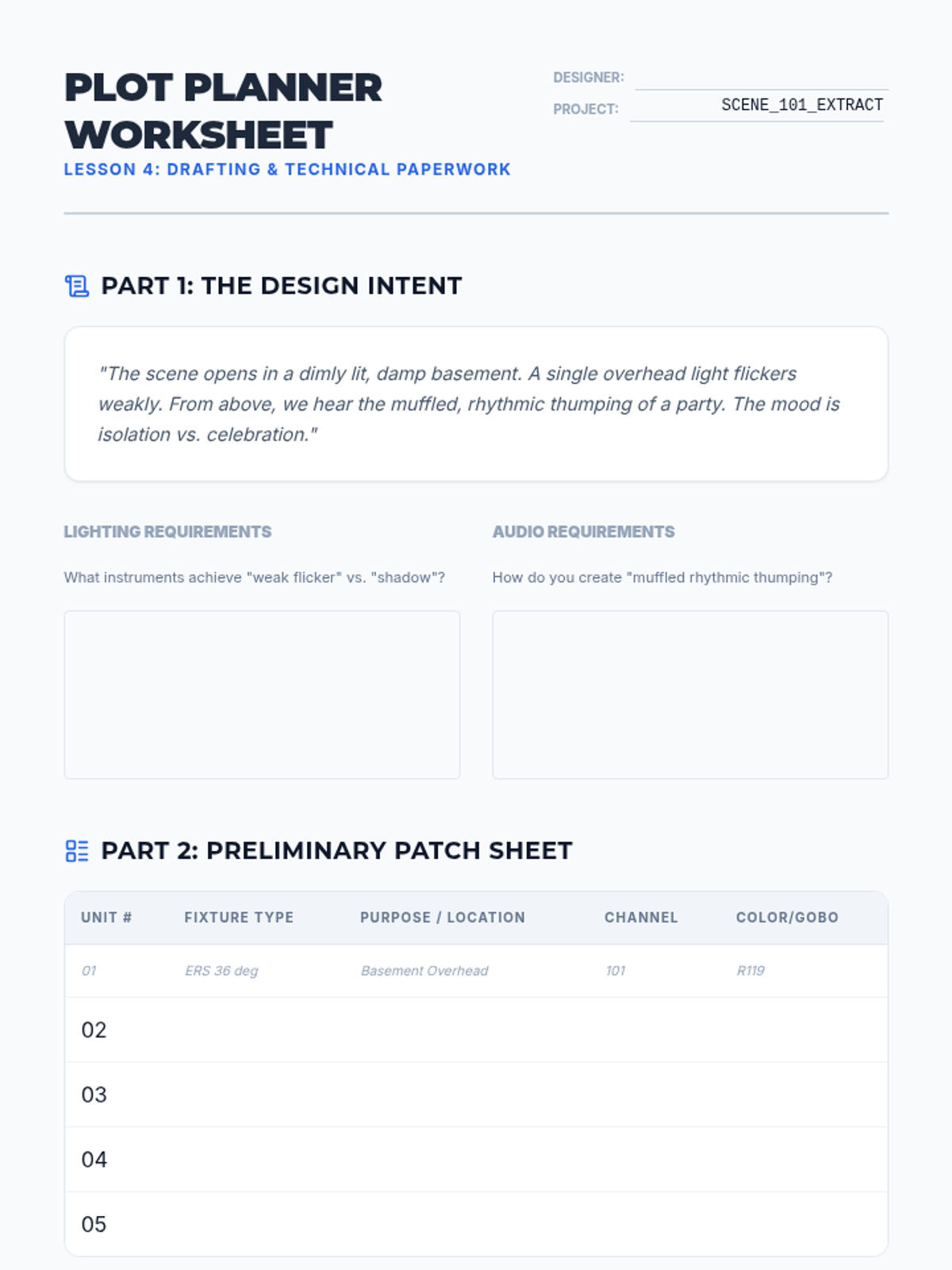
Translation of creative concepts into technical documentation, including light plots, hookups, and equipment lists.
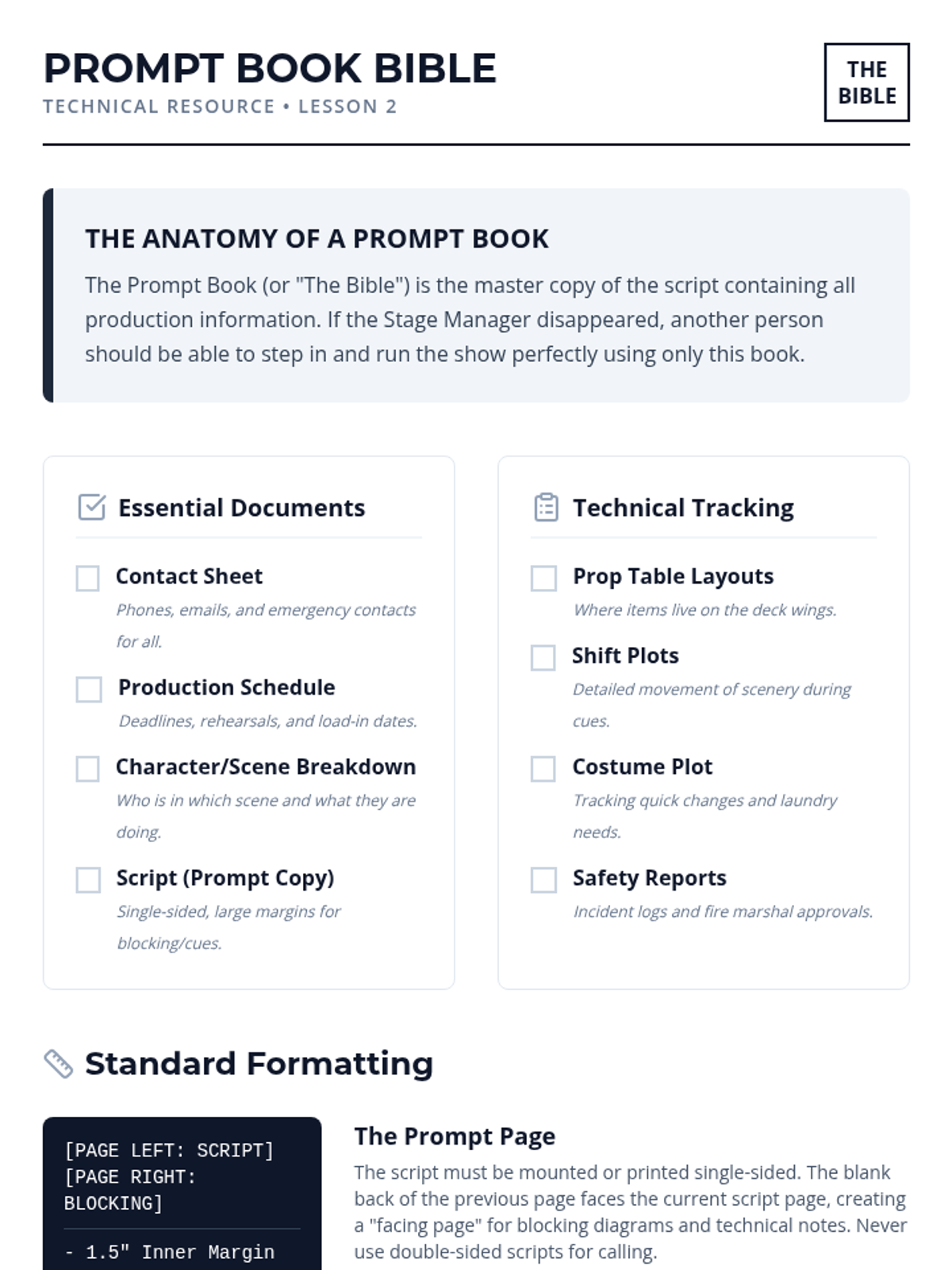
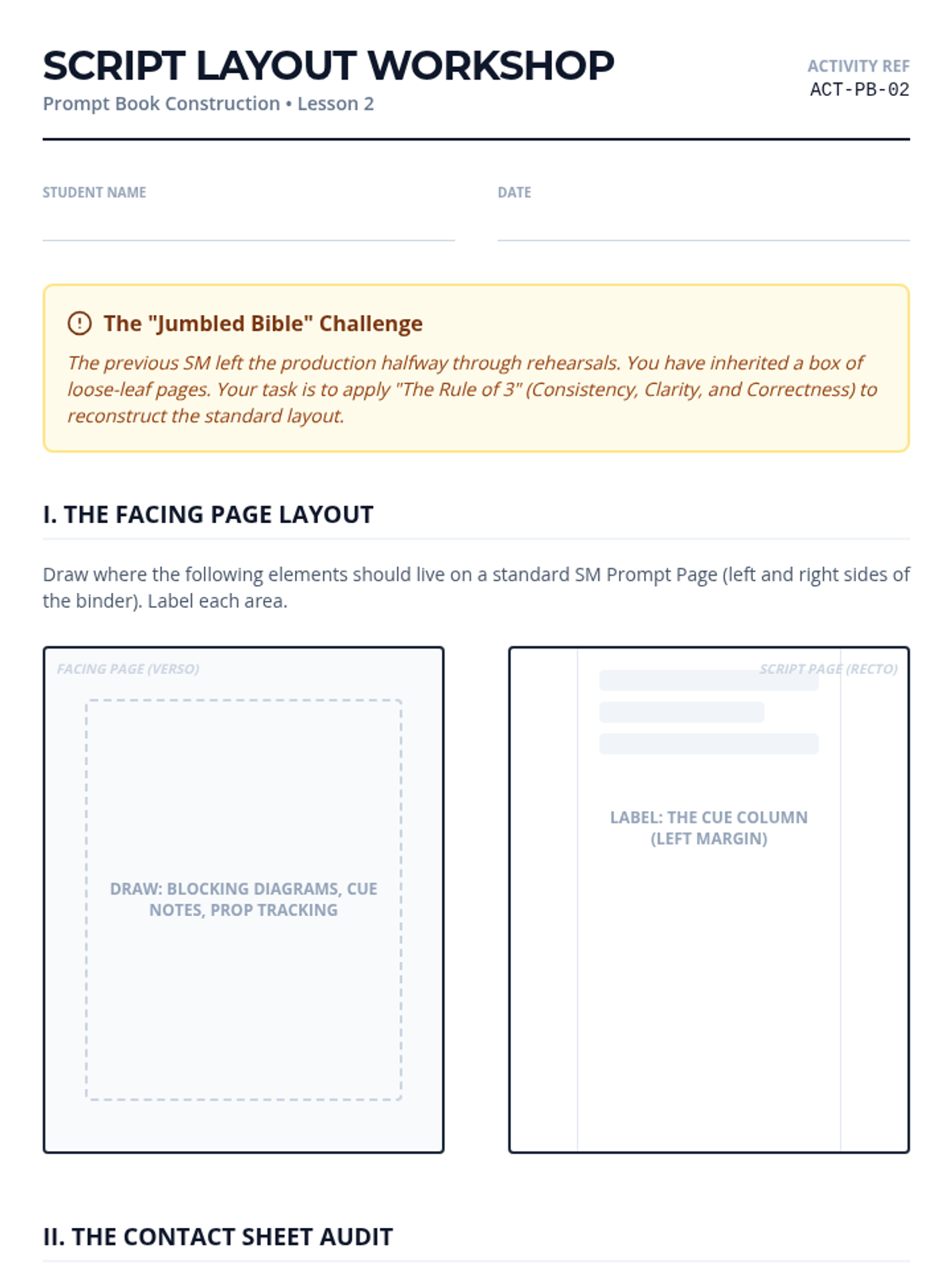
This workshop focuses on creating the 'Bible' of the production: the Prompt Book. Students learn formatting for blocking keys, script pagination, contact sheets, and rehearsal reports.
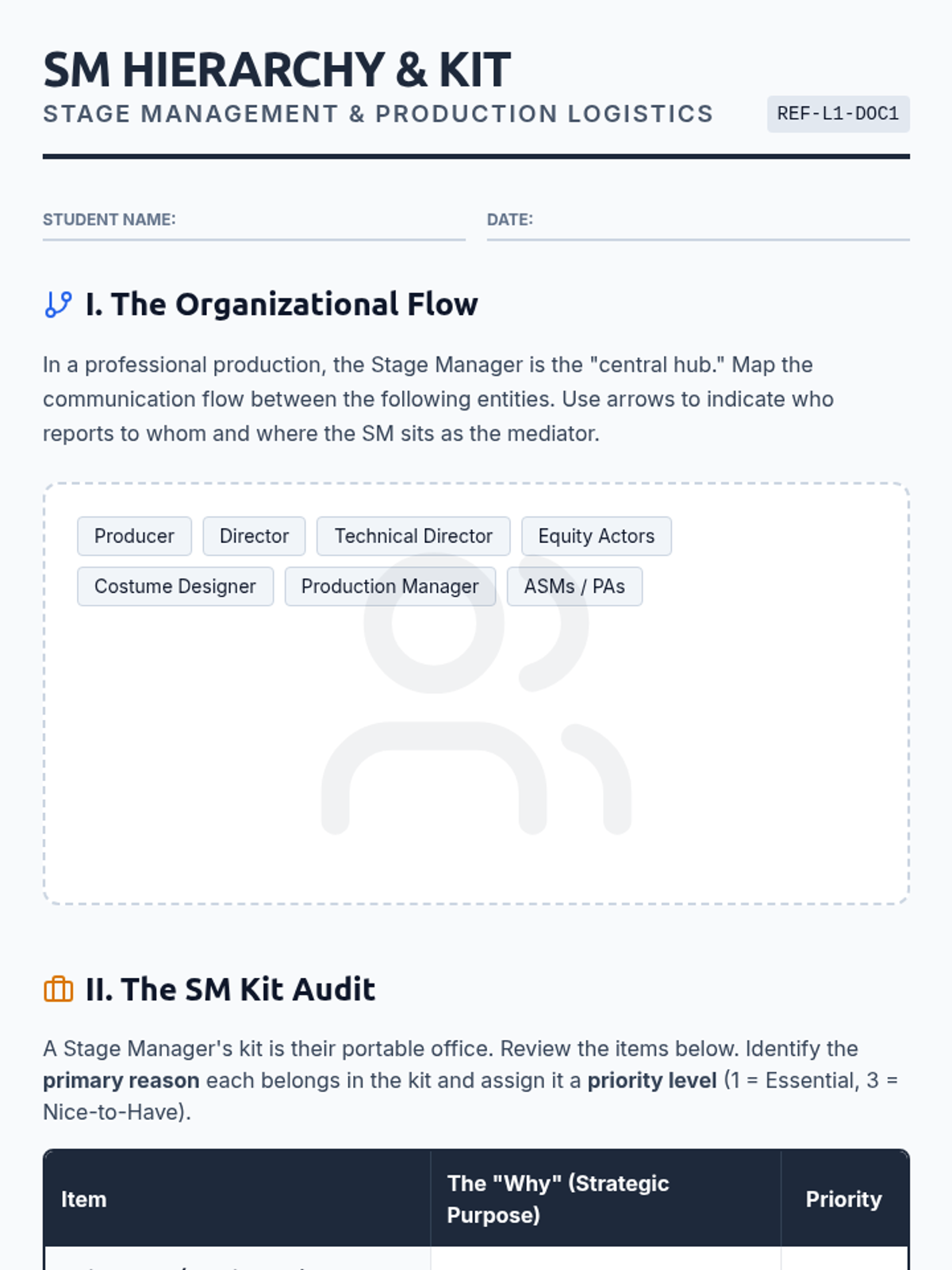
Students analyze the organizational structure of professional theater companies and the specific responsibilities of the Stage Management team. They assemble a theoretical 'SM Kit' and discuss the leadership dynamics within artistic groups.
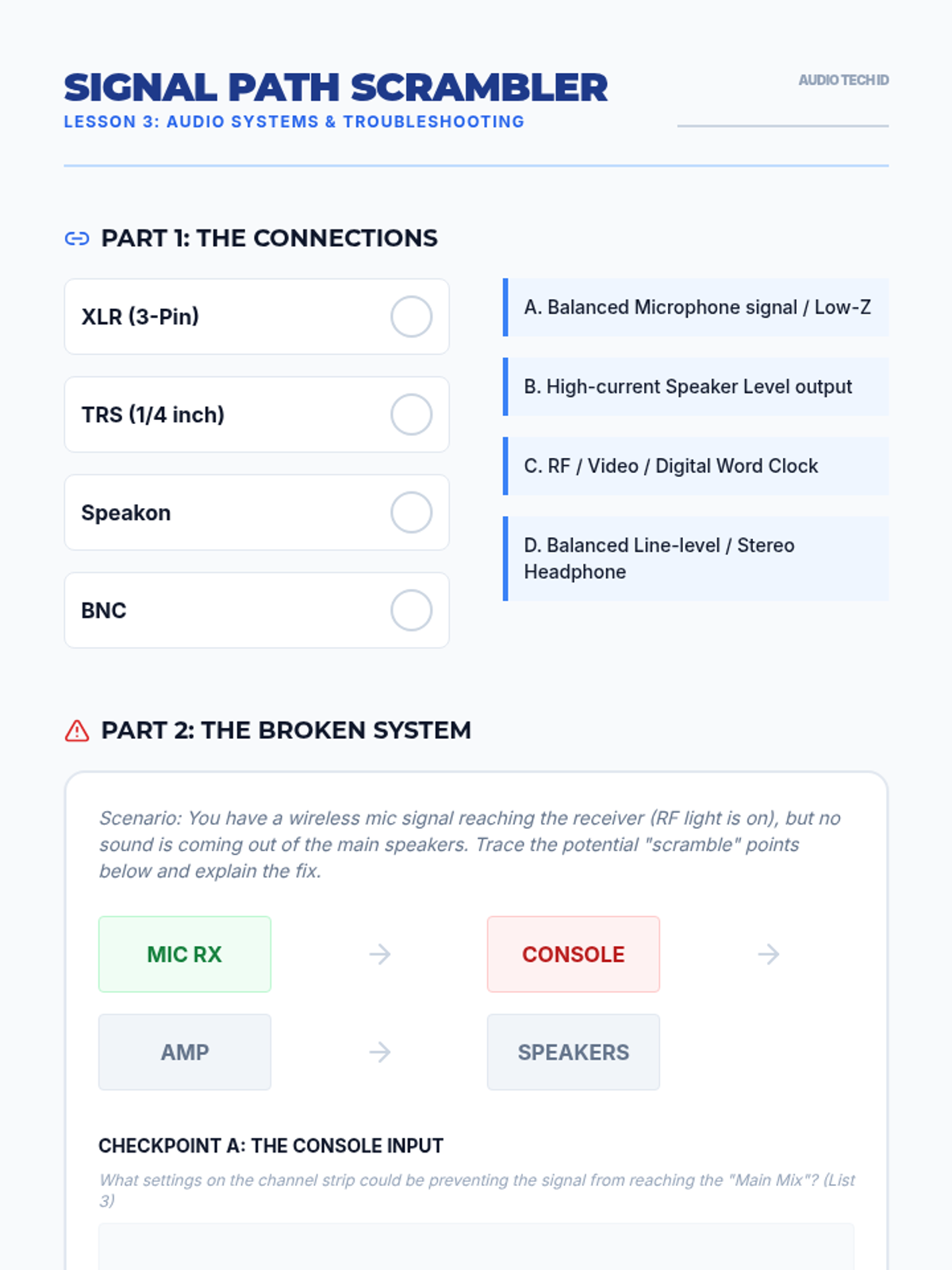
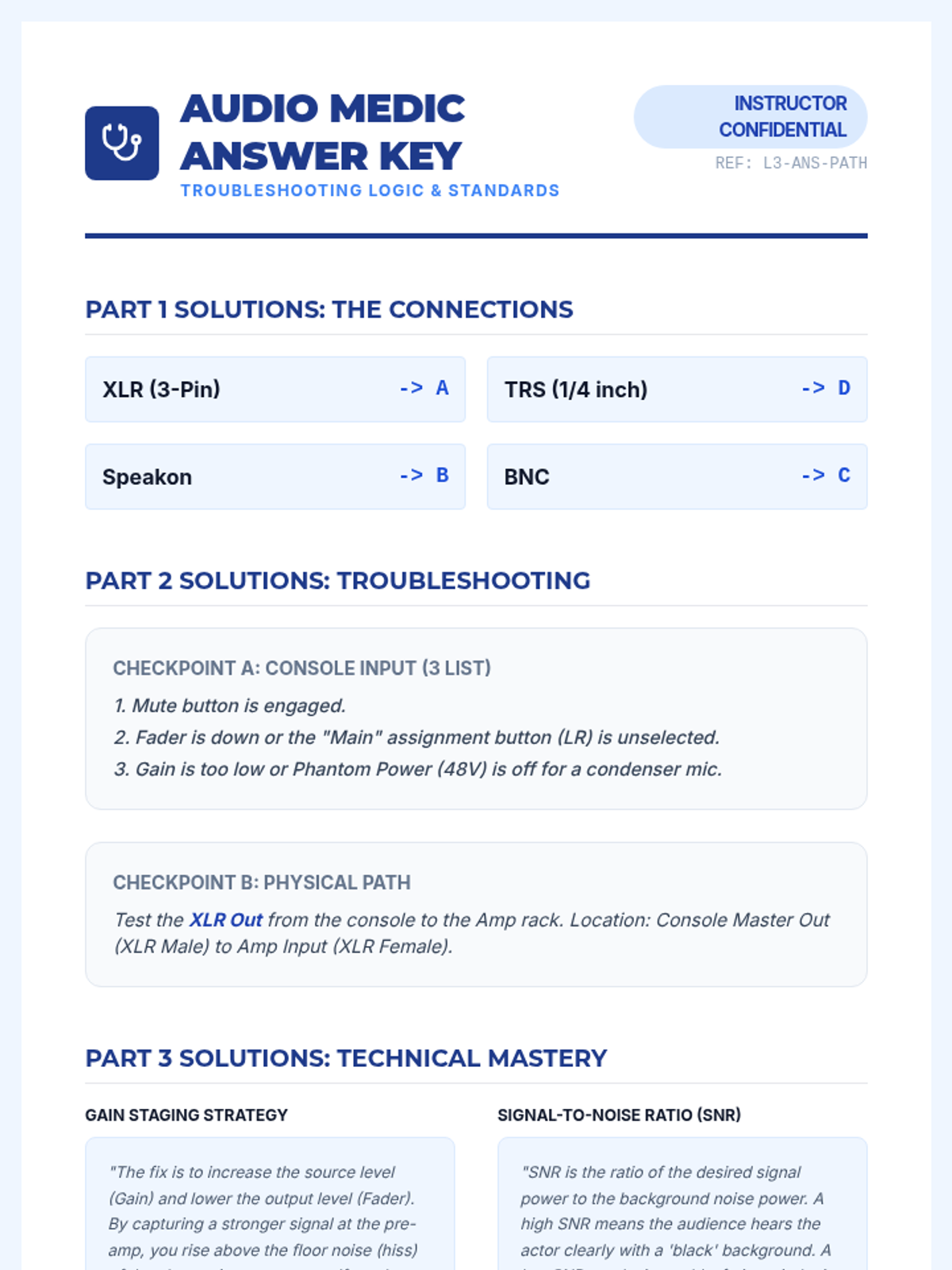
Analysis of signal flow from input to output, including console operation and troubleshooting common audio failures.
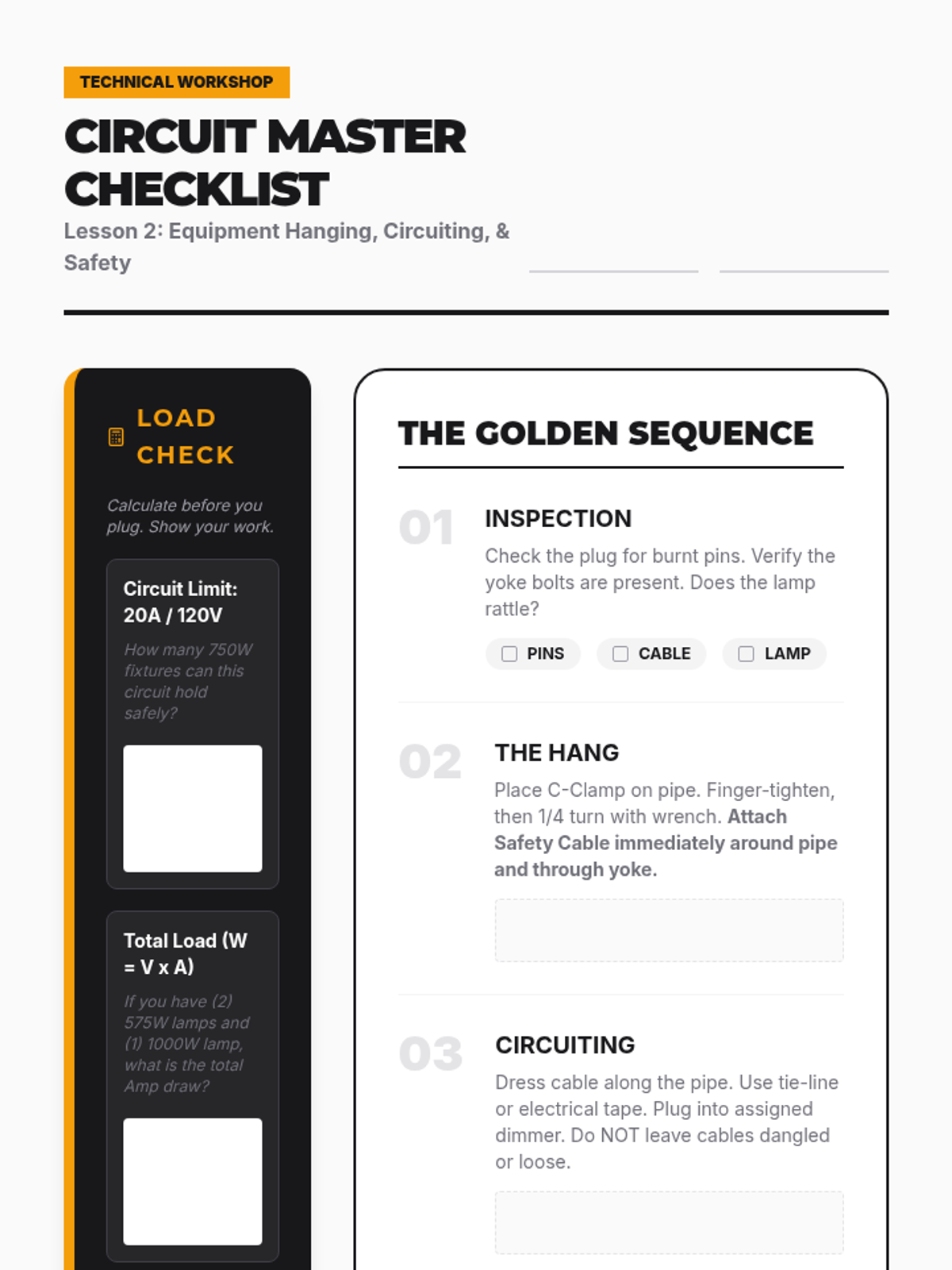
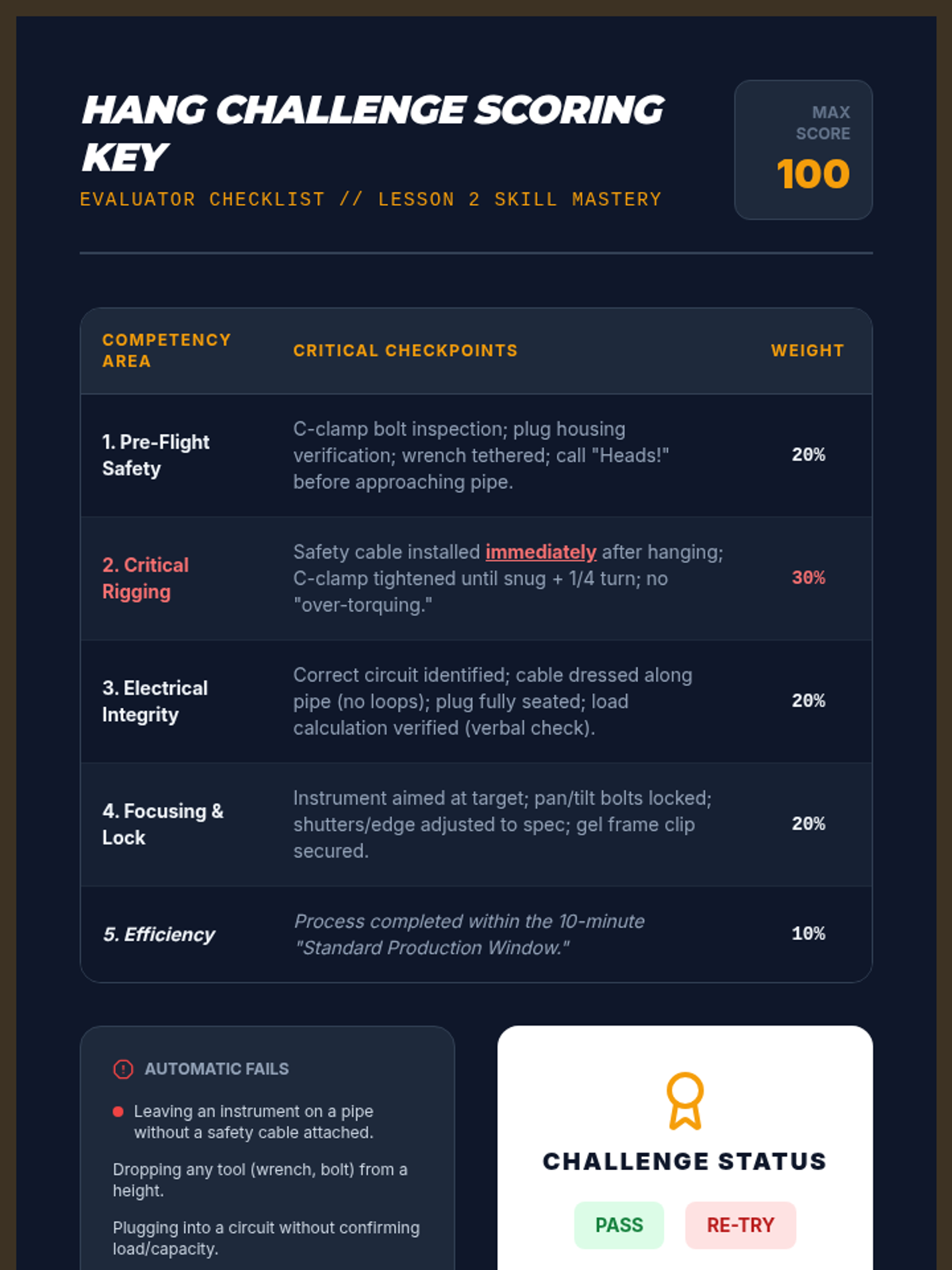
Hands-on instruction on lighting fixtures, electrical safety, and the technical process of hanging, circuiting, and focusing.
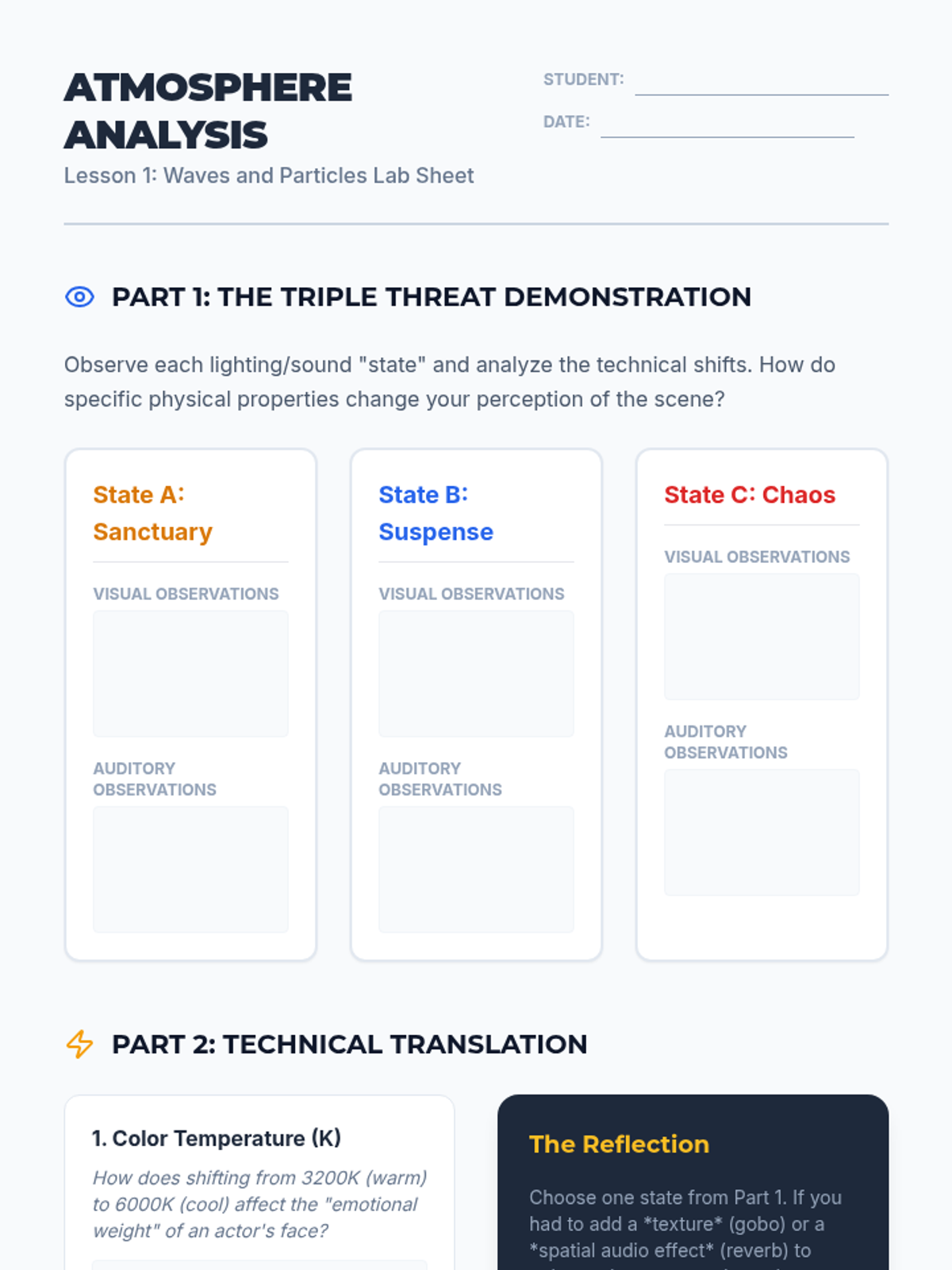
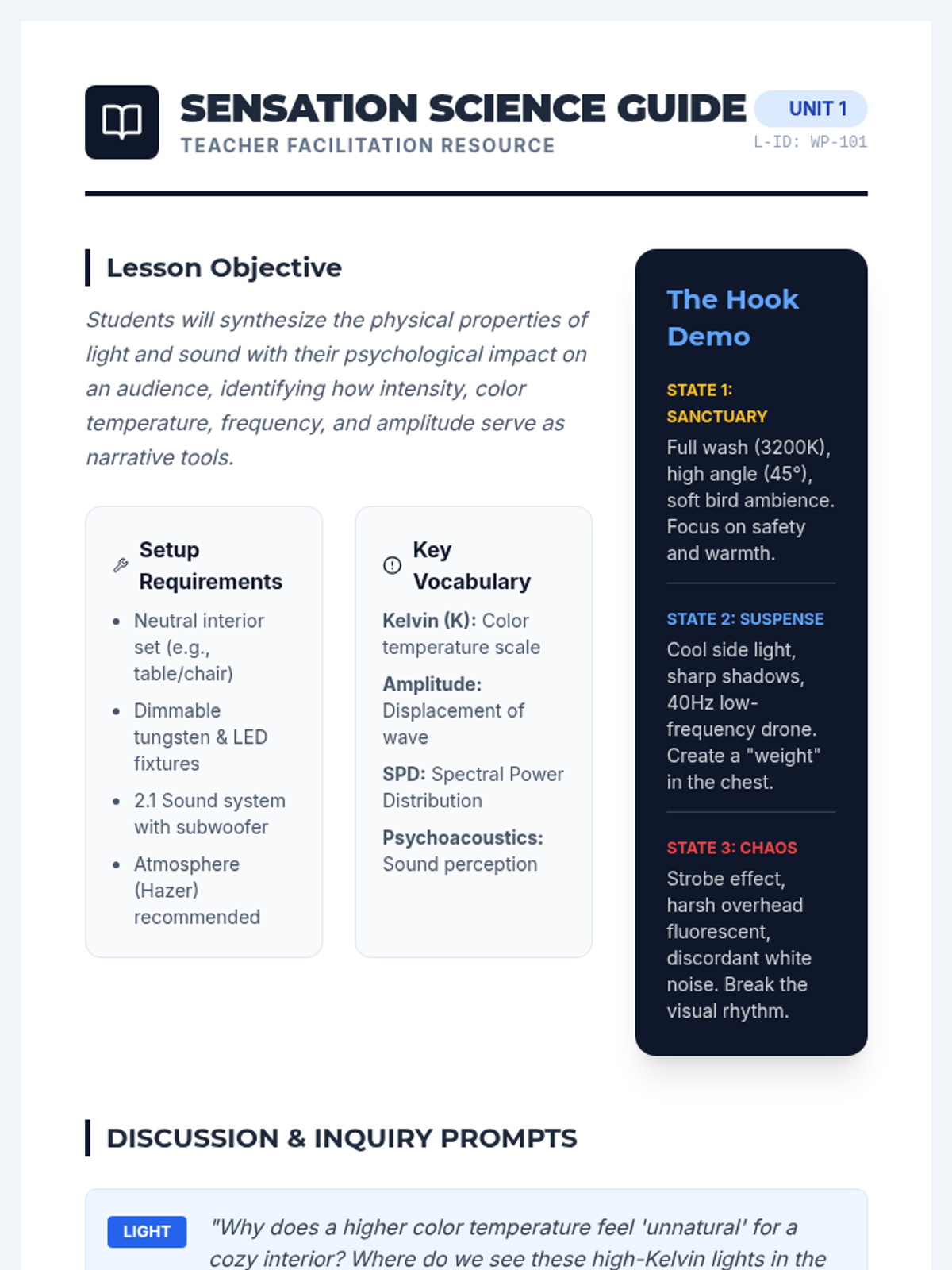
Exploration of the physical properties of light and sound and how they translate into emotional and narrative impact in a theatrical space.
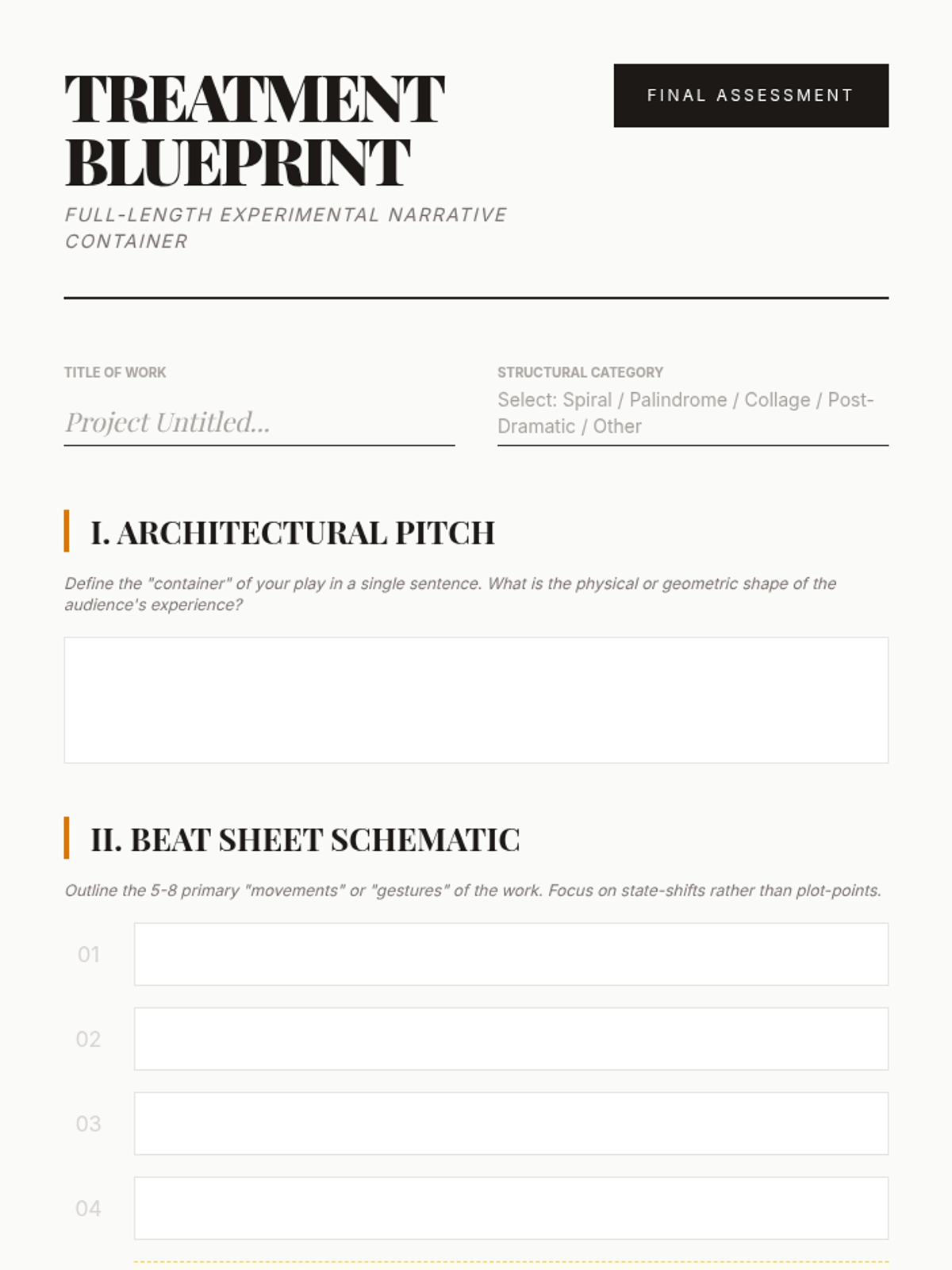
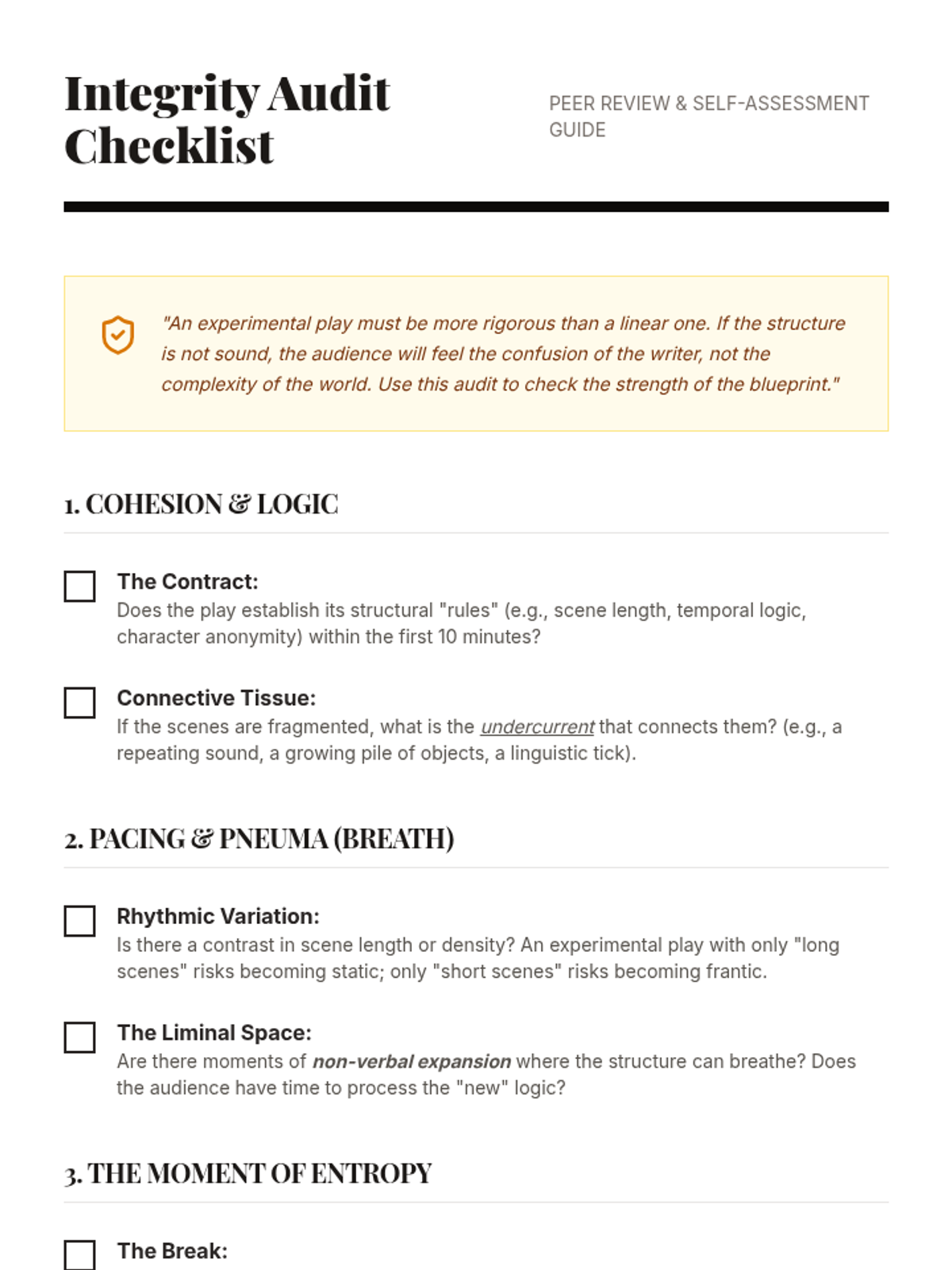
Students synthesize their structural experiments into a comprehensive outline or 'beat sheet' for a full-length play. The session focuses on pacing, intermission placement, and sustaining tension across a longer duration.
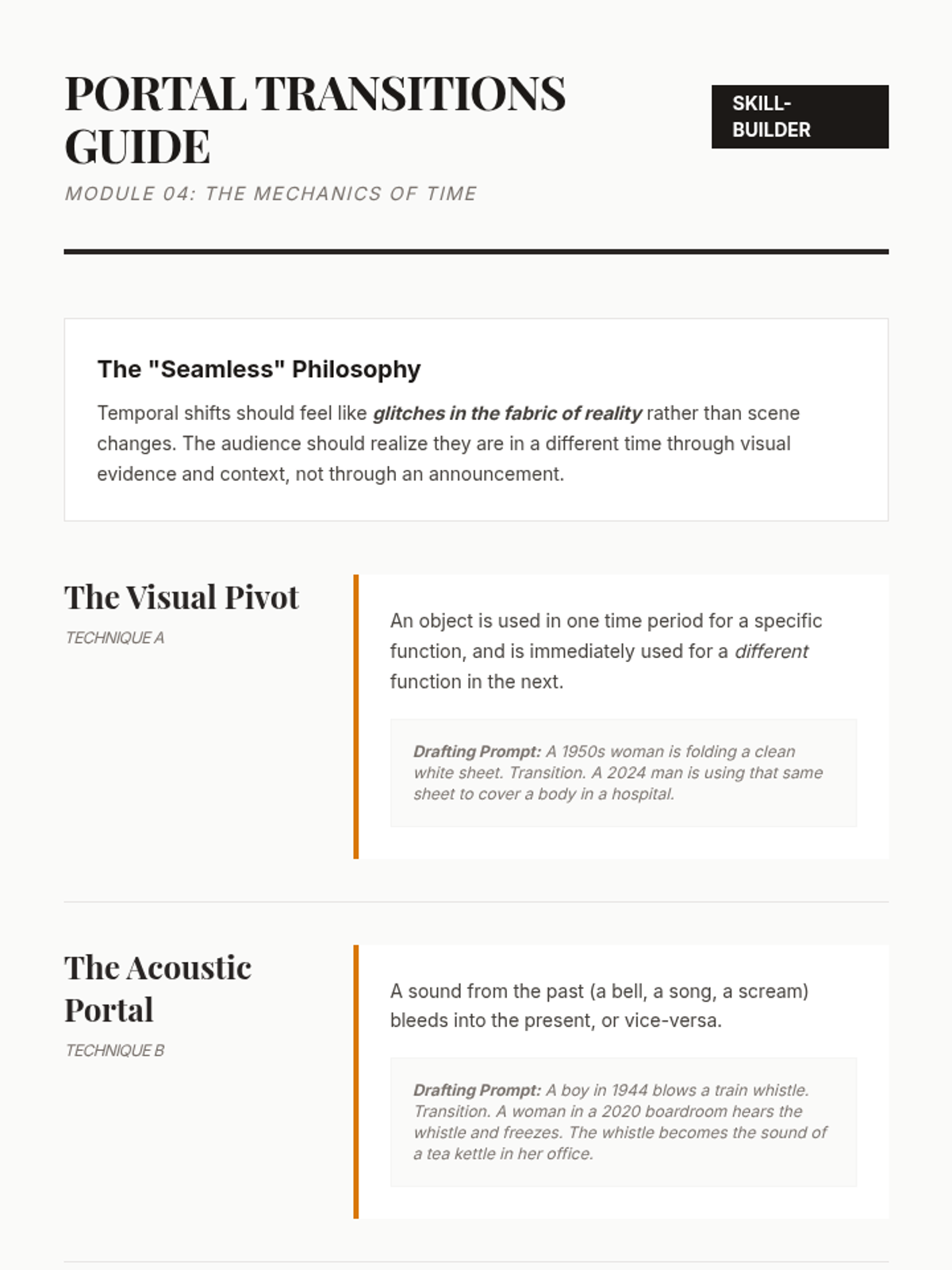
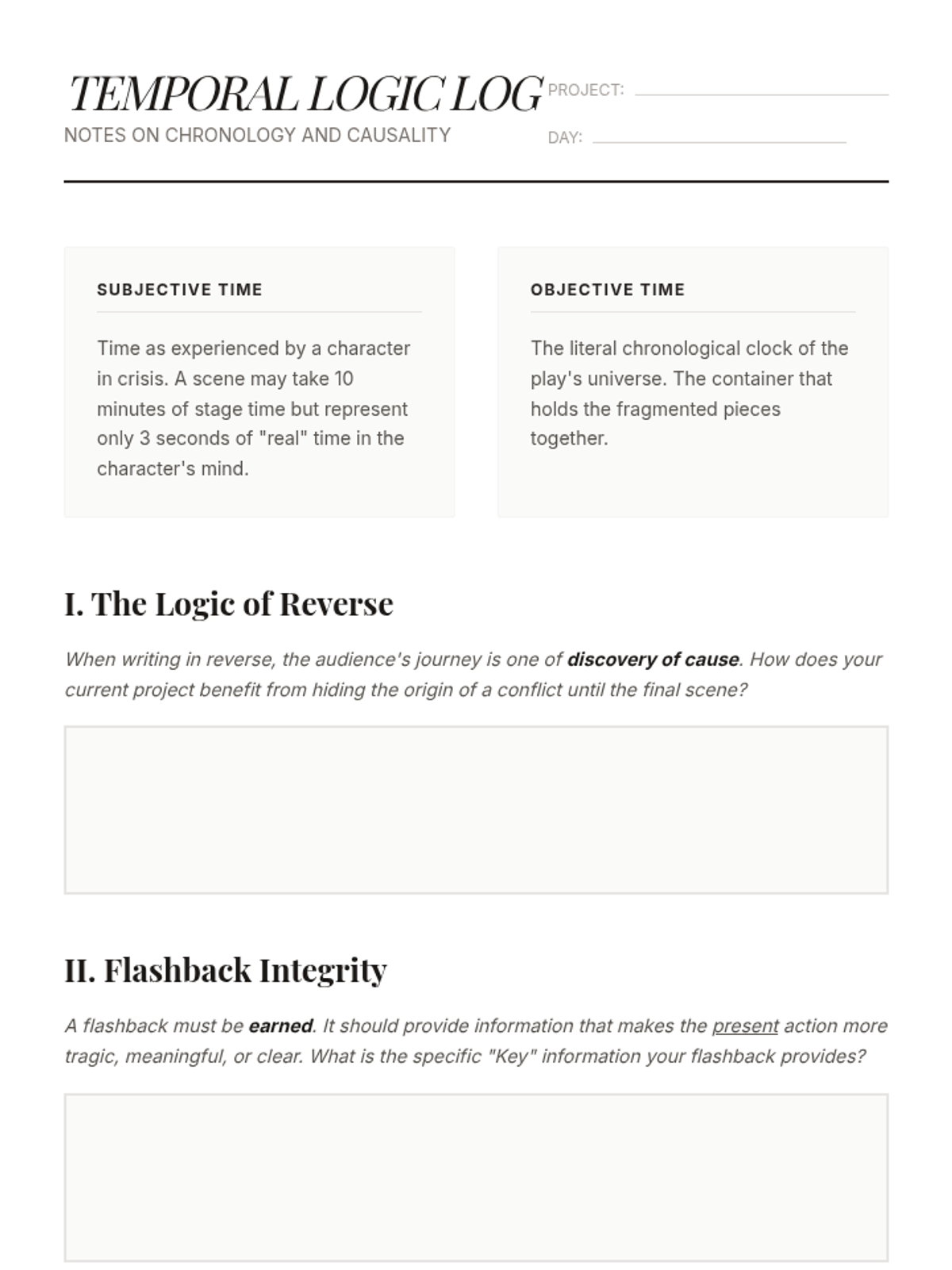
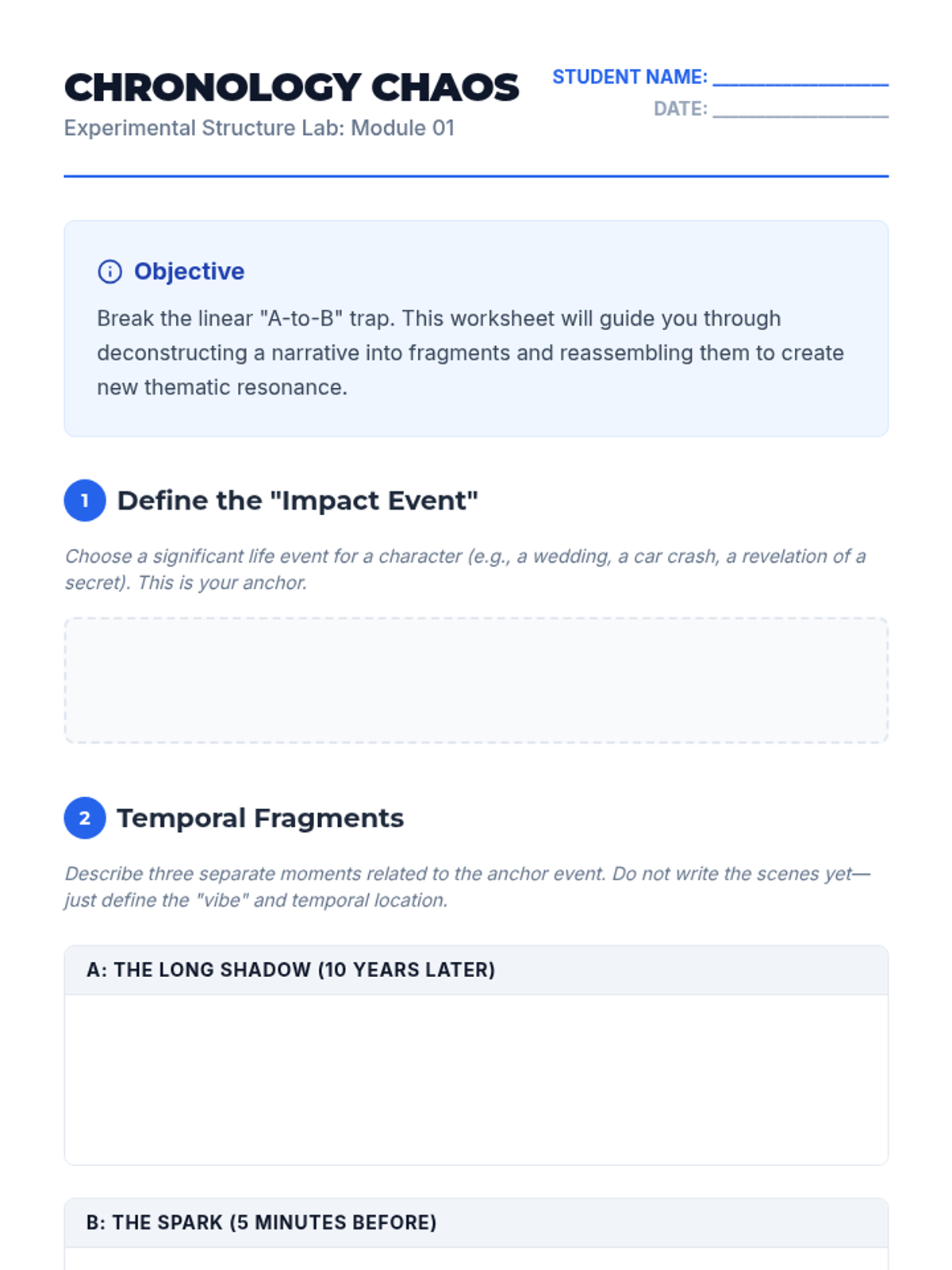
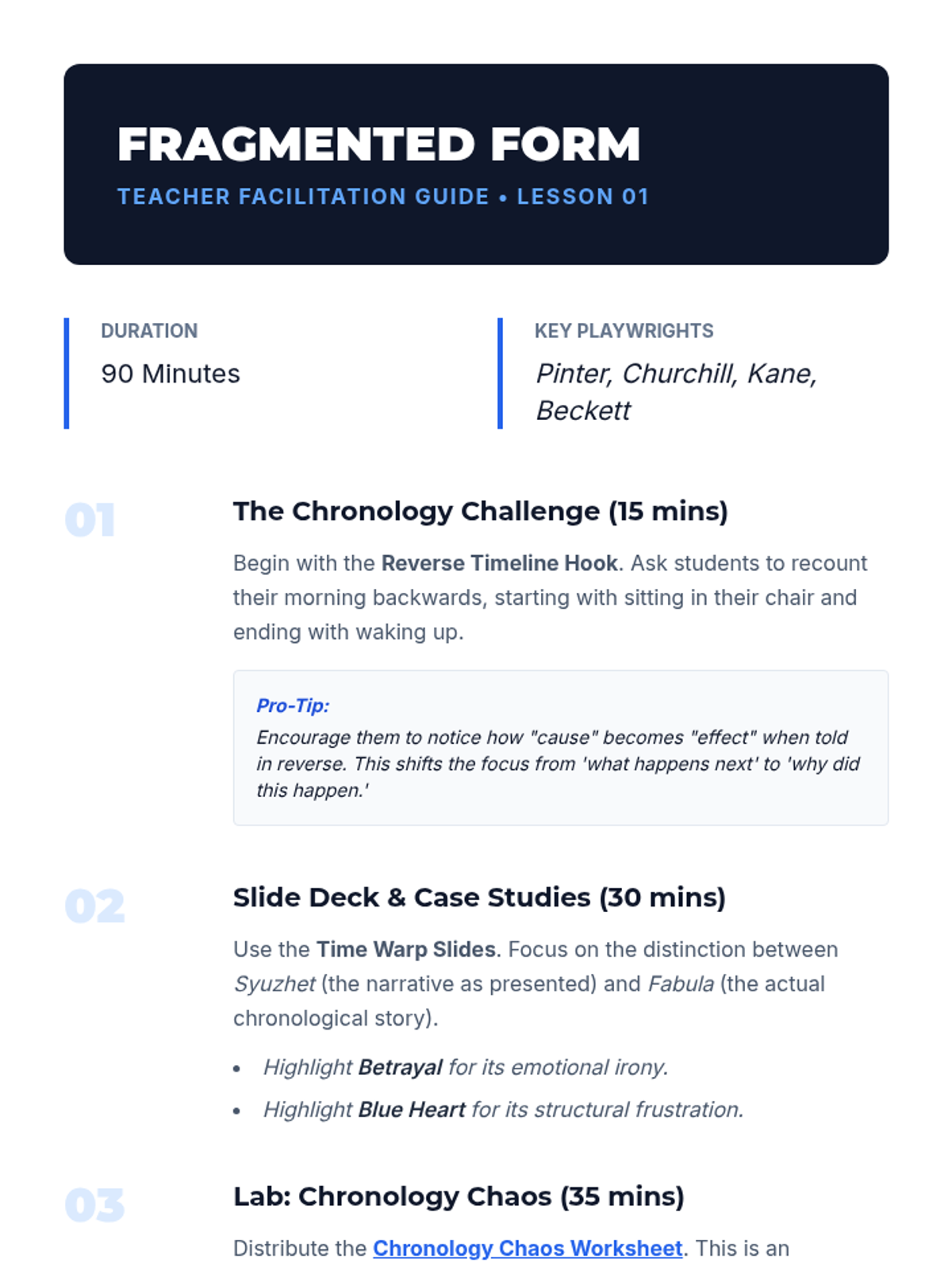
This lesson covers the mechanics of flashbacks, flash-forwards, and reverse chronology. Students write transitions that bridge time gaps fluidly, ensuring the audience can follow the temporal shifts without heavy-handed exposition.
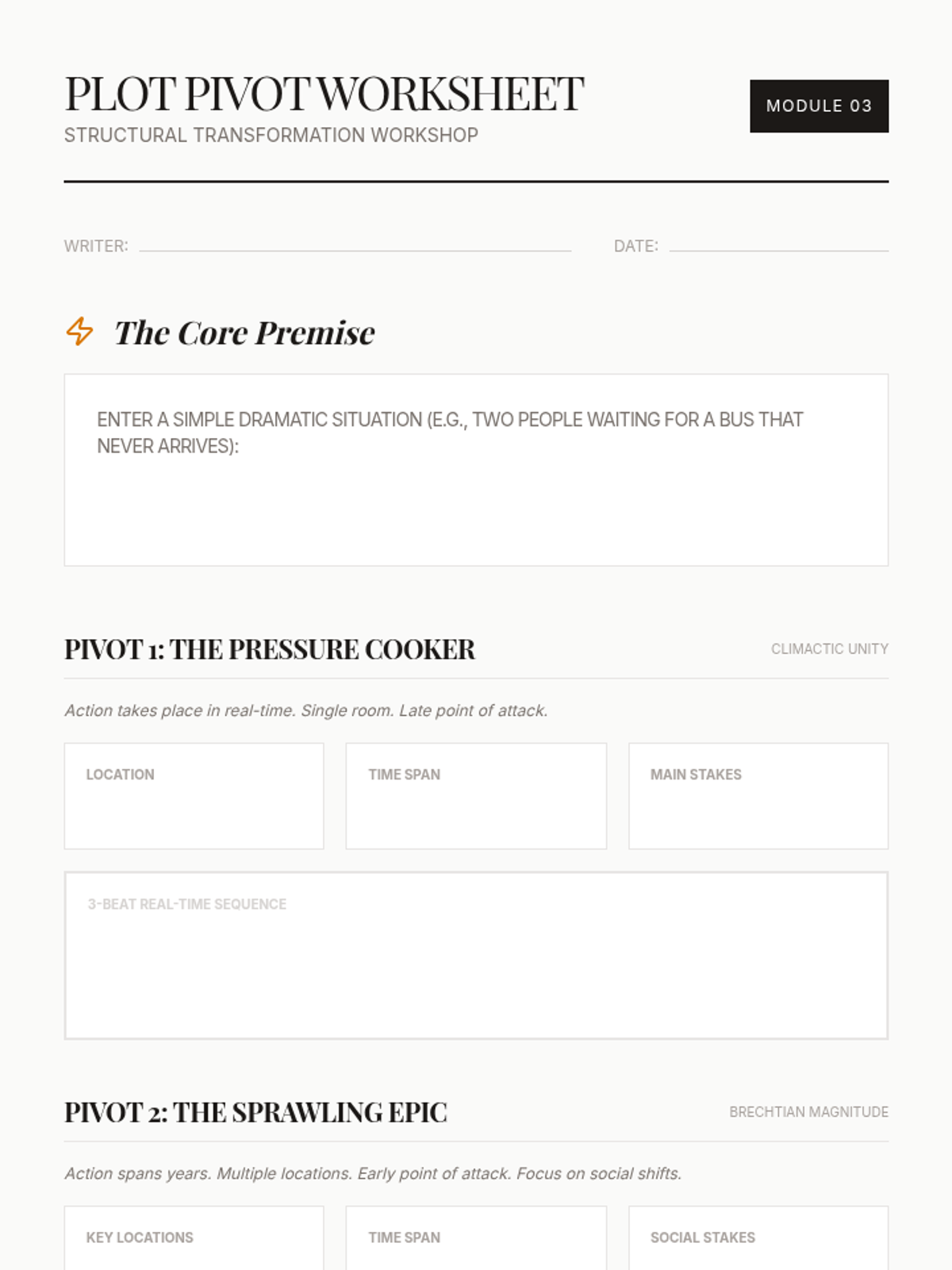
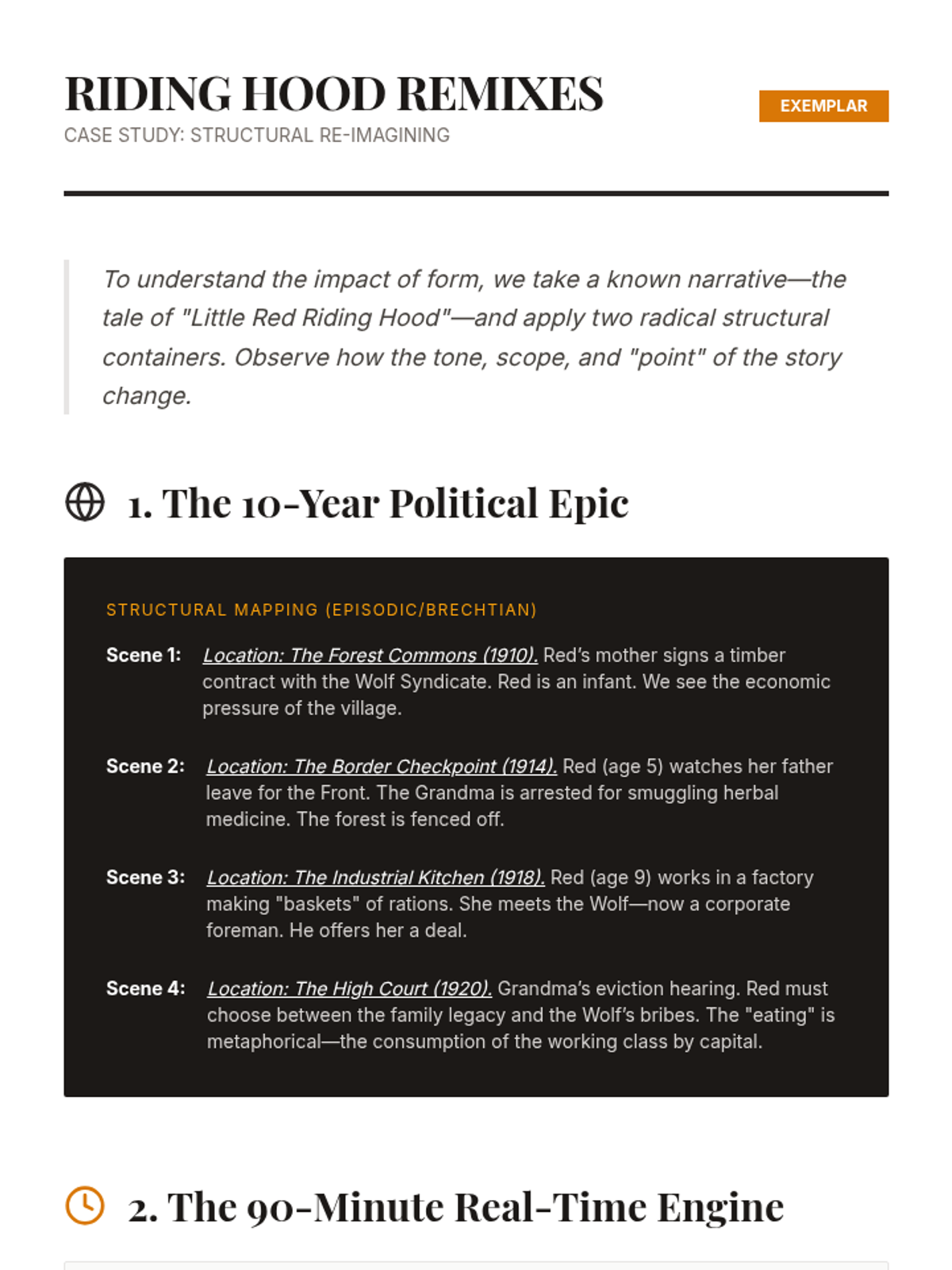
Students conduct a comparative analysis of episodic (Brechtian) structures versus climactic (tightly compressed) structures. They then take a single premise and outline it twice: once as a sprawling epic and once as a real-time pressure cooker.
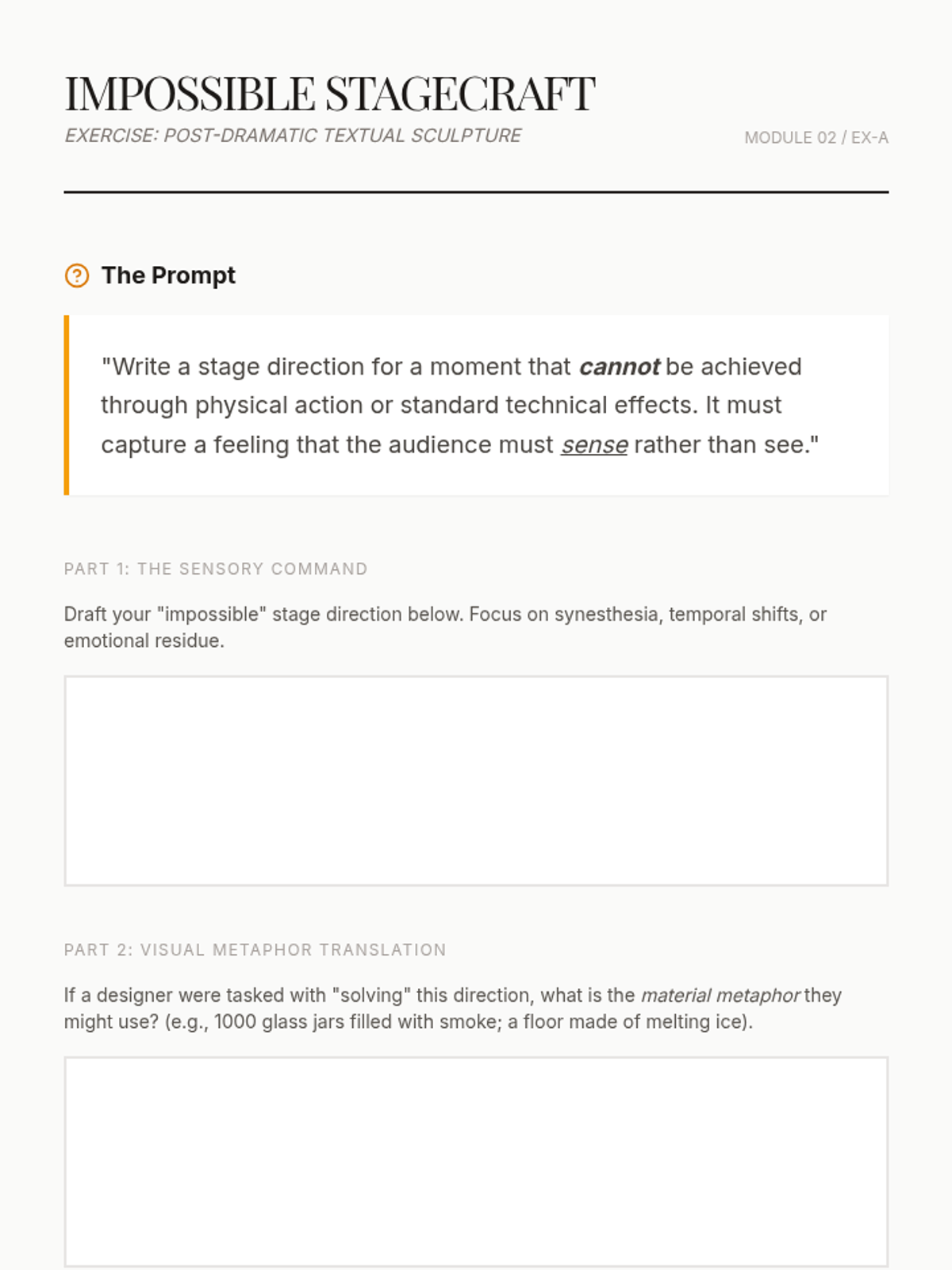
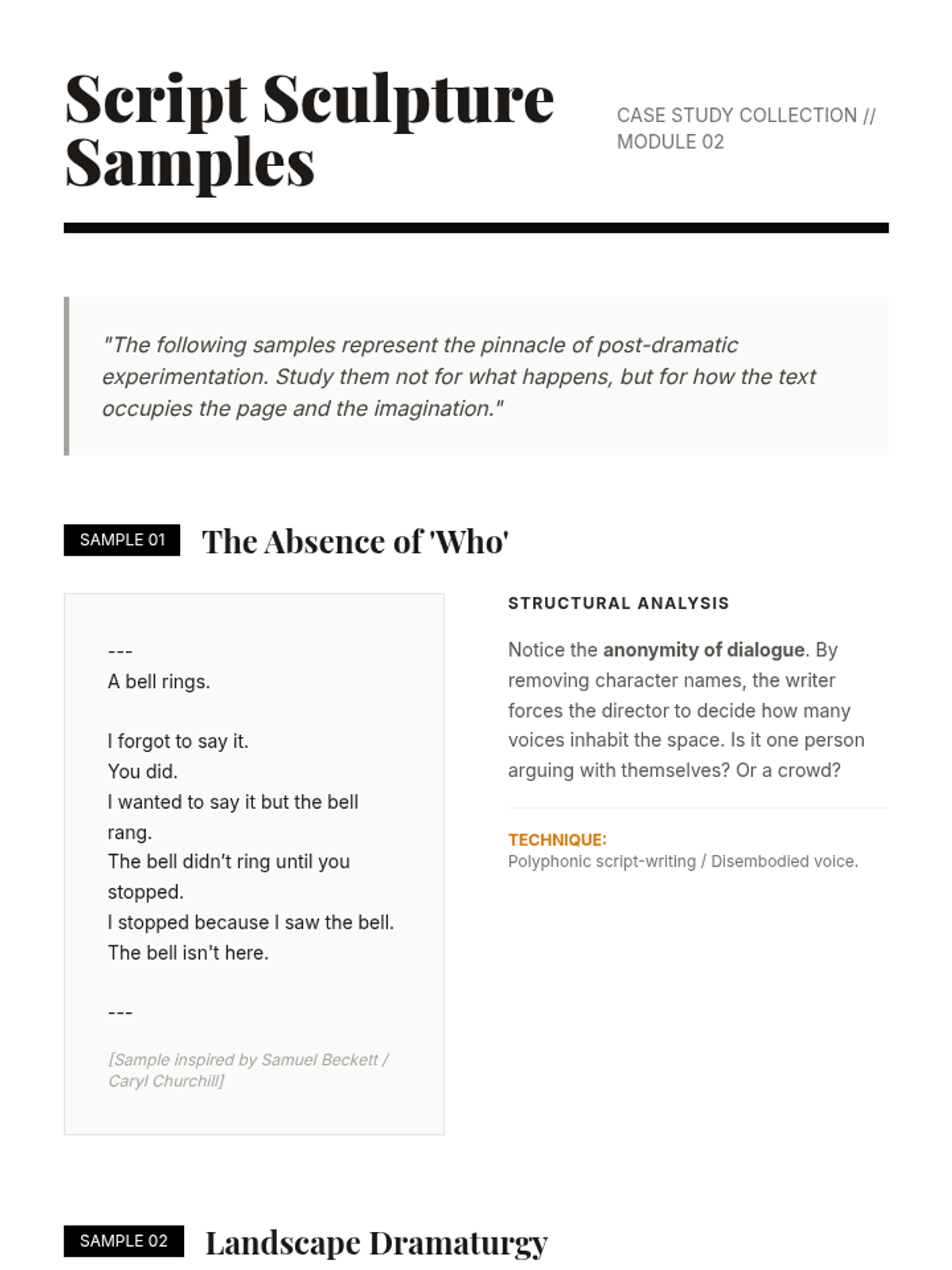
Focusing on post-dramatic theater, this lesson asks students to write scenes that prioritize atmosphere, image, or theme over plot progression. Students experiment with 'impossible' stage directions and non-narrative cohesion.
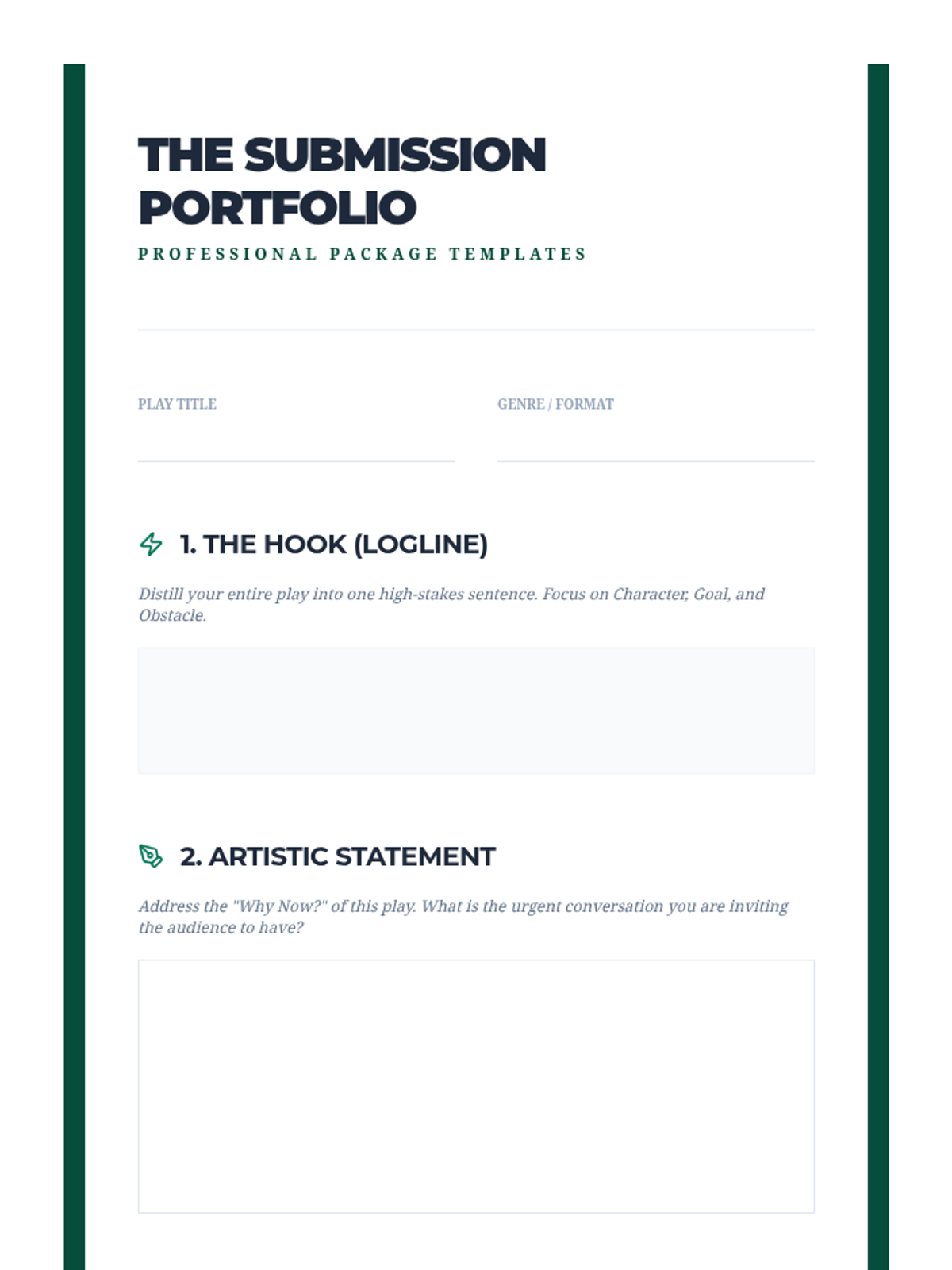
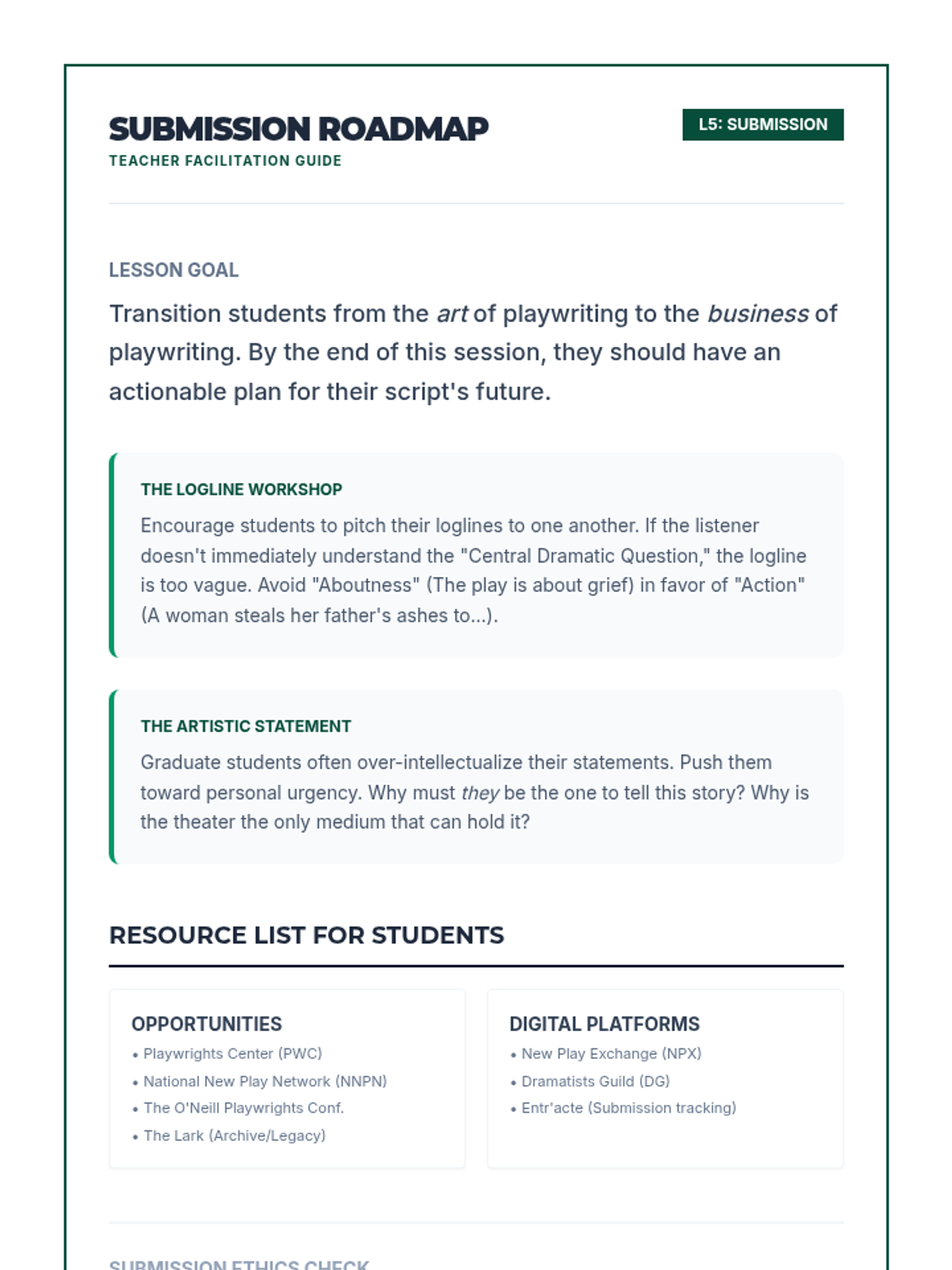
Covers the professional side of playwriting, including crafting artistic statements, synopses, and query letters to prepare students for the competitive landscape of script submissions.
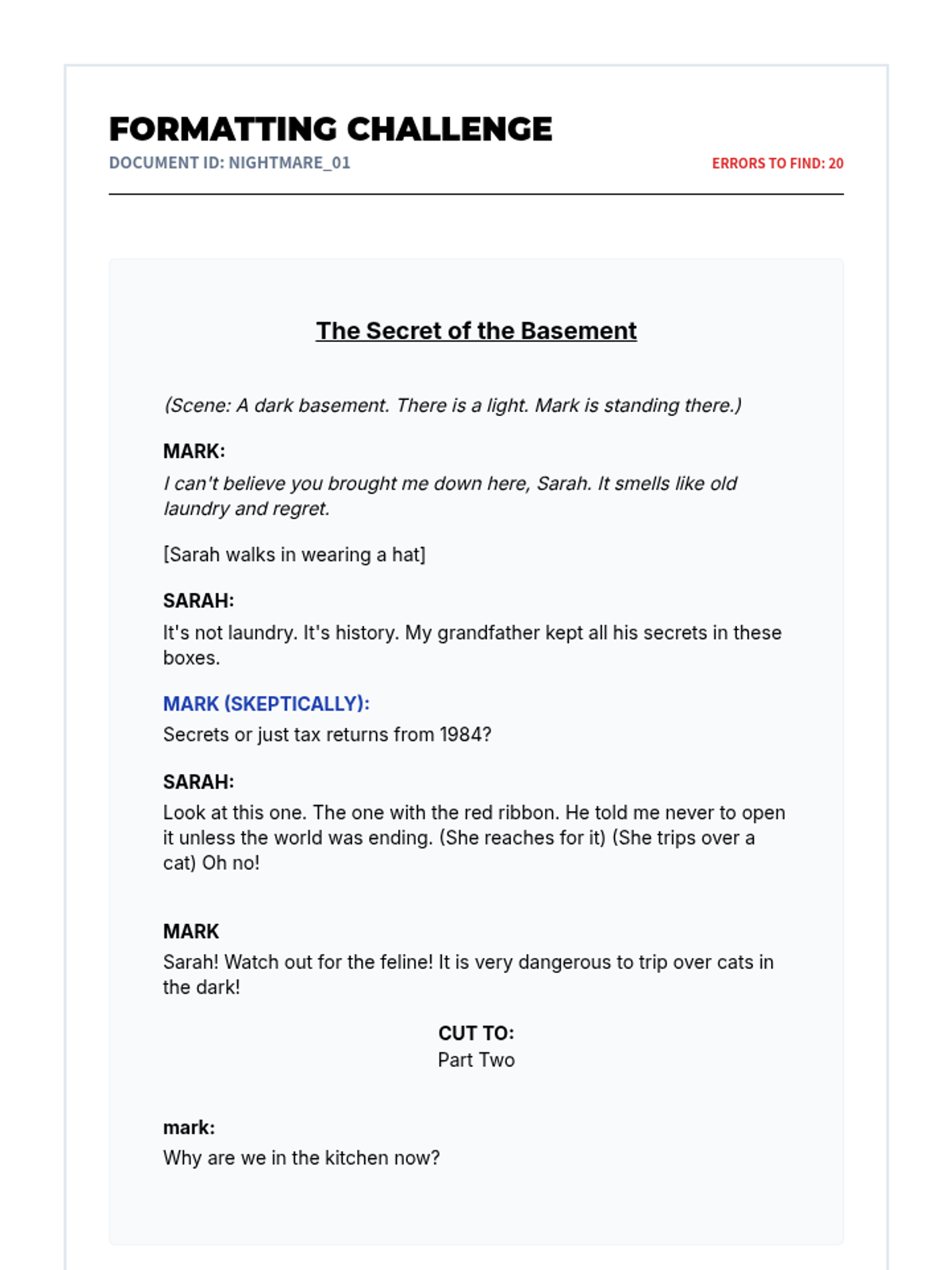
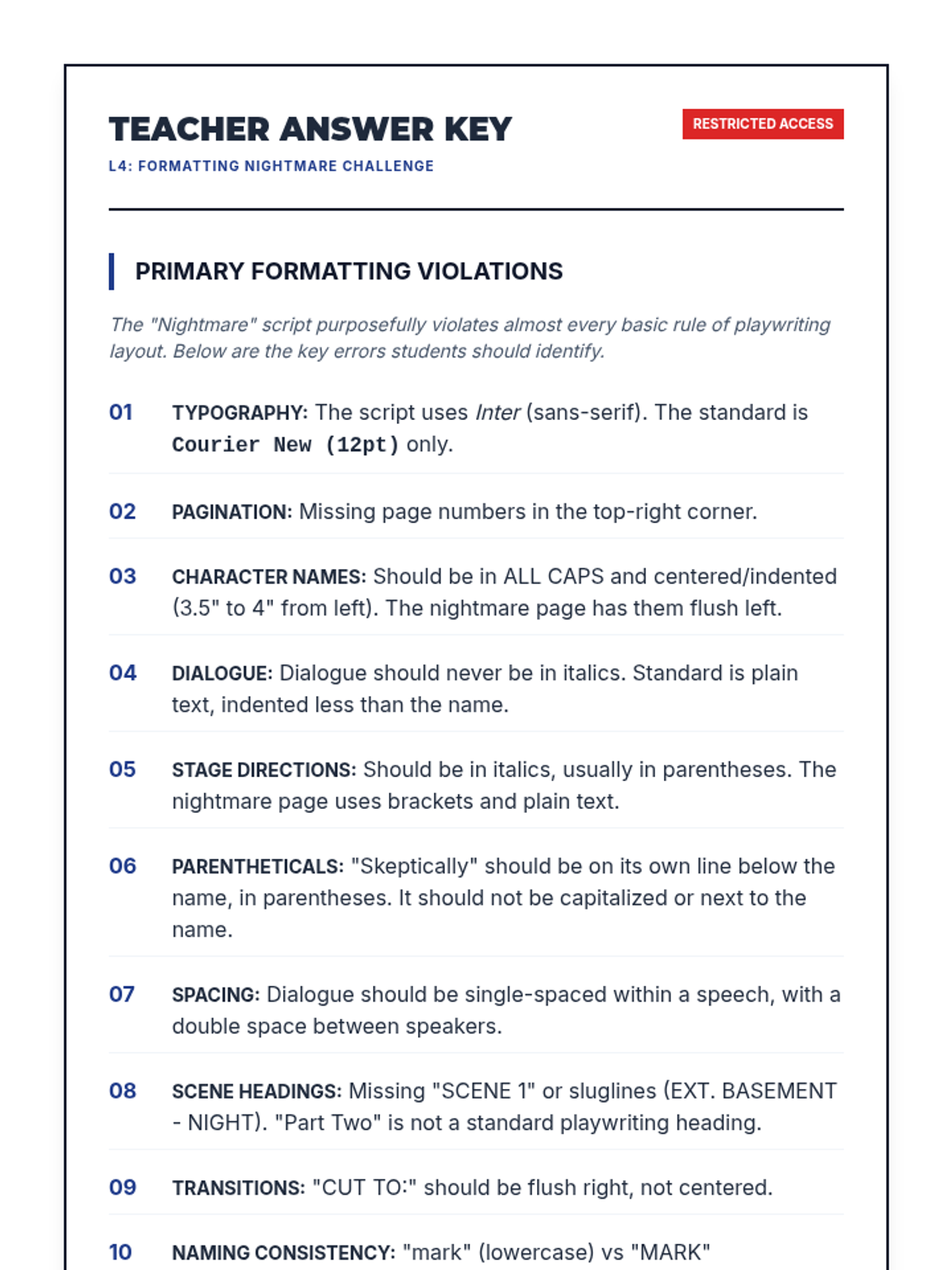
A technical dive into industry-standard formatting. Students master the visual language of professional scripts and identify common technical errors that distract from the narrative.
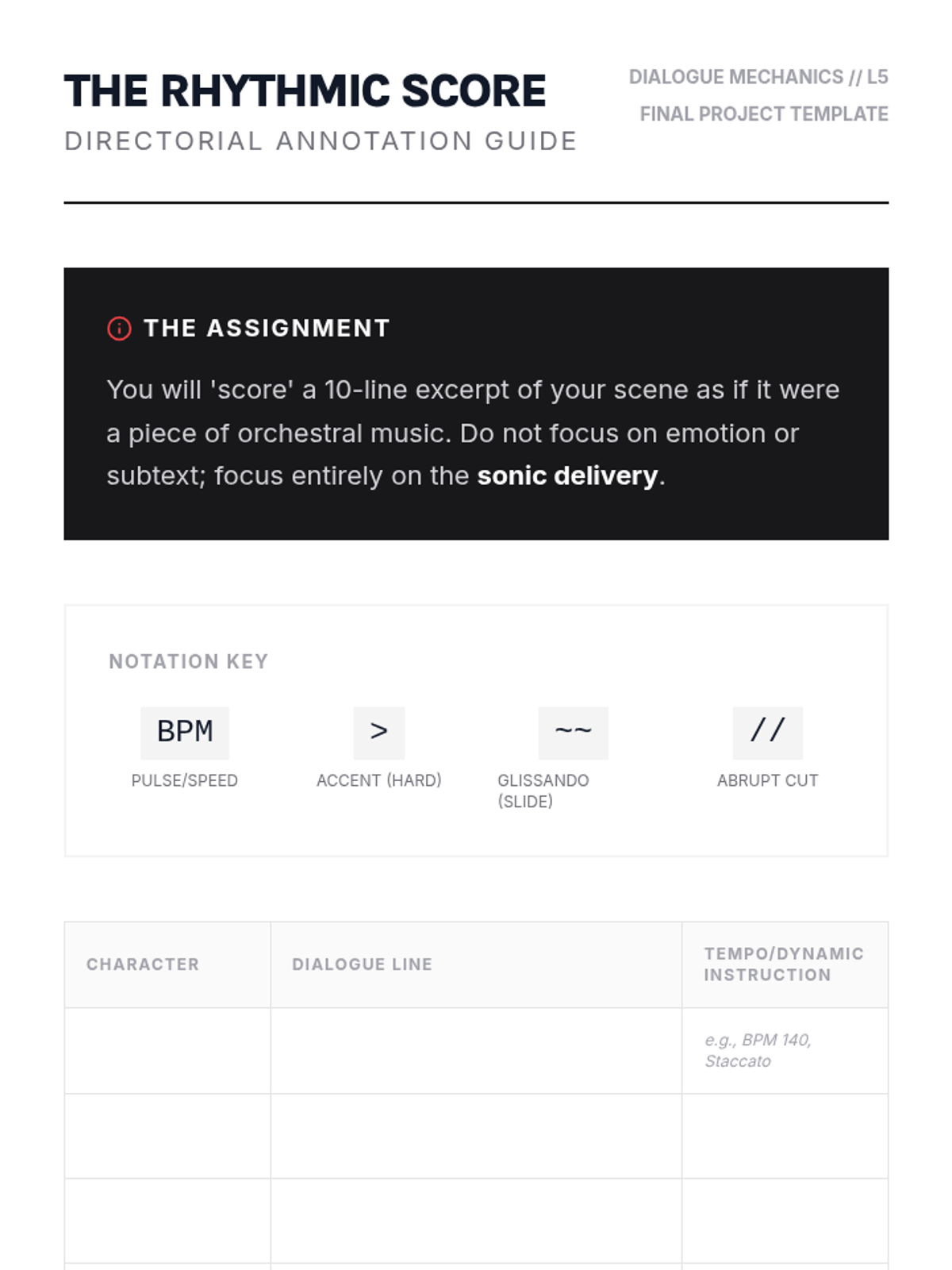
The capstone lesson where students 'score' their scenes musically, using metronomic pacing and rhythmic notation to direct performance through text.
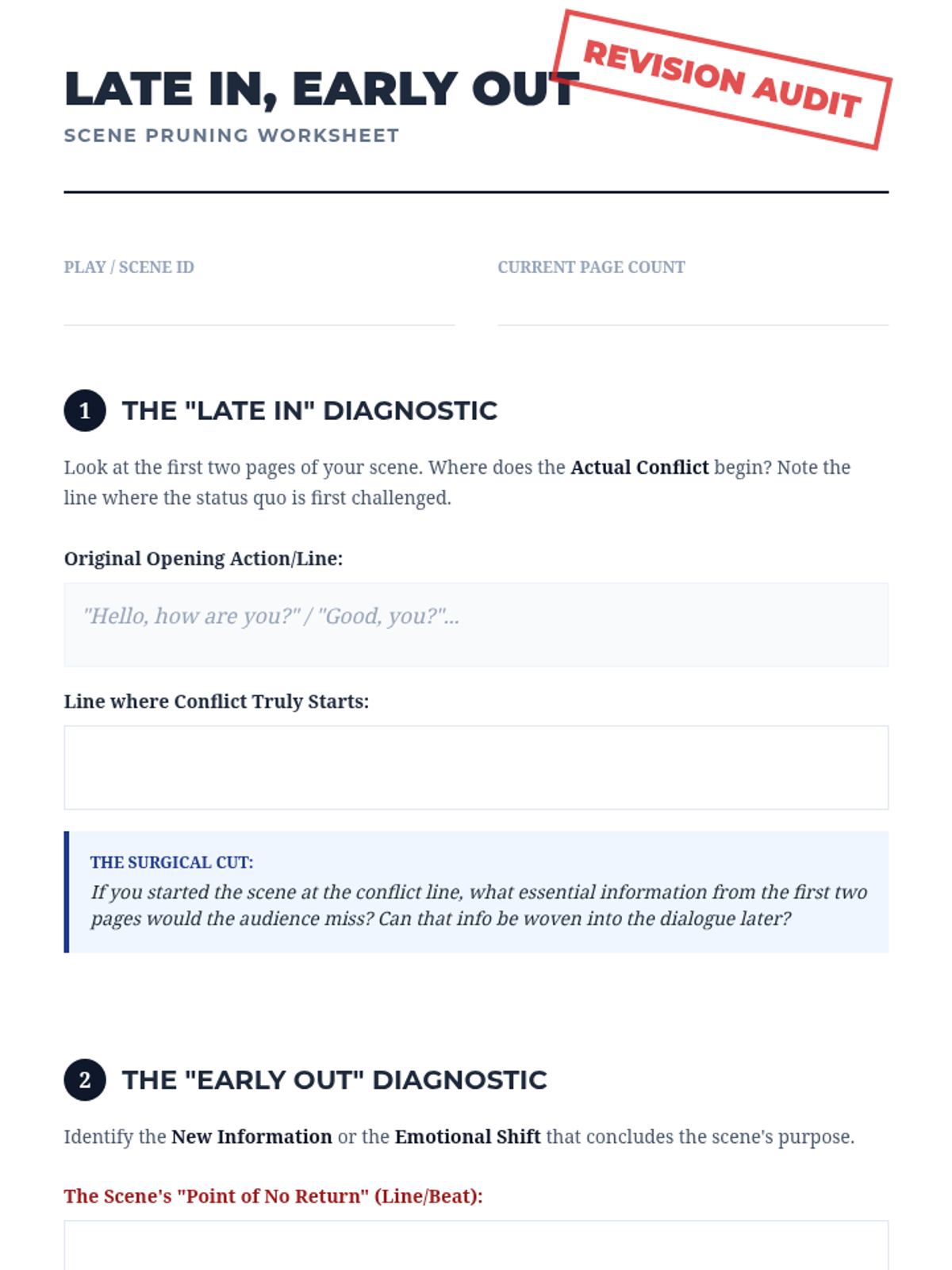
Provides concrete strategies for tightening and refining a script. Techniques include scene pruning, character consolidation, and mastery of the 'late in, early out' philosophy of playwriting.
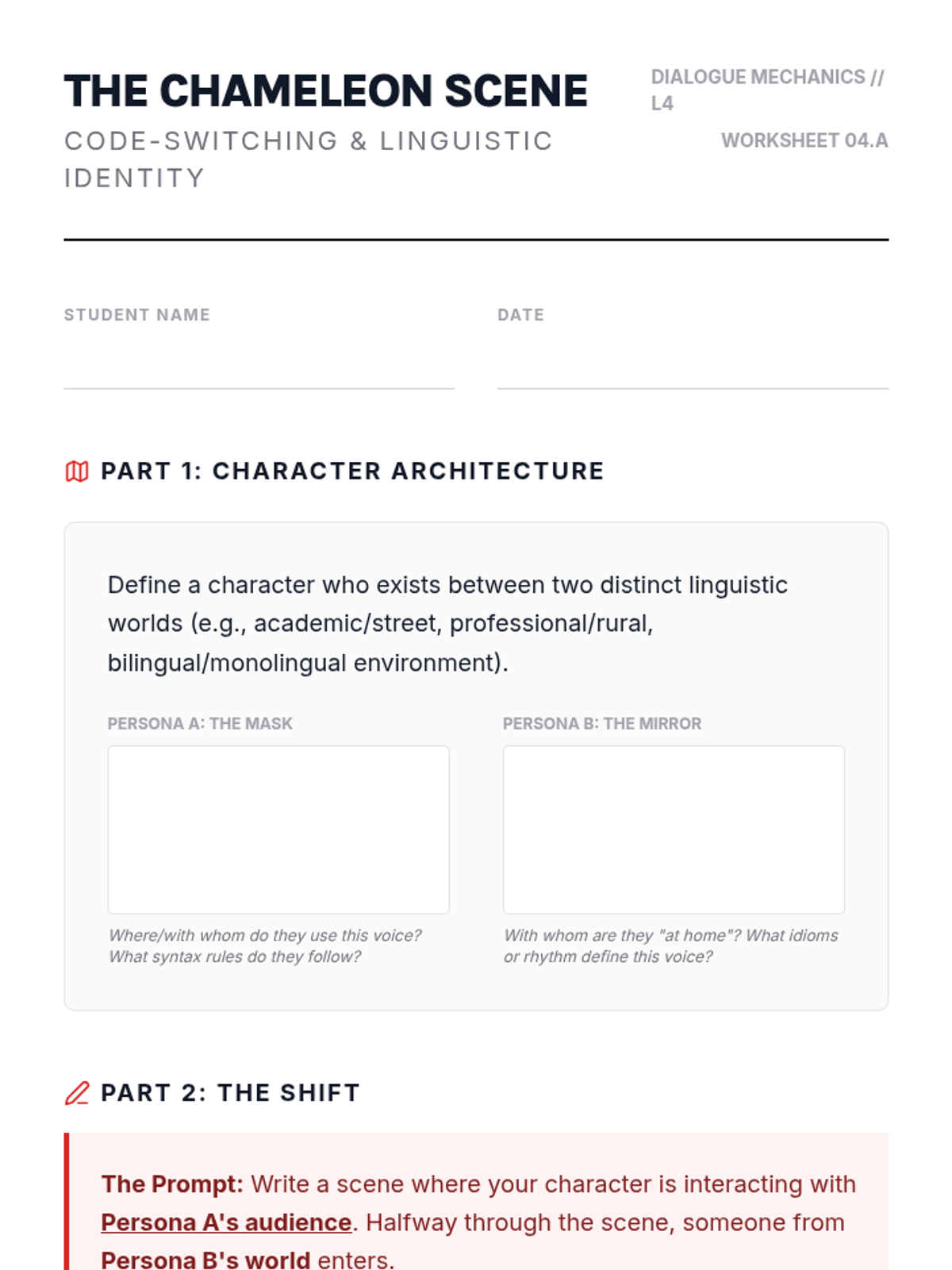
A study of linguistic identity, including code-switching and the ethical formatting of dialect and foreign language. Focuses on using syntax and idiom over phonetic spelling.
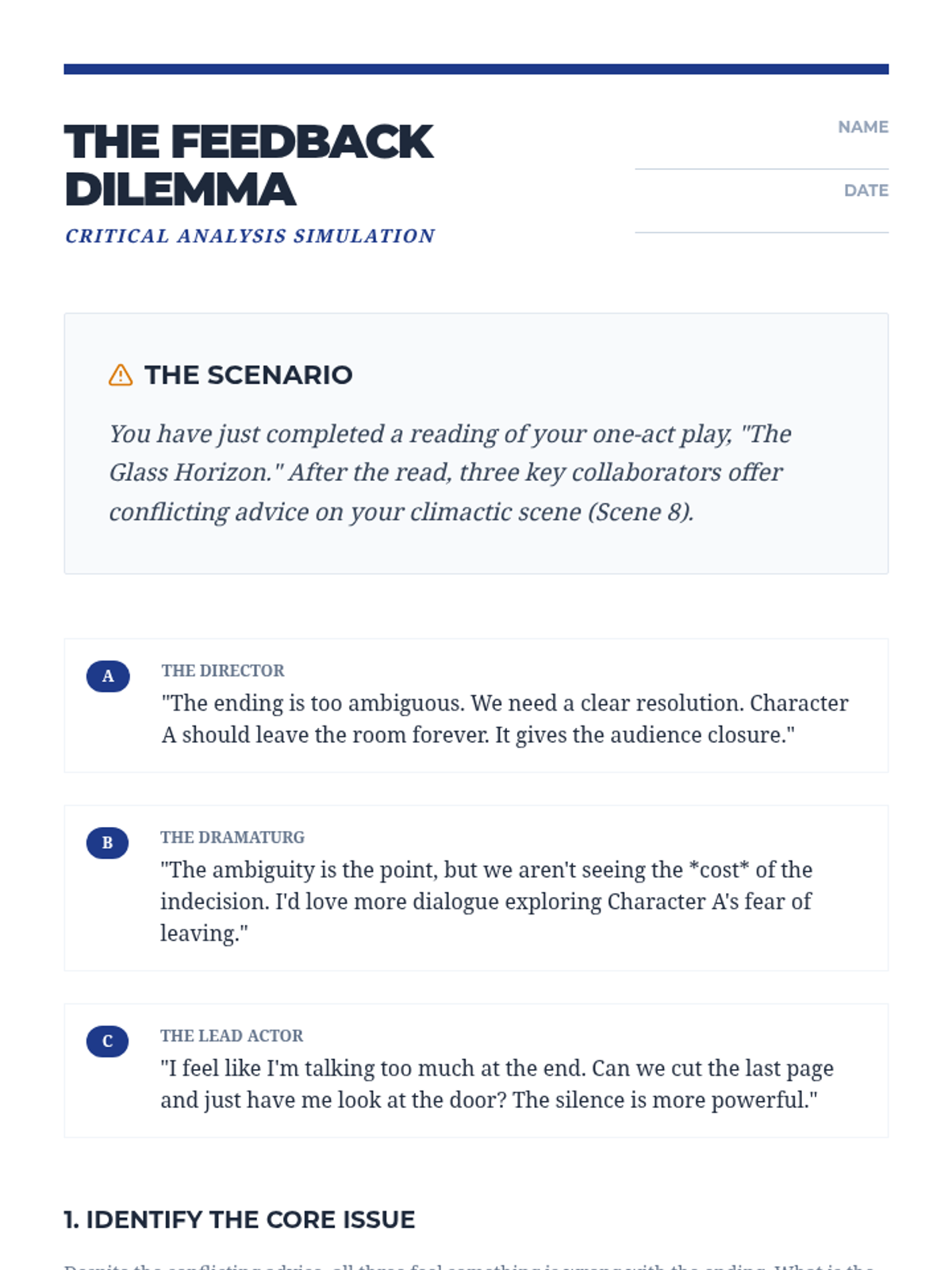
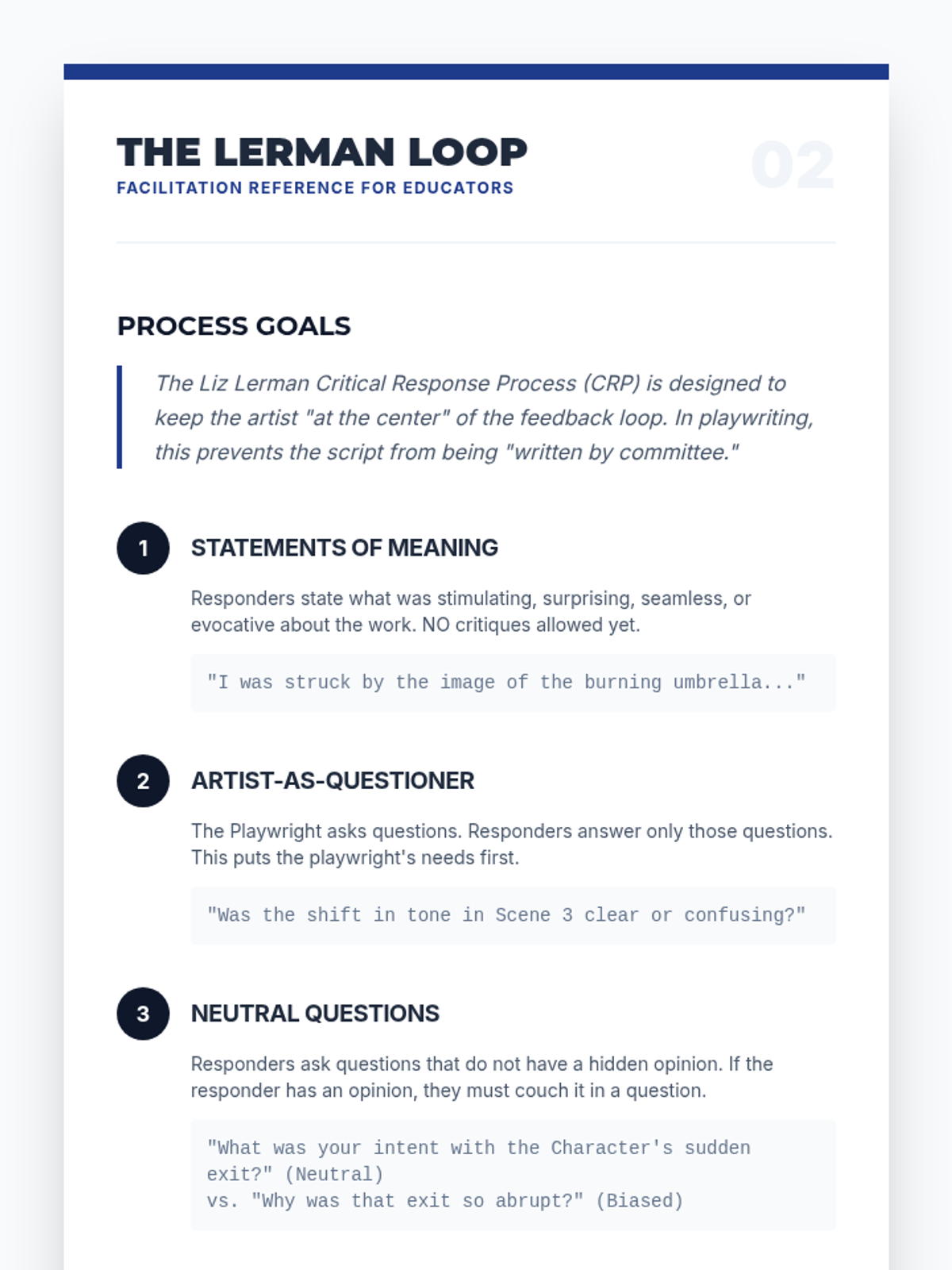
Simulates the collaborative workshop environment using structured feedback models. Students learn to filter critiques, manage conflicting artistic opinions, and prioritize their own vision while remaining open to dramaturgical insight.
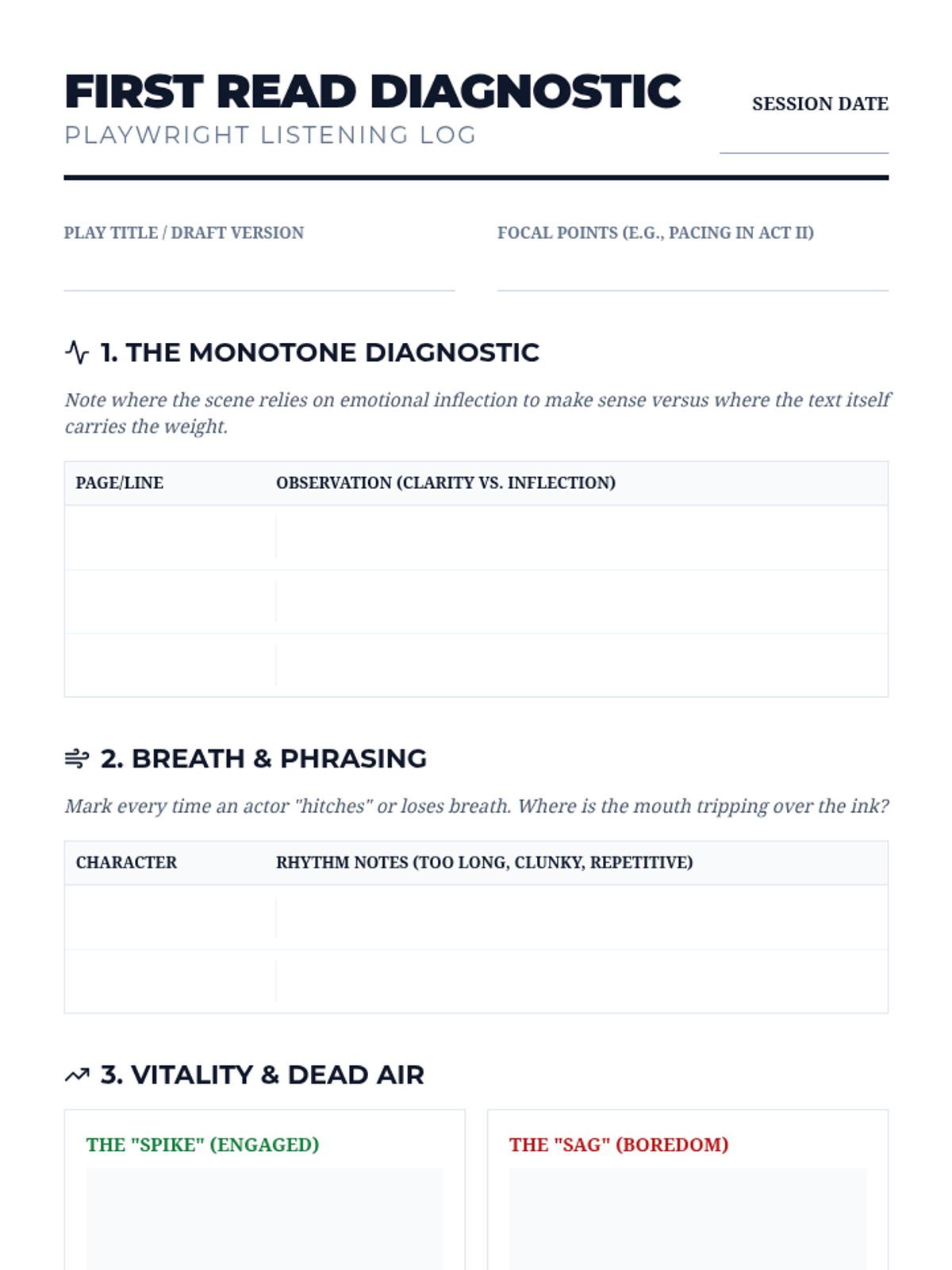
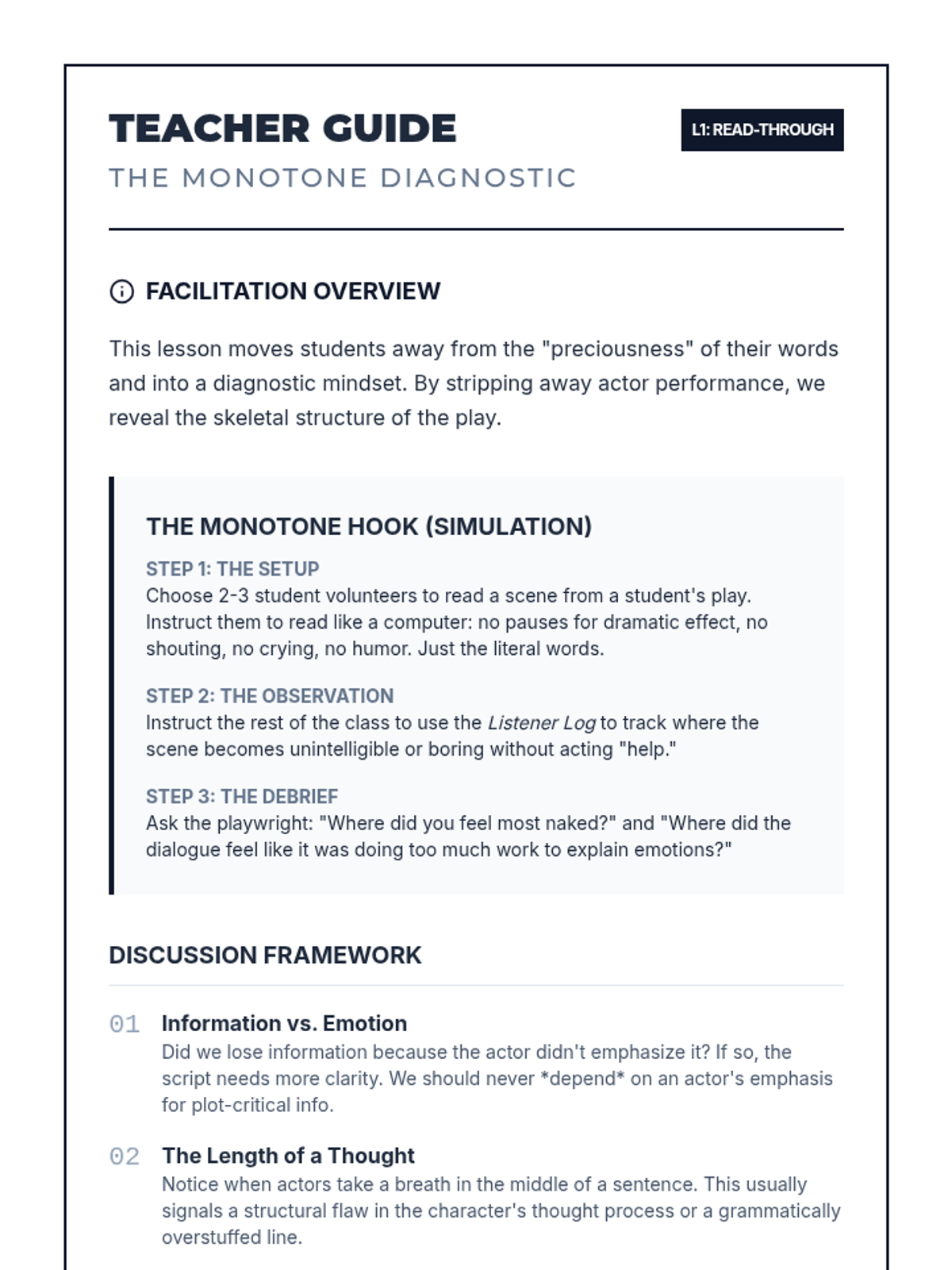
Focuses on the transition from page to stage through the initial read-through. Students learn professional etiquette, critical listening skills, and how to identify structural flaws when work is performed aloud.
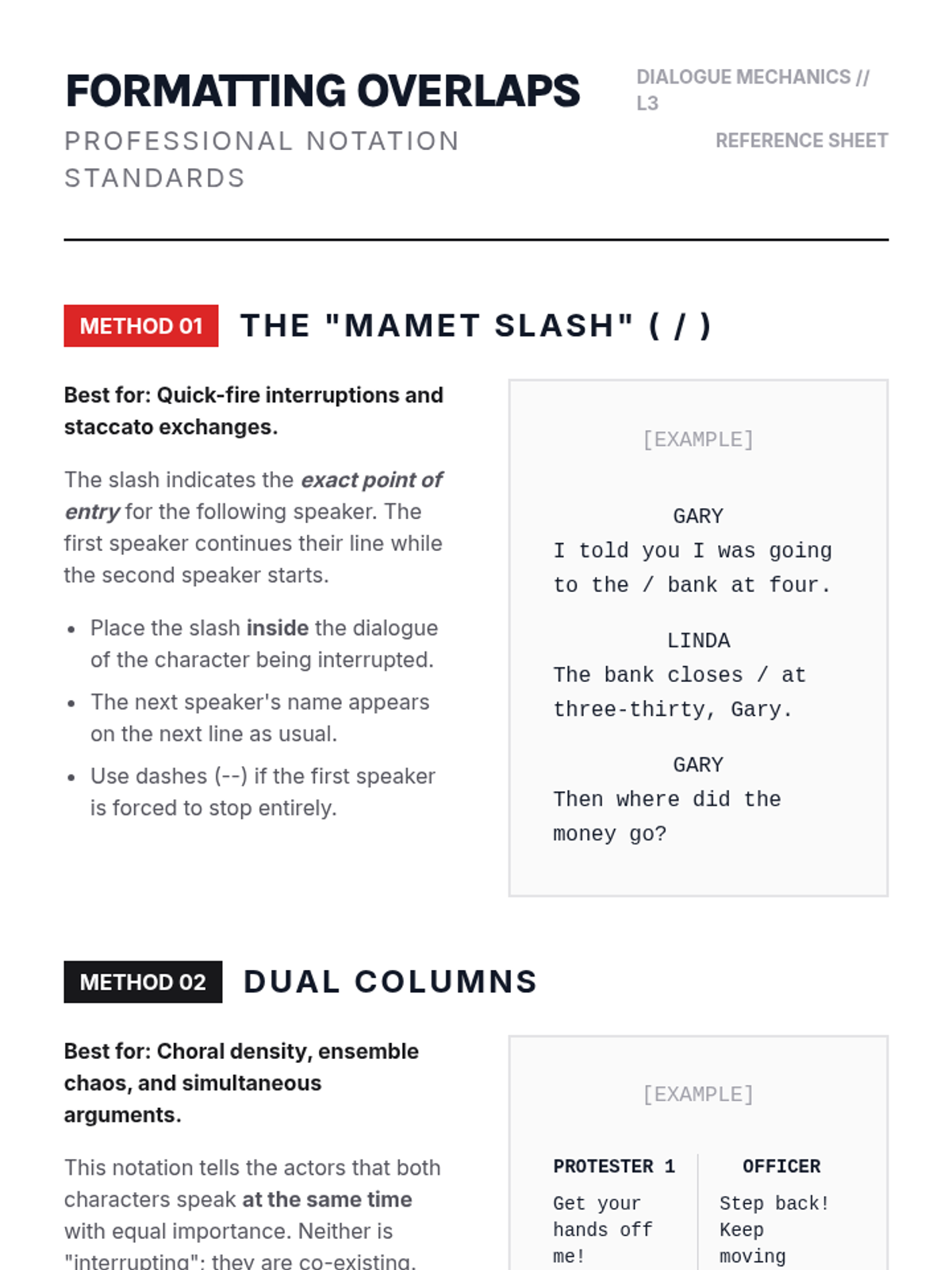
Technical training in formatting and writing overlapping dialogue and interruptions. Students engage in ensemble-based writing to create auditory density on the stage.
An exploration of how syntactical choices (sentence length, complexity, and active/passive voice) signal authority and submission. Students learn to manipulate status through structural revision.
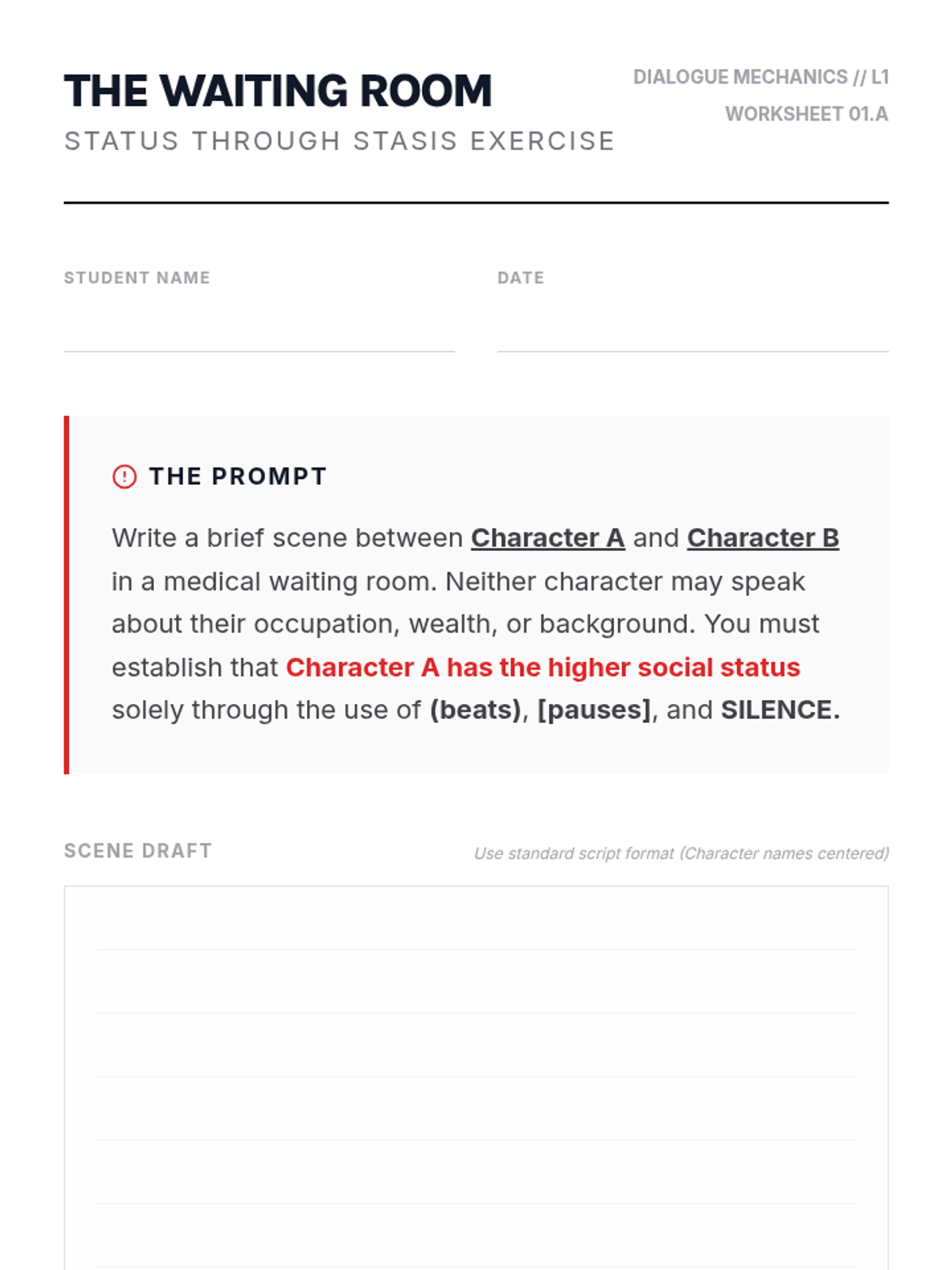
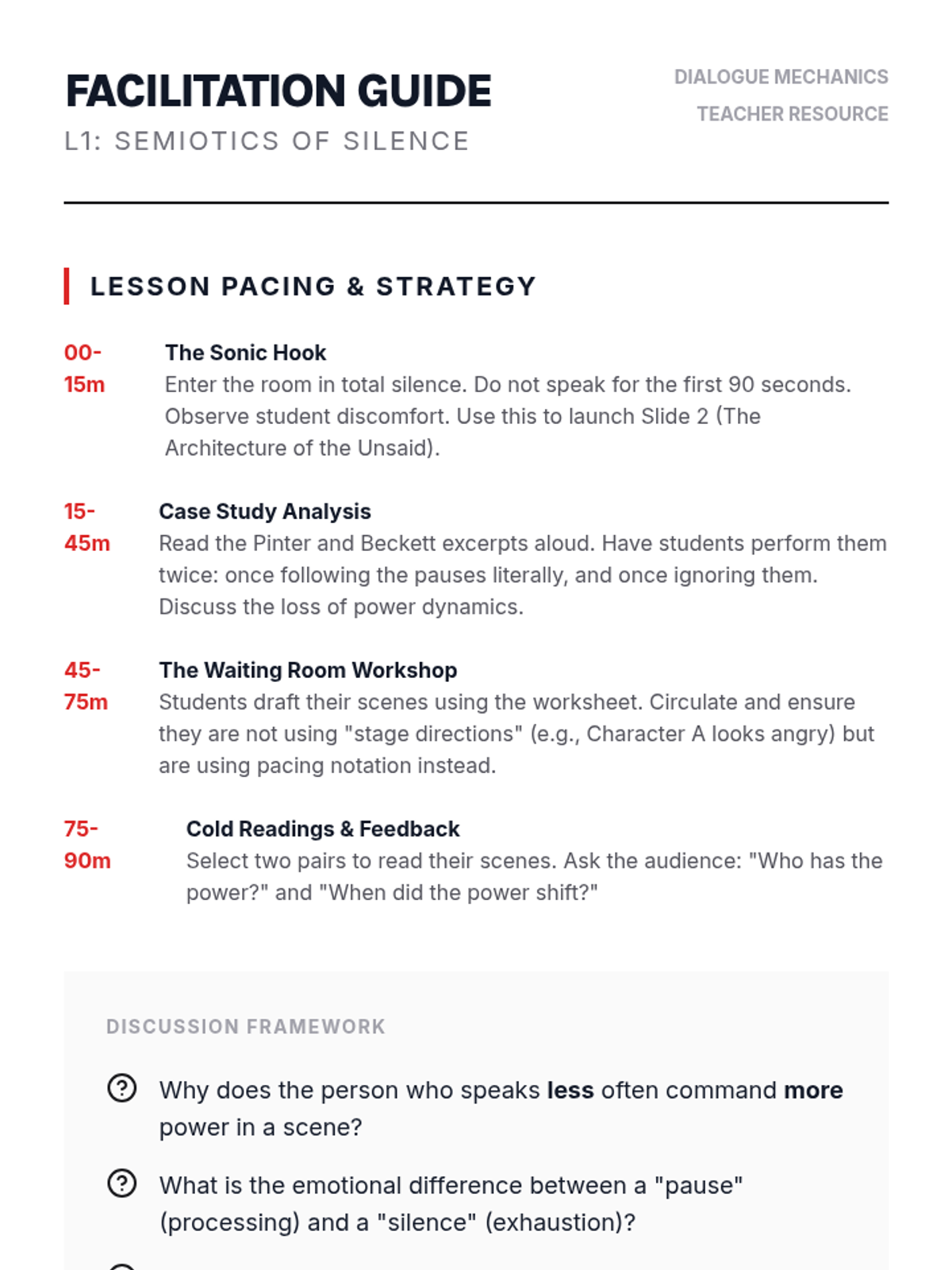
Students analyze the technical distinctions between beats, pauses, and silences in script formatting. The lesson focuses on the 'unsaid' as a tool for establishing social status and tension.
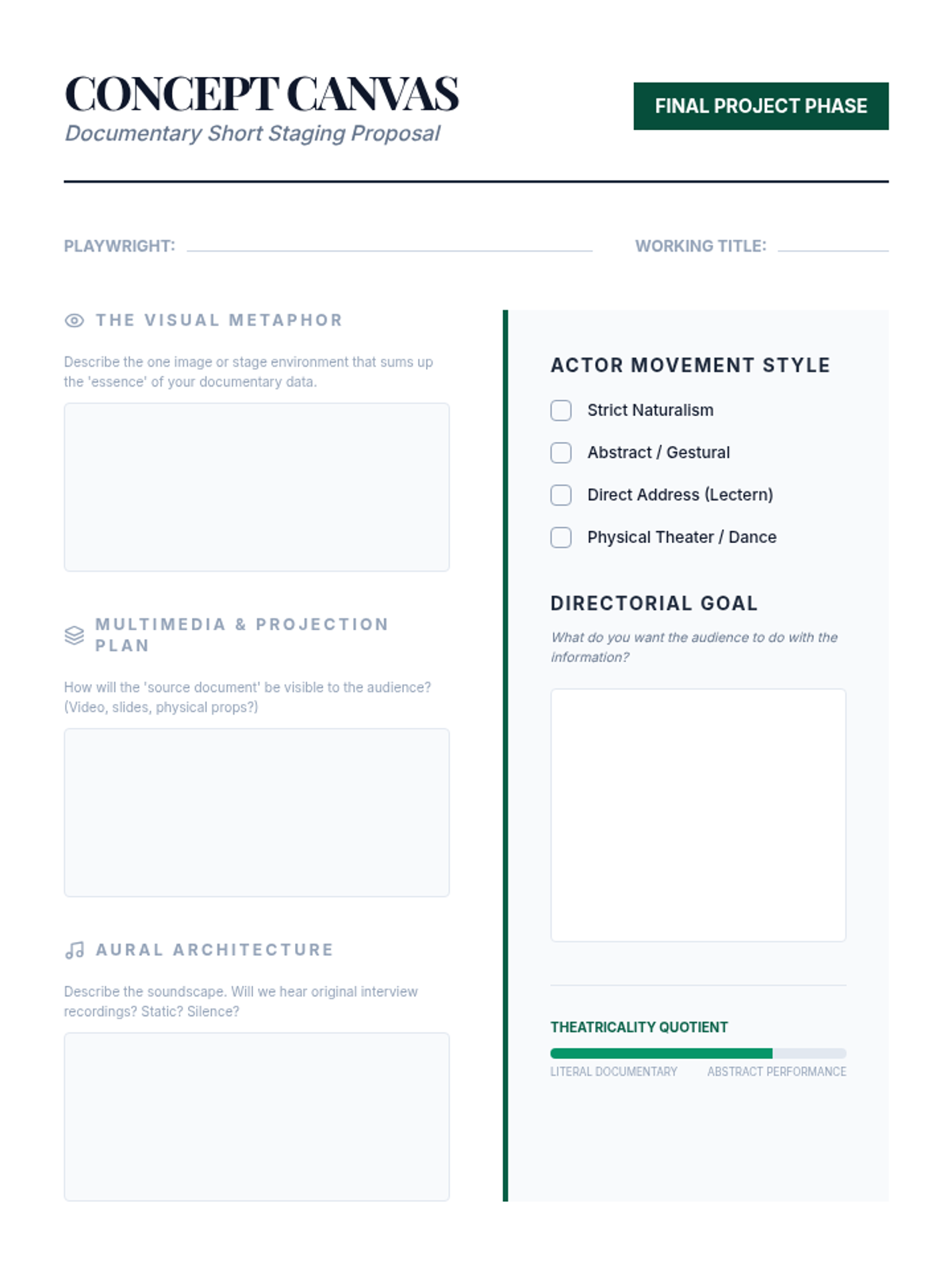
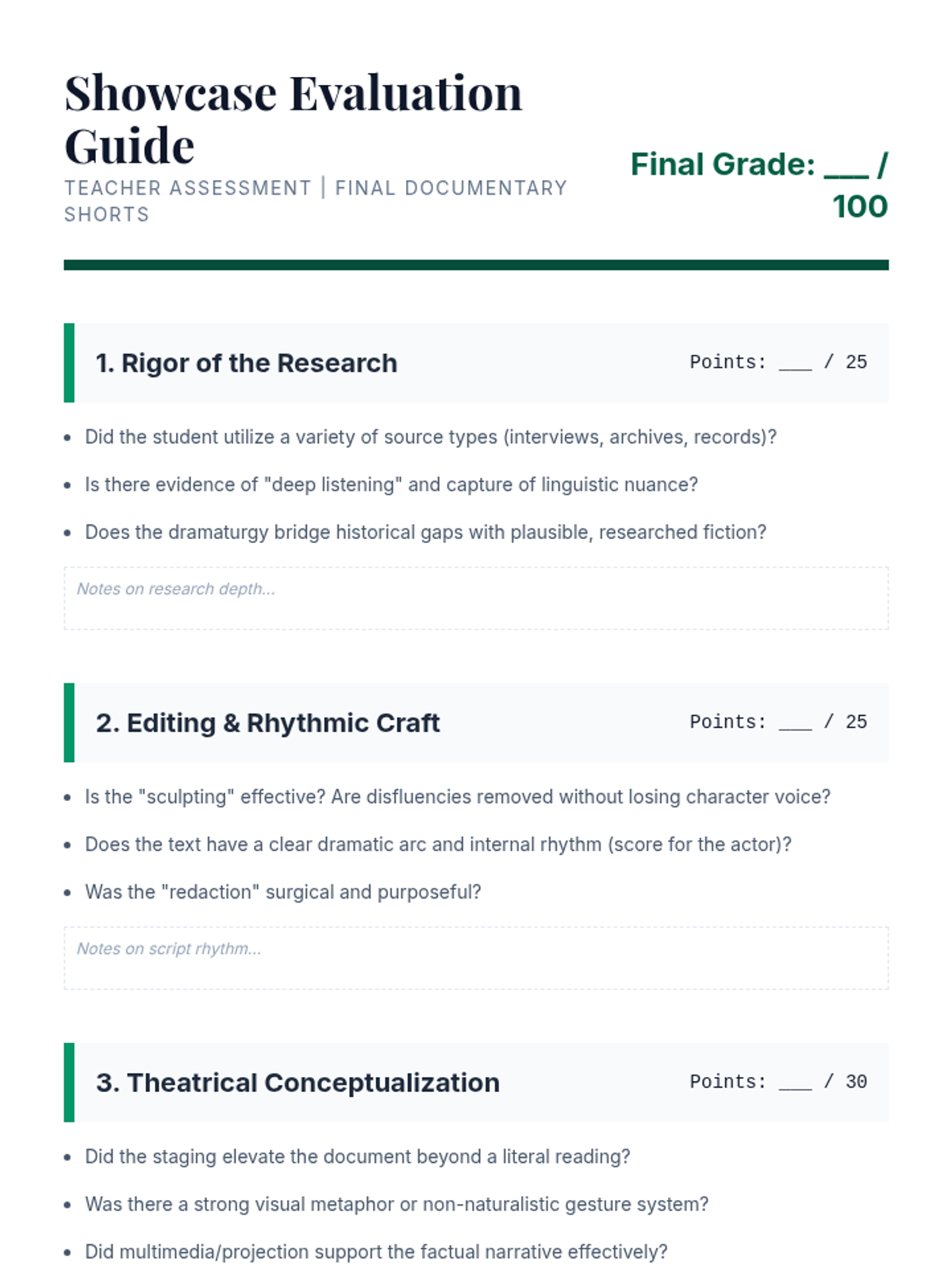
Concludes with a focus on non-naturalistic staging techniques for documentary theatre, culminating in a presentation of student documentary shorts.
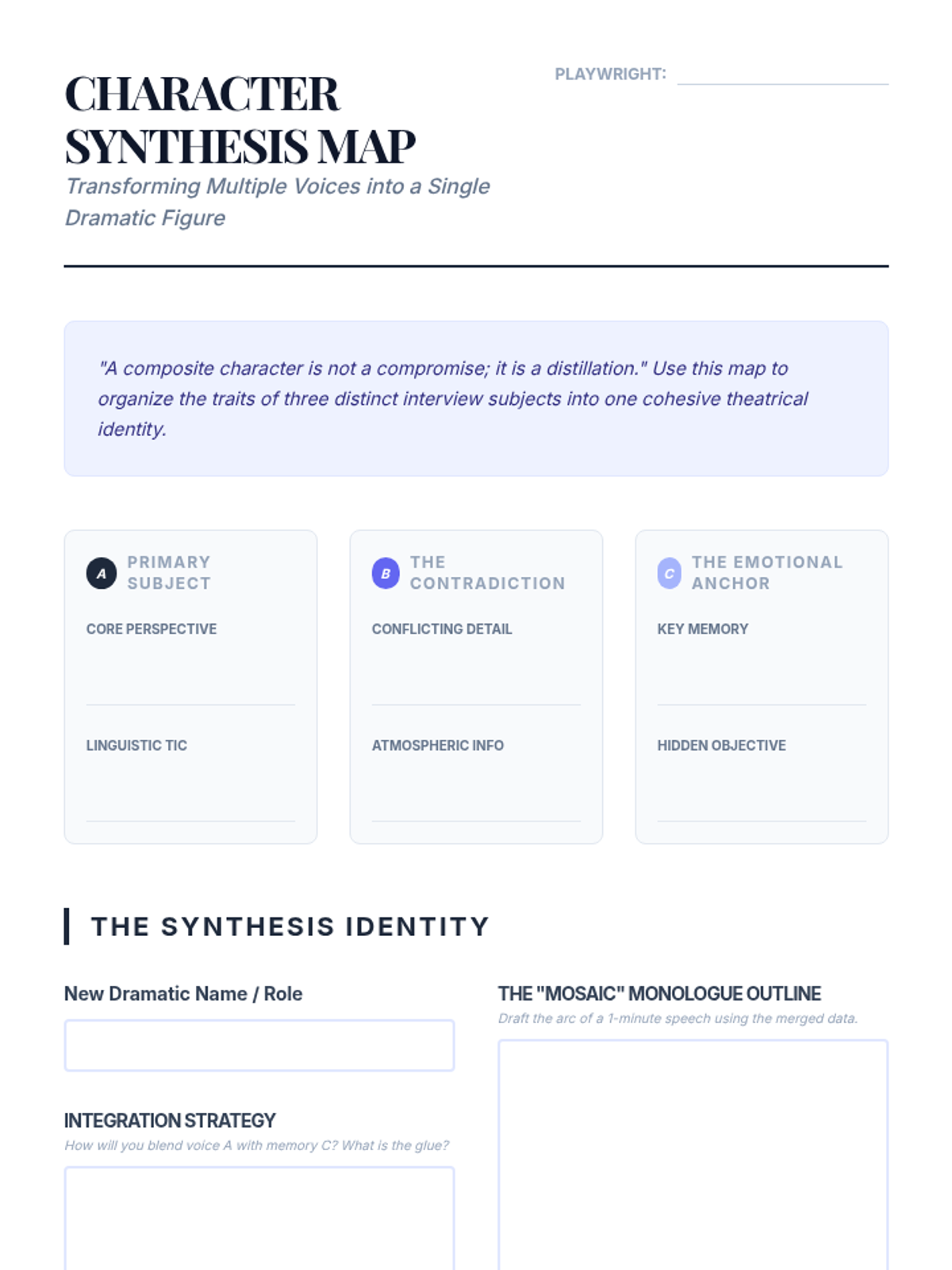
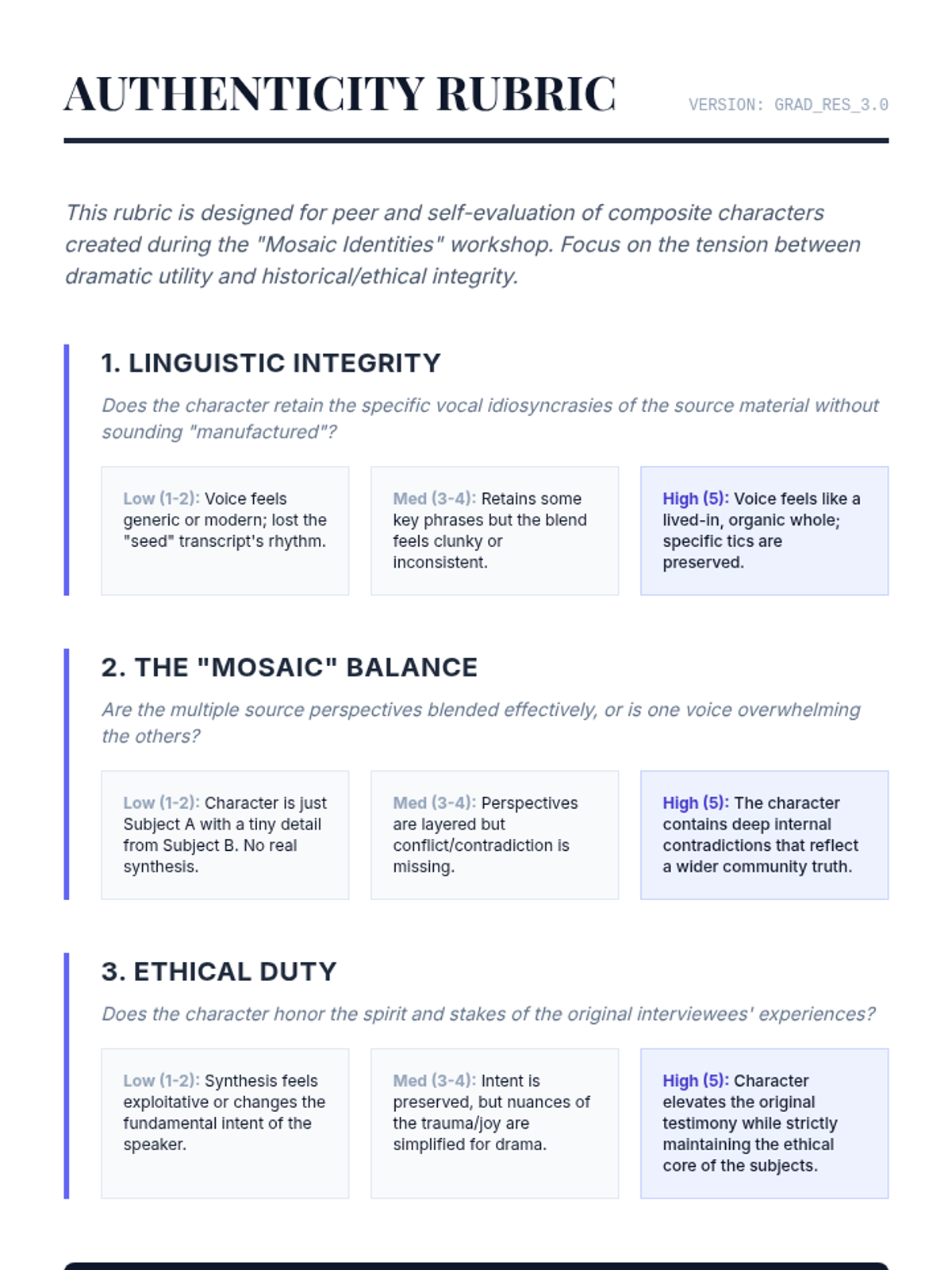
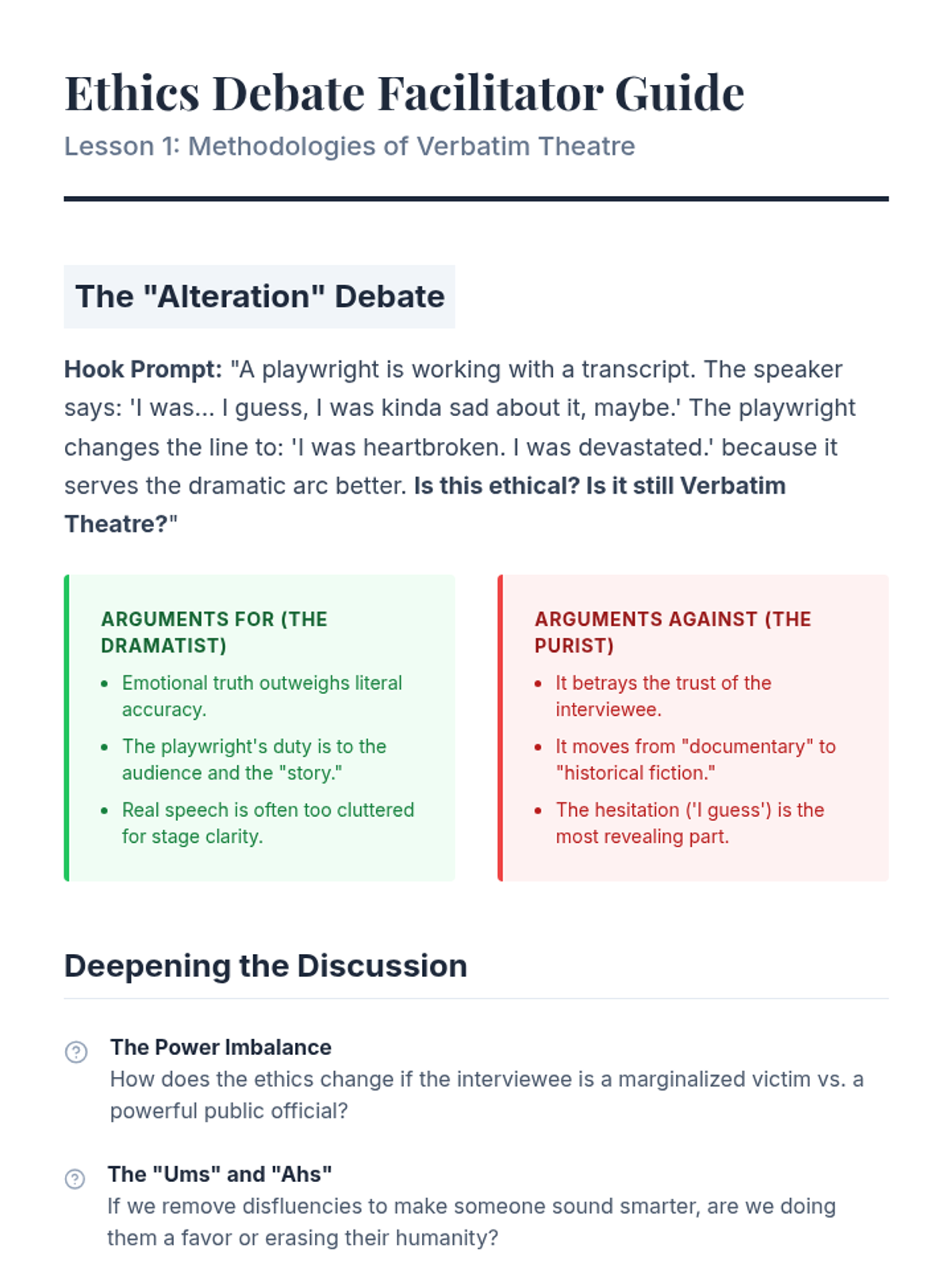
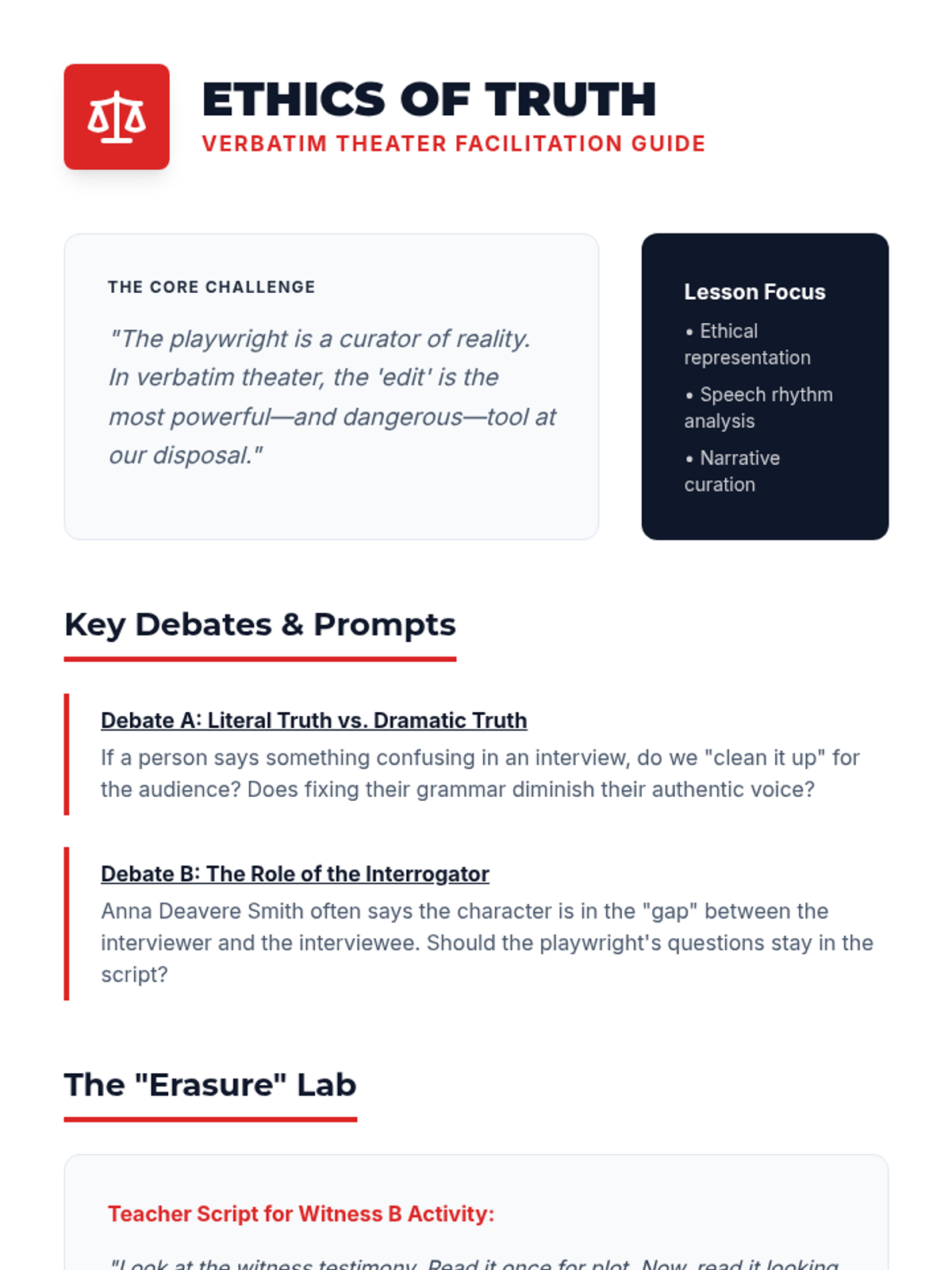
Explores the controversial technique of composite characters, balancing the need for dramatic economy with the ethics of authentic representation.
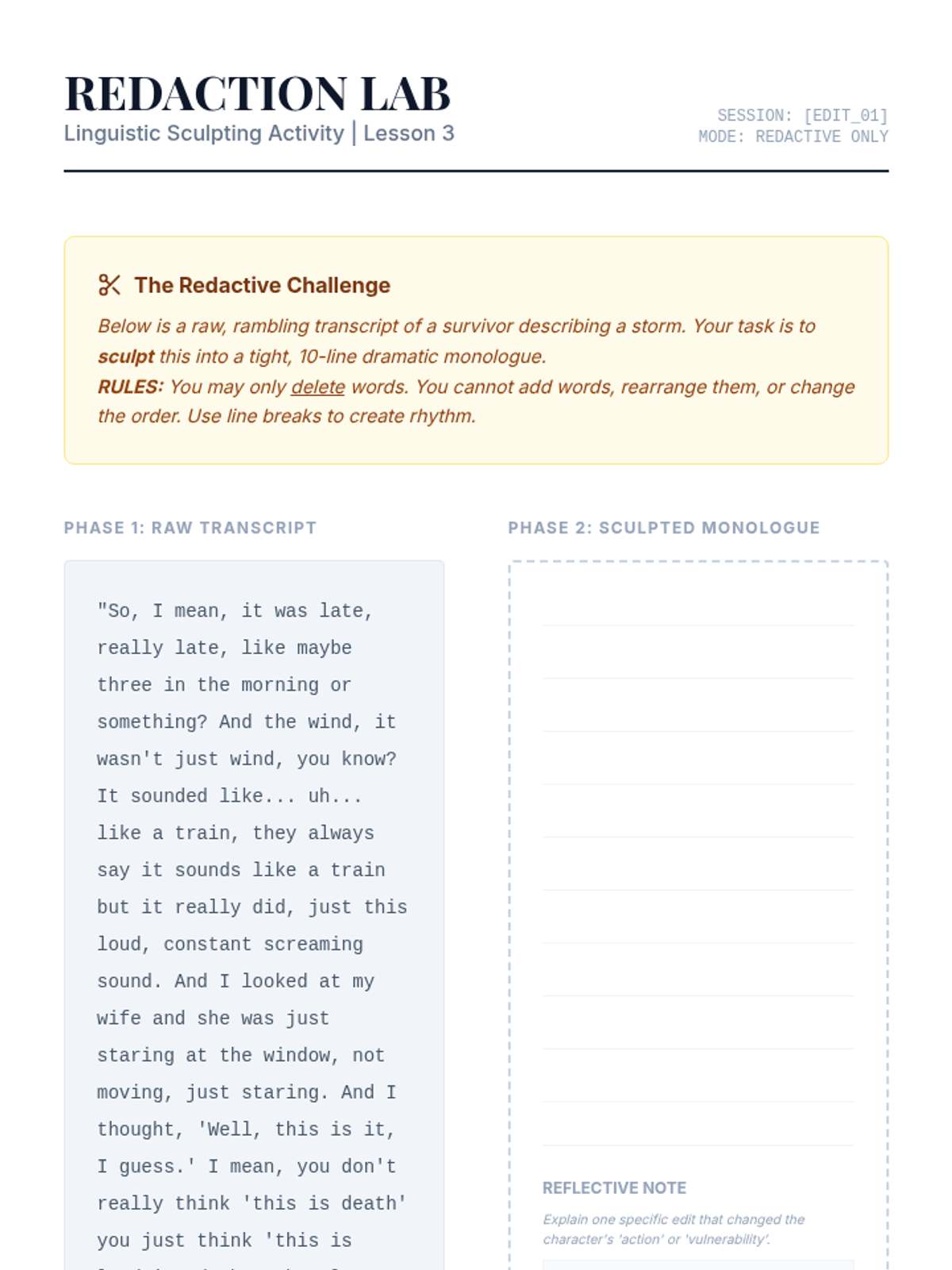
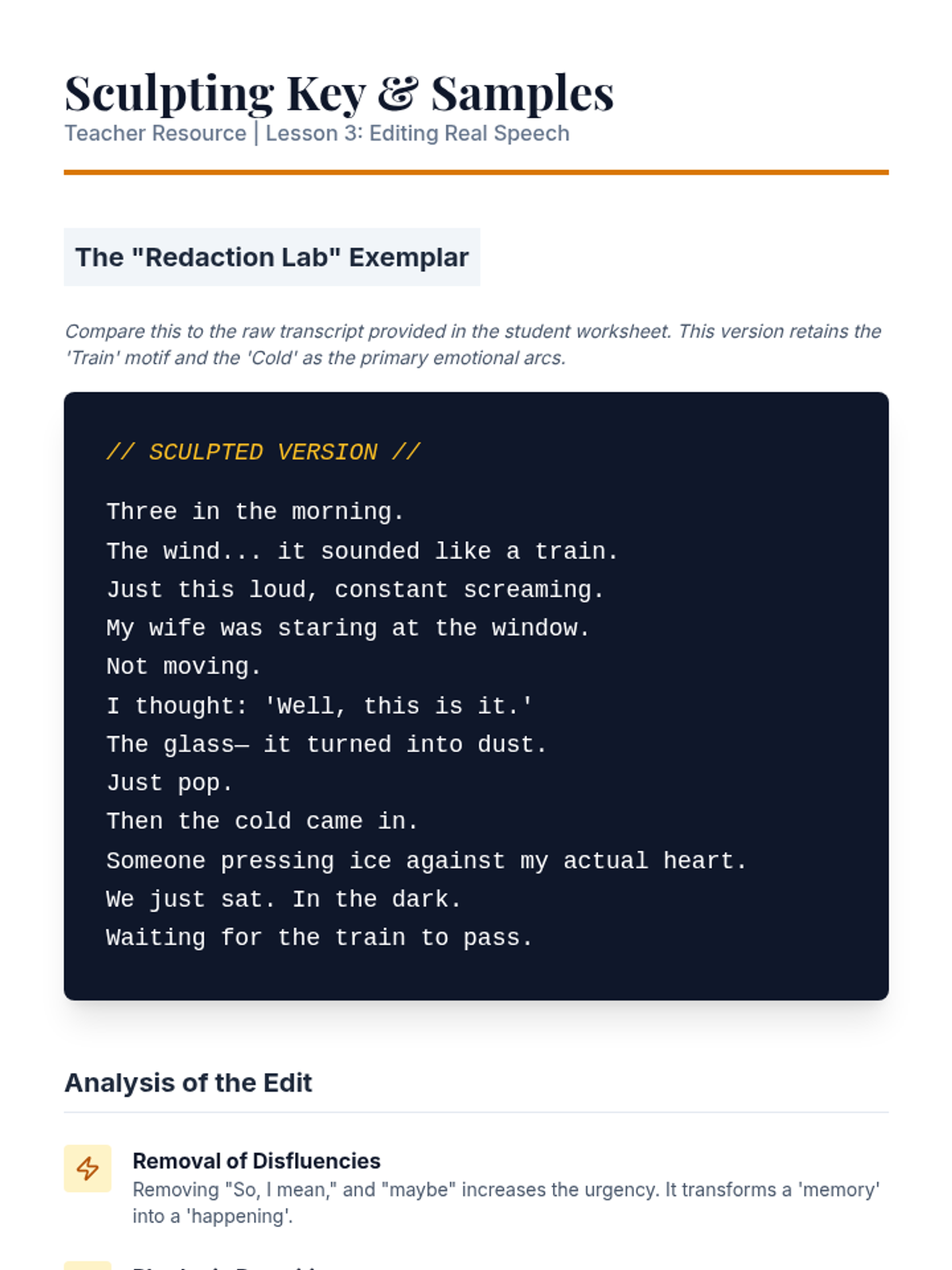
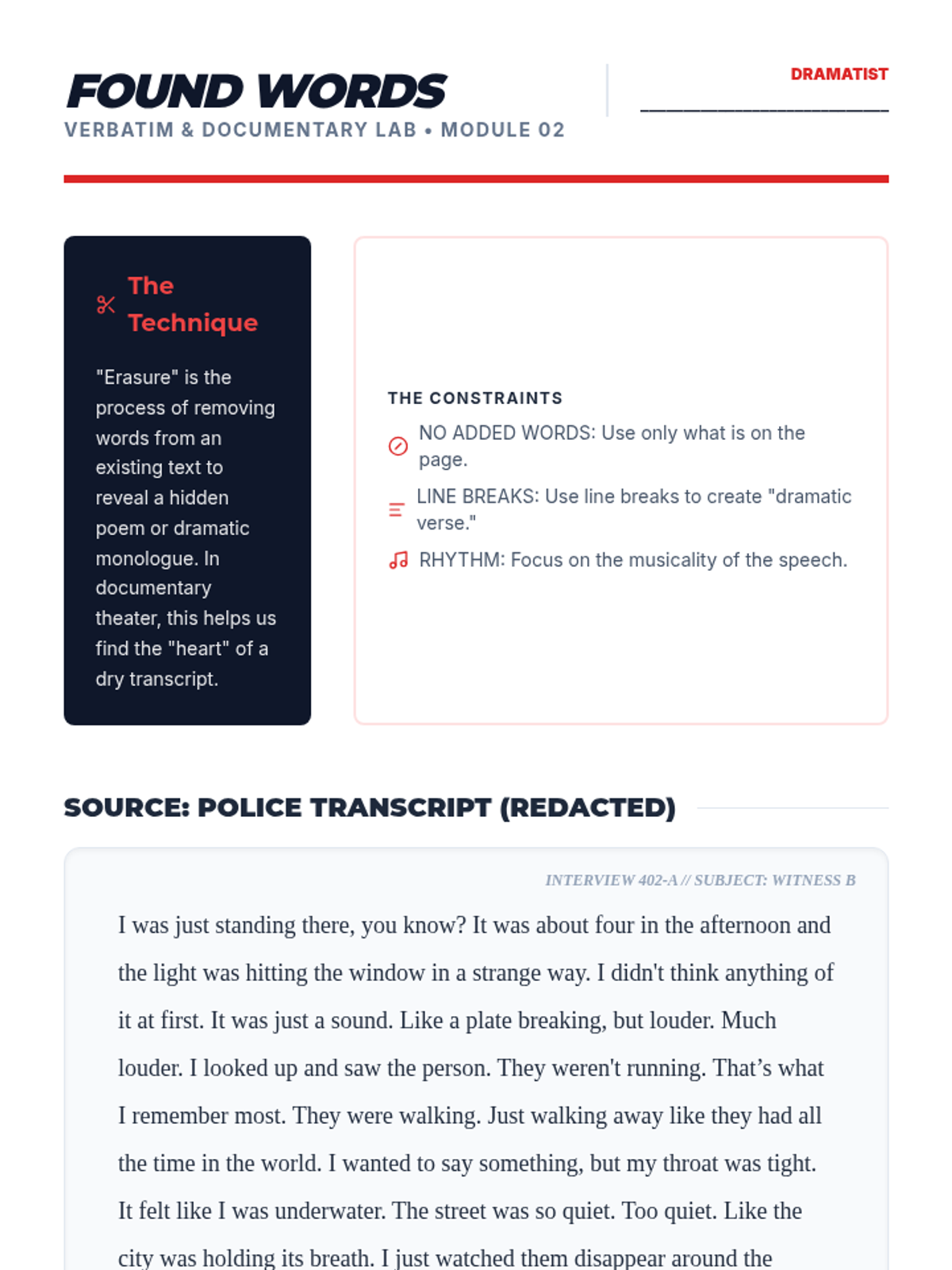
A workshop-based lesson on the technical art of editing raw transcript data into rhythmic, dramatically impactful stage speech.
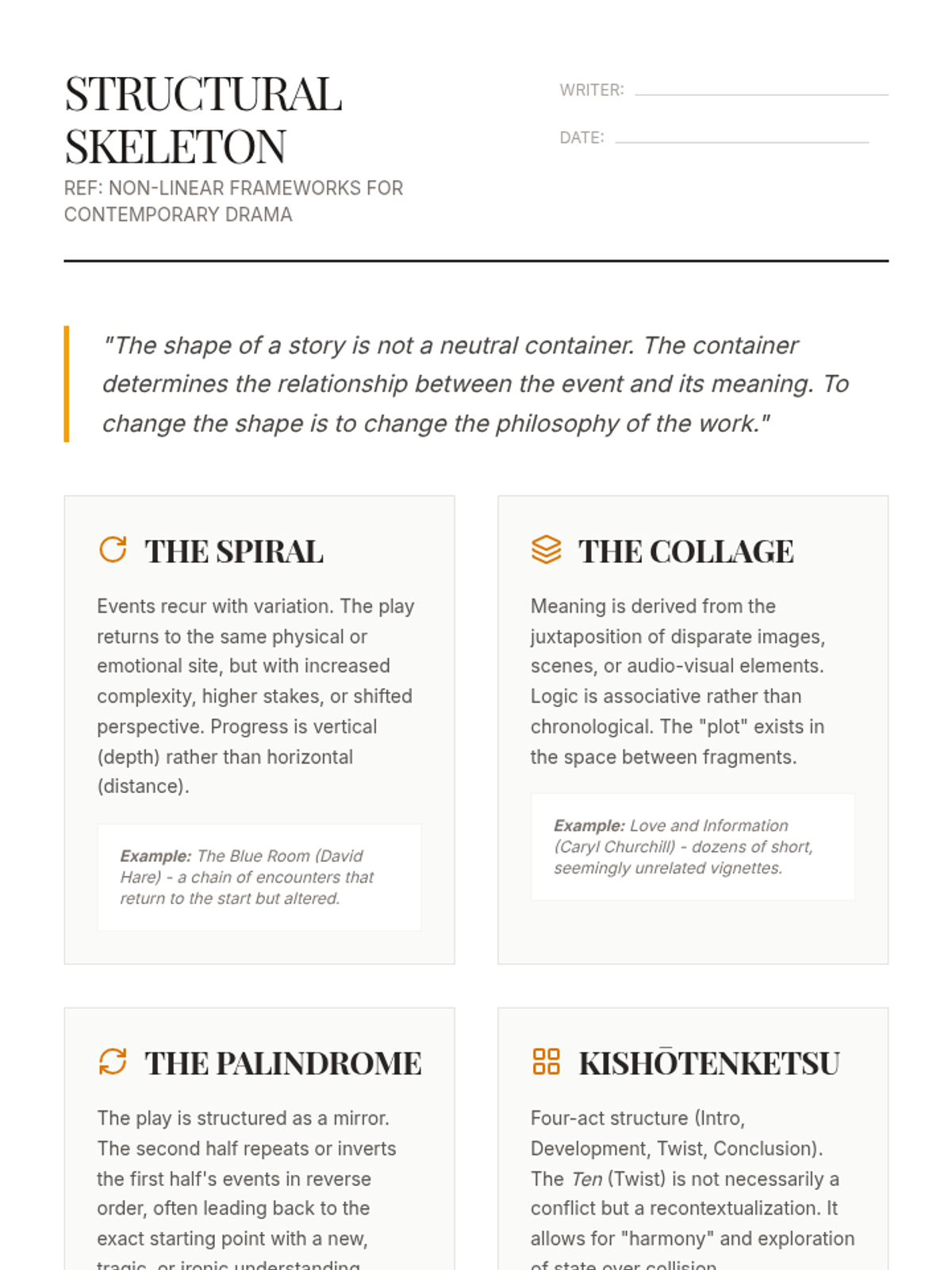
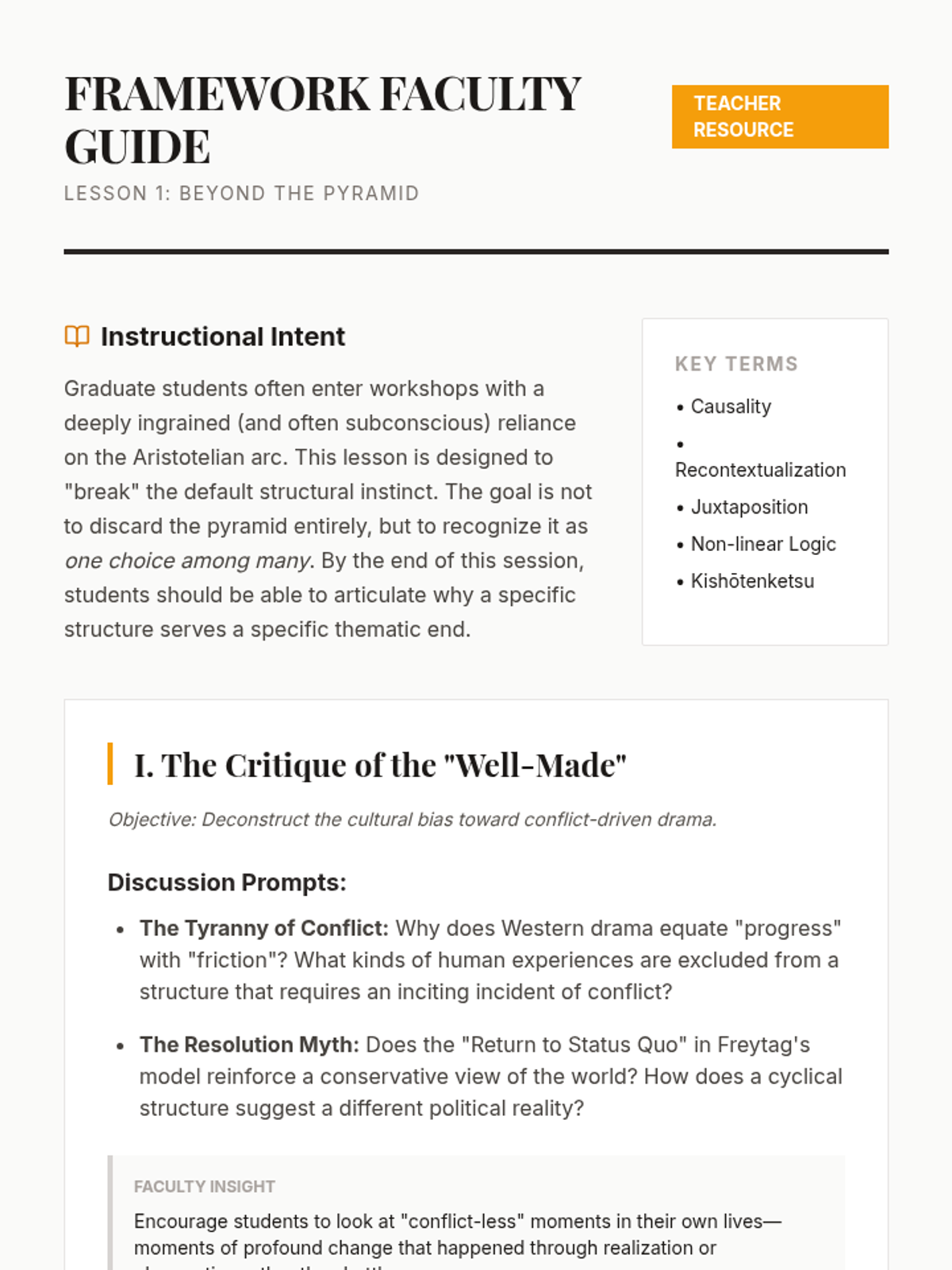
Students critique the traditional Freytag's Pyramid and explore alternative narrative shapes like spirals, collages, and the Kish\u014dtenketsu structure.
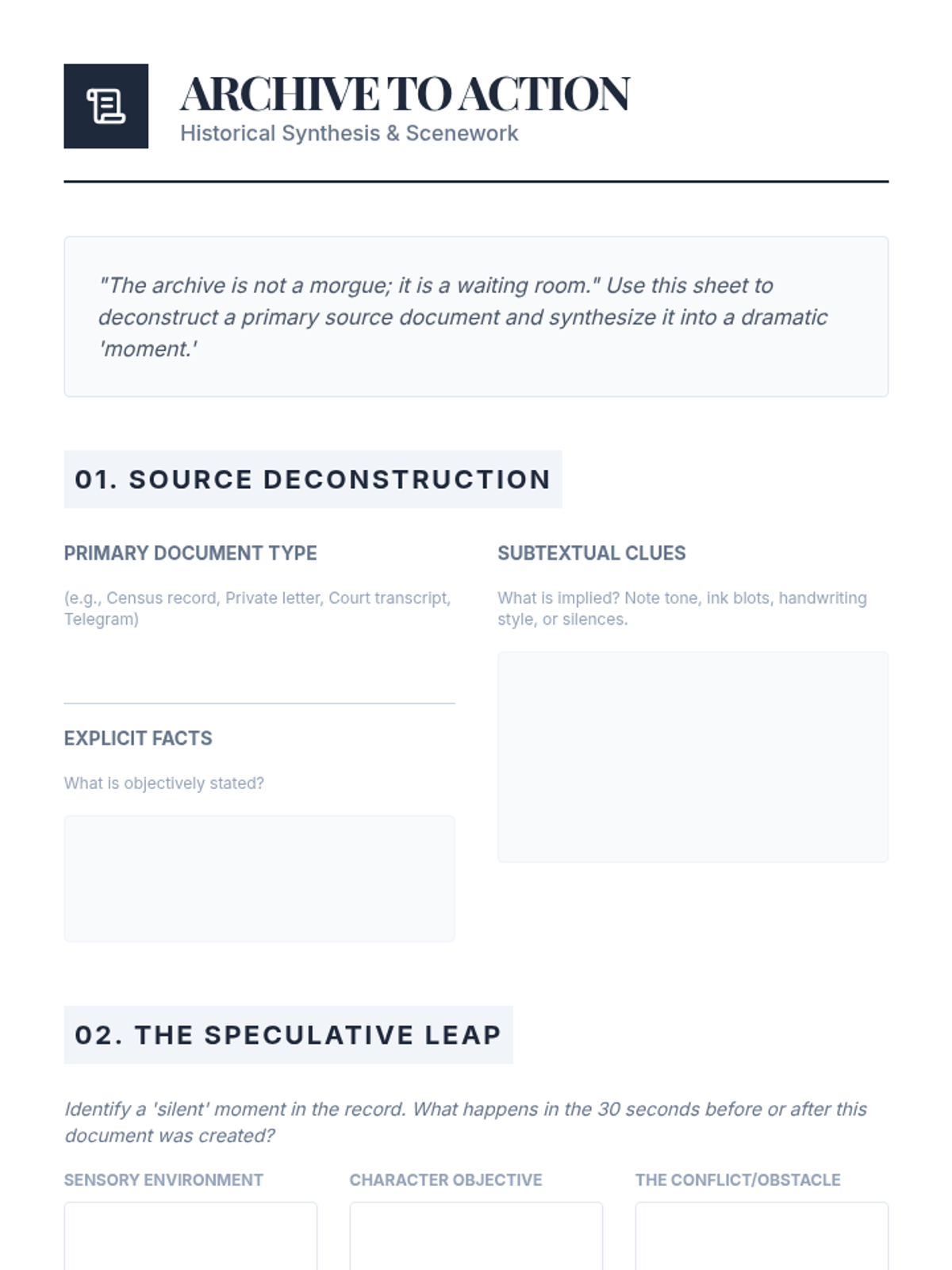
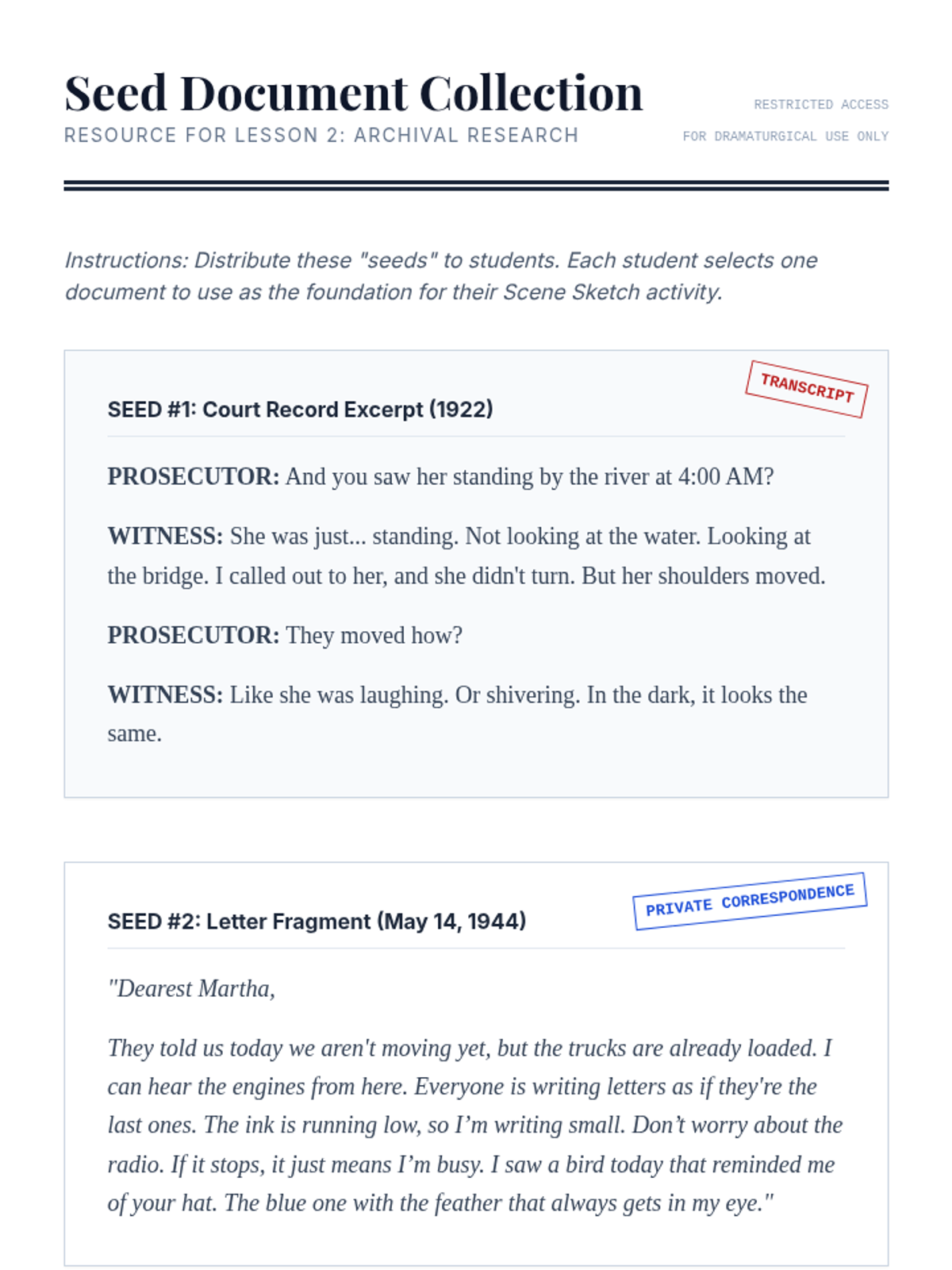
Focuses on archival research as a source for drama, teaching students how to bridge historical gaps and transform dry documents into compelling scenes.
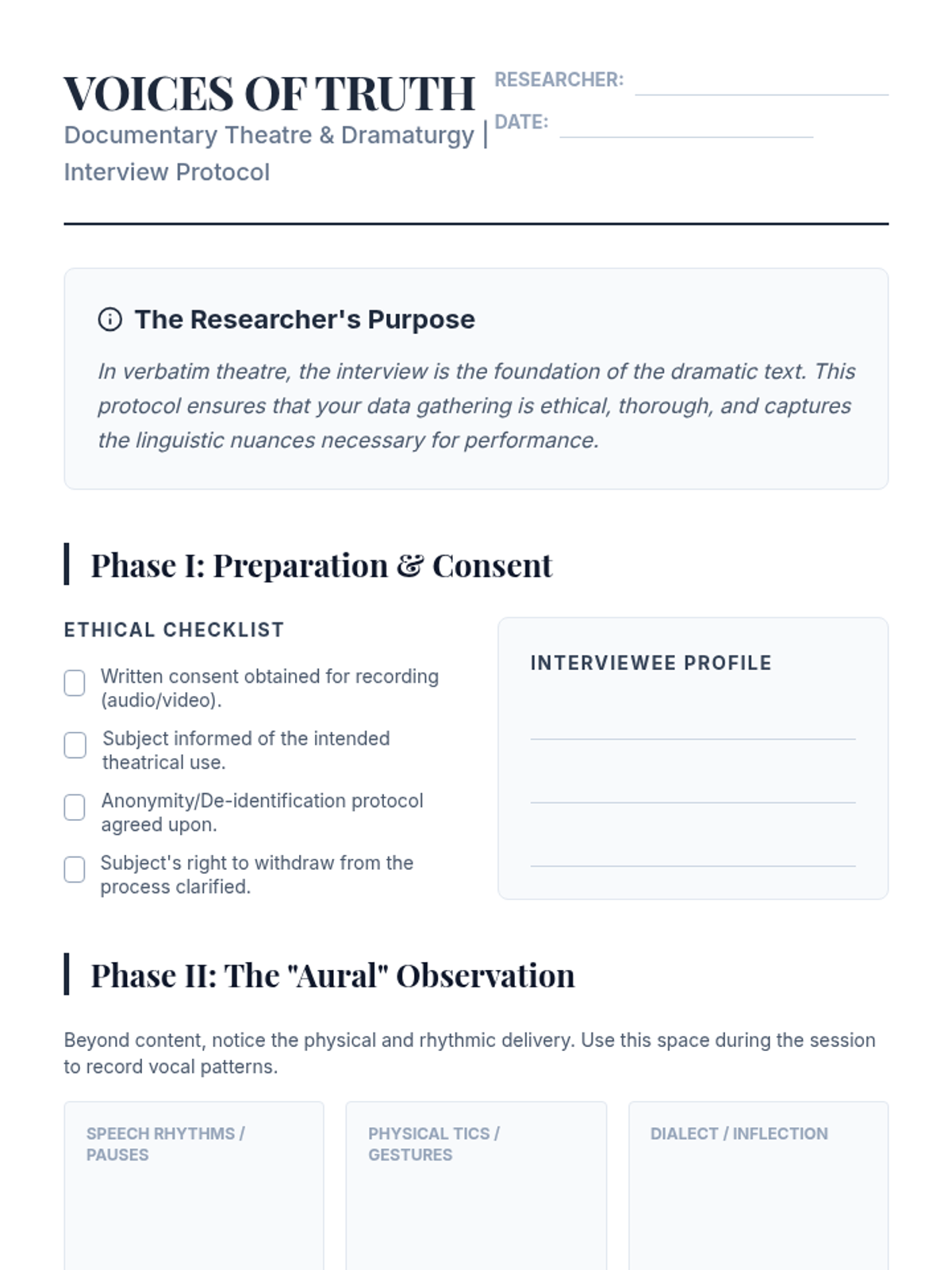
Investigates the history and ethics of verbatim theatre, focusing on interviewing methodologies and the legal/ethical frameworks of representing real subjects.
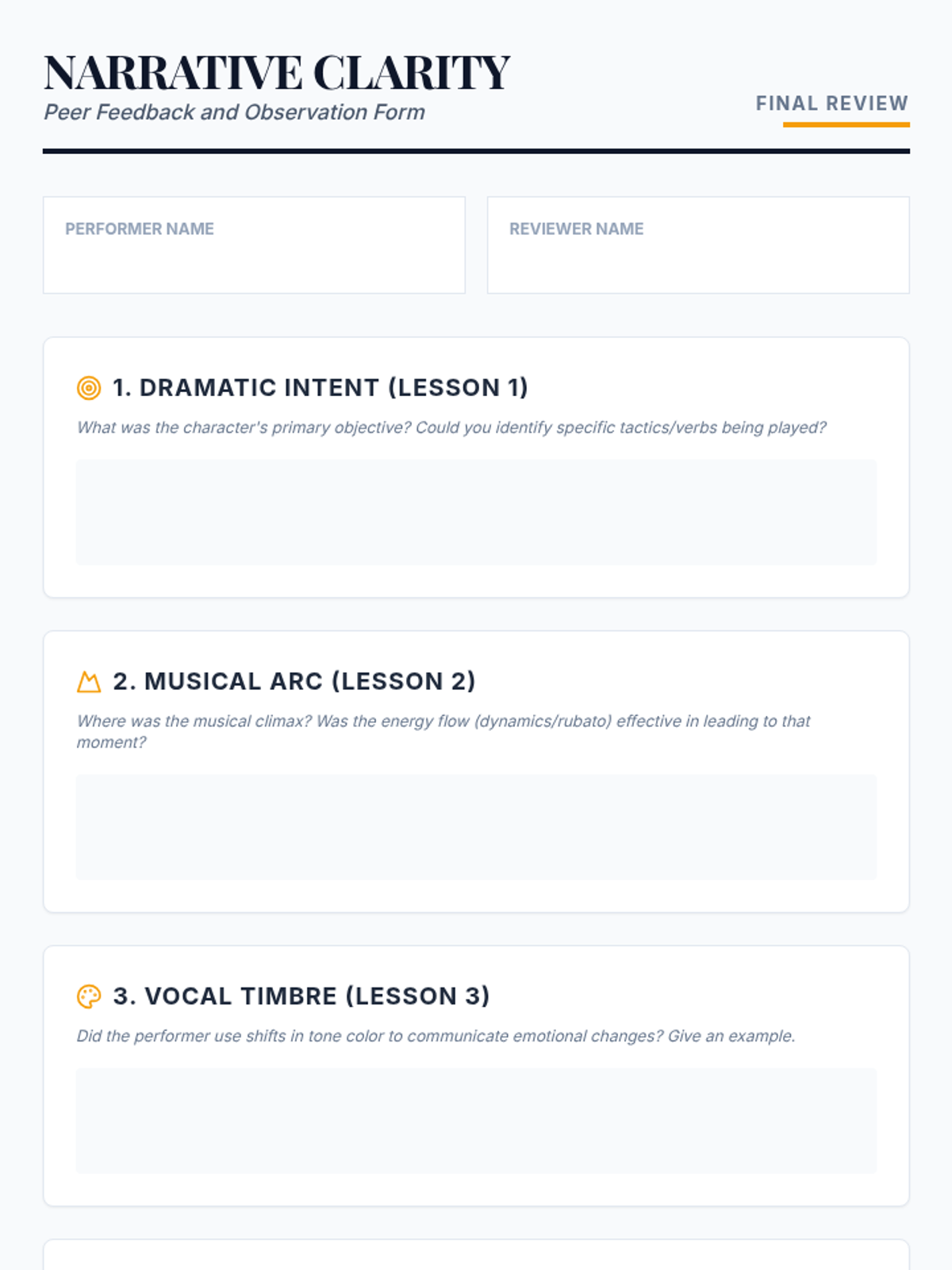
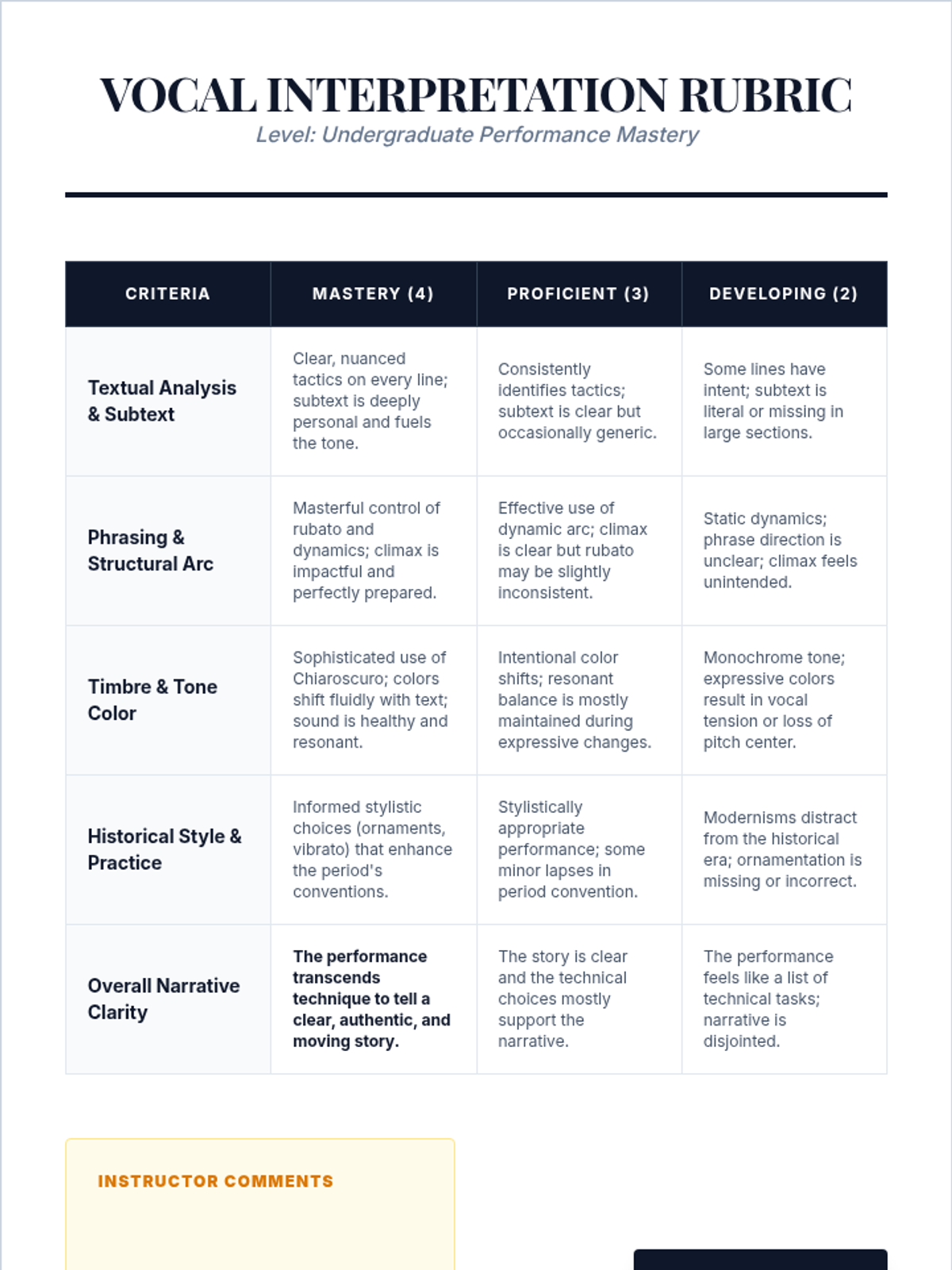
Students synthesize text analysis, phrasing, and historical context into a final performance, providing and receiving peer feedback on narrative clarity.
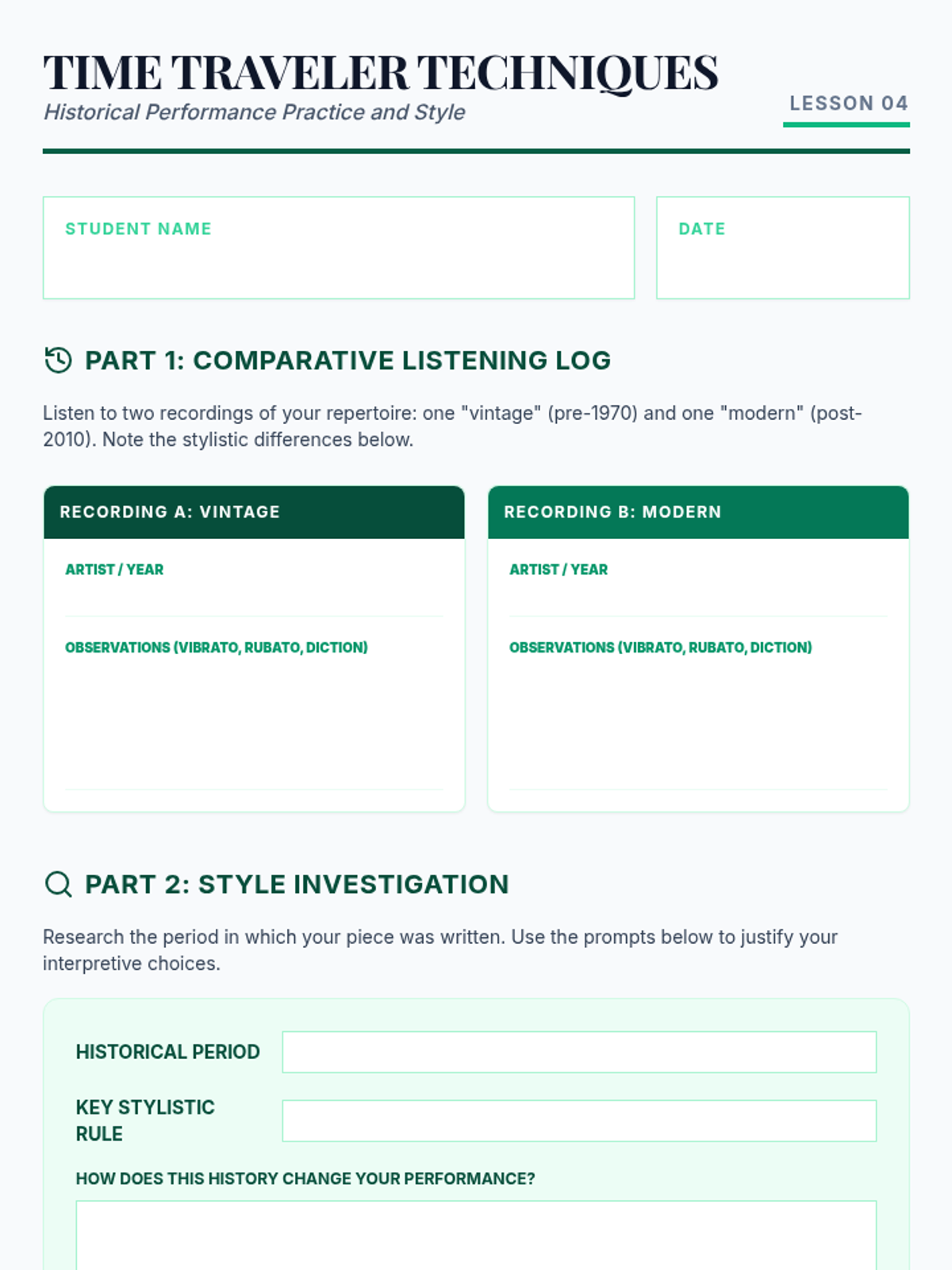
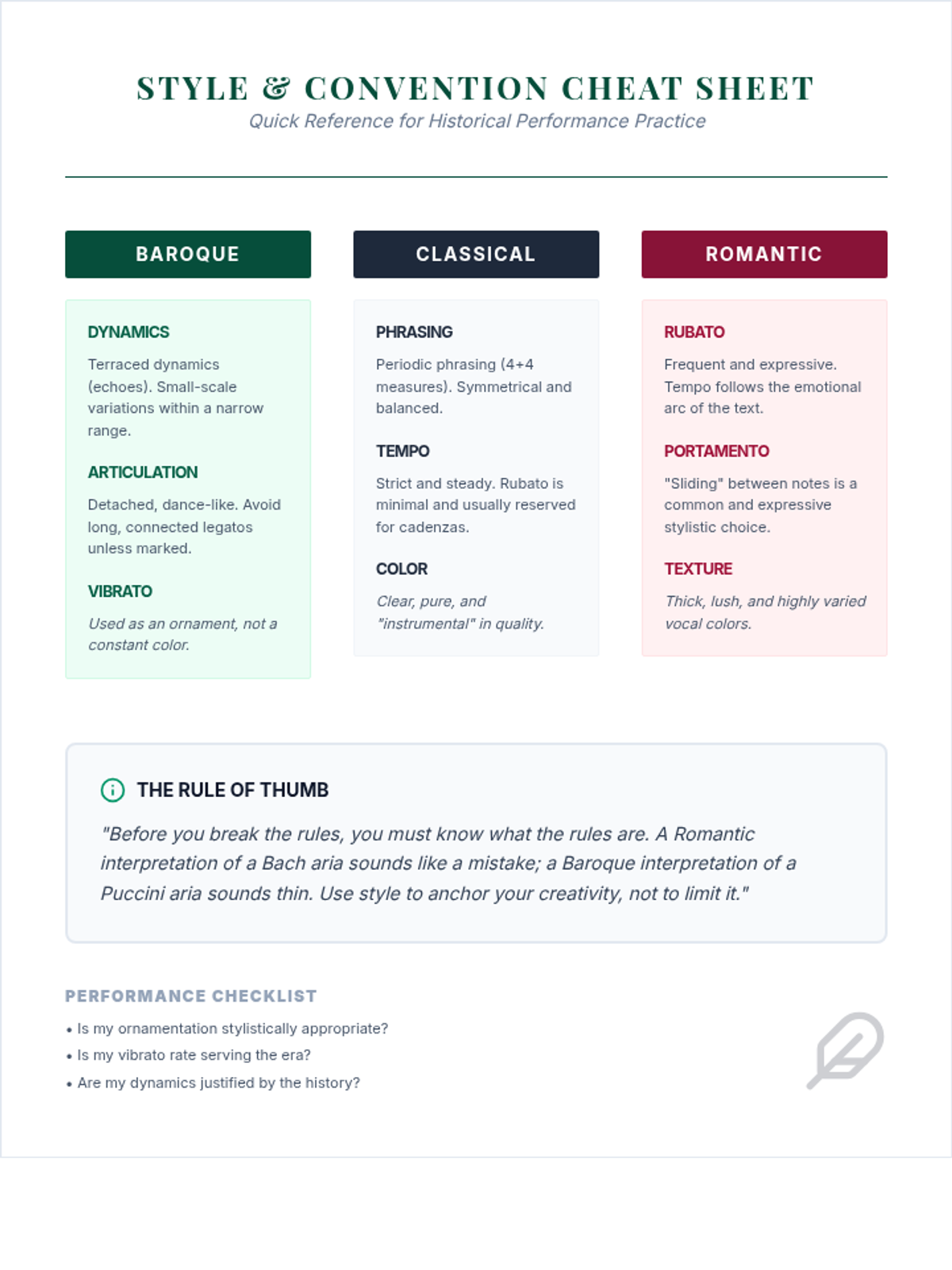
Students research the historical period and performance practices of their repertoire, comparing recordings to justify their interpretive choices.
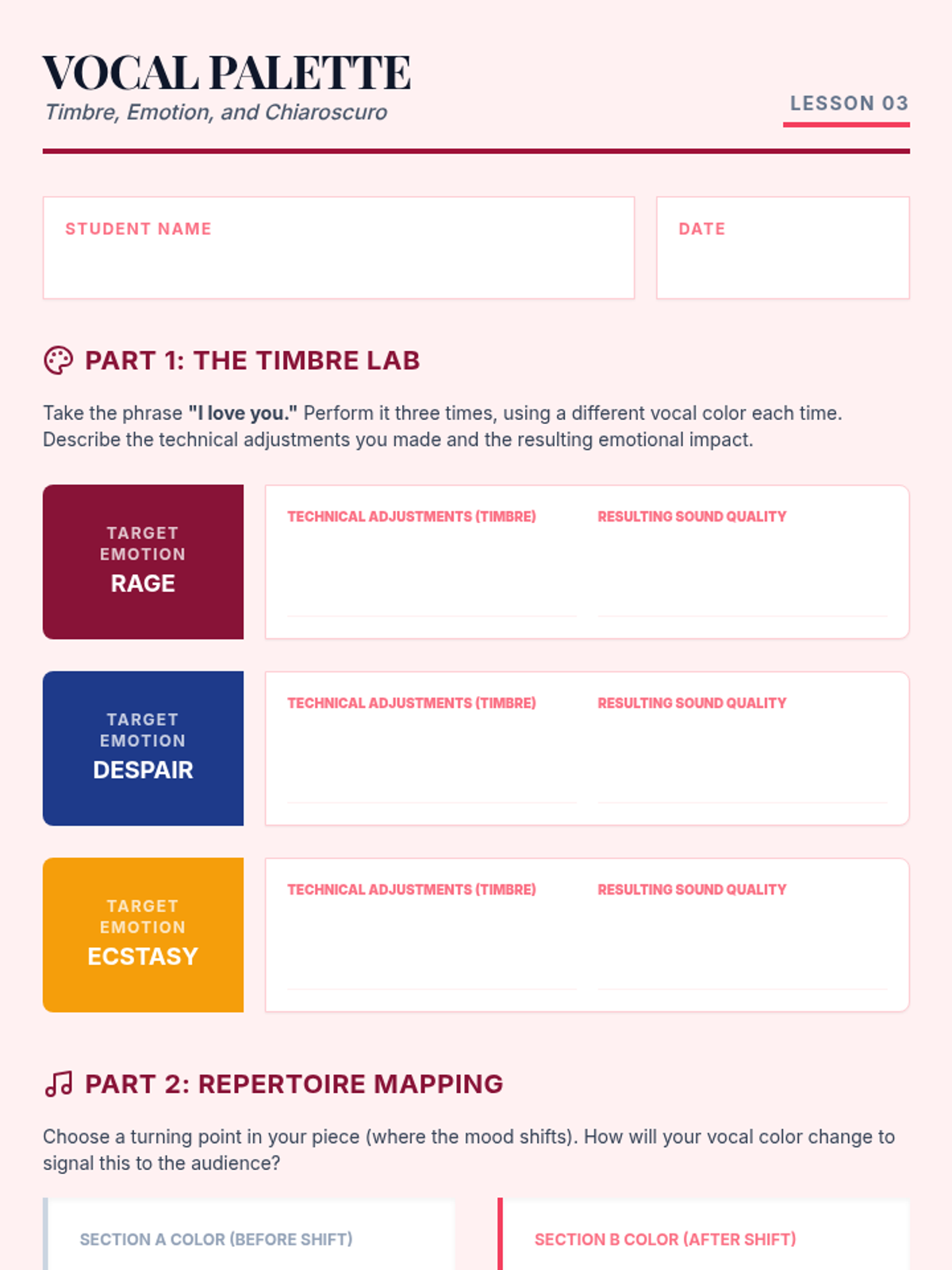
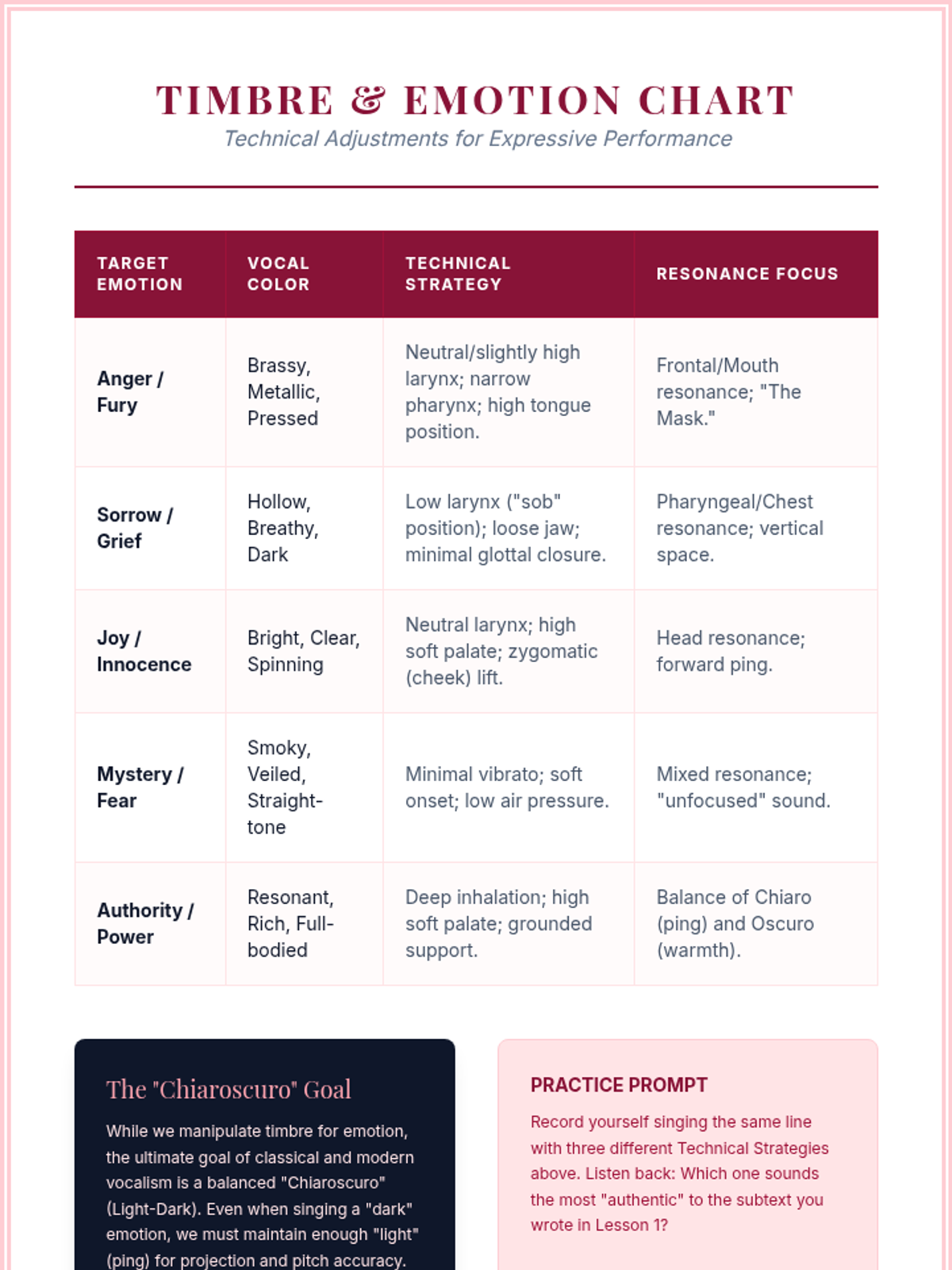
Students explore vocal timbre and color to convey emotion, learning to safely vary their sound to match the subtext of their repertoire.
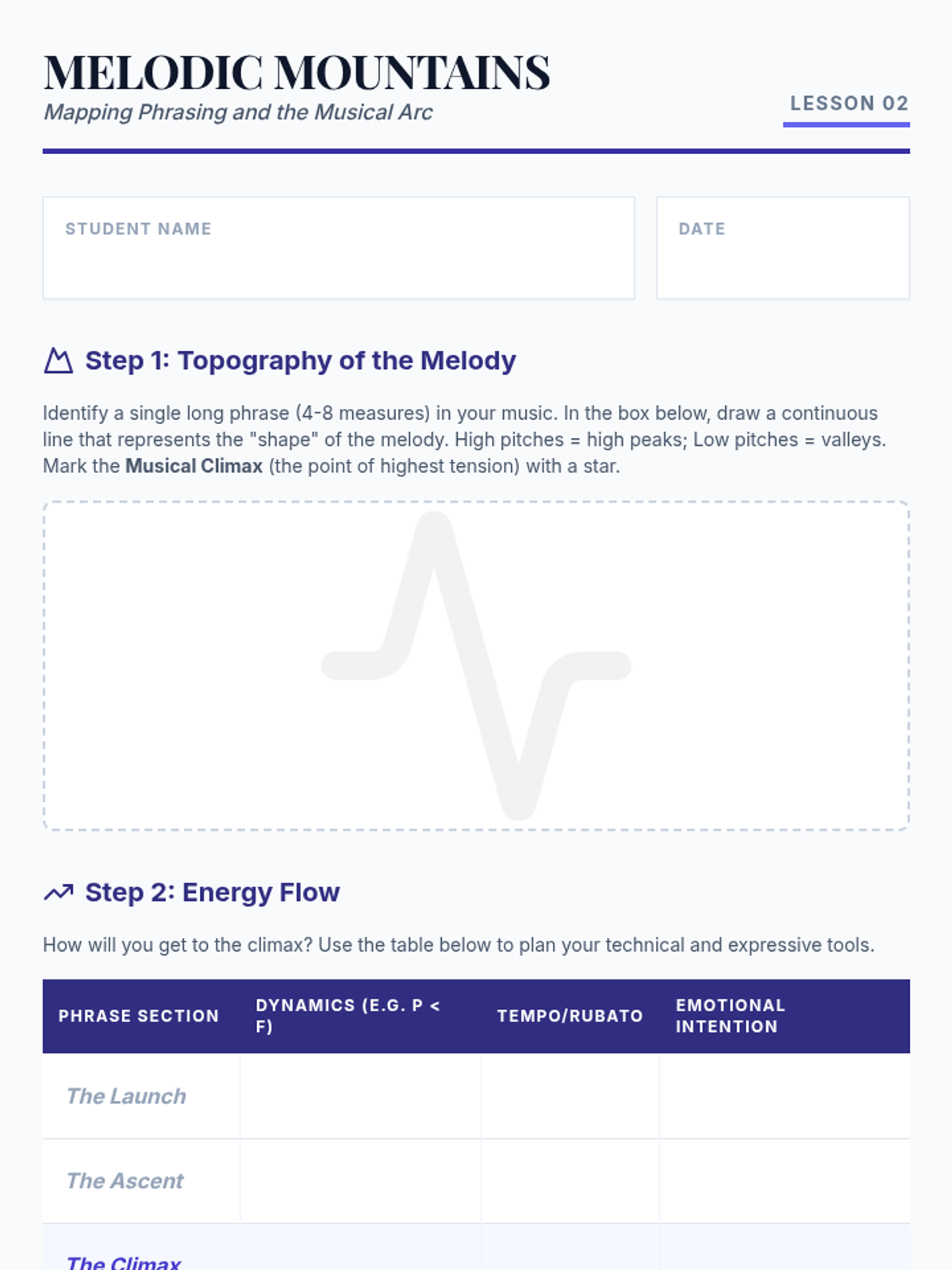
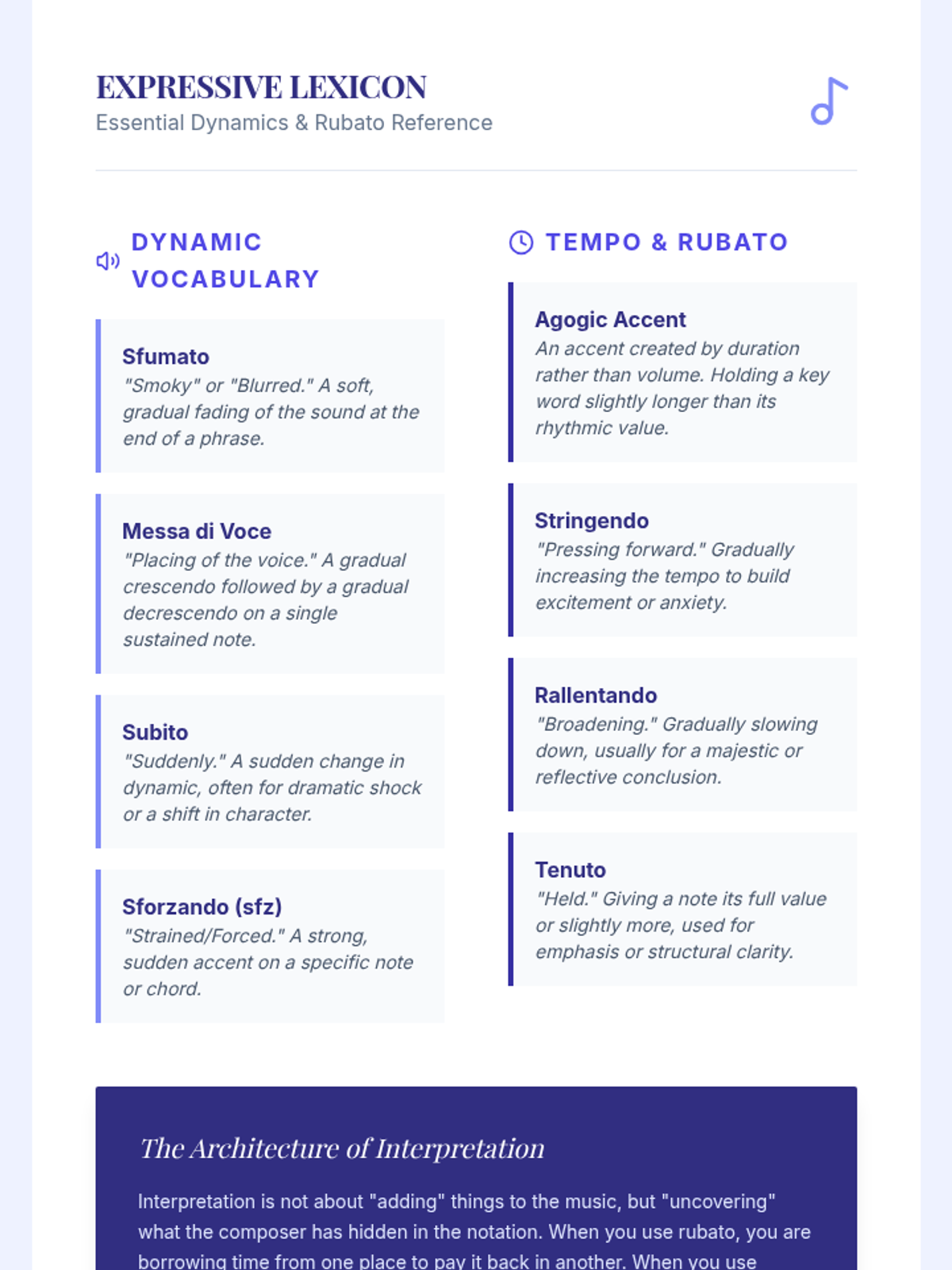
Students map the emotional and musical structure of their repertoire, identifying climaxes and planning dynamic/tempo choices to support the musical arc.
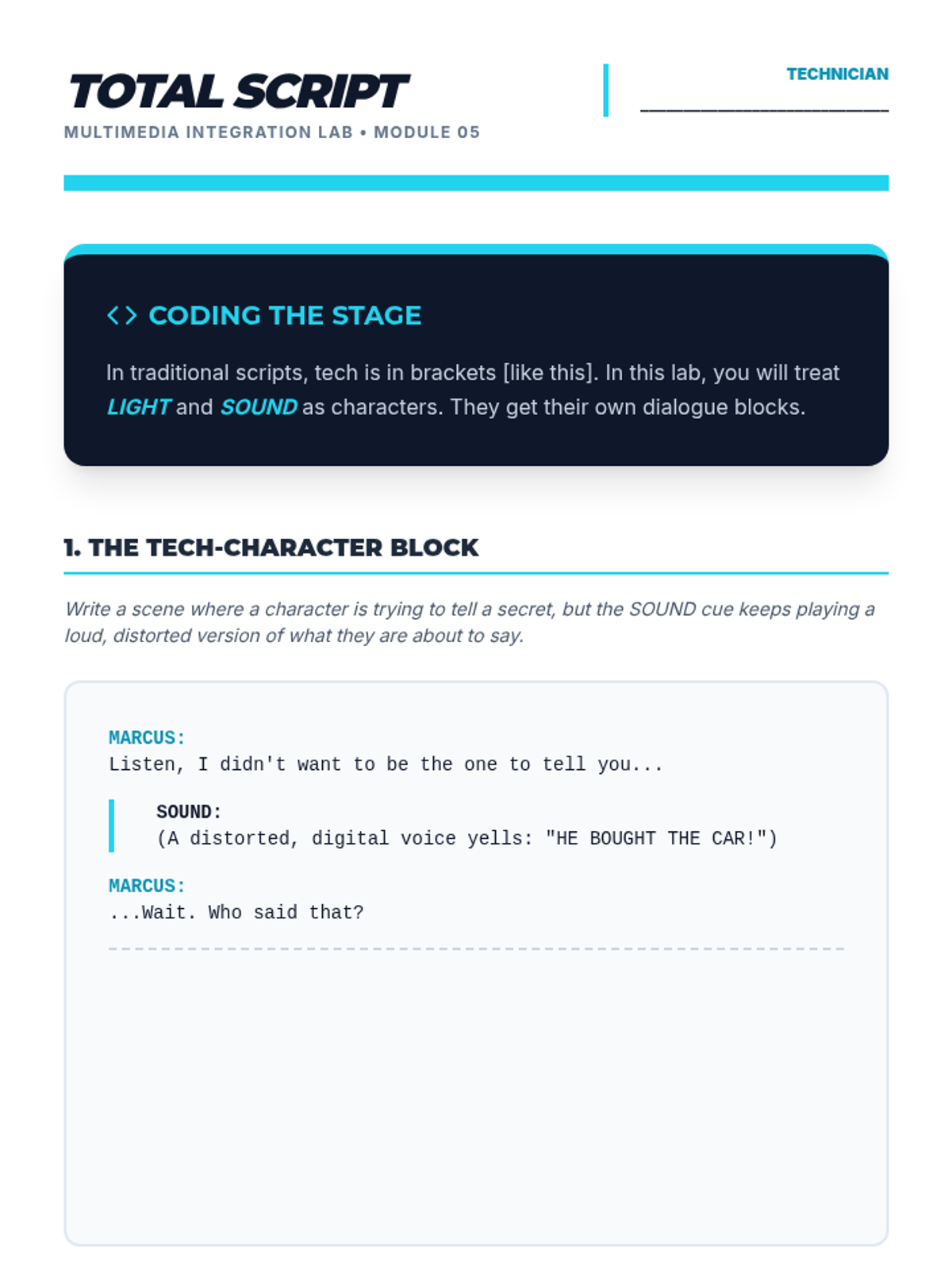
Focuses on writing for technical elements—projections, soundscapes, and lighting—as integral narrative drivers in the script.
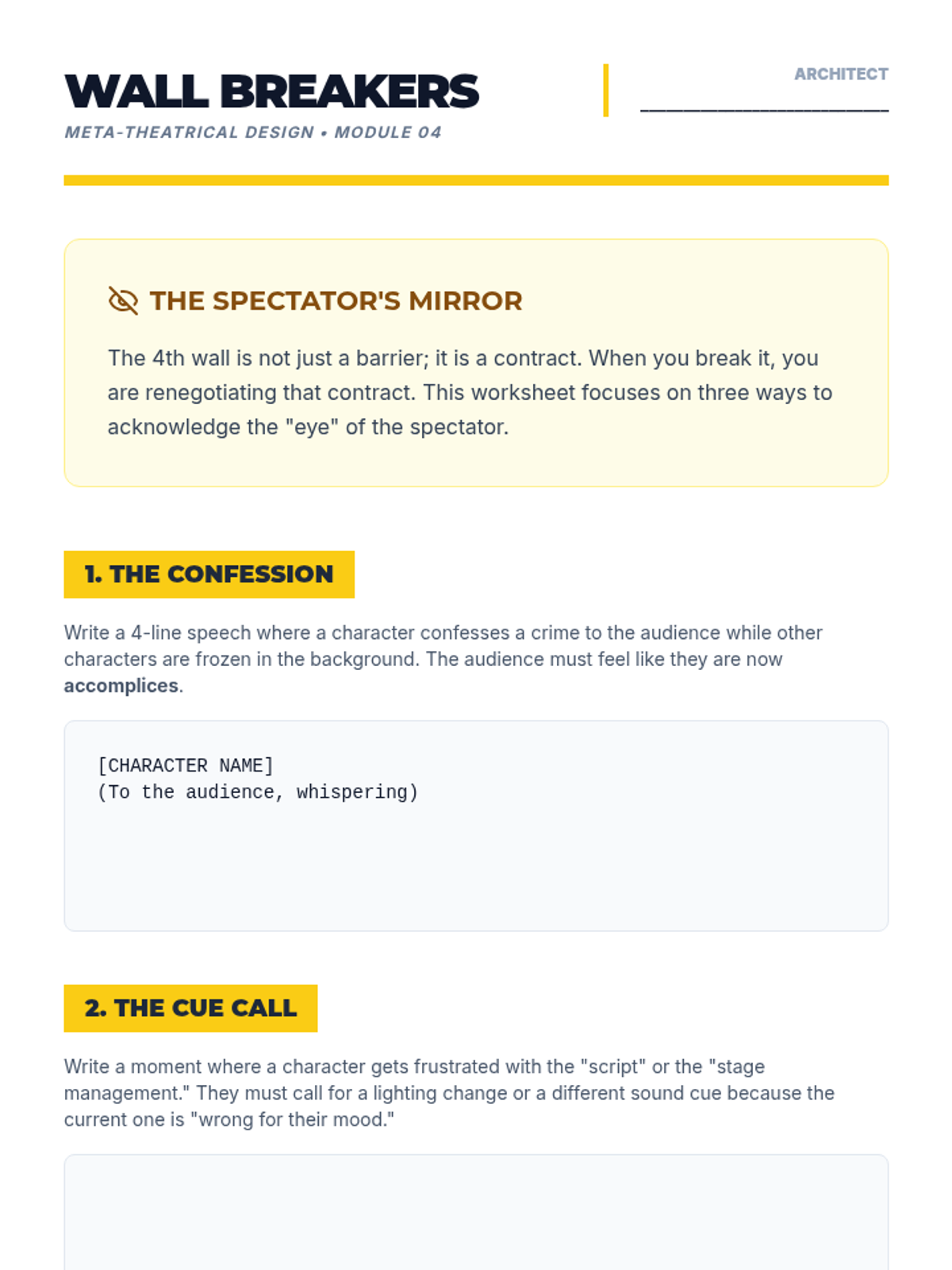
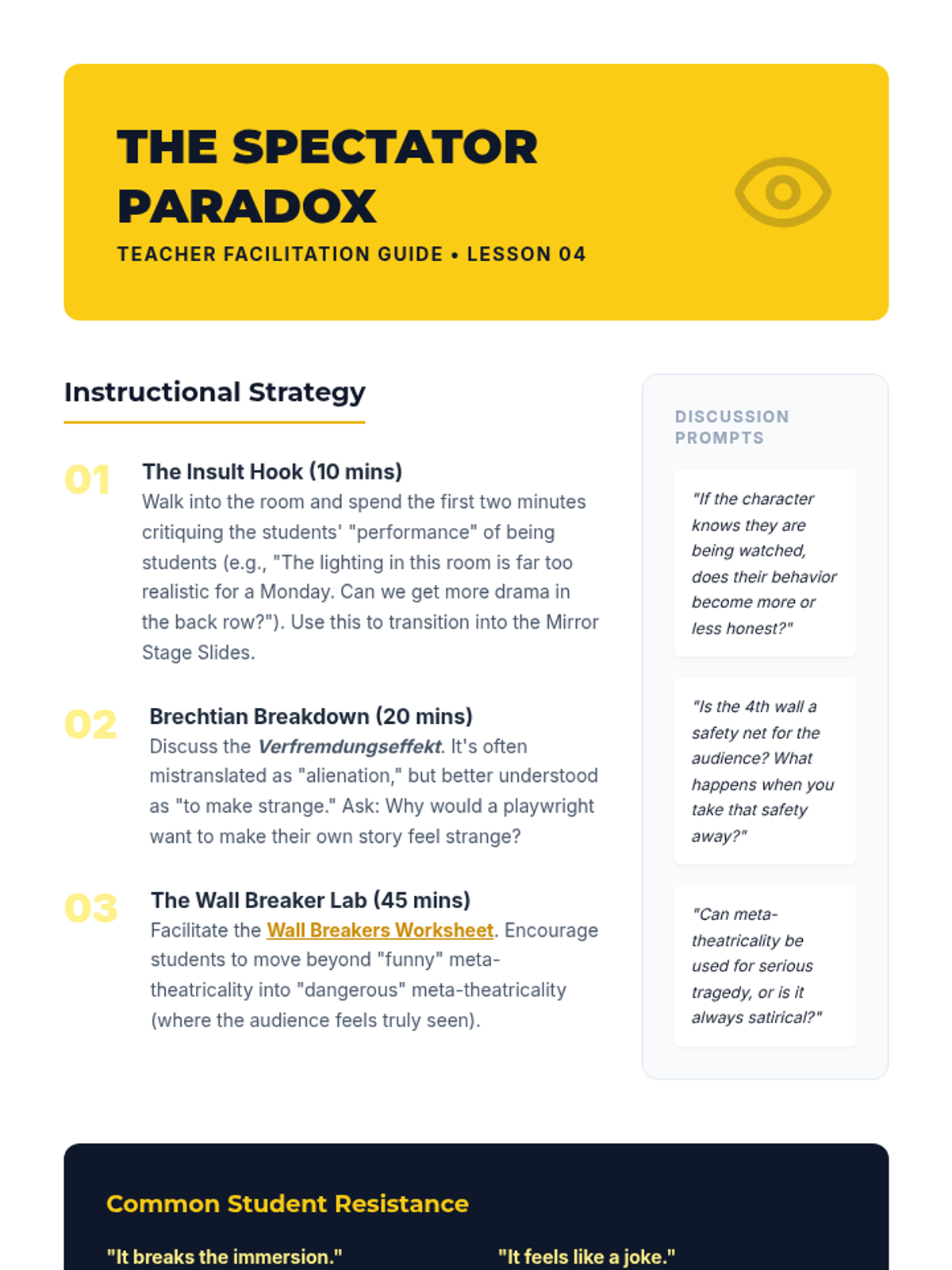
A study of direct address and self-referential writing, exploring how acknowledging the audience shifts the theatrical relationship.
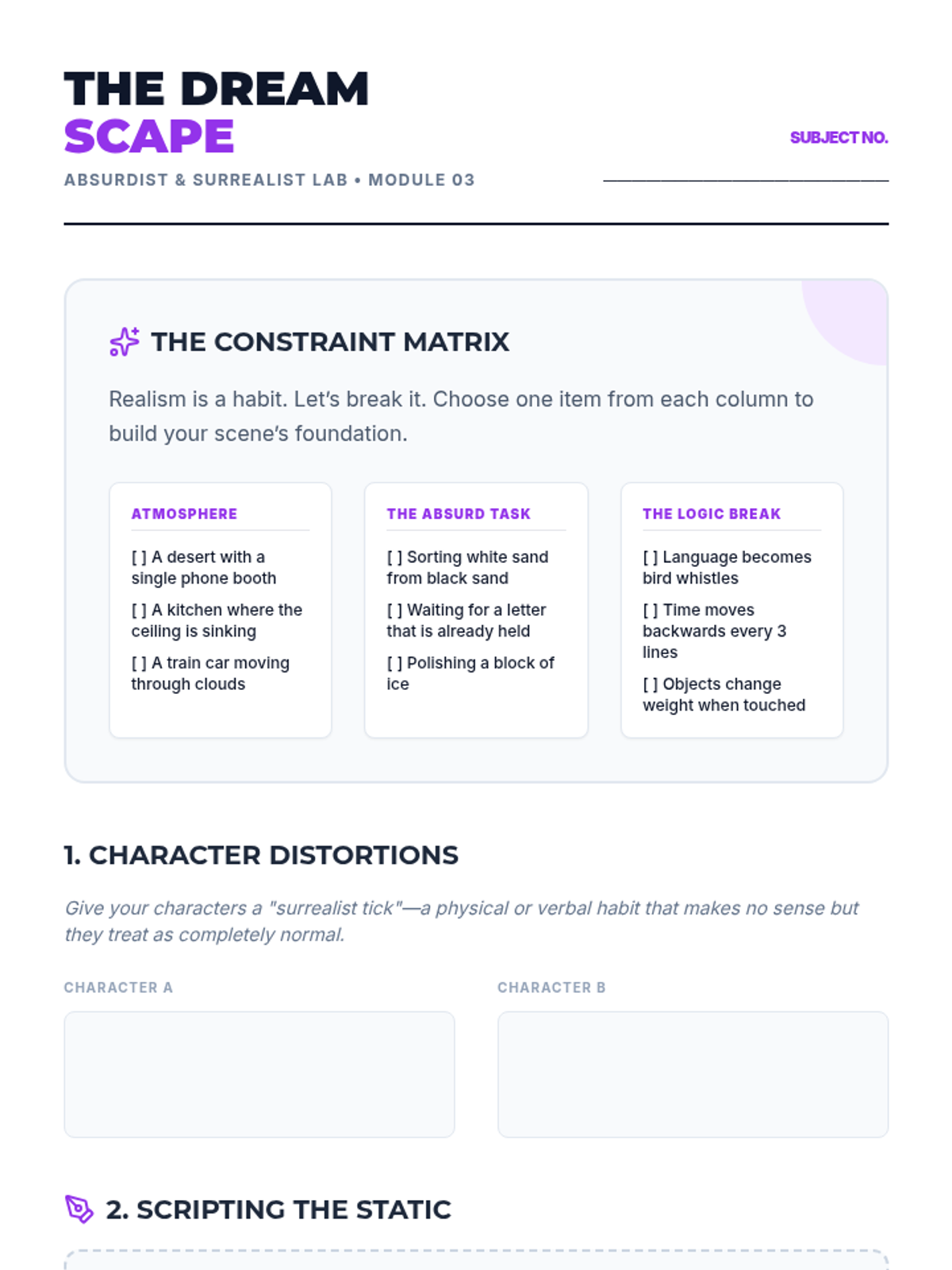
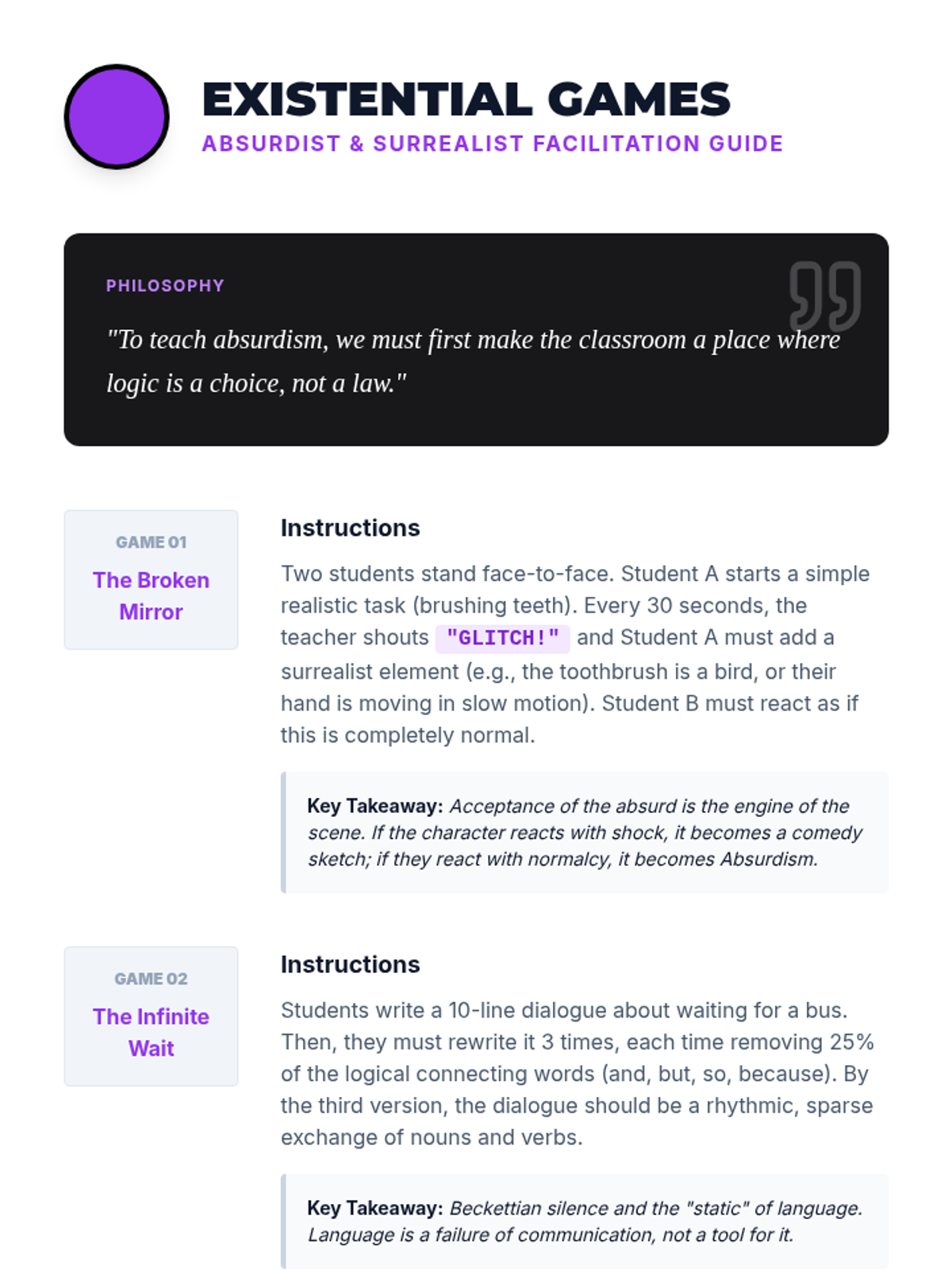
Students investigate the Theater of the Absurd and Surrealism, writing scenes that prioritize existential atmosphere and dream logic over realism.
An exploration of the ethical and technical challenges of verbatim theater, focusing on editing raw interviews into dramatic scripts.
Students explore plays that disrupt chronological time, experimenting with flashbacks, flash-forwards, and simultaneous action to reveal thematic depth.