Develops technical proficiency and creative movement skills across various styles. Examines choreographic principles alongside the historical and cultural origins of diverse global dance forms.
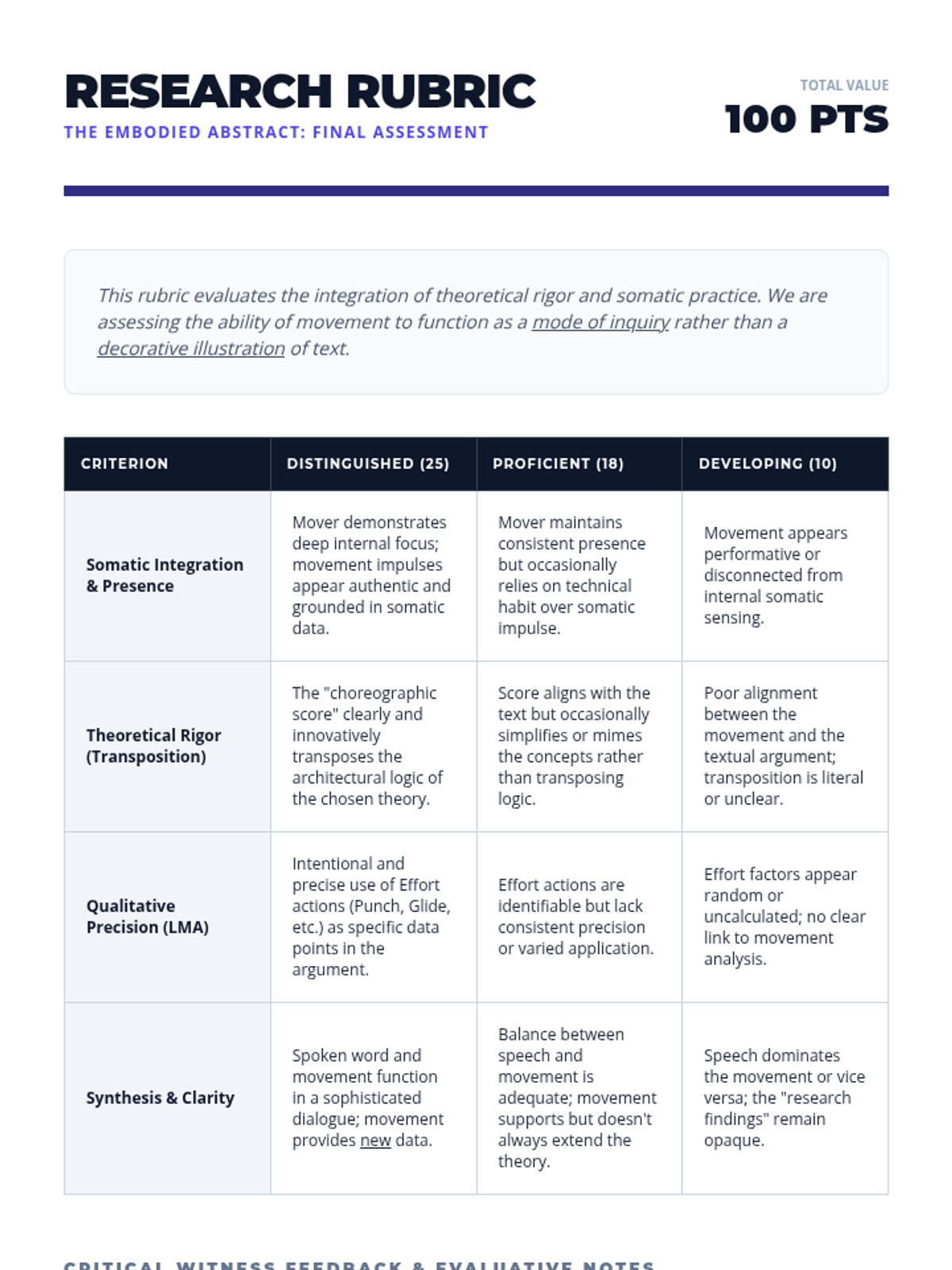
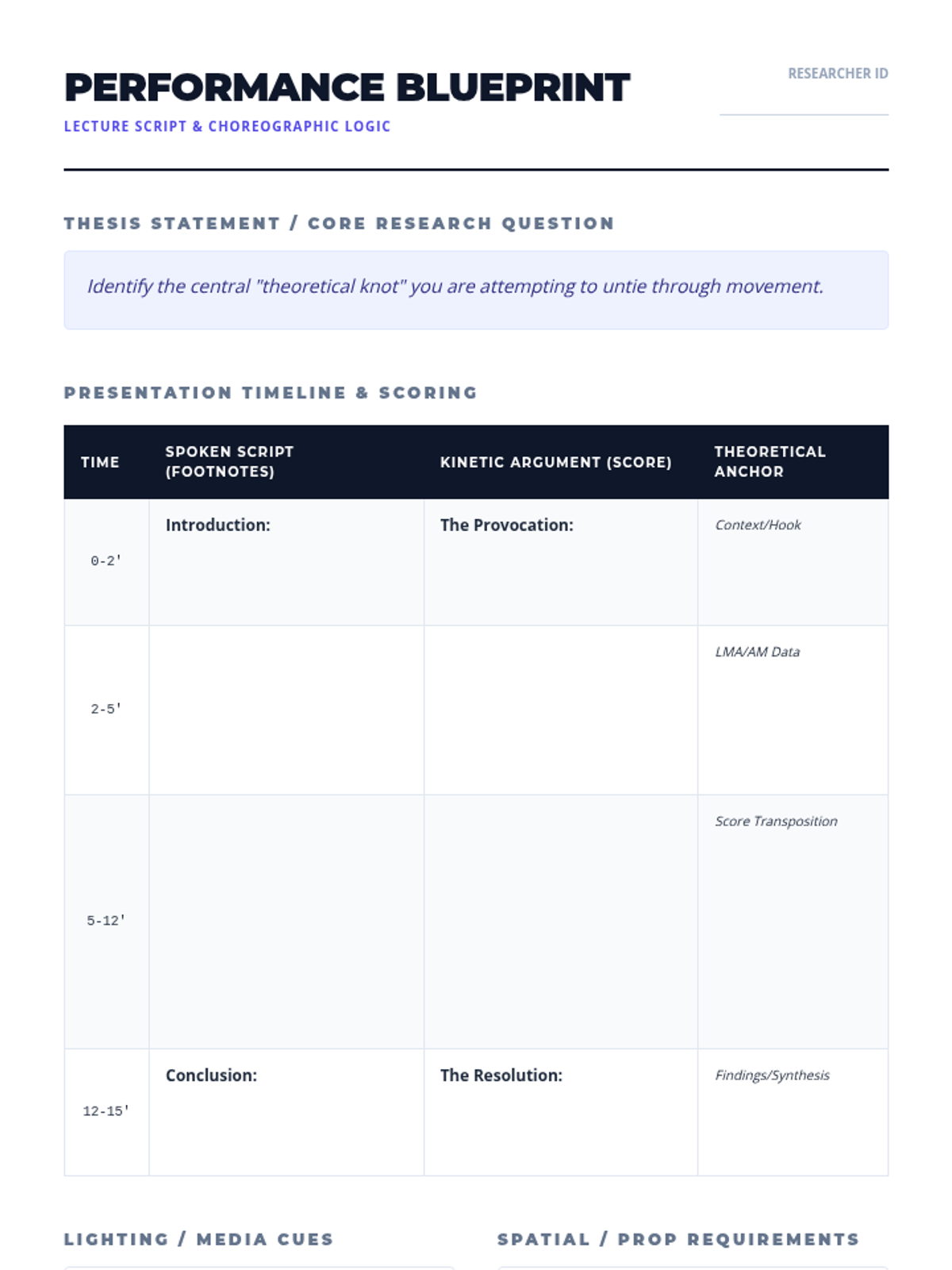
A final mastery-based lesson where students present research findings through performance-lectures.
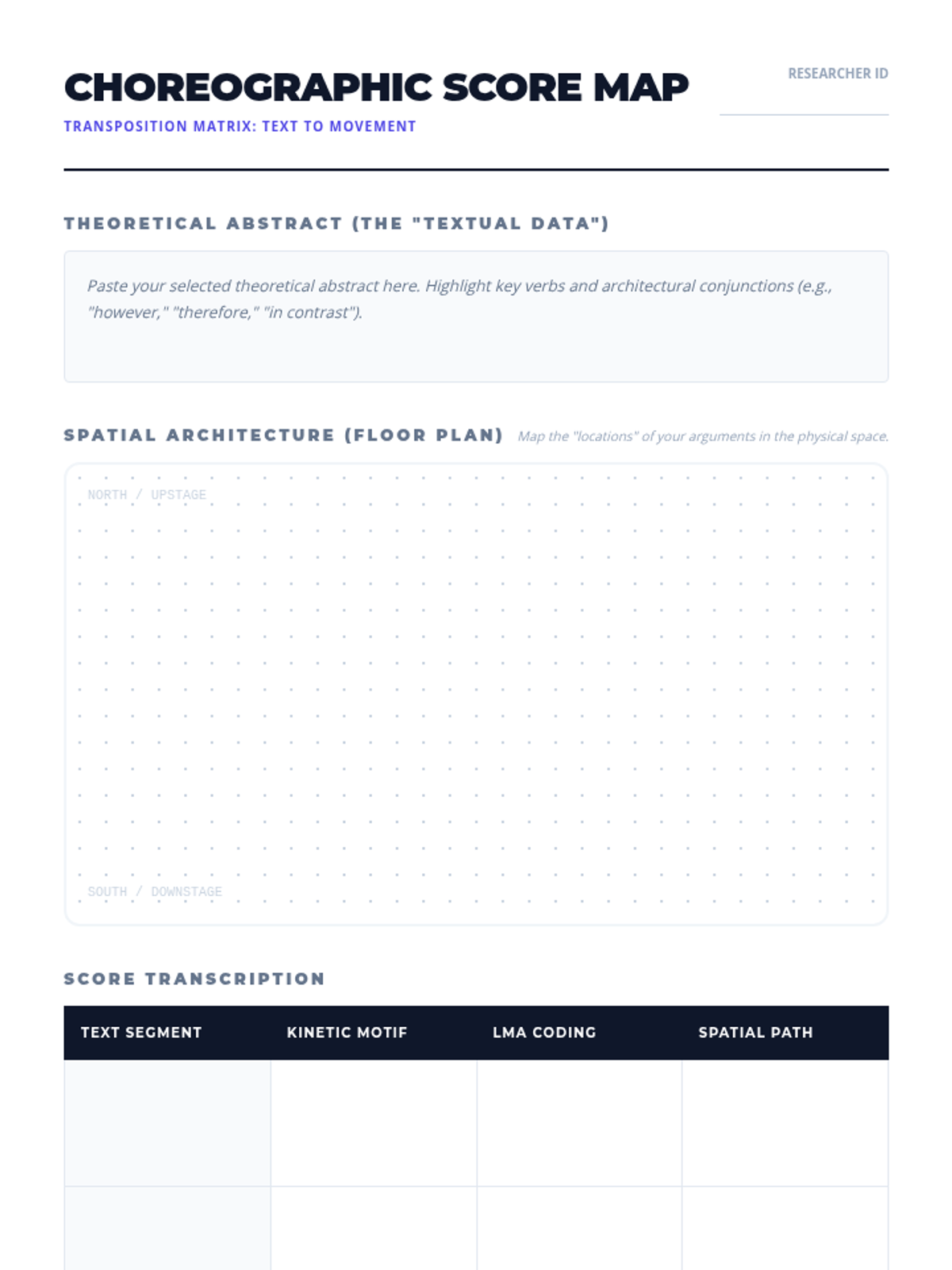
Translating dense theoretical abstracts into choreographic scores to analyze the architecture of arguments.
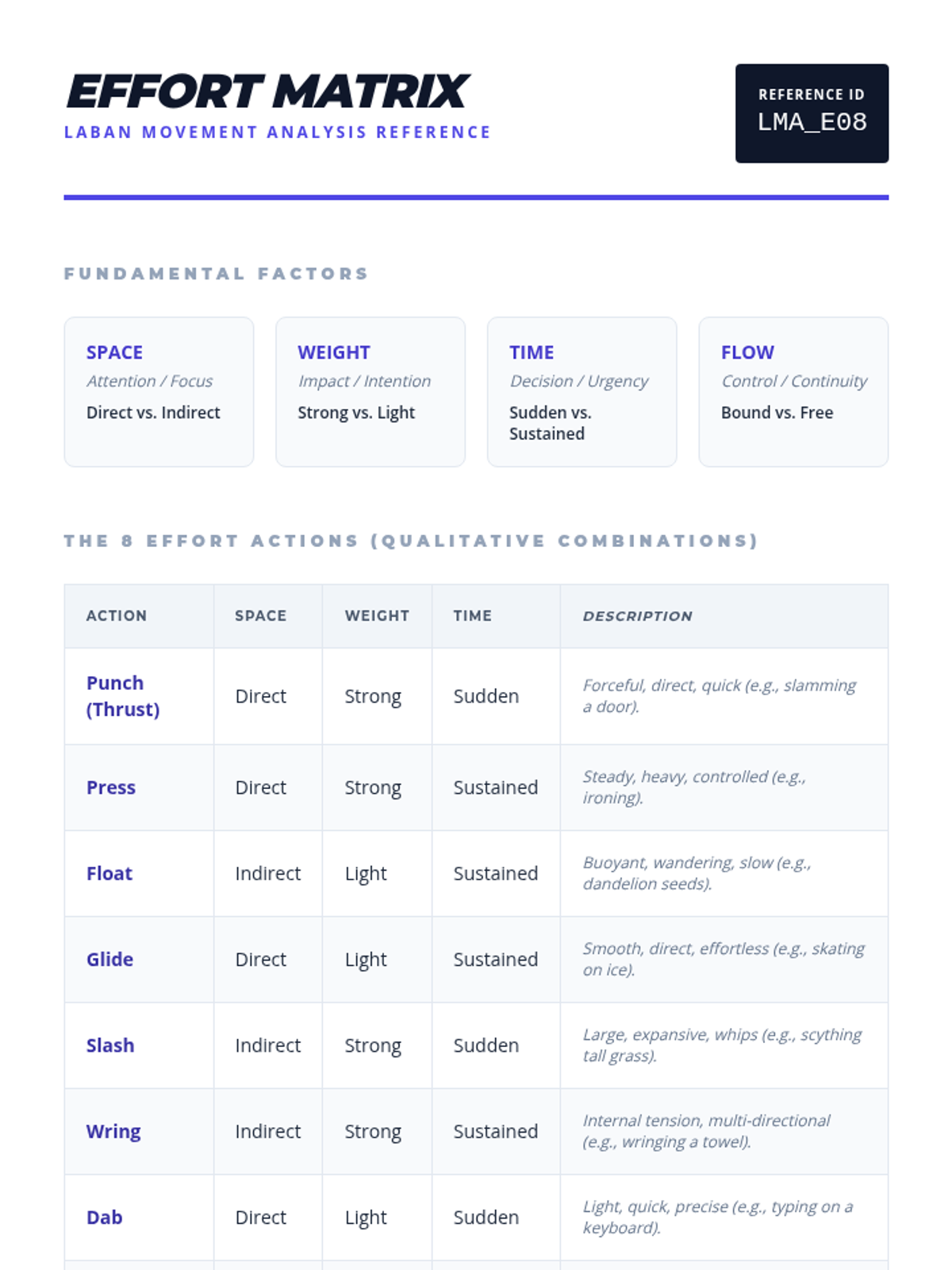
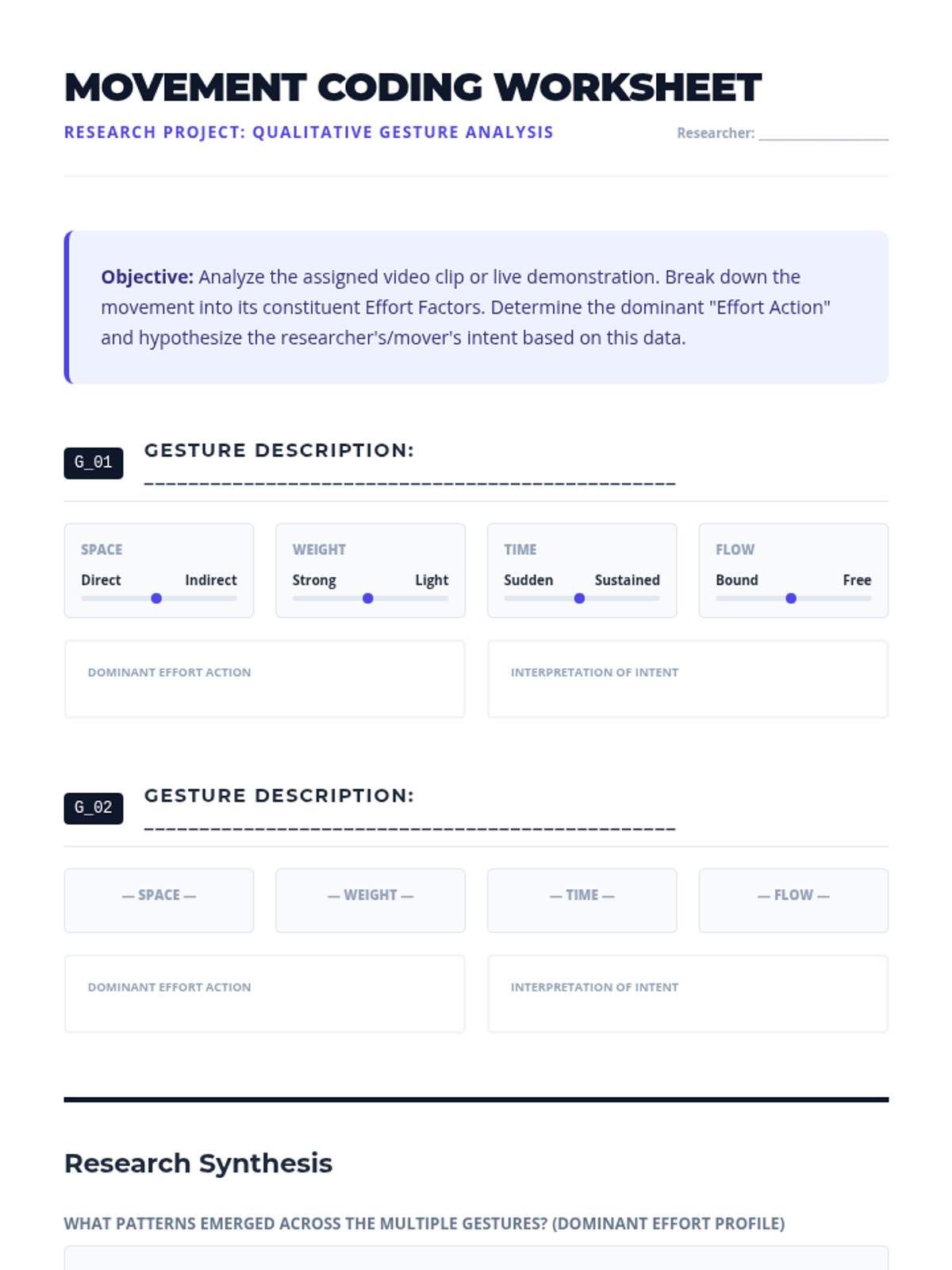
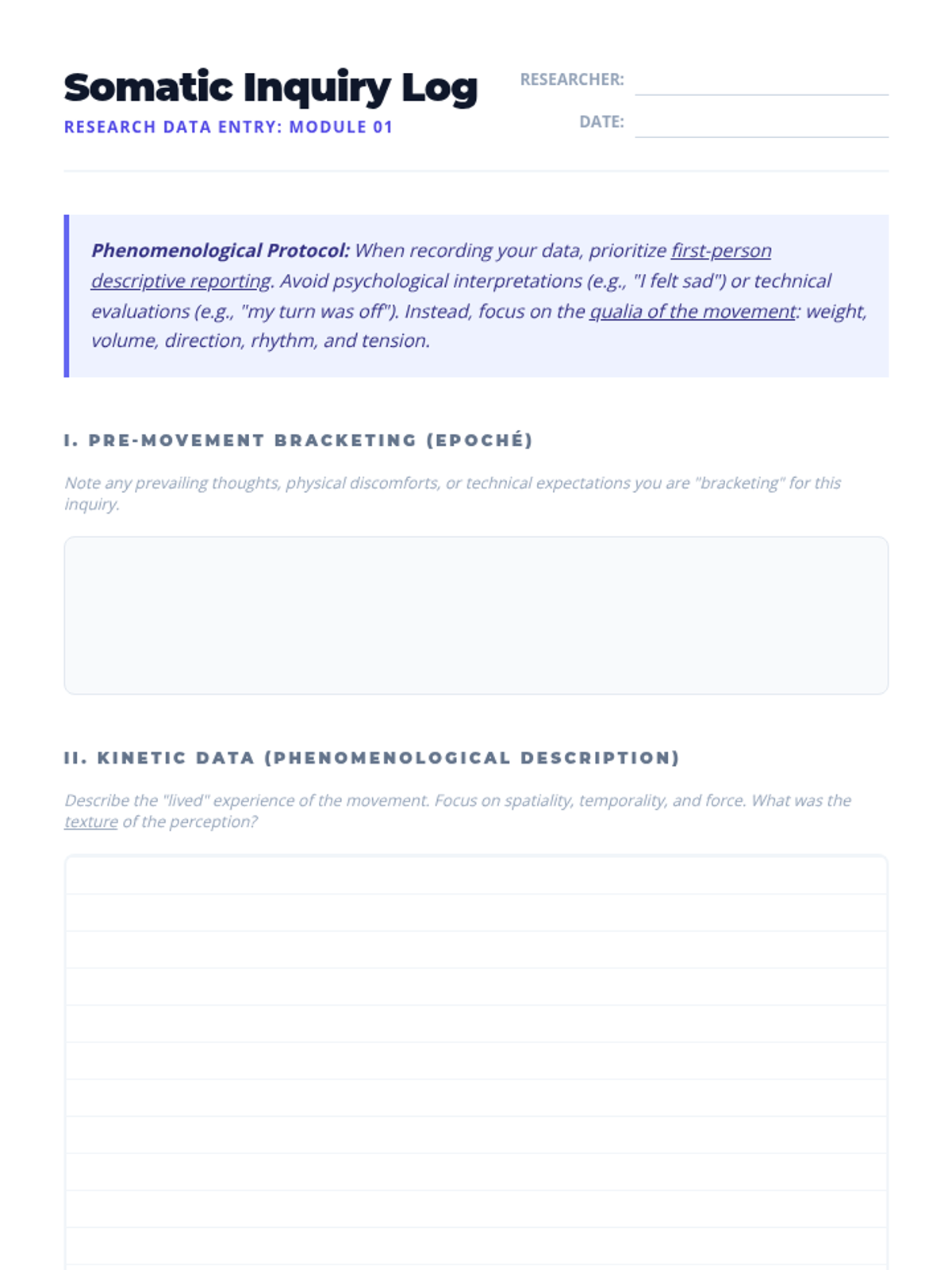
Learning to codify movement using Laban's Effort factors as a tool for qualitative data analysis.
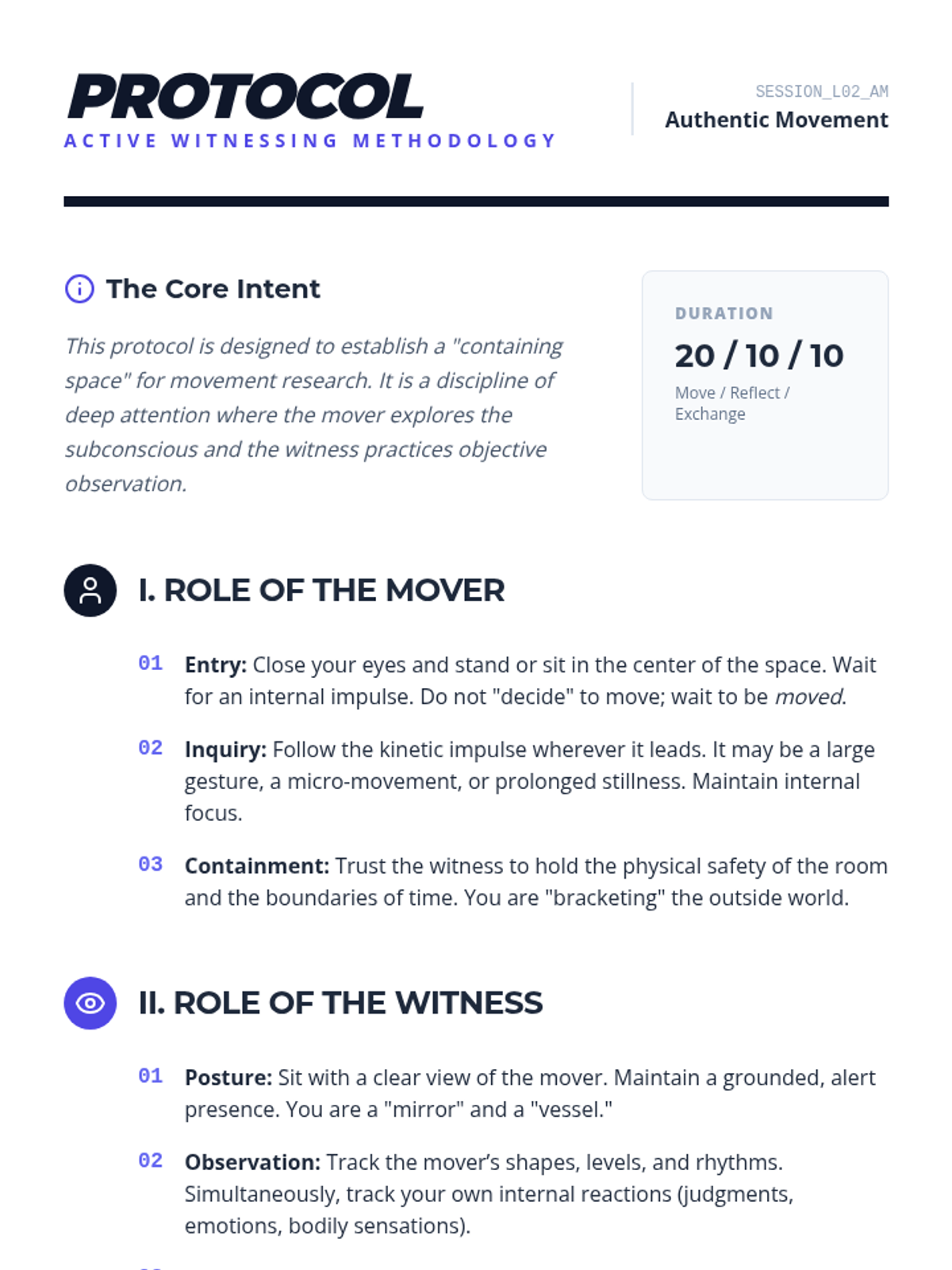
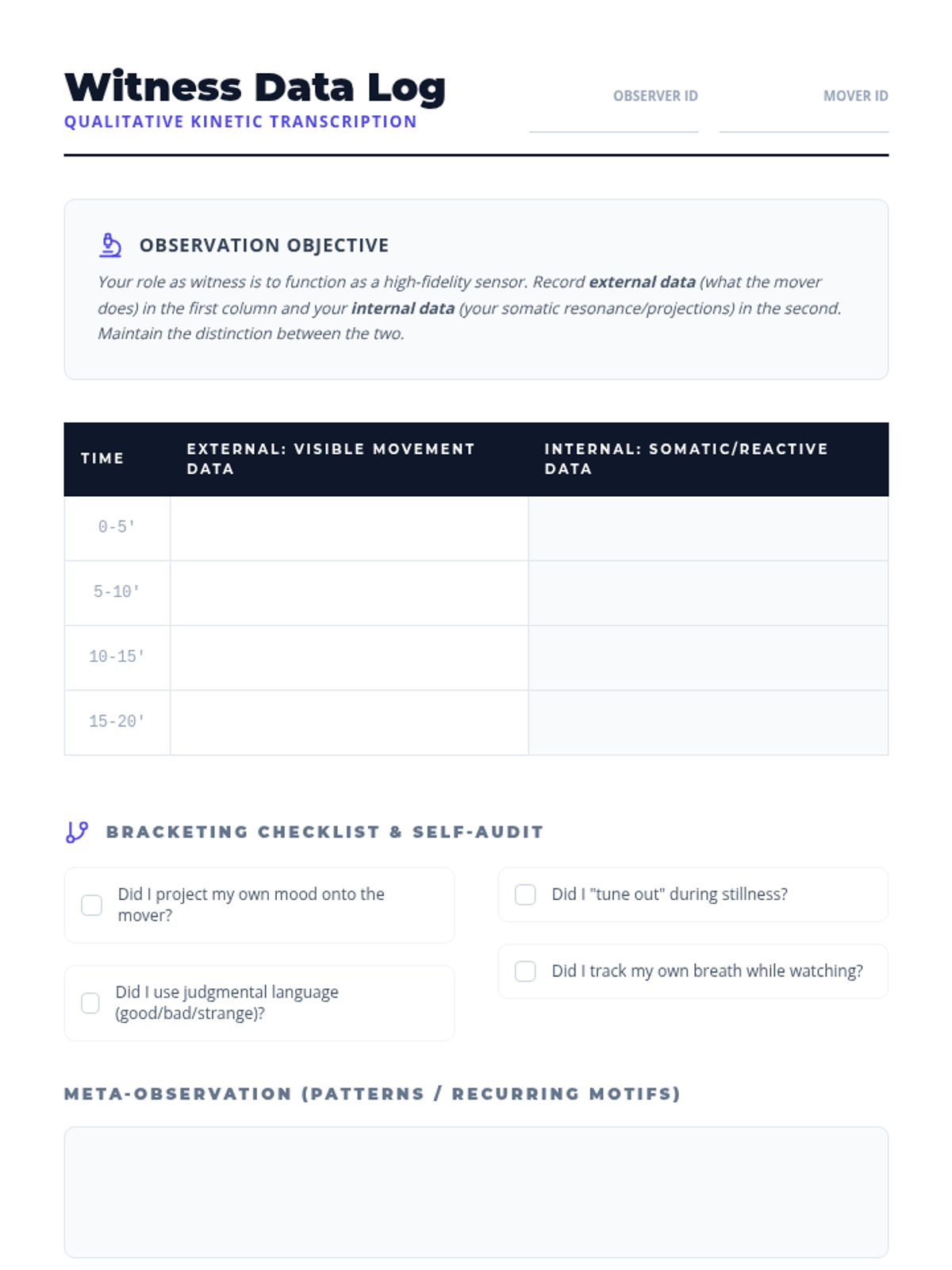
Utilizing the Mover/Witness discipline to access and transcribe subconscious kinetic data.
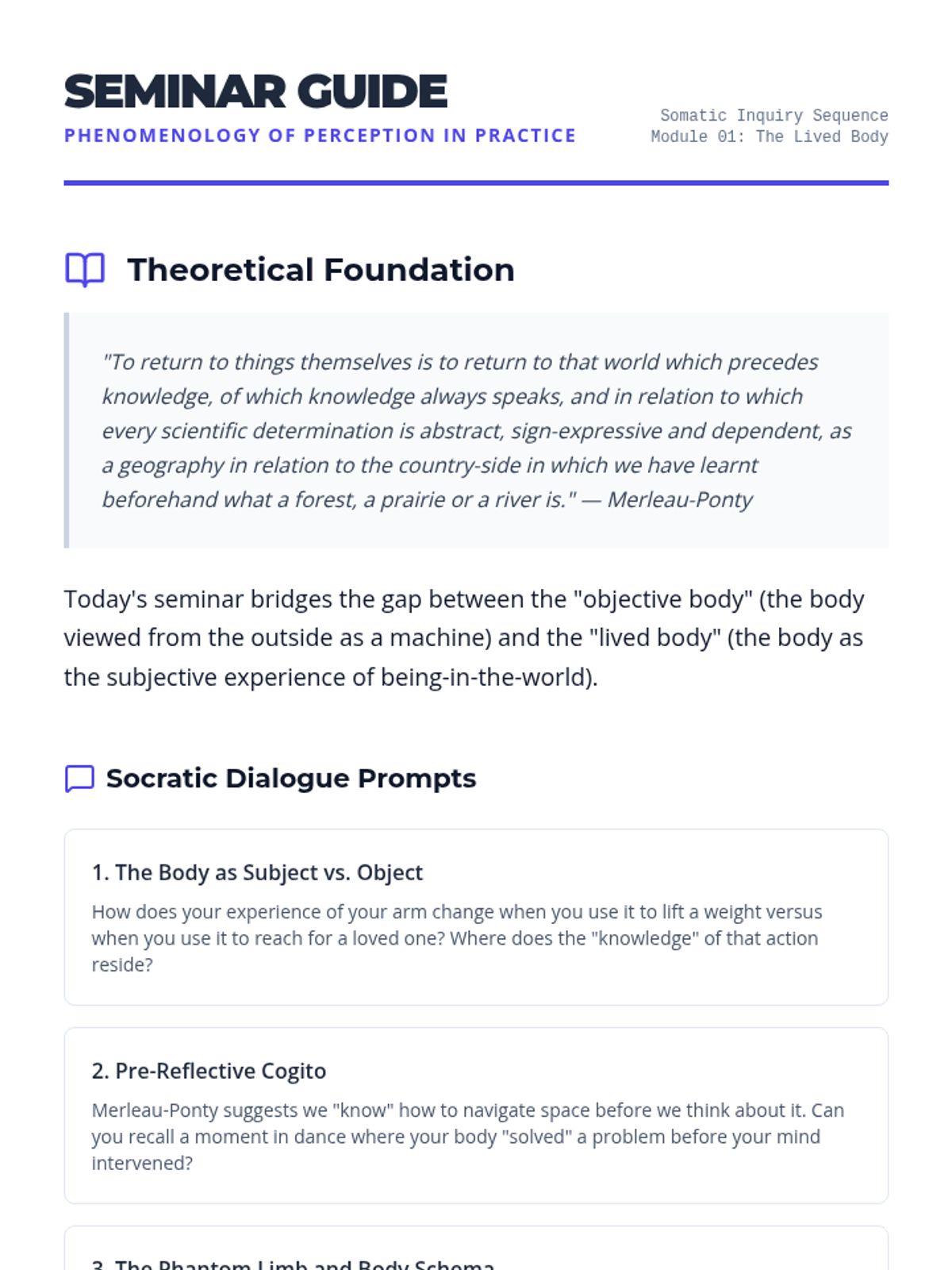
Students engage with Merleau-Ponty and Husserl, translating theoretical 'lived body' concepts into movement experiments.
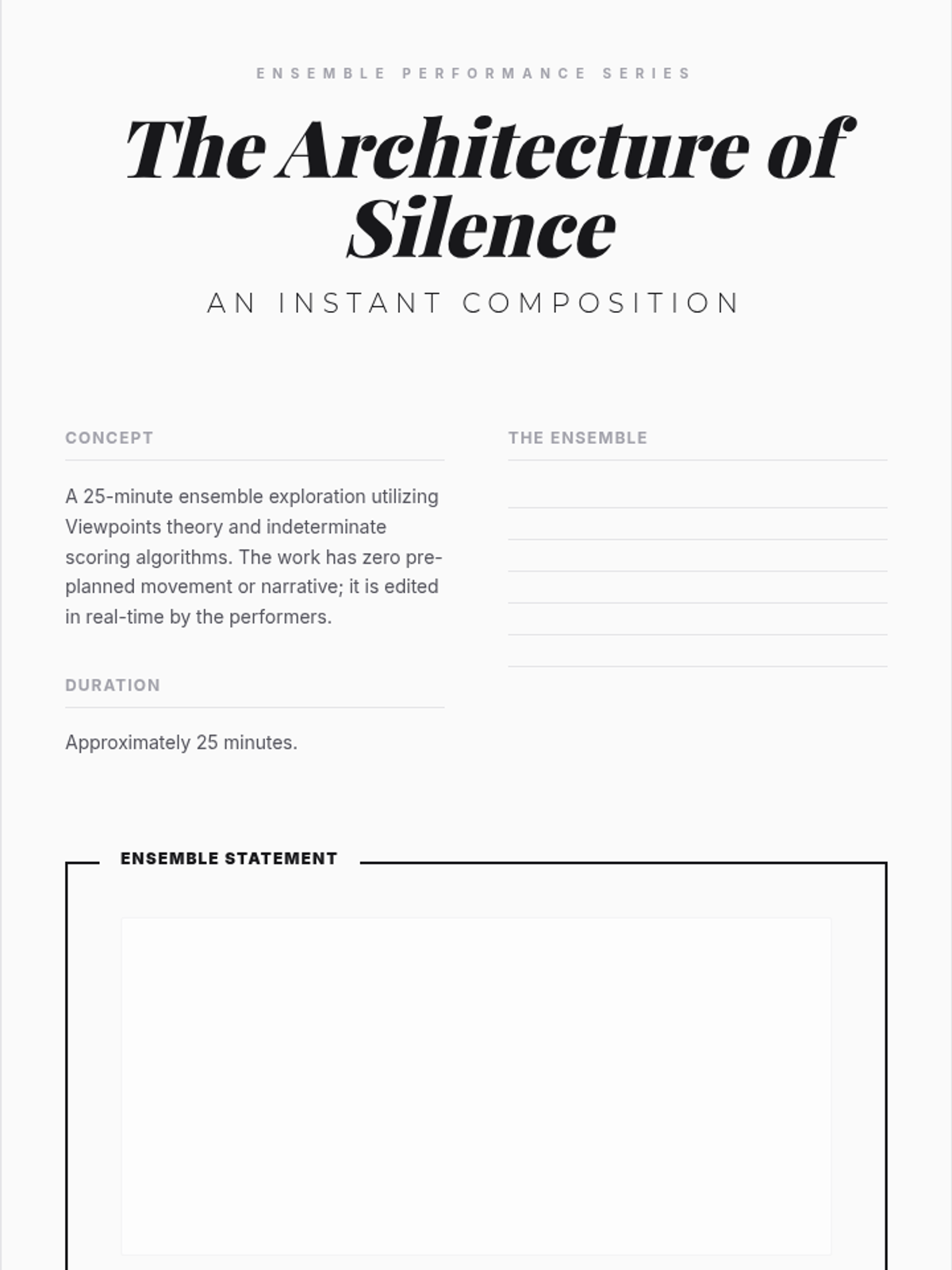
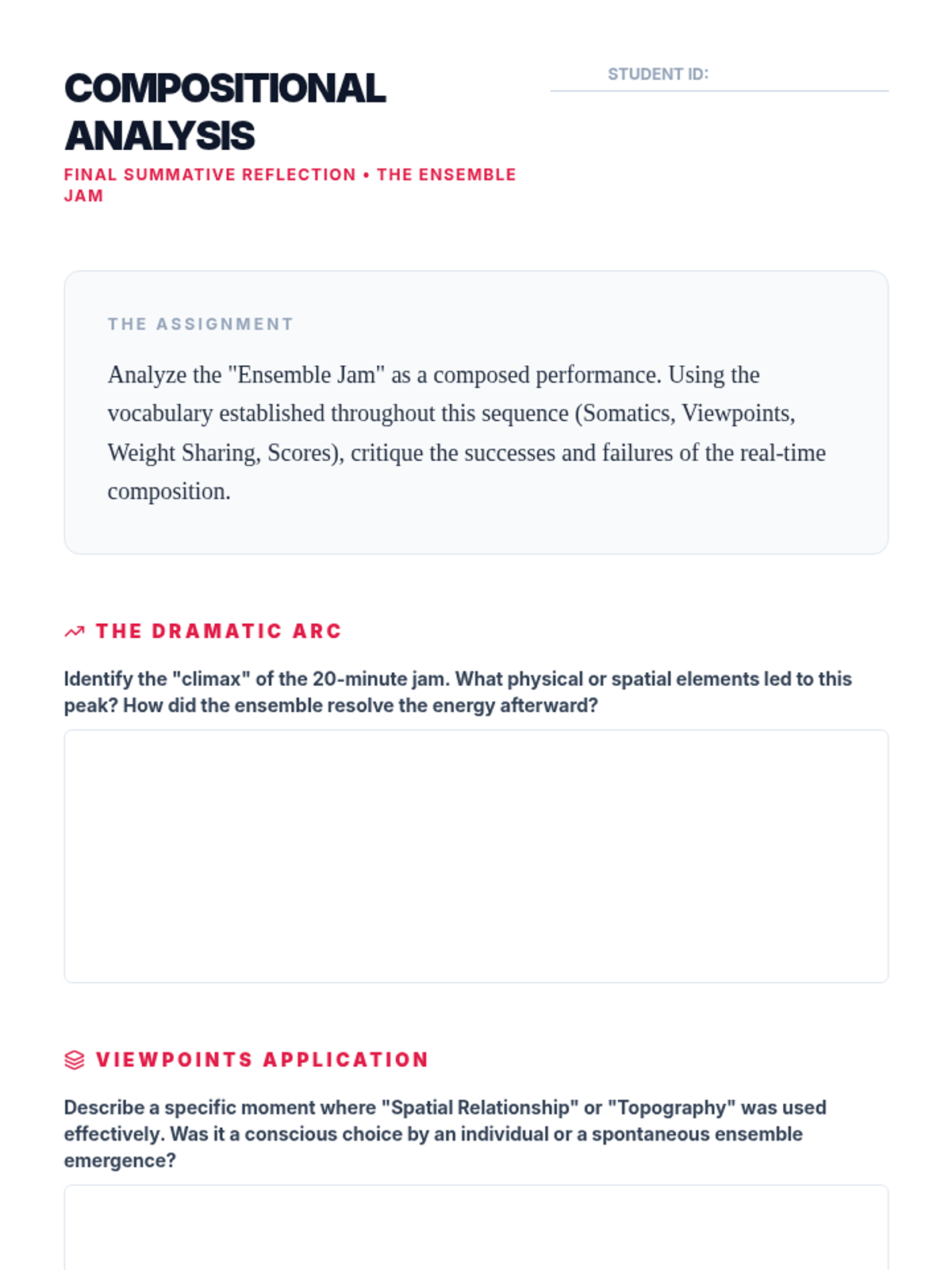
Culminates the sequence with a long-form instant composition performance, demonstrating ensemble mastery and compositional rigor.
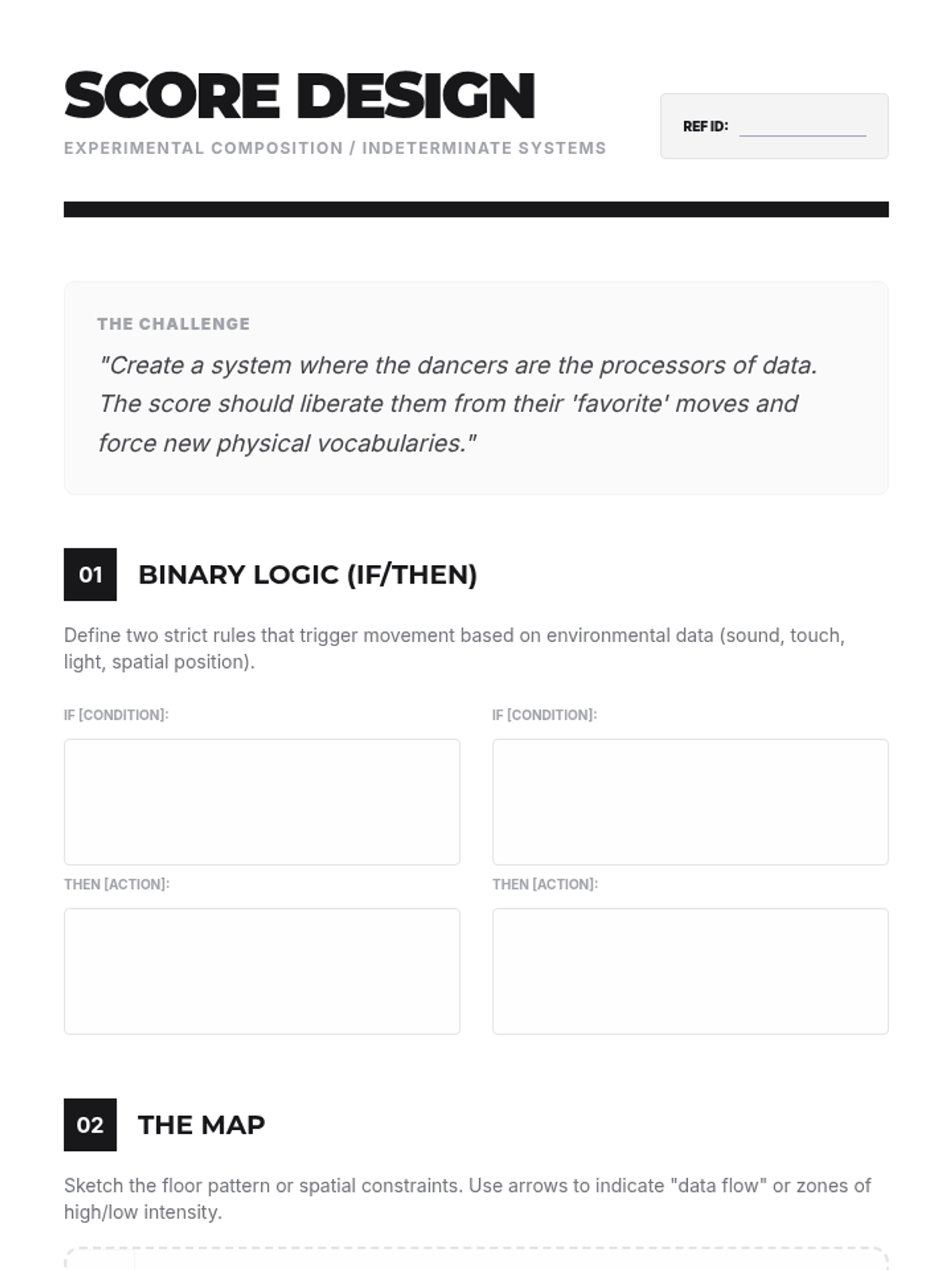
Investigates the history and practice of indeterminate scoring, using constraints to drive experimental movement.
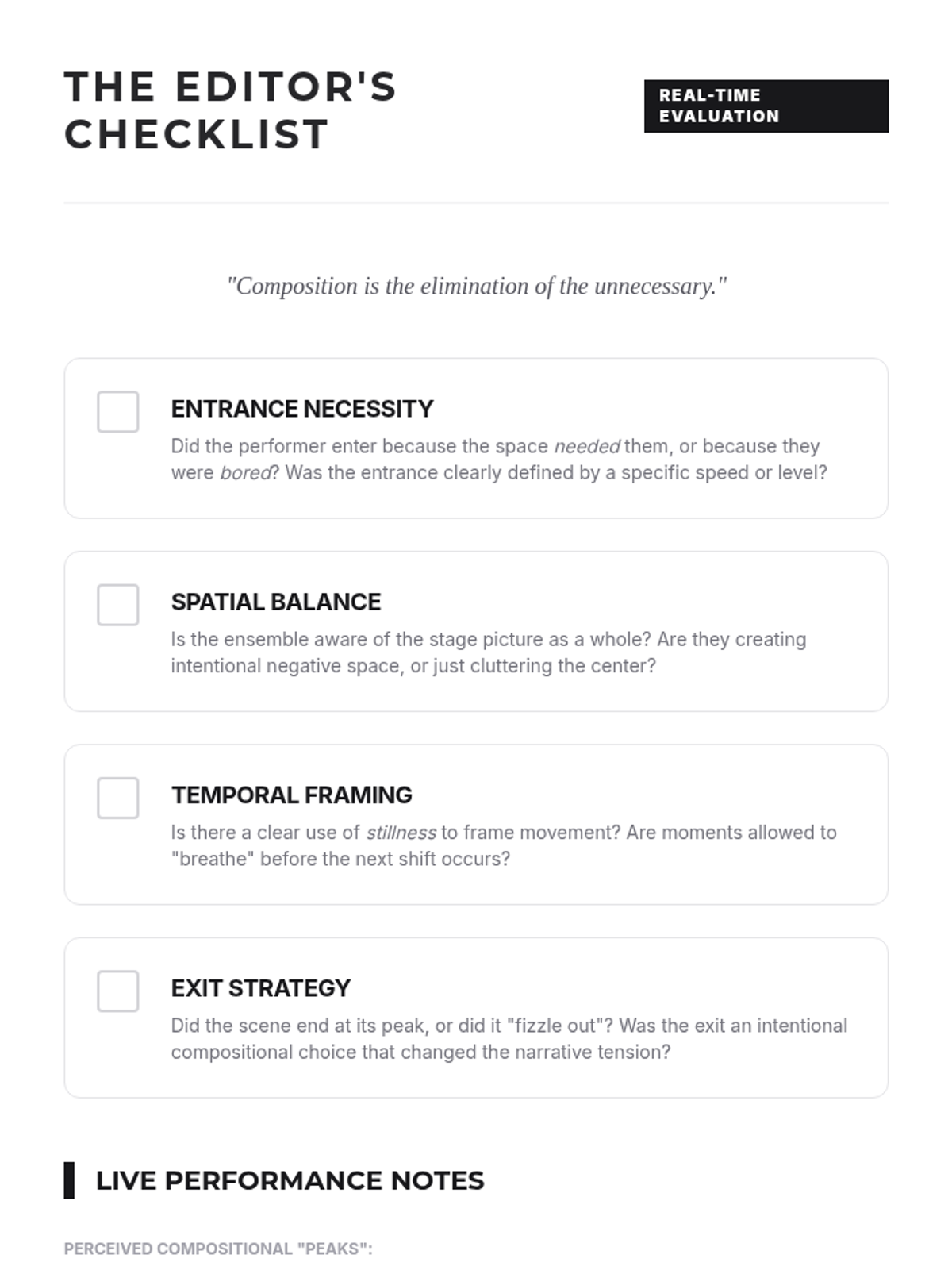
Develops the skill of real-time editing, distinguishing intentional composition from unstructured 'jamming.'
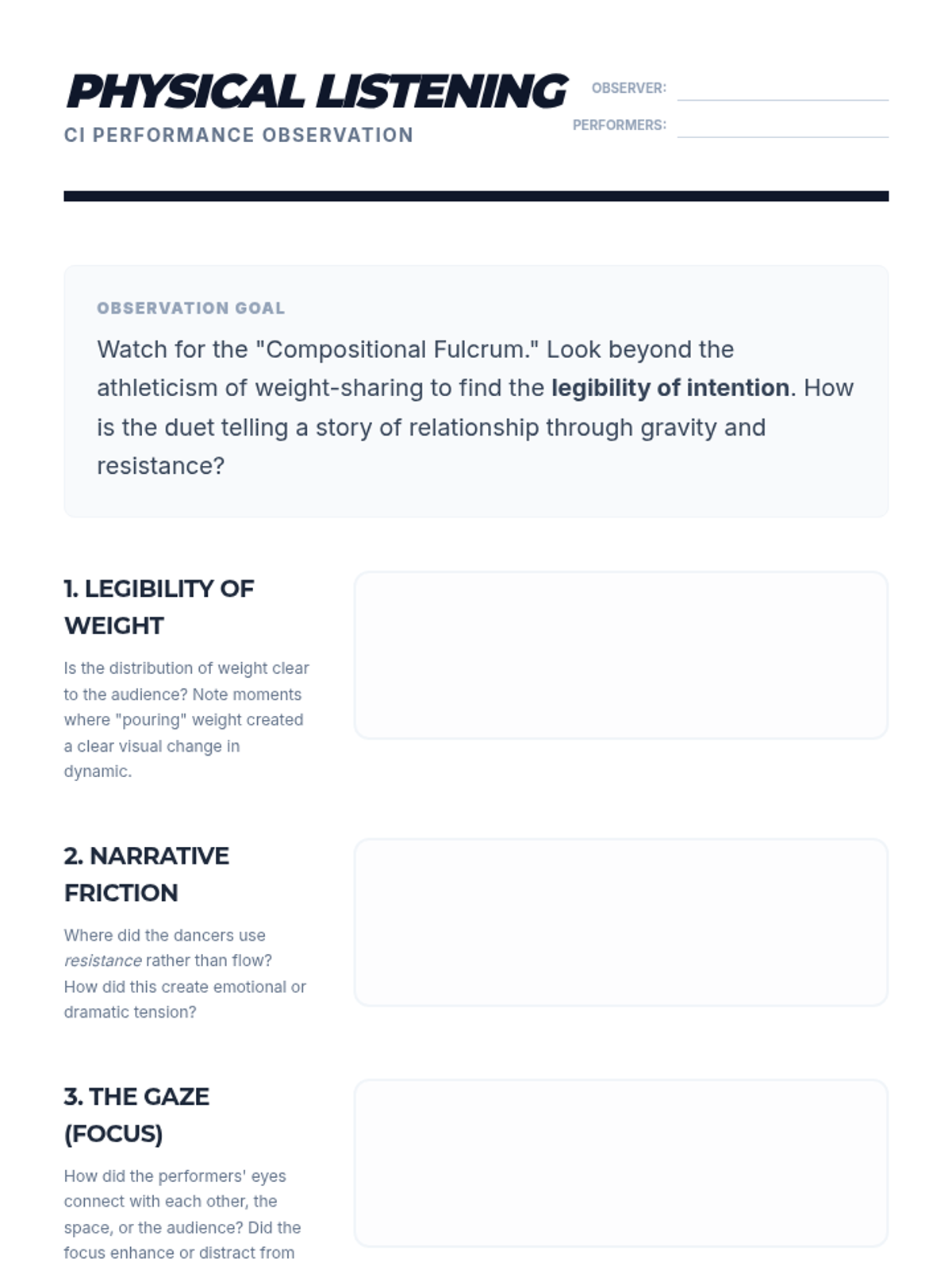
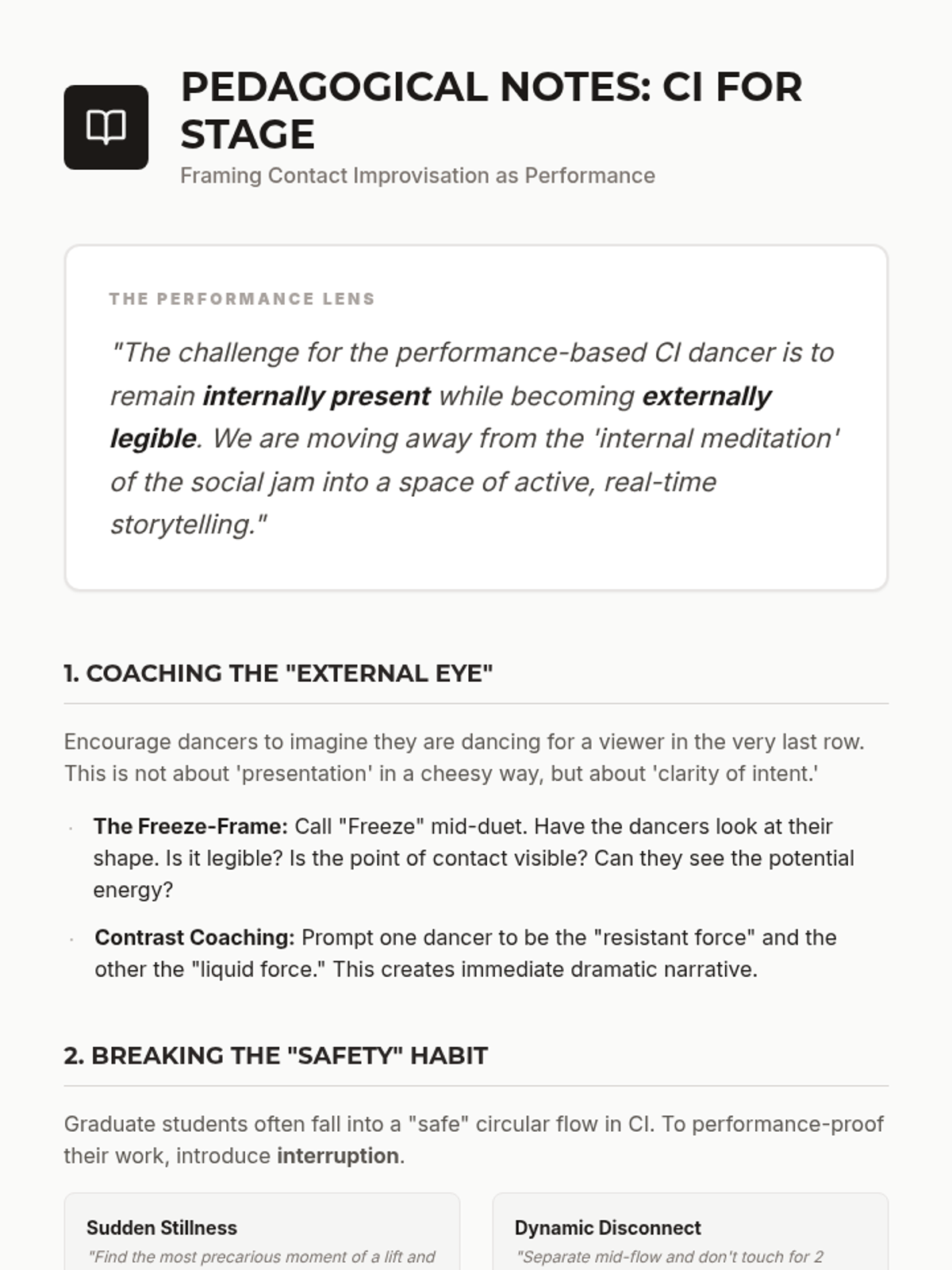
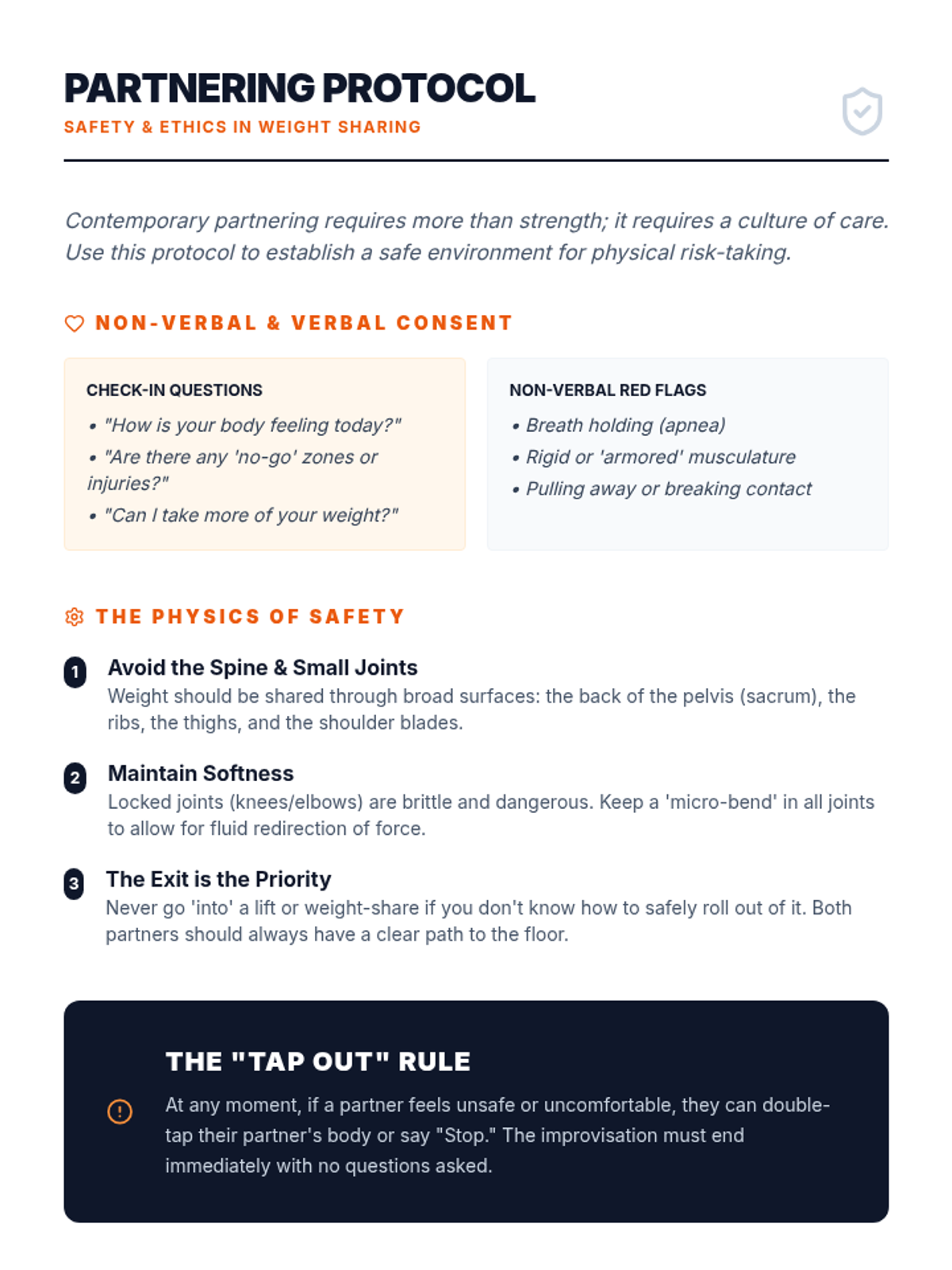
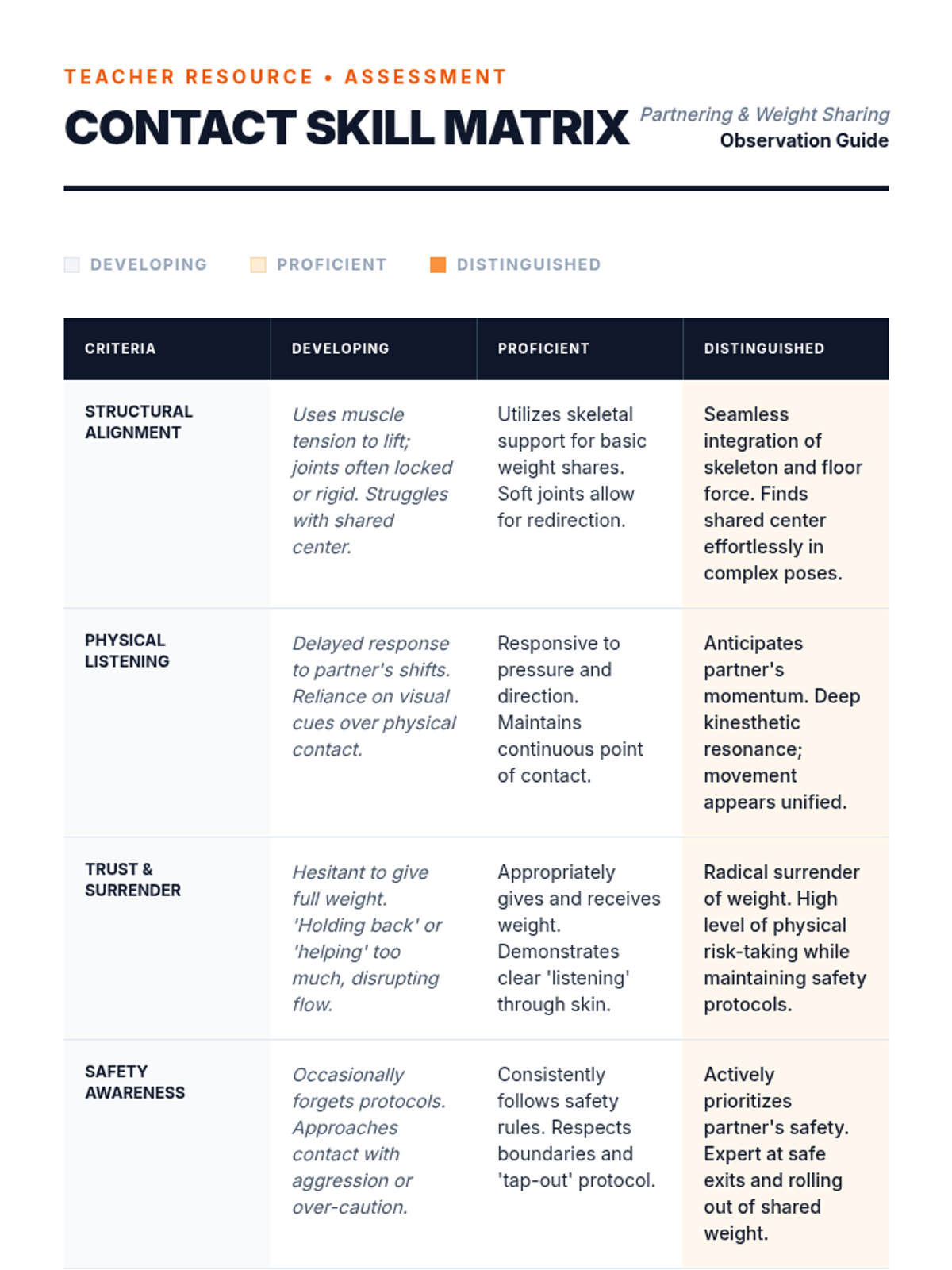
Explores Contact Improvisation as a performance tool, emphasizing weight-sharing and physical listening to create narrative tension.
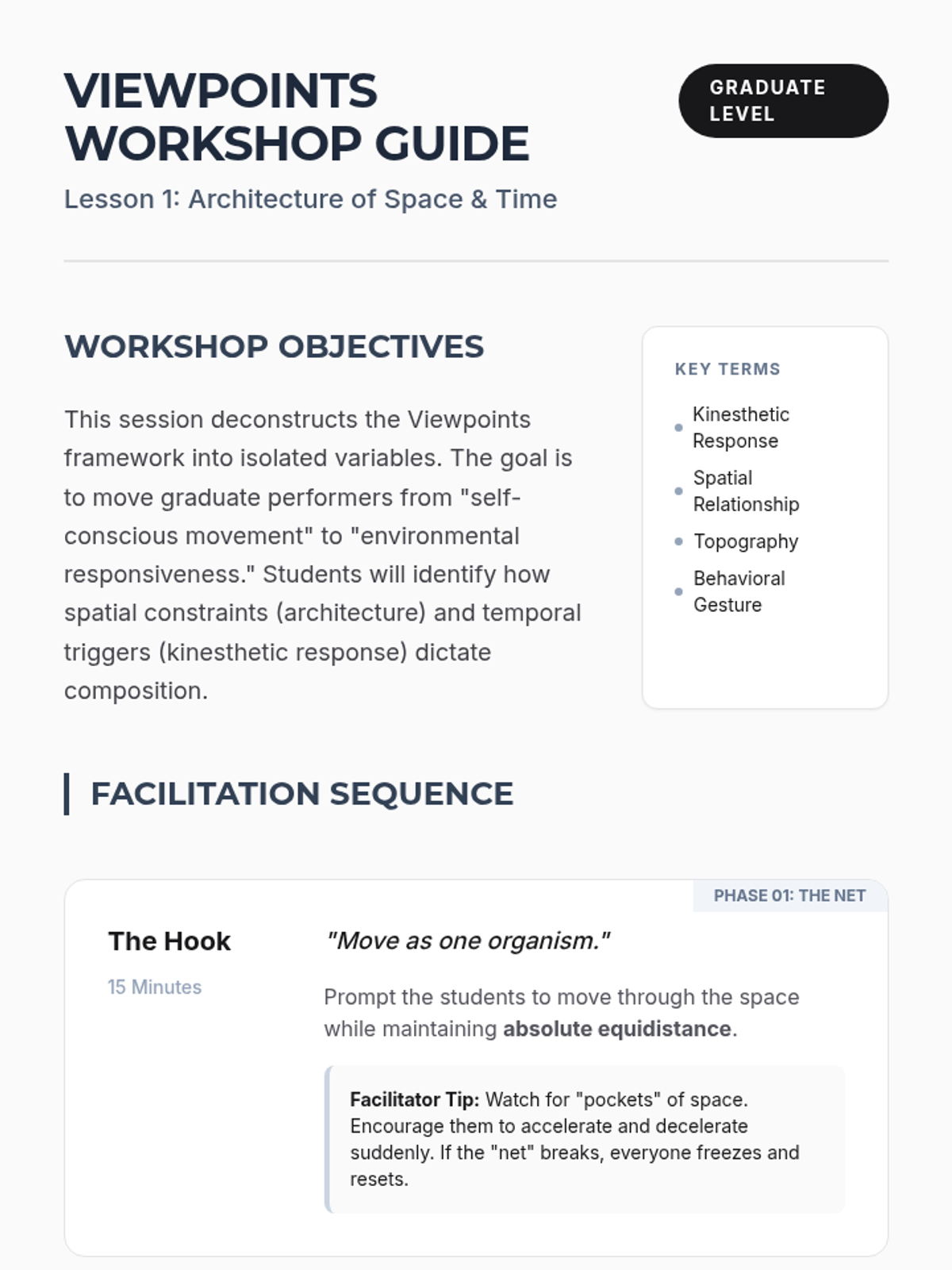
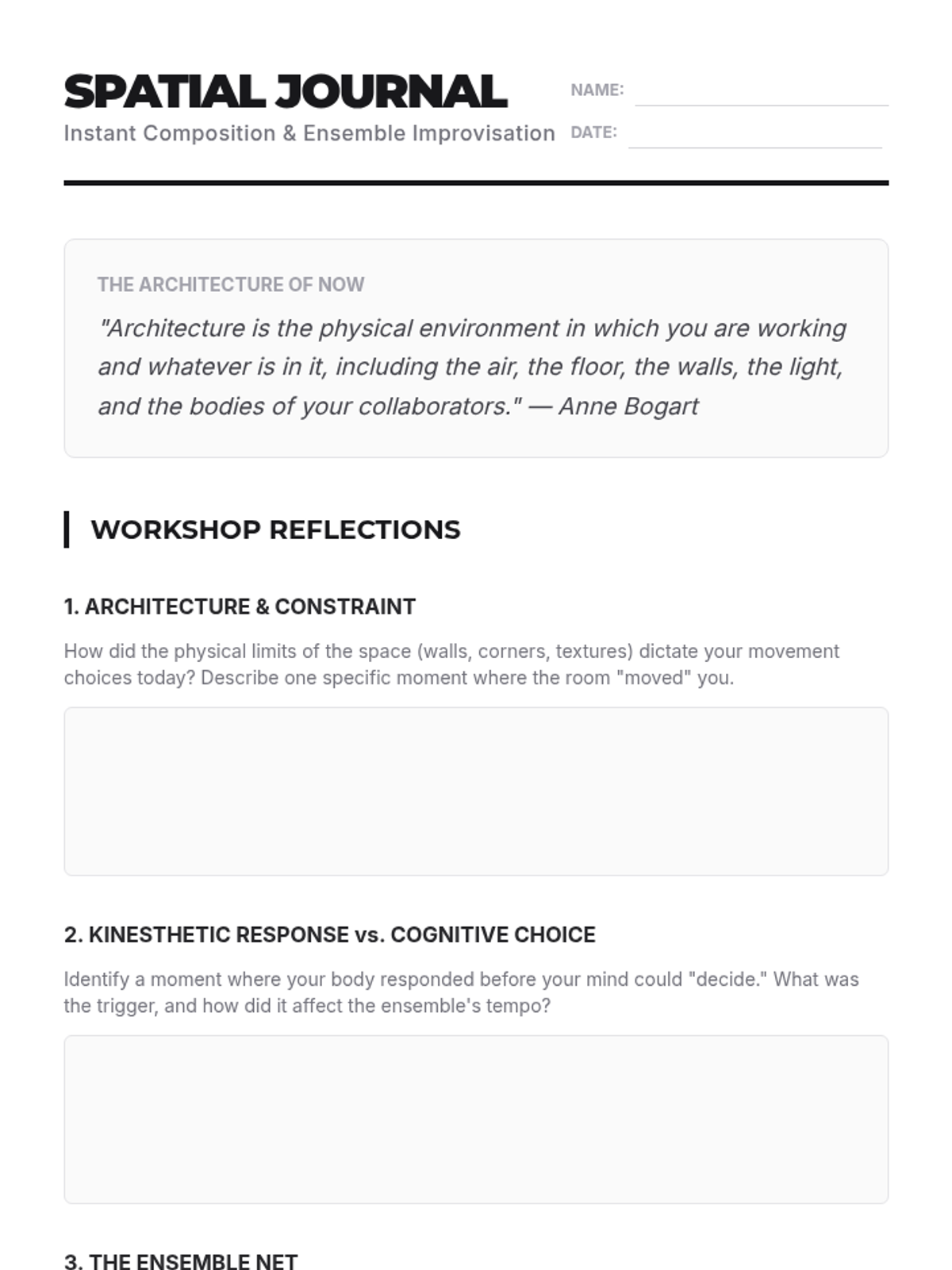
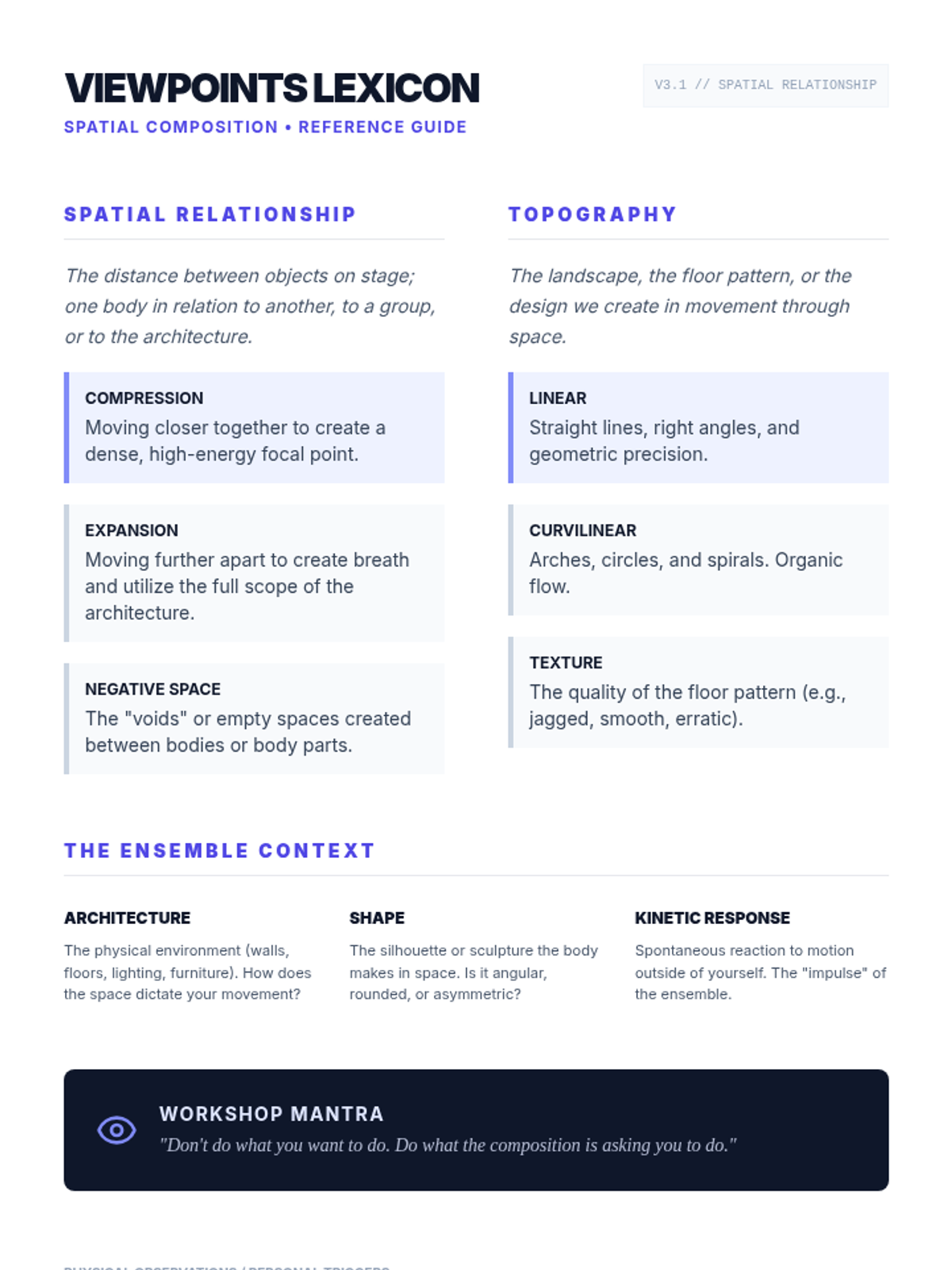
Focuses on deconstructing the Viewpoints technique to heighten spatial and temporal awareness within an ensemble.
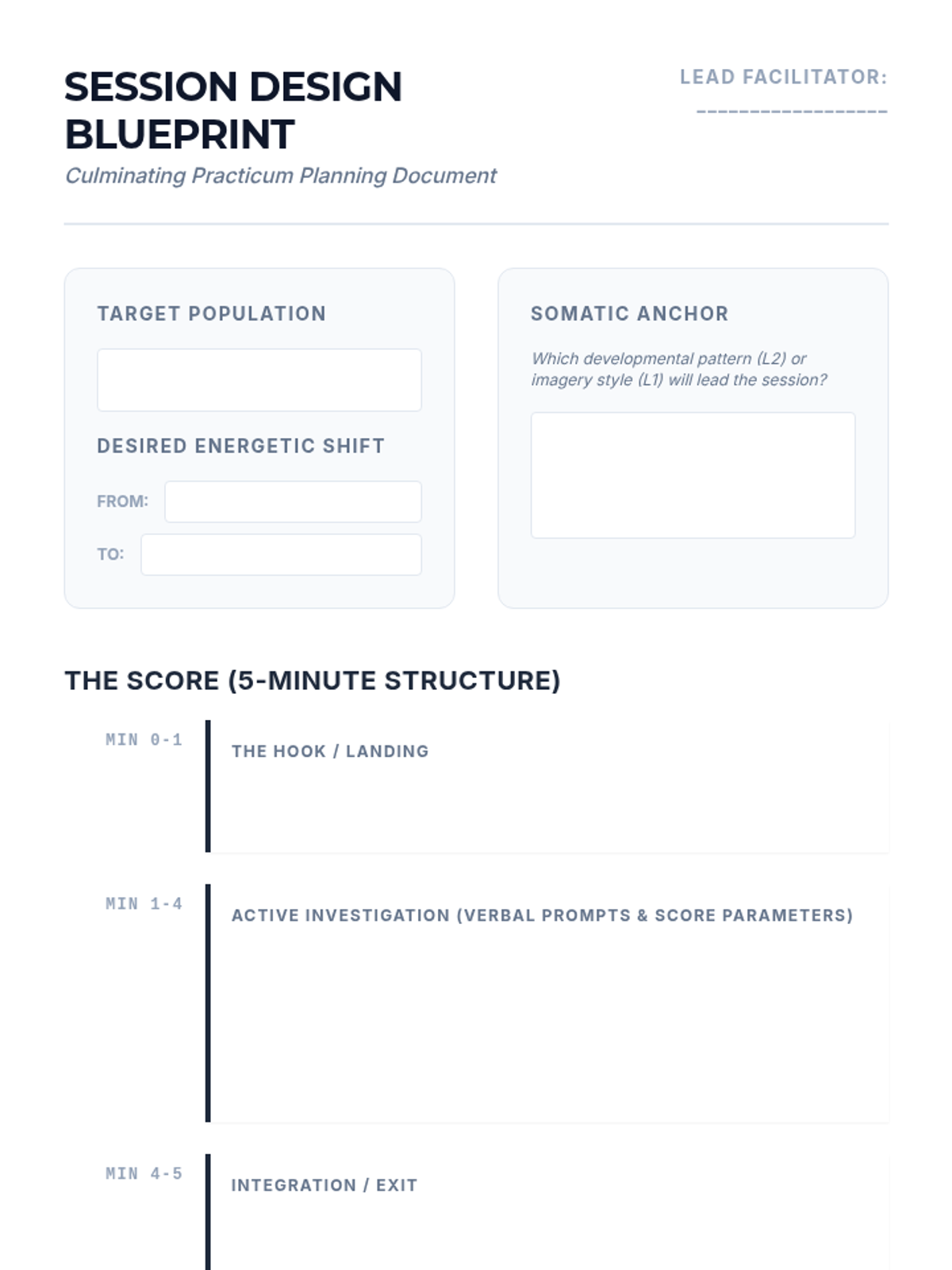
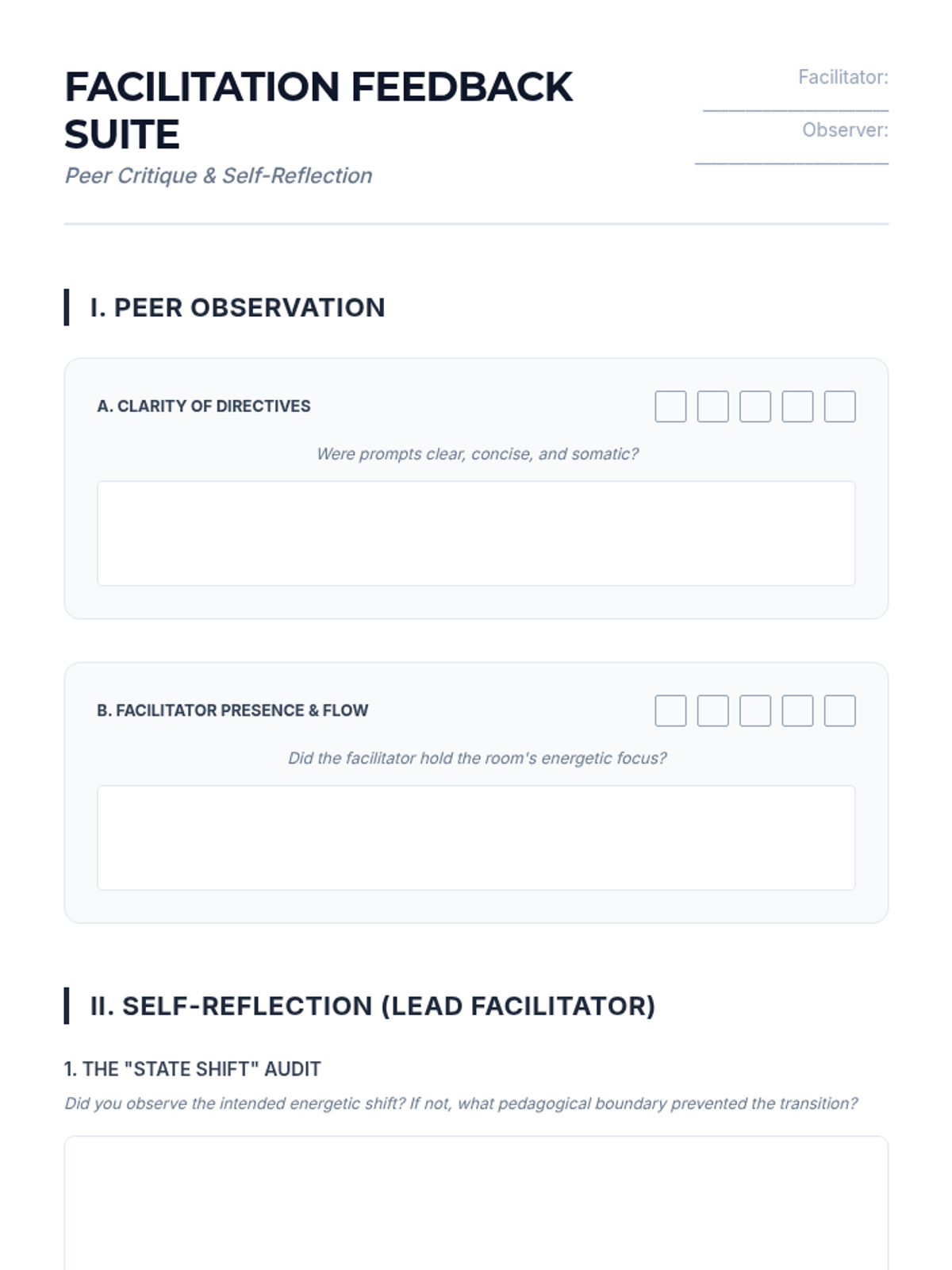
A culminating practicum where students lead a creative movement session and receive peer critique on their facilitation techniques.
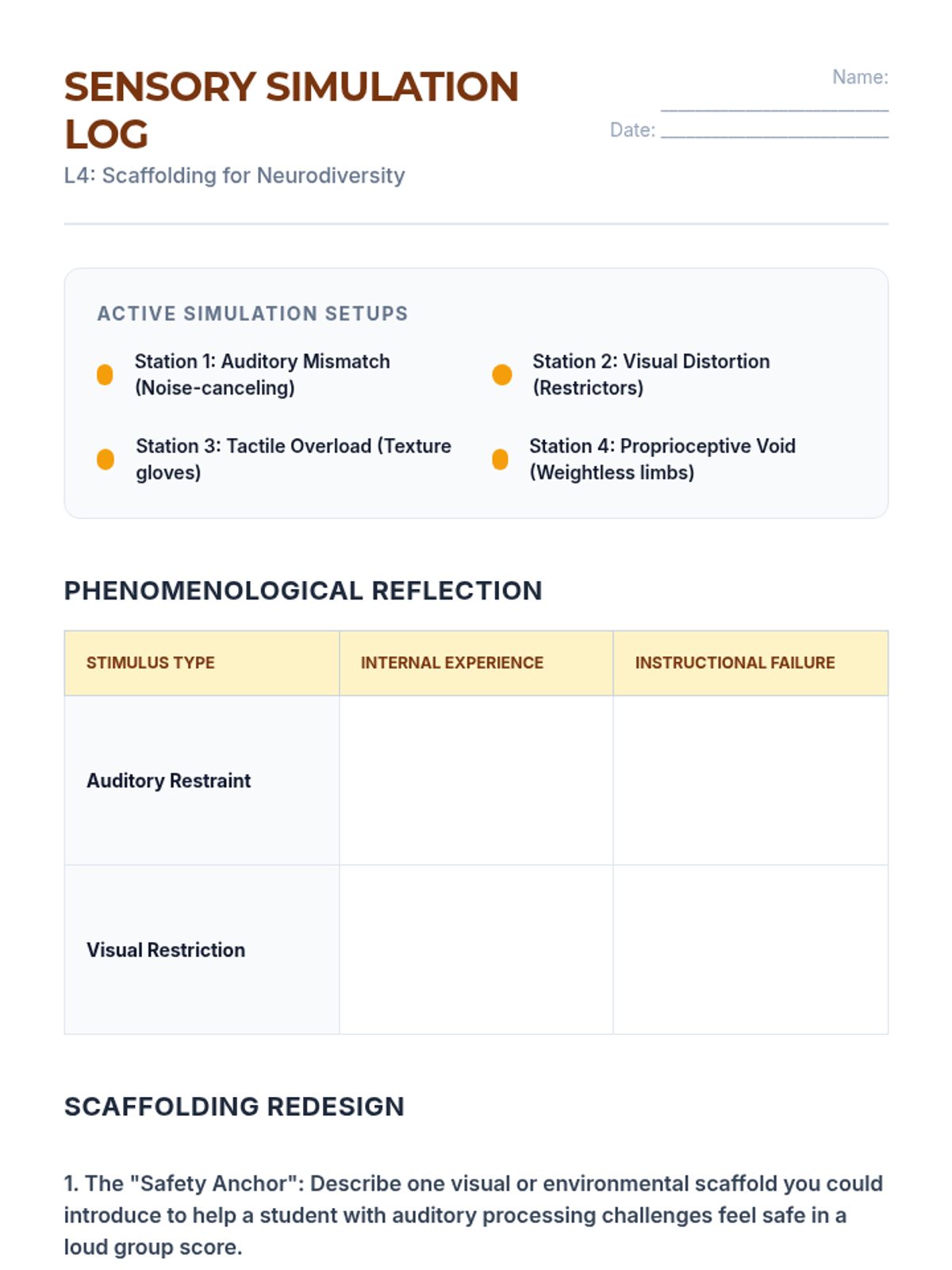
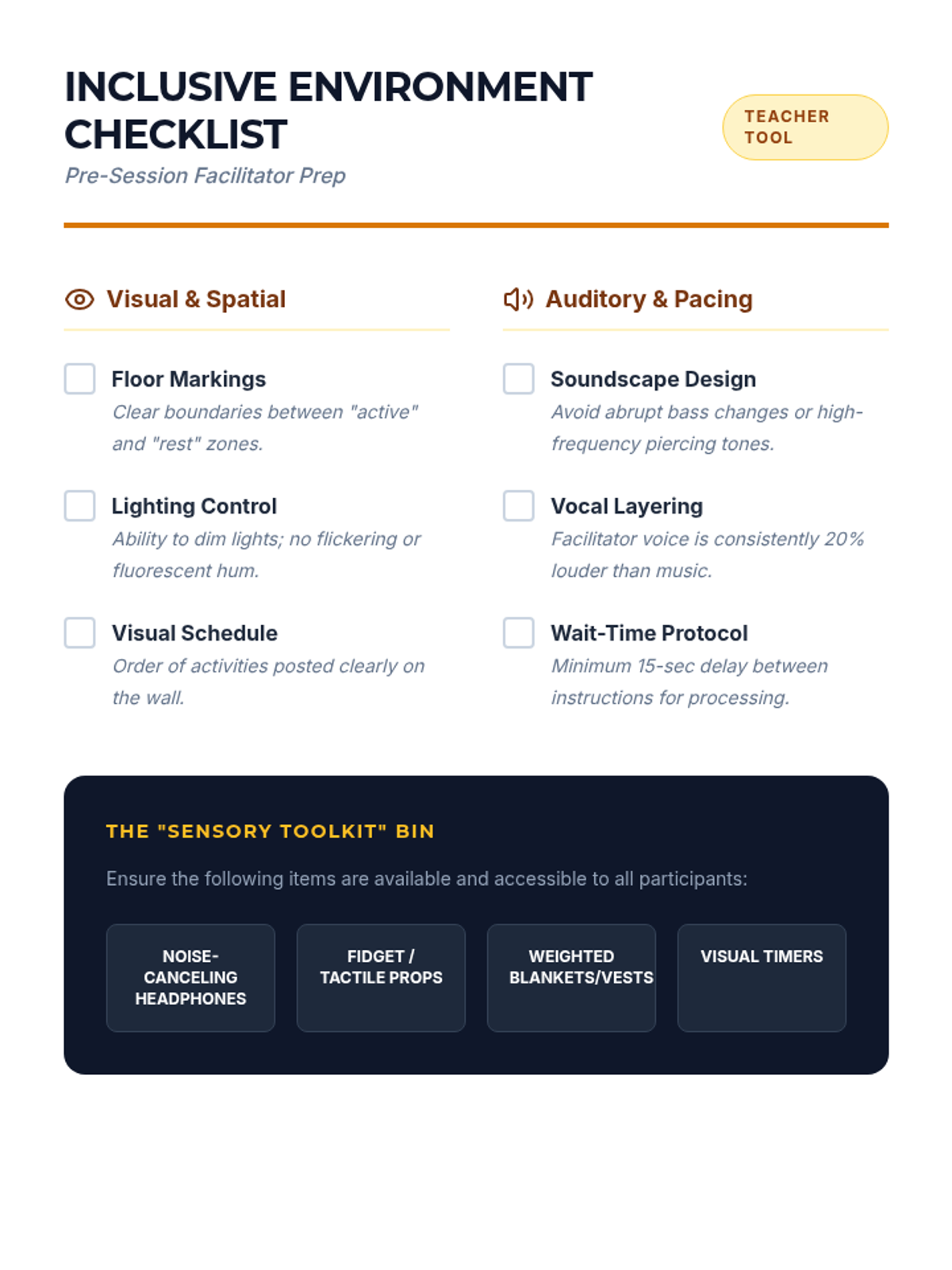
Research and apply sensory-friendly practices and scaffolding techniques for neurodiverse populations in movement settings.
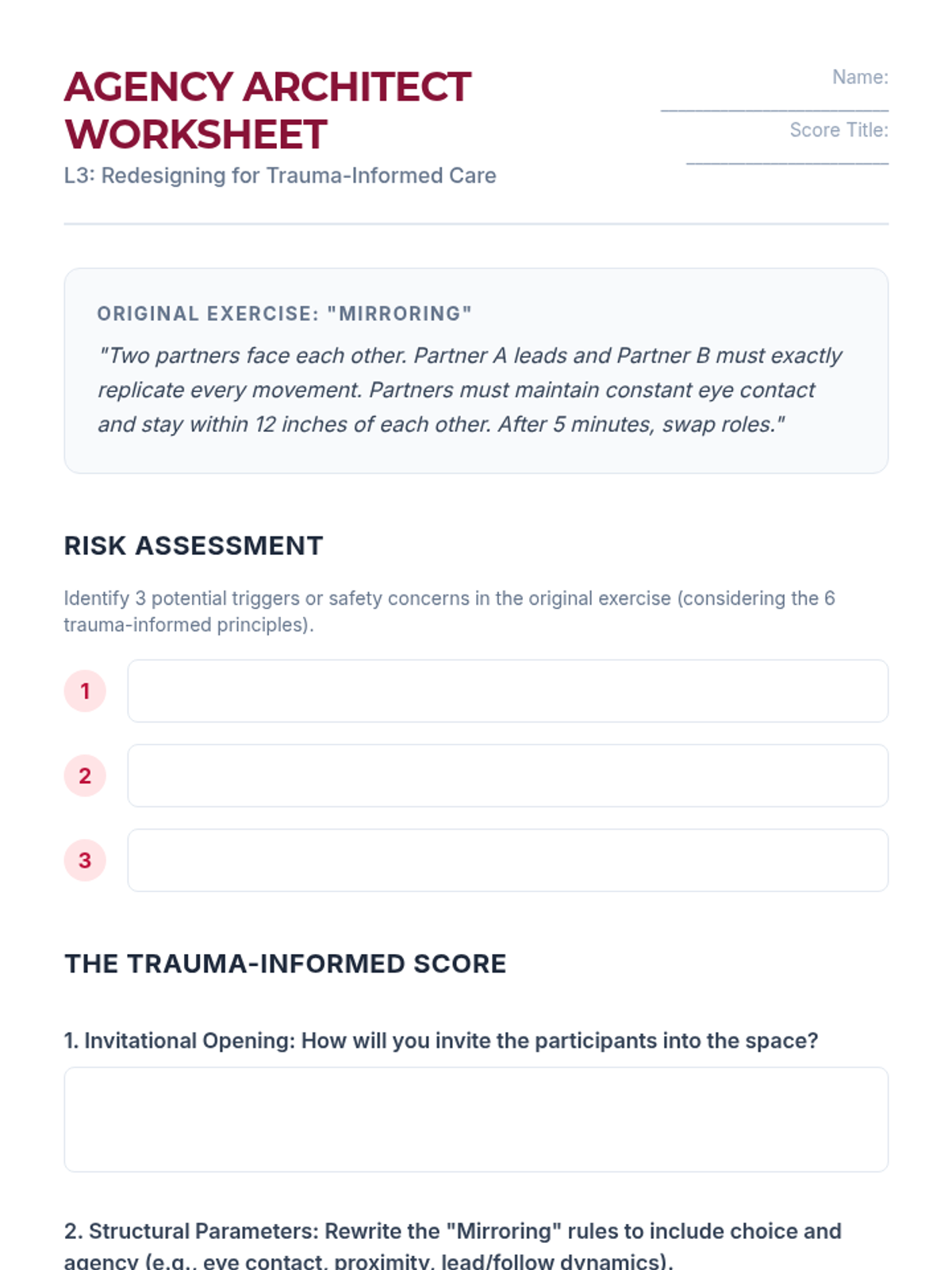
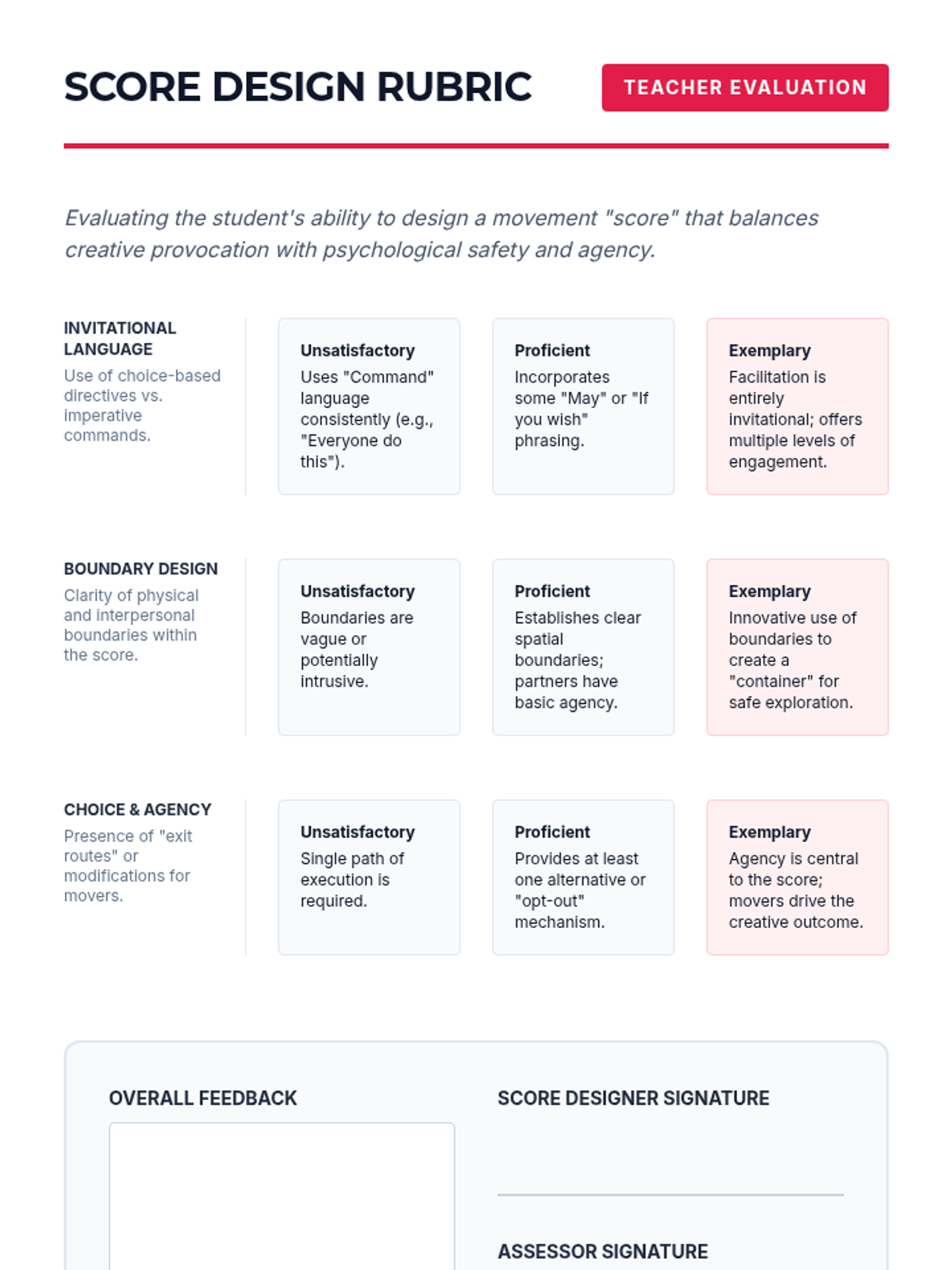
Investigate the intersection of movement and emotional safety through the design of trauma-informed 'scores'.
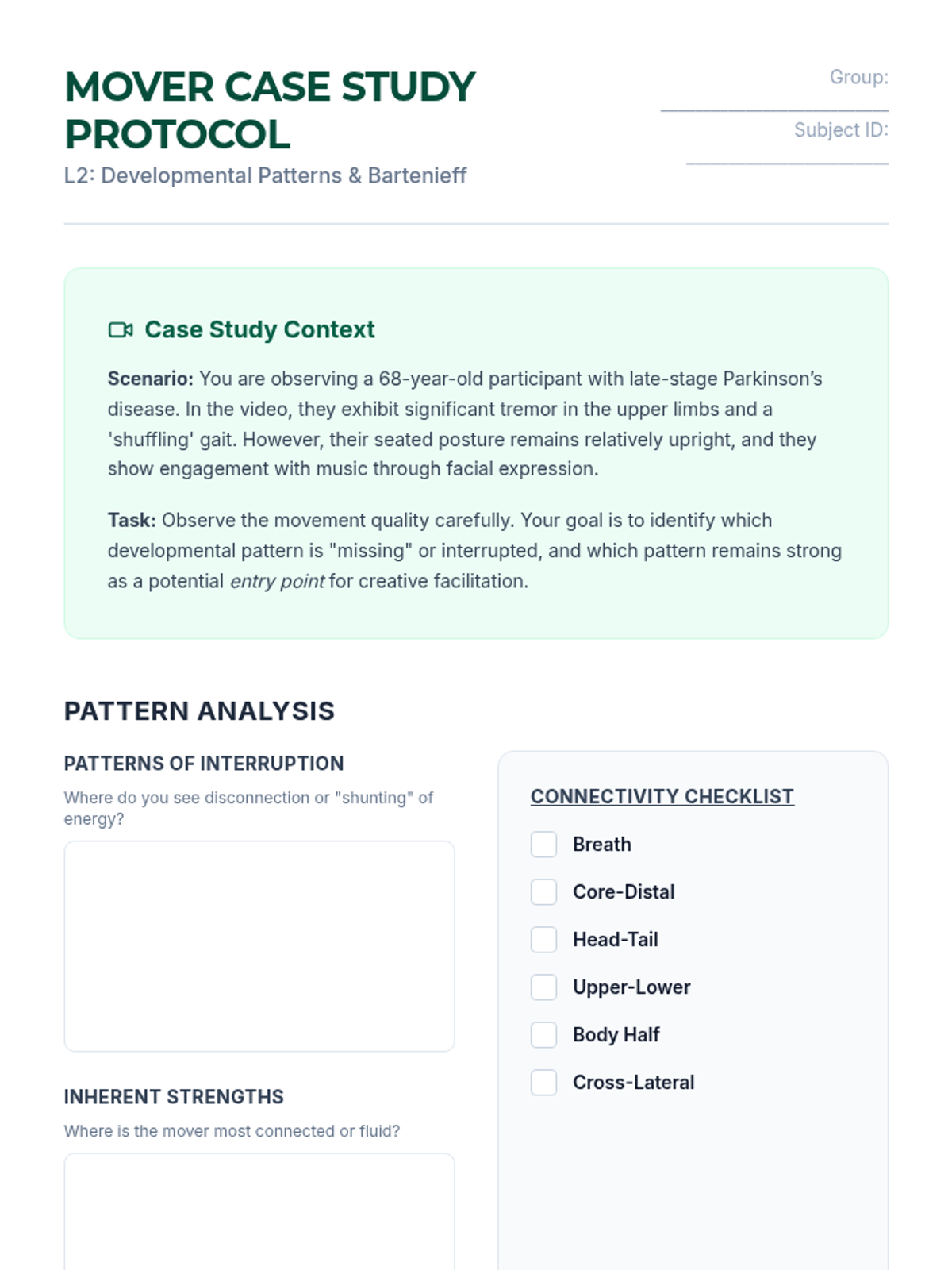
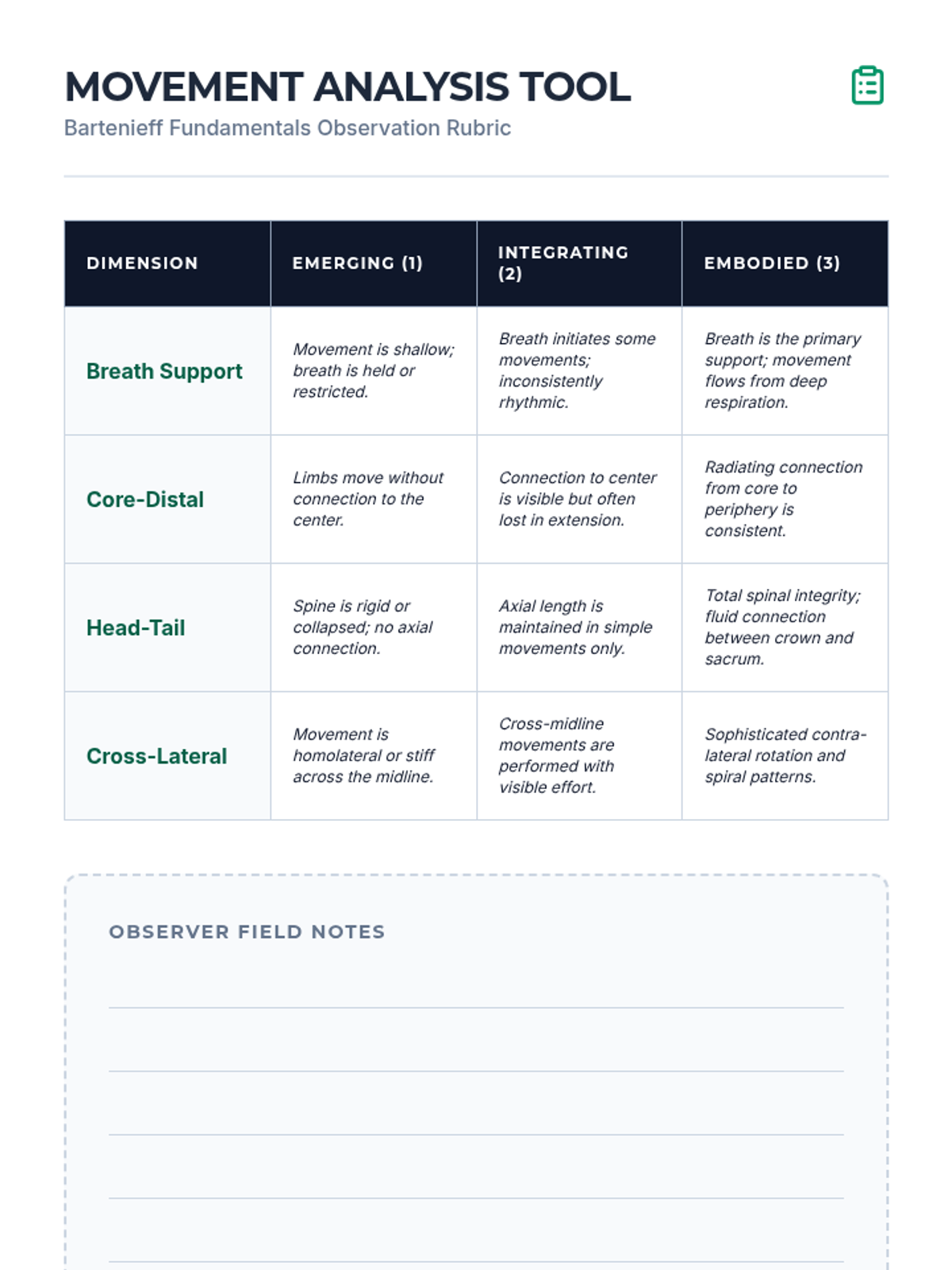
Connect creative movement to Bartenieff Fundamentals and developmental patterns to support movers with diverse physical abilities.
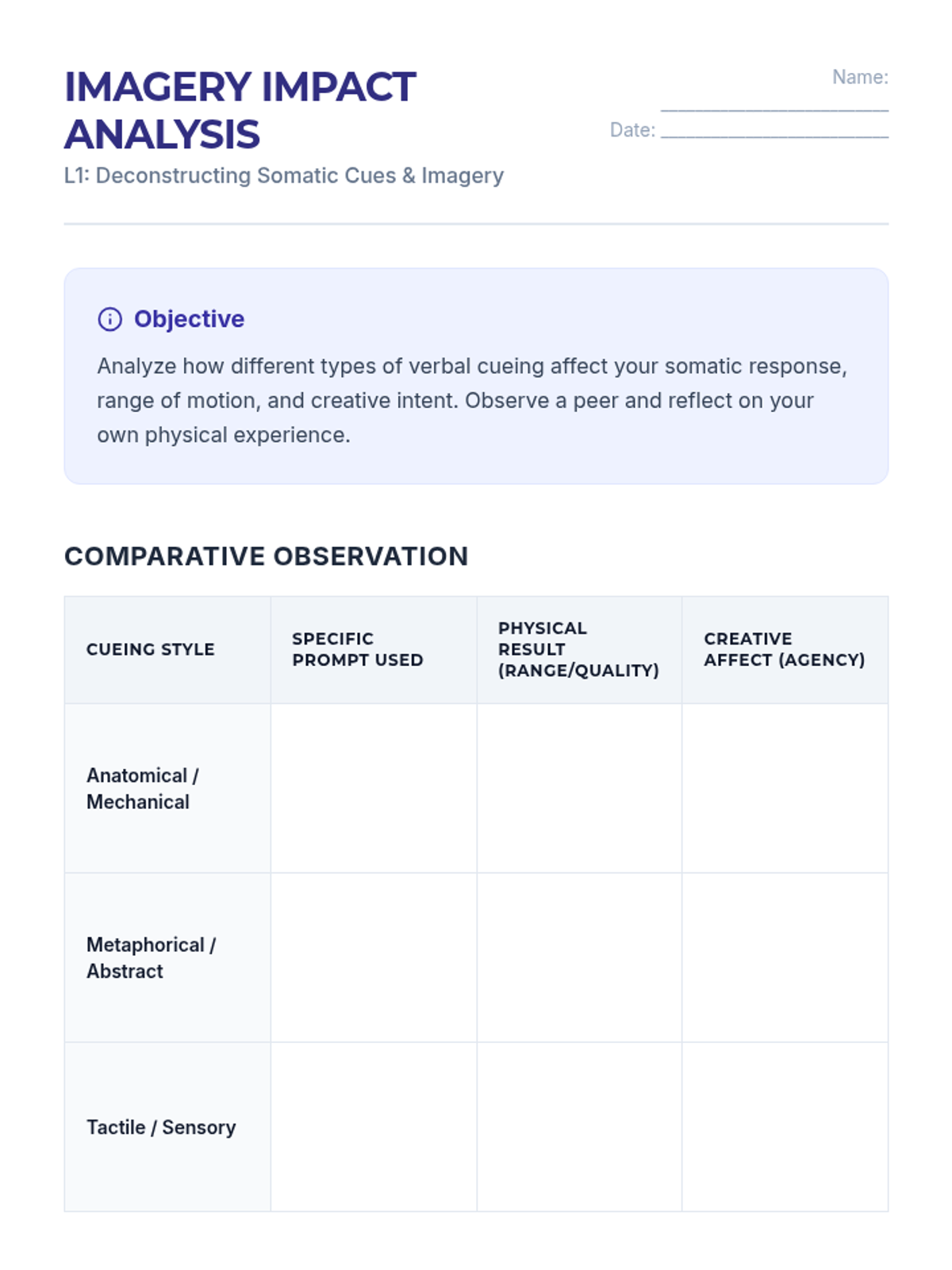
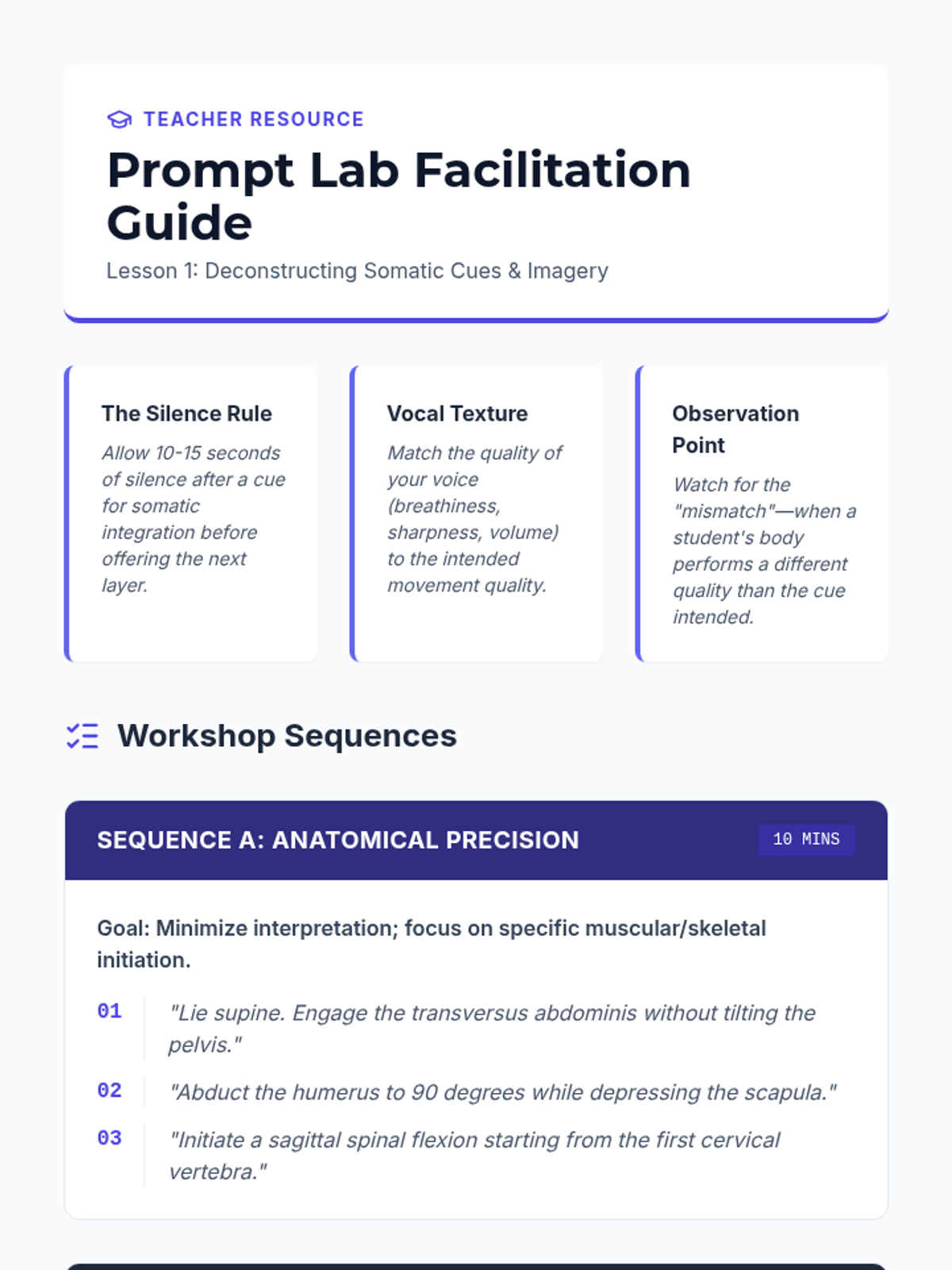
Analyze the efficacy of anatomical versus metaphorical cueing in generating movement quality and somatic response.
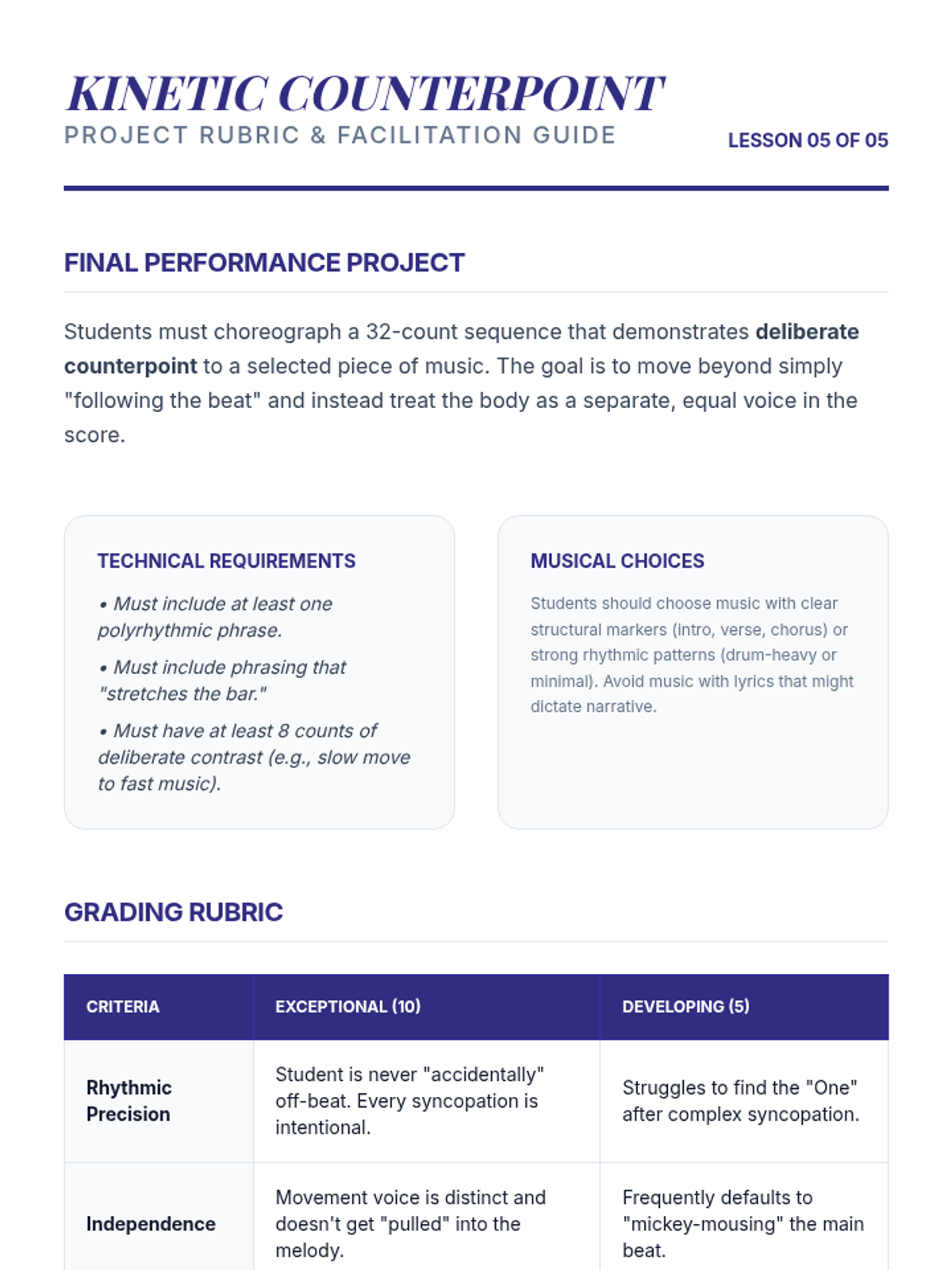
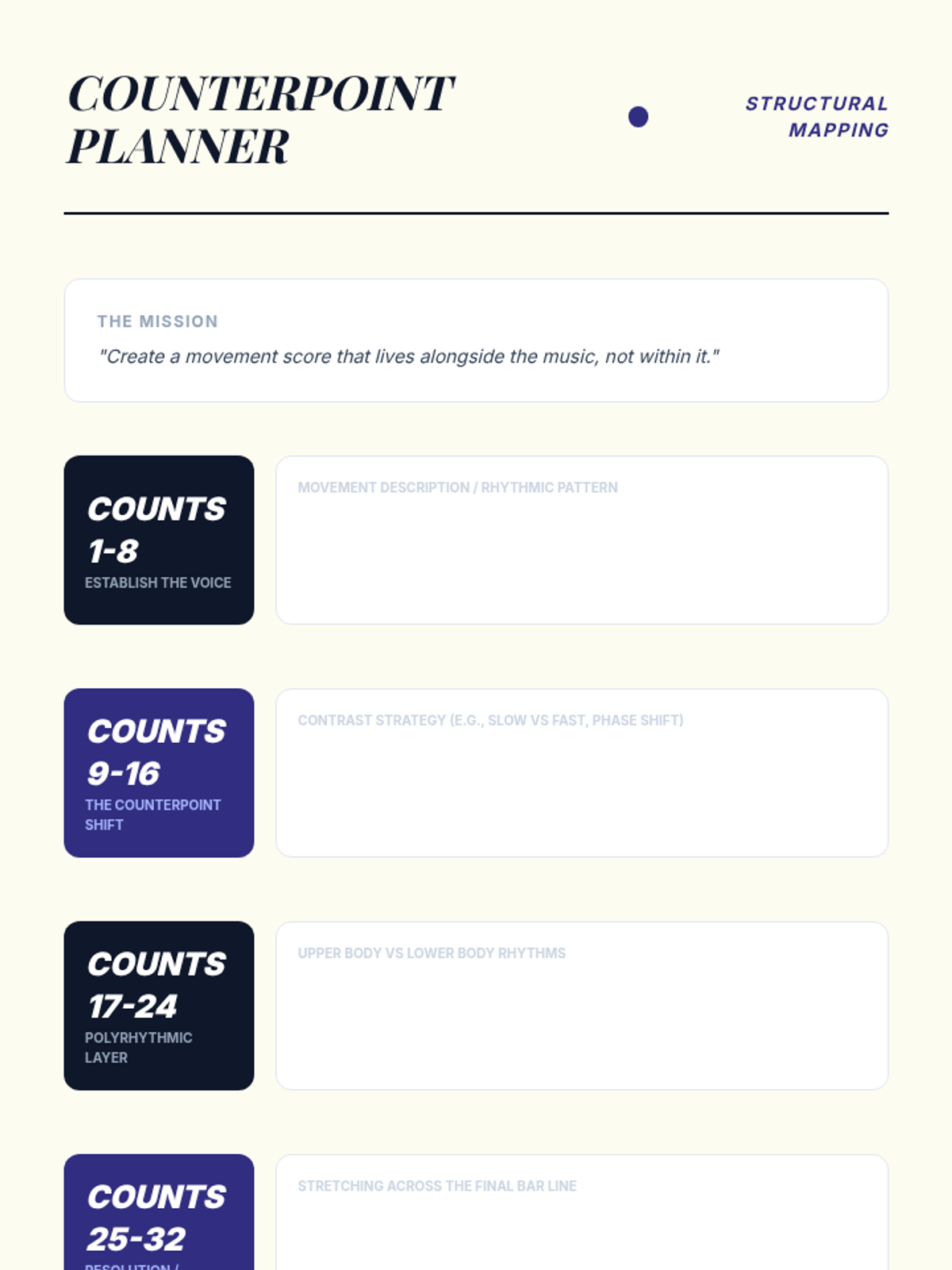
Applying rhythmic independence to create movement that acts as a visual counterpoint to music.
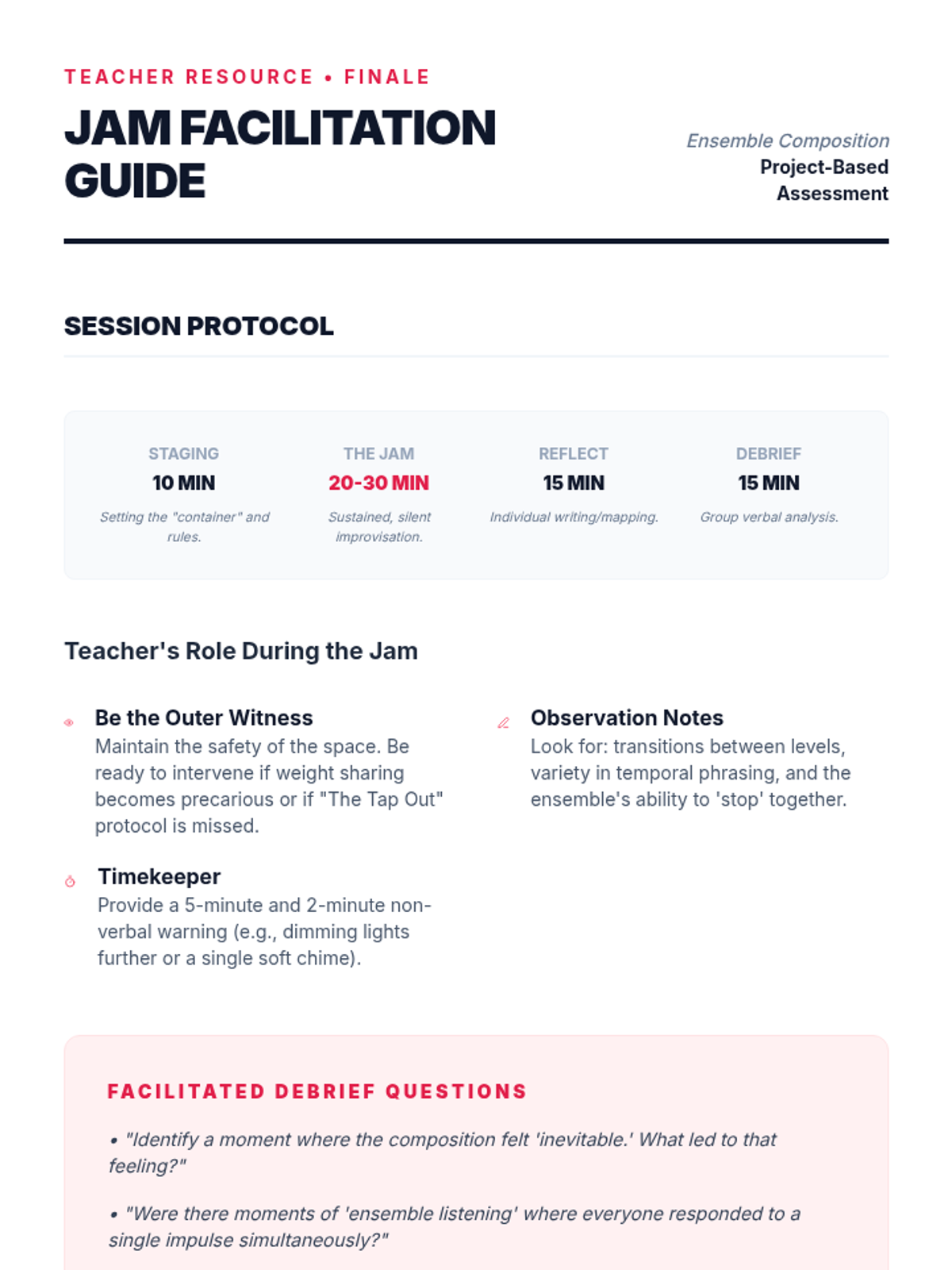
The sequence culminates in an 'open jam' where students utilize all previous skills to create a sustained, improvised performance followed by reflective analysis.
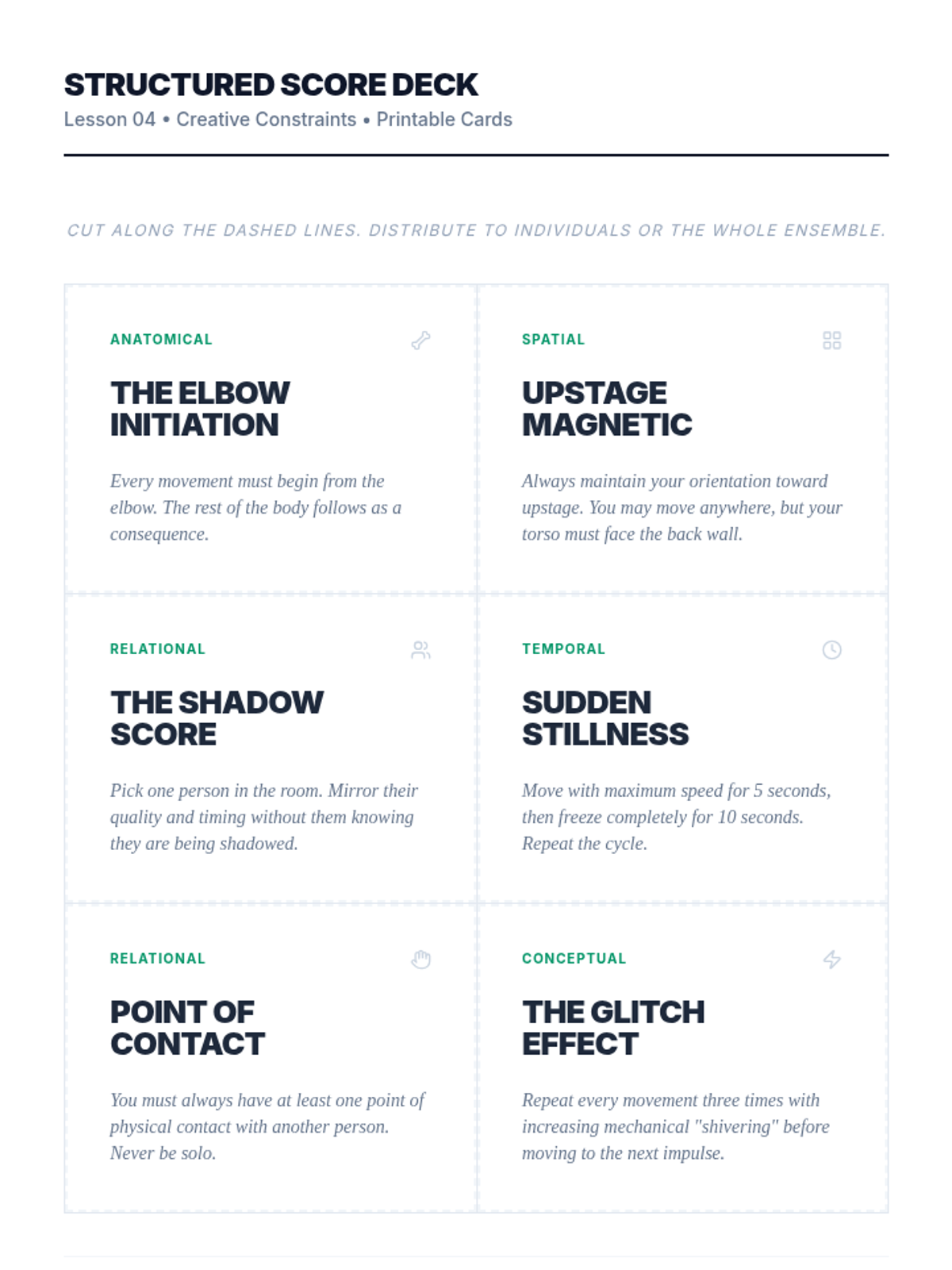
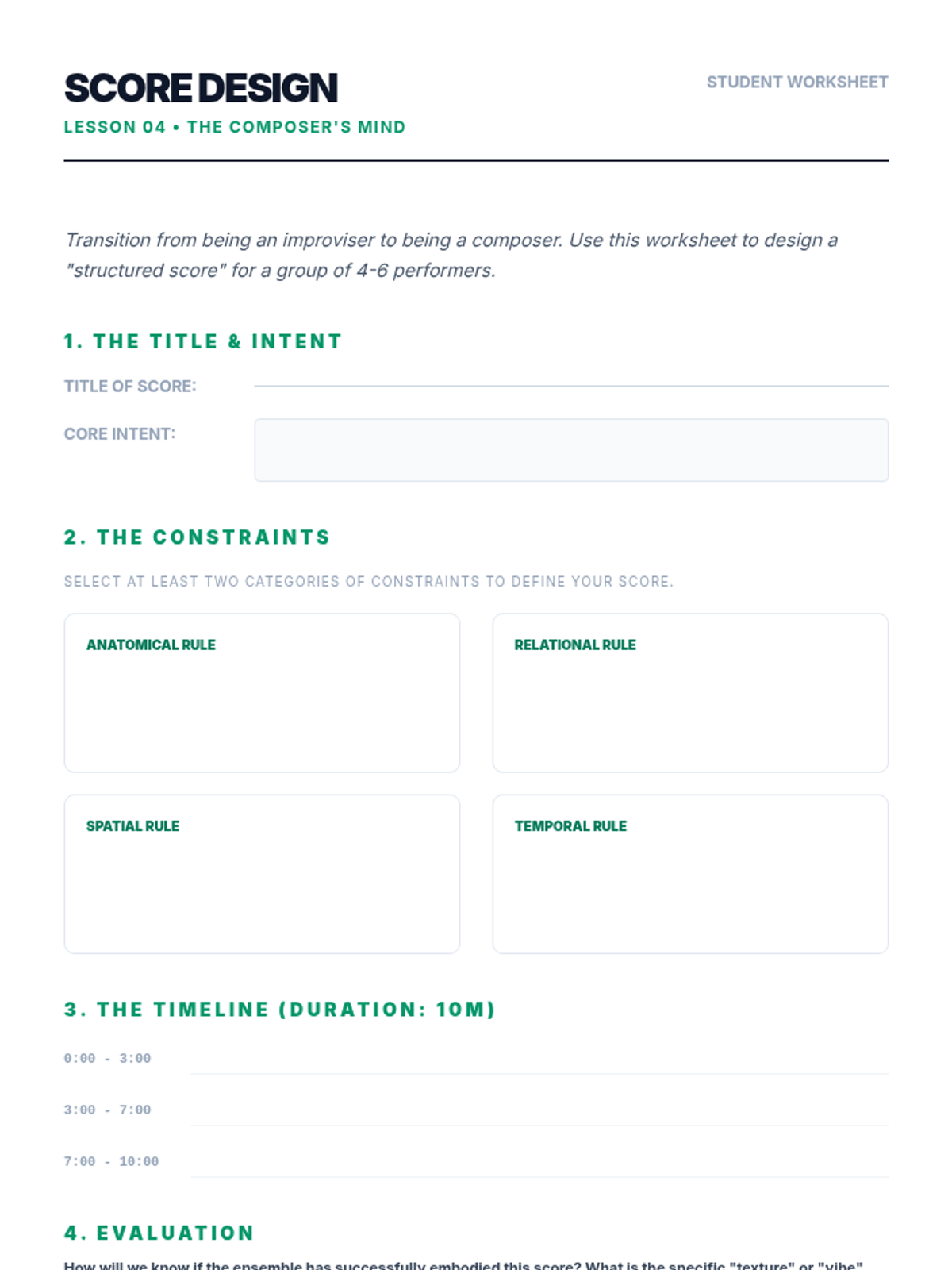
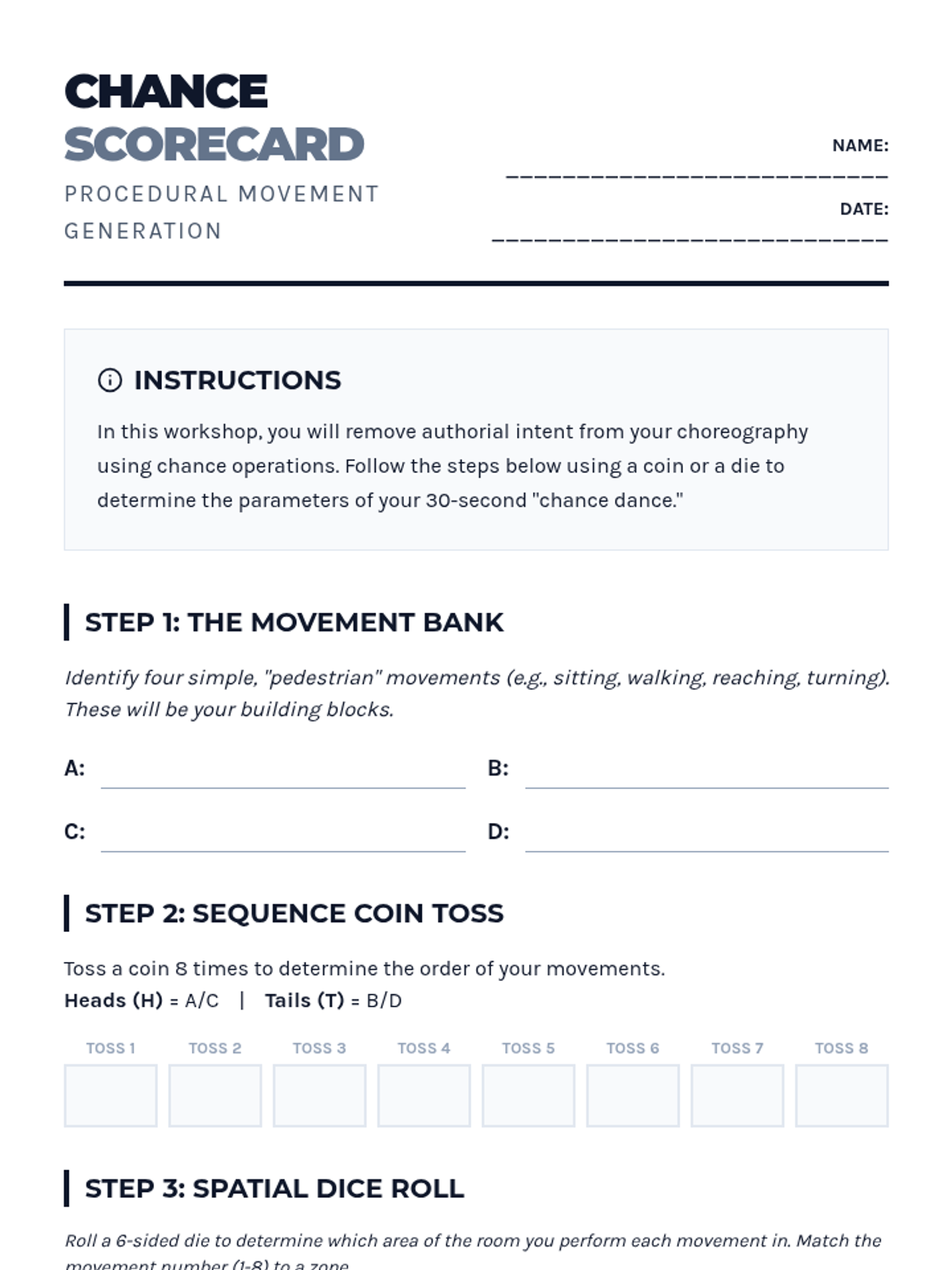
Students practice improvising within strict rules or 'scores' to explore how constraints can liberate creativity and remove the paralysis of choice.
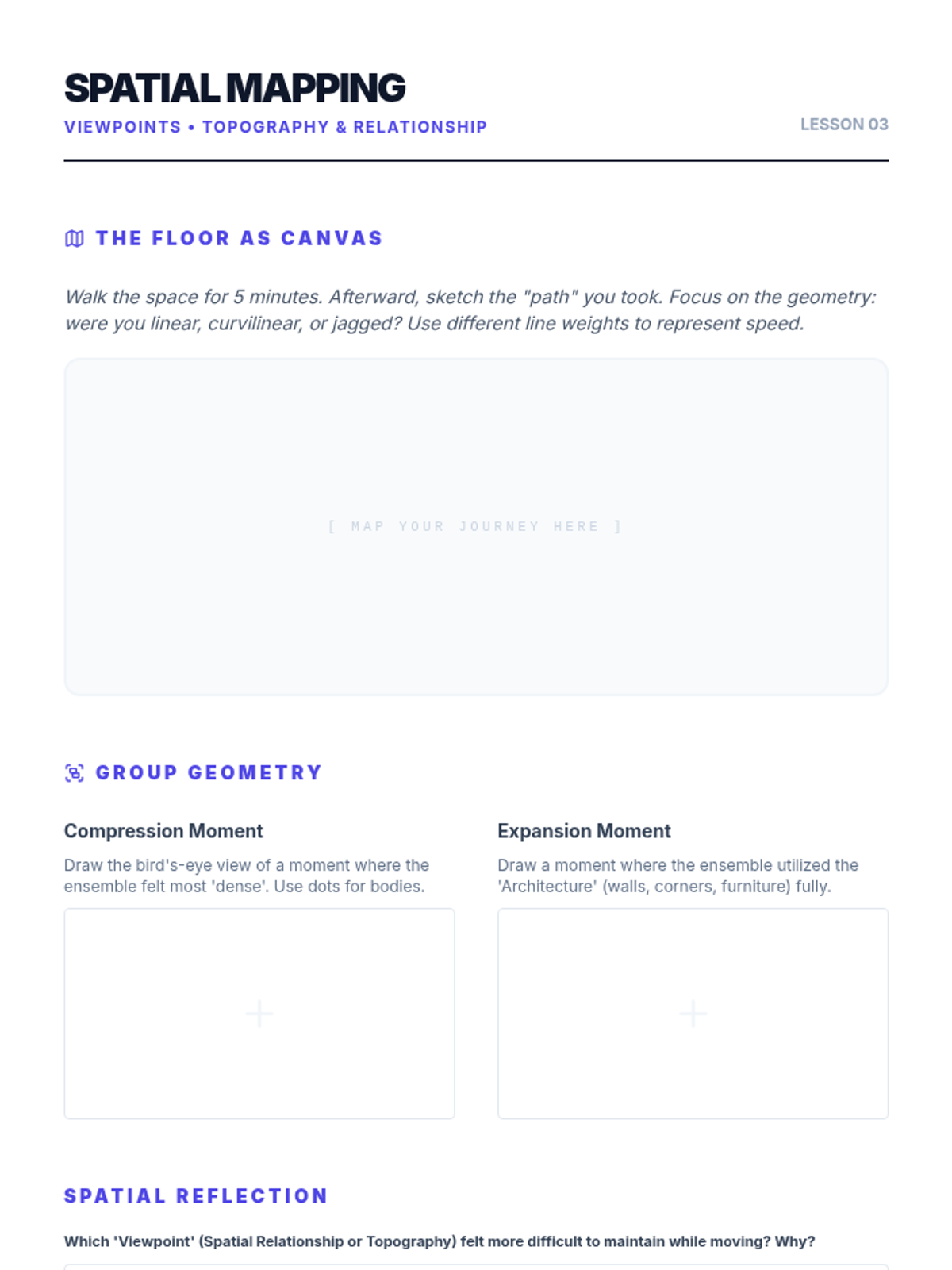
Using the Viewpoints framework, students explore group improvisation, analyzing the geometry of the space and their relationship to other bodies.
Introduction to basic contact improvisation concepts including points of contact and counterbalance, focusing on giving and receiving weight safely.
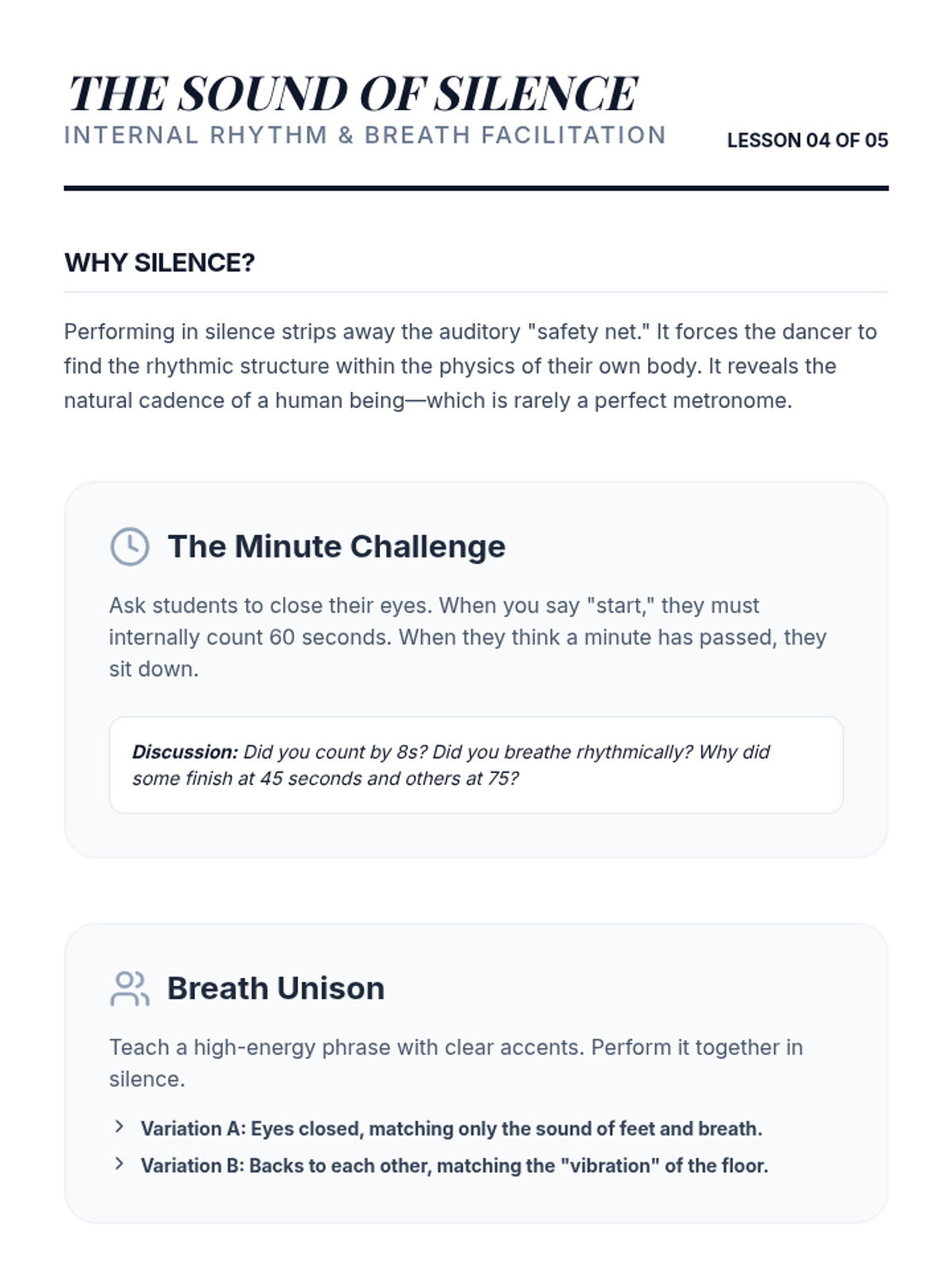
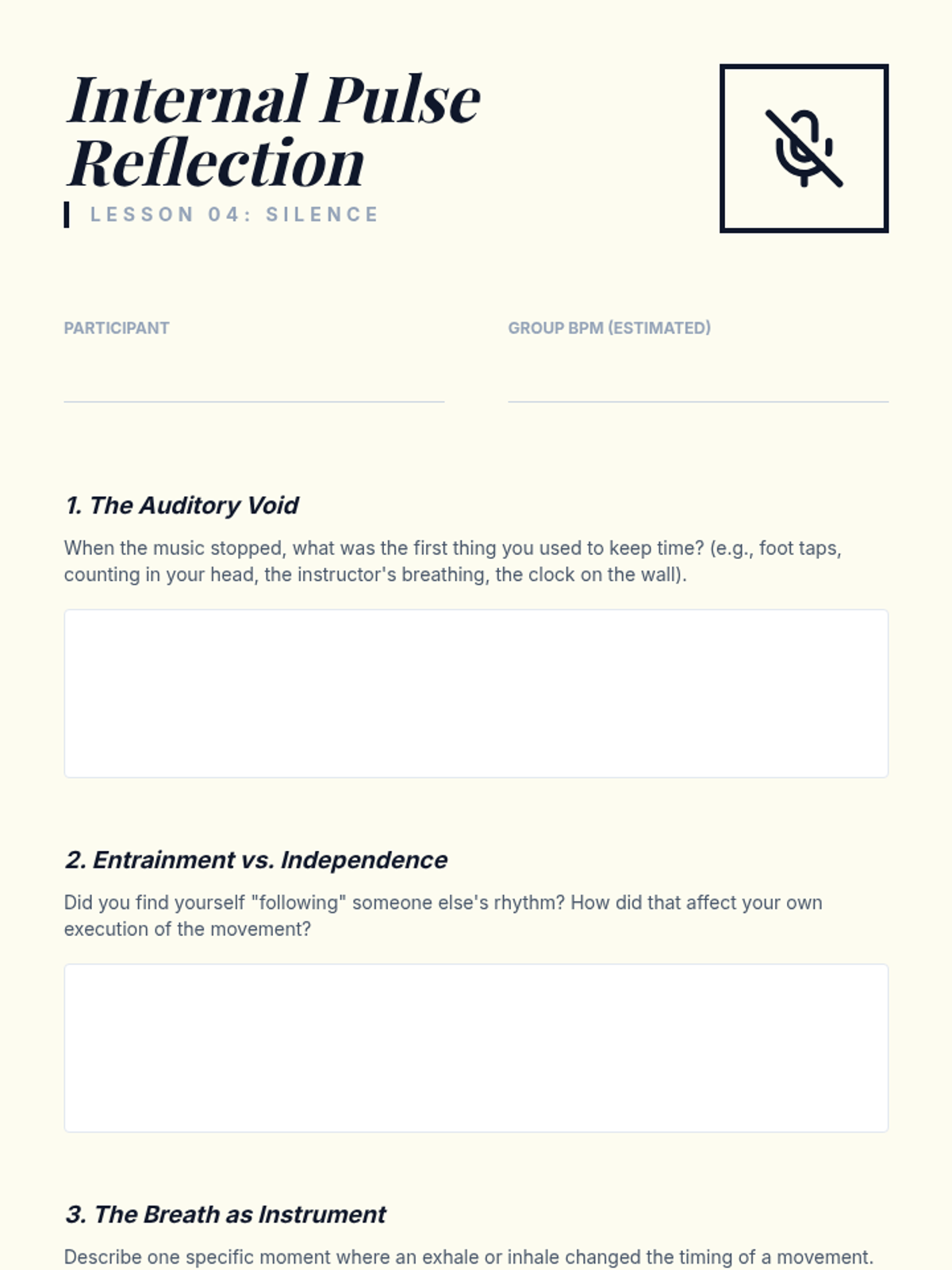
Focusing on internal rhythm, breath control, and the visual impact of movement performed in silence.
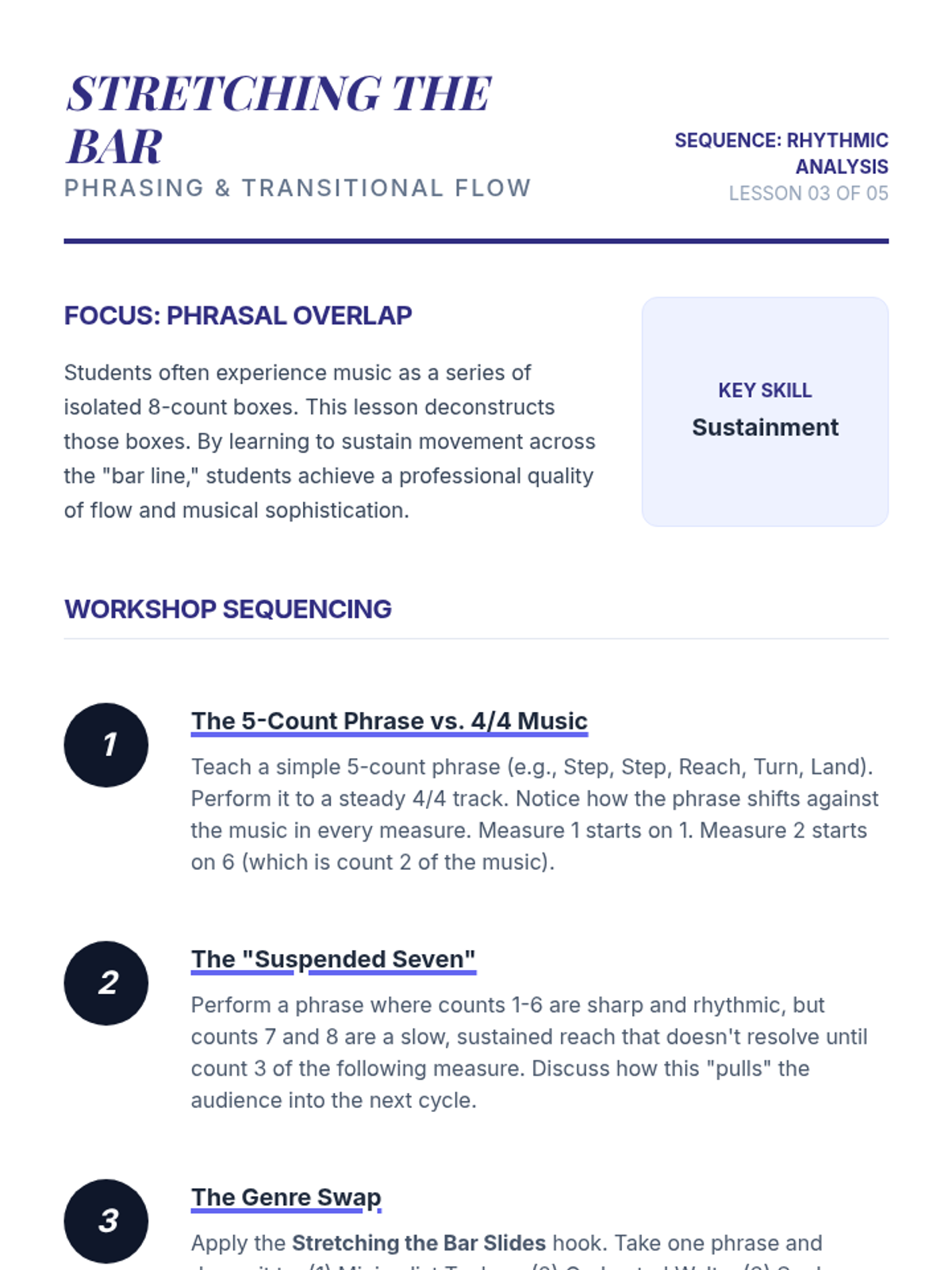
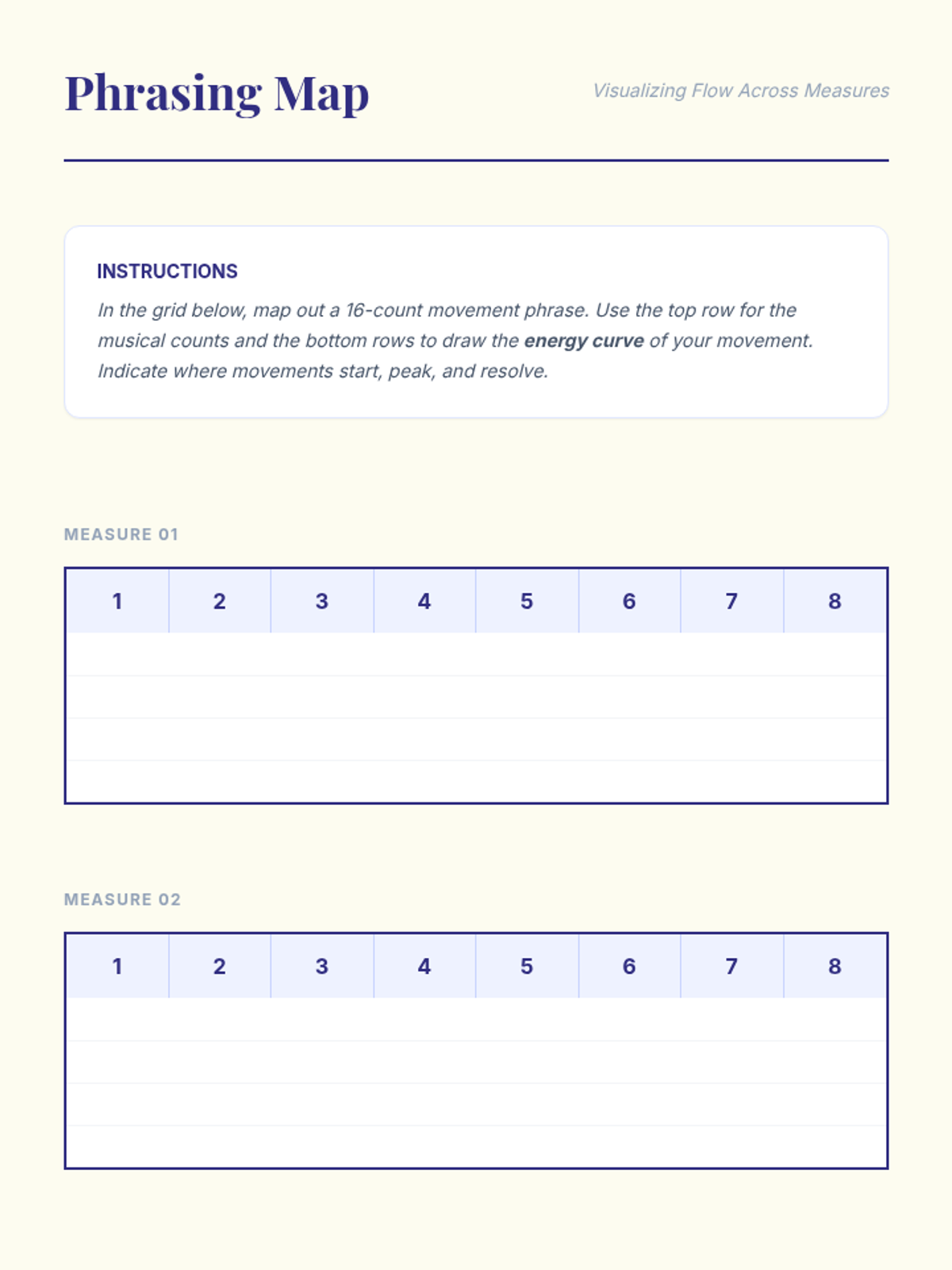
Exploring how movement phrases can transcend musical bars to create fluid, sustained sequences.
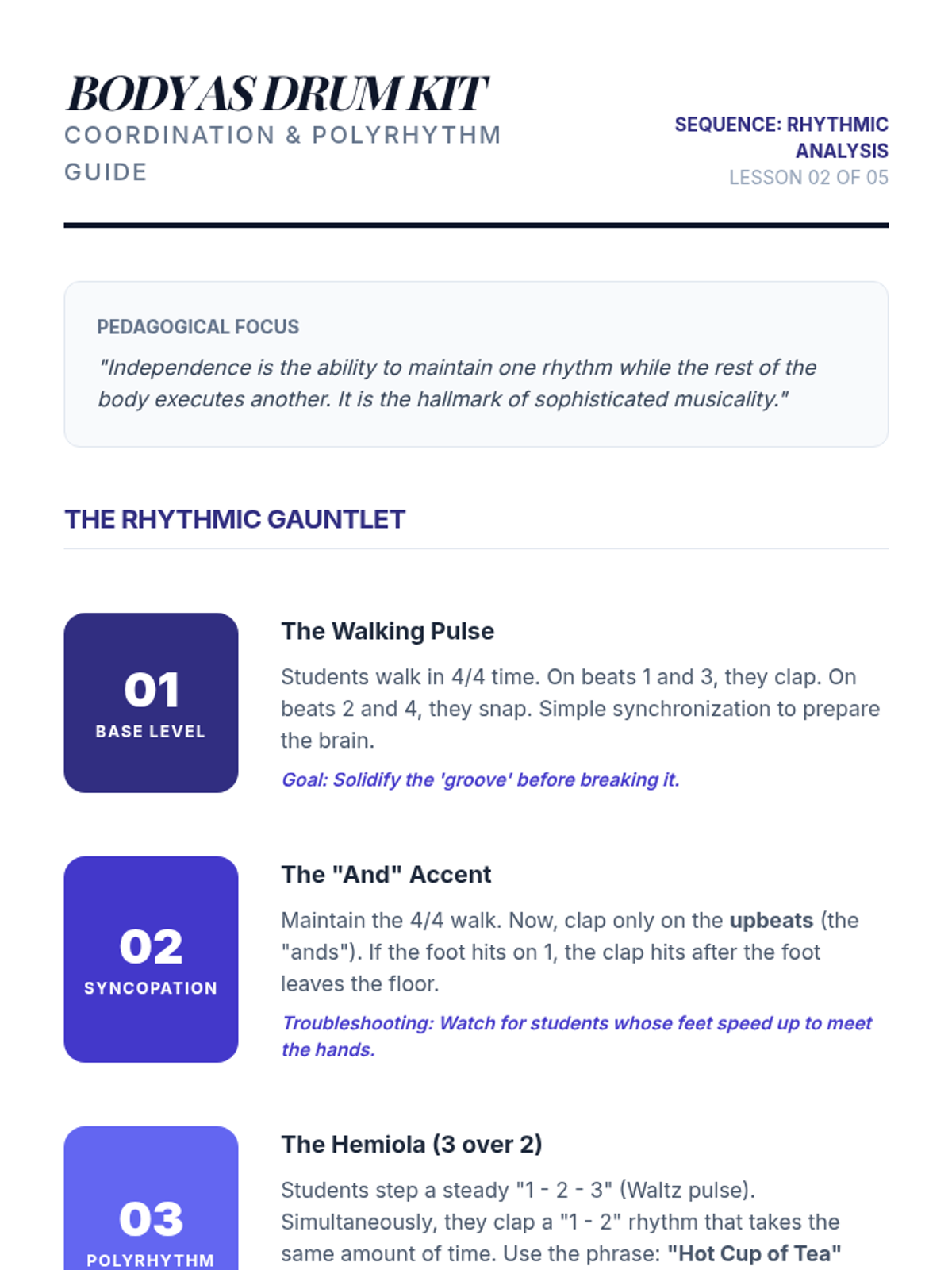
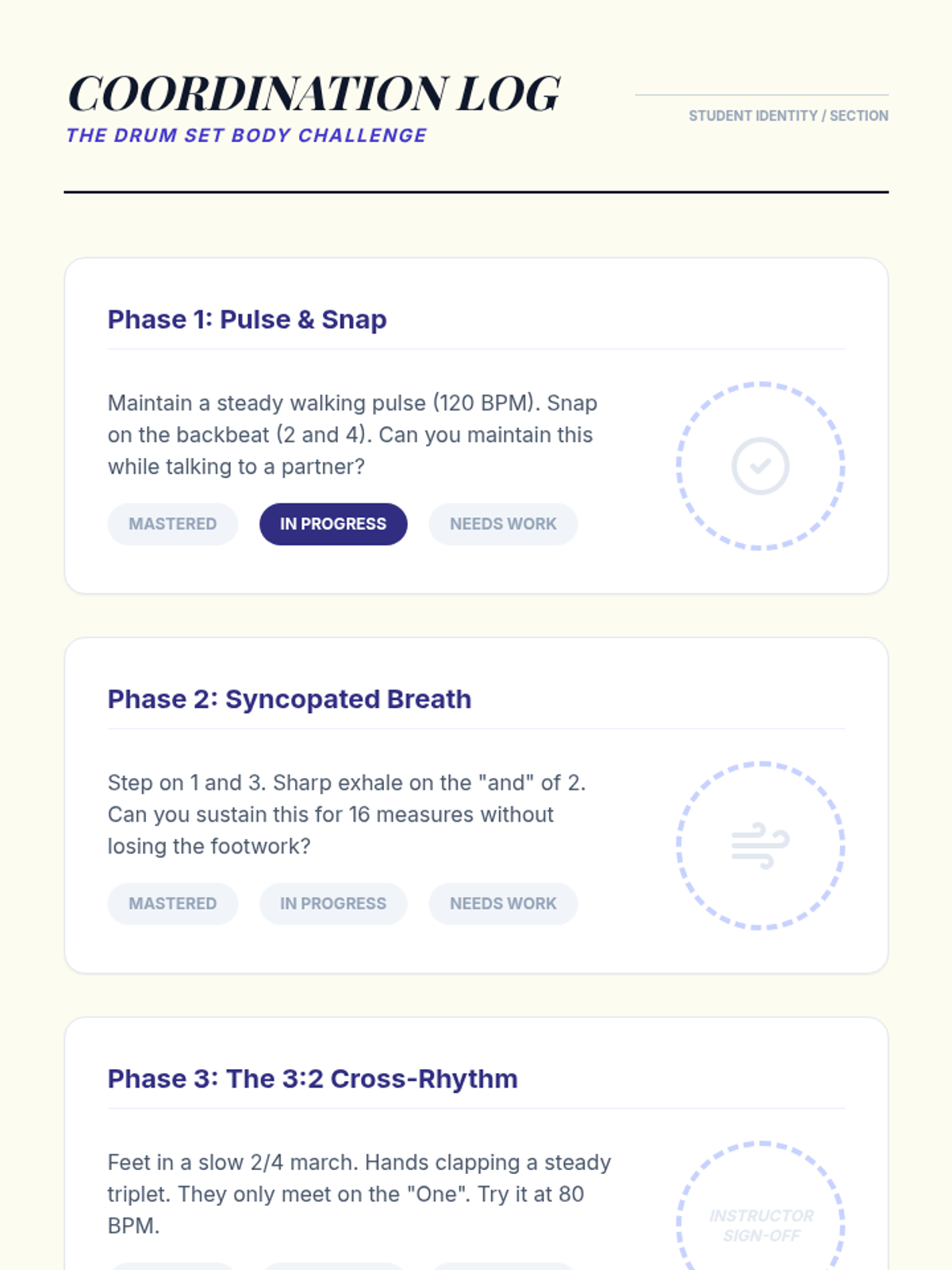
Developing physical coordination and rhythmic independence through polyrhythmic exercises and syncopated phrasing.
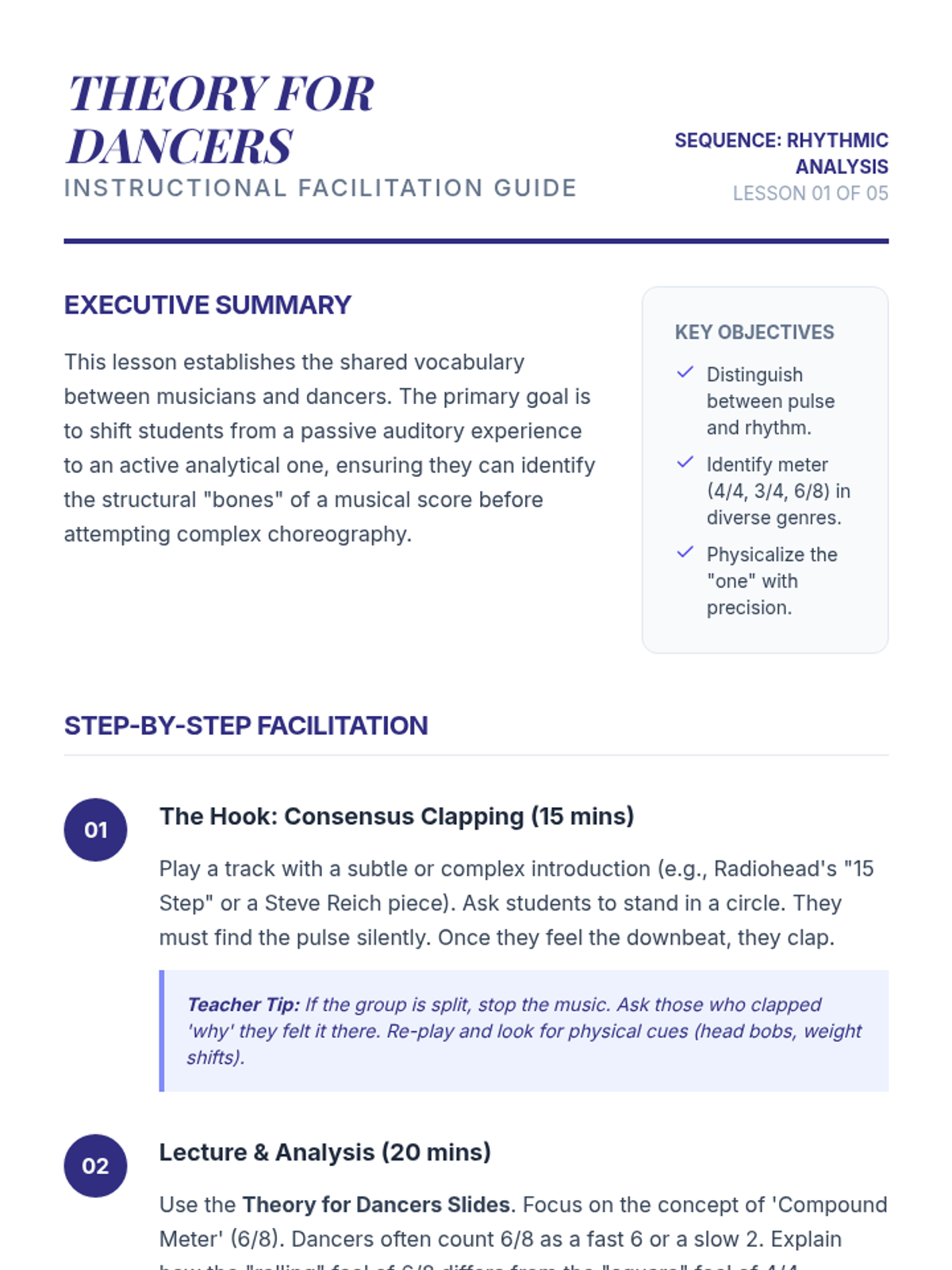
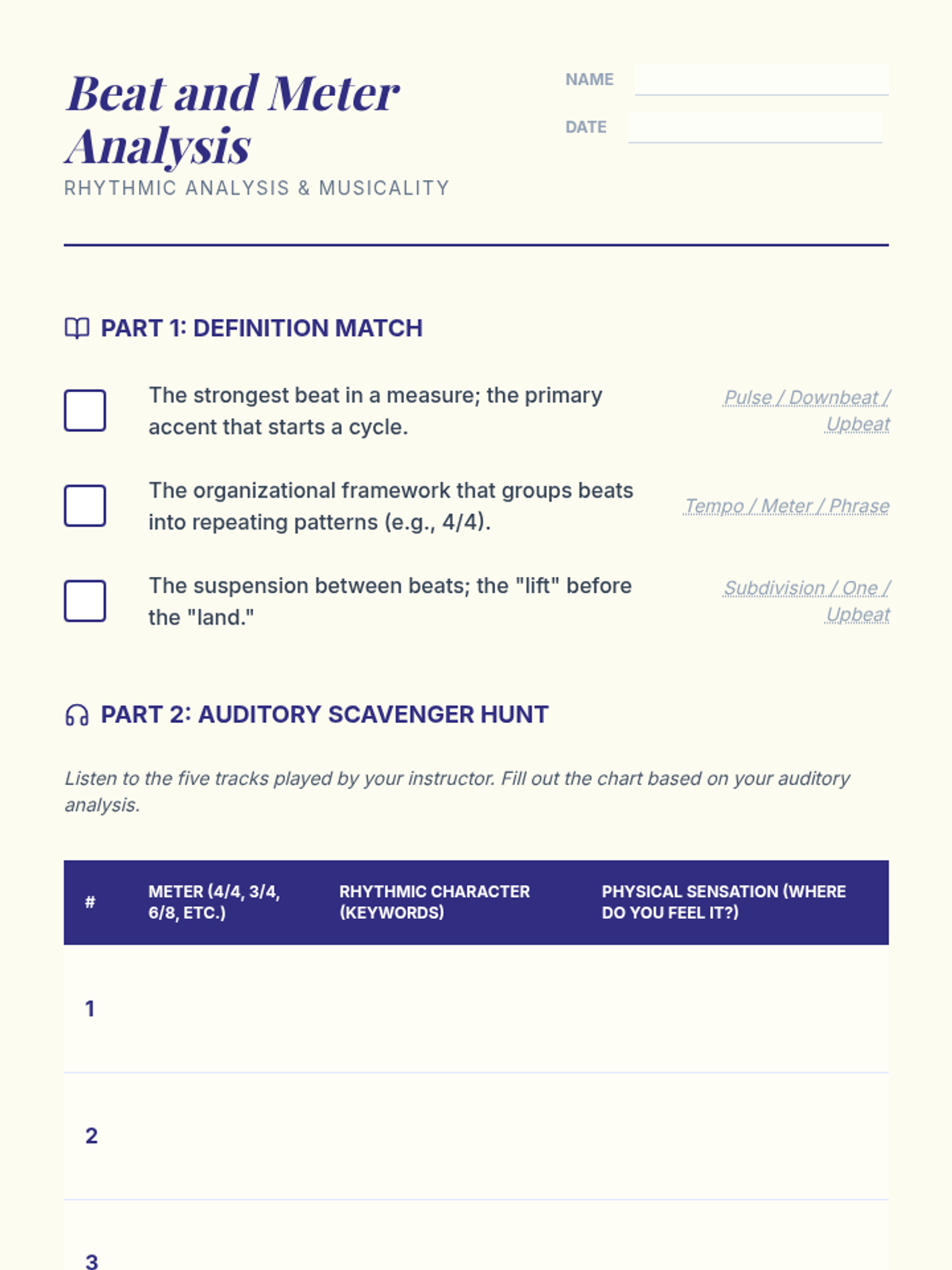
Introduction to fundamental music theory concepts tailored for dancers, focusing on identifying the downbeat and understanding common time signatures.
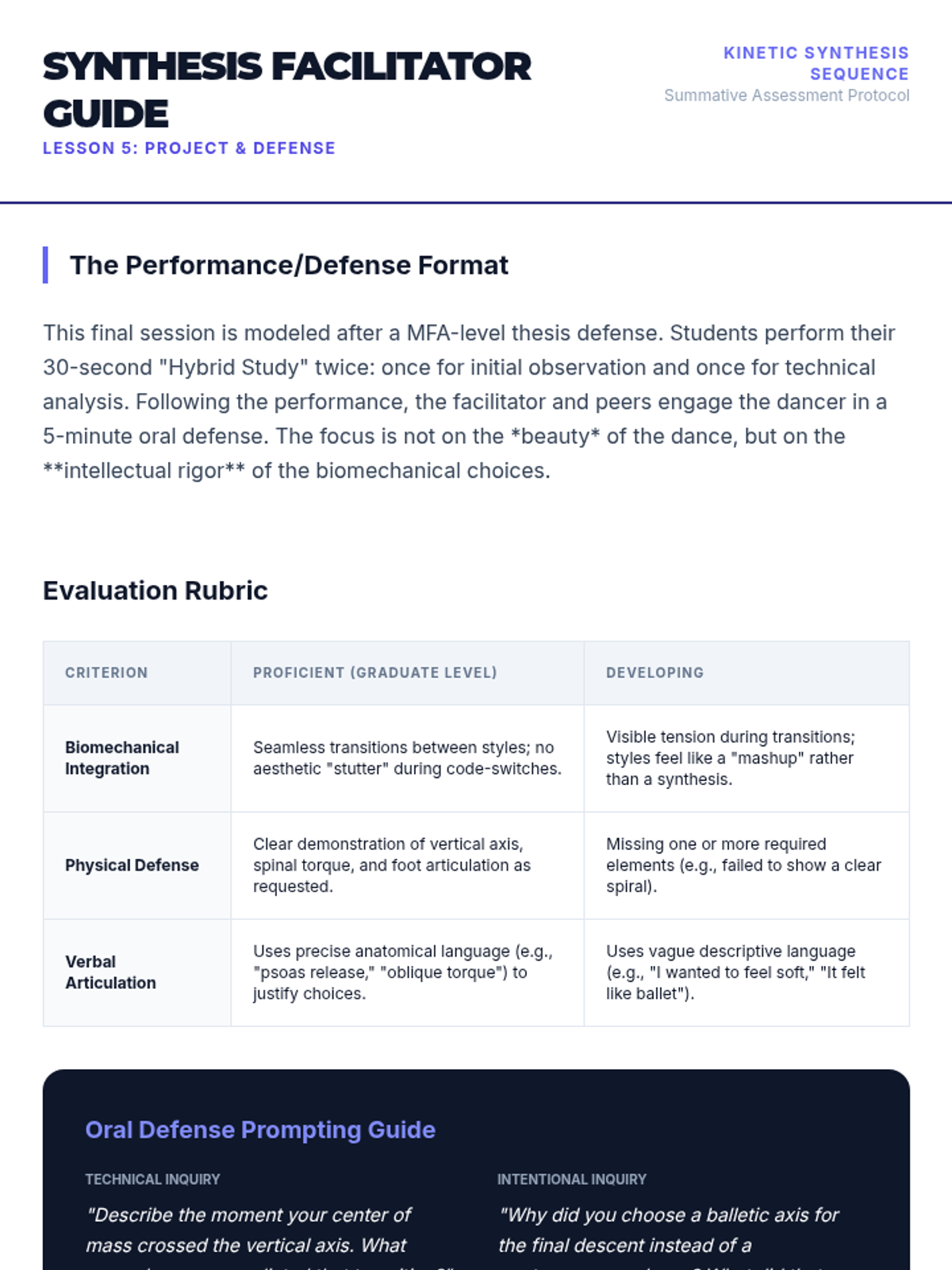
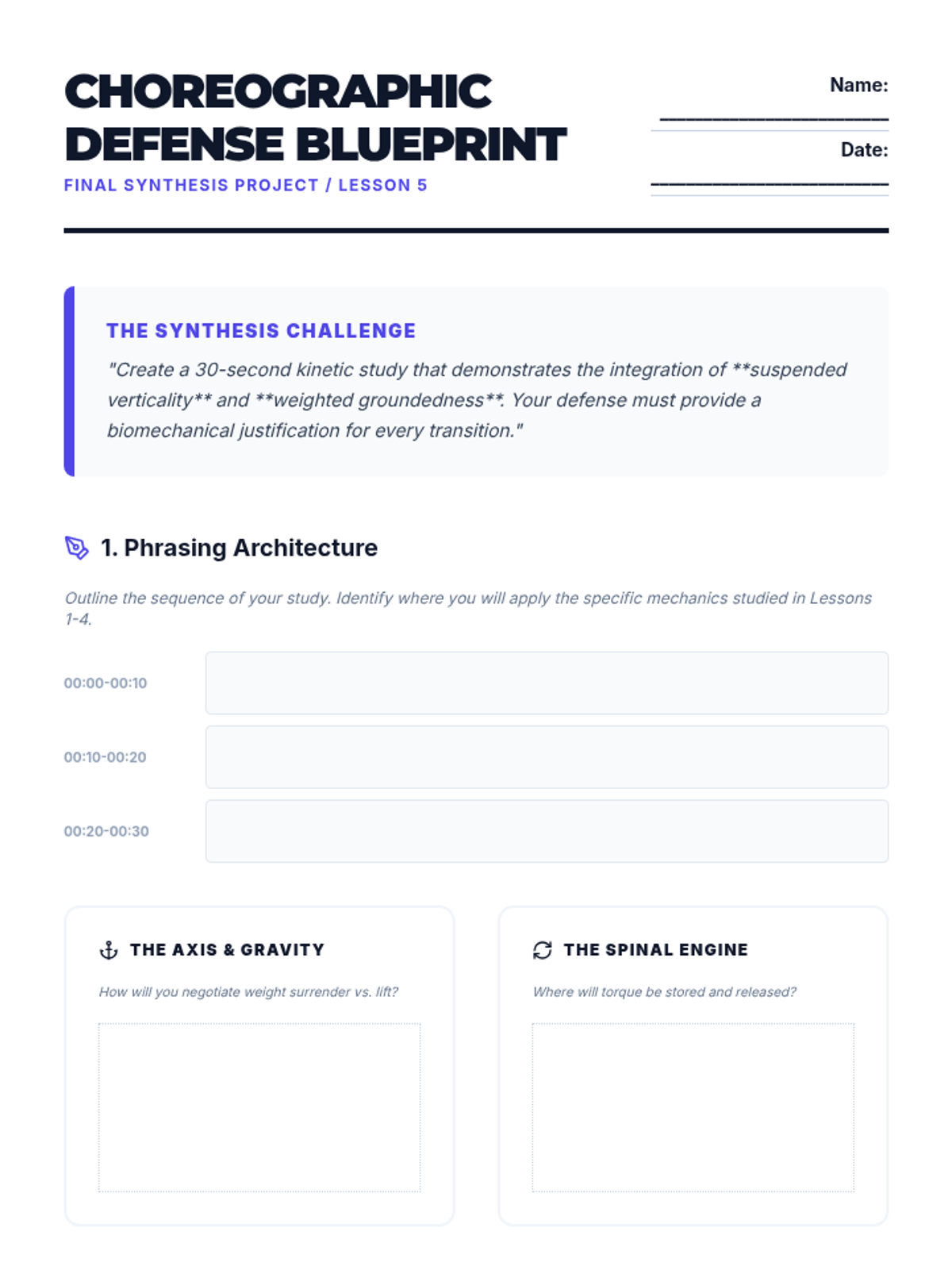
Synthesize learned biomechanical principles into original movement, followed by a formal defense of the choreographic choices.
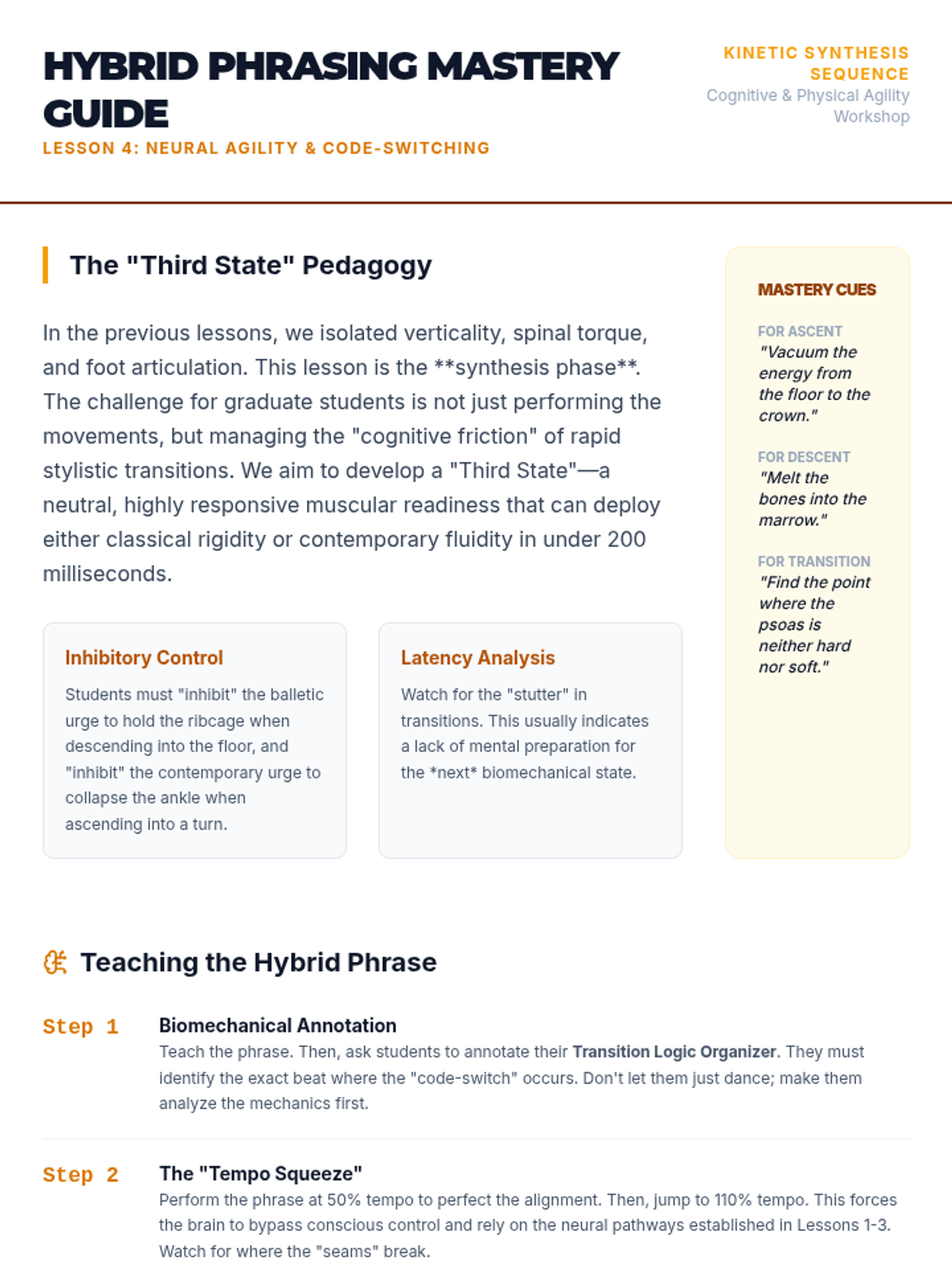
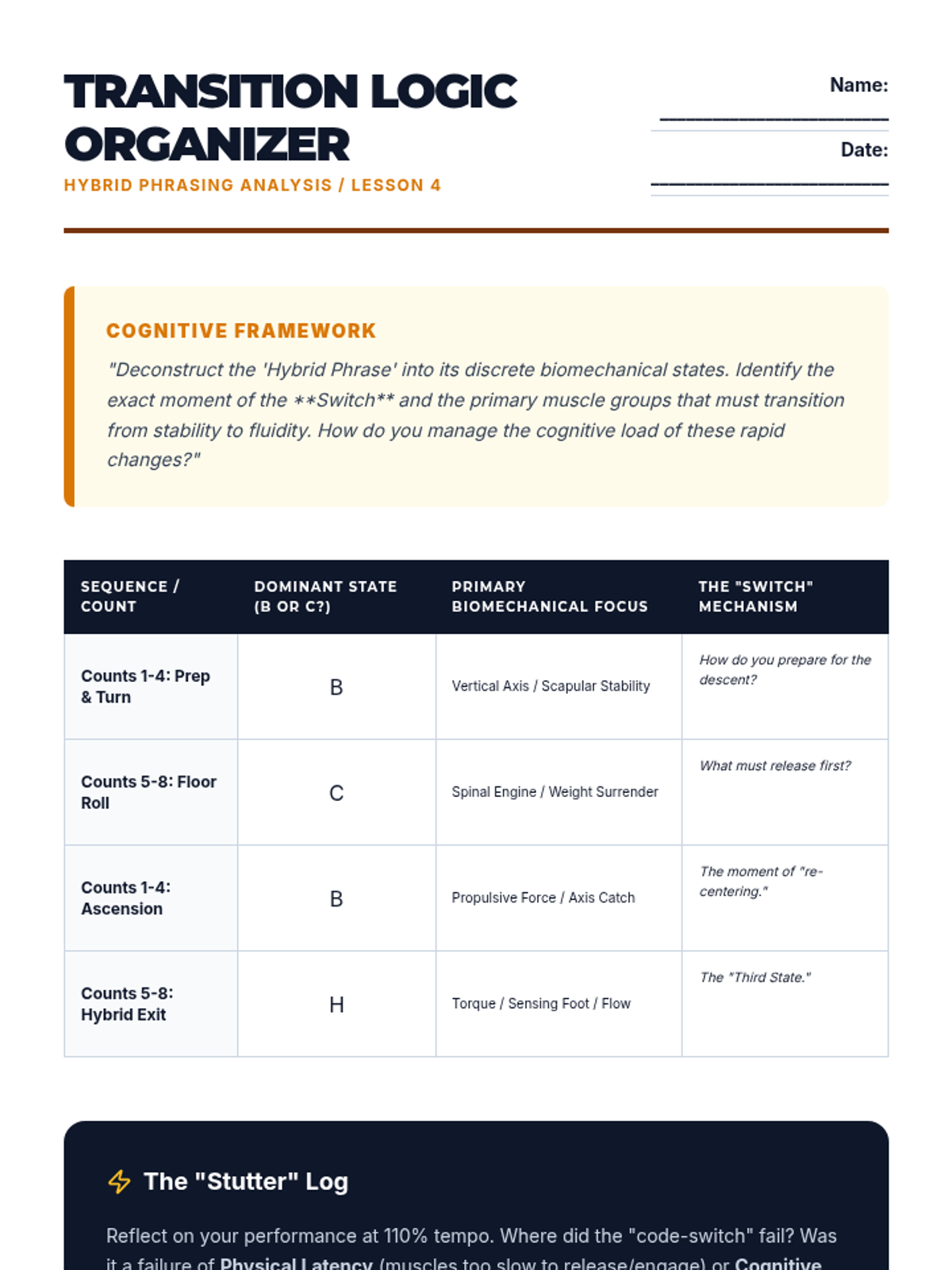
Focus on the cognitive and physical agility required to rapidly switch between classical and contemporary movement states within a single phrase.
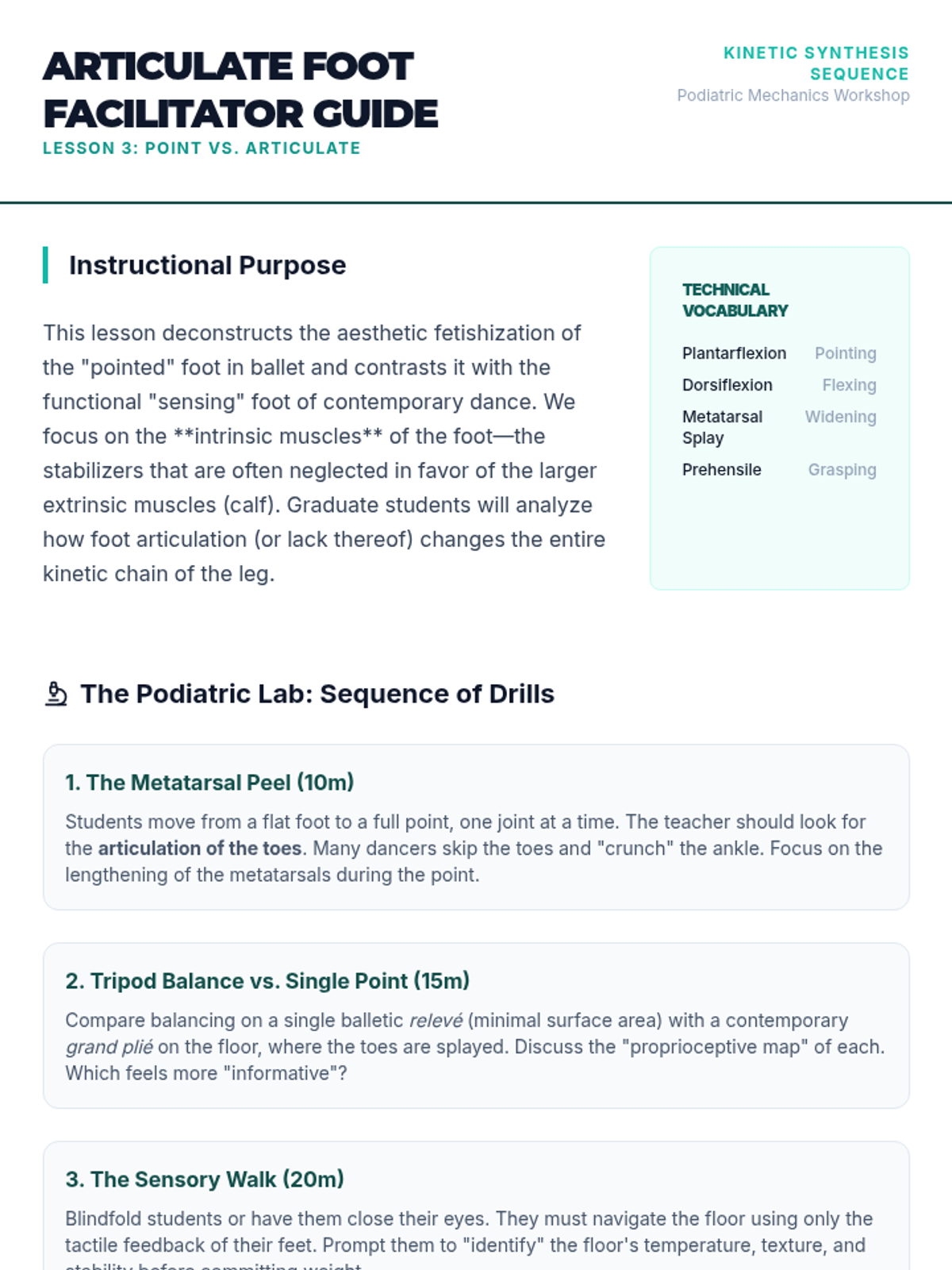
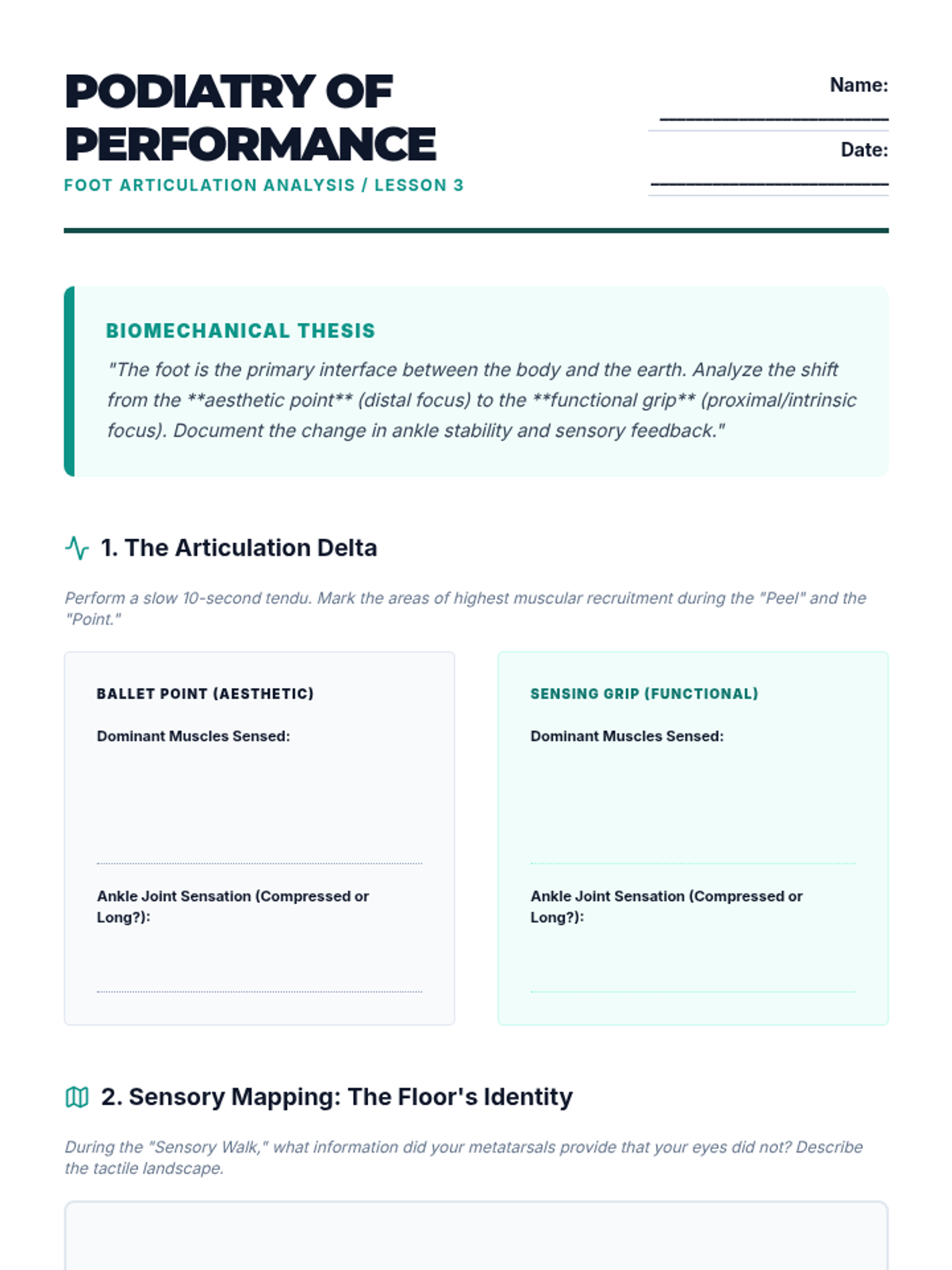
An analytical look at the functional role of the foot and ankle, moving from the aesthetic point of ballet to the sensory articulation of contemporary dance.
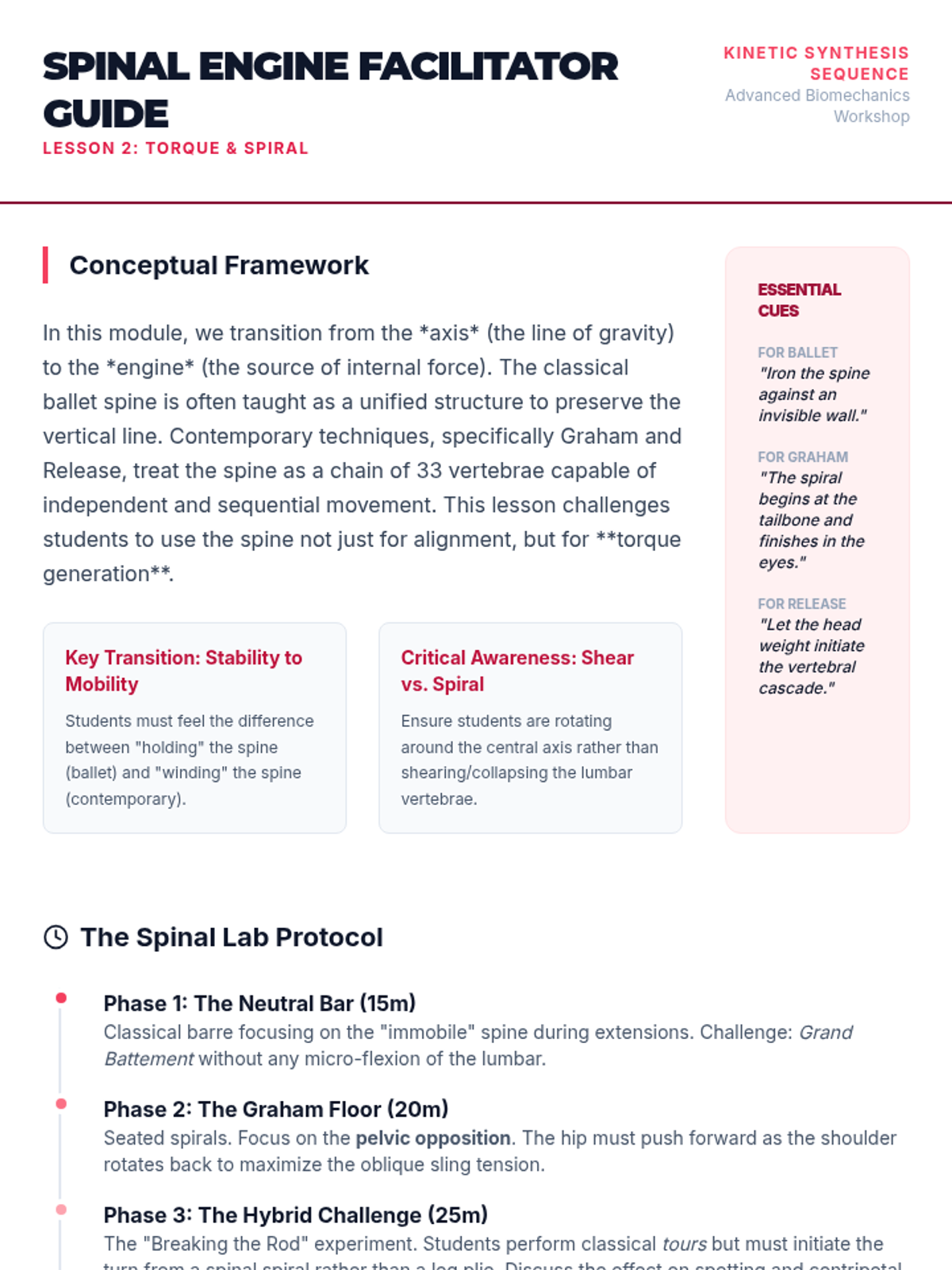
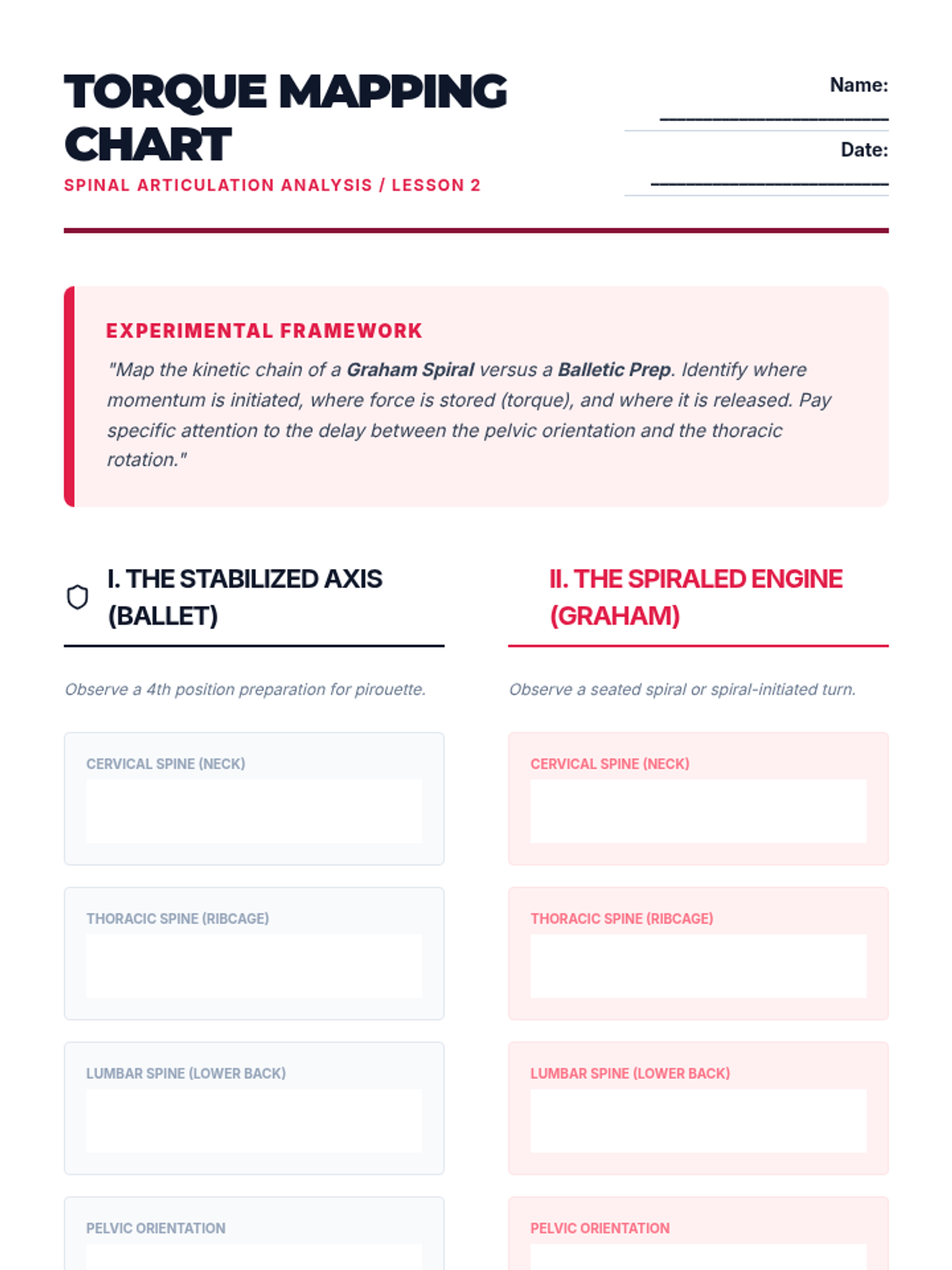
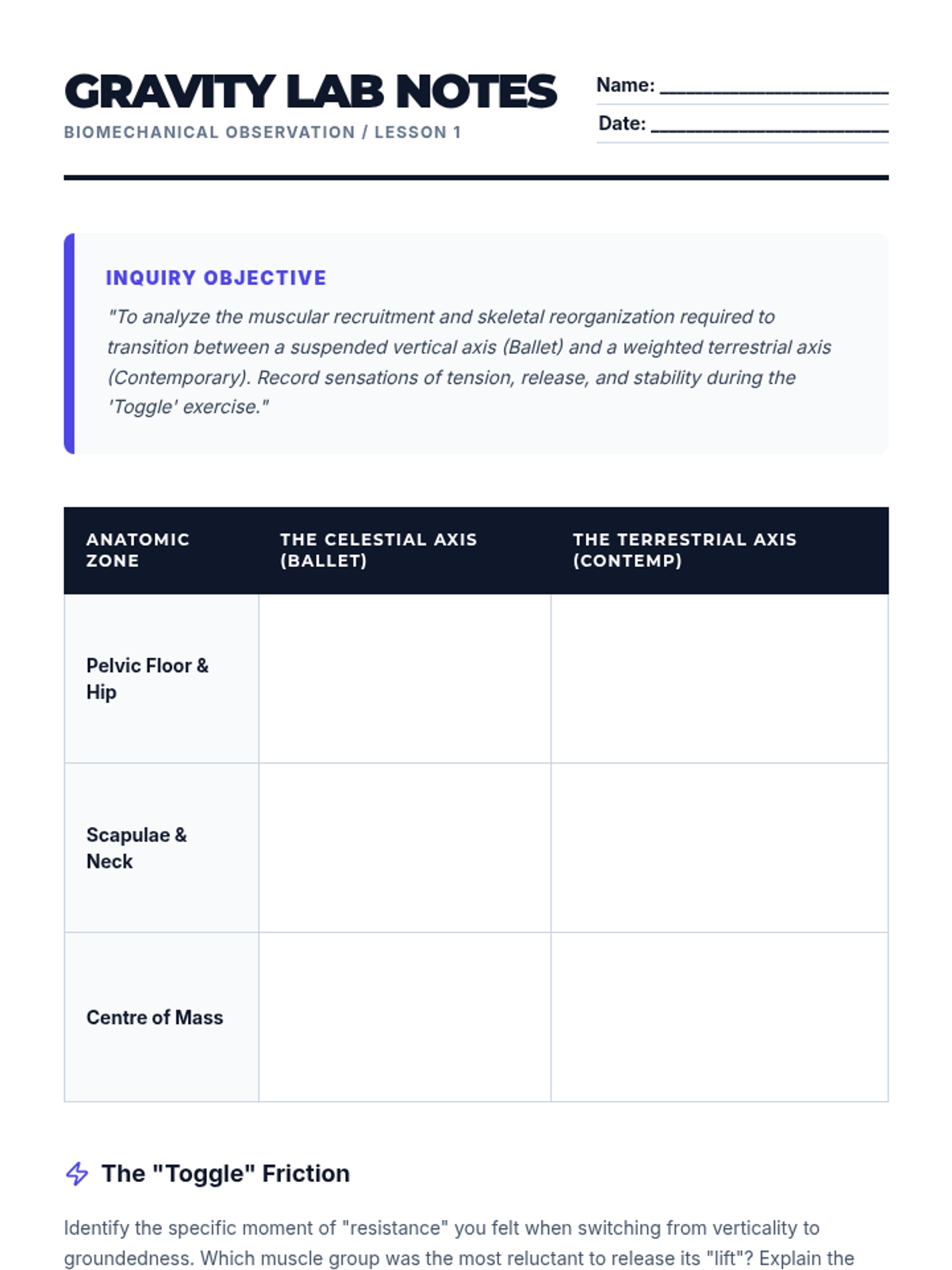
Compare the vertical stability of the classical spine with the multi-dimensional spiraling and articulation found in Graham and release techniques.
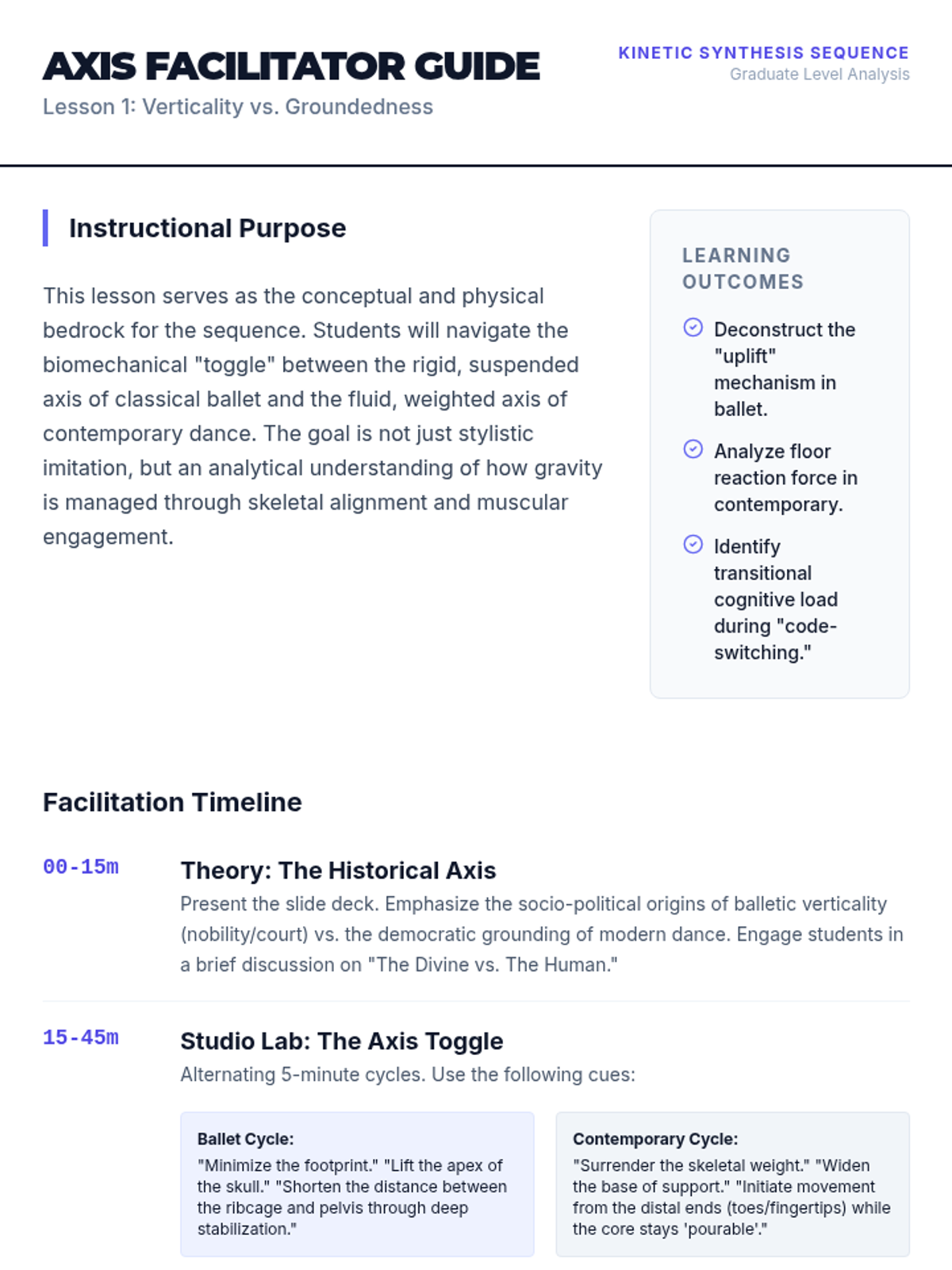
Examine the historical and biomechanical tension between balletic verticality and contemporary groundedness, focusing on gravity management and the vertical axis.
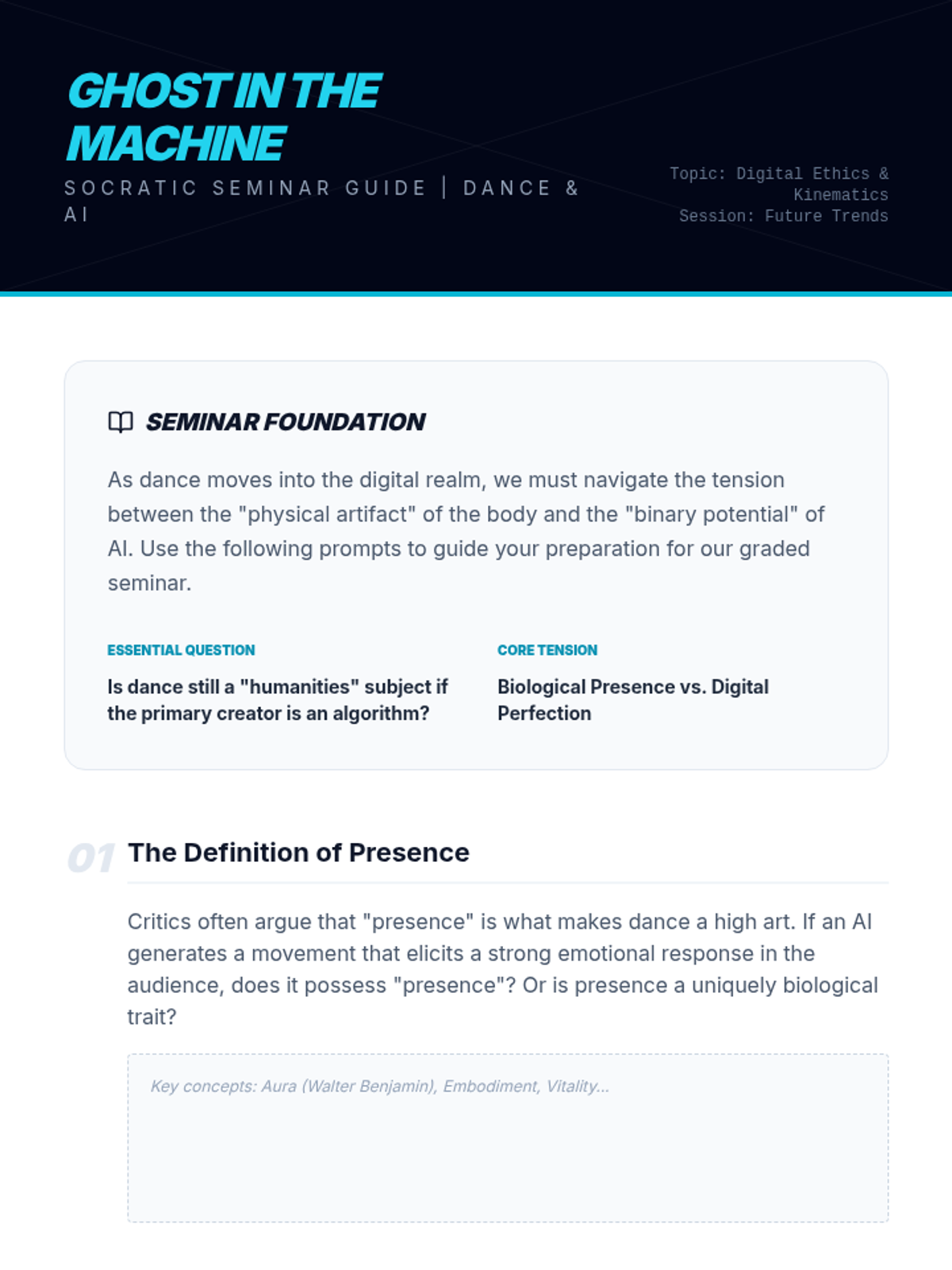
Debating the future of dance in the age of motion capture and AI, questioning the role of the 'live' body in digital performance.
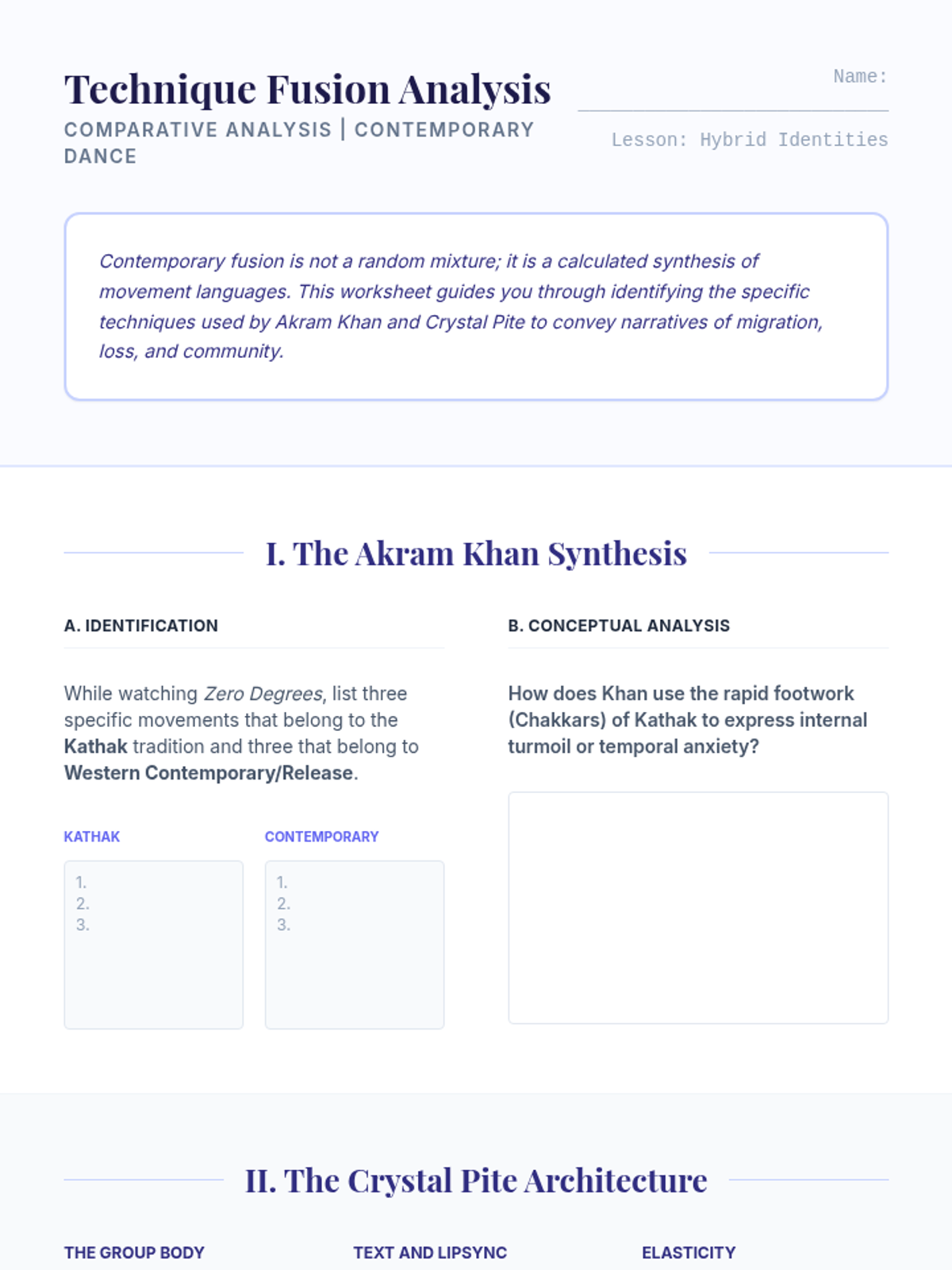
Analyzing the works of Akram Khan and Crystal Pite to understand how contemporary fusion narrates complex stories of migration and identity through hybrid techniques.
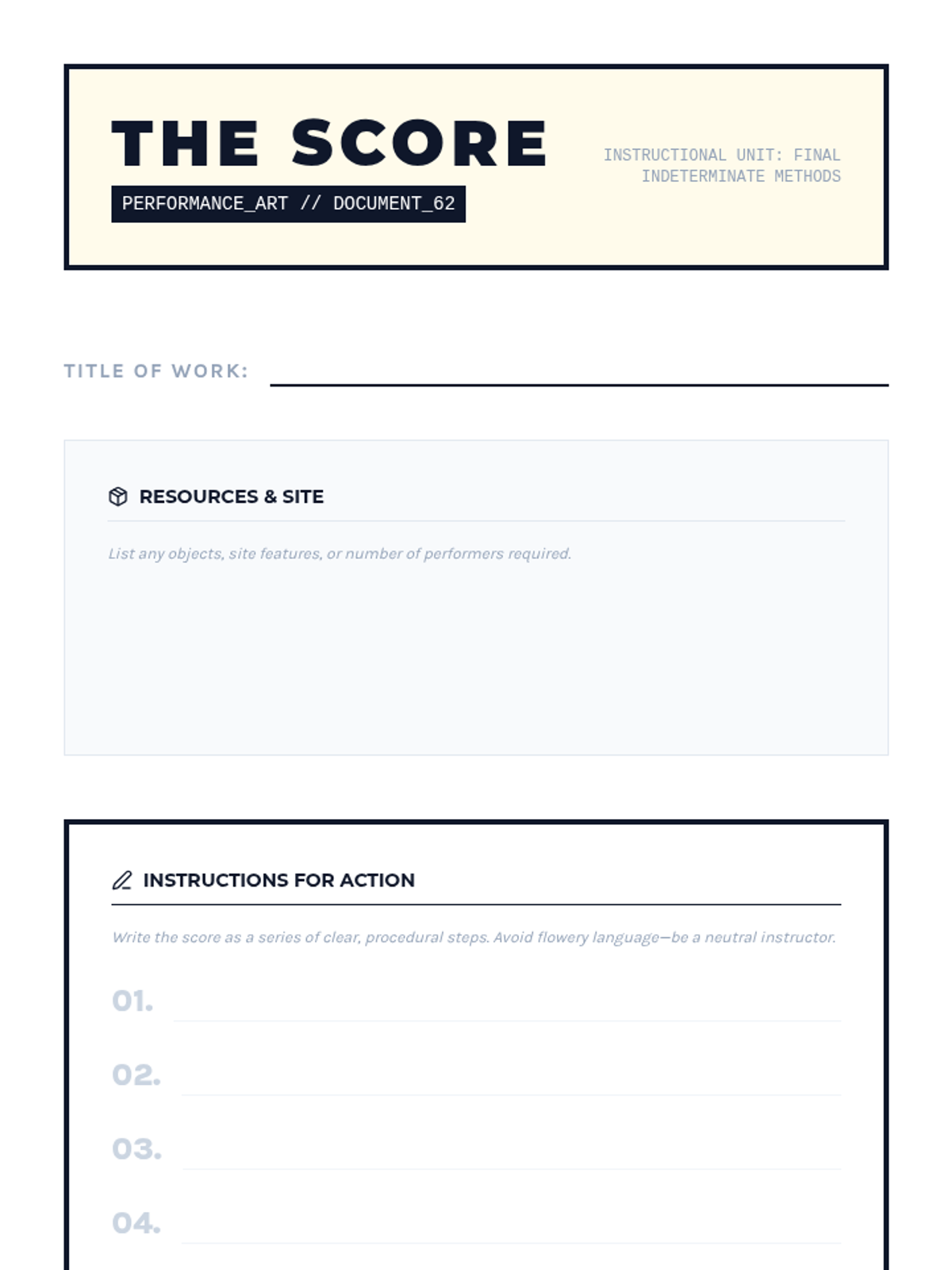
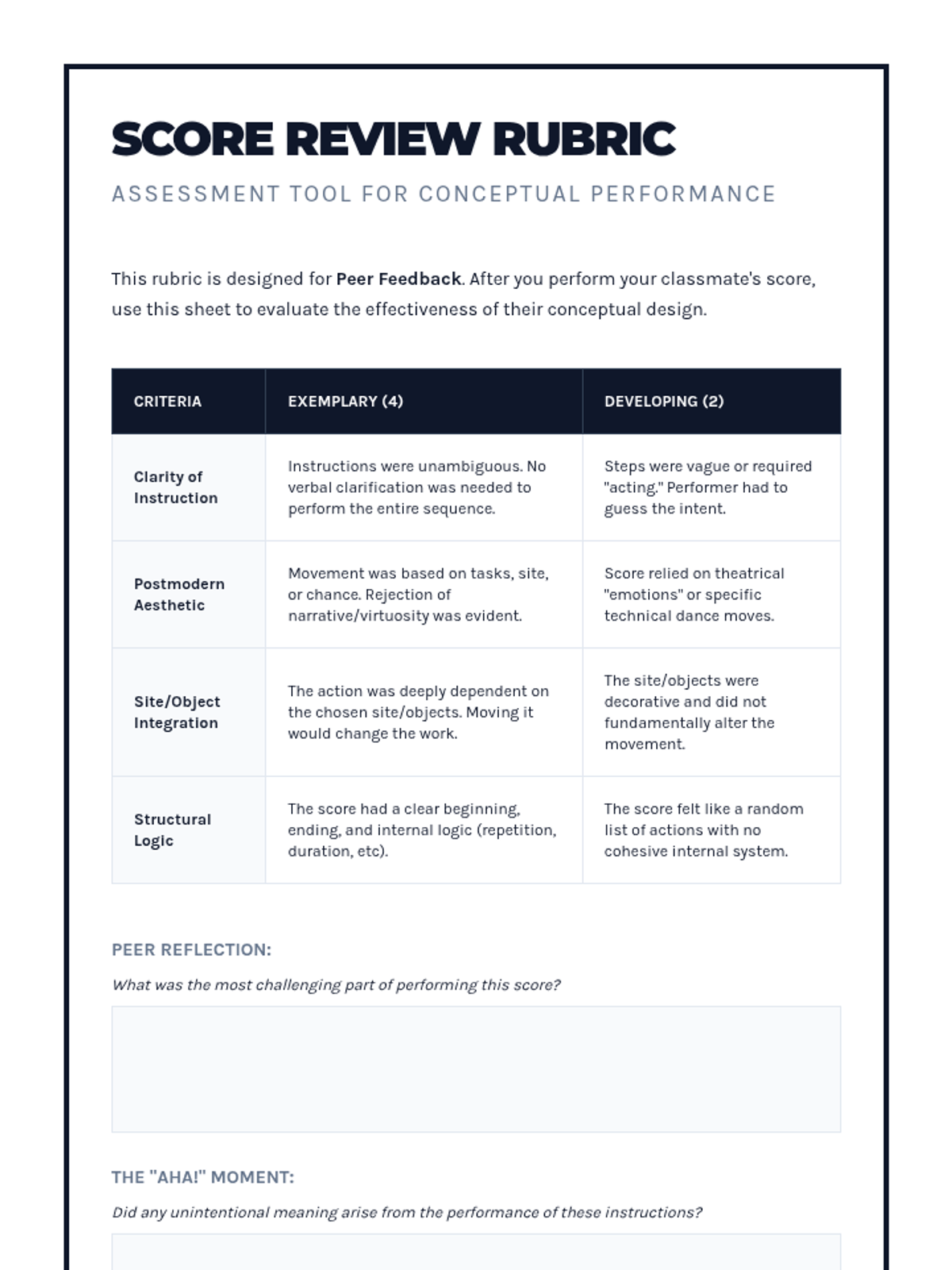
Concludes the sequence by blurring the lines between dance and performance art, teaching students to create and interpret conceptual performance scores.
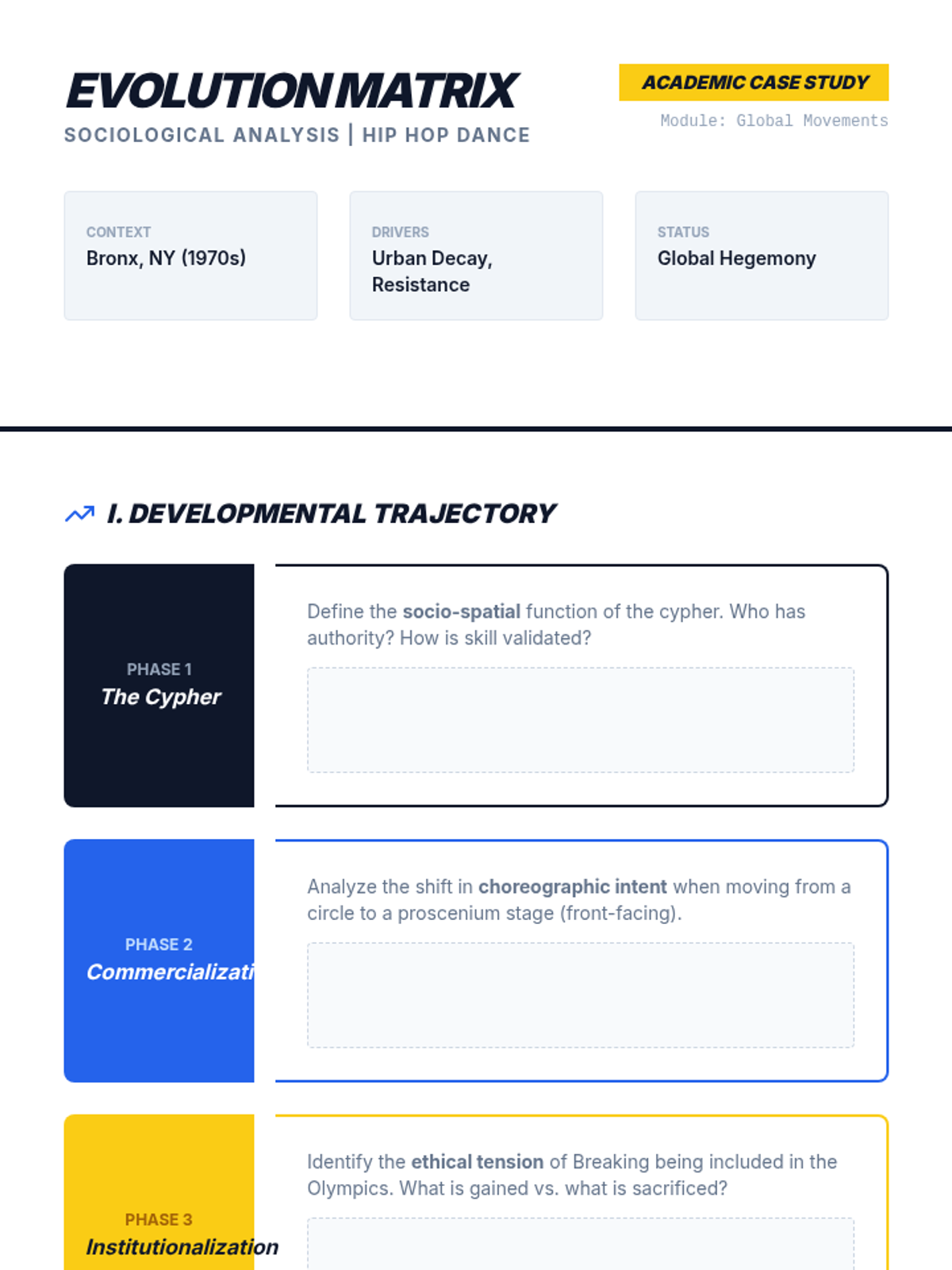
Tracing the trajectory of Hip Hop from the Bronx to theatrical conservatories, analyzing its sociological impact and the transition of breaking to a competitive sport.
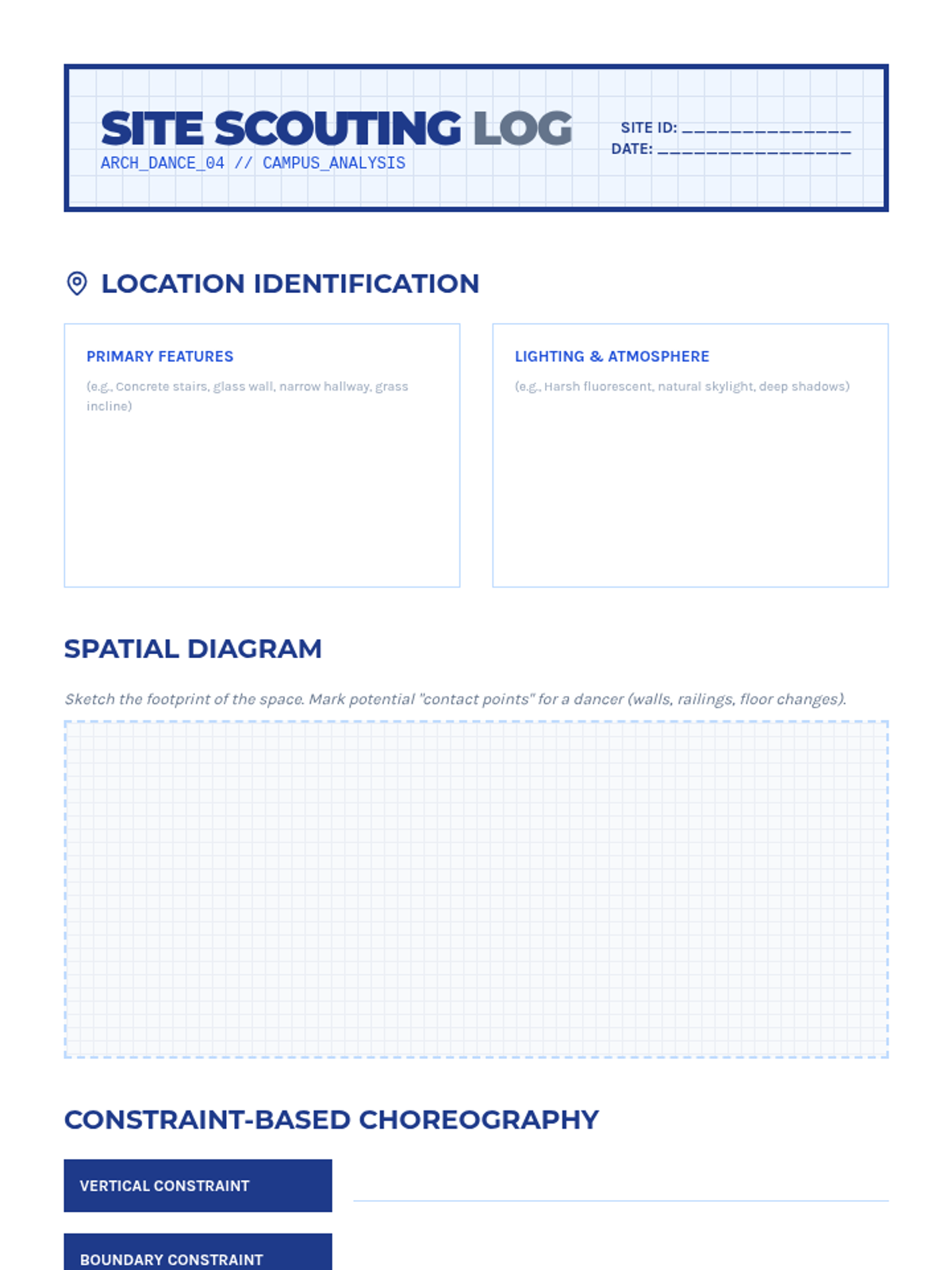
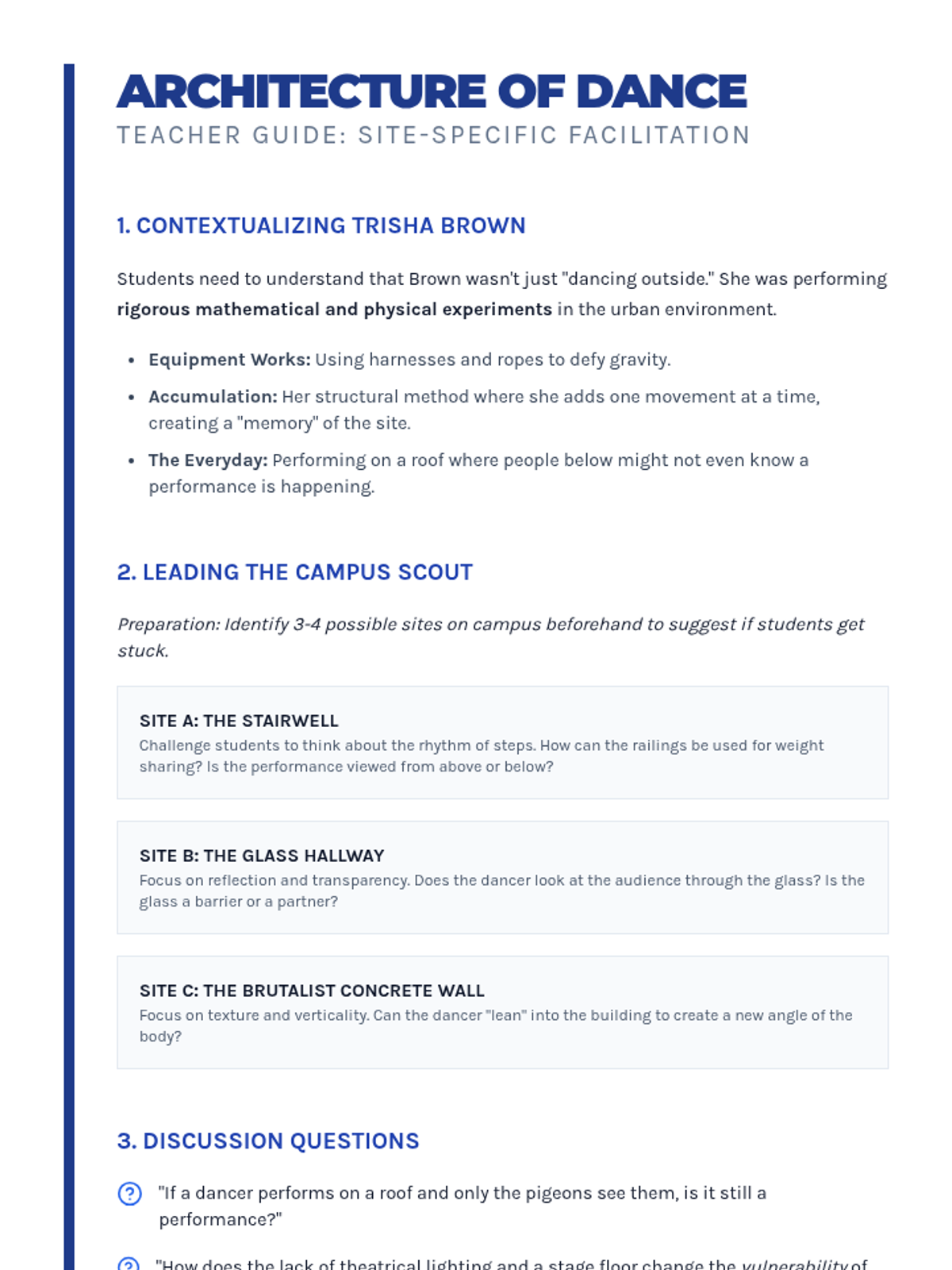
Explores Trisha Brown's site-specific choreography and how changing the venue alters the architectural and gravitational expectations of dance.
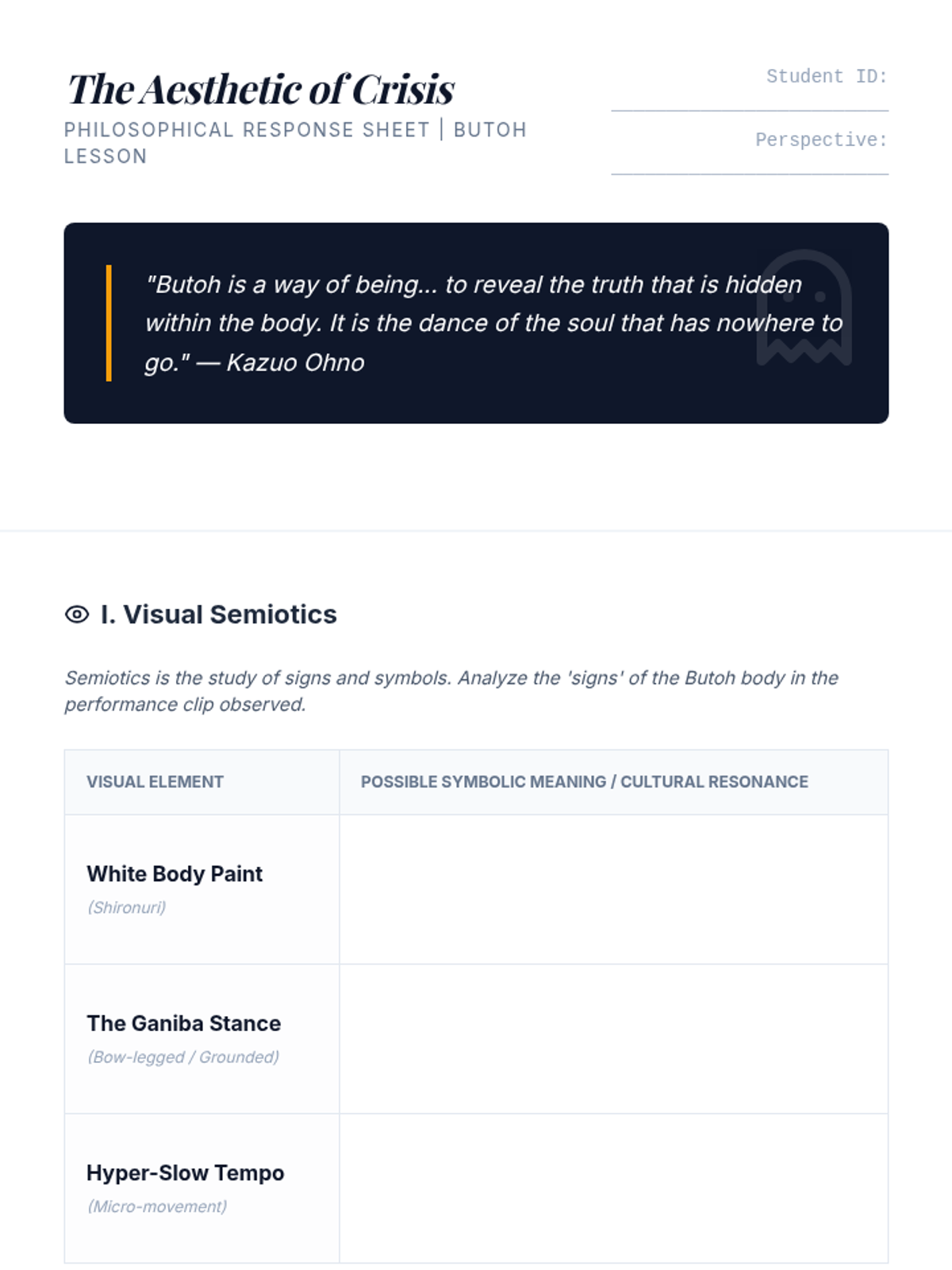
An exploration of Butoh as a reaction to post-WWII Japan, focusing on the 'body in crisis' and the works of Tatsumi Hijikata and Kazuo Ohno.
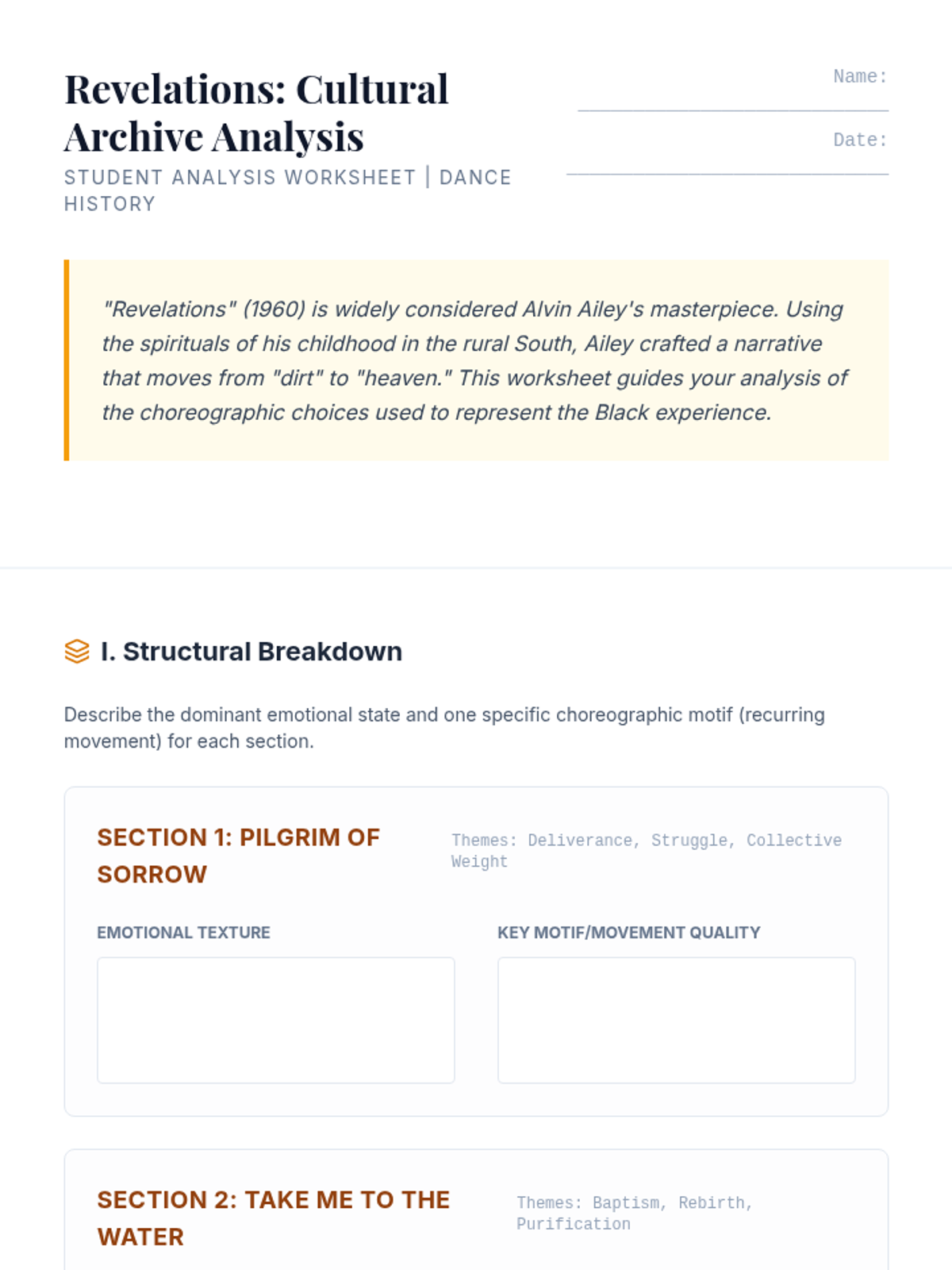
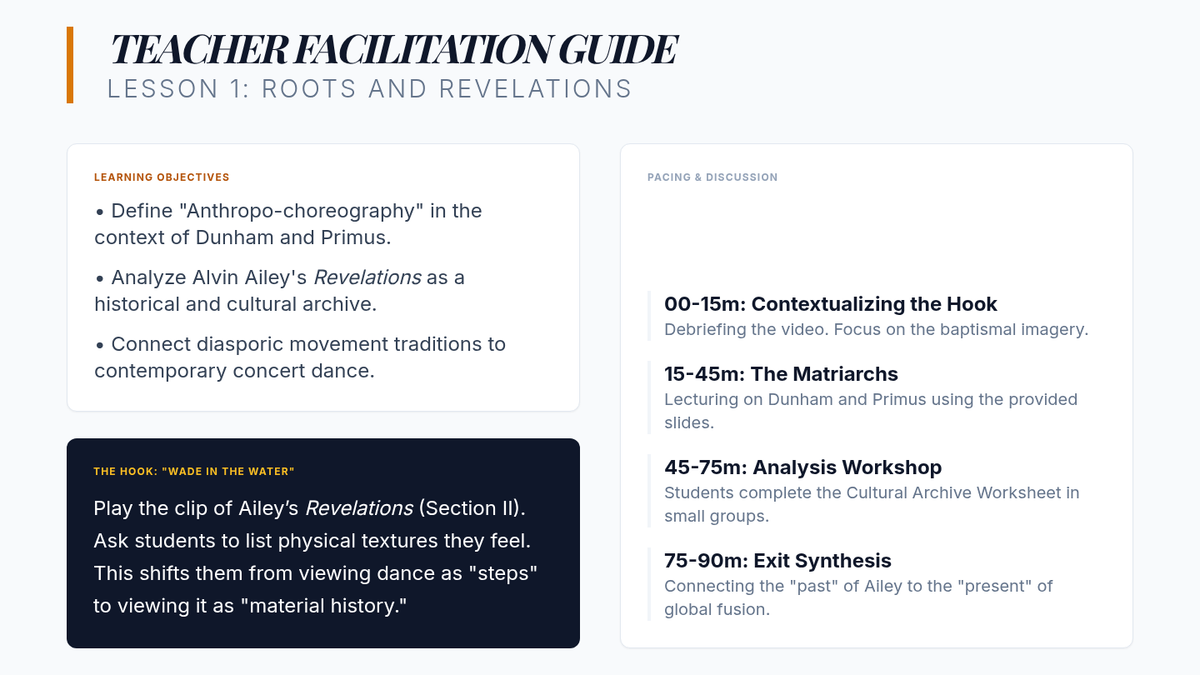
Students trace the lineage of Black concert dance, analyzing how Katherine Dunham and Pearl Primus integrated anthropology with modern technique, culminating in a study of Alvin Ailey's 'Revelations'.
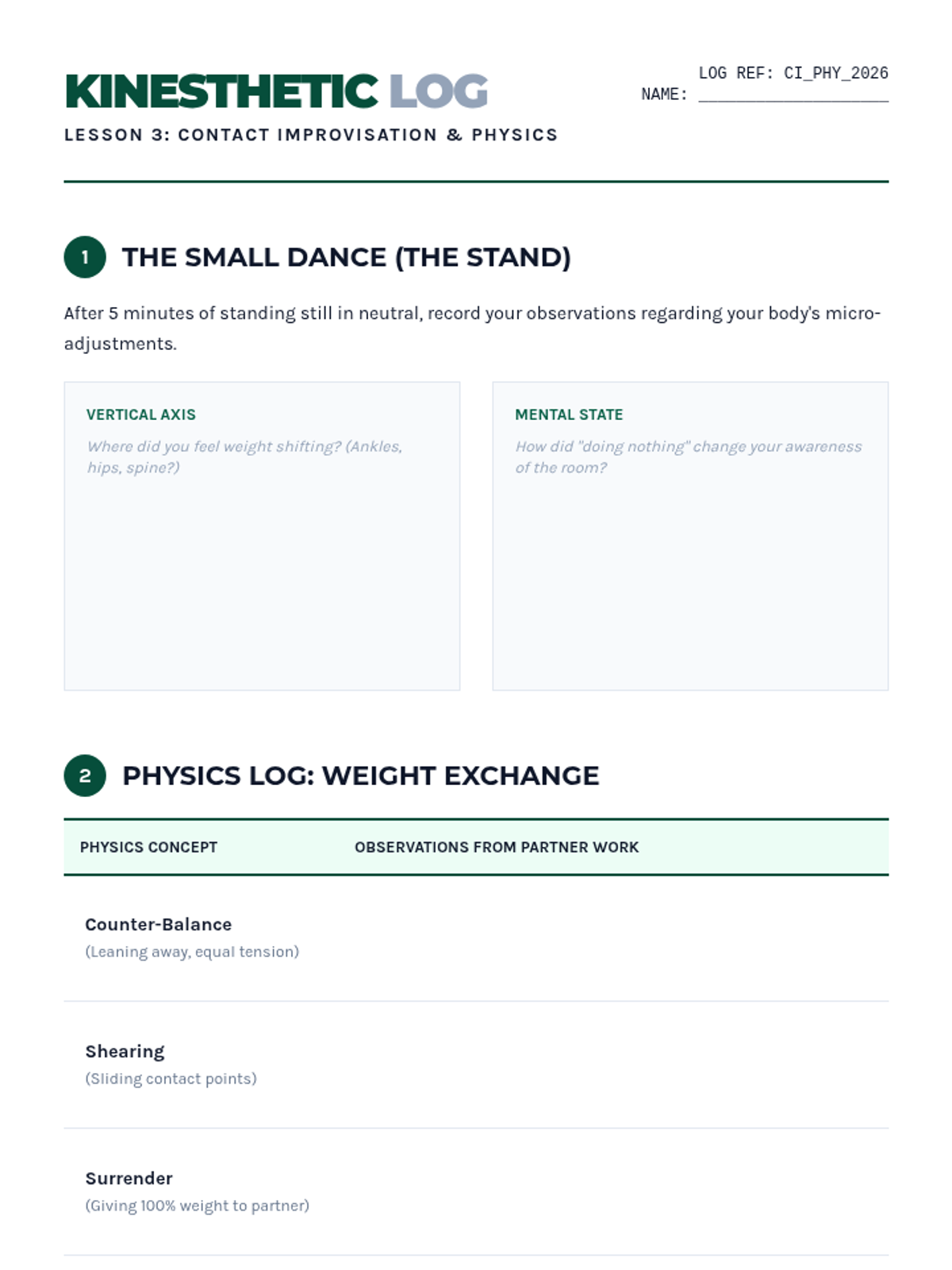
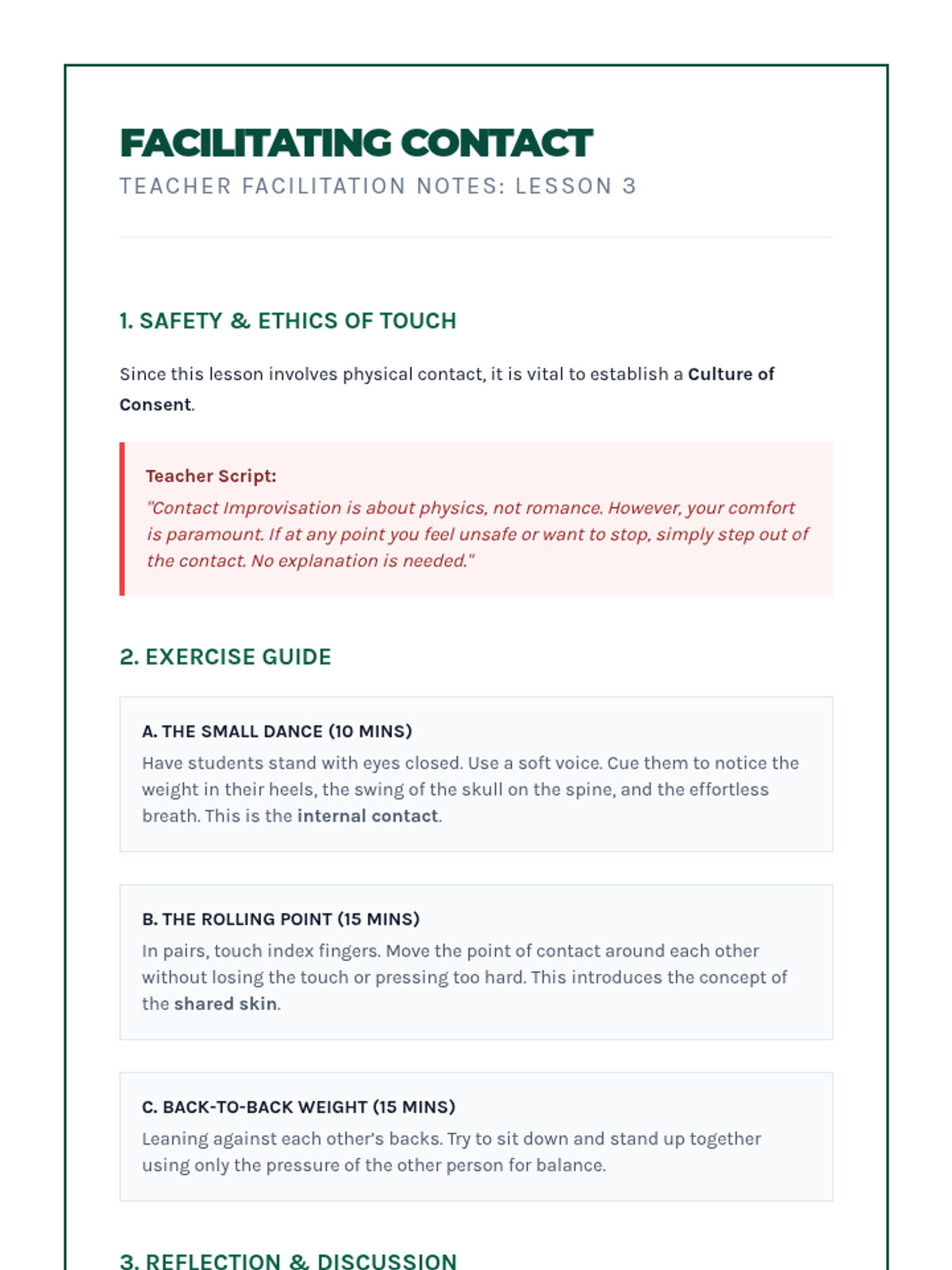
Investigates Steve Paxton's development of Contact Improvisation, focusing on shared weight, physics, and the social implications of touch.
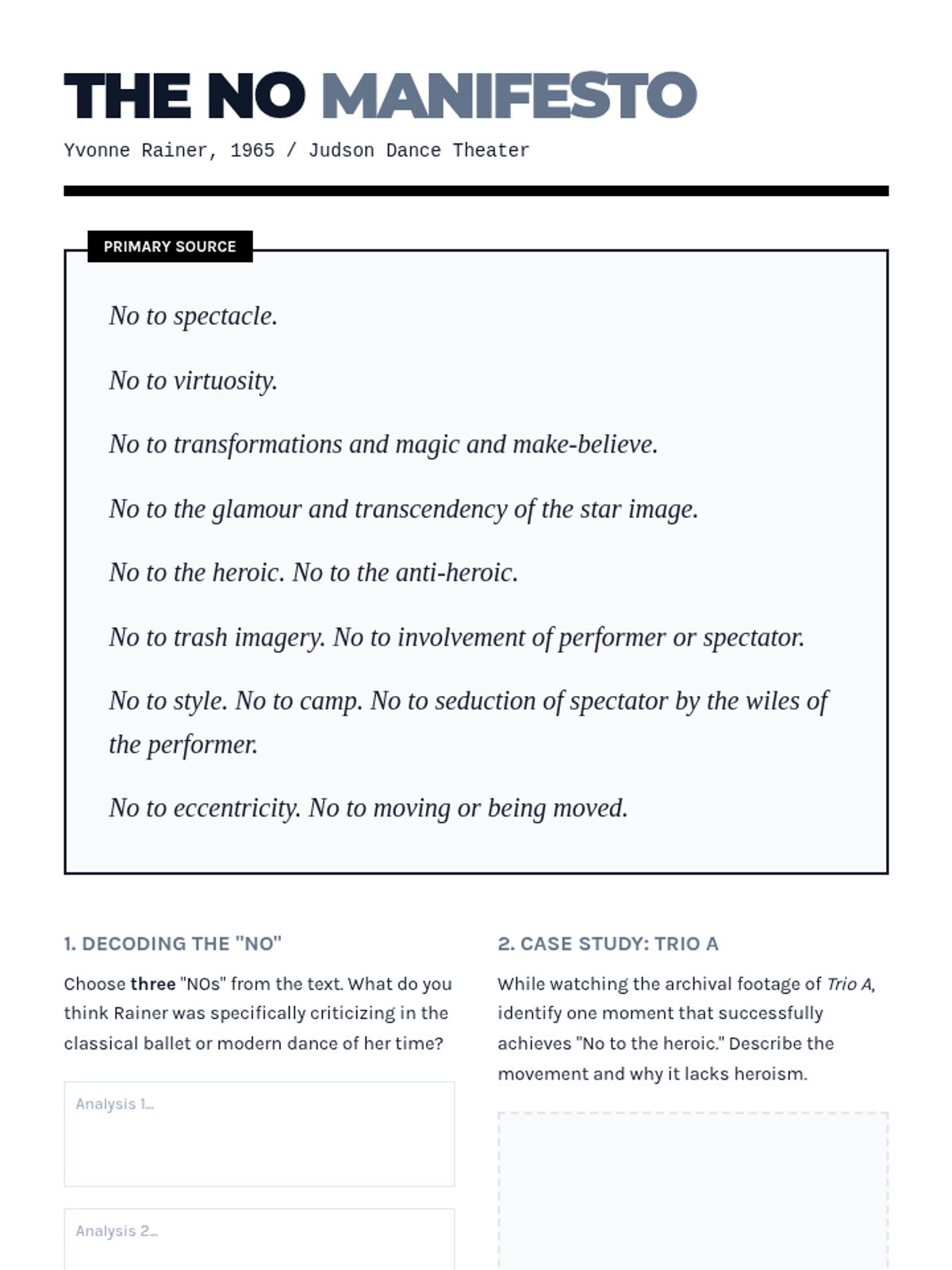
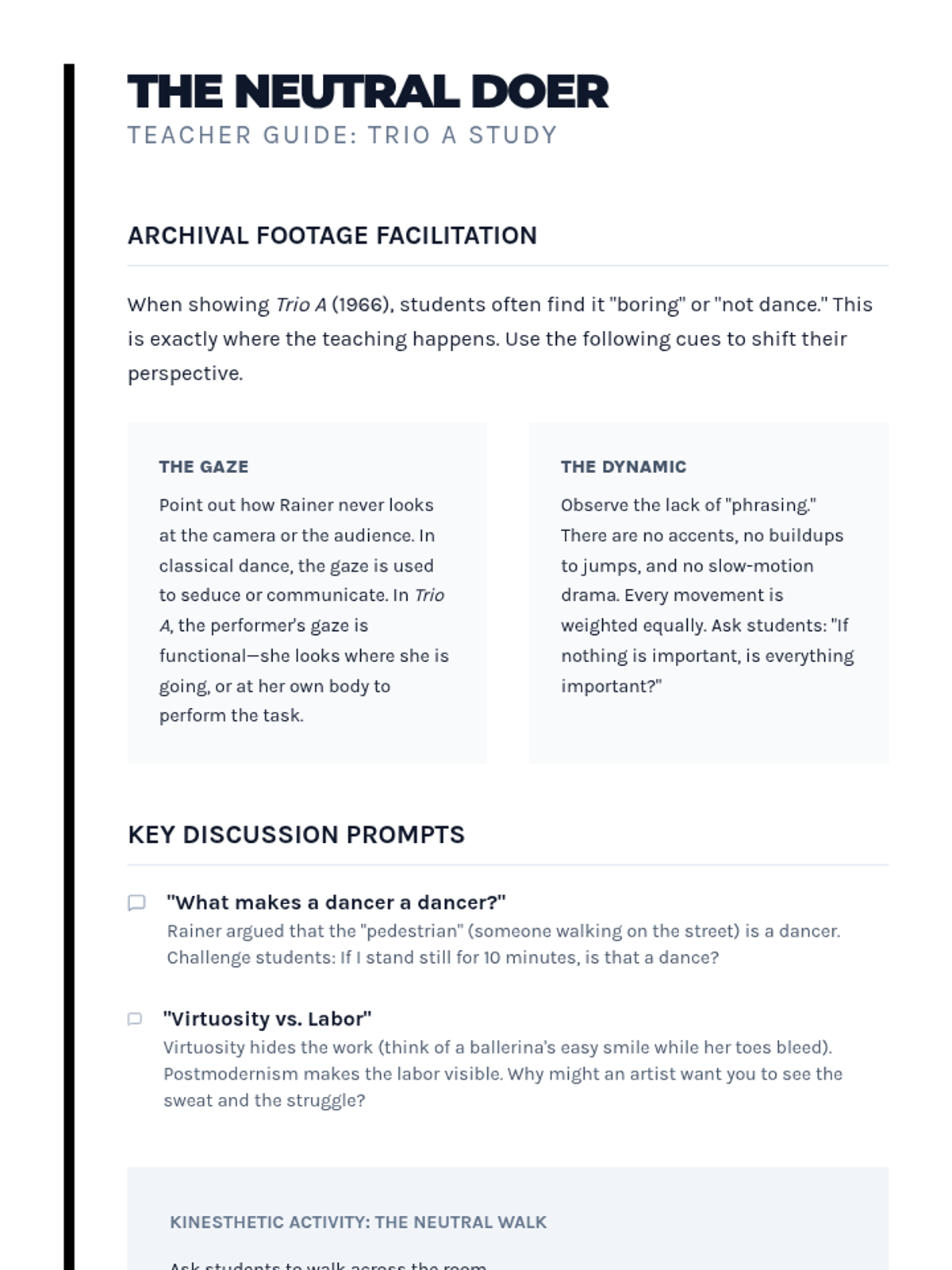
Analyzes Yvonne Rainer's 'No Manifesto' and the Judson Dance Theater's rejection of spectacle in favor of pedestrian movement and the 'neutral doer.'
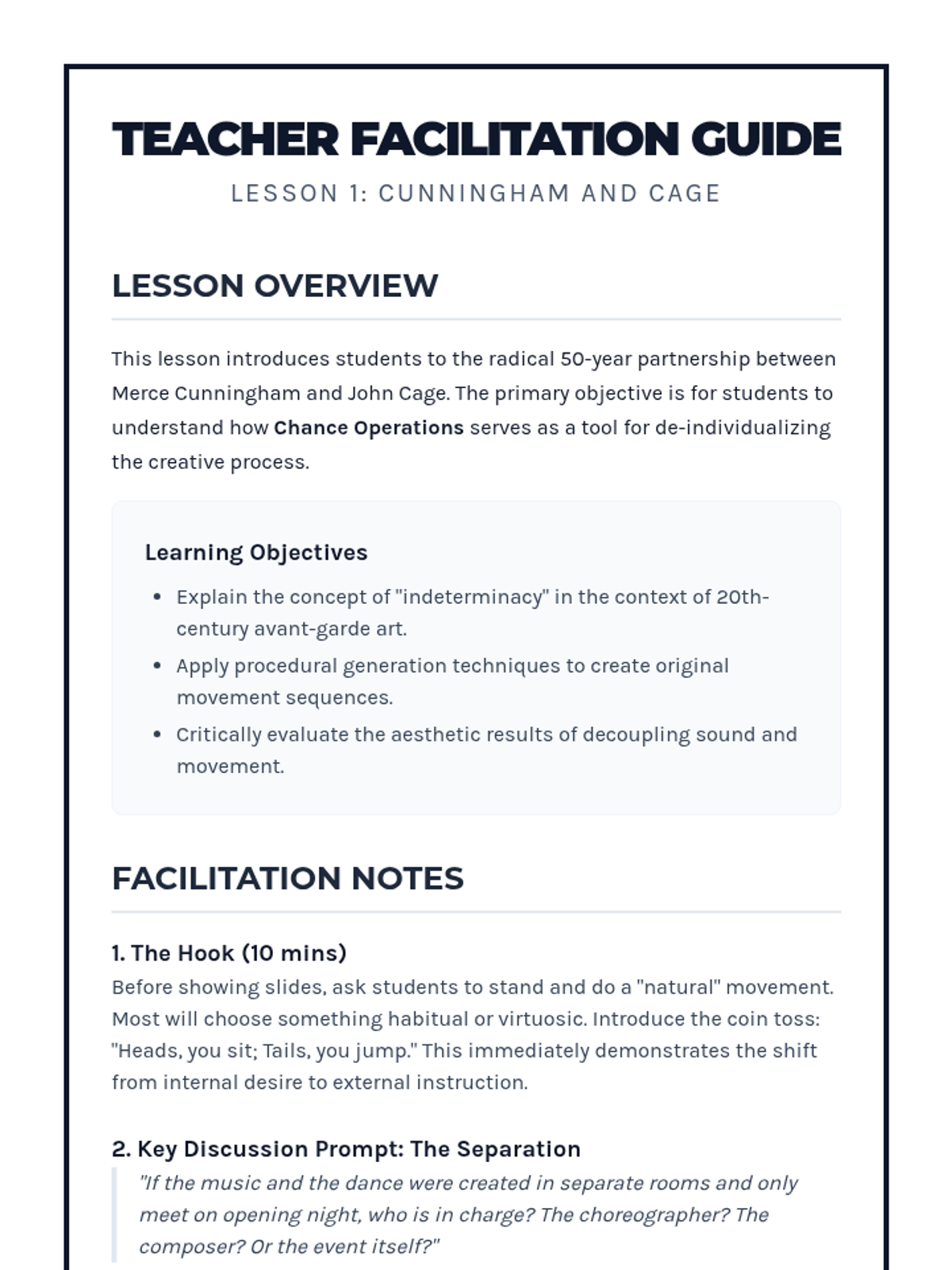
Examines the radical collaboration between Merce Cunningham and John Cage, focusing on how chance operations and the I Ching removed authorial intent from choreography.
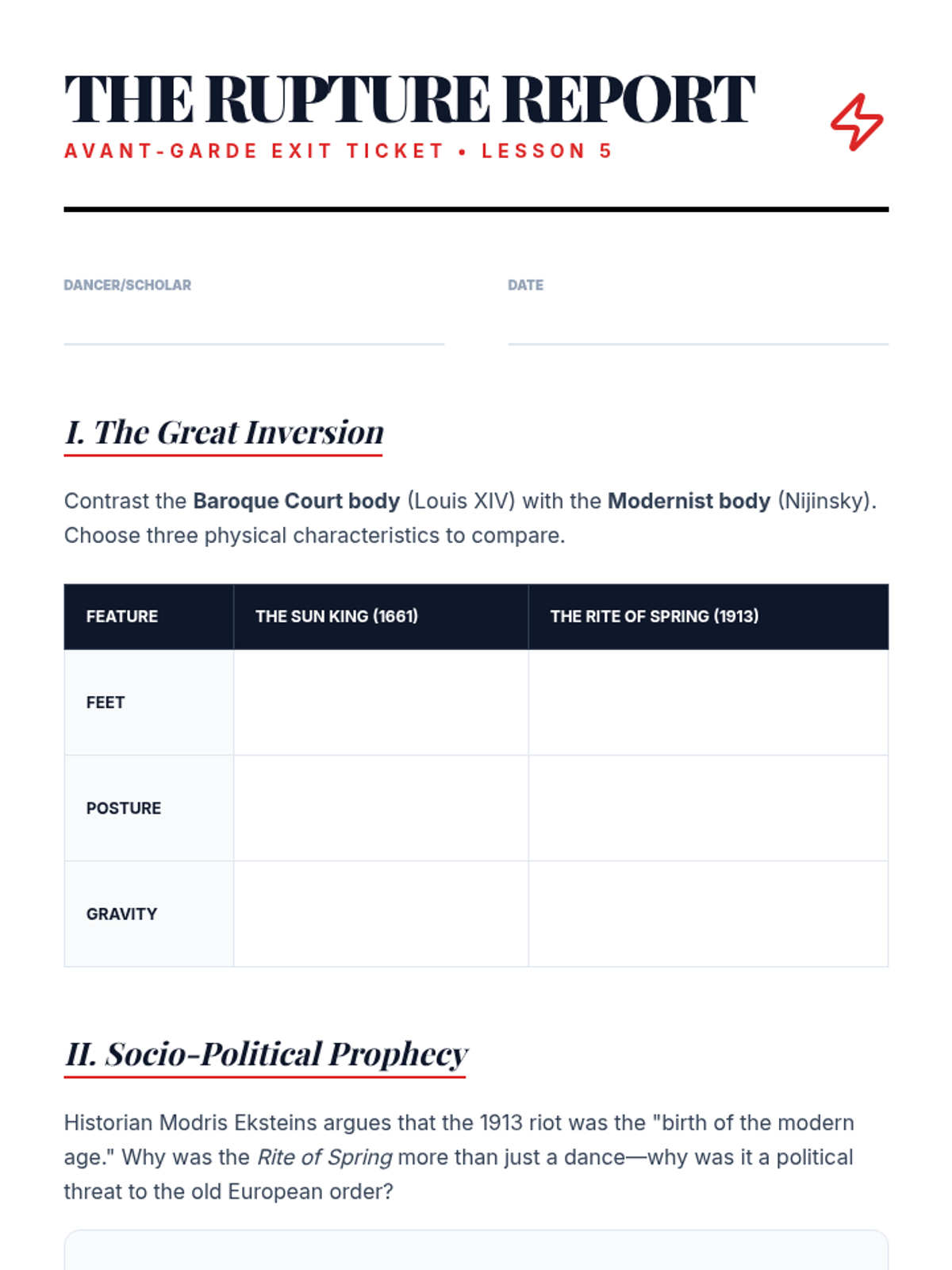
Evaluates the transition into the 20th century through the Ballets Russes, focusing on 'The Rite of Spring' as a rupture of classical traditions.
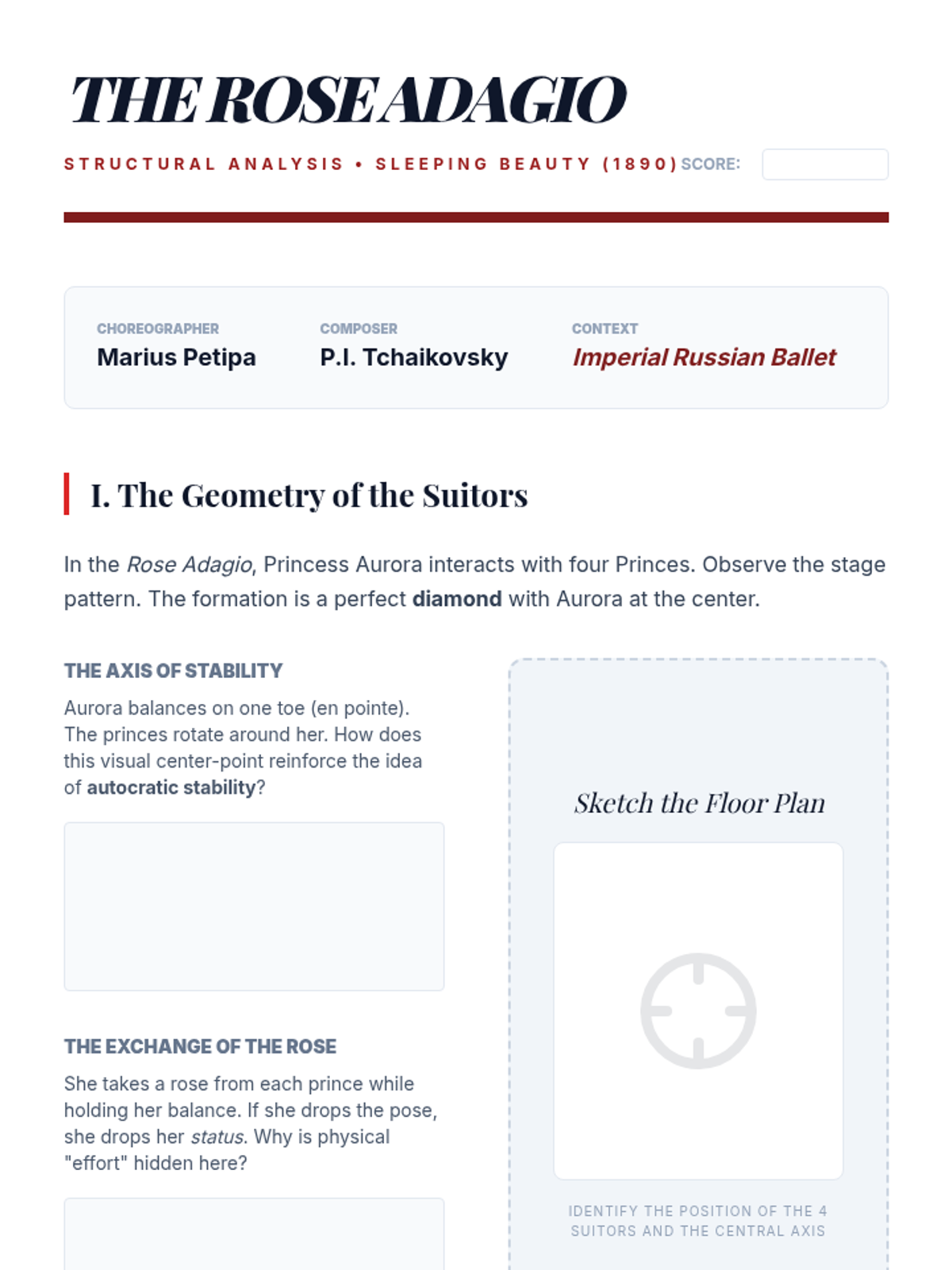
Analyzes the rigid hierarchy and mathematical choreographic formulas of the Imperial Russian Ballet under Marius Petipa.
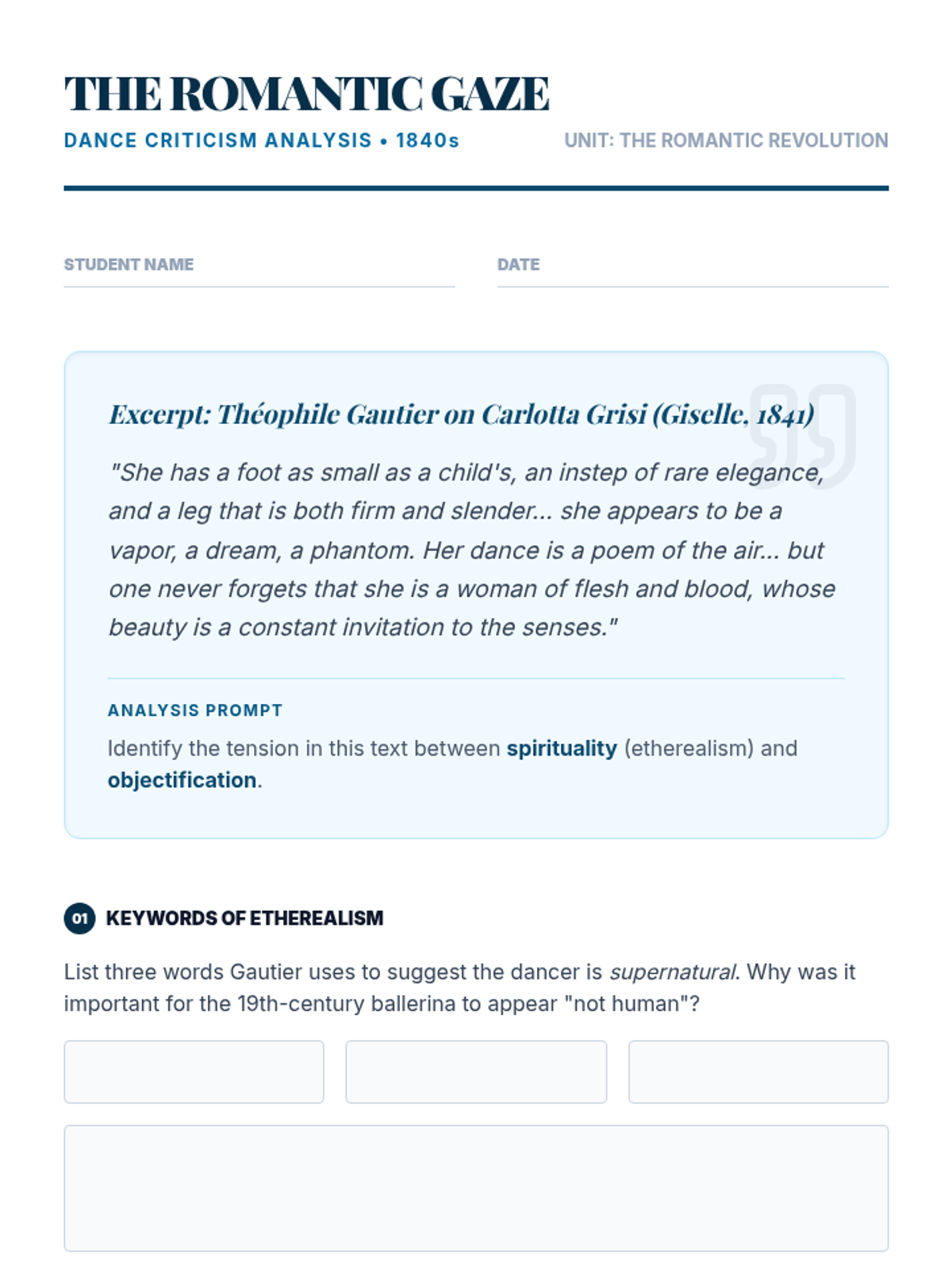
Examines the shift from male-dominated court dance to the female-centered Romantic ballet, focusing on the construction of the 'ethereal' body and the male gaze.
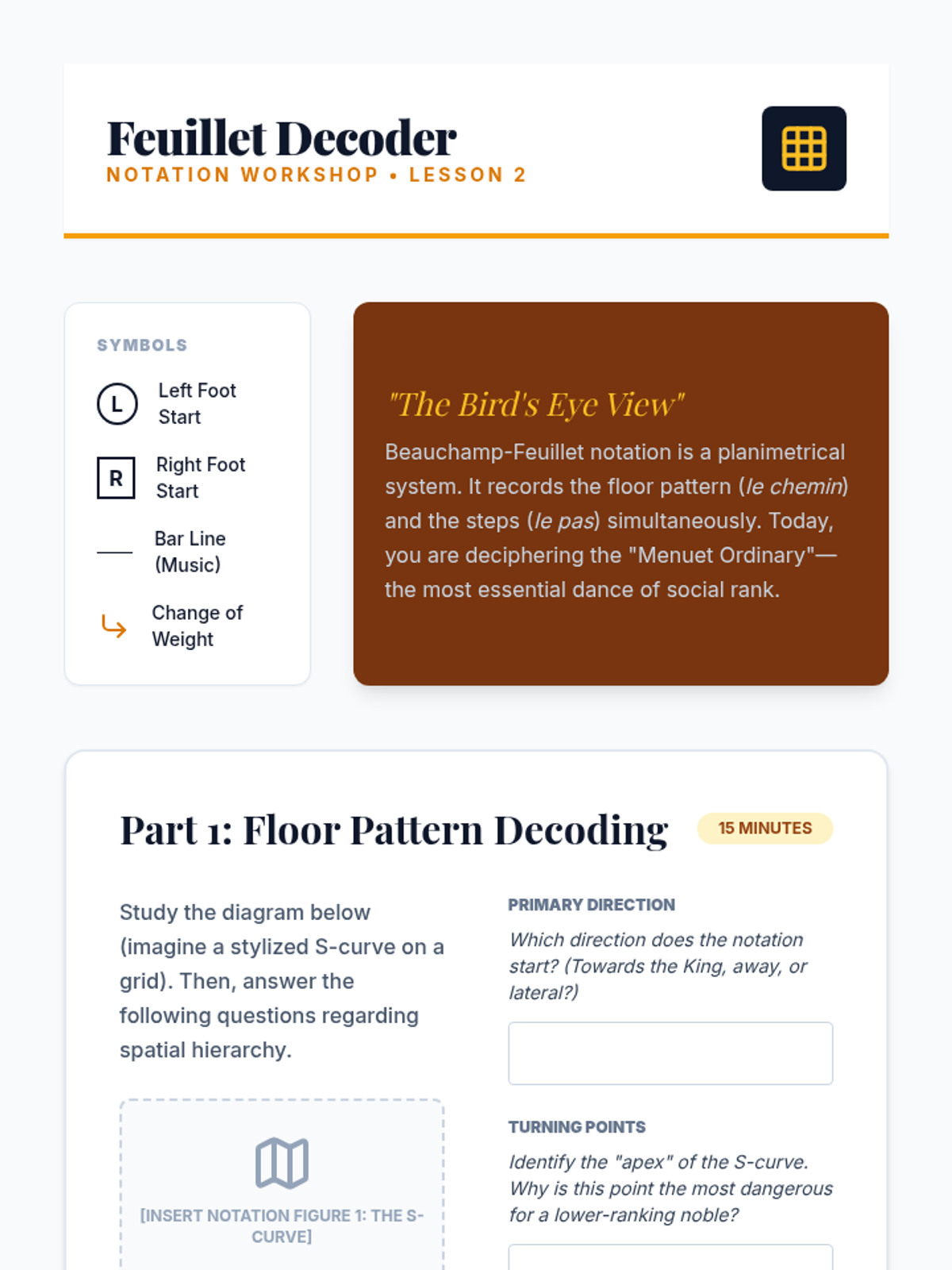
Focuses on the standardization of the five positions and the Beauchamp-Feuillet notation system as a method of state-sponsored artistic control.
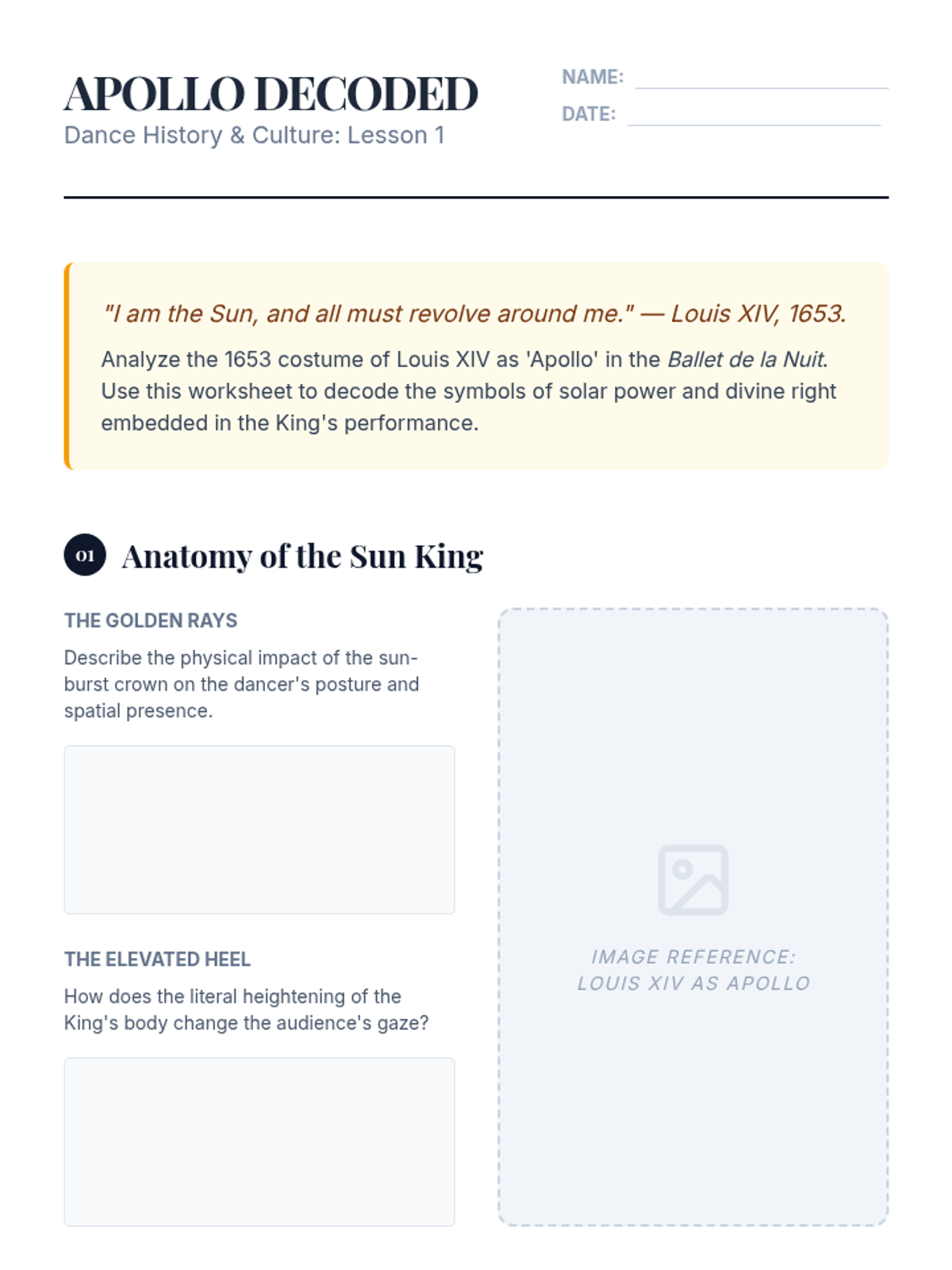
Students investigate the reign of Louis XIV and the establishment of the Académie Royale de Danse, treating dance as a propaganda tool used to enforce political absolutism.
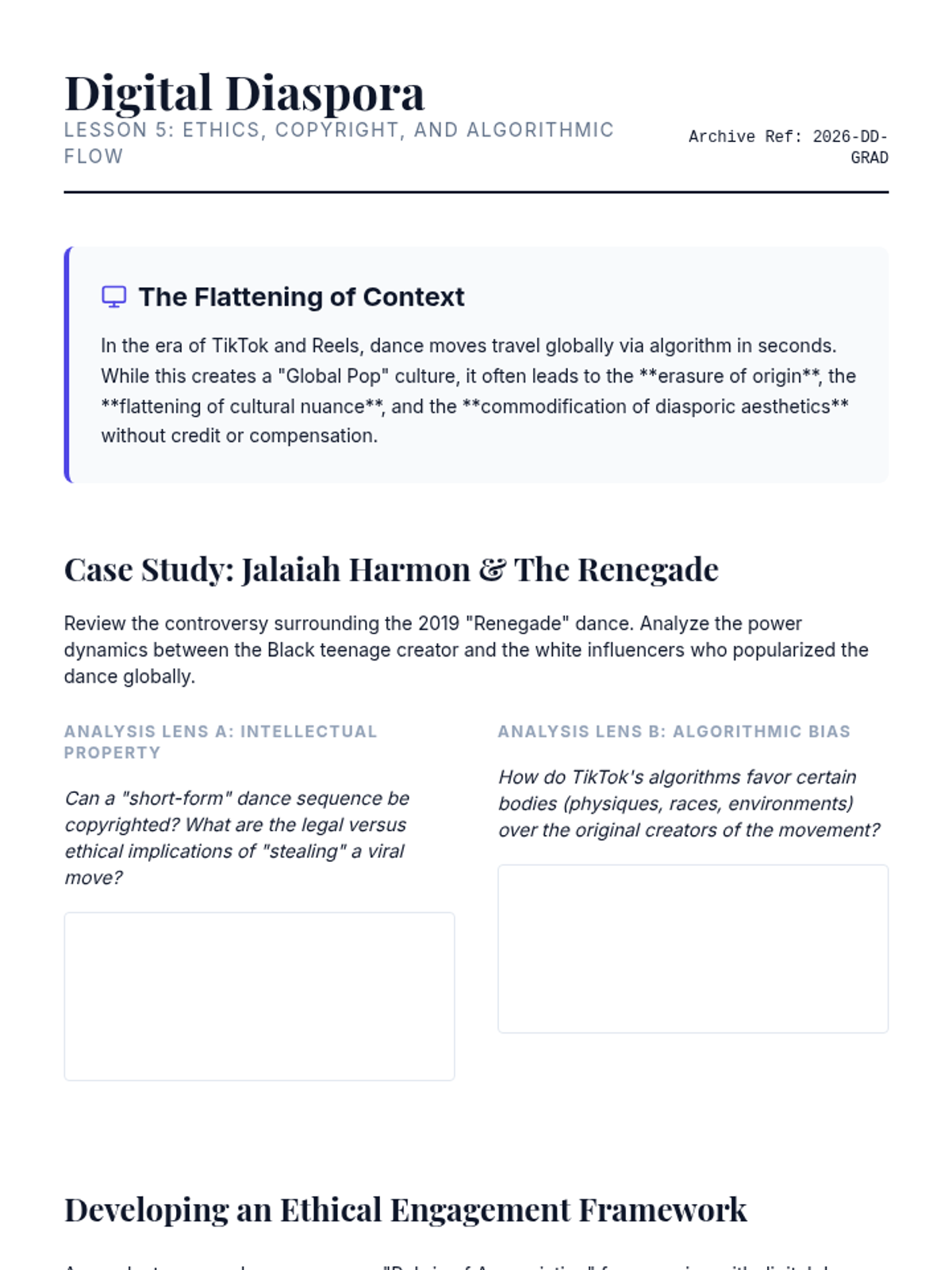
Examining the impact of digital algorithms and social media on dance globalization, focusing on issues of copyright, credit, and cultural flattening.
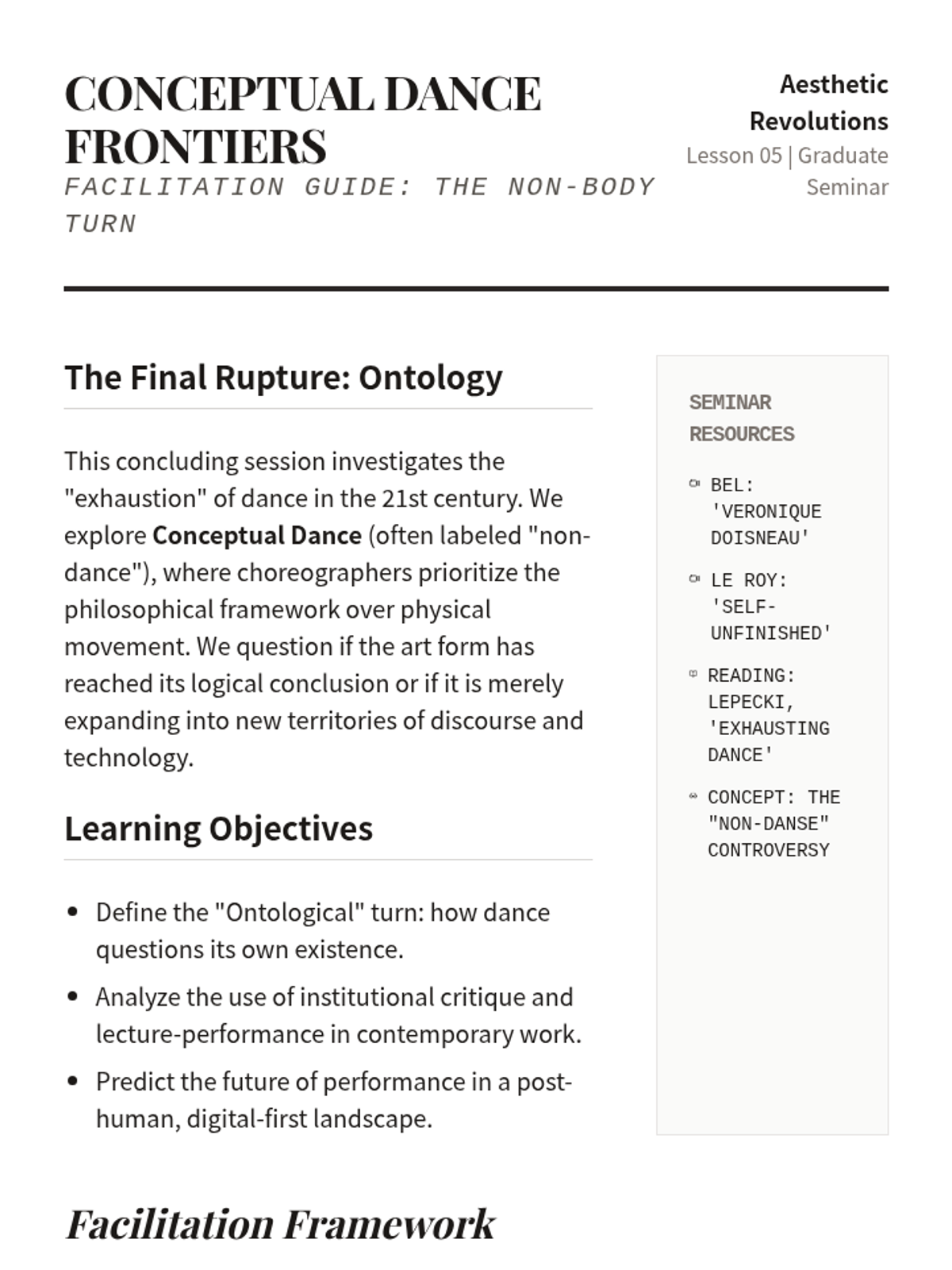
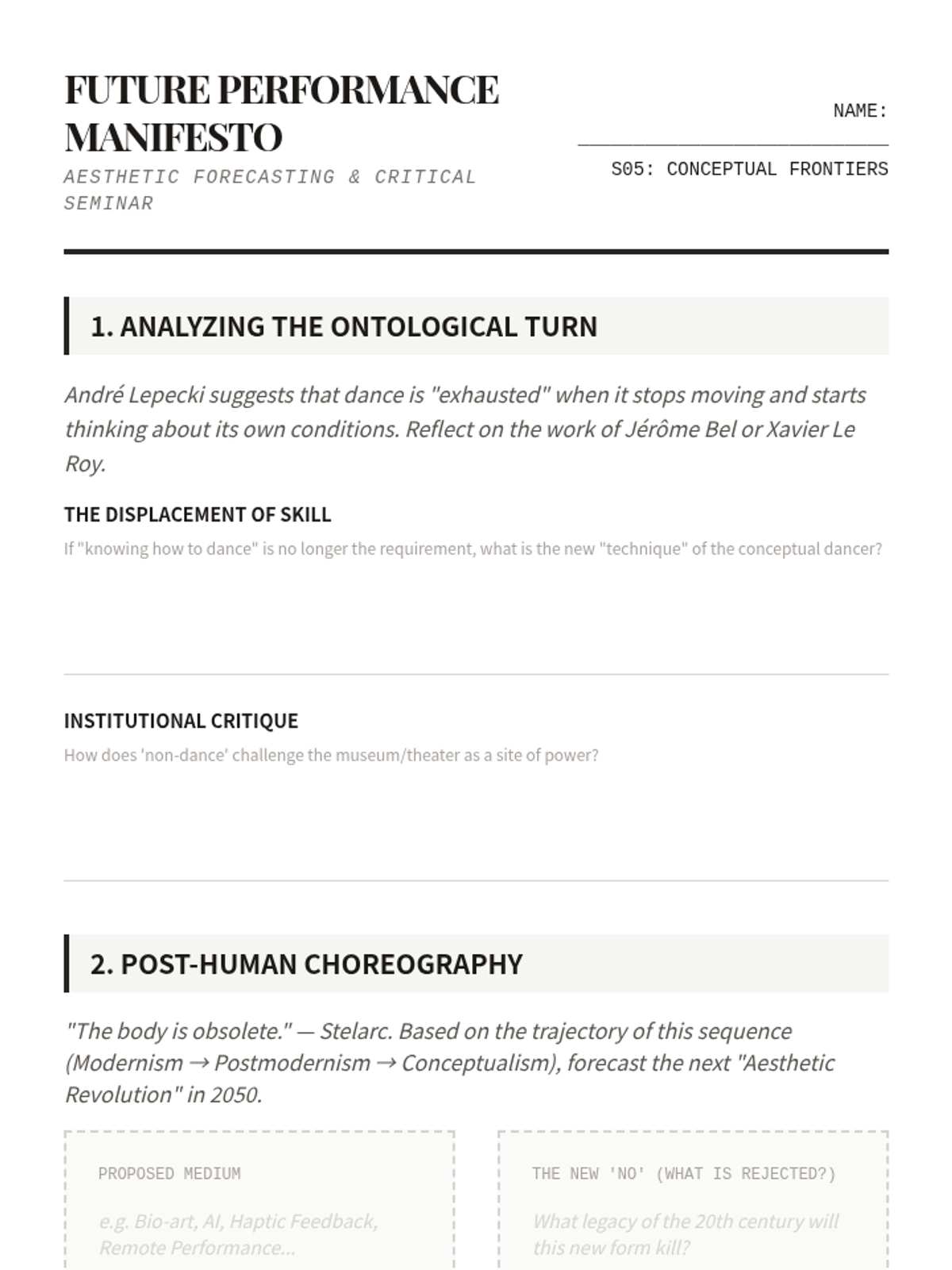
Conclude with 21st-century conceptual dance, debating the 'exhaustion' of dance and the integration of lecture-performance where the body may disappear entirely.
Investigating the connection between German Expressionism and Japanese Butoh as somatic responses to post-war trauma and catastrophe.
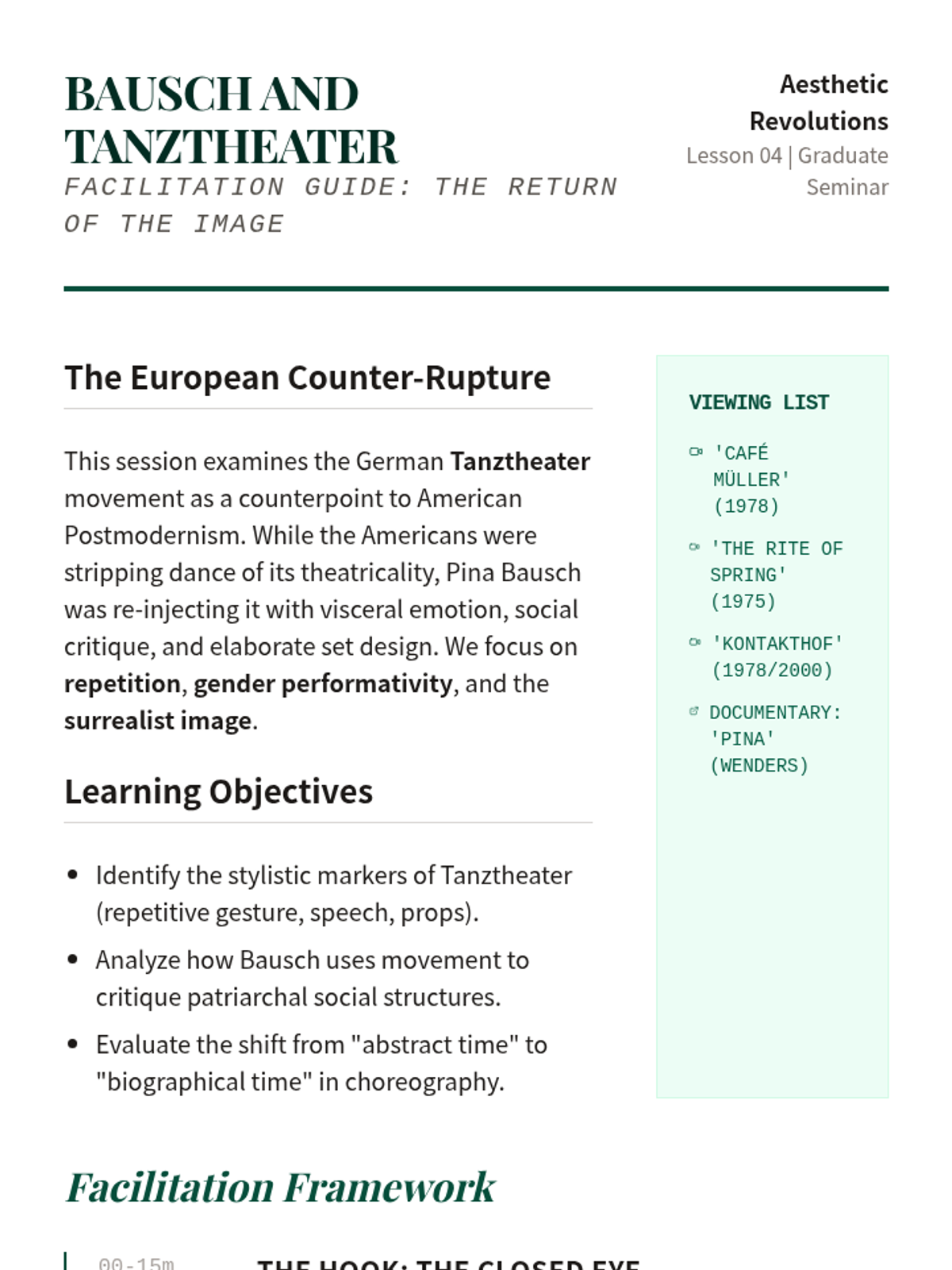
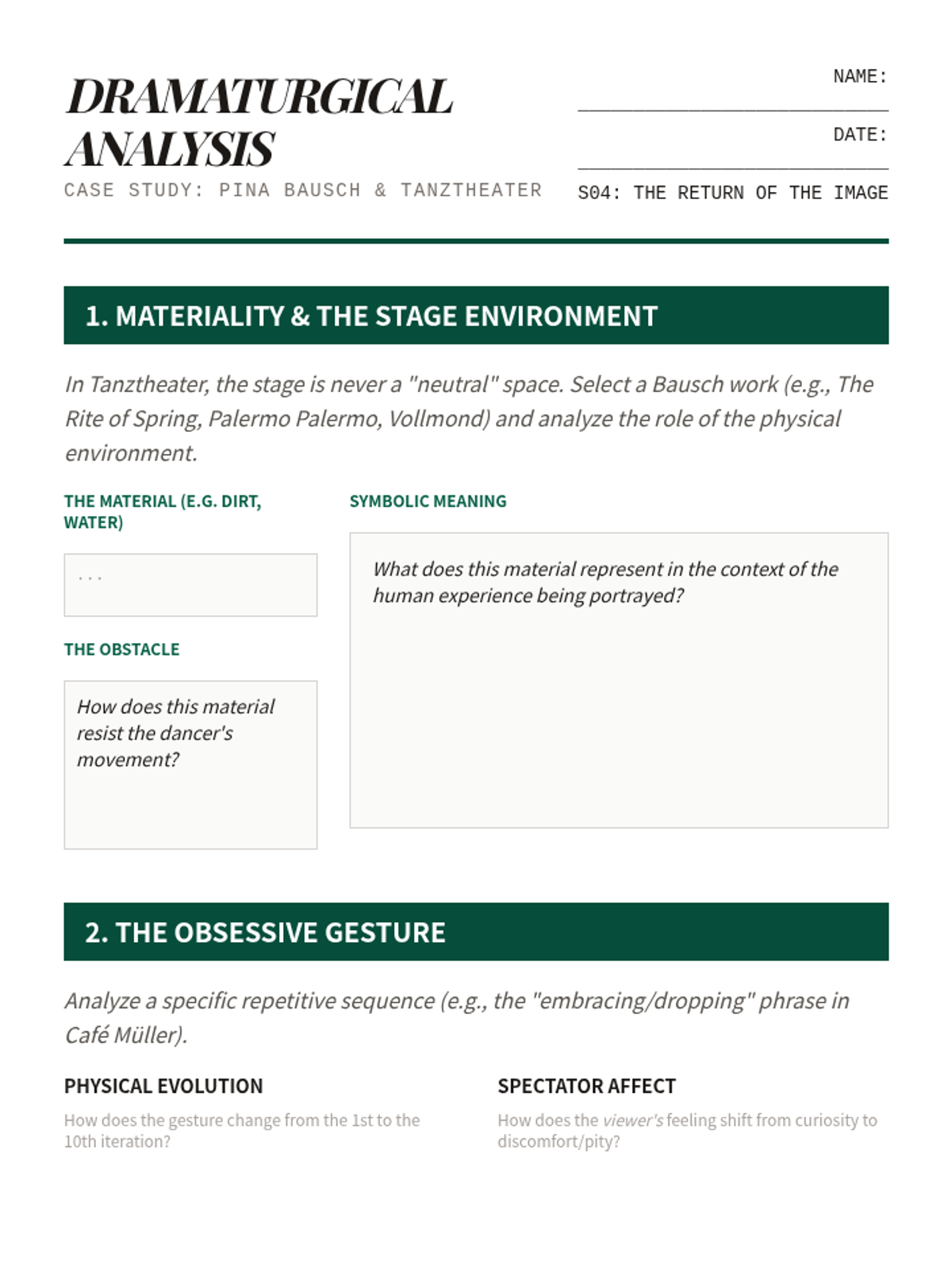
Study Pina Bausch and the German Tanztheater movement, analyzing the blending of speech, repetitive gesture, and elaborate sets to critique social and gender relations.
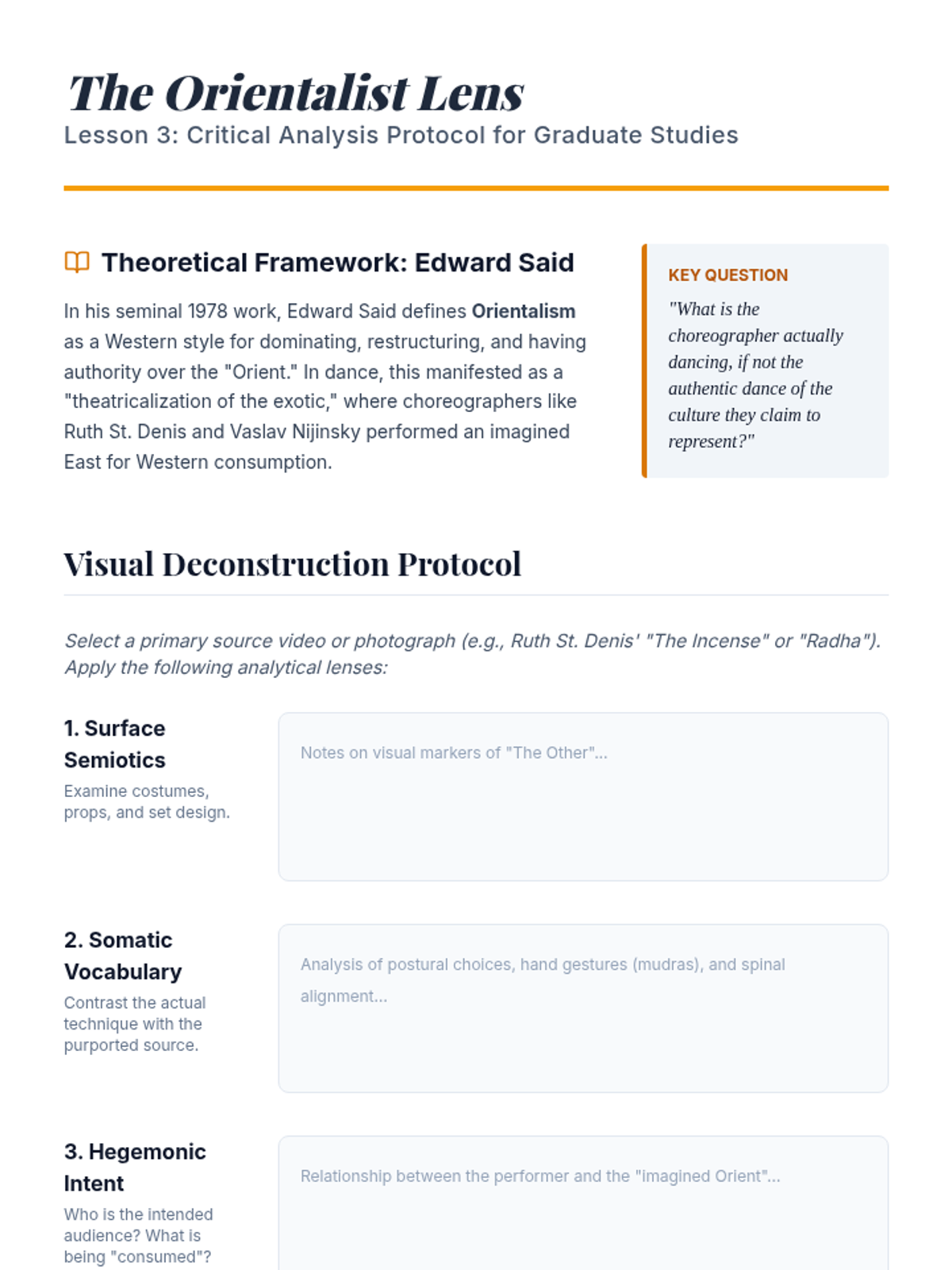
Critiquing Western choreographic appropriations of Asian and Middle Eastern dances in the early 20th century through the lens of Edward Said's Orientalism.