Fundamental techniques for soccer, volleyball, football, and basketball alongside strategic gameplay and communication skills. Emphasizes sportsmanship and collaborative tactics within a competitive team environment.
This sequence focuses on the technical foundations of football (soccer), including dribbling, passing, receiving, and tactical movement. Students progress from individual ball mastery to dynamic team-based possession drills.
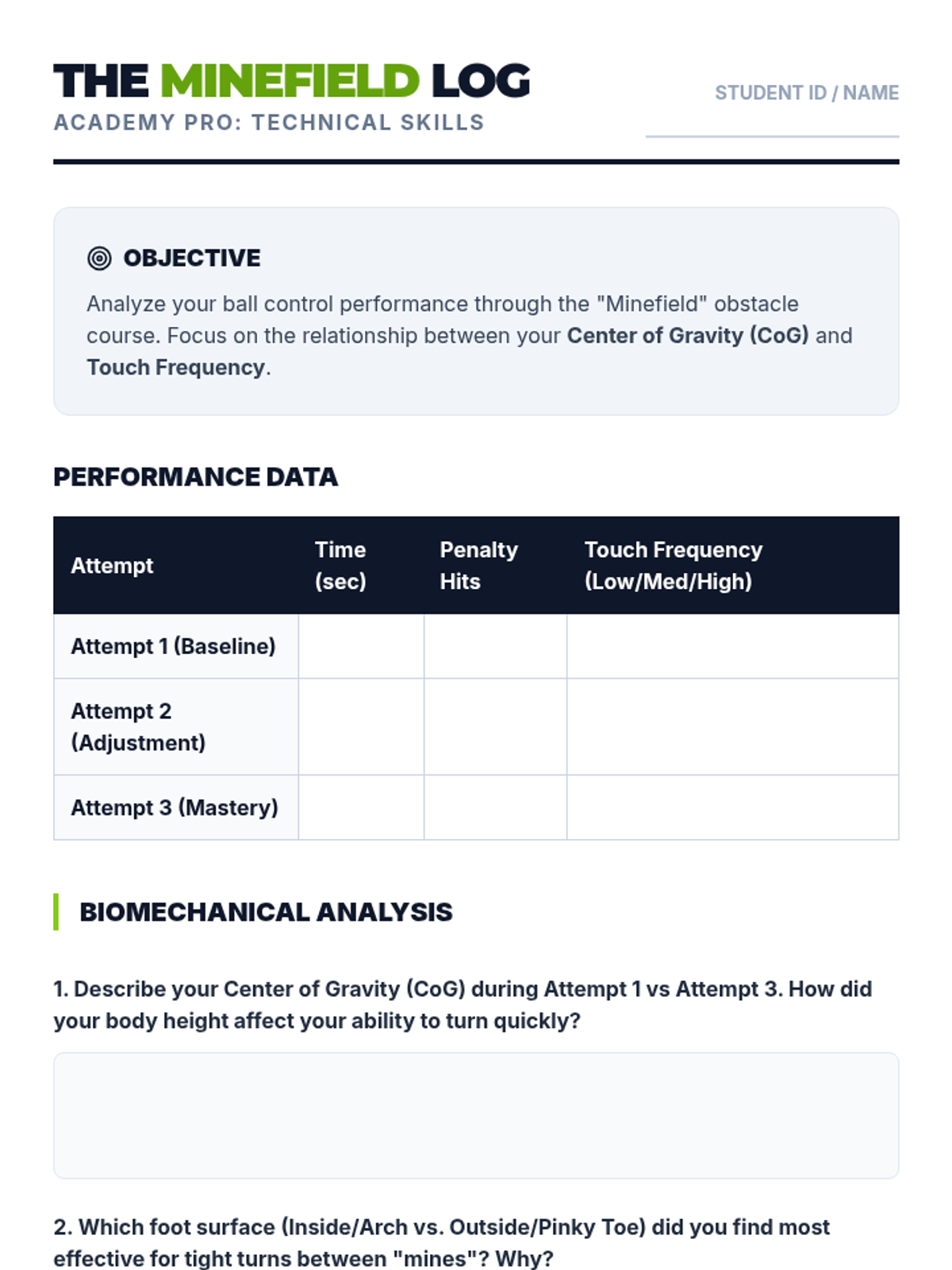
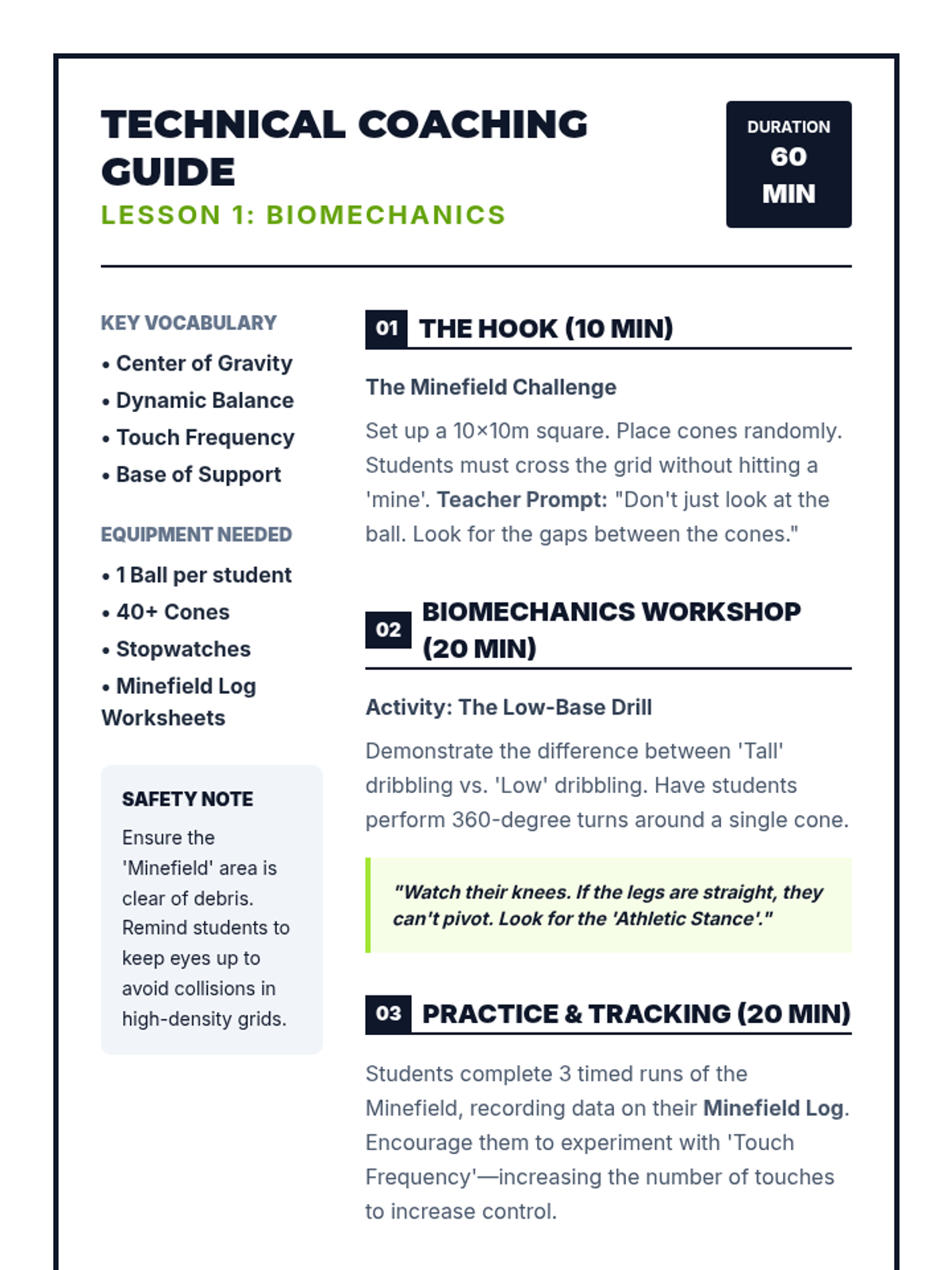
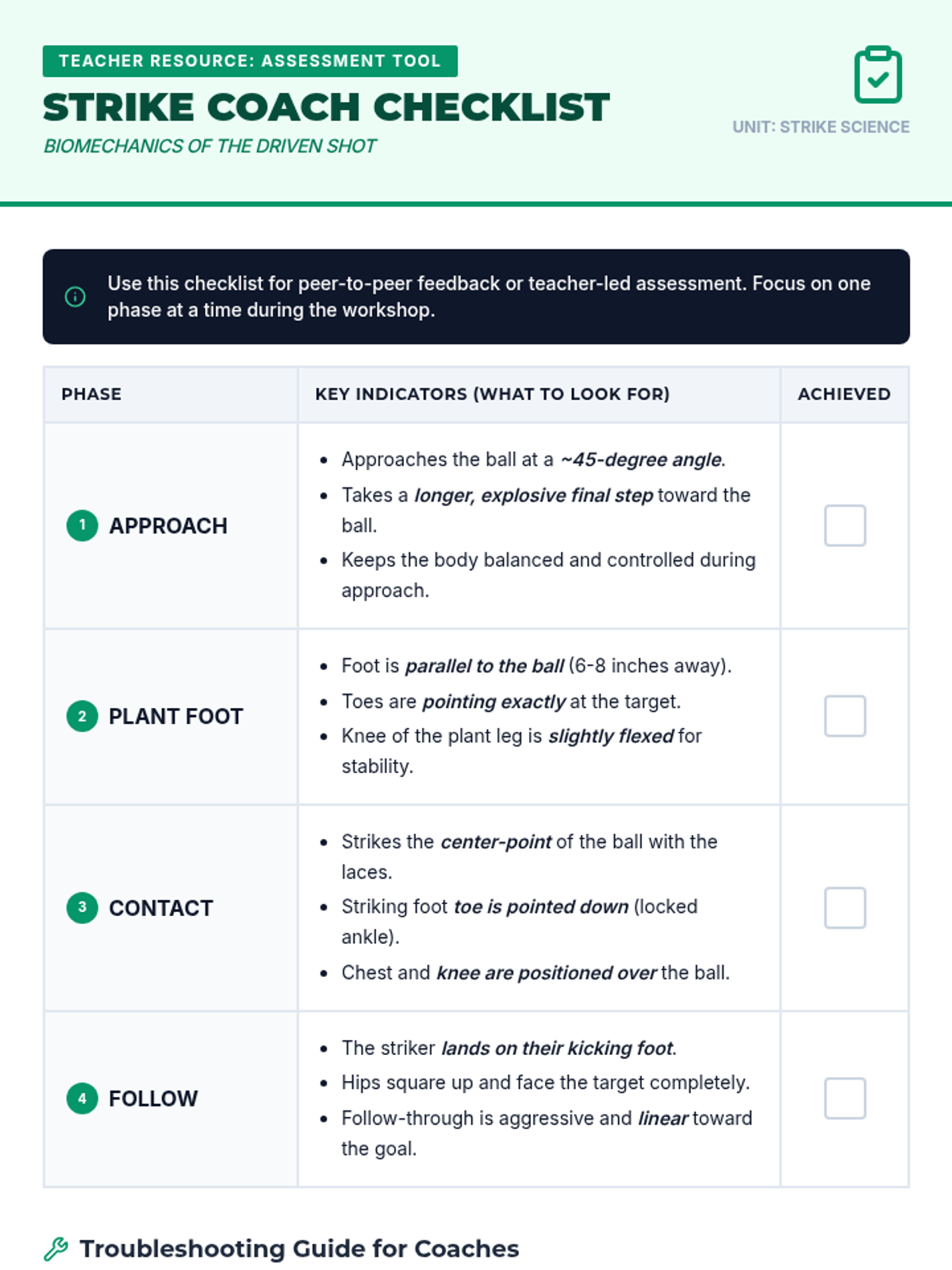
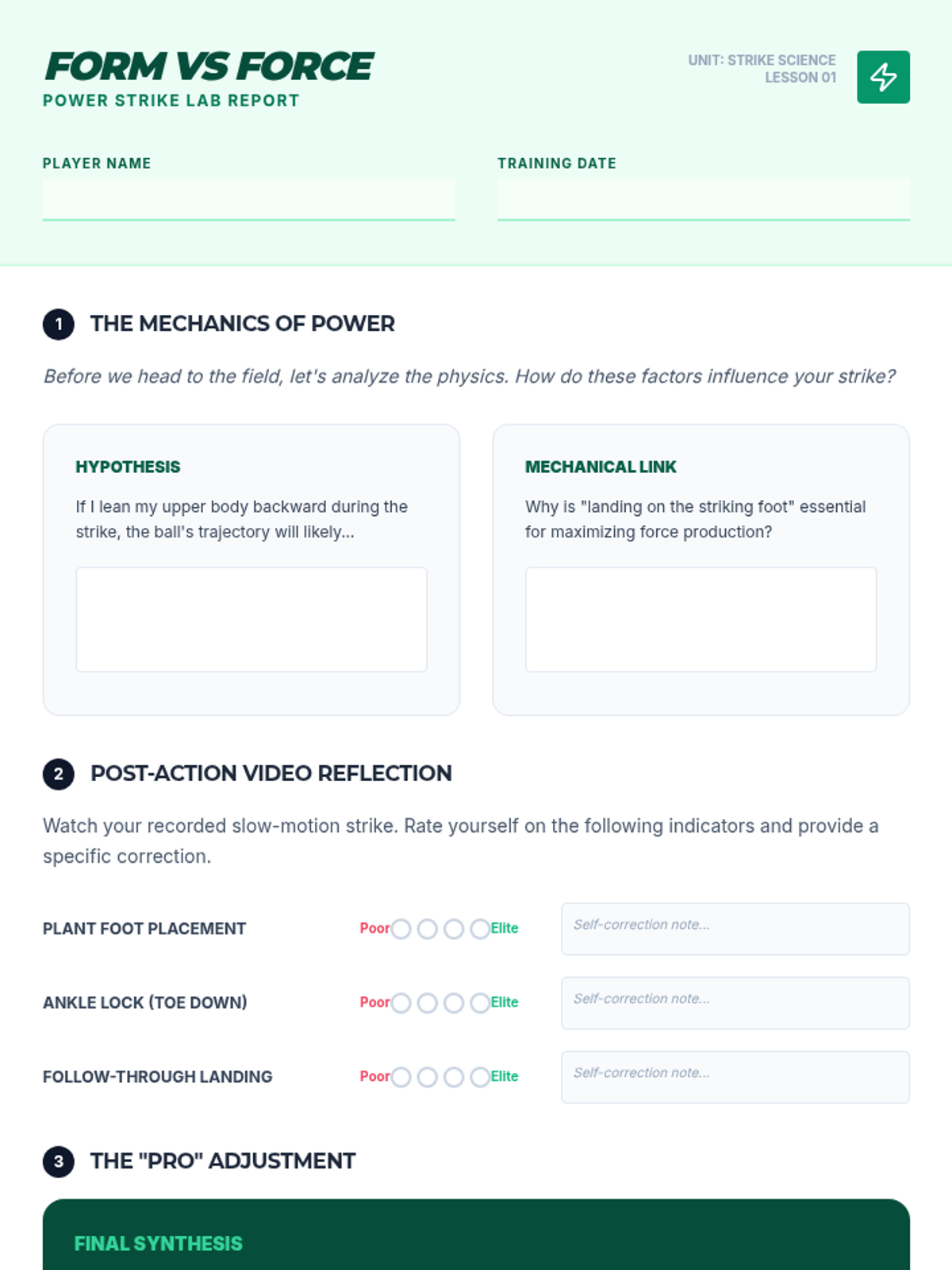
This sequence focuses on the biomechanics and individual proficiency required for high-level soccer performance, from close-quarter ball control to complex striking mechanics. Students will analyze the relationship between body positioning and ball trajectory through hands-on drills and technical workshops.
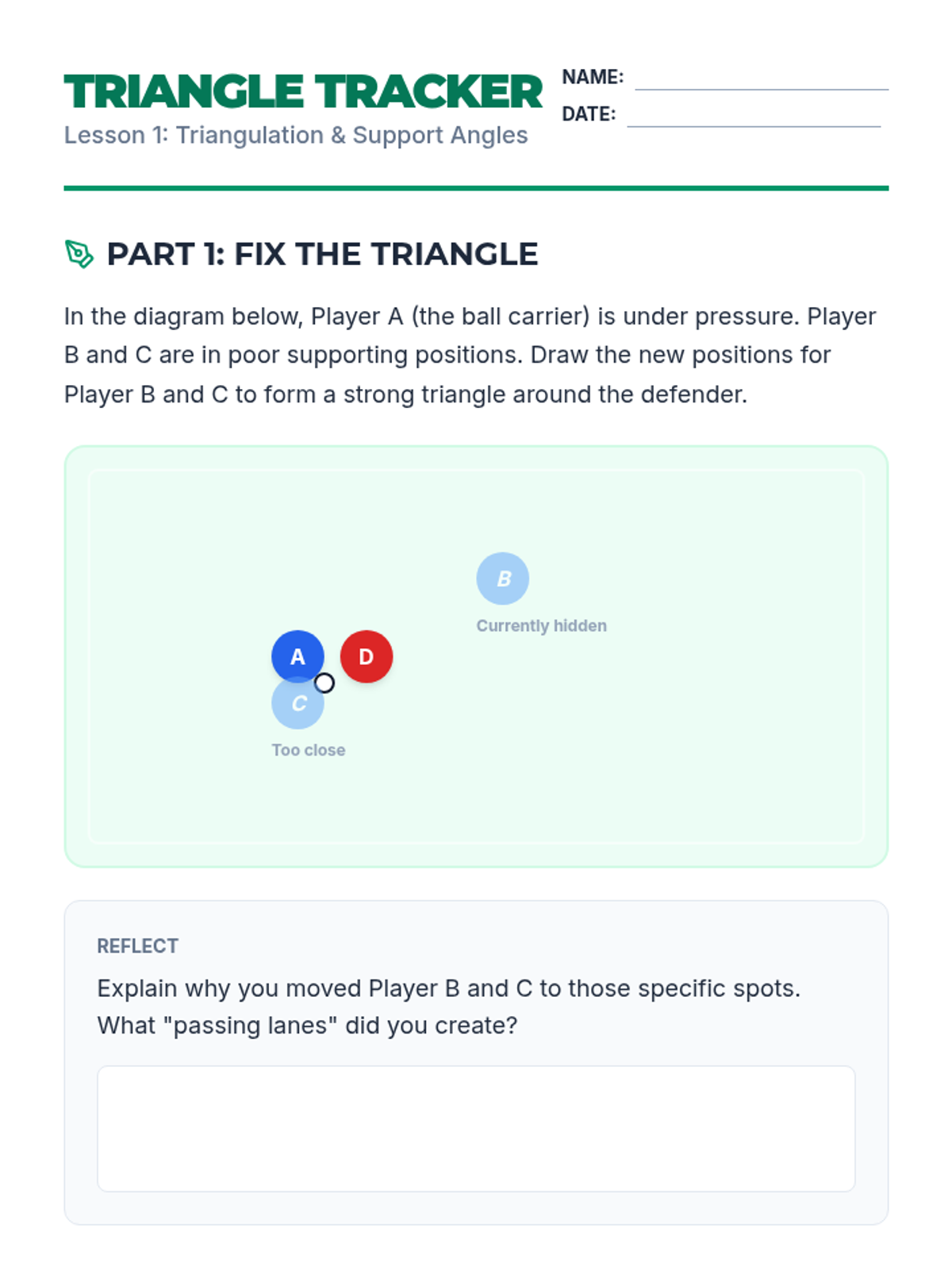
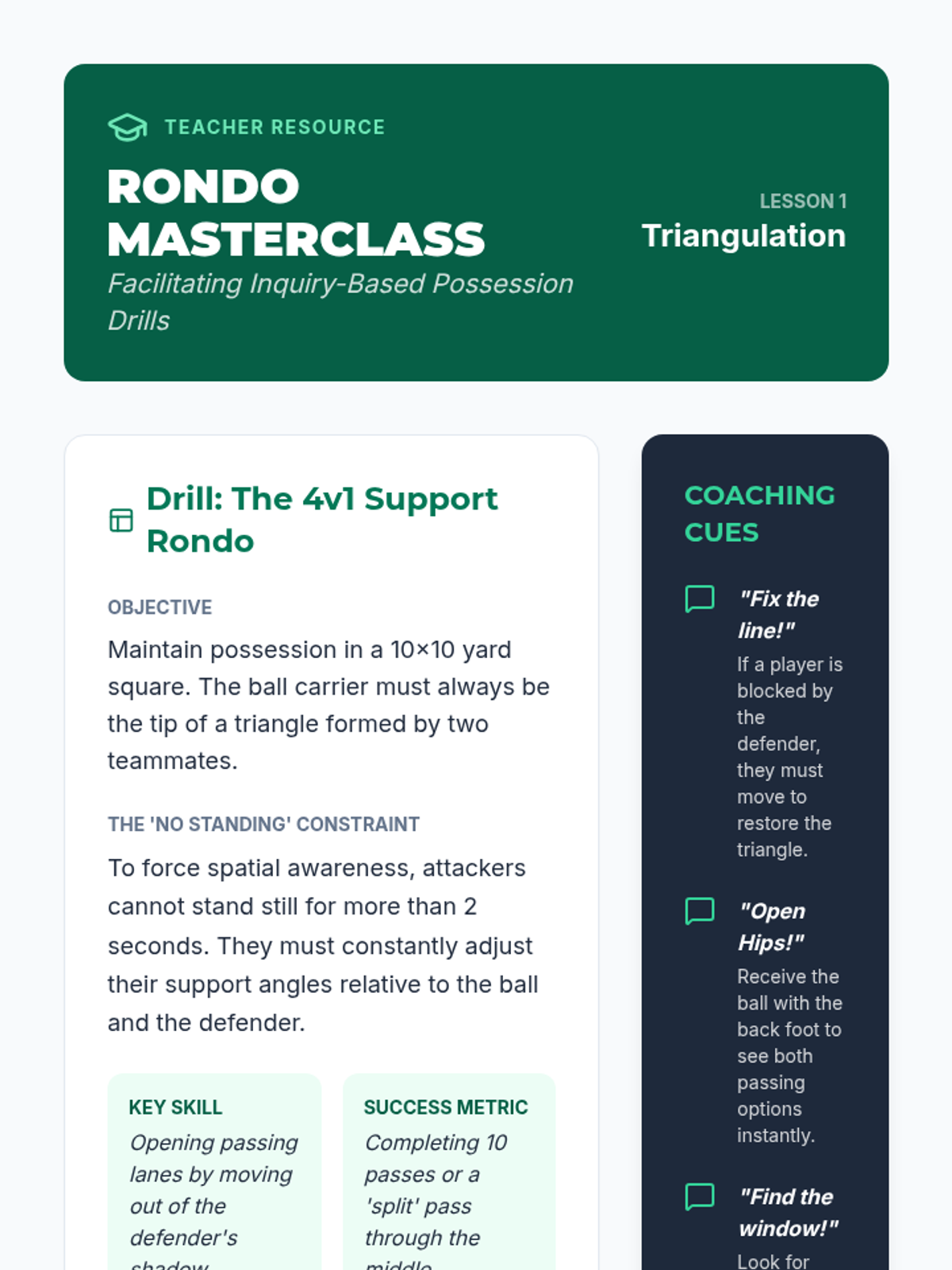
A comprehensive 9th-grade football (soccer) unit focusing on offensive tactics, spatial awareness, and collective movement. Students progress from basic triangulation to designing complex attacking patterns through inquiry-based small-sided games.
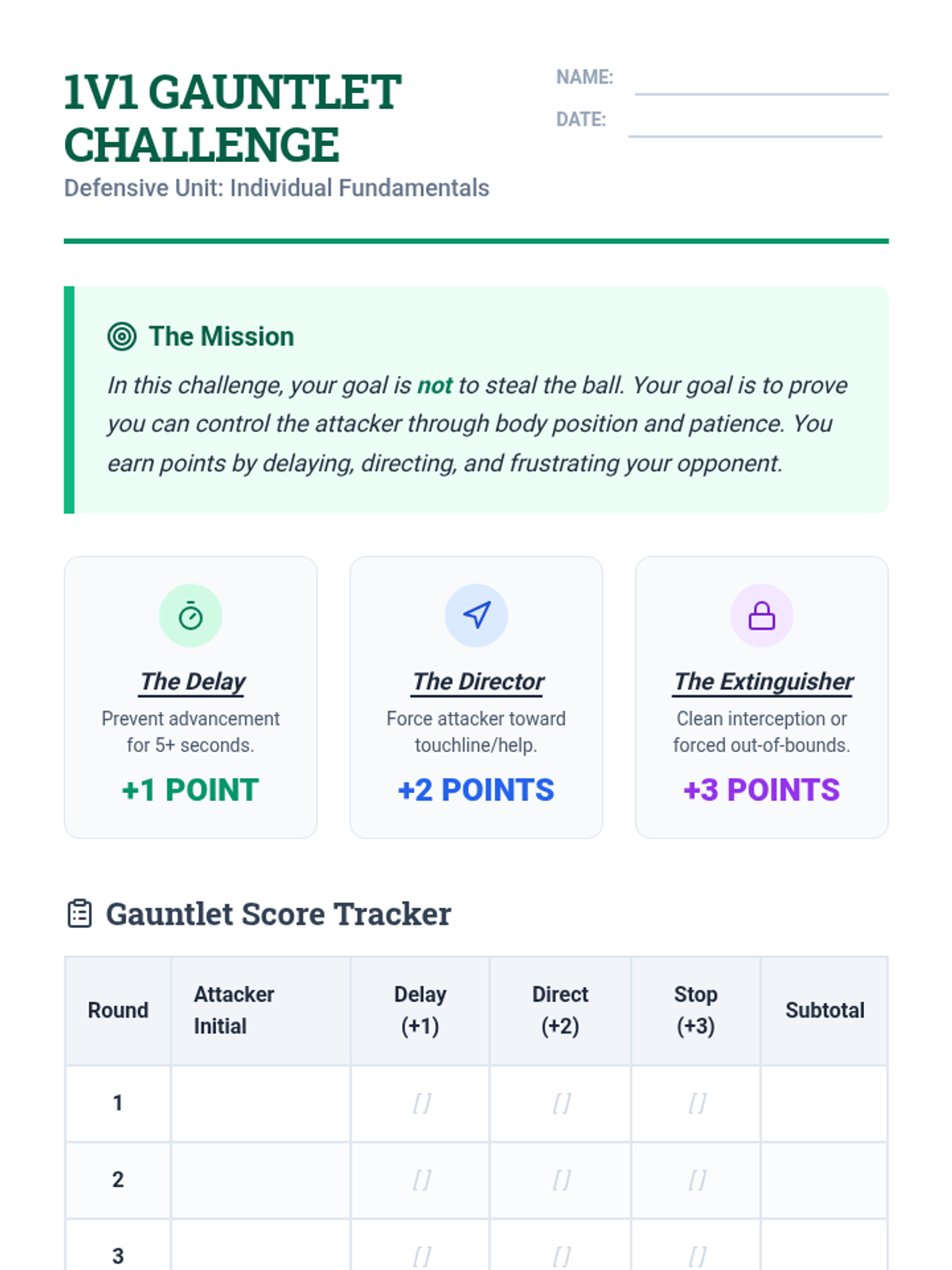
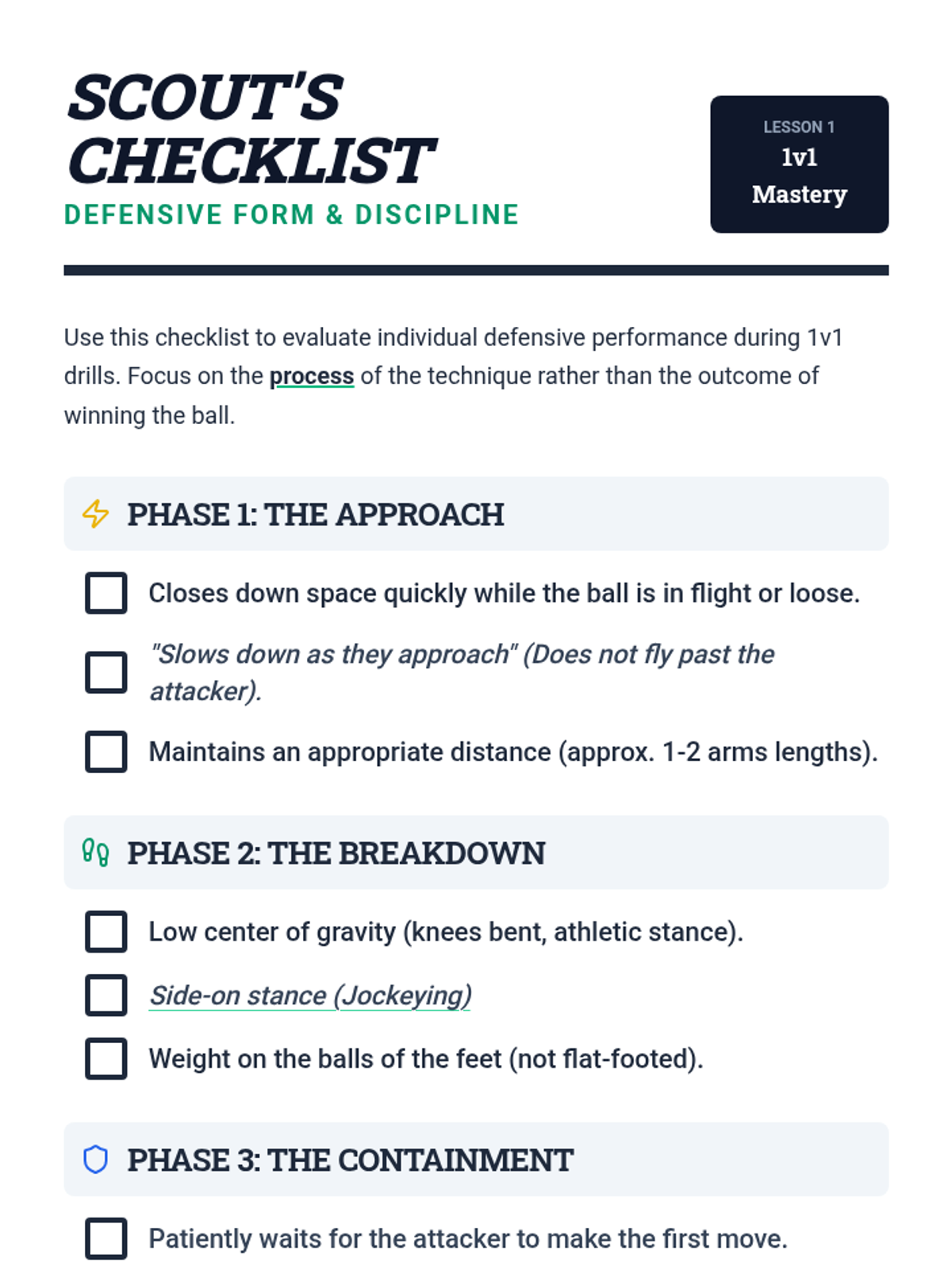
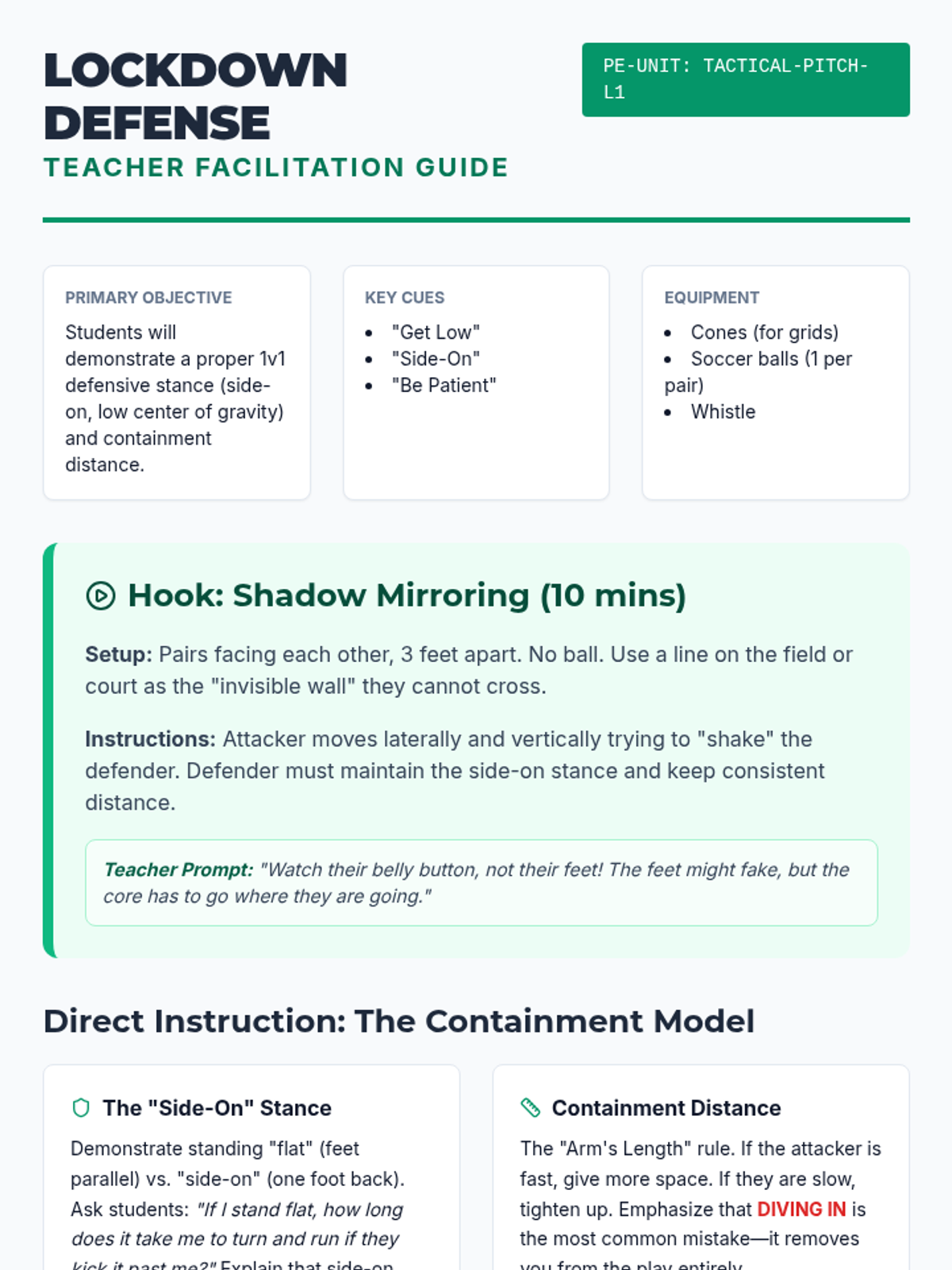
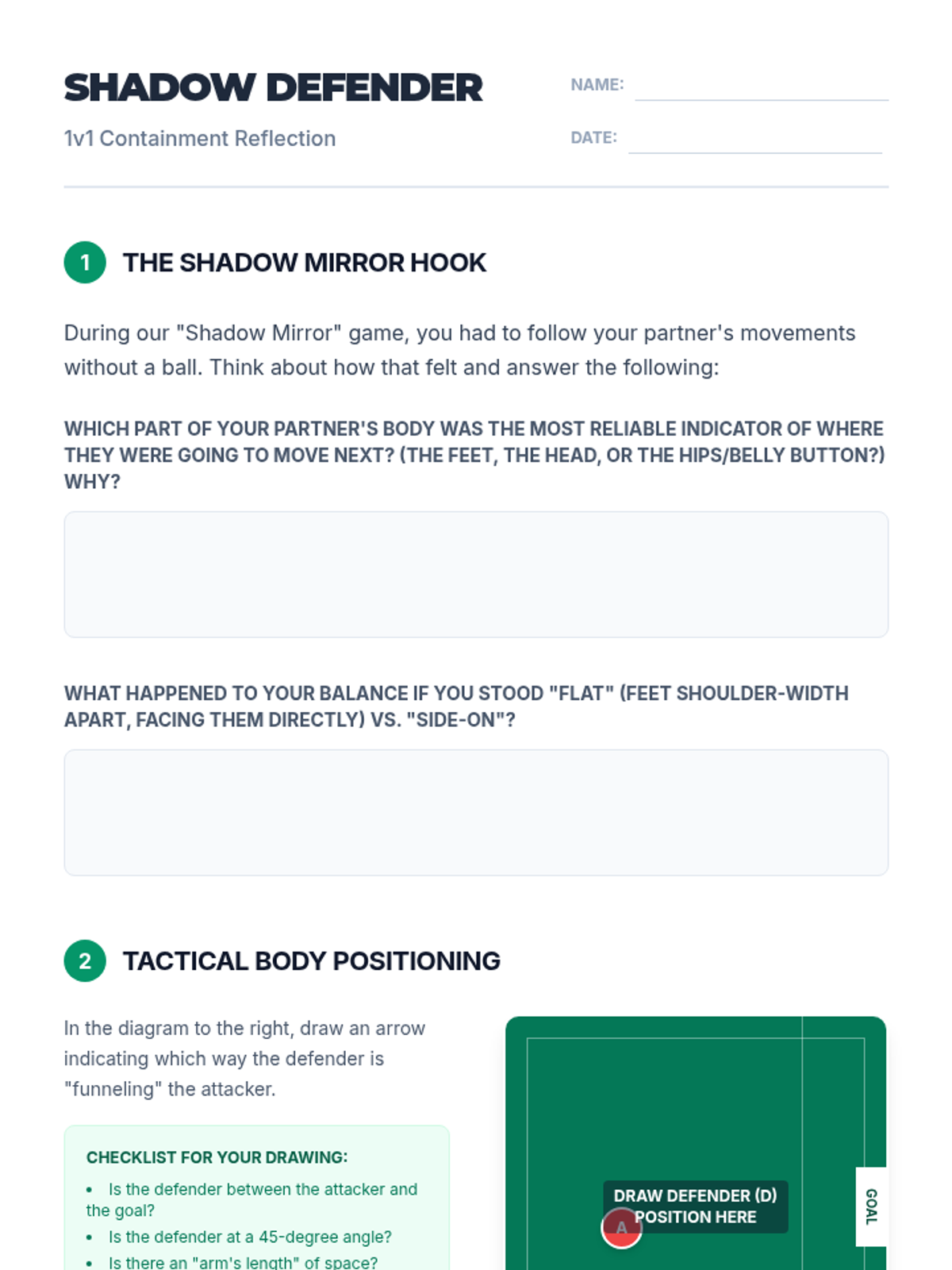
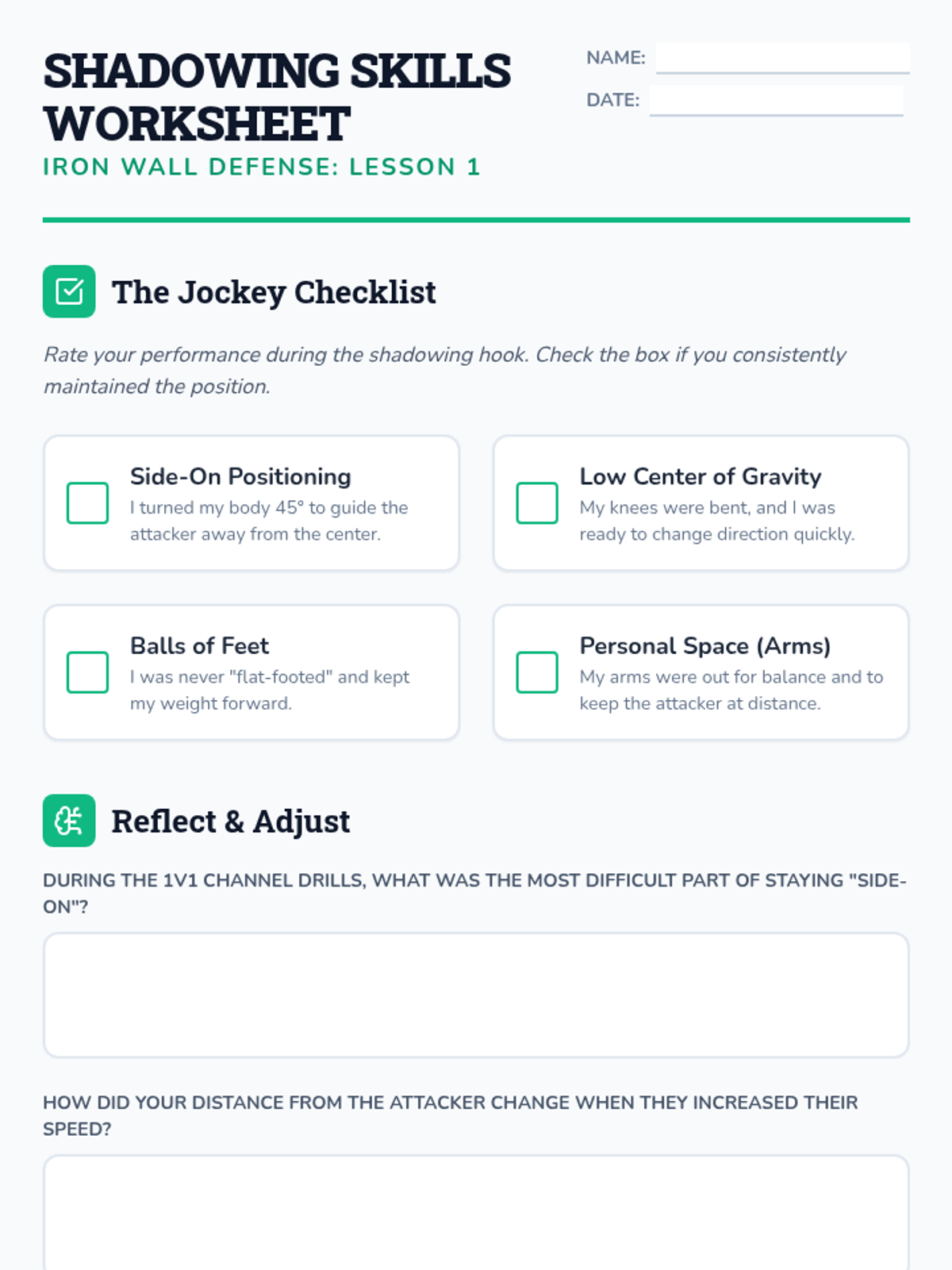
A comprehensive 9th-grade physical education unit focusing on soccer's defensive side, covering individual 1v1 techniques, unit-based coordination (pressure, cover, balance), and full-team tactical systems like zonal and man-marking. Students progress from mechanical individual skills to complex collective decision-making.
A comprehensive 8th-grade physical education unit focused on the tactical side of soccer, covering defensive containment, unit coordination, spatial awareness, and transition play.
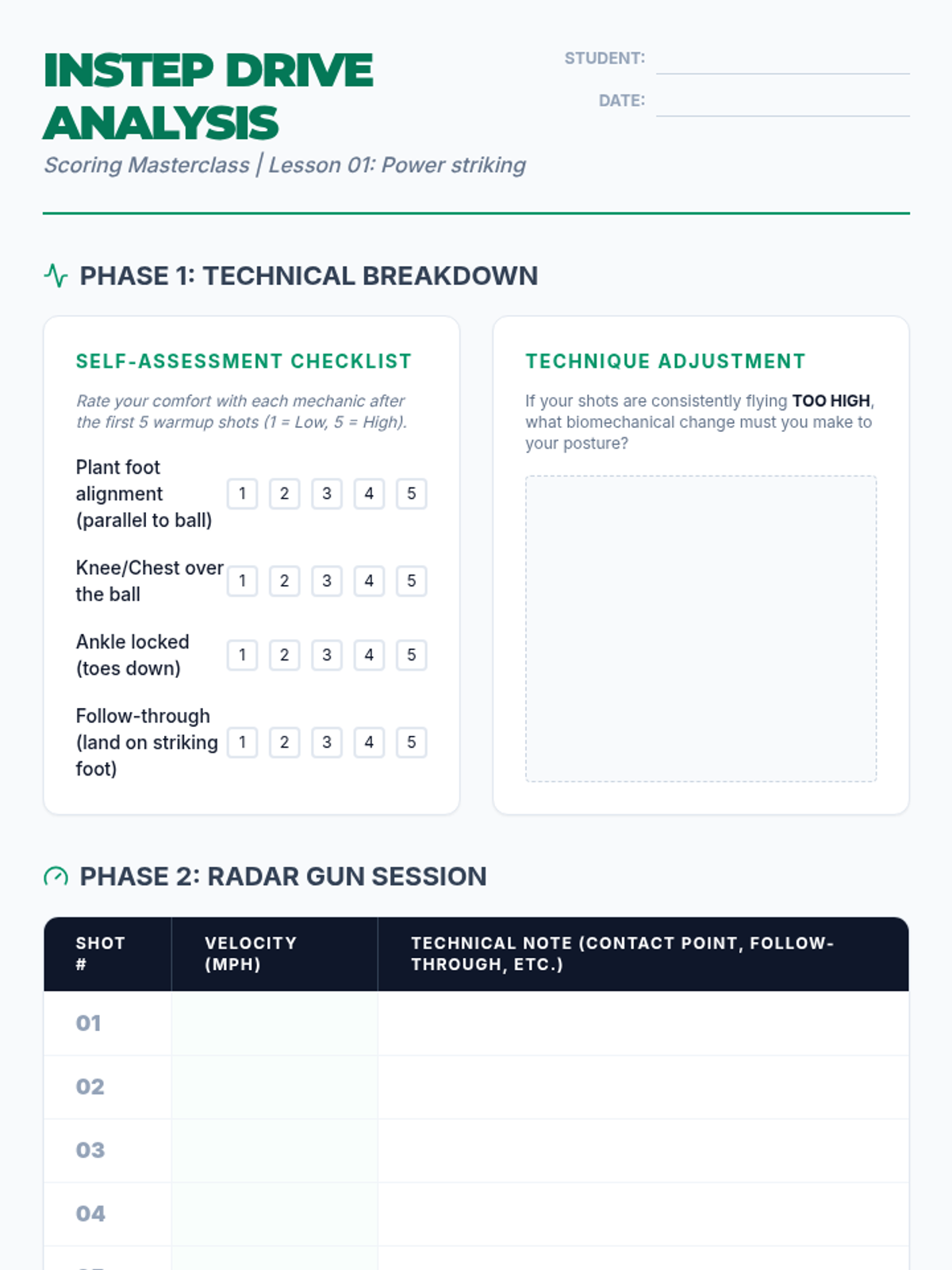
This sequence explores the biomechanics and psychology of scoring goals in football. Students will progress from foundational power striking to advanced finesse, aerial finishes, and high-pressure game simulations.
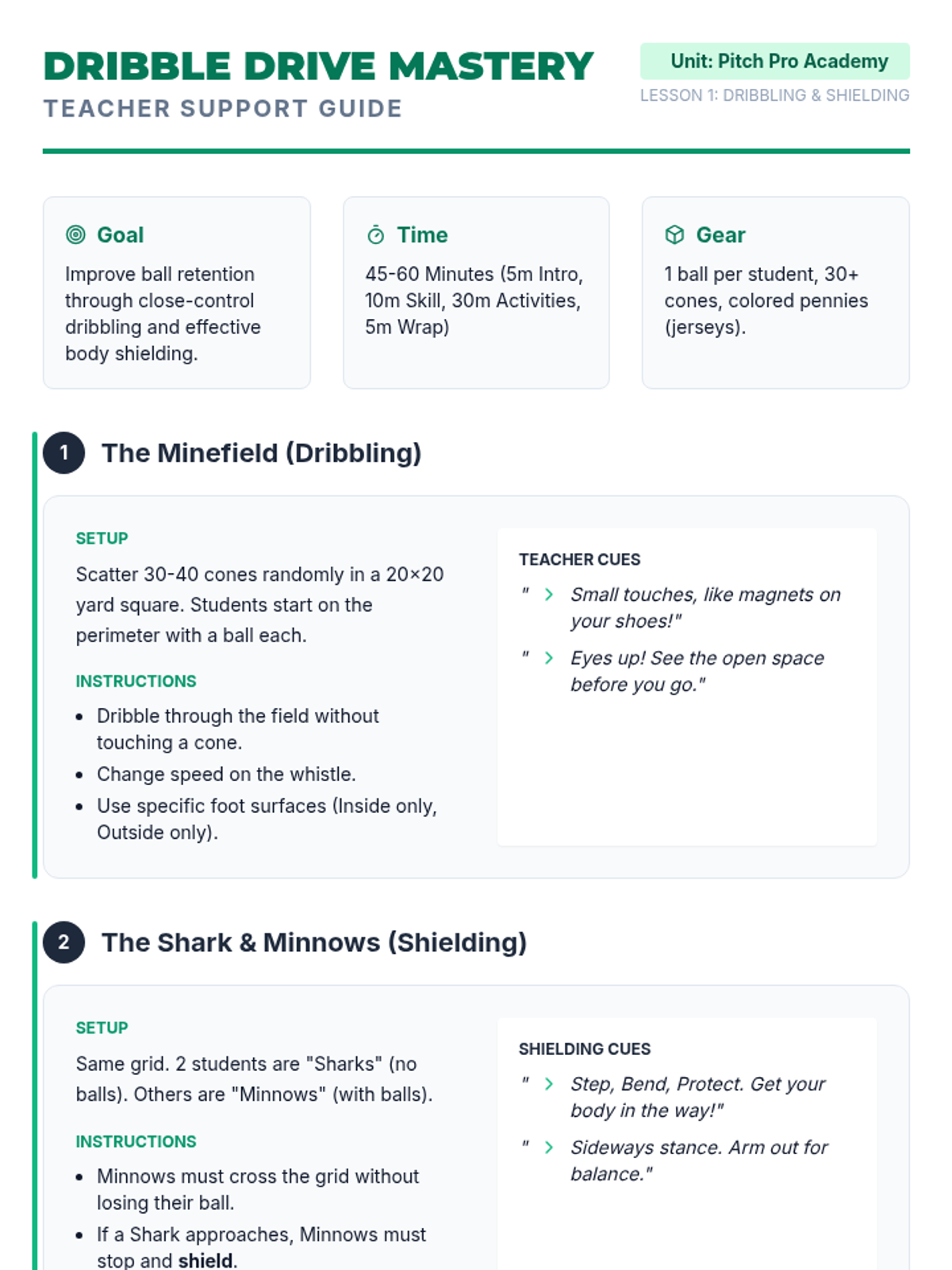
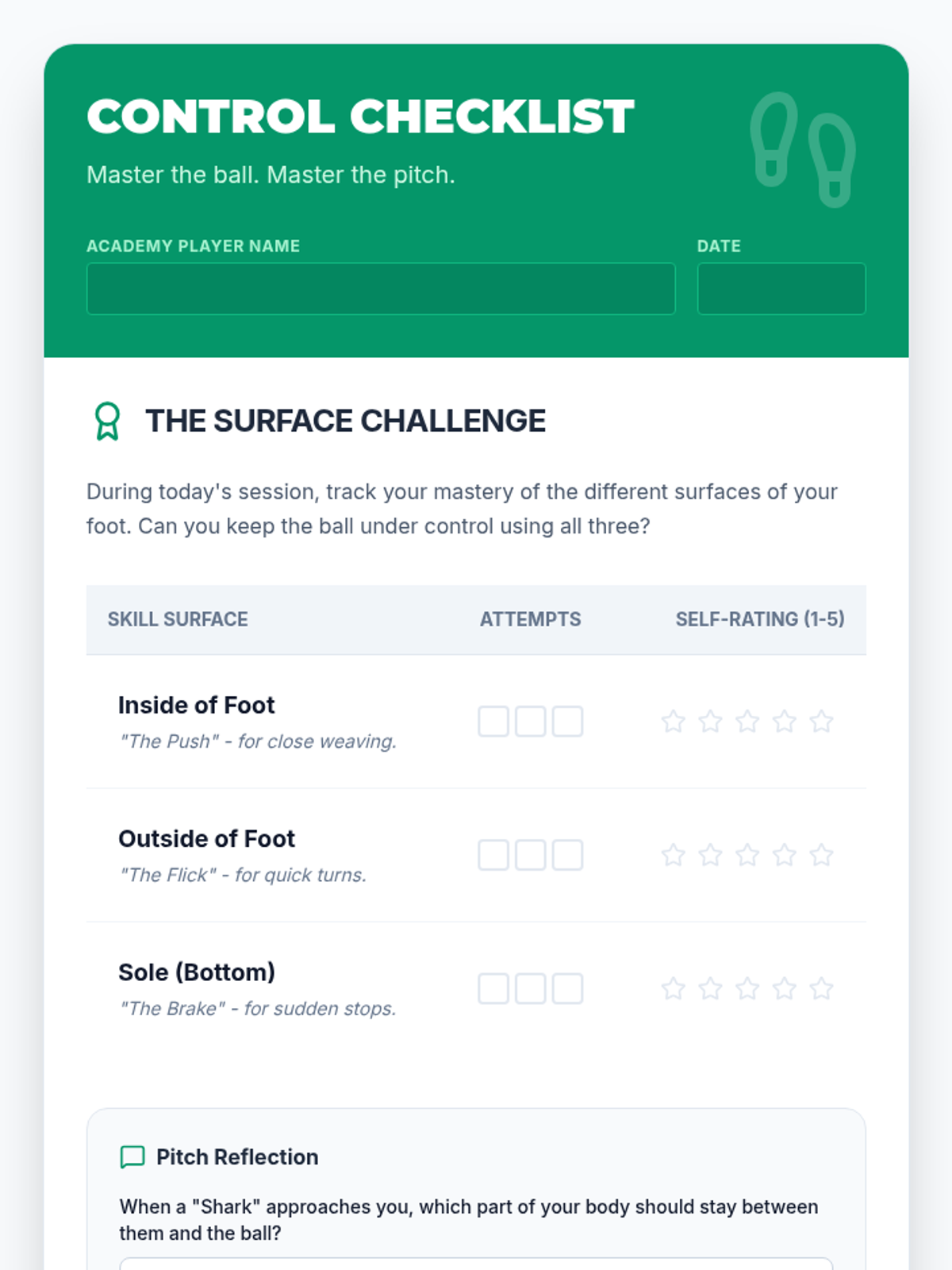
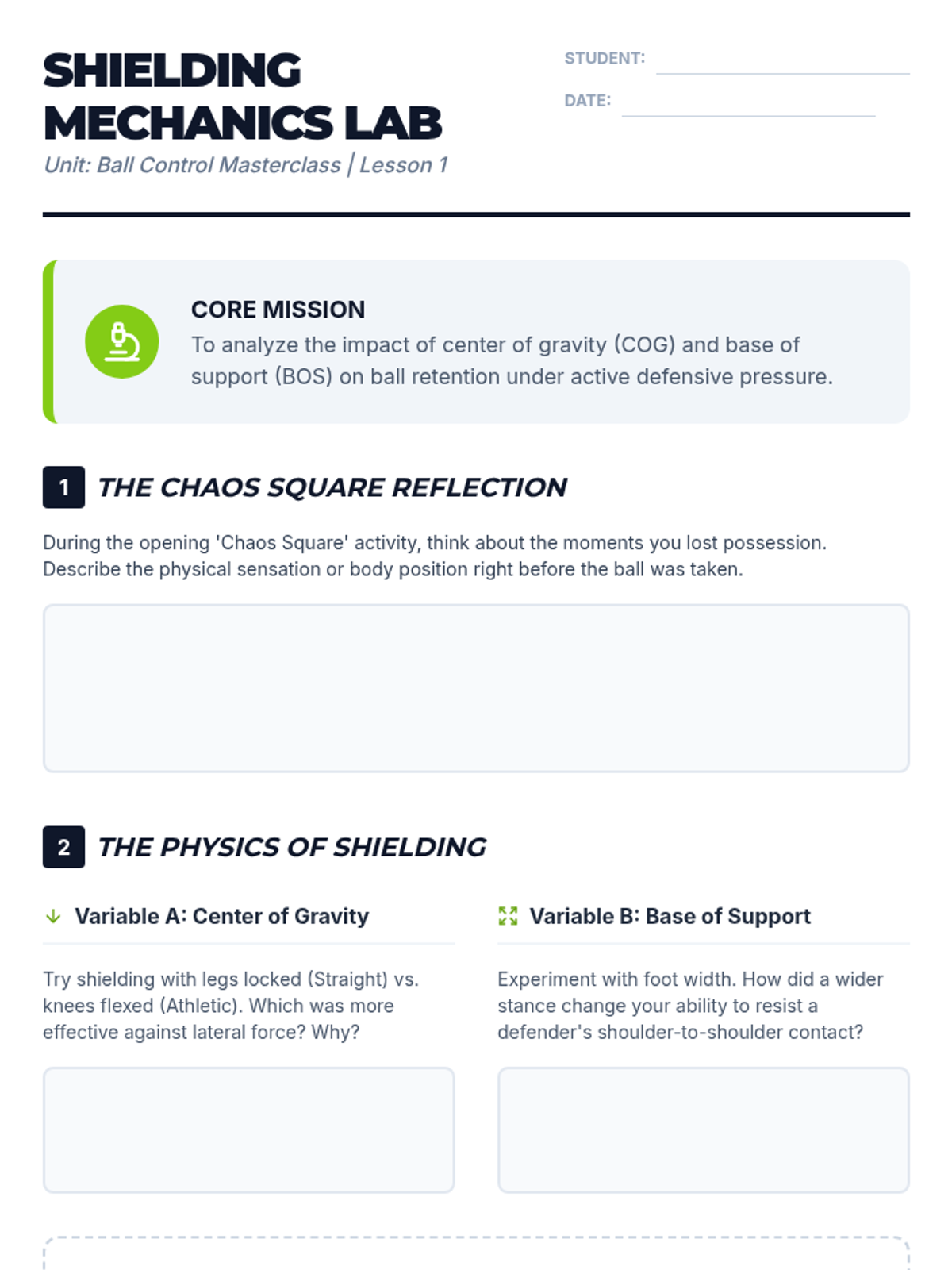
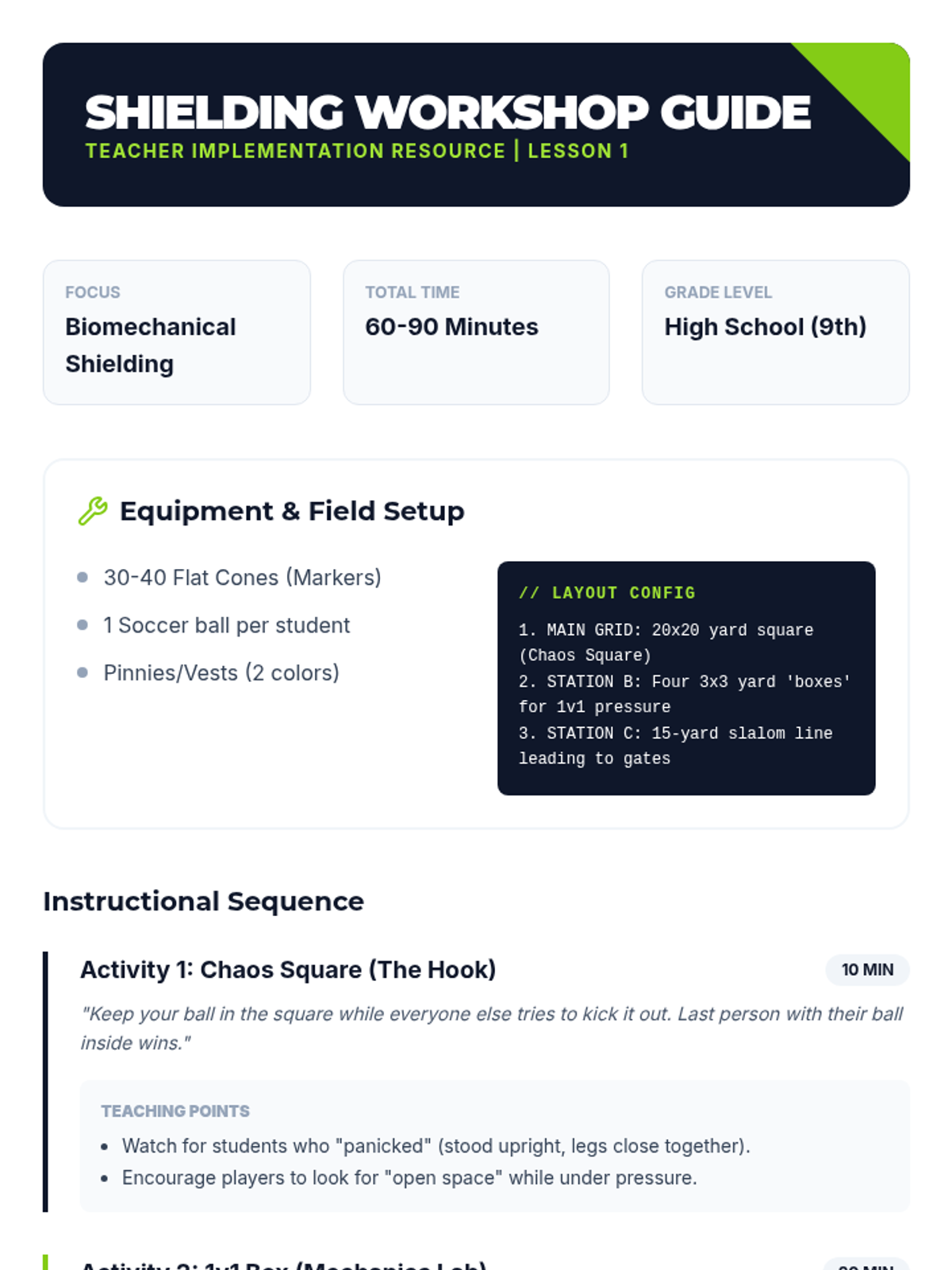
This high-performance football (soccer) unit focuses on technical mastery of ball control, dribbling, and retention. Students analyze the biomechanics of movement and apply deceptive feints and physical shielding to dominate in 1v1 scenarios.
A comprehensive 9th Grade PE unit focusing on defensive football (soccer) tactics. Students progress from individual 1v1 containment to complex group strategies like zonal defending, pressure-cover-balance, and set-piece organization.
This 9th-grade physical education sequence focuses on offensive soccer tactics and spatial awareness. Students move from mastering passing mechanics to understanding the geometry of teamwork, specifically through triangulation, combination play, and rapid attacking transitions.
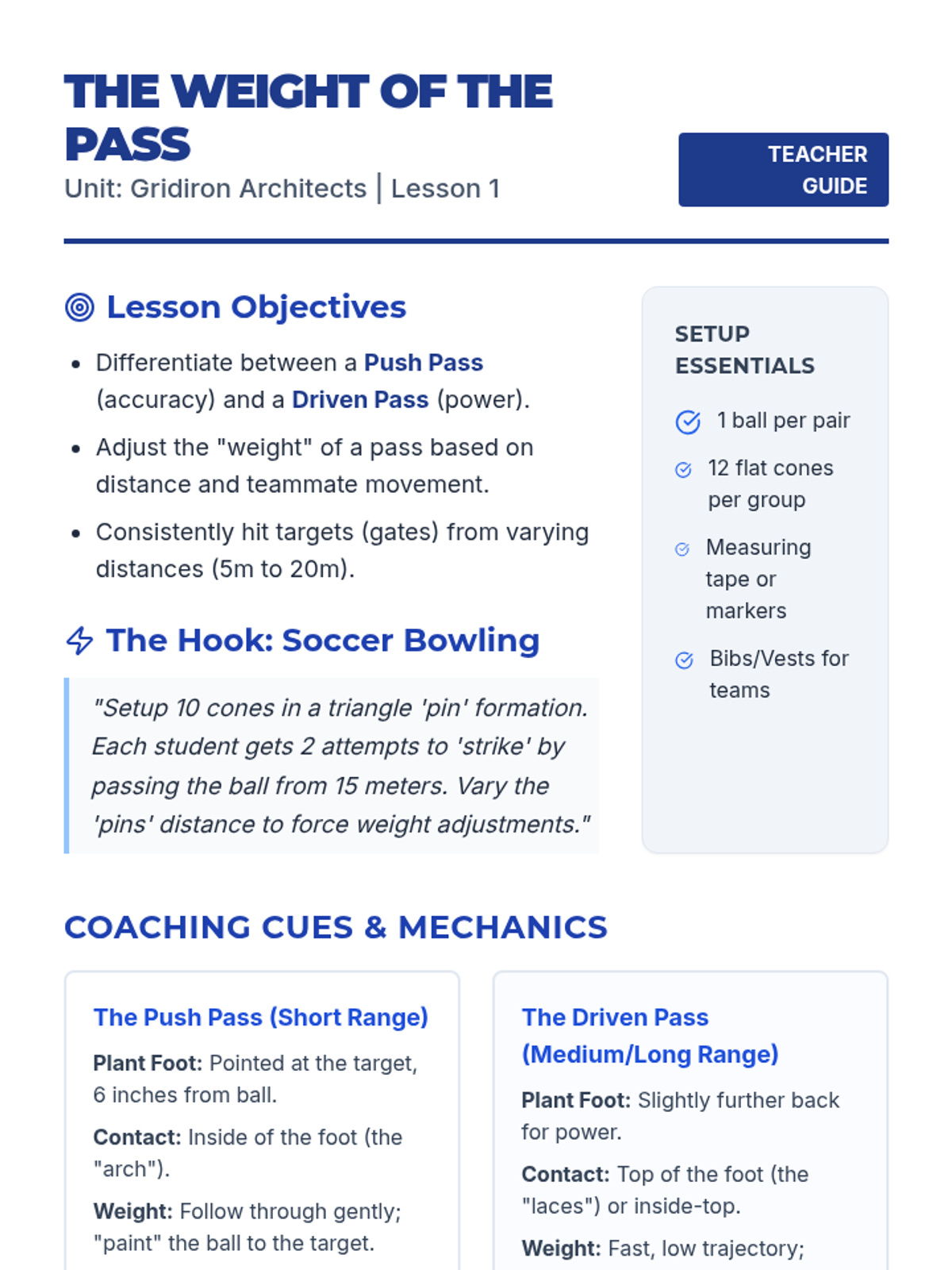
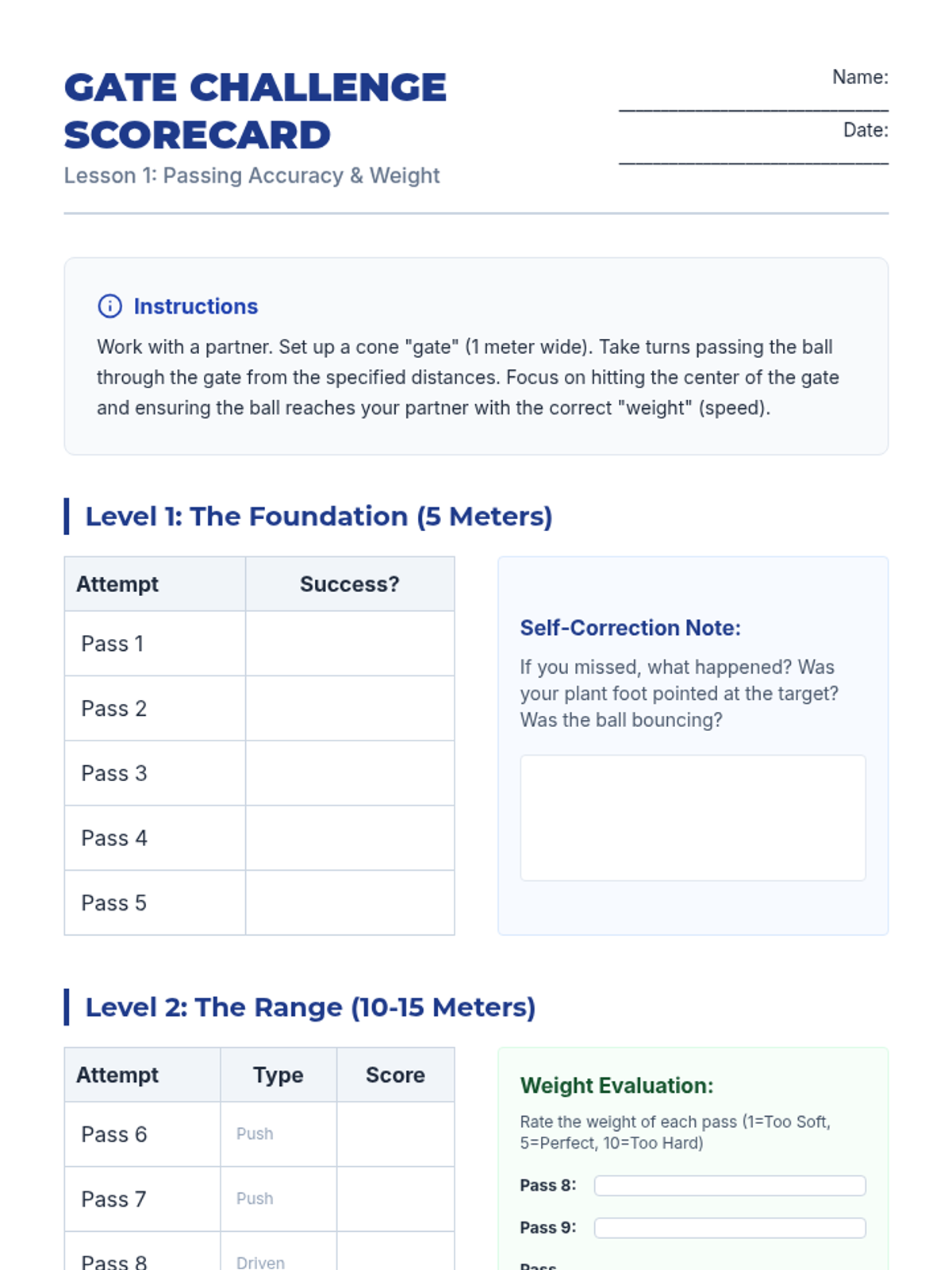
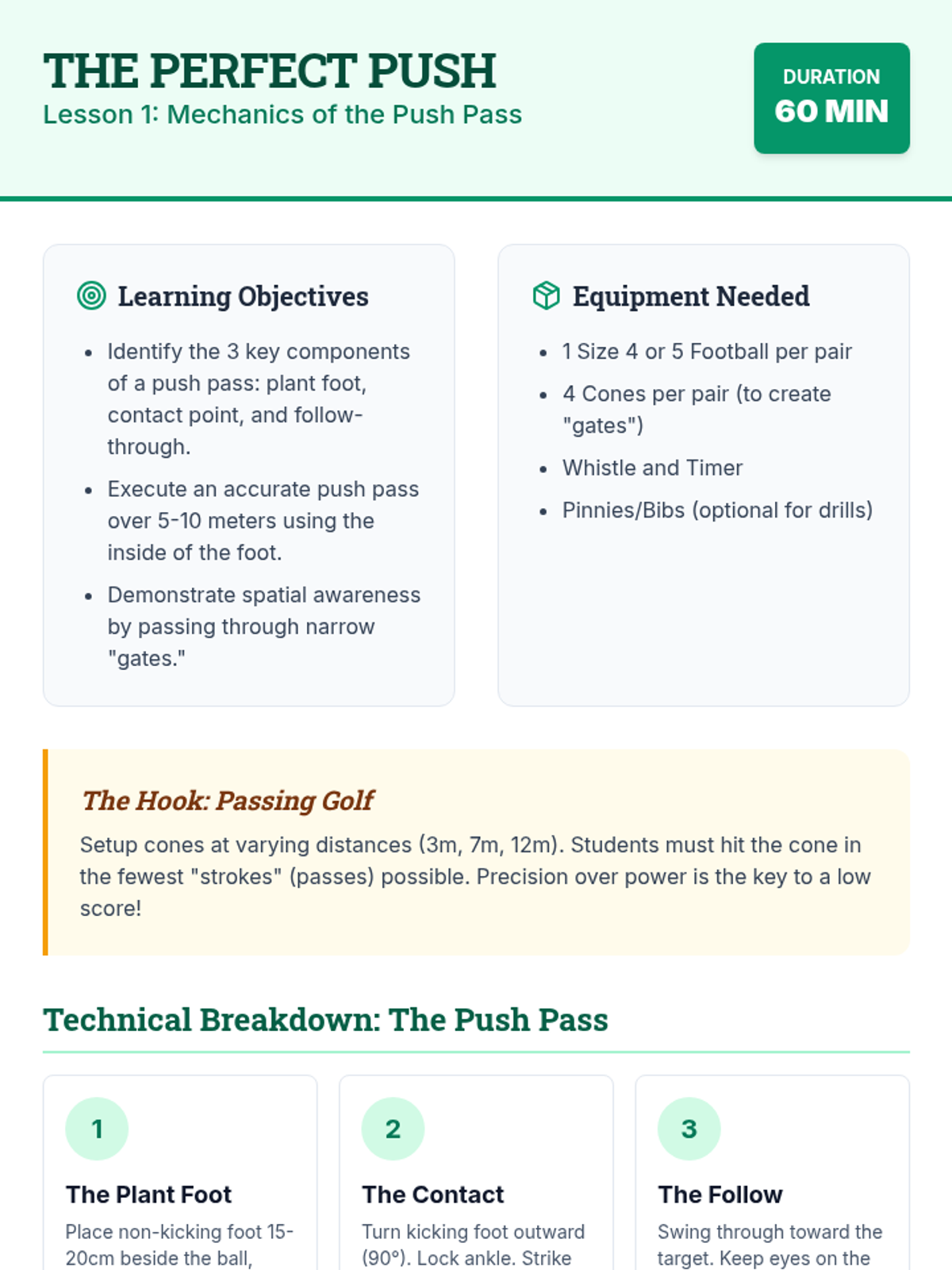
This unit moves students from individual technical mastery of the push pass and first touch to complex tactical application in combination play and possession games. Emphasis is placed on biomechanics, spatial awareness, and the 'language' of passing to build a cohesive team unit.
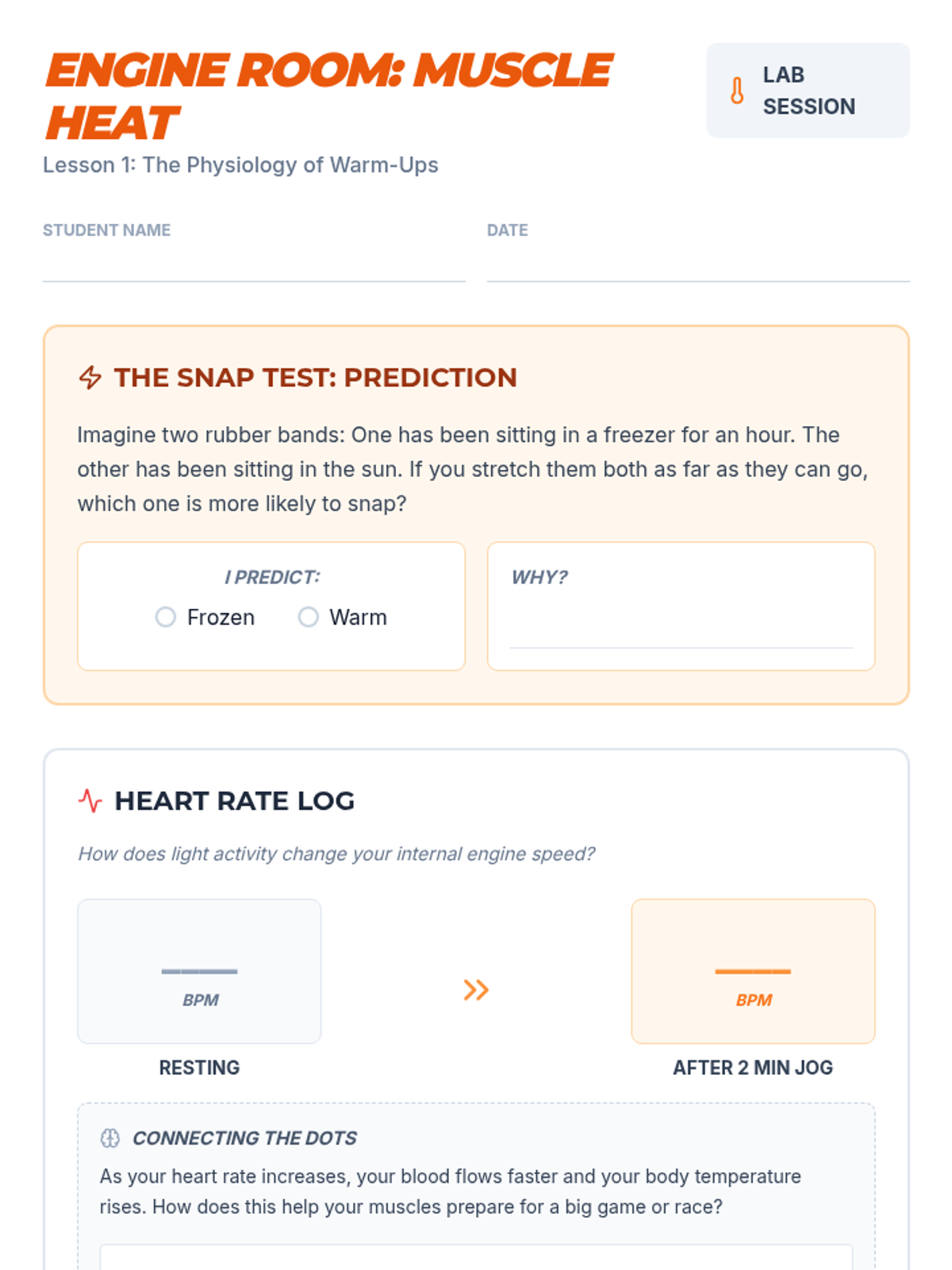
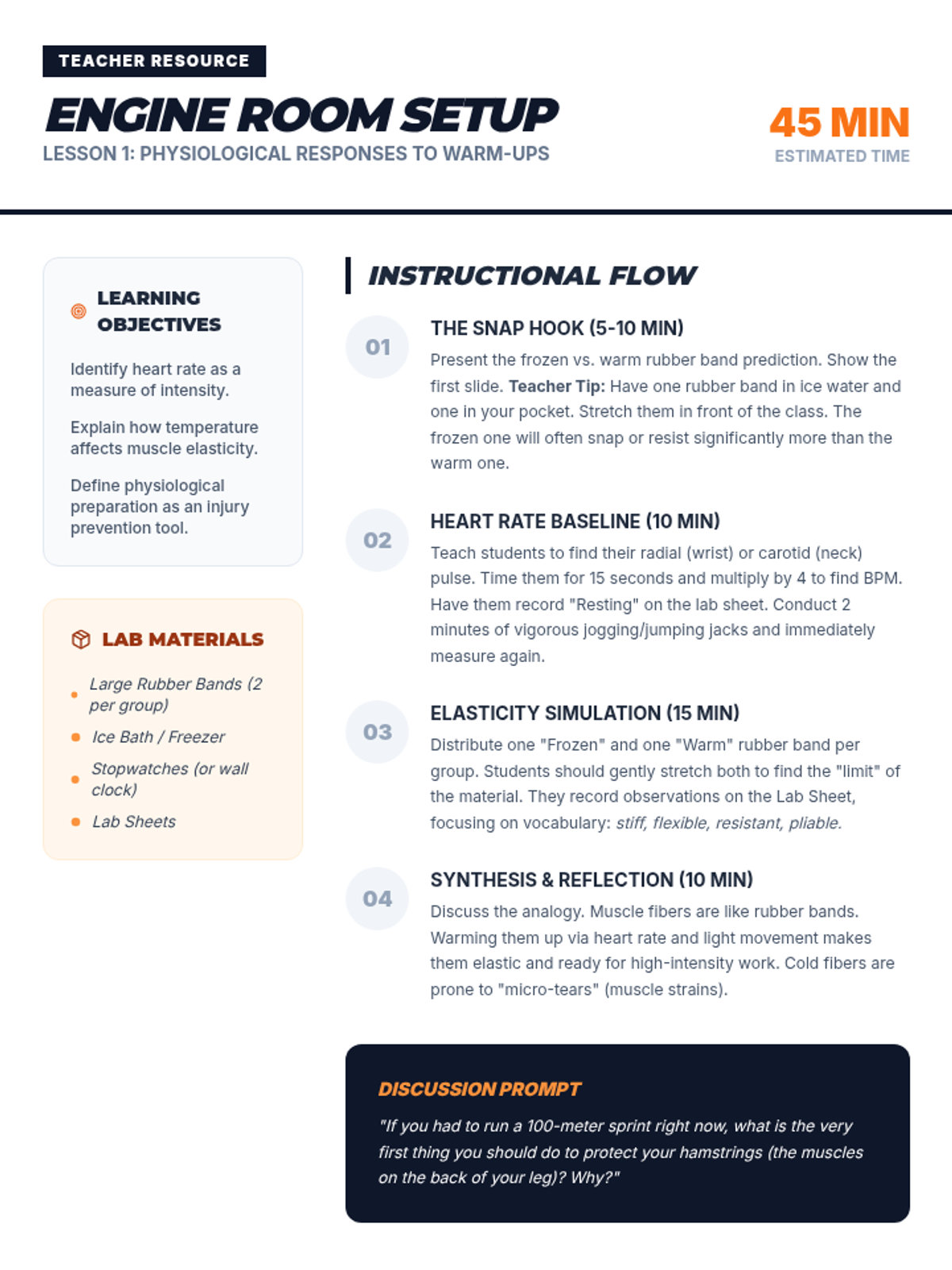
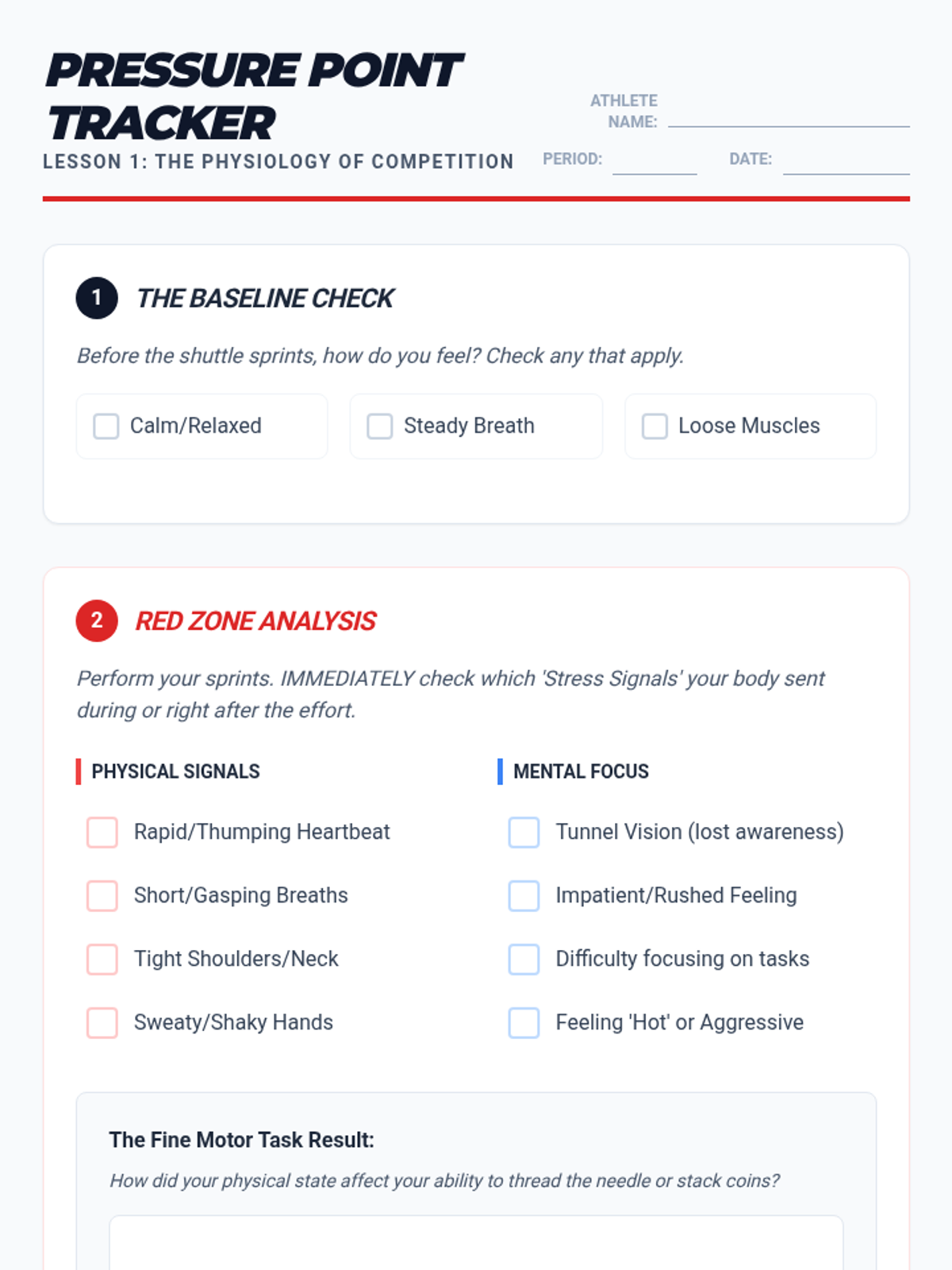
A 5th-grade health and PE sequence focused on injury prevention through physiological understanding, dynamic stretching, body mechanics, and self-monitoring. Students progress from learning why the body needs preparation to designing their own sport-specific routines.
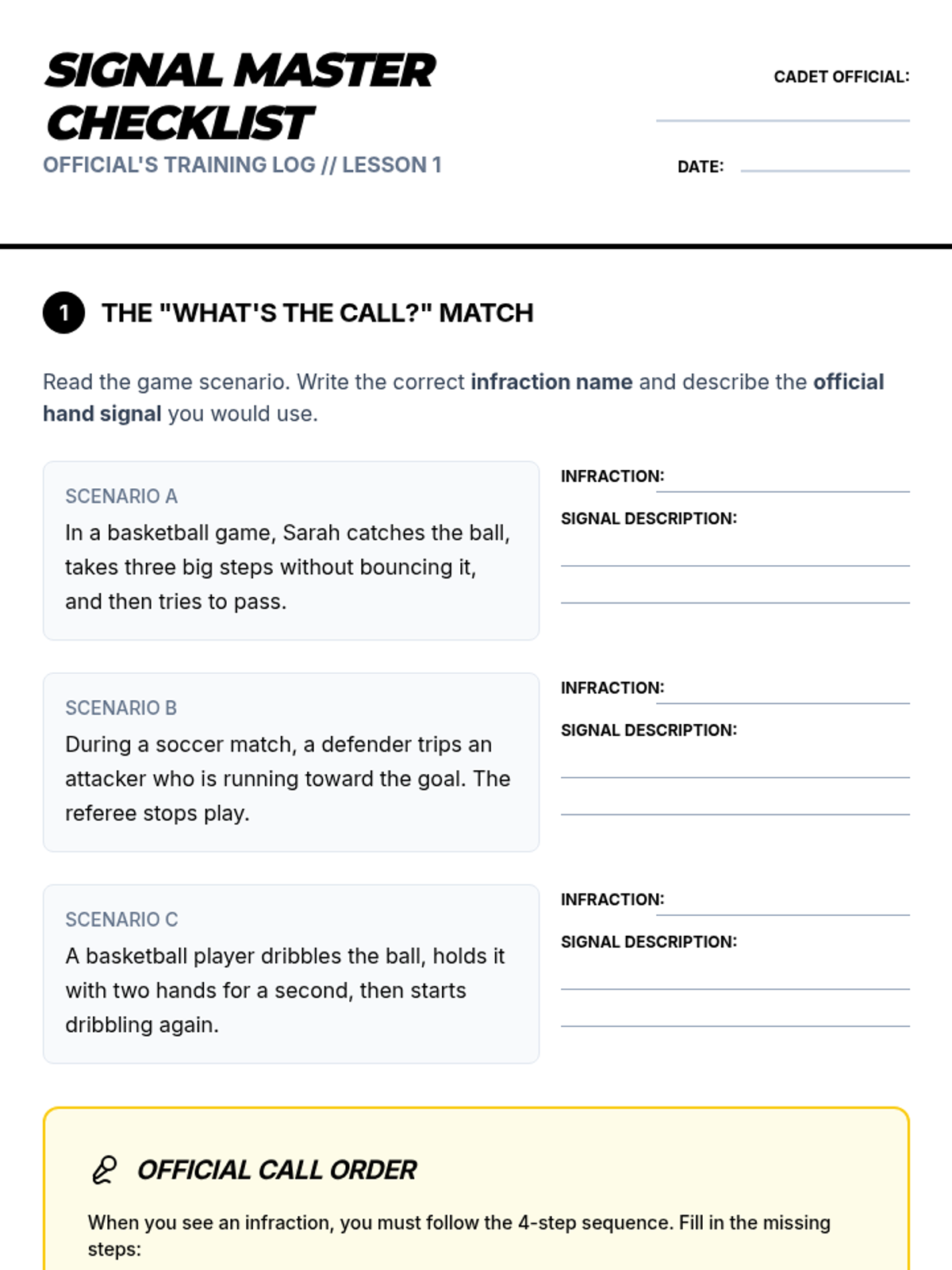
A 5-lesson sequence designed to build empathy and sportsmanship by putting students in the role of game officials. Through simulations, hand signal practice, and conflict resolution workshops, students gain a first-hand understanding of the challenges referees face, ultimately fostering a culture of respect in physical education.
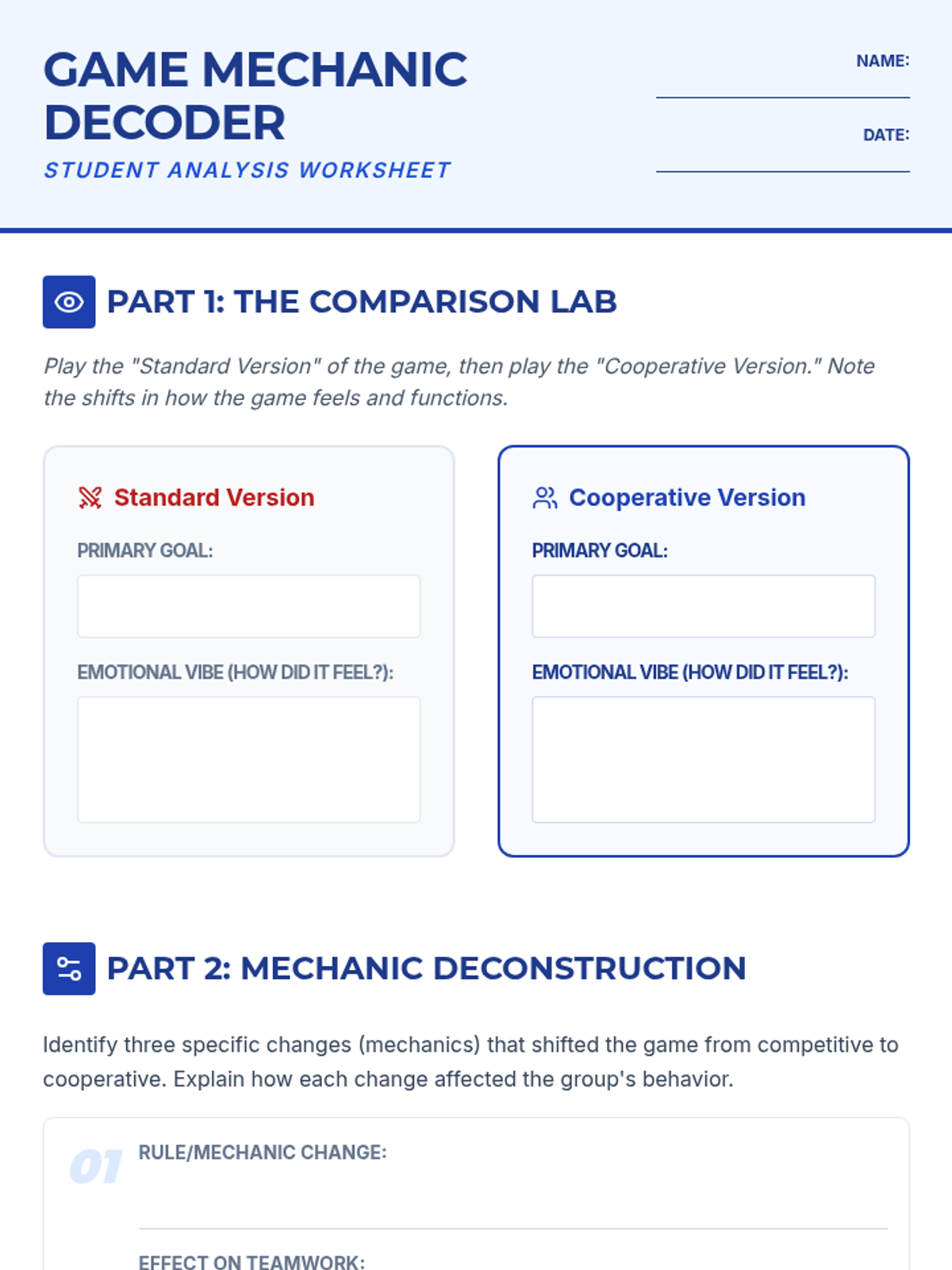
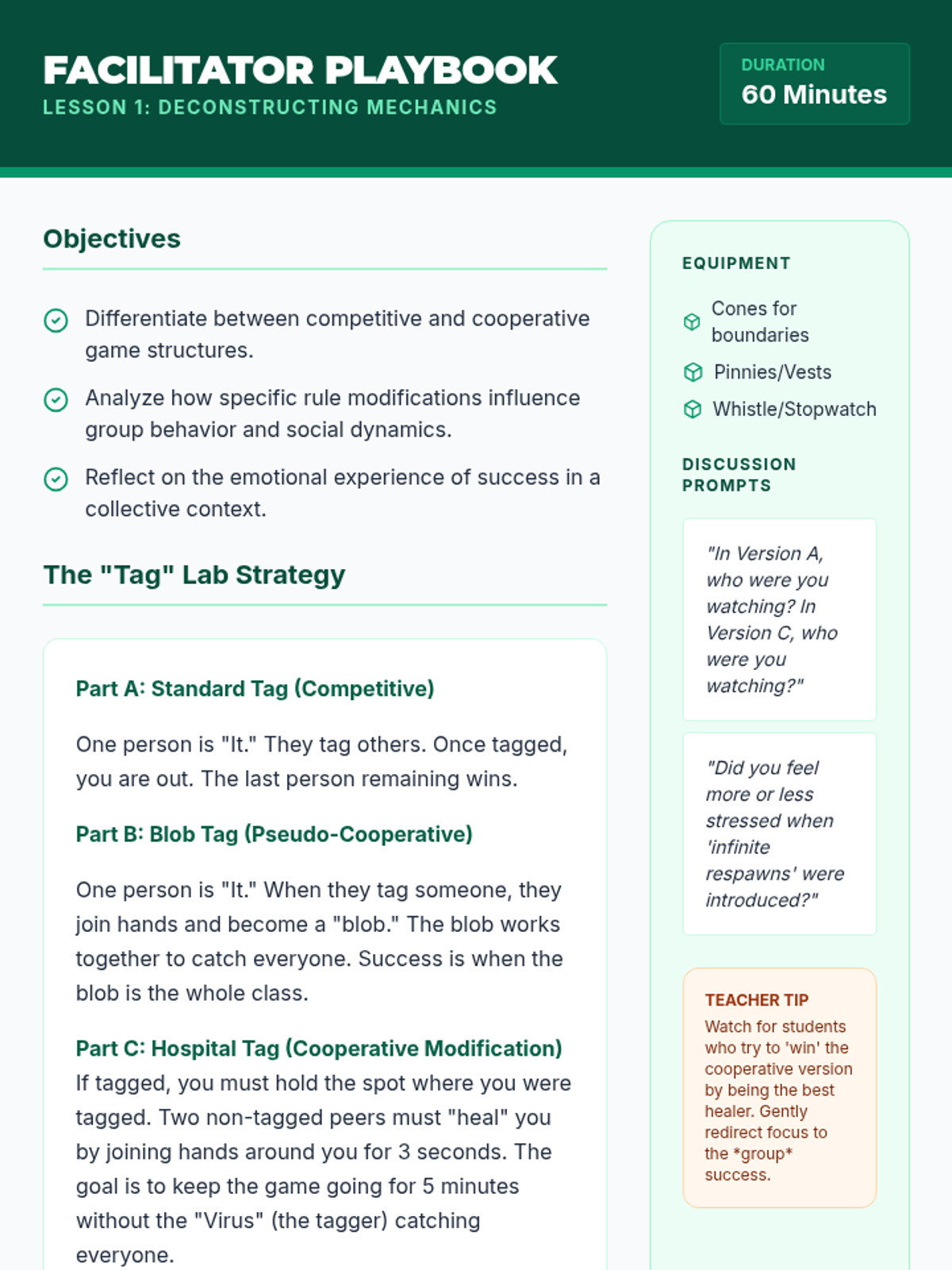
A project-based Physical Education sequence where 9th-grade students analyze, design, and facilitate original cooperative games. The unit focuses on moving from competition to collaboration through inclusive design and instructional leadership.
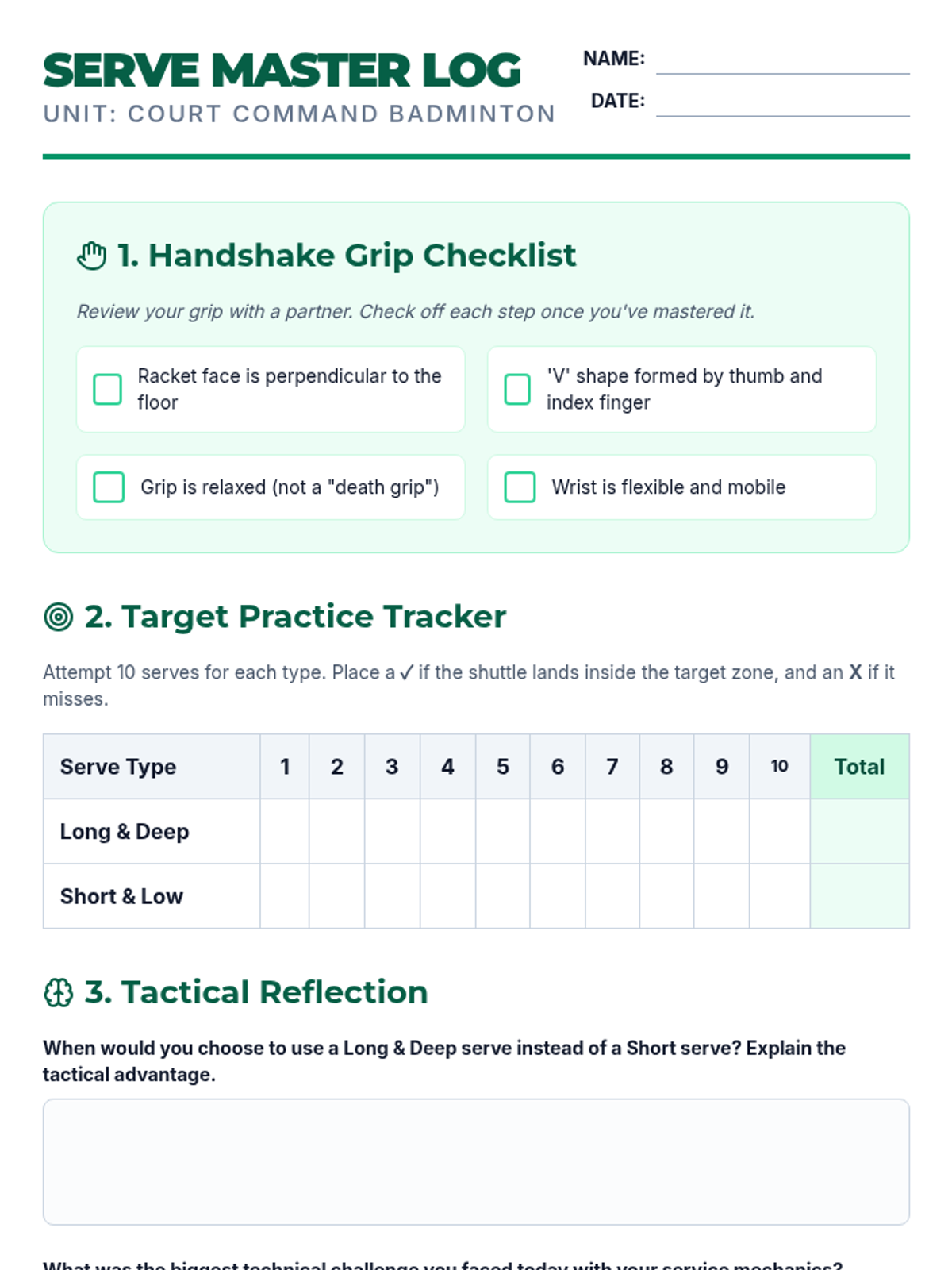
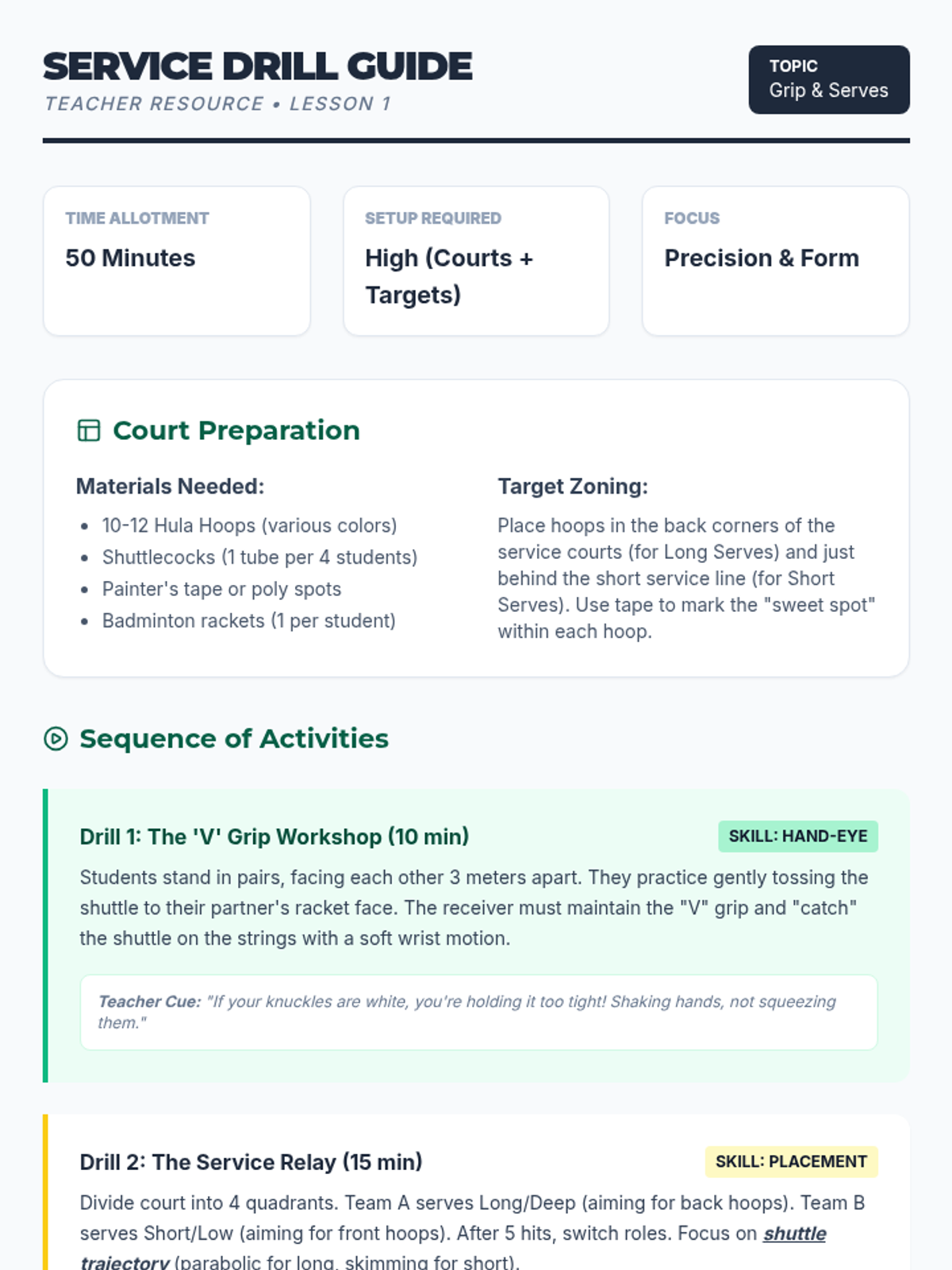
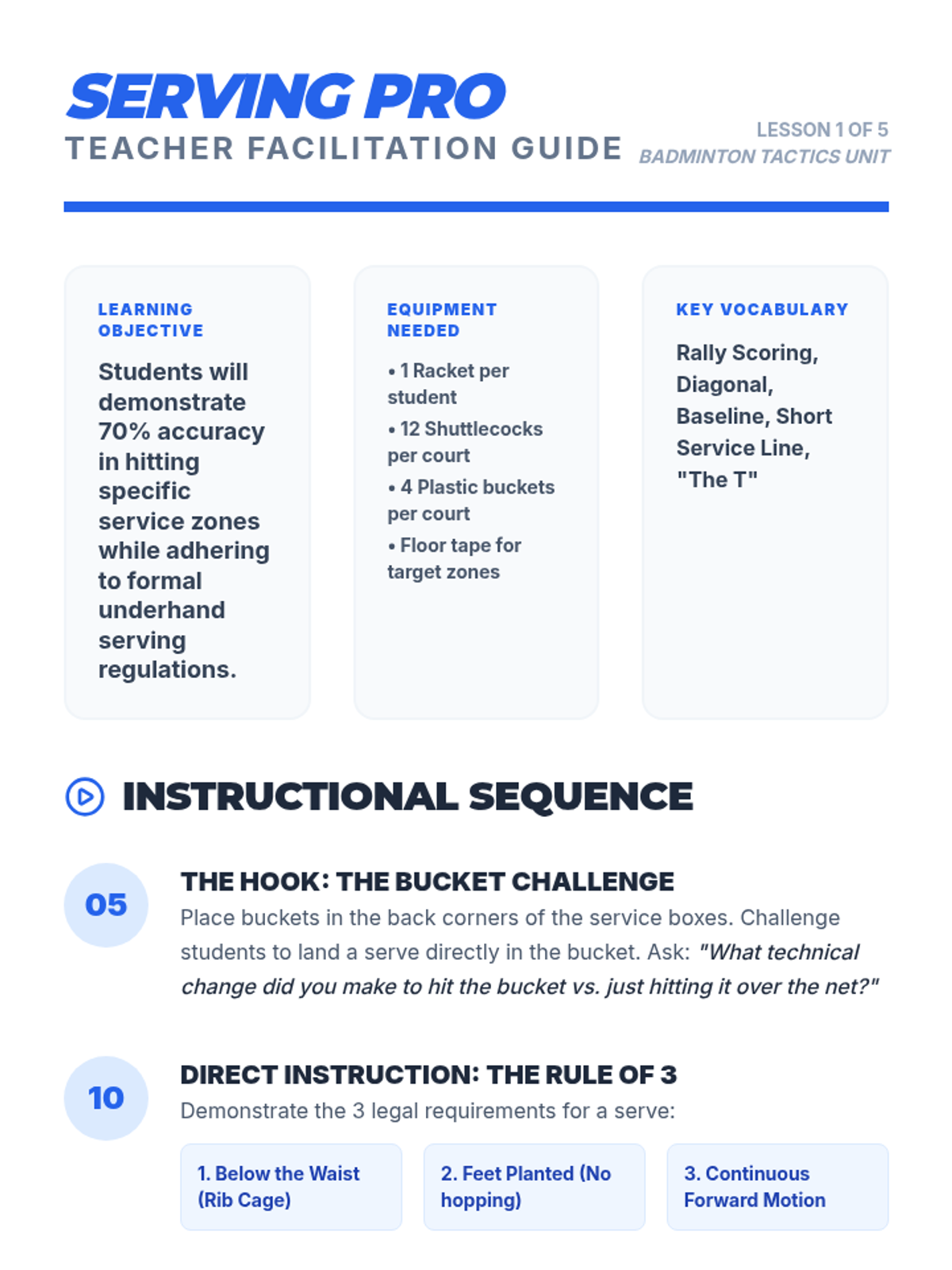
This unit focuses on the technical mastery and tactical application of badminton strokes. Students progress from basic grip and serves to complex net play and attacking smashes, culminating in a competitive doubles tournament where they apply official scoring and rotation strategies.
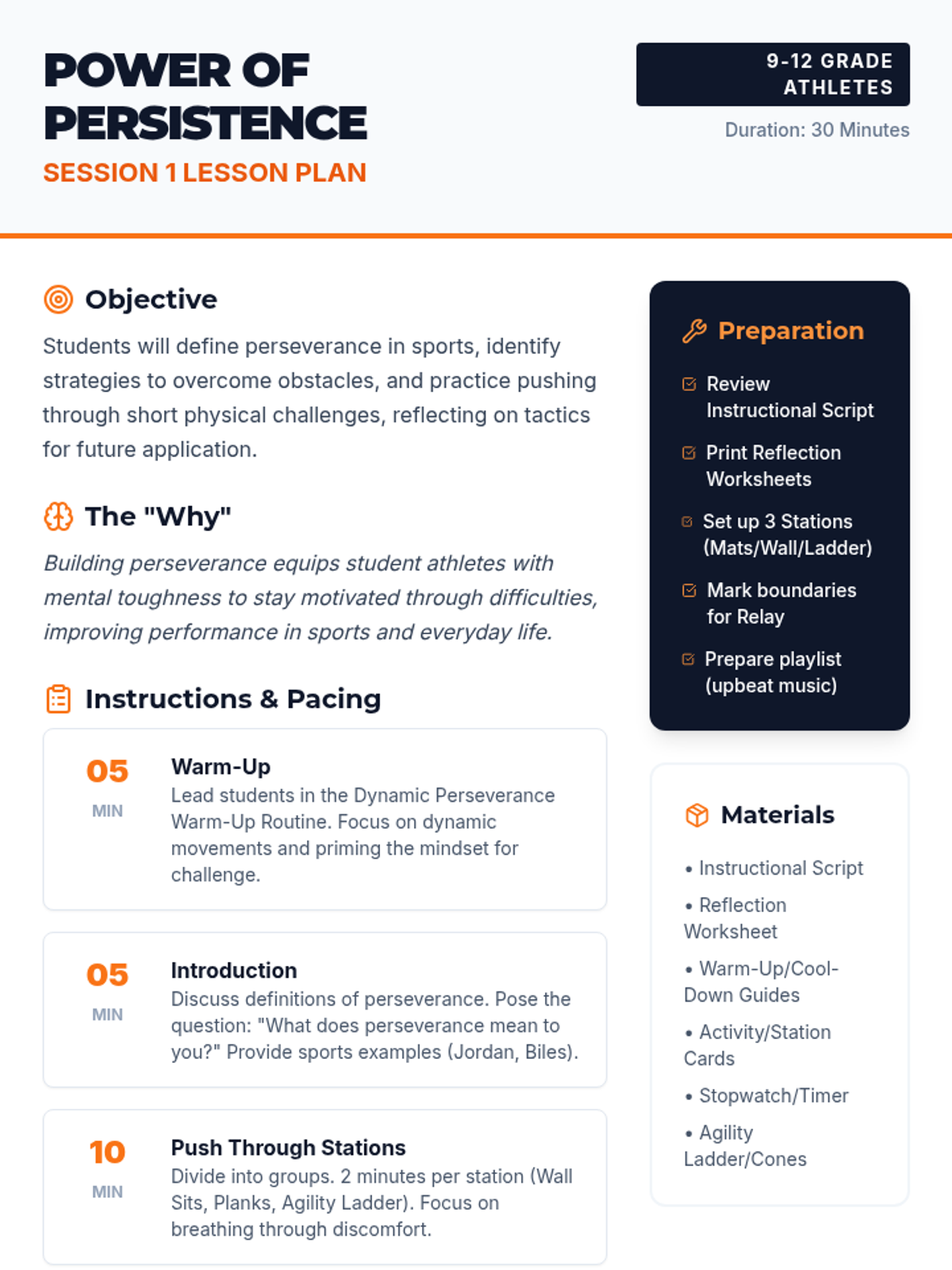
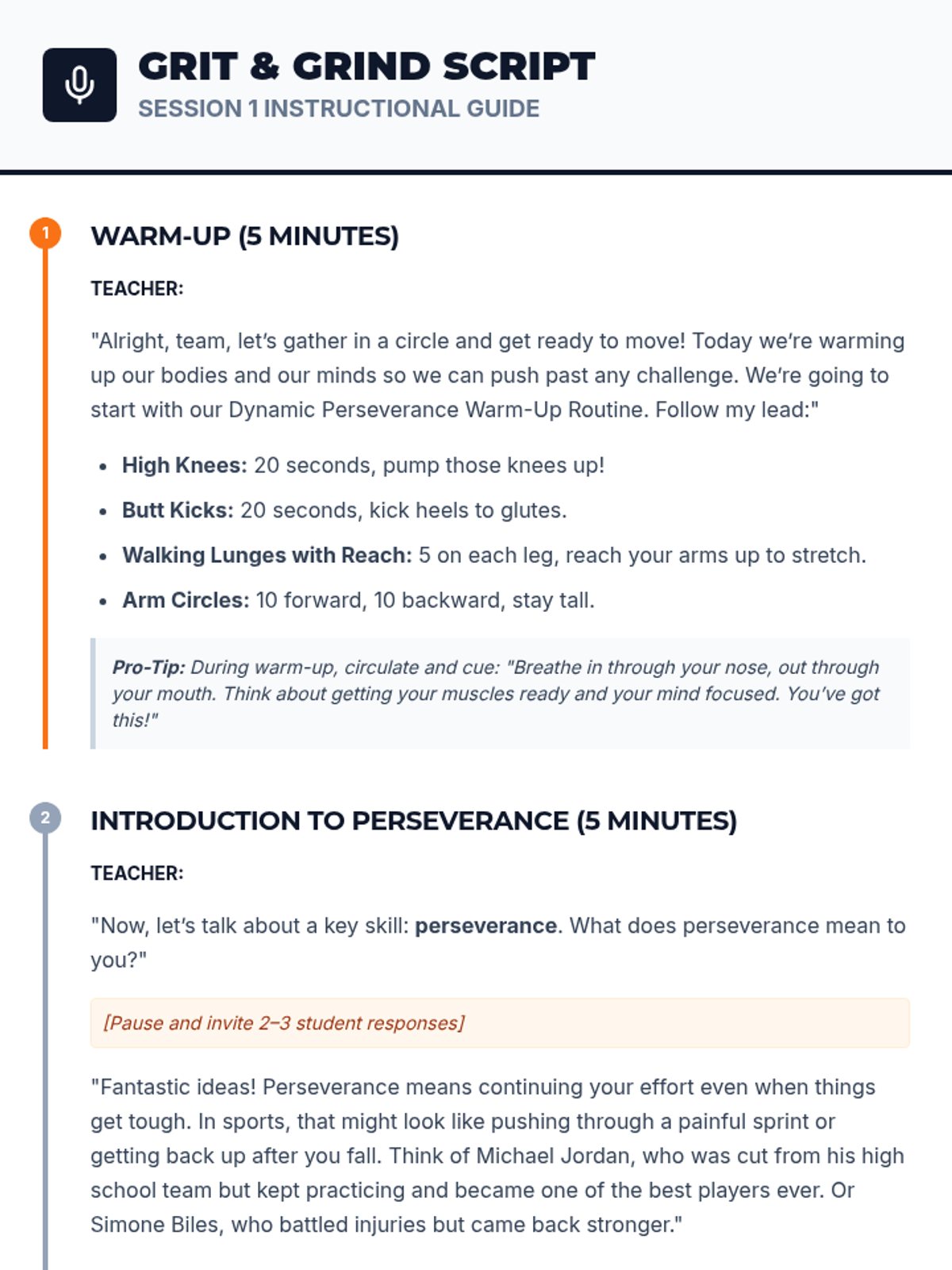
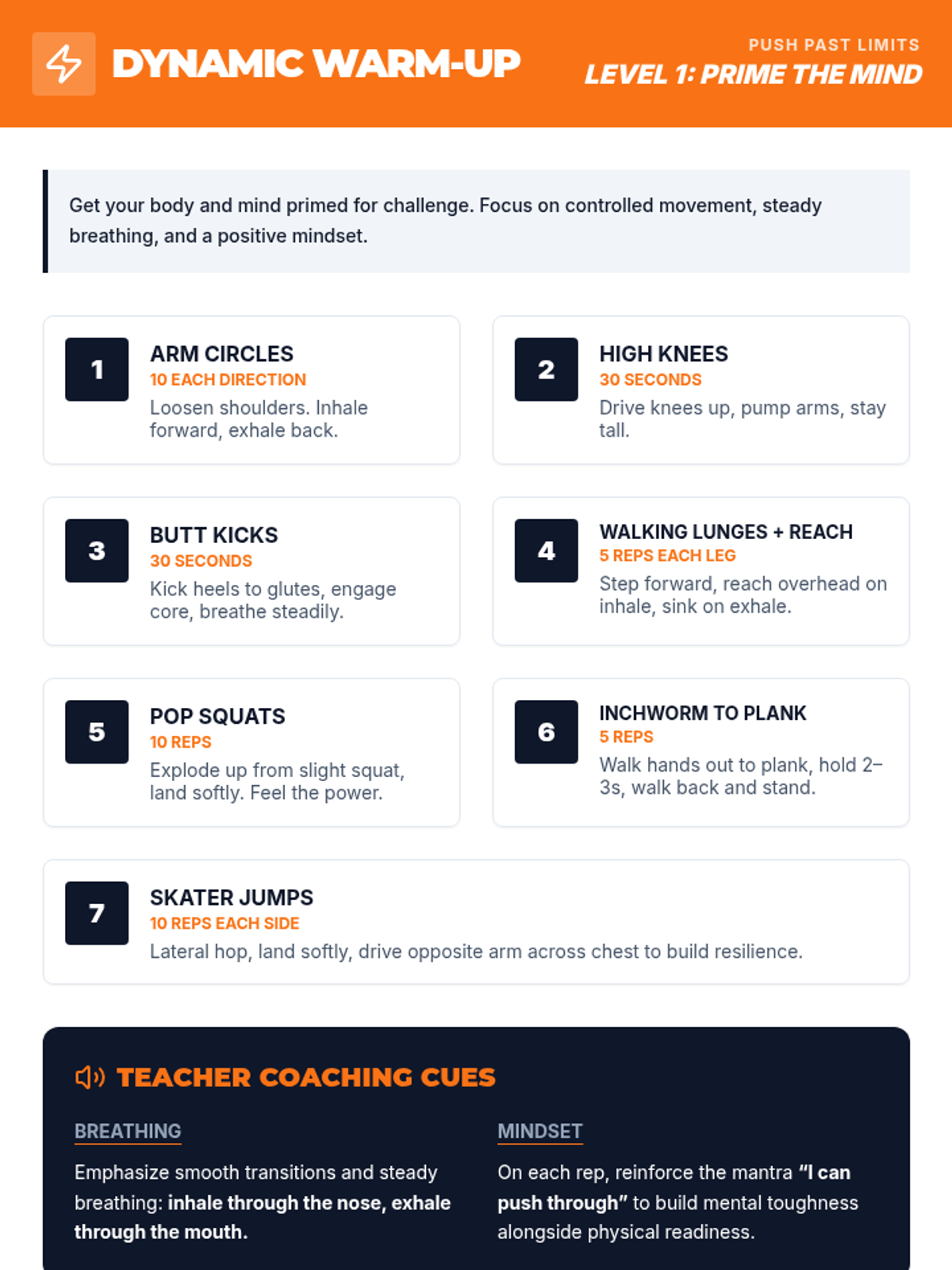
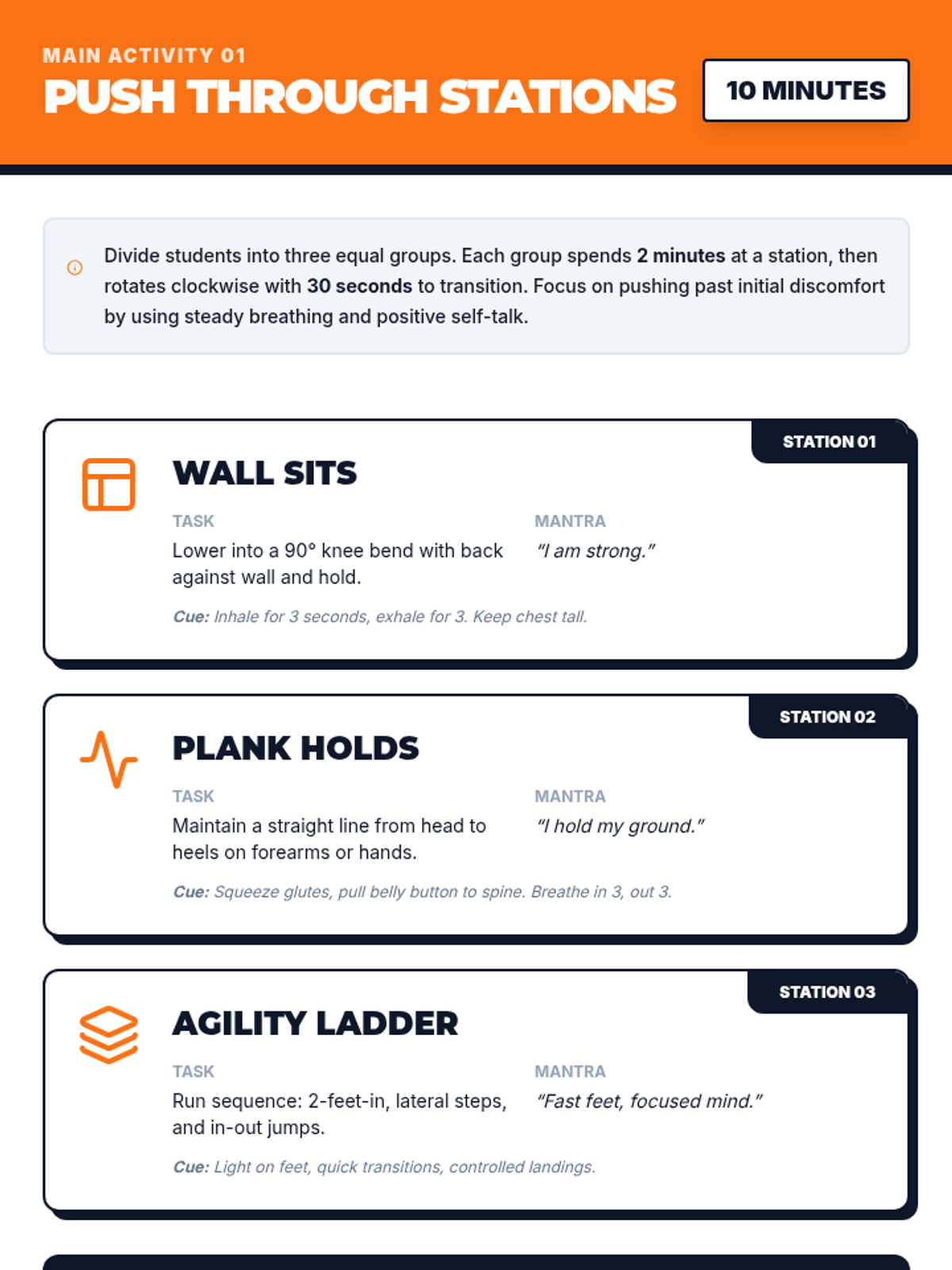
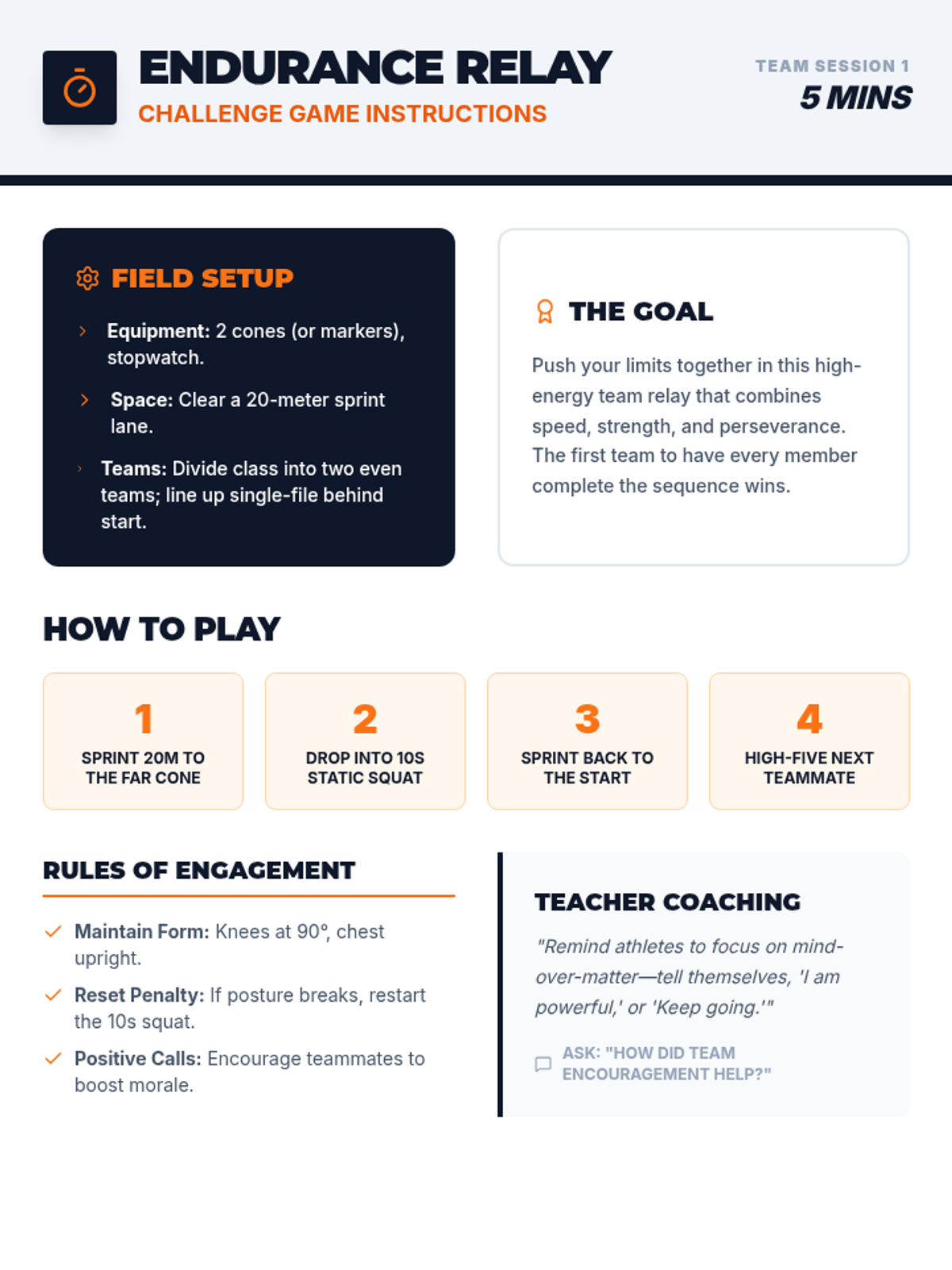
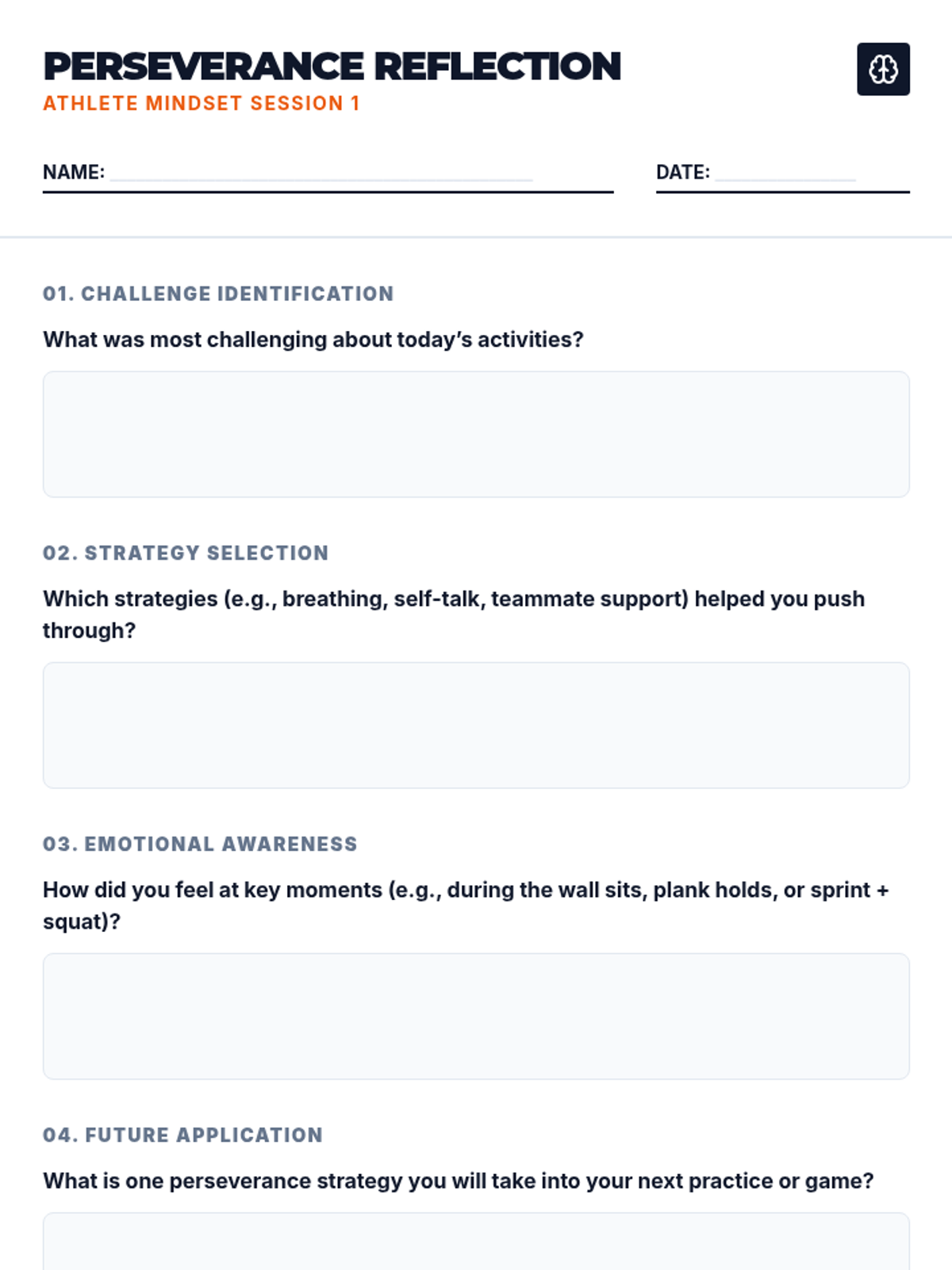
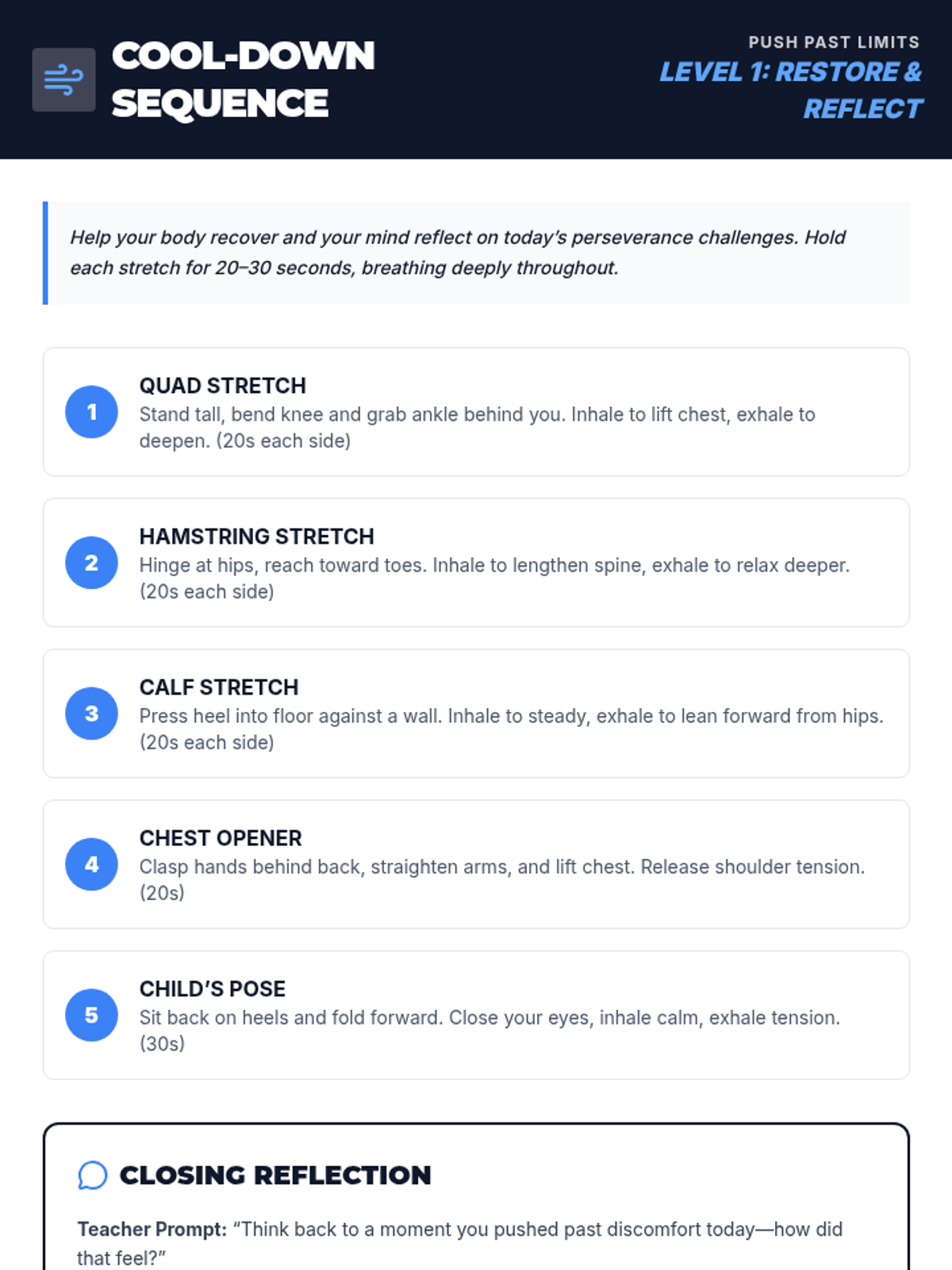
A two-session unit for 9-12 grade student athletes to develop perseverance and grit through physical challenges, collaborative games, and reflective goal-setting.
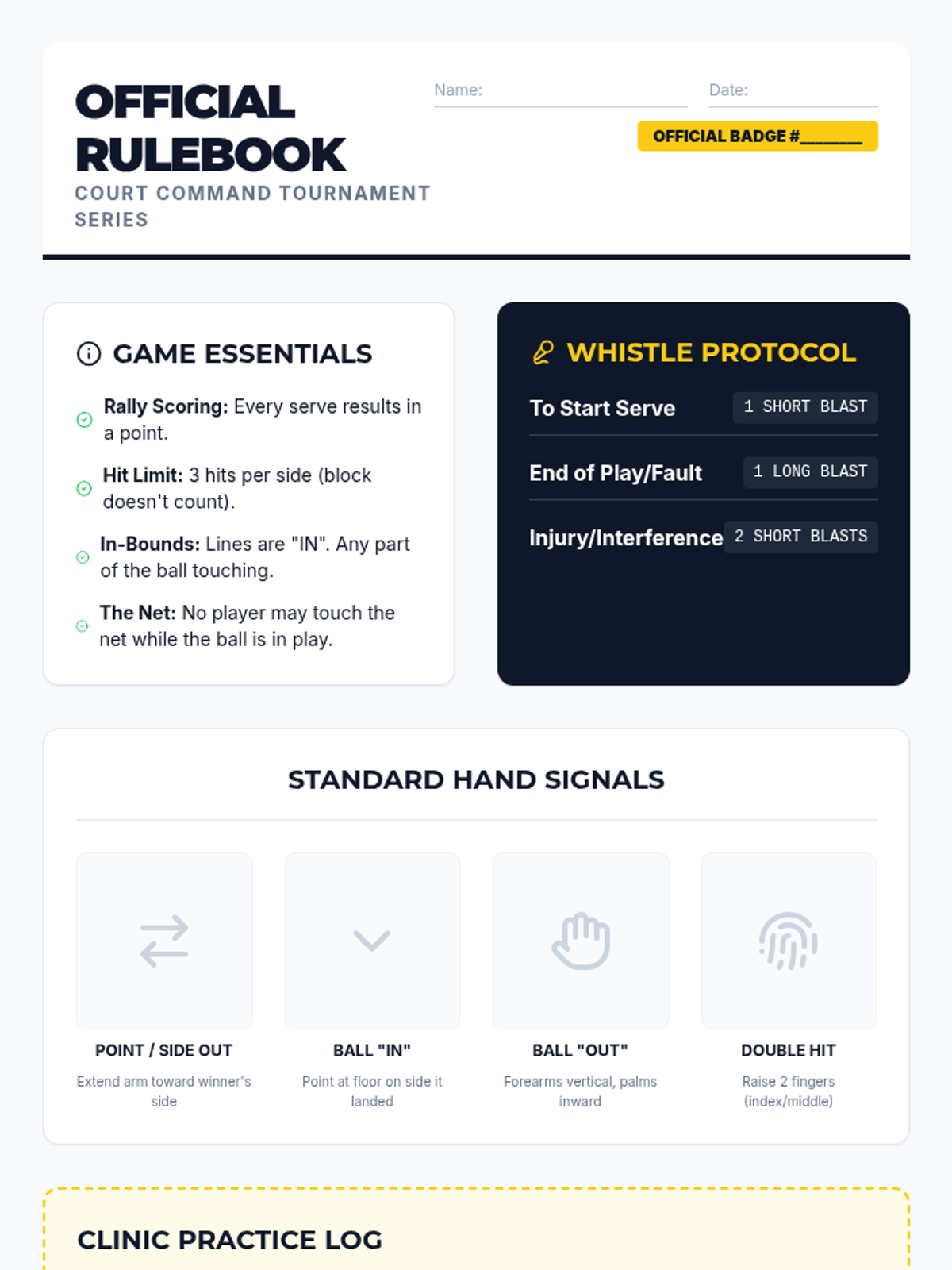
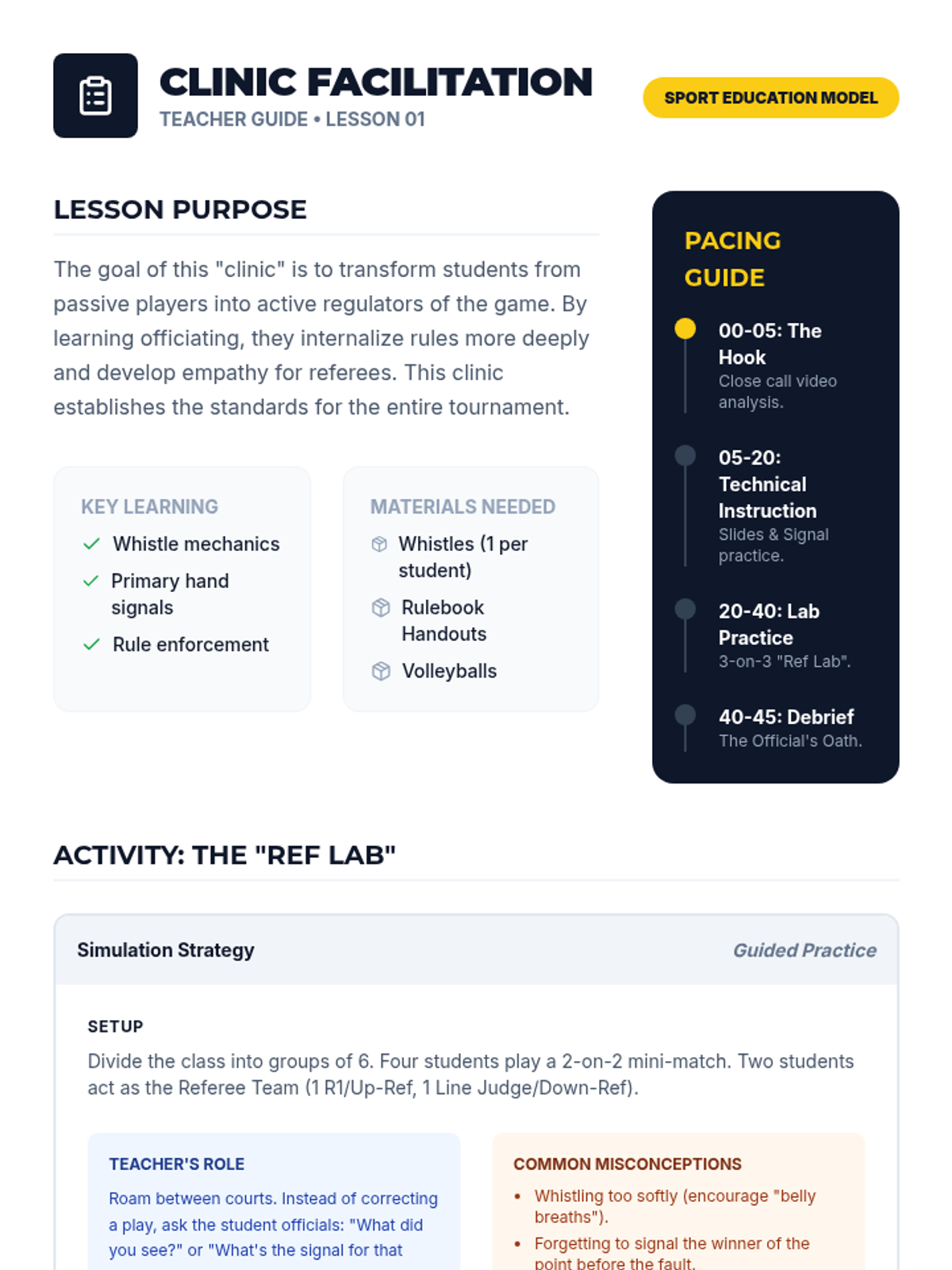
A Sport Education-based volleyball sequence for 7th graders, focusing on officiating, coaching, and tournament play to build holistic sportsmanship and strategic understanding.
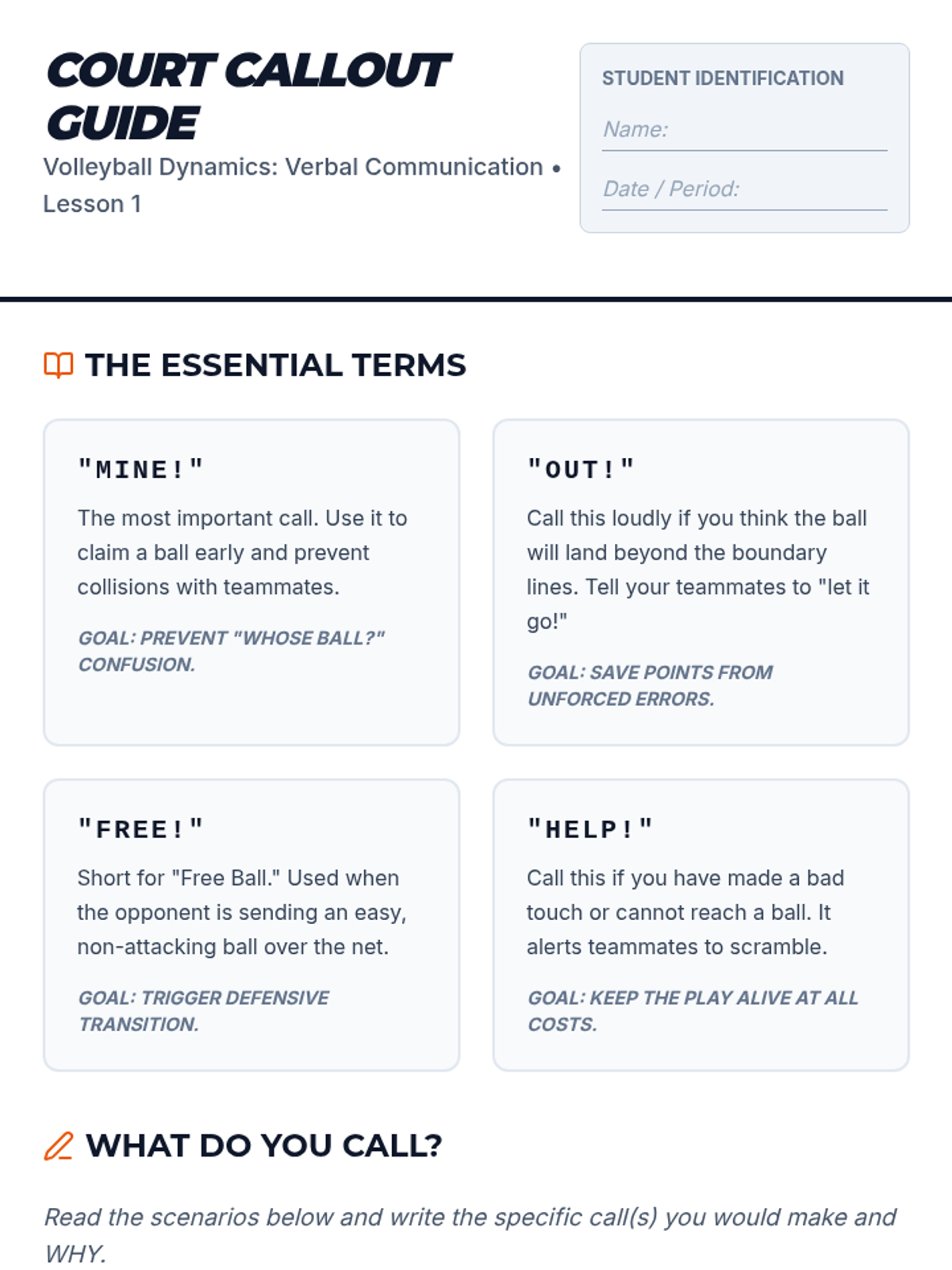
This sequence focuses on the critical role of communication in volleyball, moving from basic verbal call-outs to complex non-verbal cues and defensive systems. Students will develop teamwork, resilience, and tactical awareness through specialized drills and role-playing scenarios.
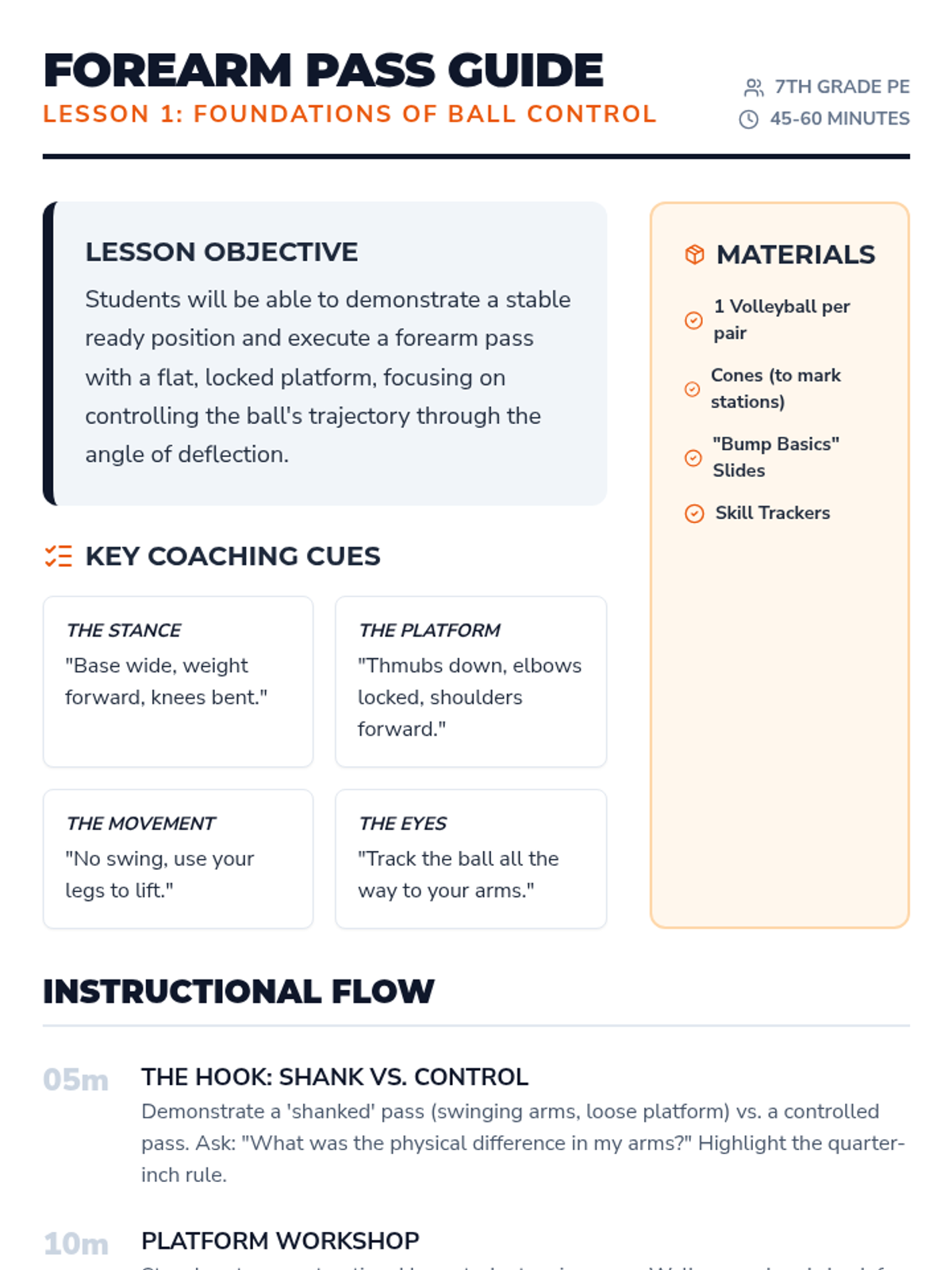
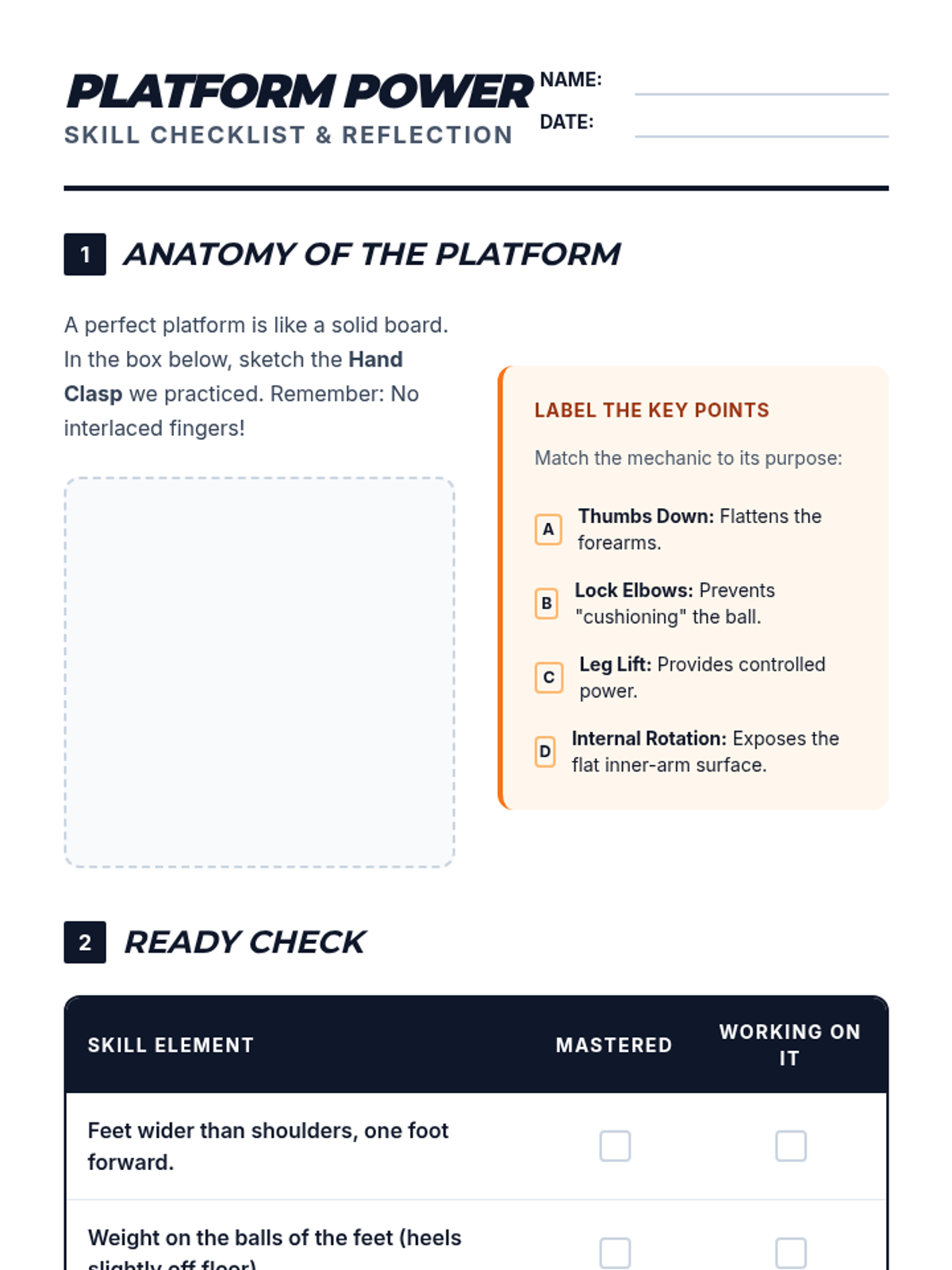
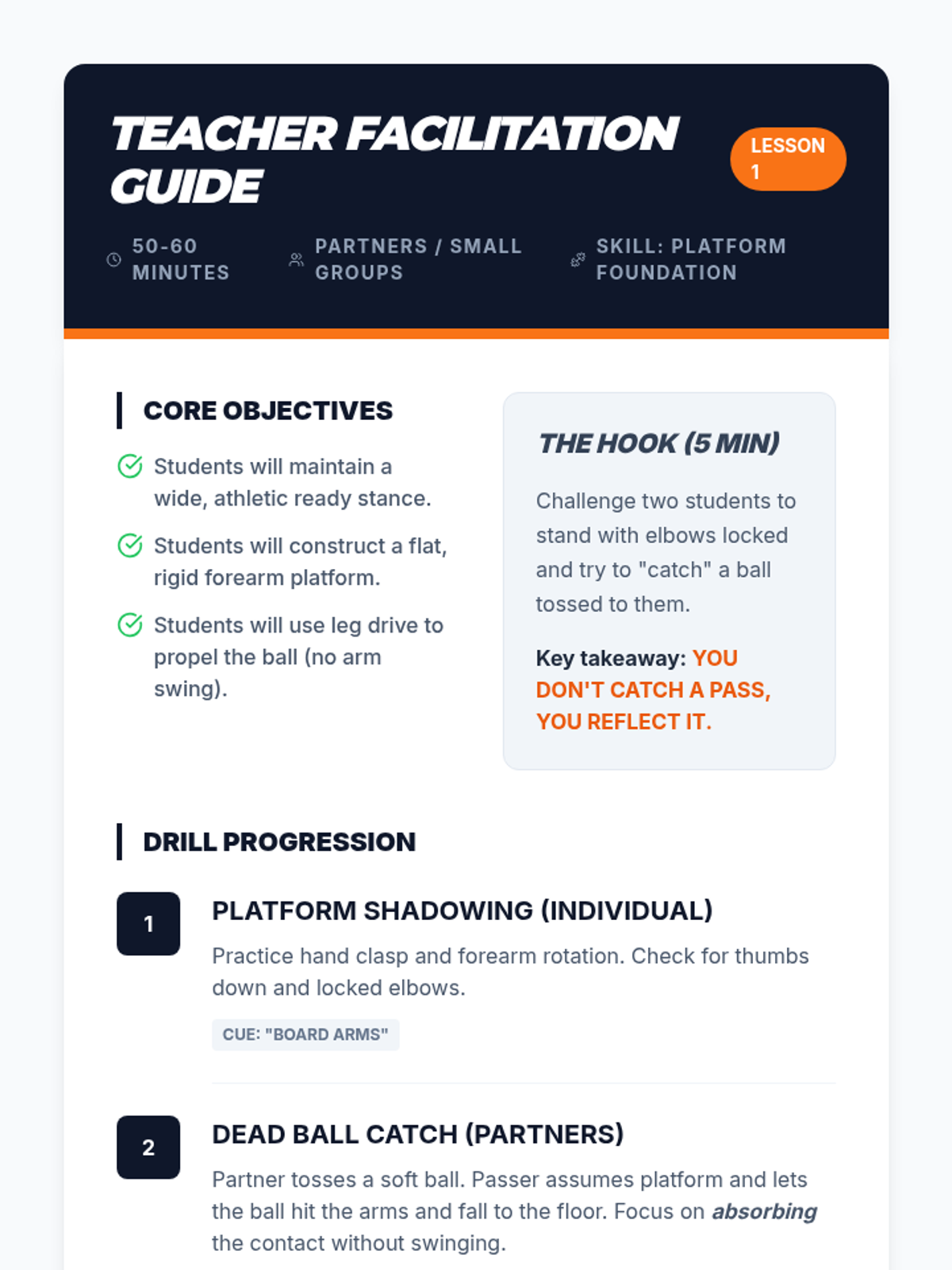
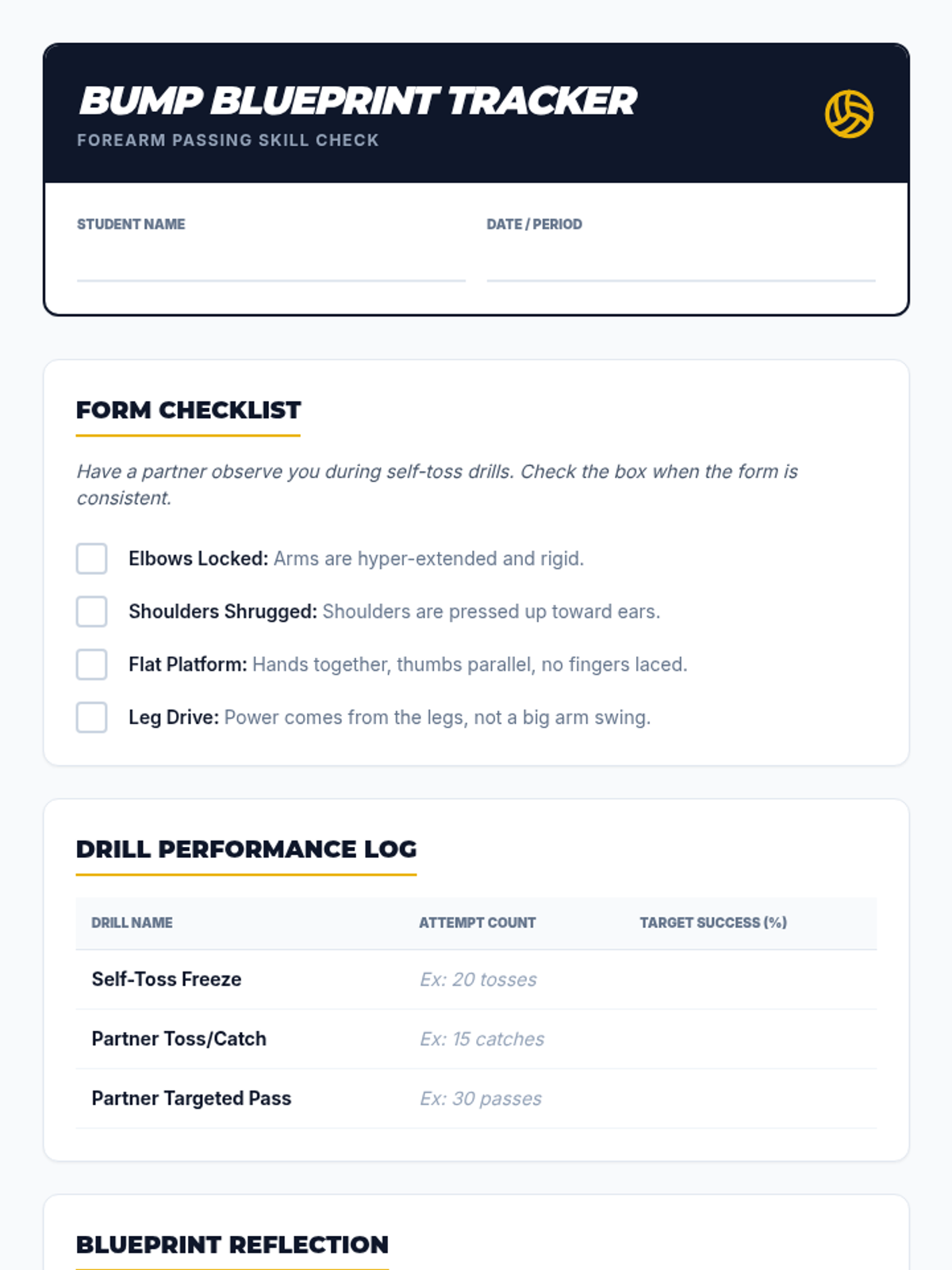
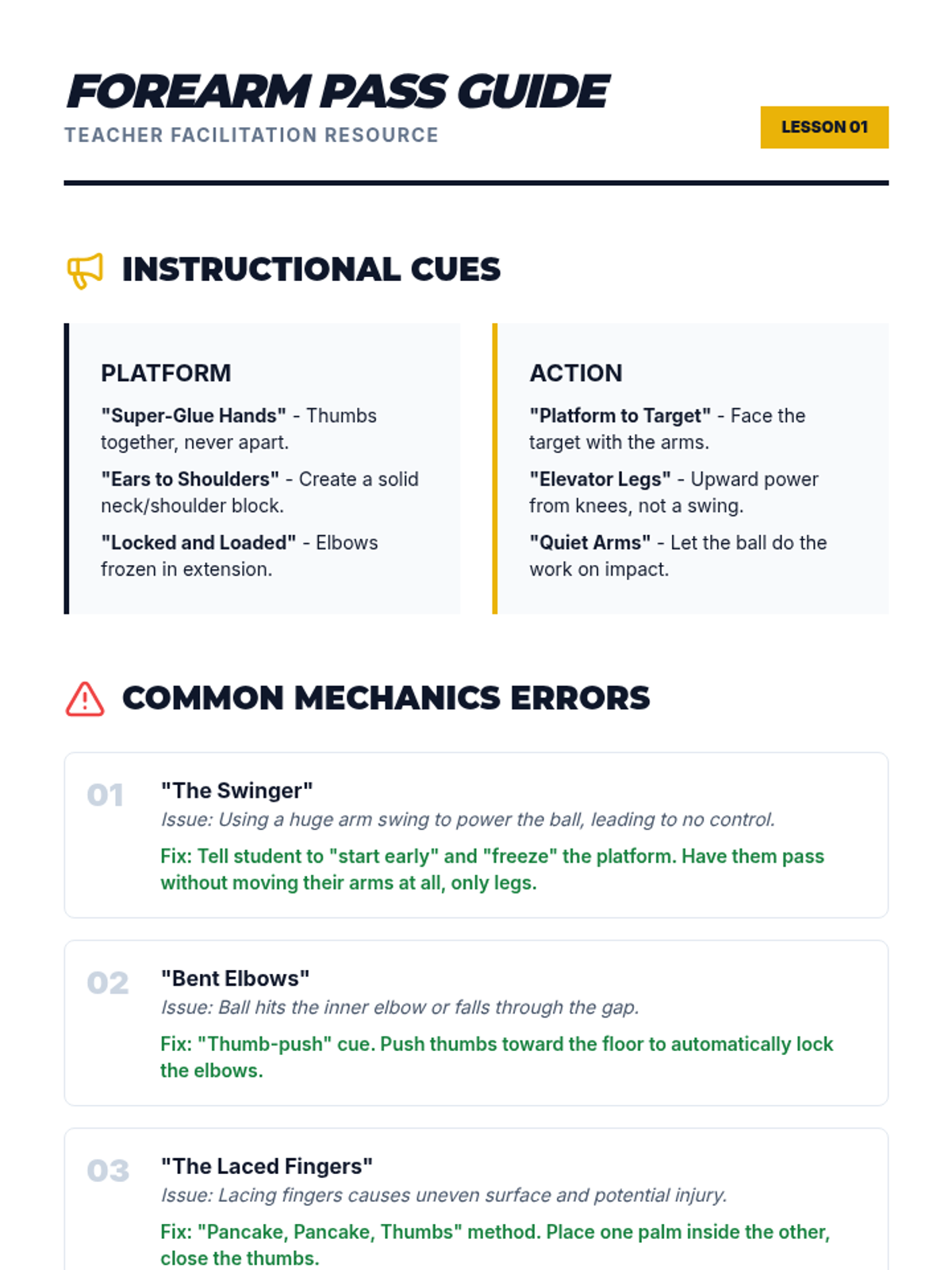
A comprehensive introduction to volleyball biomechanics, focusing on the forearm pass and overhead set. Students progress from basic athletic stance to dynamic partner play, emphasizing ball control, platform stability, and hand positioning.
A comprehensive 9th-grade physical education unit focused on the Sport Education model. Students transition from skill-based learning to holistic game management, encompassing officiating, strategic planning, and a structured tournament to foster leadership and sportsmanship.
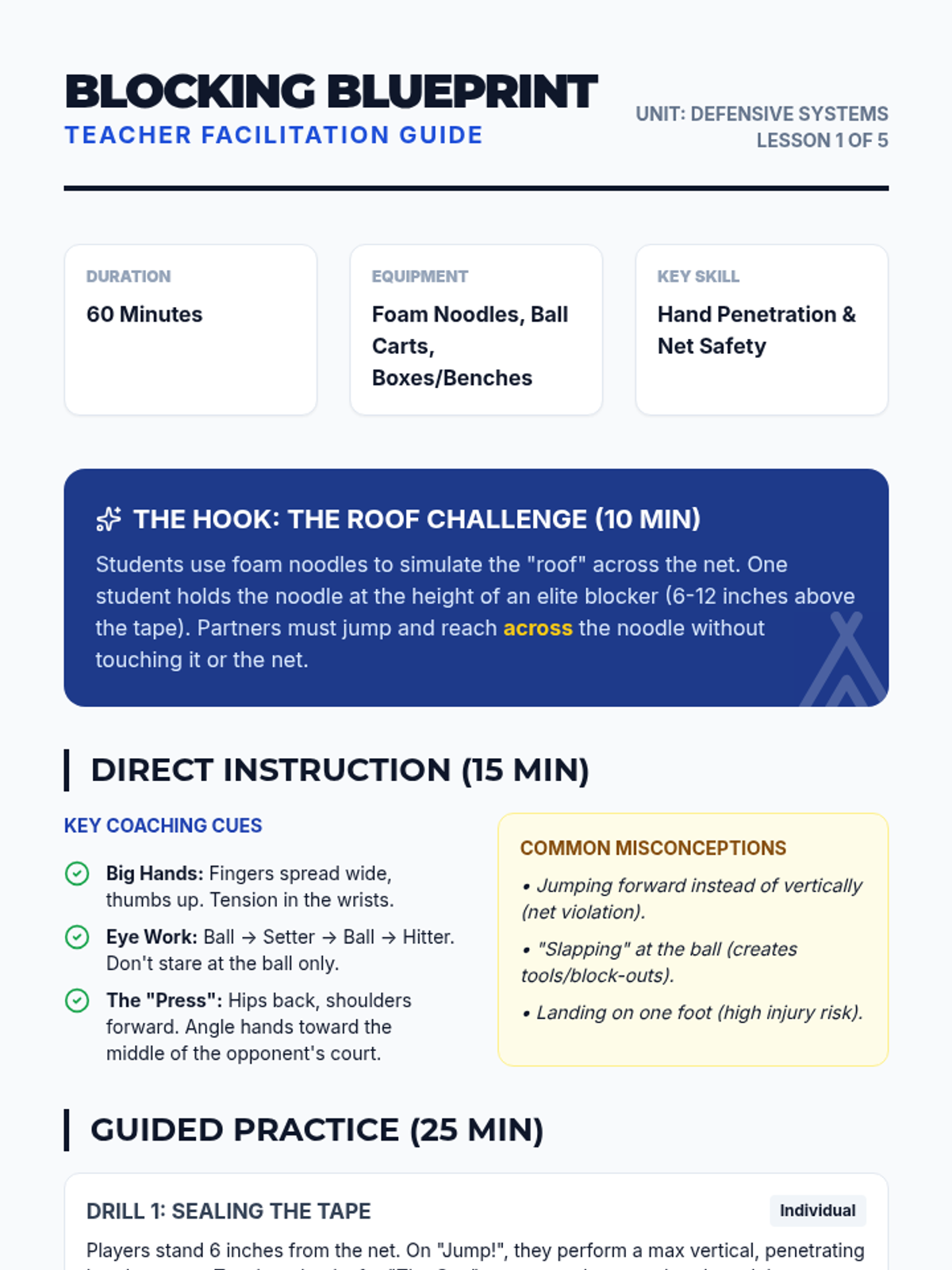
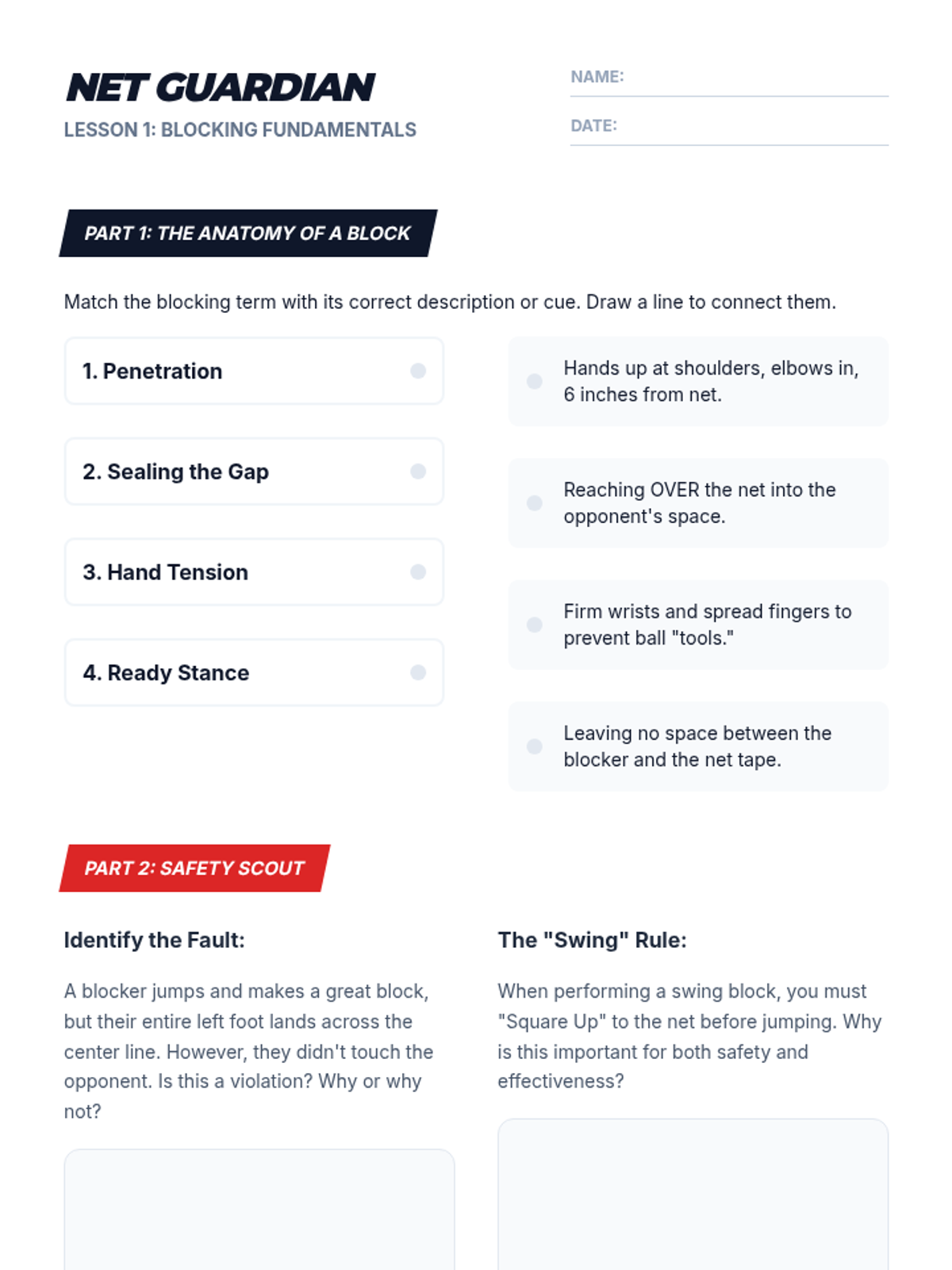
This high-school volleyball sequence focuses on team defensive systems, court coverage, and reading the opponent. Students progress from individual skills like blocking and digging to complex team formations like the 'W' serve receive and perimeter defense.
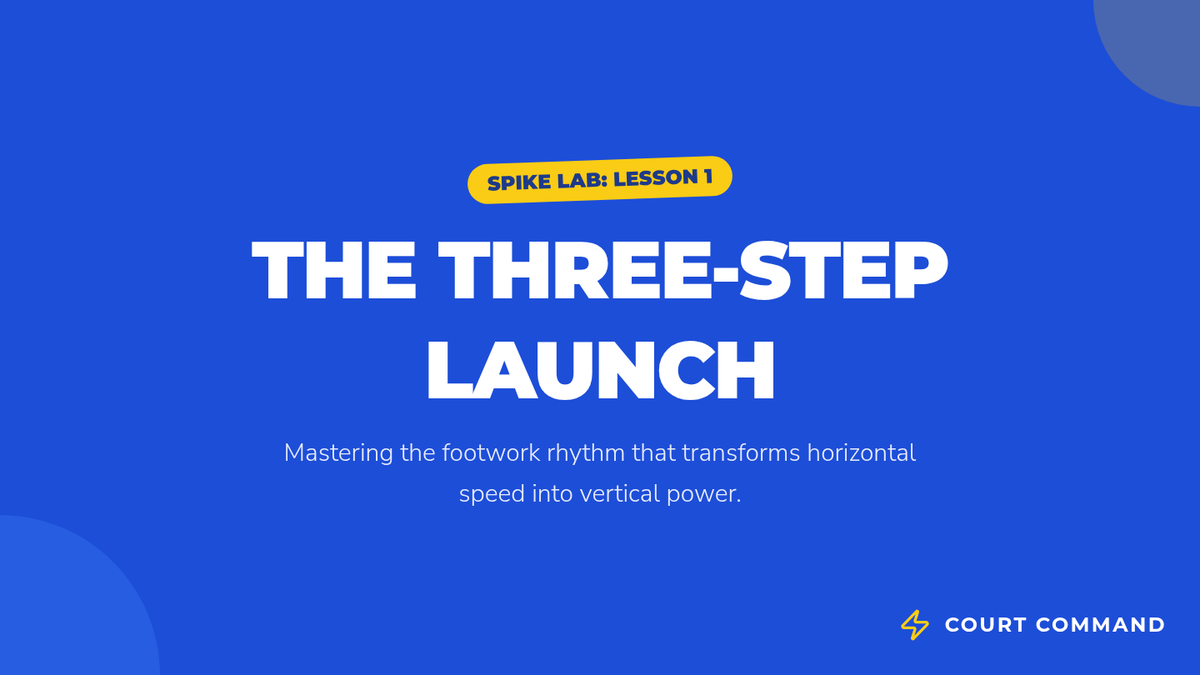
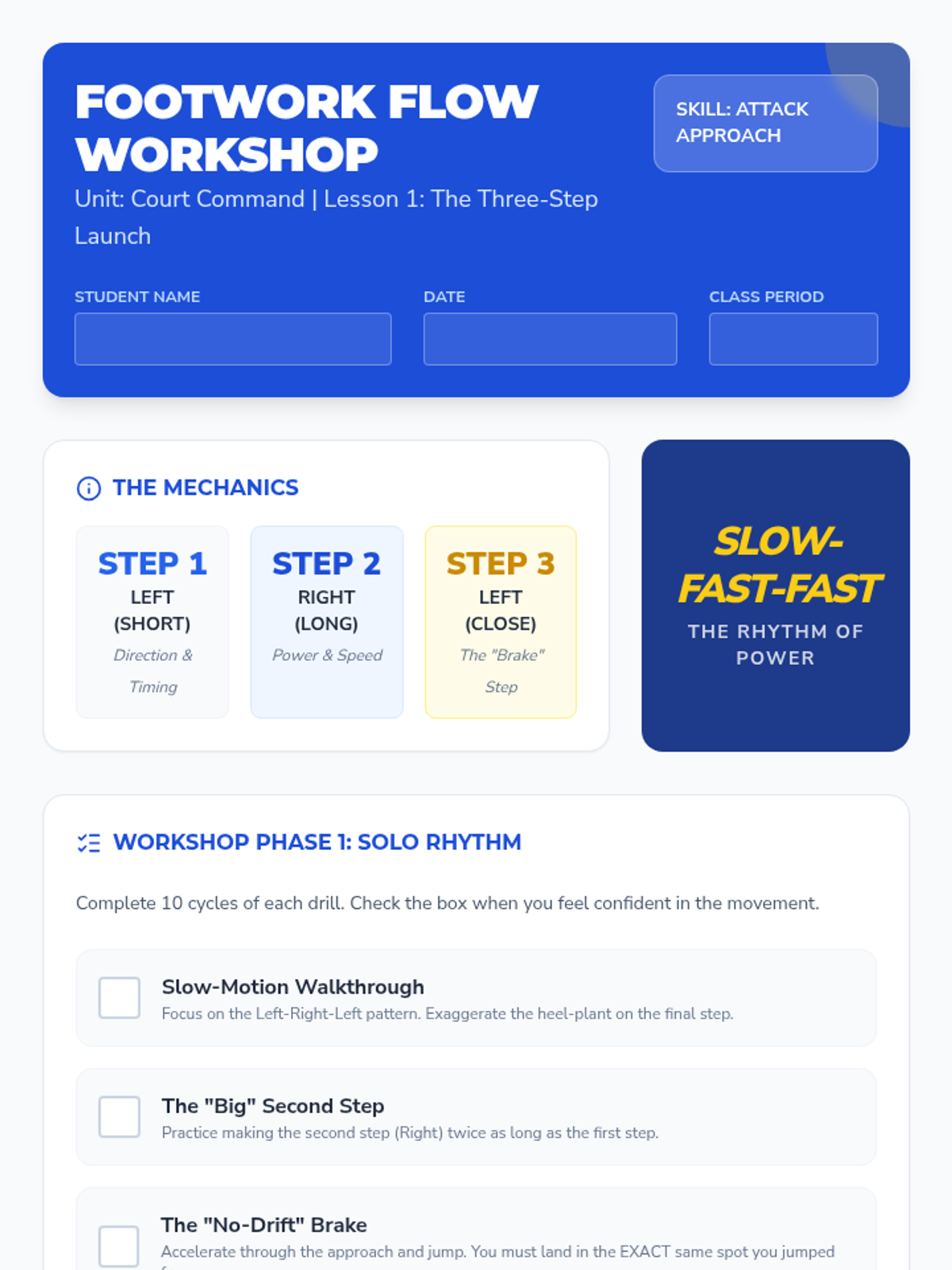
A comprehensive 9th-grade volleyball sequence focusing on the transition from defensive play to an aggressive offensive attack. Students master the three-step approach, arm swing mechanics, timing, and team-wide transition strategies to transform their game from simple returns to tactical scoring.
This sequence focuses on the biomechanics and execution of fundamental volleyball skills: passing, setting, and serving. Students progress from stationary form to dynamic movement and skill integration.
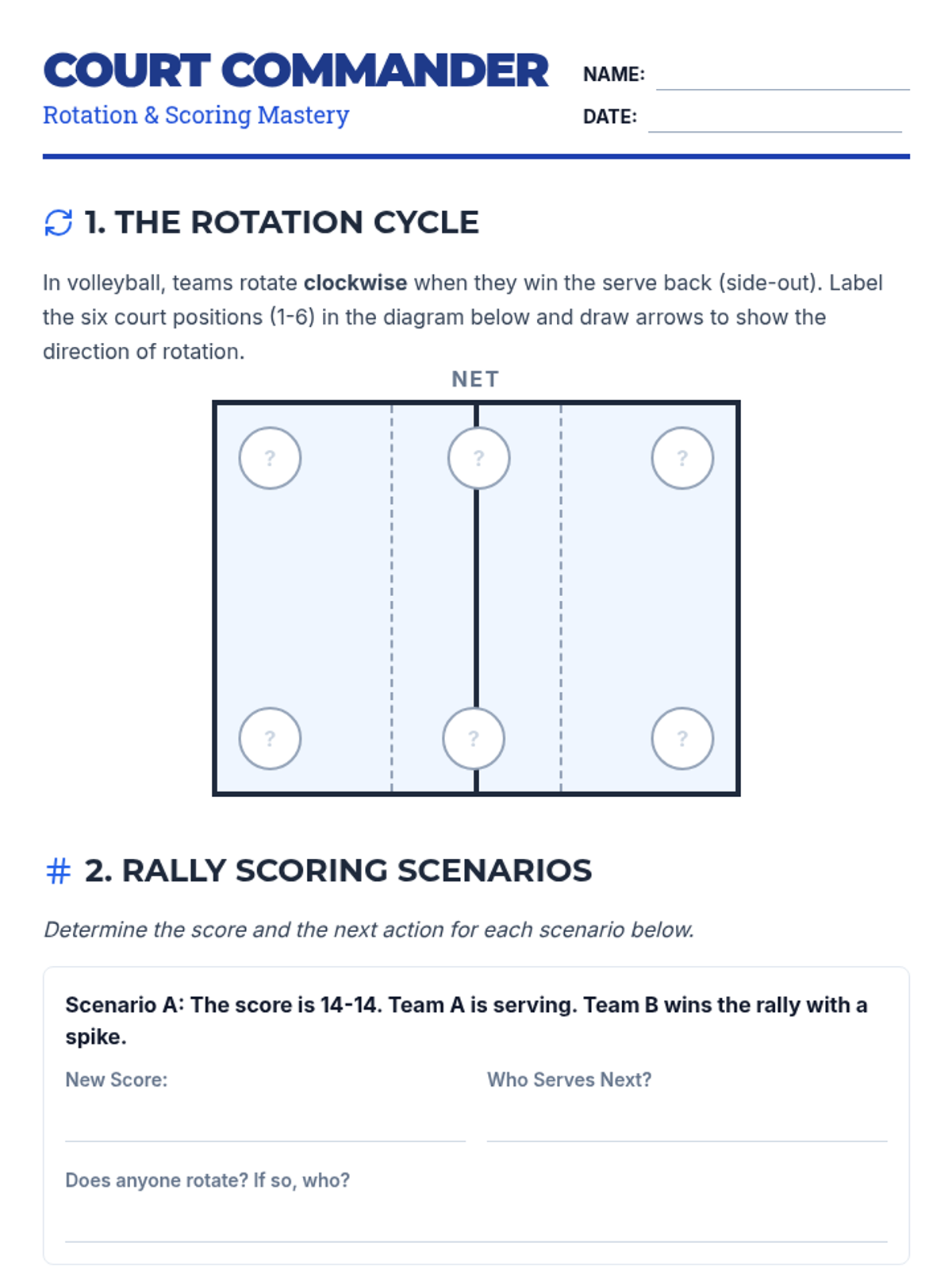
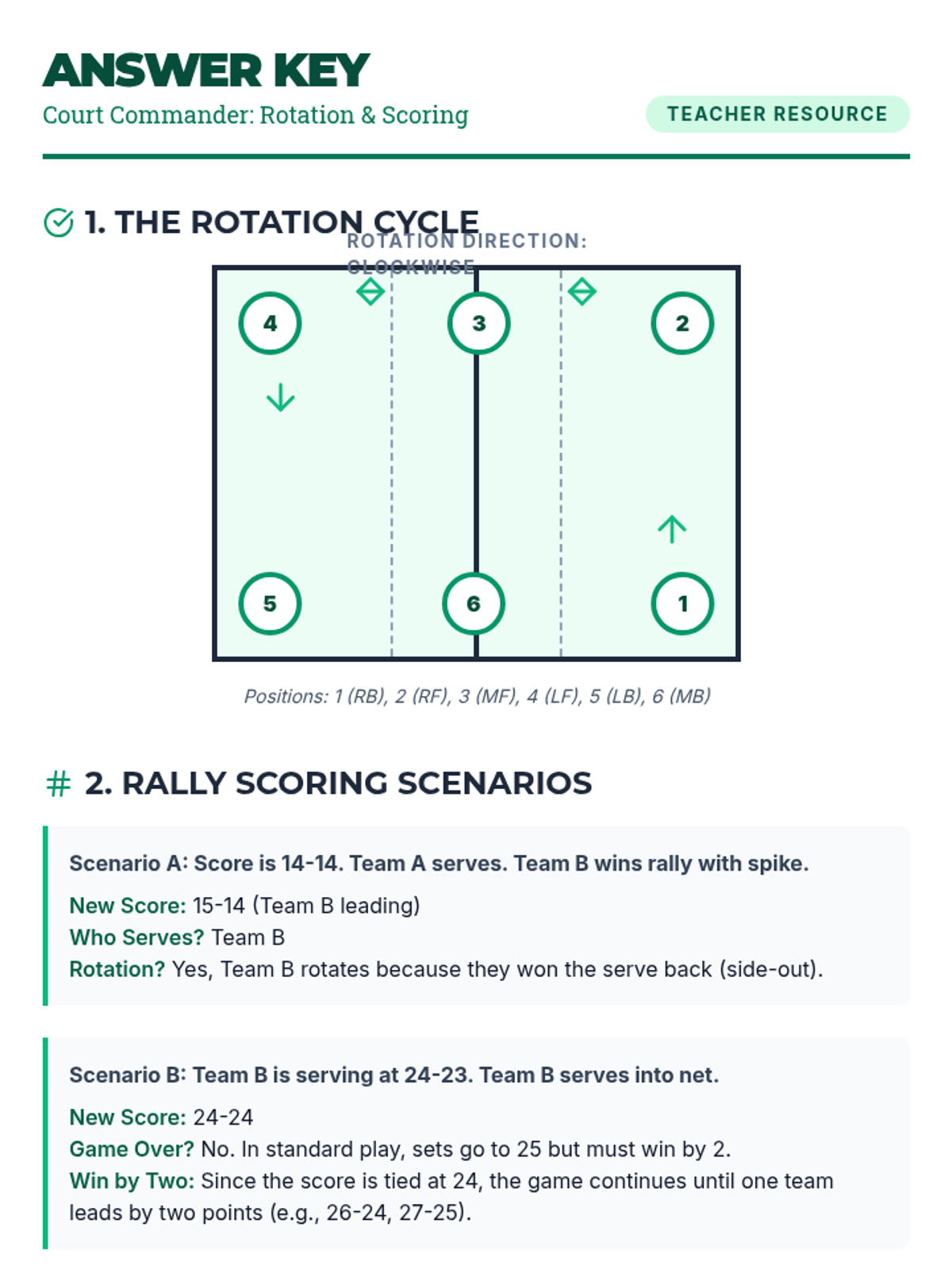
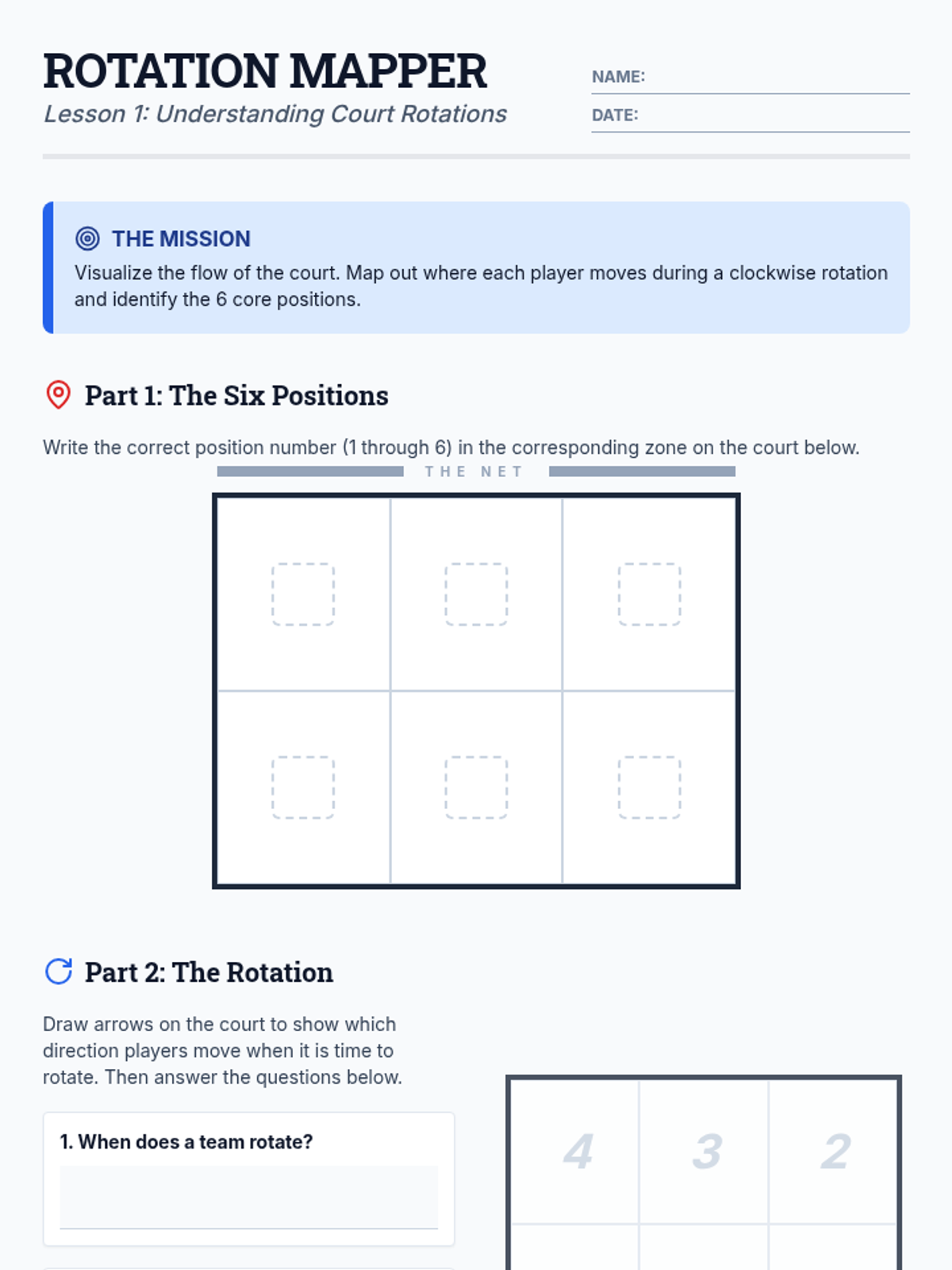
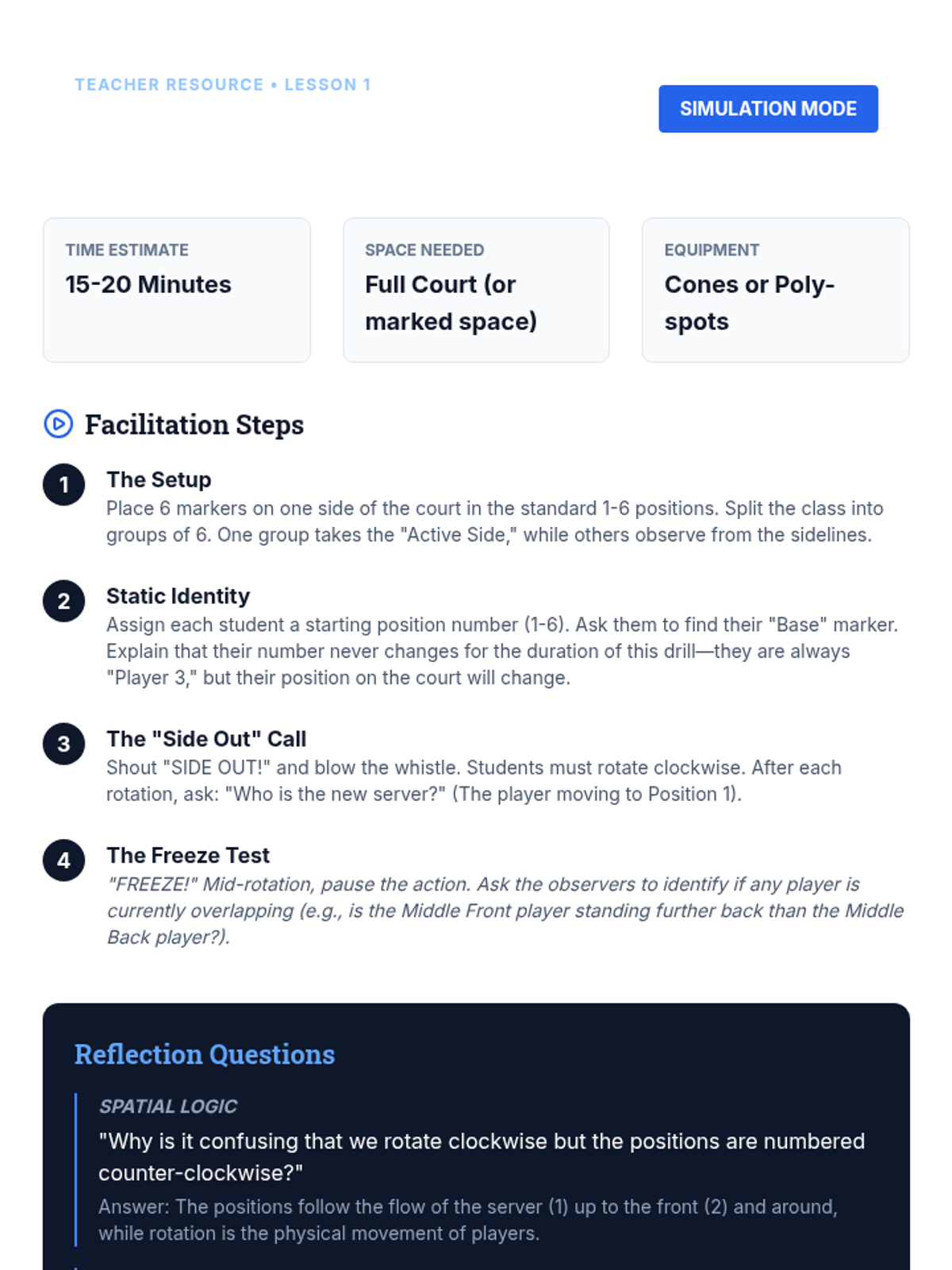
This sequence explores volleyball court rotations, serve receive formations, and defensive systems. Students will move from individual skills to team dynamics, learning how to maintain court balance, avoid overlap violations, and transition between offensive and defensive mindsets.
This sequence guides 8th-grade students through the fundamental mechanics of volleyball ball control, specifically focusing on the forearm pass (bump) and the overhead set. Students progress from static form to dynamic movement and partner-based rally application.
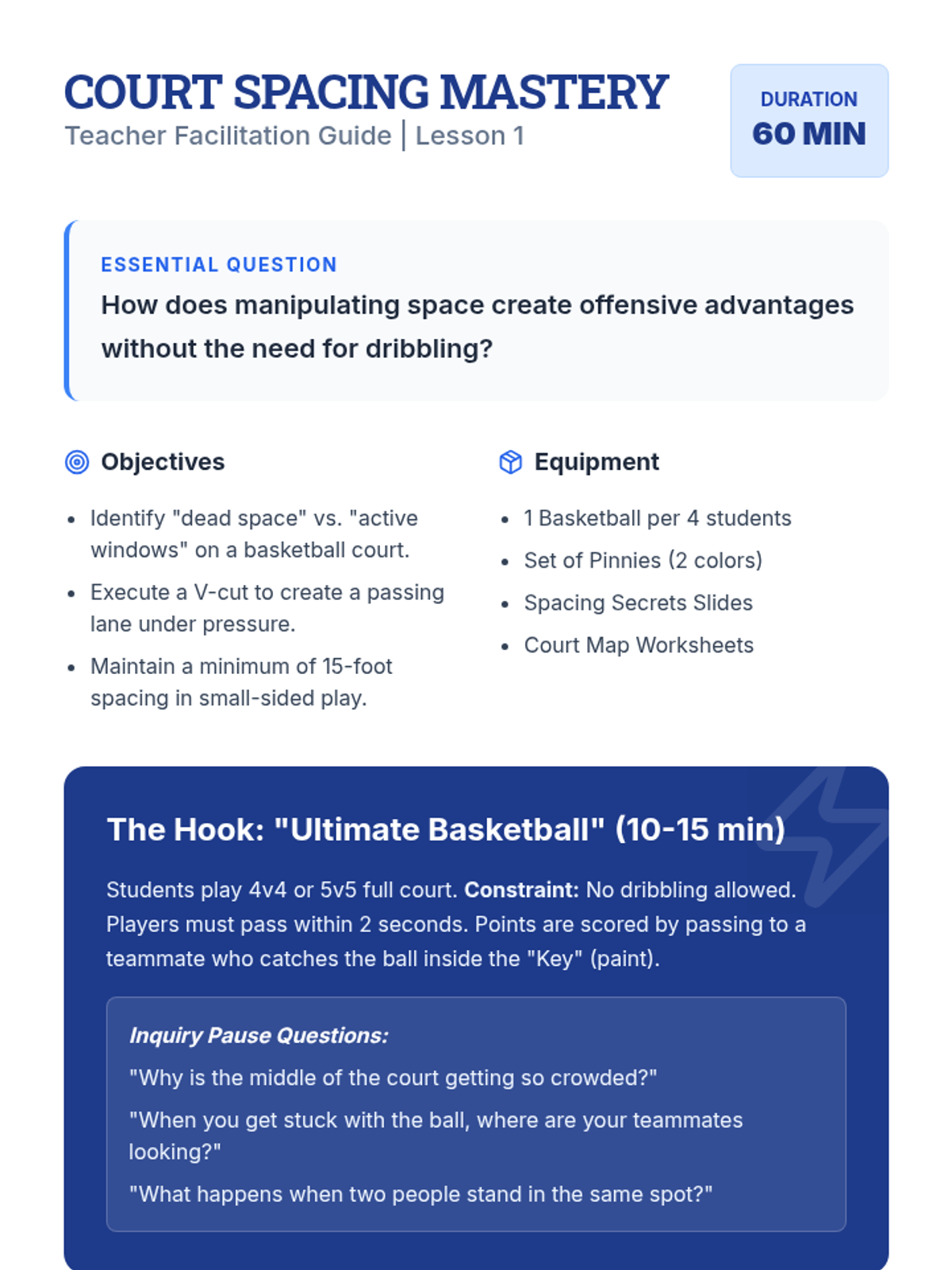
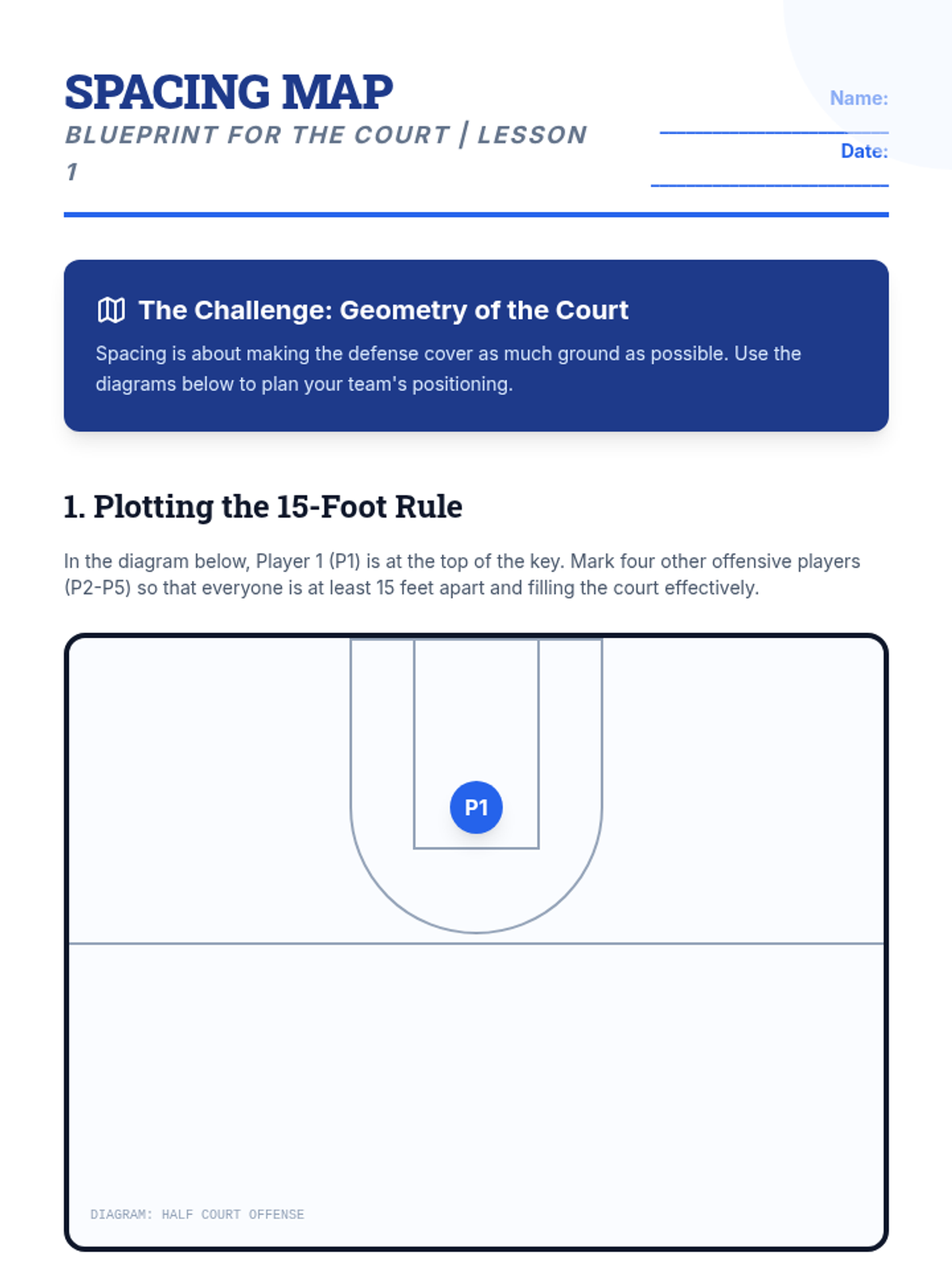
A comprehensive basketball unit for 9th-grade physical education focusing on the strategic and cognitive aspects of team play. Students progress from basic spatial awareness and passing angles to complex two-man games, defensive rotations, and full-court transition strategies, culminating in coached 5v5 scrimmages.
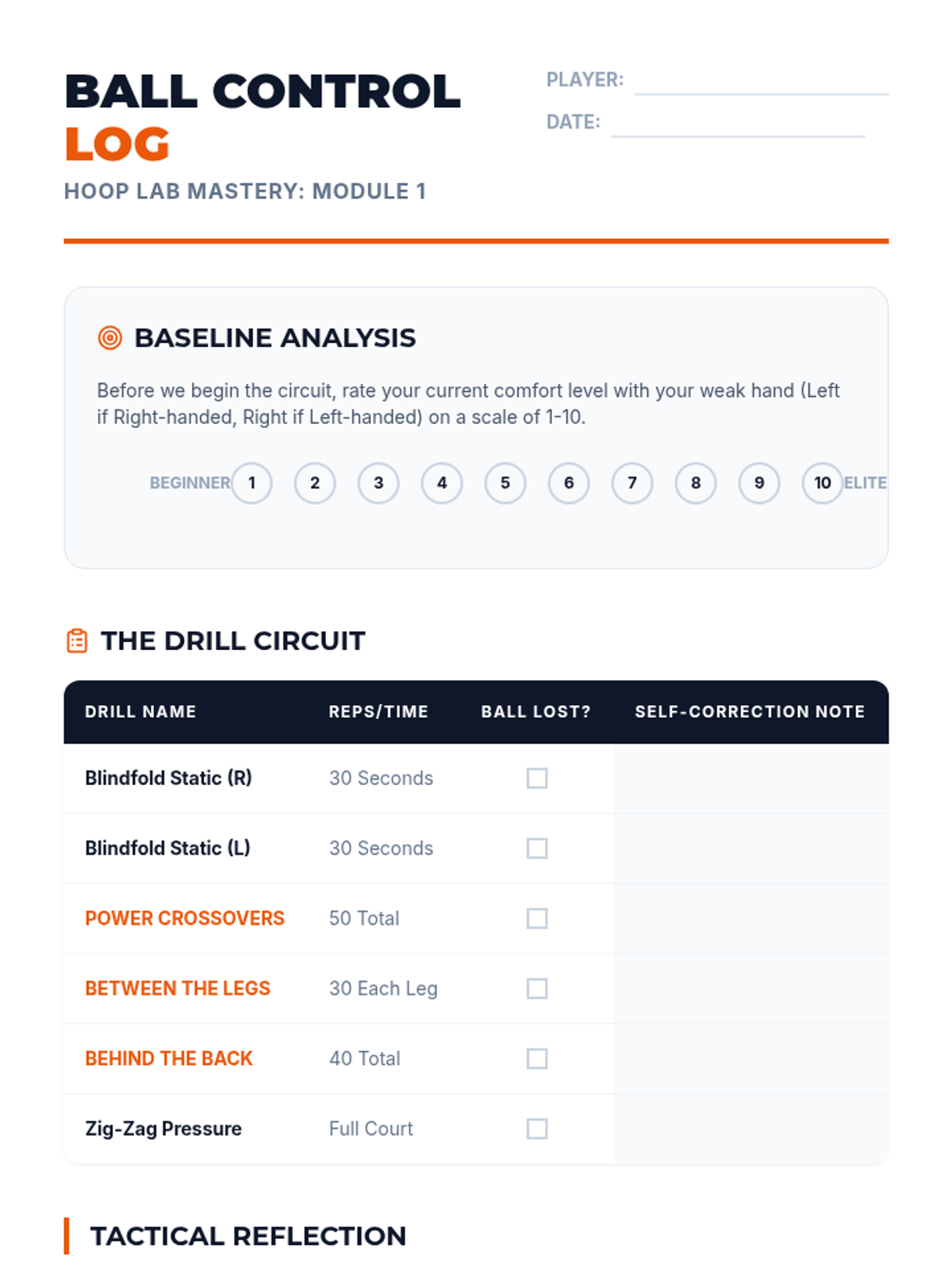
This sequence focuses on the biomechanics and technical precision required for high-level individual offensive play in basketball. Students progress from stationary ball-handling and shooting mechanics to dynamic finishing and triple-threat spacing, culminating in an integrated skills circuit.
This unit shifts focus from individual skills to team dynamics, spatial awareness, and defensive strategies. Students explore the geometry of the court, learning how to coordinate defensive rotations and execute offensive tactics like screens and off-ball movement.
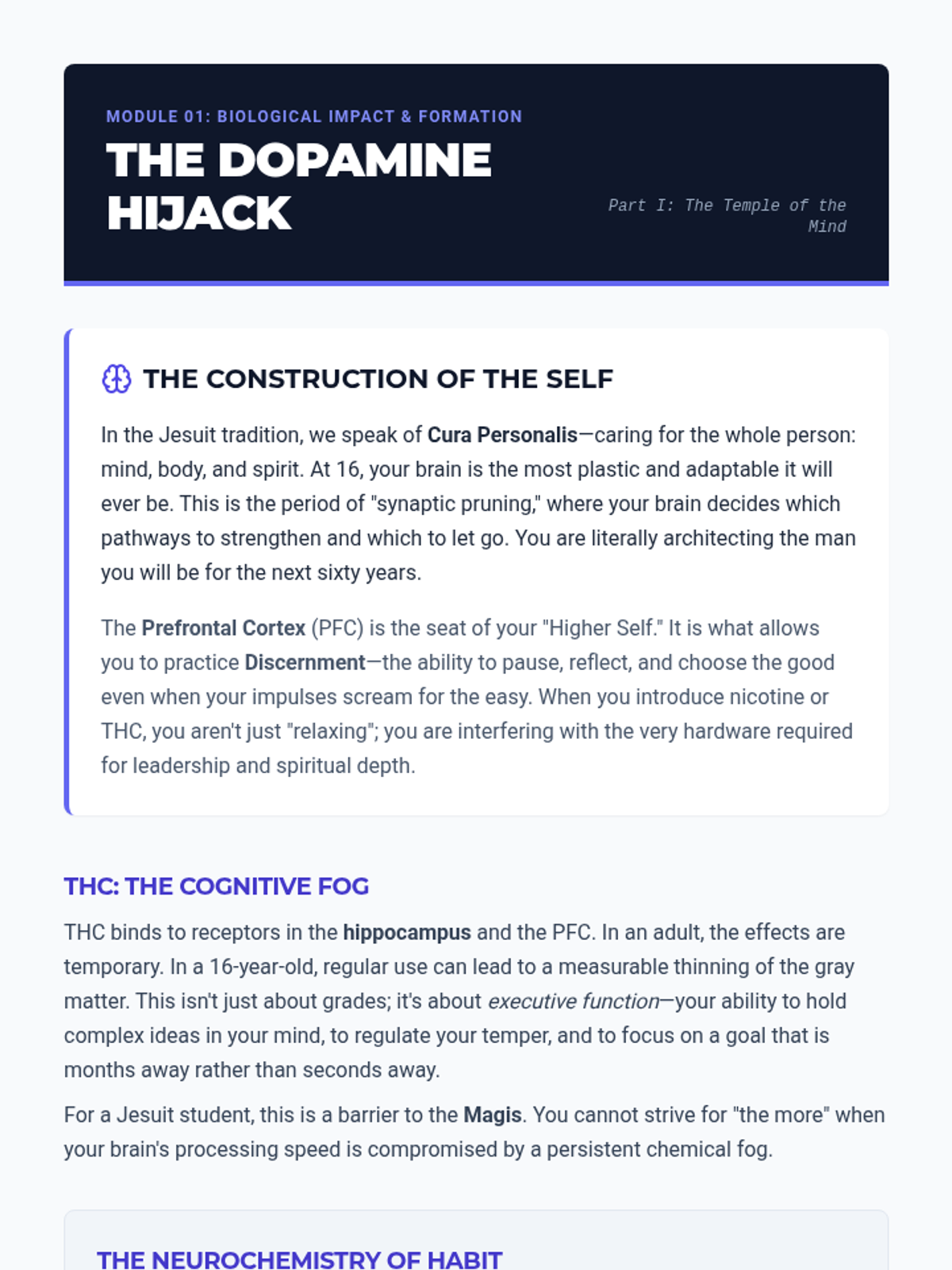
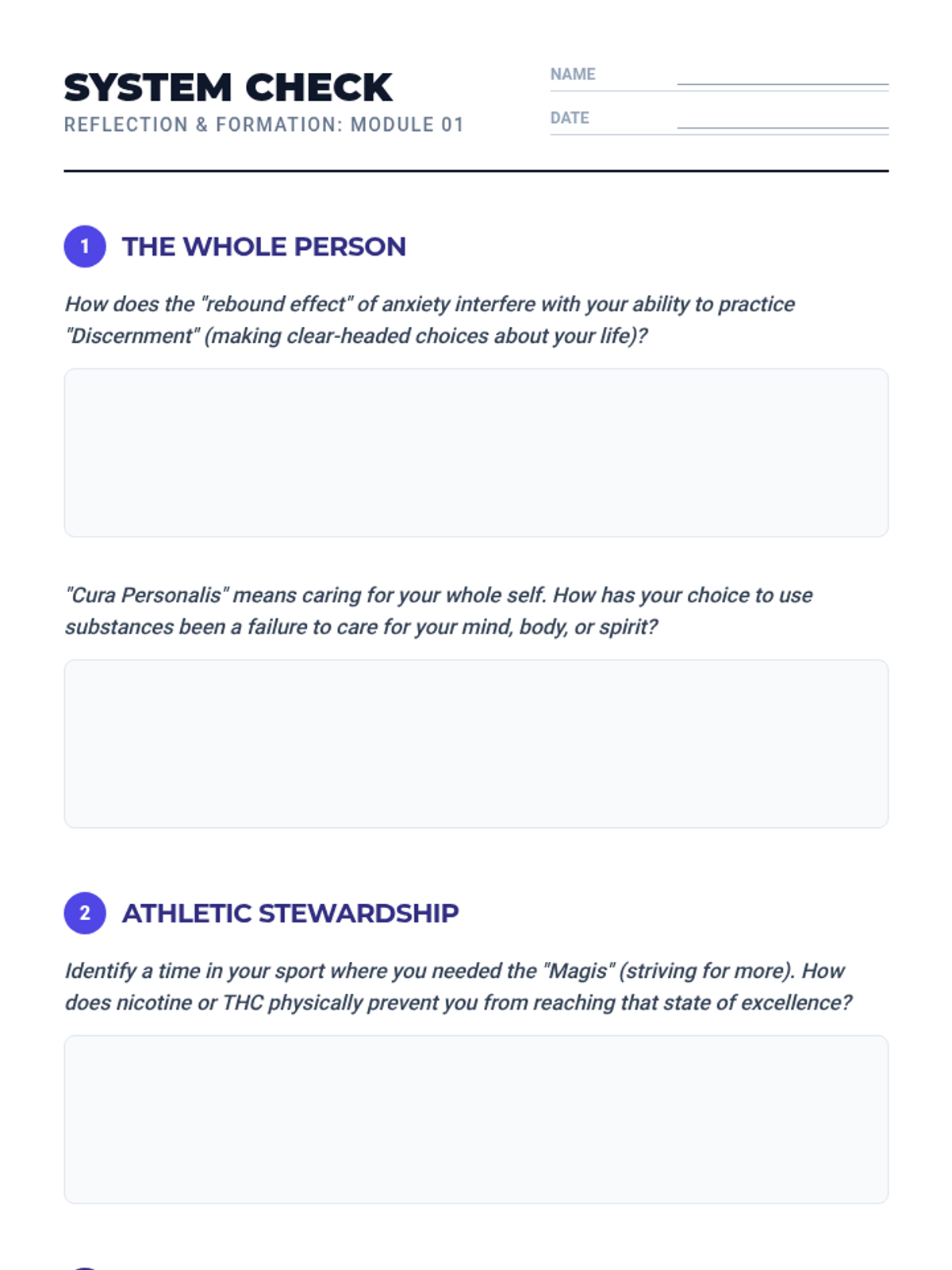
A restorative learning program designed for high school students to reflect on the impact of substance use and prepare for a positive return to their school community. The program balances scientific facts with deep personal reflection.
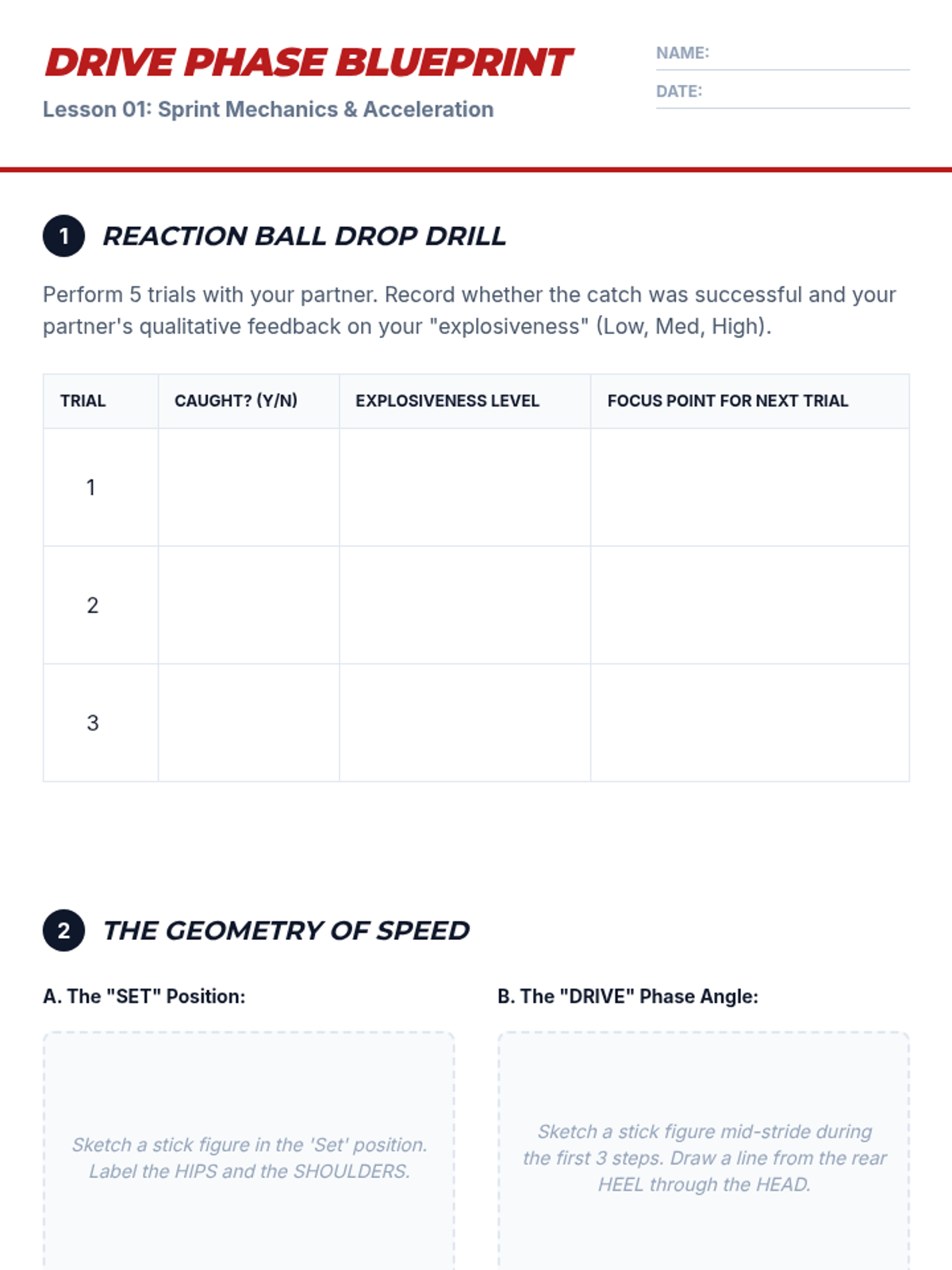
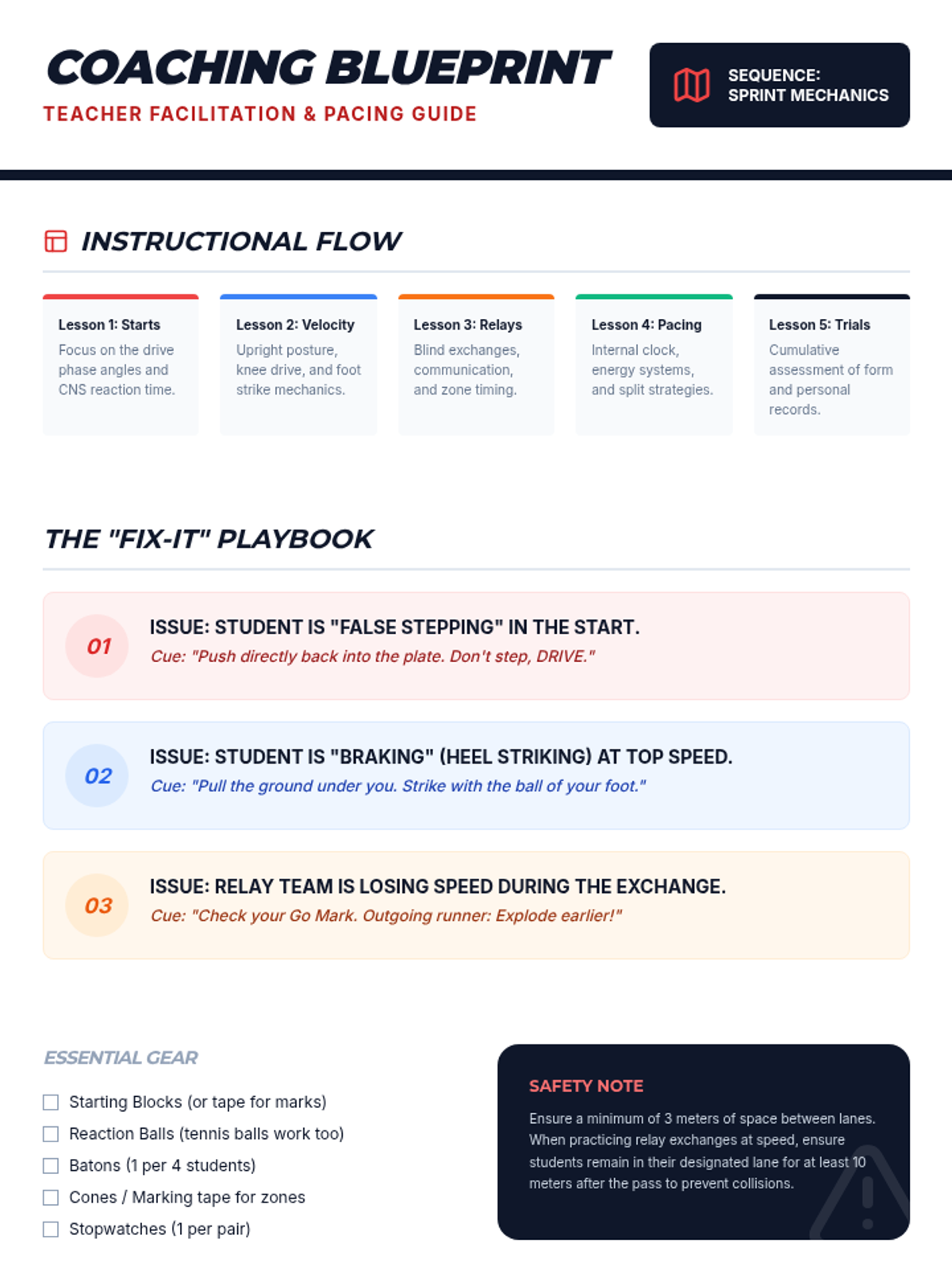
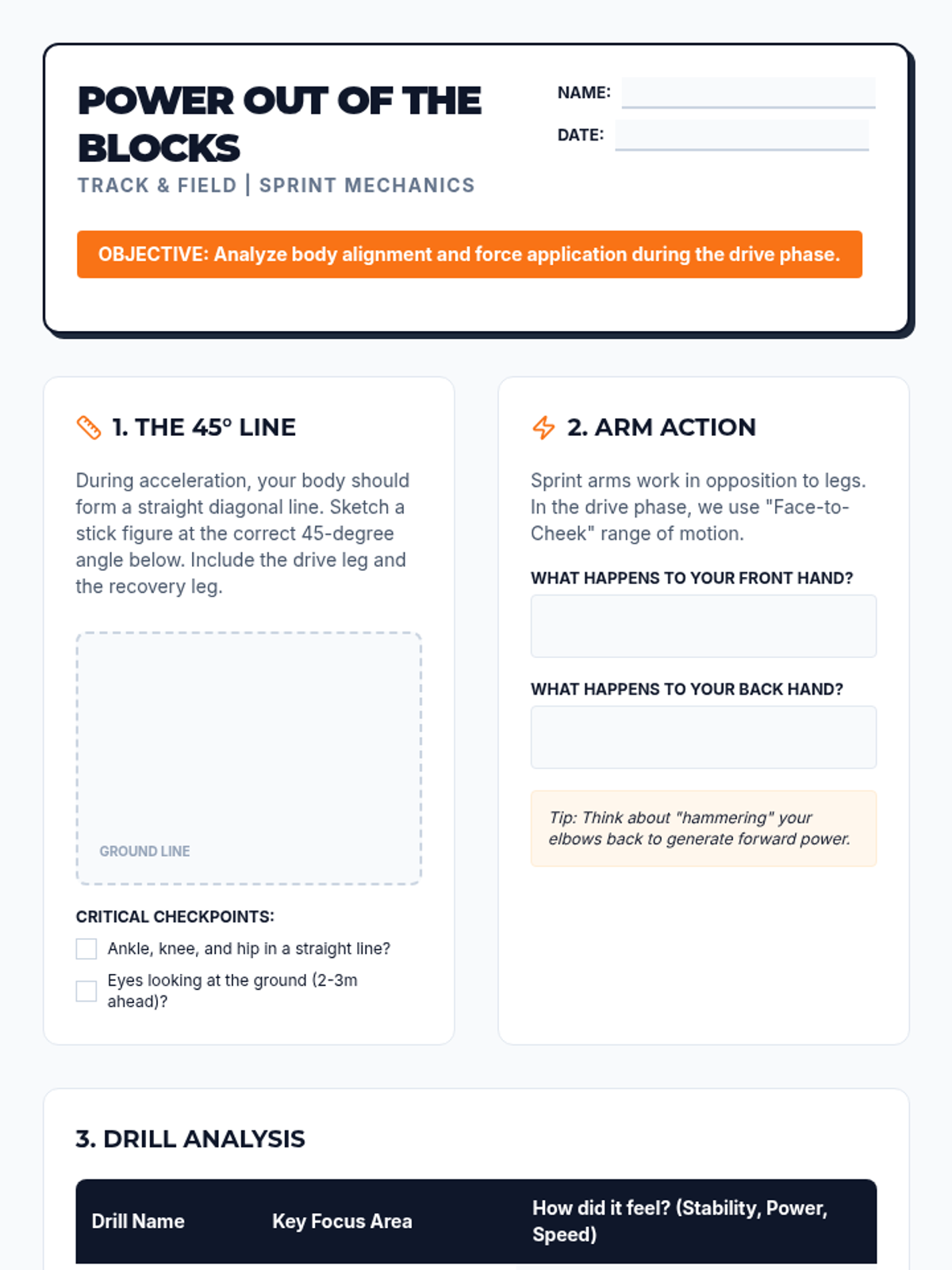
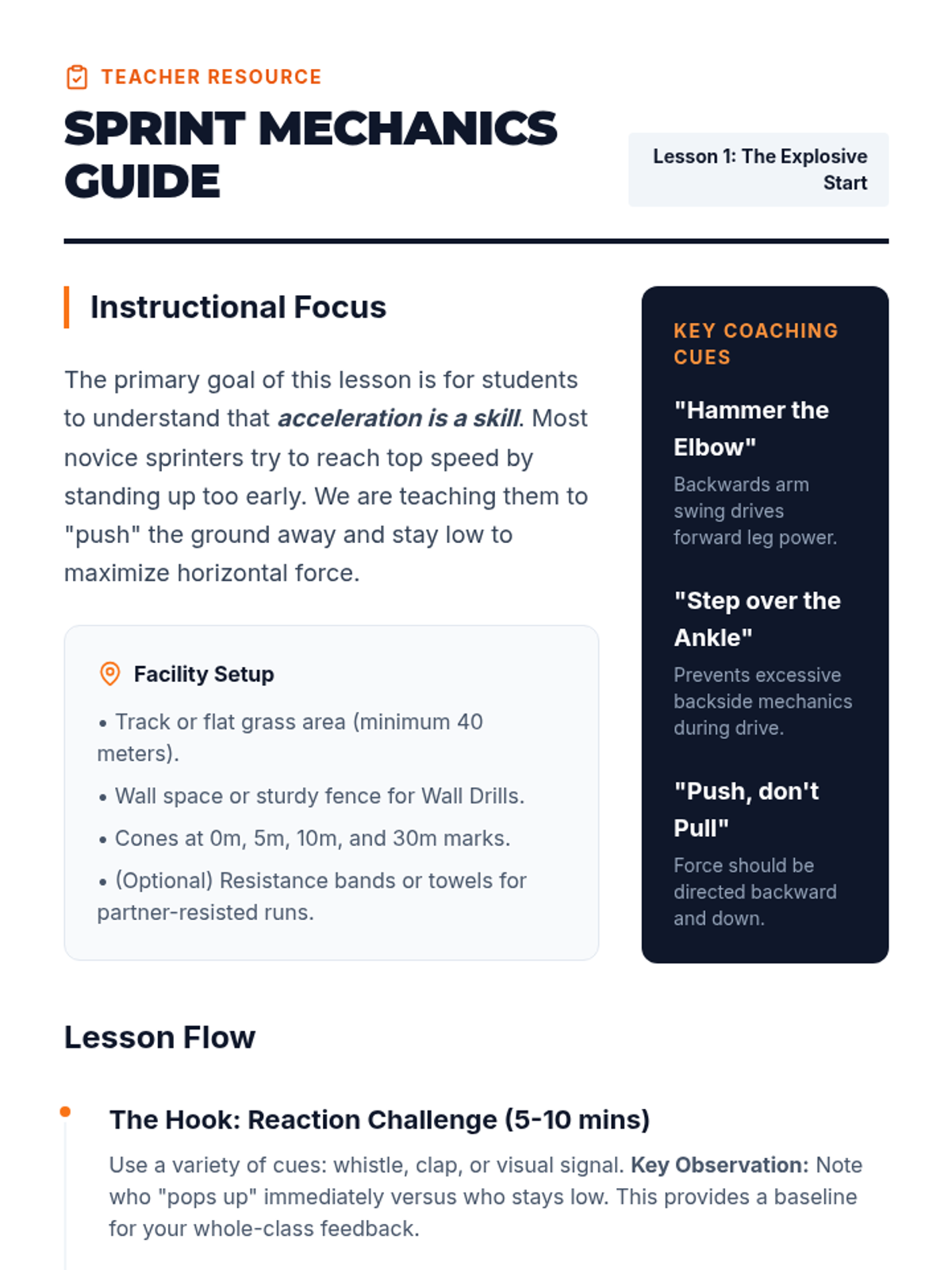
This 9th-grade physical education sequence deconstructs the biomechanics of track and field, covering explosive sprint starts, maximum velocity mechanics, relay coordination, and pacing strategies for endurance. Students transition from raw power to strategic efficiency, culminating in a performance analysis and time trial assessment.
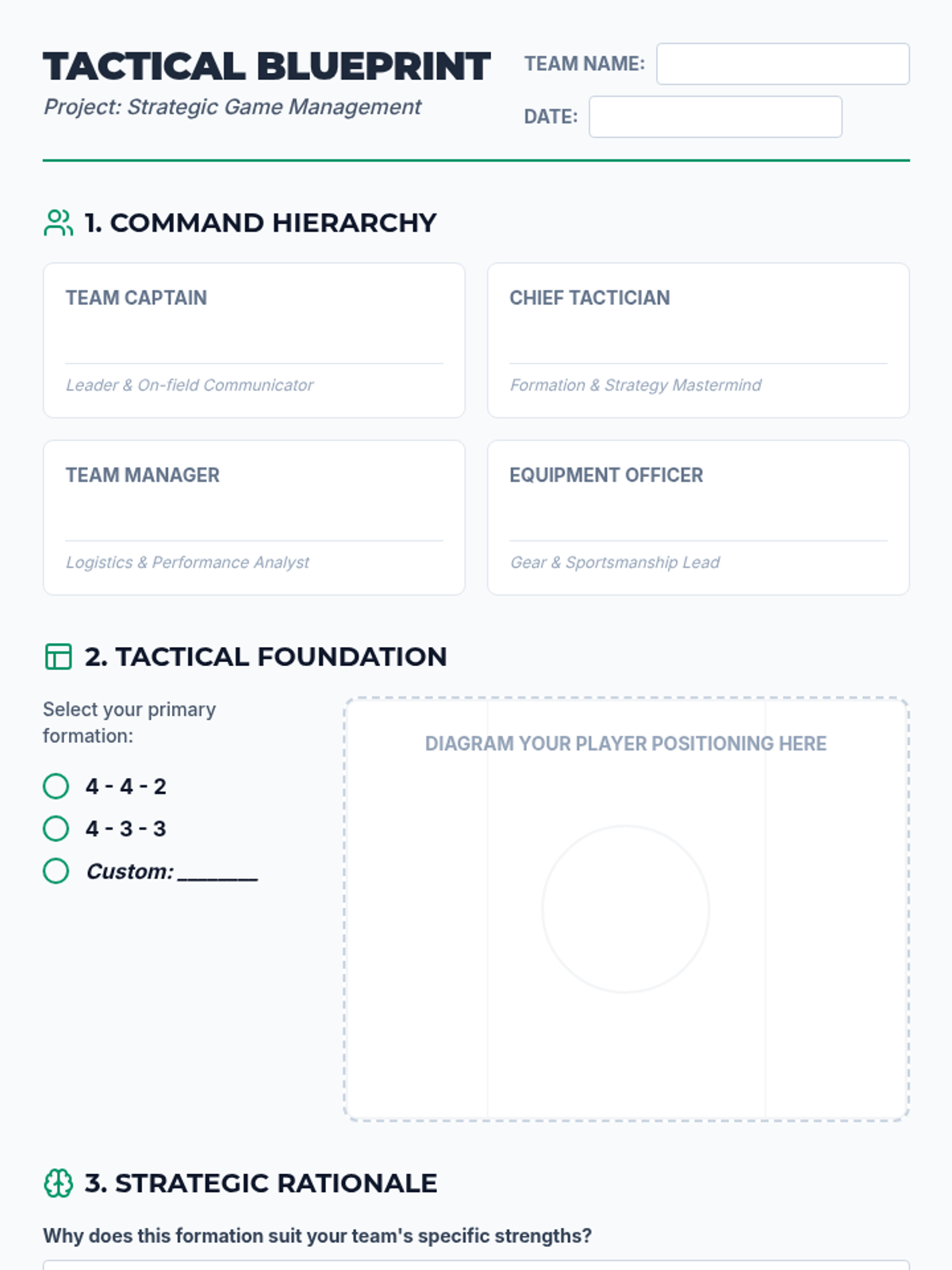
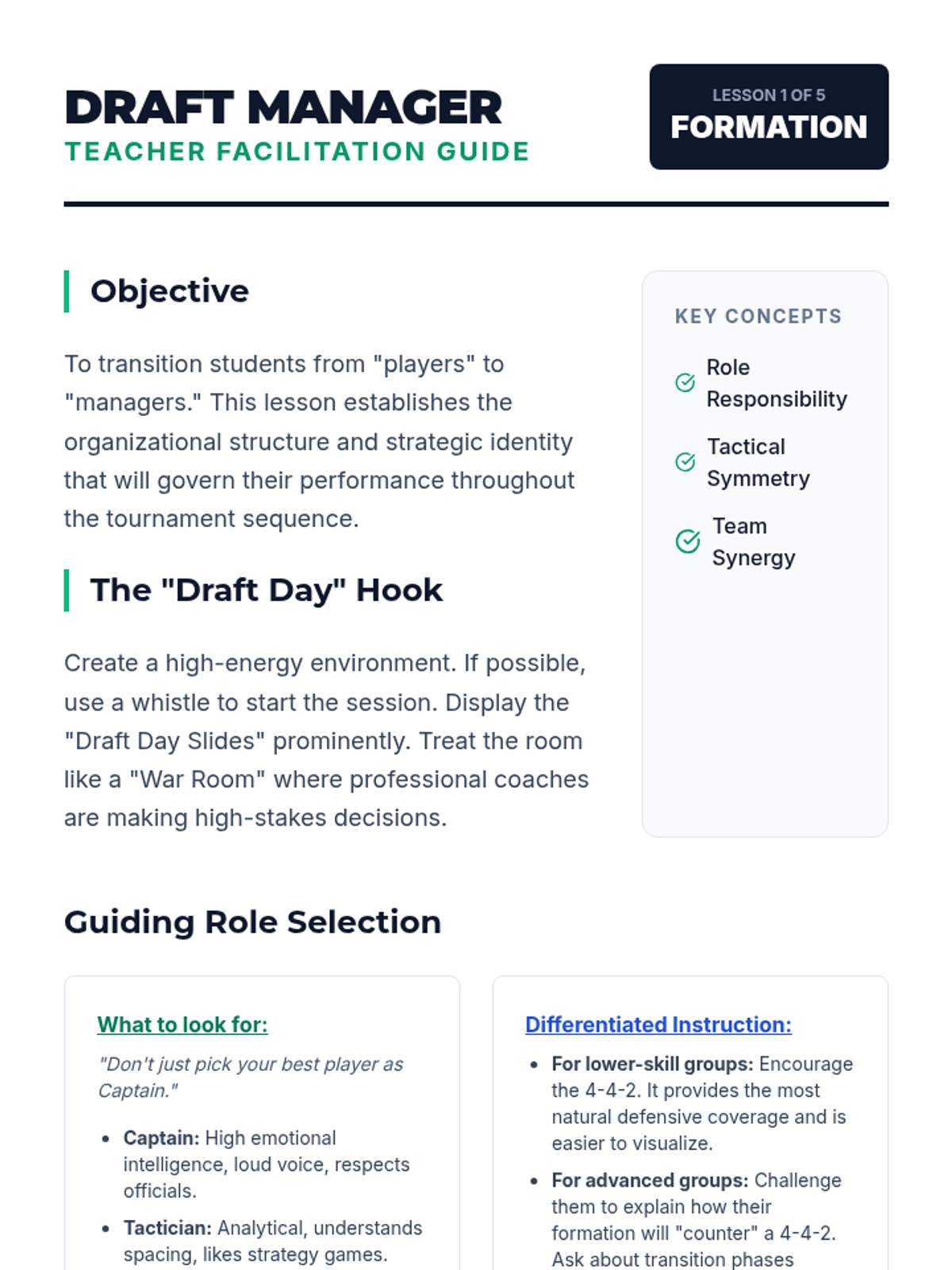
This project-based sequence integrates all skills into a simulated tournament structure where students take ownership of team management. Teams draft lineups, design playbooks, and officiate matches, gaining a holistic understanding of the sport. The sequence focuses on applying technical skills and tactical knowledge in a competitive environment, with designated reflection periods to adjust strategies. Students learn that successful outcomes rely on preparation, adaptation, and fair play as much as athletic ability.
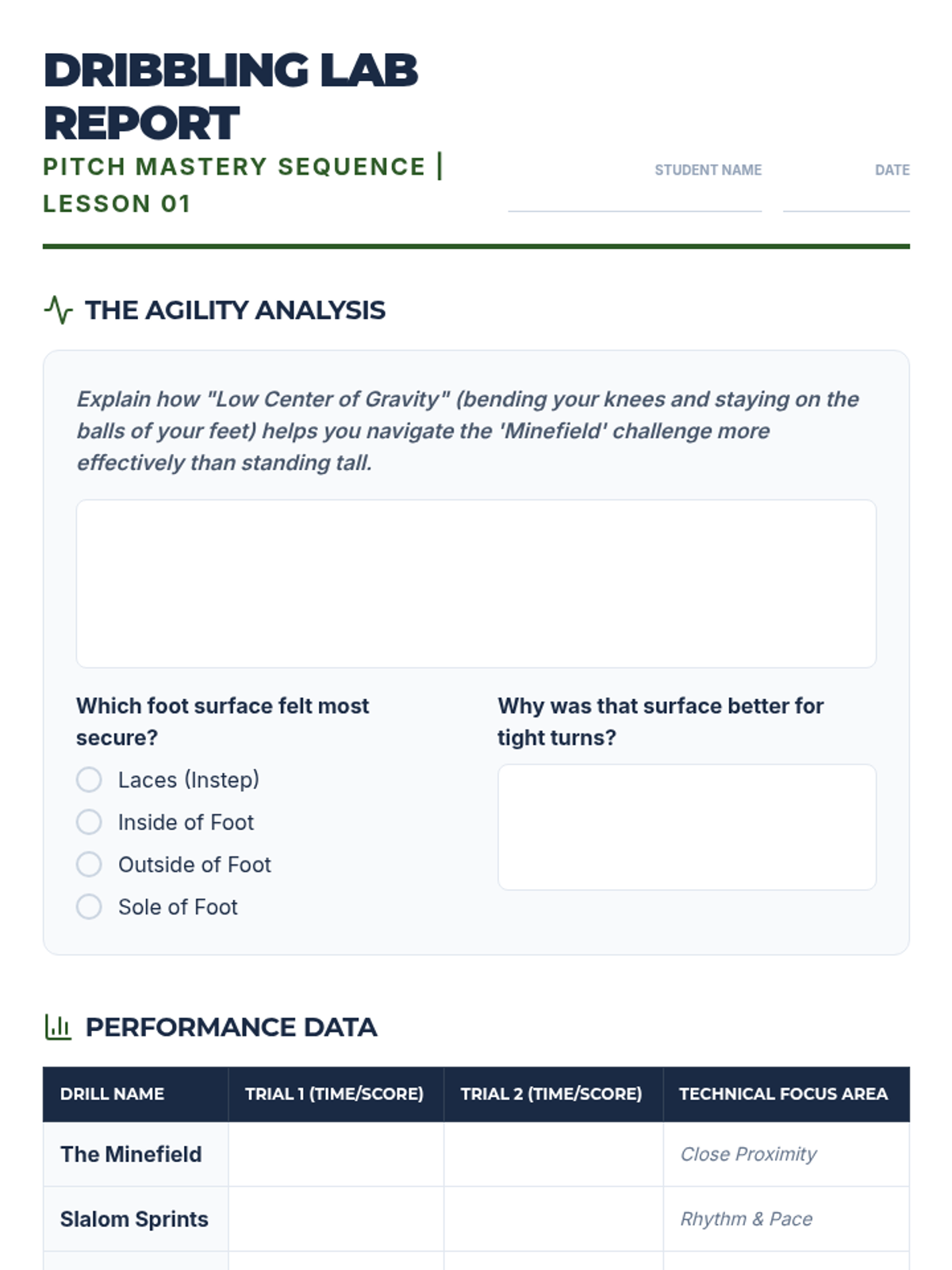
This 9th Grade PE sequence focuses on advanced ball control, shielding, and turning techniques in football. Students progress from individual dribbling mastery to high-pressure possession games, culminating in a Rondo-based assessment of their technical skills and decision-making.
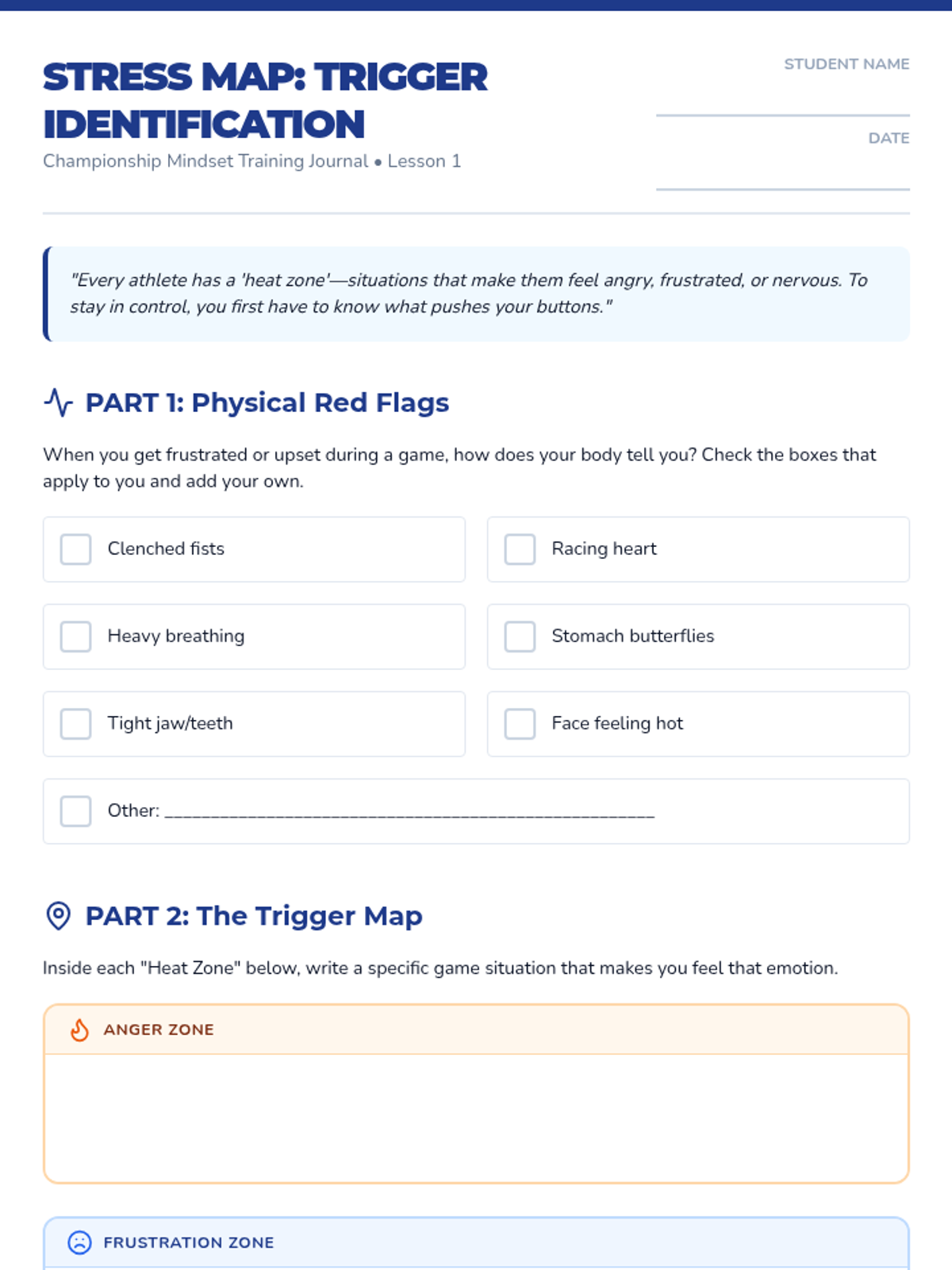
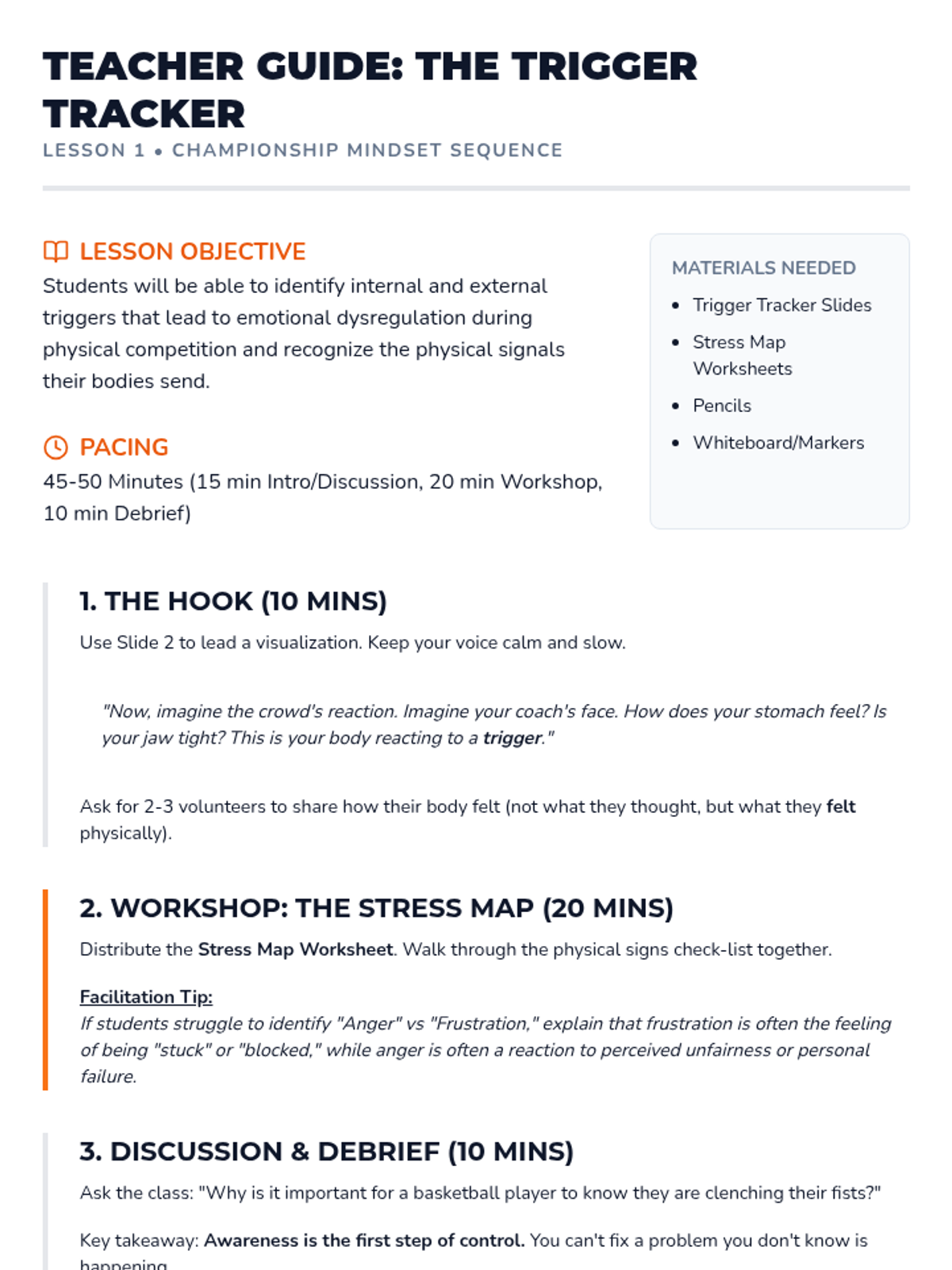
This sequence focuses on the internal aspect of sportsmanship: emotional regulation. Students learn concrete strategies for managing frustration, anger, and excitement during competitive play, progressing from identifying triggers to applying coping mechanisms in real-time games.
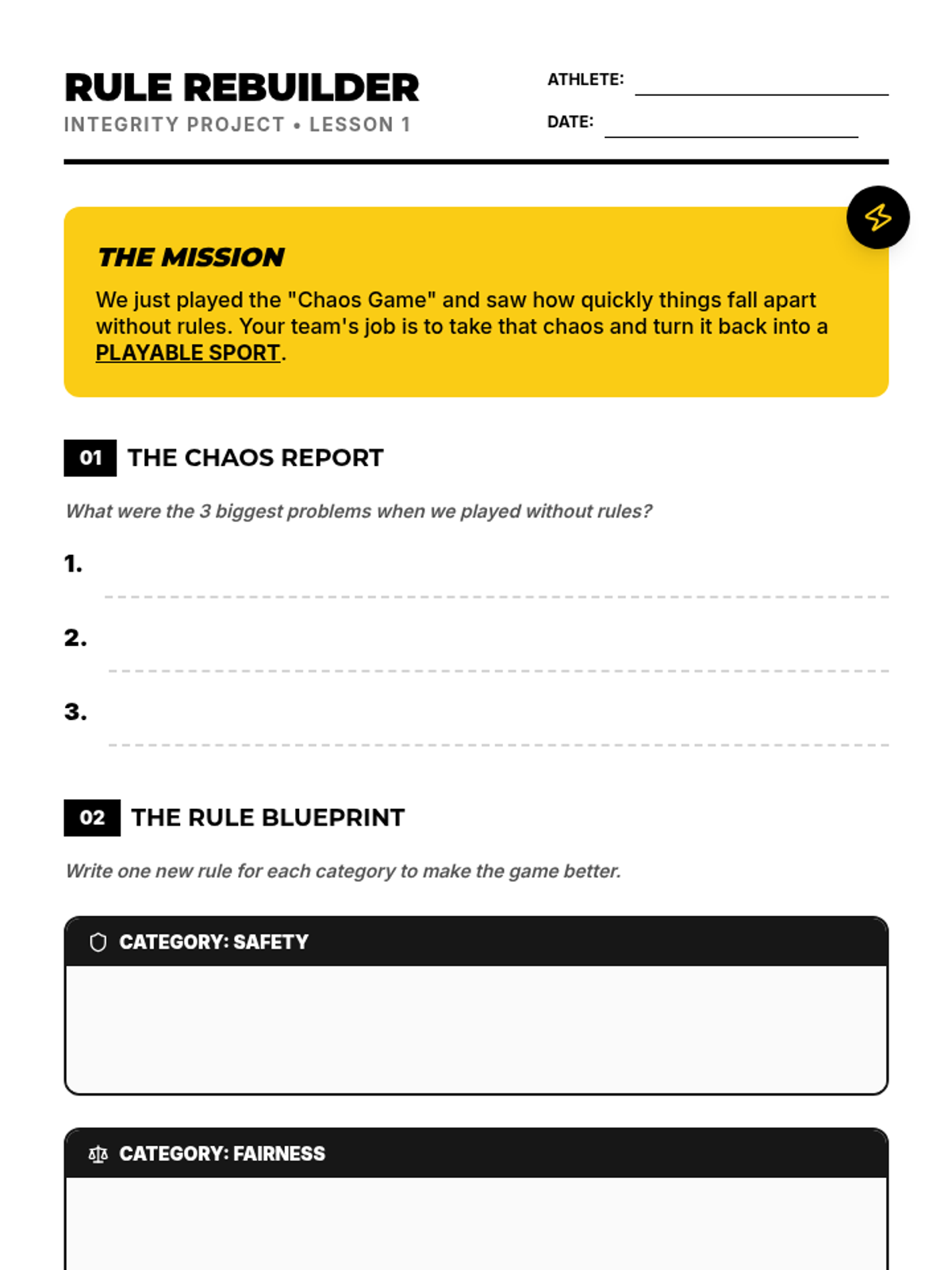
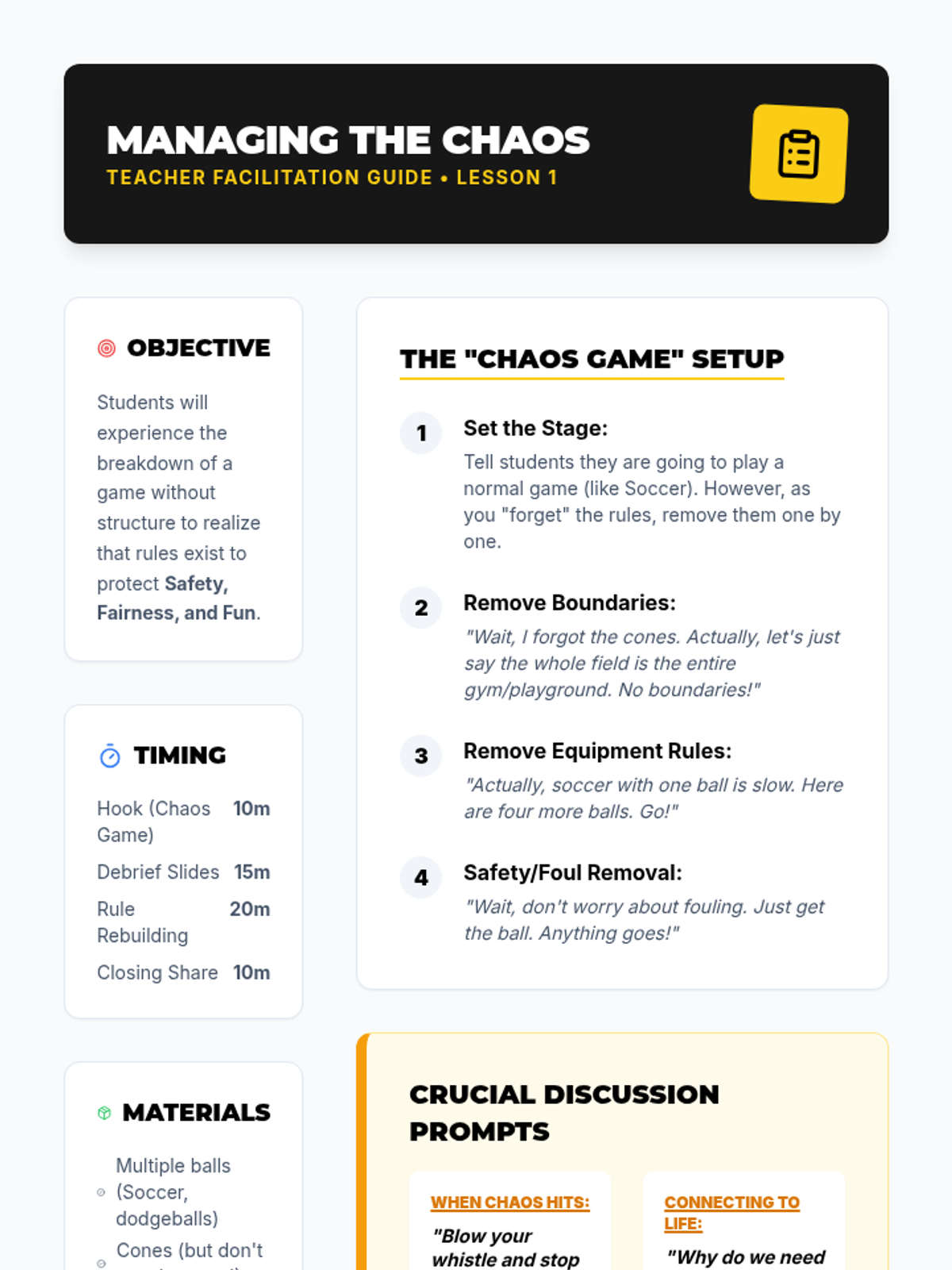
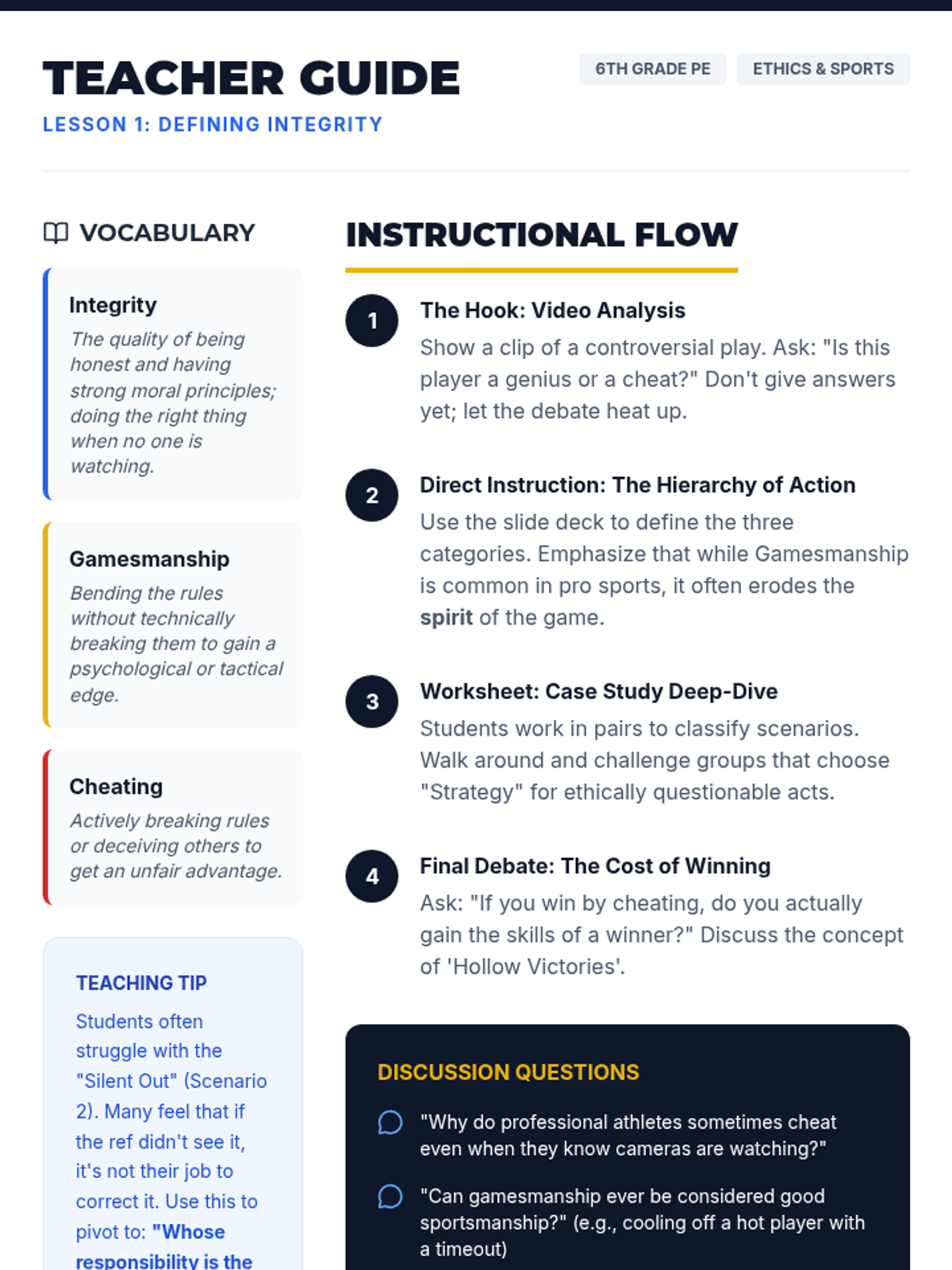
This sequence explores the structural necessity of rules, integrity, and respect for officials in organized sports. Students learn through experiential games, role-playing, and self-officiating to understand why fair play is essential for safety and enjoyment.
A 5-lesson sequence focused on building emotional regulation and conflict resolution skills through active gameplay and simulations in physical education.
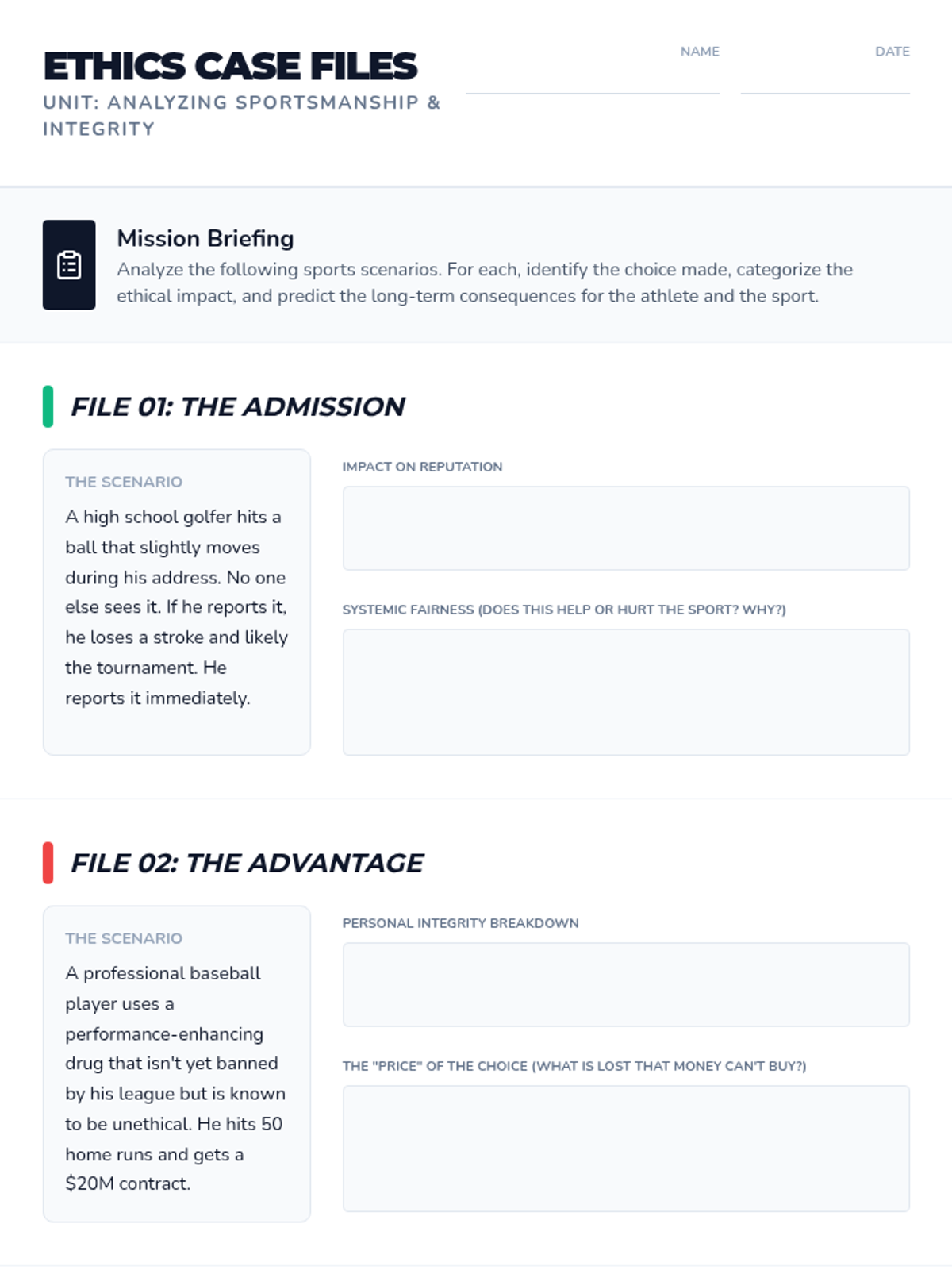
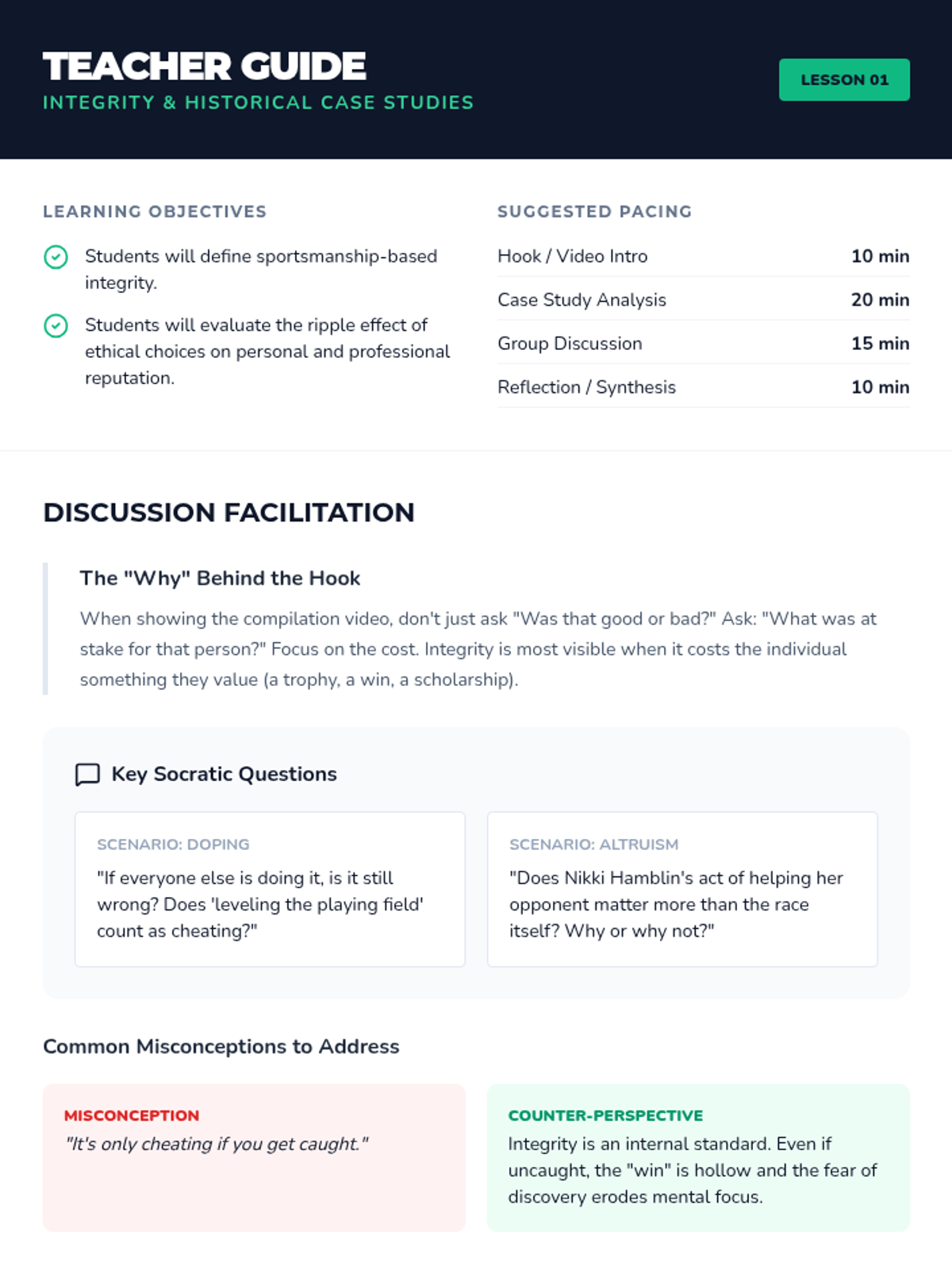
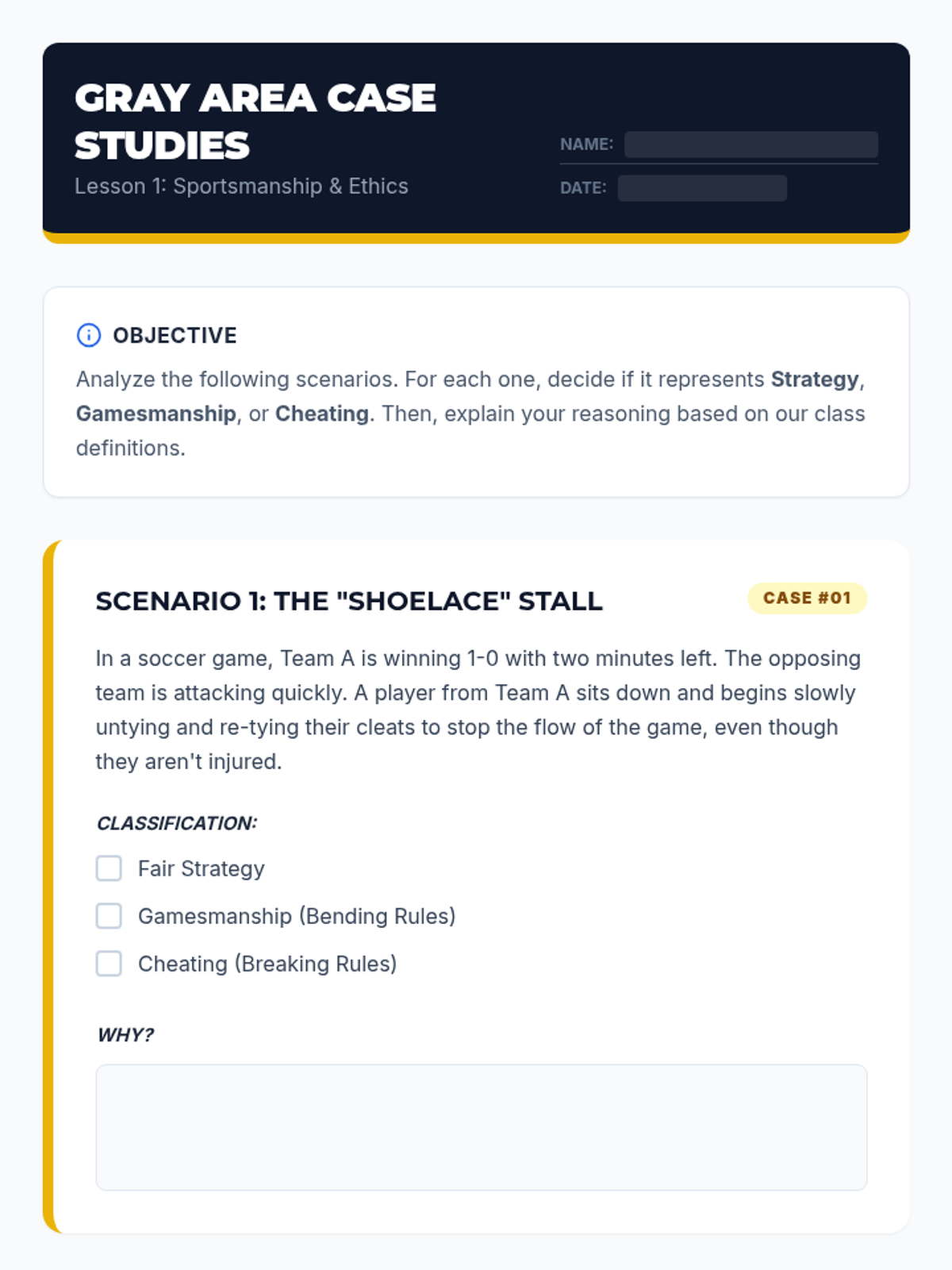
This sequence challenges 9th-grade students to analyze ethical dilemmas in sports, from doping to altruism. Students examine the pressures of competition, empathy for officials, and the boundary between competitive banter and verbal abuse, culminating in the creation of a personal 'Athlete's Code of Ethics'.
A comprehensive 9th Grade PE unit focusing on the biomechanics of football shooting. Students progress from stationary power shots to complex aerial volleys and finishing under pressure, combining physical practice with an understanding of the physics behind ball flight.
This sequence explores sportsmanship through case studies, simulations, and personal reflection. Students analyze the ethics of competition, experience the pressure of officiating, and commit to a shared code of conduct for fair play.
A comprehensive 9th-grade physical education unit focused on the biomechanics of sprinting, relay coordination, and middle-distance pacing strategies. Students progress from explosive starts to endurance management, culminating in a competitive track meet simulation.
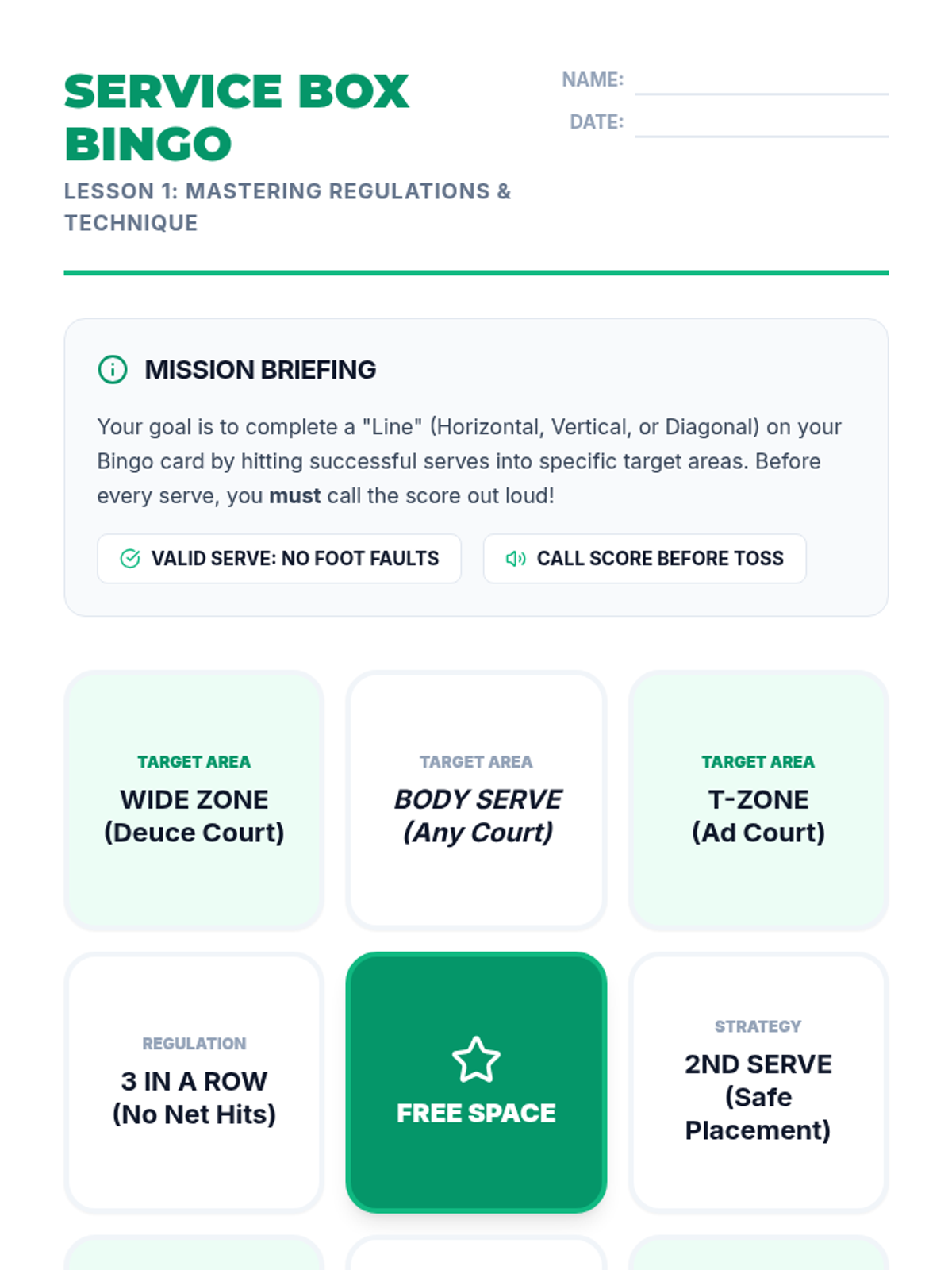
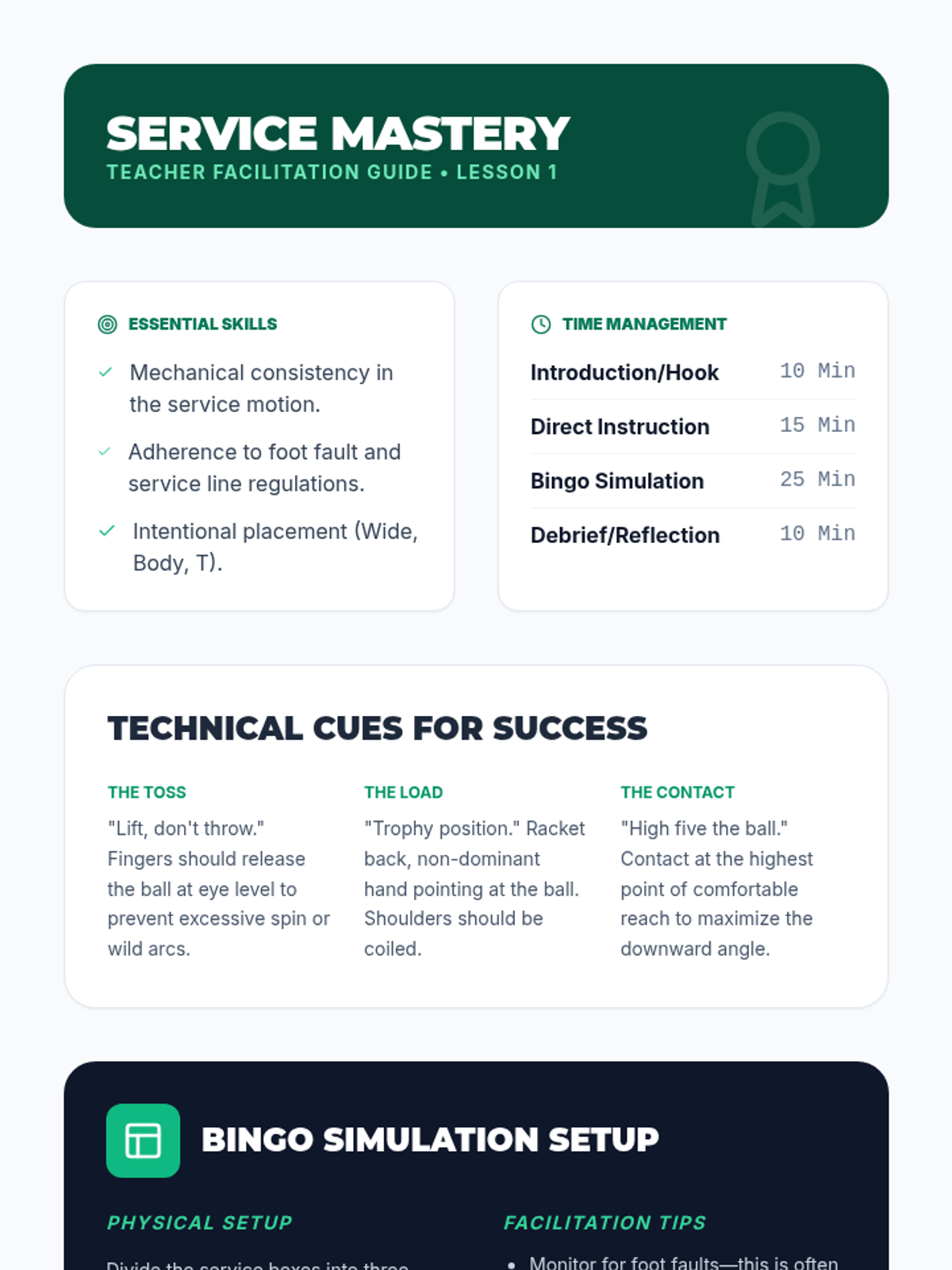
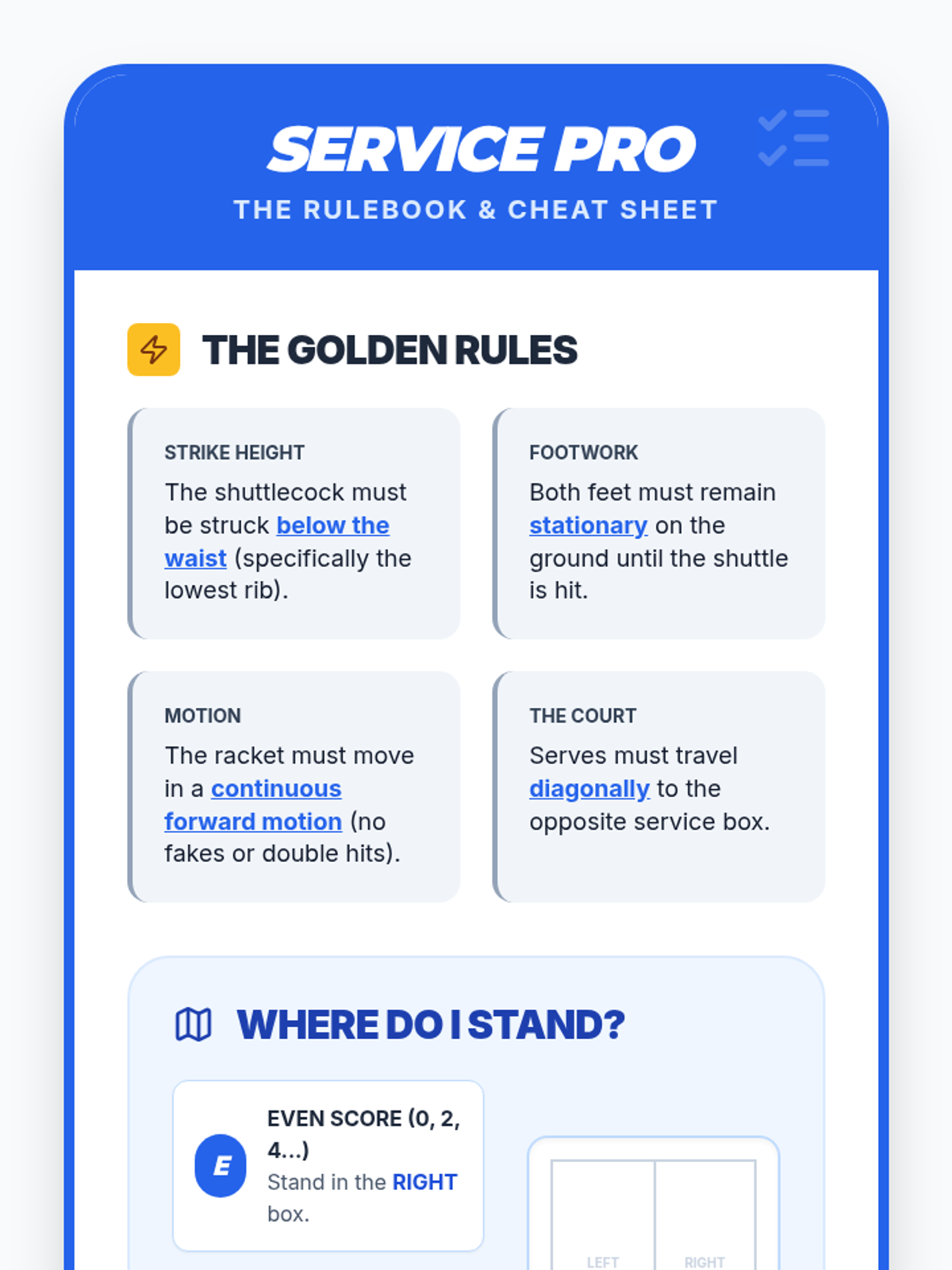
This sequence transitions 9th-grade students from basic mechanics to tactical application and competitive play in racket sports. It covers serving regulations, scoring systems, singles and doubles positioning, and self-officiating, culminating in a structured tournament simulation.
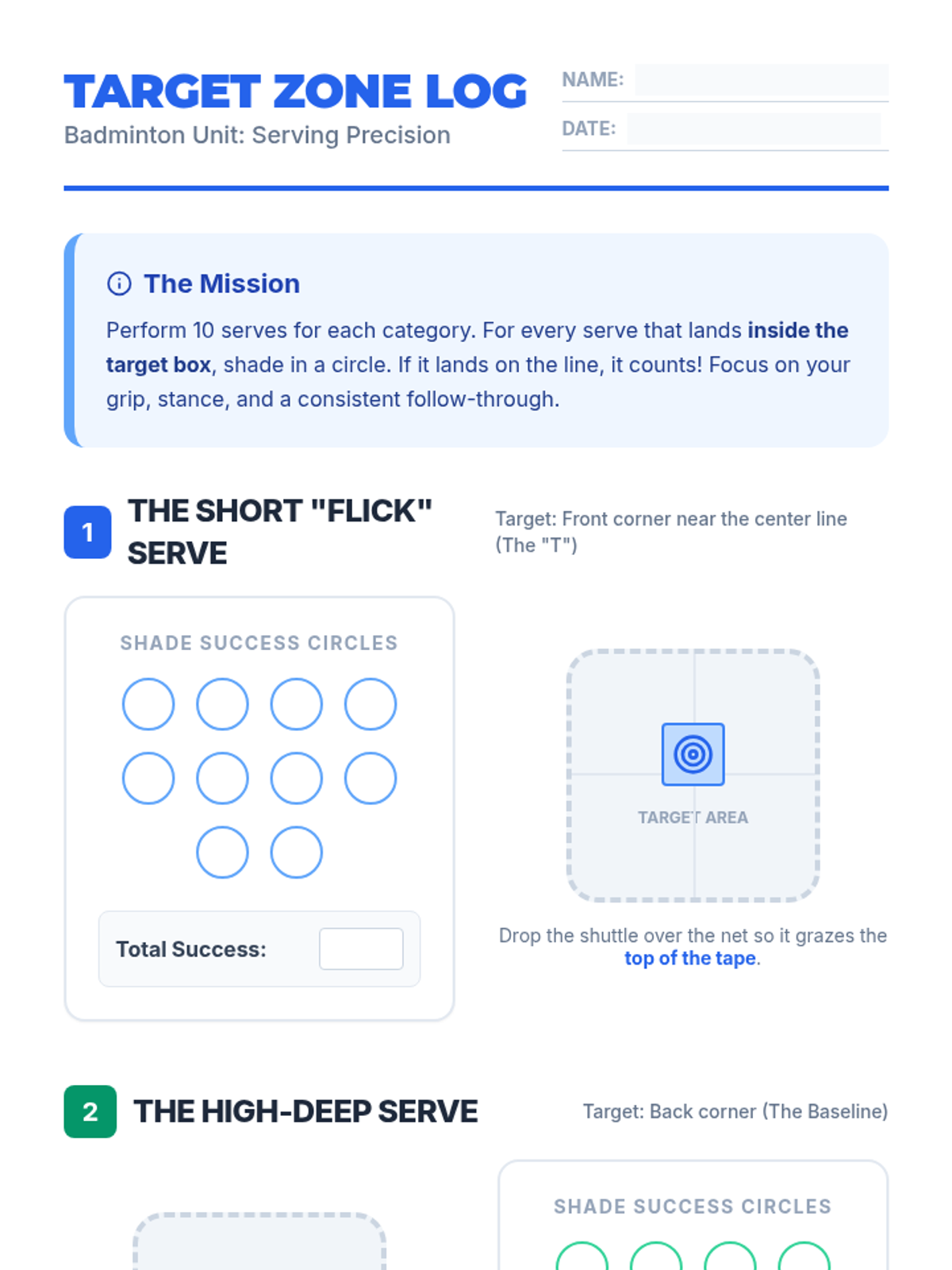
A 6th-grade badminton sequence focusing on tactical spatial awareness, serving precision, offensive shot selection, and doubles communication, culminating in a competitive tournament.