Fundamental notation, instrumental proficiency, and vocal techniques across various genres. Connects historical analysis with original composition and creative performance skills.
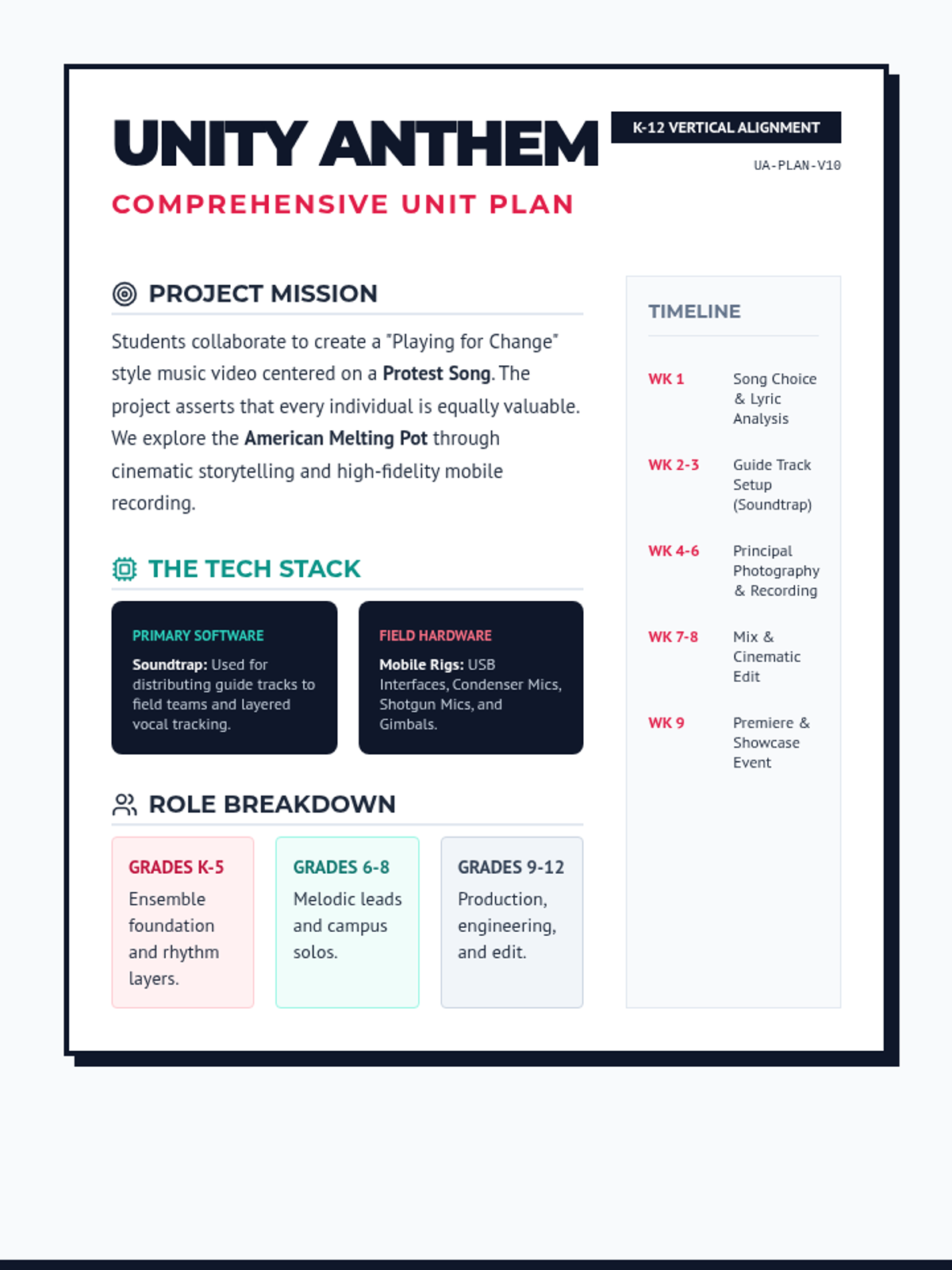
A K-12 collaborative music video project where students across all grade levels work together to produce a 'Playing for Change' style cover of a protest song centered on equality and cultural identity. High school students lead production, while K-8 students provide the musical and visual heart of the performance.
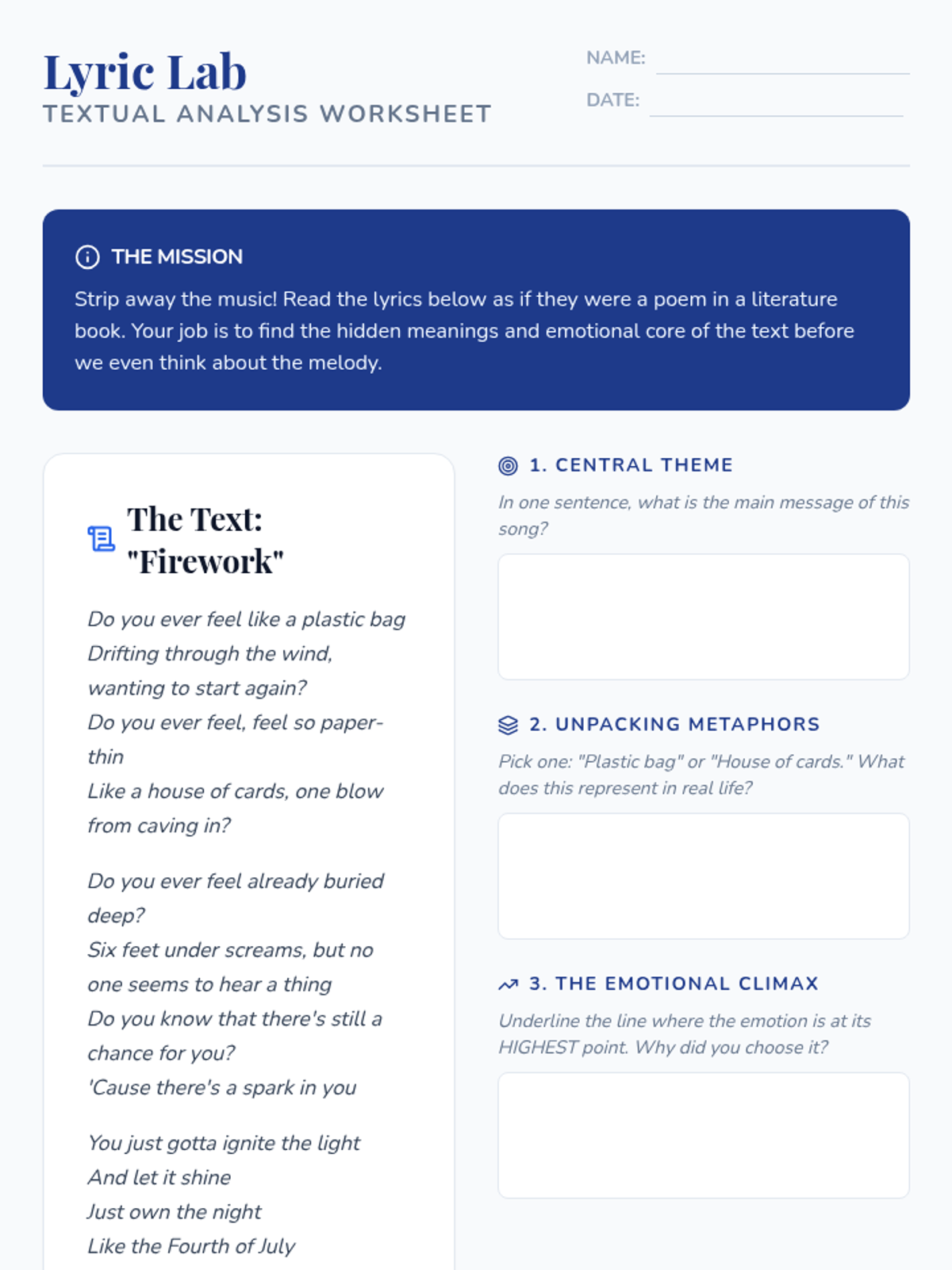
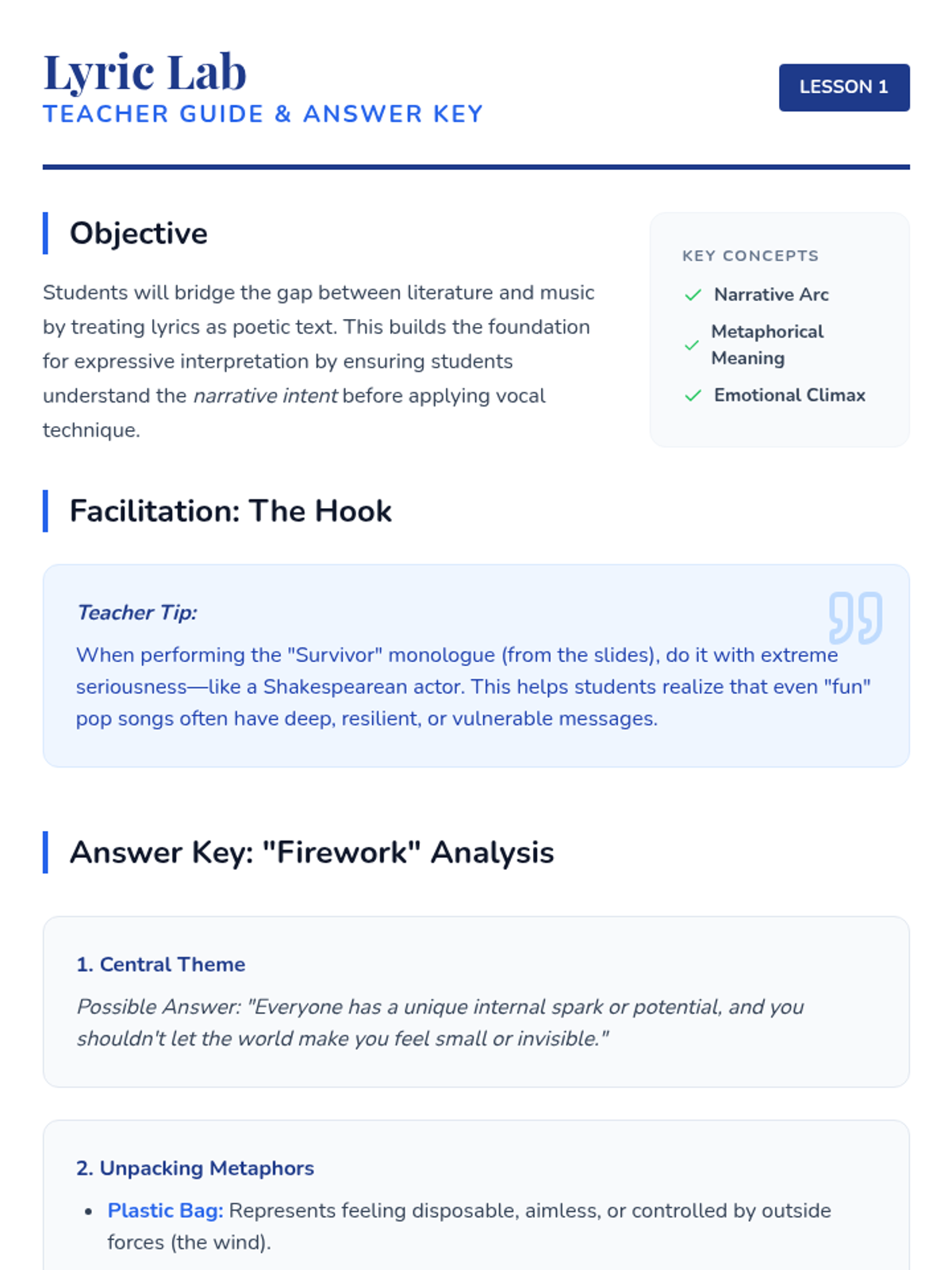
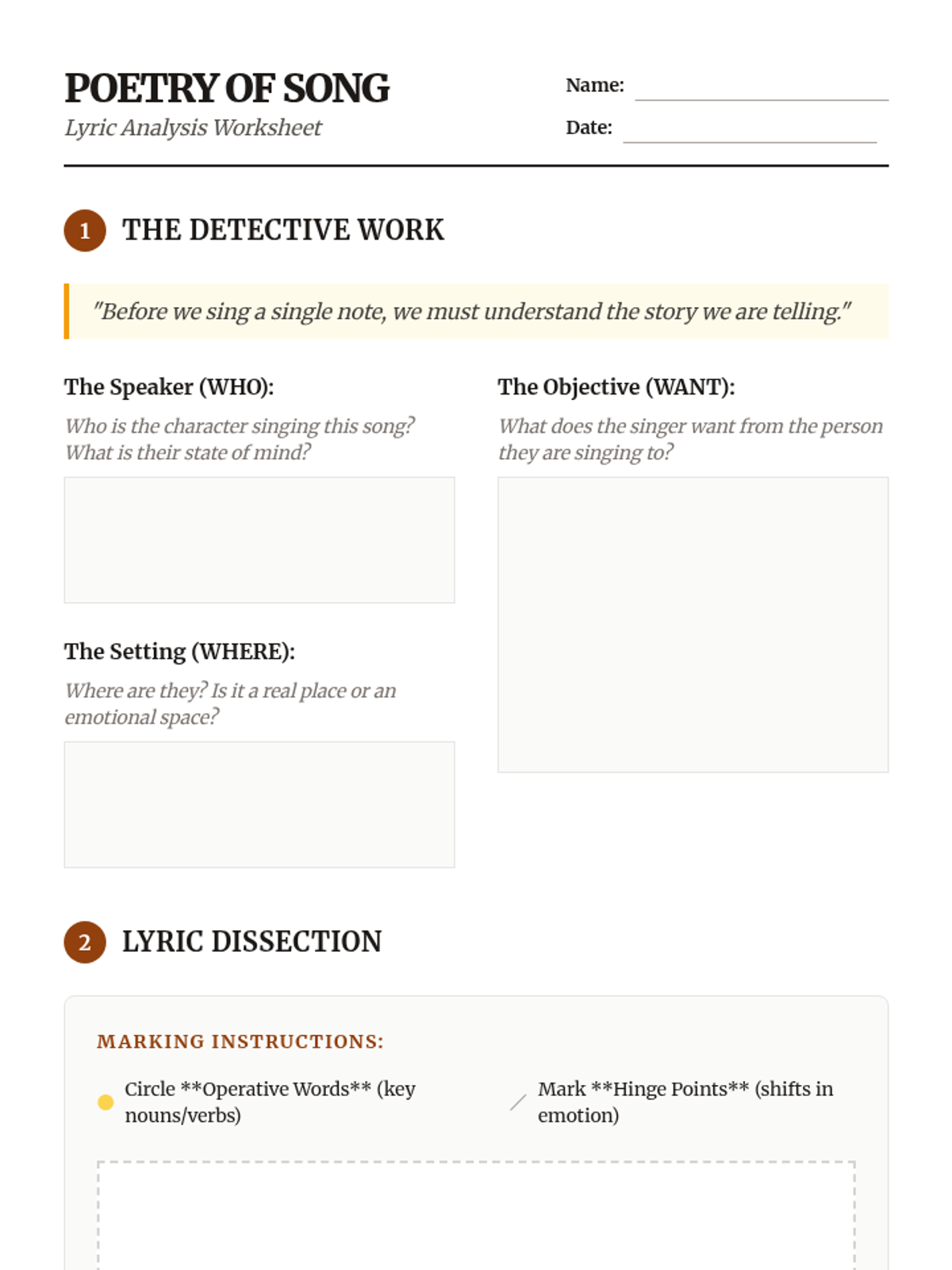
A 5-lesson unit for 6th-grade singers focusing on the intersection of technical performance and artistic storytelling. Students explore lyrics as poetry, master the mechanics of phrasing and breath management, manipulate dynamics and tempo for emotional impact, and analyze interpretive choices in cover songs.
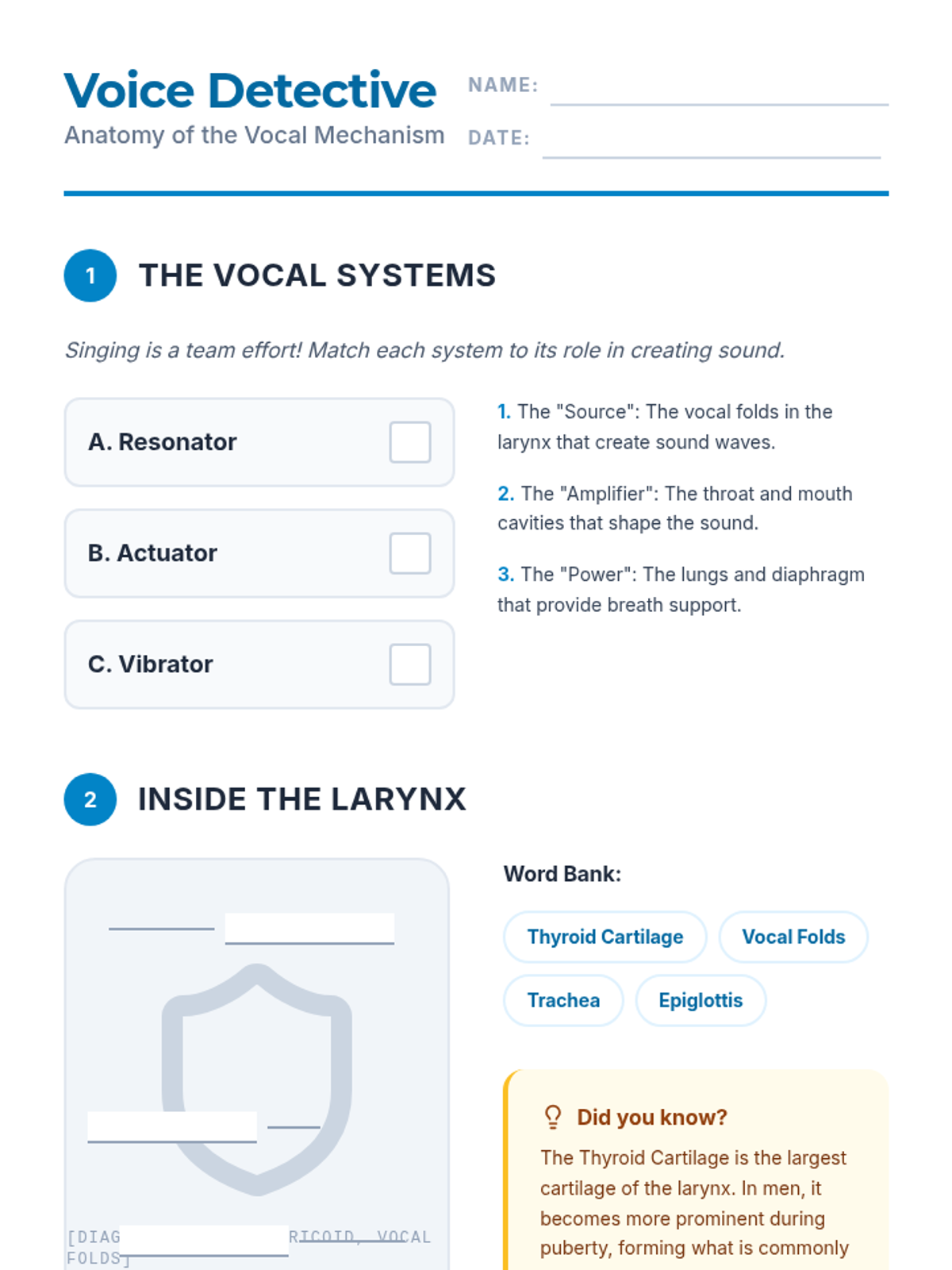
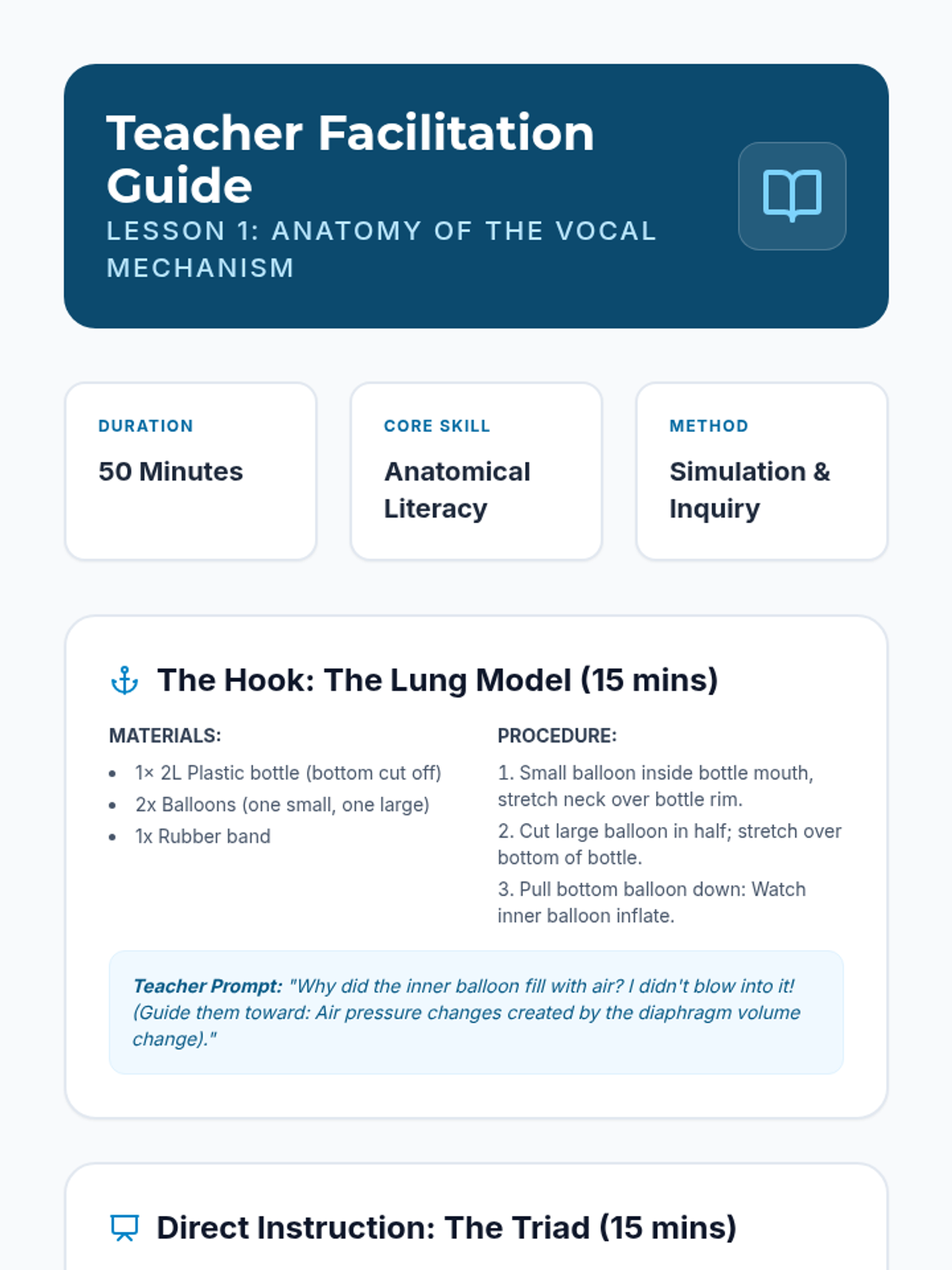
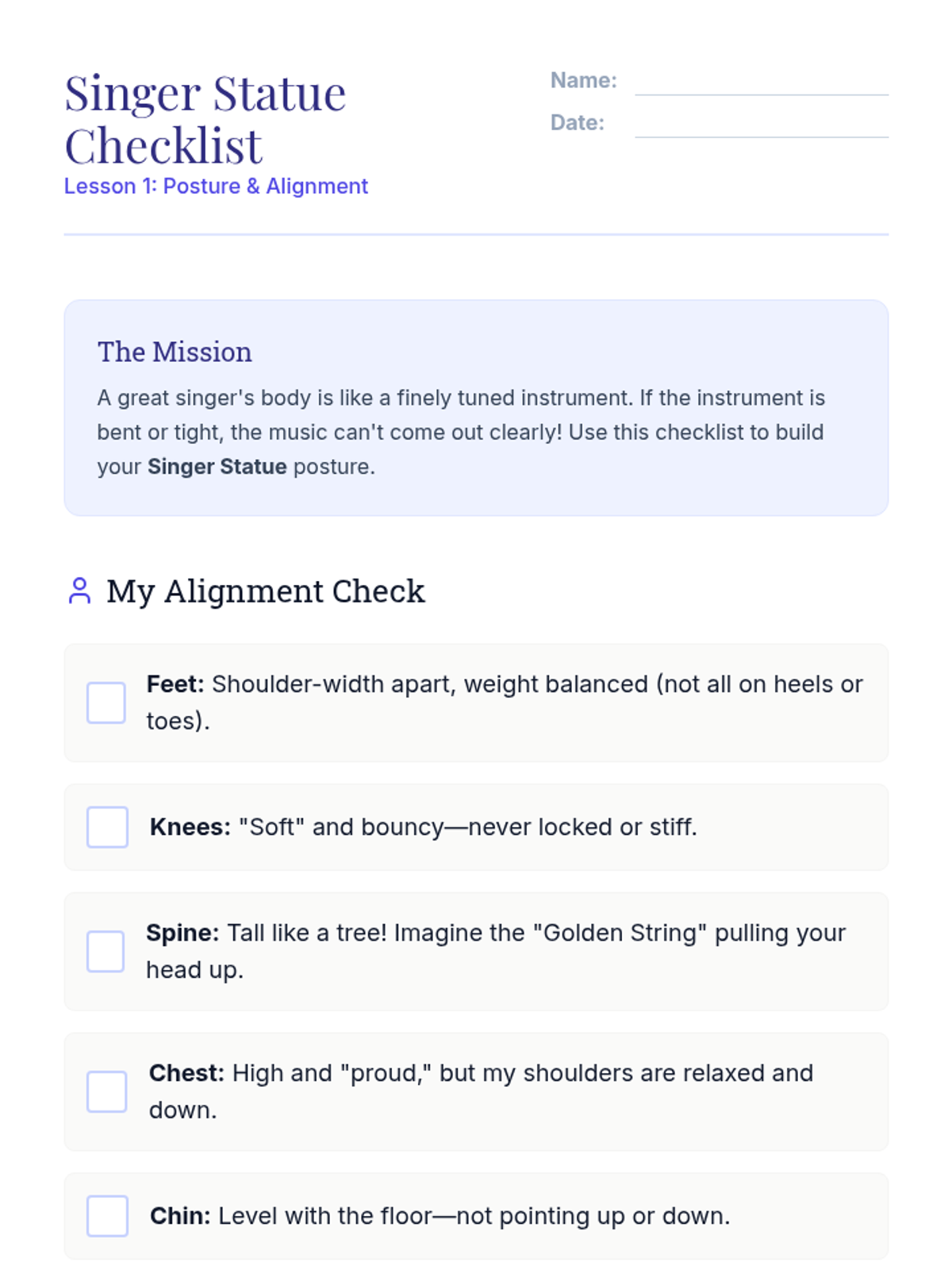
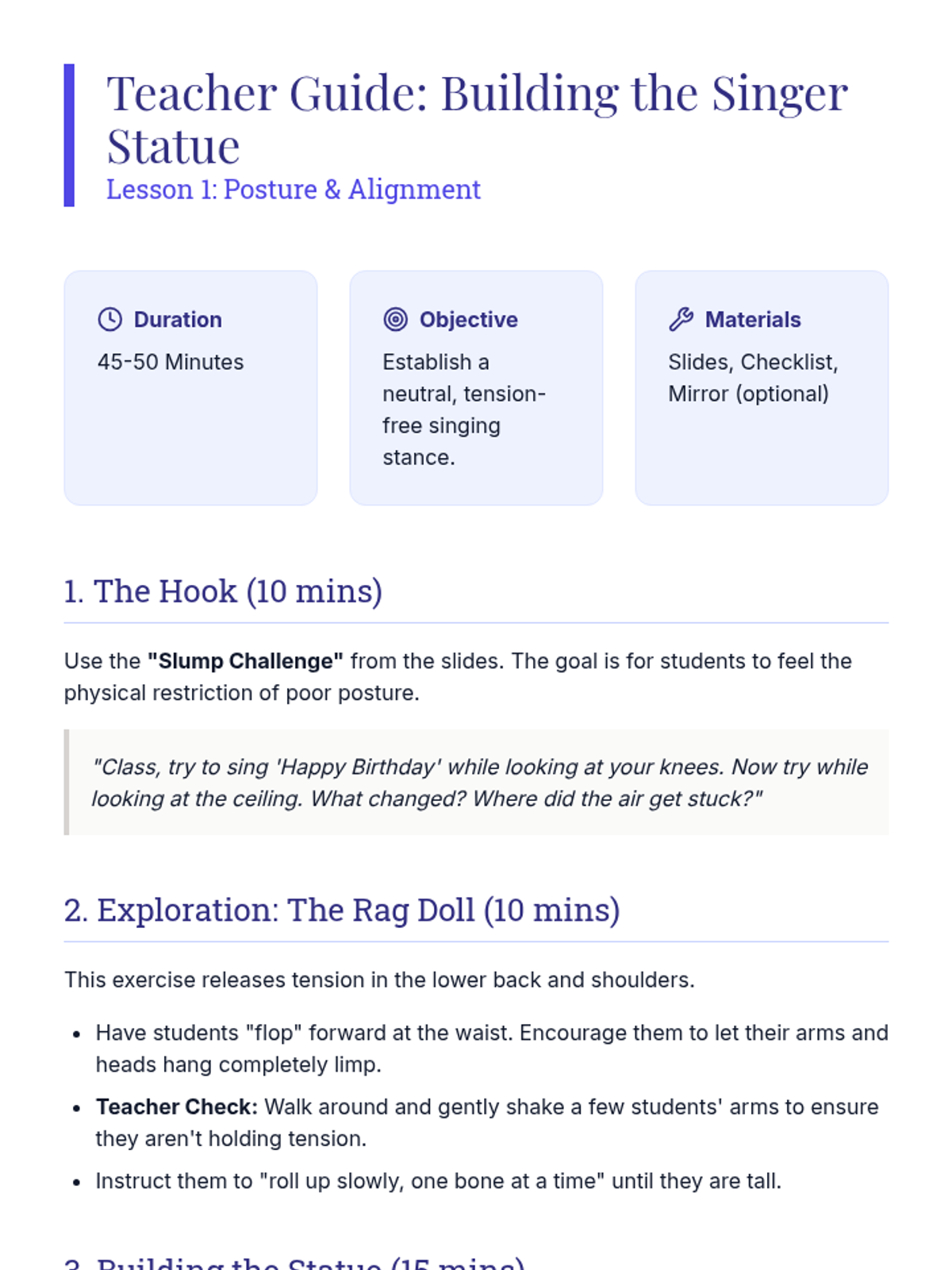
A foundational sequence for 6th-grade vocalists that bridges biological science with artistic expression. Students explore vocal anatomy, breath support, posture, and vocal health to build a sustainable and healthy singing practice during the adolescent voice change.
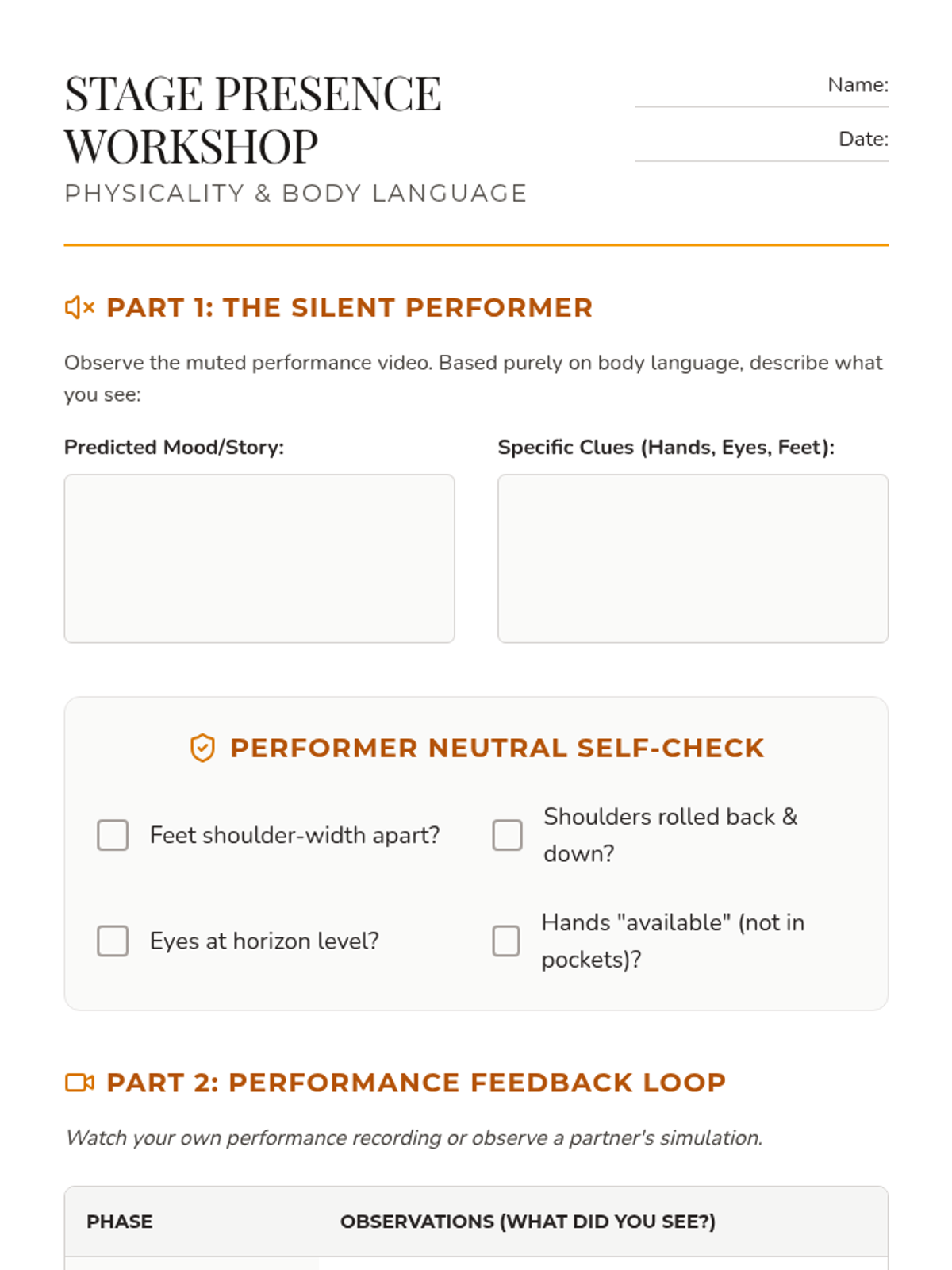
A comprehensive unit for middle school vocalists focused on stage presence, performance anxiety, audience engagement, and technical skills like microphone technique, culminating in a mock audition.
This sequence develops 7th-grade students' ability to interpret music and communicate emotion through vocal performance. It covers lyric analysis, dynamics, phrasing, and tone color, culminating in a performance workshop focused on artistic intent.
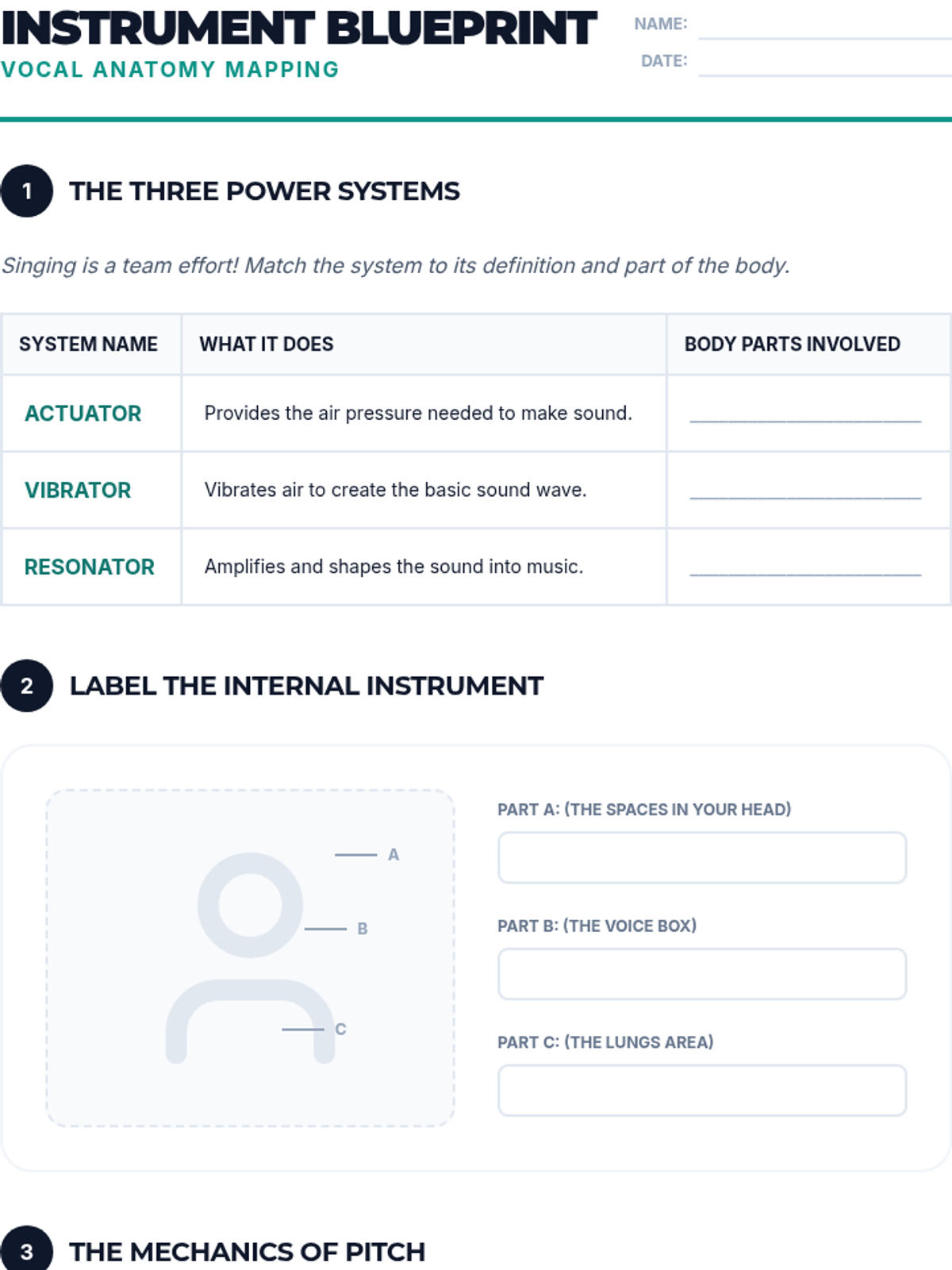
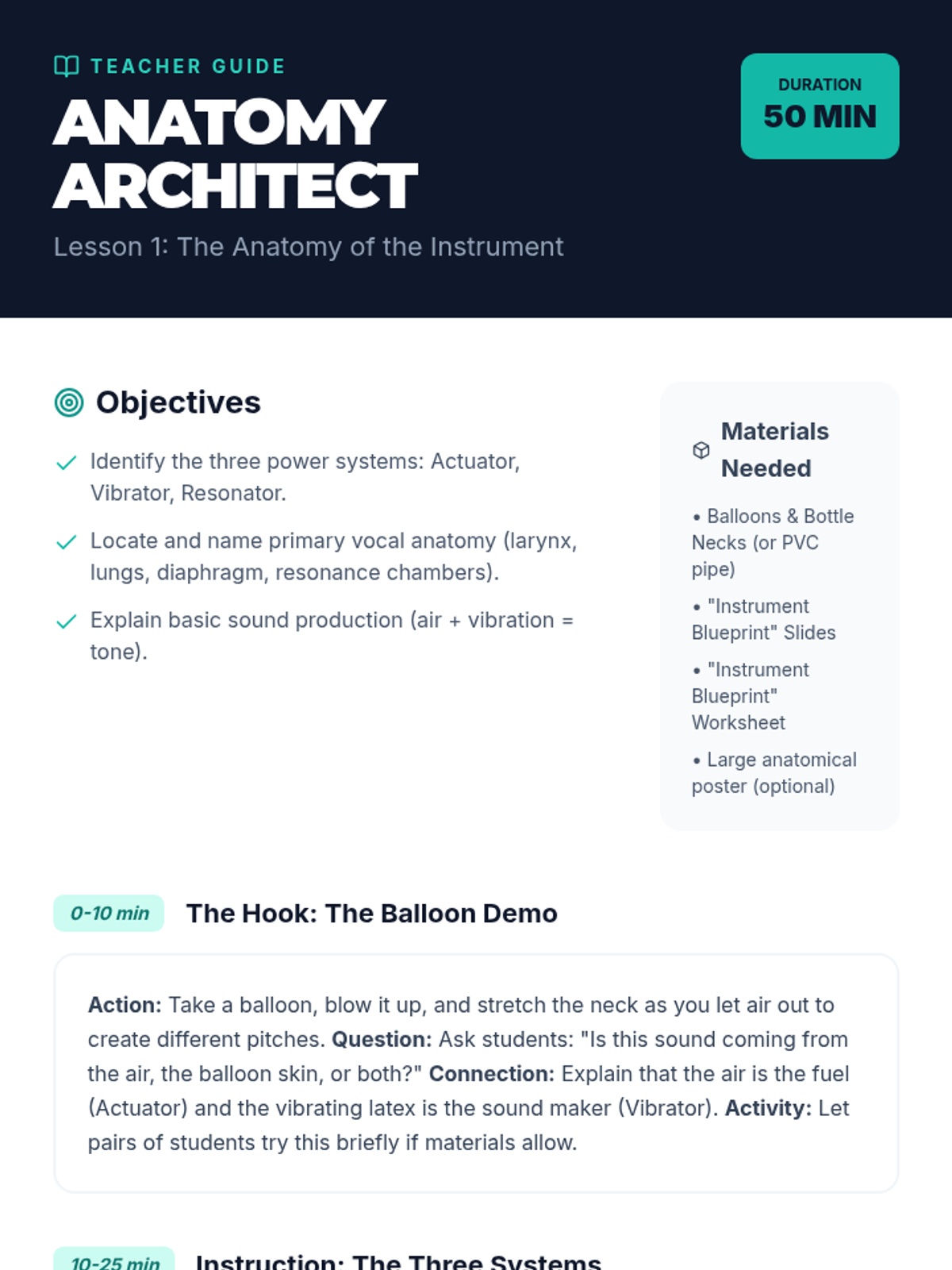
This sequence establishes the physiological foundation of singing by exploring the mechanics of the voice as an instrument. Students move from anatomical identification to practical application of posture and breath management, specifically addressing the needs of the changing adolescent voice.
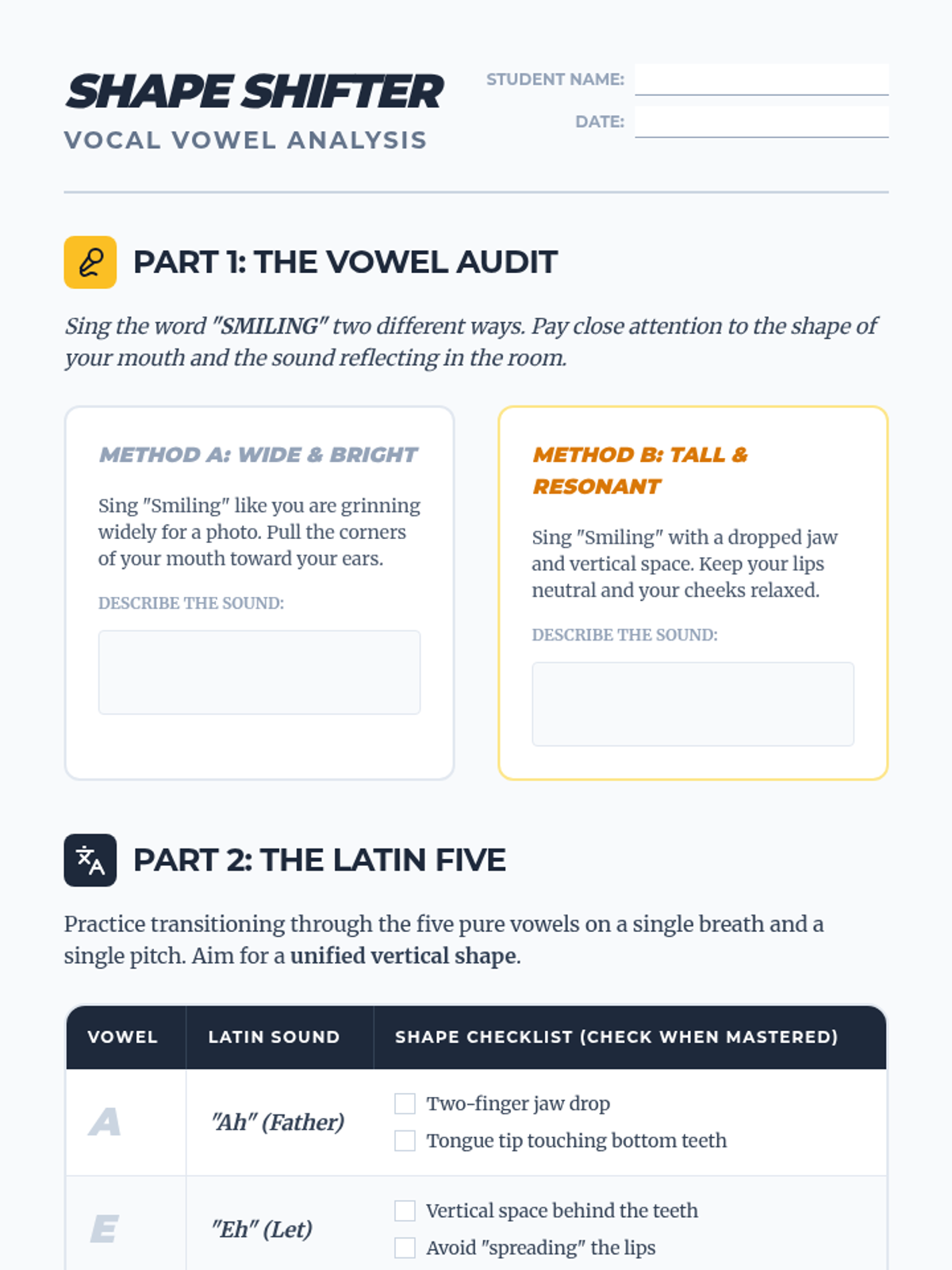
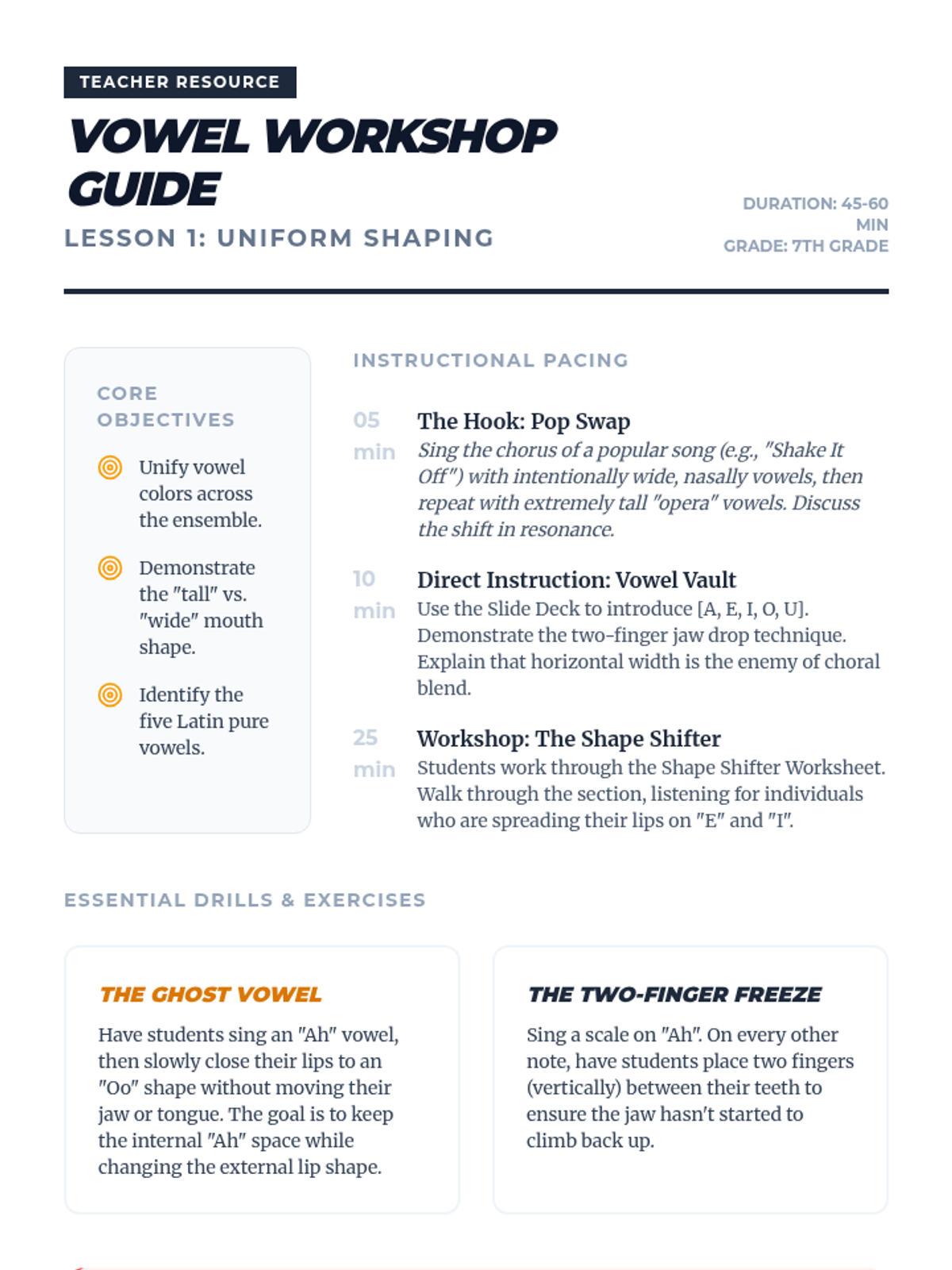
A comprehensive unit for middle school vocalists focusing on the technical aspects of vocal clarity, from Italian vowel shapes to stylistic diction across genres. students will master vowel unification, consonant energy, diphthong resolution, and legato phrasing.
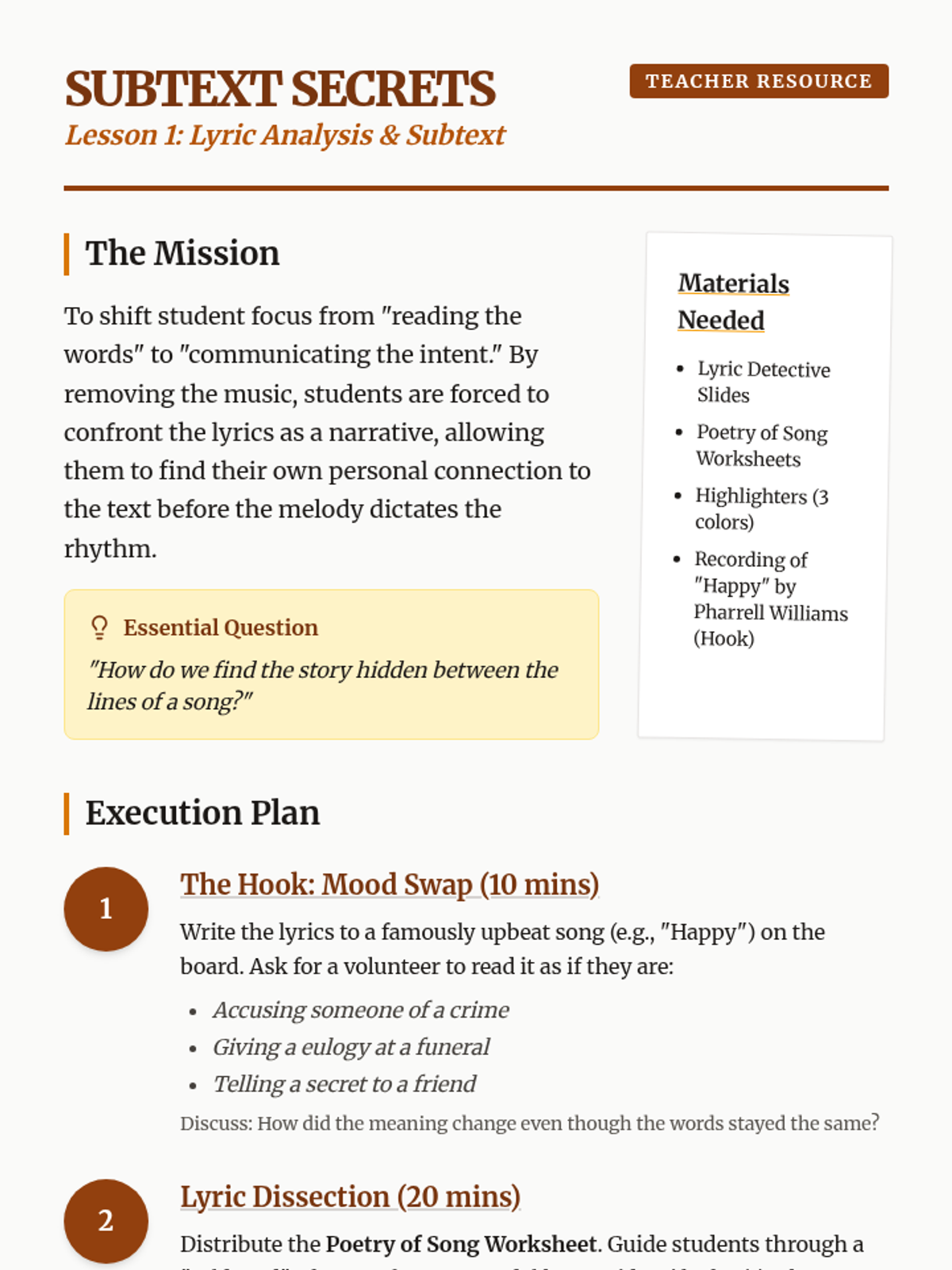
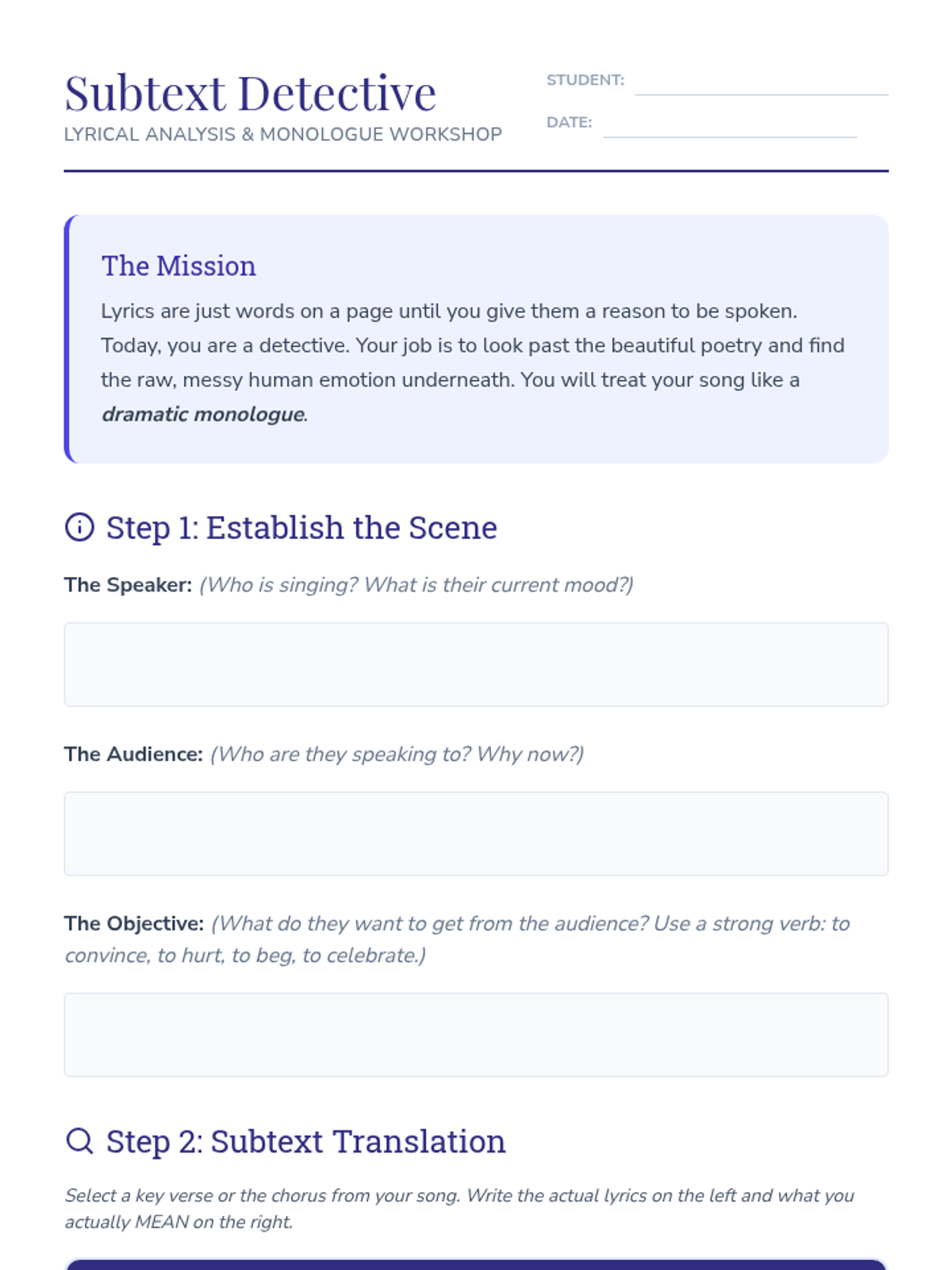
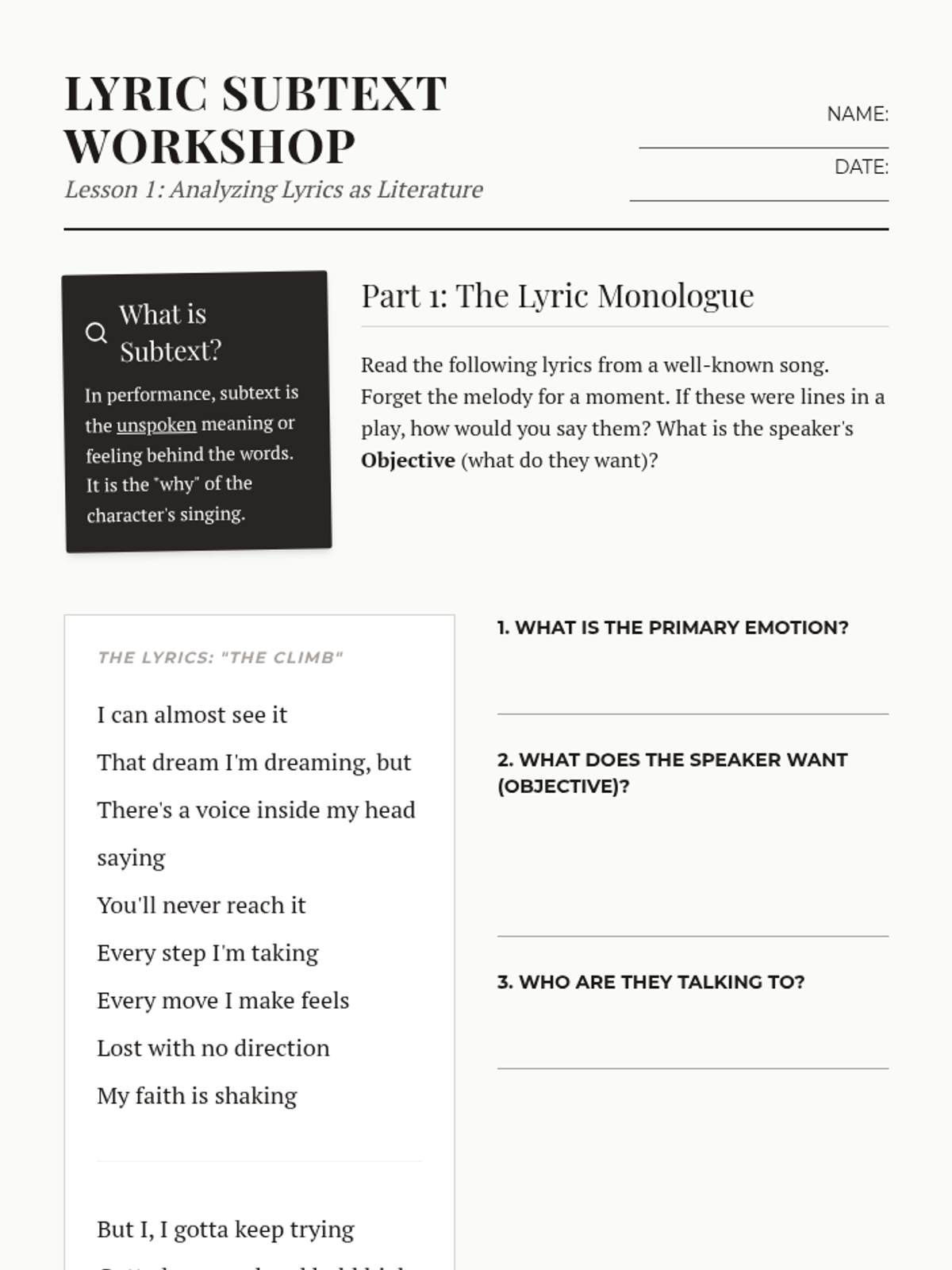
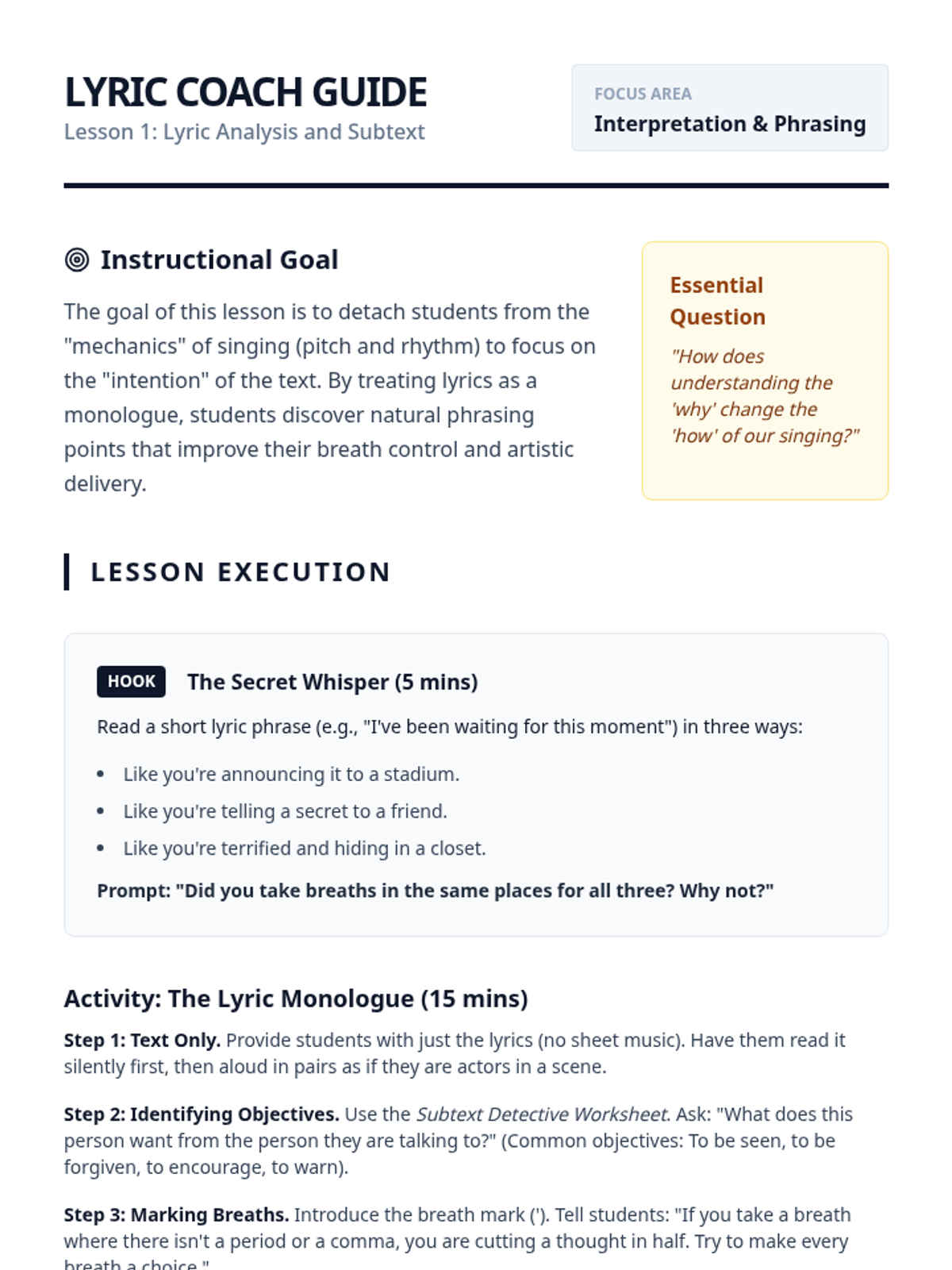
A comprehensive vocal performance sequence that teaches students to move beyond notes and rhythms to become vocal 'actors.' Students analyze subtext, master expressive diction, map musical phrasing, and explore tone color to deliver emotionally authentic performances.
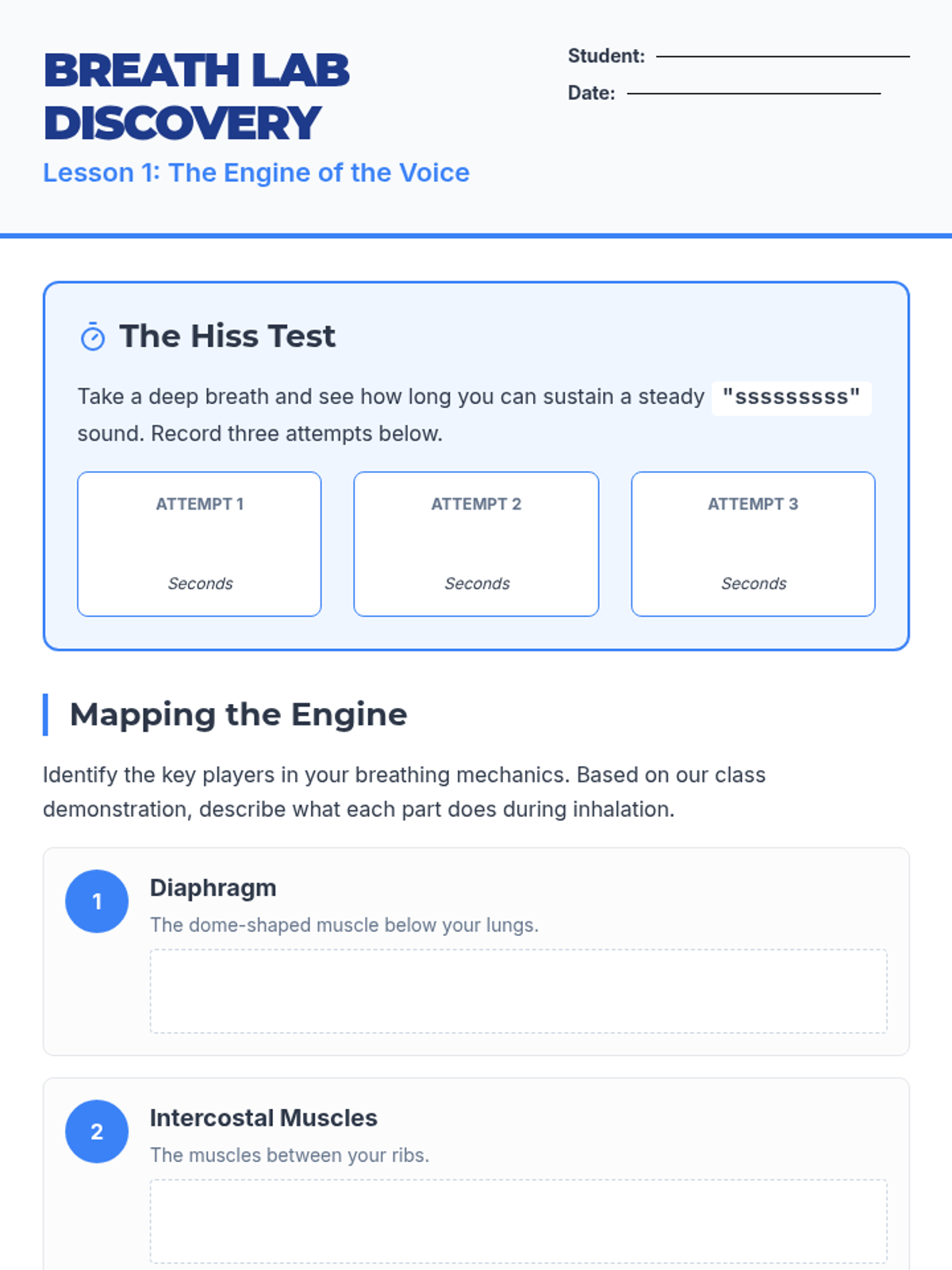
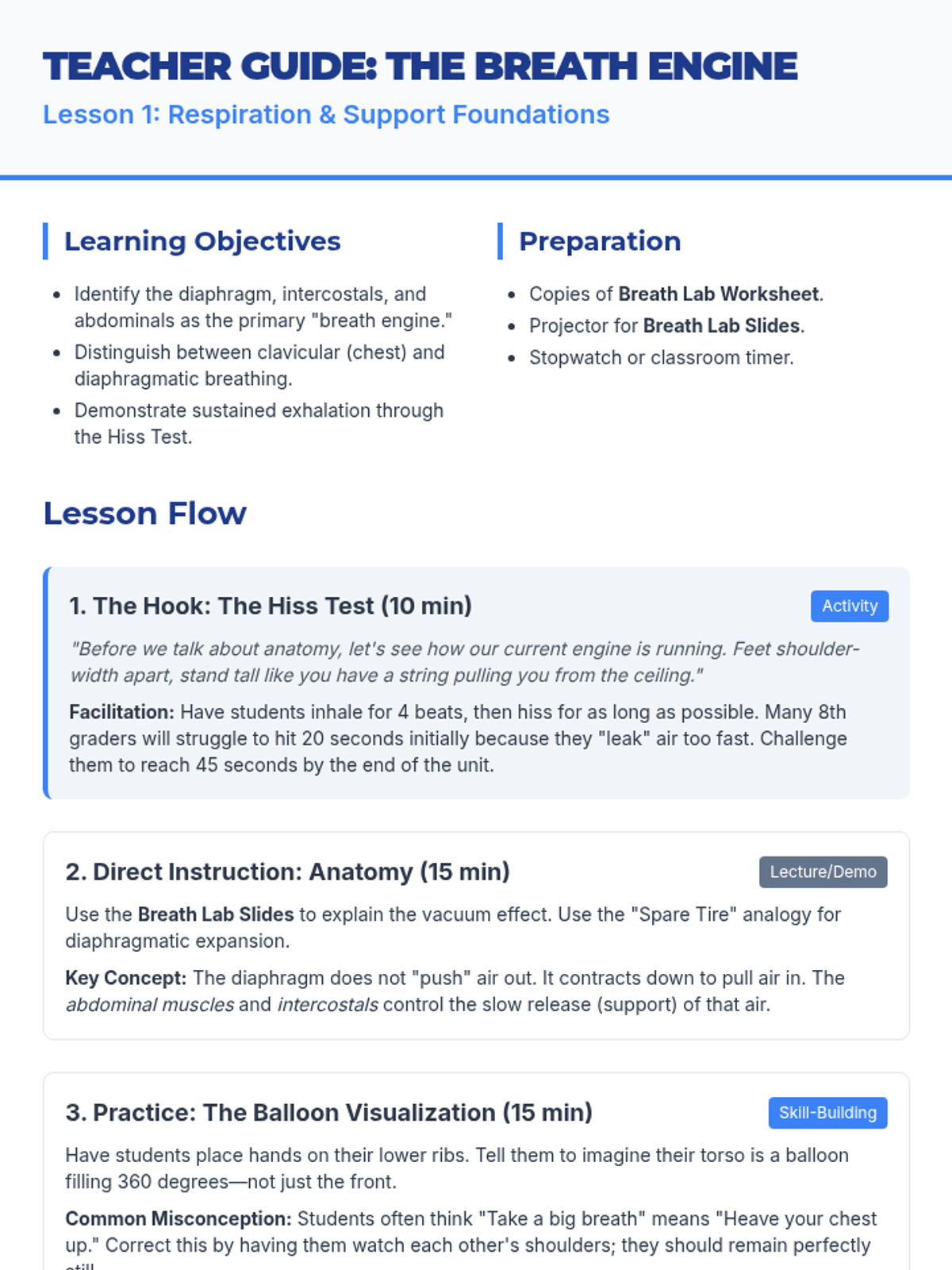
A comprehensive 5-lesson unit for 8th-grade choir students exploring the biological and physical aspects of singing, from breath management to vocal health and resonance.
A comprehensive vocal performance sequence for 8th graders that transitions from technical singing to artistic interpretation. Students learn to analyze lyrics, use dynamics for emphasis, master legato phrasing, and critique professional performances to develop their own unique vocal narratives.
This sequence explores the physical mechanics of singing, treating the body as a primary instrument. Students learn anatomy, posture, diaphragmatic breathing, resonance, and articulation to produce clear, controlled vocal tones.
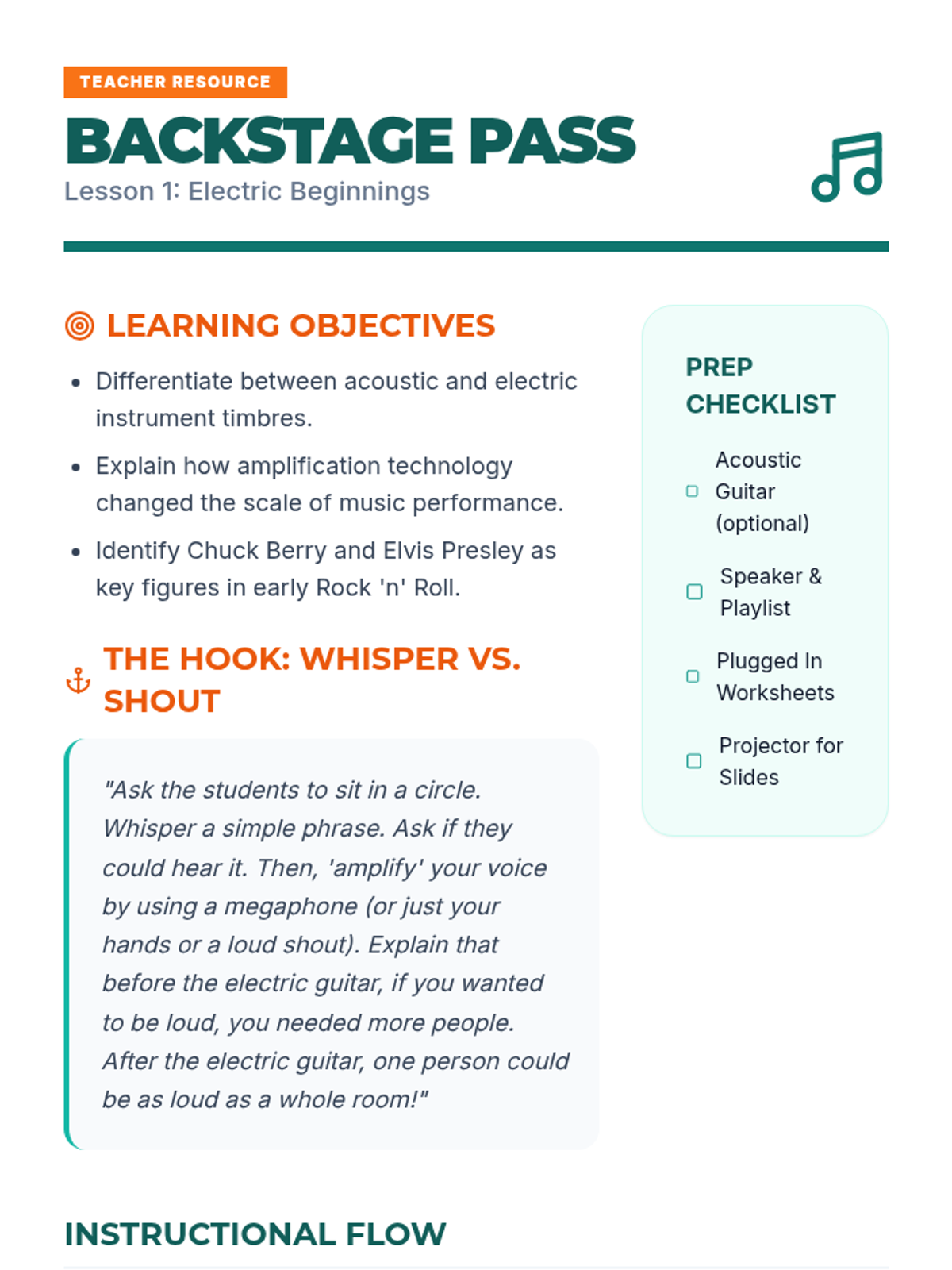
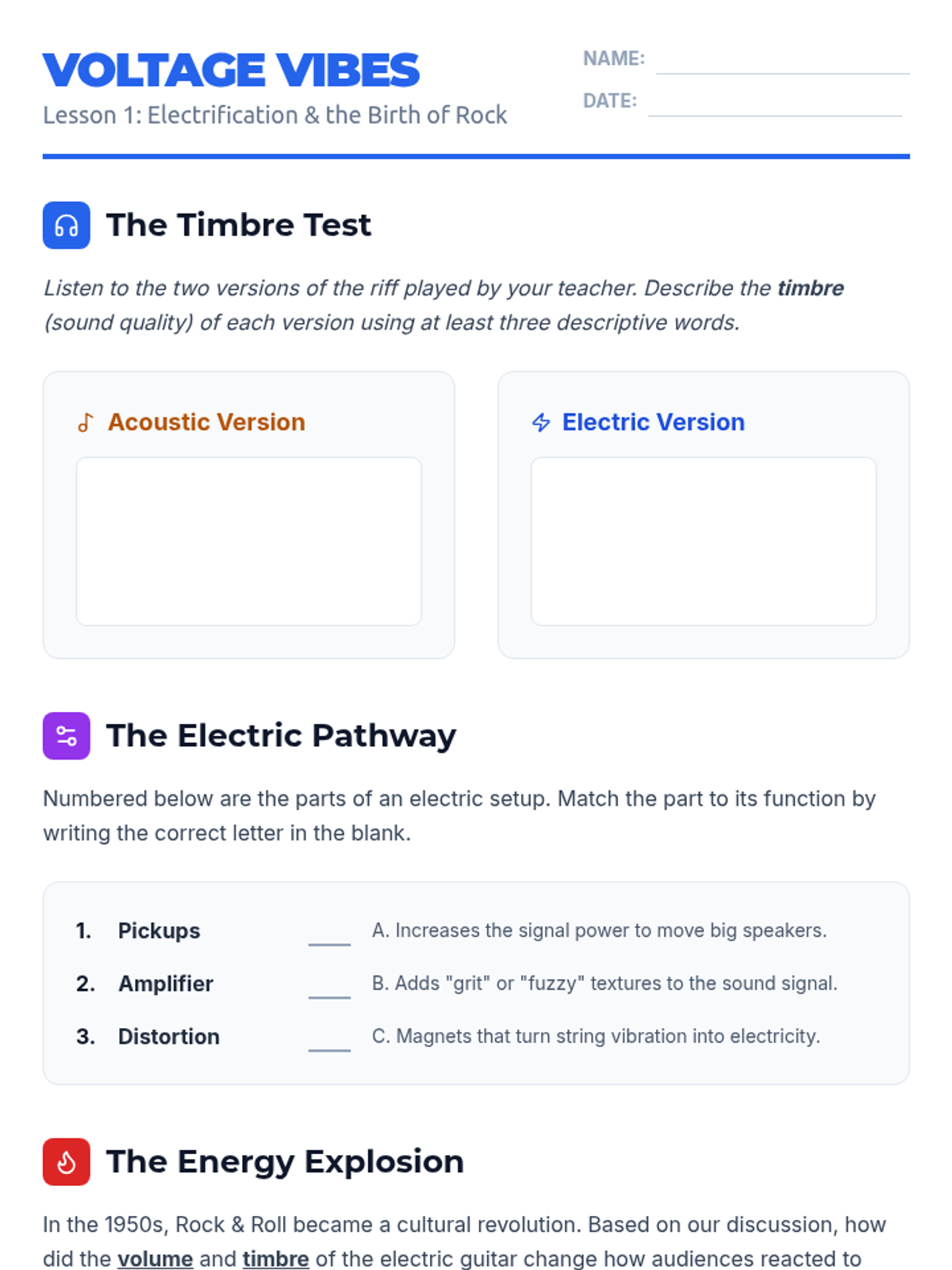
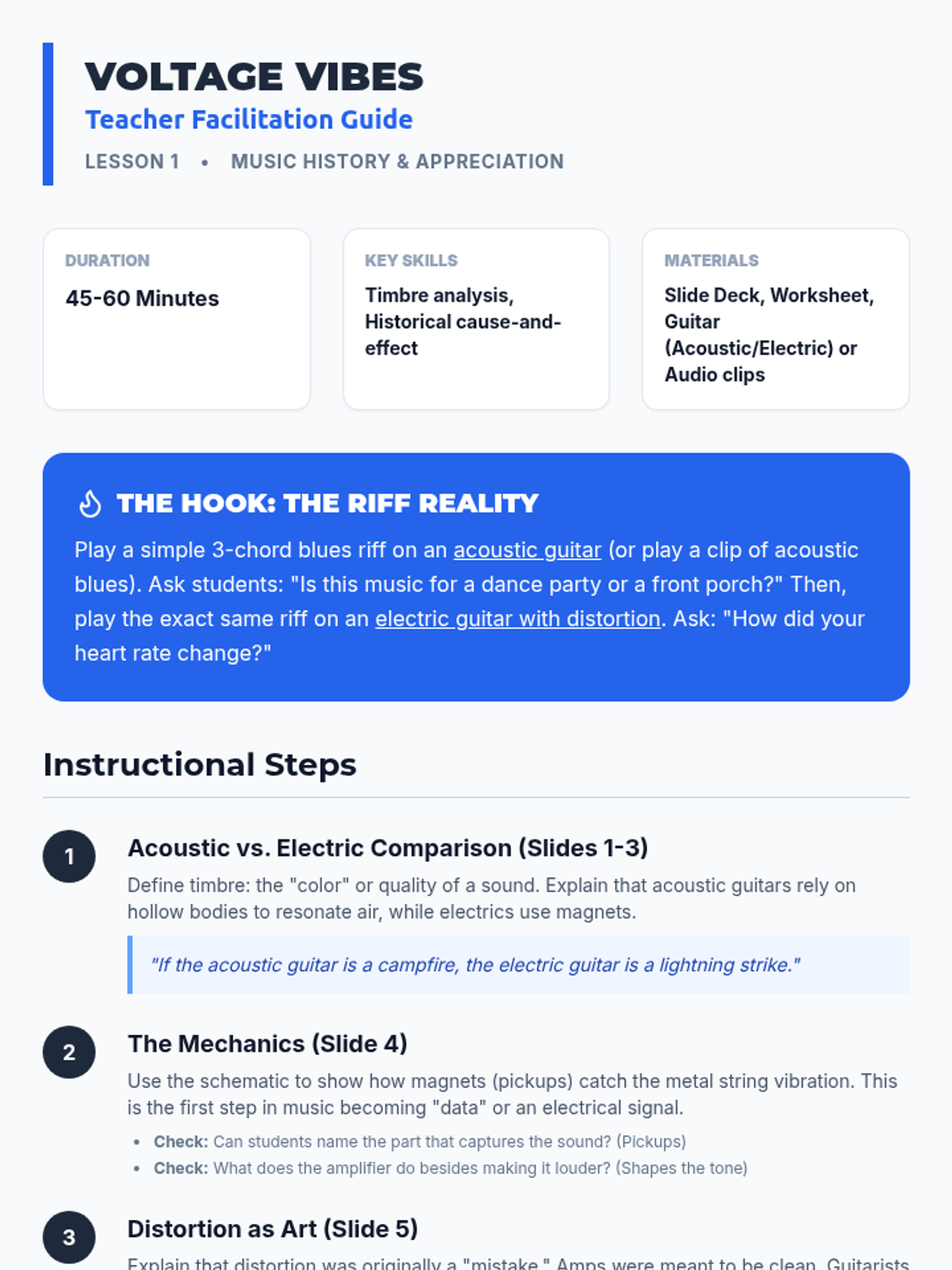
This sequence explores how technology—from the electric guitar to digital software—transformed music from the mid-20th century to today, focusing on genre evolution, song structure, and production.
This sequence investigates how the technological explosion of the 20th and 21st centuries, from the electric guitar to AI, redefined music genres and creation. Students analyze production techniques, listen for layers, and explore the concept of technology as a musical instrument.
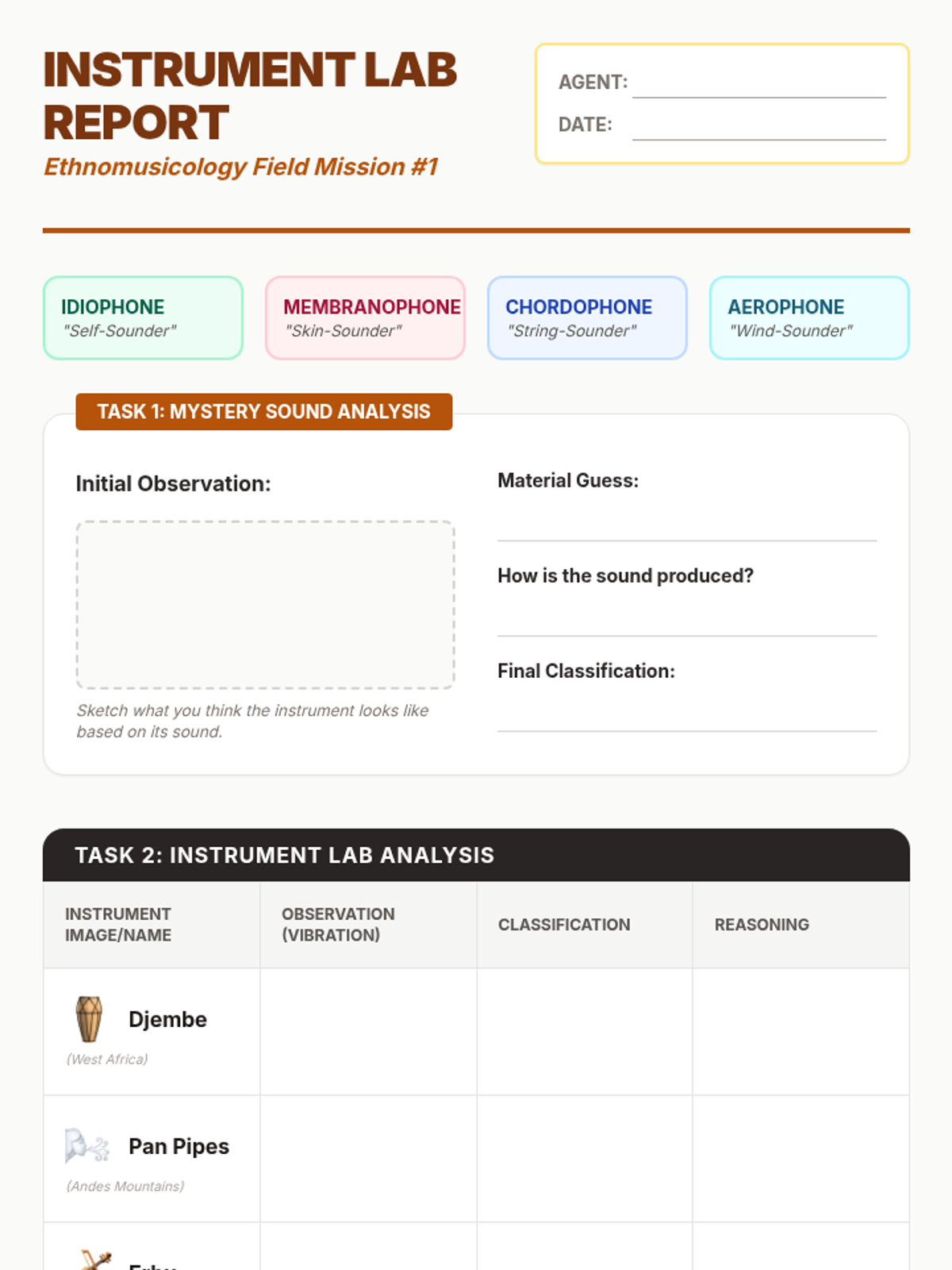
This project-based sequence takes students on a global tour as ethnomusicologists, examining how geography and culture influence musical instruments and sounds. Students classify instruments using the Hornbostel-Sachs system and explore rhythms and scales from Africa, Asia, and Latin America.
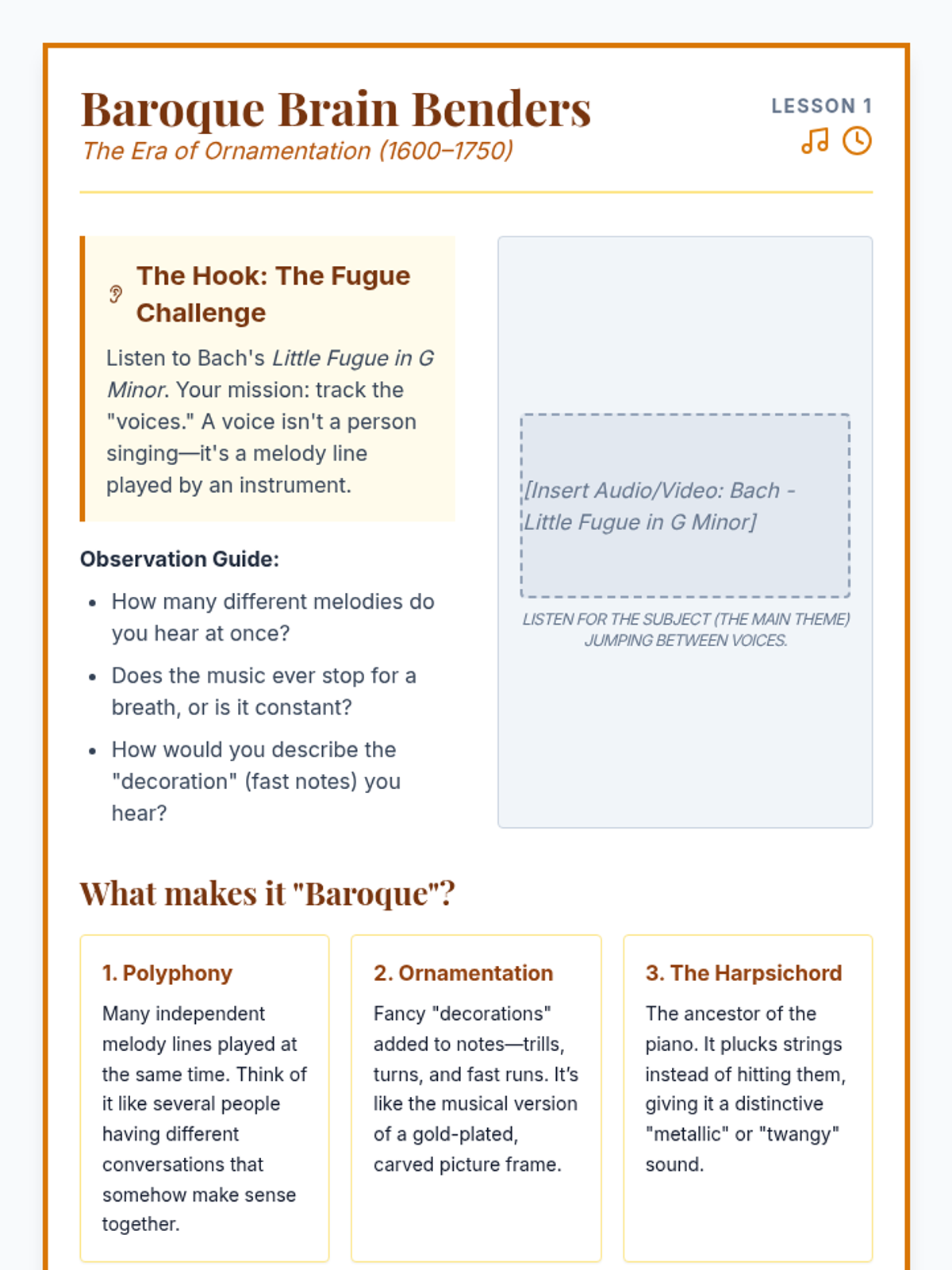
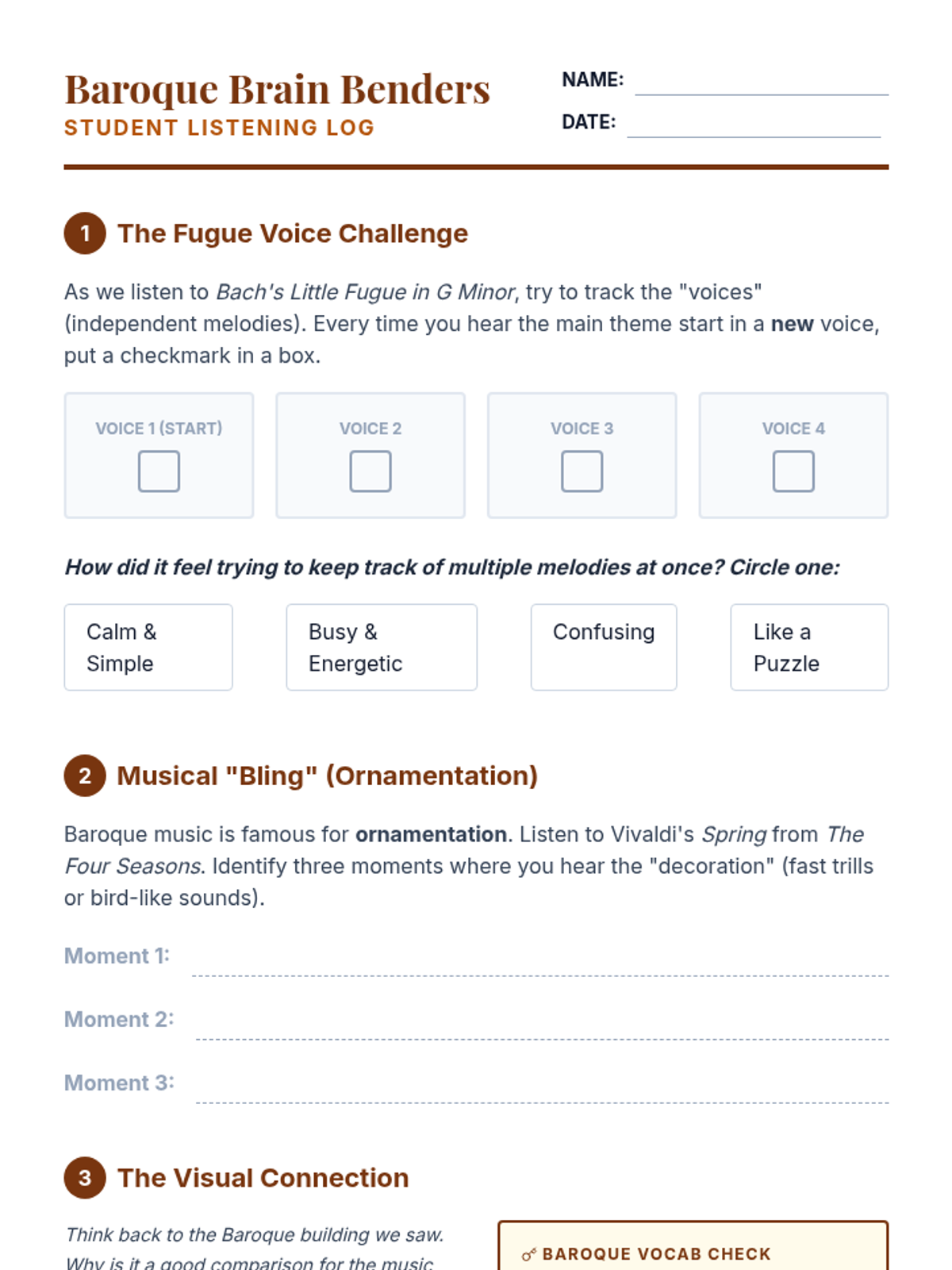
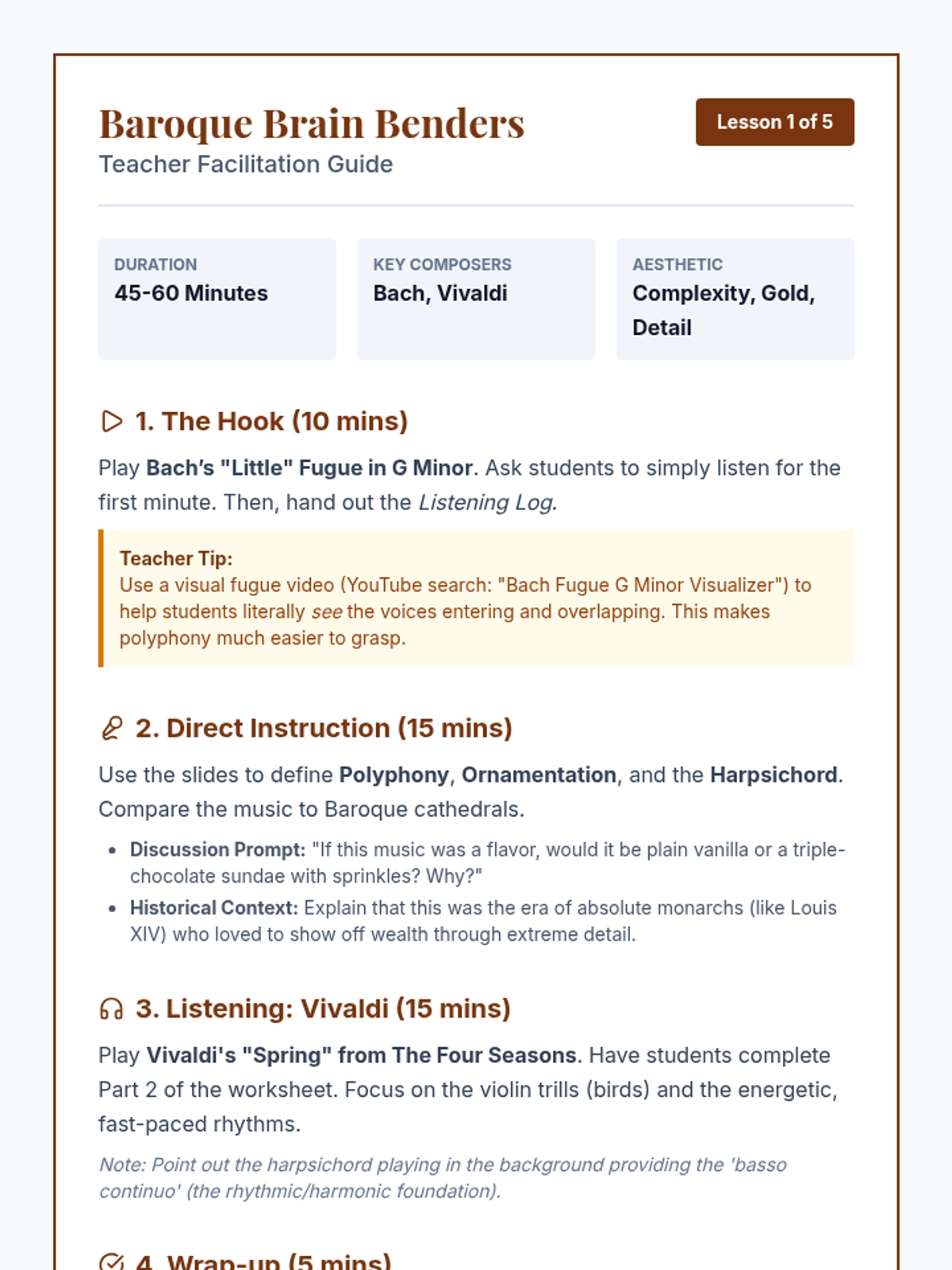
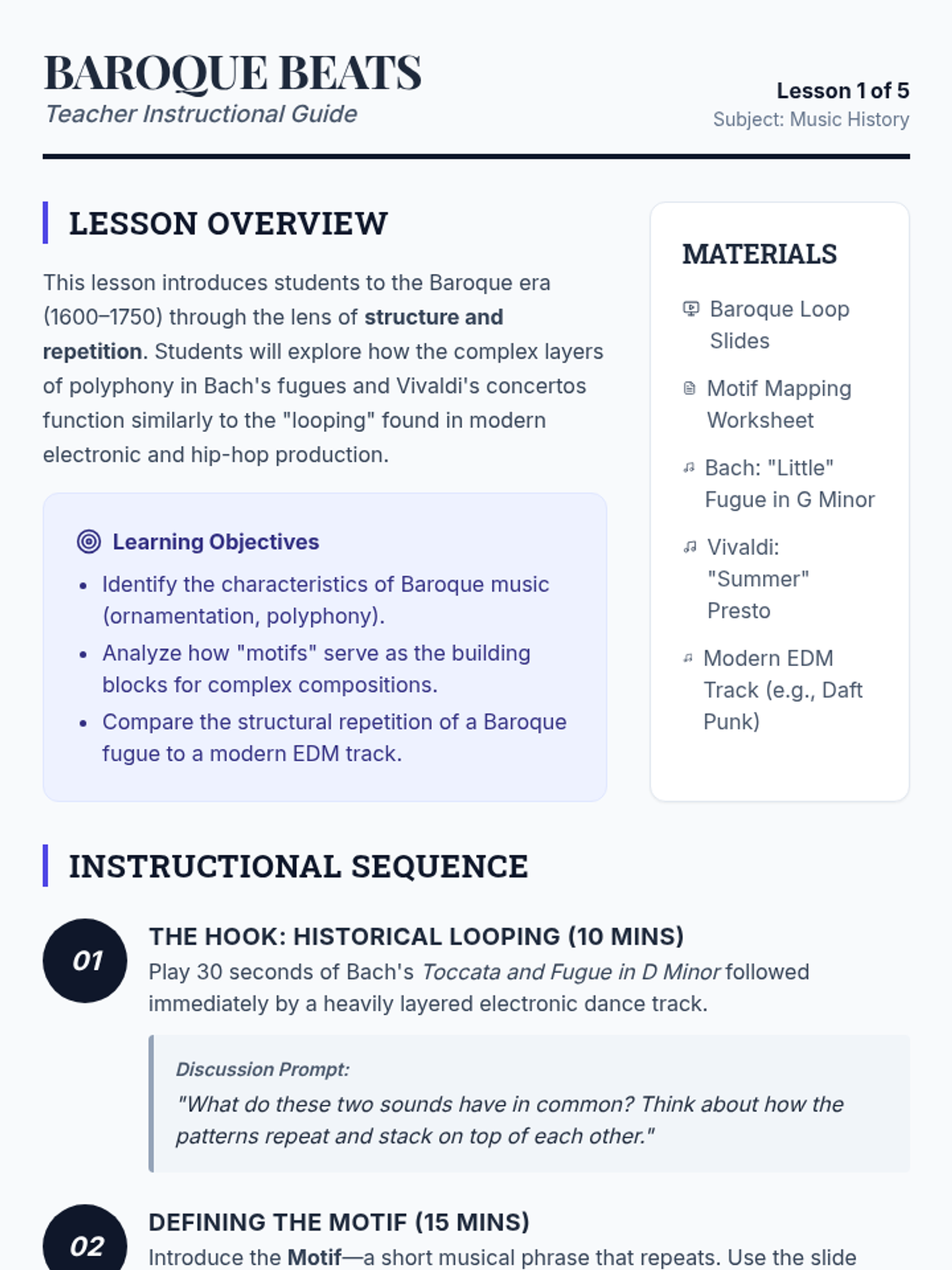
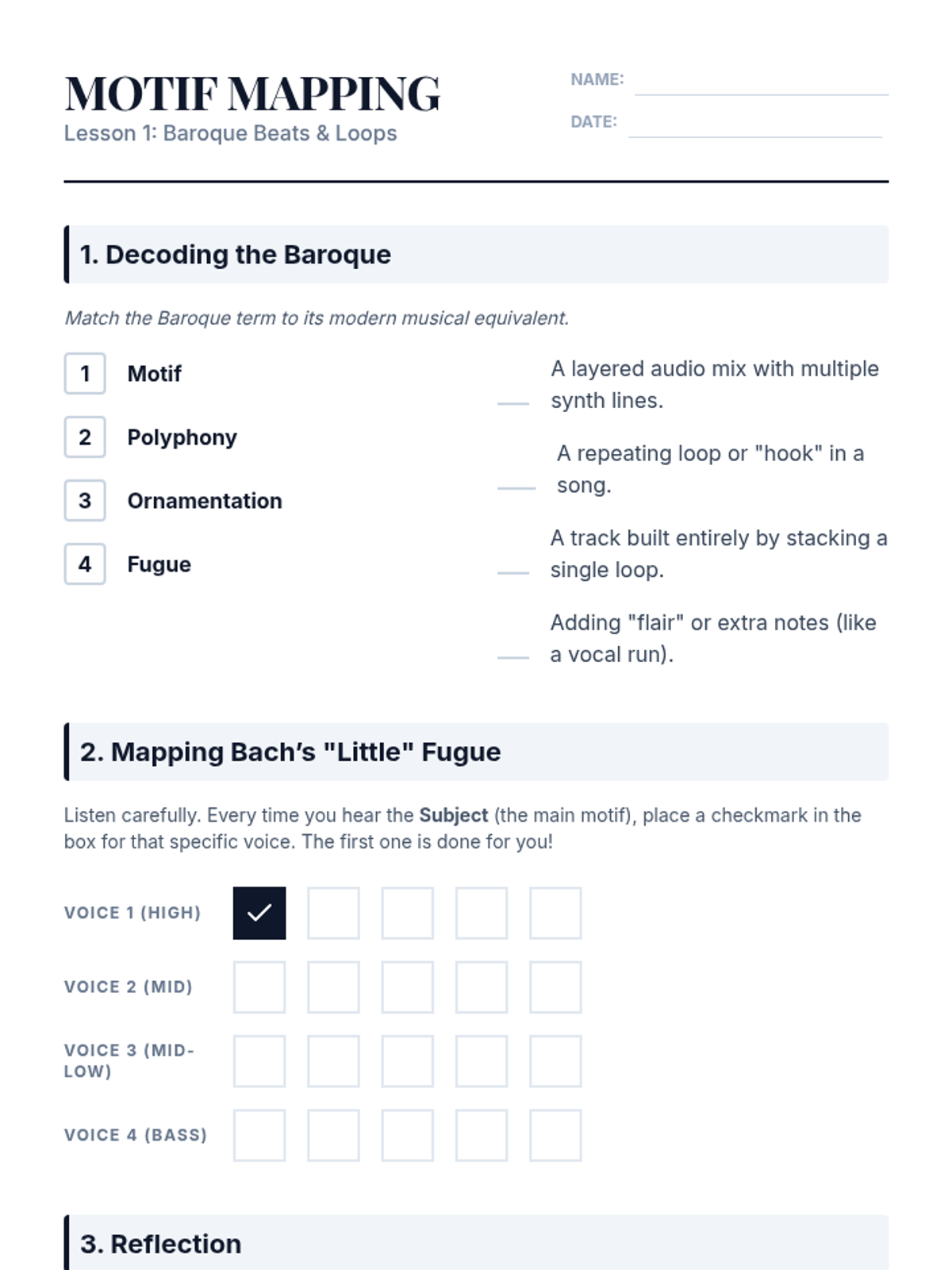
A chronological journey through the Baroque, Classical, Romantic, and Modern eras of Western Art Music, focusing on critical listening and historical context.
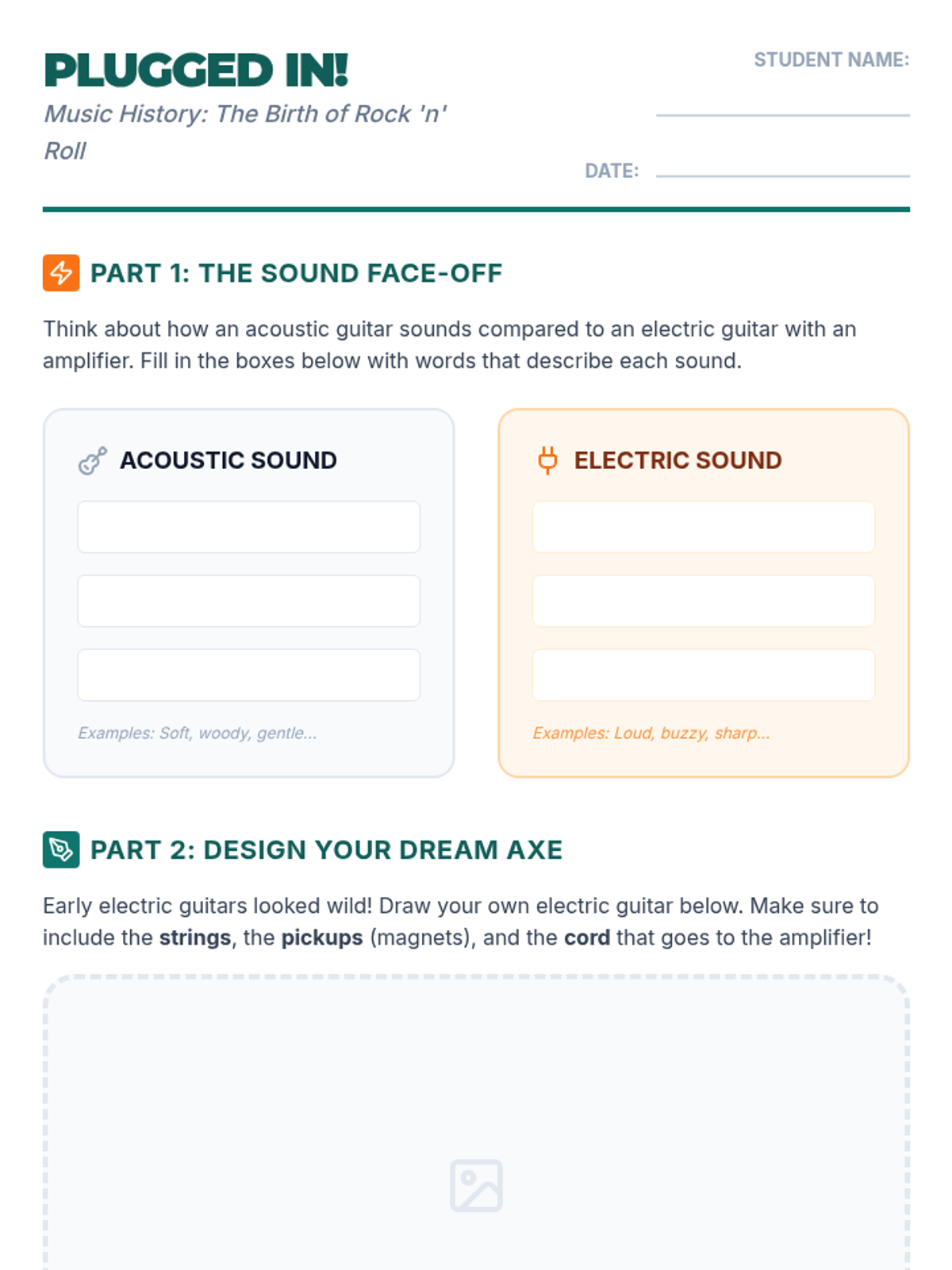
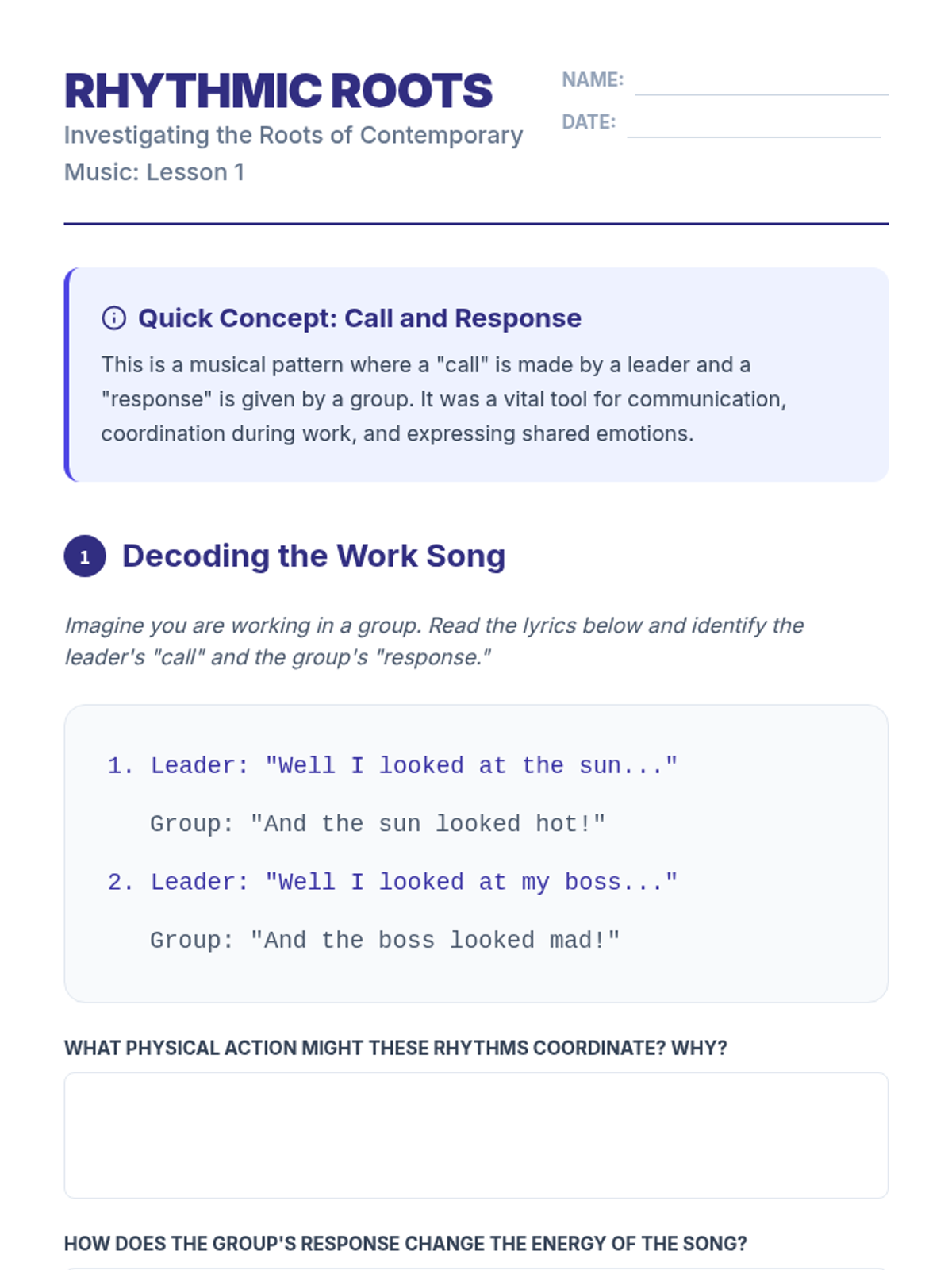
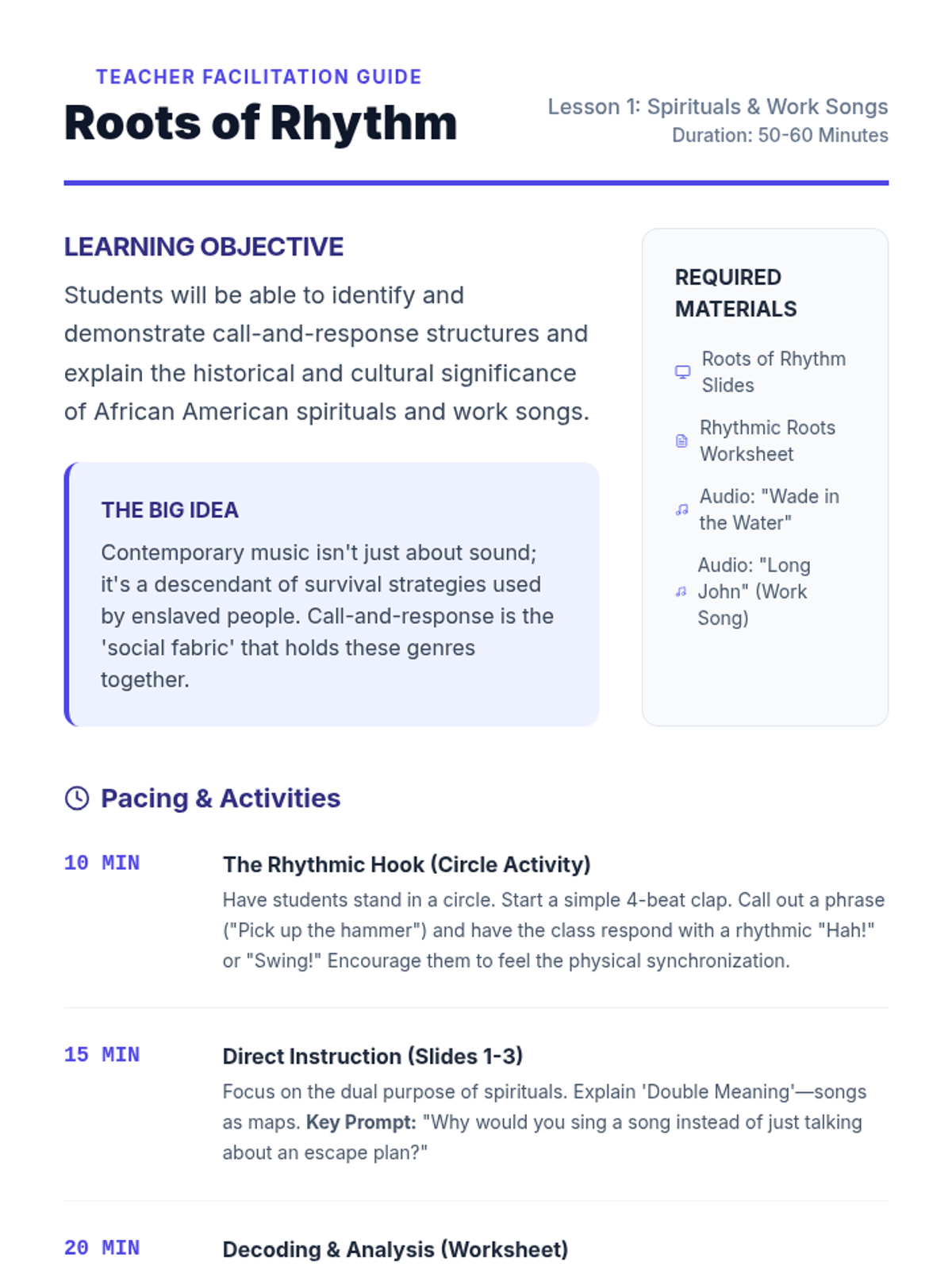
This sequence traces the evolution of contemporary music from 19th-century African American spirituals through the development of the Blues, Jazz, and Rock & Roll. Students investigate how cultural exchange, technology, and social struggles shaped the sounds we listen to today, culminating in a musical genealogy project.
A chronological exploration of Western music history for 7th-grade students, connecting the innovations of the Baroque, Classical, Romantic, and Jazz eras to modern sampling and production techniques. Students develop critical listening skills and analyze how historical structures influence contemporary genres like pop, hip-hop, and EDM.
A comprehensive unit on melodic construction, focusing on scales, contour, motif development, and phrasing. Students progress from basic pitch relationships to composing their own melodic etudes with emotional intent.
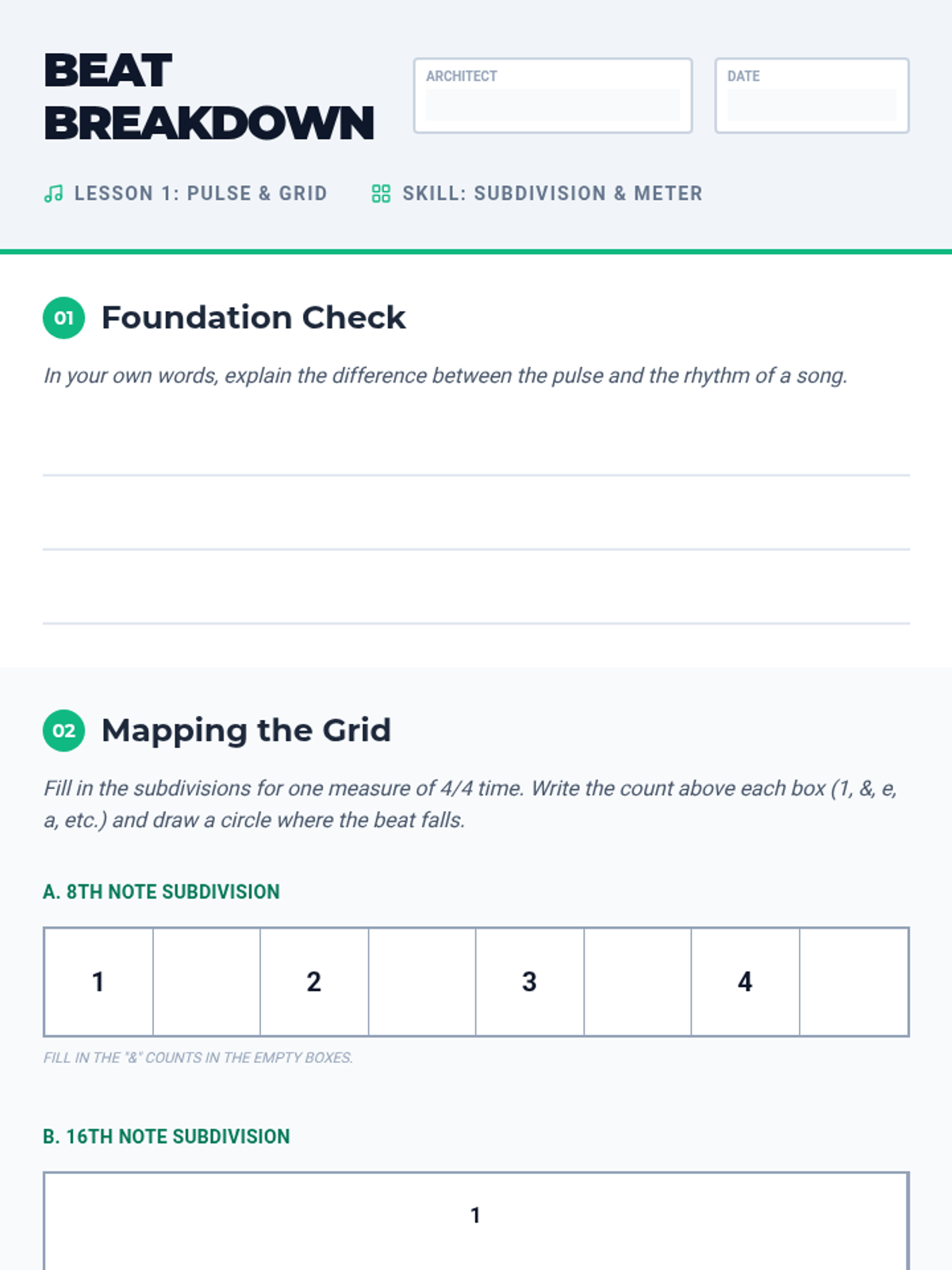
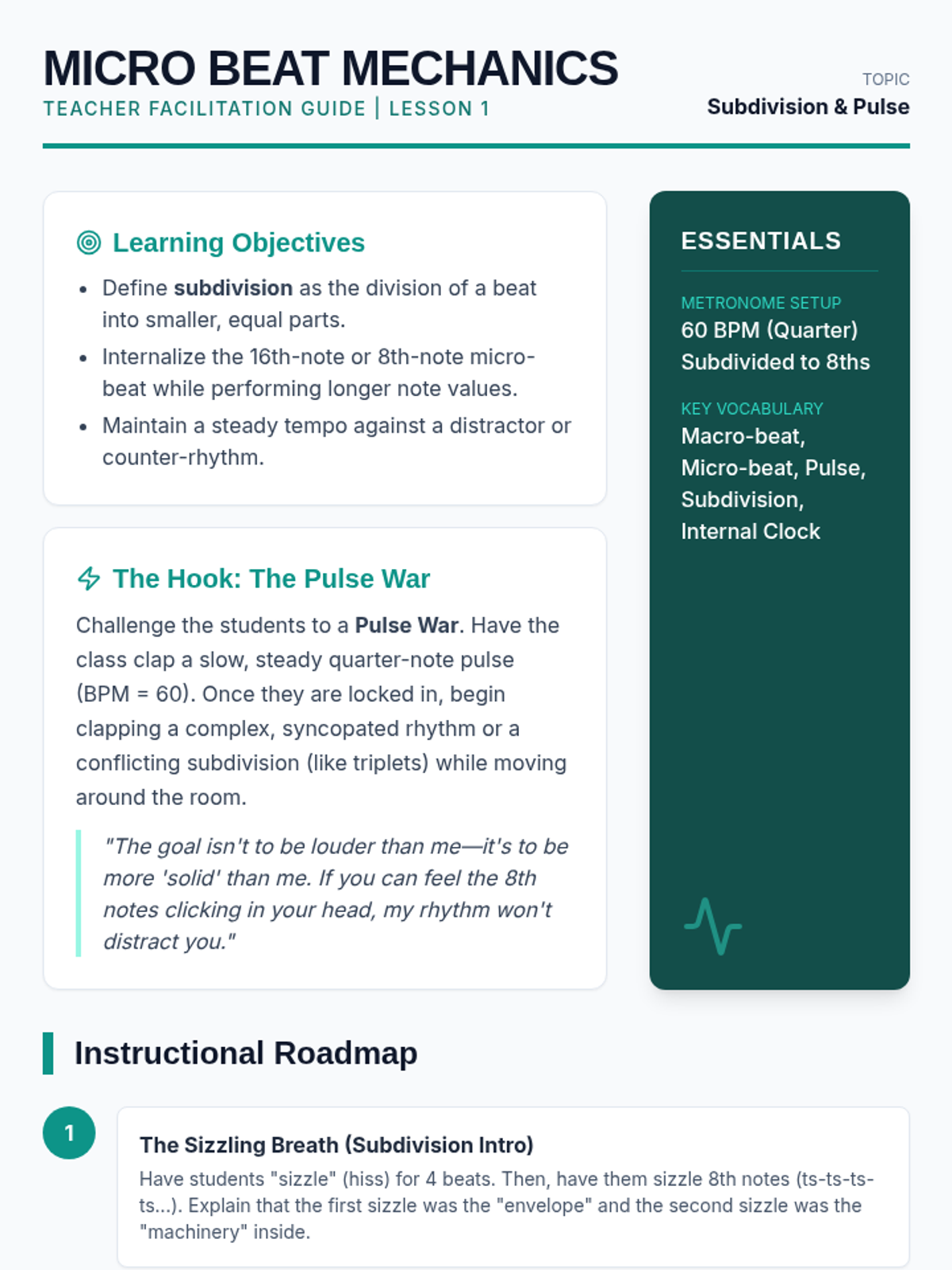
A comprehensive 5-lesson sequence for 7th-grade students on the fundamentals of rhythm, exploring subdivision, syncopation, ostinatos, and polyrhythms, culminating in an original percussion ensemble composition.
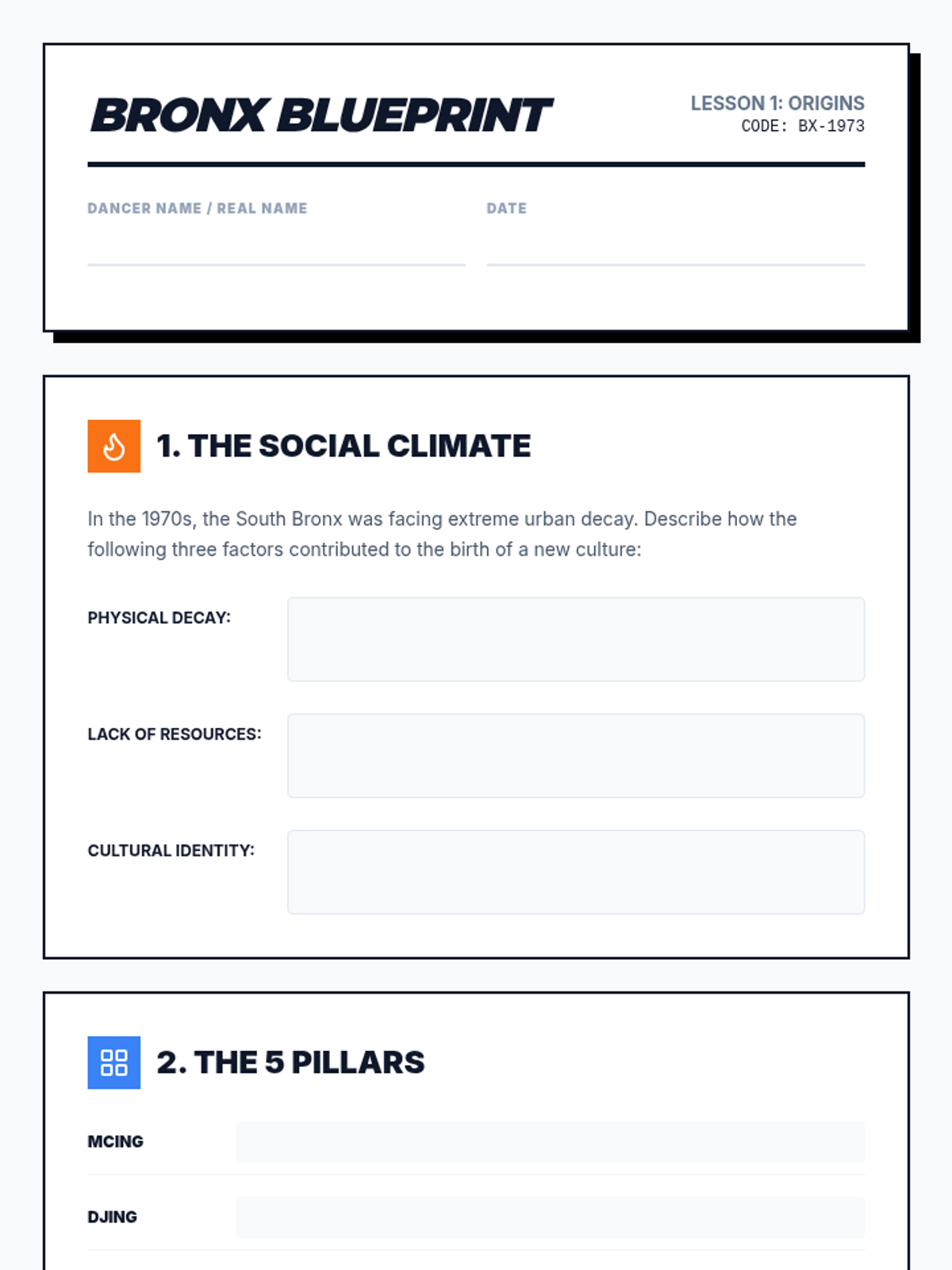
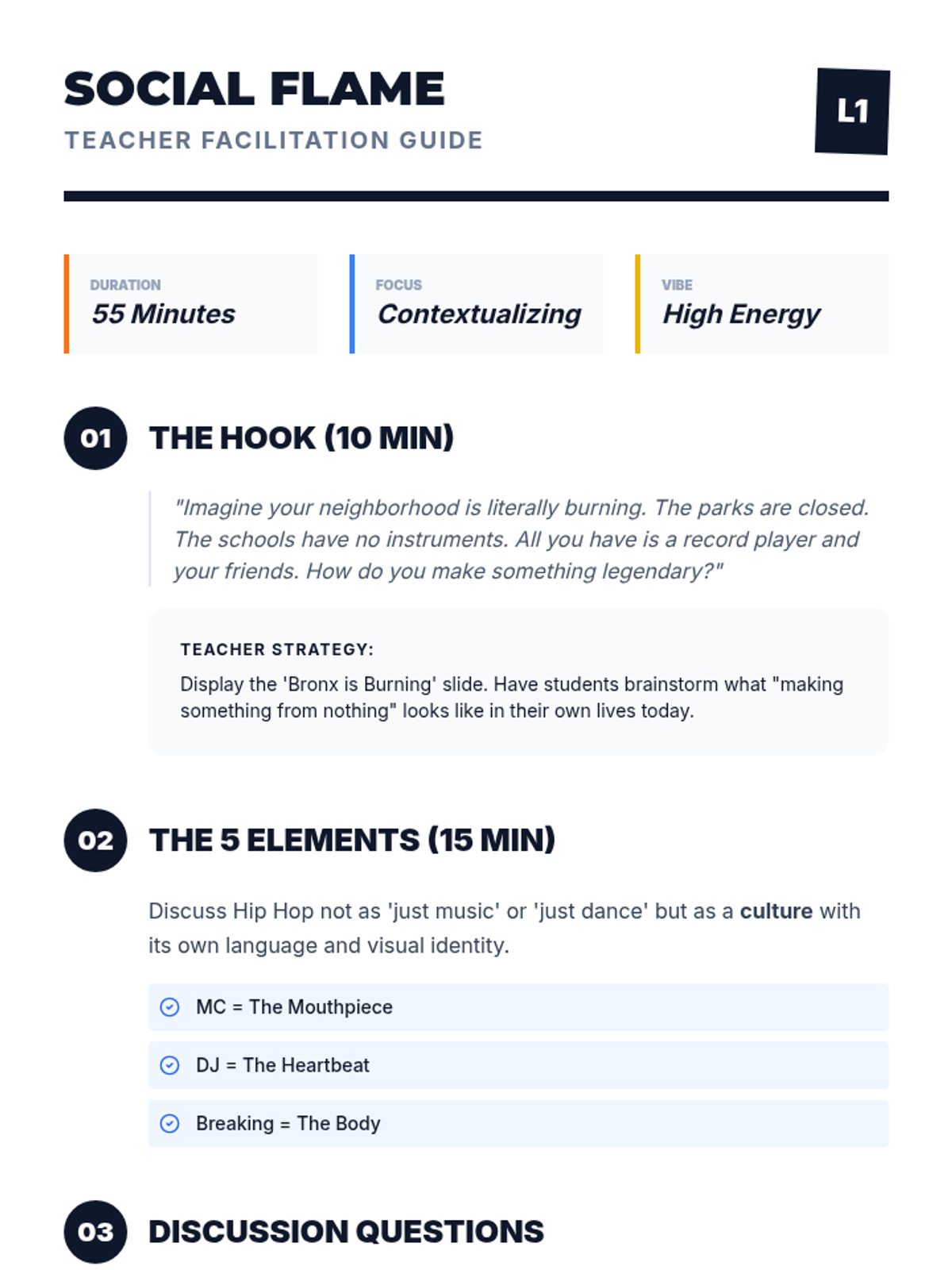
A high-energy exploration of Hip Hop culture's origins in the South Bronx and its evolution into a global phenomenon. Students analyze the socio-economic roots, the social dynamics of the cypher, the physical 'grammar' of breaking, the impact of commercialization, and the cross-cultural fusion seen in modern K-Pop.
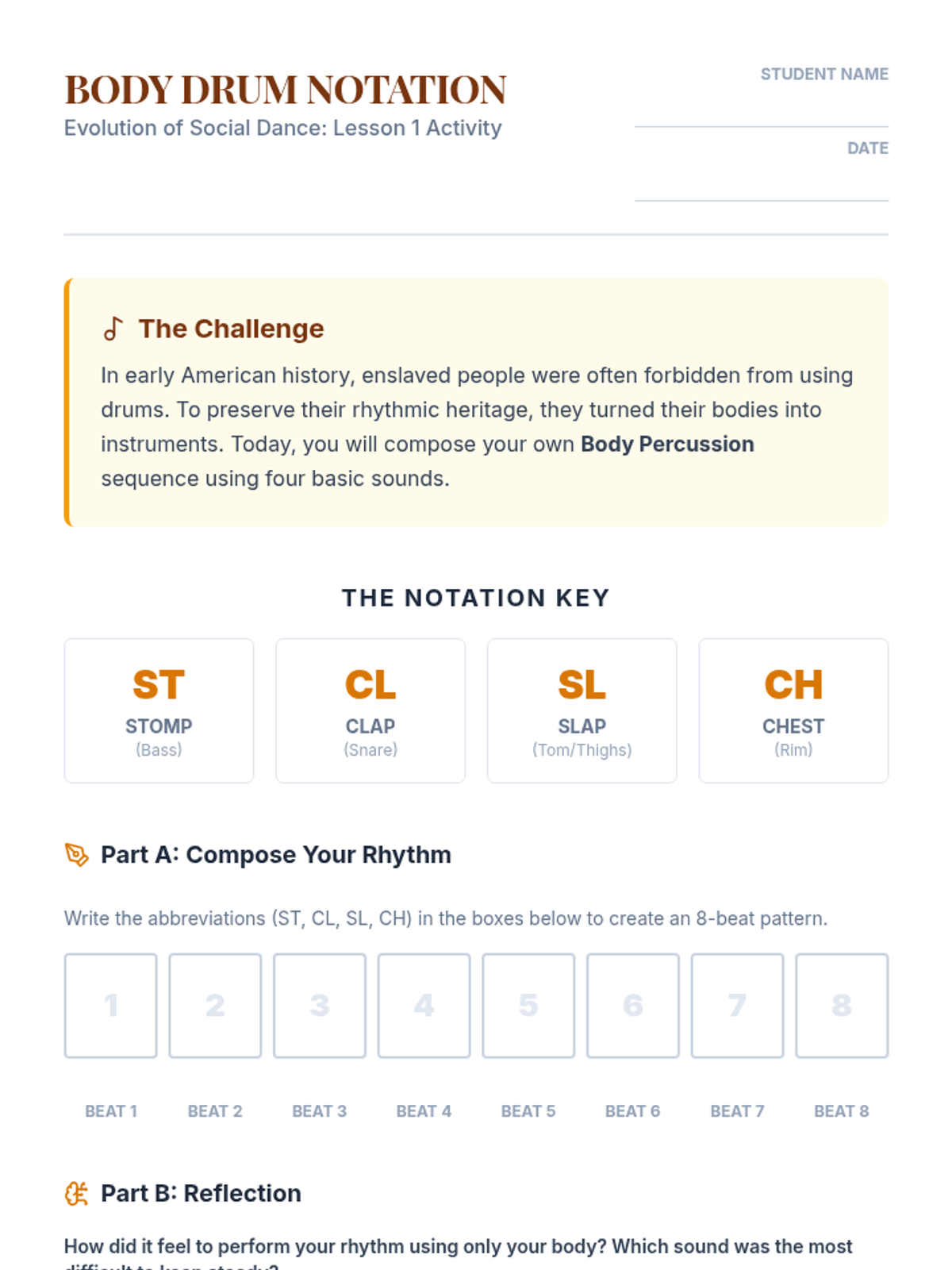
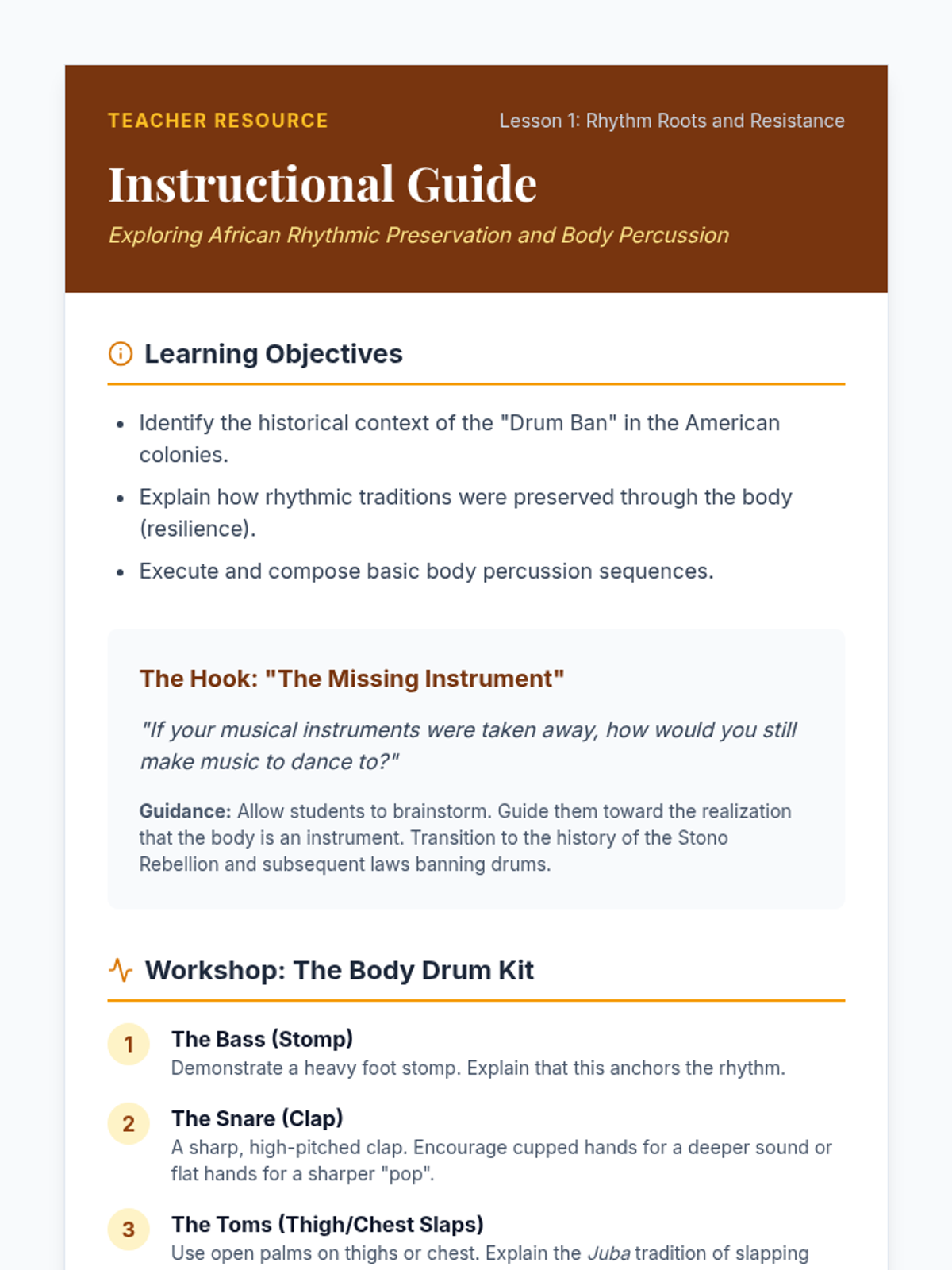
Students explore the history of American social dance, focusing on the cultural fusion and resilience of marginalized communities that birthed Jazz, Tap, and Hip Hop. The sequence covers rhythmic roots, the Cakewalk, the Harlem Renaissance, and the Bronx origins of Hip Hop, culminating in a historical timeline project.
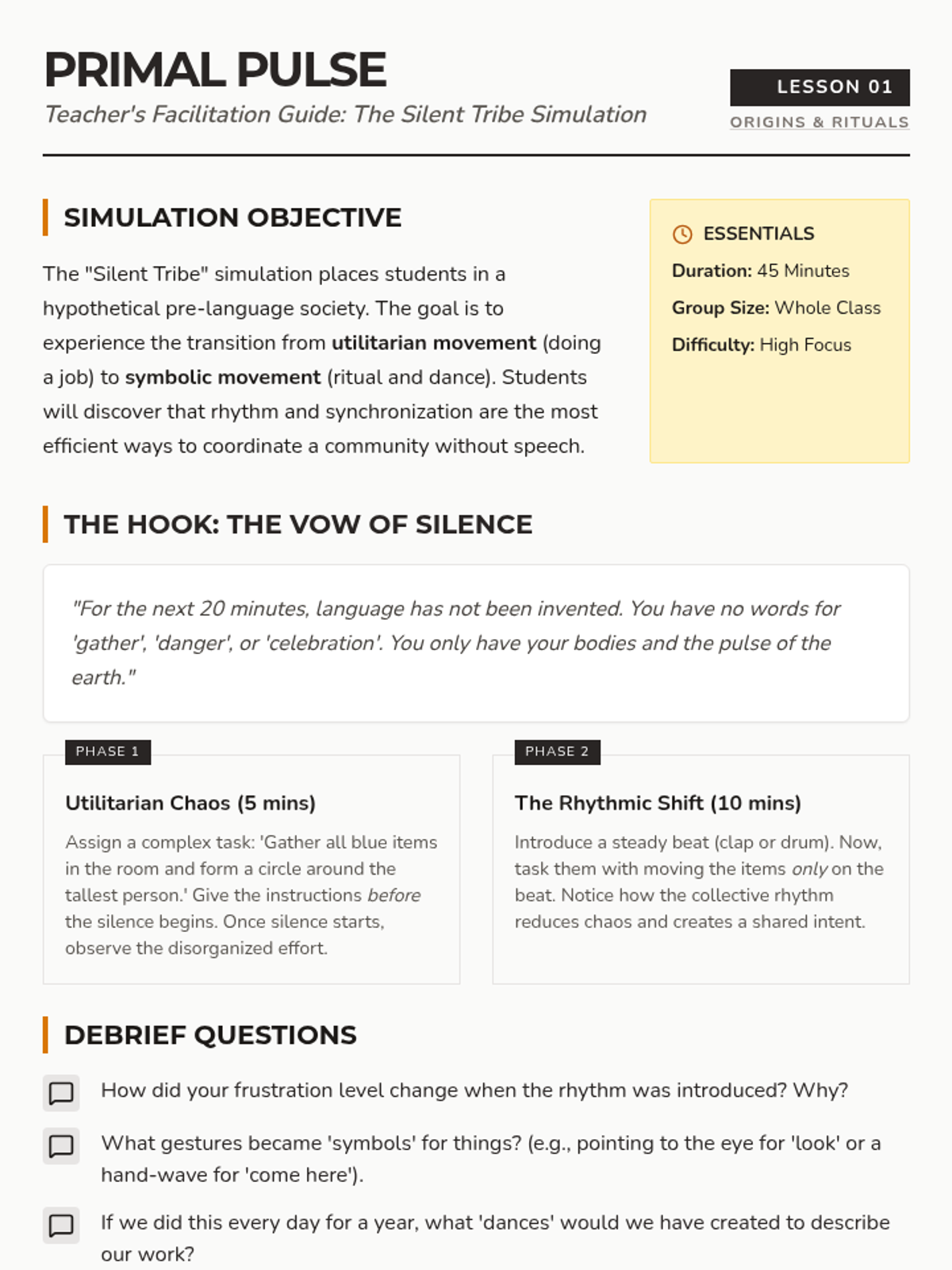
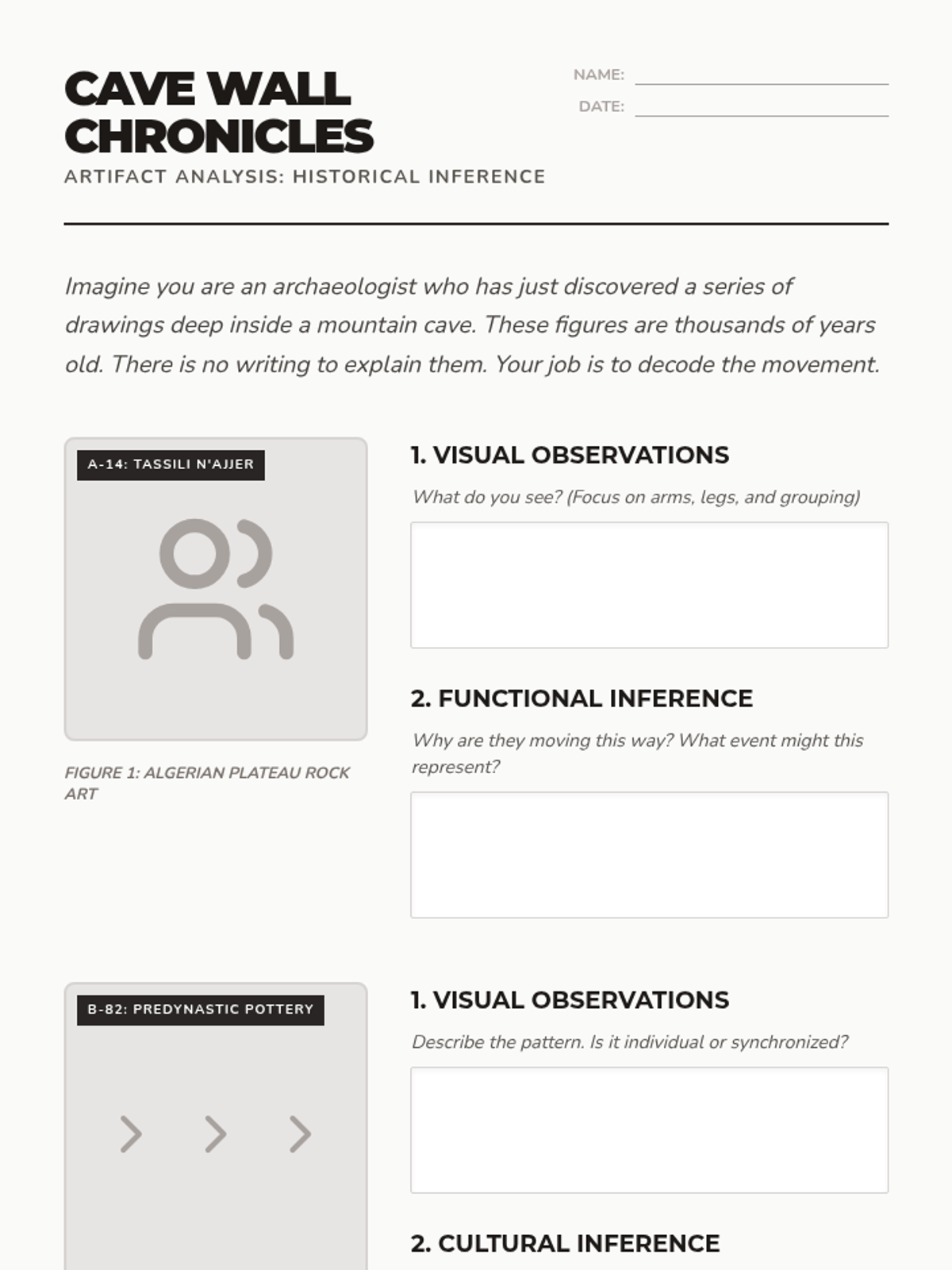
A 5-lesson unit exploring how dance served as the primary form of communication and history-keeping before written language, investigating Hawaiian, Greek, and West African traditions.
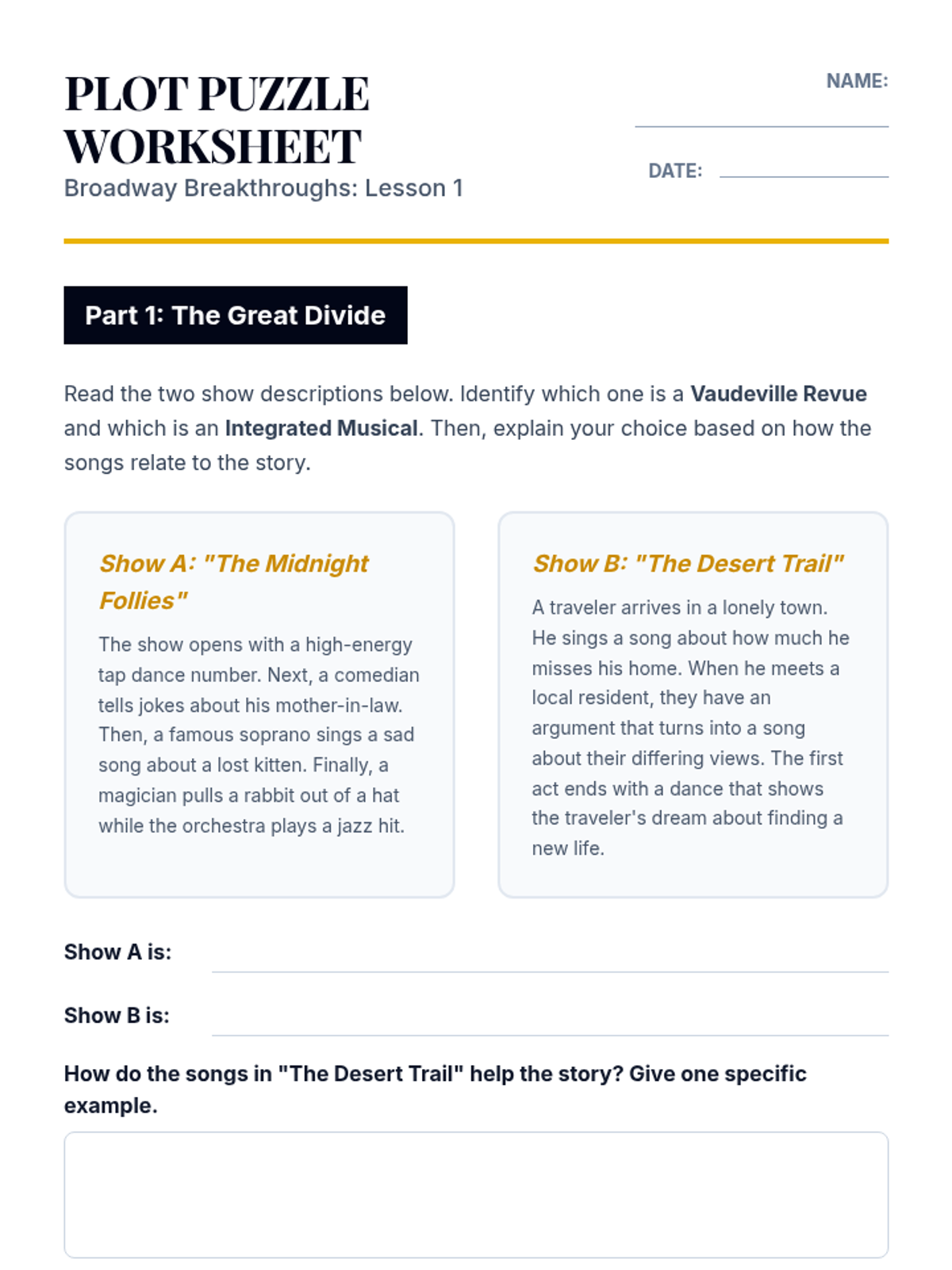
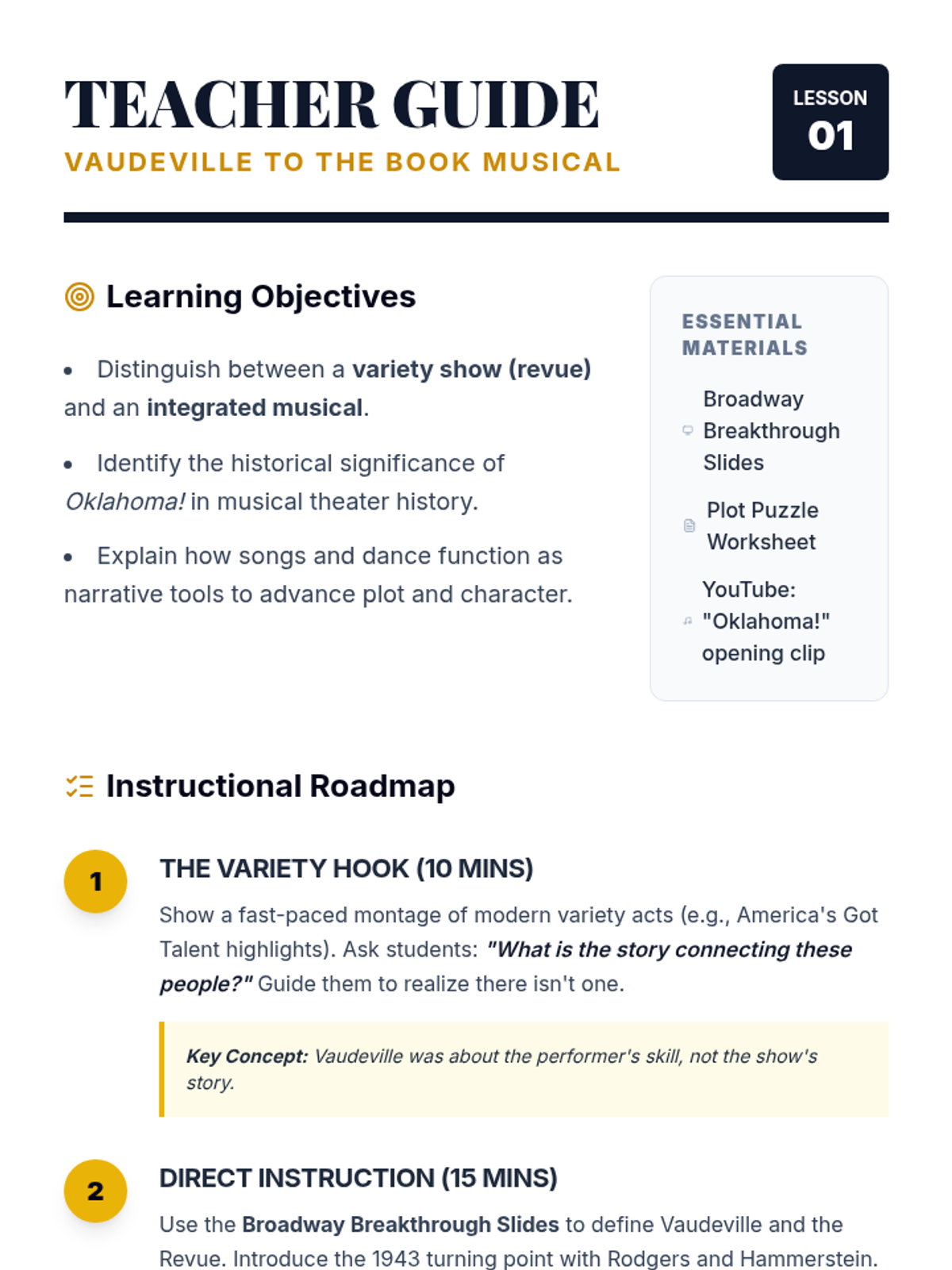
A comprehensive exploration of the American musical theater evolution, from its Vaudeville roots to modern spectacles. Students analyze how music, dance, and design integrate to create cohesive narratives.
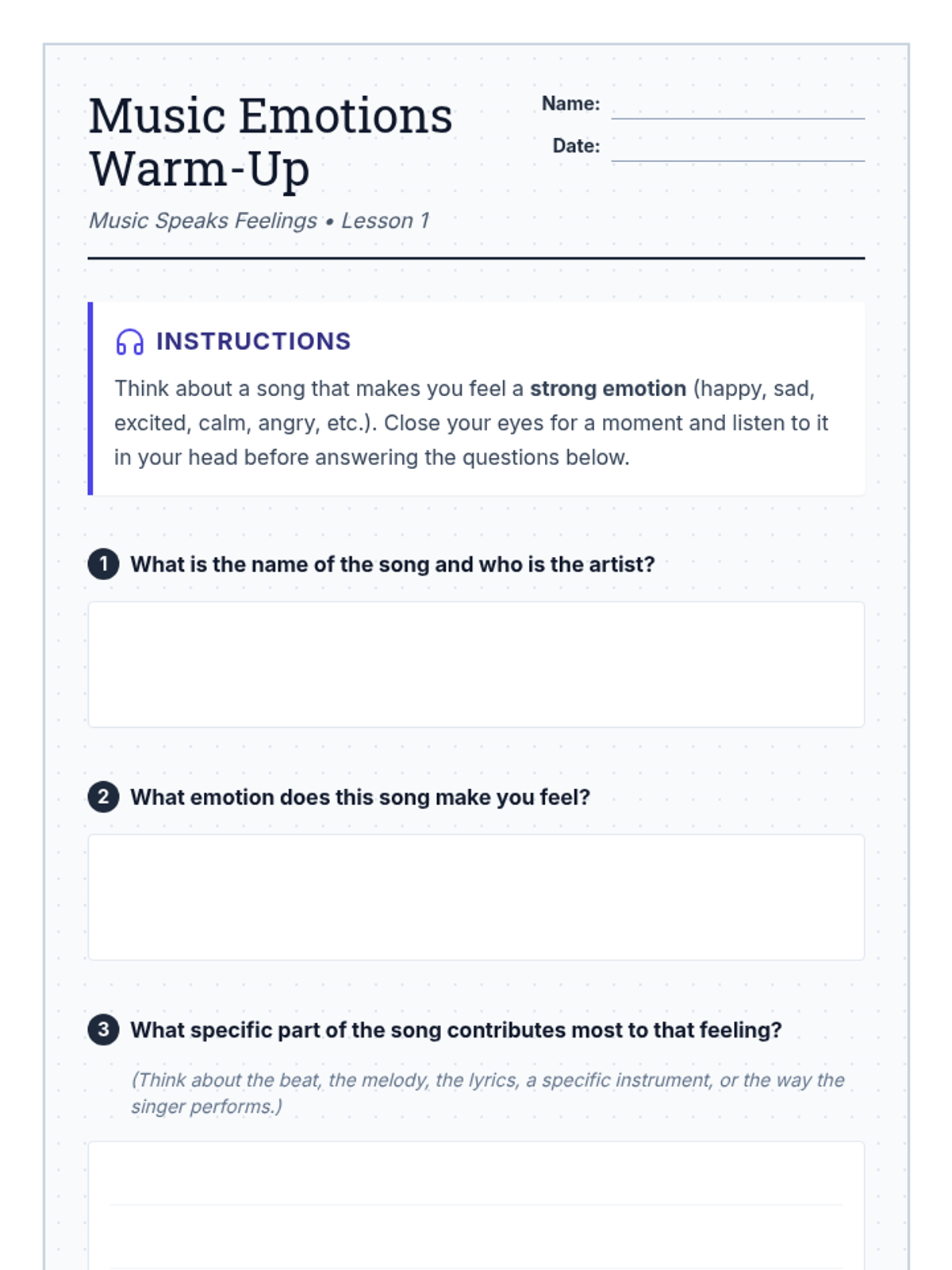
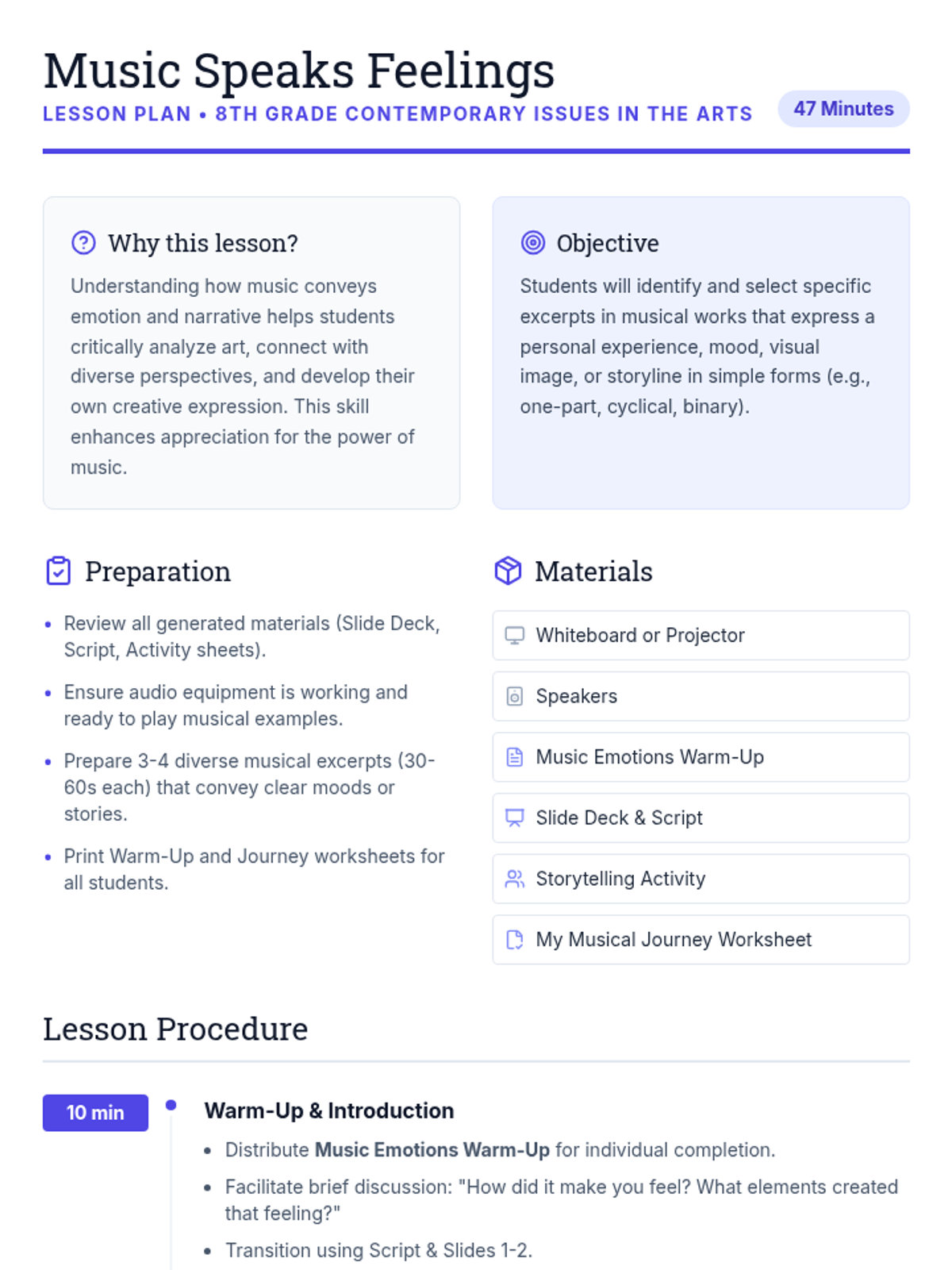
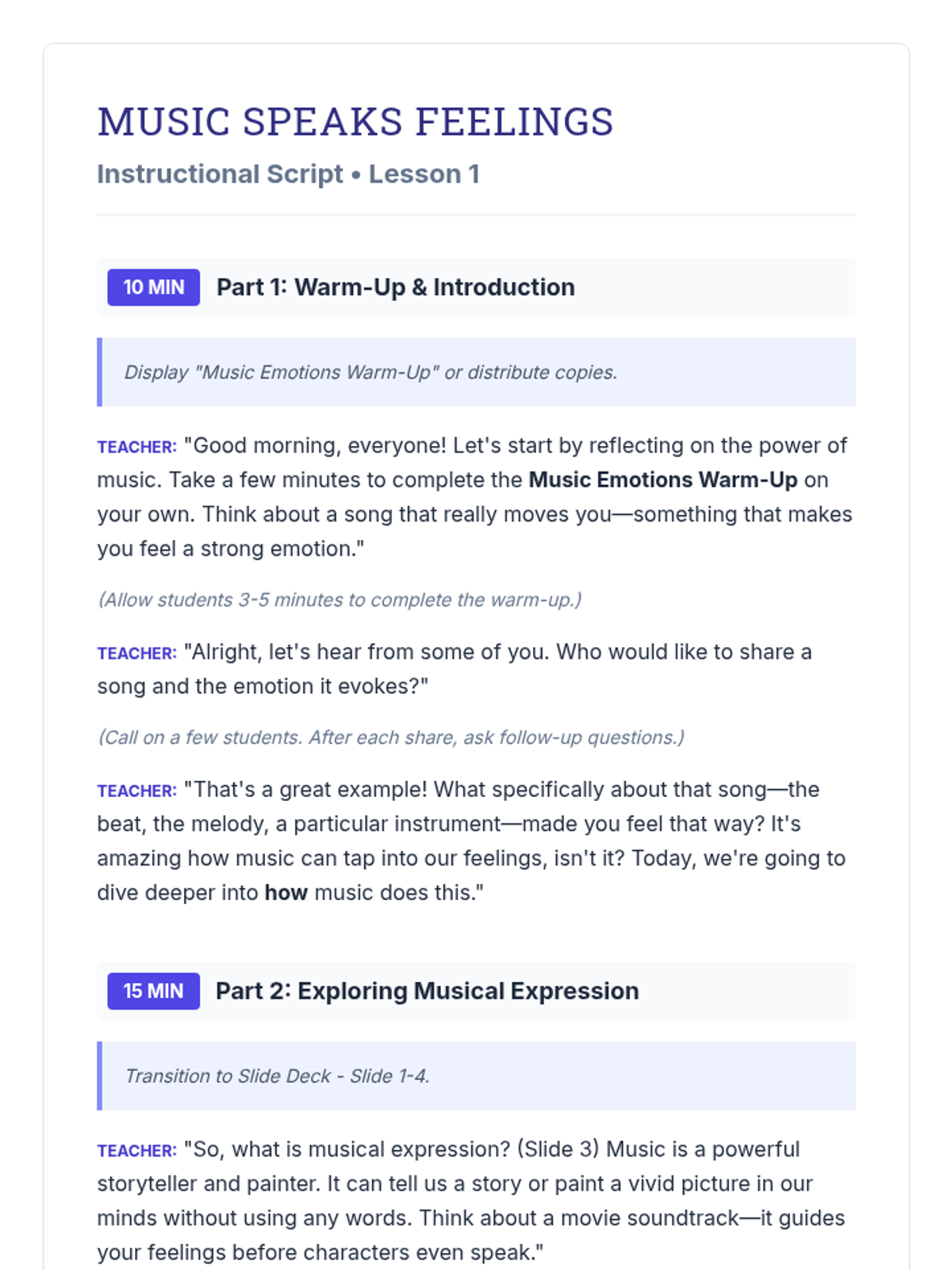
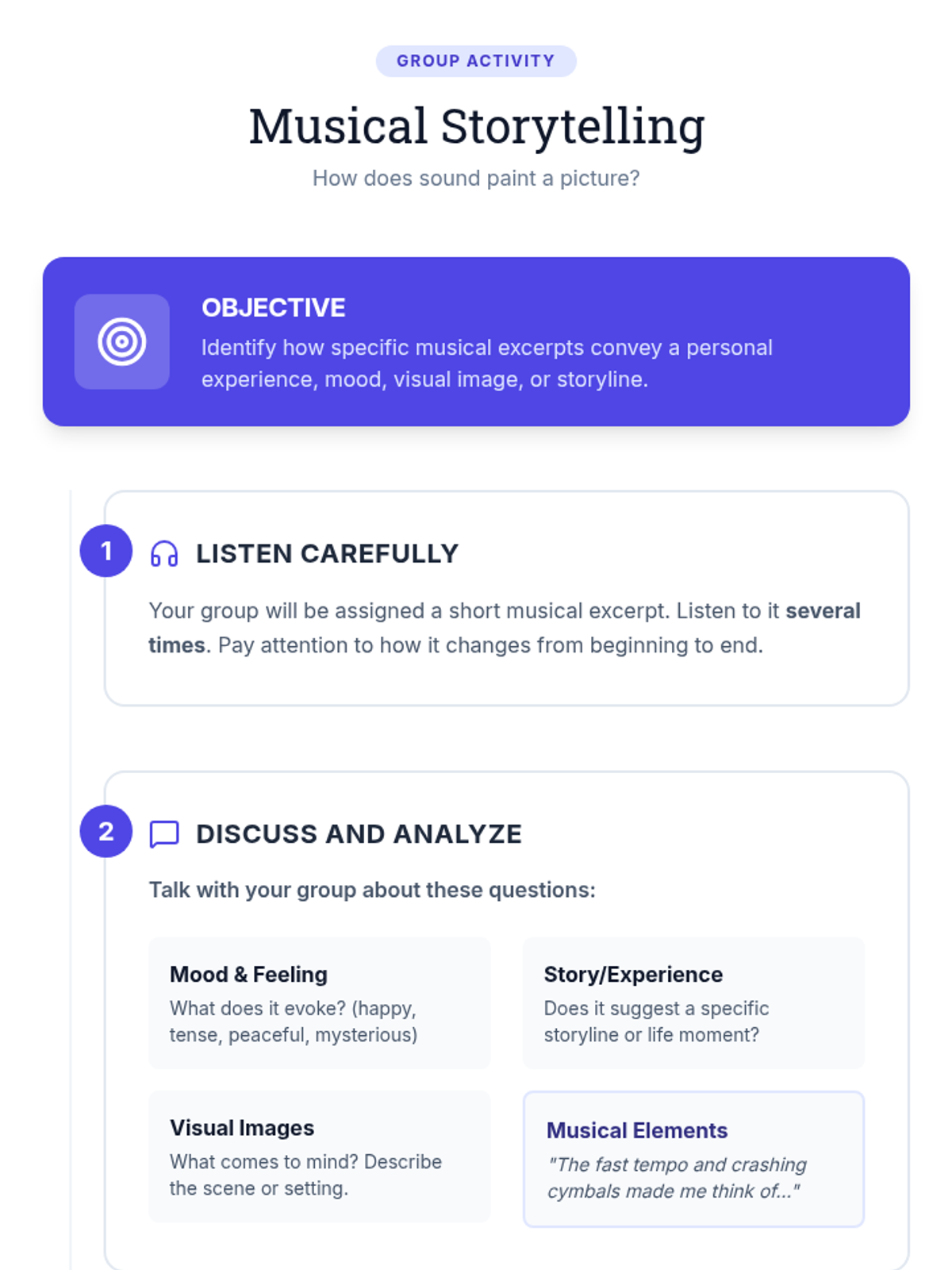
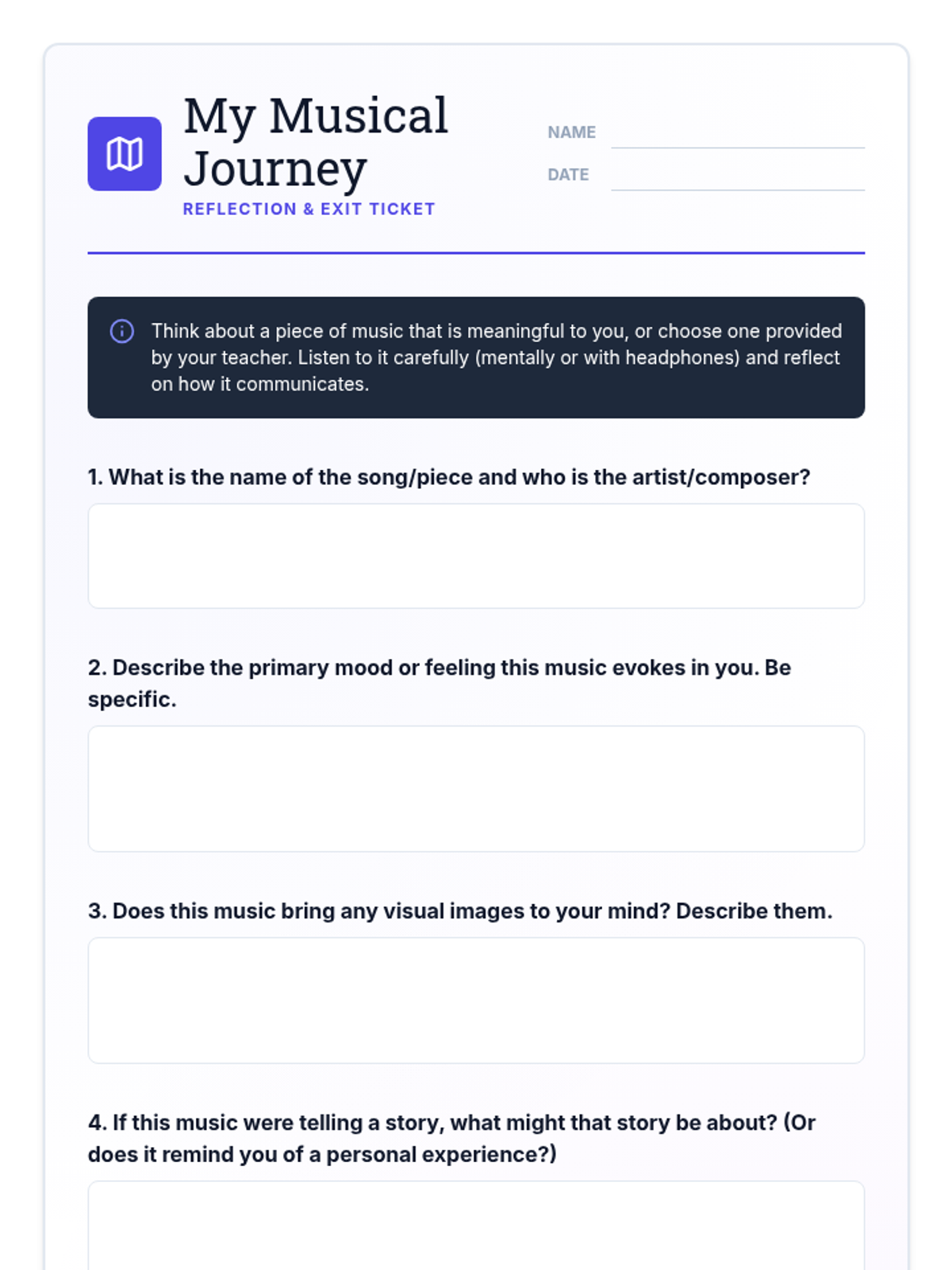
A two-part sequence exploring how music communicates emotions, stories, and visual imagery through various musical elements and excerpts. Students analyze how tempo, melody, and instrumentation shape our perception of sound.
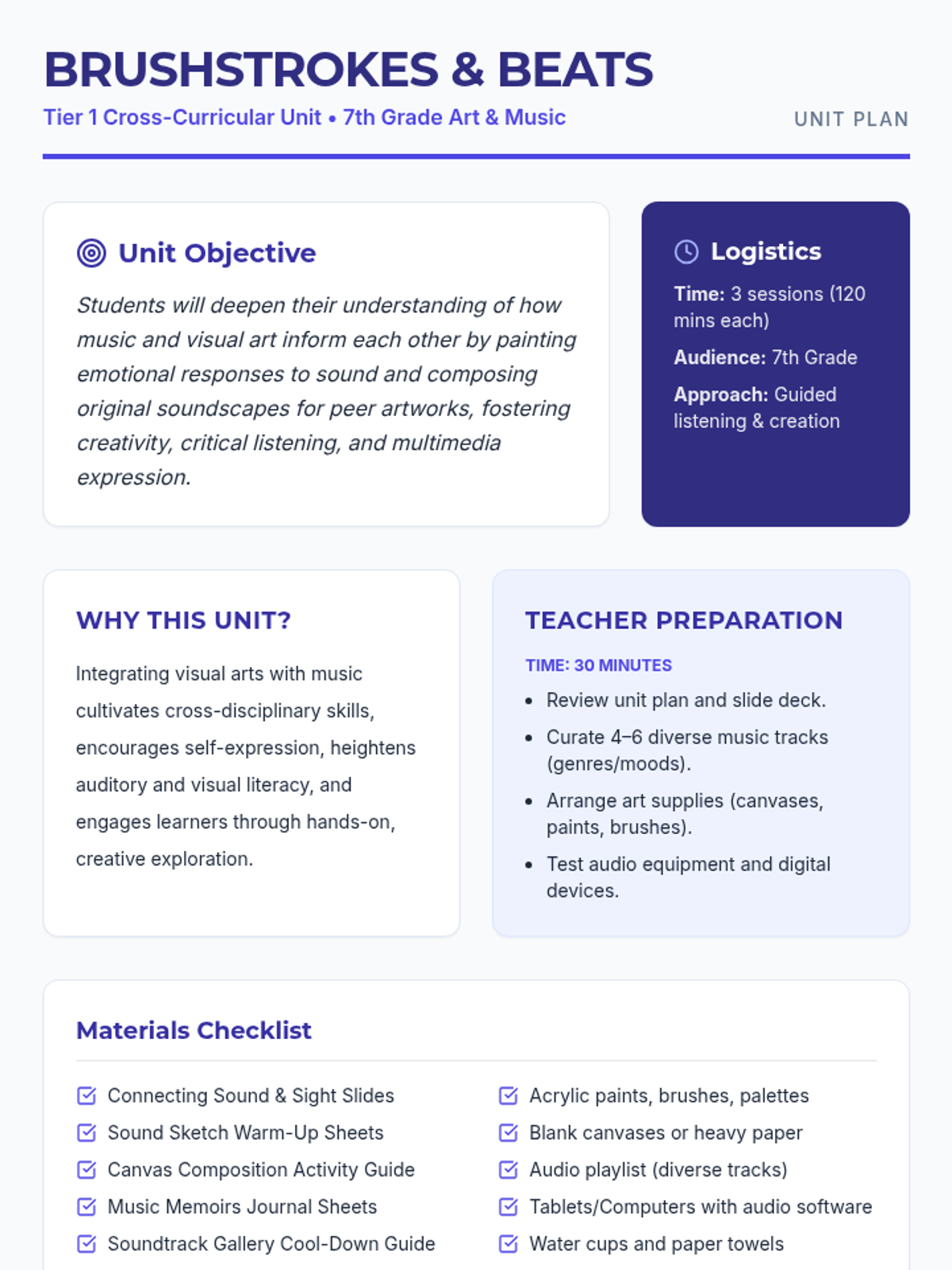
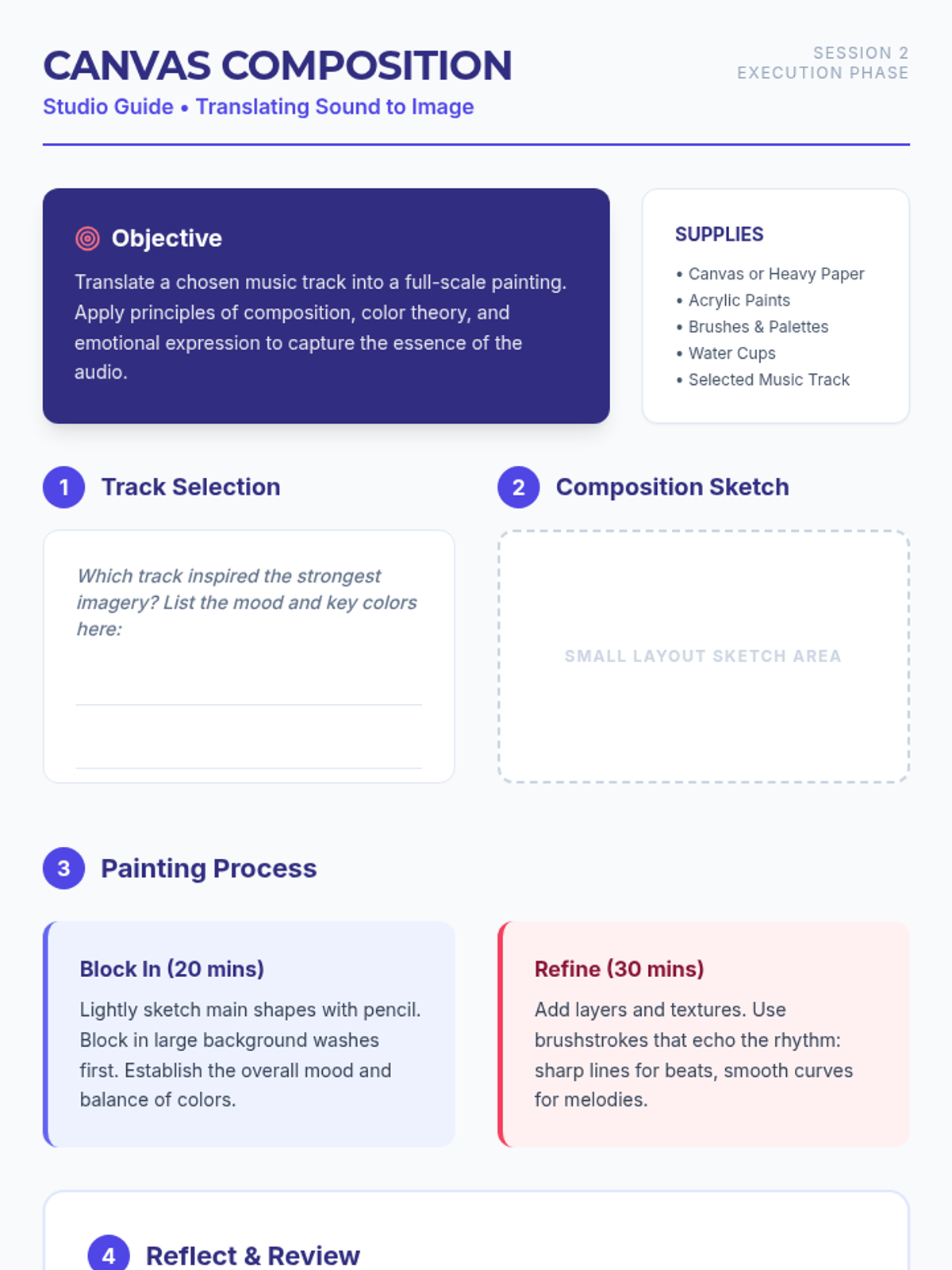
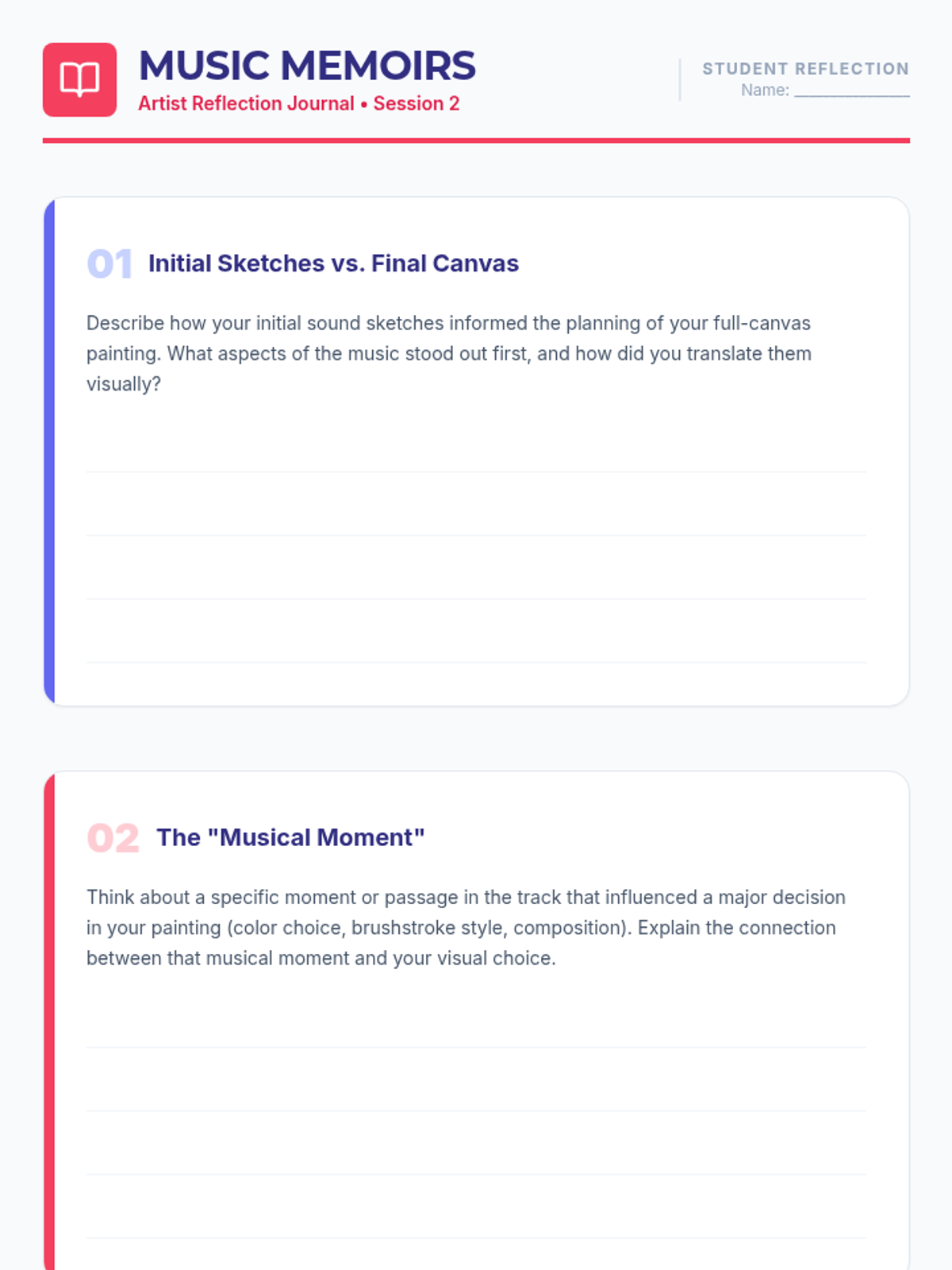
A cross-curricular unit for 7th grade students exploring the interplay between music and visual arts through painting, reflective journaling, and digital soundscape composition.
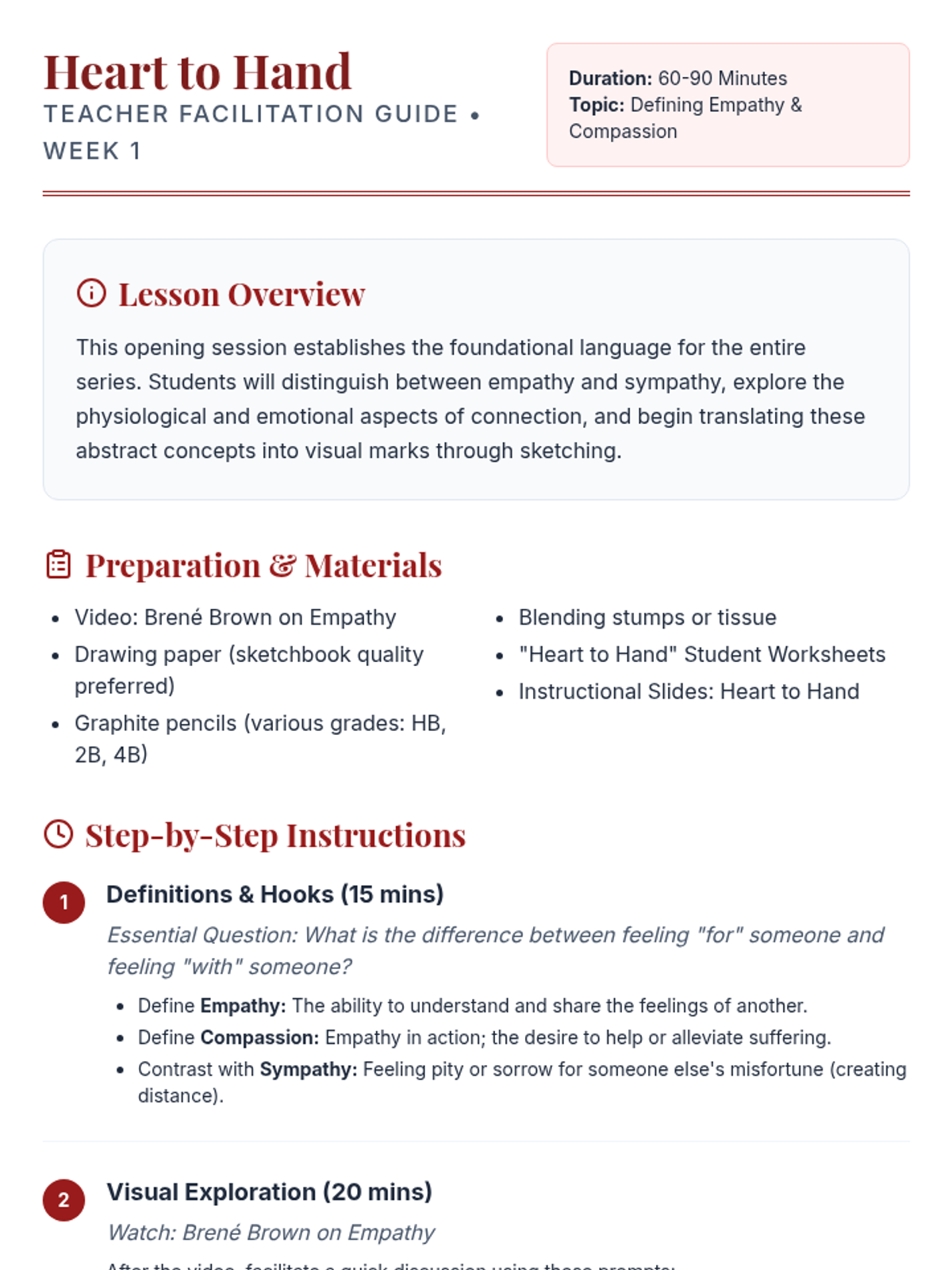
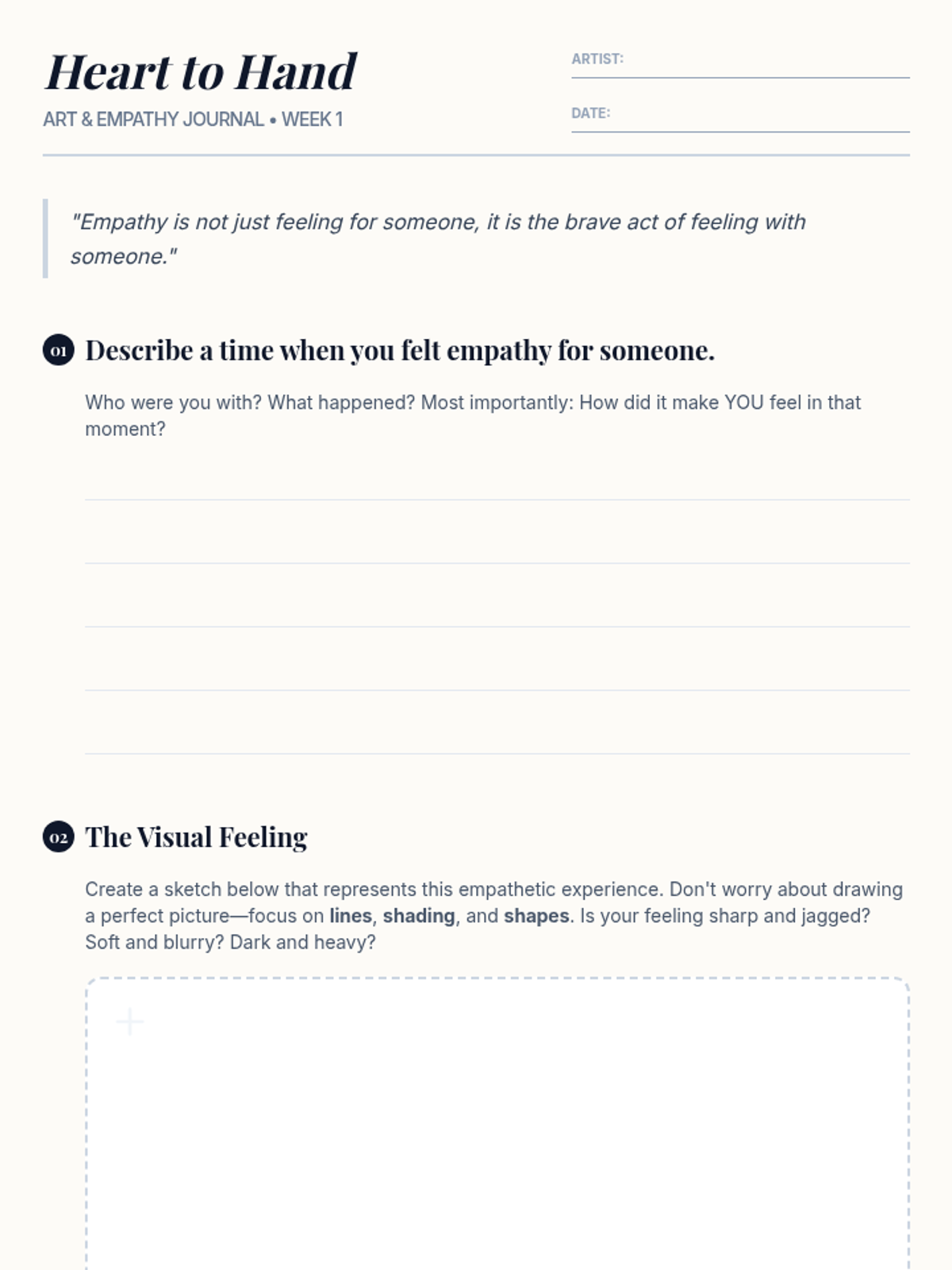
An 8-week series for middle schoolers exploring the intersection of visual arts and emotional intelligence, focusing on building empathy, compassion, and self-awareness through creative expression and professional artist insights.
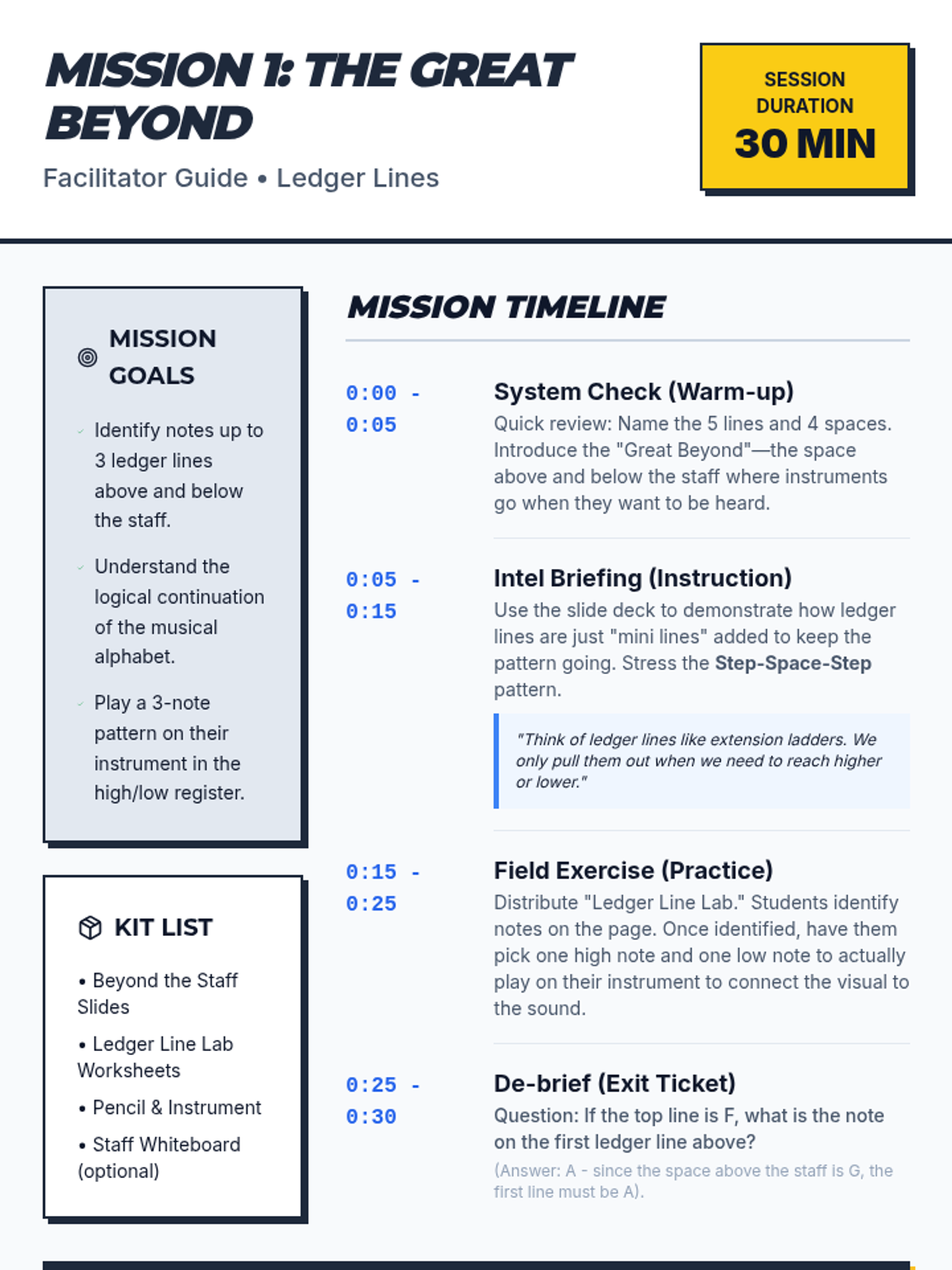
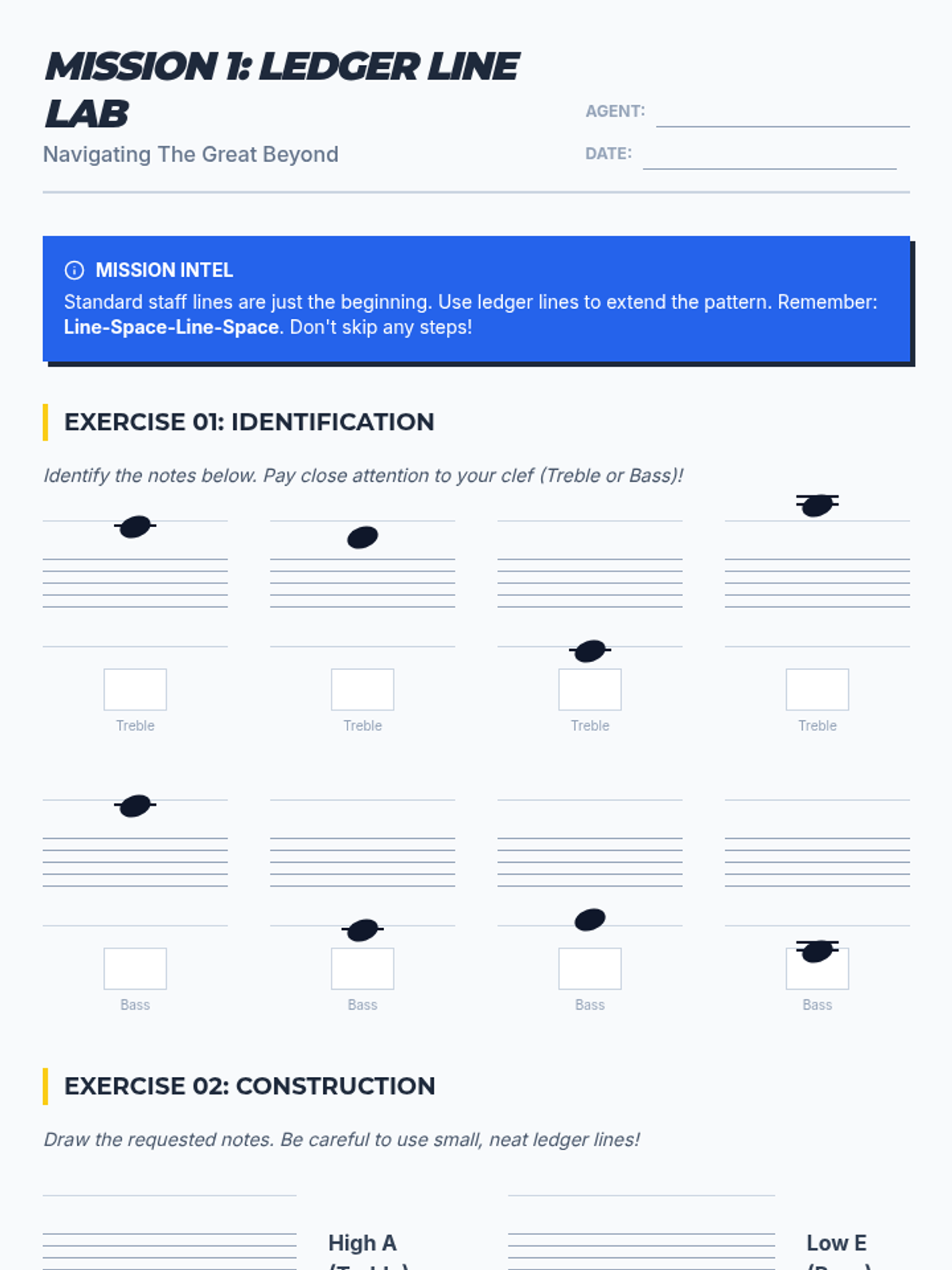
An 8-week intensive for band students to level up their music literacy, moving from basic note identification to fluently reading complex scores. Students will master ledger lines, key signatures, navigation markings, and ensemble sight-reading through a "Music Mission Control" theme.
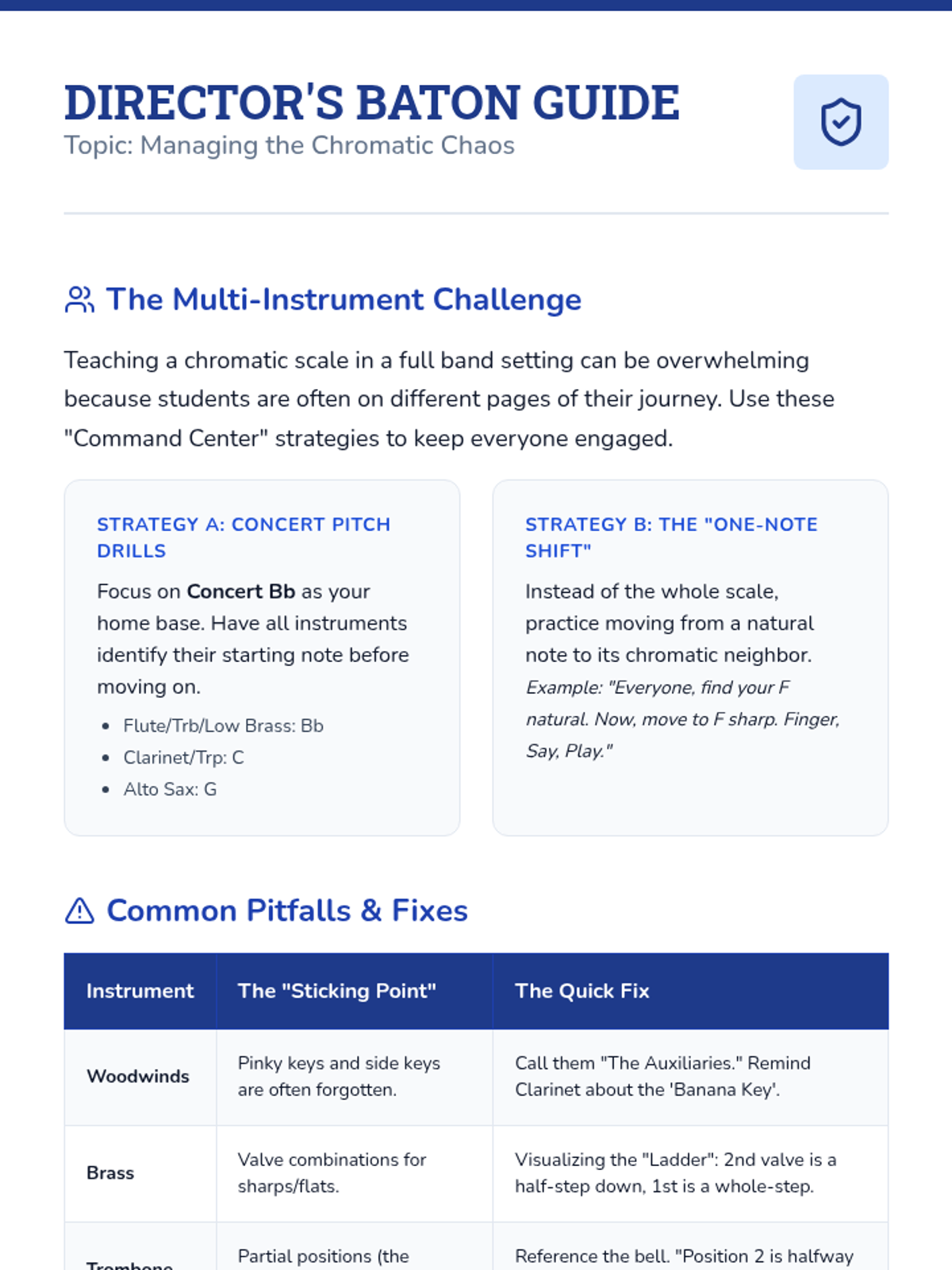
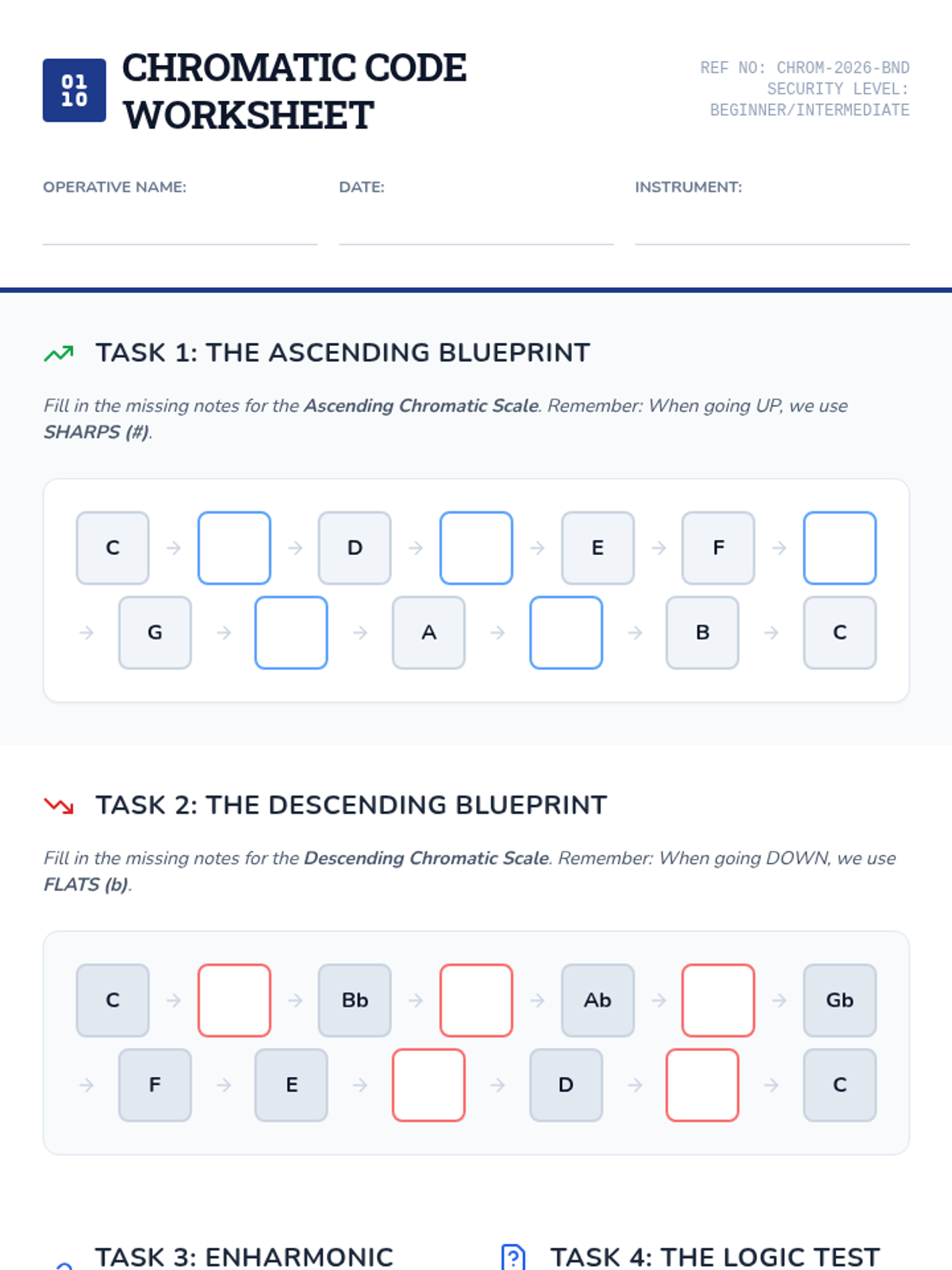
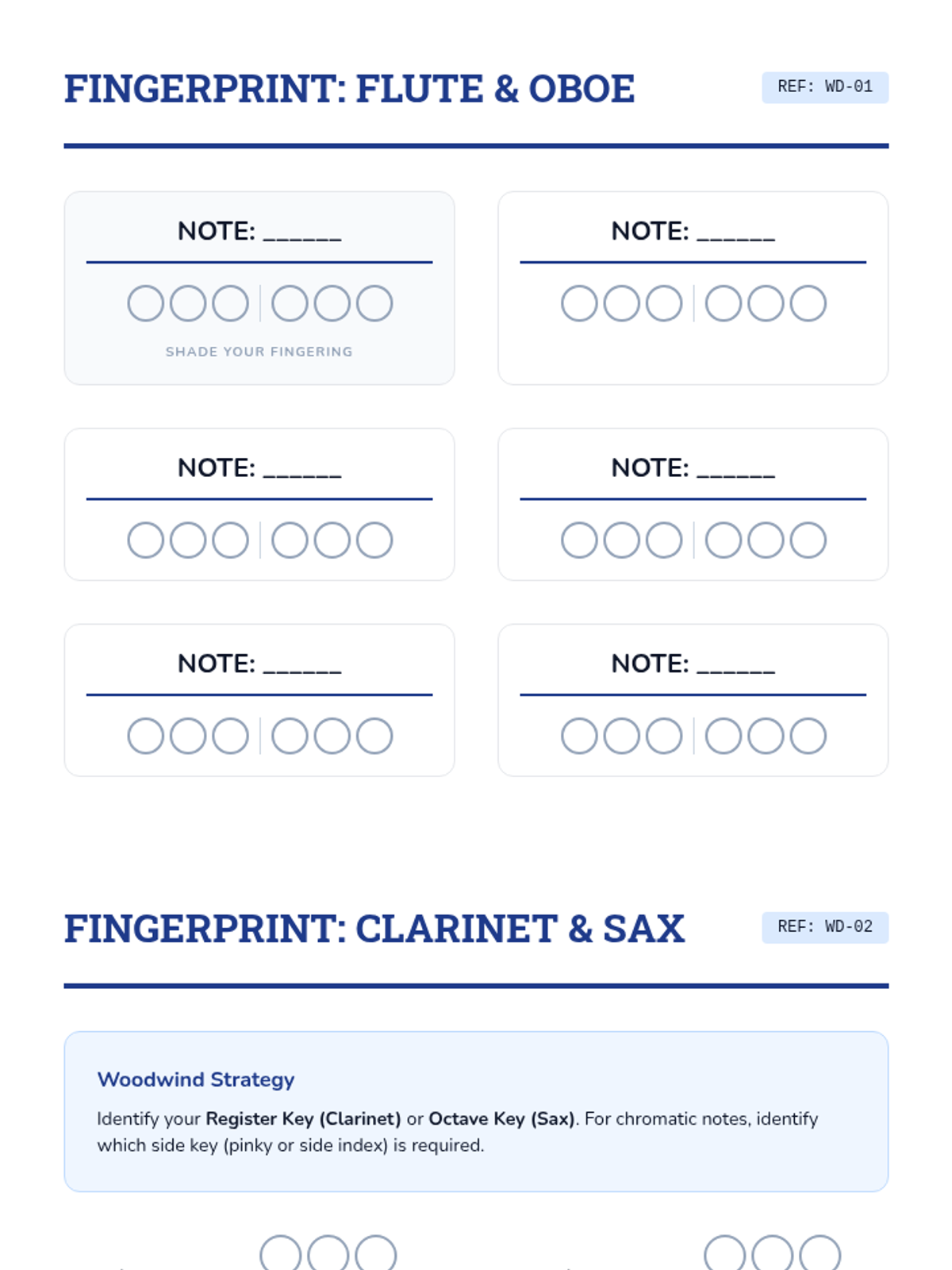
A comprehensive unit for middle school band students to master the chromatic scale, focusing on note identification, enharmonics, and instrument-specific fingerings through a 'blueprint' technical aesthetic.
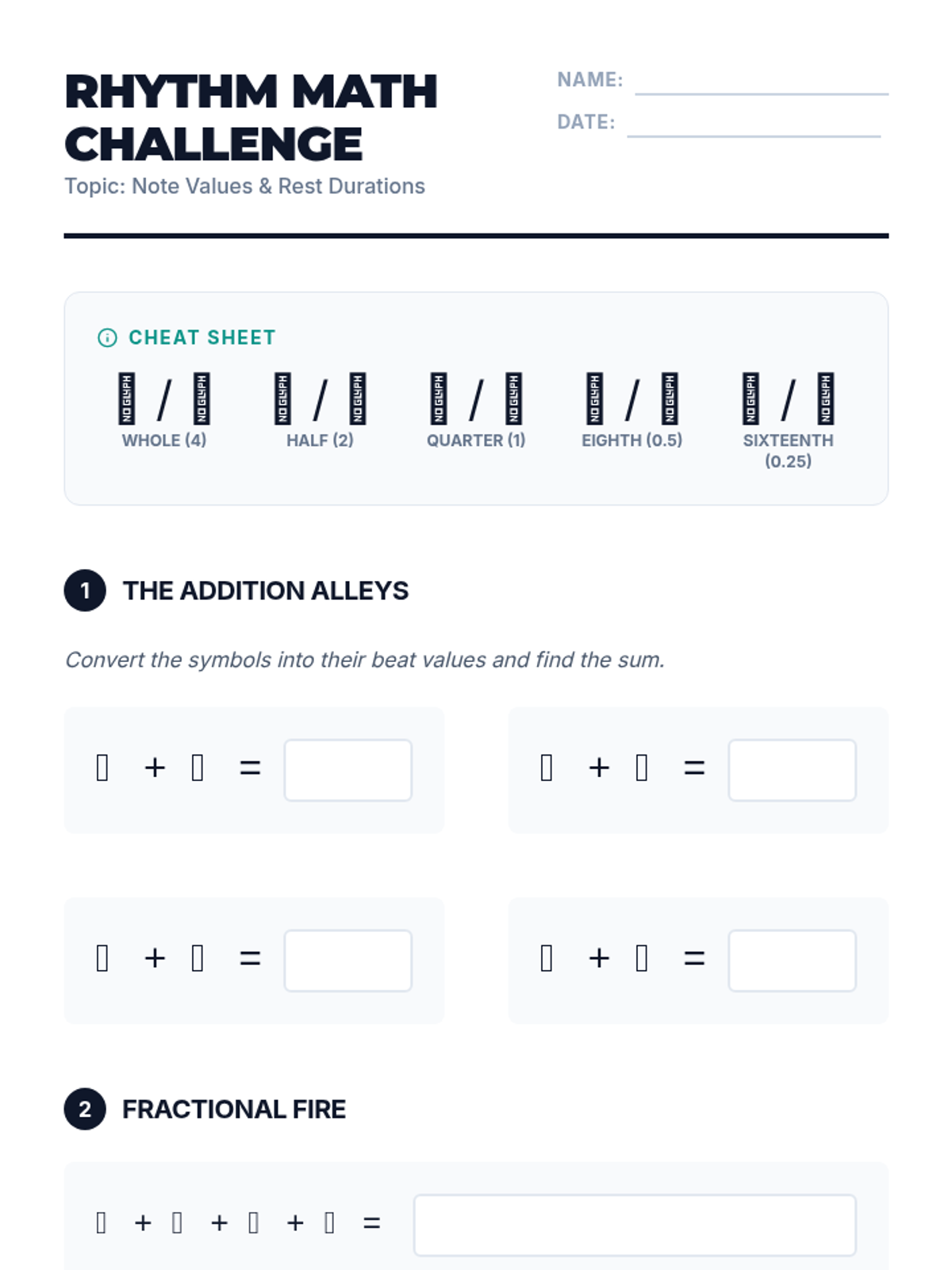
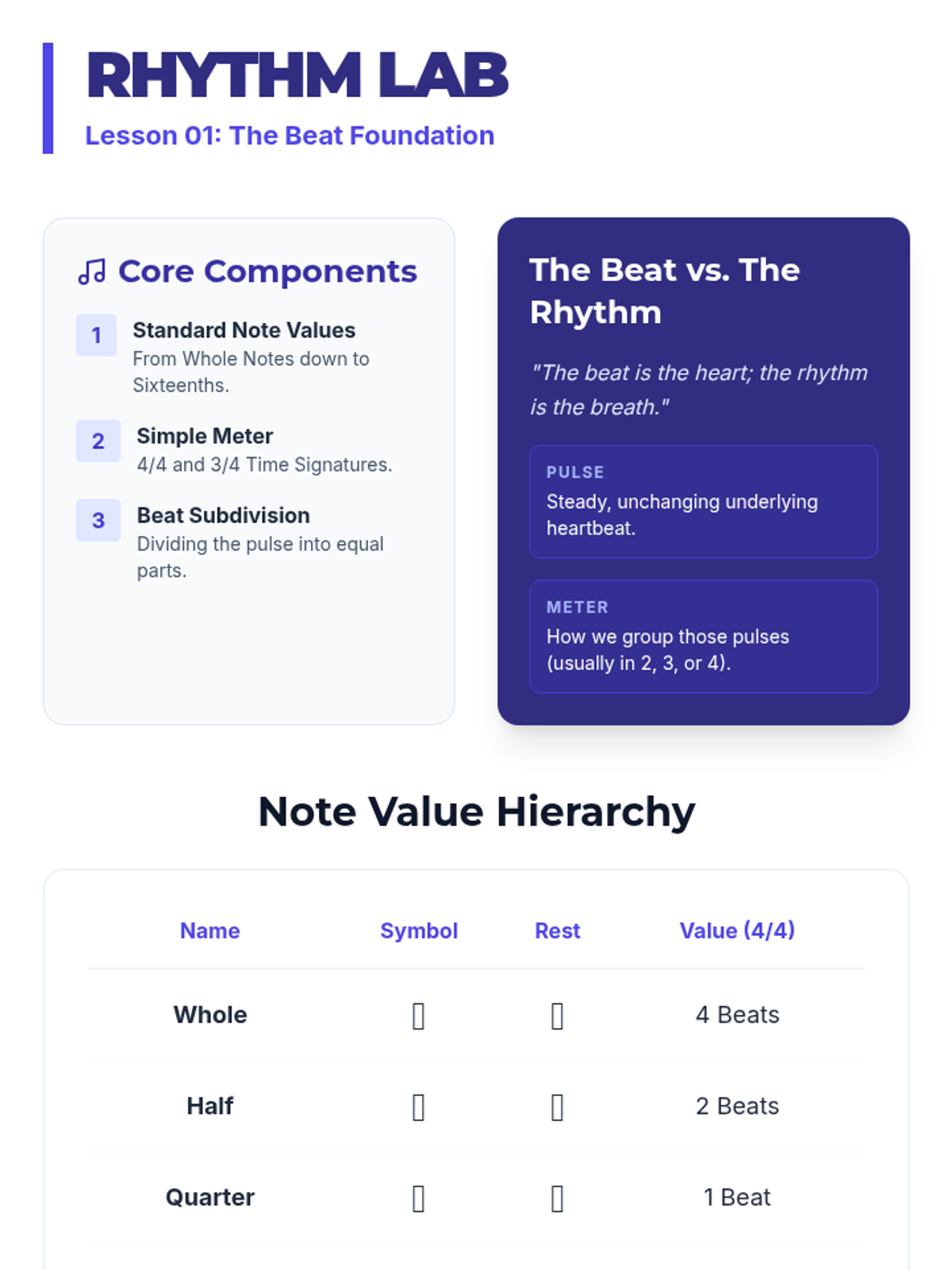
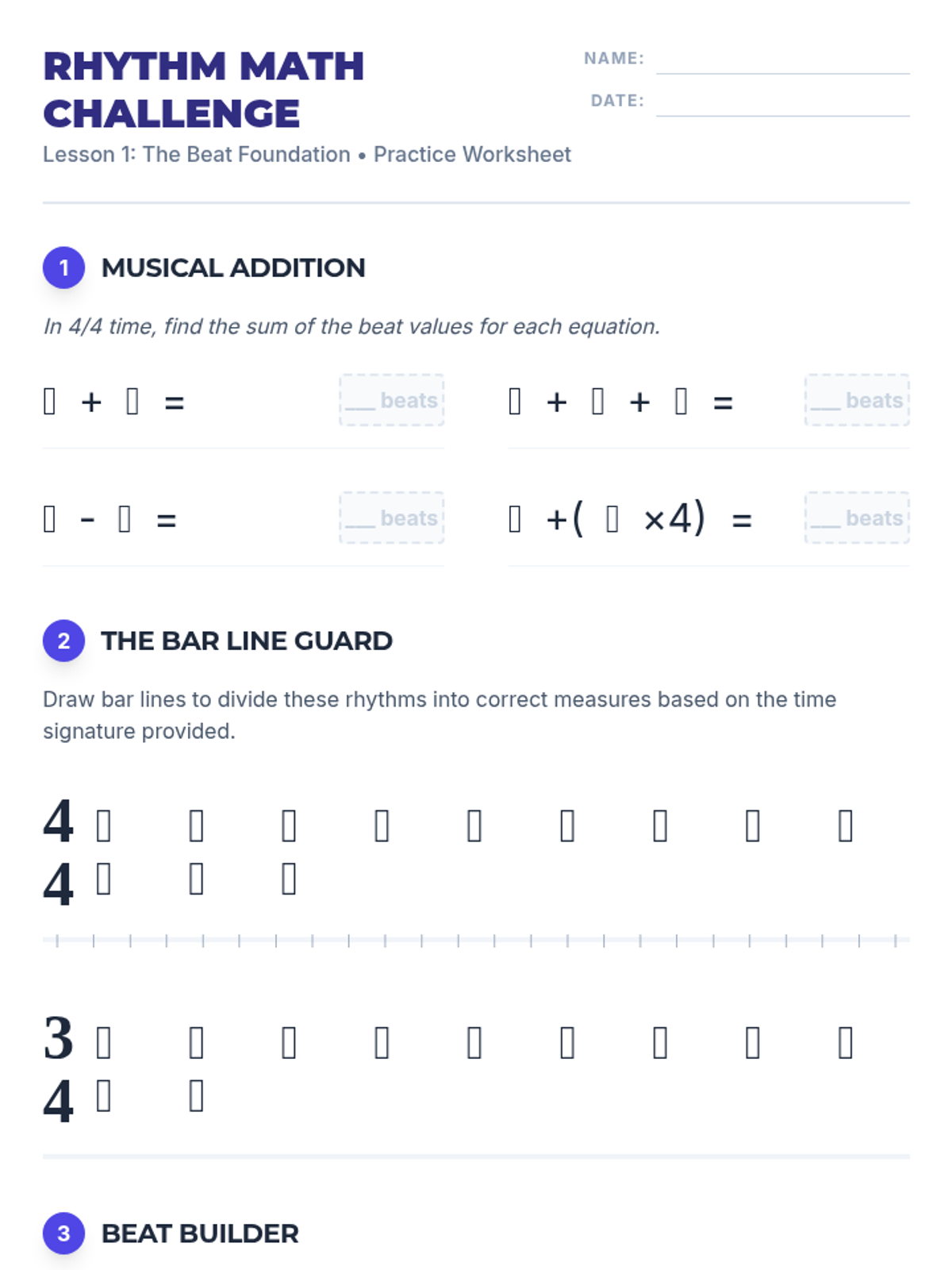
A comprehensive sequence for 6th-grade students on rhythmic notation, meter, and mathematical subdivision of music. Students progress from basic note values to complex syncopation and original composition.
A comprehensive unit for 7th-grade music students focusing on advanced rhythmic concepts, including simple and compound meters, syncopation, and dotted rhythms, culminating in a percussion ensemble performance.
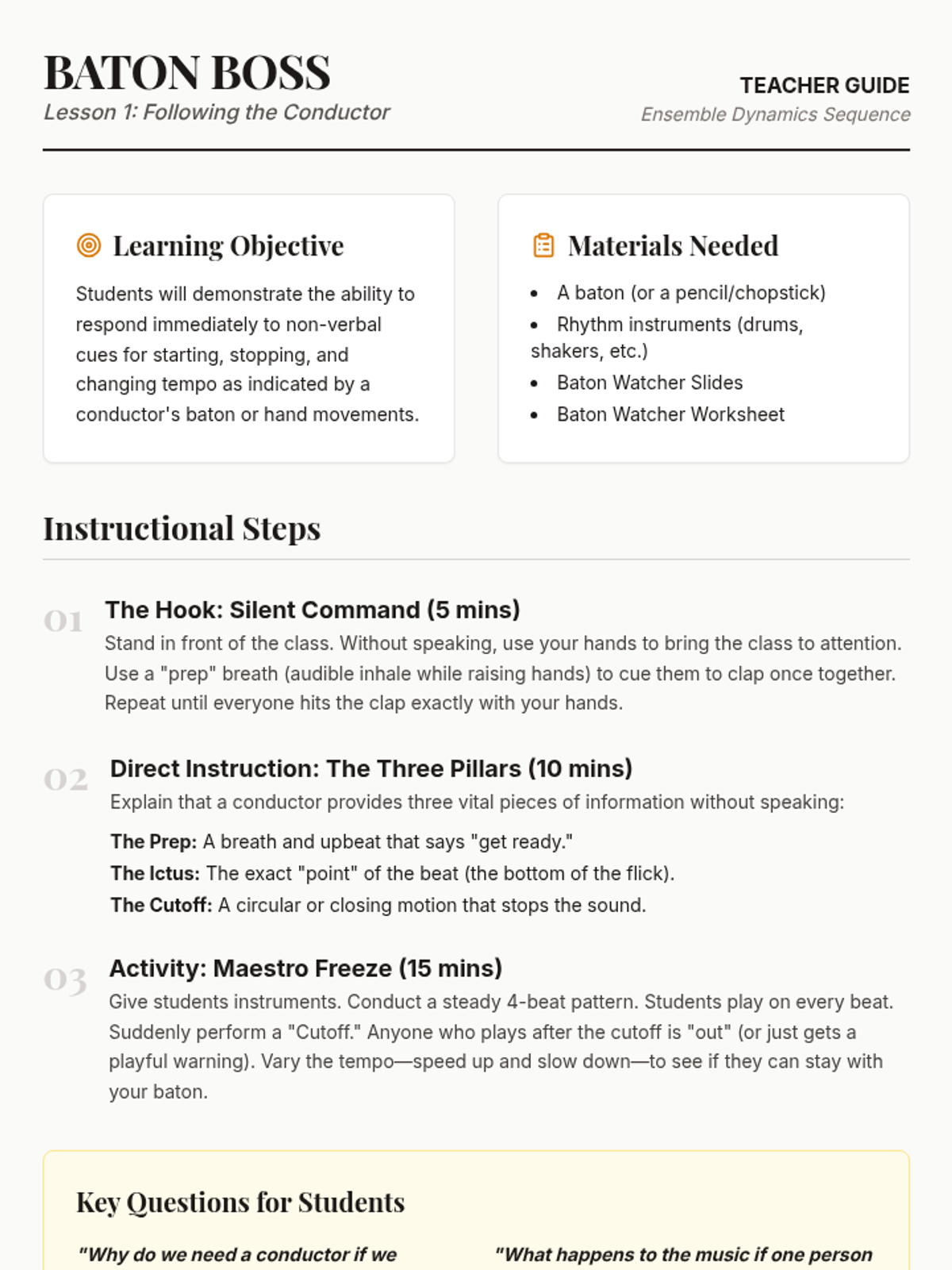
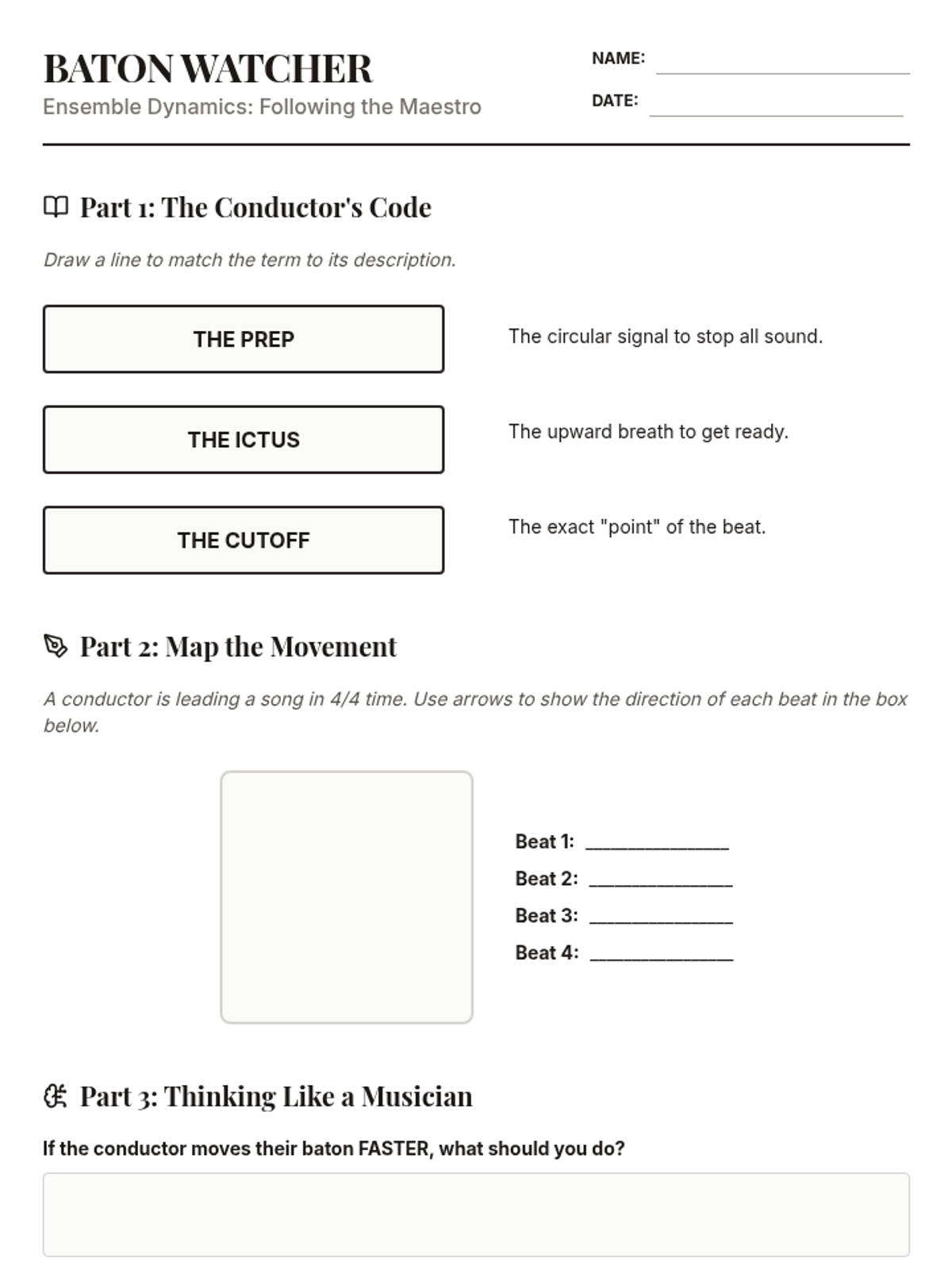
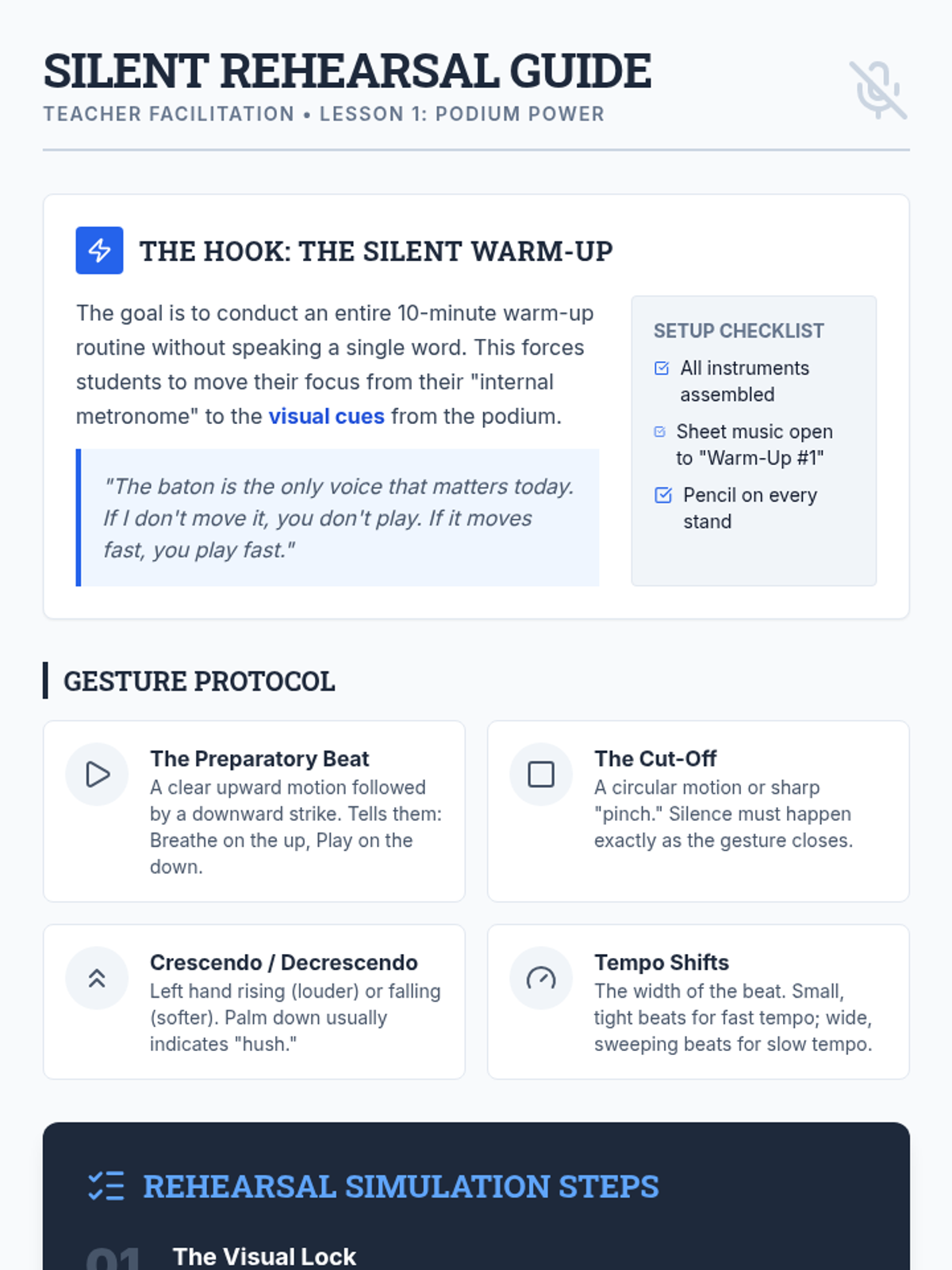
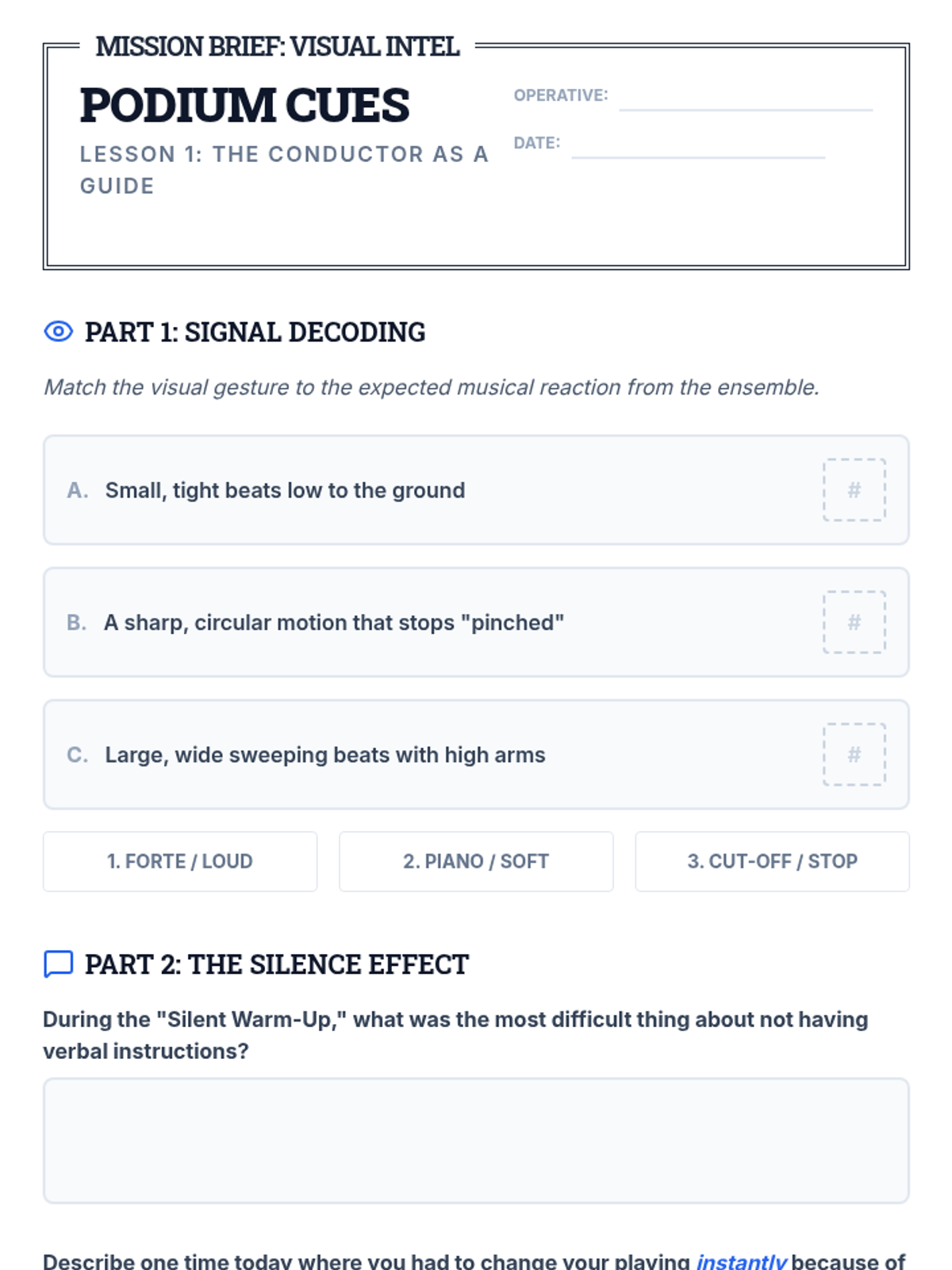
This sequence explores how musicians work together as an ensemble, focusing on conducting cues, dynamic control, balance, and tempo maintenance. Students transition from following a leader to collaborating in small independent groups.
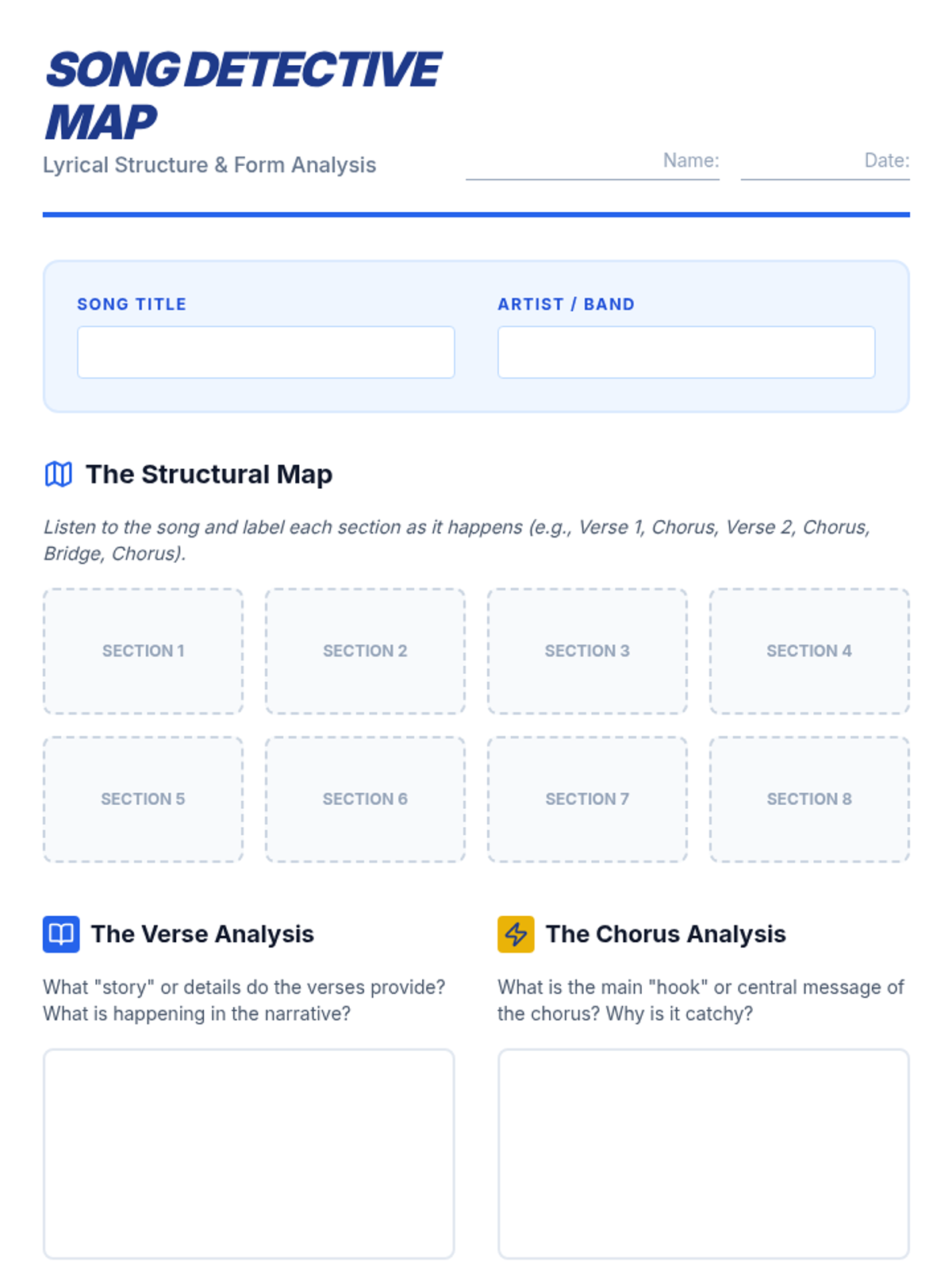
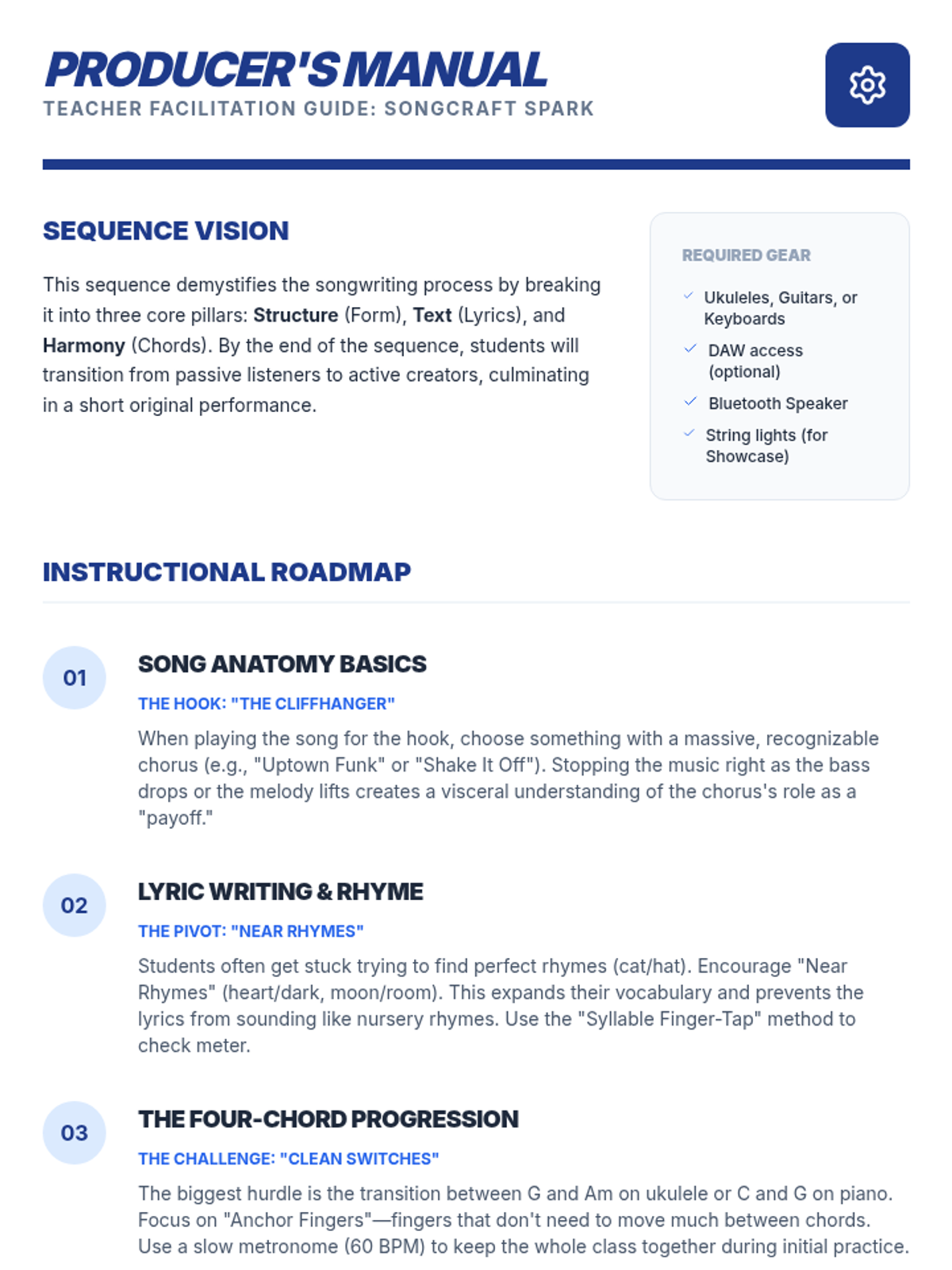
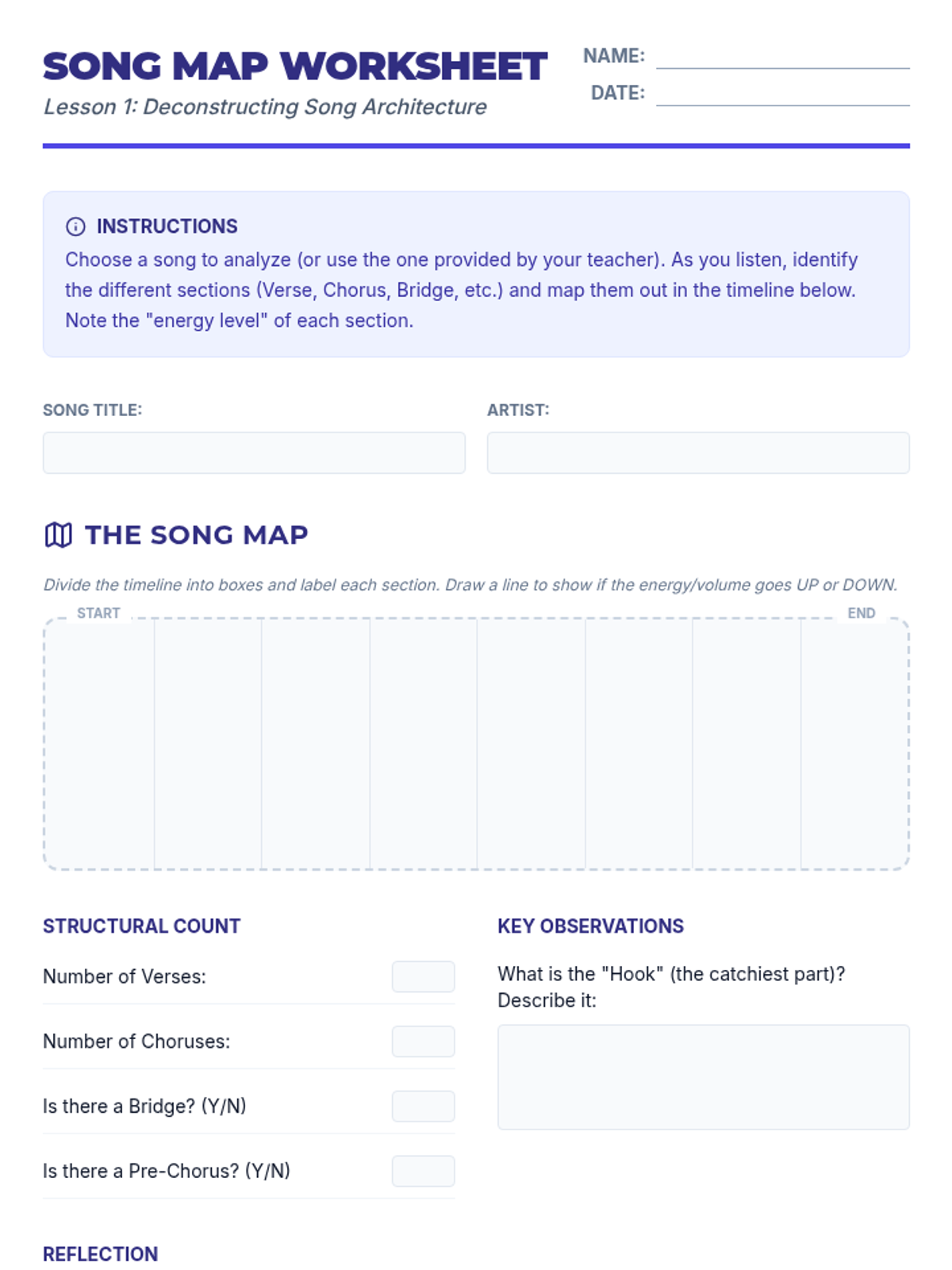
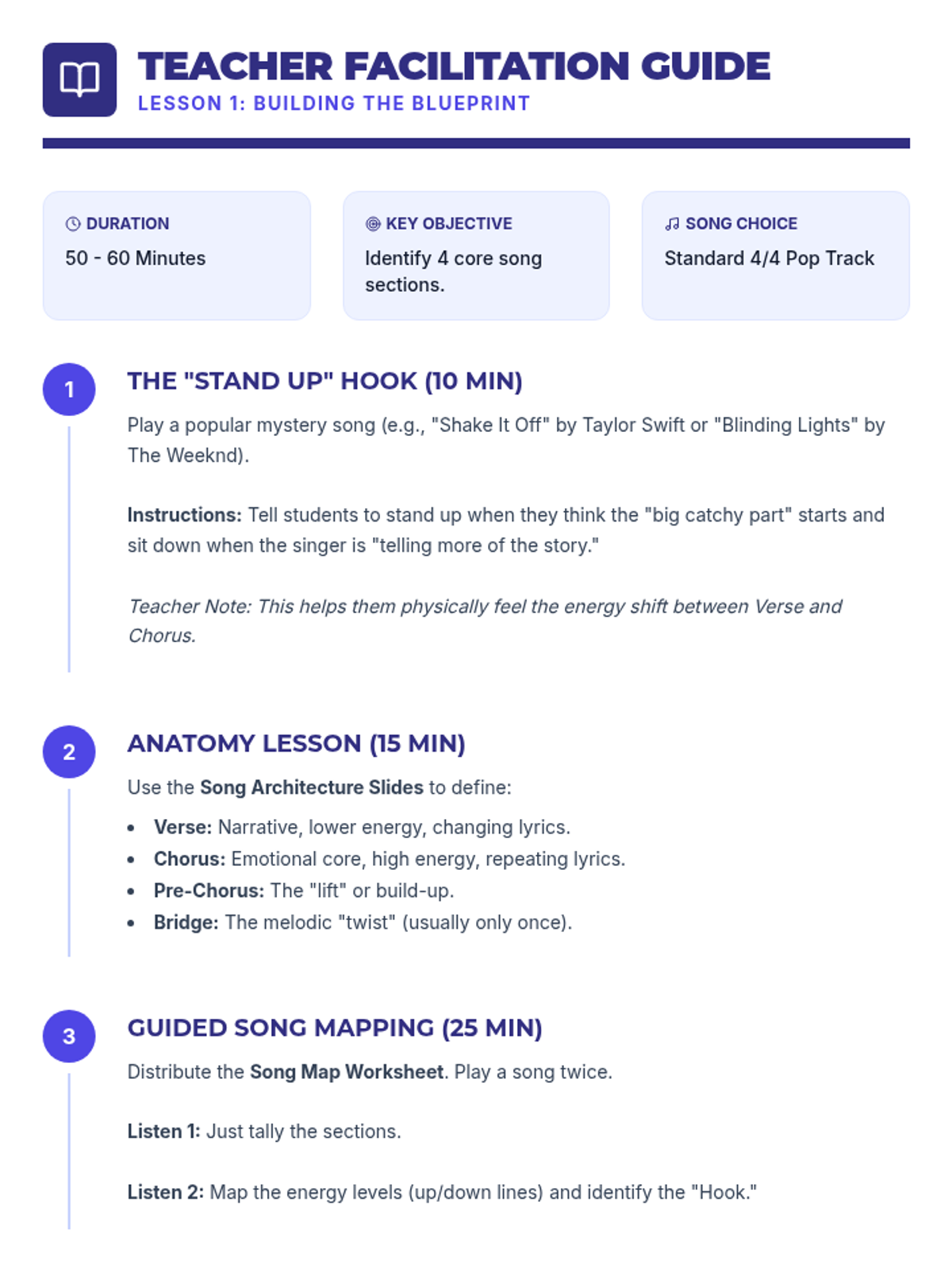
Students journey through the process of songwriting, from deconstructing popular forms to composing original lyrics and harmonic progressions. The sequence culminates in a live or recorded showcase of original student work, emphasizing the synergy between words and music.
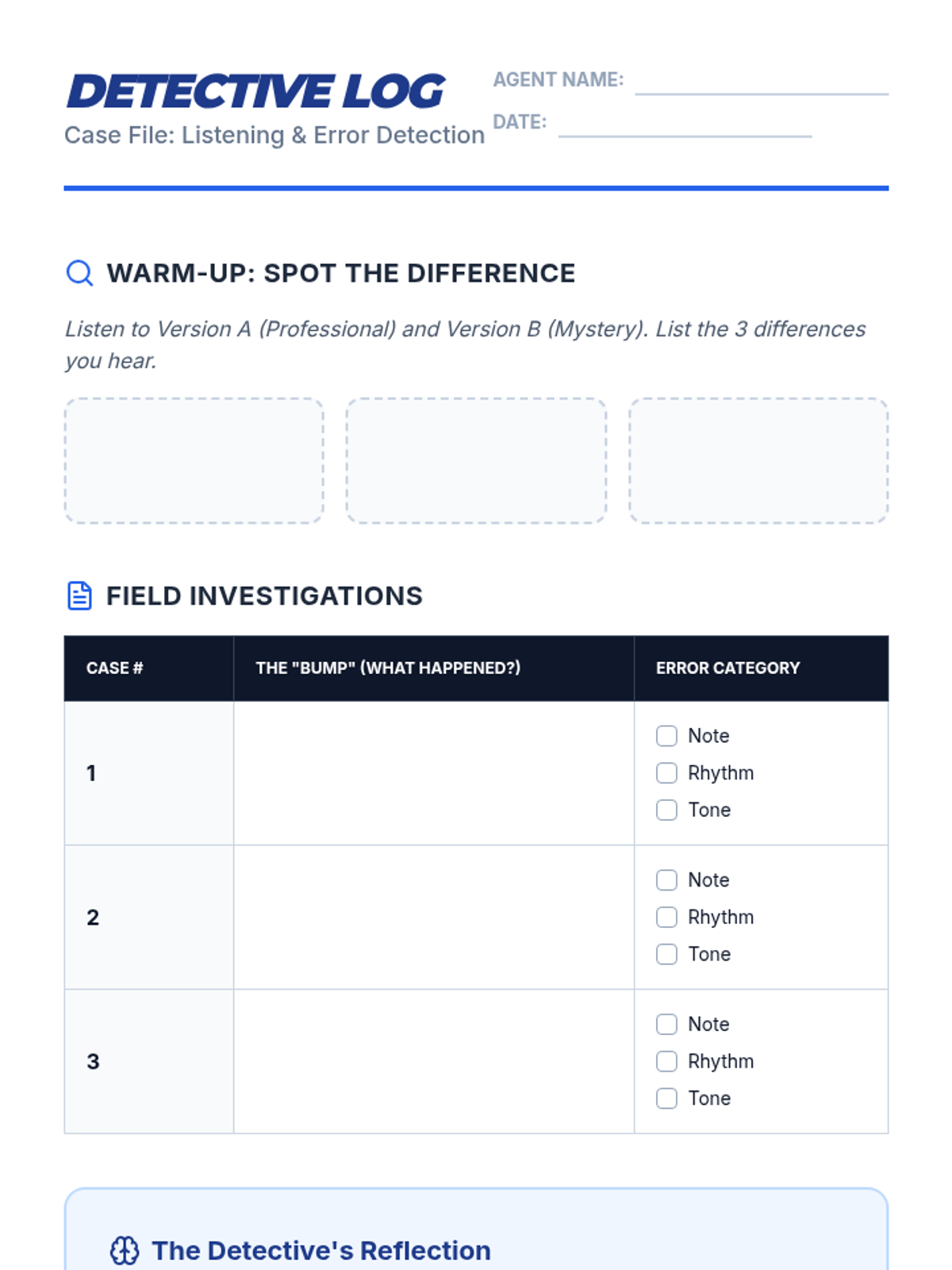
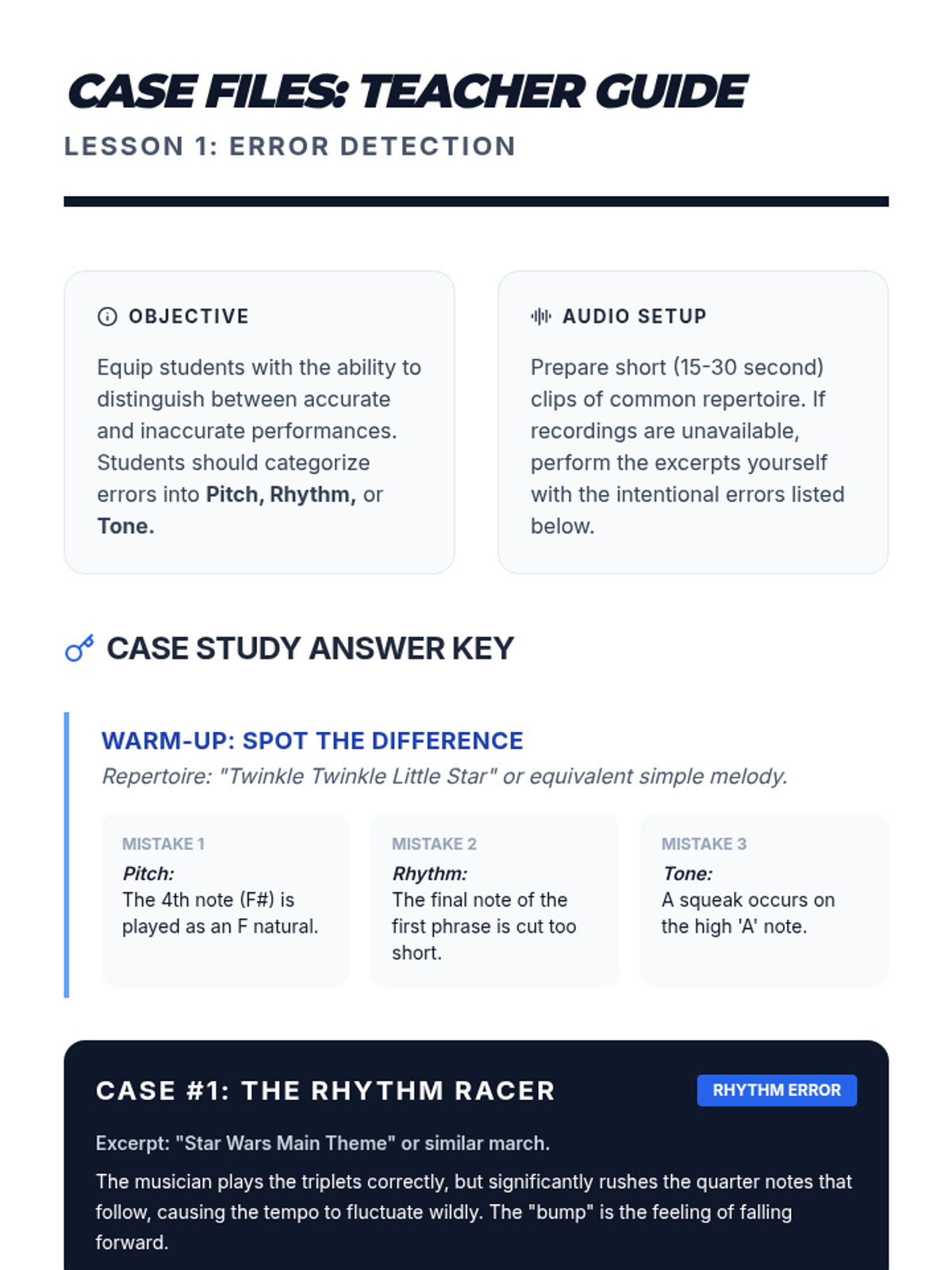
This sequence empowers 5th-grade musicians to become independent learners by mastering critical listening, error detection, and strategic practice techniques. Students transition from identifying performance mistakes in others to self-diagnosing and creating personalized practice blueprints for technical growth.
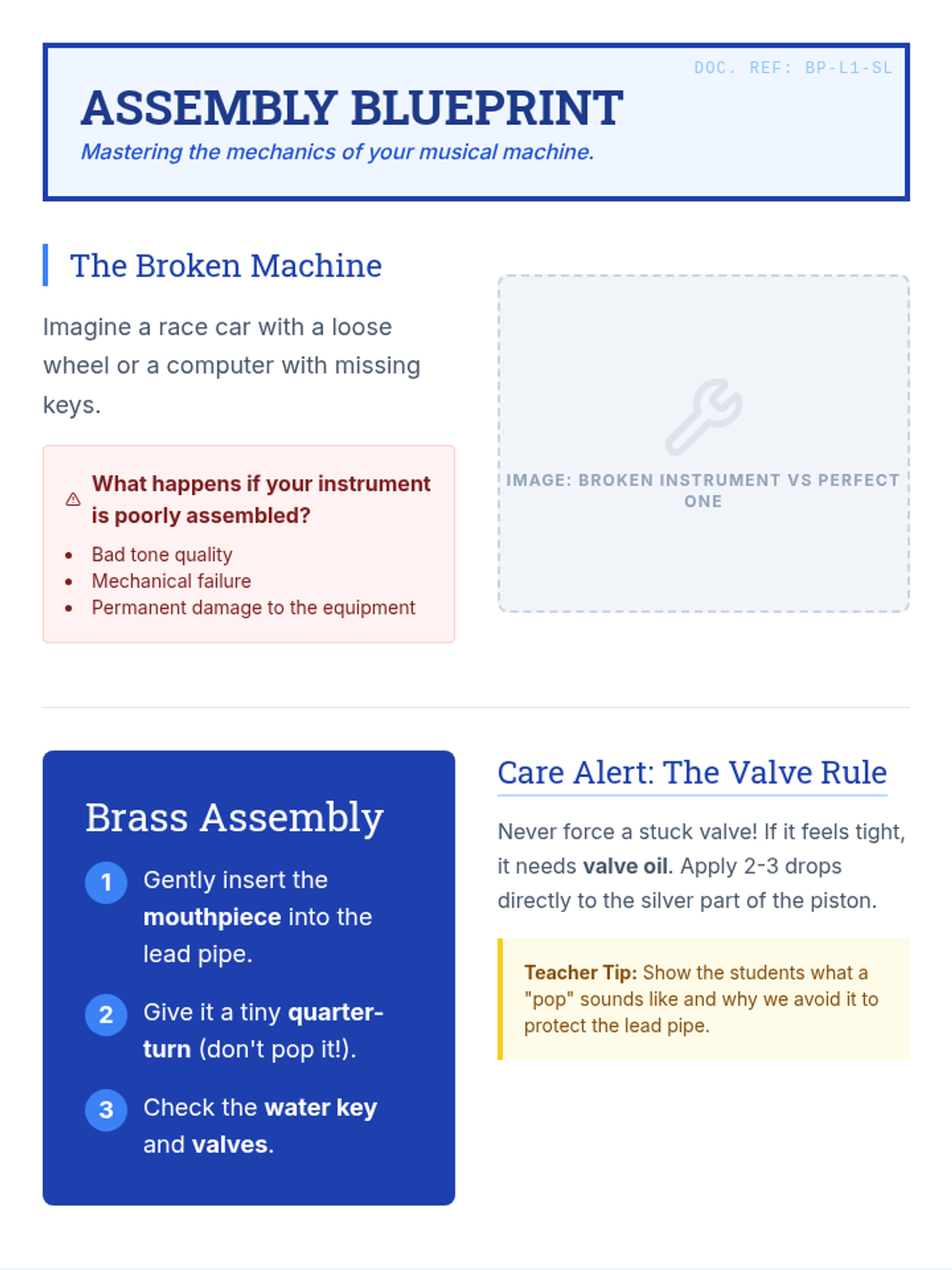
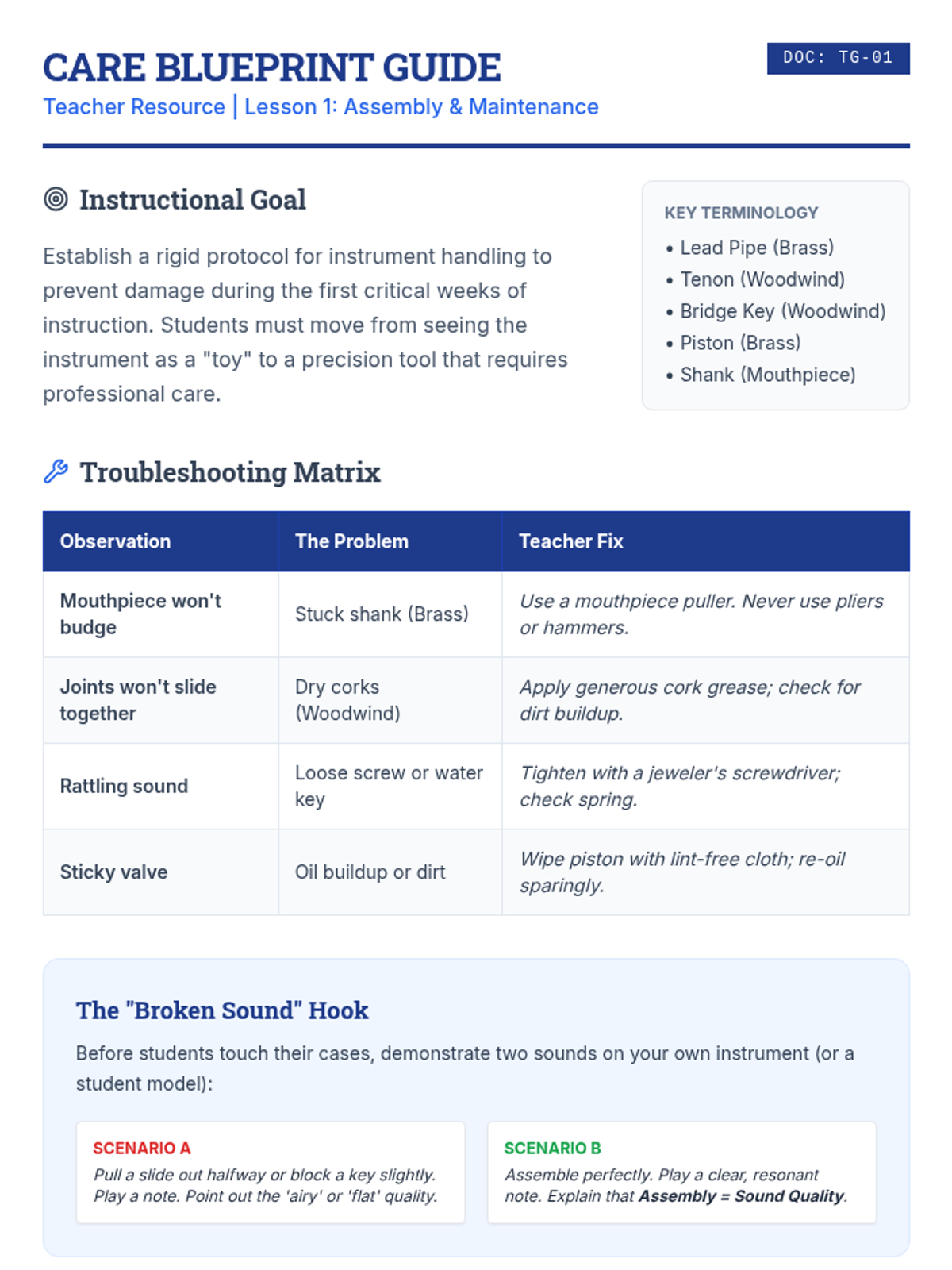
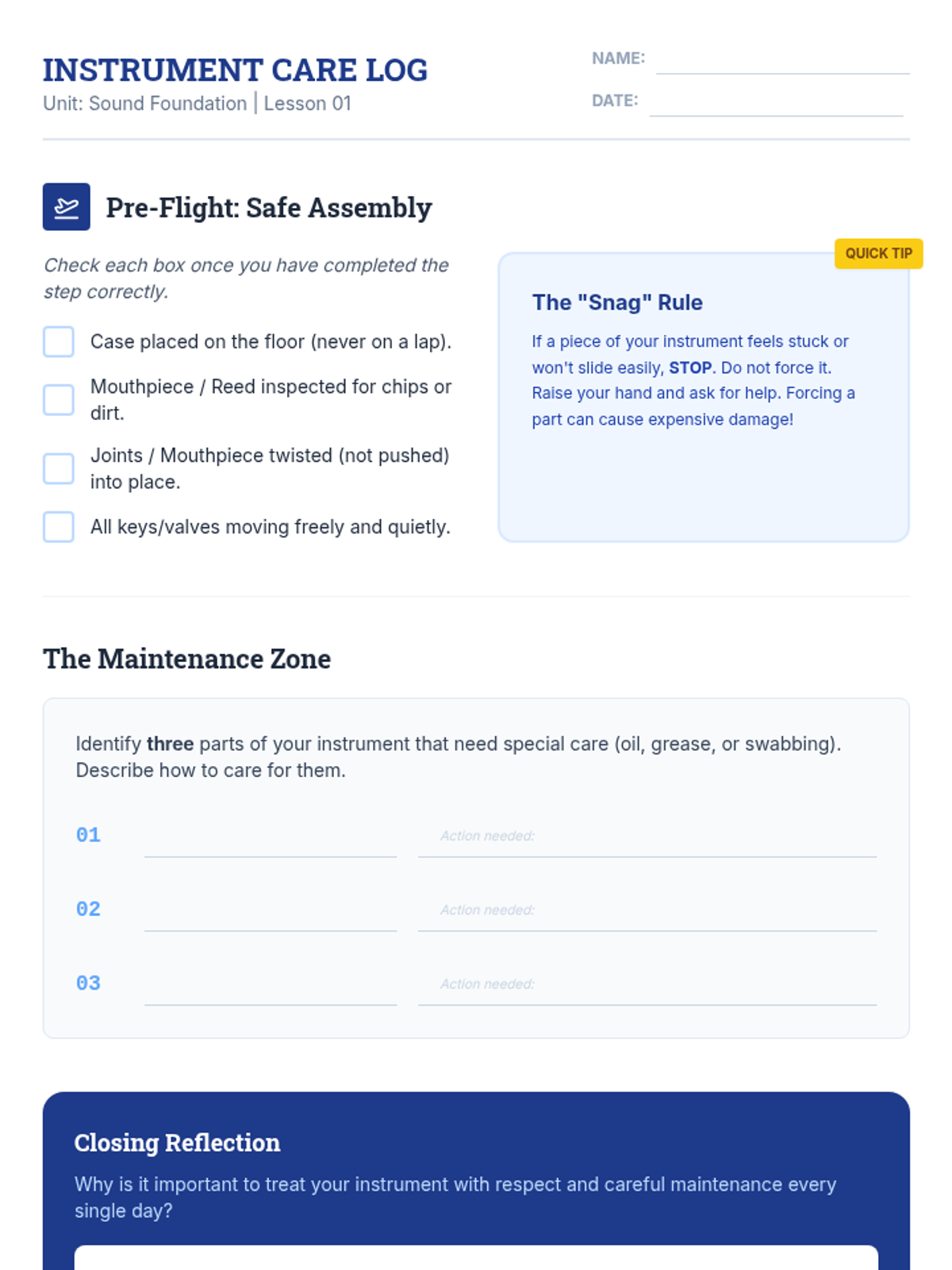
This foundational workshop for beginning instrumentalists focuses on the physical mechanics of playing, from assembly to tone production. Students master the physical techniques required to produce a characteristic sound on their specific instrument through hands-on practice and technical drills.
A comprehensive sequence for 7th-grade instrumentalists to master the art of sight-reading. Students move from decoding mnemonics and rhythm isolation to navigating complex musical forms and performing unread scores with confidence.
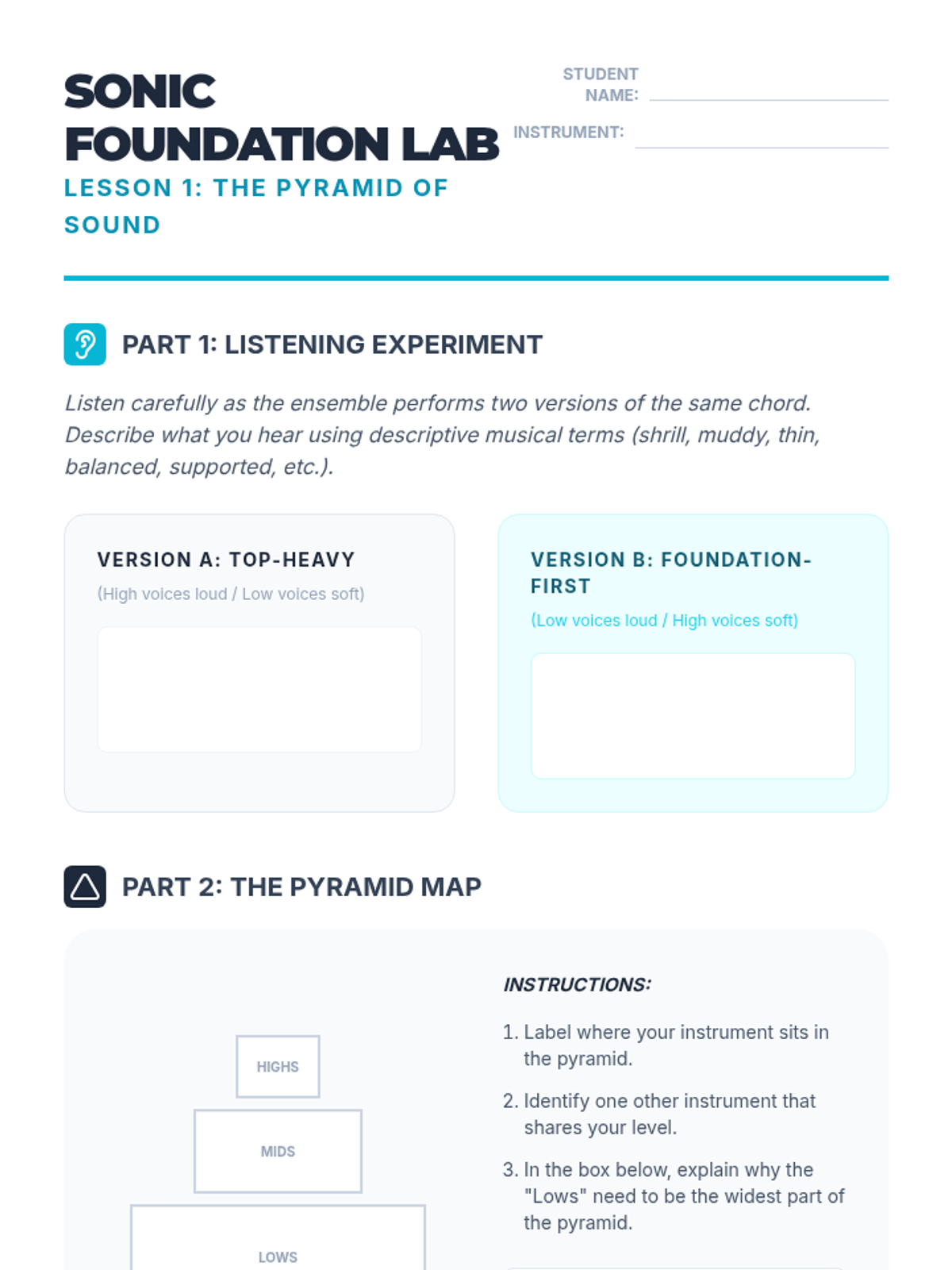
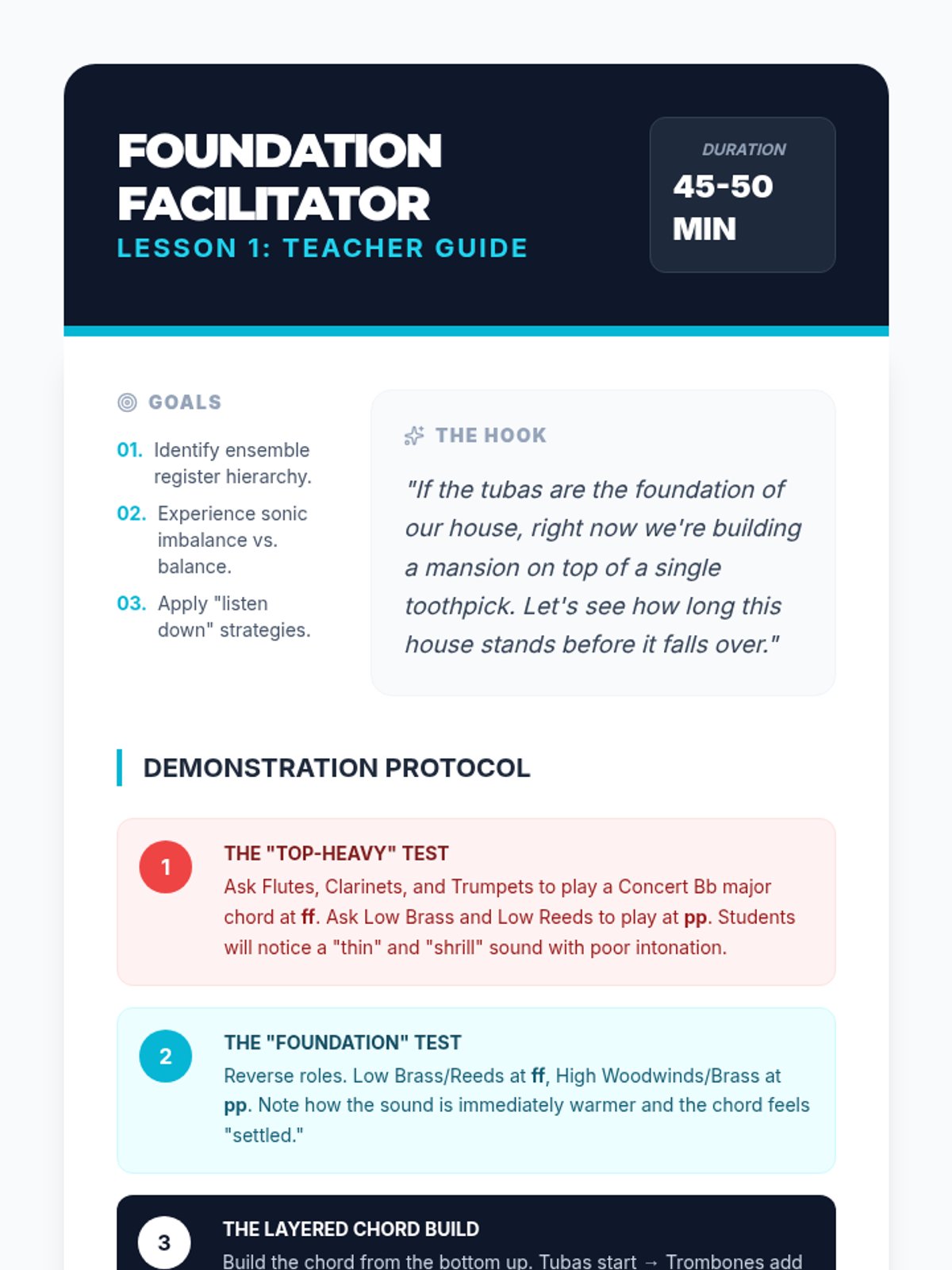
A comprehensive unit for middle school band and orchestra students focusing on ensemble hierarchy, the 'Pyramid of Sound,' role identification, and collective musicality. Students move from basic balance concepts to advanced conductorless rehearsal techniques.
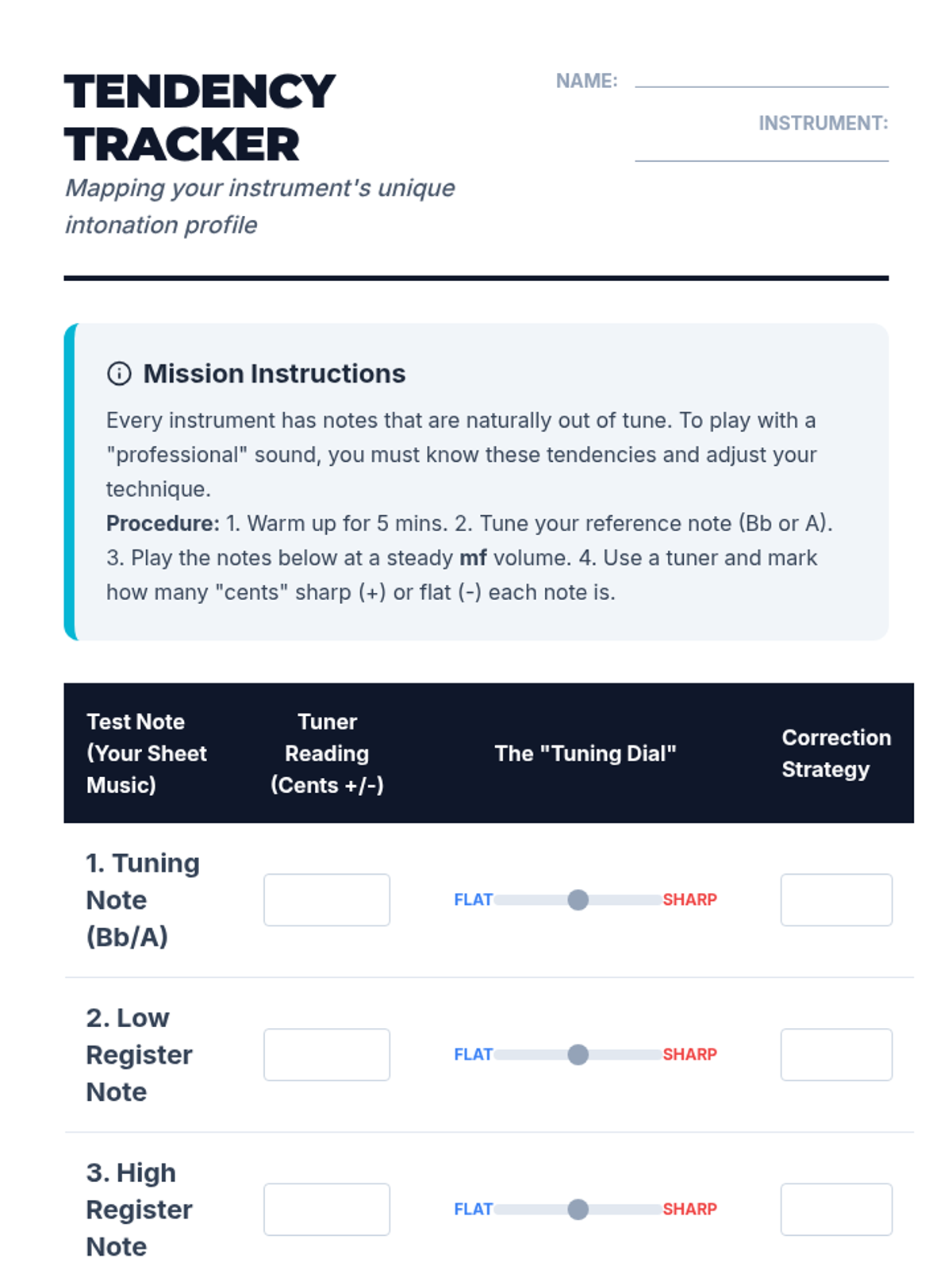
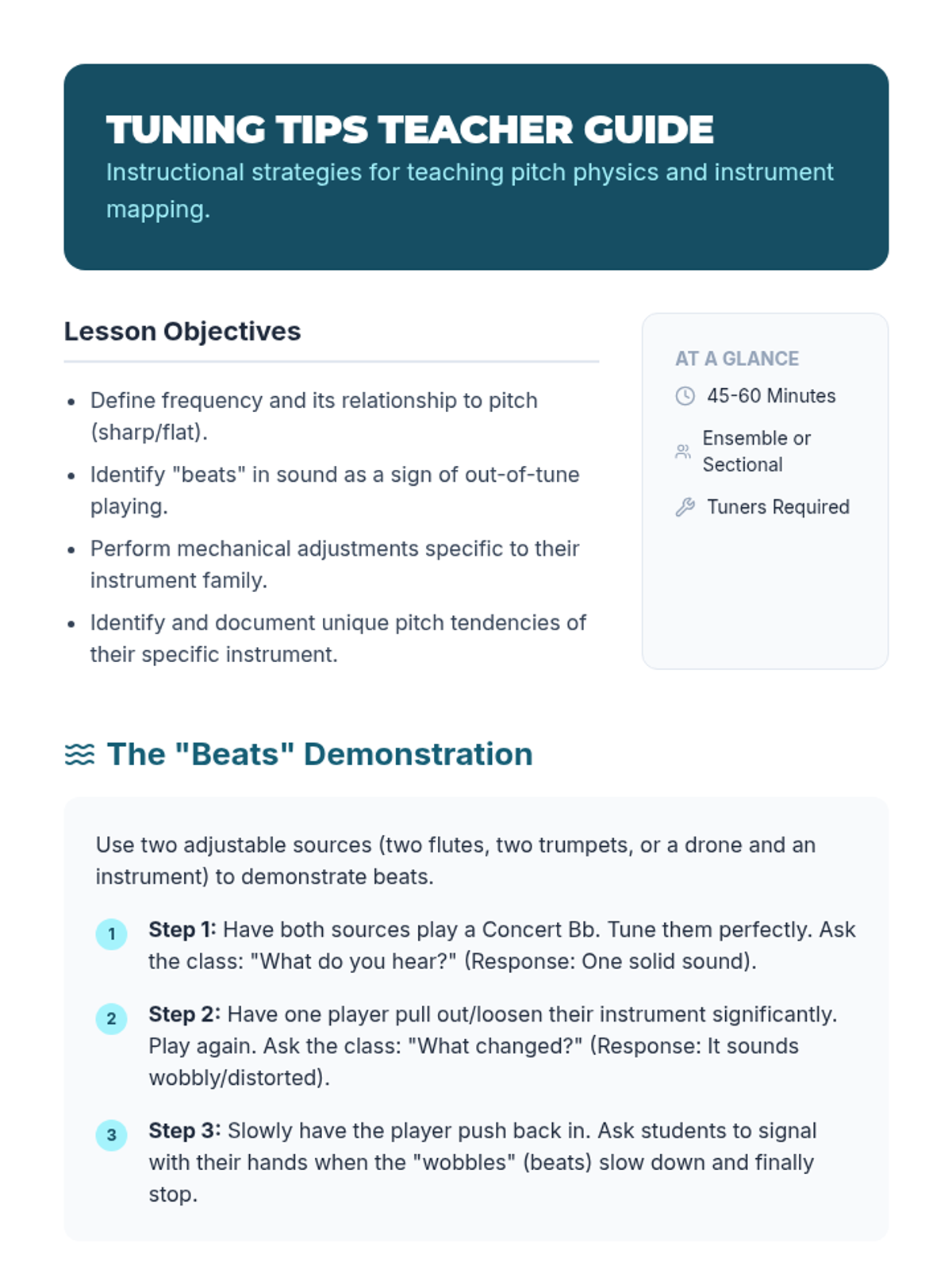
A comprehensive unit for middle school band and orchestra students focused on the science and art of sound. Students move from understanding sound waves and pitch physics to mastering instrument-specific adjustments, breath support, and ensemble blend through the performance of lyrical chorales.
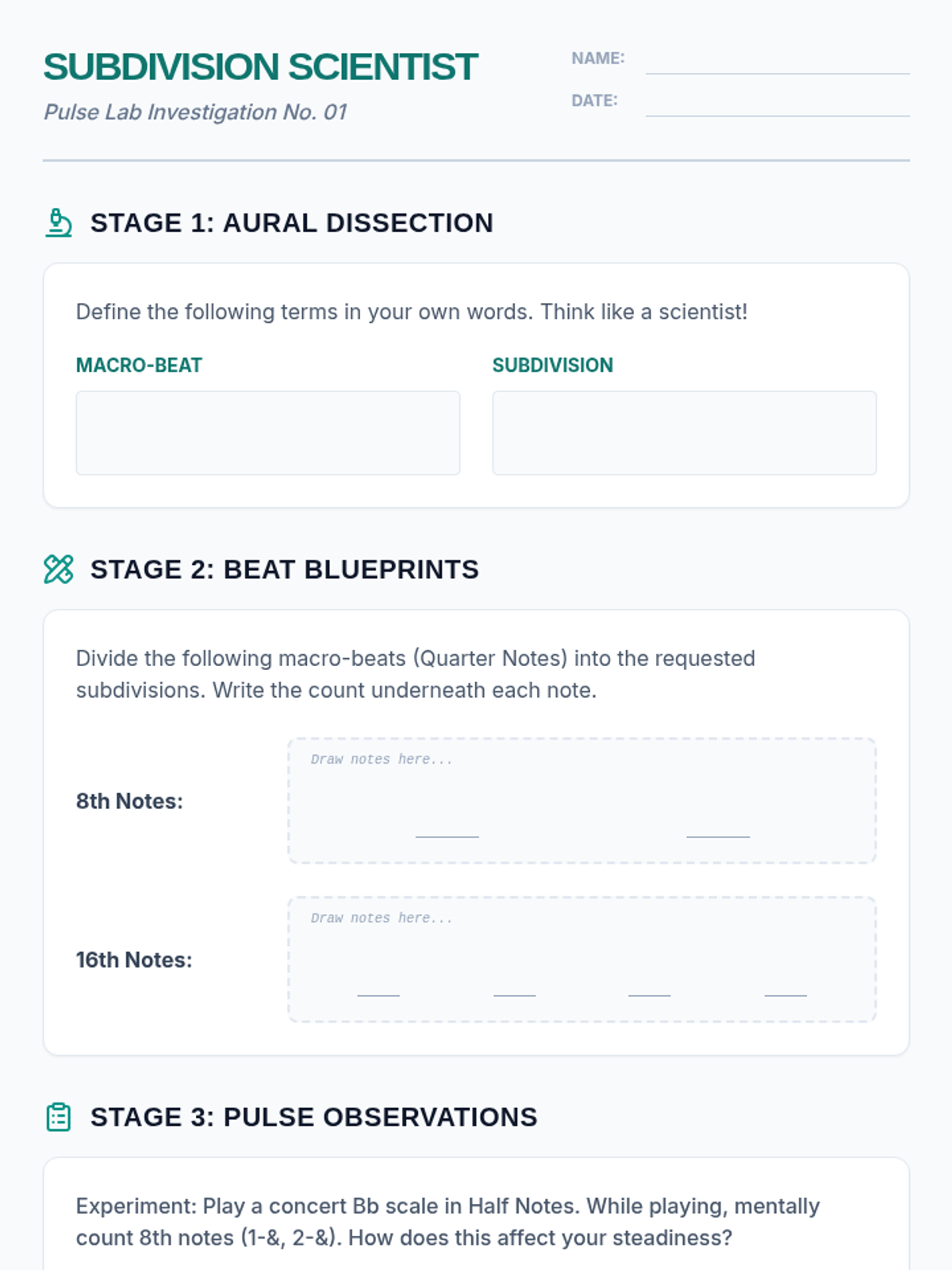
This sequence guides 7th-grade instrumentalists through the complexities of rhythmic subdivision, compound meter (6/8), and syncopation. Students move from basic pulse stability to performing interlocking chamber music with rhythmic independence.
A comprehensive unit for 6th-grade instrumentalists focused on transitioning from individual playing to cohesive ensemble performance through conducting, balance, and listening.
This sequence establishes foundational literacy skills for instrumental music, moving from basic note identification on the staff to complex rhythmic syncopation and original composition. Students learn to decode symbols, apply rhythm math, and develop sight-reading strategies for 6th-grade repertoire.
This sequence guides 6th-grade instrumentalists through the transition from technical accuracy to artistic expression, focusing on dynamics, phrasing, style, and performance readiness.
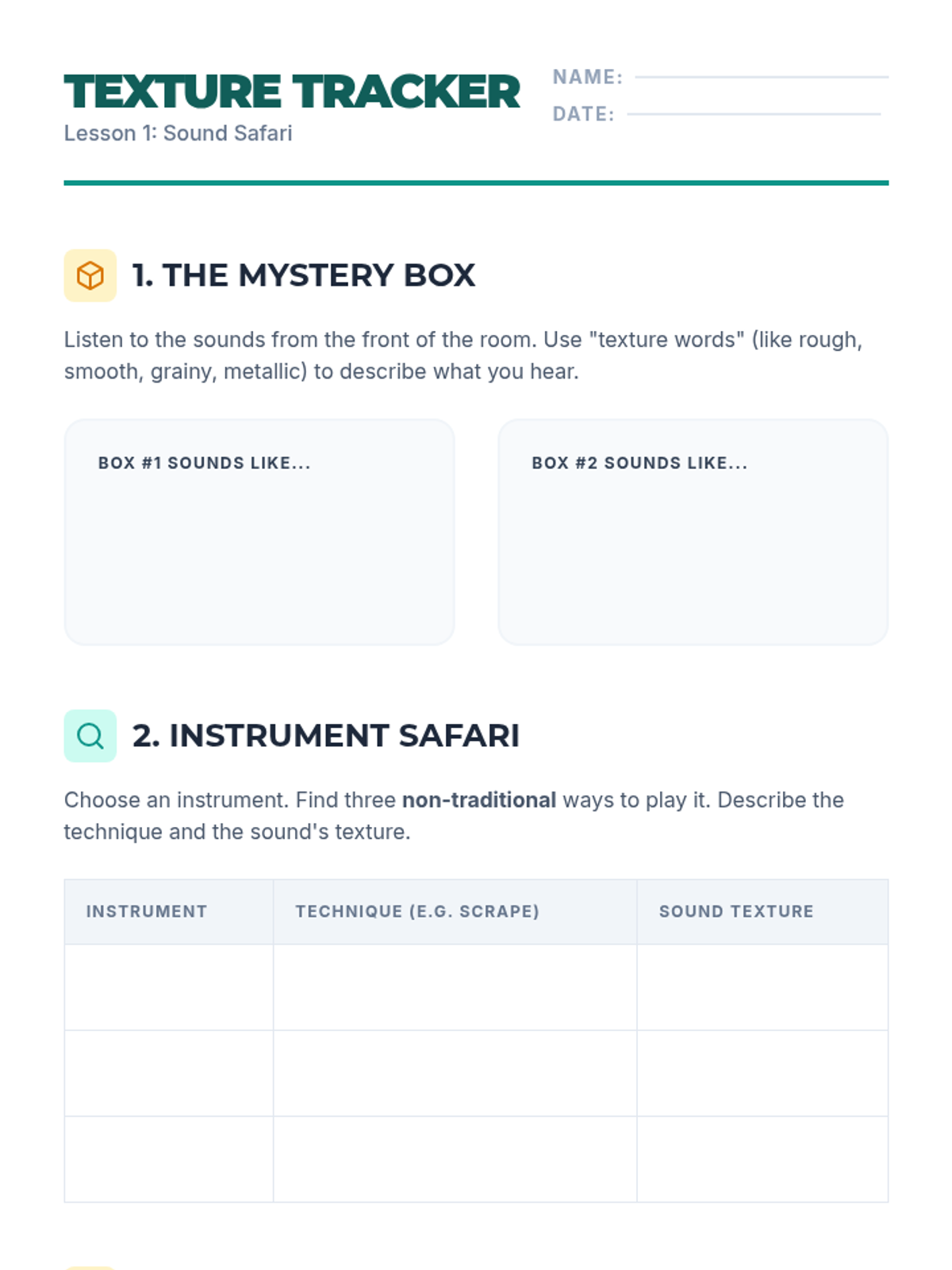
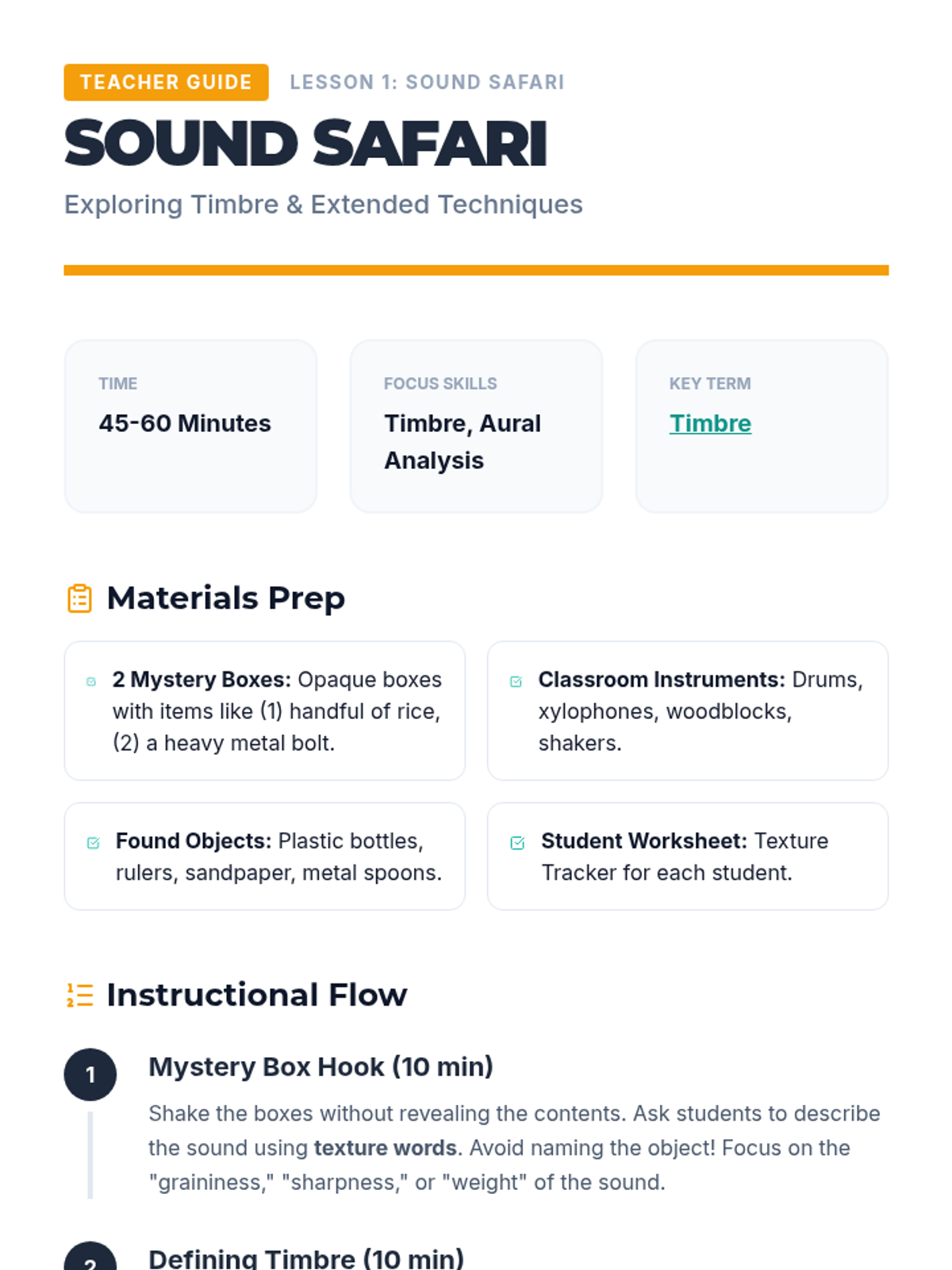
A 5-lesson journey into music composition using graphic notation. Students explore sound textures, invent visual symbols for audio, compose narrative soundscapes, and lead ensembles as conductors.
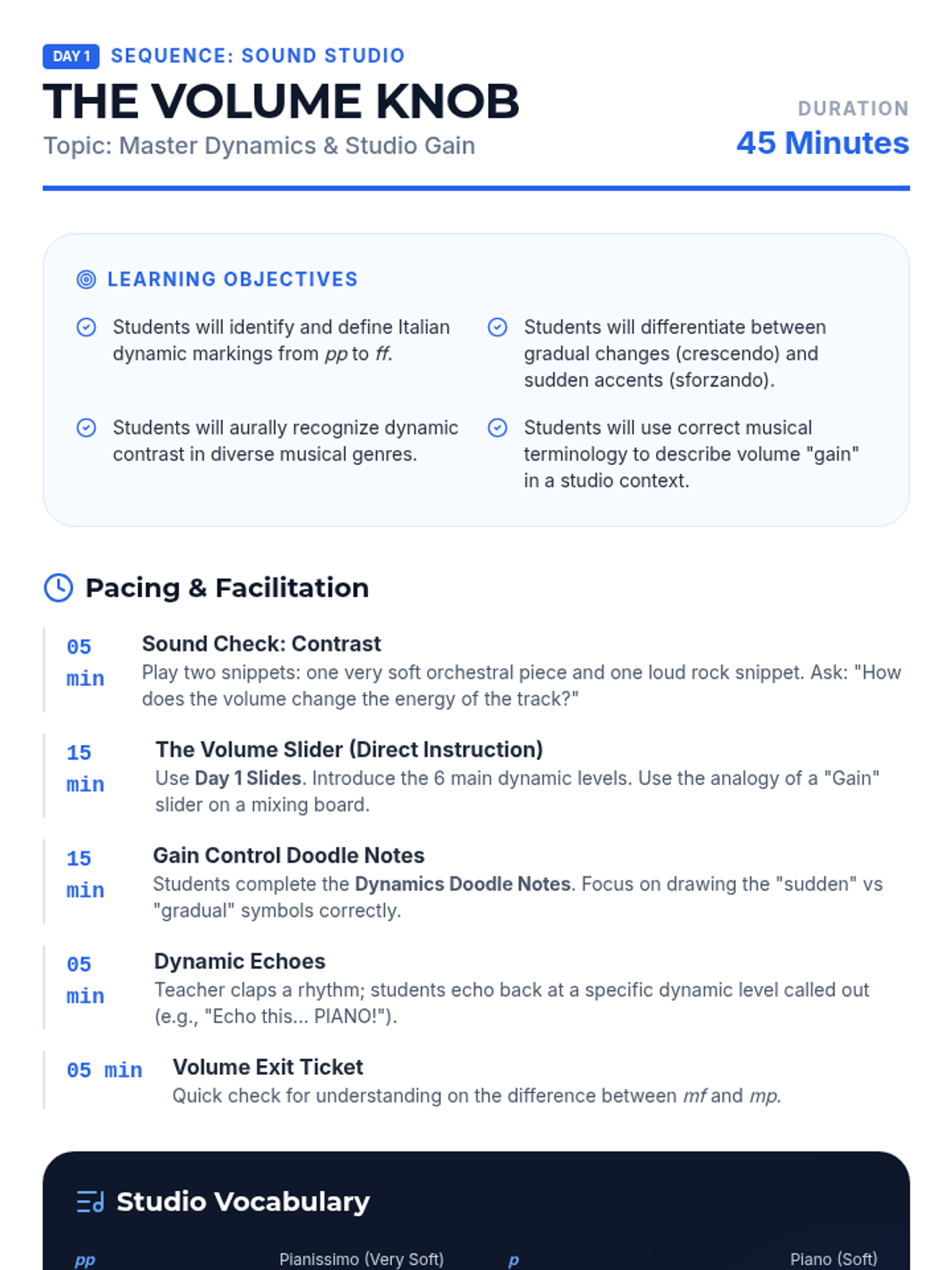
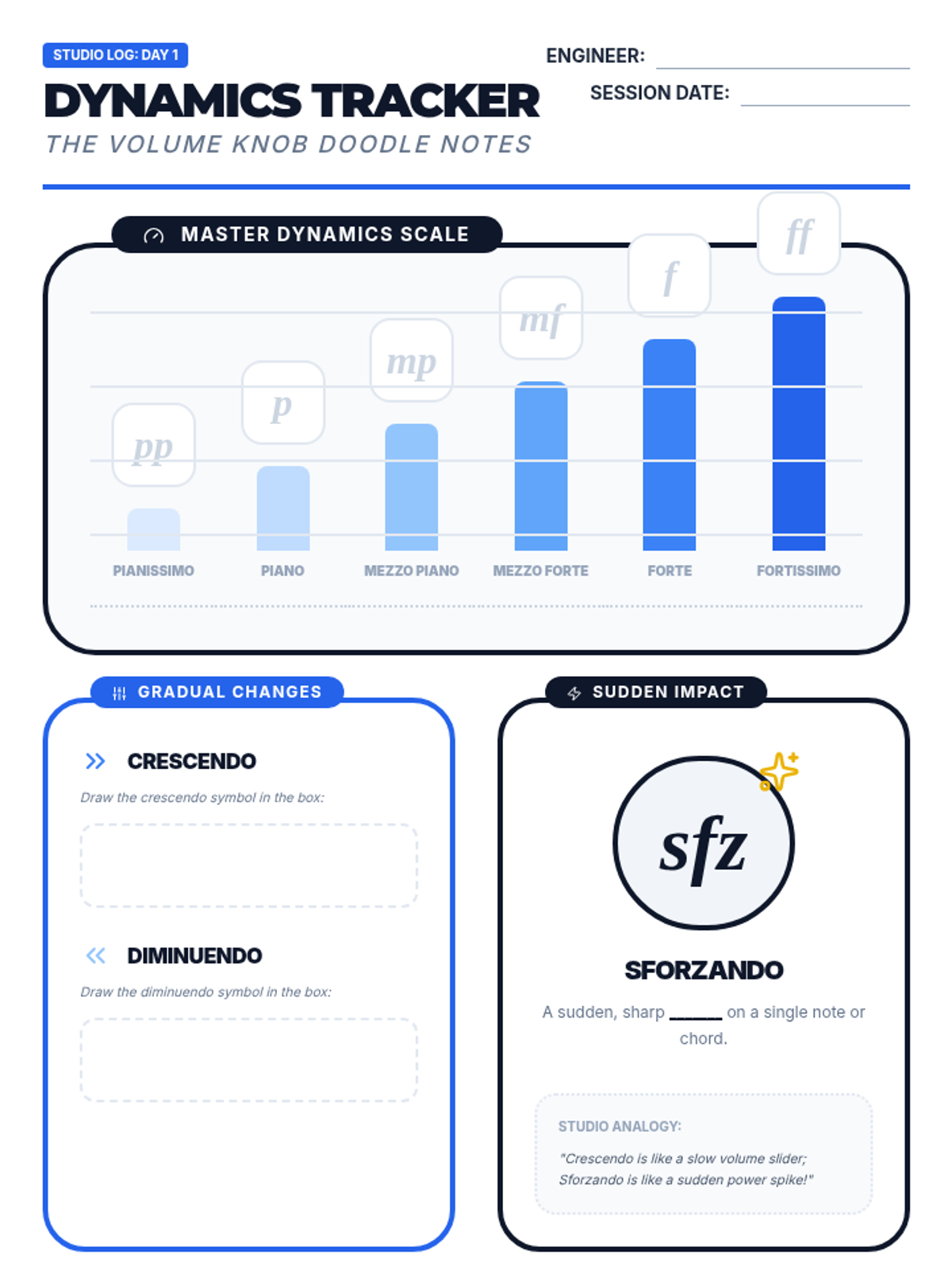
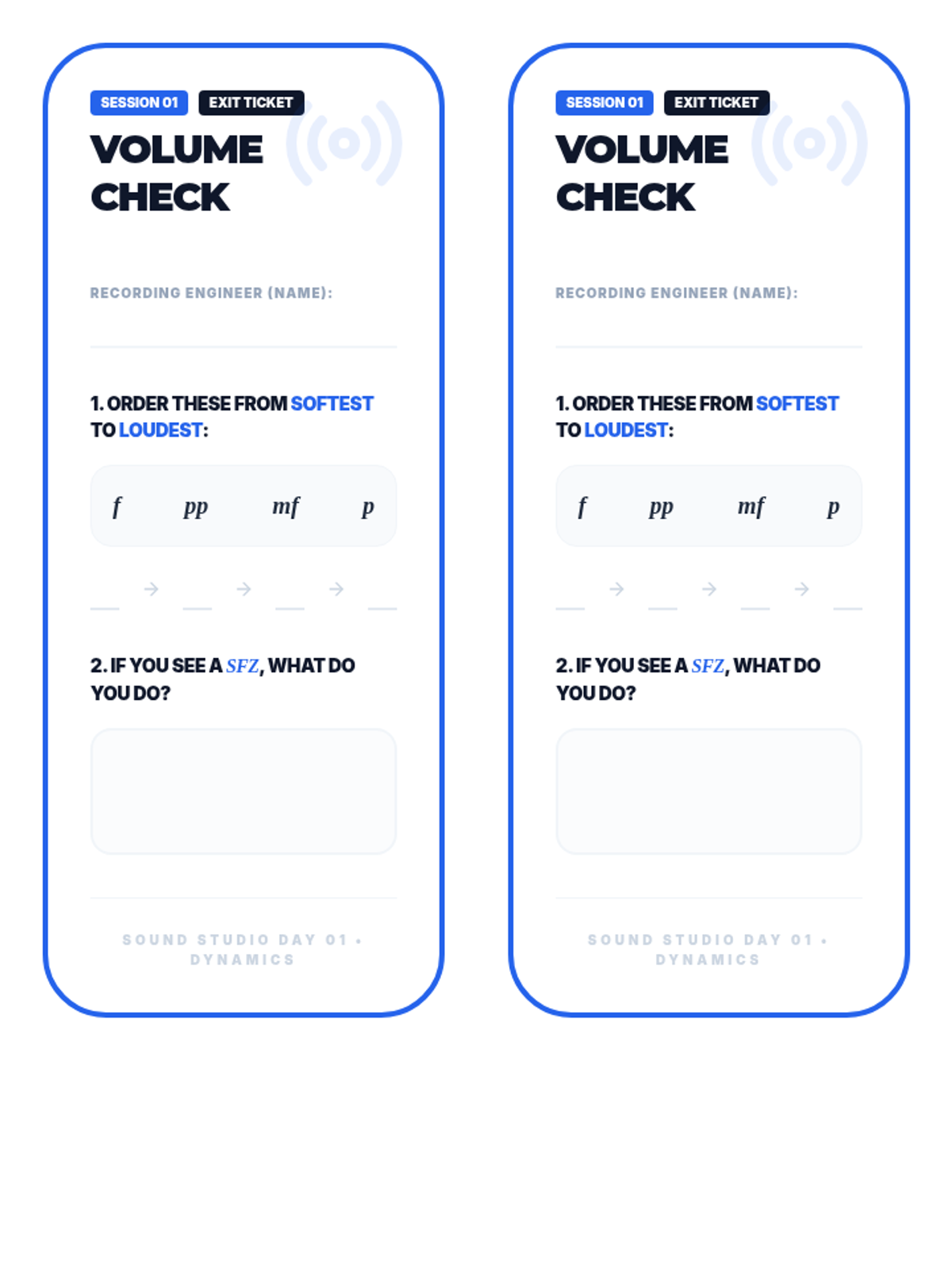
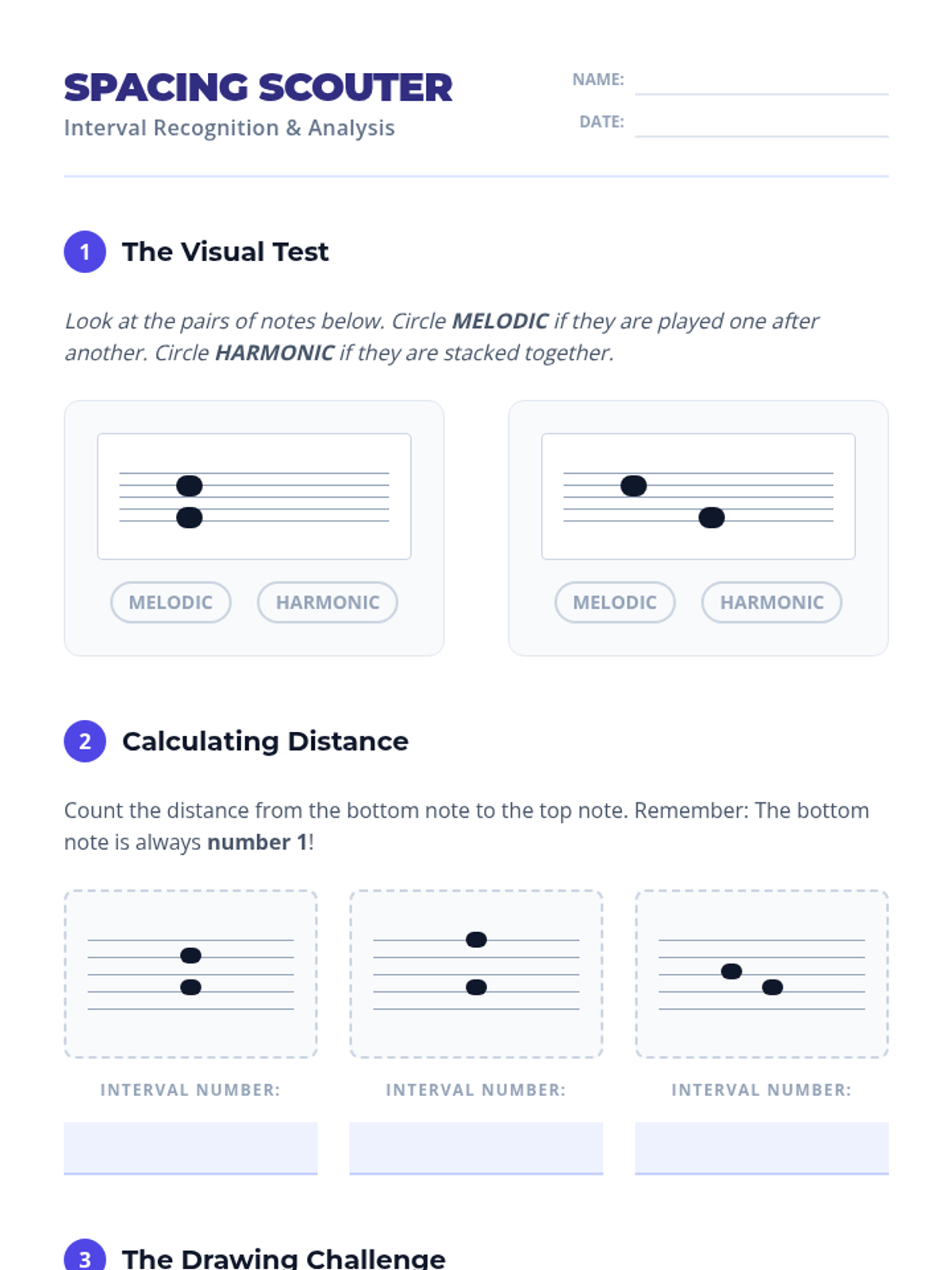
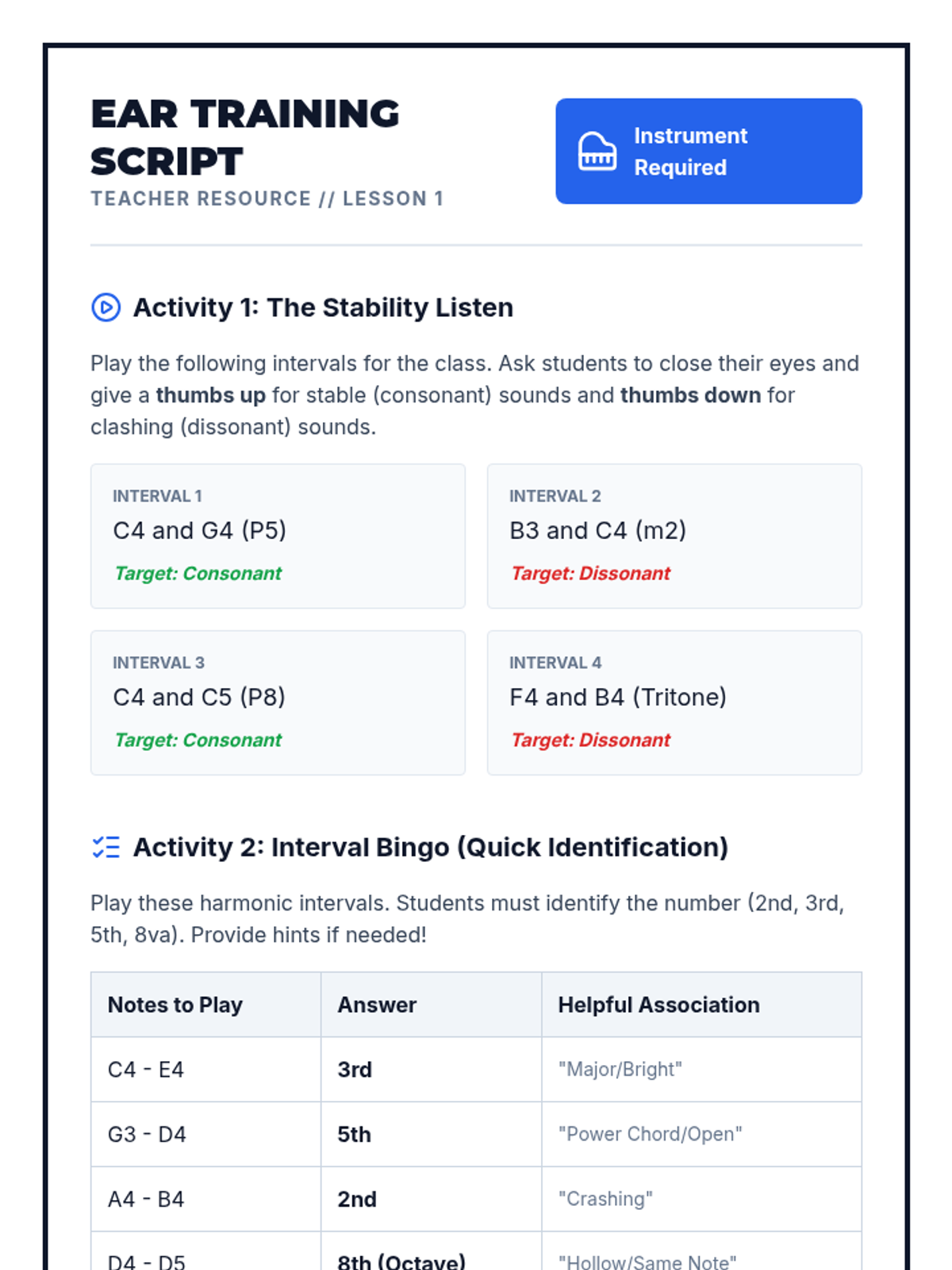
A 3-day intensive exploration of the fundamental building blocks of music theory—Dynamics, Tempo, and Intervals—designed through a modern sound studio lens.
A comprehensive music technology unit where middle and high school students master digital audio production and collaborate to produce a multi-grade showcase concert, bridging the gap between classroom creation and public performance.
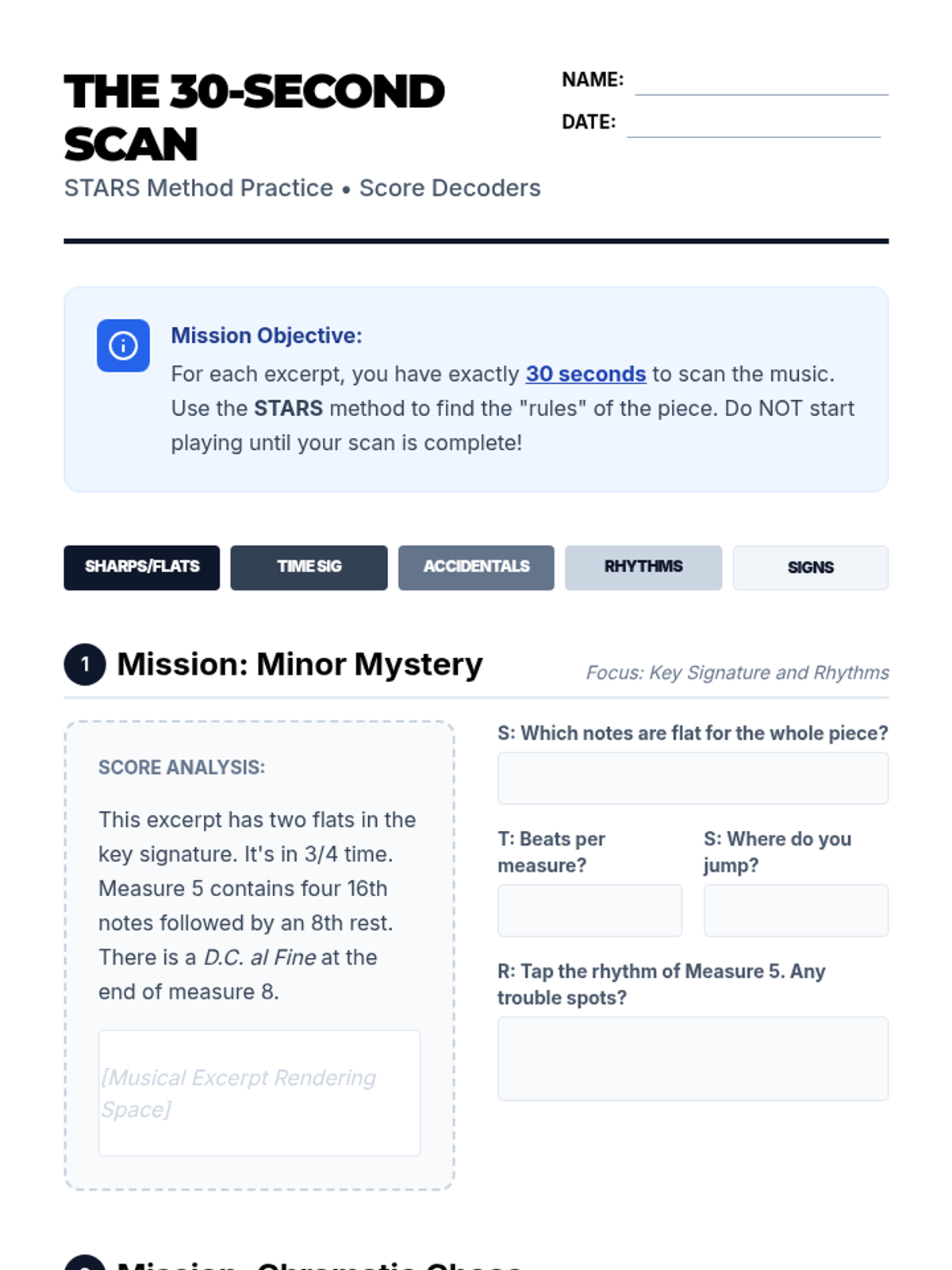
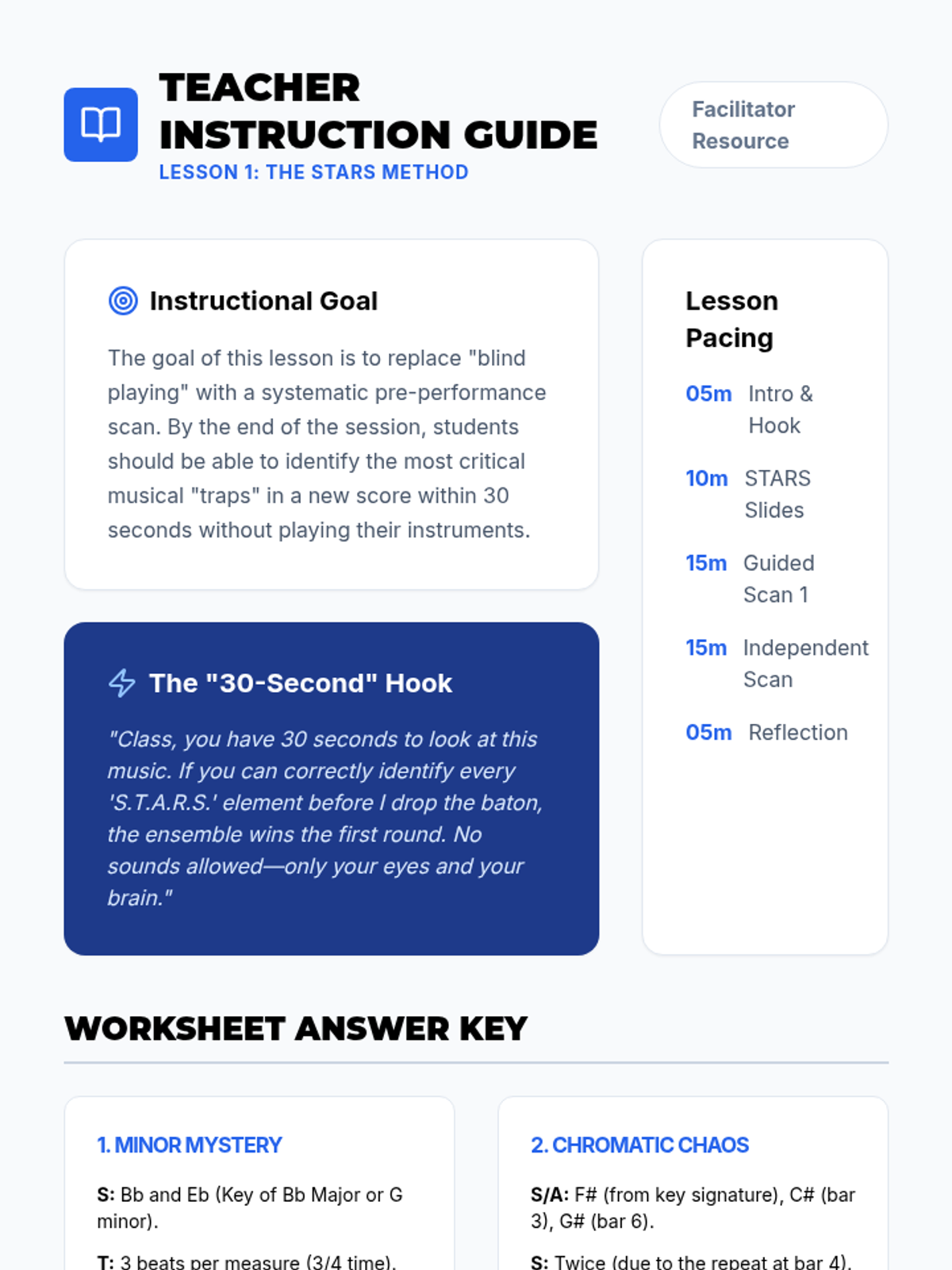
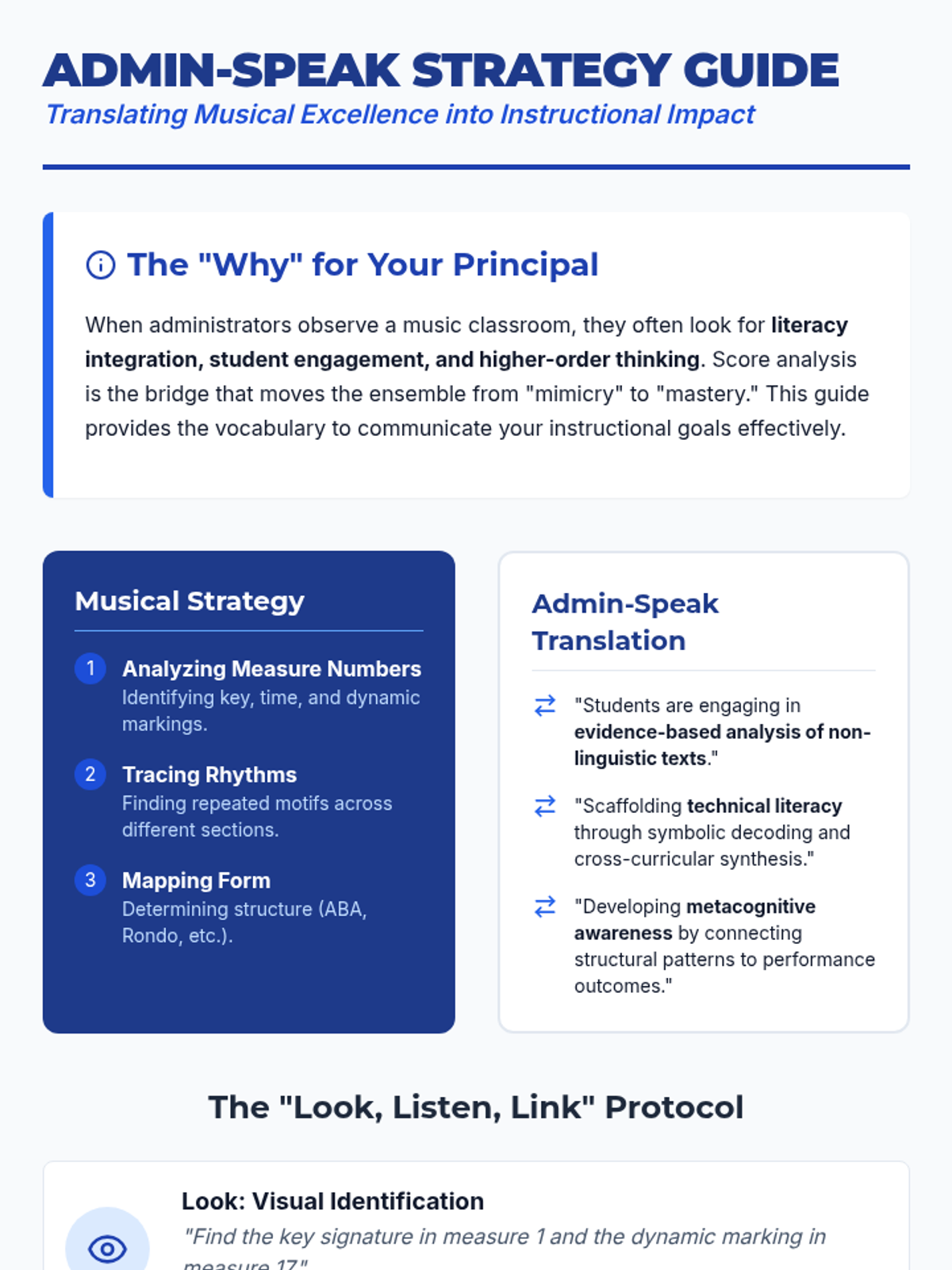
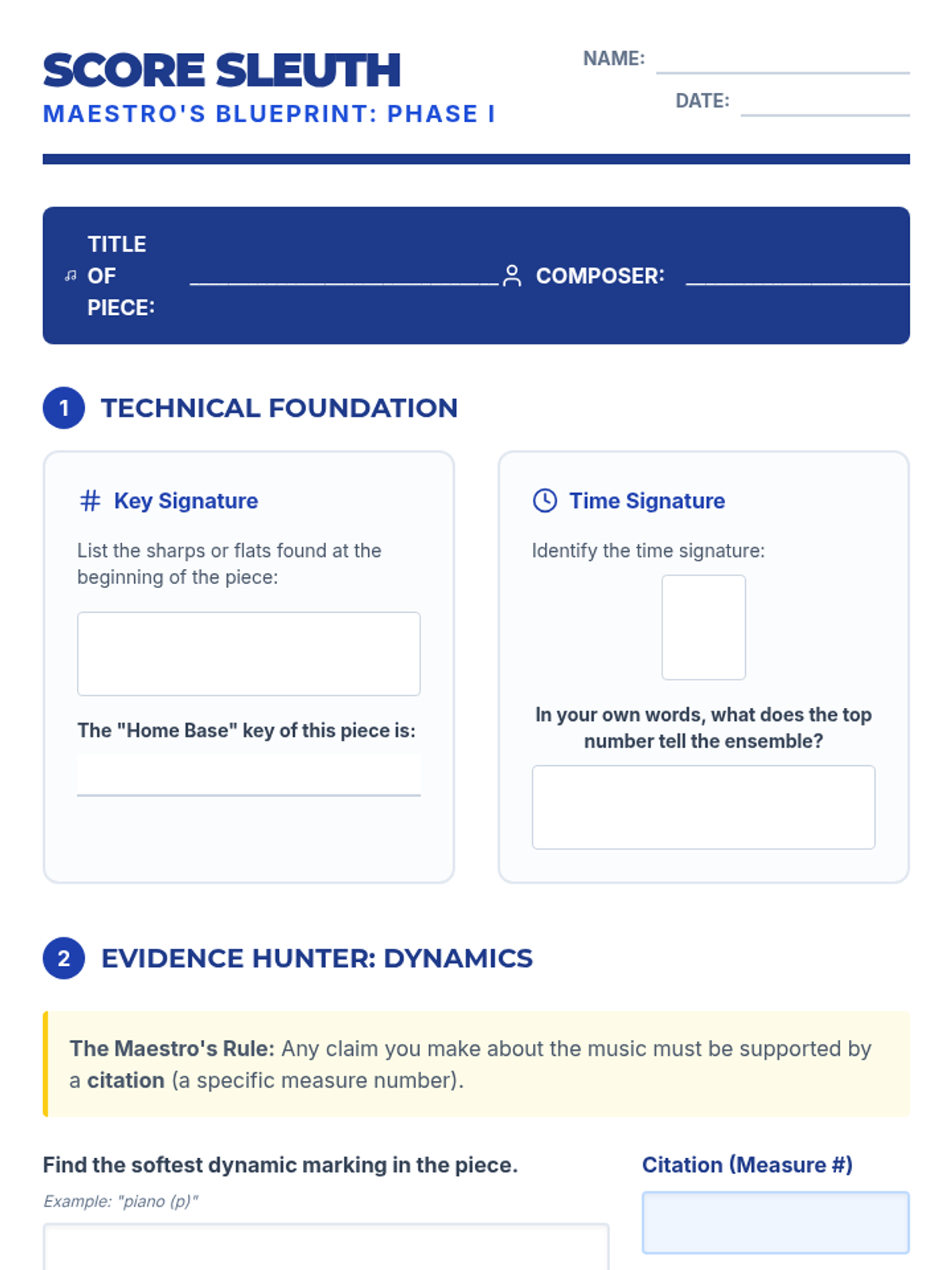
A comprehensive score analysis framework for middle school band and choir ensembles that integrates music literacy with text-based evidence and academic rigor. Students learn to 'read' a musical score as a primary source document, identifying technical elements and structural patterns while providing specific citations for their findings.
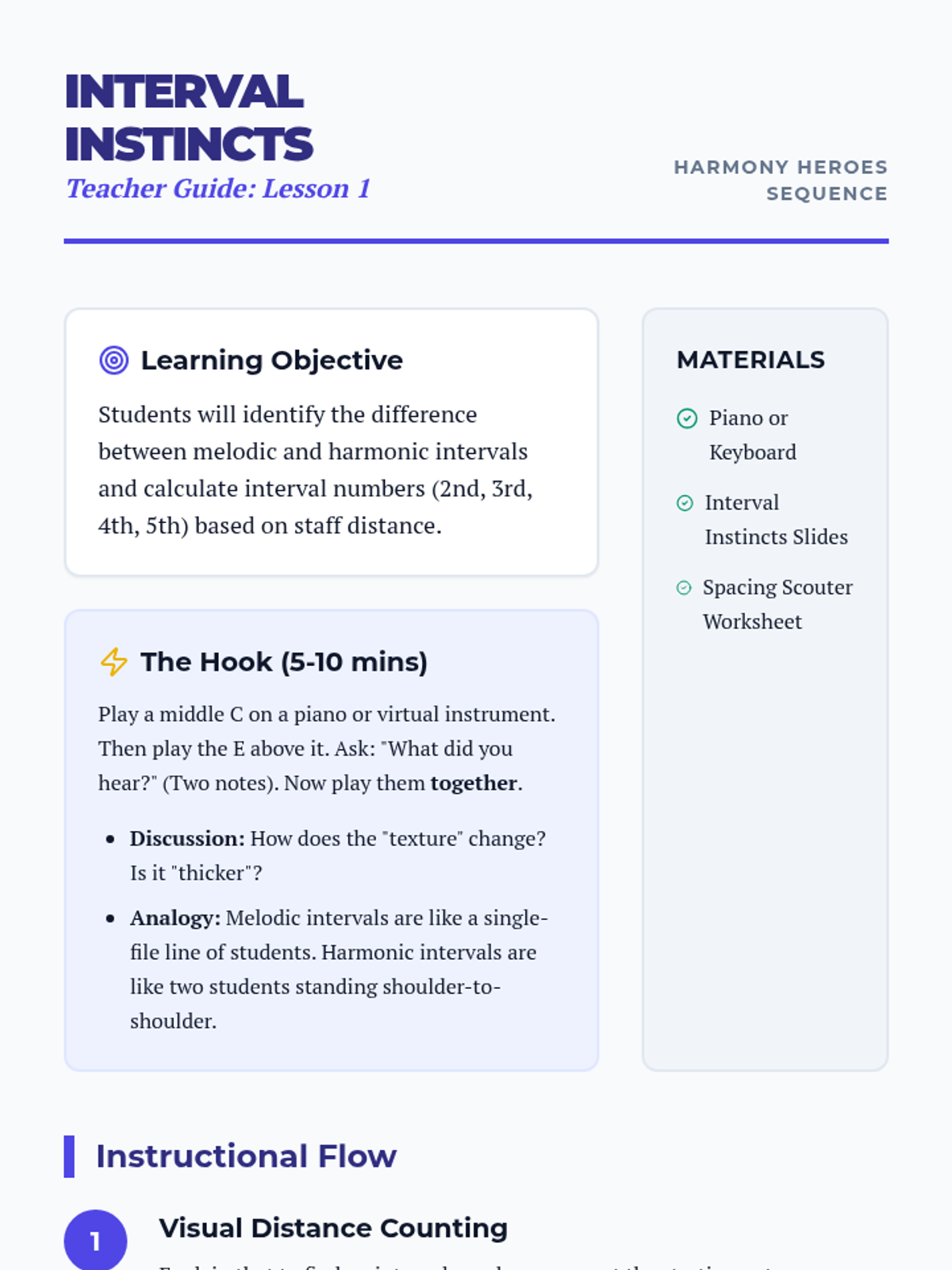
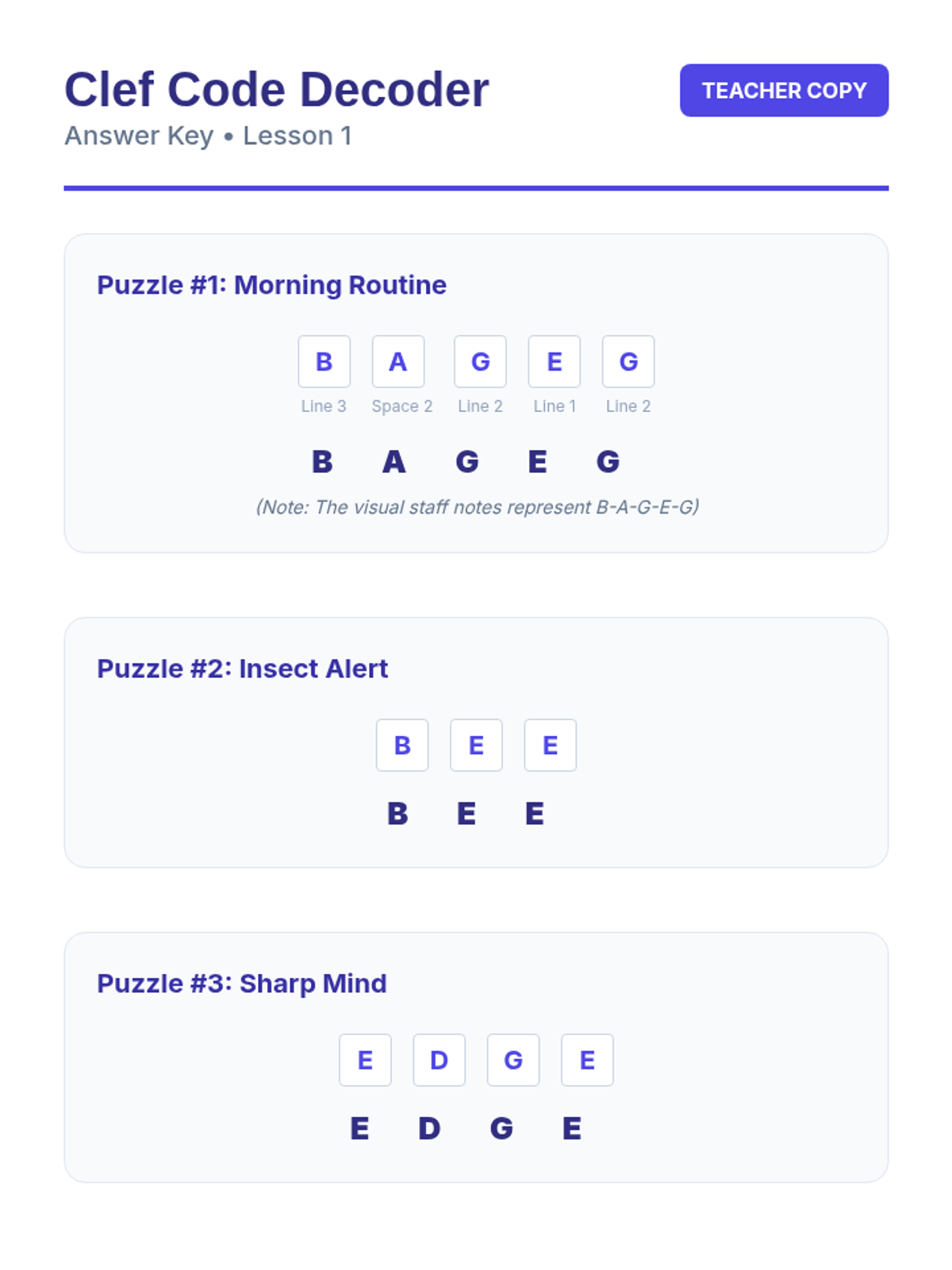
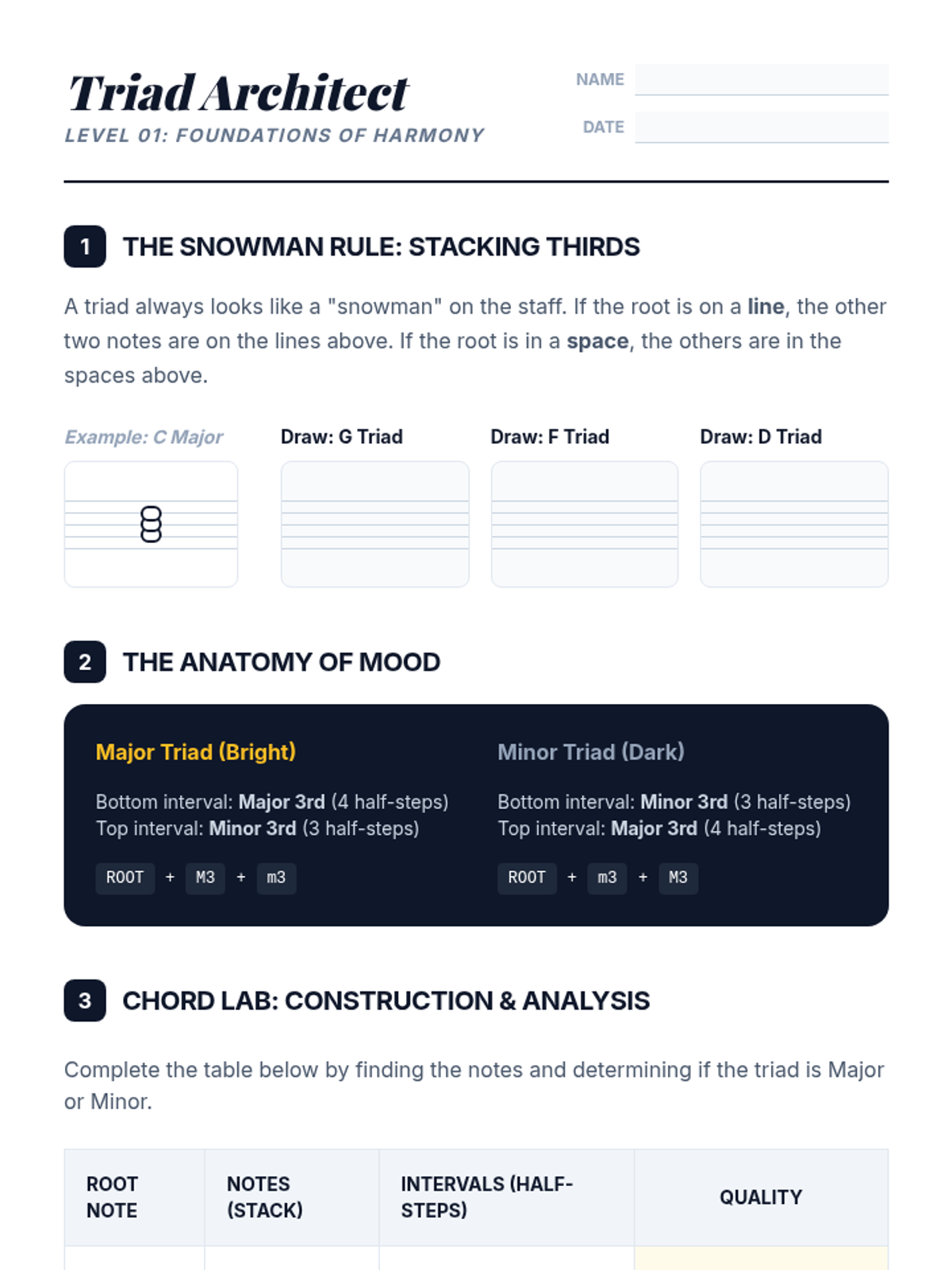
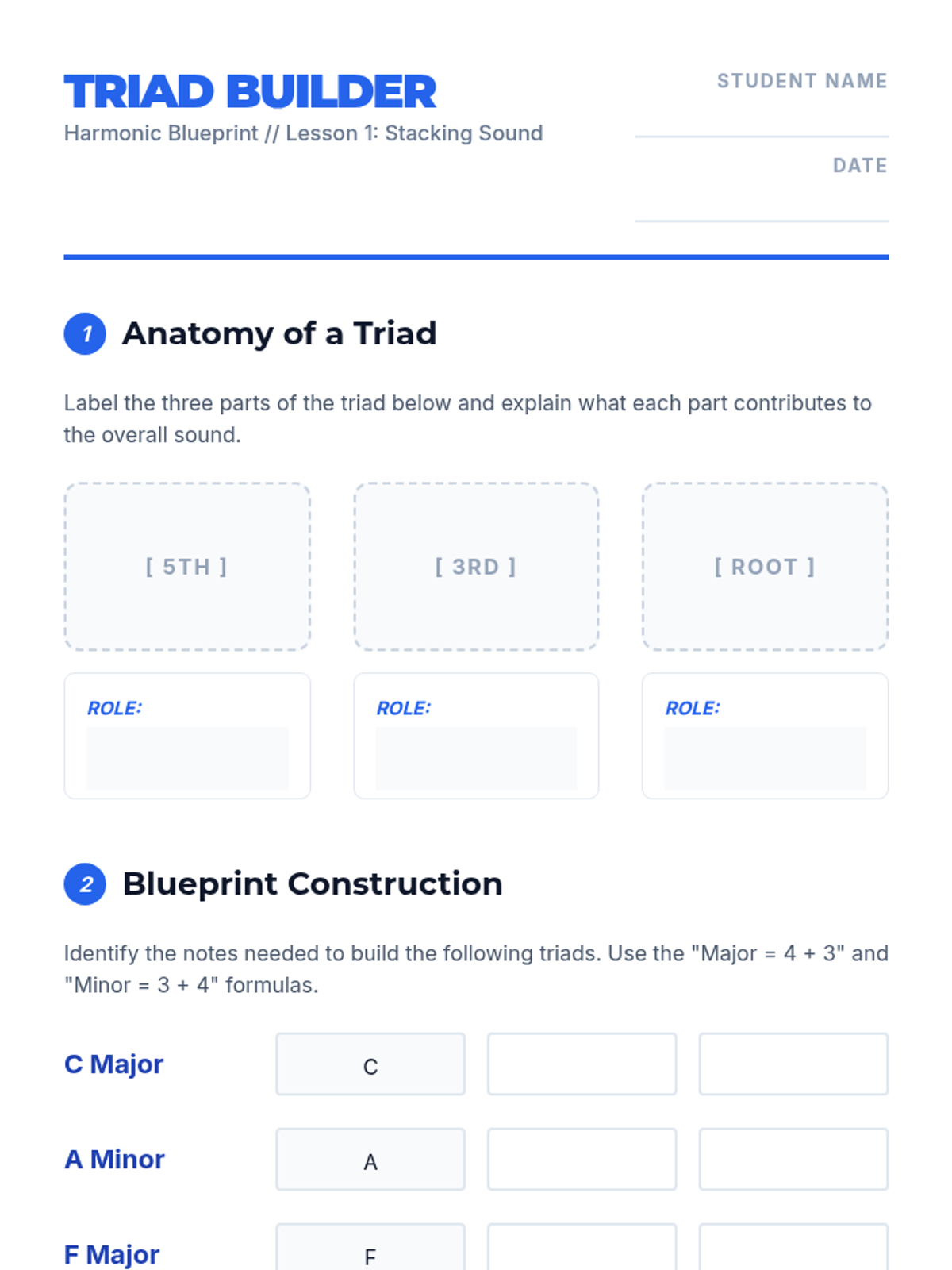
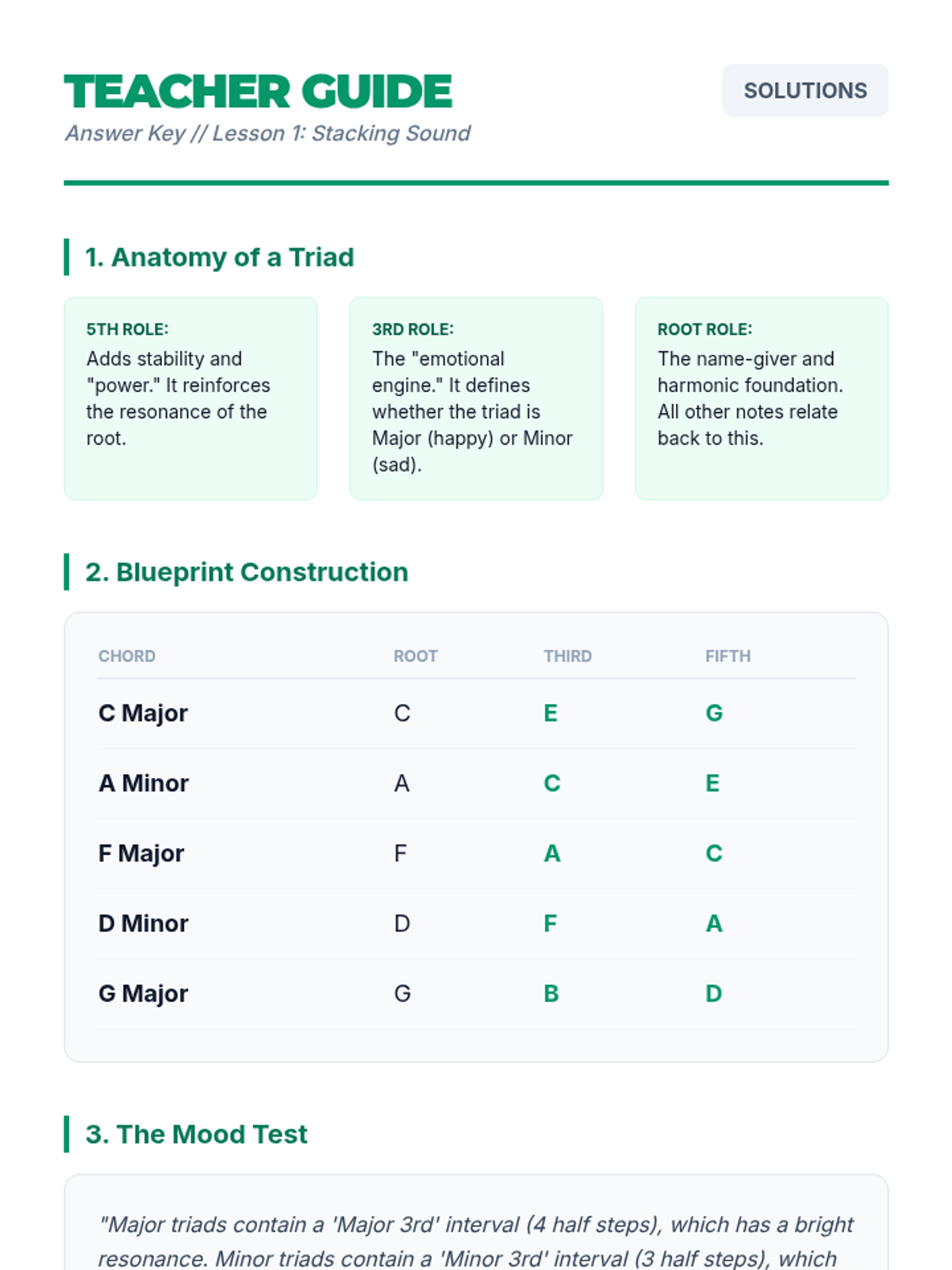
A comprehensive introduction to harmony for 6th-grade students, moving from basic intervals to triads and simple harmonization. Students explore how notes combine vertically through visual models like the 'Snowman' triad and practical application in pop and folk music.
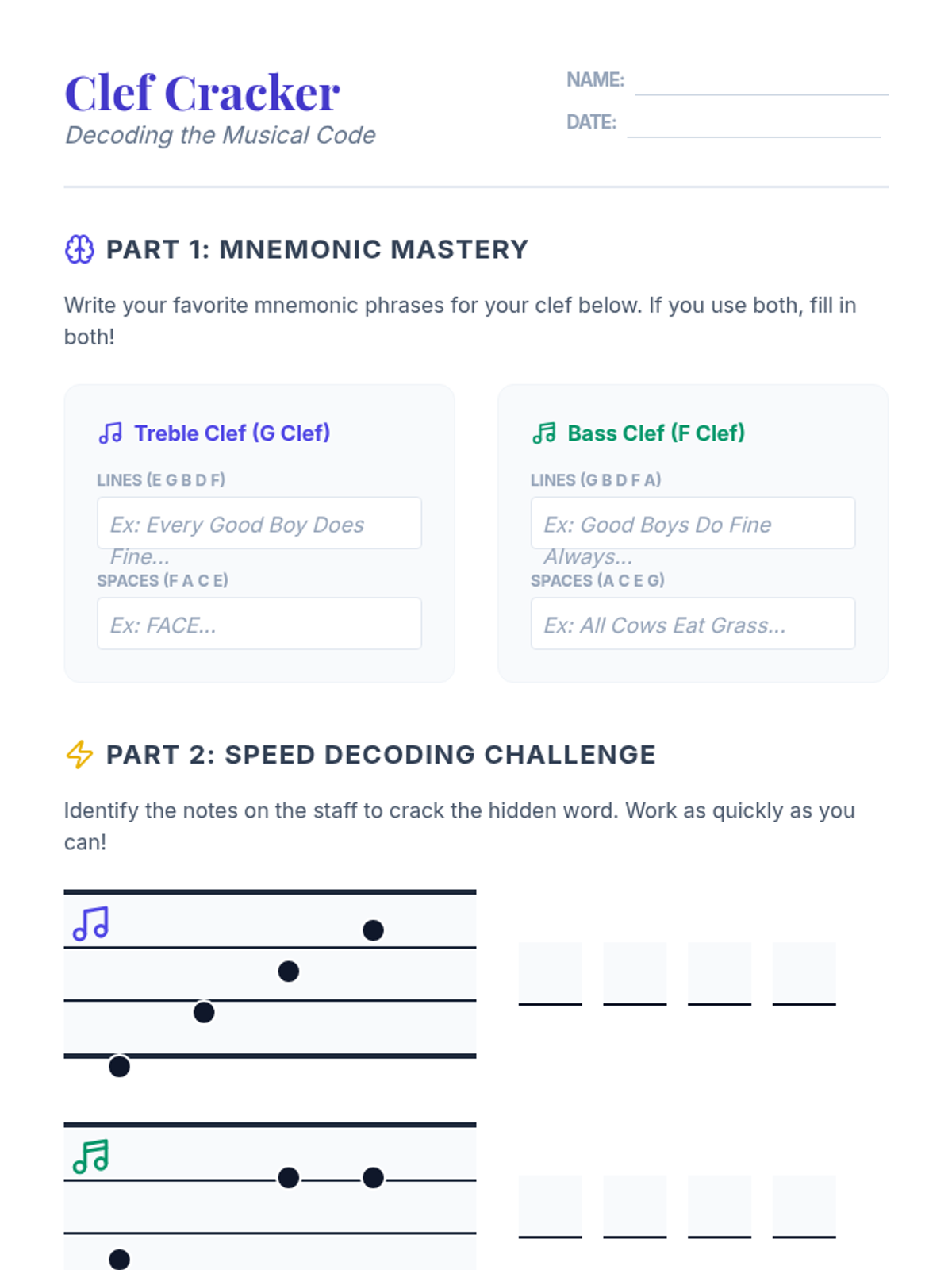
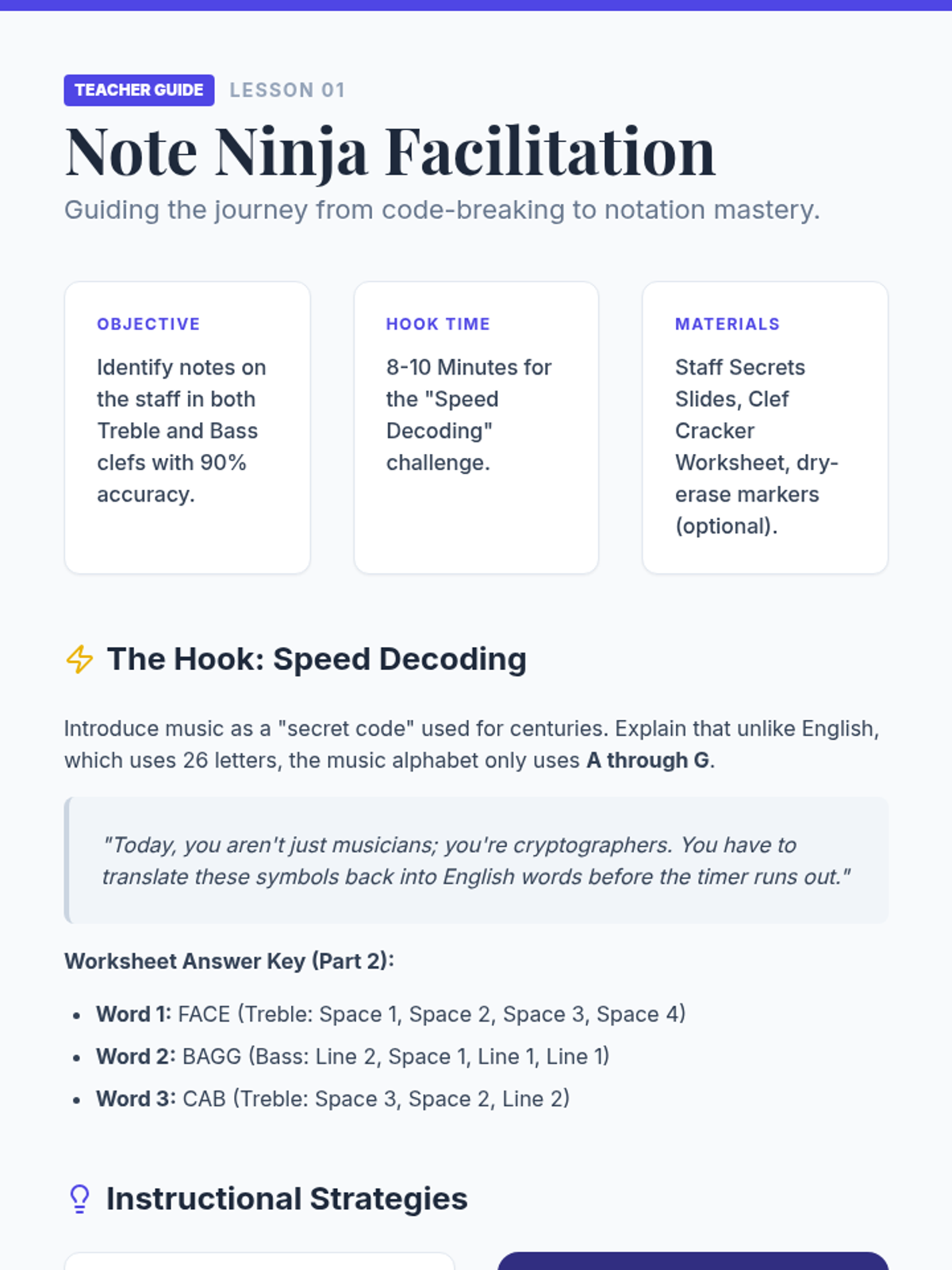
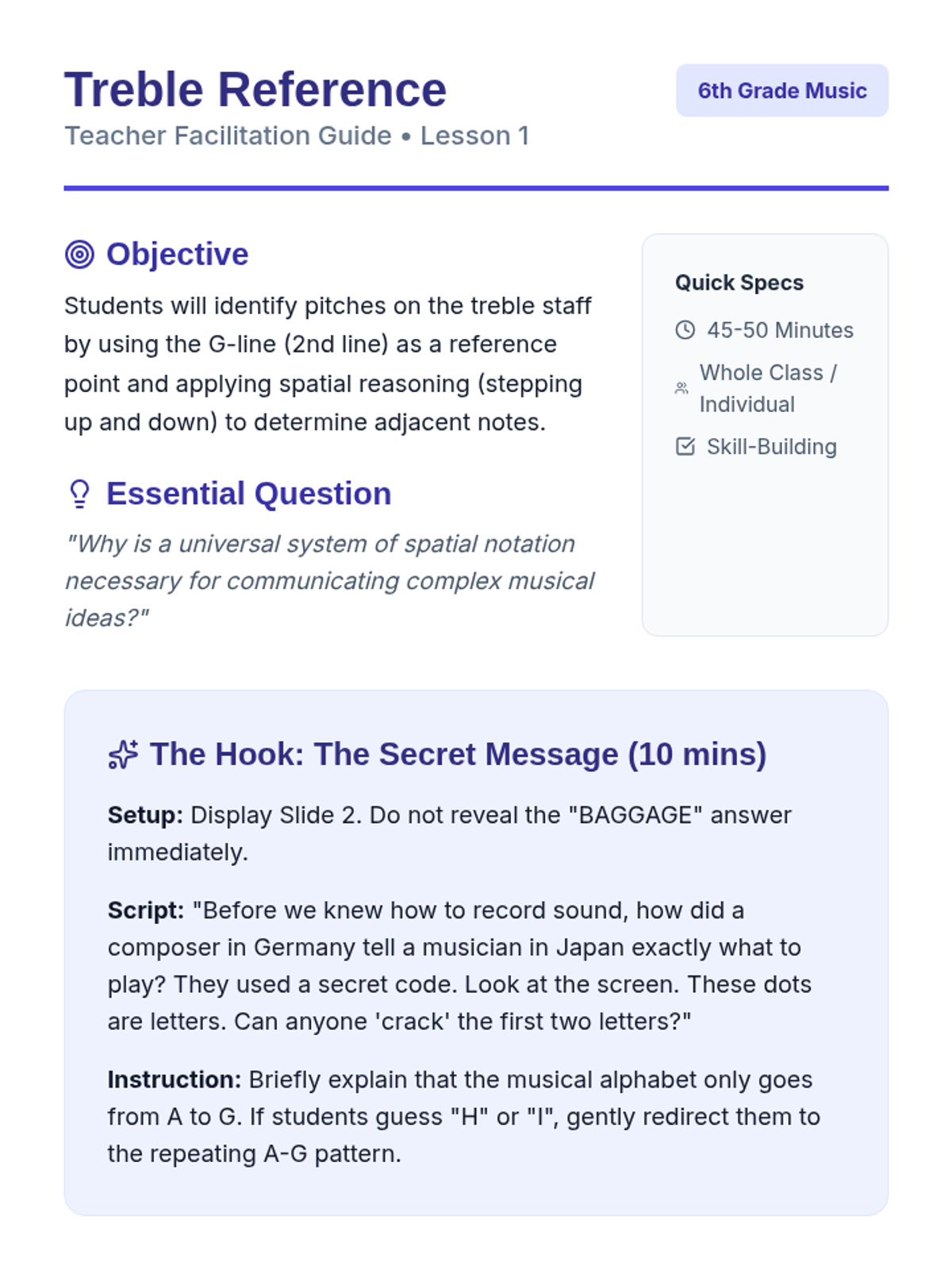
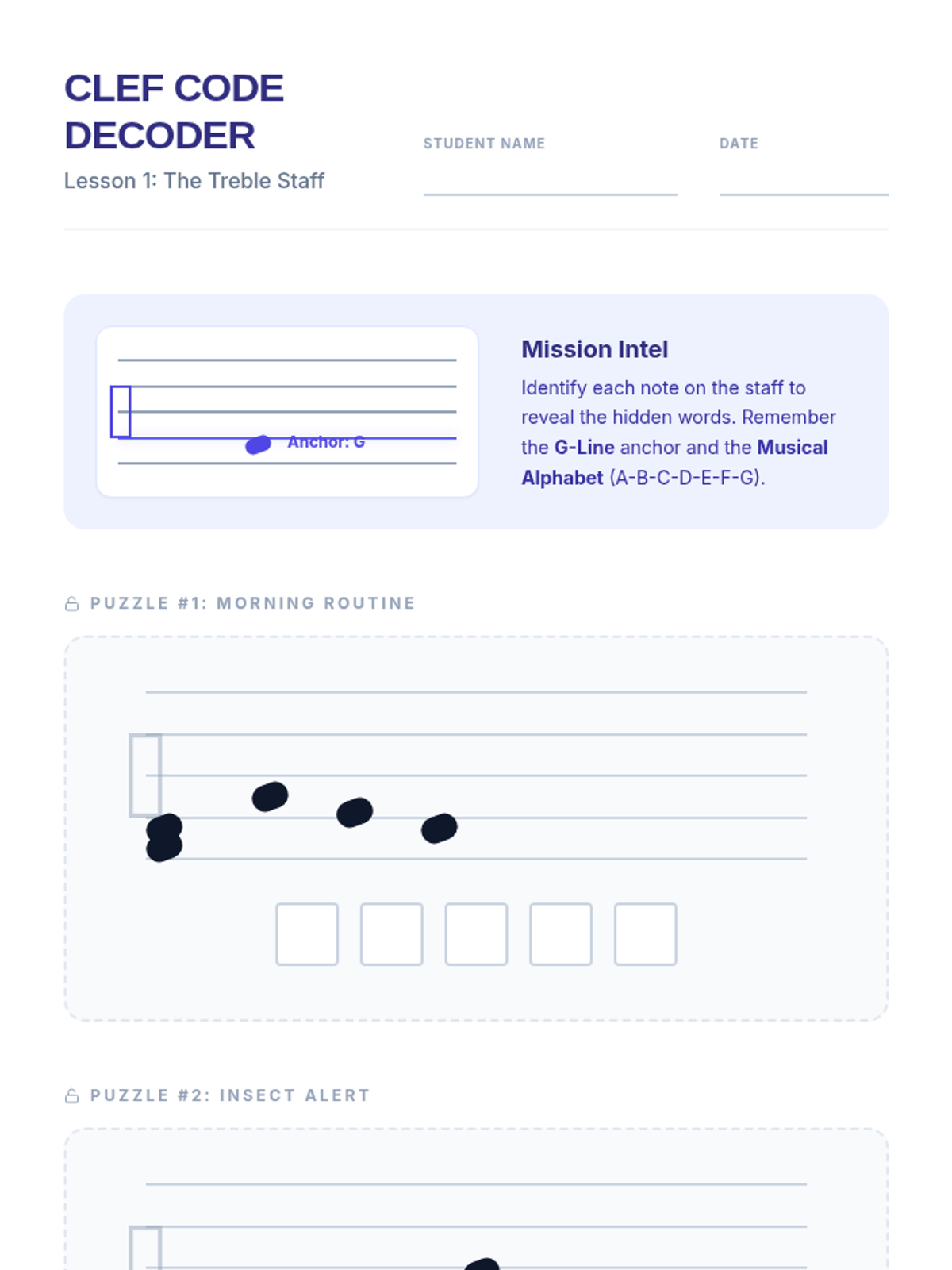
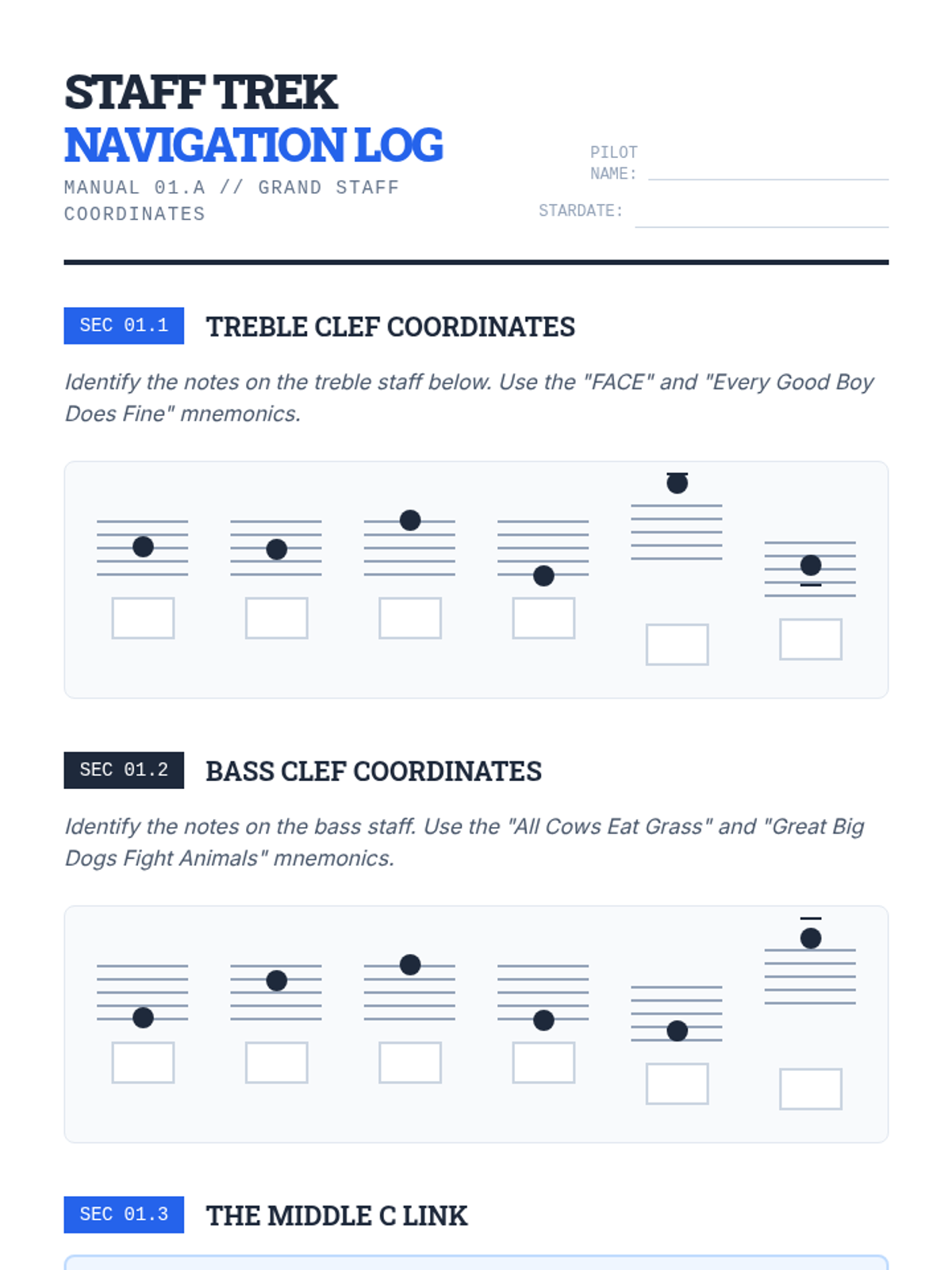
A comprehensive sequence for 6th-grade students to master the Grand Staff, covering treble and bass clefs, ledger lines, accidentals, and basic melodic transcription through a mastery-based approach.
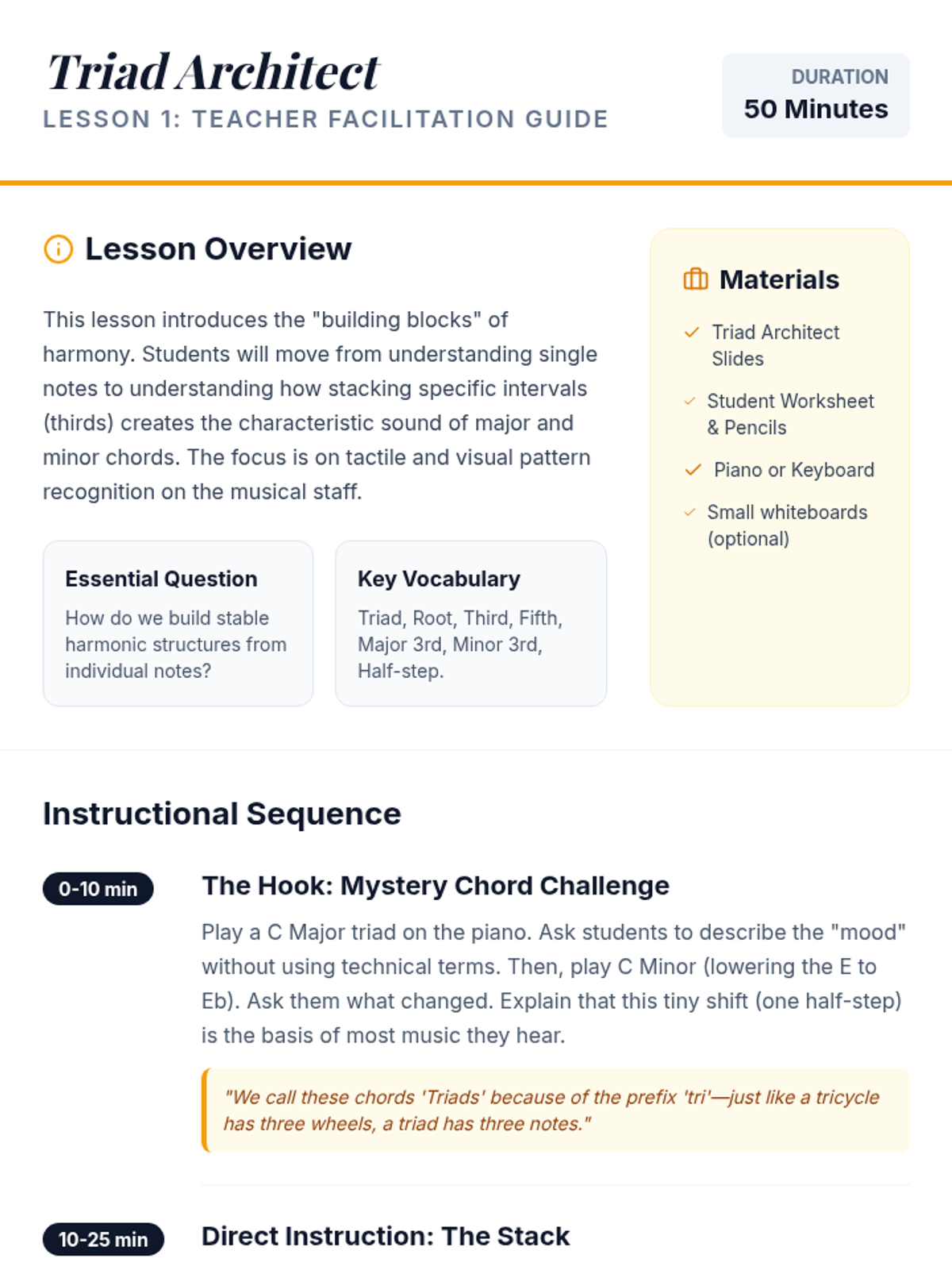
A comprehensive 7th-grade music theory unit focusing on vertical harmony, triad construction, primary chords, and simple harmonization. Students progress from basic triad building to applying functional harmony in a creative composition project.
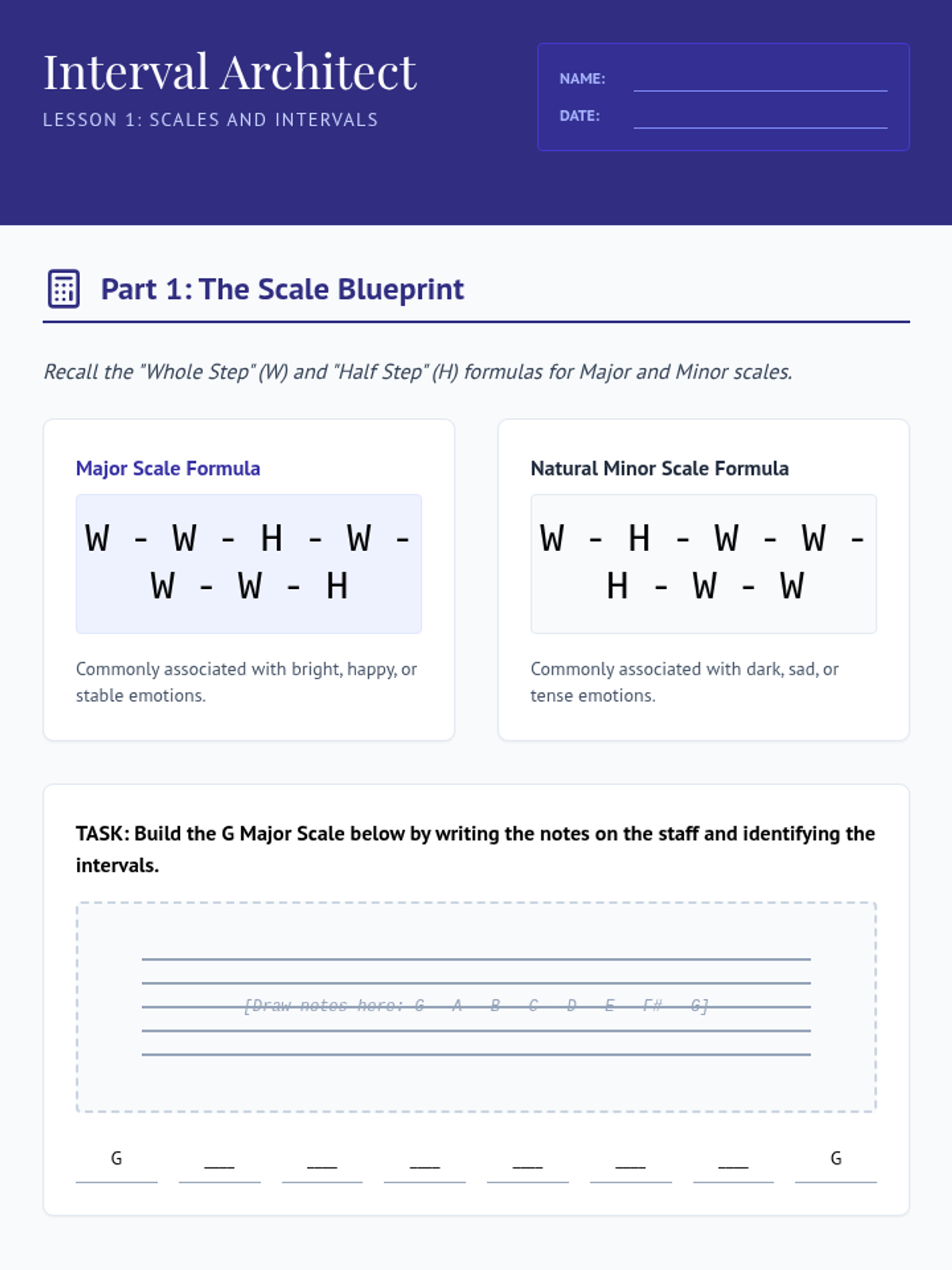
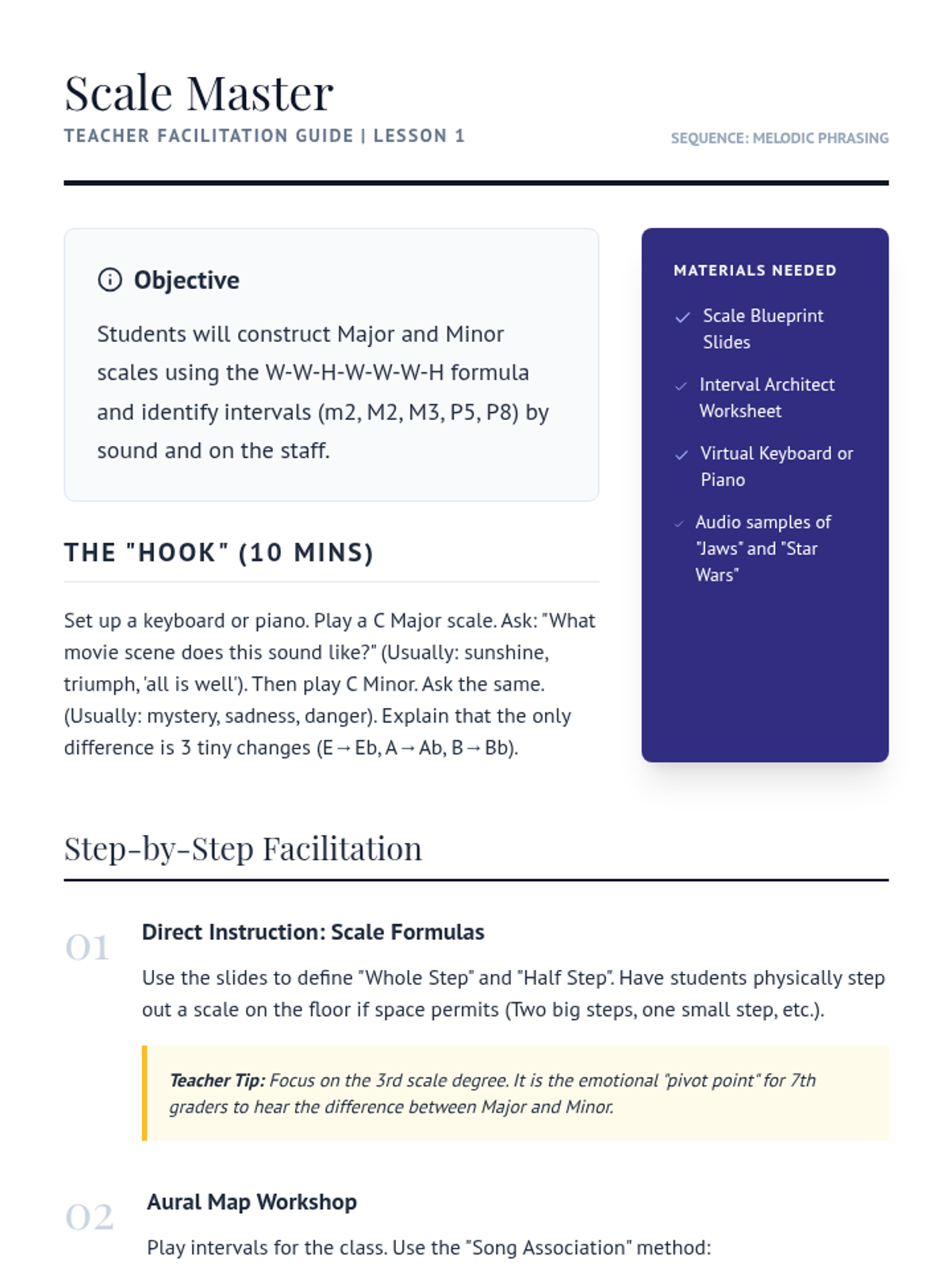
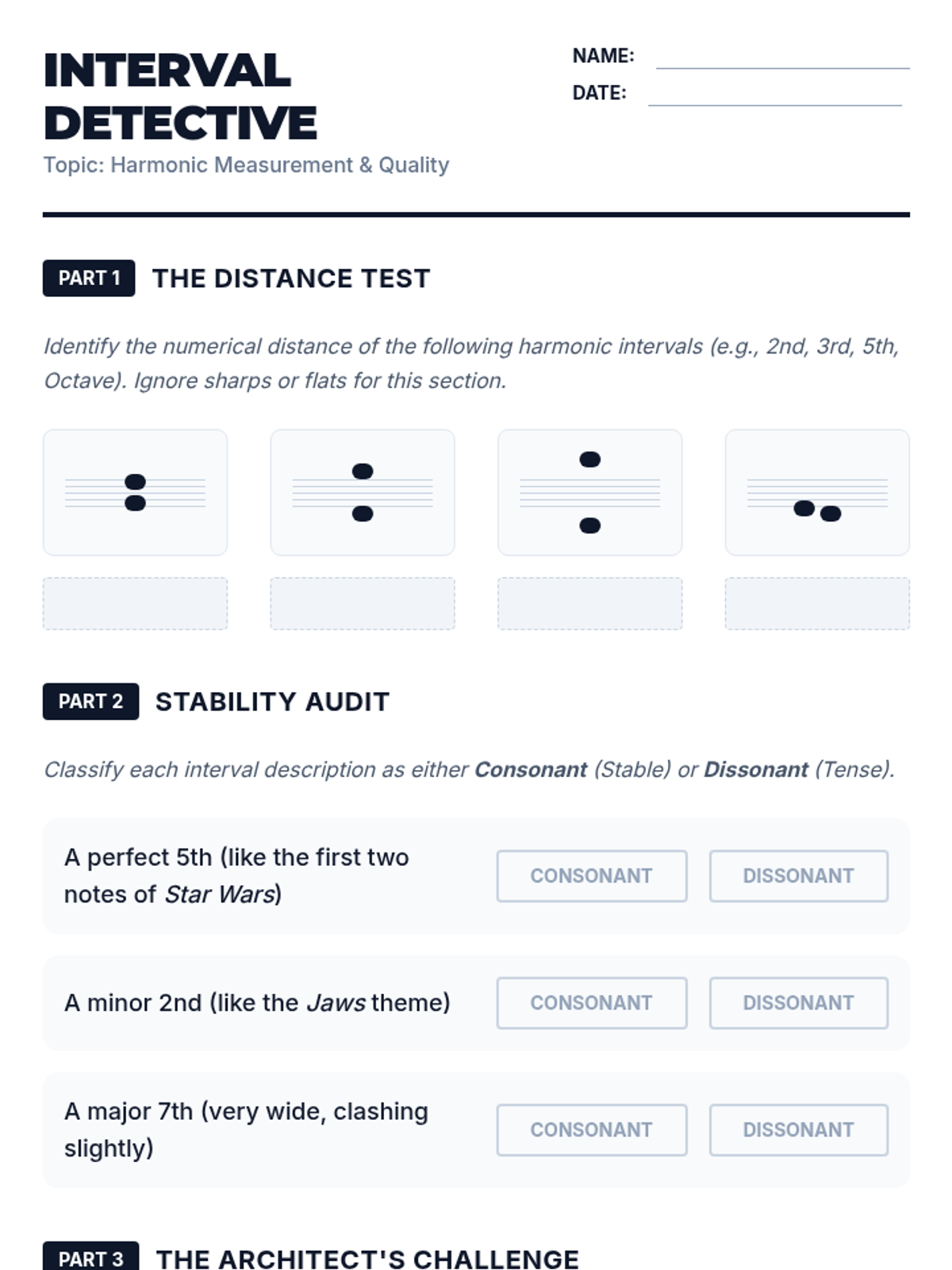
A comprehensive journey through the mechanics of pitch organization, from staff navigation to the construction of major scales and intervals. Students will master the Grand Staff, accidentals, scale formulas, key signatures, and interval identification through a technical, blueprint-inspired aesthetic.
This sequence transitions students from linear melody to vertical harmony, exploring how chords are constructed and sequenced. Students analyze harmonic structures from basic intervals to full progressions in popular music.
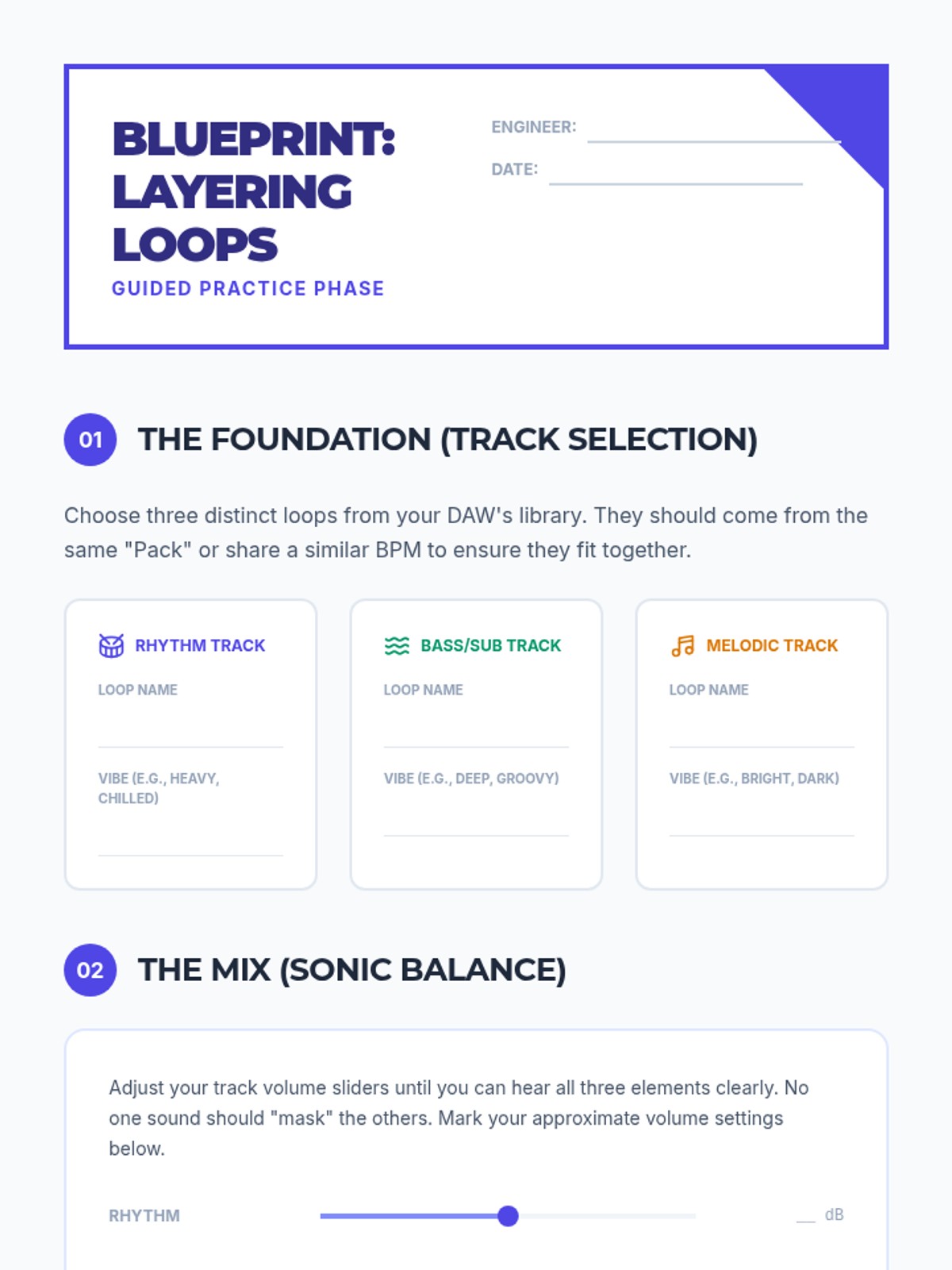
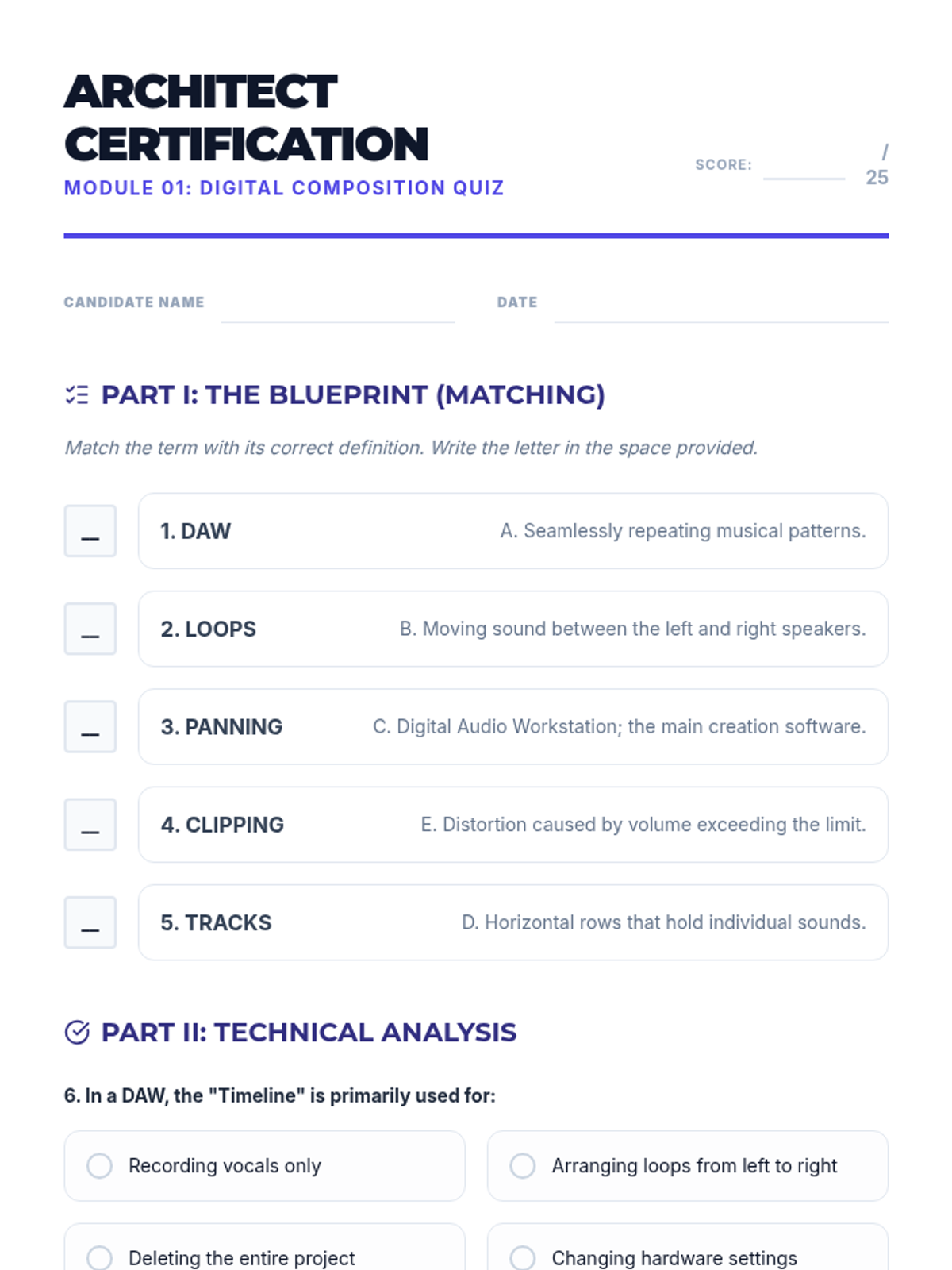
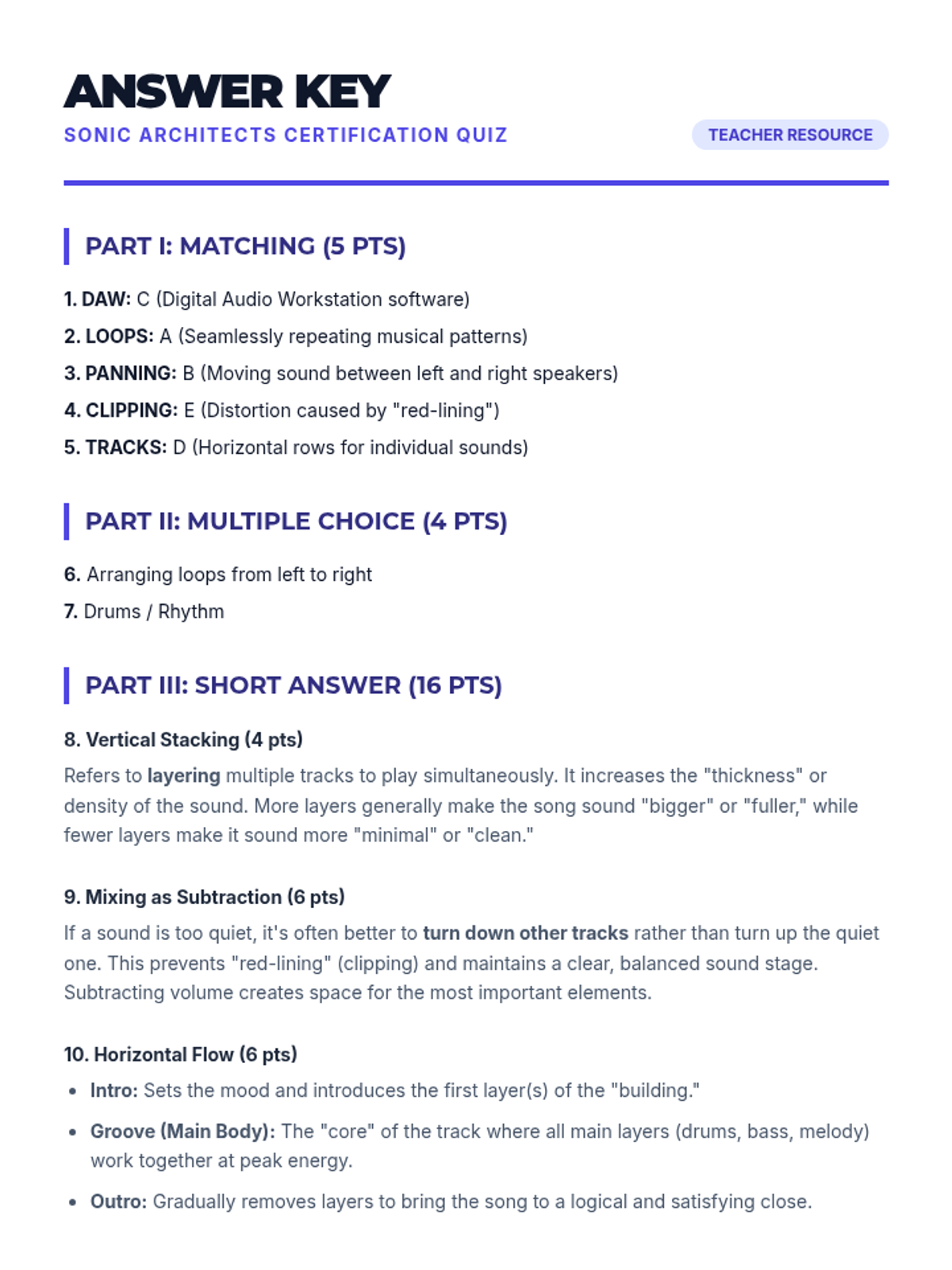
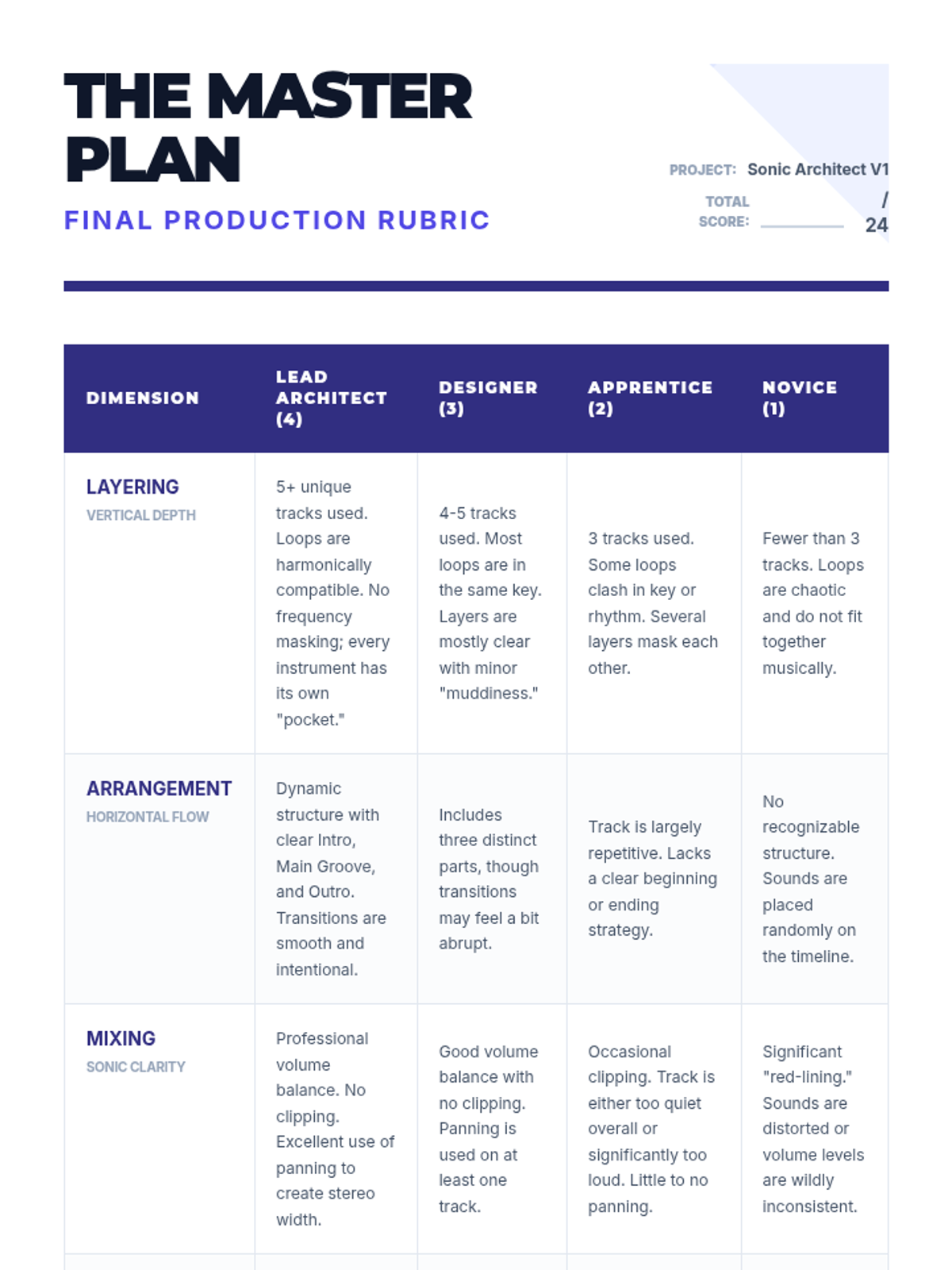
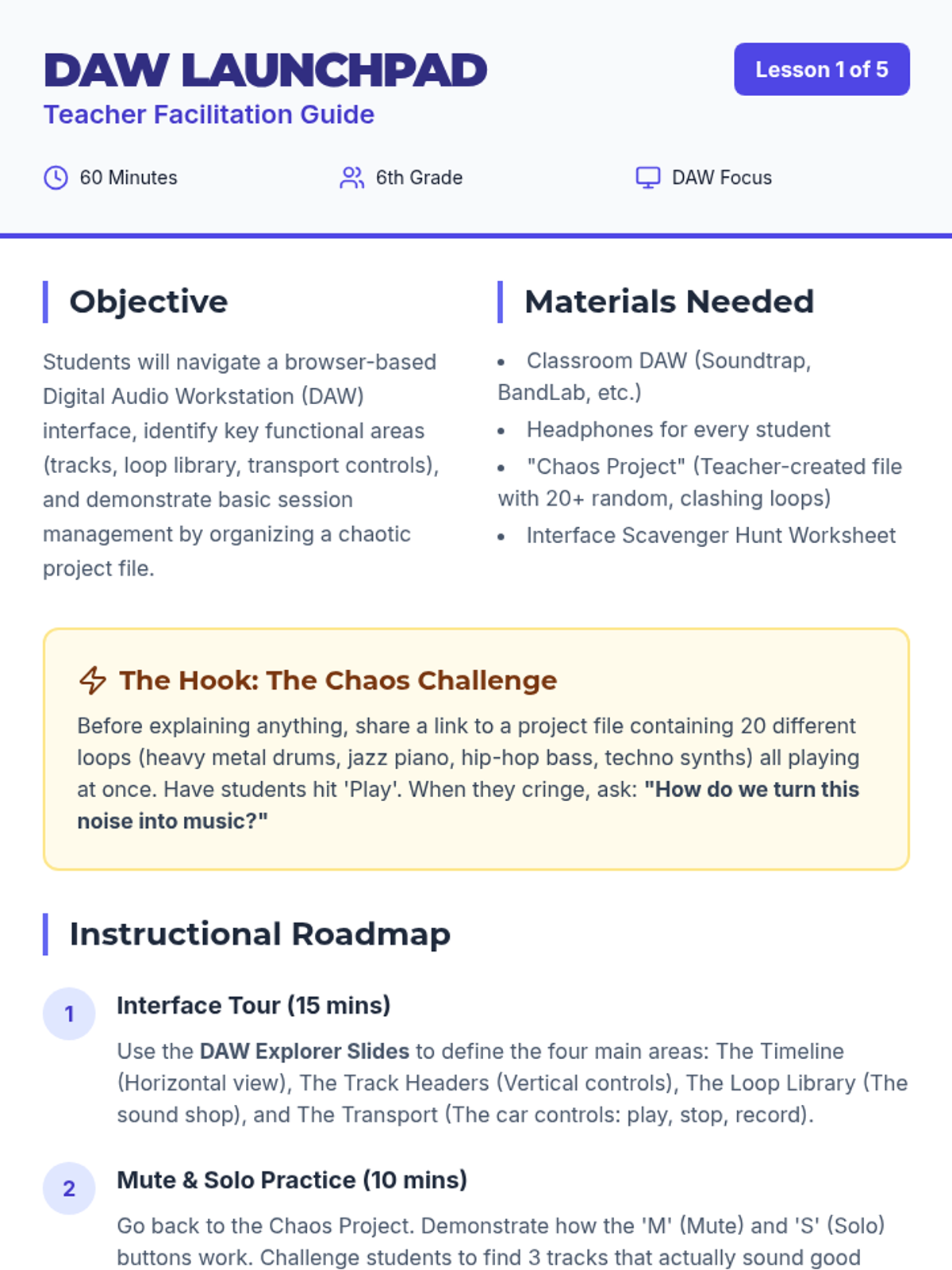
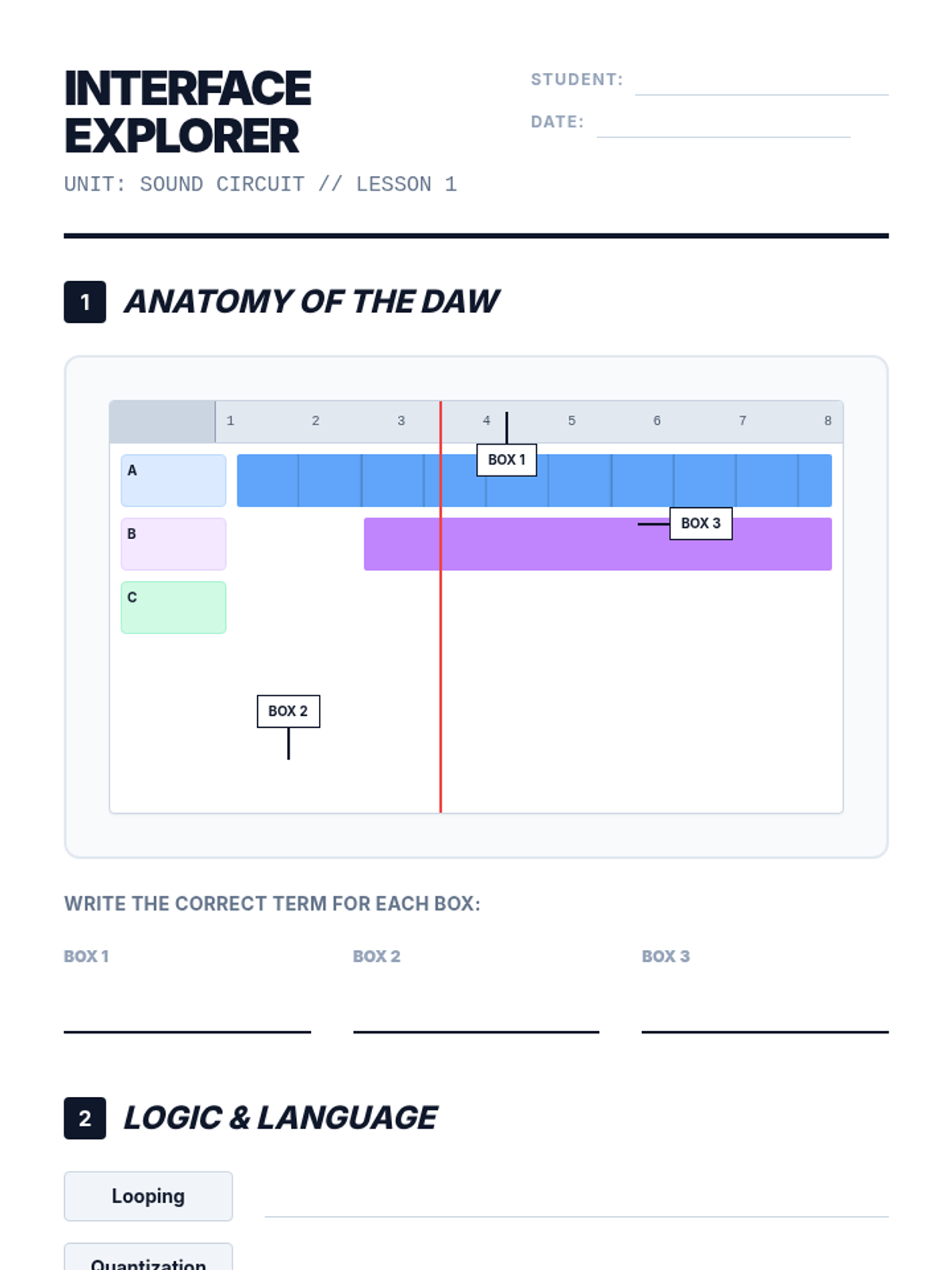
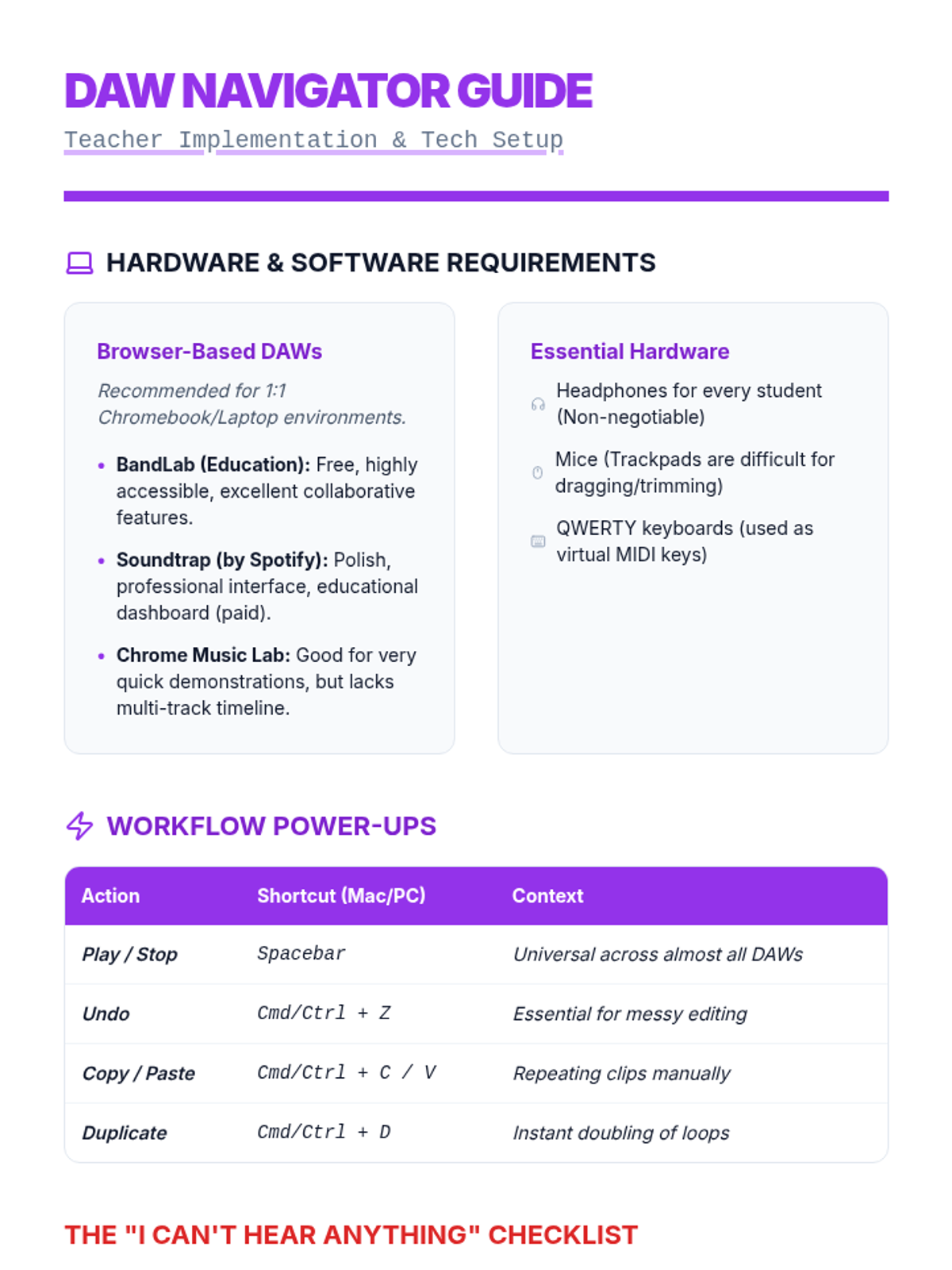
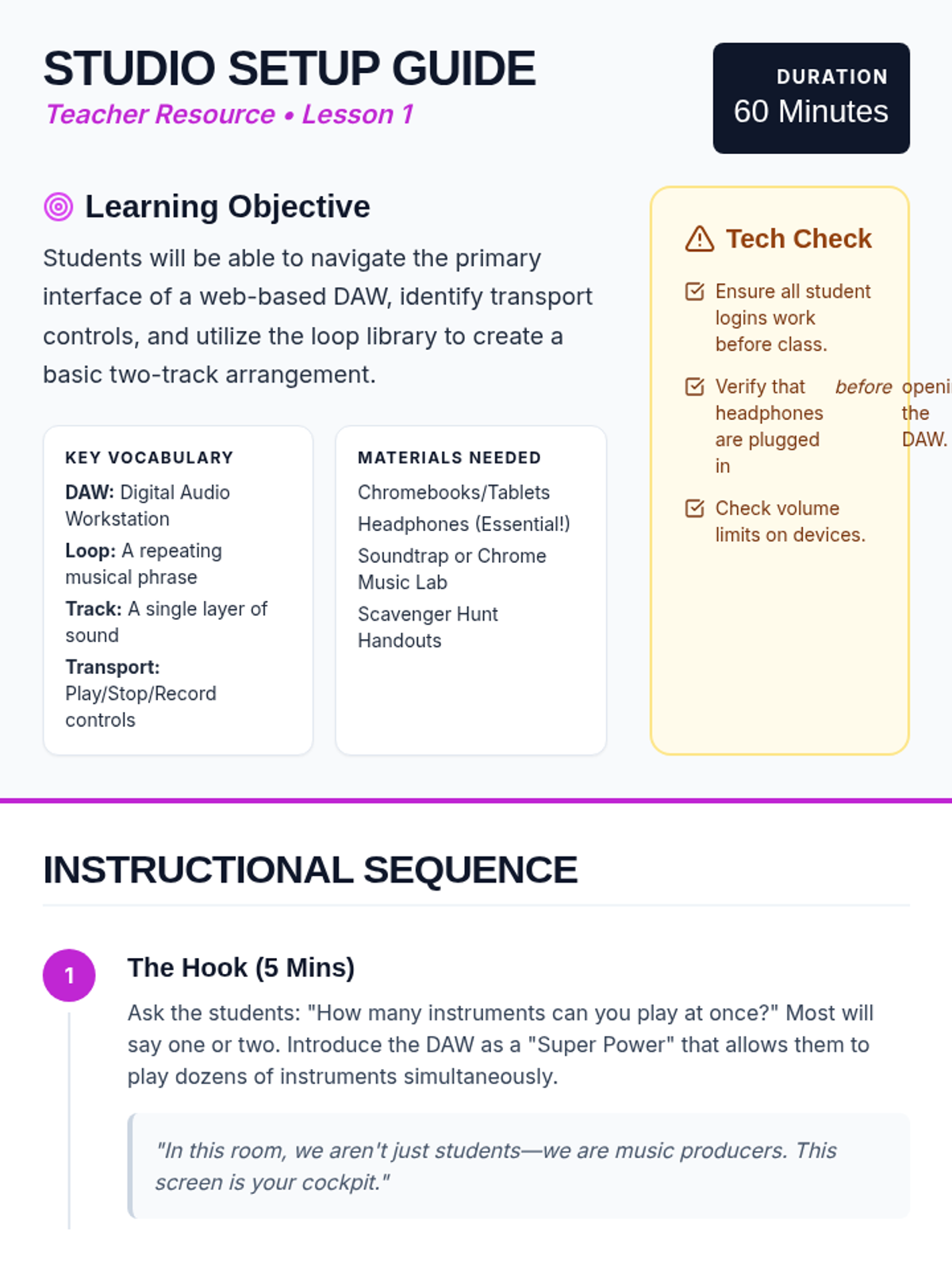
A technology-integrated sequence for 6th-grade students to master digital music arrangement. Students explore Digital Audio Workstations (DAWs), analyze song structure, and use loops and automation to create a polished ABA-form composition.
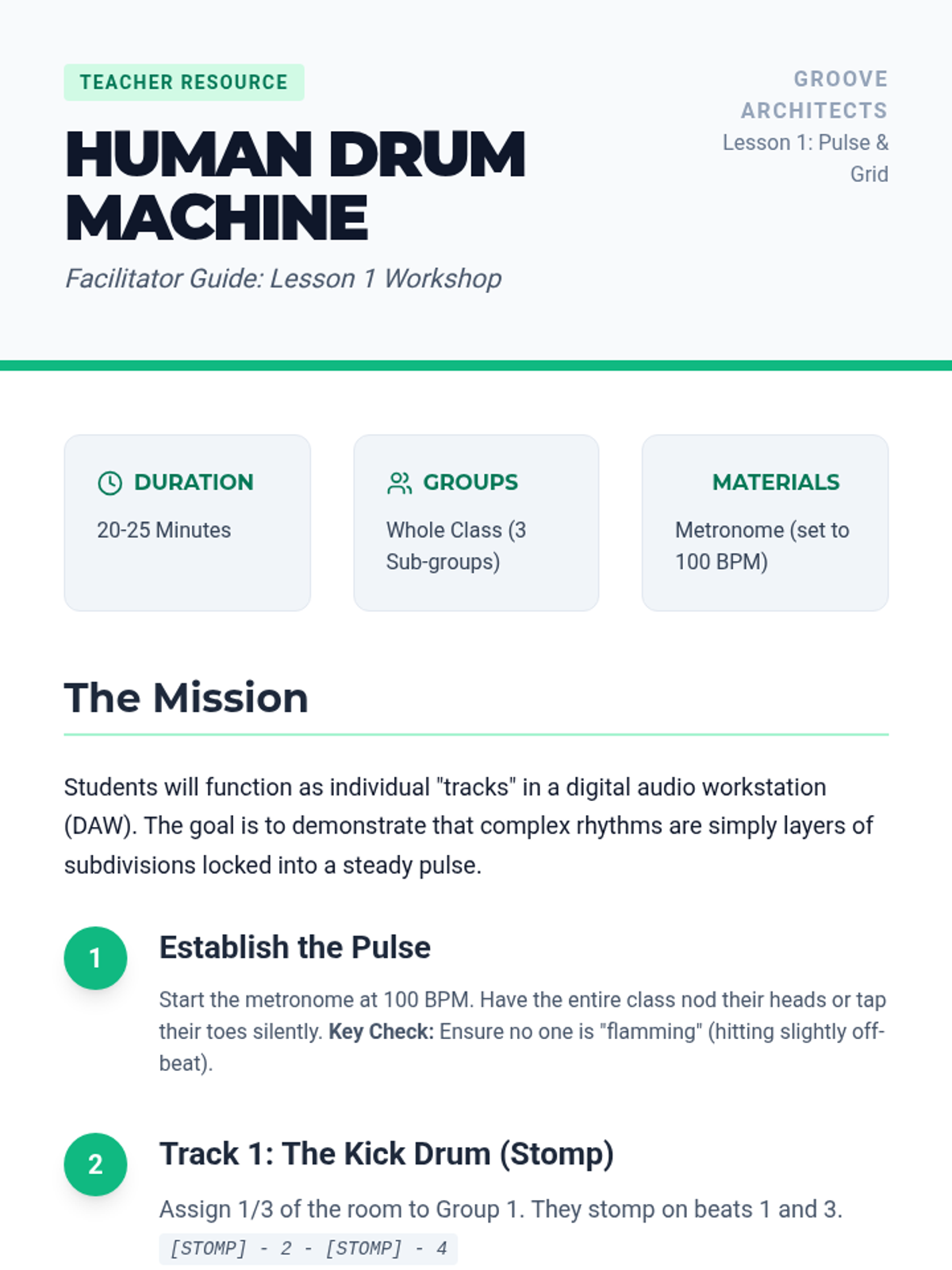
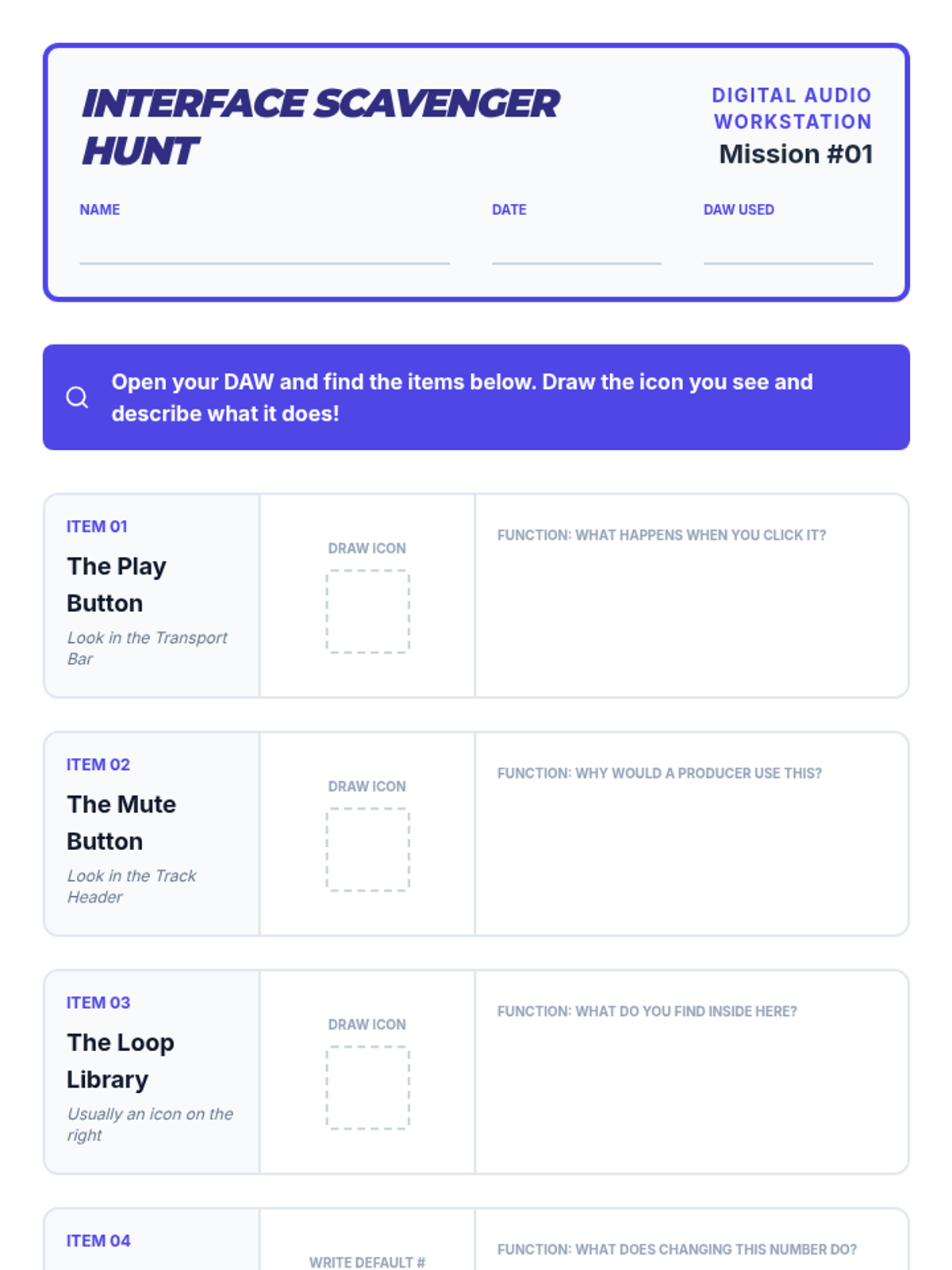
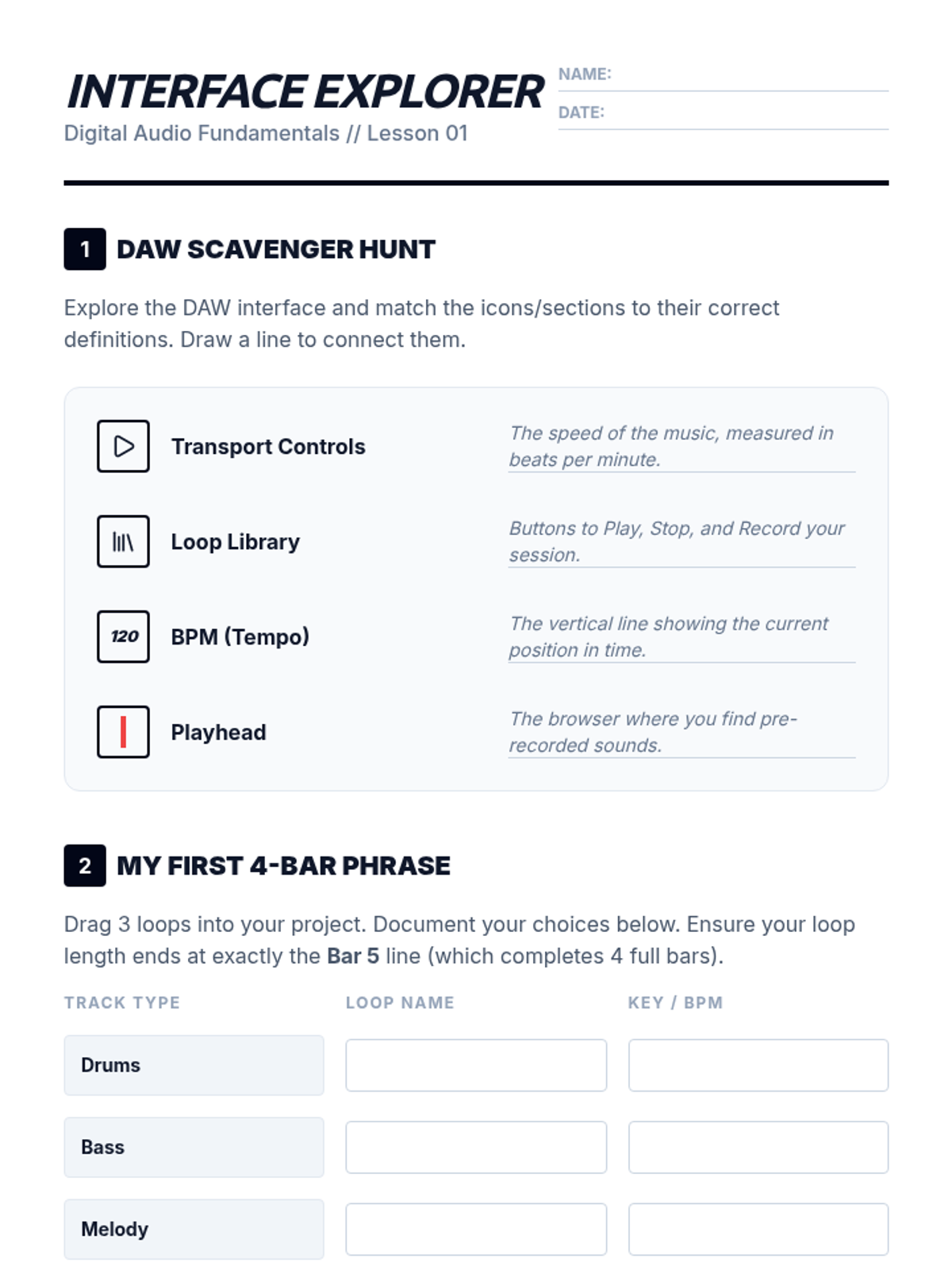
This sequence introduces students to digital music production, focusing on rhythmic construction within a Digital Audio Workstation (DAW). Students progress from basic interface navigation and loop sequencing to advanced techniques like syncopation, stereo panning, and arrangement, culminating in a polished multi-track drum composition.
This sequence explores the mechanics of music theory, moving from building individual chords to understanding their functional relationships in pop and classical music. Students will analyze, identify, and eventually manipulate harmonic structures to change the emotional landscape of a melody.
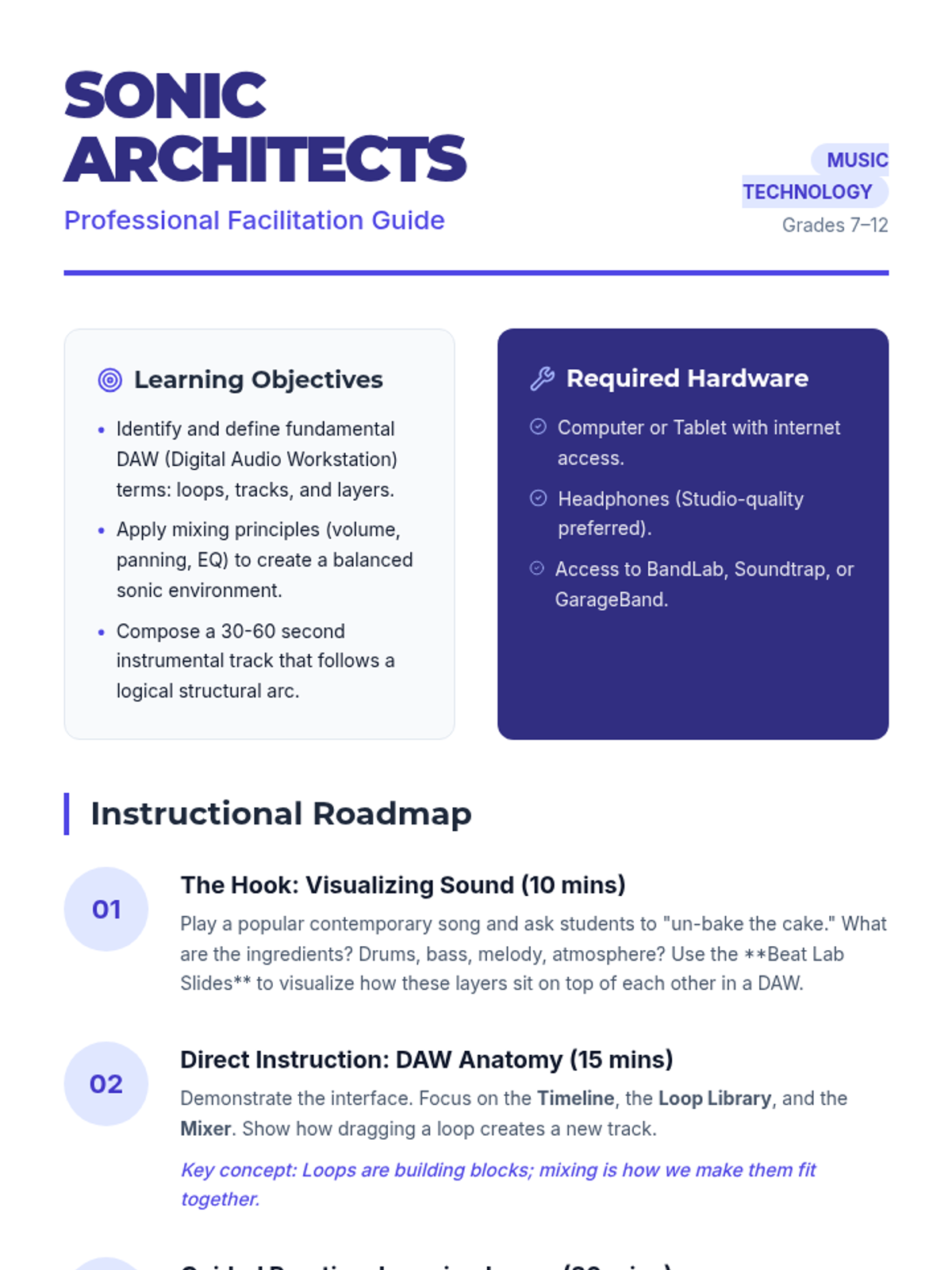
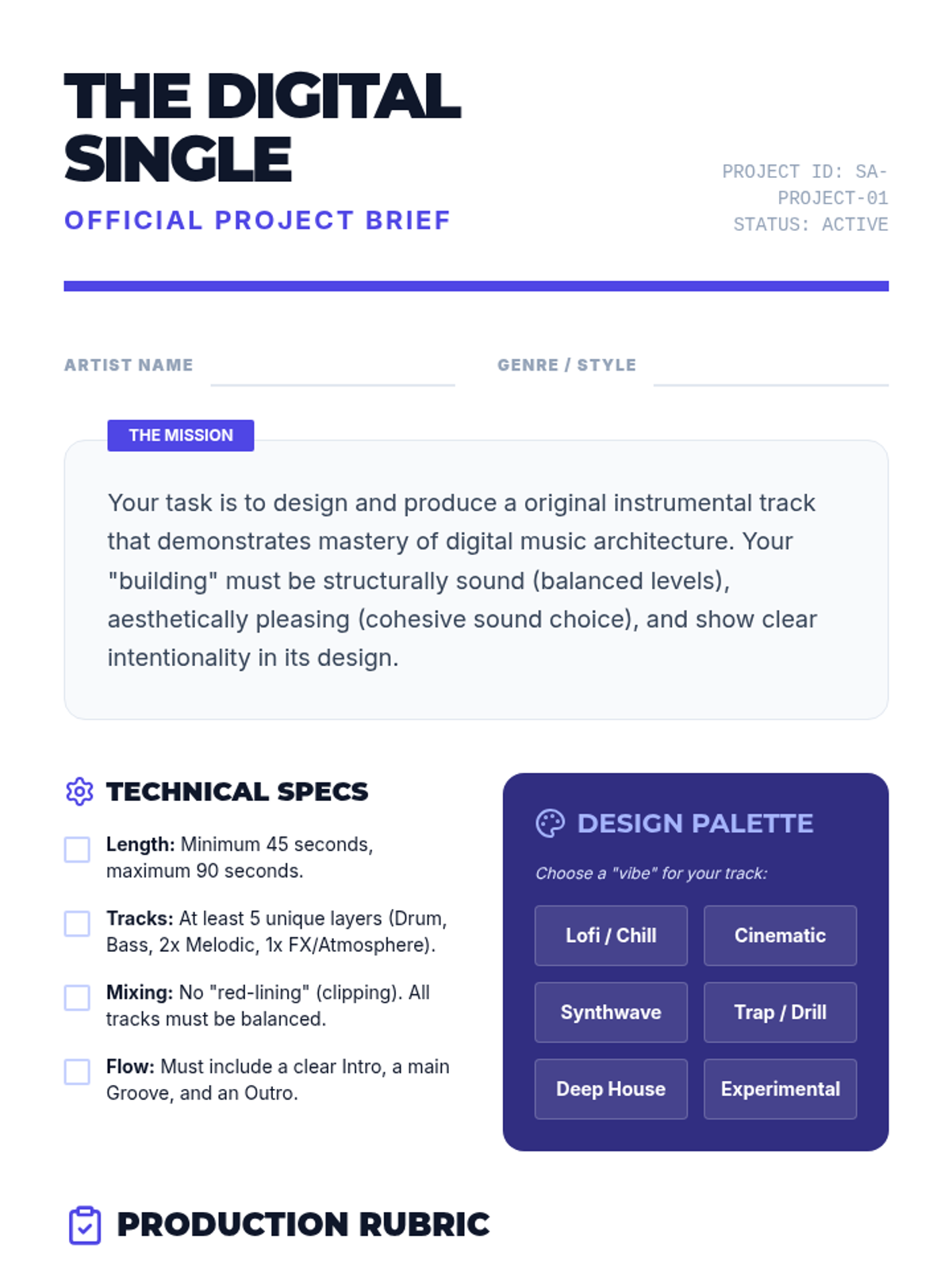
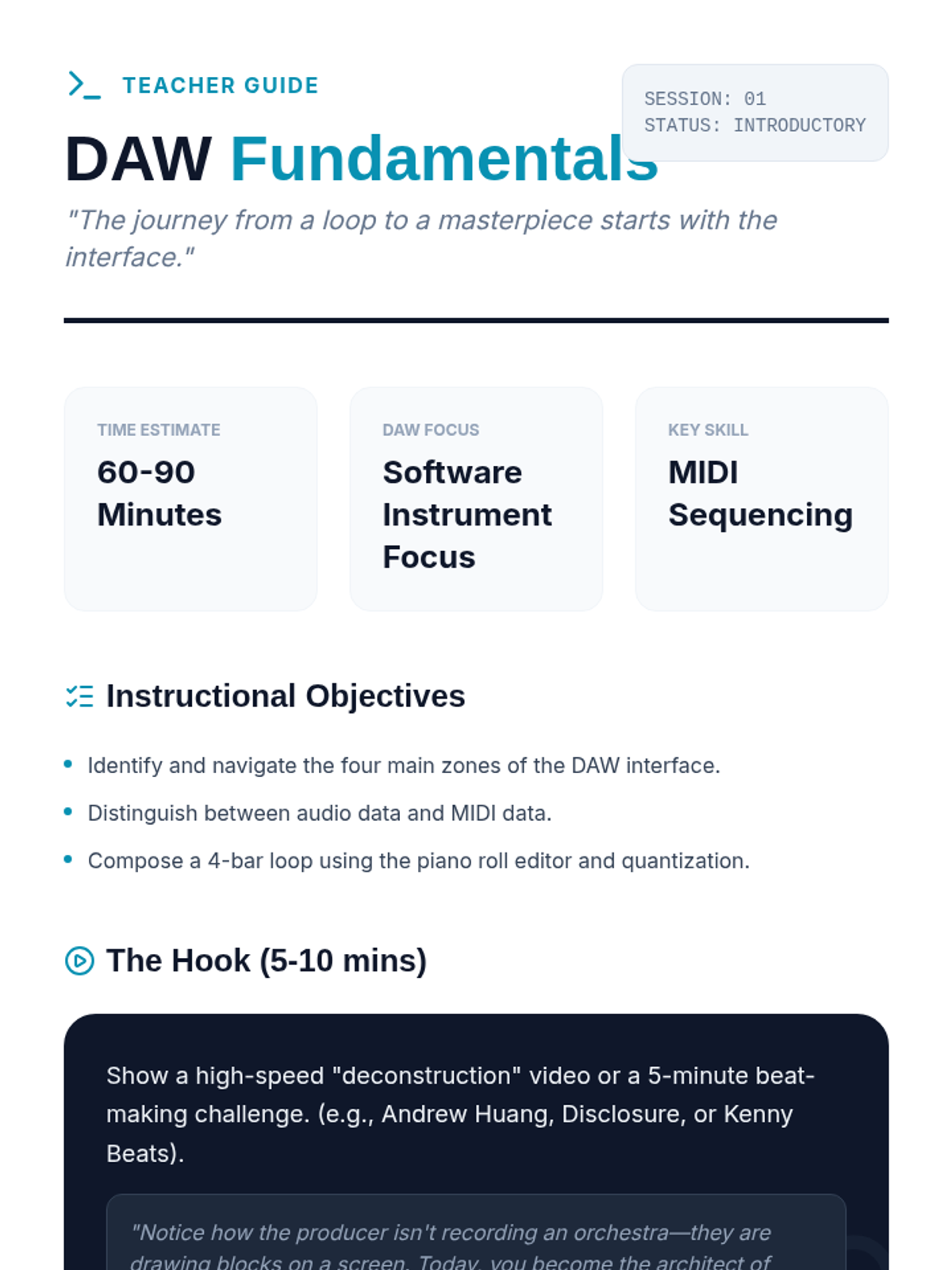
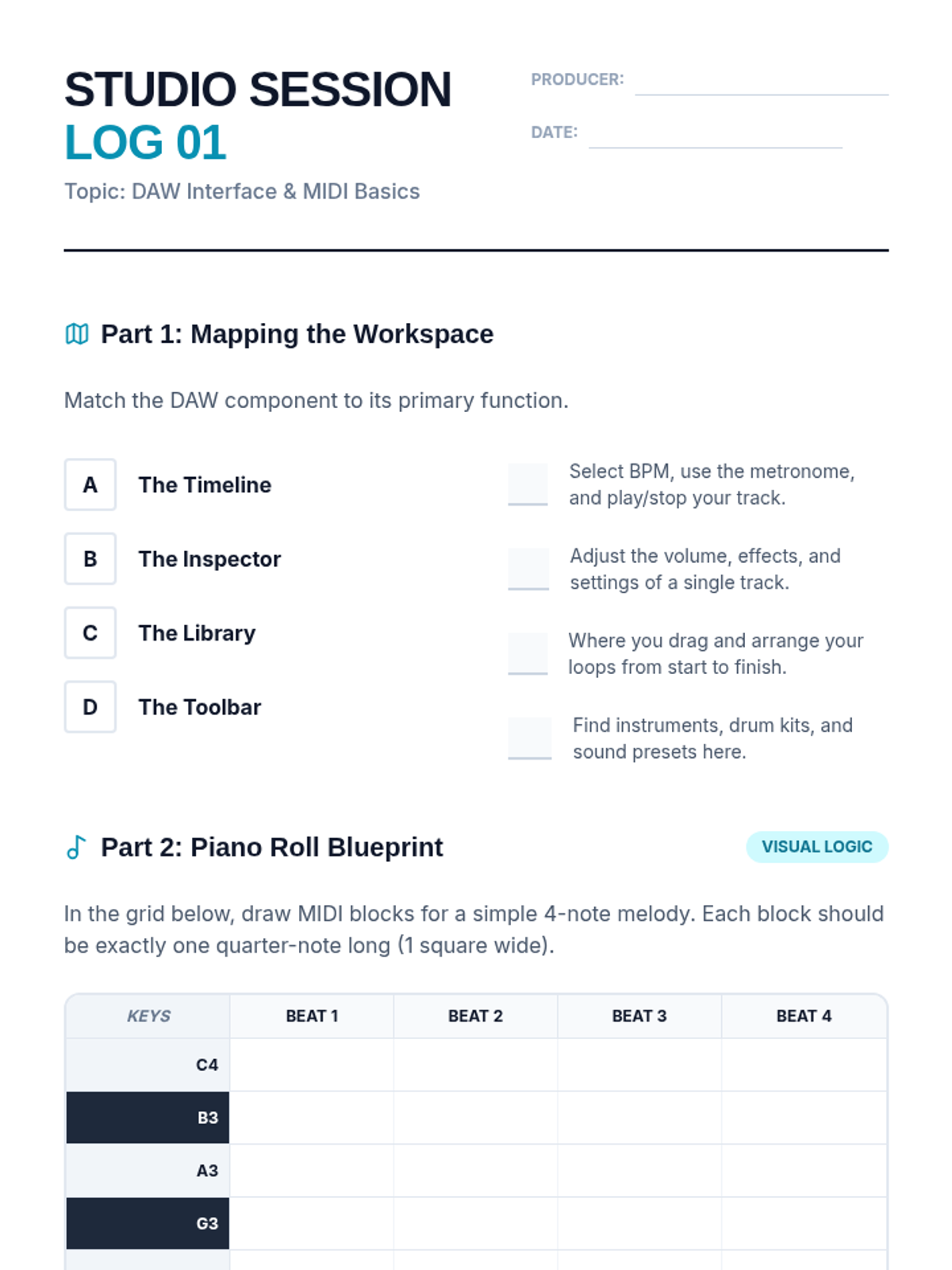
A comprehensive introduction to modern music production using Digital Audio Workstations (DAWs). Students progress from basic MIDI sequencing to advanced arrangement and sound design, culminating in a finished instrumental track.
A comprehensive 7th-grade music unit exploring the relationship between song structure, lyric writing, and prosody, culminating in a complete song blueprint.
This sequence transitions students from traditional theory to modern digital creation using Digital Audio Workstations (DAWs). Students explore how to arrange sound using loops, MIDI, and digital effects, concluding by producing a fully arranged track that balances repetition with variety.
A 4th-grade music production unit where students use digital audio workstations (DAWs) to compose, arrange, and mix original music. Students learn about timbre, texture, song structure, and digital literacy through the lens of a modern music producer.