Fundamental notation, instrumental proficiency, and vocal techniques across various genres. Connects historical analysis with original composition and creative performance skills.
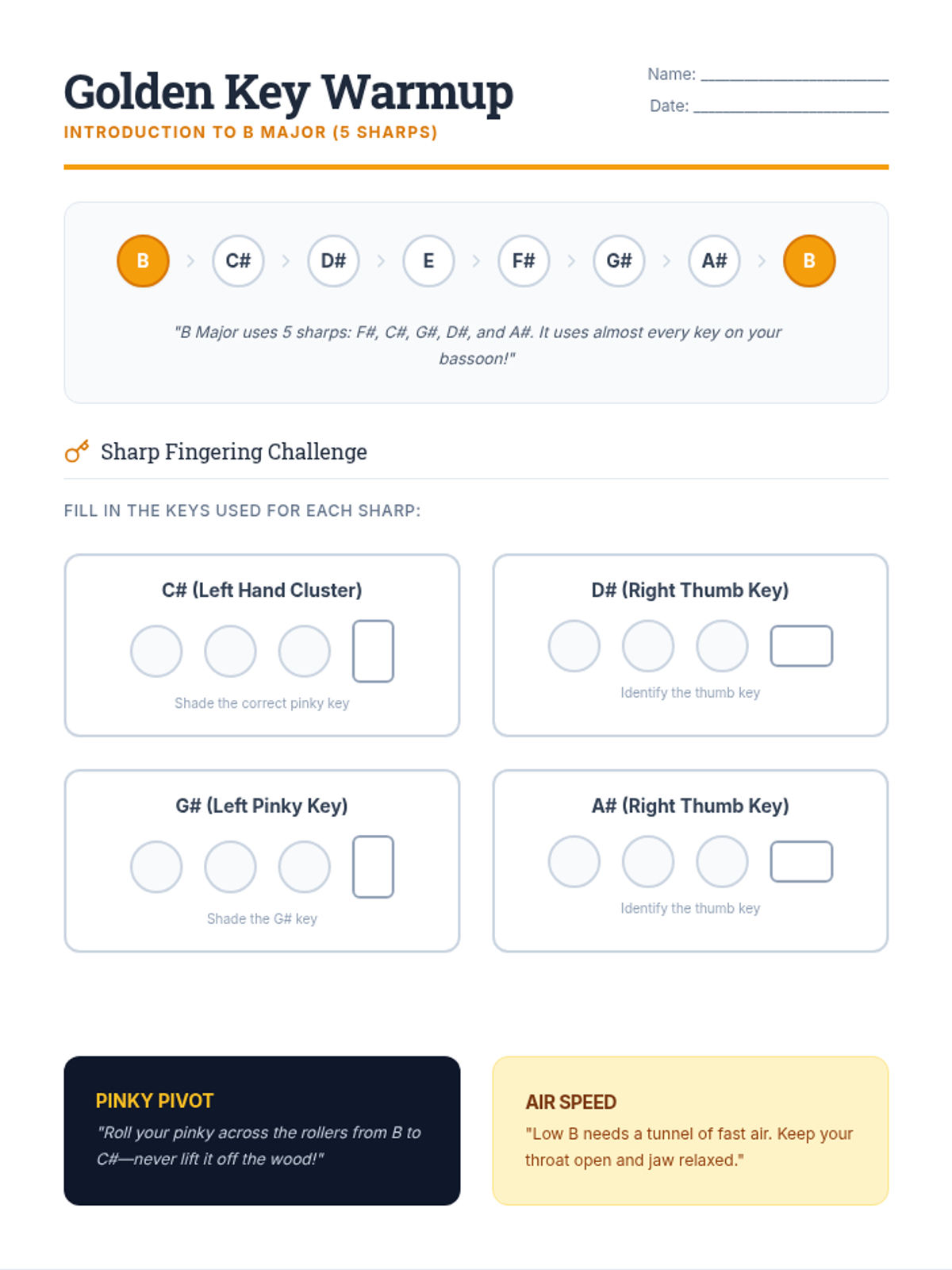
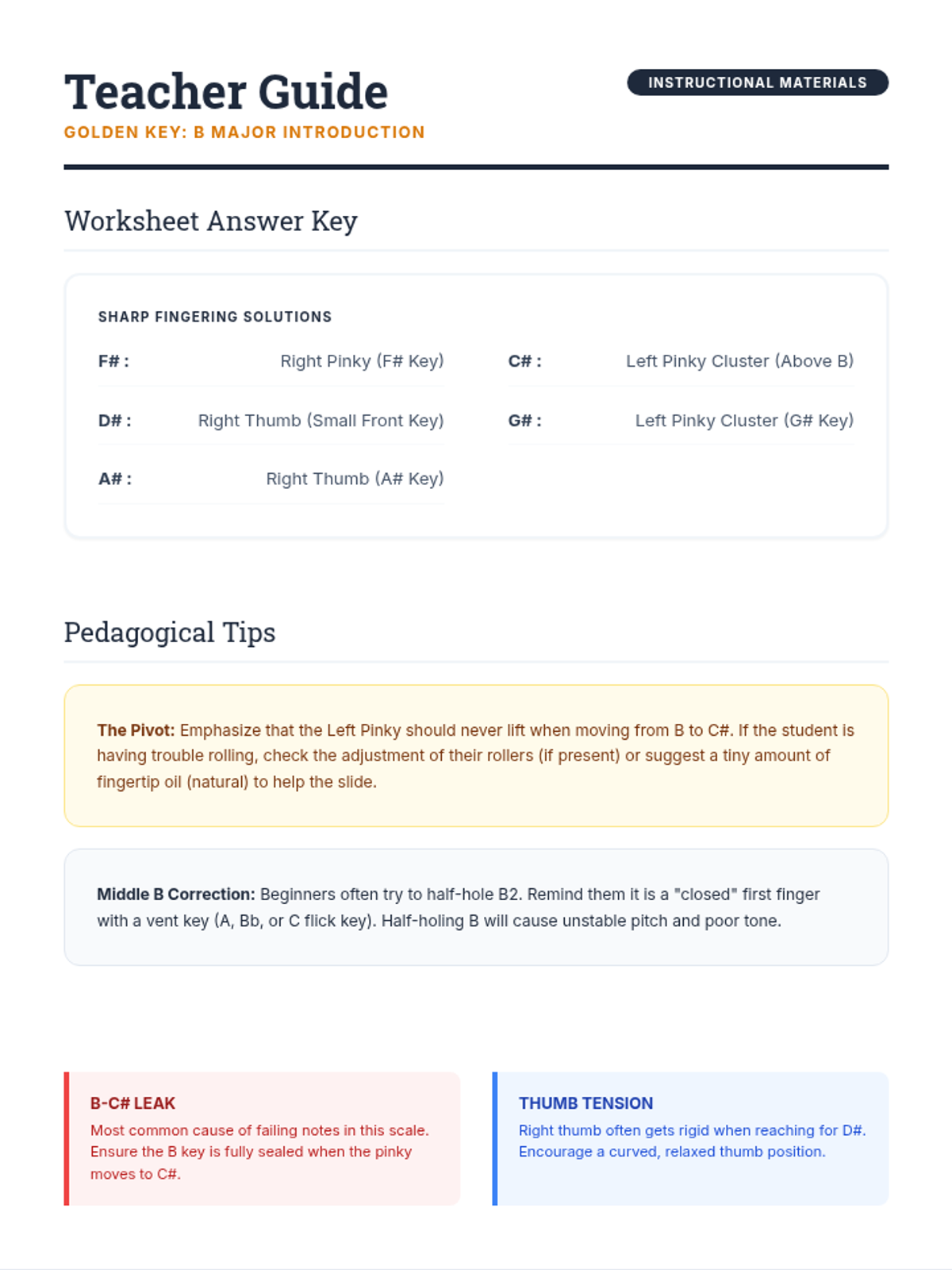
A focused introduction to the B Major scale for beginner bassoonists. This lesson covers the complex fingerings required for five sharps and provides a daily routine for developing technical fluency and tone.
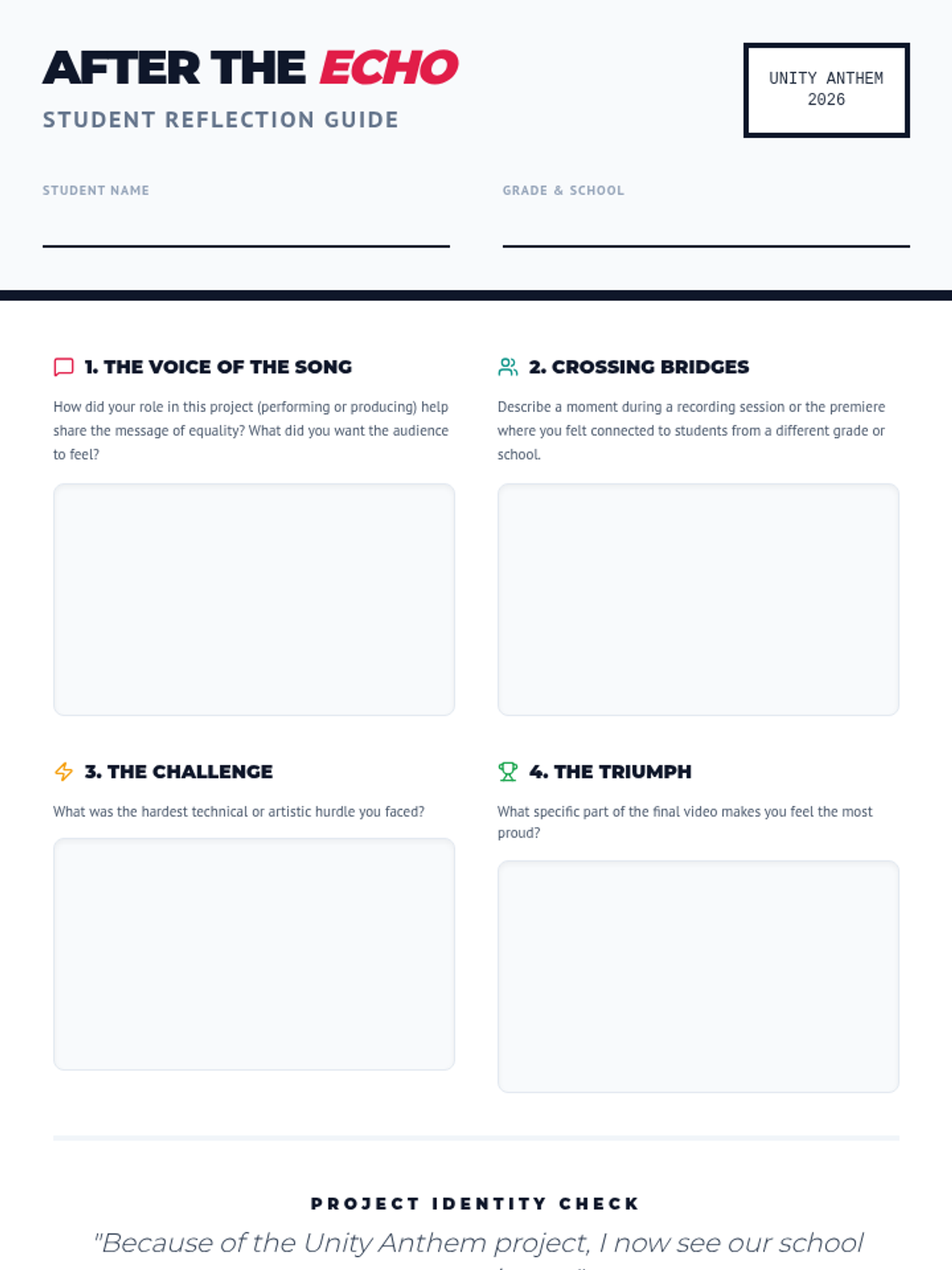
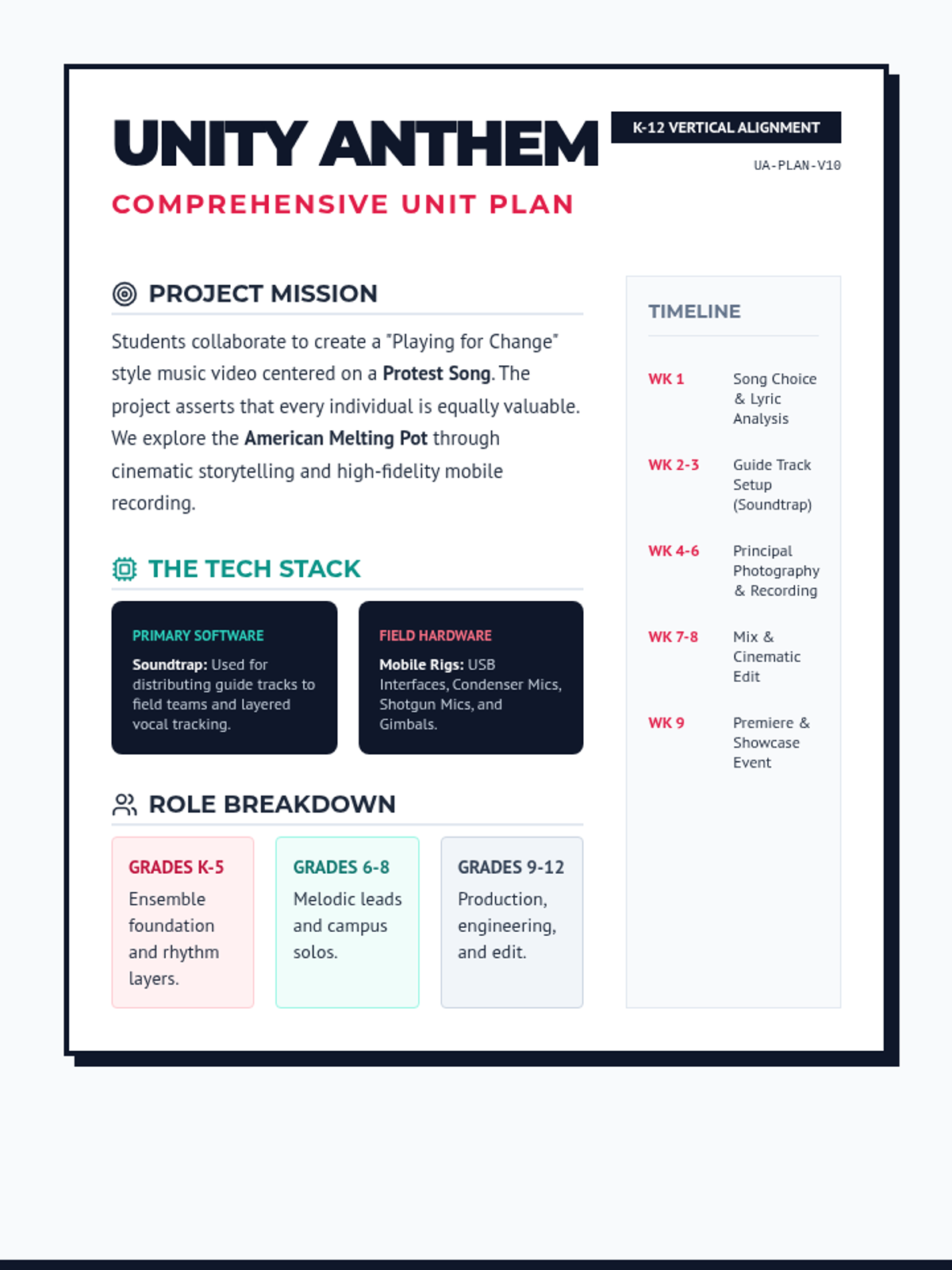
The final premiere of the music video at the All-town Music Tech Showcase, followed by a live performance and student reflection on the collaborative process.
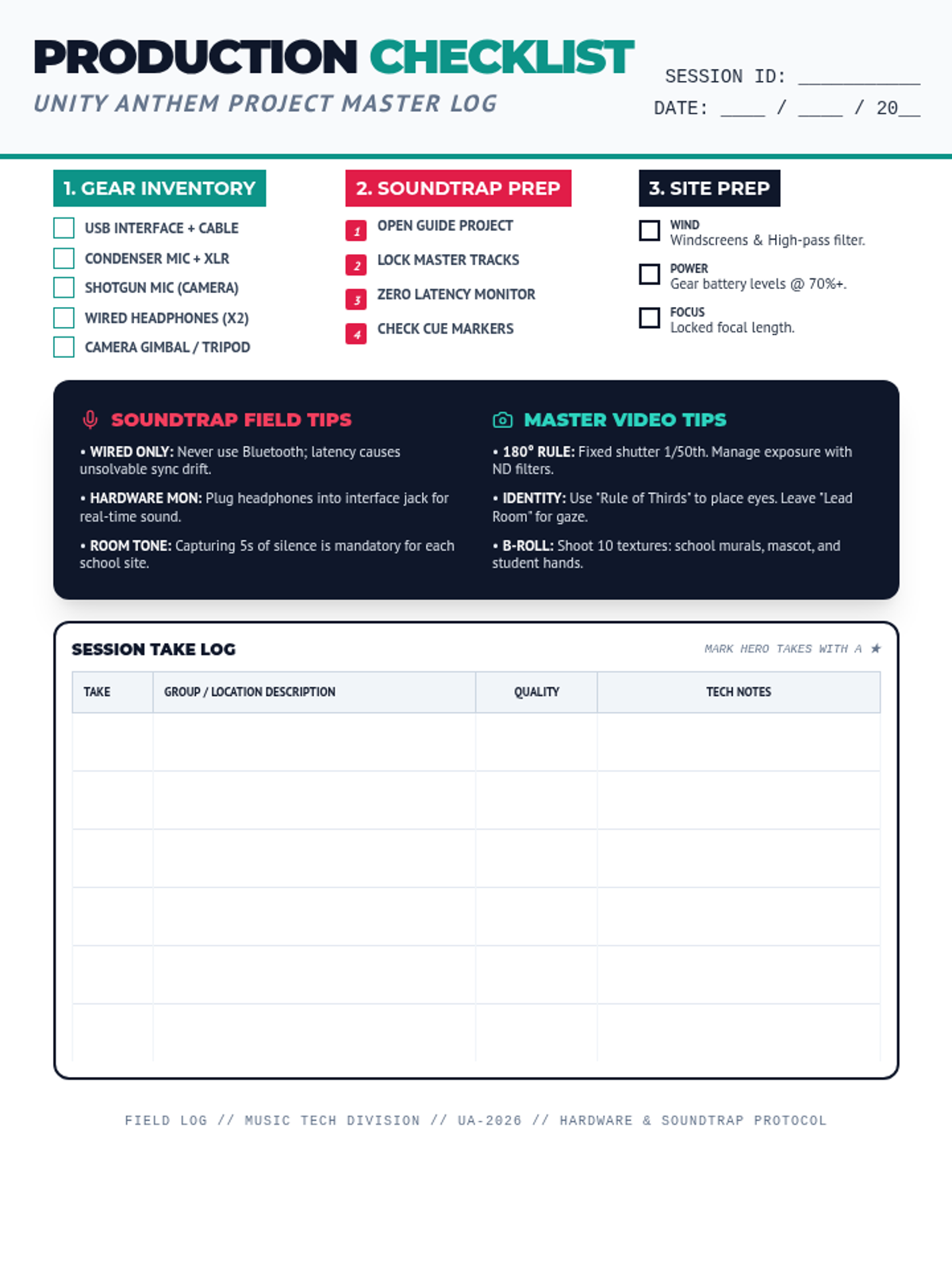
The technical phase involving on-location recordings at elementary and middle schools, followed by high school student-led mixing and video production.
Introduction to the 'Playing for Change' concept, exploring the themes of the chosen protest song, and laying the groundwork for the K-12 collaboration.
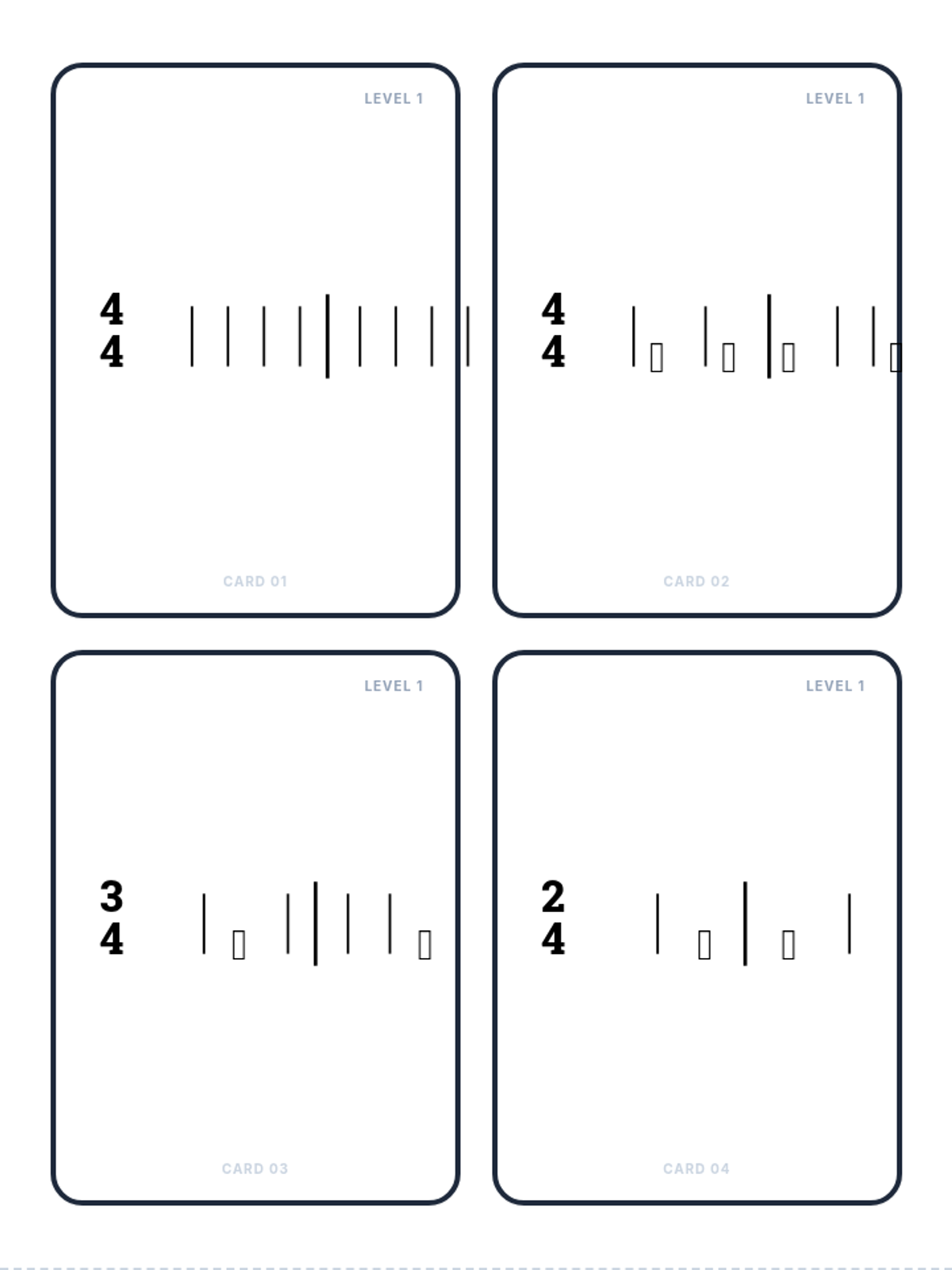
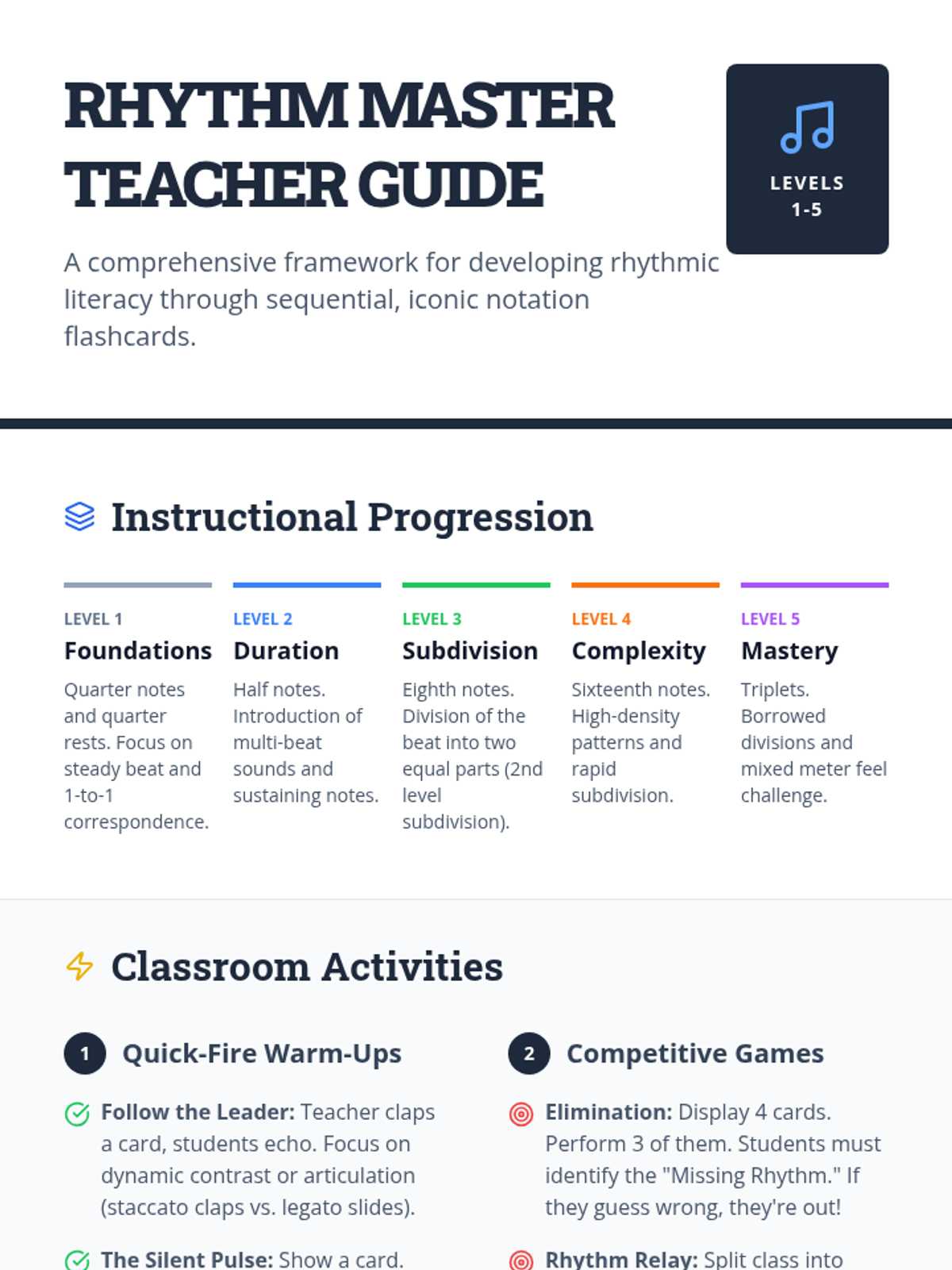
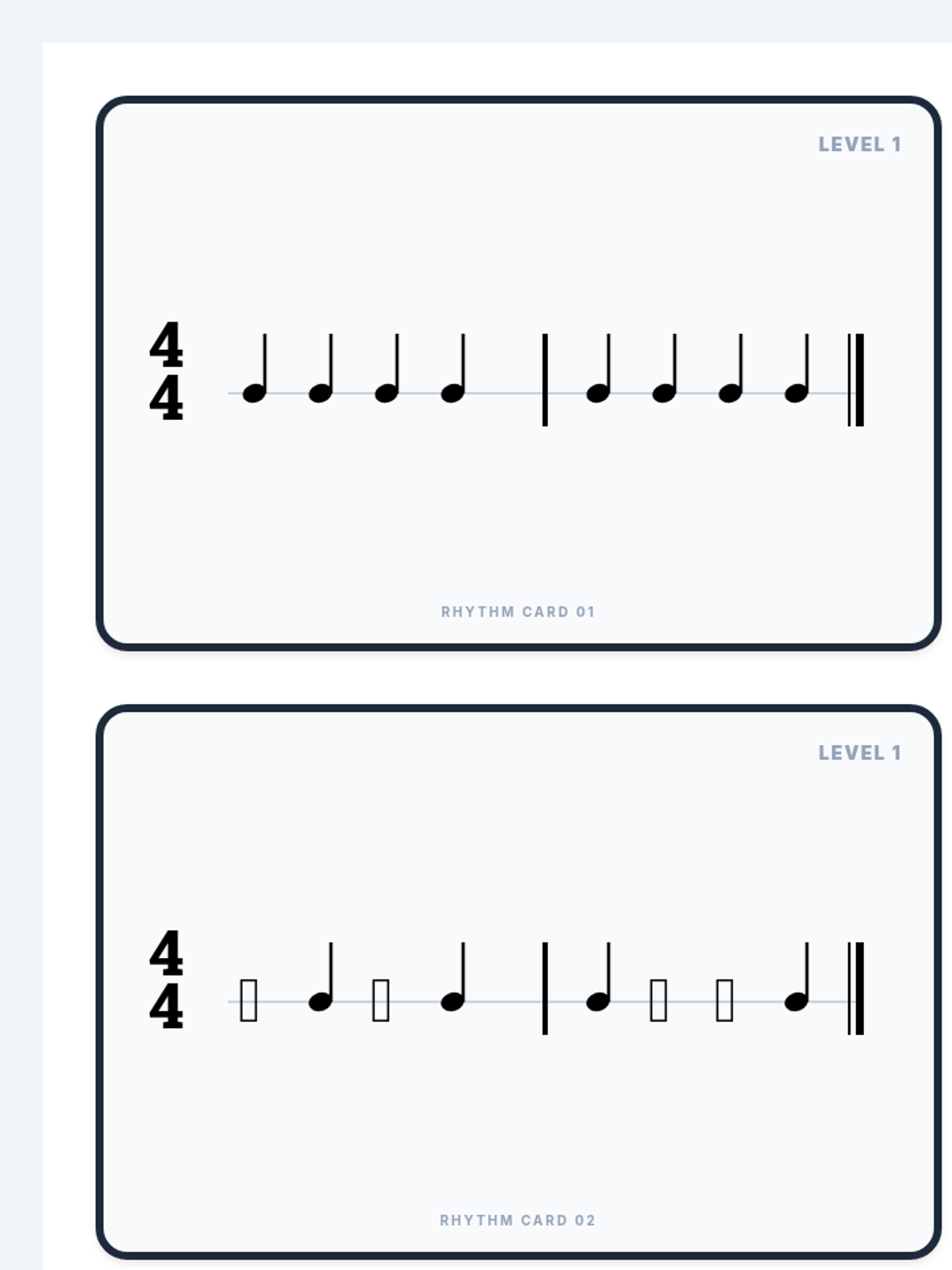
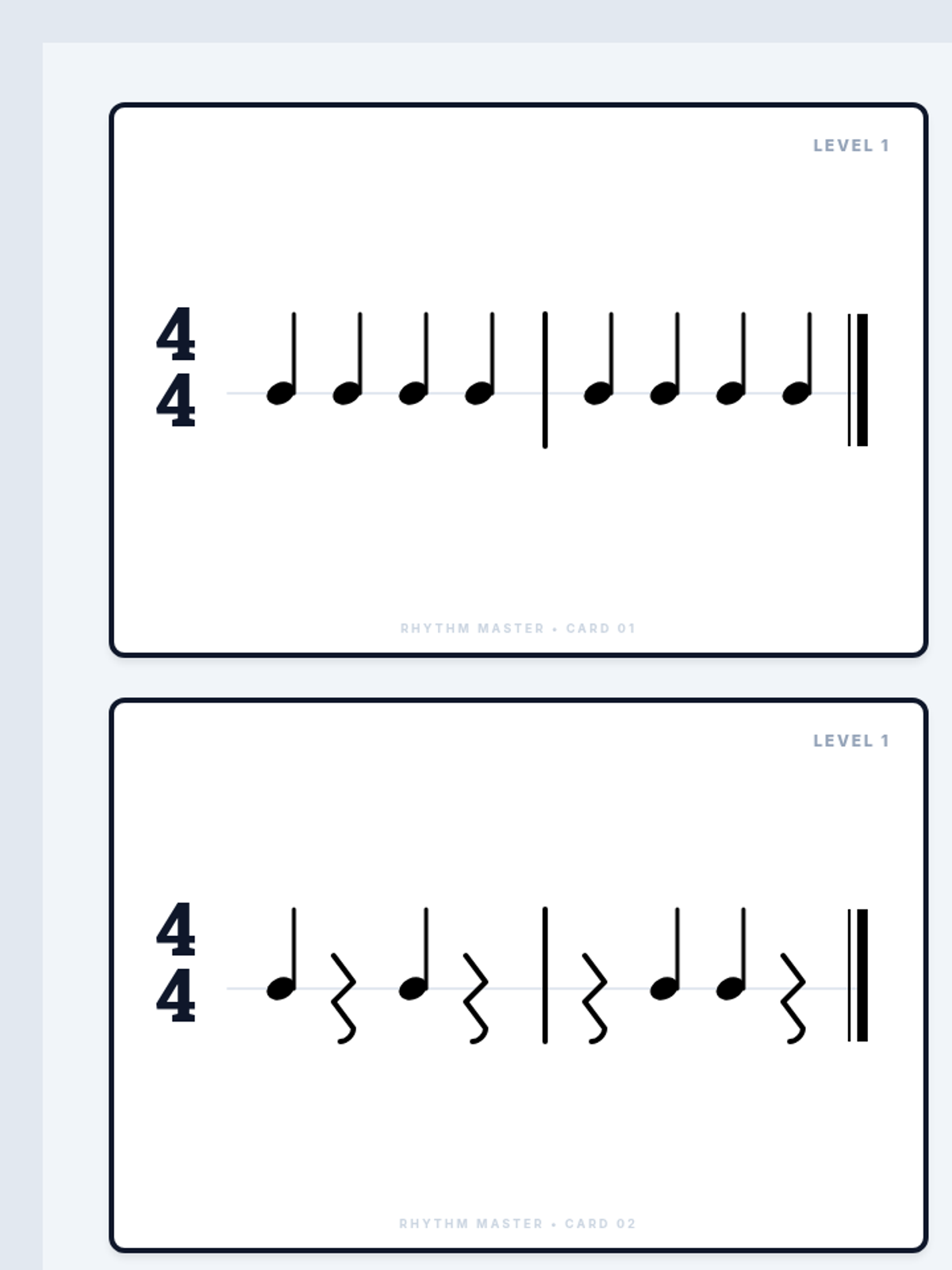
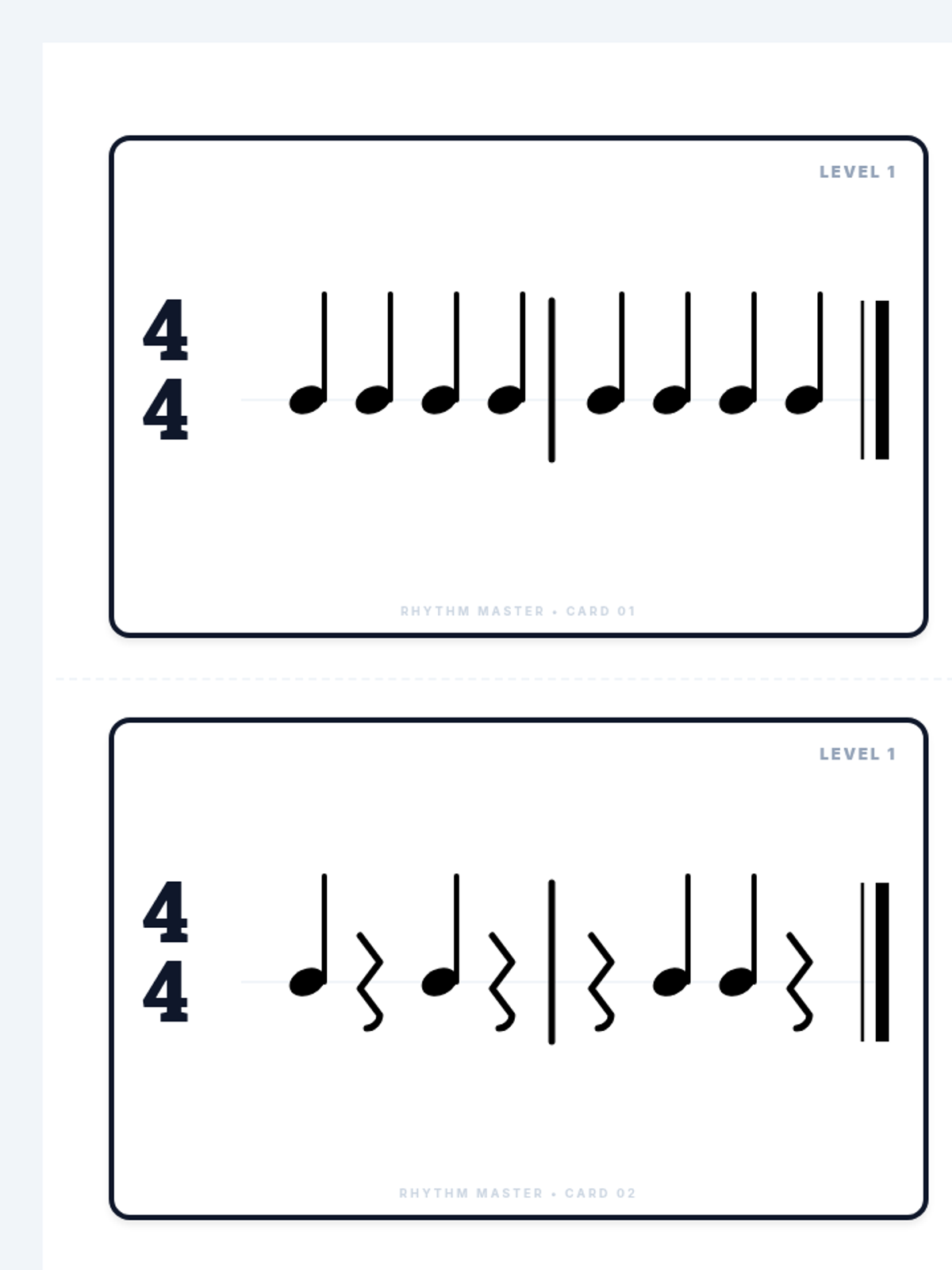
A series of rhythm reading flashcards and a teacher's guide covering basic to advanced rhythmic patterns. Activities progress from quarter notes and rests to complex sixteenth notes and triplets across multiple time signatures.
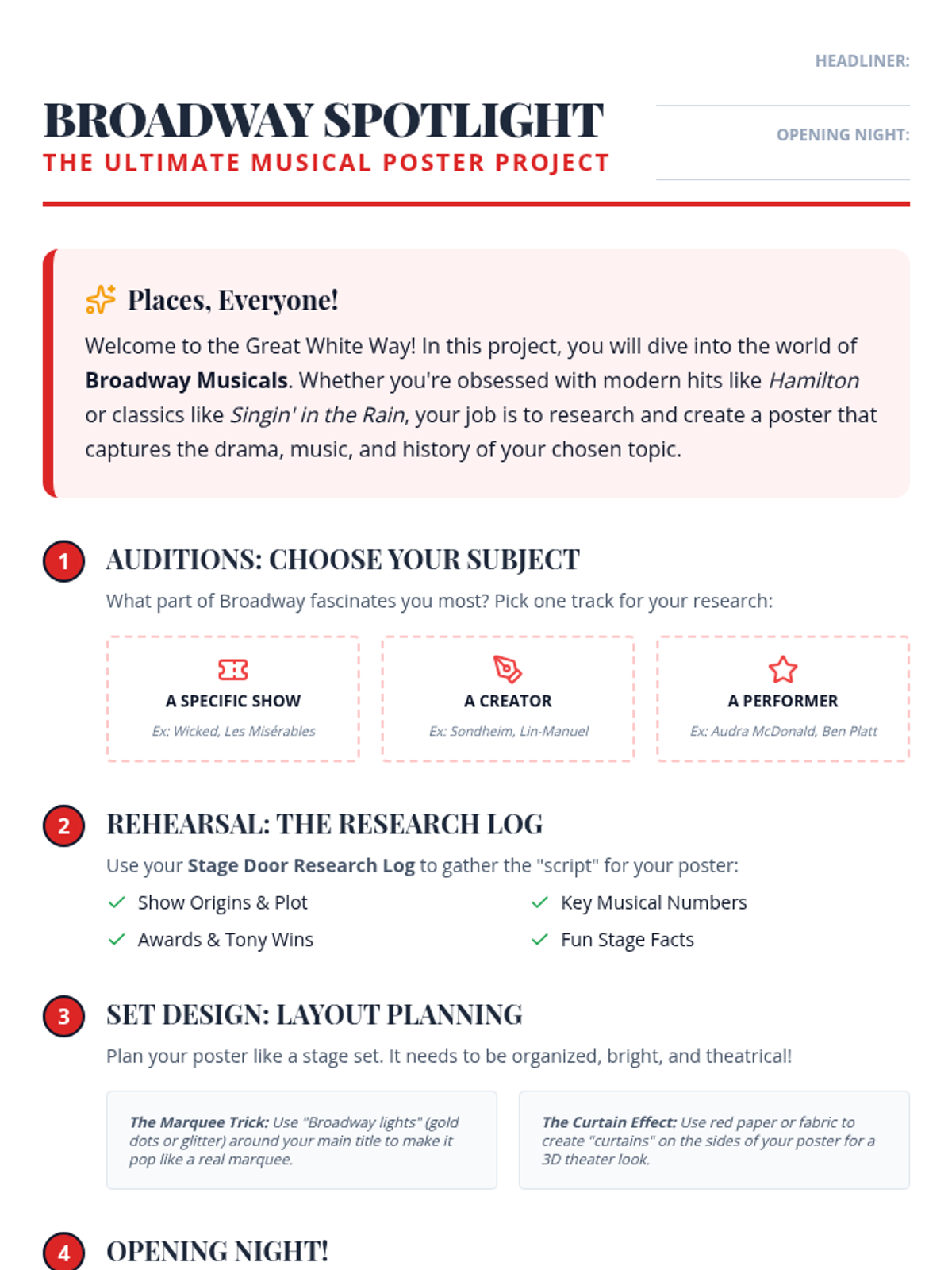
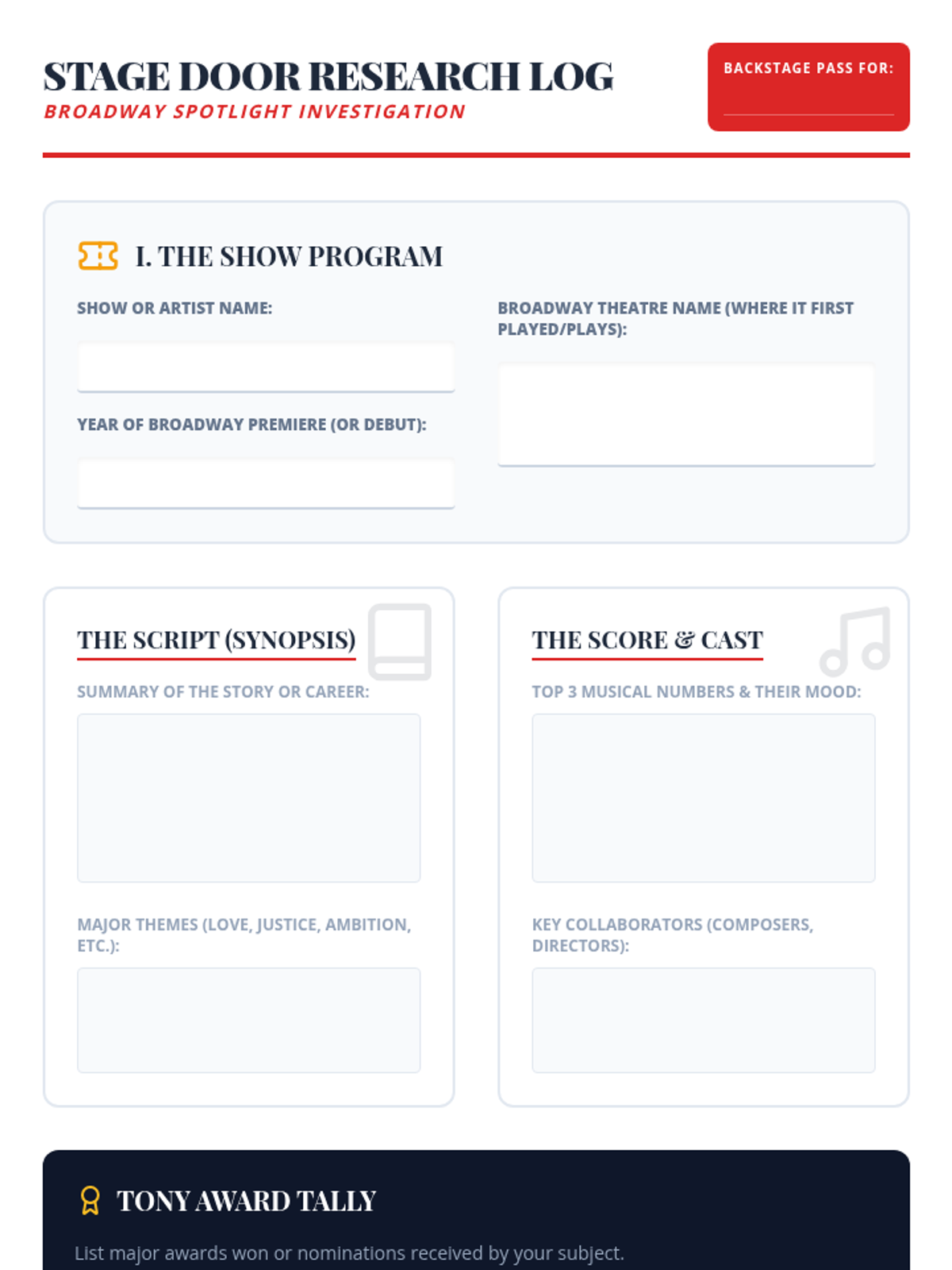
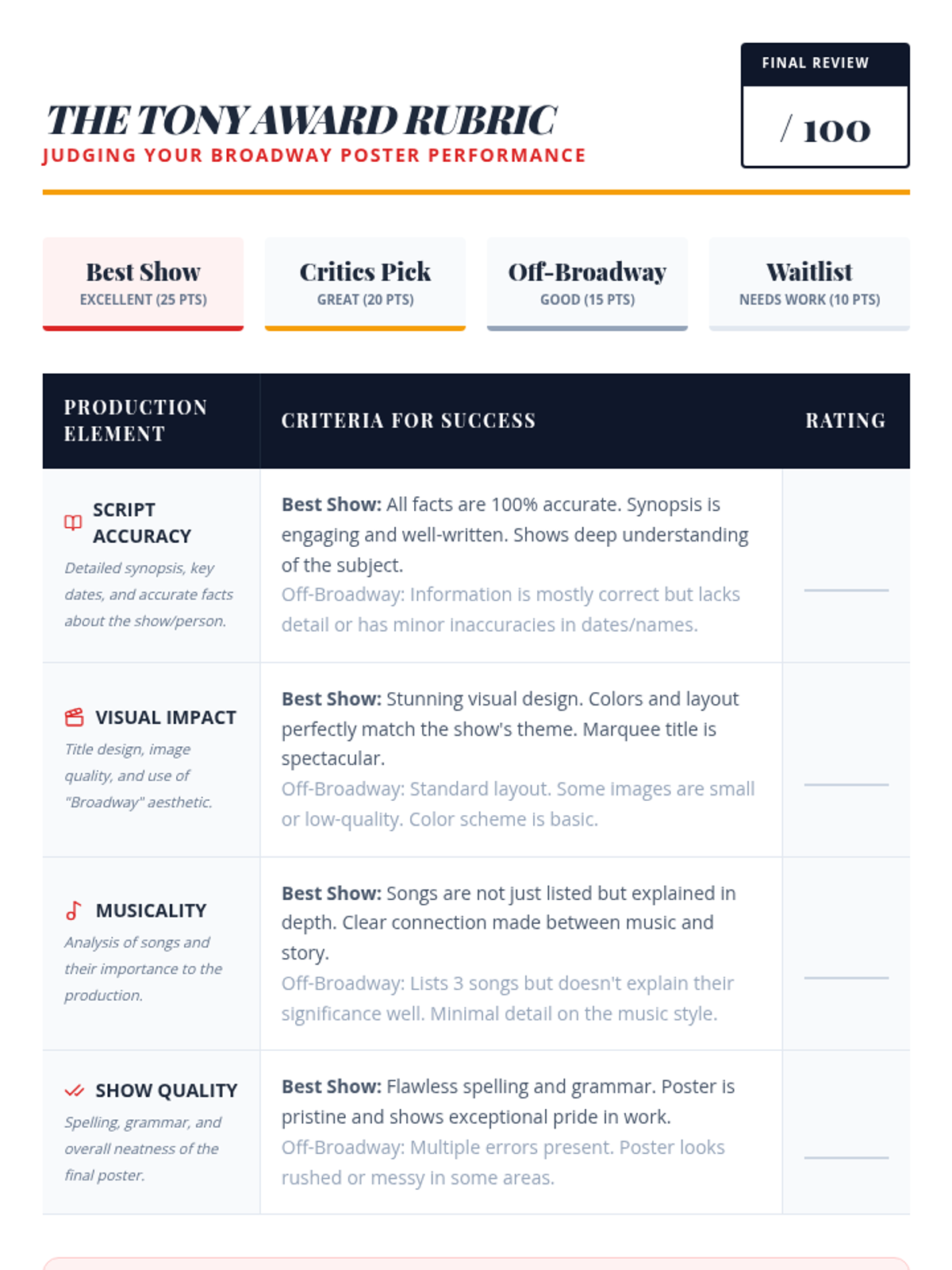
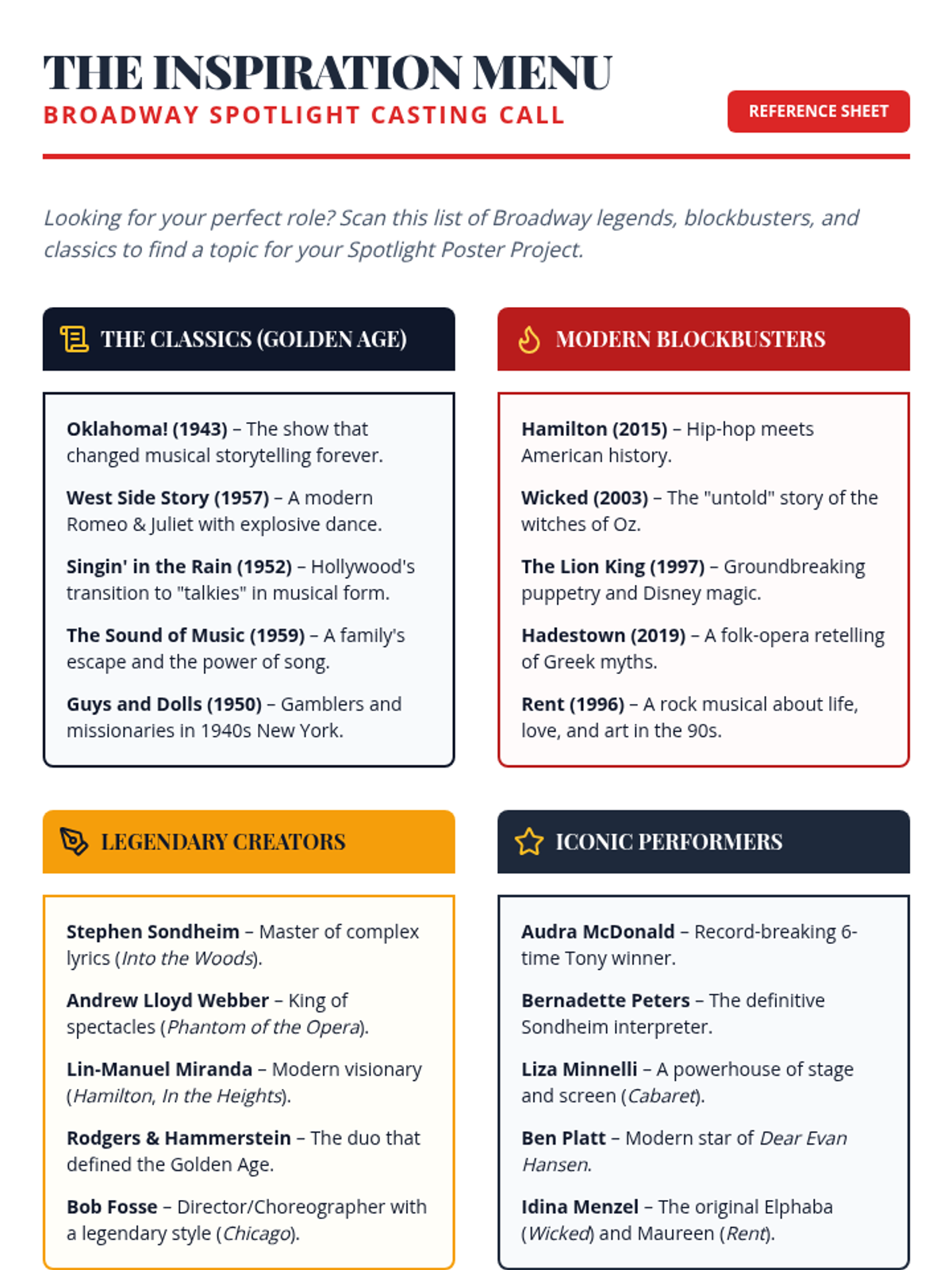
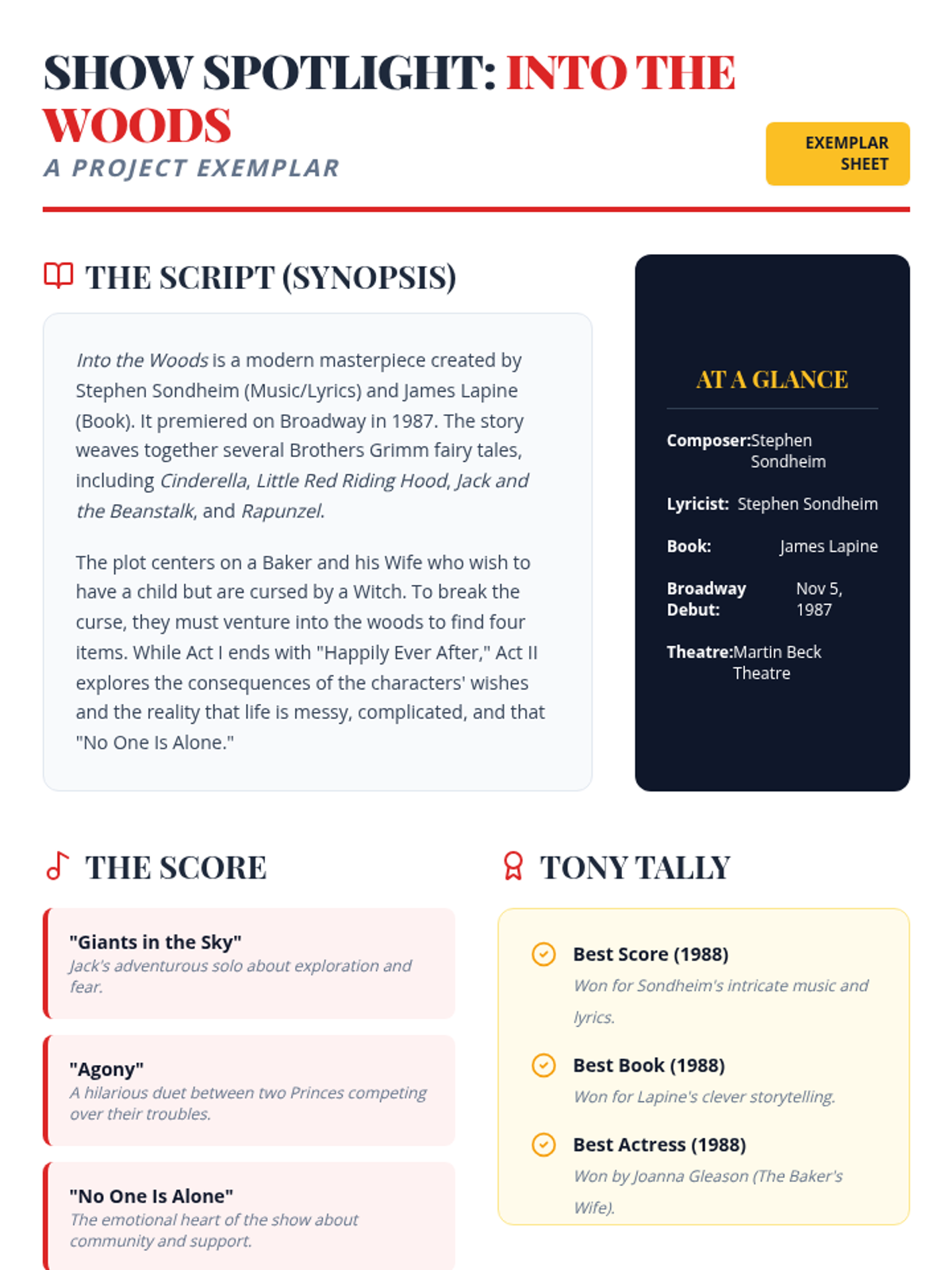
A creative project where students research and present the magic of Broadway. Students can choose a specific musical, a legendary composer, or a famous performer to showcase on an informational poster.
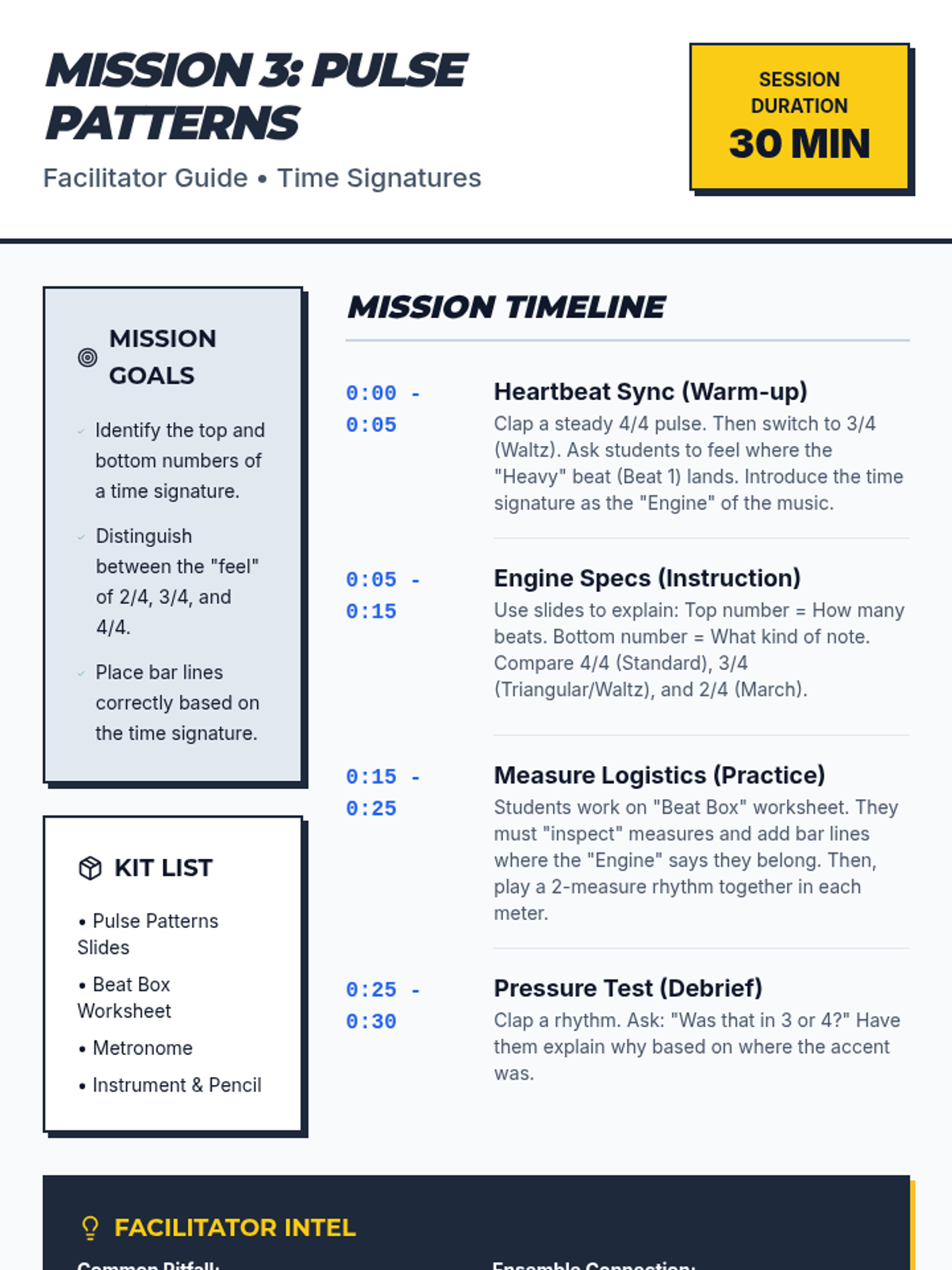
Exploring the difference between 4/4, 3/4, and 2/4 time signatures. Students will practice feeling the strong beats and identifying how measures are divided in different meters.
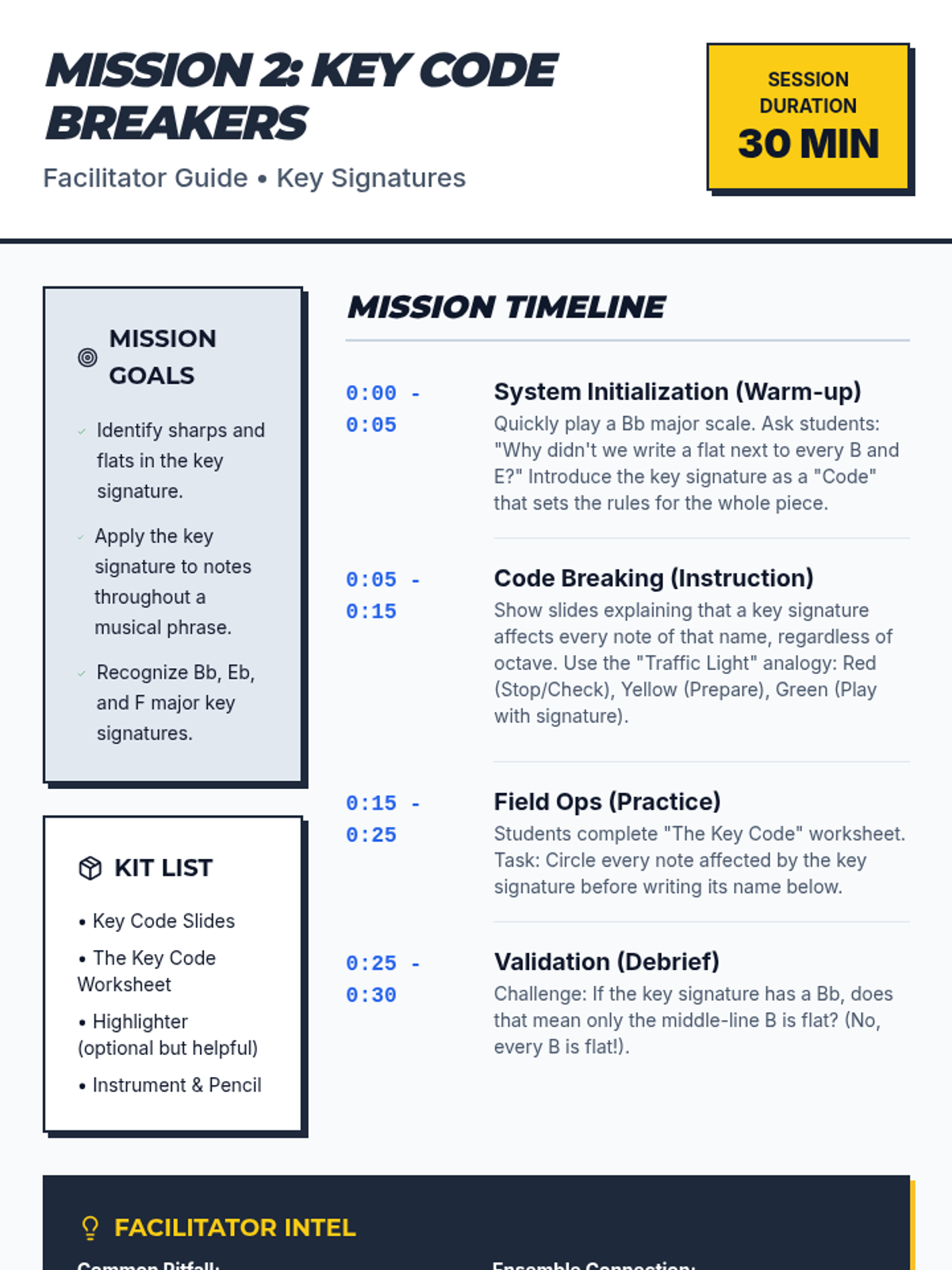
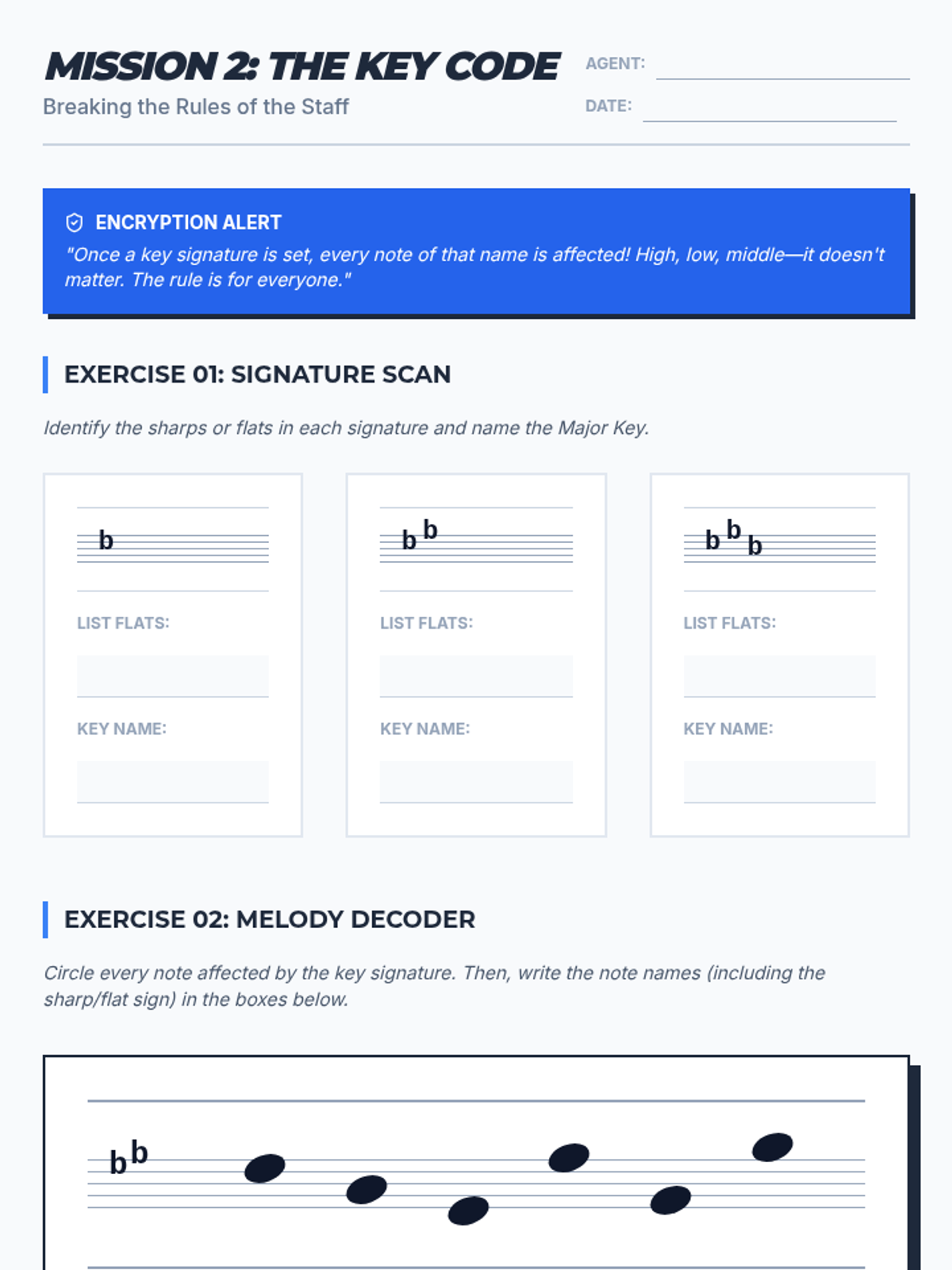
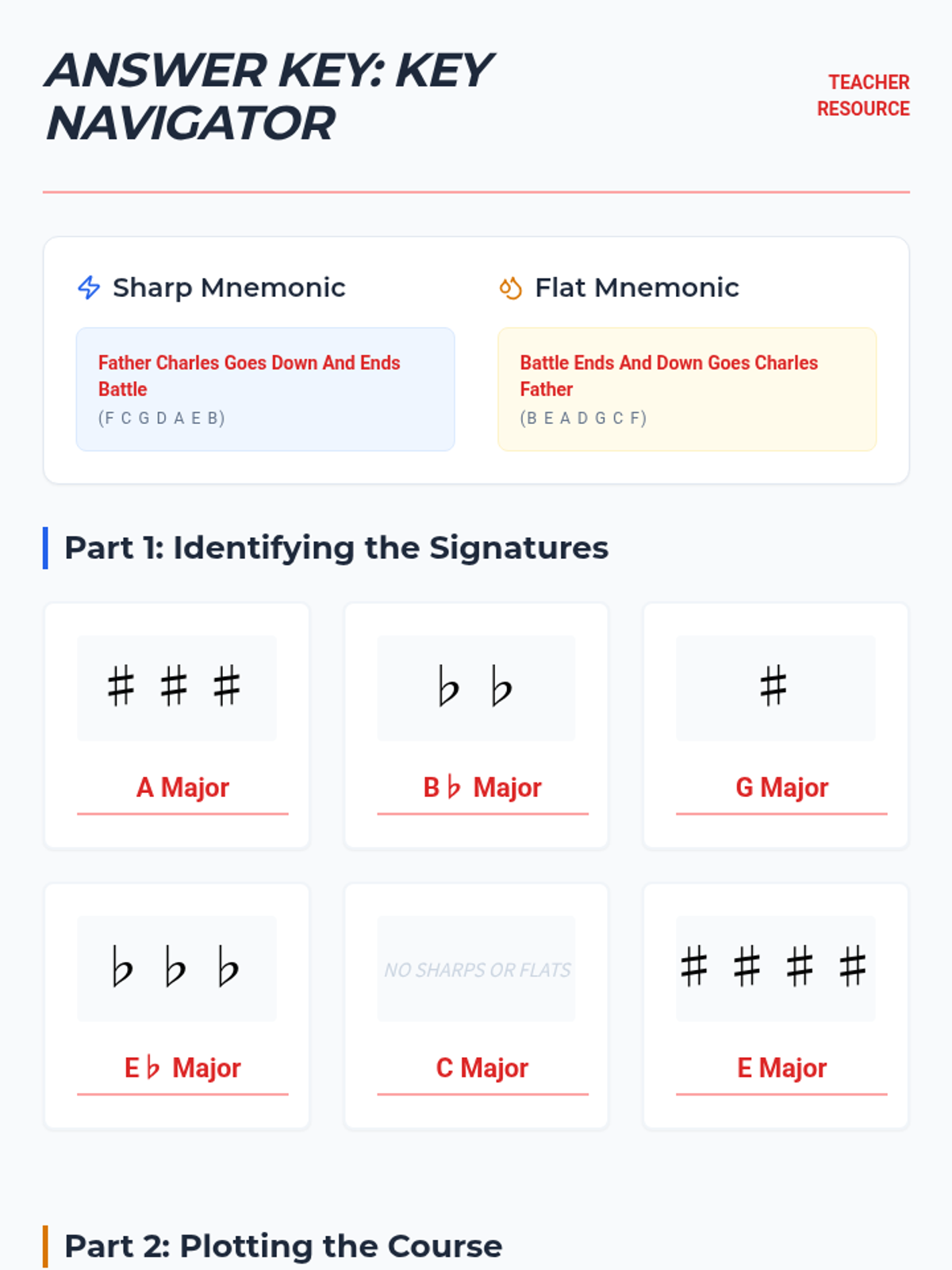
Mastering the "code" of sharps and flats at the beginning of the staff. Students learn to apply key signatures to every note in a phrase and recognize common band keys like Bb and Eb.
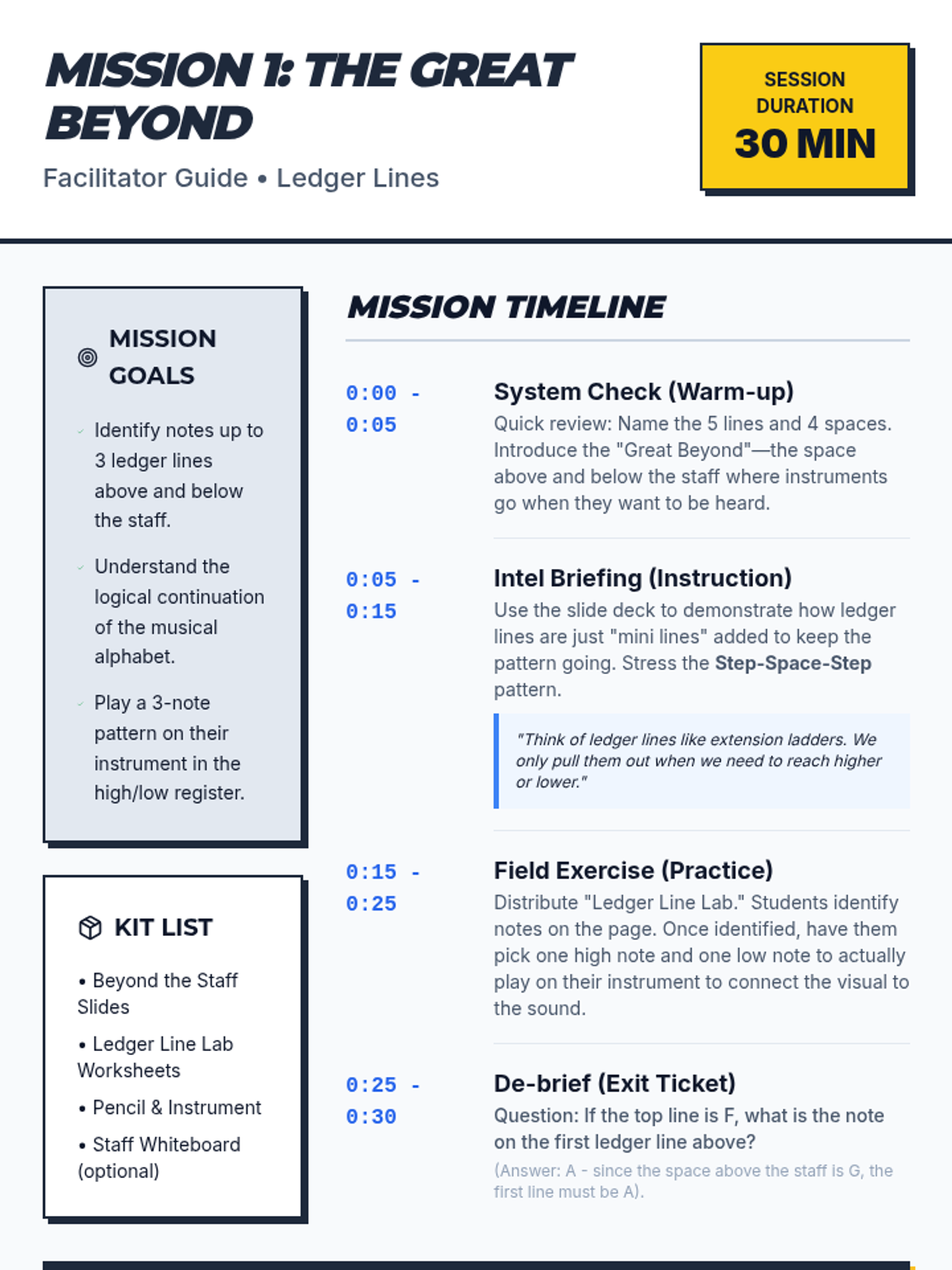
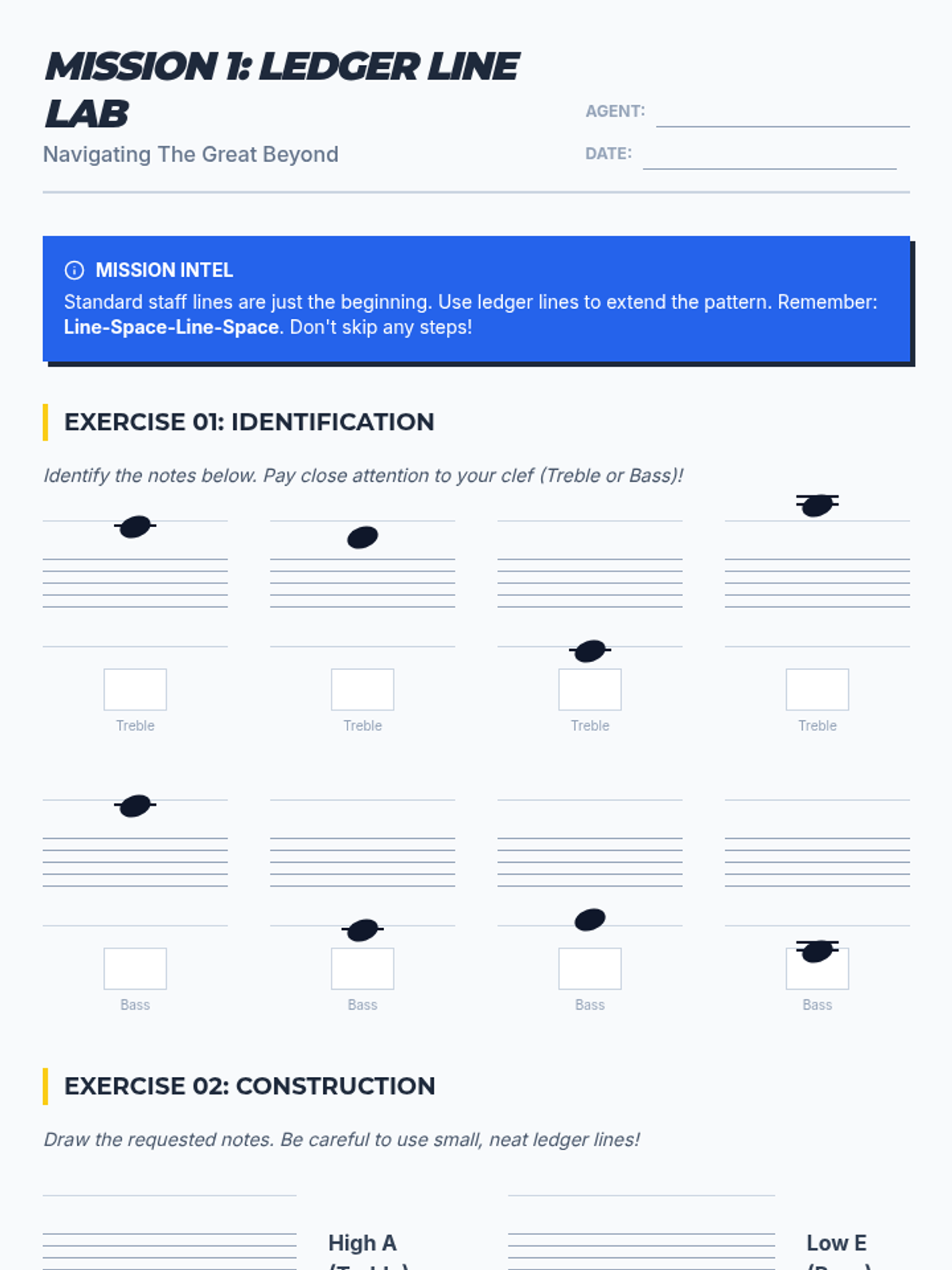
Students will learn to identify and play notes that extend above and below the standard five-line staff using ledger lines. The session focuses on the logical extension of the musical alphabet into "The Great Beyond."
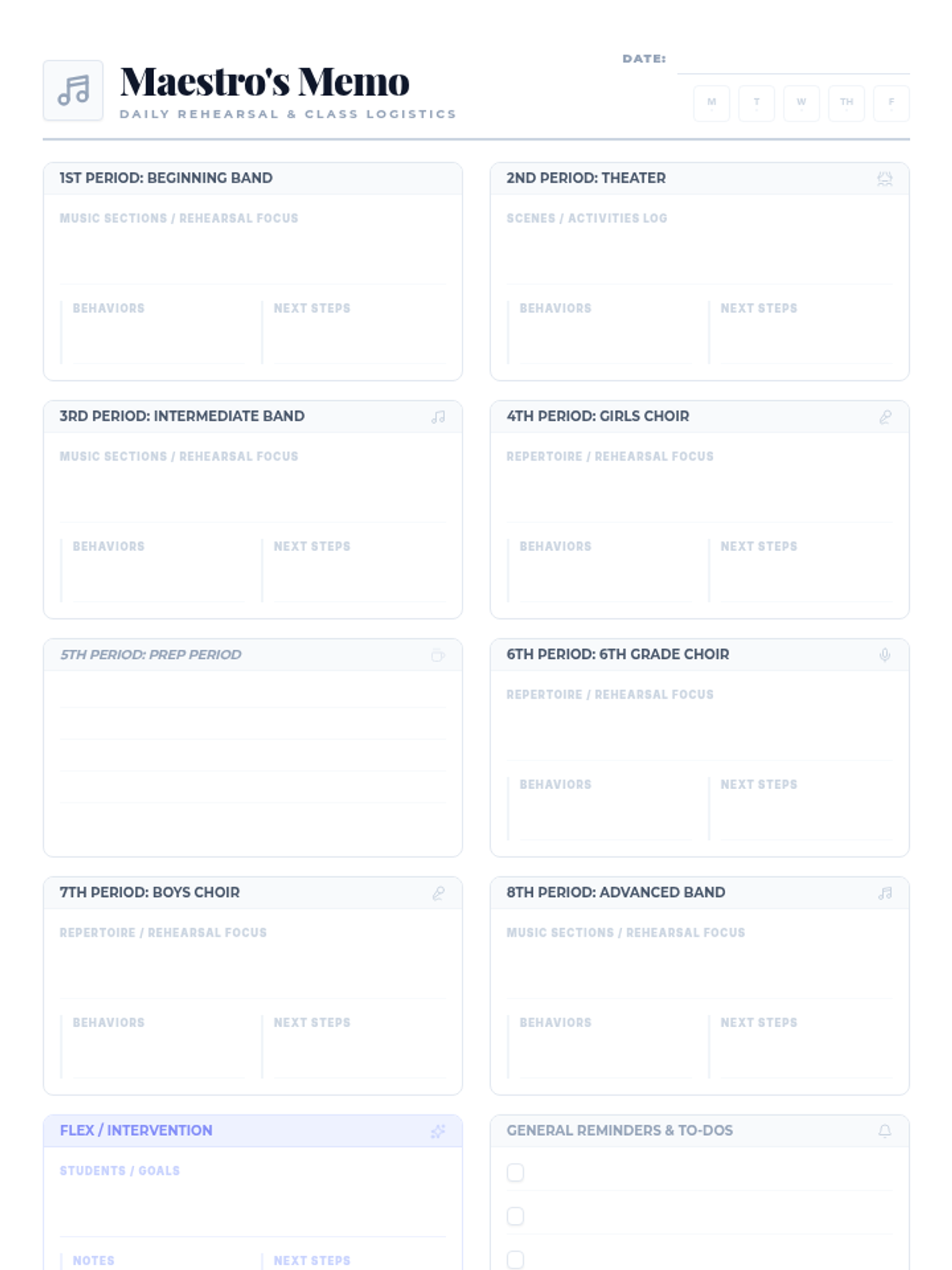
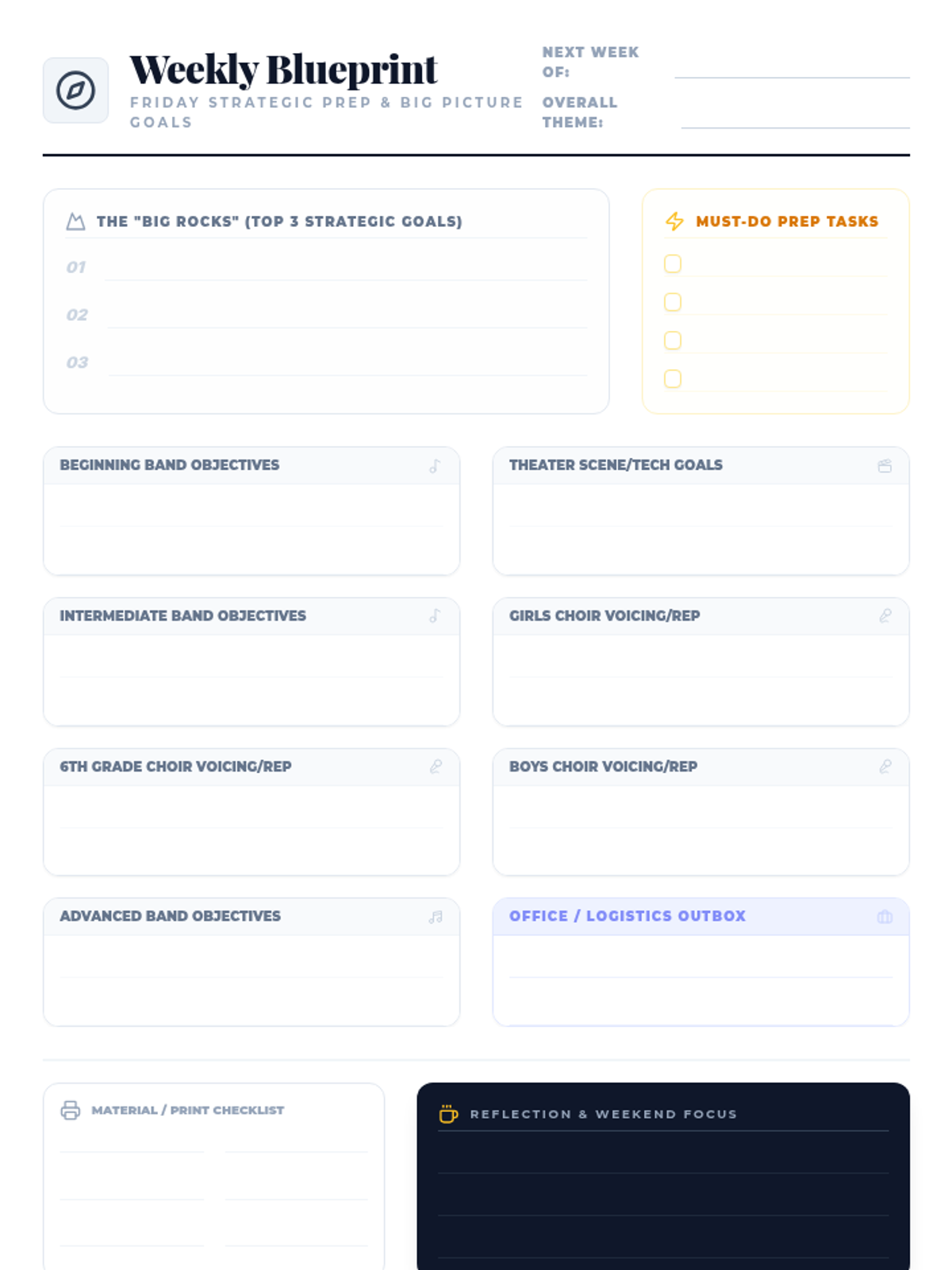
A collection of specialized organization and planning resources designed for a band, choir, and theater teacher managing multiple ensembles and a high-volume performance schedule.
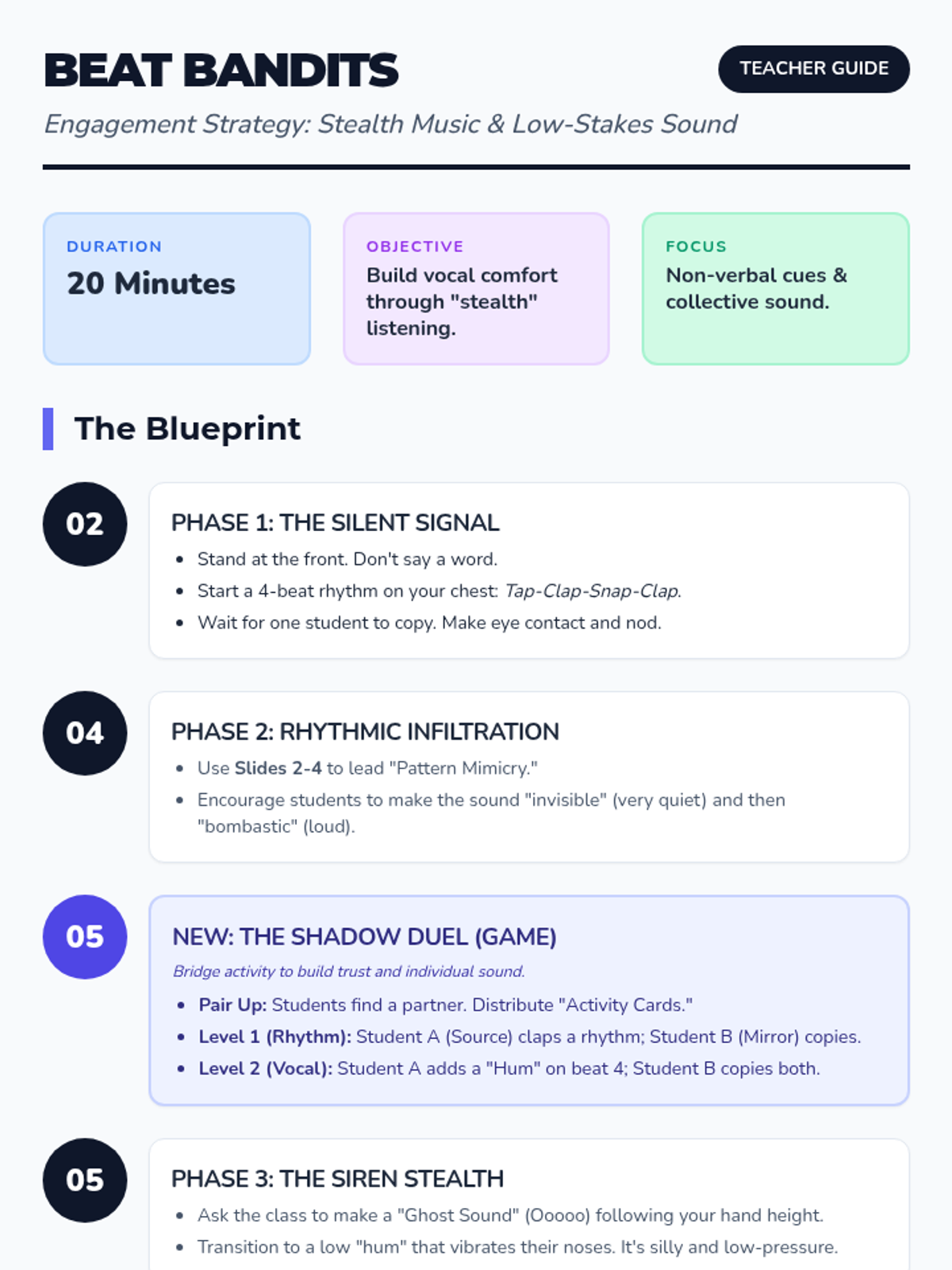
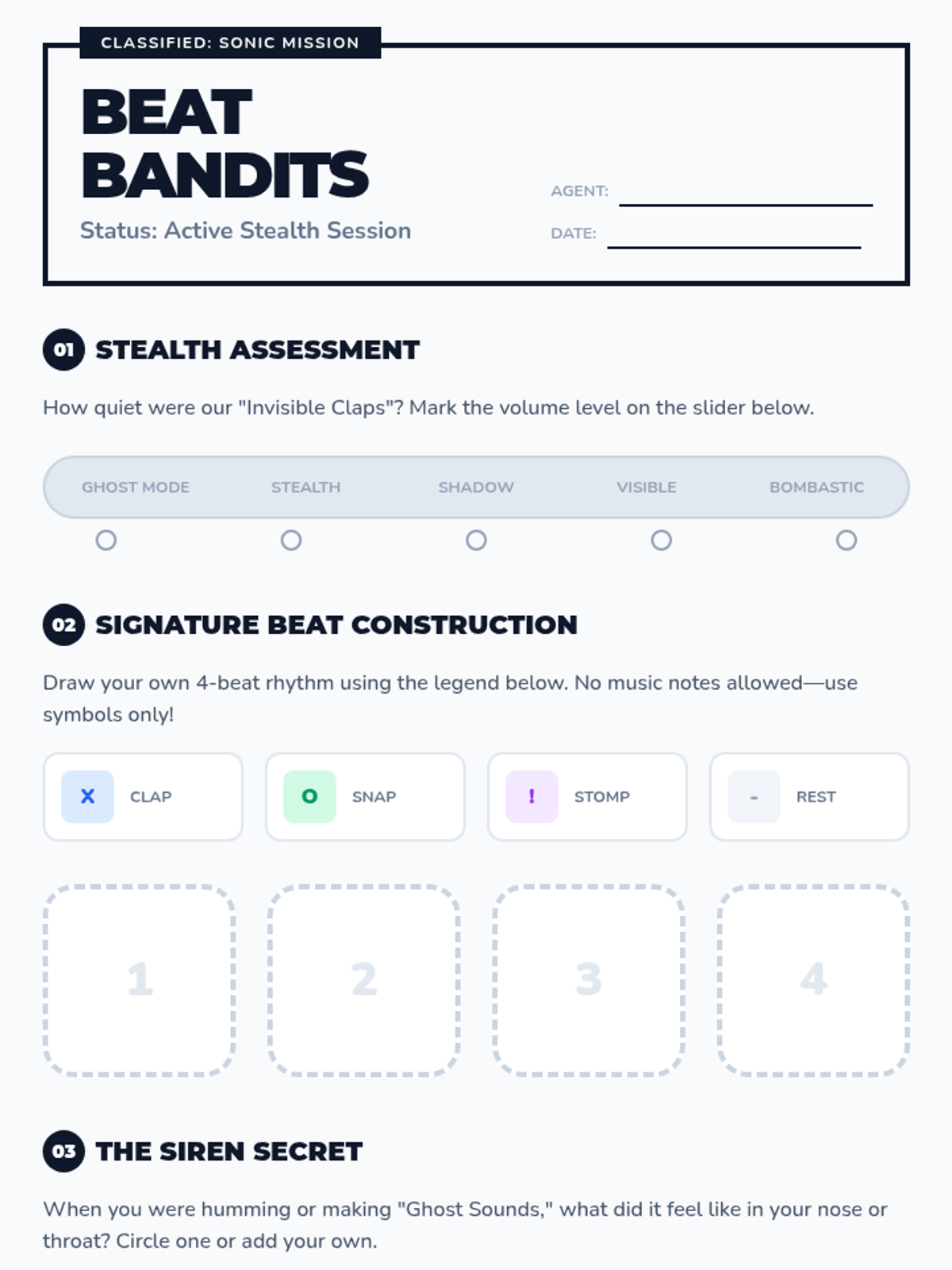
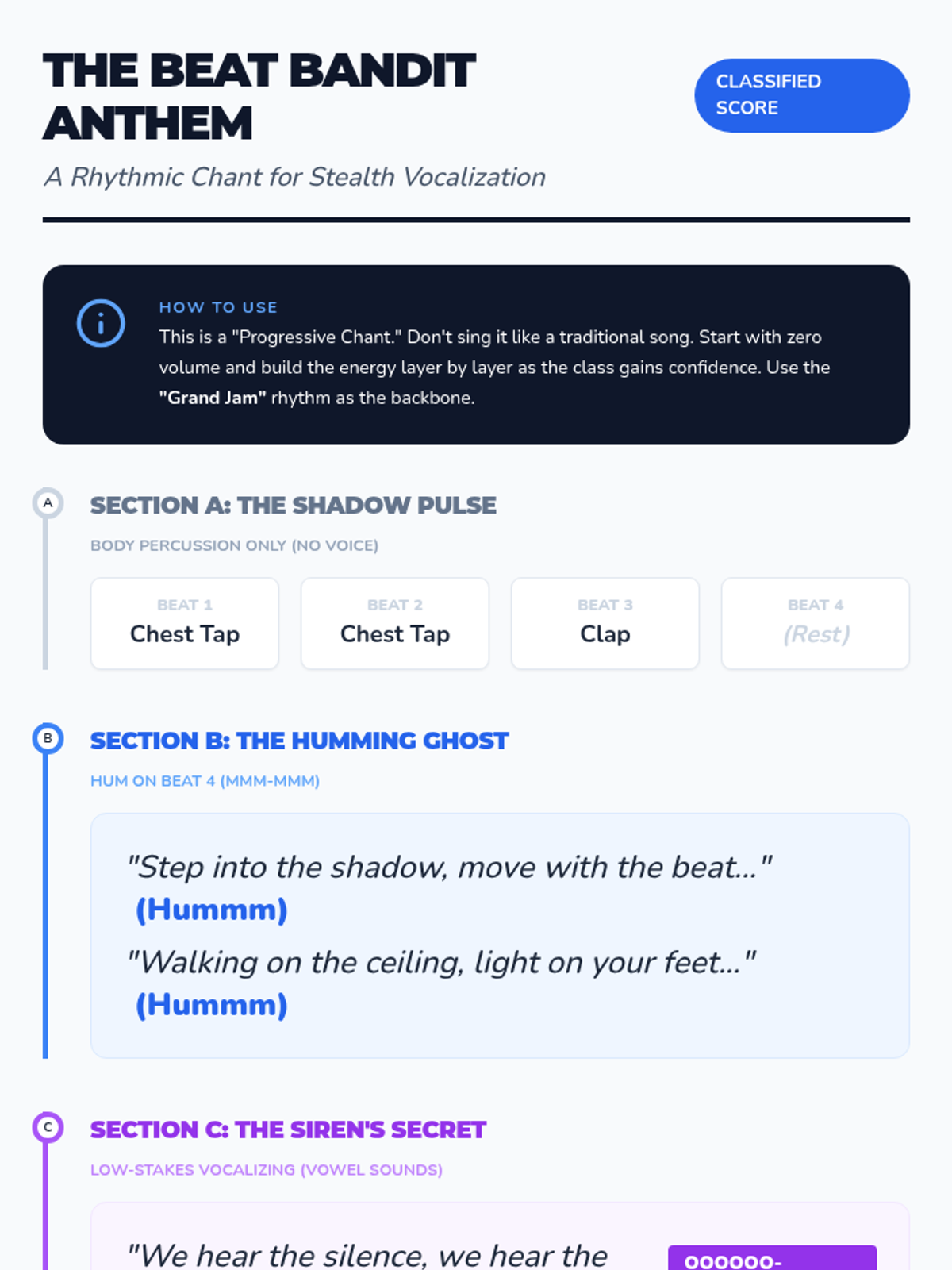
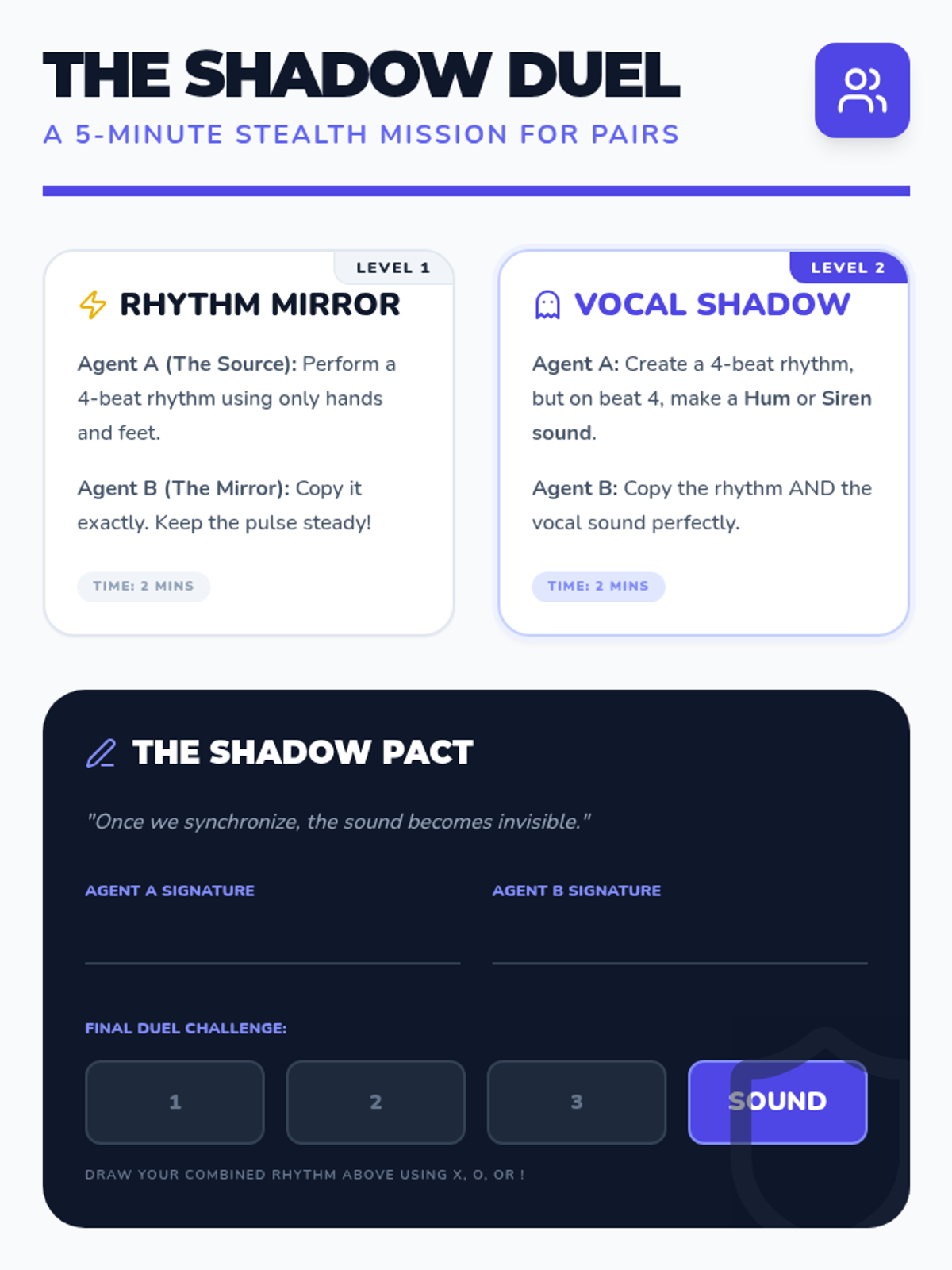
A high-energy, low-pressure 15-minute music lesson designed to engage disengaged students and build vocal confidence through rhythm and stealth games. This lesson moves from non-verbal rhythmic games to collective vocalizing to bypass the fear of singing.
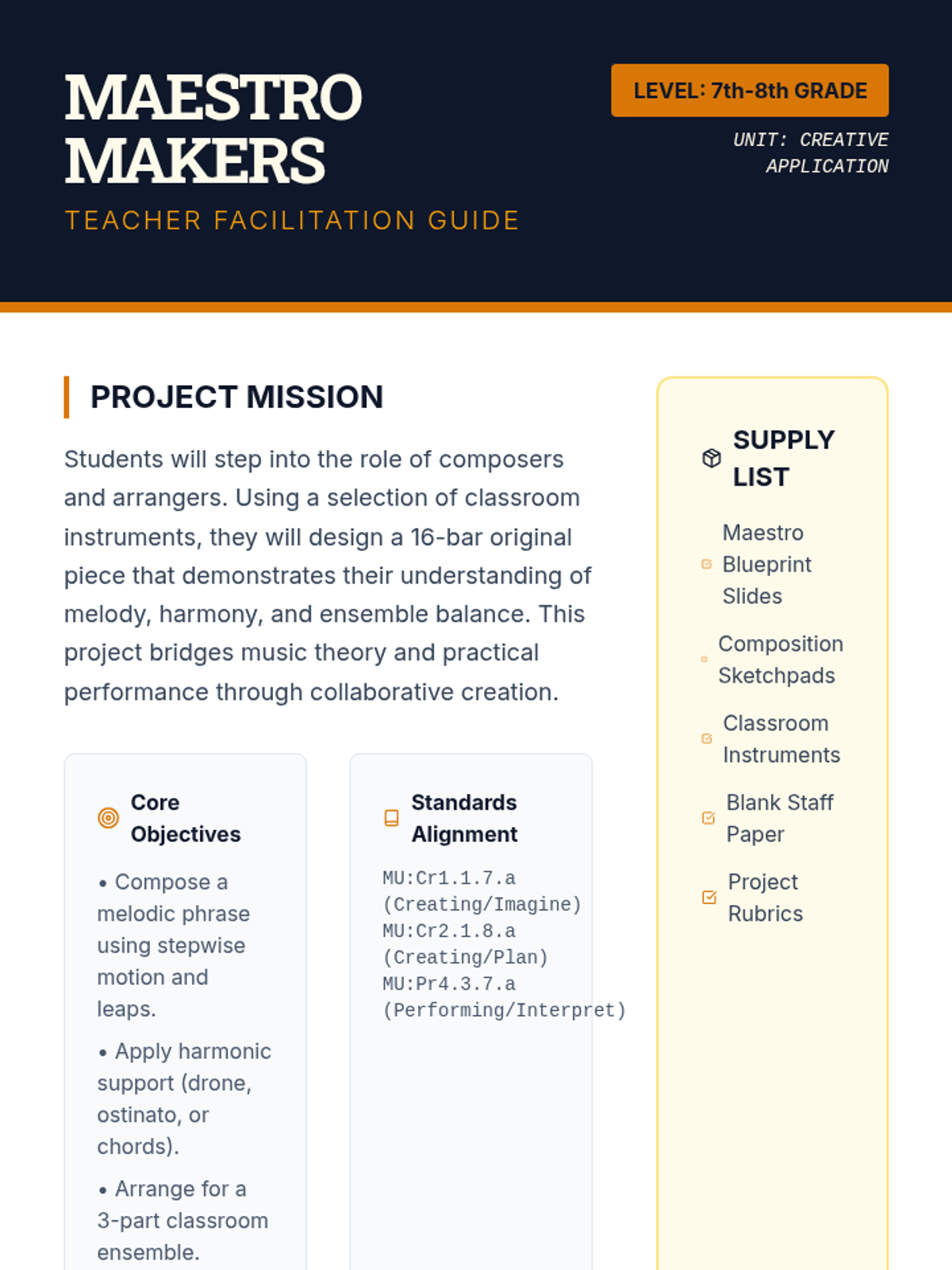
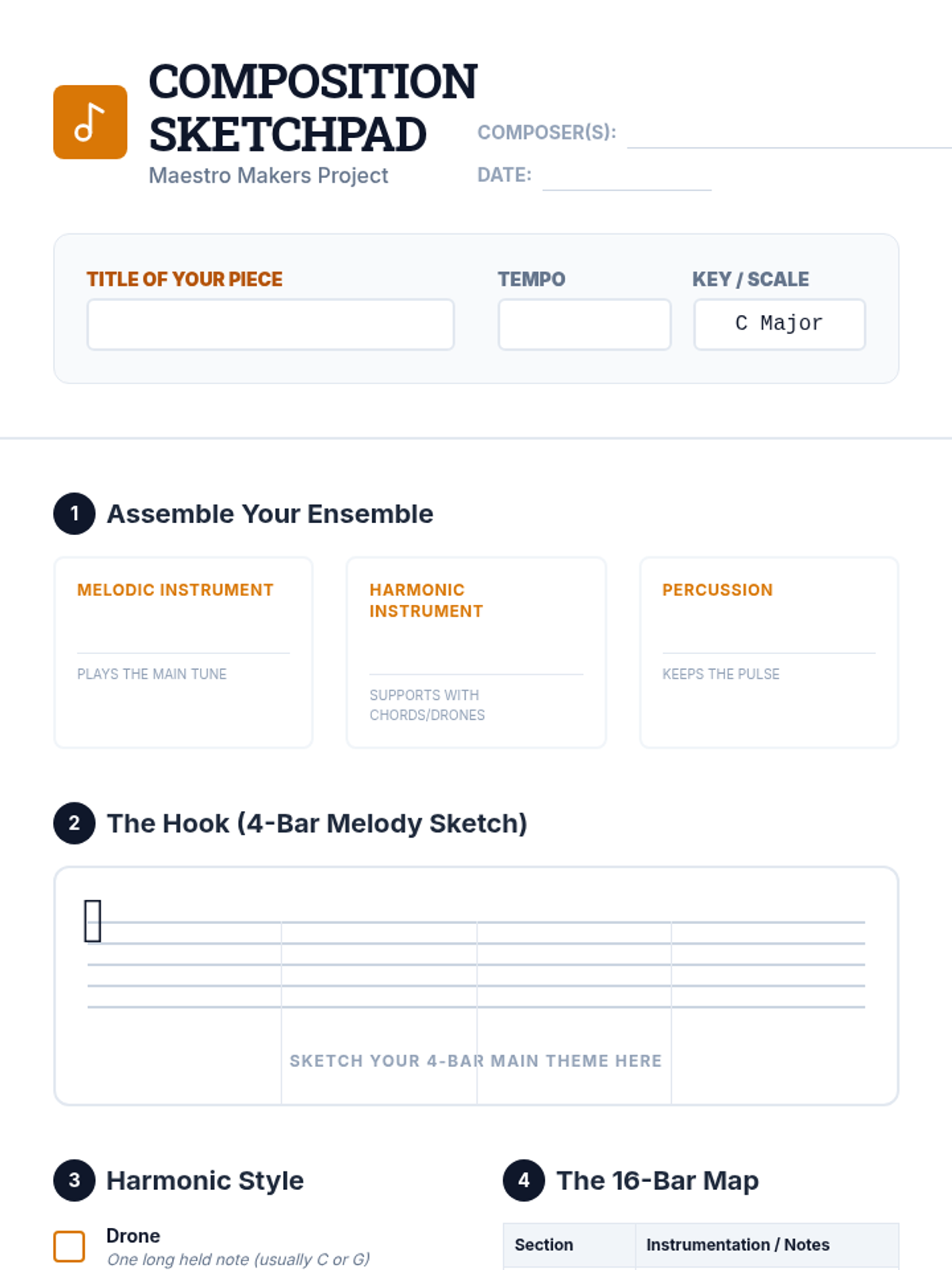
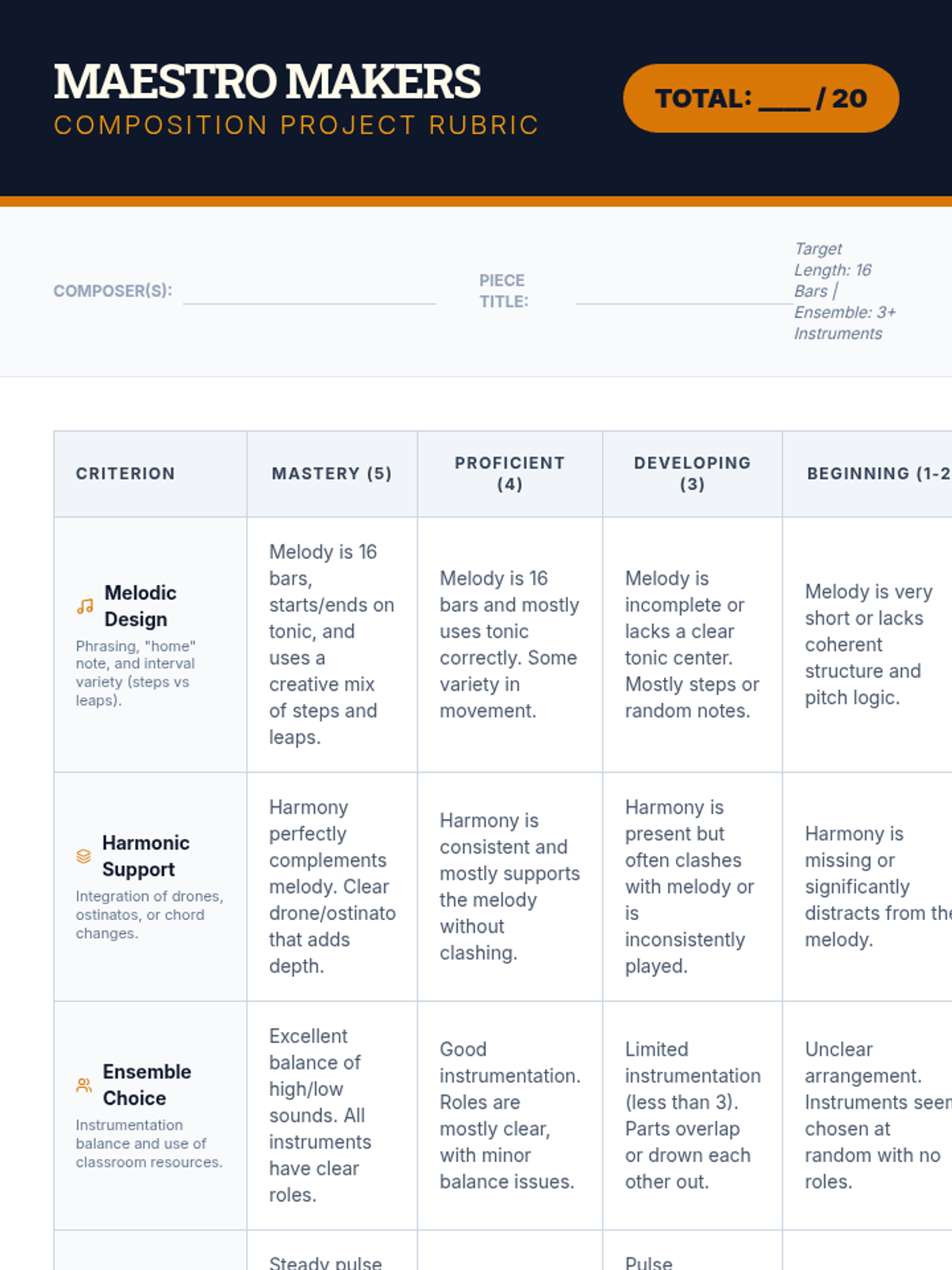
A project-based lesson for middle school students to learn fundamental composition techniques, including melody writing, harmonic support, and arranging for classroom instruments. Students will apply these skills to create and perform an original short piece.
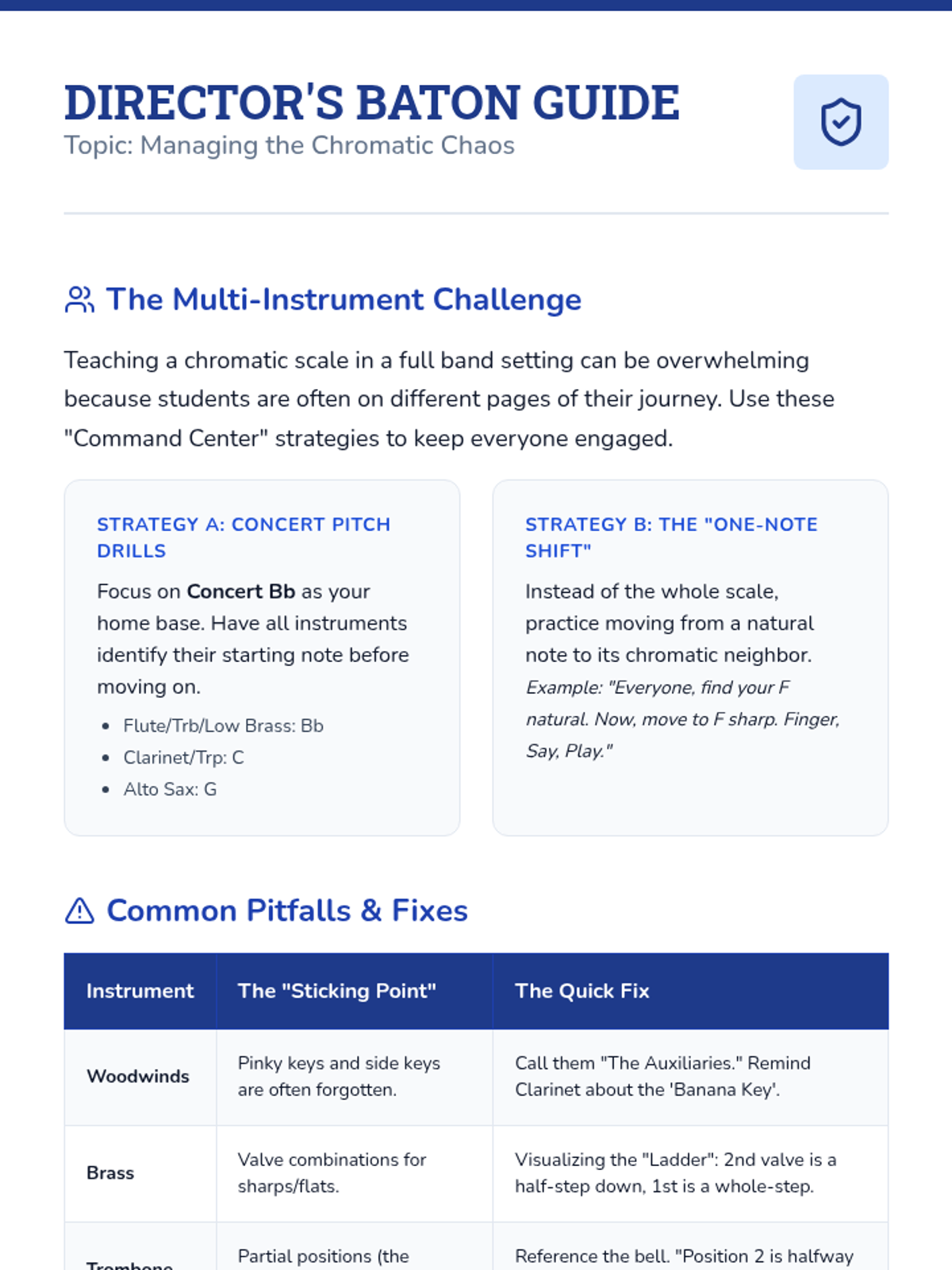
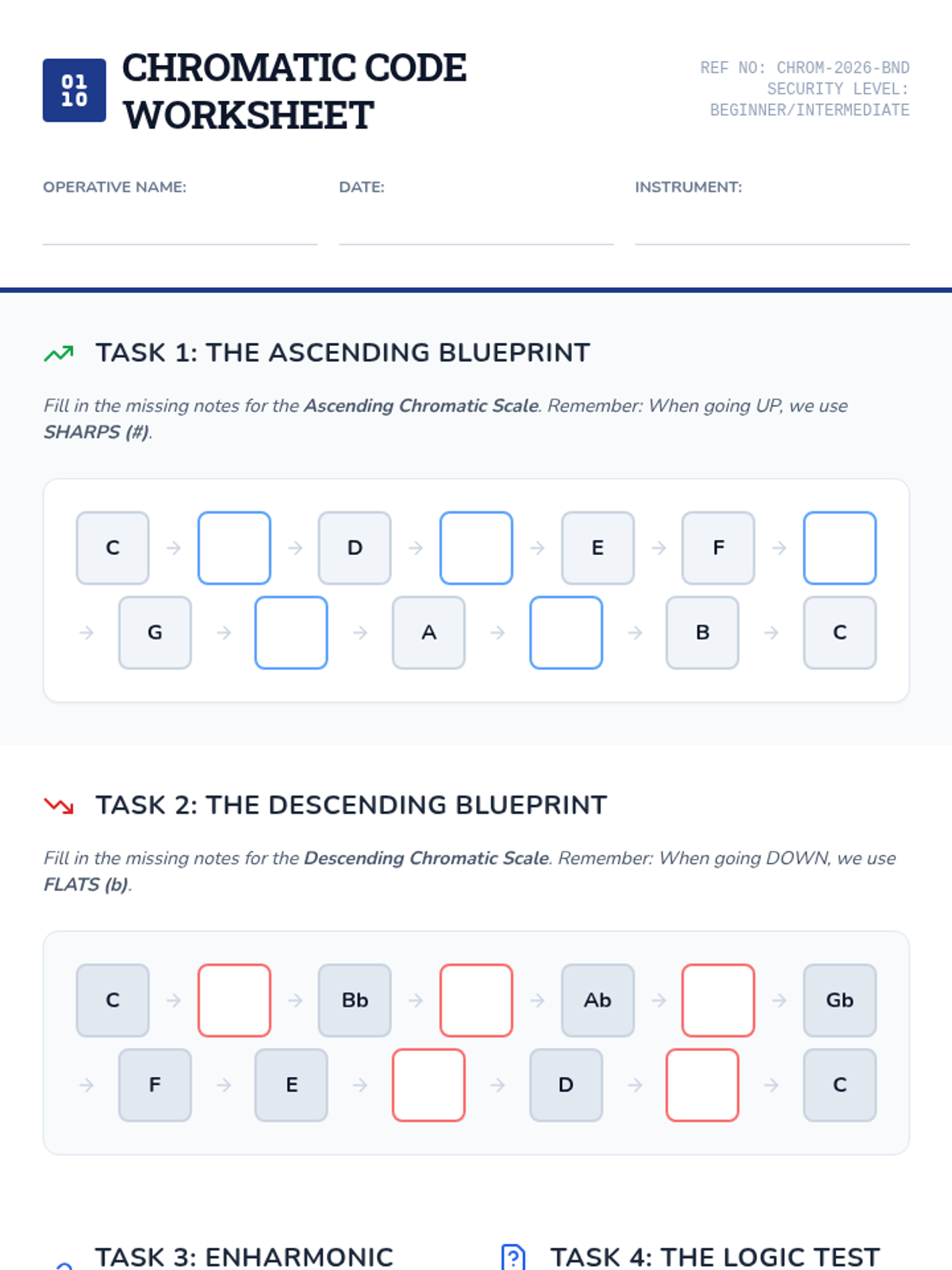
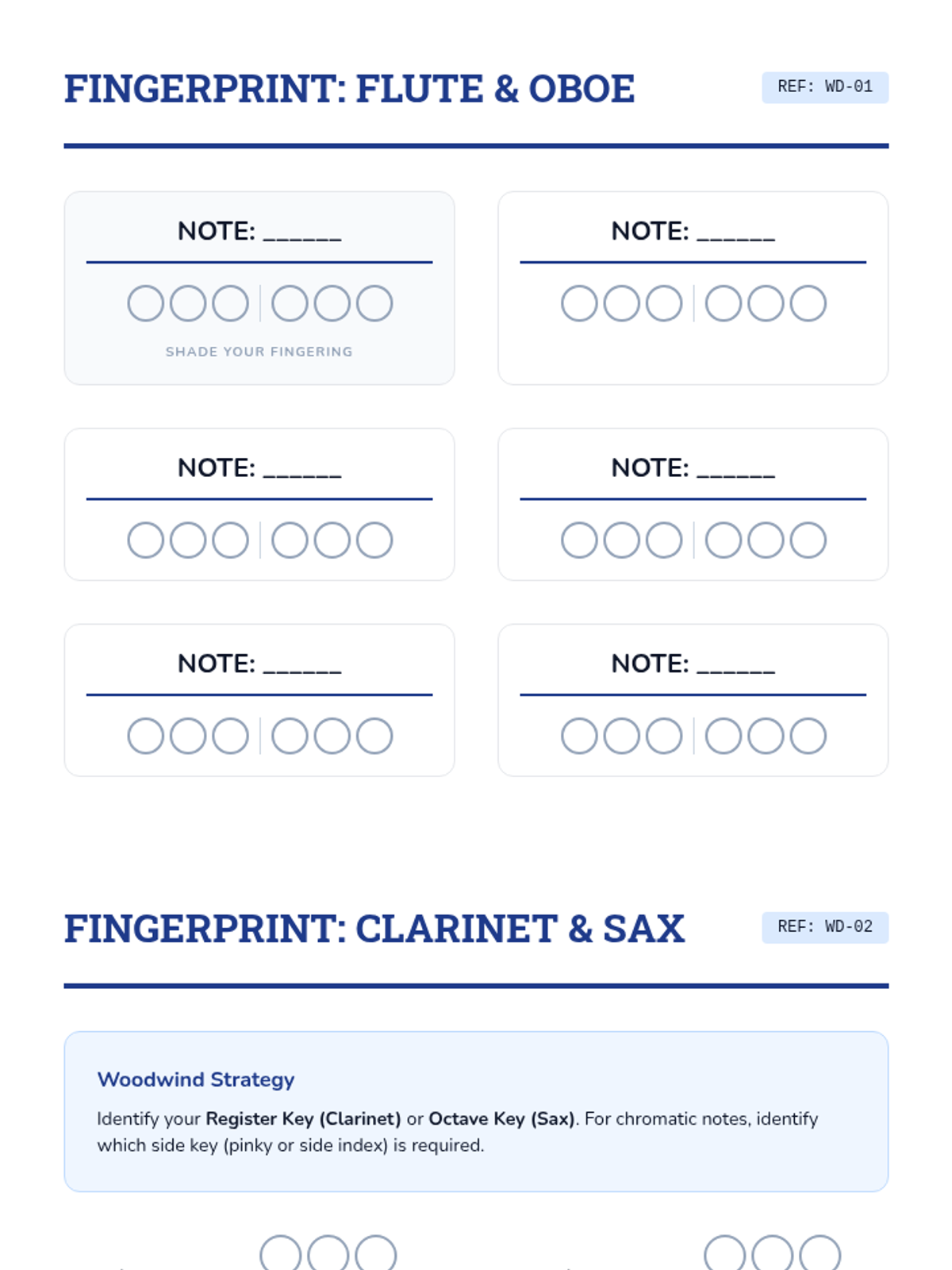
An introductory lesson to the chromatic scale that breaks down the 12-tone system, enharmonic equivalents, and provides instrument-specific practice for 7th and 8th grade musicians.
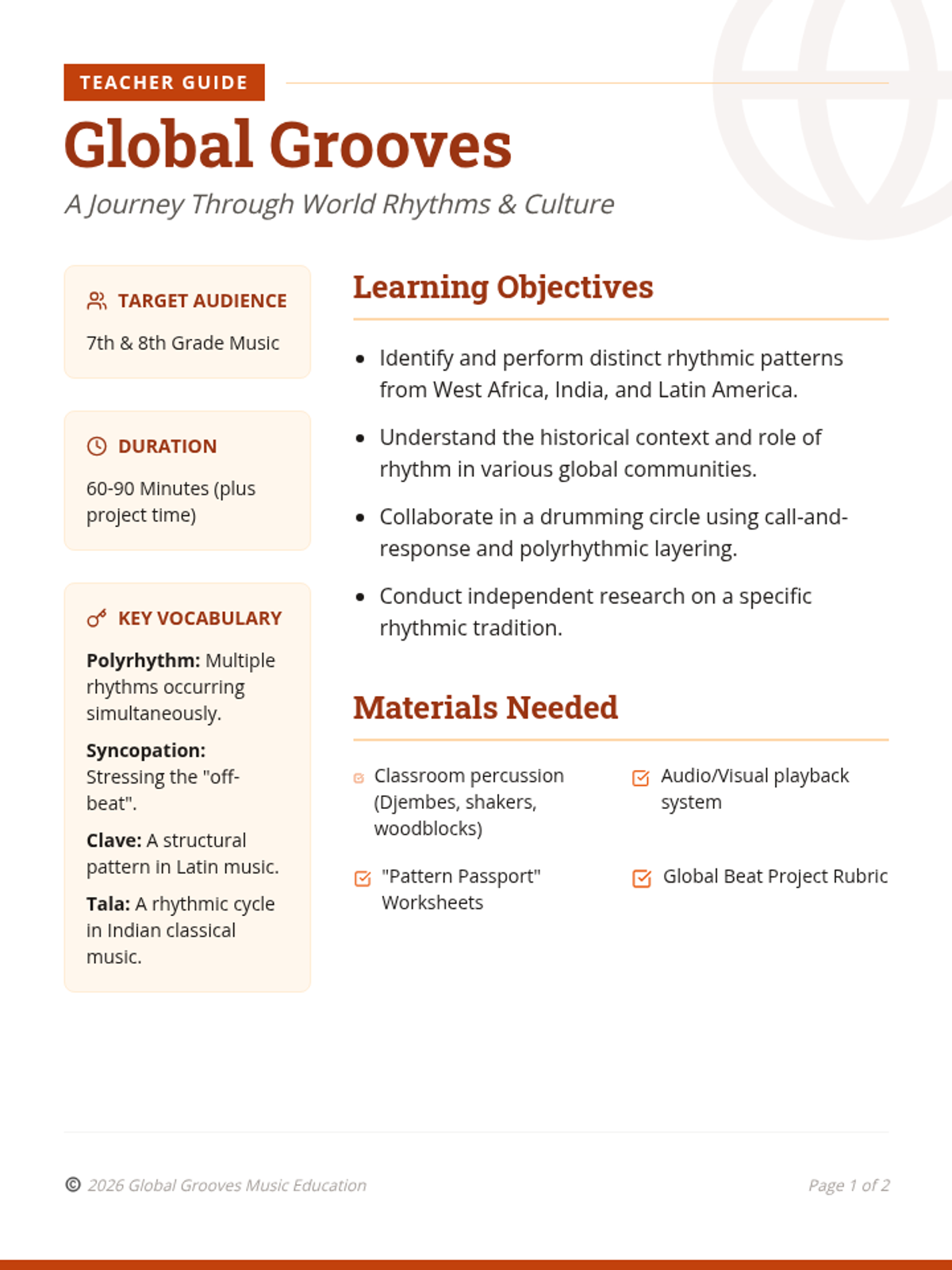
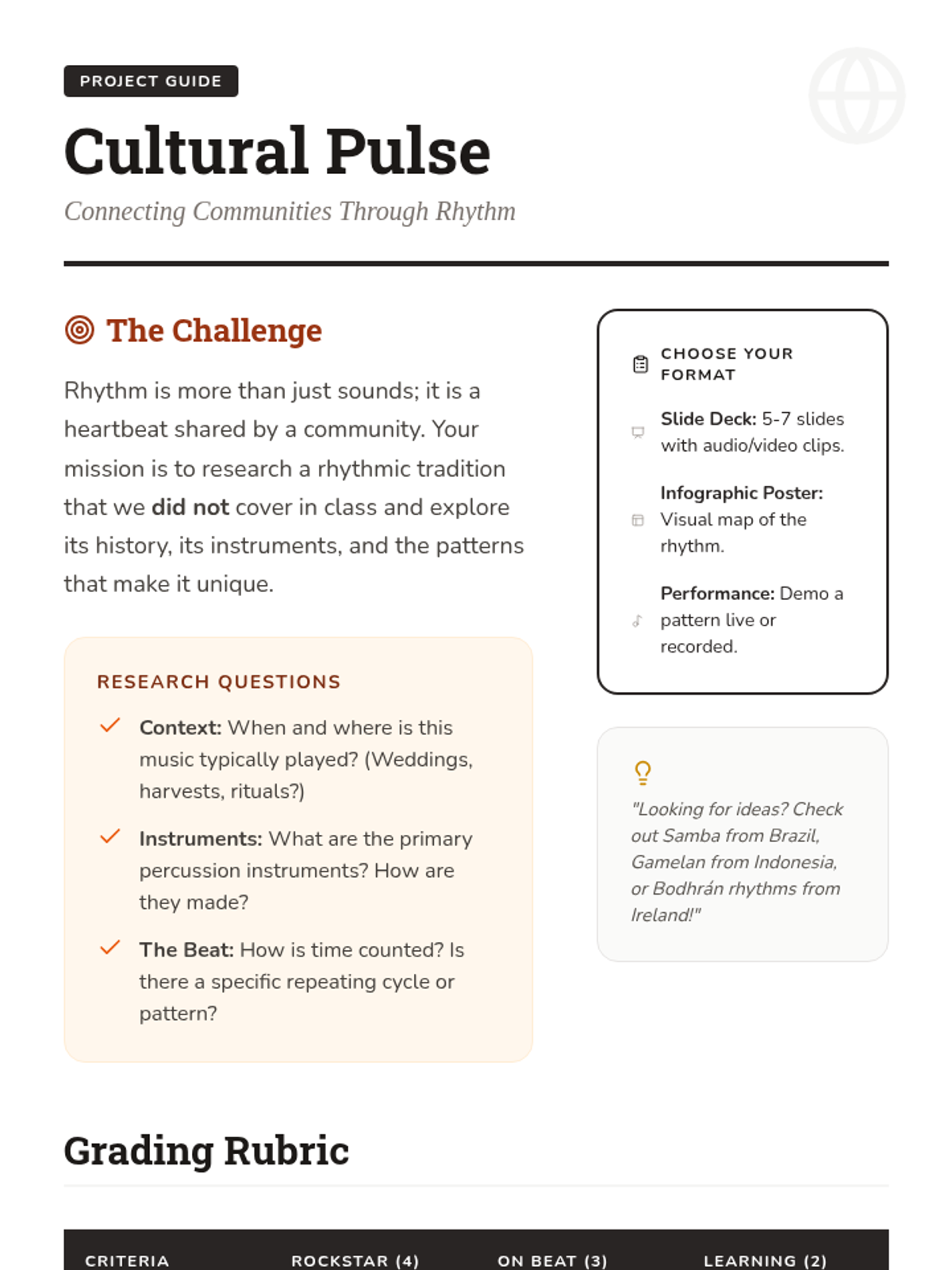
Students explore global rhythmic patterns, instruments, and cultural significance through listening, collaborative drumming, and research.
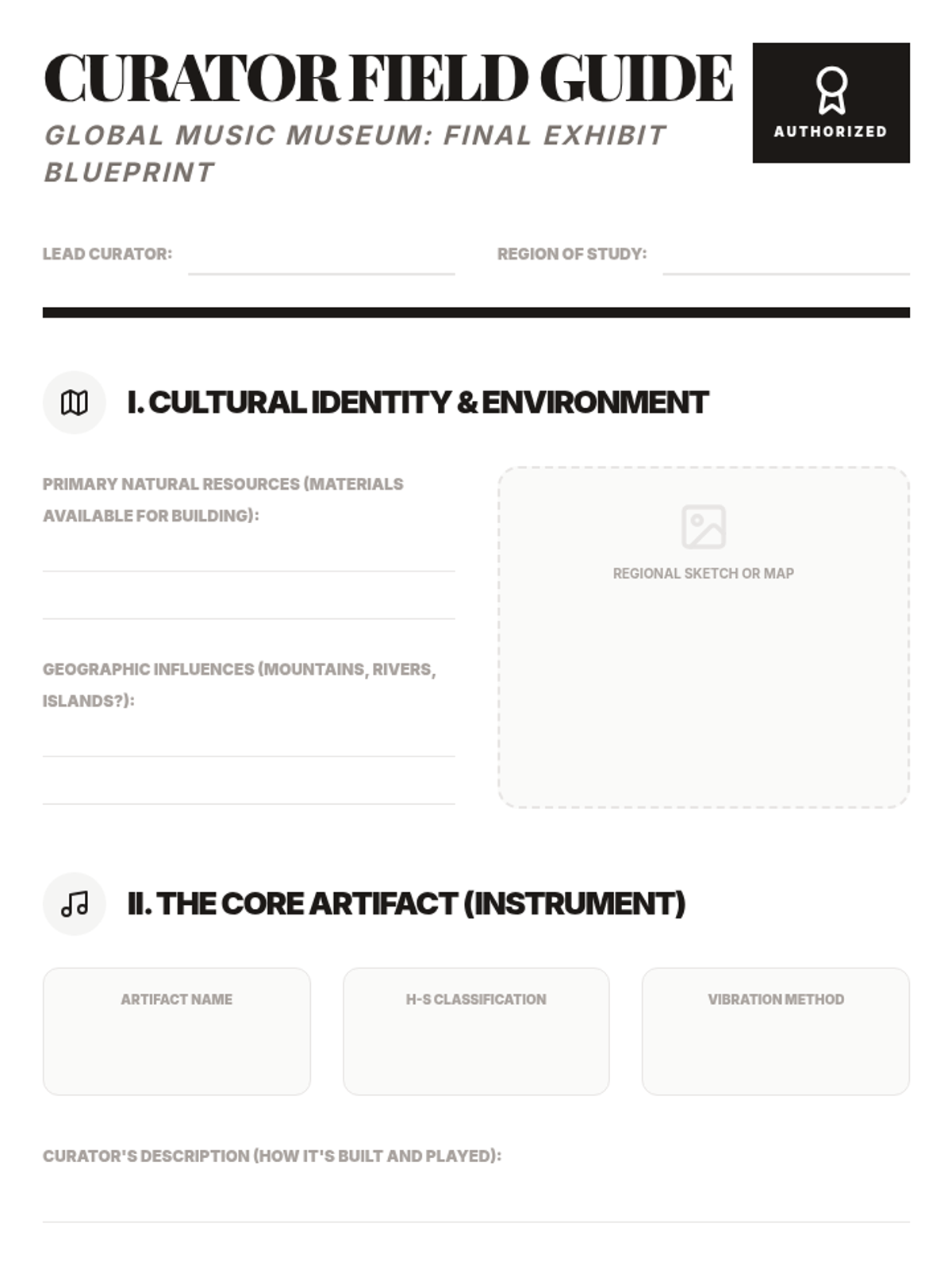
Students act as museum curators to design an exhibit showcasing a specific musical tradition. They synthesize their knowledge of classification, rhythm, and scale into a final presentation.
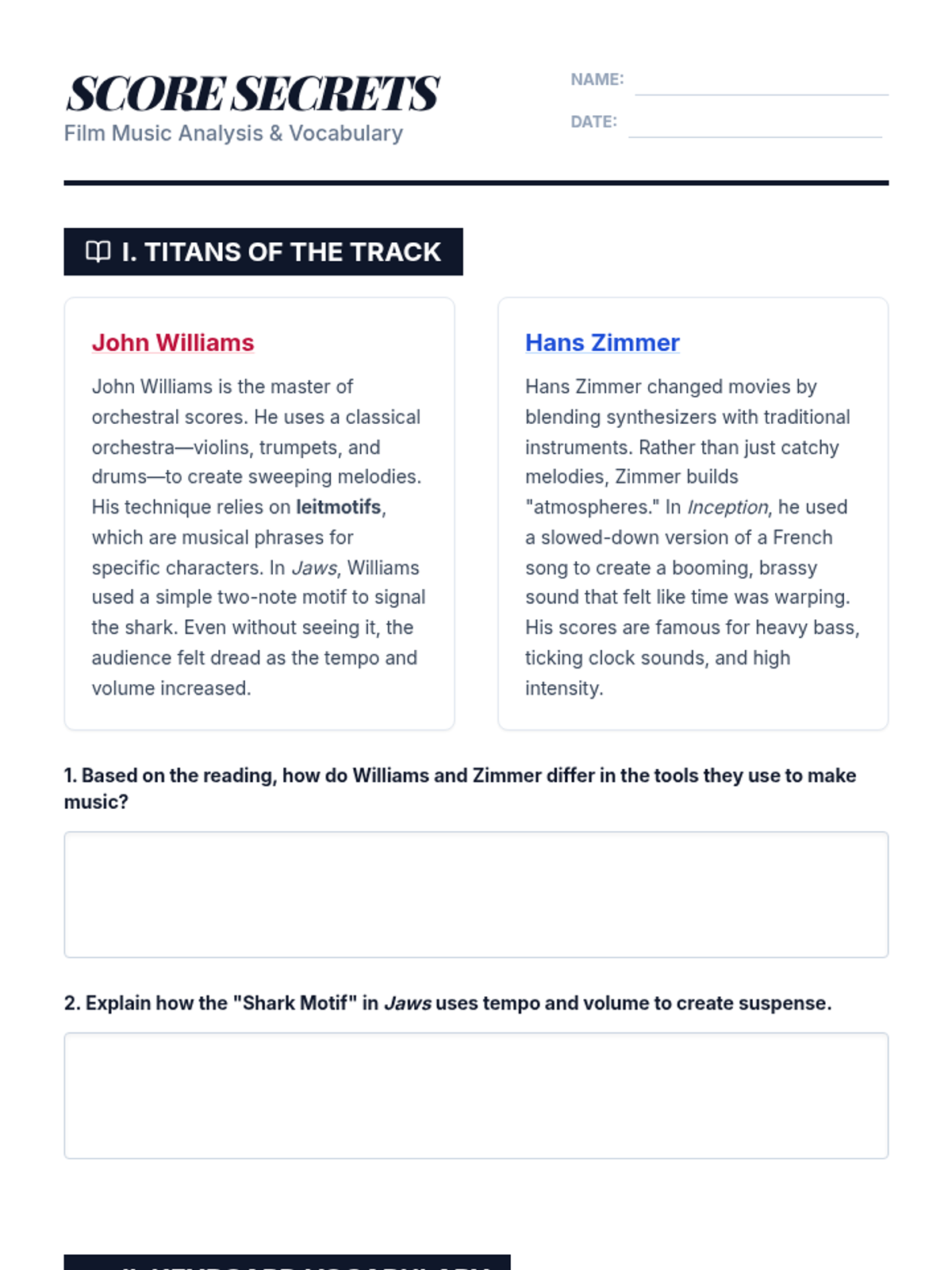
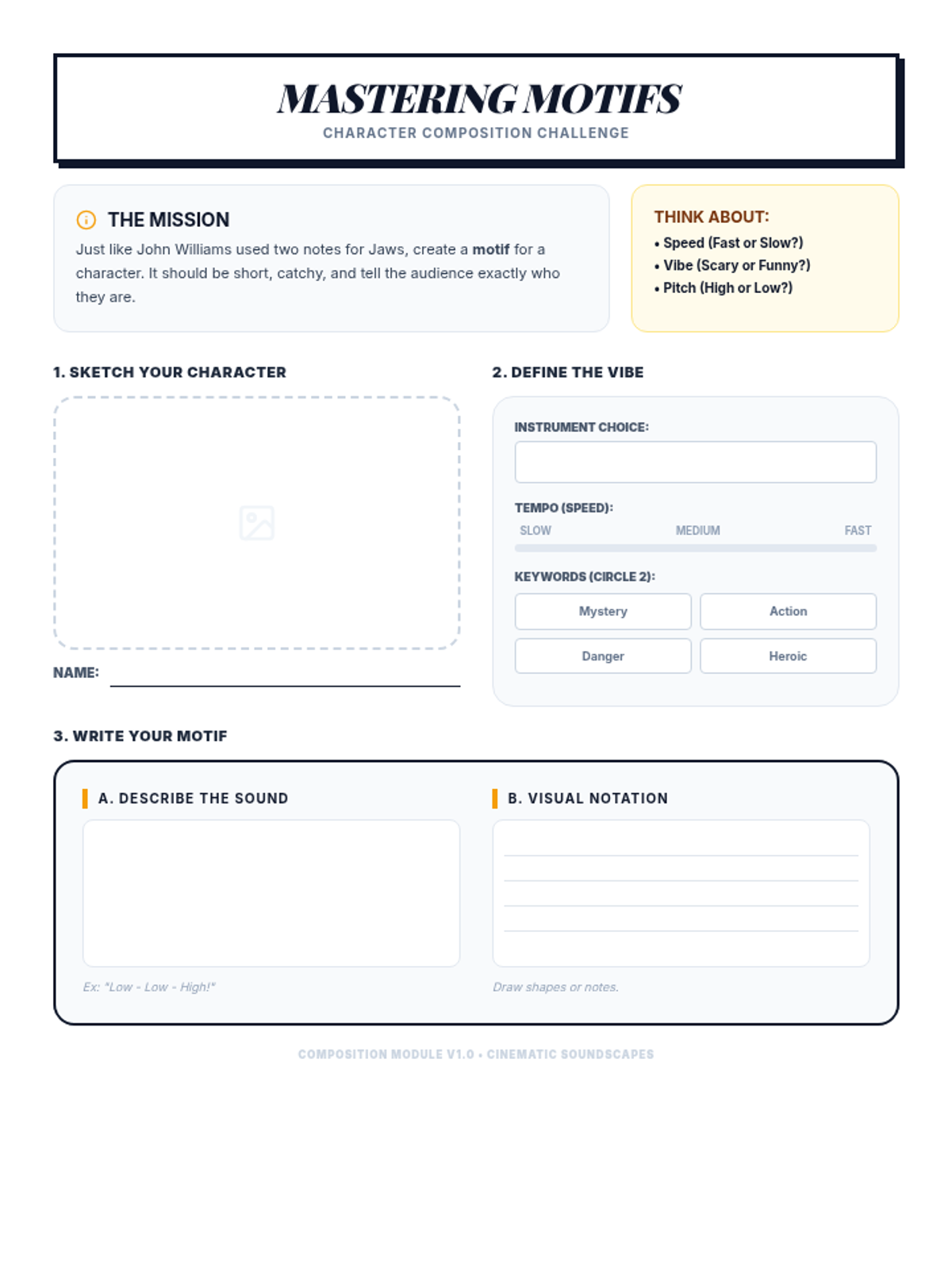
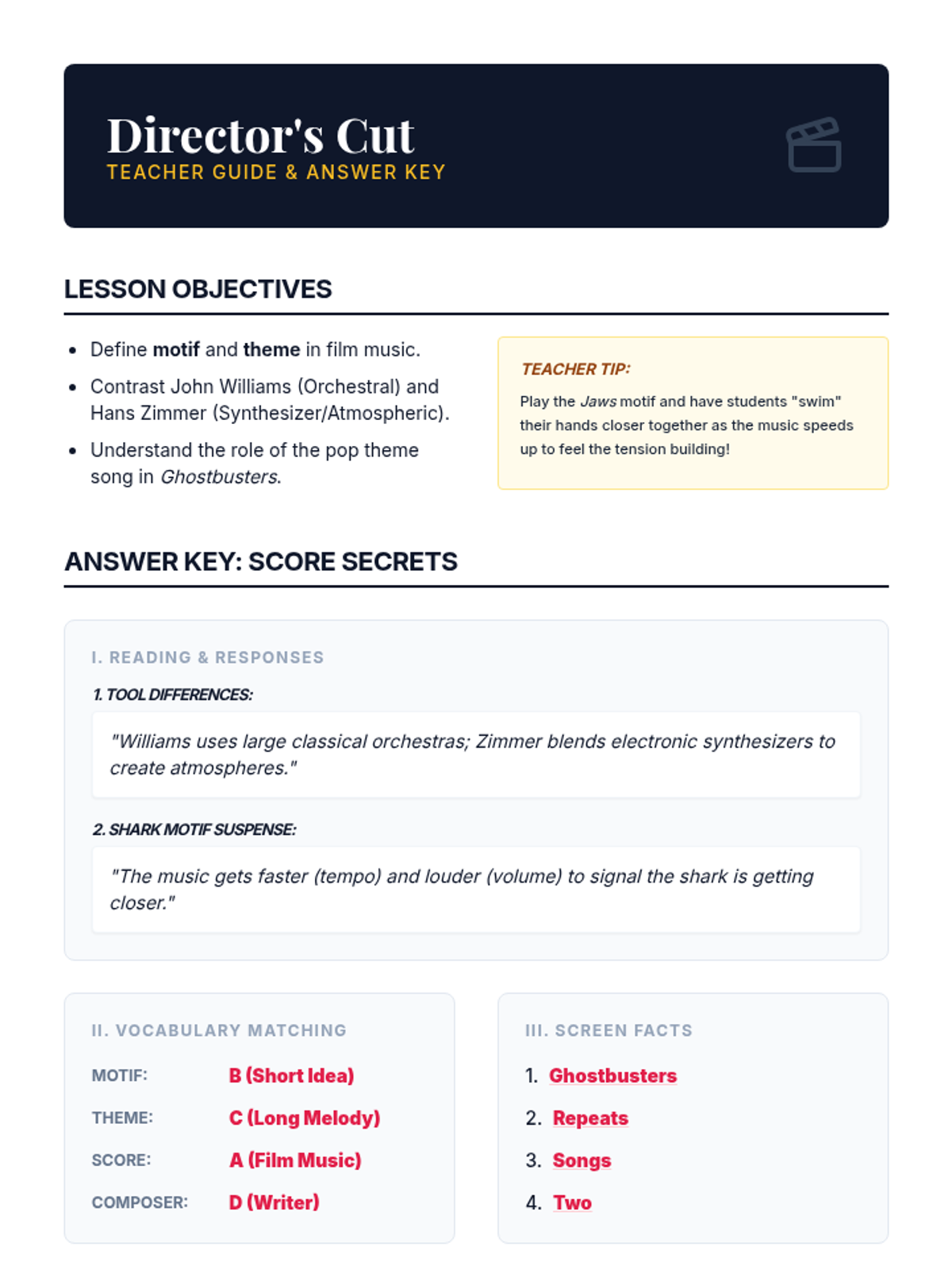
A comprehensive lesson on film music focusing on iconic composers, the difference between motifs and themes, and the impact of scores in movies like Jaws and Ghostbusters.
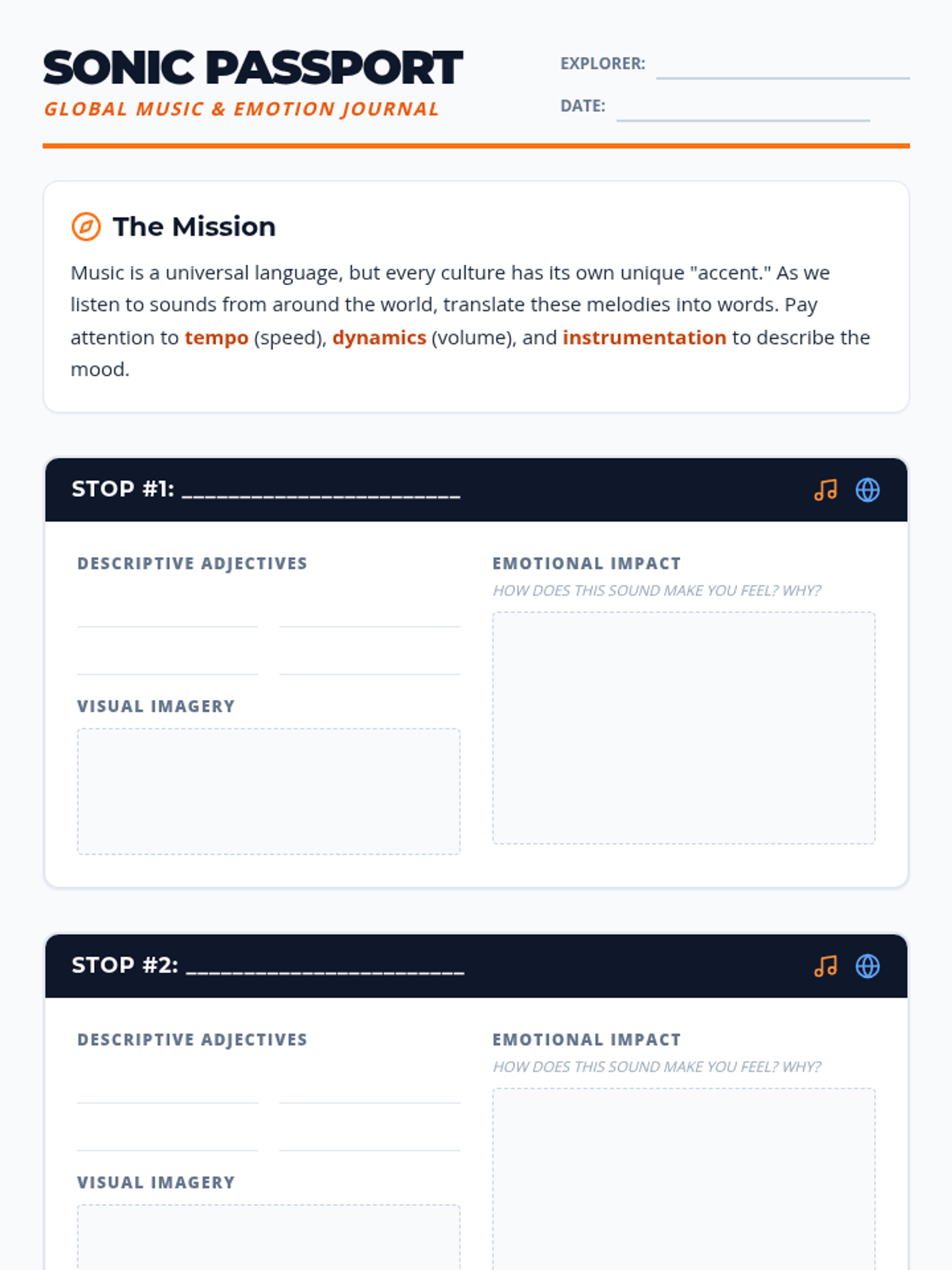
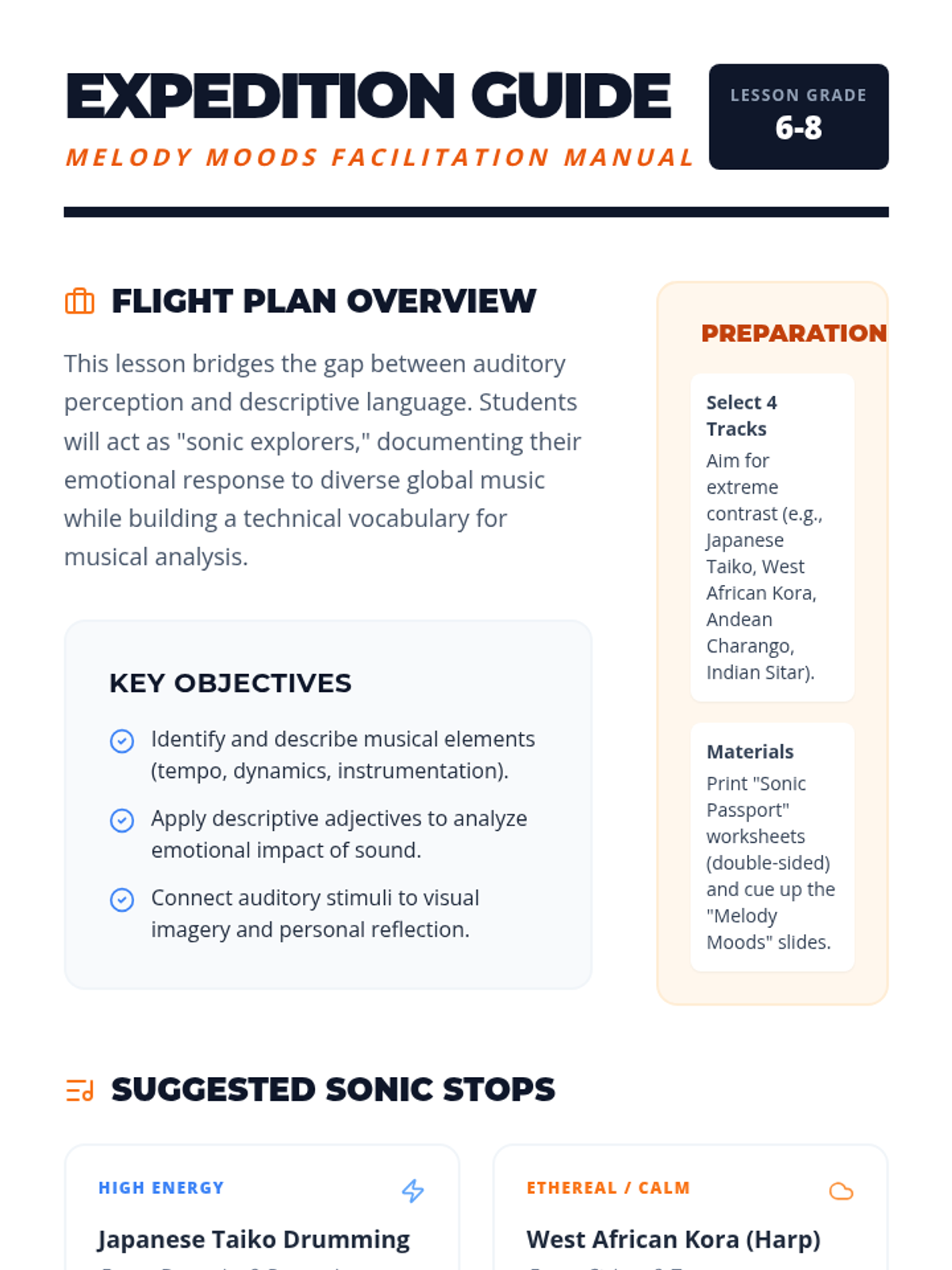
A lesson exploring the intersection of global music and emotional expression through descriptive writing and active listening. Students will journey through various musical landscapes, analyzing how different cultures use sound to convey mood.
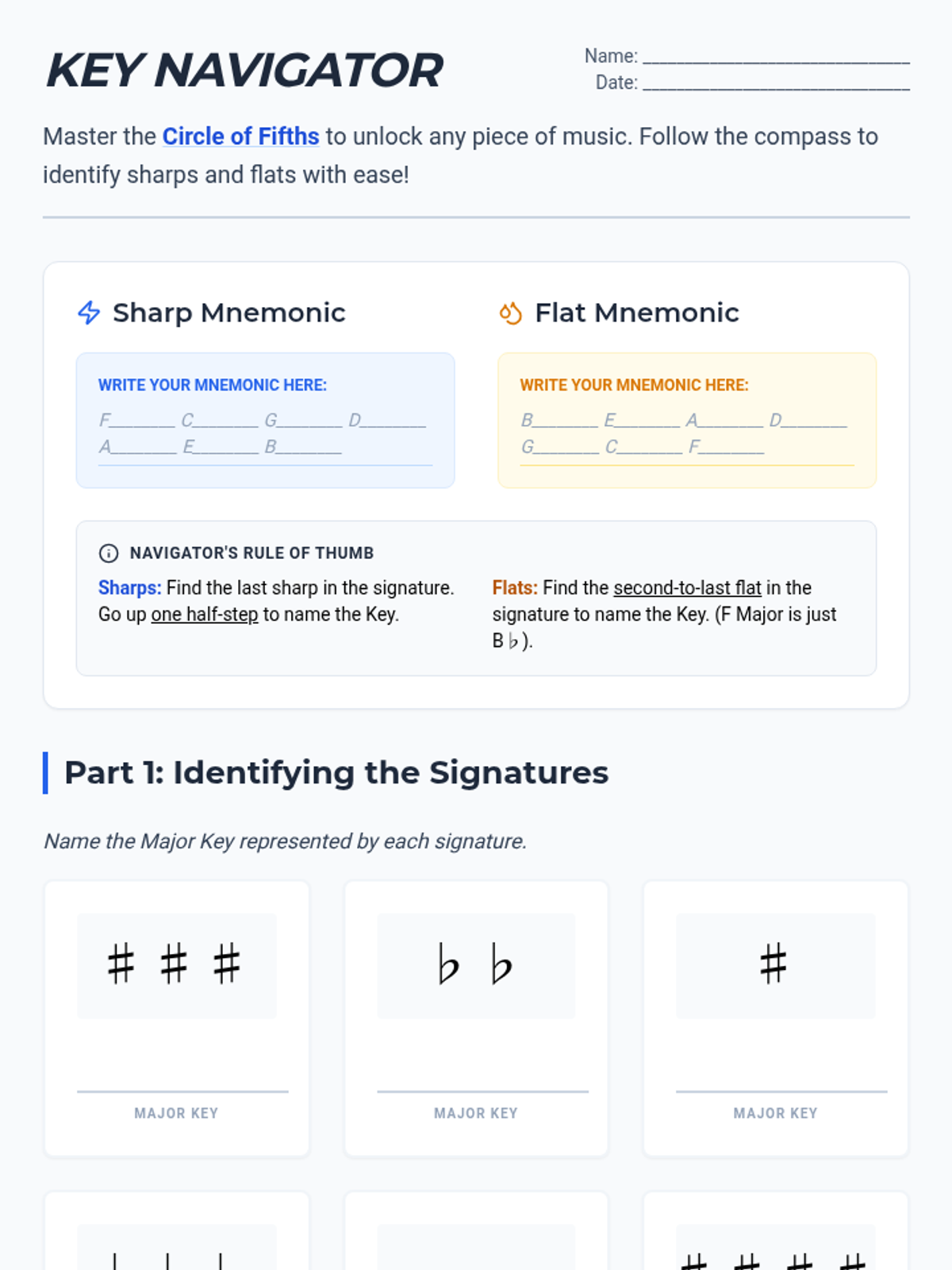
A foundational lesson on understanding the Circle of Fifths and identifying major key signatures for 7th-grade music students.
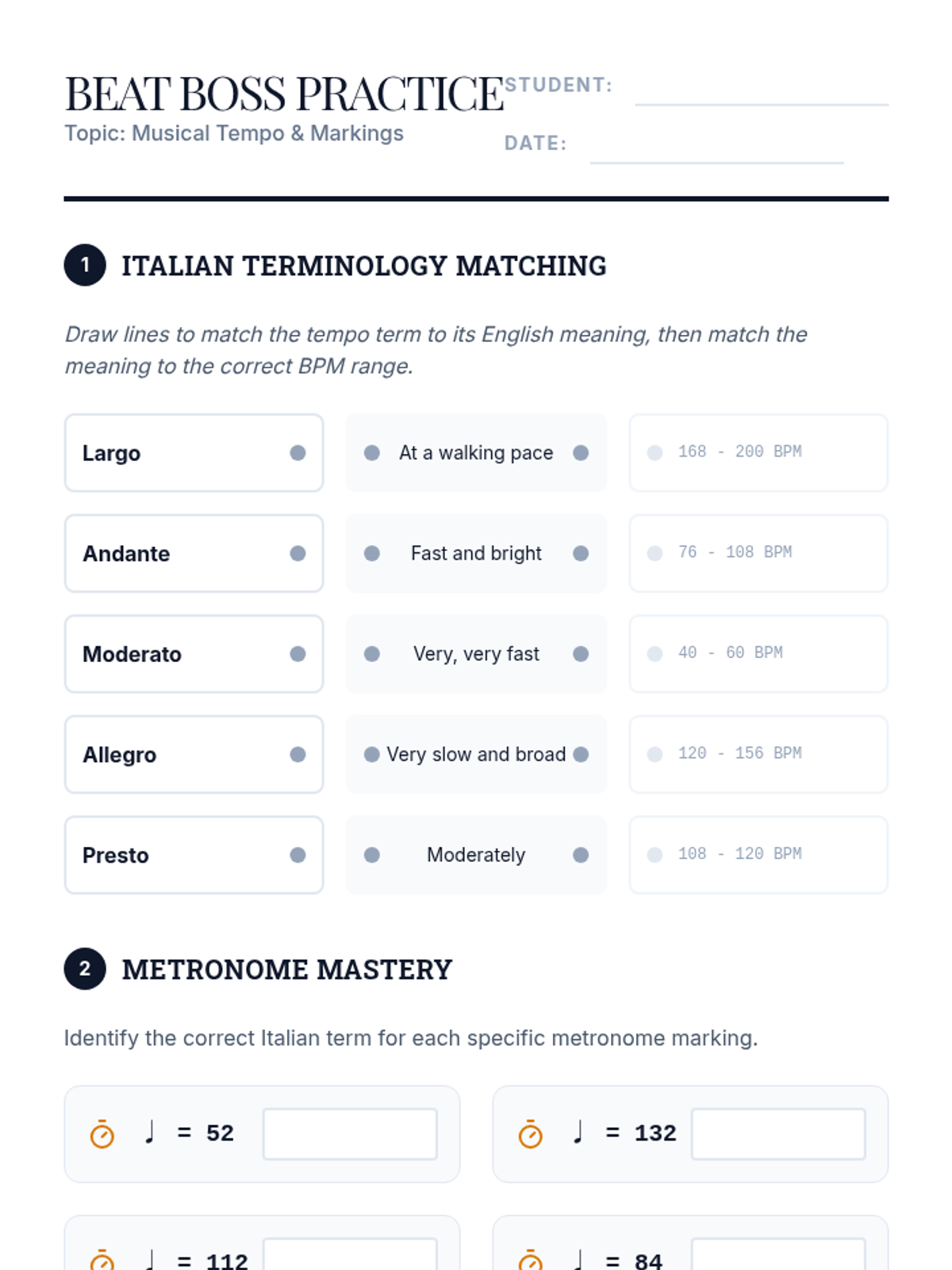
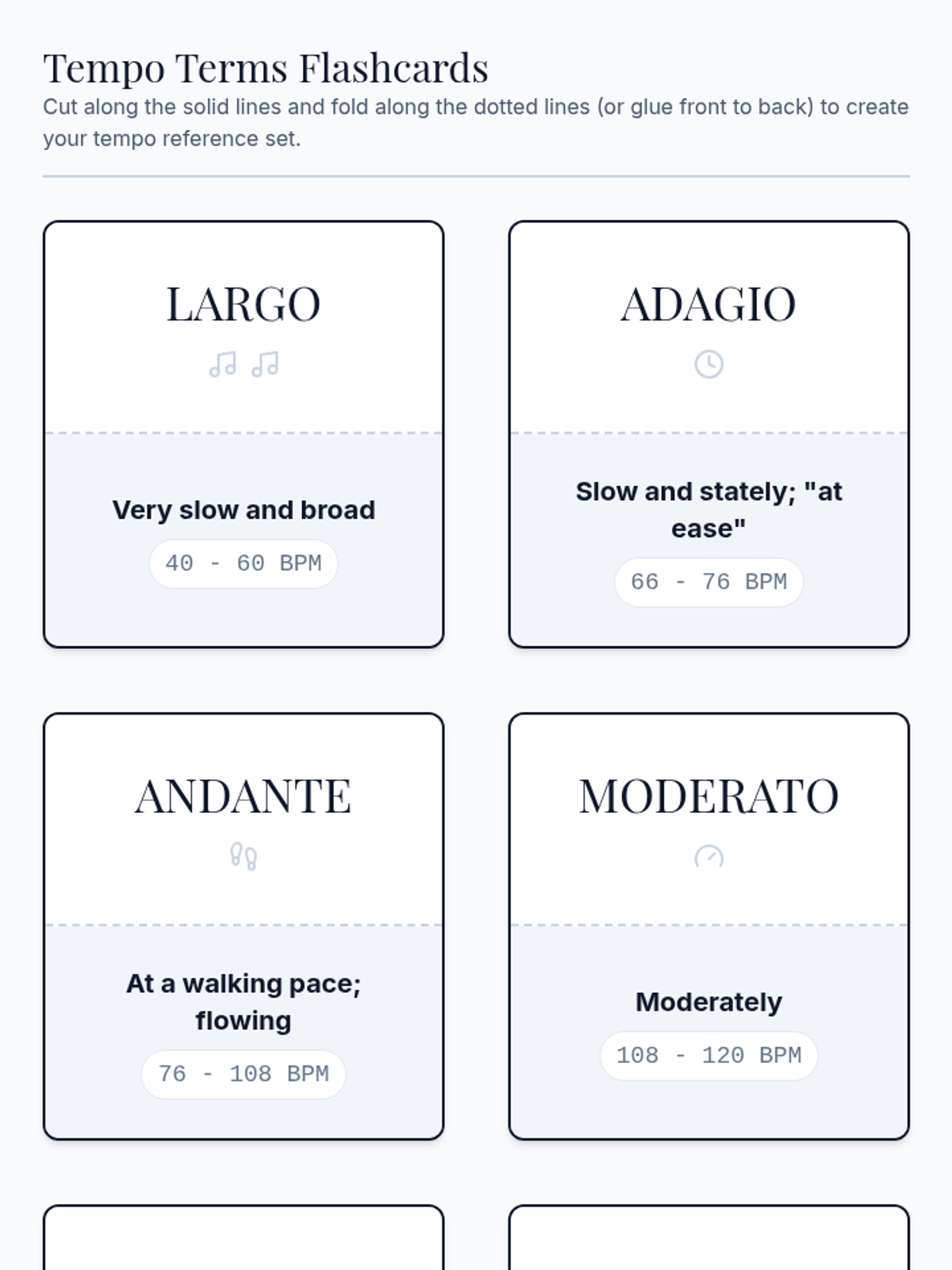
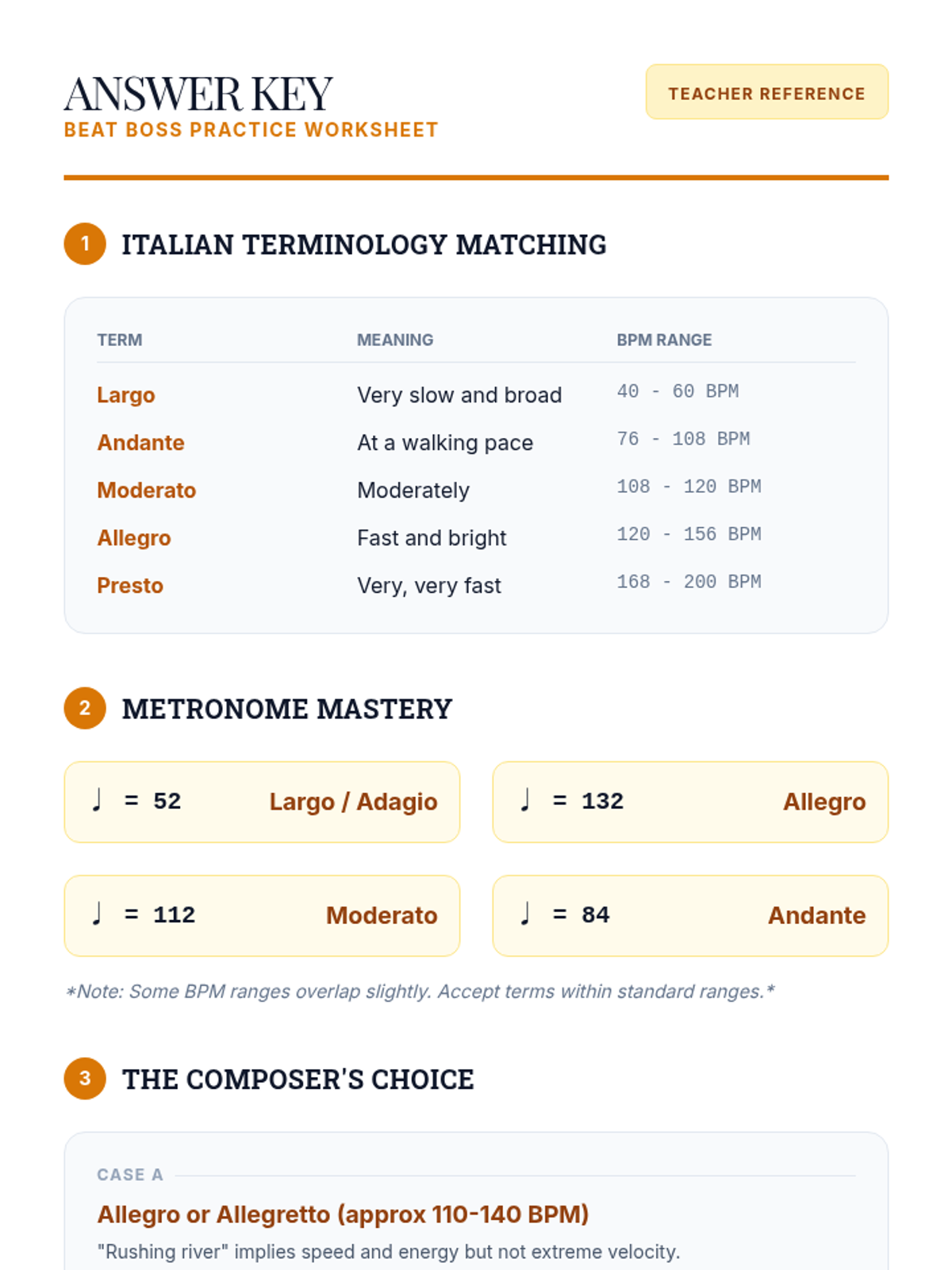
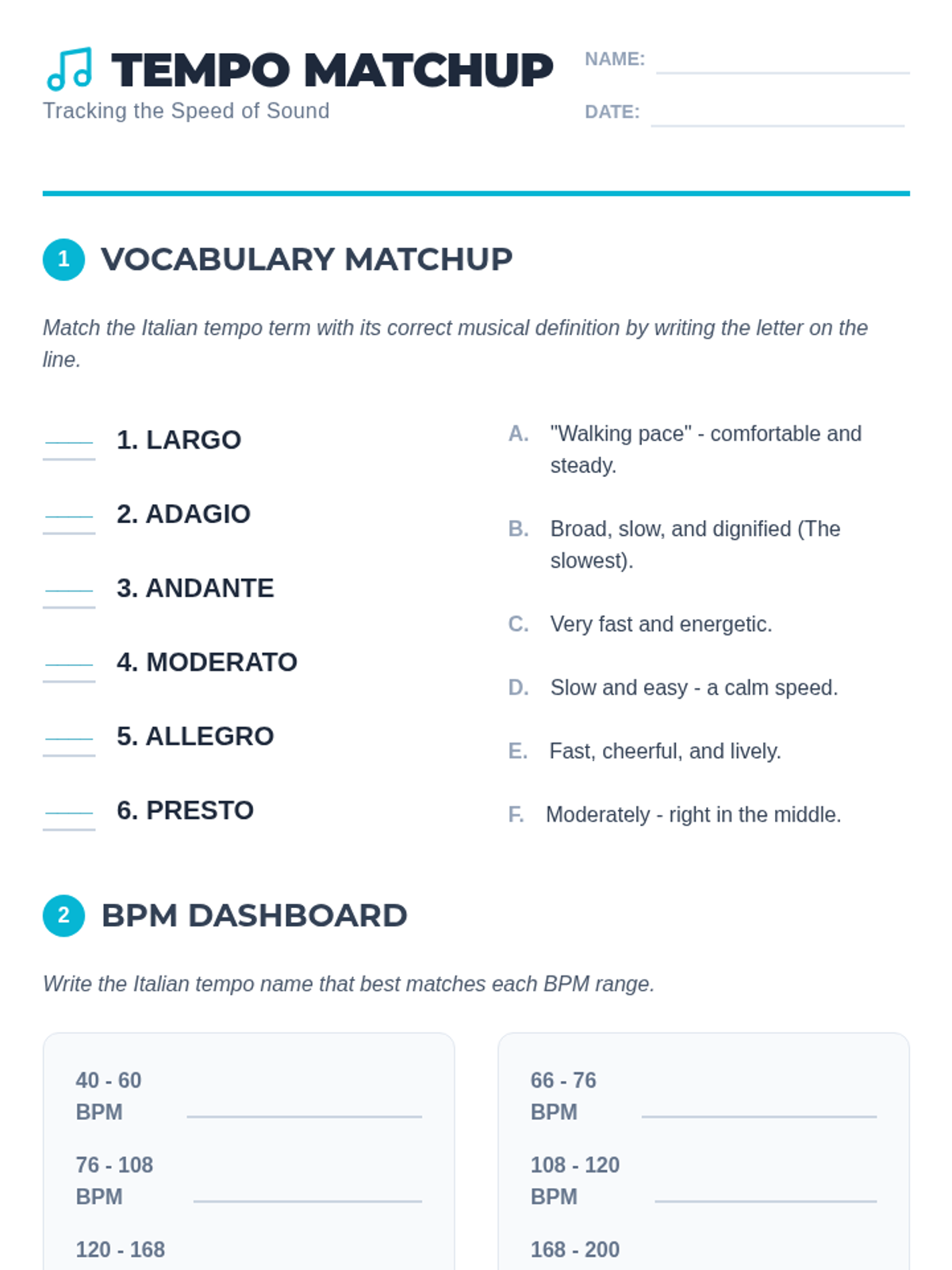
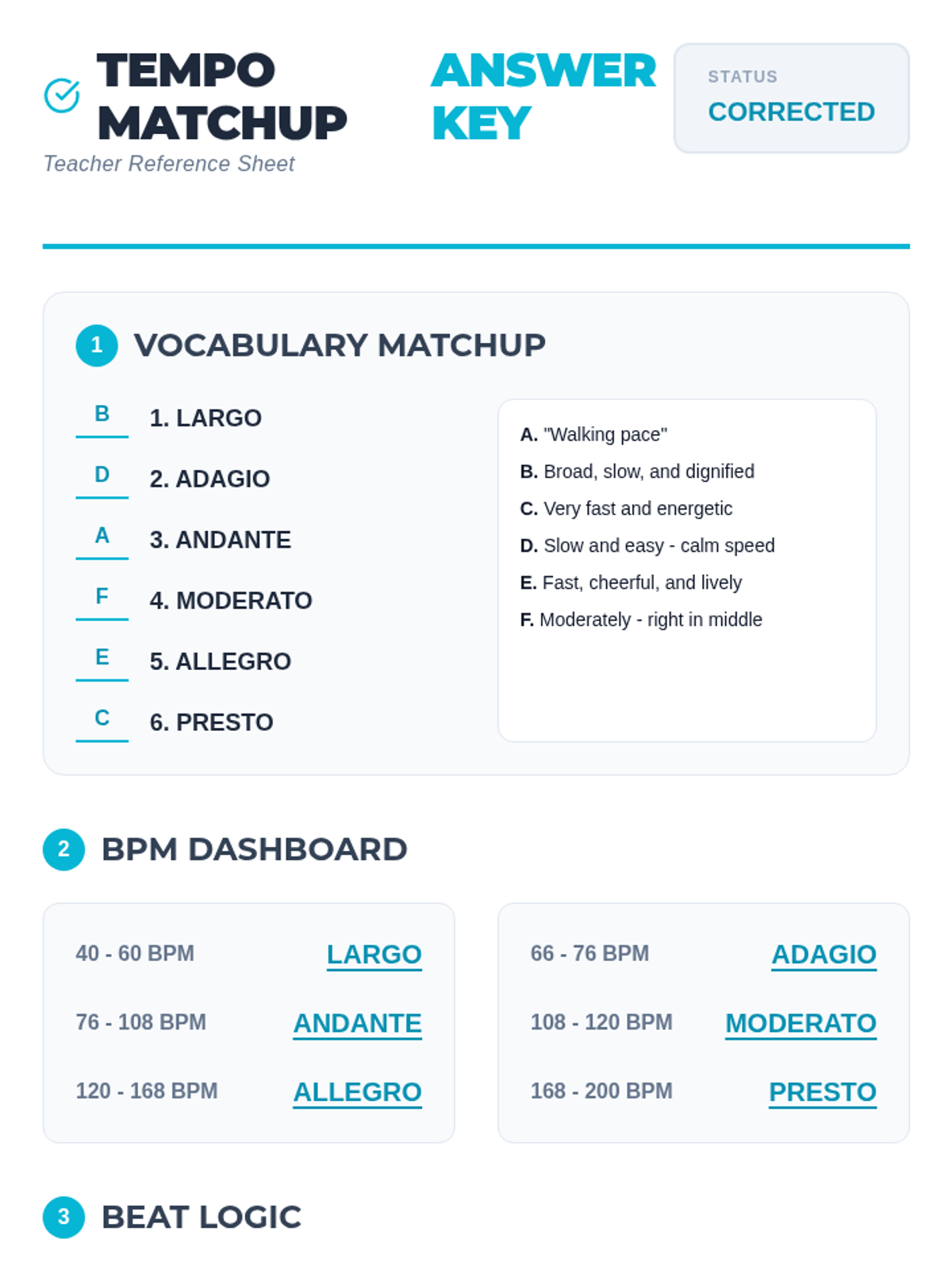
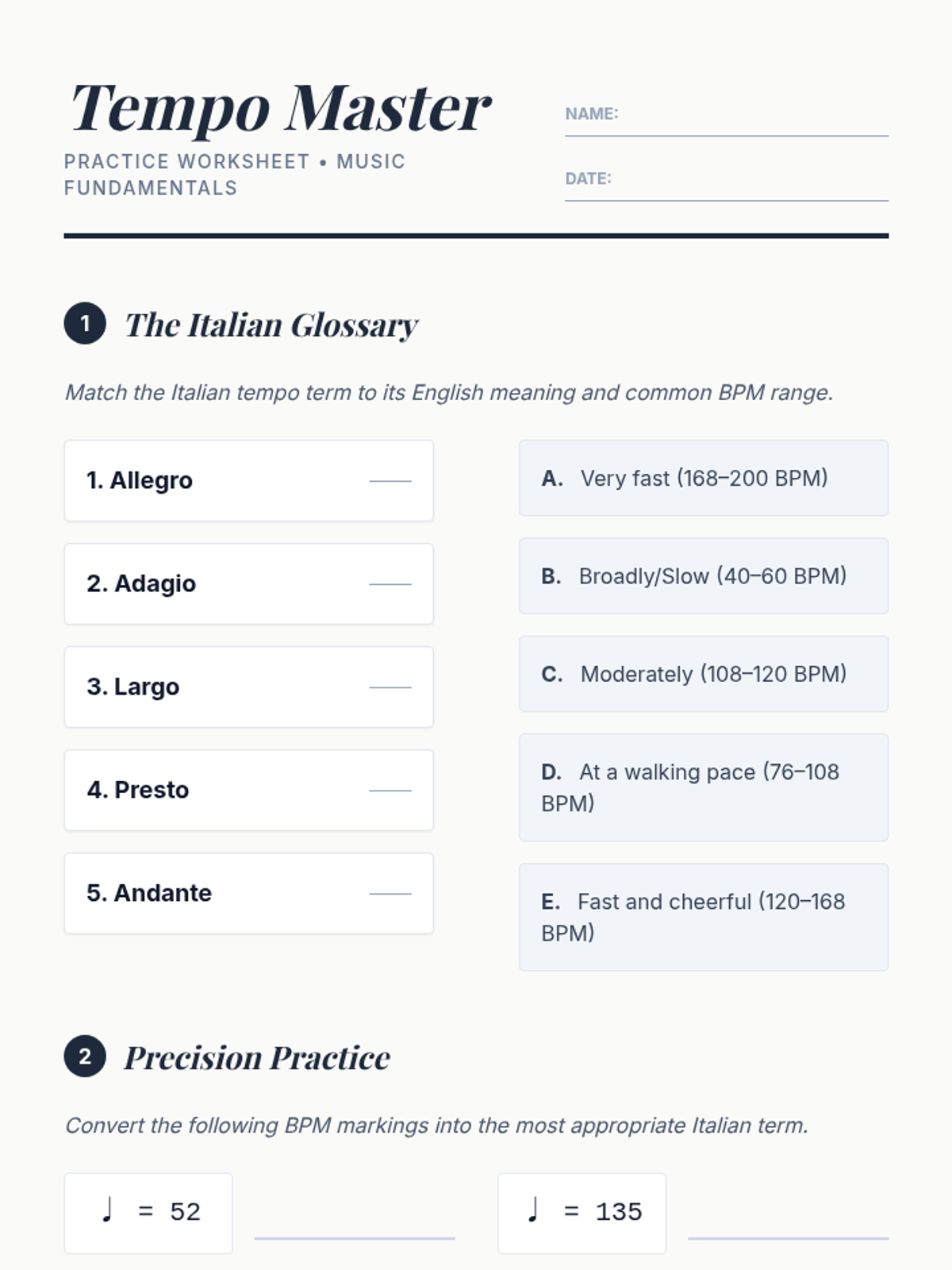
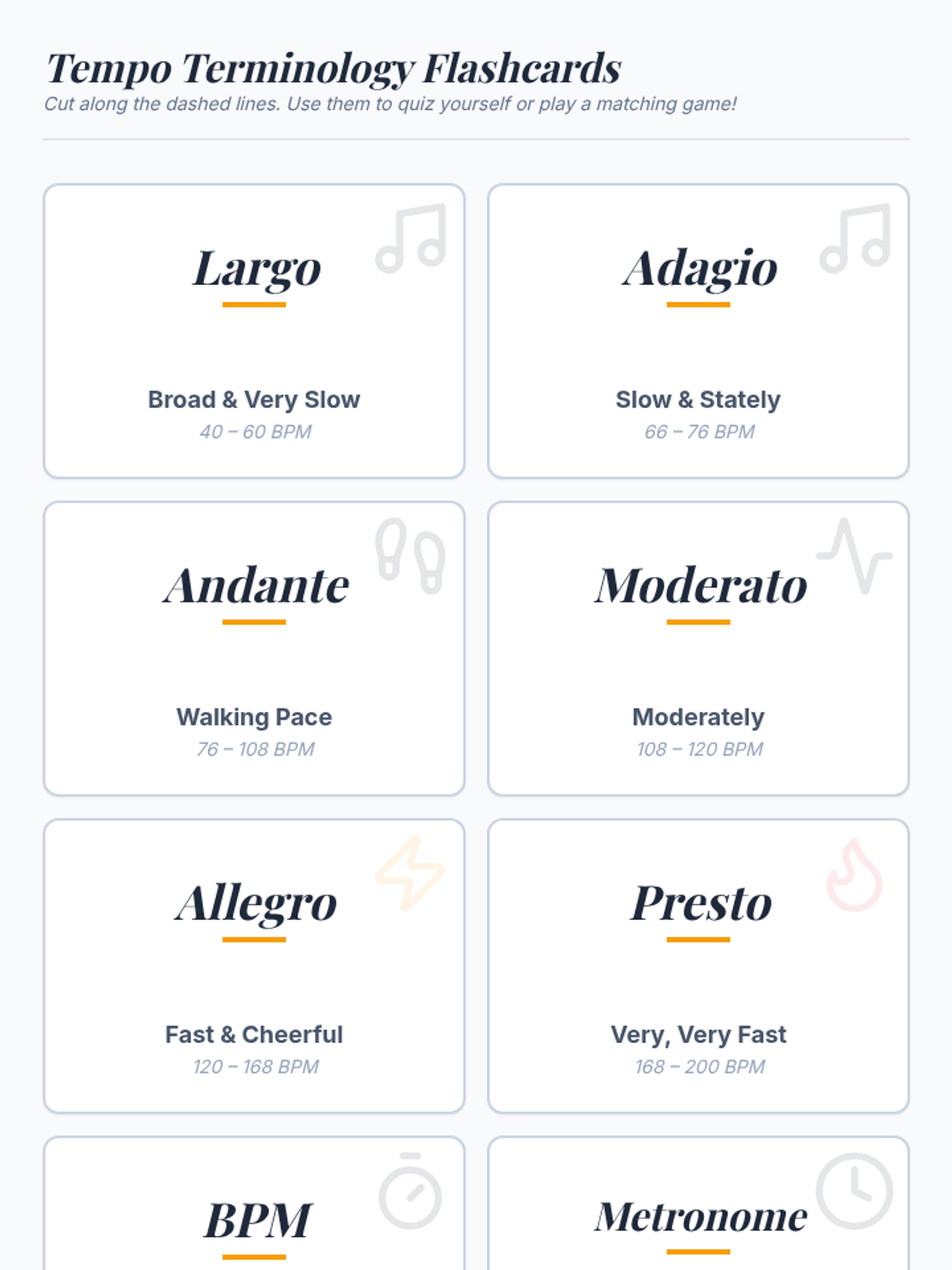
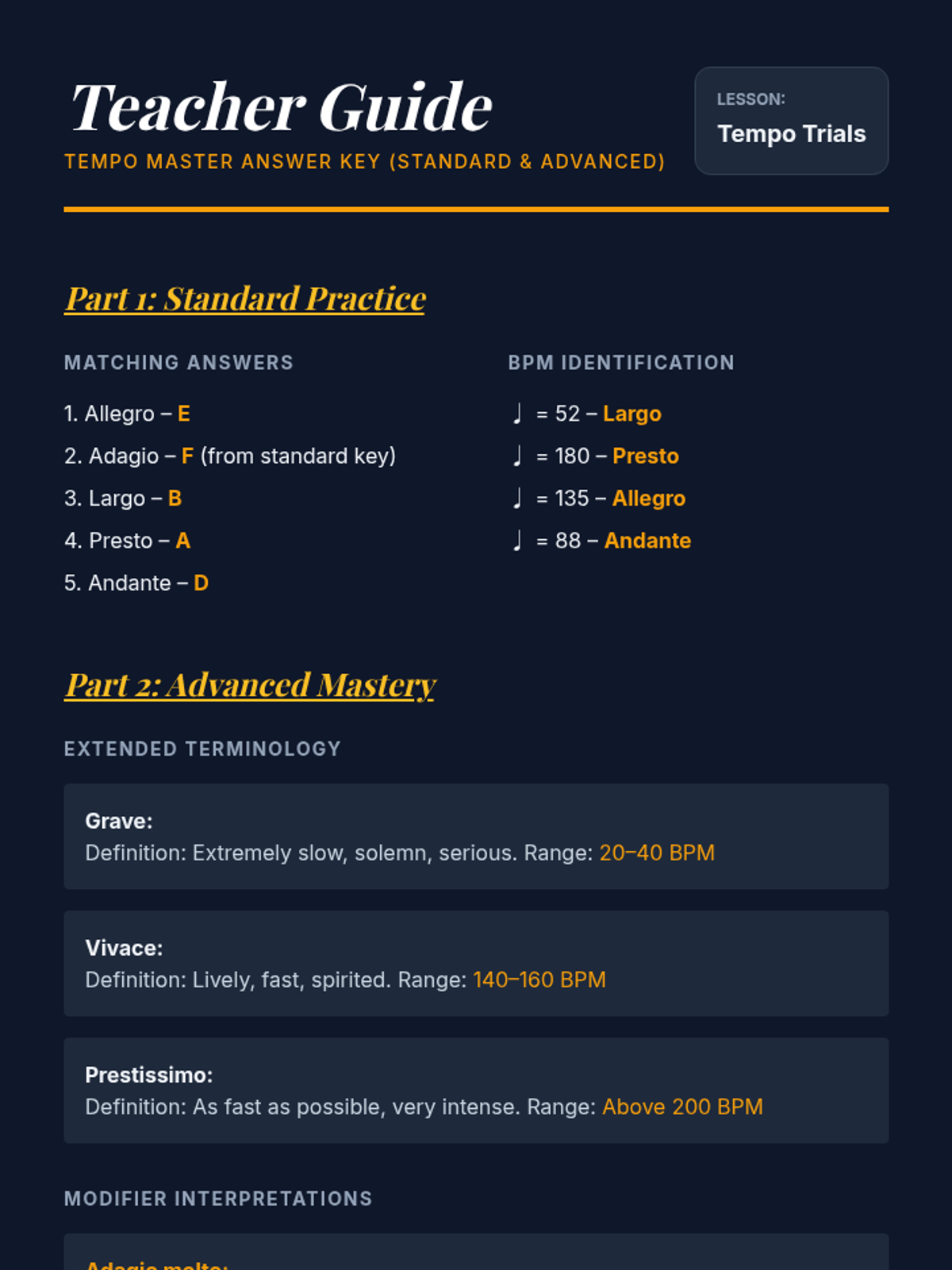
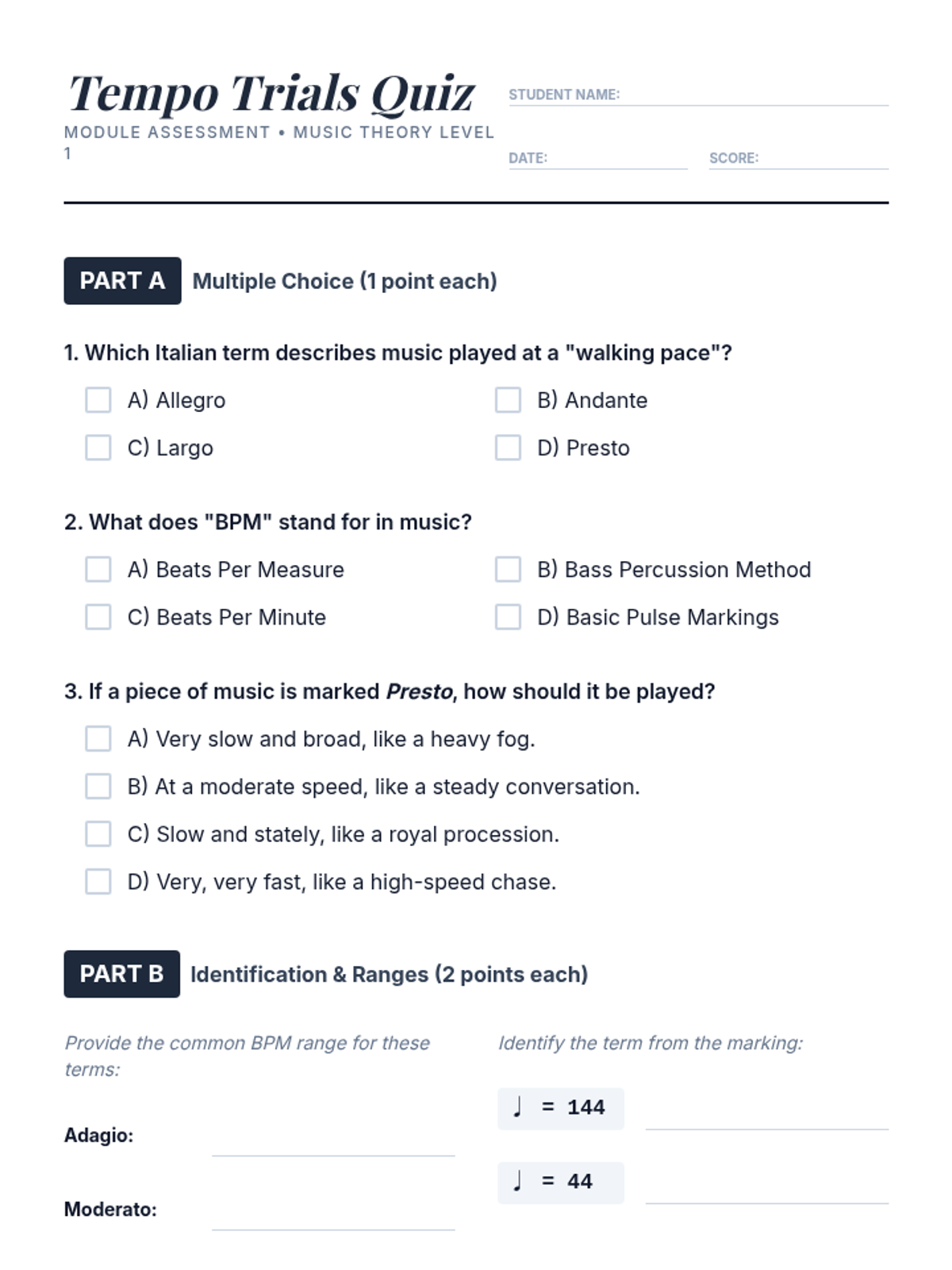
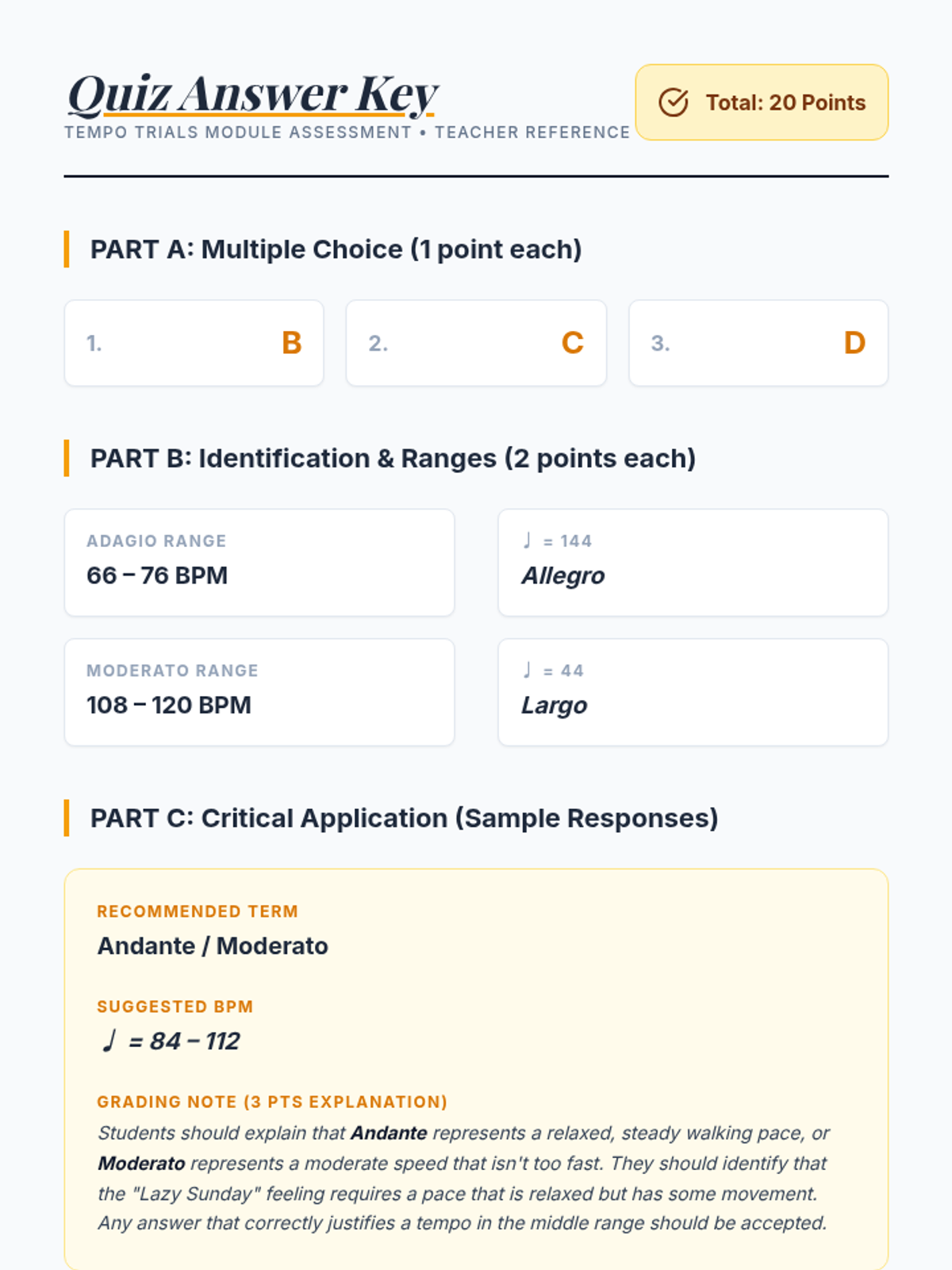
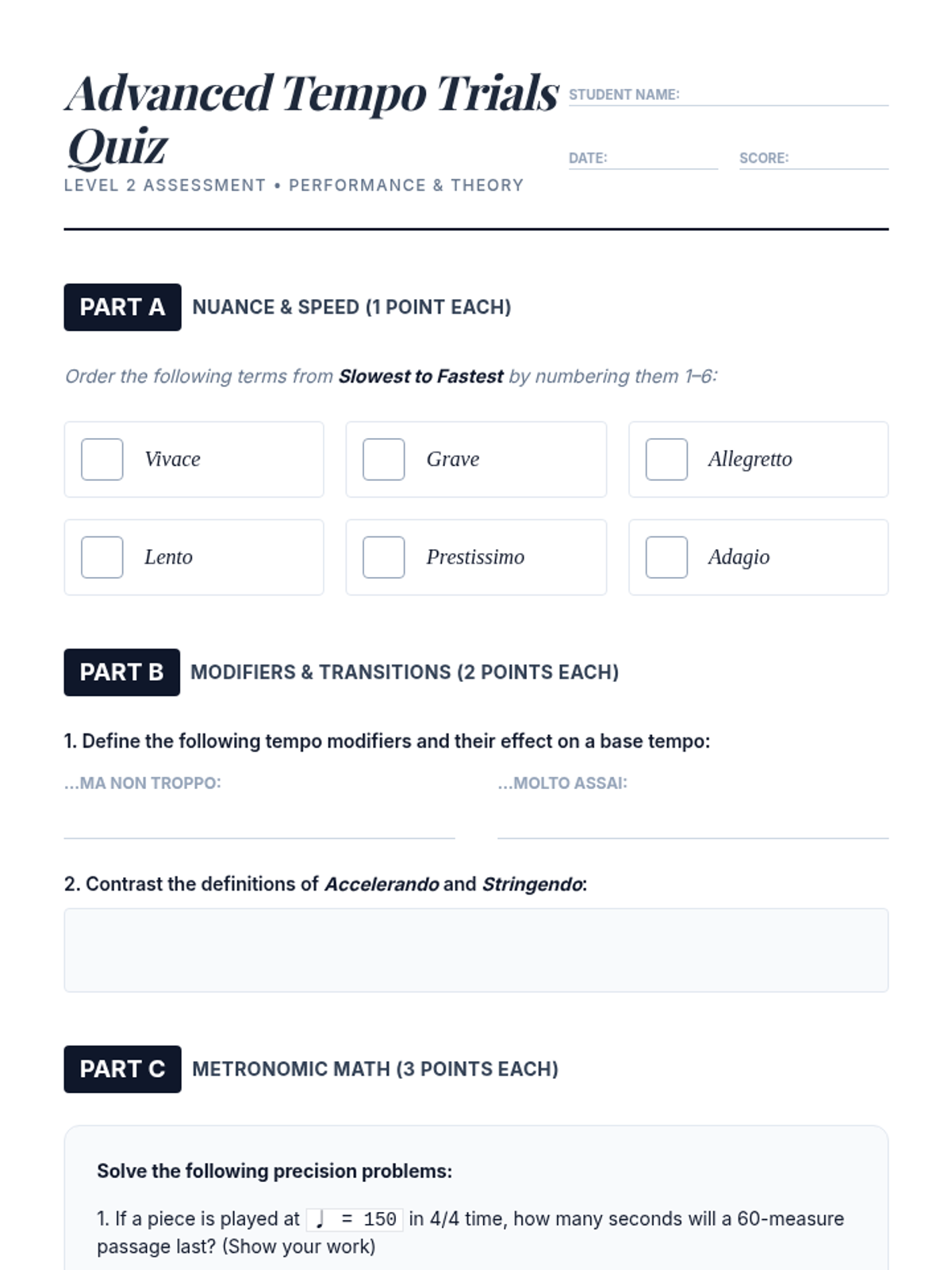
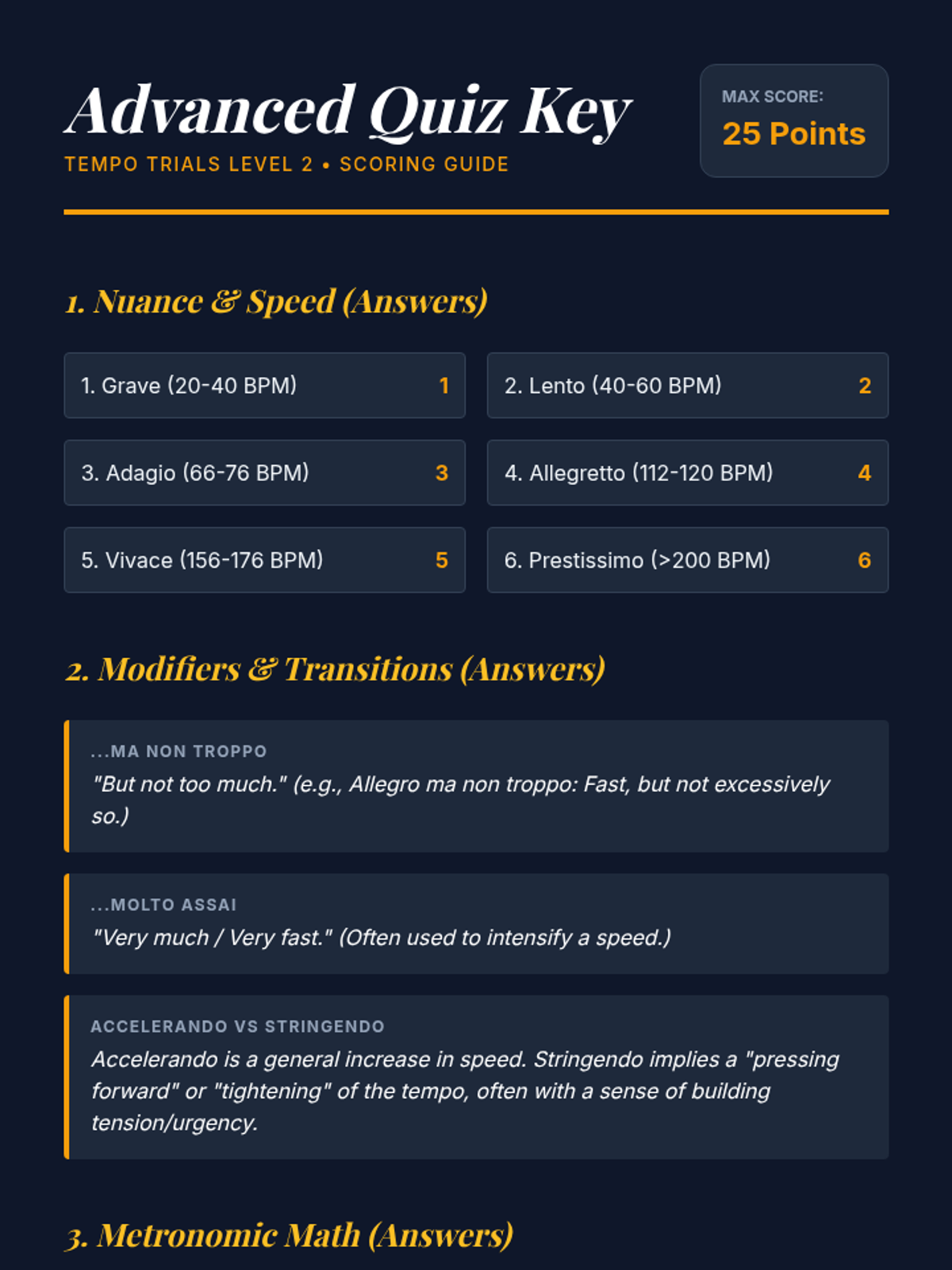
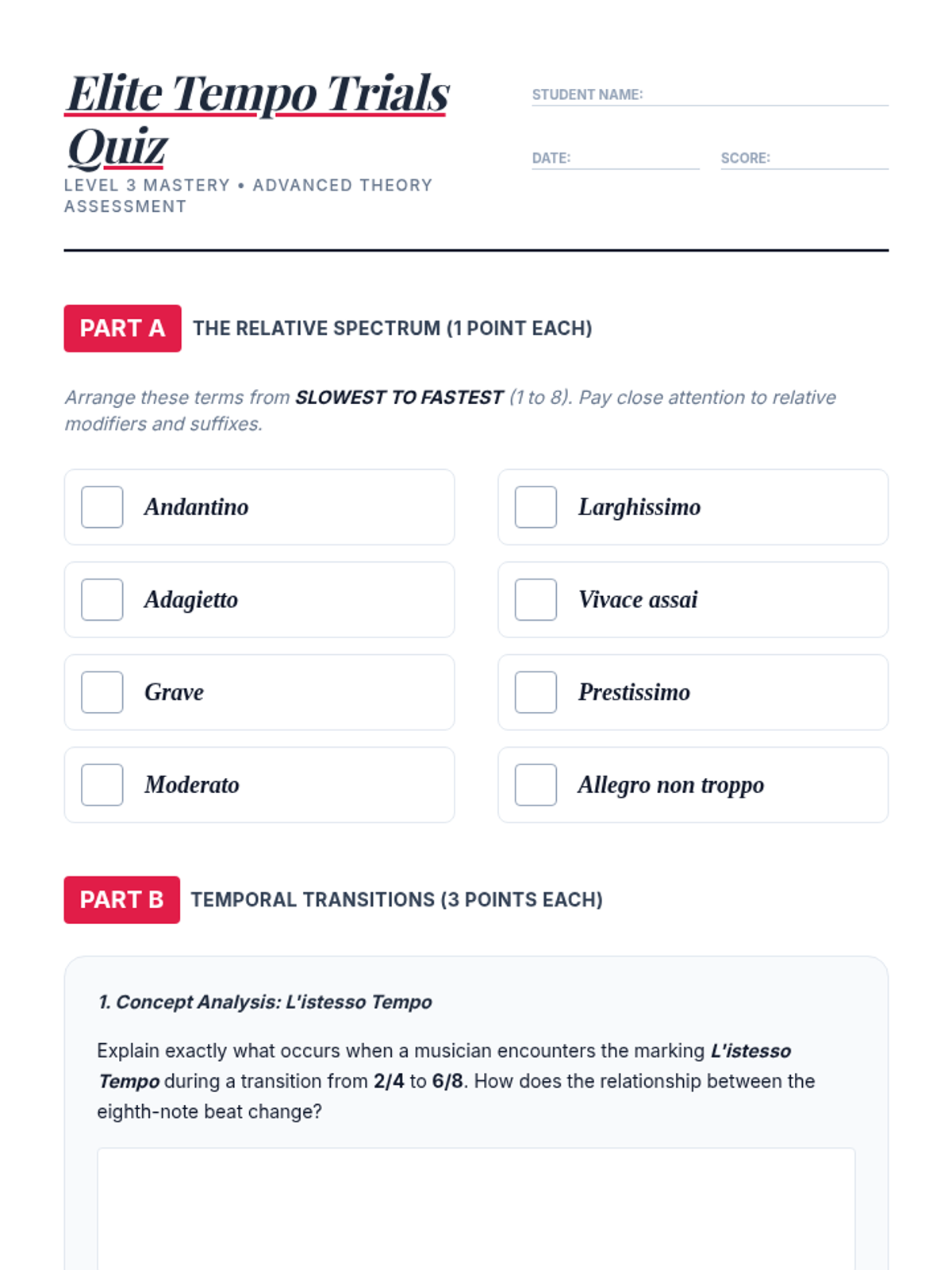
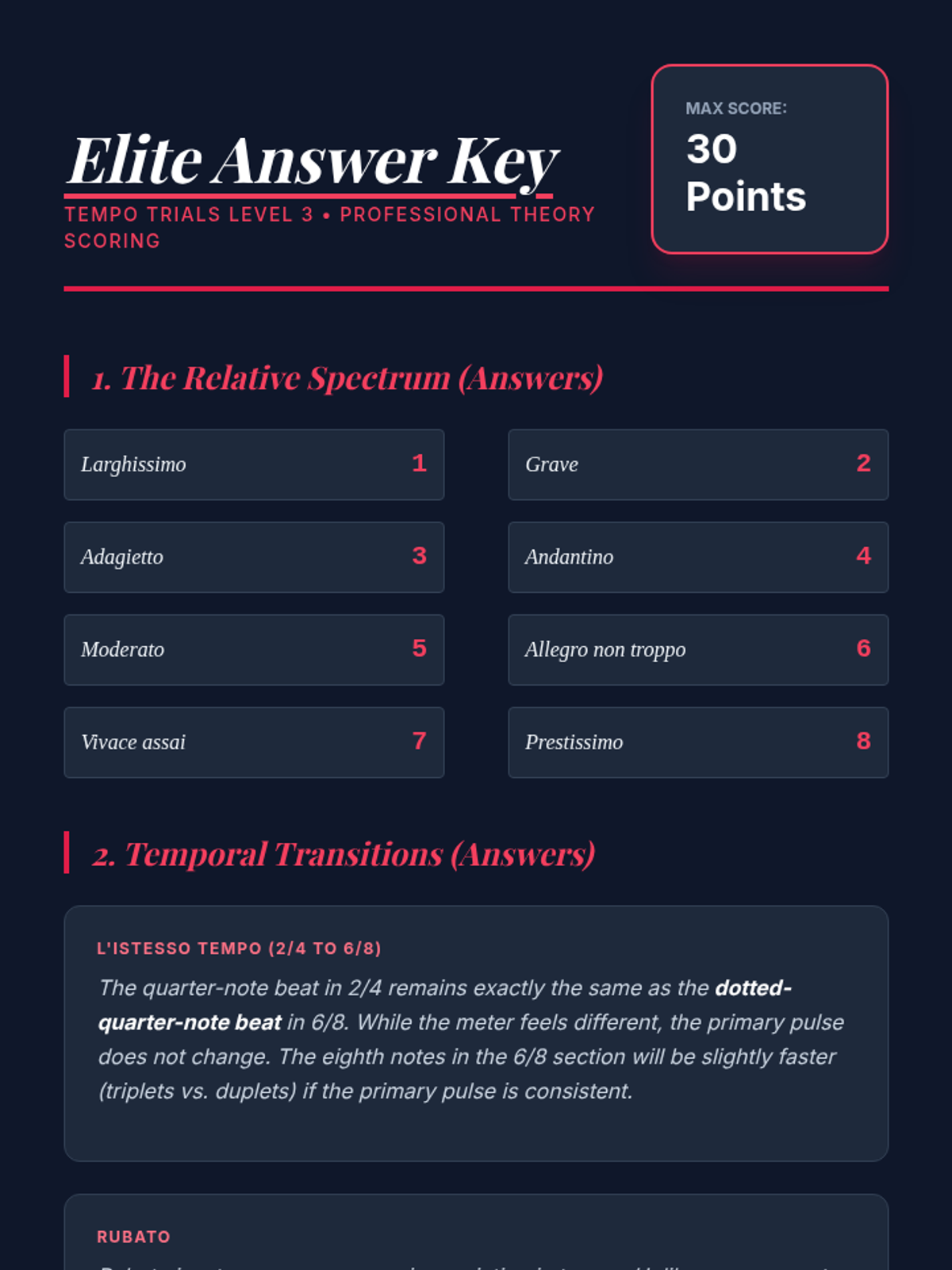
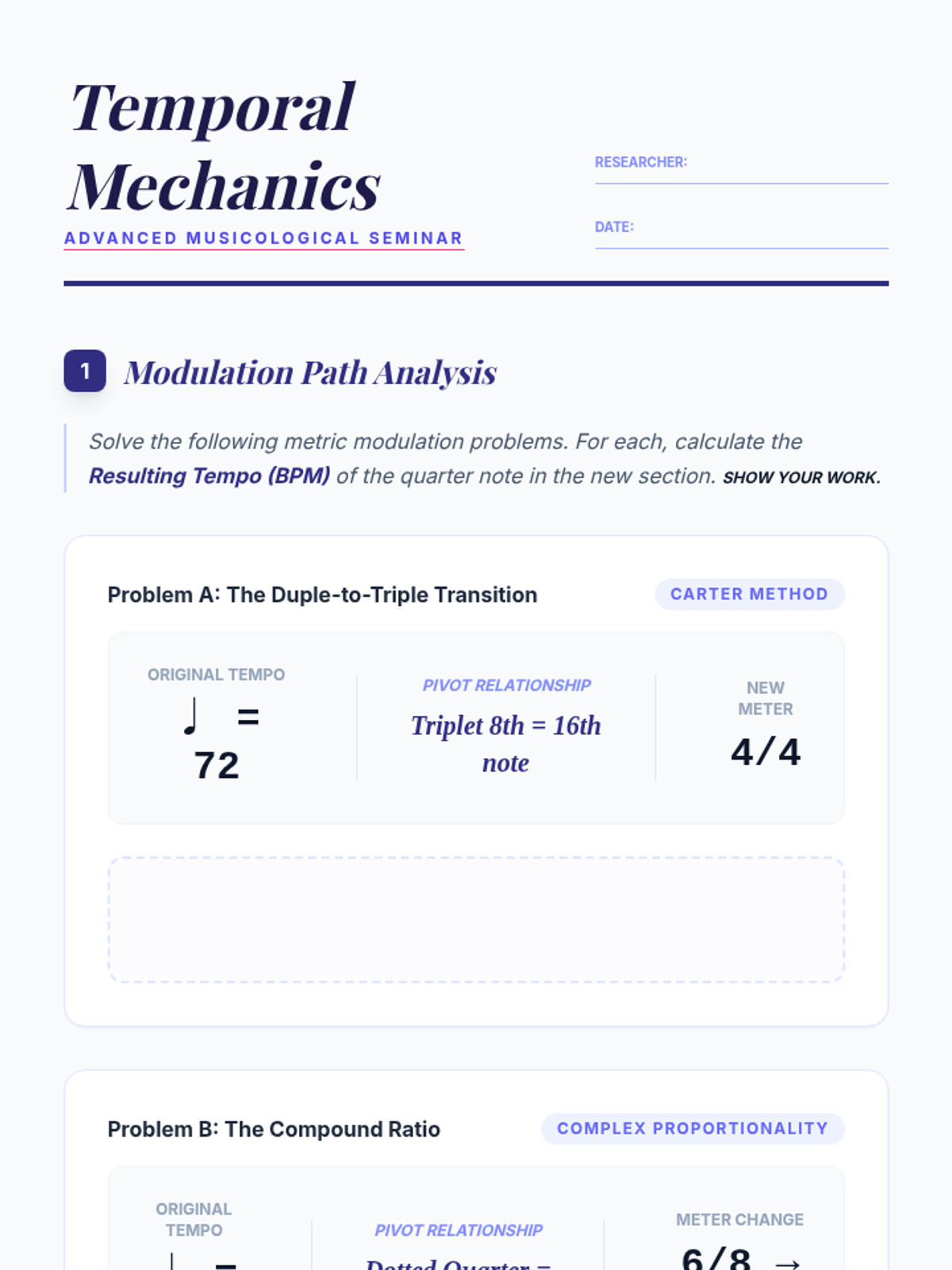
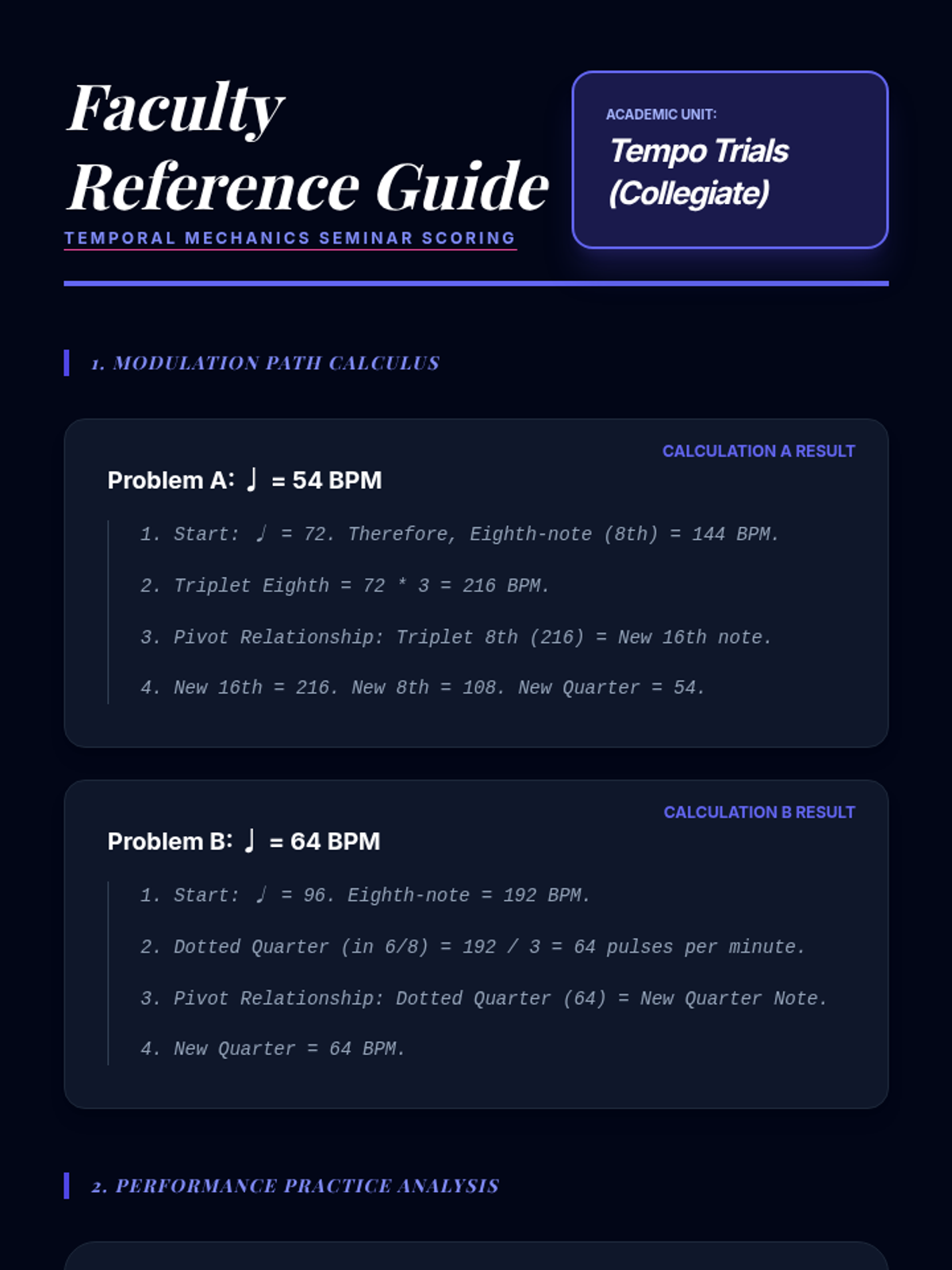
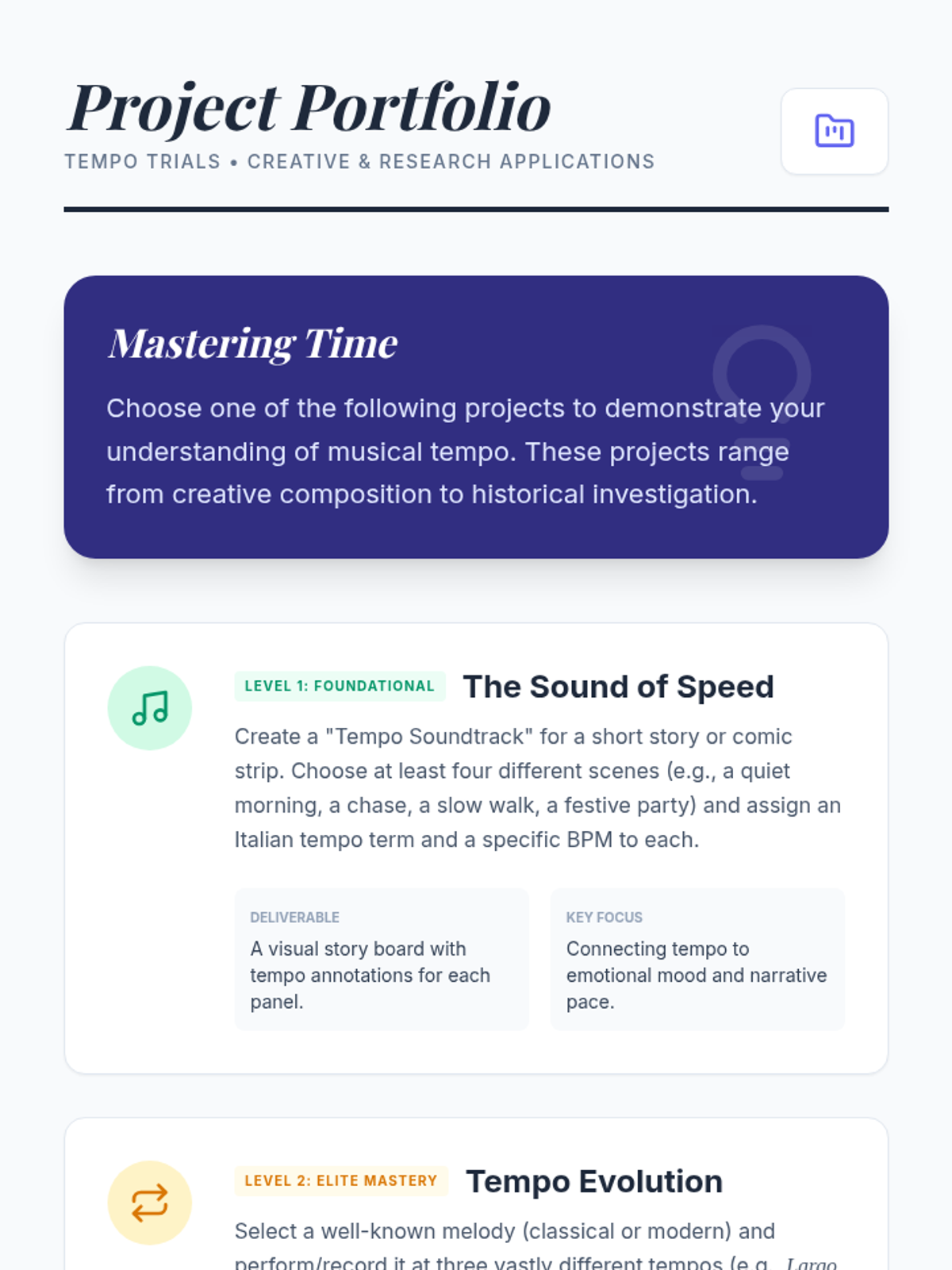
A comprehensive lesson on music tempo covering Italian terminology, metronome markings, and practical application to musical scores. Students will learn to identify and apply various speeds to music.
A lesson exploring the speed of music through Italian tempo markings, the use of metronomes, and understanding Beats Per Minute (BPM).
A comprehensive guide to understanding and applying musical tempo, covering Italian terminology, BPM, and metronome markings.
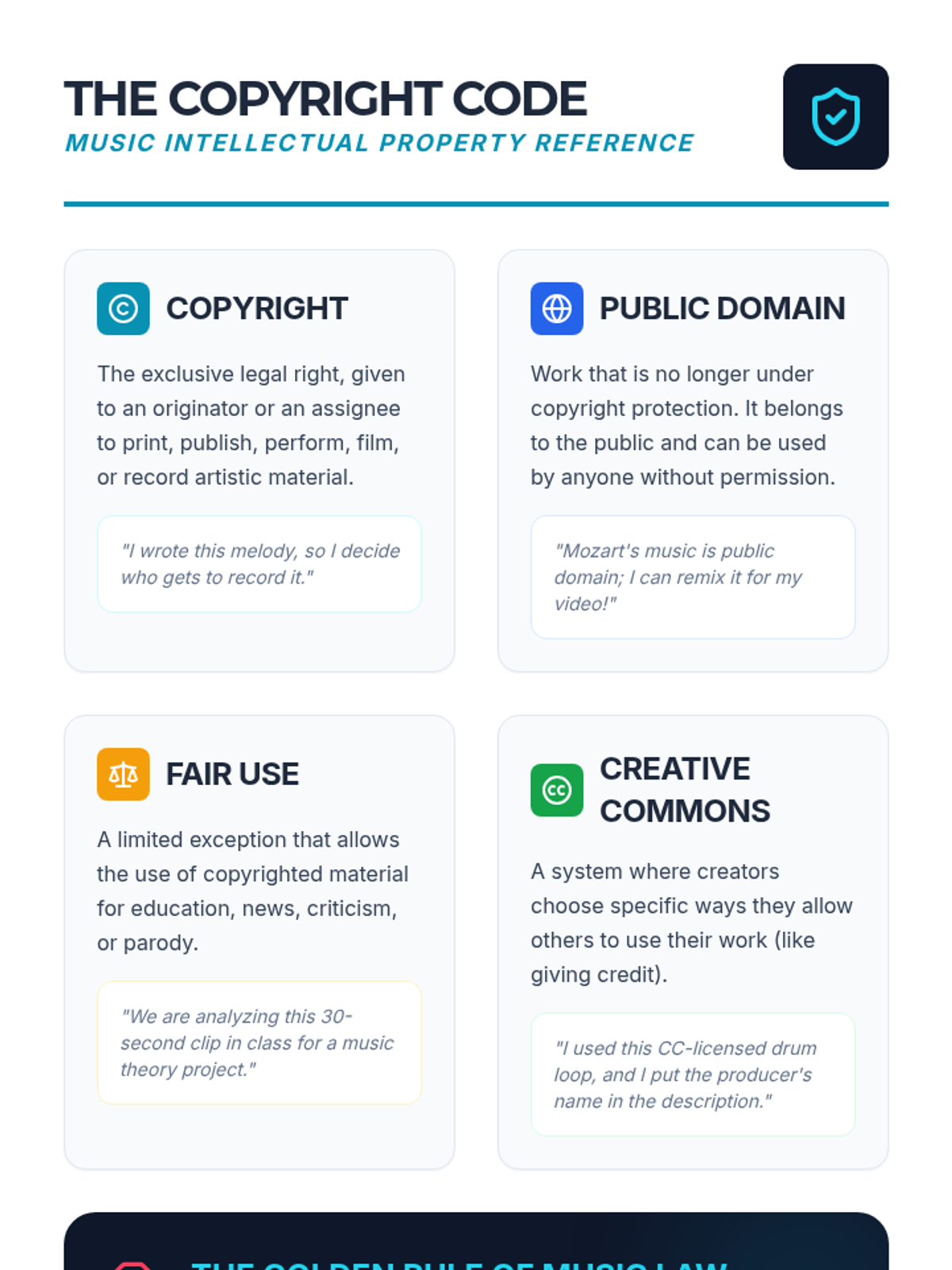
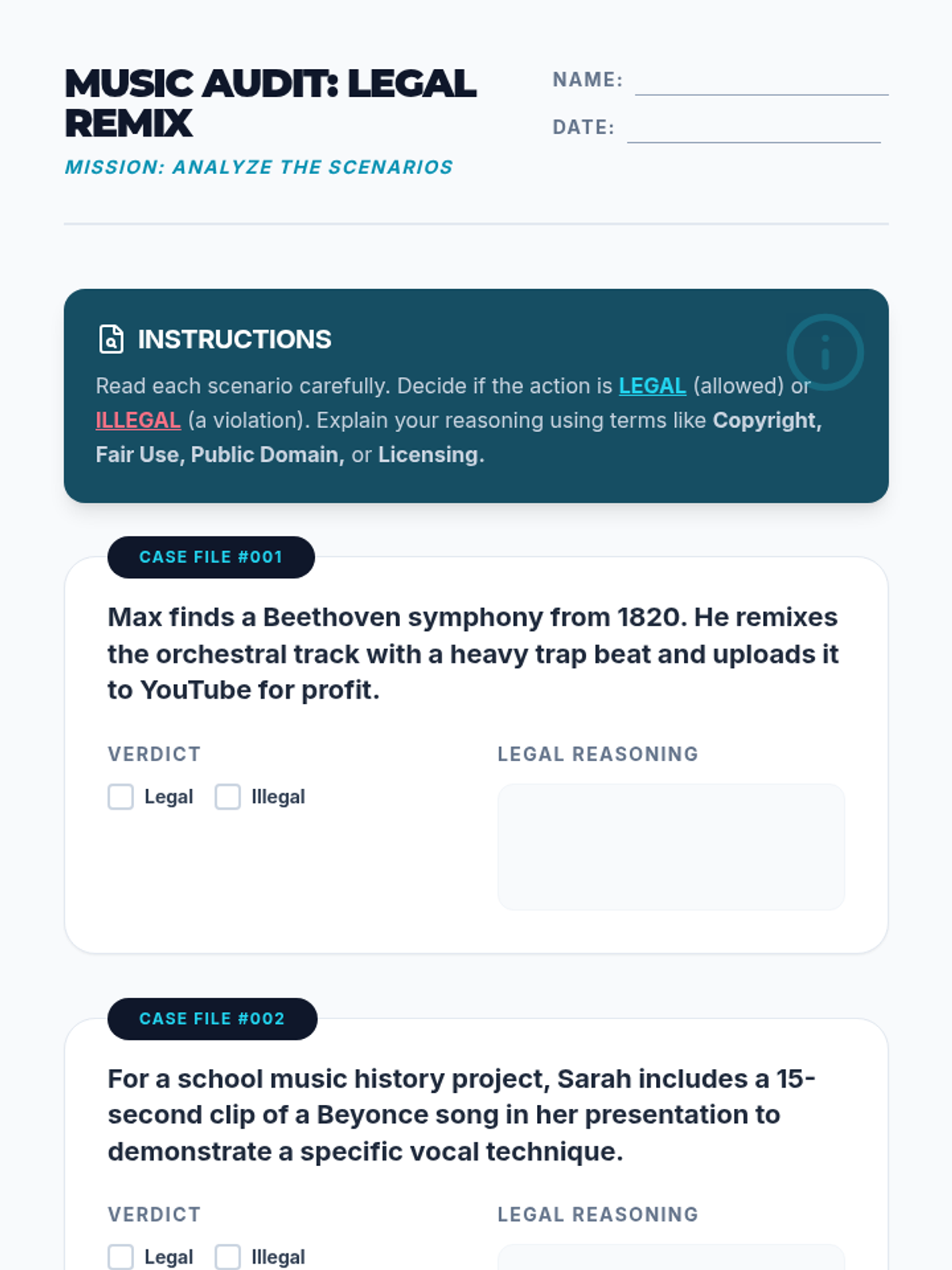
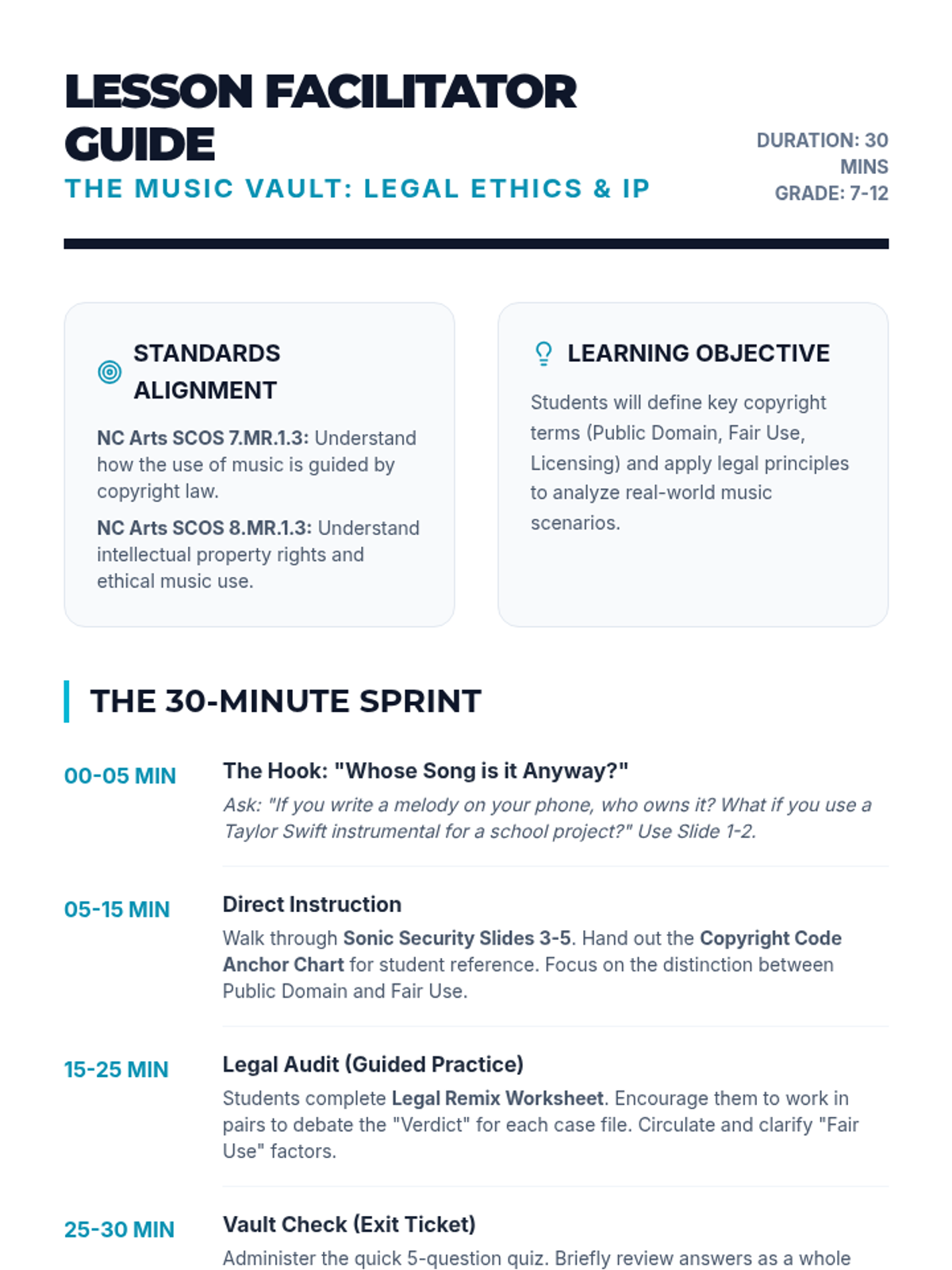
An introductory lesson on music copyright laws, fair use, and legal practices for using and creating music, aligned with NC Arts SCOS.
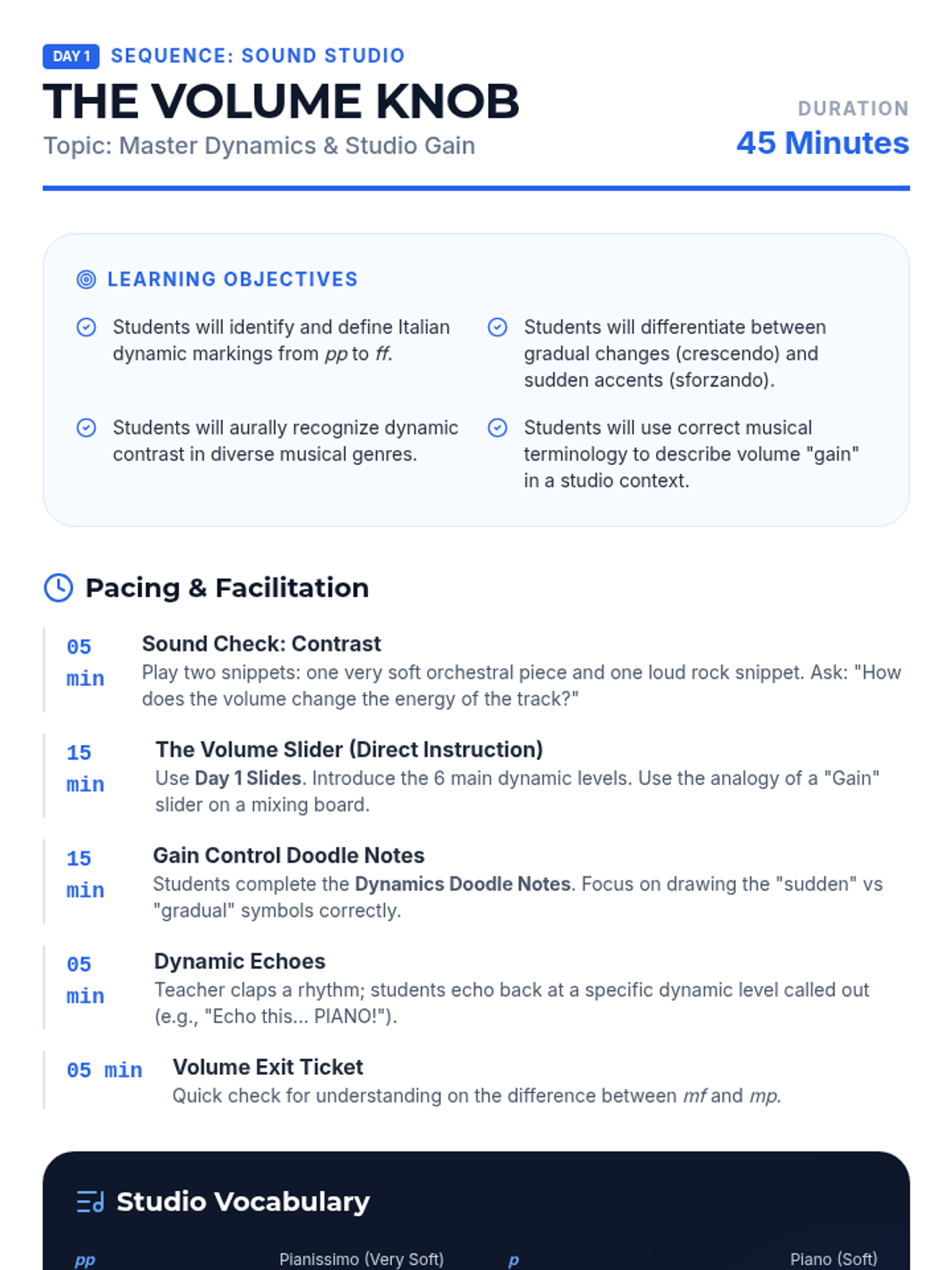
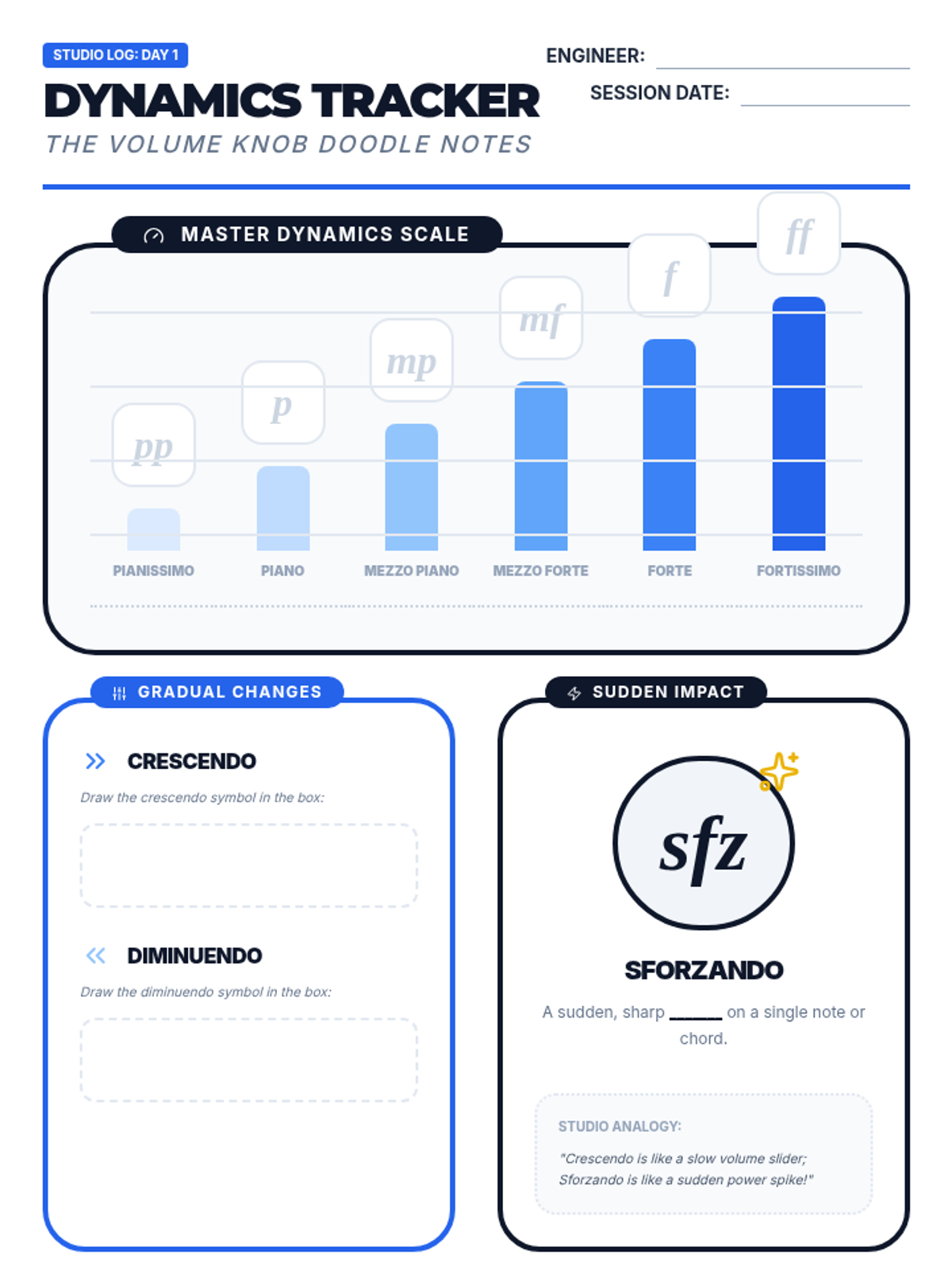
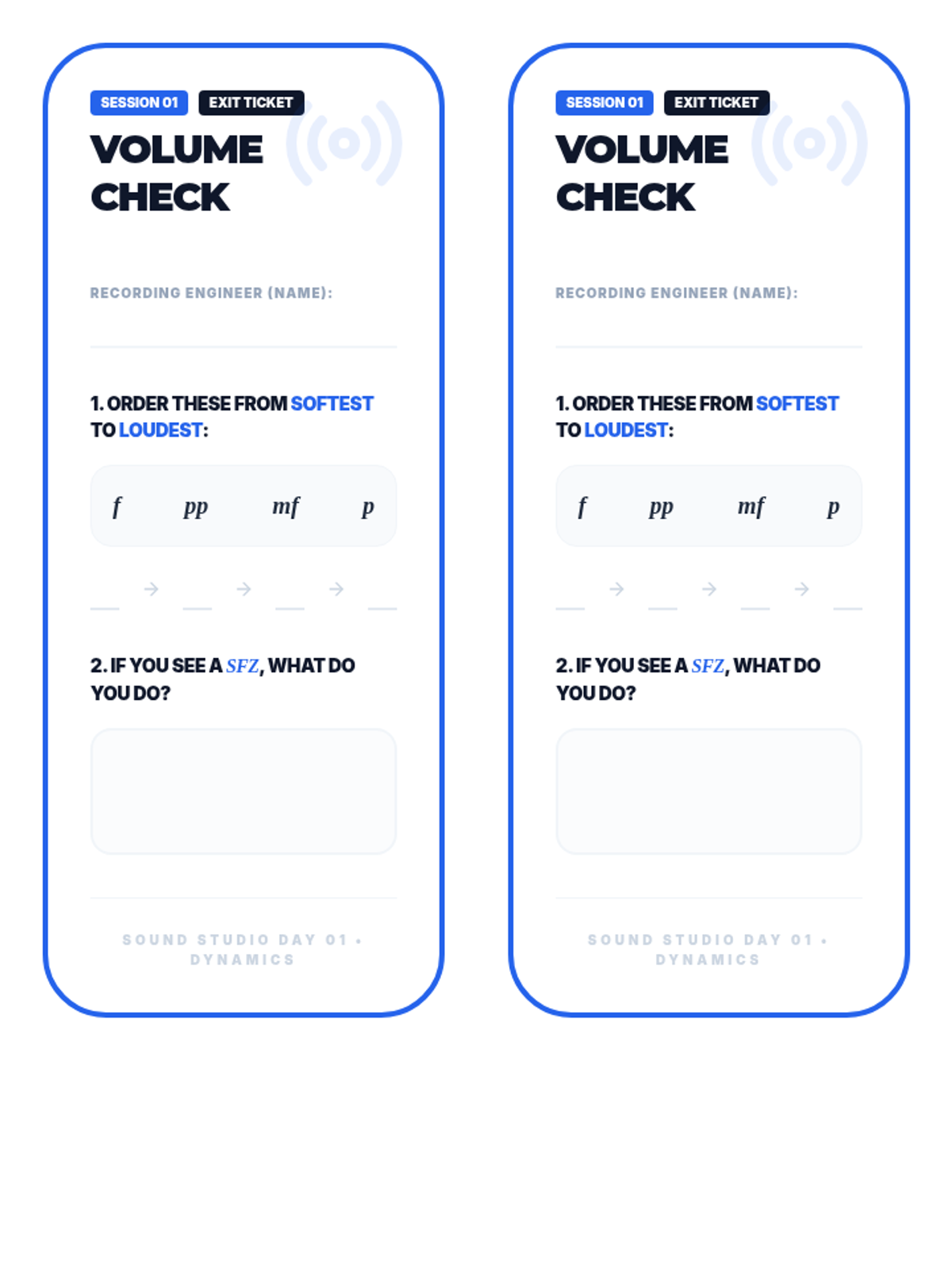
A deep dive into musical volume, covering Italian dynamic markings from pianissimo to fortissimo, plus gradual and sudden changes like crescendo and sforzando.
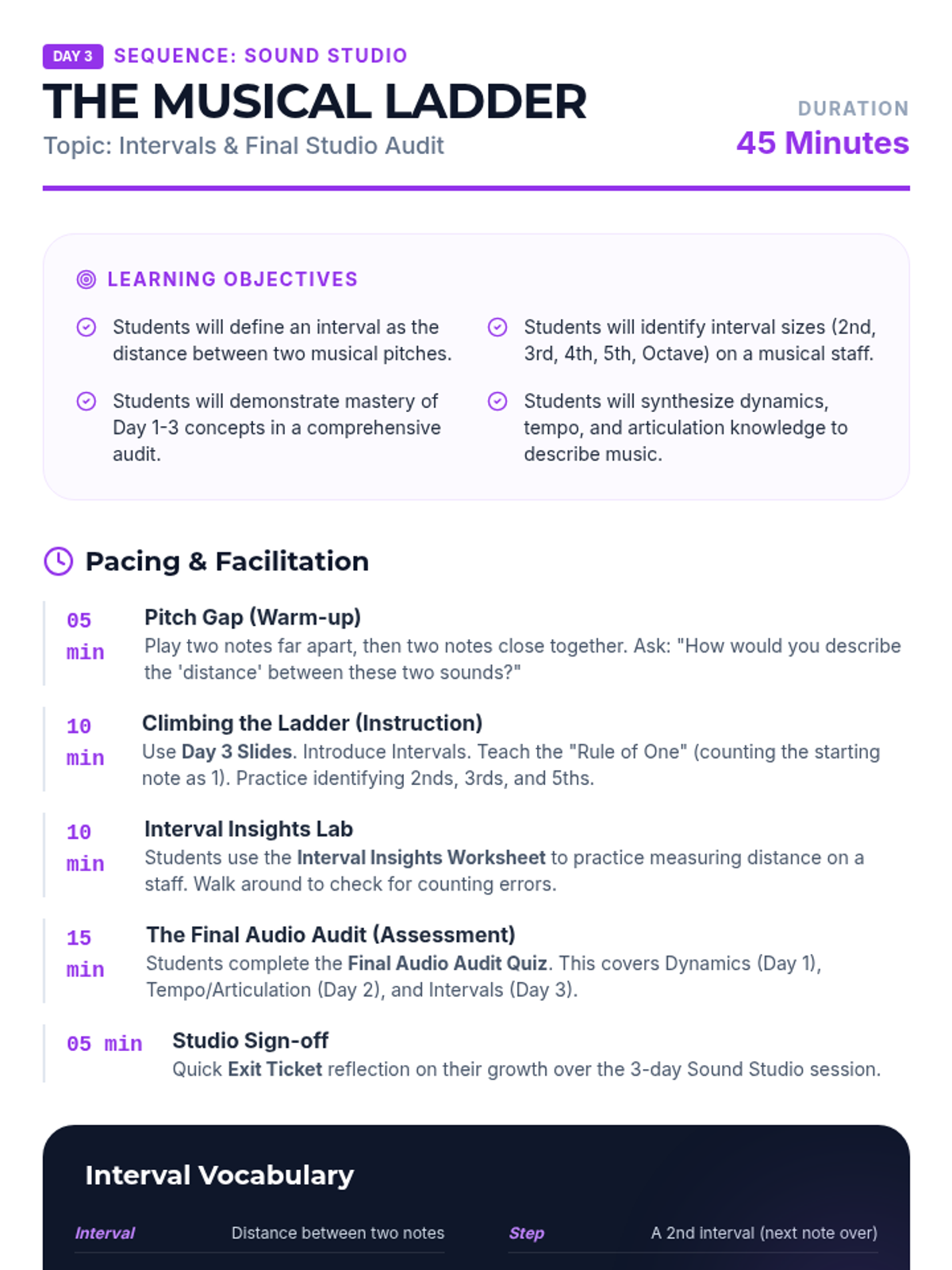
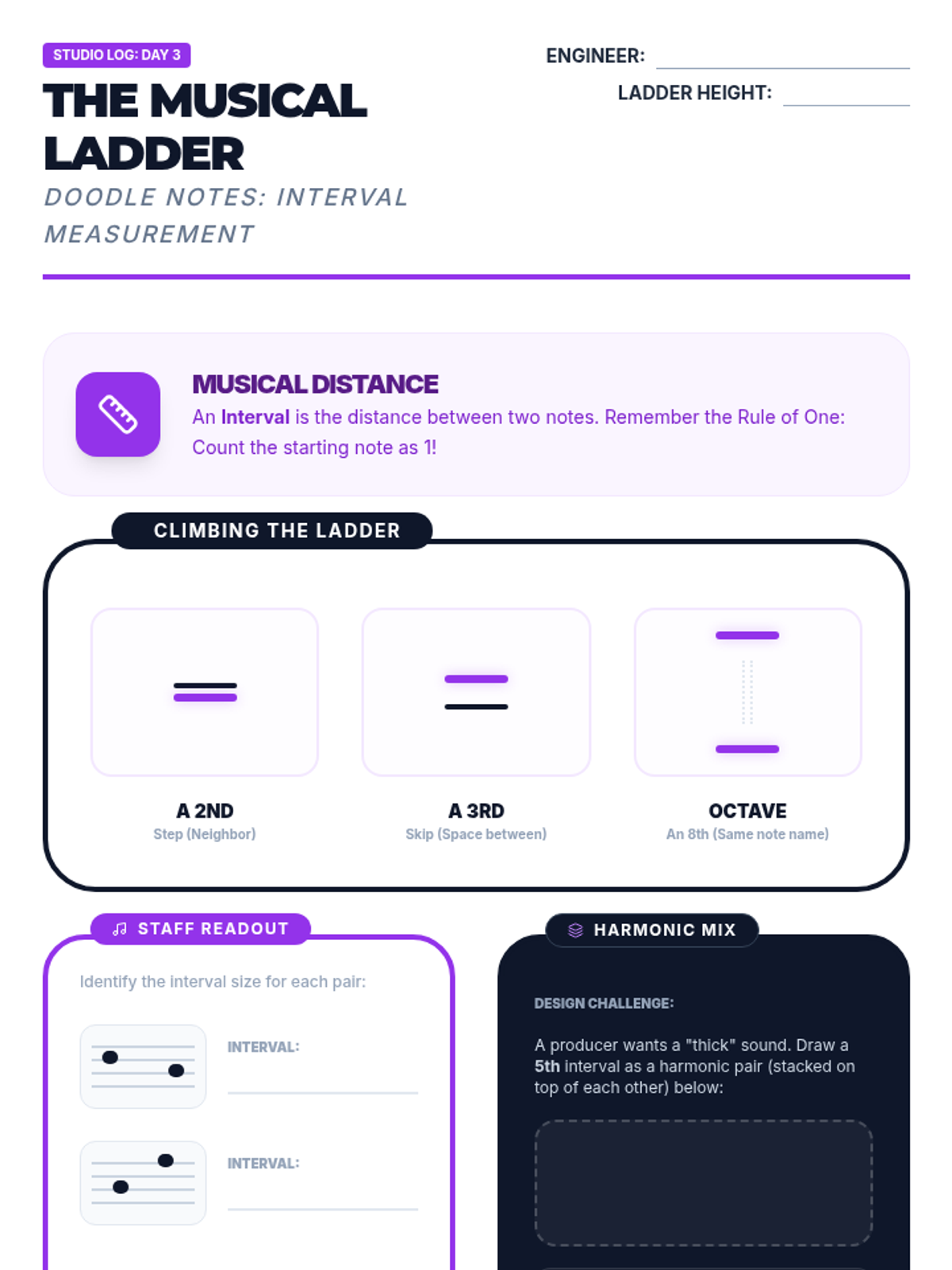
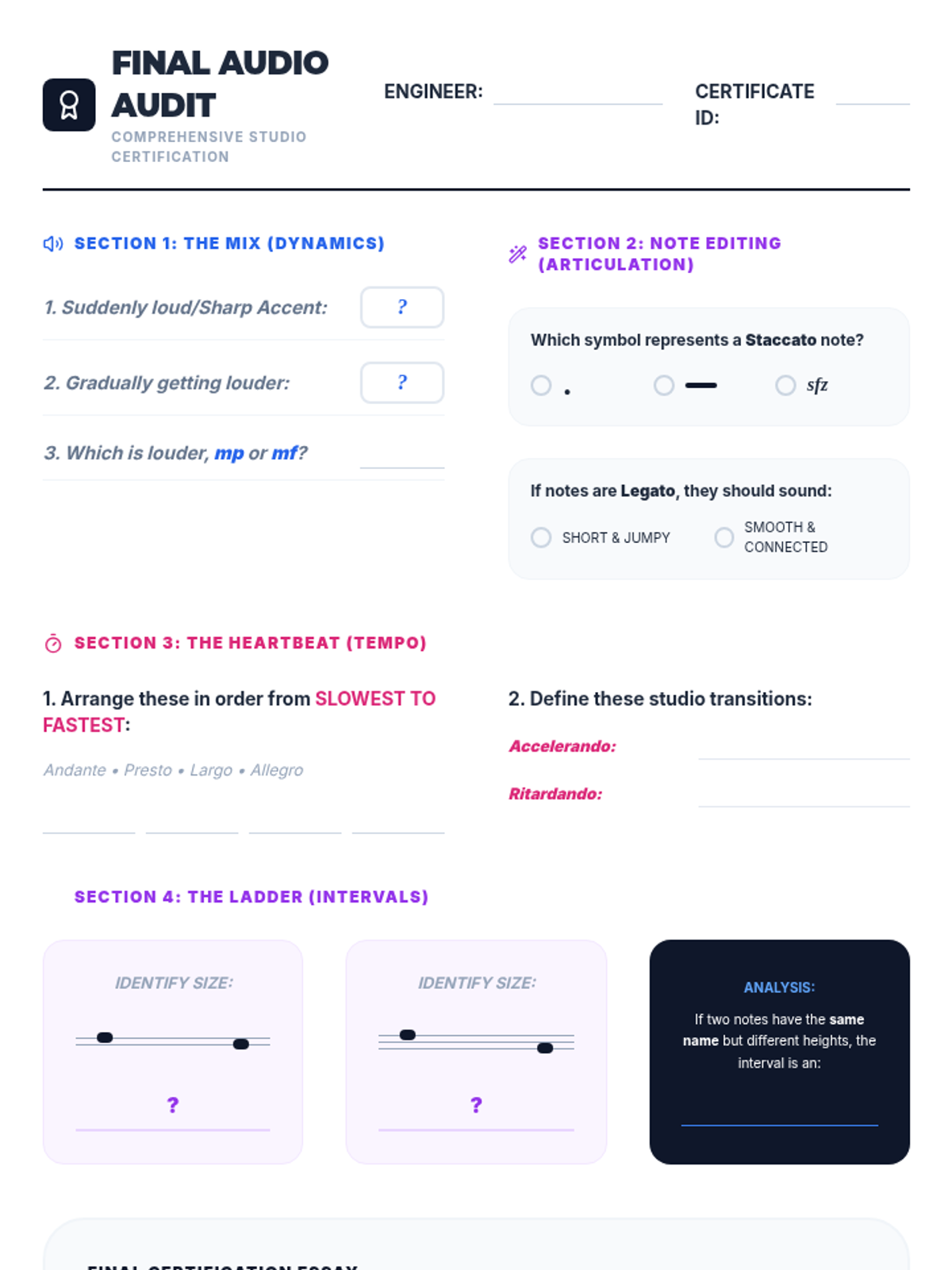
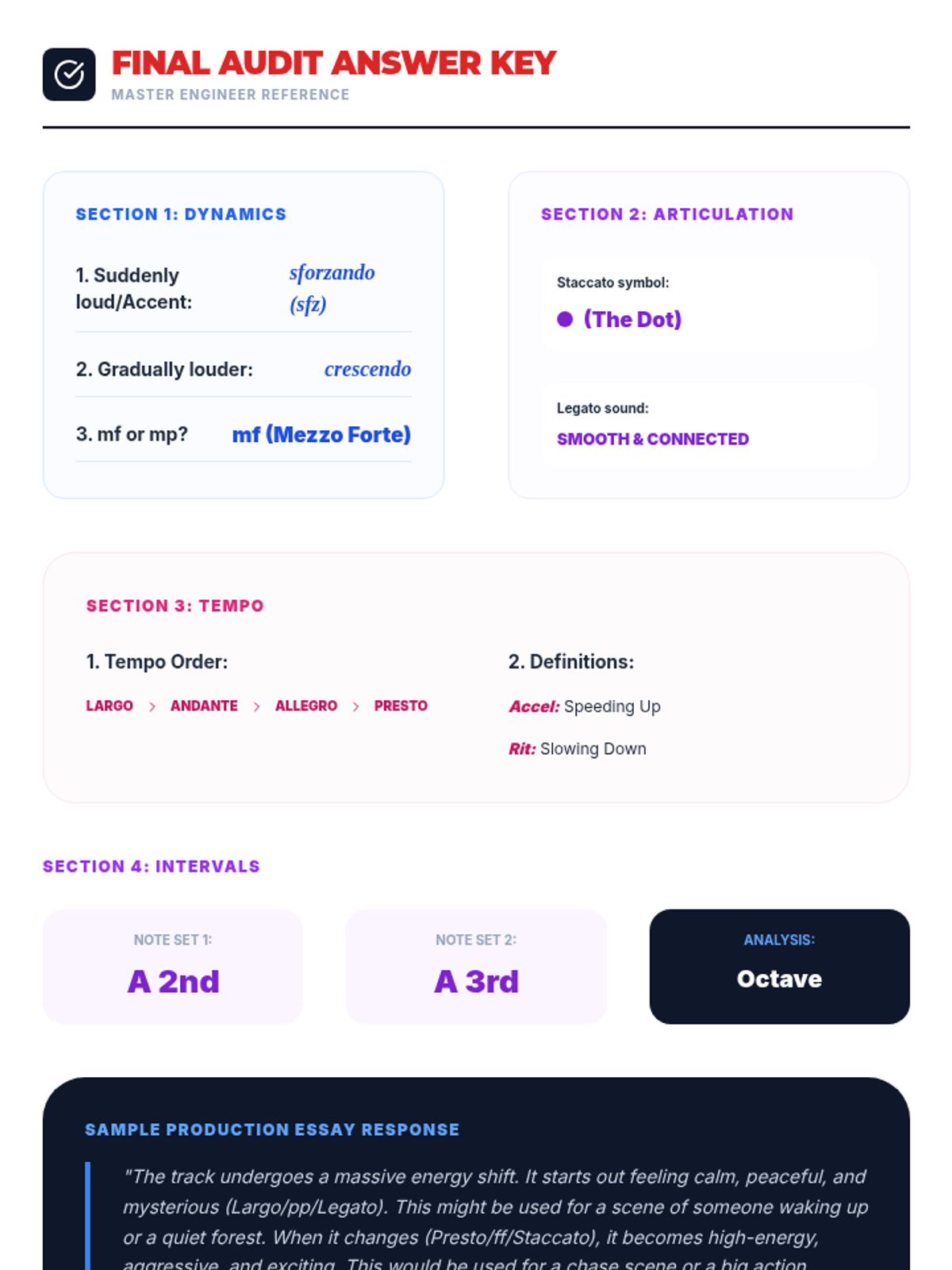
A comprehensive look at musical distance (Intervals) followed by a final studio review and assessment of all core concepts.
Students debate the future of music history, looking at streaming, AI composition, and bedroom production, analyzing how digital tools change the creation and distribution of music.
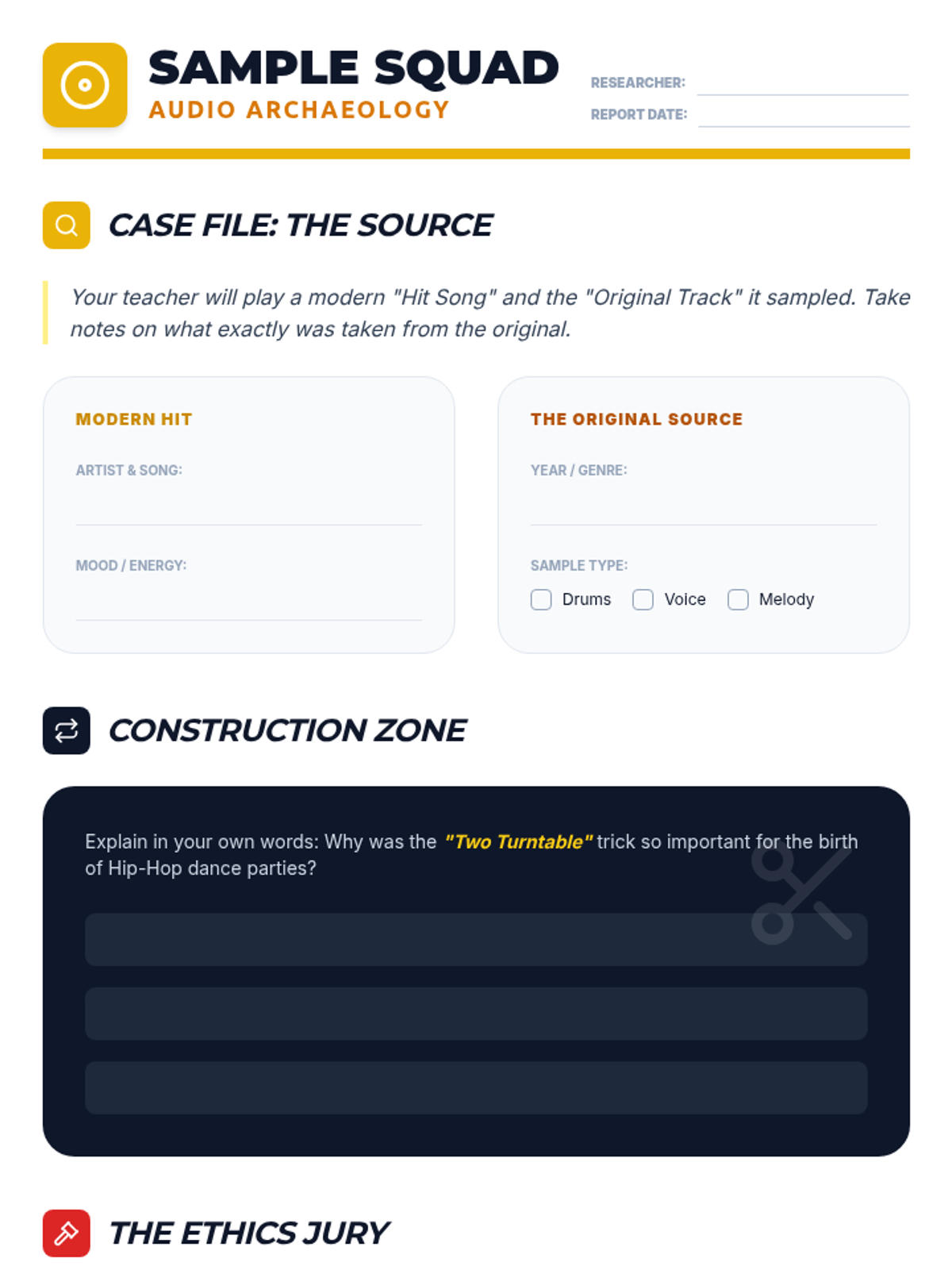
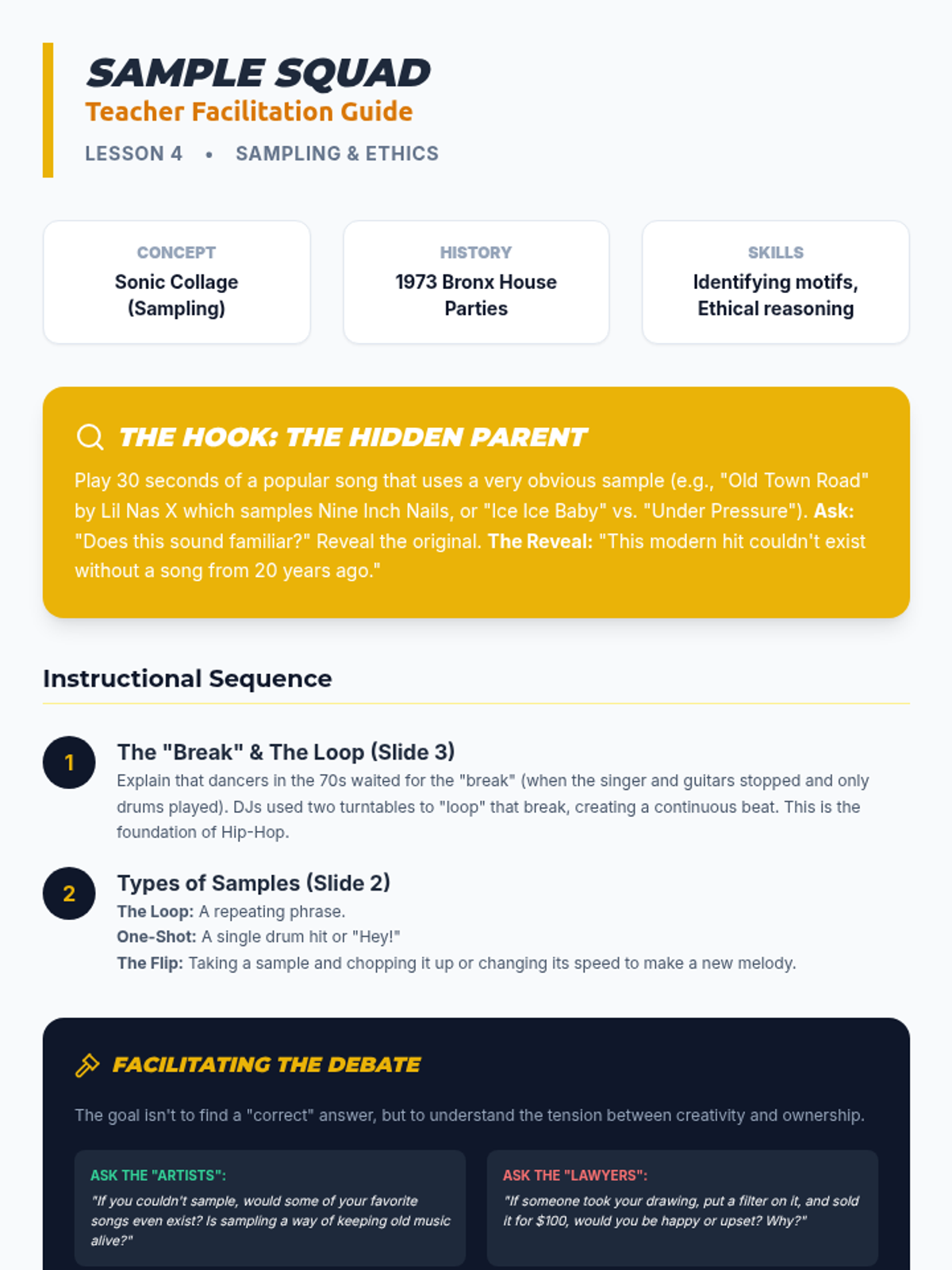
Students investigate the origins of Hip-Hop and the revolutionary technique of sampling, discussing the artistic and legal implications of repurposing existing audio to create new music.
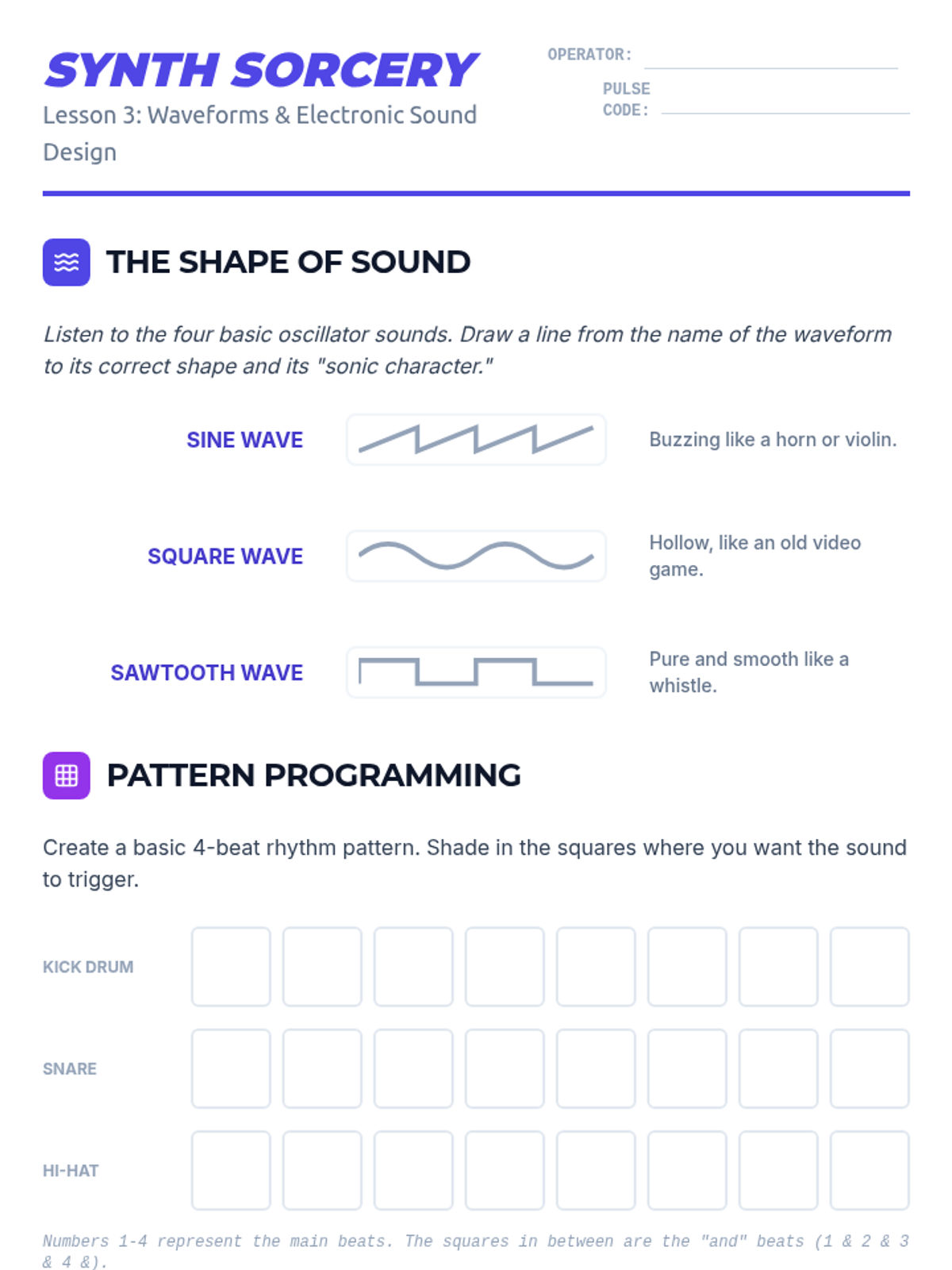
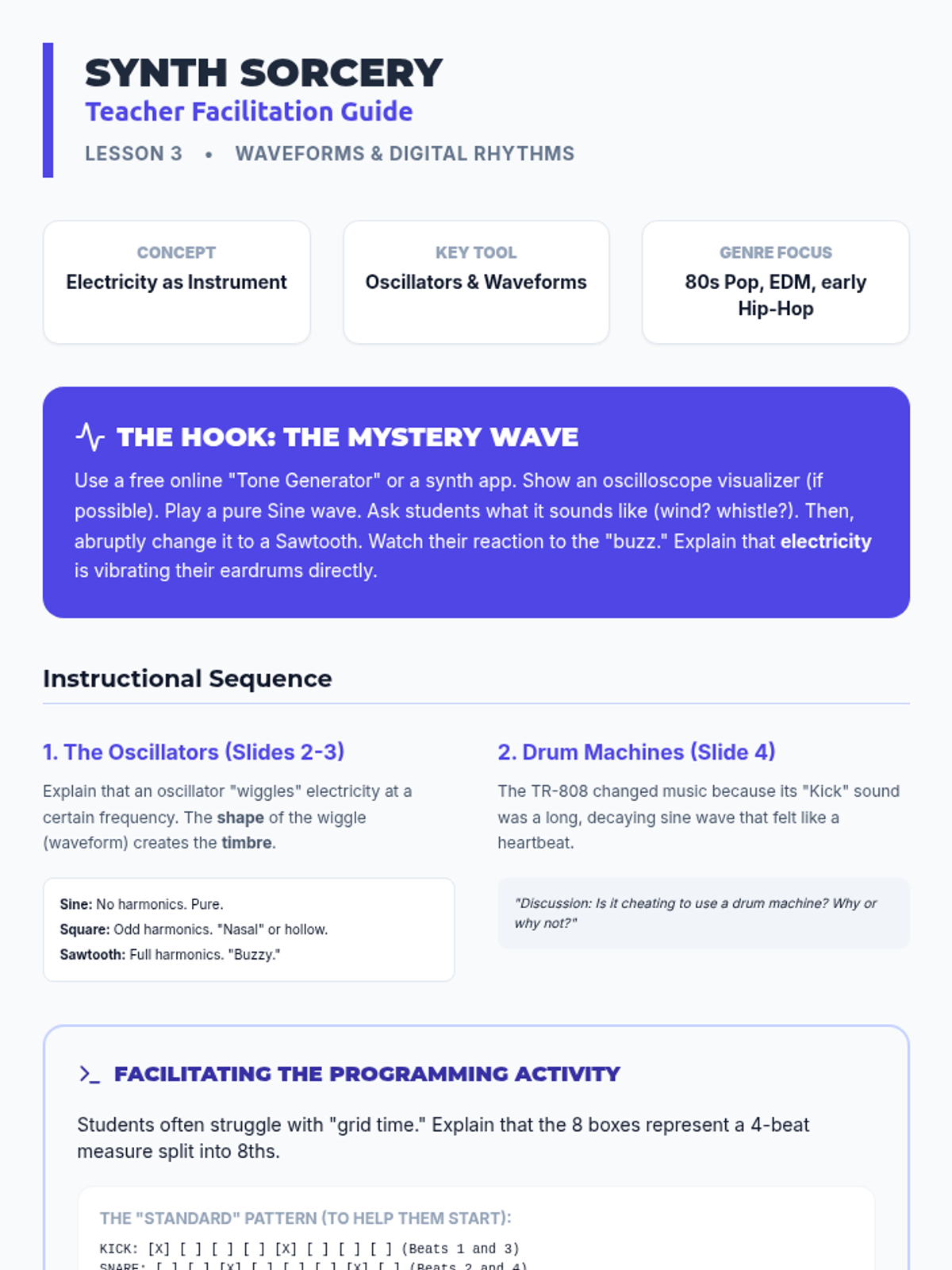
Students explore the introduction of synthesizers and drum machines in the 70s and 80s, learning about waveforms and how electricity can be used to design completely new sounds.
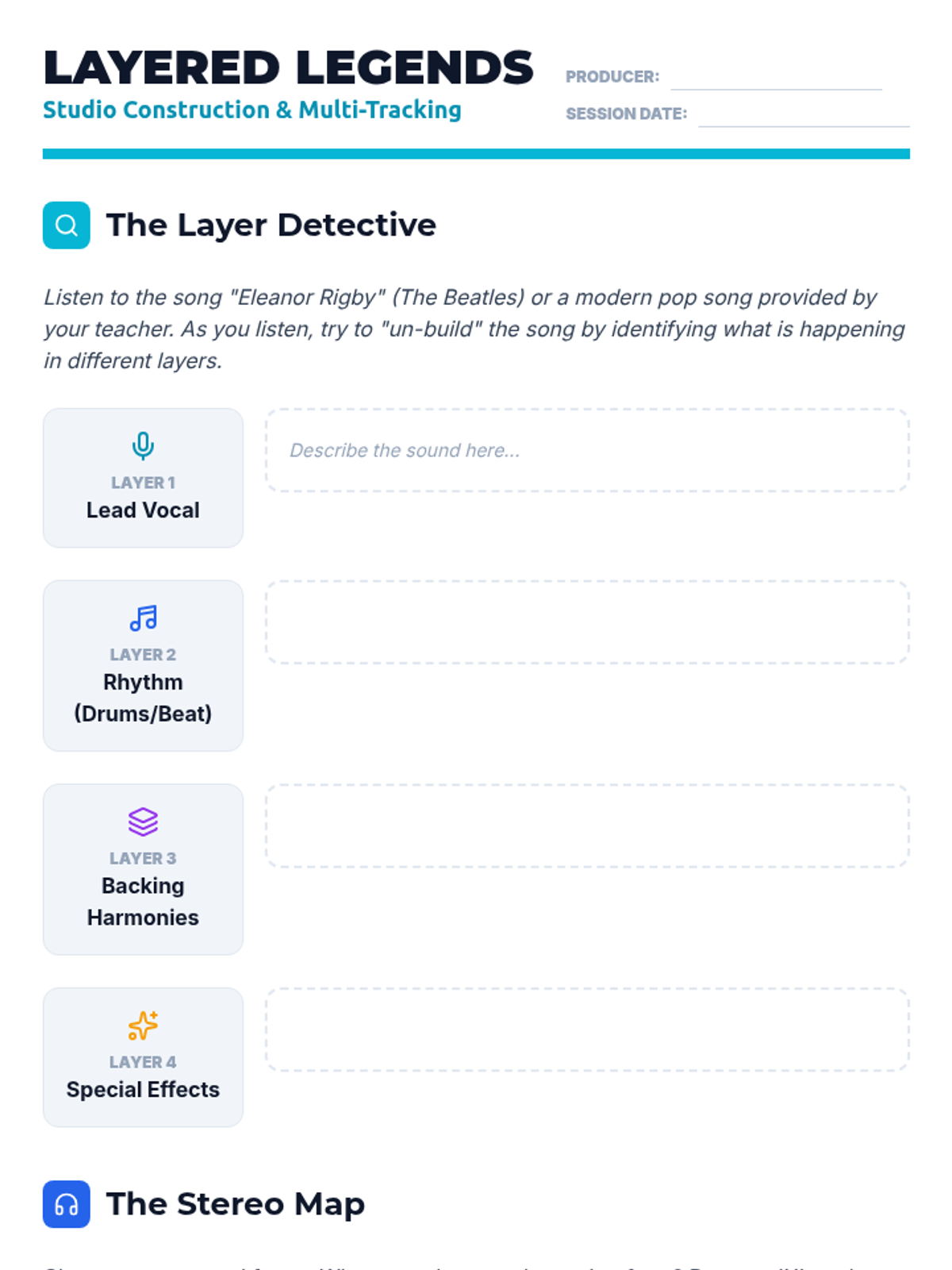
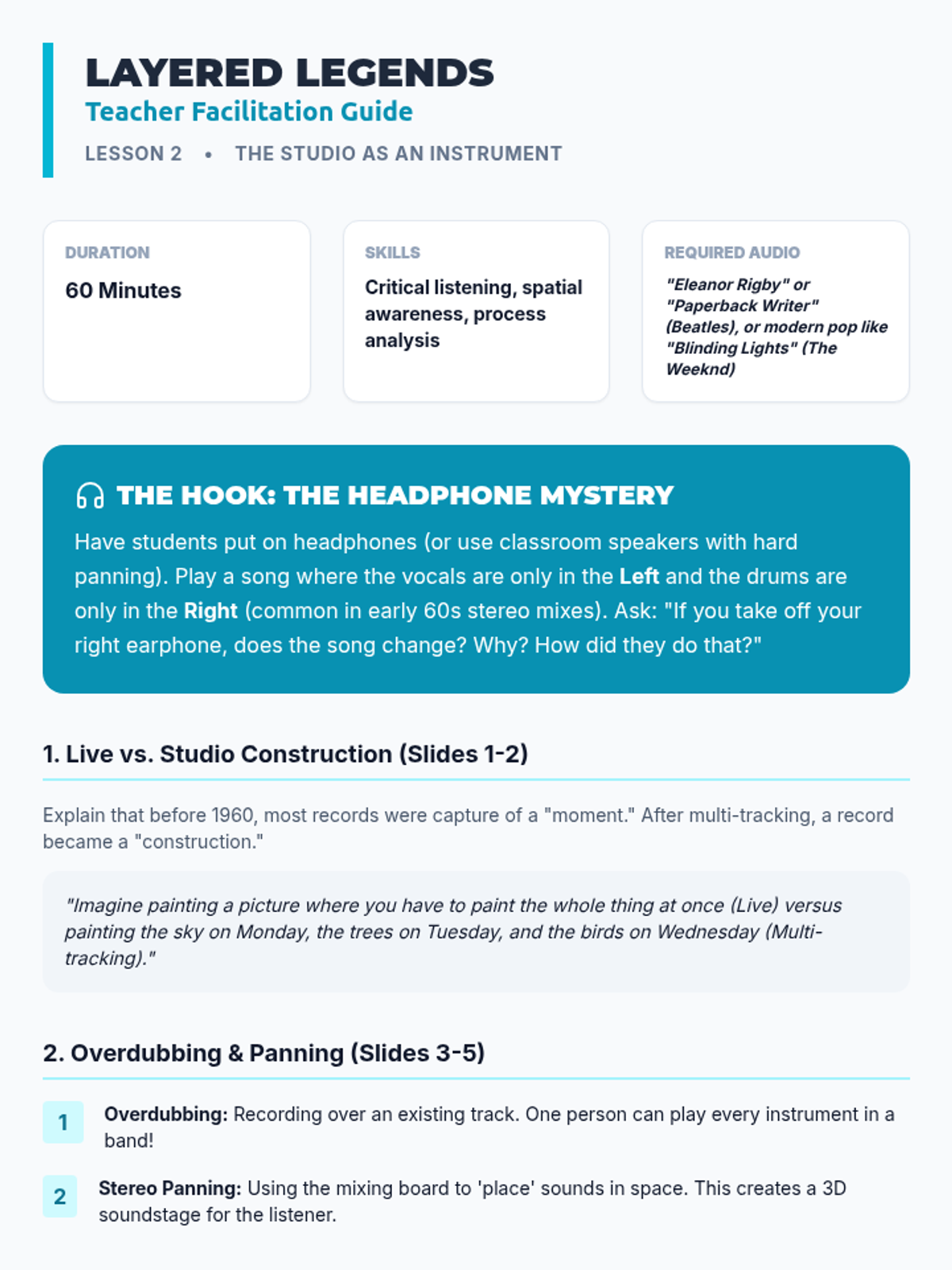
Students explore the 1960s shift from live recording to studio construction, learning about multi-tracking, tape loops, and how The Beatles used the recording studio as a creative instrument.
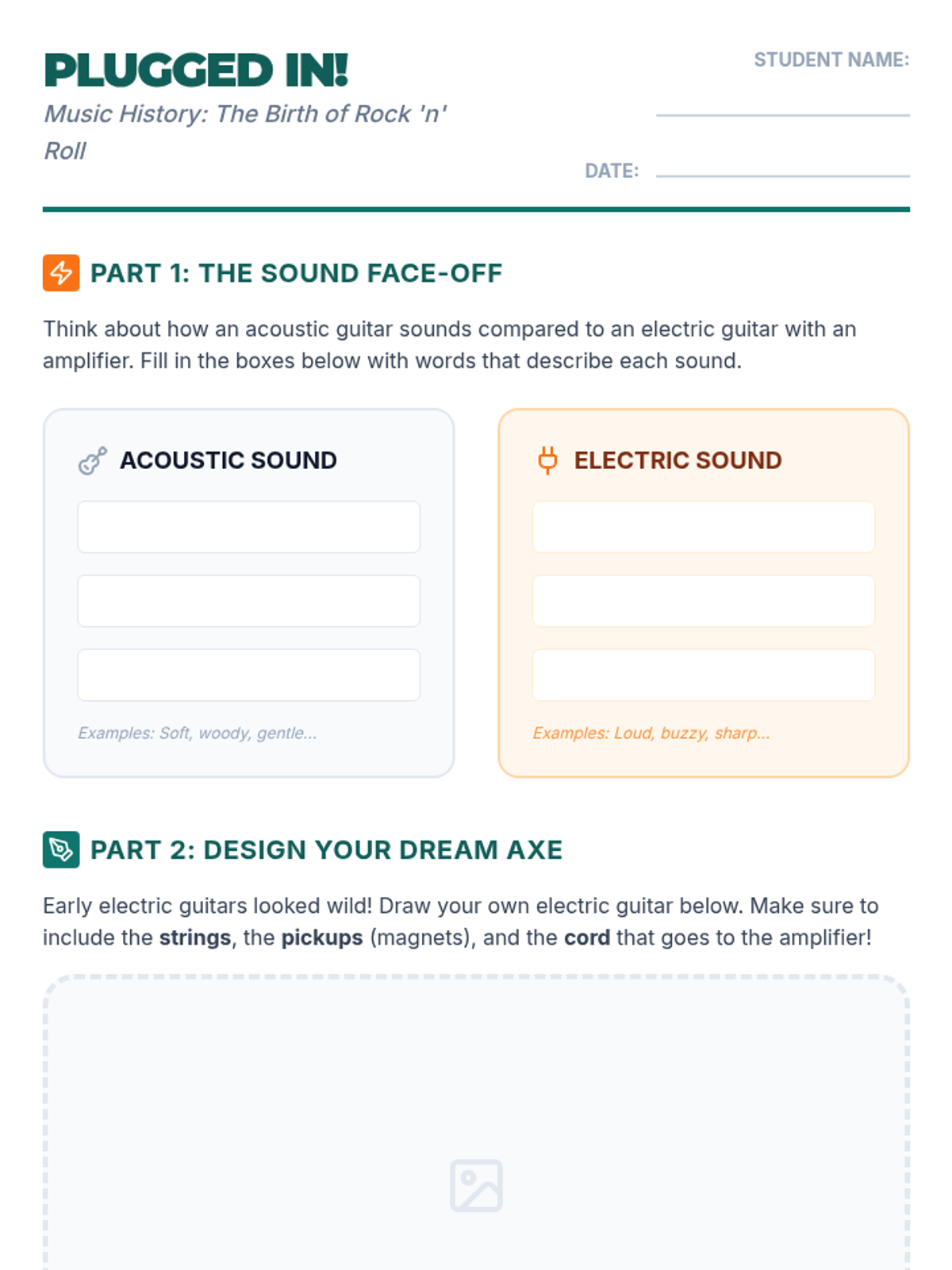
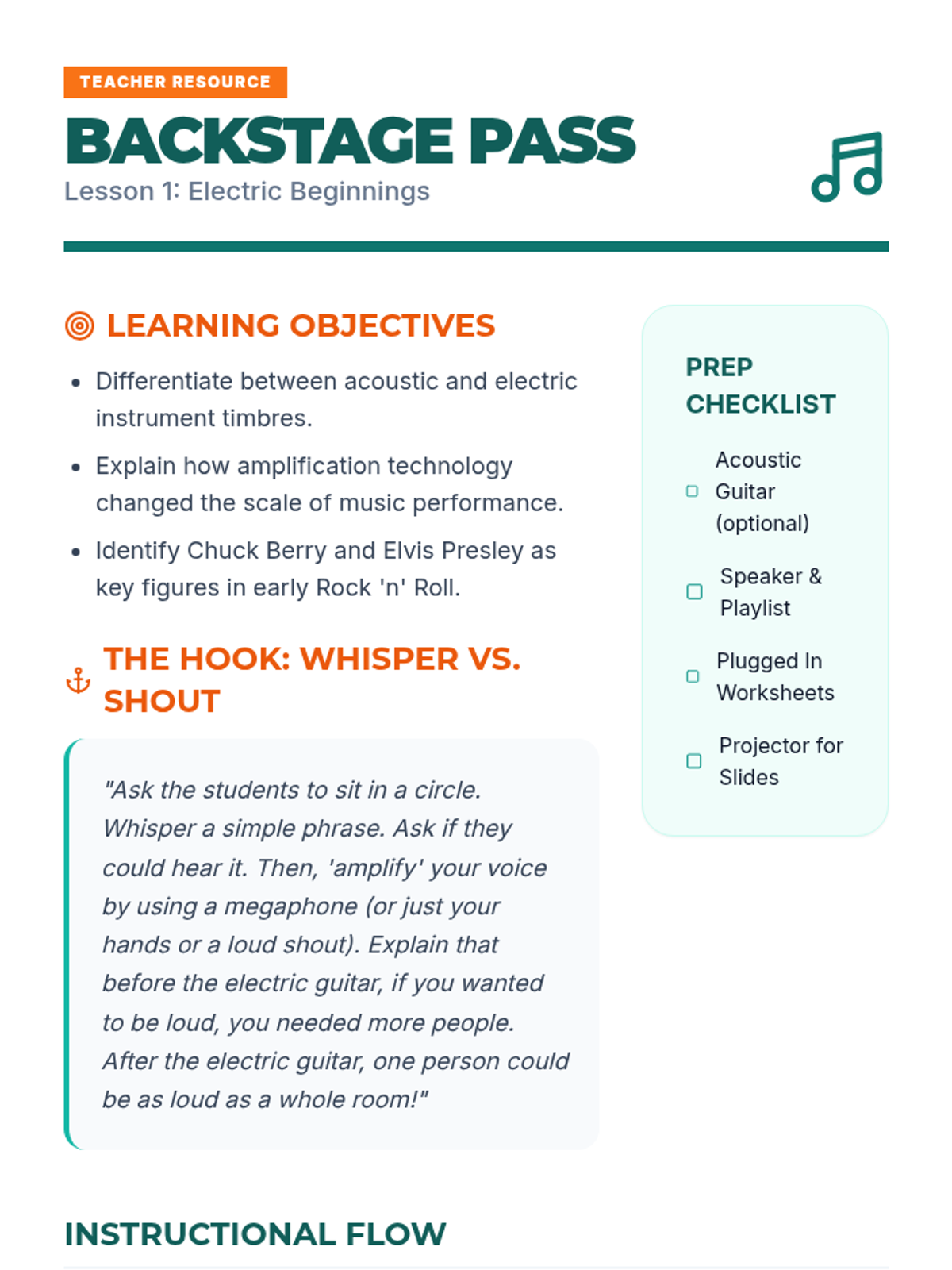
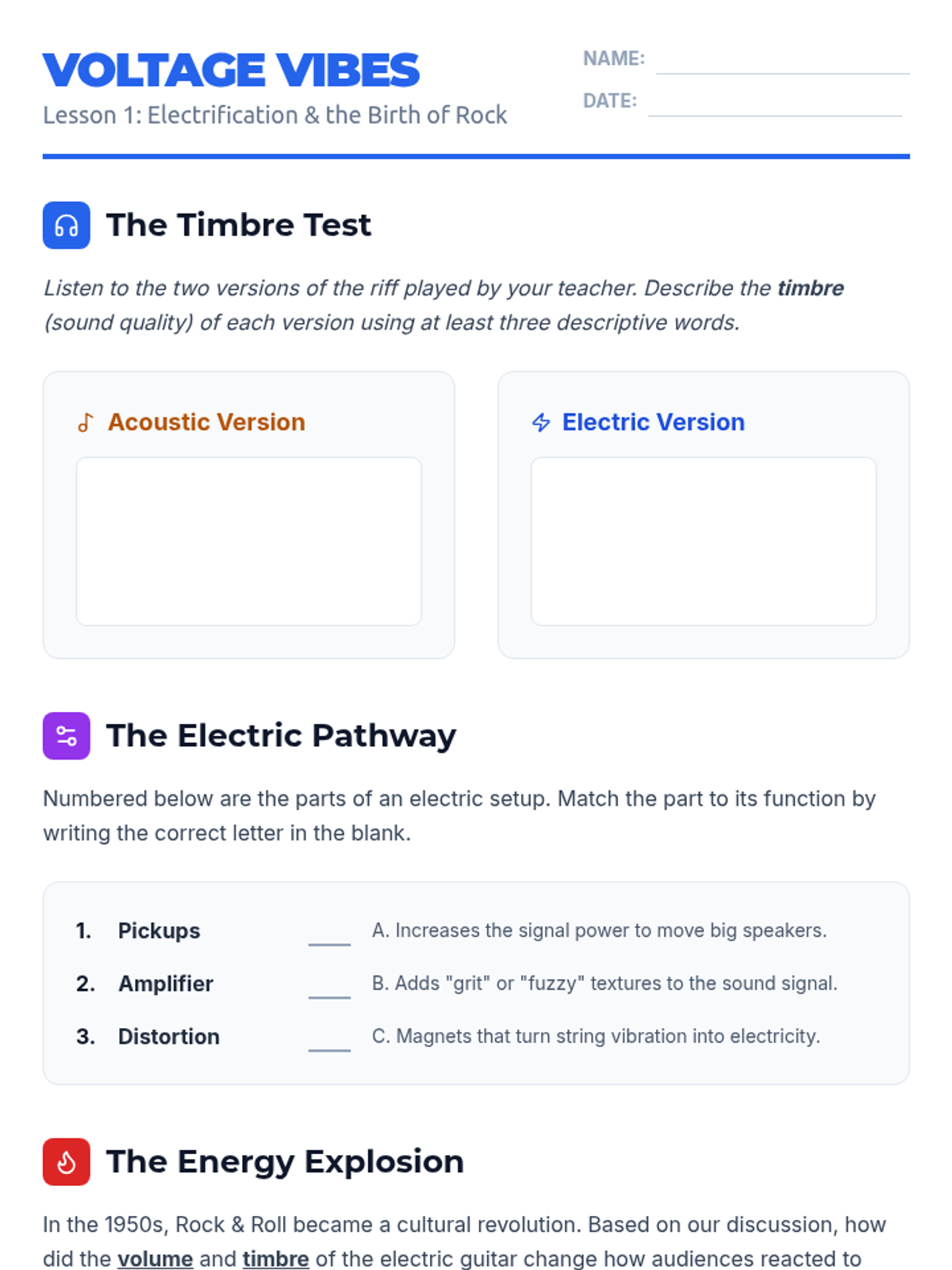
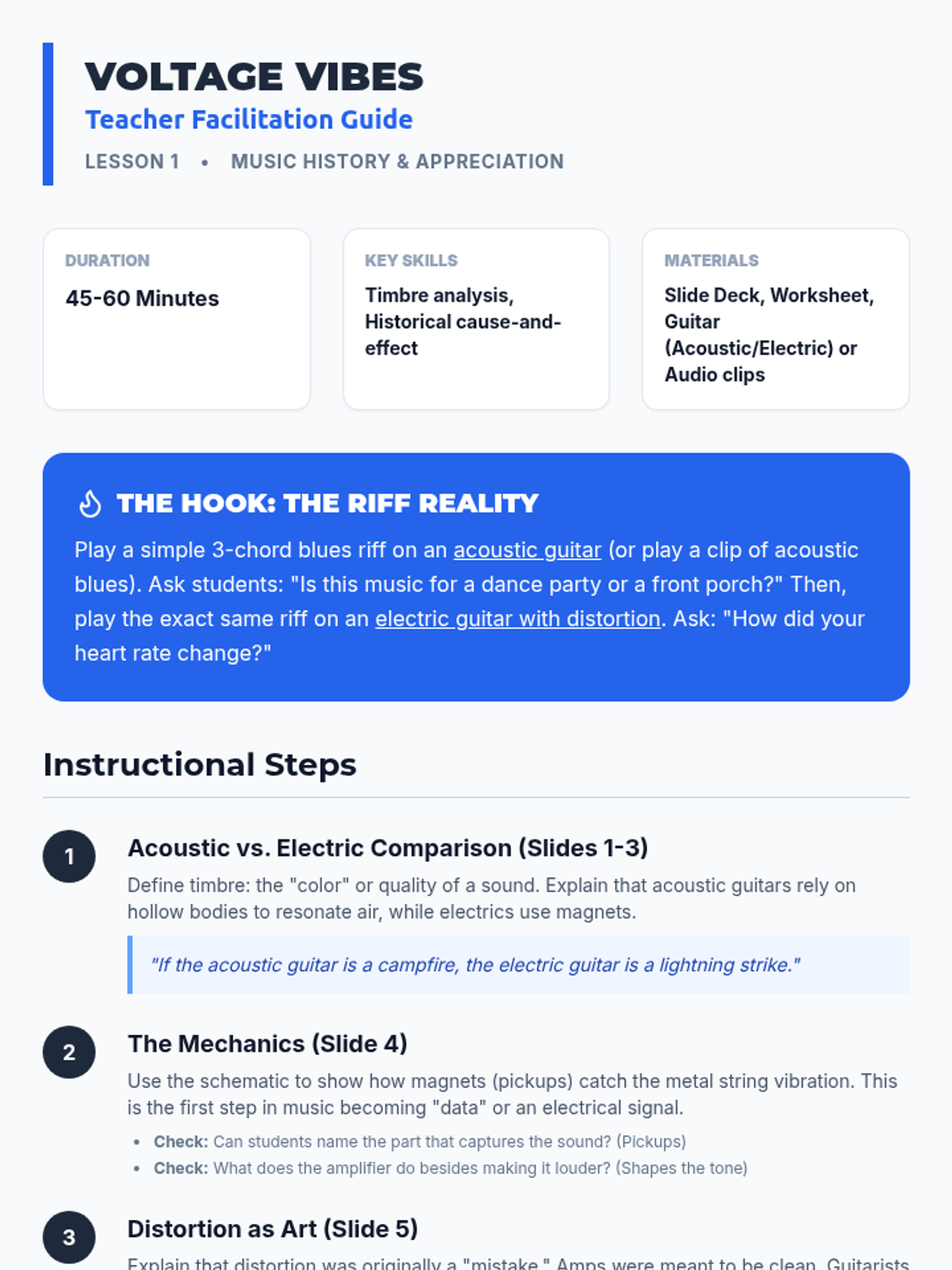
Students compare acoustic and electric sounds, exploring how amplification birthed Rock 'n' Roll through pioneers like Chuck Berry and Elvis Presley.
Students analyze the transition from acoustic to electric instruments in the 1950s, exploring how amplification and the electric guitar changed the sound and energy of music.
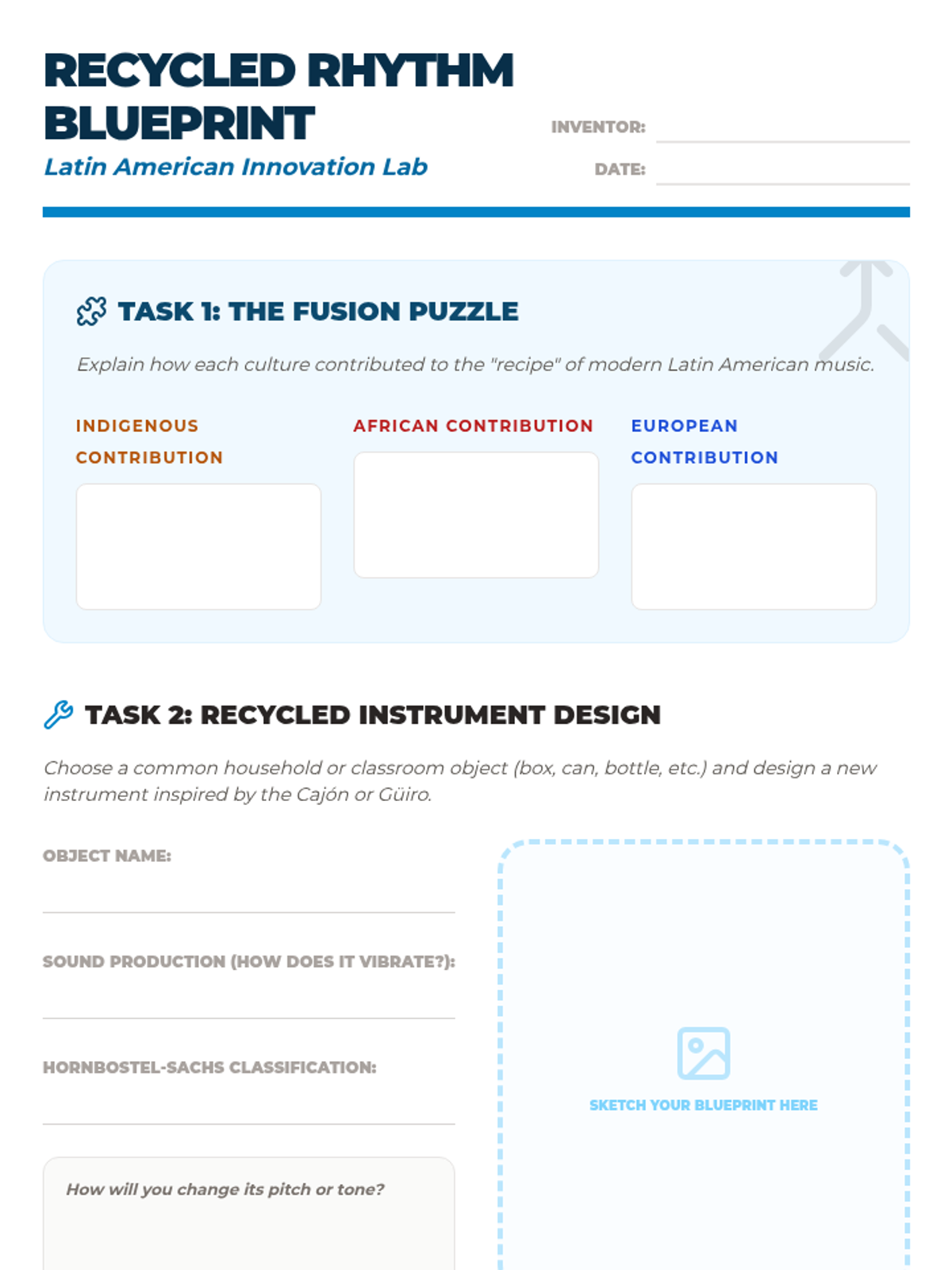
Analysis of the fusion of Indigenous, African, and European influences in Latin American music. Students learn the fundamental Clave rhythm and explore instruments made from recycled materials.
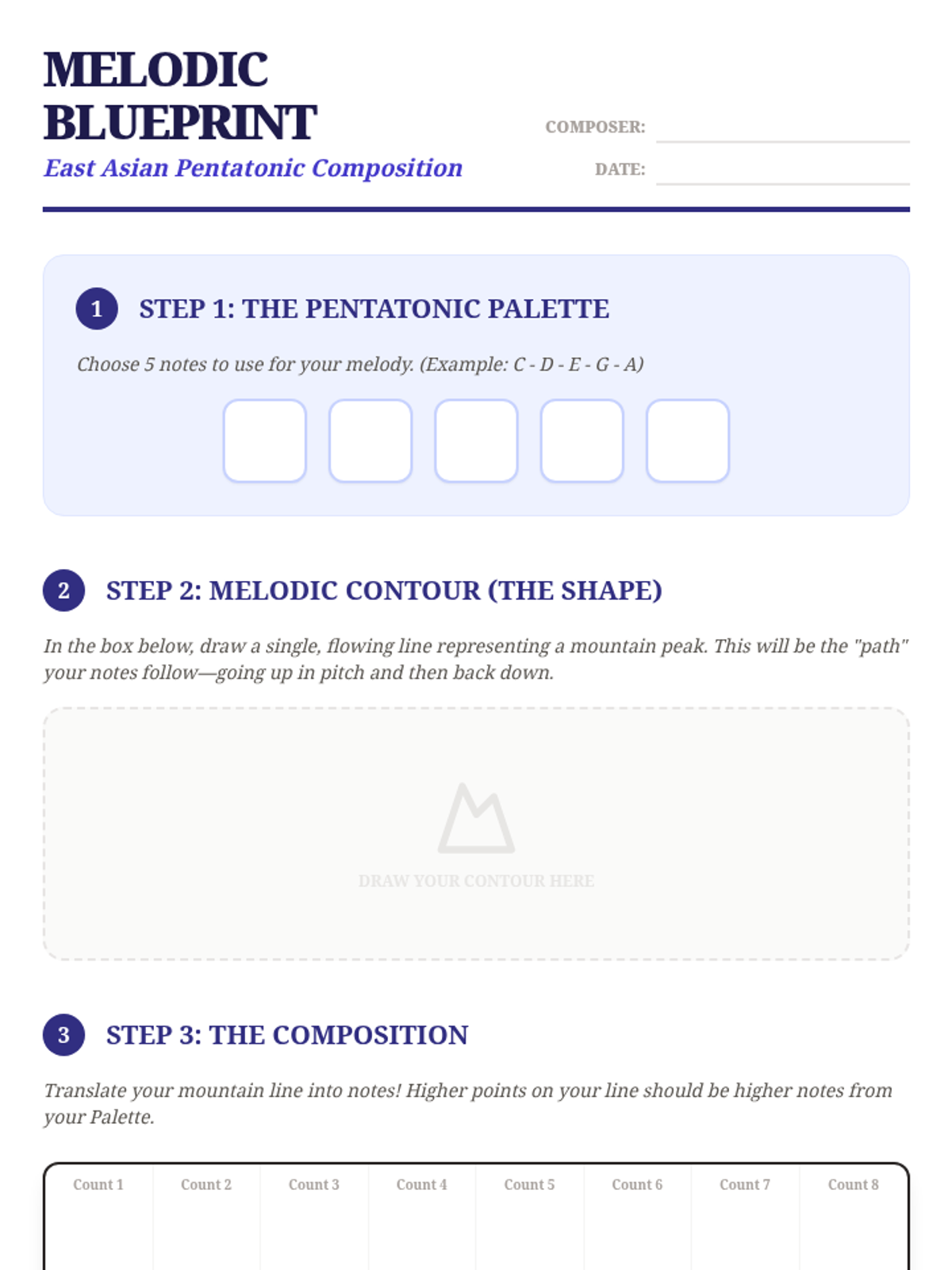
Investigation of the pentatonic scale and its connection to nature and silence in East Asian music. Students compose their own melodies using a restricted scale.
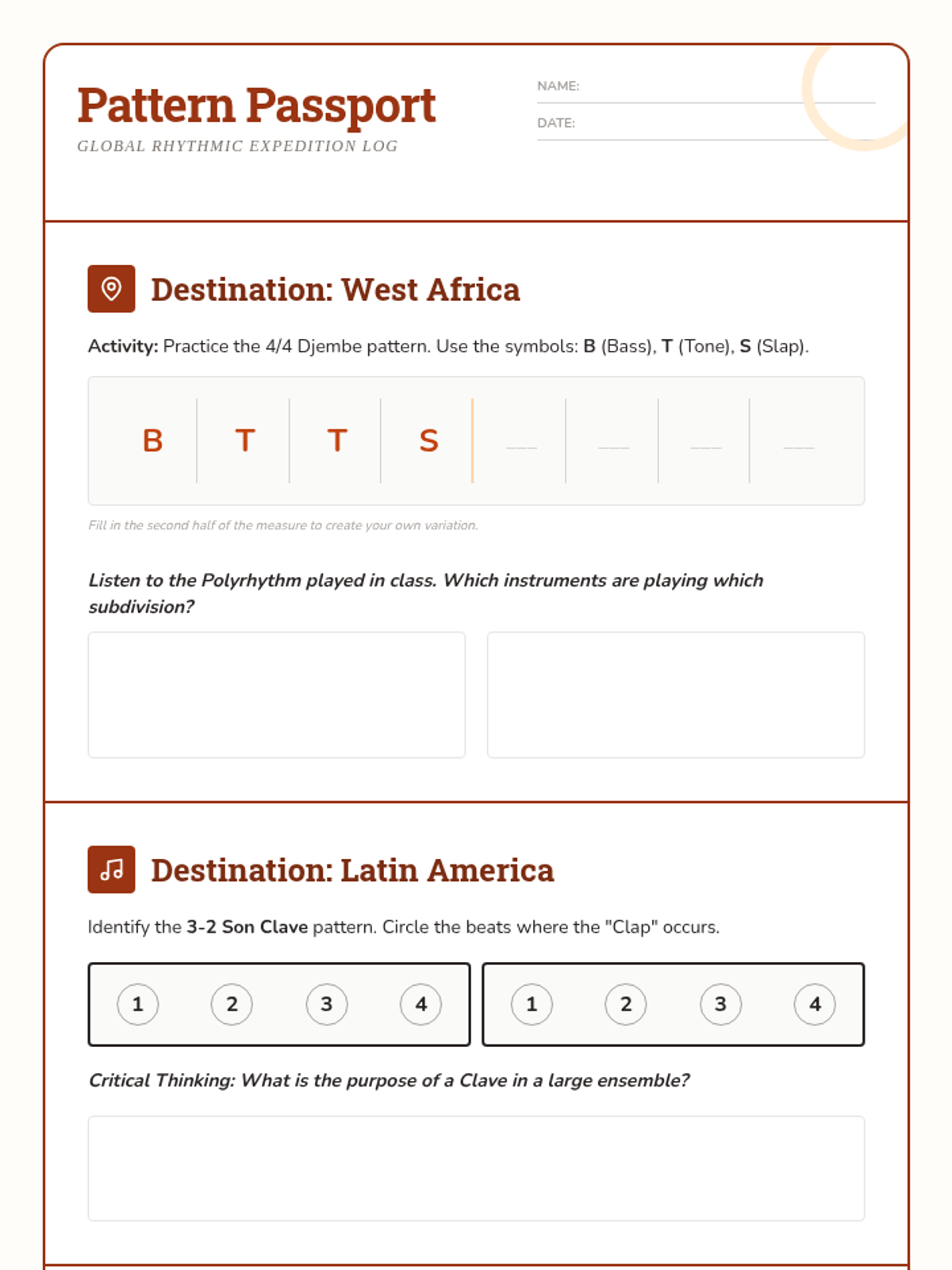
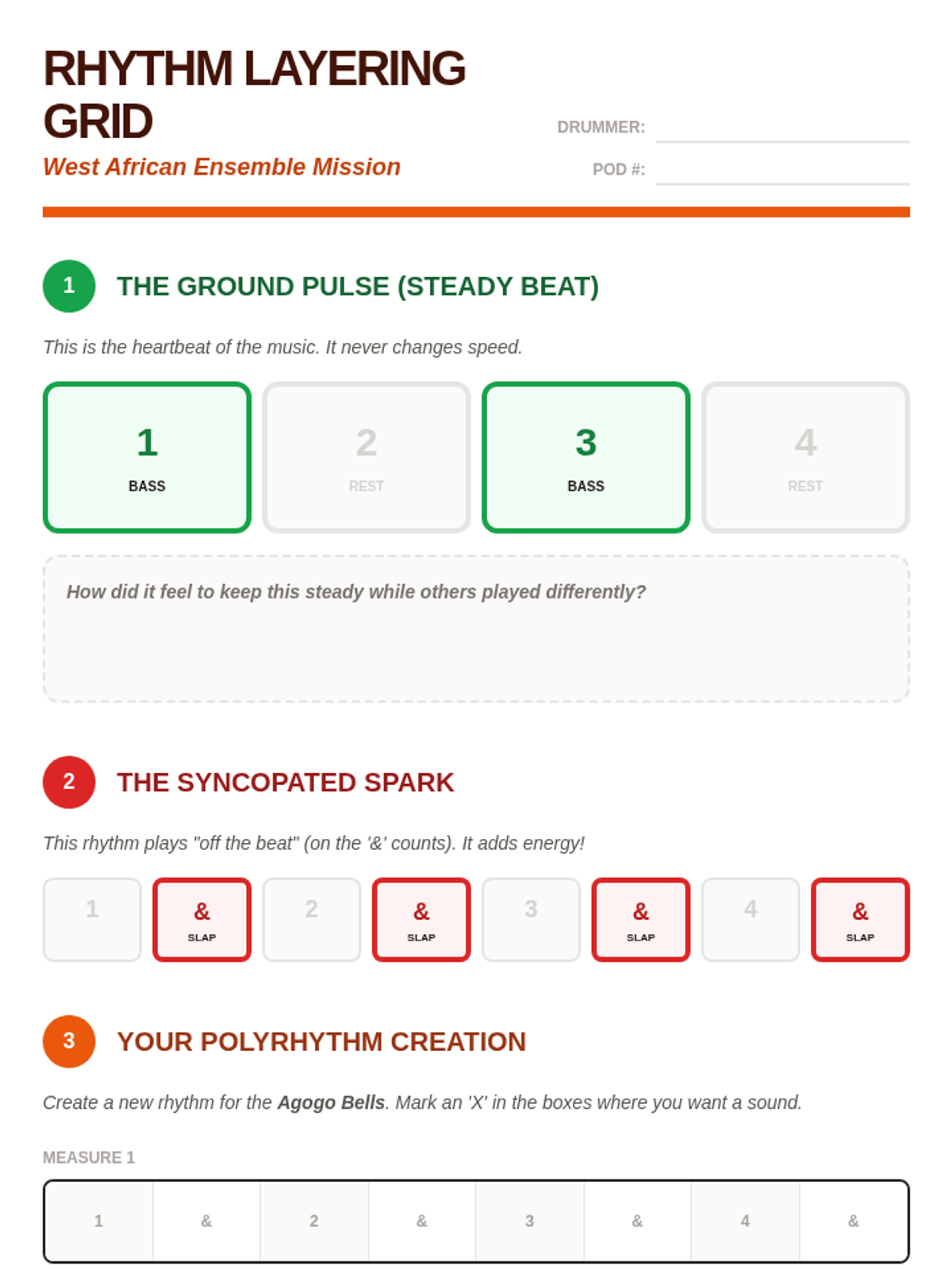
Exploration of West African polyrhythms and the role of music as communication. Students practice layering rhythms and understand the cultural significance of community drumming.
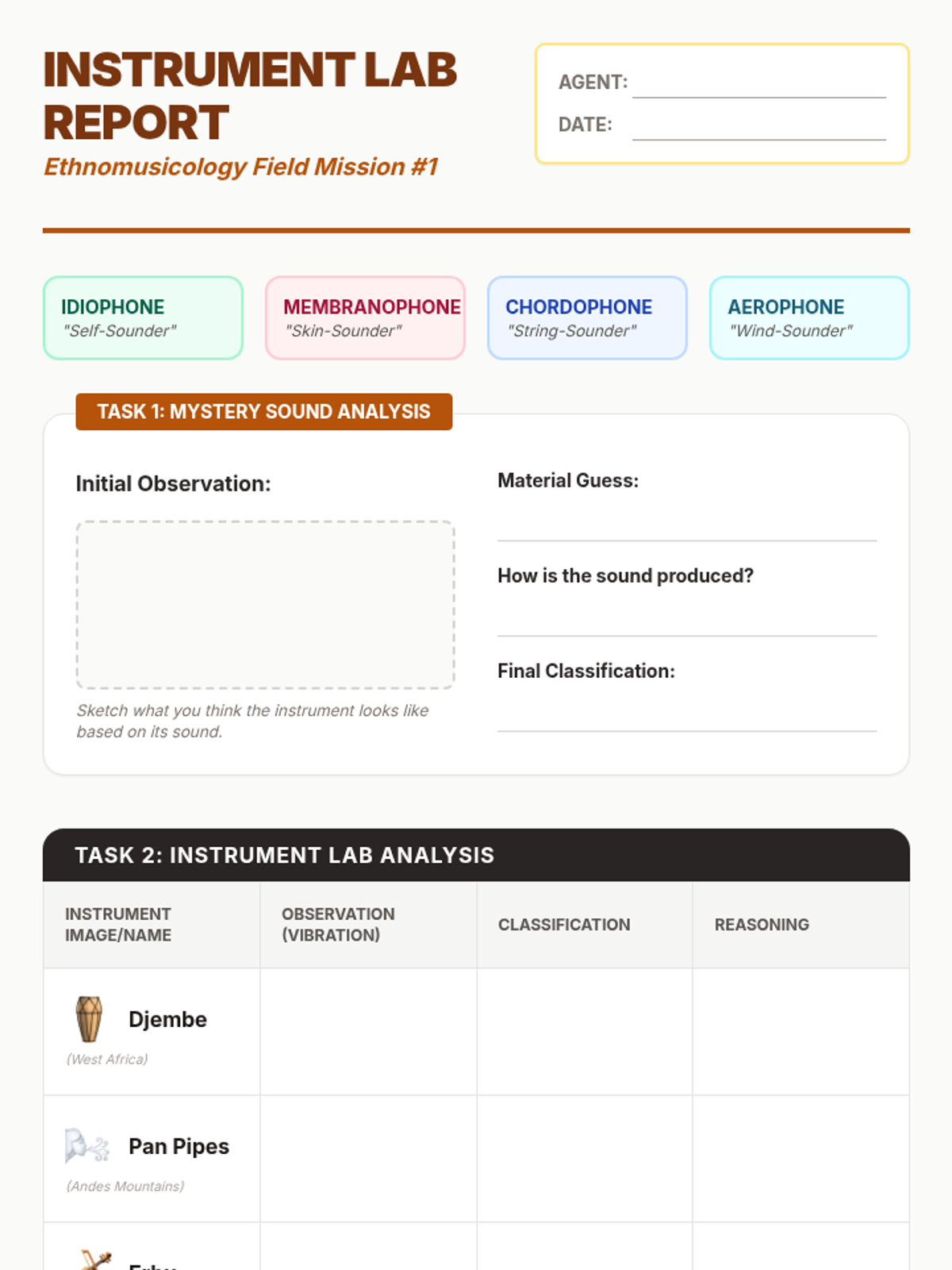
Introduction to the Hornbostel-Sachs system of instrument classification. Students analyze how instruments produce sound using categories like aerophones, chordophones, idiophones, and membranophones.
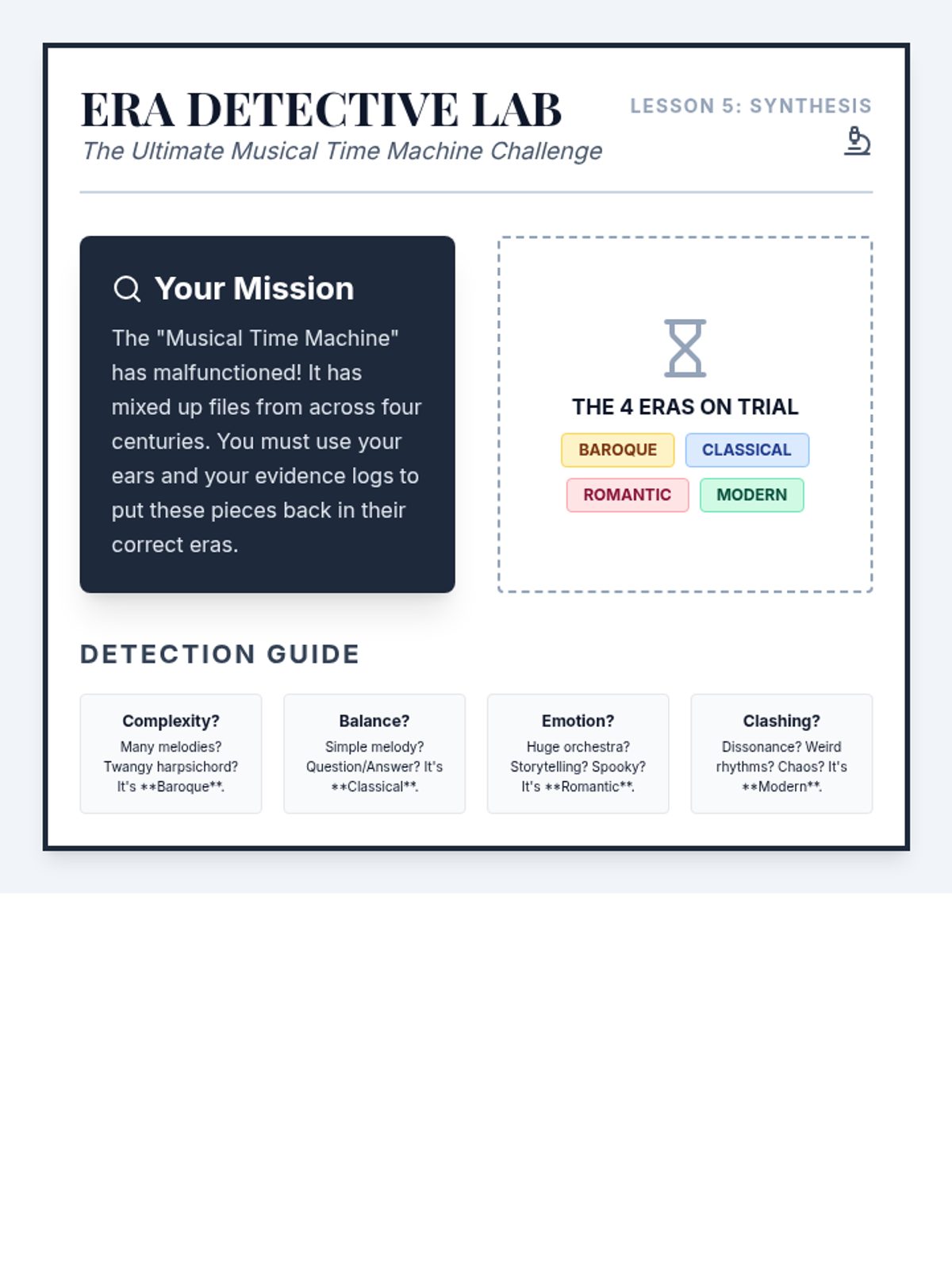
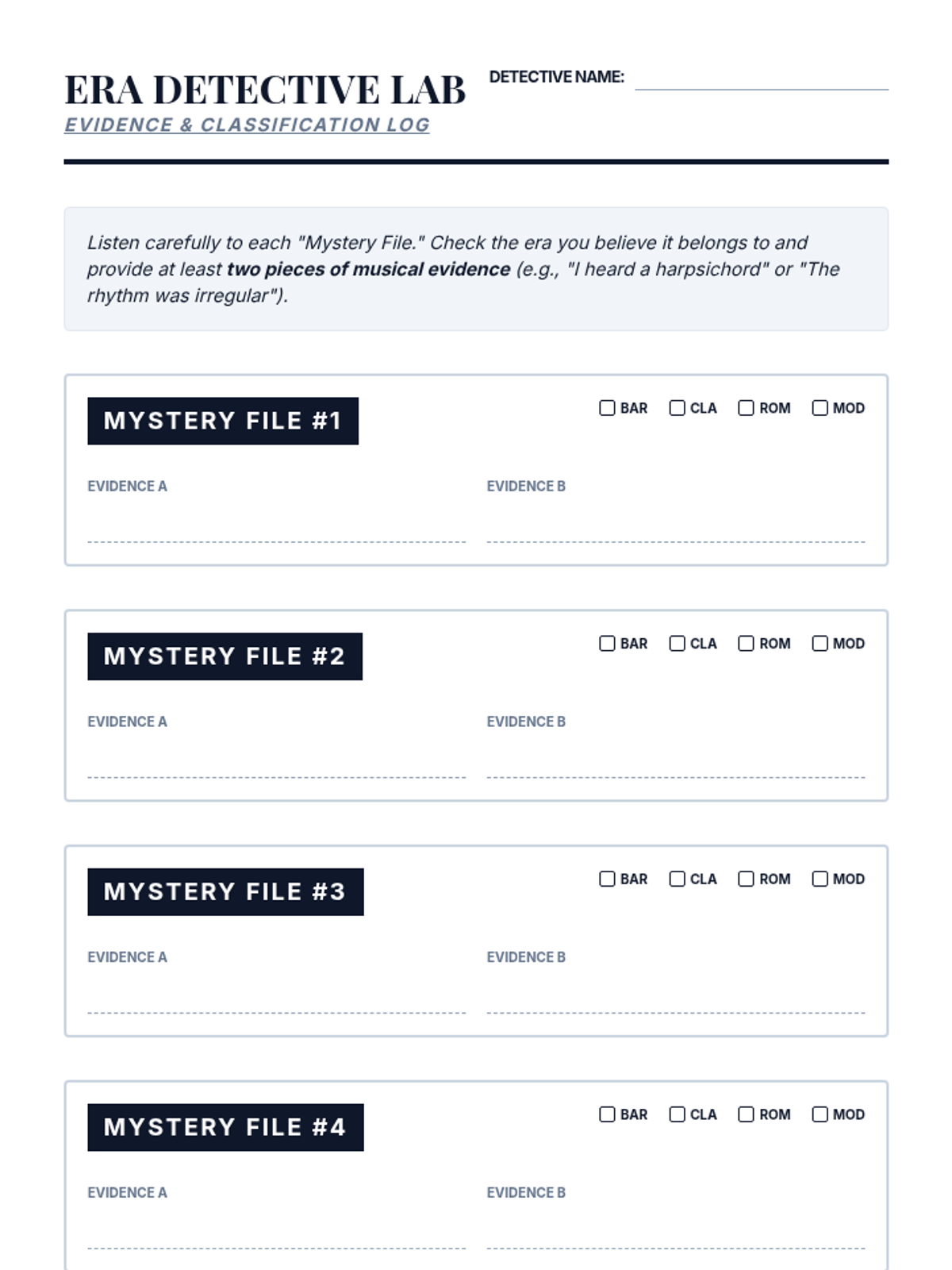
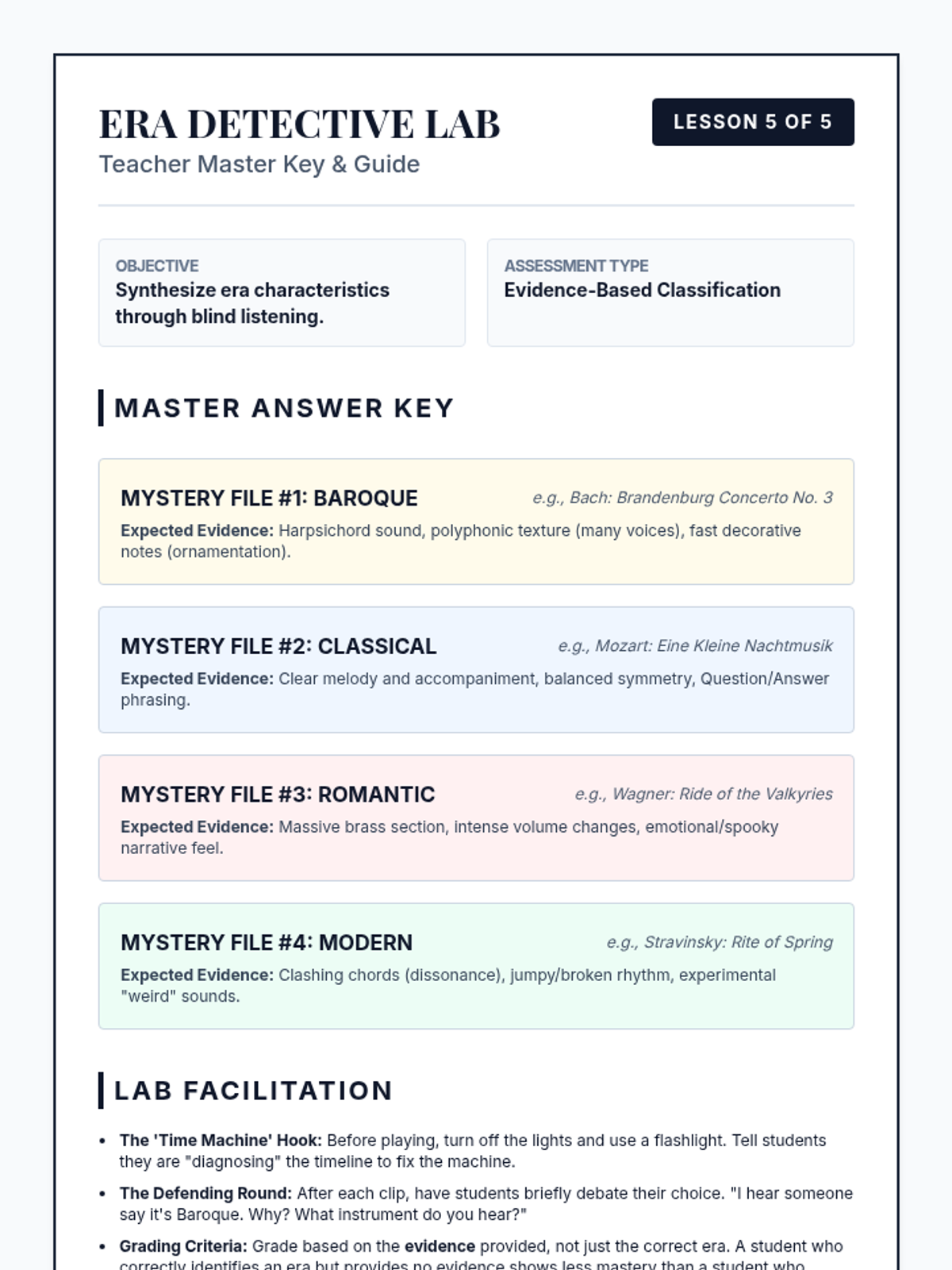
A synthesis lesson where students participate in a blind listening challenge to categorize excerpts into correct eras.
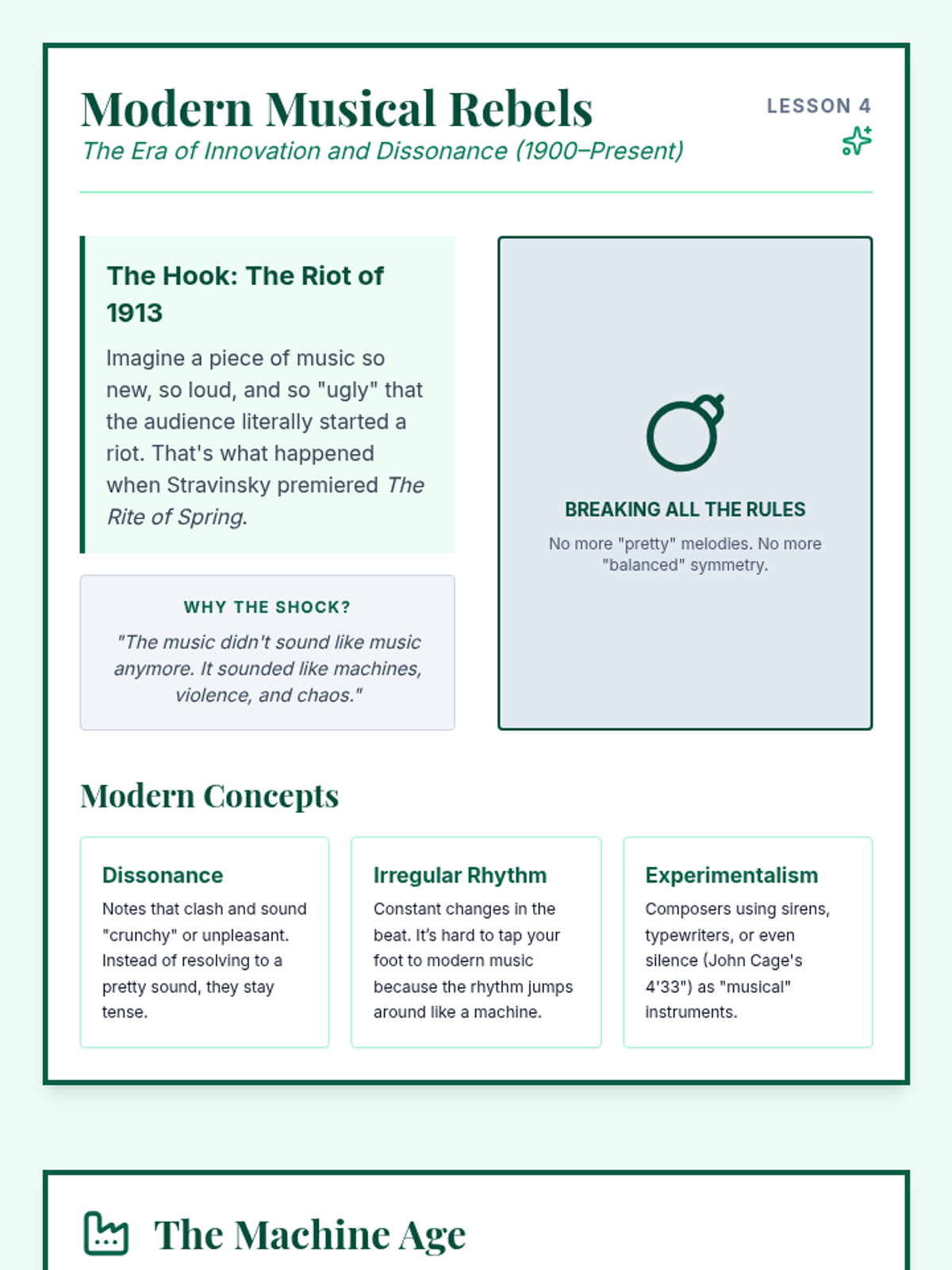
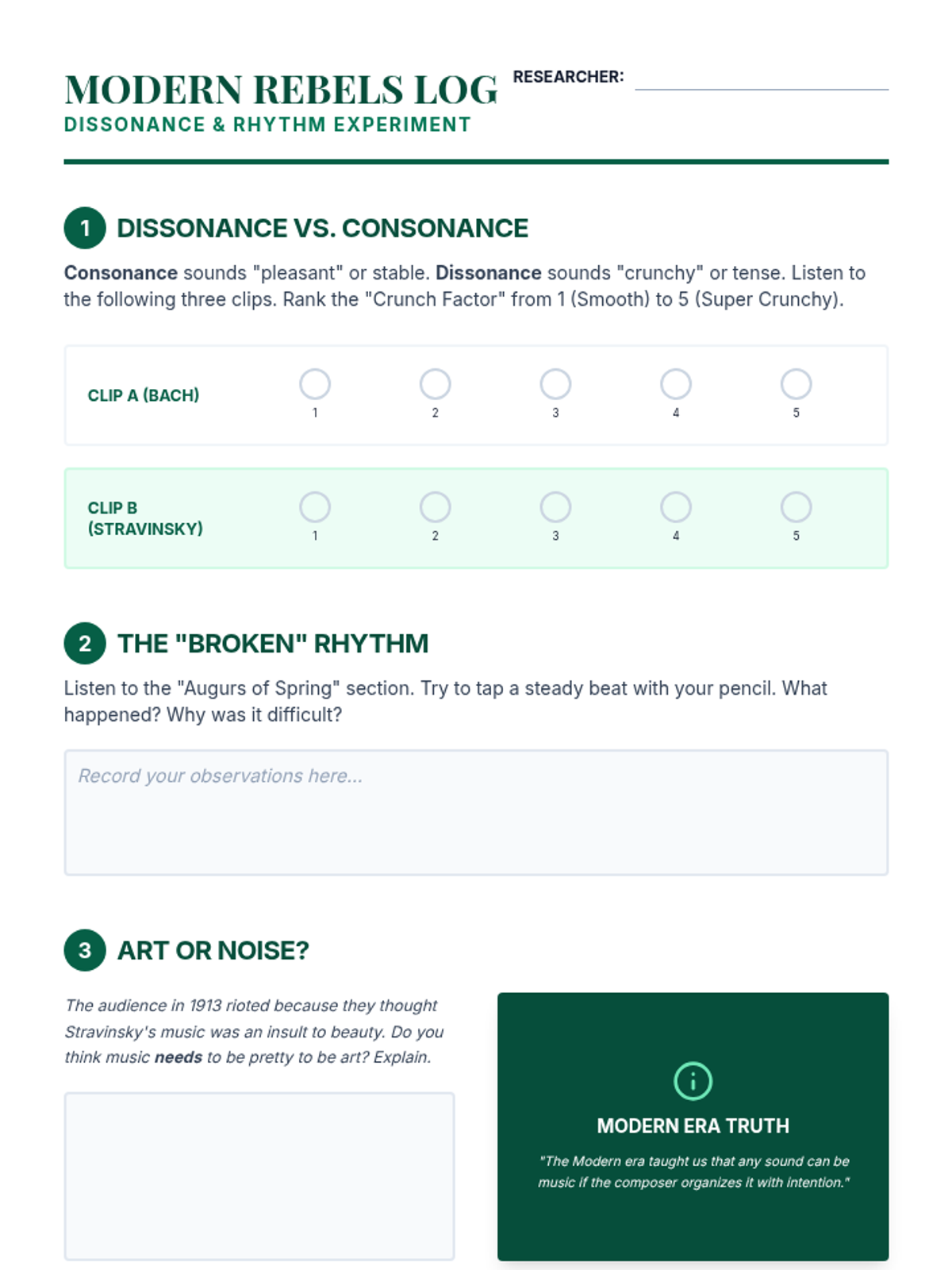
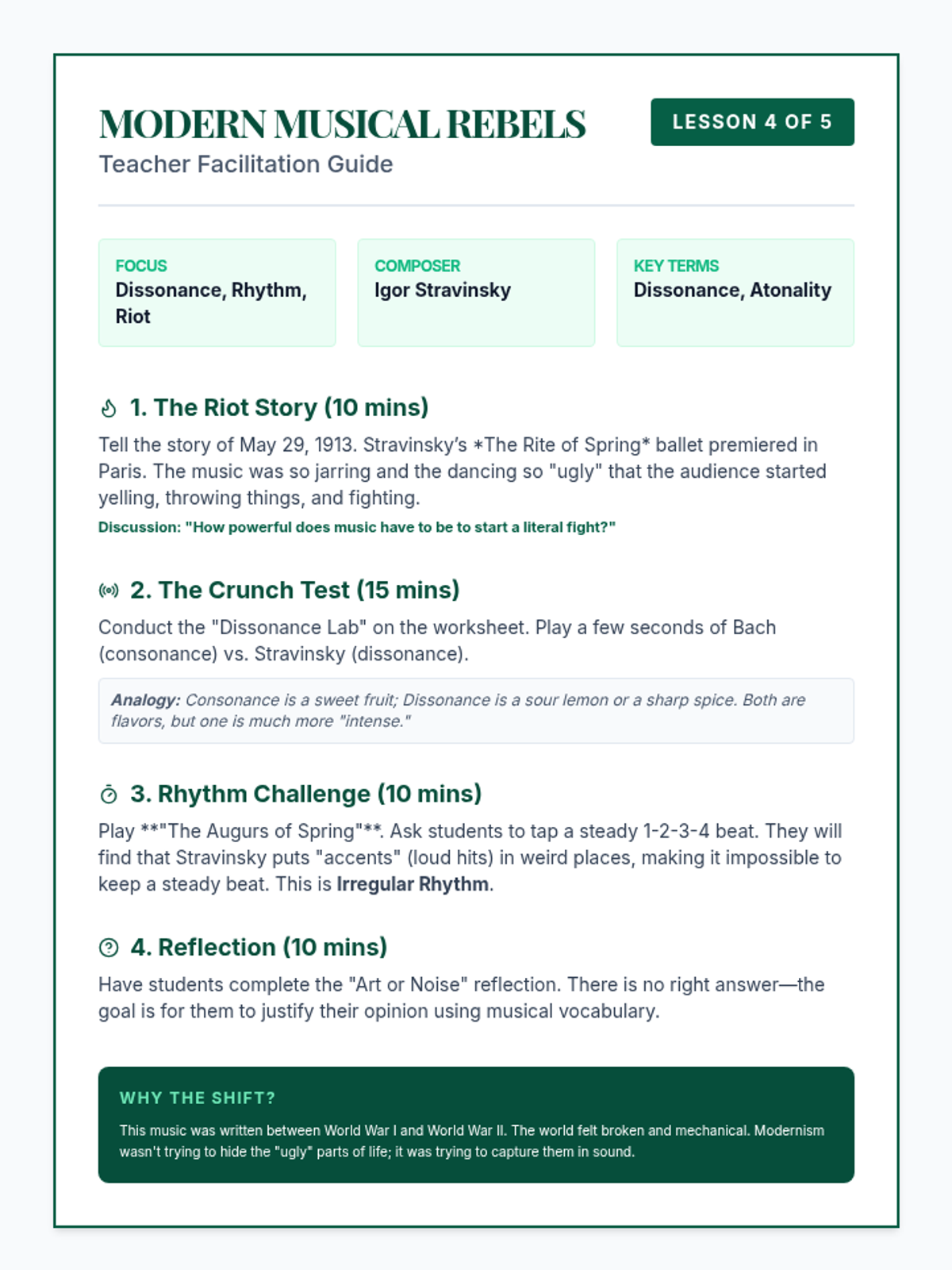
Cover the radical shift in the 1900s where composers broke traditional rules of harmony and rhythm.
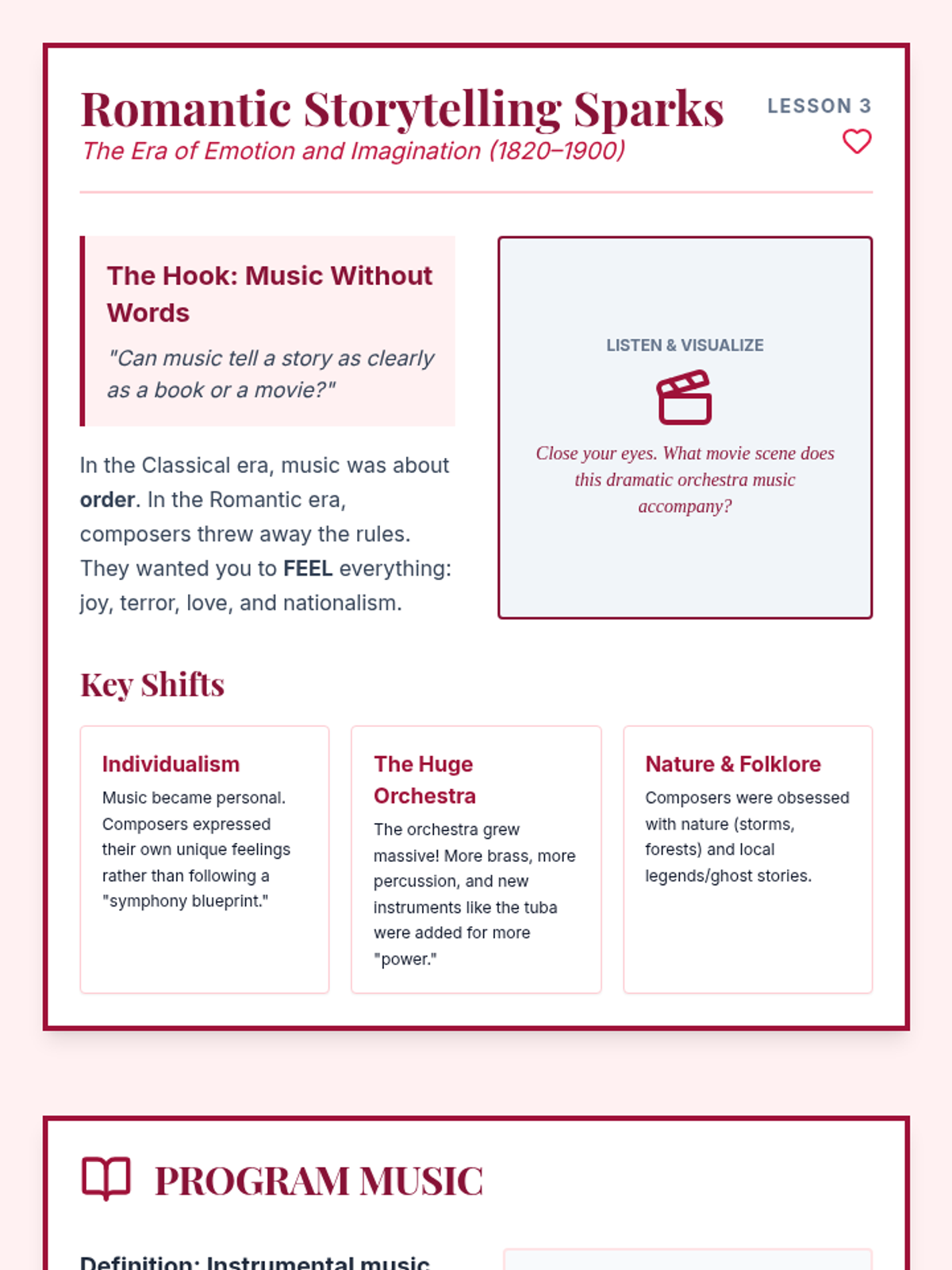
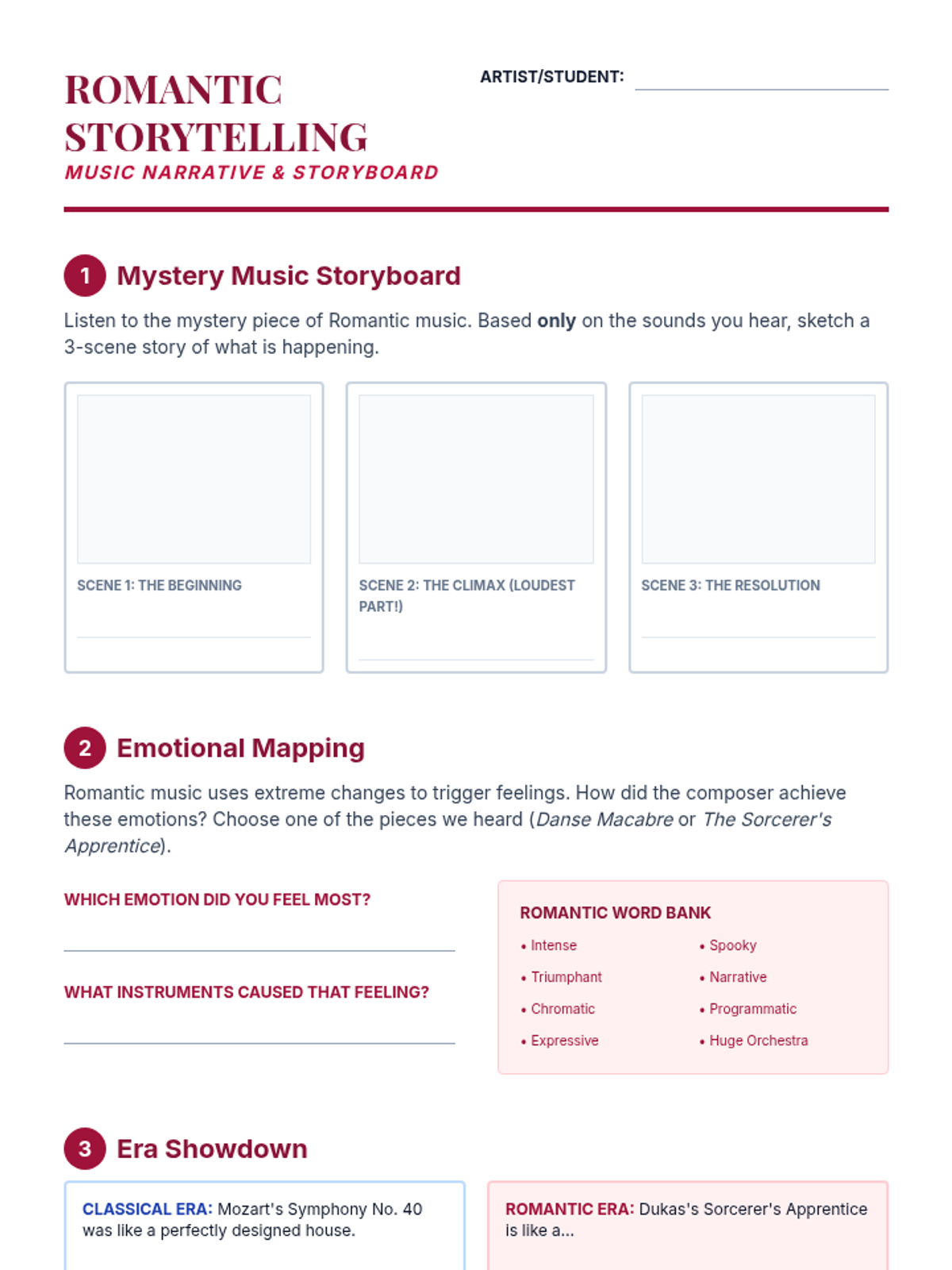
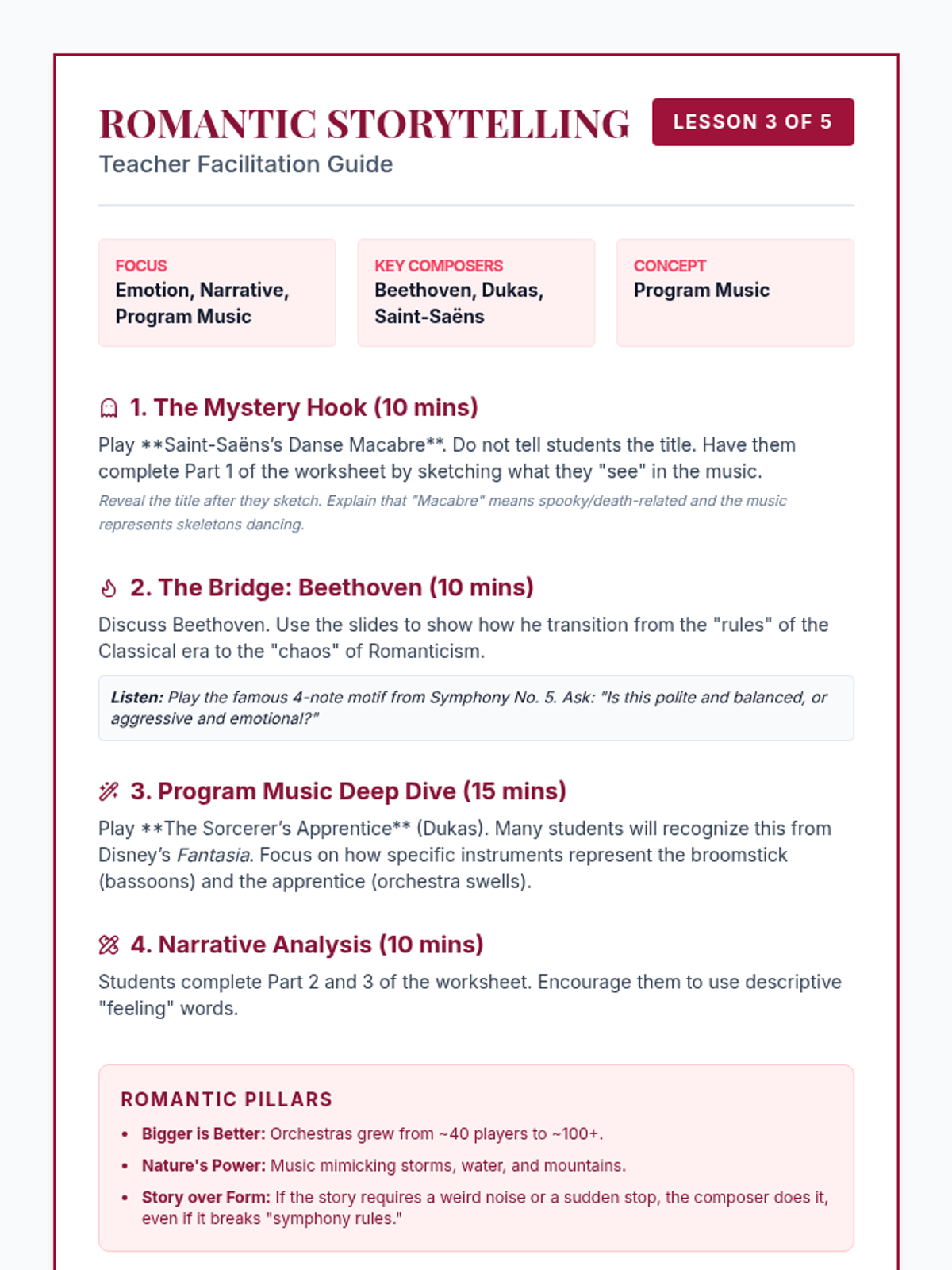
Investigate how music shifted towards intense emotion and storytelling (Program Music) during the Romantic era.
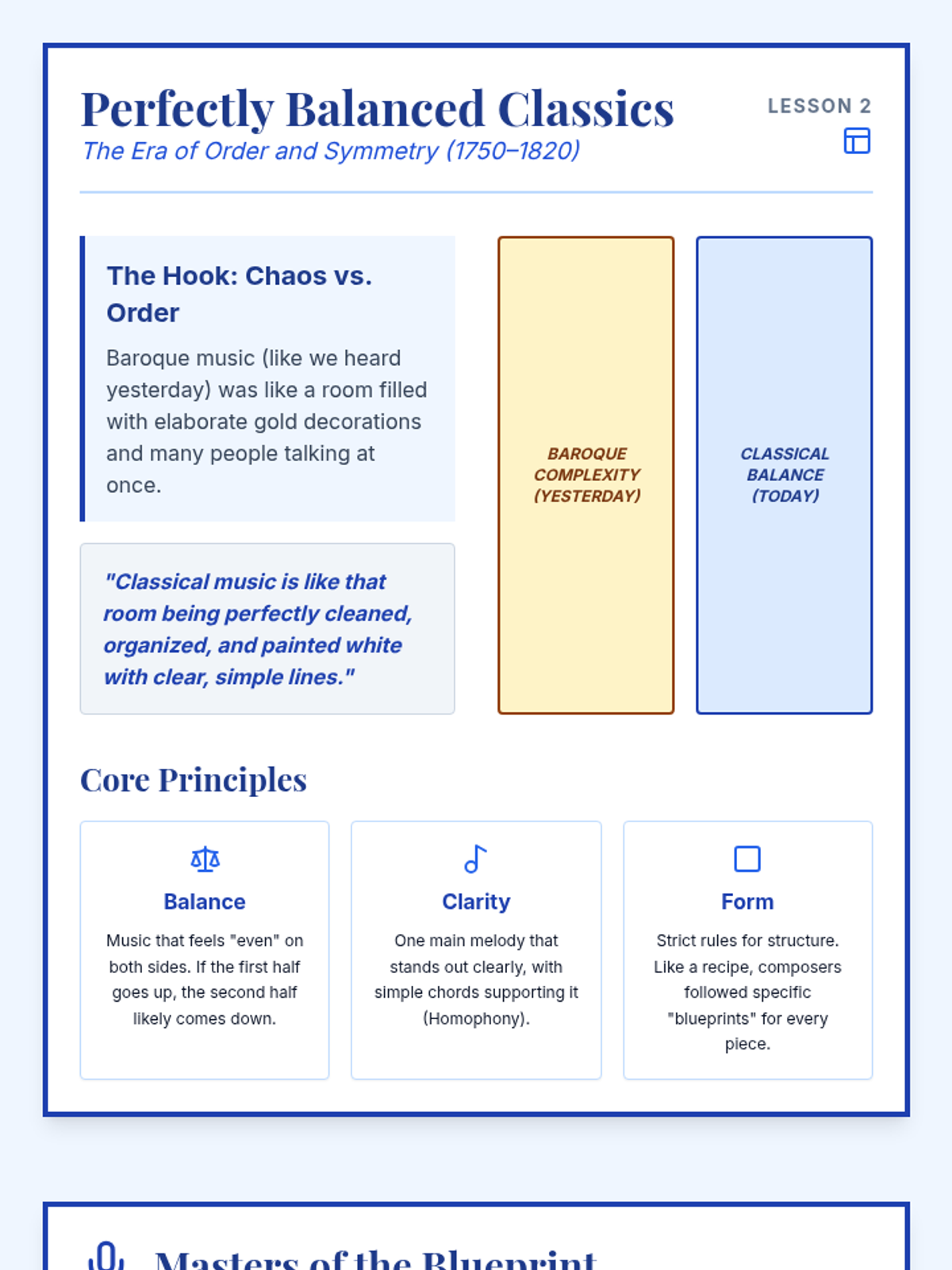
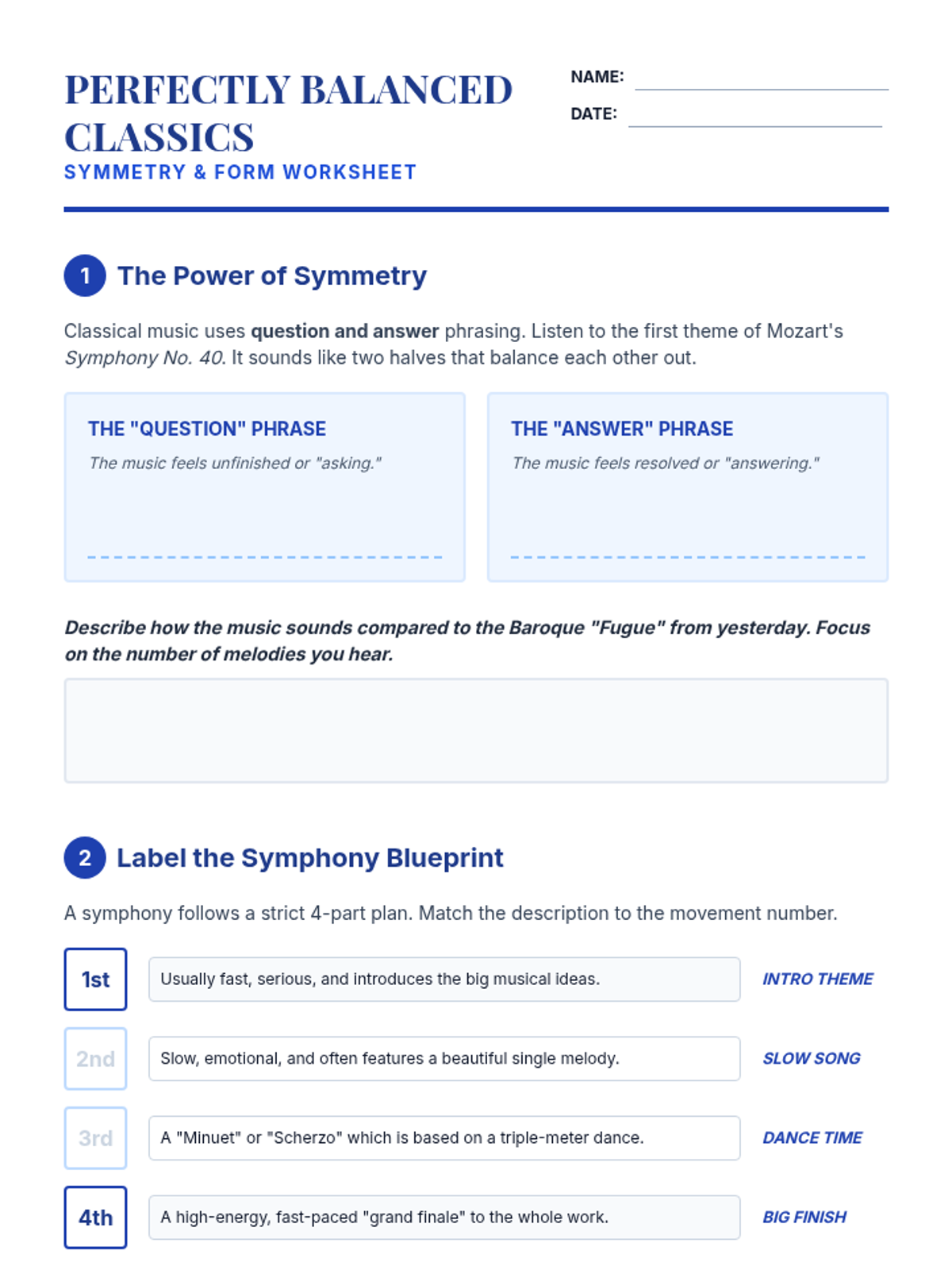
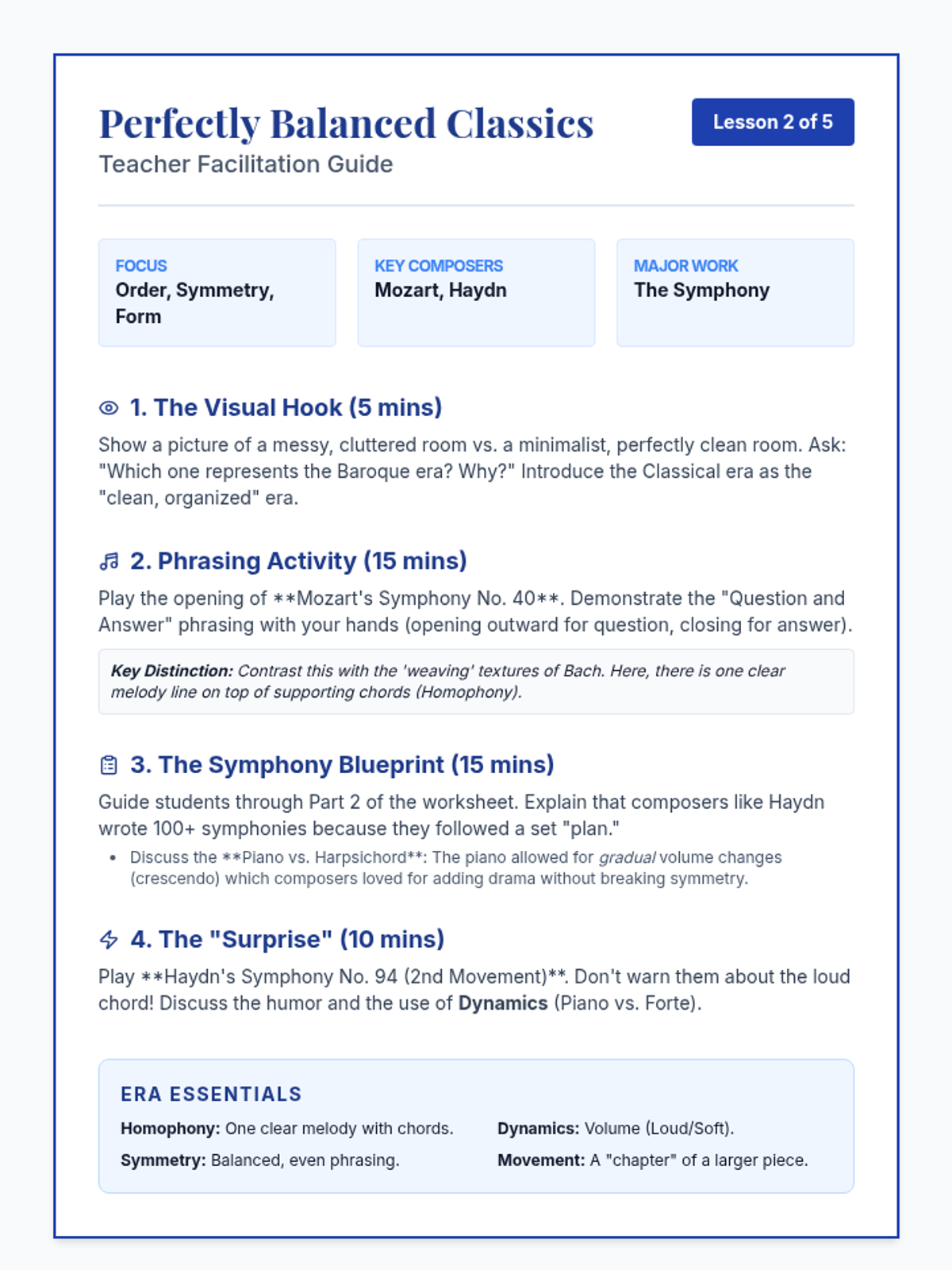
Introduce the Classical era's obsession with order, symmetry, and clear melody through Mozart and Haydn.
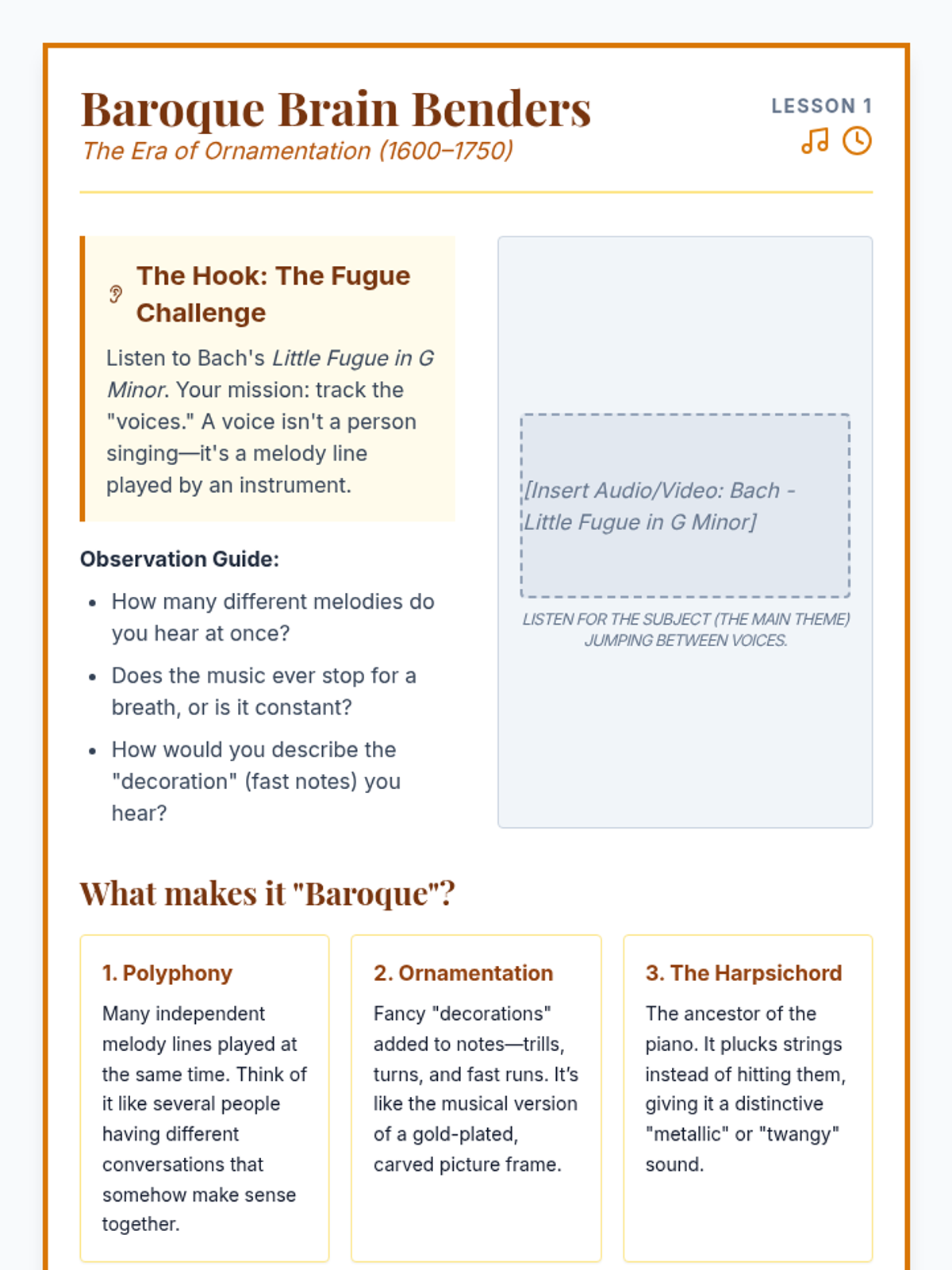
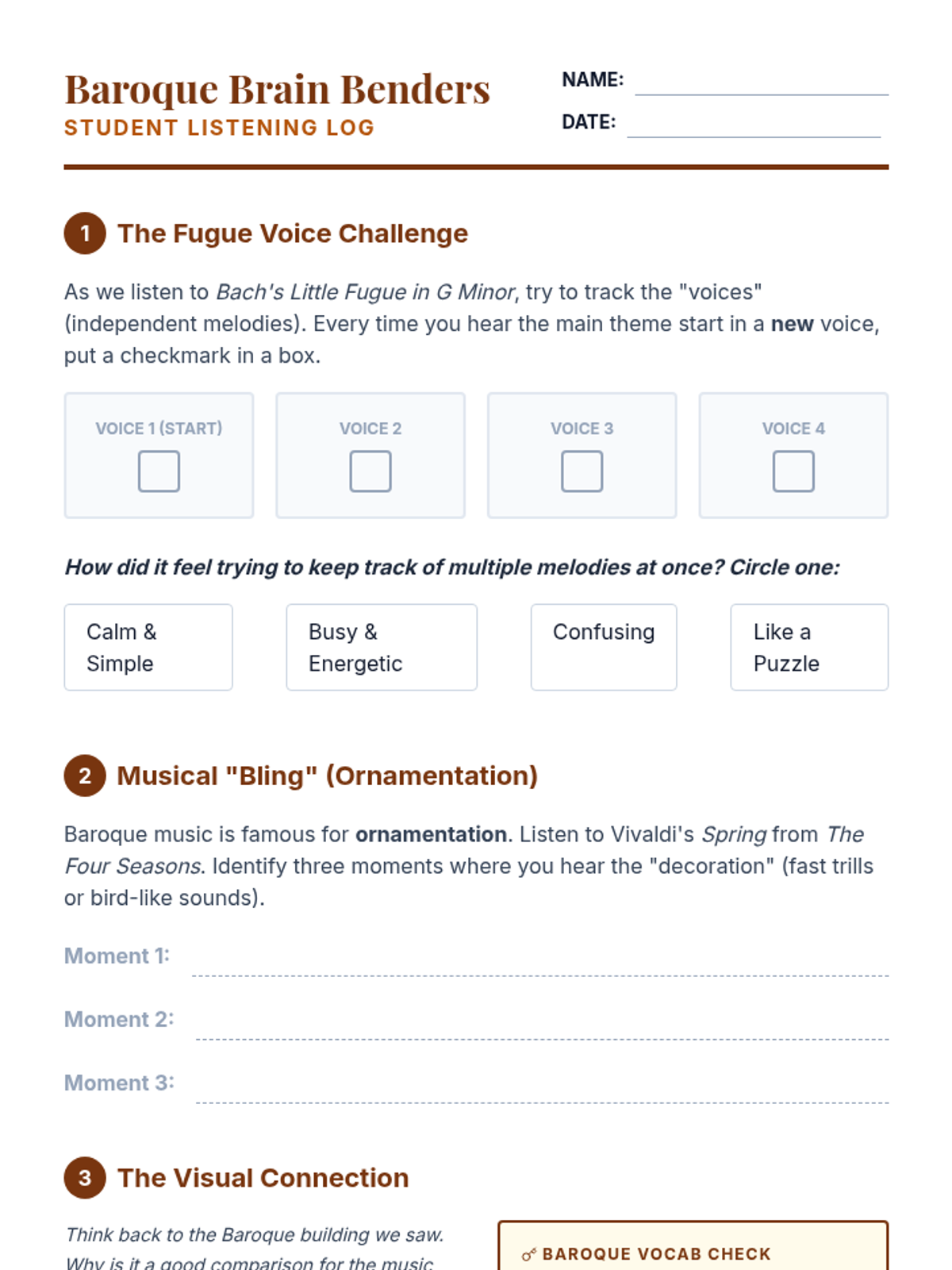
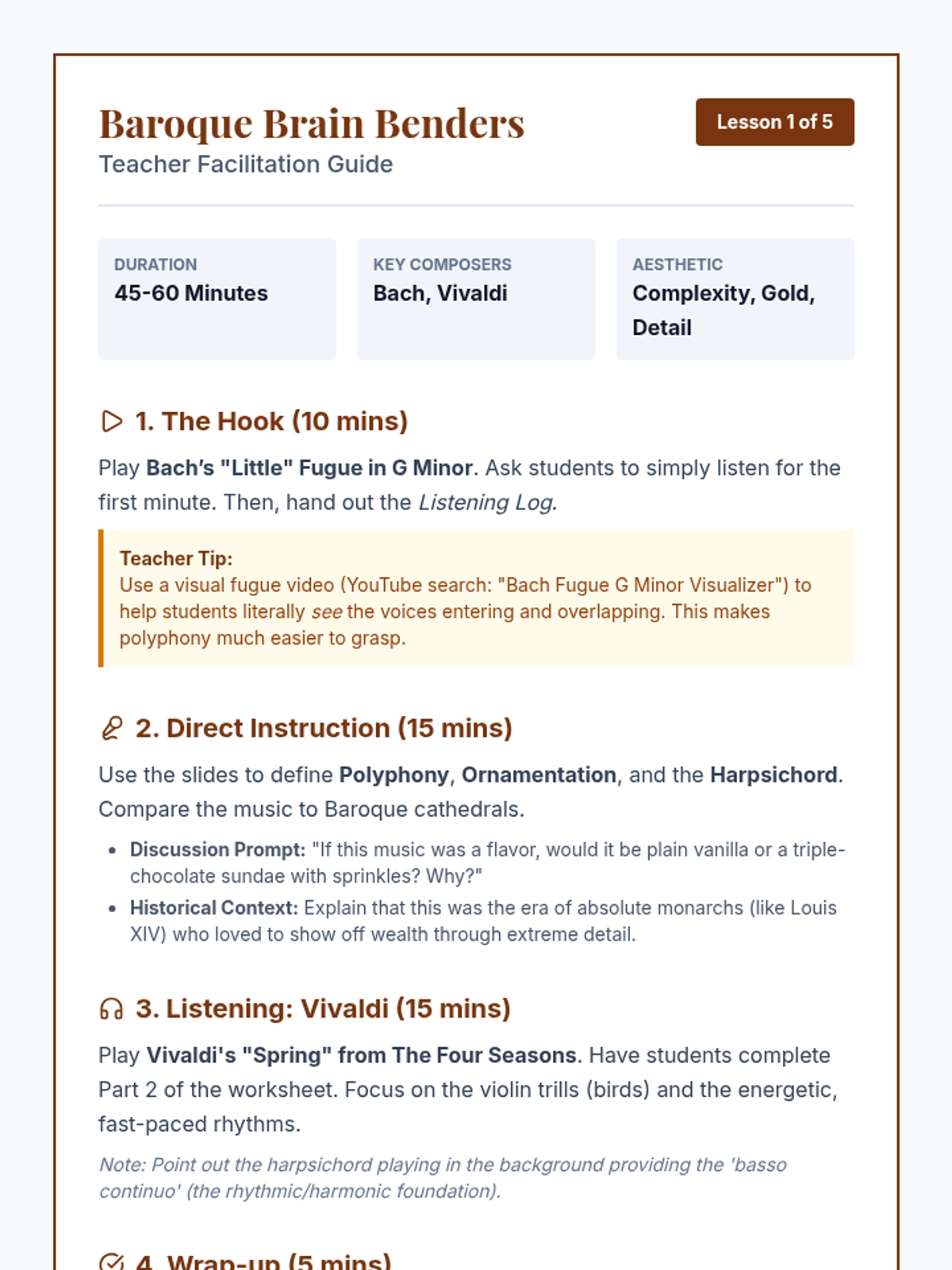
Explore the ornate style of the Baroque period through the works of Bach and Vivaldi, focusing on polyphony and harpsichord.
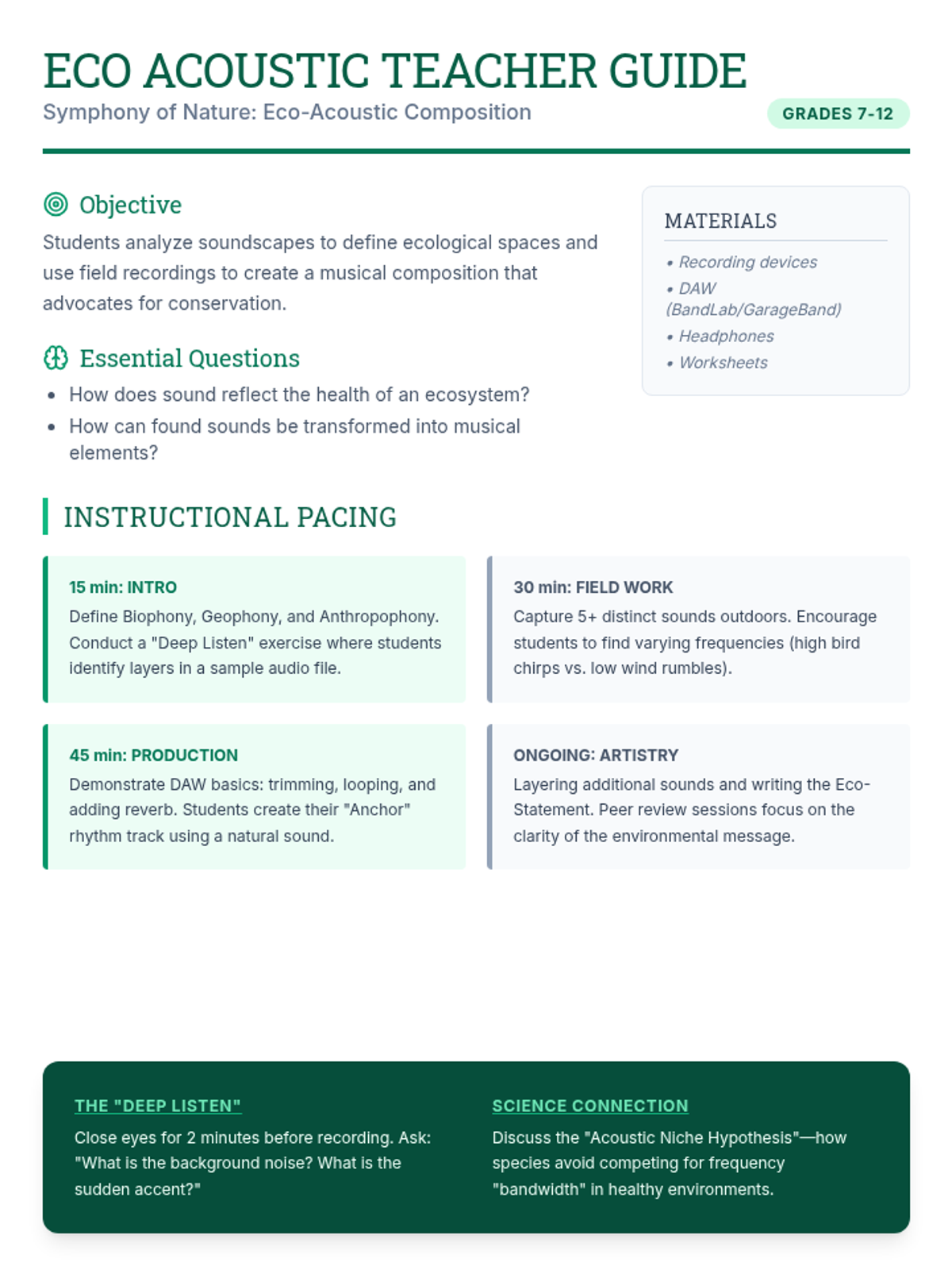
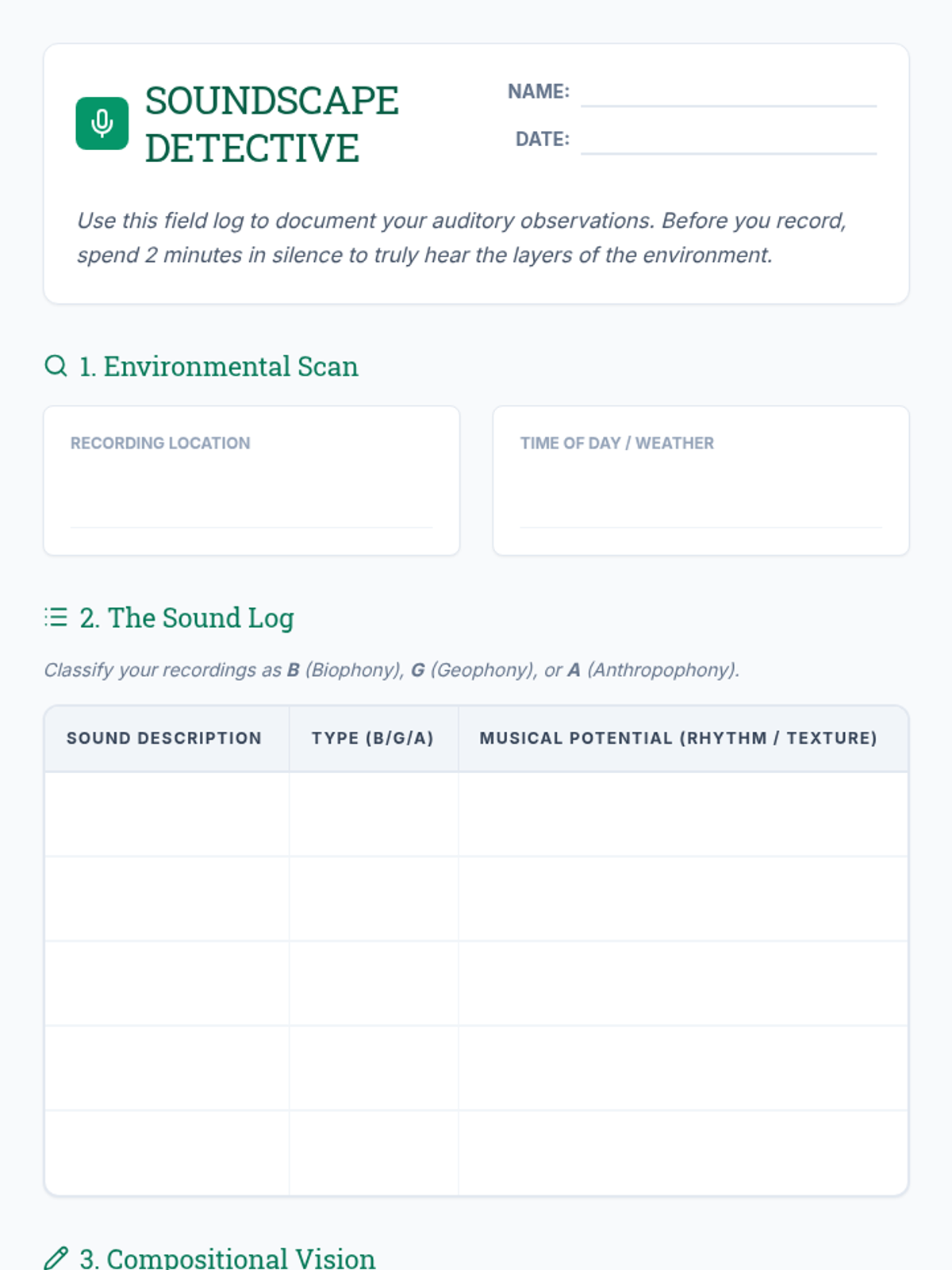
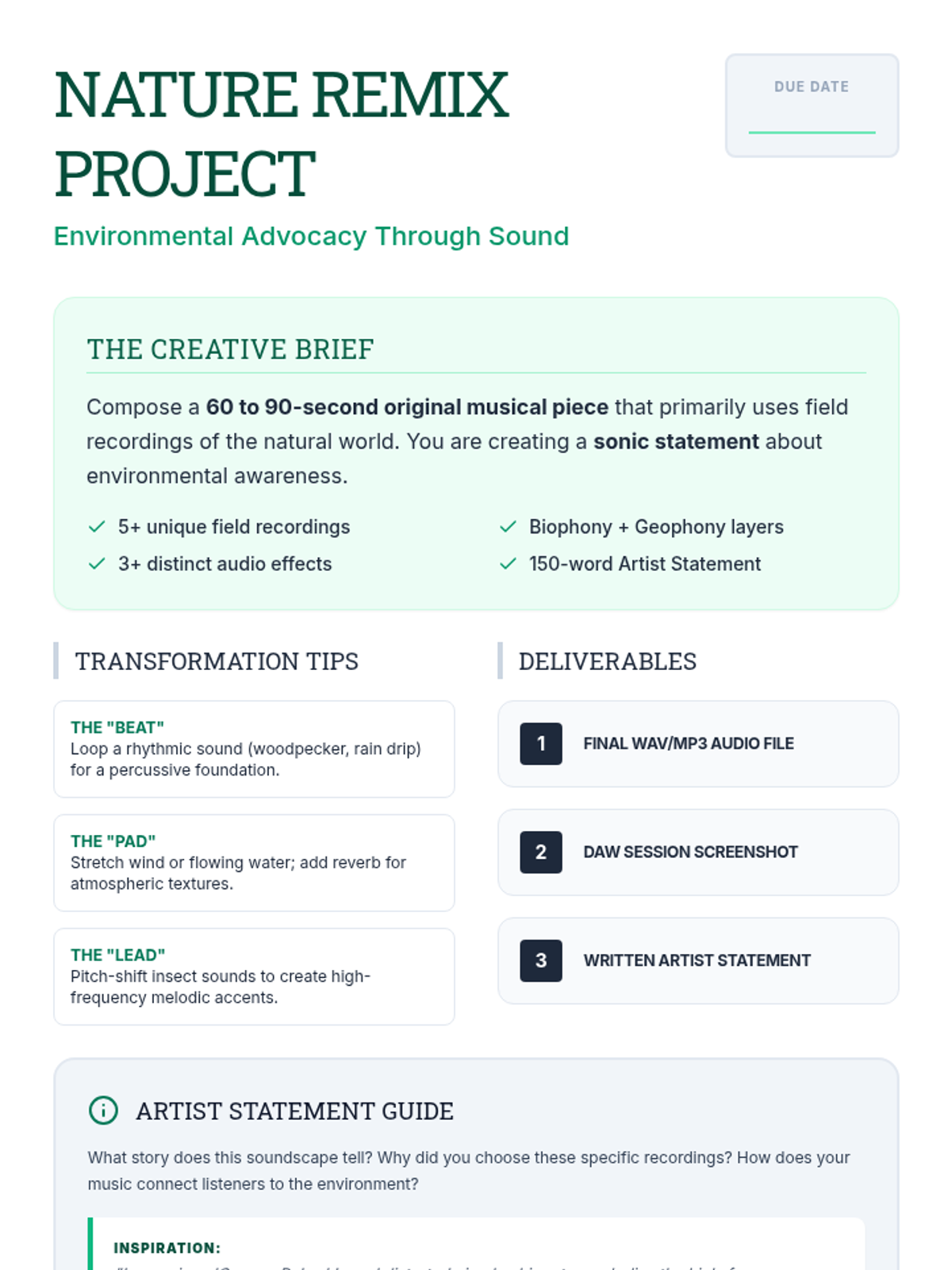
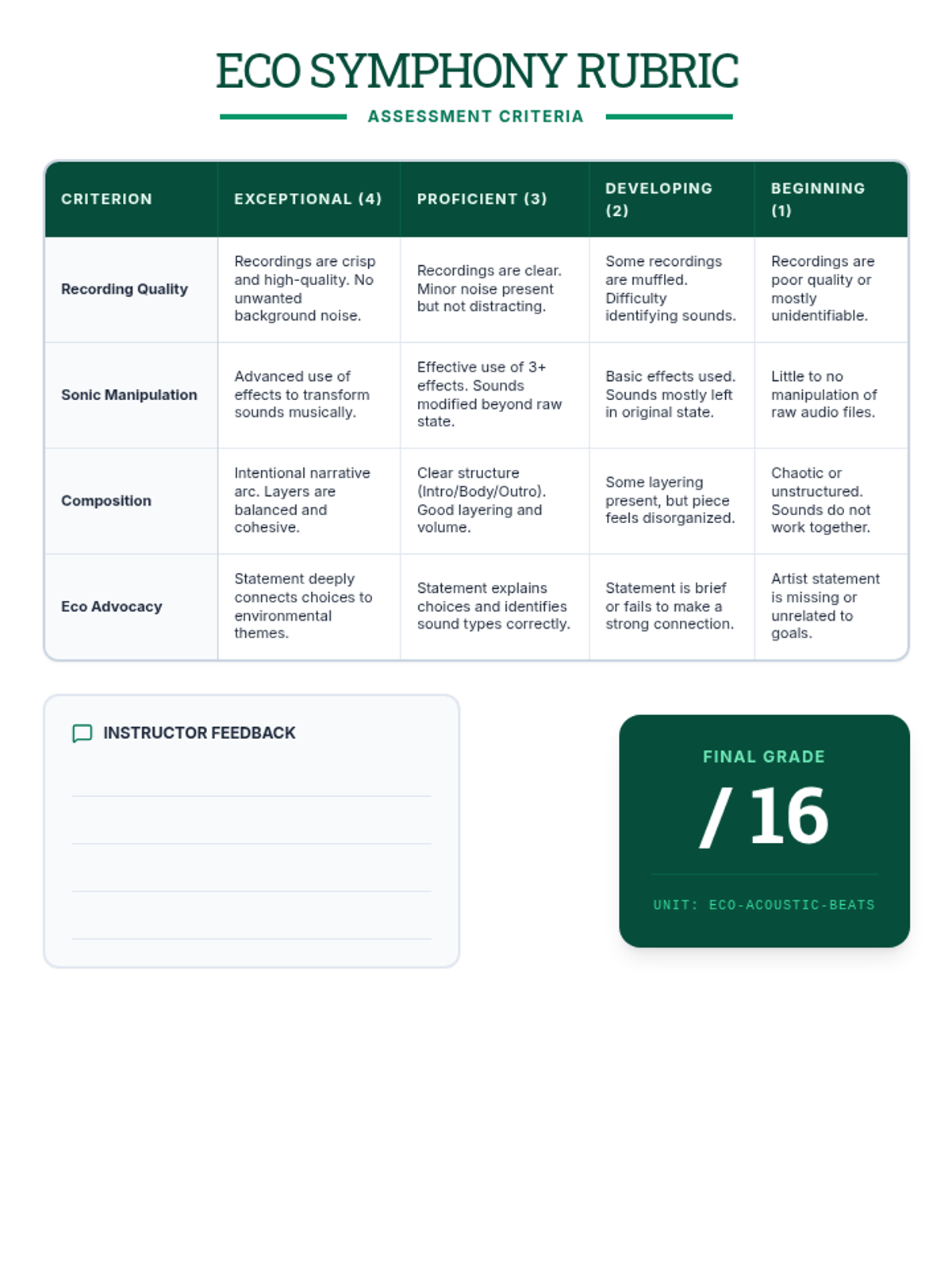
A multi-disciplinary lesson where students blend environmental science and music production. They will analyze natural soundscapes and create original compositions using field recordings to promote ecological awareness.
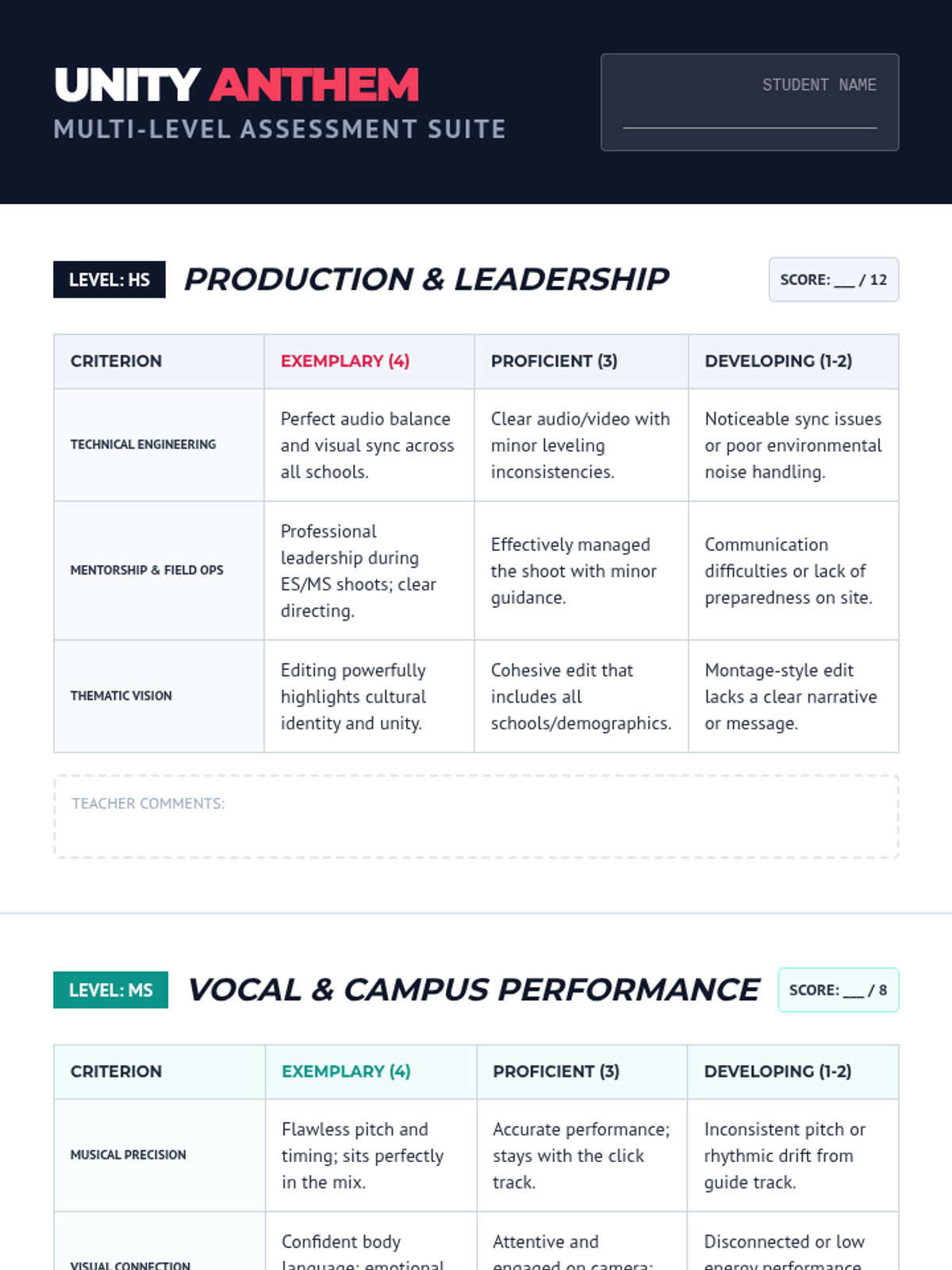
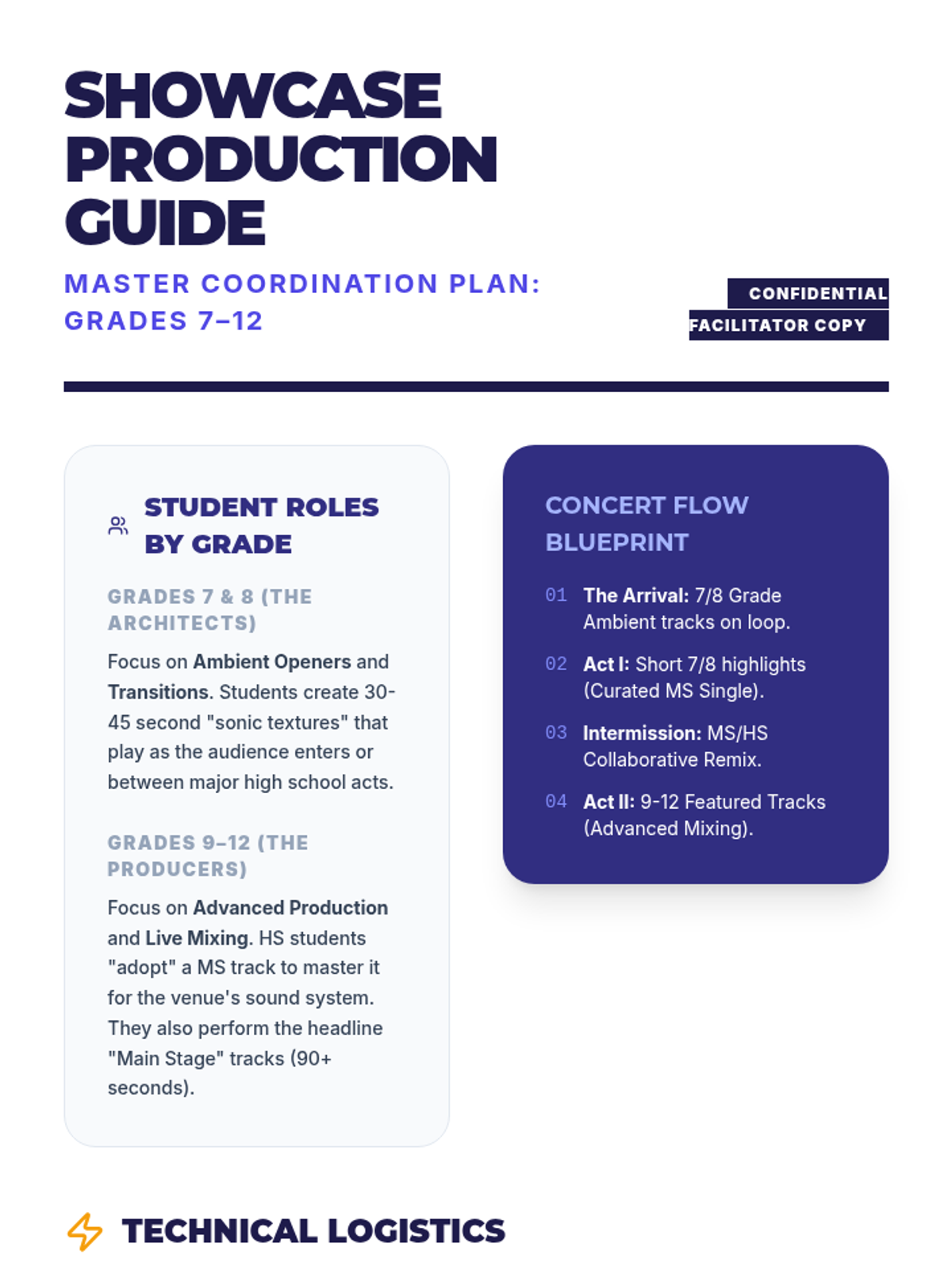
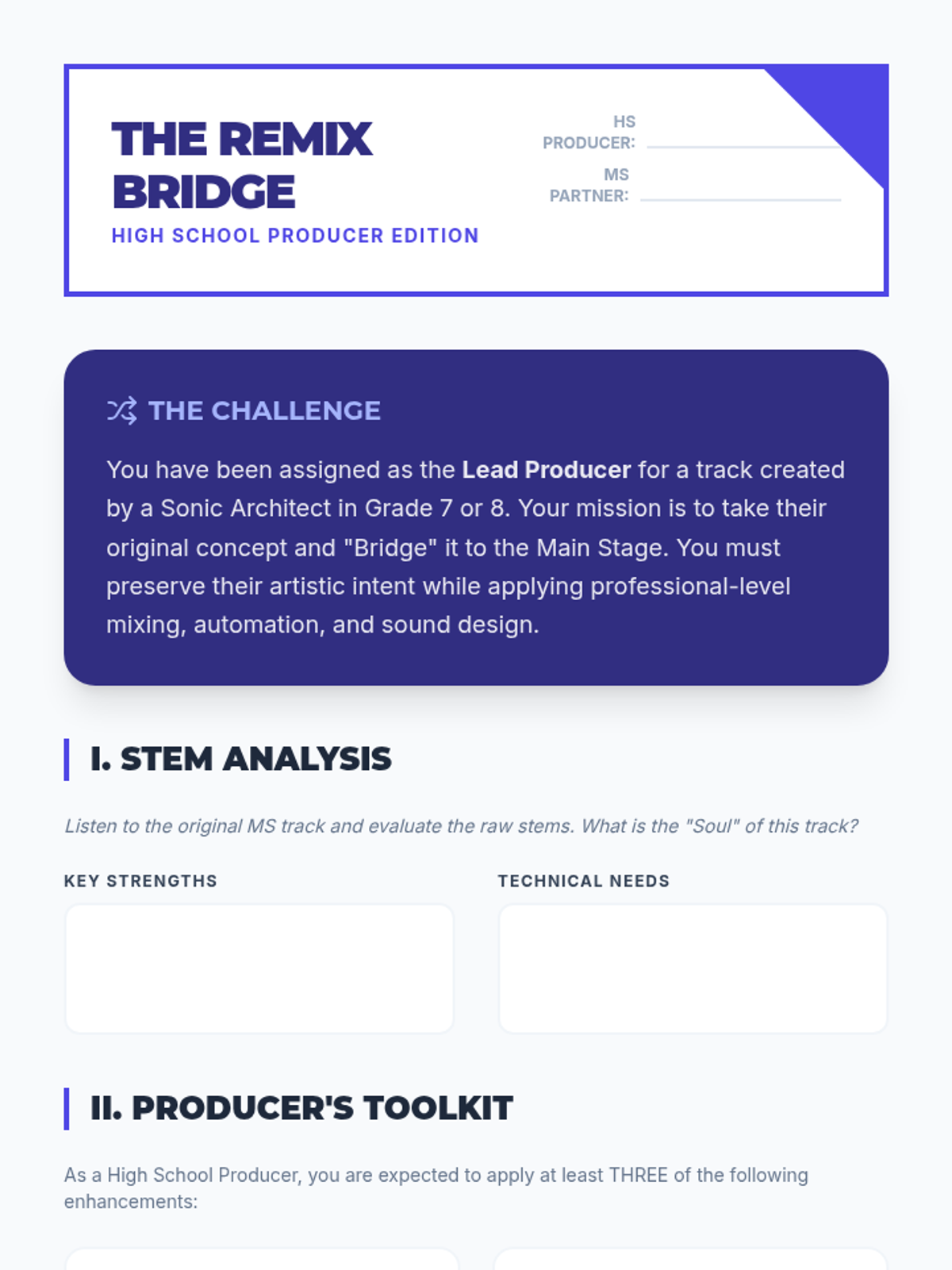
Students from grades 7-12 collaborate to organize and execute a professional-level digital music showcase. Middle school students contribute opening tracks and atmospheric transitions, while high school students manage advanced mixing, live visual accompaniment, and stage production.
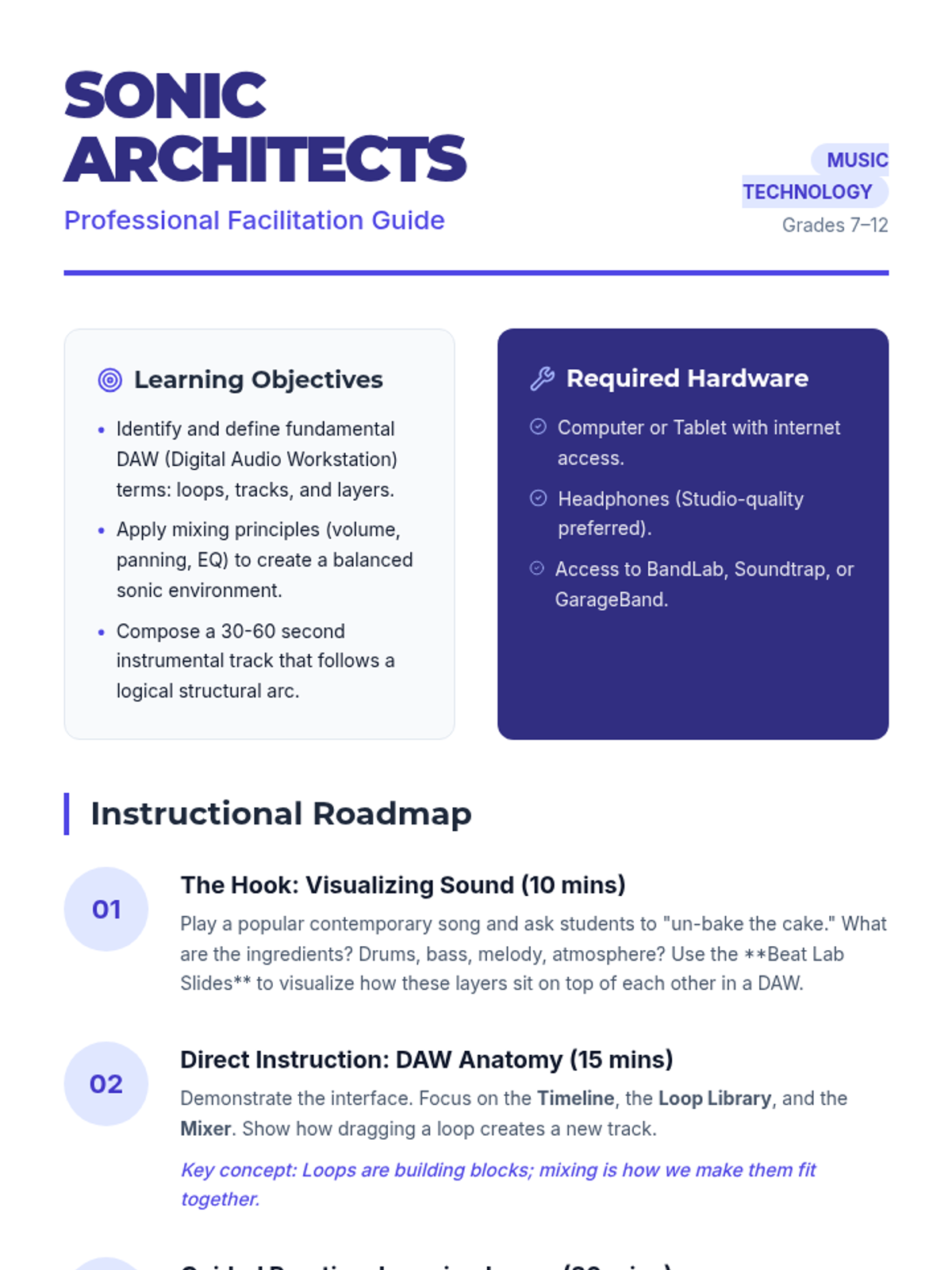
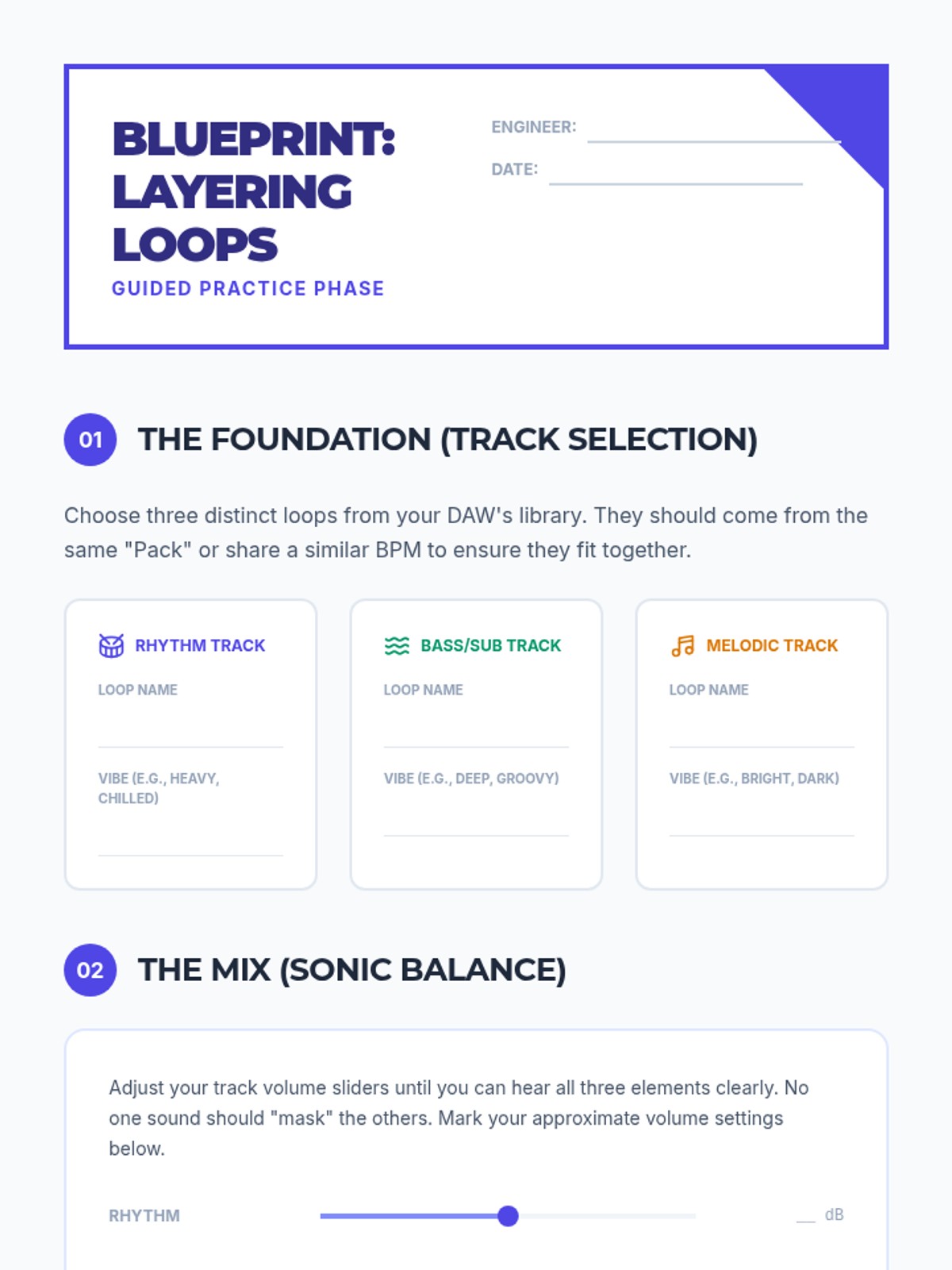
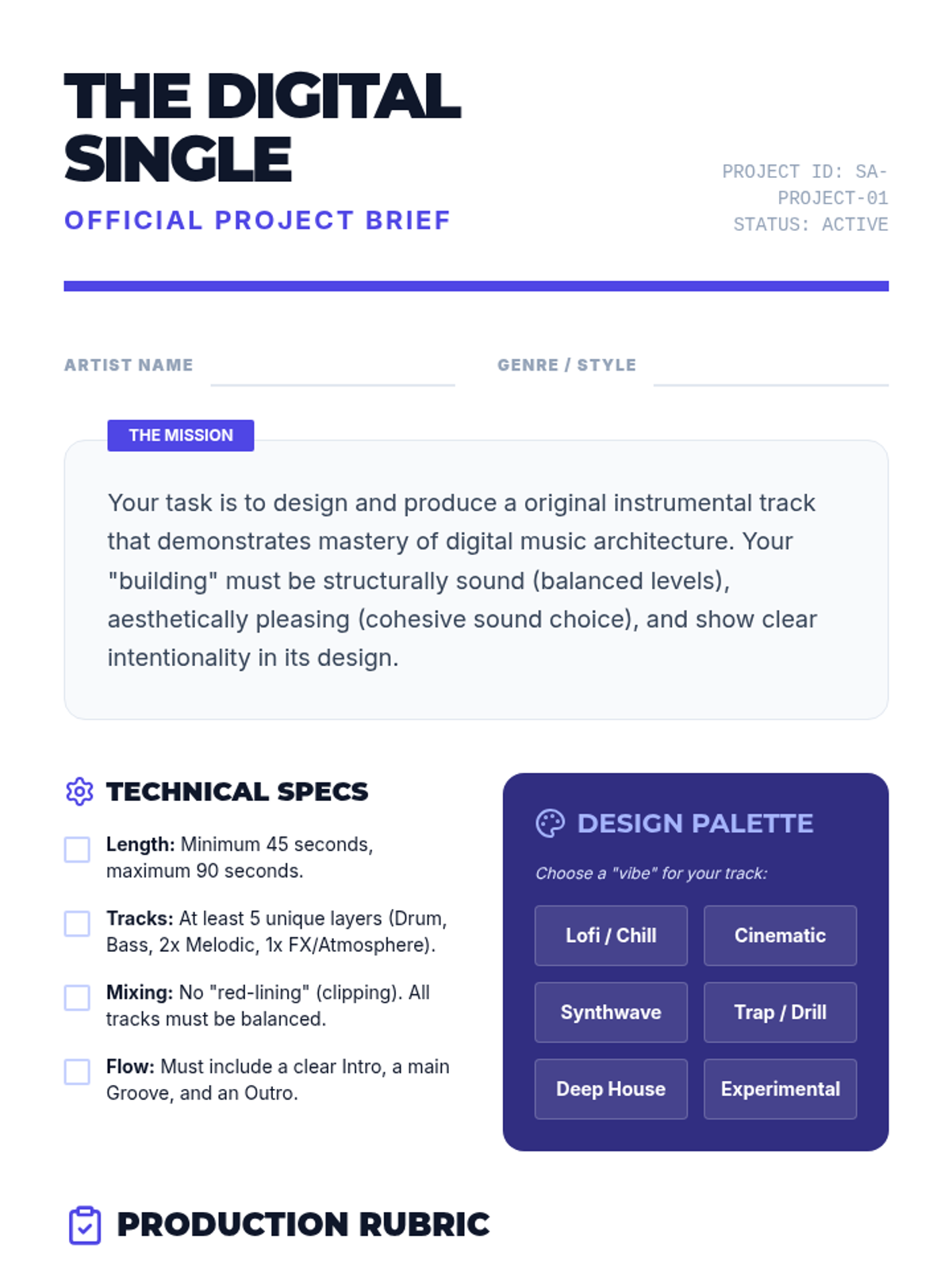
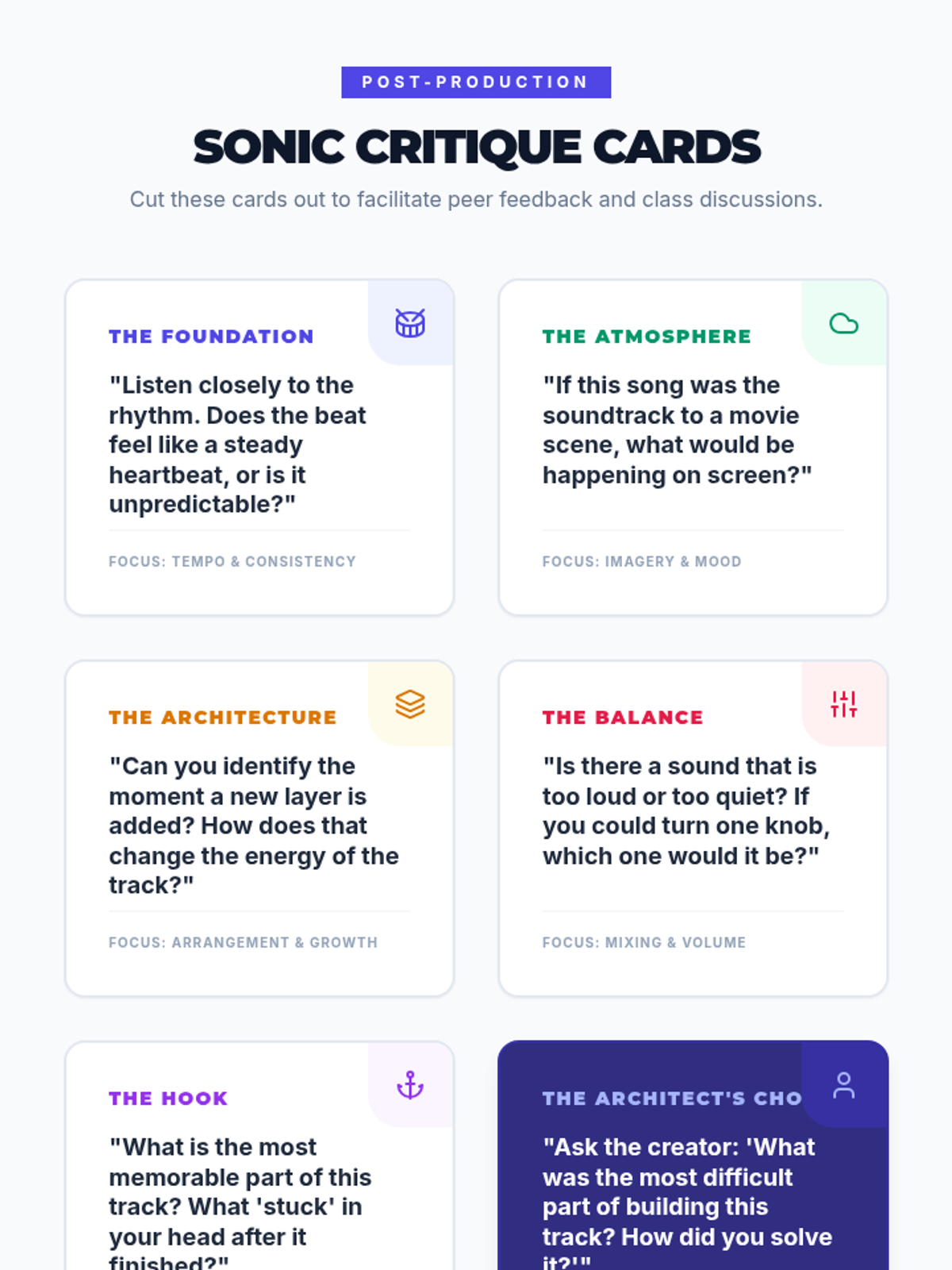
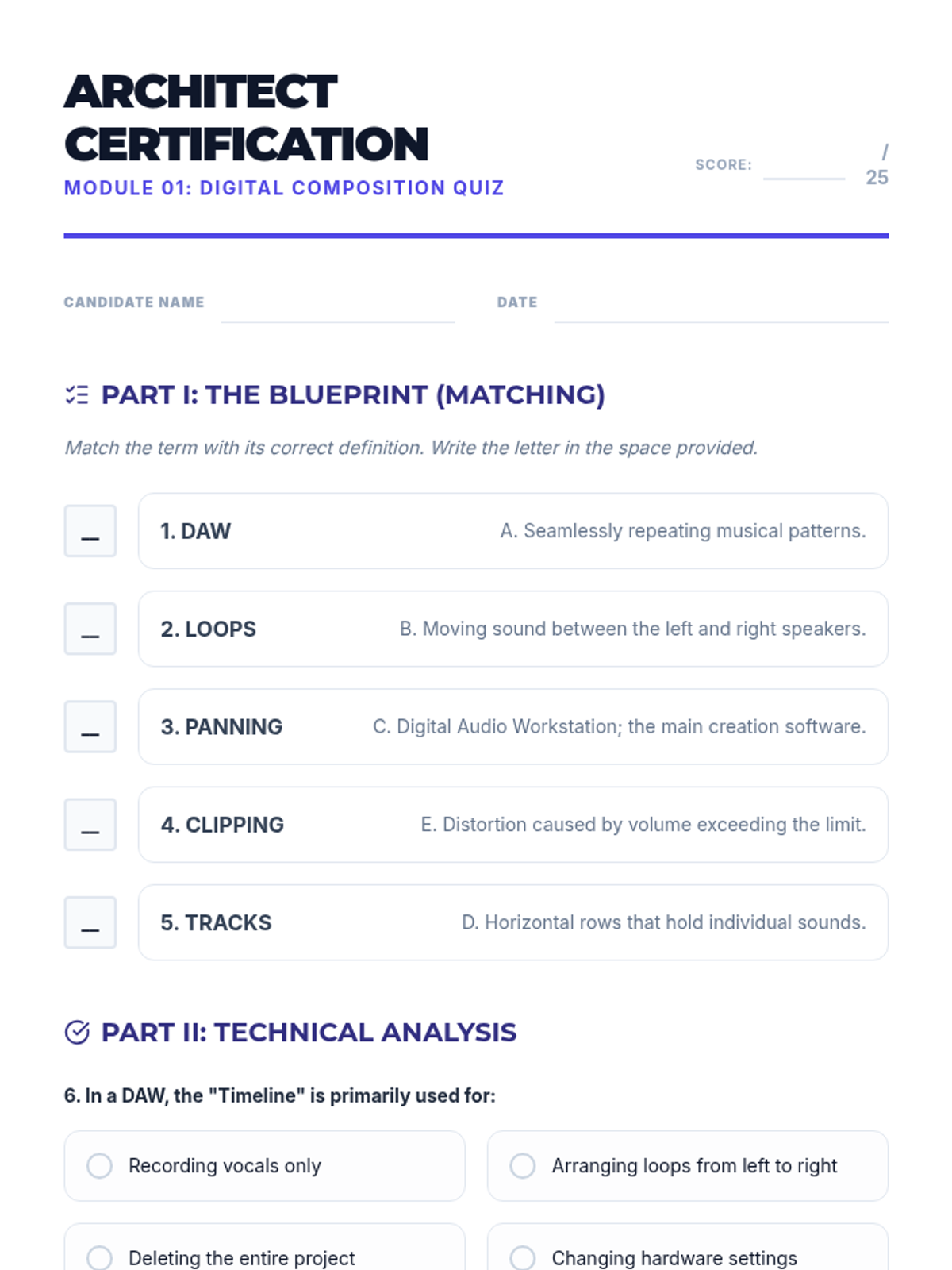
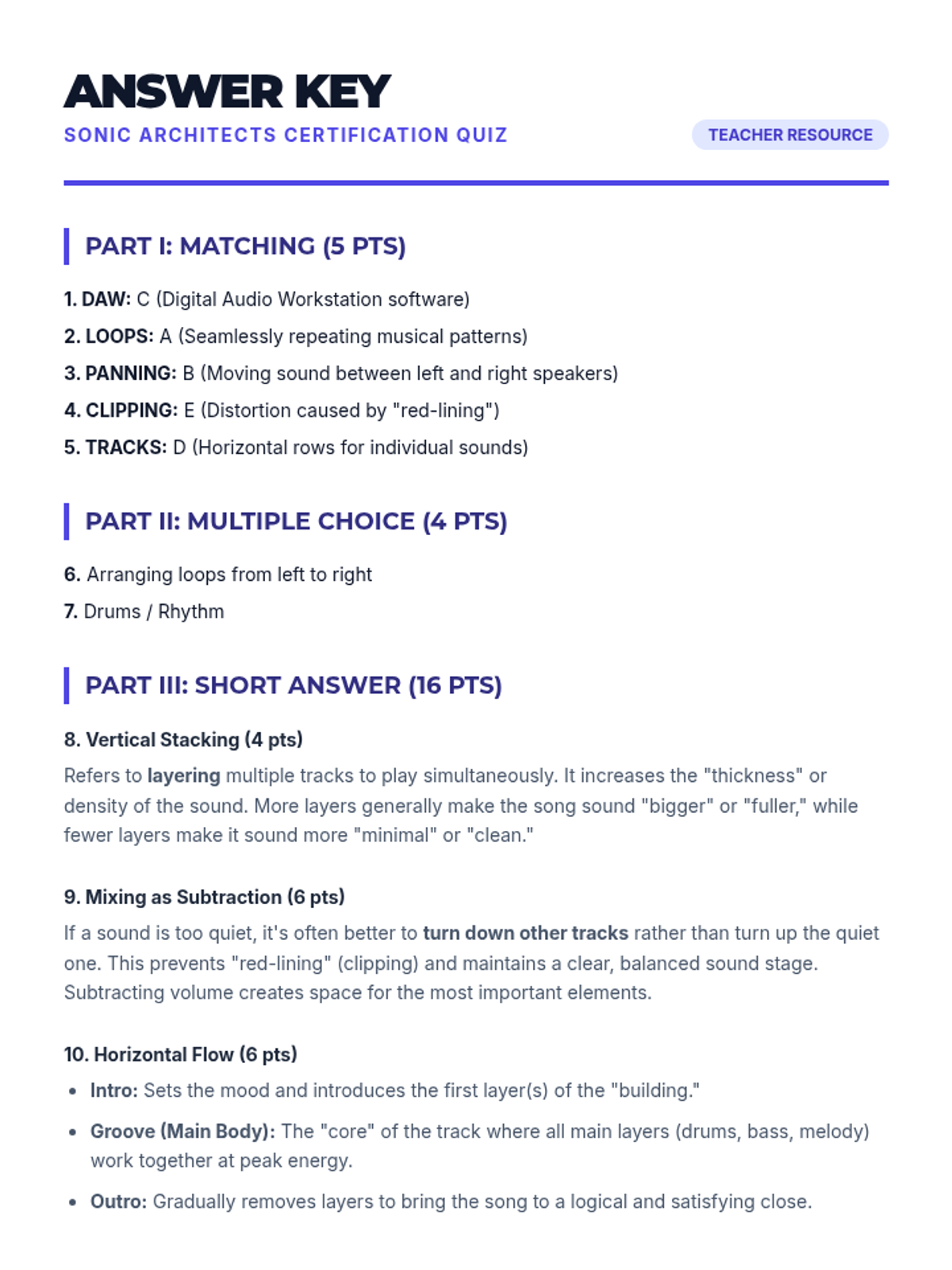
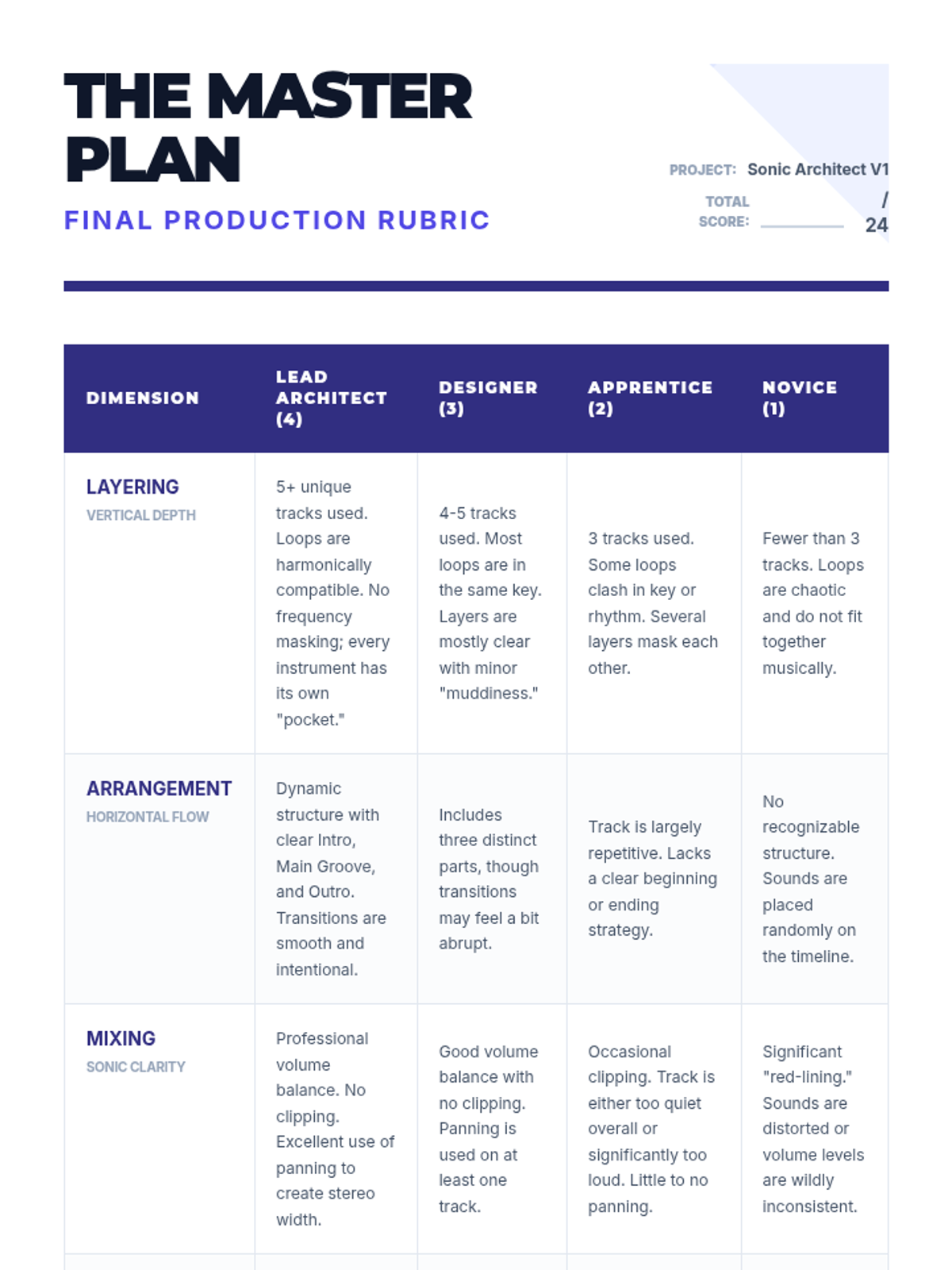
Students dive into the world of digital music production, learning to use loops, layers, and mixing techniques to create their own original instrumental tracks. This hands-on lesson bridges technology and creativity, empowering students to become modern sonic architects.
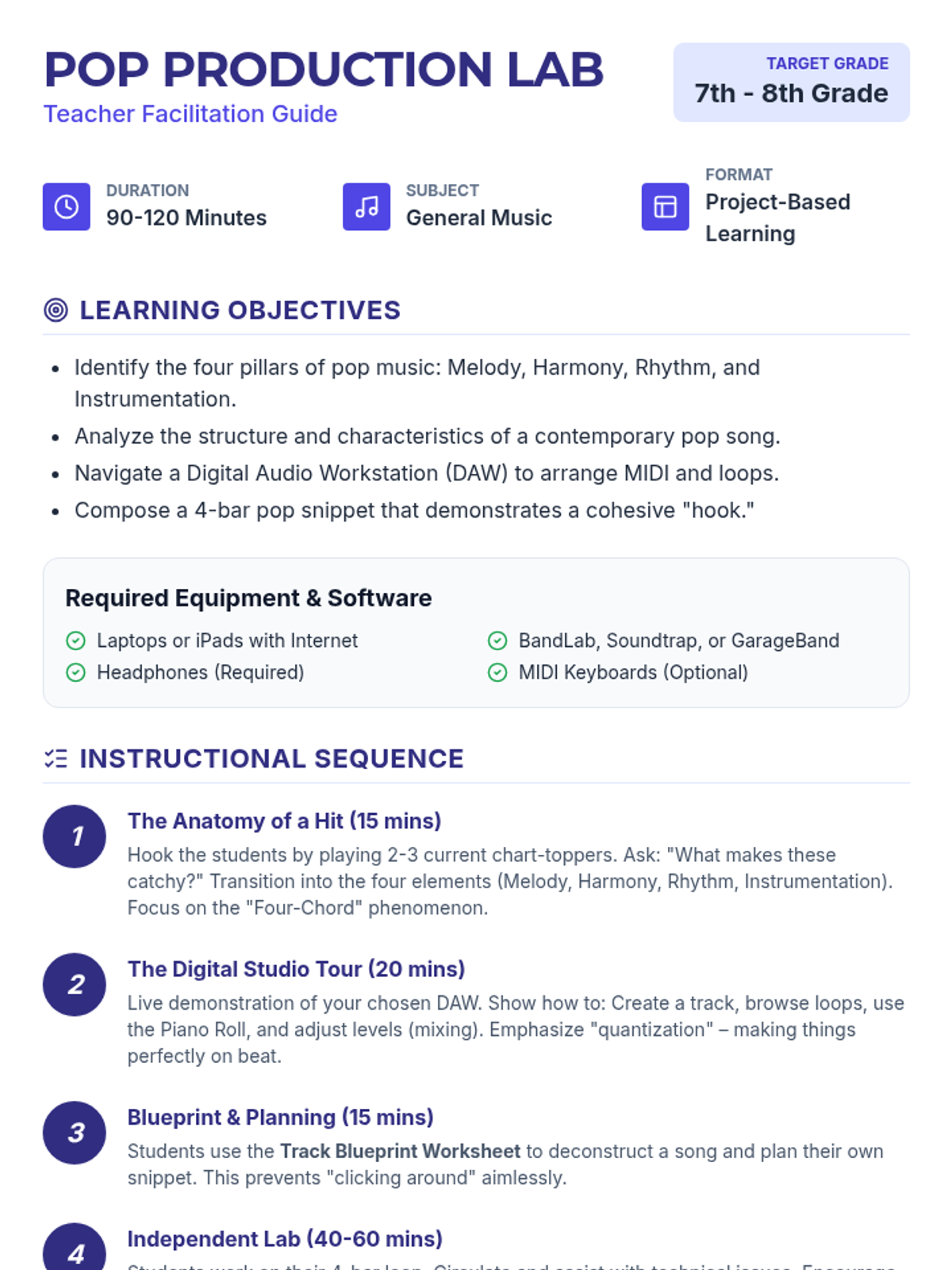
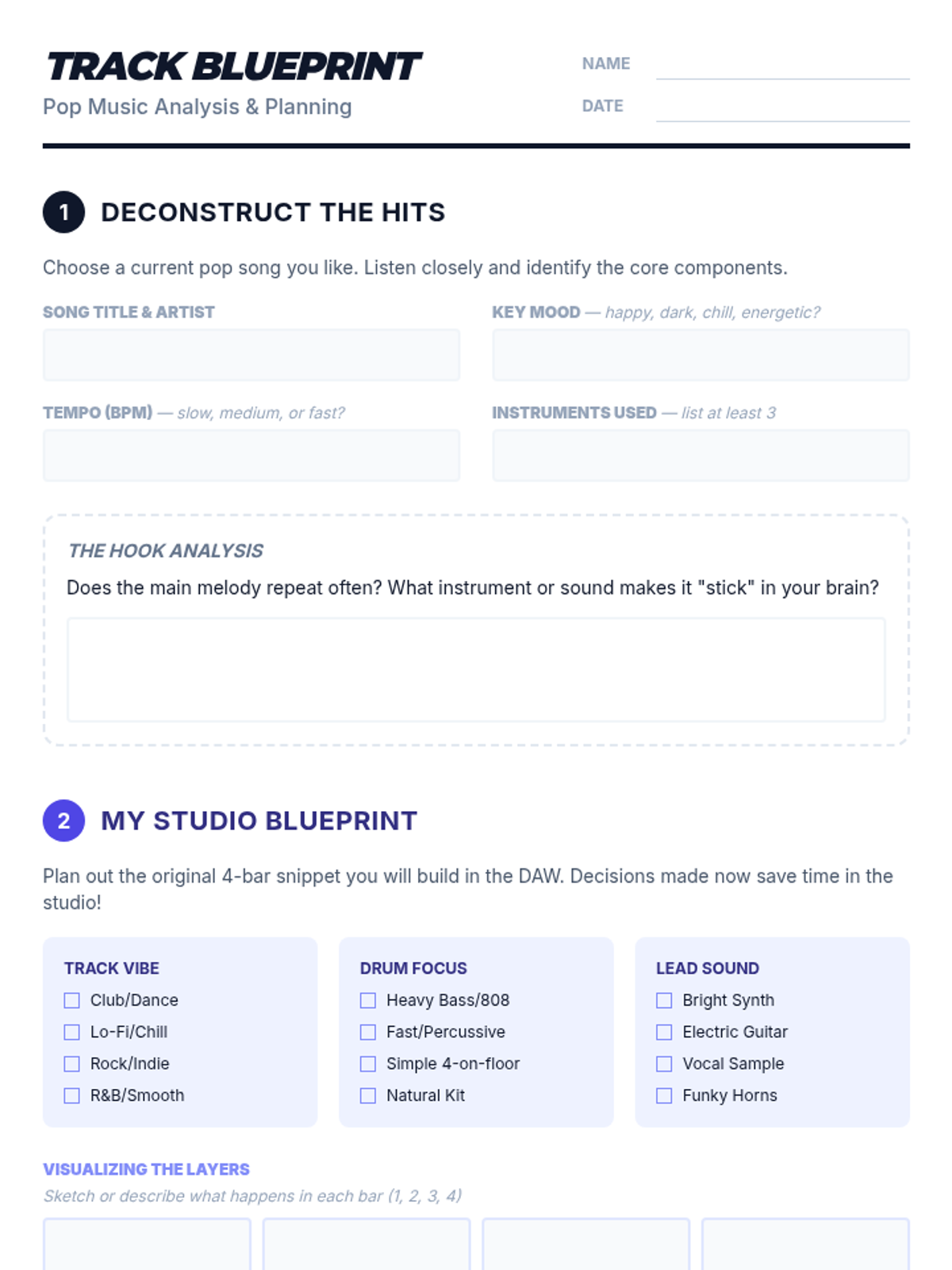
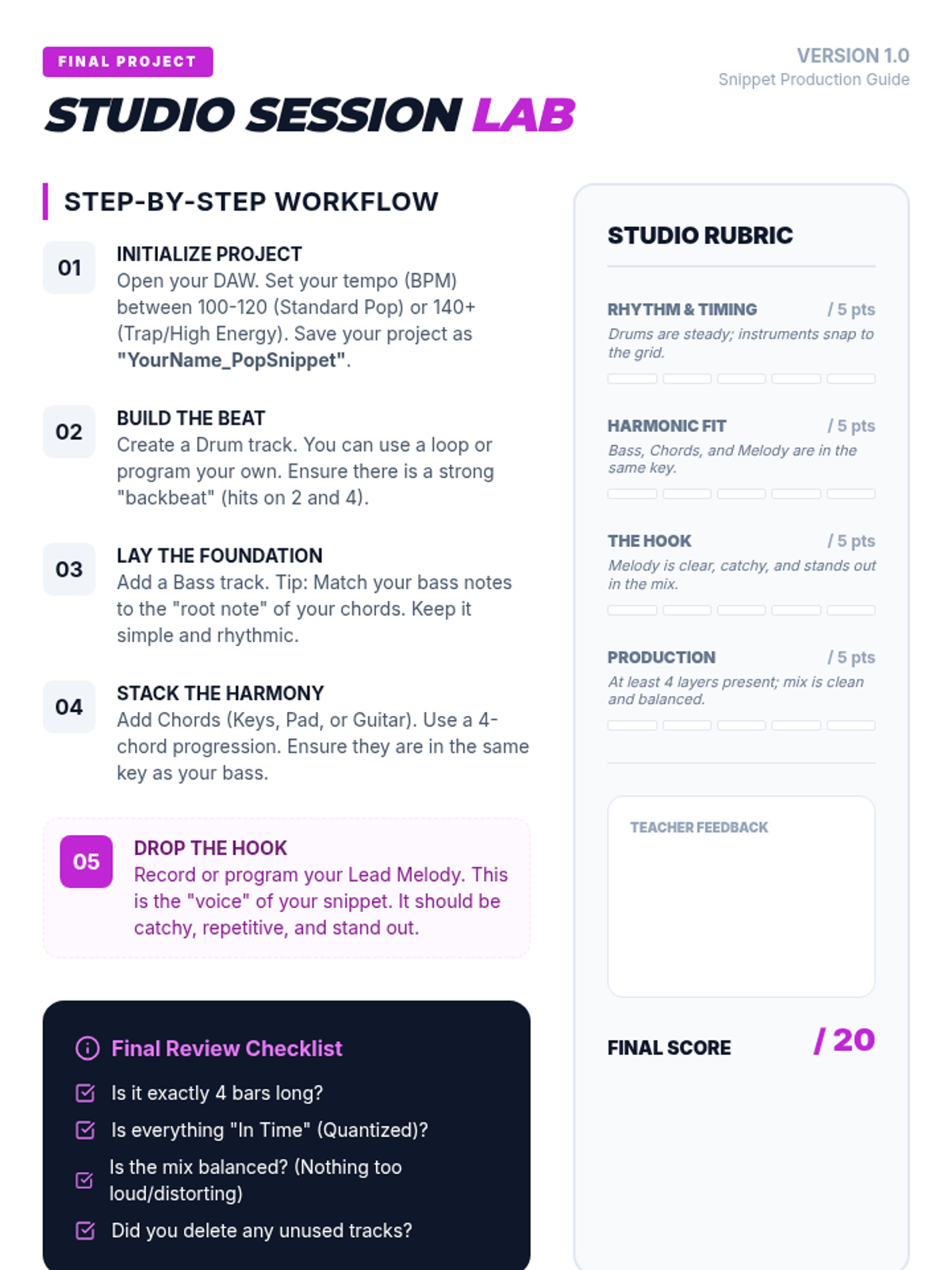
A project-based lesson where students learn the elements of modern pop music and use digital tools to create their own original 4-bar song snippet.
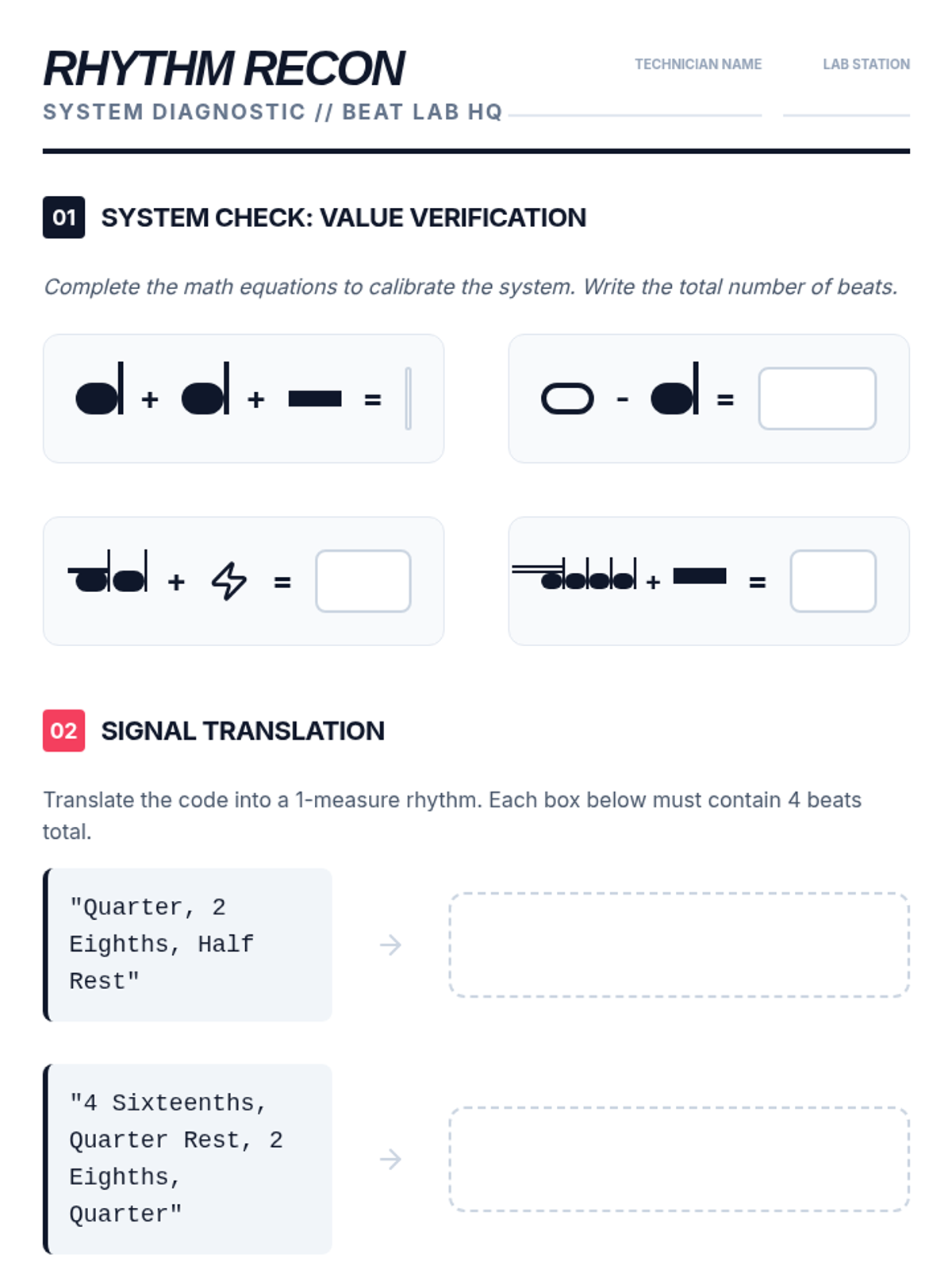
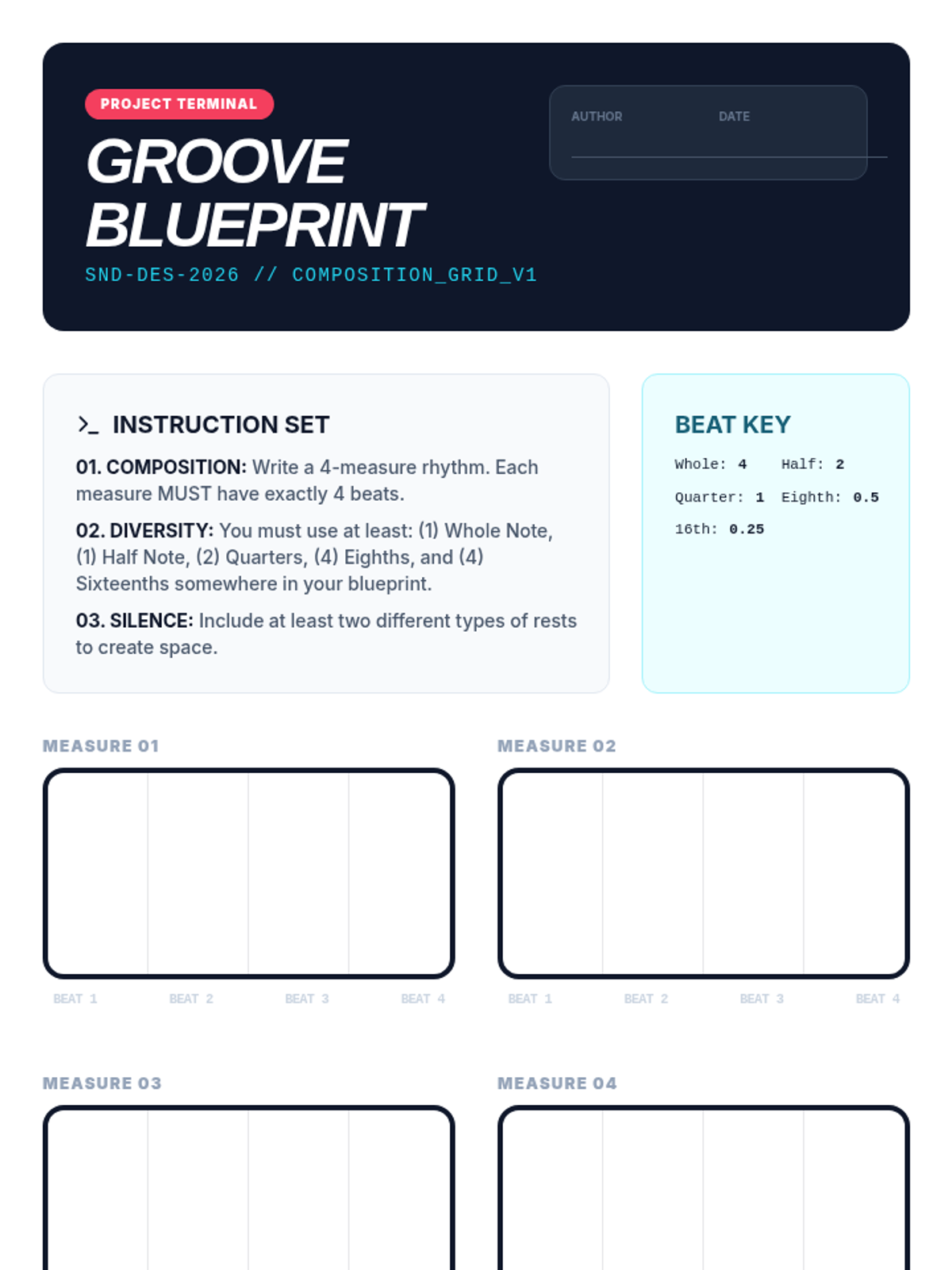
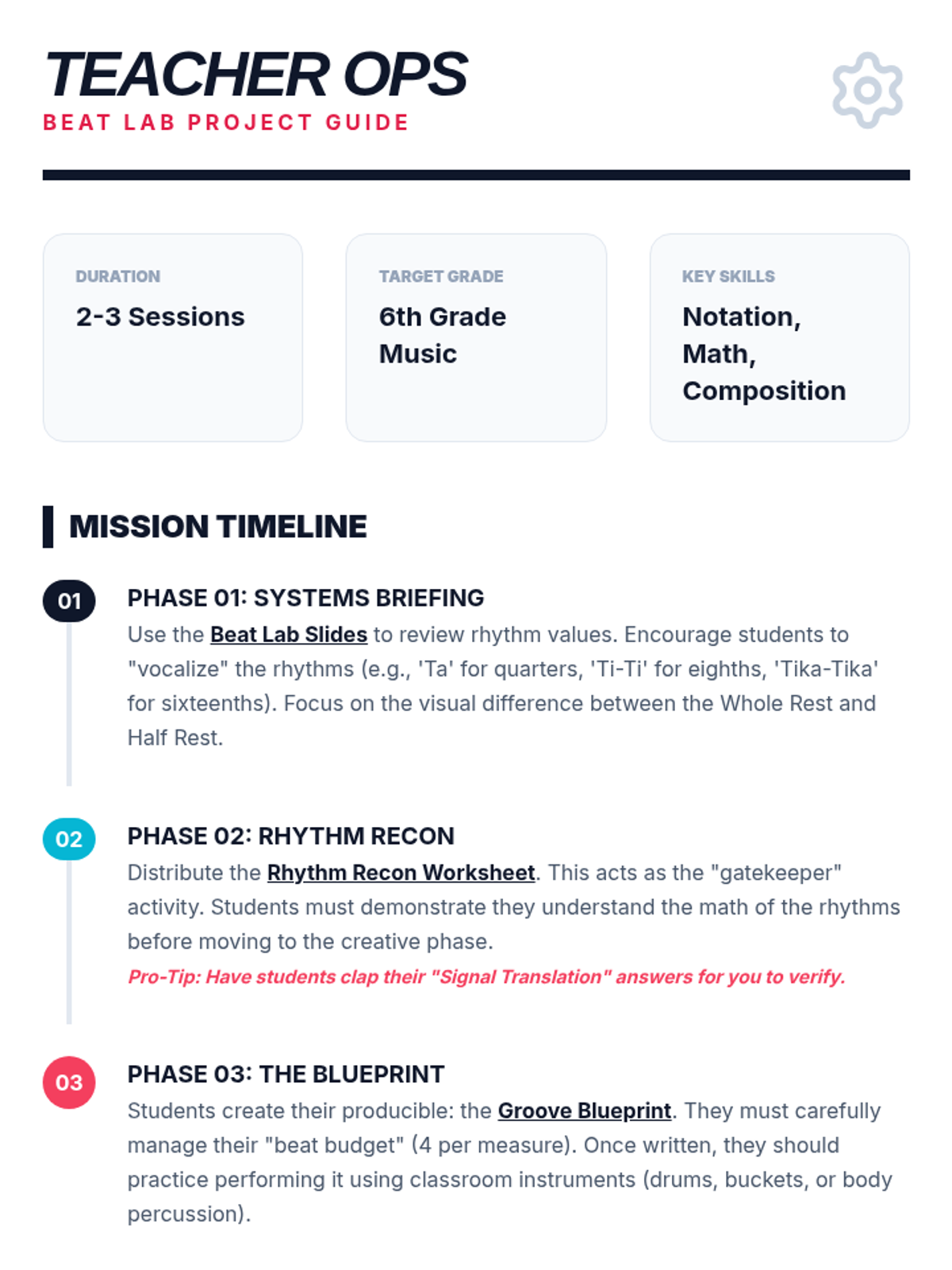
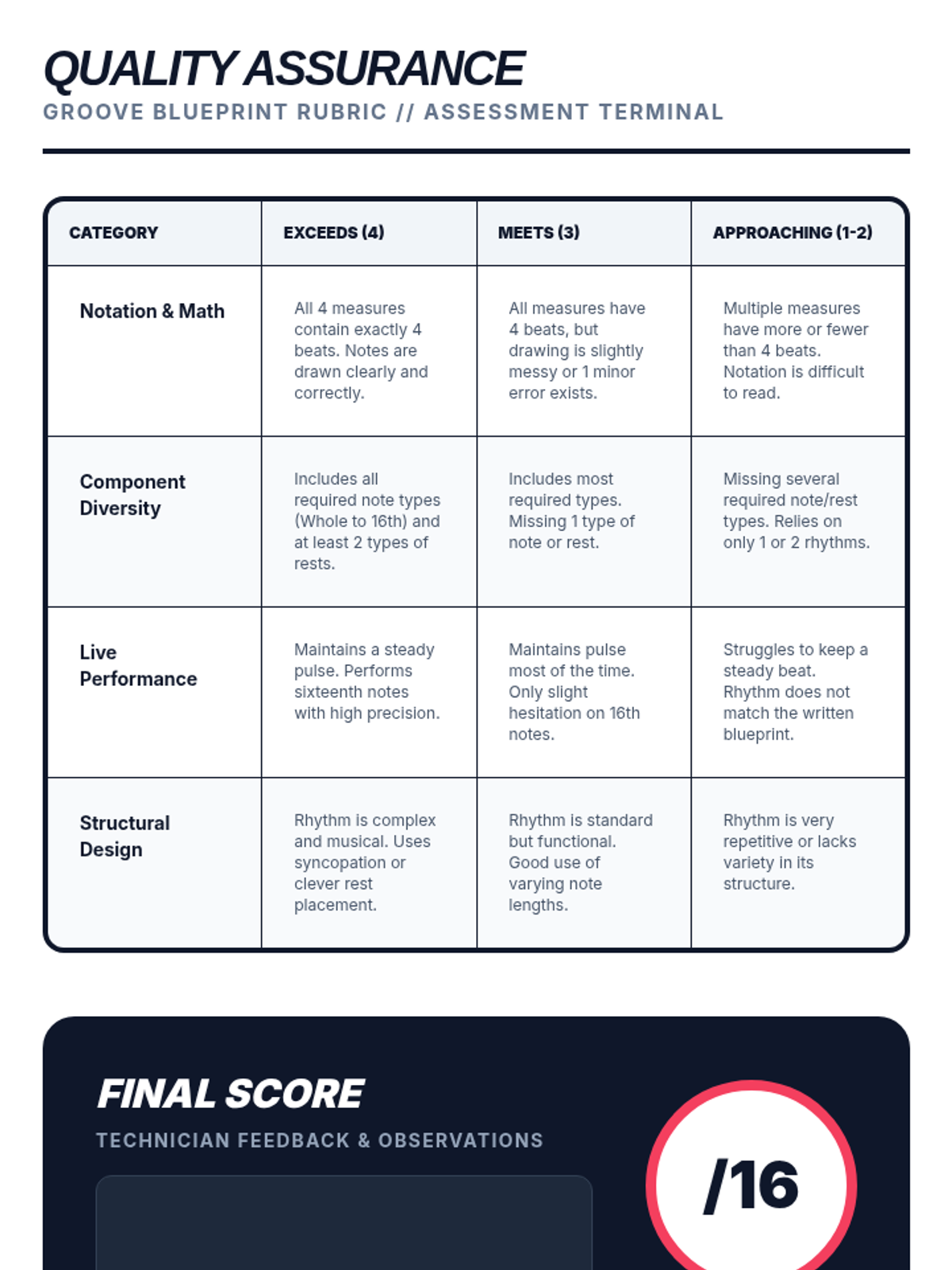
A comprehensive rhythm project where students review fundamental rhythm values (quarter, eighth, sixteenth, half, whole notes and rests) through interactive games and a final composition project called the 'Groove Blueprint'.
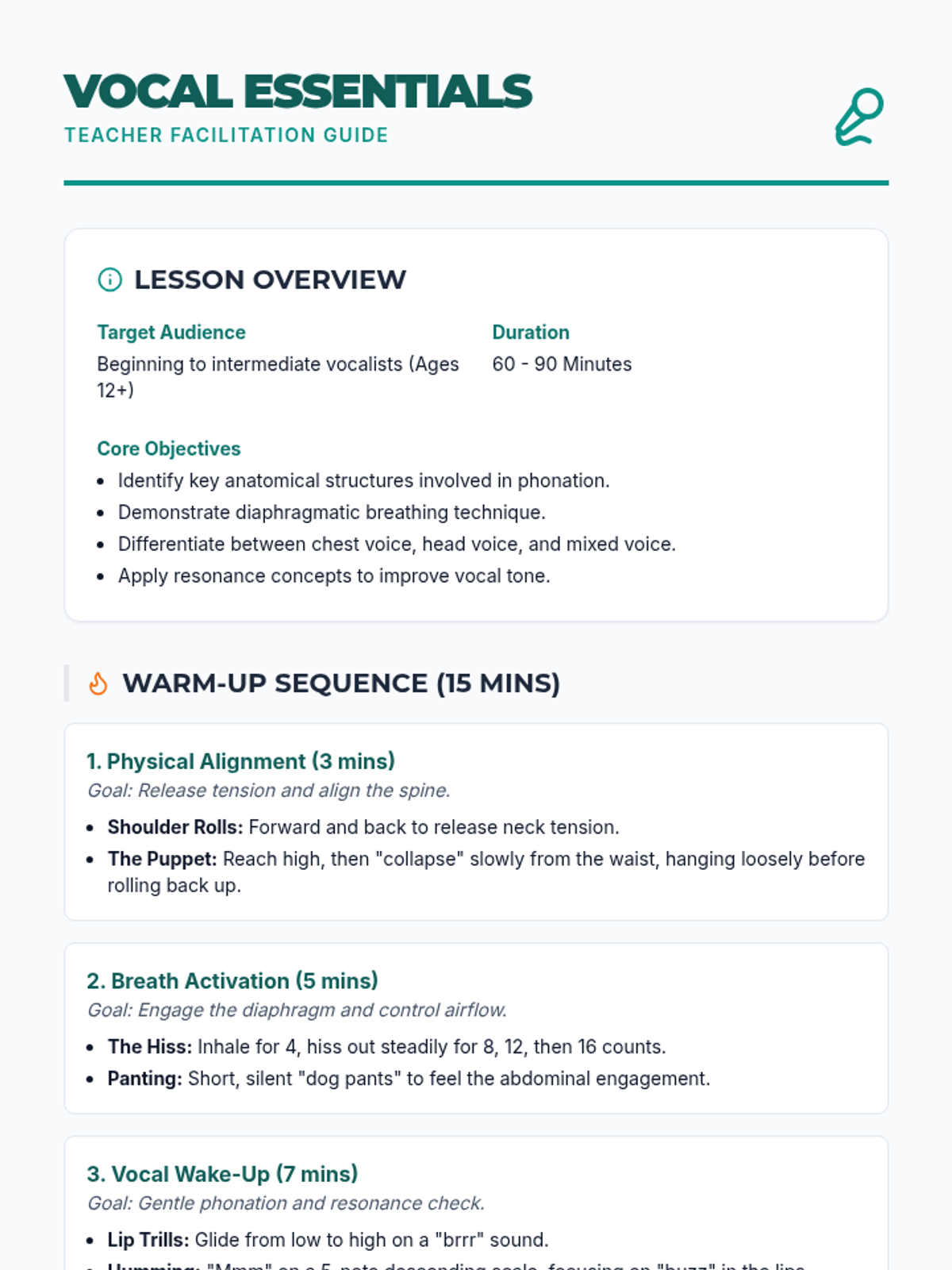
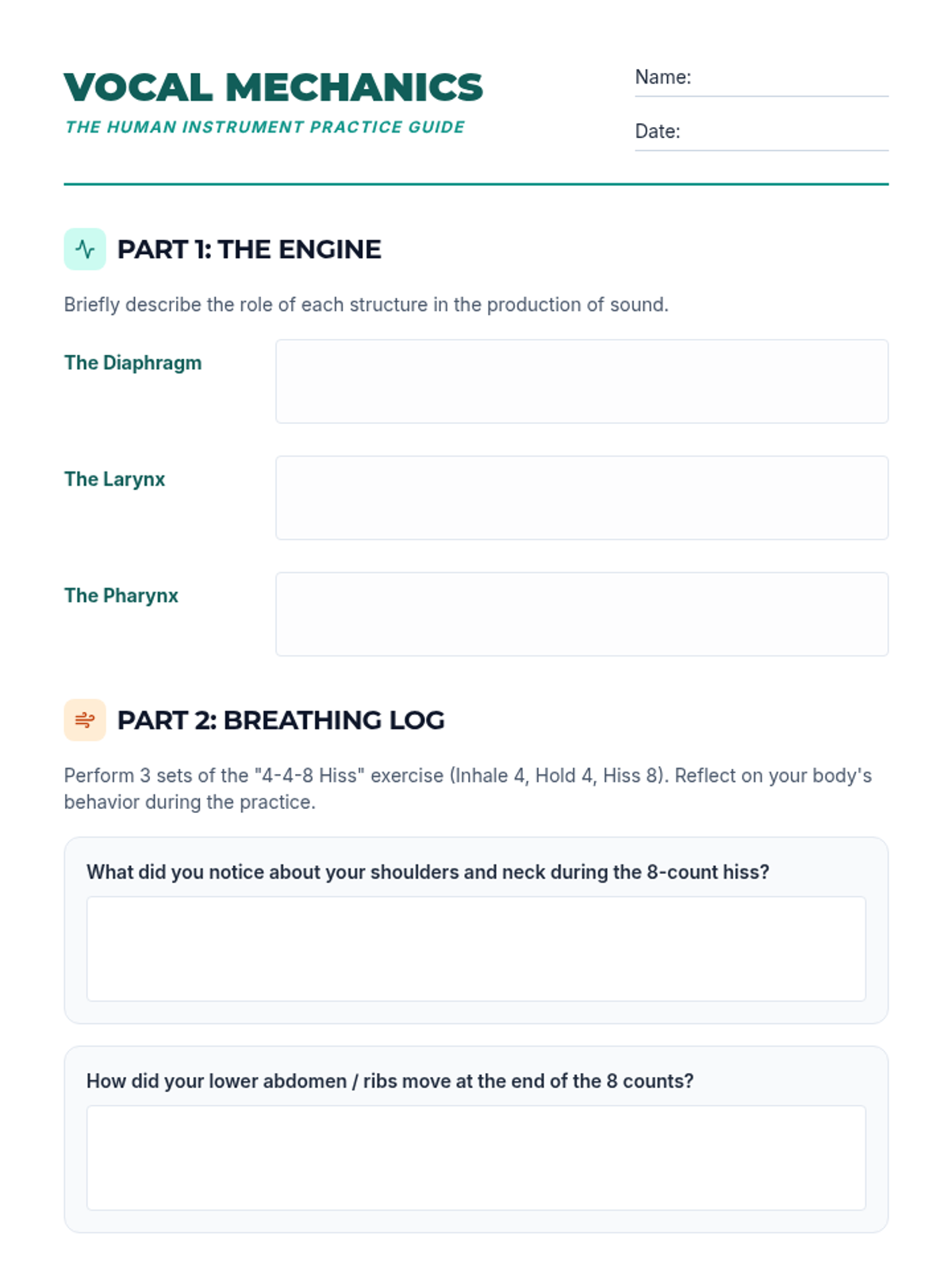
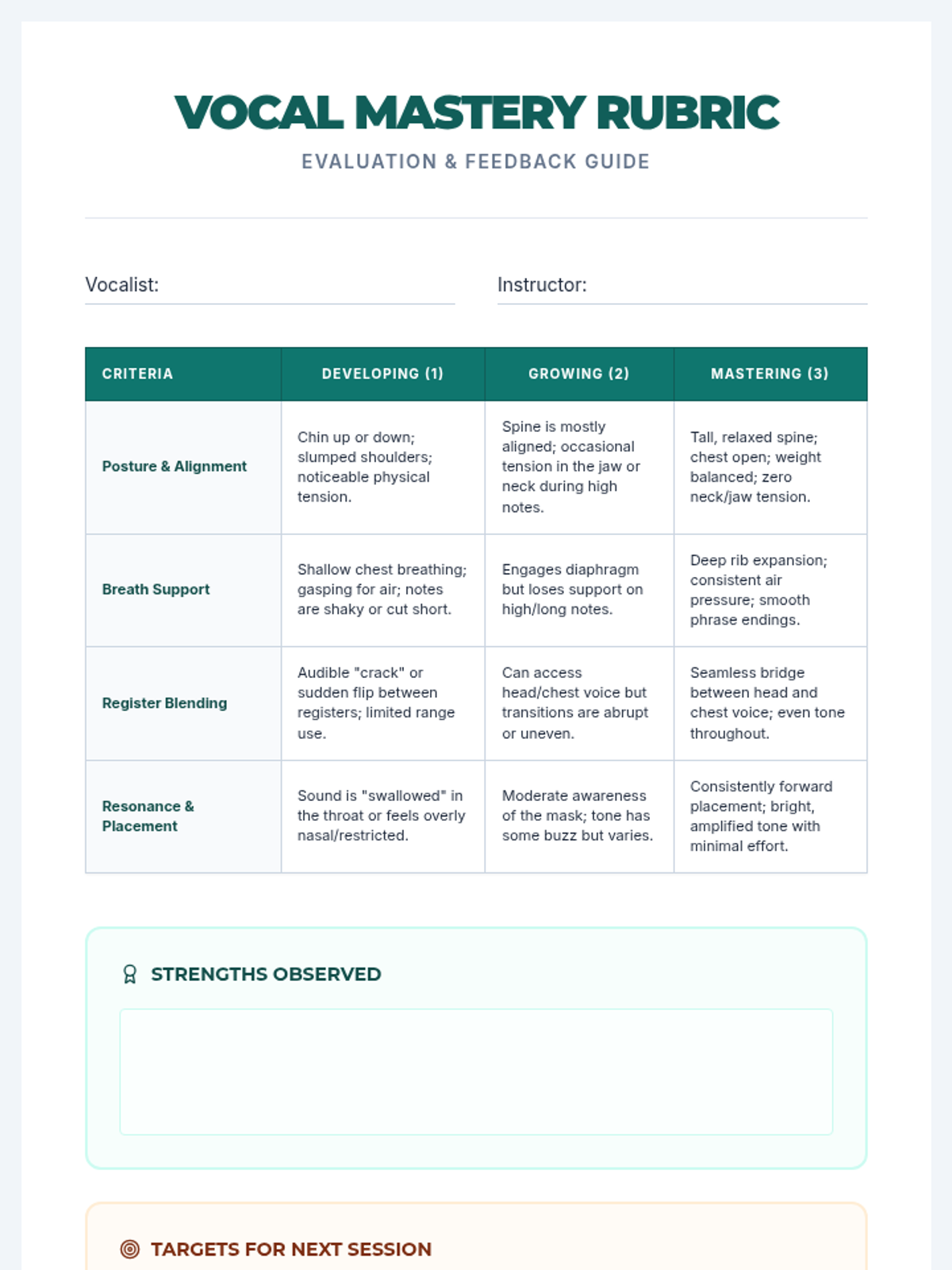
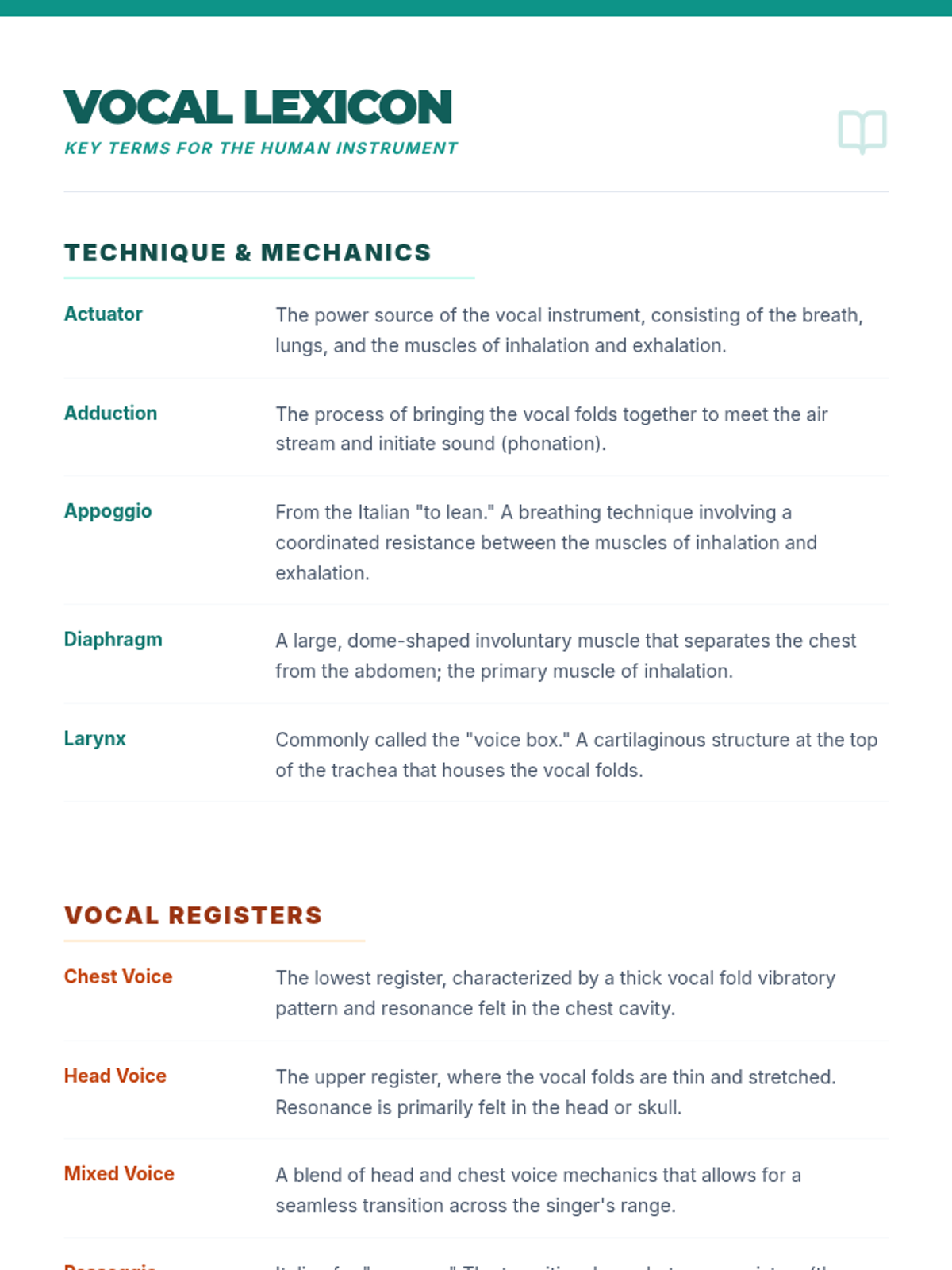
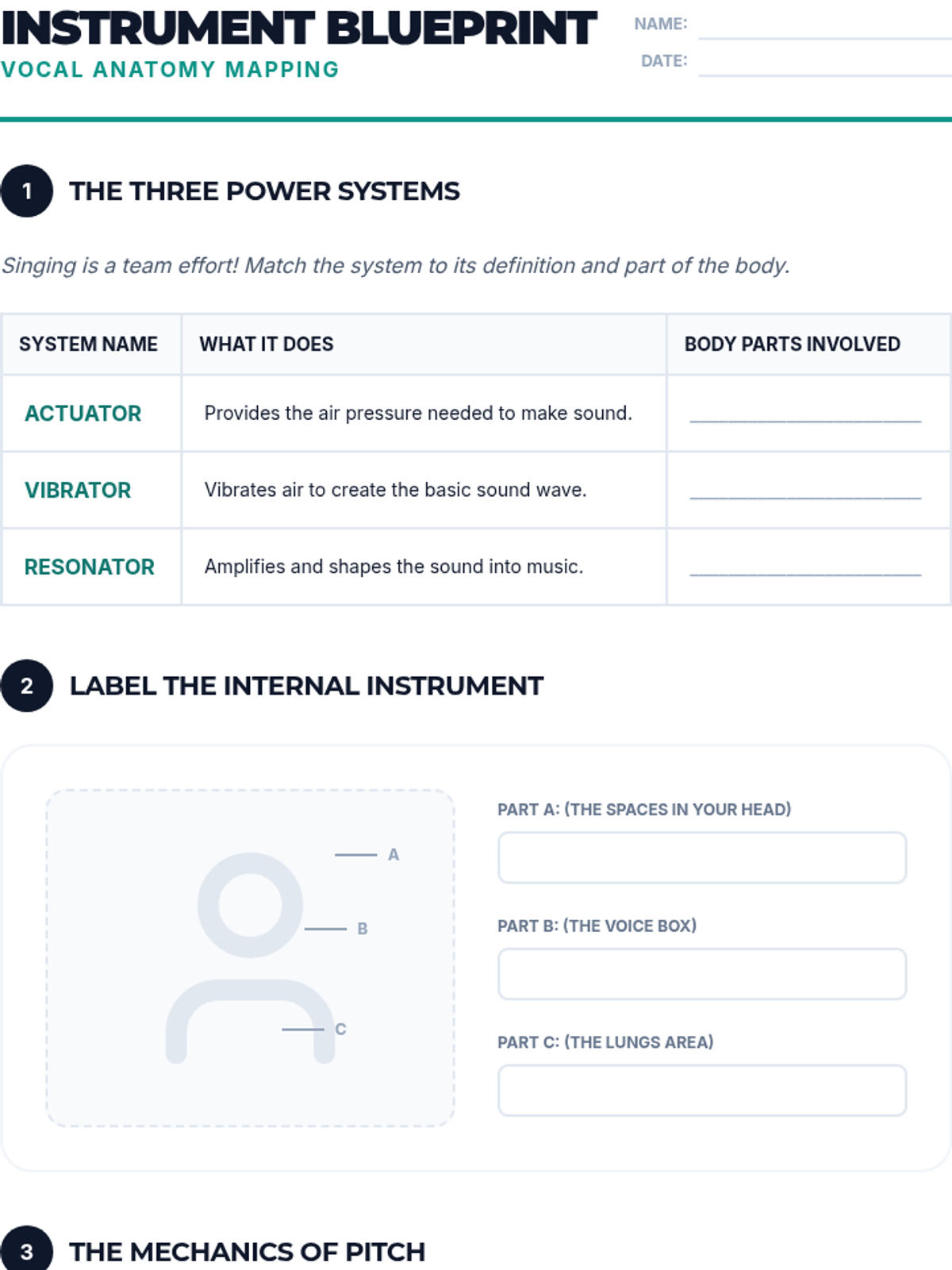
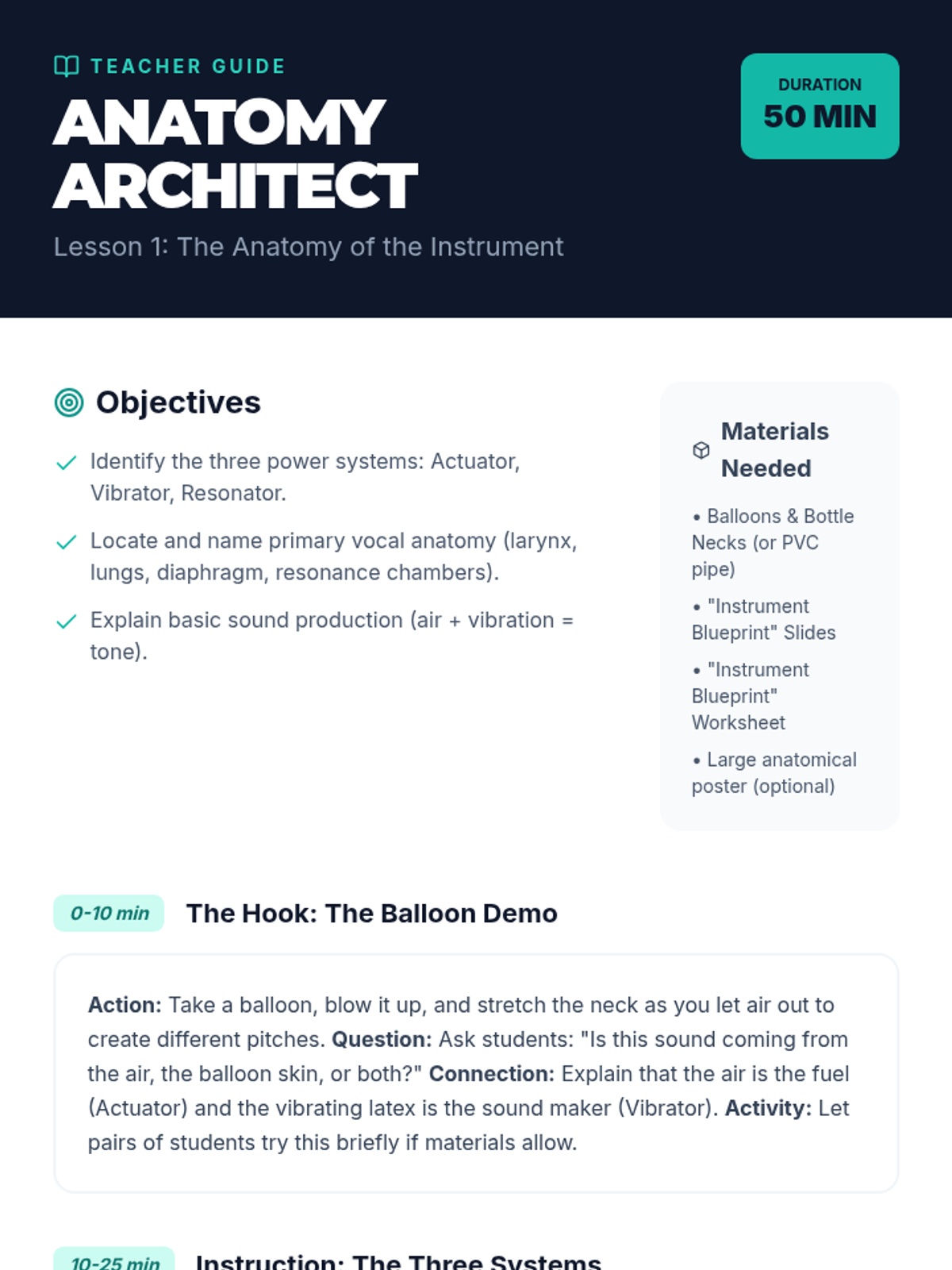
A comprehensive introduction to the physiological and technical aspects of singing, covering vocal anatomy, breath support, vocal registers, and resonance.
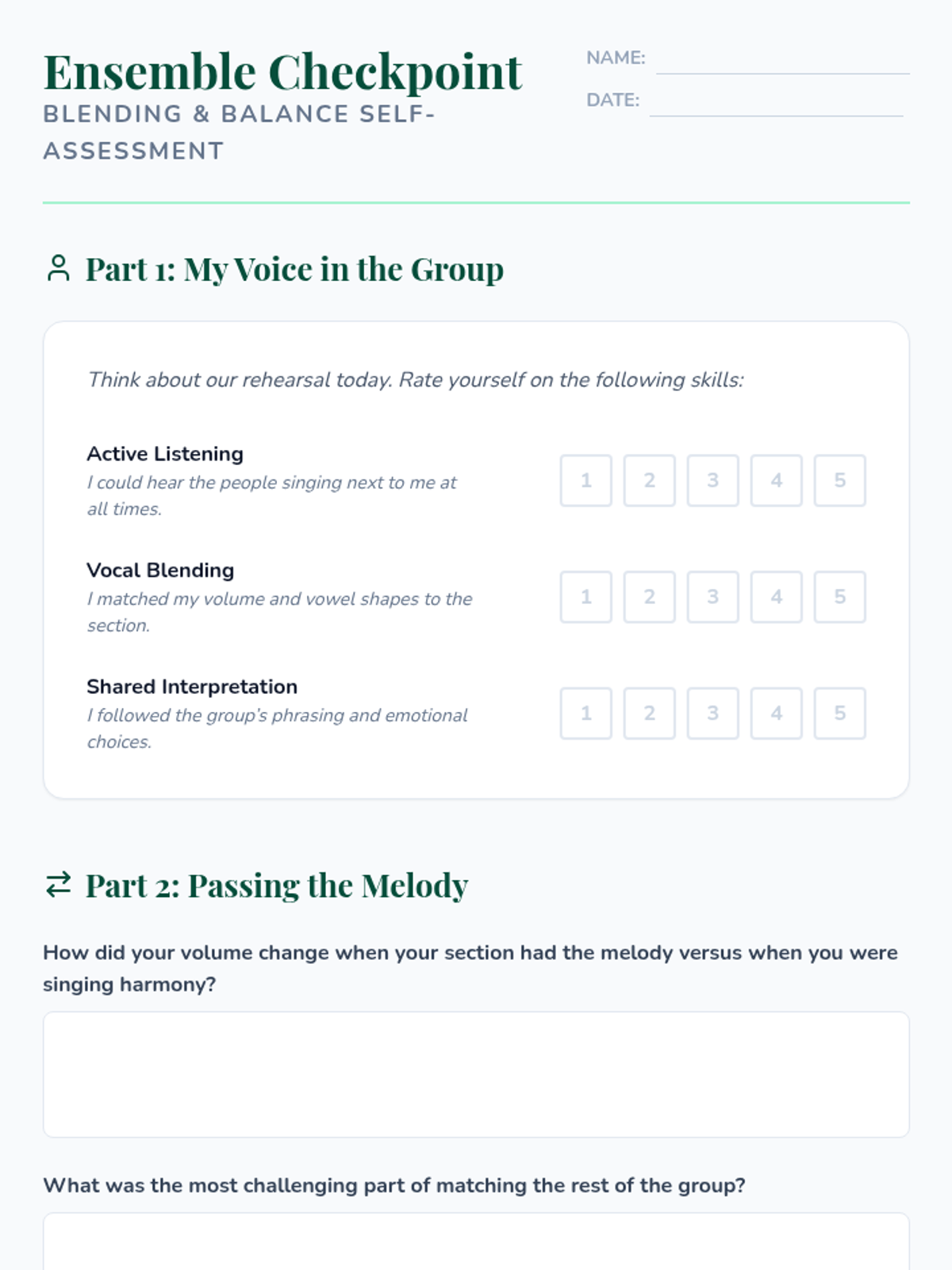
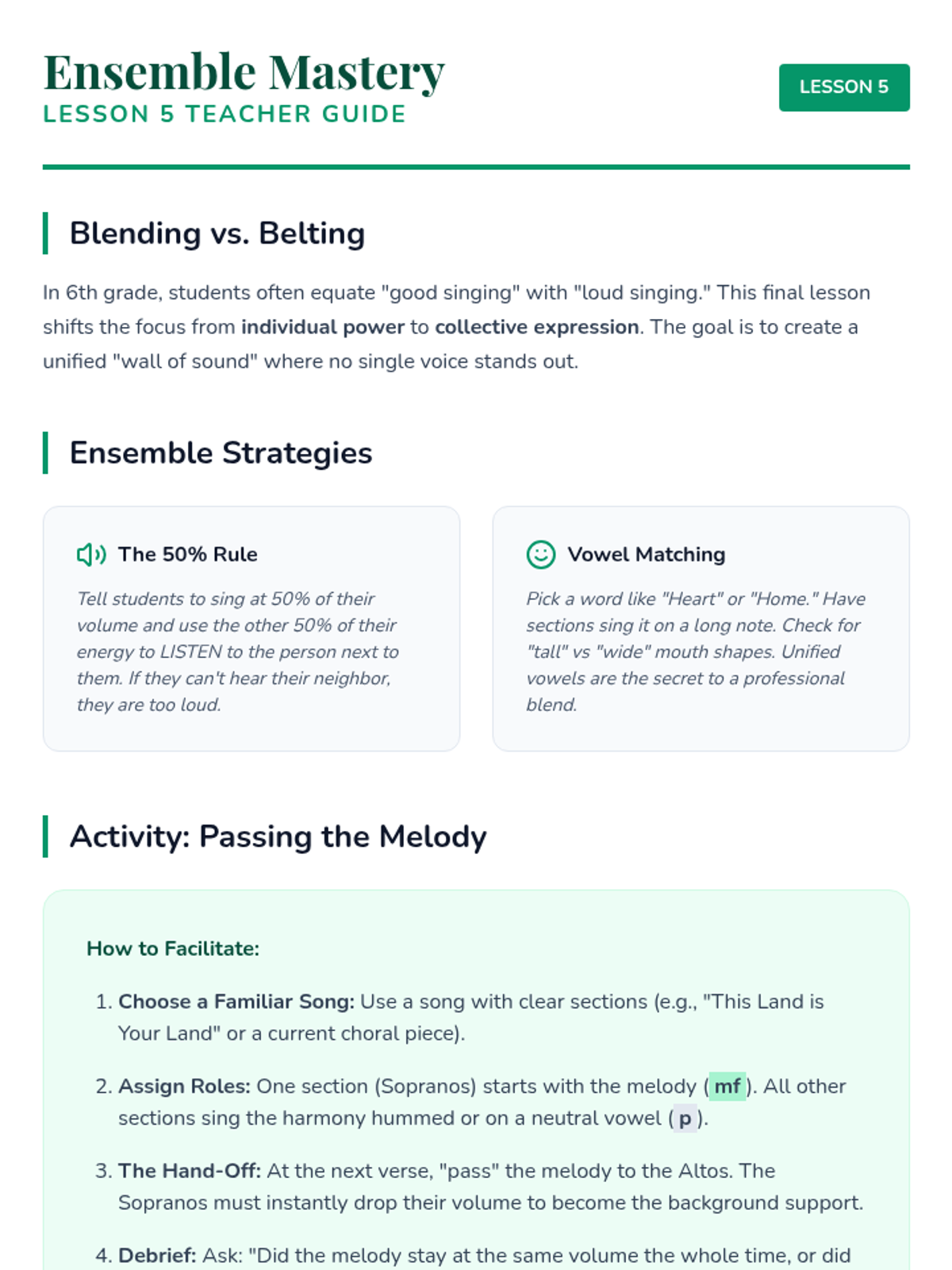
Students explore individual expression versus group blending, focusing on balance and collaborative emotional intent in a choral setting.
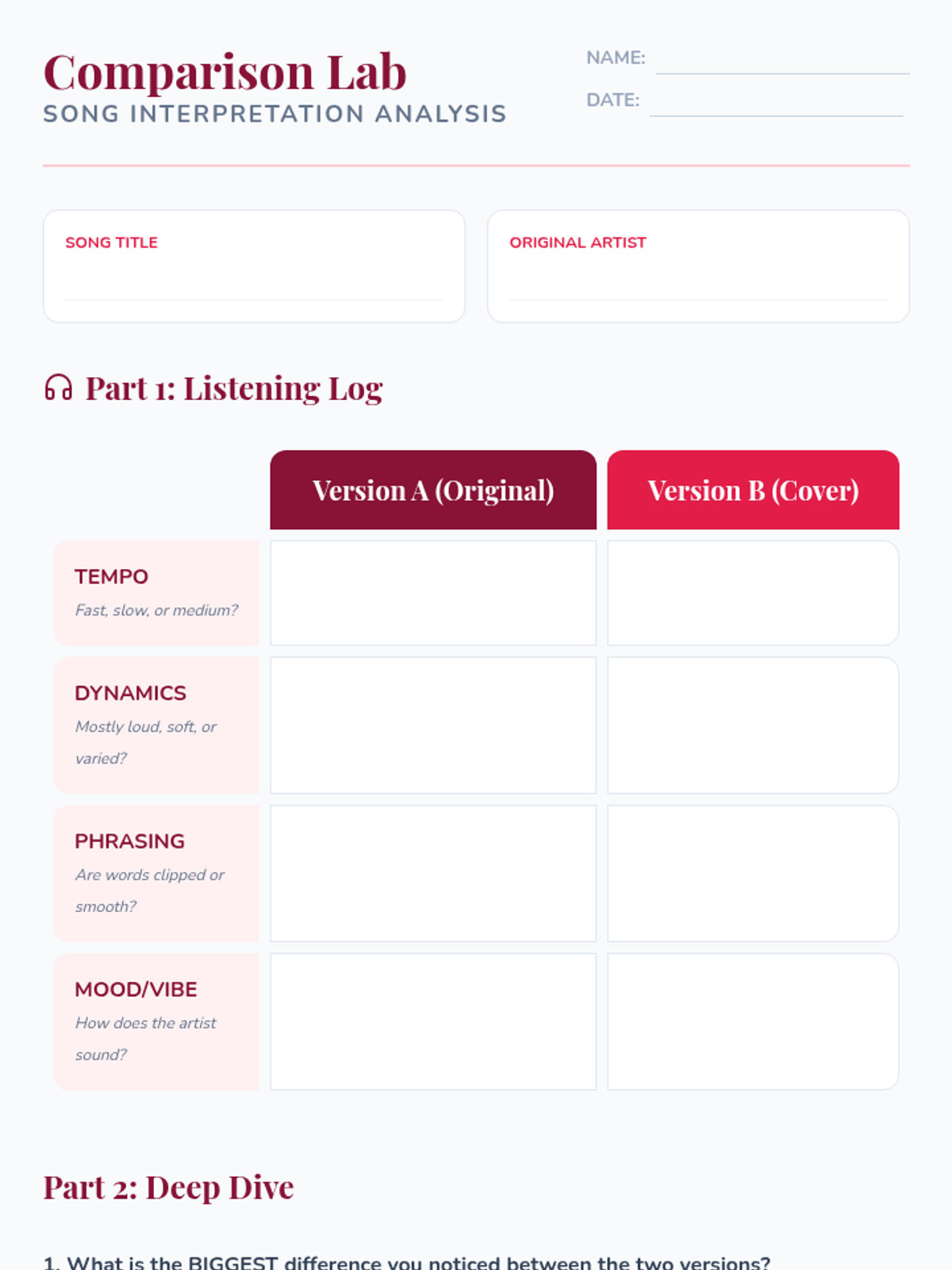
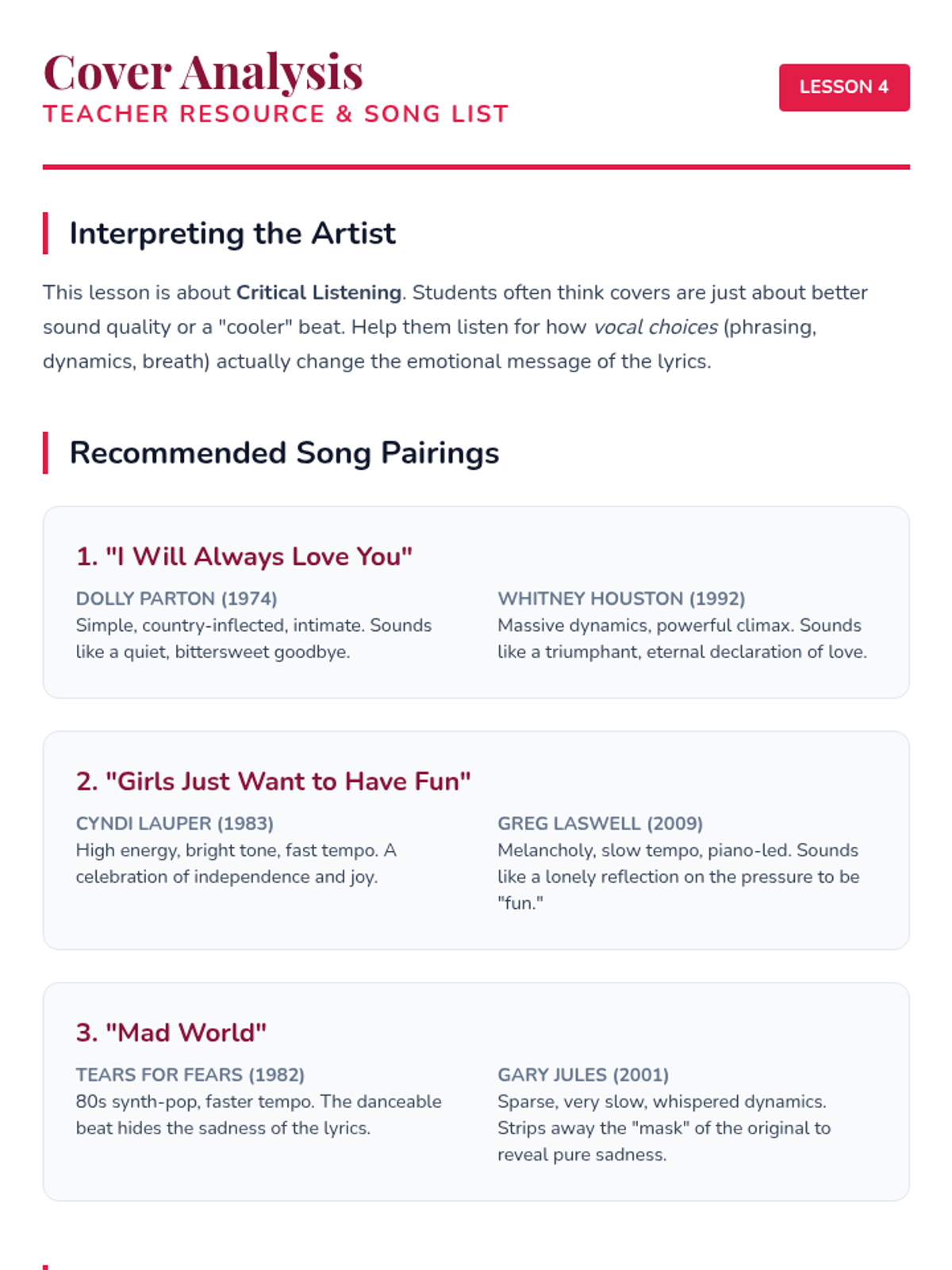
Students compare original recordings with cover versions to analyze how interpretive choices in phrasing and emphasis alter a song's meaning.
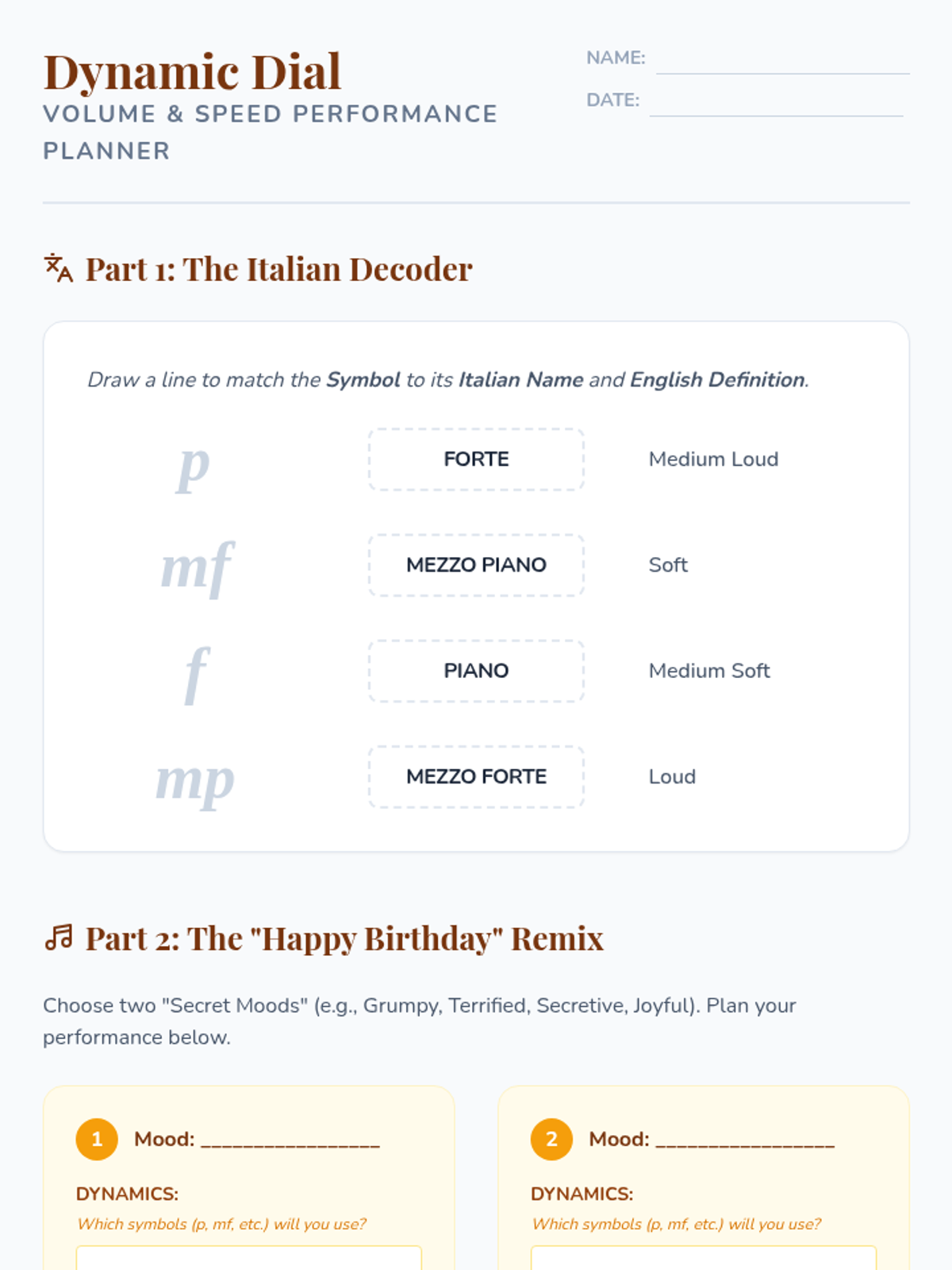
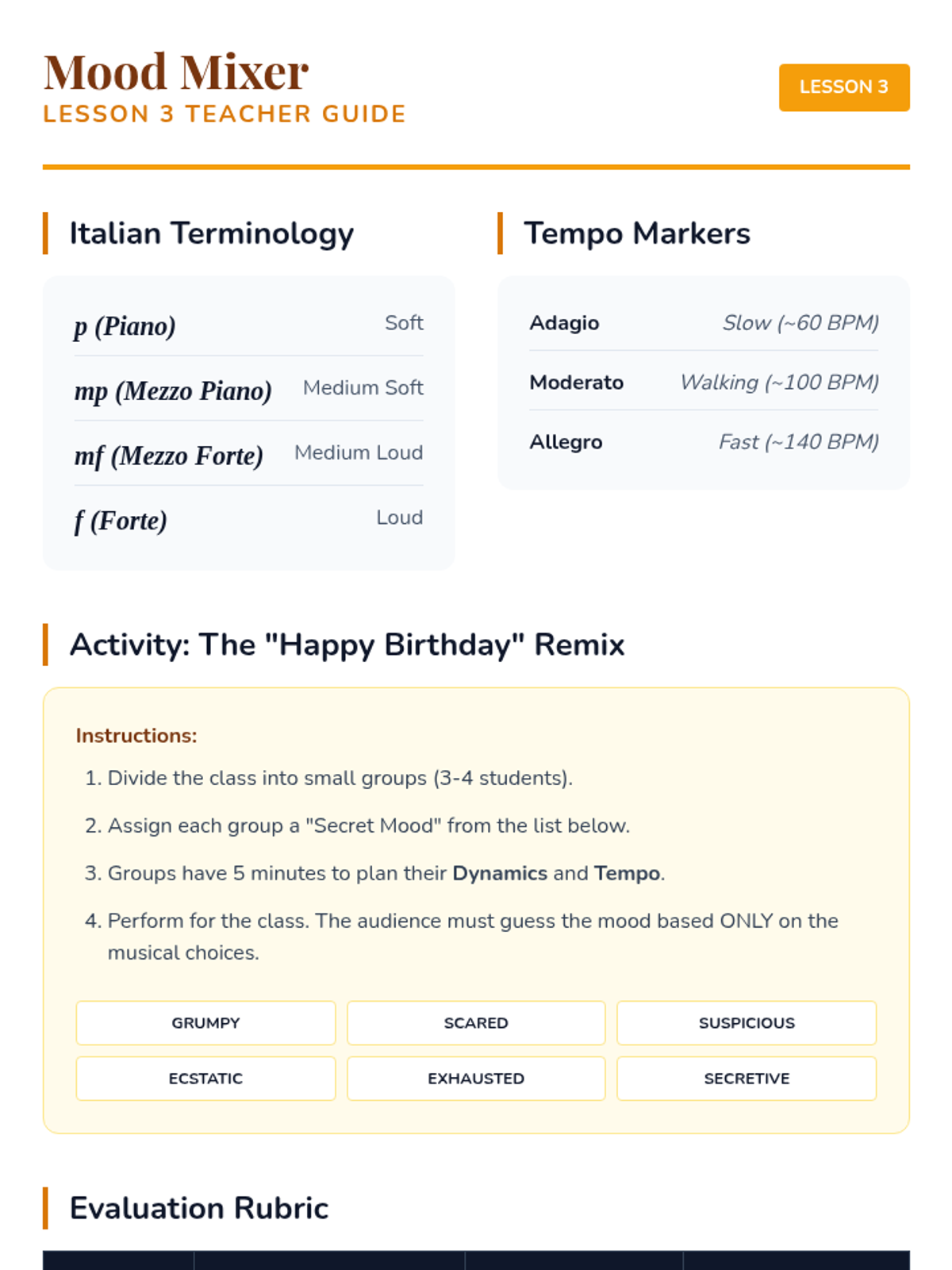
This lesson explores how volume and speed impact storytelling, teaching standard Italian dynamic markings and their emotional functions.
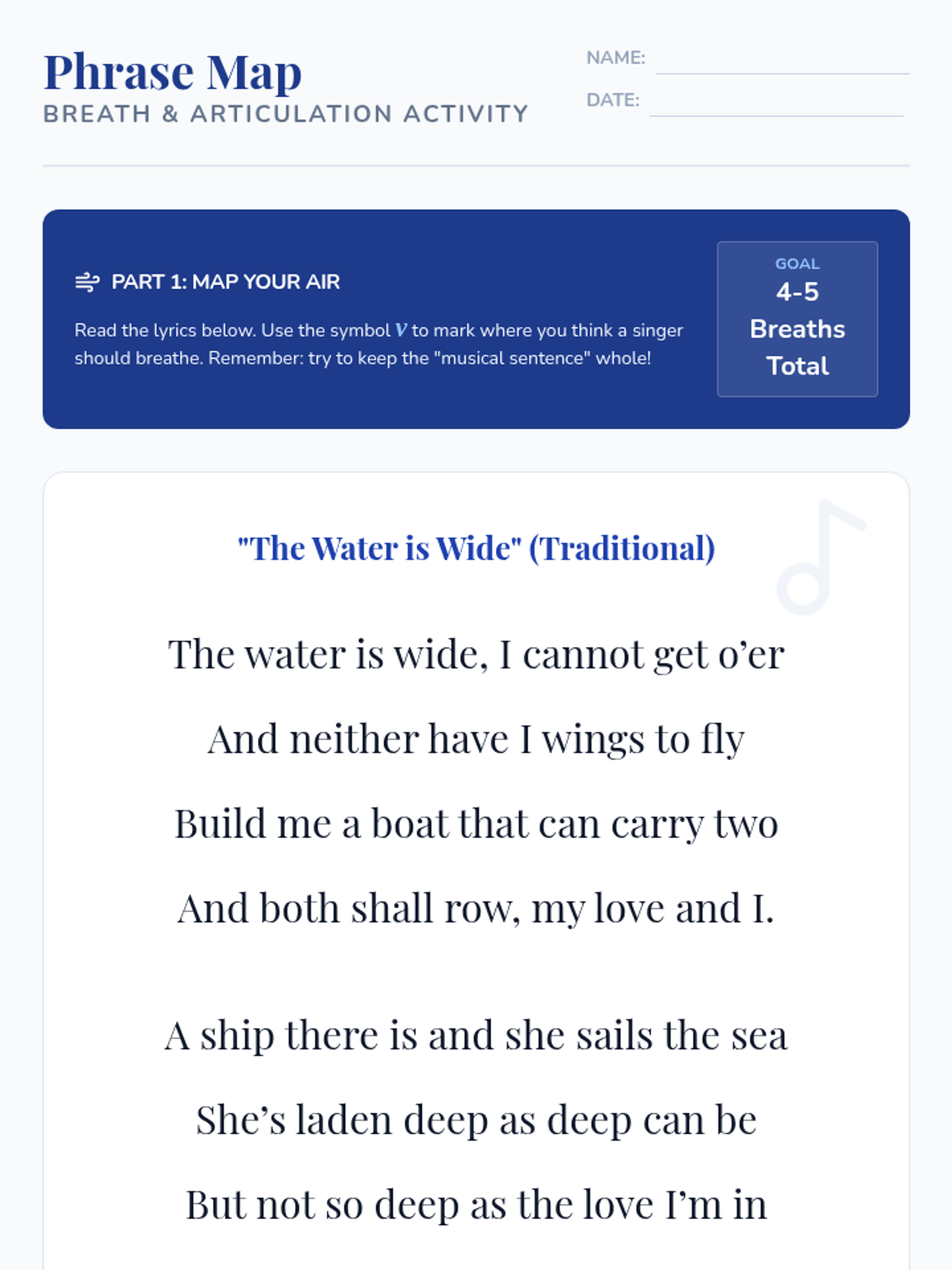
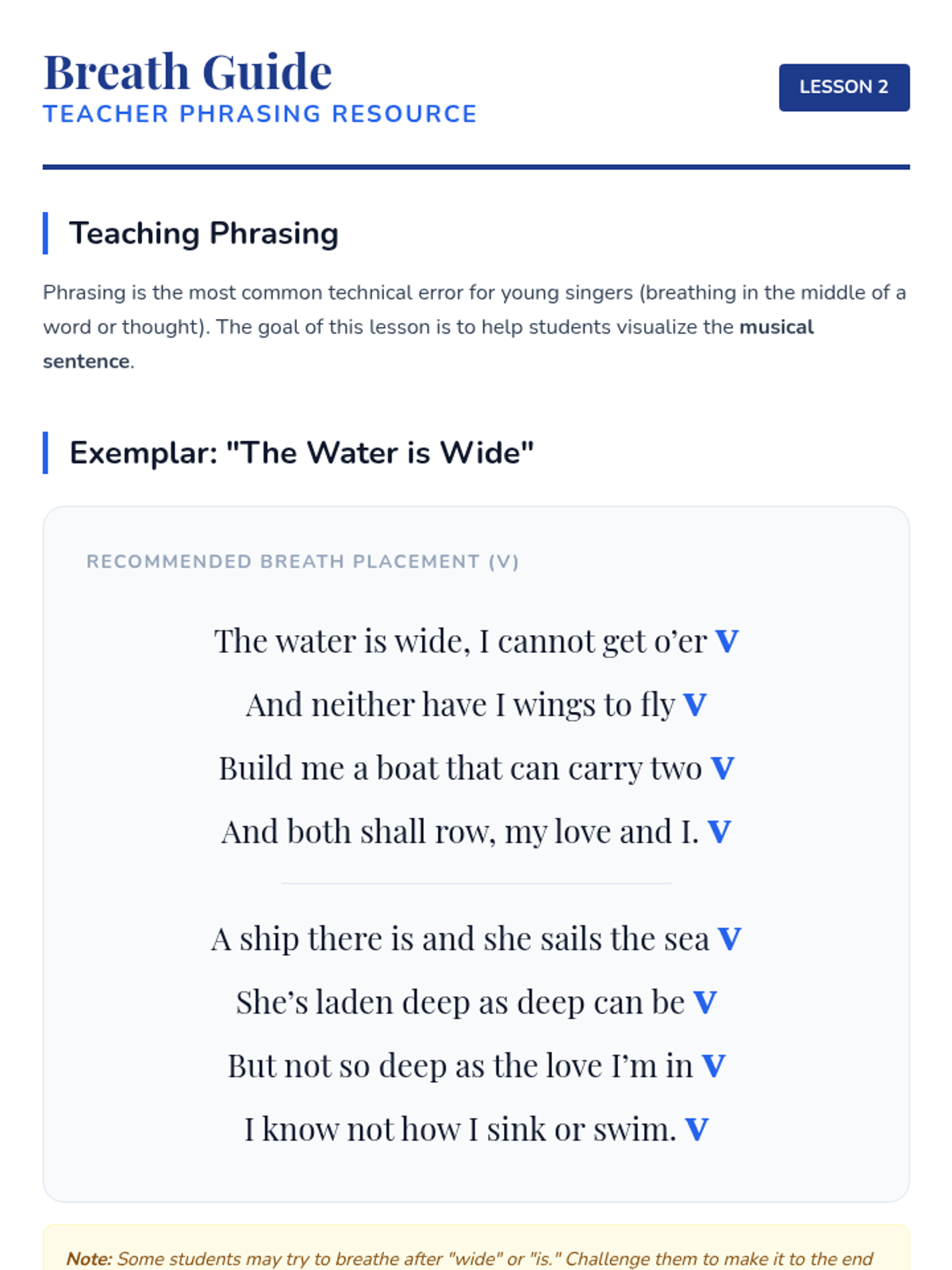
Students identify musical sentences and determine appropriate places to breathe using 'breath maps,' while exploring the expressive qualities of legato and staccato.
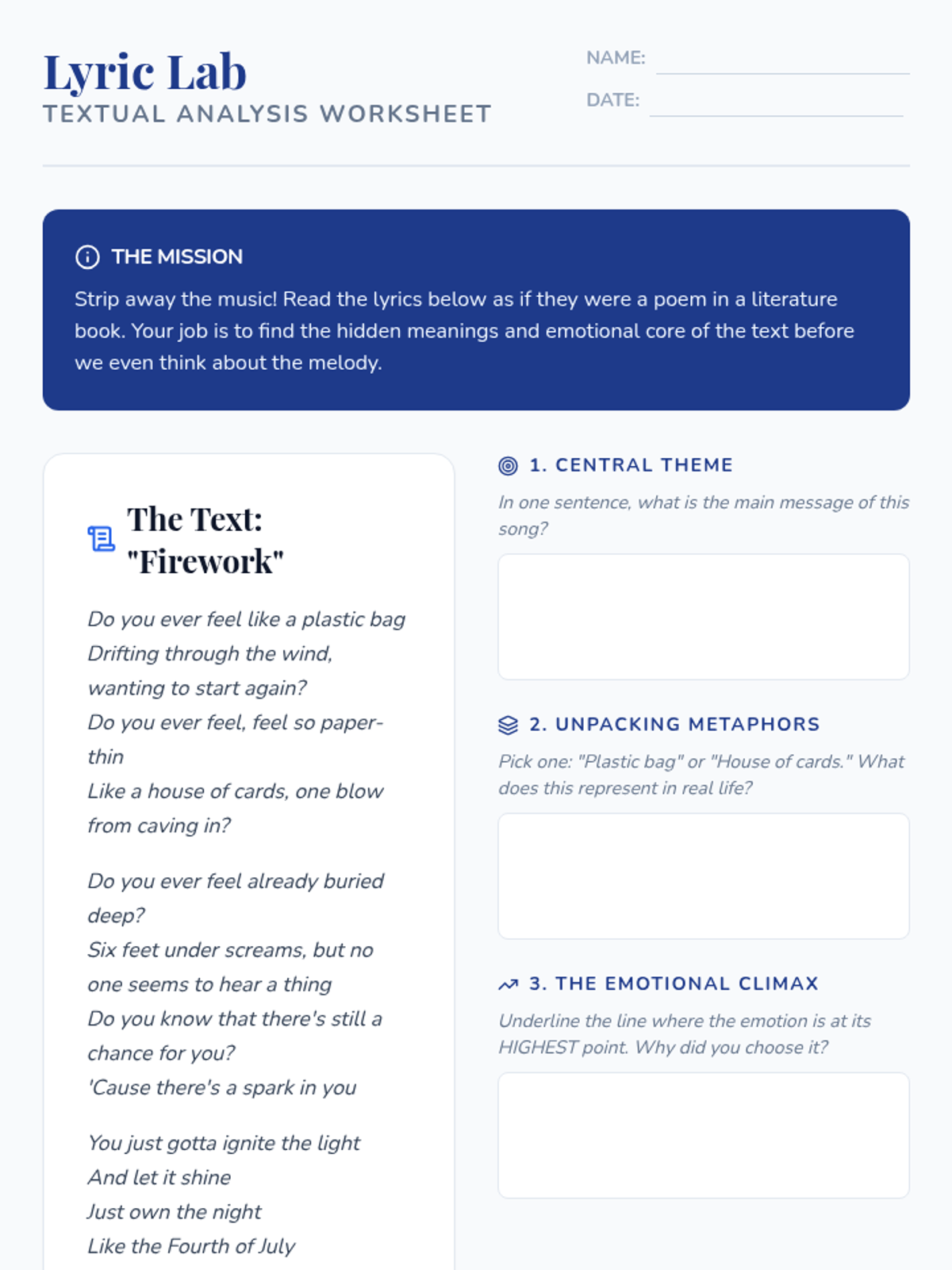
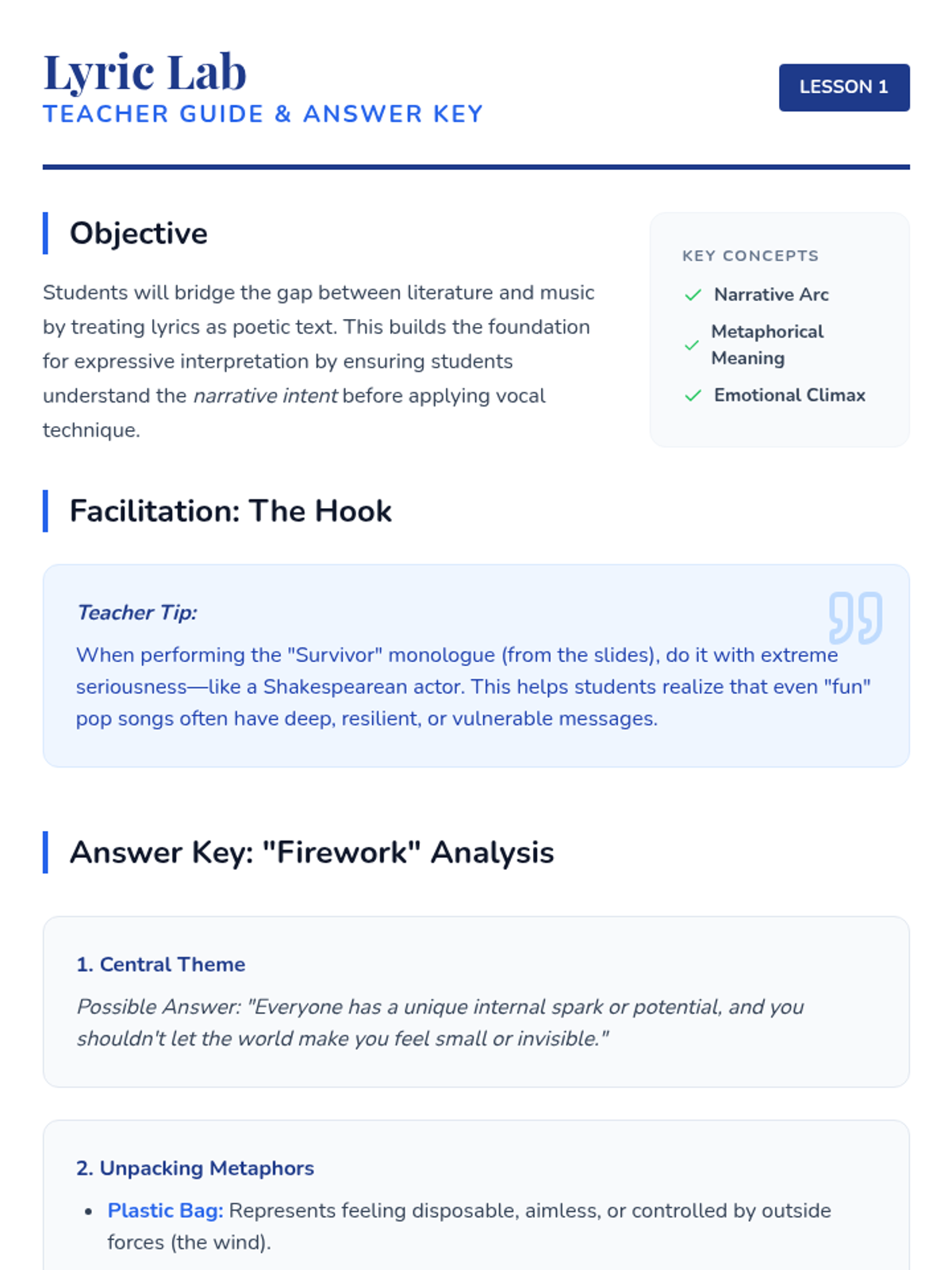
Students strip away the melody and rhythm to analyze song lyrics as standalone poetry, identifying themes, metaphors, and emotional climaxes.
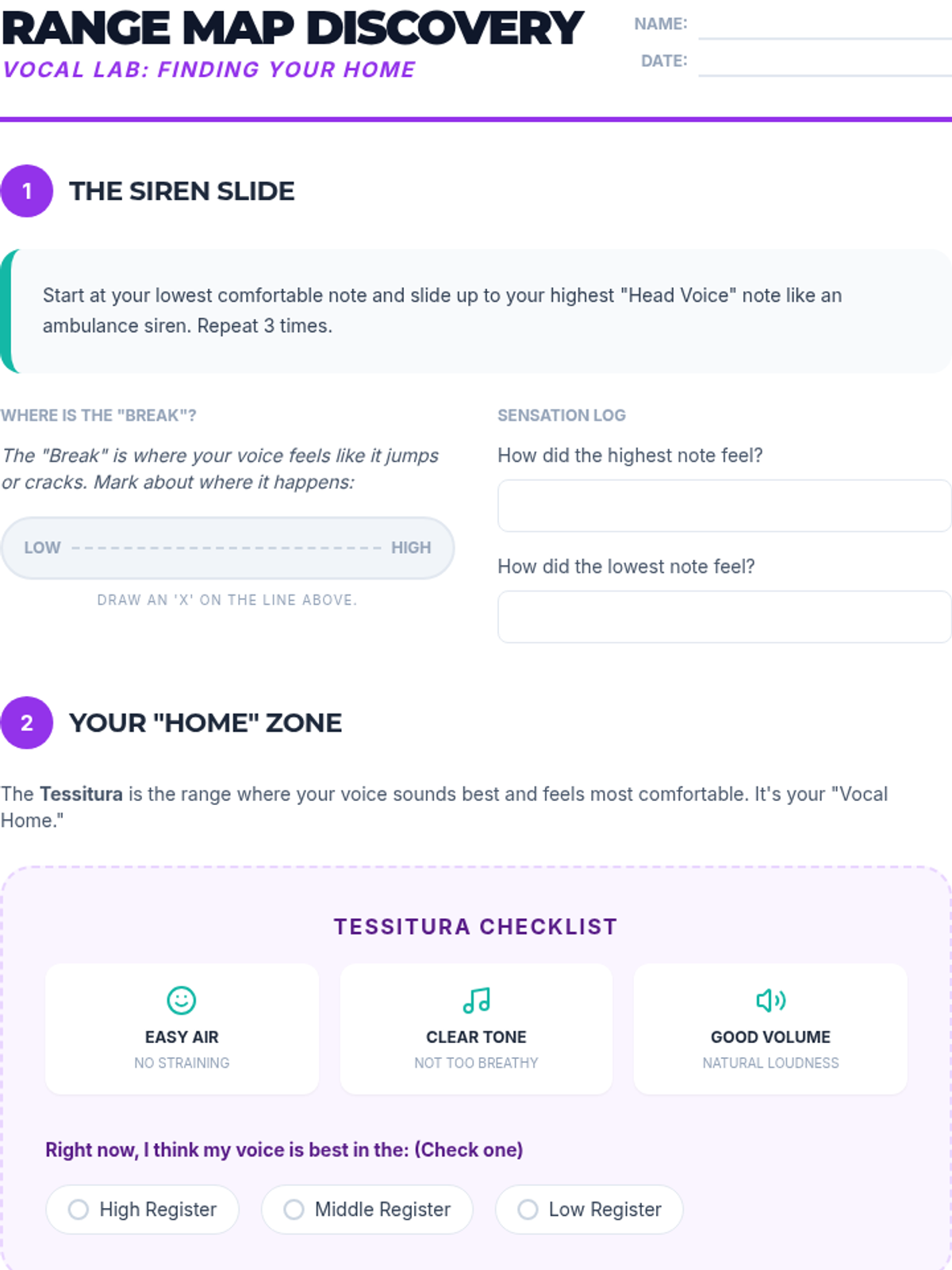
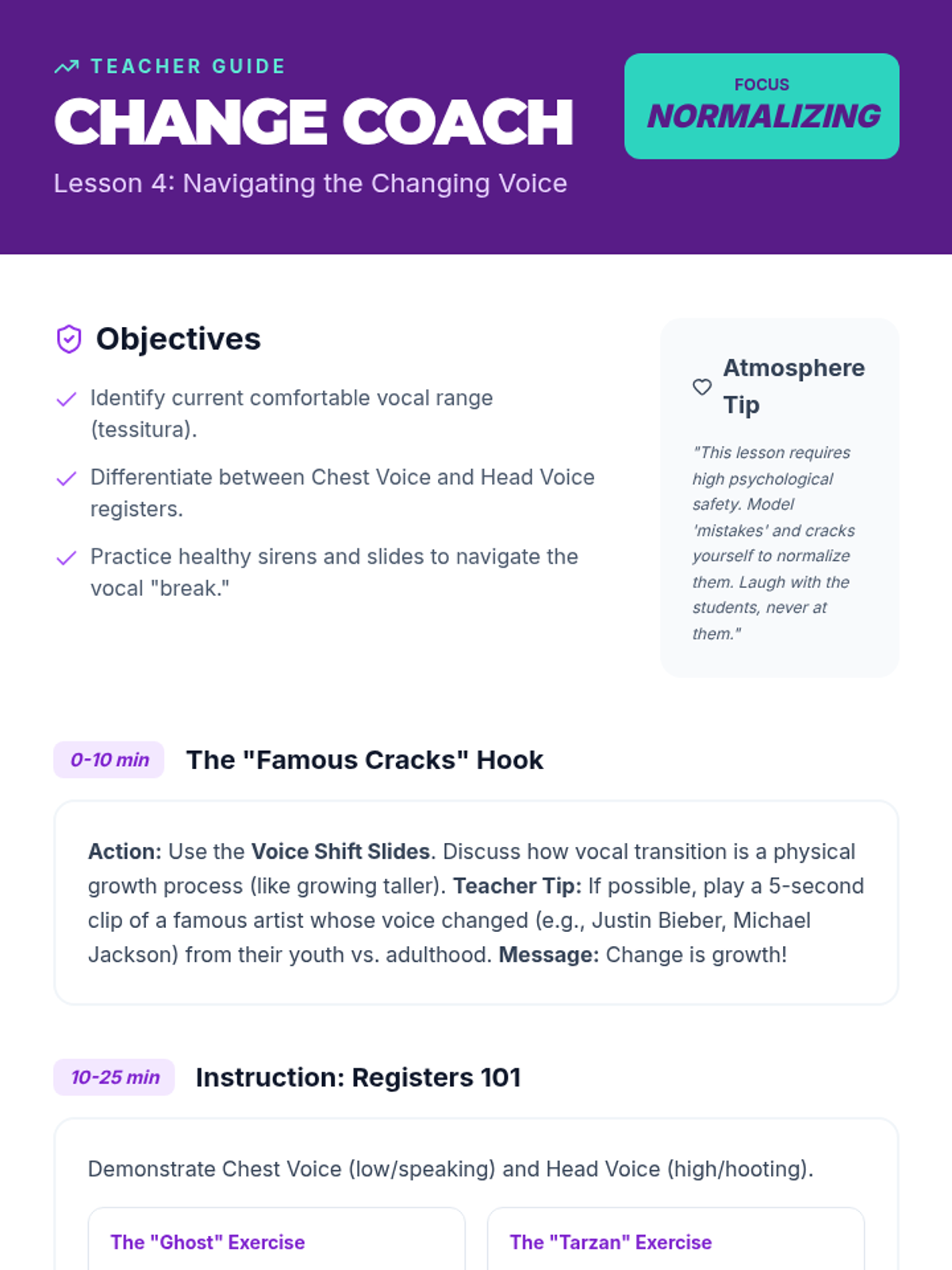
Normalizes the adolescent voice change, helping students identify their current range and learn strategies for healthy register transitions.
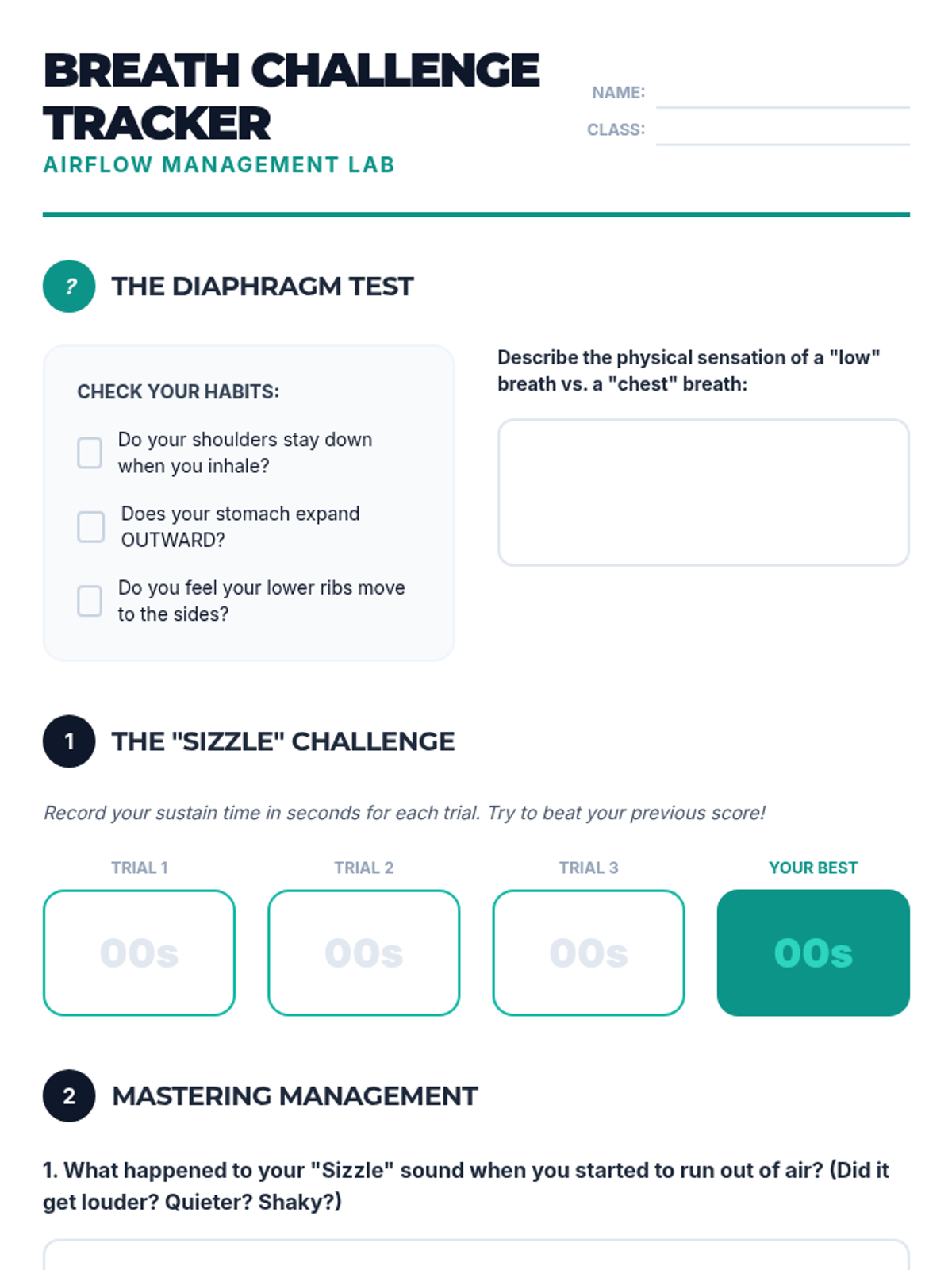
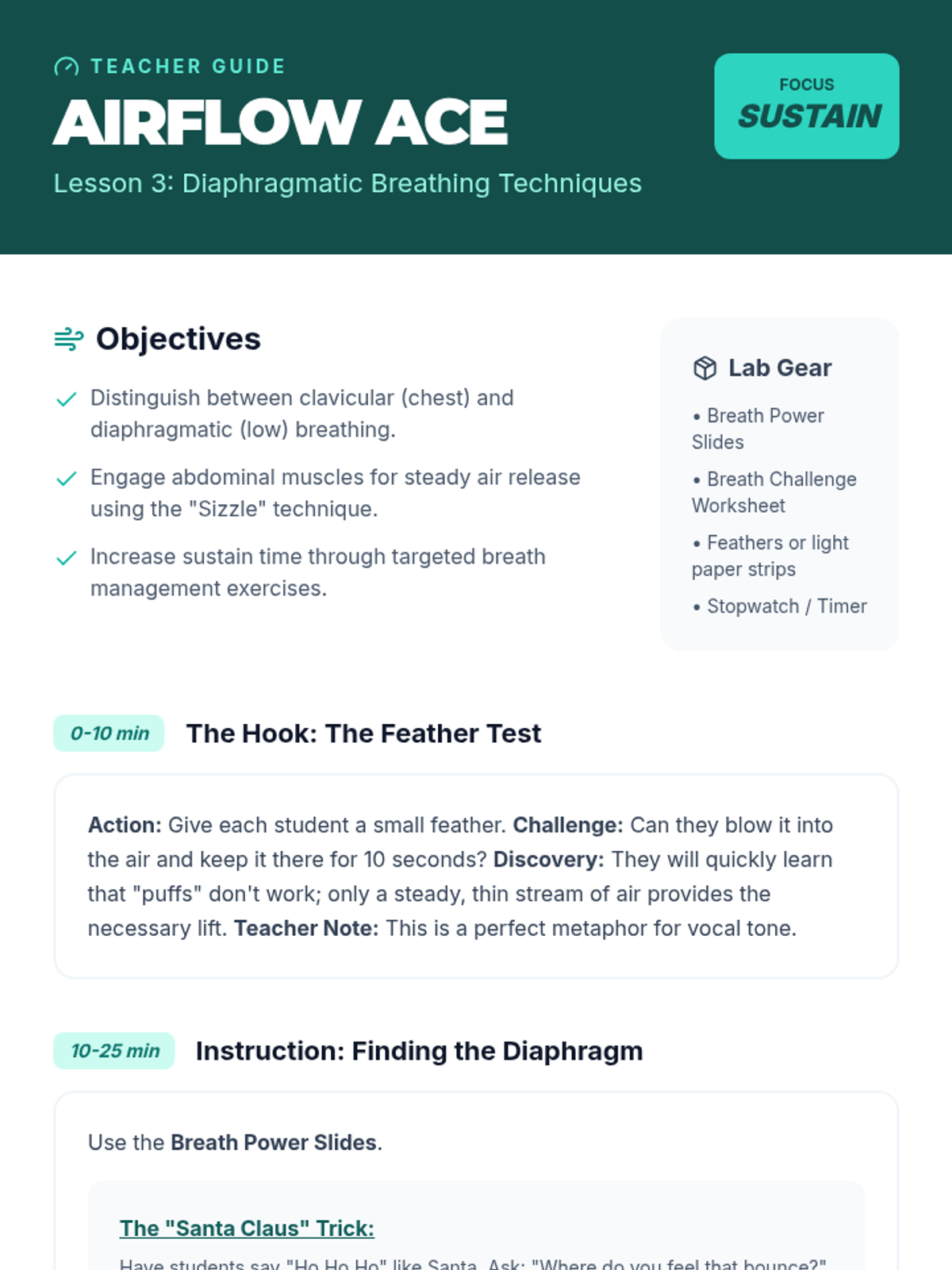
Students learn deep diaphragmatic breathing and hissed exhalation techniques to control airflow and sustain long musical phrases.
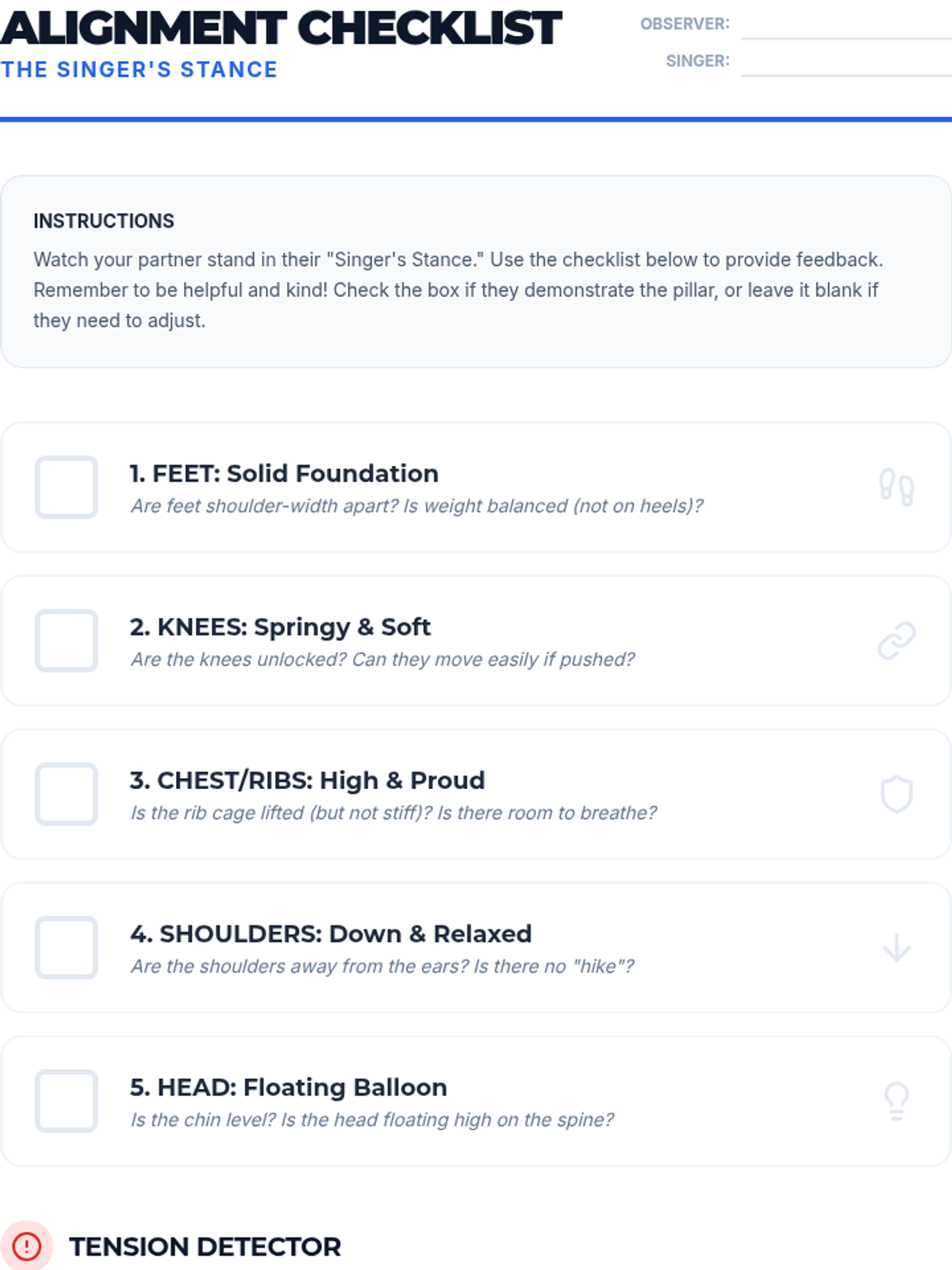
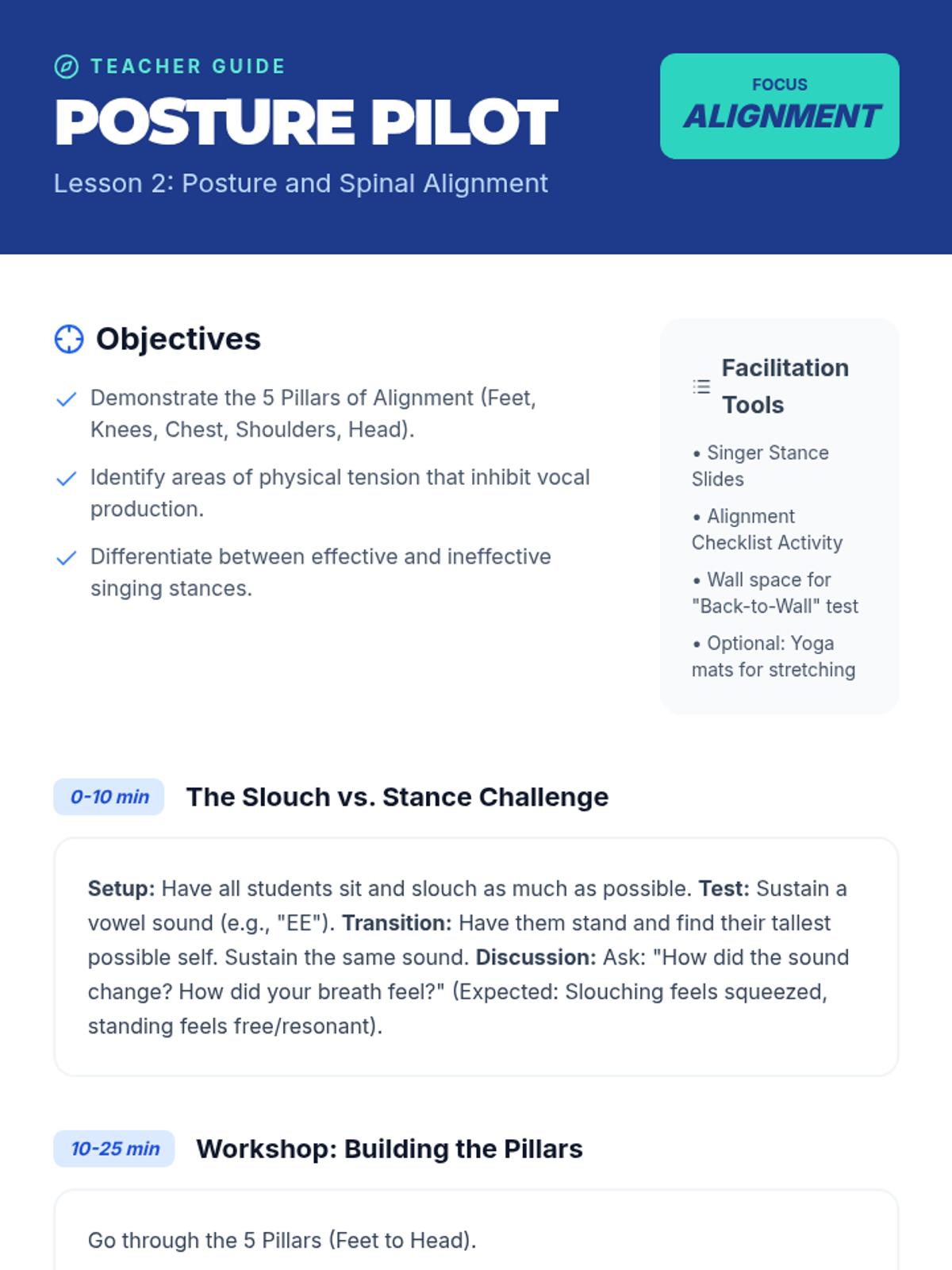
Focuses on the 'singer's stance,' teaching students the relationship between spinal alignment and airflow while identifying and releasing physical tension.
Students identify the major parts of the vocal mechanism, including the larynx, vocal folds, and resonance chambers, to create a mental map of their internal instrument.
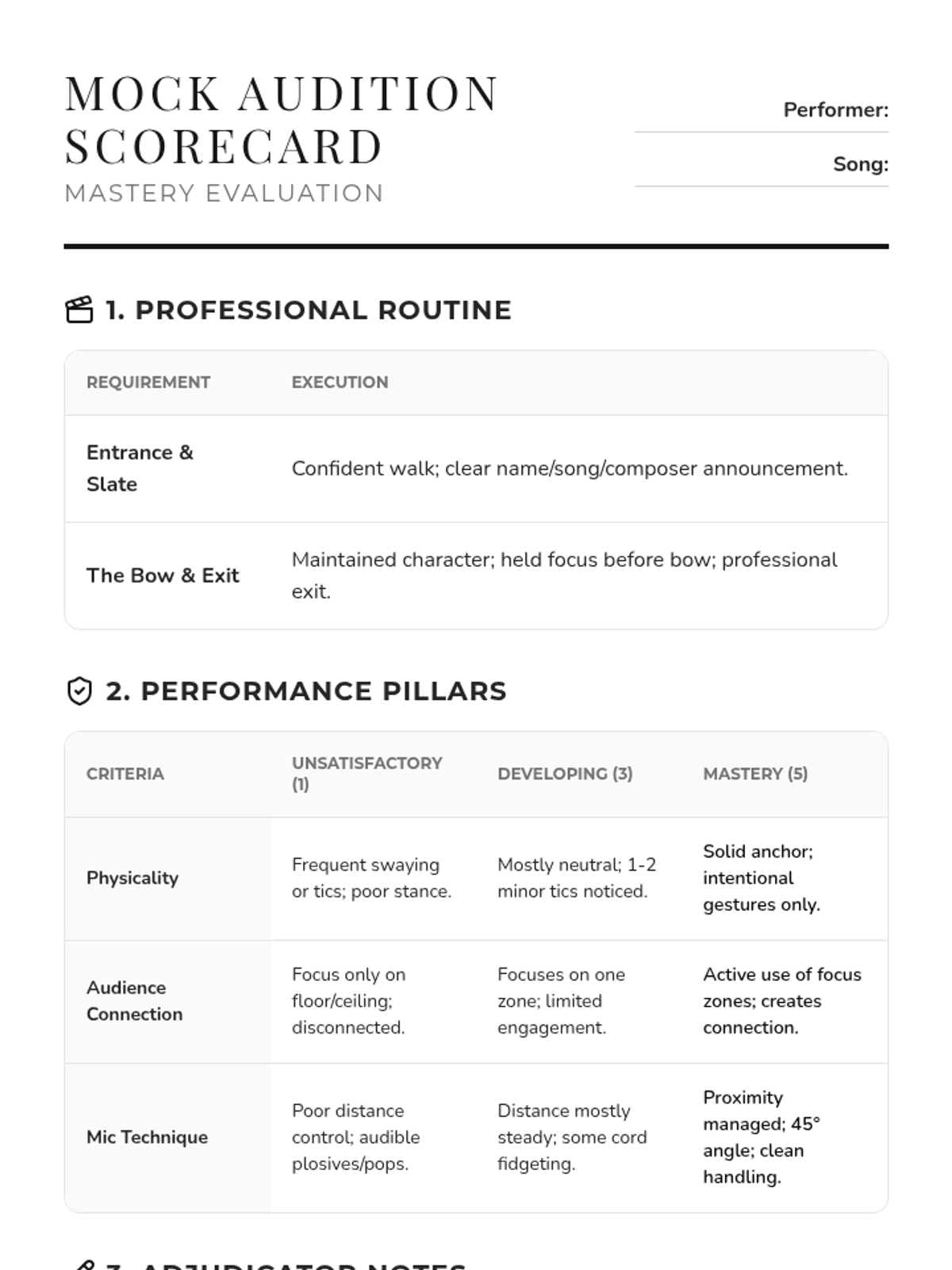
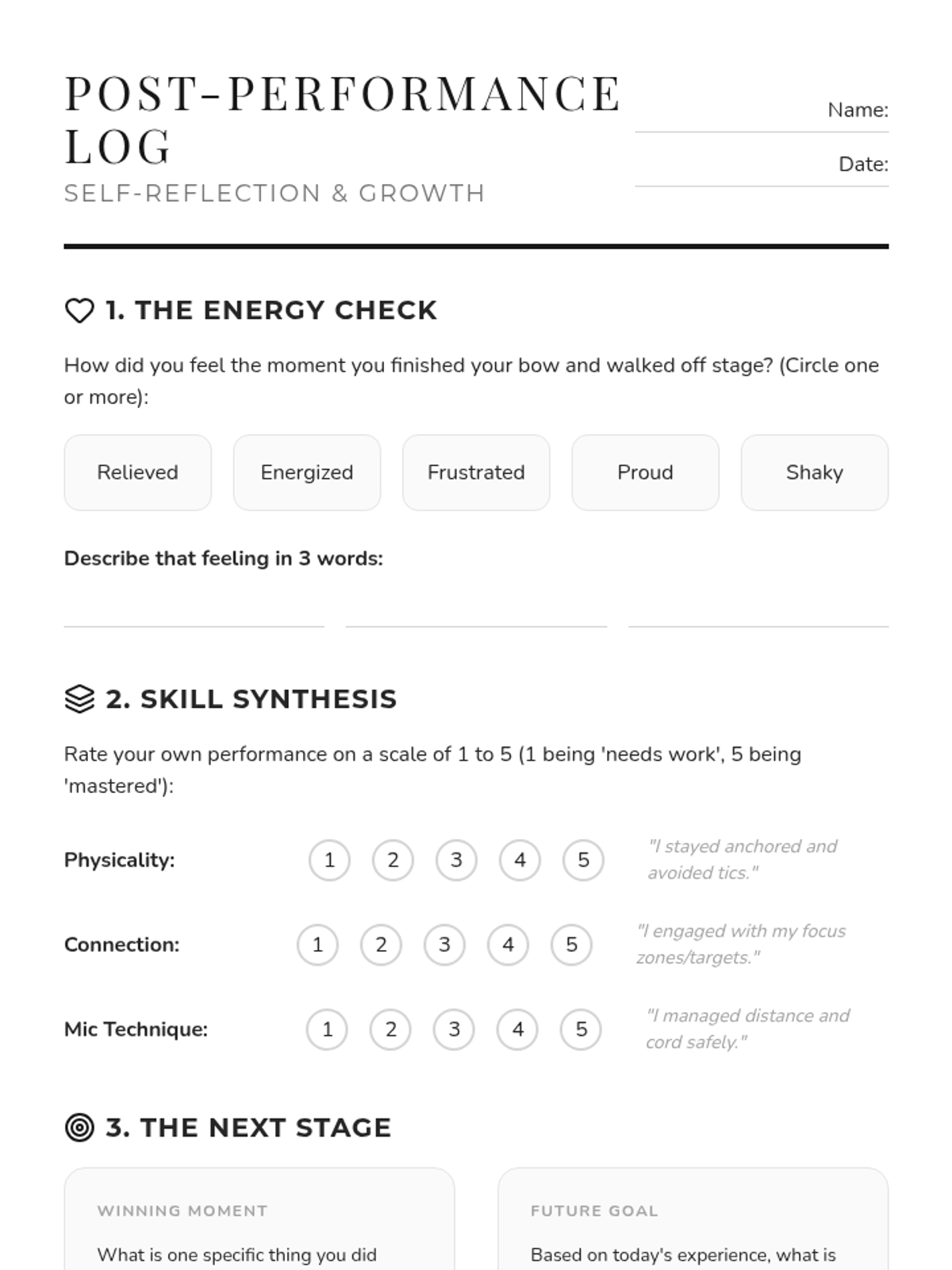
Students participate in a simulated high-stakes performance environment. They apply all skills: entrance, introduction, song delivery, and exit, followed by written reflection.
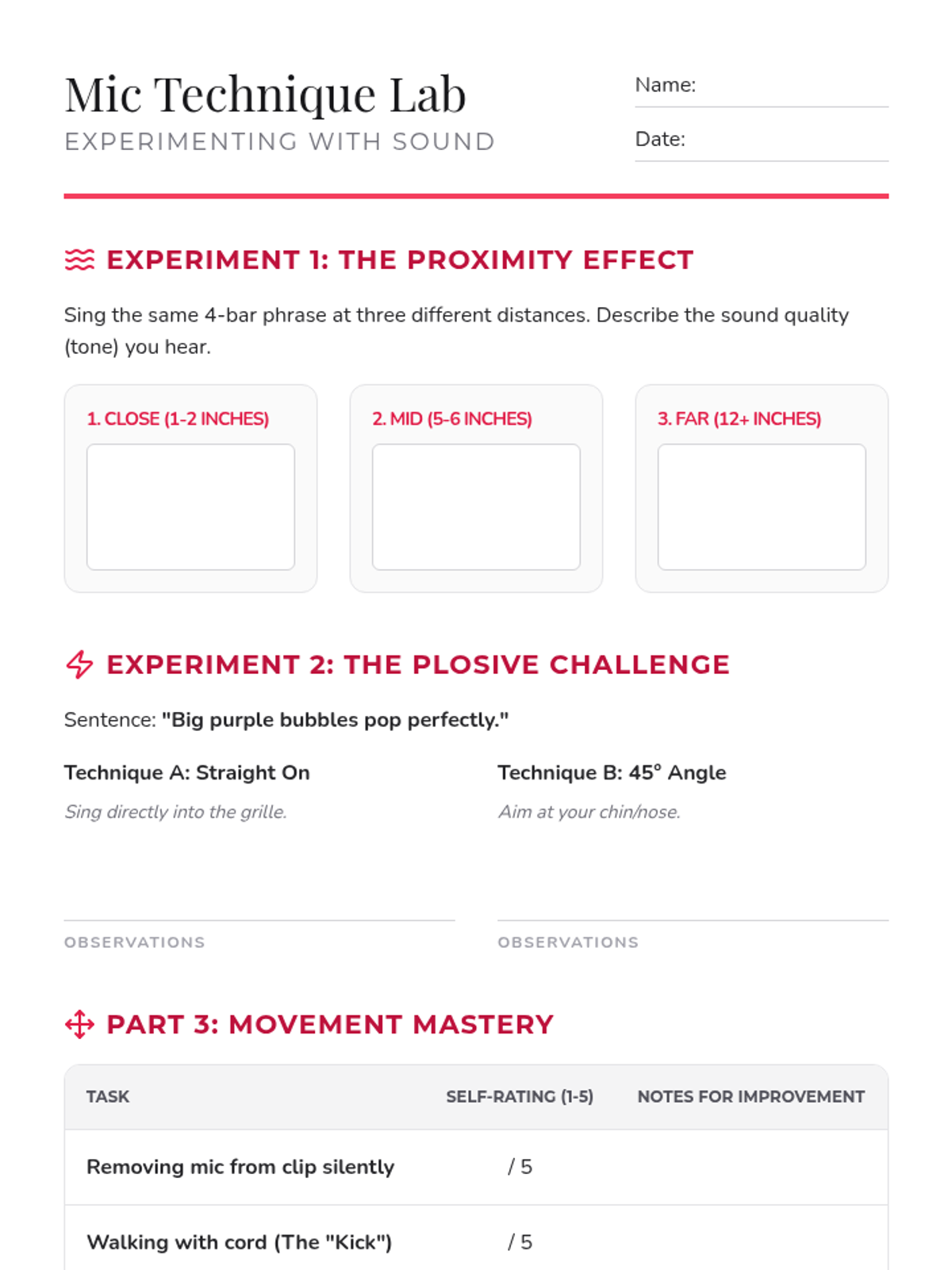
Students are introduced to the basics of handling a microphone, including distance, angle, and cord management. They experiment with how proximity affects sound and practice moving with the mic.
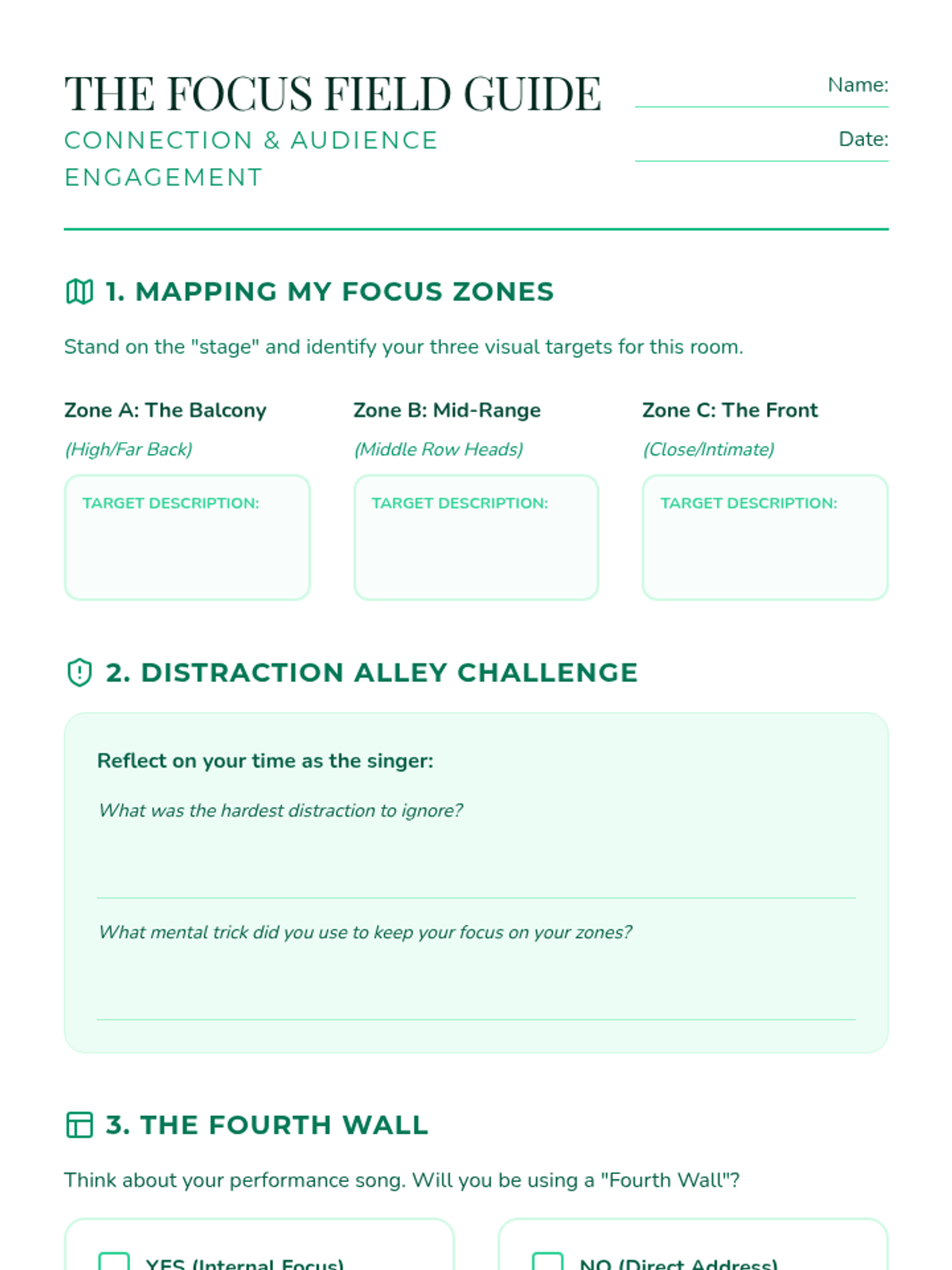
Students learn where to look while performing to create a connection without feeling overwhelmed. They practice the 'fourth wall' concept for theatrical songs versus direct address for concert pieces.