Develops technical proficiency and creative movement skills across various styles. Examines choreographic principles alongside the historical and cultural origins of diverse global dance forms.
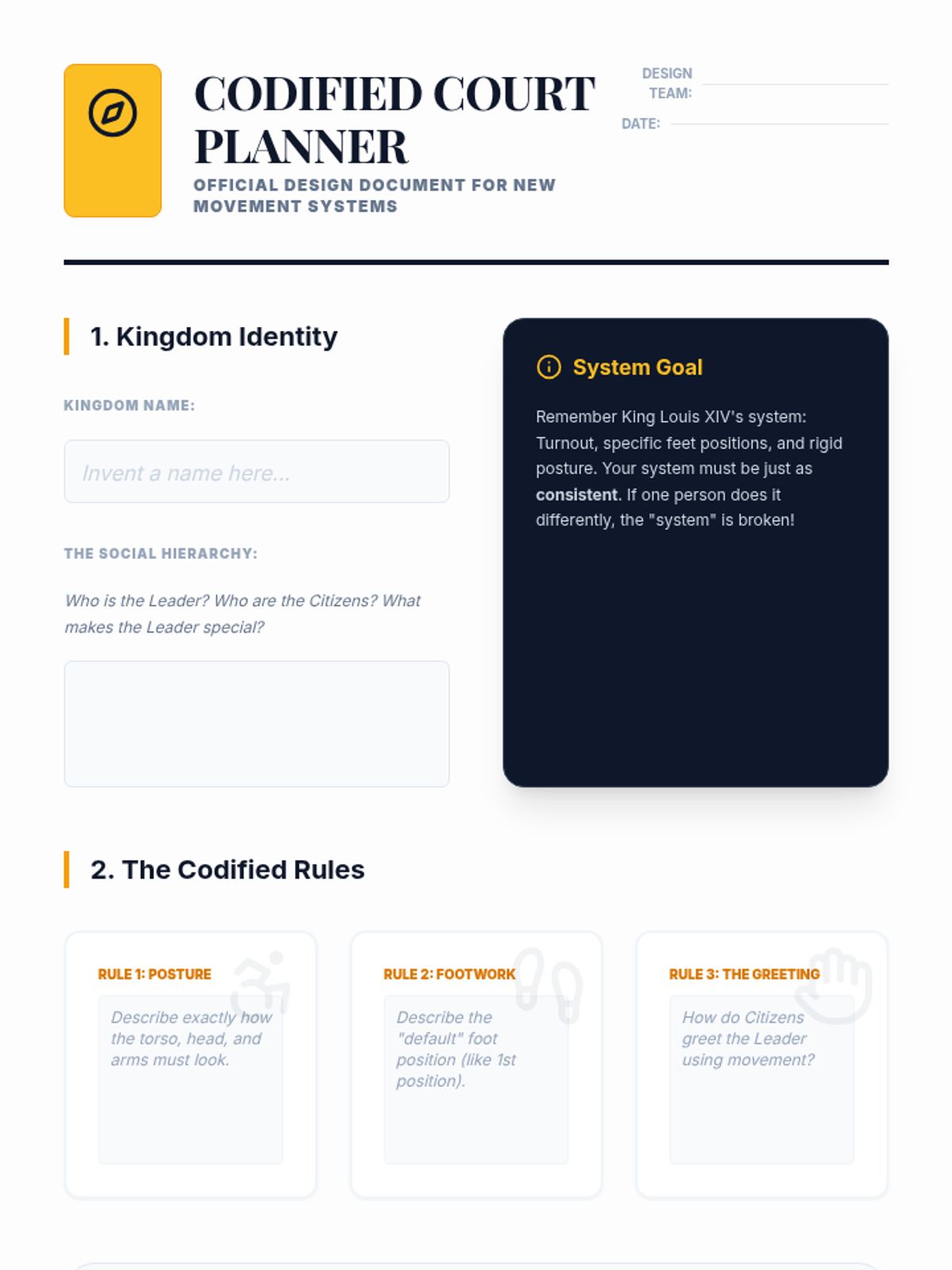
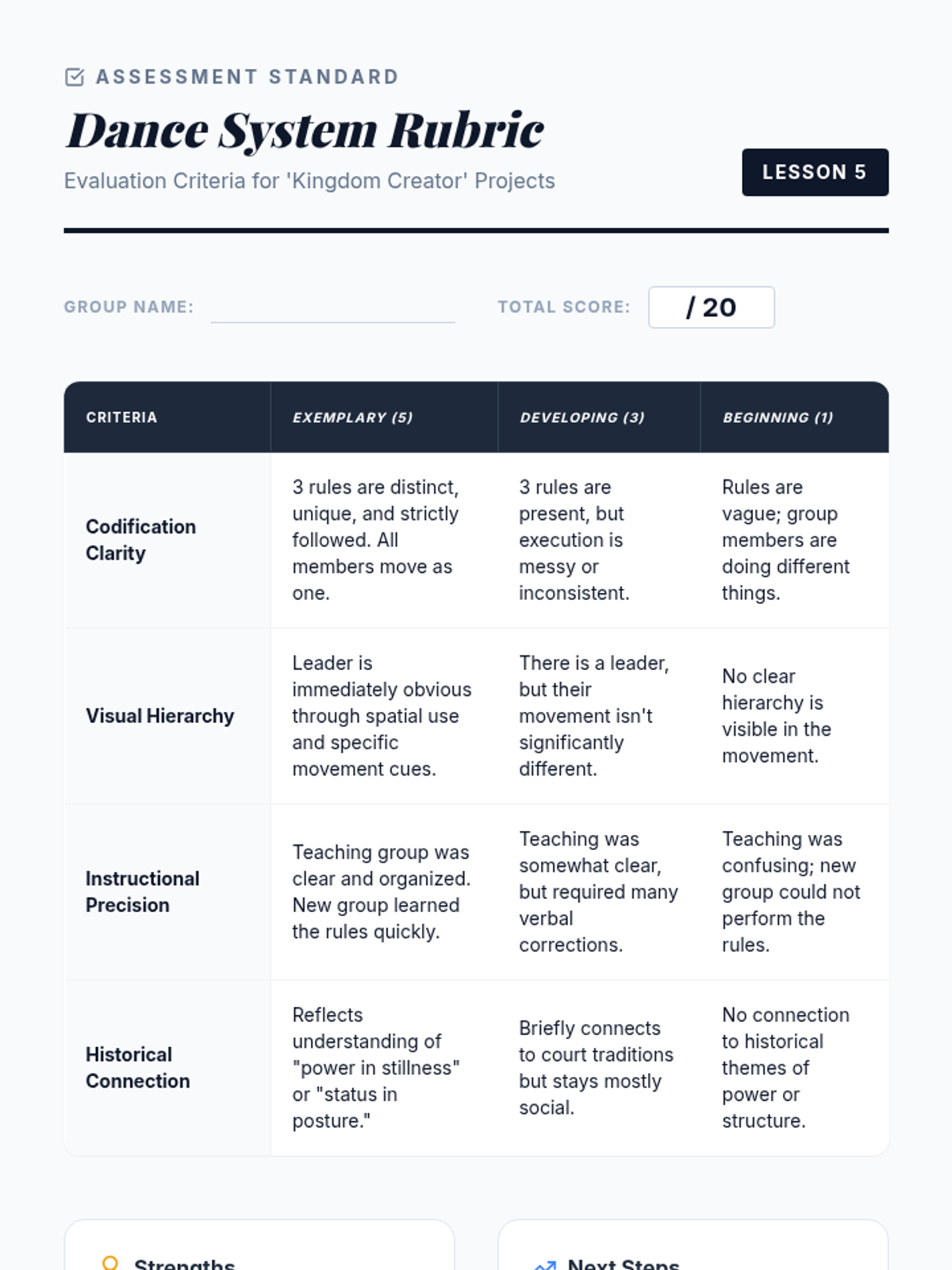
Groups create their own mini 'court dance' system with three specific rules regarding posture and footwork that reflect a fictional hierarchy. They teach their codified system to another group to experience the transmission of formalized technique.
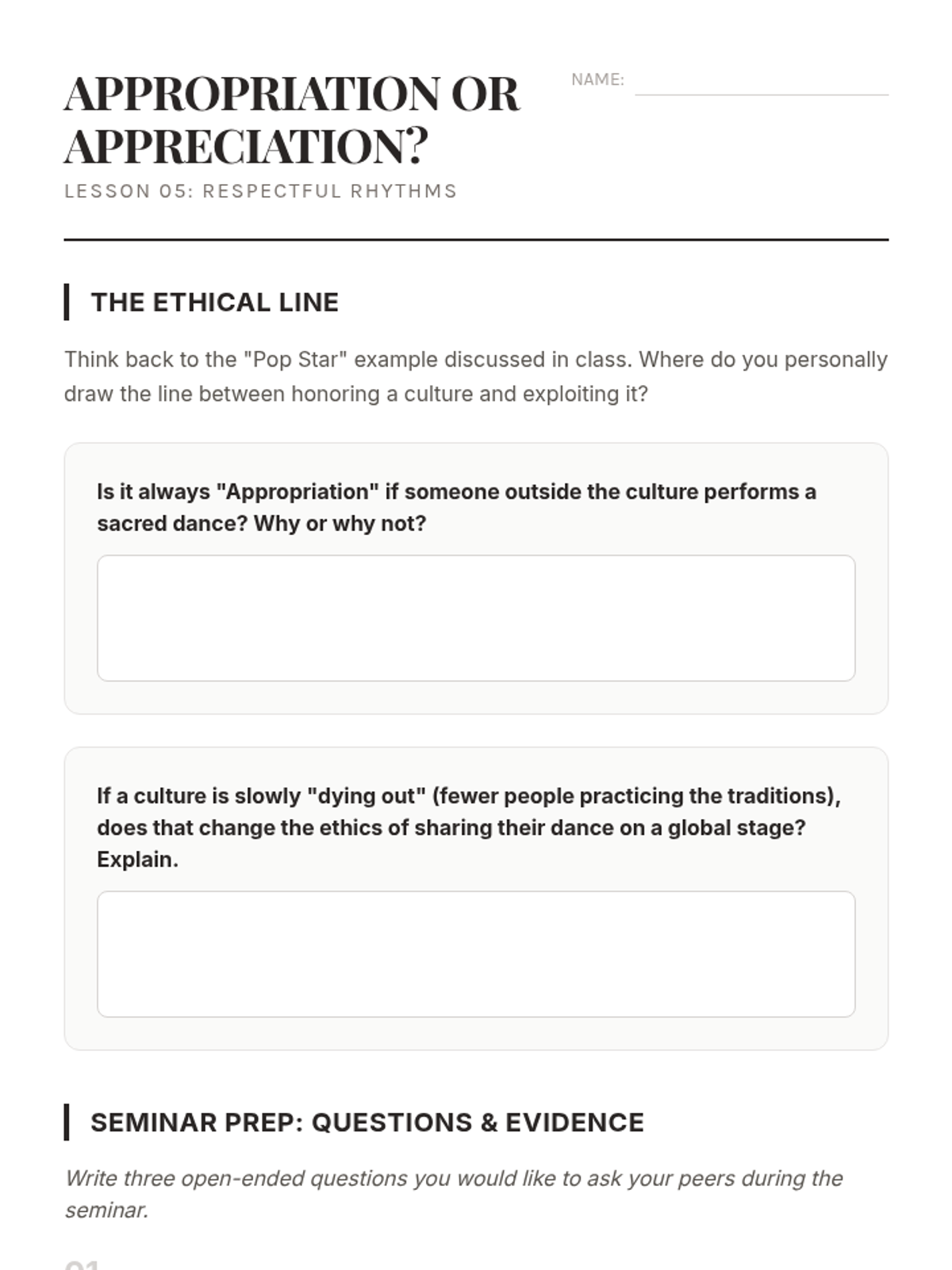
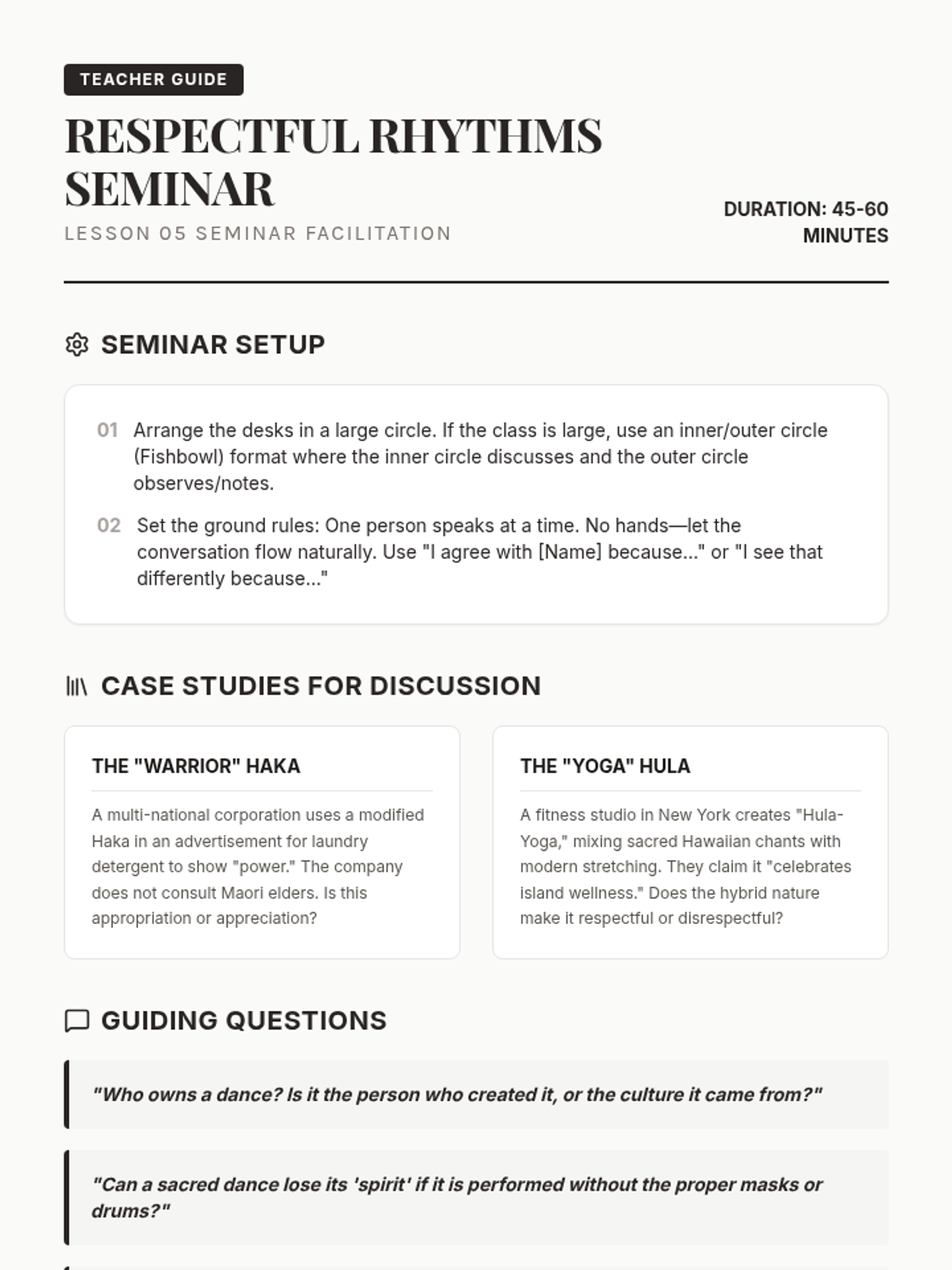
The sequence concludes with a seminar on the ethics of performing sacred dances on commercial stages. Students debate the fine line between cultural appreciation and cultural appropriation.
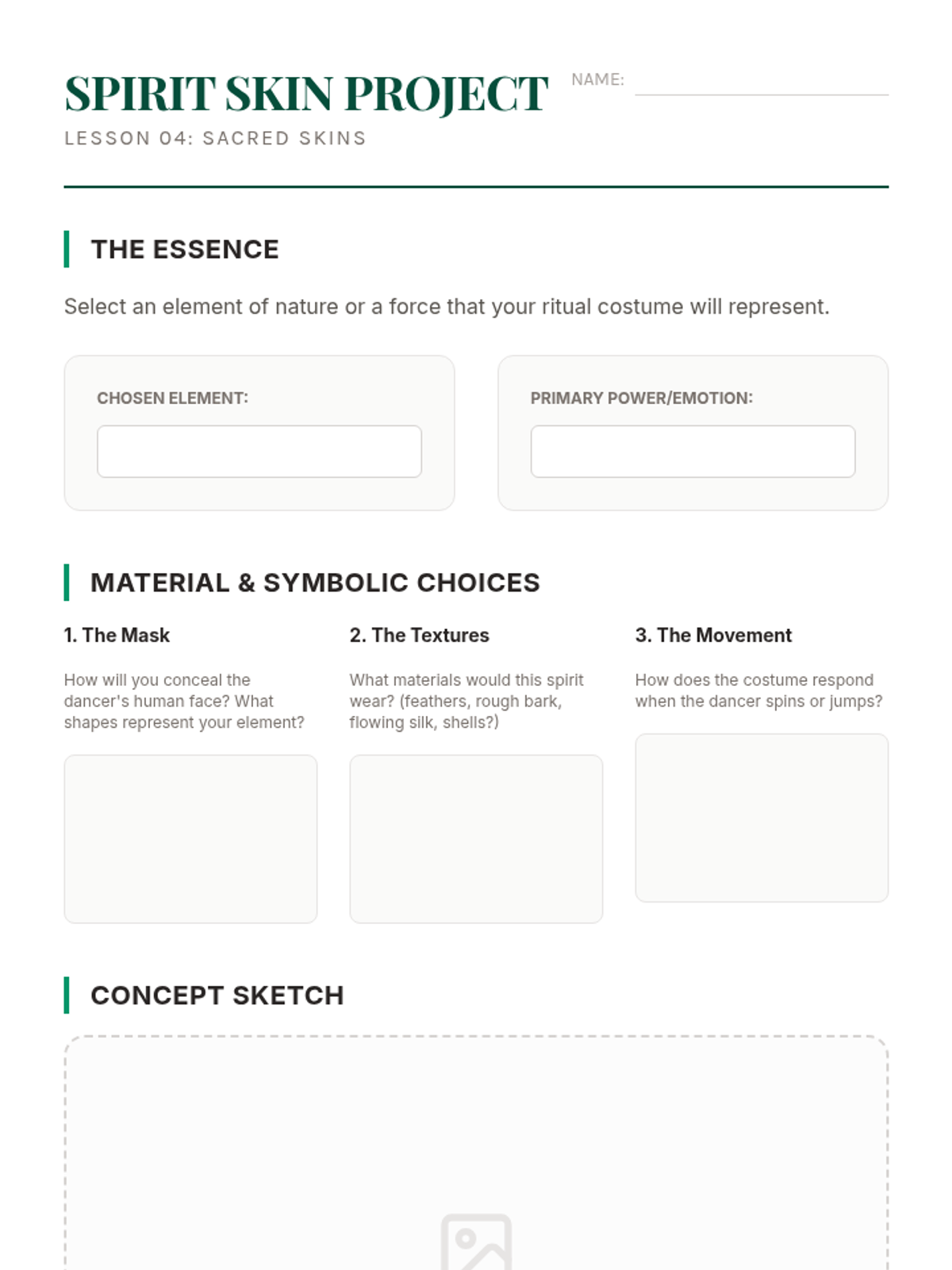
Students investigate how artifacts like masks and costumes transform the dancer into a spirit or ancestor during rituals. They will create a concept sketch for a ritual costume that represents a specific element of nature.
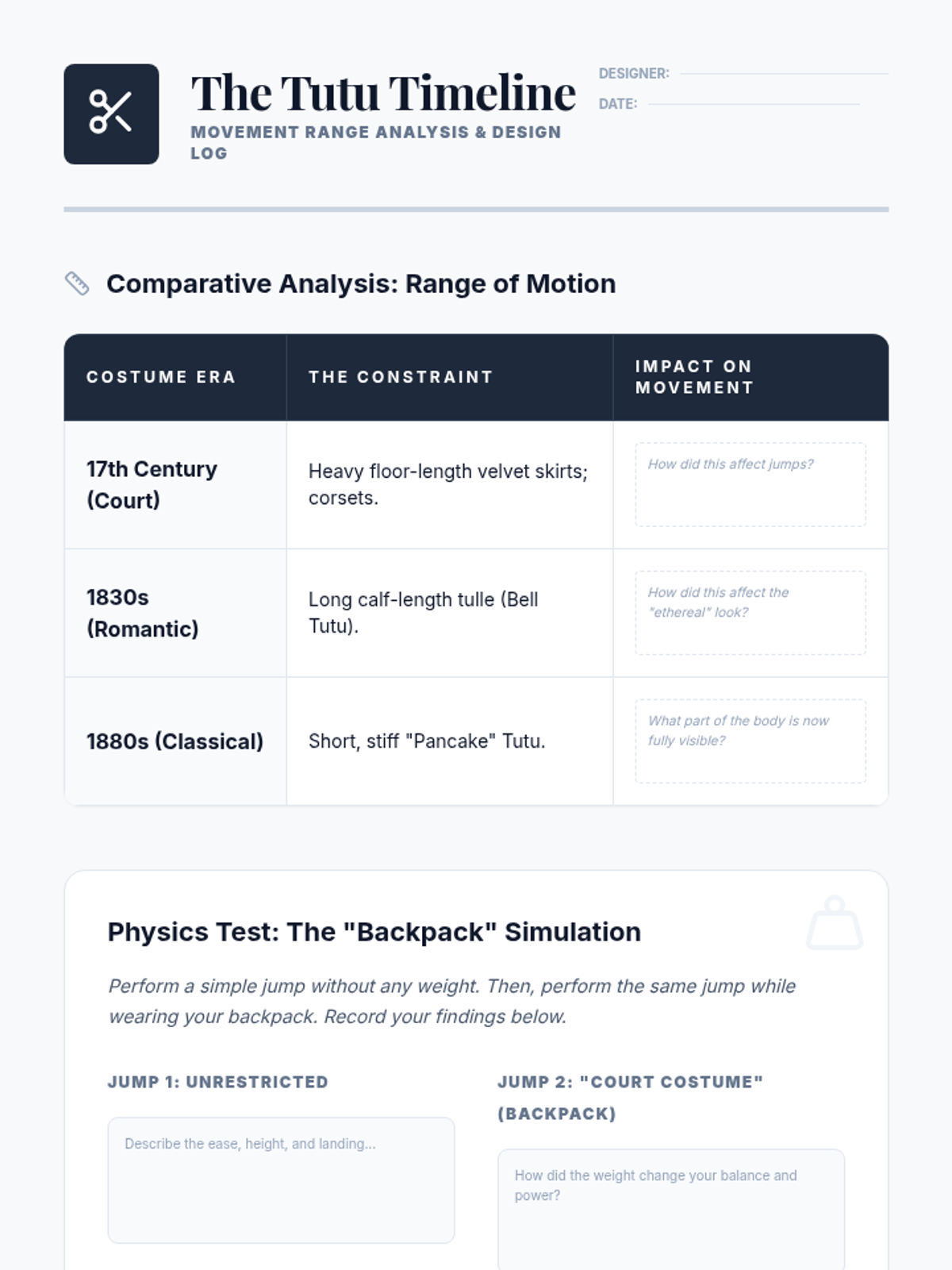
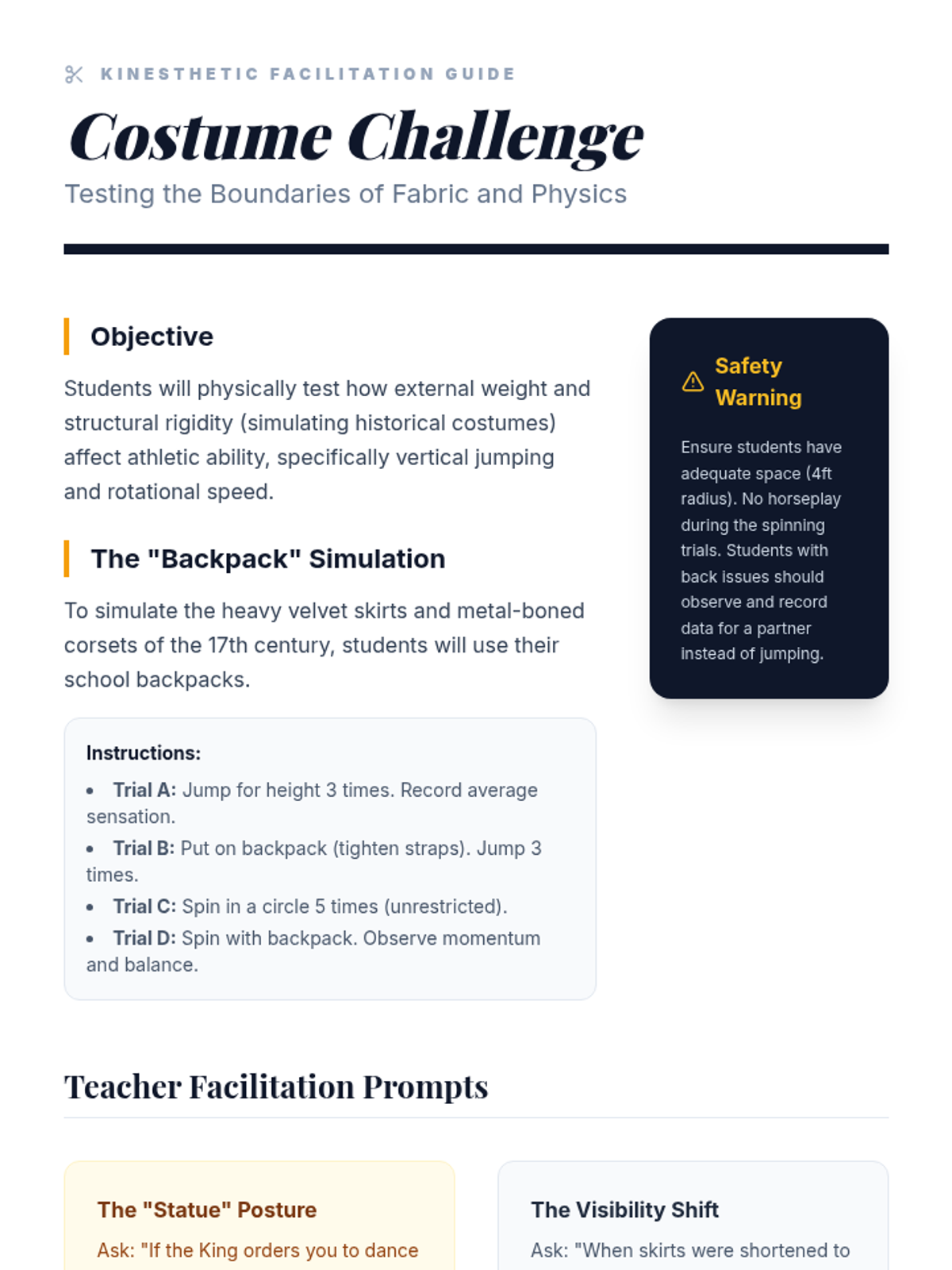
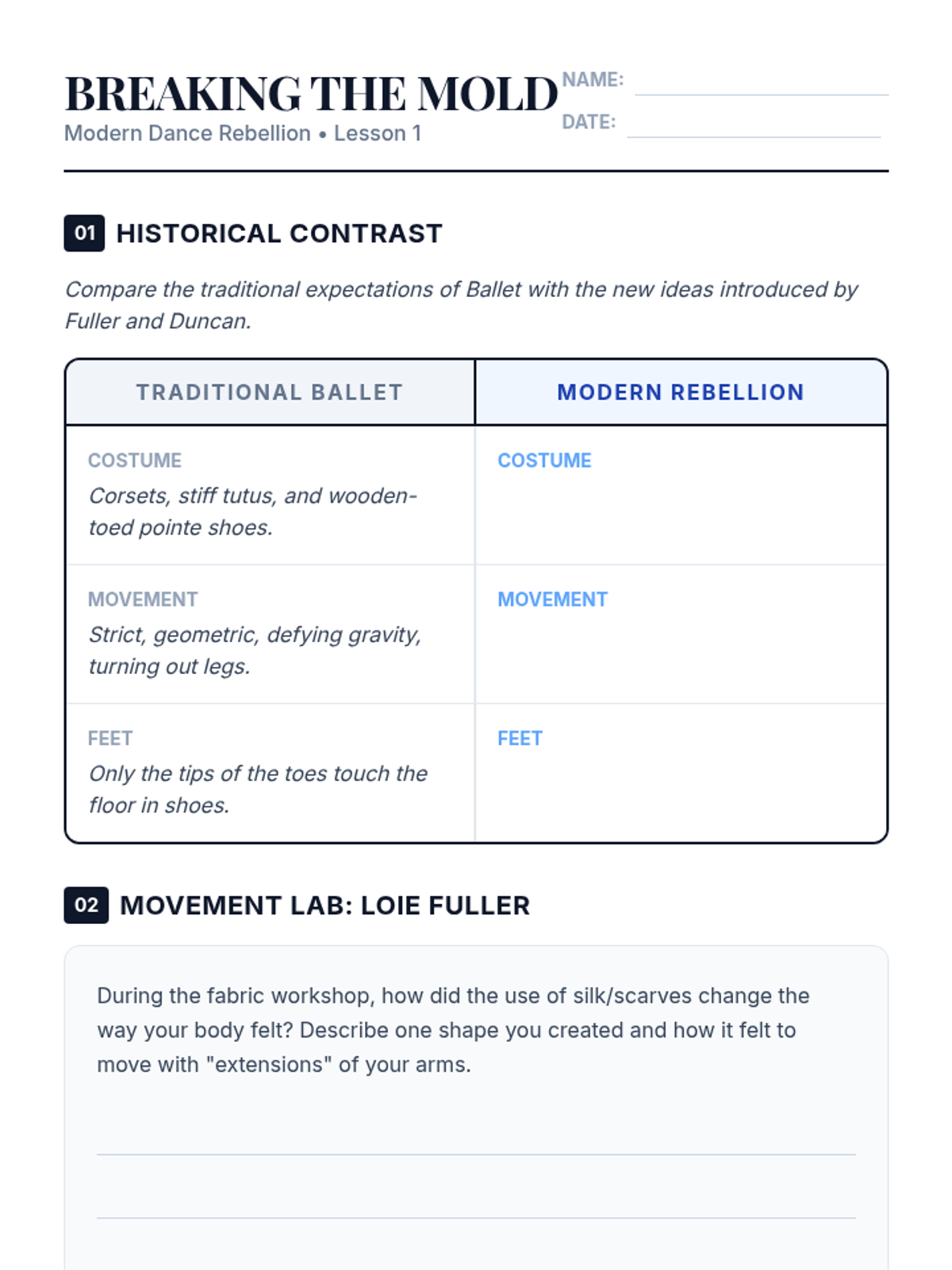
Students examine historical fashion (corsets, heavy skirts vs. tutus) and test how clothing restricts or enables movement. They discuss how the shortening of the skirt changed the technical possibilities of dance history.
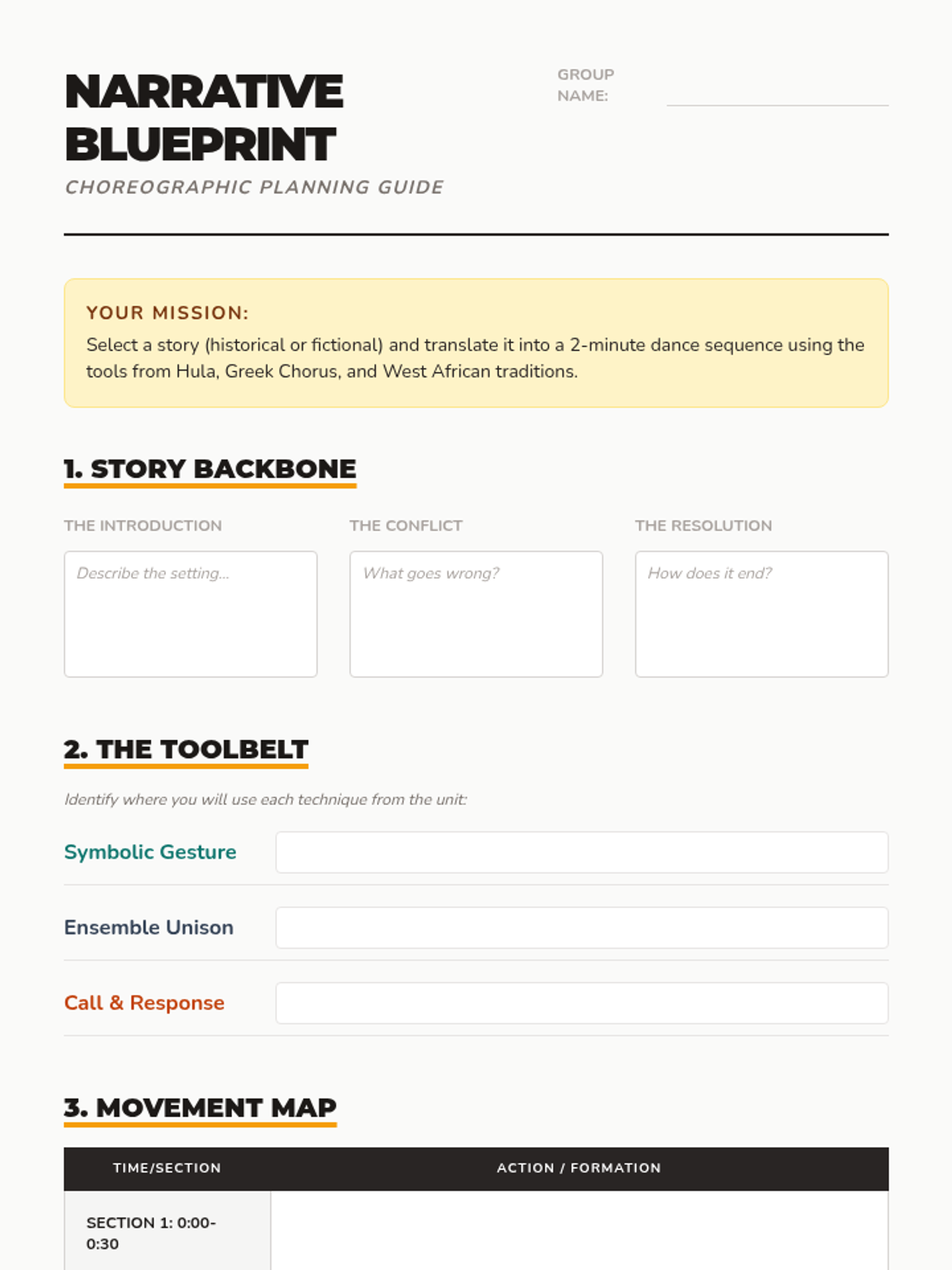
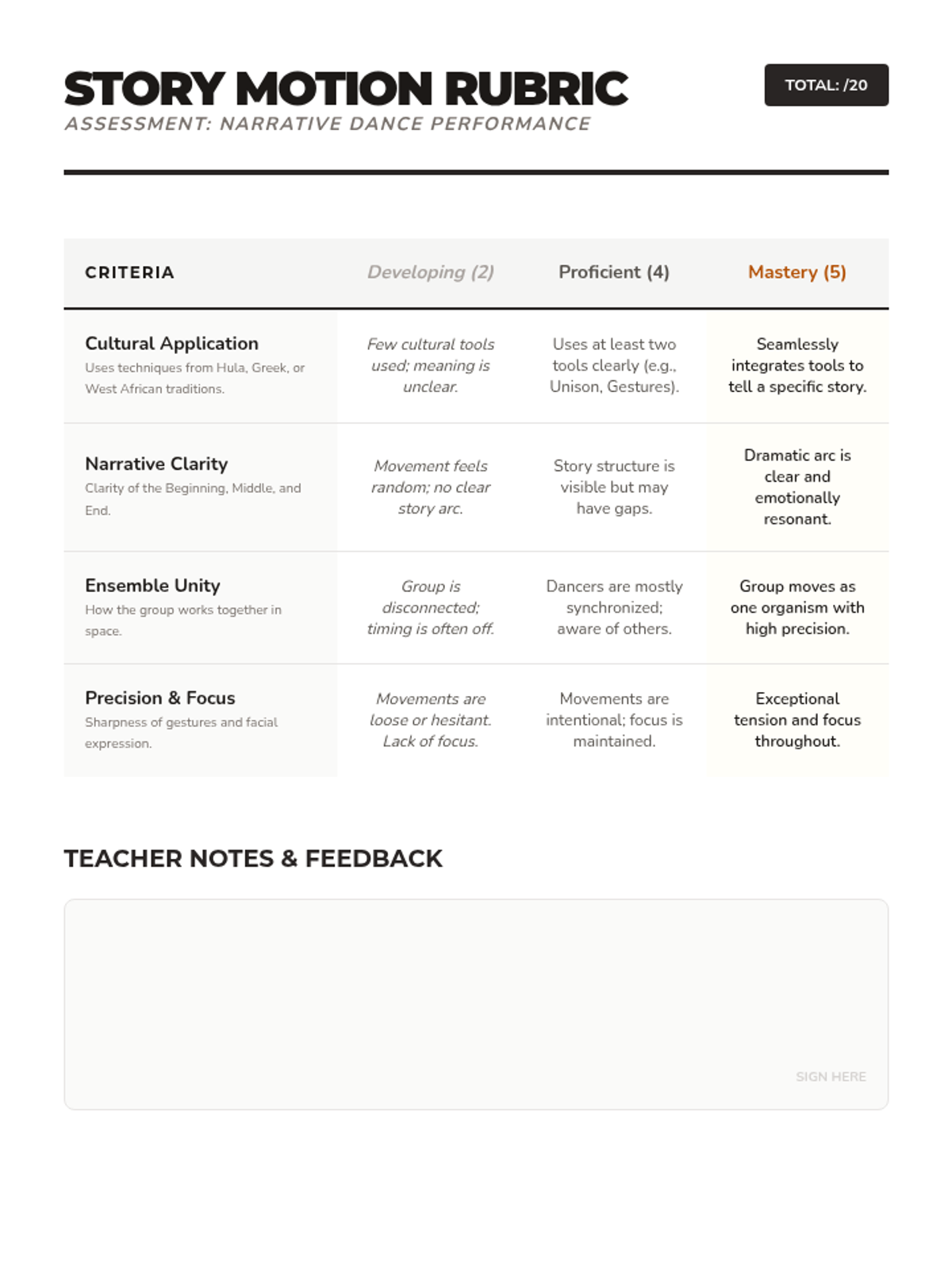
In this culminating lesson, student groups select a historical event or fable and translate it into a dance sequence using the narrative techniques learned. They present their work and explain their choreographic choices in relation to historical traditions.
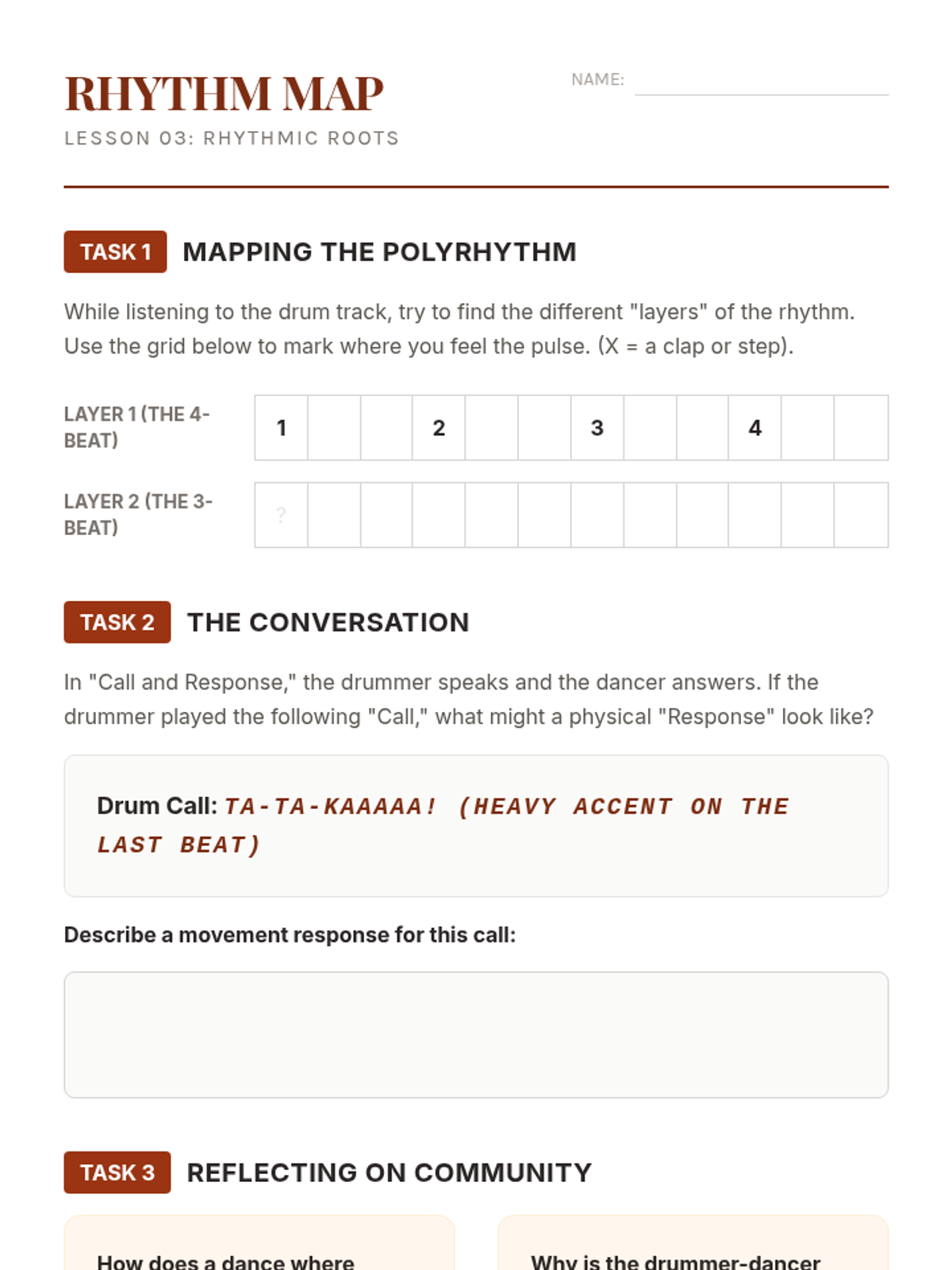
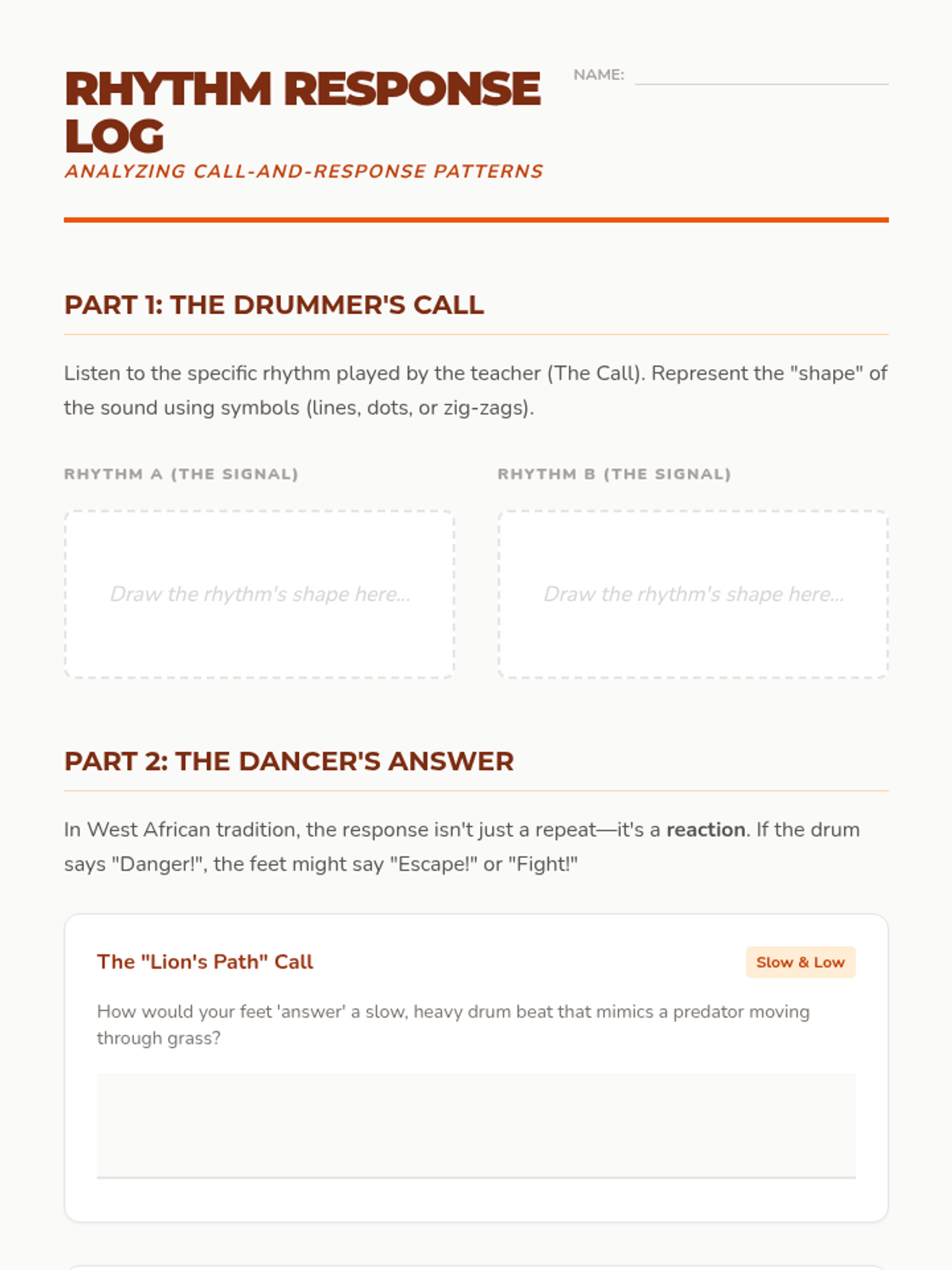
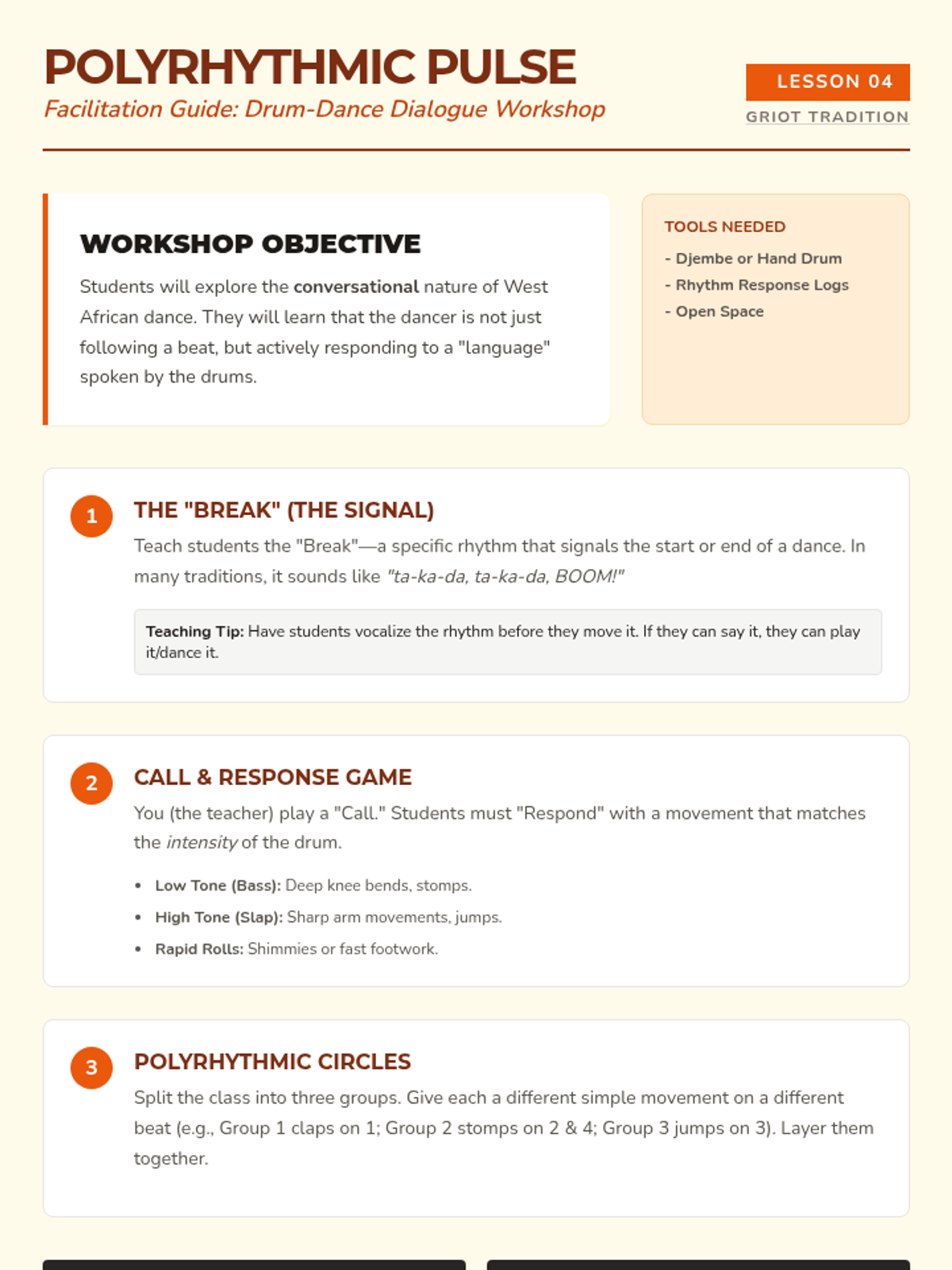
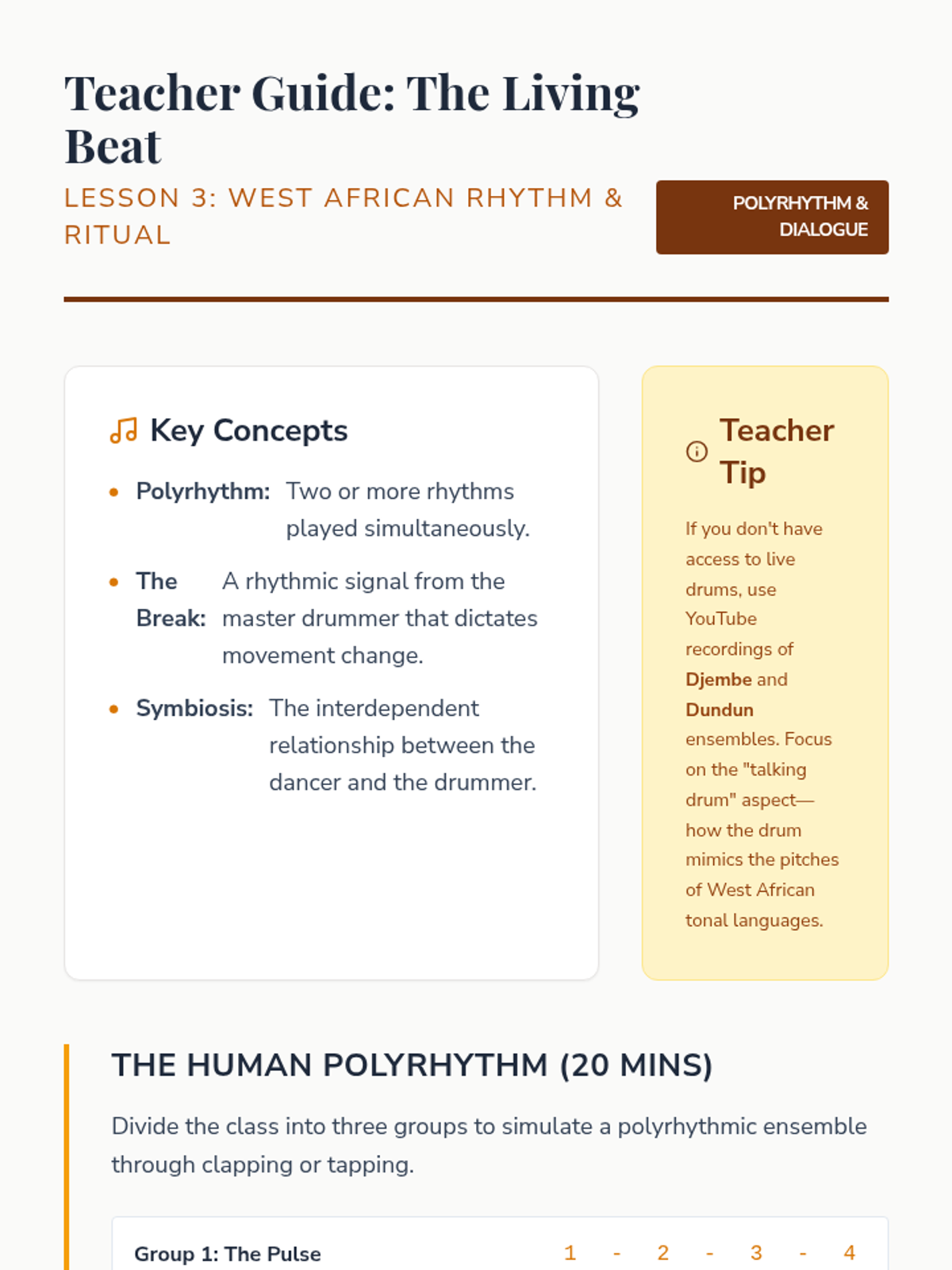
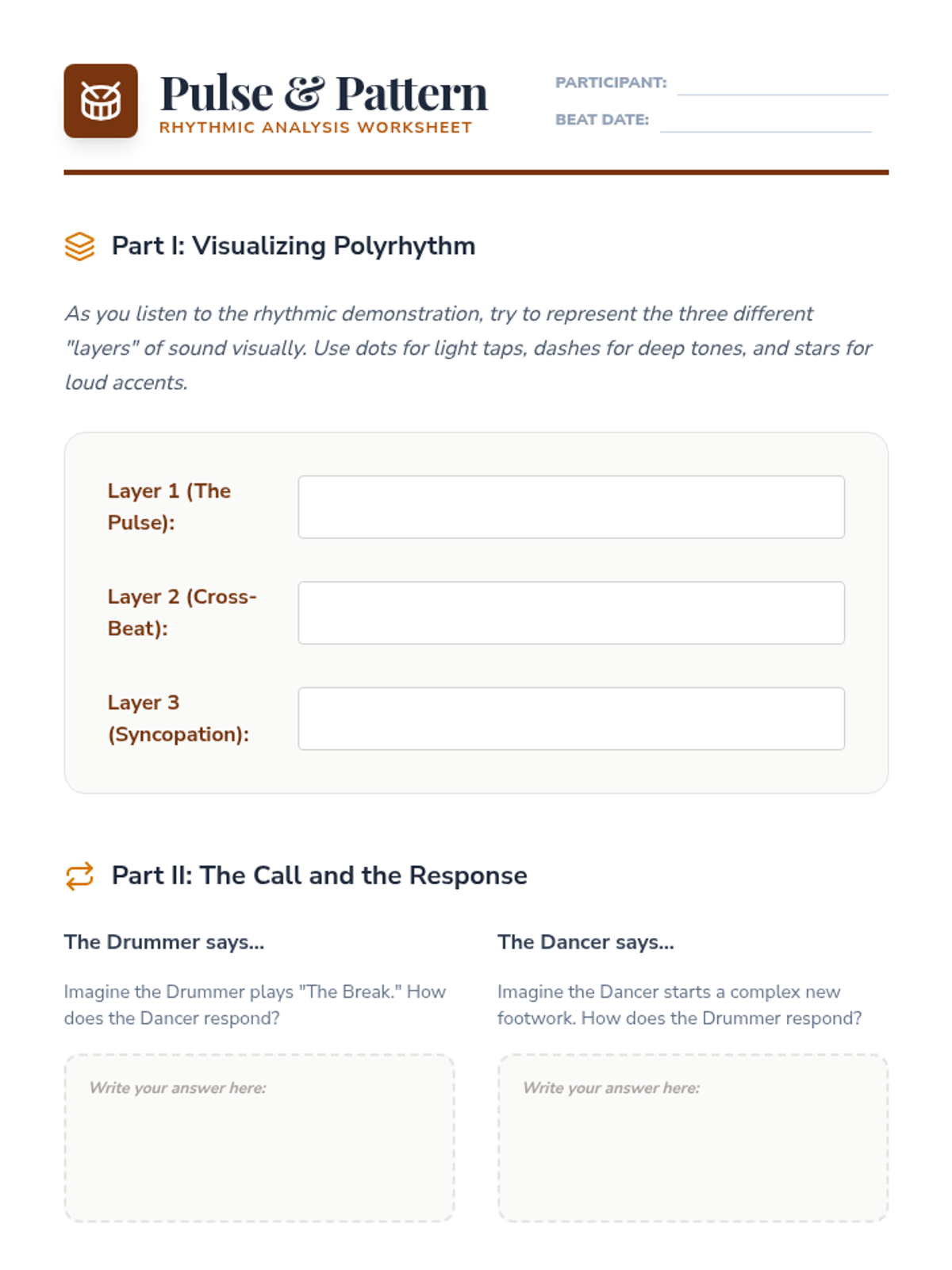
Focusing on the interdependence of drummer and dancer, students examine West African dance traditions. They will practice identifying polyrhythms and discuss how the 'call and response' structure reflects community values.
Students investigate the symbiotic relationship between drumming and dancing in West African storytelling traditions. They engage in a call-and-response activity that highlights the communal aspect of history-telling through polyrhythm.
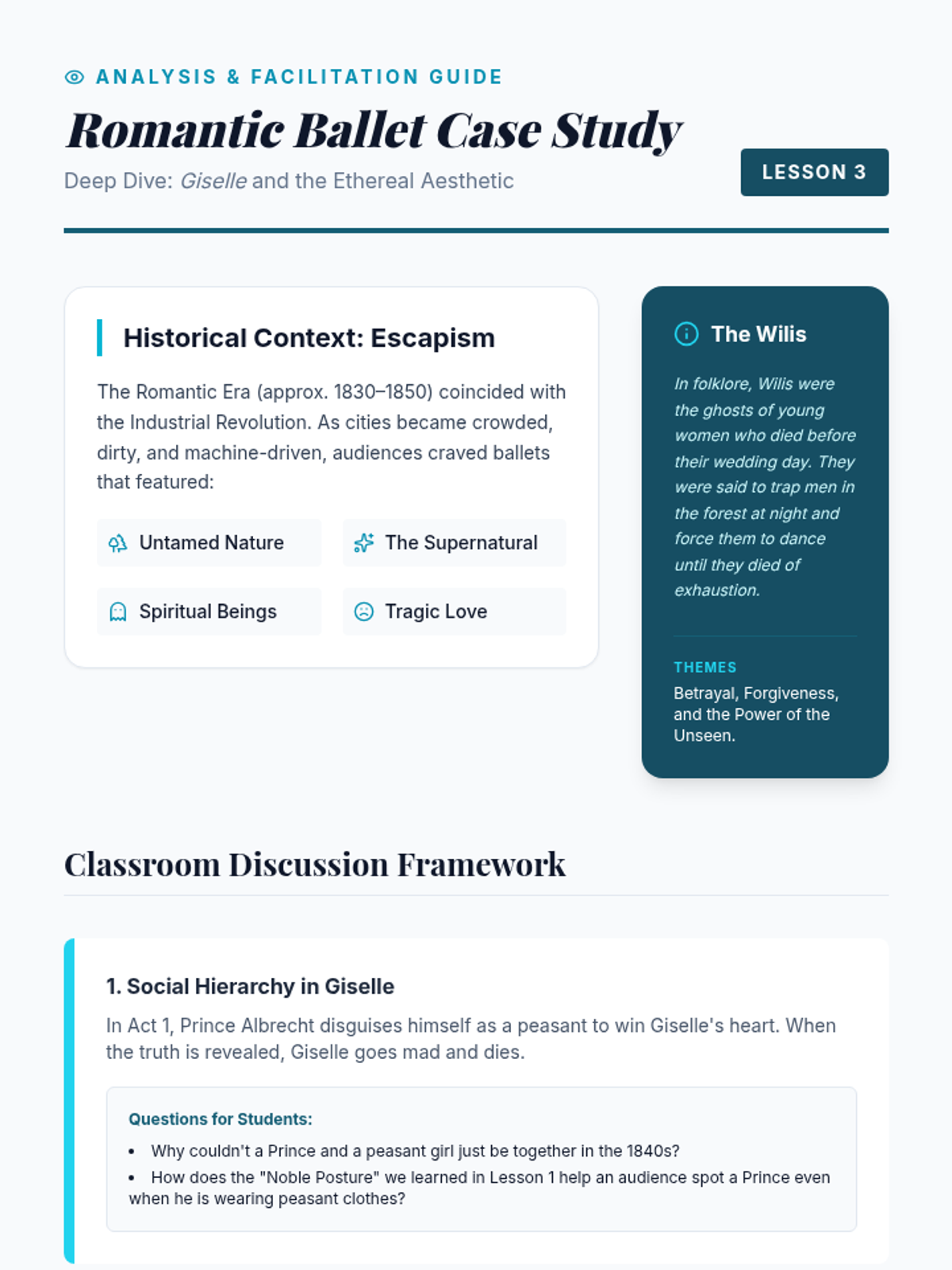
Students watch clips of Romantic ballets (like Giselle) to analyze how the 'white ballets' reflected societal views on women and the supernatural. They explore the use of pantomime to convey plot within a rigid technical framework.
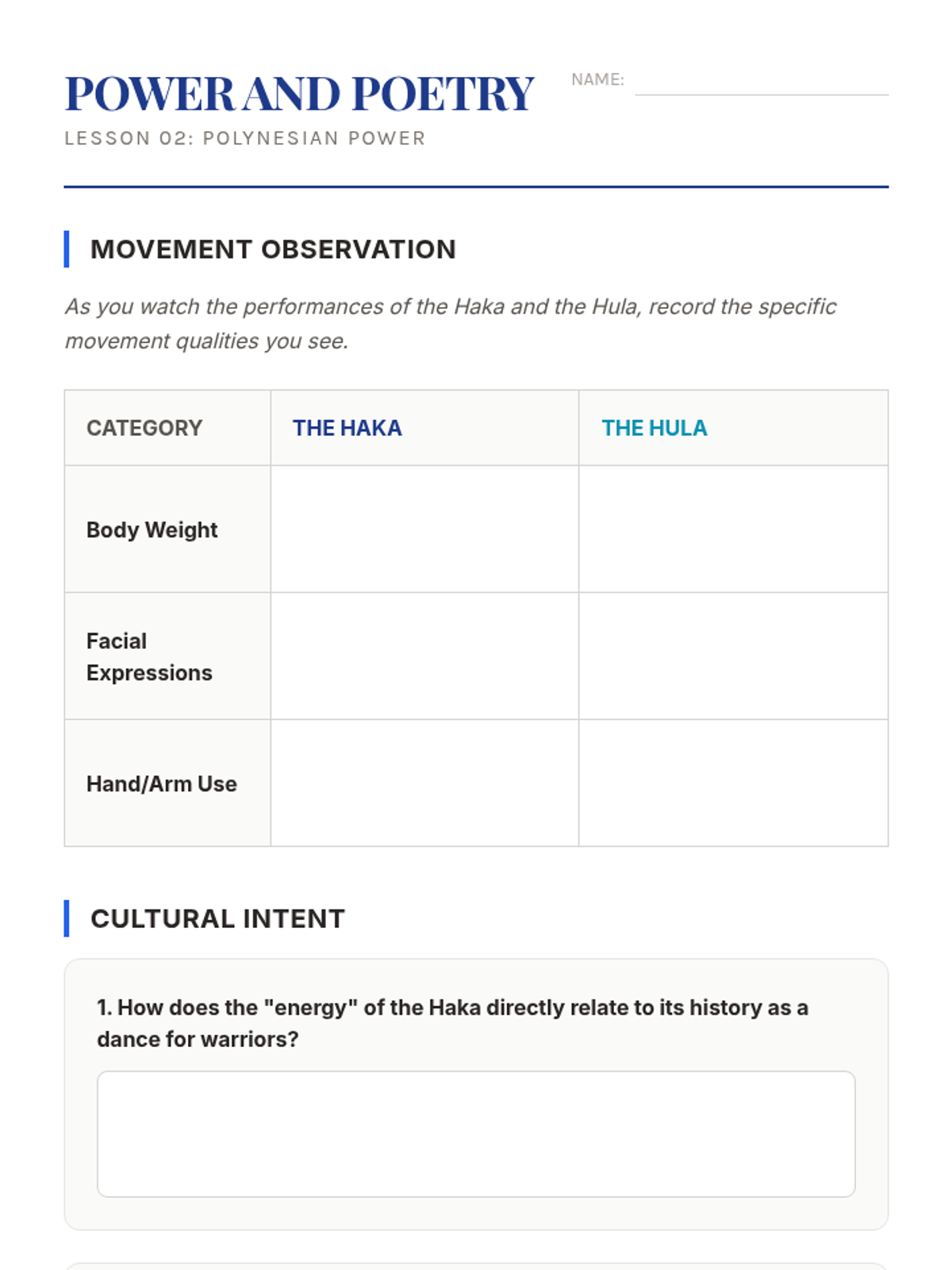
Students compare the diverse purposes of Polynesian dance forms, specifically the warrior preparation of the Haka and the genealogical storytelling of Hula. They analyze the relationship between movement quality and cultural intent.
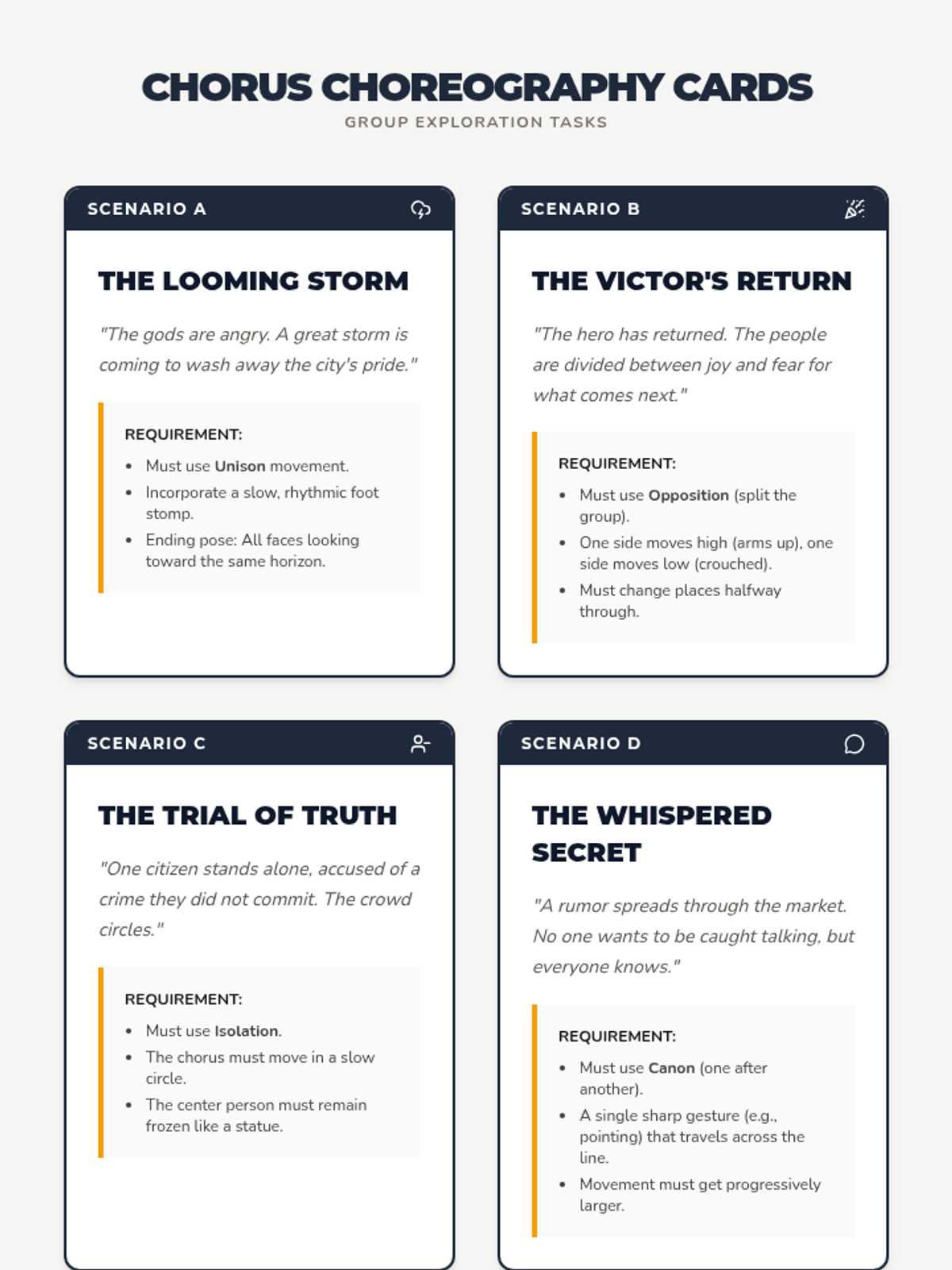
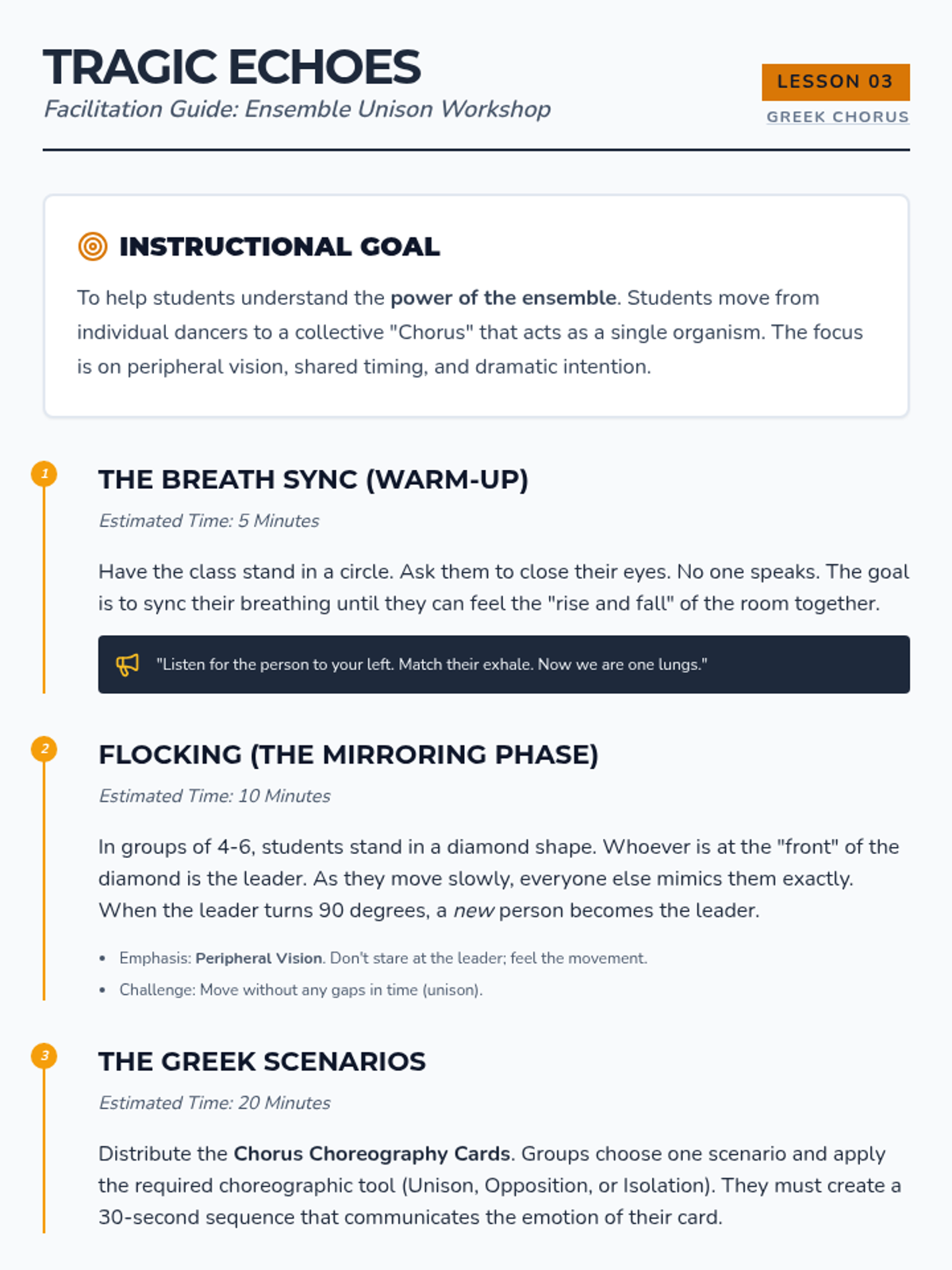
Students explore how ancient Greek dance bridged religious ritual and theatrical entertainment. They work in groups to create a 'chorus' that moves in unison to amplify an emotion or plot point, connecting ancient practices to modern performance.
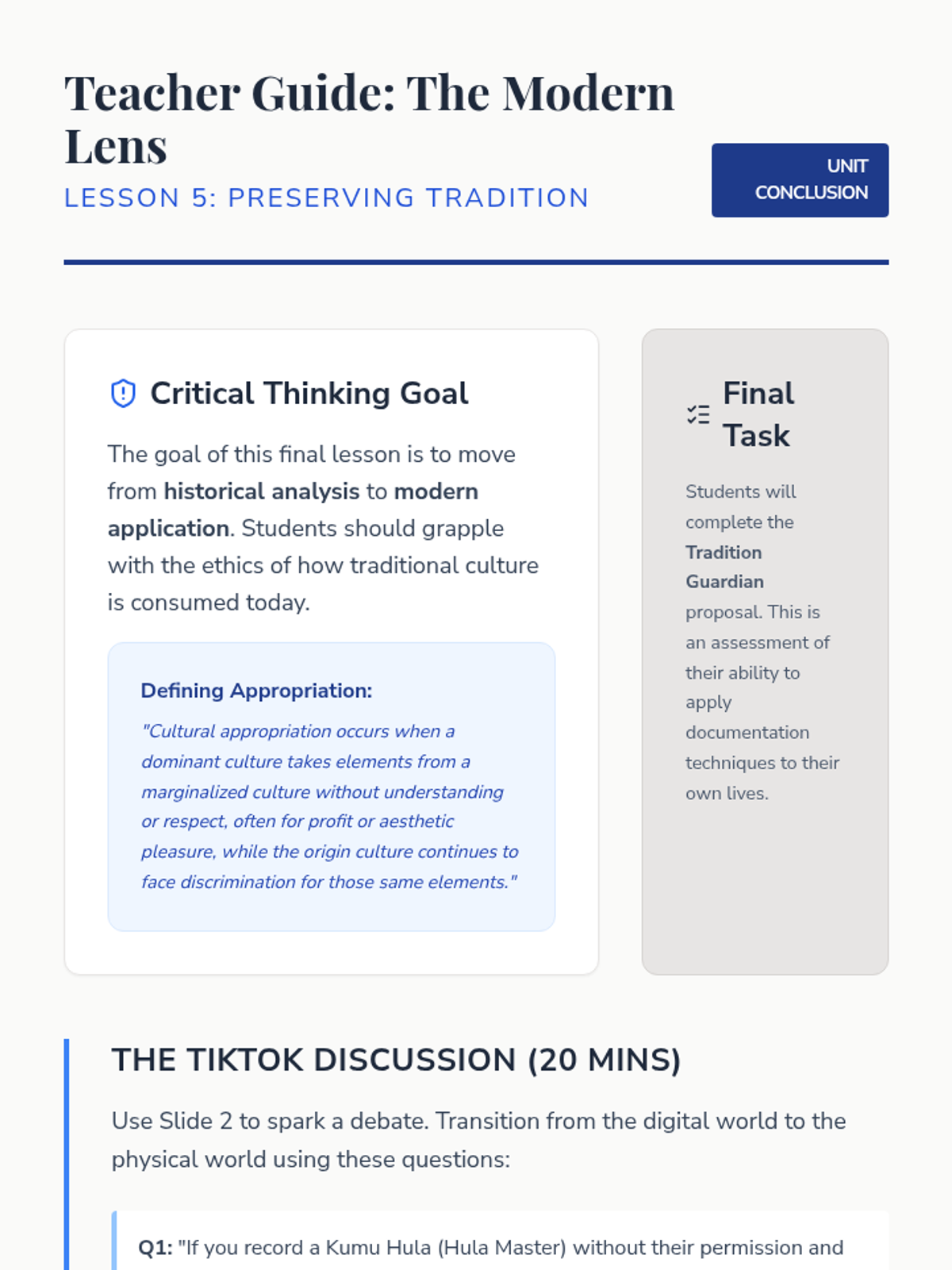
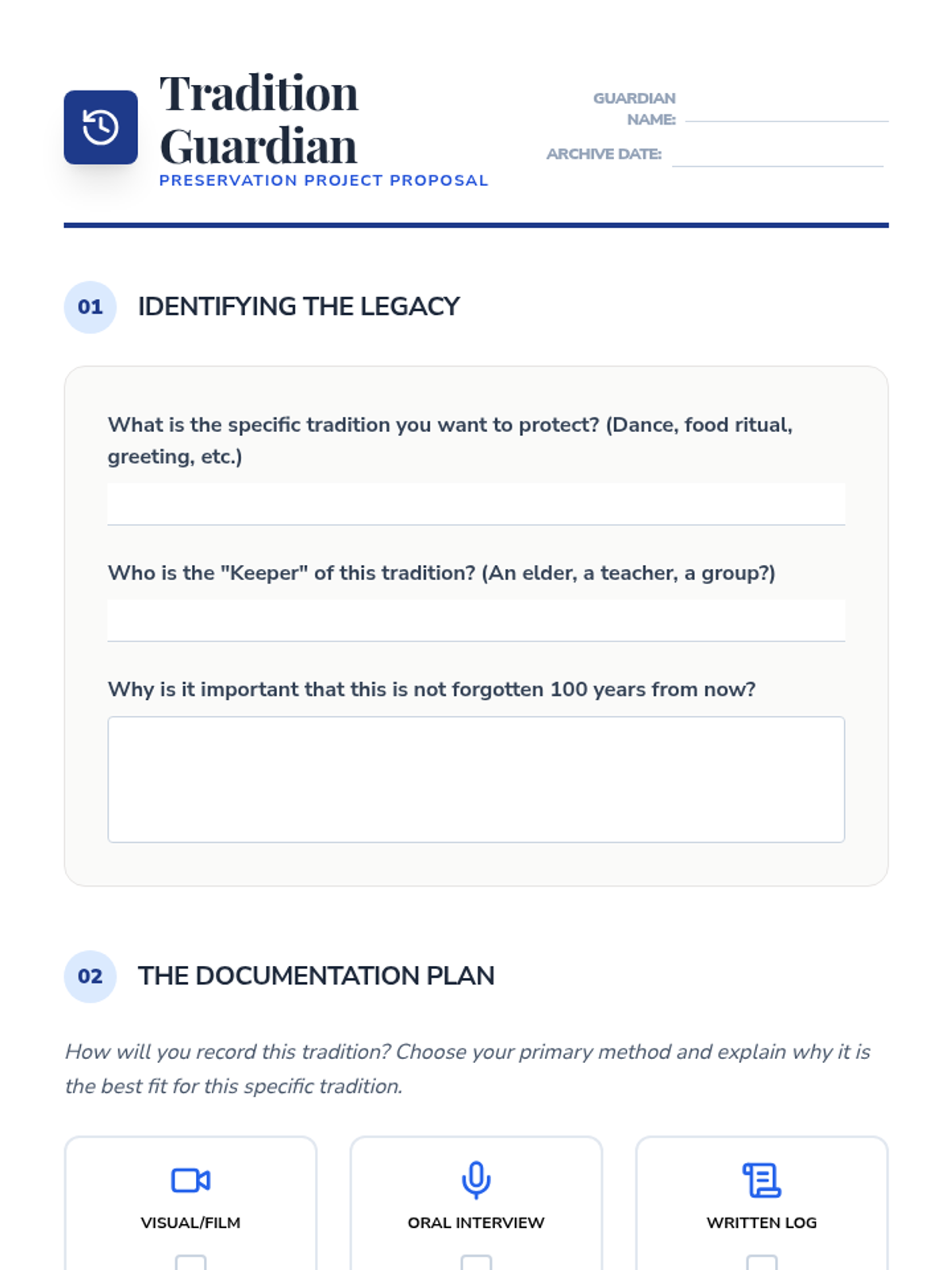
A culminating discussion on the challenges of cultural preservation, appropriation, and documenting local traditions.
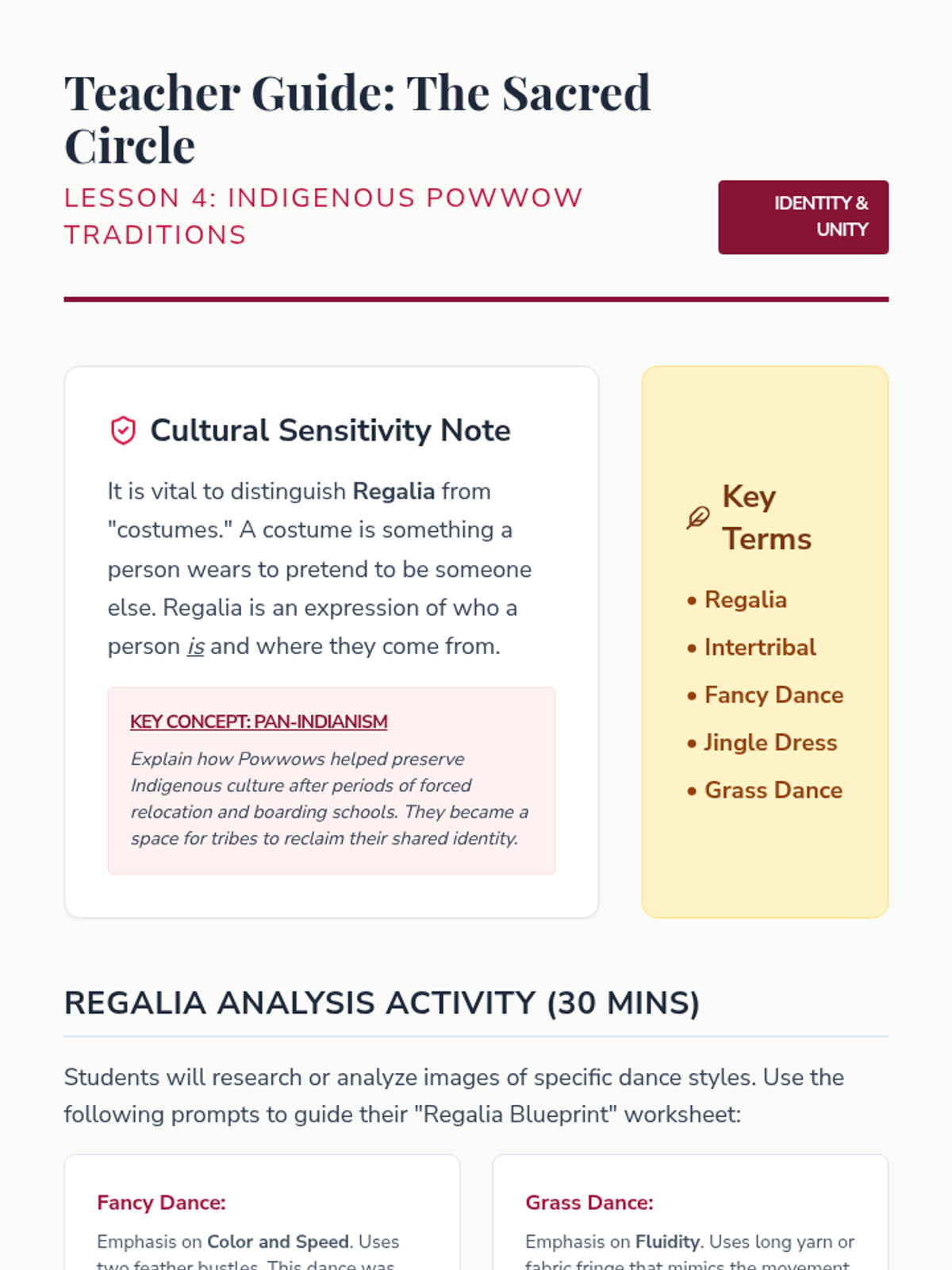
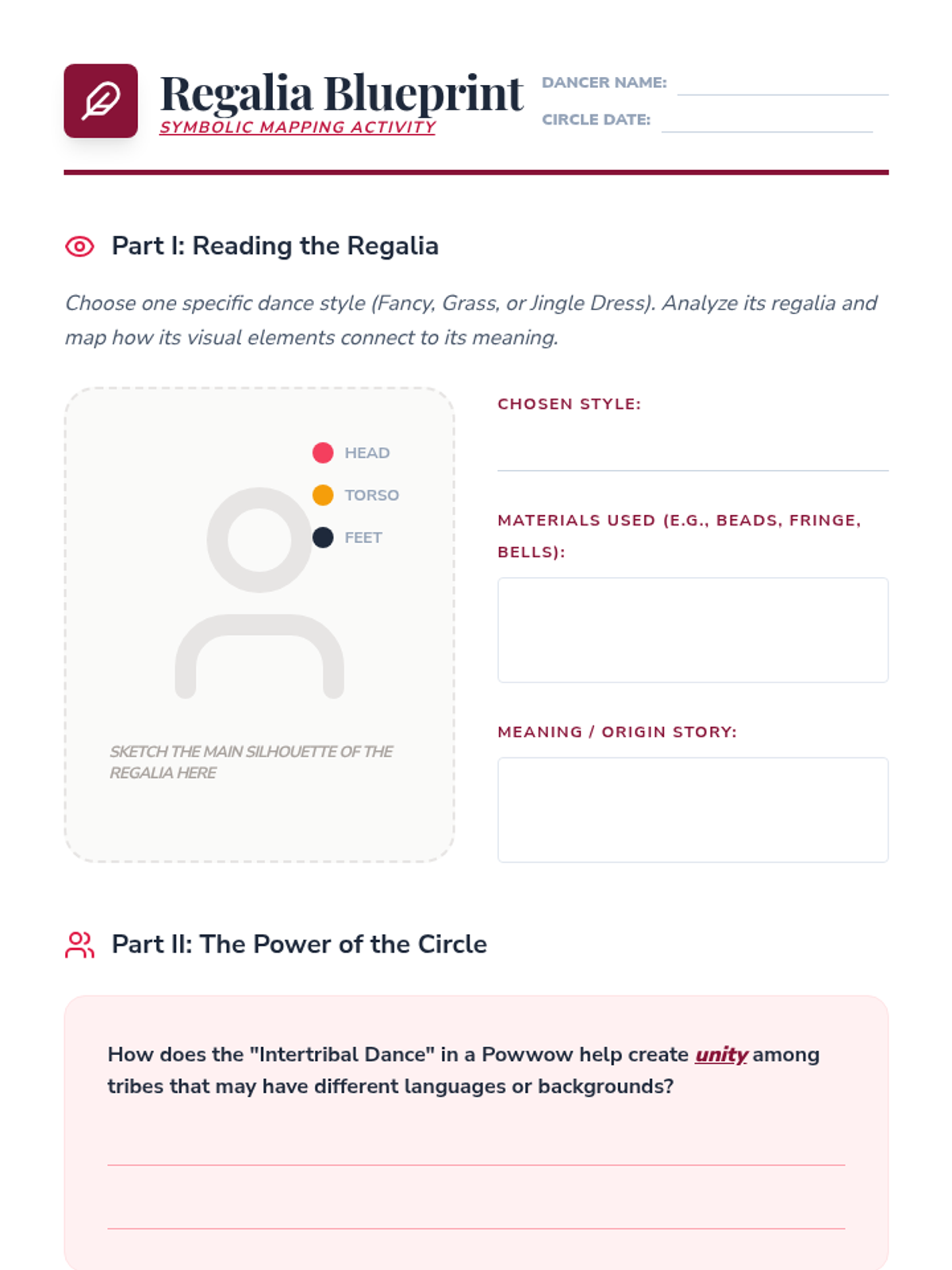
Exploring the significance of regalia and intertribal unity in North American Indigenous Powwow traditions.
A study of polyrhythms and the symbiotic relationship between drummers and dancers in West African traditions.
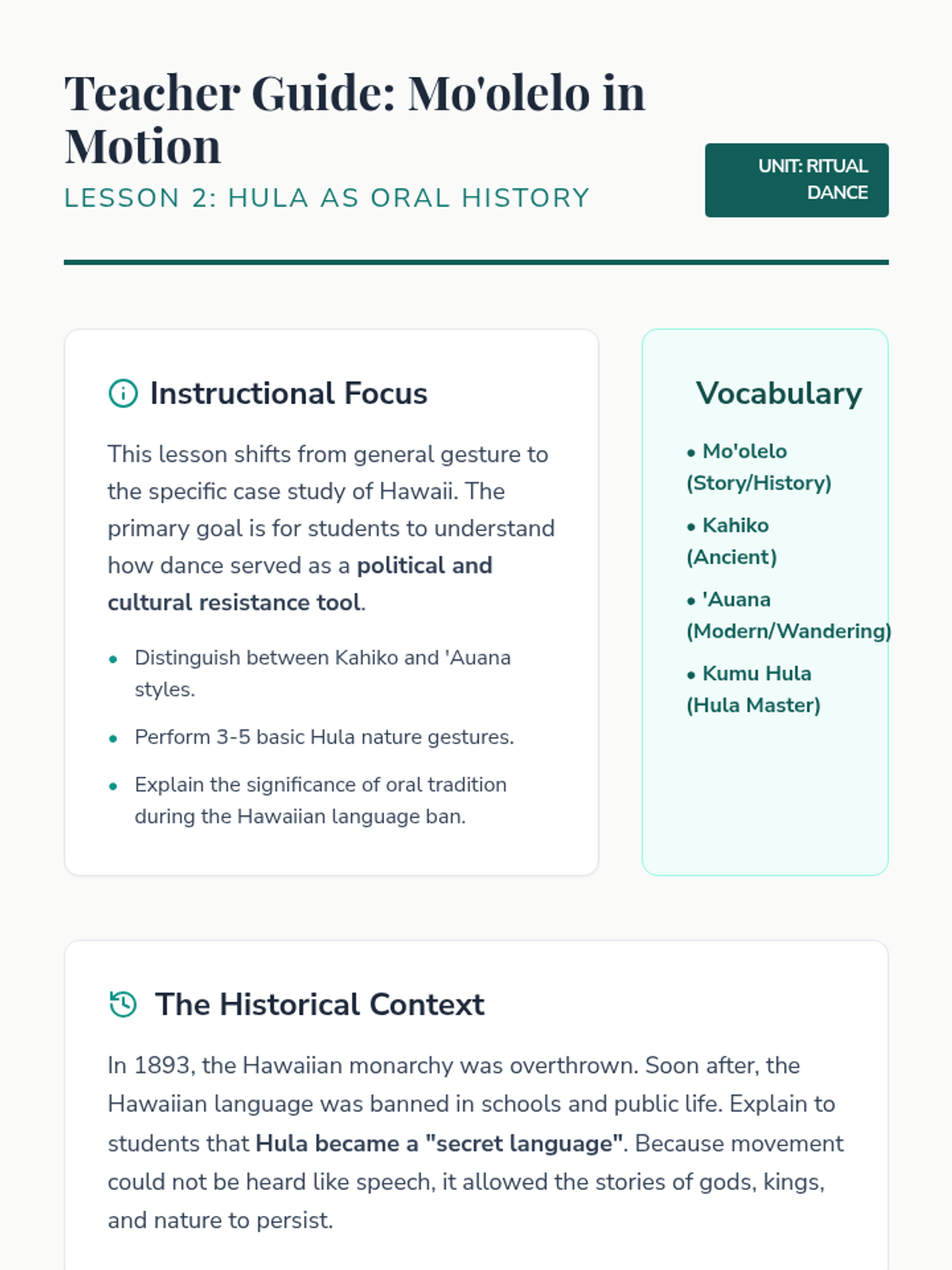
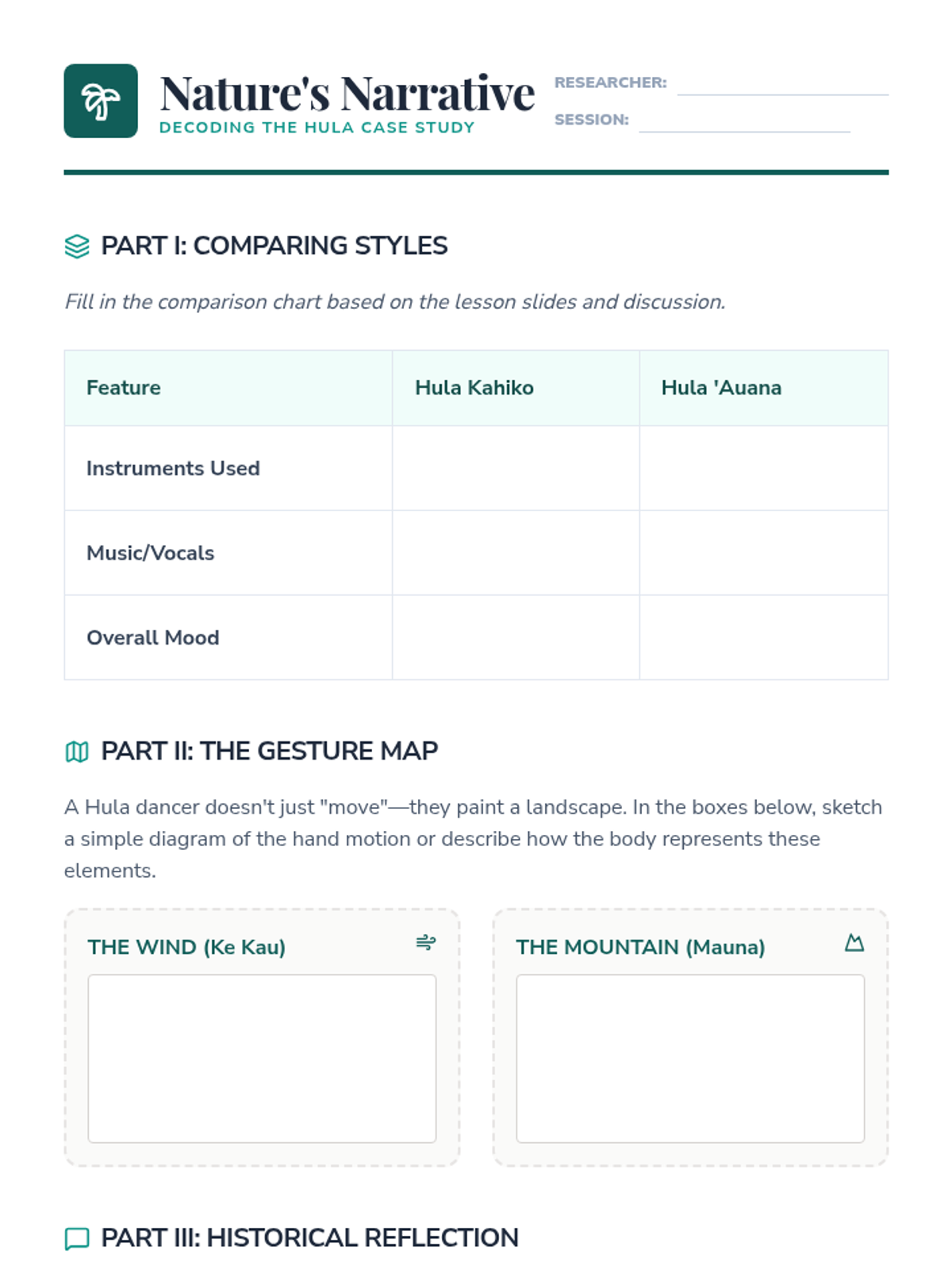
An examination of Hawaiian Hula as a tool for preserving oral history and natural elements through movement.
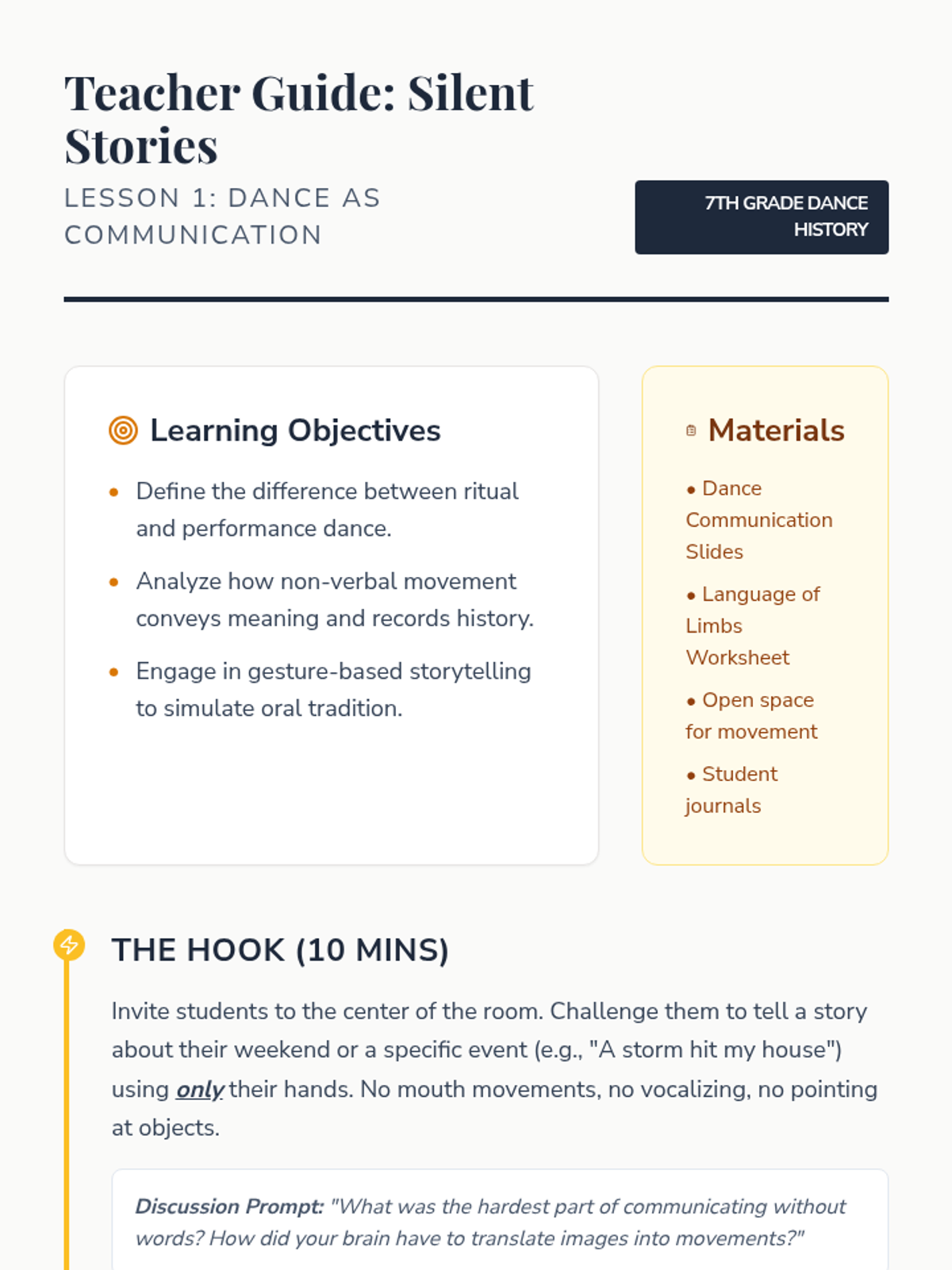
Students explore non-verbal communication and the distinction between performance and ritual dance through gesture-based activities.
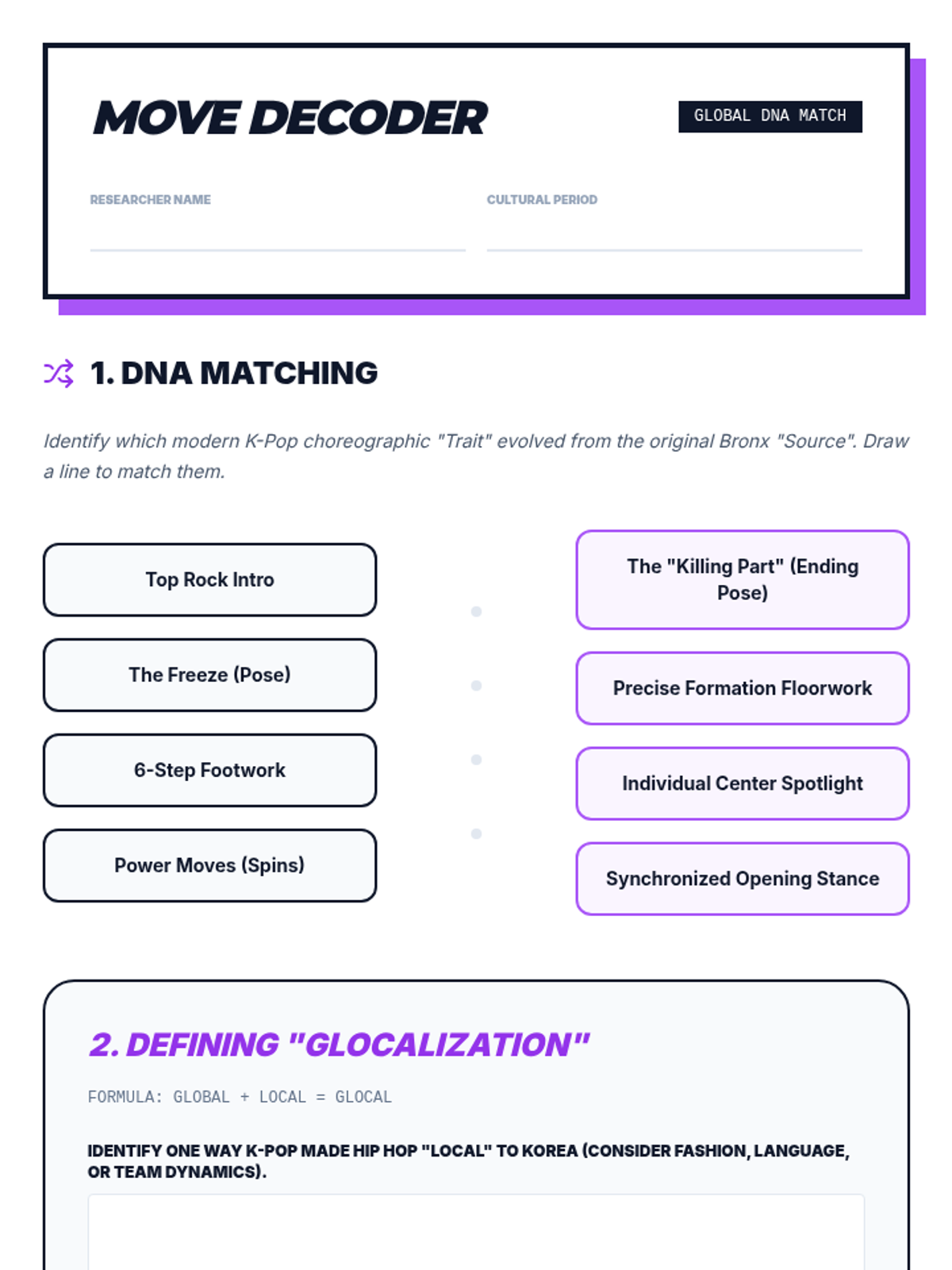
Explore how Hip Hop influenced global dance trends, specifically focusing on the evolution of K-Pop choreography.
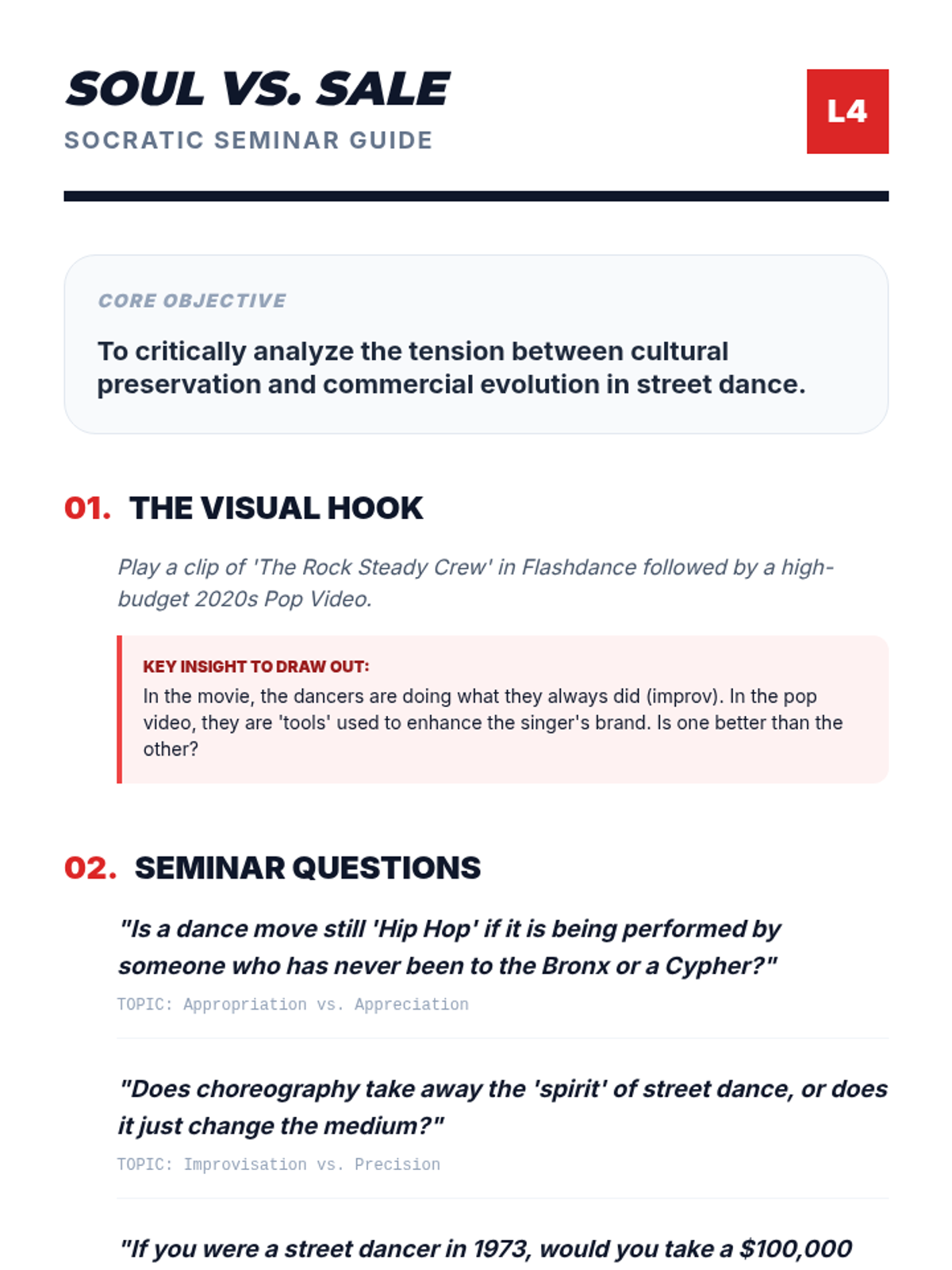
Analyze the shift of Hip Hop dance from street culture to Hollywood commercialization and music videos.
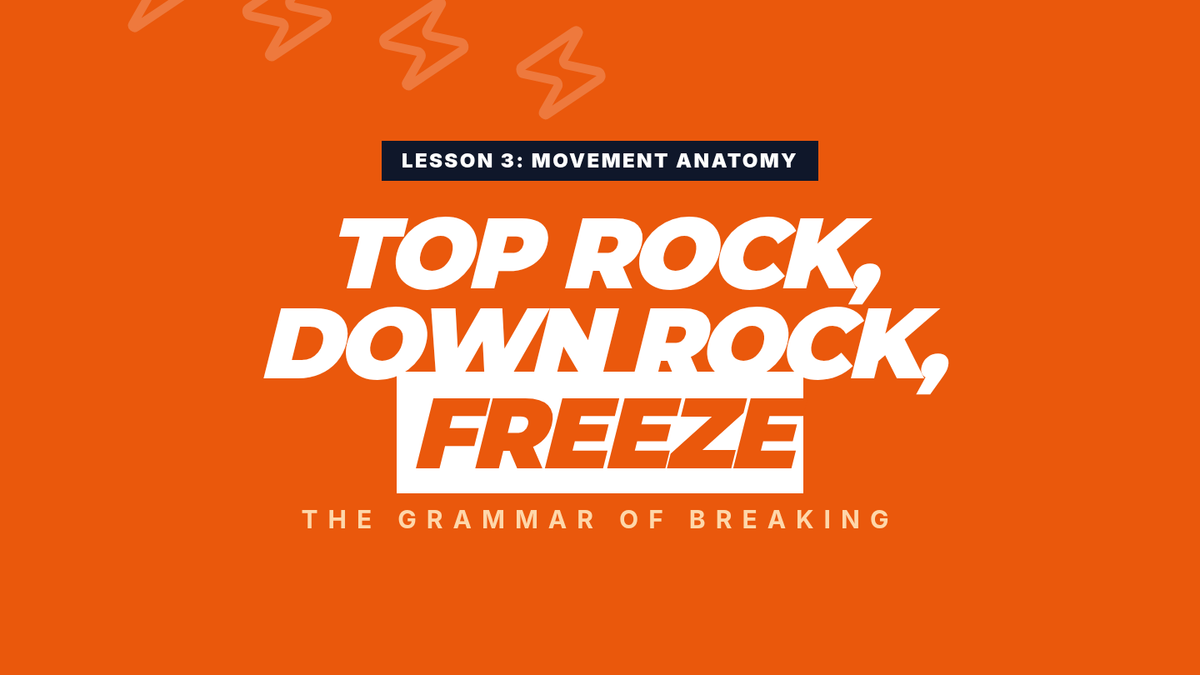
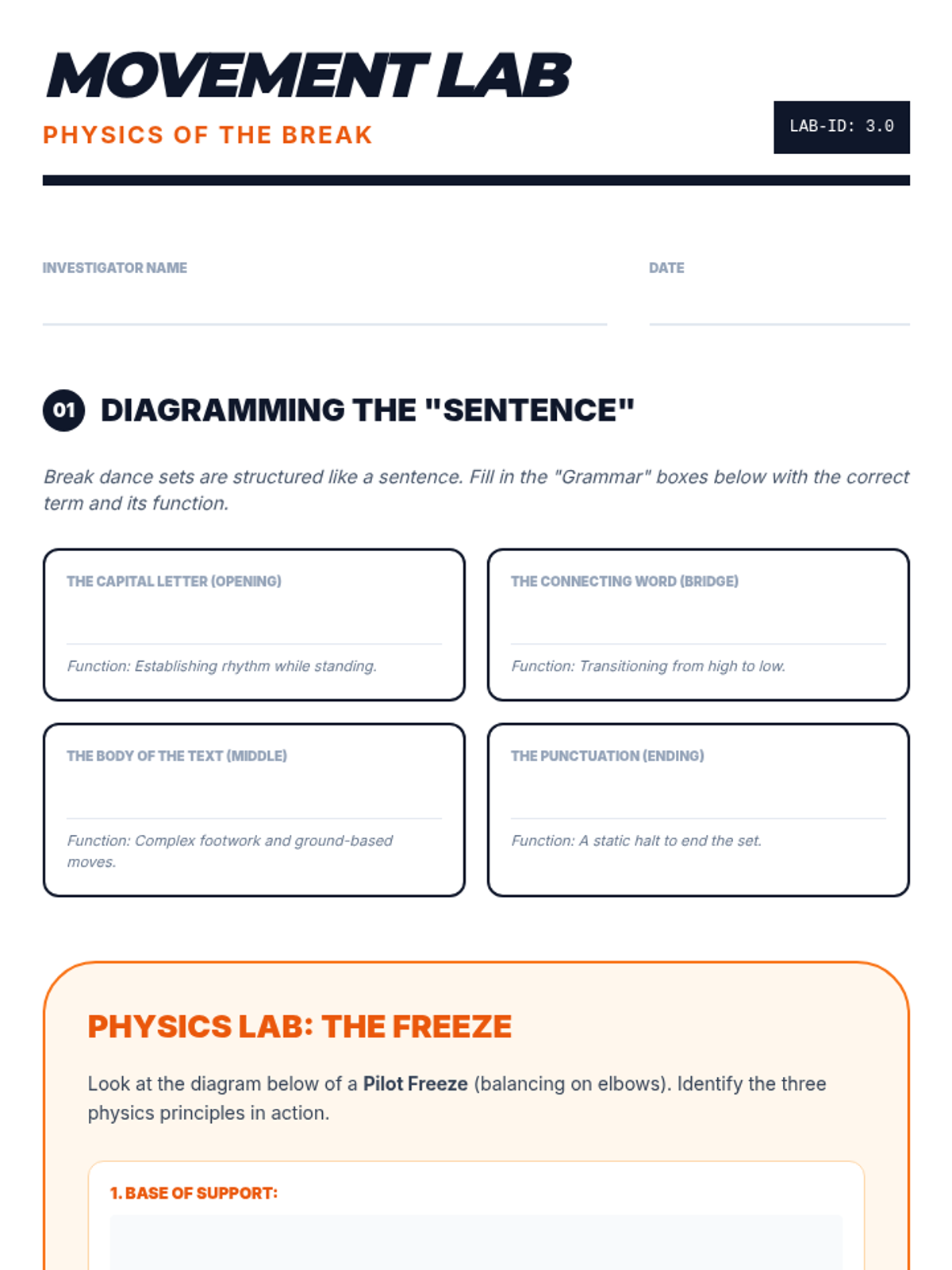
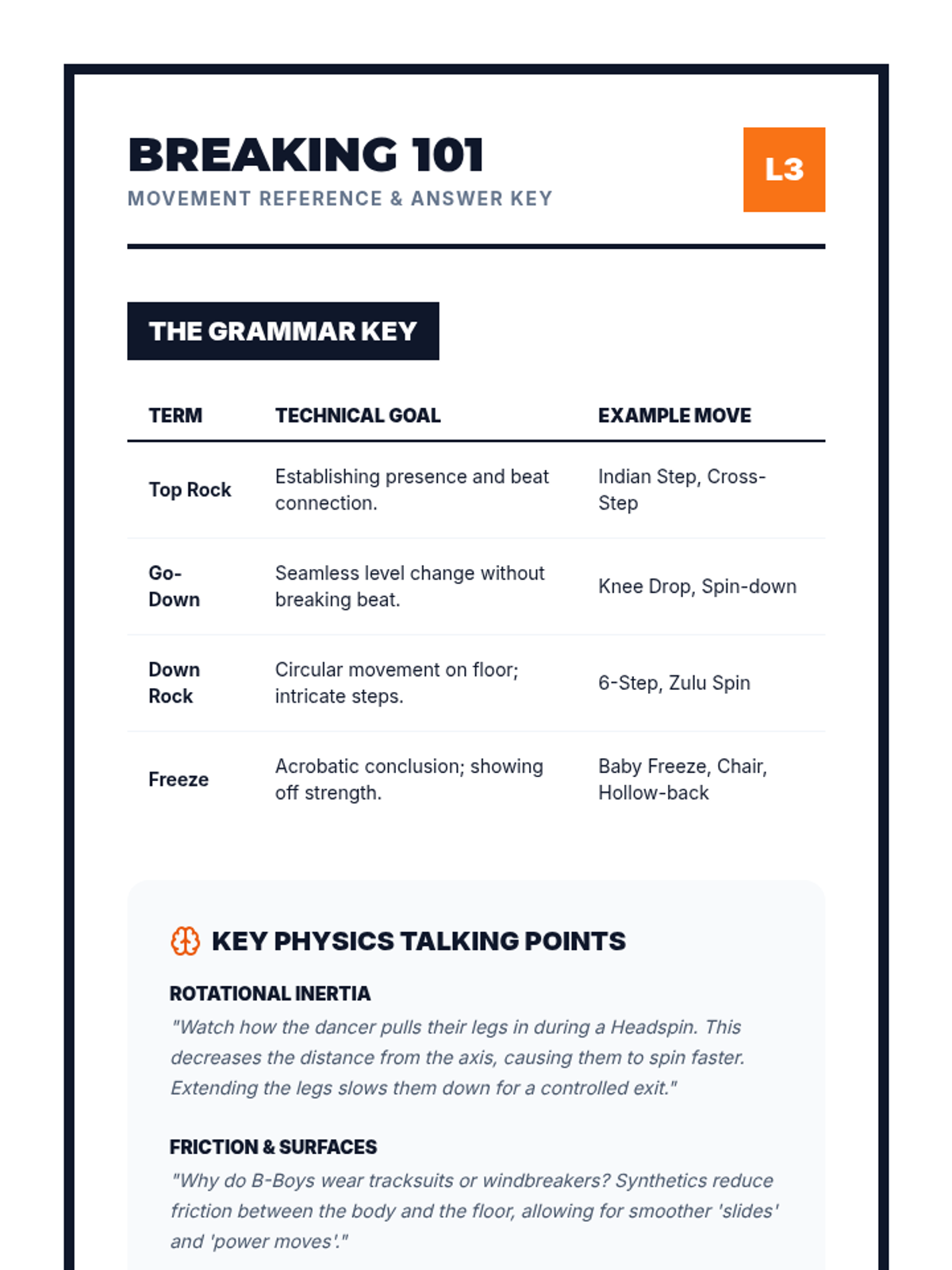
Identify and practice the physical structure of breaking, analyzing the physics behind power moves and freezes.
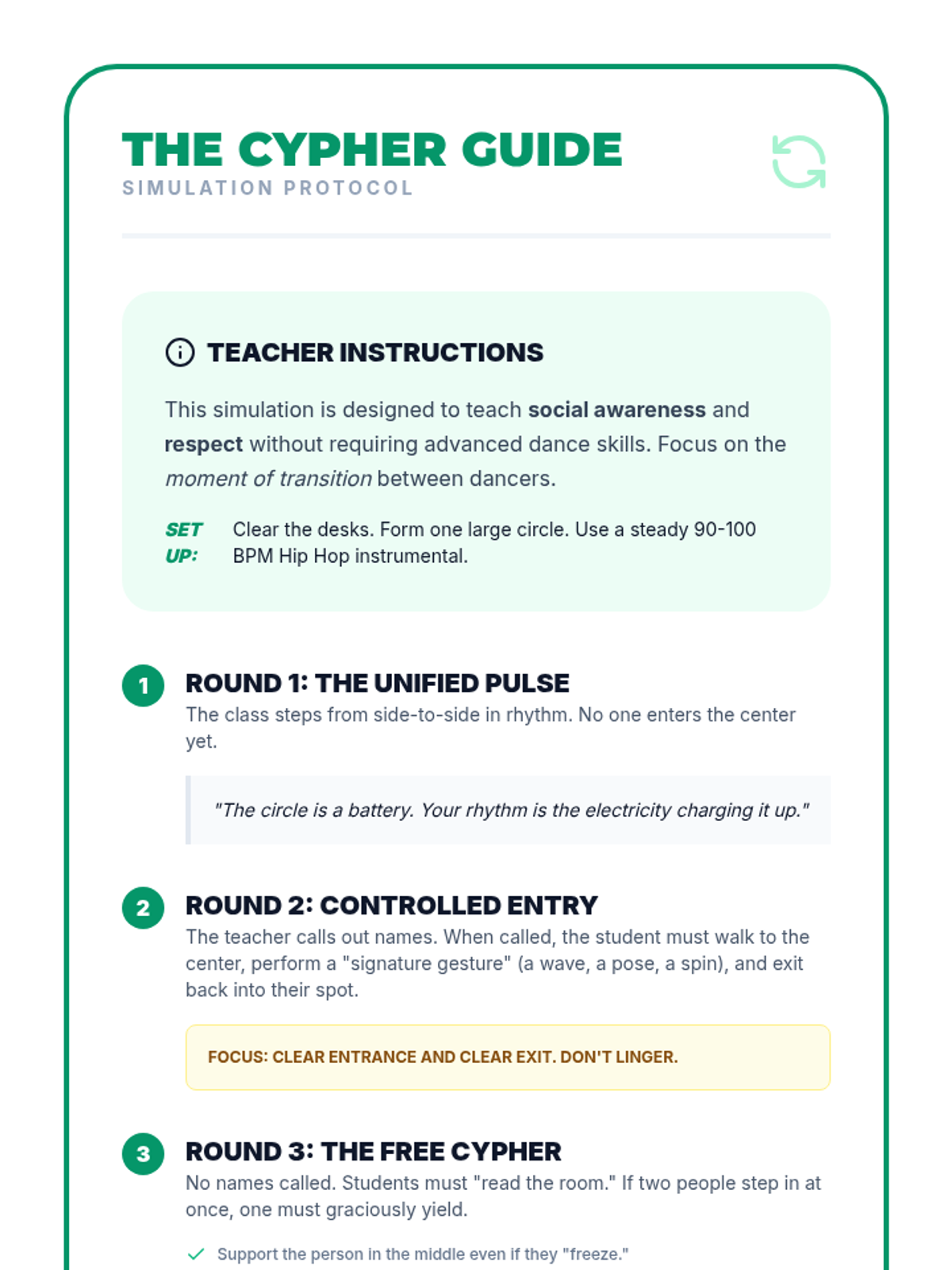
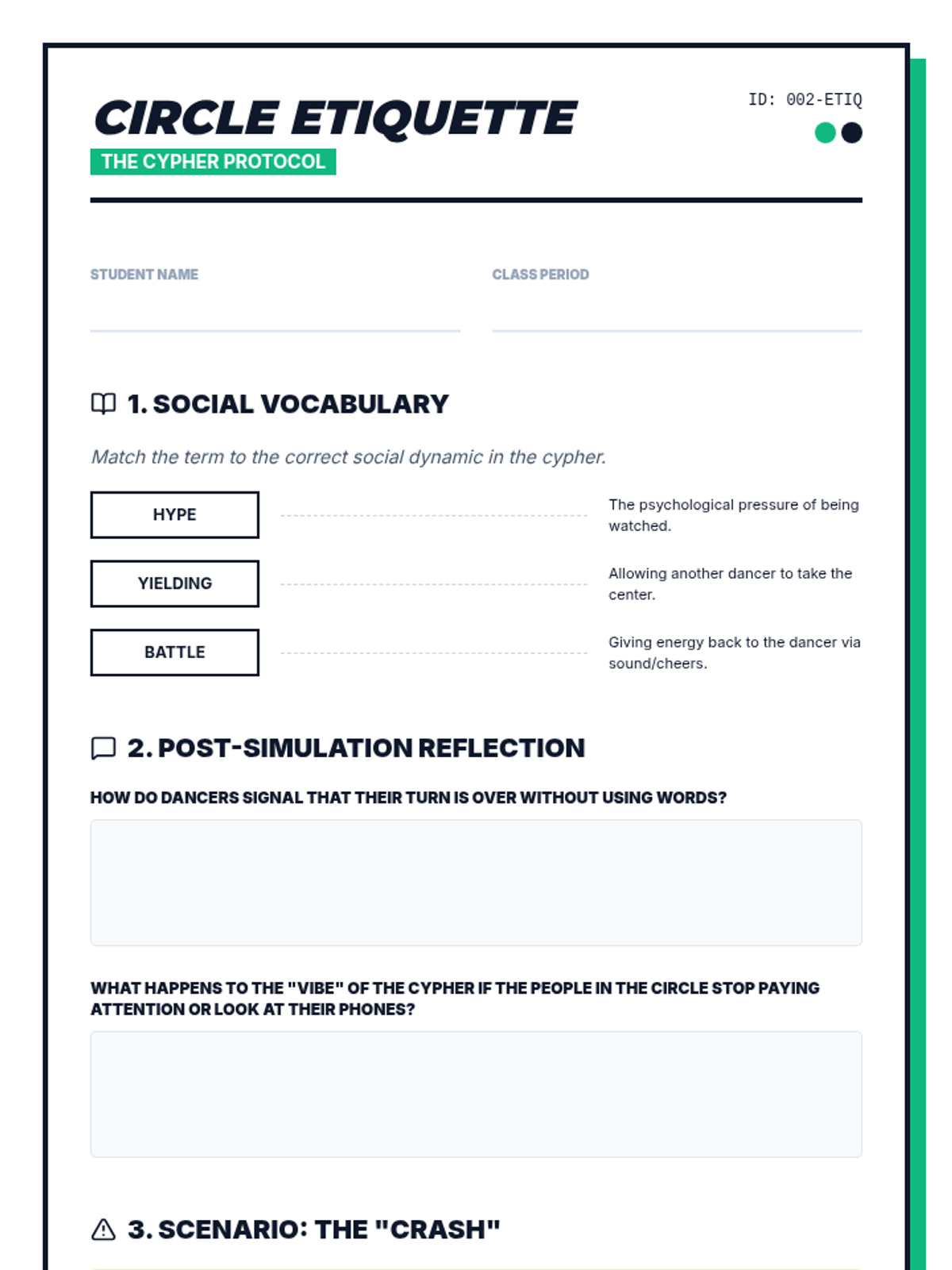
Understand the social rules and improvisational nature of the 'cypher' through simulation and discussion.
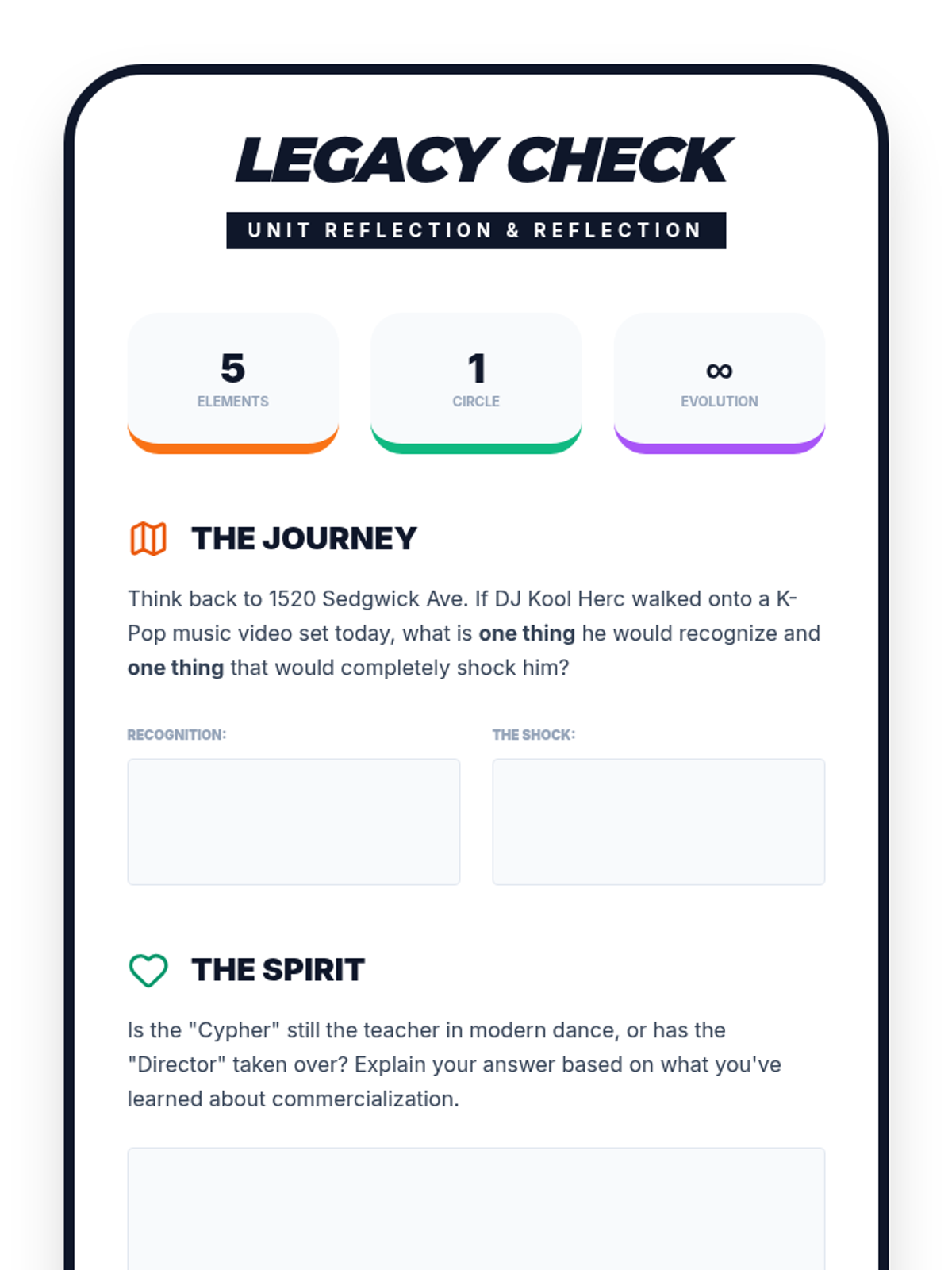
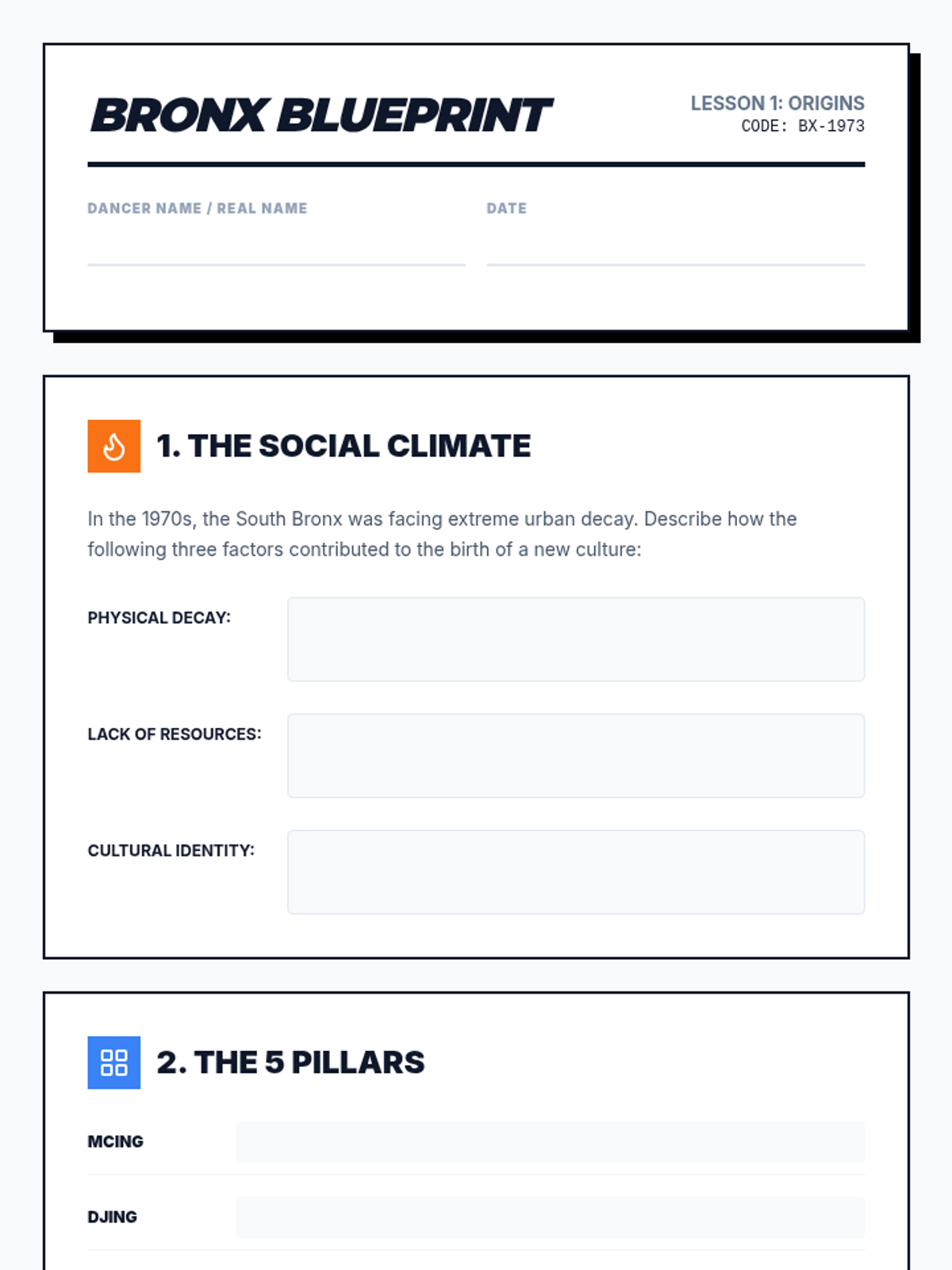
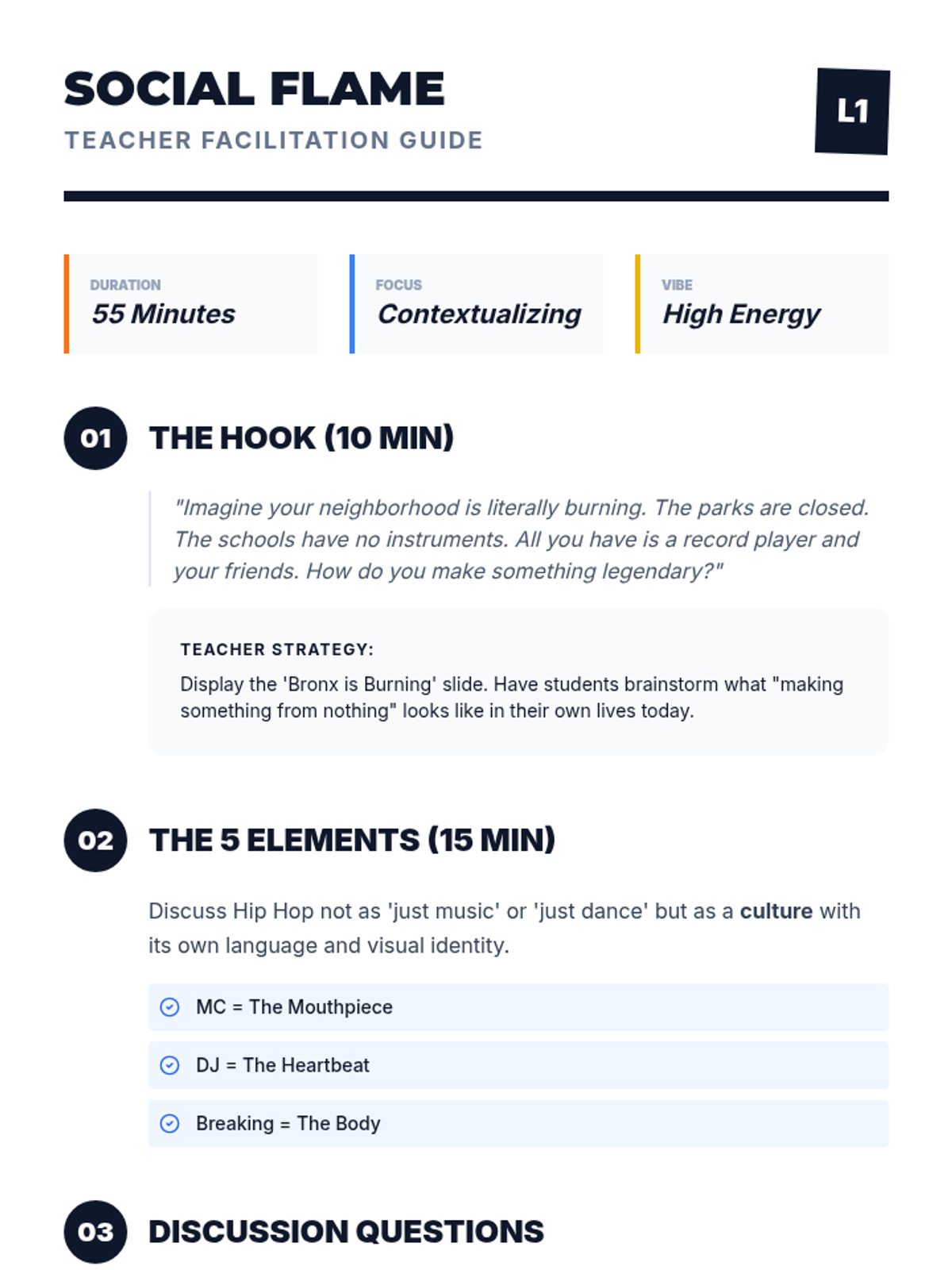
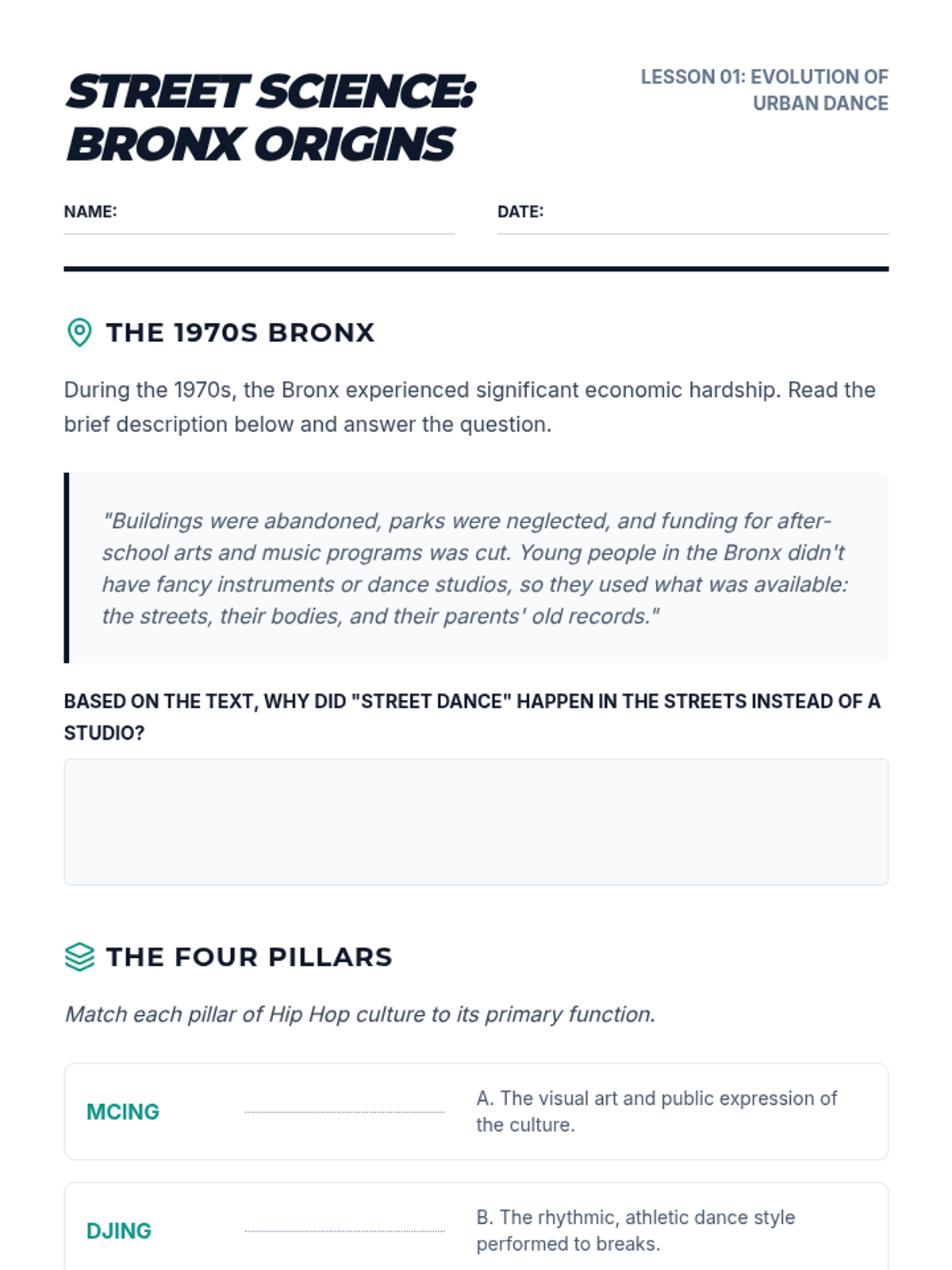
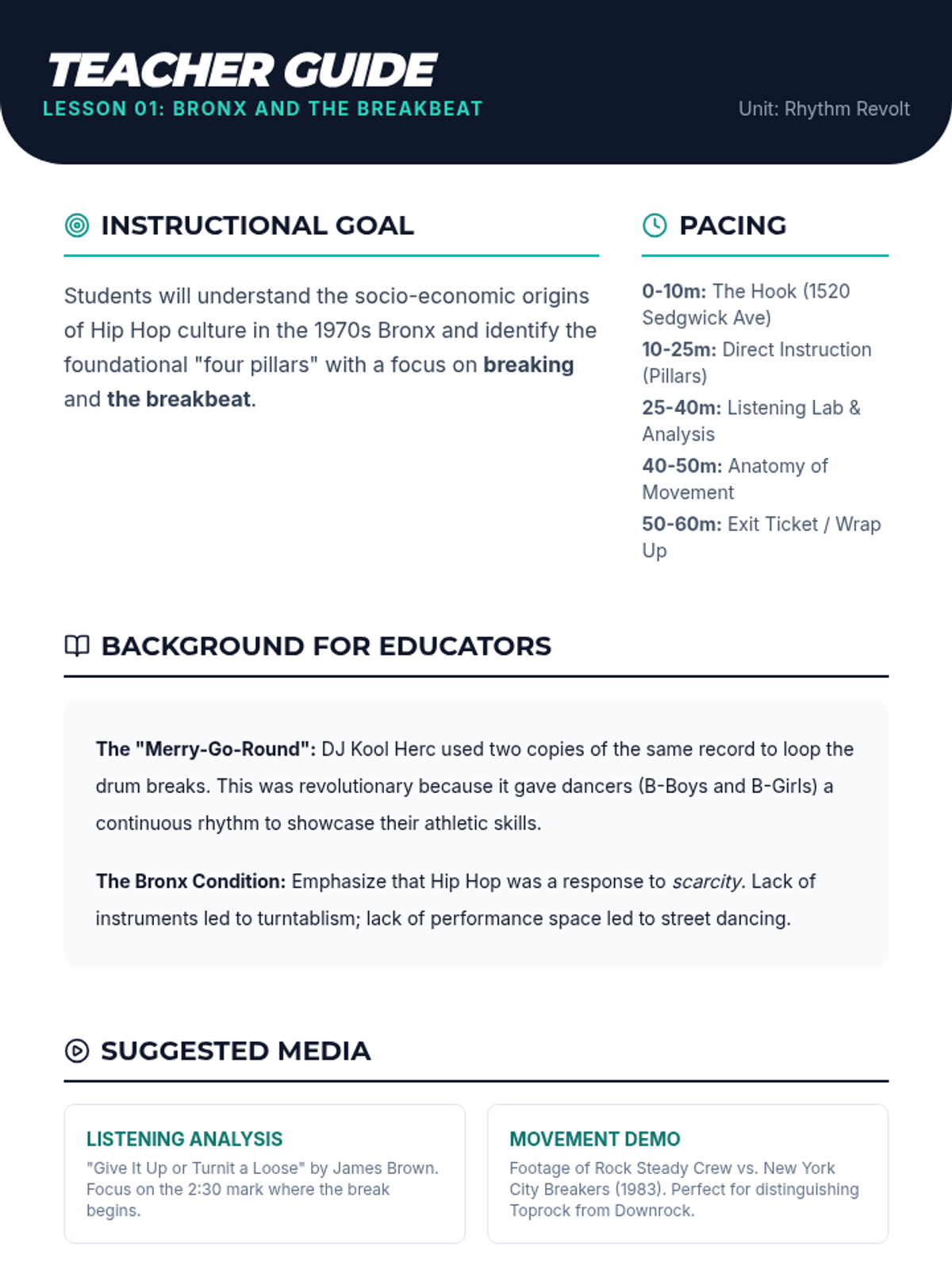
Examine the socio-economic conditions of the 1970s South Bronx and identify the 'Holy Trinity' of DJs and the 5 elements of Hip Hop.
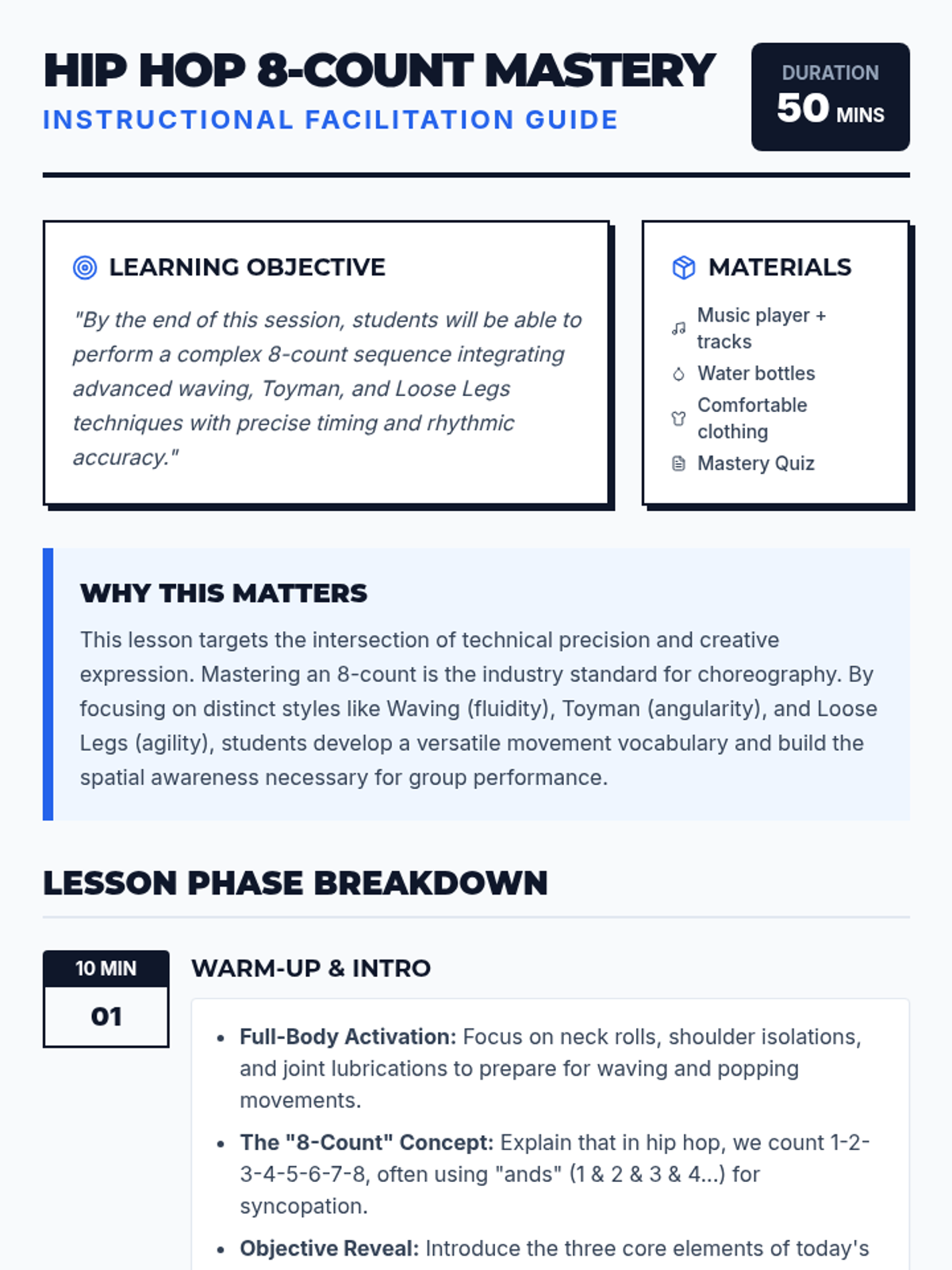
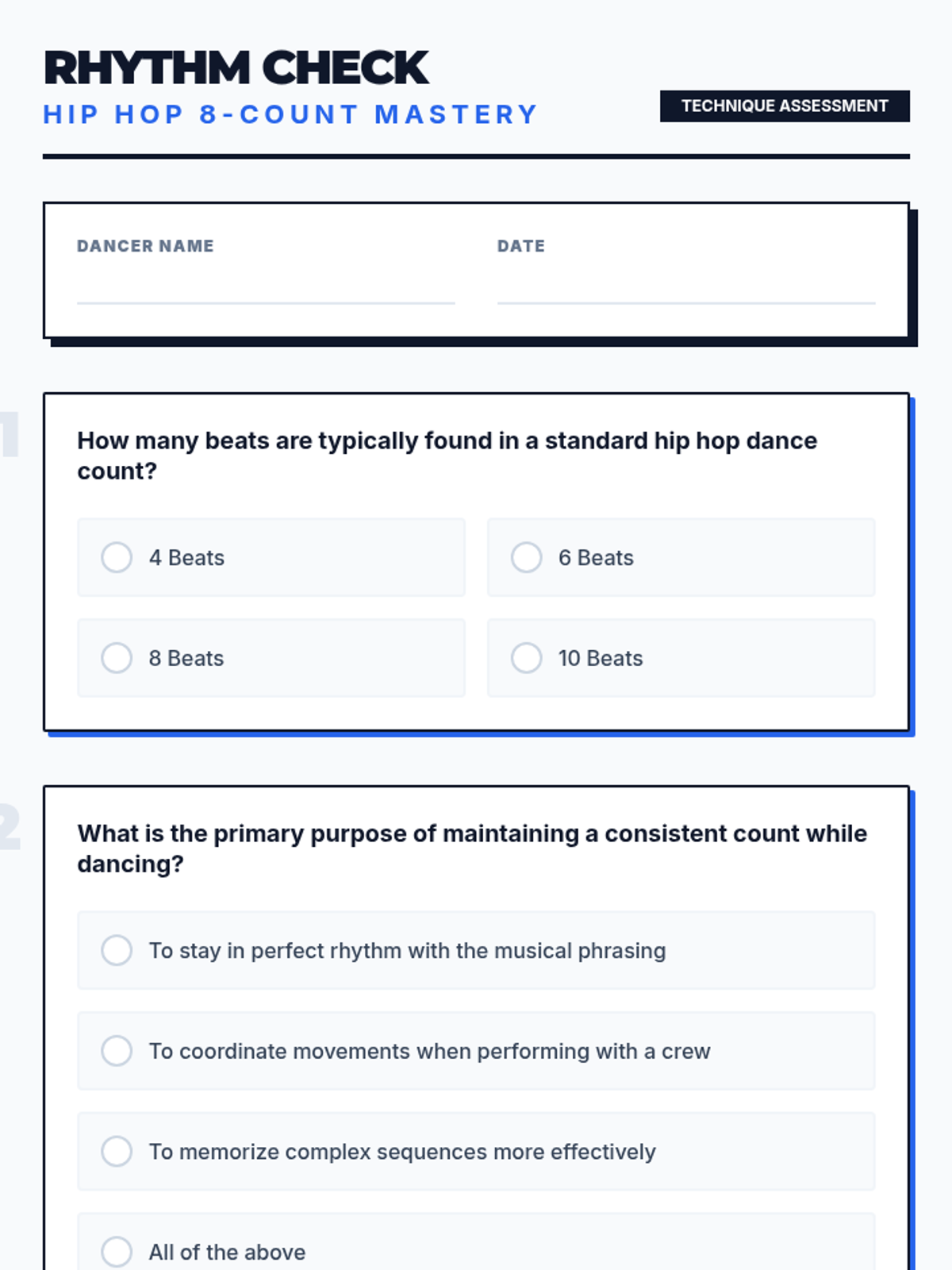
A high-energy lesson focused on mastering an 8-count hip hop sequence featuring advanced waving, Toyman, and Loose Legs techniques.
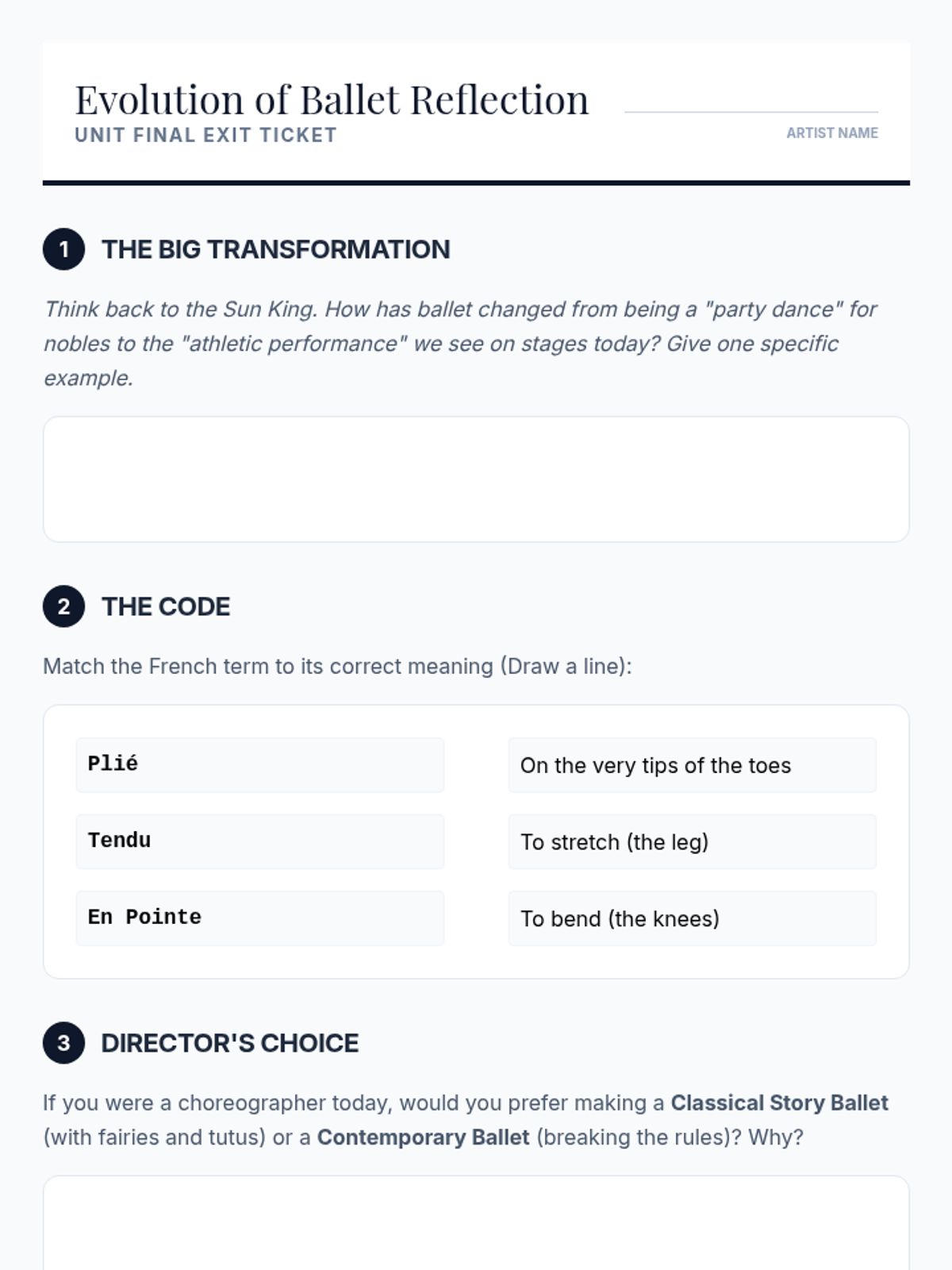
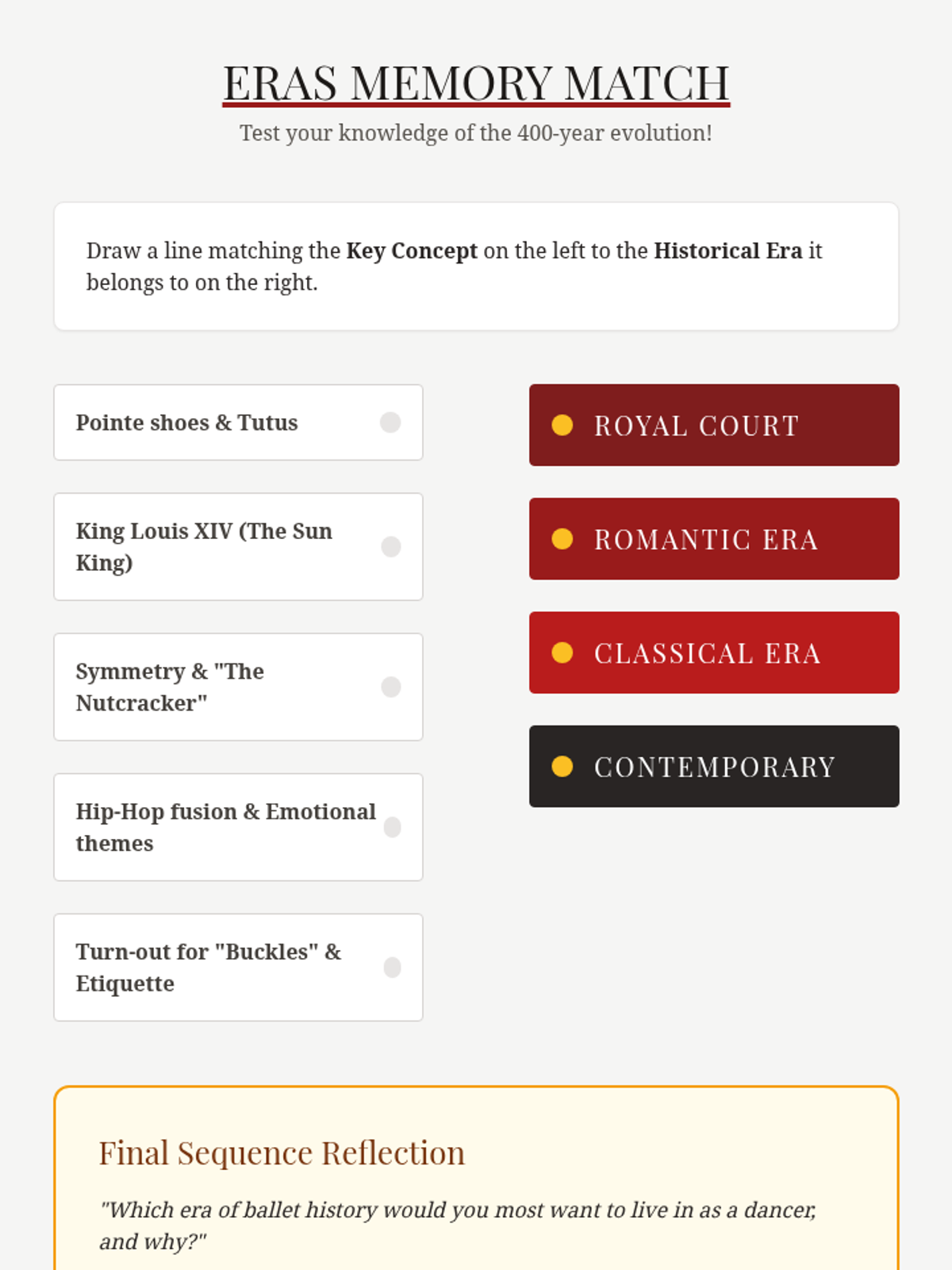
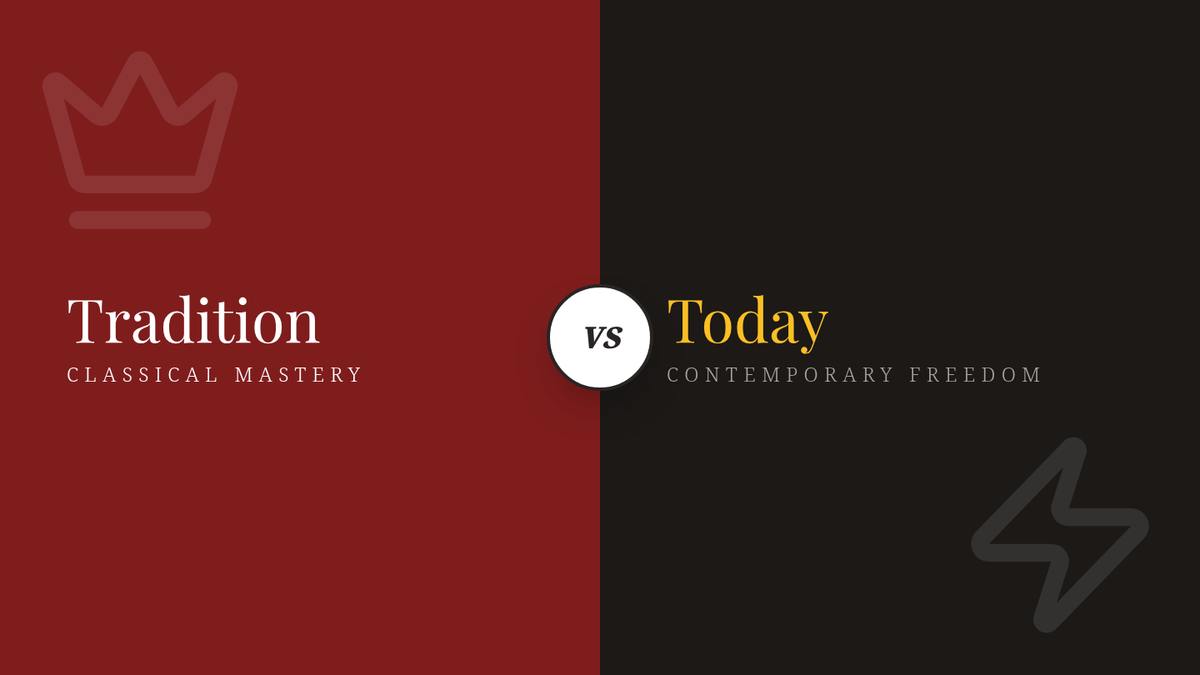
Students conclude the sequence by analyzing the transition to contemporary ballet, comparing traditional rules with modern innovations in costume, movement, and music.
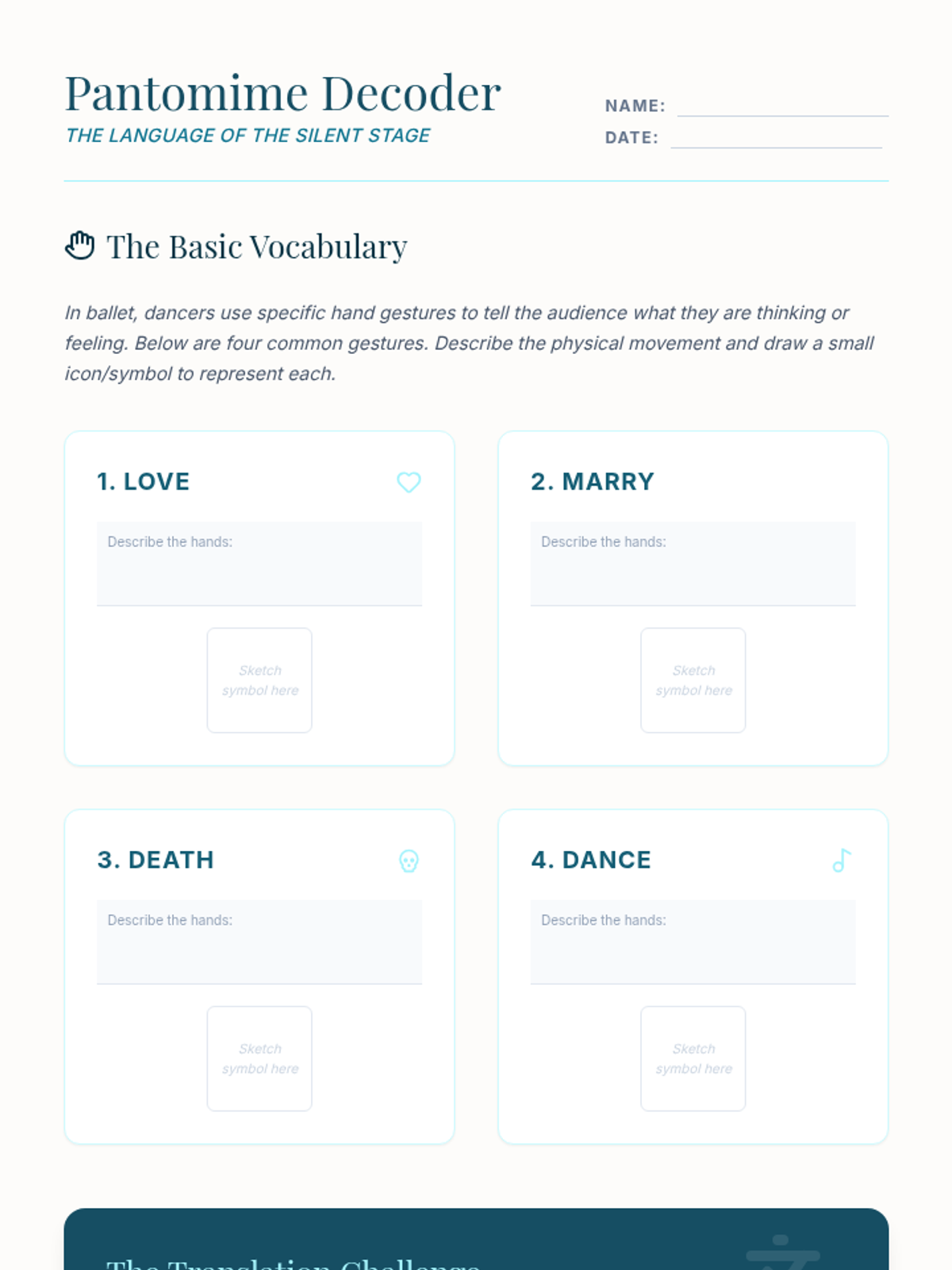
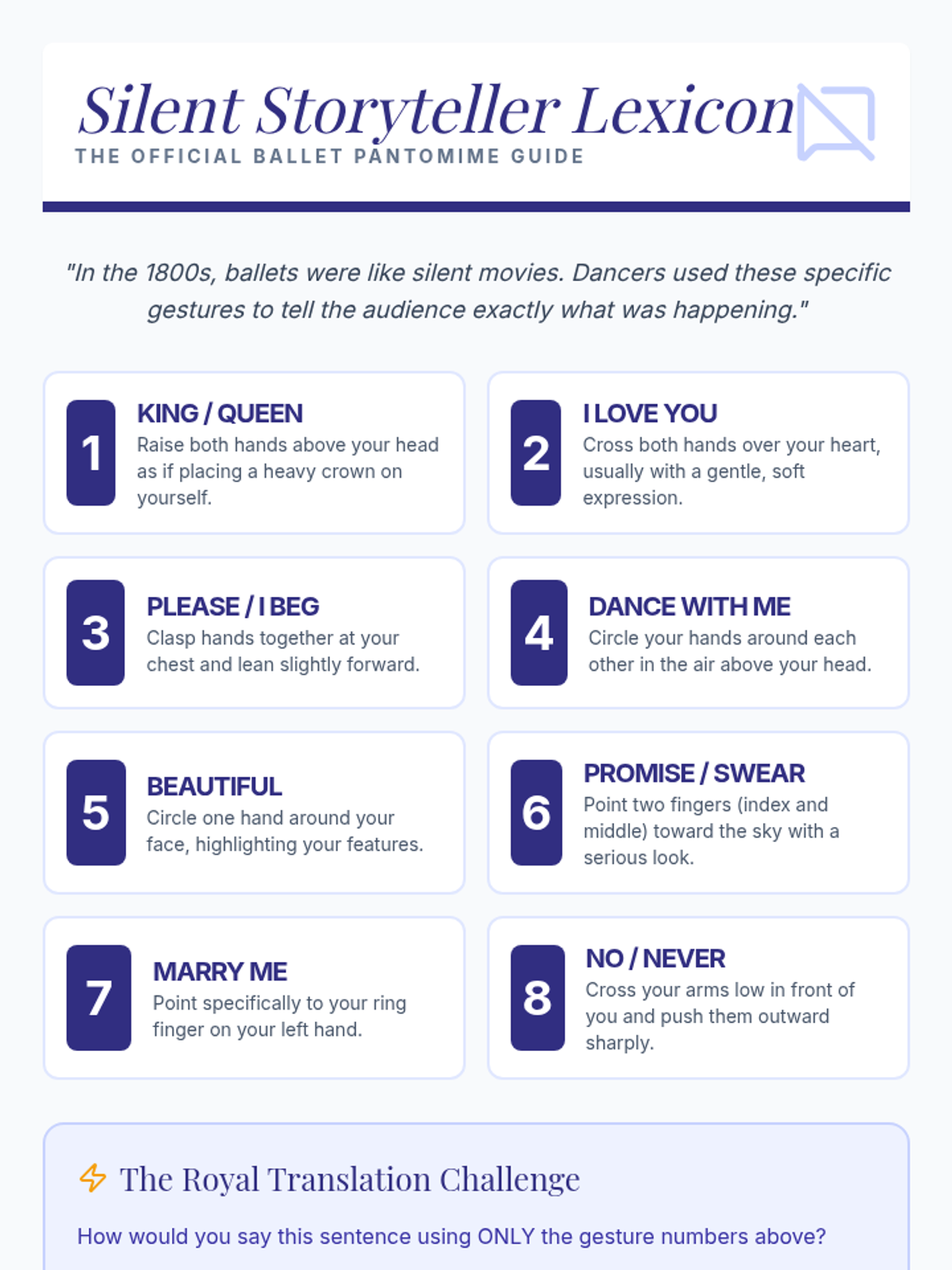
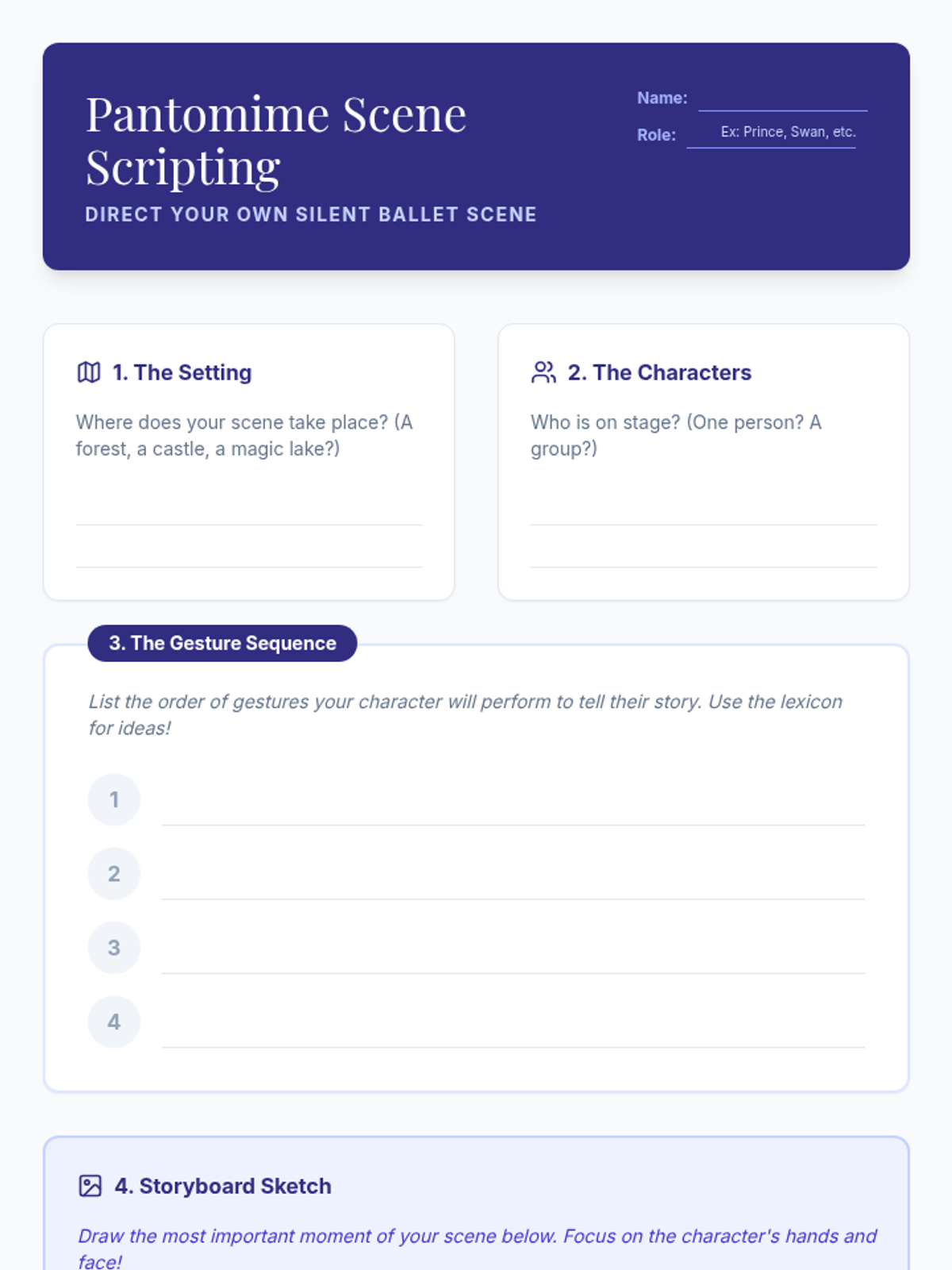
Students learn the specialized language of ballet pantomime, exploring how dancers communicate plot and emotion without words through specific, codified gestures.
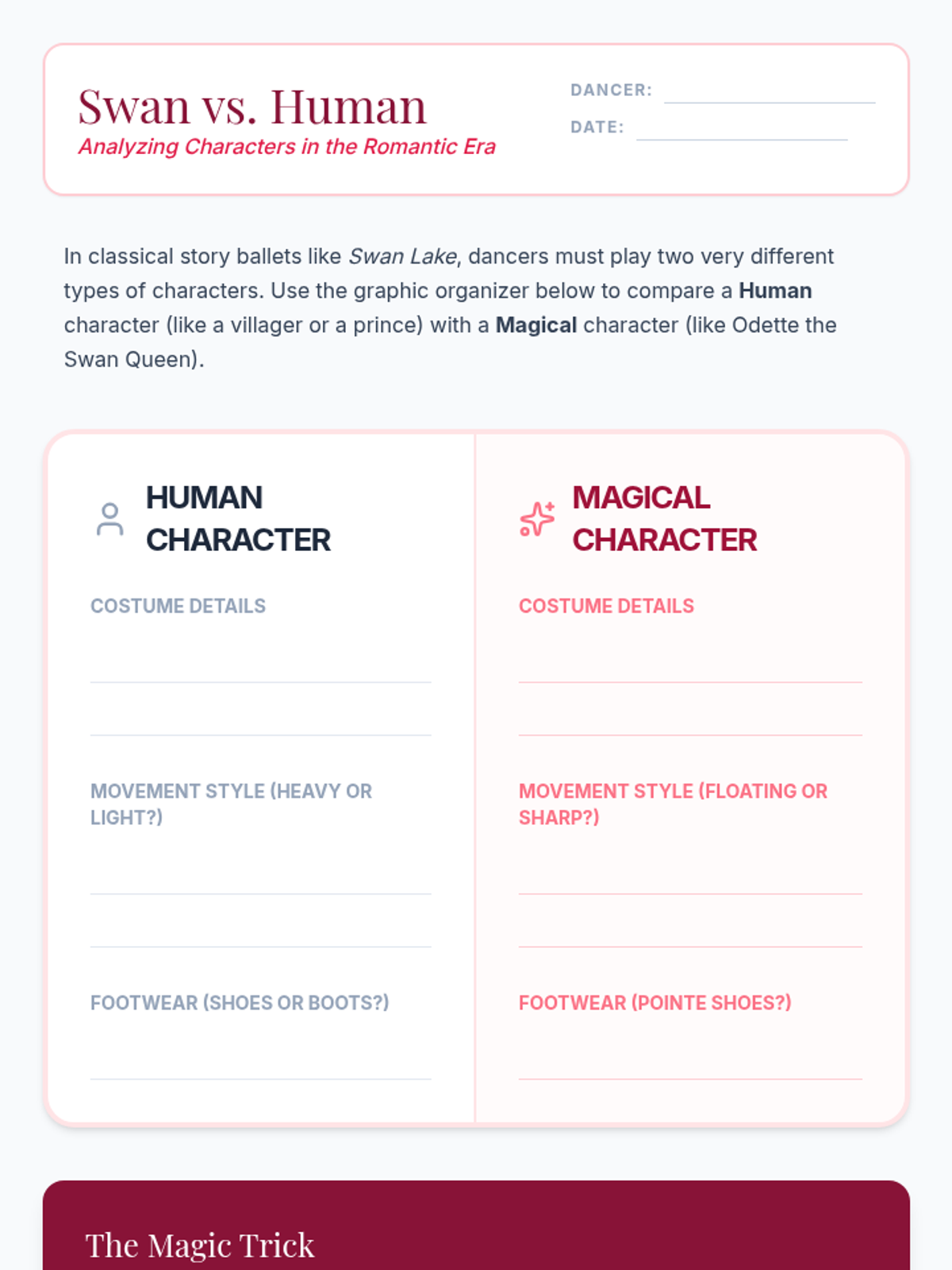
Students explore the era of story ballets, learning about the transition to theatrical narratives, the invention of pointe shoes and tutus, and the distinction between 'real' and 'magical' characters.
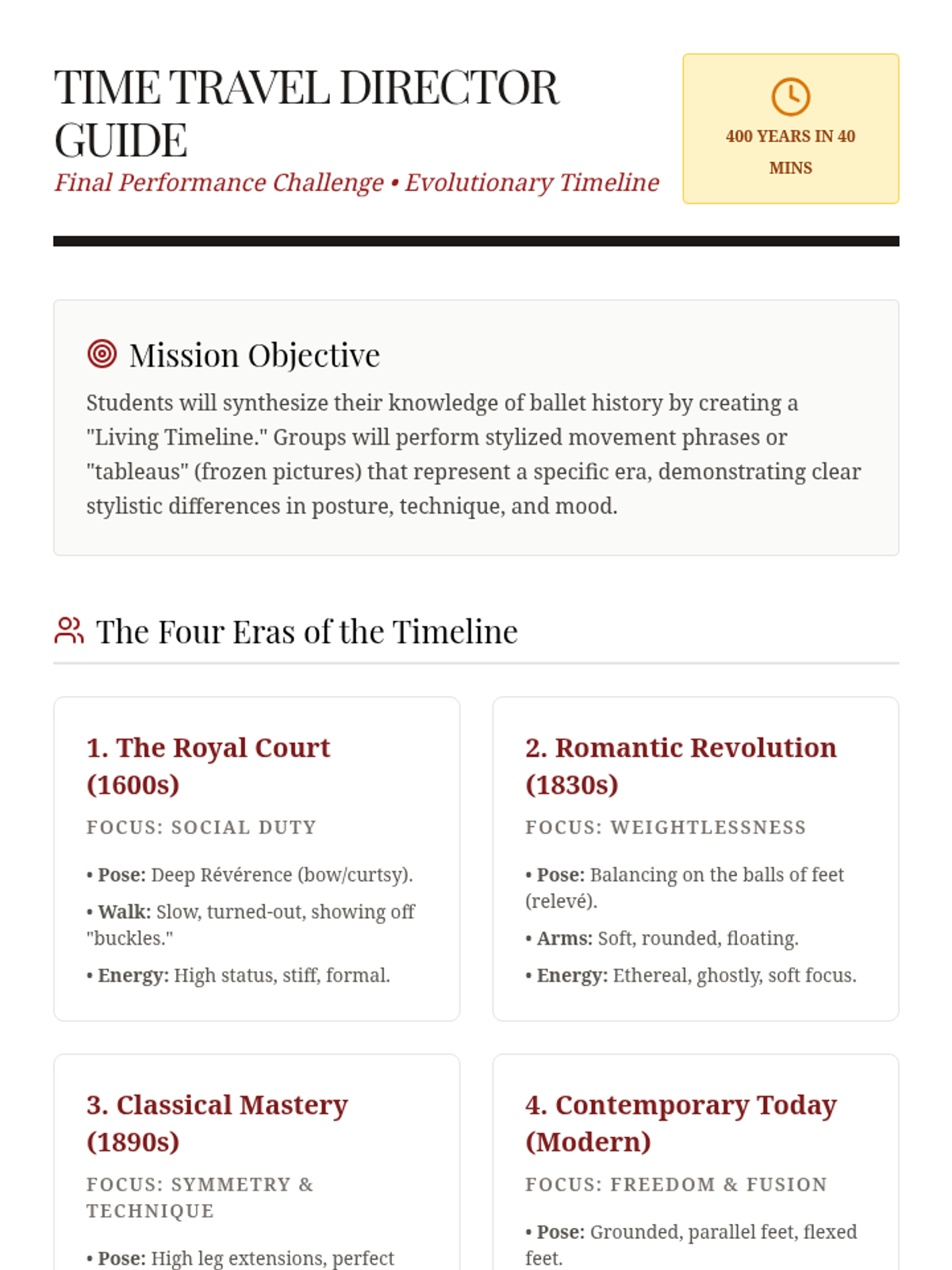
Groups are assigned different eras of ballet history (Court, Romantic, Classical, Modern) and create a 'living timeline' tableau or short phrase demonstrating the style of that period. This reinforces the chronological evolution learned throughout the sequence.
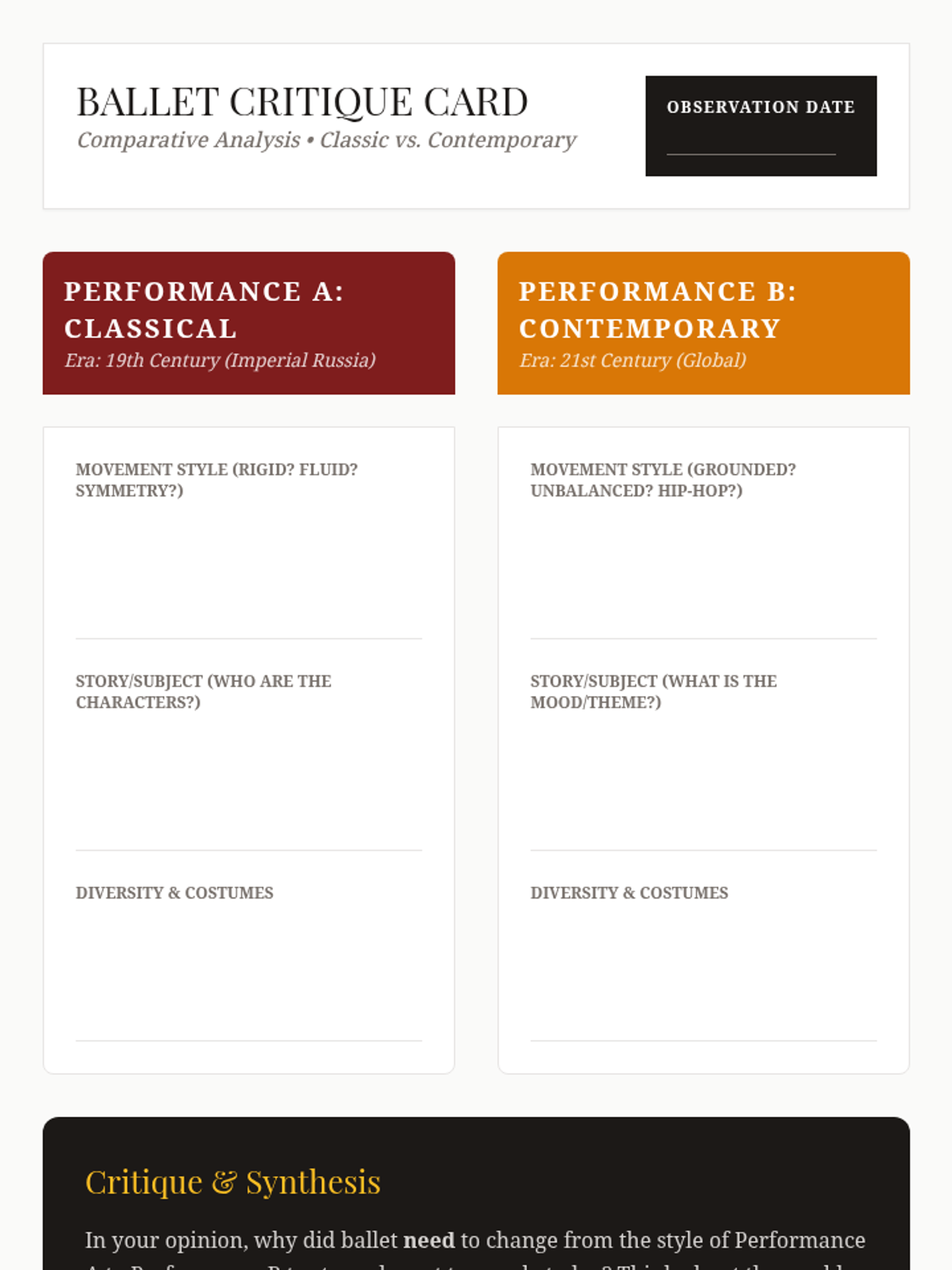
Students watch and critique clips of 'The Nutcracker' versus modern contemporary ballet works to identify differences in rigidity, subject matter, and diversity. They discuss how the art form has expanded beyond its European aristocratic roots.
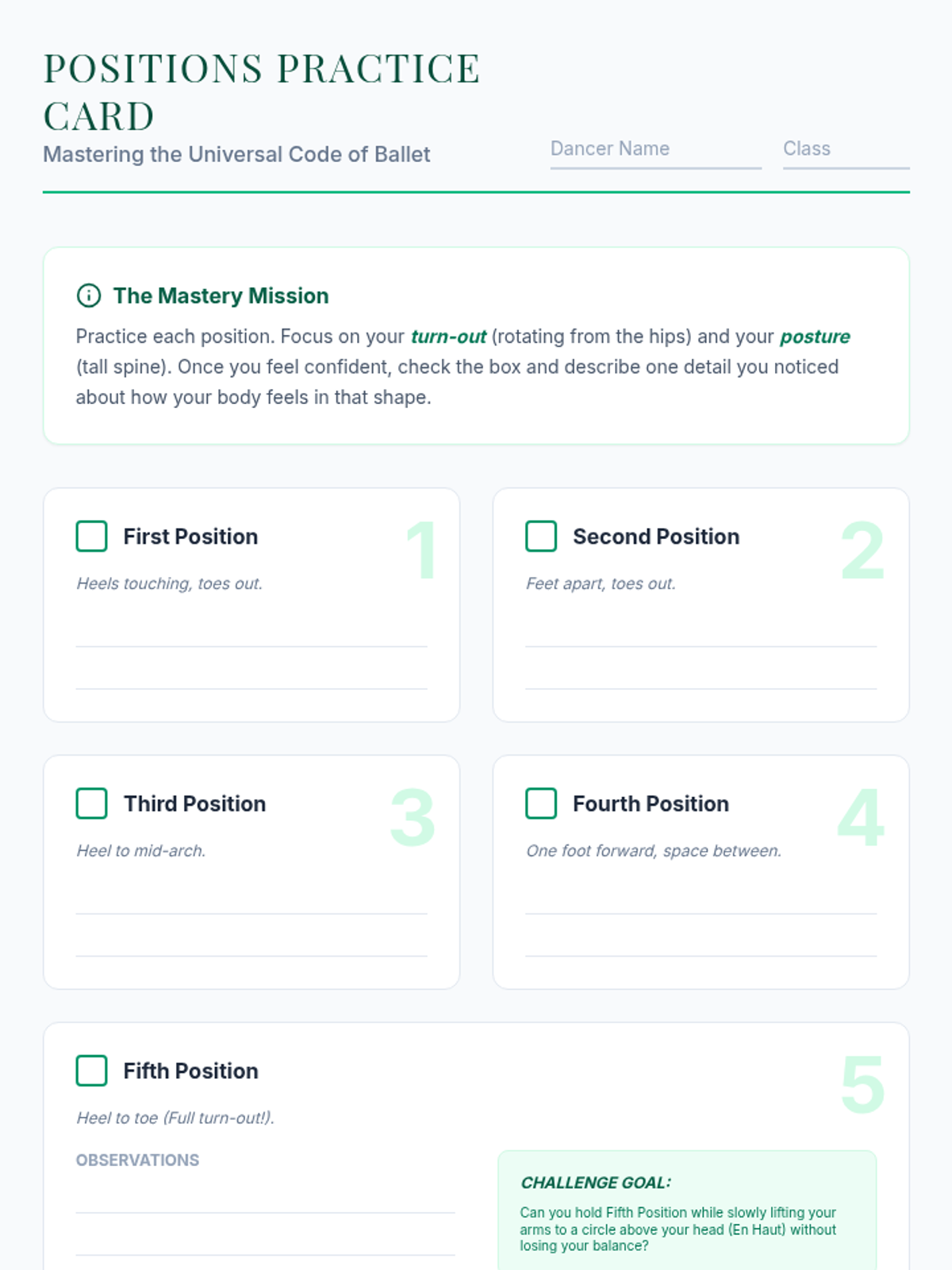
Students learn the five foundational positions of ballet and the concept of 'turn-out,' exploring how these technical codes were established to create a professional standard for dance.
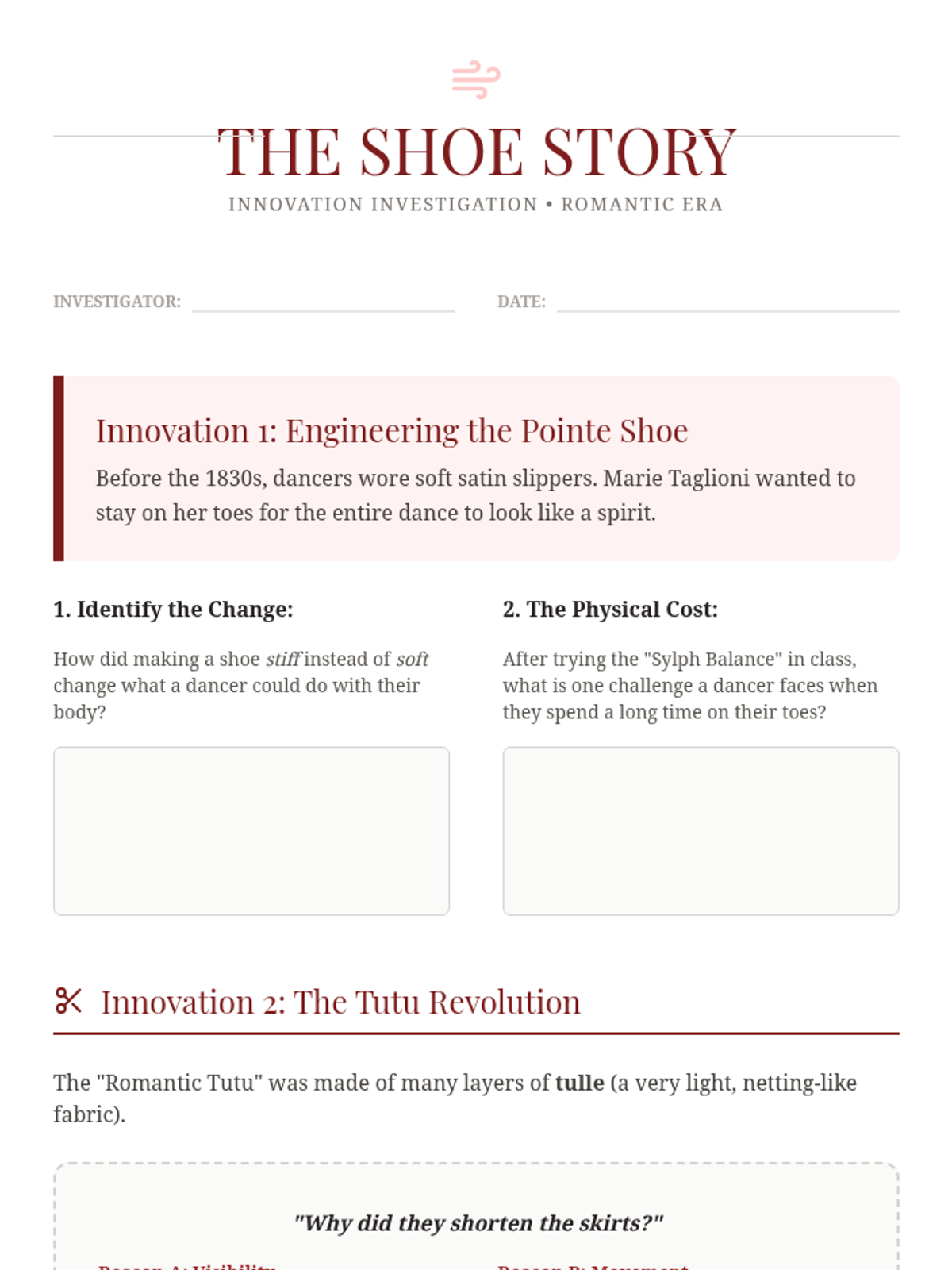
This lesson covers the introduction of the pointe shoe and the tutu, analyzing how these inventions changed choreography to make dancers look weightless and supernatural. Students try balancing exercises to appreciate the difficulty of the technique, connecting technological innovation to artistic shifts.
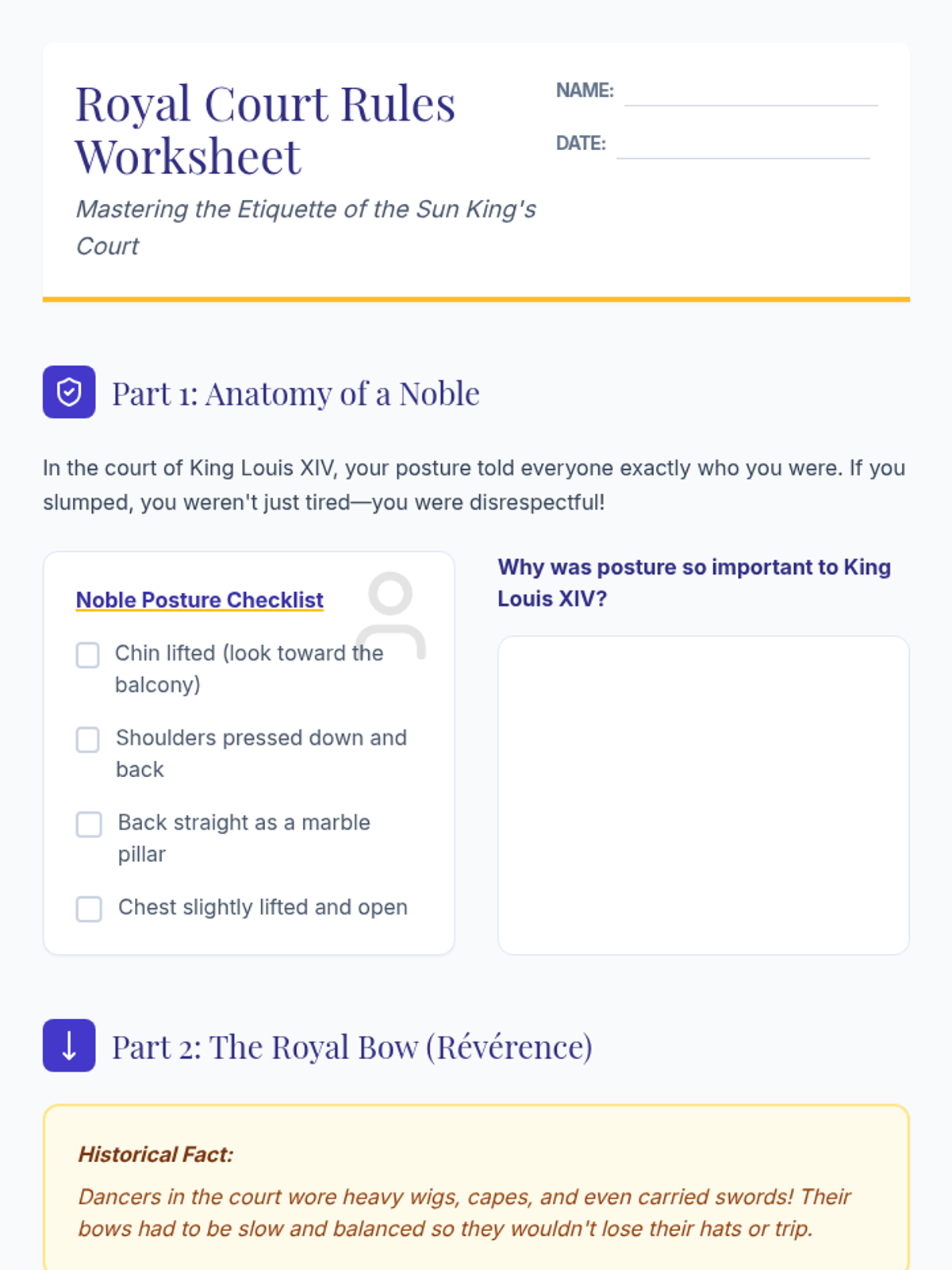
Students explore the origins of ballet in the court of King Louis XIV, focusing on dance as a tool for social status and etiquette.
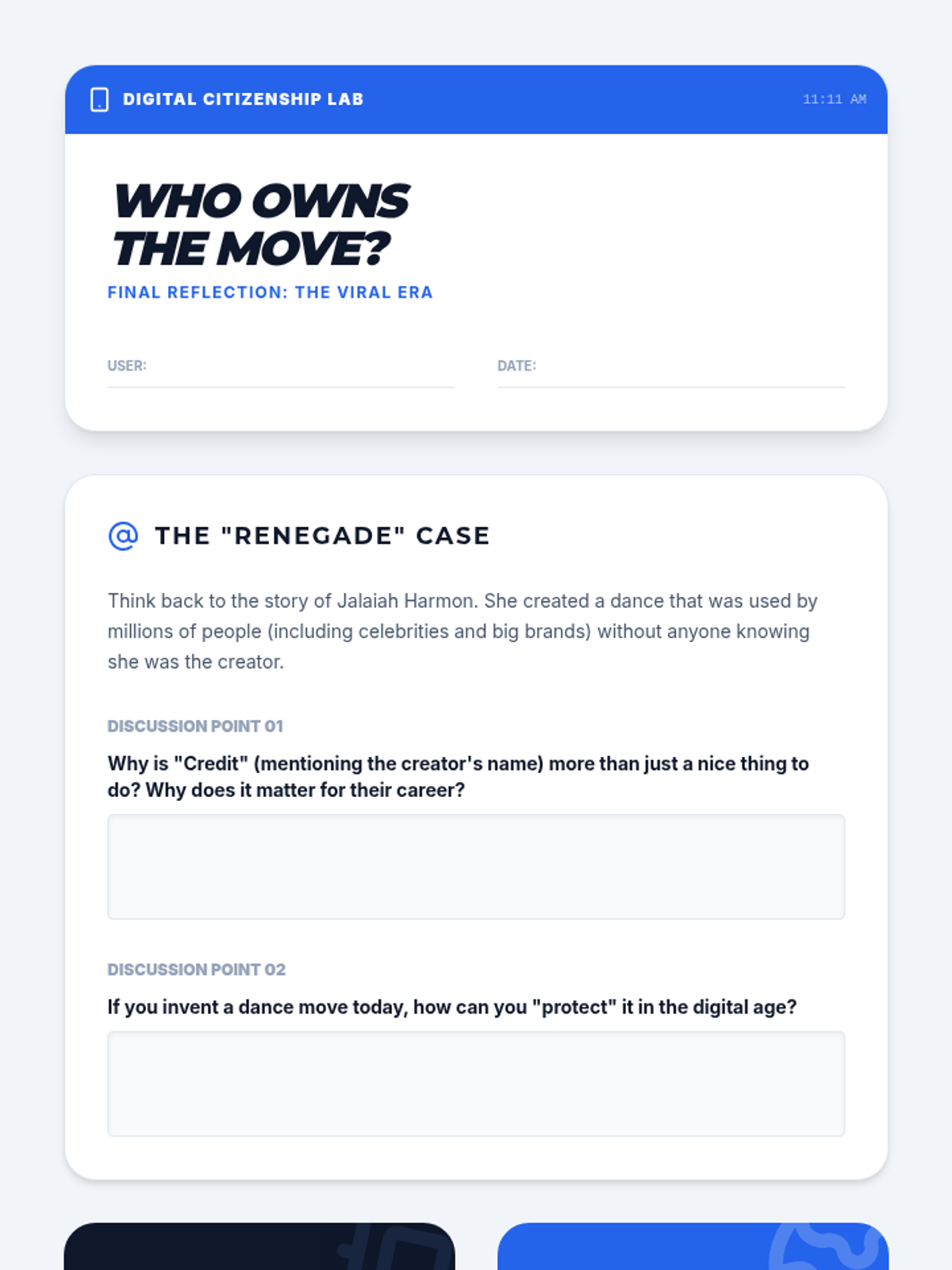
Students discuss the digital shift in dance, focusing on TikTok and YouTube. They explore the ethics of choreography ownership, the 'Renegade' controversy, and predict future trends in digital movement.
This lesson examines the 21st-century globalization of pop dance, specifically K-Pop and Afrobeats. Students investigate how Hip Hop influences these genres and how social dance travels across borders today.
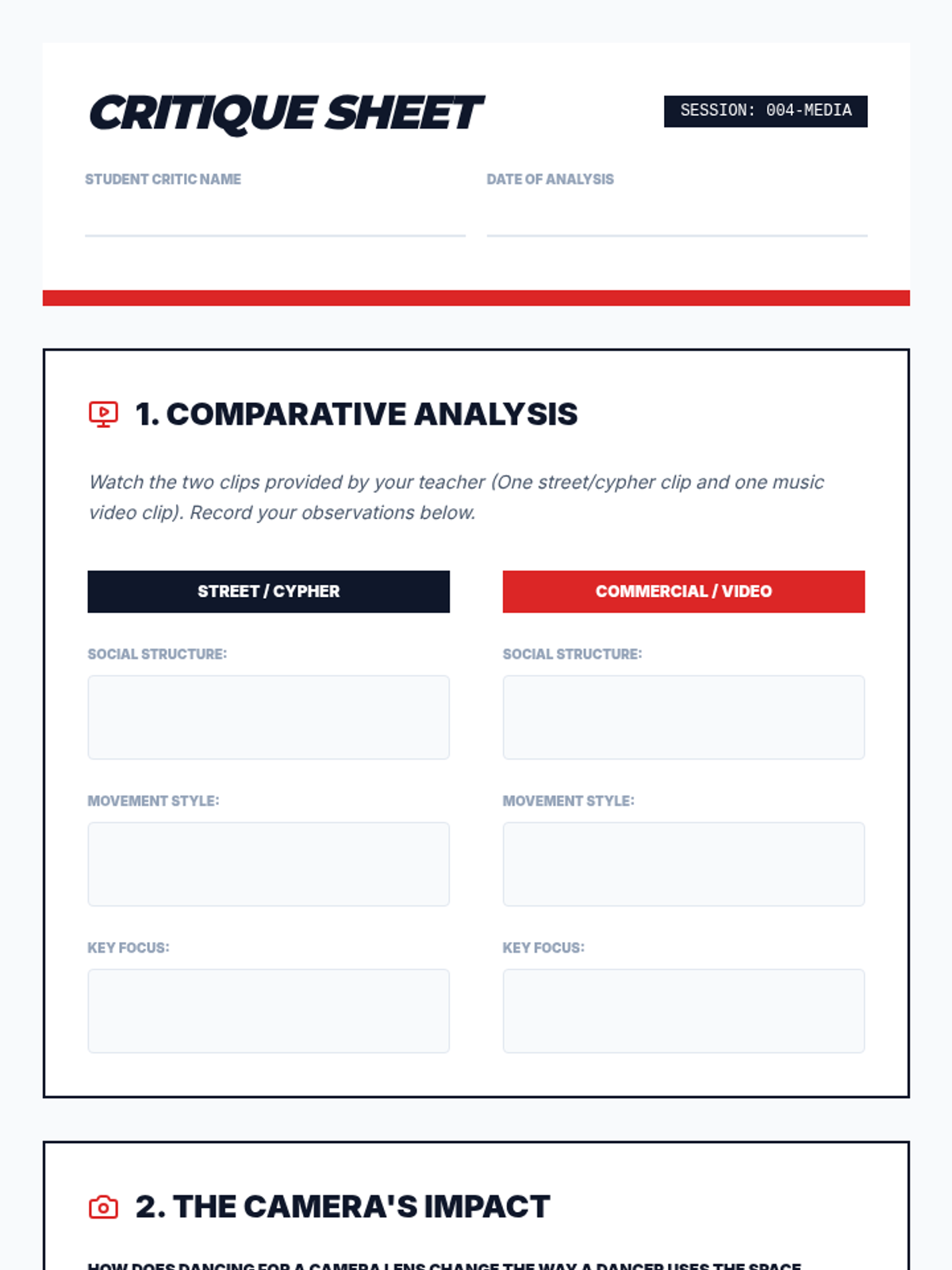
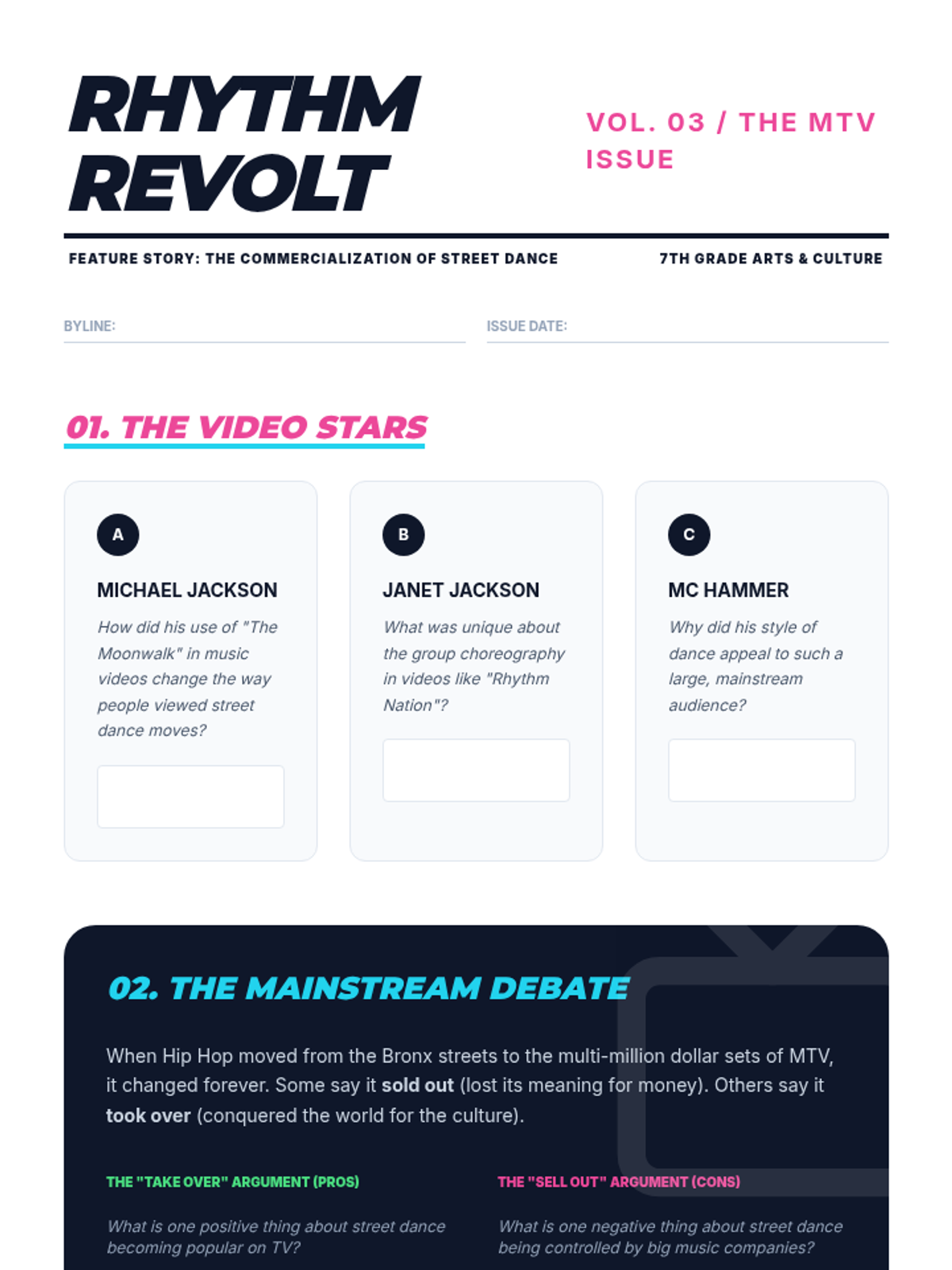
Students analyze the transition of street dance into the commercial mainstream via MTV and music videos. They debate the impact of visibility versus cultural authenticity using iconic 80s and 90s artists as case studies.
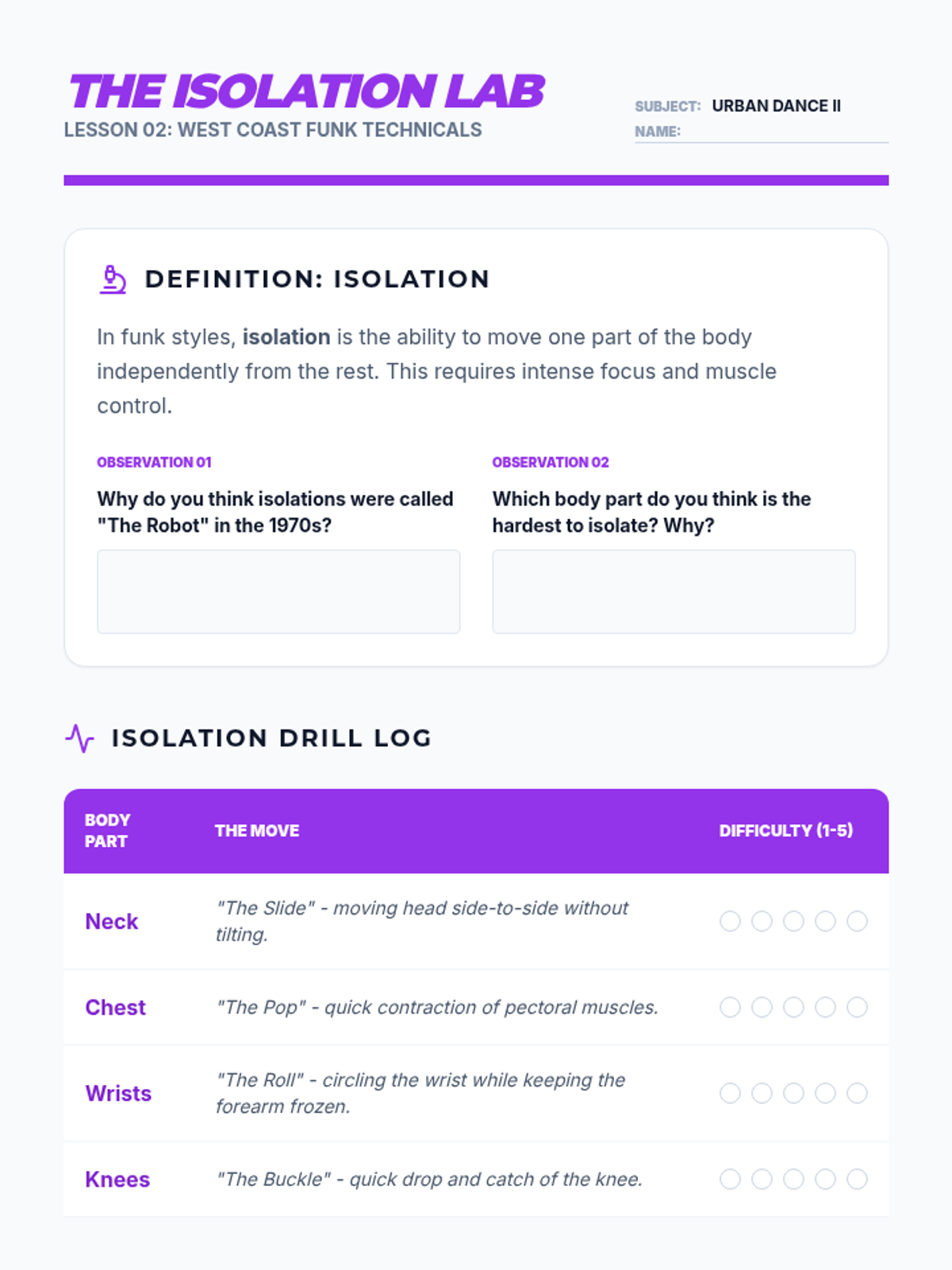
Moving to the West Coast, students explore Popping and Locking, their relationship to 'Soul Train,' and the importance of muscle isolation. They compare the party vibes of the West Coast with the competitive nature of the East Coast.
Students investigate the birth of Hip Hop in the 1970s Bronx, focusing on DJ Kool Herc and the four pillars of the culture. They explore how socio-economic conditions sparked a global movement and define the 'breakbeat.'
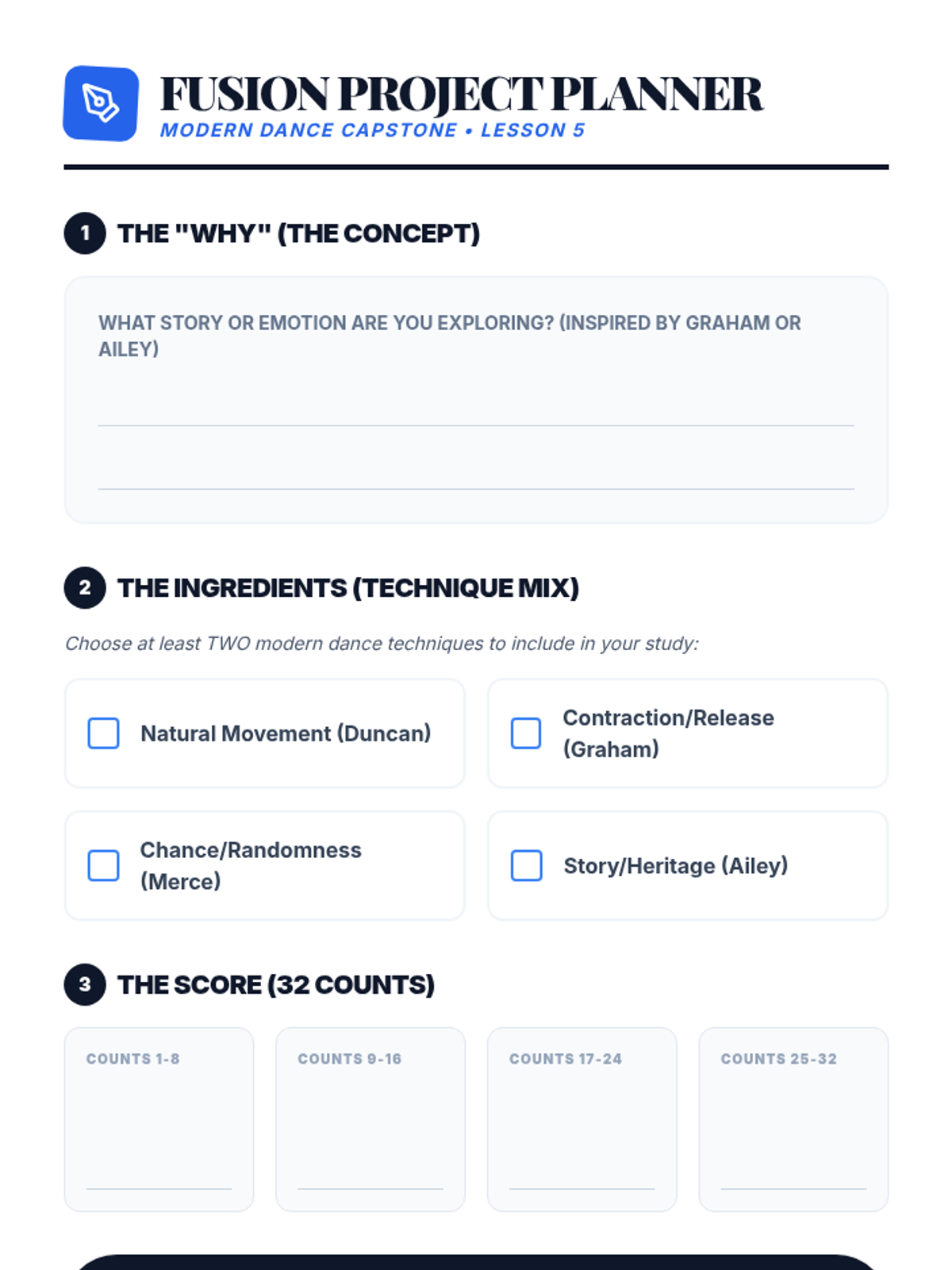
A final project-based lesson where students synthesize historical modern dance techniques to create and perform their own contemporary choreographic studies.
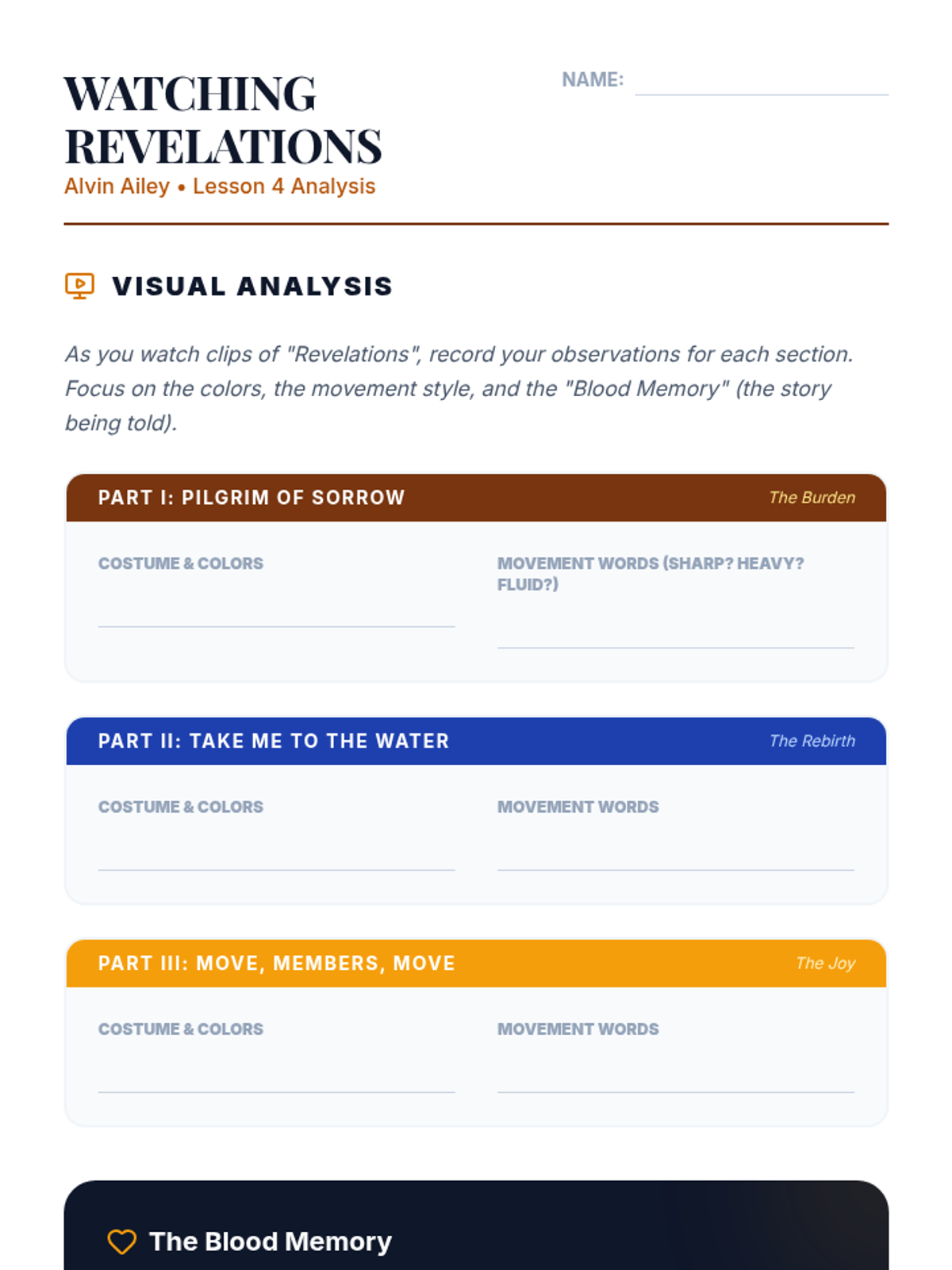
Analysis of Alvin Ailey's work, specifically 'Revelations', as a tool for chronicling the African-American experience and using dance as a form of social activism.
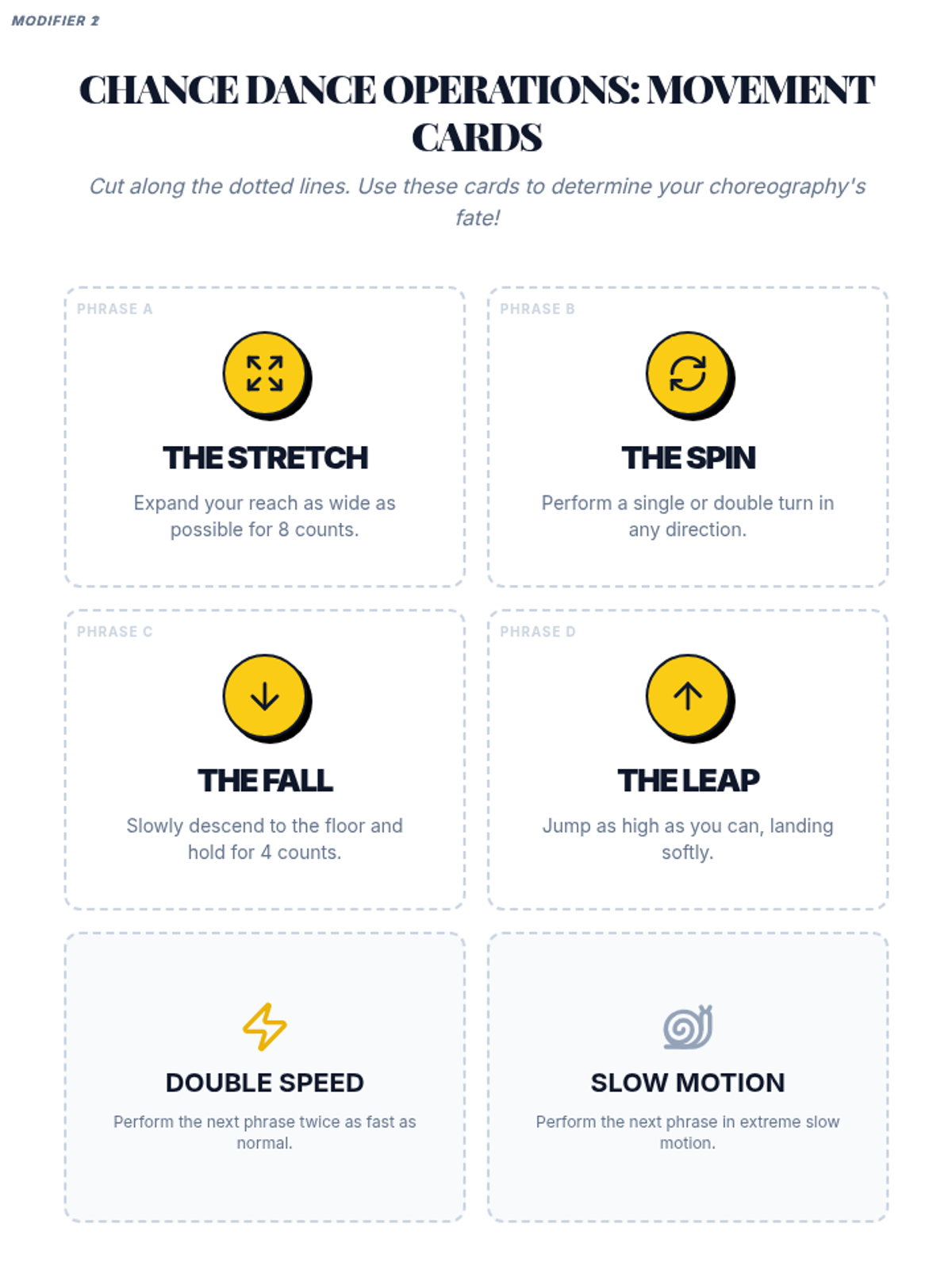
Students investigate the post-modern concept of chance in choreography, learning how Merce Cunningham used randomness to create unique and unexpected dance sequences.
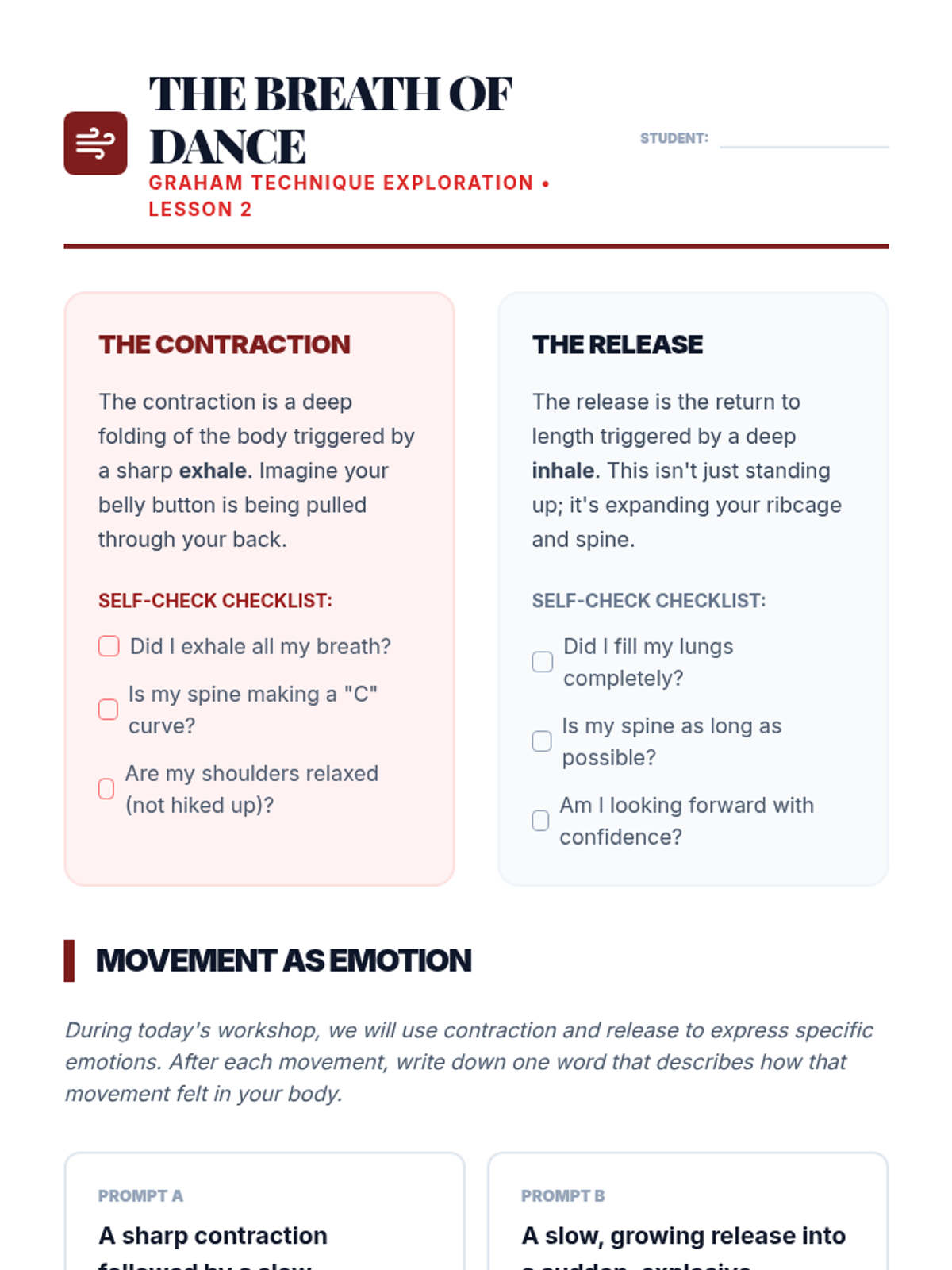
An introduction to Martha Graham's revolutionary technique centered on breath, contraction, and release, exploring how physical movements express deep human emotion.
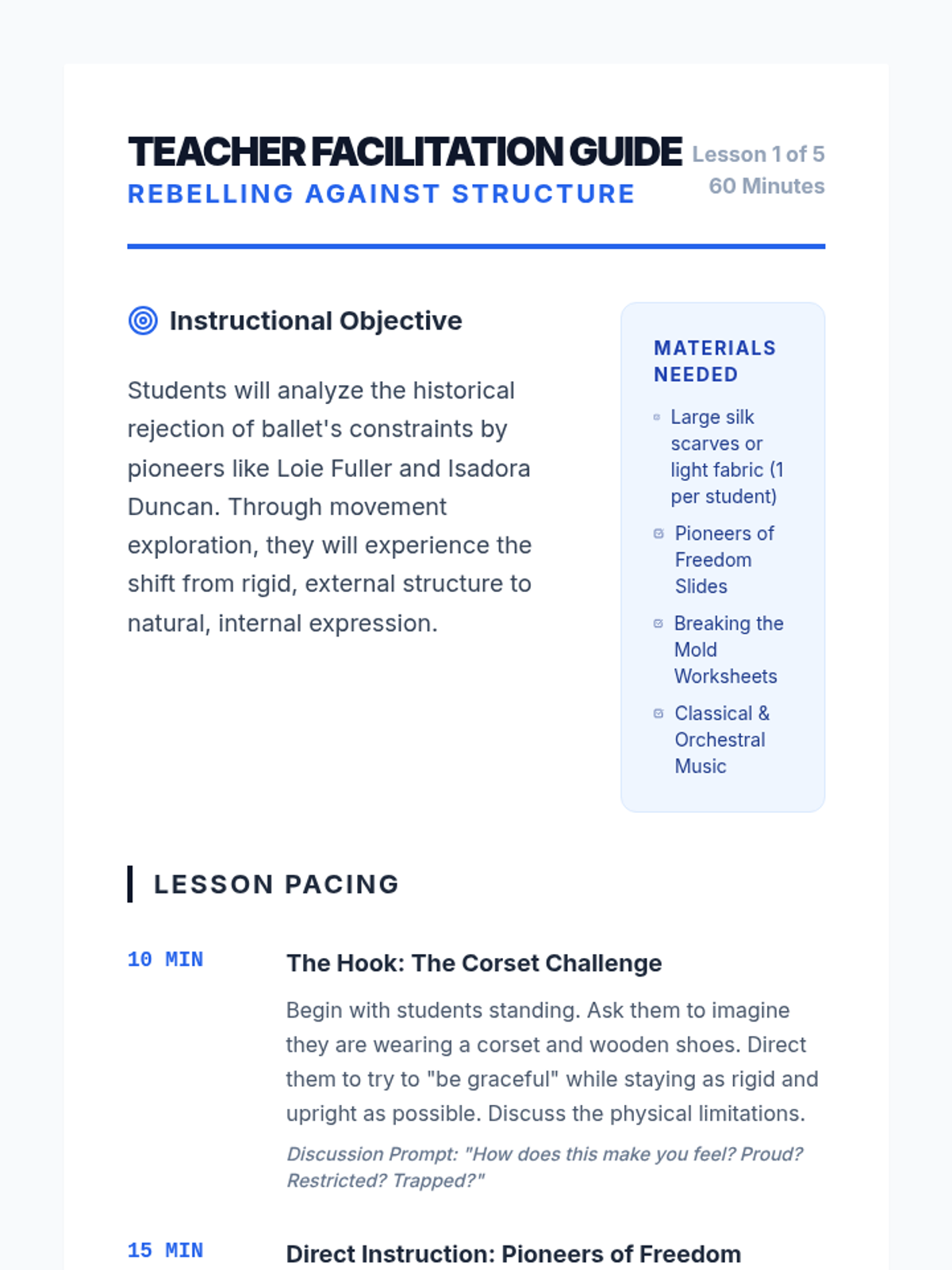
Students explore the origins of Modern dance as a rejection of ballet's rigidity, focusing on Loie Fuller's use of fabric and light and Isadora Duncan's natural movement.