Historical evolution of performance, technical stagecraft, and core acting techniques. Develops playwriting skills and fosters imaginative expression through script development and production management.
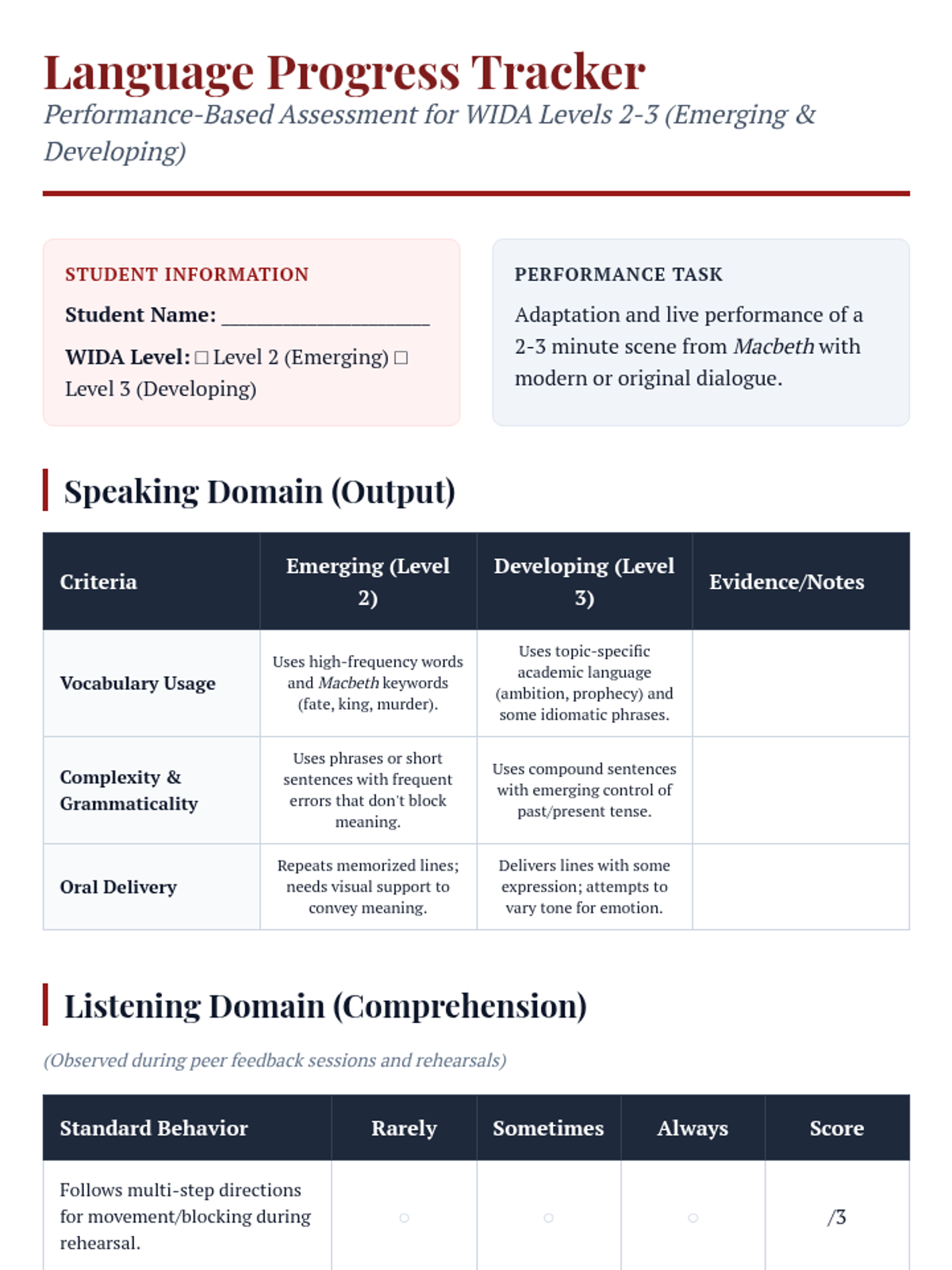
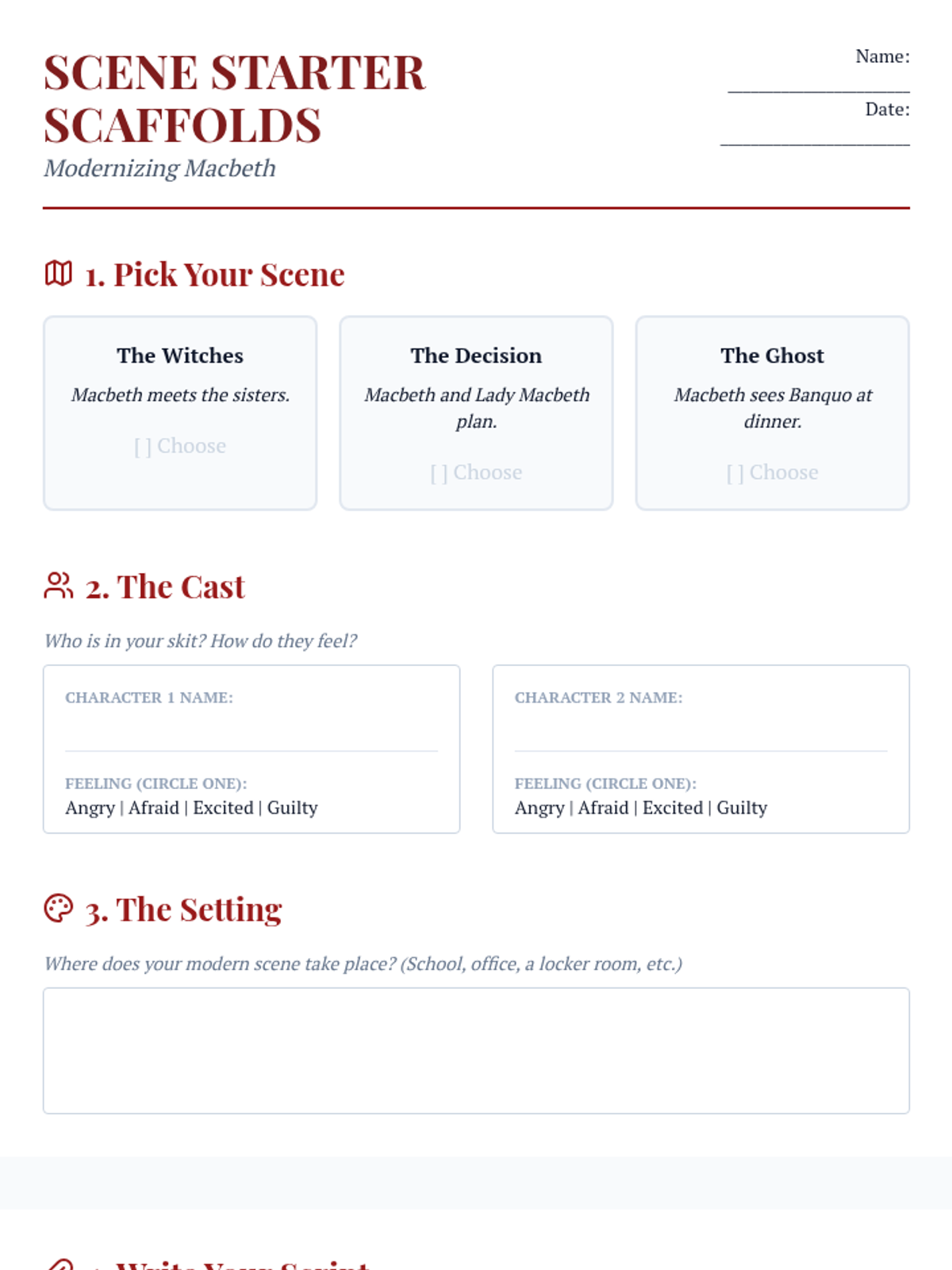
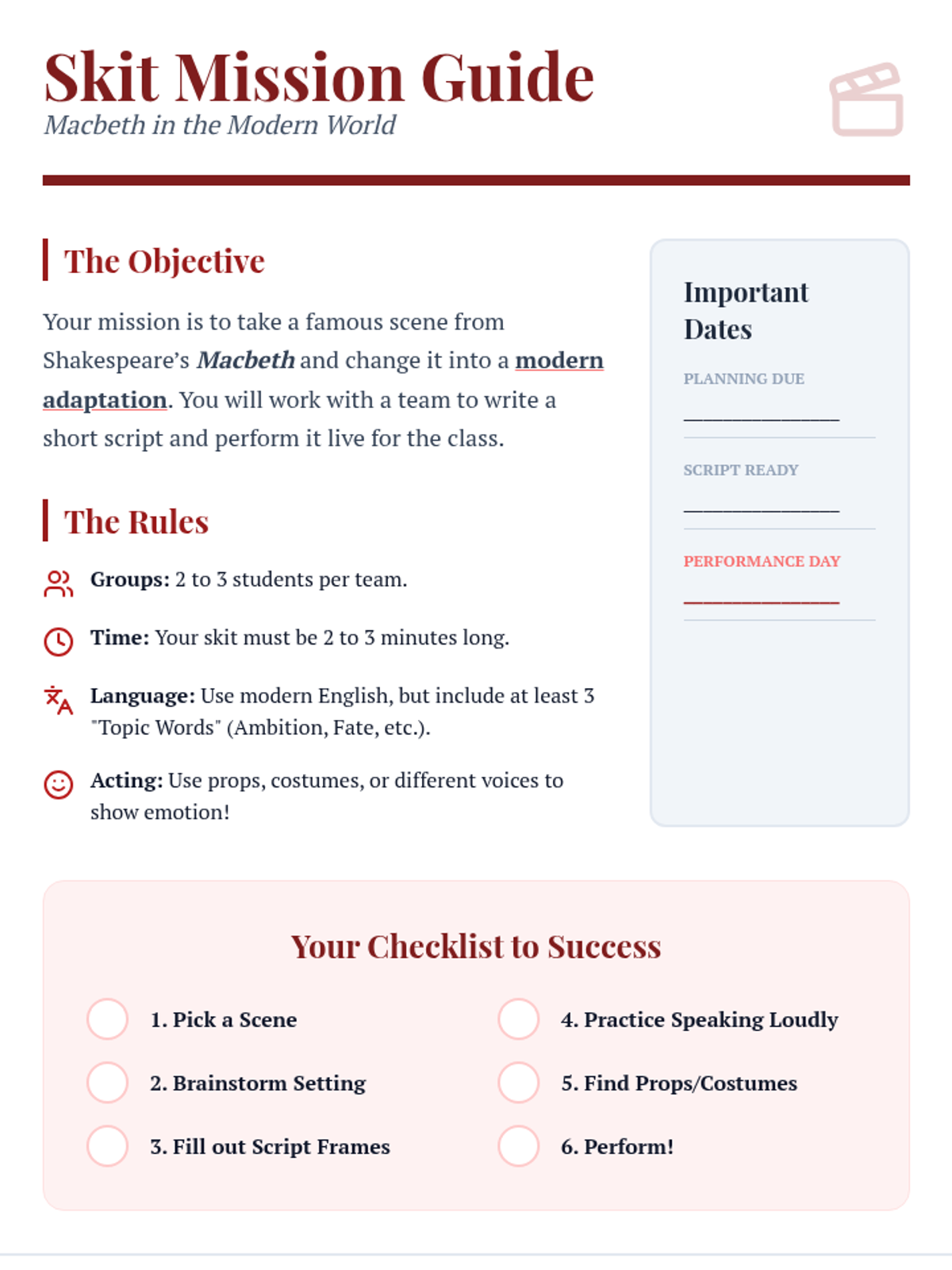
A performance-based task where students adapt and perform scenes from Macbeth. It includes specific scaffolds and assessment tools designed for WIDA Level 2-3 ELLs to demonstrate growth in speaking and listening.
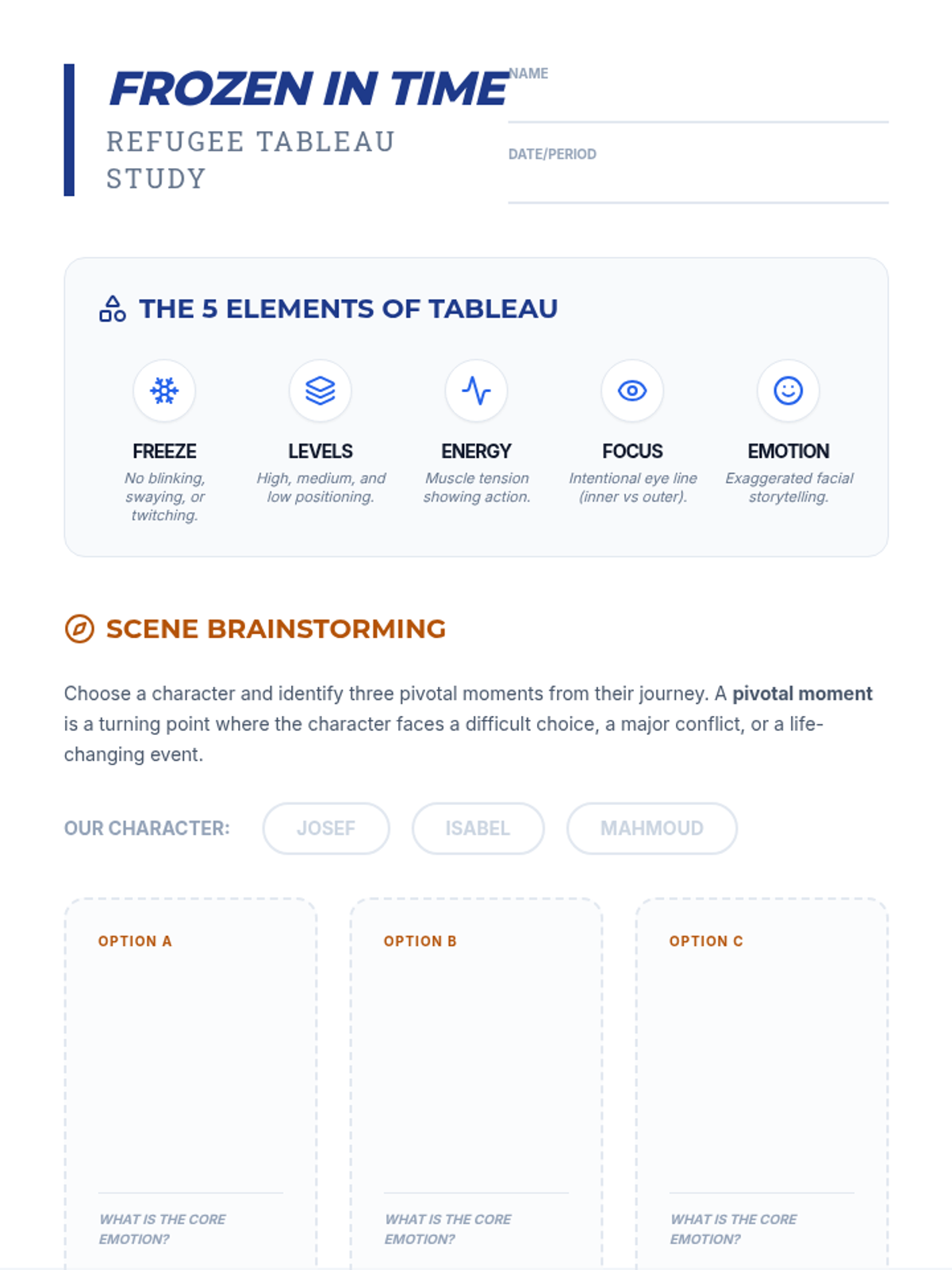
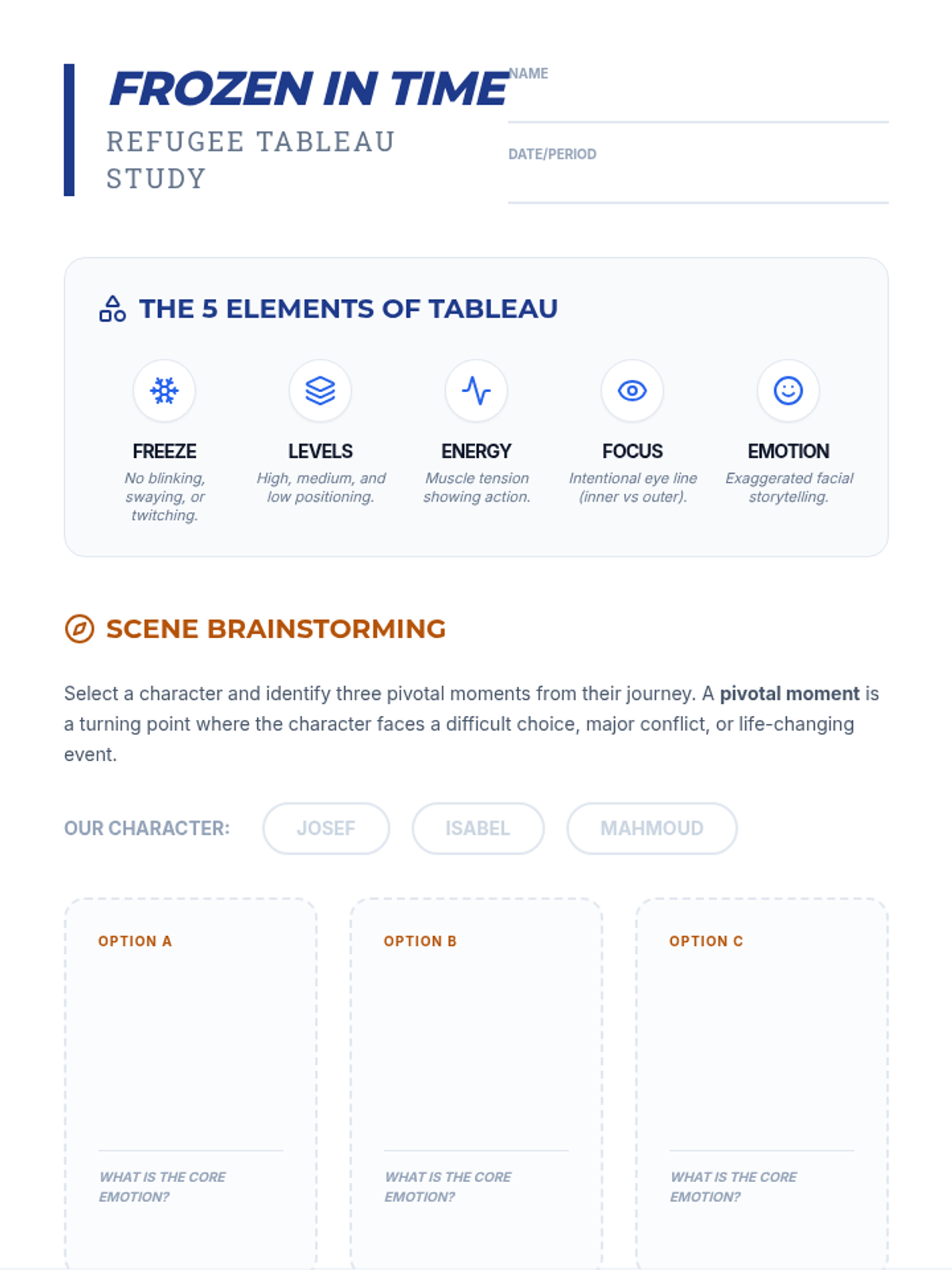
A lesson focused on using the dramatic technique of tableau to explore pivotal moments and emotional themes in Alan Gratz's 'Refugee'. Students will learn the five elements of tableau and work in groups to create living pictures of the three main characters' journeys.
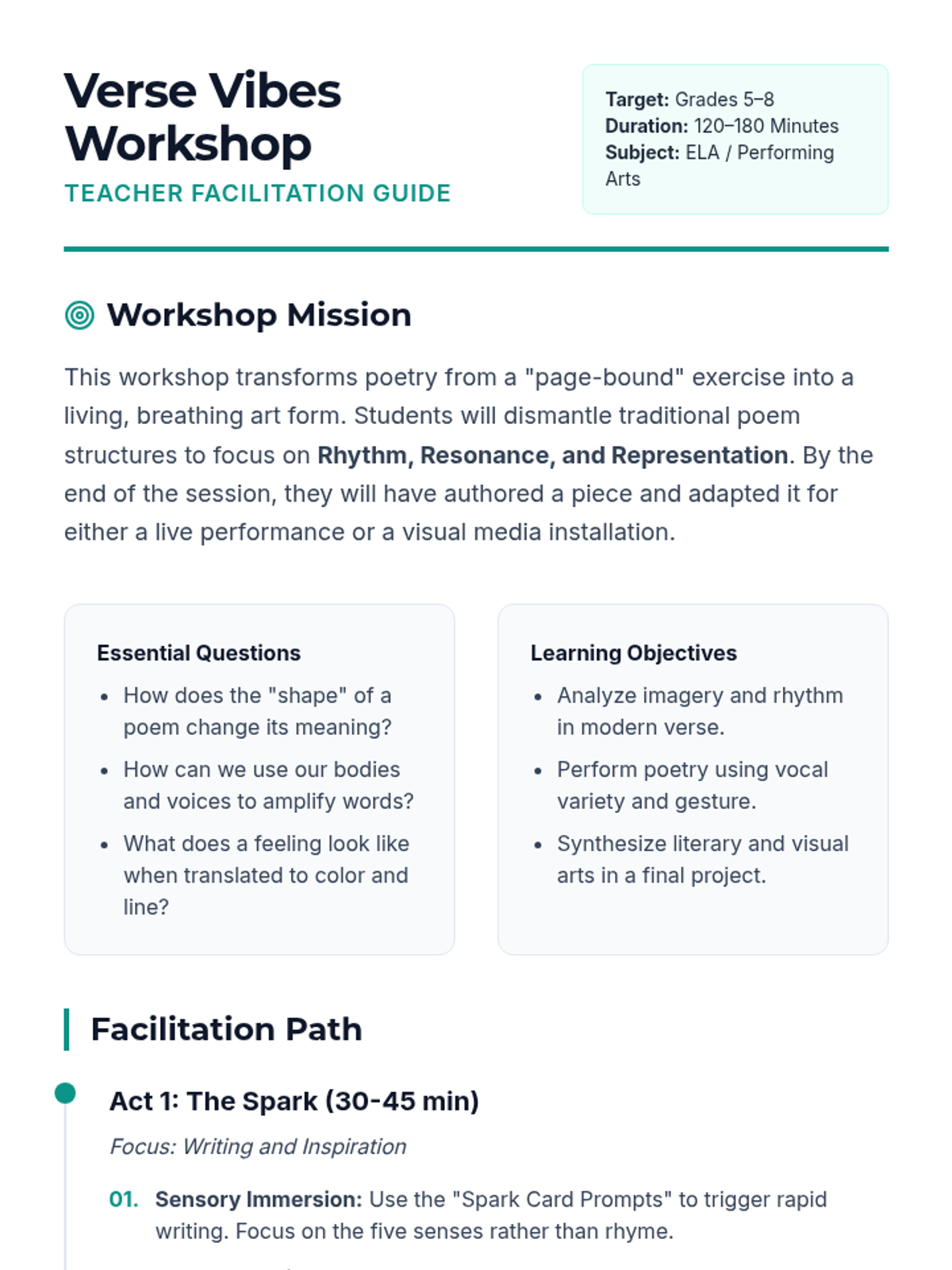
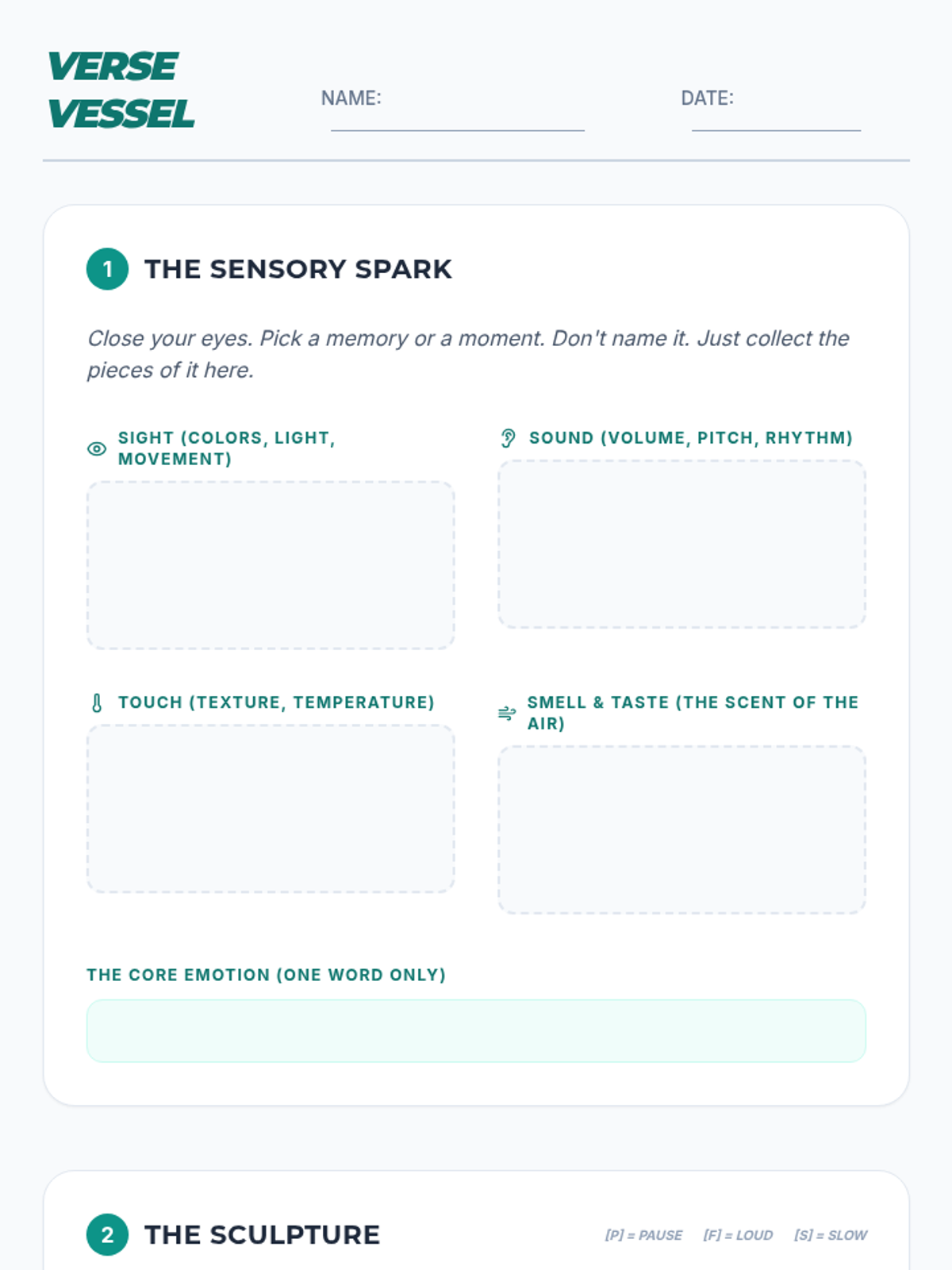
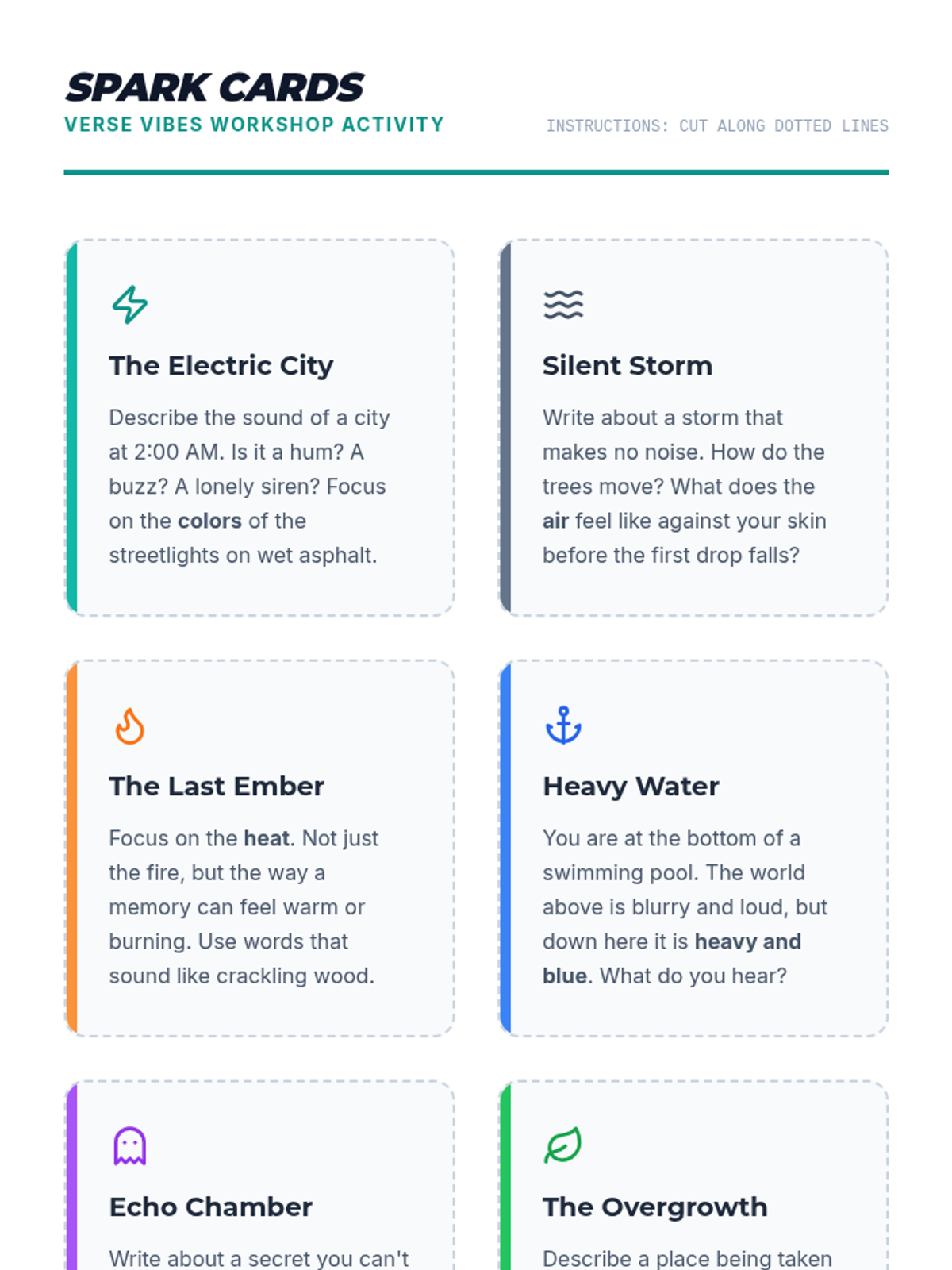
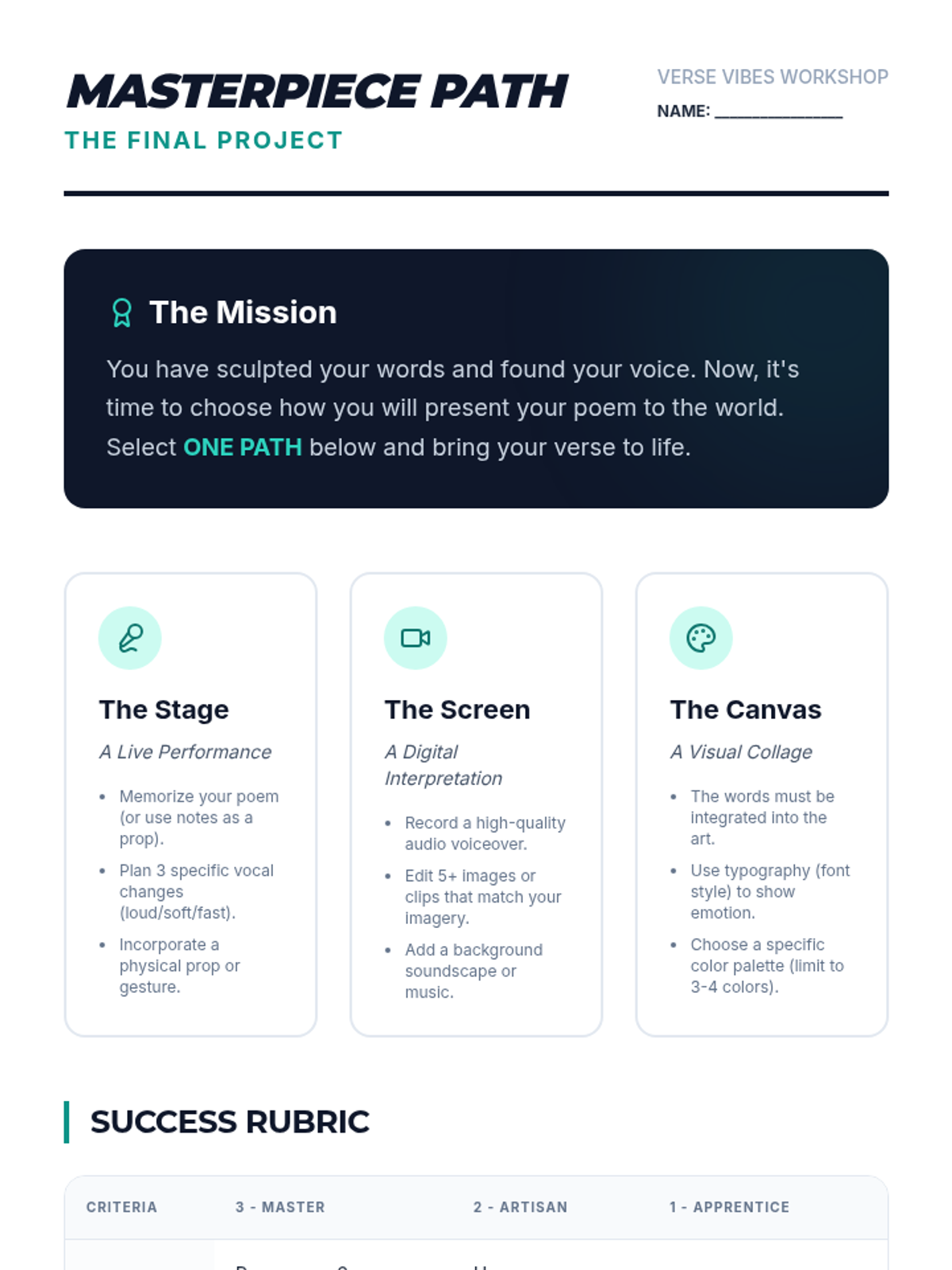
An immersive workshop for upper elementary and middle school students to explore poetry through writing, performance, and visual arts, fostering creative self-expression.
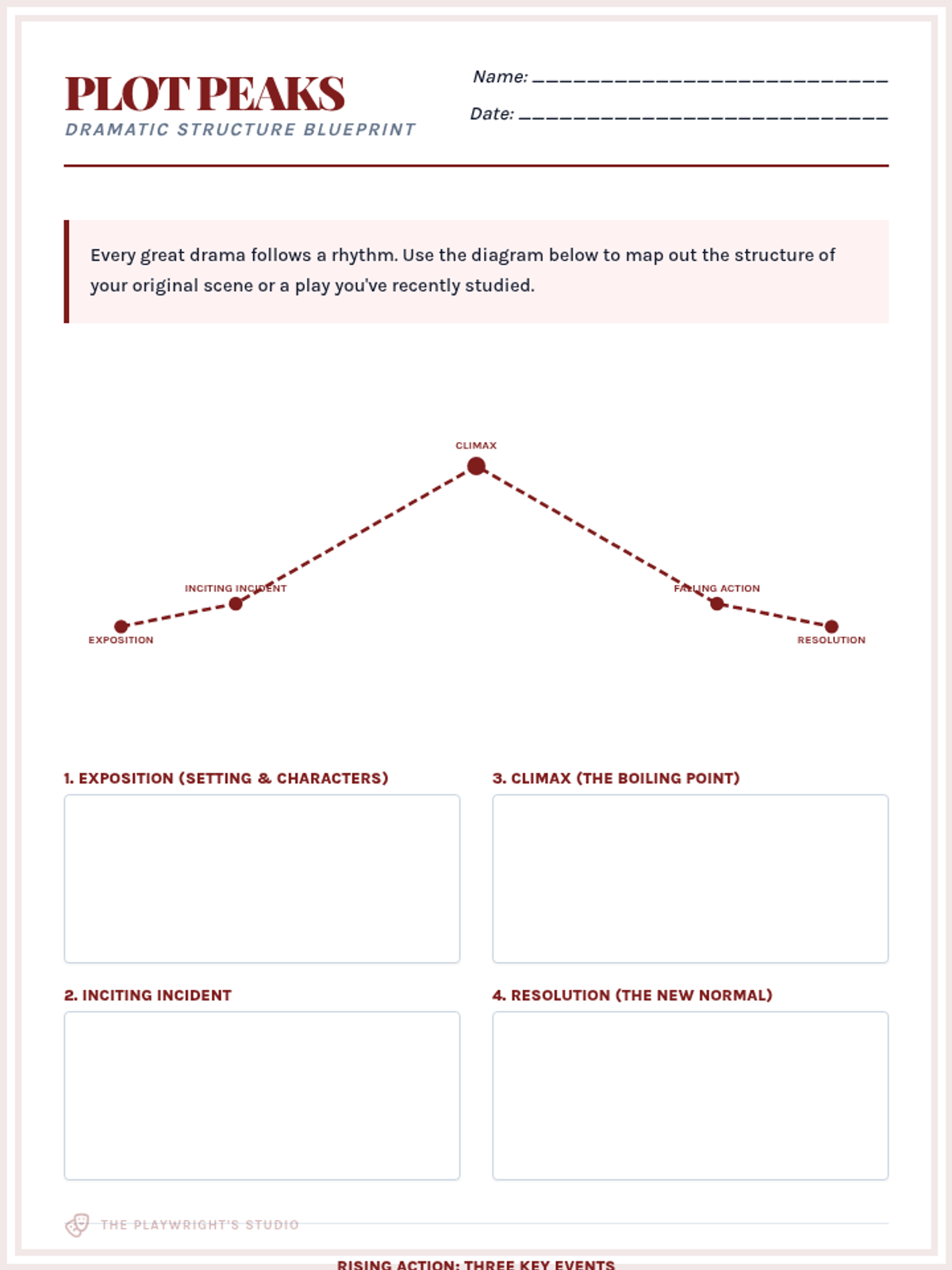
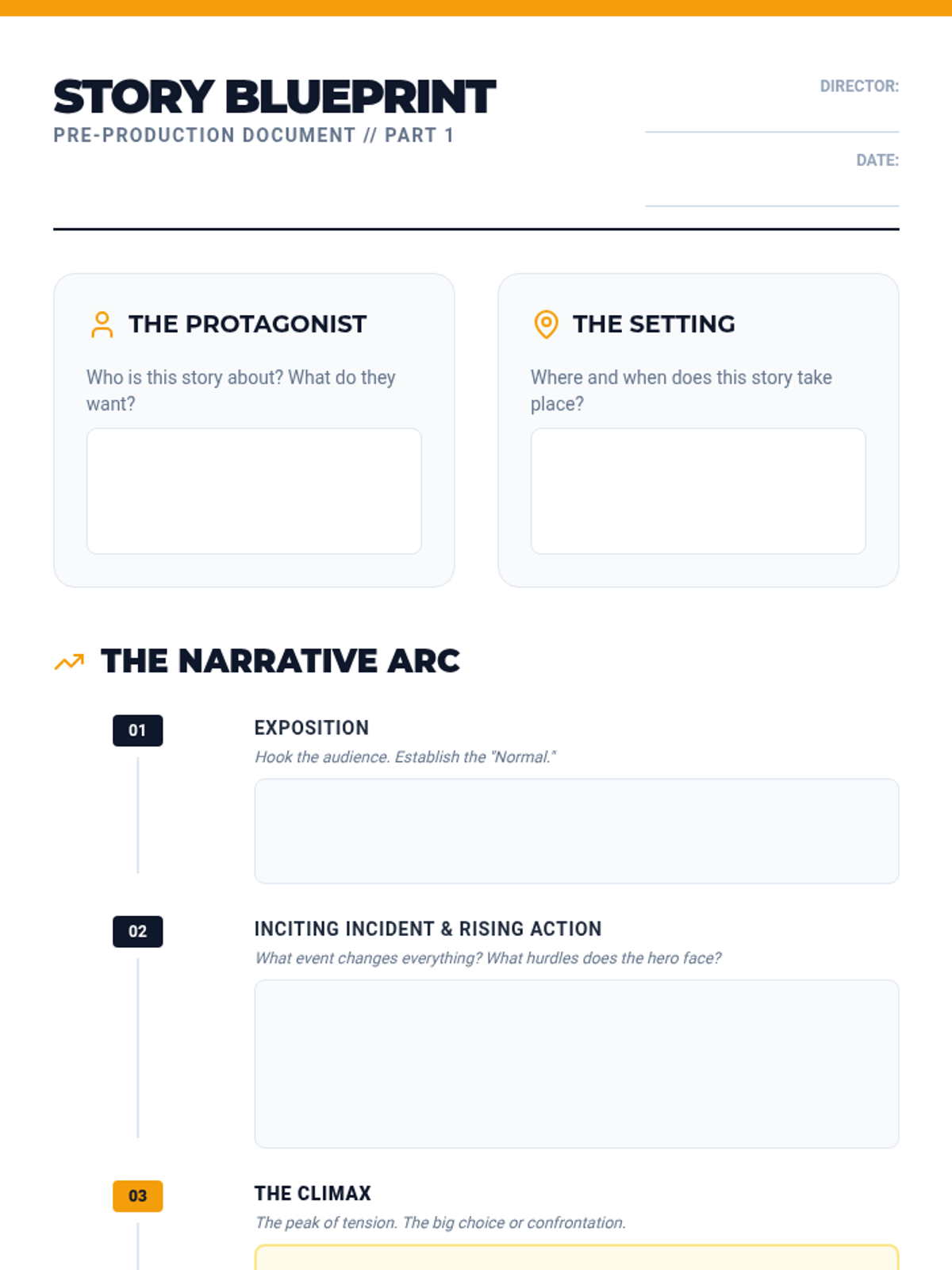
A comprehensive introduction to dramatic structure and scriptwriting, guiding students from the arc of a story to the technical layout of a stage play.
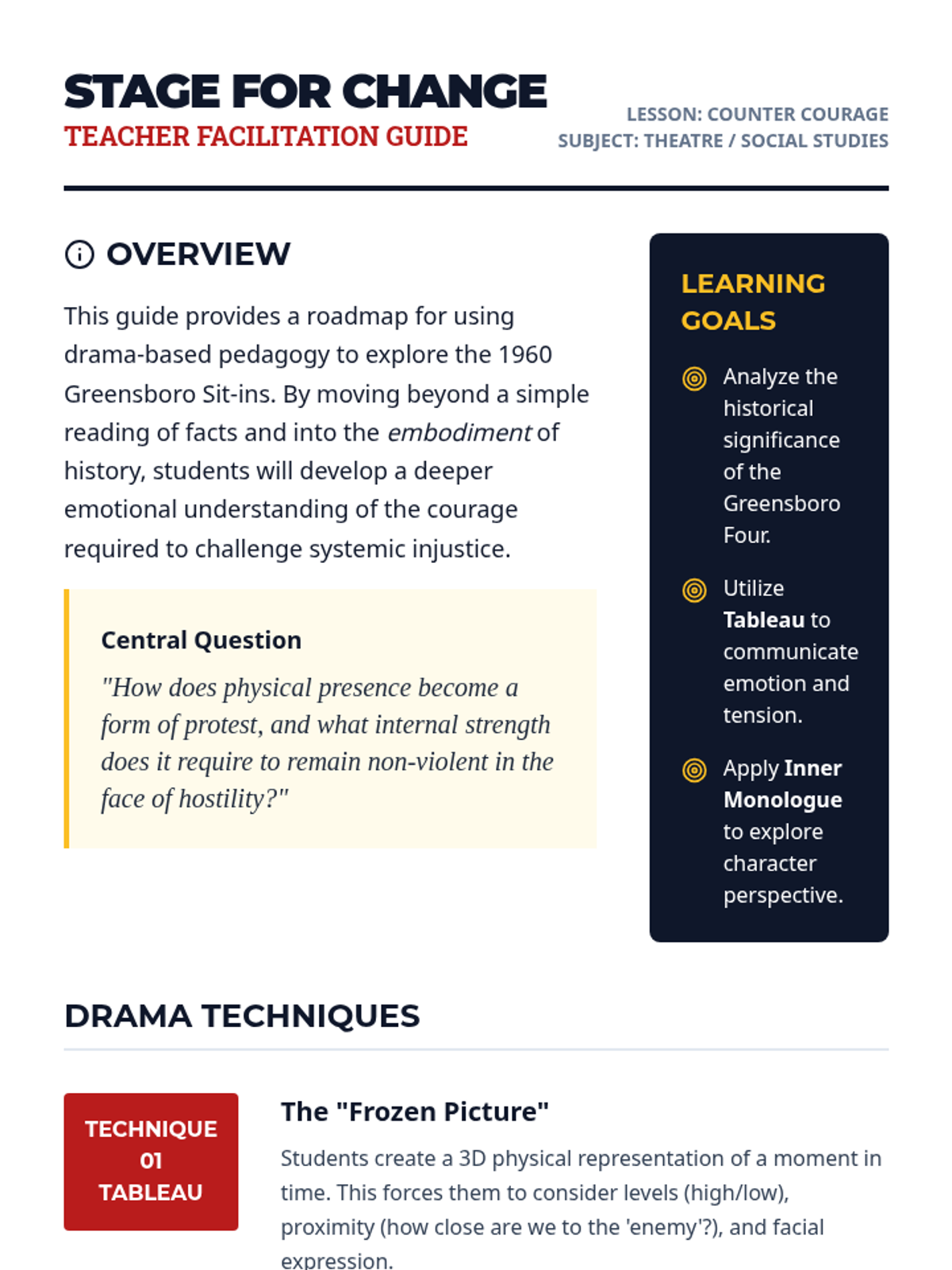
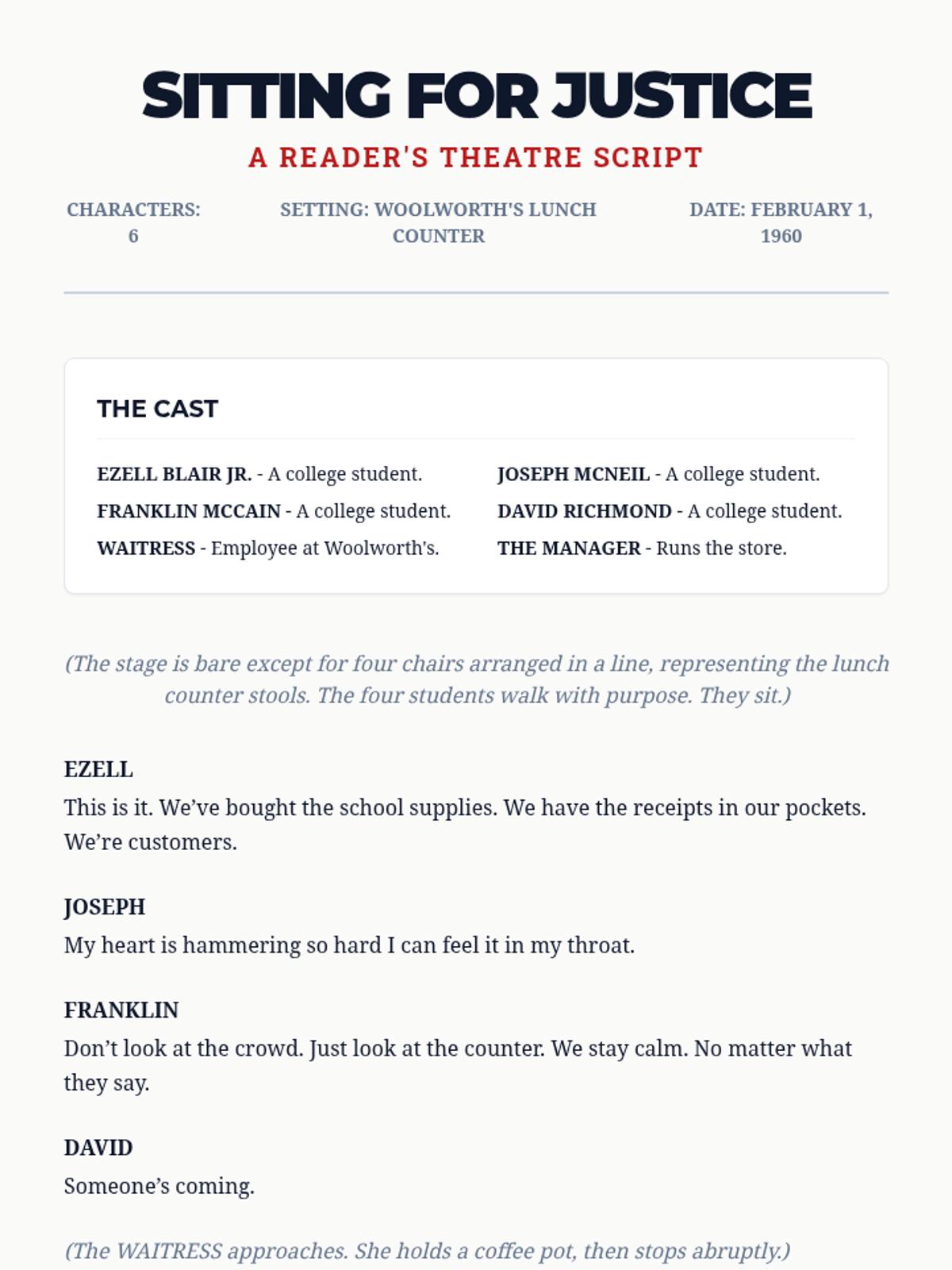
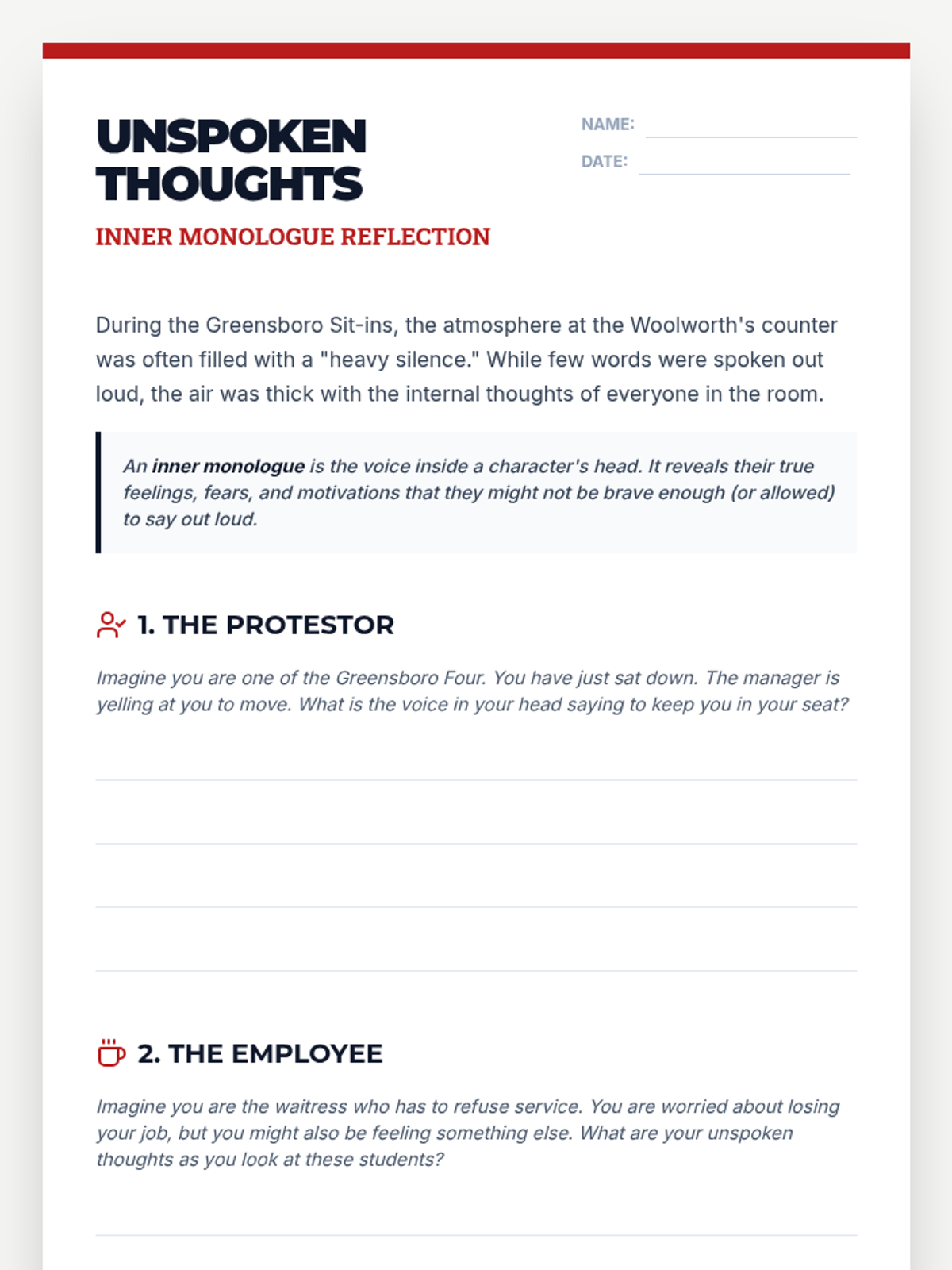
Students explore the historical significance and emotional weight of the Greensboro Sit-ins through drama-based activities and historical analysis, focusing on the theme of courage.
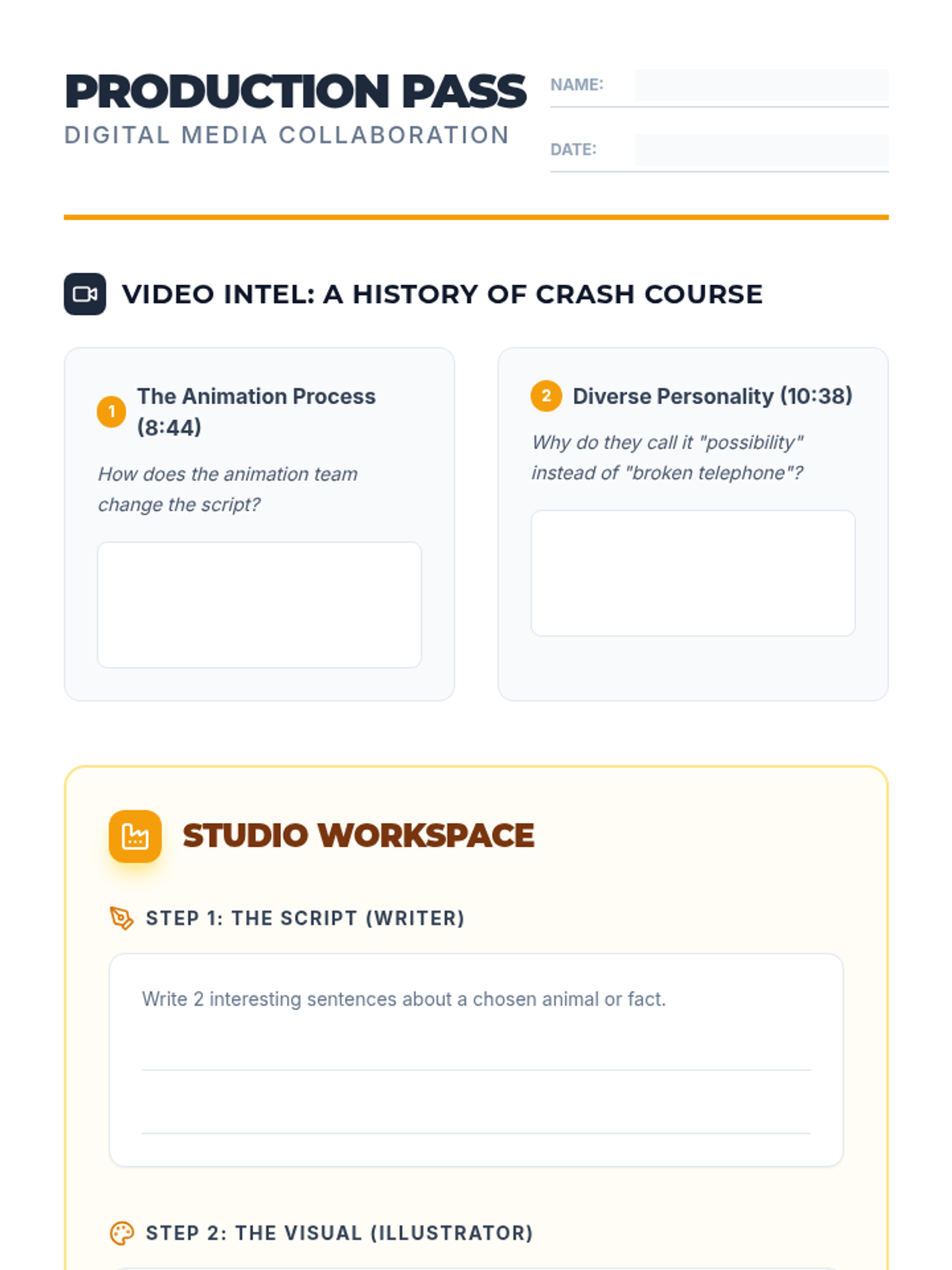
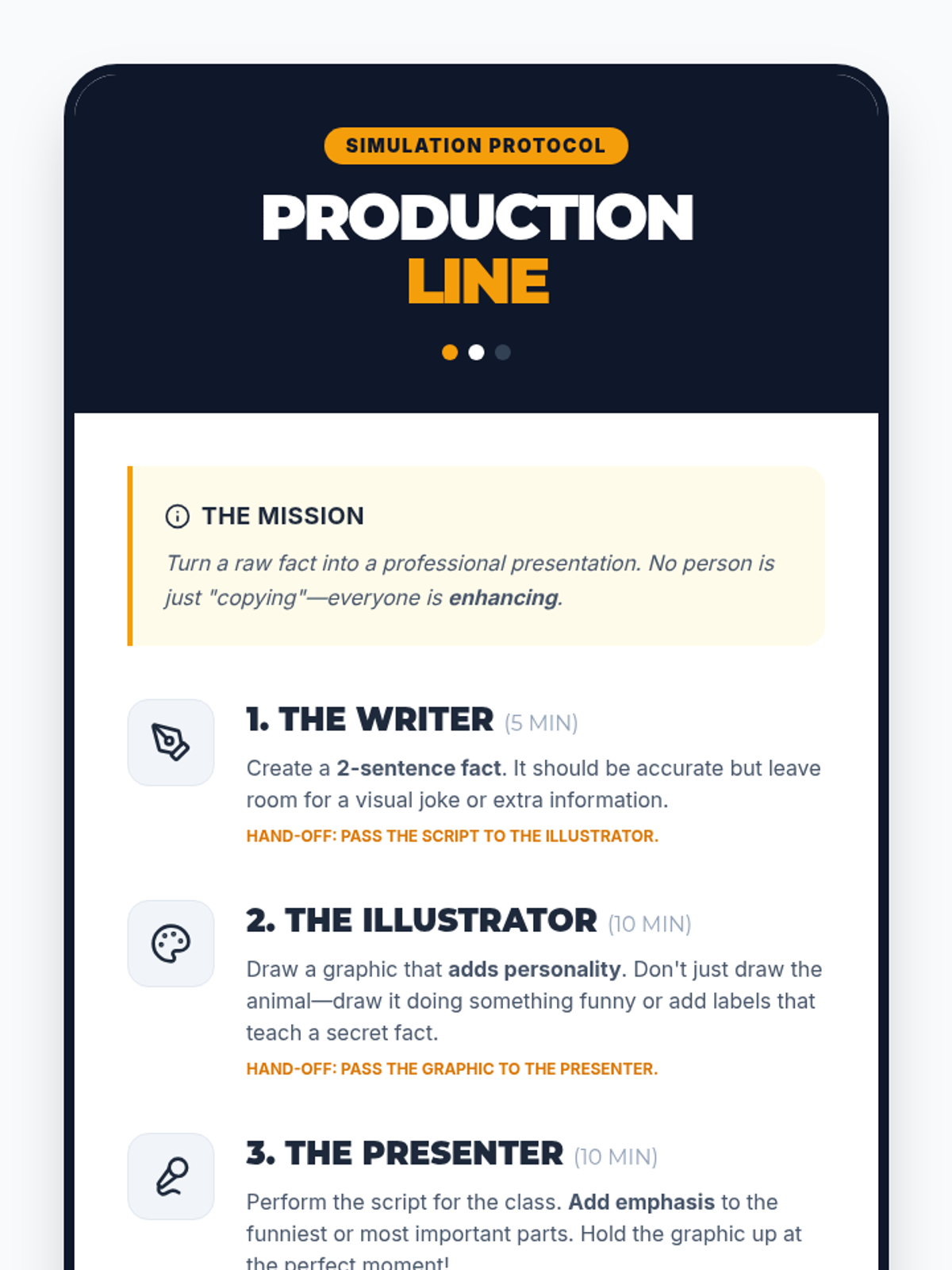
A lesson exploring the collaborative nature of digital media production, focusing on how different talents (writing, art, performance) combine to create complex projects like Crash Course. Students simulate a production line to experience how a script evolves through various creative lenses.
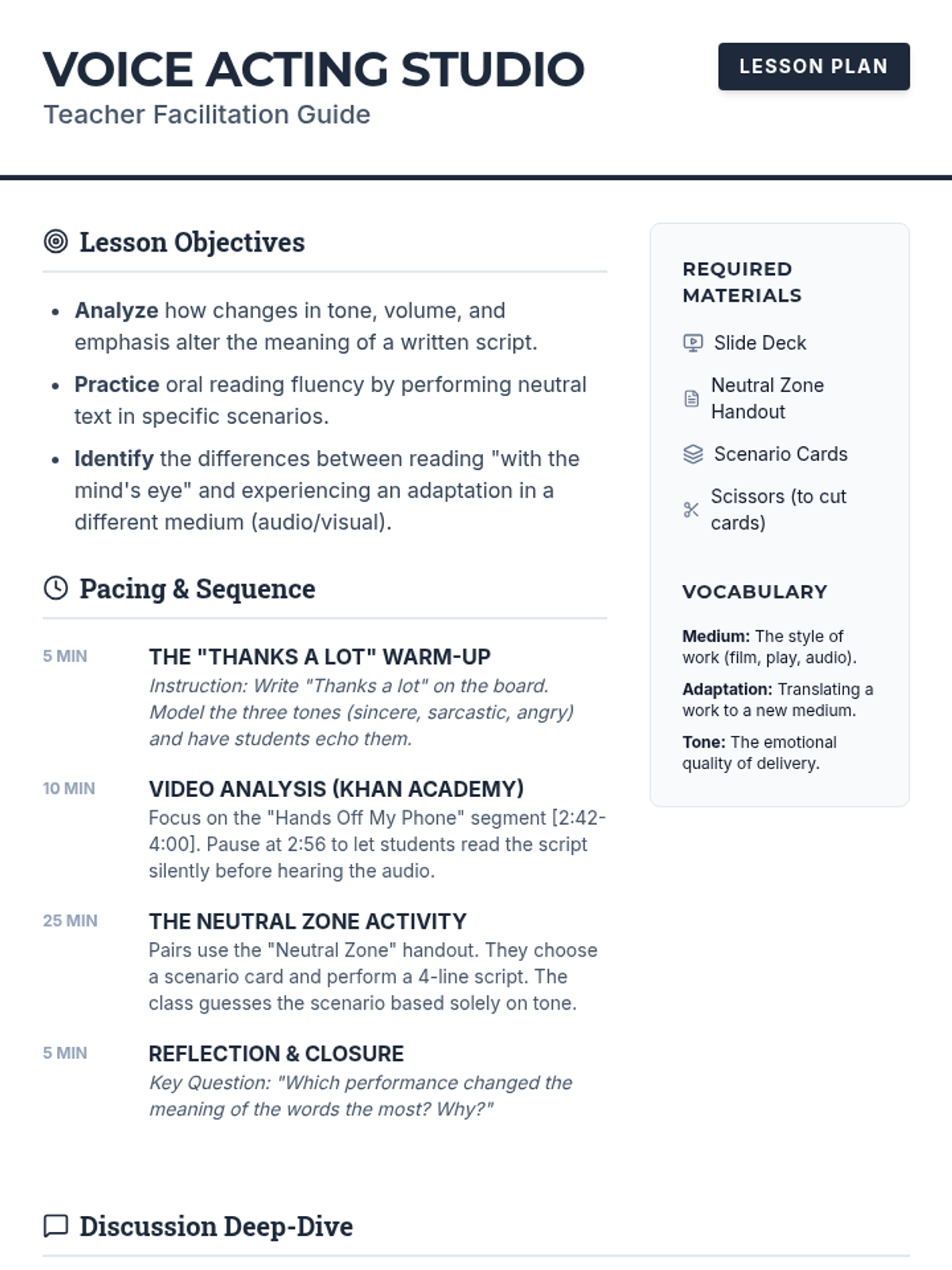
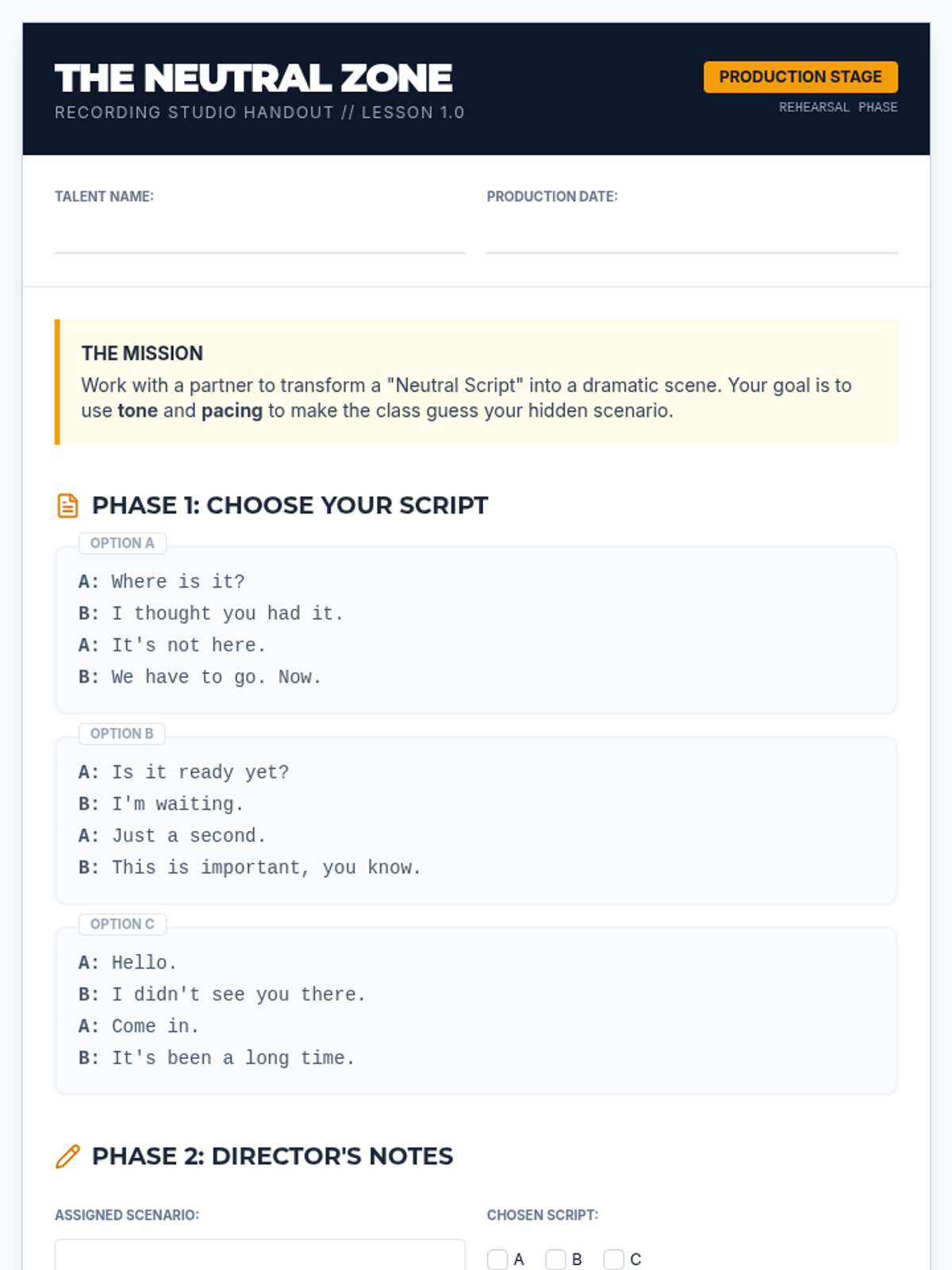
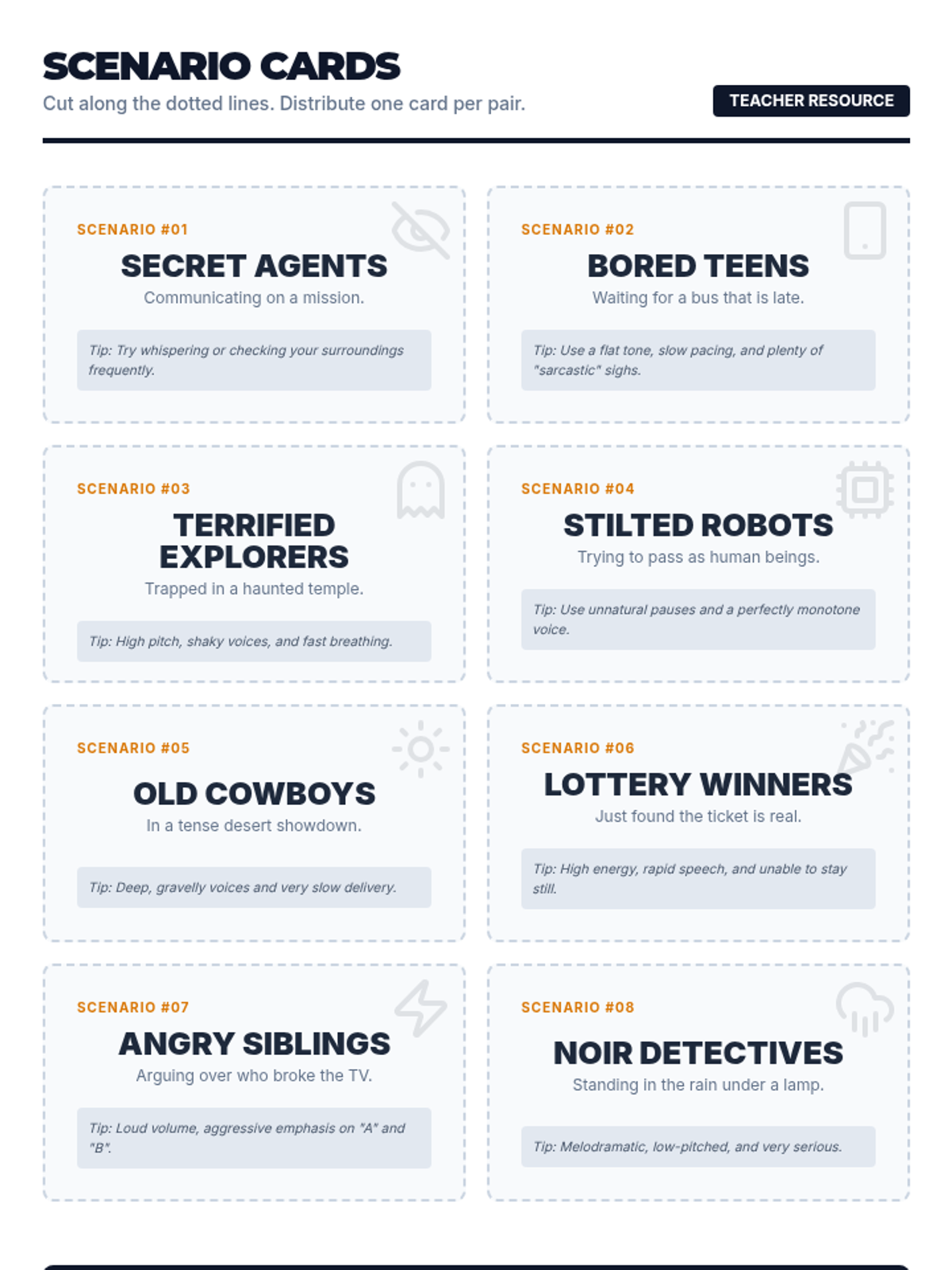
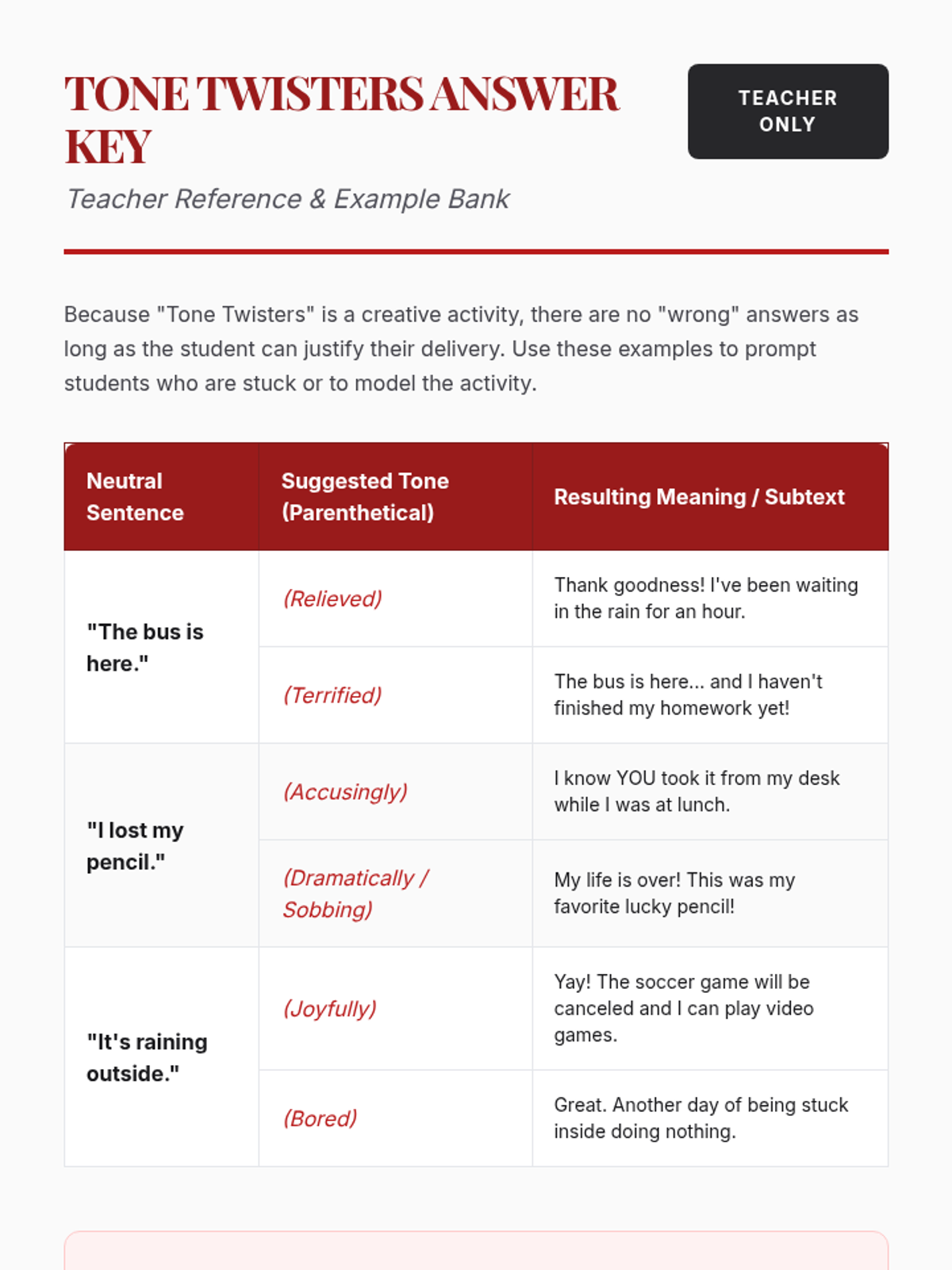
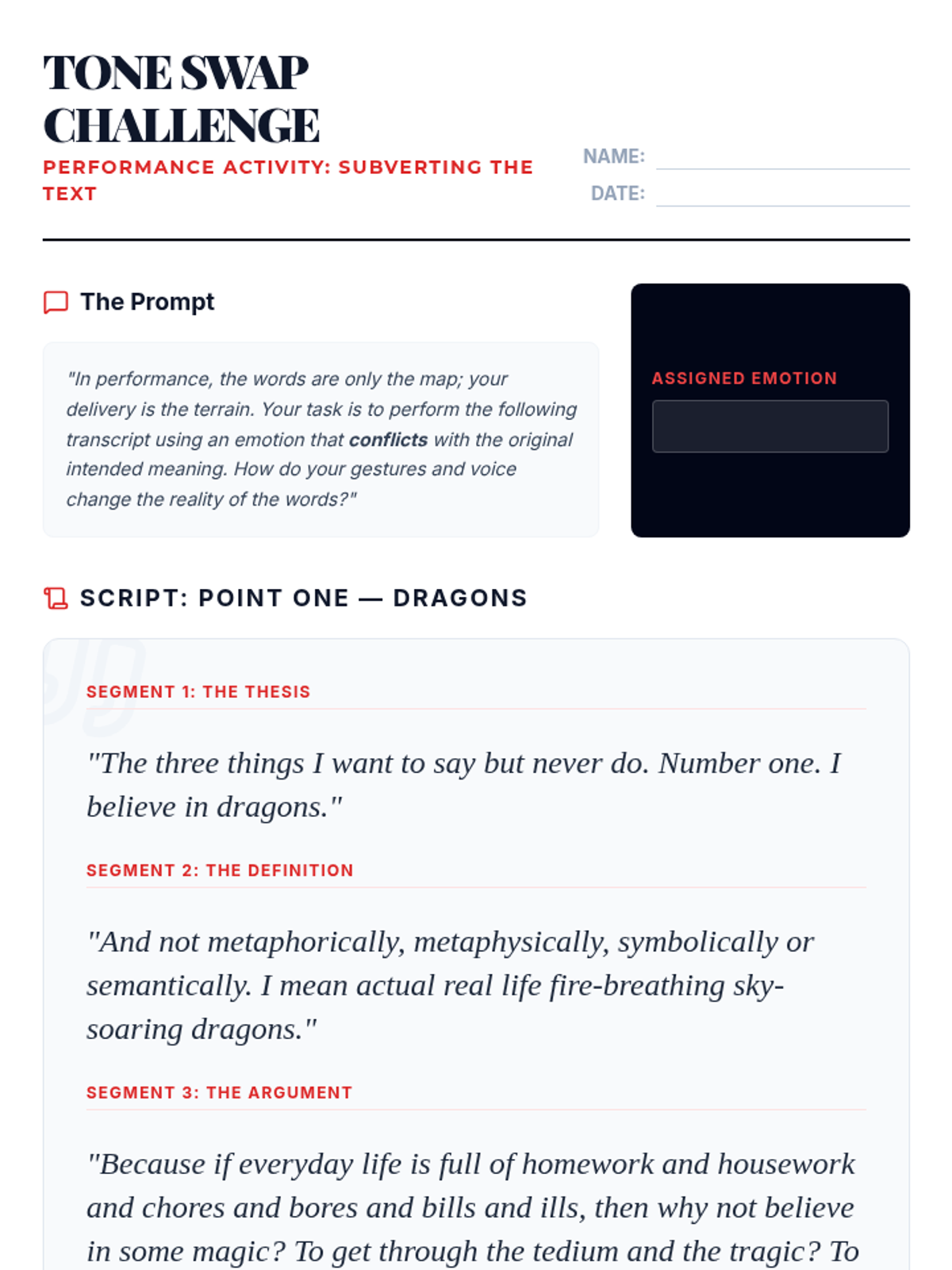
In this lesson, middle school students analyze how performance, tone, and medium change the meaning of a text. Using a Khan Academy video as a case study, students move from reading a script to performing a neutral dialogue in various 'scenario' tones to demonstrate oral reading fluency and interpretative skills.
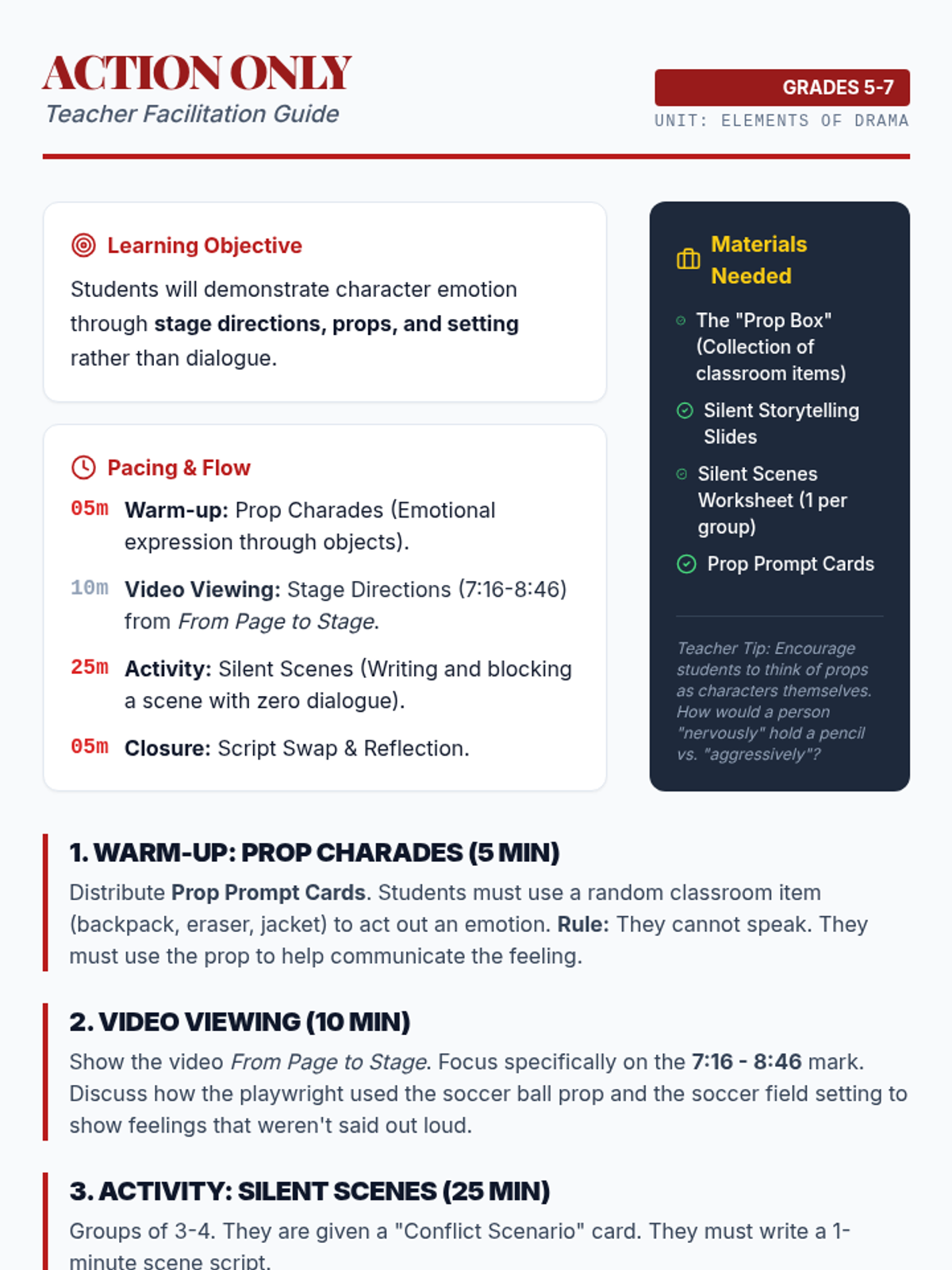
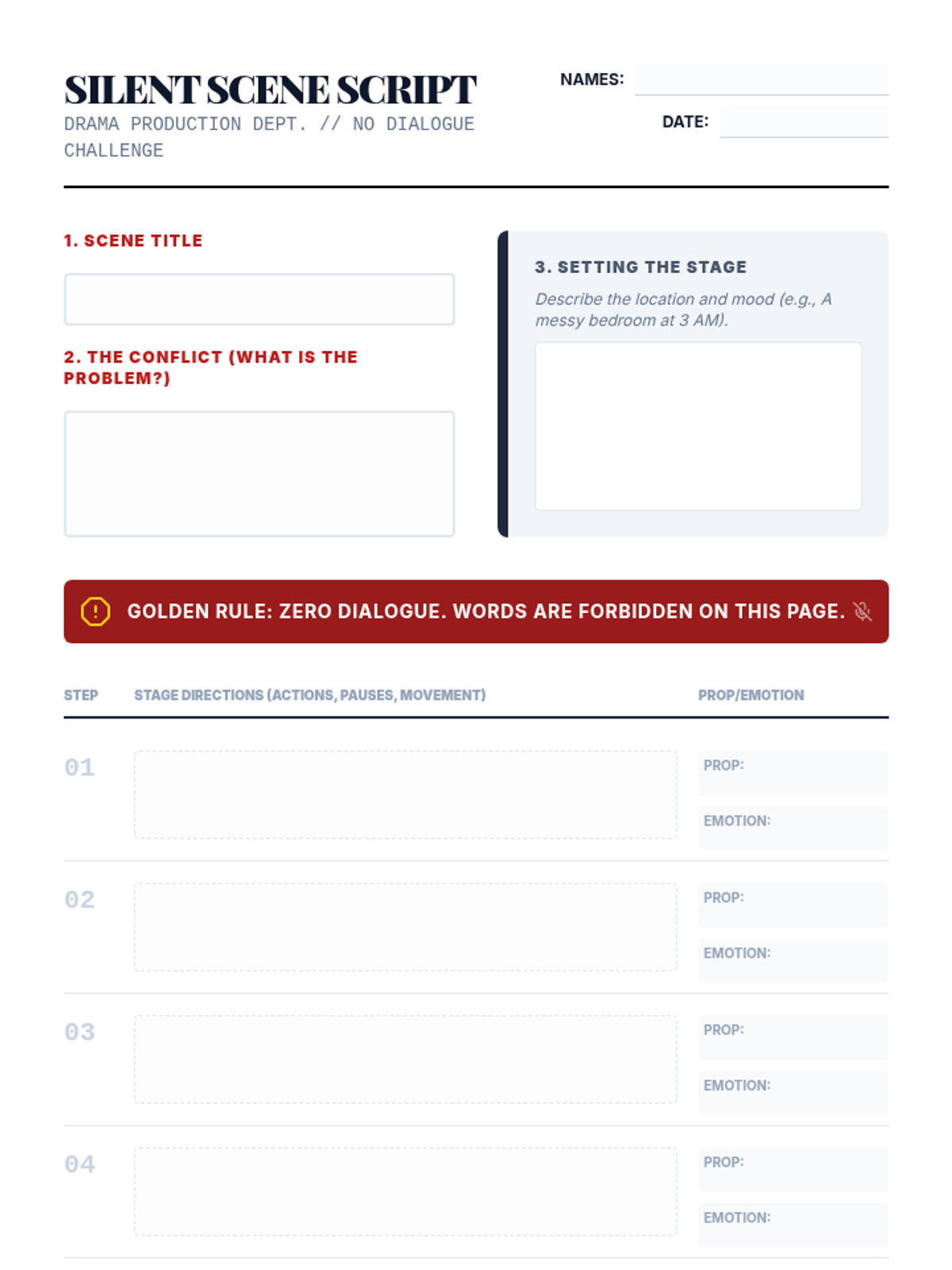
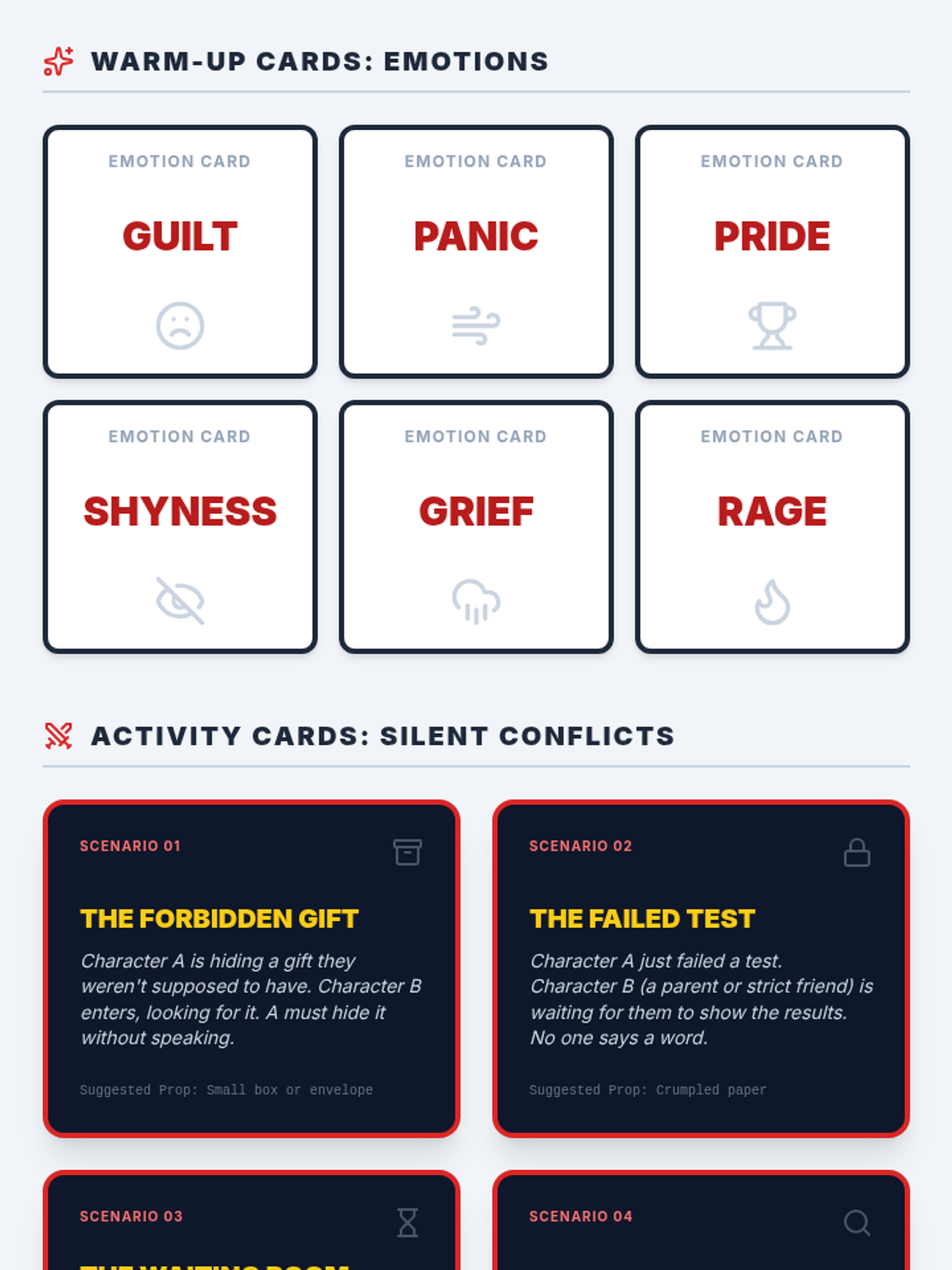
Students learn to convey character emotion and conflict using only stage directions, props, and setting. This hands-on drama lesson focuses on visual storytelling and the technical elements of playwriting without relying on dialogue.
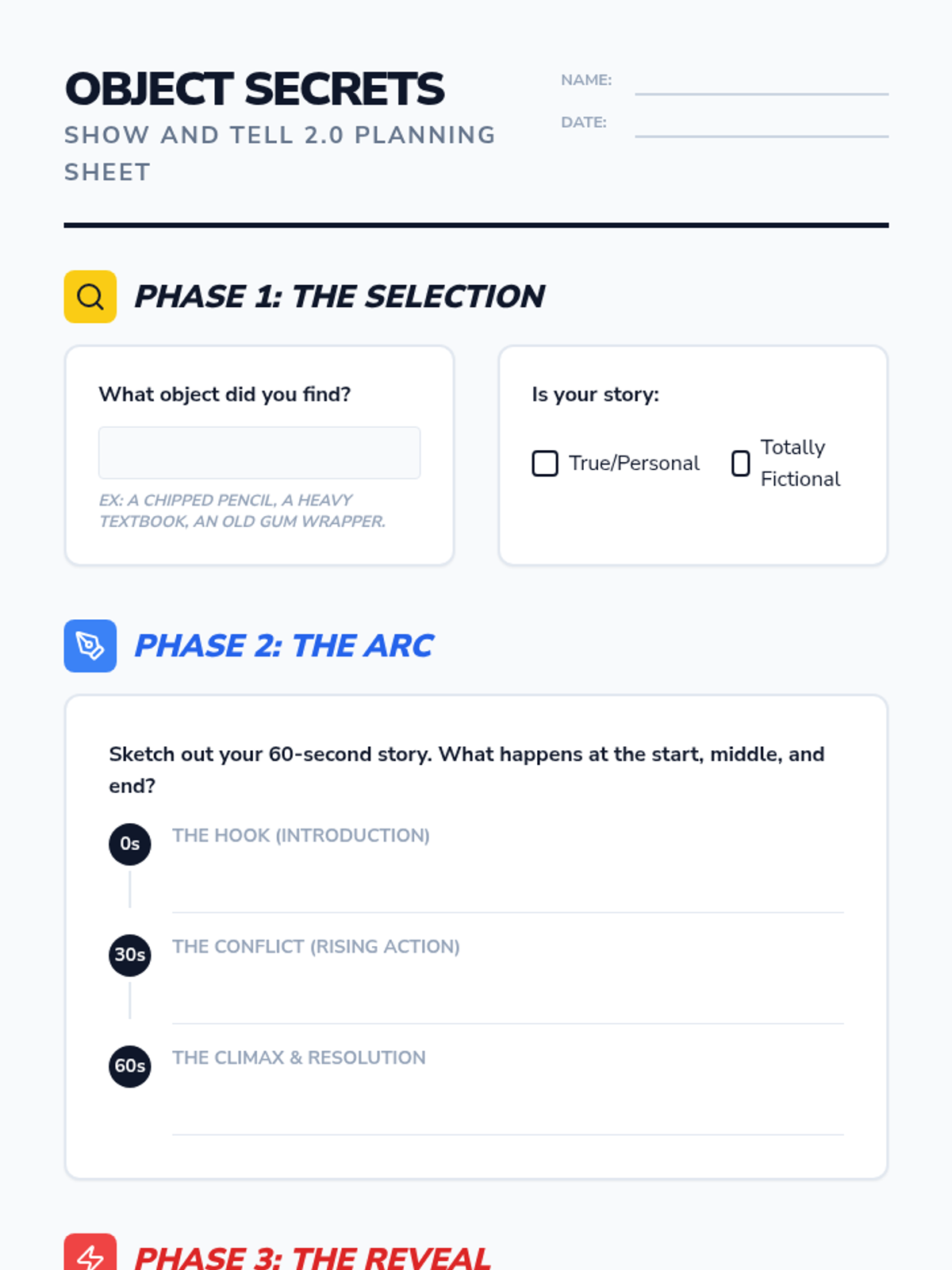
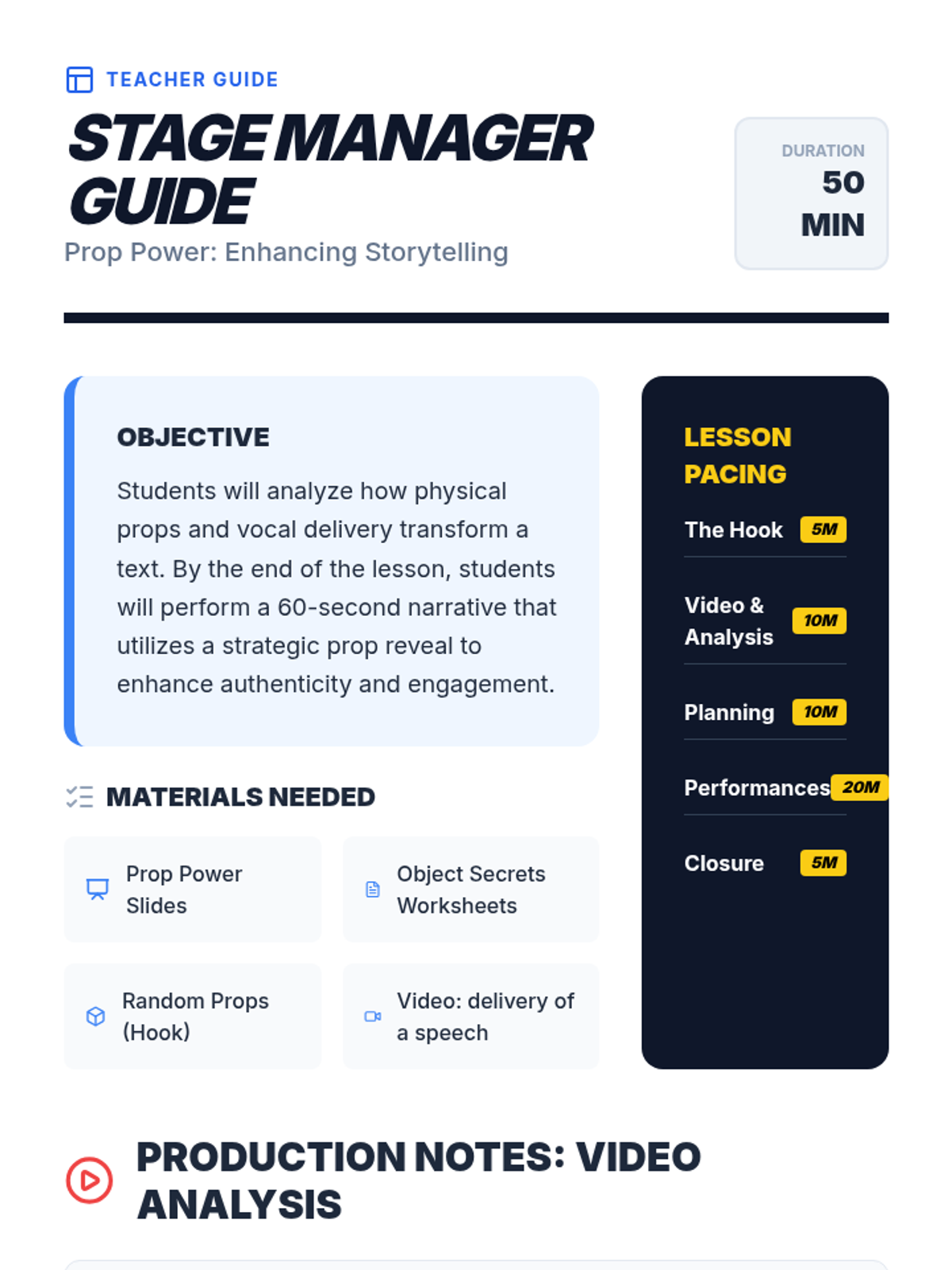
A lesson exploring how physical objects (props) can transform a speech from a simple reading into an authentic, engaging story. Students analyze a famous political speech and perform their own 60-second 'Prop Reveal' stories.
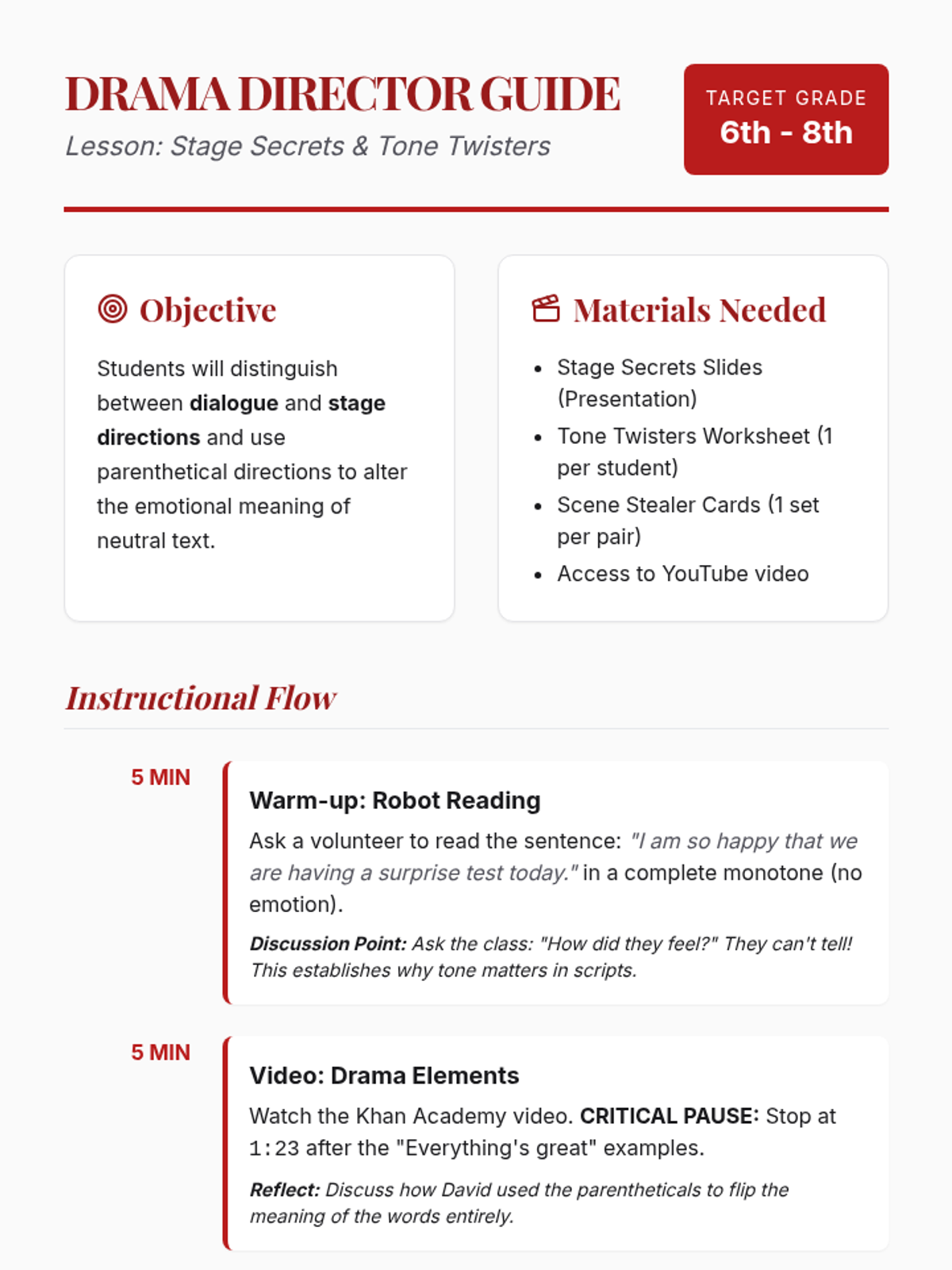
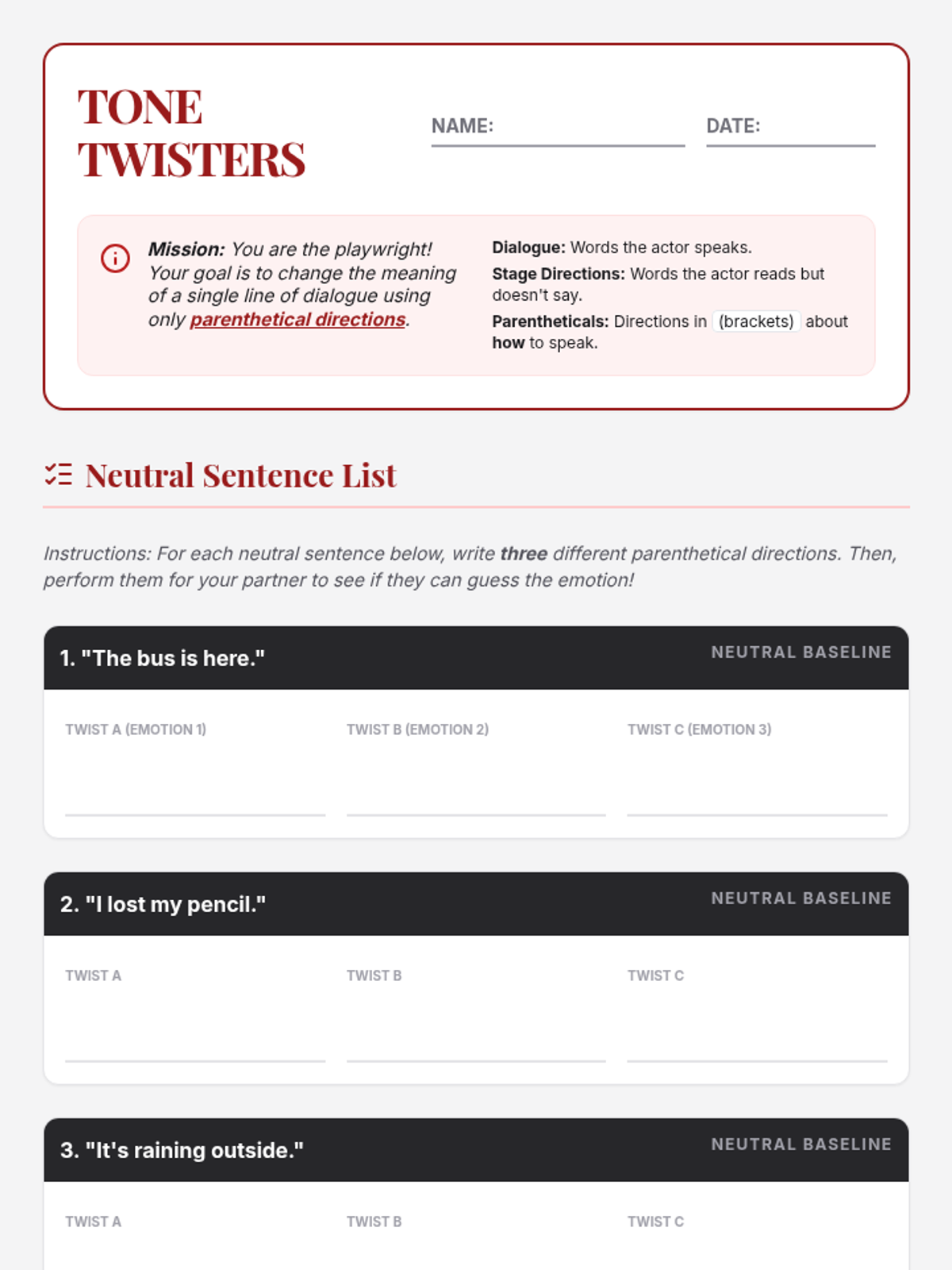
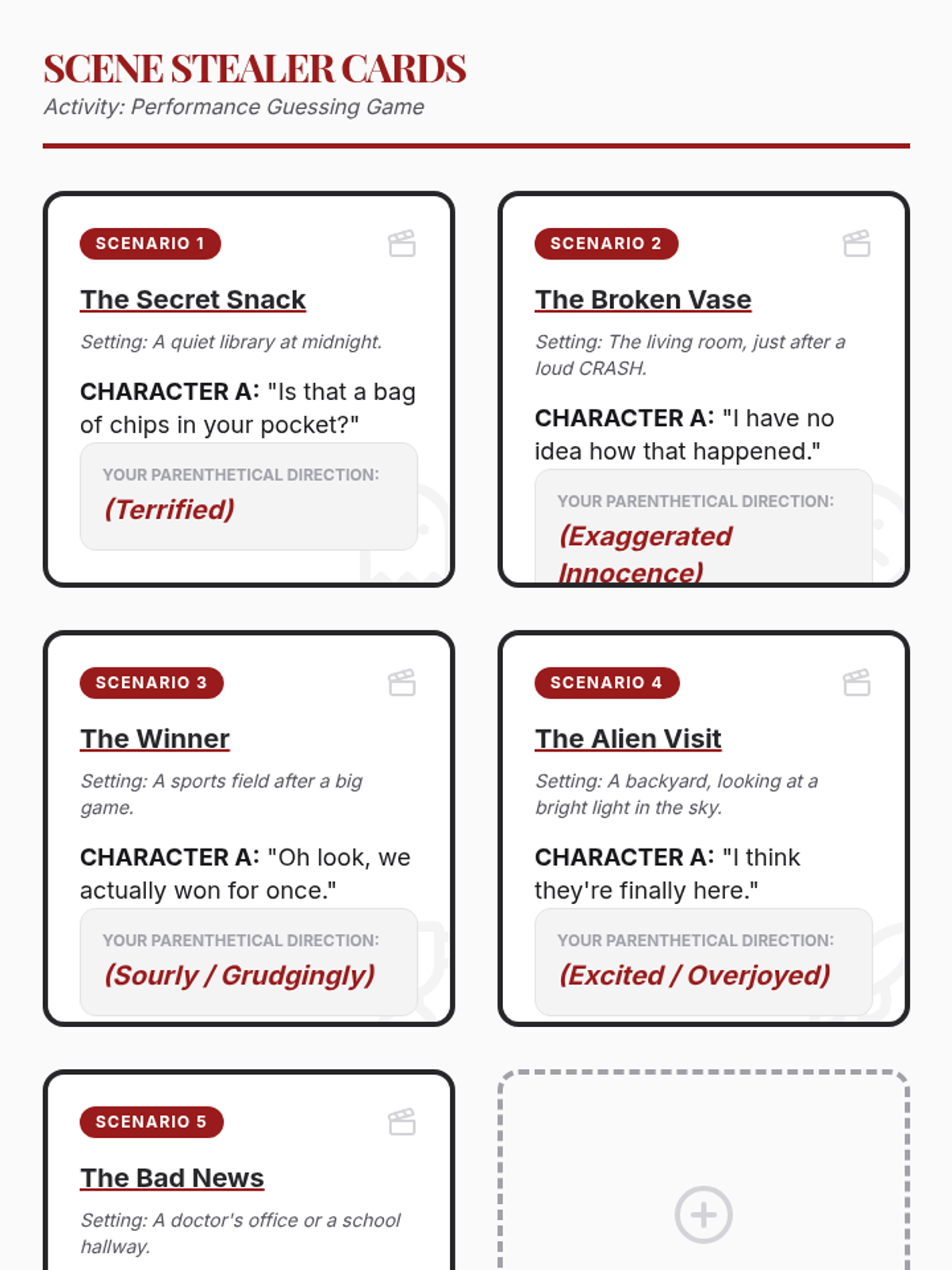
A lesson for middle schoolers to master the difference between dialogue and stage directions, focusing on how parenthetical tone markers transform the meaning of spoken lines.
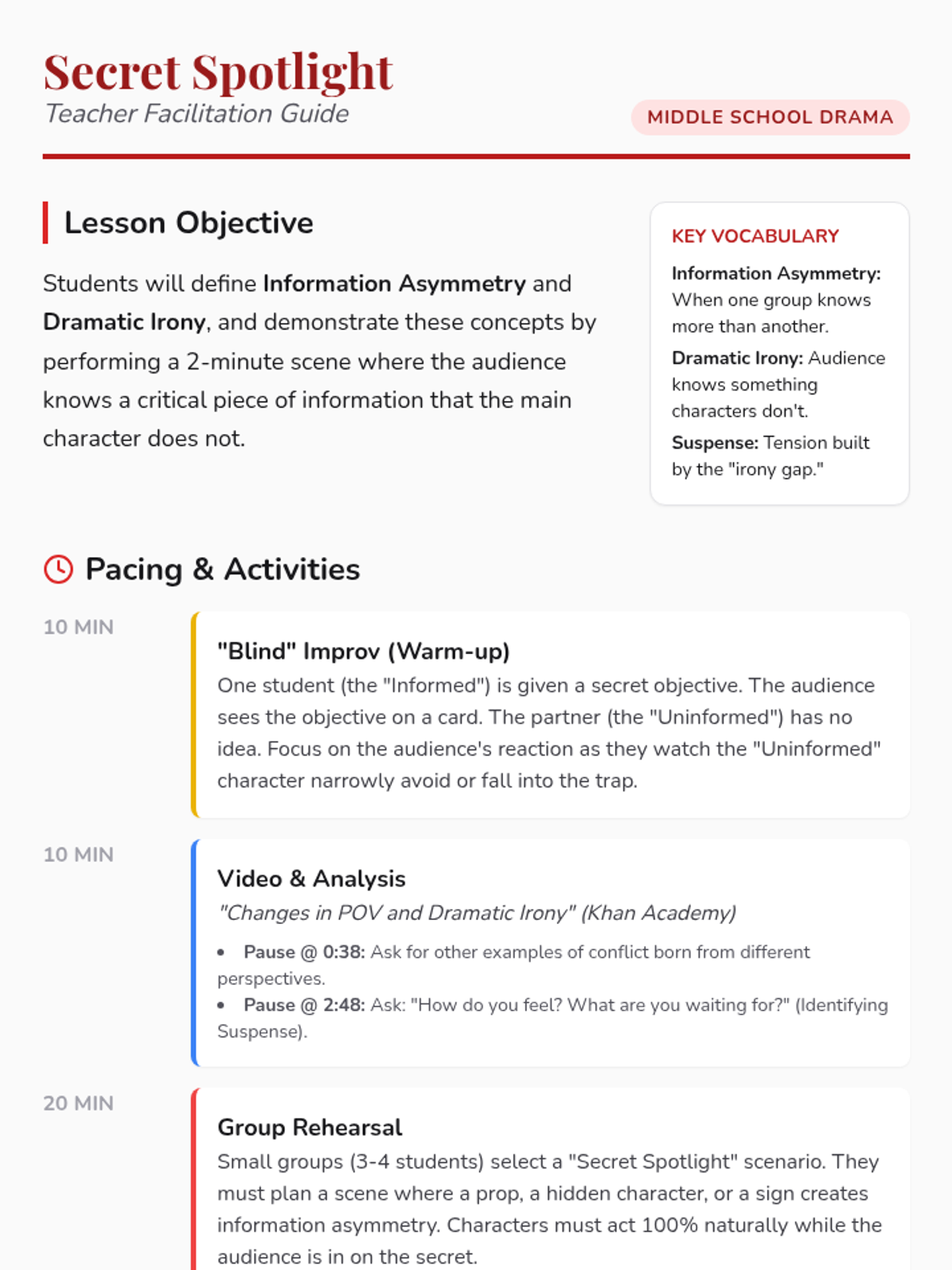
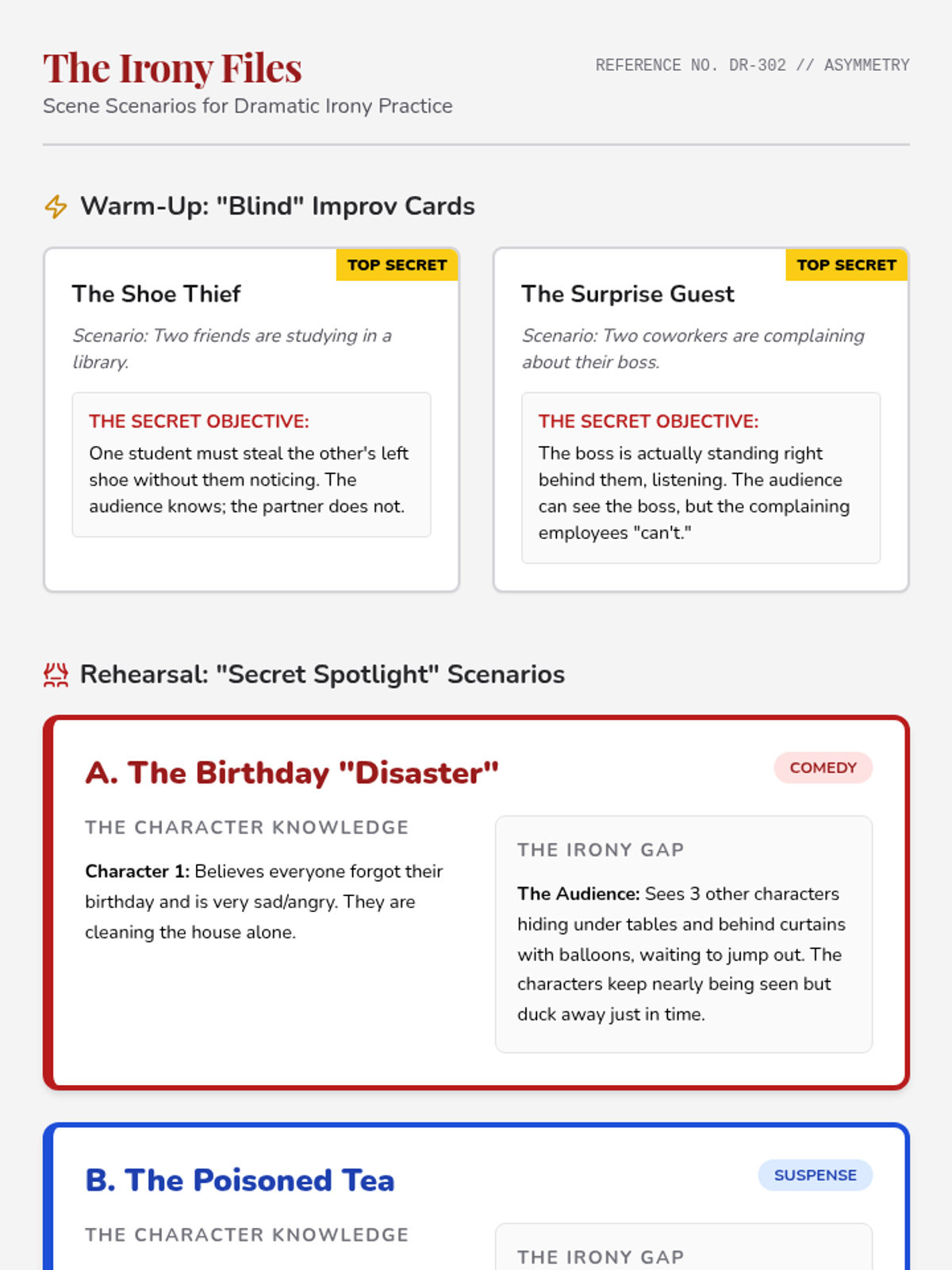
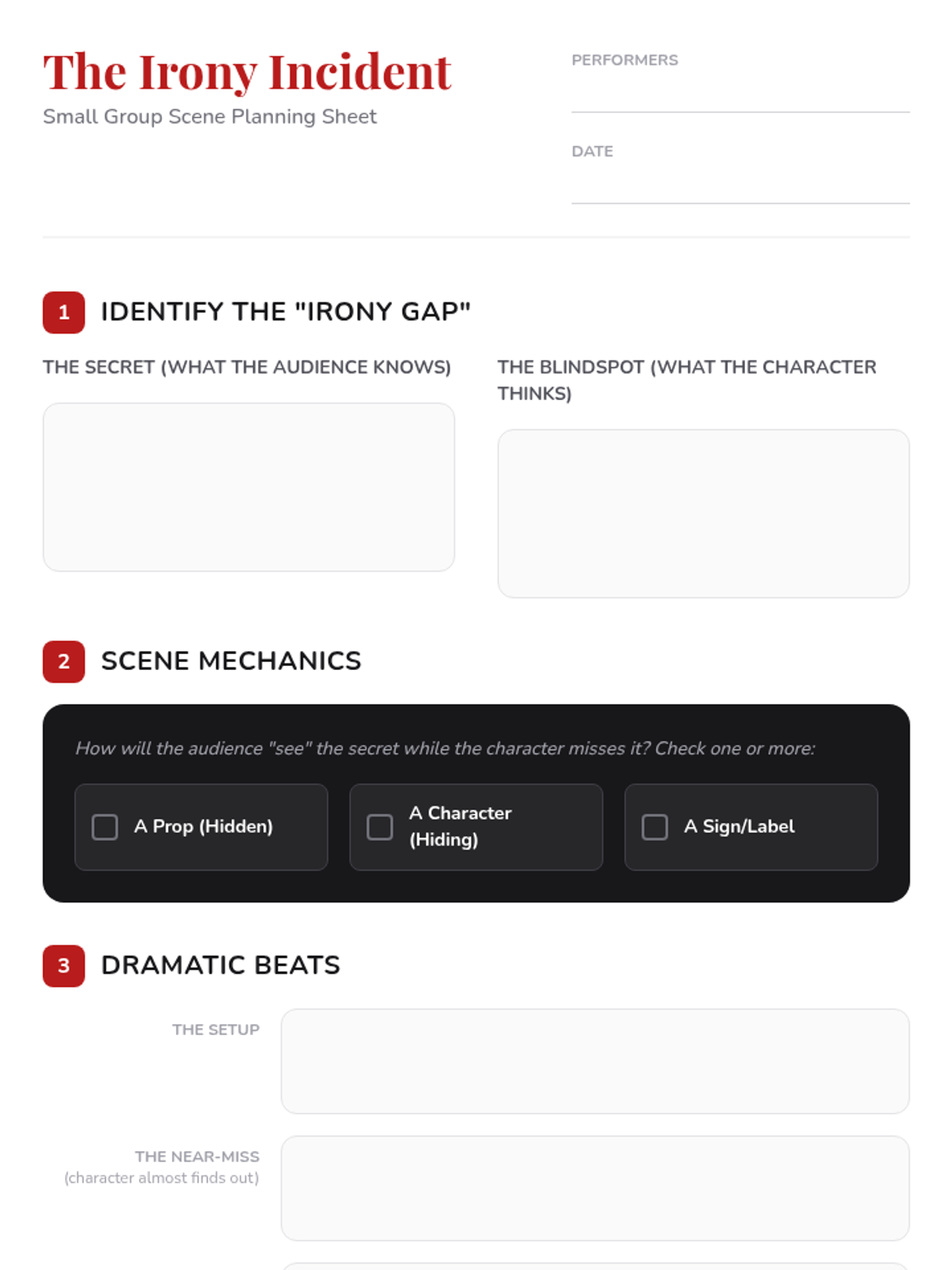
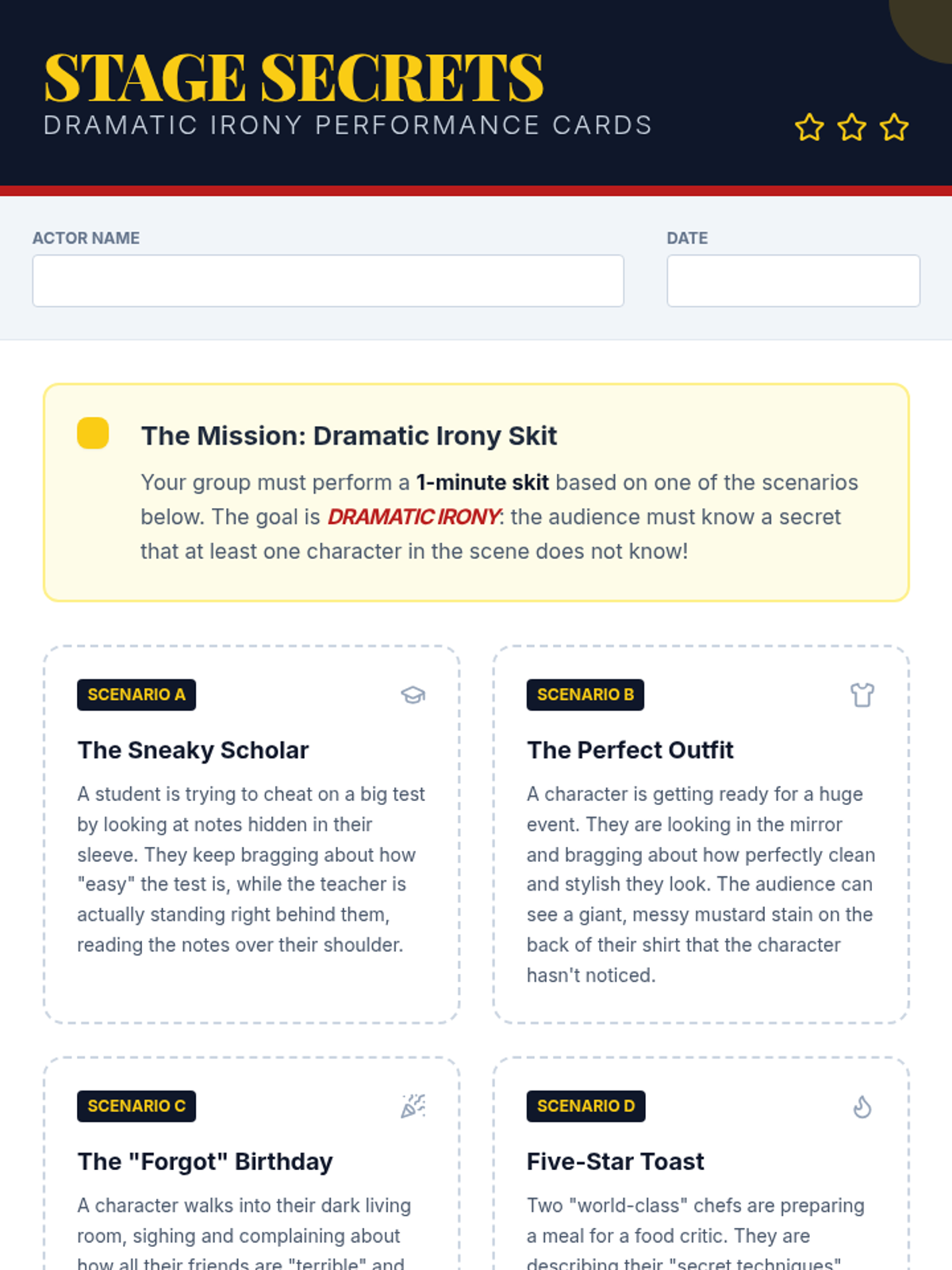
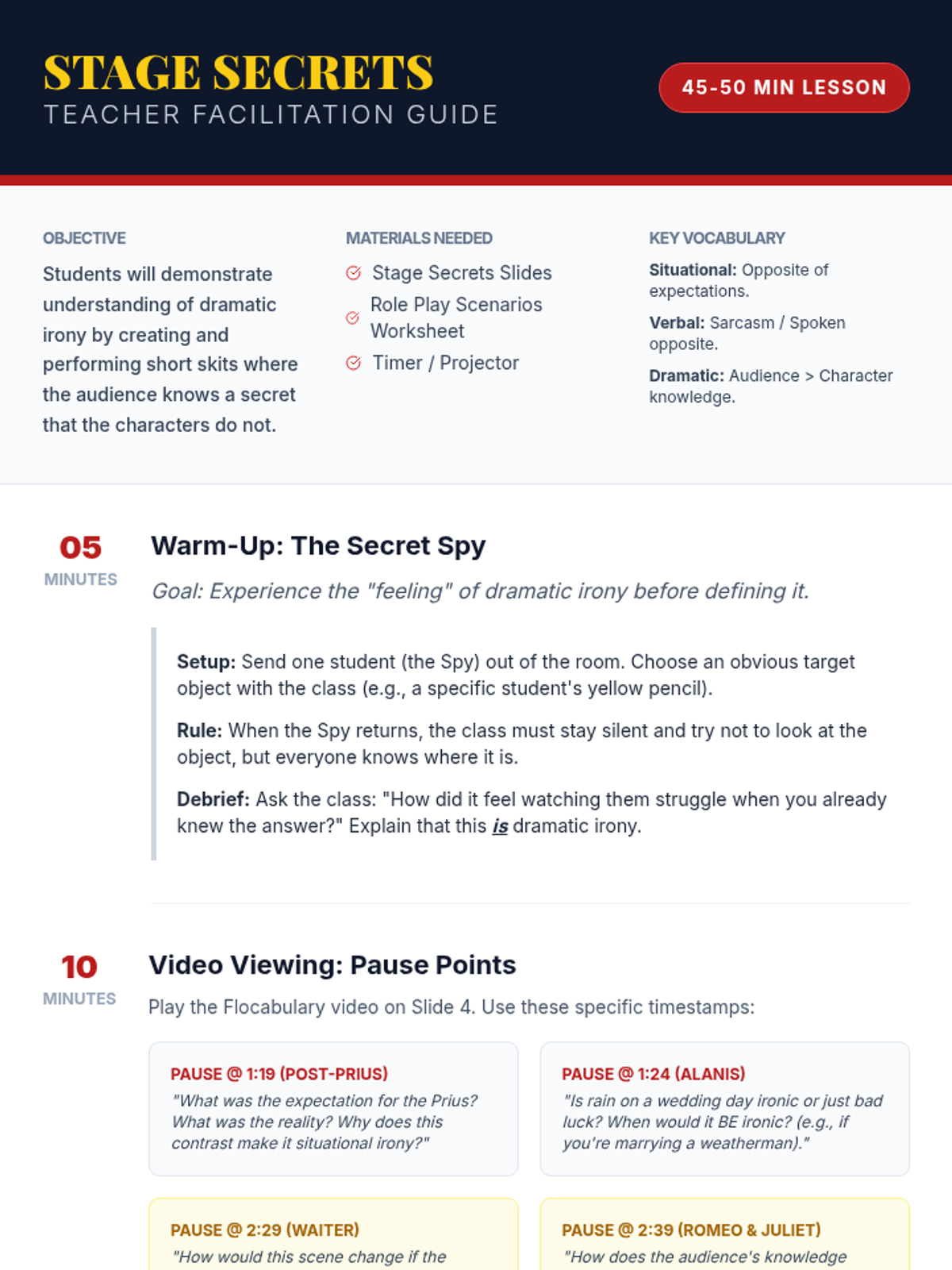
A high-energy drama lesson exploring dramatic irony and information asymmetry through improv, video analysis, and small-group performances. Students learn how to create suspense by giving the audience information that characters lack.
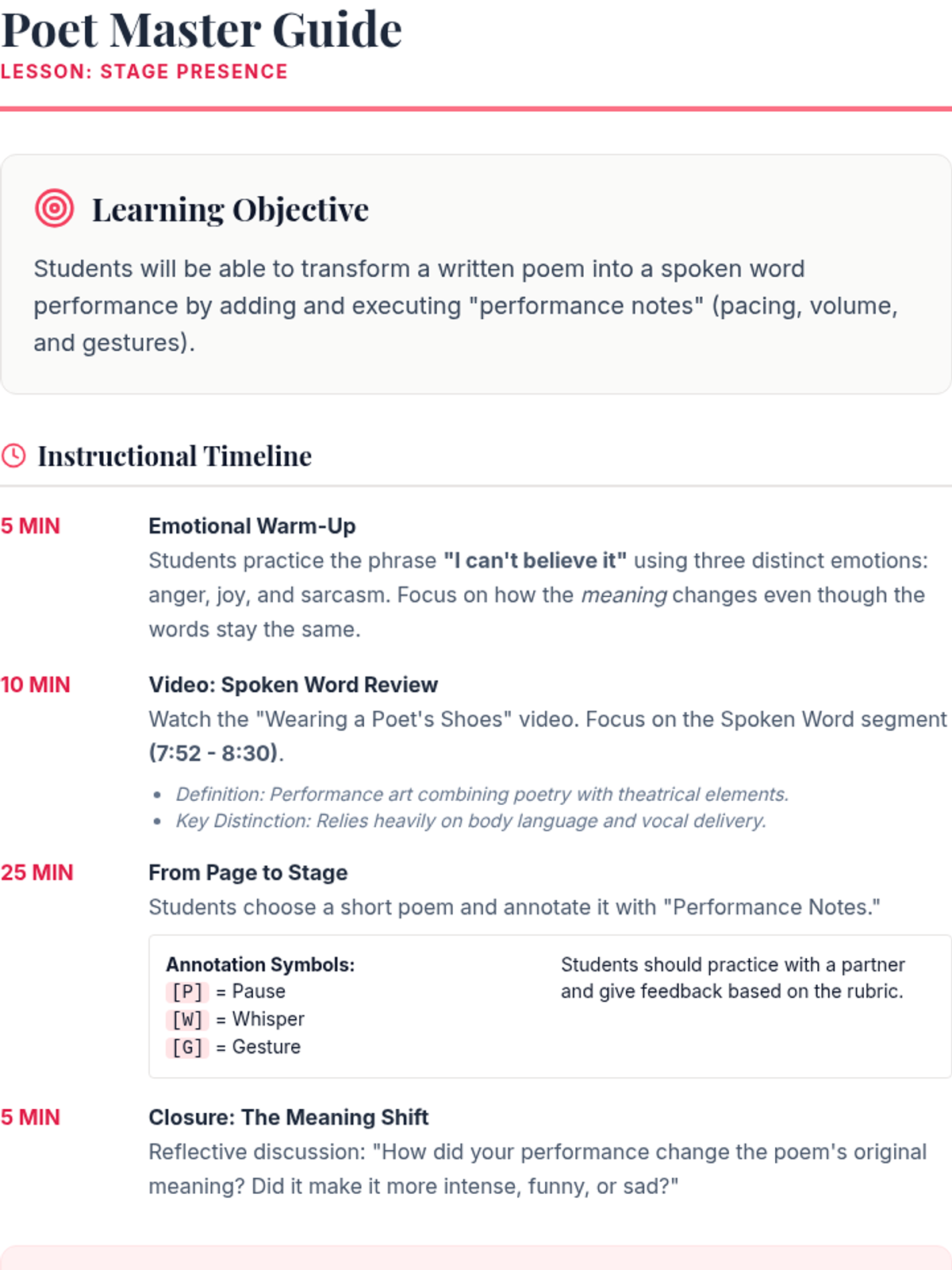
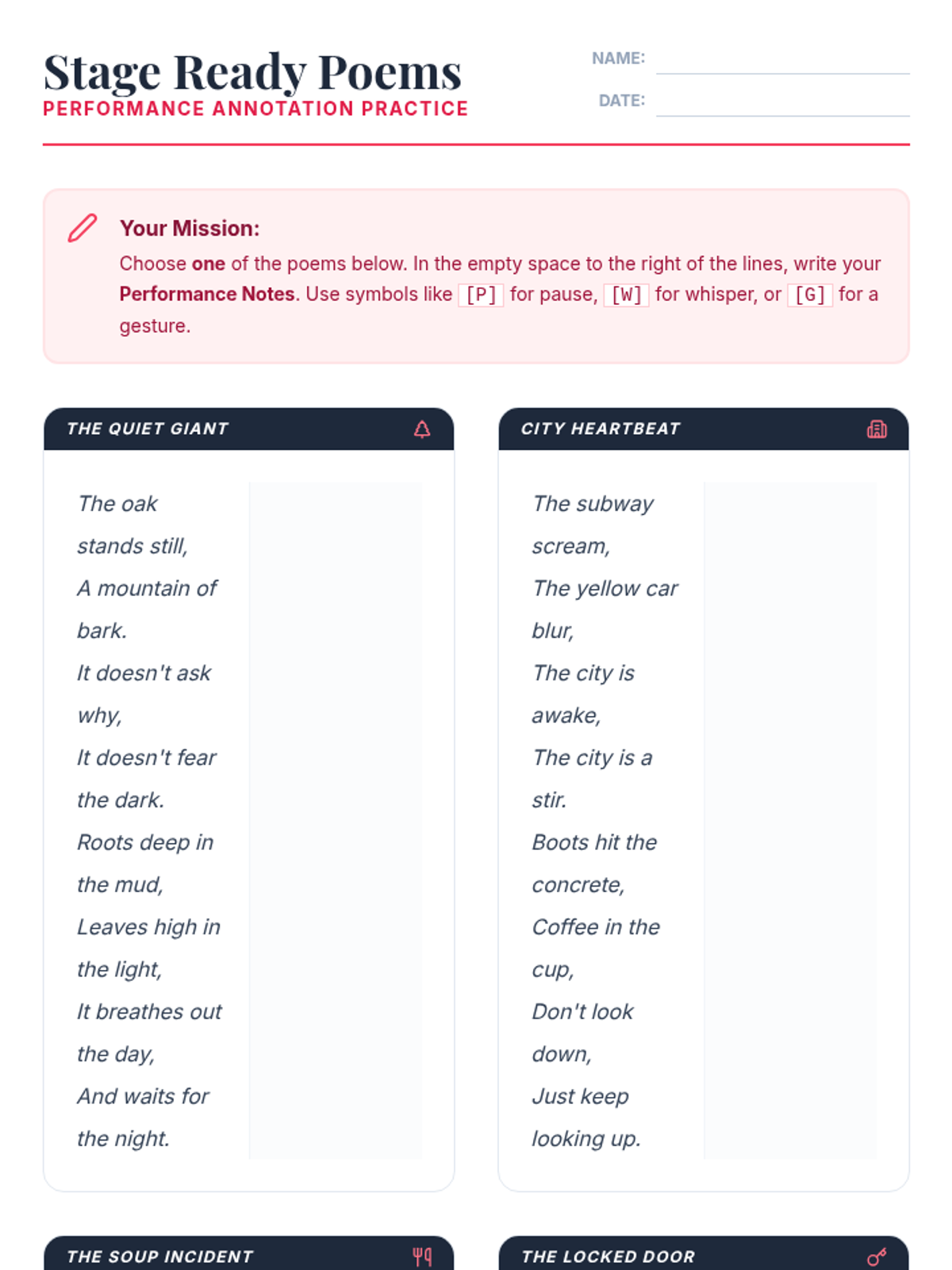
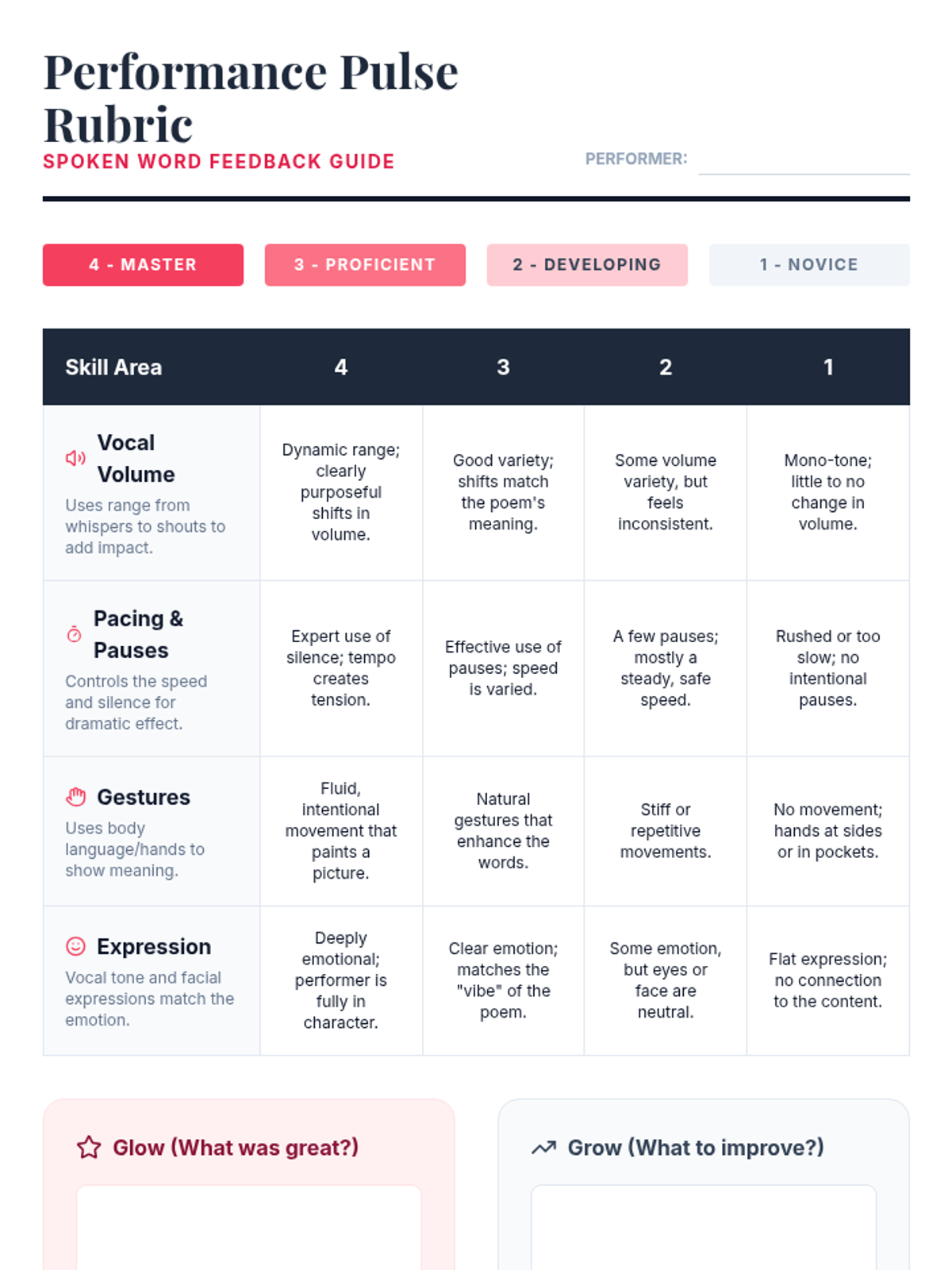
This lesson guides 7th-grade students through the process of transforming written poetry into a spoken word performance. Students will explore performance techniques like volume, pacing, and gestures using a specific video guide and hands-on practice.
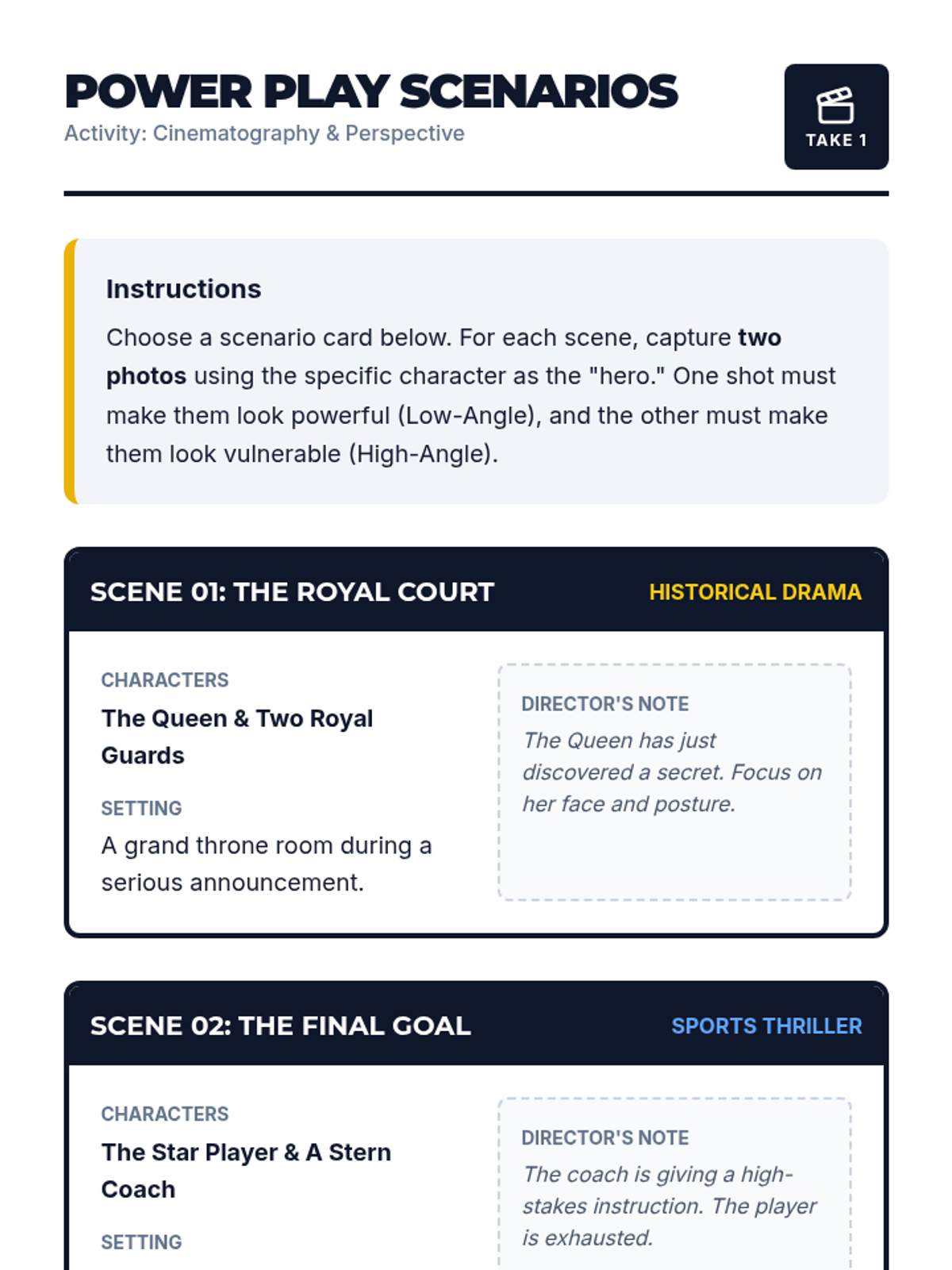
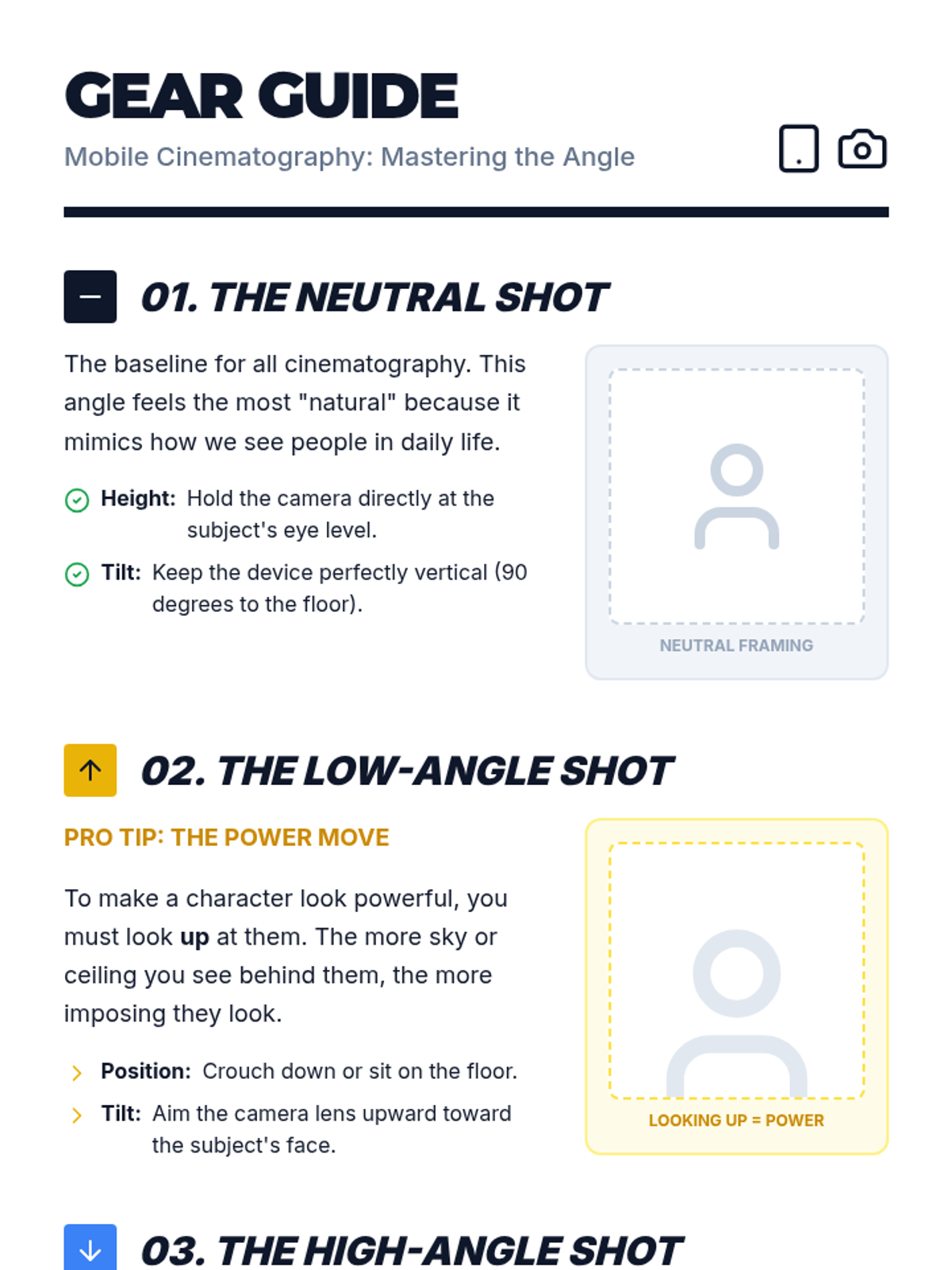
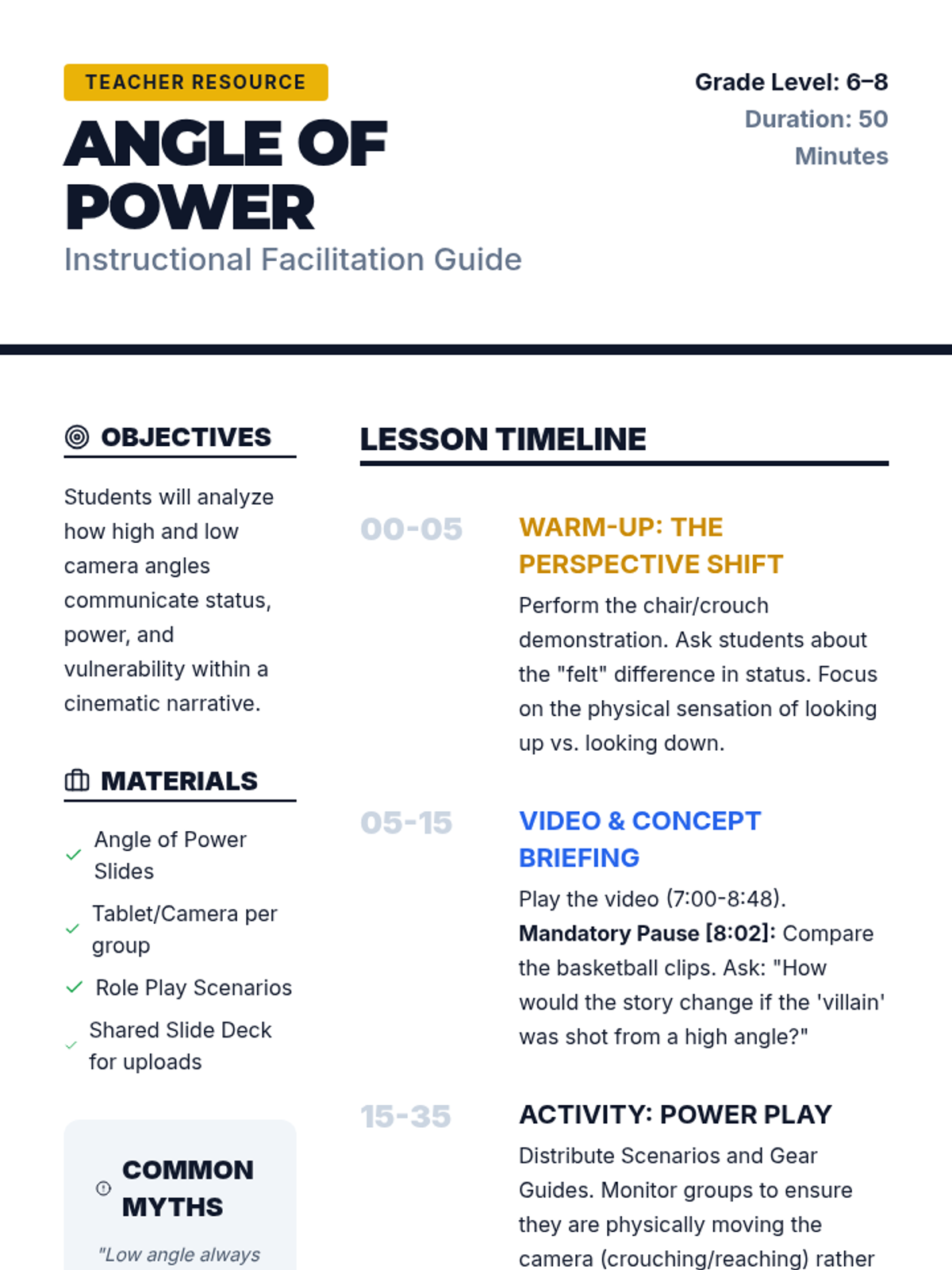
Students explore the psychological impact of cinematography, focusing on how high and low camera angles communicate power, vulnerability, and character status through hands-on role-play and photo analysis.
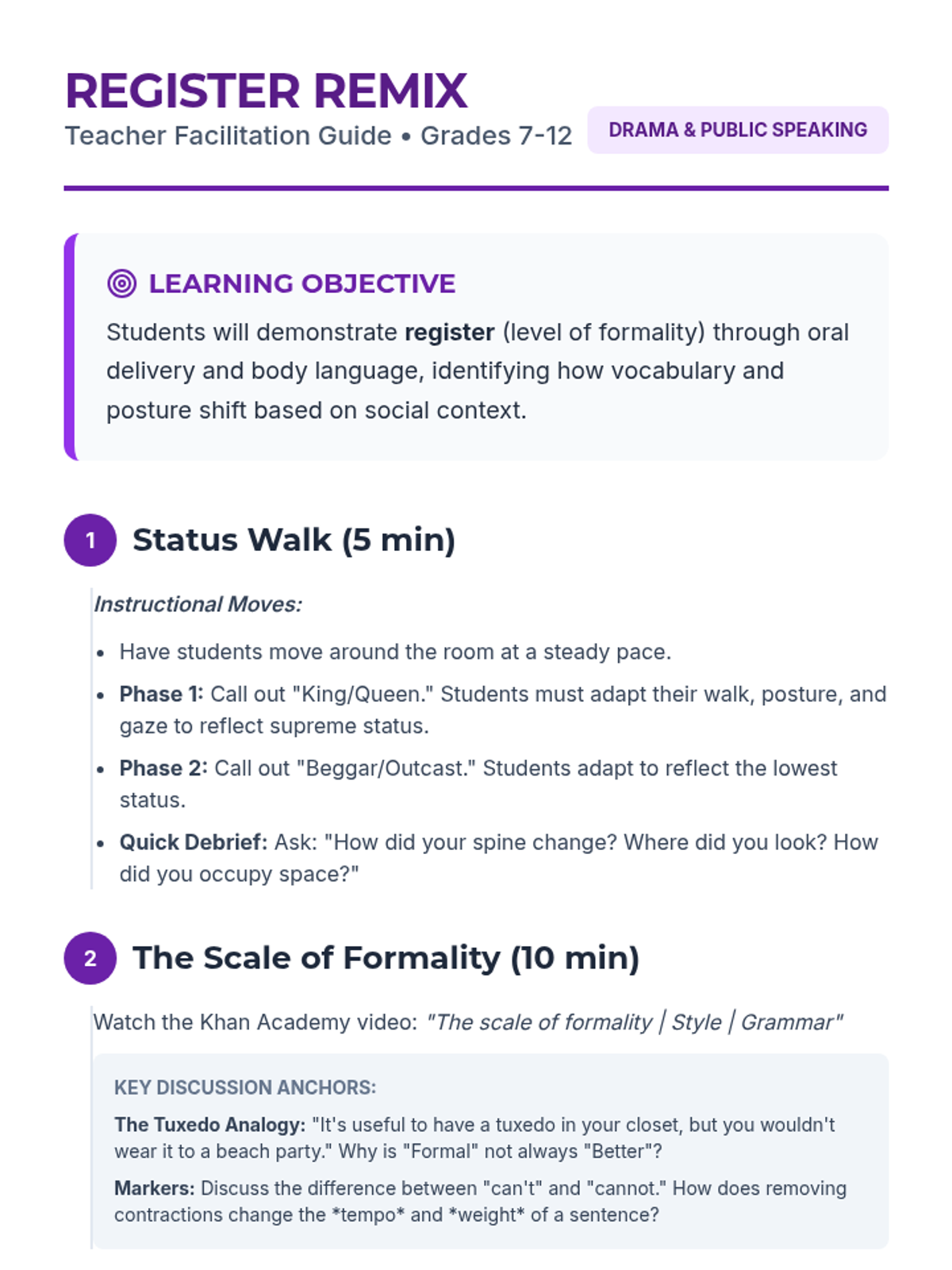
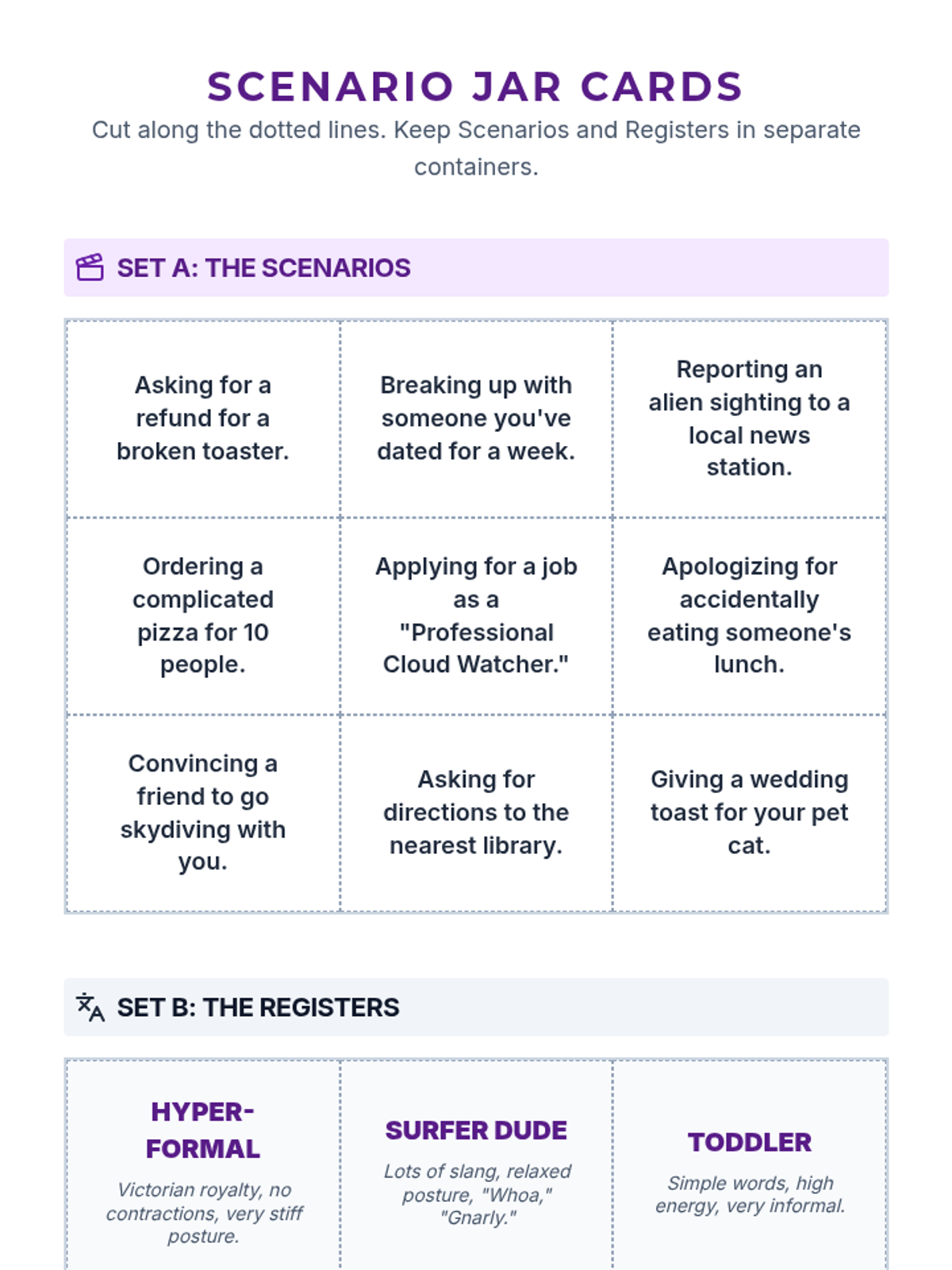
Students explore the concept of 'Register'—the level of formality in speech and body language—through a mix of analysis and improvisation. They will use the 'Tuxedo vs. Beach' analogy to understand context and practice shifting between informal and formal delivery.
Students explore the concept of dramatic irony through a theater-themed lesson featuring a video analysis, a participatory 'Secret Spy' warm-up, and the creation of original short skits where the audience knows a secret that the characters do not.
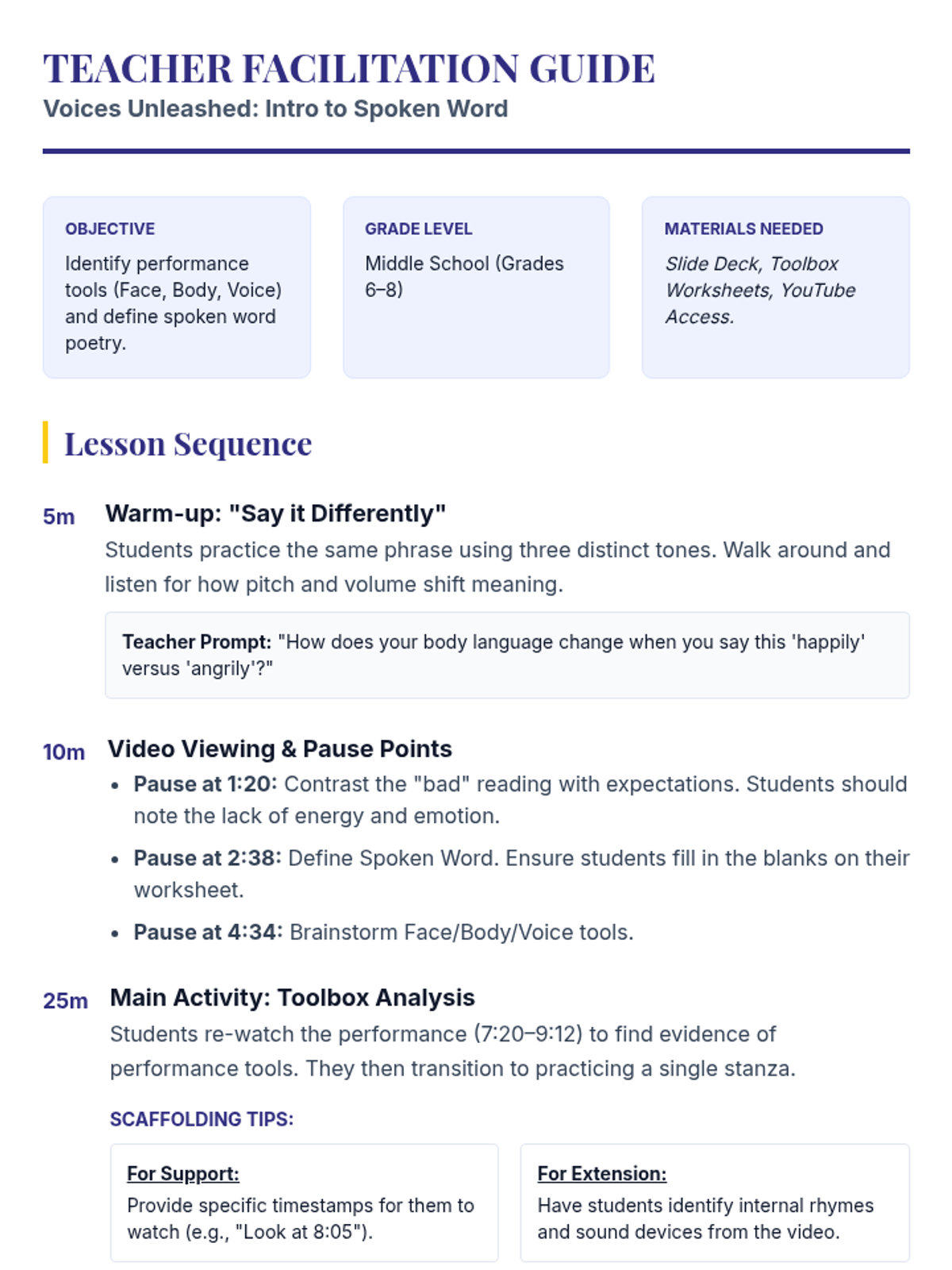
A dynamic lesson introducing spoken word poetry through the 'Face, Body, Voice' framework. Students analyze a model performance and practice their own delivery techniques using a guided video analysis.
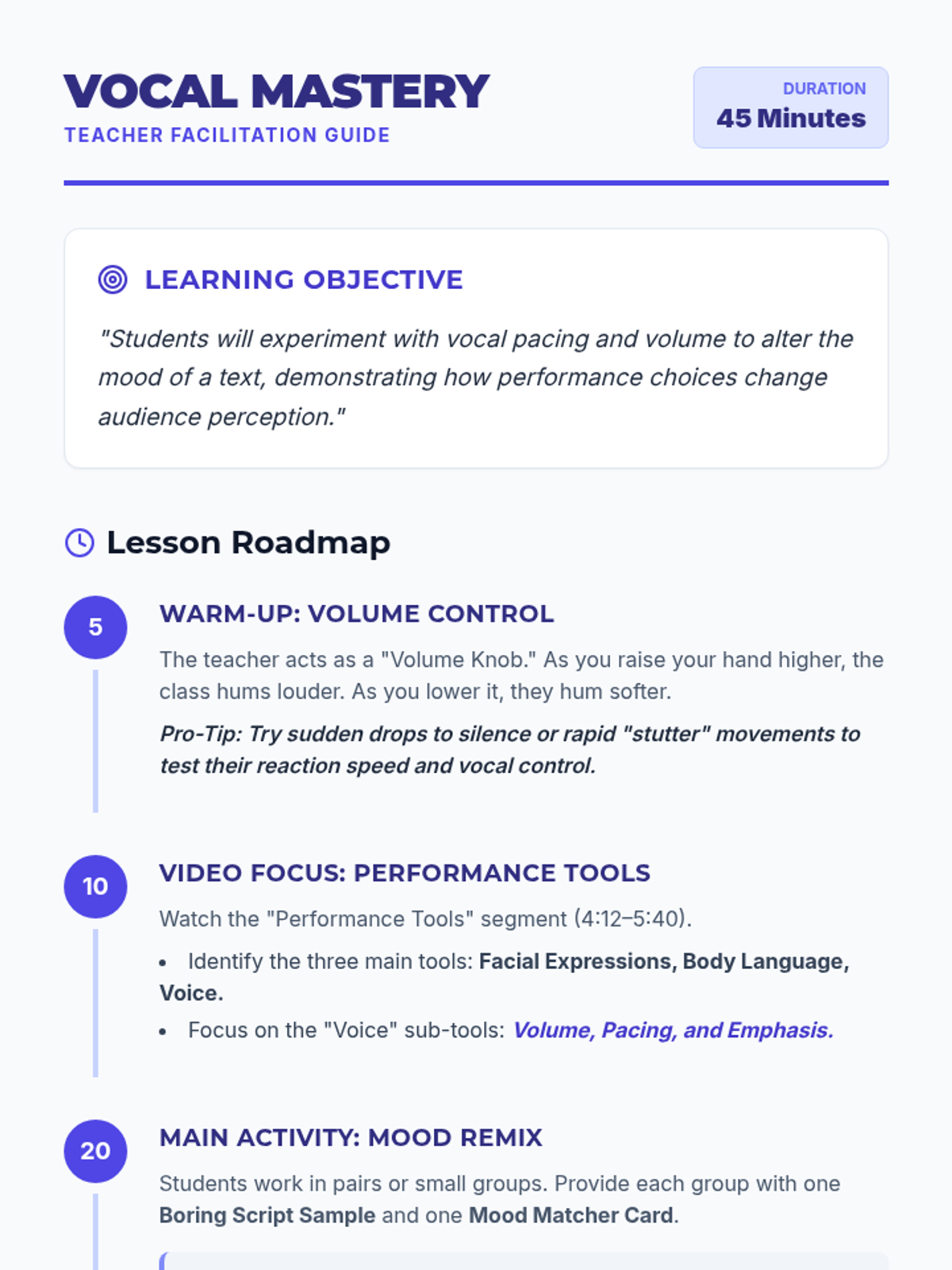
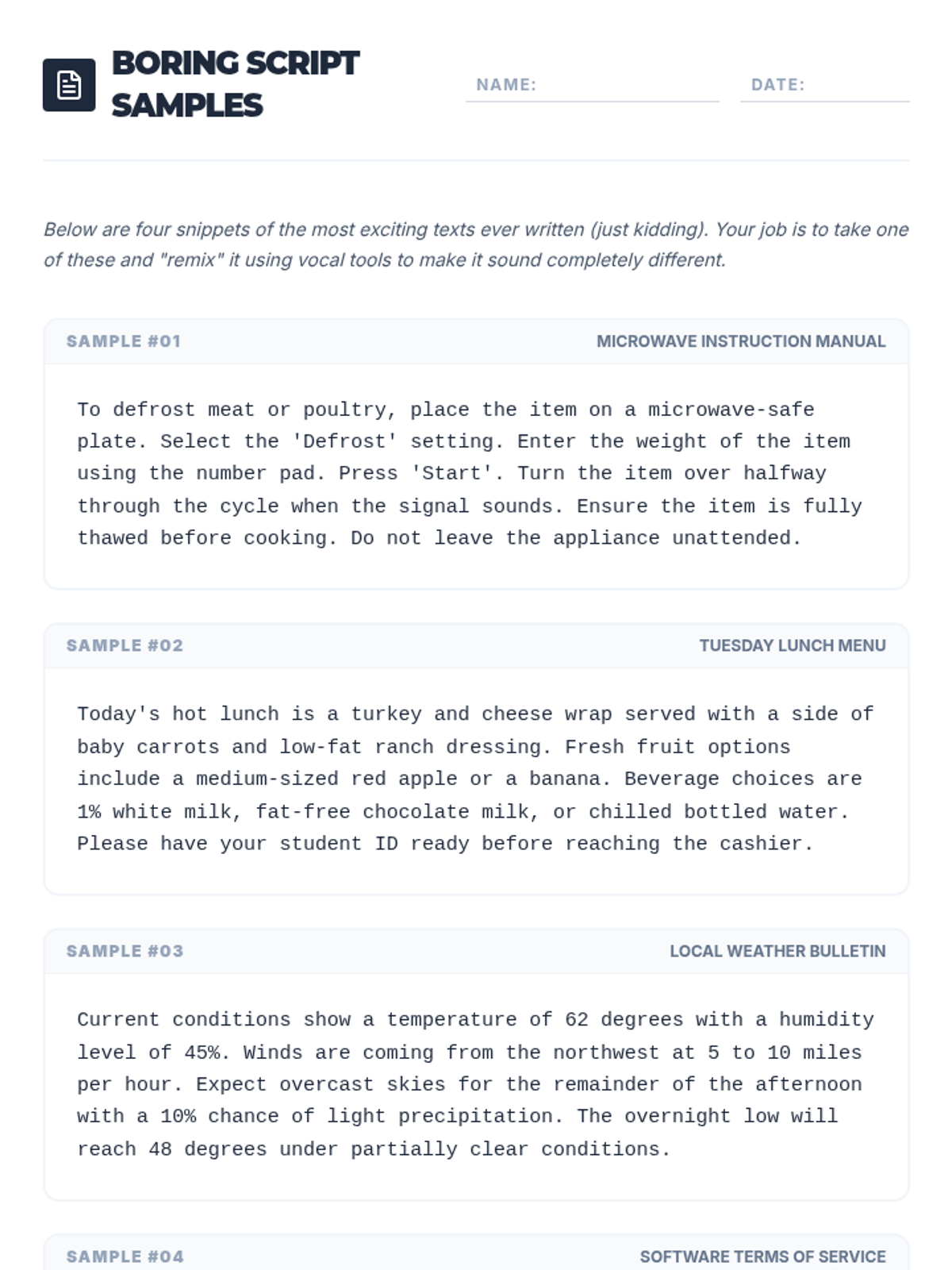
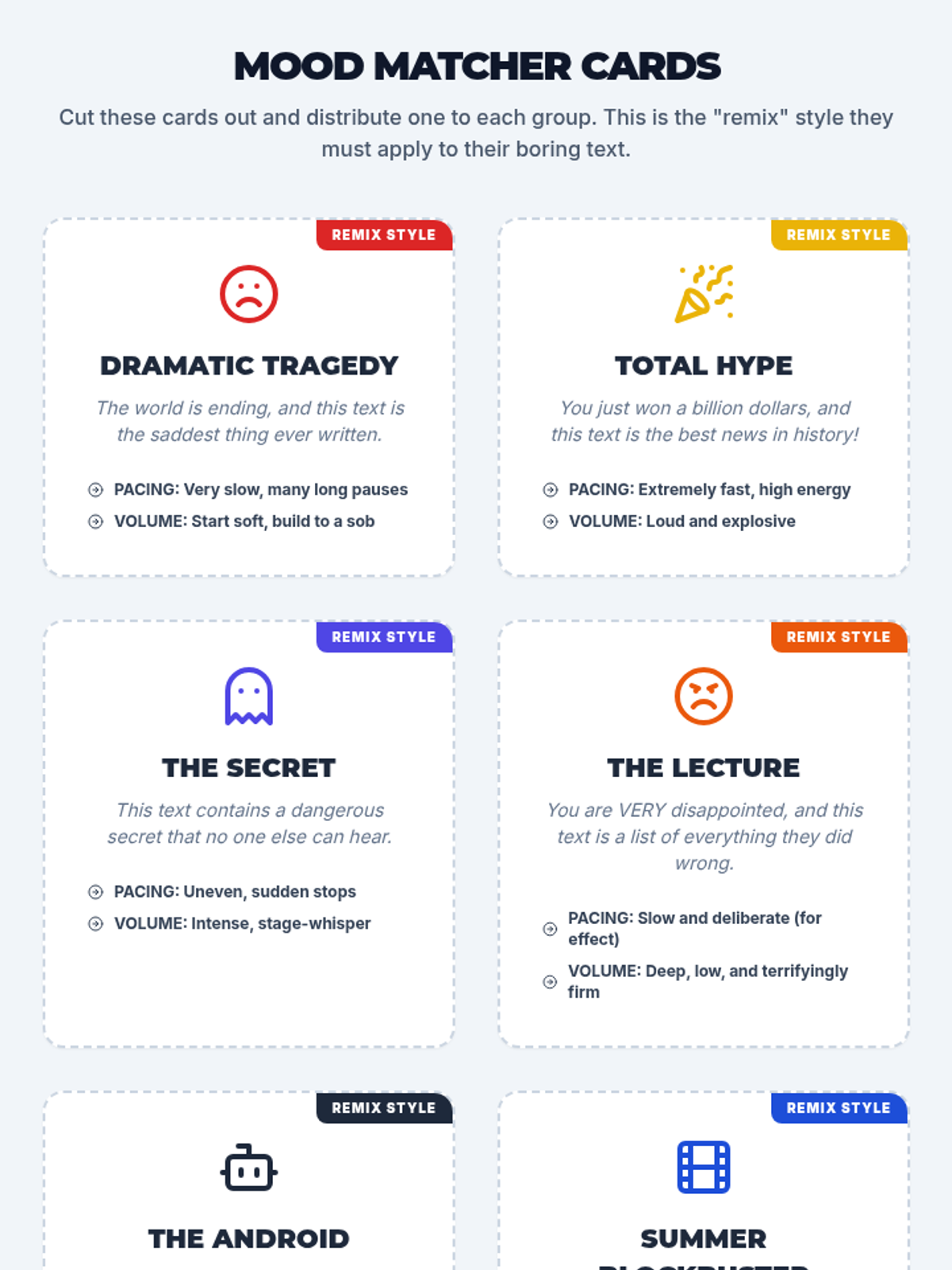
A high-energy lesson where students transform mundane texts into compelling performances using vocal pacing, volume, and emphasis. Includes a video analysis of spoken word techniques and a hands-on 'Mood Remix' activity.
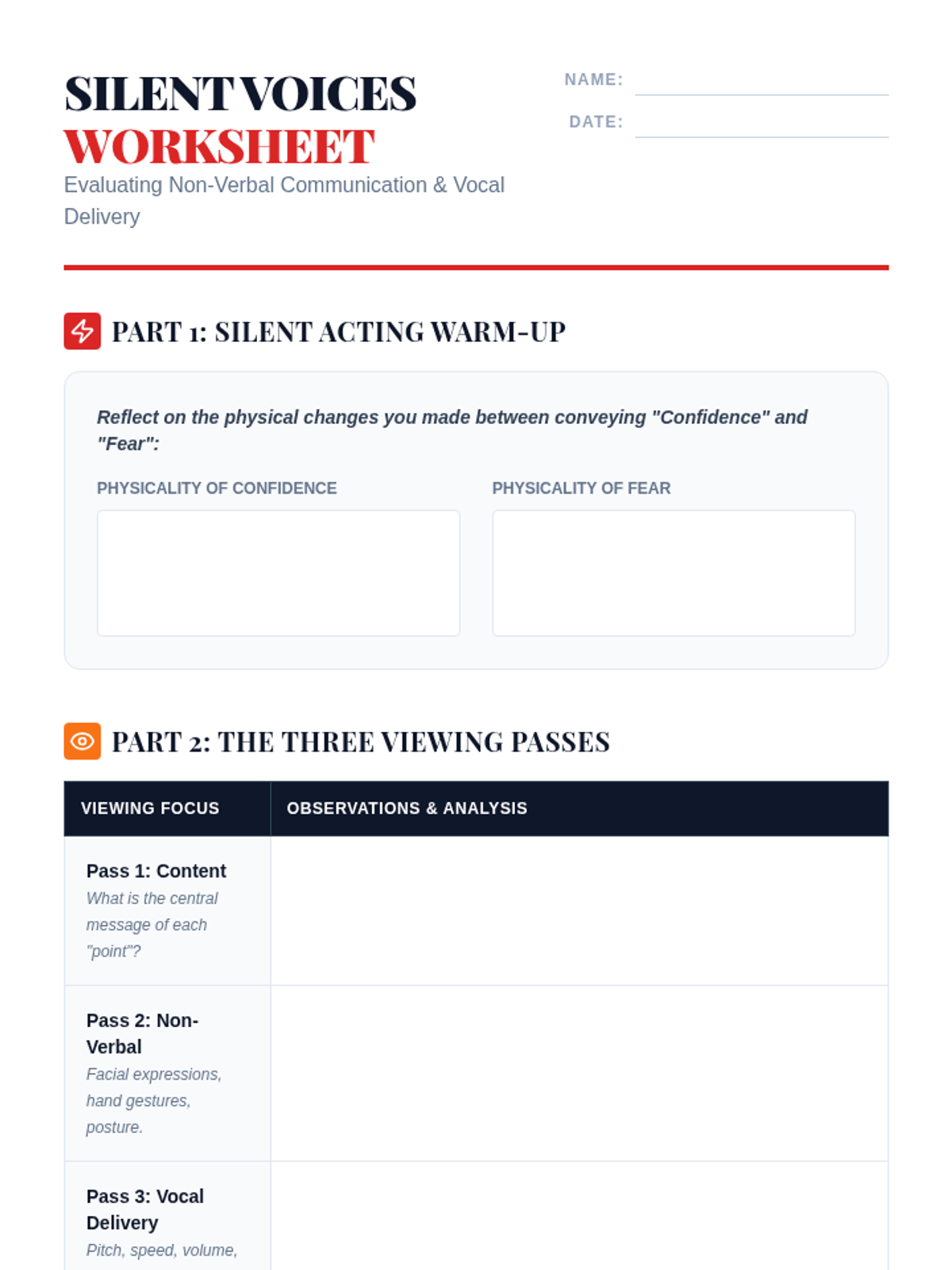
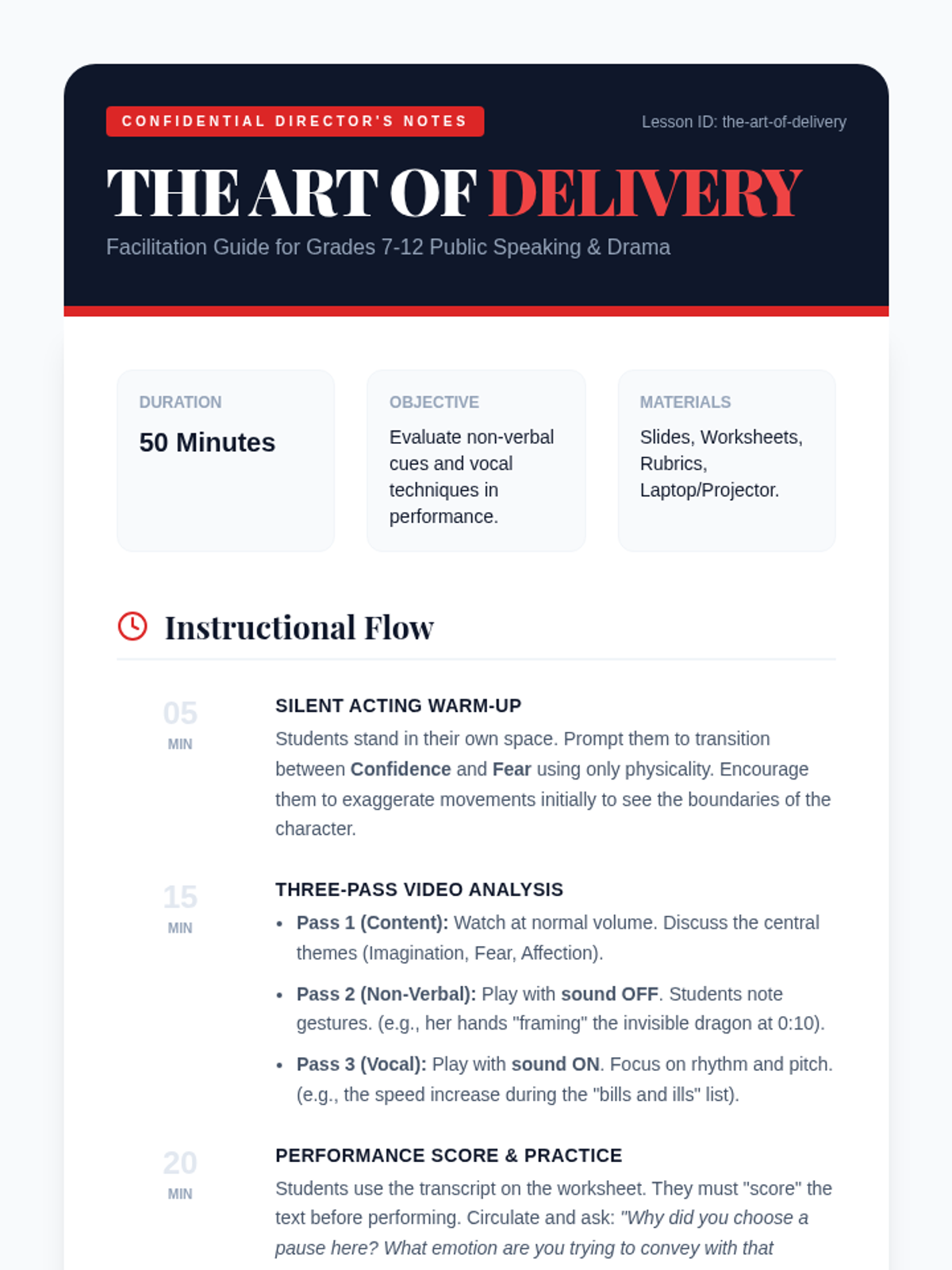
Students will analyze a spoken word performance to evaluate how non-verbal cues and vocal delivery choices impact the meaning and emotional resonance of a text, culminating in a performance of their own.
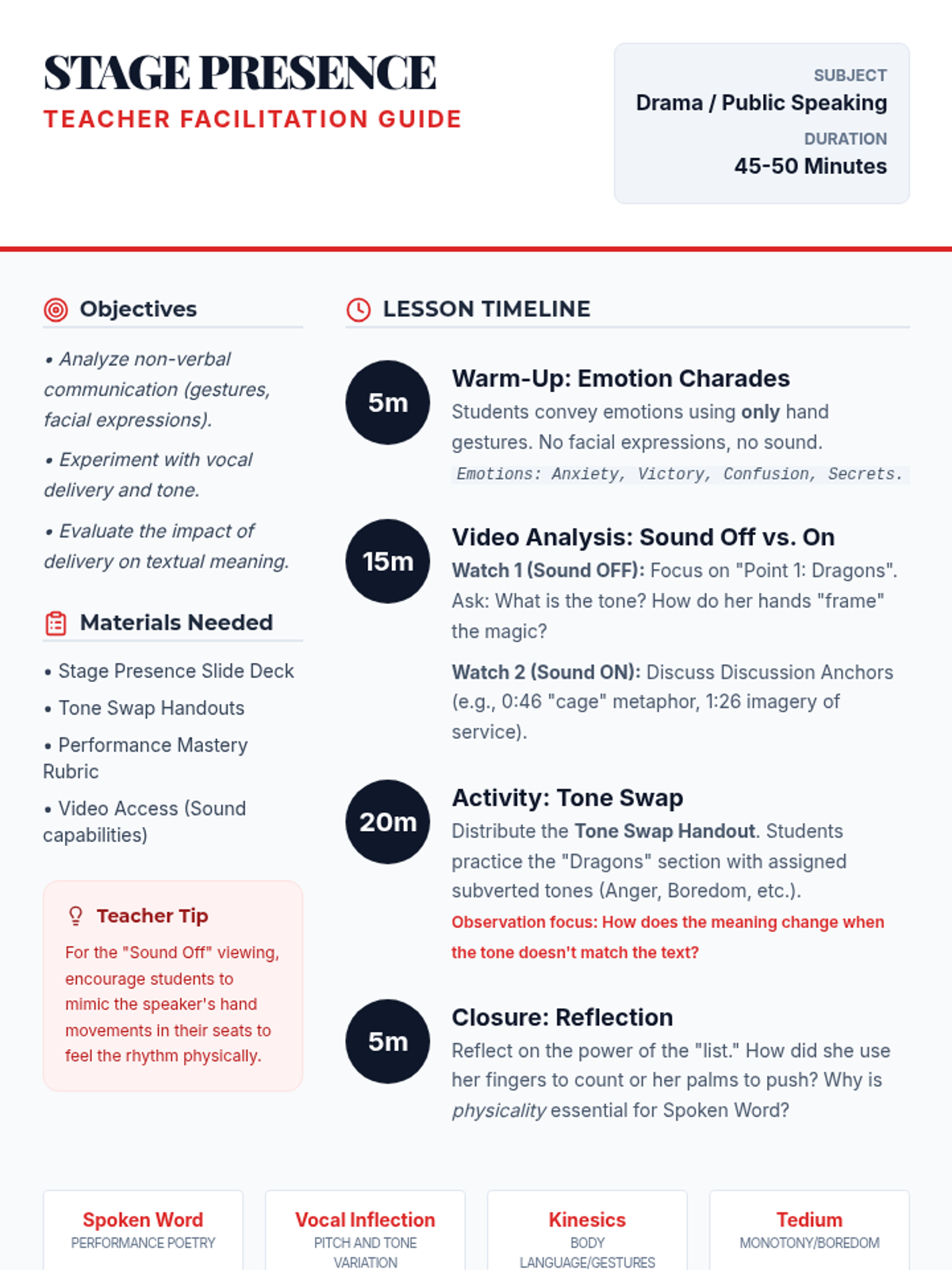
A drama and public speaking lesson focusing on non-verbal communication, tone, and performance techniques through the analysis of a spoken word poem. Students explore how gestures and vocal inflection transform meaning.
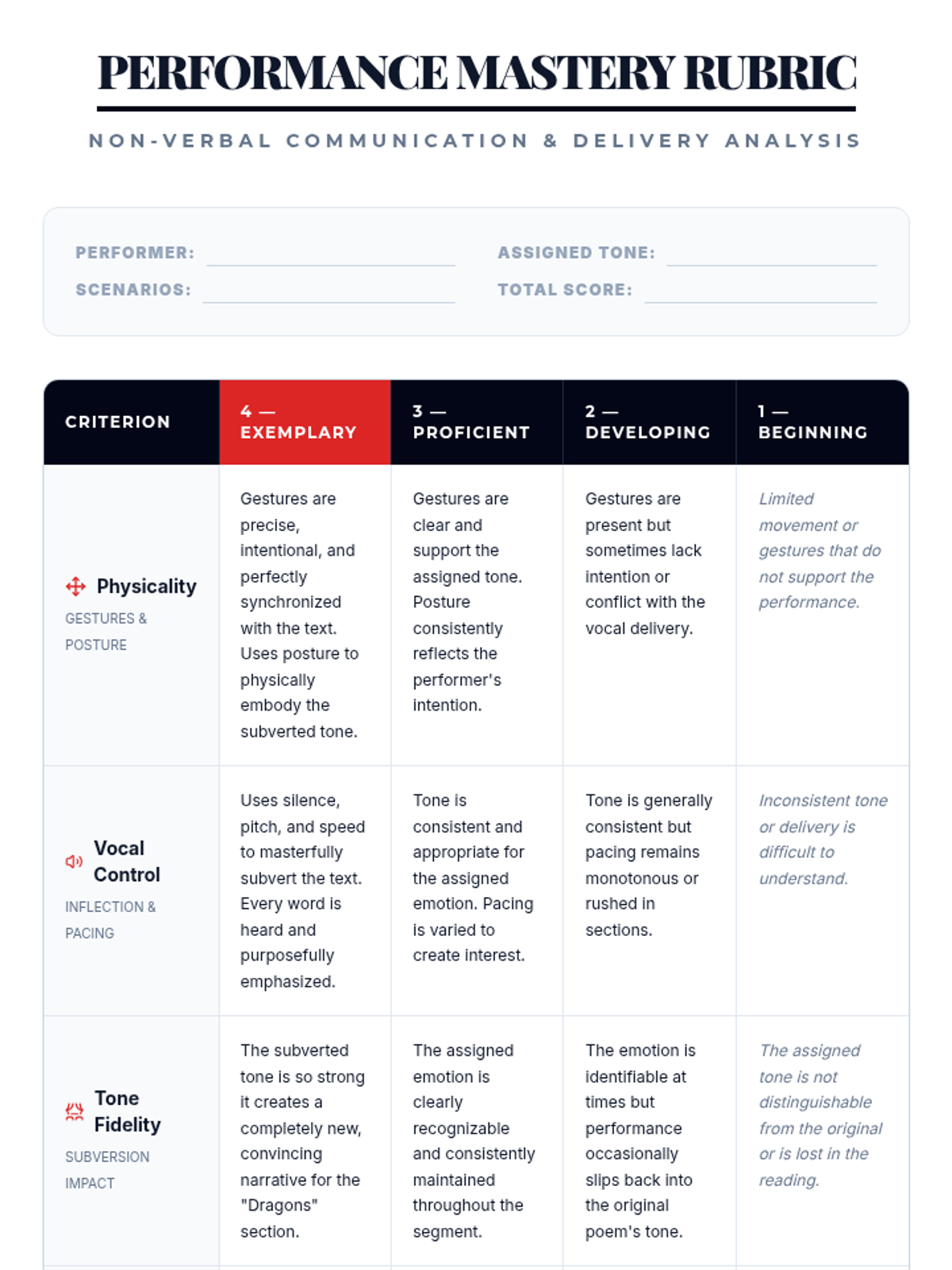
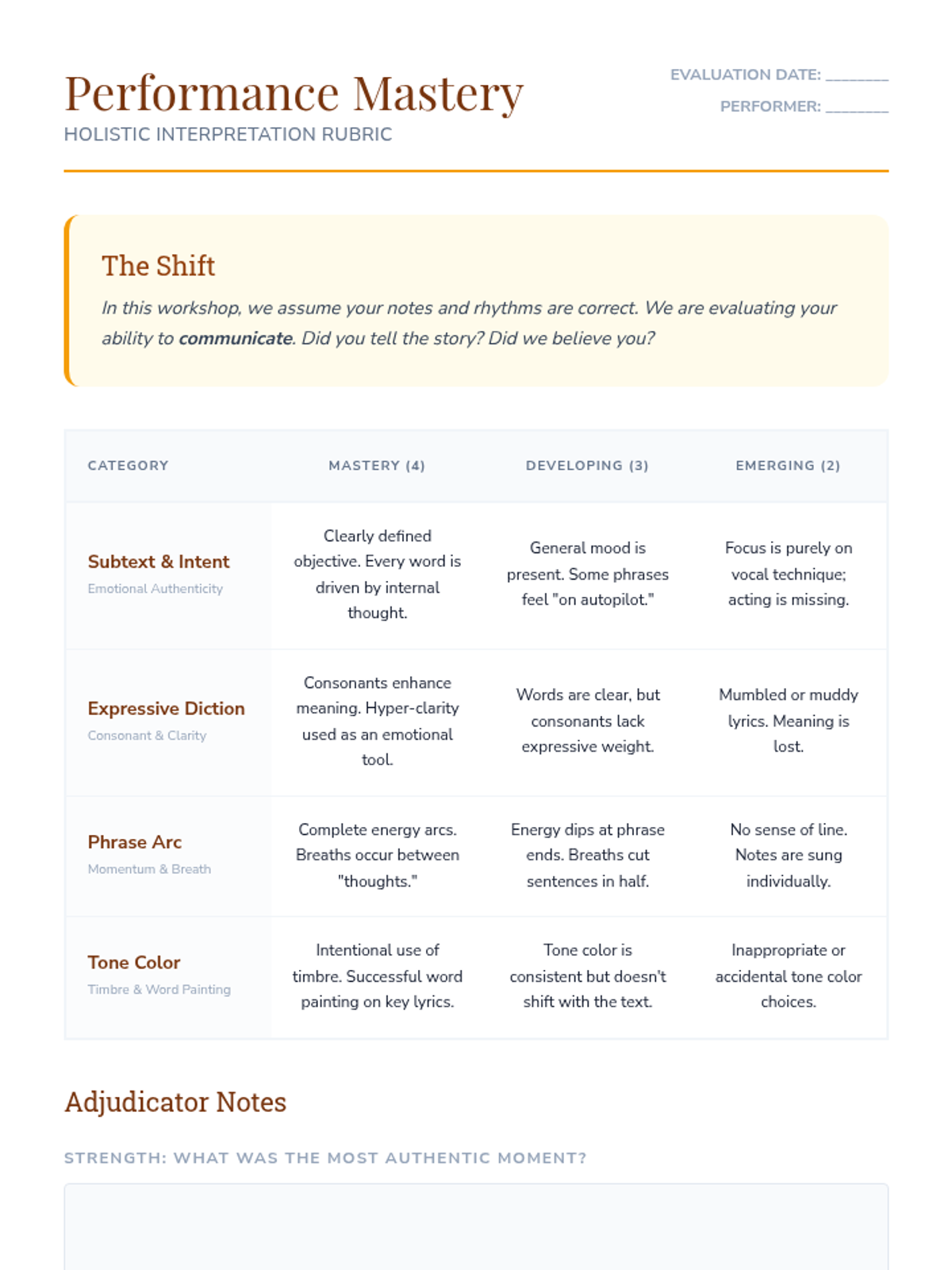
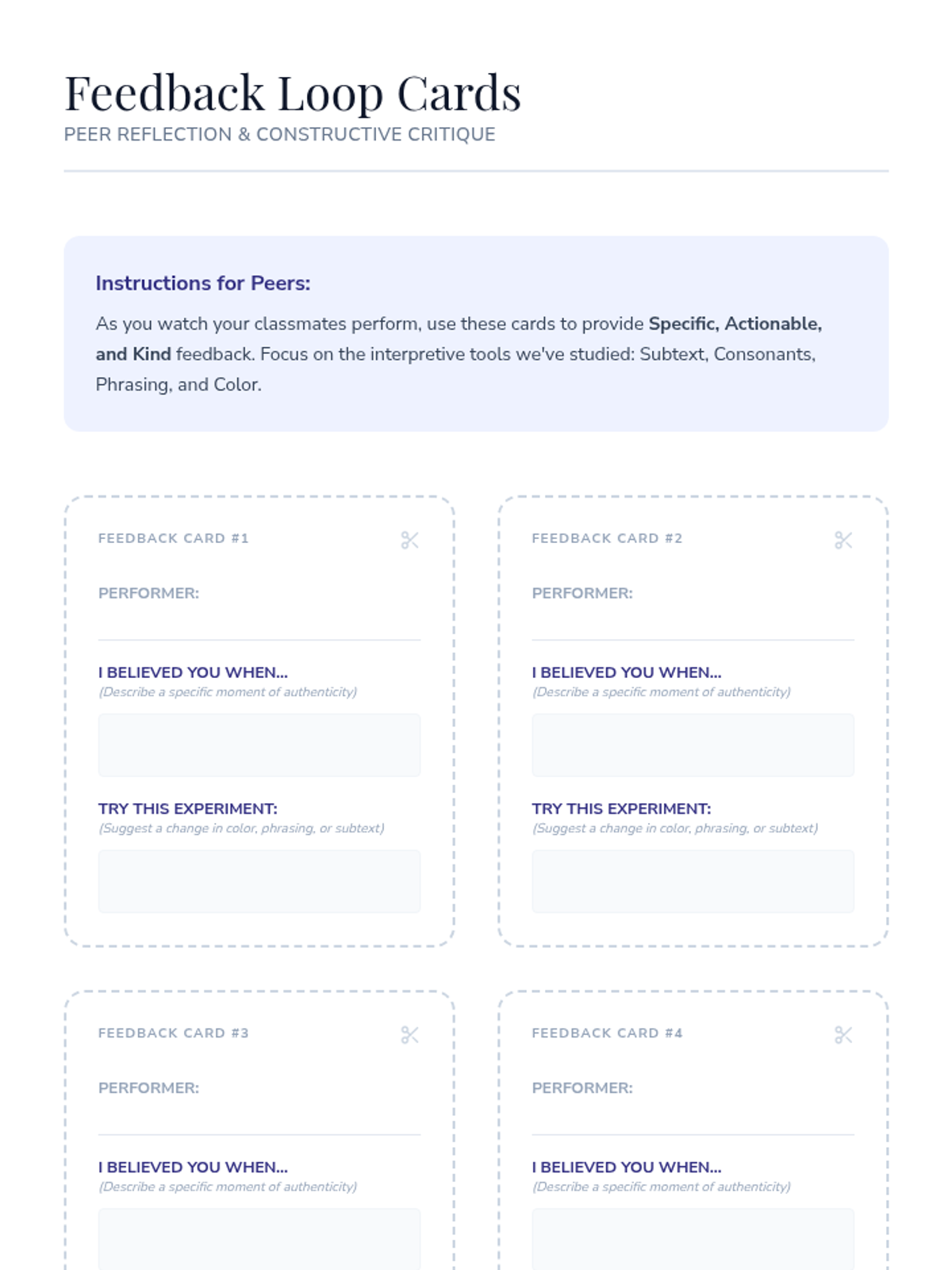
A masterclass-style workshop where students synthesize their skills to perform for peers, focusing on emotional communication and authenticity.
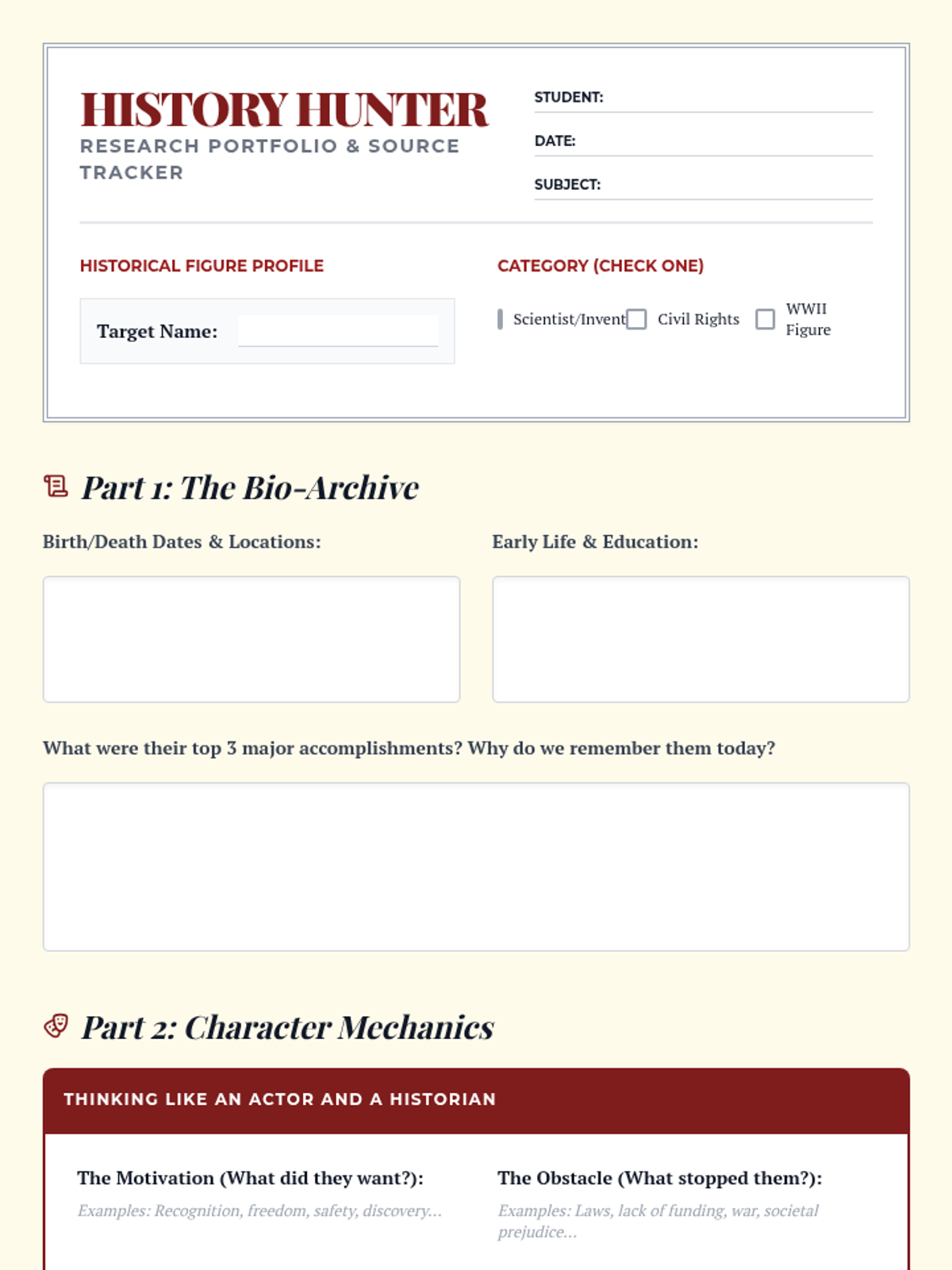
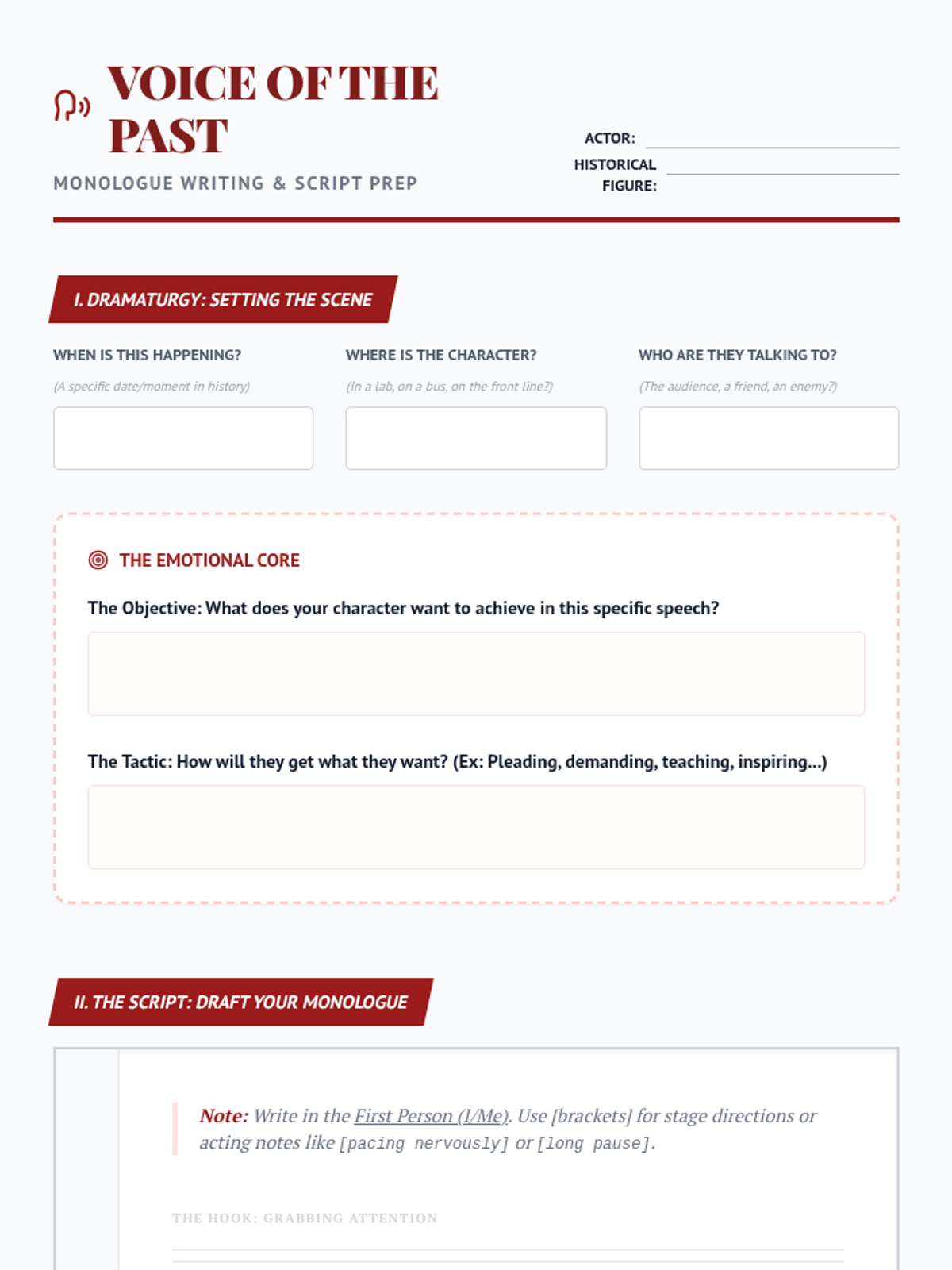
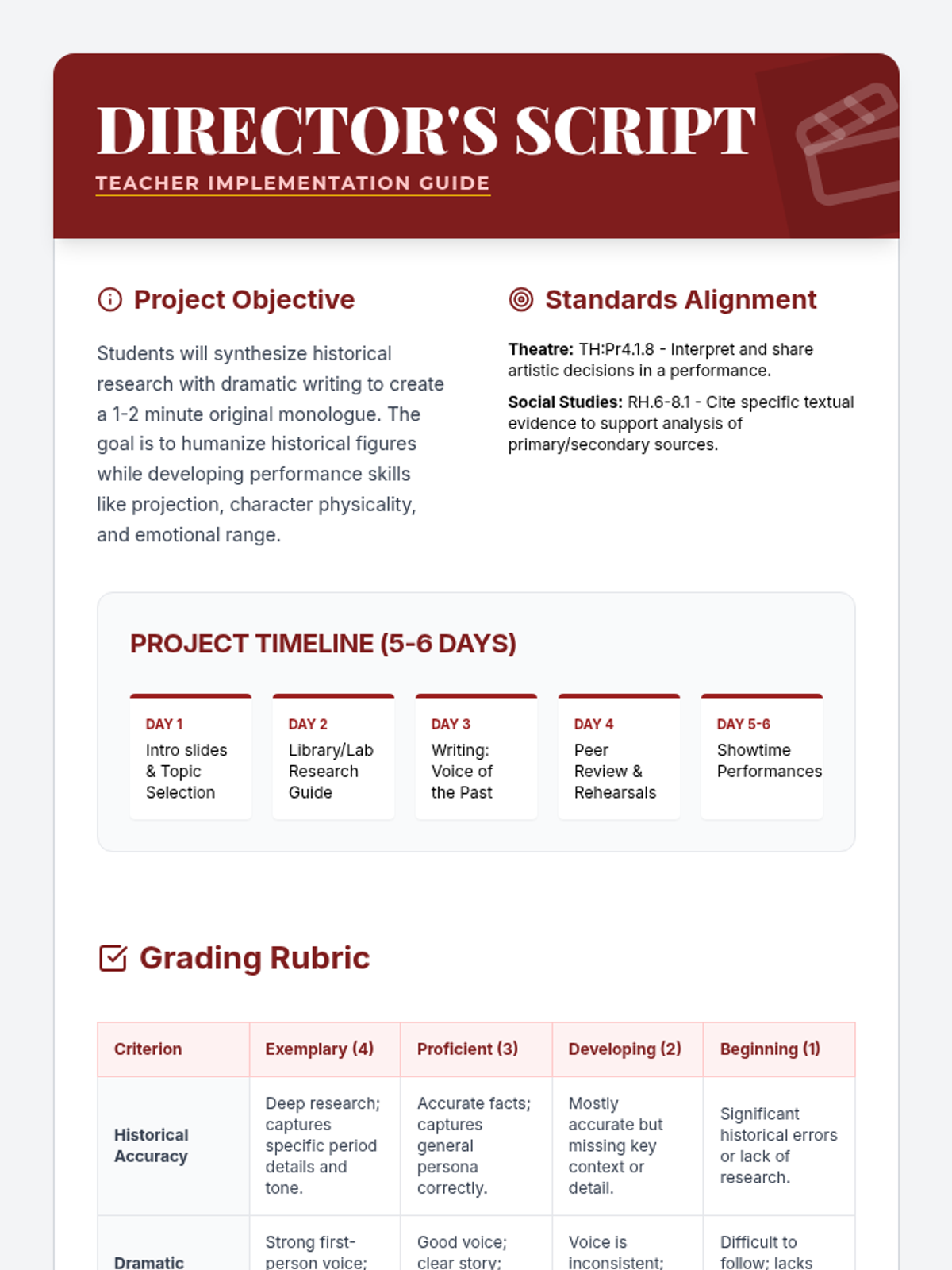
A cross-curricular project where students research a significant historical figure from the fields of science, civil rights, or WWII and transform their findings into a compelling 1-2 minute theatrical monologue. Students develop both historical inquiry skills and dramatic performance techniques.
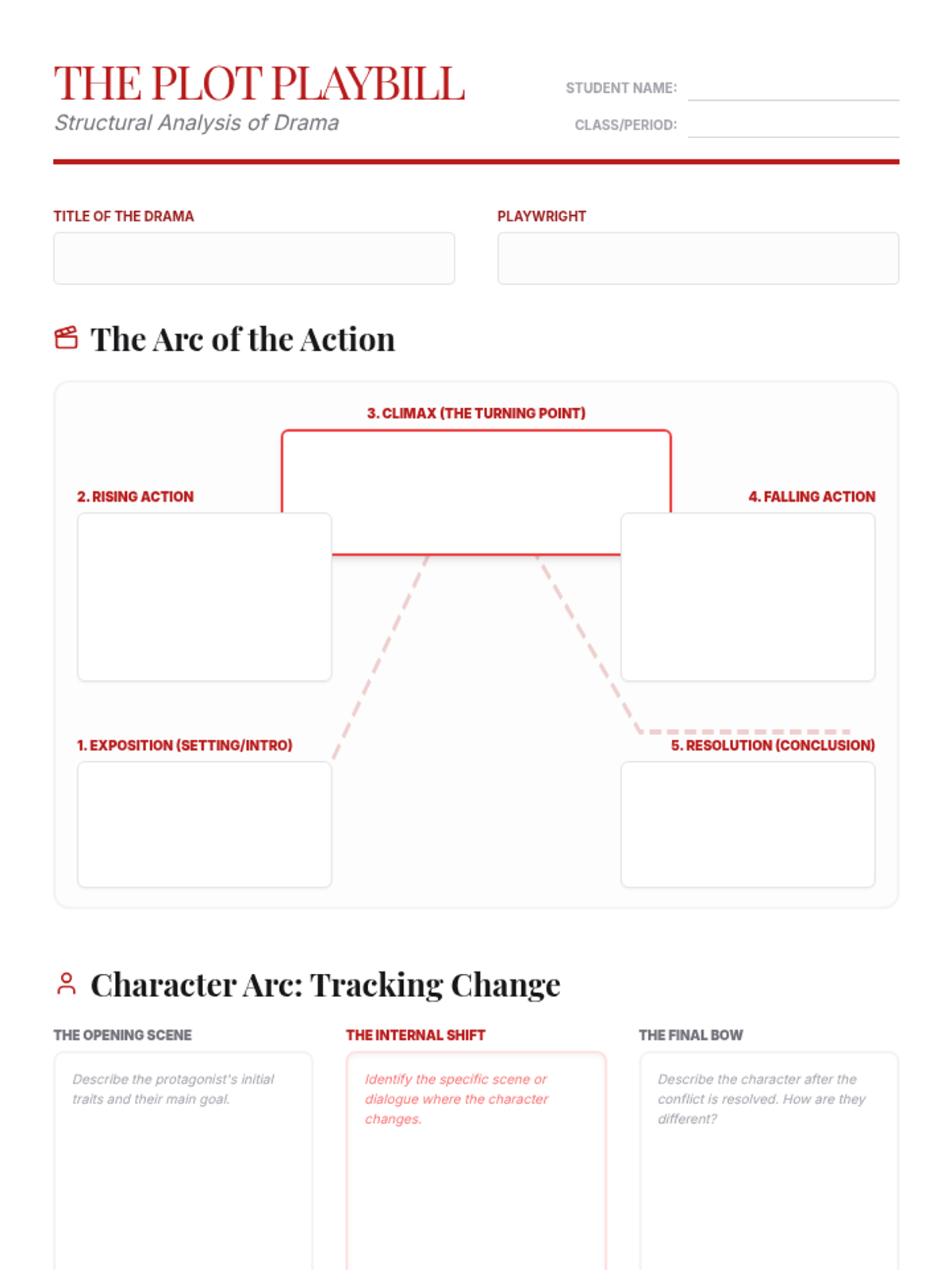
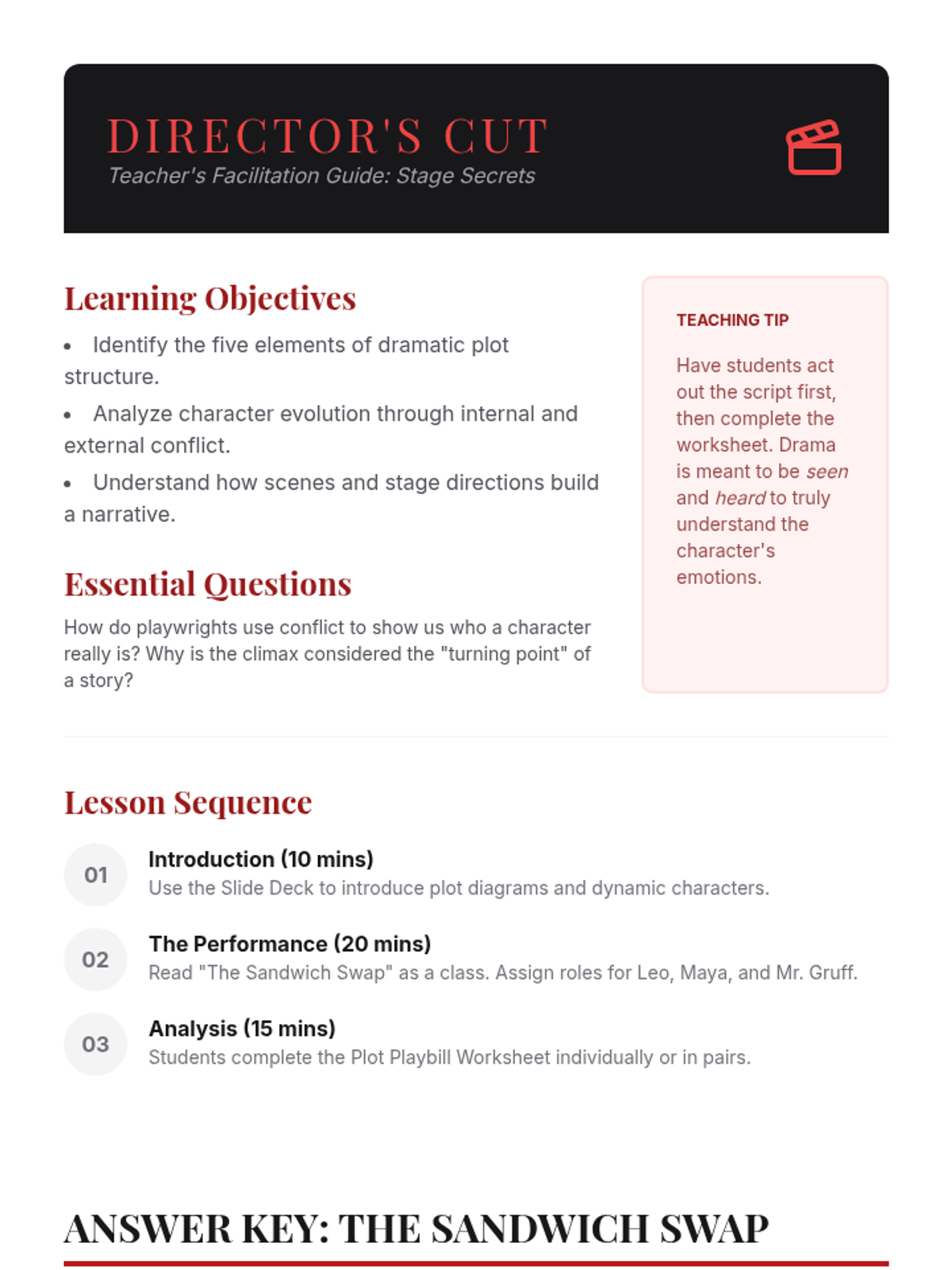
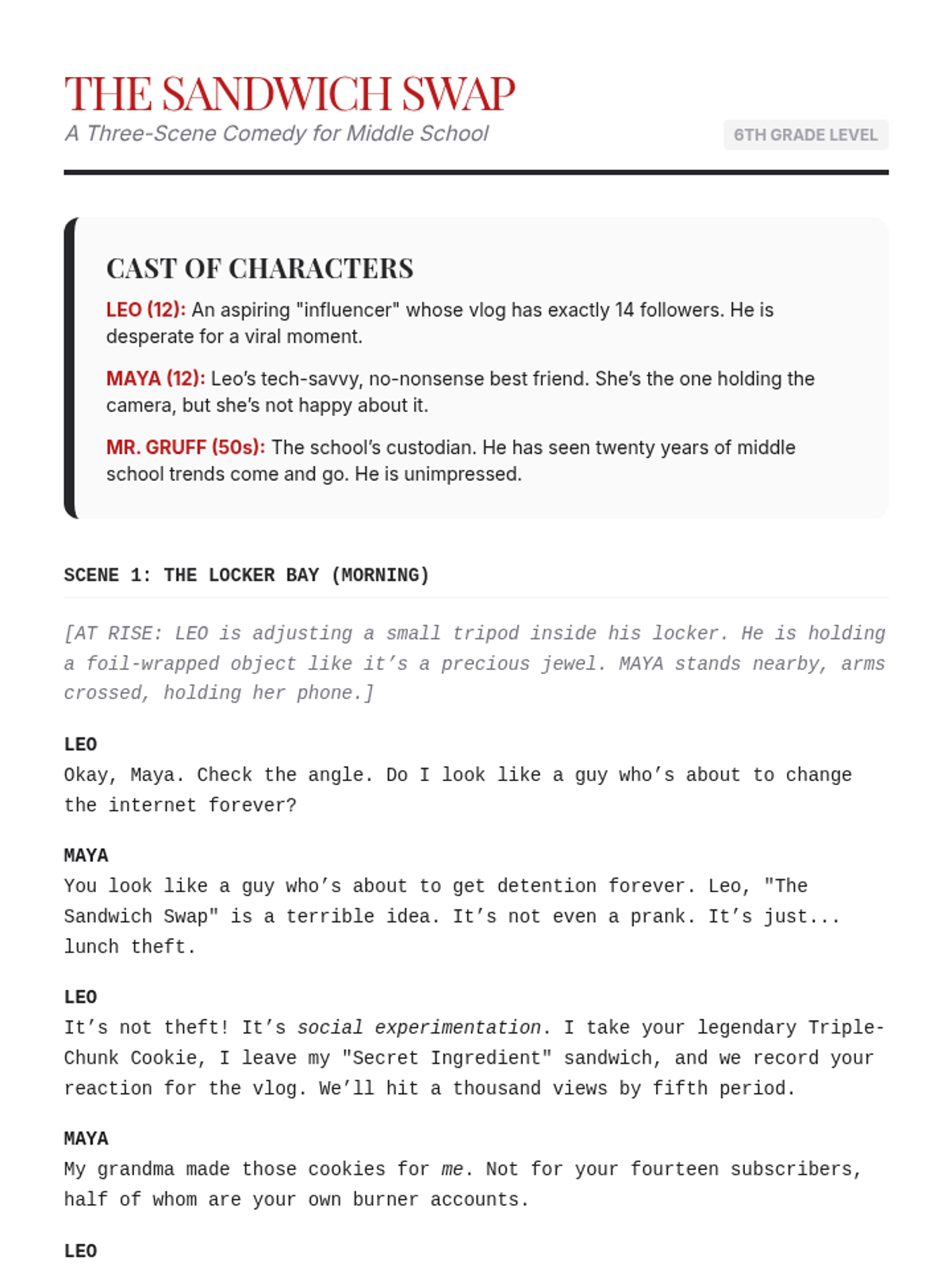
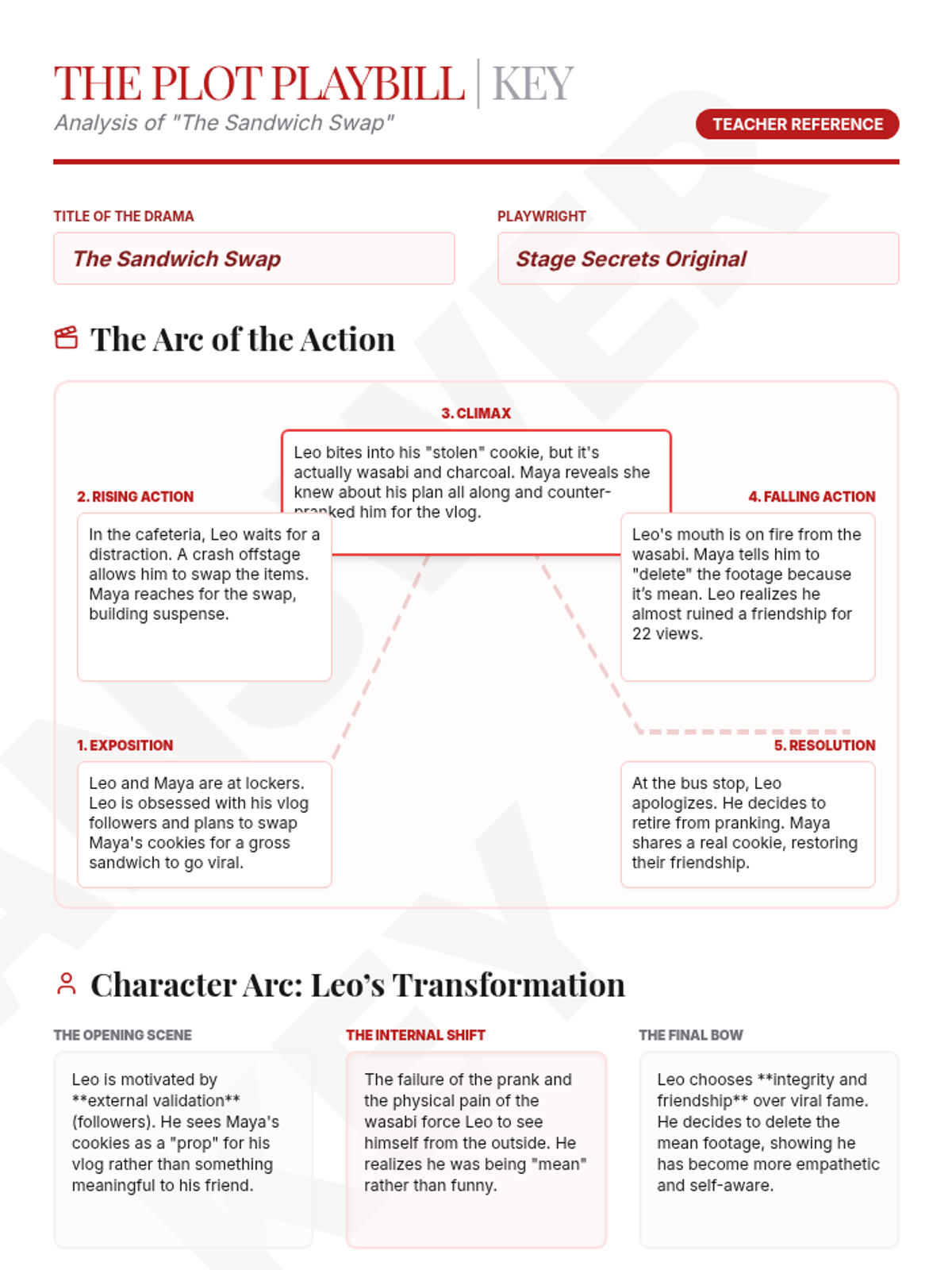
Students explore the structural components of drama by mapping plot elements onto a diagram and analyzing how characters evolve through theatrical conflict.
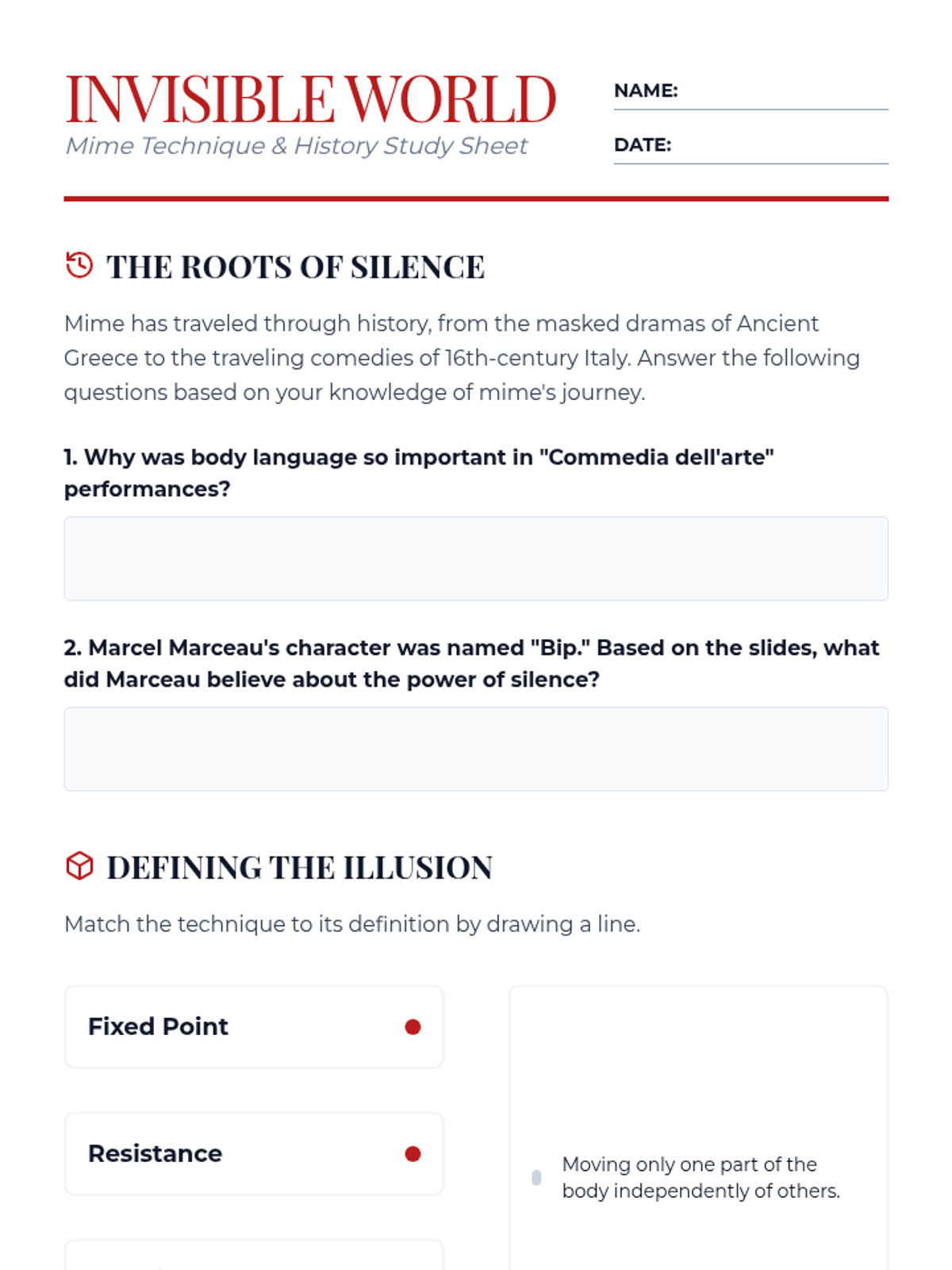
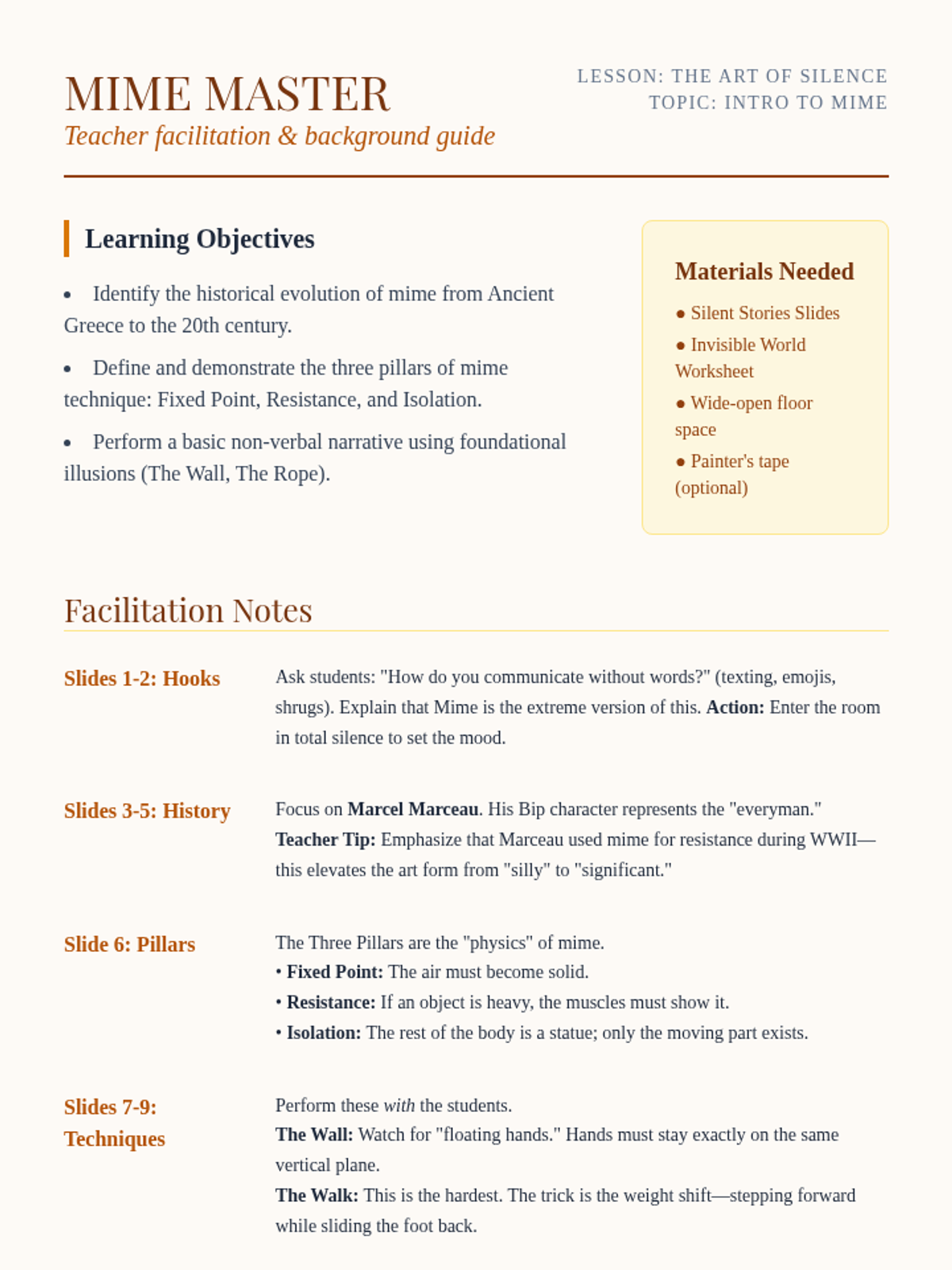
An introductory lesson on the art of mime, exploring its historical roots, cultural impact, and the foundational techniques of non-verbal storytelling.
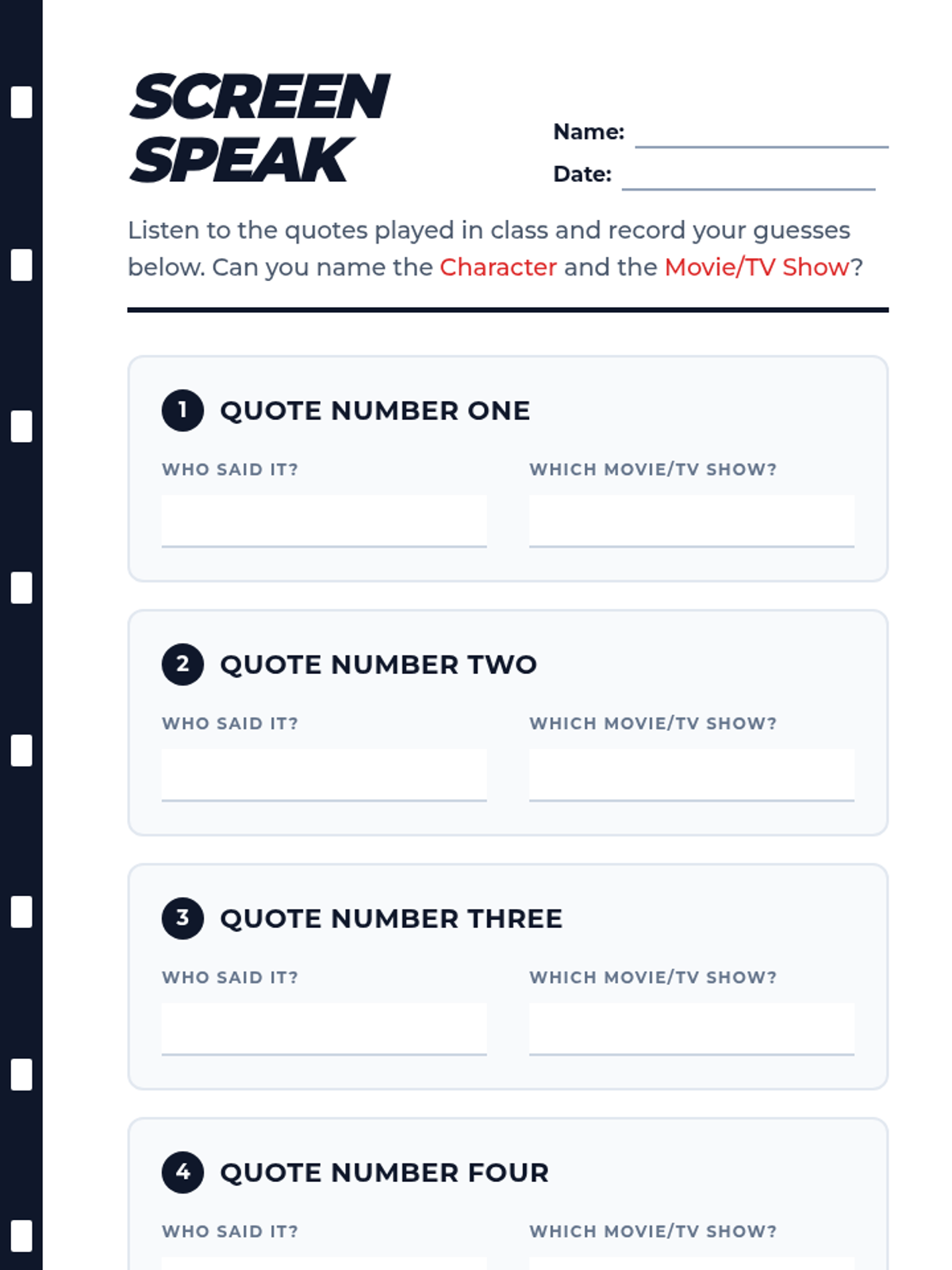
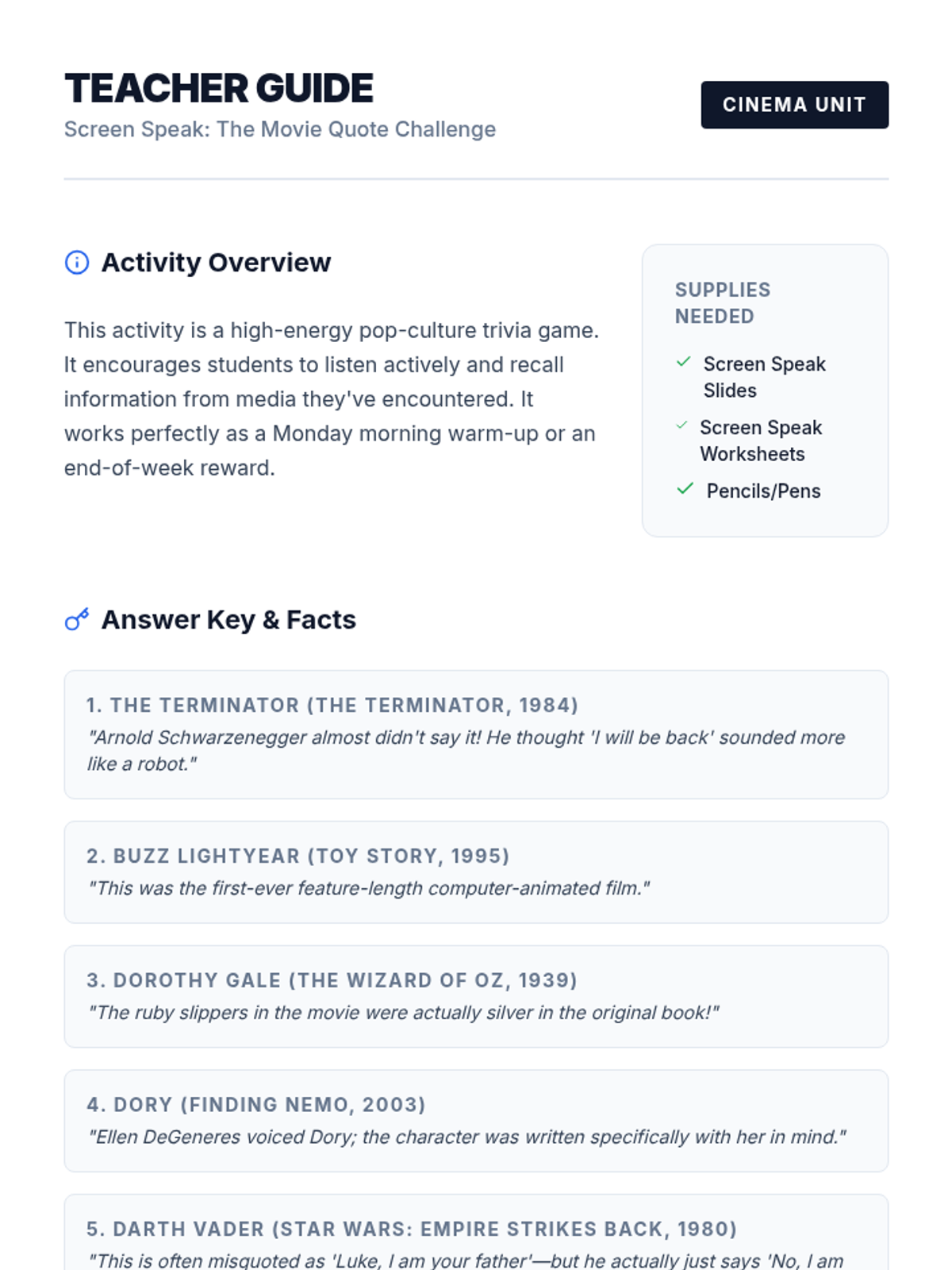
A high-energy guessing game focused on iconic quotes from movies and television, designed to test pop culture knowledge and spark discussion.
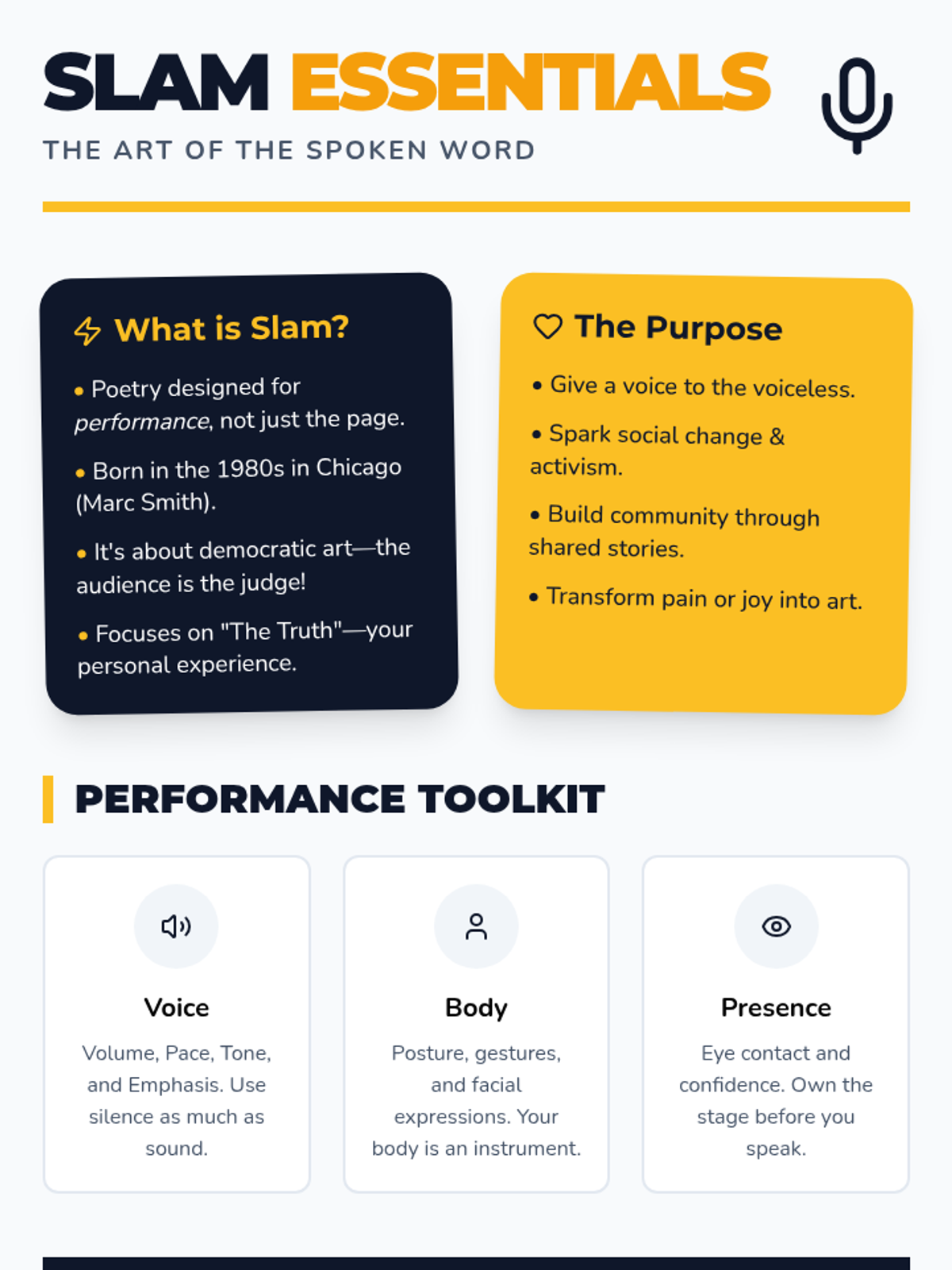
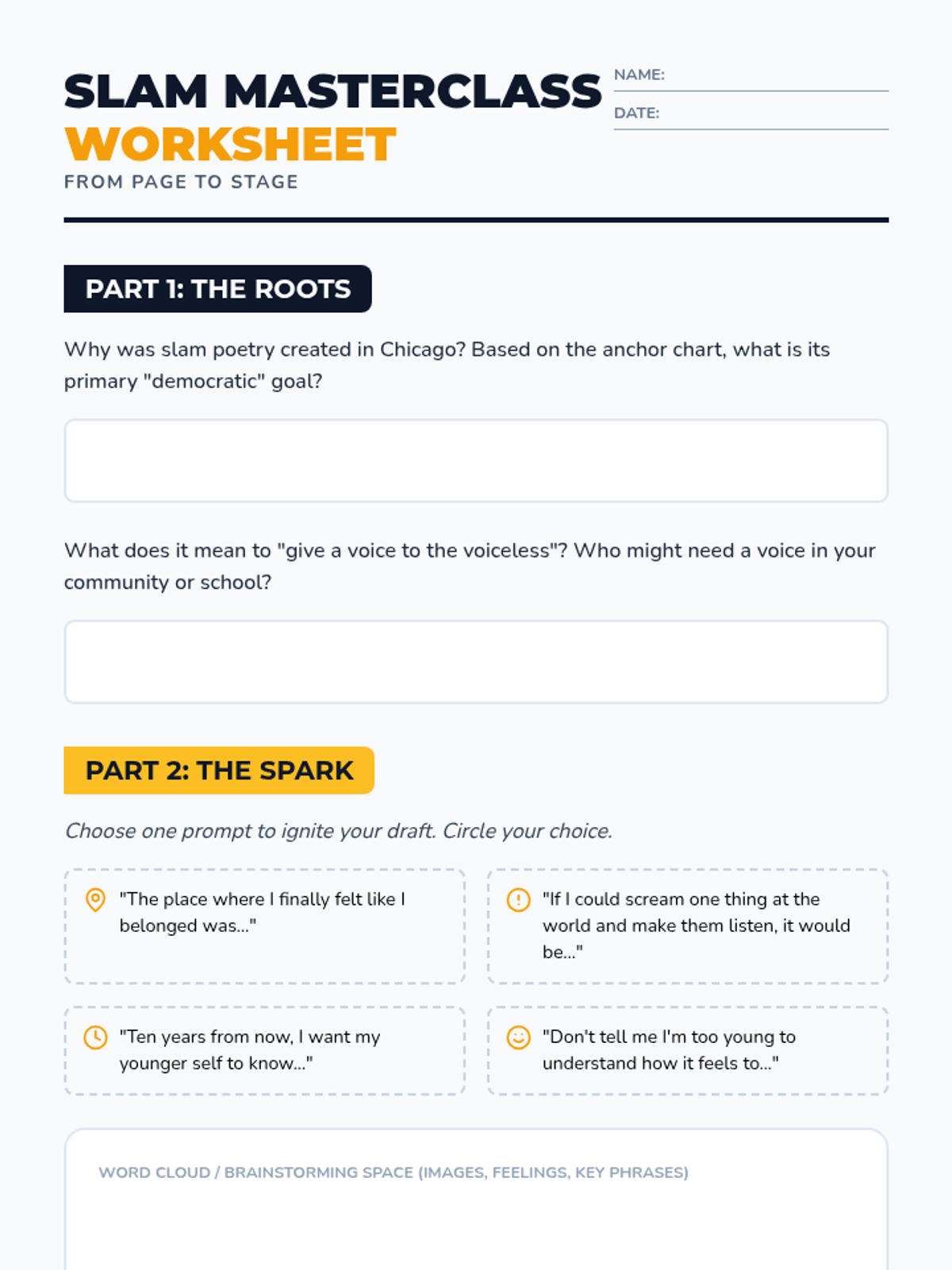
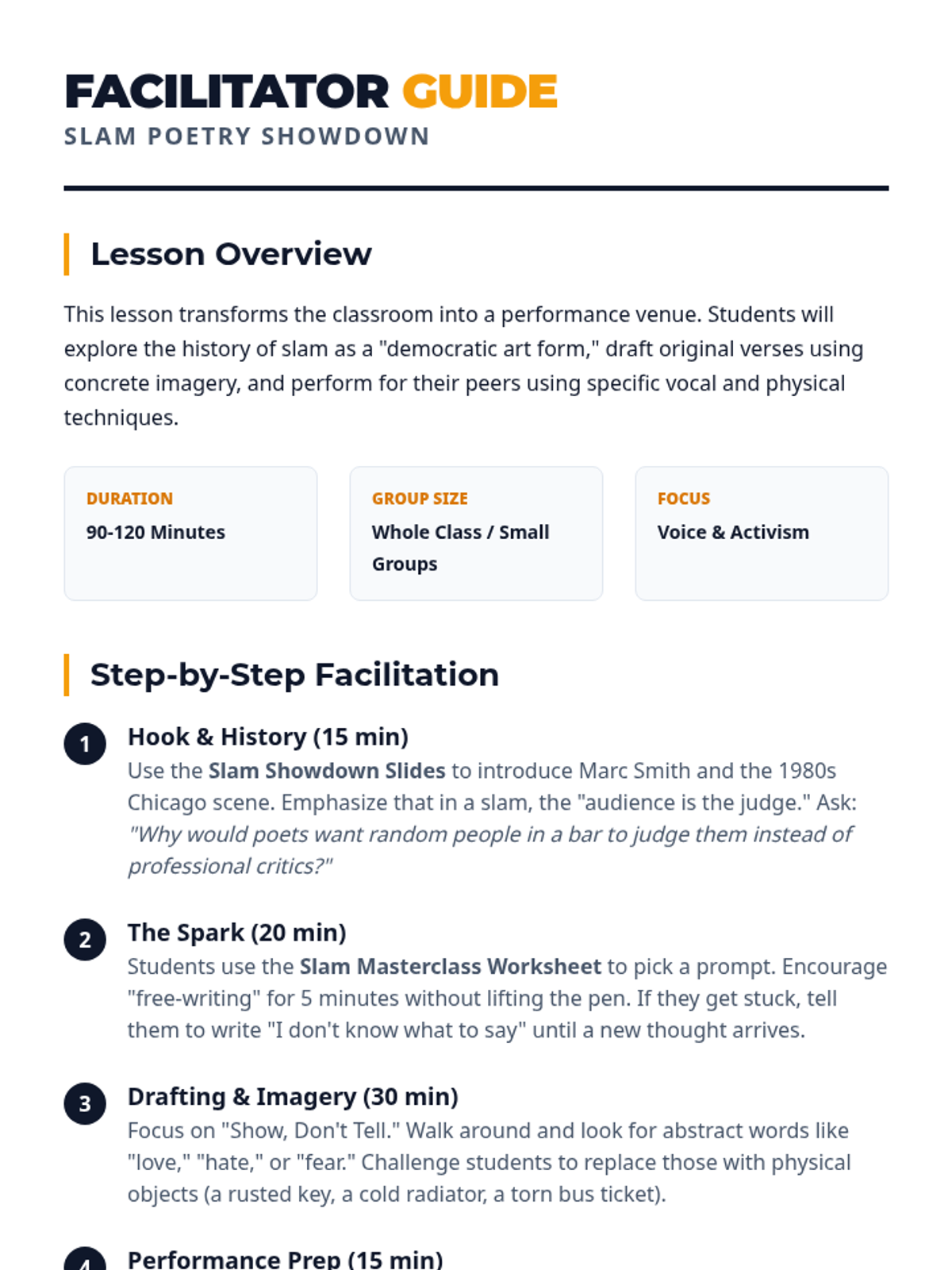
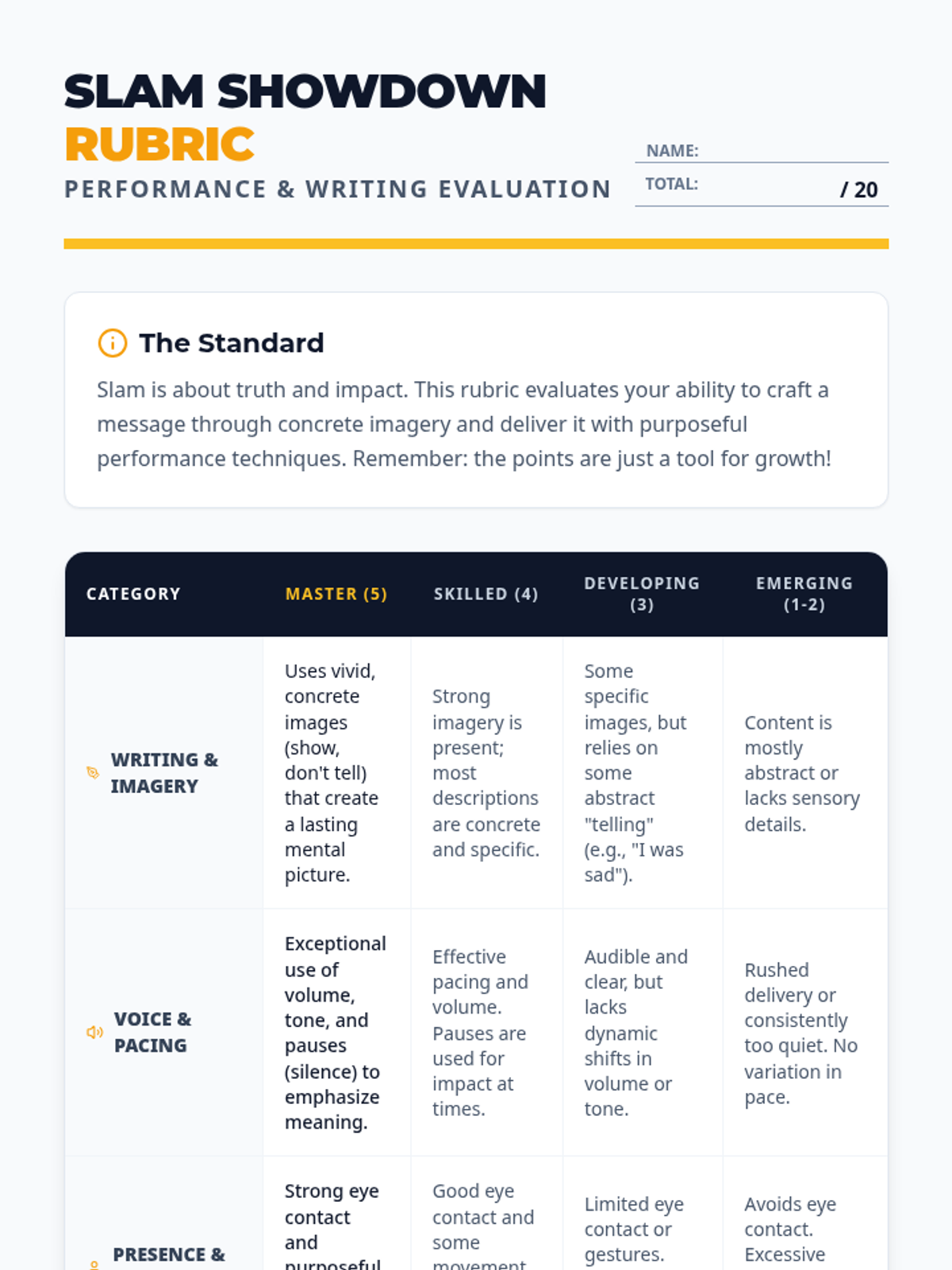
A comprehensive lesson guiding students from the history and purpose of slam poetry through writing original verses to performing with impact and giving constructive peer feedback.
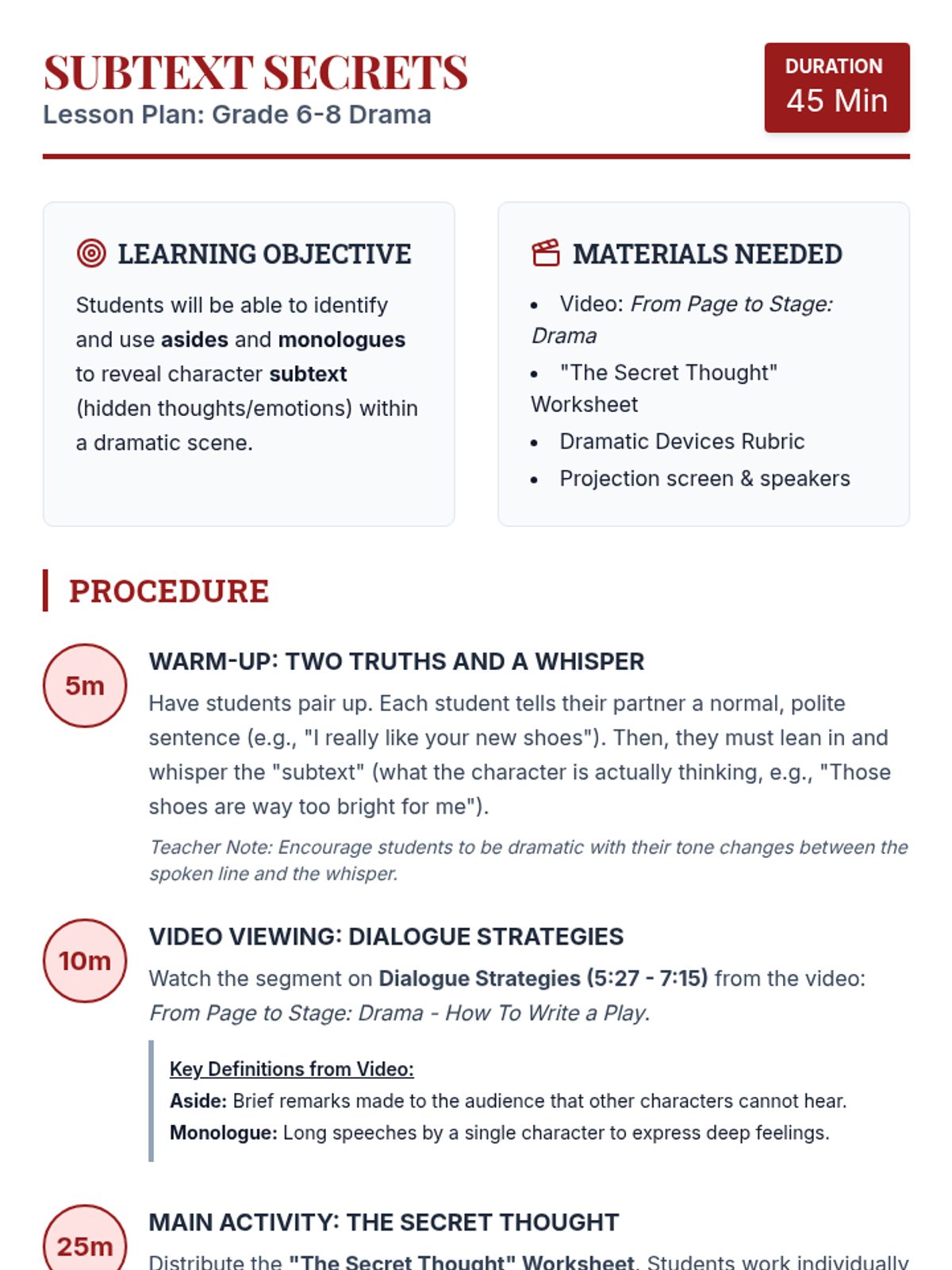
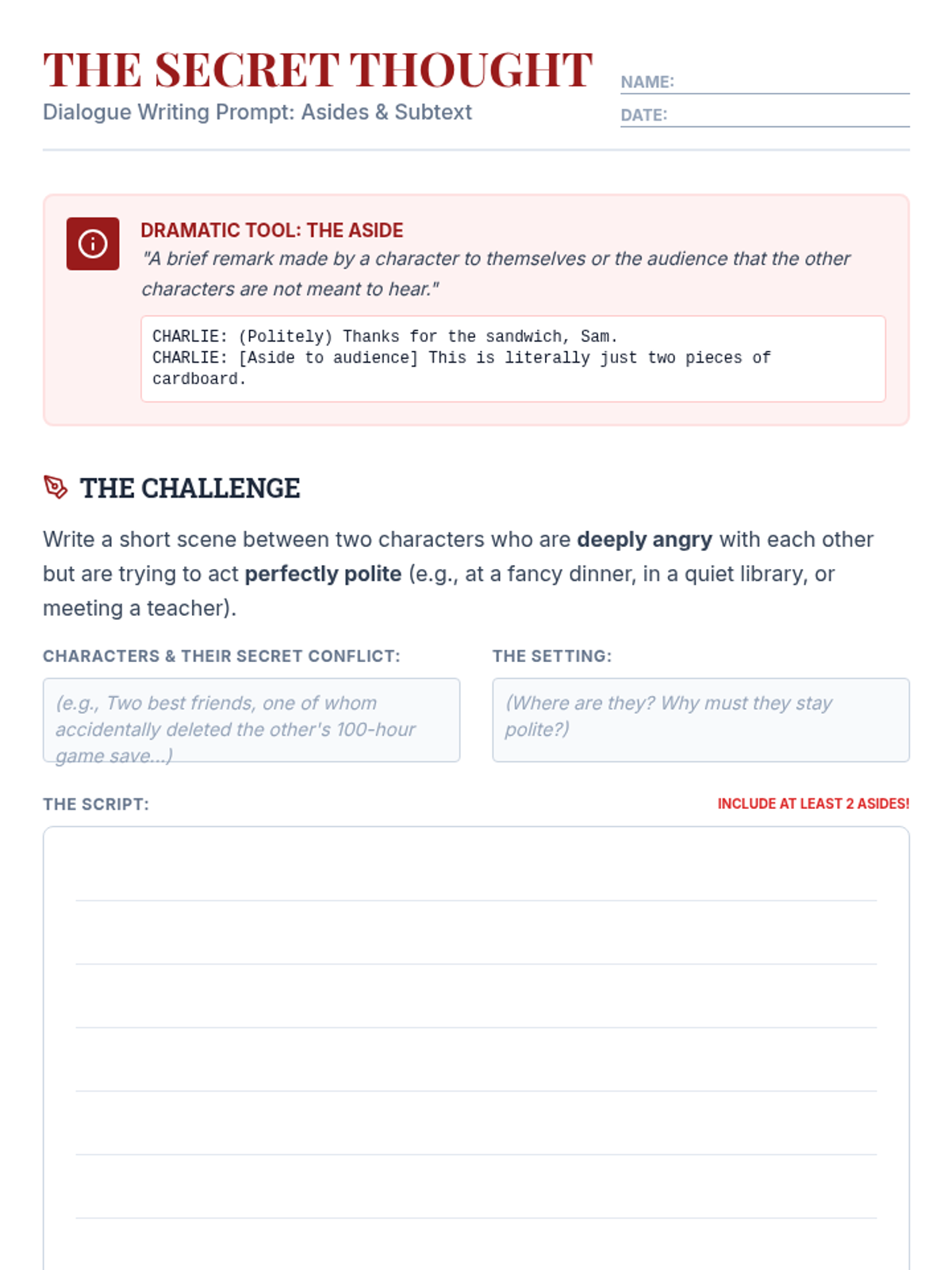
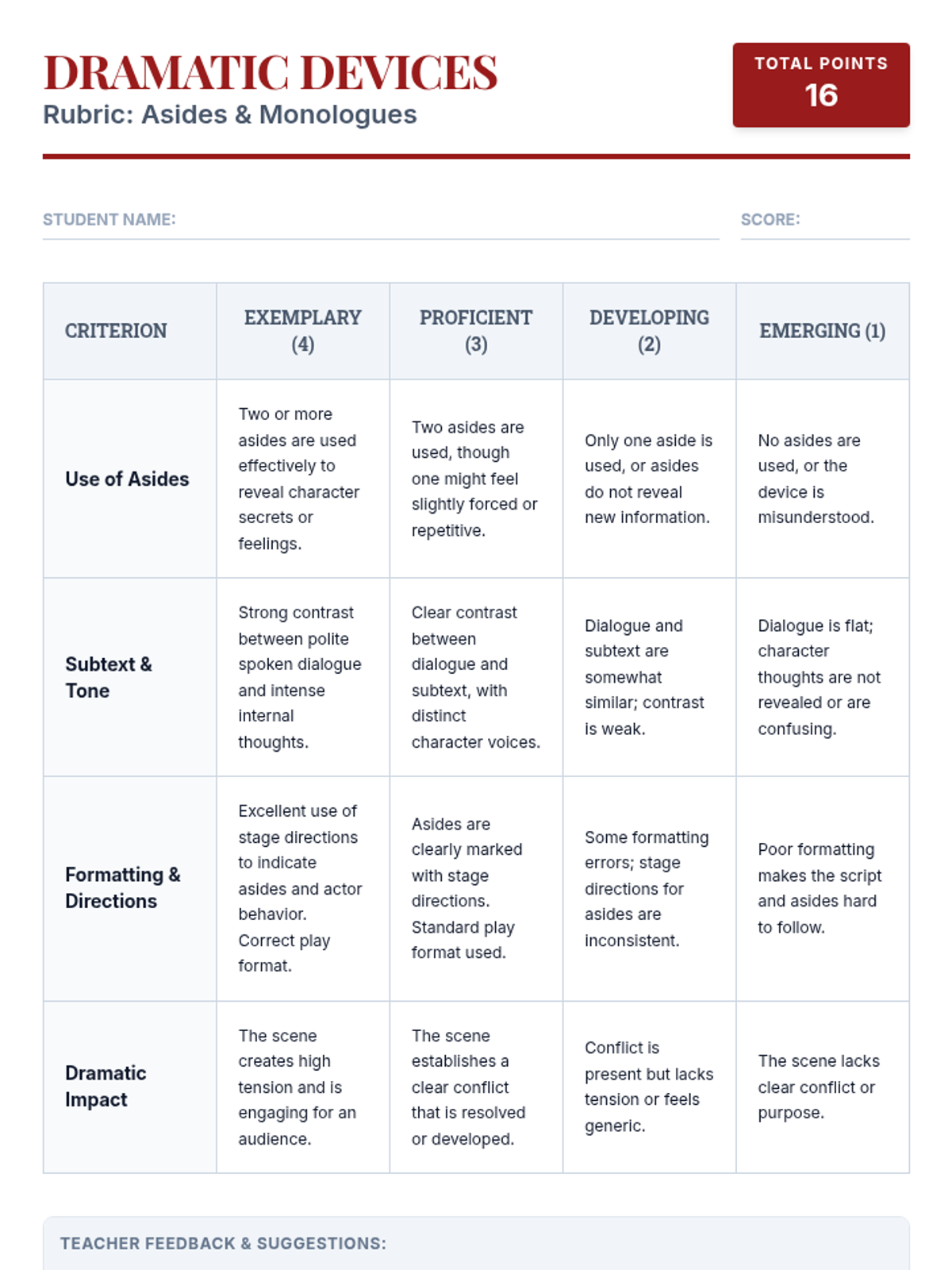
A middle school drama lesson focusing on using asides and monologues to reveal character subtext, featuring a video on playwriting strategies.
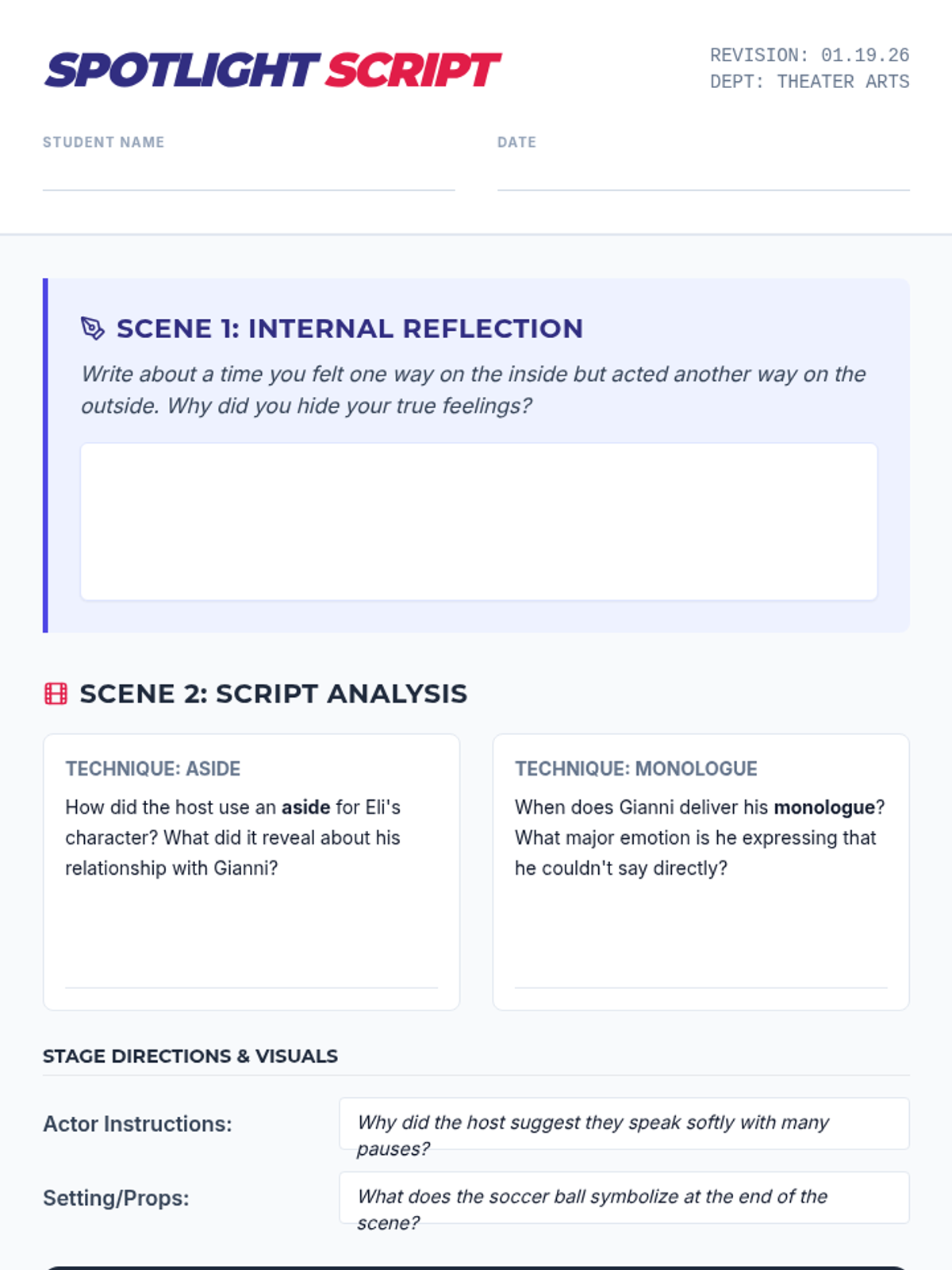
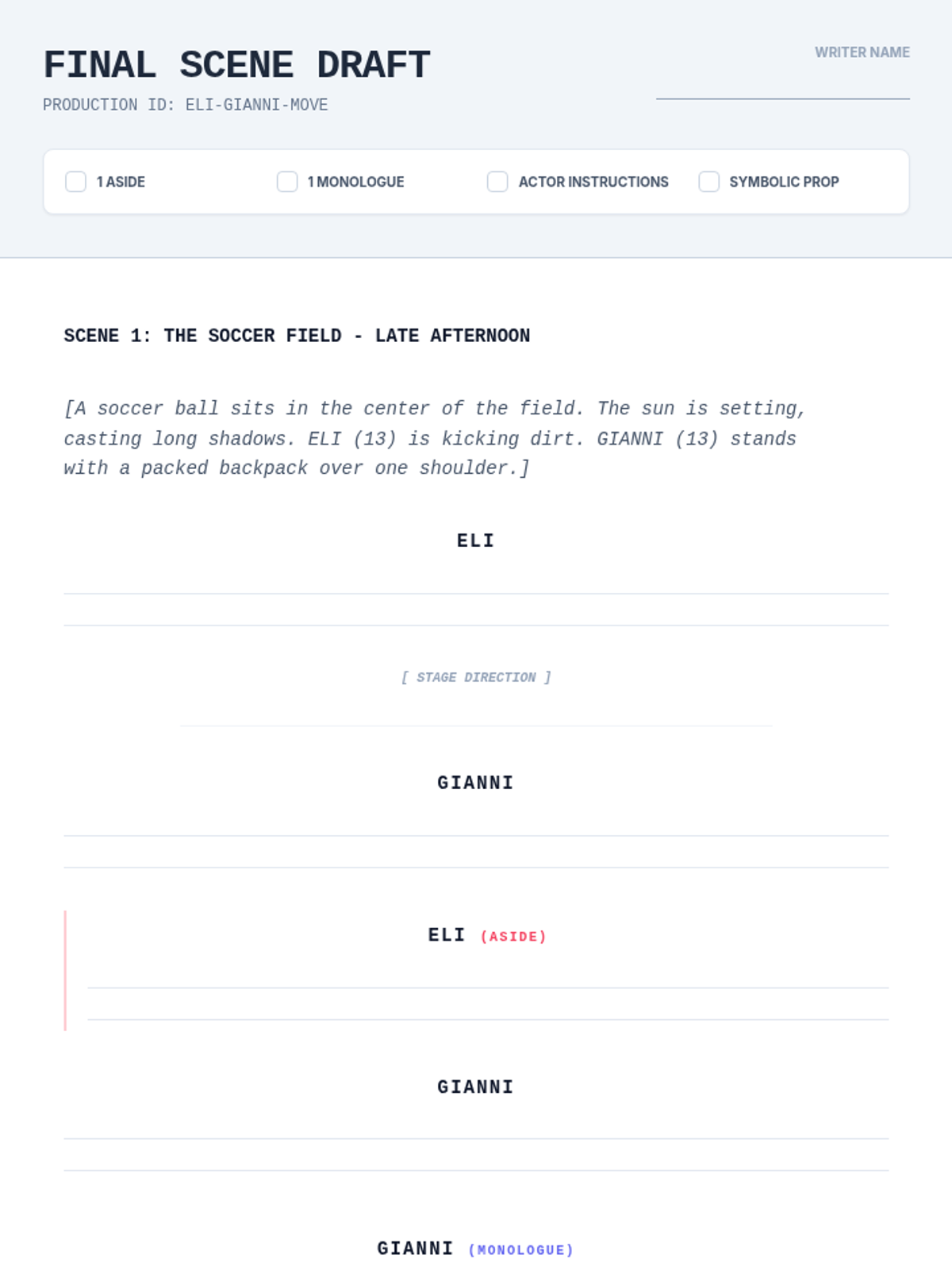
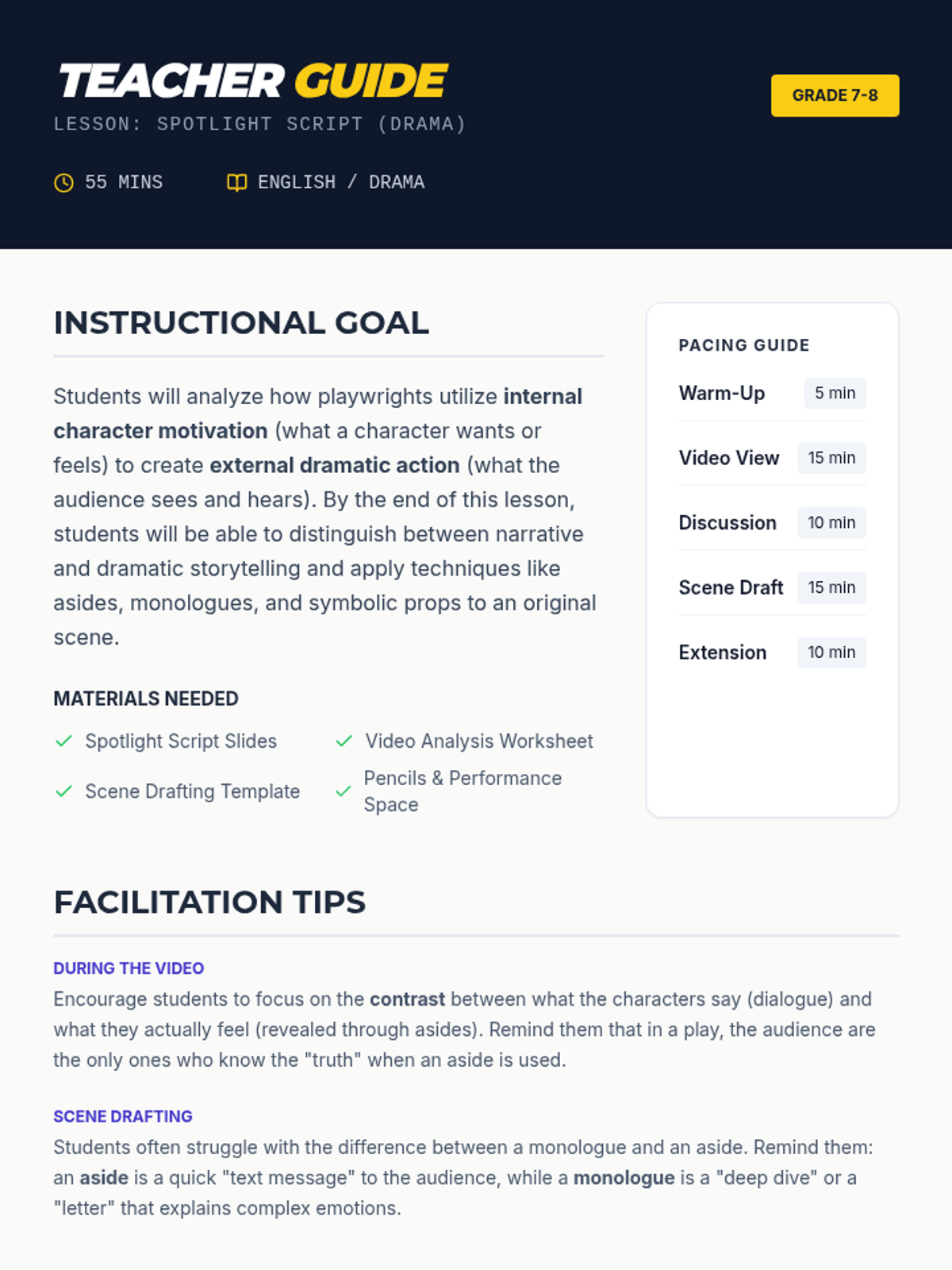
Students explore how playwrights translate internal character thoughts and emotions into external dramatic action using dialogue, stage directions, and symbolic props. The lesson centers on a scenario involving two friends, Eli and Gianni, dealing with a difficult goodbye.
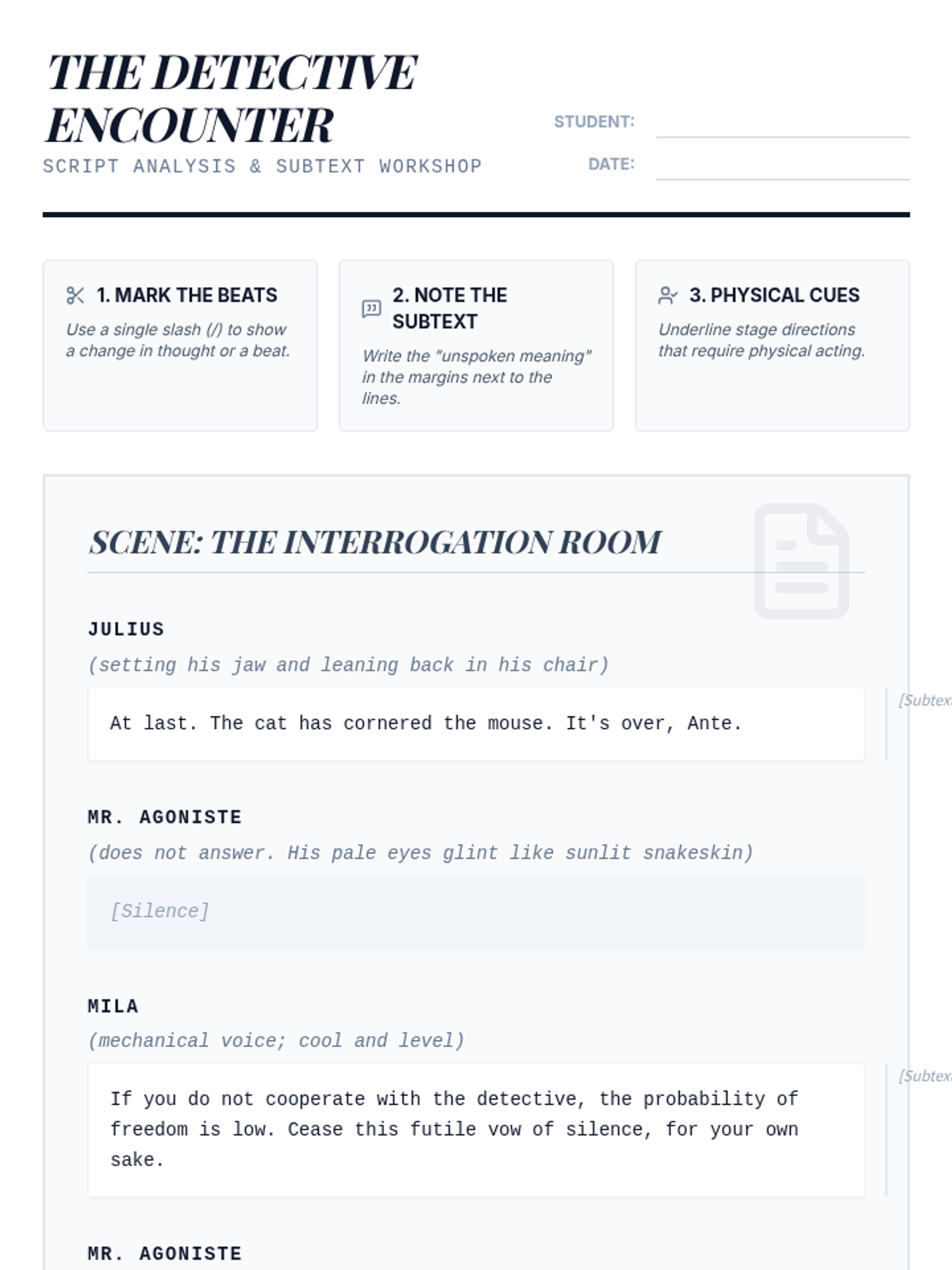
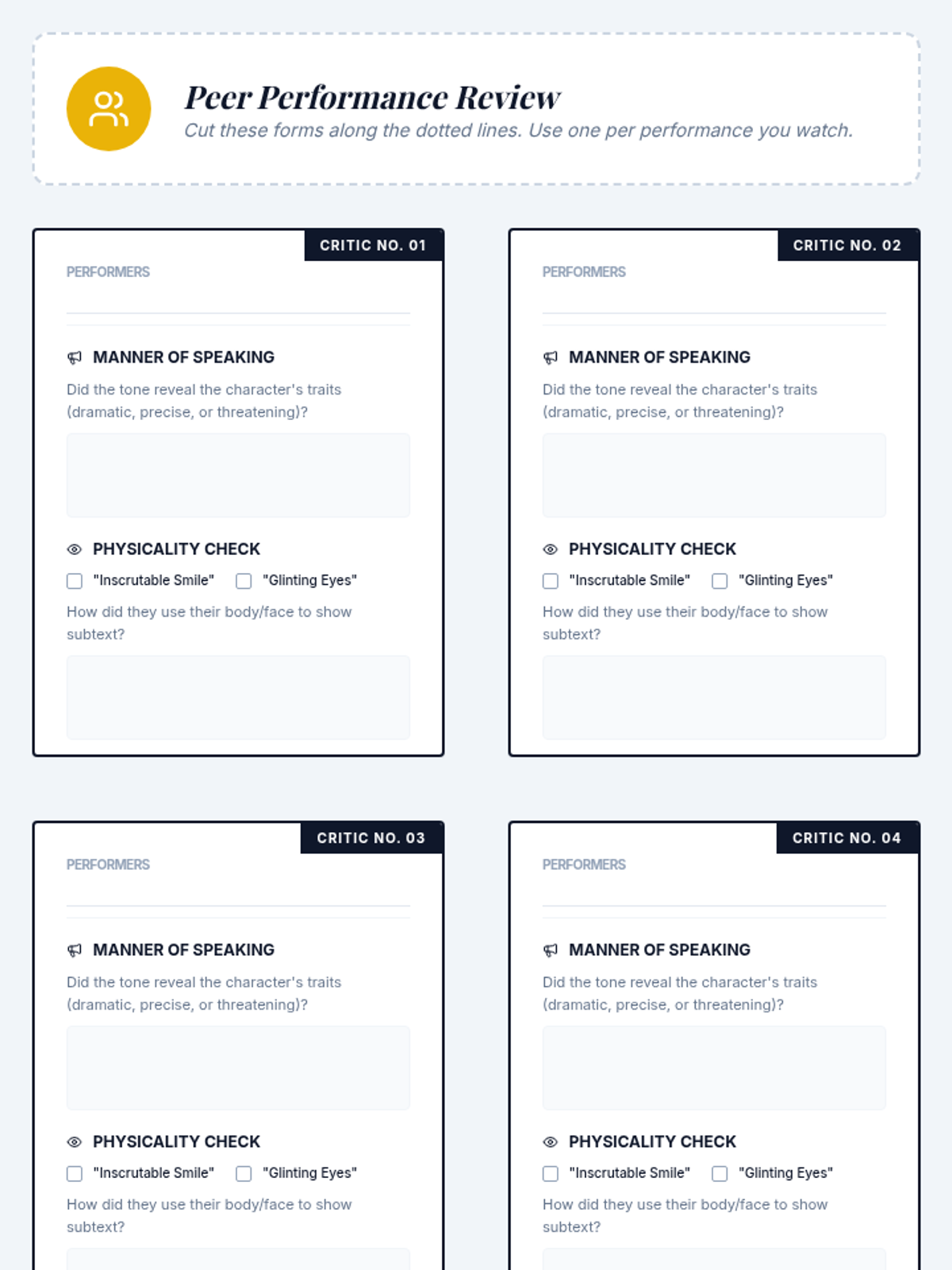
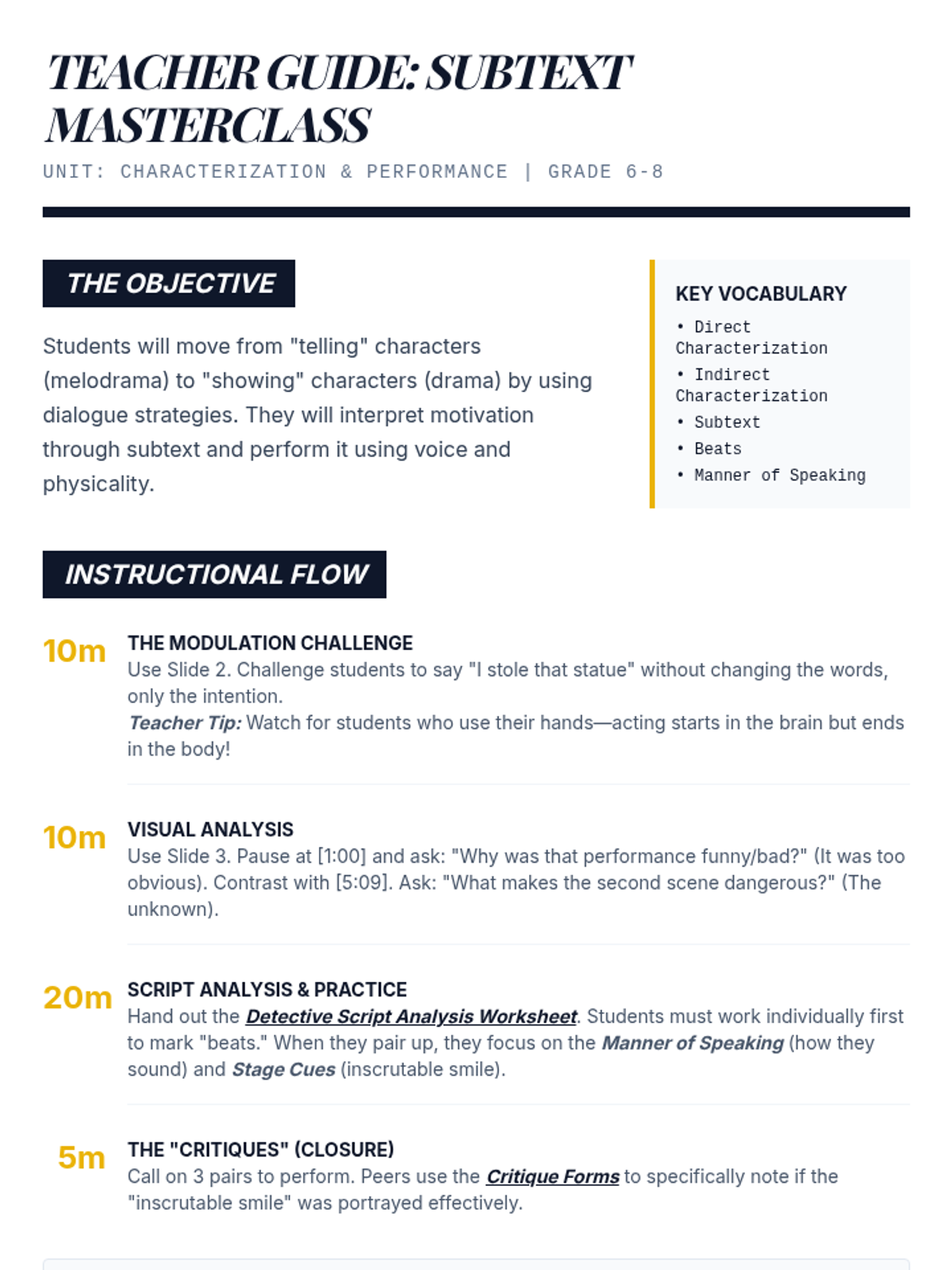
Students explore indirect characterization and subtext through the lens of theatrical performance. They analyze a mentor script for 'beats' and perform it using specific vocal and physical strategies to convey hidden motivations.
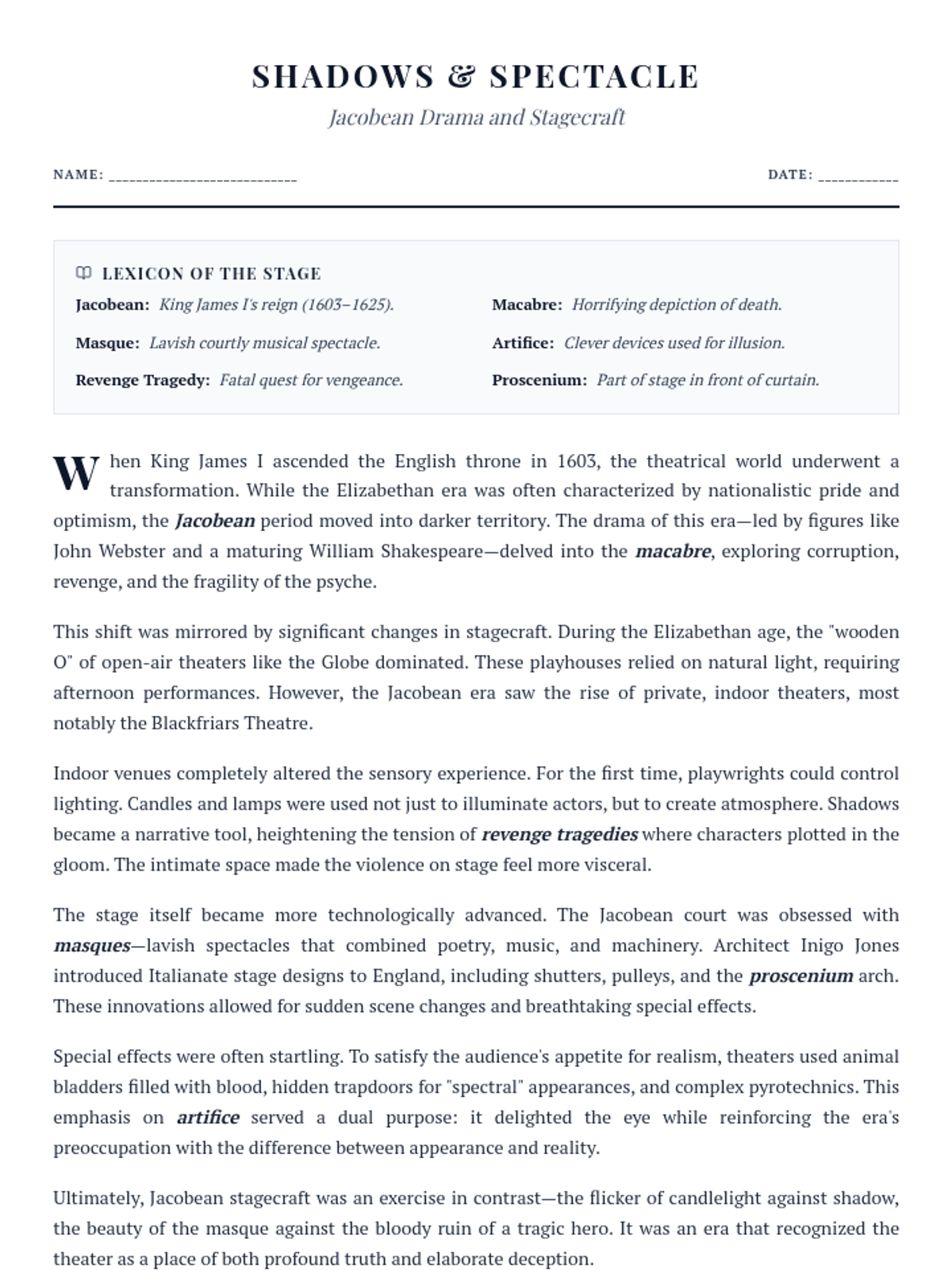
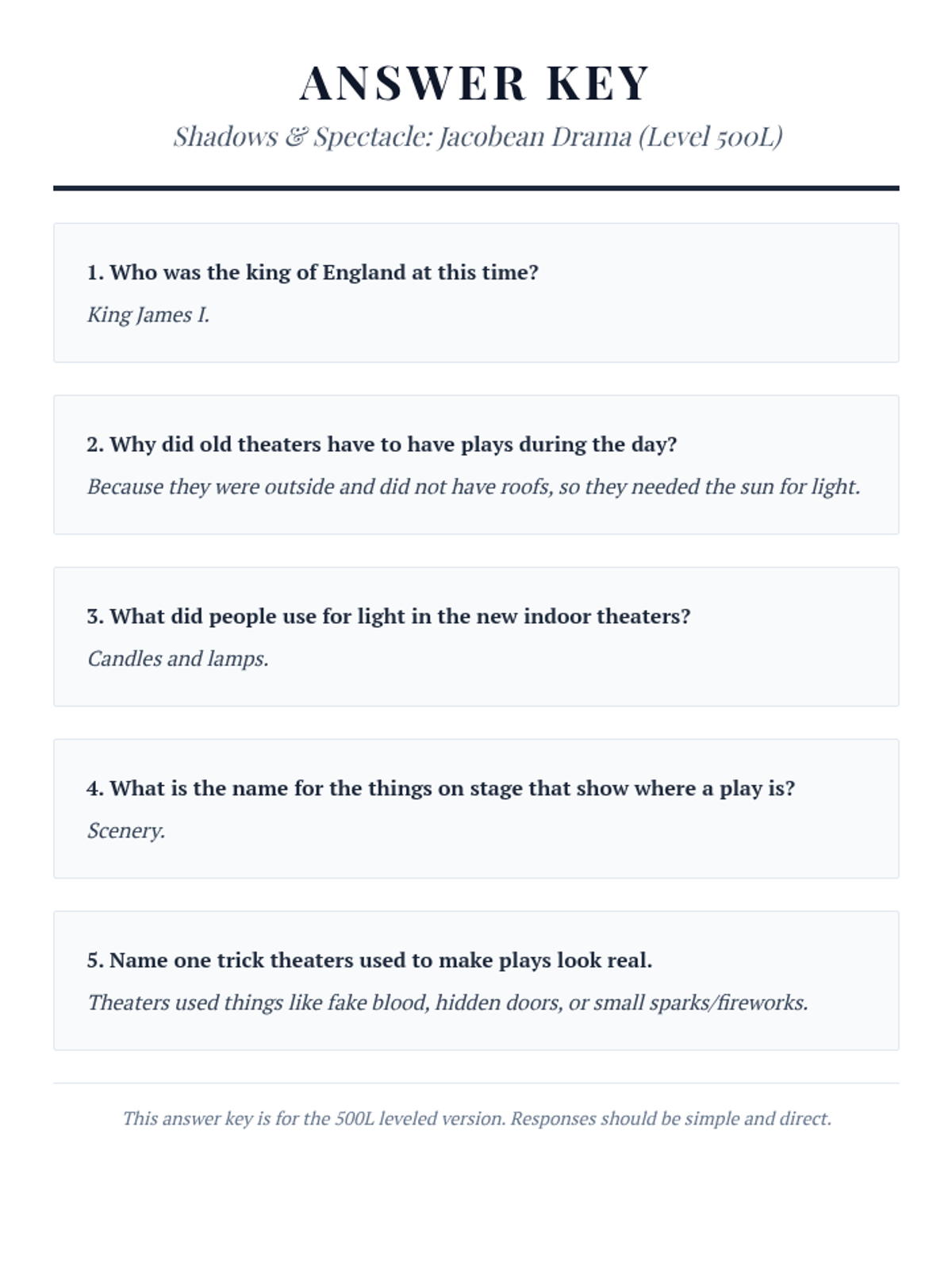
A lesson exploring the evolution of English theater during the reign of King James I, focusing on stagecraft, darker themes, and the transition to indoor performance spaces.
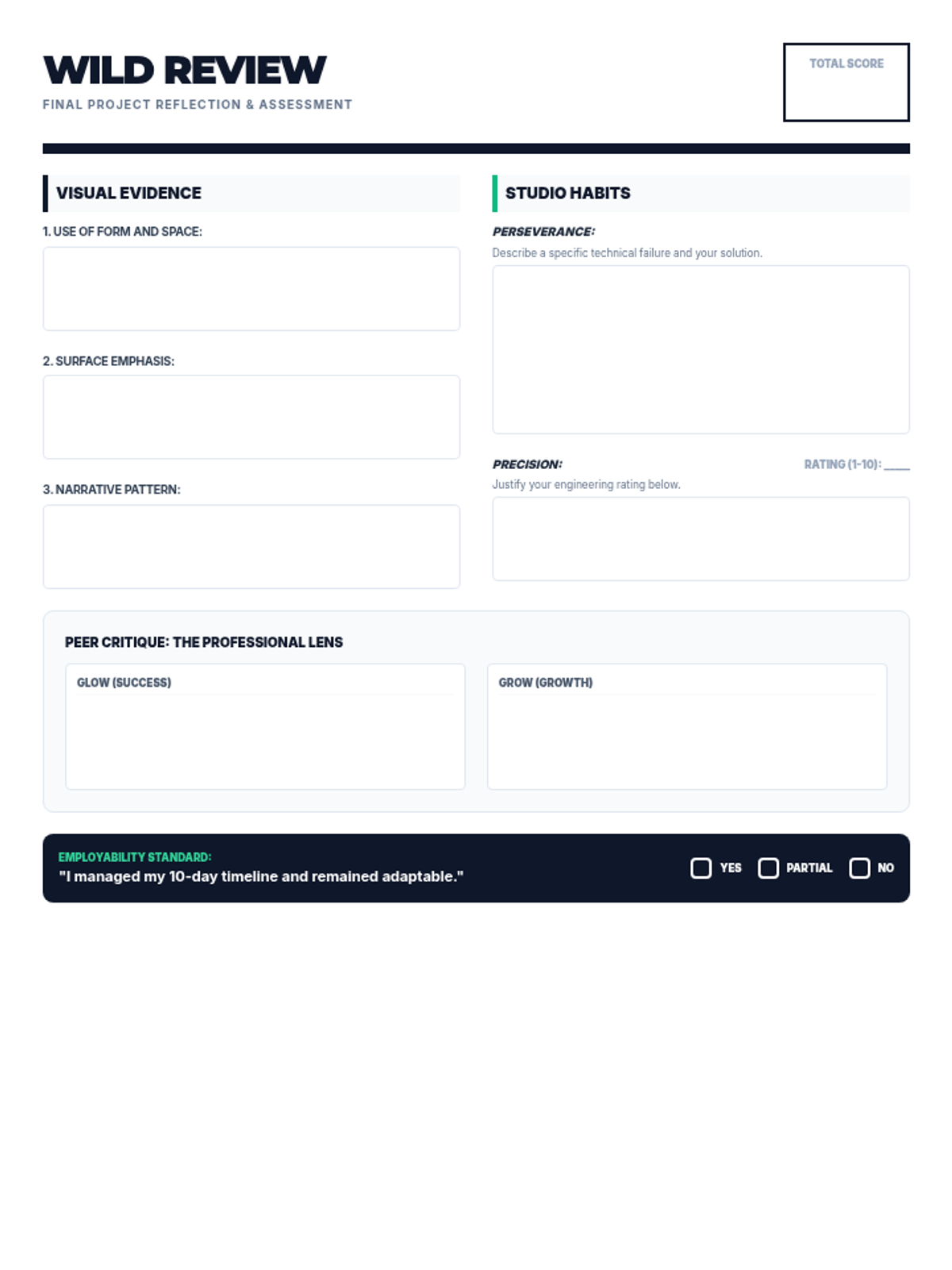
Applying color, texture, and detail using acrylics and paint markers, followed by a final project reflection.
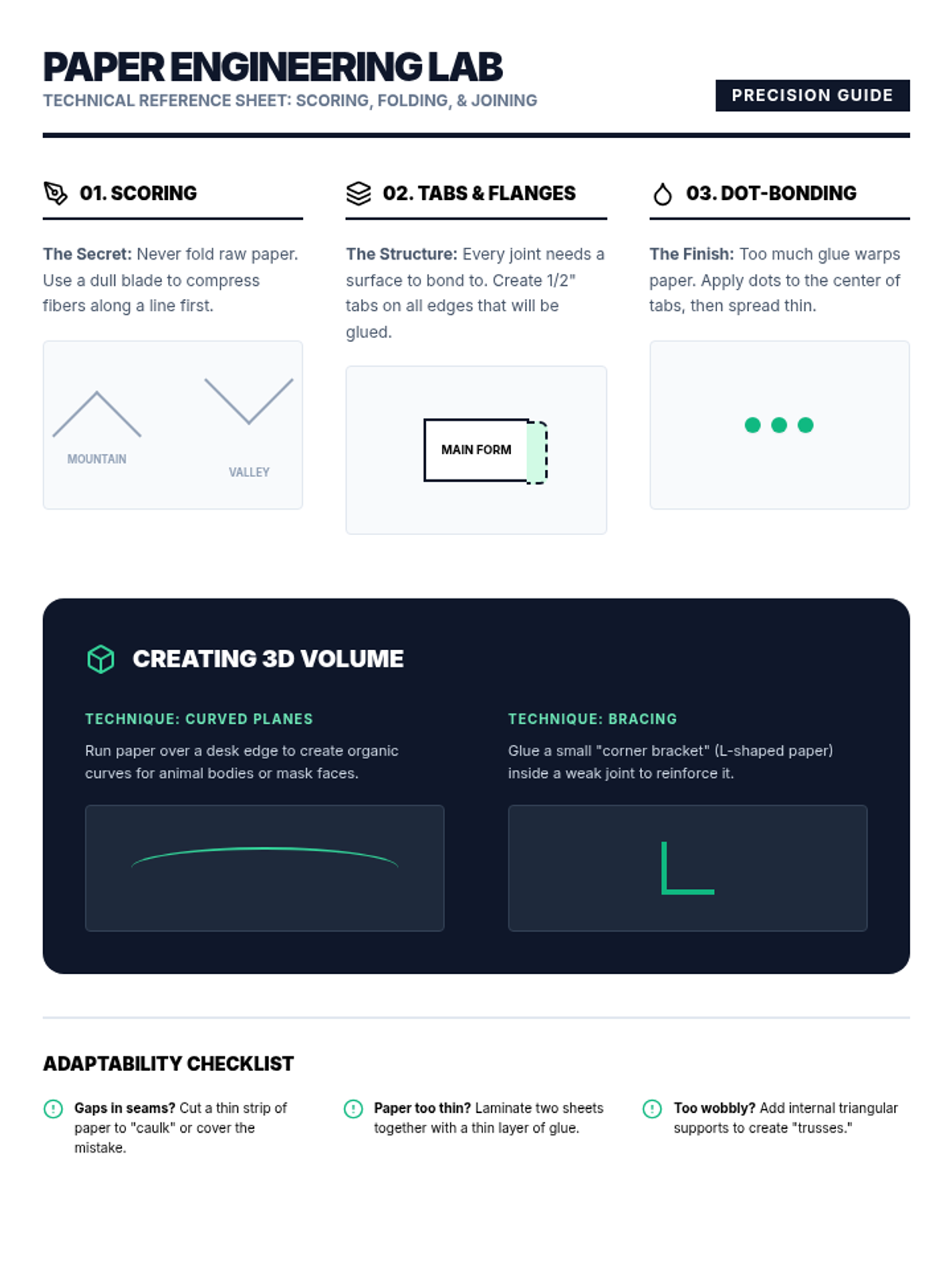
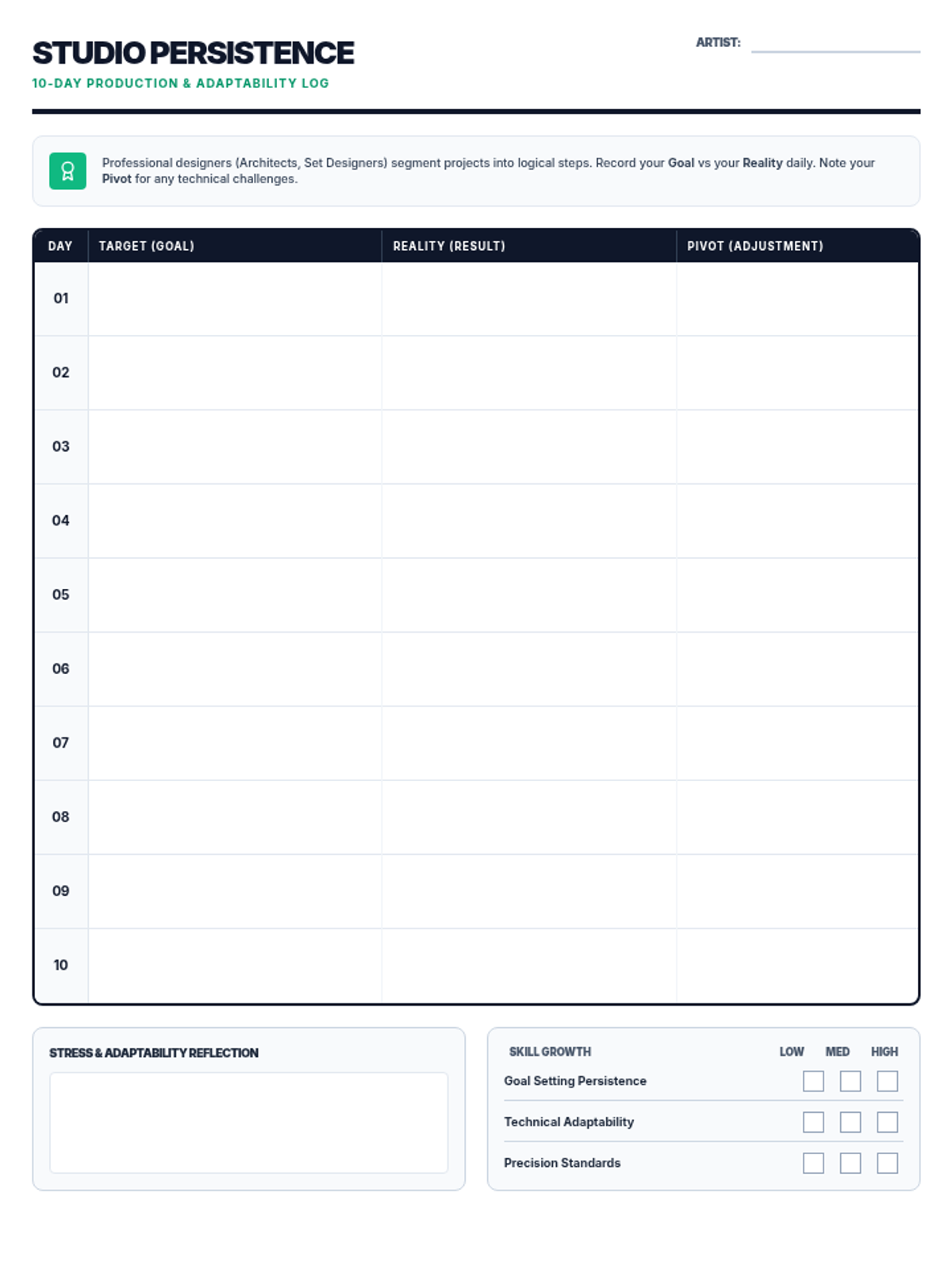
Building the 3D form using advanced folding, scoring, and attachment techniques while practicing studio habits and perseverance.
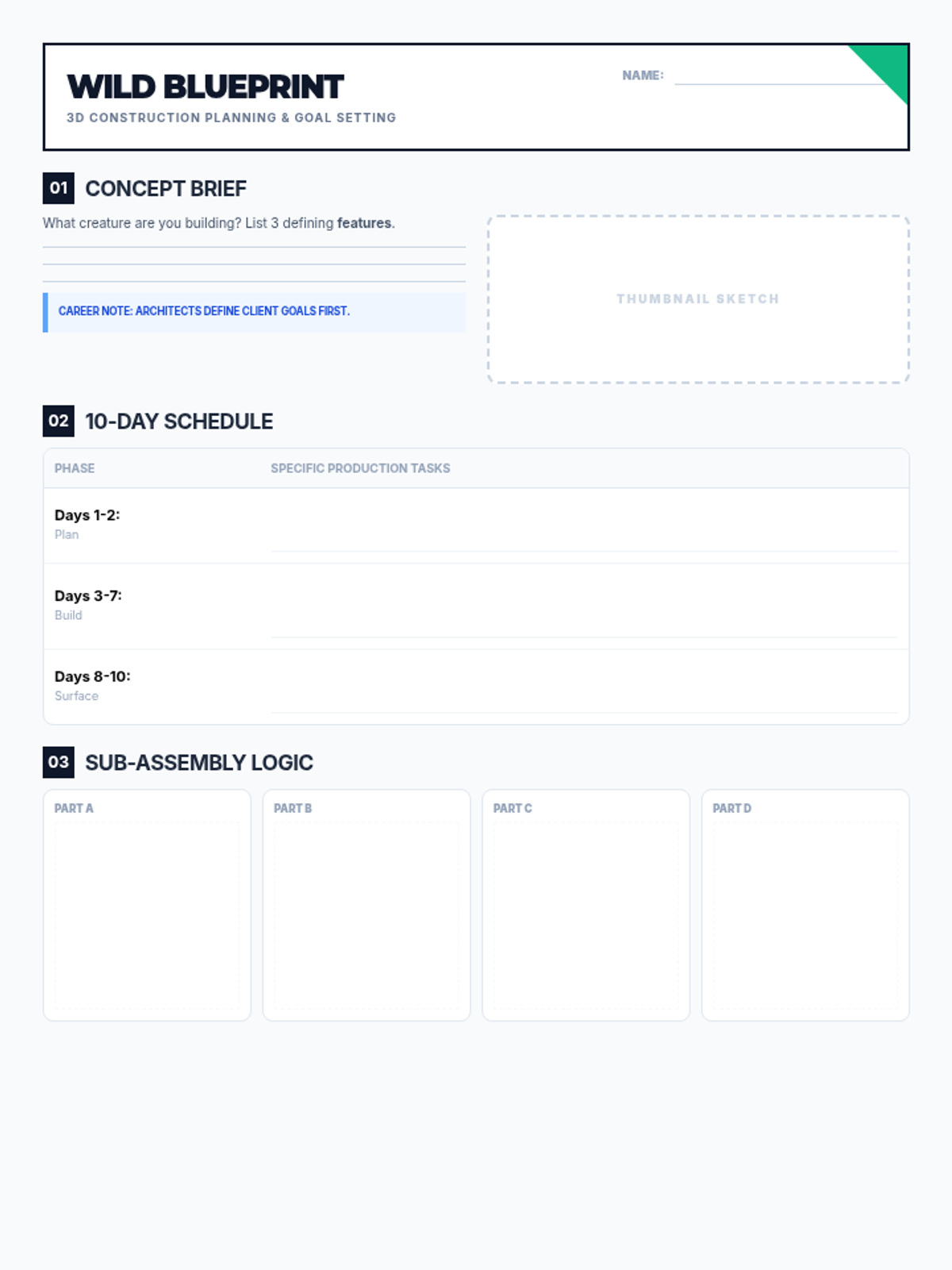
Introduction to paper engineering techniques, career applications, and project planning for 3D paper animal or mask construction.
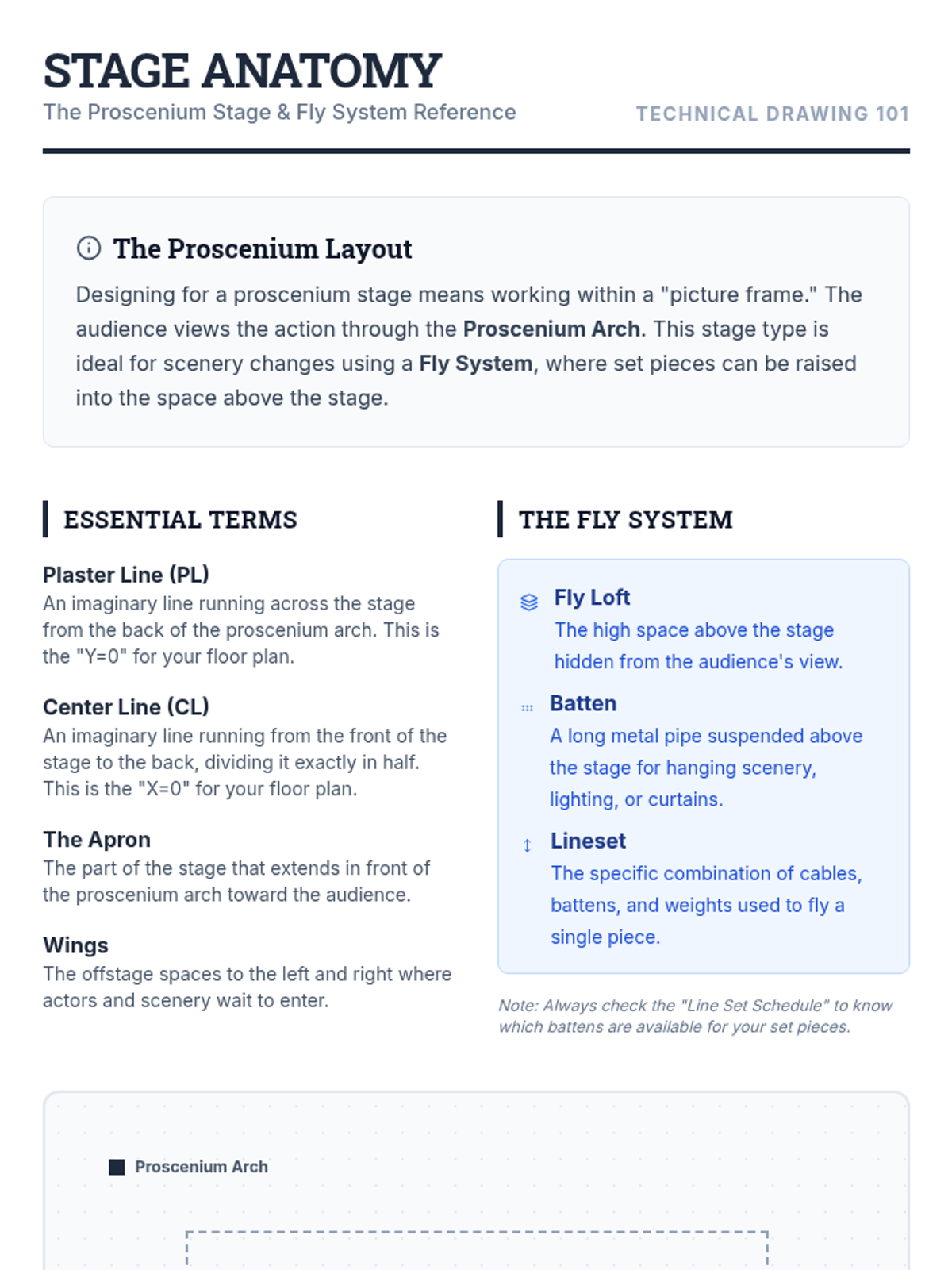
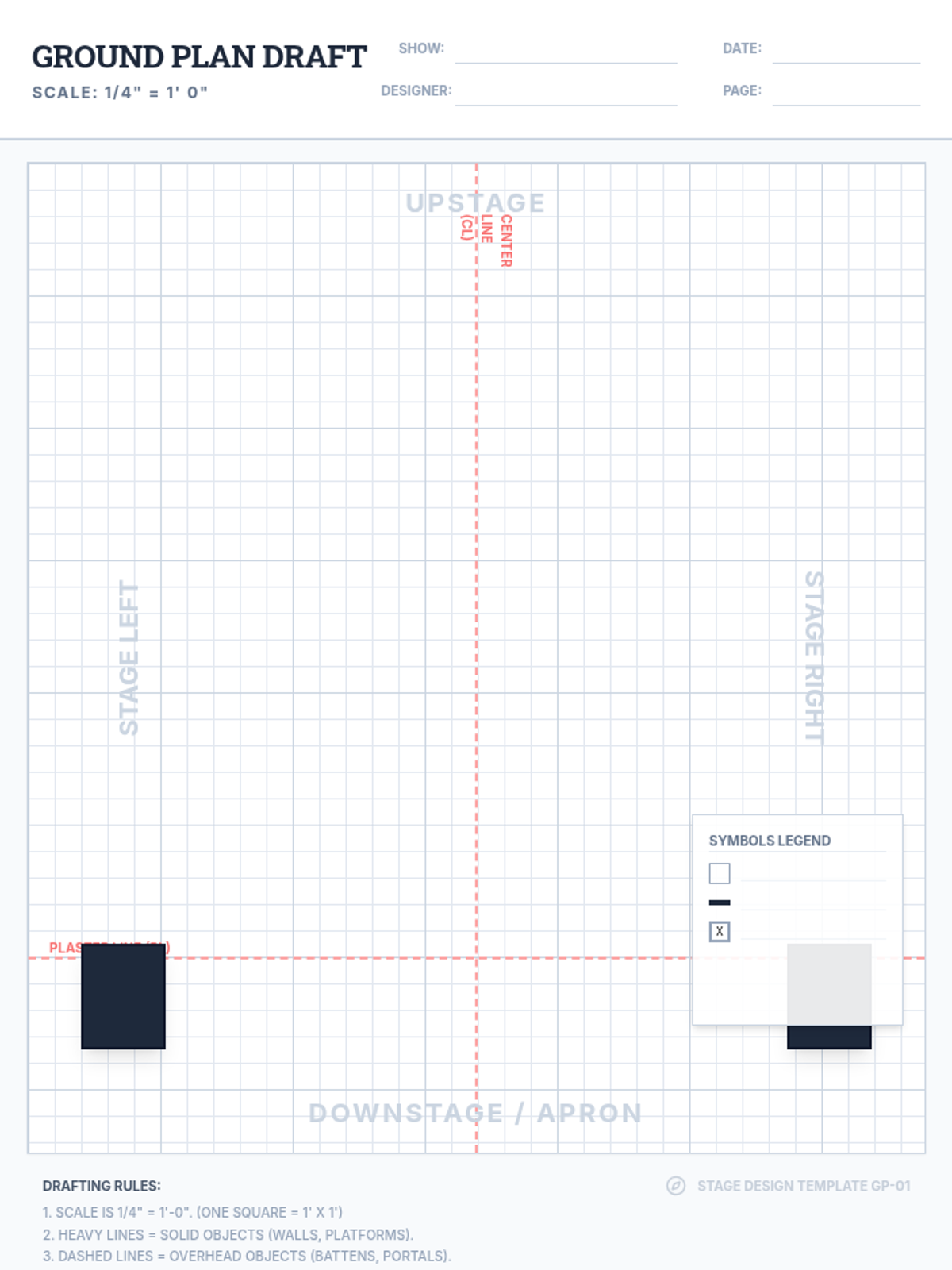
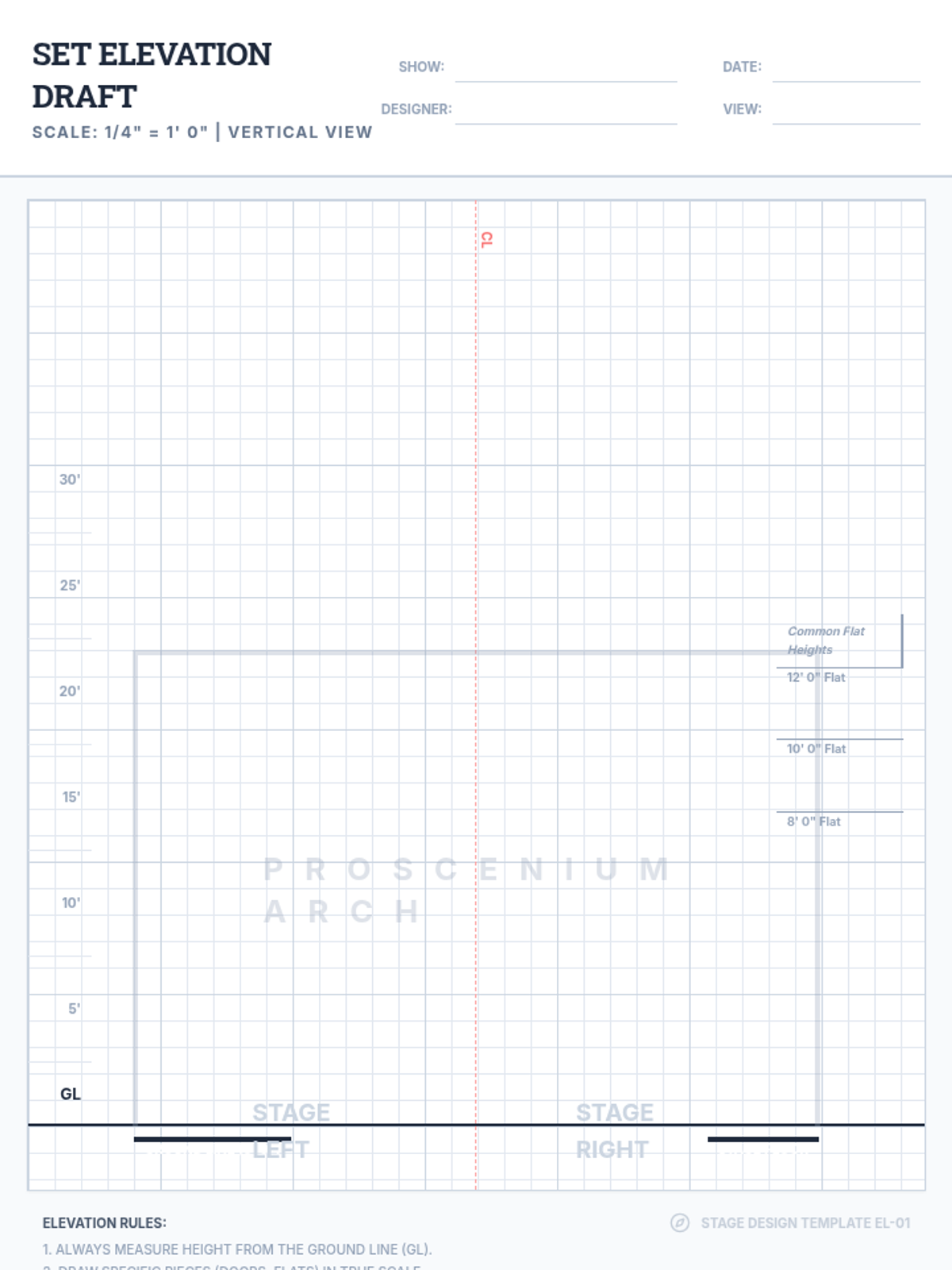
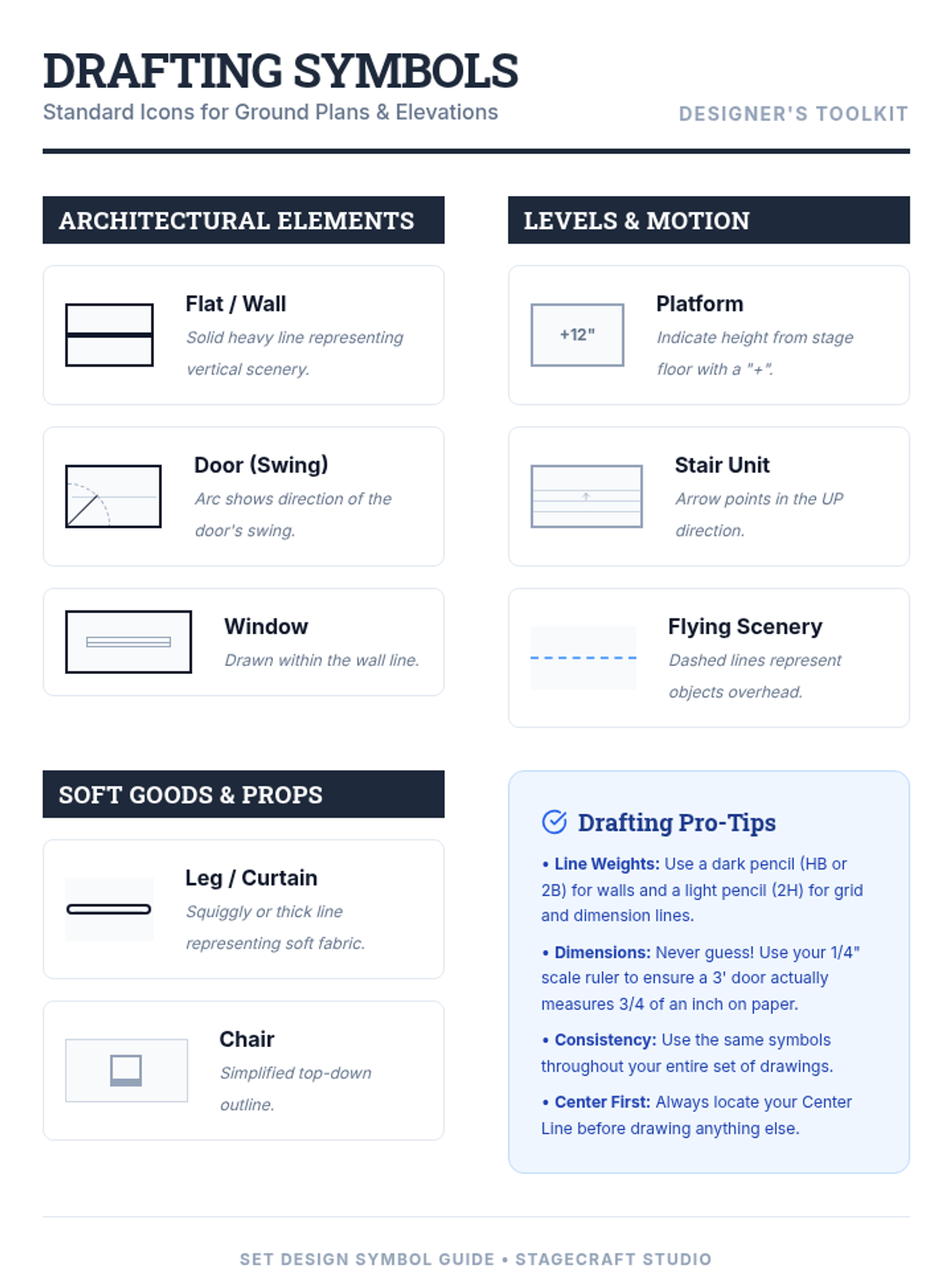
A comprehensive set of technical drawing templates and reference guides for theatrical set design. This lesson focuses on the proscenium stage and fly system, providing students with the professional tools needed to create ground plans and elevations.
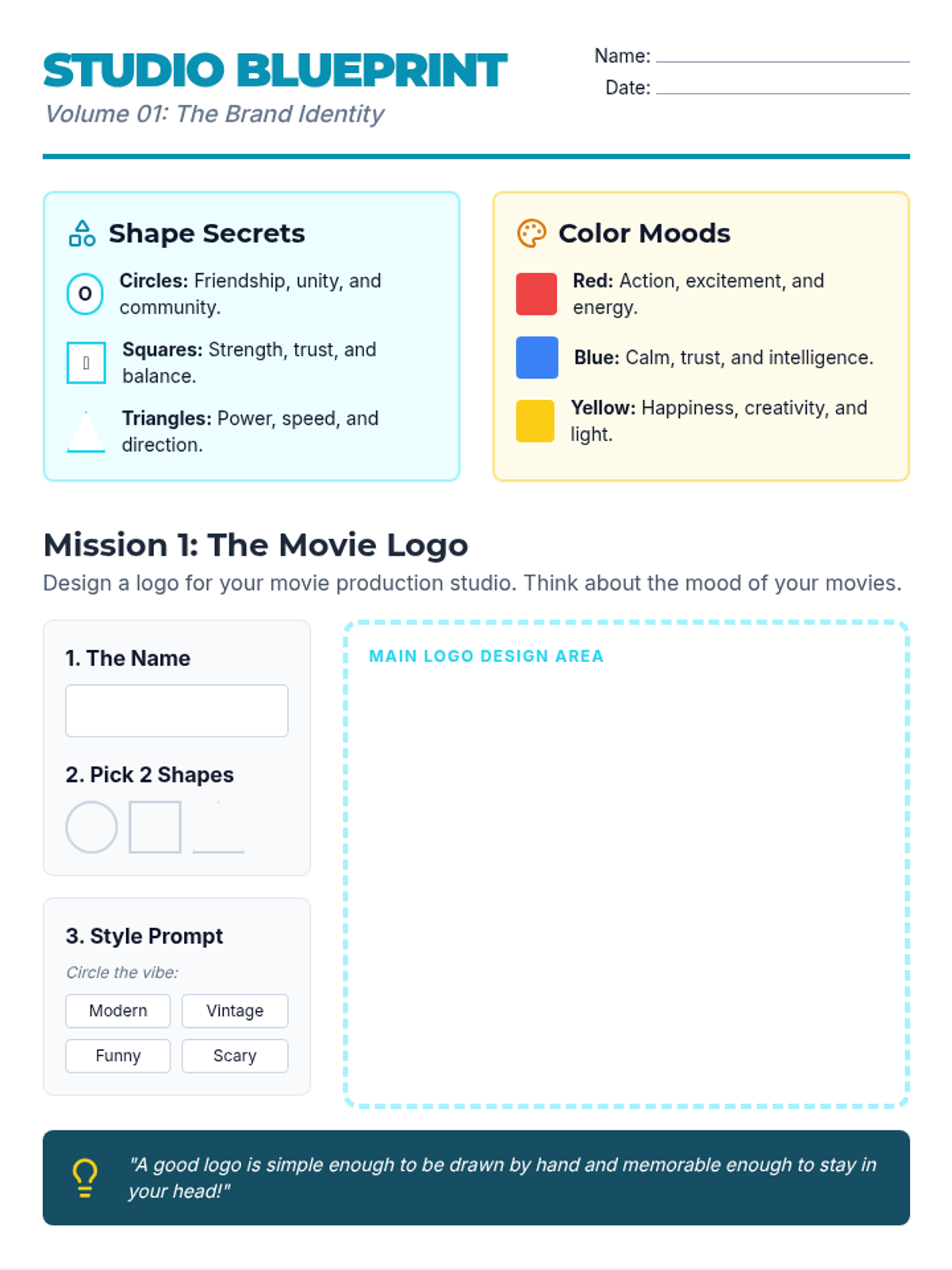
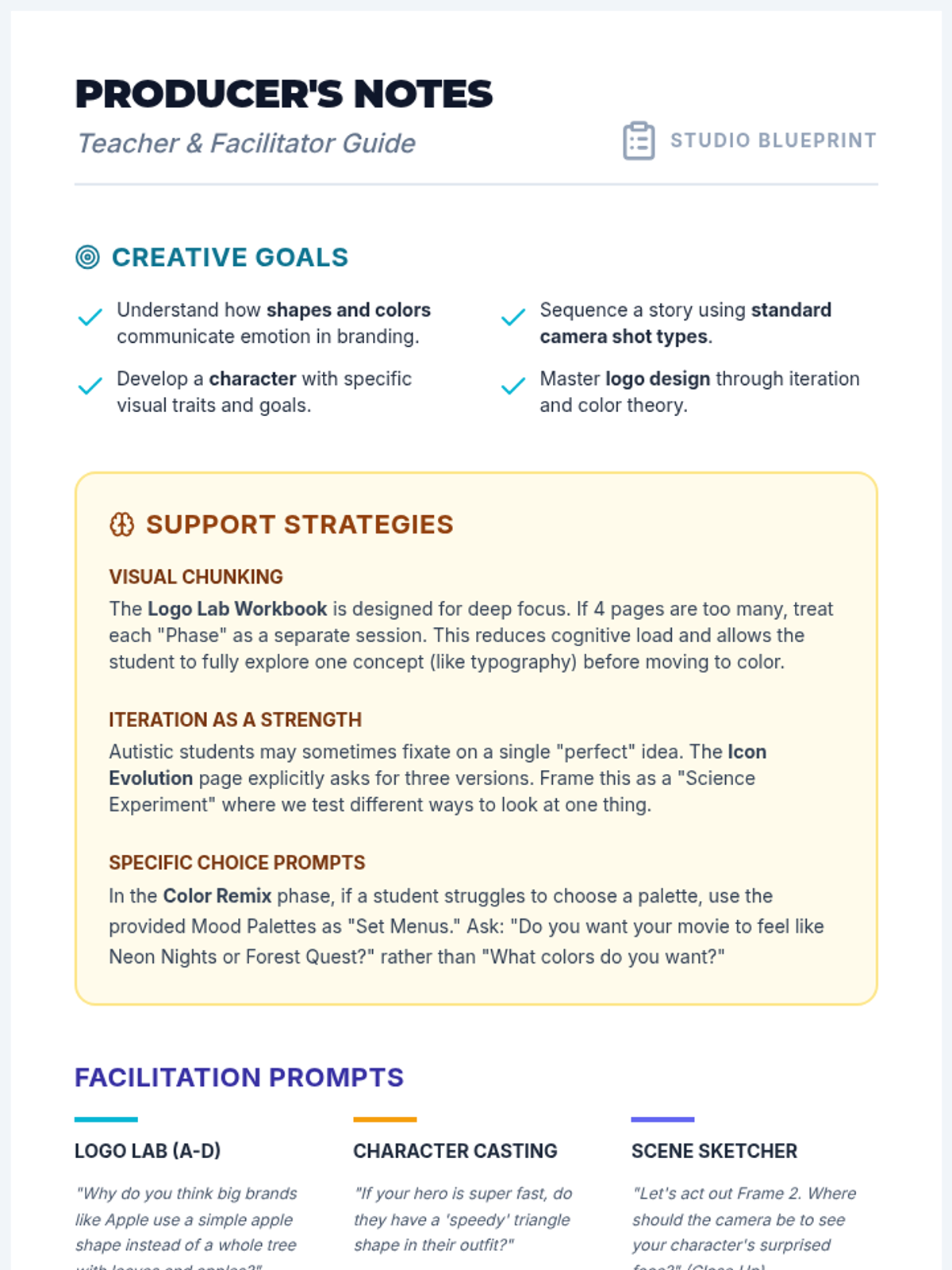
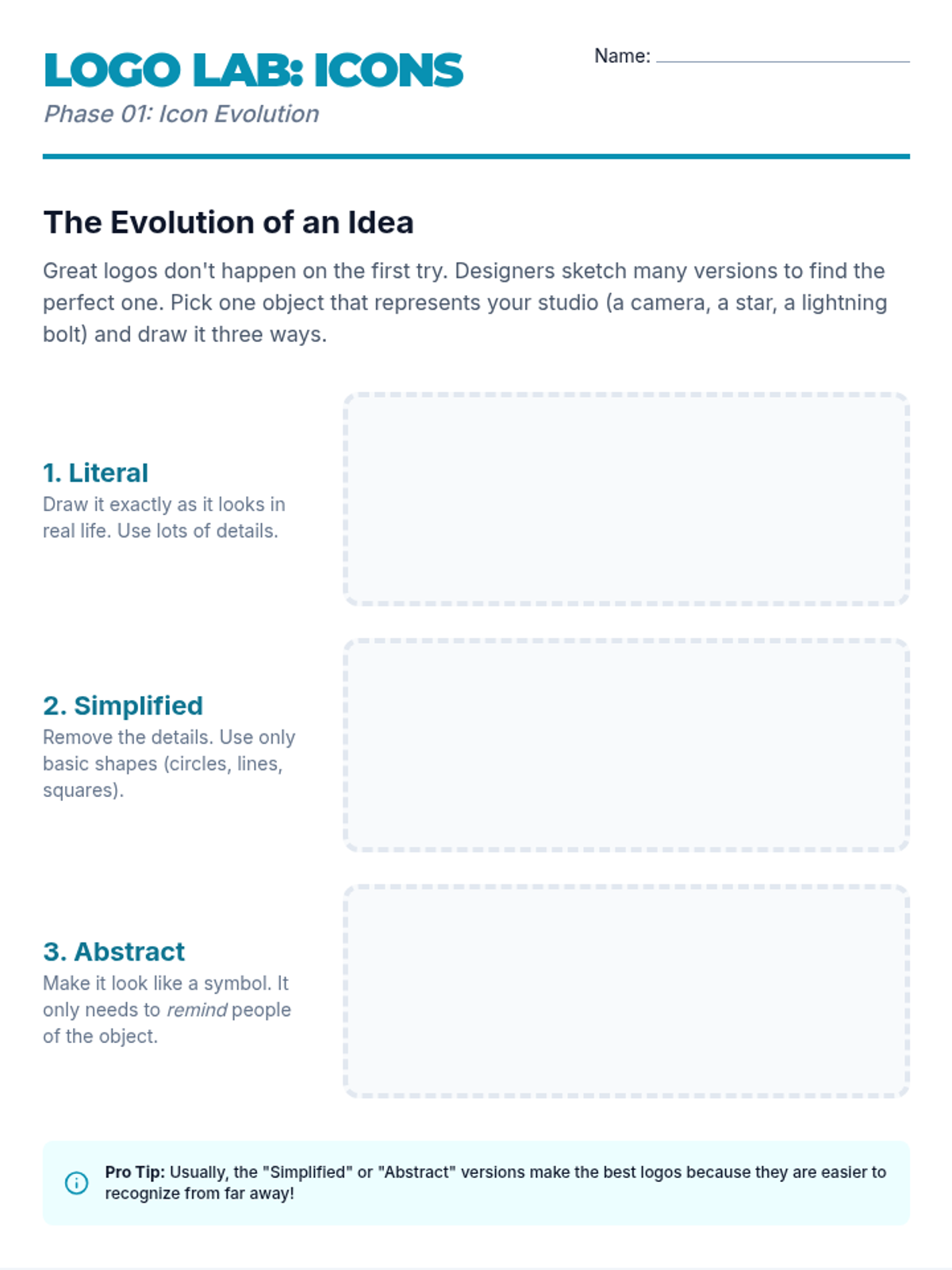
A creative, structured guide for students to explore the intersection of graphic design and filmmaking, focusing on branding, character design, and visual storytelling.
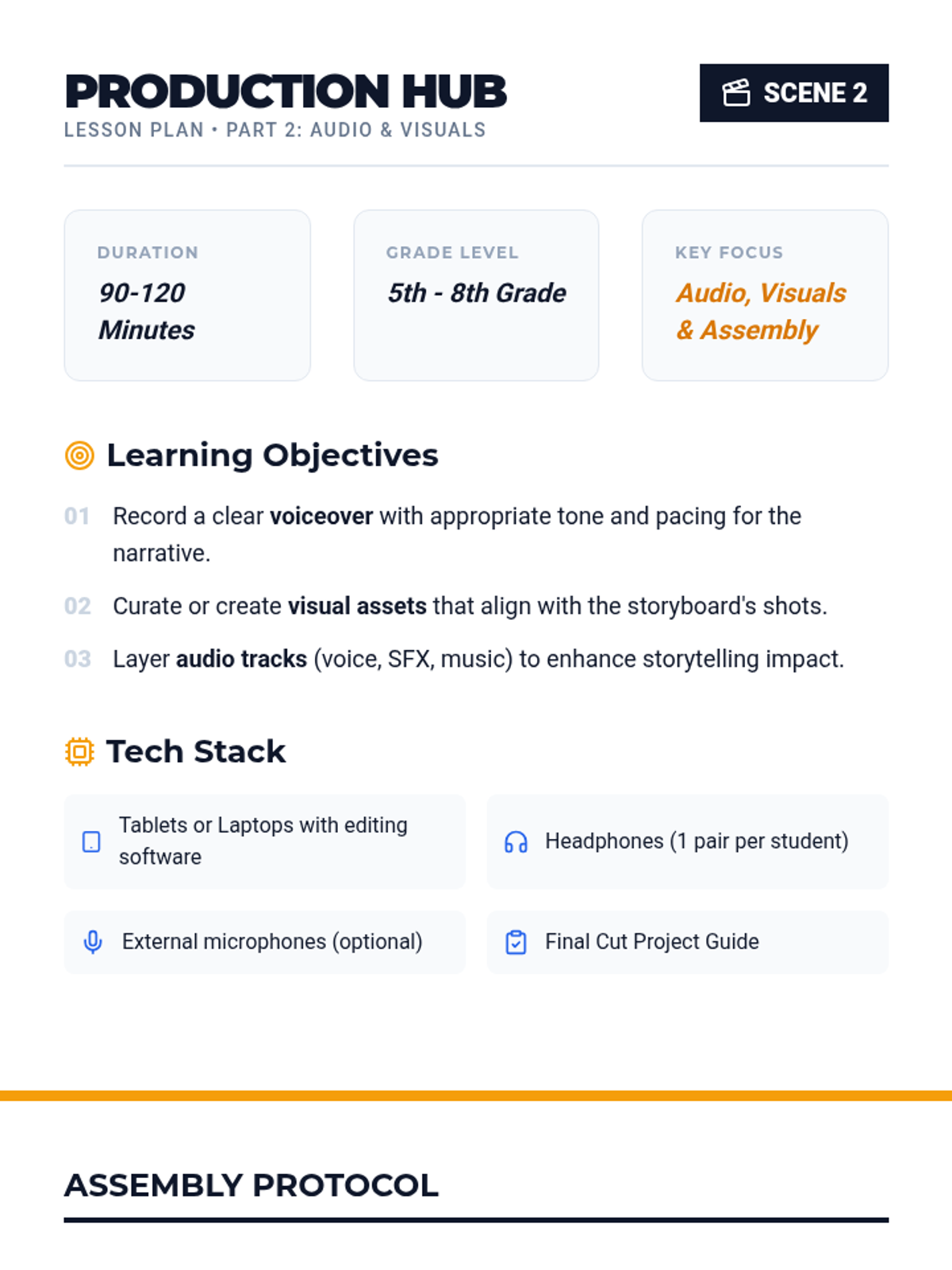
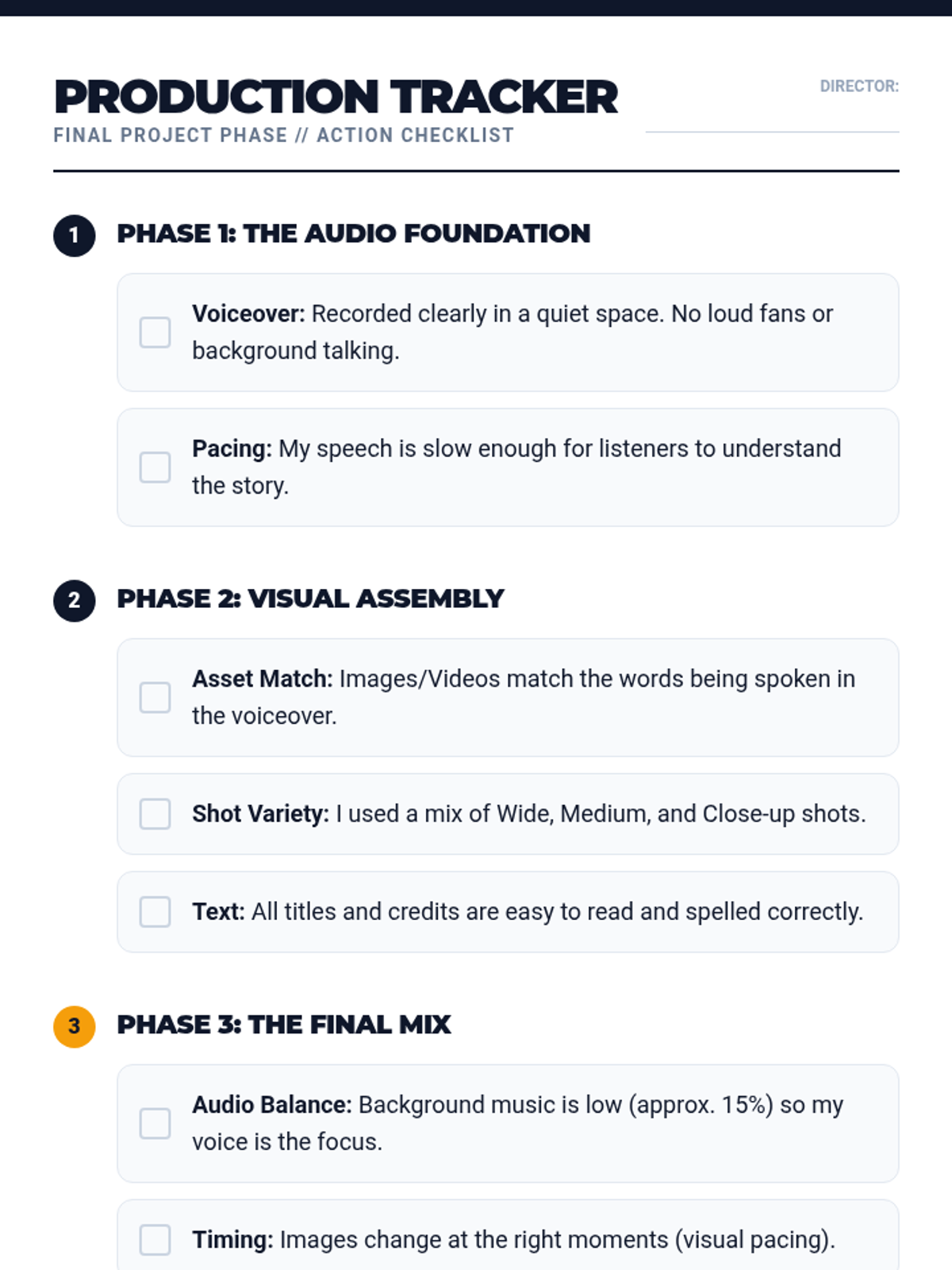
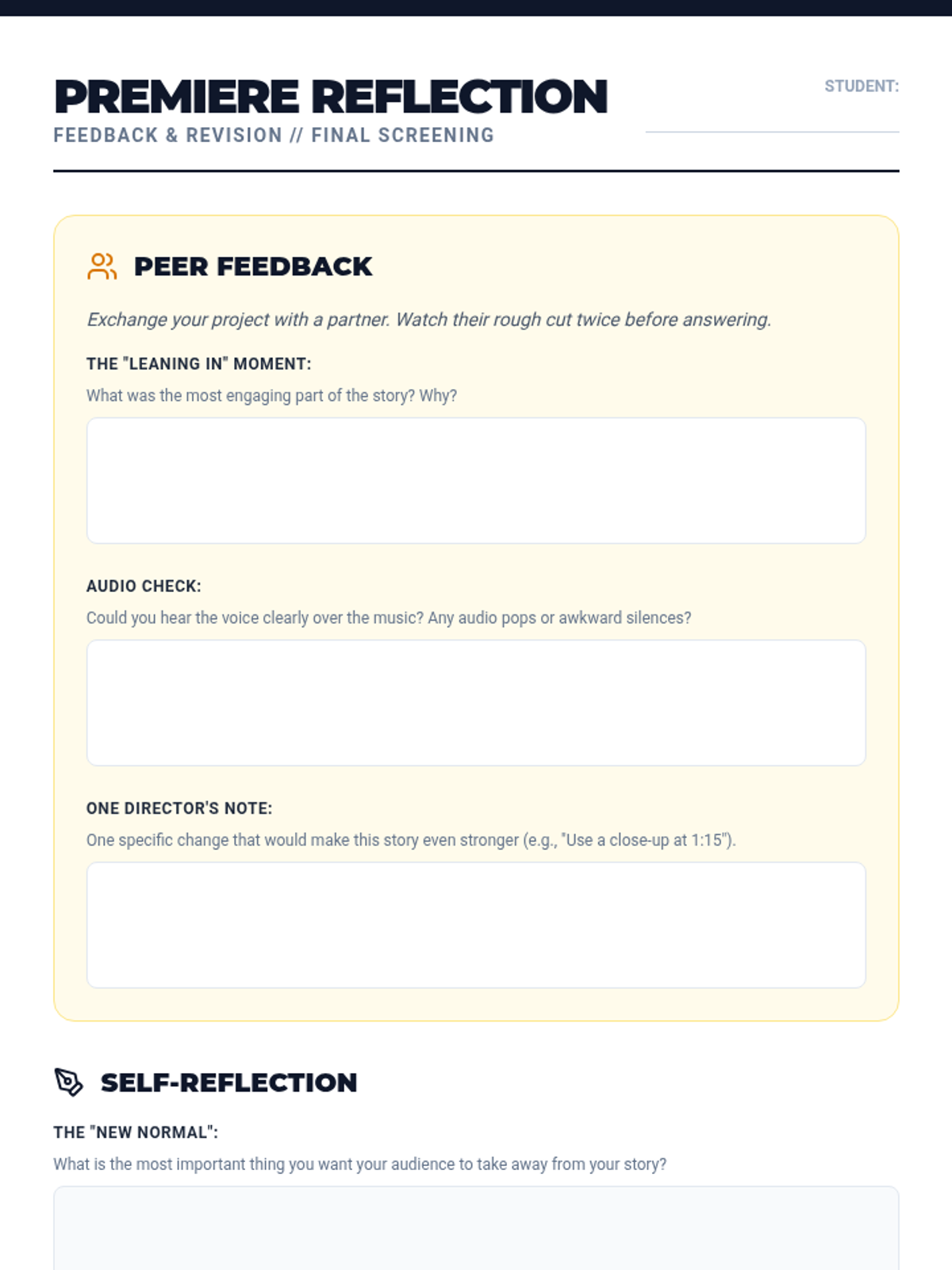
Students explore the power of audio and visuals, culminating in the creation and assembly of their digital story.
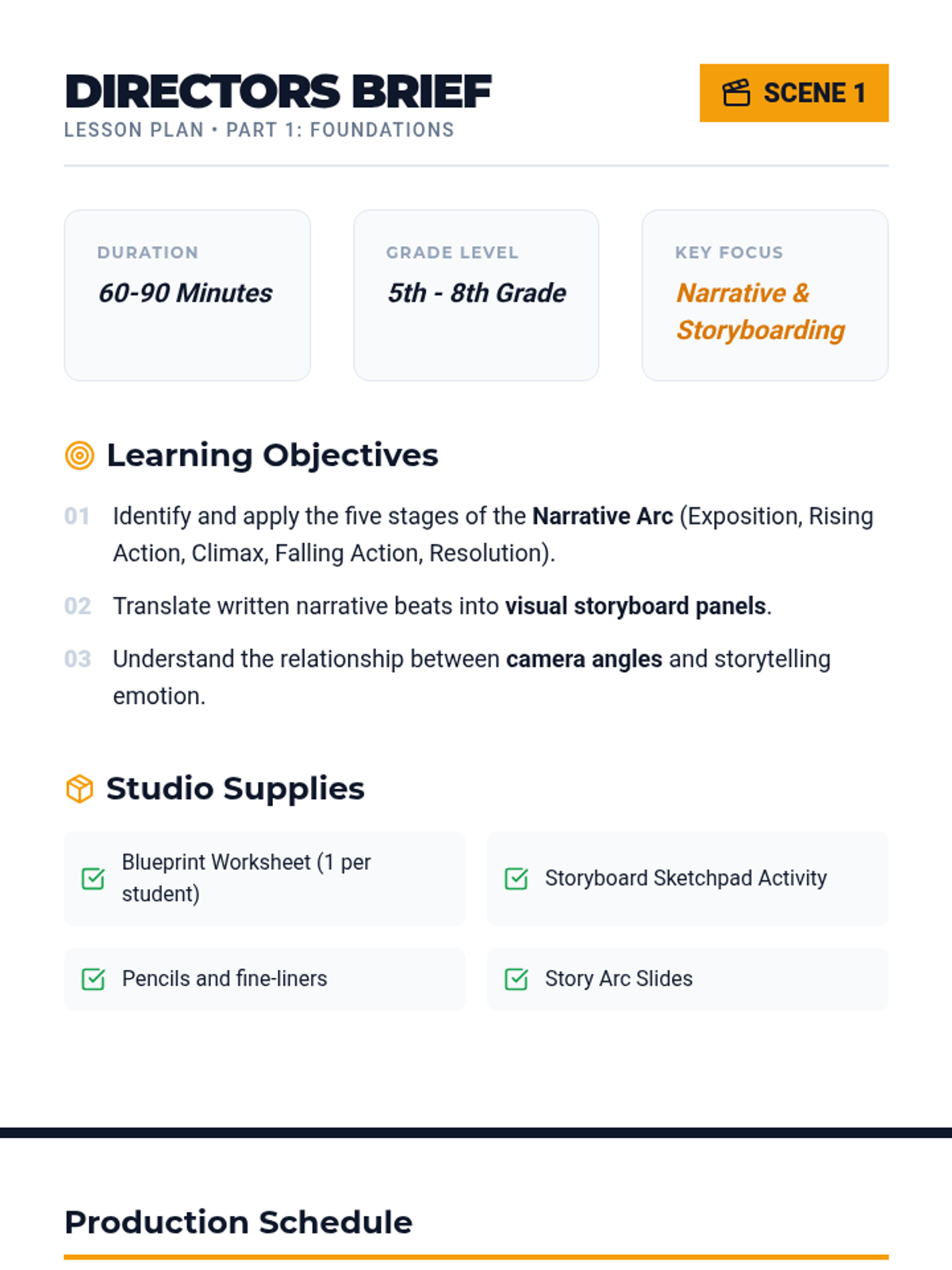
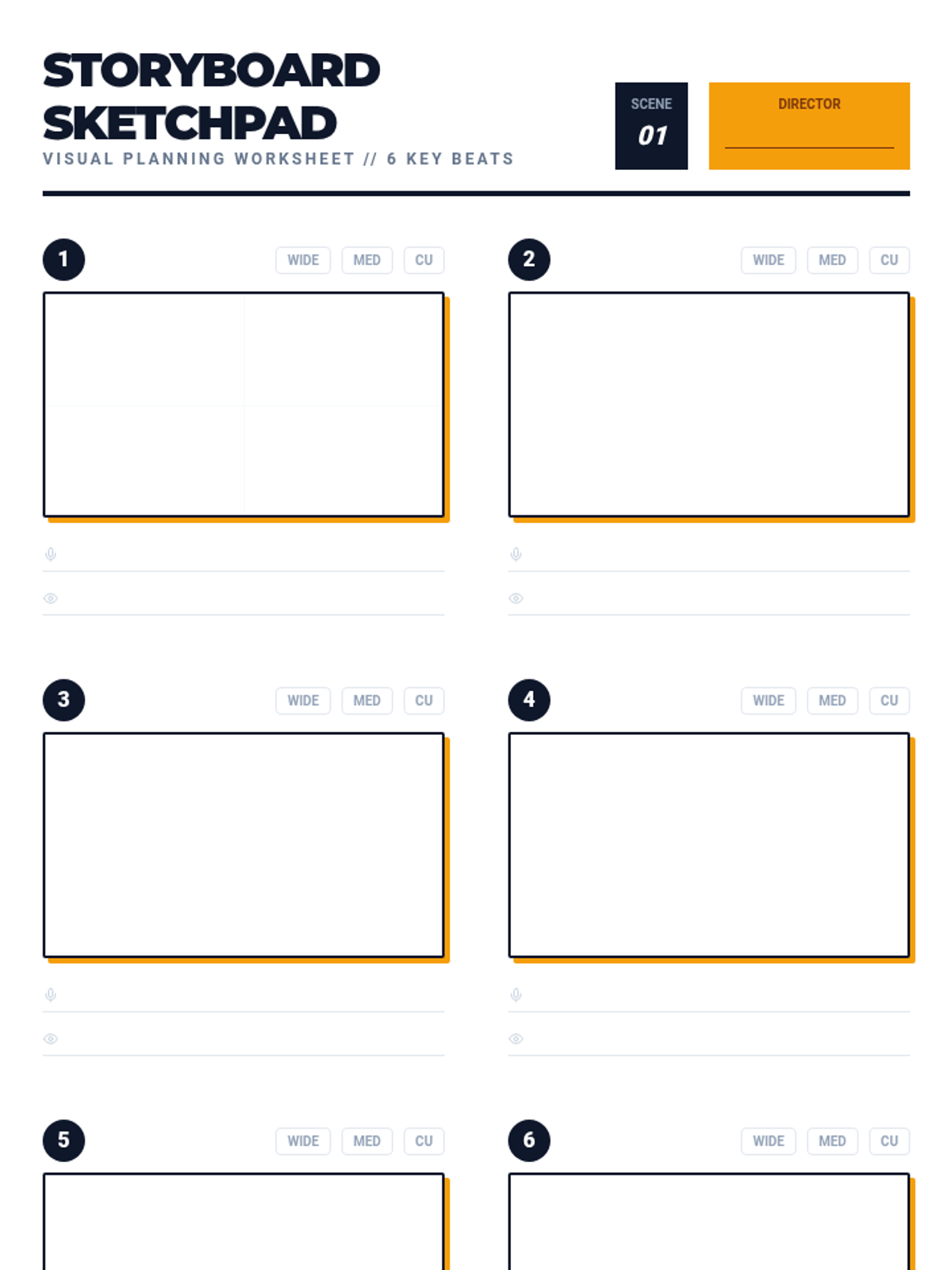
Students learn the core principles of narrative structure and translate their ideas into visual storyboards.
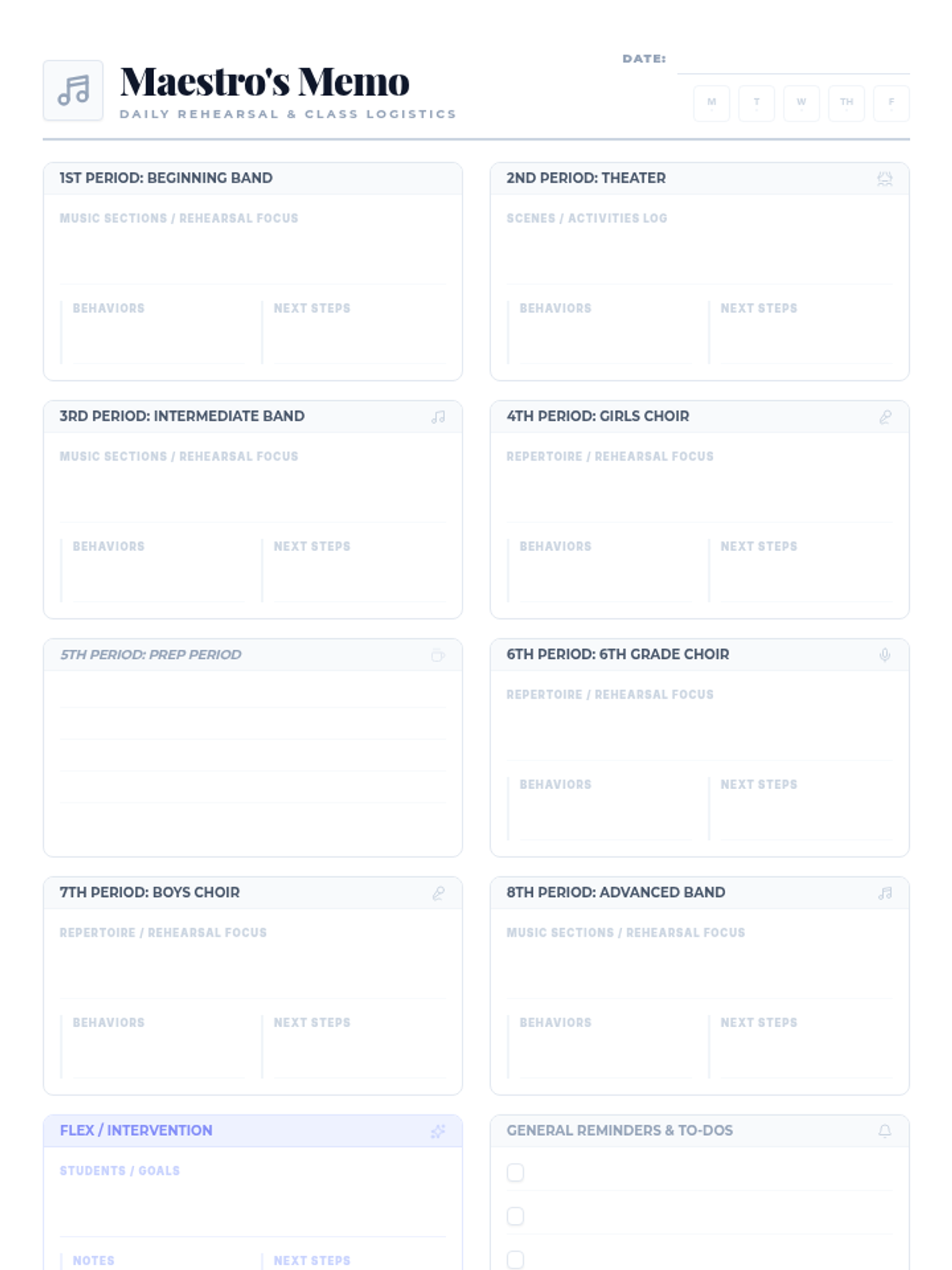
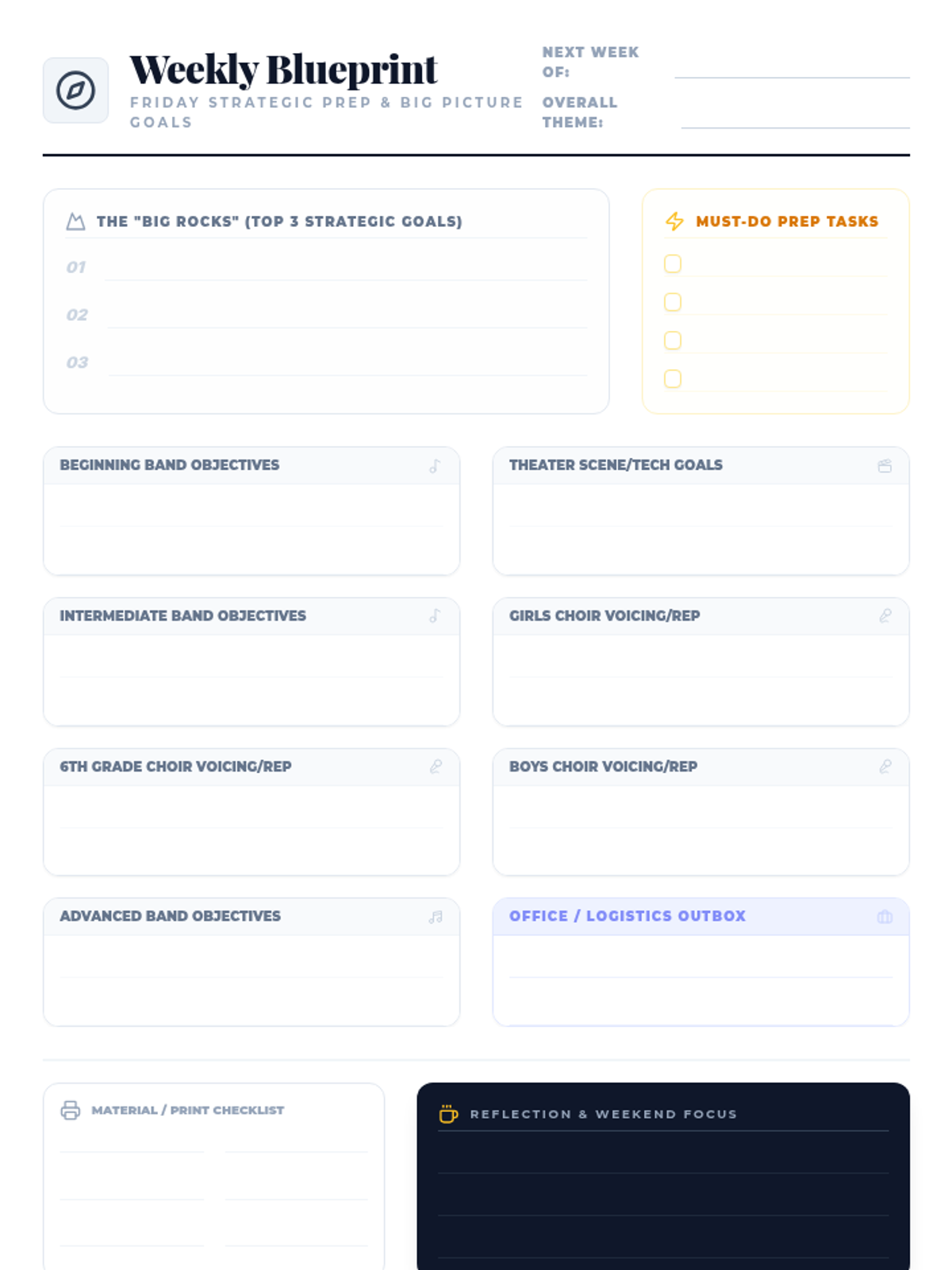
A collection of specialized organization and planning resources designed for a band, choir, and theater teacher managing multiple ensembles and a high-volume performance schedule.
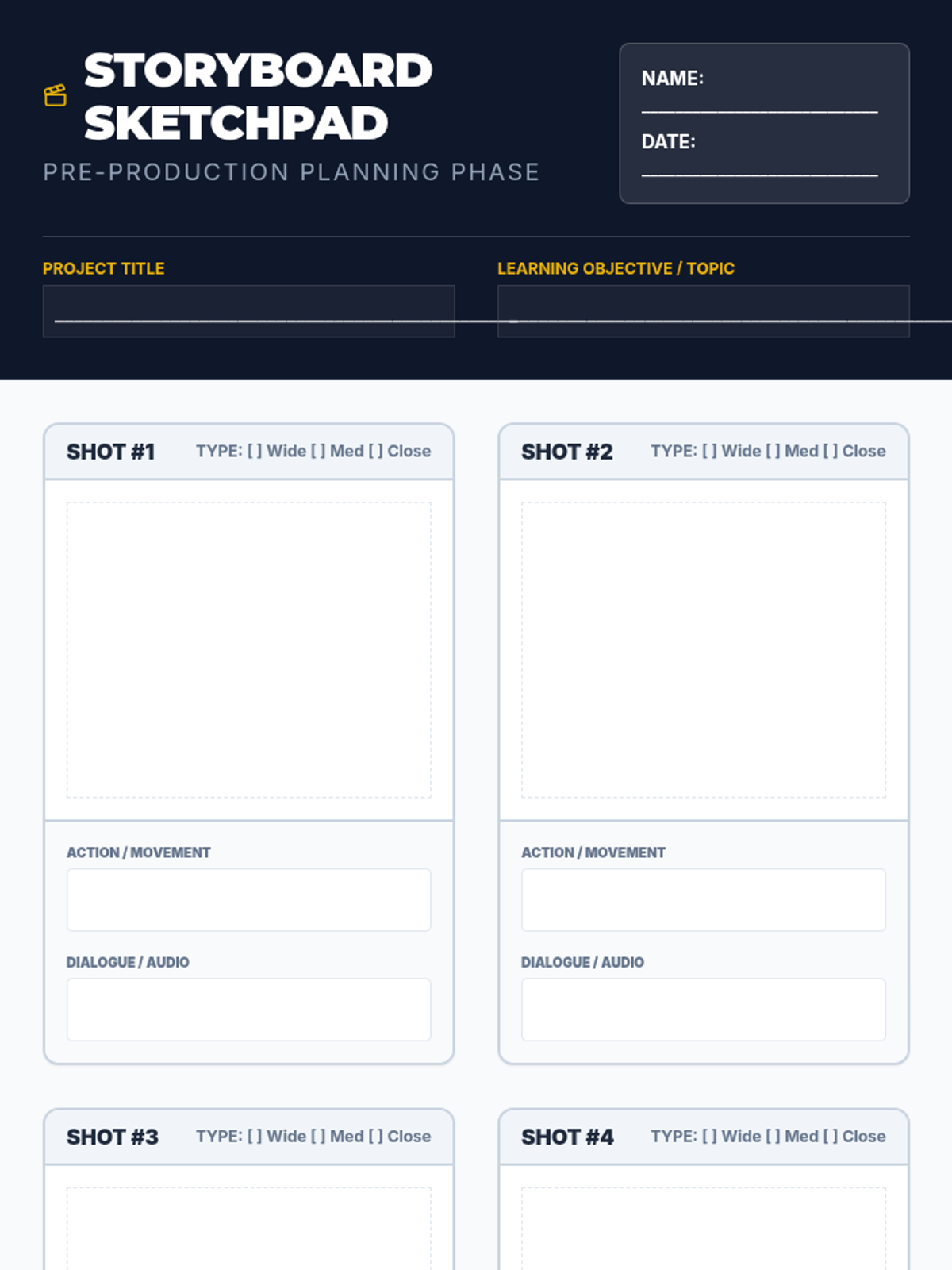
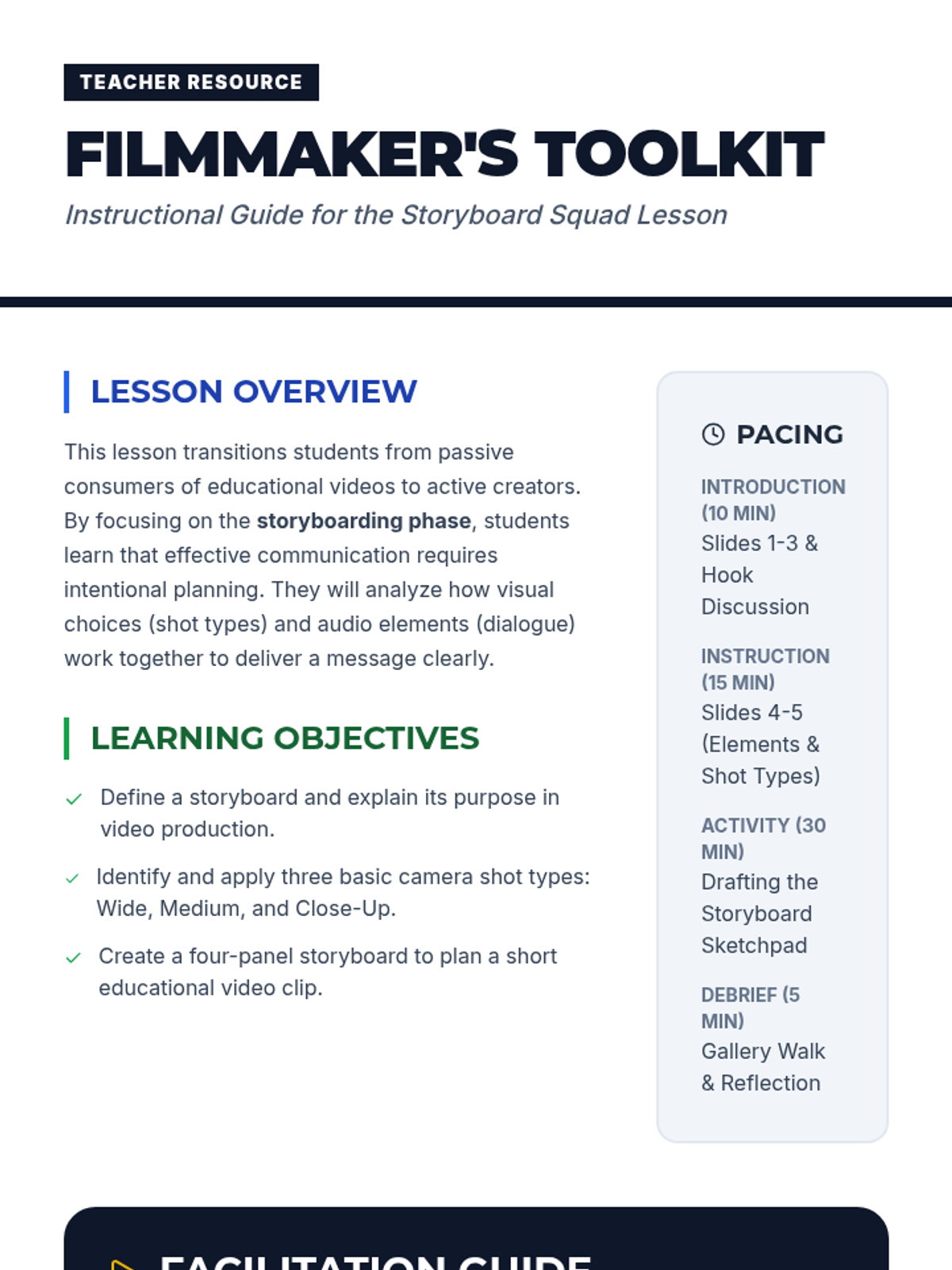
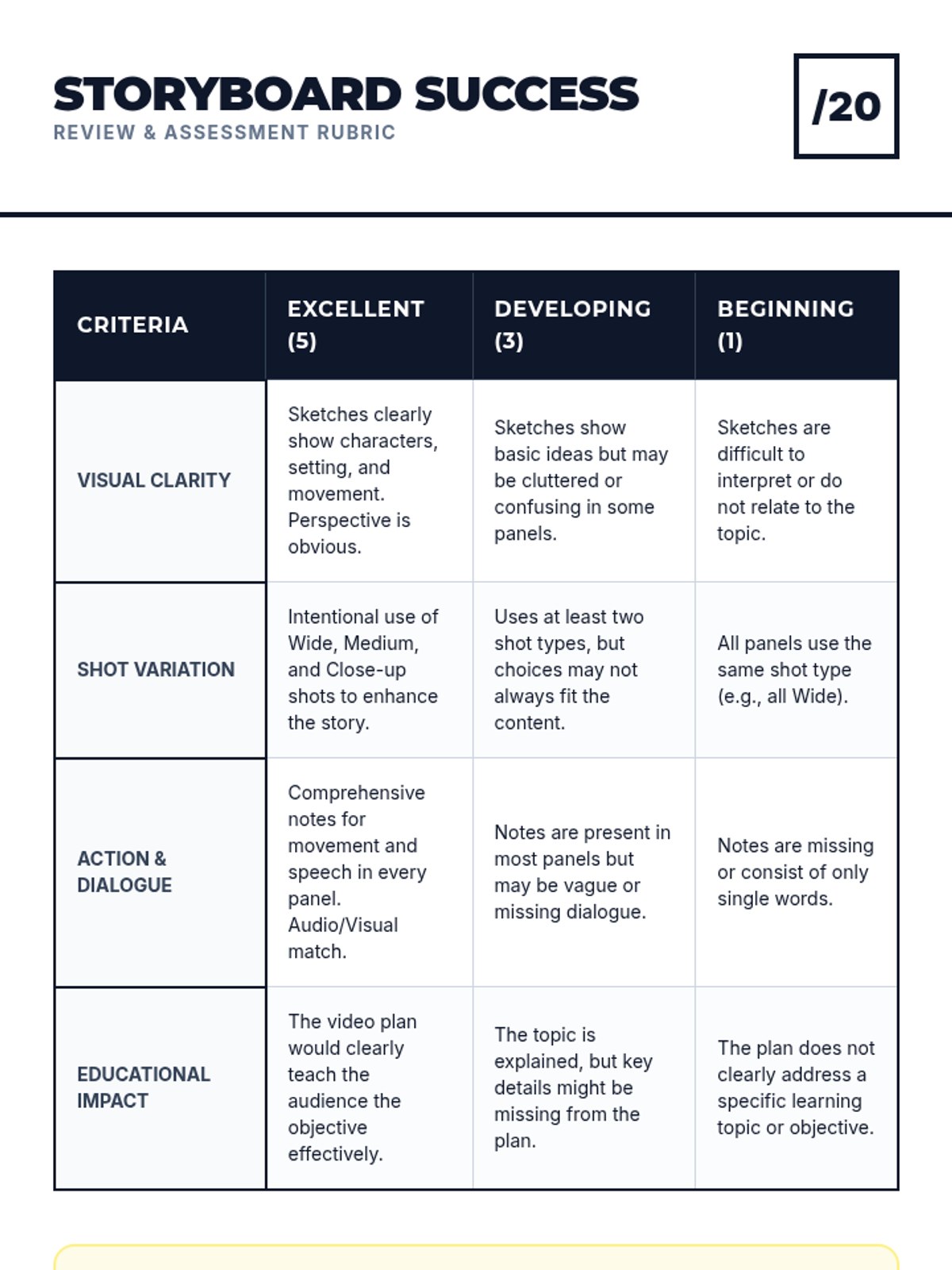
A comprehensive lesson on the art of storyboarding for short videos, teaching students how to translate their creative visions into structured visual plans. Students will learn the key elements of a storyboard and practice planning their own video production.
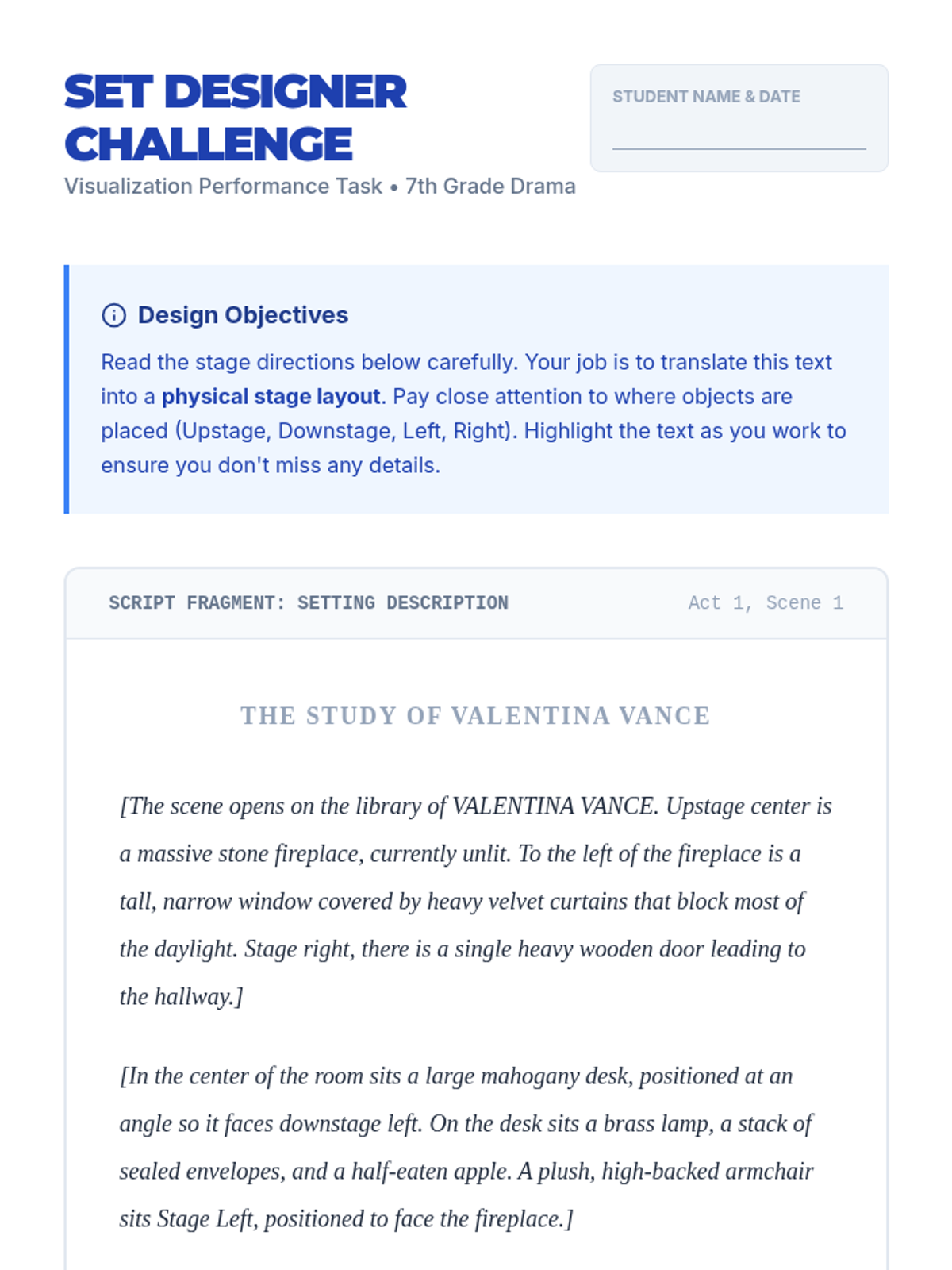
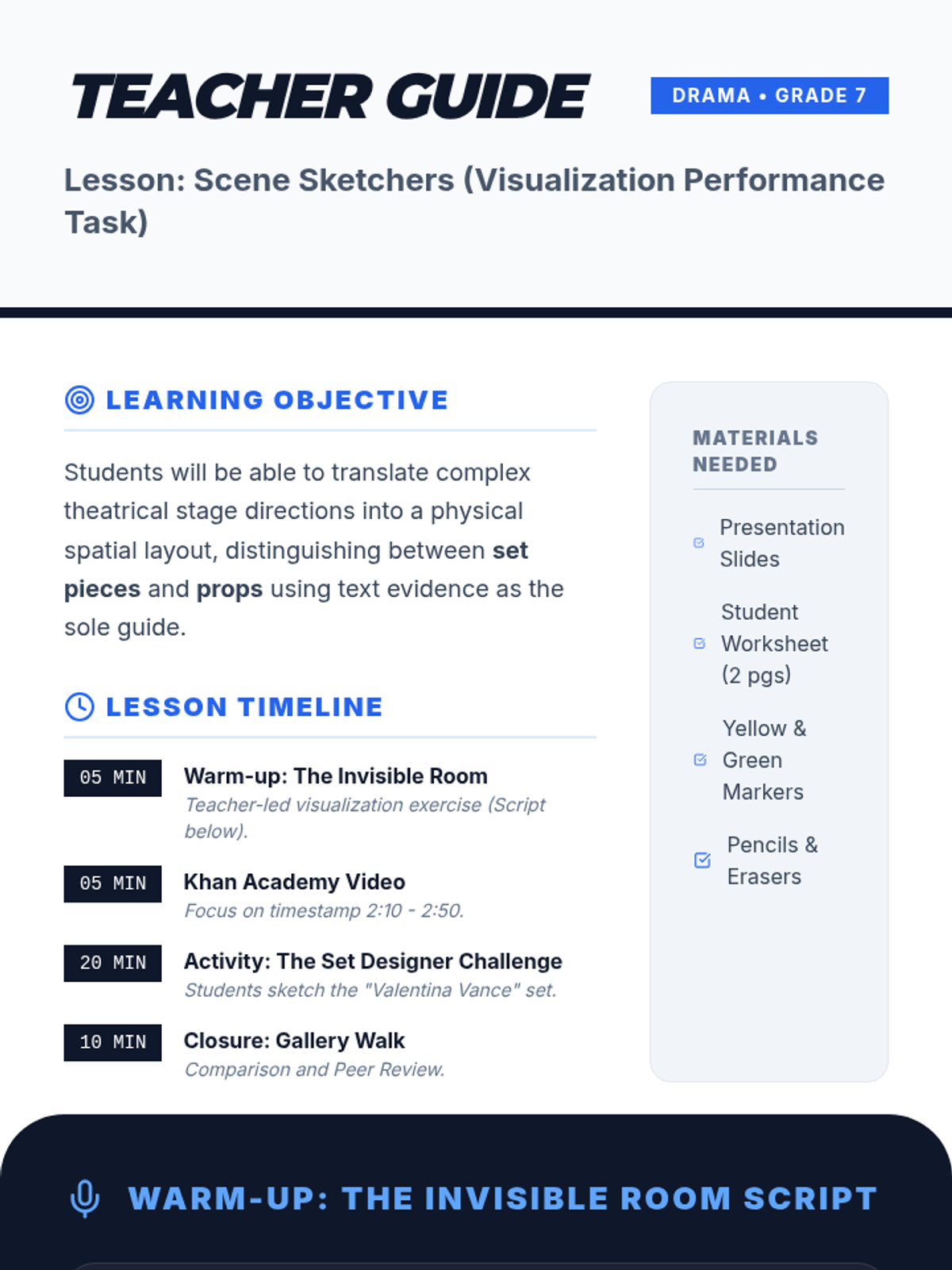
A lesson where 7th-grade students visualize and draw a theatrical set based on stage directions from a play script. Students will learn the difference between set pieces and props while practicing text-evidence visualization.
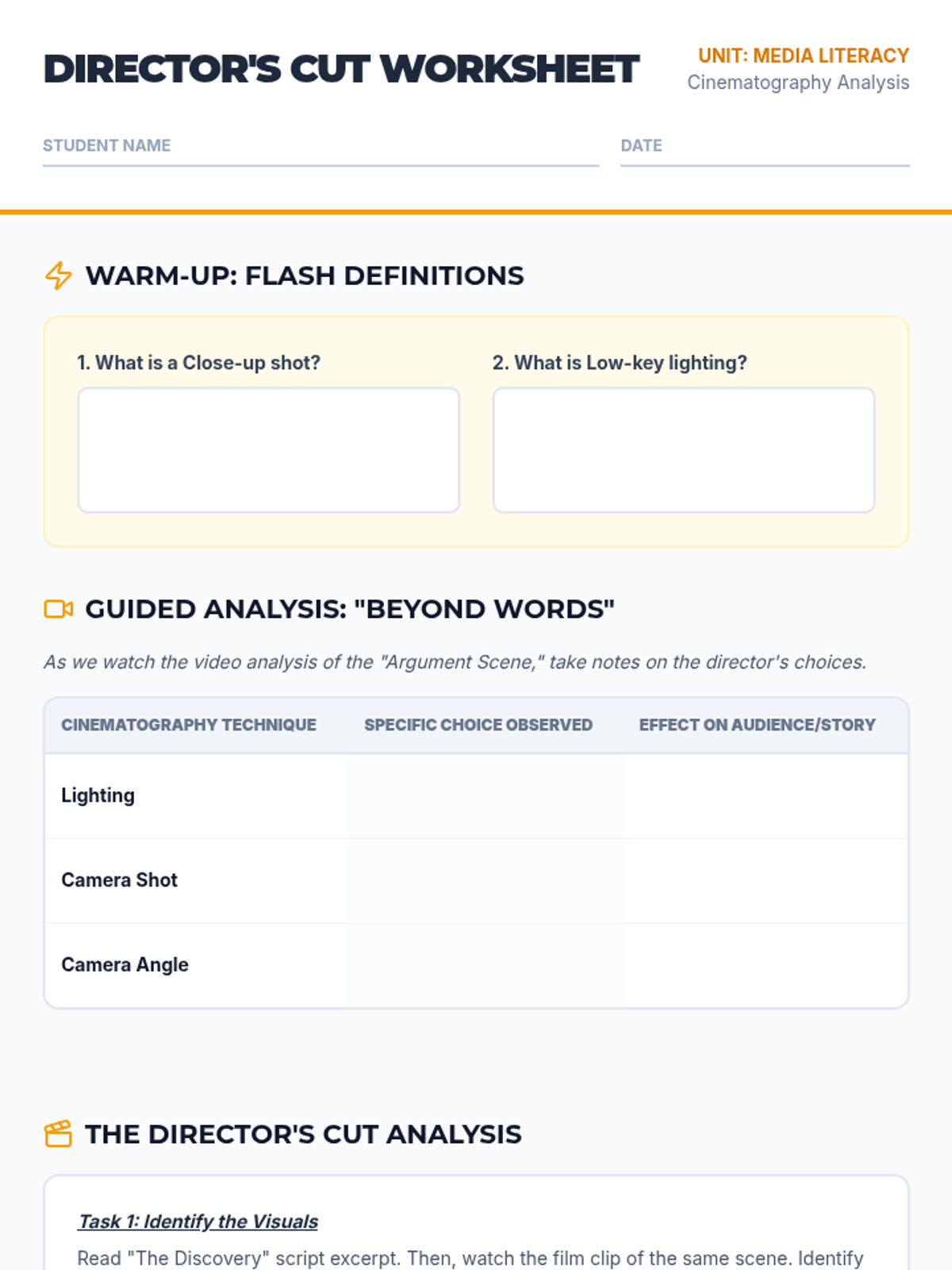
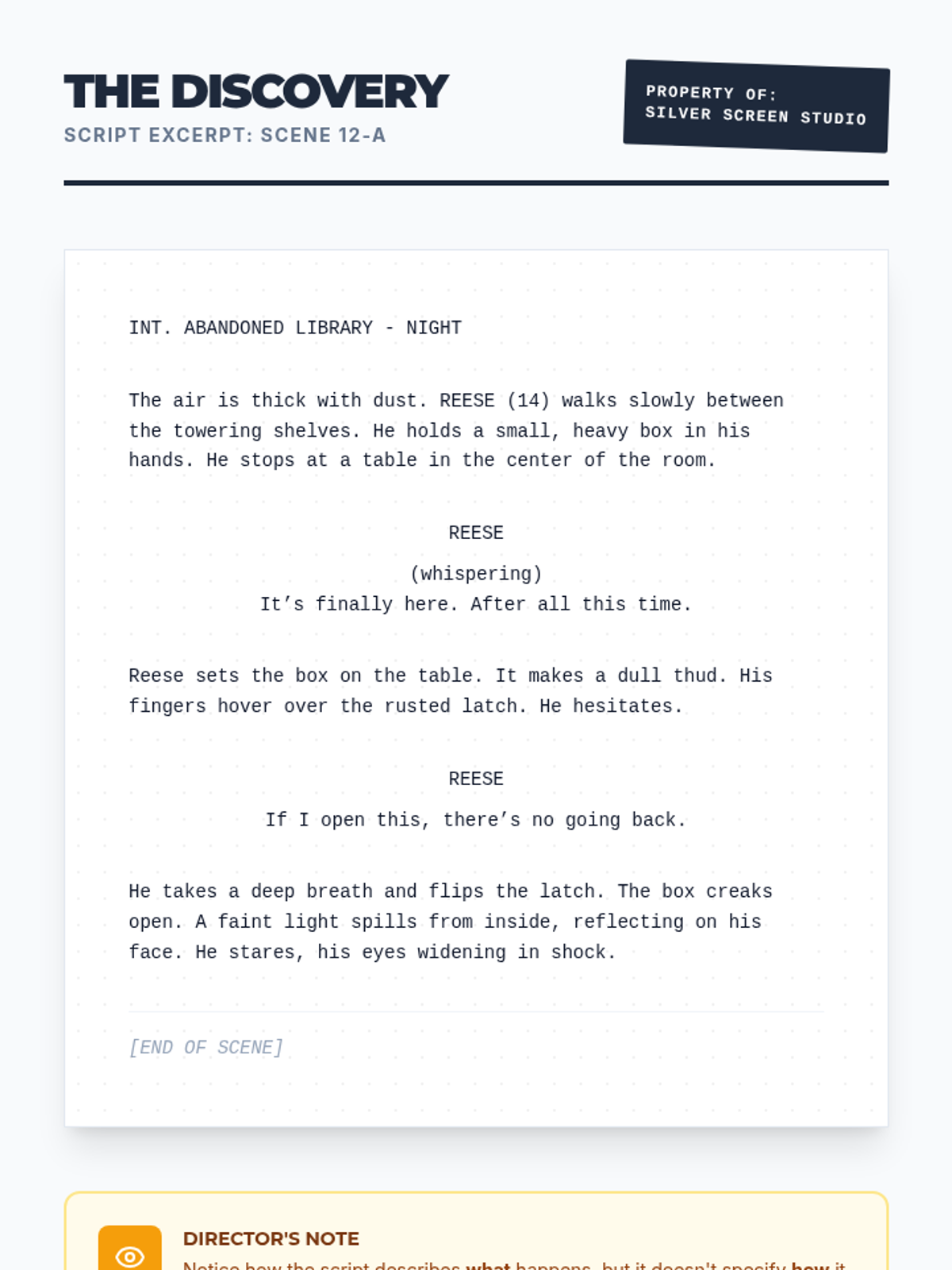
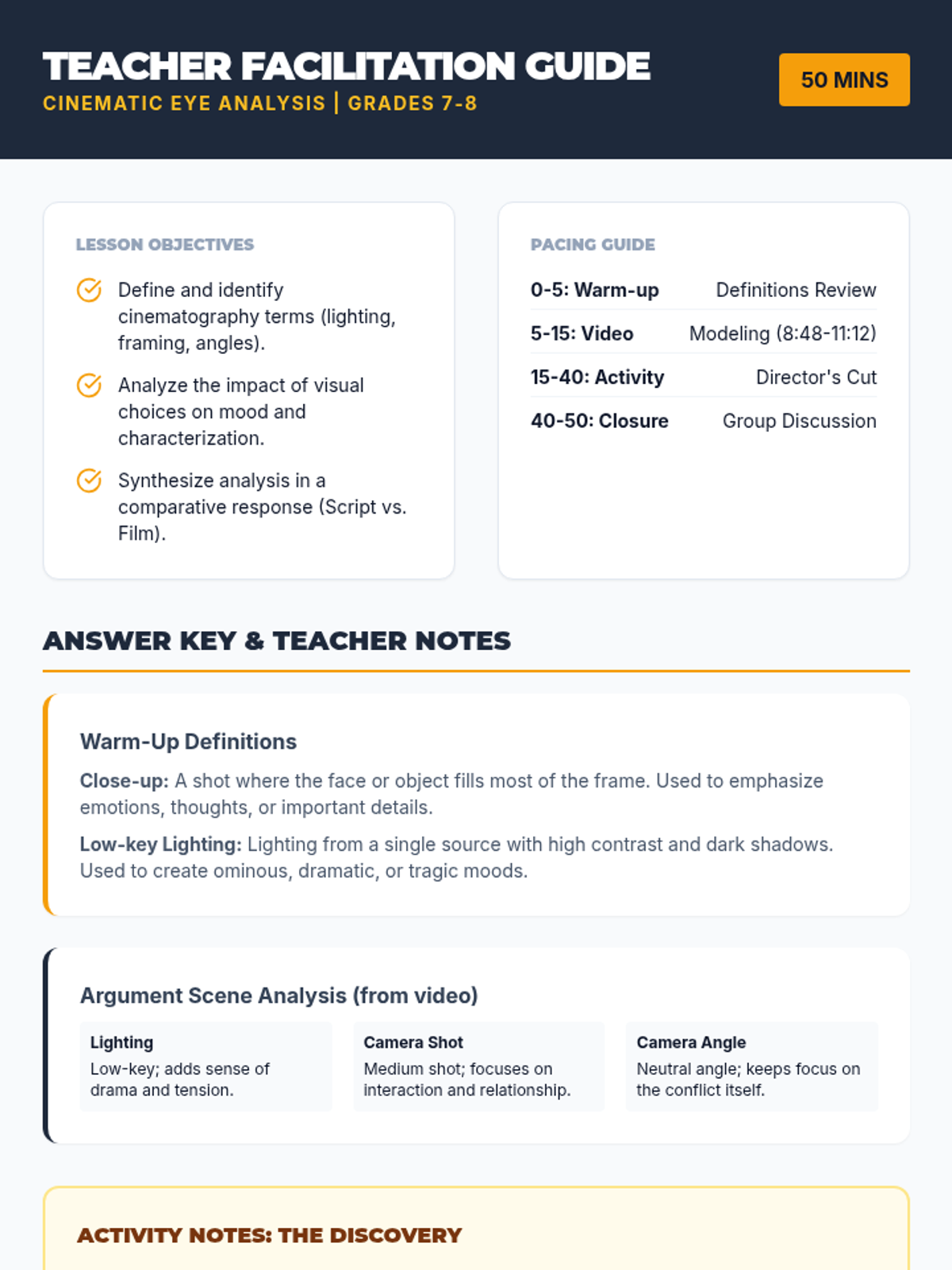
Students will learn how cinematography choices like lighting, framing, and angles influence mood and characterization. They will apply these terms to analyze a film clip in comparison to its written script.
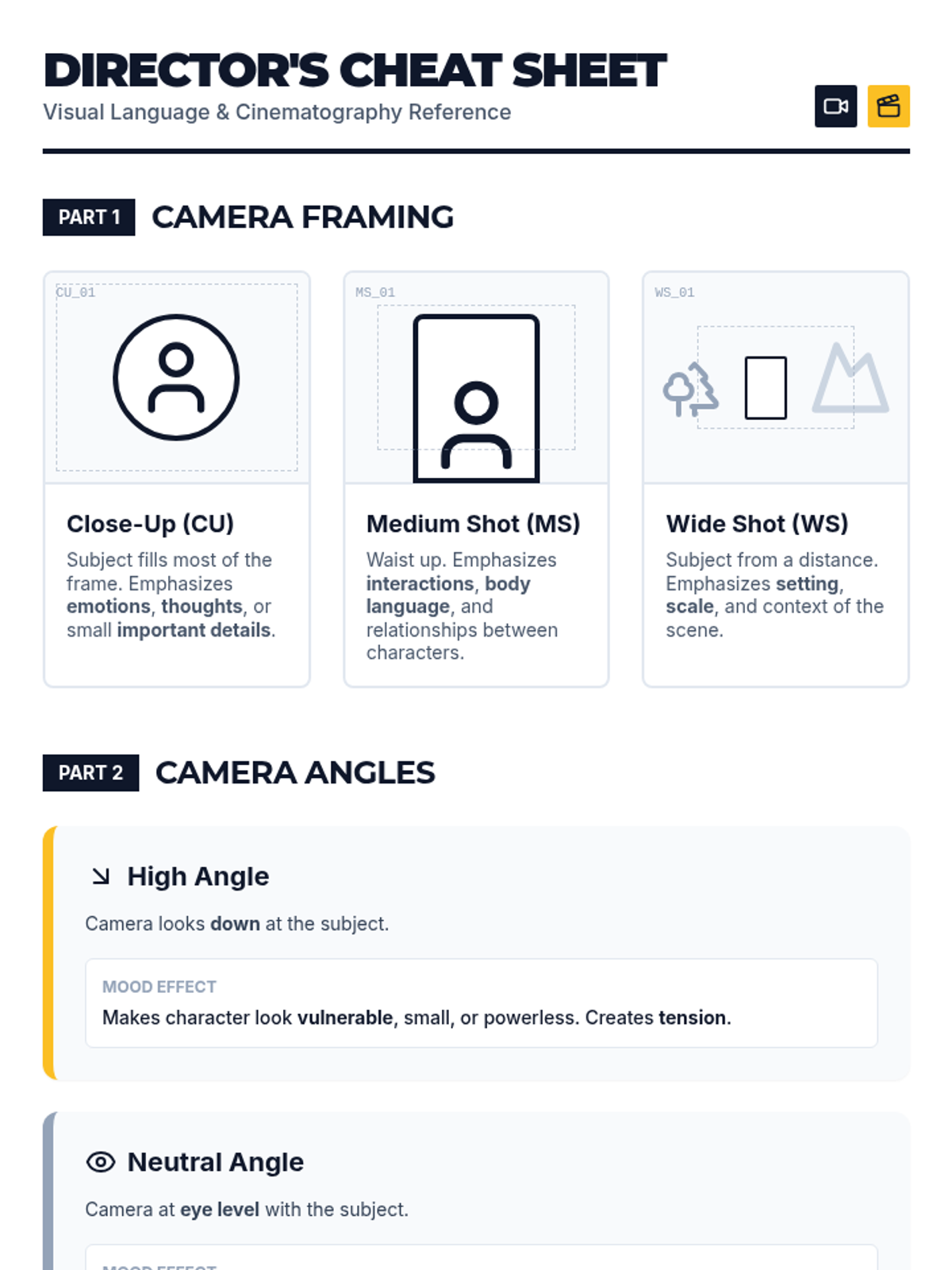
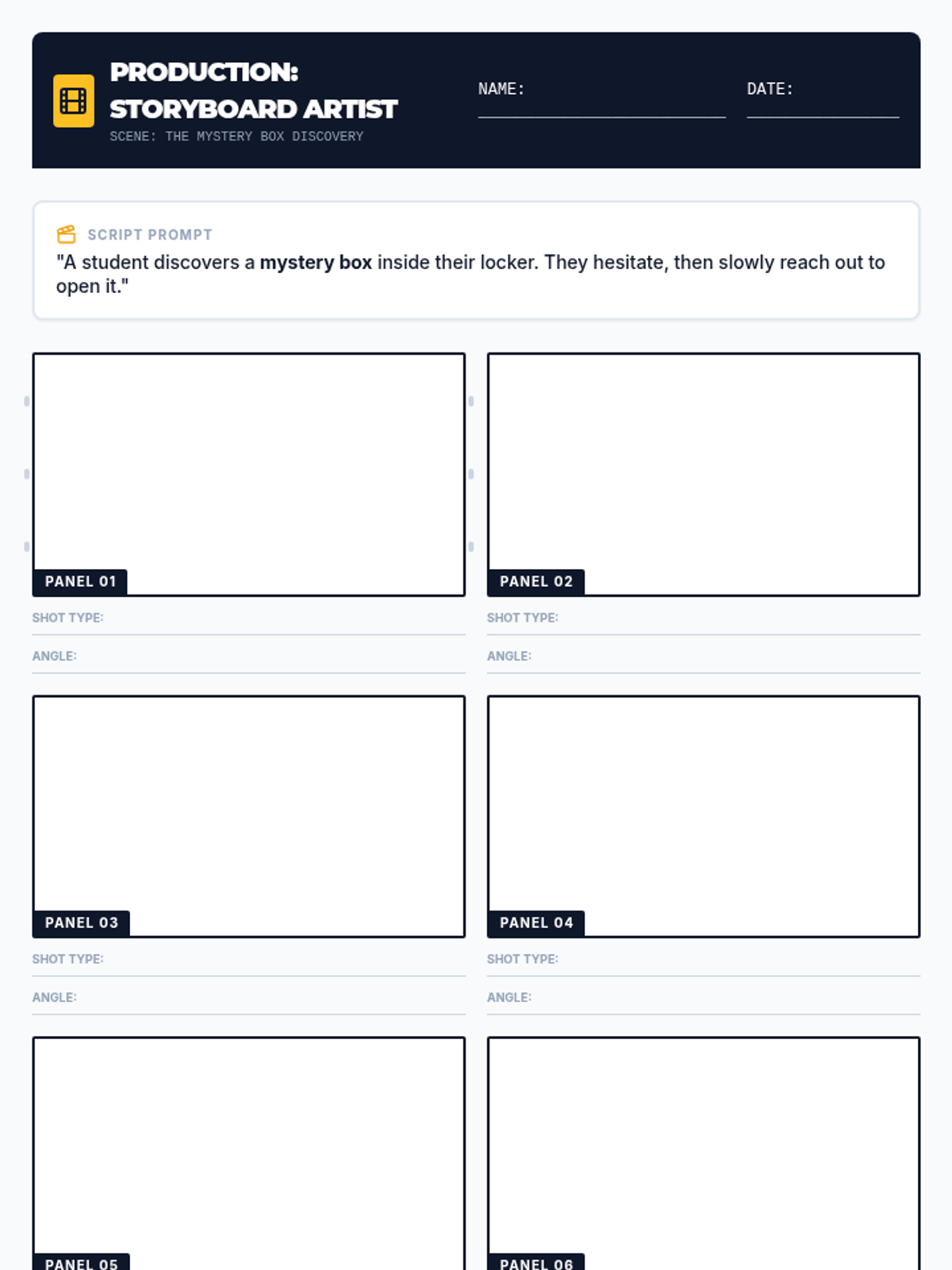
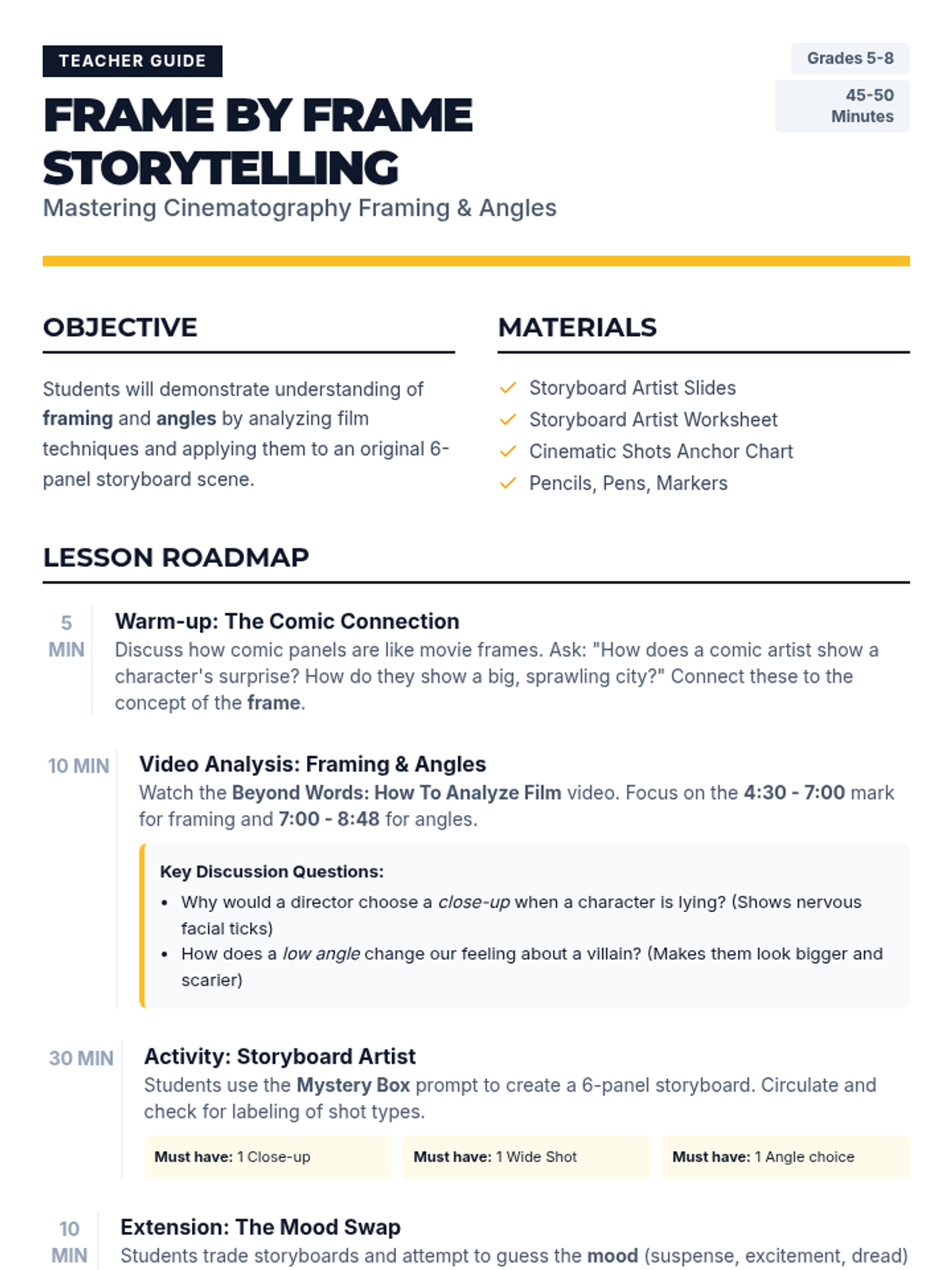
Students will learn the language of cinematography by exploring how framing and angles impact storytelling. They will analyze film clips and create a 6-panel storyboard for a mystery scene, demonstrating their mastery of close-ups, wide shots, and specific camera angles.
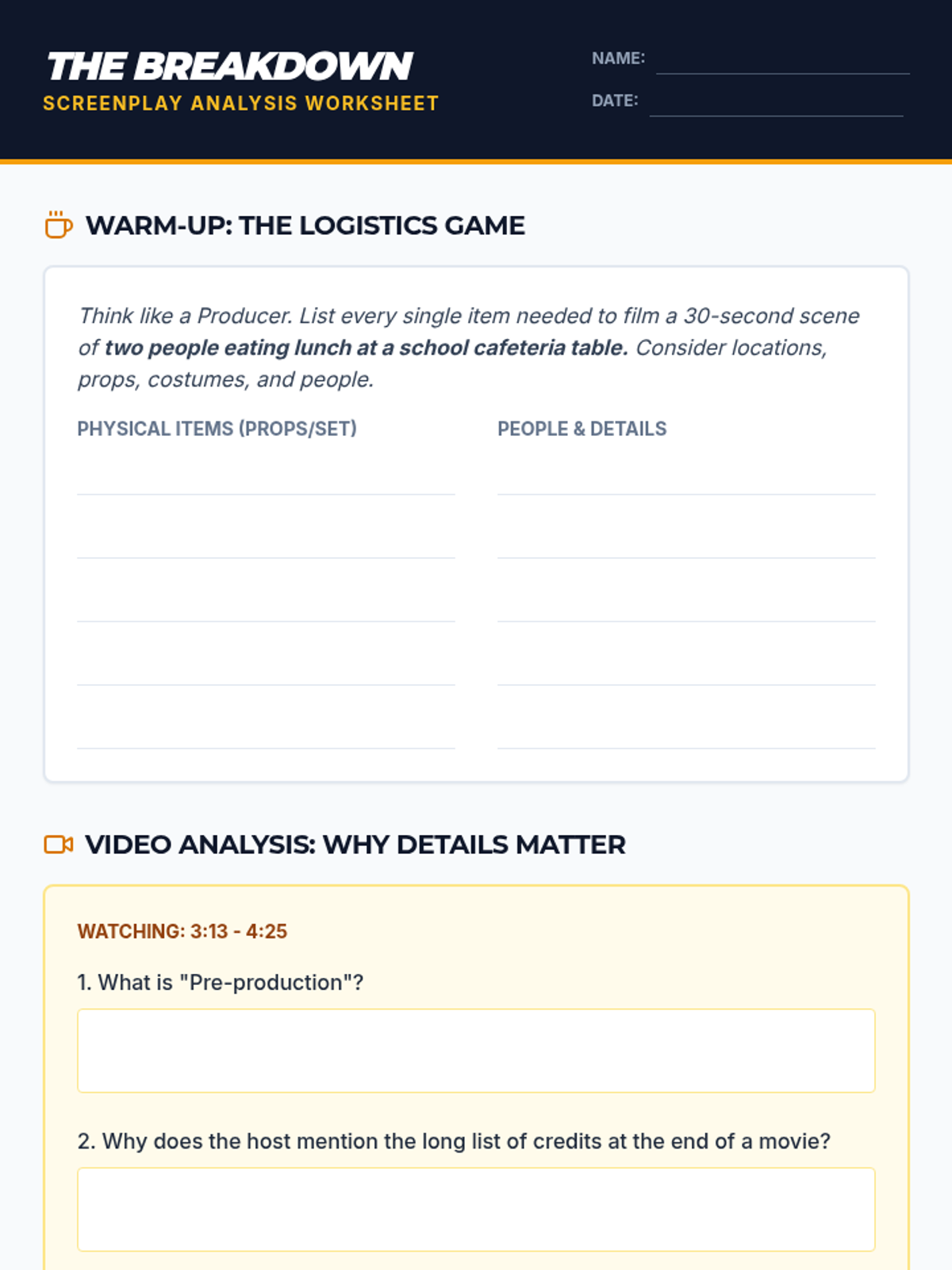
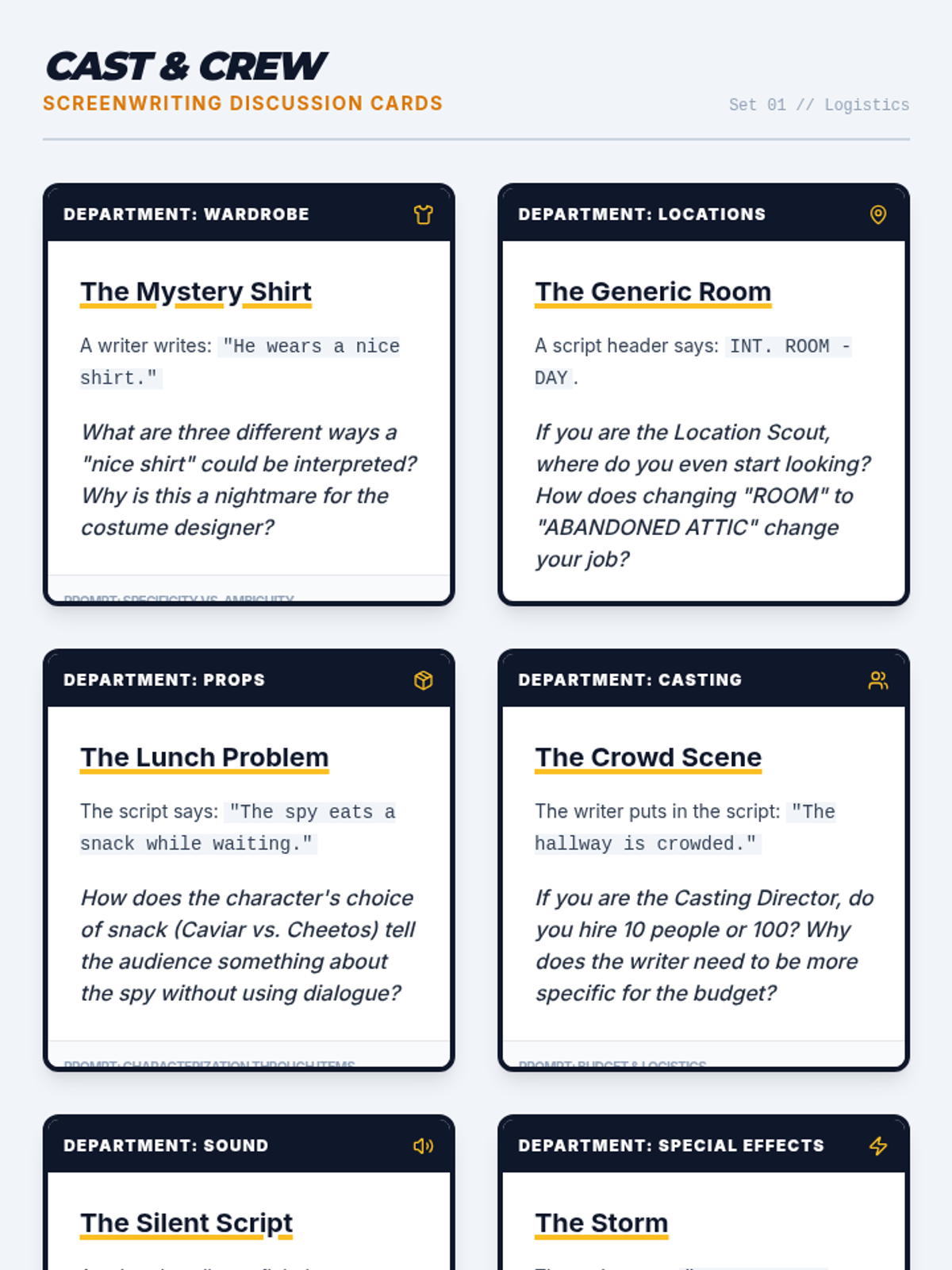
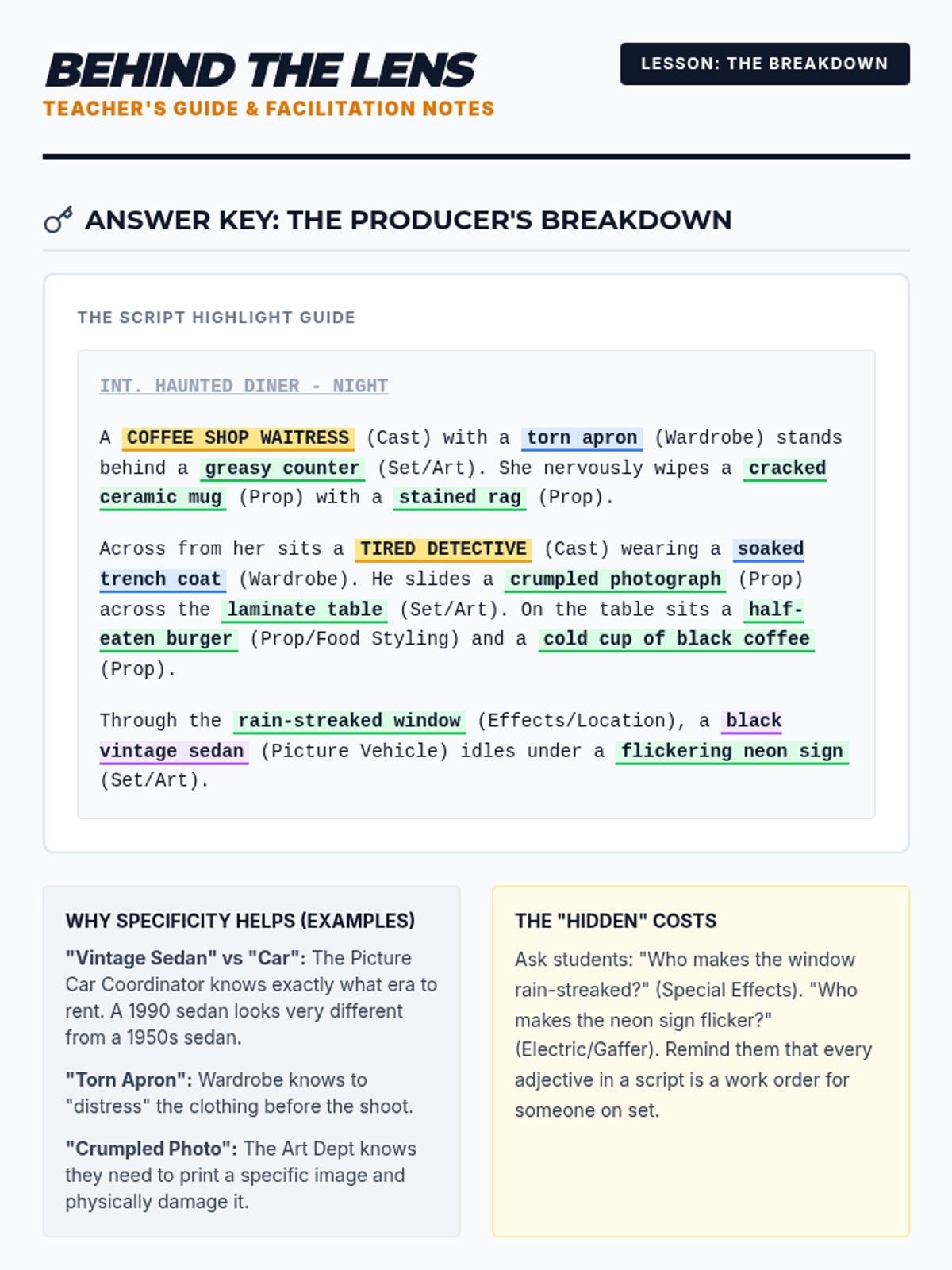
This lesson explores how pre-production logistics influence screenwriting, teaching students that specific writing is a tool for professional collaboration and production planning.
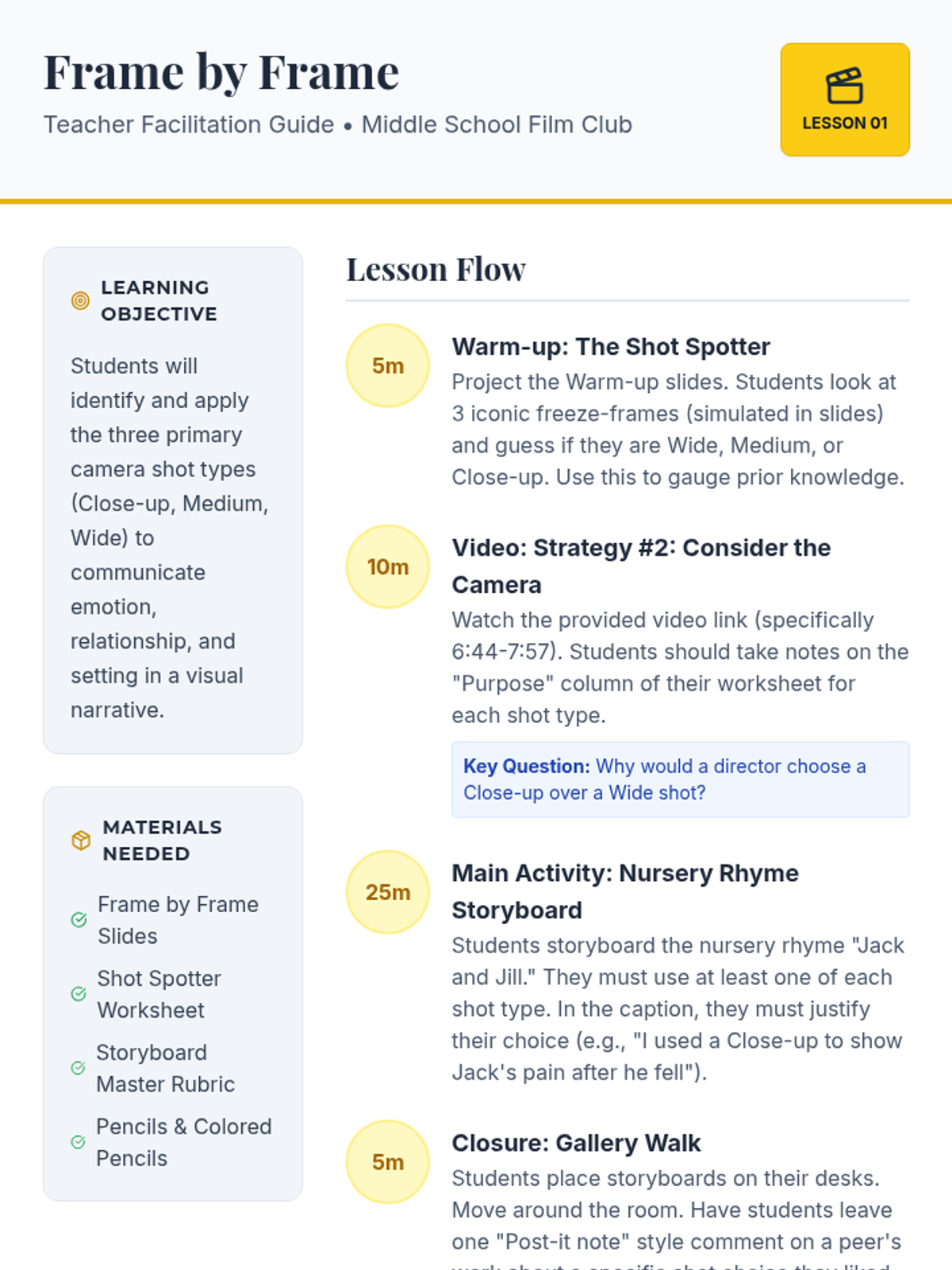
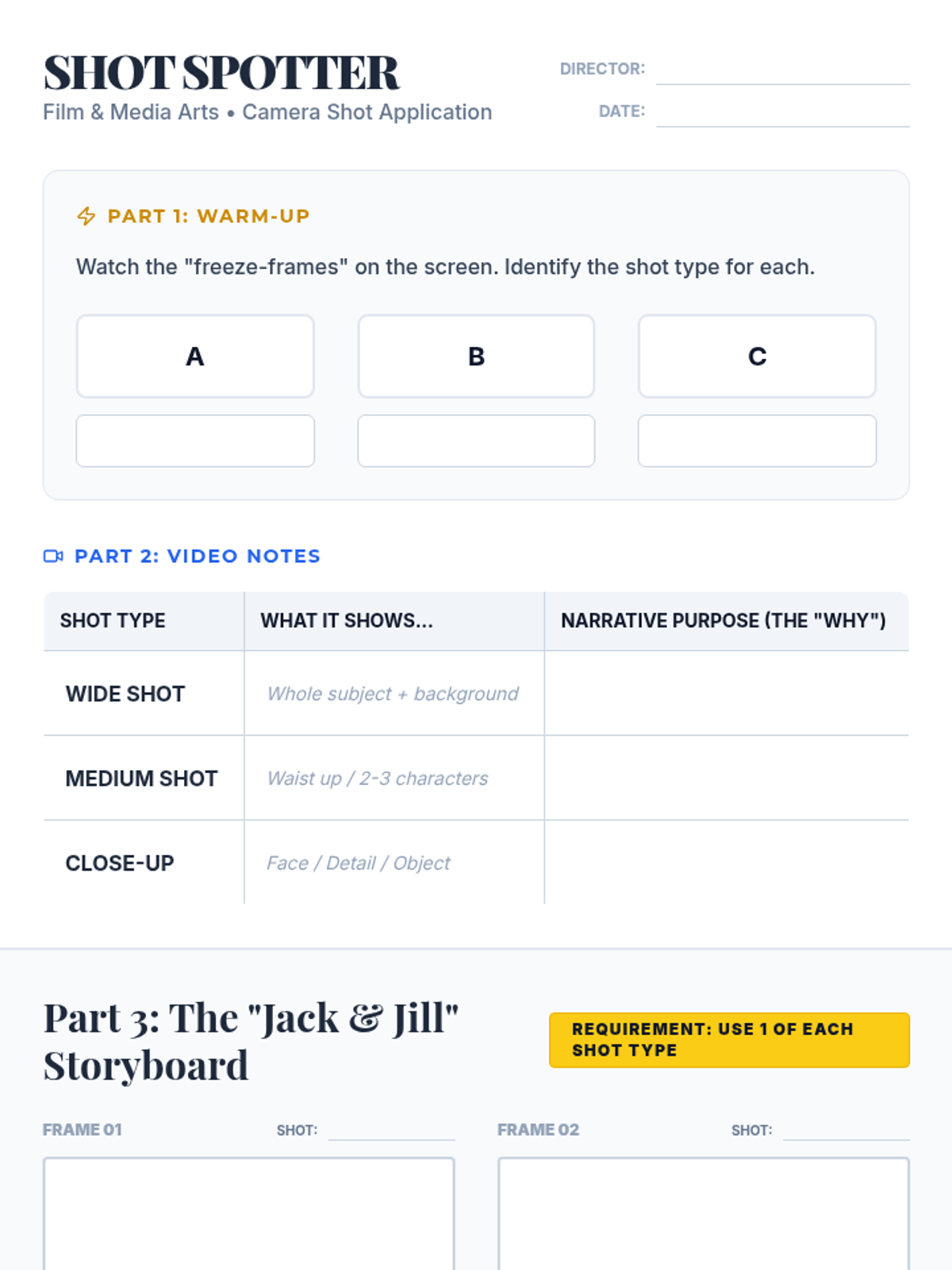
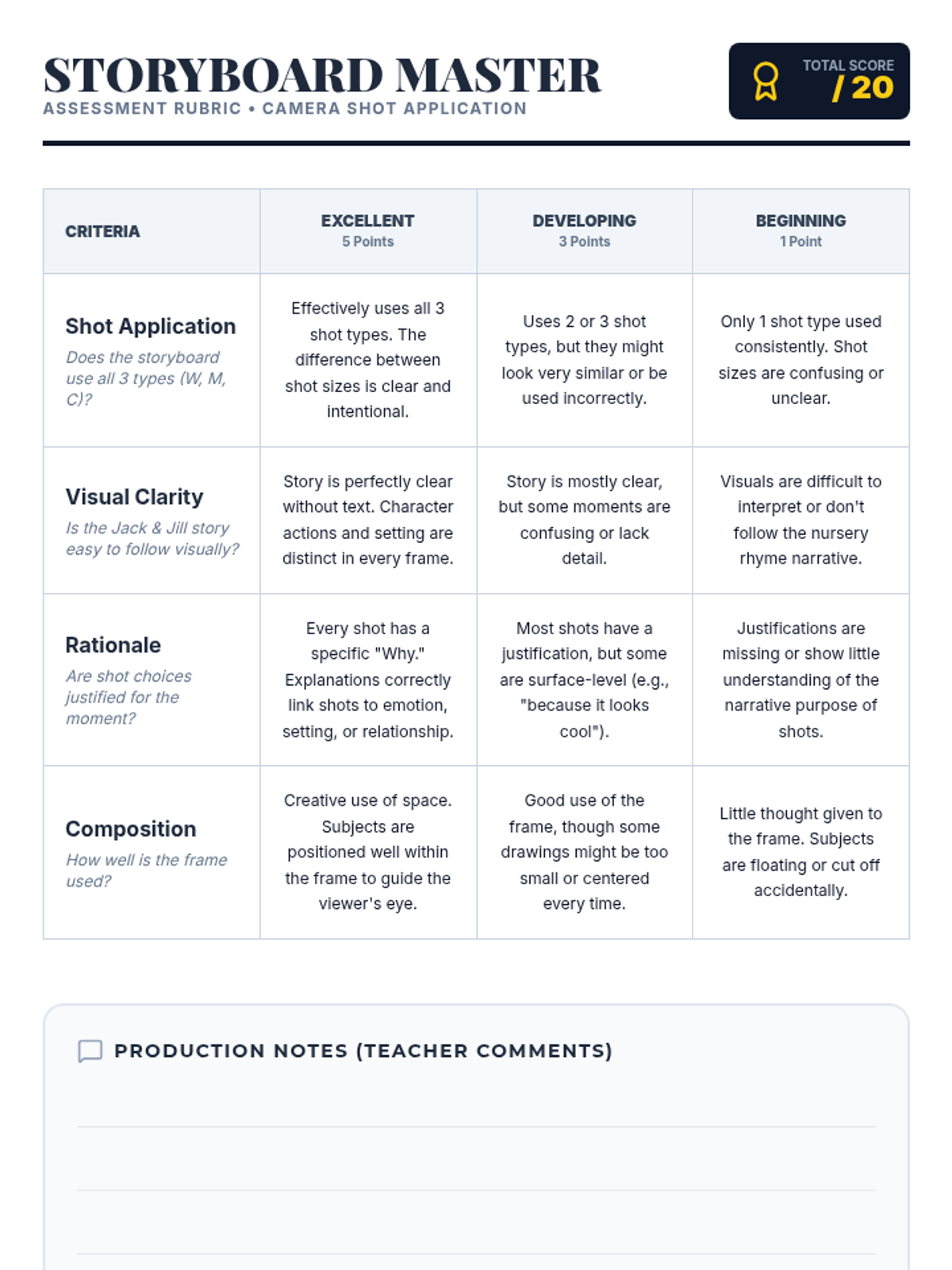
A middle school media arts lesson focused on camera shot types (Wide, Medium, Close-up) and their narrative purpose, featuring a video-based exploration and a nursery rhyme storyboarding activity.
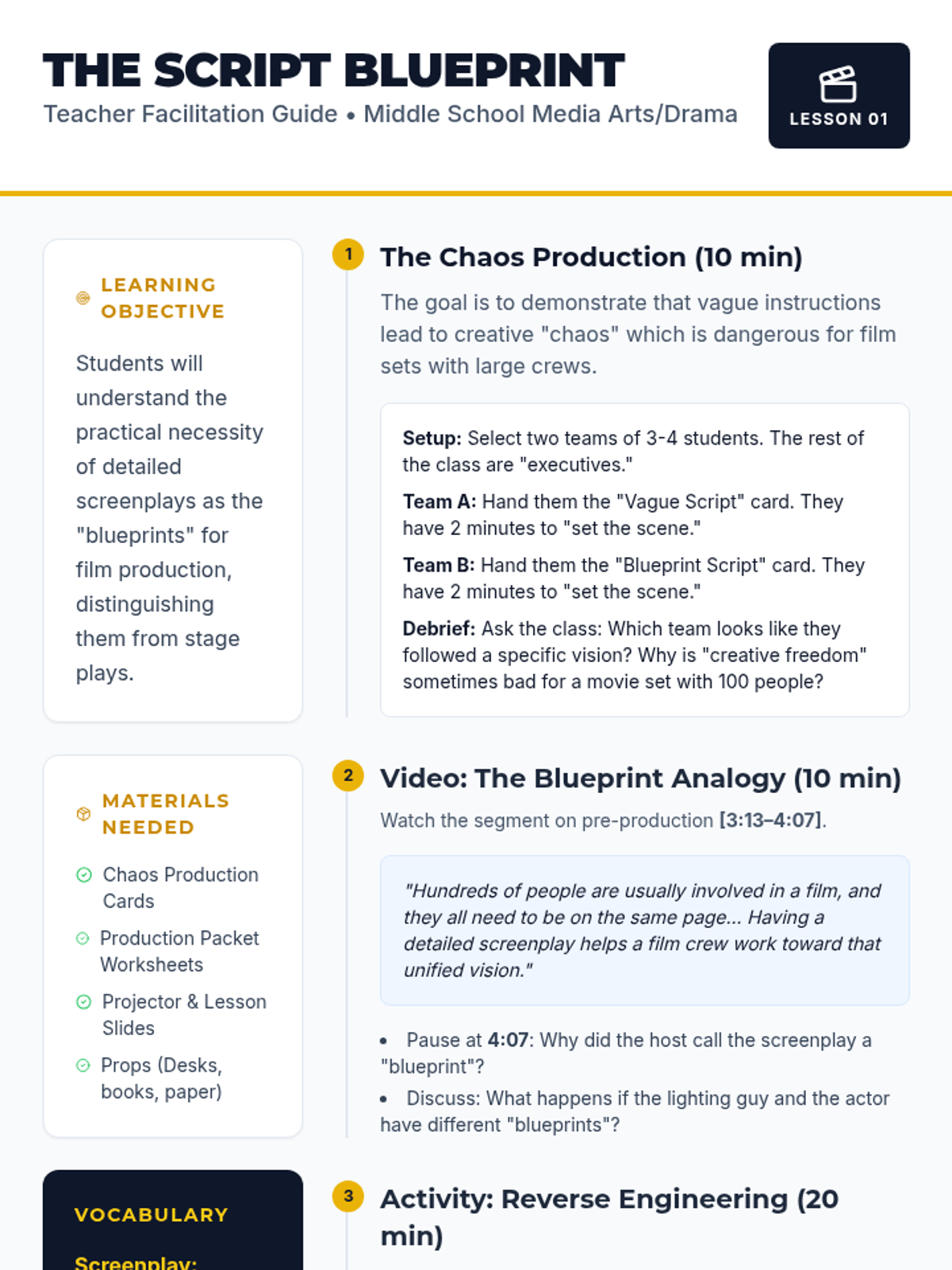
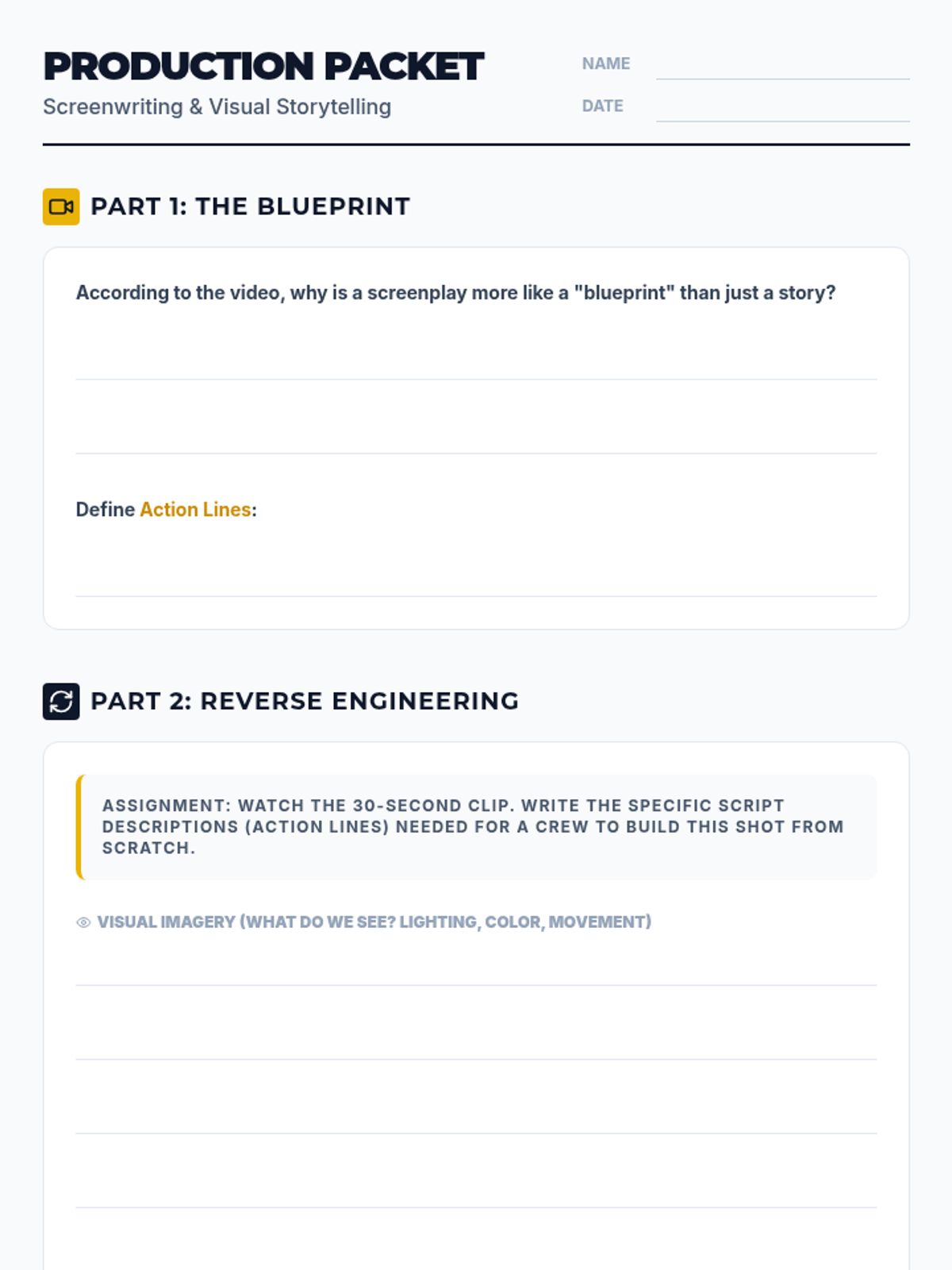
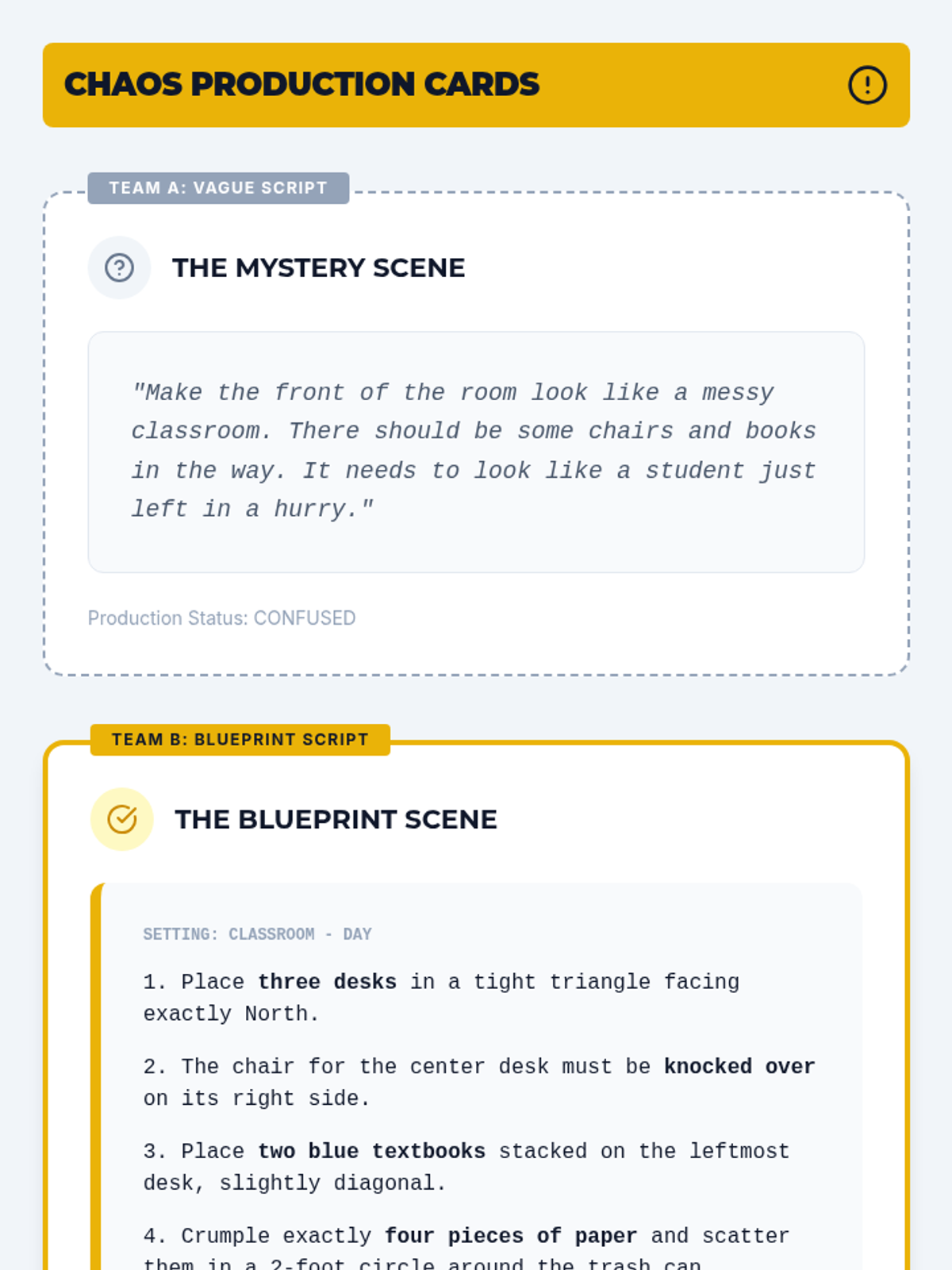
A lesson exploring why screenplays are the essential 'blueprints' of filmmaking, featuring a hands-on production challenge and a reverse-engineering script activity.
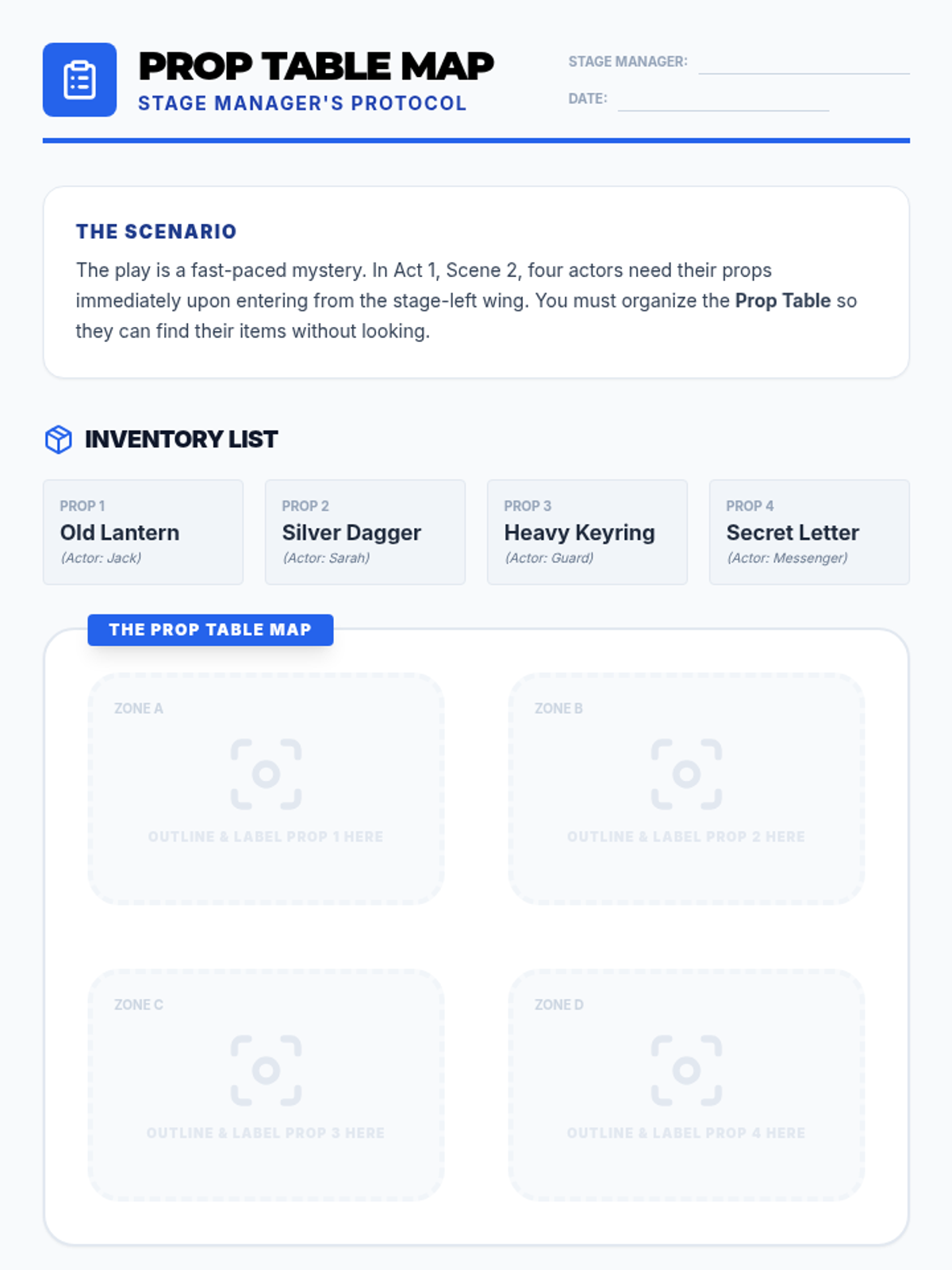
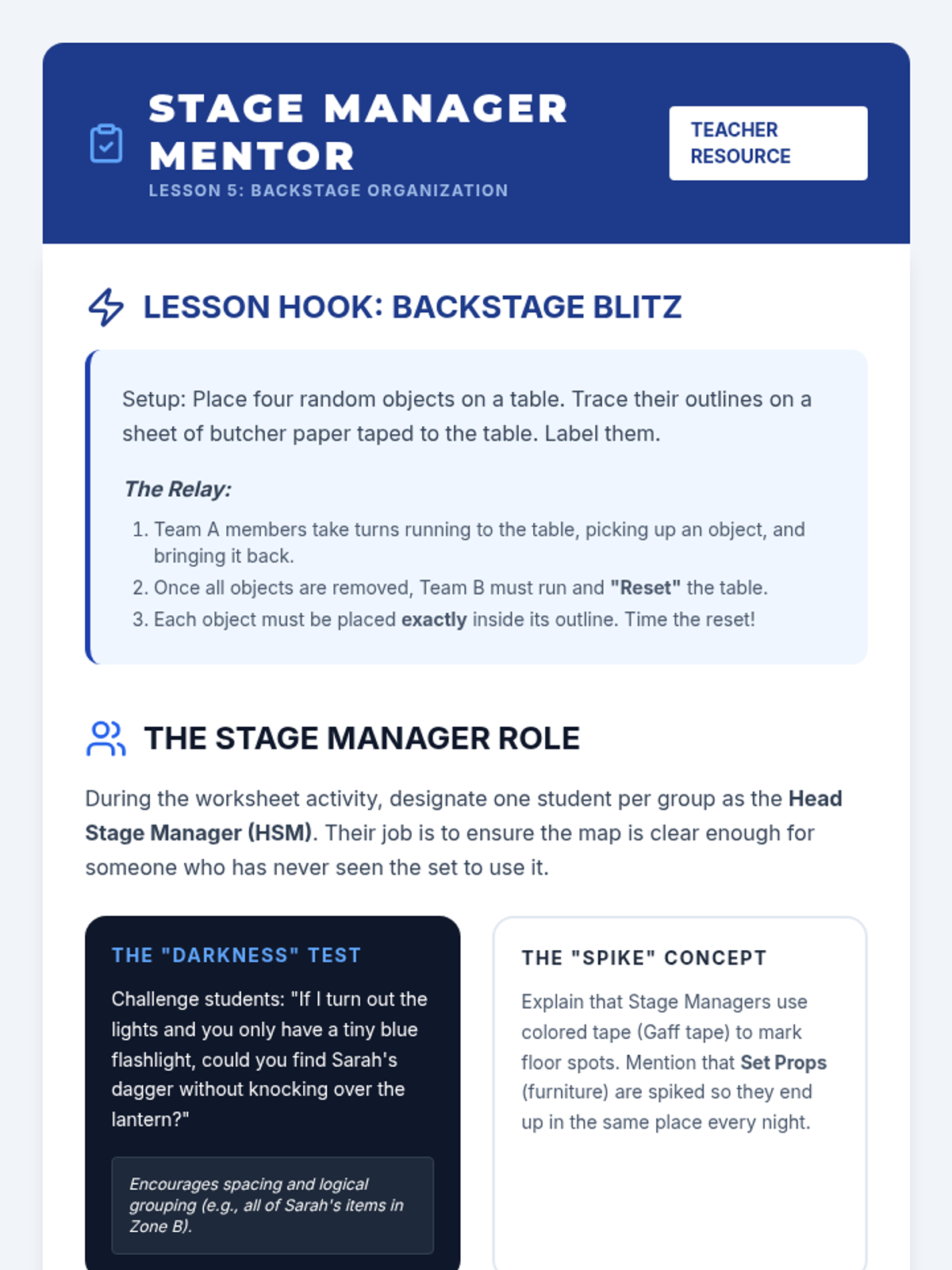
Students step into the role of Stage Managers to learn about organization. They create a 'prop table' map, outlining where items go ensuring actors can find them in the dark, and practice resetting a scene quickly.
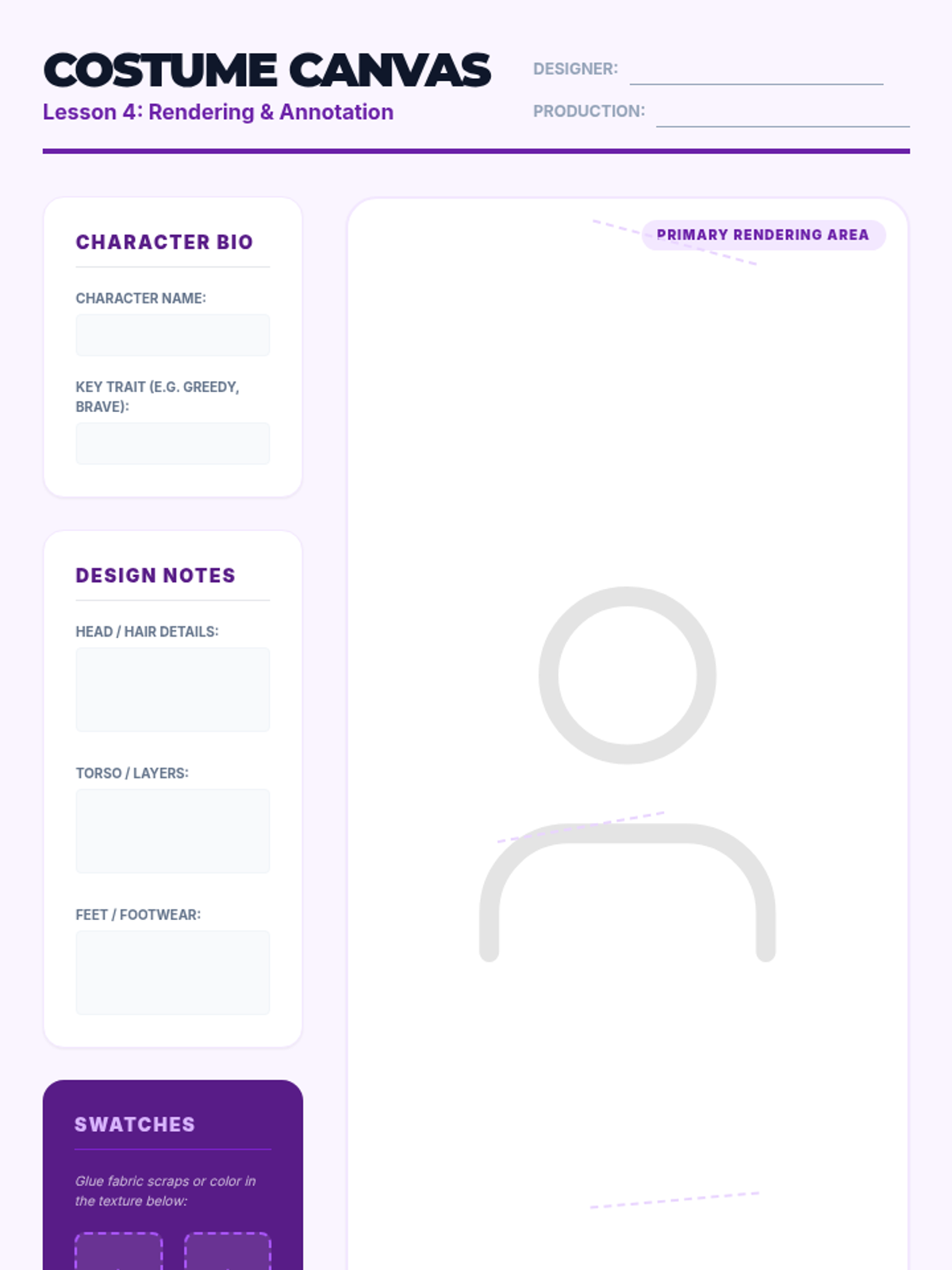
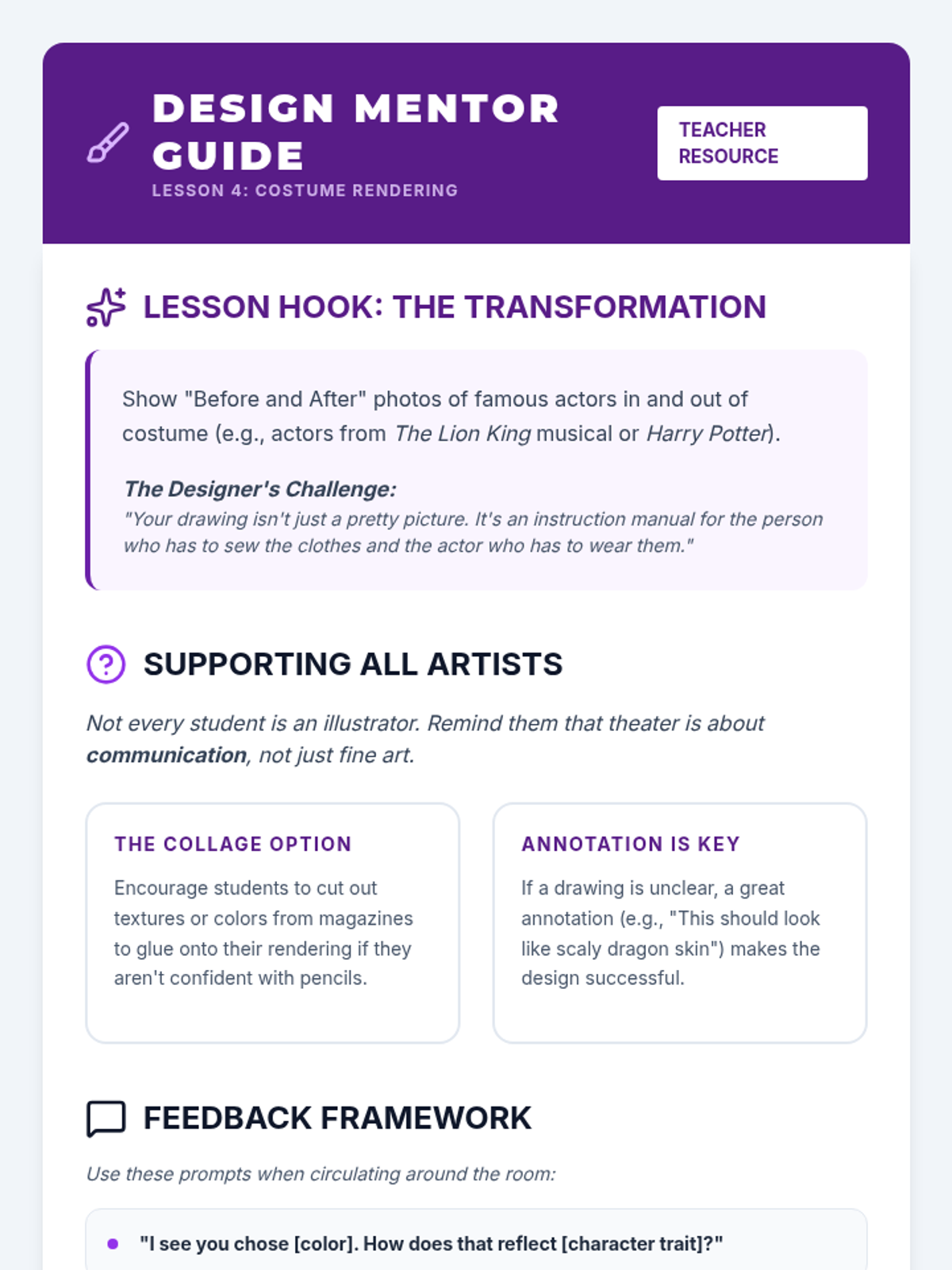
Students create a costume rendering for a specific character using drawing or collage techniques. They must annotate their design to explain how their choices relate to the character's age, job, and personality.
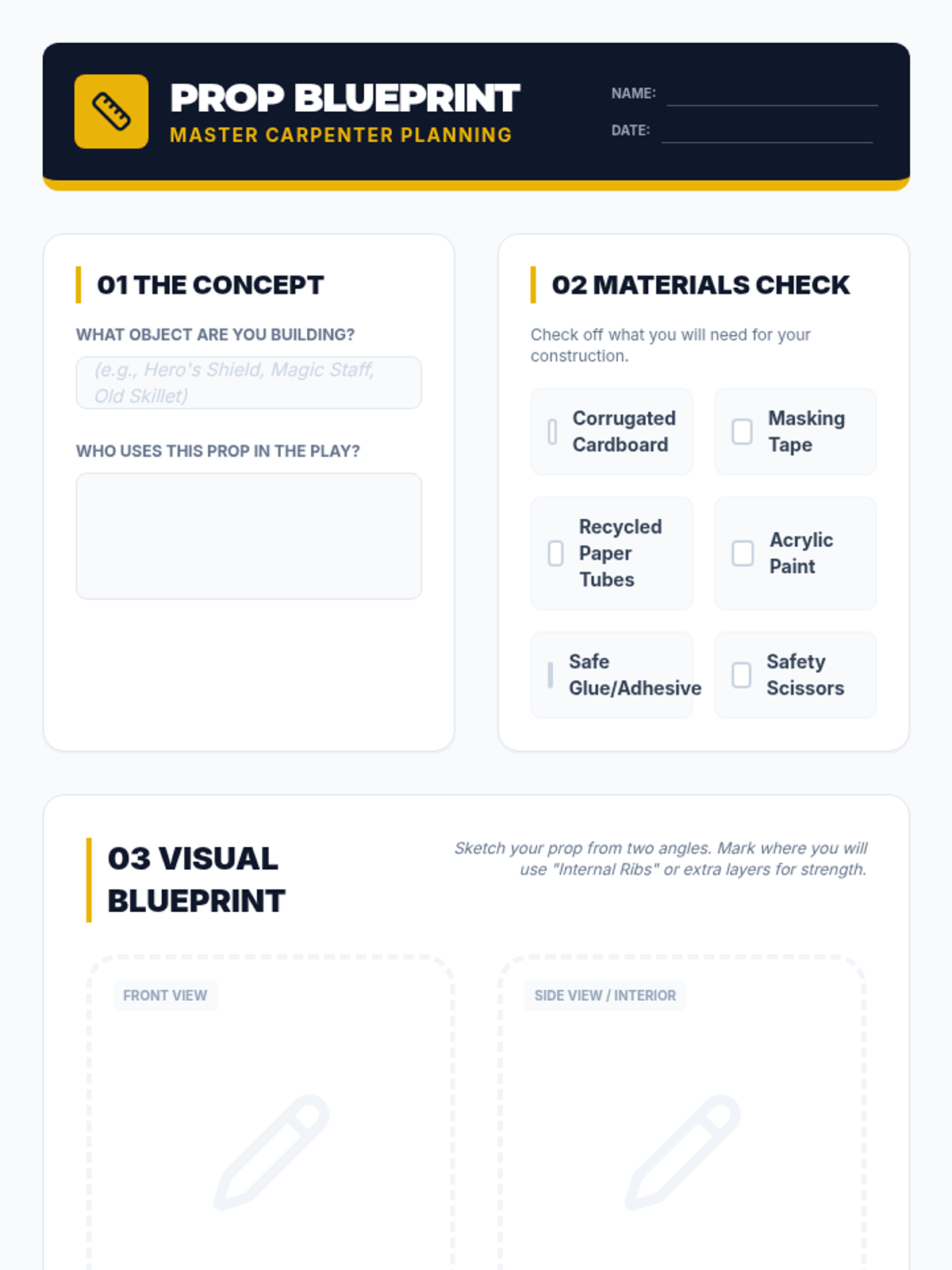
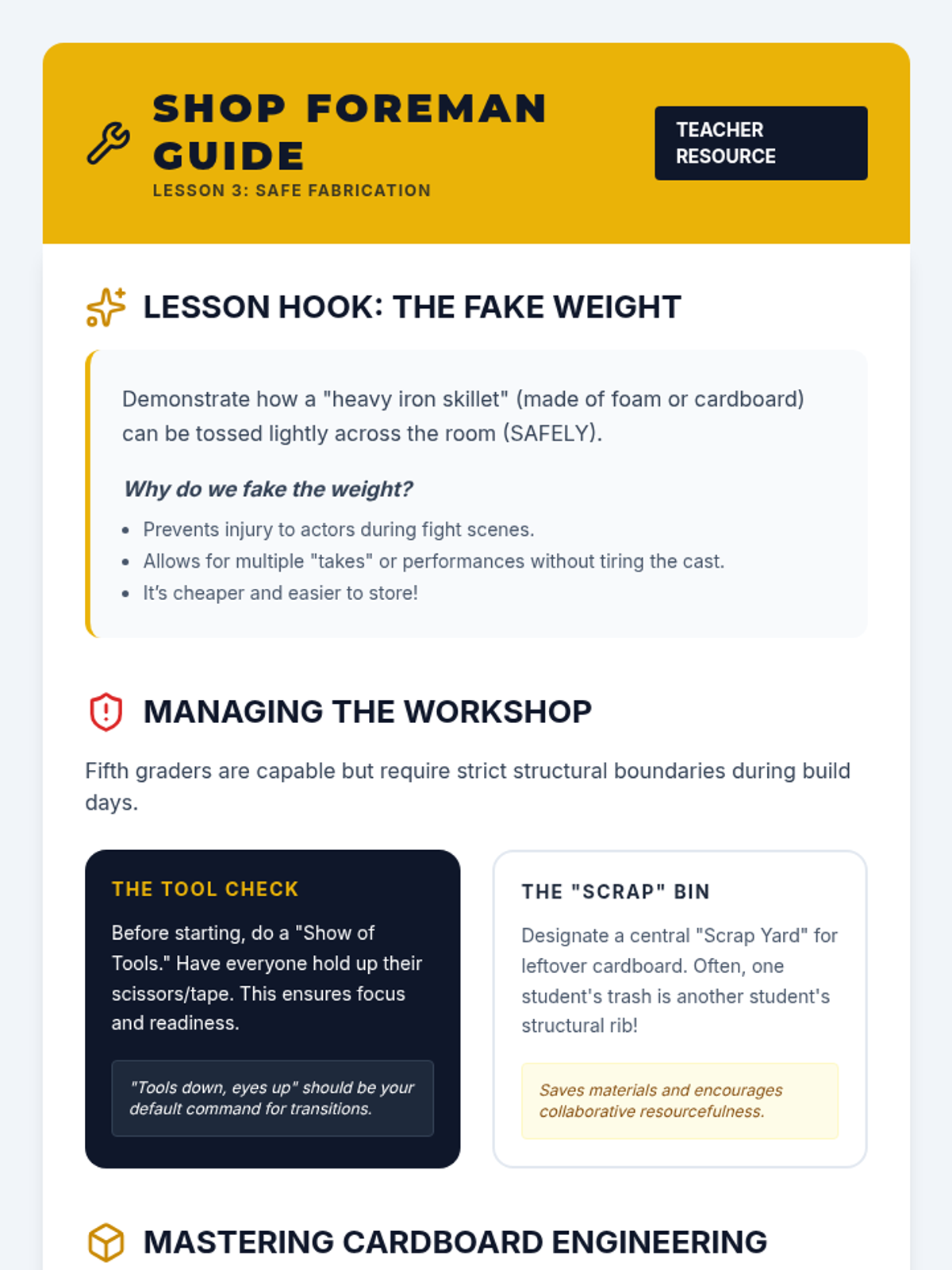
Focusing on safety and resourcefulness, students learn to build a specific hand prop using cardboard, tape, and safe adhesives. The lesson covers structural integrity and how to make lightweight objects look heavy or metallic.
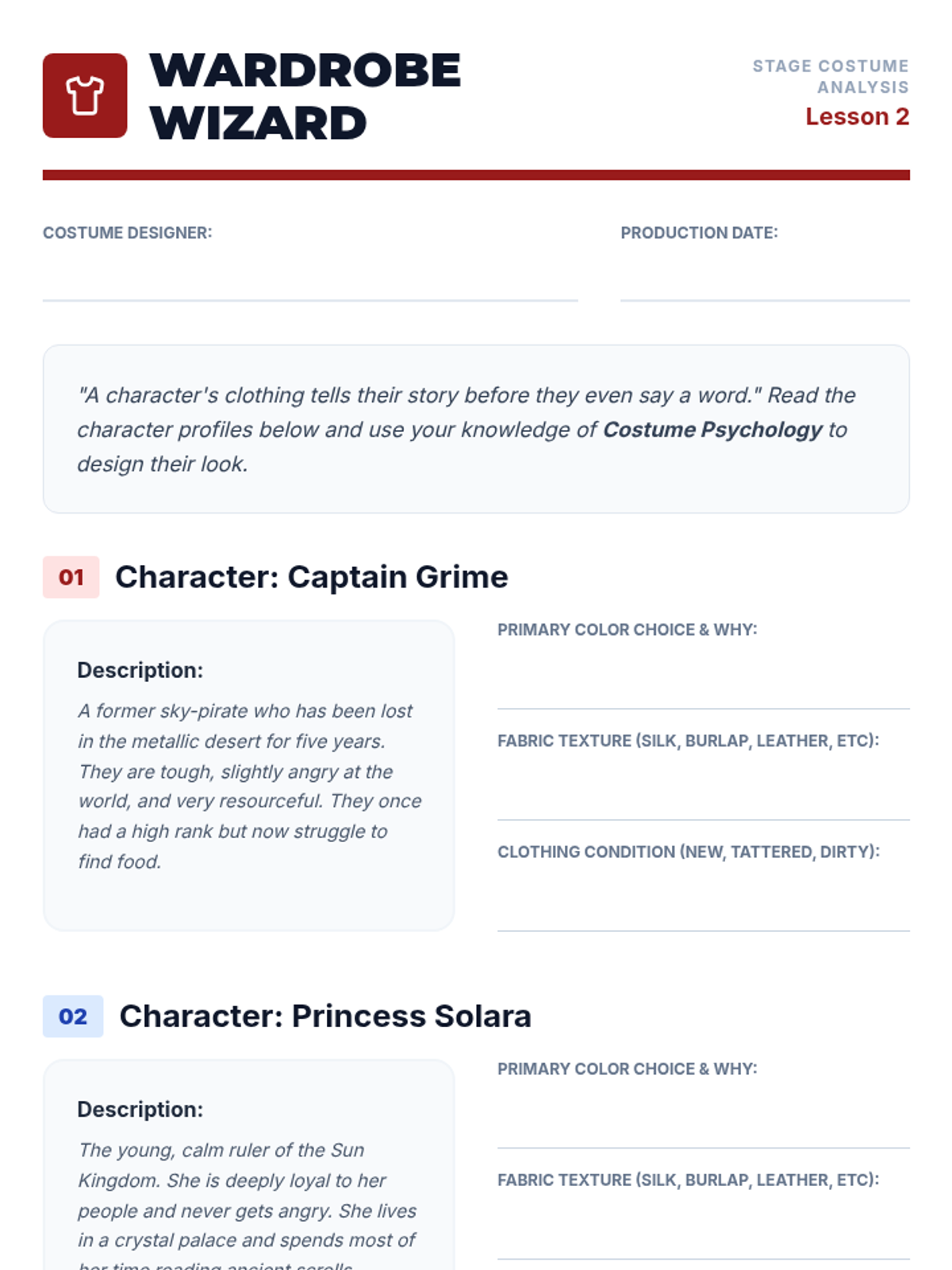
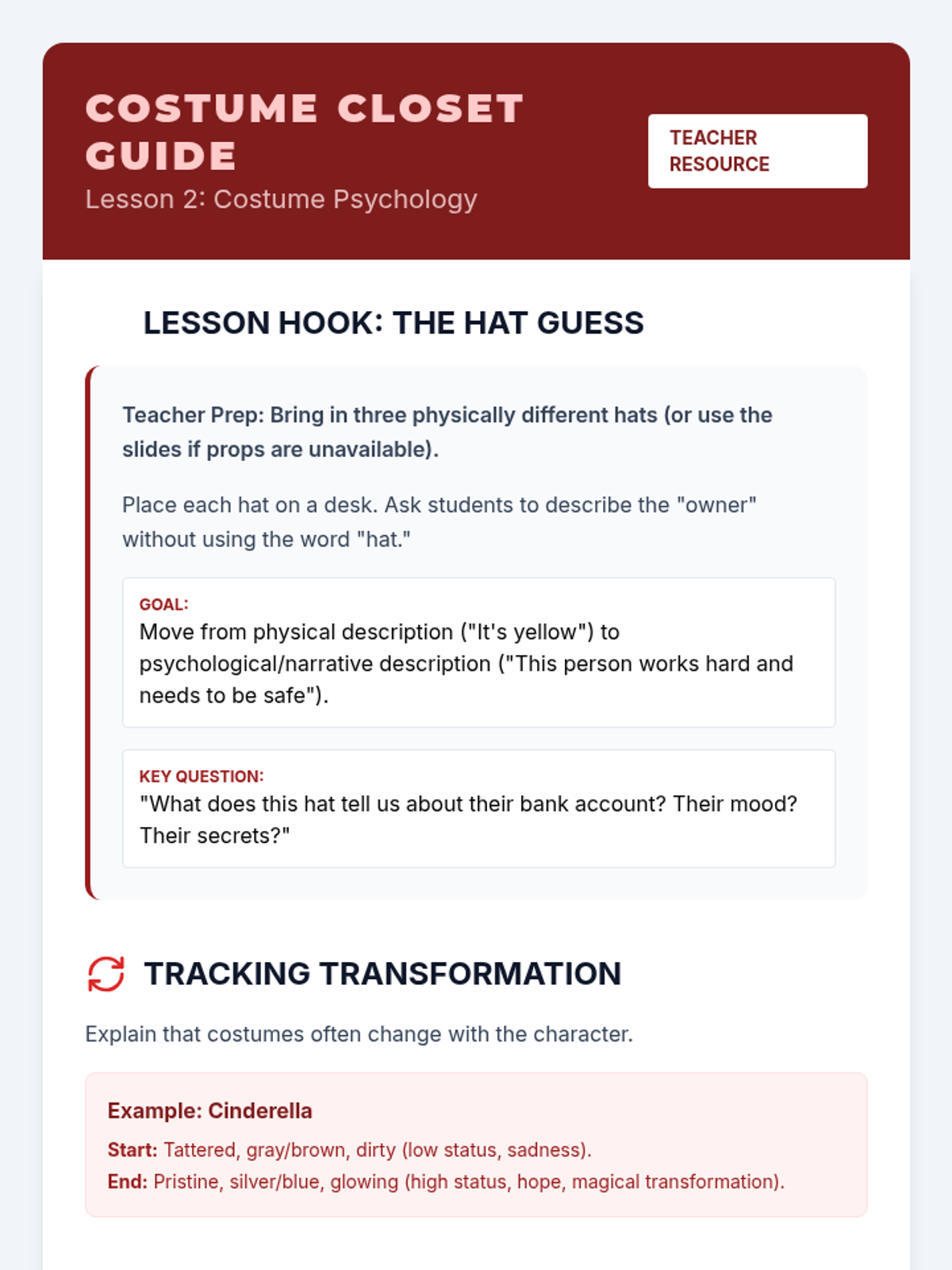
Students explore how color, condition, and fit of clothing communicate character traits. They analyze character descriptions and select fabric swatches or colors that represent the character's personality and status.
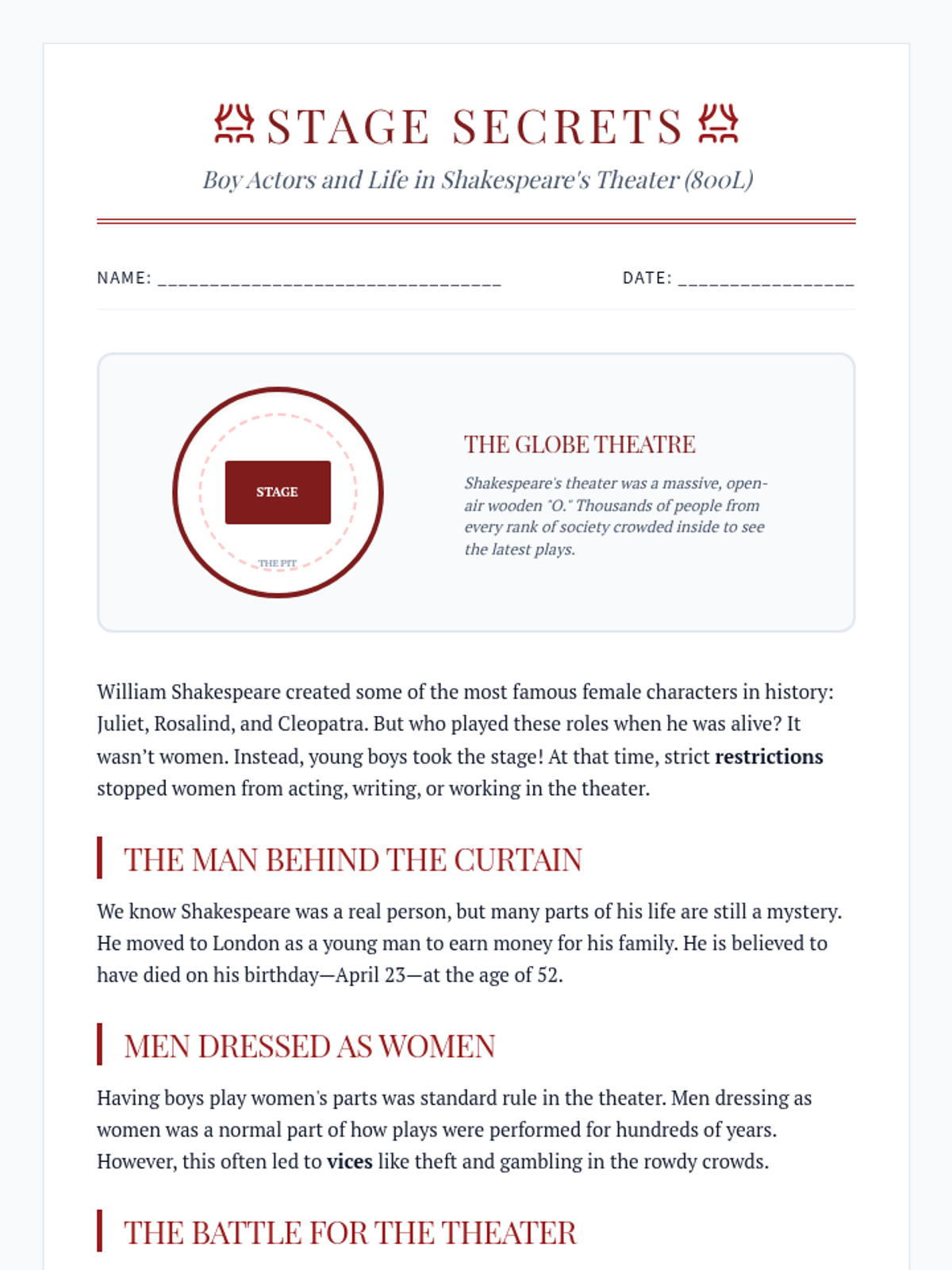
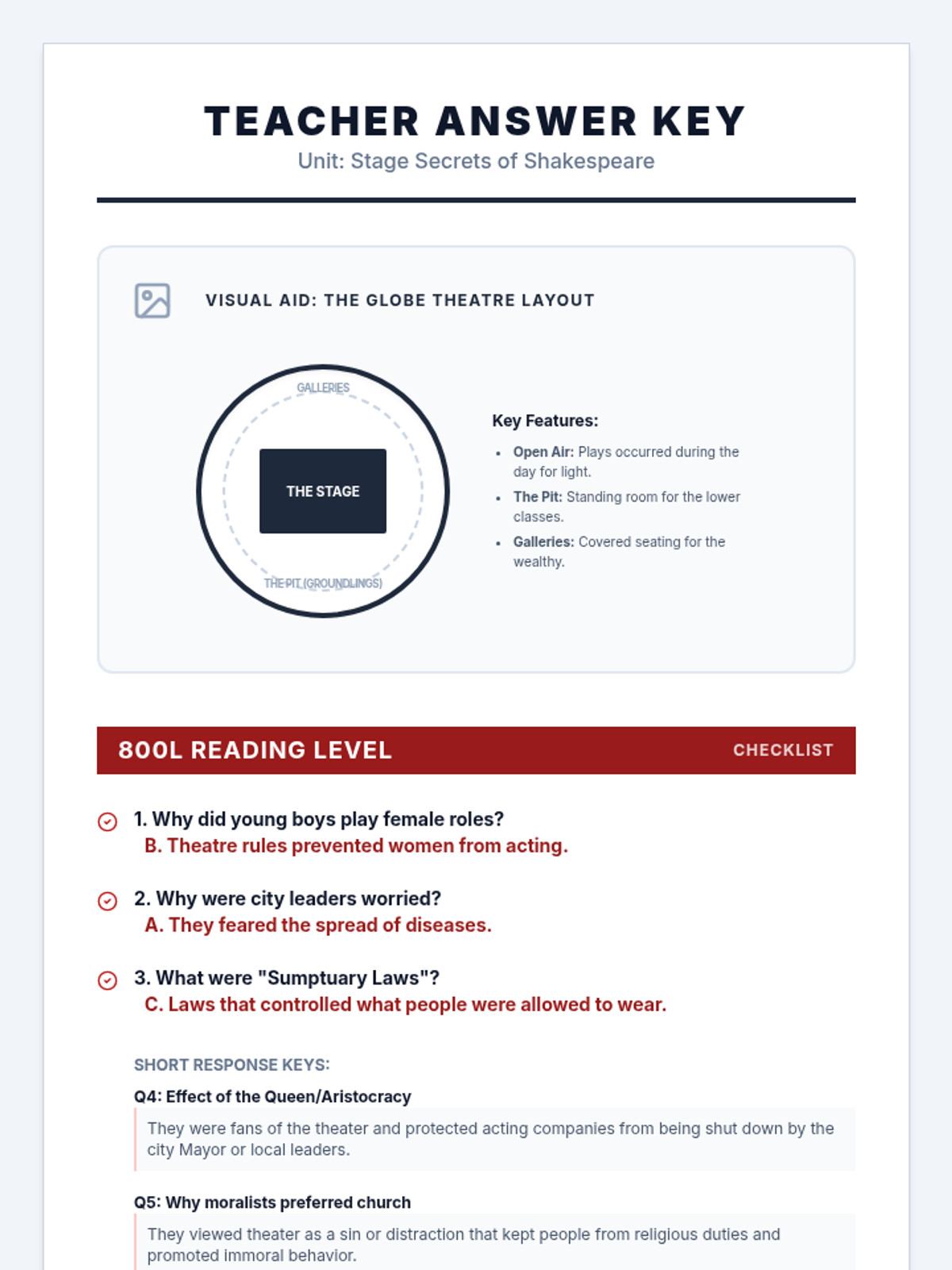
A comparison of Shakespearean theater practices, focusing on the historical context of boy actors and social reactions to the stage across different reading levels.
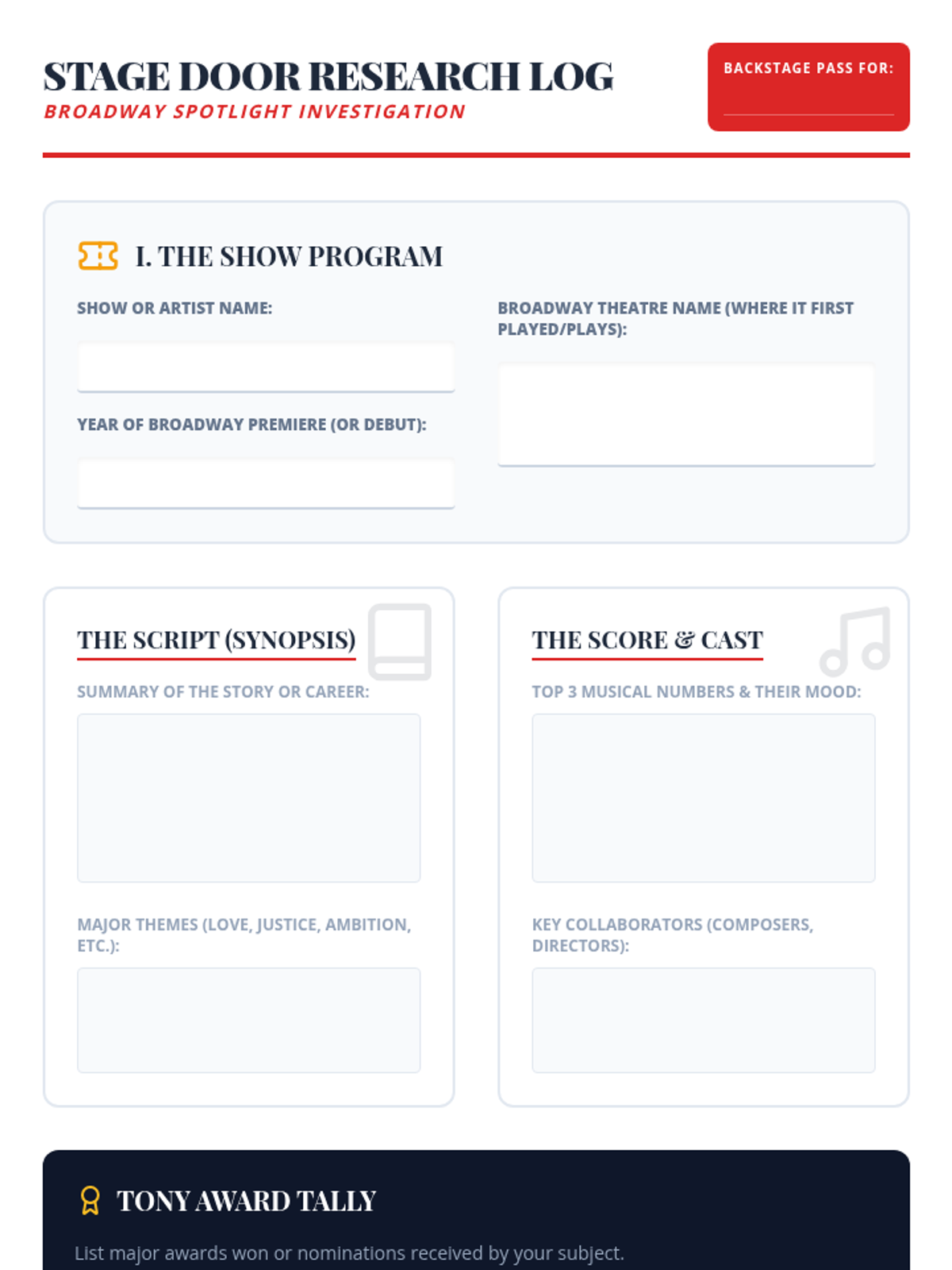
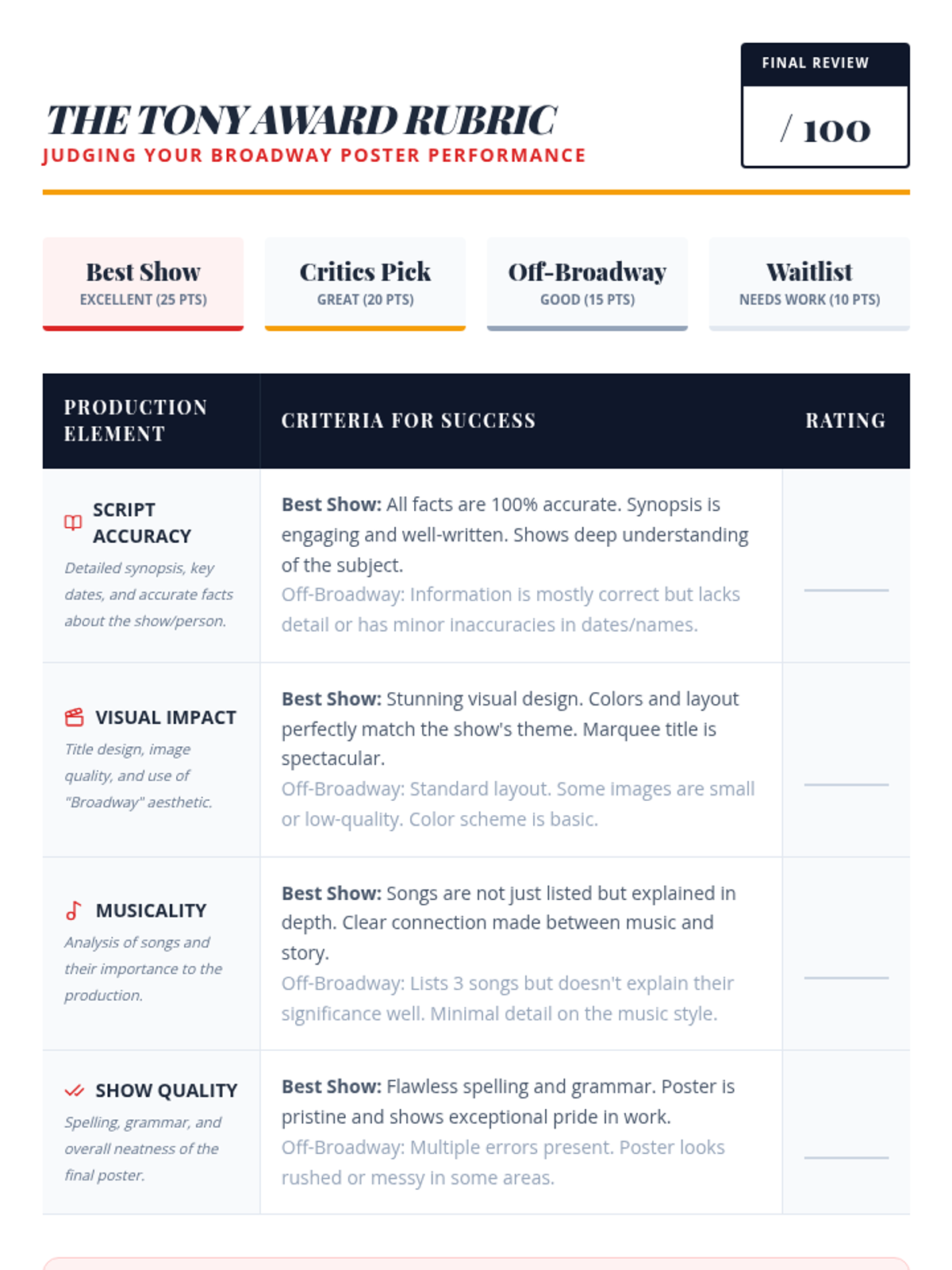
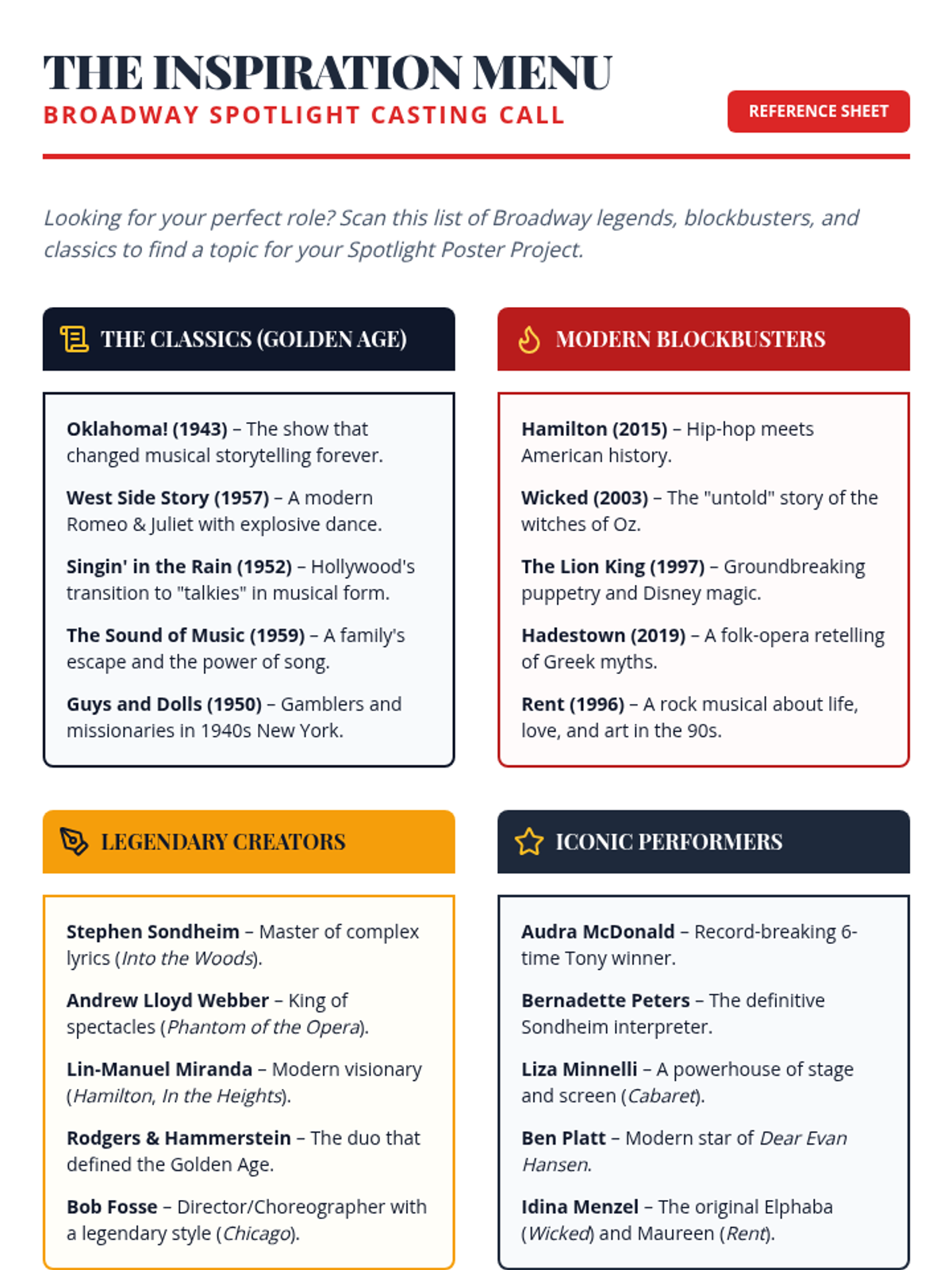
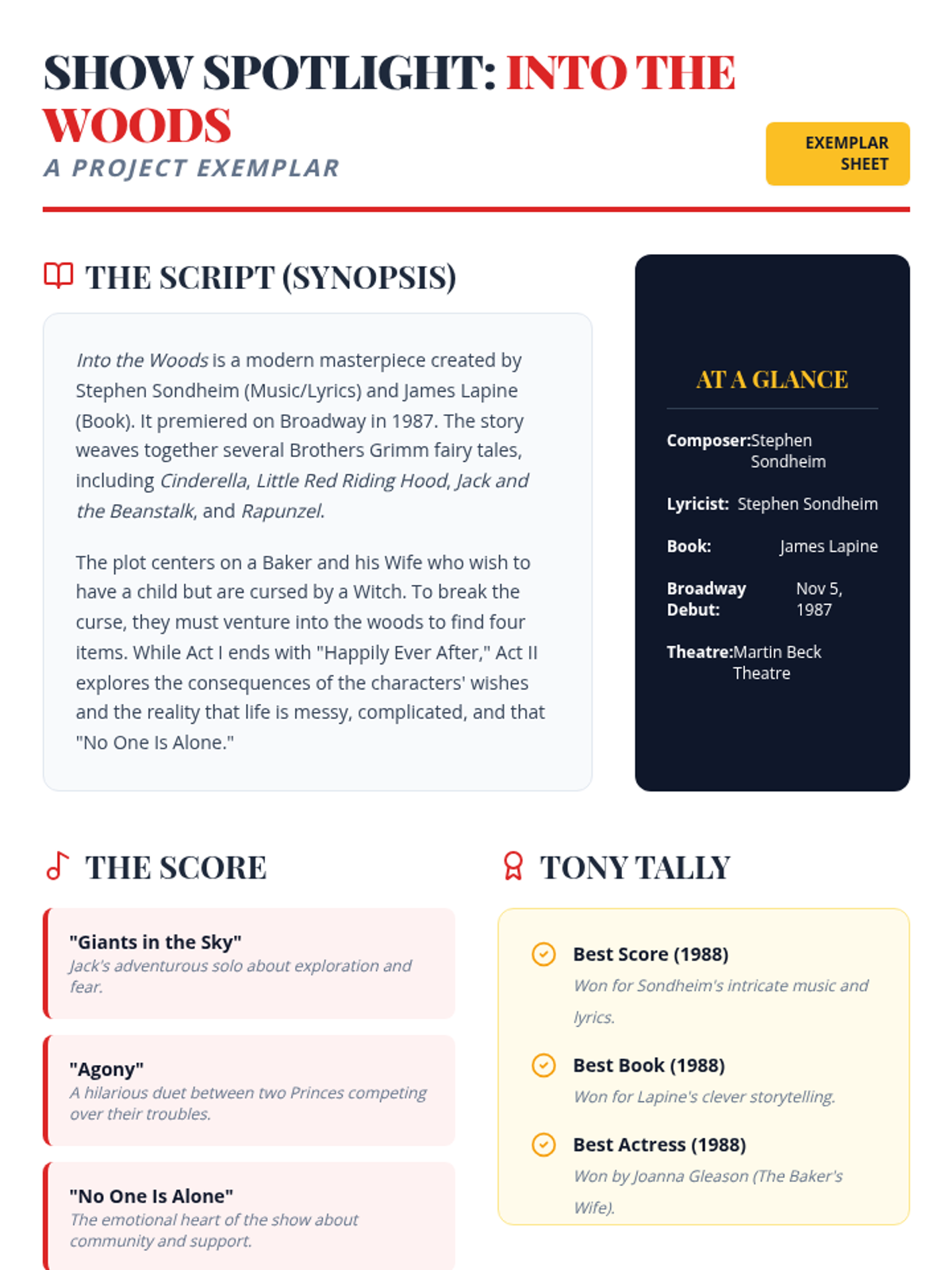
A creative project where students research and present the magic of Broadway. Students can choose a specific musical, a legendary composer, or a famous performer to showcase on an informational poster.
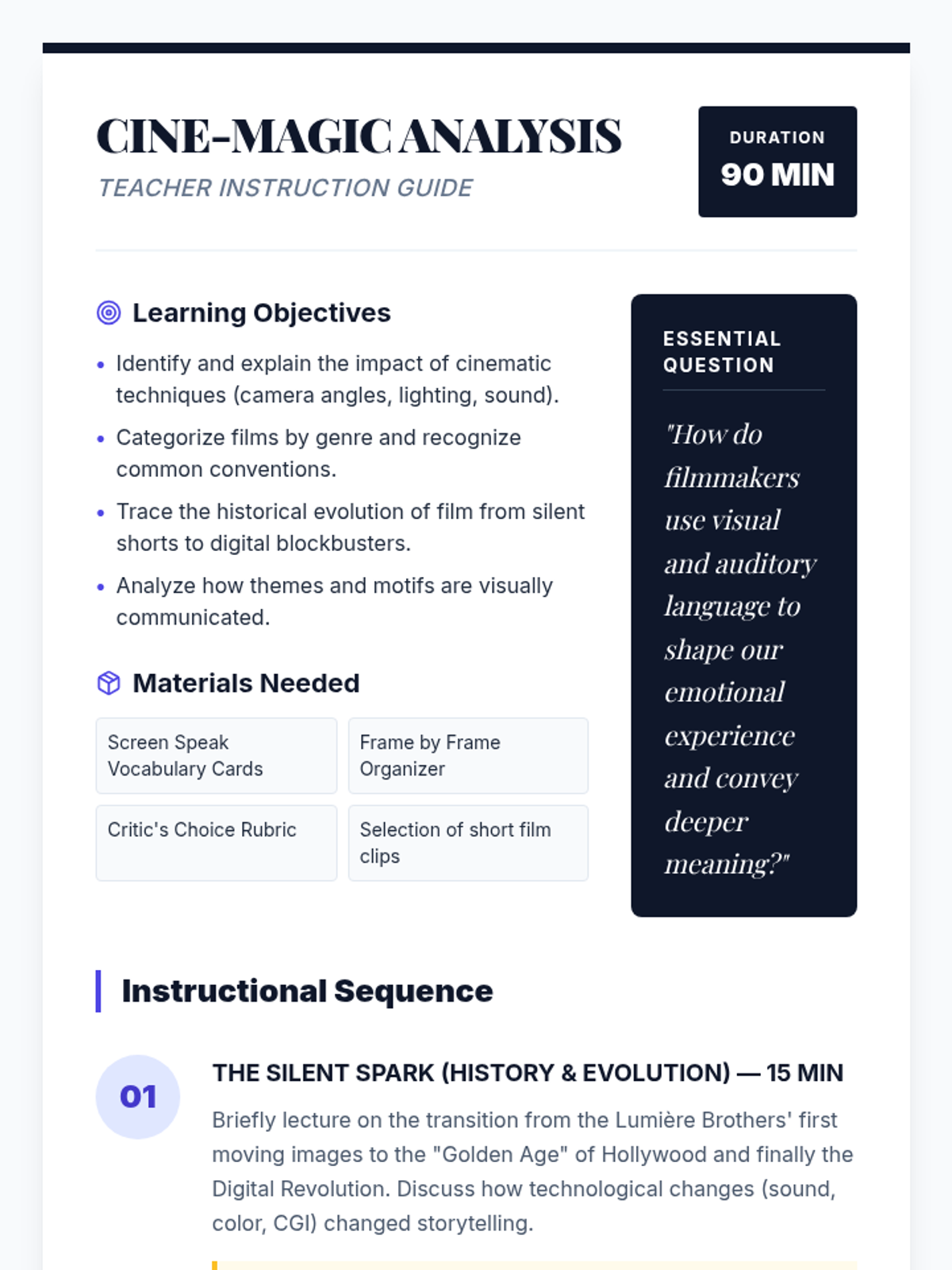
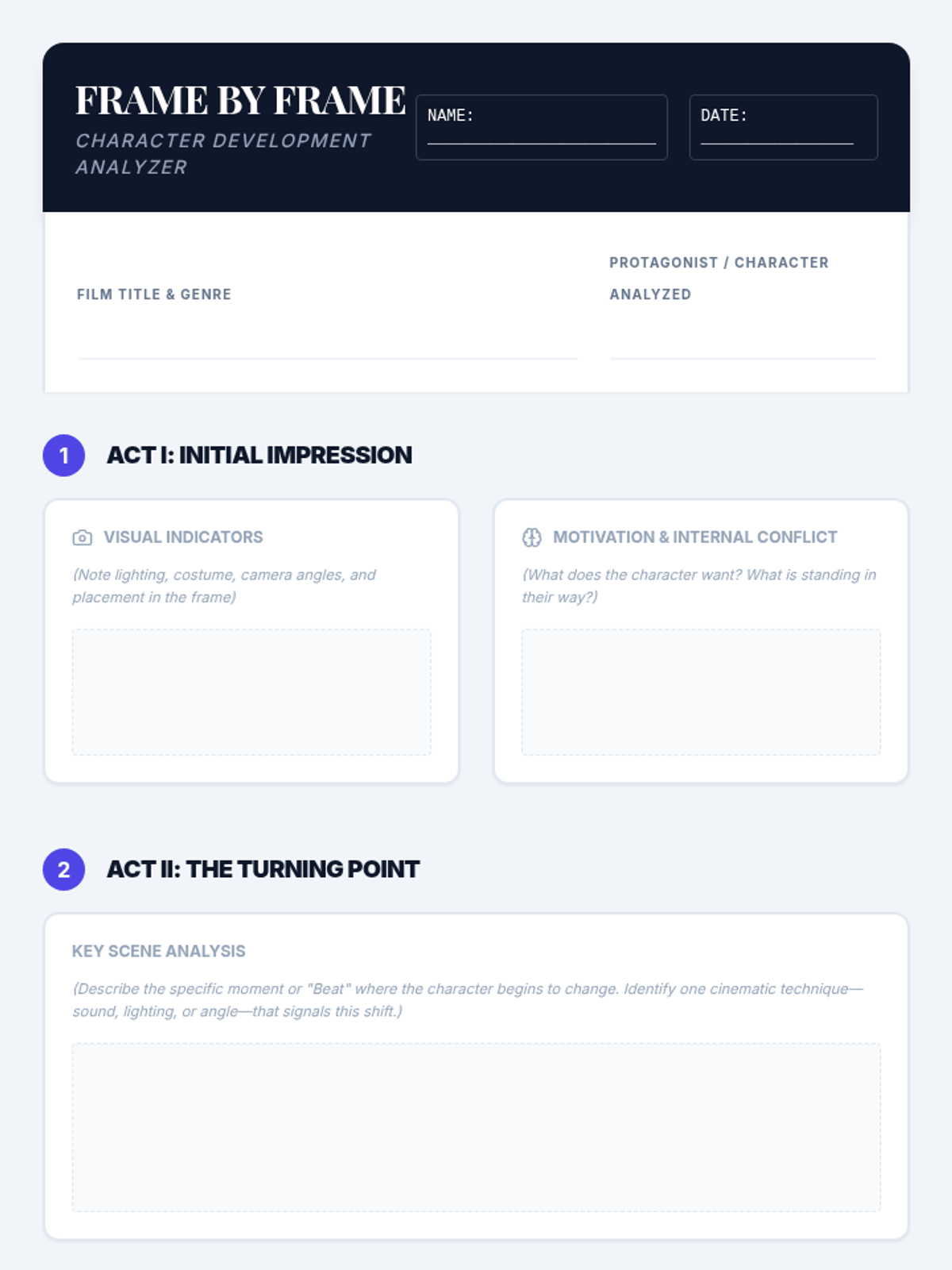
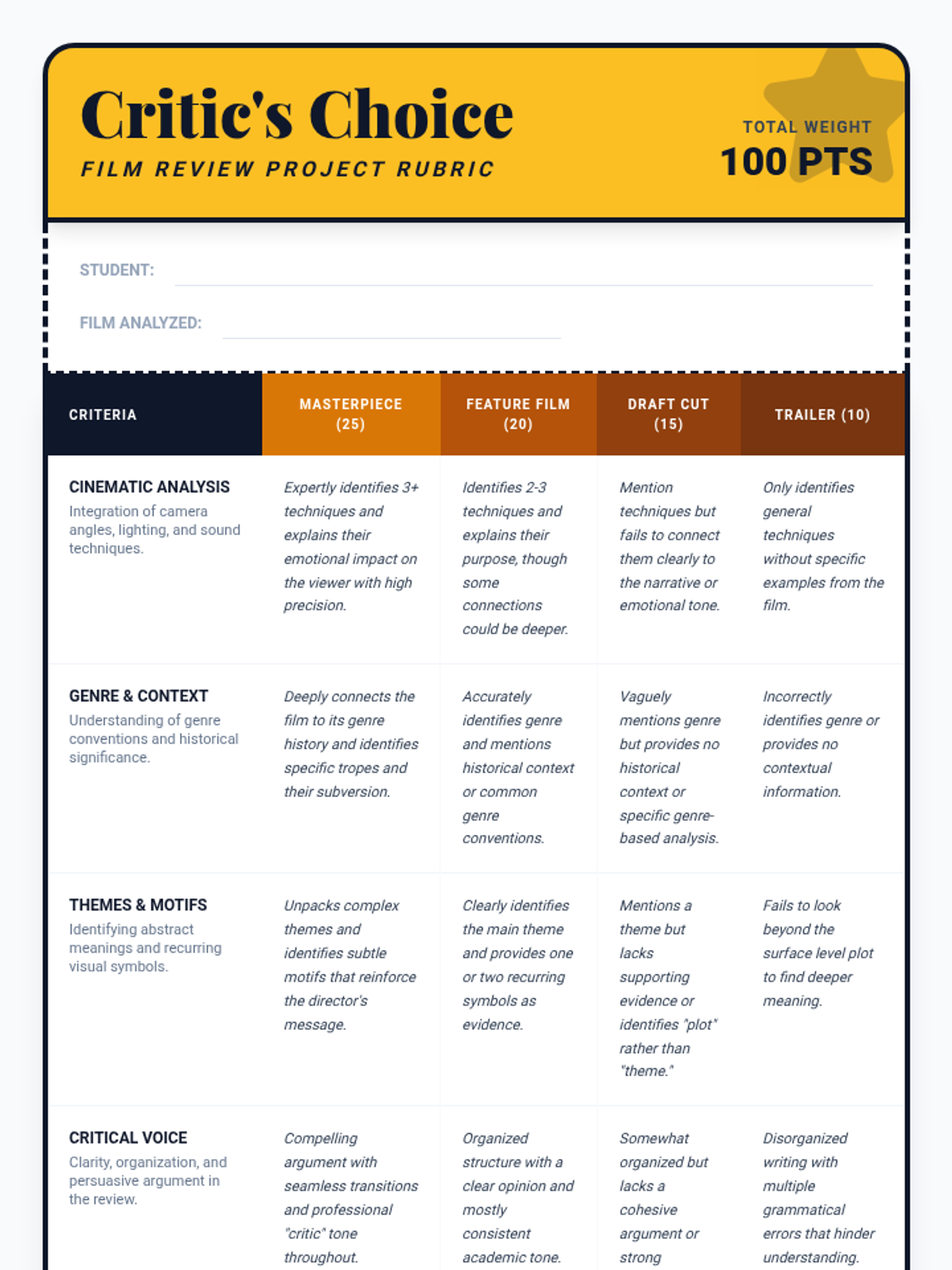
A comprehensive introduction to film analysis, covering cinematic techniques, genre studies, and historical evolution to help students decode the language of cinema.
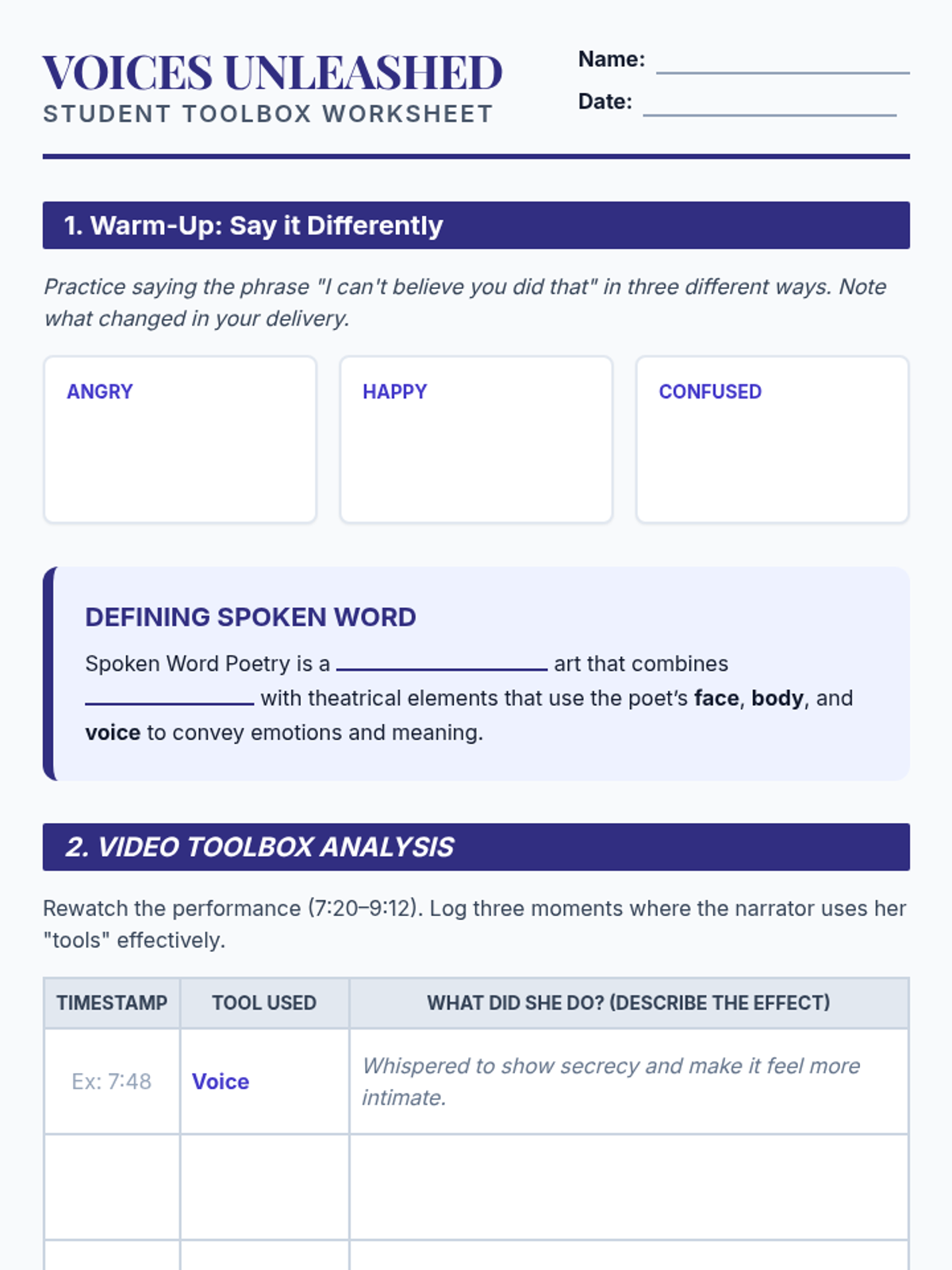
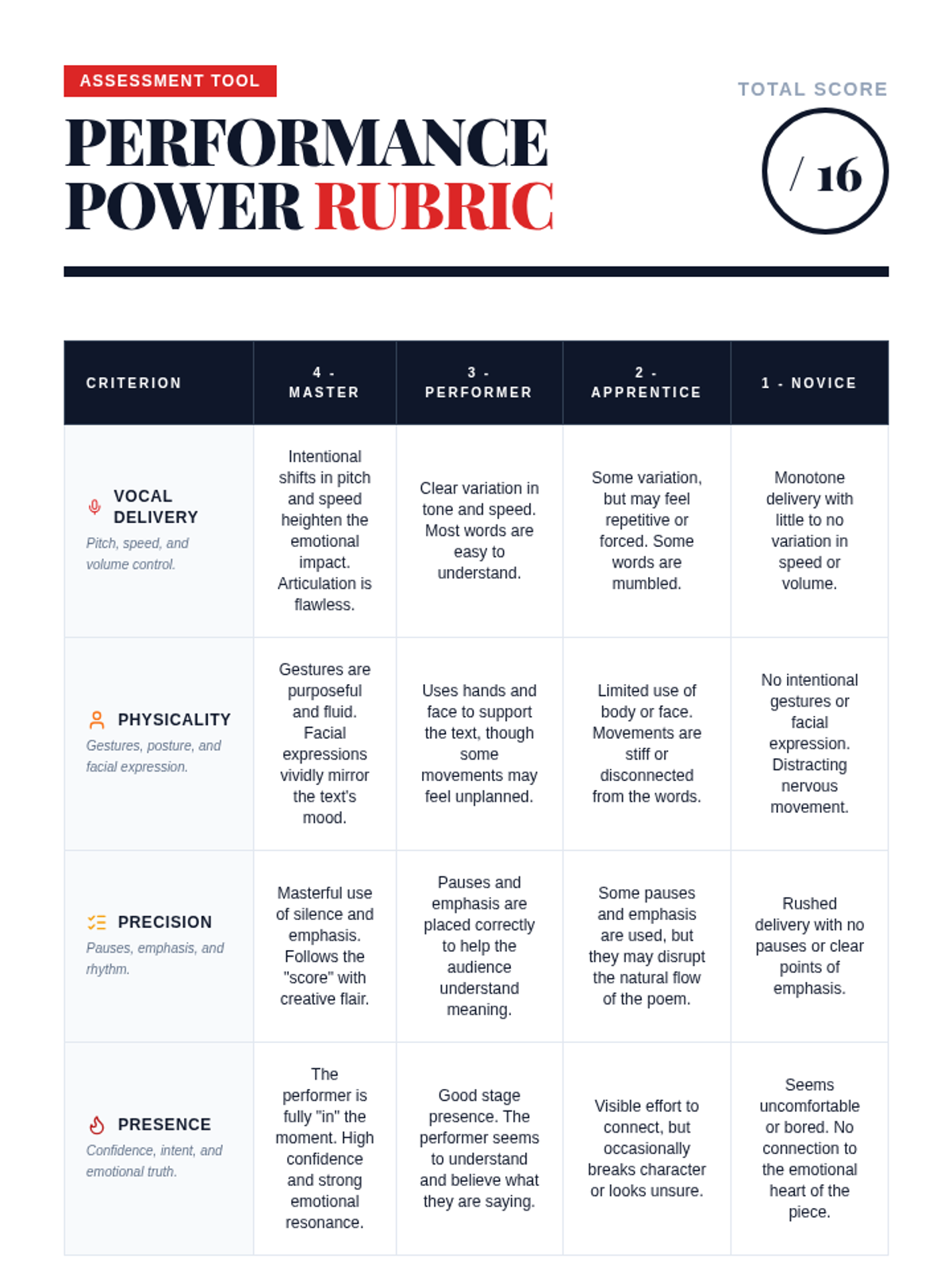
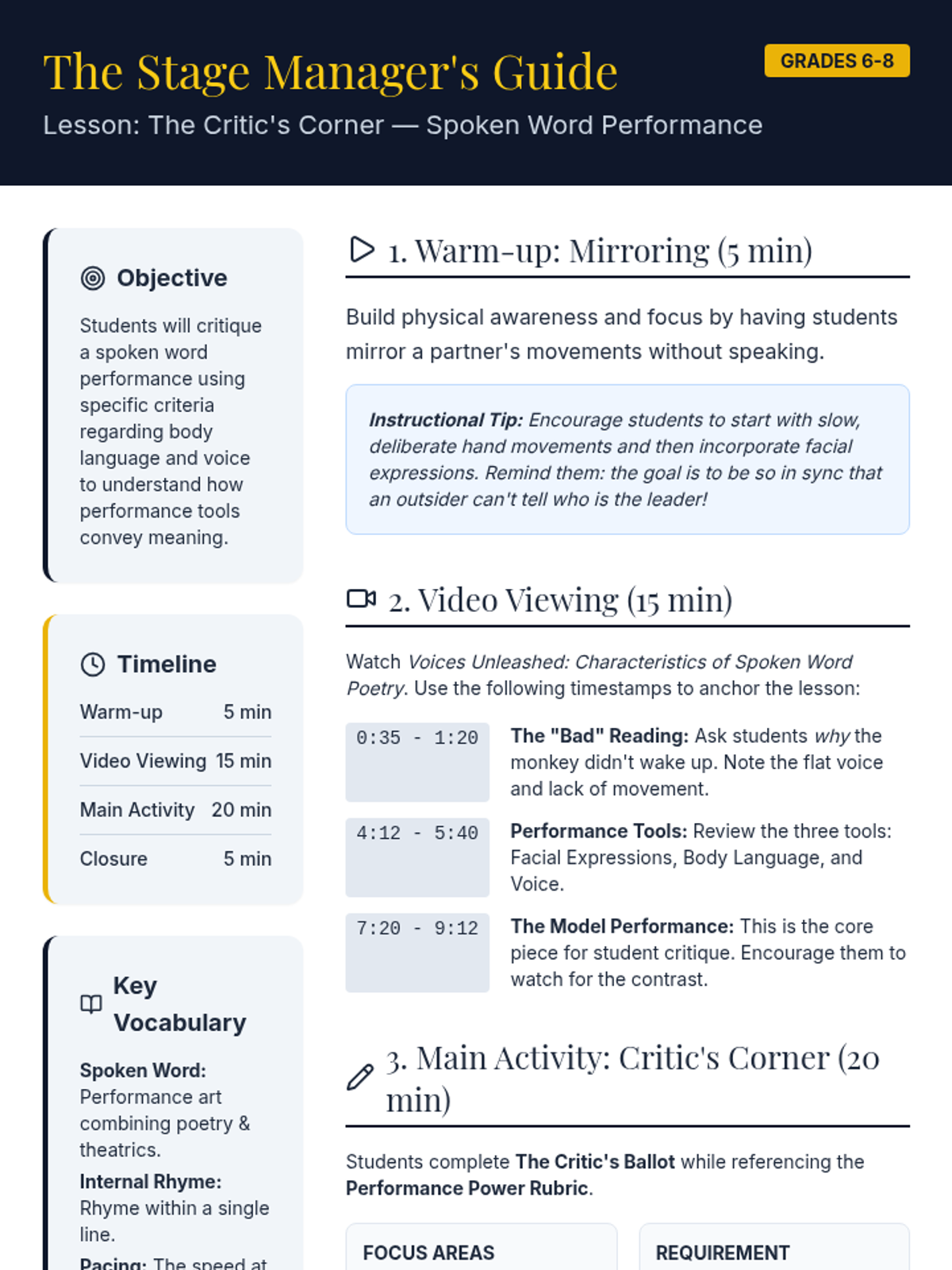
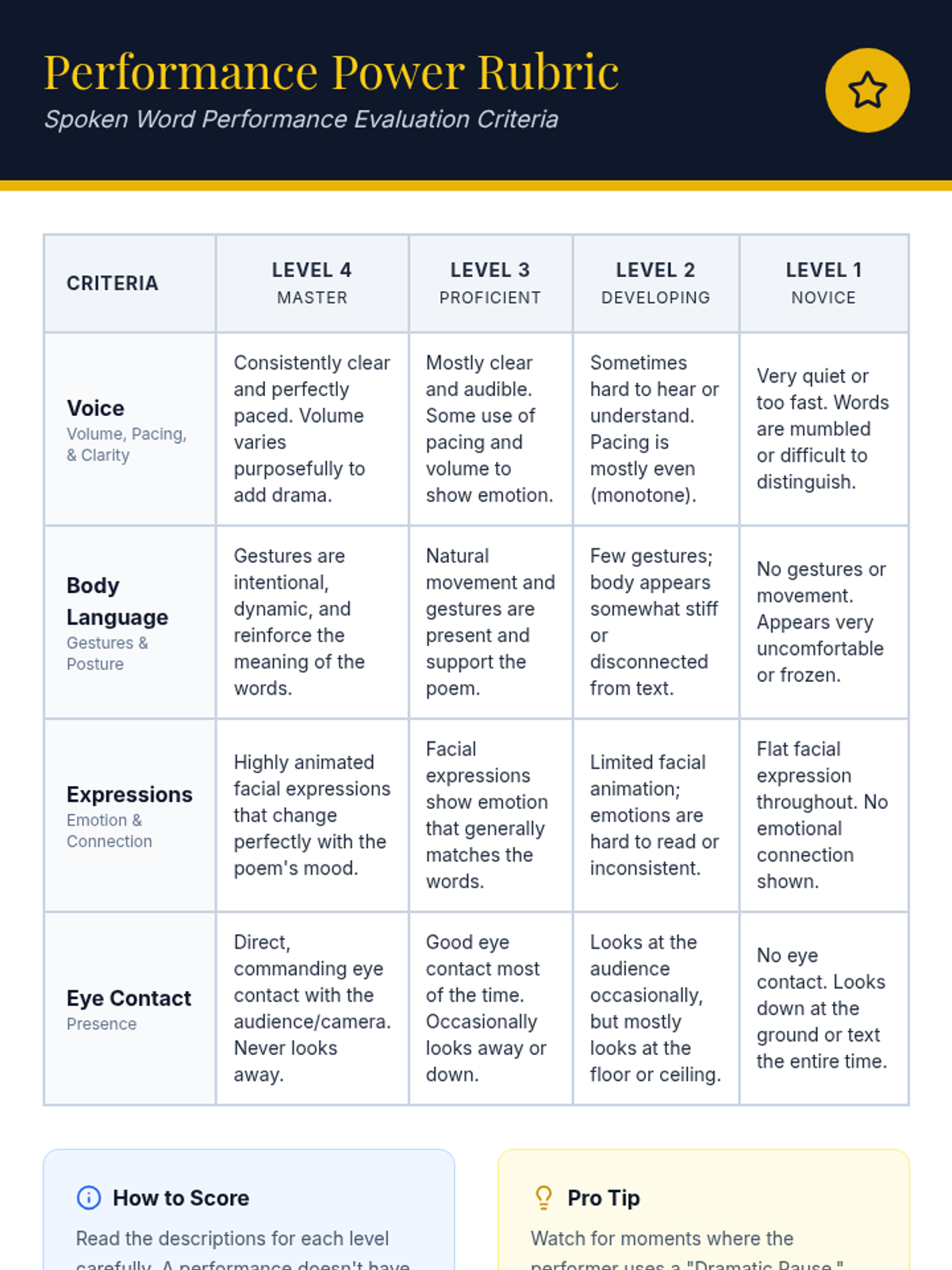
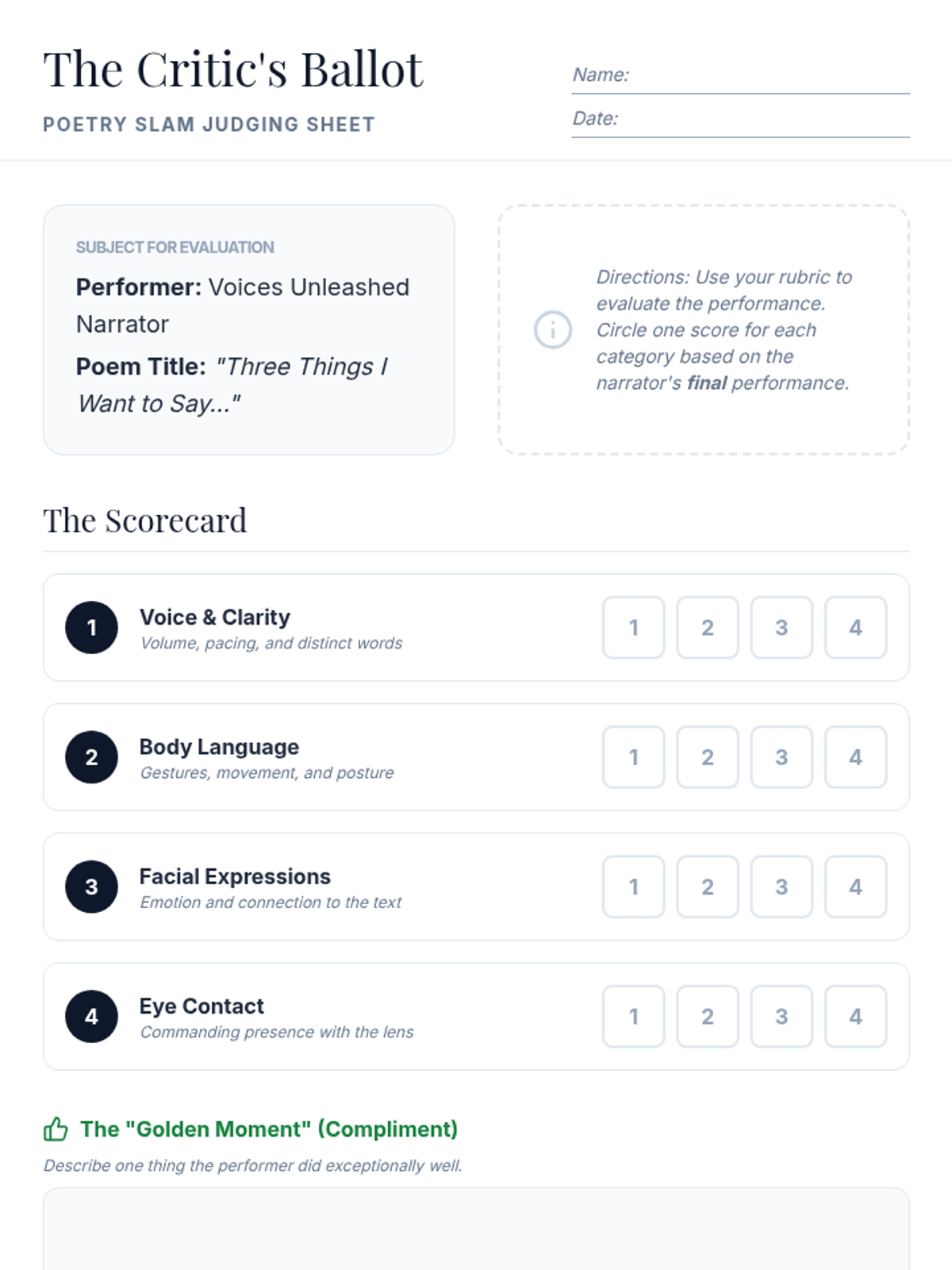
Students will learn the core characteristics of spoken word poetry and apply their knowledge by acting as performance critics. Using a specific rubric, they will analyze the narrator's use of voice, body language, and facial expressions in the 'Voices Unleashed' video.
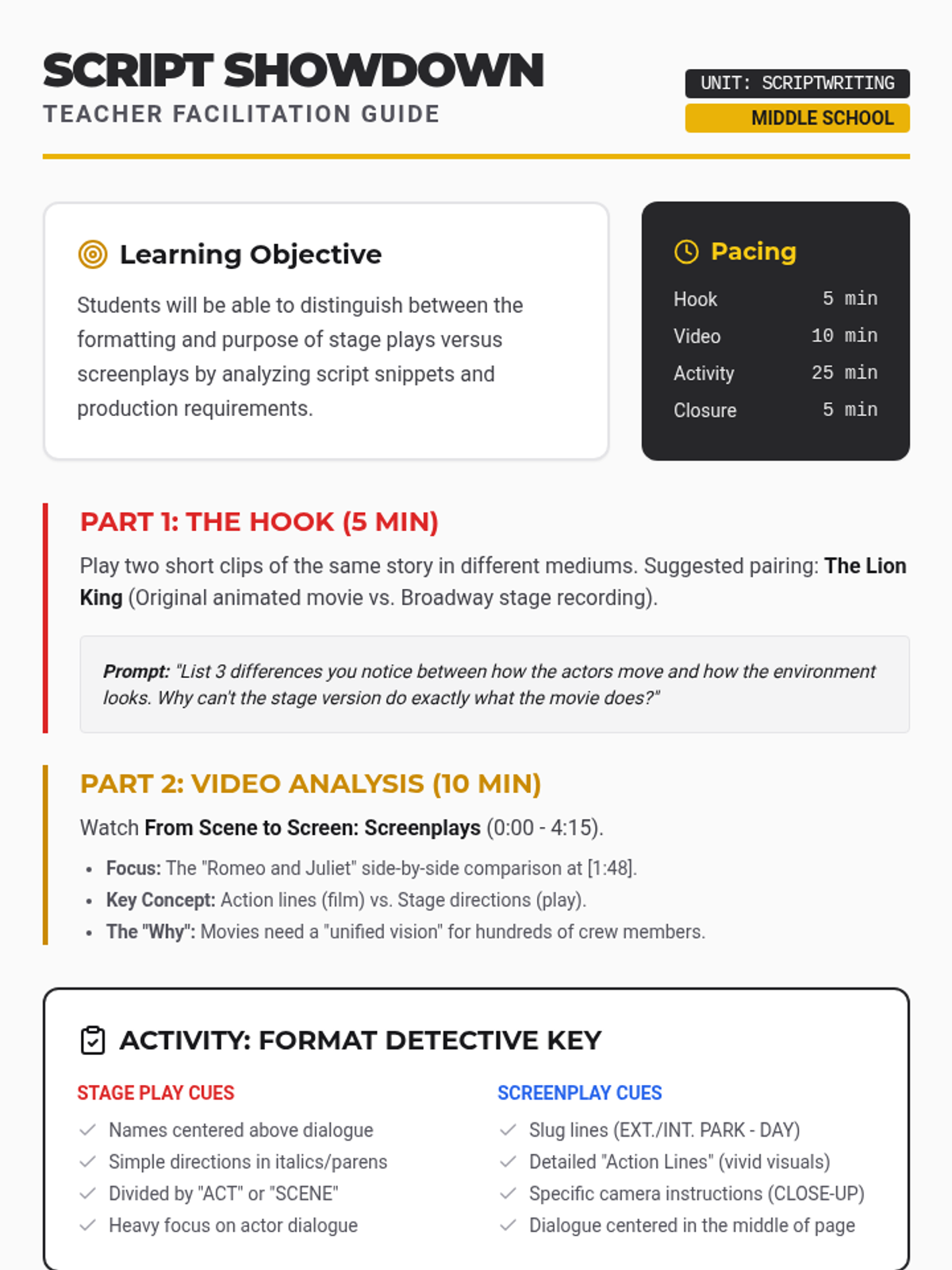
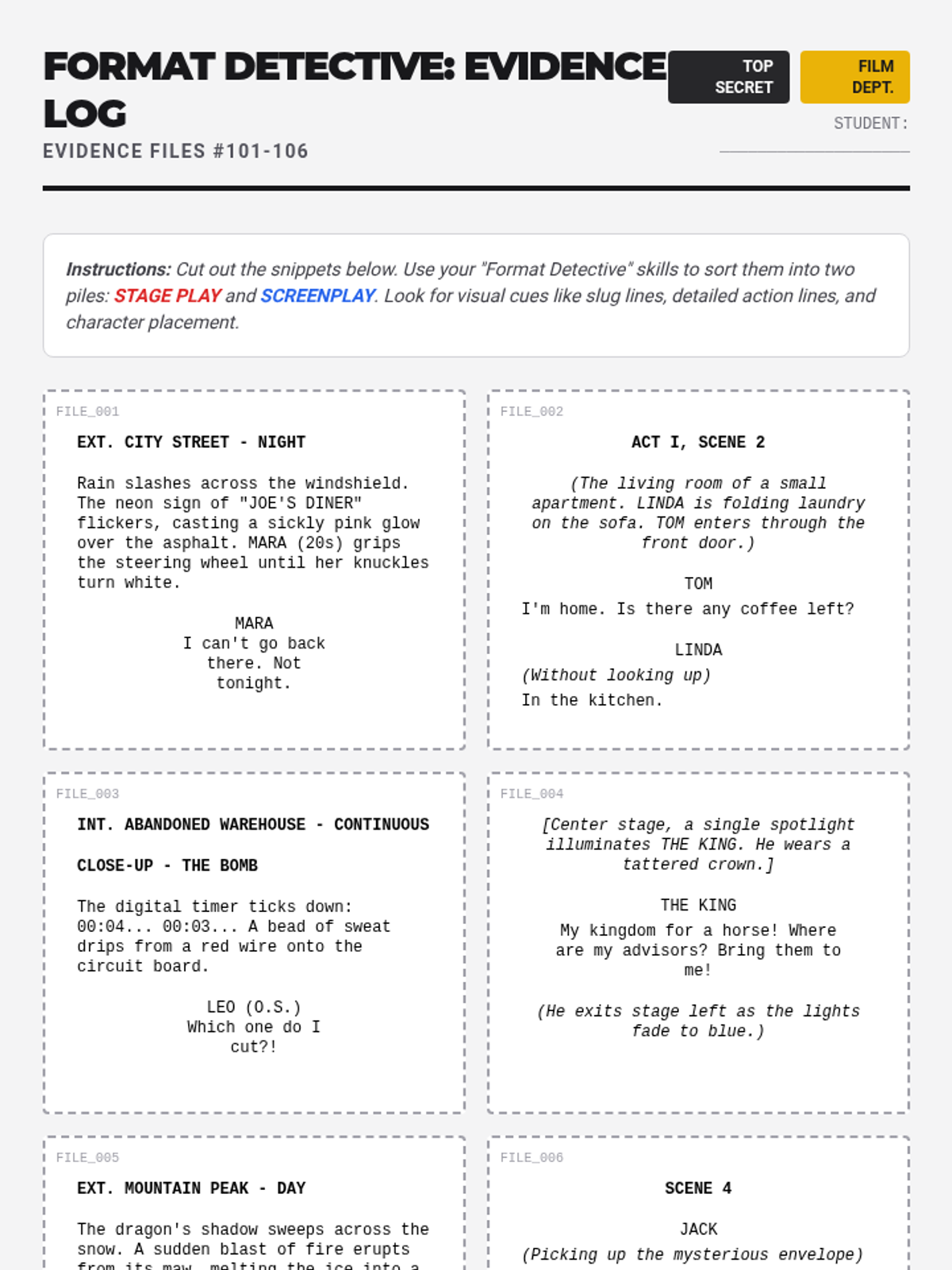
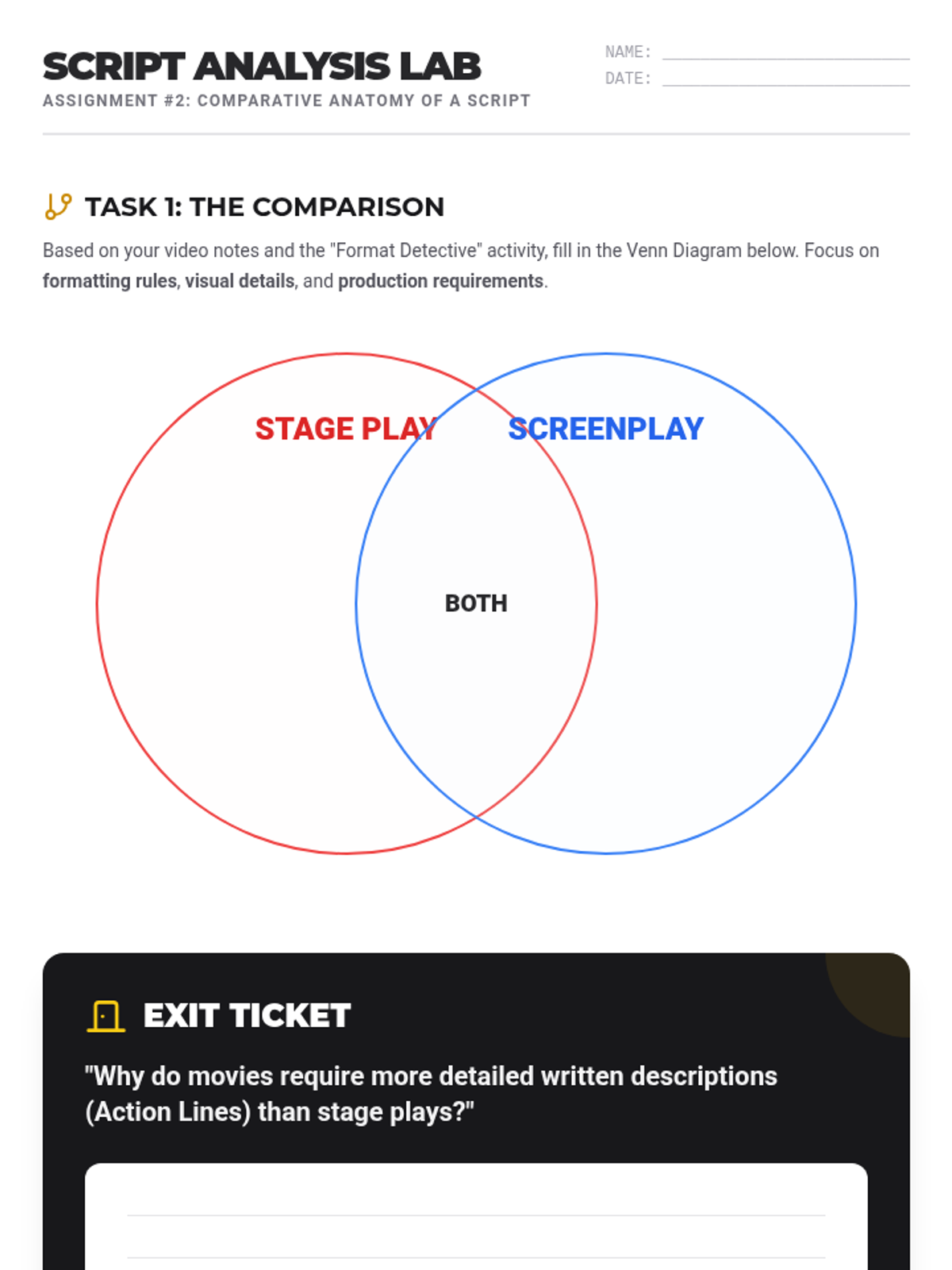
A lesson comparing the formatting and purpose of stage plays versus screenplays, featuring a video analysis and a script-sorting activity.
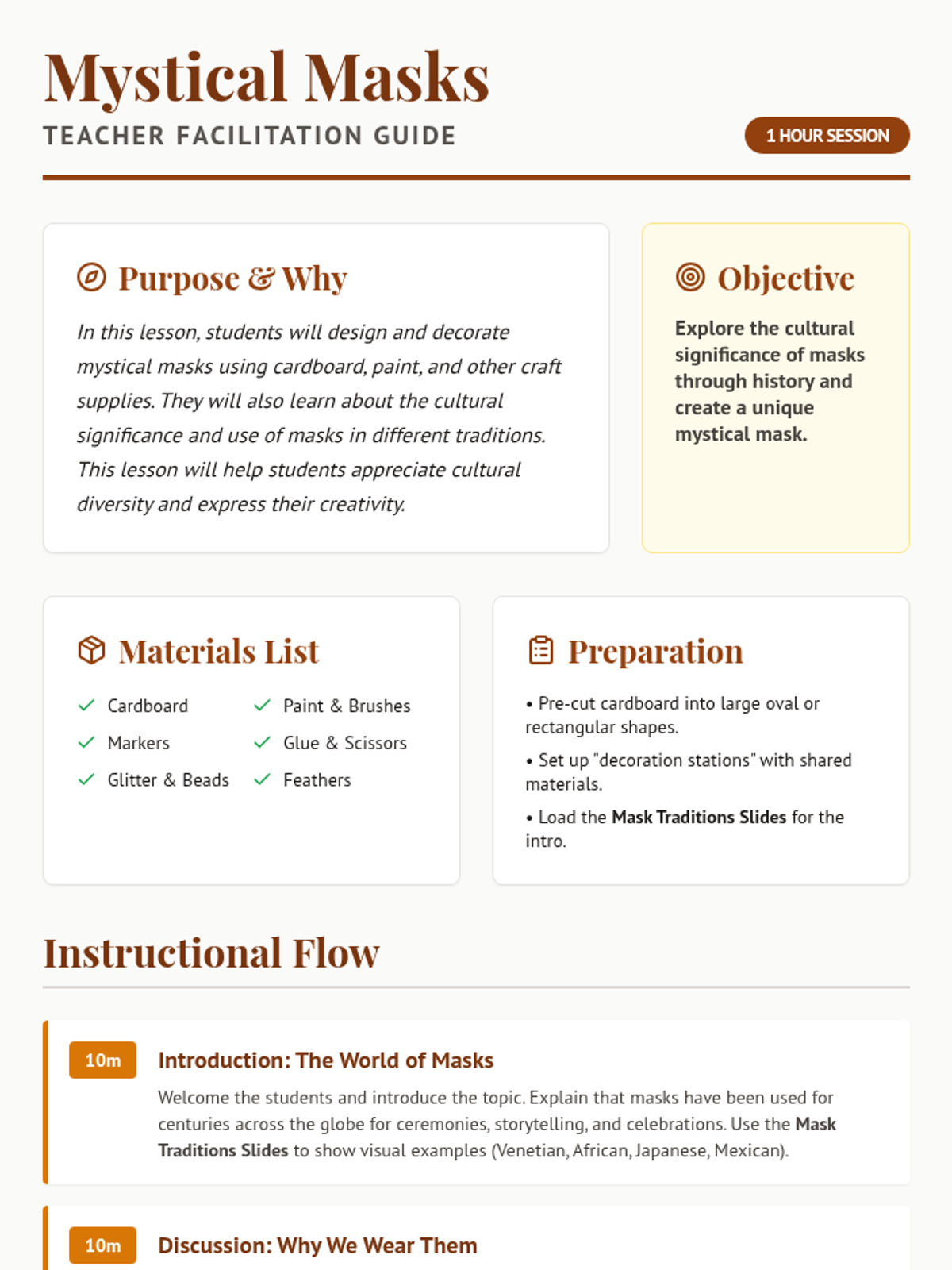
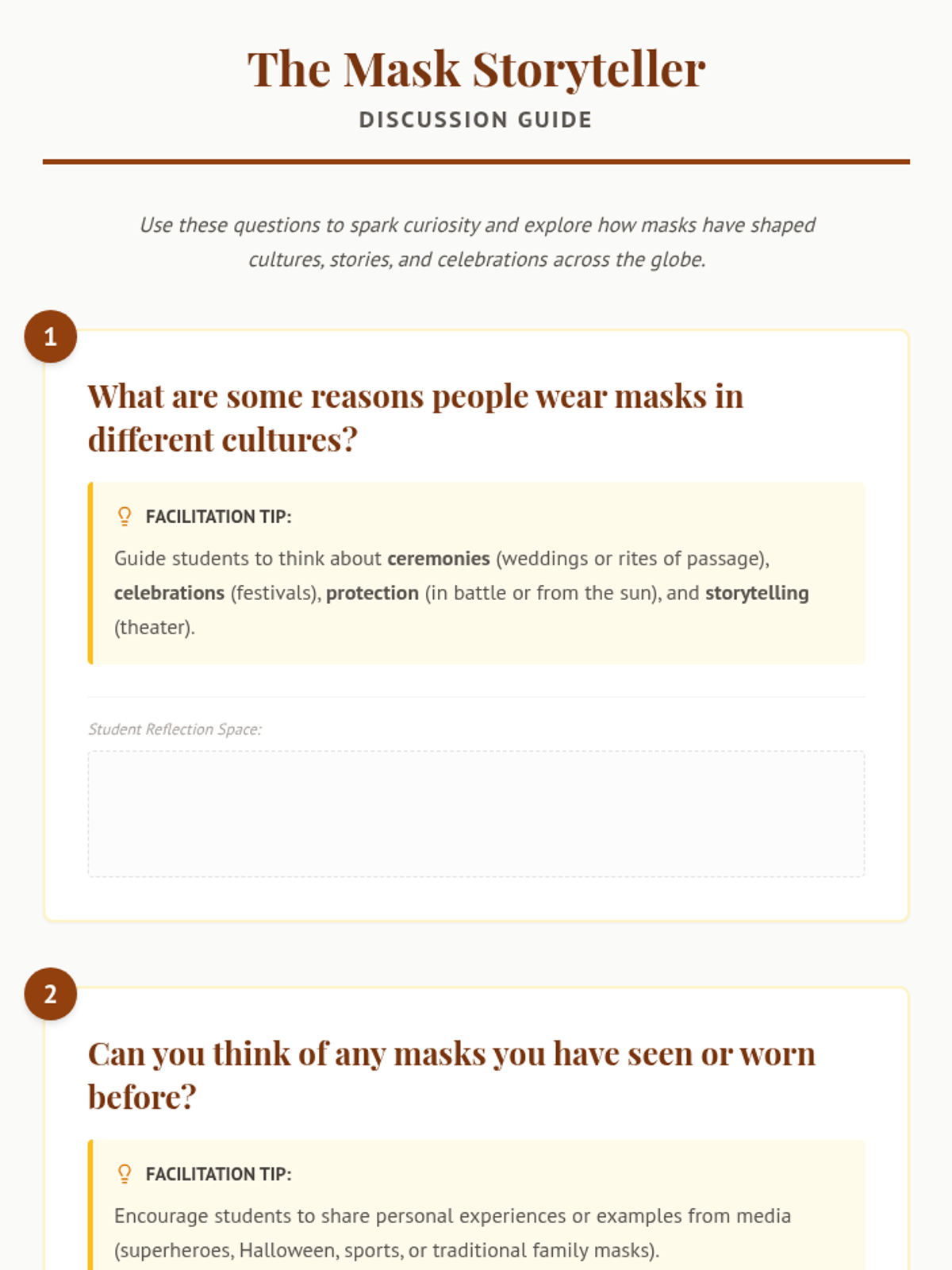
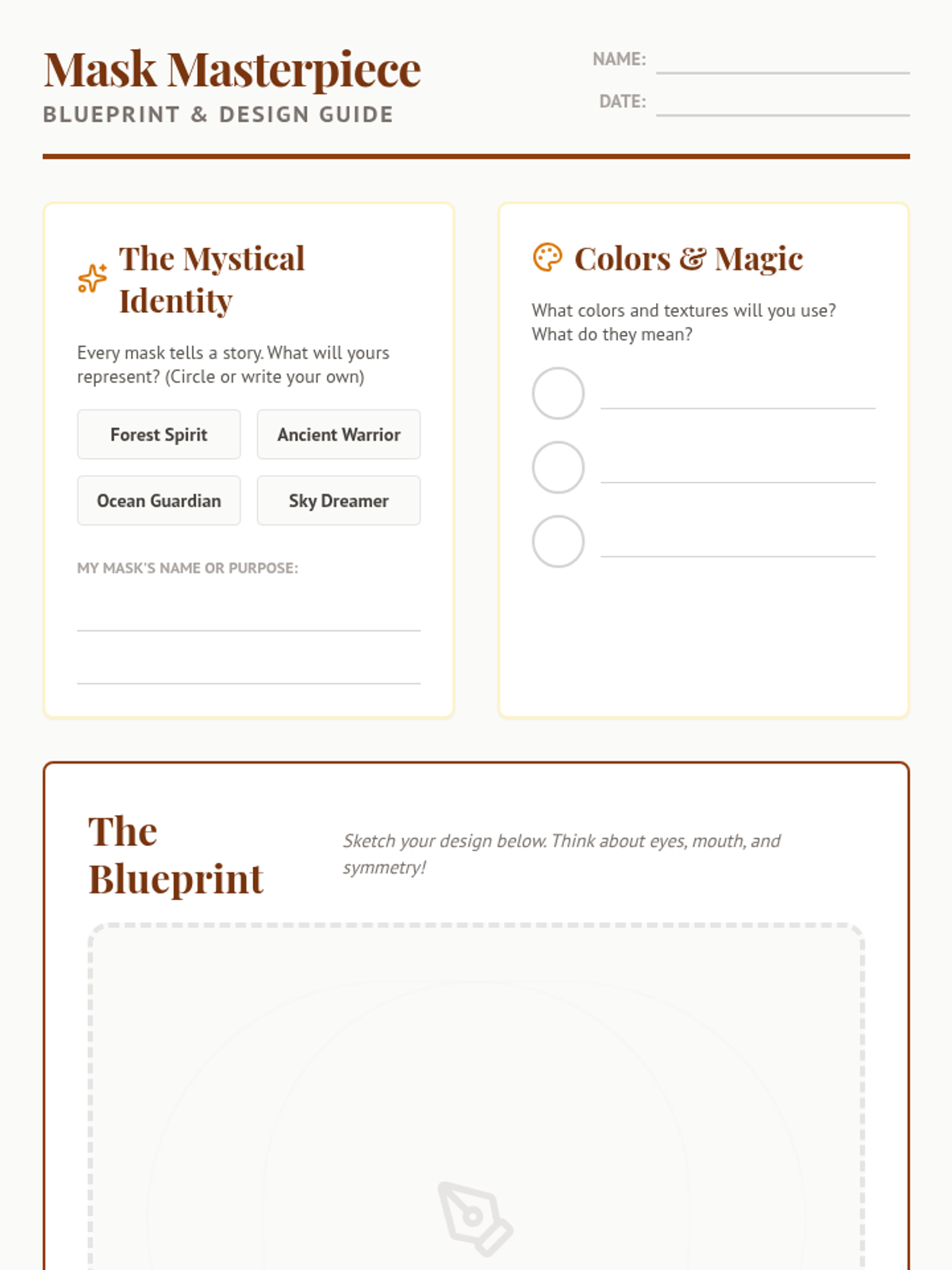
Students explore the cultural significance of masks from around the world and design their own mystical masks using cardboard and craft supplies.
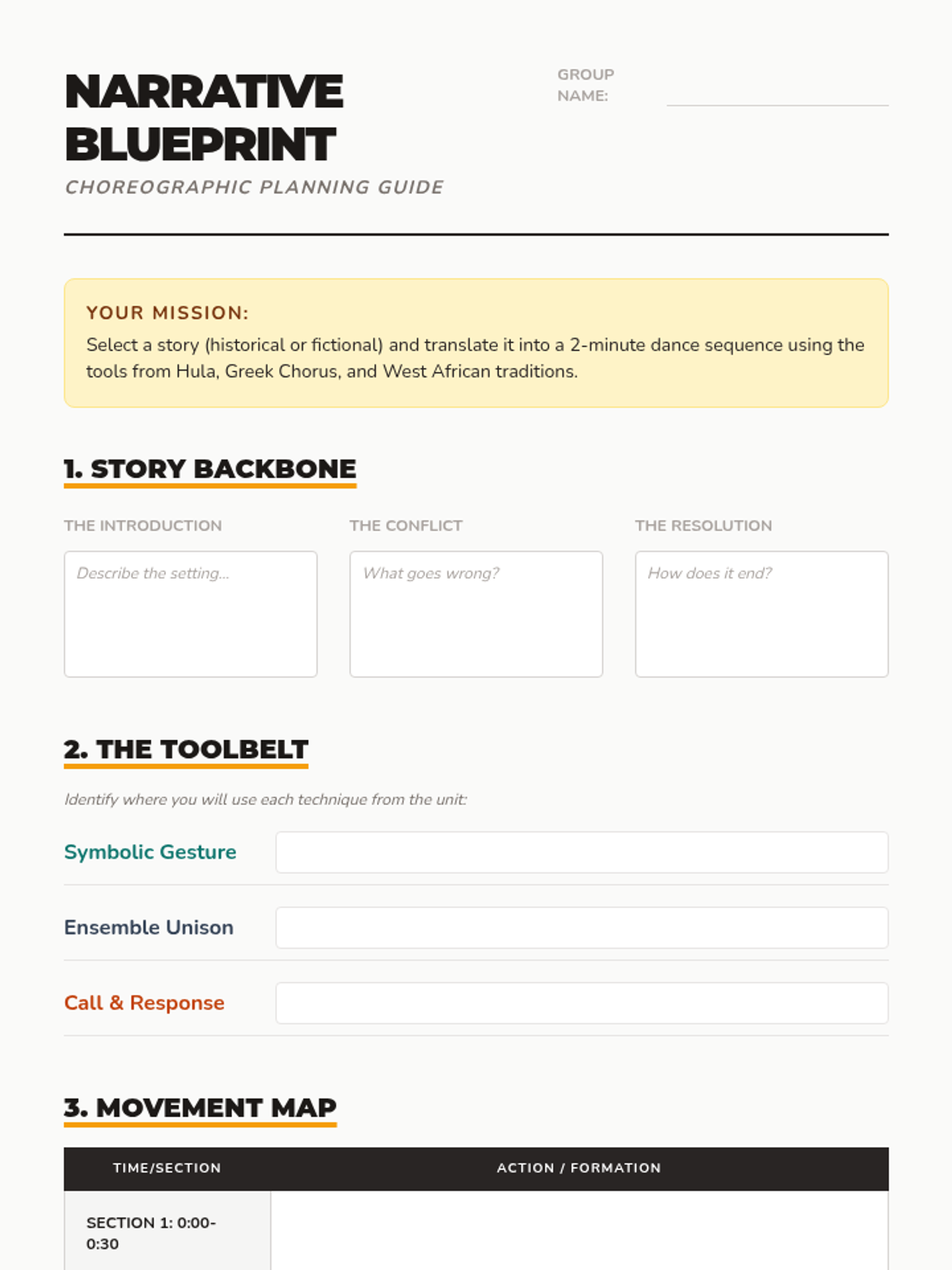
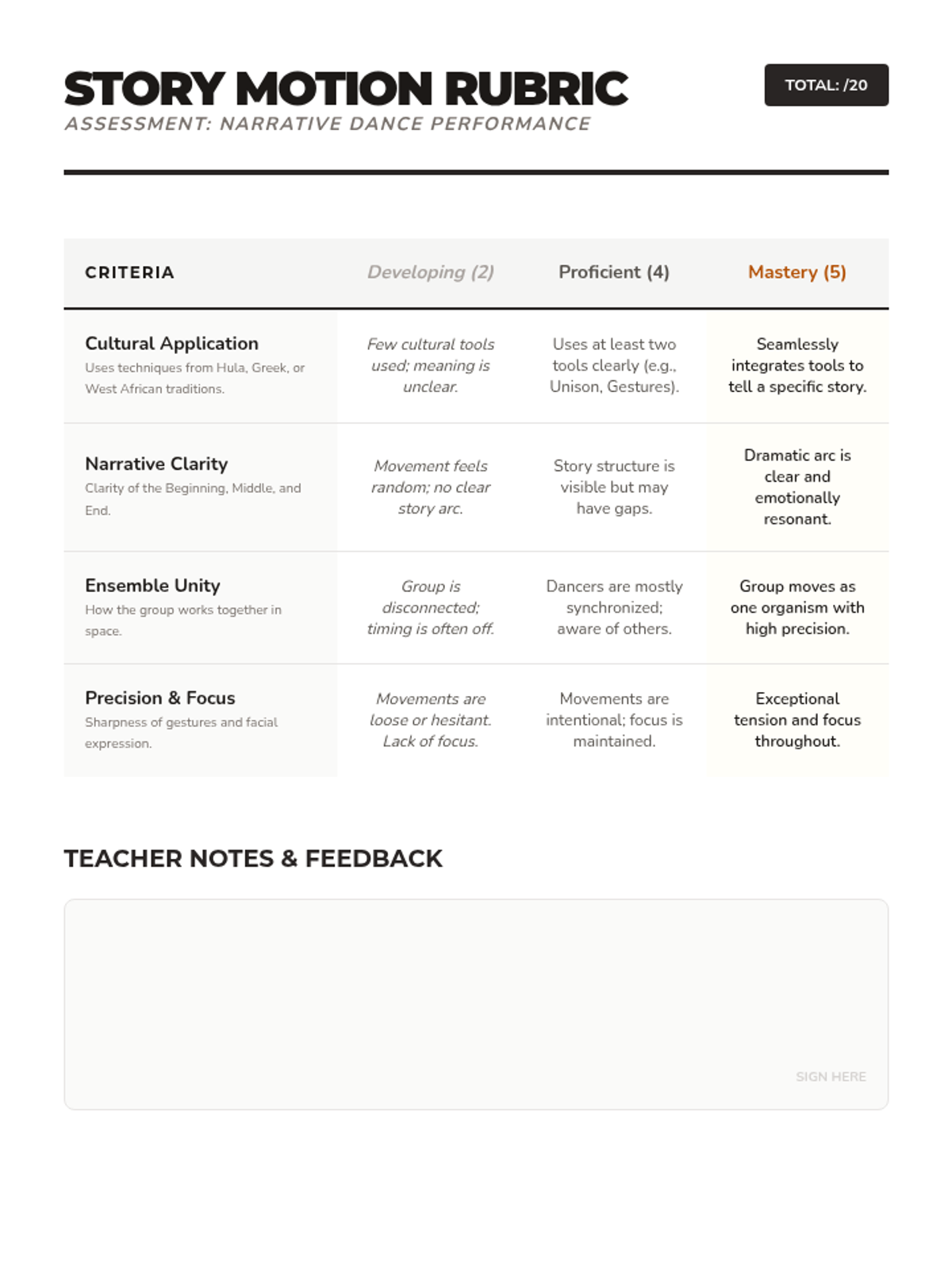
In this culminating lesson, student groups select a historical event or fable and translate it into a dance sequence using the narrative techniques learned. They present their work and explain their choreographic choices in relation to historical traditions.
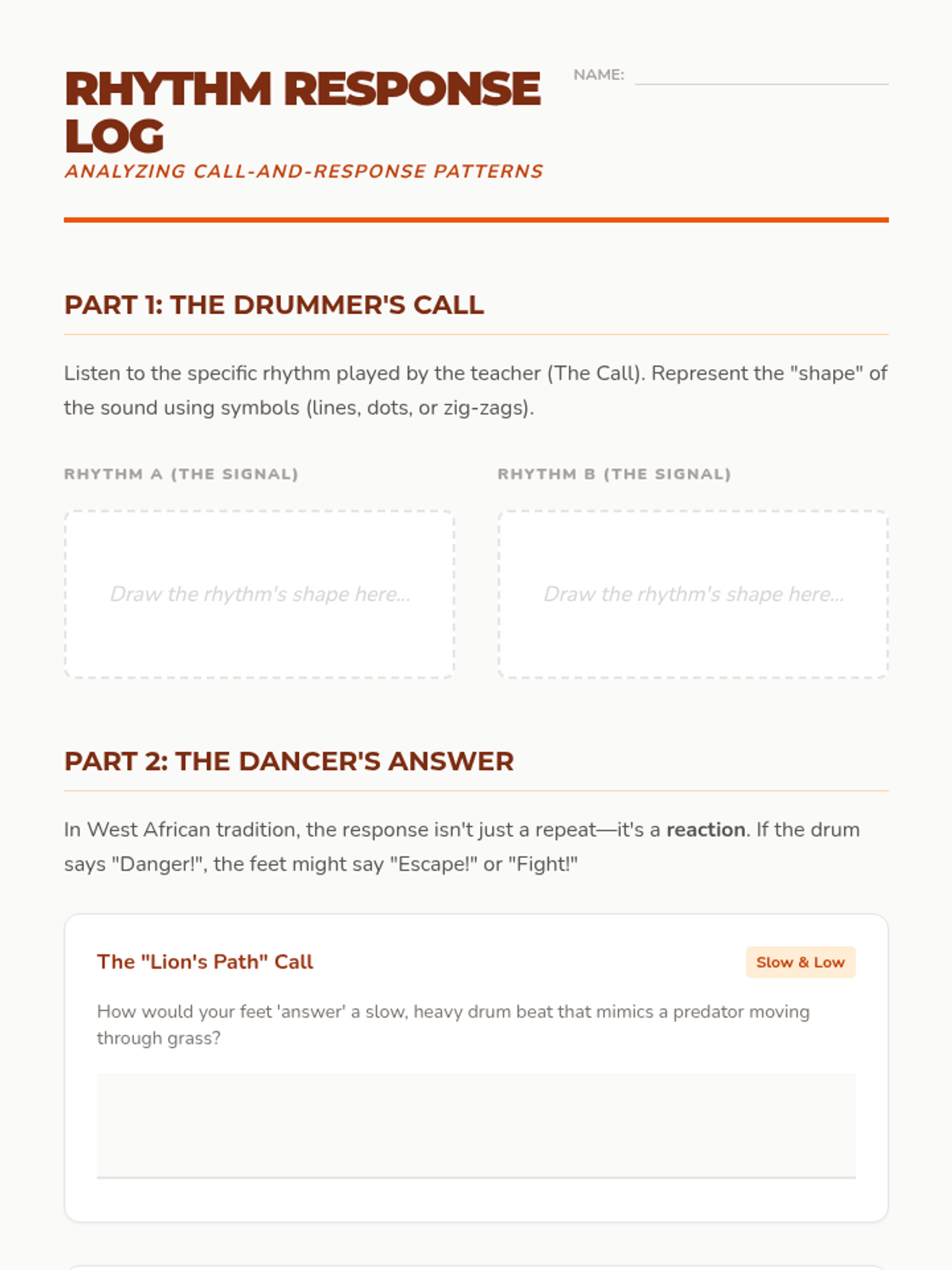
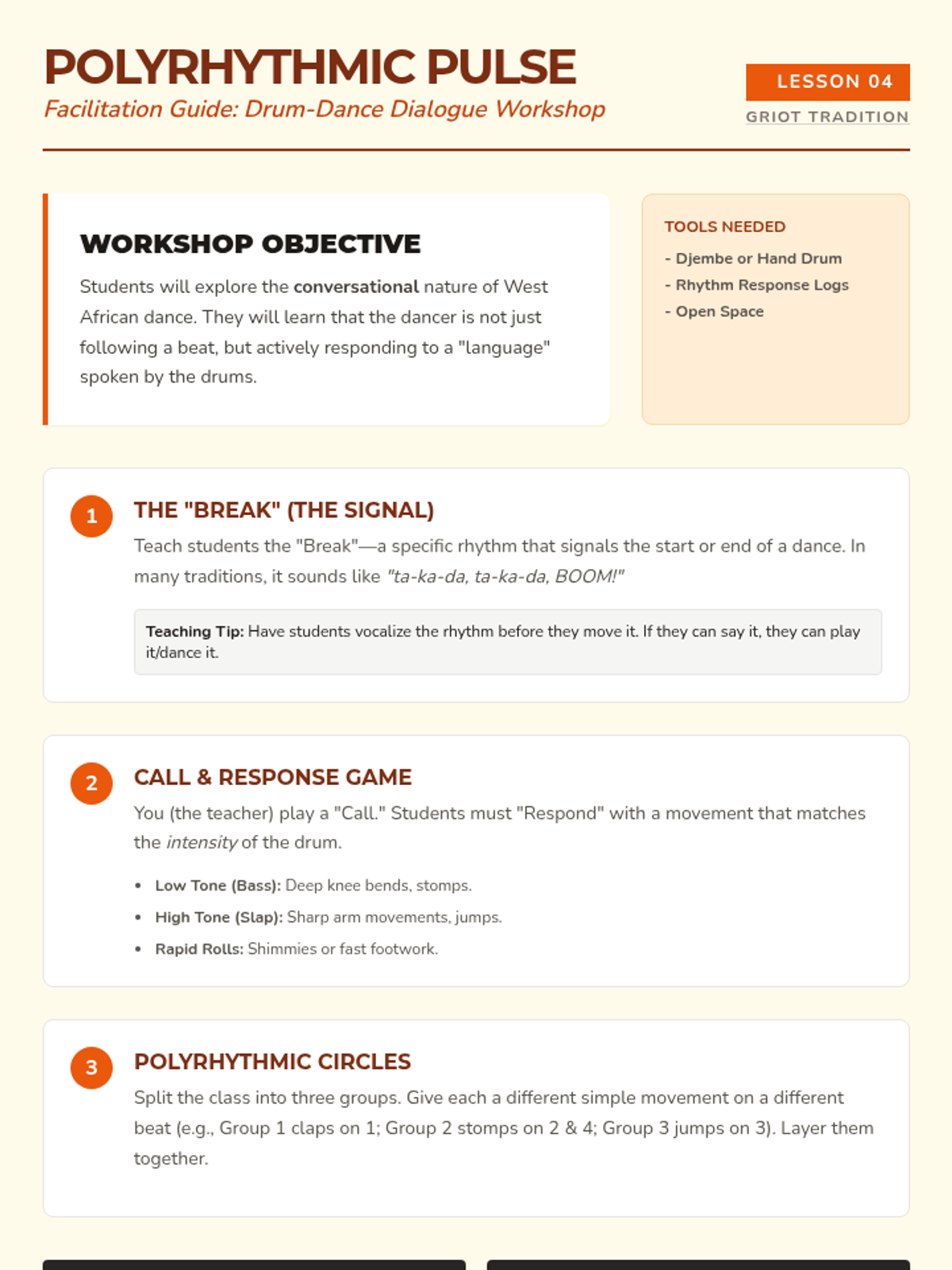
Students investigate the symbiotic relationship between drumming and dancing in West African storytelling traditions. They engage in a call-and-response activity that highlights the communal aspect of history-telling through polyrhythm.
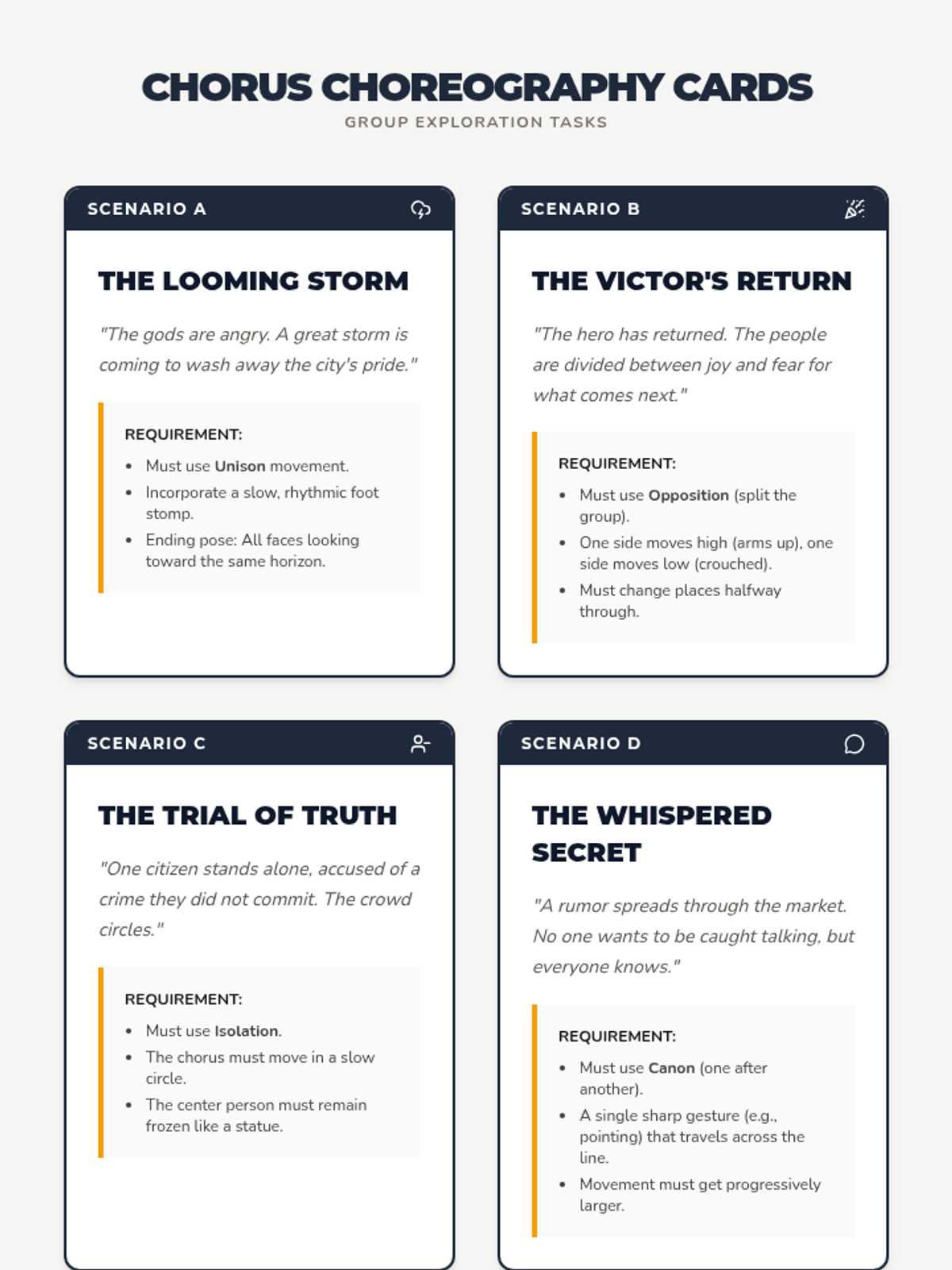
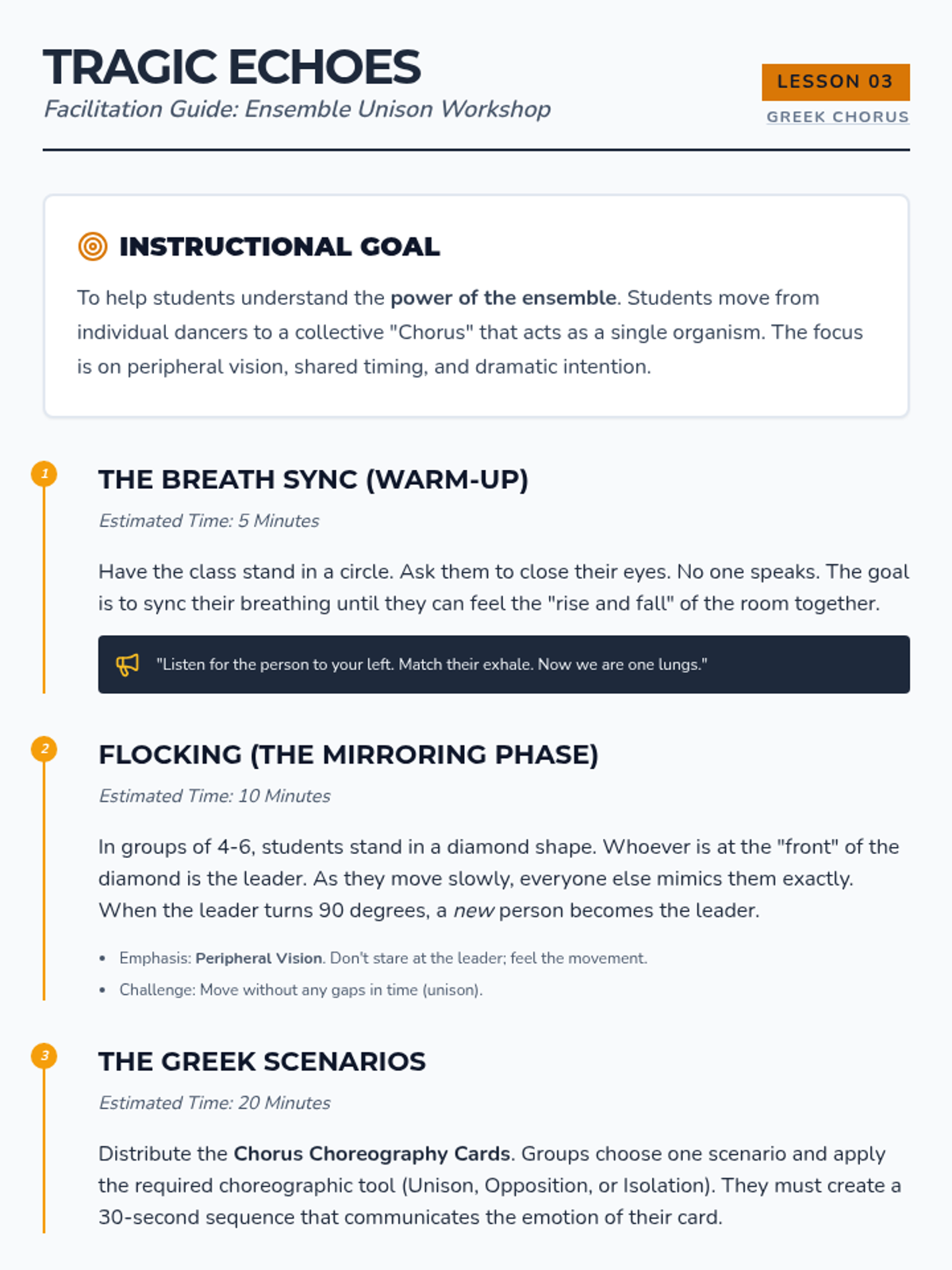
Students explore how ancient Greek dance bridged religious ritual and theatrical entertainment. They work in groups to create a 'chorus' that moves in unison to amplify an emotion or plot point, connecting ancient practices to modern performance.
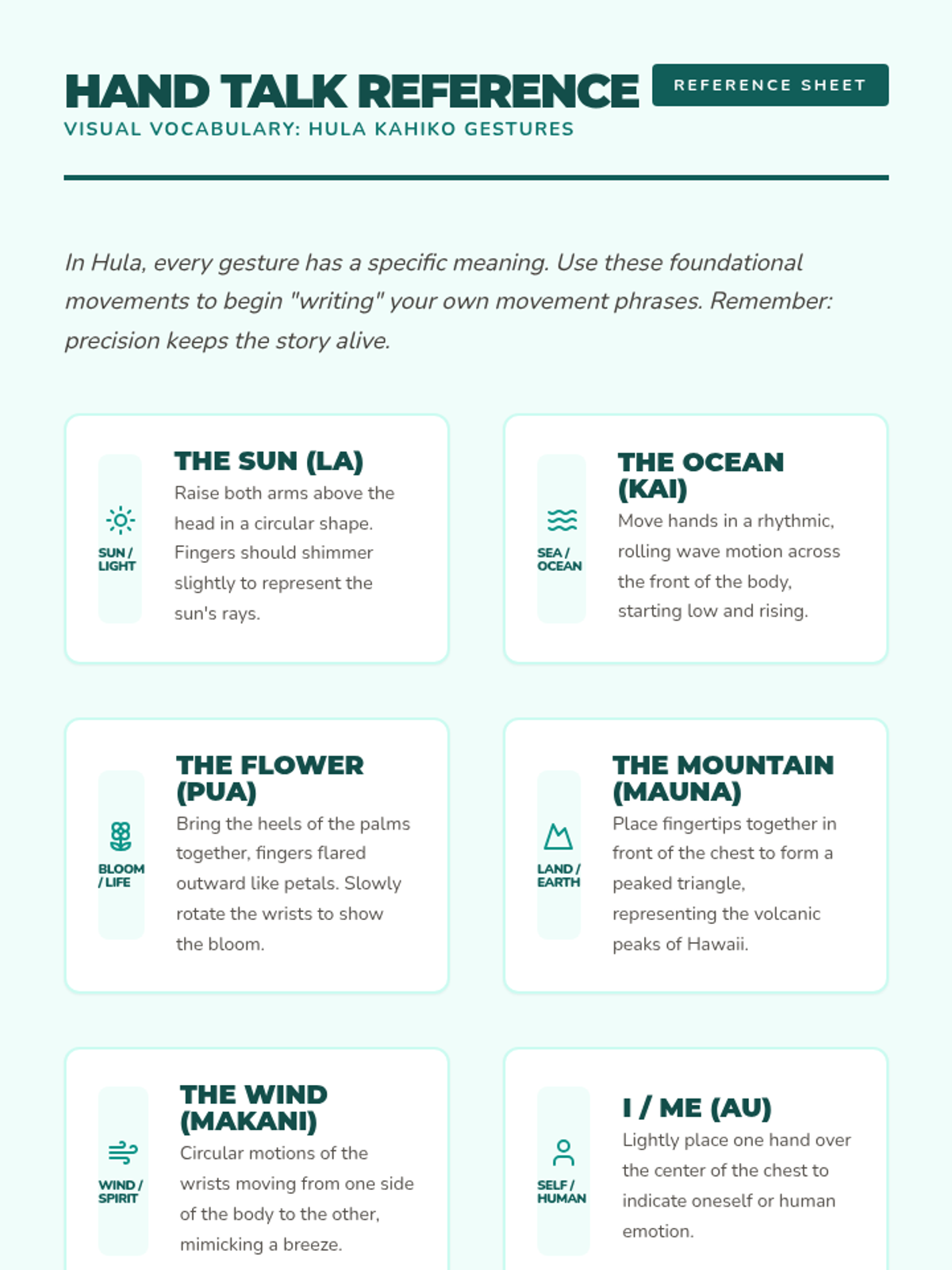
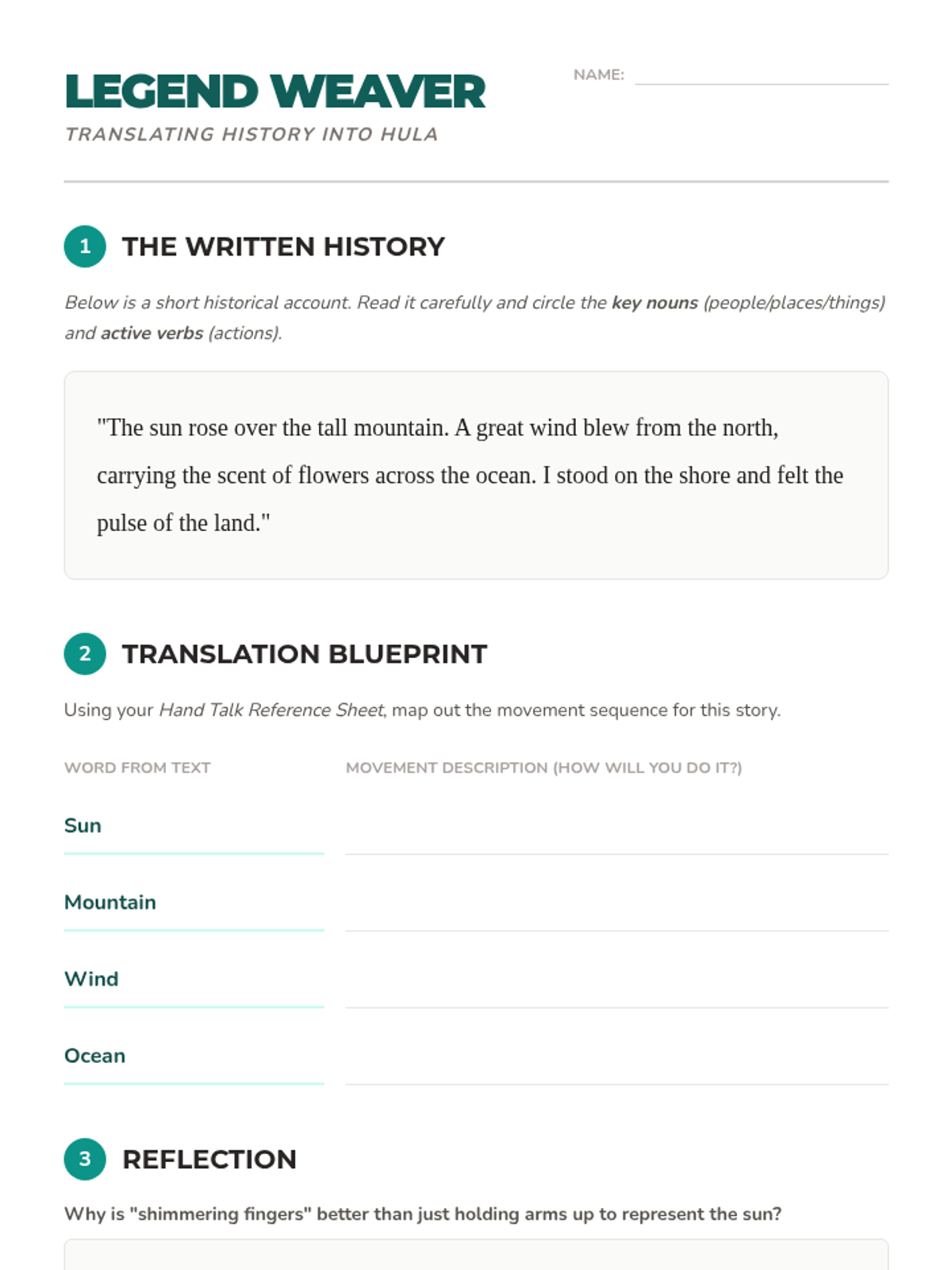
Focusing on the Hula Kahiko, students learn how specific hand and foot movements encode genealogy, mythology, and natural history. They practice basic storytelling gestures to understand the precision required to preserve information through movement.
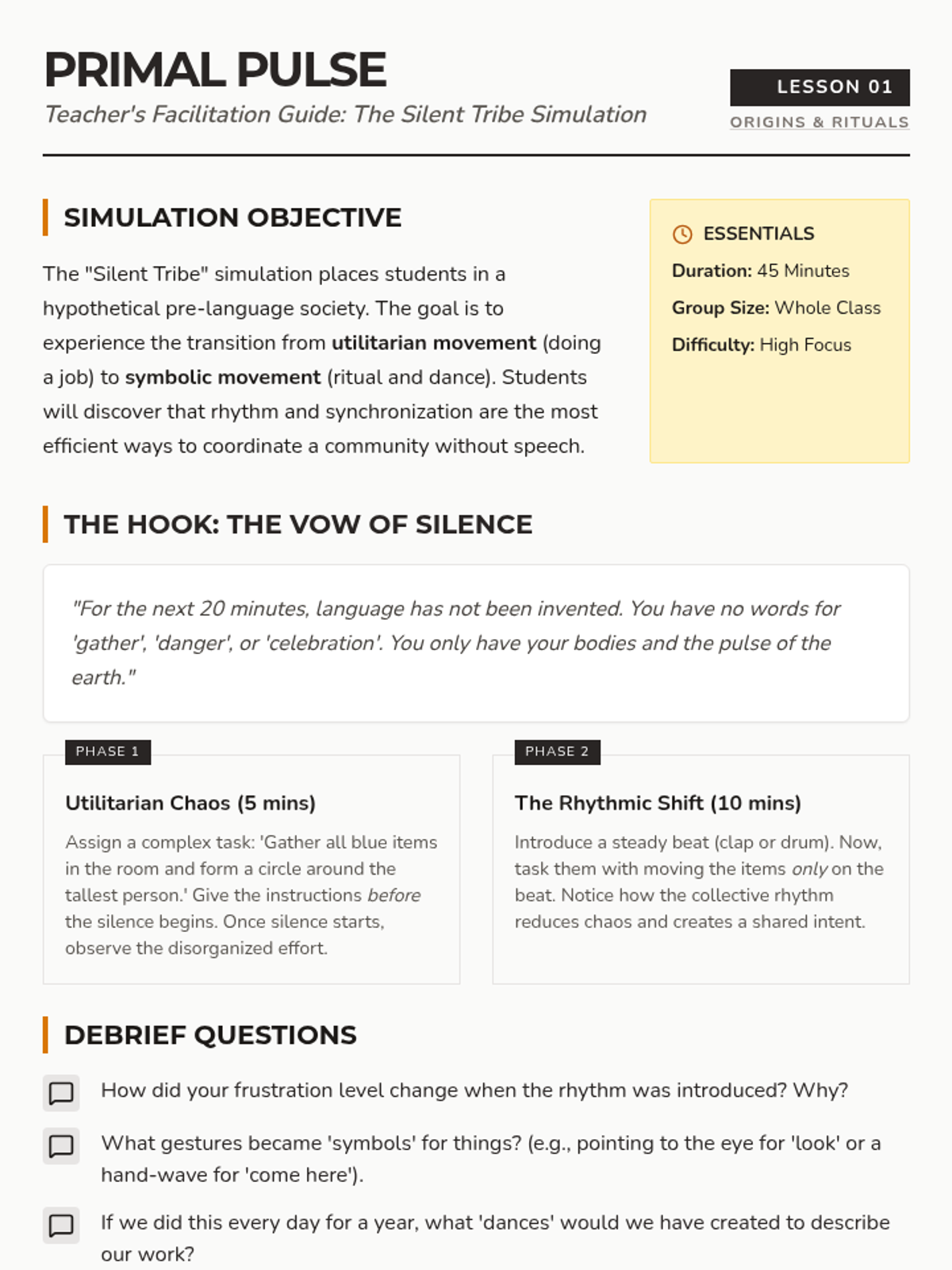
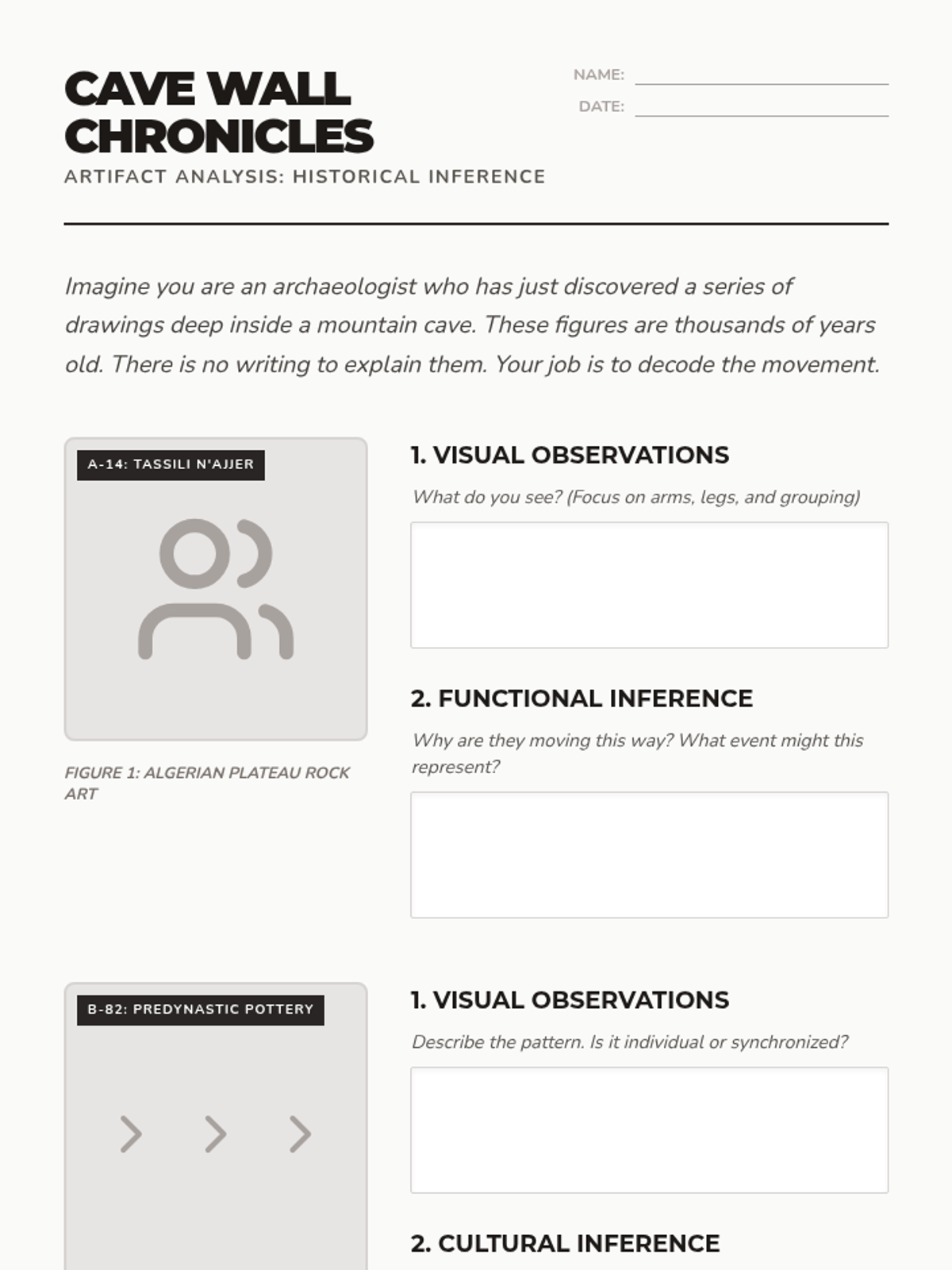
Students simulate a pre-language society to understand the necessity of non-verbal communication and analyze archaeological evidence of early dance rituals.
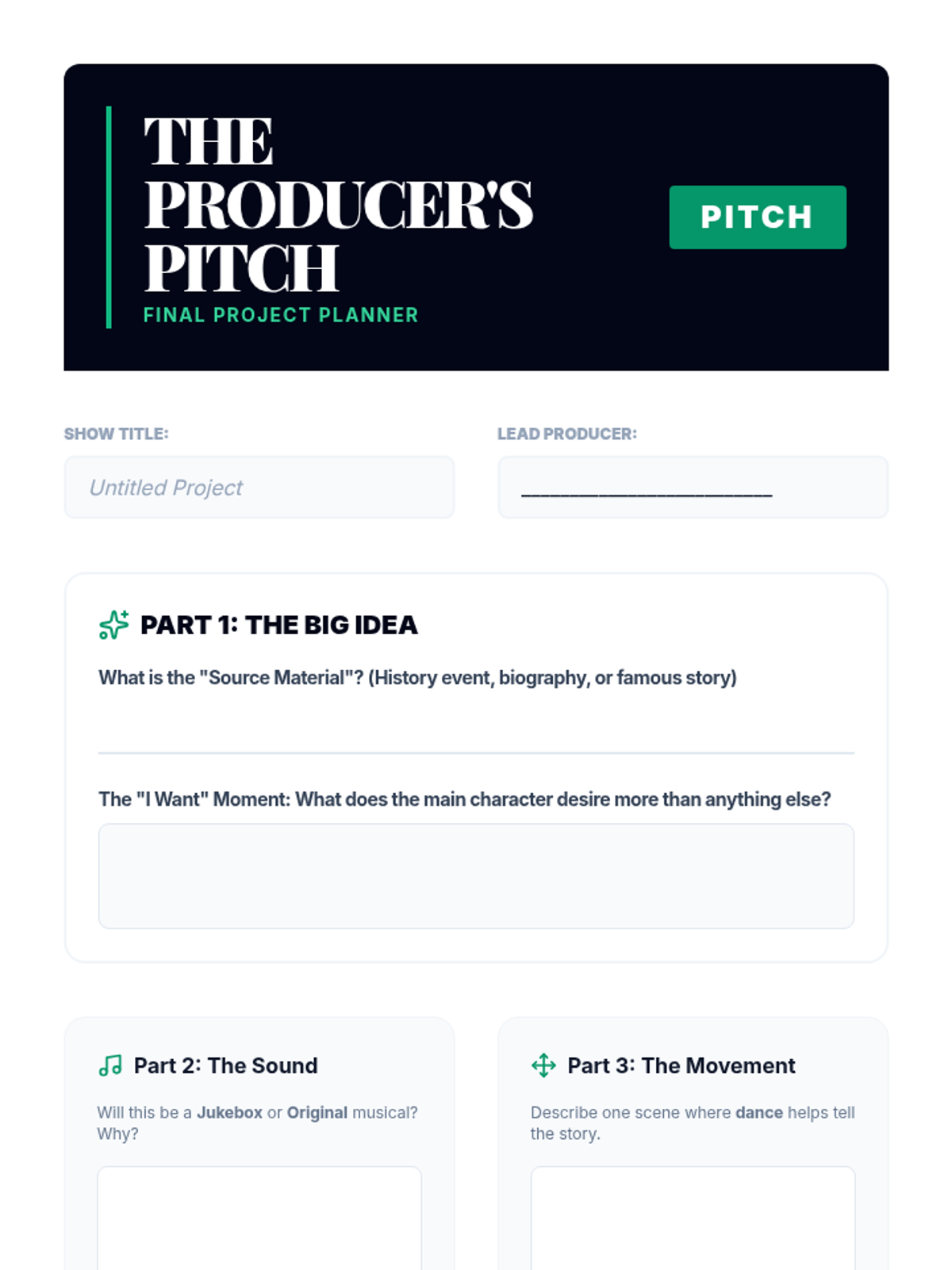
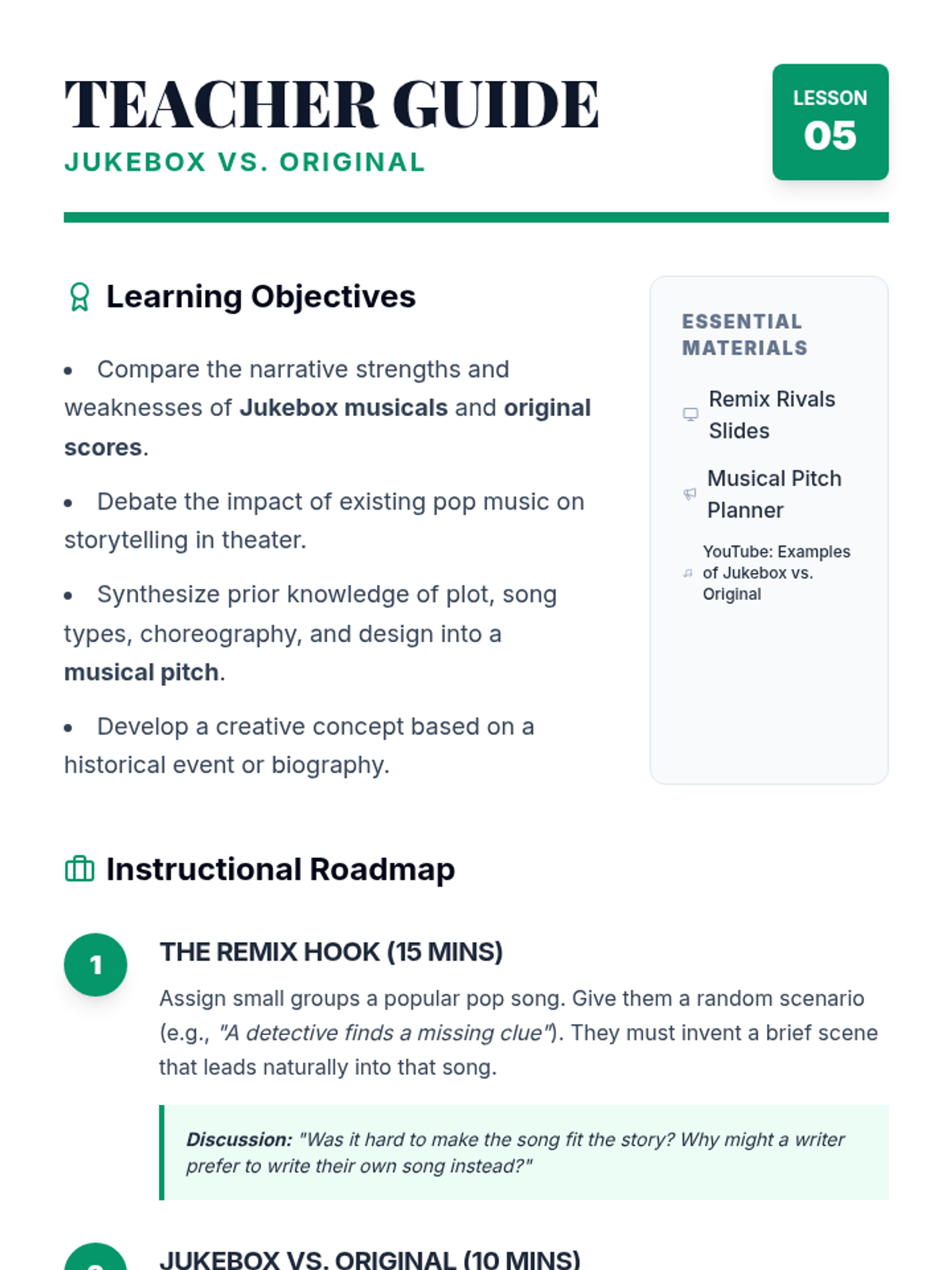
A comparison of Jukebox musicals and original scores, culminating in a student pitch for a new musical concept based on history or biography.
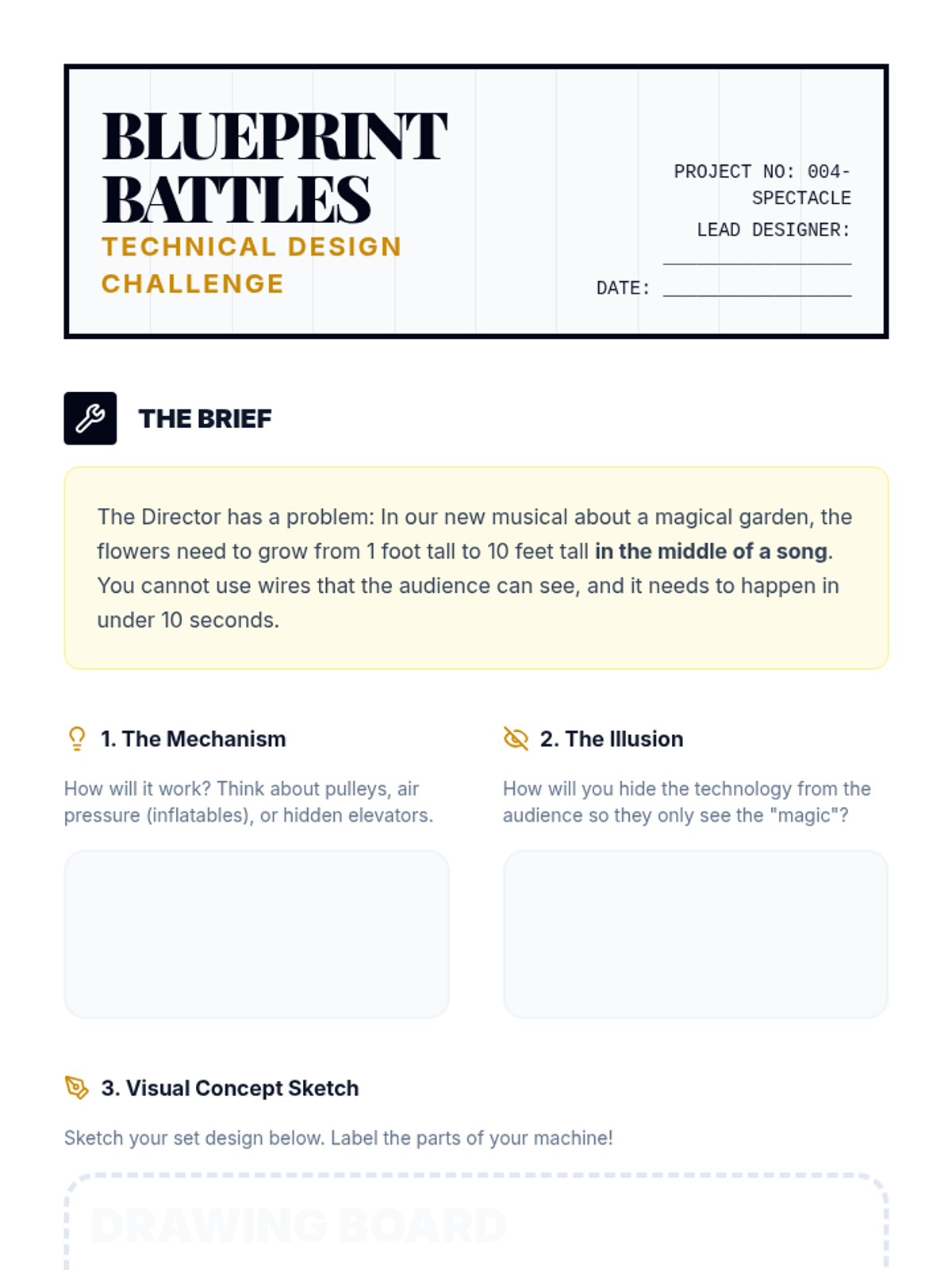
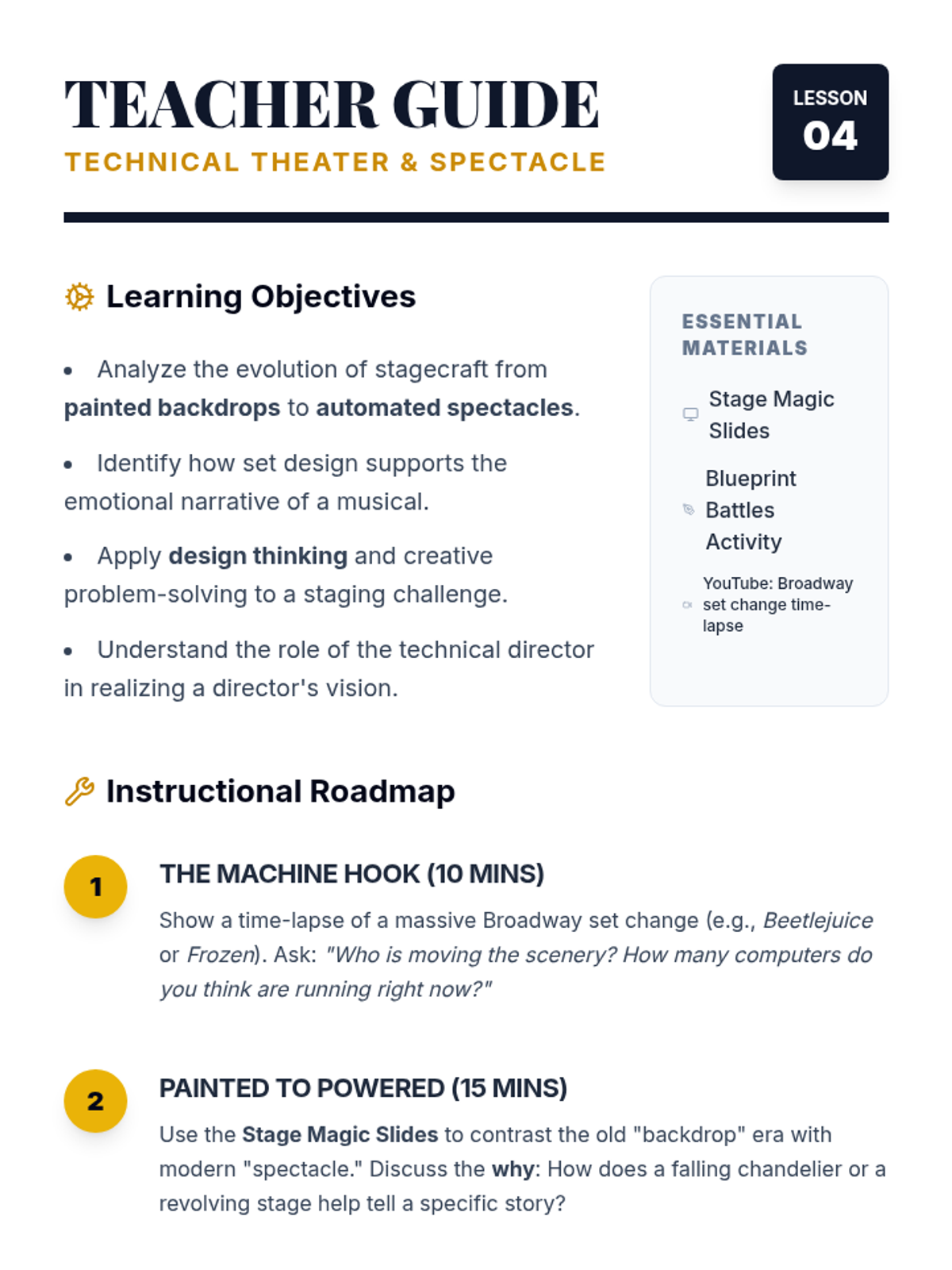
Exploring the technological evolution of stagecraft from painted backdrops to modern mechanical spectacles, with a focus on creative problem-solving in set design.
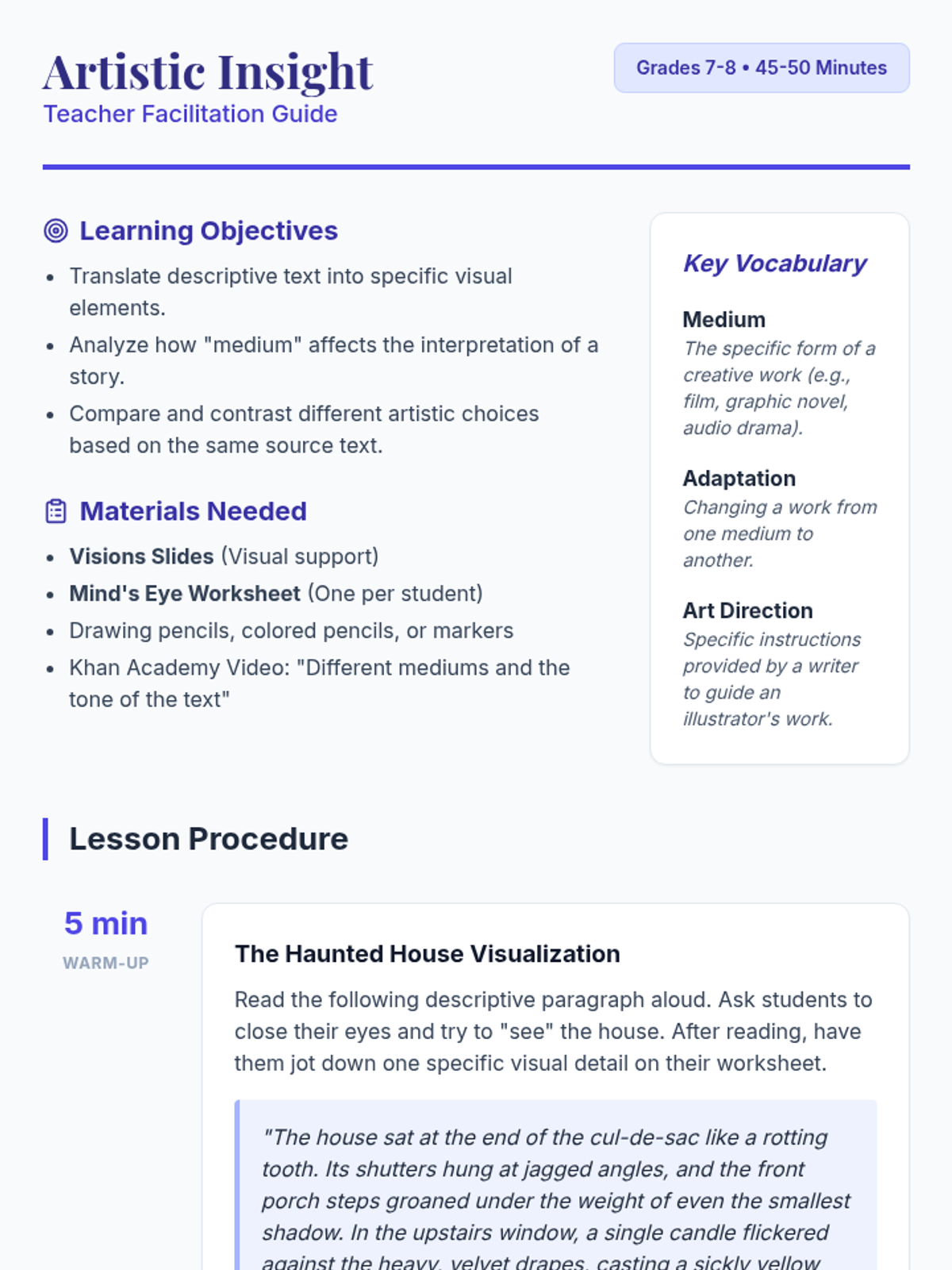
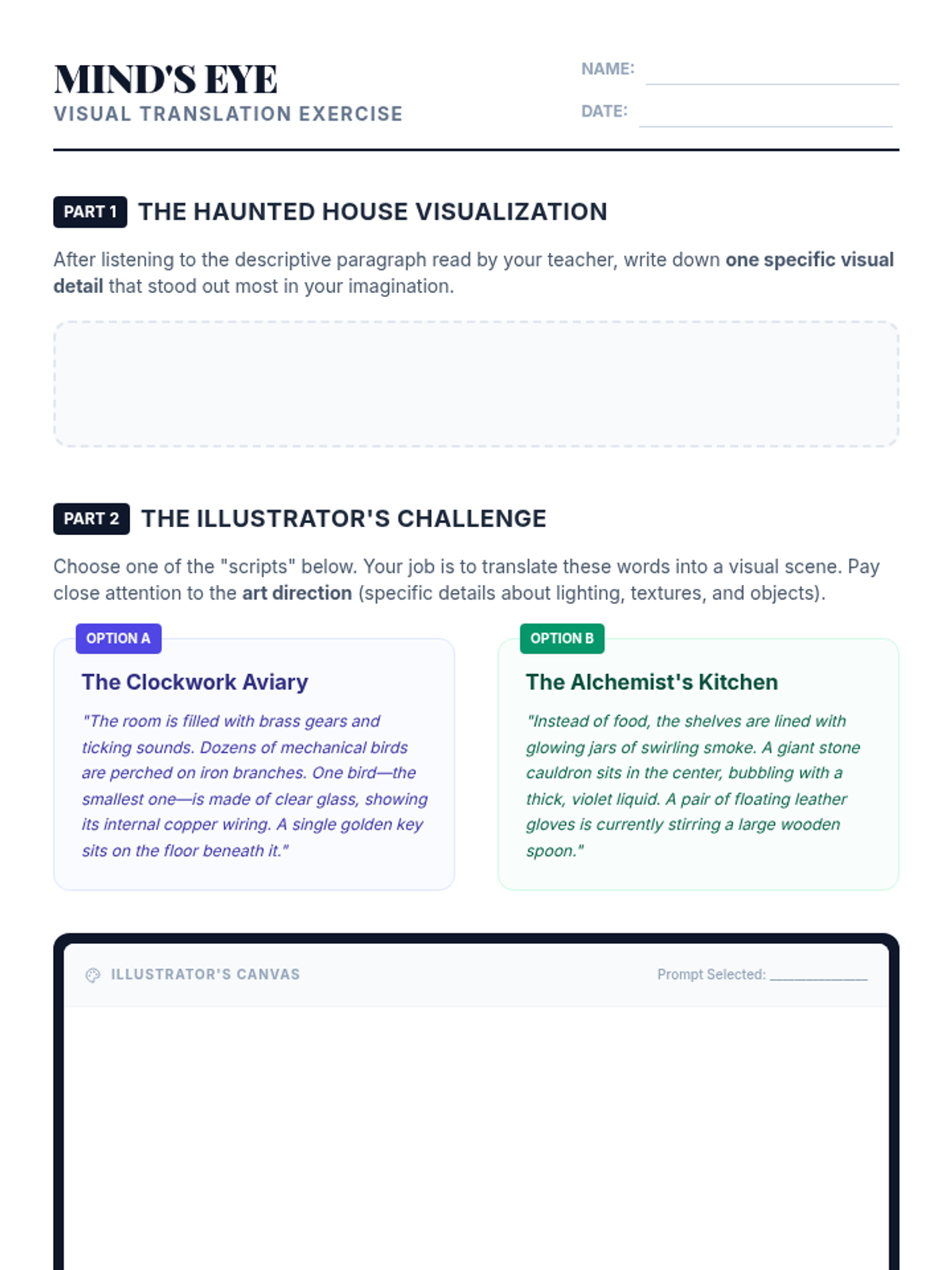
Students explore how written text is translated into visual media by analyzing the relationship between a script and its illustration, culminating in a creative drawing activity based on descriptive prompts.
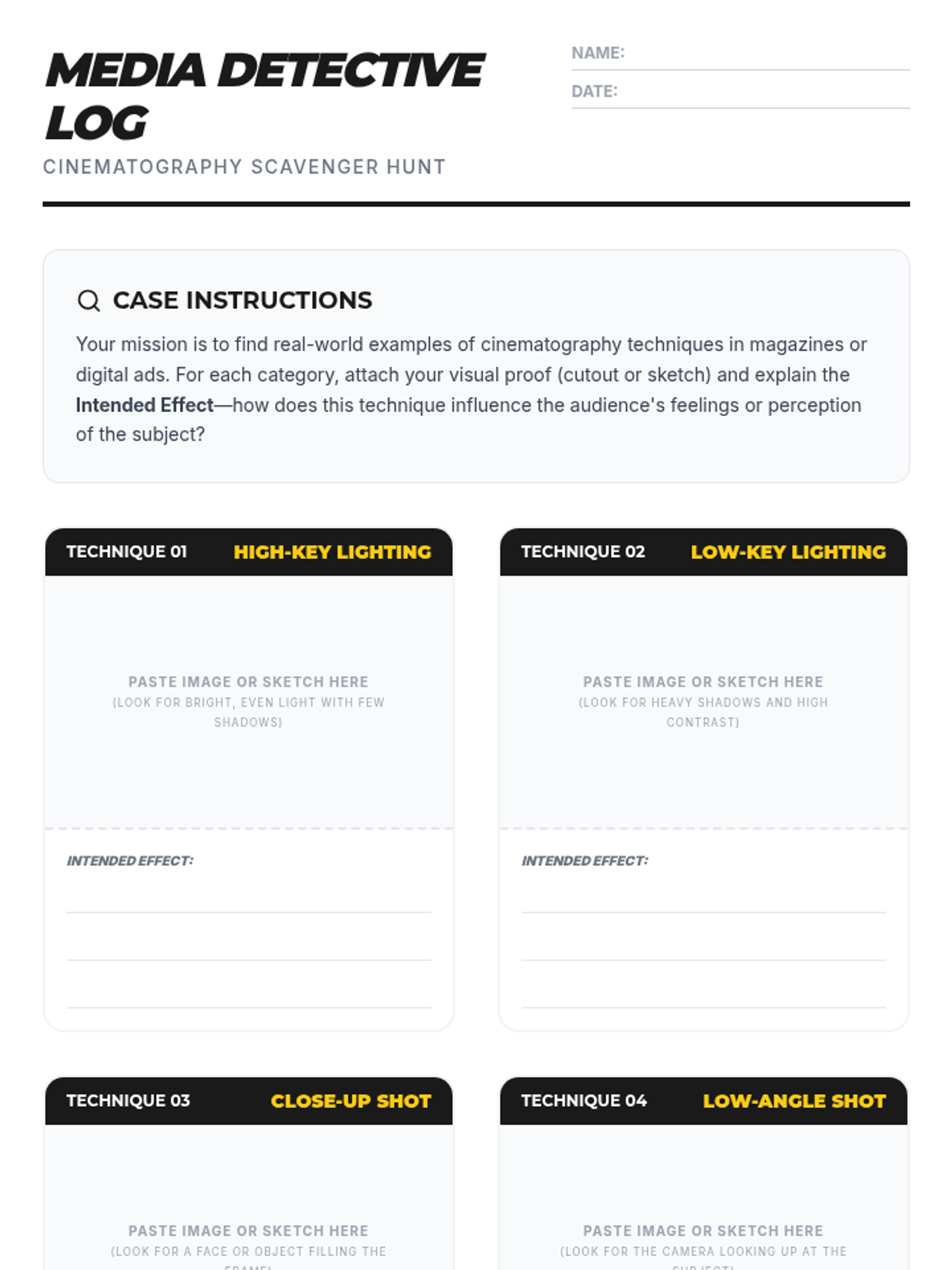
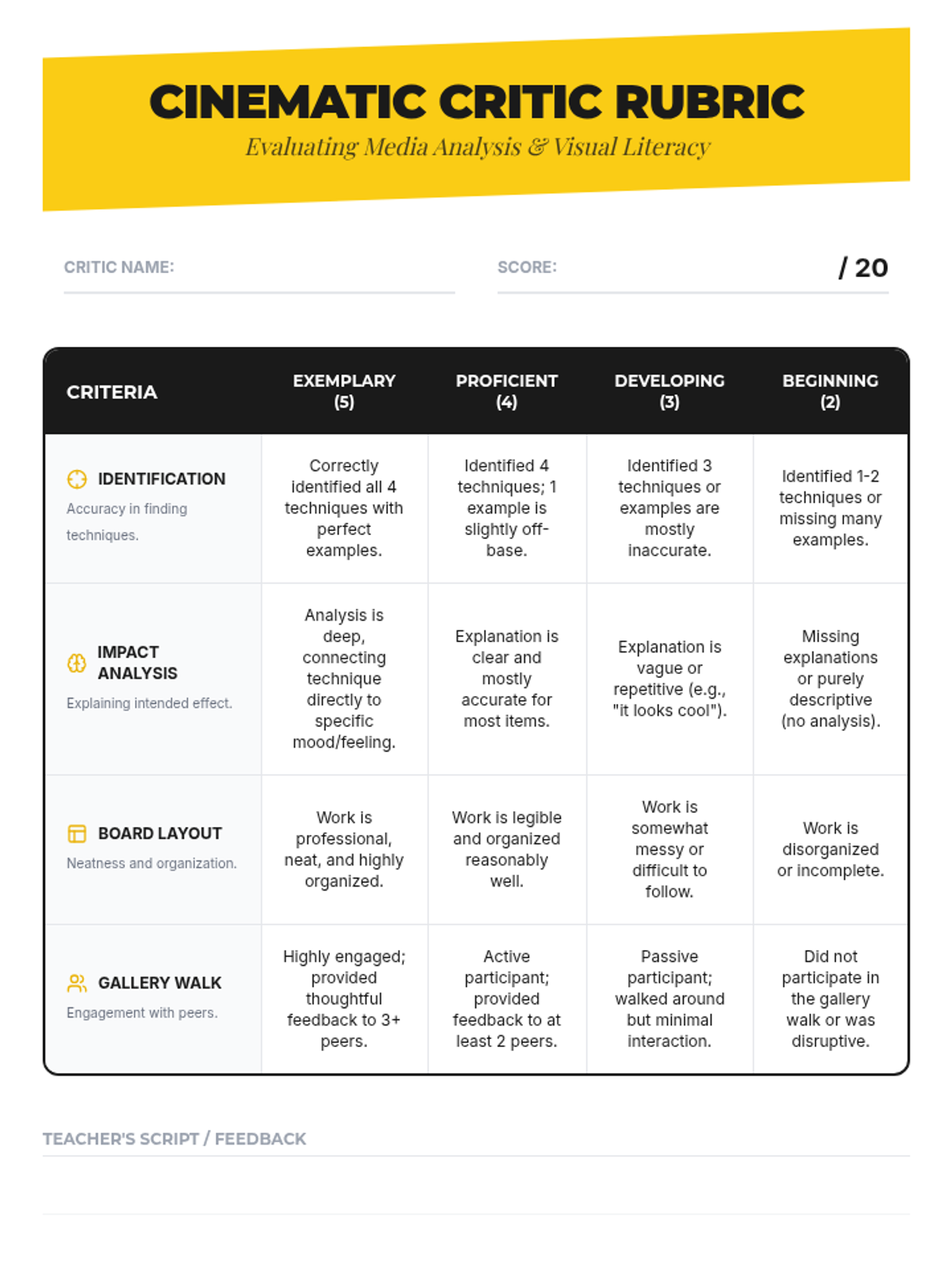
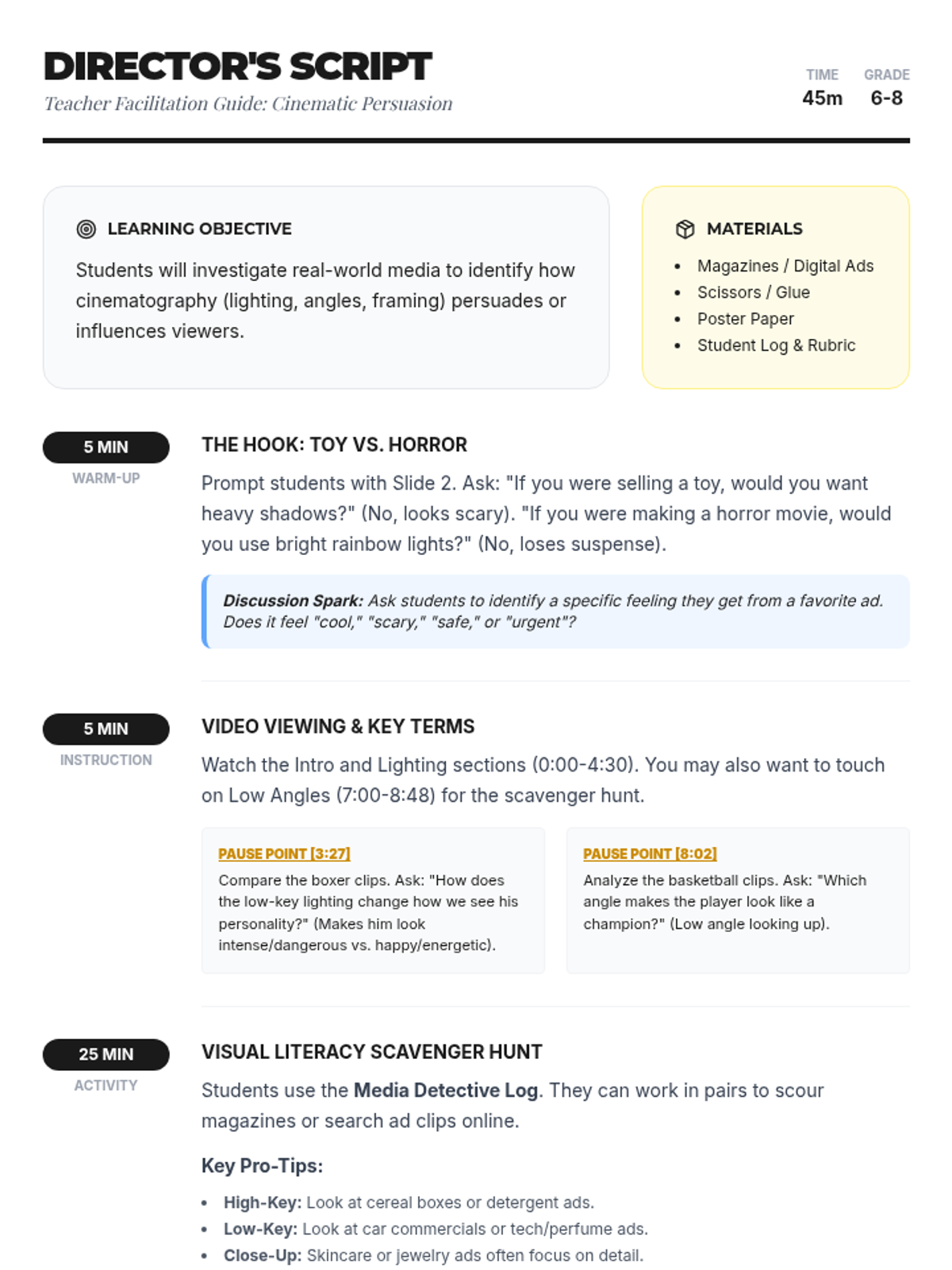
A lesson where students investigate real-world media to identify how cinematography persuades or influences viewers, culminating in a visual scavenger hunt activity.
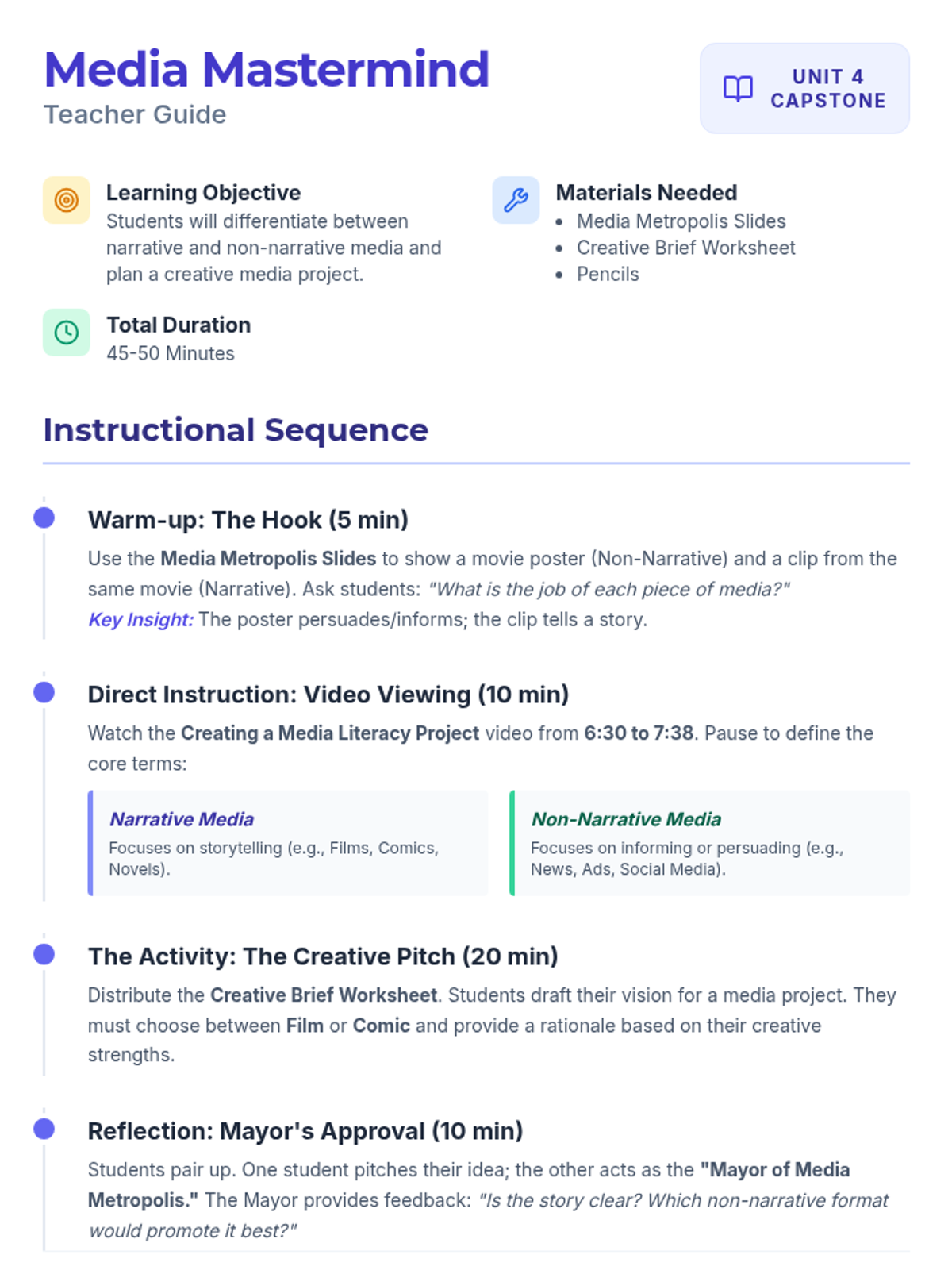
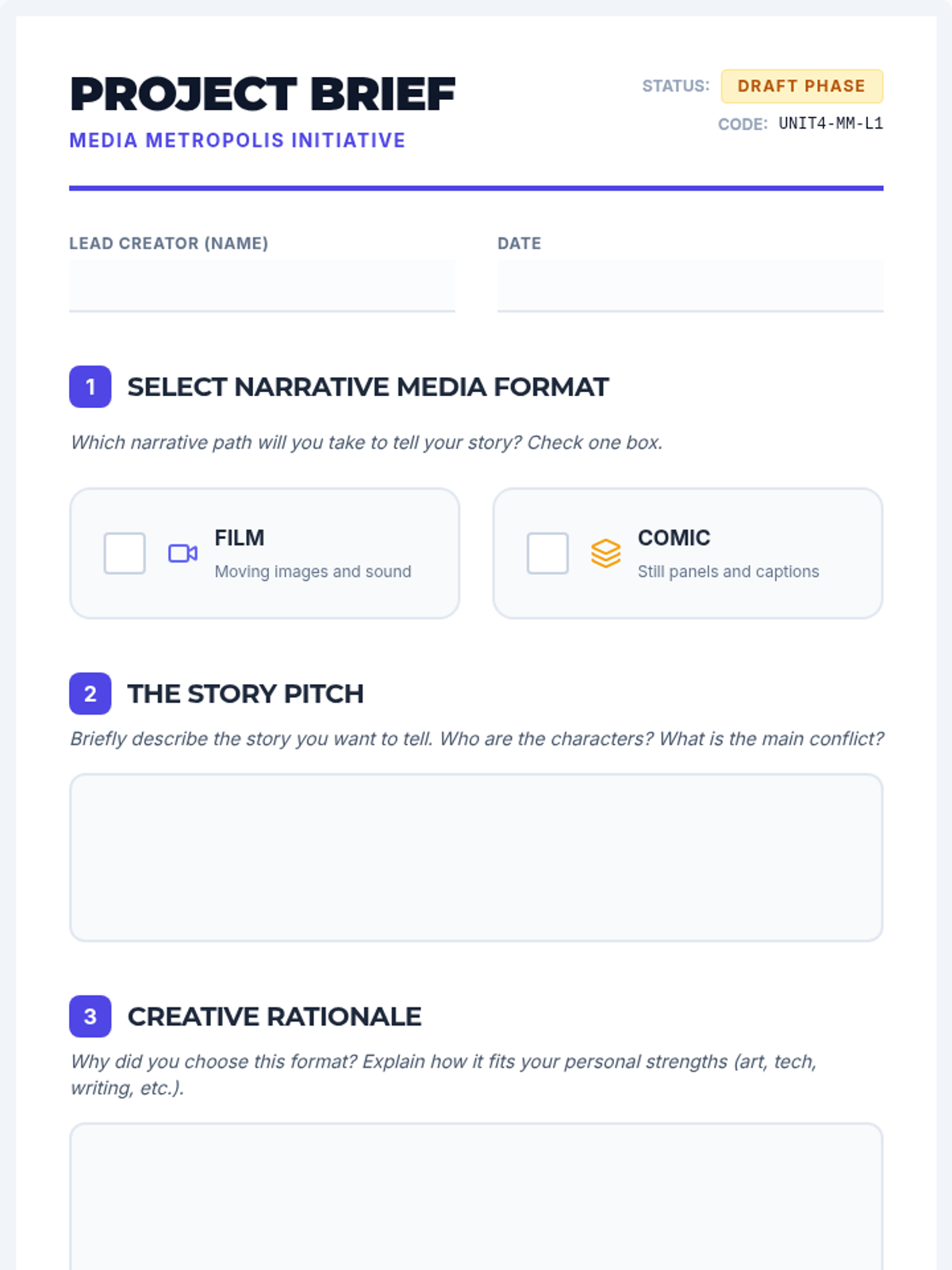
Students will learn to distinguish between narrative and non-narrative media before planning their own creative project (film or comic) and justifying their choices based on their personal strengths.
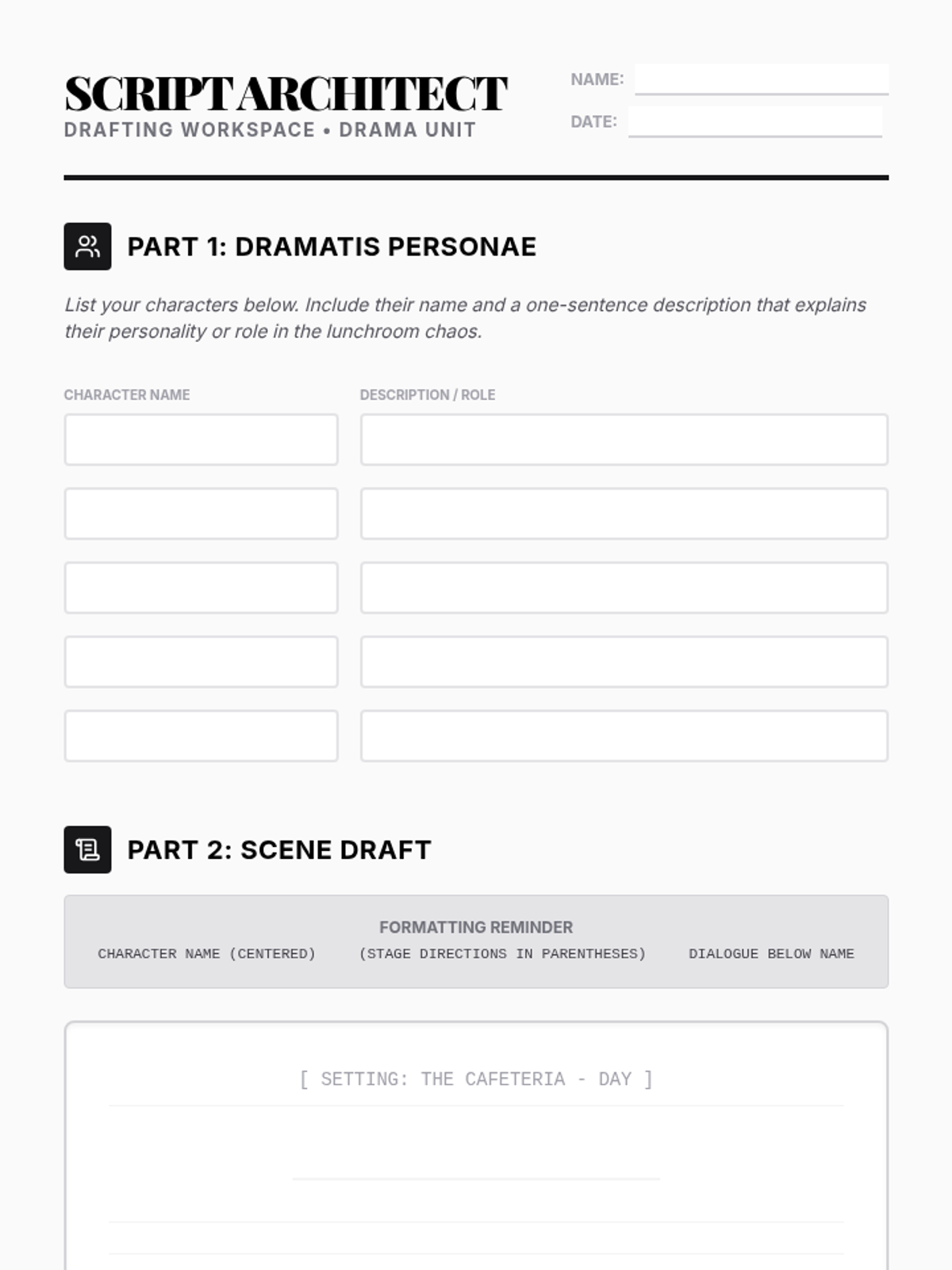
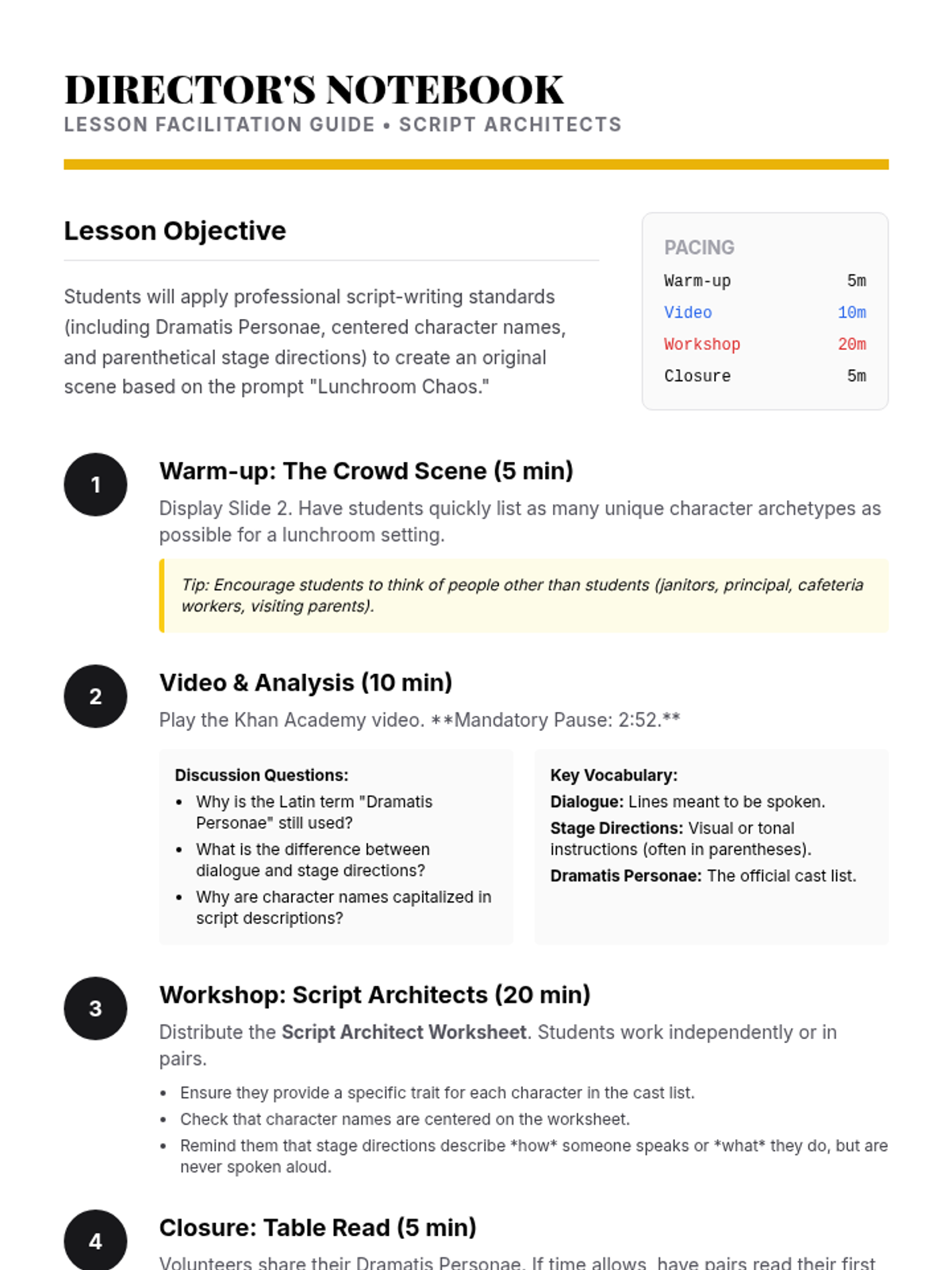
A hands-on introduction to script formatting and character development. Students brainstorm a chaotic lunchroom scene, learn theatrical terminology from a Khan Academy video, and draft their own 'Dramatis Personae' and initial script lines.
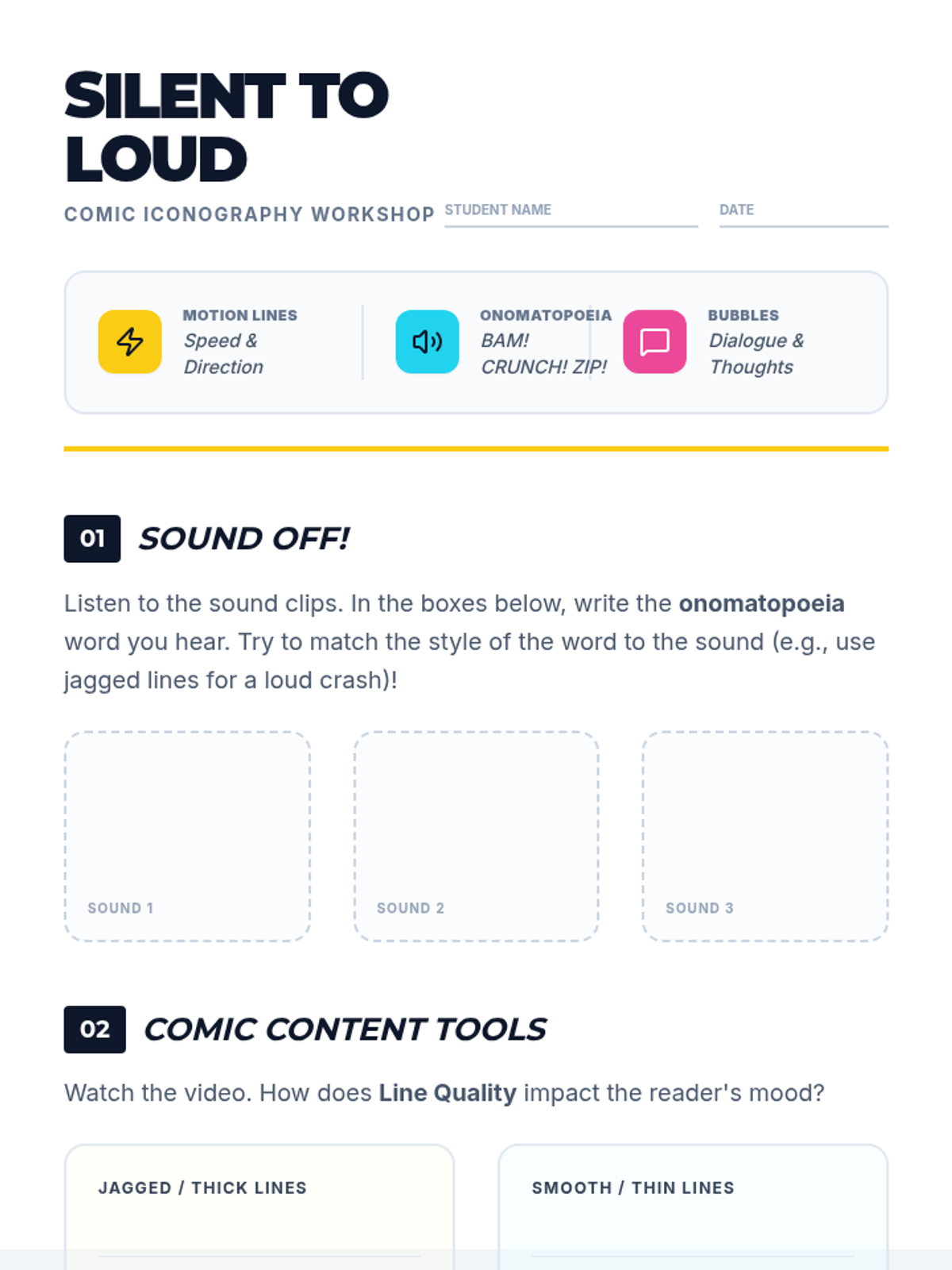
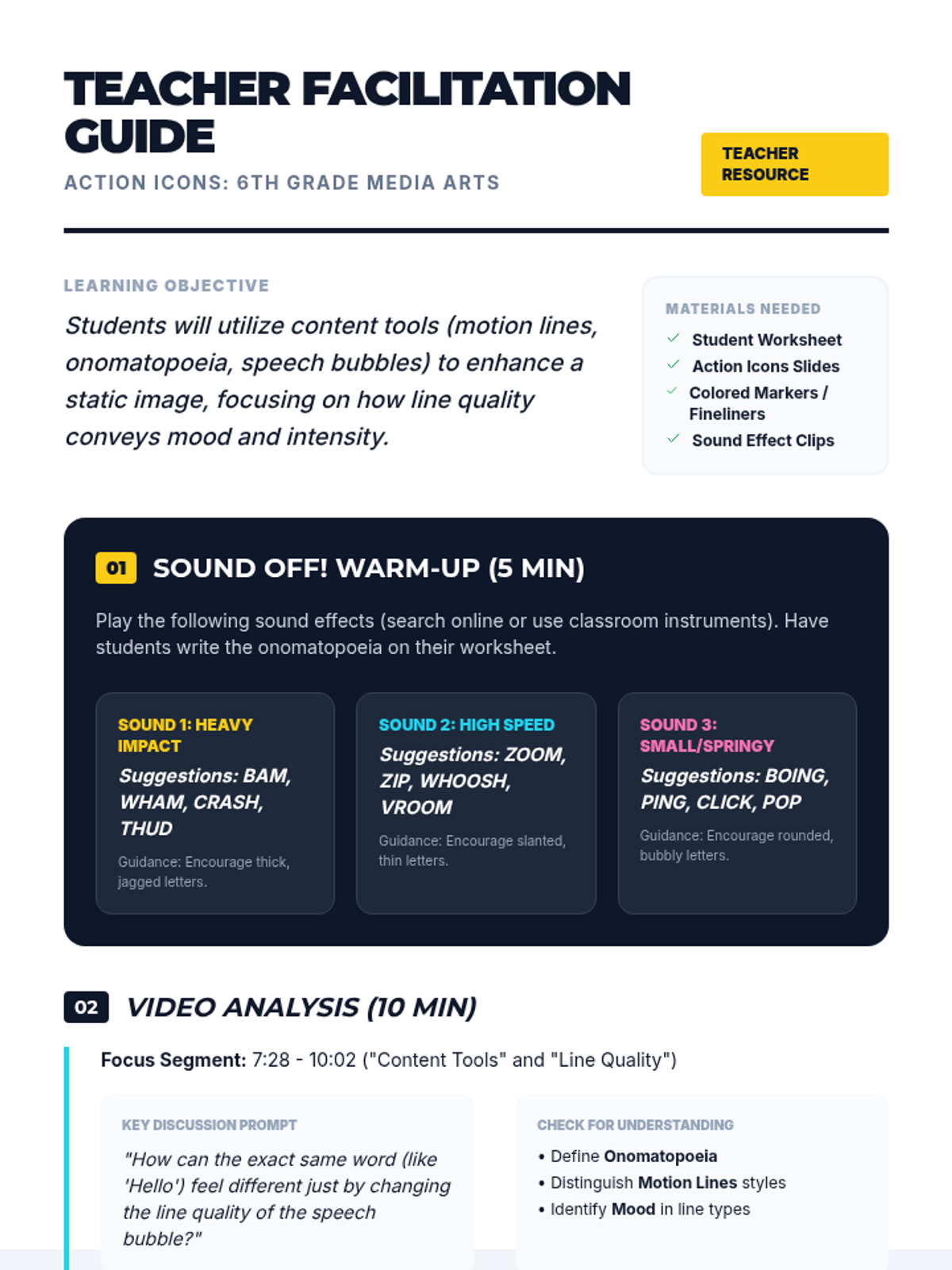
Students learn to use motion lines, onomatopoeia, and speech bubbles to transform static images into dynamic comic panels, focusing on how line quality conveys mood and intensity.