Fundamental movement patterns including locomotor actions, non-locomotor stability, and spatial awareness. Develops body control through fine motor precision and manipulative skills such as throwing and catching.
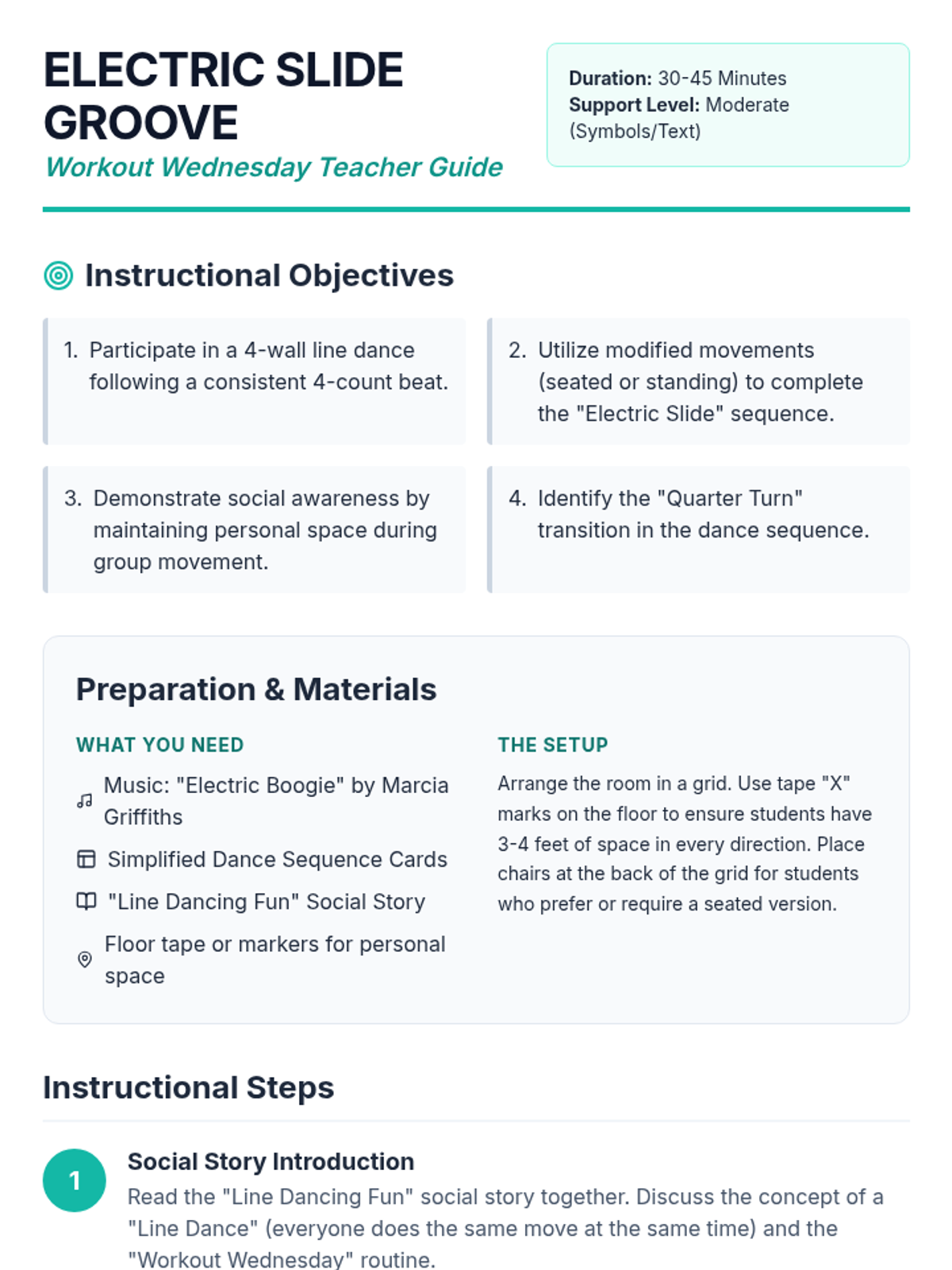
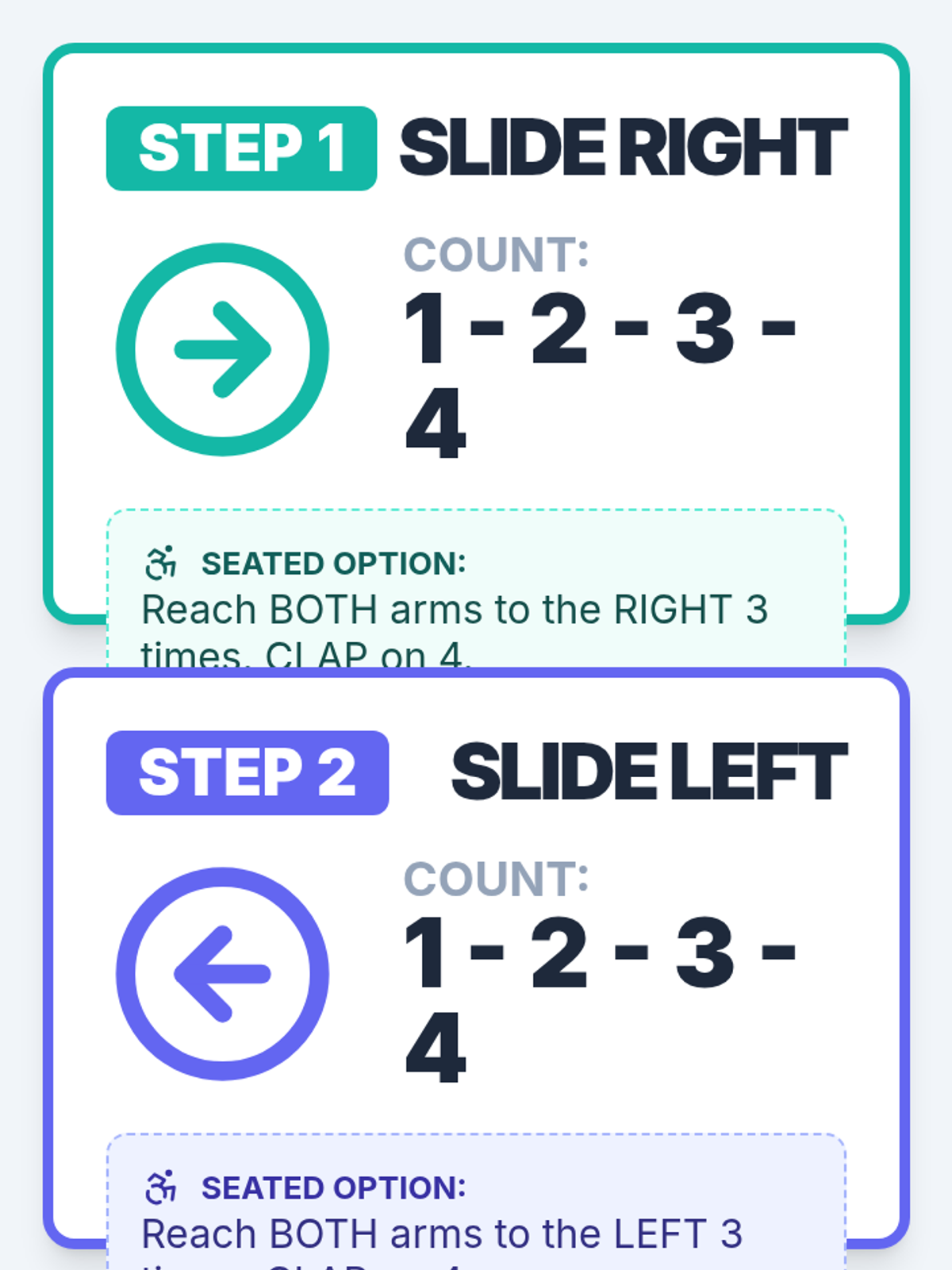
A weekly fitness and movement series designed for students of all abilities, focusing on social-emotional learning through physical activity and group coordination.
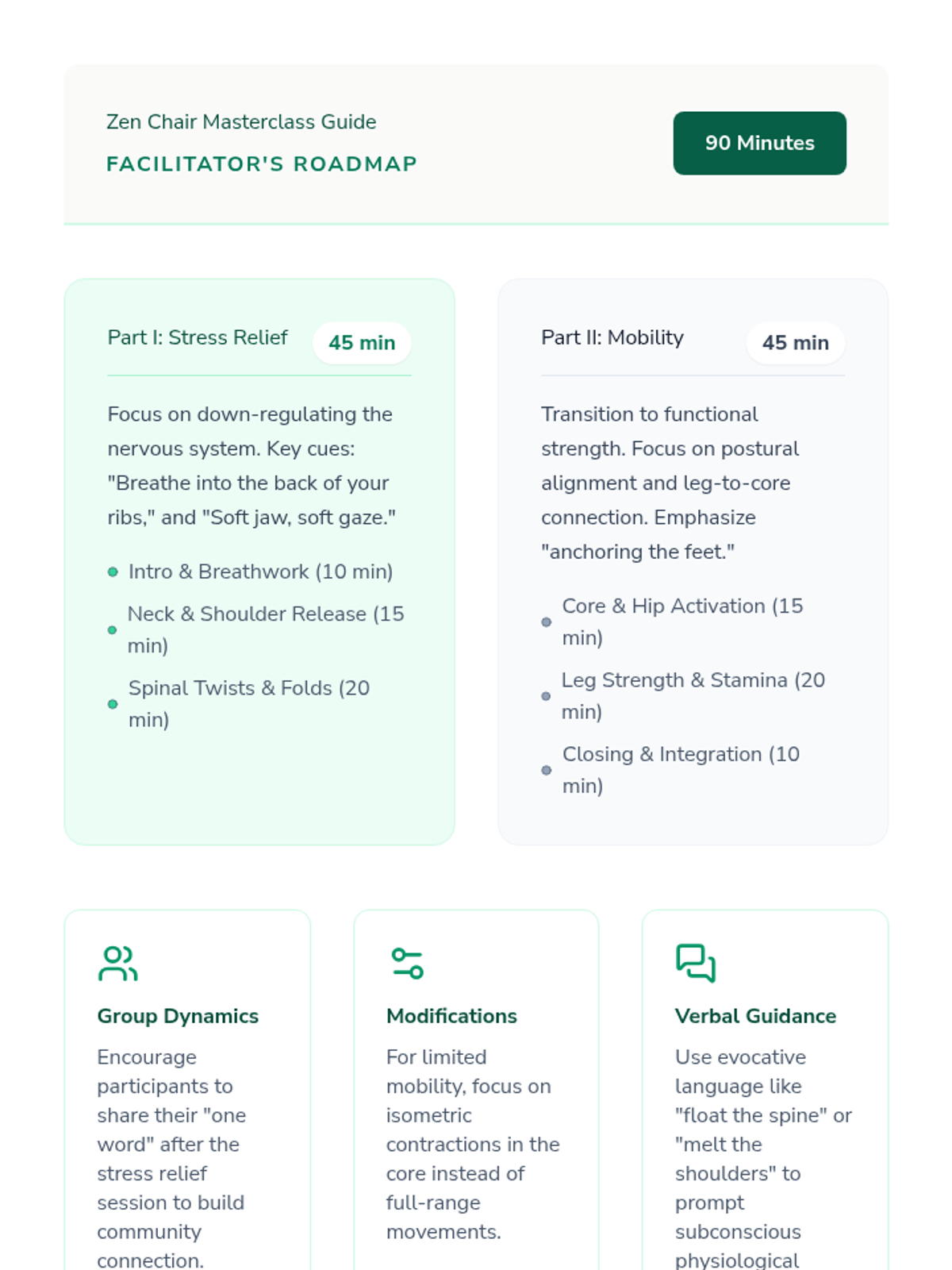
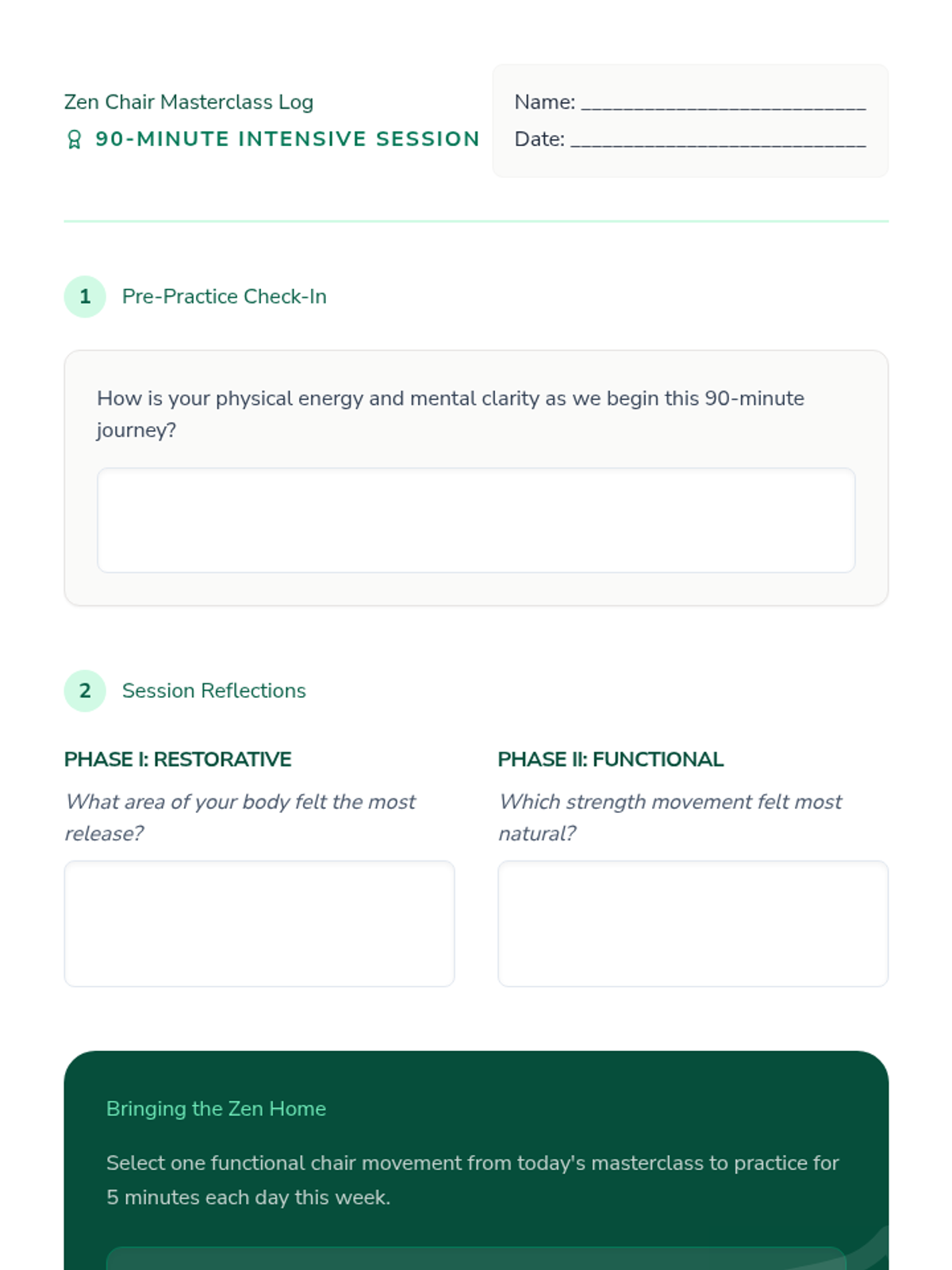
A comprehensive yoga series featuring a deep-dive chair yoga masterclass with guided videos and a follow-up standing flow session for beginners. Designed to build both mental calm and physical strength.
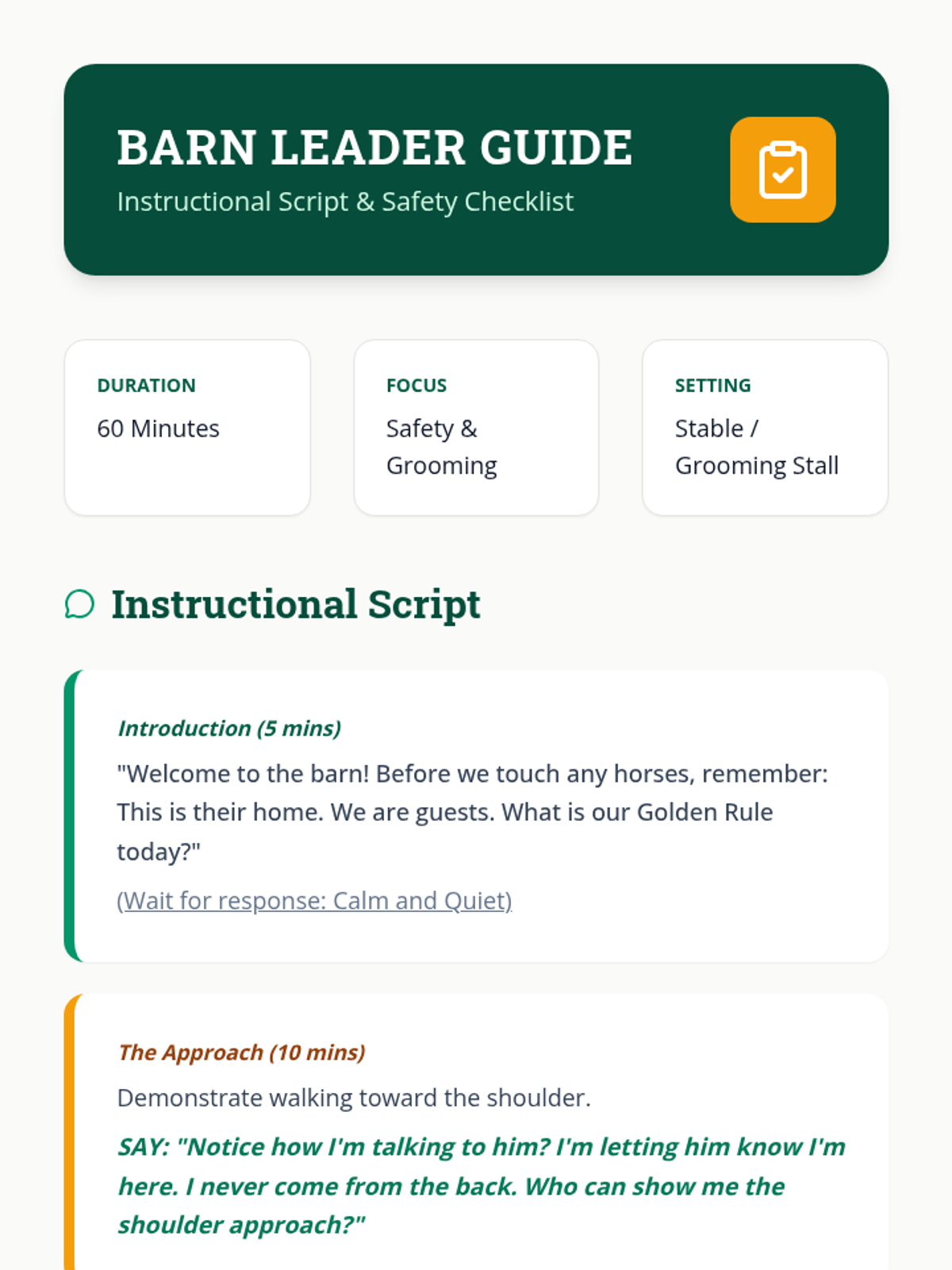
A comprehensive equestrian curriculum designed for students from elementary to high school, covering horse care, riding fundamentals, and advanced arena maneuvers. The program balances ground safety with progressive riding skills.
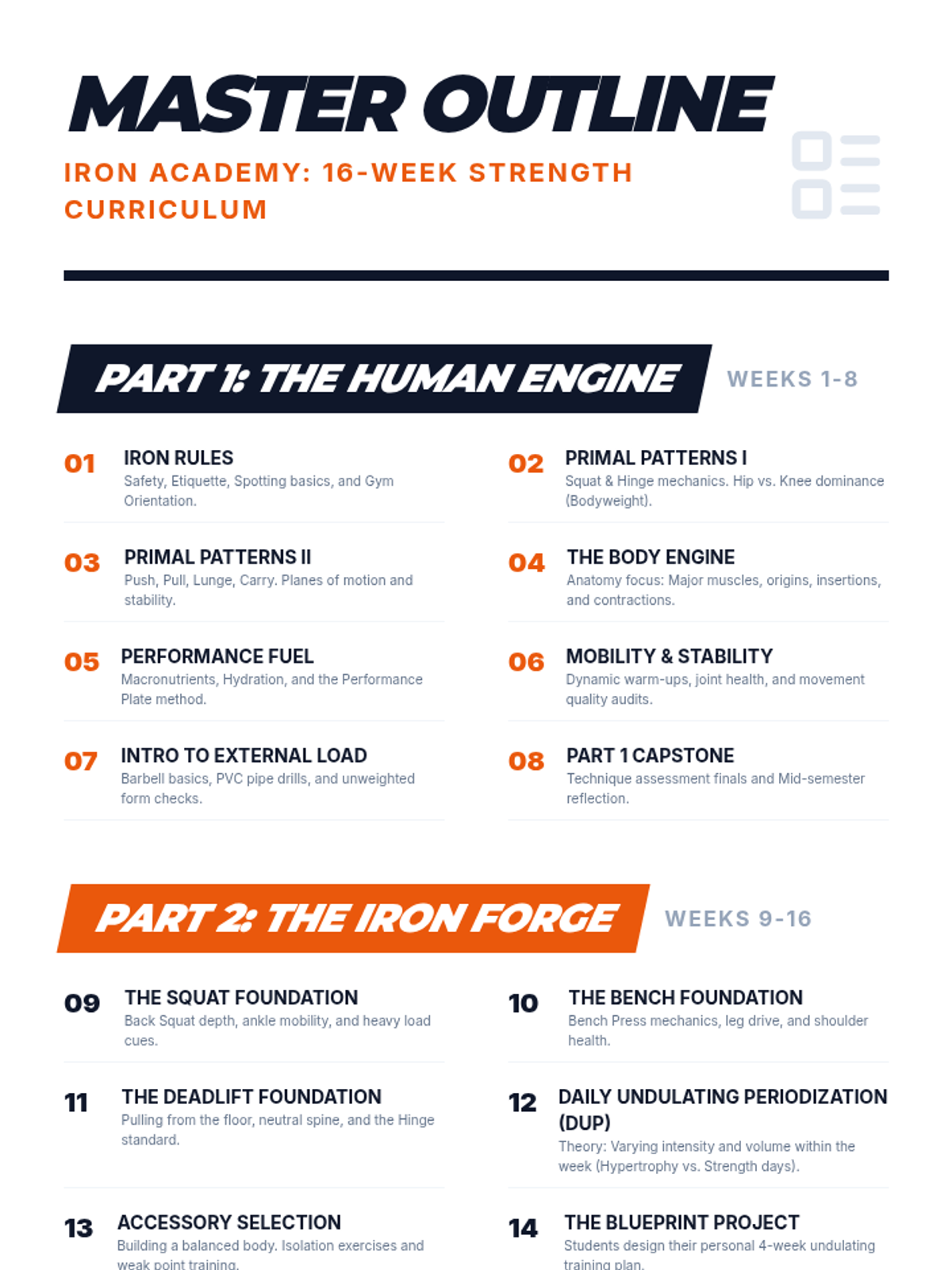
A comprehensive 16-week weight training curriculum divided into two parts: 'Part 1: The Human Engine' (Weeks 1-8) focusing on movement patterns, bodyweight mastery, and anatomy; and 'Part 2: The Iron Forge' (Weeks 9-16) focusing on advanced compound lifts, training science, and independent program design. Includes nutrition for performance and comprehensive classroom activities.
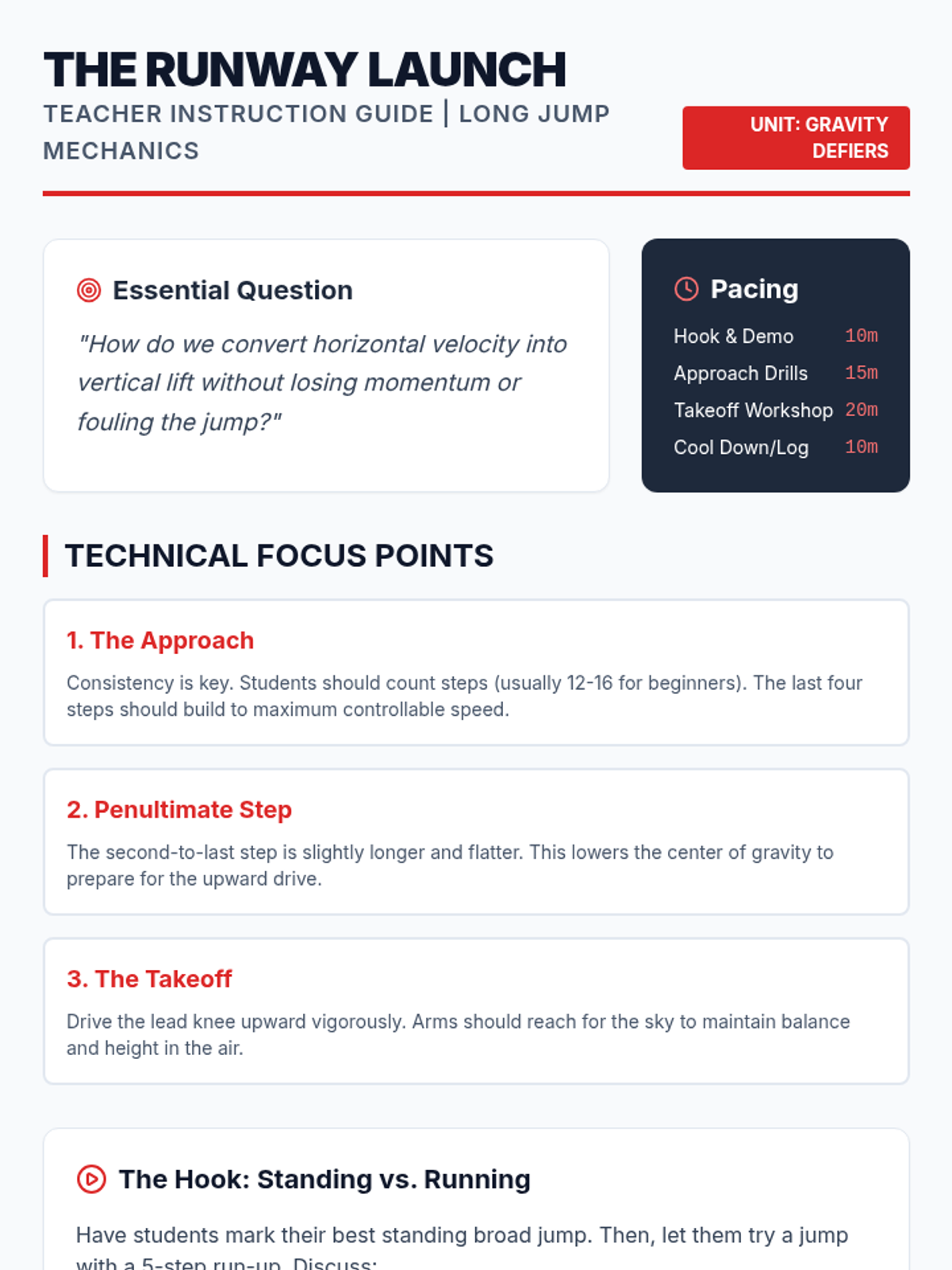
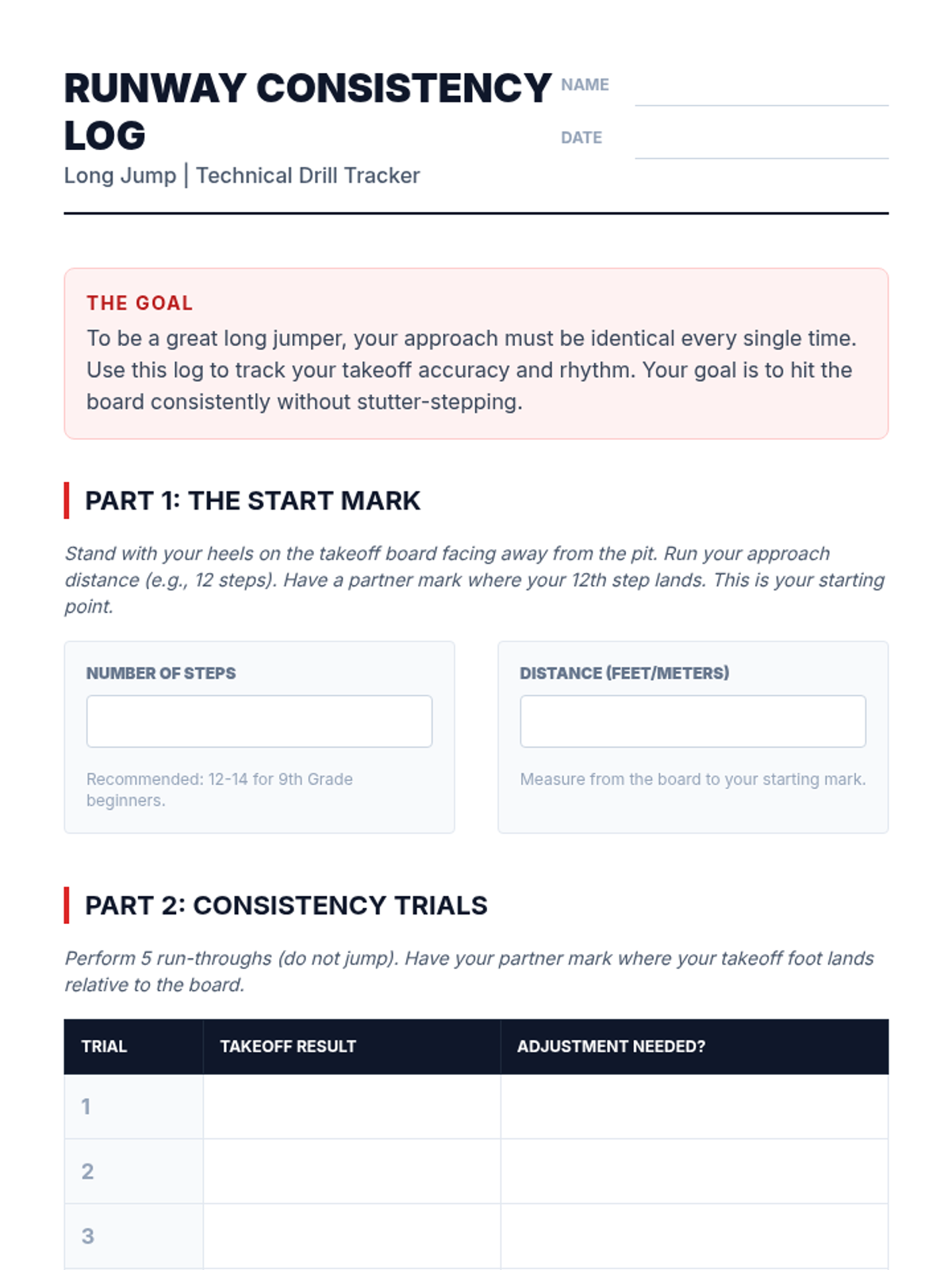
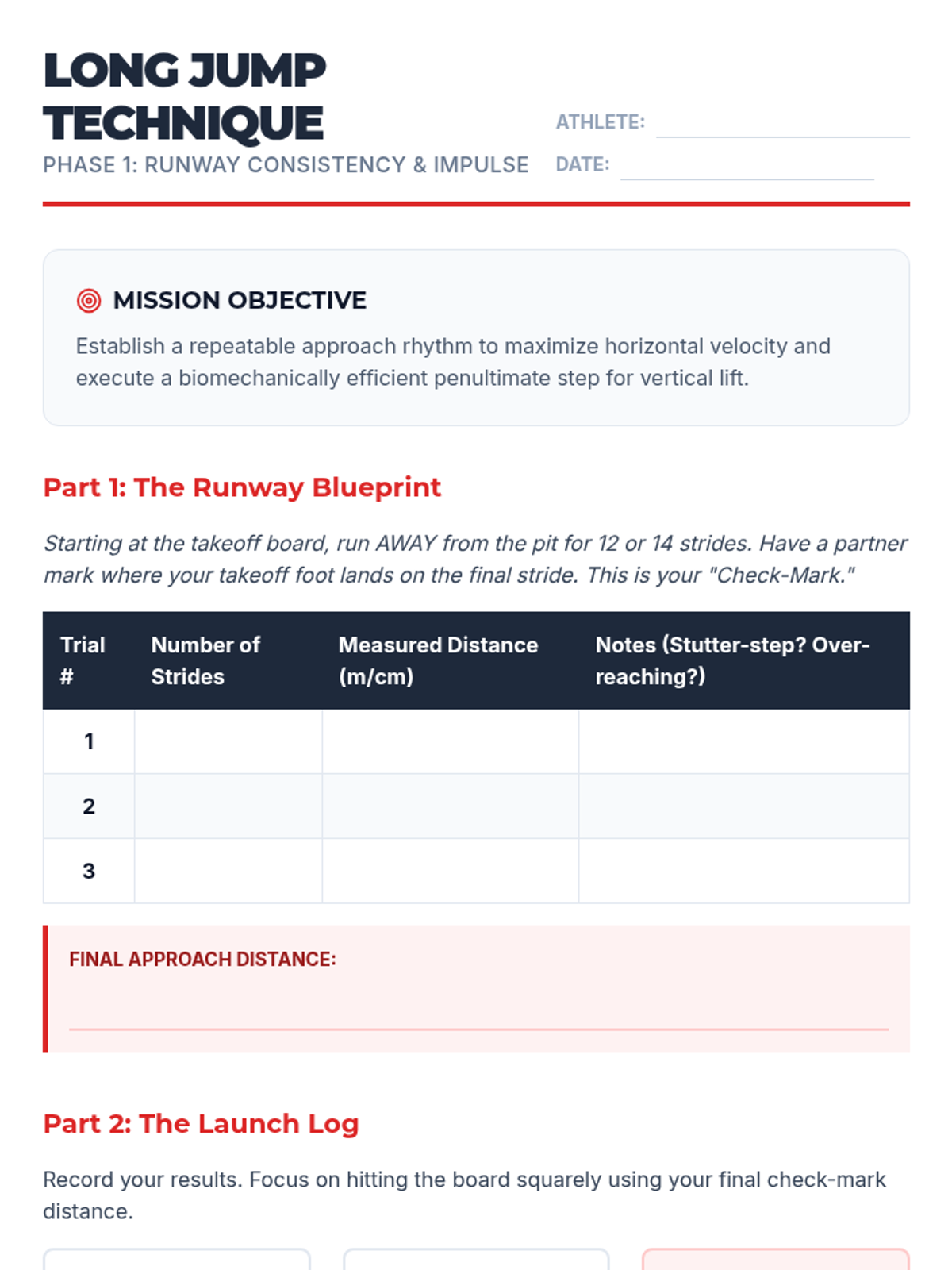
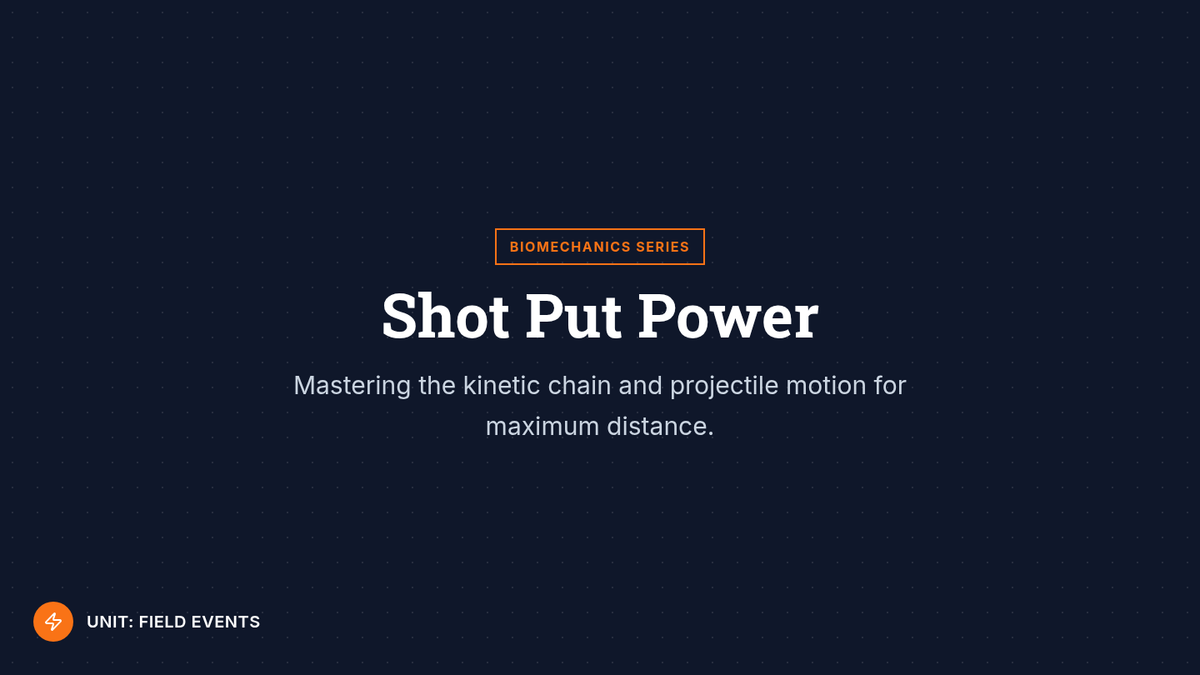
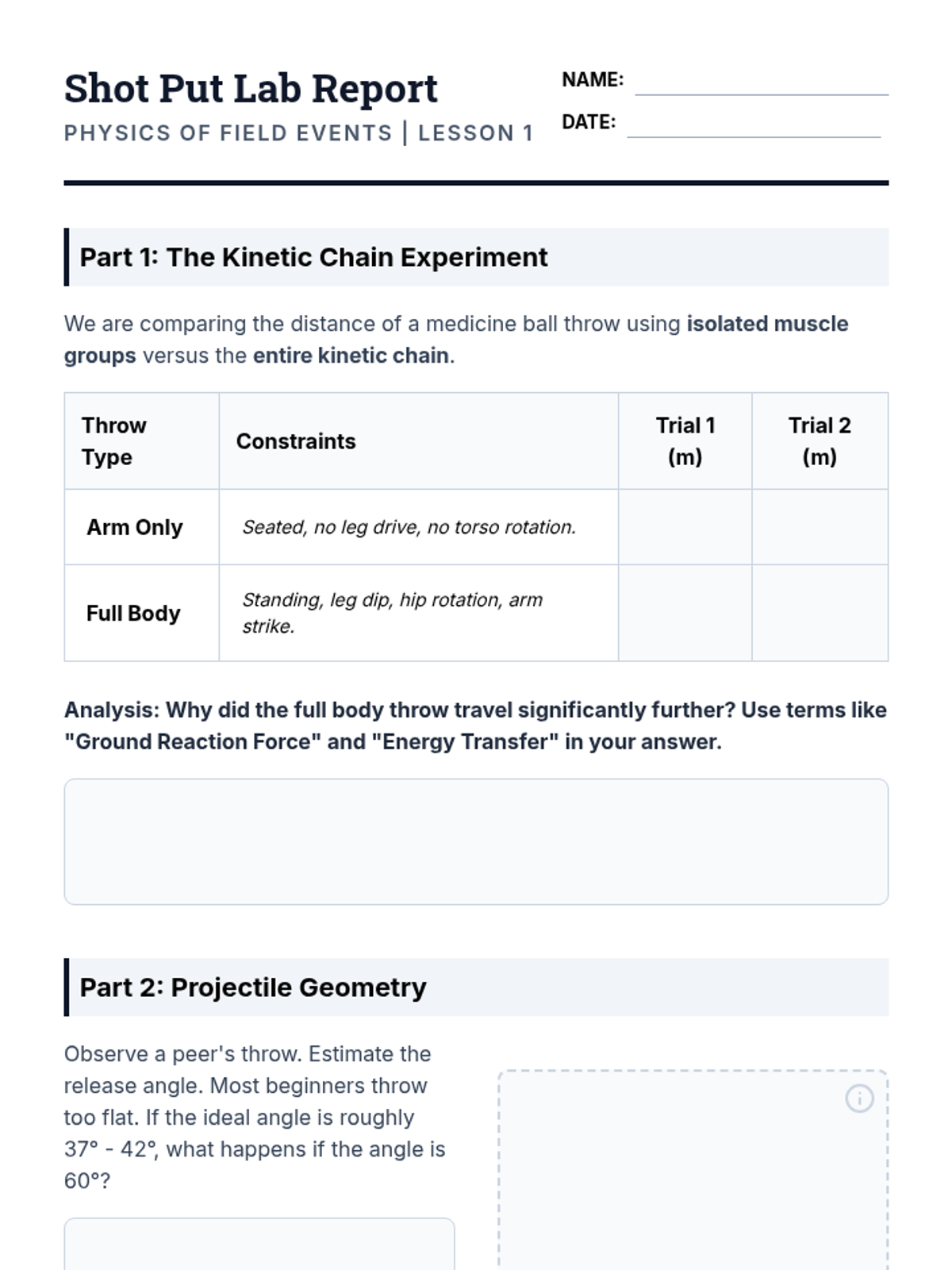
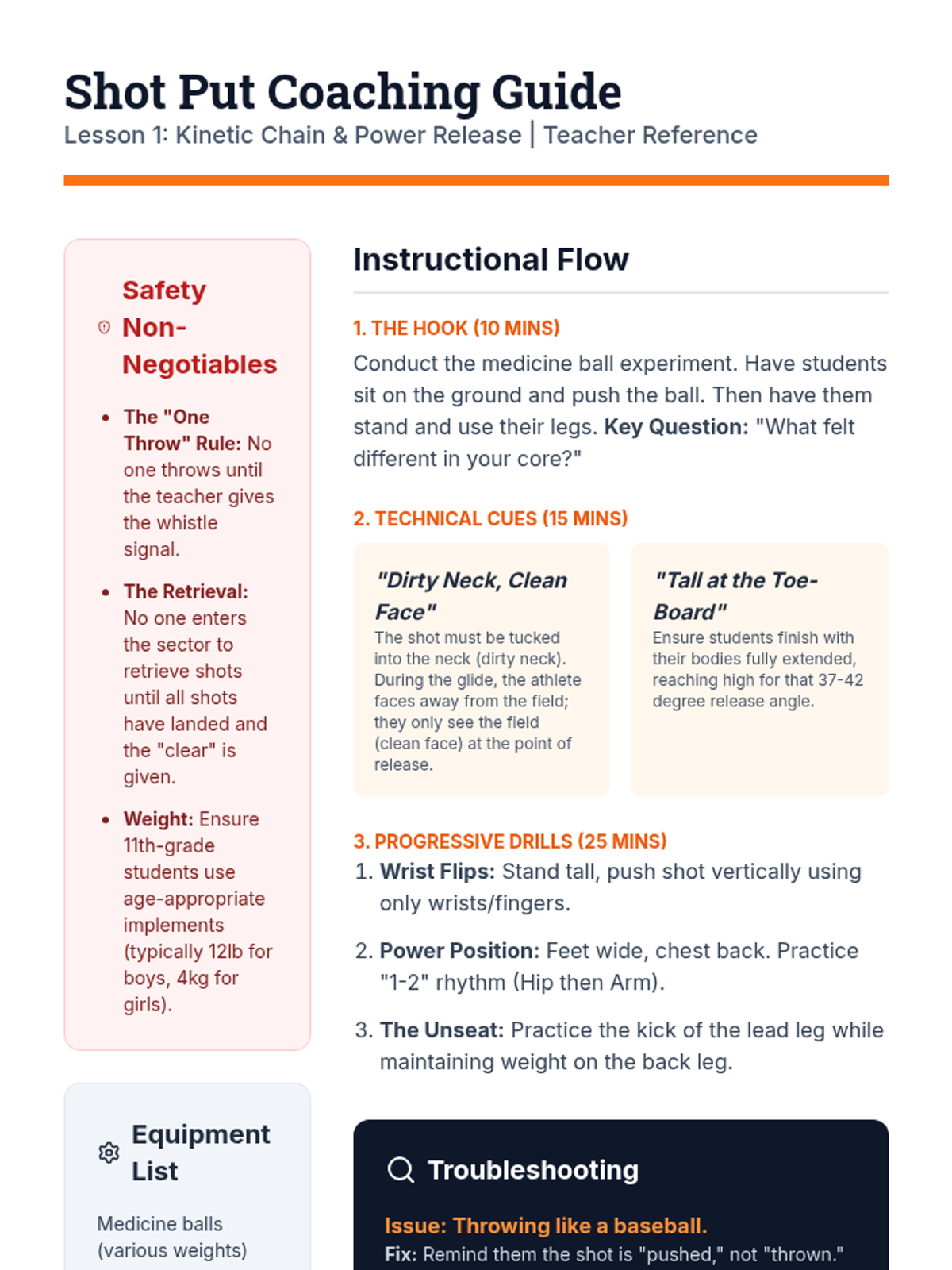
A comprehensive 9th-grade sequence on track and field events, focusing on the mechanics of horizontal jumps and throwing disciplines. Students explore the physics of force, momentum, and release angles through technical practice and a final simulated competition.
A 10th-grade physical education unit focusing on the biomechanics of field events. Students explore physics principles like trajectory, torque, and center of mass through jumps and throws, culminating in a technical pentathlon.
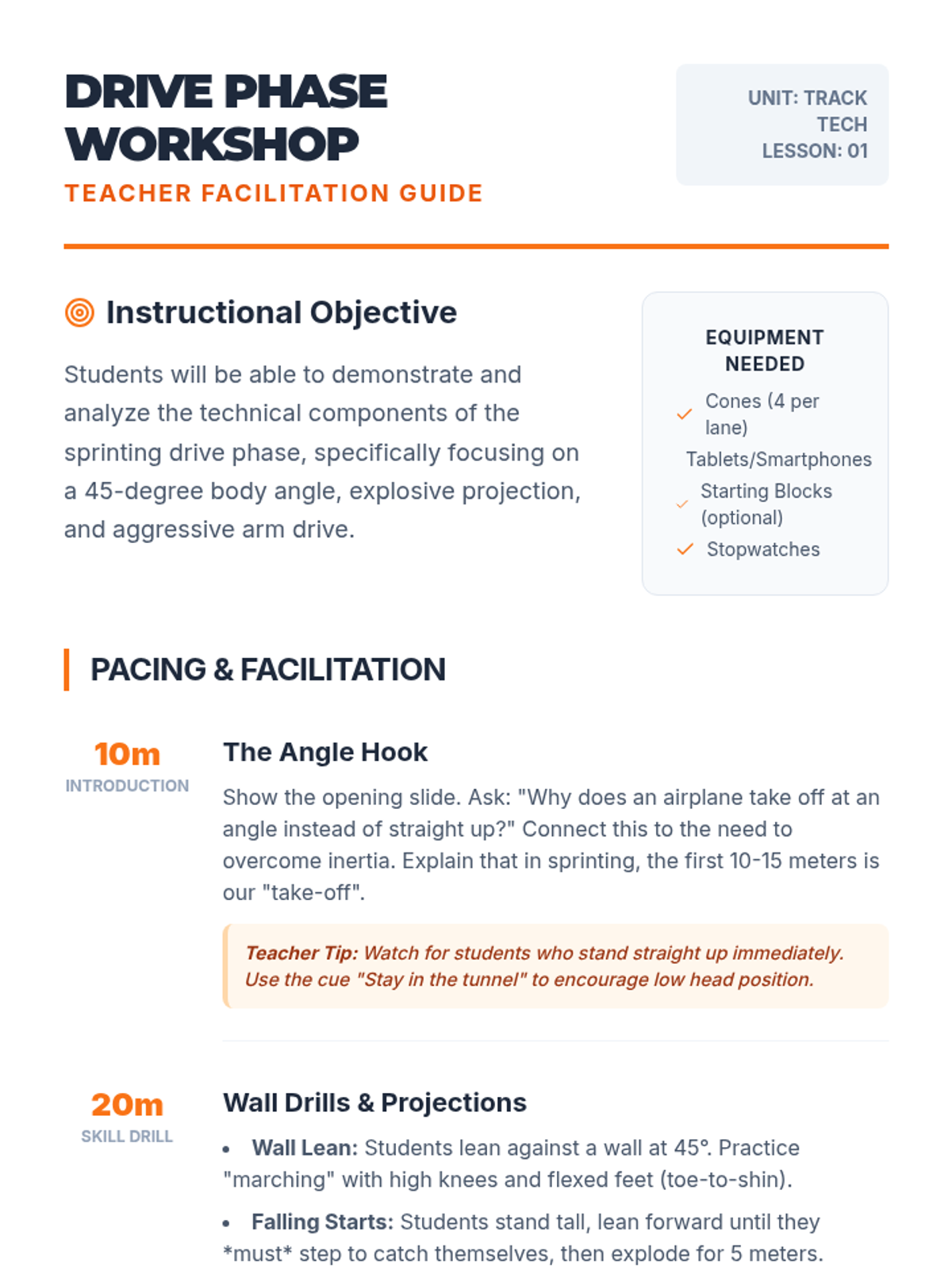
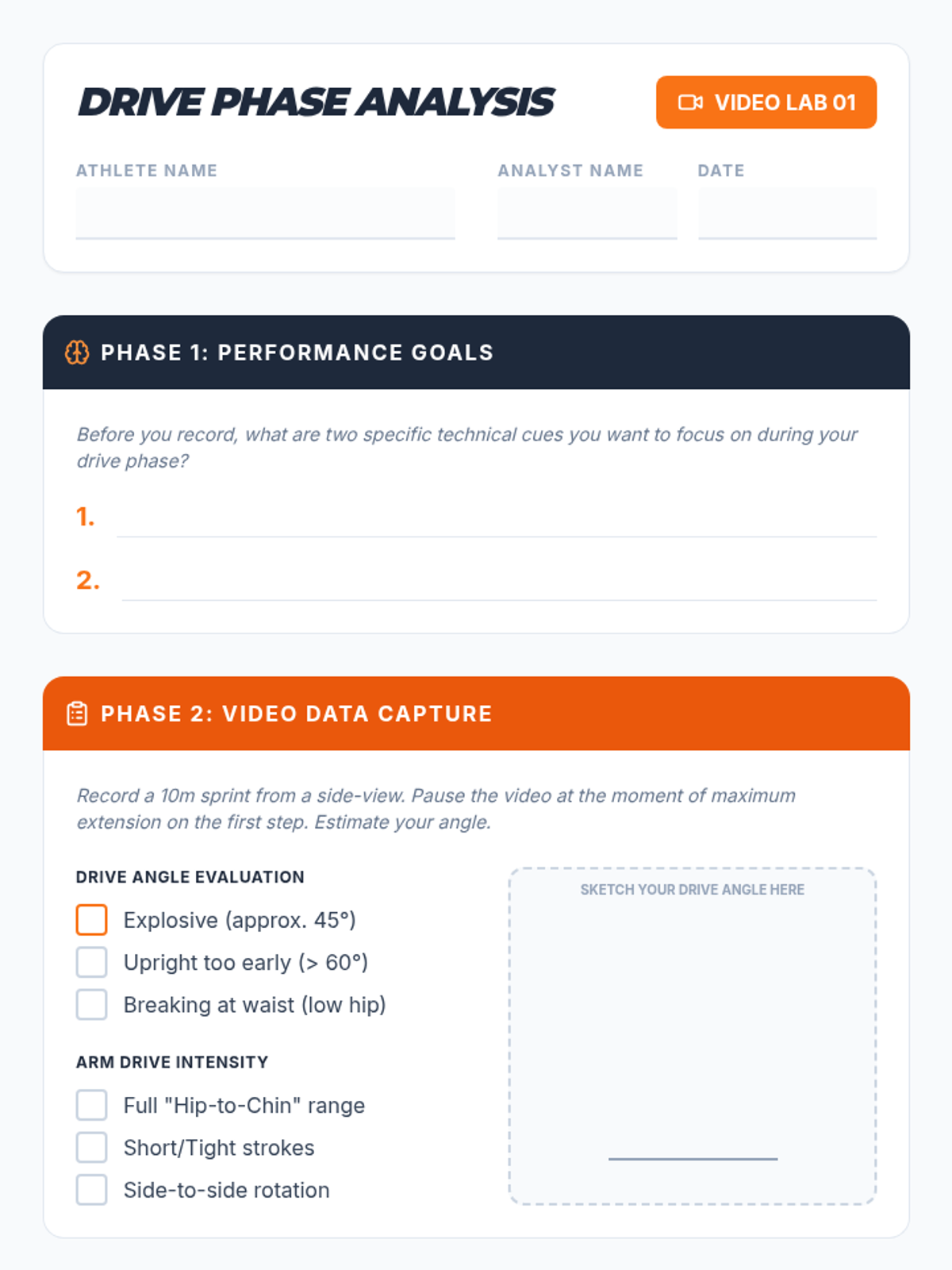
A comprehensive 10th-grade track and field unit focusing on the biomechanics of sprinting, technical relay exchanges, and strategic pacing for middle-distance events. Students analyze acceleration angles, stride efficiency, and energy system usage through video review and data collection.
An intensive exploration of the physics and biomechanics behind field events, focusing on shot put, discus, long jump, and triple jump. Students apply scientific principles to athletic performance through peer coaching, video analysis, and technical drills.
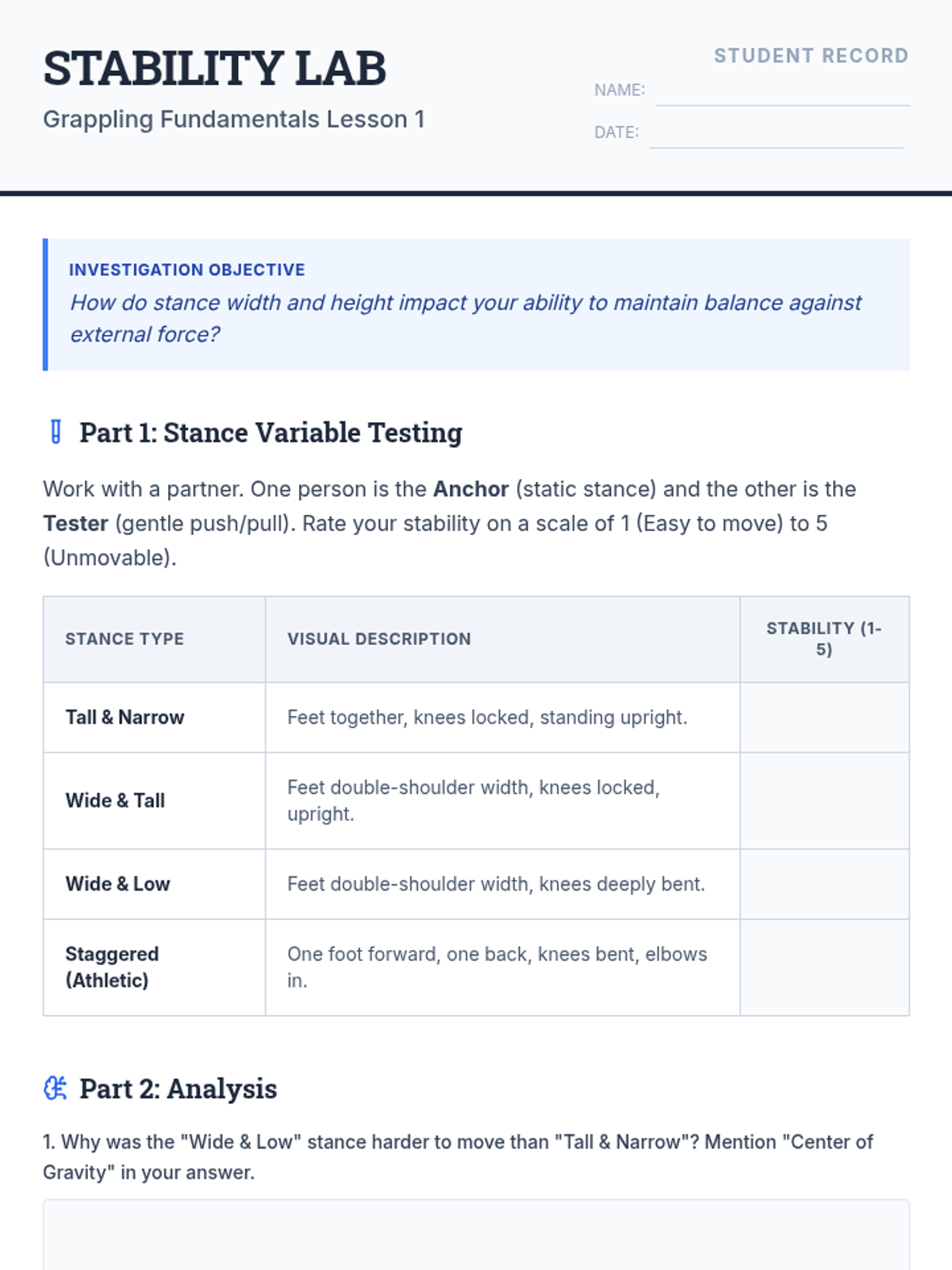
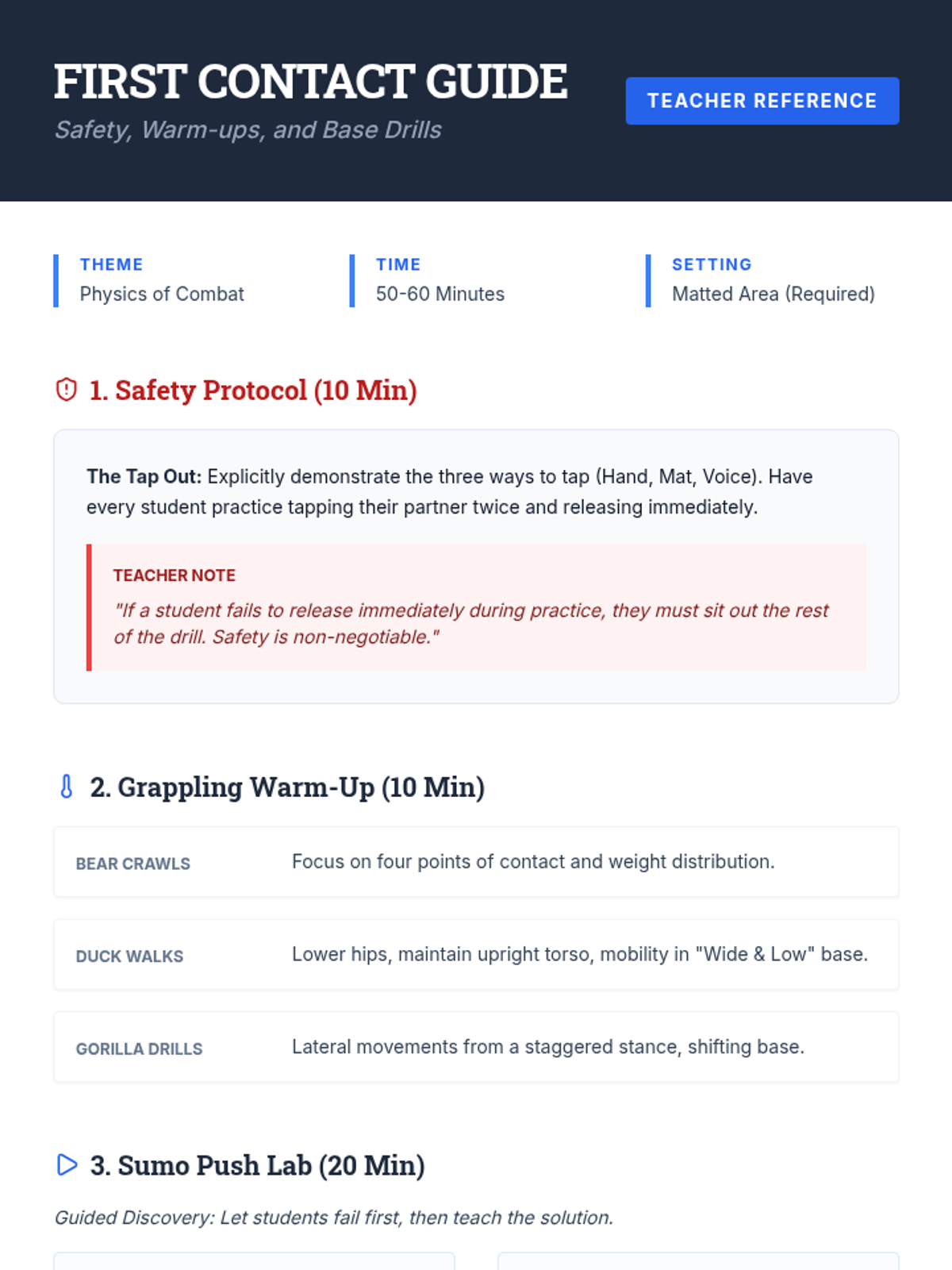
A comprehensive introduction to grappling for 8th graders, focusing on leverage, balance, and positional control. Students learn to use their center of gravity and mechanical advantage to manage physical encounters safely and effectively.
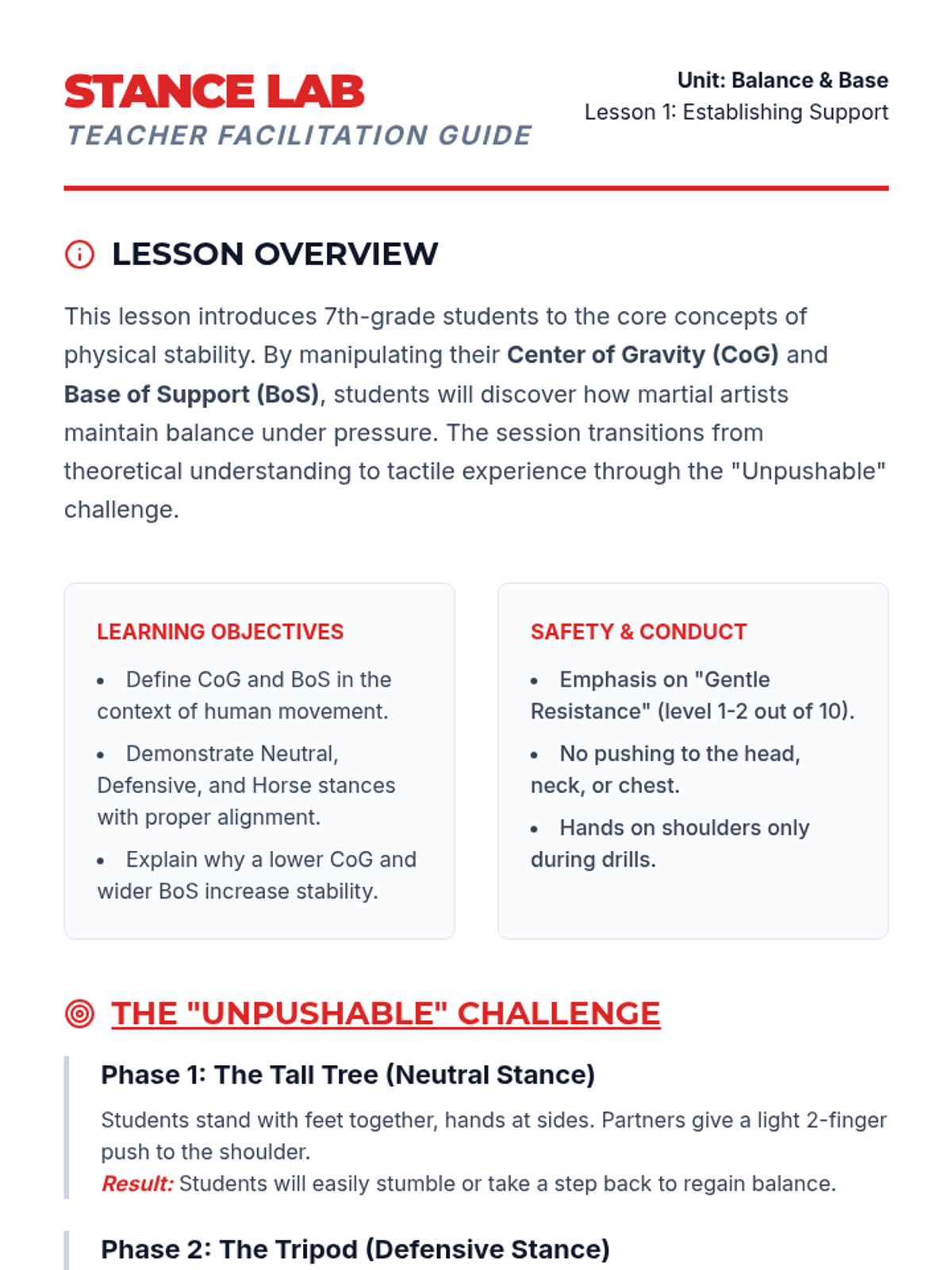
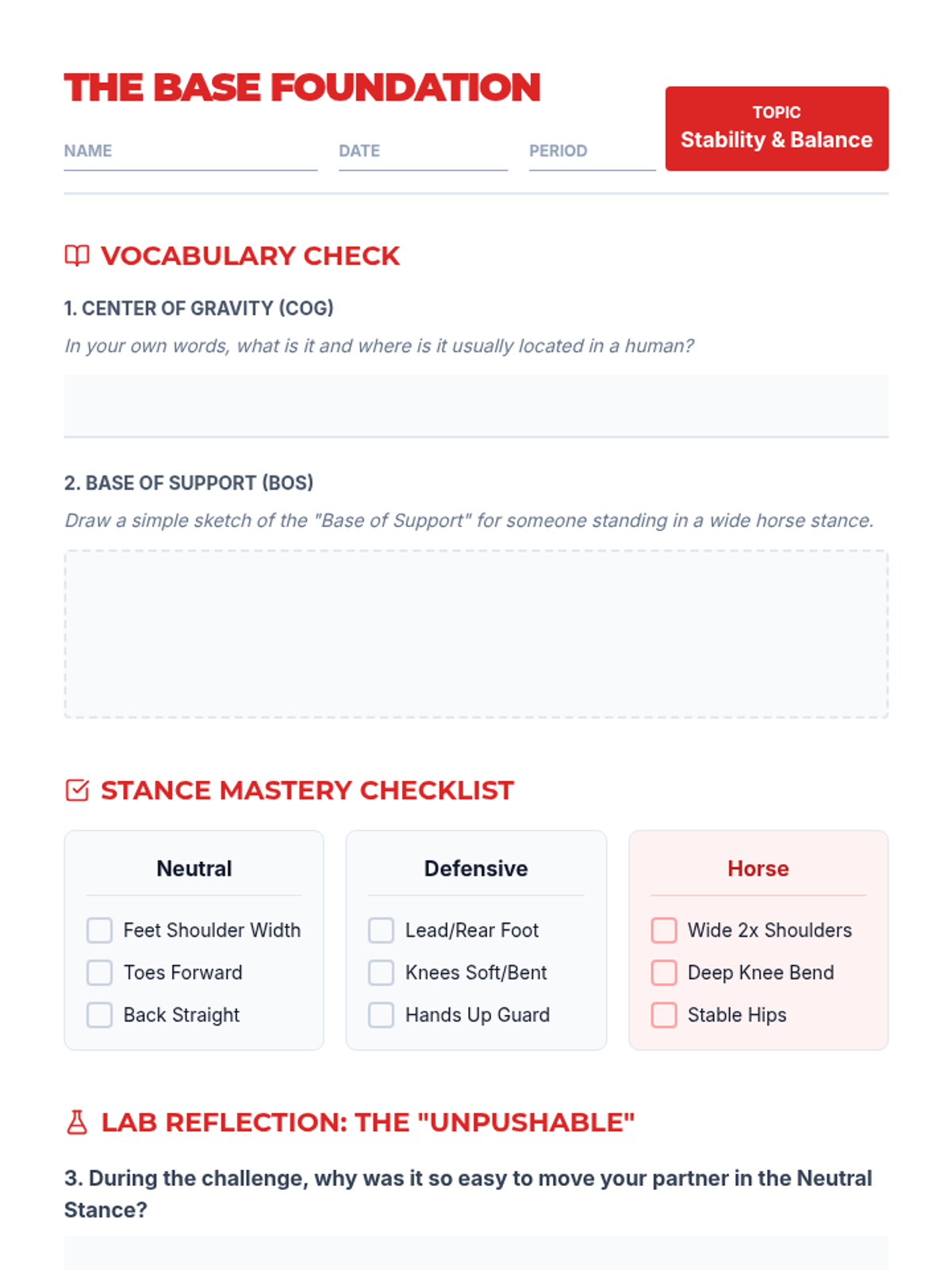
A foundational unit for 7th-grade students focusing on the physical prerequisites of martial arts and self-defense: balance, stability, safe movement, and injury prevention through breakfalls. Students explore how controlling their center of gravity and core can enhance their physical safety and stability.
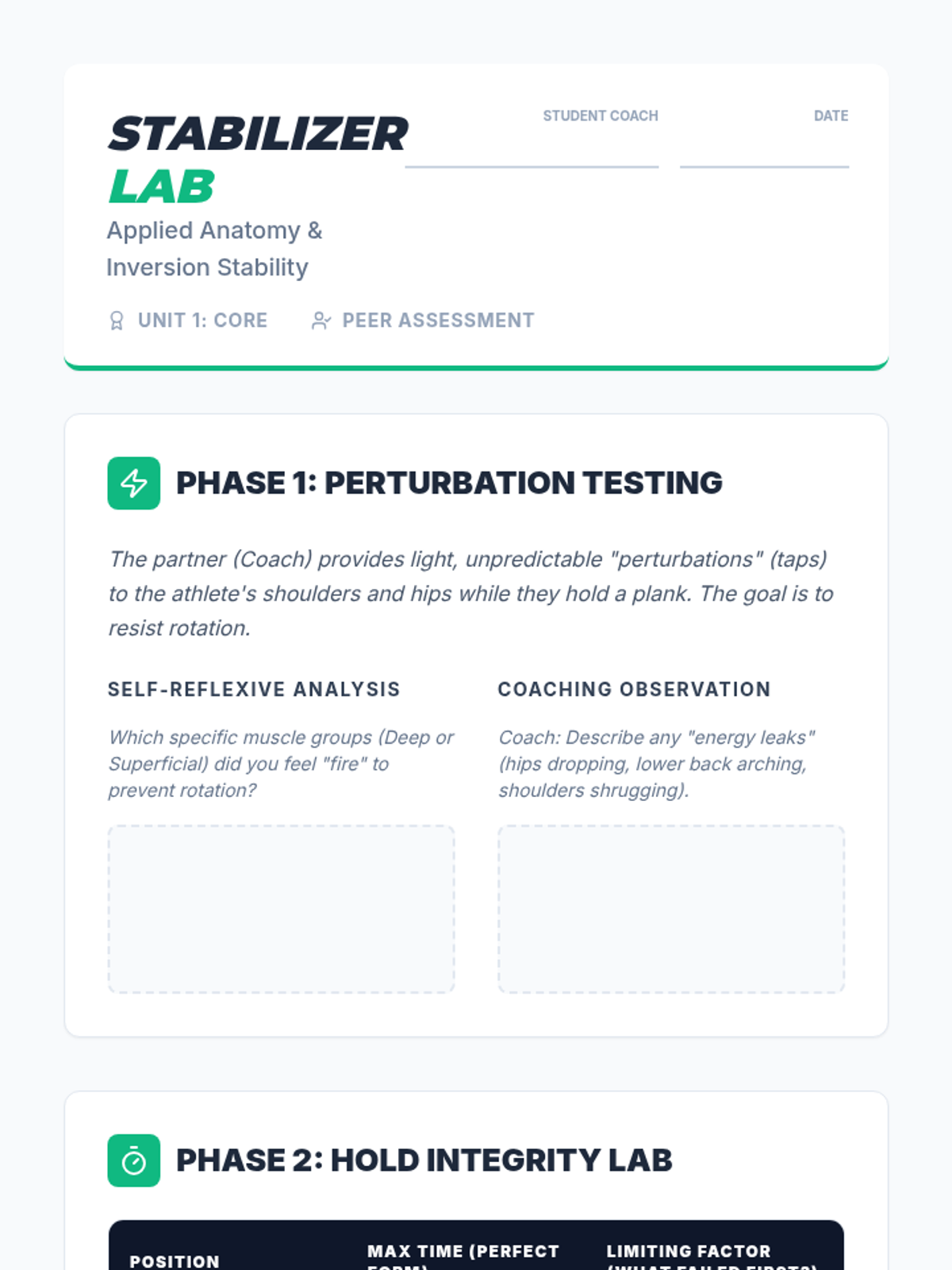
This sequence approaches gymnastics through the lens of athletic conditioning and applied anatomy. Students investigate specific strength and flexibility requirements needed to perform skills safely while acting as strength and conditioning coaches.
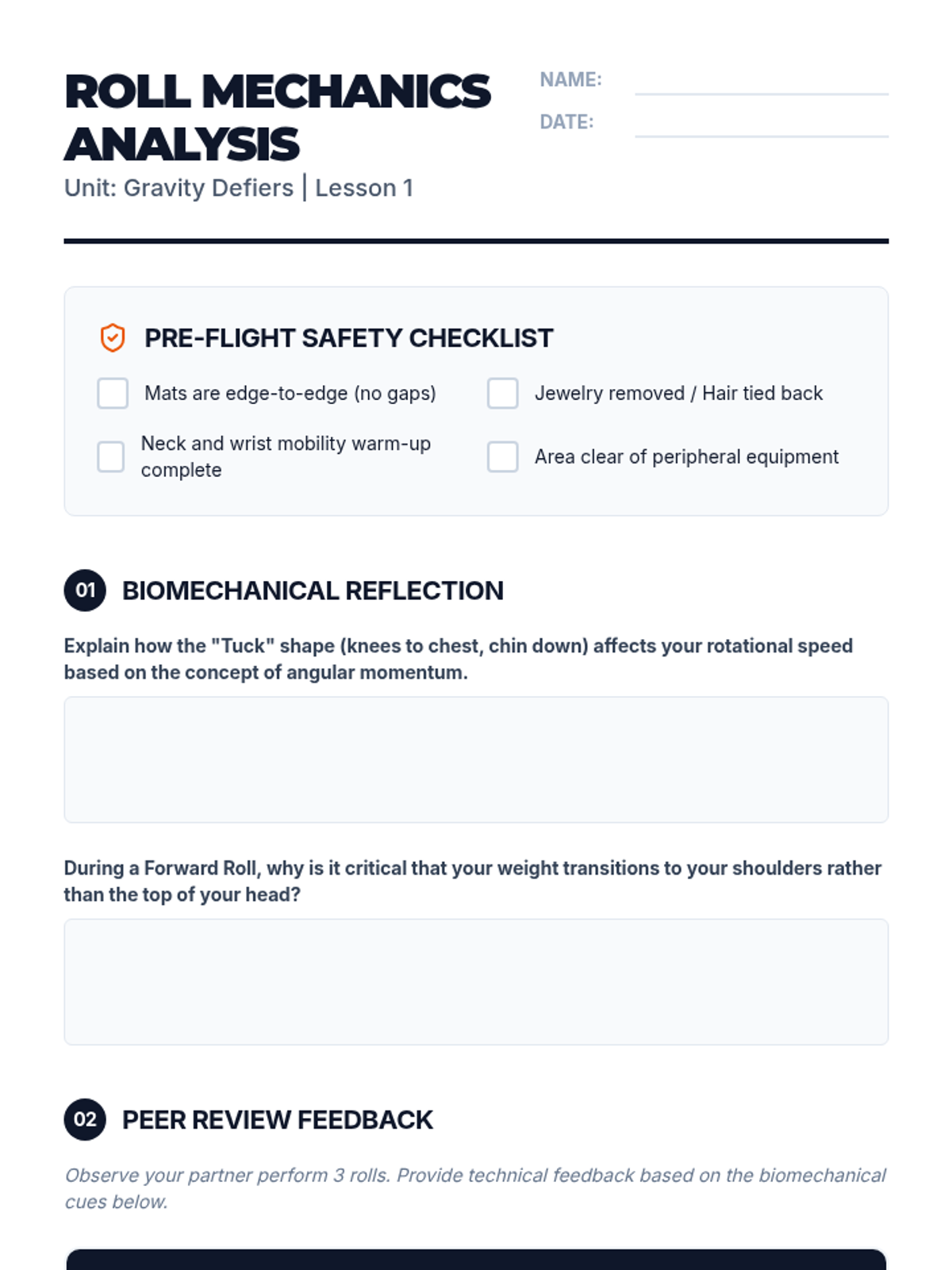
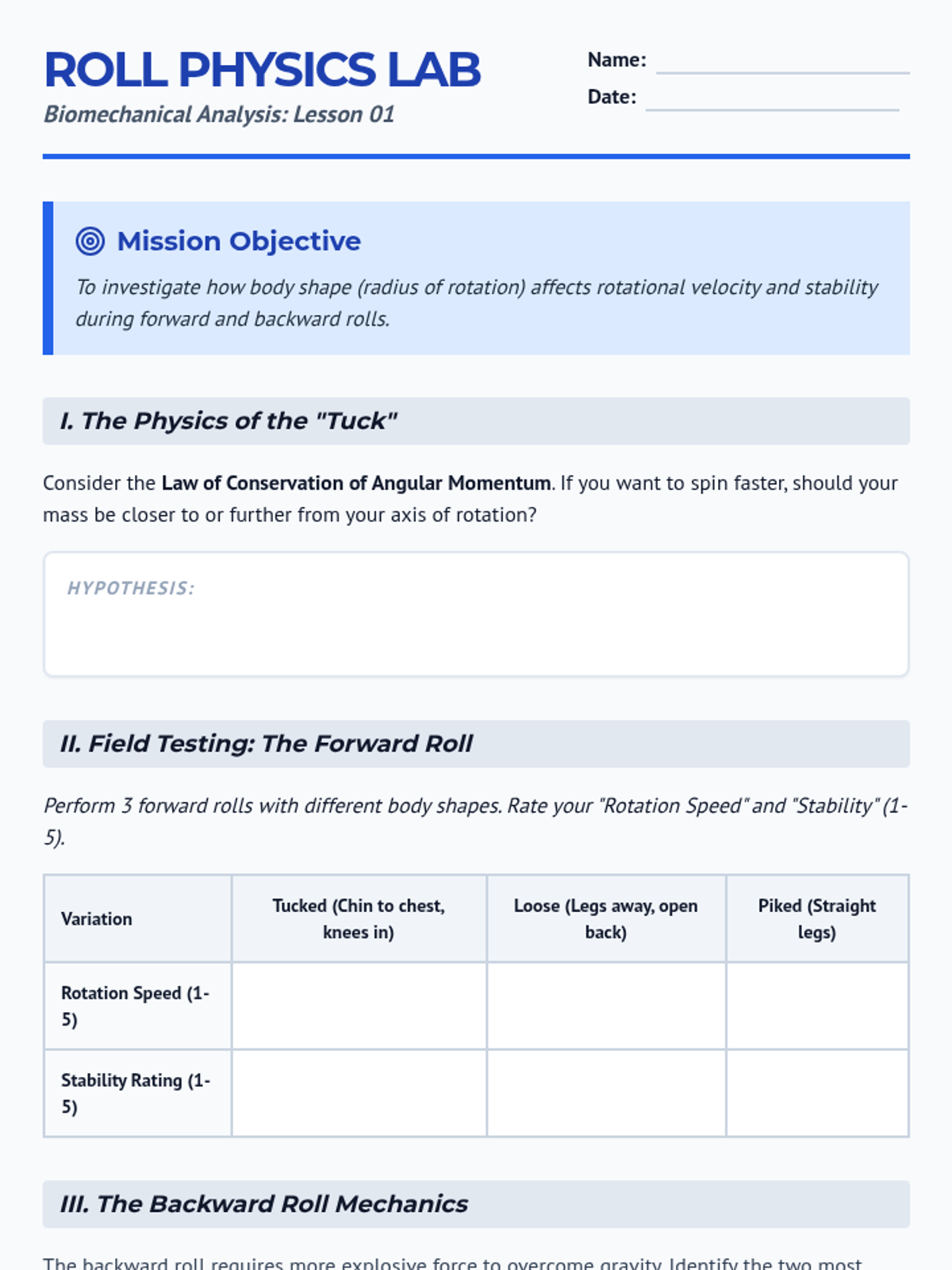
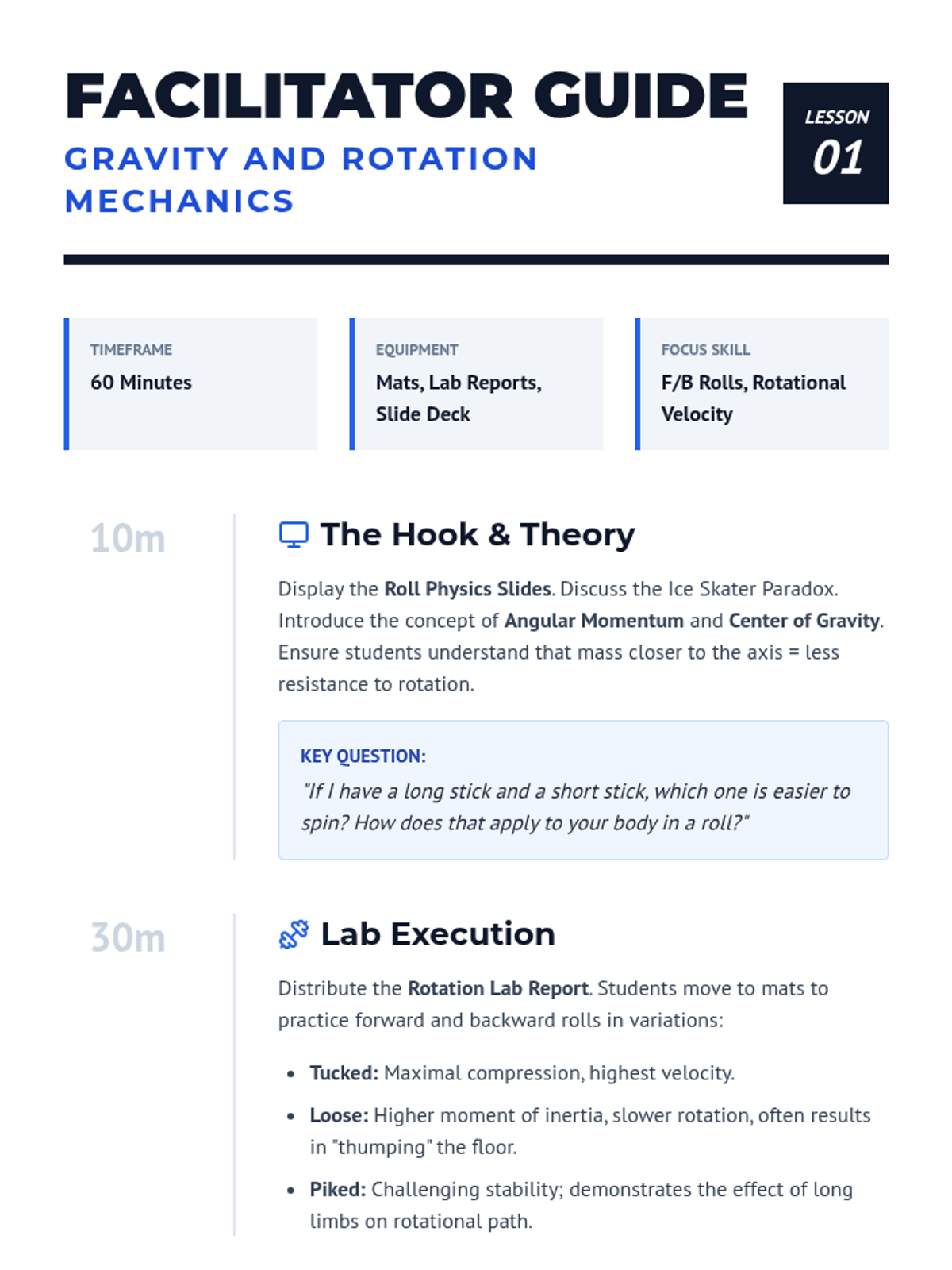
This sequence integrates physics concepts with fundamental floor skills to help students understand the mechanics of tumbling. Students explore center of mass, rotational mechanics, leverage, and force absorption through hands-on practice and video analysis.
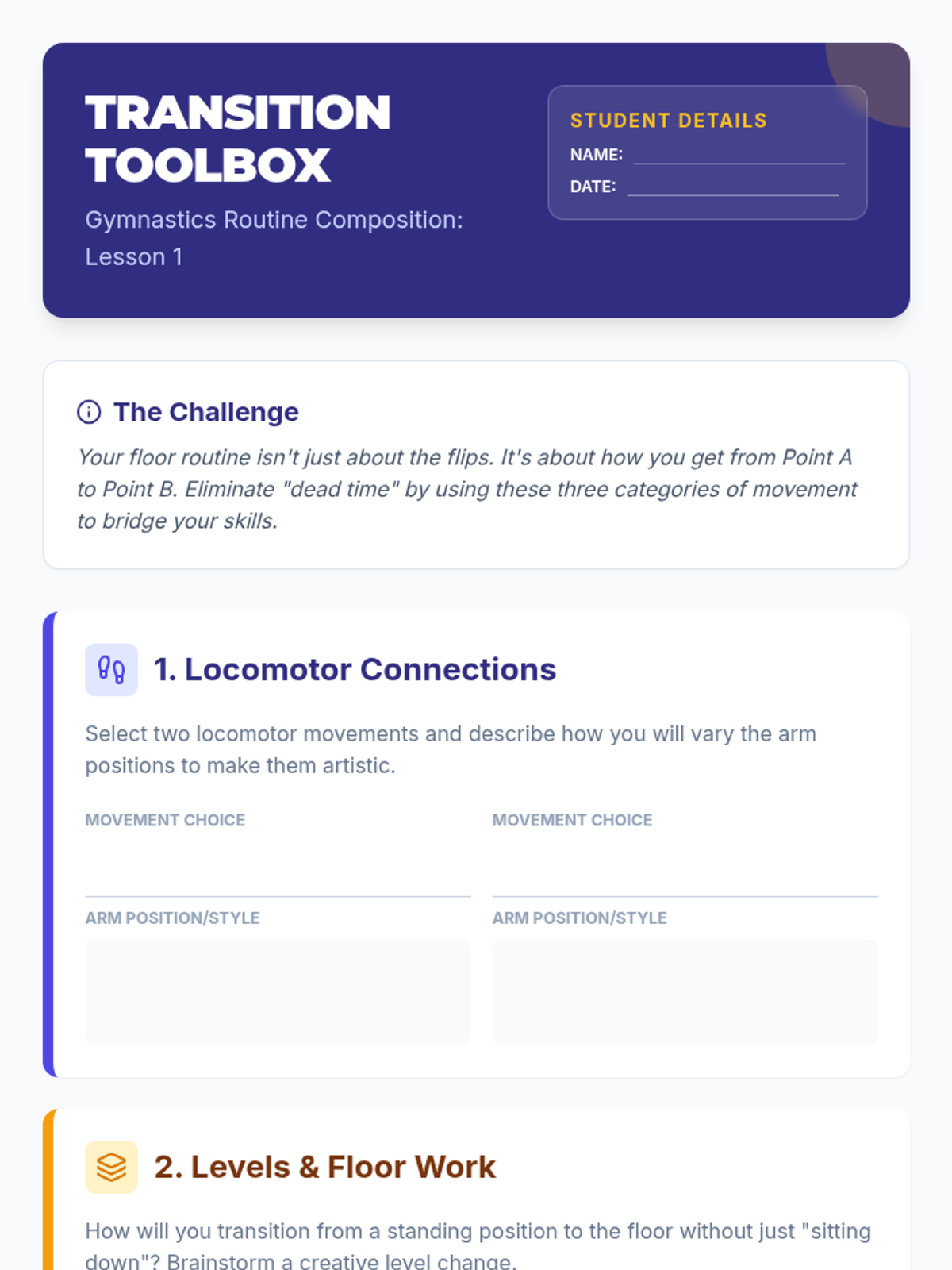
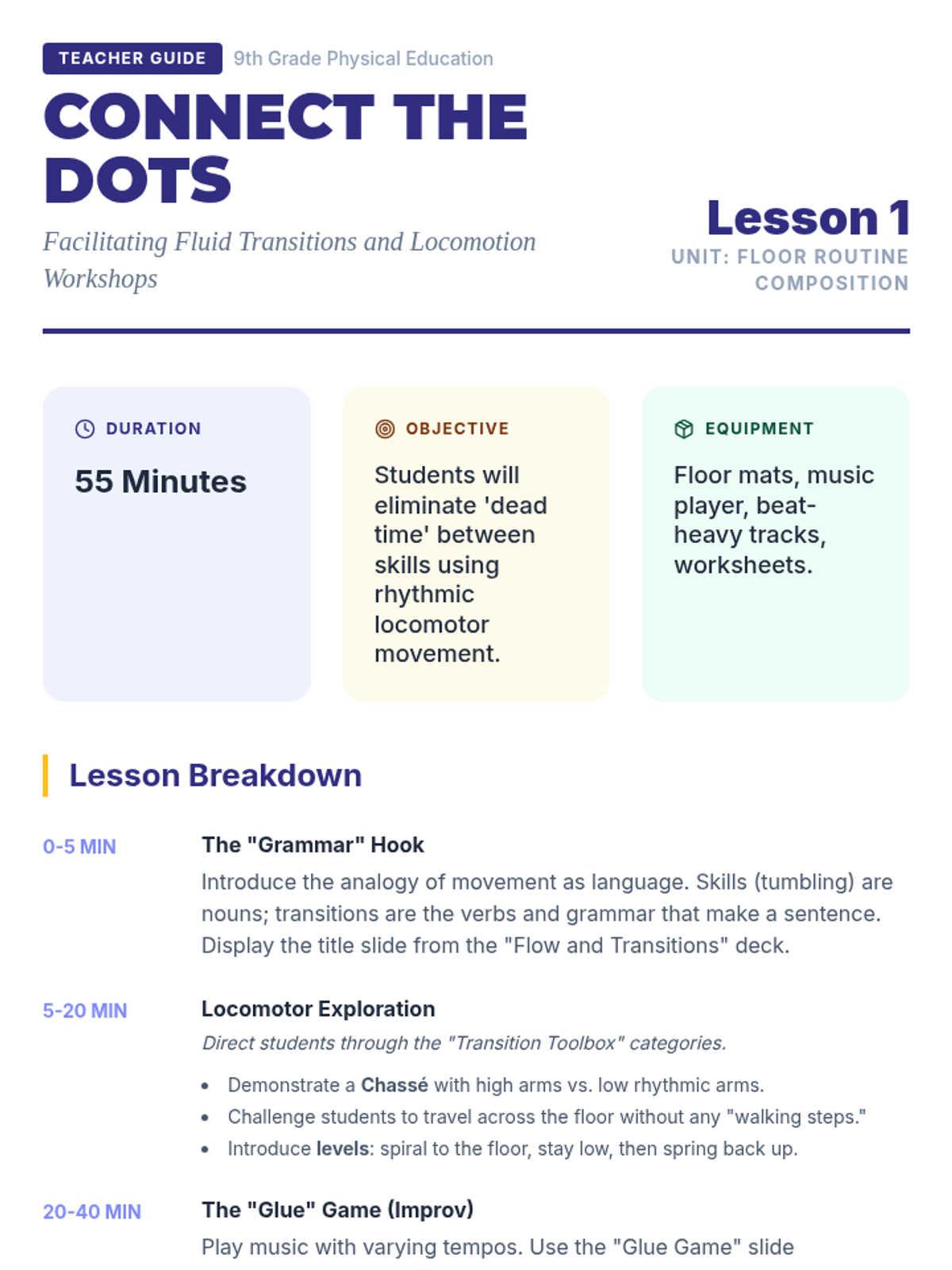
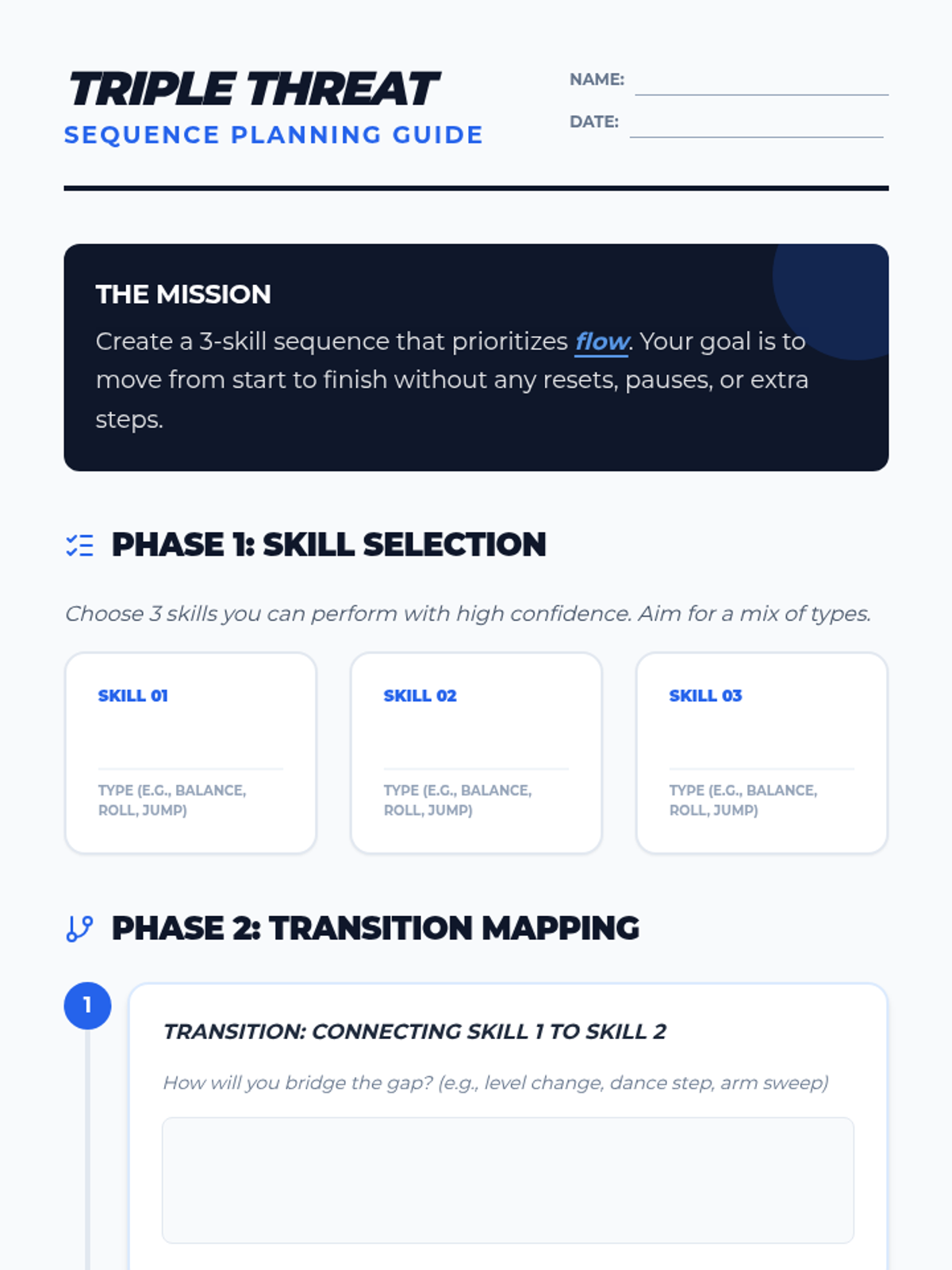
A comprehensive sequence for 9th Grade PE focused on the artistic and athletic composition of gymnastics floor routines, moving from individual skills to a cohesive performance.
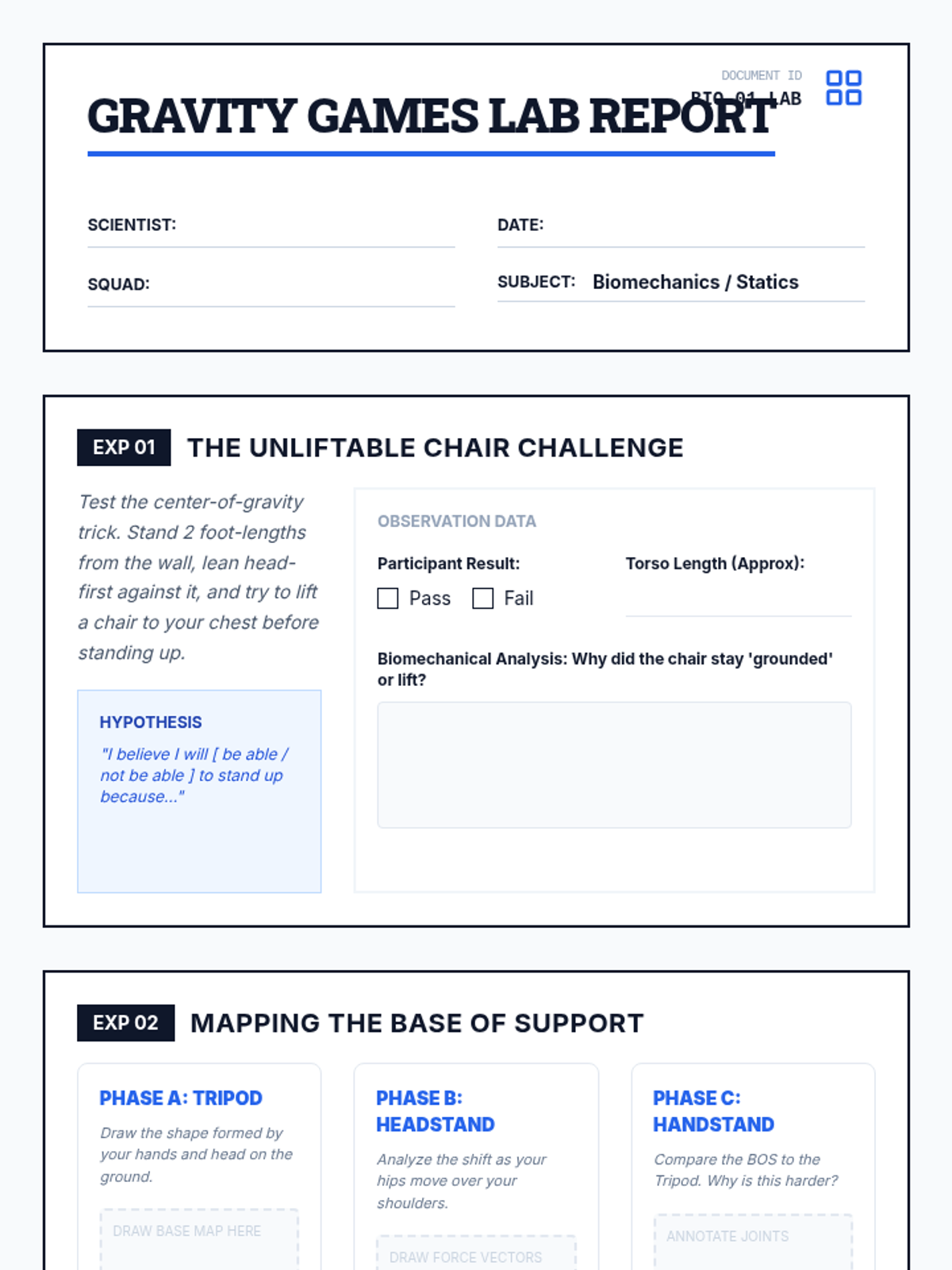
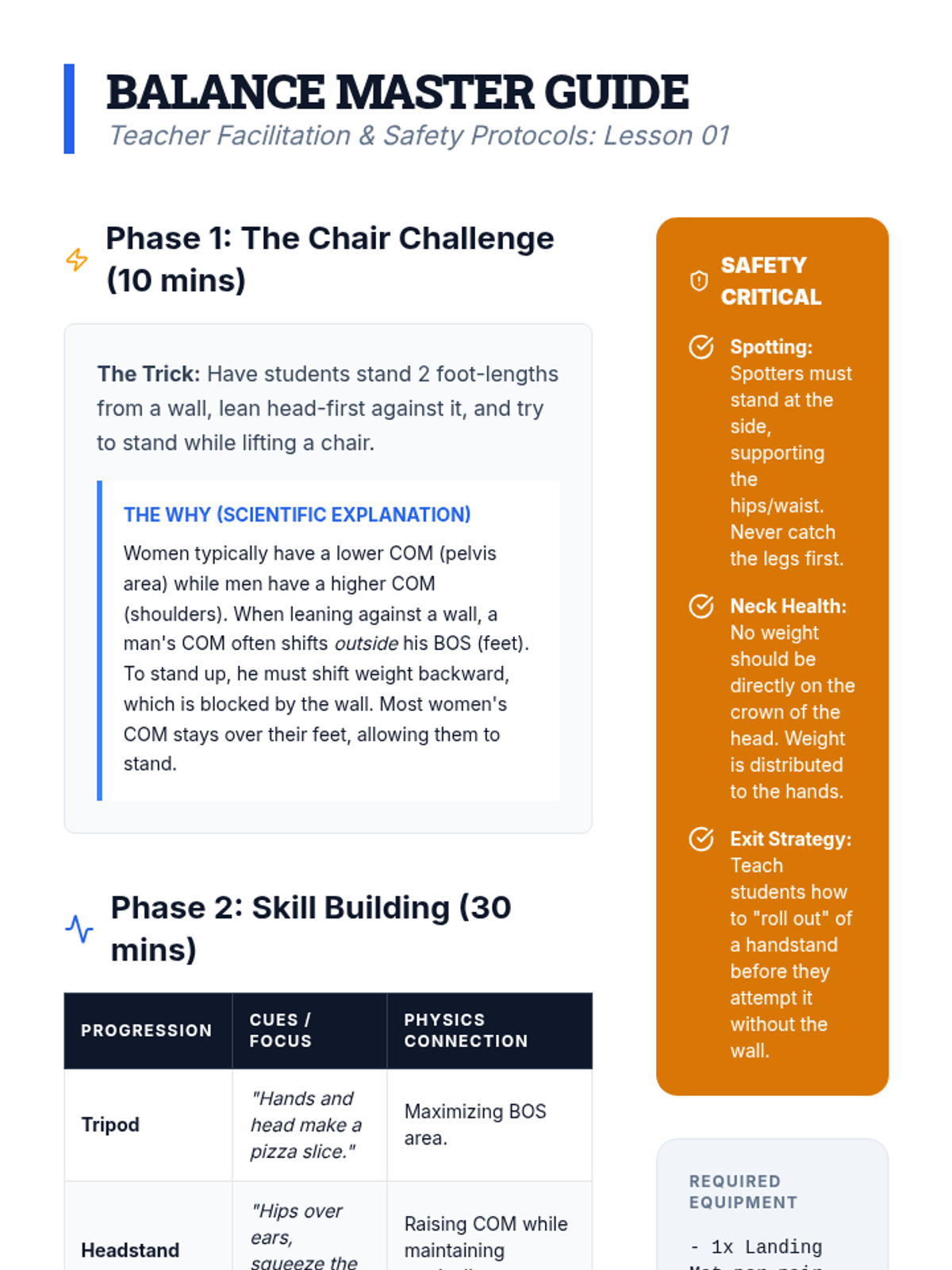
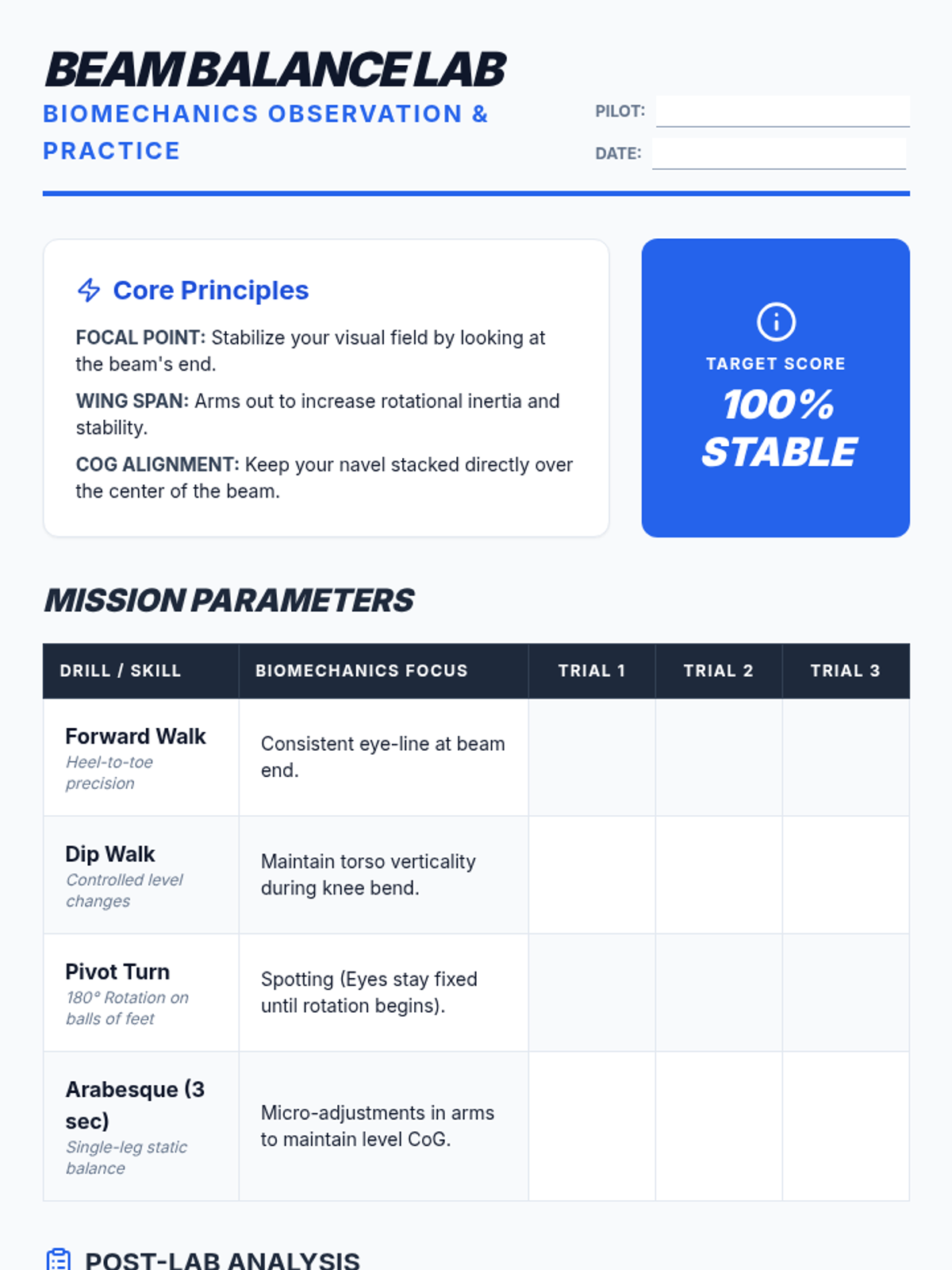
This sequence focuses on the biomechanics and safety of gymnastics apparatus work, specifically the balance beam and vault. Students progress from foundational balance skills to complex vaulting mechanics, emphasizing center of gravity, explosive power, and peer spotting.
A 10th-grade gymnastics unit focusing on the biomechanical principles of floor skills. Students explore stability, rotation, and momentum through rolls, inversions, cartwheels, and round-offs.
This 10th-grade gymnastics sequence guides students from performing isolated skills to composing fluid, artistic floor routines. It focuses on the choreography of transitions, spatial utilization, musicality, and peer feedback to enhance the aesthetic and athletic quality of gymnastics performances.
This sequence integrates gymnastics execution with biomechanical principles. Students explore center of mass, stability, leverage, and angular momentum through various tumbling skills, concluding with a video analysis project to critique their own form.
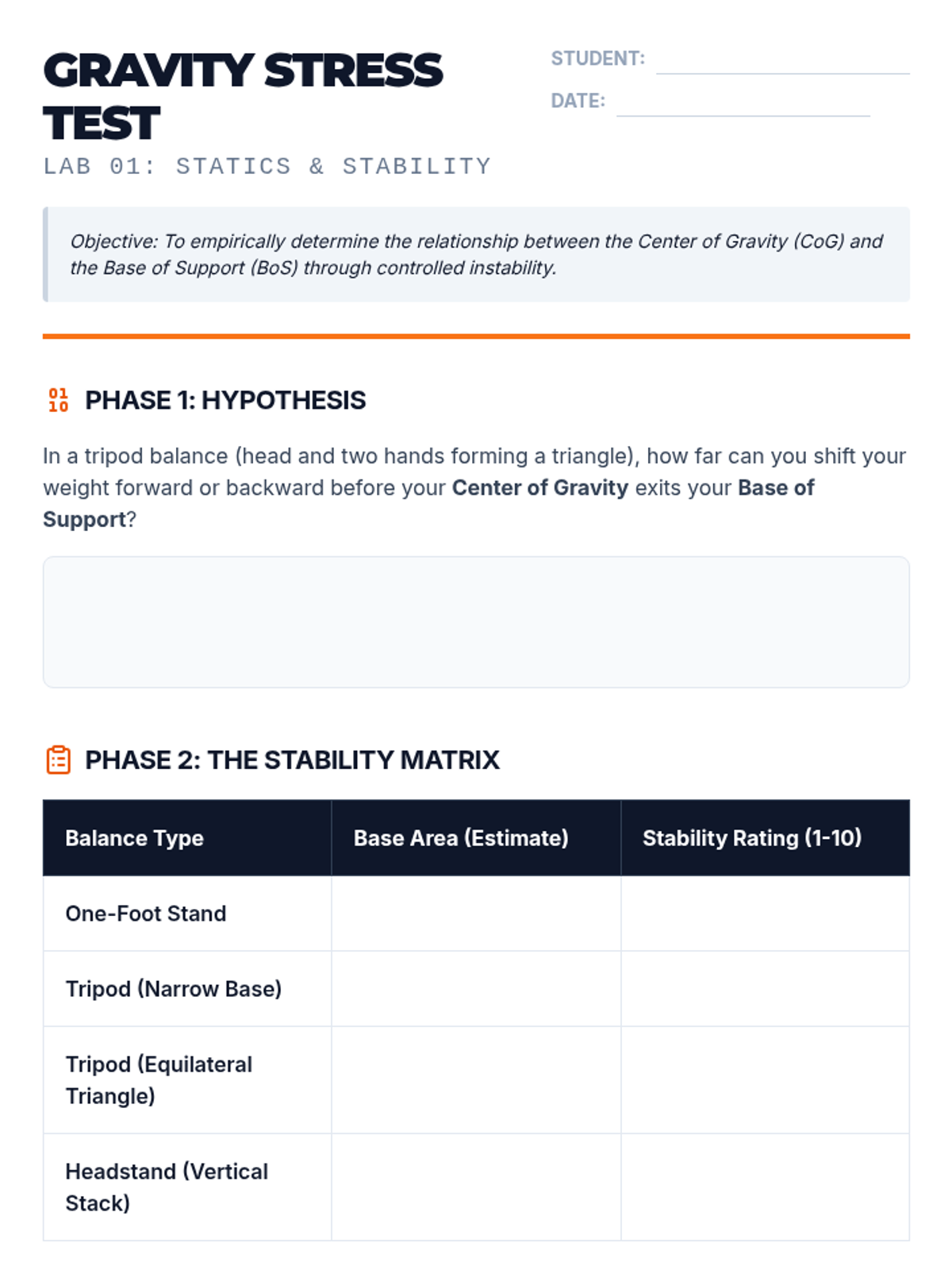
This sequence explores the physics of gymnastics, focusing on biomechanical principles like center of gravity, rotational inertia, and momentum transfer to improve tumbling performance. Students transition from static balance to dynamic rotation, culminating in a frame-by-frame video analysis of their own movement.
A 10th-grade PE sequence focusing on high-level teamwork, leadership rotation, and strategic physical problem-solving through complex cooperative games.
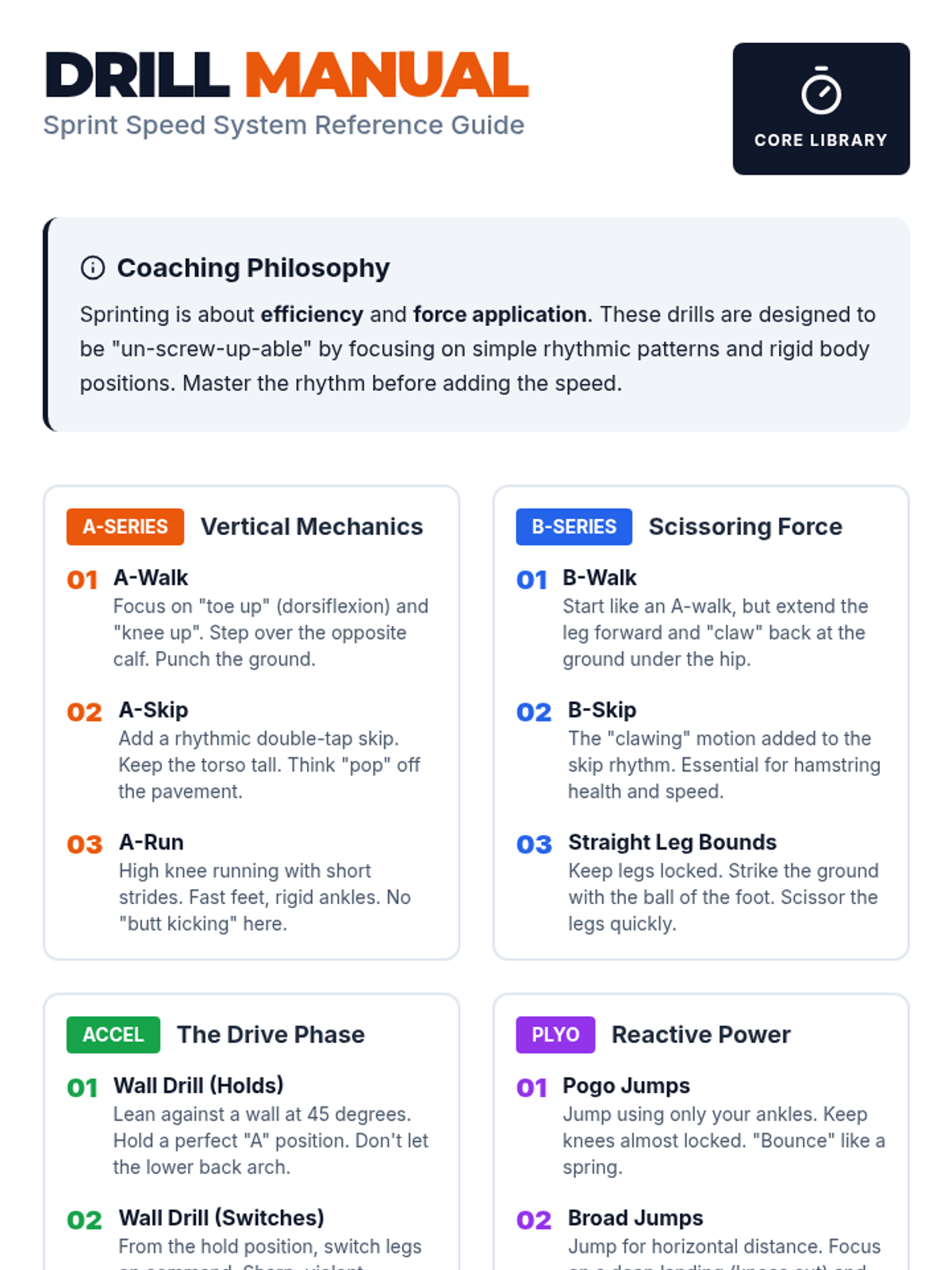
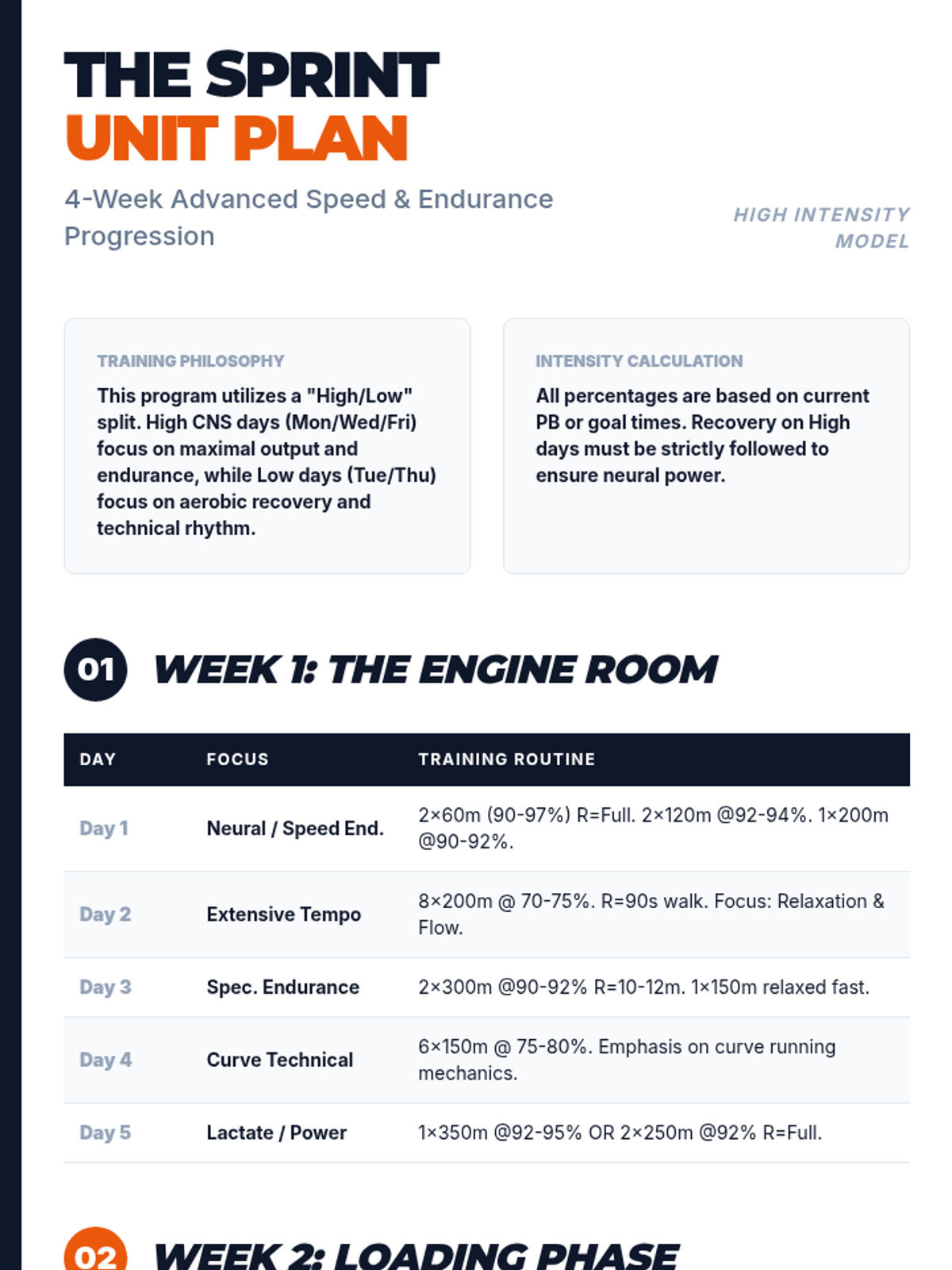
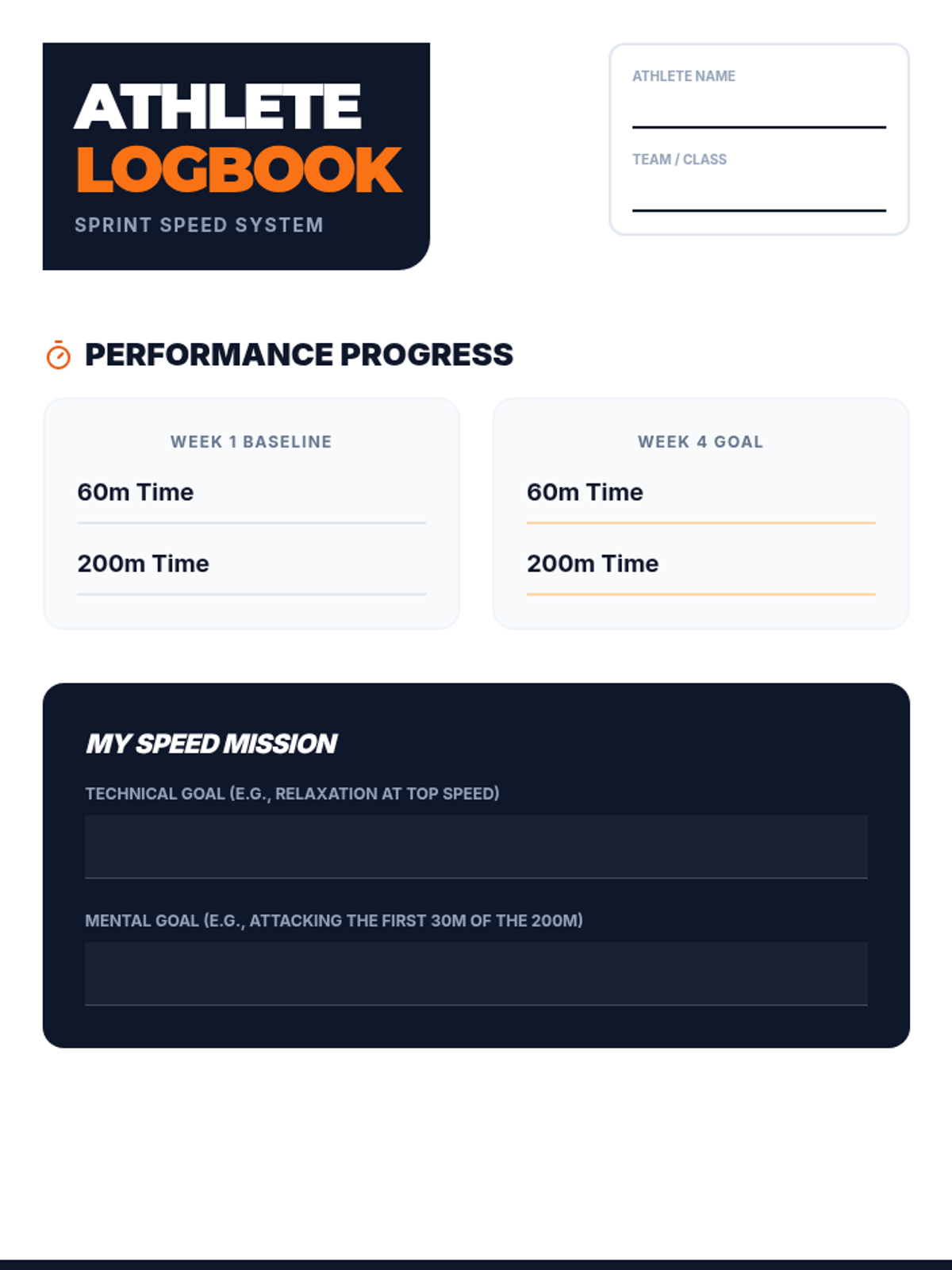
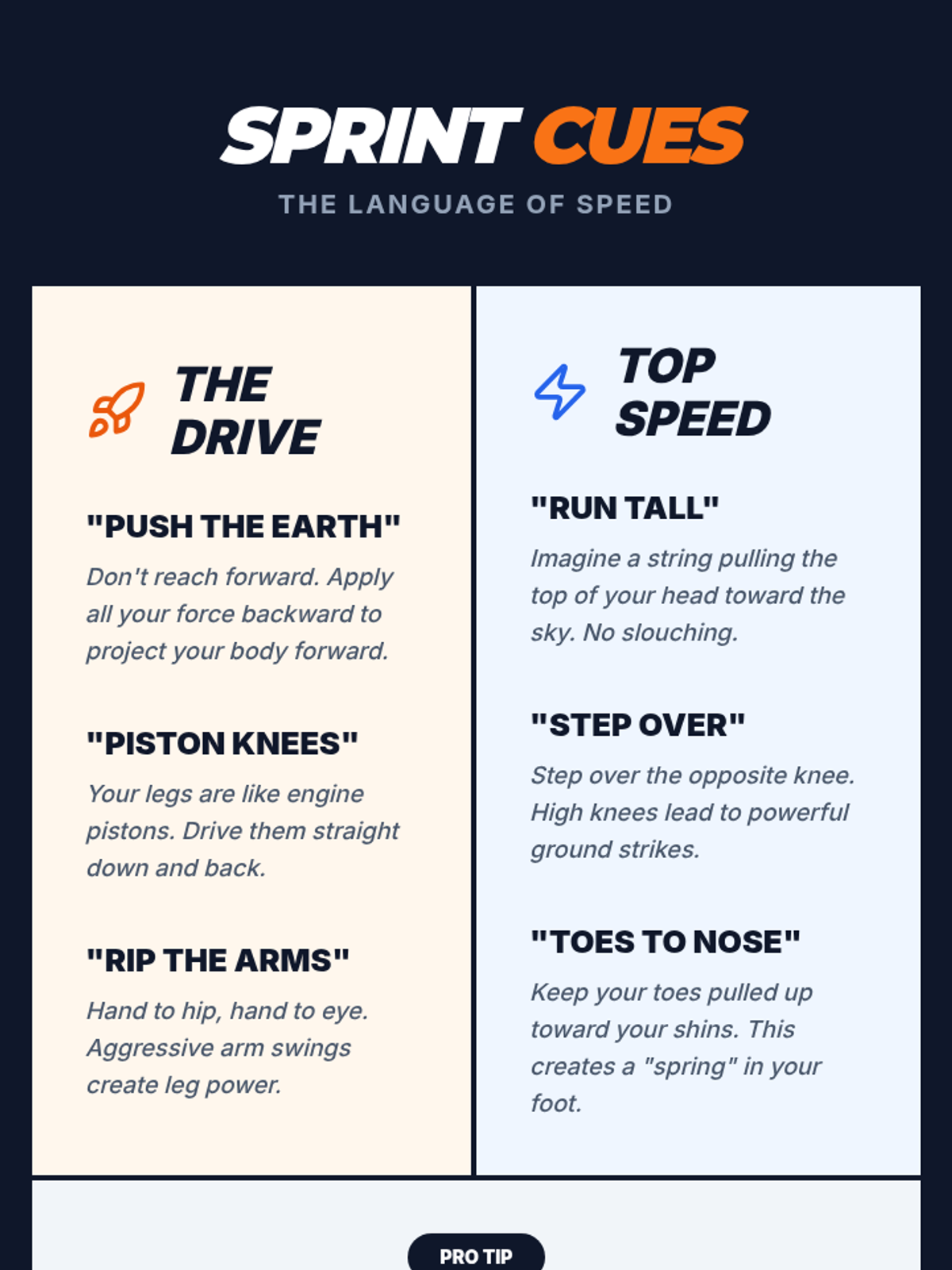
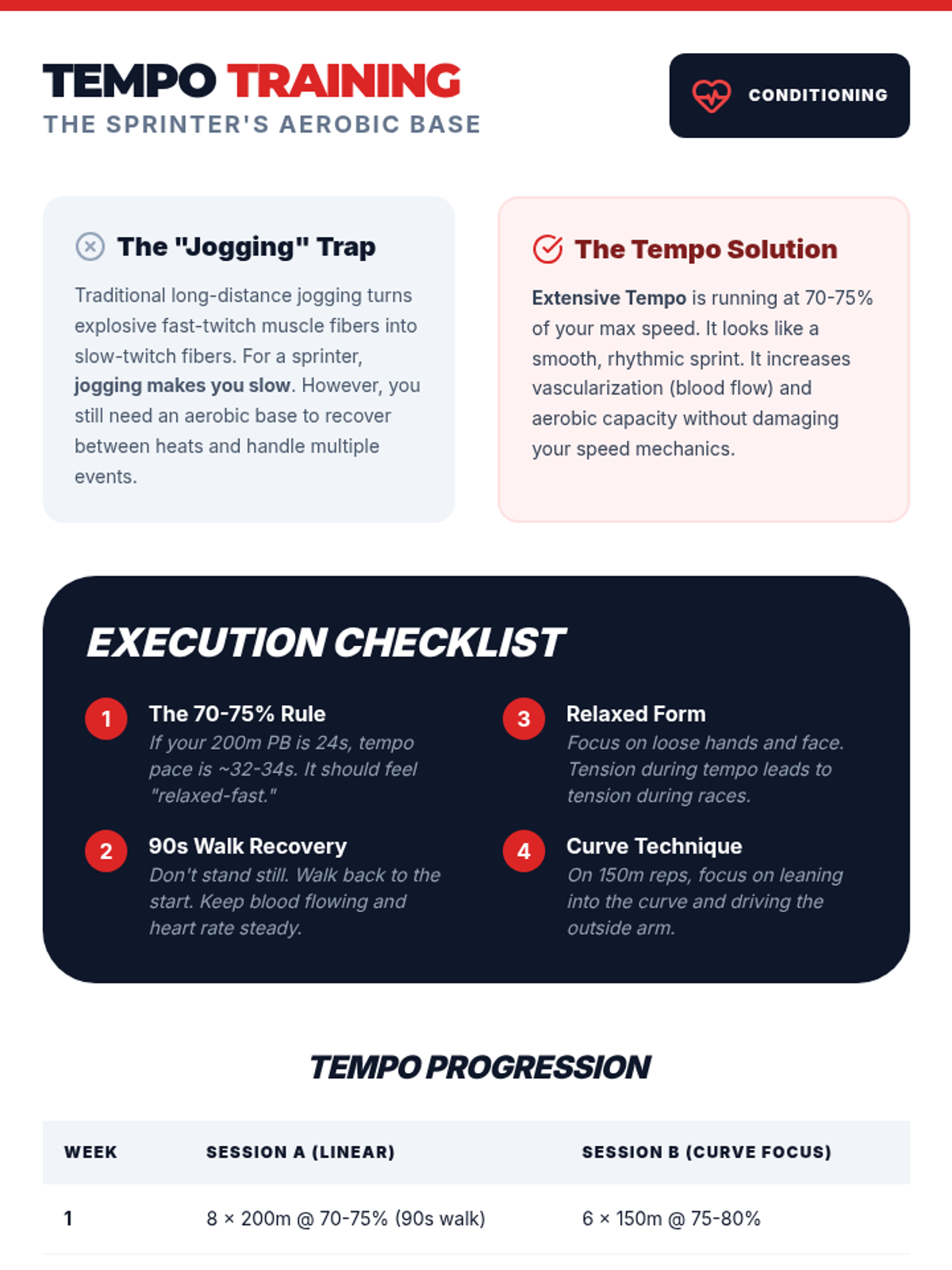
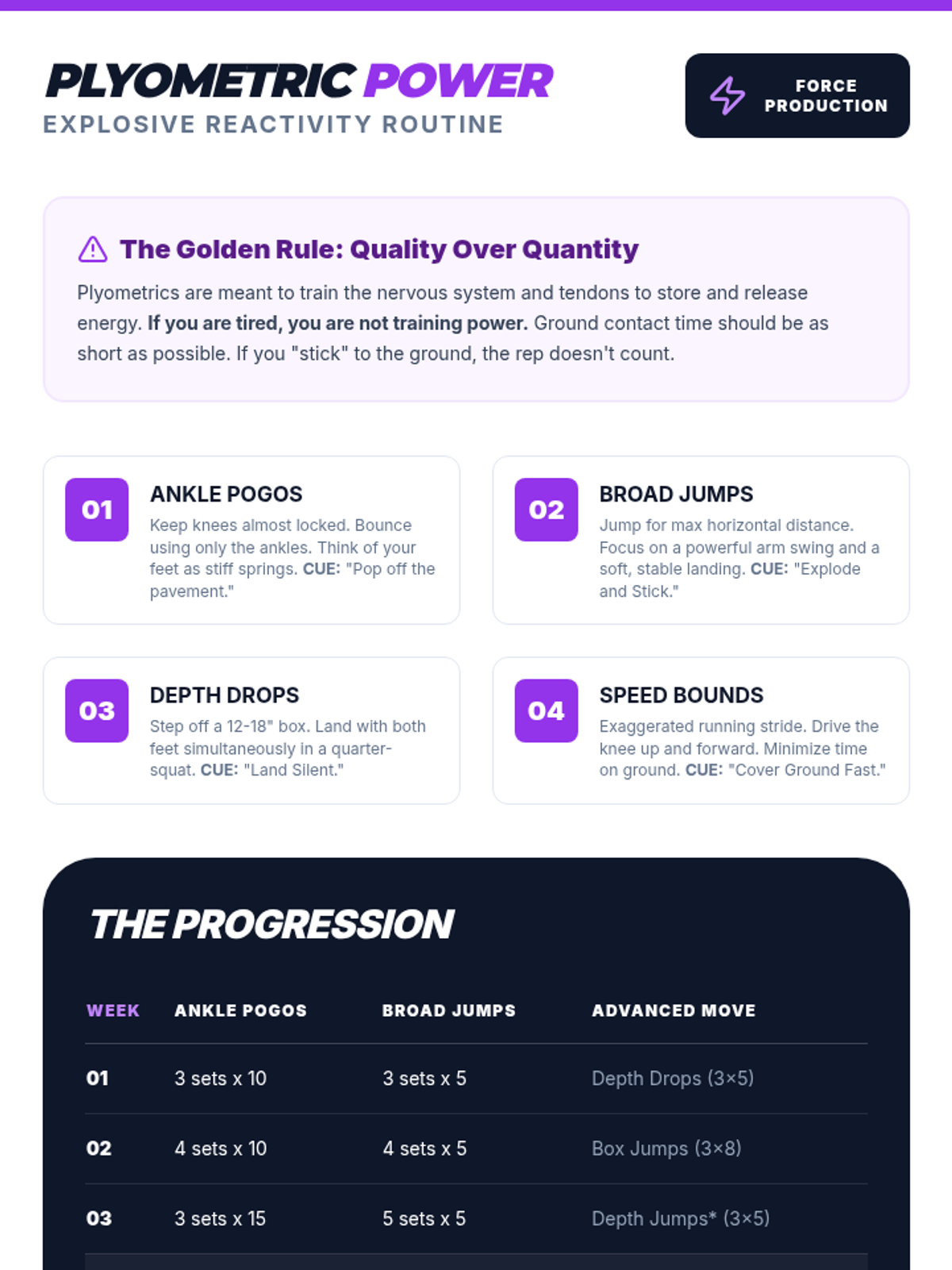
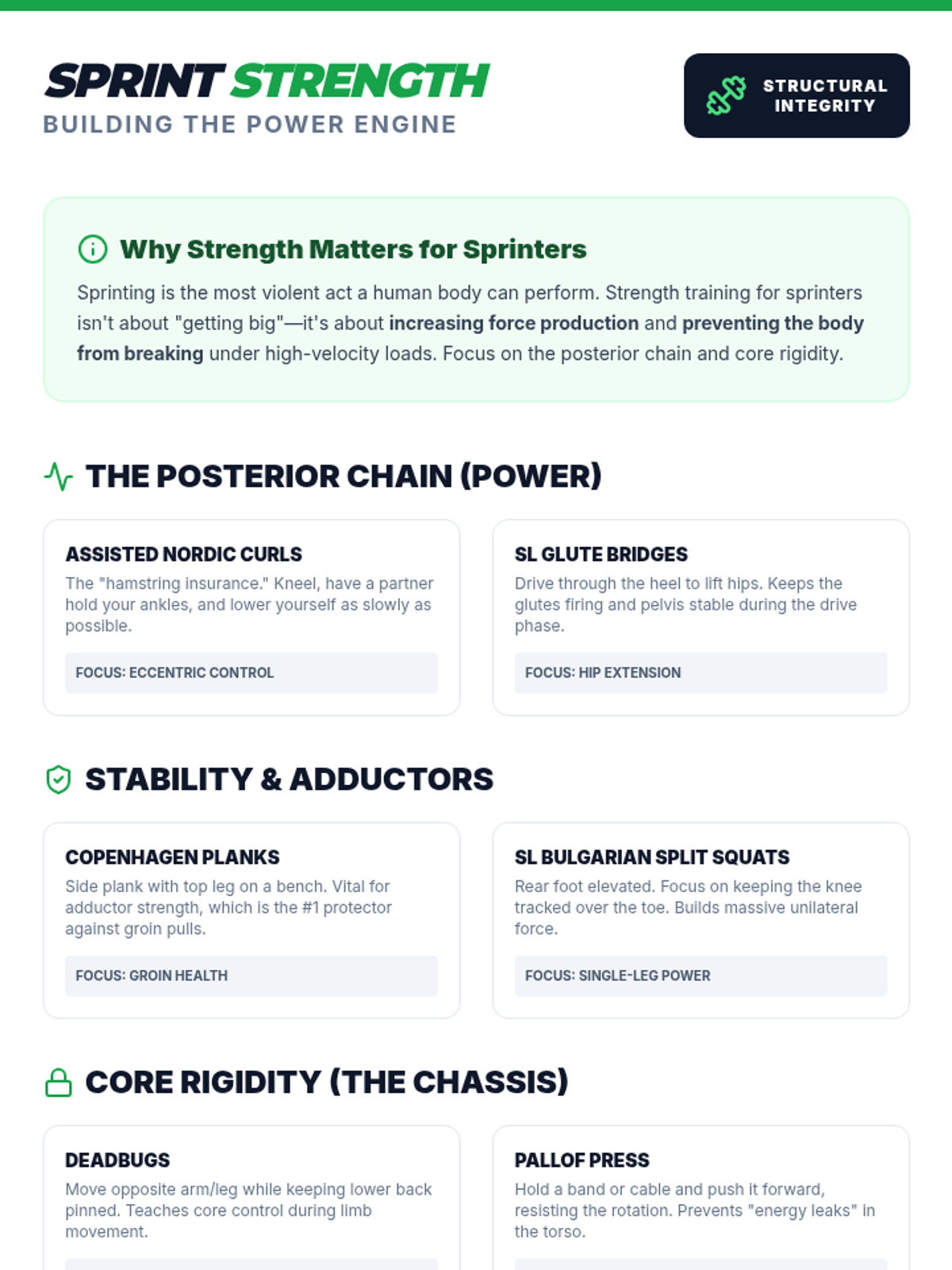
A comprehensive 4-week introductory sprinting program focused on mechanics, power, and injury prevention for outdoor track athletes.
This sequence focuses on the technical foundations of football (soccer), including dribbling, passing, receiving, and tactical movement. Students progress from individual ball mastery to dynamic team-based possession drills.
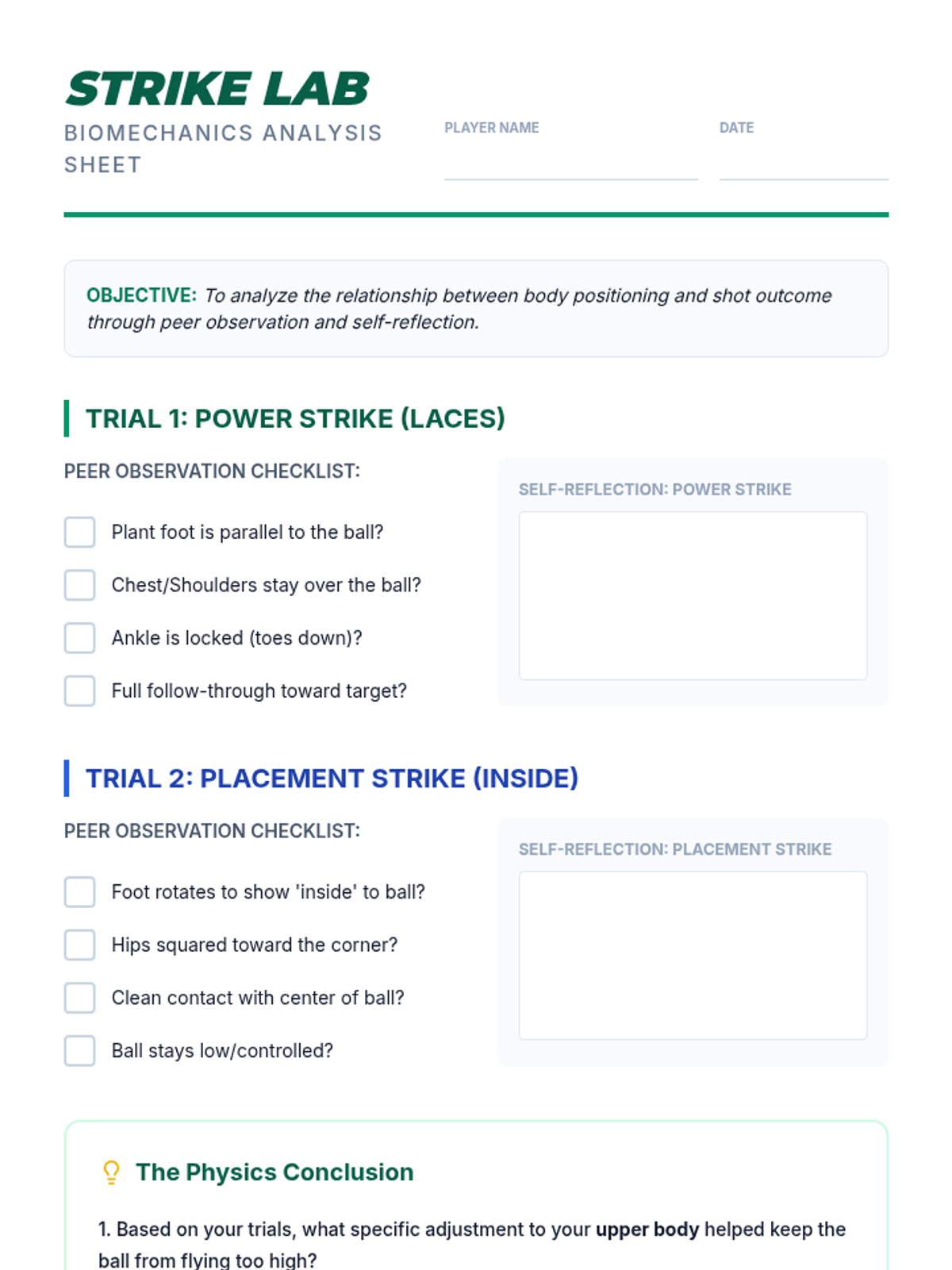
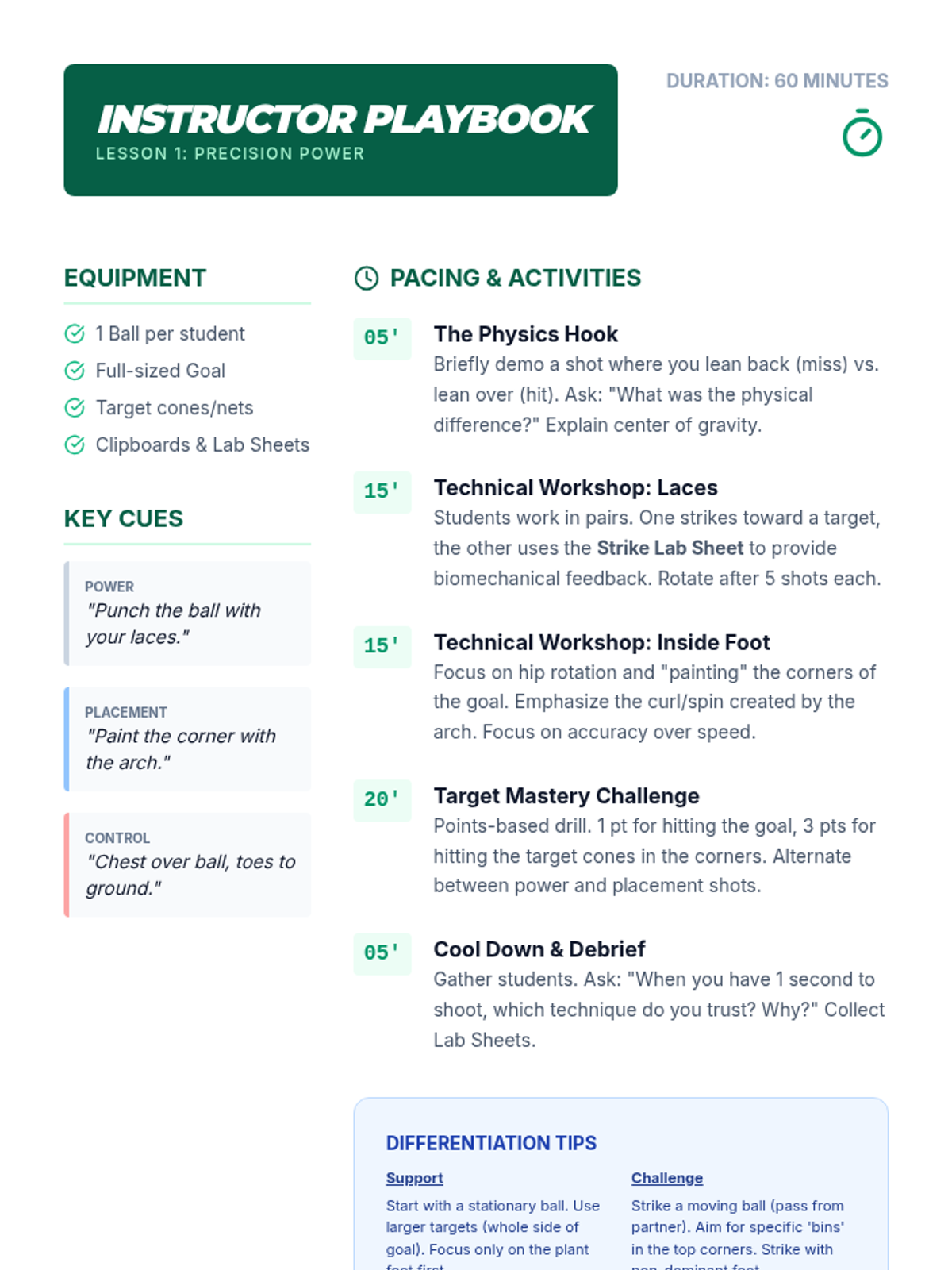
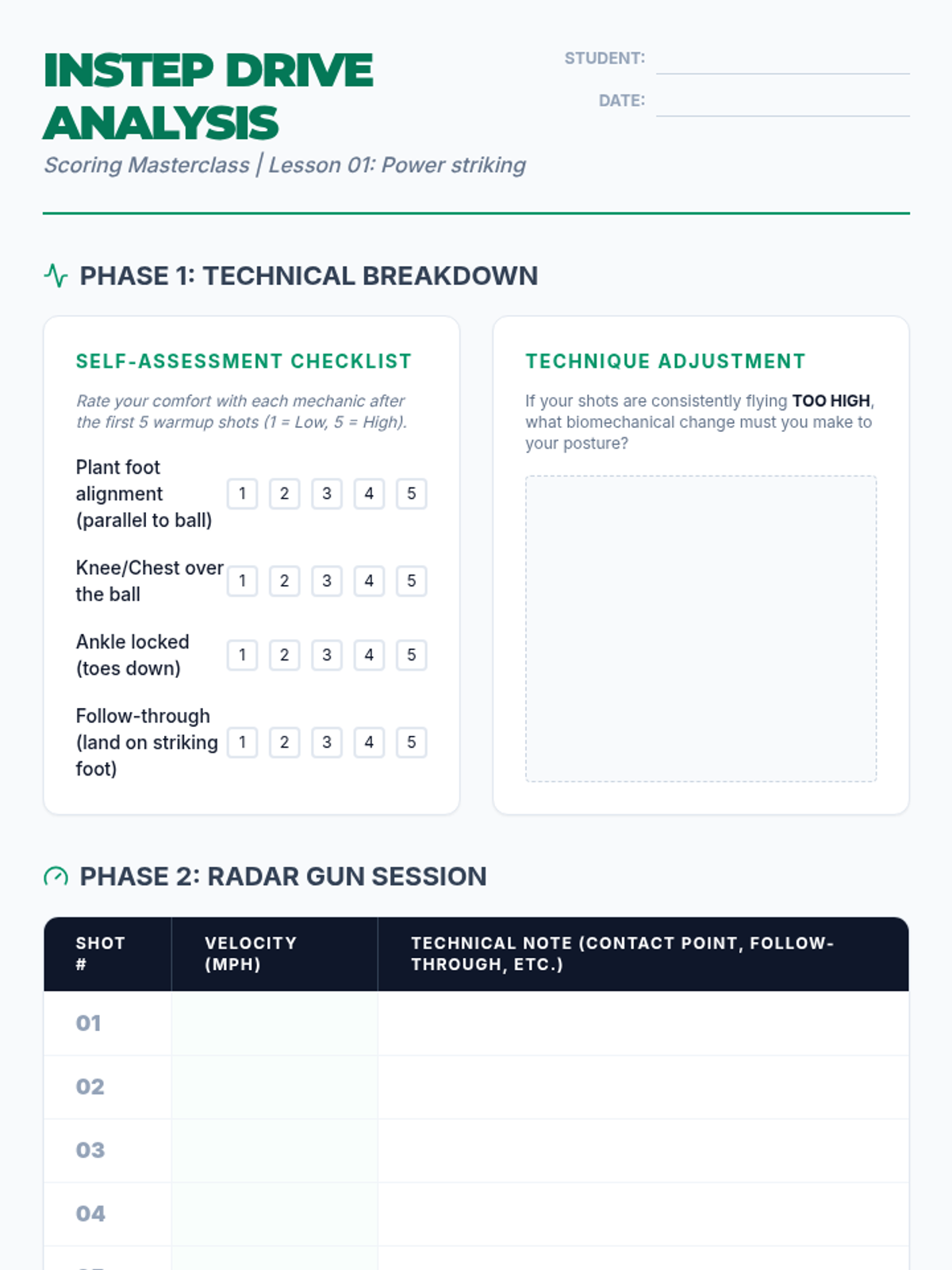
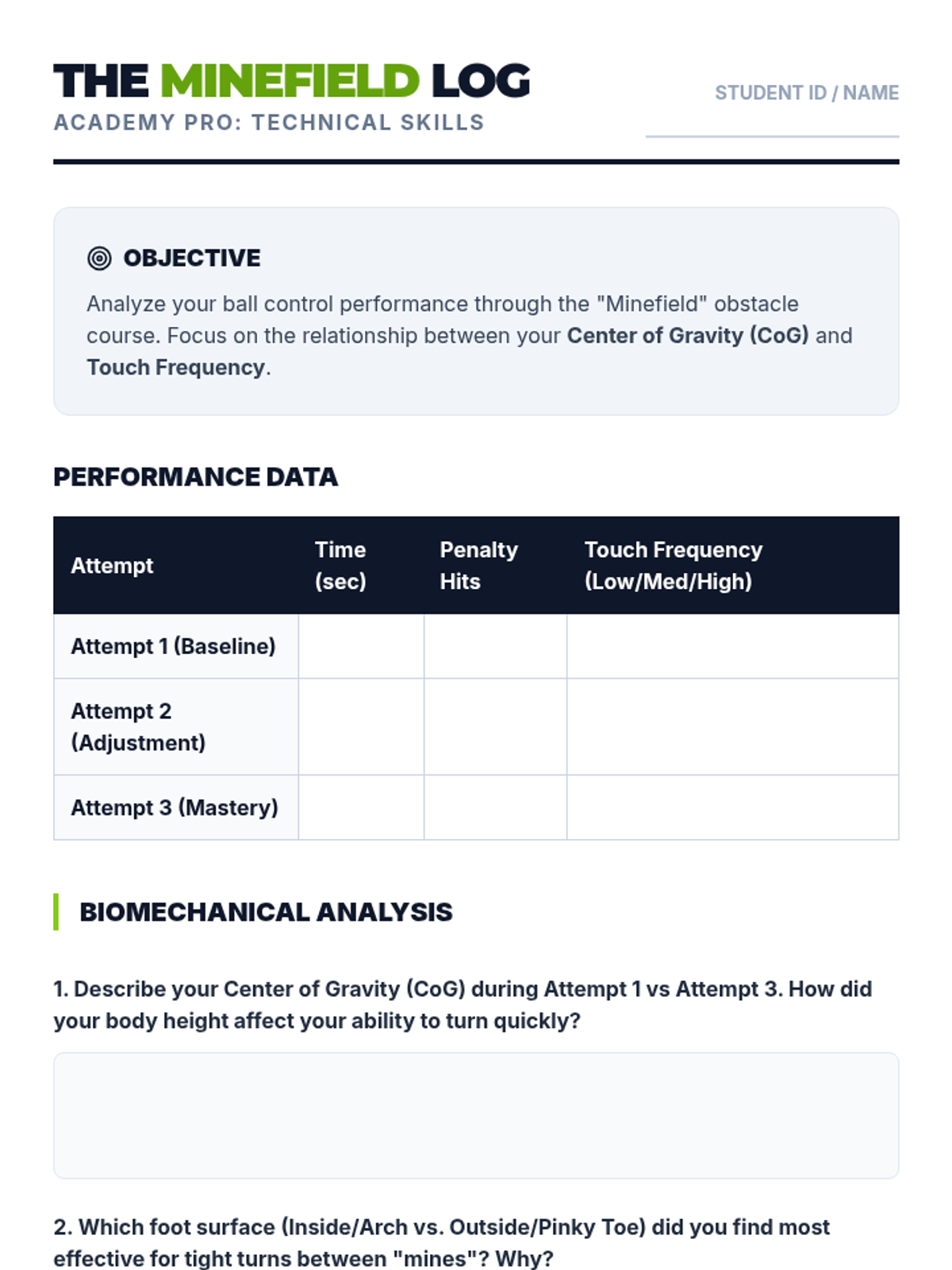
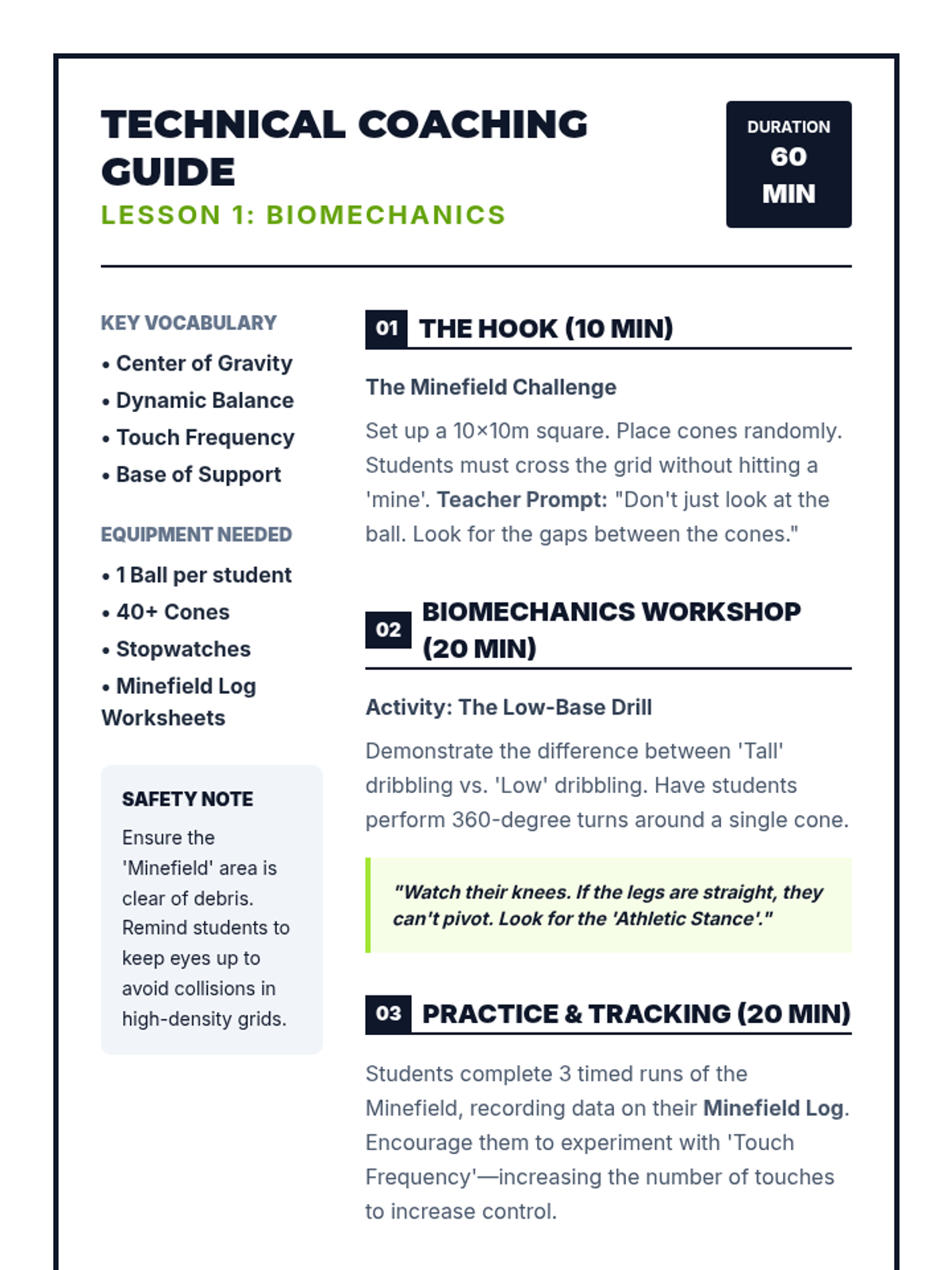
This sequence focuses on the biomechanics and individual proficiency required for high-level soccer performance, from close-quarter ball control to complex striking mechanics. Students will analyze the relationship between body positioning and ball trajectory through hands-on drills and technical workshops.
A 10th-grade Physical Education unit focused on the tactical and technical aspects of football (soccer) passing, emphasizing spatial awareness, triangulation, and strategic distribution.
A comprehensive 10th-grade physical education unit focused on the biomechanics, psychology, and strategic execution of offensive finishing in football (soccer). Students move from technical workshops on striking mechanics to high-pressure game simulations and strategic set-piece design.
This sequence explores the biomechanics and psychology of scoring goals in football. Students will progress from foundational power striking to advanced finesse, aerial finishes, and high-pressure game simulations.
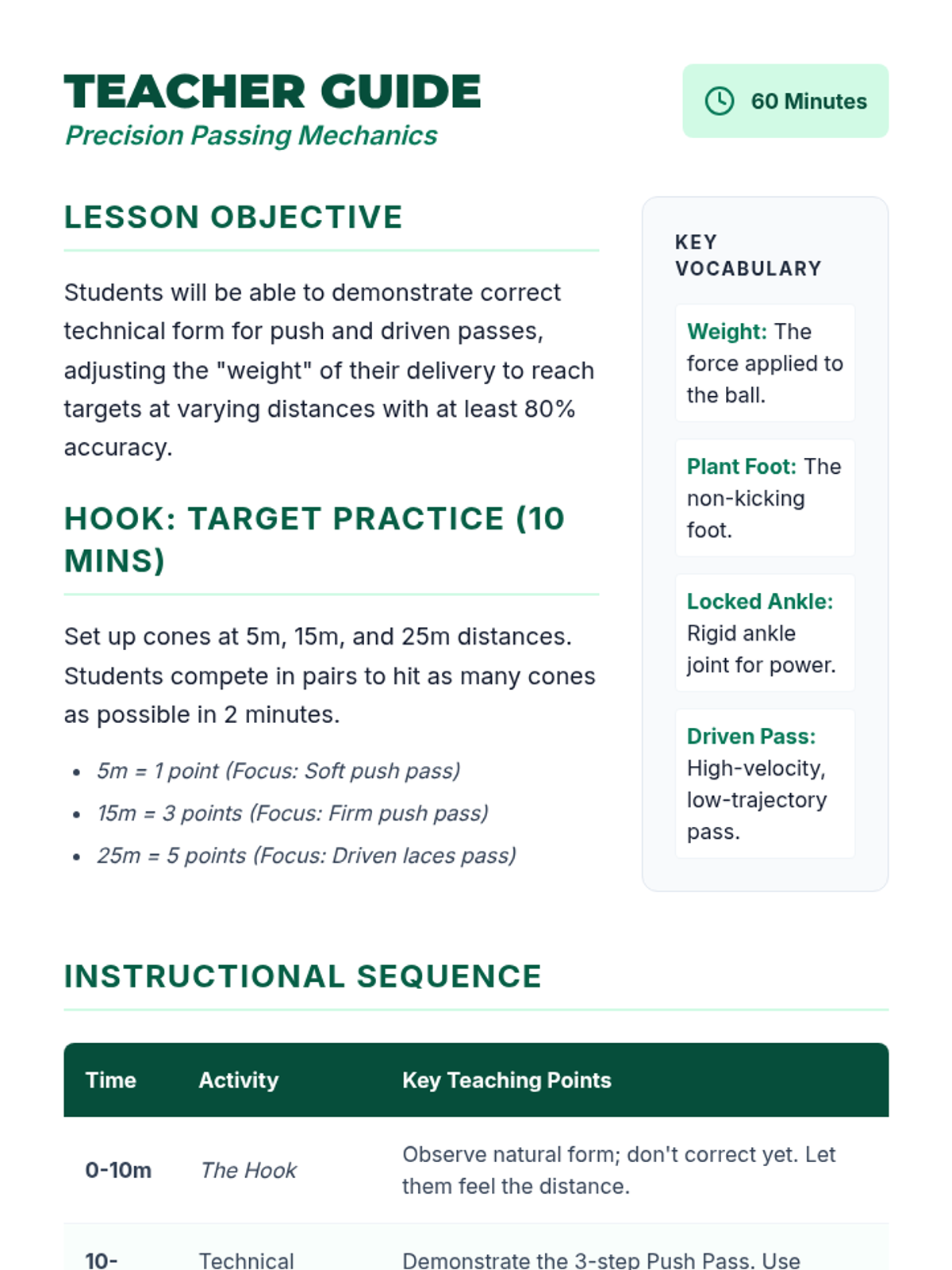
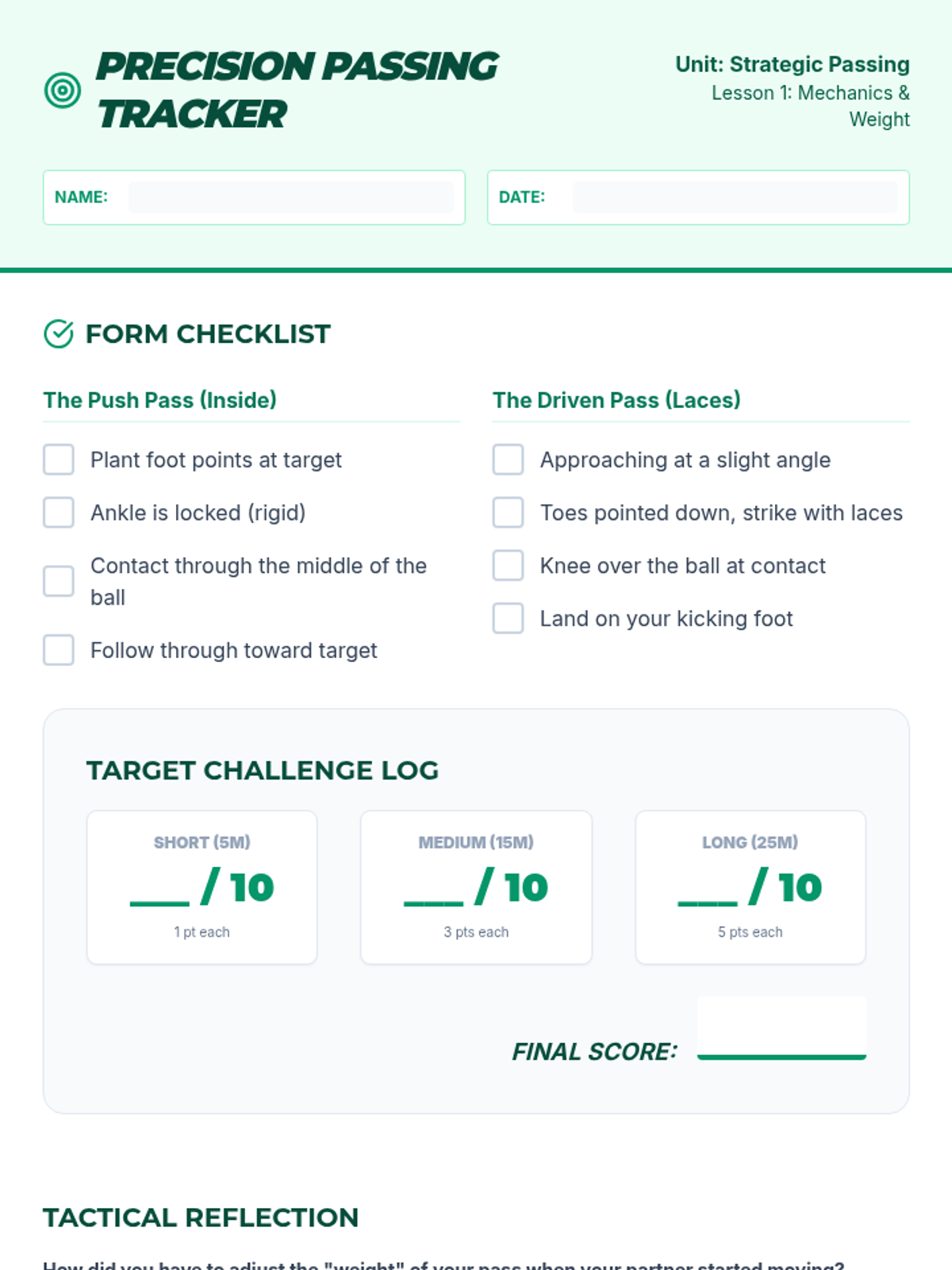
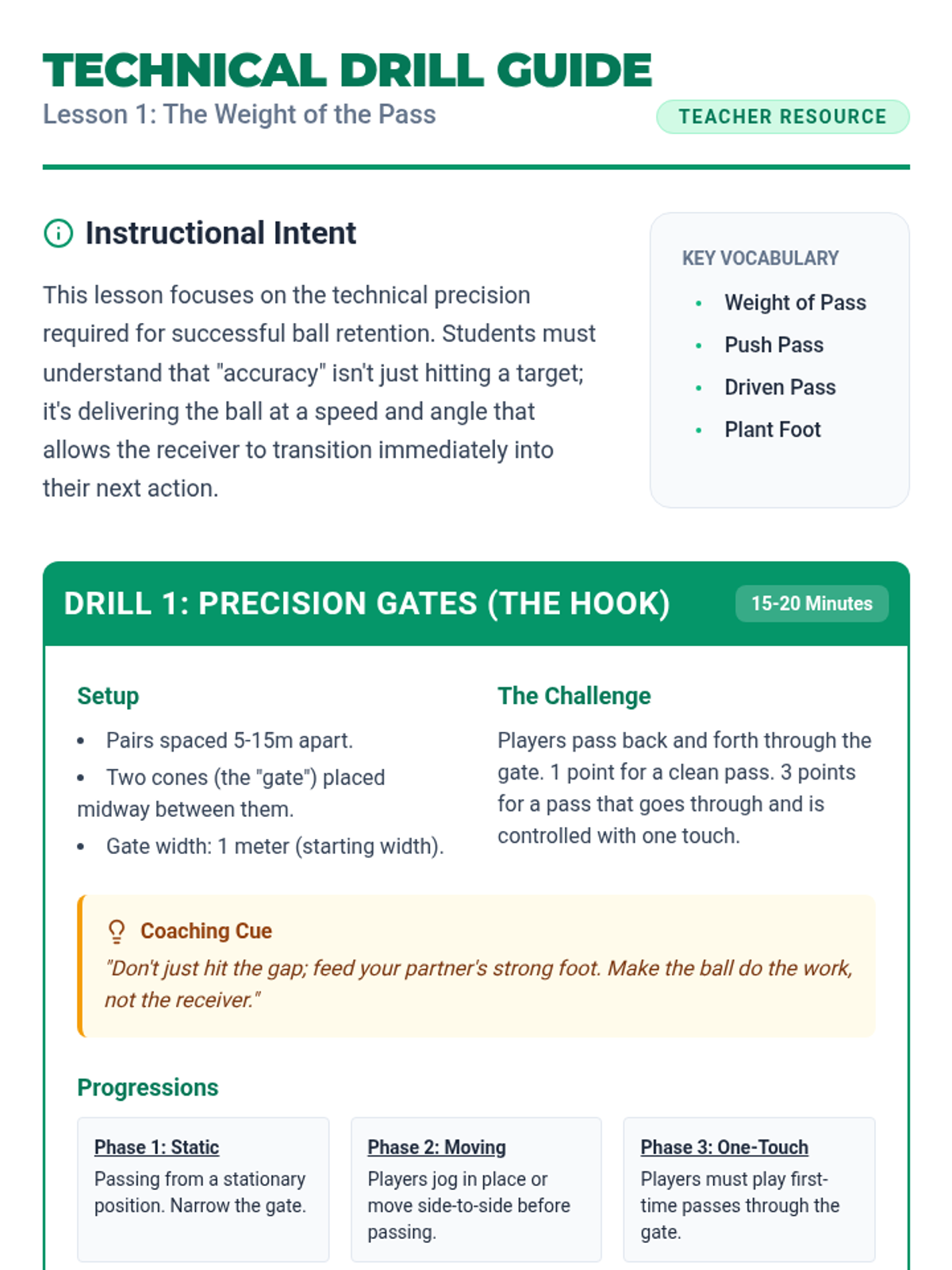
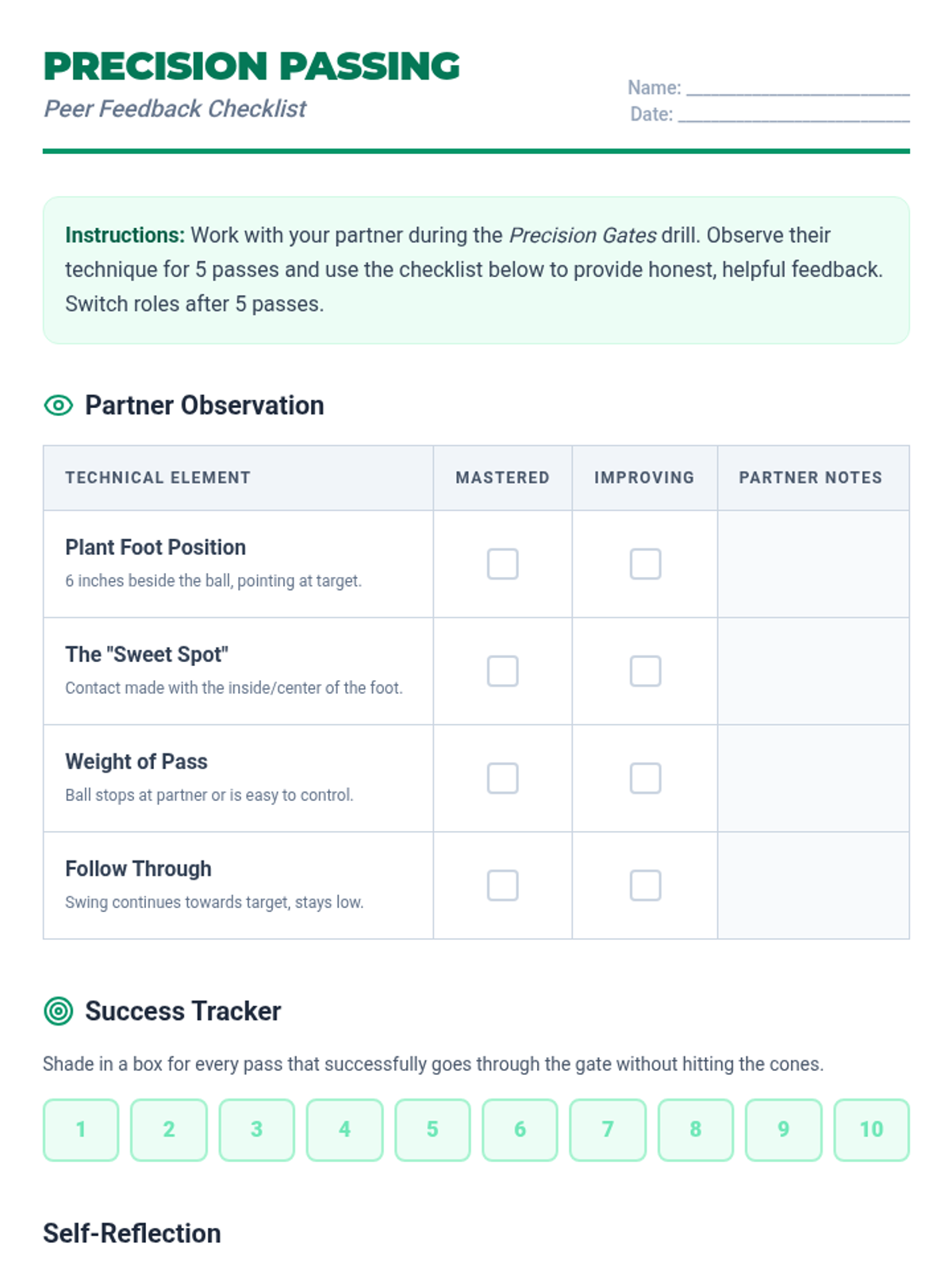
A 10th-grade PE sequence focusing on football (soccer) passing accuracy and possession tactics, moving from technical mechanics to complex tactical execution.
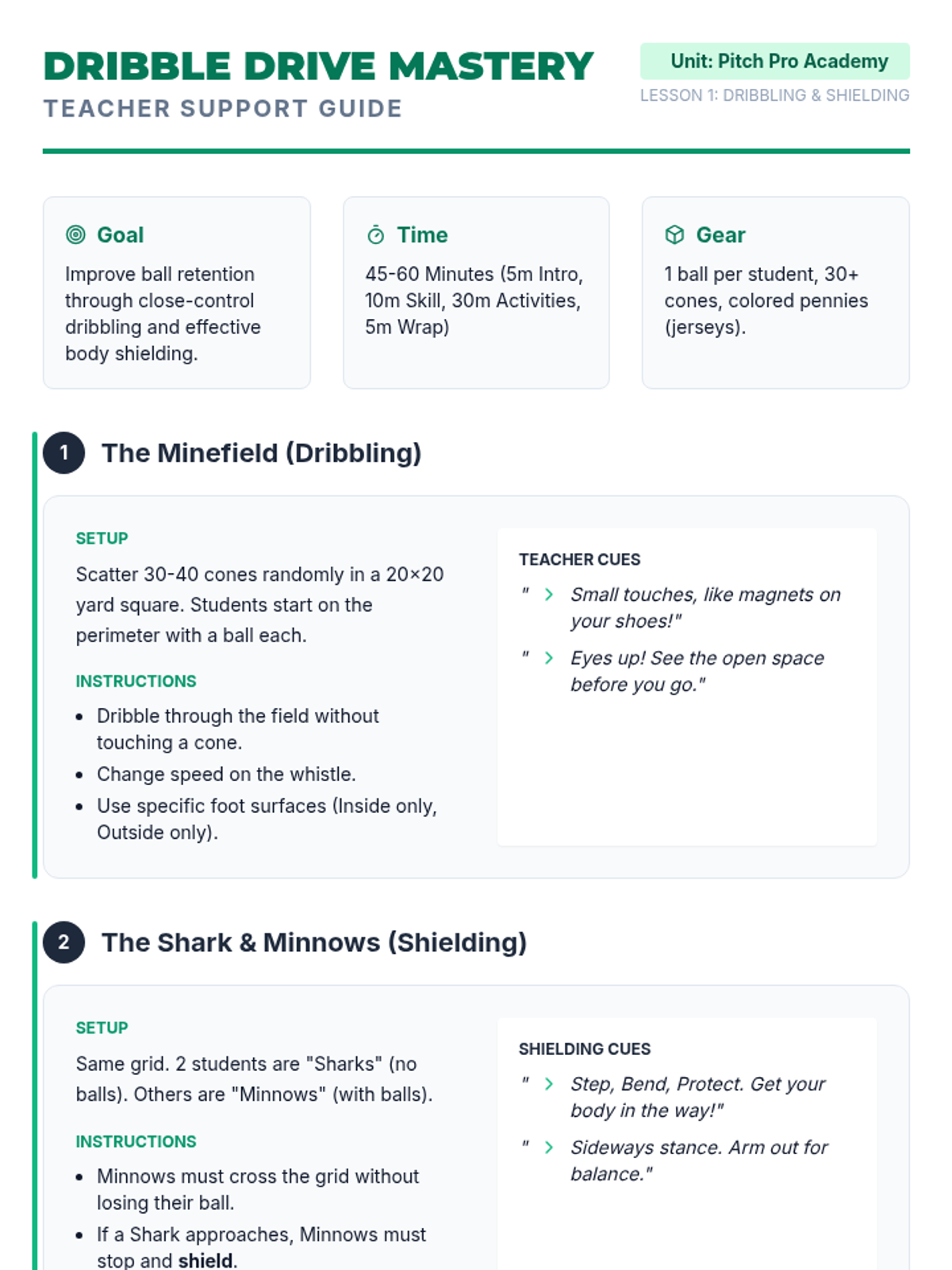
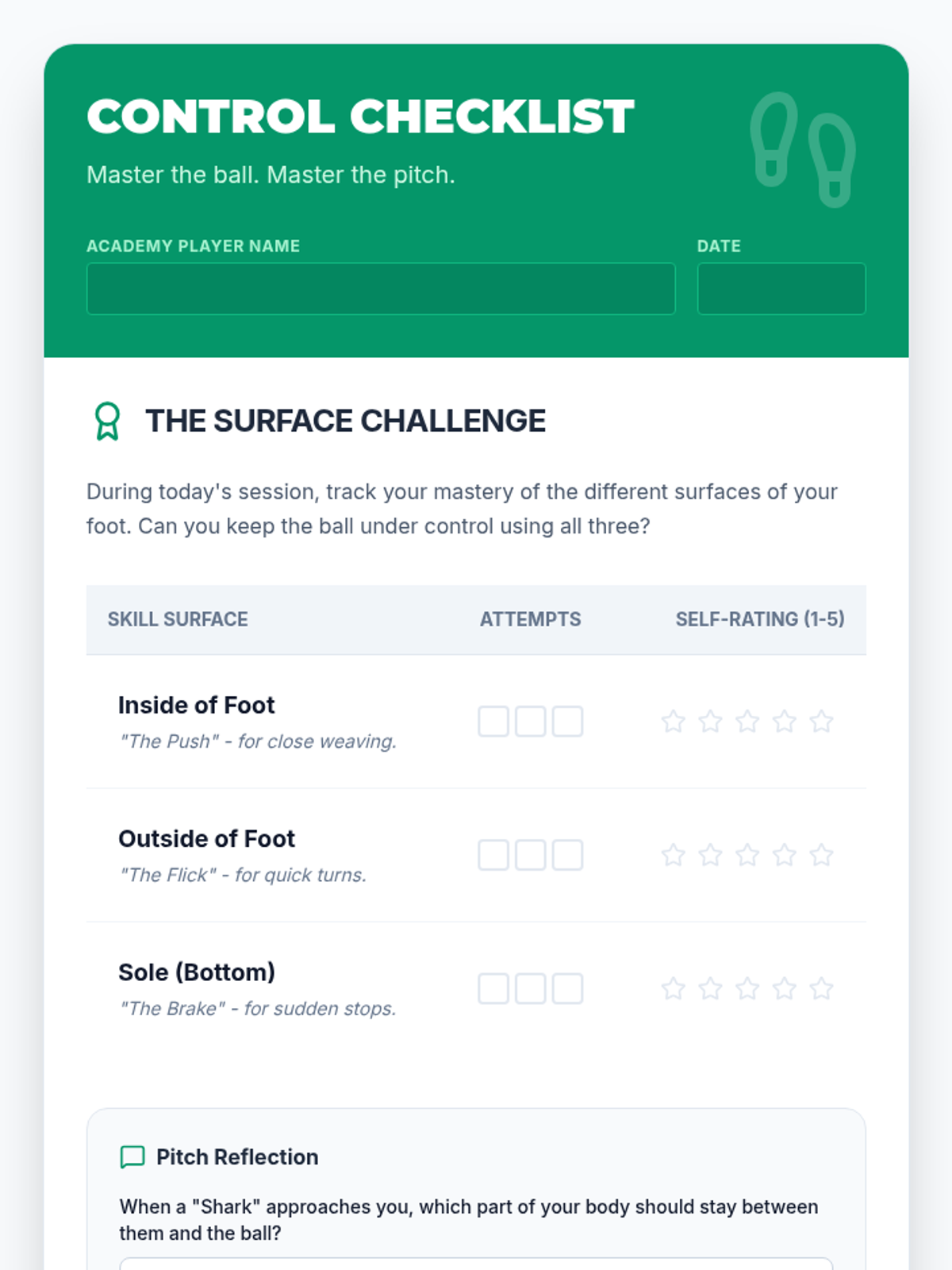
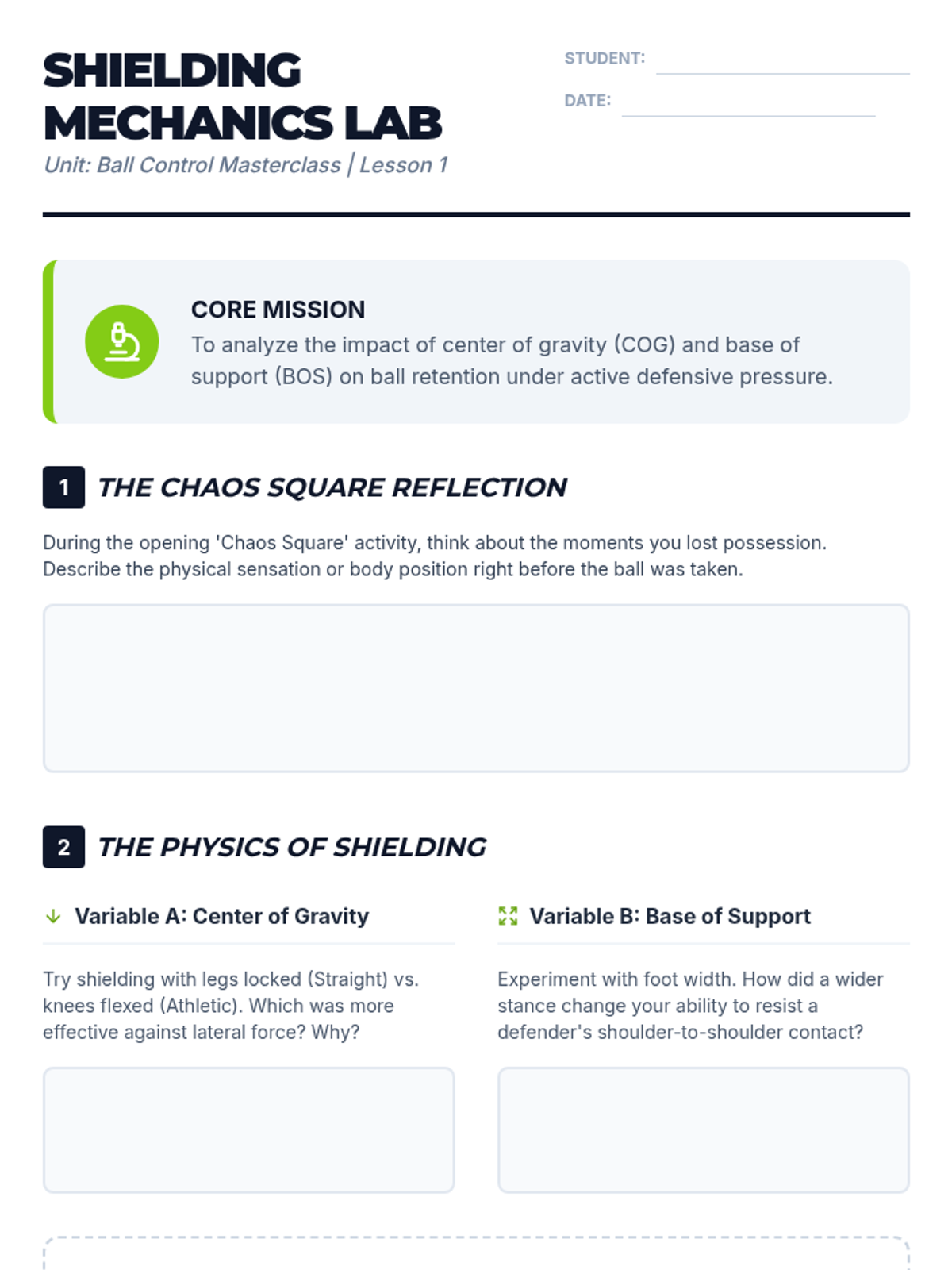
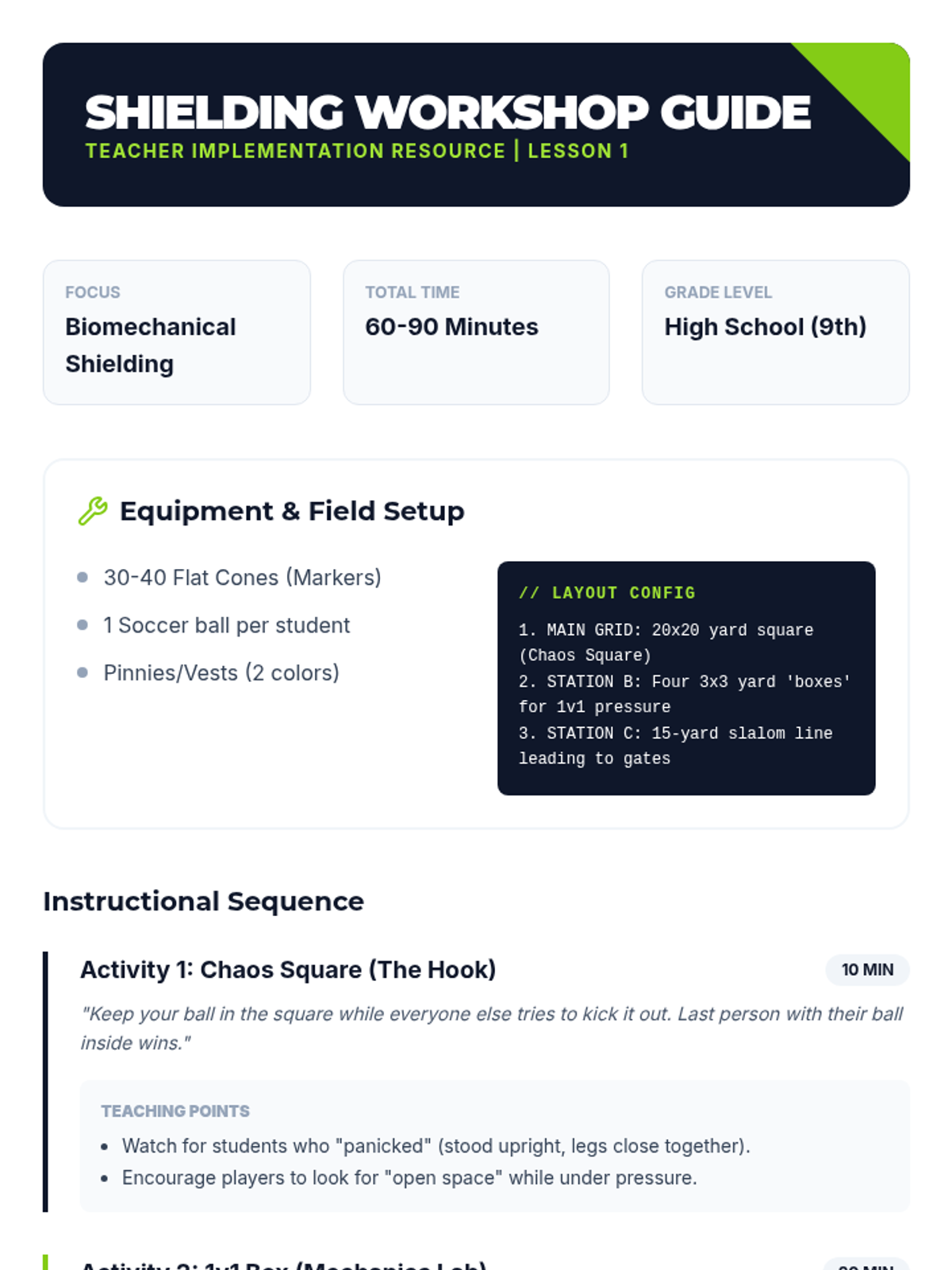
This high-performance football (soccer) unit focuses on technical mastery of ball control, dribbling, and retention. Students analyze the biomechanics of movement and apply deceptive feints and physical shielding to dominate in 1v1 scenarios.
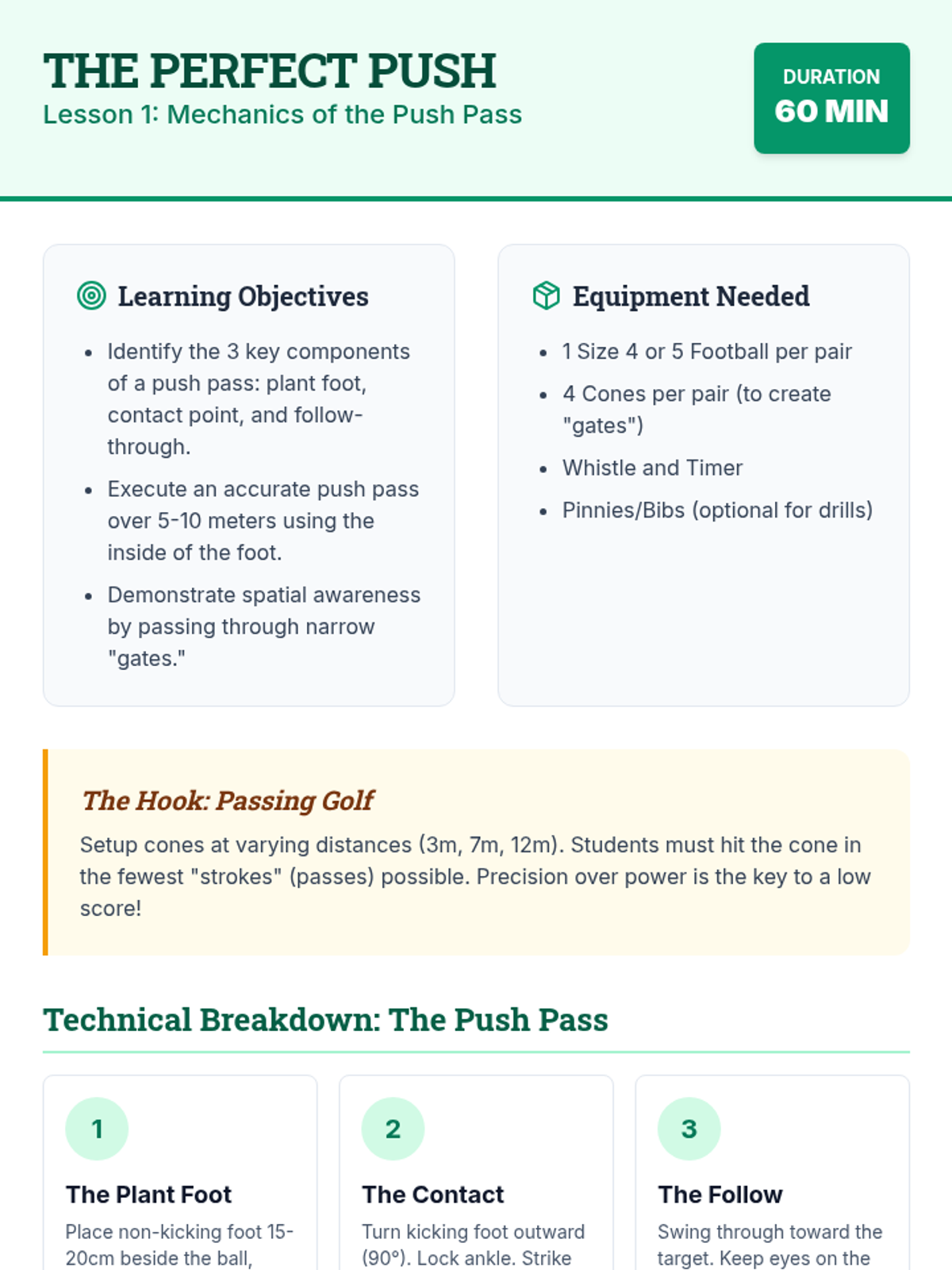
This unit moves students from individual technical mastery of the push pass and first touch to complex tactical application in combination play and possession games. Emphasis is placed on biomechanics, spatial awareness, and the 'language' of passing to build a cohesive team unit.
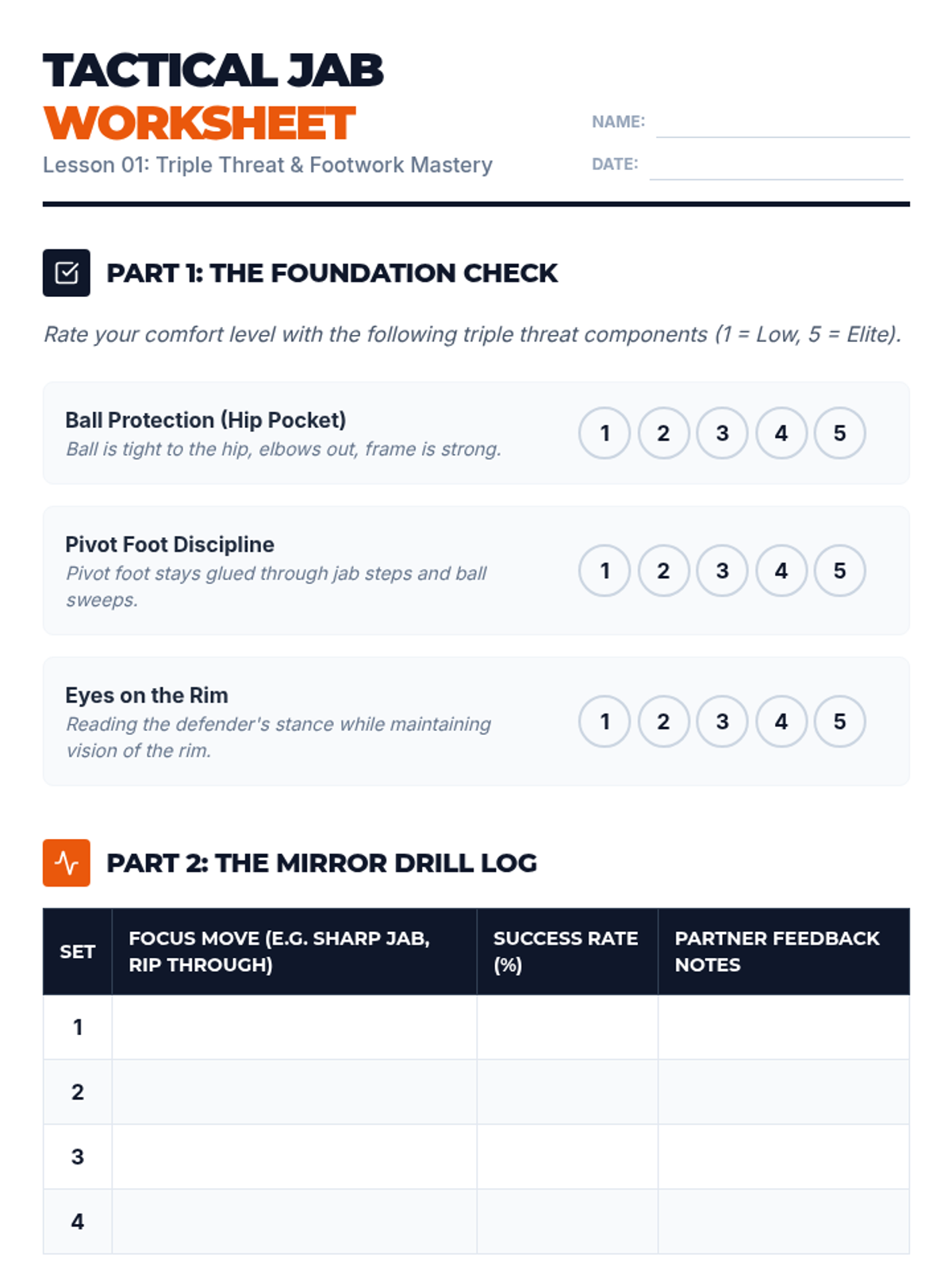
A high-intensity, workshop-style sequence for 10th-grade students to master advanced offensive basketball mechanics. Students progress from fundamental triple-threat positioning to complex finishing moves and high-pressure free throw shooting, emphasizing body control and consistency.
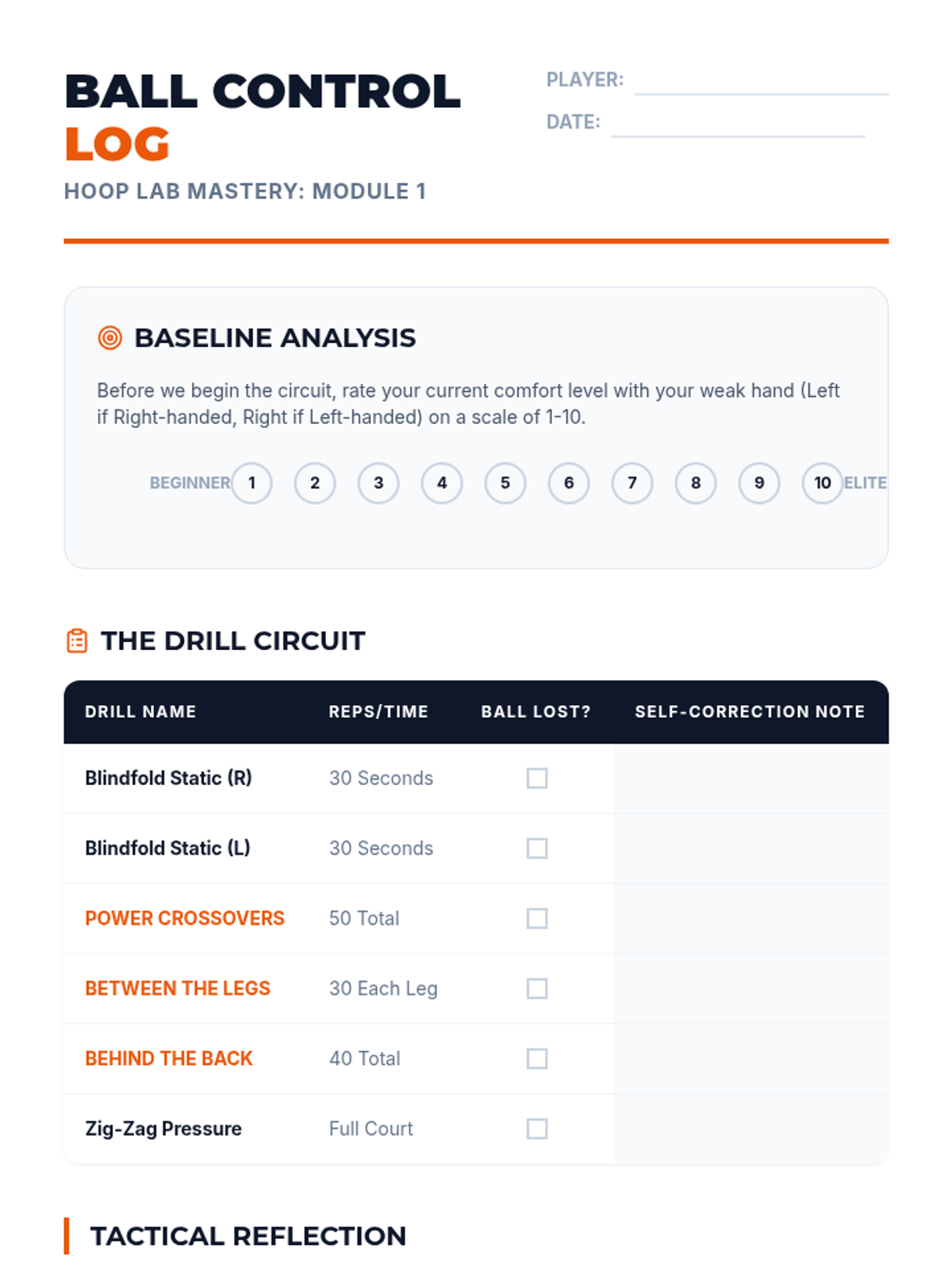
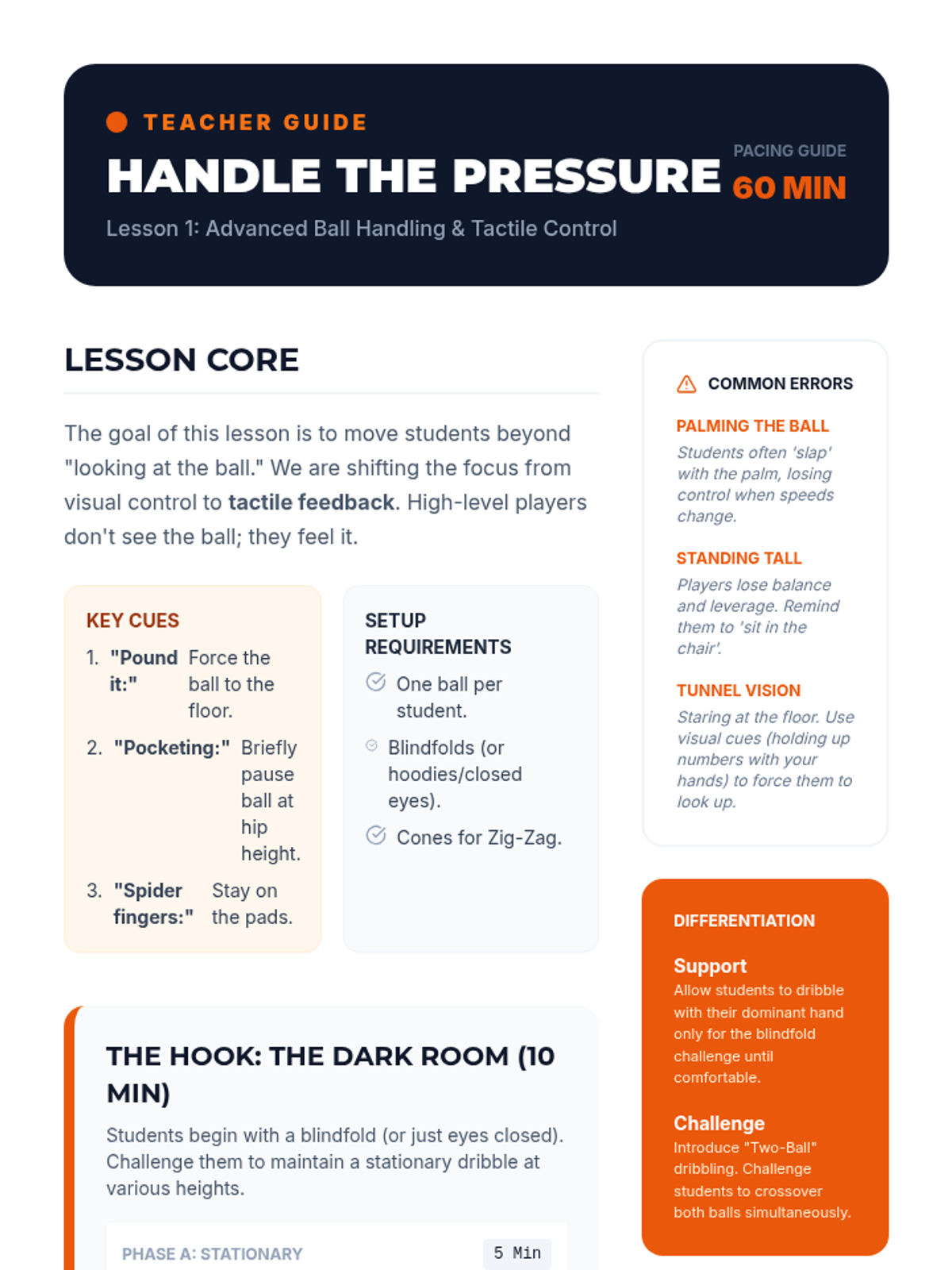
This sequence focuses on the biomechanics and technical precision required for high-level individual offensive play in basketball. Students progress from stationary ball-handling and shooting mechanics to dynamic finishing and triple-threat spacing, culminating in an integrated skills circuit.
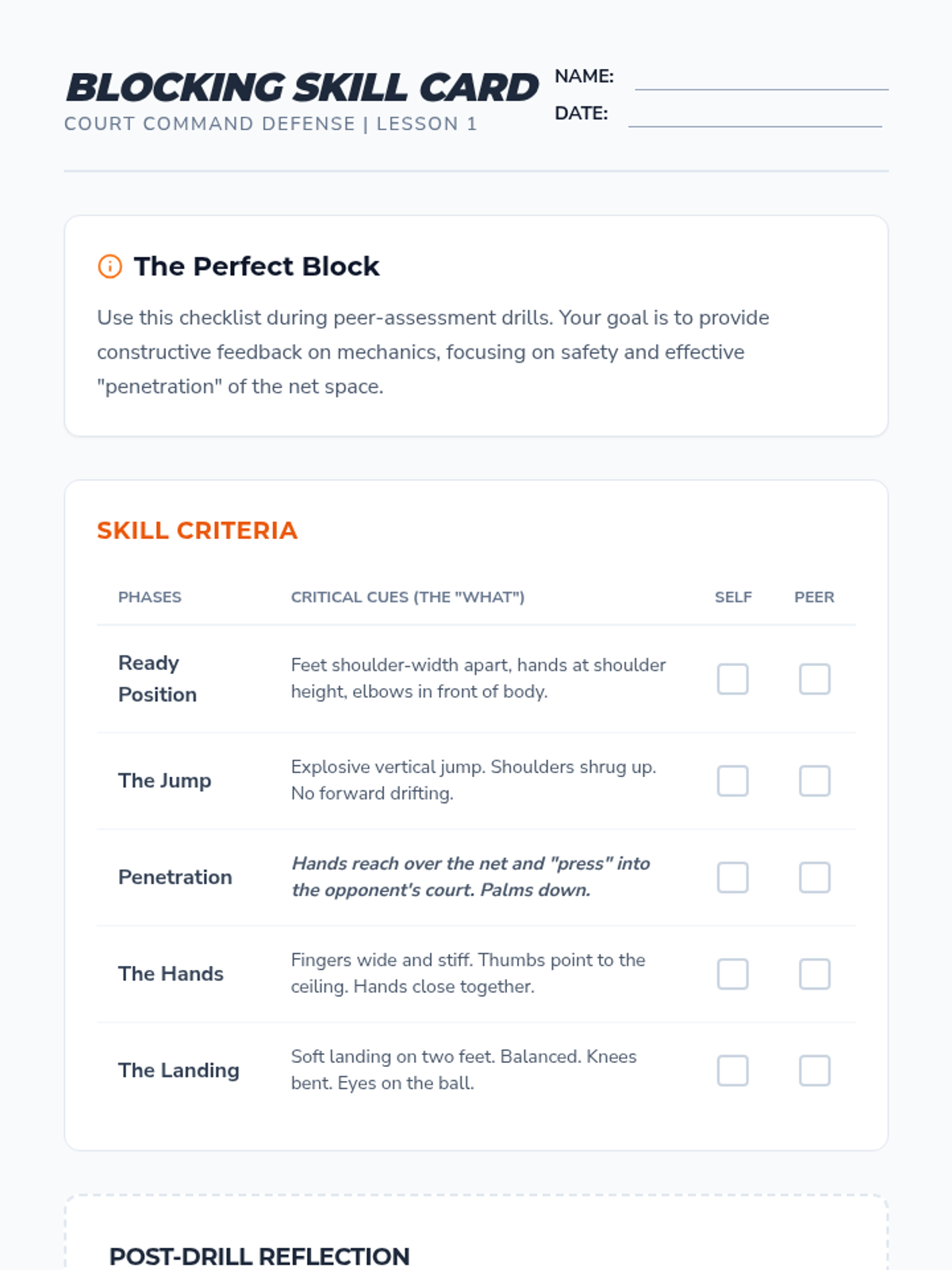
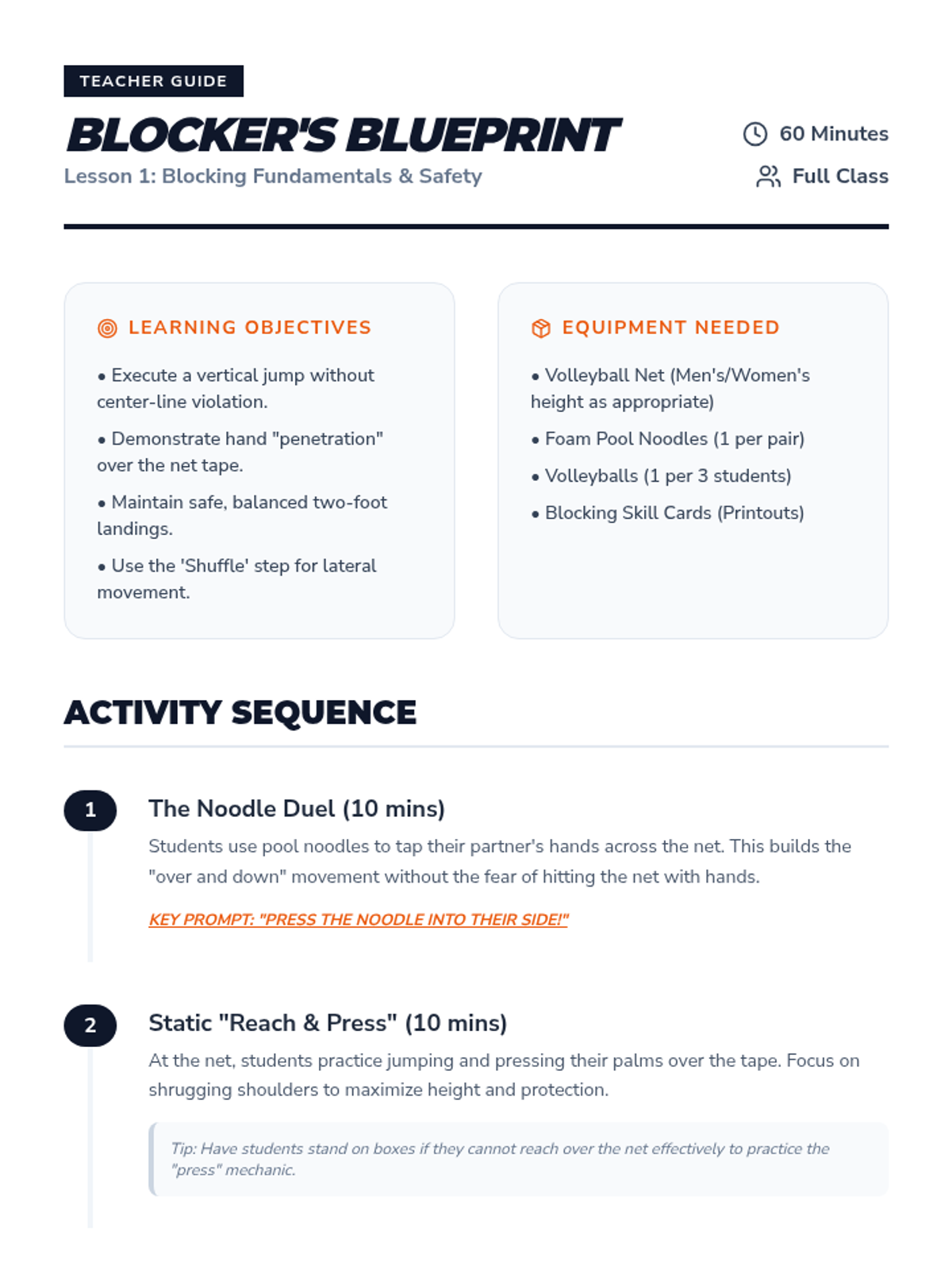
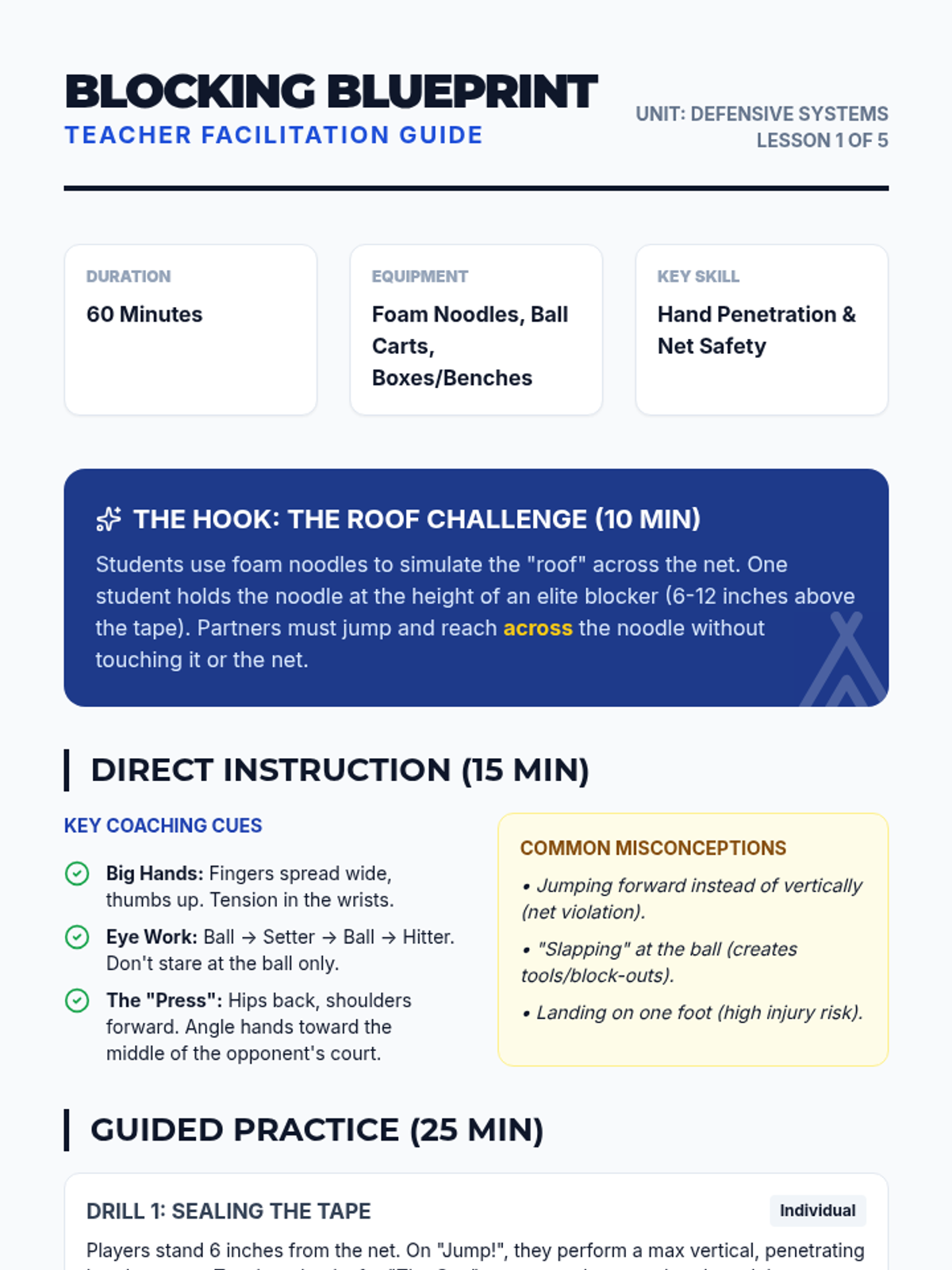
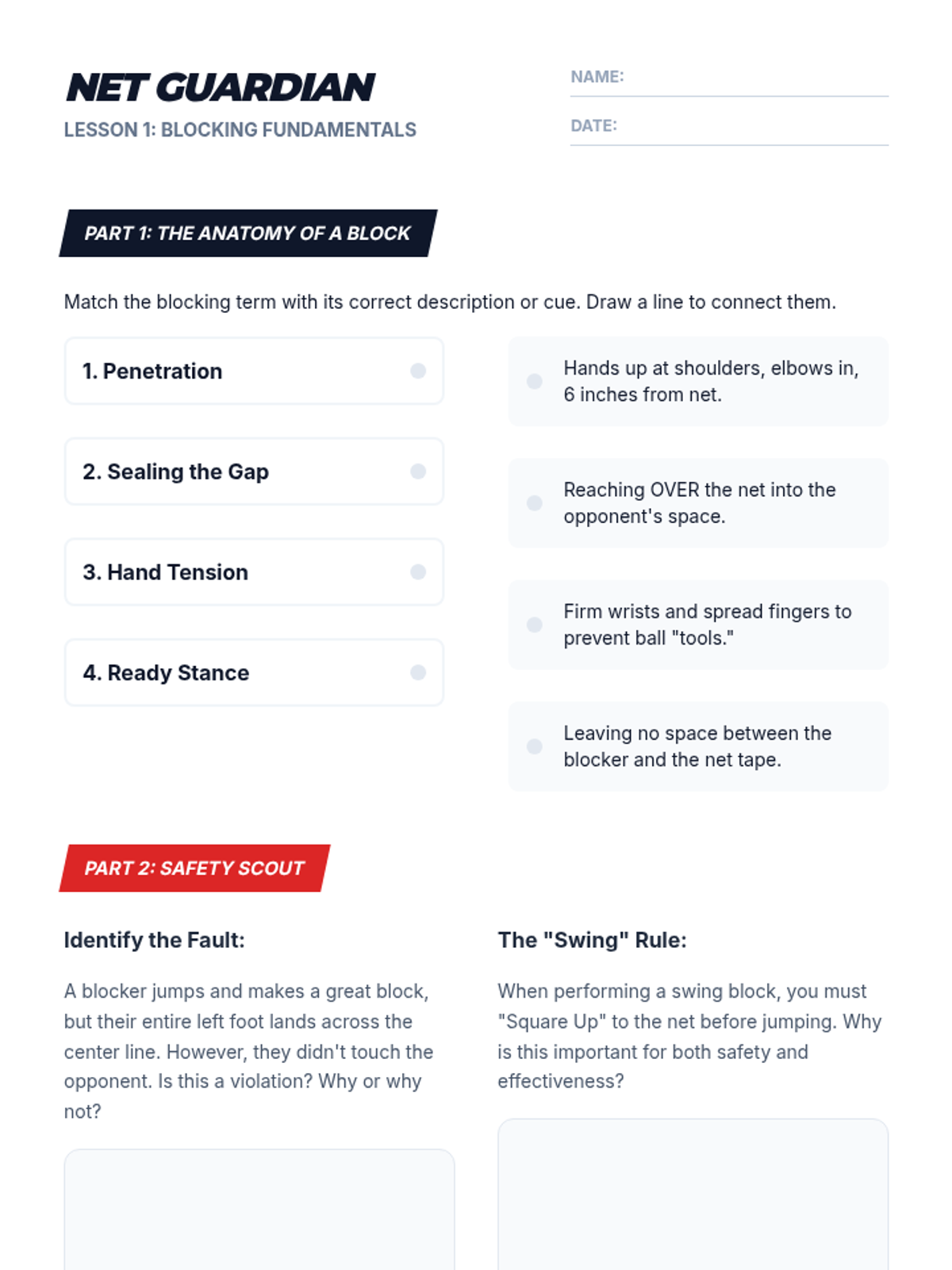
A comprehensive unit for 10th-grade students on advanced volleyball defensive tactics, focusing on individual mechanics, reading offensive cues, and team-based defensive systems. Students will progress from foundational blocking safety to complex rotational coverage.
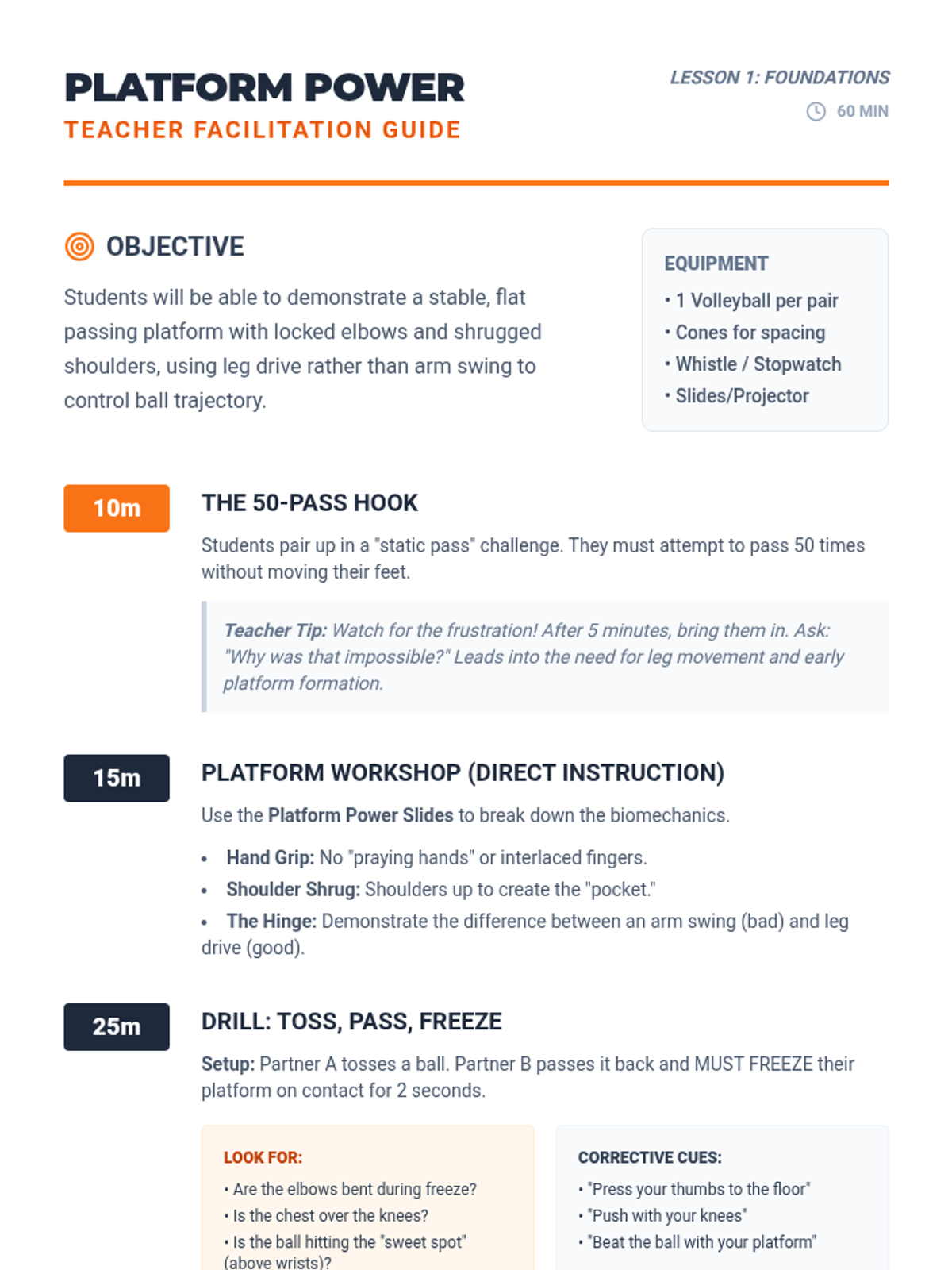
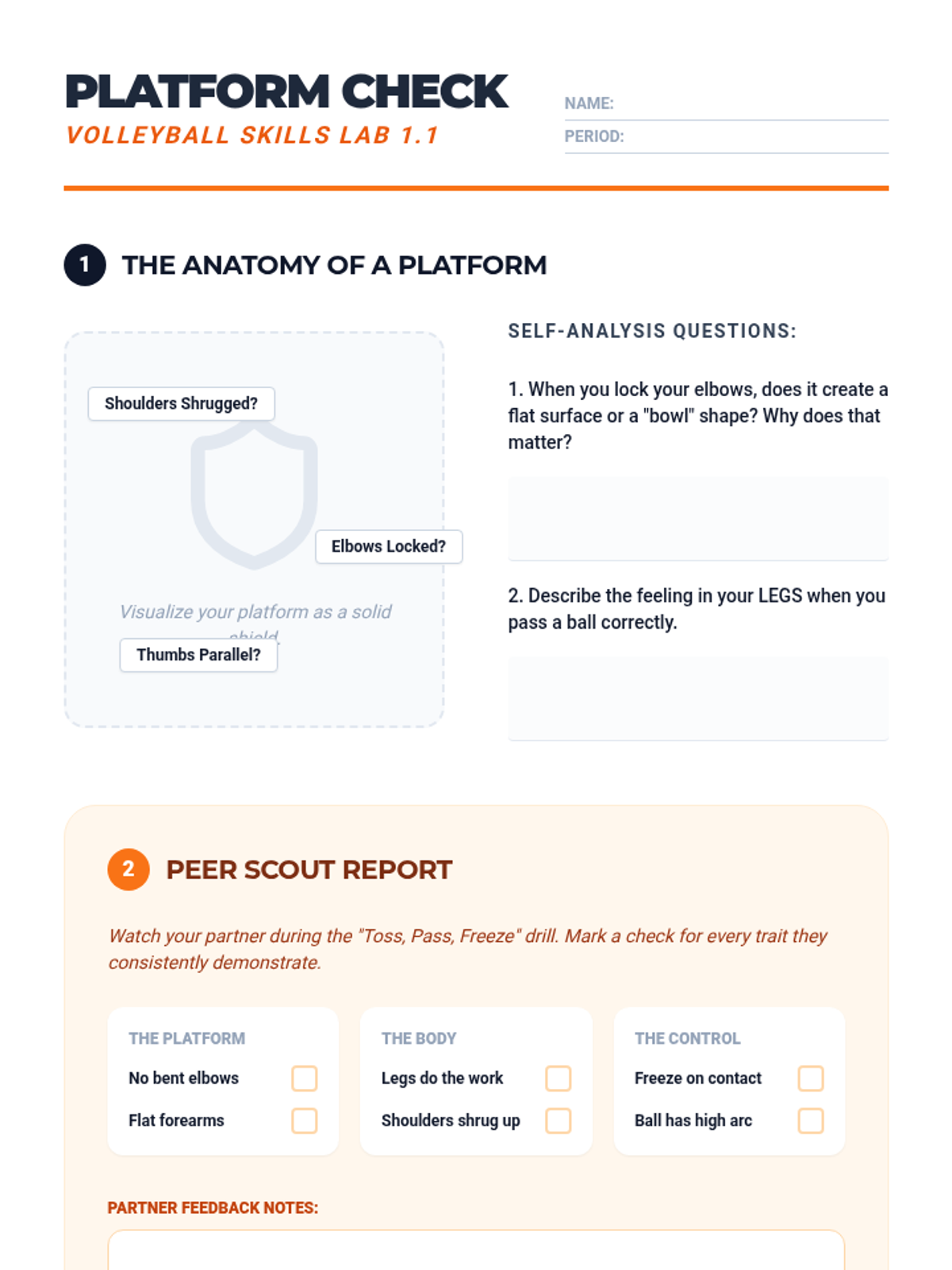
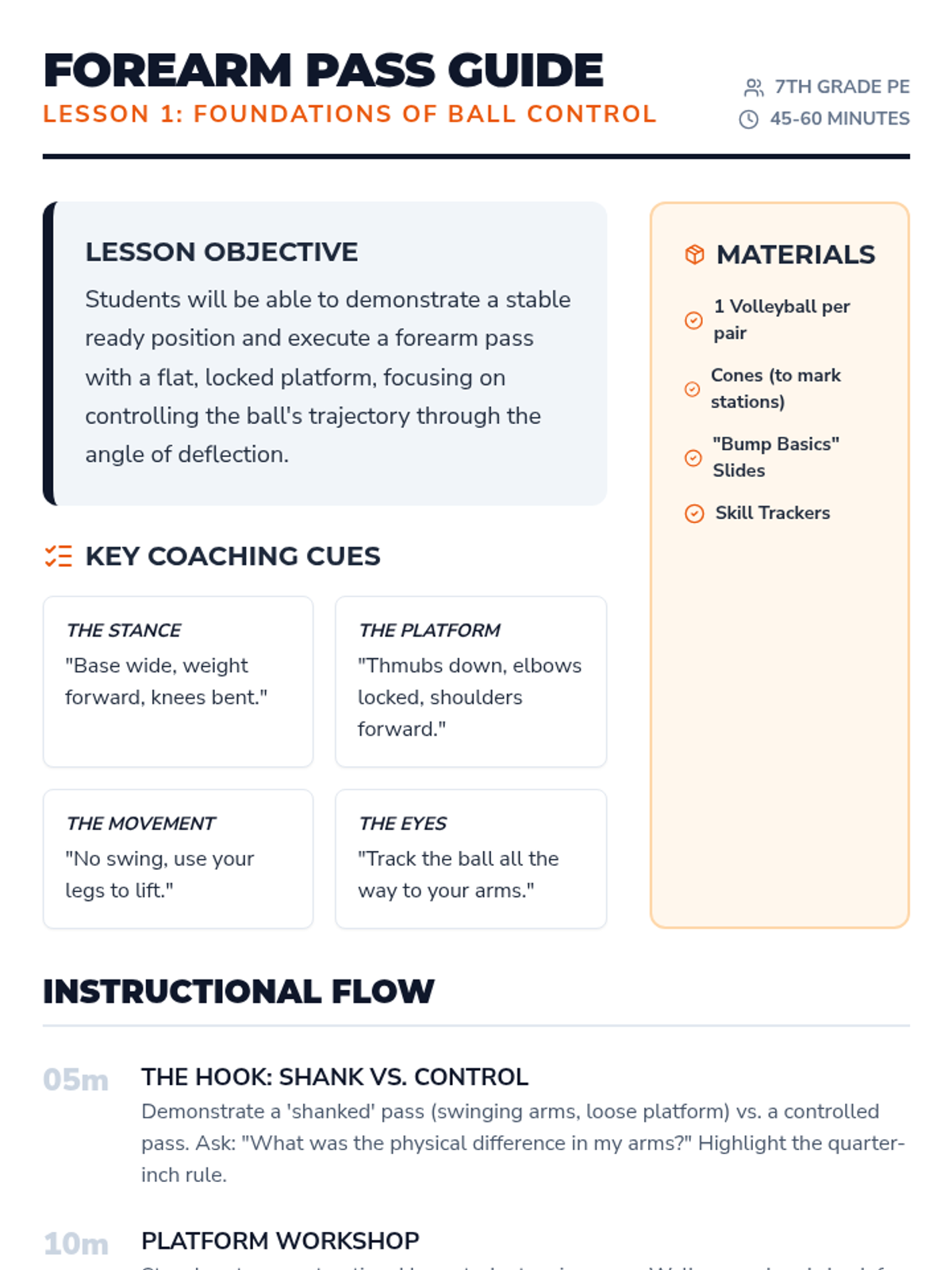
This sequence focuses on refining the biomechanics of the forearm pass (bump) and the overhead pass (set) for 10th-grade students. It moves from static form analysis to dynamic movement, emphasizing platform stability, angle creation, and footwork efficiency for high-repetition accuracy.
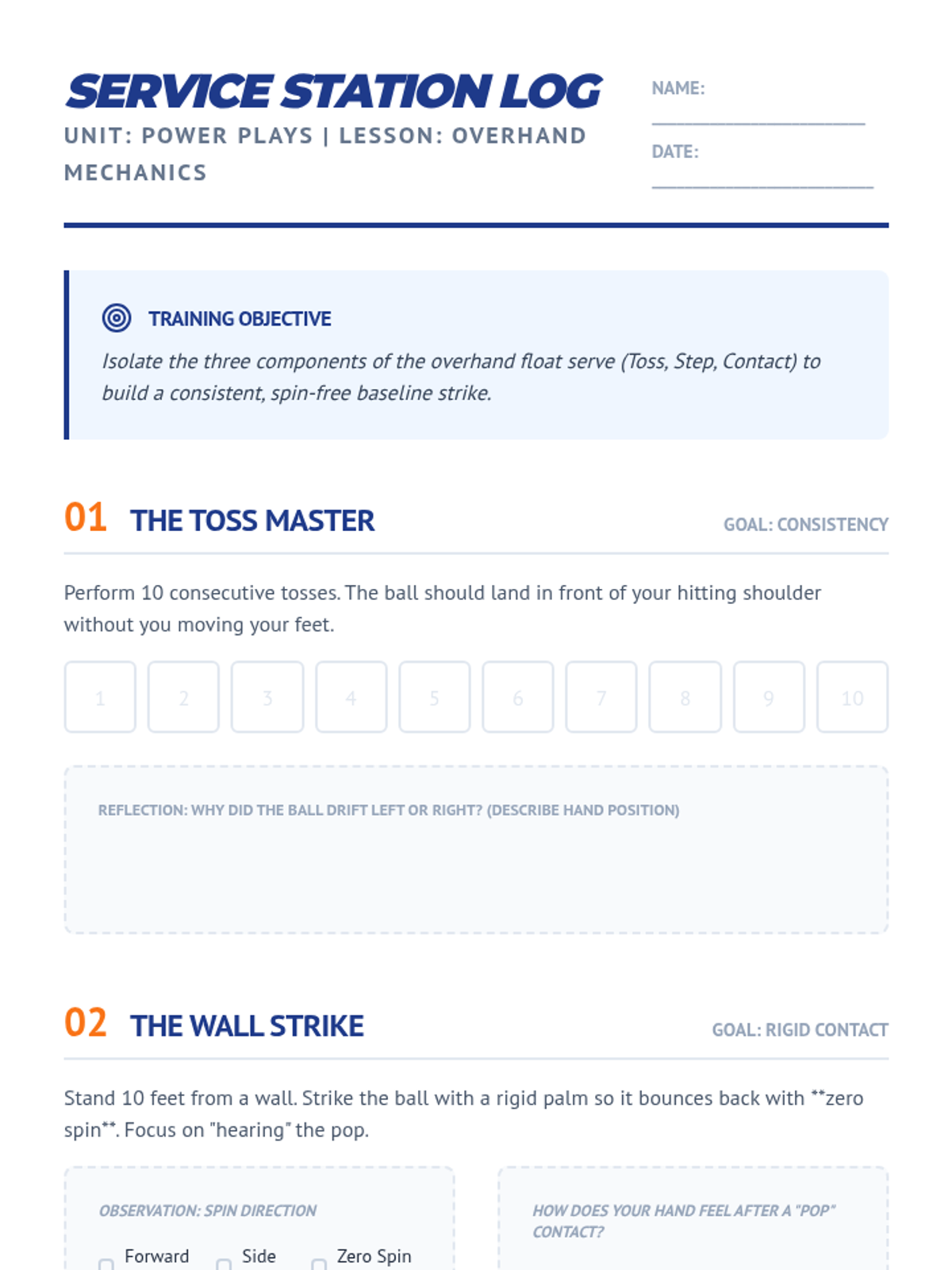
A comprehensive 10th-grade volleyball sequence focusing on offensive mechanics, from the physics of the overhand serve to the timing and footwork of the three-step attacking approach. Students progress from baseline skills to complex offensive transitions.
A comprehensive introduction to volleyball biomechanics, focusing on the forearm pass and overhead set. Students progress from basic athletic stance to dynamic partner play, emphasizing ball control, platform stability, and hand positioning.
This high-school volleyball sequence focuses on team defensive systems, court coverage, and reading the opponent. Students progress from individual skills like blocking and digging to complex team formations like the 'W' serve receive and perimeter defense.