Fundamental techniques for racket sports, track and field, and gymnastics maneuvers. Develops physical literacy through martial arts disciplines and self-defense strategies.
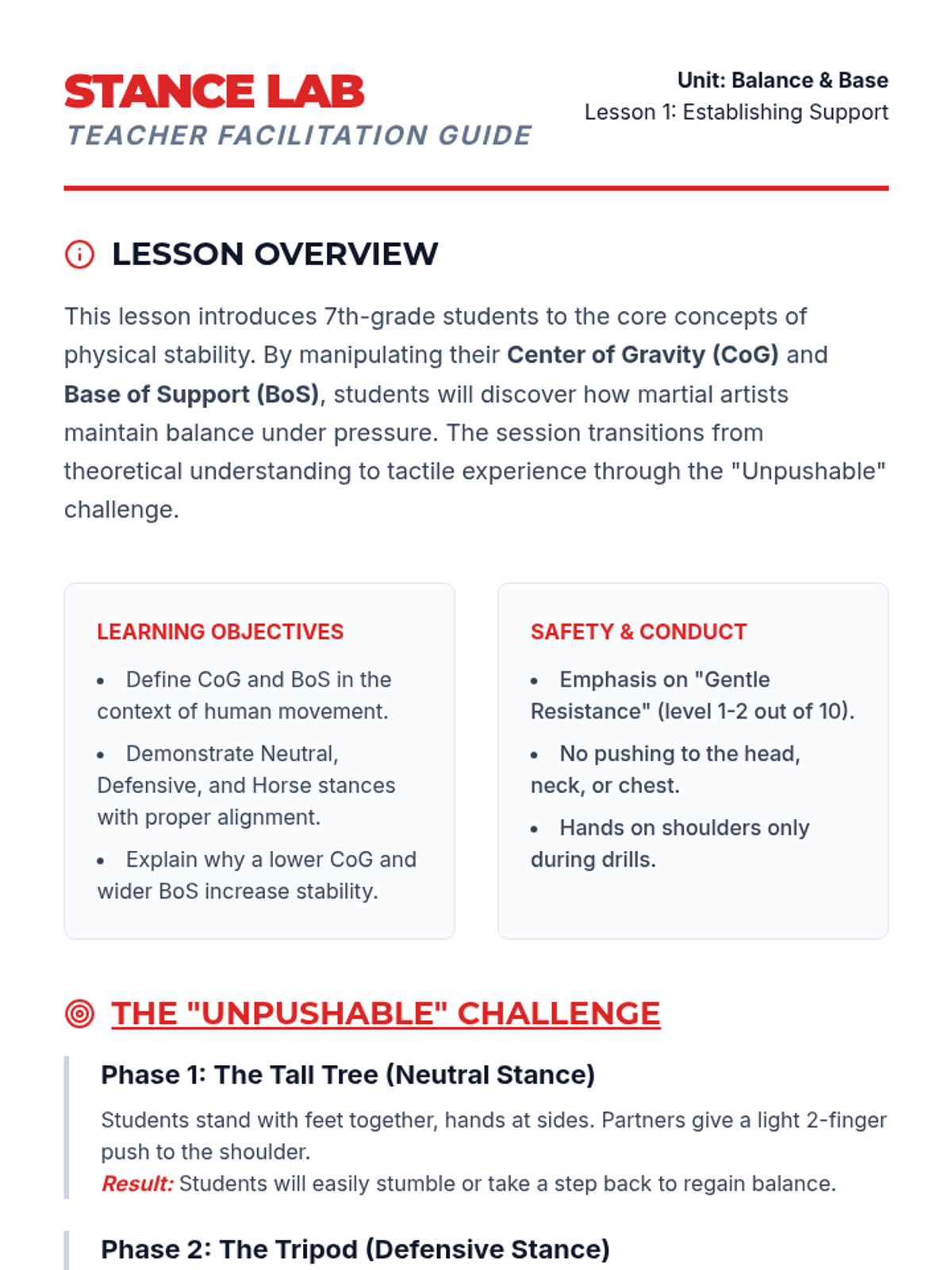
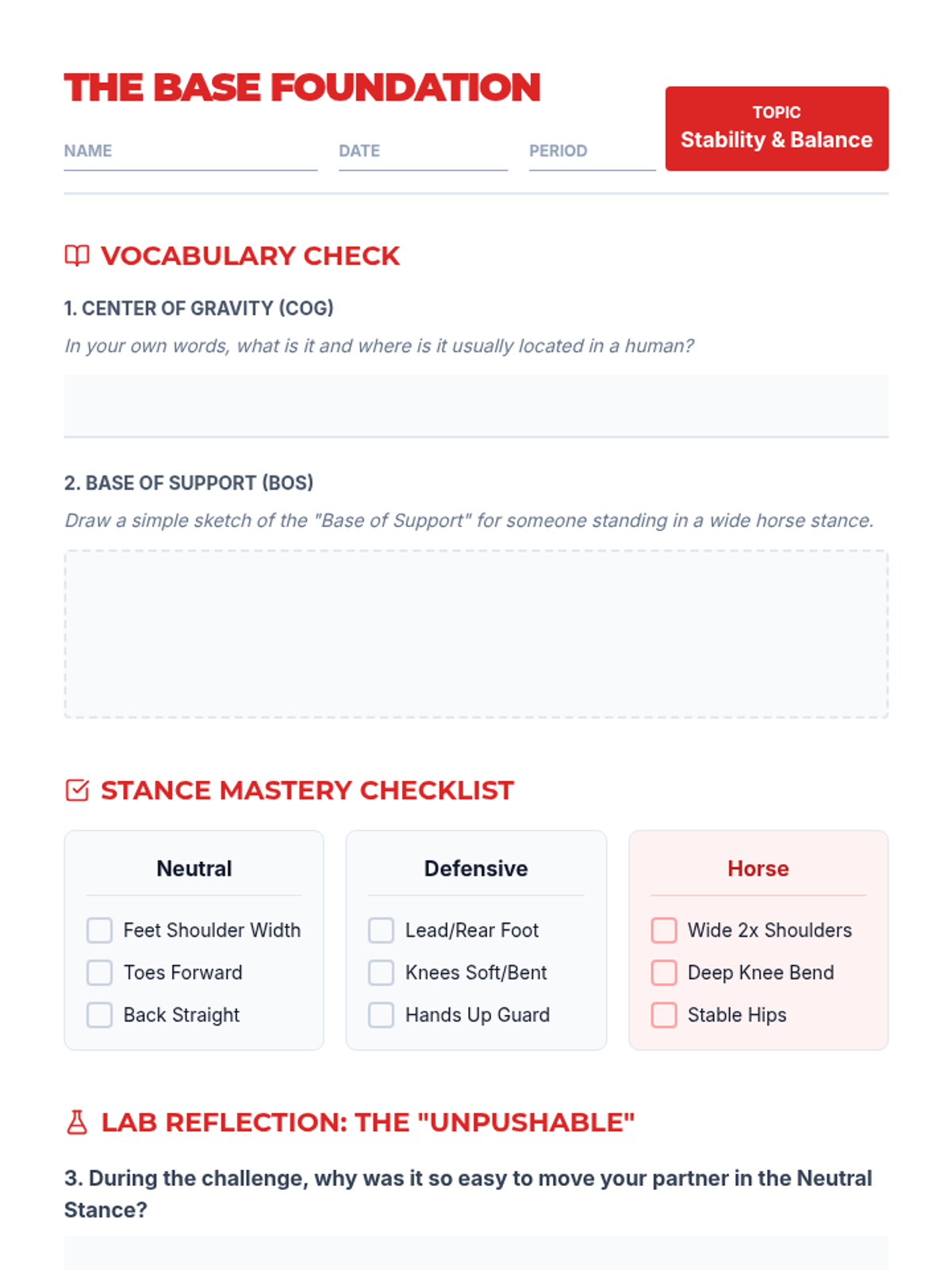
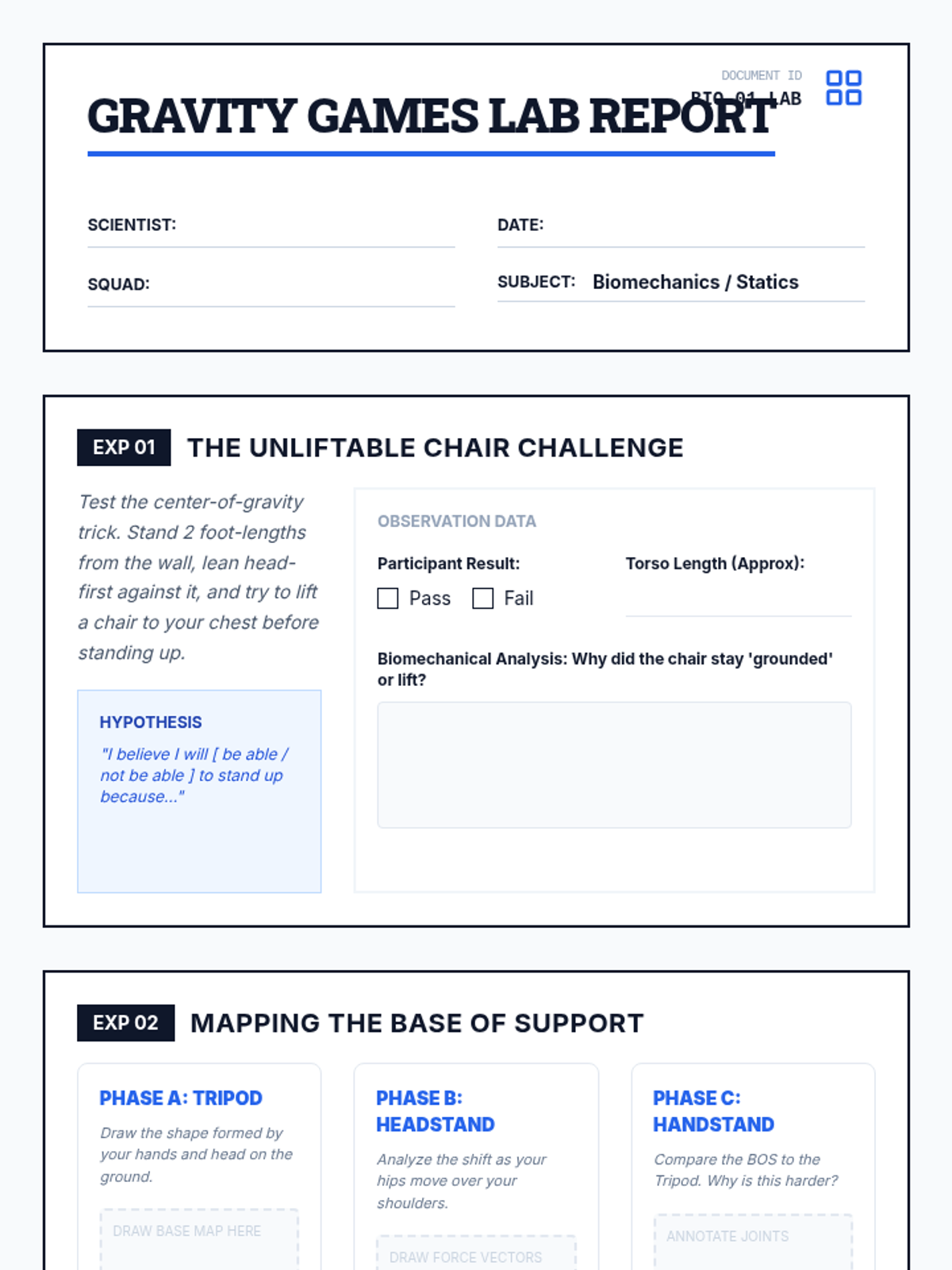
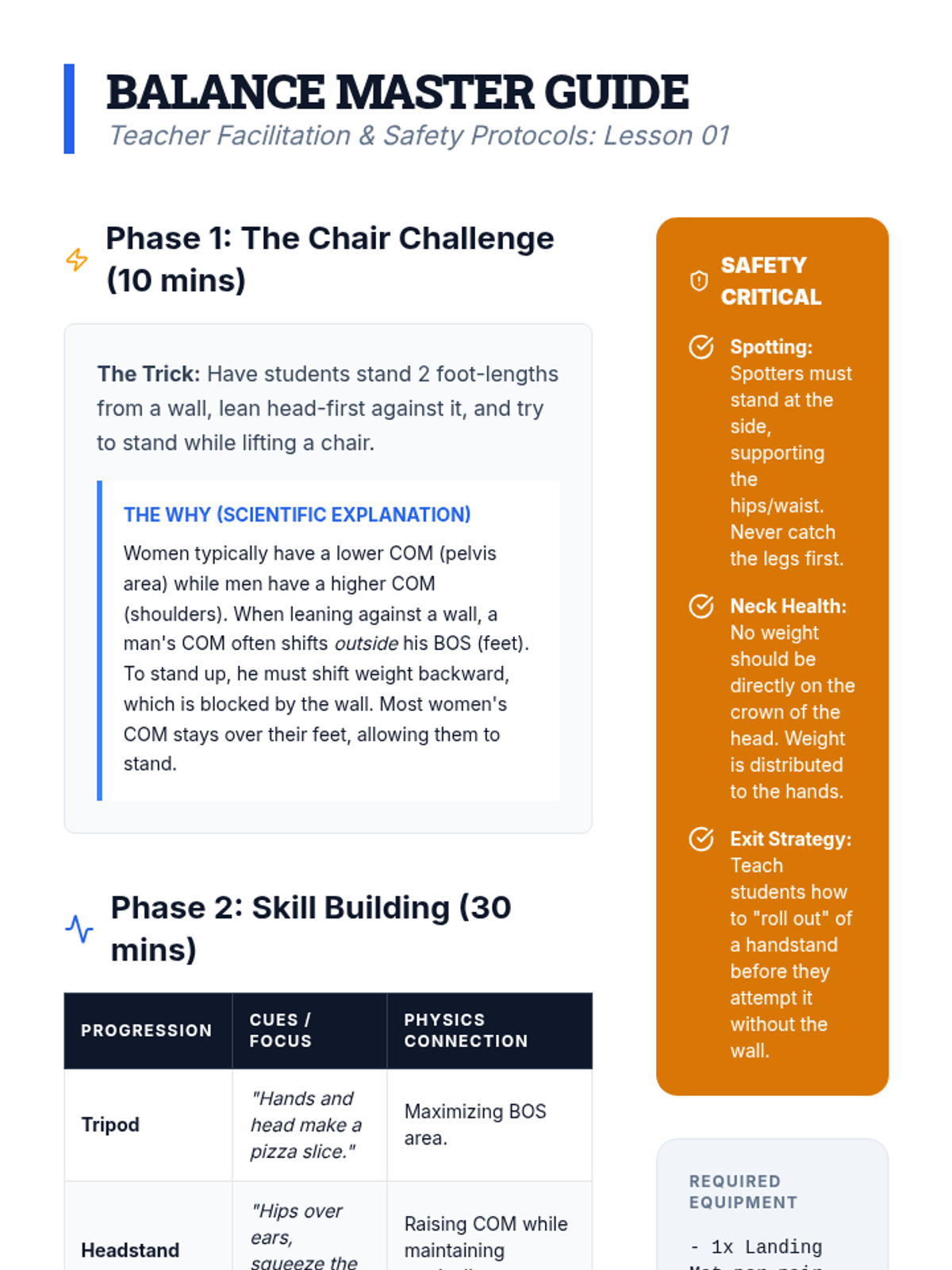
A foundational unit for 7th-grade students focusing on the physical prerequisites of martial arts and self-defense: balance, stability, safe movement, and injury prevention through breakfalls. Students explore how controlling their center of gravity and core can enhance their physical safety and stability.
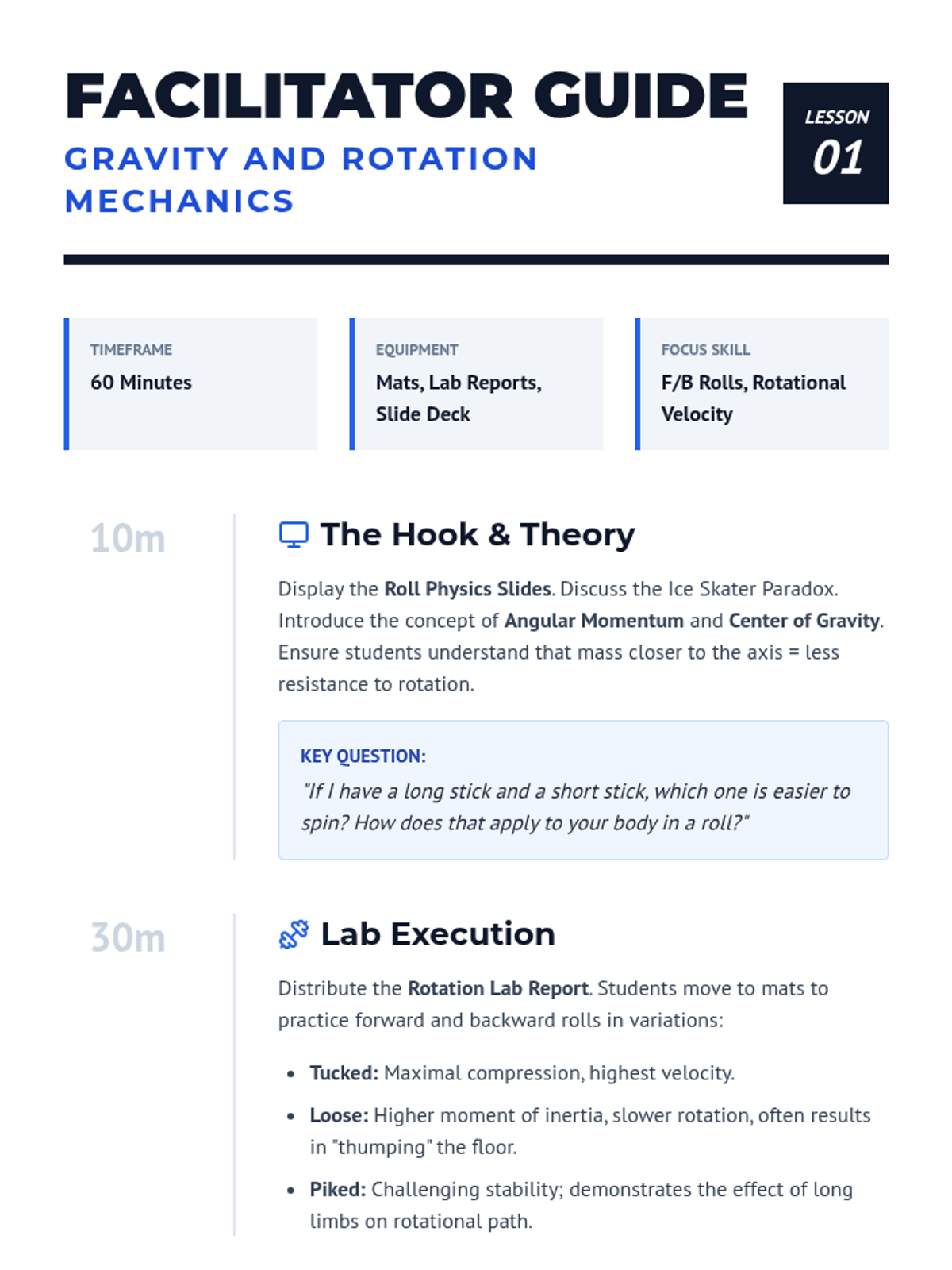
This sequence integrates physics concepts with fundamental floor skills to help students understand the mechanics of tumbling. Students explore center of mass, rotational mechanics, leverage, and force absorption through hands-on practice and video analysis.
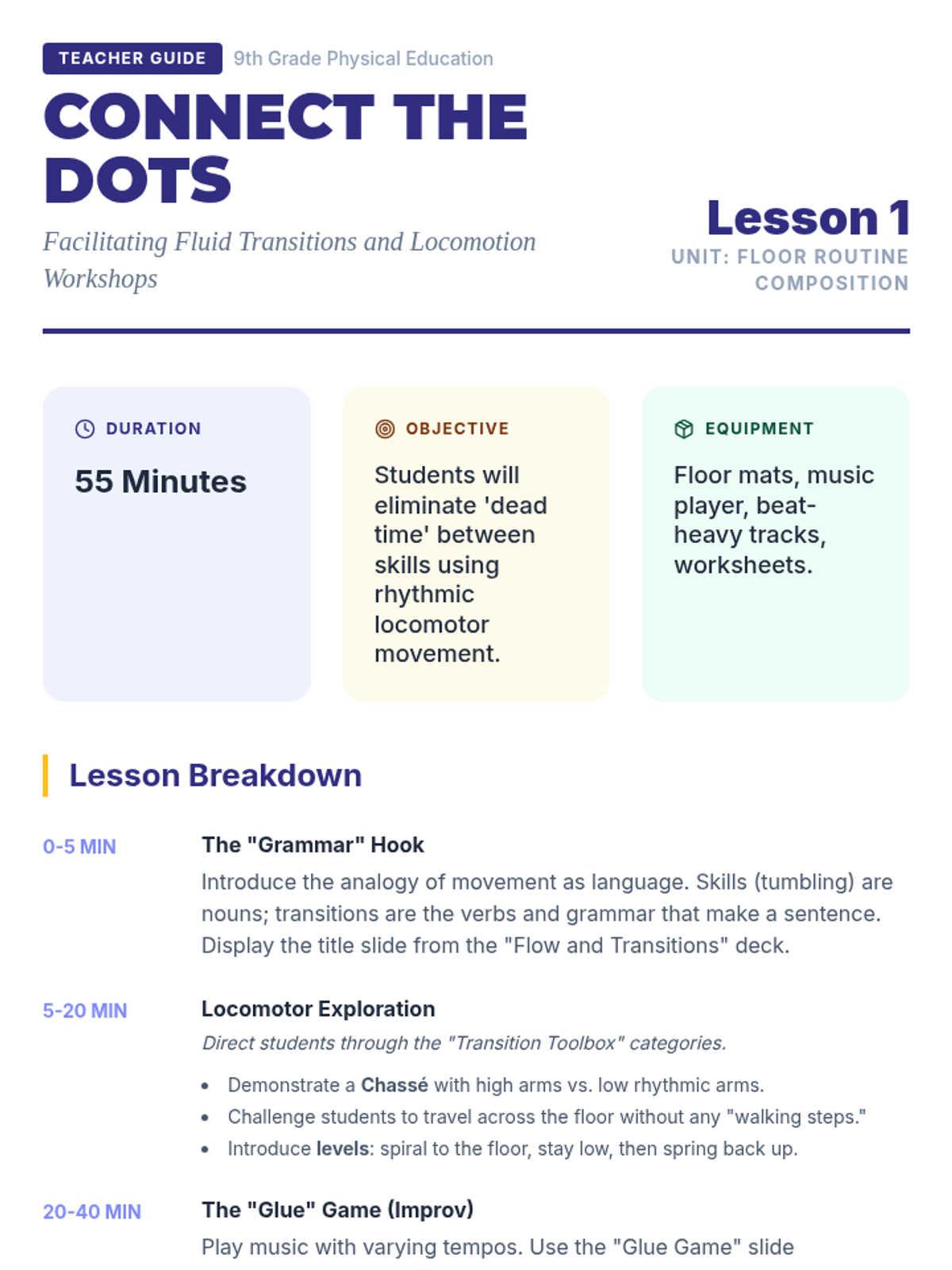
A comprehensive sequence for 9th Grade PE focused on the artistic and athletic composition of gymnastics floor routines, moving from individual skills to a cohesive performance.
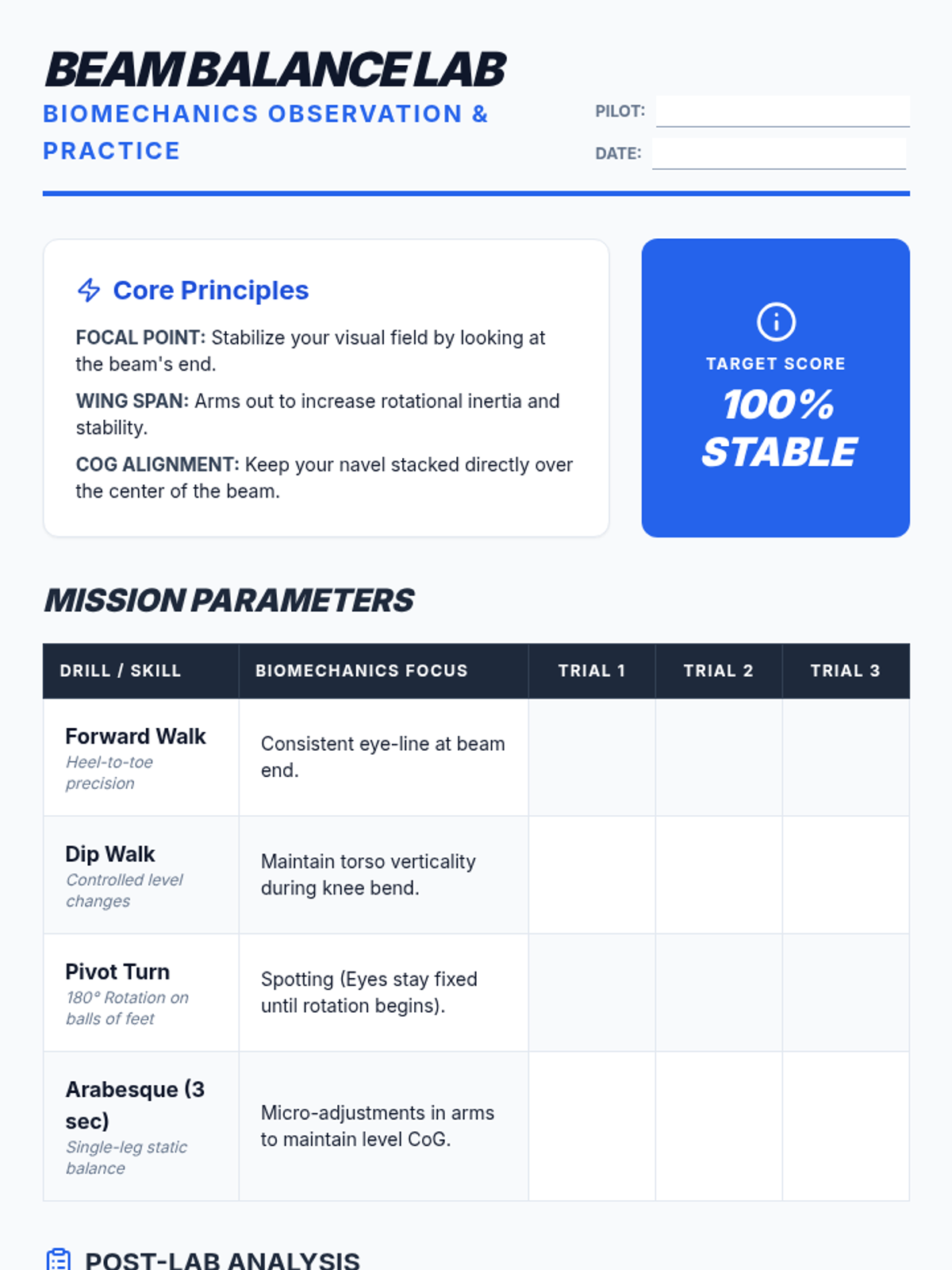
This sequence focuses on the biomechanics and safety of gymnastics apparatus work, specifically the balance beam and vault. Students progress from foundational balance skills to complex vaulting mechanics, emphasizing center of gravity, explosive power, and peer spotting.
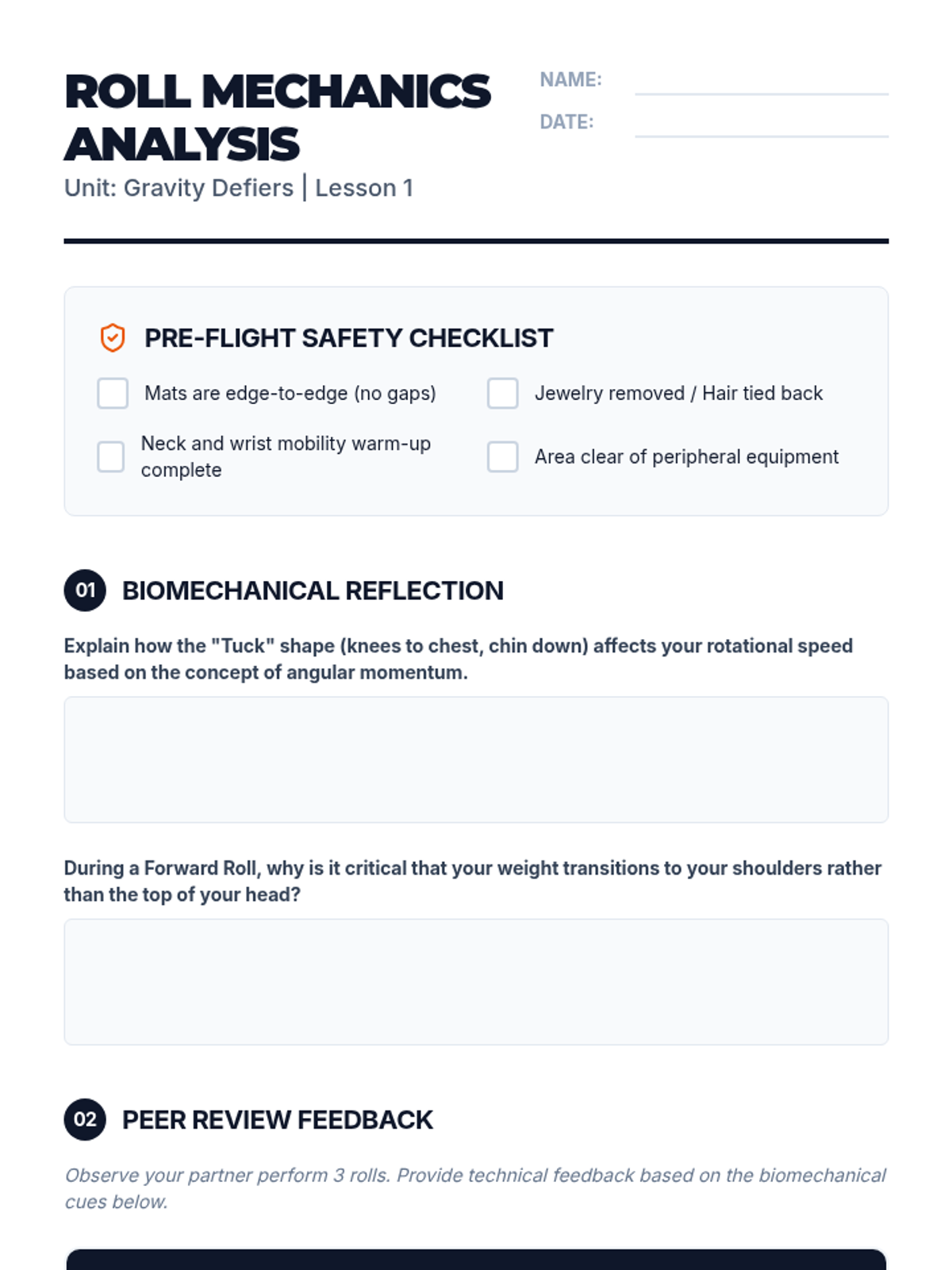
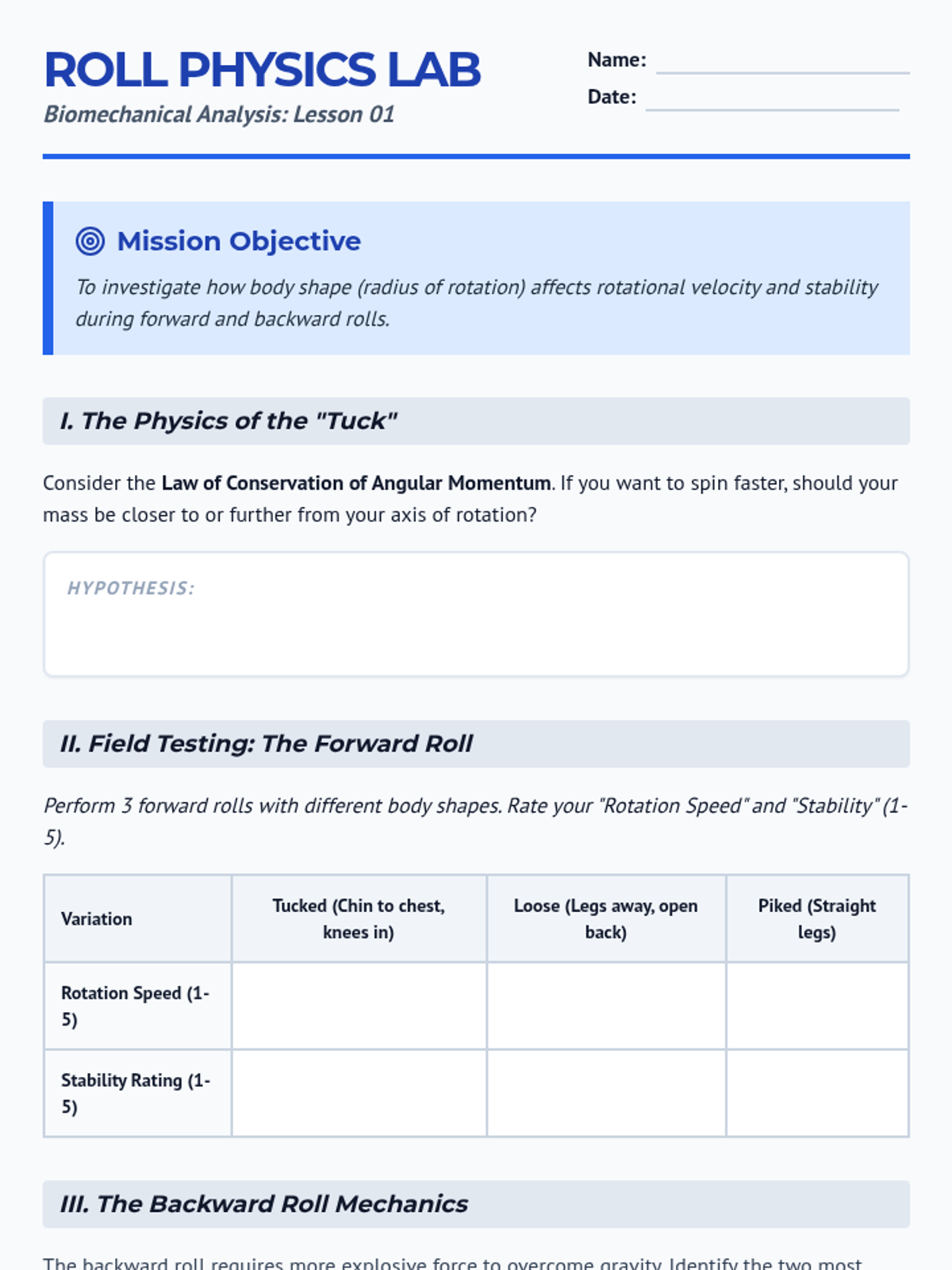
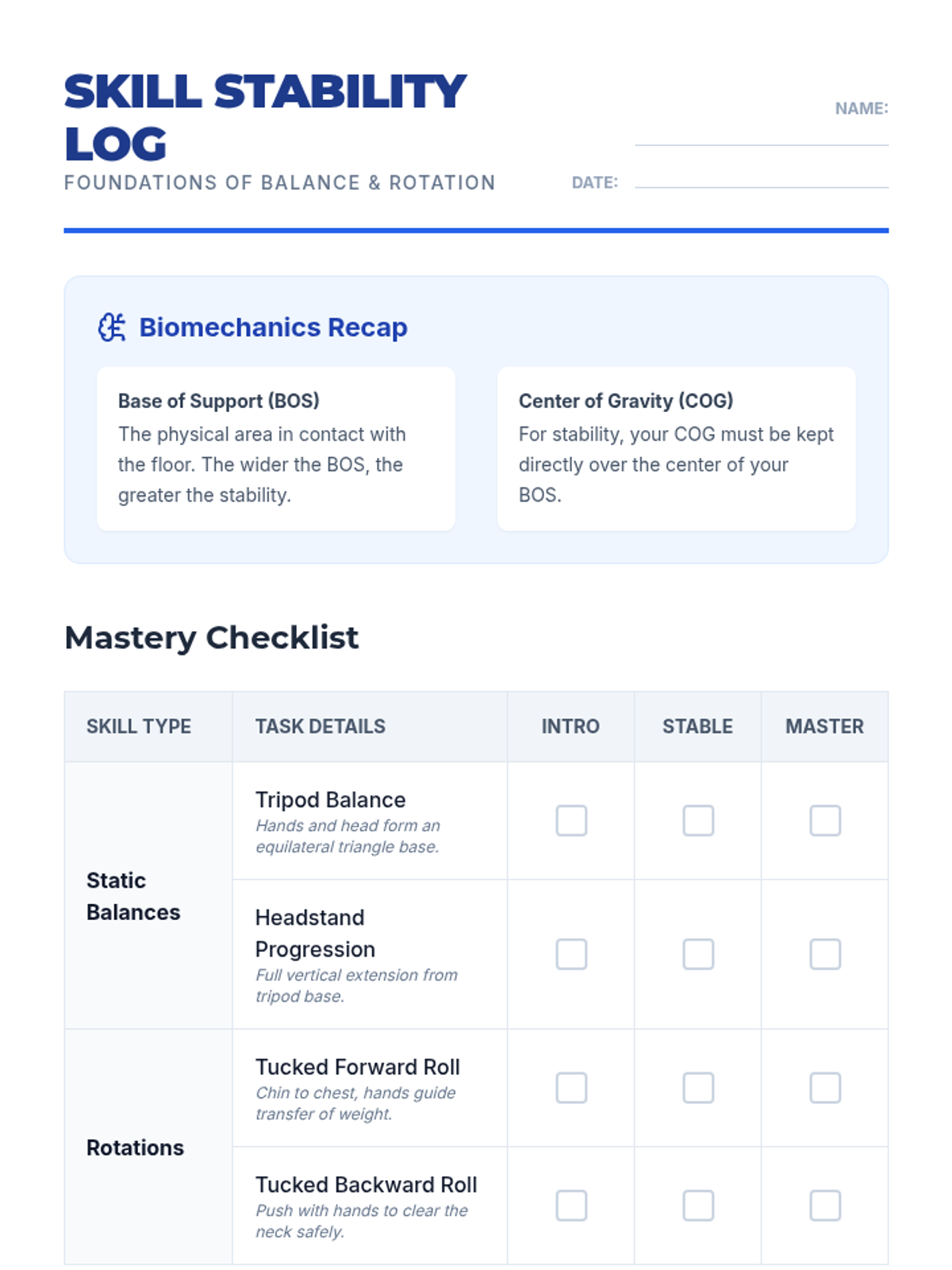
A 10th-grade gymnastics unit focusing on the biomechanical principles of floor skills. Students explore stability, rotation, and momentum through rolls, inversions, cartwheels, and round-offs.
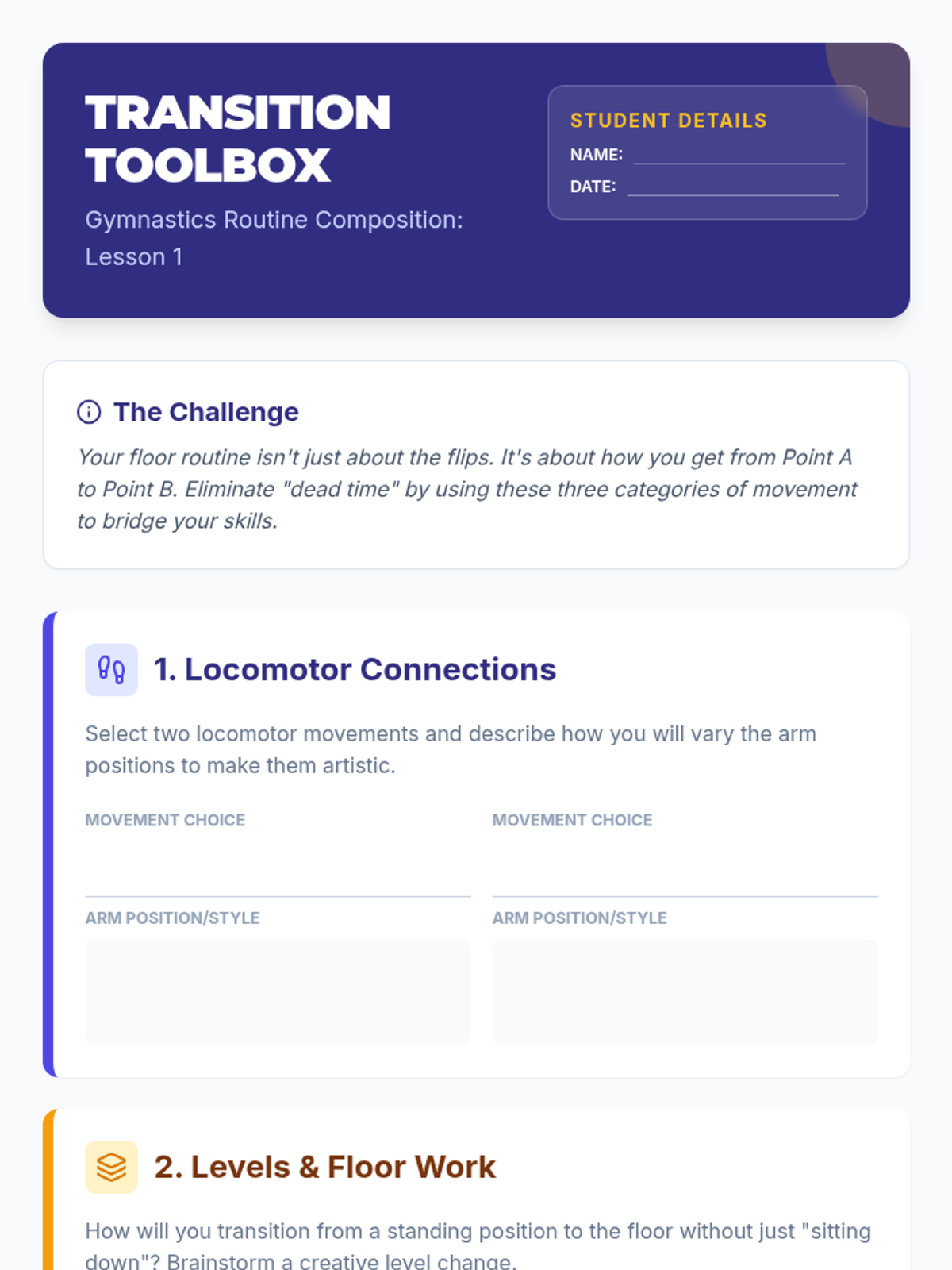
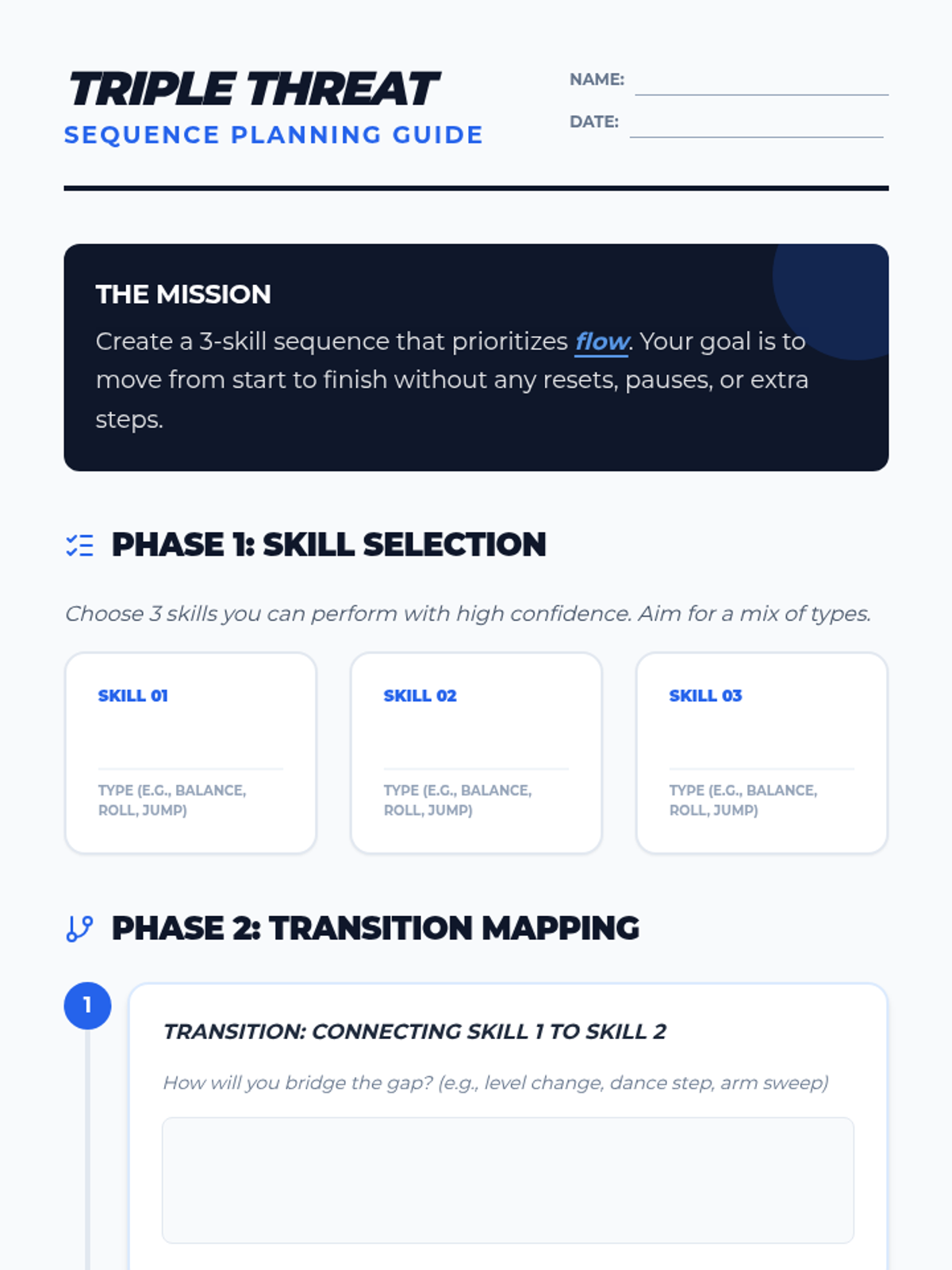
This 10th-grade gymnastics sequence guides students from performing isolated skills to composing fluid, artistic floor routines. It focuses on the choreography of transitions, spatial utilization, musicality, and peer feedback to enhance the aesthetic and athletic quality of gymnastics performances.
This sequence integrates gymnastics execution with biomechanical principles. Students explore center of mass, stability, leverage, and angular momentum through various tumbling skills, concluding with a video analysis project to critique their own form.
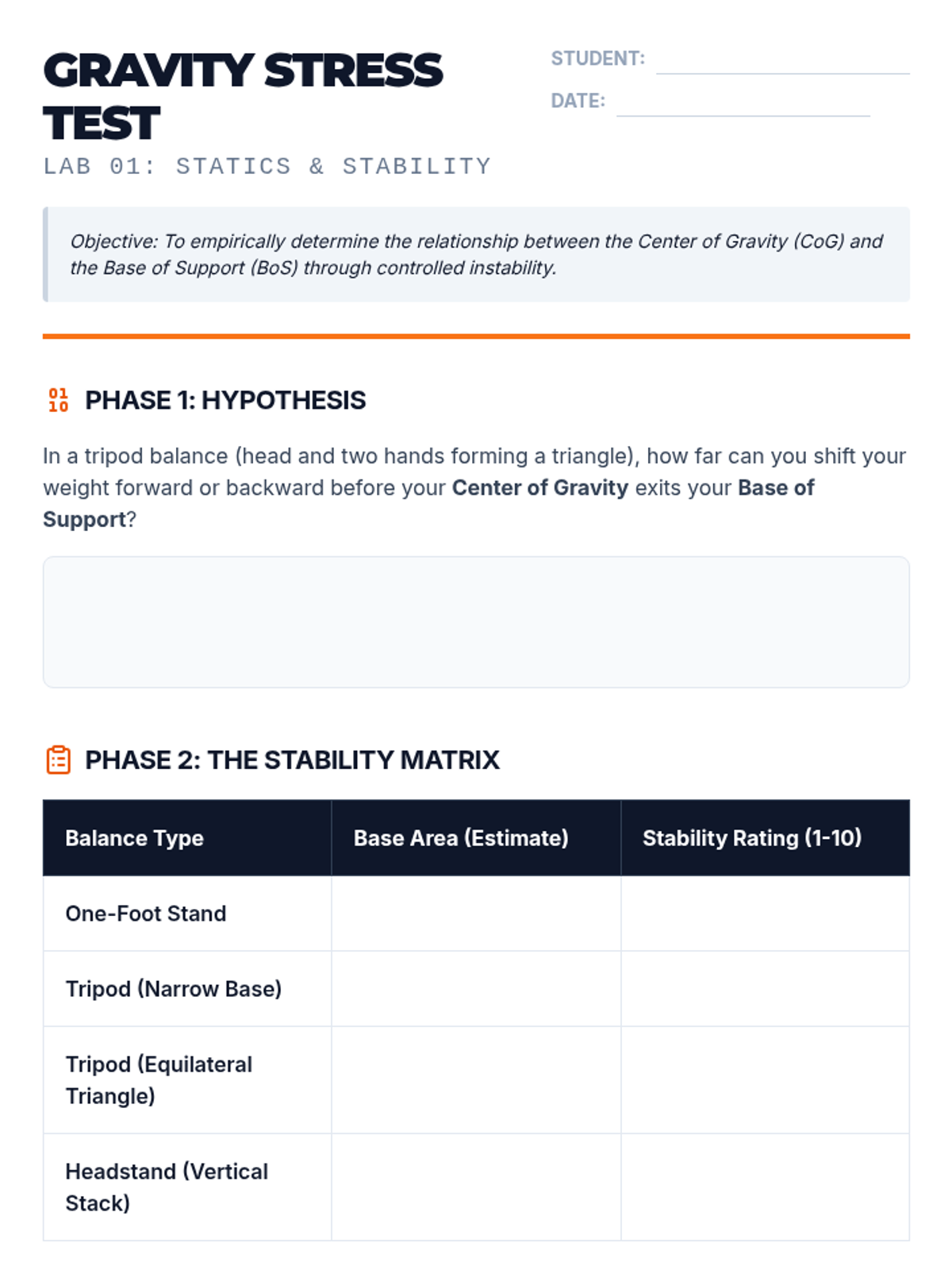
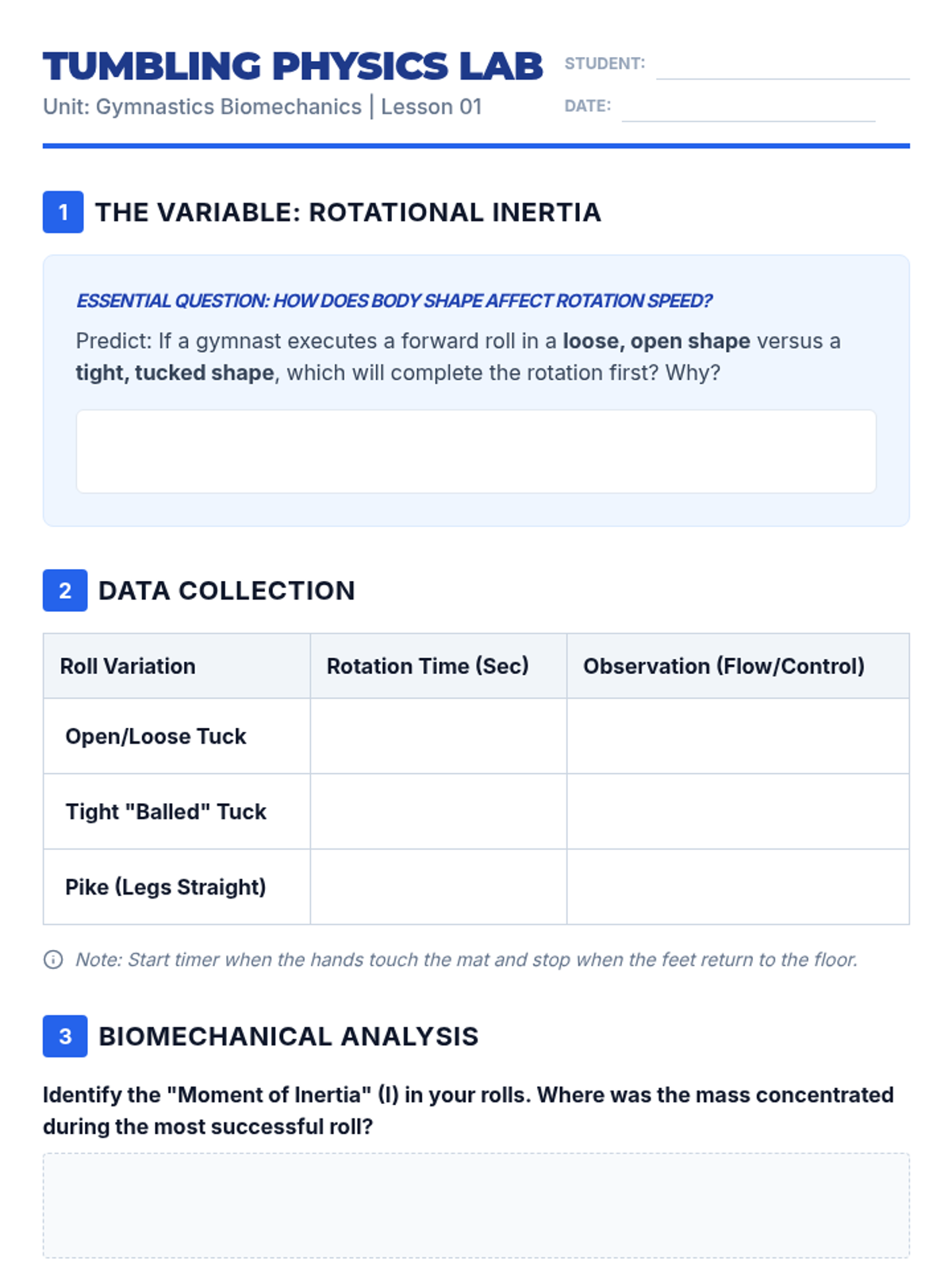
This sequence explores the physics of gymnastics, focusing on biomechanical principles like center of gravity, rotational inertia, and momentum transfer to improve tumbling performance. Students transition from static balance to dynamic rotation, culminating in a frame-by-frame video analysis of their own movement.
This sequence focuses on the acquisition of intermediate floor skills and the artistic integration of these movements into a fluid routine. Students analyze biomechanics, practice spotting, and design a graded performance.
A high-school level gymnastics sequence focusing on the biomechanical principles of movement, safety protocols, and the synthesis of skills into a choreographed floor routine. Students analyze rotational inertia, joint stacking, and energy conversion to improve physical performance.
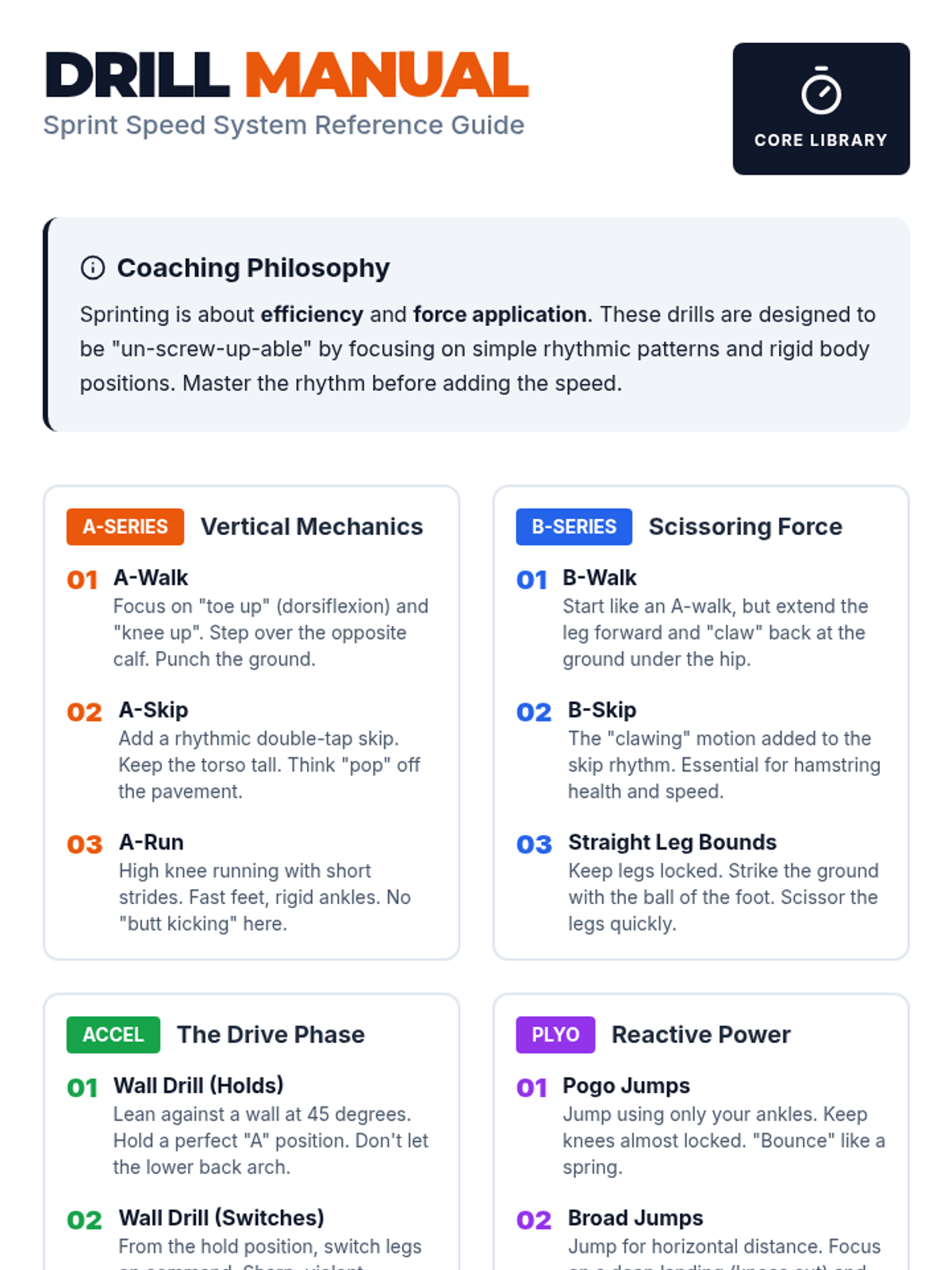
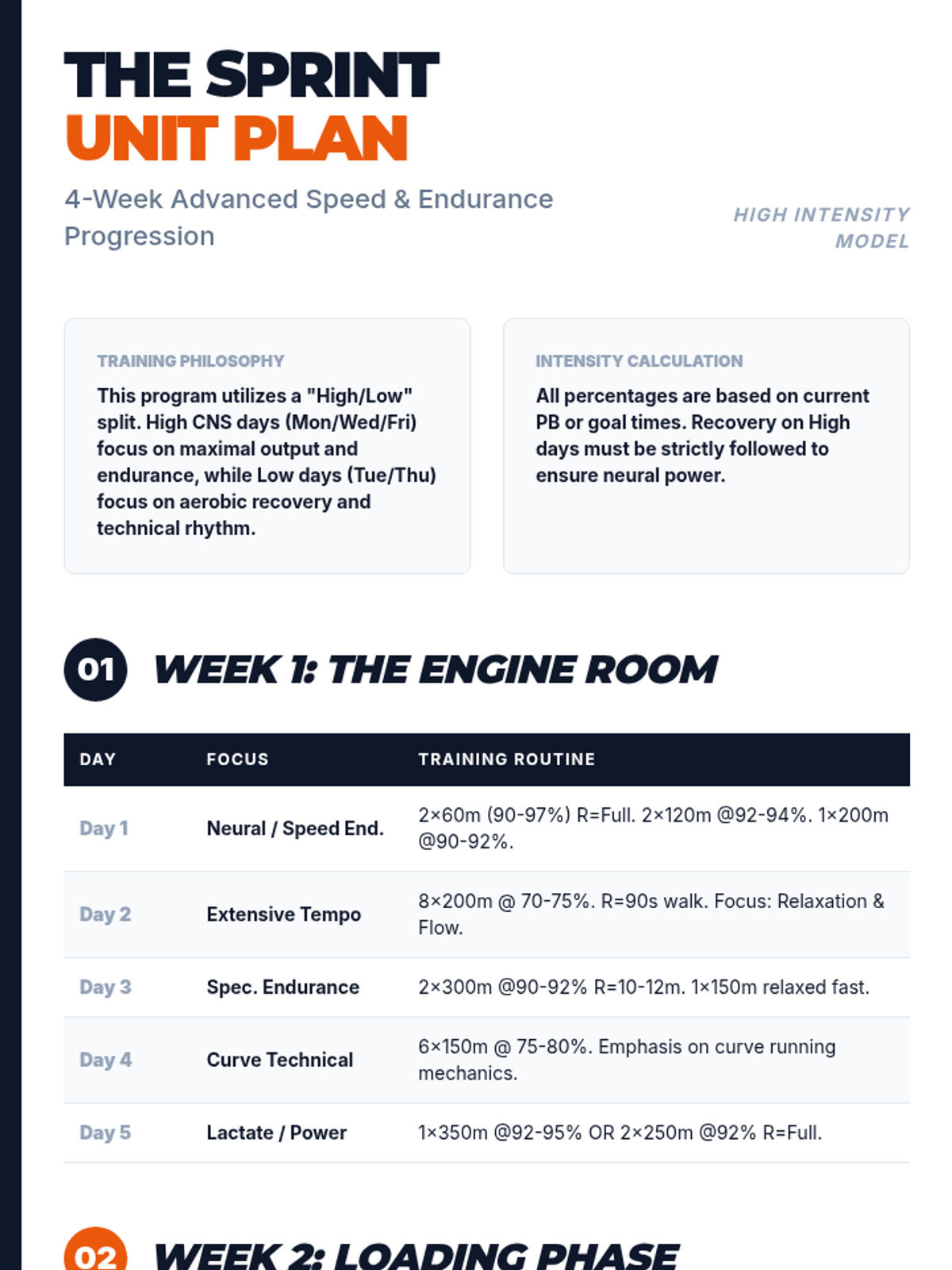
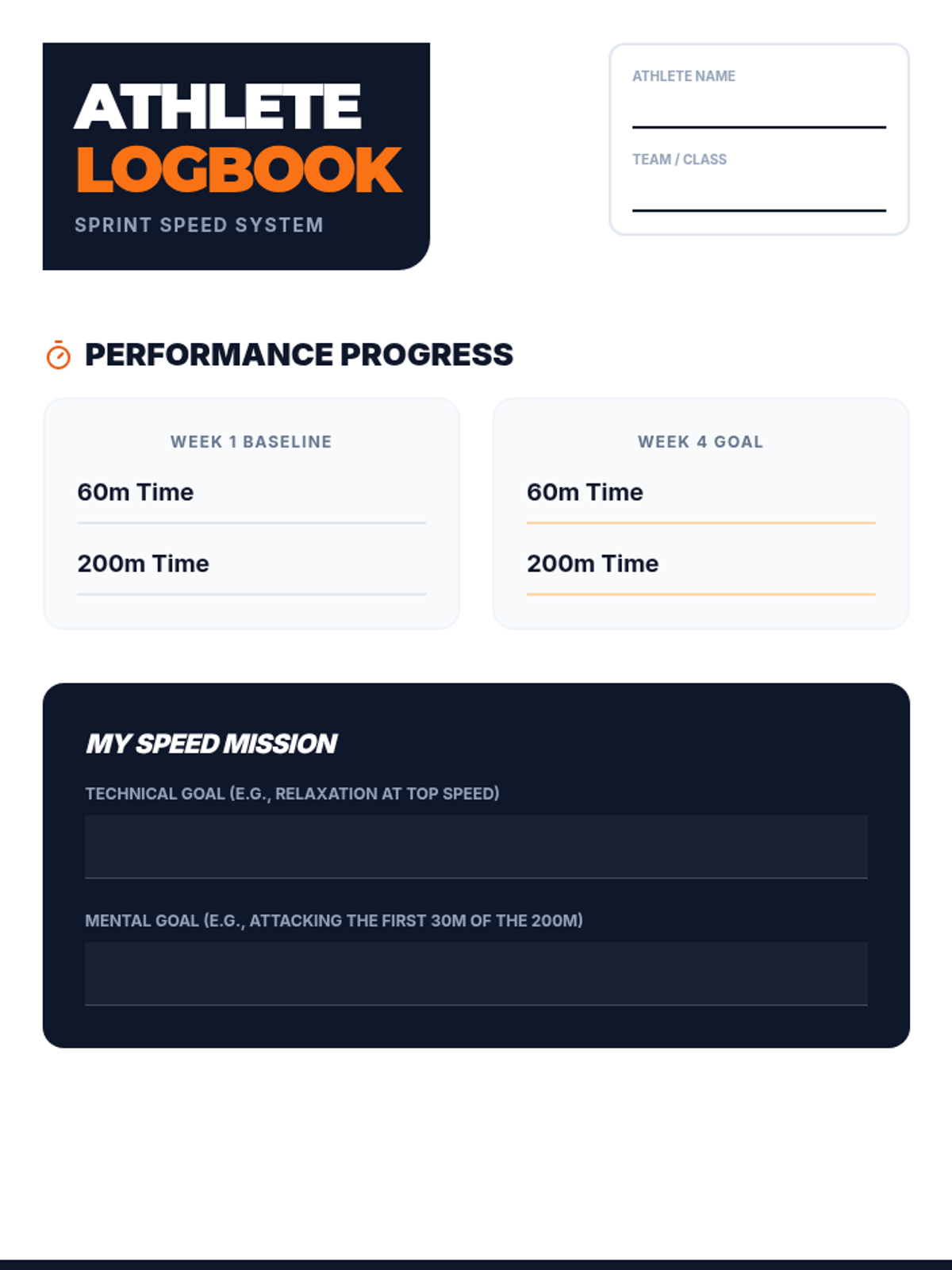
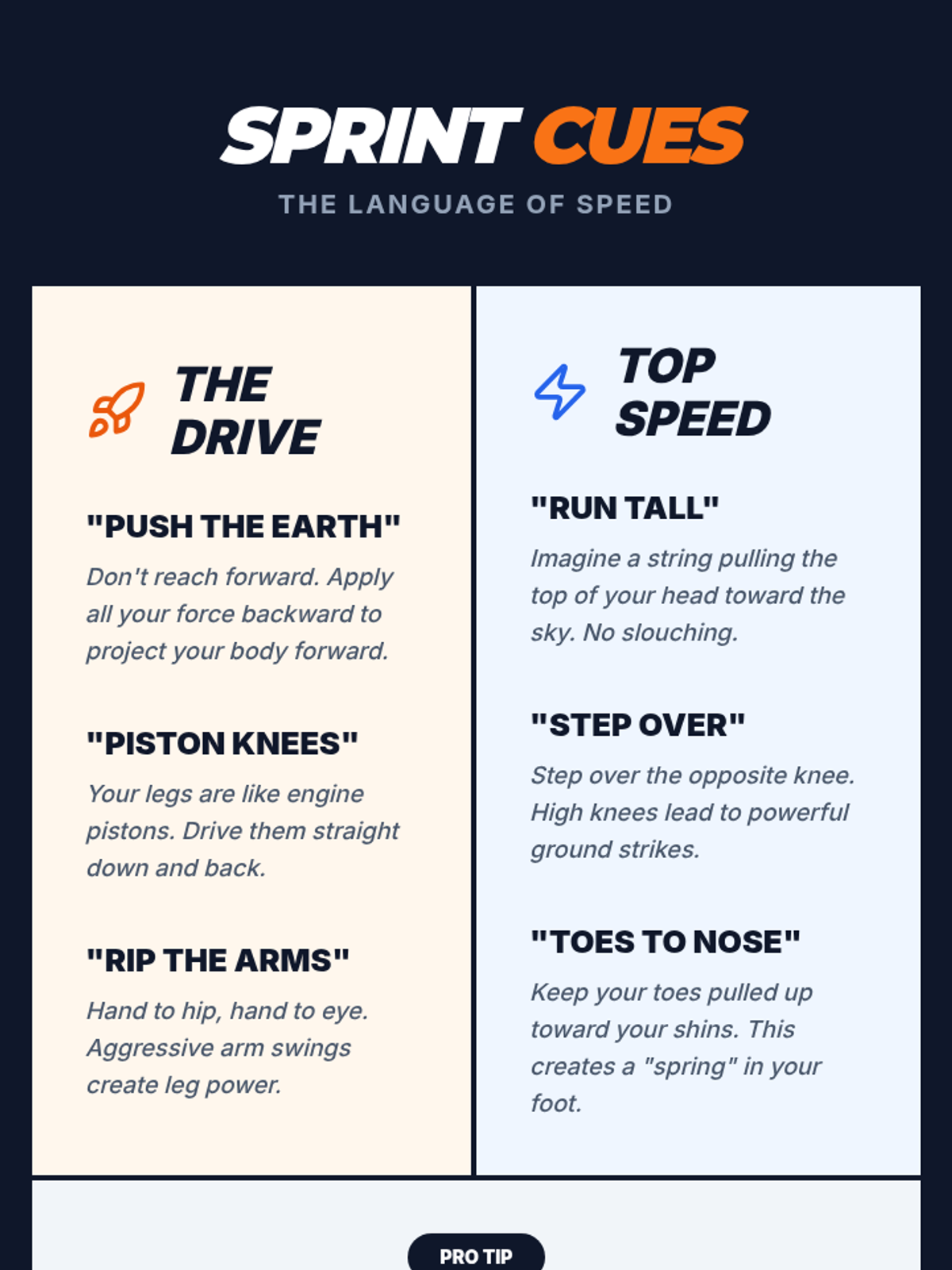
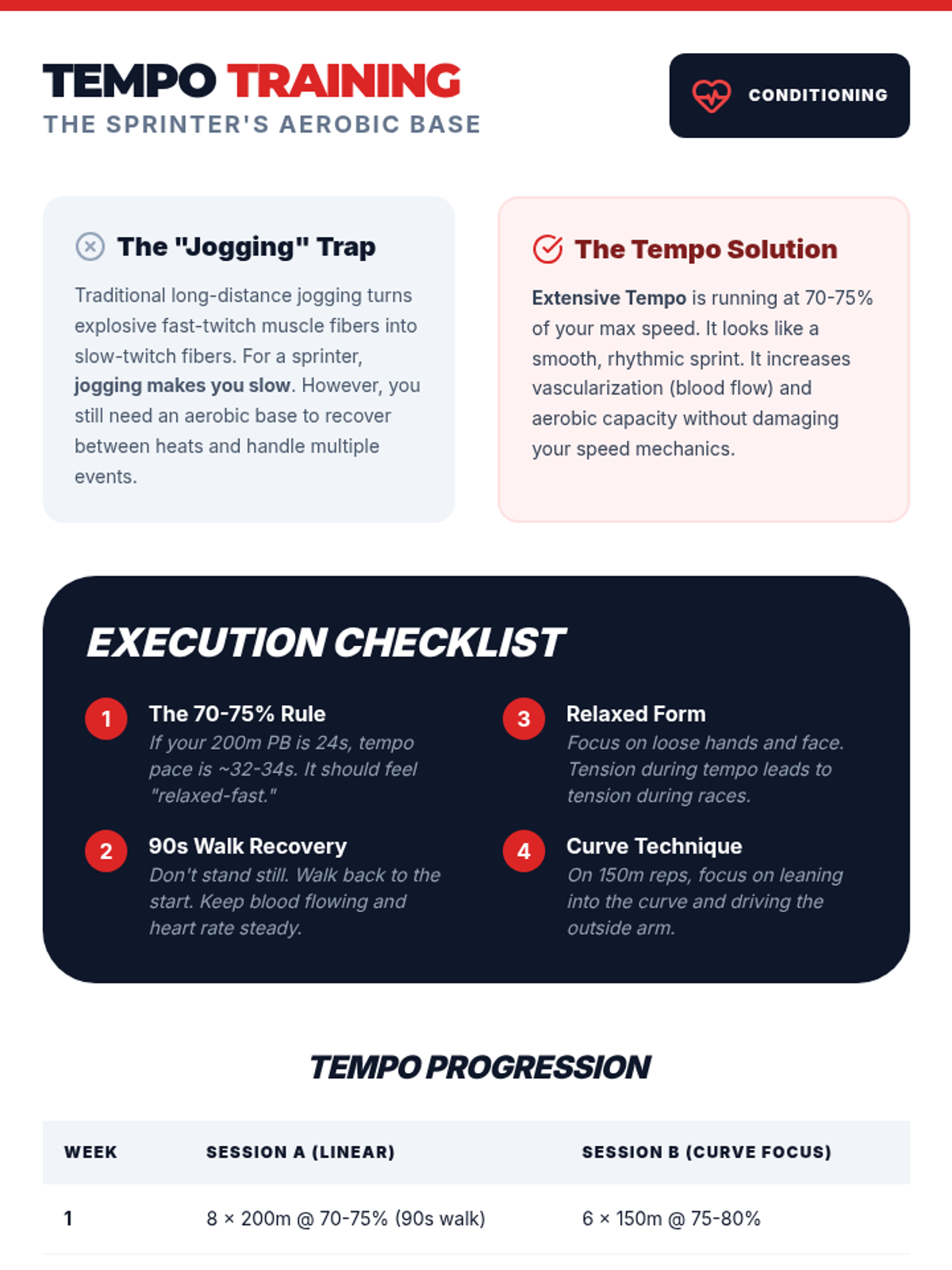
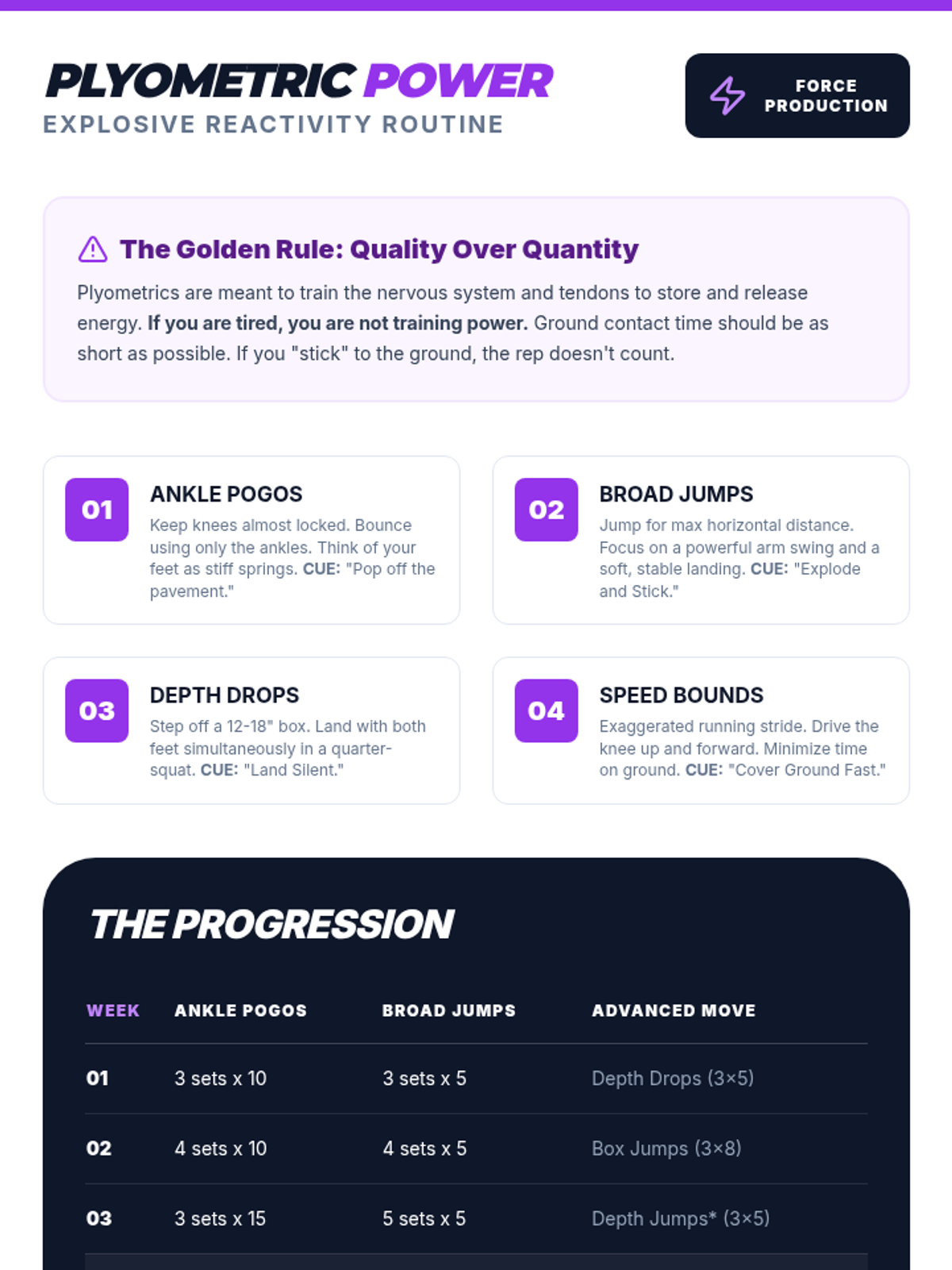
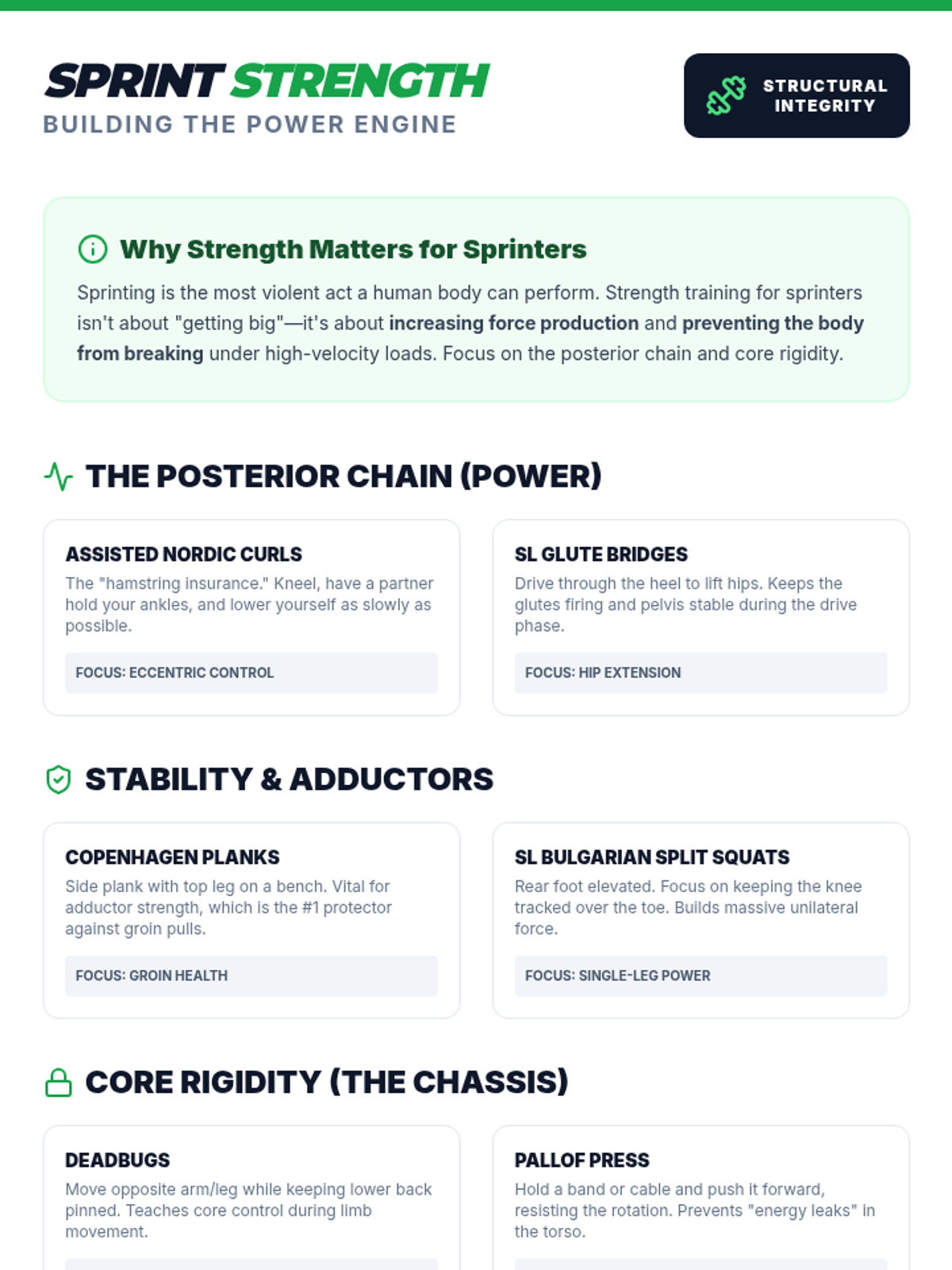
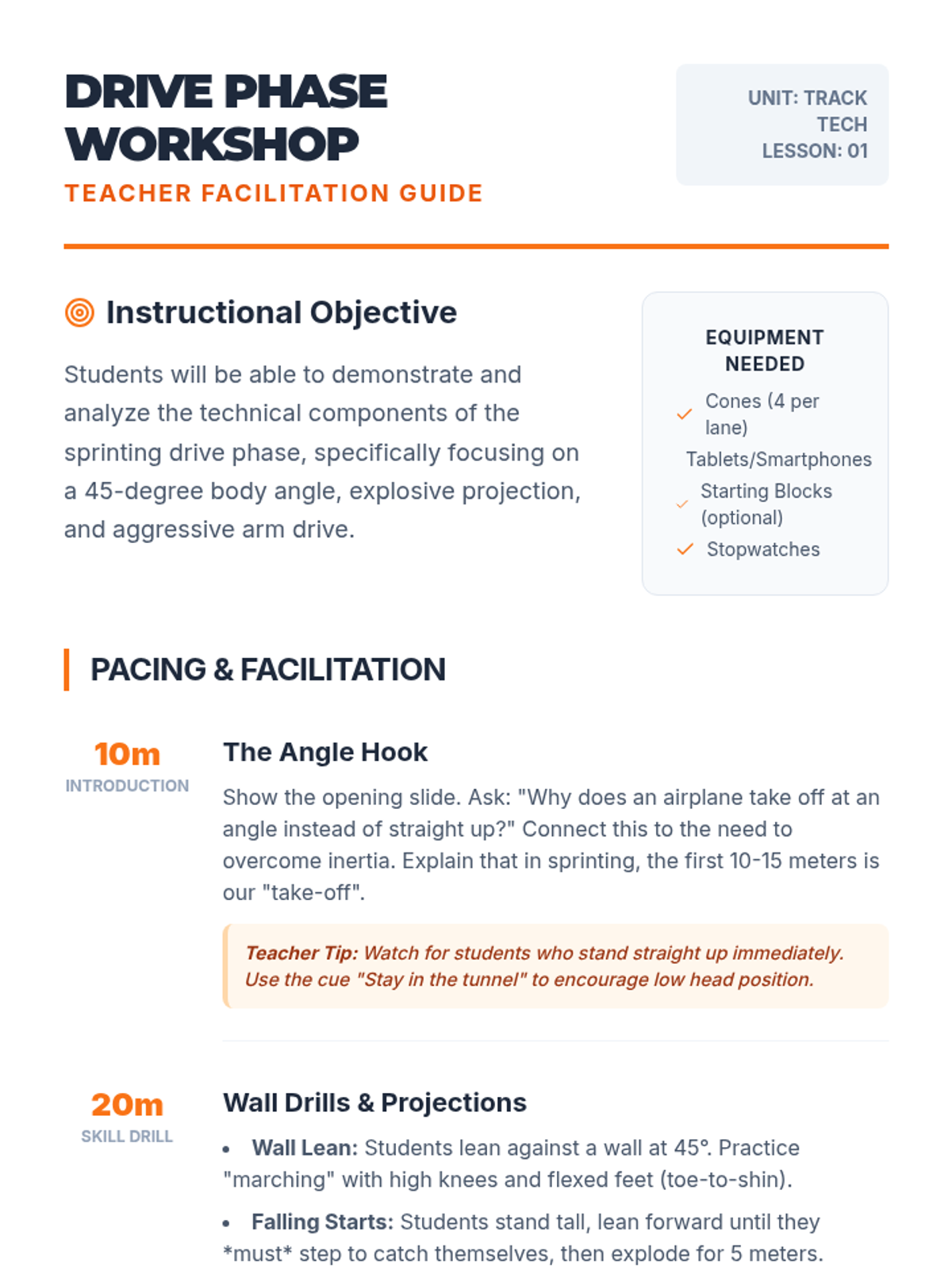
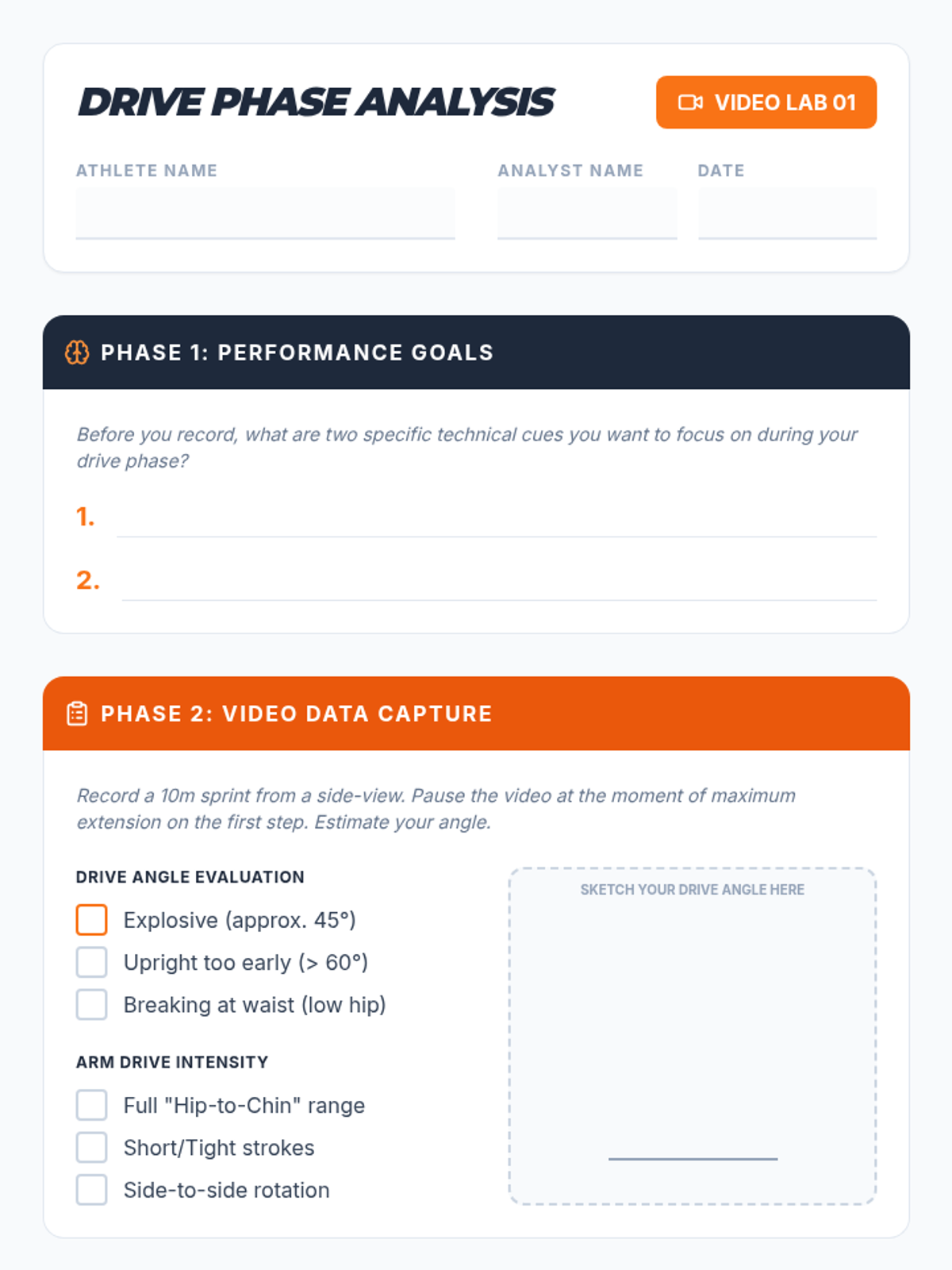
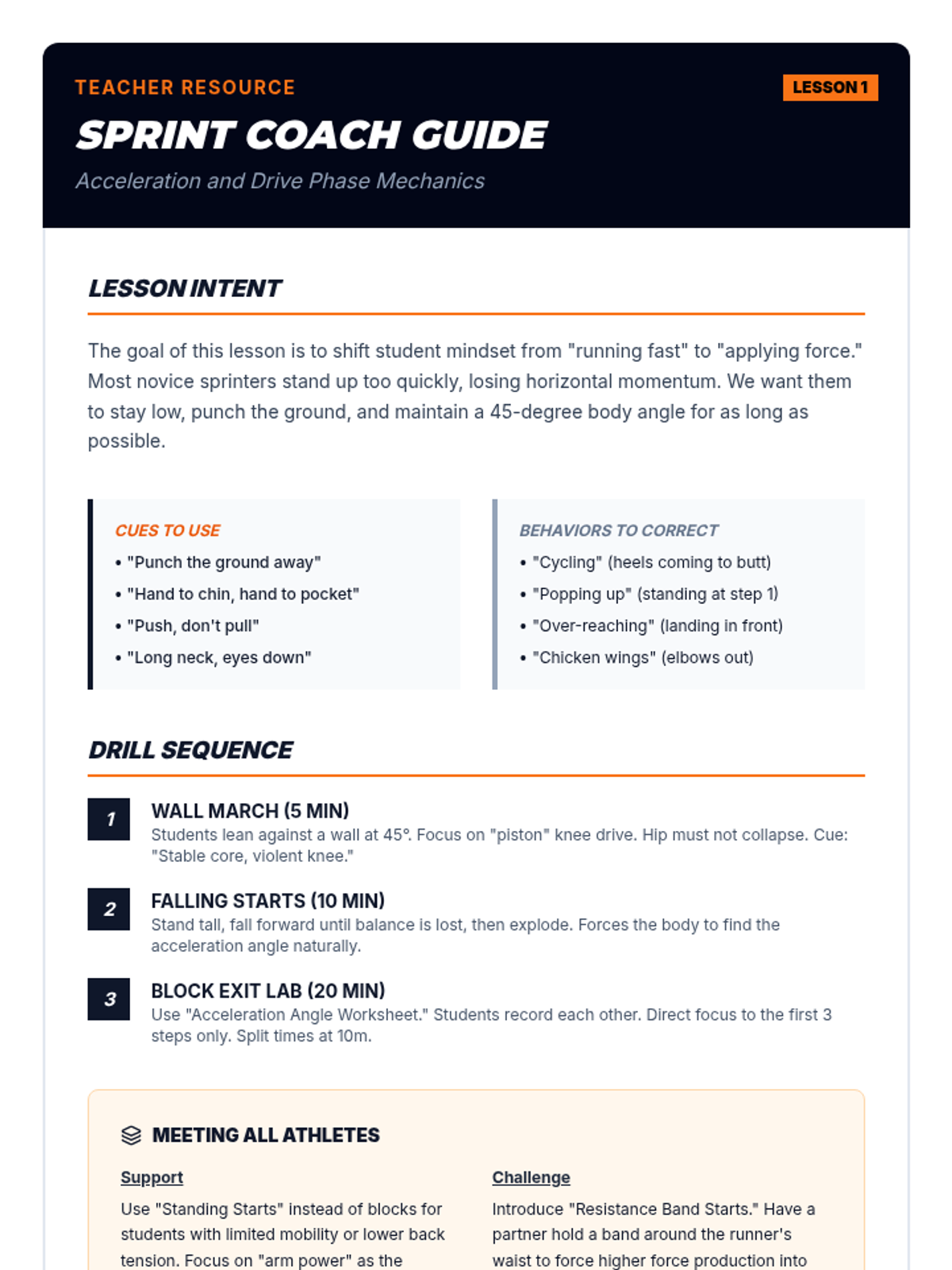
A comprehensive 4-week introductory sprinting program focused on mechanics, power, and injury prevention for outdoor track athletes.
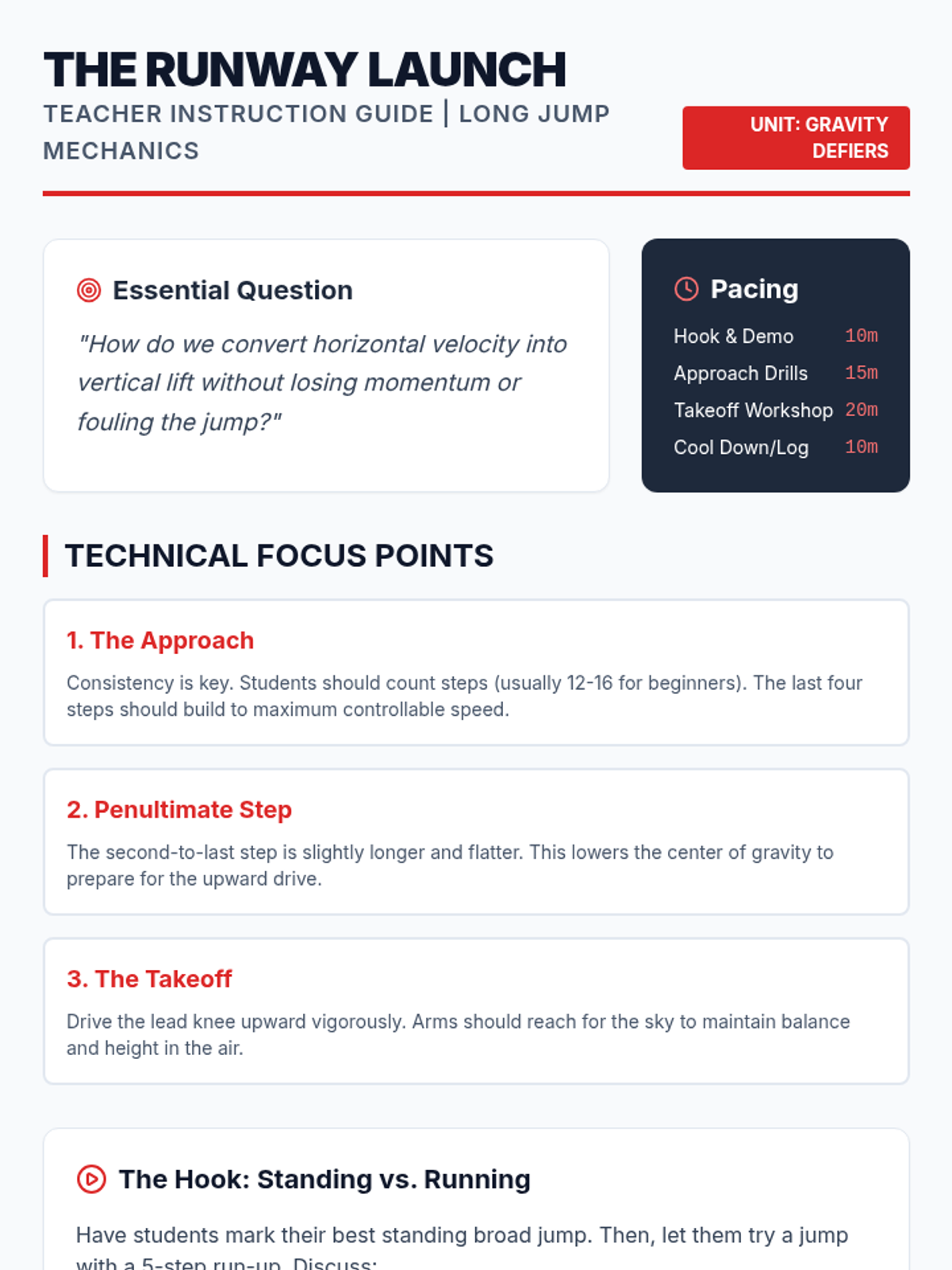
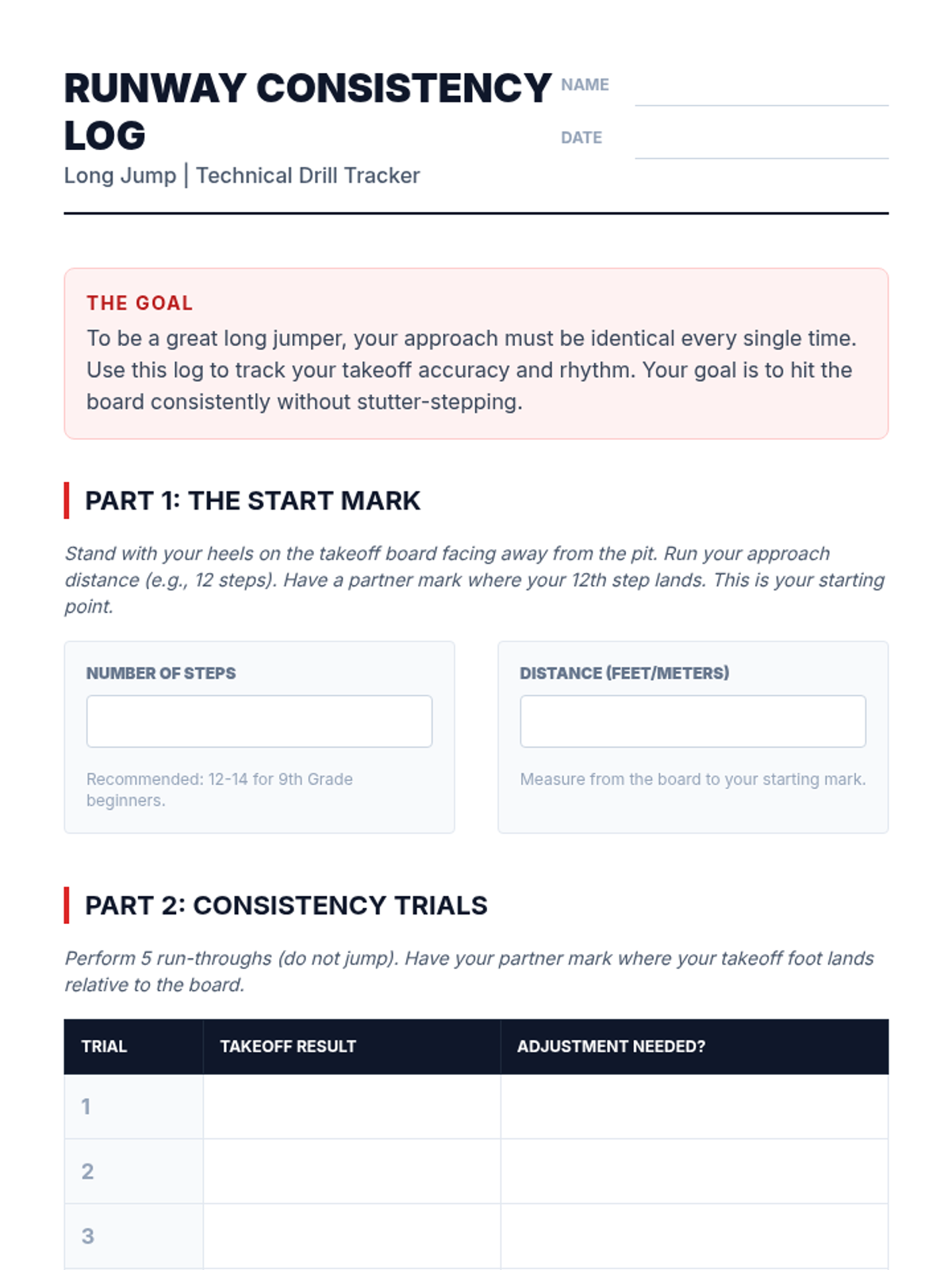
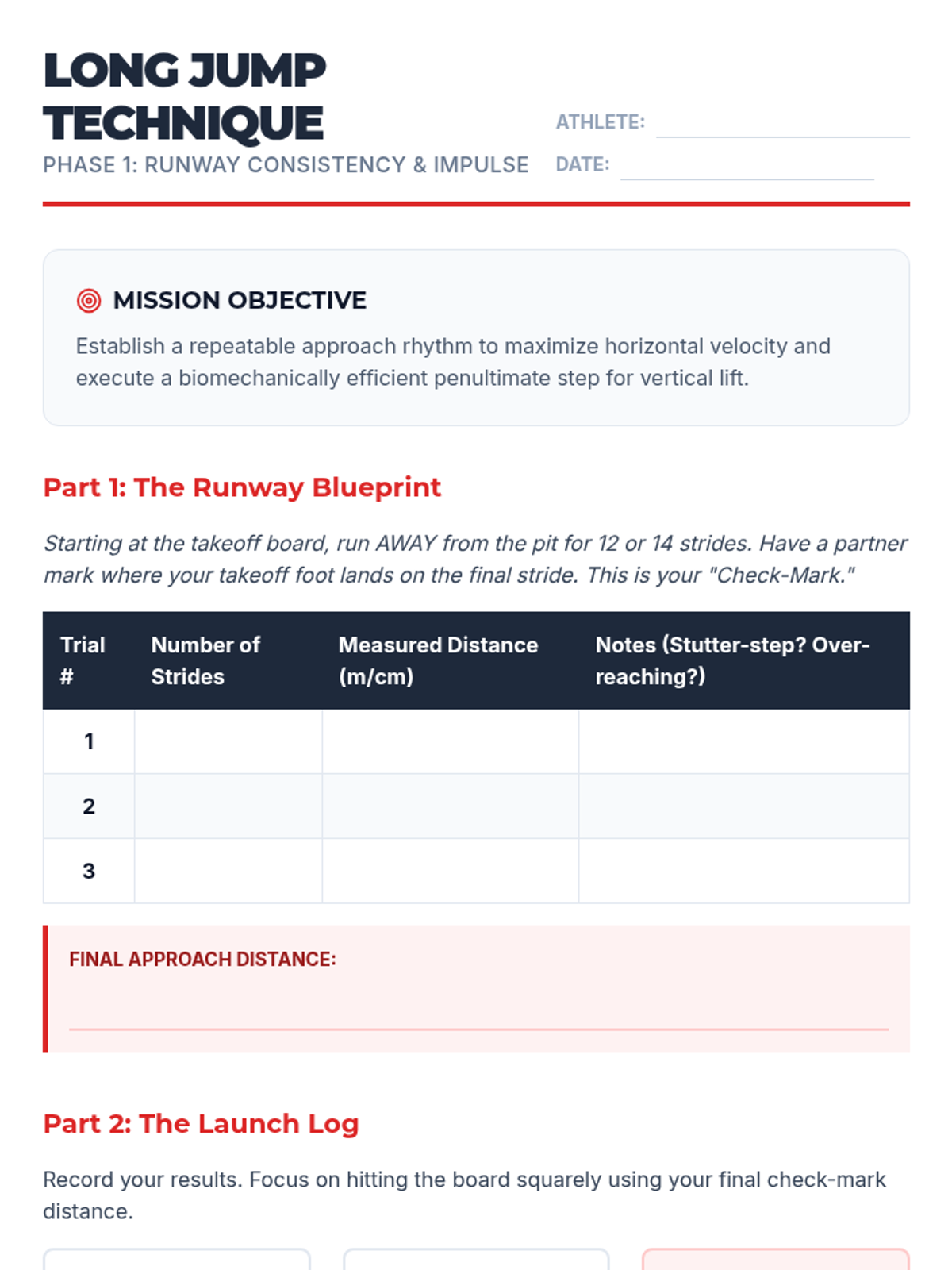
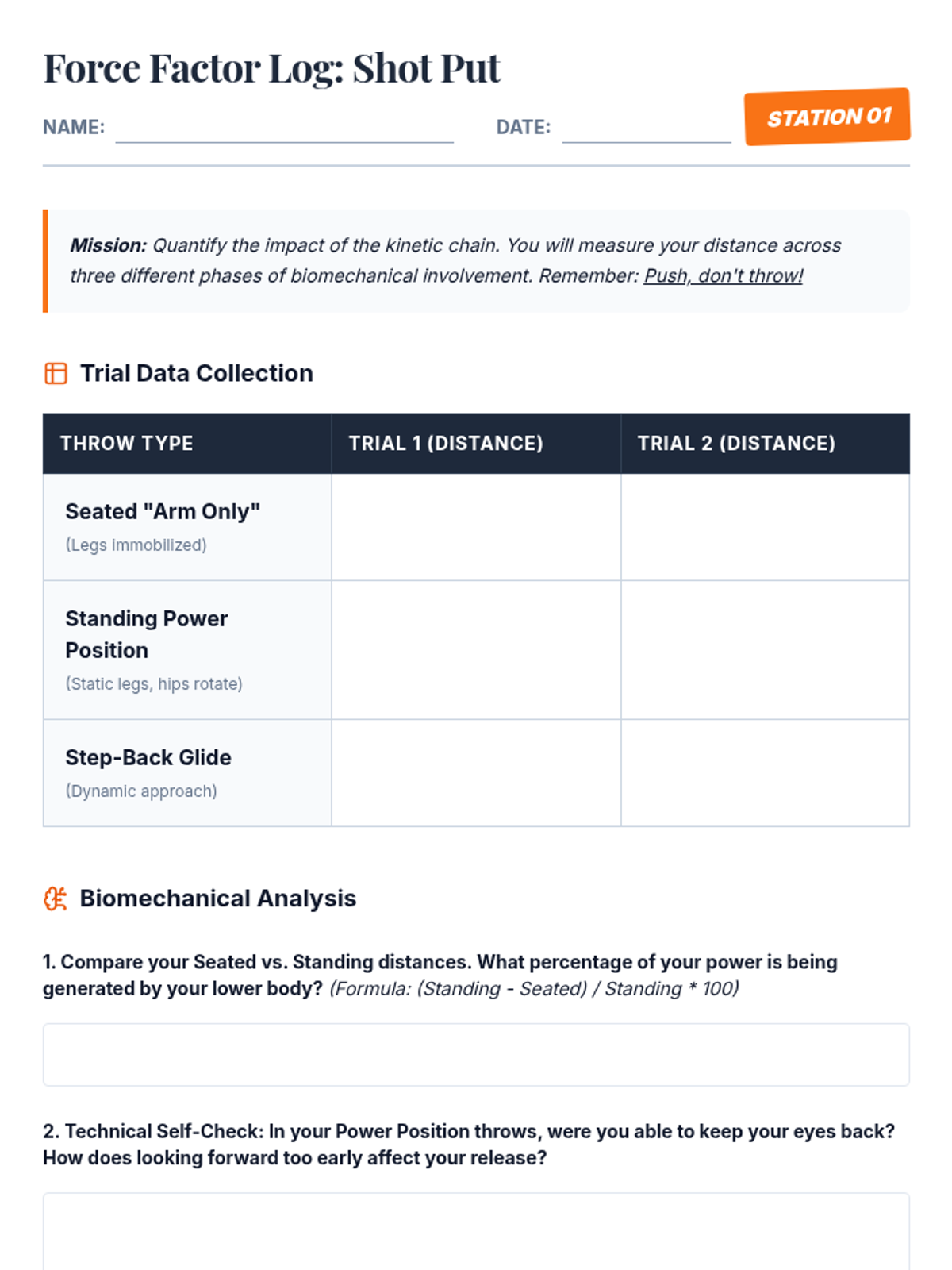
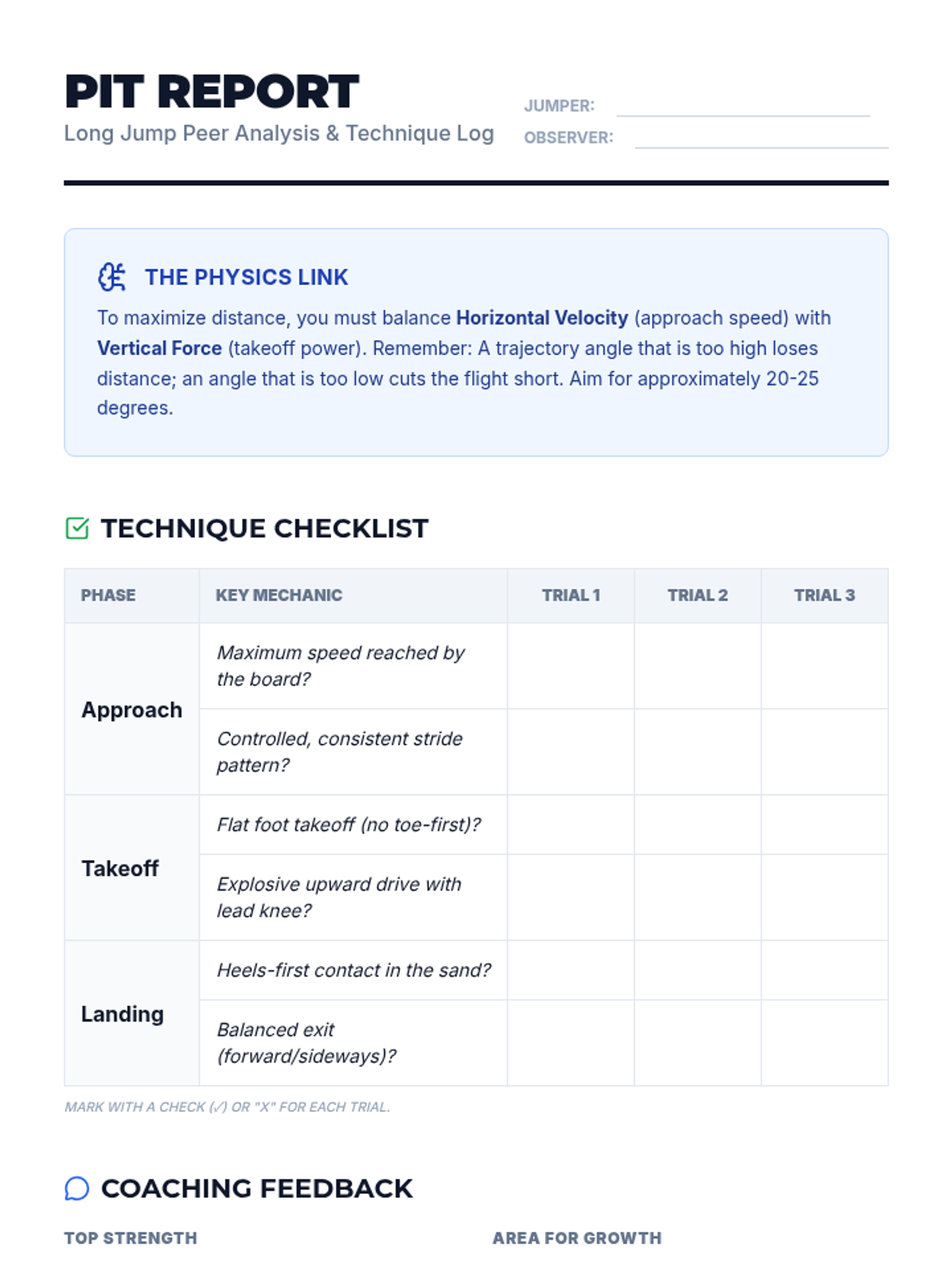
A comprehensive 9th-grade sequence on track and field events, focusing on the mechanics of horizontal jumps and throwing disciplines. Students explore the physics of force, momentum, and release angles through technical practice and a final simulated competition.
A 10th-grade physical education unit focusing on the biomechanics of field events. Students explore physics principles like trajectory, torque, and center of mass through jumps and throws, culminating in a technical pentathlon.
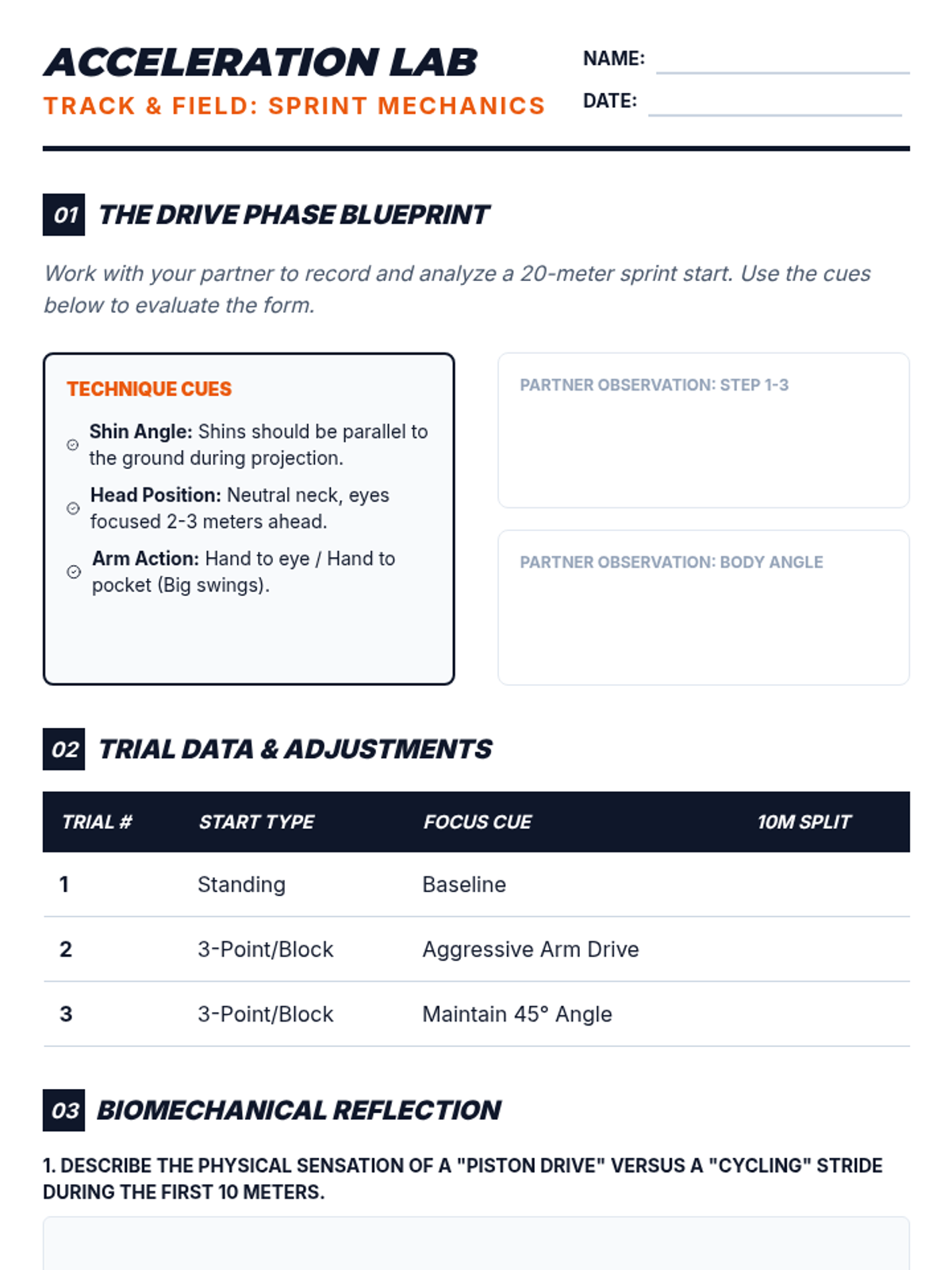
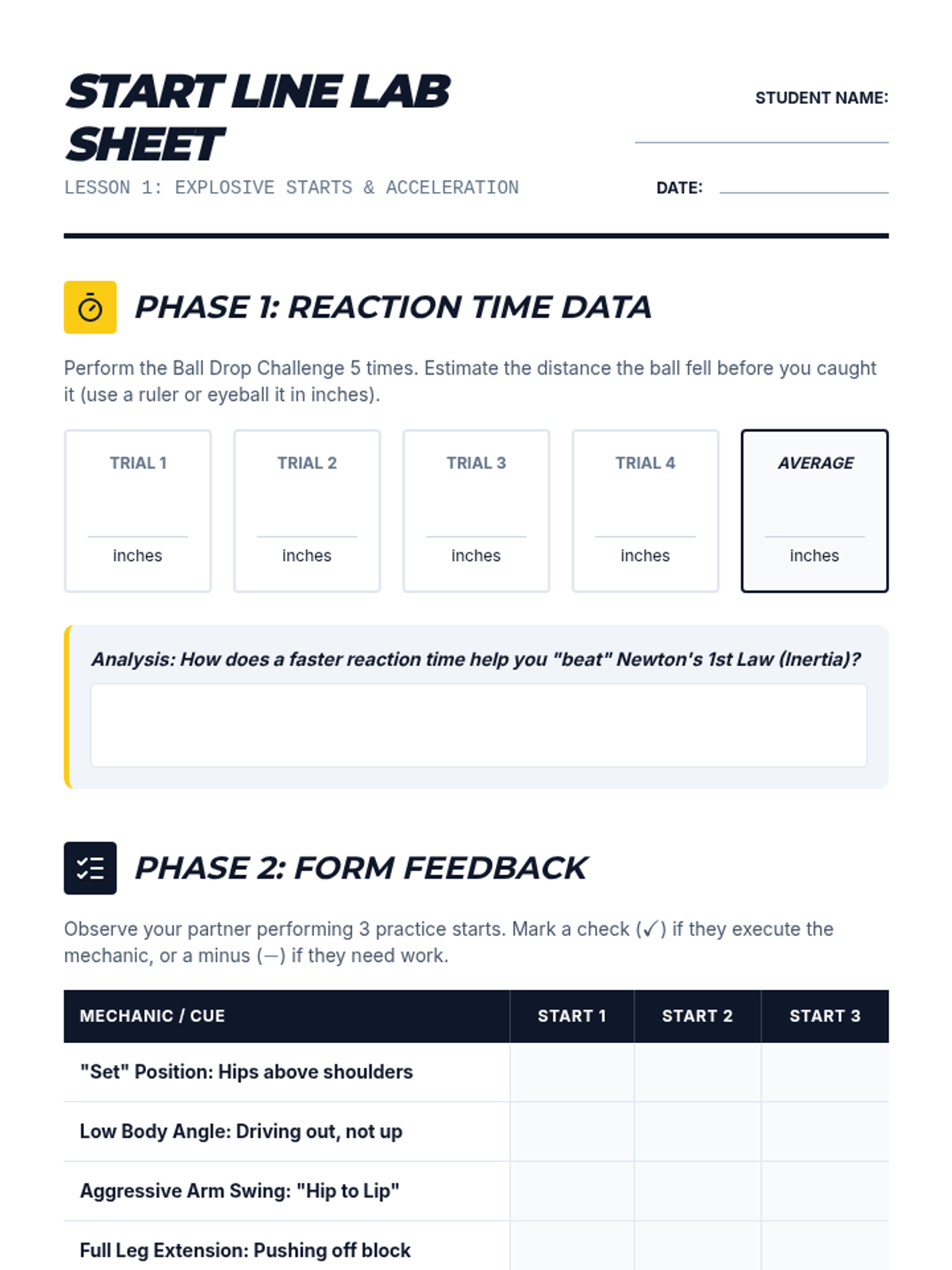
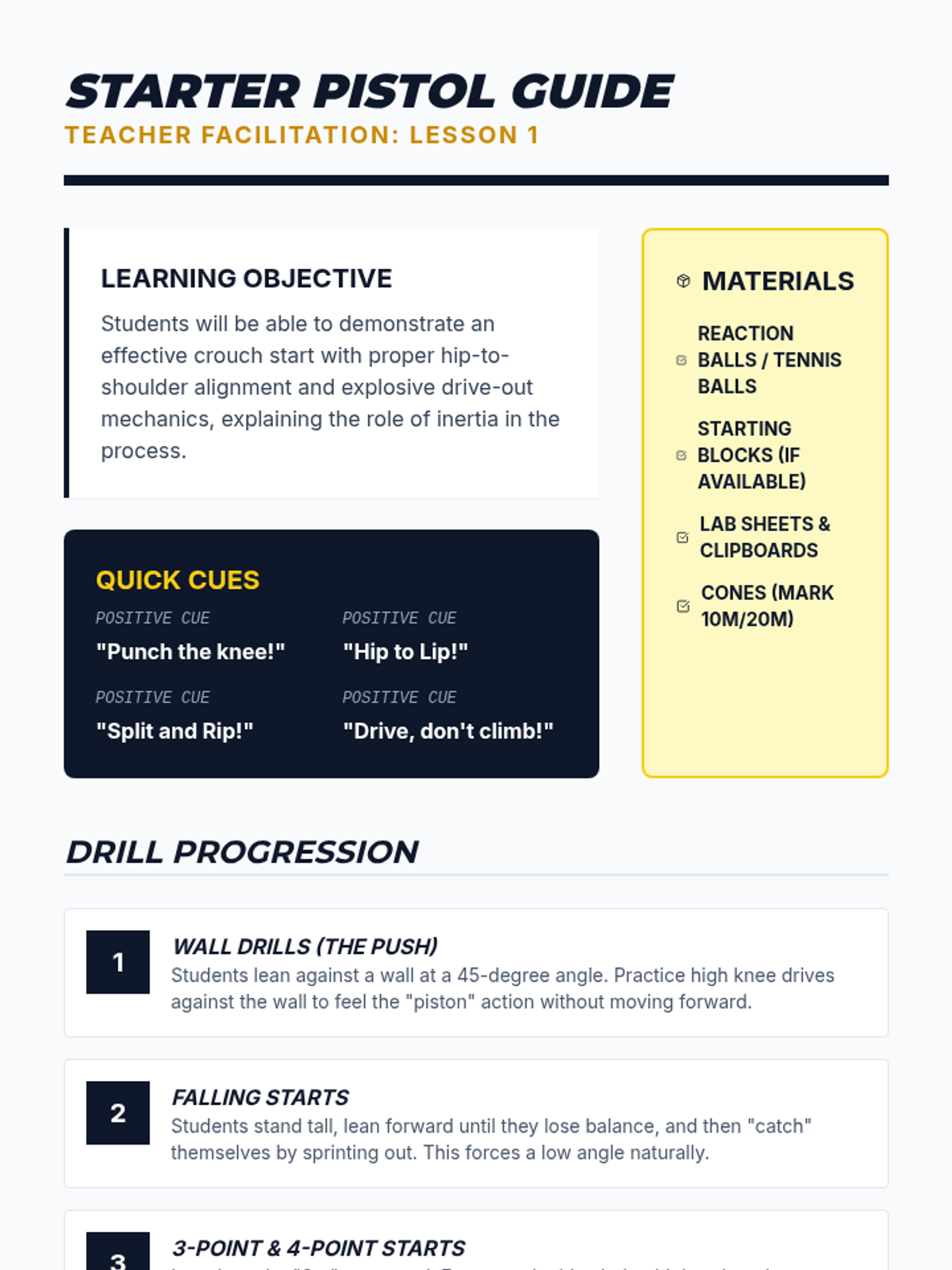
A comprehensive 10th-grade track and field unit focusing on the biomechanics of sprinting, technical relay exchanges, and strategic pacing for middle-distance events. Students analyze acceleration angles, stride efficiency, and energy system usage through video review and data collection.
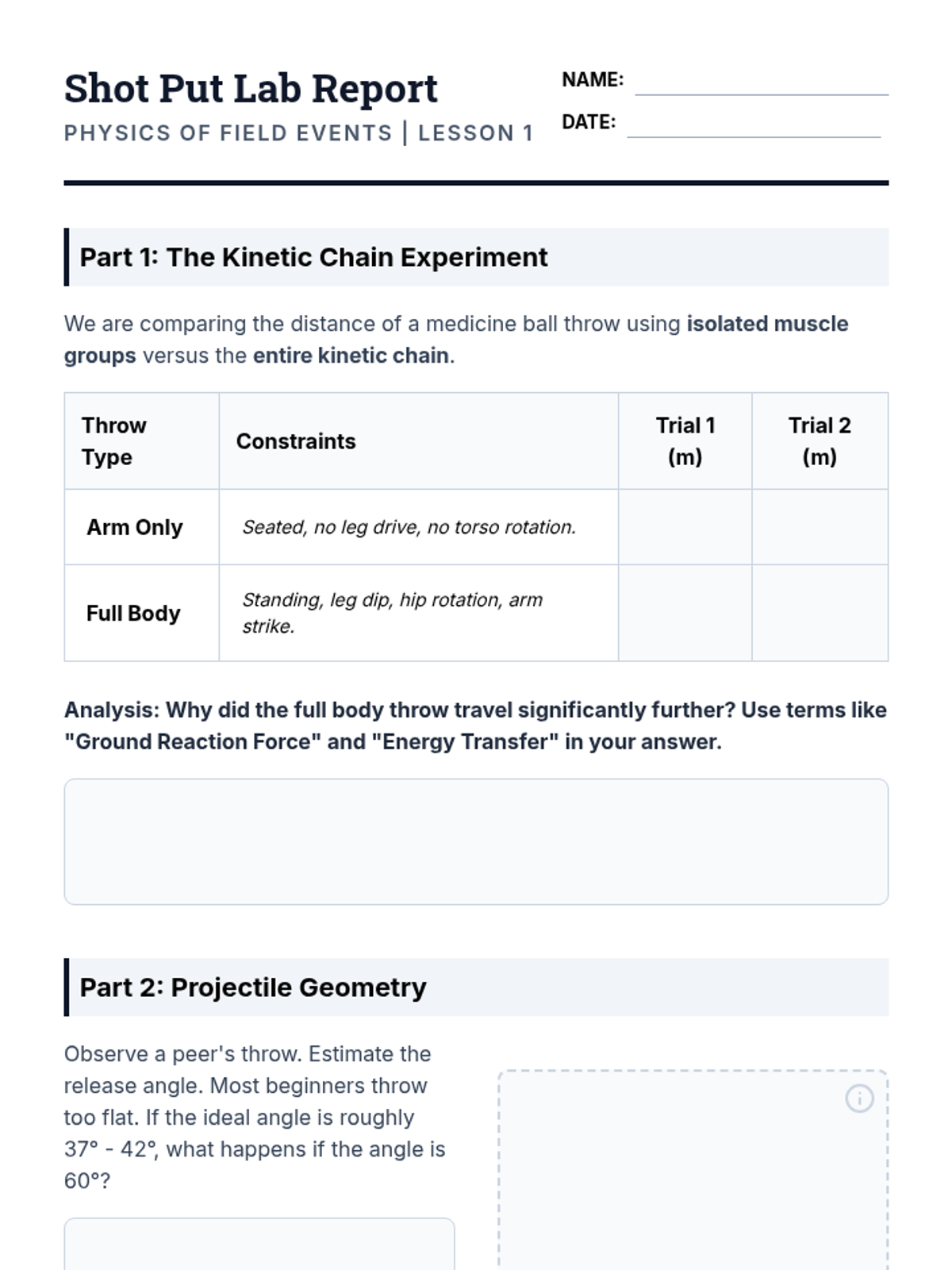
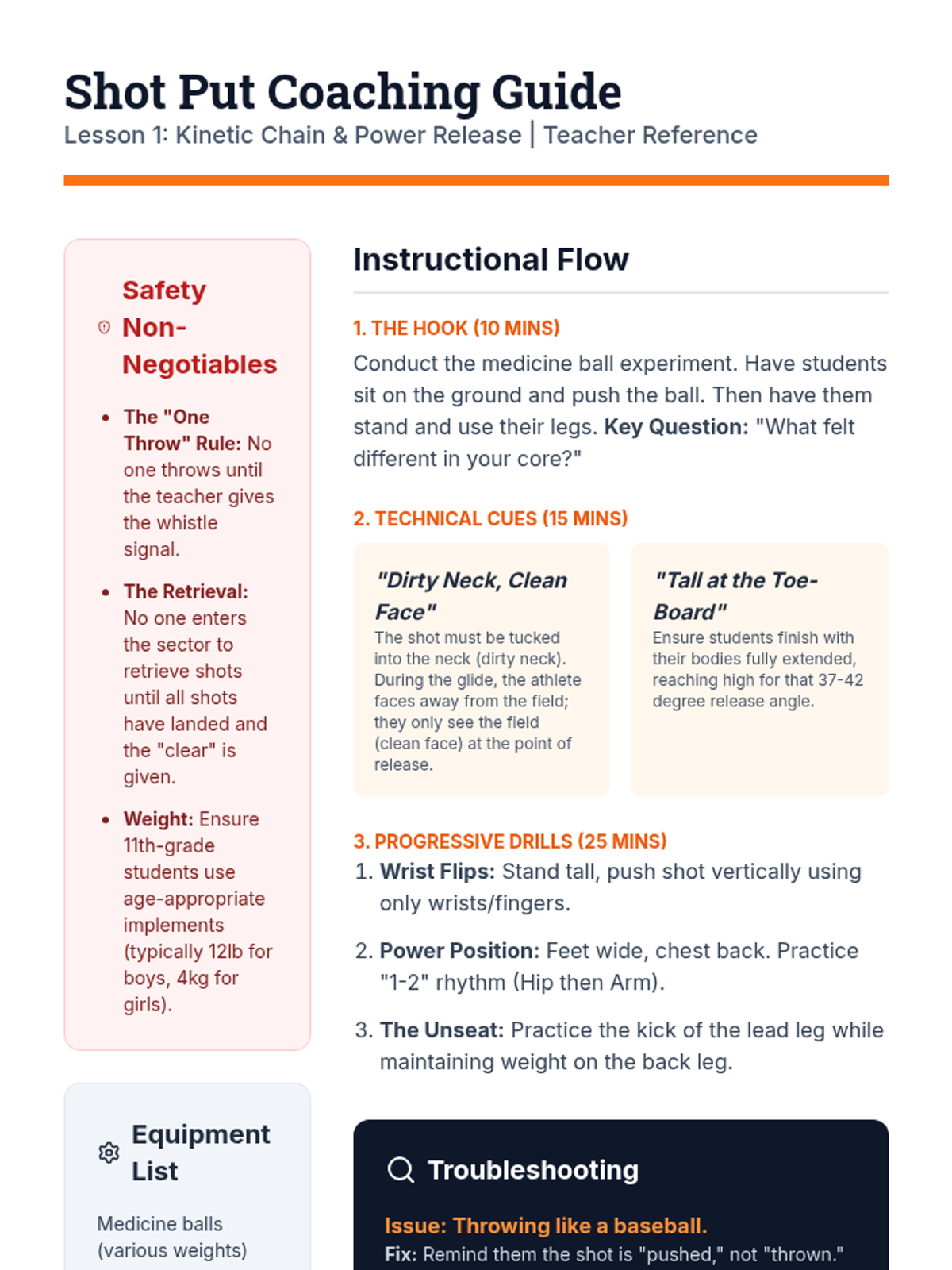
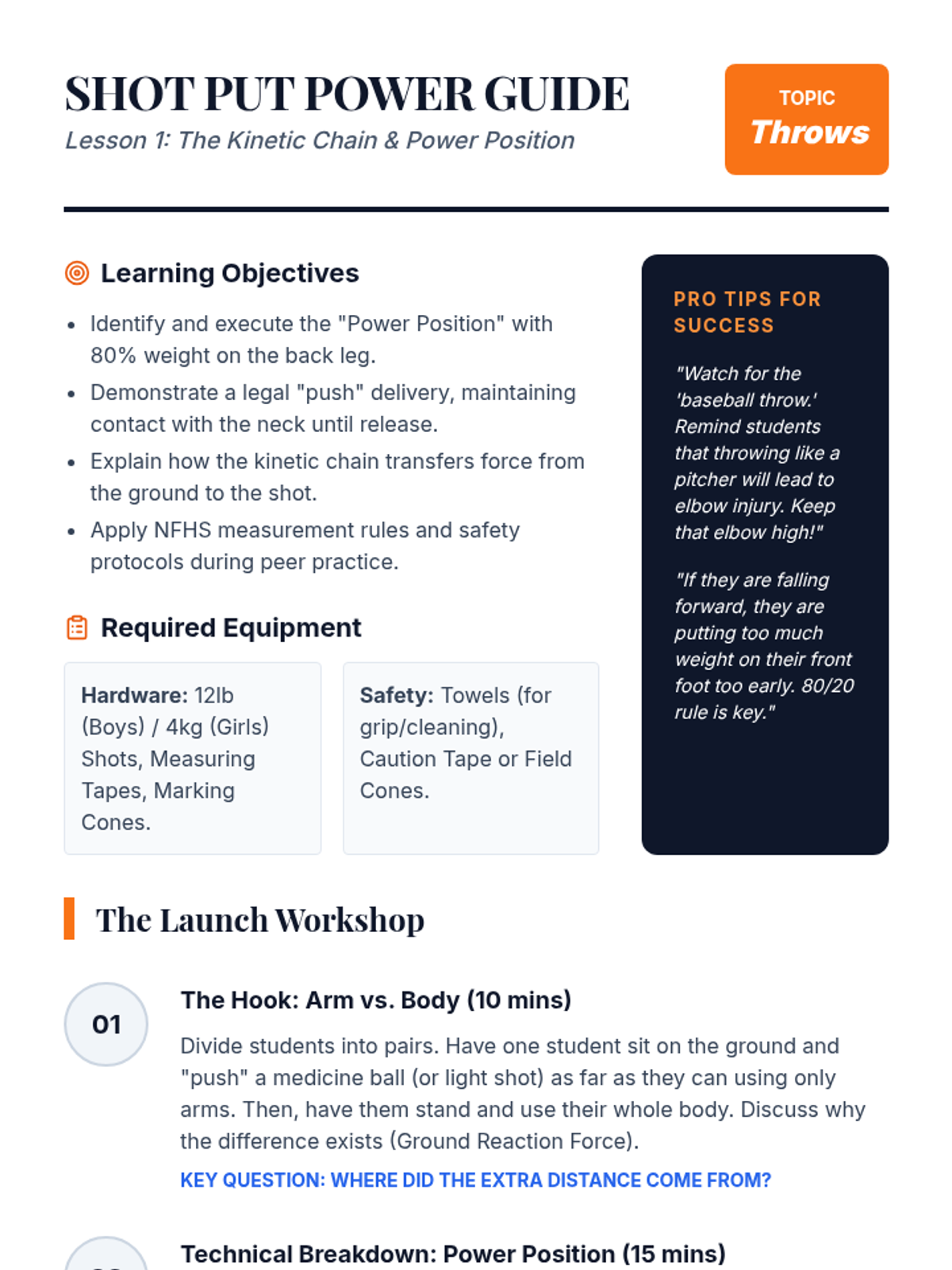
An intensive exploration of the physics and biomechanics behind field events, focusing on shot put, discus, long jump, and triple jump. Students apply scientific principles to athletic performance through peer coaching, video analysis, and technical drills.
A 10th-grade physical education sequence focusing on the biomechanical principles of track and field throwing and jumping events. Students explore force, torque, and projectile motion through hands-on practice and technical analysis.
A comprehensive 10th-grade track and field unit focusing on the biomechanics of sprinting, hurdle rhythm, and relay coordination. Students move from individual technique analysis to competitive team strategies through simulation and data-driven reflection.
Students explore the explosive power and technical precision of field events, covering horizontal jumps and throwing mechanics. The sequence integrates physics principles like trajectory and force transfer with safety protocols, culminating in a student-led mini-meet.
A comprehensive 8th-grade Track and Field unit focusing on the biomechanics of sprinting and the technical precision of relay exchanges. Students explore acceleration, maximum velocity, and pacing strategies through a 'Kinetic Lab' lens.
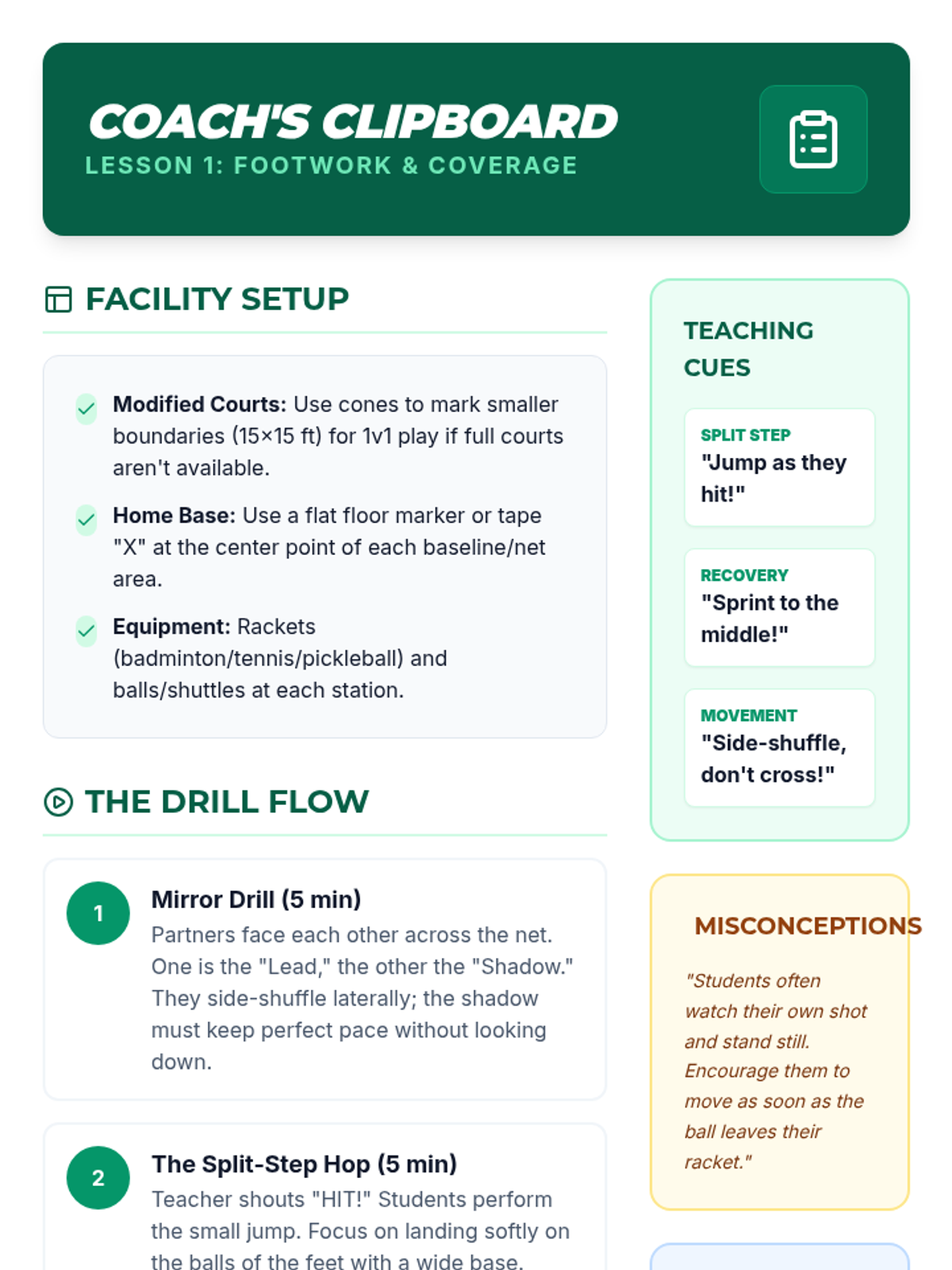
This sequence moves students from static skill practice to dynamic game situations, emphasizing court movement and tactical decision-making in racket sports. Students explore concepts of open space, defensive recovery, and offensive placement within a modified court boundary.
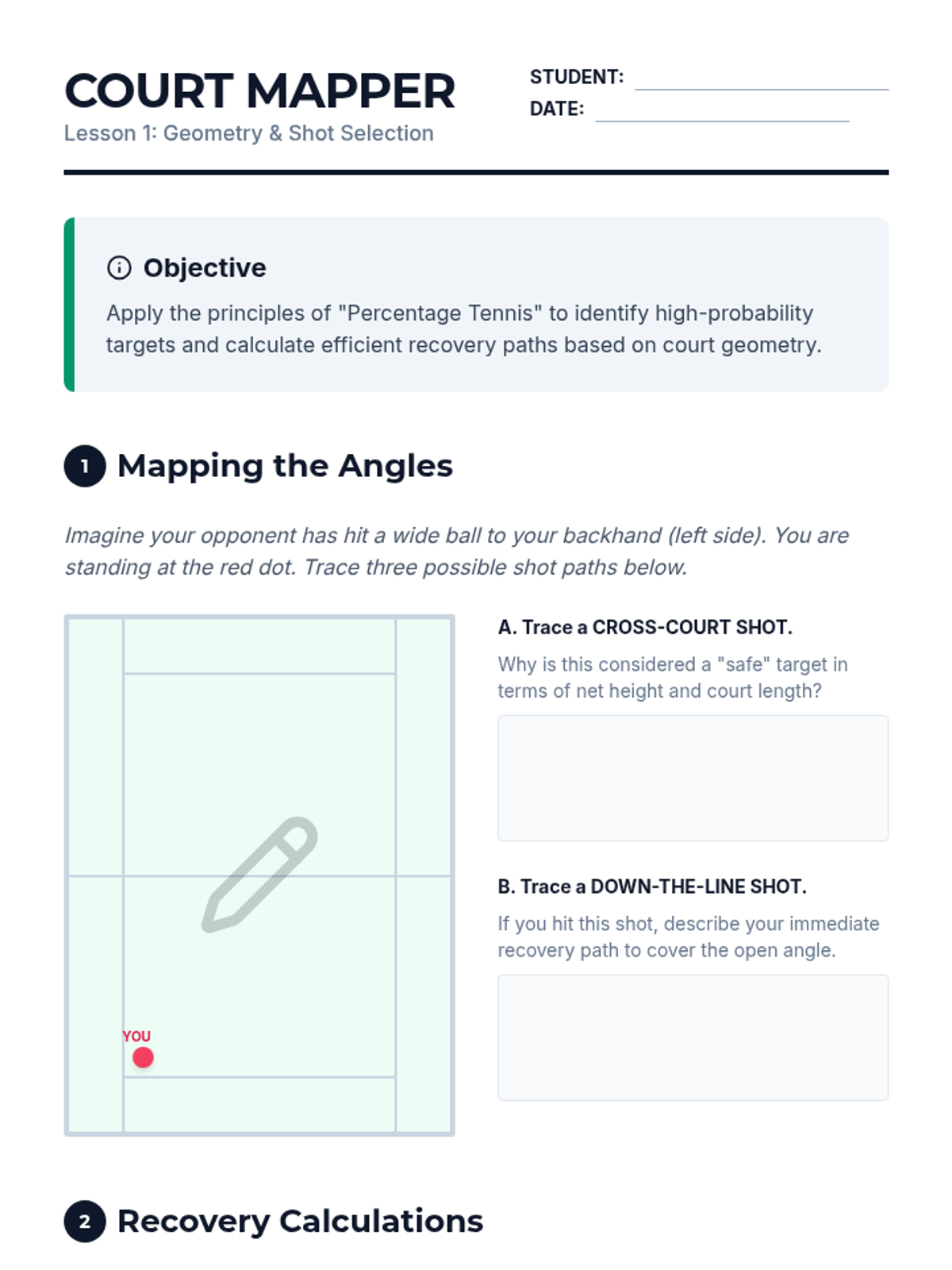
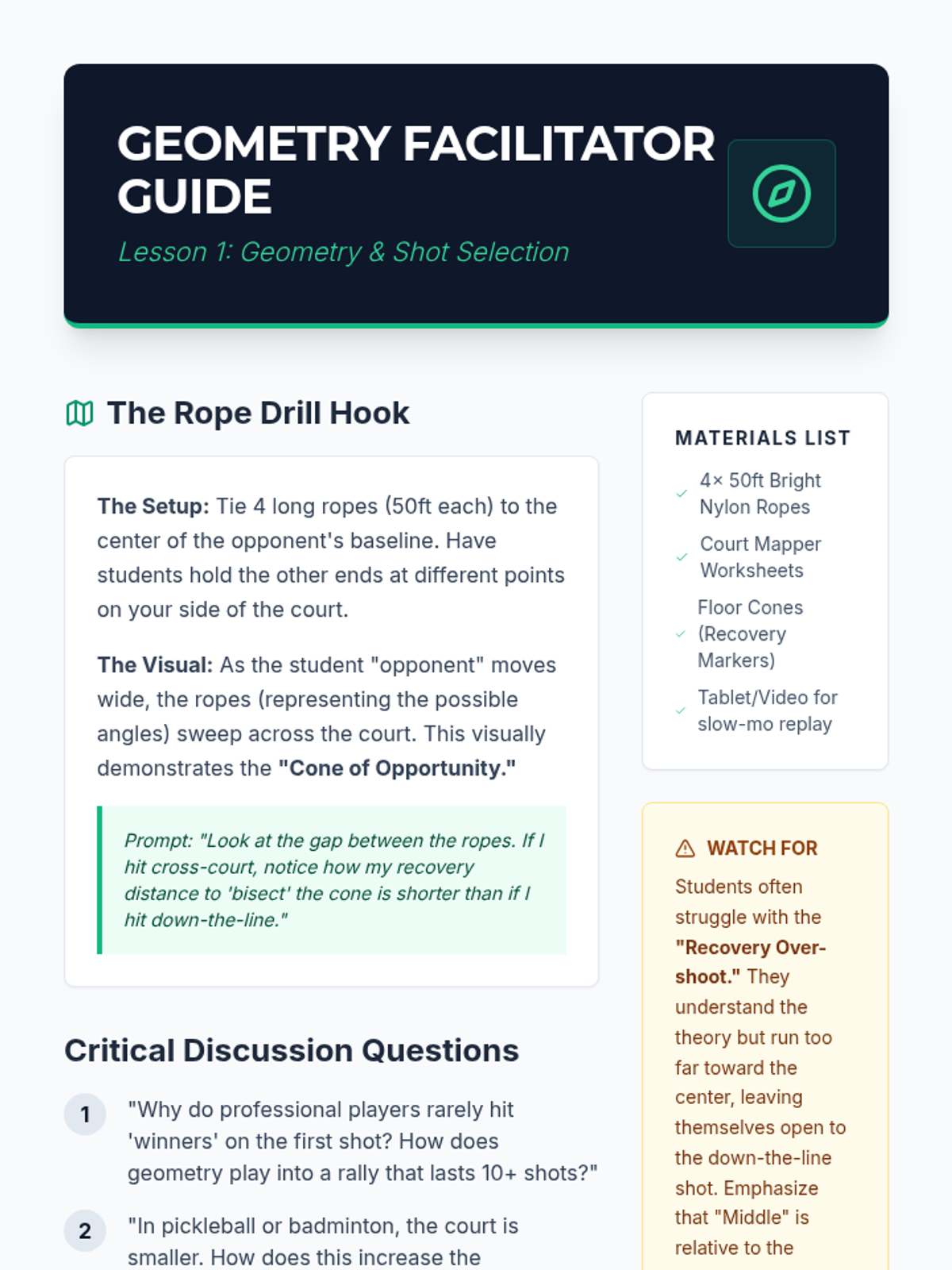
This sequence explores the tactical, geometric, and administrative aspects of racket sports. Students will transition from basic mechanics to high-level strategic decision-making, officiating protocols, and tournament management, preparing them for competitive play and sports leadership.
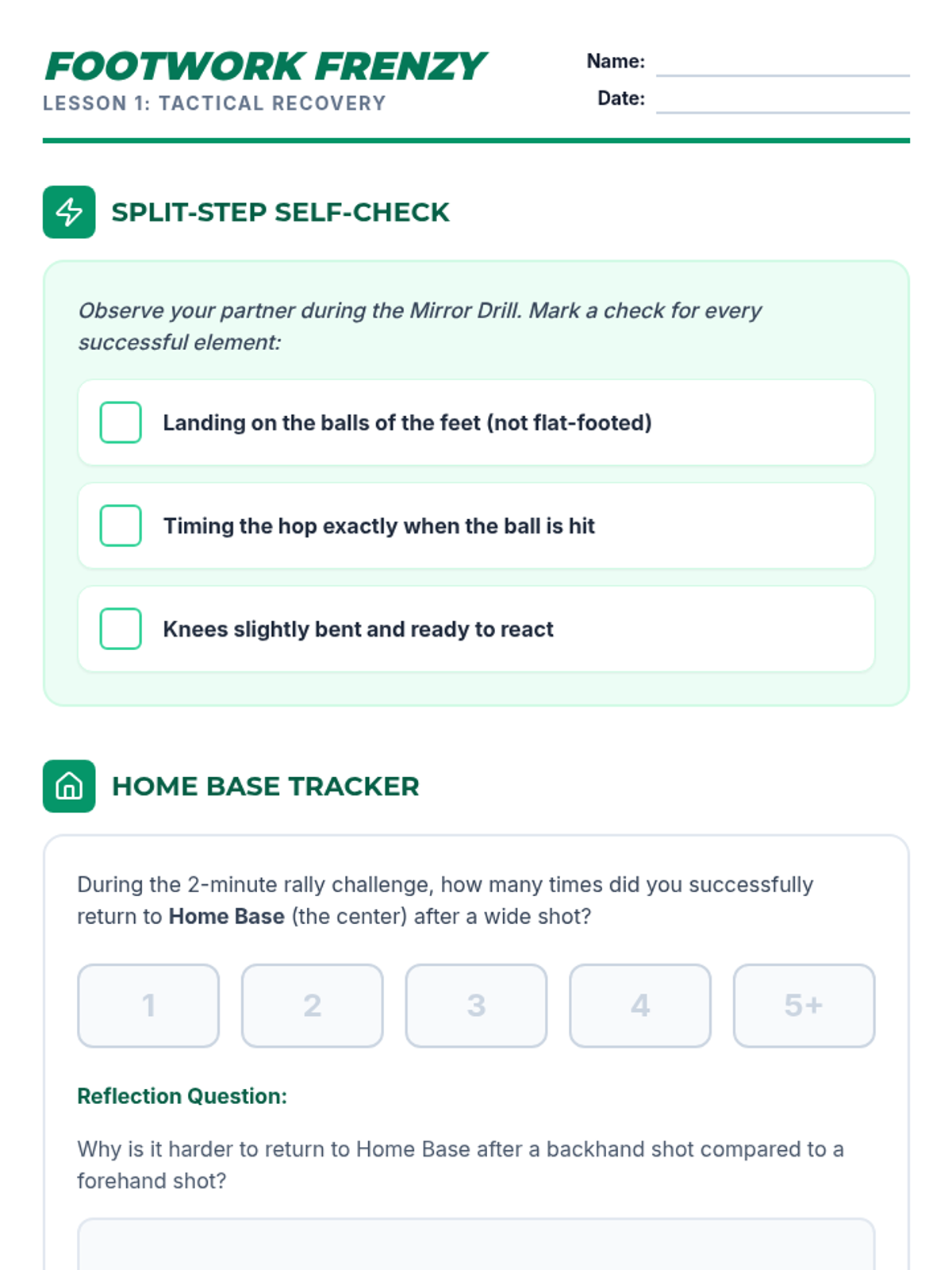
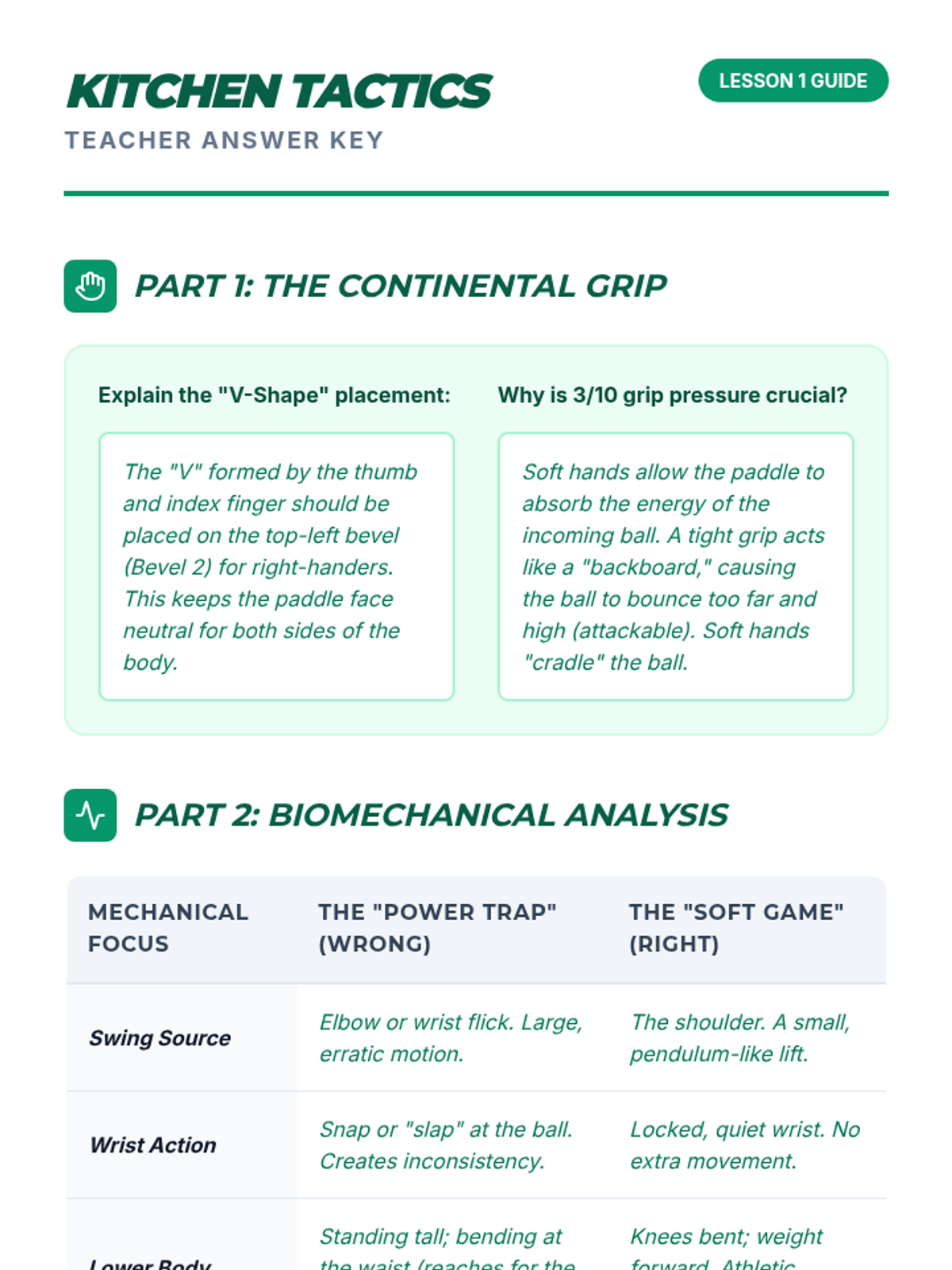
This sequence targets fast-twitch reflexes and movement patterns for badminton and pickleball, focusing on spatial demands, tactical reaction times, and the transition from skill-building to complex doubles play.
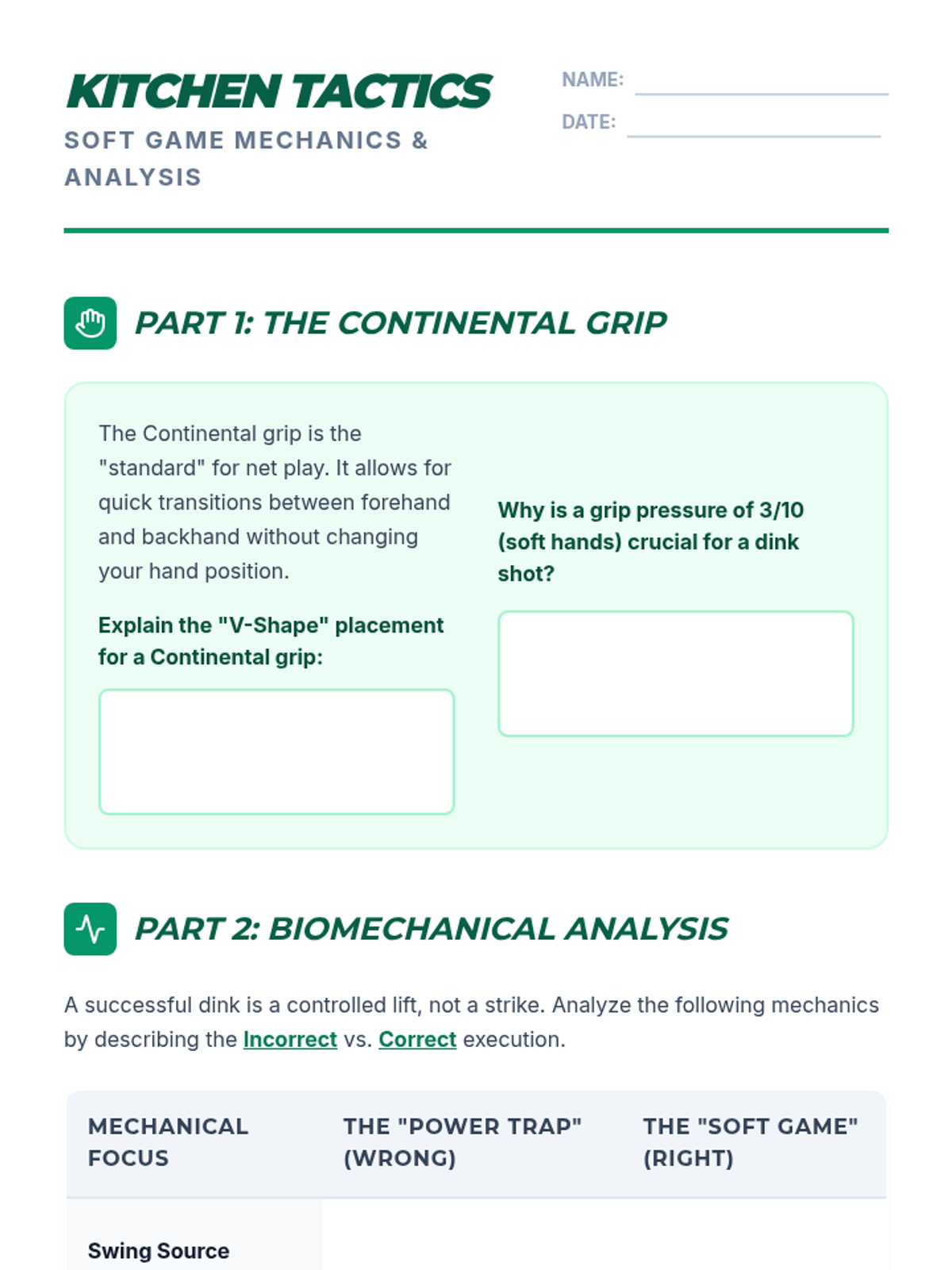
A comprehensive sequence for 10th-grade students focusing on the biomechanics and strategic depth of Pickleball. From soft-game dinks to high-pressure transition zone drops and doubles tactics, students learn to control the court through precision and shot selection.
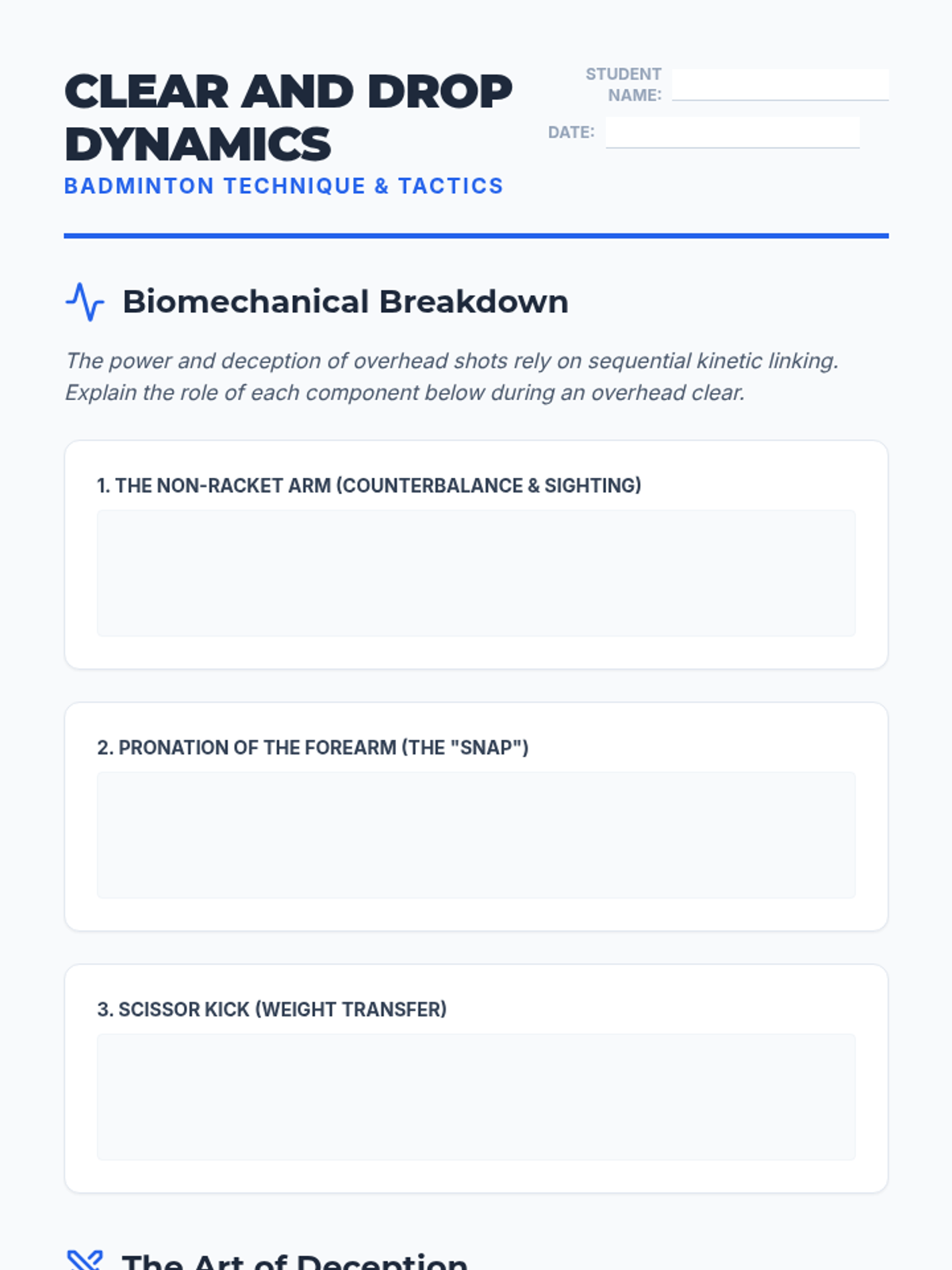
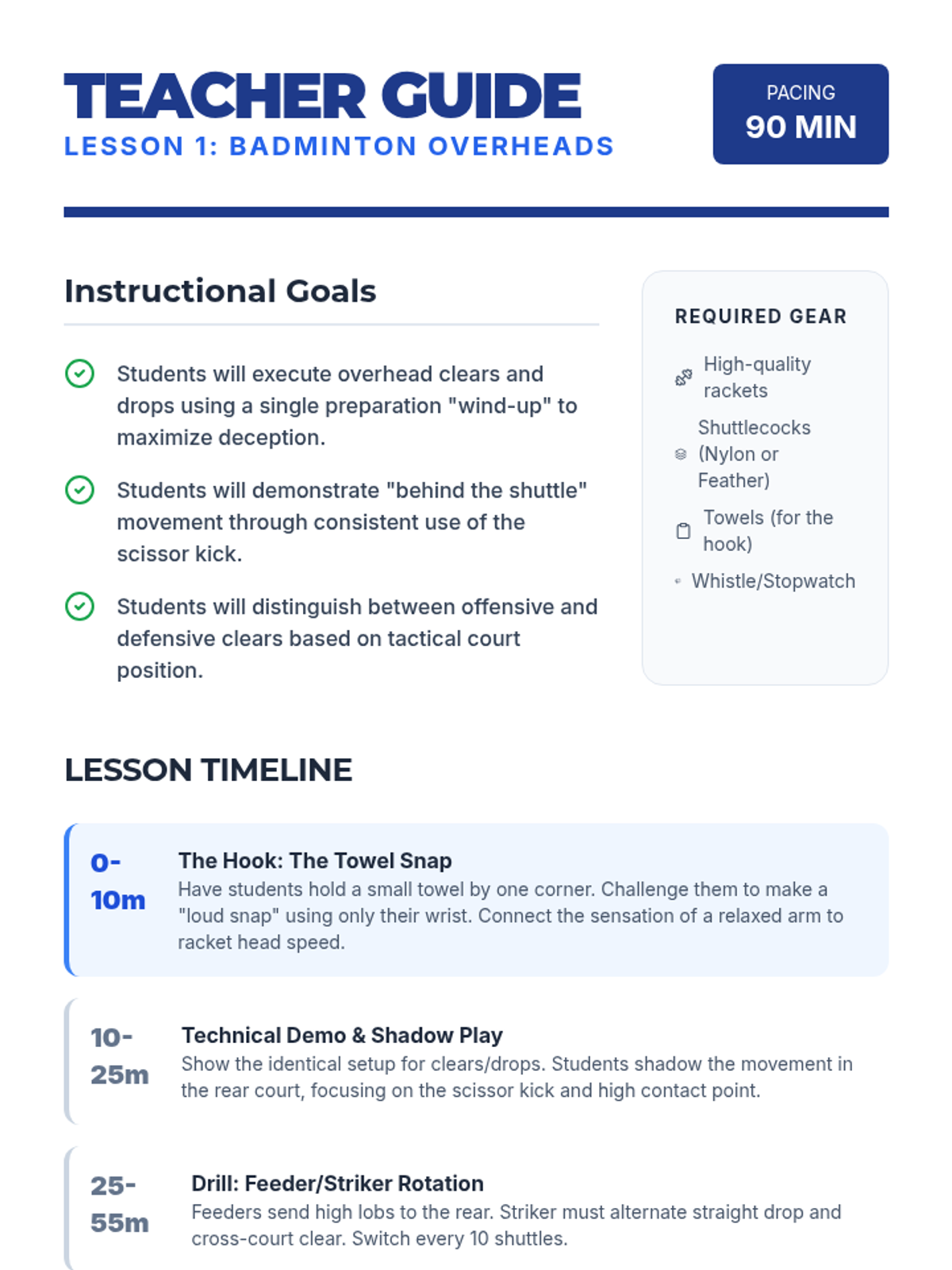
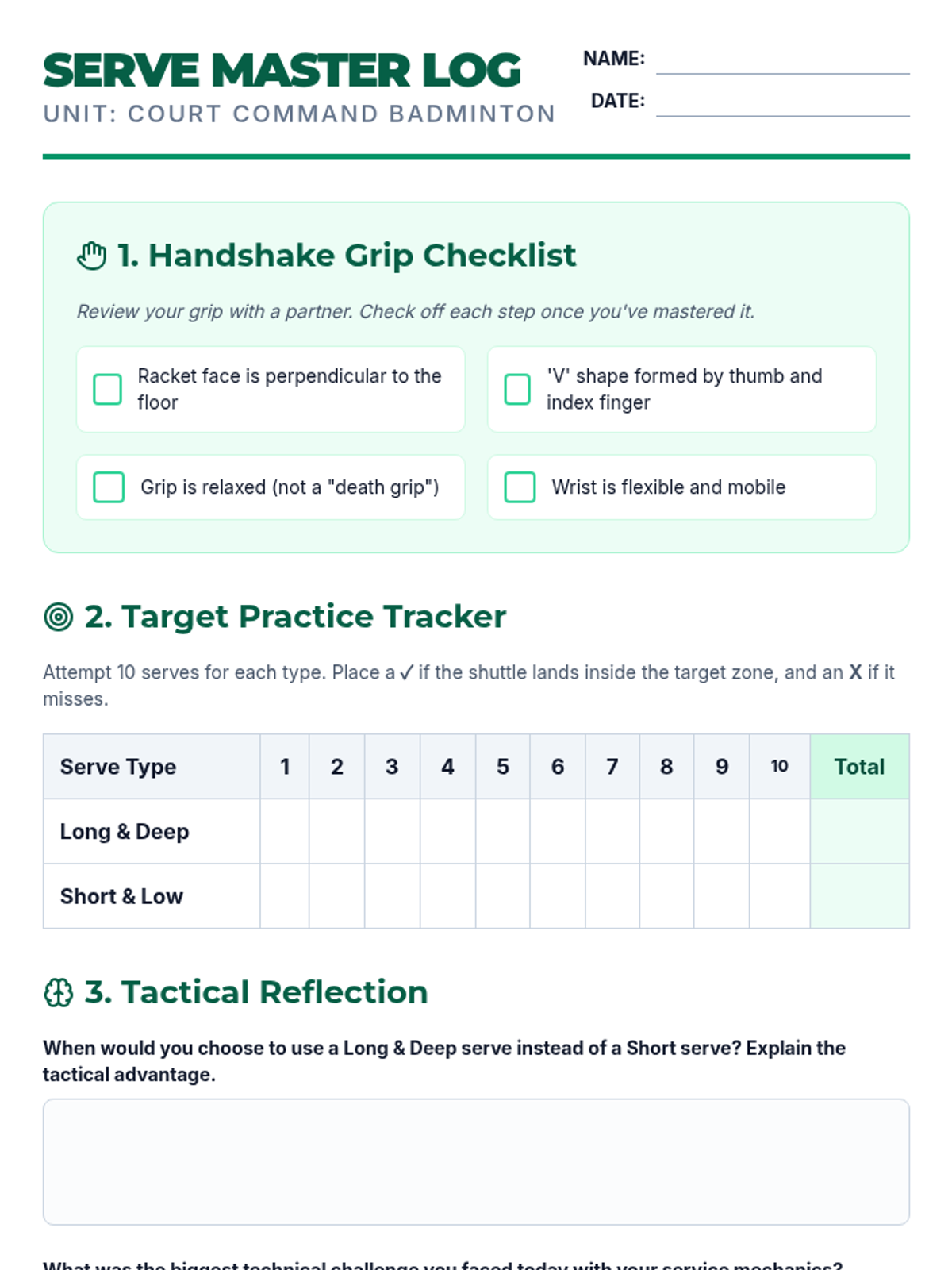
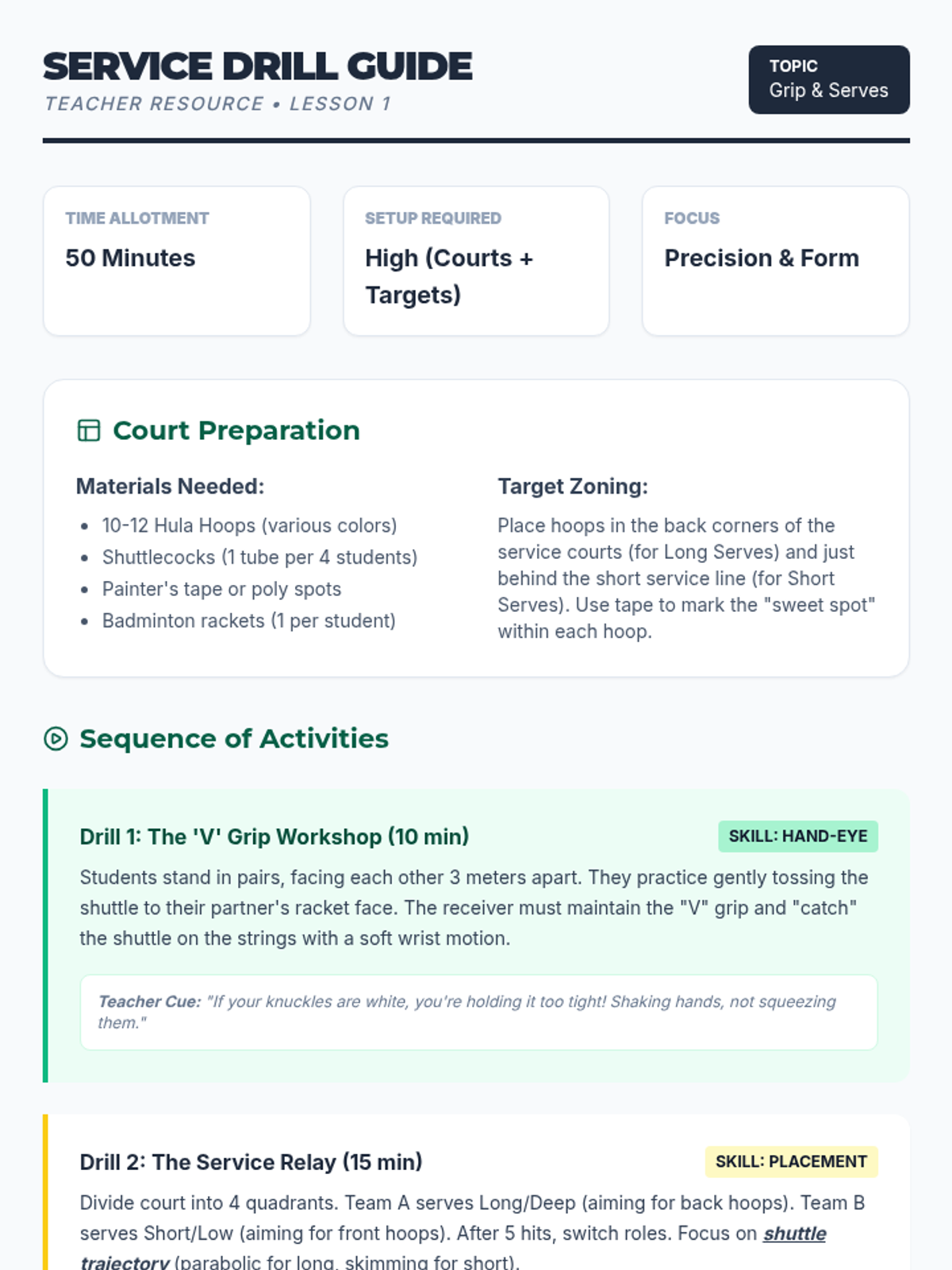
This unit focuses on the technical mastery and tactical application of badminton strokes. Students progress from basic grip and serves to complex net play and attacking smashes, culminating in a competitive doubles tournament where they apply official scoring and rotation strategies.
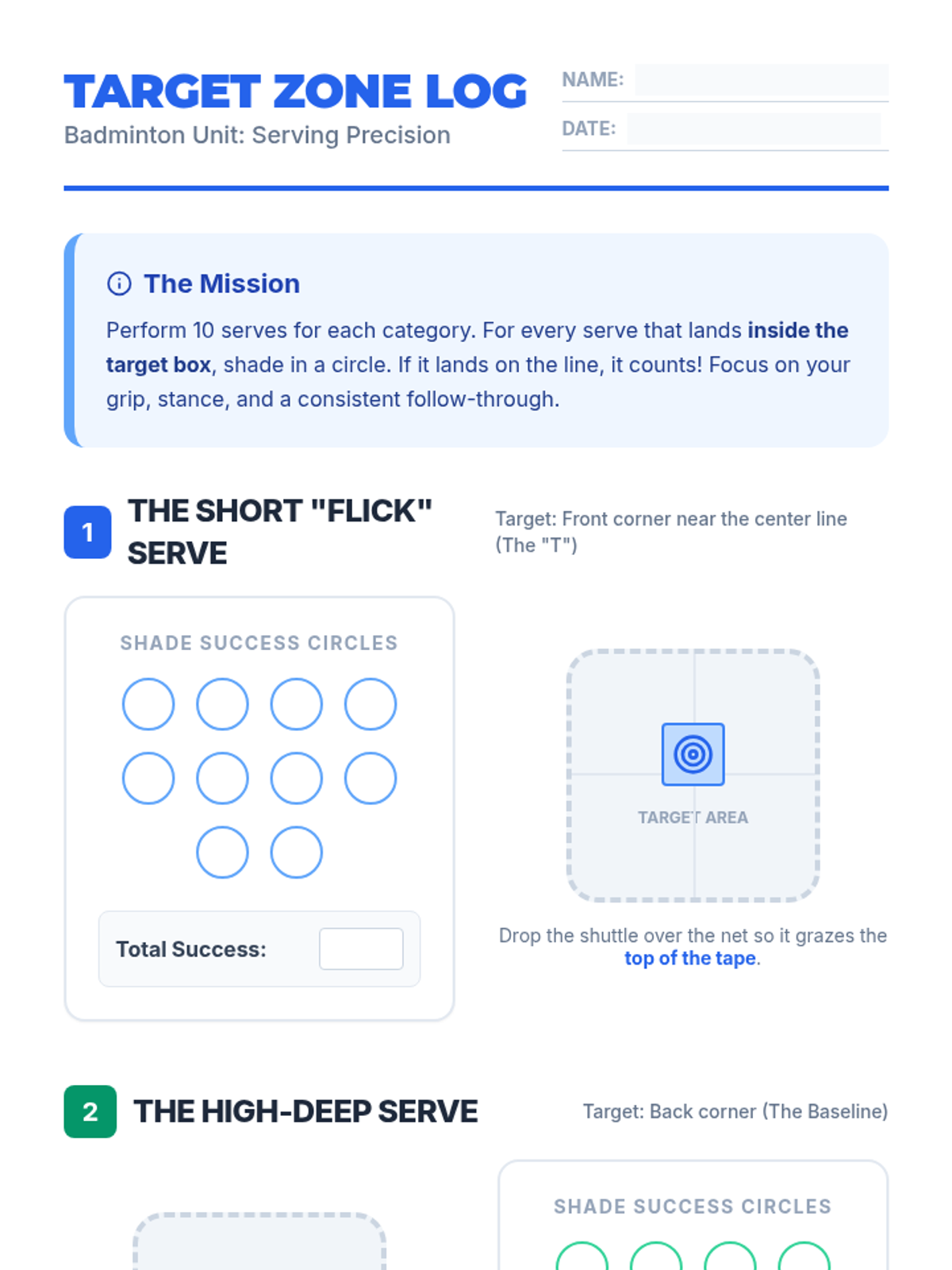
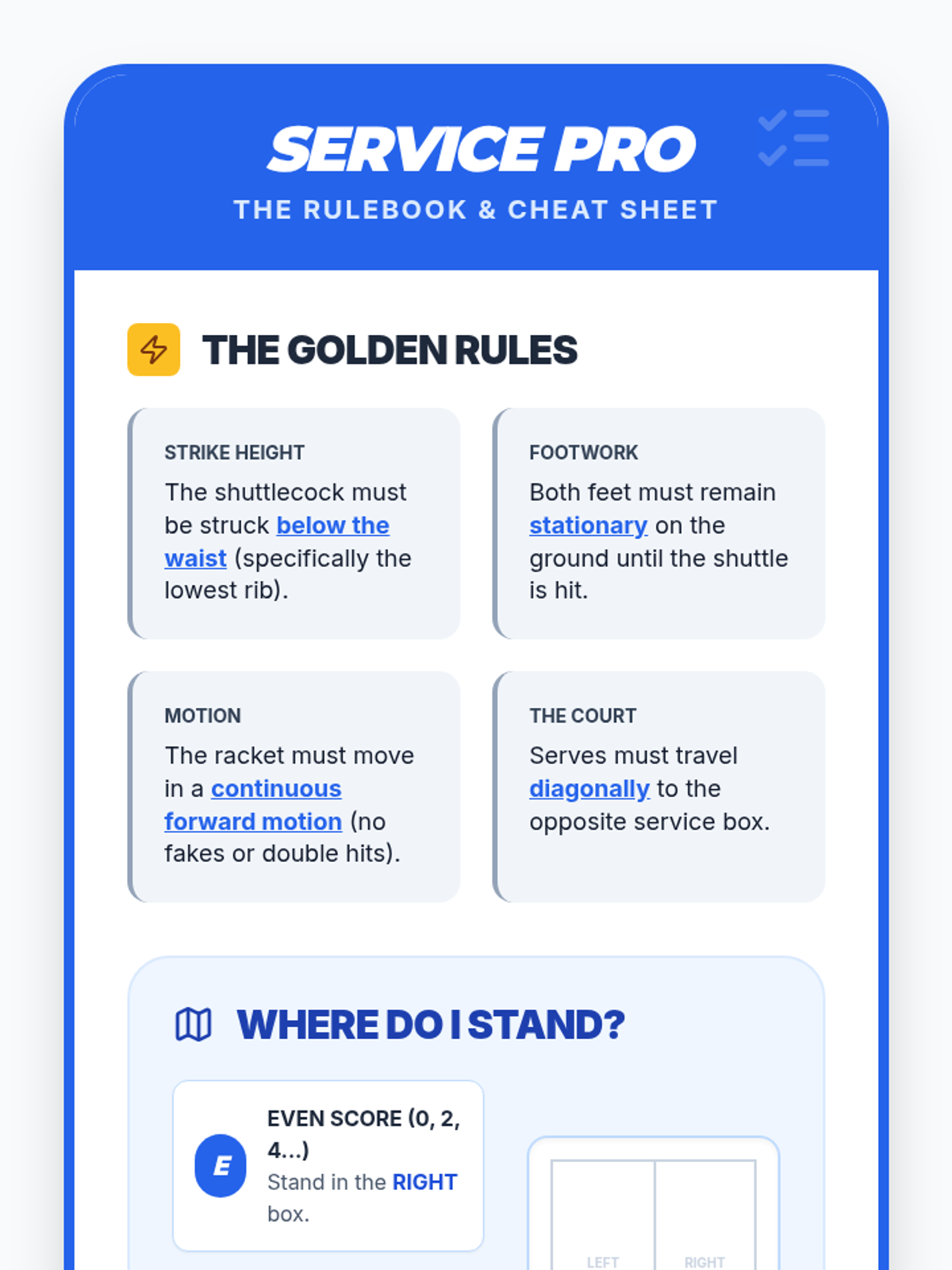
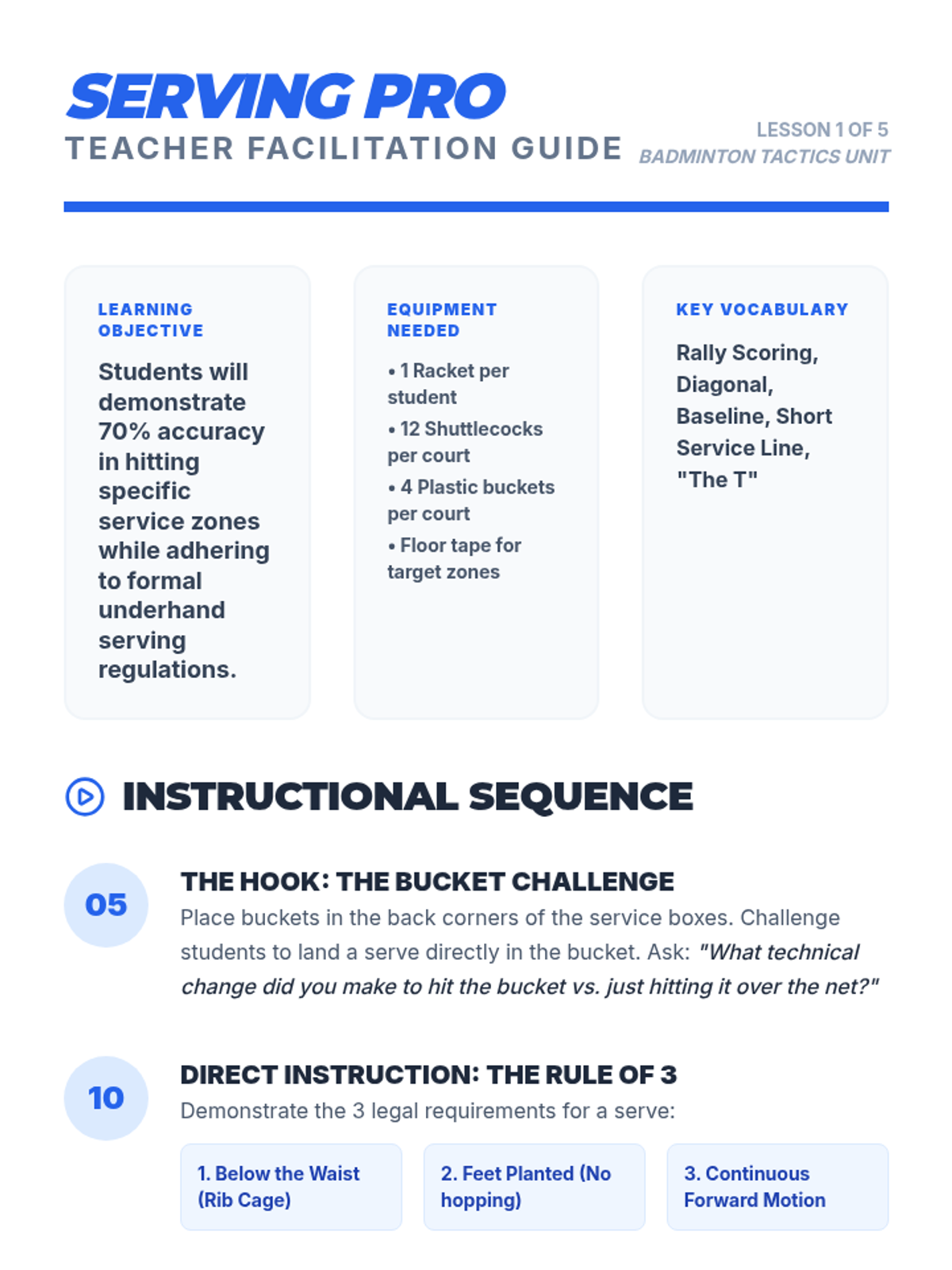
A 6th-grade badminton sequence focusing on tactical spatial awareness, serving precision, offensive shot selection, and doubles communication, culminating in a competitive tournament.
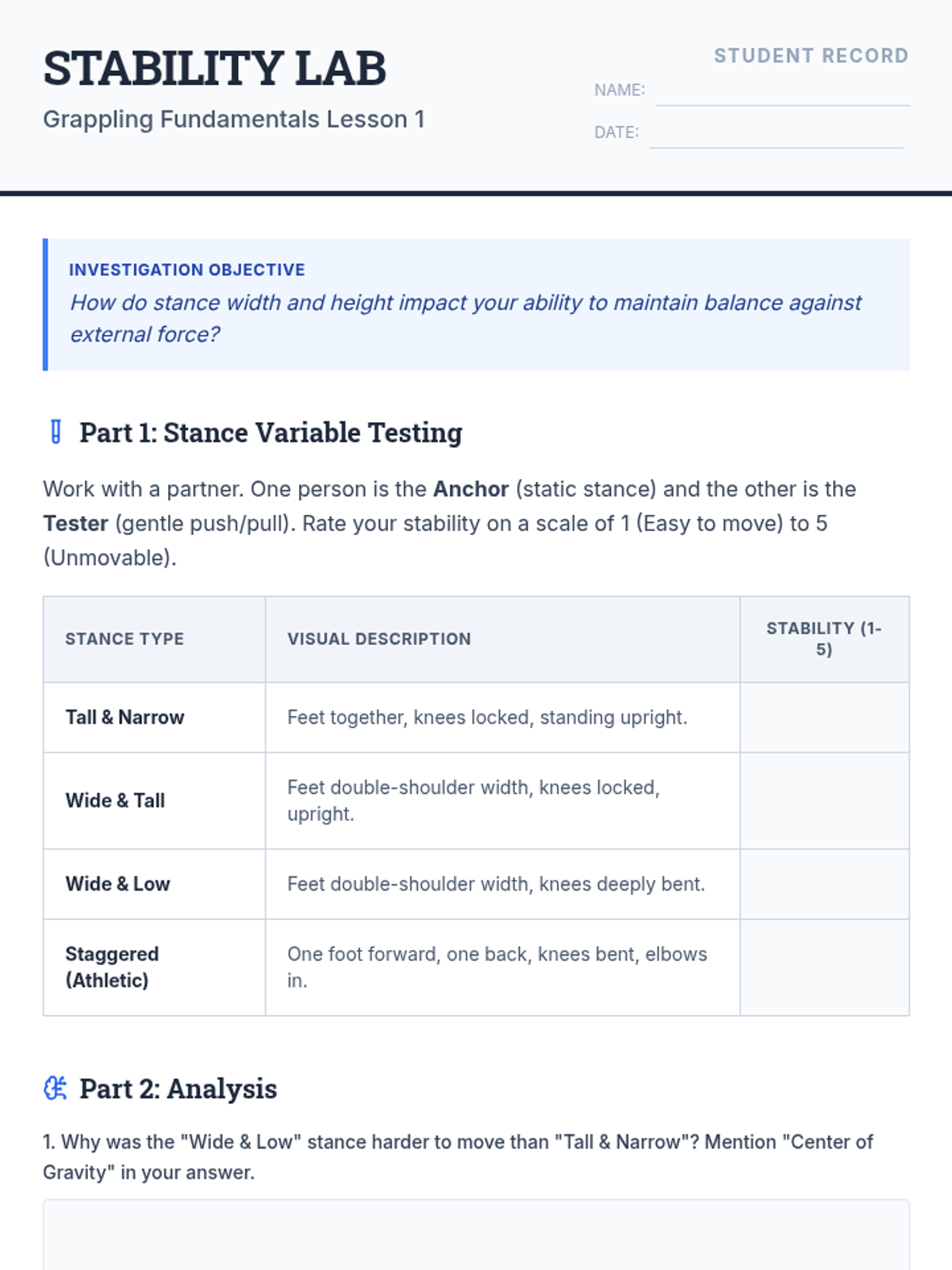
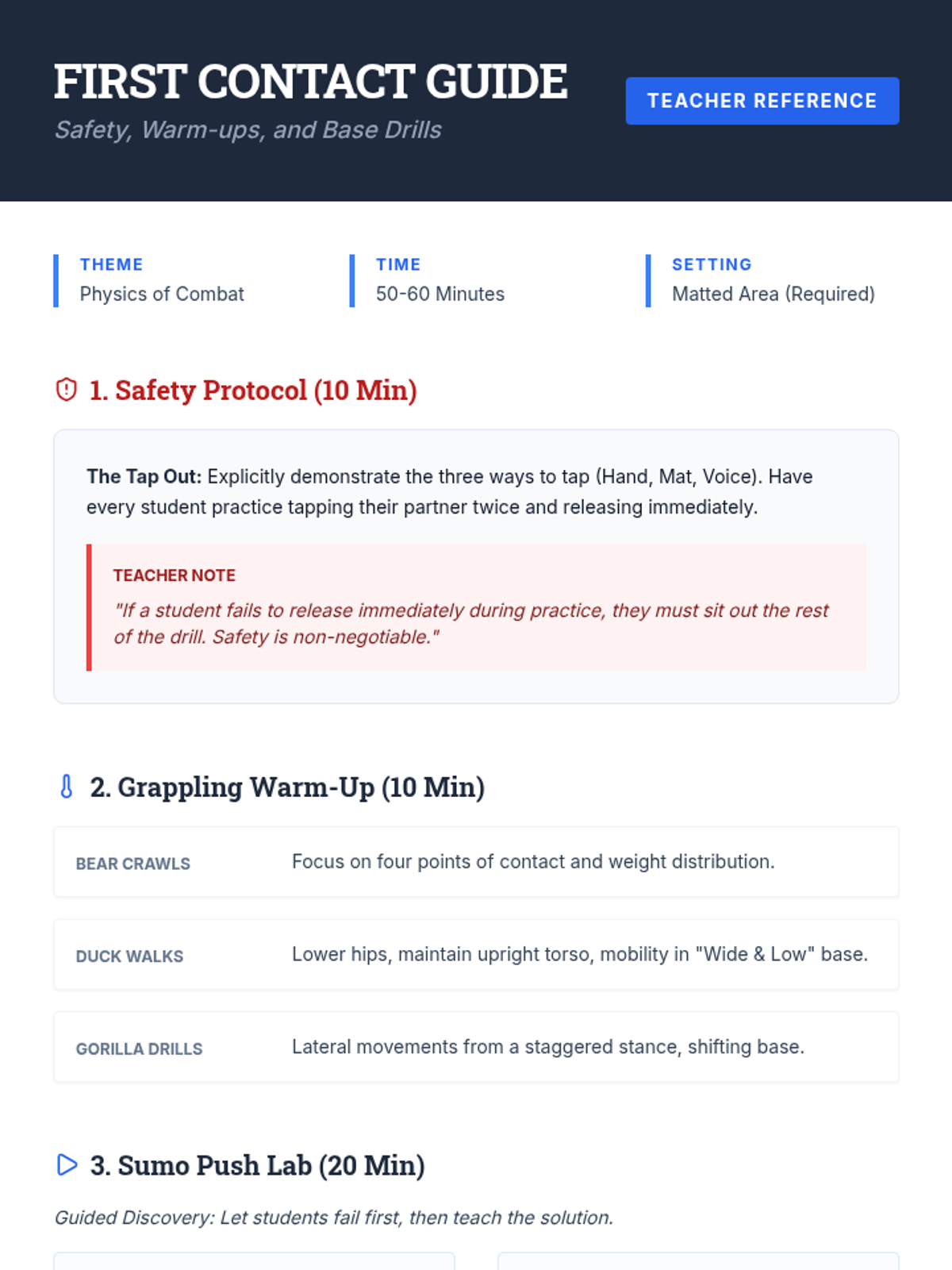
A comprehensive introduction to grappling for 8th graders, focusing on leverage, balance, and positional control. Students learn to use their center of gravity and mechanical advantage to manage physical encounters safely and effectively.
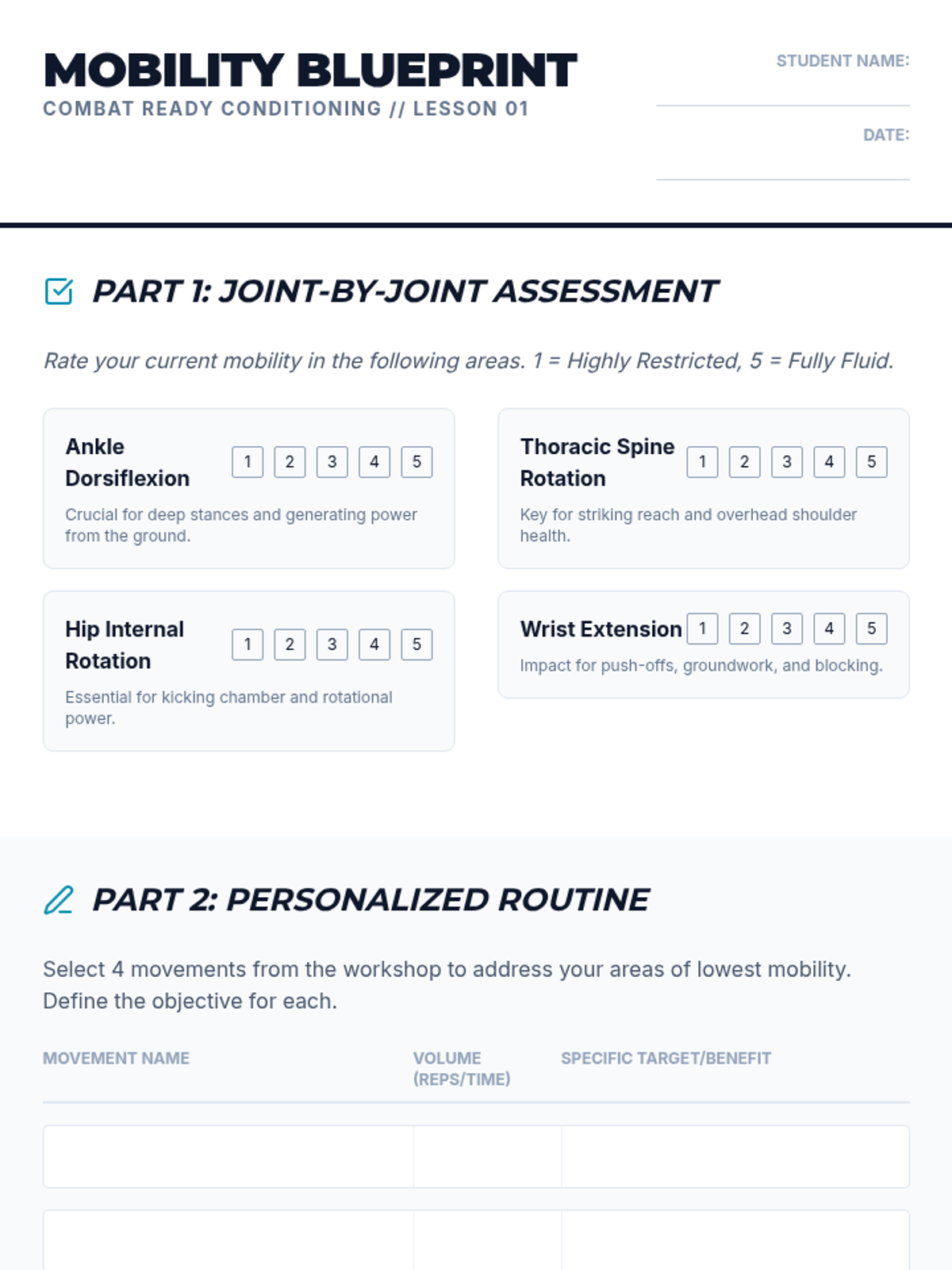
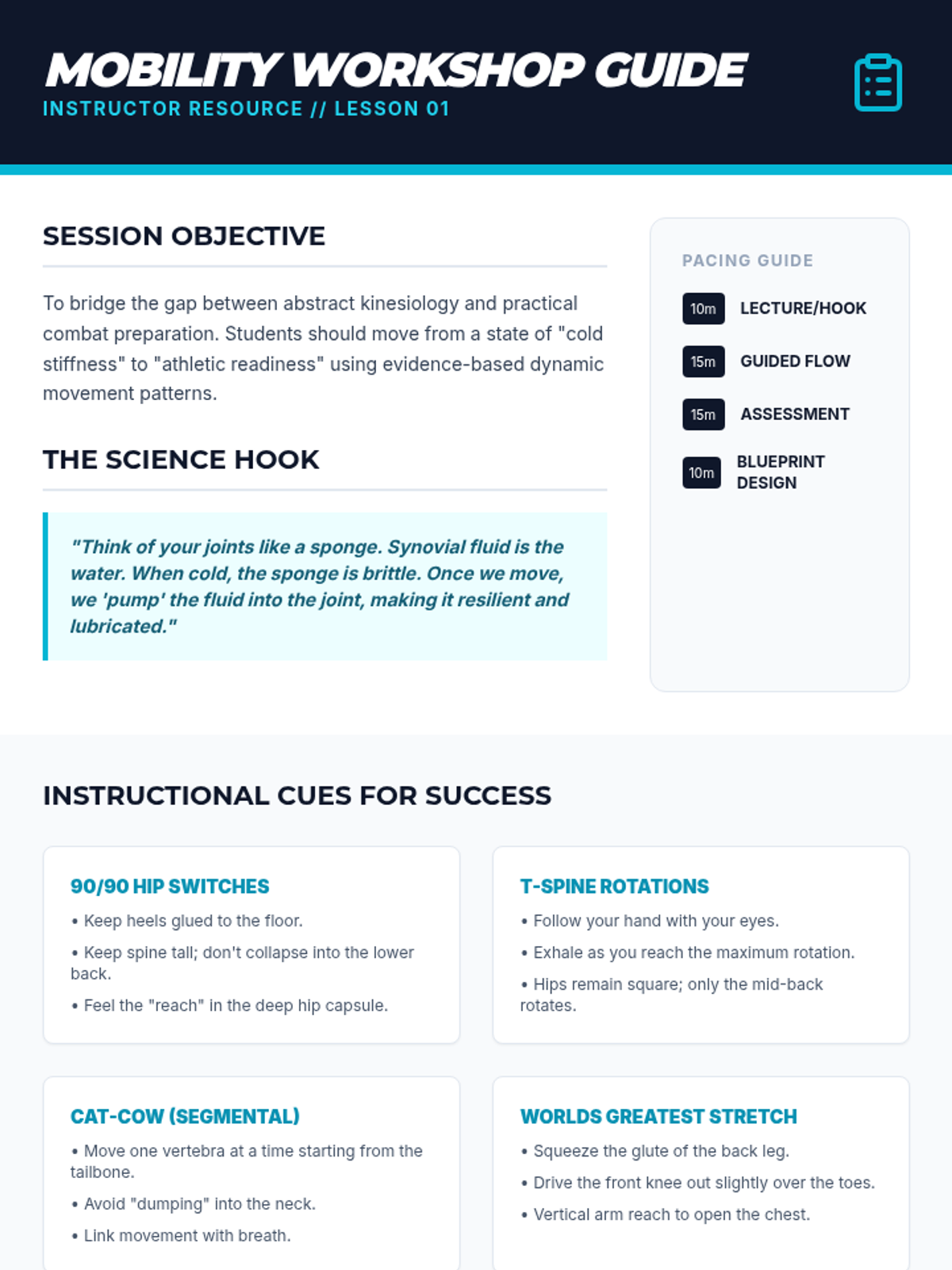
A comprehensive physical conditioning unit for martial arts, applying kinesiology principles to improve performance, power, and longevity in combat sports.
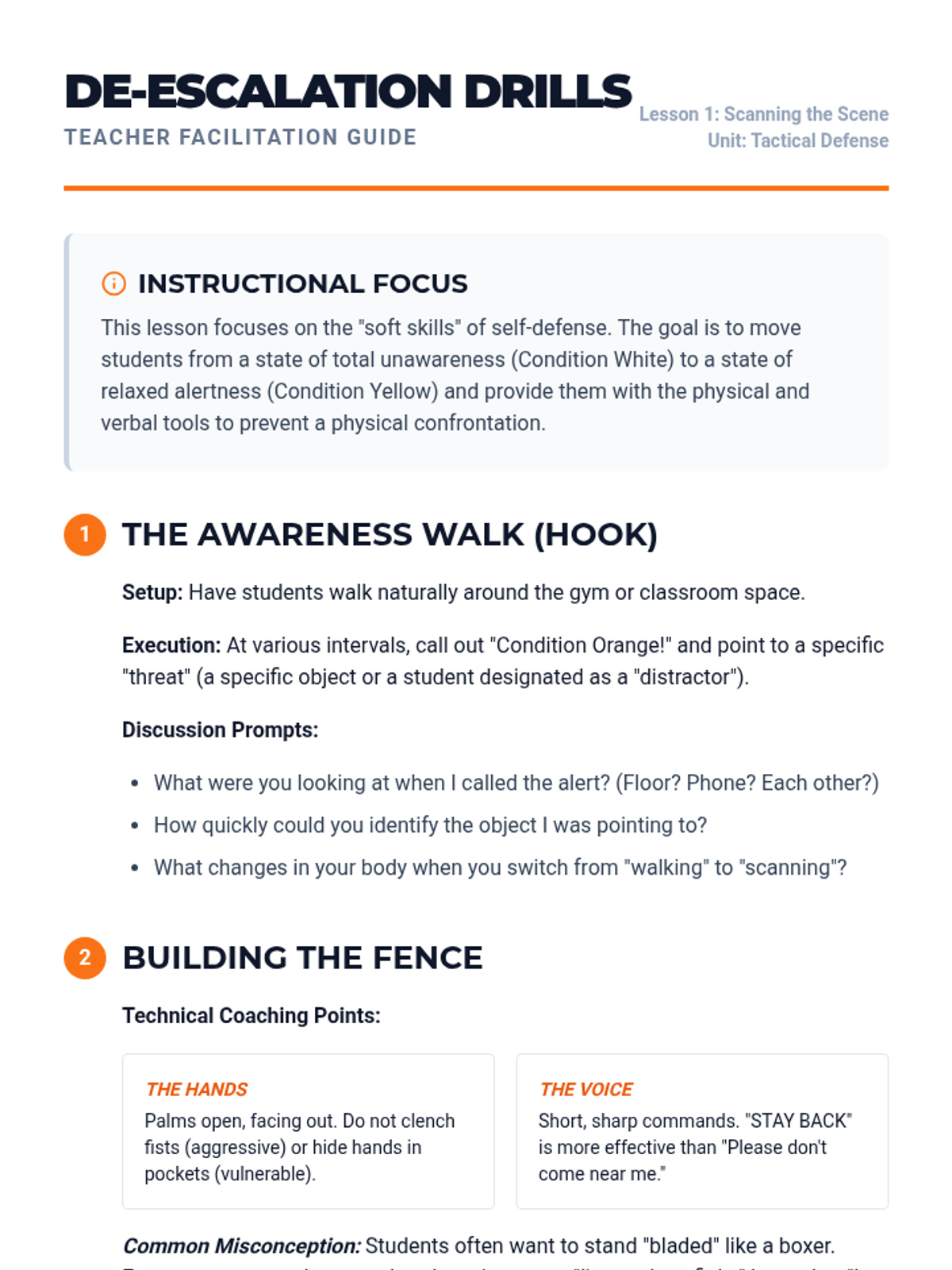
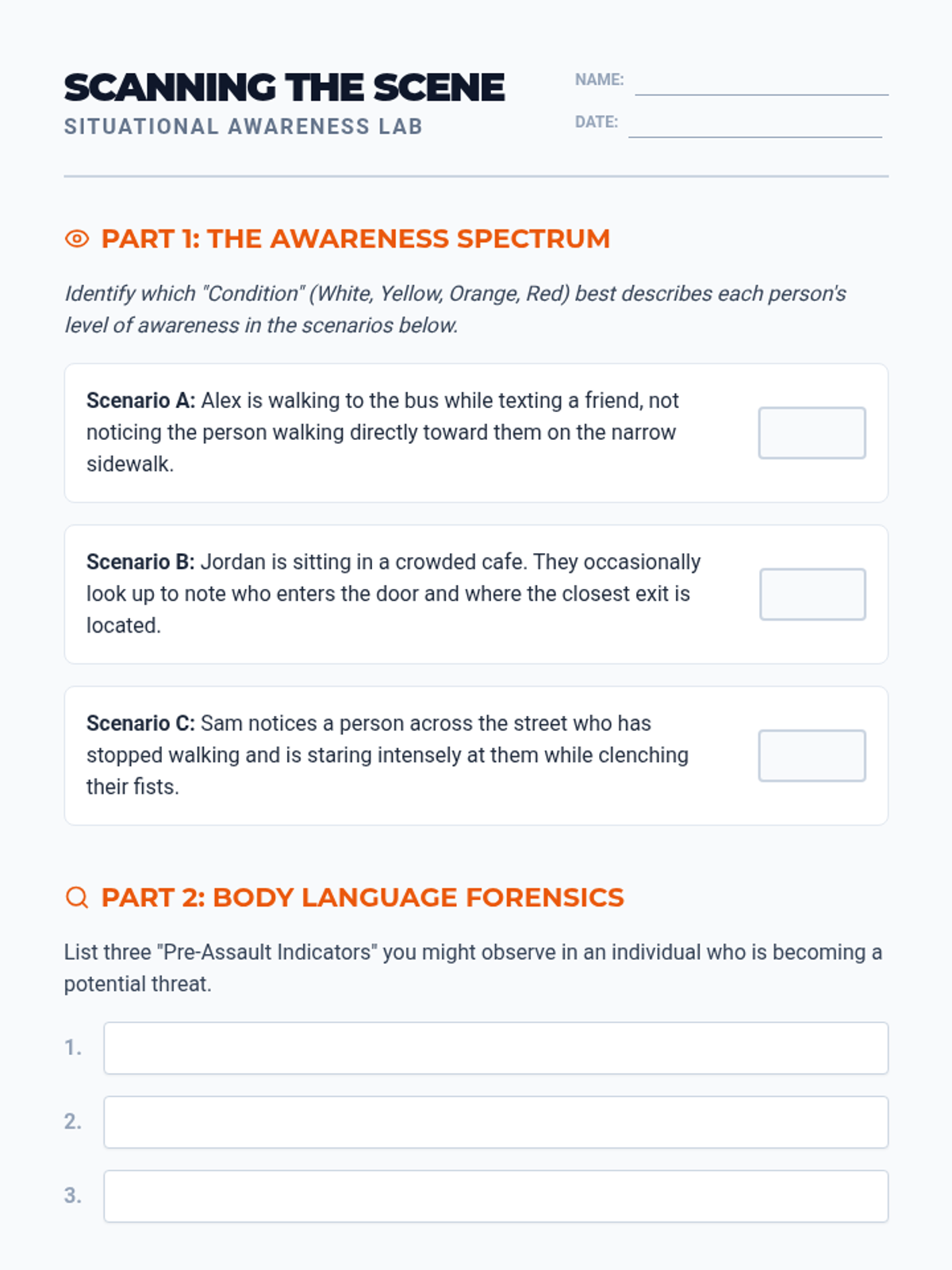
A comprehensive self-defense sequence for high school students focusing on situational awareness, verbal de-escalation, and fundamental stand-up defensive tactics centered on the 'Stun and Run' philosophy.
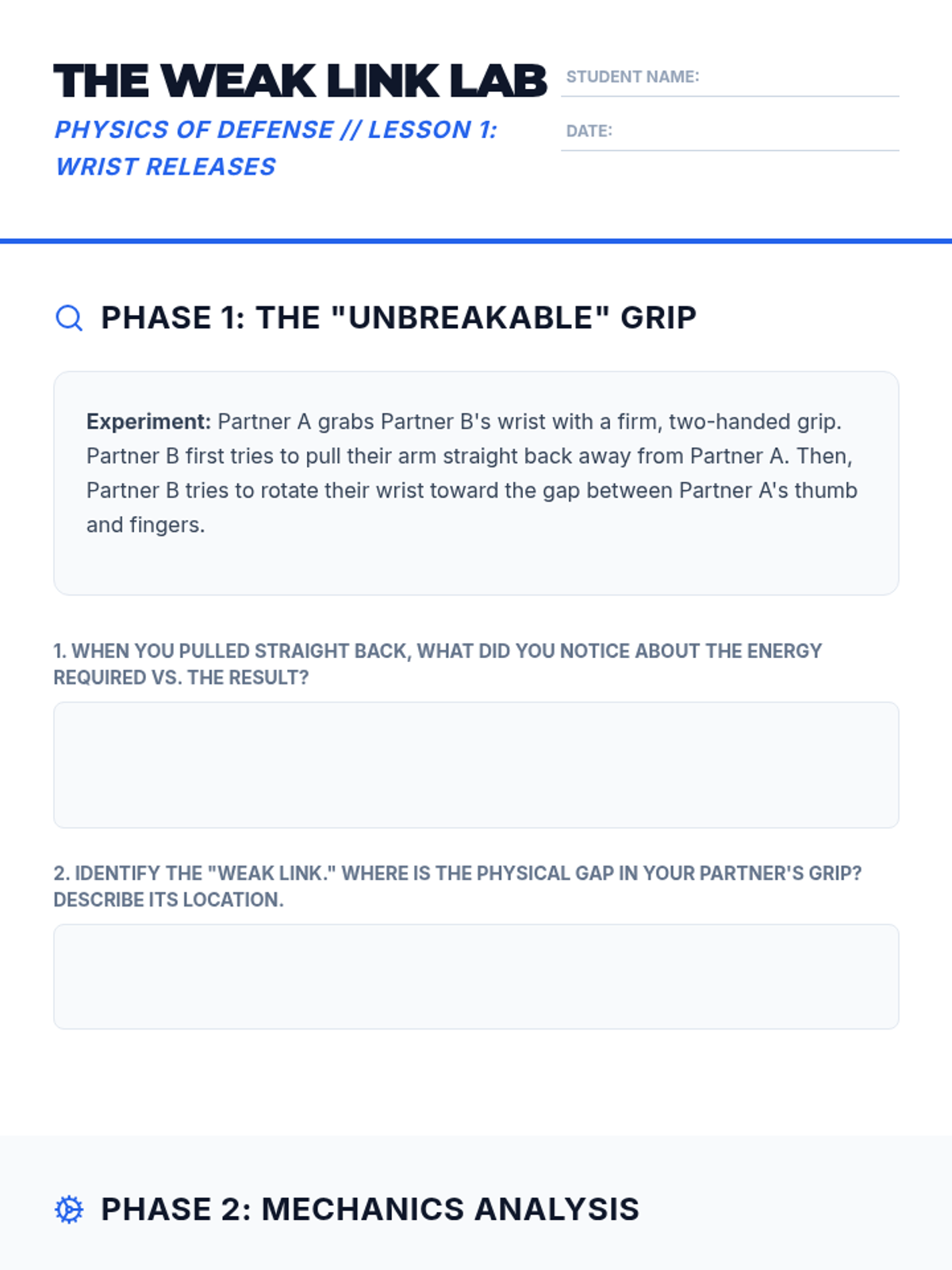
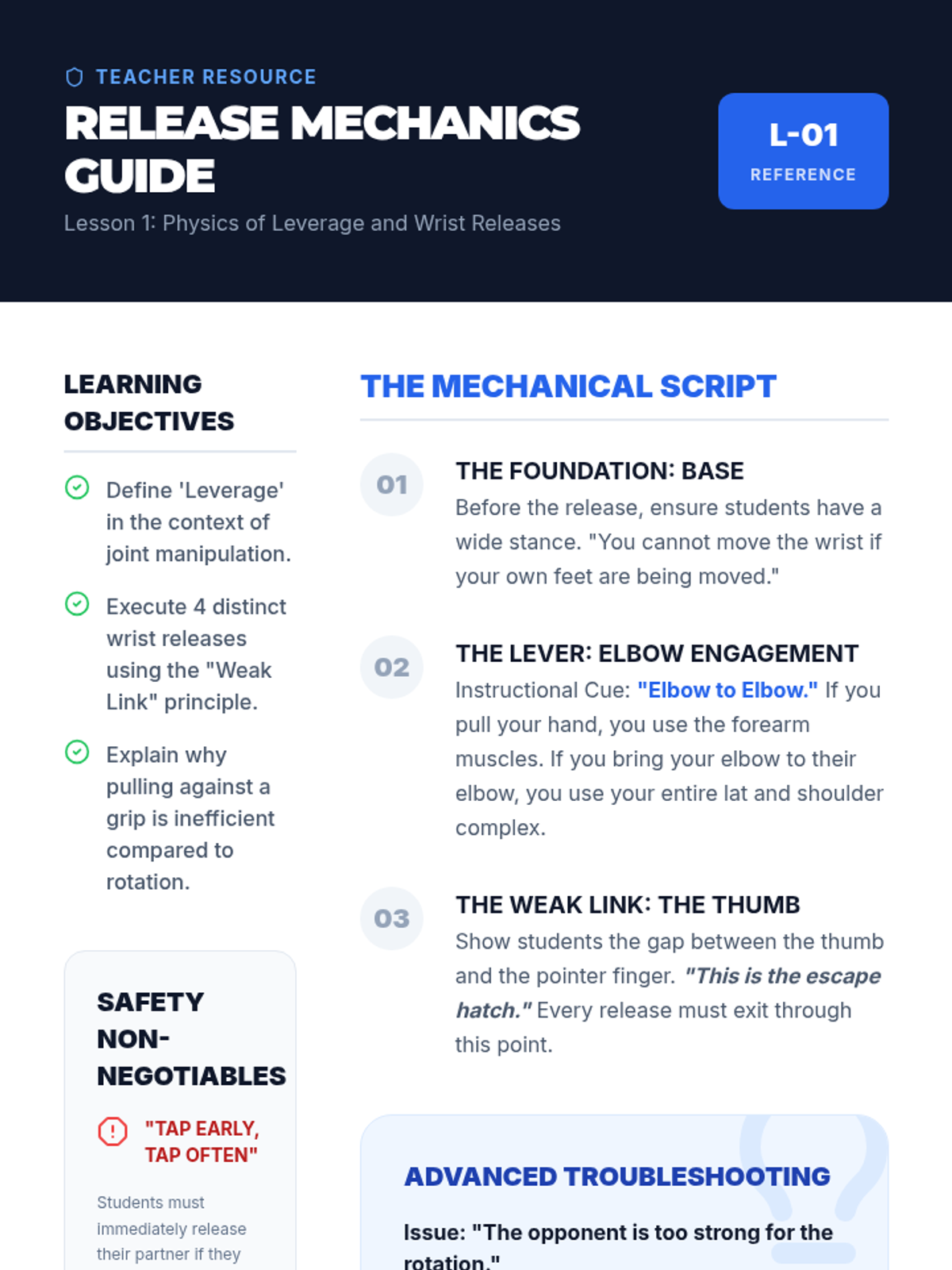
A 10th-grade physical education unit focusing on grappling defense, leverage-based escapes, and safe falling techniques. Students apply physics principles to self-defense scenarios, moving from standing releases to ground-based recovery.
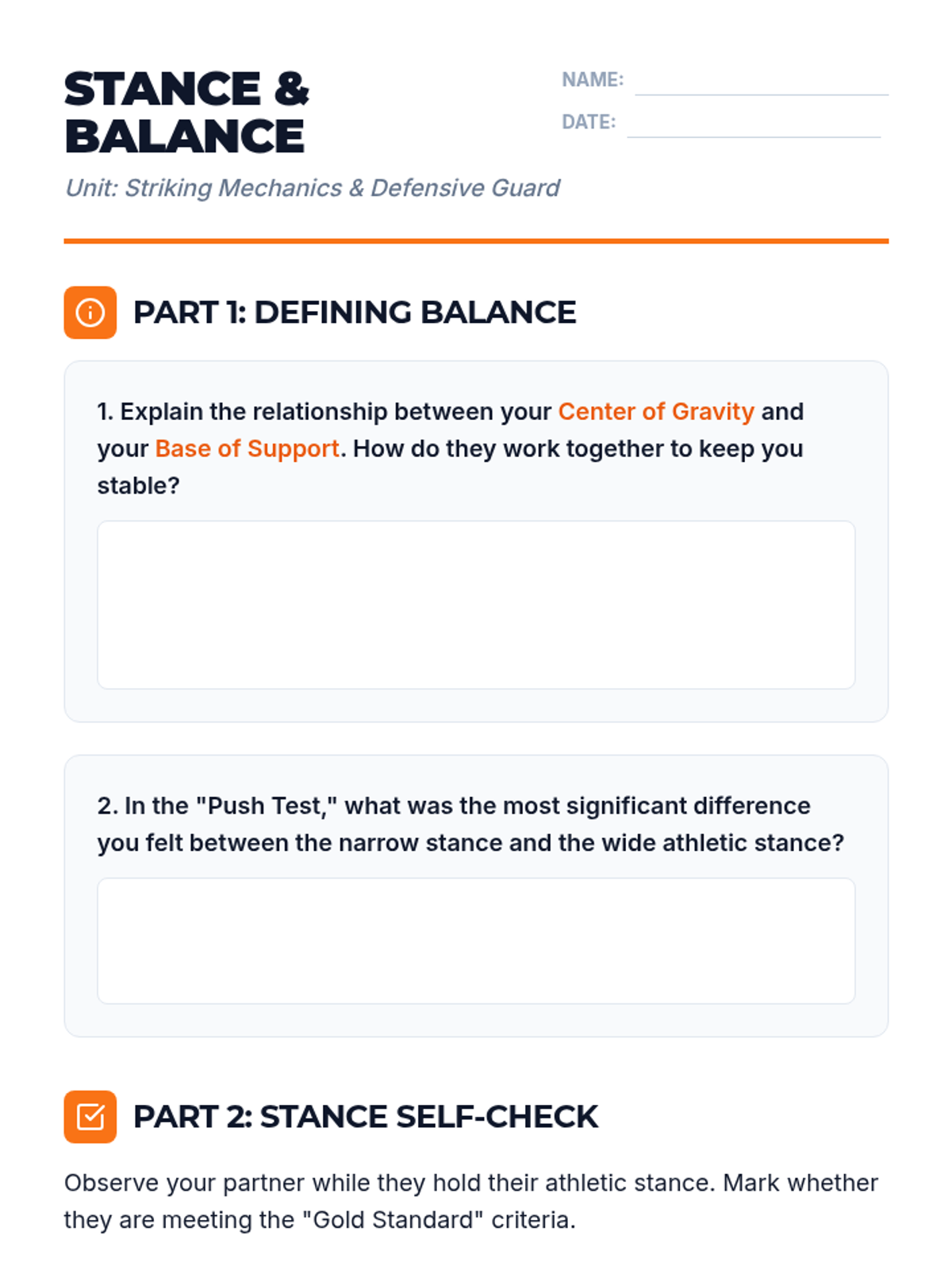
A comprehensive 5-lesson sequence for 10th-grade students focusing on the biomechanics of striking and defense. Students explore stance, linear strikes, defensive guards, lower body techniques, and high-intensity combinations.
A 5-lesson sequence exploring the biomechanics and physics of martial arts strikes and blocks. Students progress from foundational footwork to complex combinations, focusing on kinetic linking and power generation.