Geometric classification, measurement of area and volume, and the study of transformations and rigid motions. Builds toward complex proofs, trigonometry for general triangles, and the algebraic representation of conic sections.
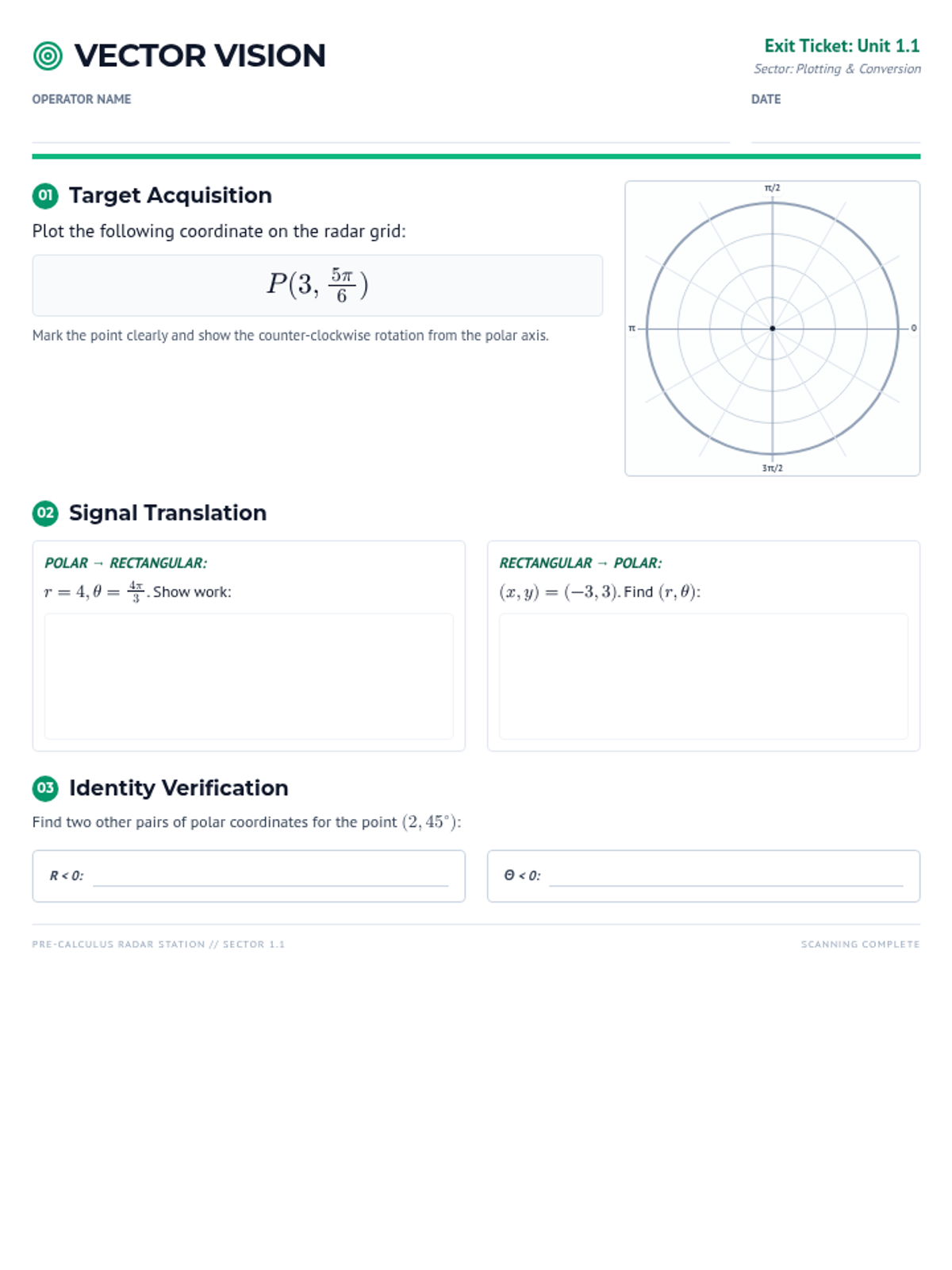
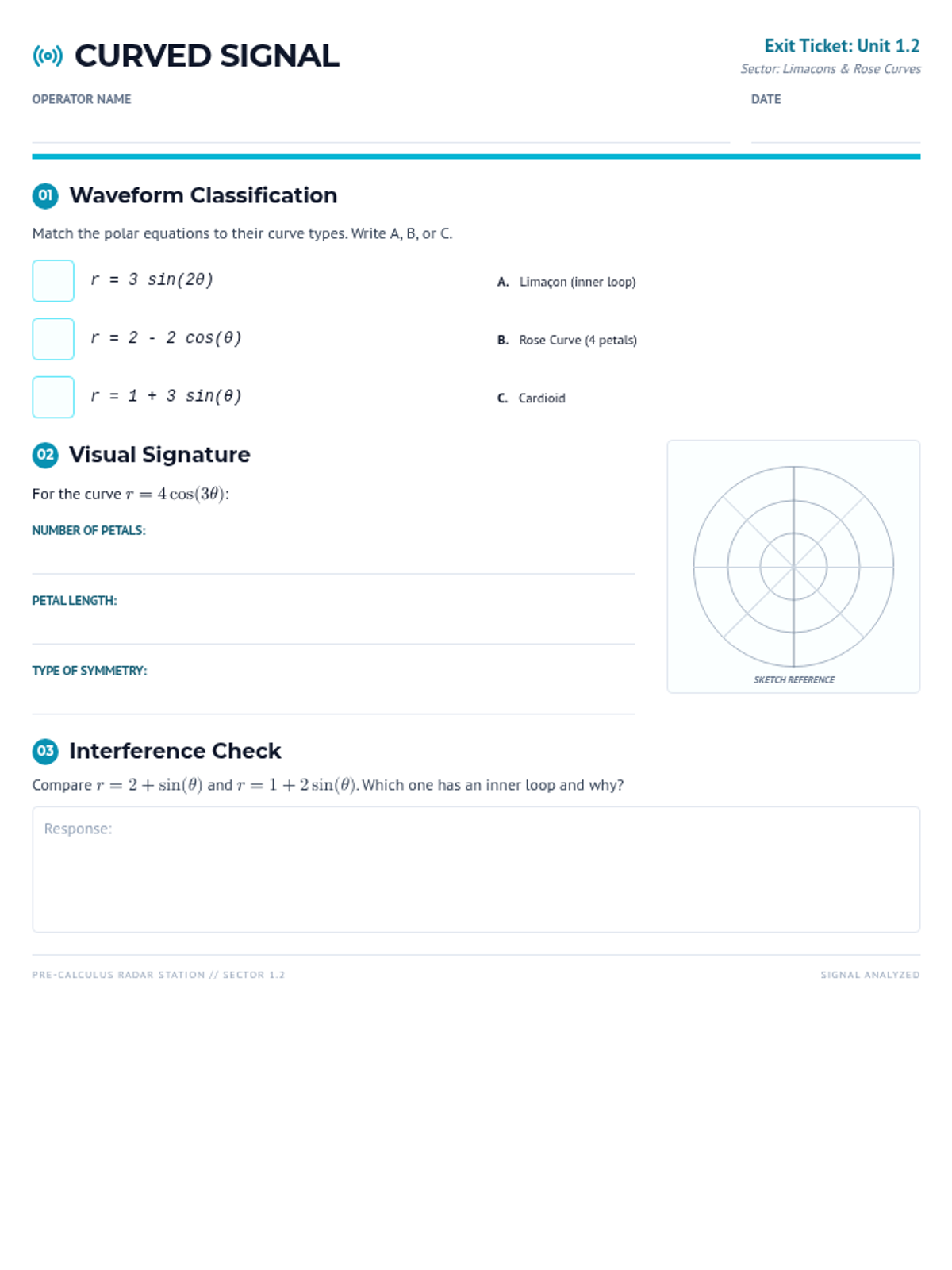
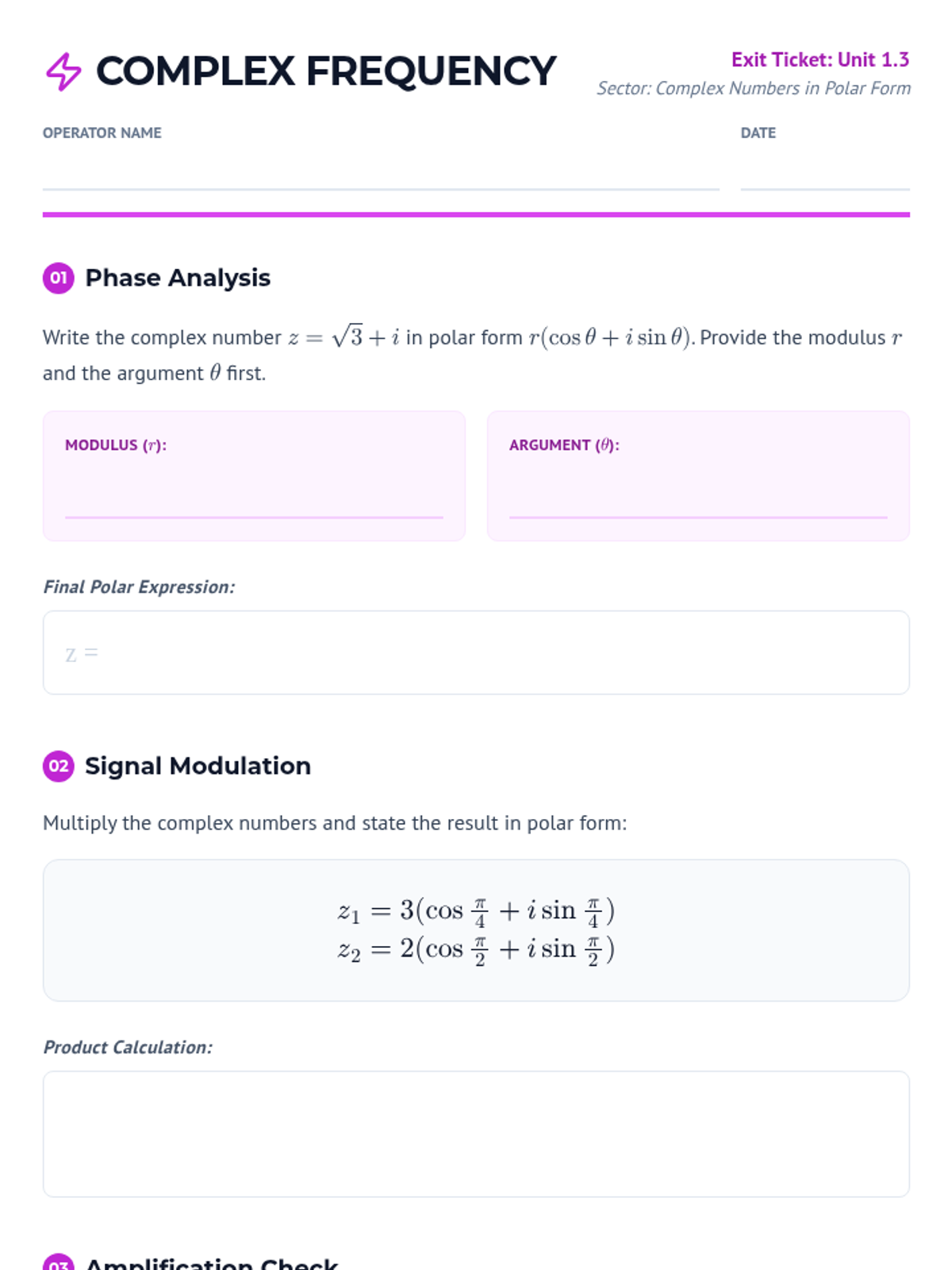
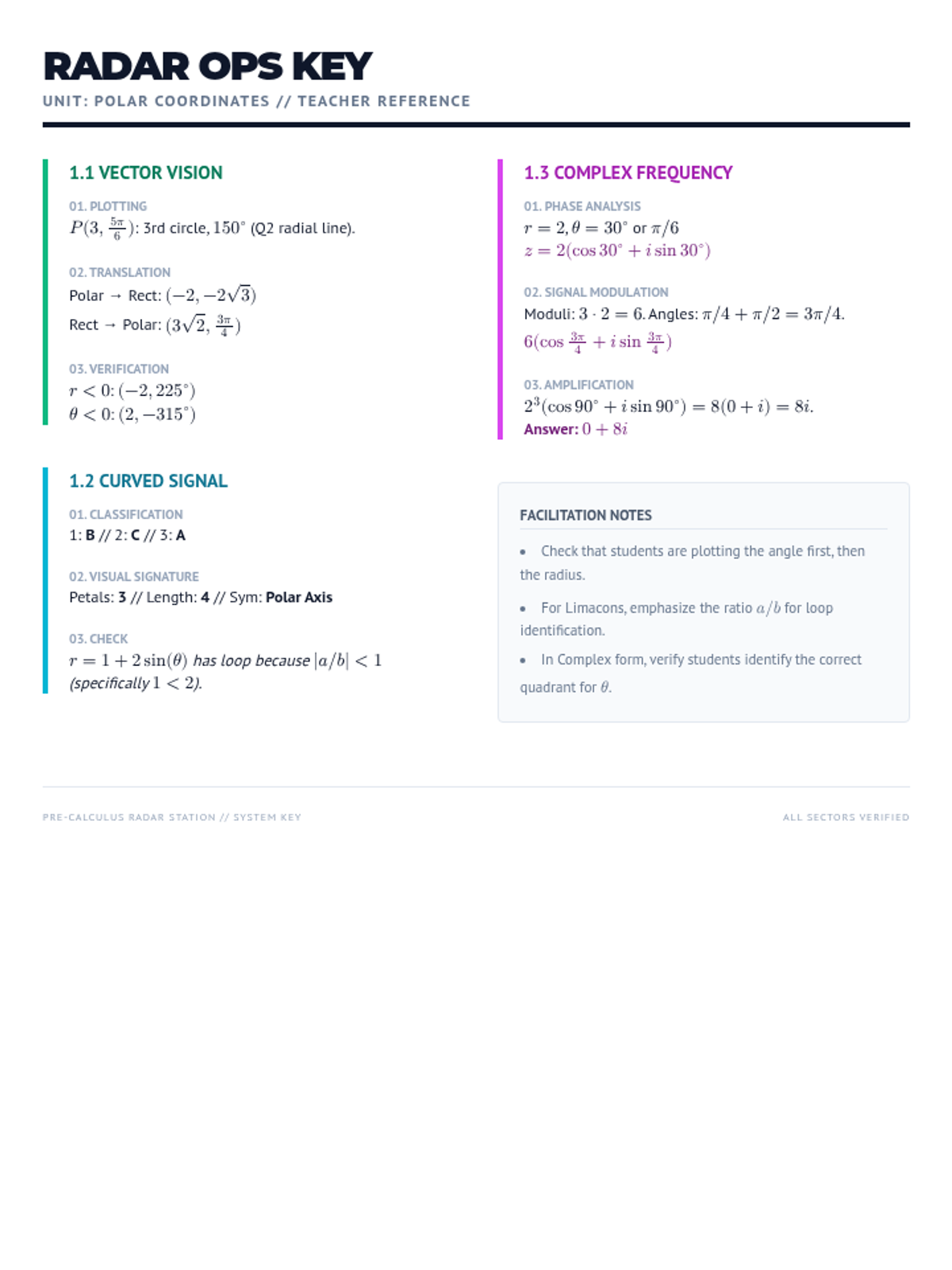
A series of focused assessments to verify student mastery of polar coordinate plotting, conversion, graphing special curves, and representing complex numbers in polar form.
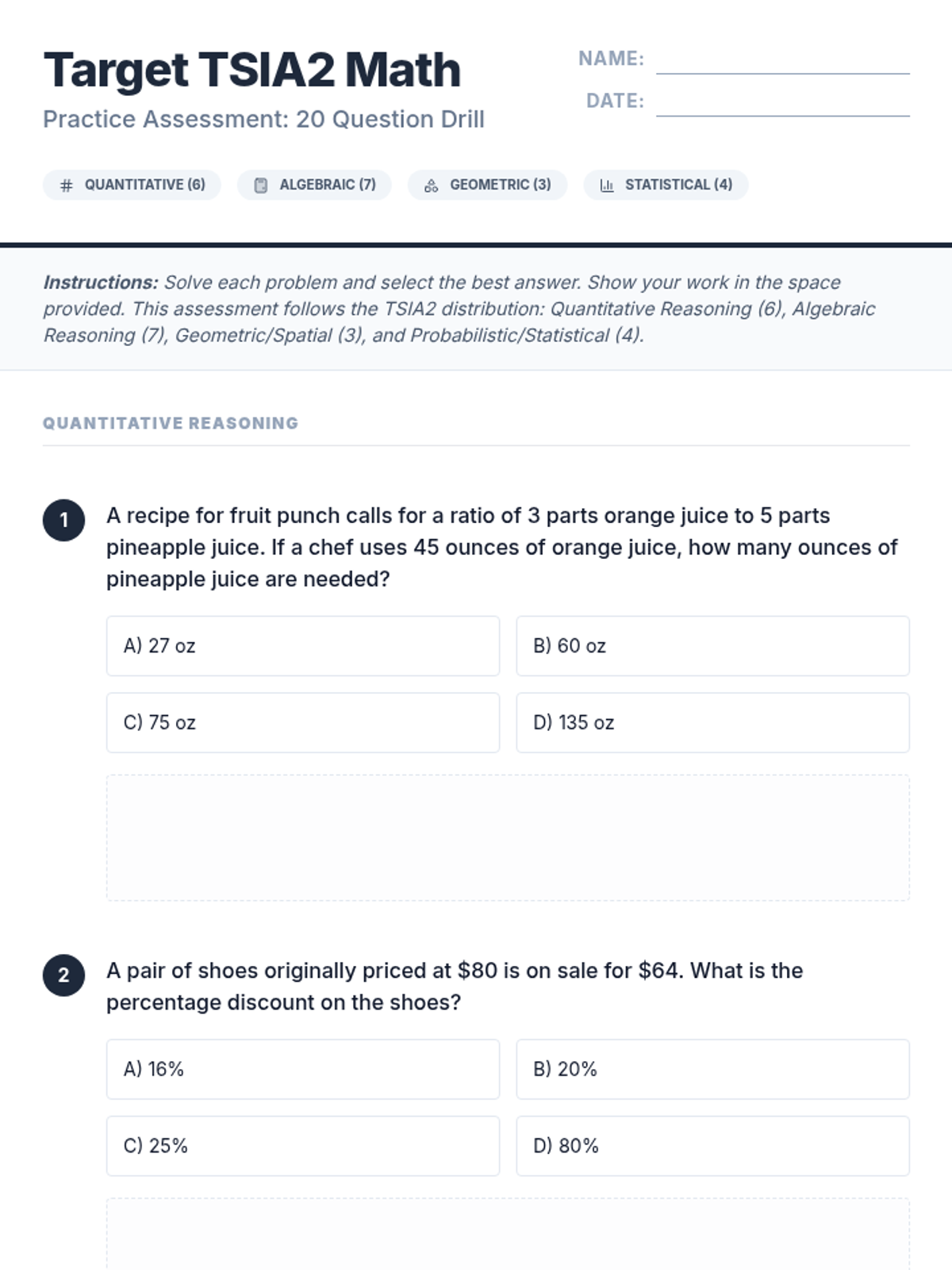
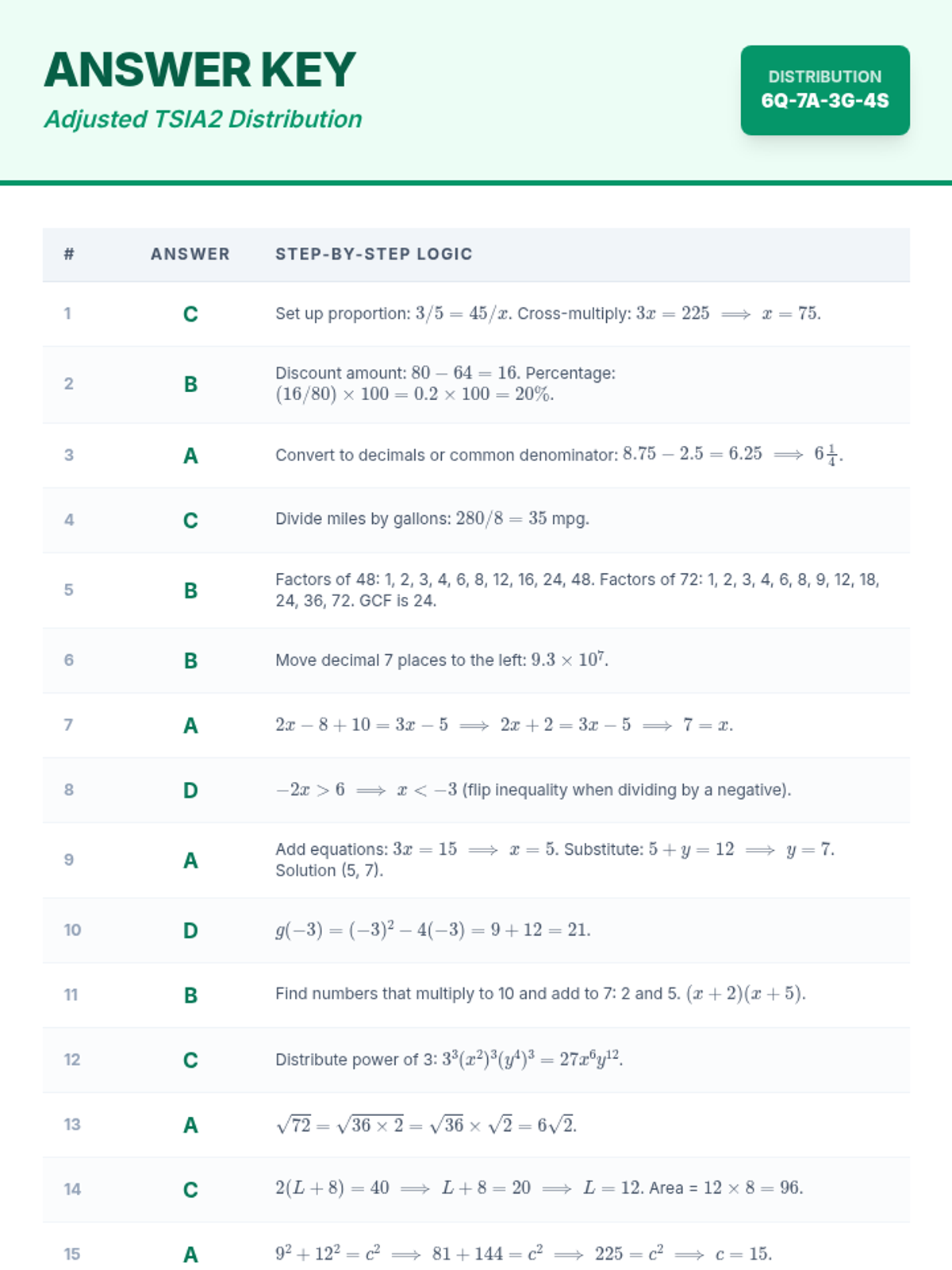
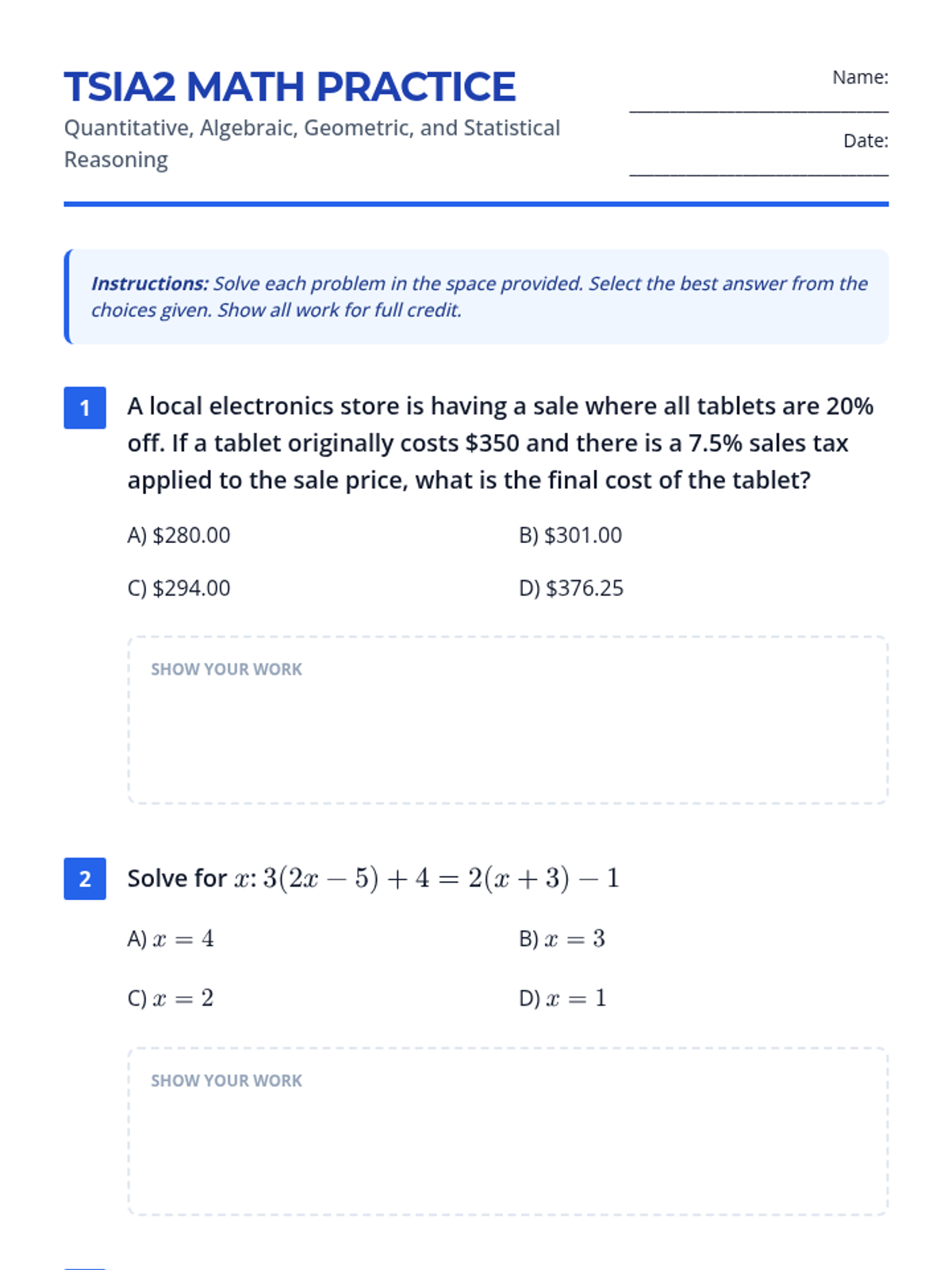
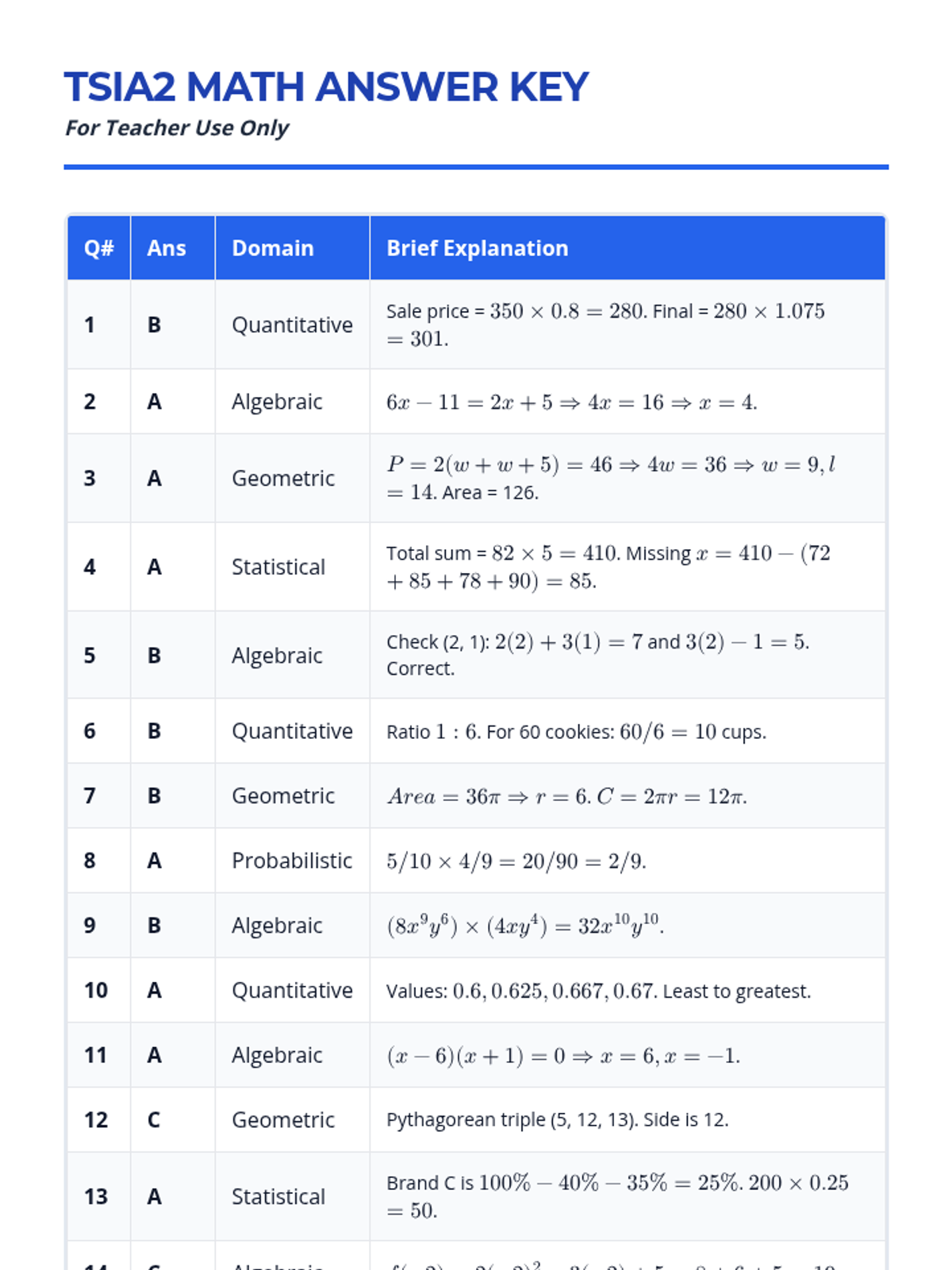
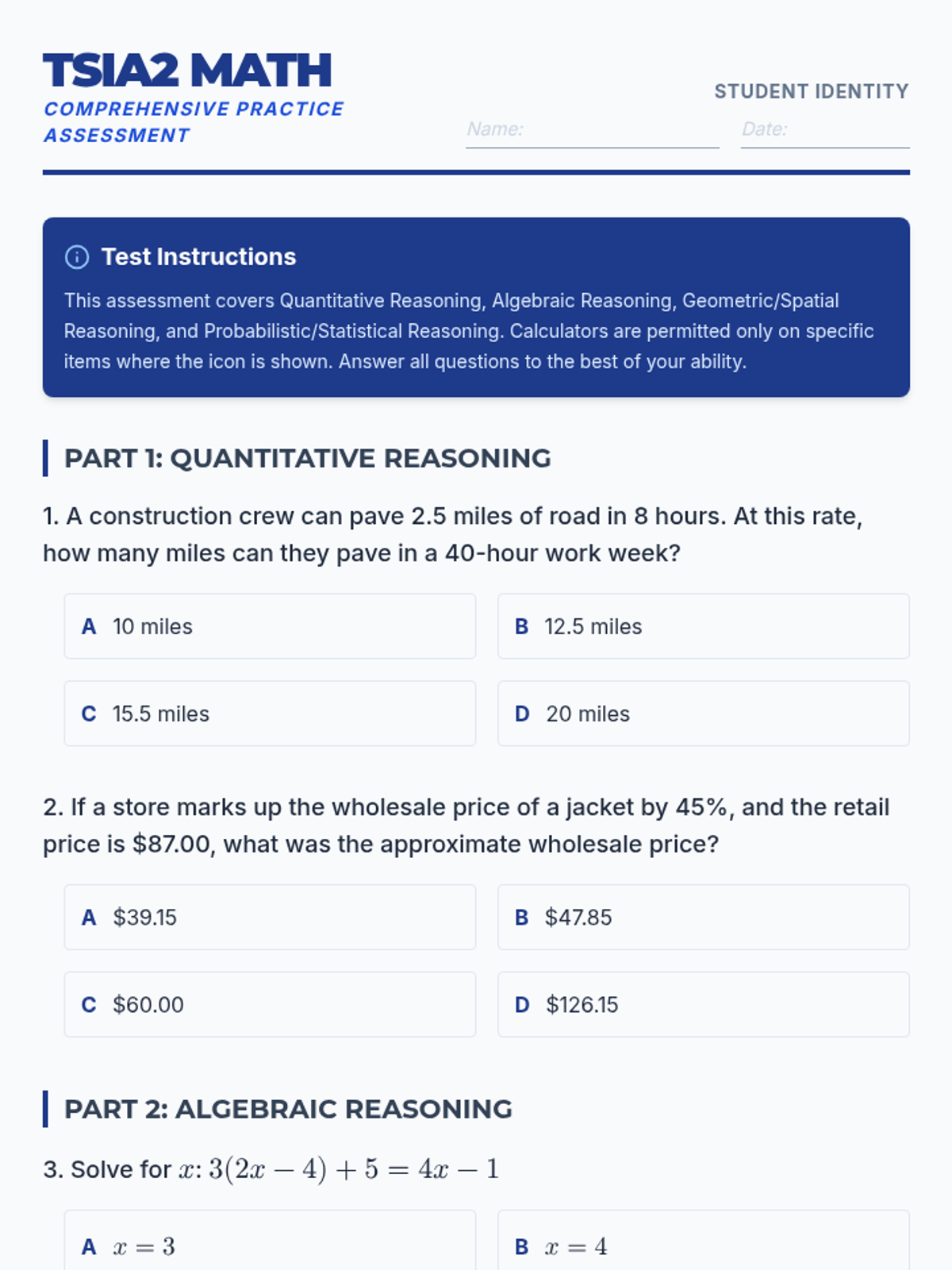
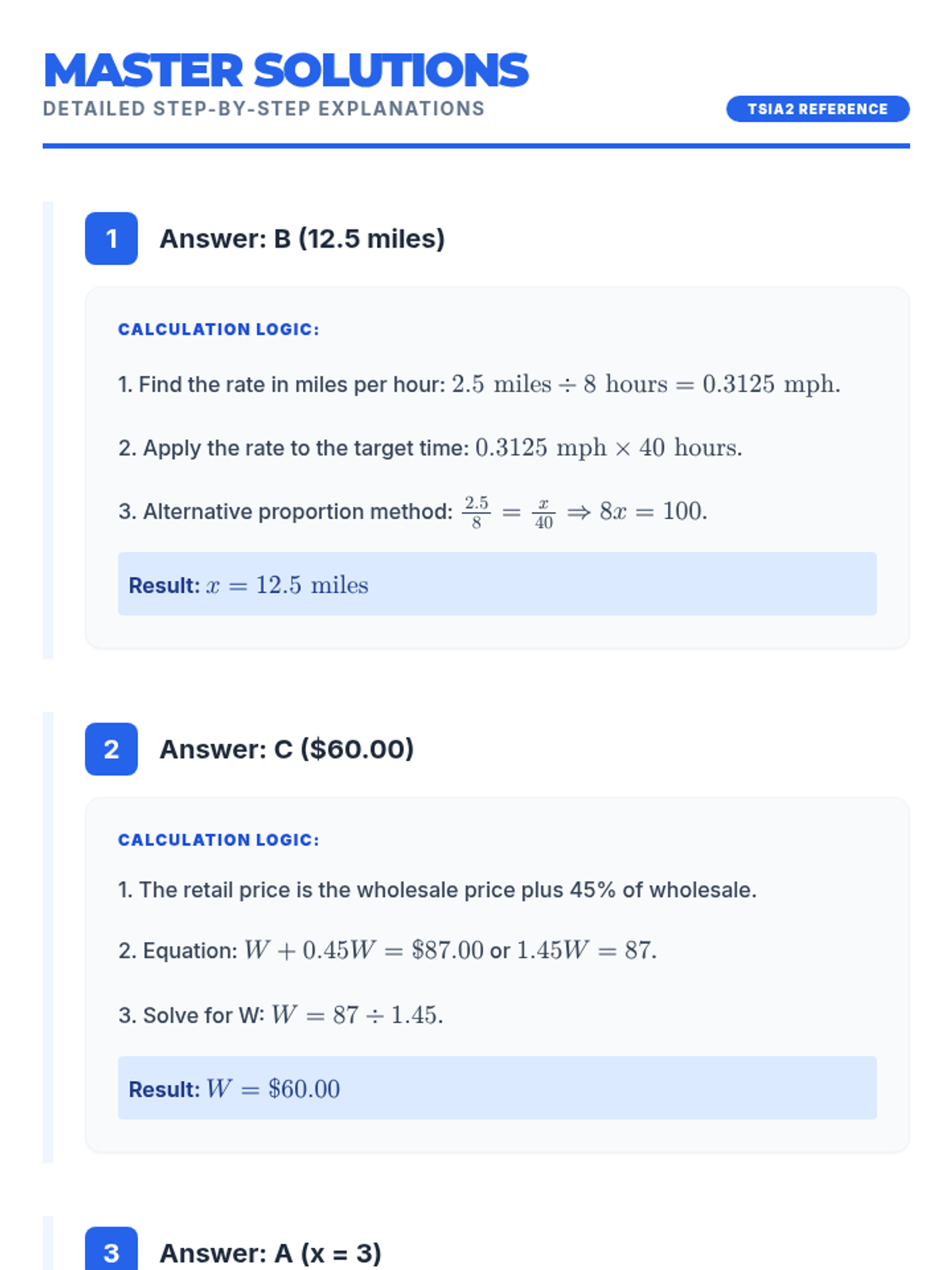
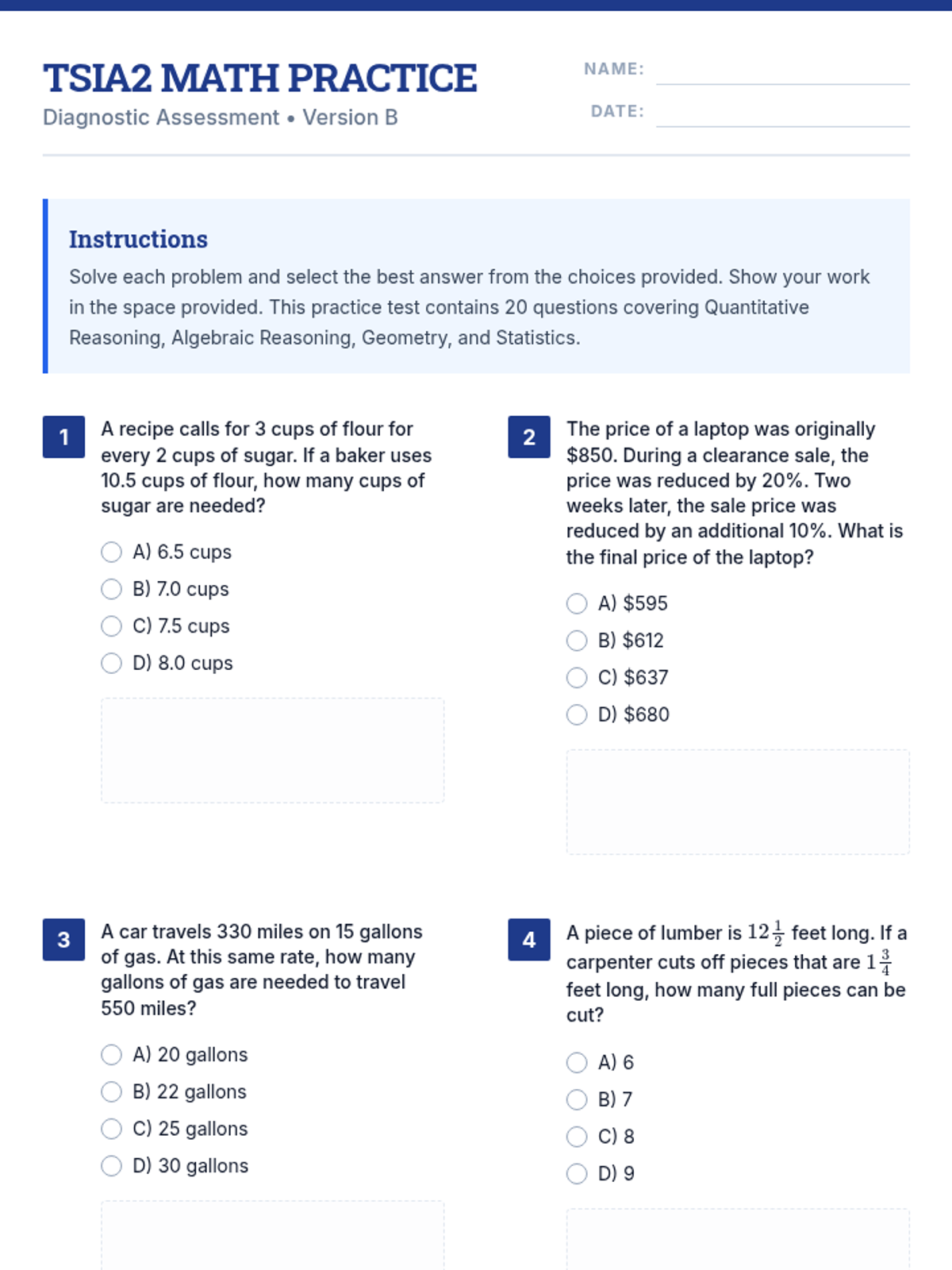
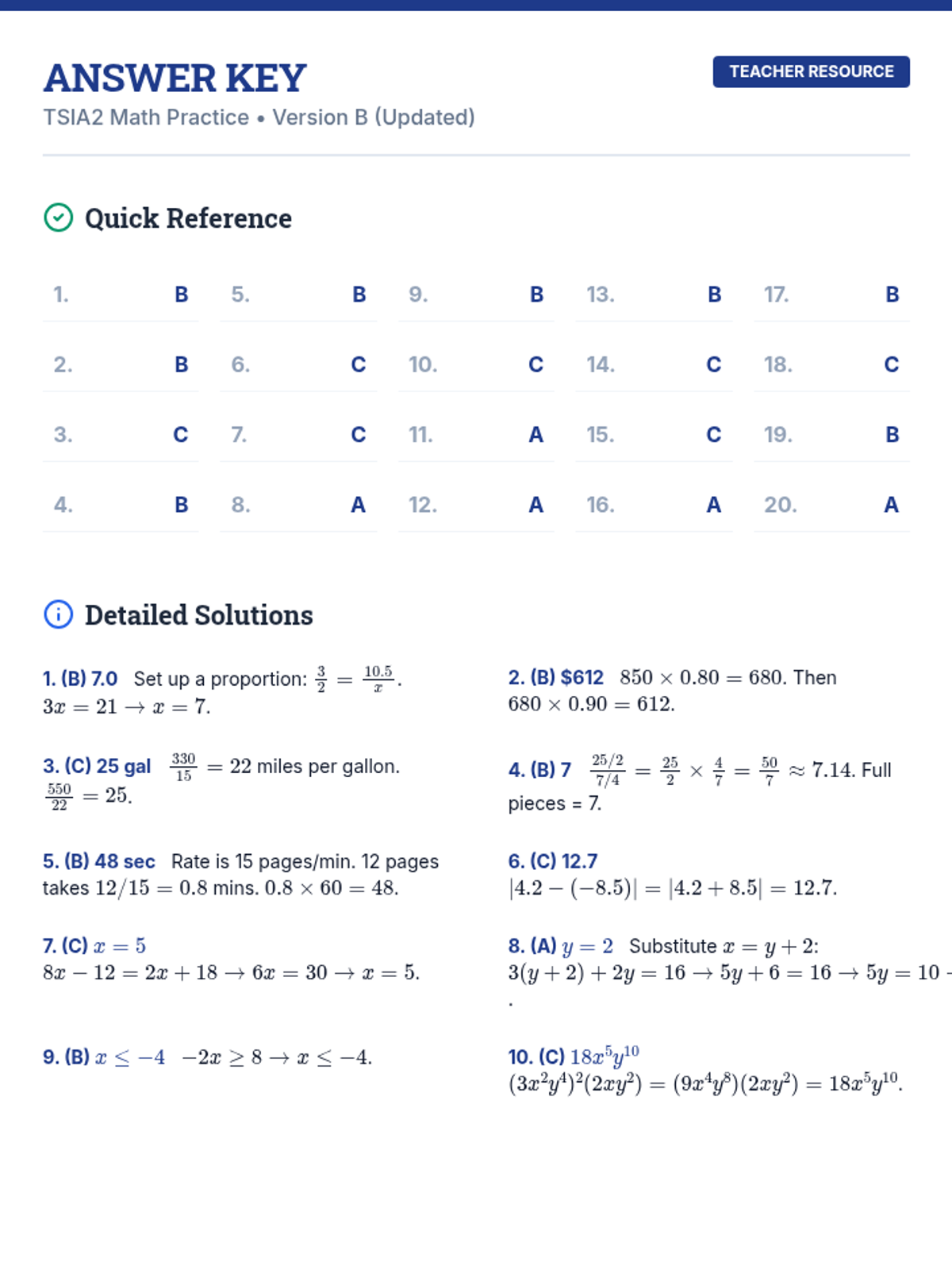
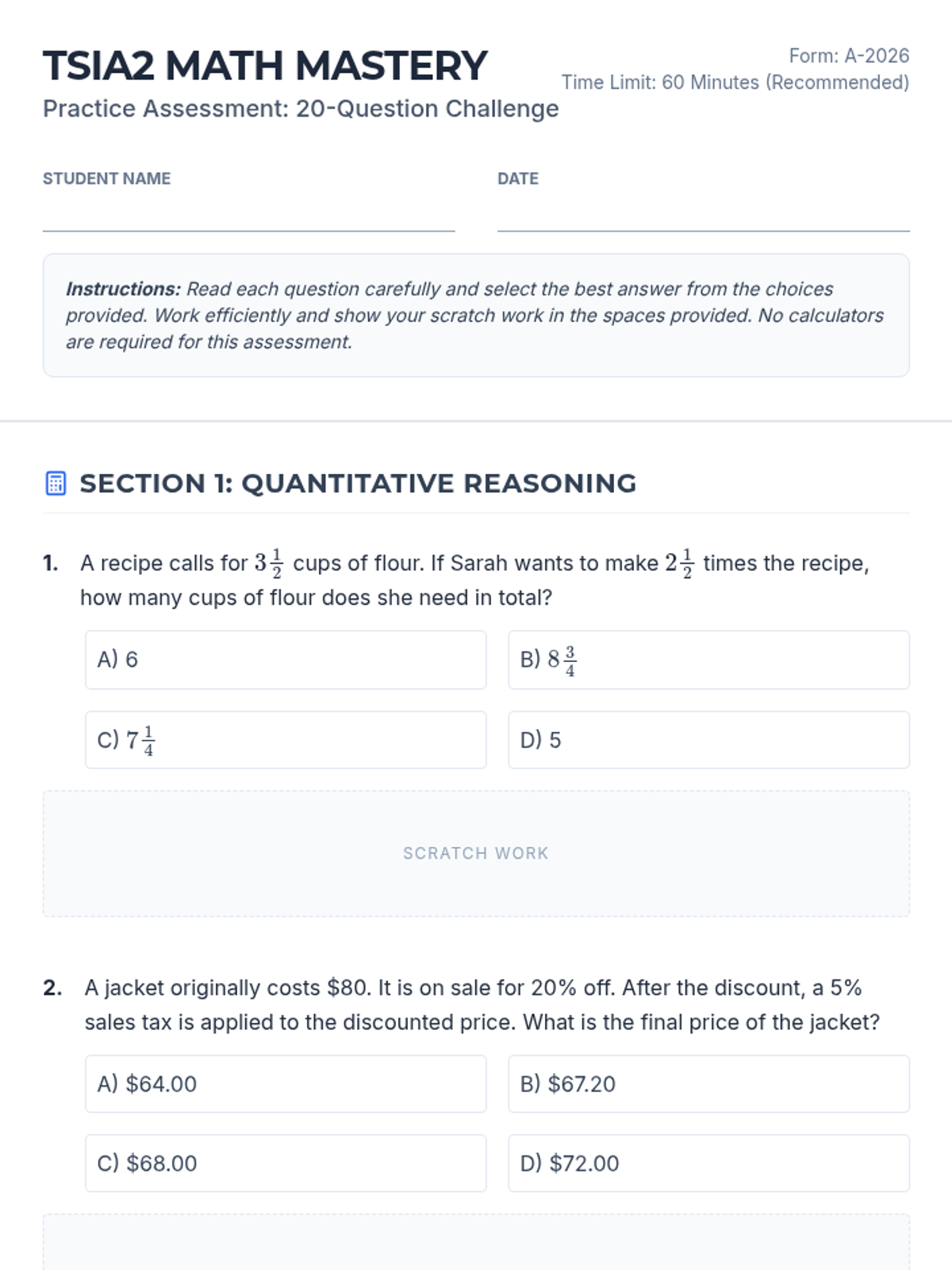
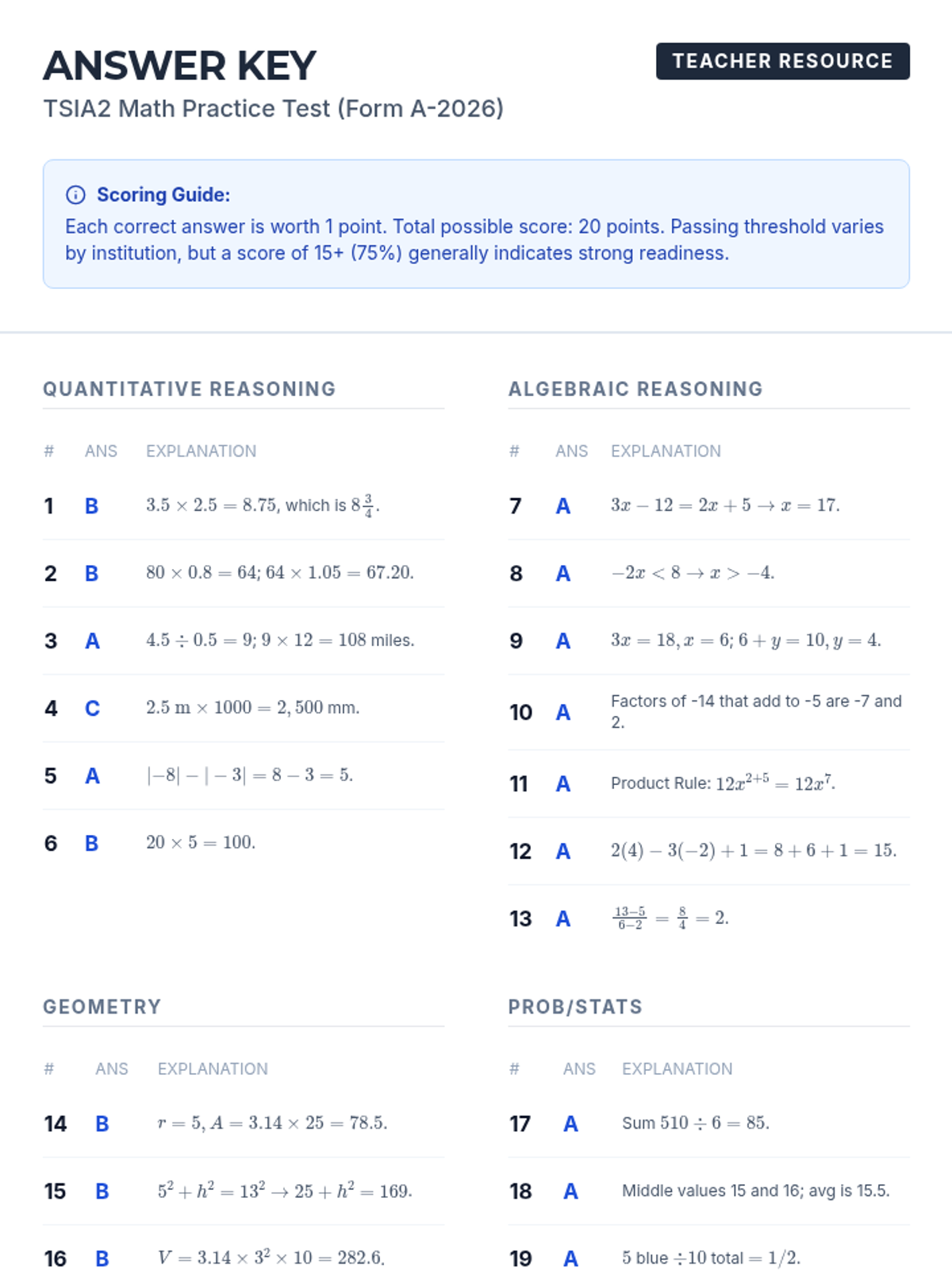
A comprehensive 20-question practice test and answer key designed to prepare students for the TSIA2 Mathematics assessment, focusing on algebraic, geometric, and statistical reasoning.
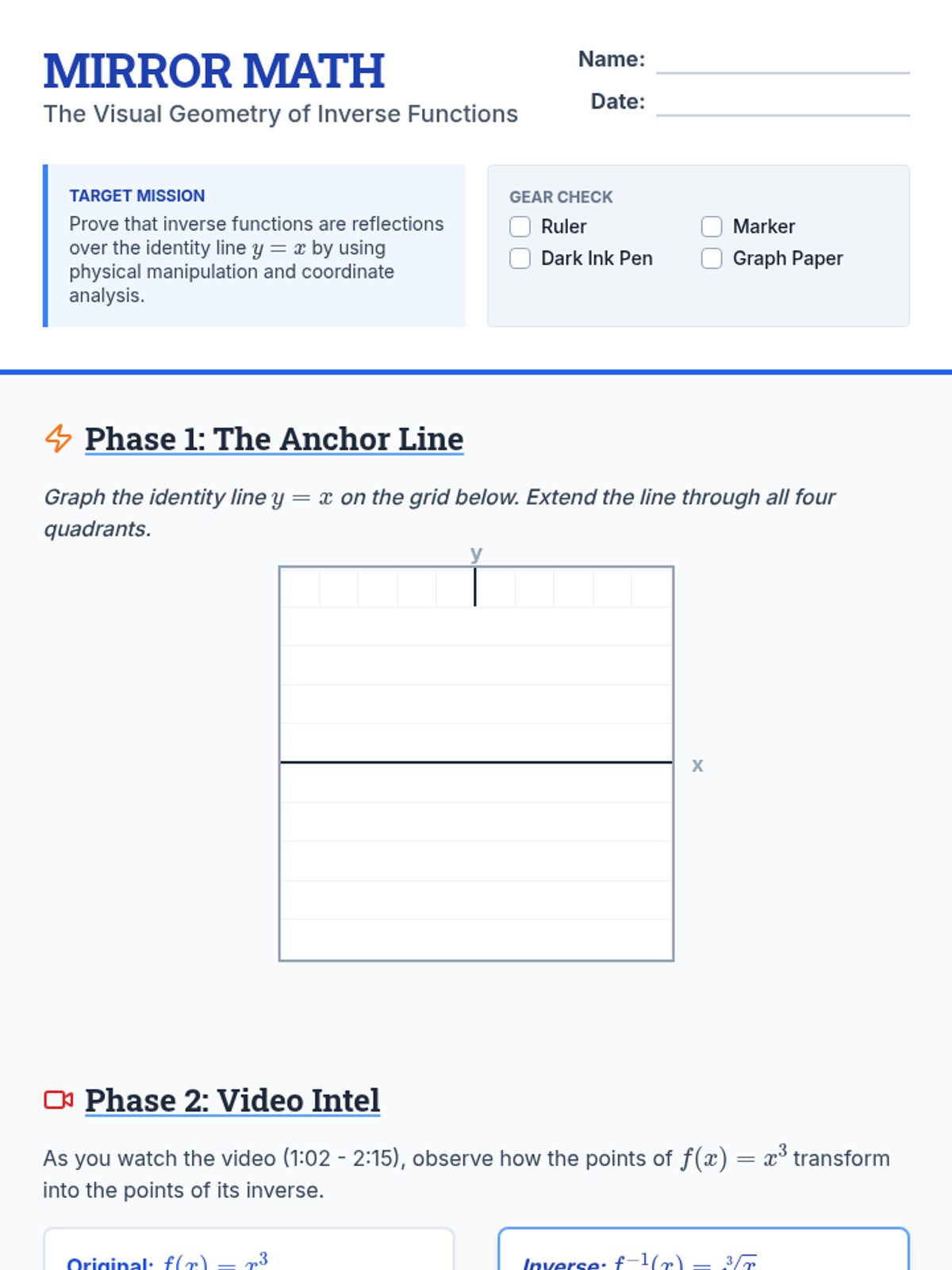
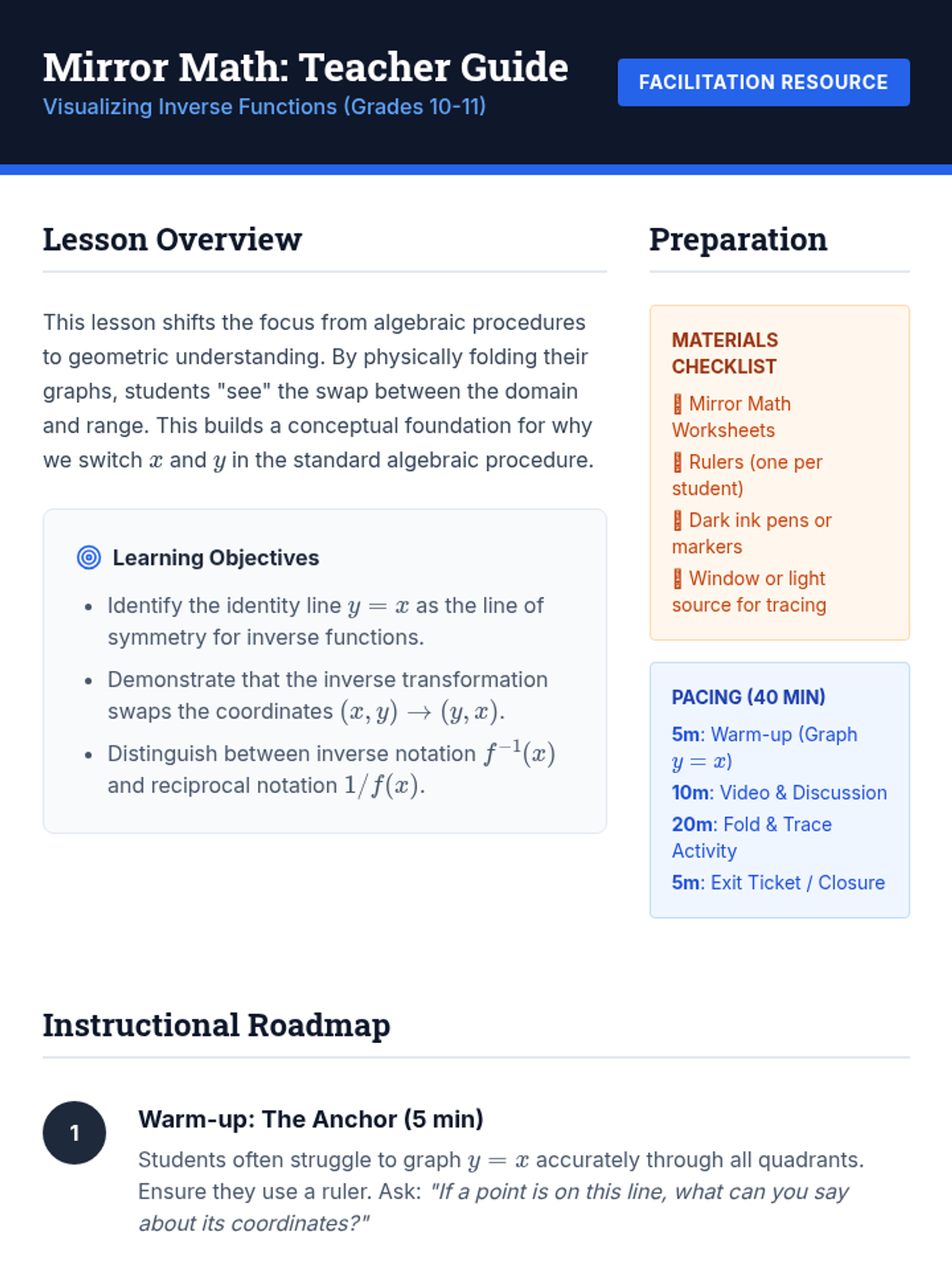
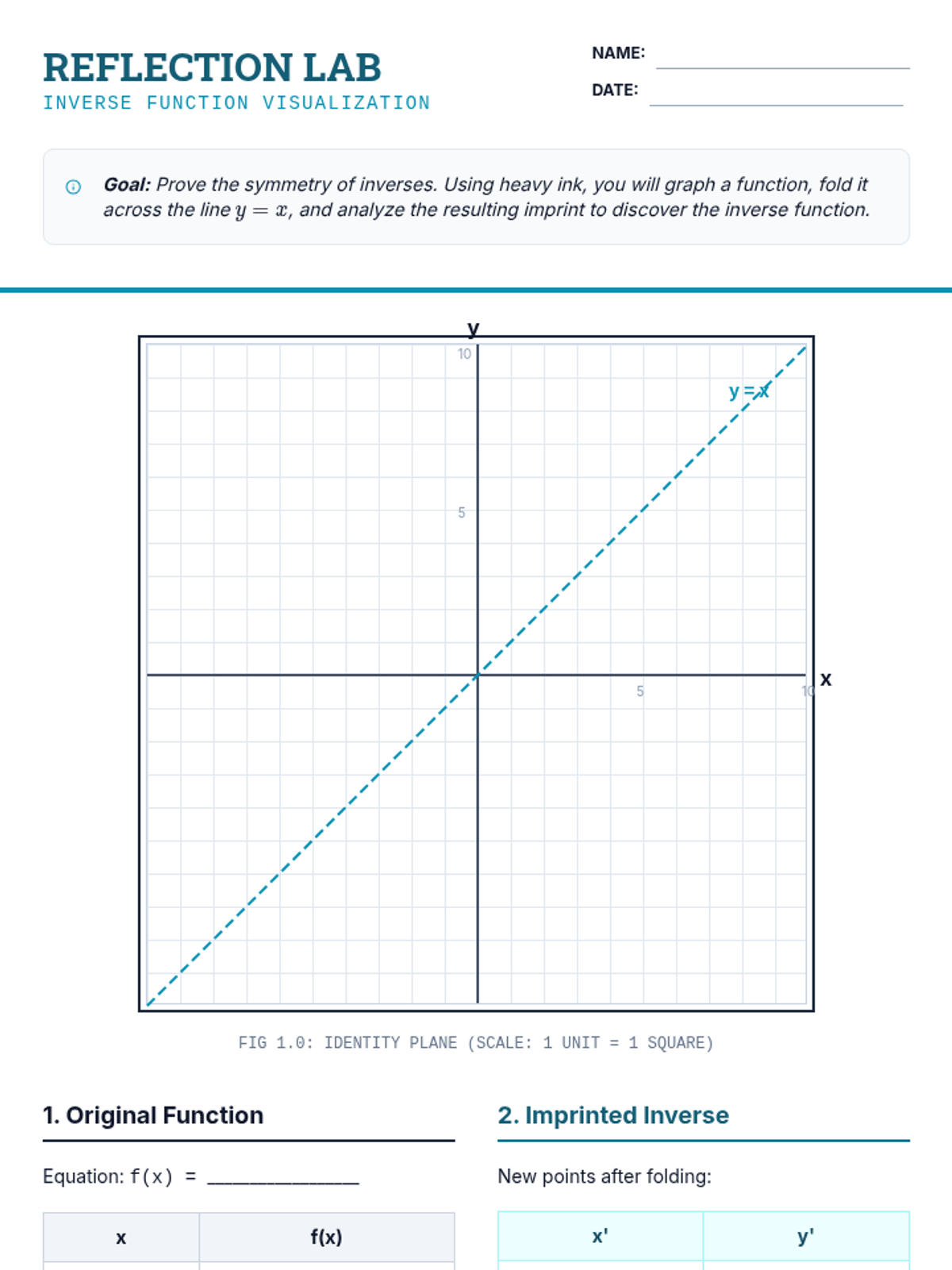
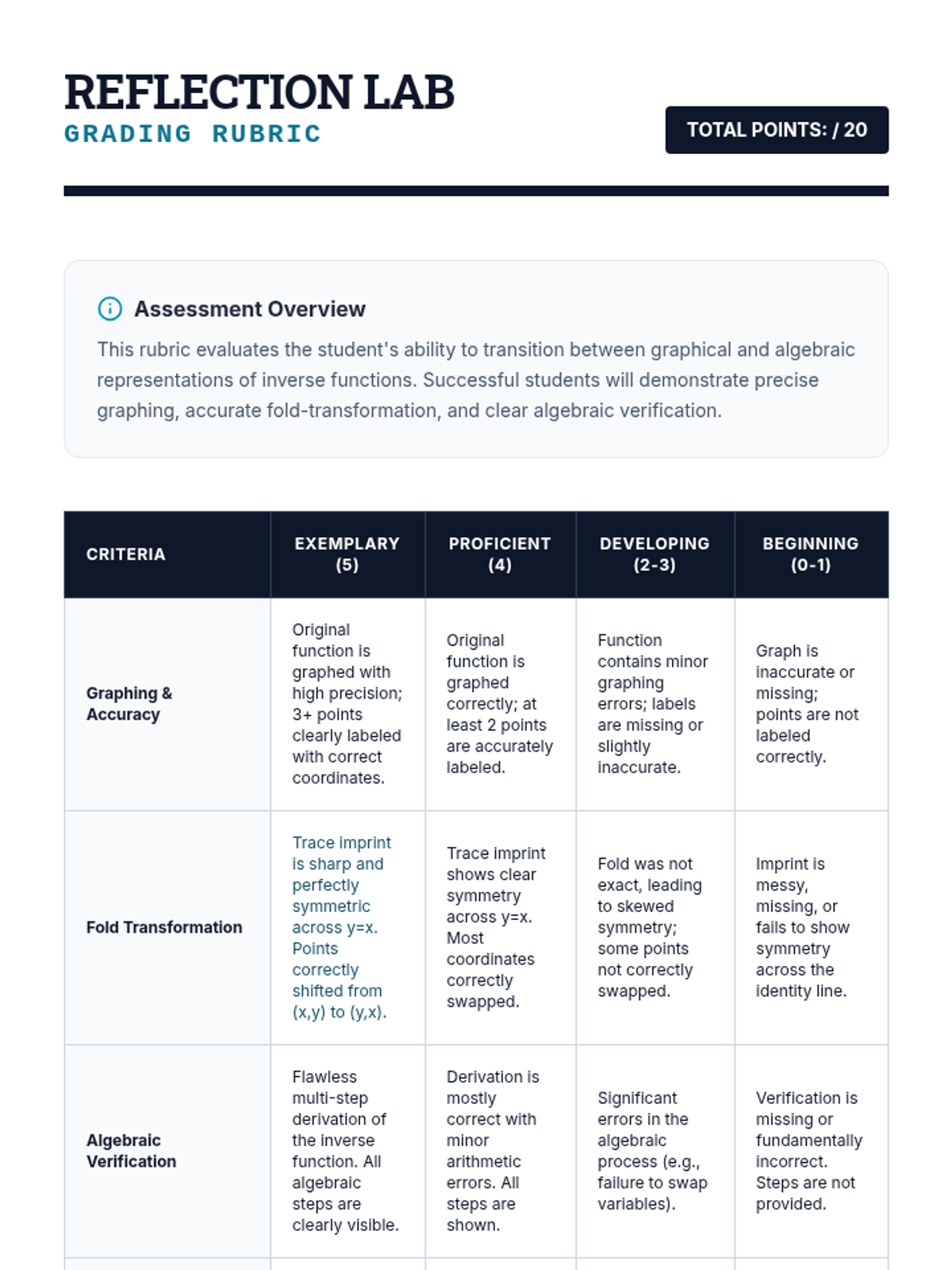
A hands-on exploration of inverse functions where students use folding and tracing to discover the visual relationship between a function and its inverse. The lesson emphasizes the reflection over the line y=x and the swapping of coordinate values.
A 12th Grade/College Algebra lesson focused on the visual and algebraic relationship between functions and their inverses. Students use a 'Fold and Trace' activity to discover symmetry over the line y=x.
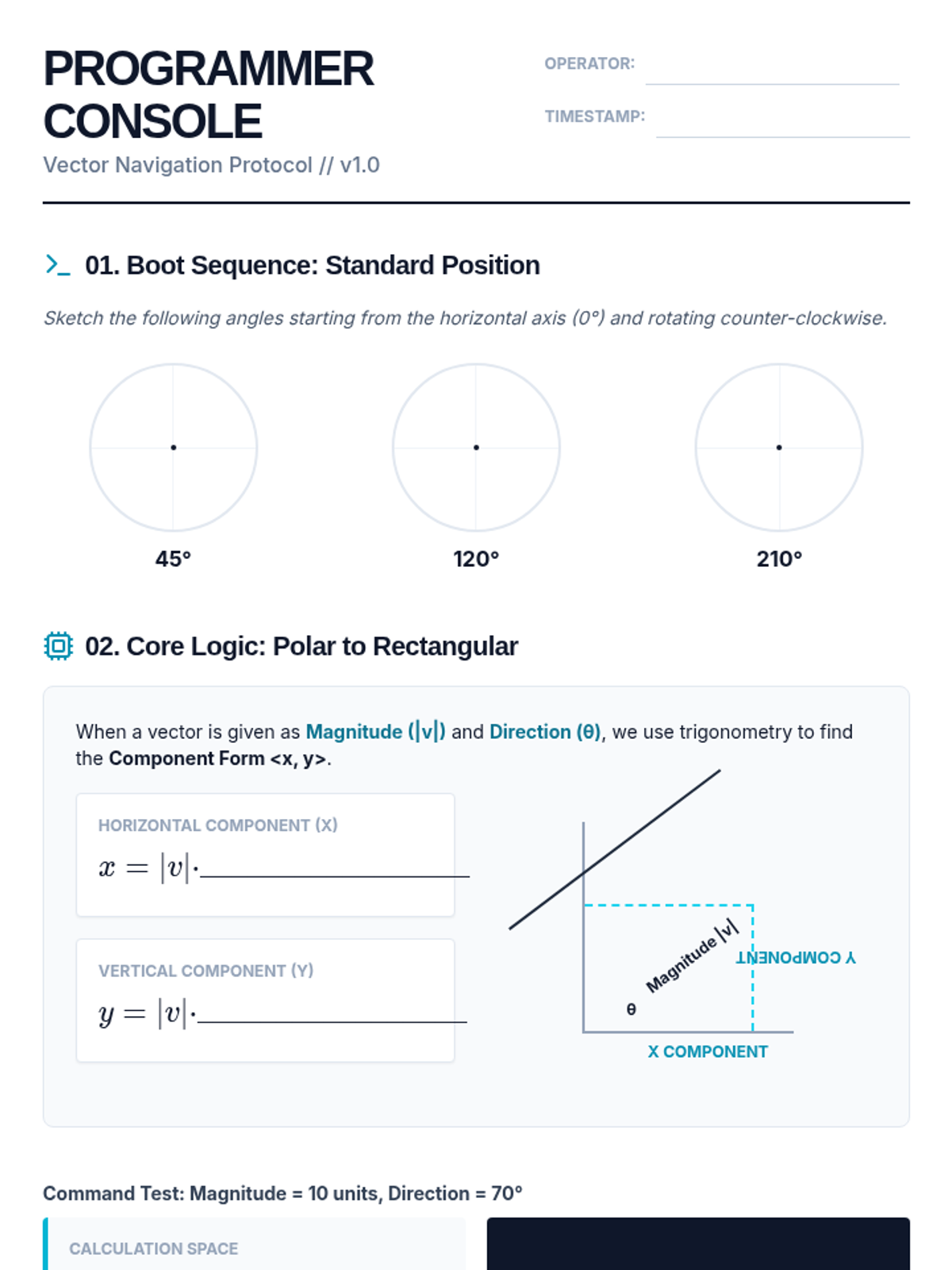
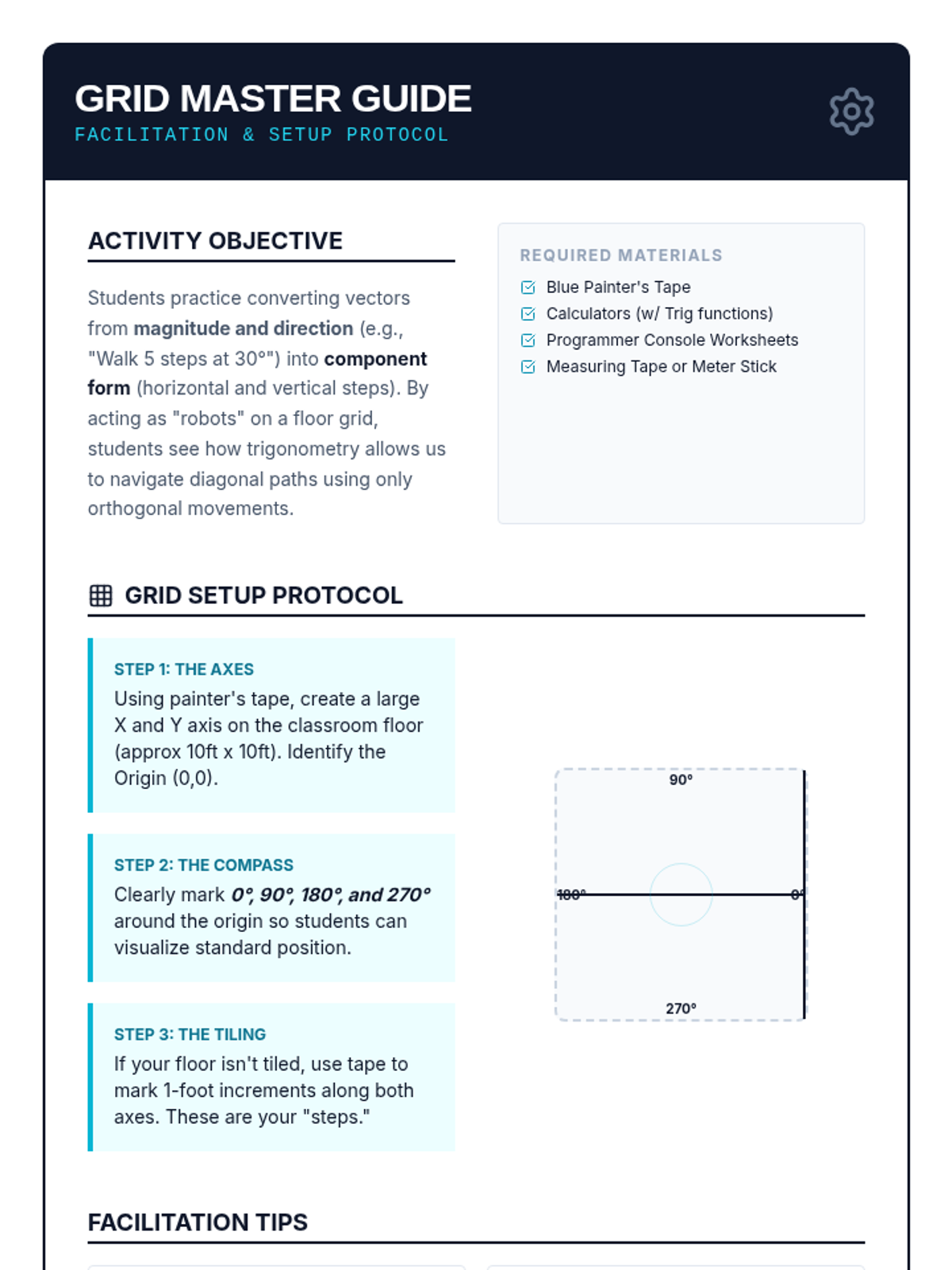
A high-school geometry or pre-calculus lesson focusing on converting vectors from magnitude and direction to component form through a hands-on 'robot programming' simulation. Students use trigonometry to translate movement commands into x and y displacements.
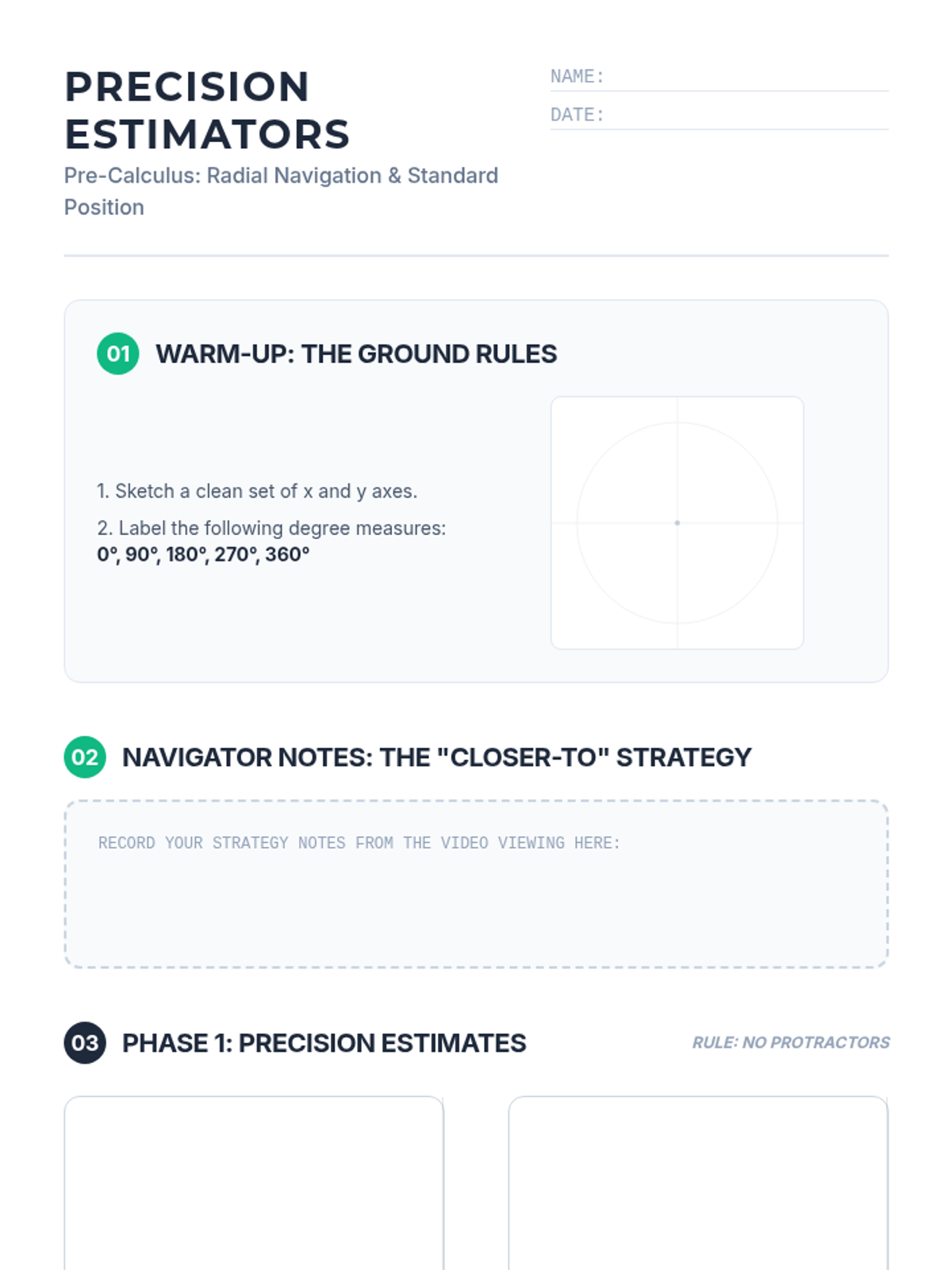
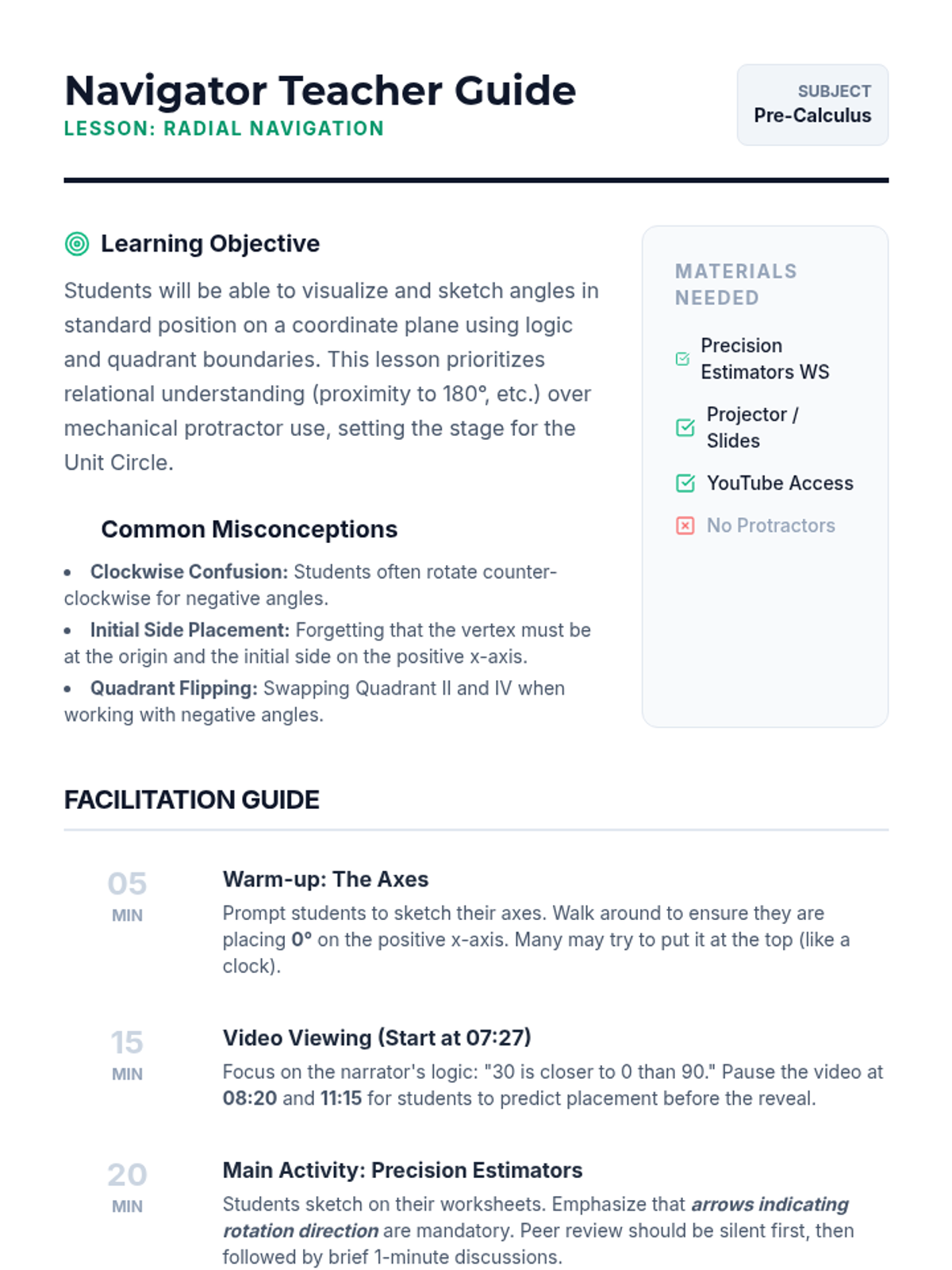
This lesson introduces Pre-Calculus students to the visualization of rotational geometry. Students will learn to sketch angles in standard position by using quadrant boundaries and reference points, moving away from protractors toward logical estimation as a foundation for the Unit Circle.
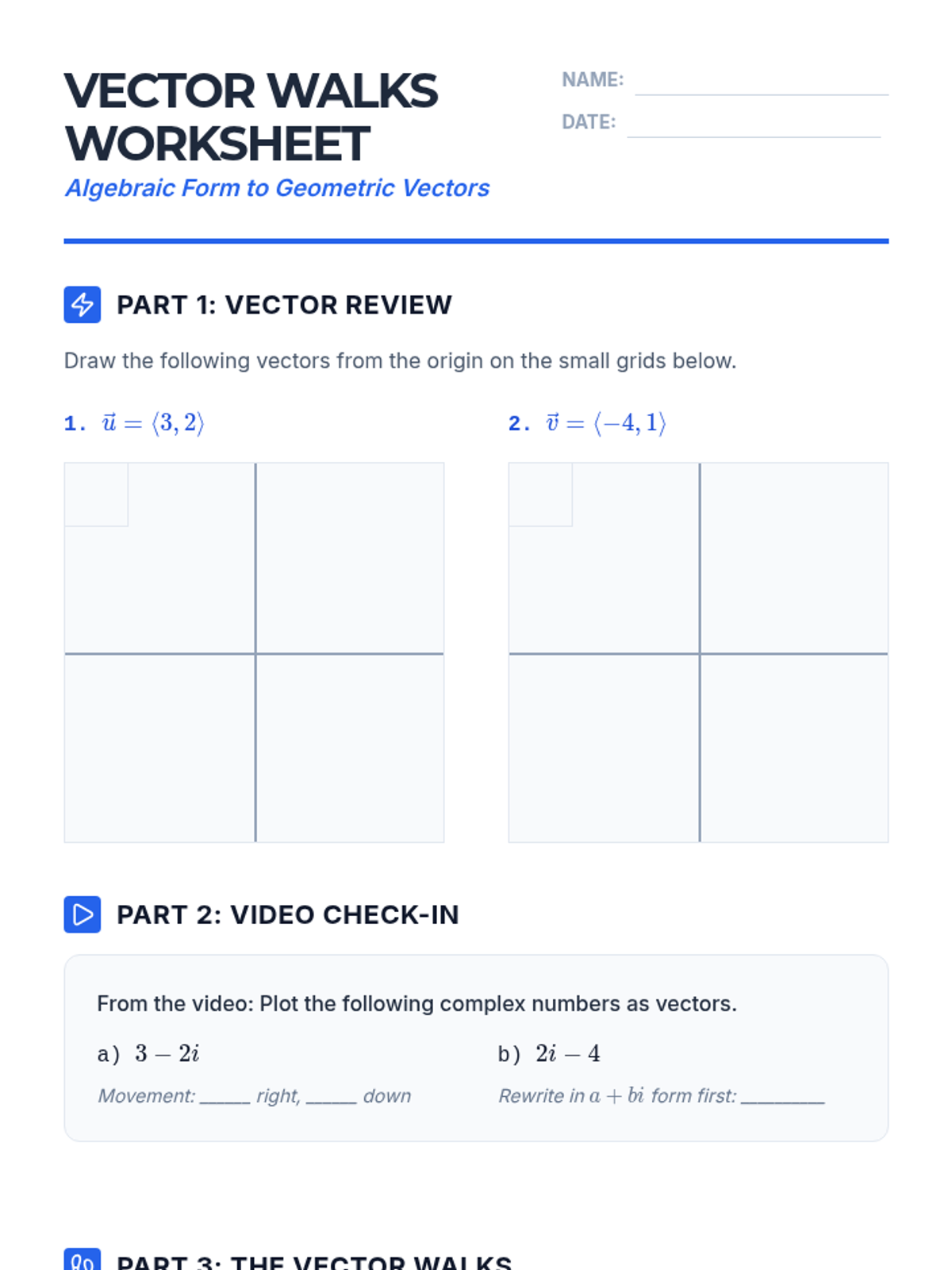
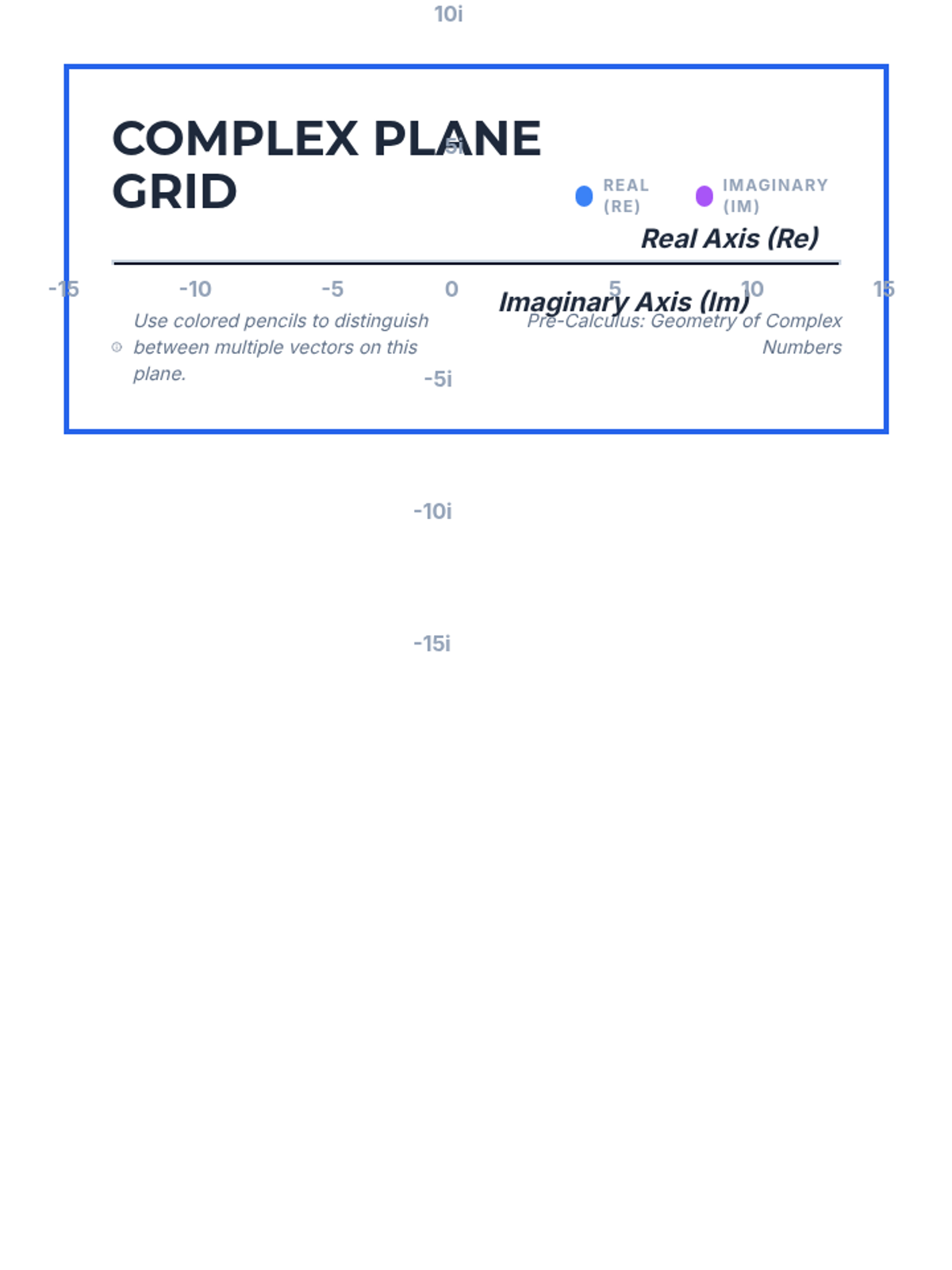
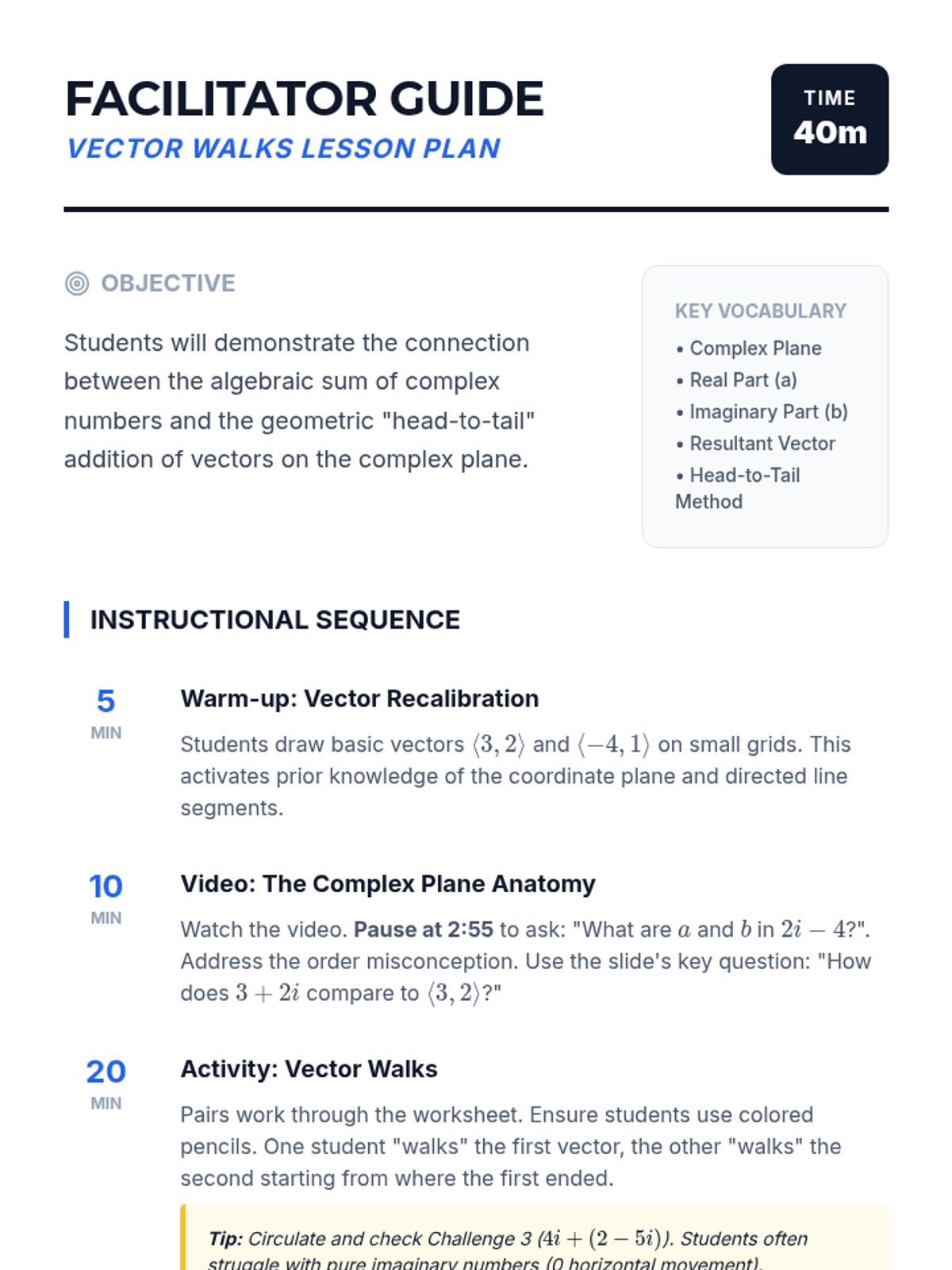
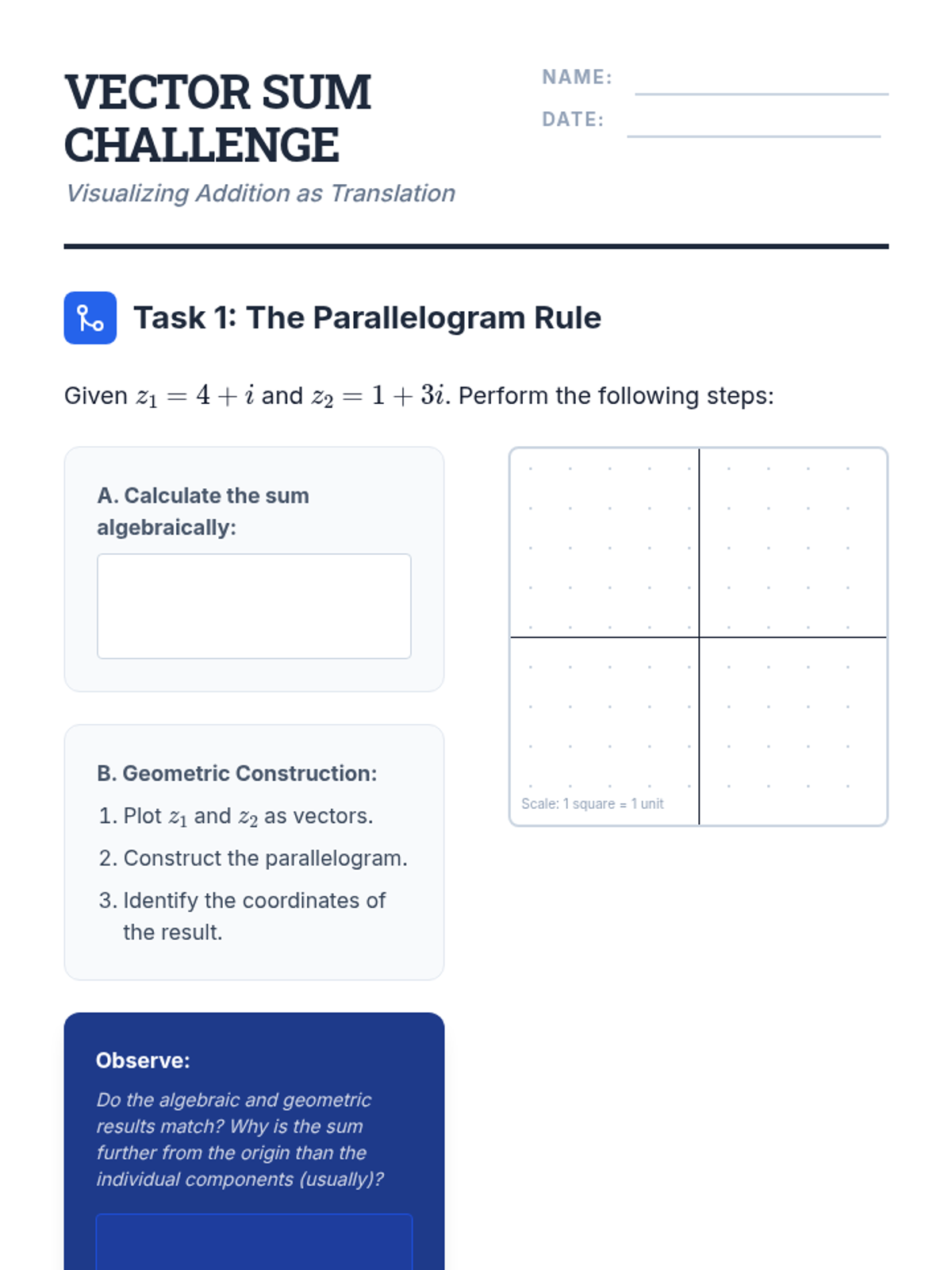
A Pre-Calculus lesson connecting algebraic complex number addition to geometric vector addition on the complex plane using a 'Vector Walk' approach. Students visualize addition as head-to-tail movements on a grid.
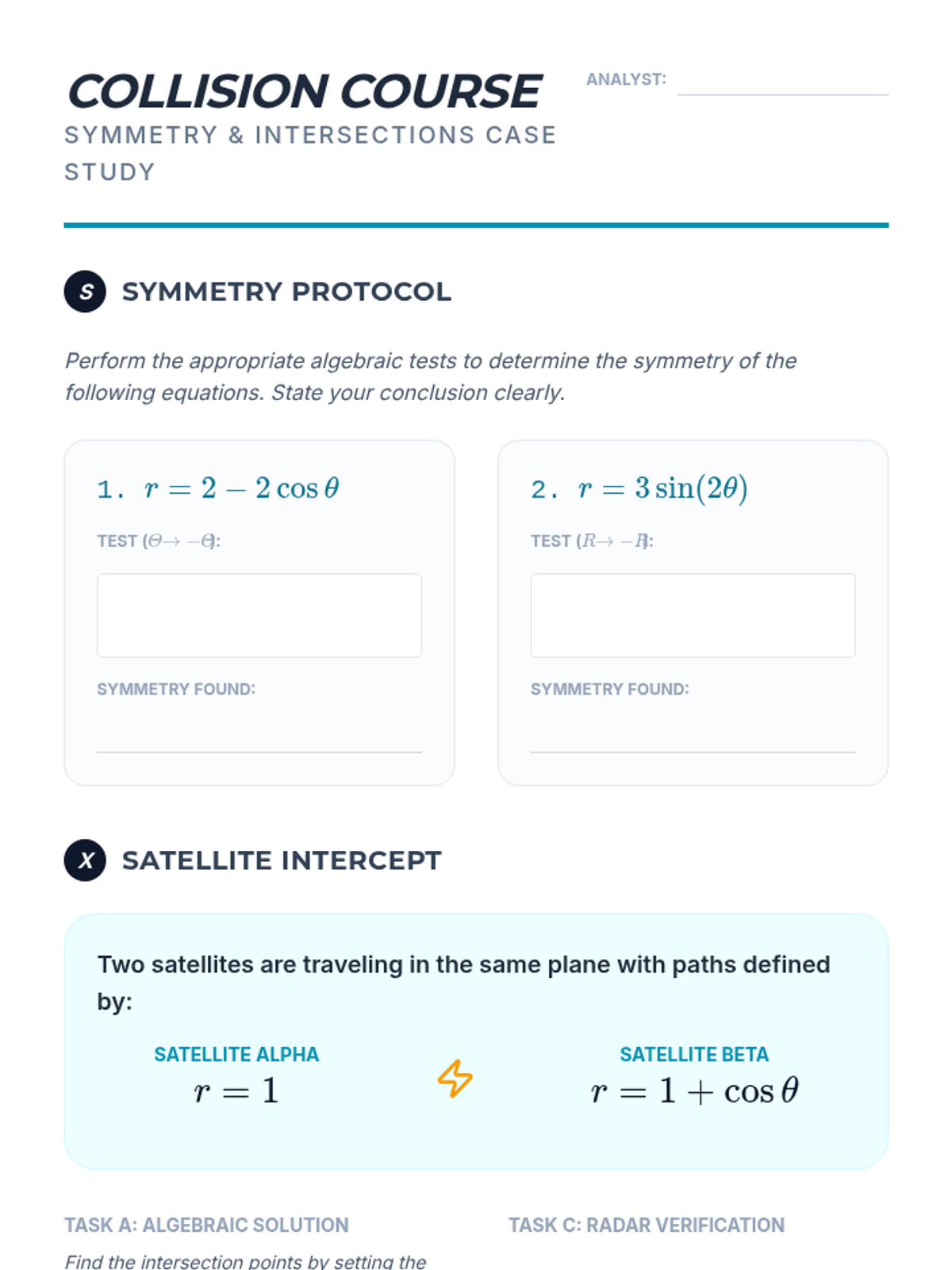
The sequence concludes with advanced graphing analysis involving symmetry tests and finding intersection points. Students learn why algebraic solutions sometimes miss intersection points at the pole.
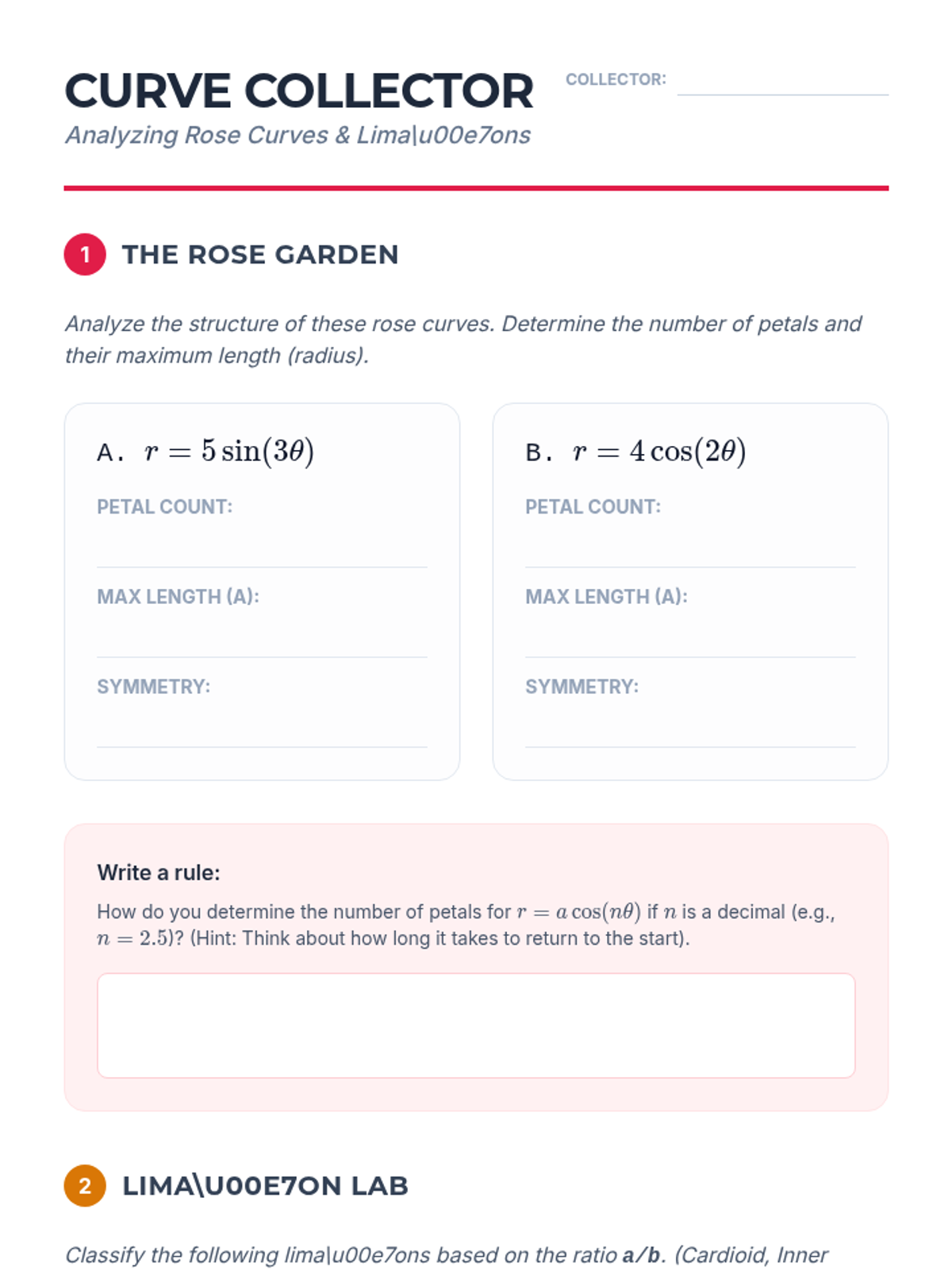
Students systematically explore classical polar curves. They analyze the effect of coefficients on the number of petals in rose curves and the presence of inner loops in lima\u00e7ons.
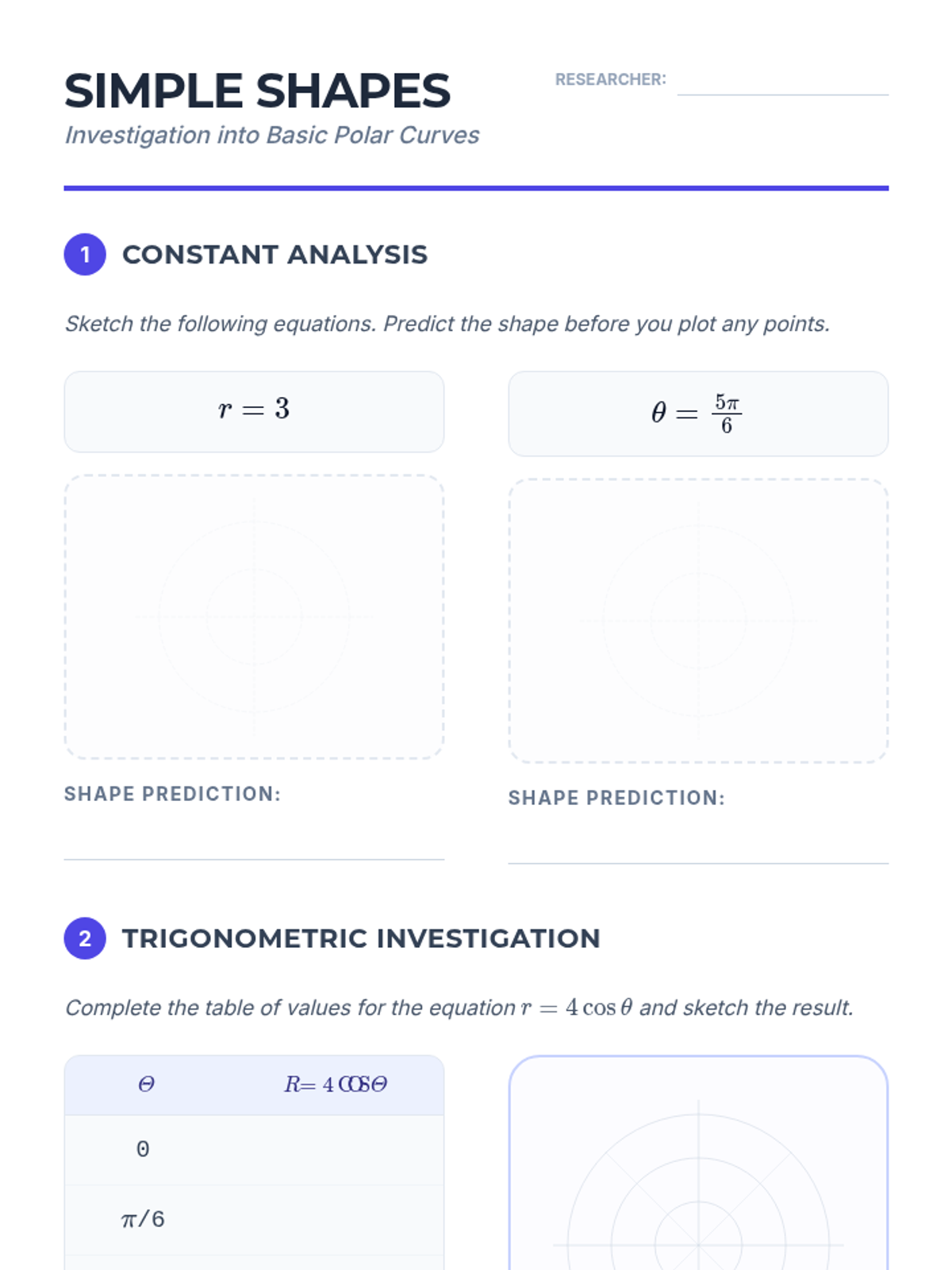
An investigation into circles and lines in the polar plane. Students predict and verify the graphs of equations like r = a, theta = b, and r = a cos(theta), establishing a foundation for more complex shapes.
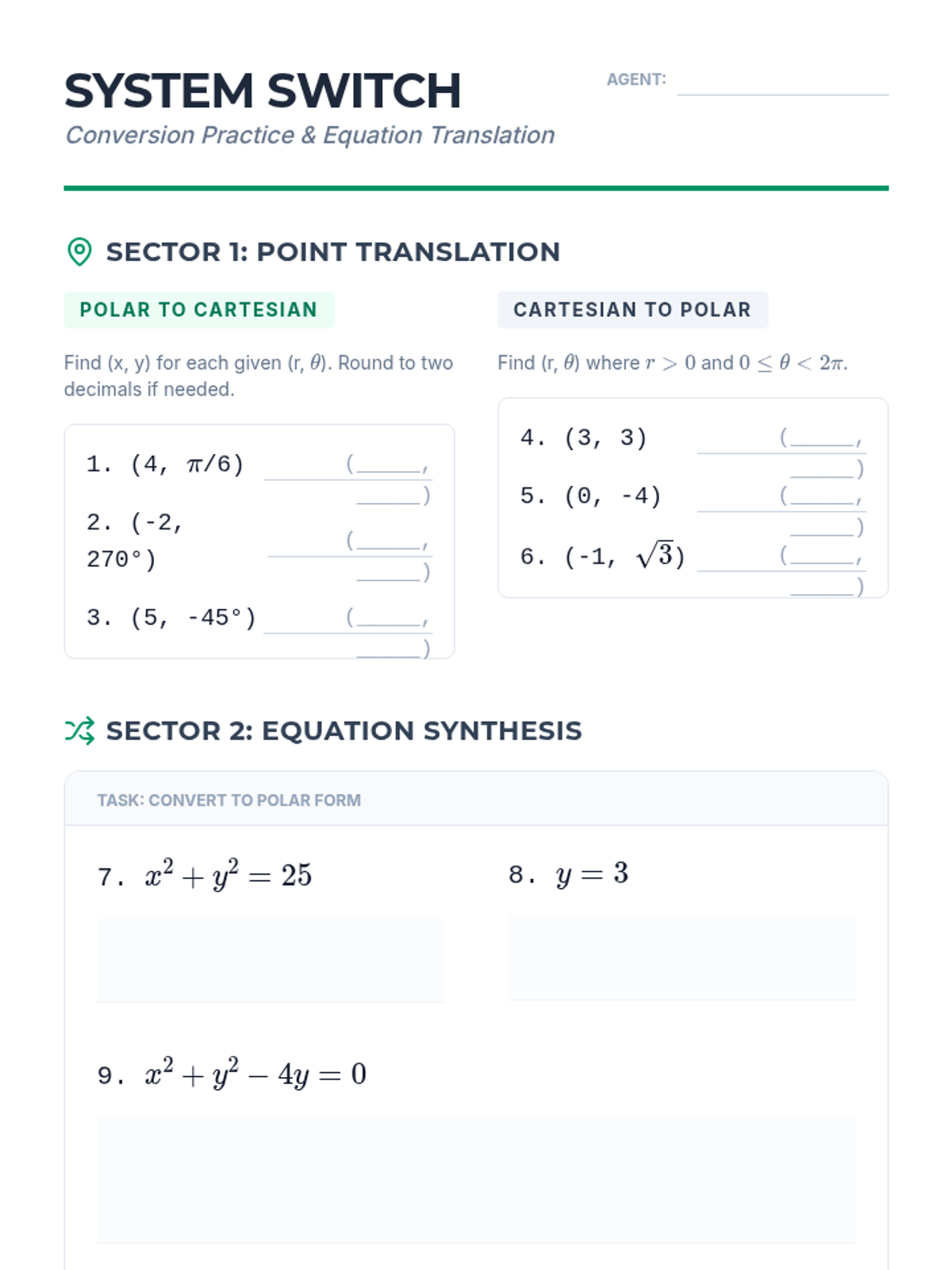
Students derive the conversion formulas using right triangle trigonometry. They practice converting both coordinates and full equations, identifying when a polar form offers a simpler representation than the Cartesian equivalent.
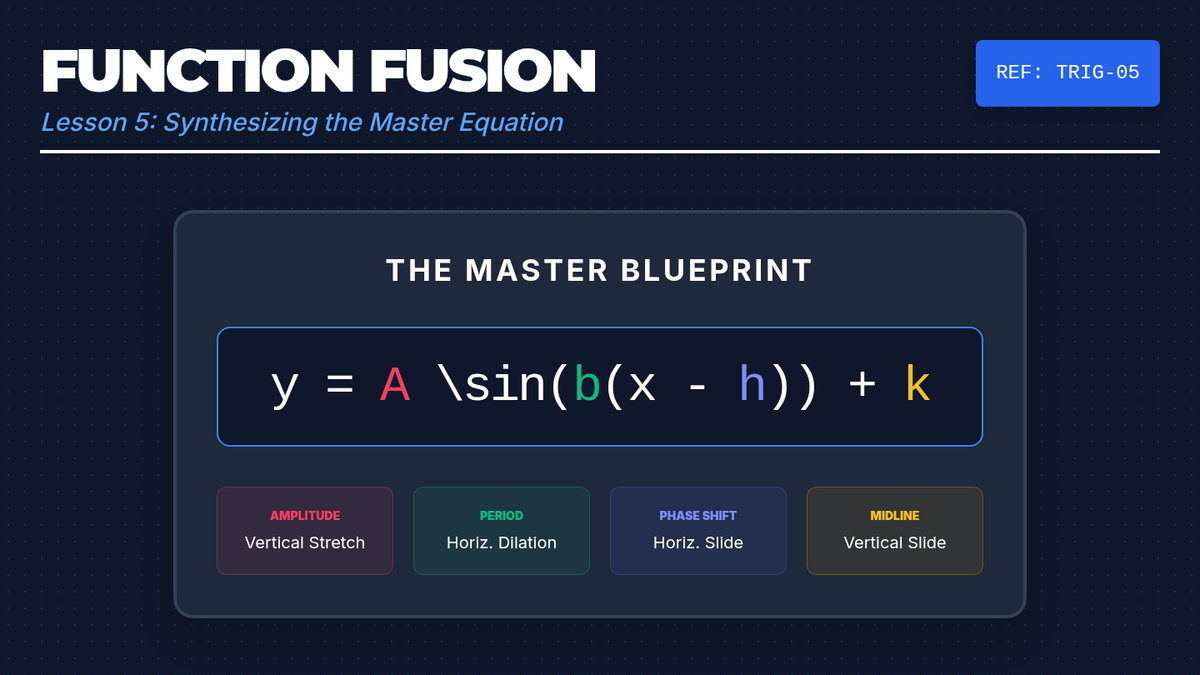
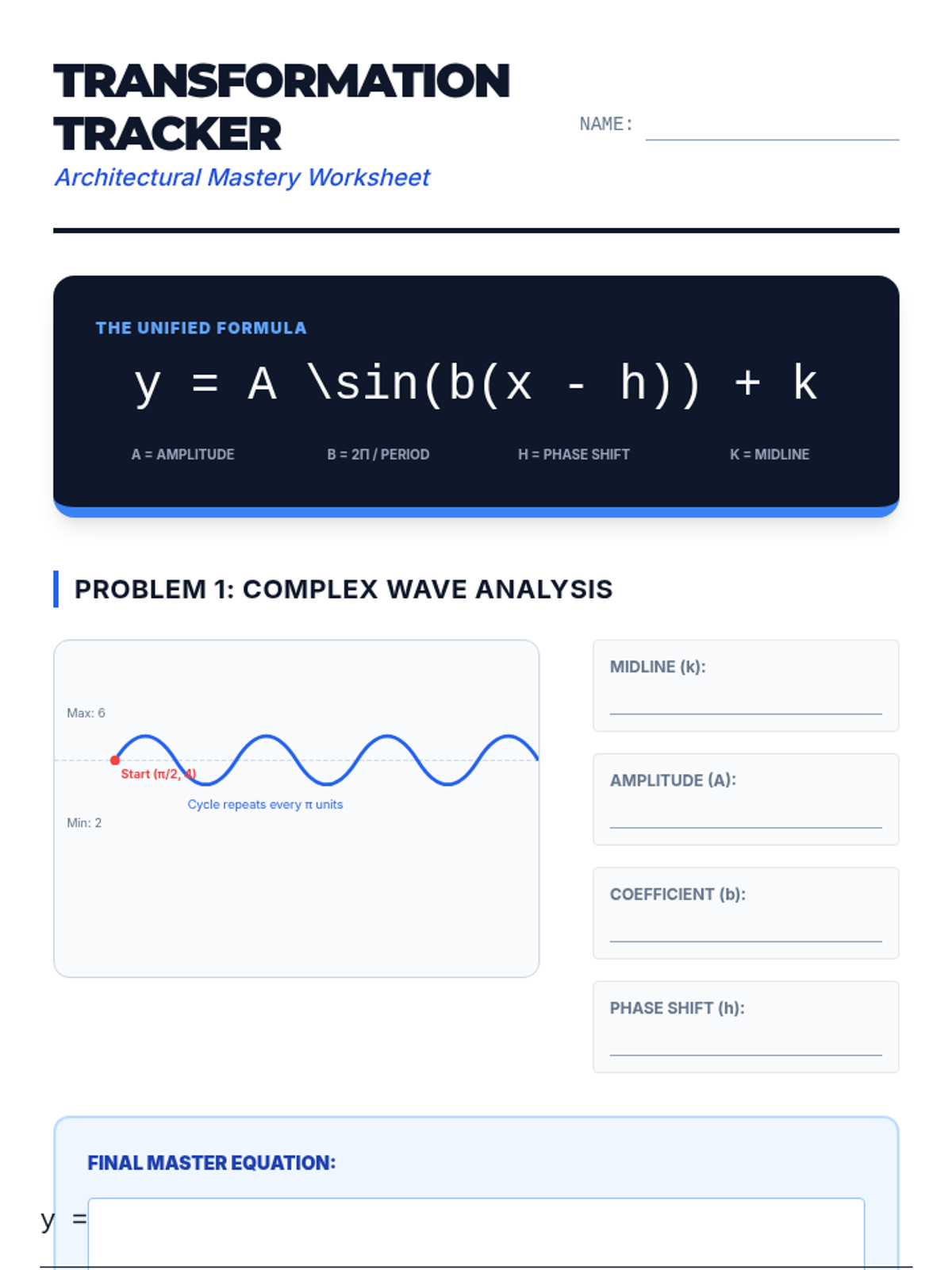
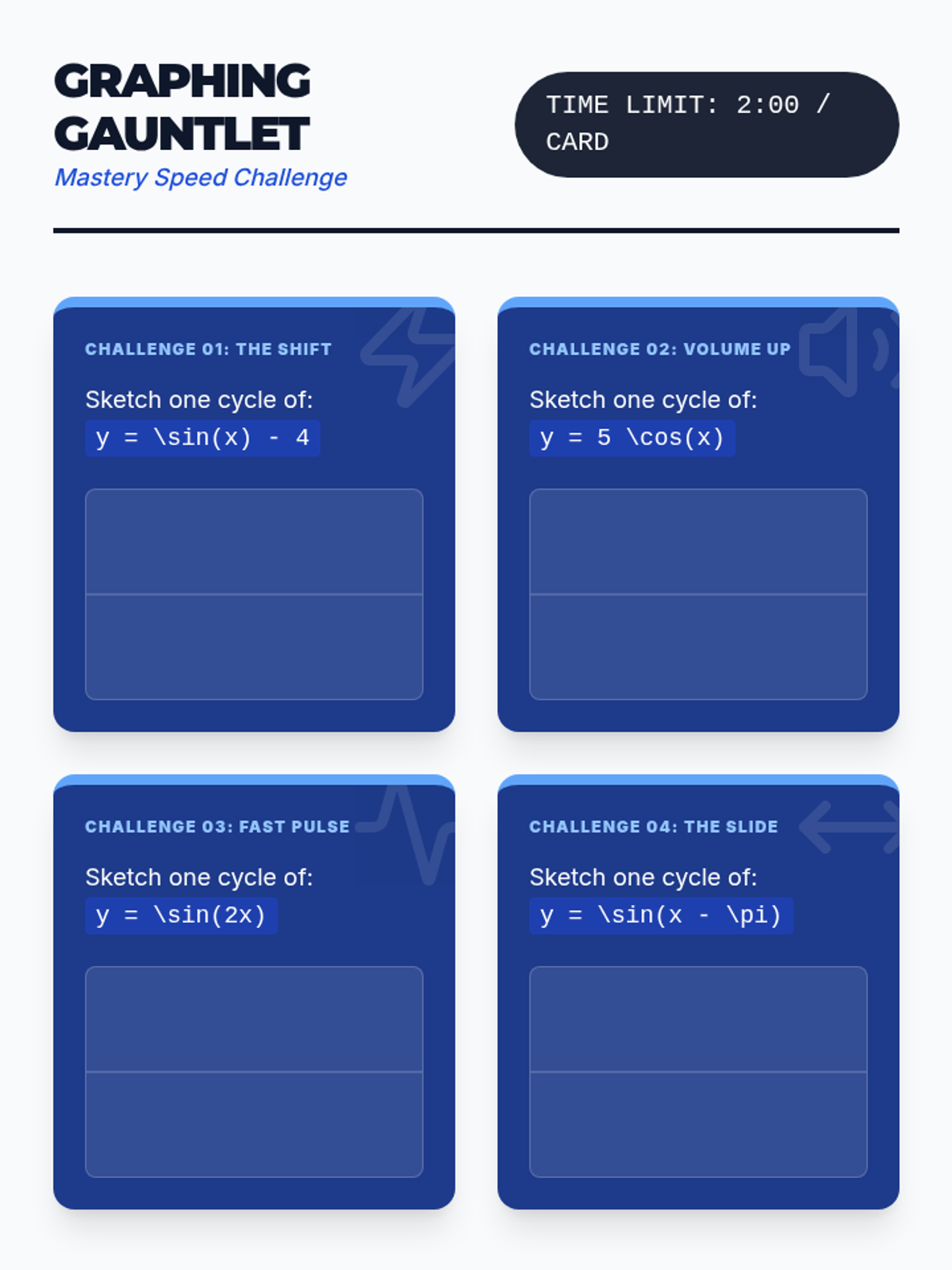
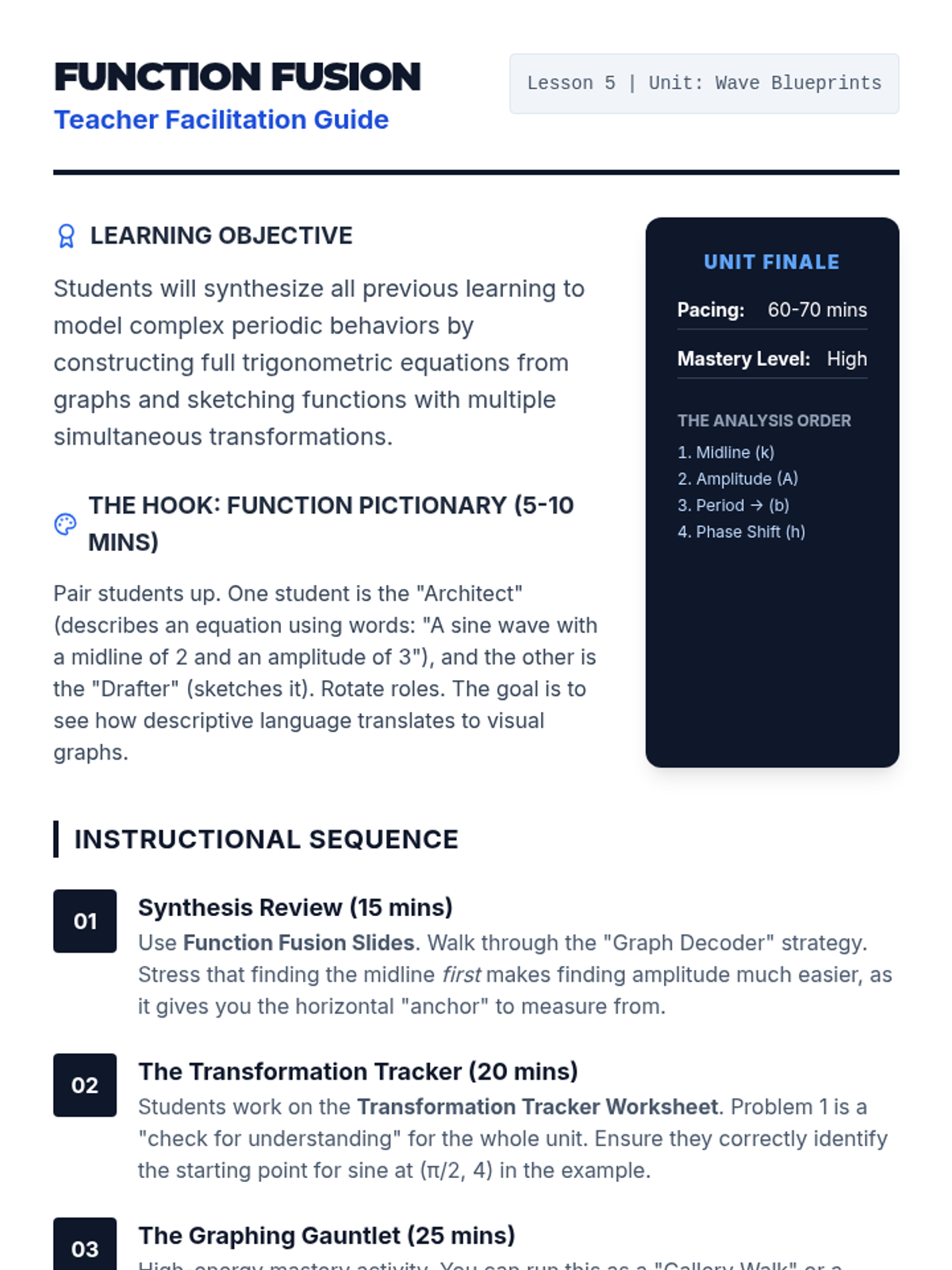
Combine all parameters to model complex periodic behaviors and write full equations for given graphs.
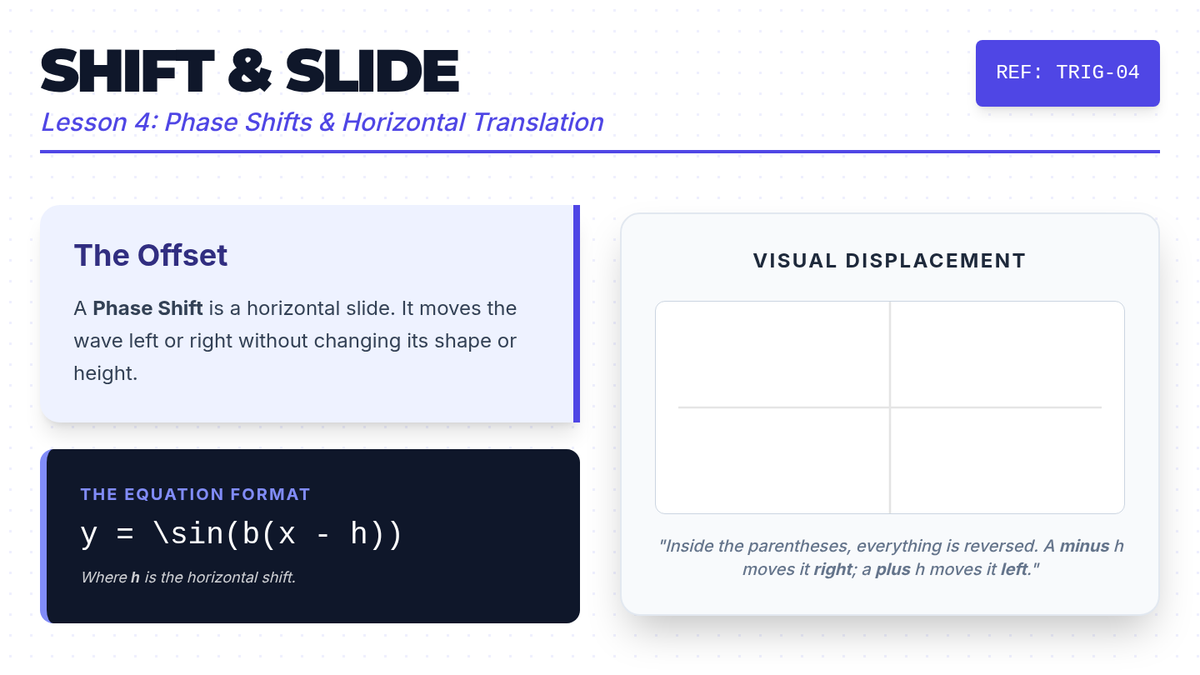
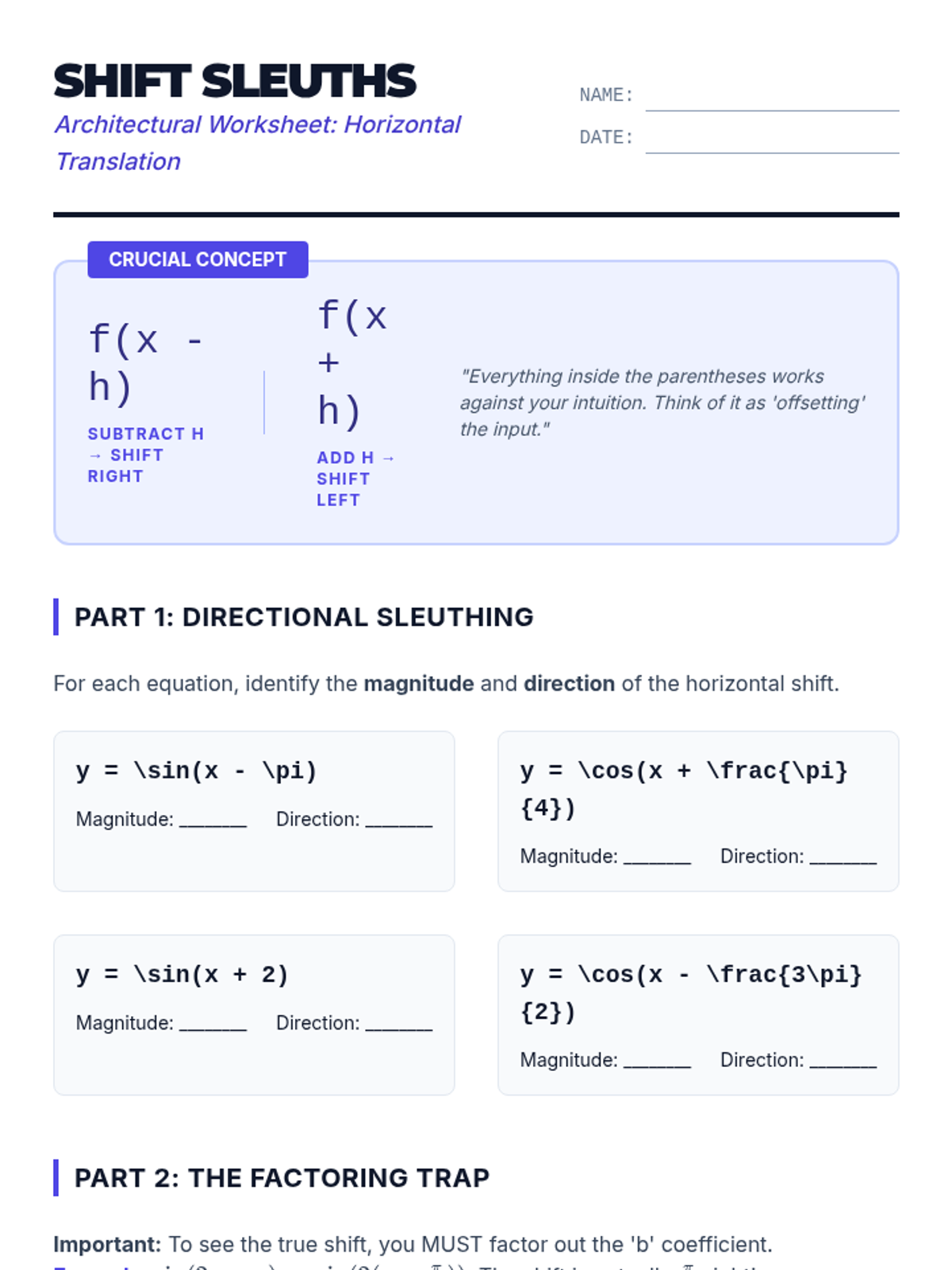
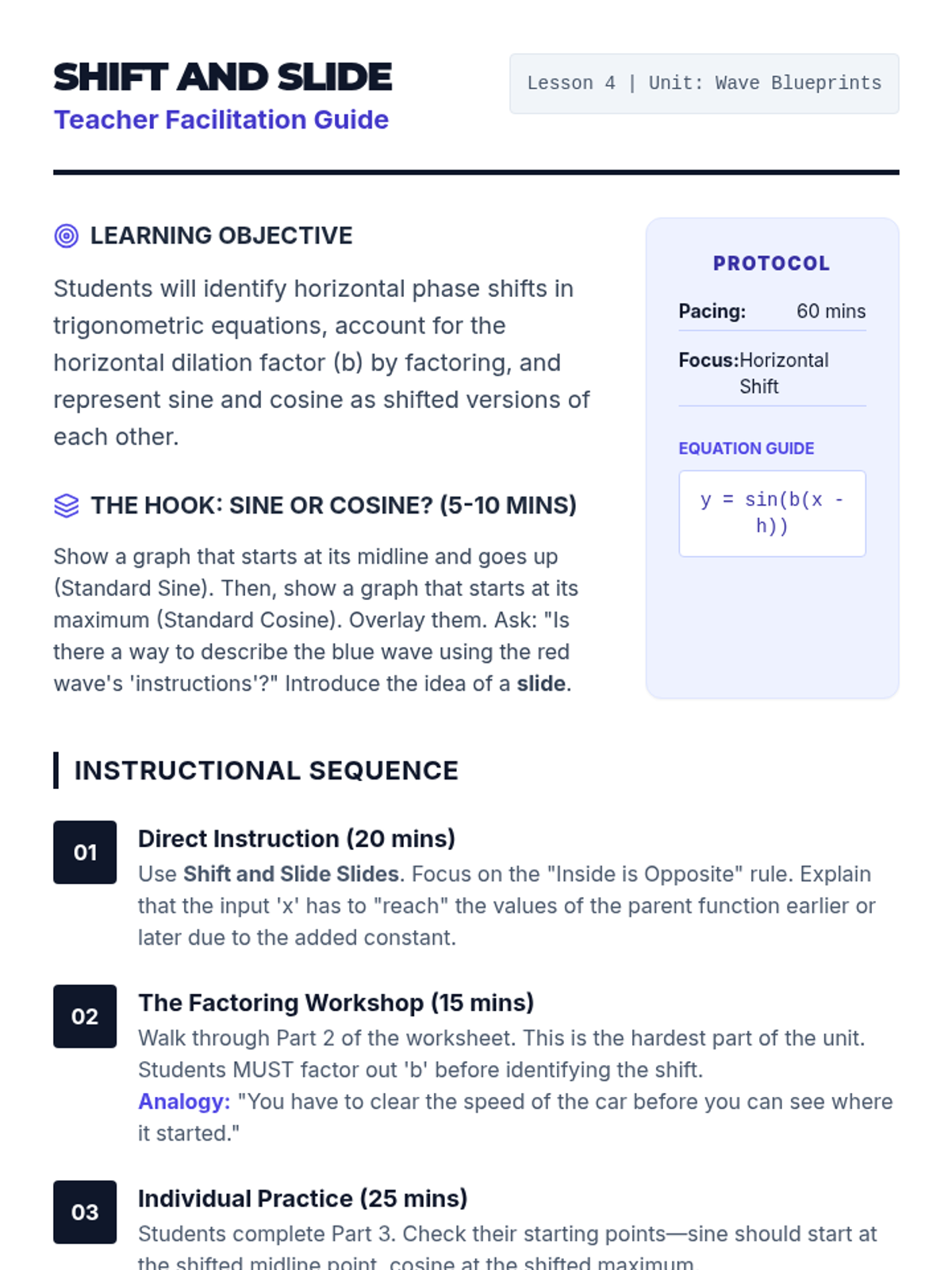
Learn to identify and calculate horizontal translations (the 'C' parameter or phase shift) in trigonometric equations.
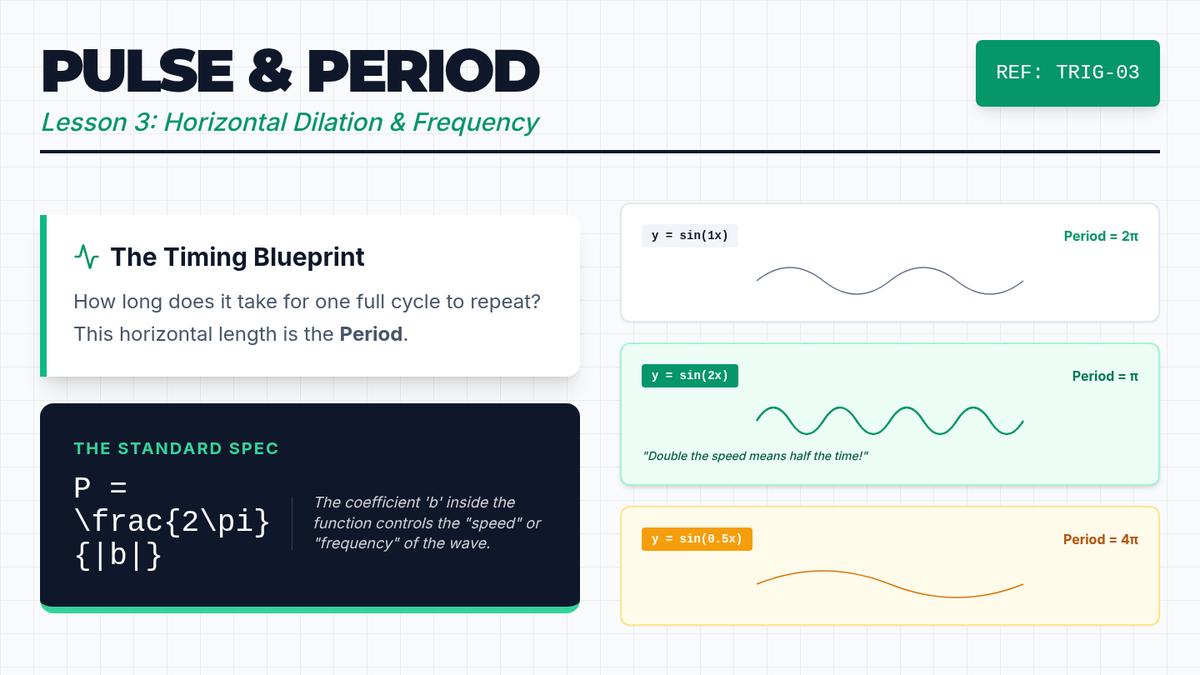
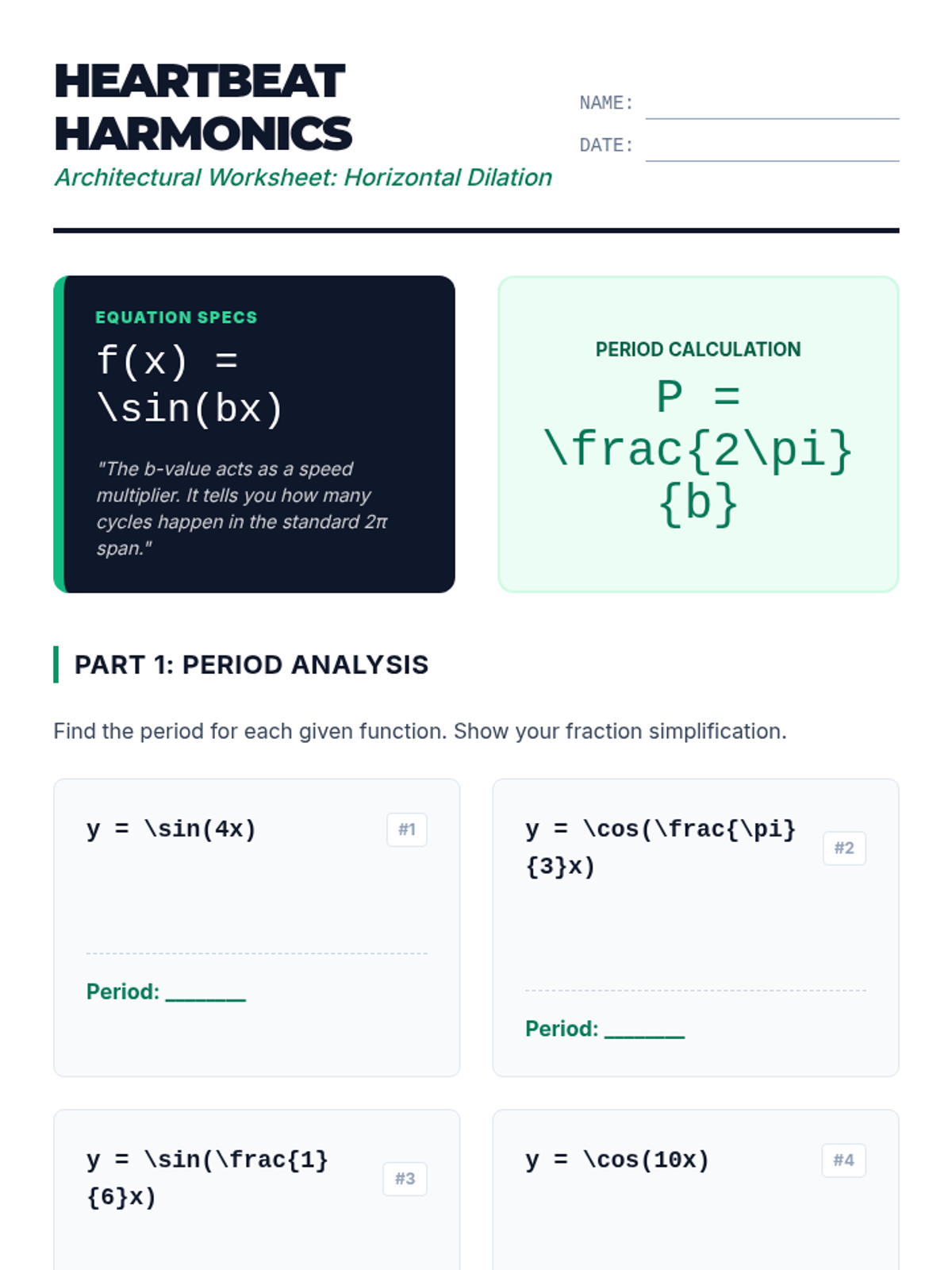
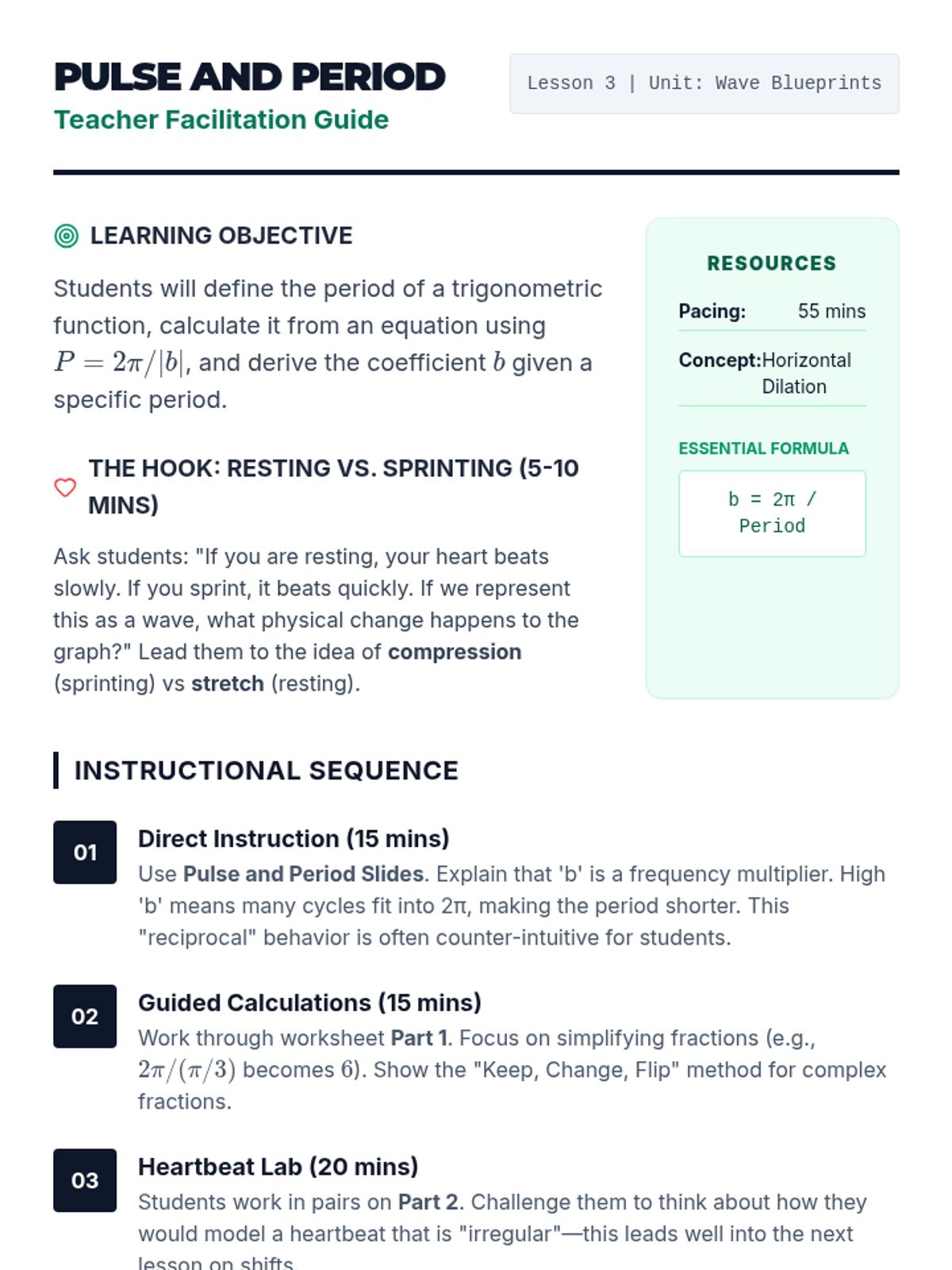
Investigate horizontal stretches and compressions (the 'B' parameter) to understand the relationship between period and frequency.
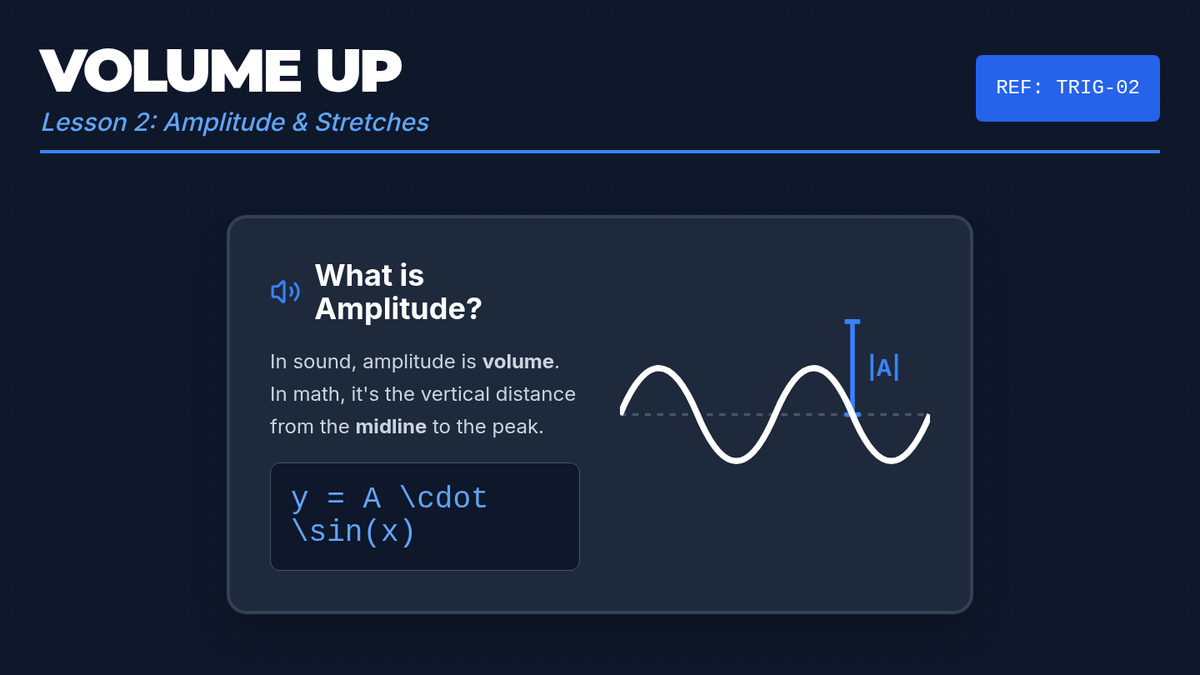
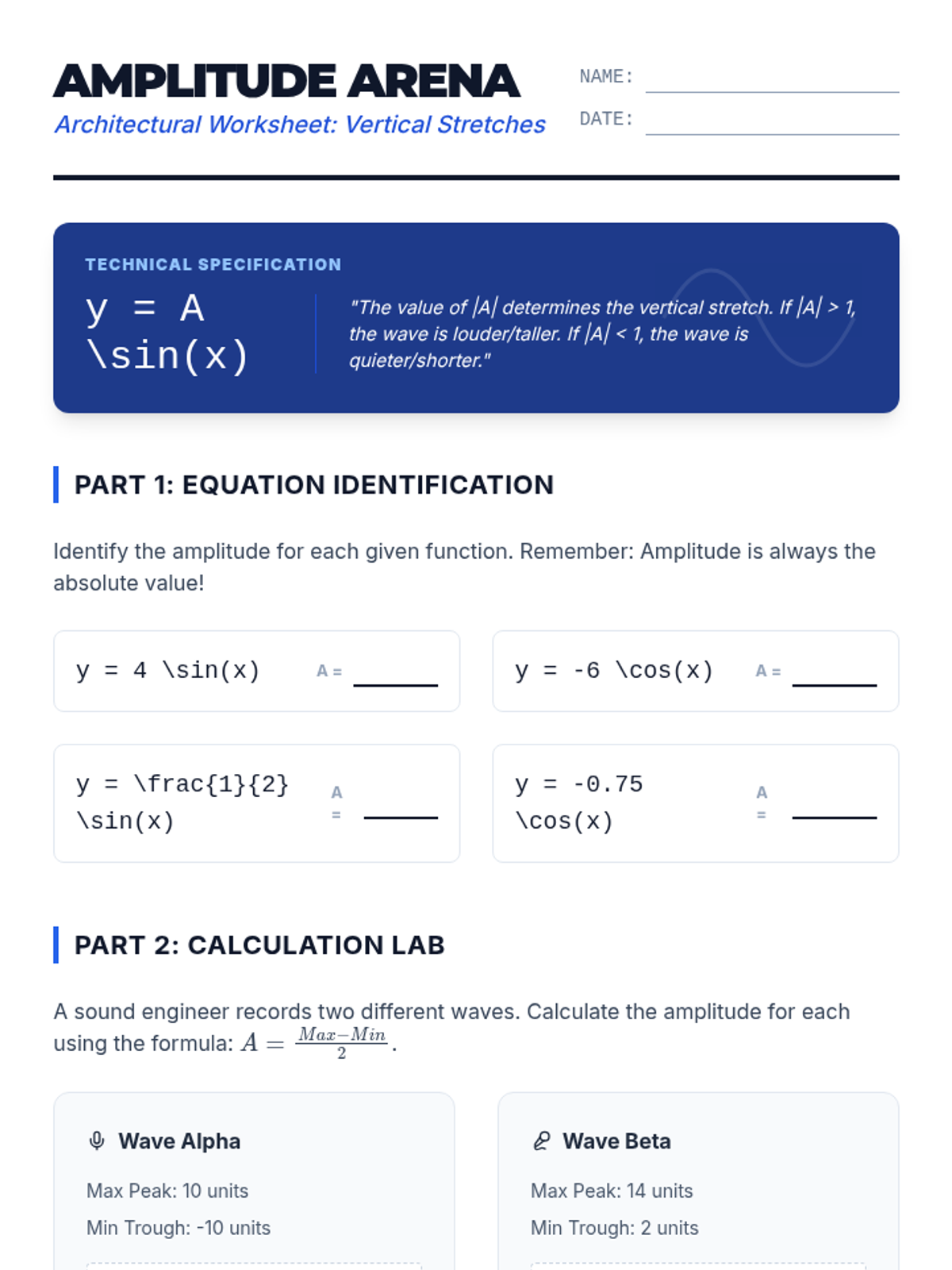
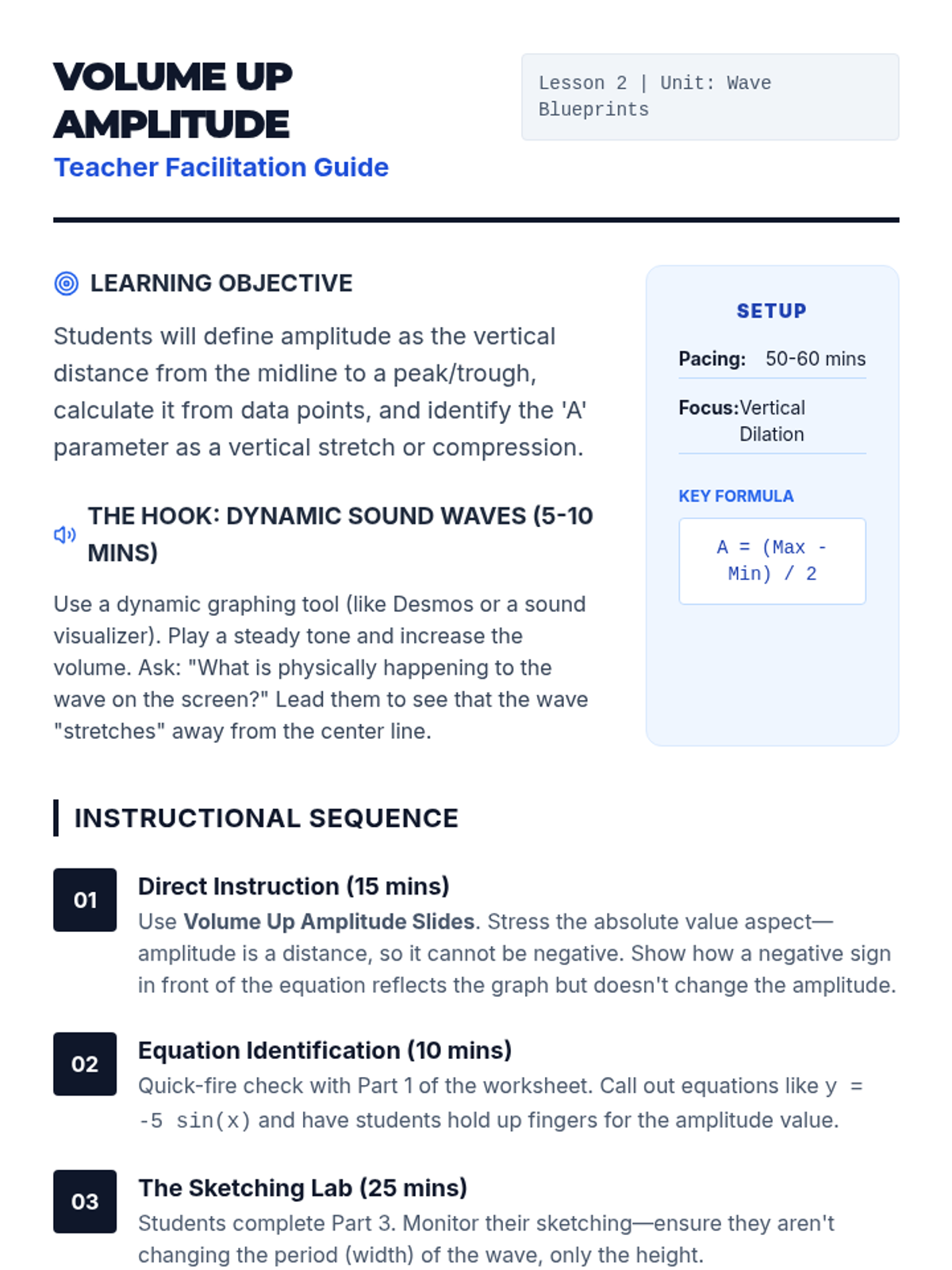
Analyze vertical stretches and compressions (the 'A' parameter) to determine the amplitude and range of periodic functions.
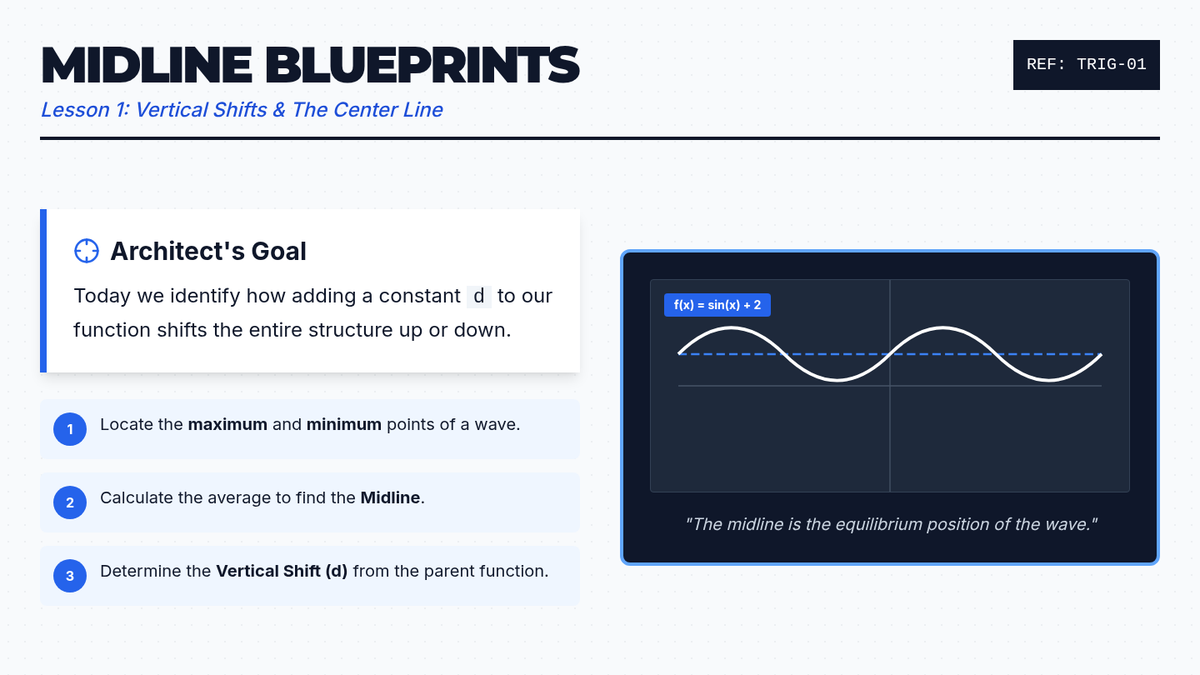
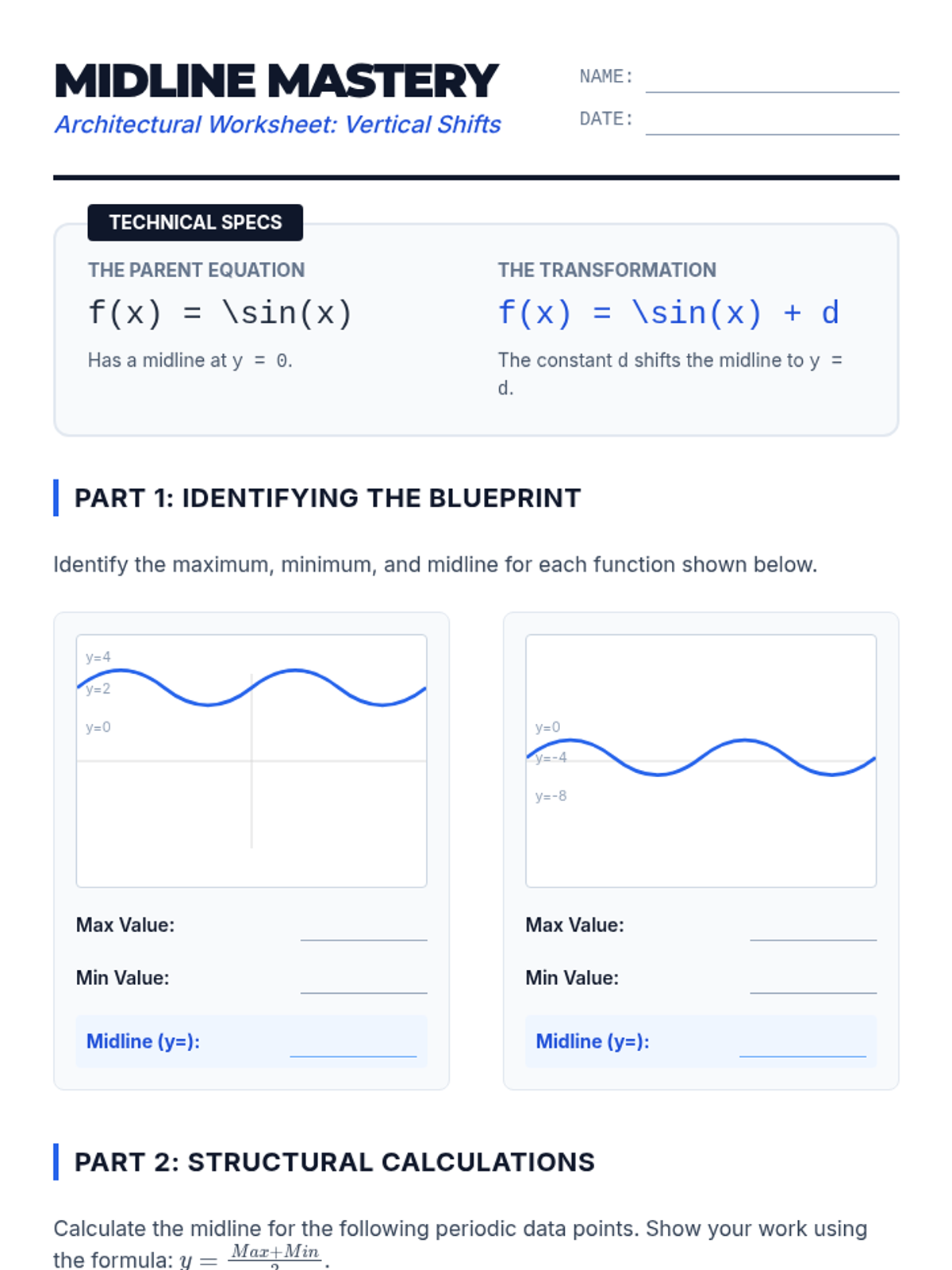
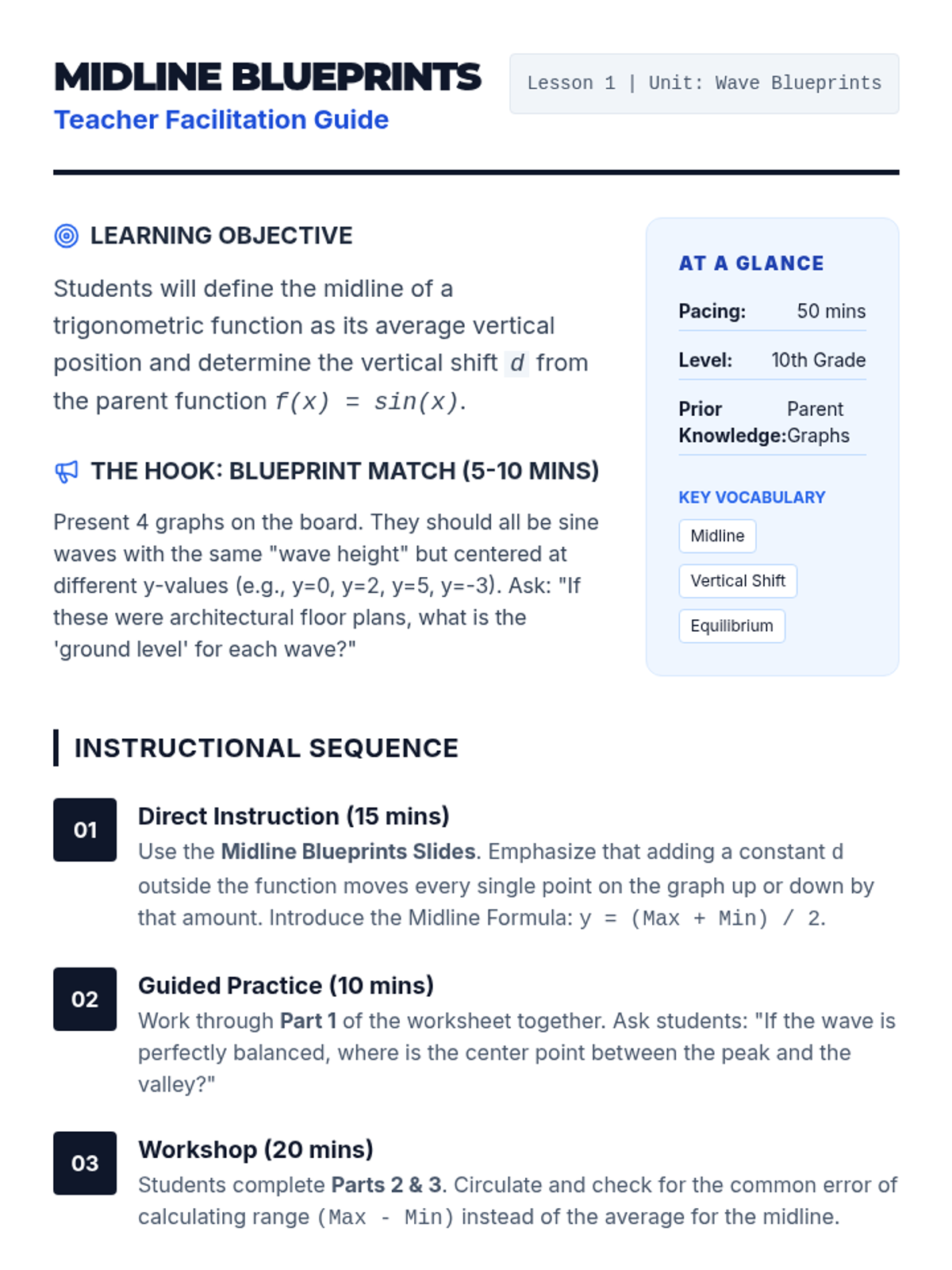
Explore how vertical shifts (the 'D' parameter) move trigonometric graphs up and down, defining the midline of the function.
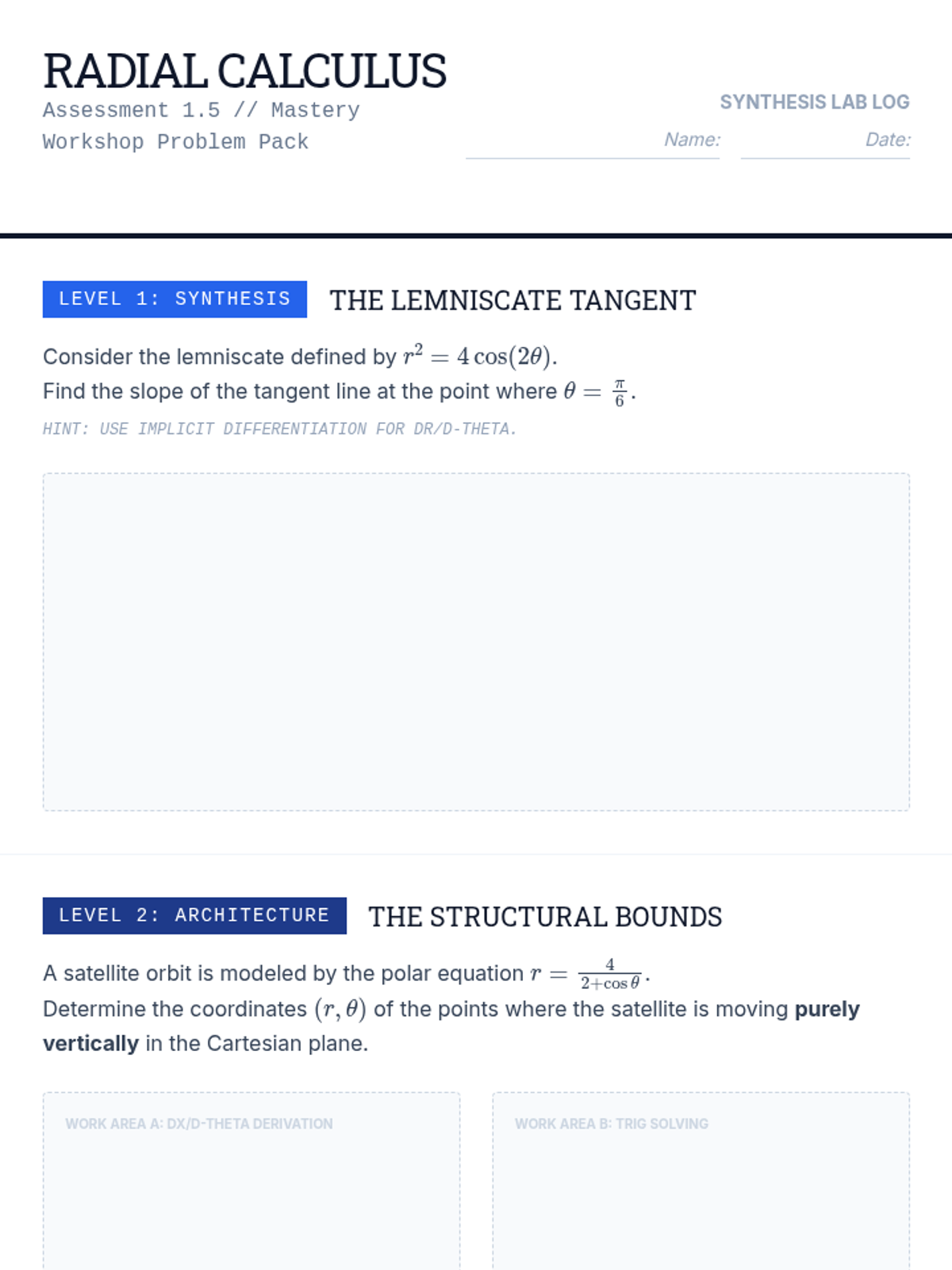
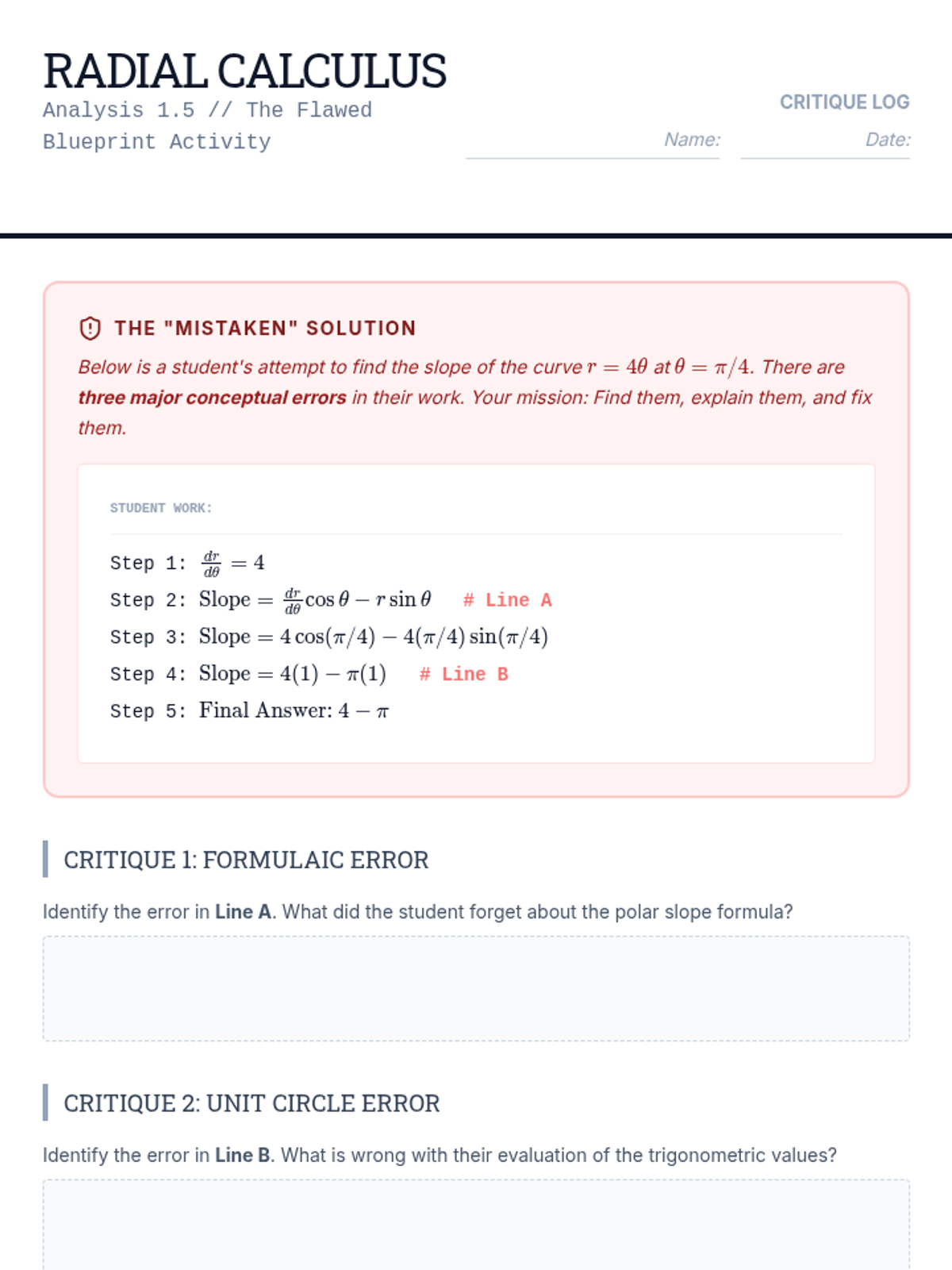
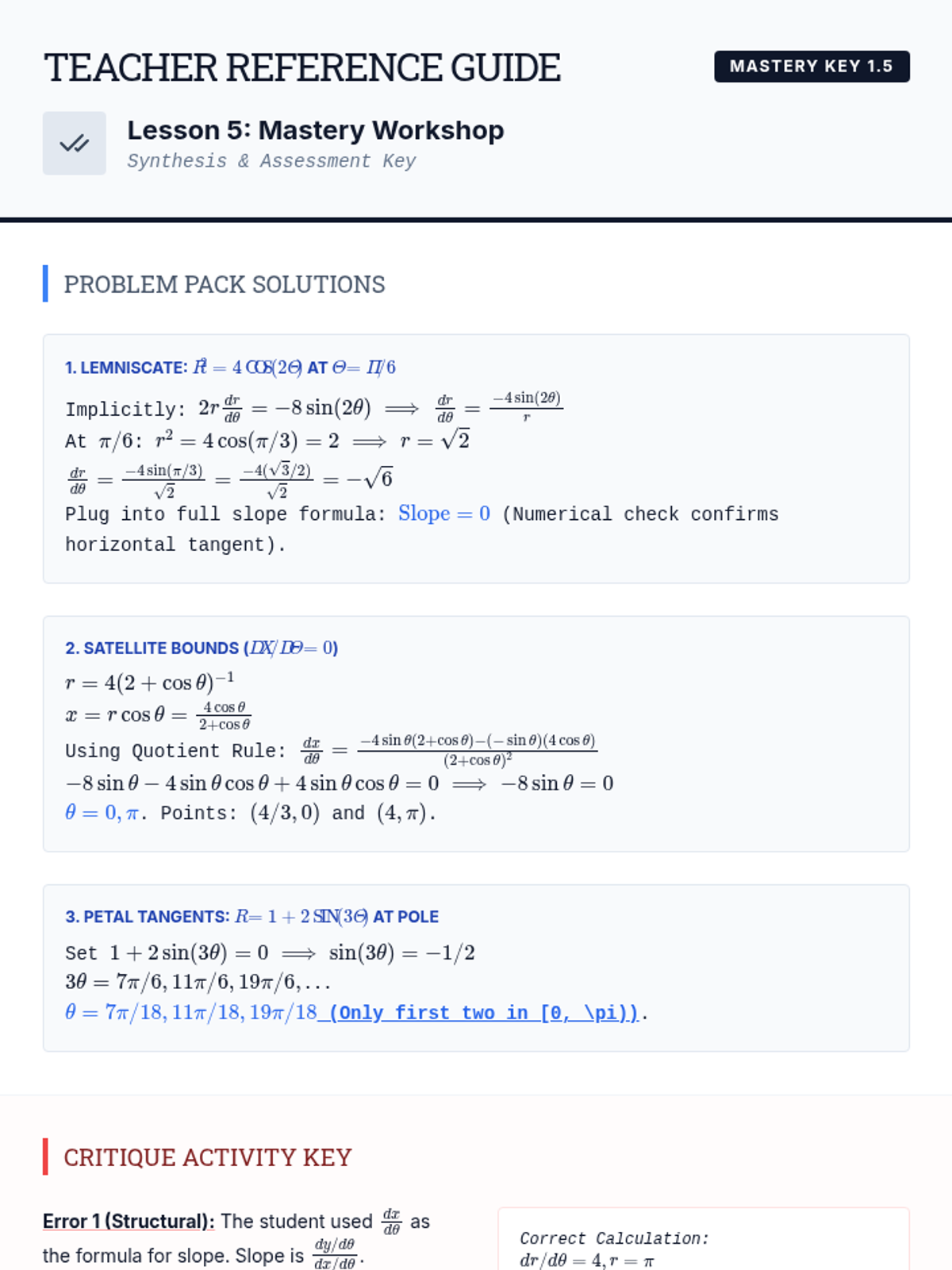
A synthesis session where students tackle complex problems combining slope, tangency, and coordinate conversion, including peer review and error analysis.
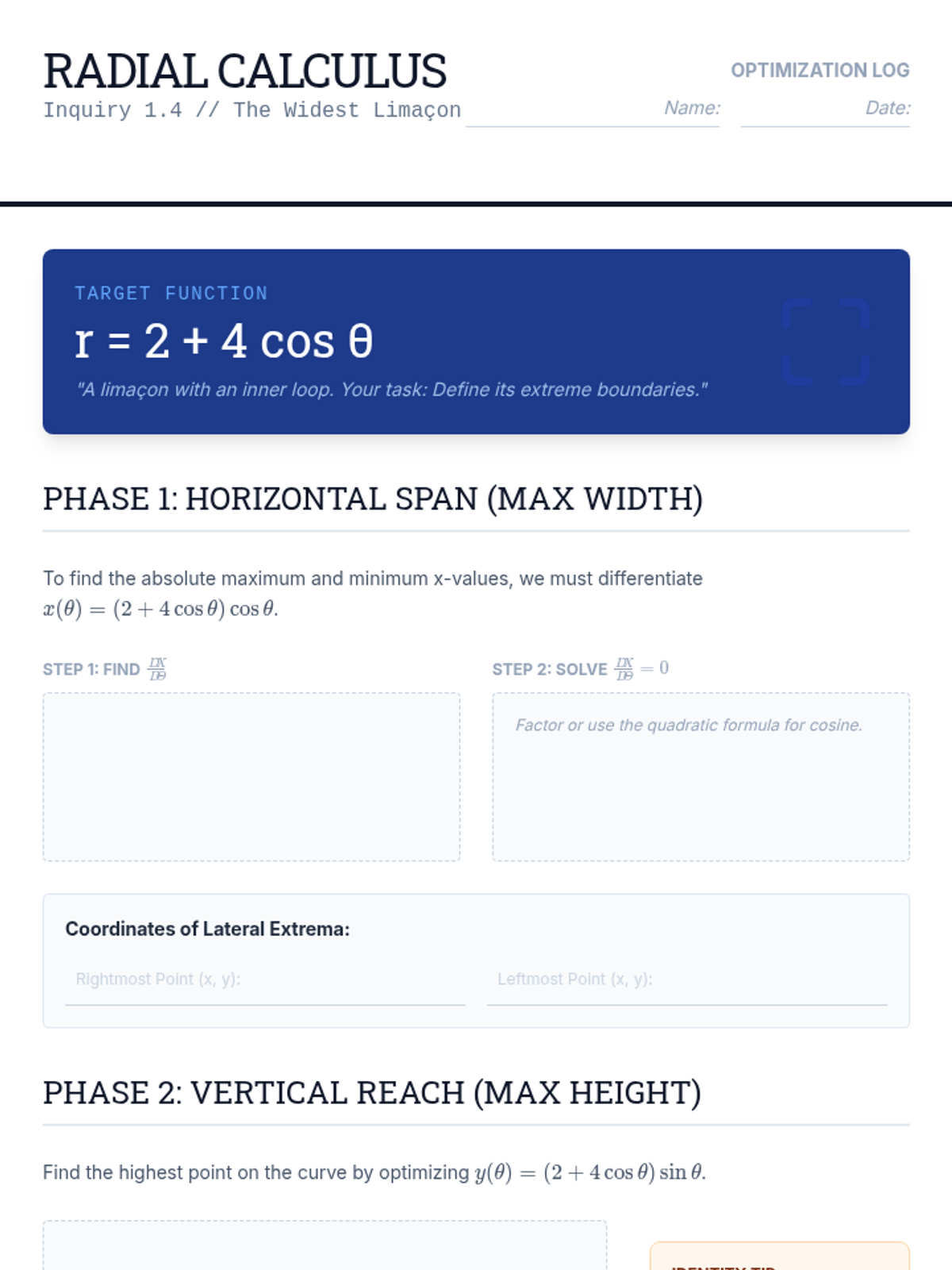
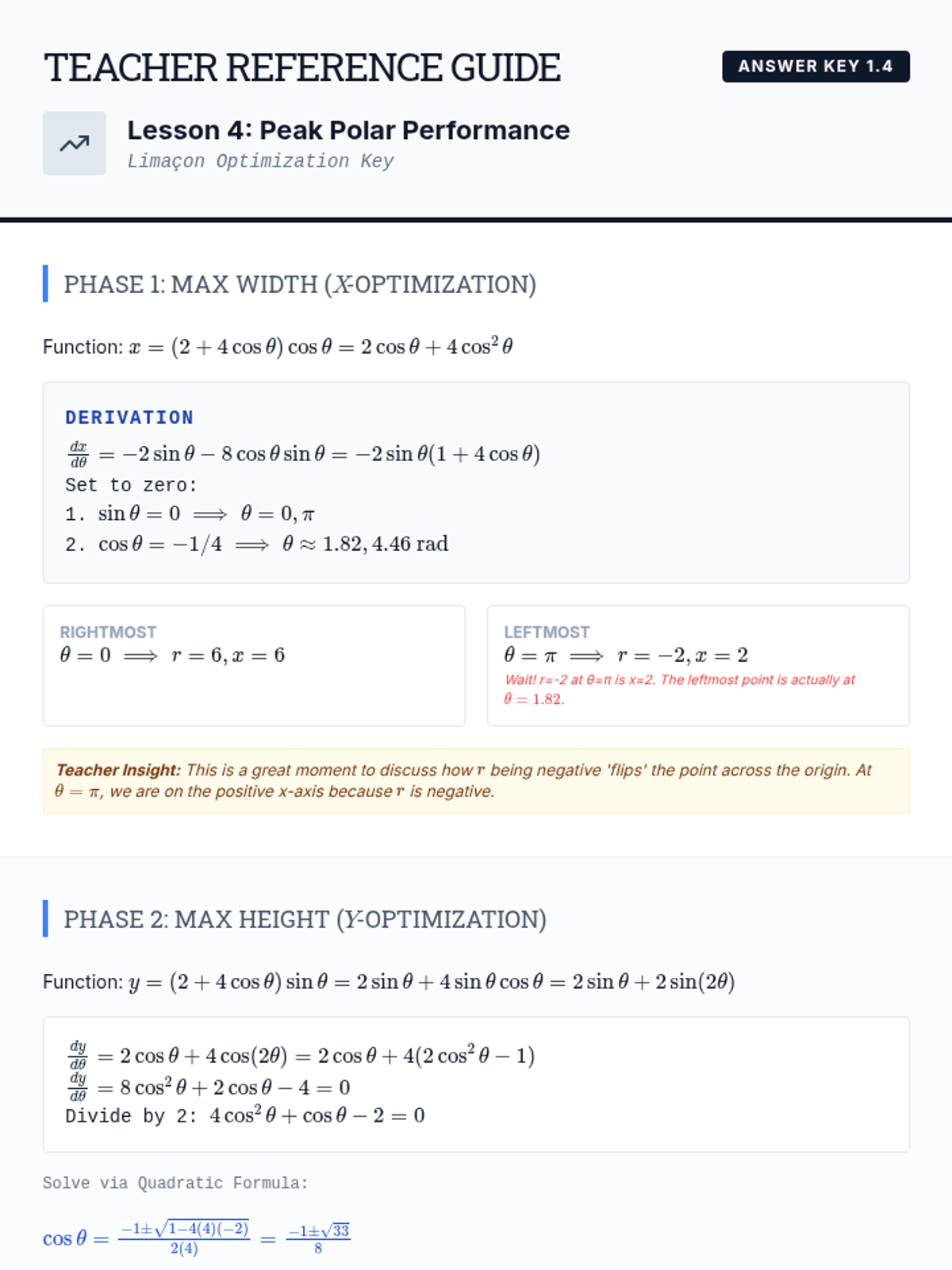
Students apply derivatives to find maximum values of r (distance from origin) and y (height) to solve geometric optimization problems within polar contexts.
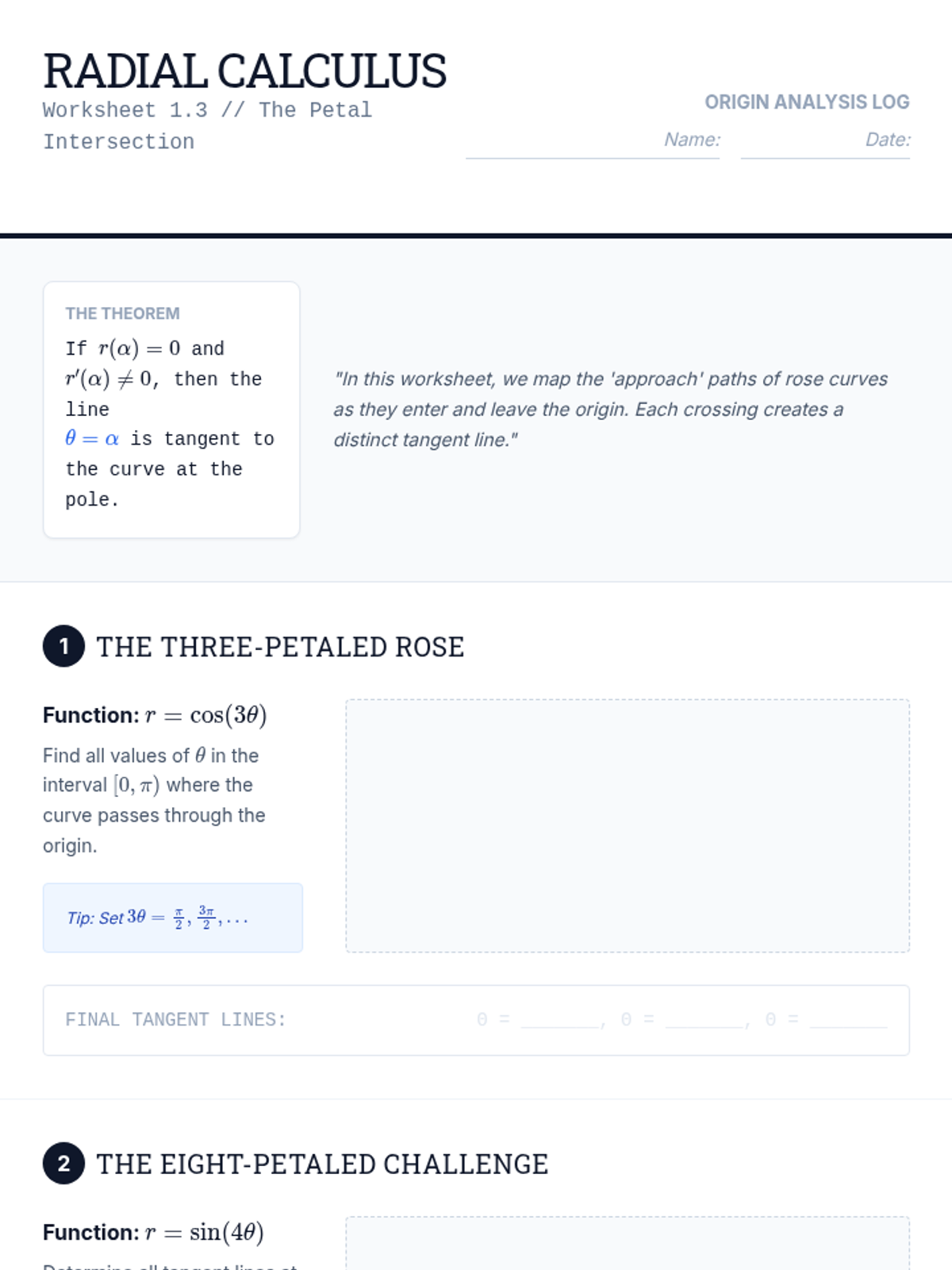
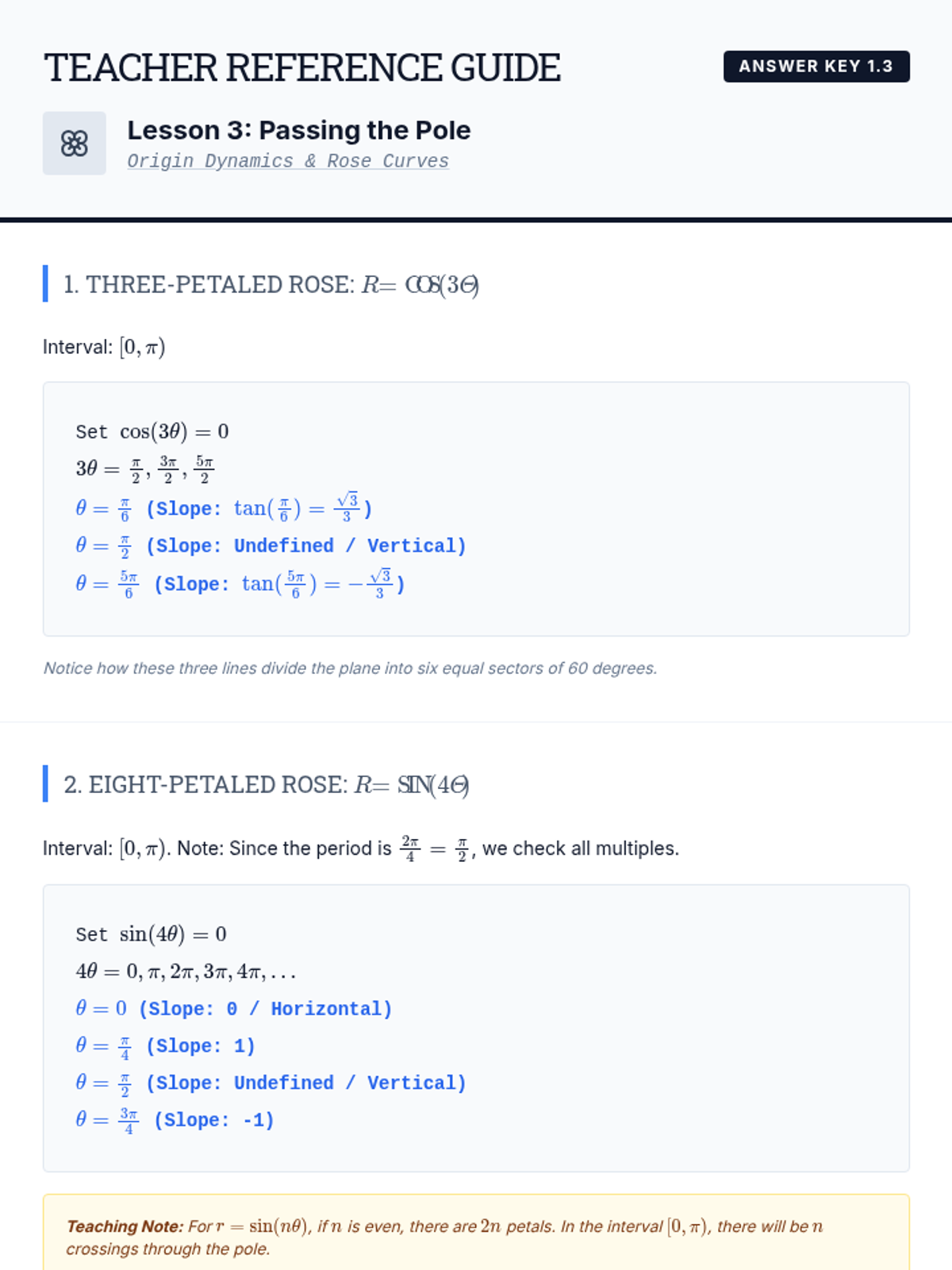
A focused lesson on finding tangent lines at the origin (the pole) by determining where r=0 and analyzing the behavior of rose curves and other polar functions.
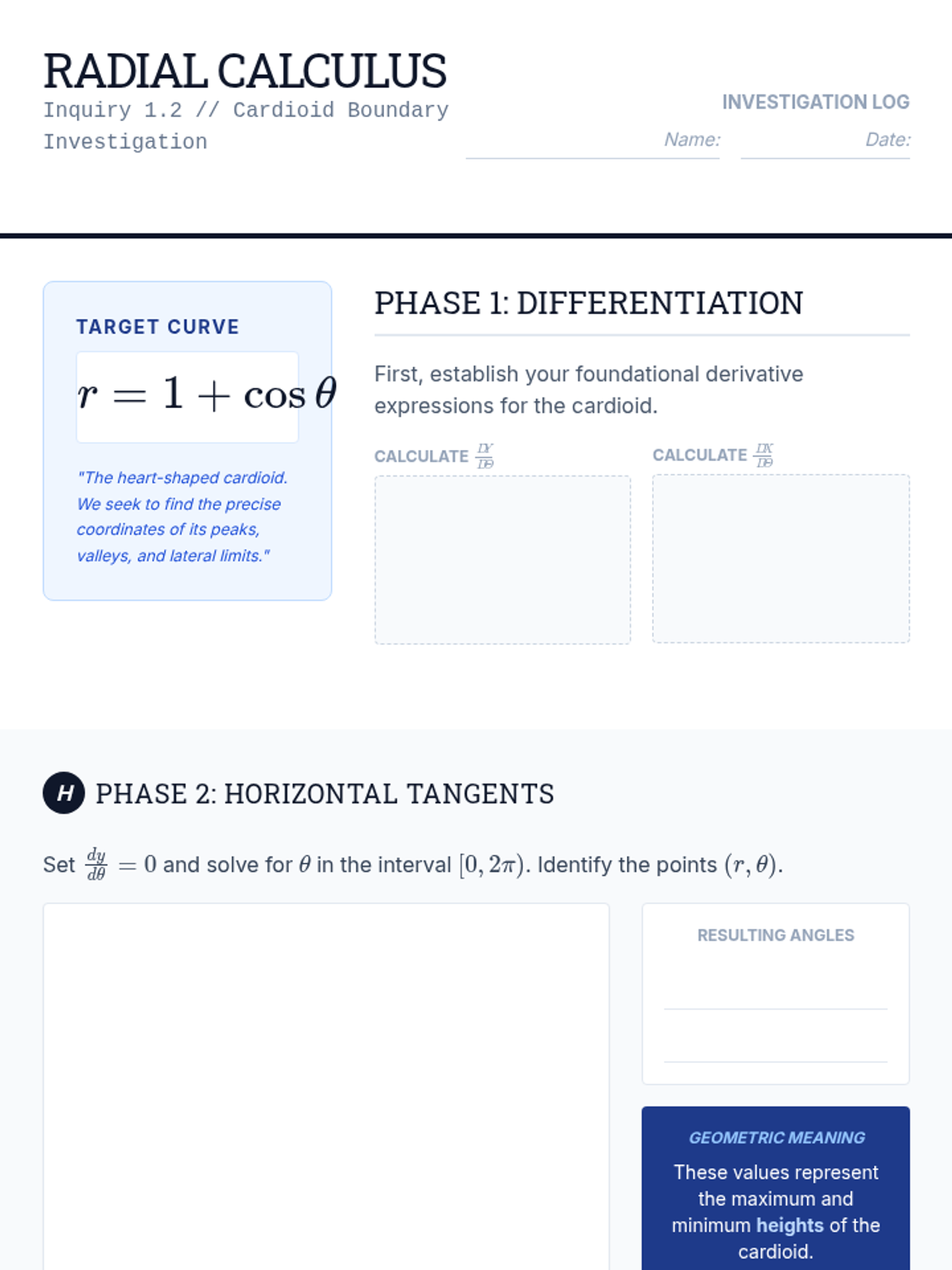
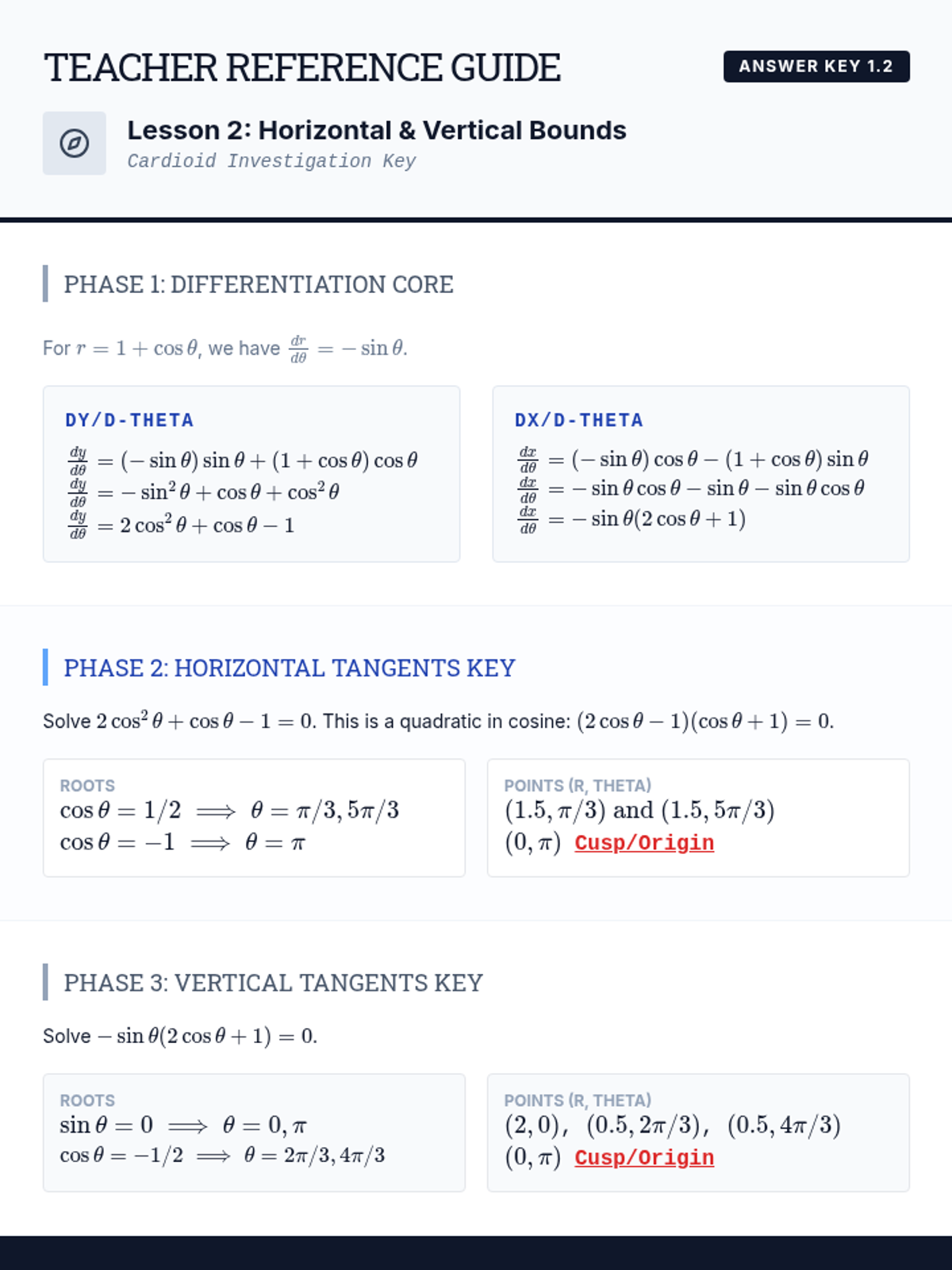
Students solve for theta values where dy/d-theta and dx/d-theta are zero to identify horizontal and vertical tangent lines on polar graphs, focusing on geometric interpretation.
A comprehensive practice set and review presentation for the TSIA2 Math exam, covering Quantitative, Algebraic, Geometric, and Statistical reasoning.
A comprehensive preparation set for the TSIA2 Mathematics assessment, featuring a full-length practice test, detailed step-by-step solutions, and a strategic review presentation.
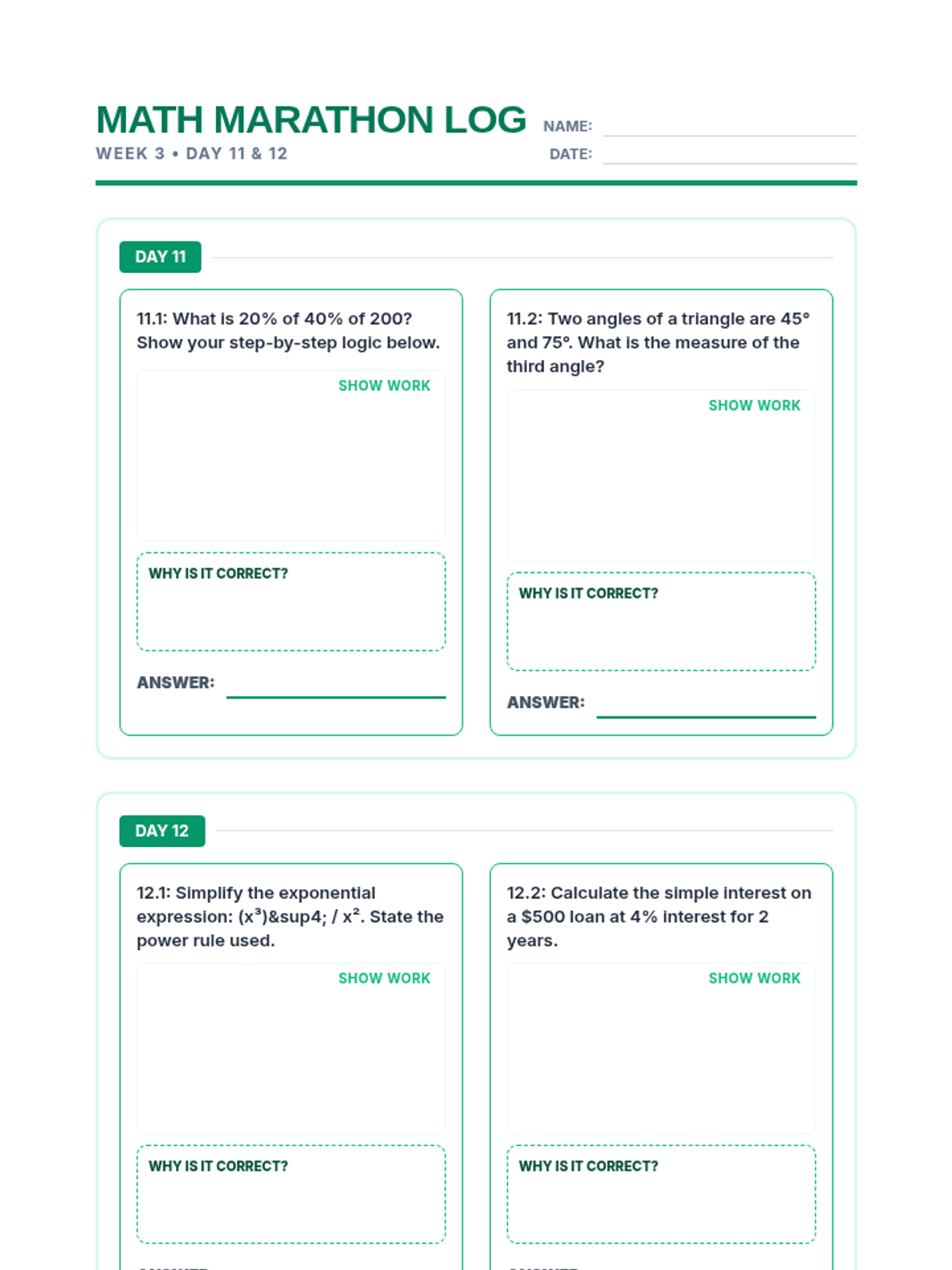
The final week of the TSIA2 Math Marathon, reviewing complex problems and multi-step reasoning.
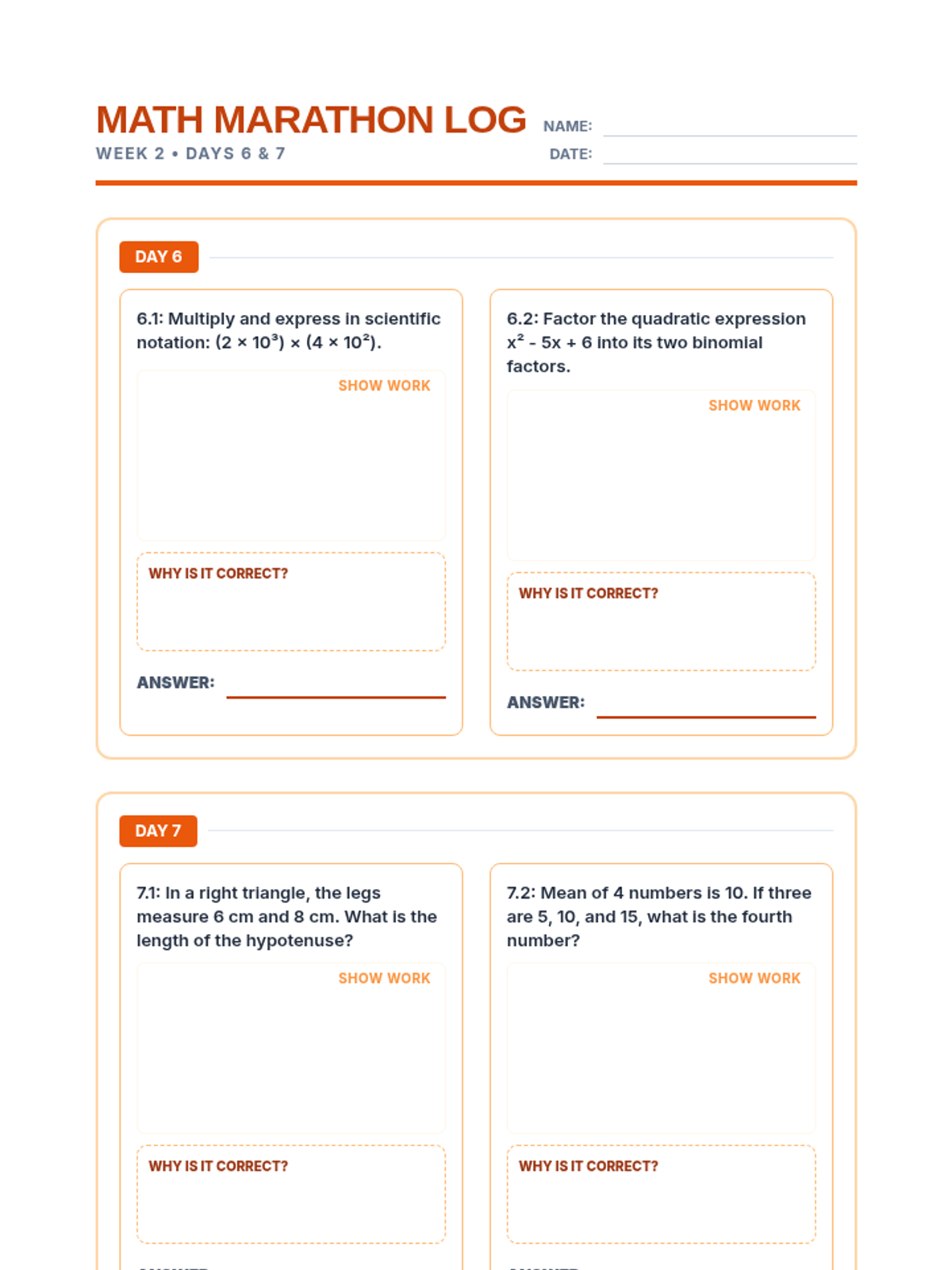
The second week of the TSIA2 Math Marathon, expanding into geometric and statistical reasoning.
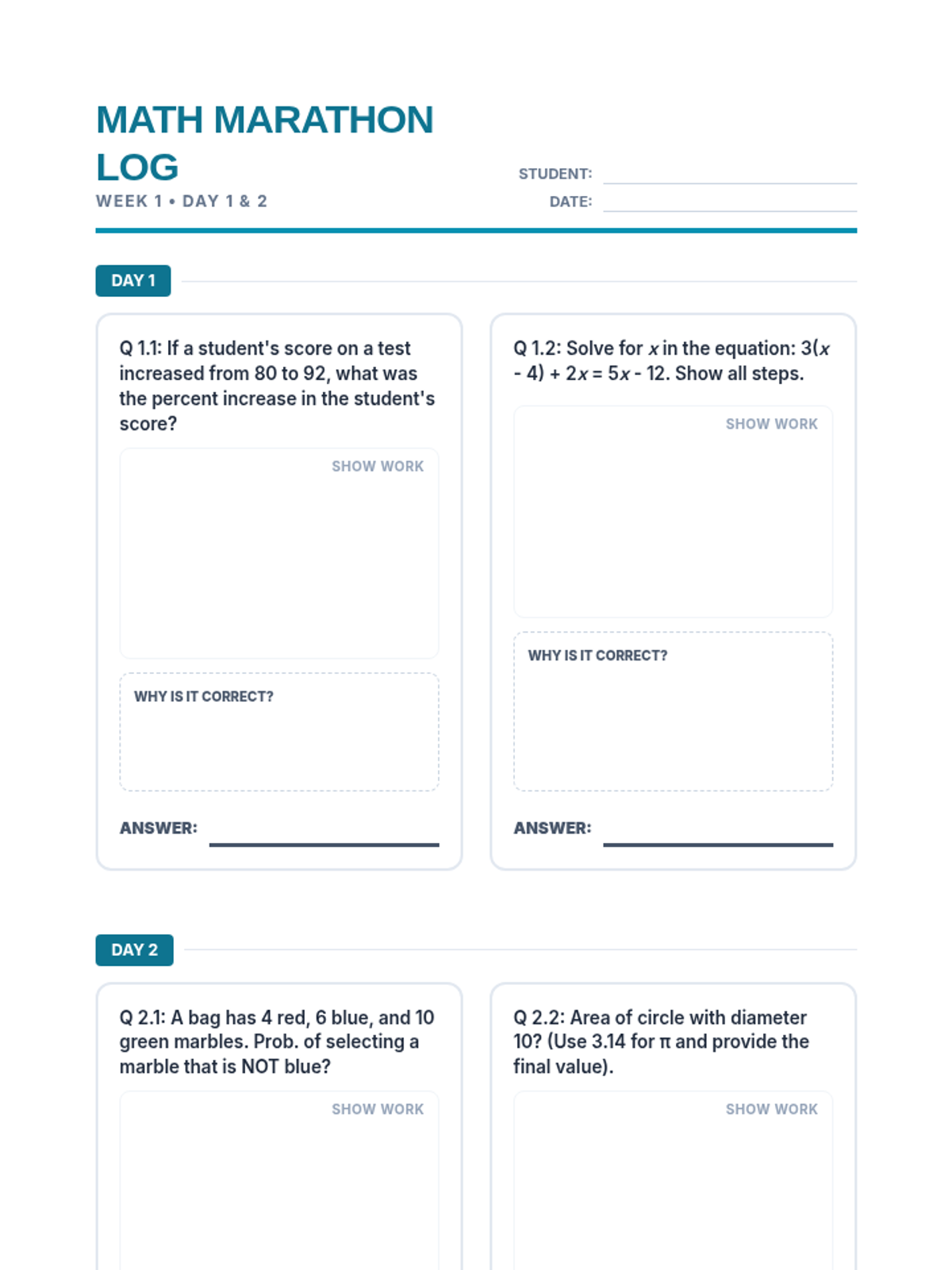
The first week of the TSIA2 Math Marathon, focusing on foundational algebraic and quantitative reasoning.
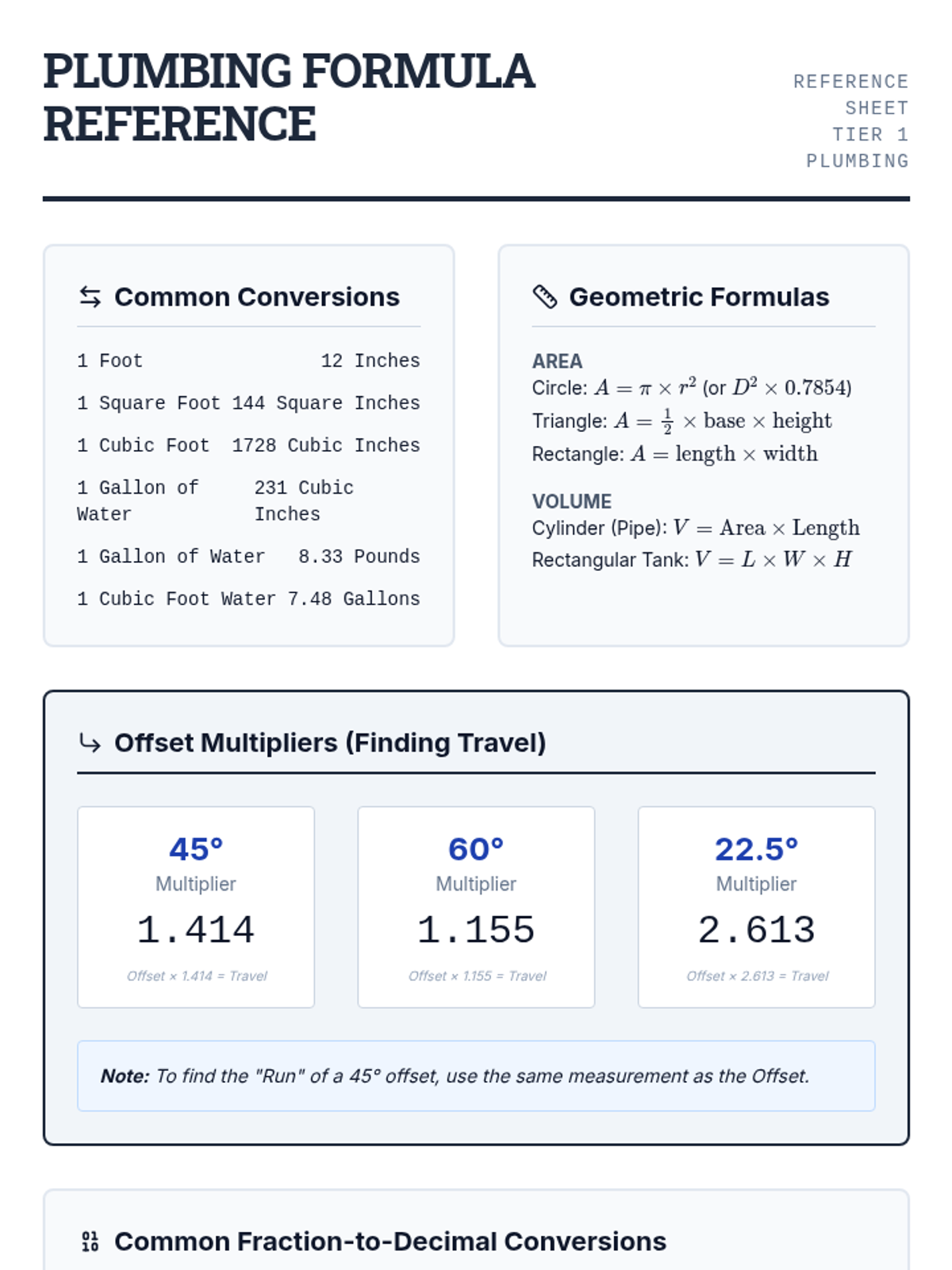
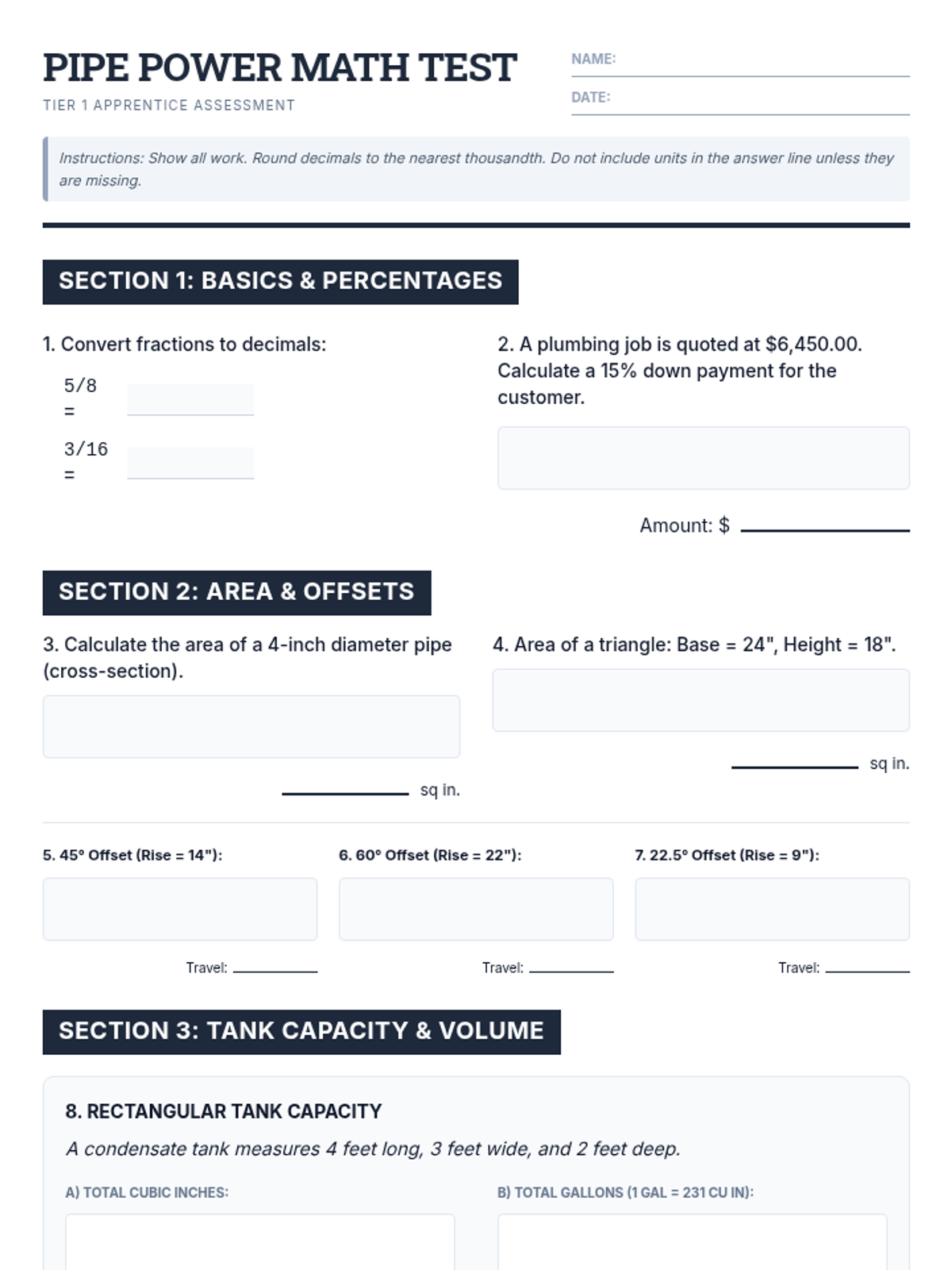
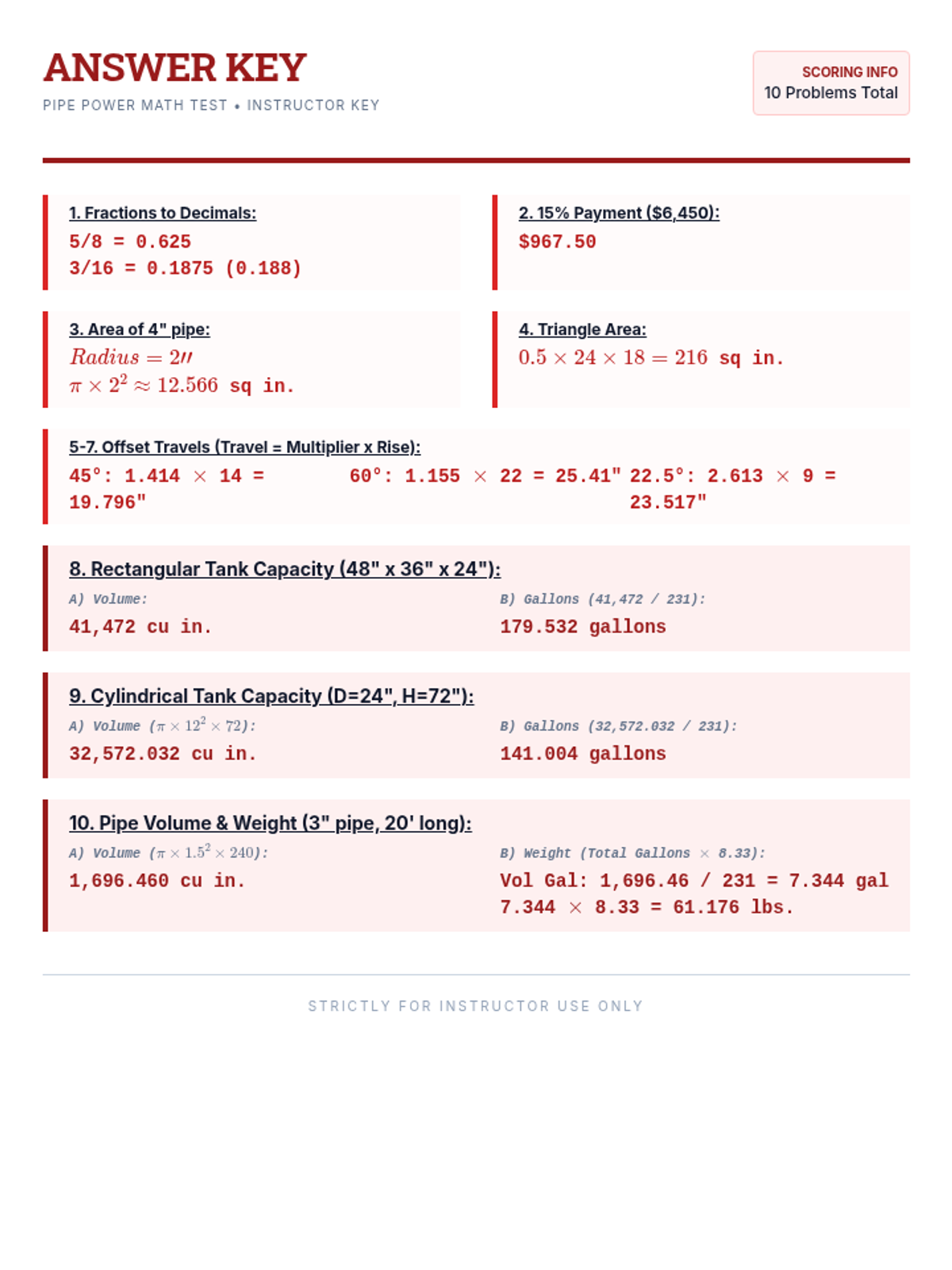
A comprehensive assessment and reference set for Tier 1 plumbing apprentices covering essential trade mathematics, including offsets, volumes, and conversions.
A comprehensive practice session for the TSIA2 Math exam, focusing on quantitative reasoning, algebraic reasoning, geometry, and statistics.
A comprehensive 20-question practice test covering all four TSIA2 Math domains: Quantitative Reasoning, Algebraic Reasoning, Geometry, and Probability and Statistics.
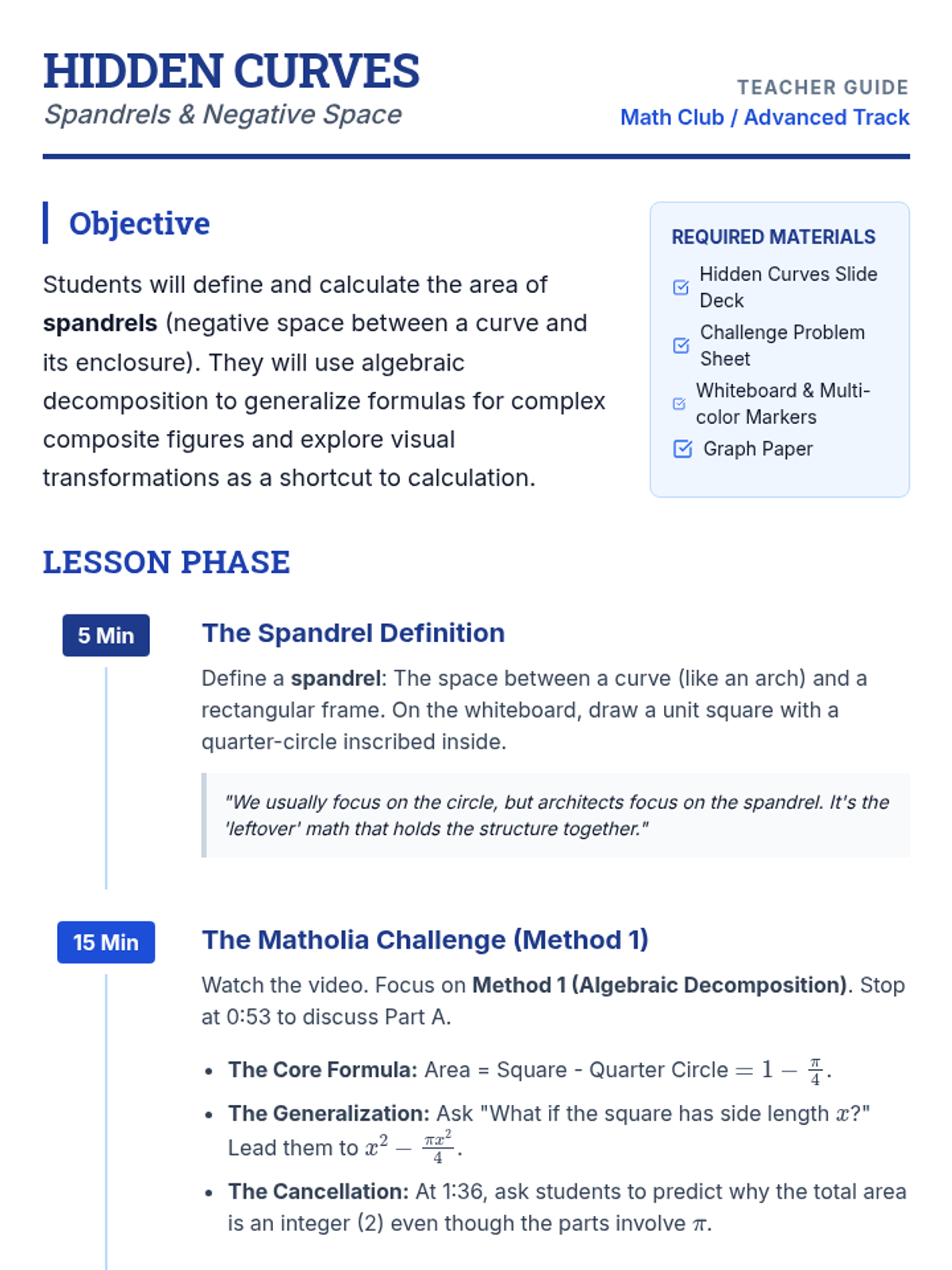
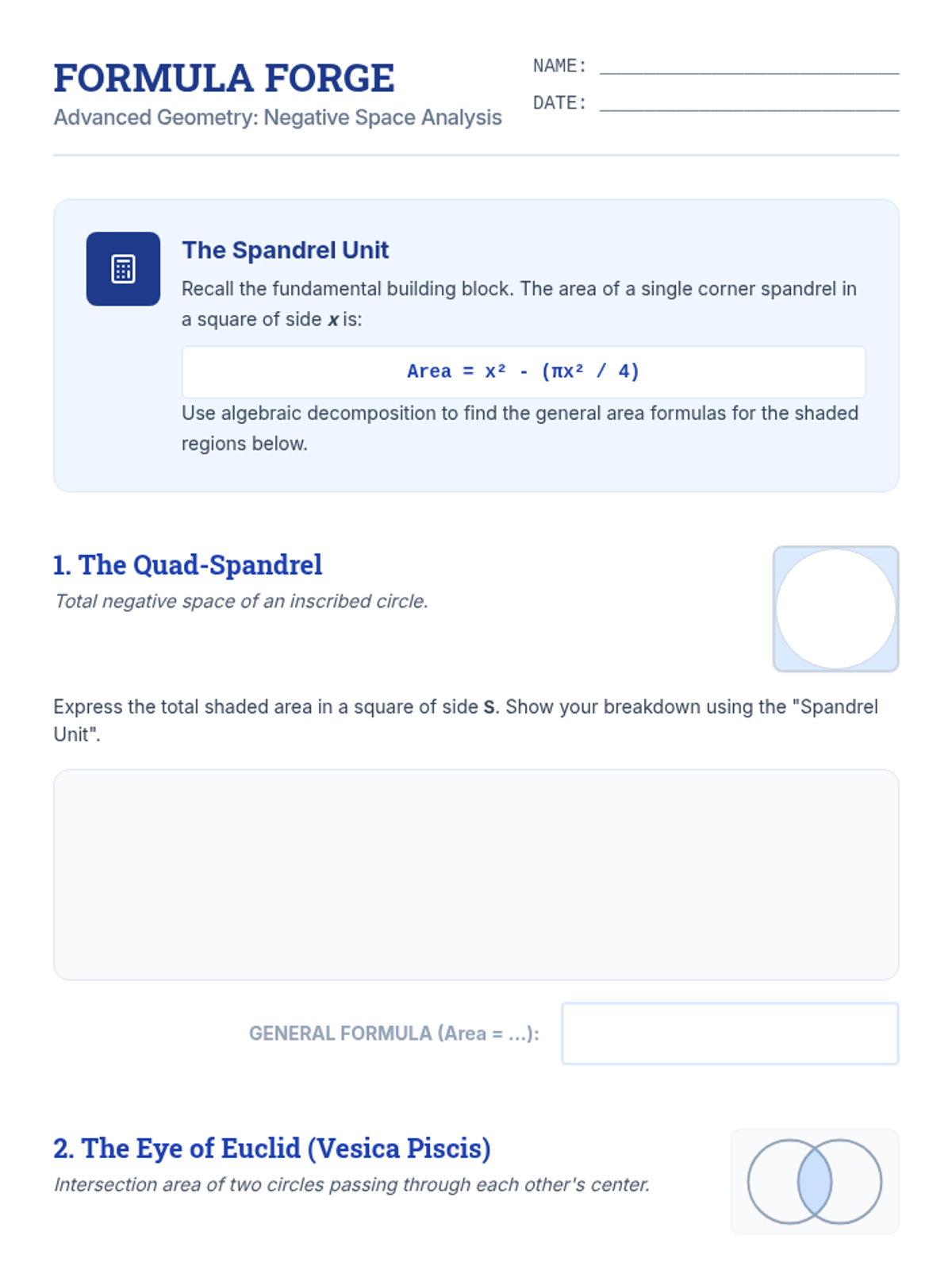
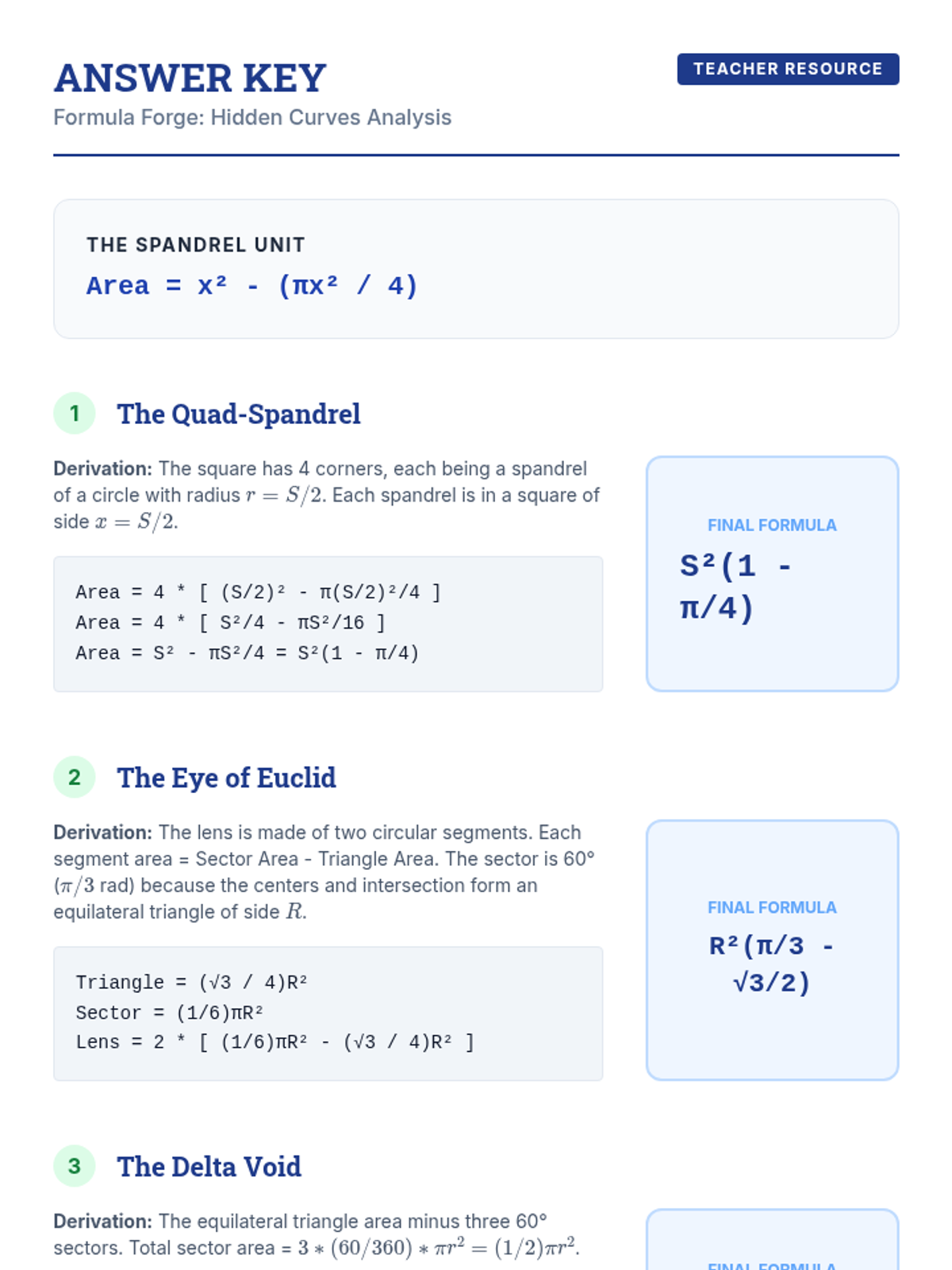
Students explore the geometry of negative space through 'spandrels'—the shapes left over when curves are placed within polygons. This lesson uses algebraic decomposition and visual transformations to solve complex area problems, culminating in the creation of generalized formula sheets.
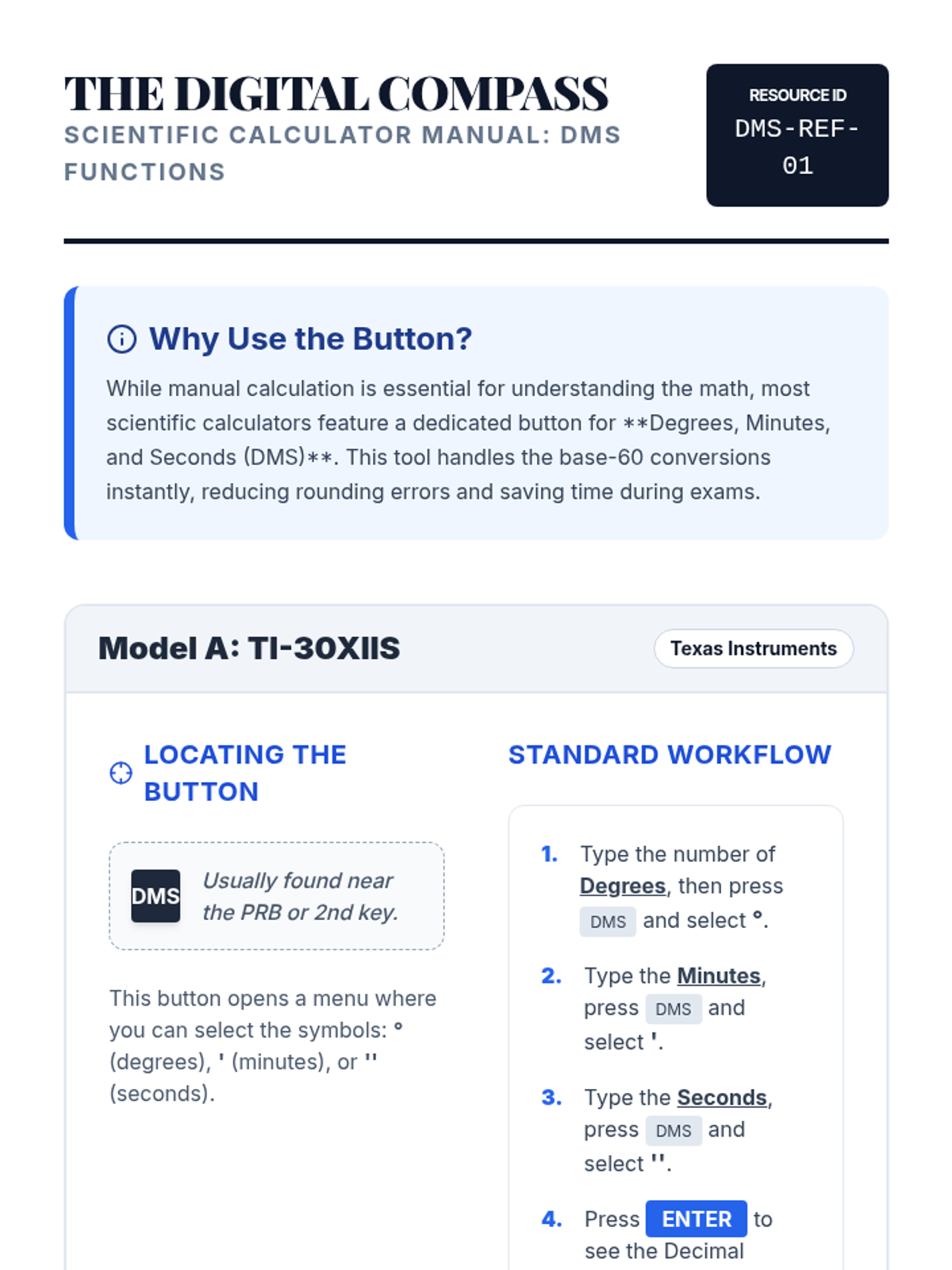
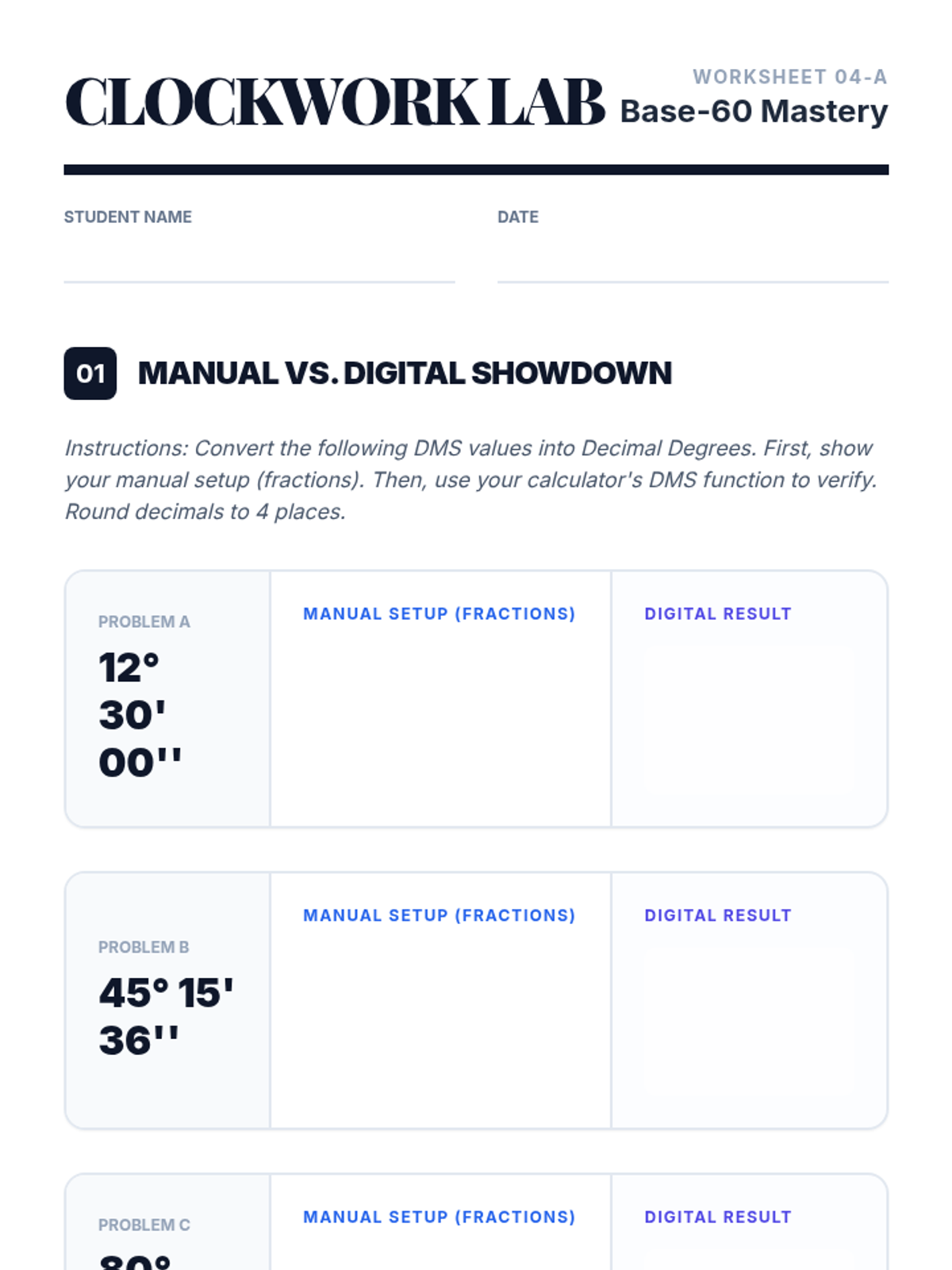
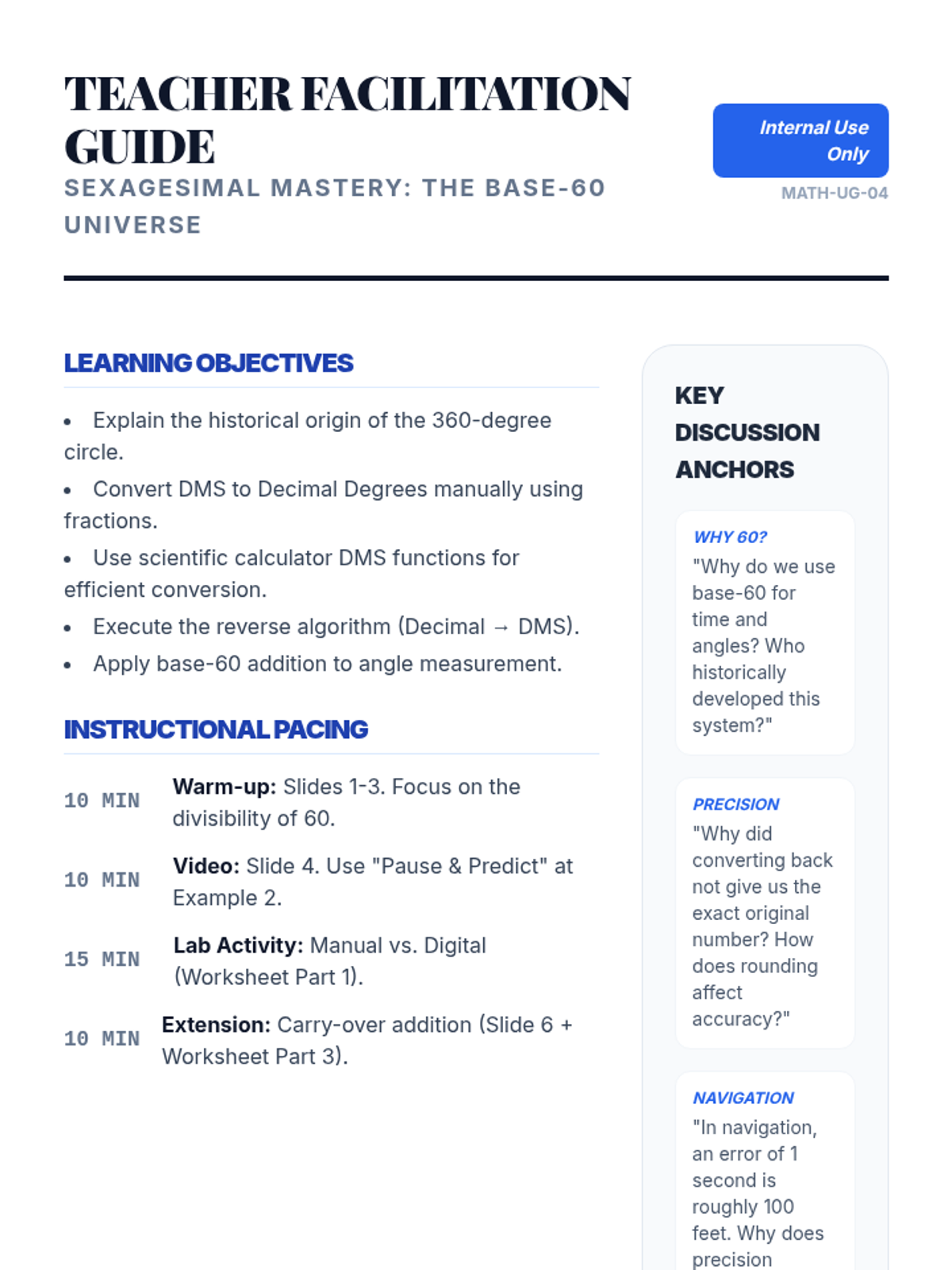
A lesson for undergraduate remedial math students on mastering the sexagesimal (base-60) system, covering historical context, manual conversion techniques, and modern calculator efficiency.
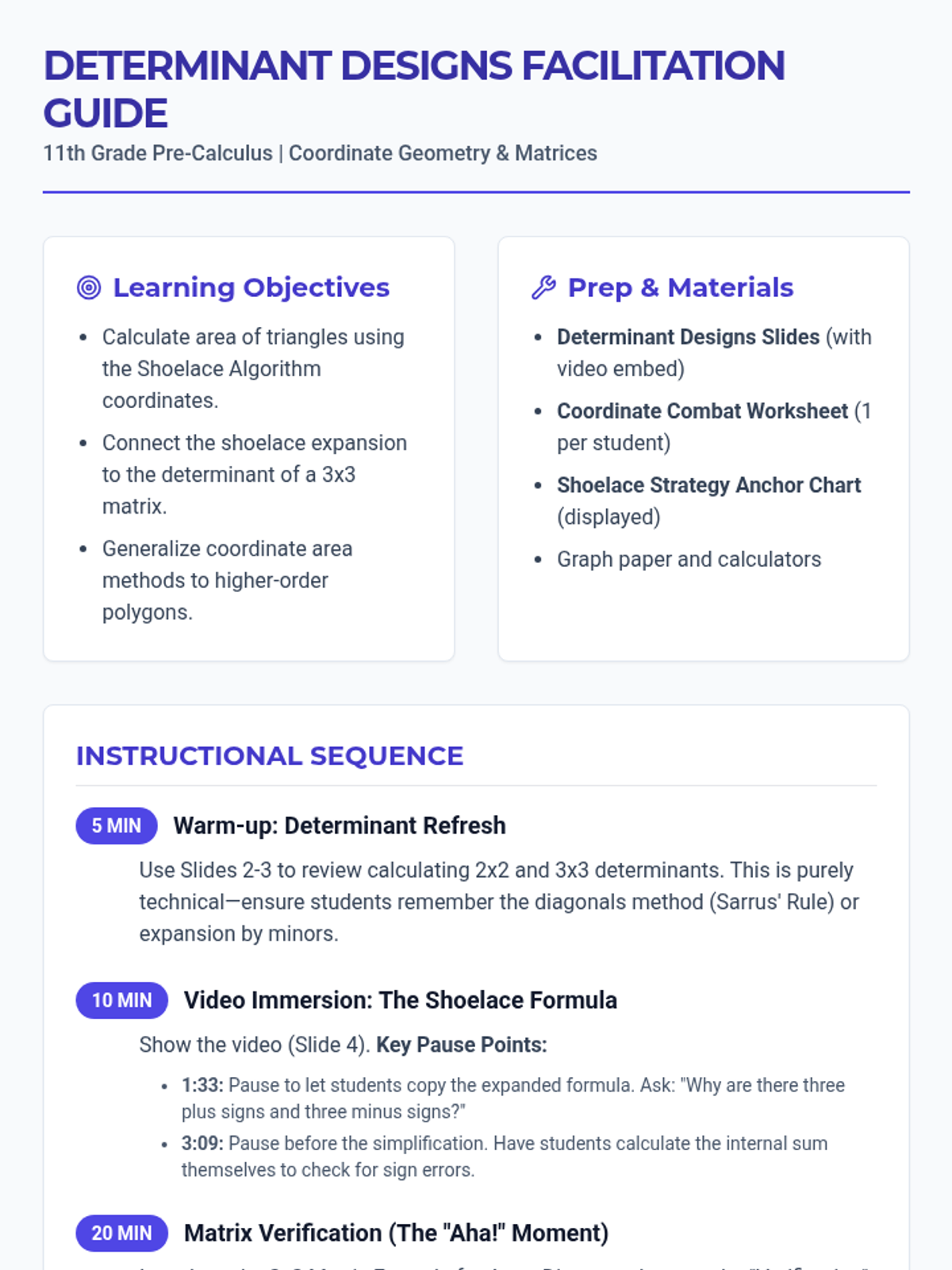
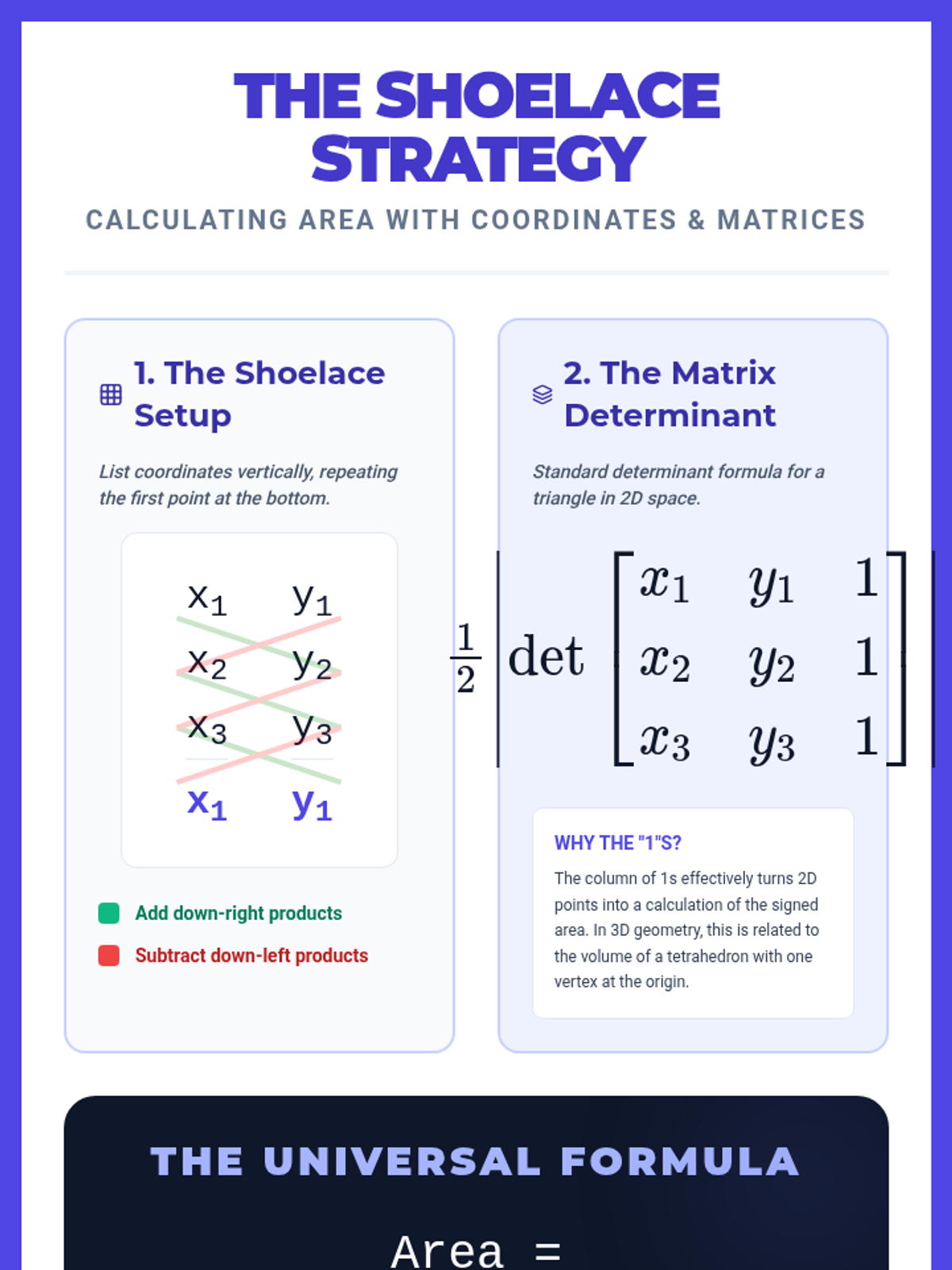
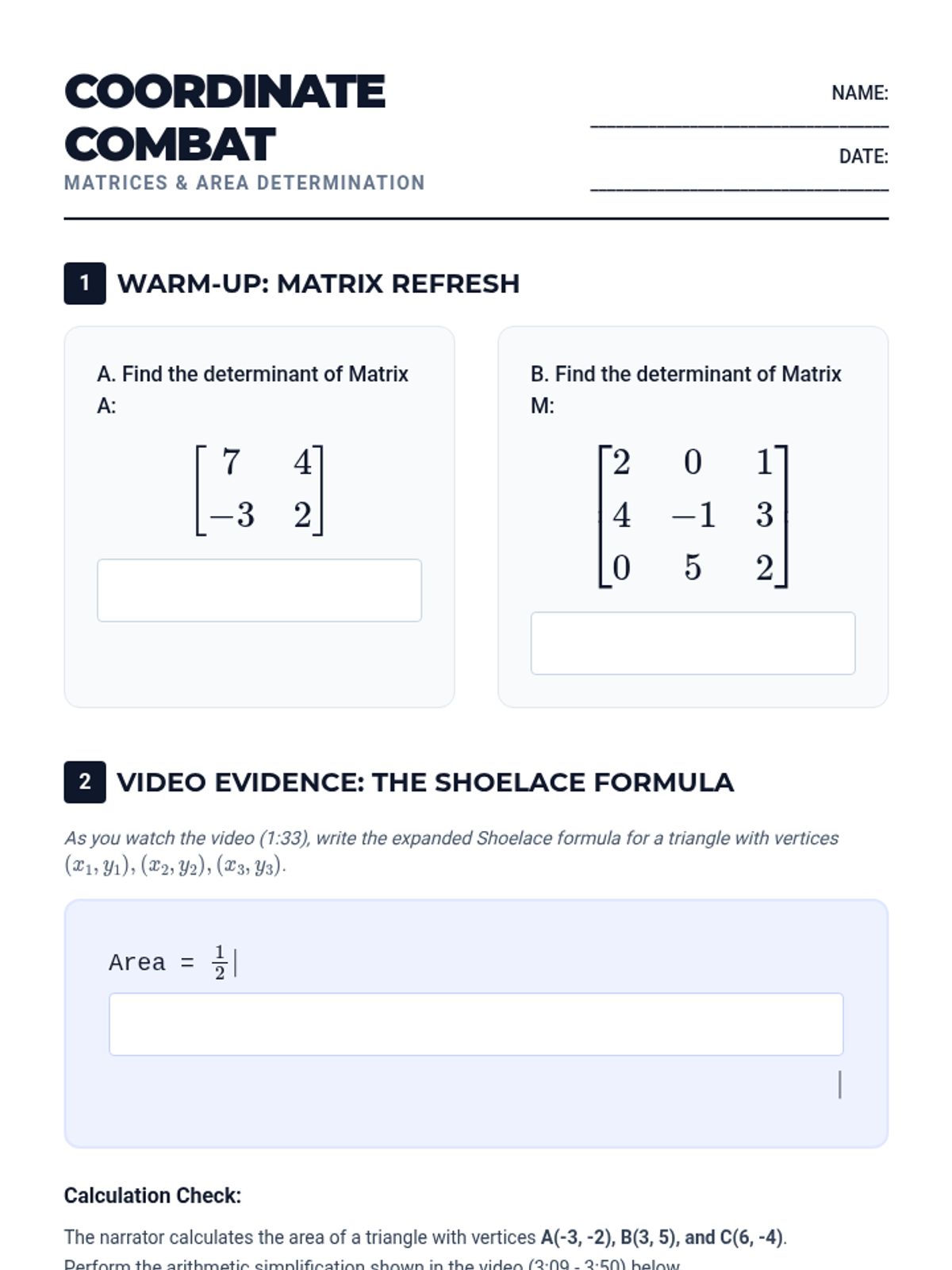
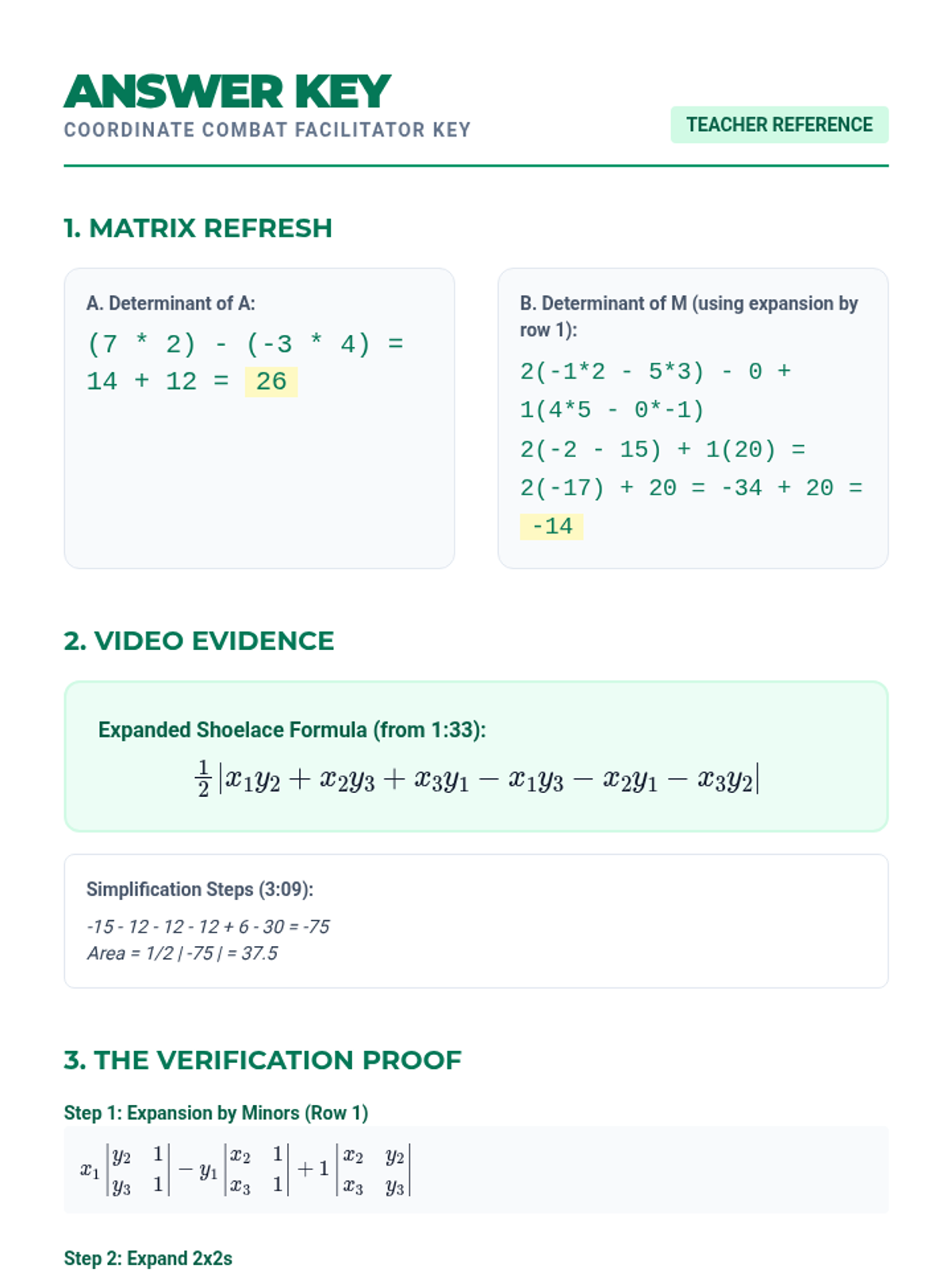
Students will bridge the gap between coordinate geometry and linear algebra by connecting the Shoelace Algorithm to matrix determinants. This lesson uses a step-by-step video demonstration followed by algebraic verification of the 3x3 matrix area formula.
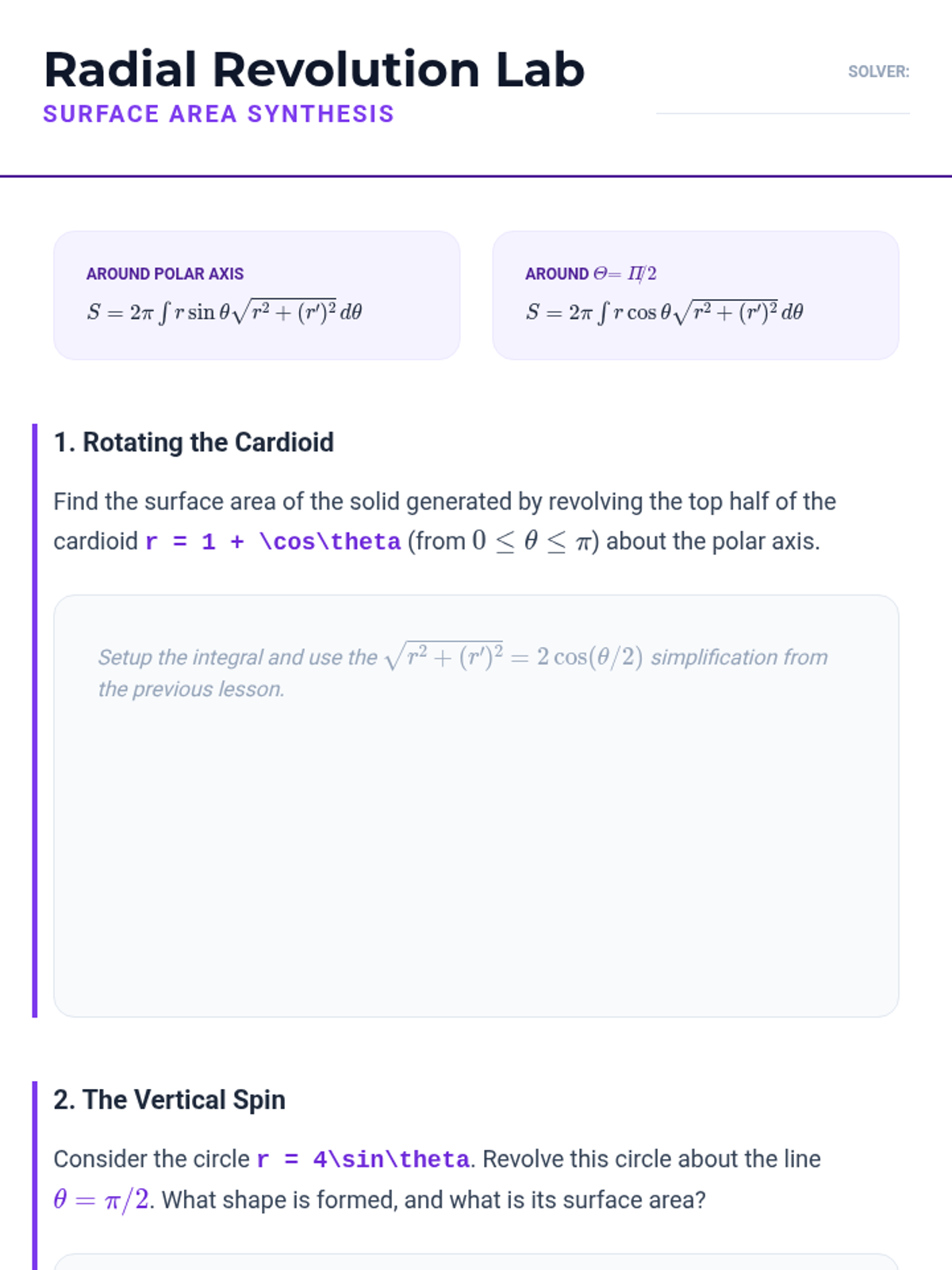
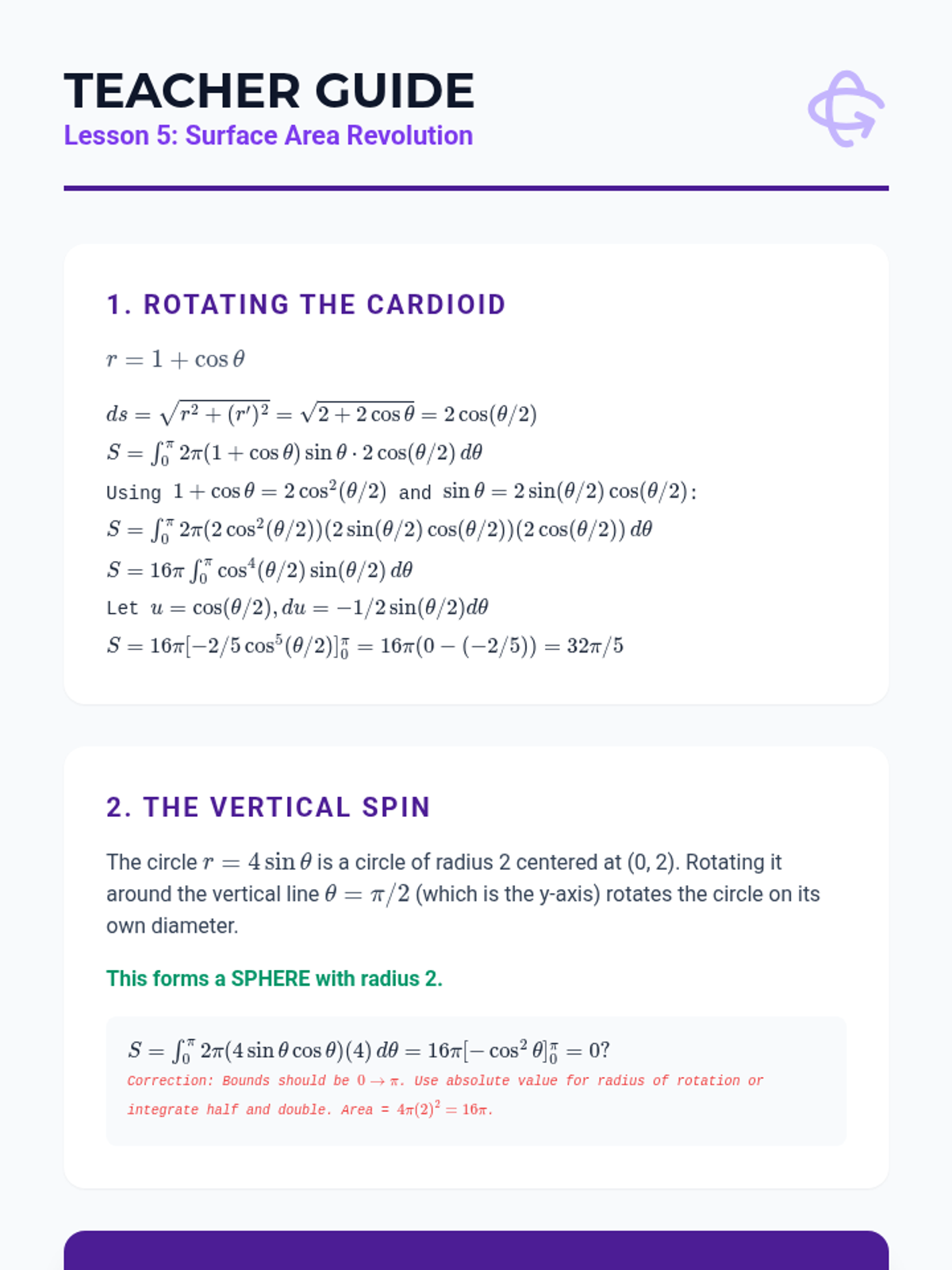
The sequence concludes with finding the surface area of solids formed by revolving polar curves around the polar axis or the line theta = pi/2.
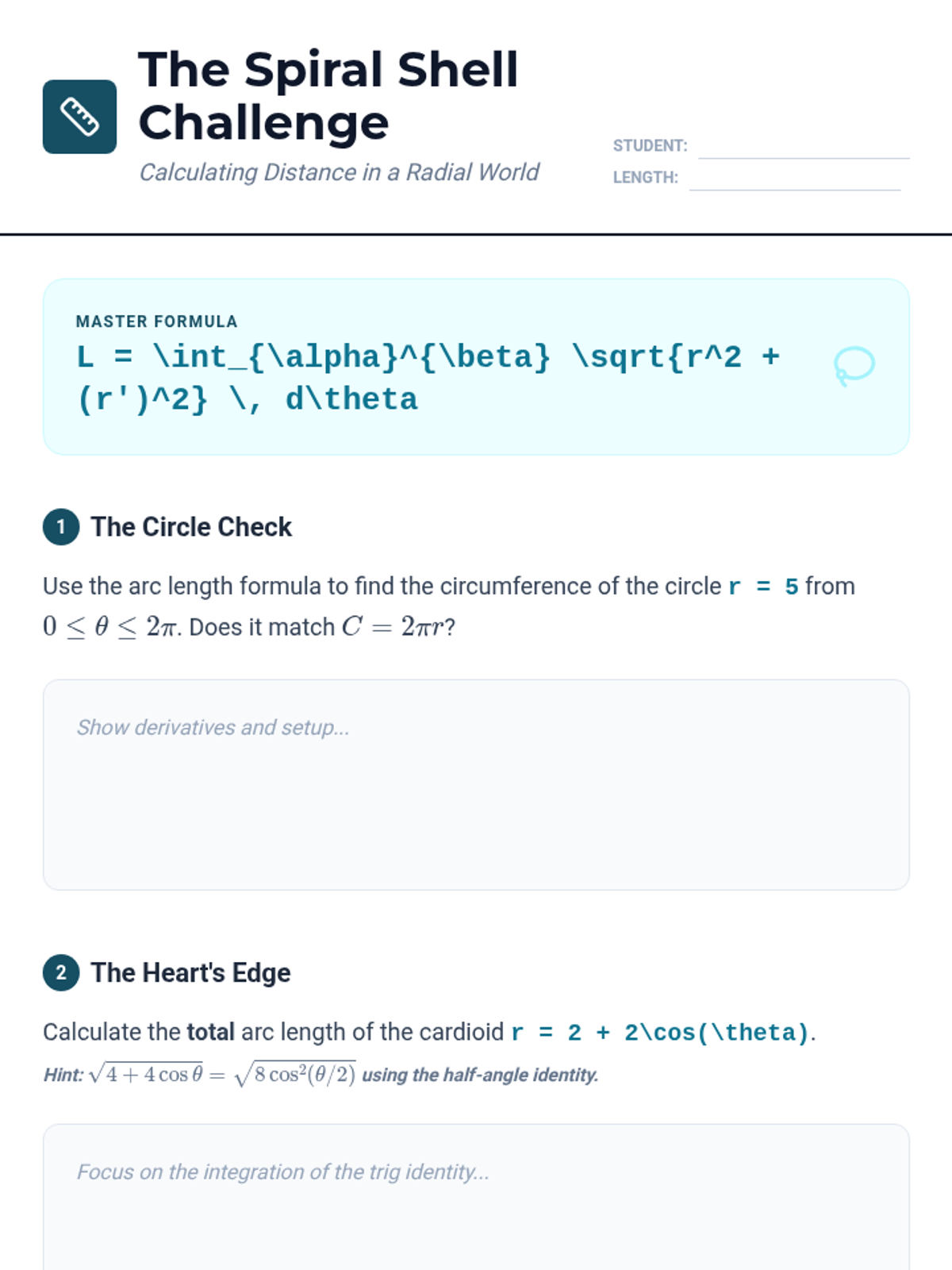
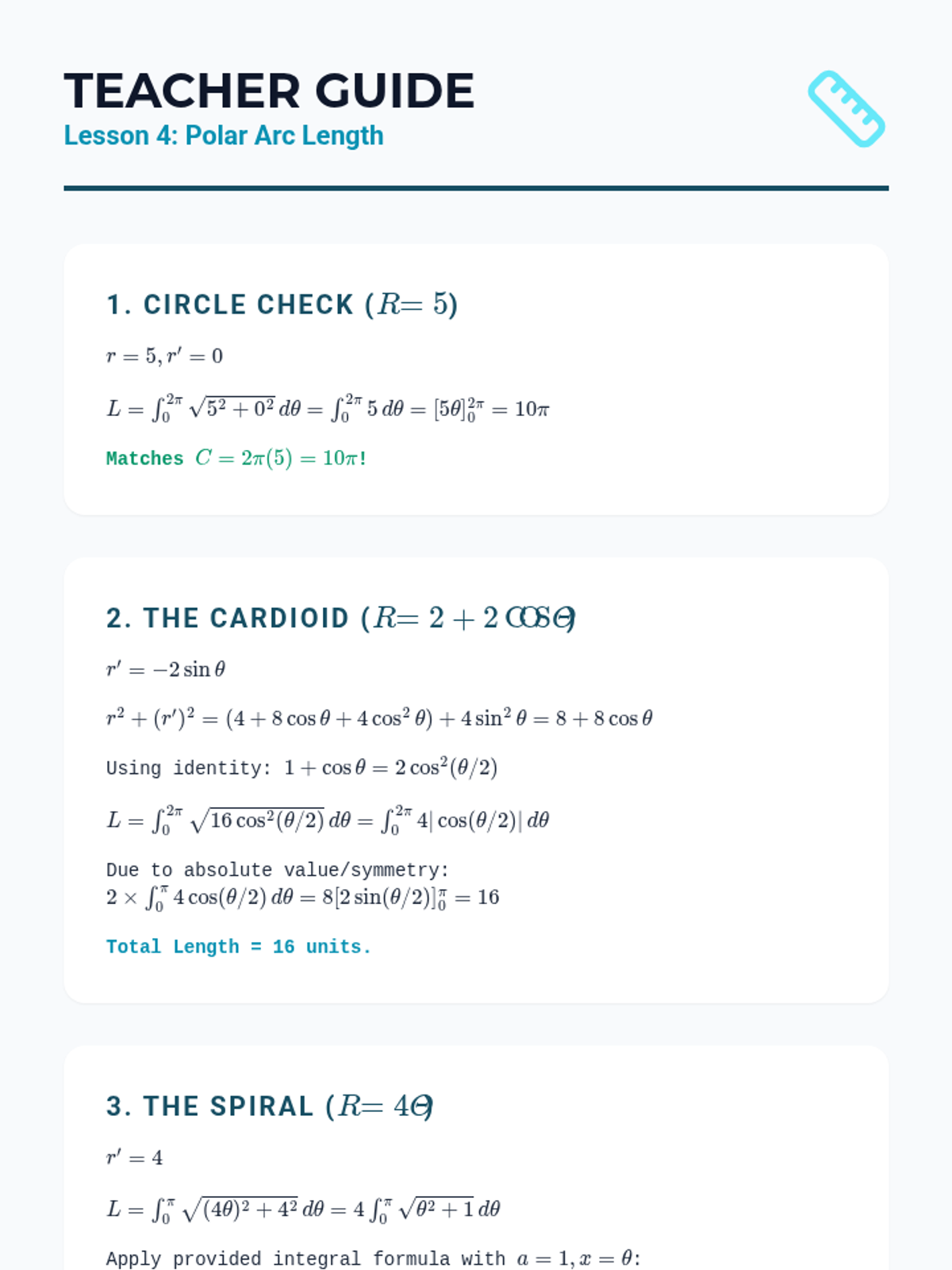
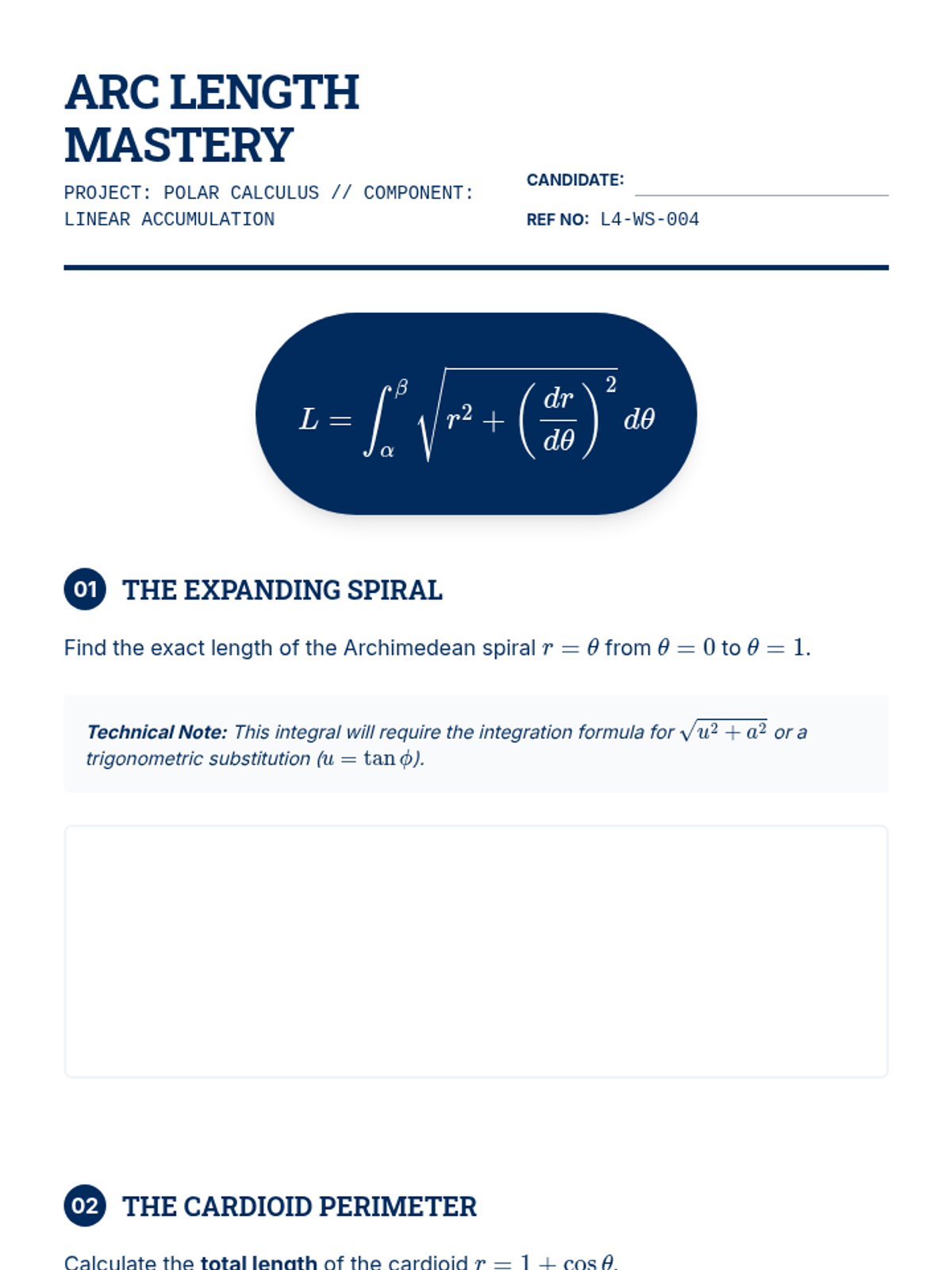
Students derive and apply the arc length formula for polar curves, calculating the distance along spirals and cardioids.
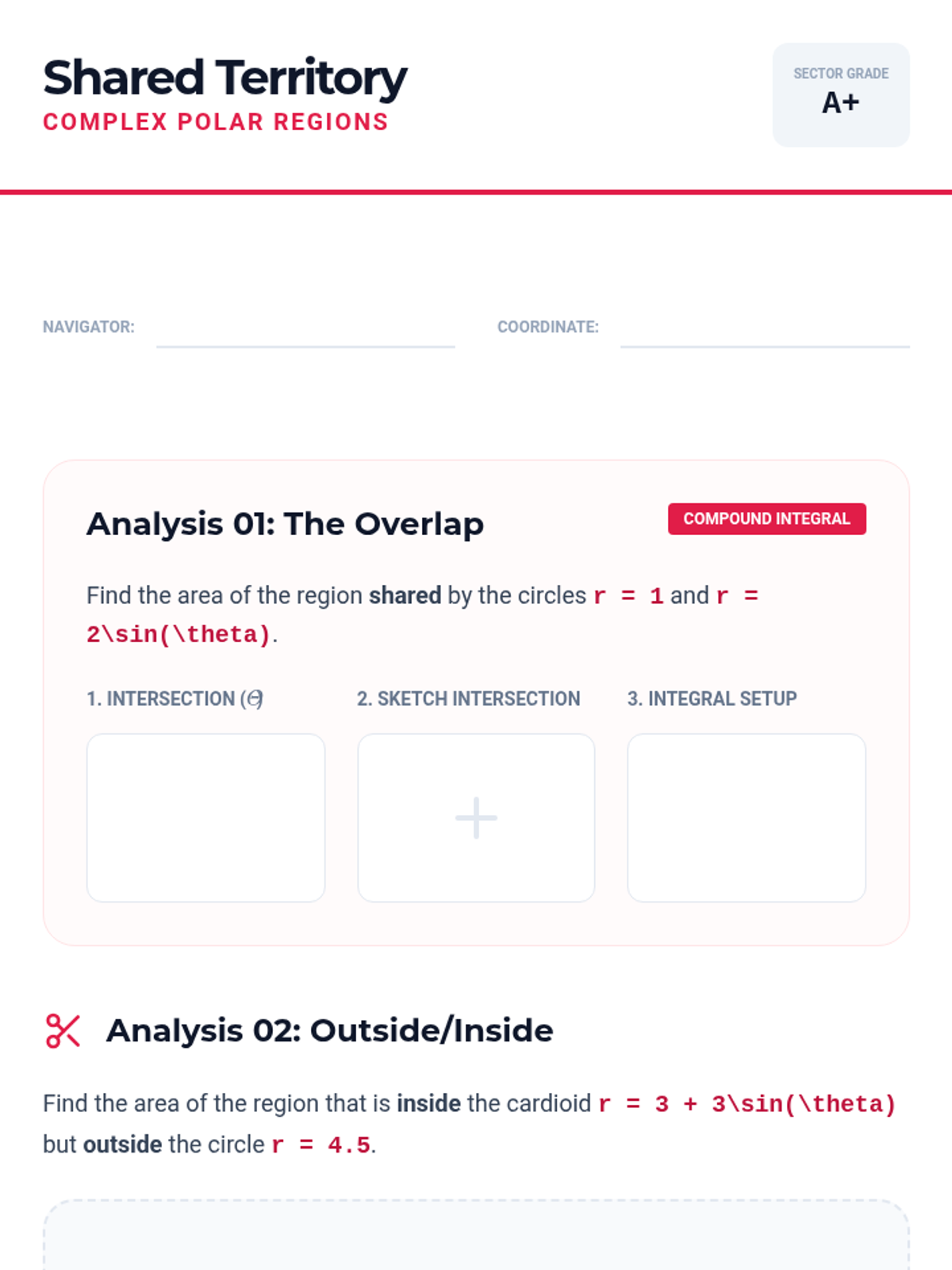
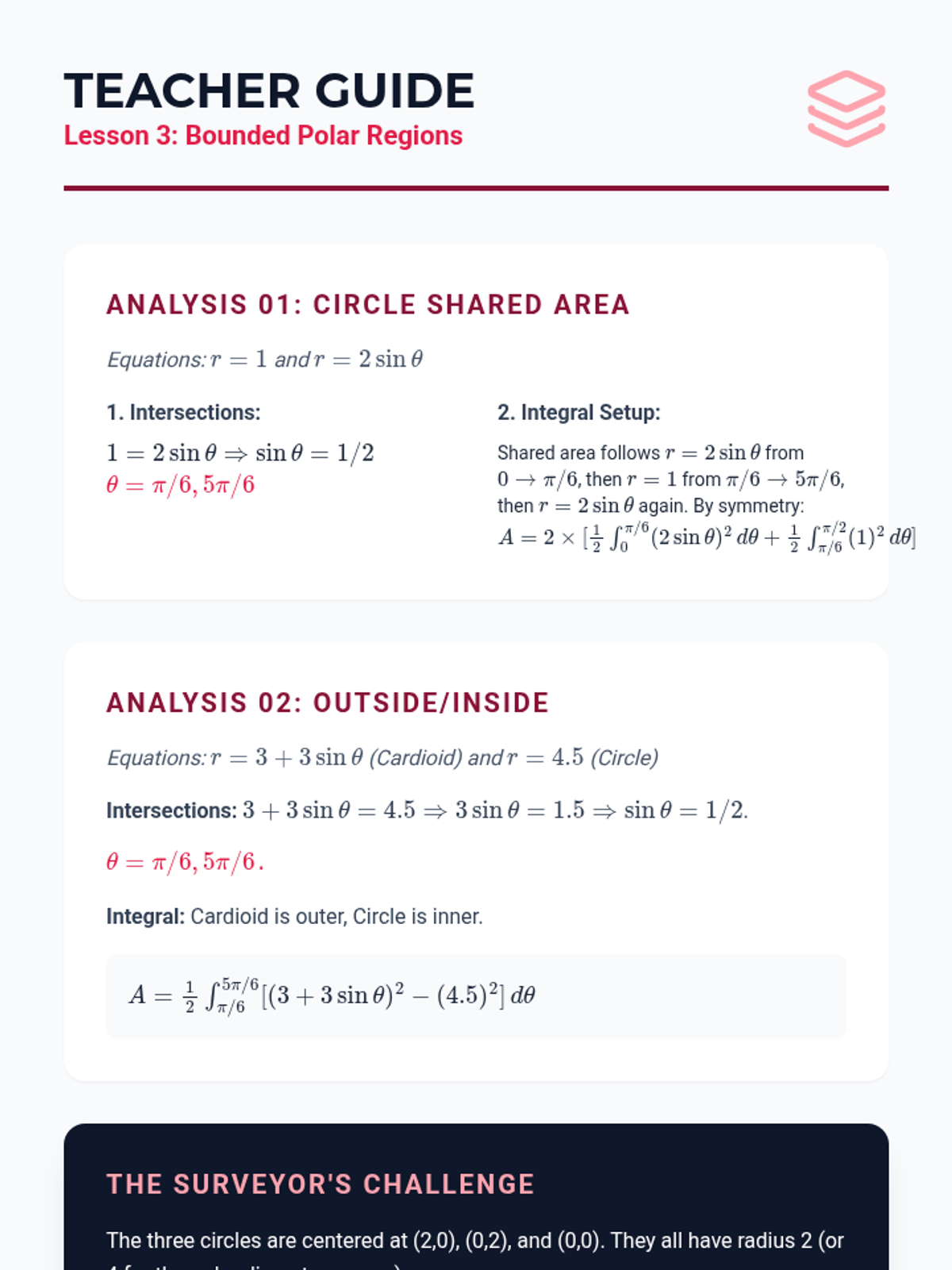
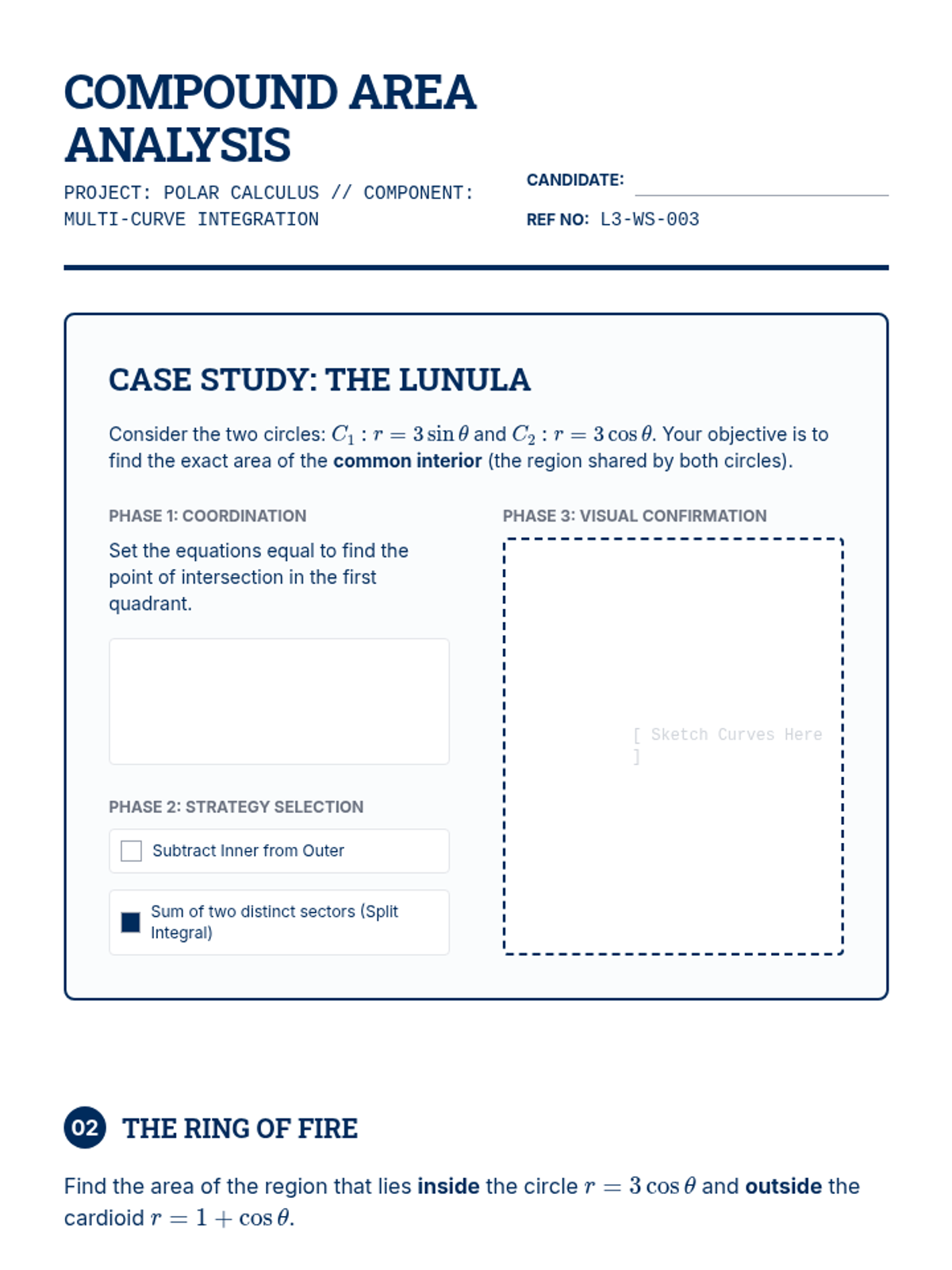
Students find the area of regions shared by or bounded between two polar curves by identifying intersection points and setting up compound integrals.
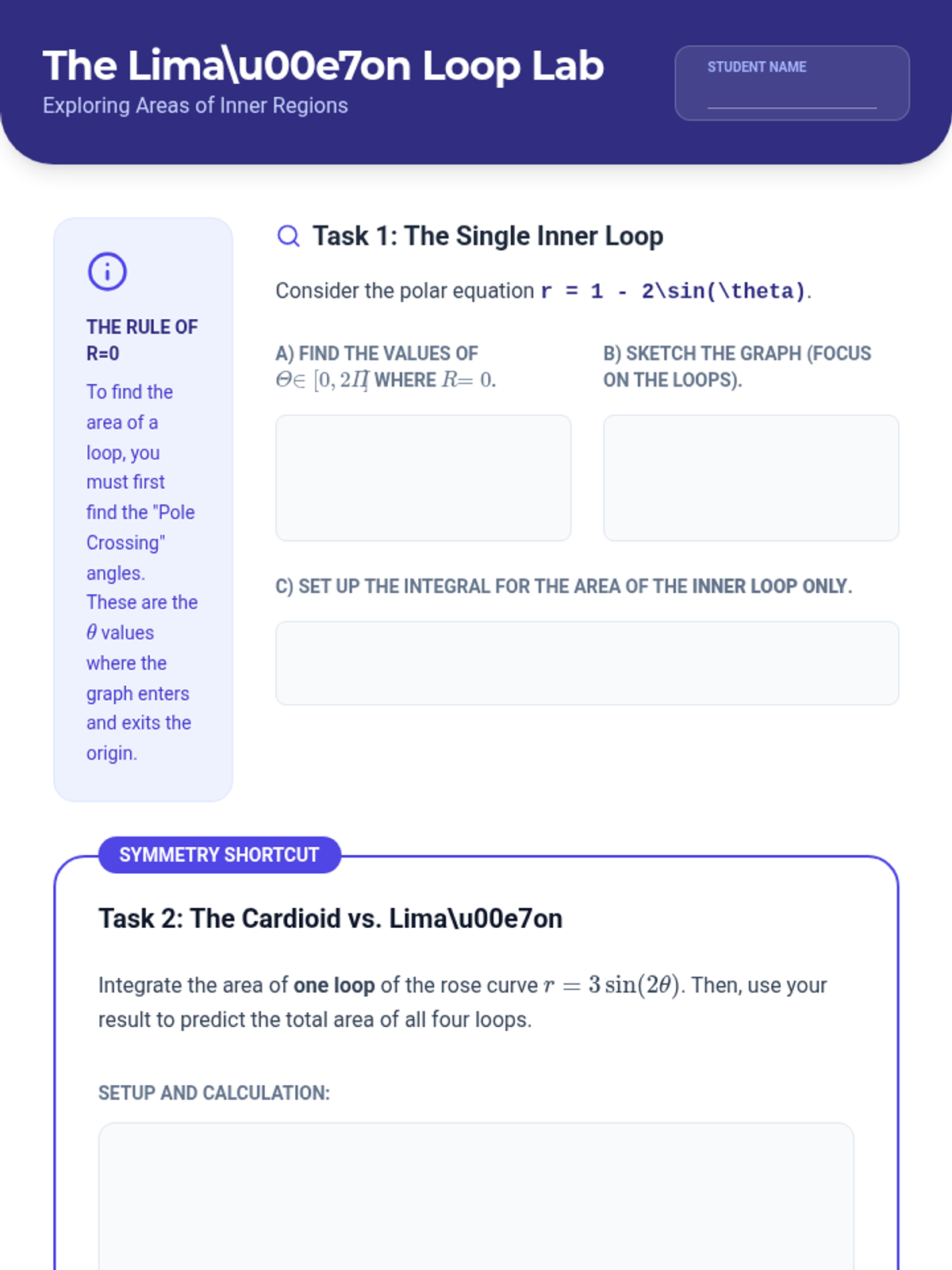
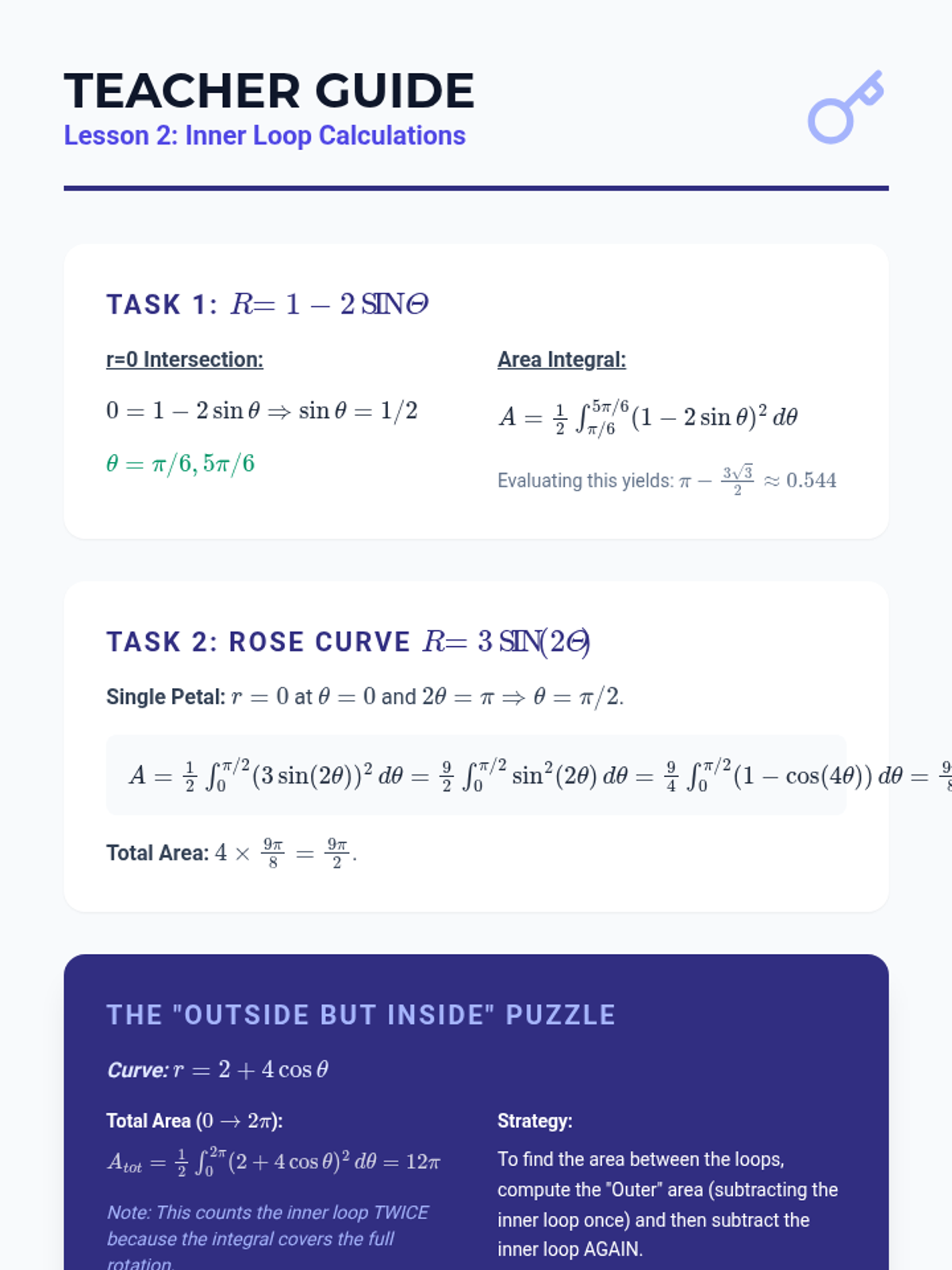
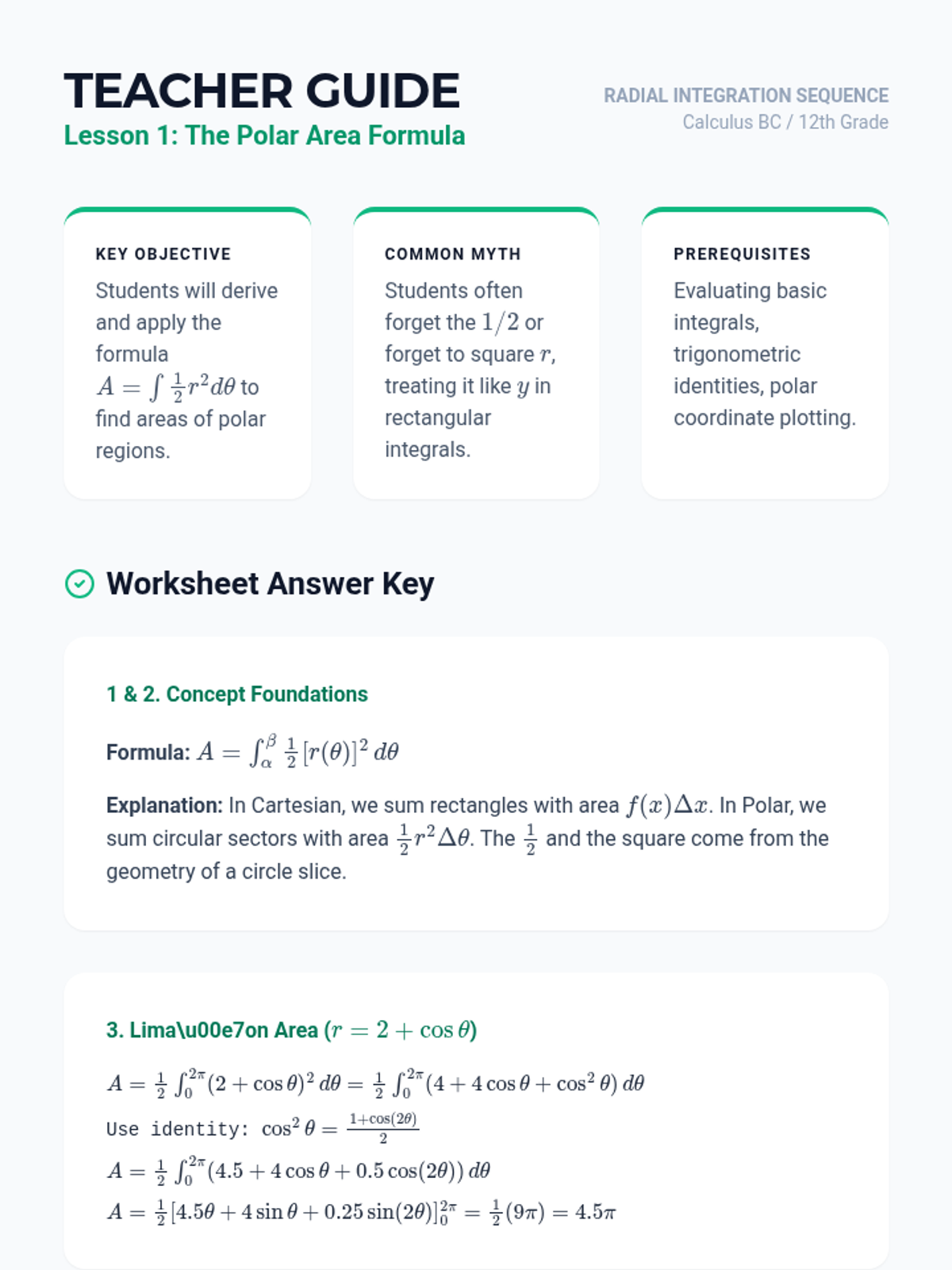
Focusing on lima\u00e7ons and rose curves, students learn to find integration limits by solving for r=0 and calculate the area of specific loops.
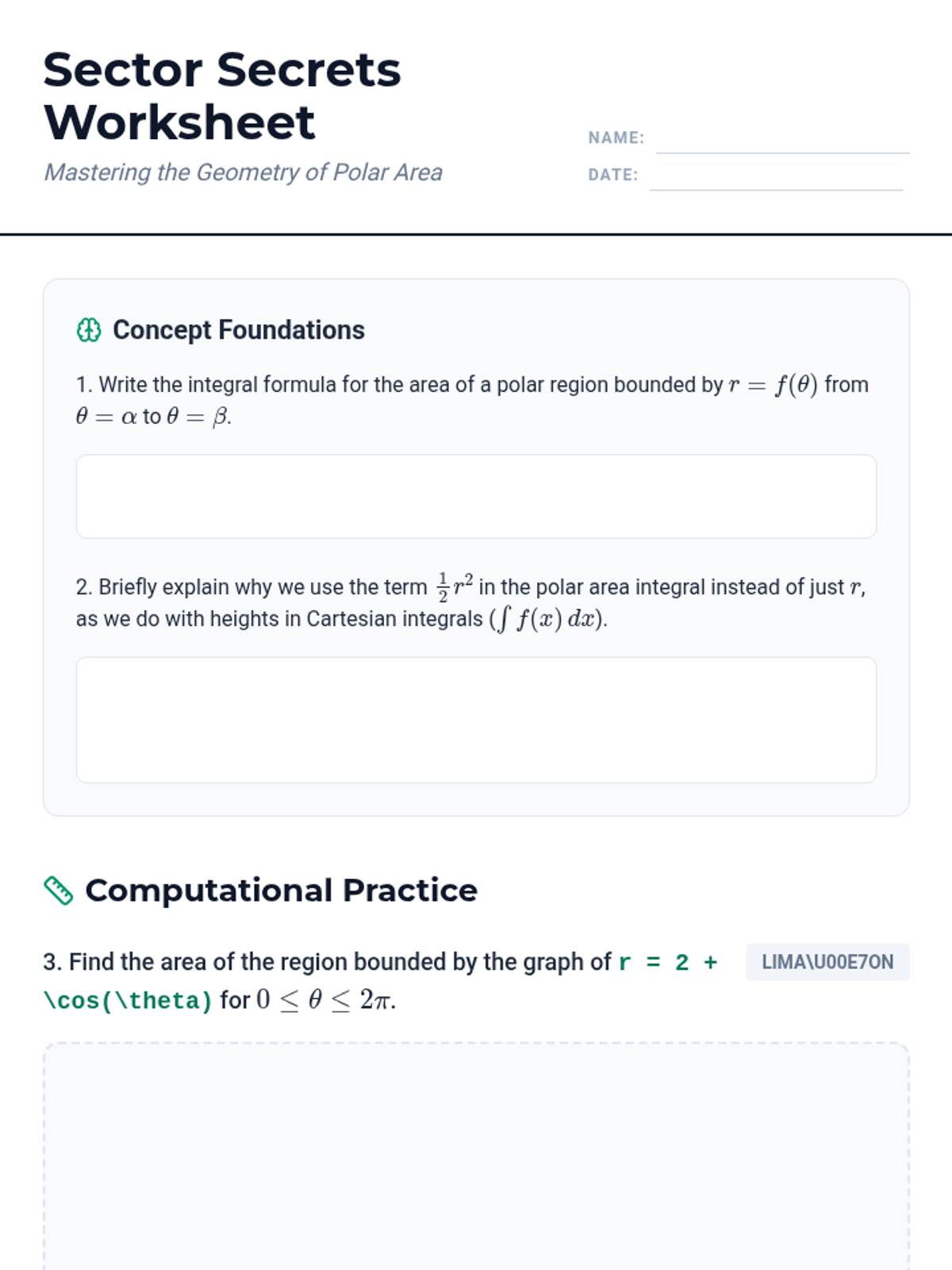
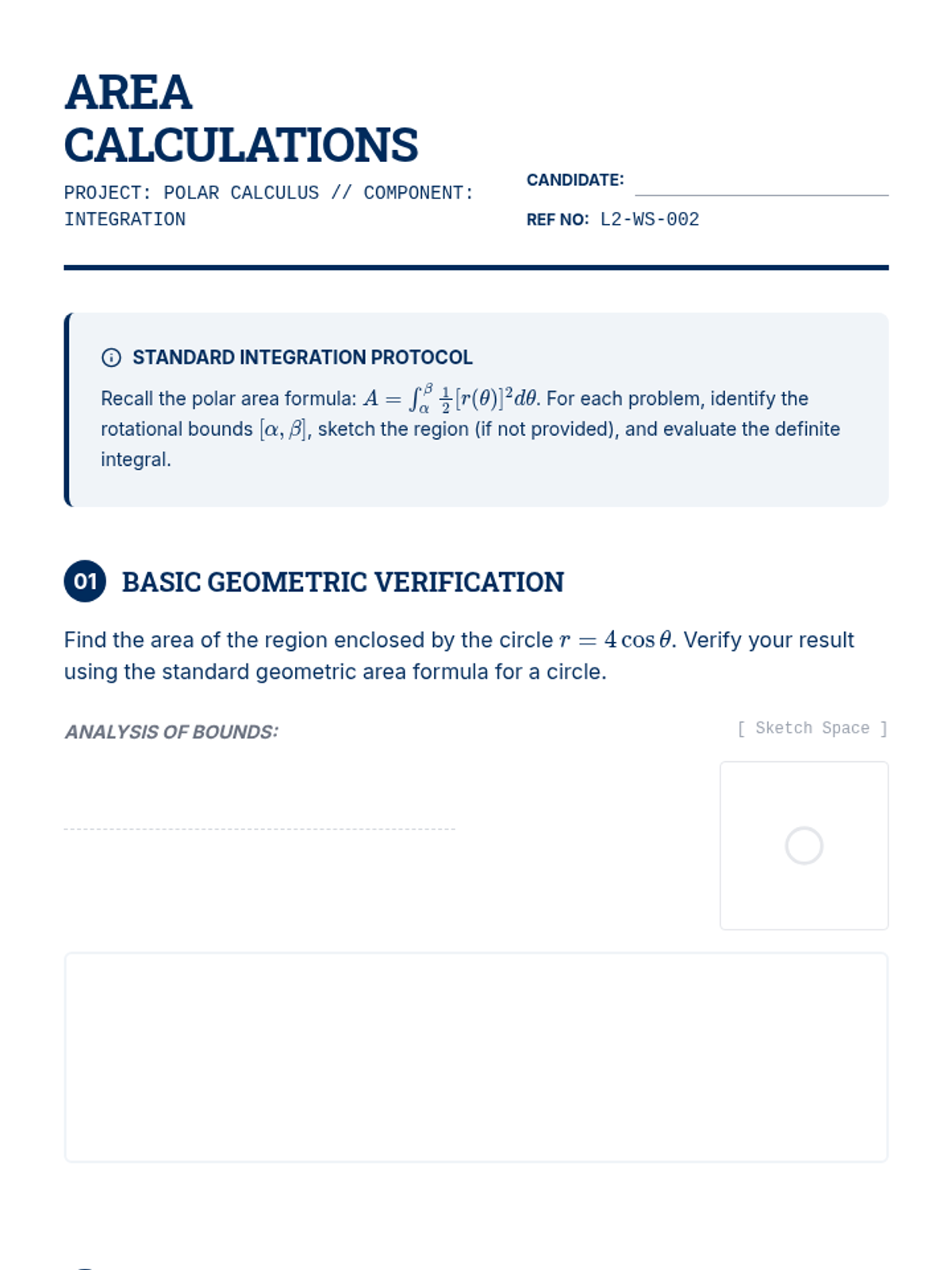
Students derive the polar area formula using circular sectors and apply it to find the area of simple polar regions. The lesson focuses on the transition from Riemann rectangles to radial wedges.
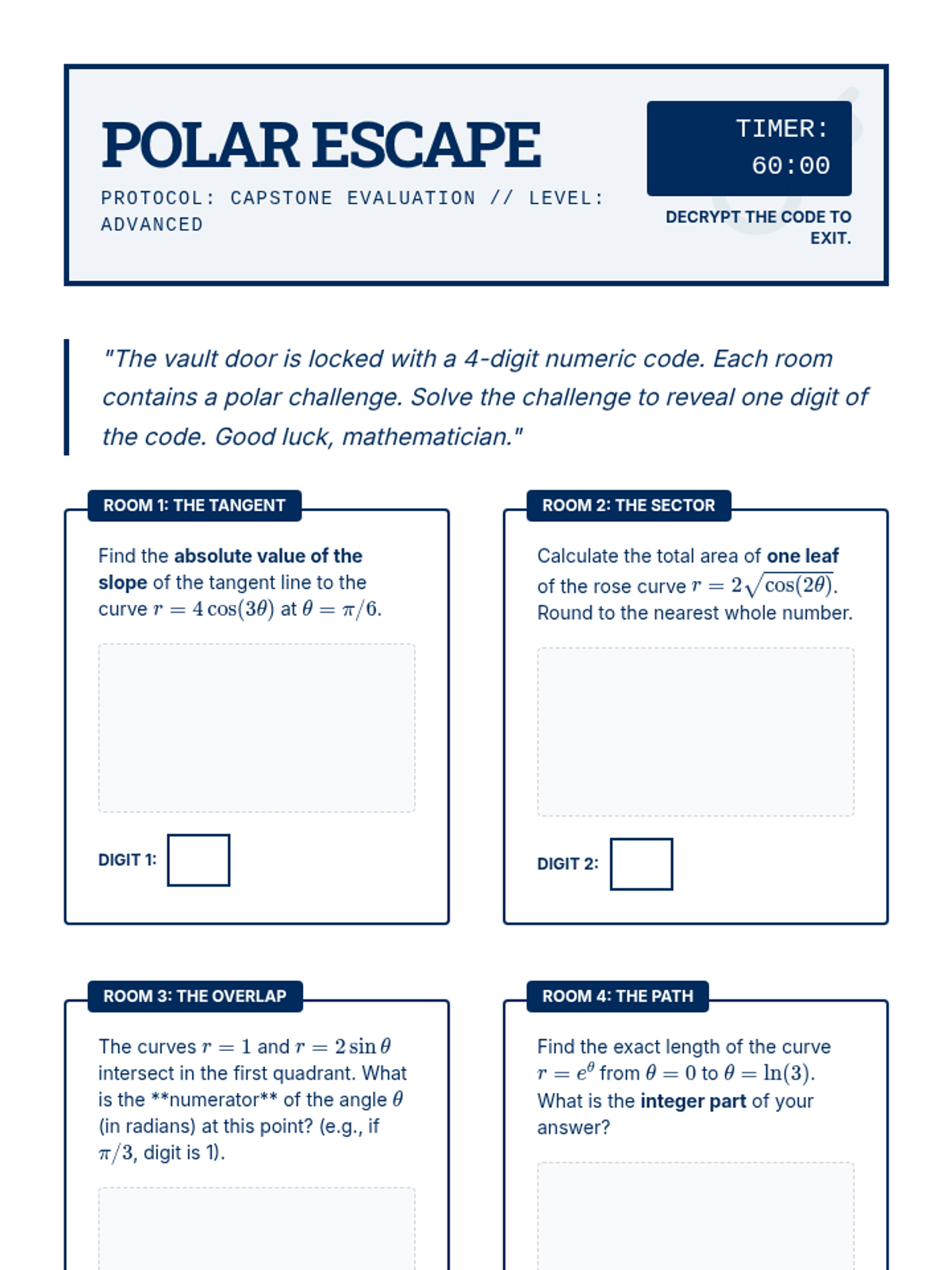
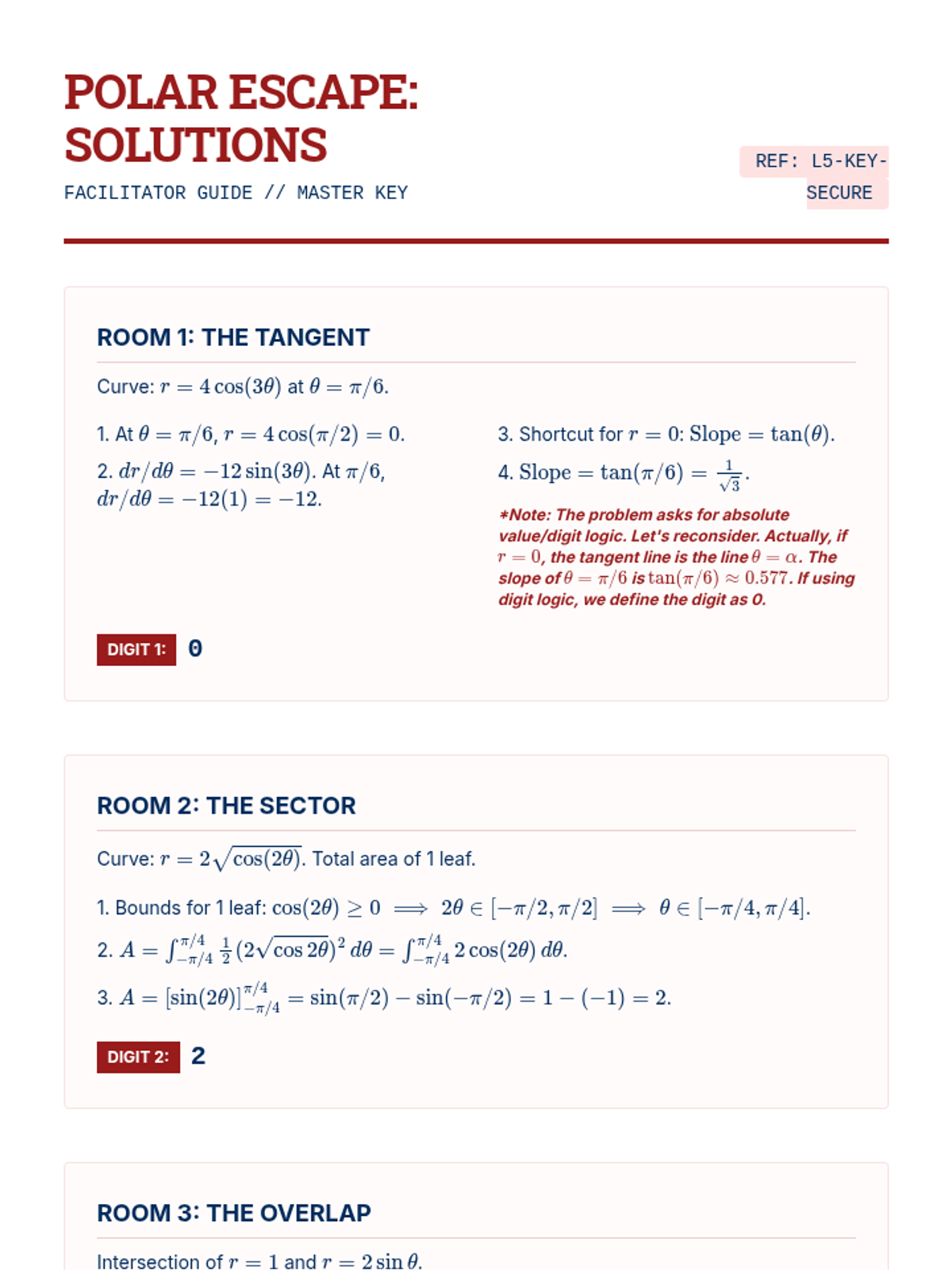
A comprehensive workshop and escape-room style activity applying all polar calculus concepts to complex geometric problems.
Derivation and application of the polar arc length formula to calculate the distance along curved polar paths.
Calculating the area bounded by multiple polar curves by finding intersection points and setting up compound integrals.
Introduction to the polar area integral formula based on sector summation, applying it to find the area of simple closed polar loops.
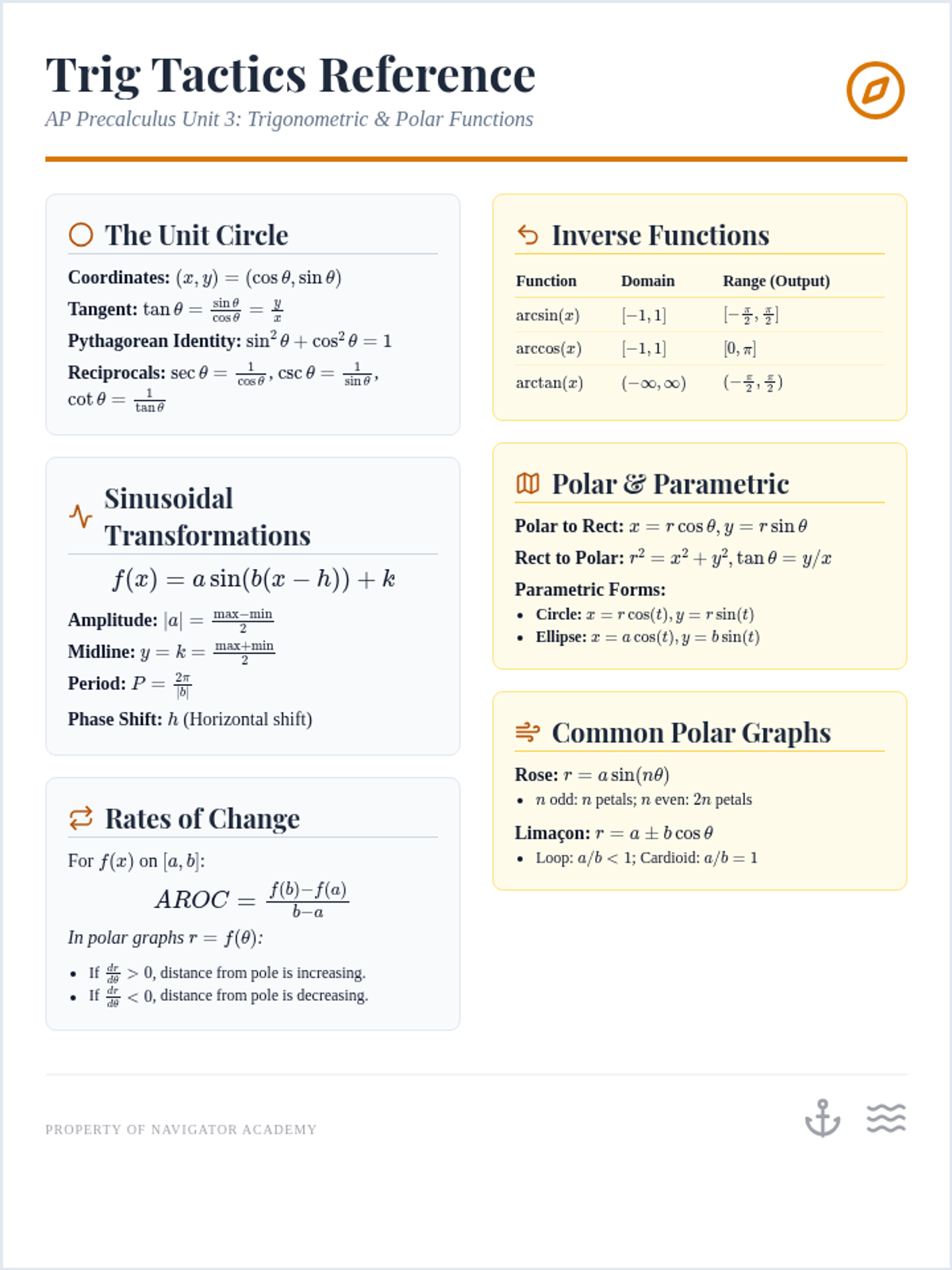
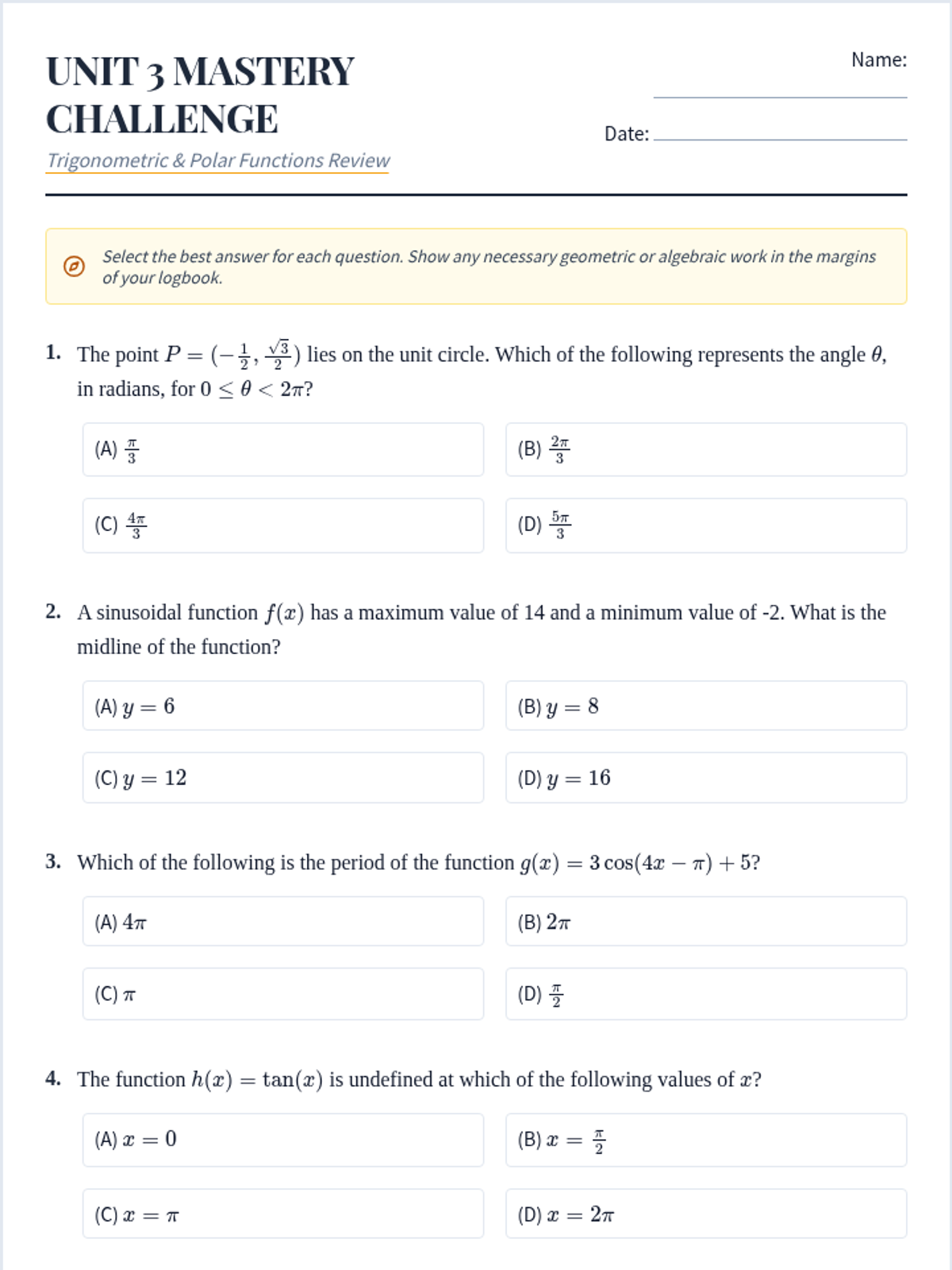
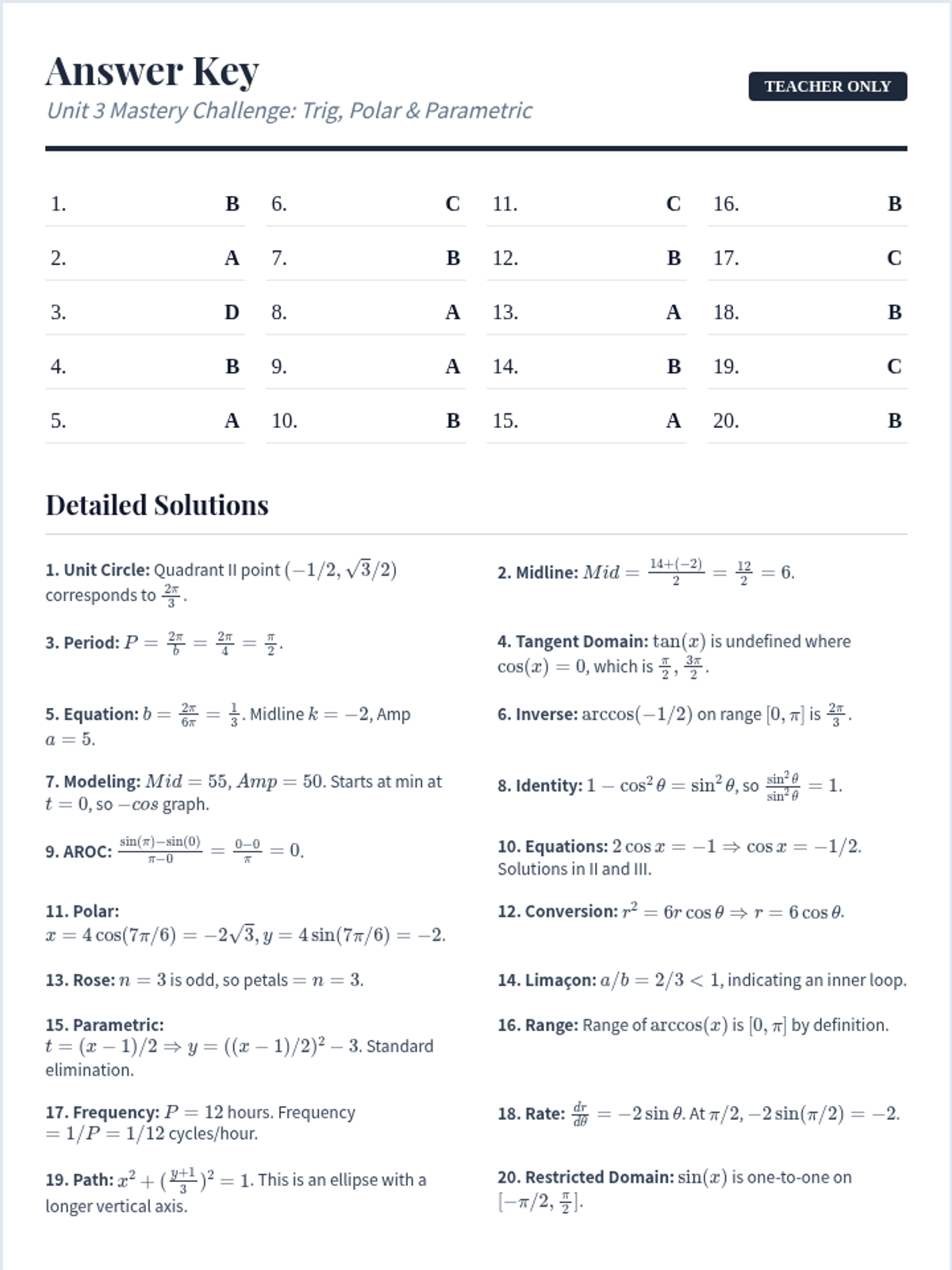
A comprehensive review for Unit 3 of AP Precalculus, focusing on trigonometric and polar functions through reference materials and practice assessments.
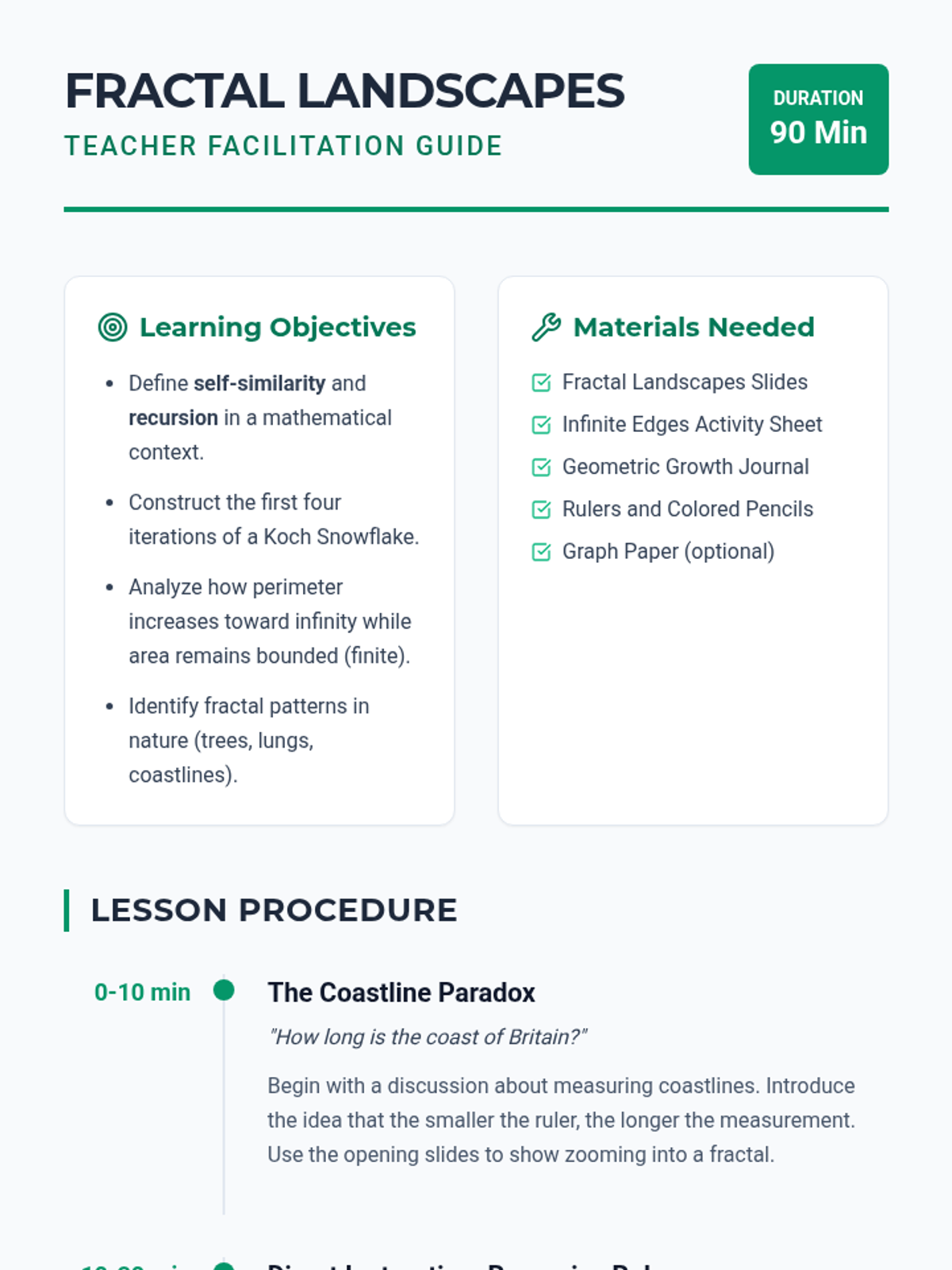
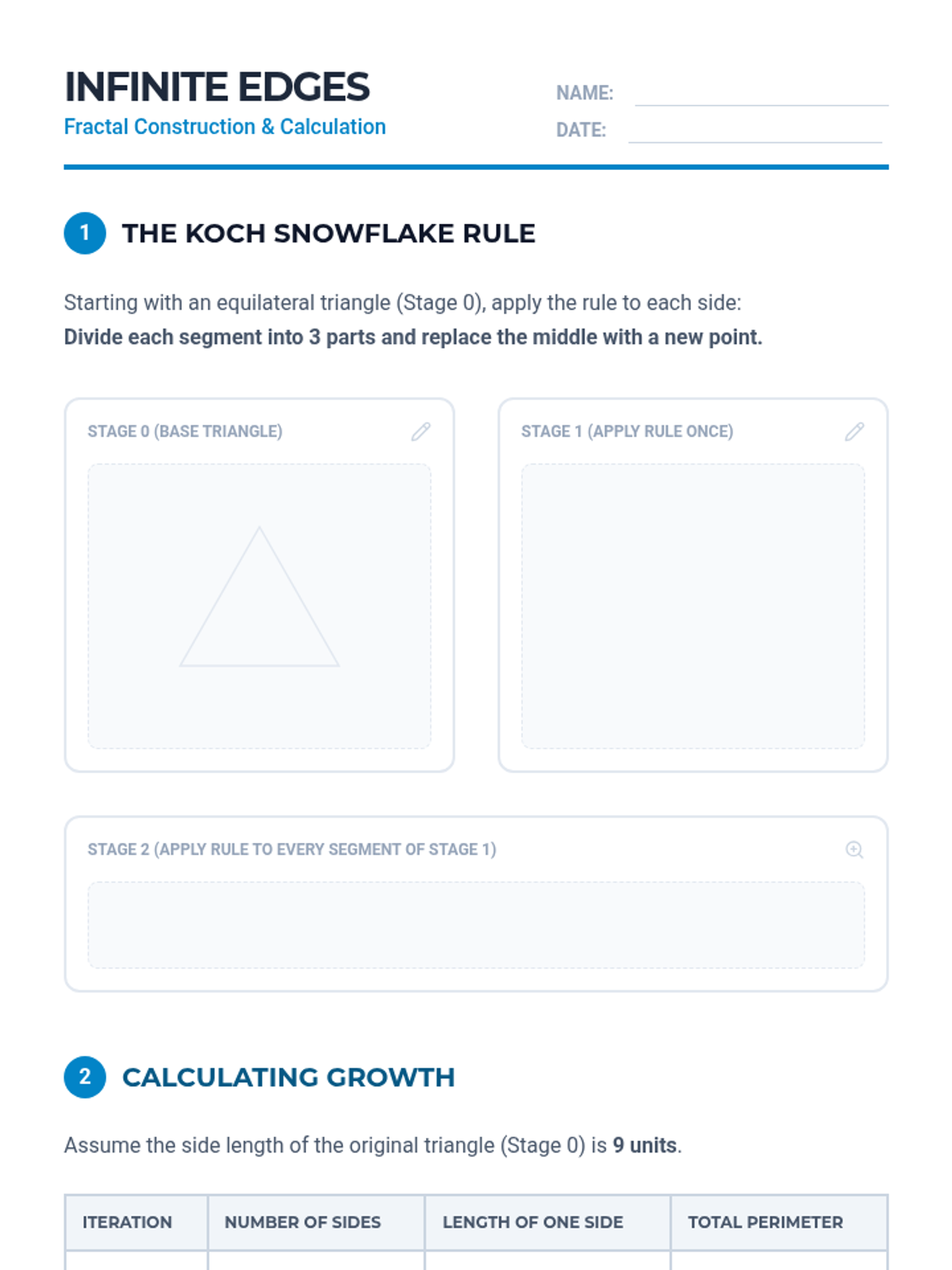
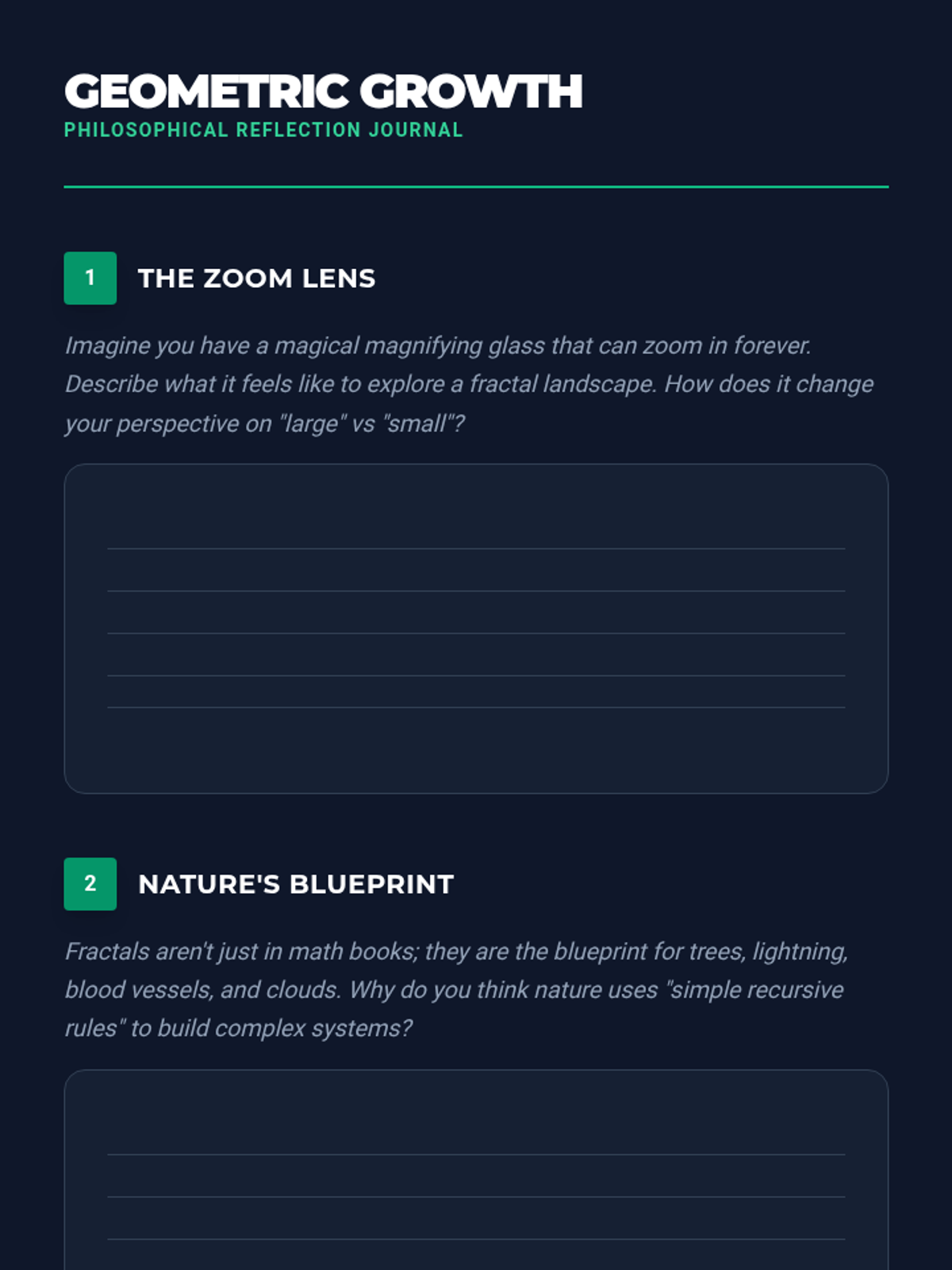
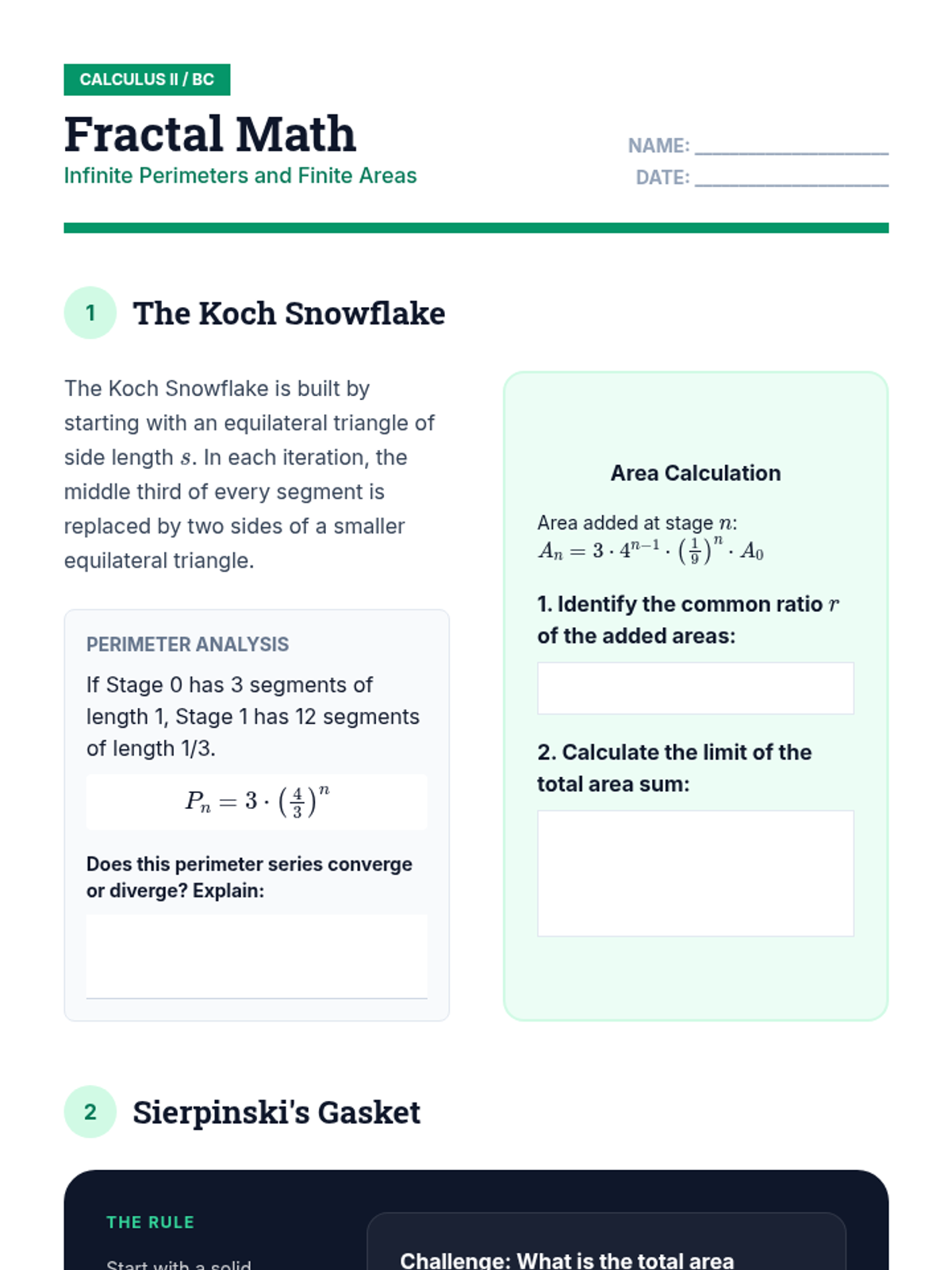
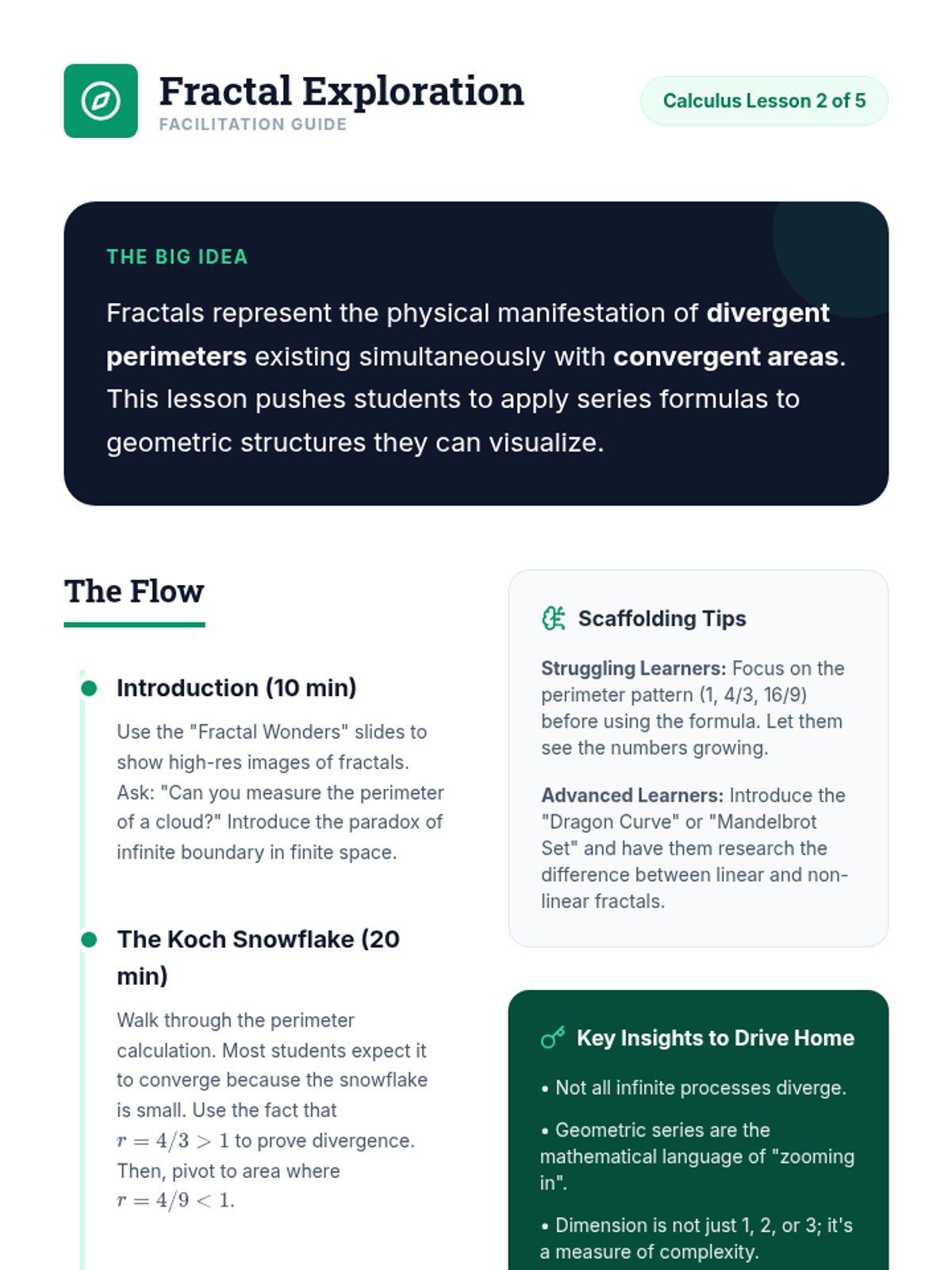
Explore the mesmerizing world of fractals where art meets mathematics. Students investigate recursive patterns, self-similarity, and the mind-bending paradox of infinite perimeters within finite spaces.
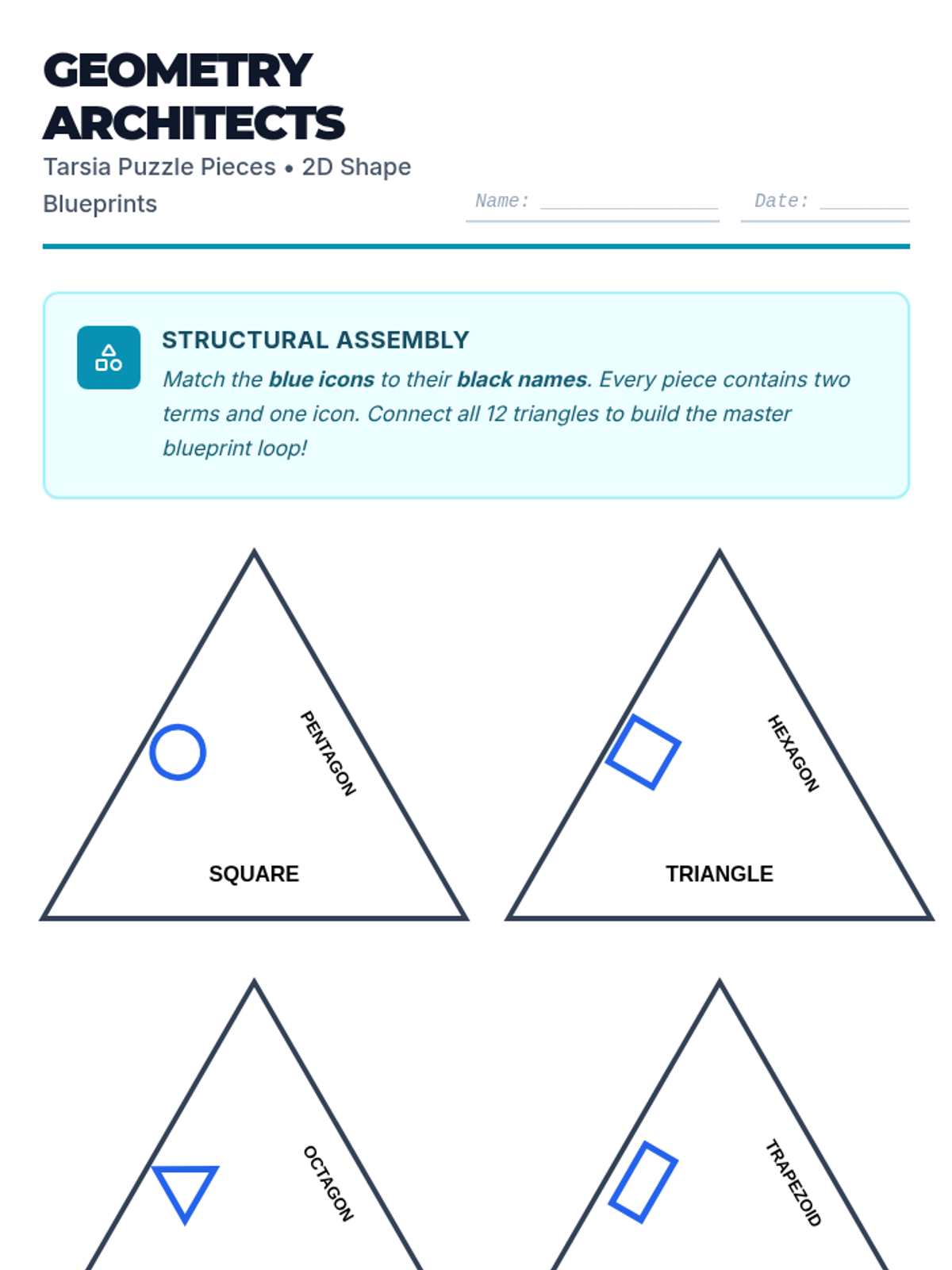
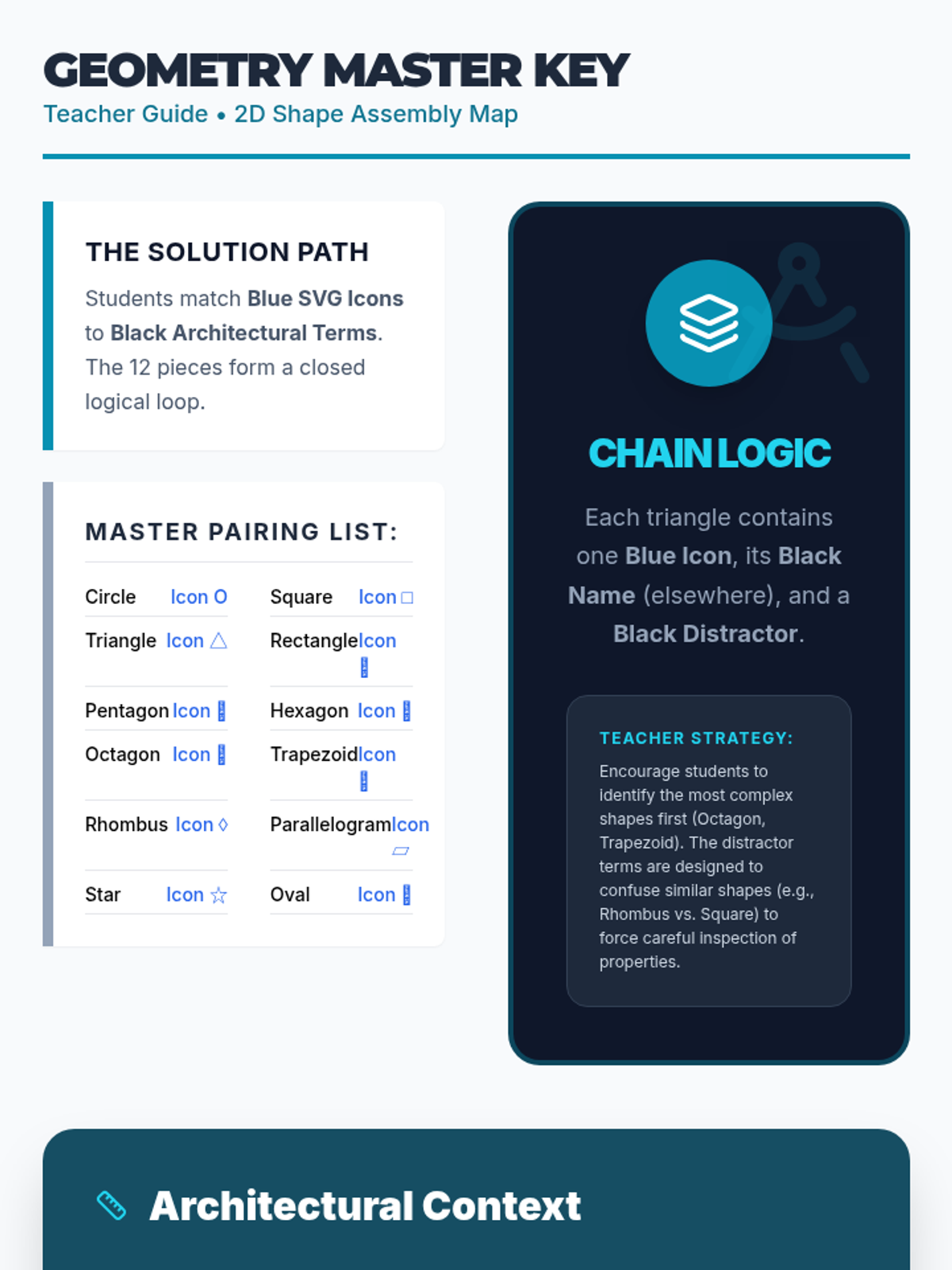
A visual exploration of 2D geometric shapes, focusing on identifying names and properties through an architectural-themed Tarsia puzzle.
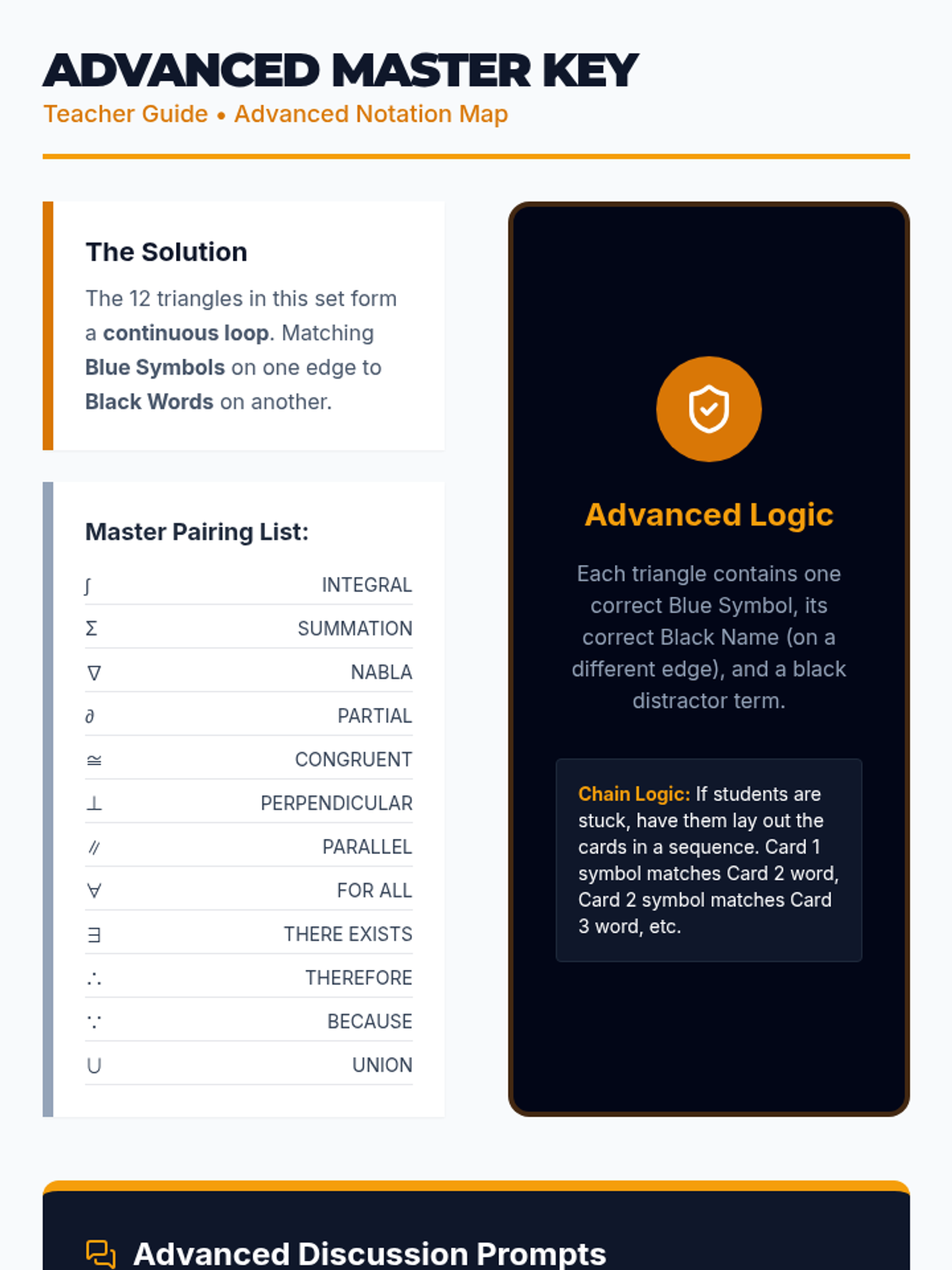
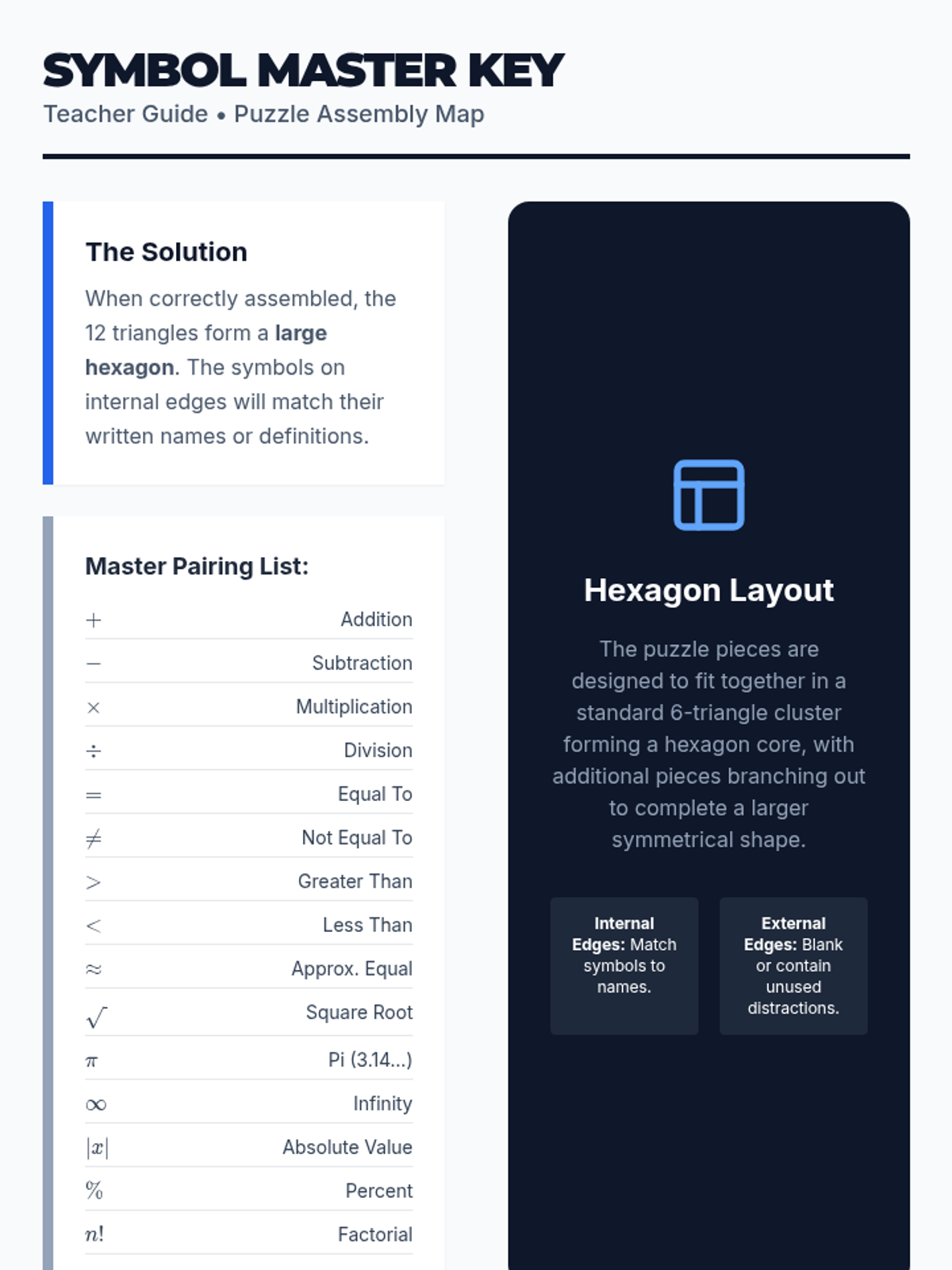
A deep dive into higher-level mathematical notation, focusing on calculus, set theory, and Greek symbols through a complex Tarsia challenge.
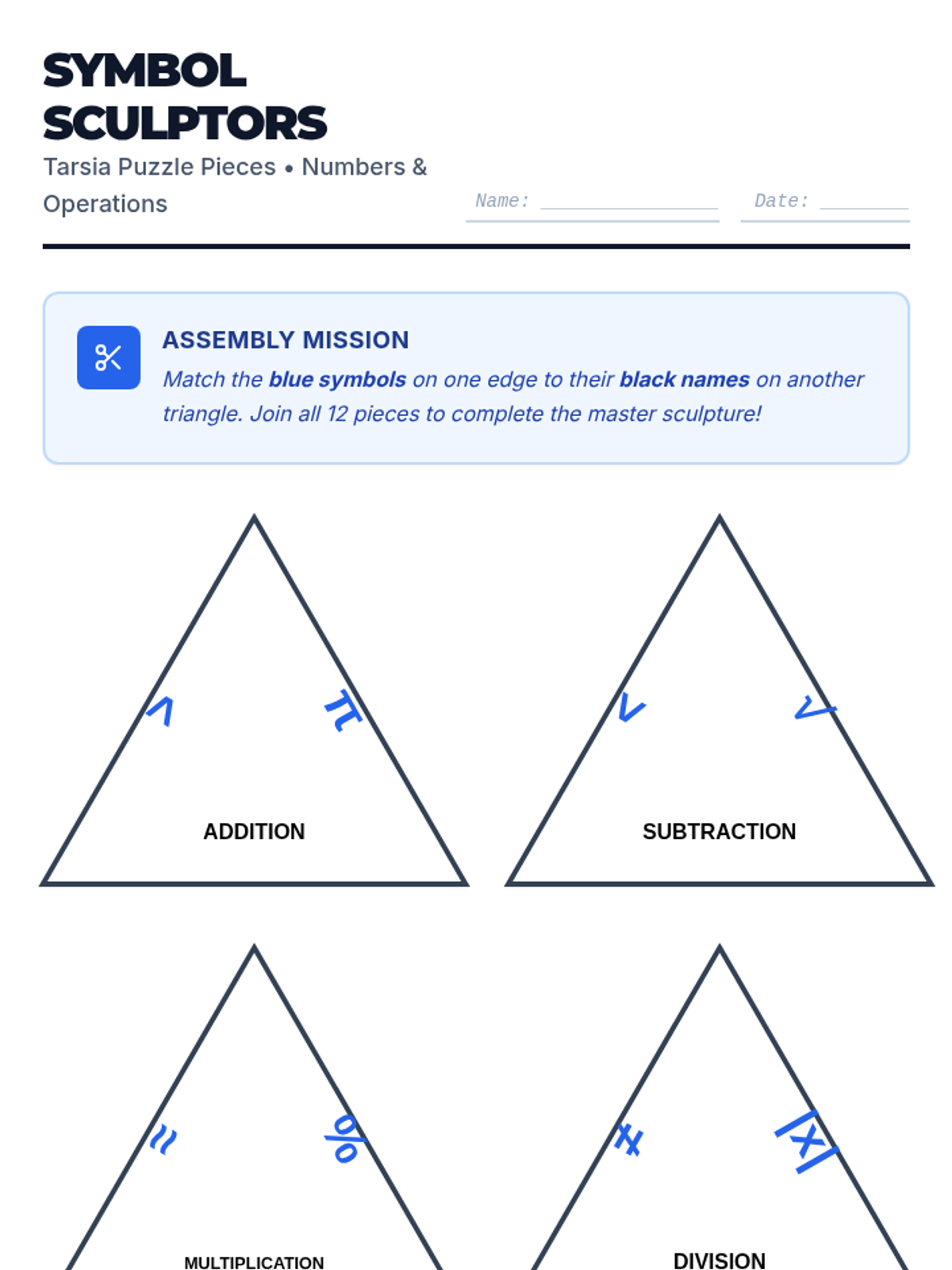
A hands-on lesson focusing on the recognition and application of mathematical symbols in numbers and operations through a collaborative Tarsia puzzle activity.
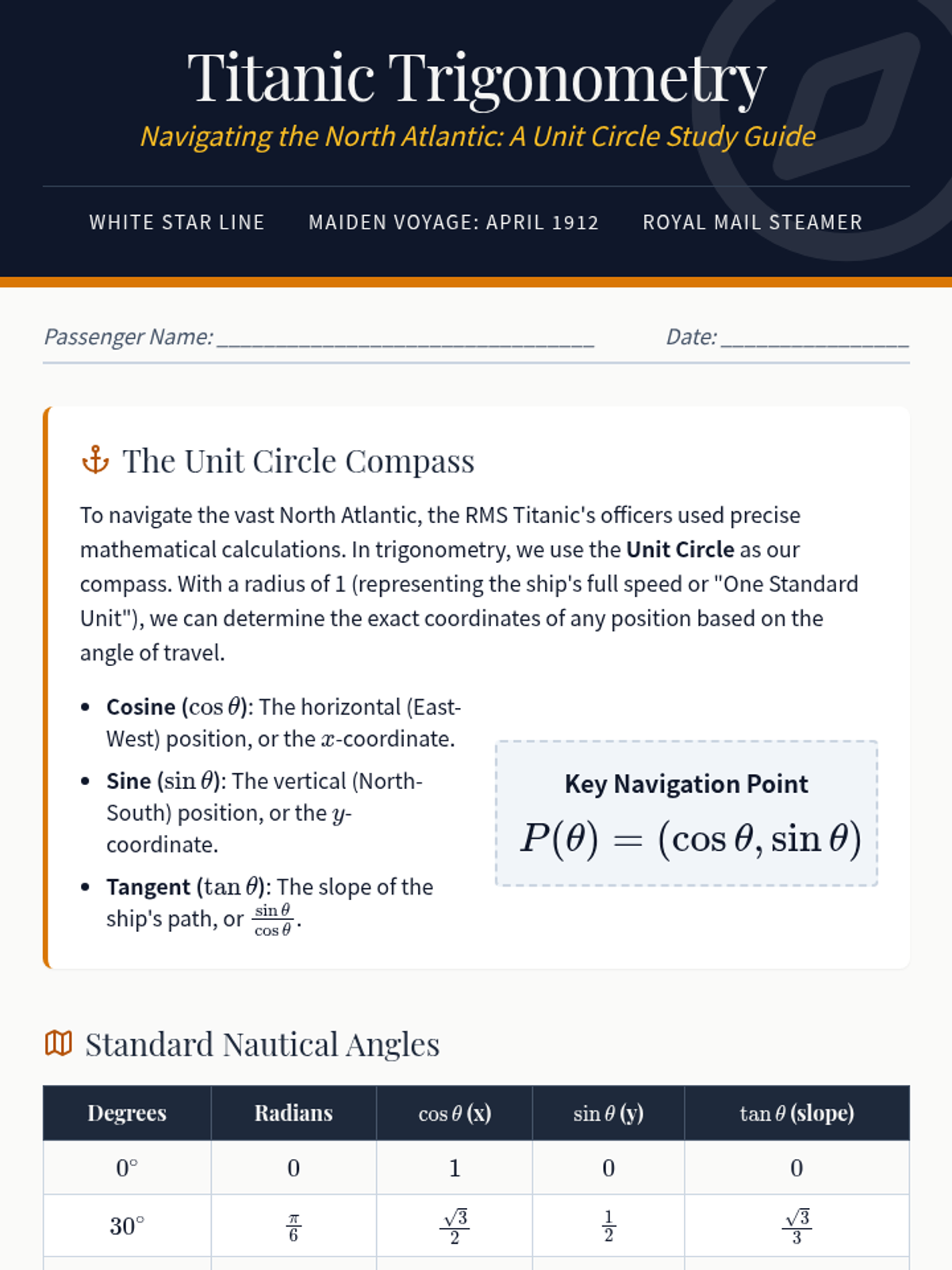
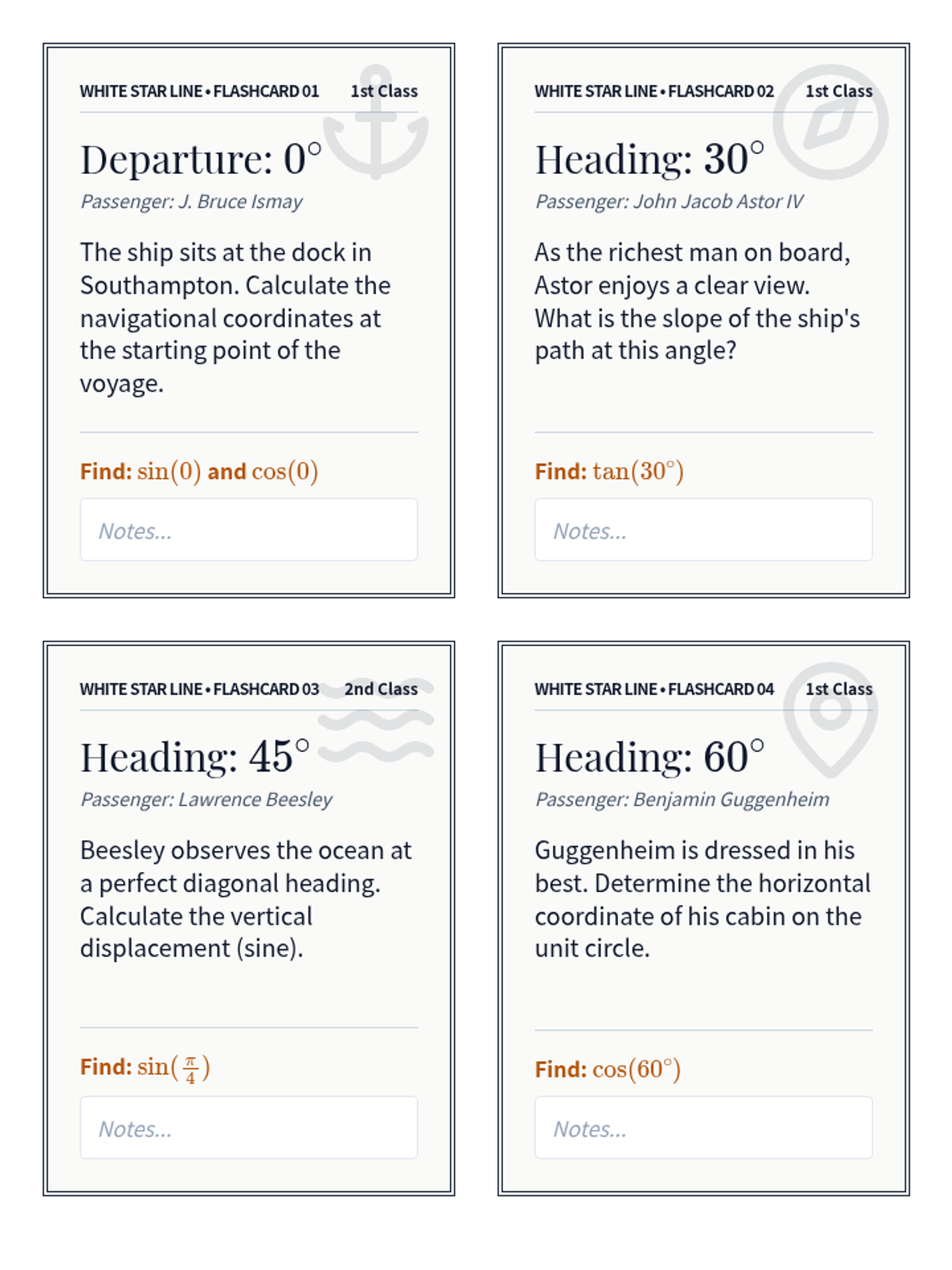
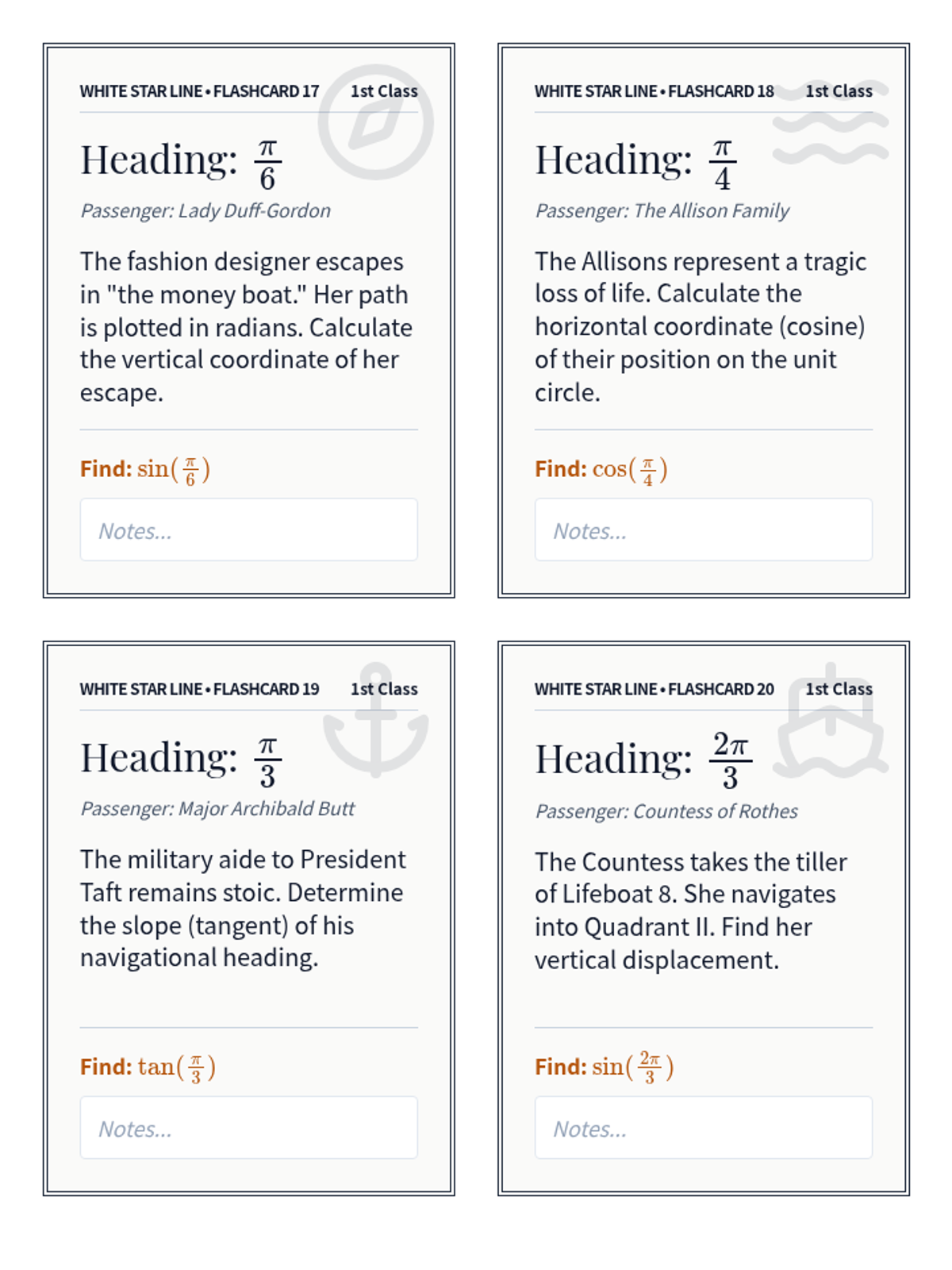
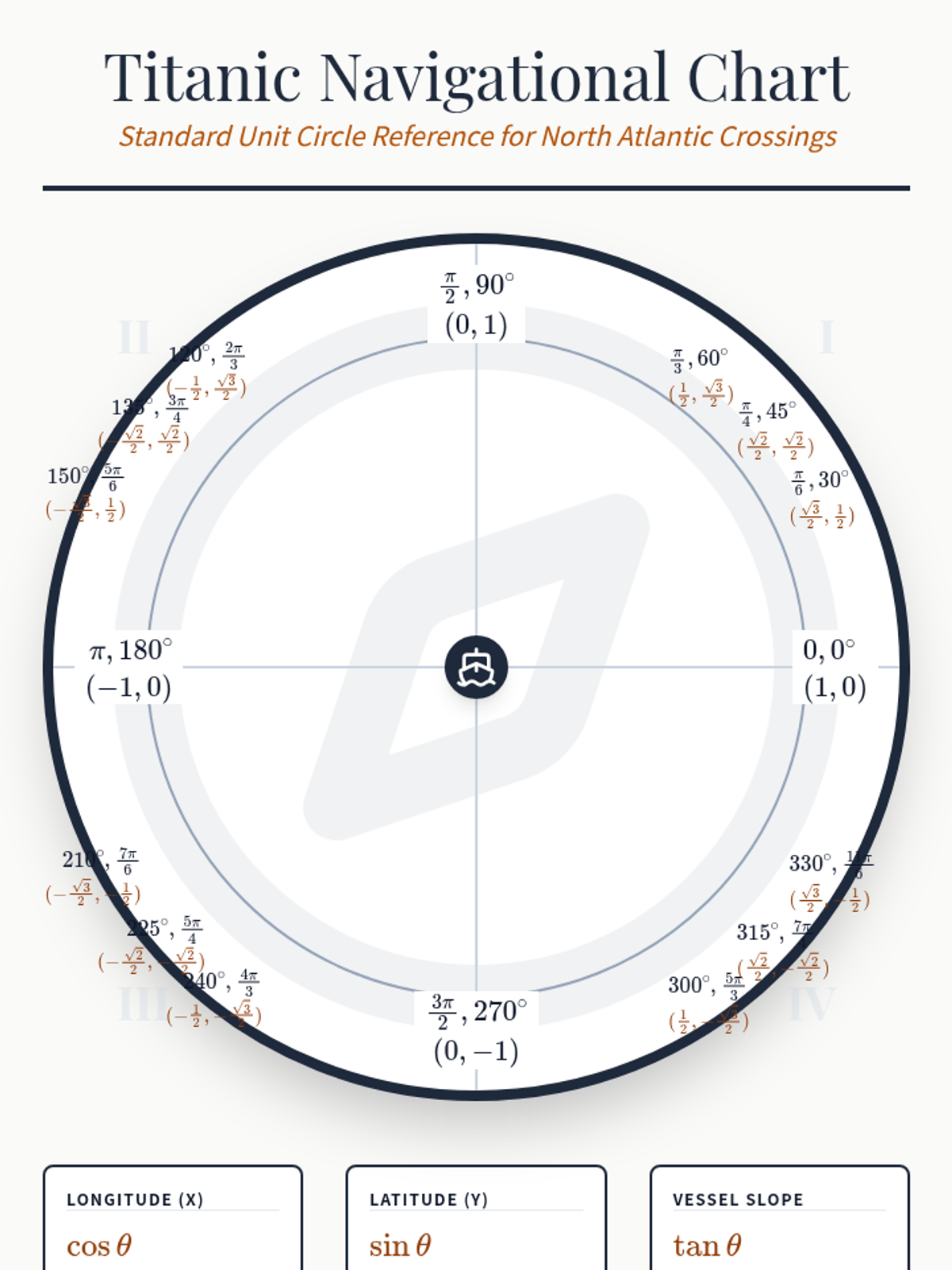
A maritime-themed lesson exploring trigonometry through the lens of the Titanic's maiden voyage. Students master unit circle coordinates and trigonometric values using historical figures and navigation scenarios.
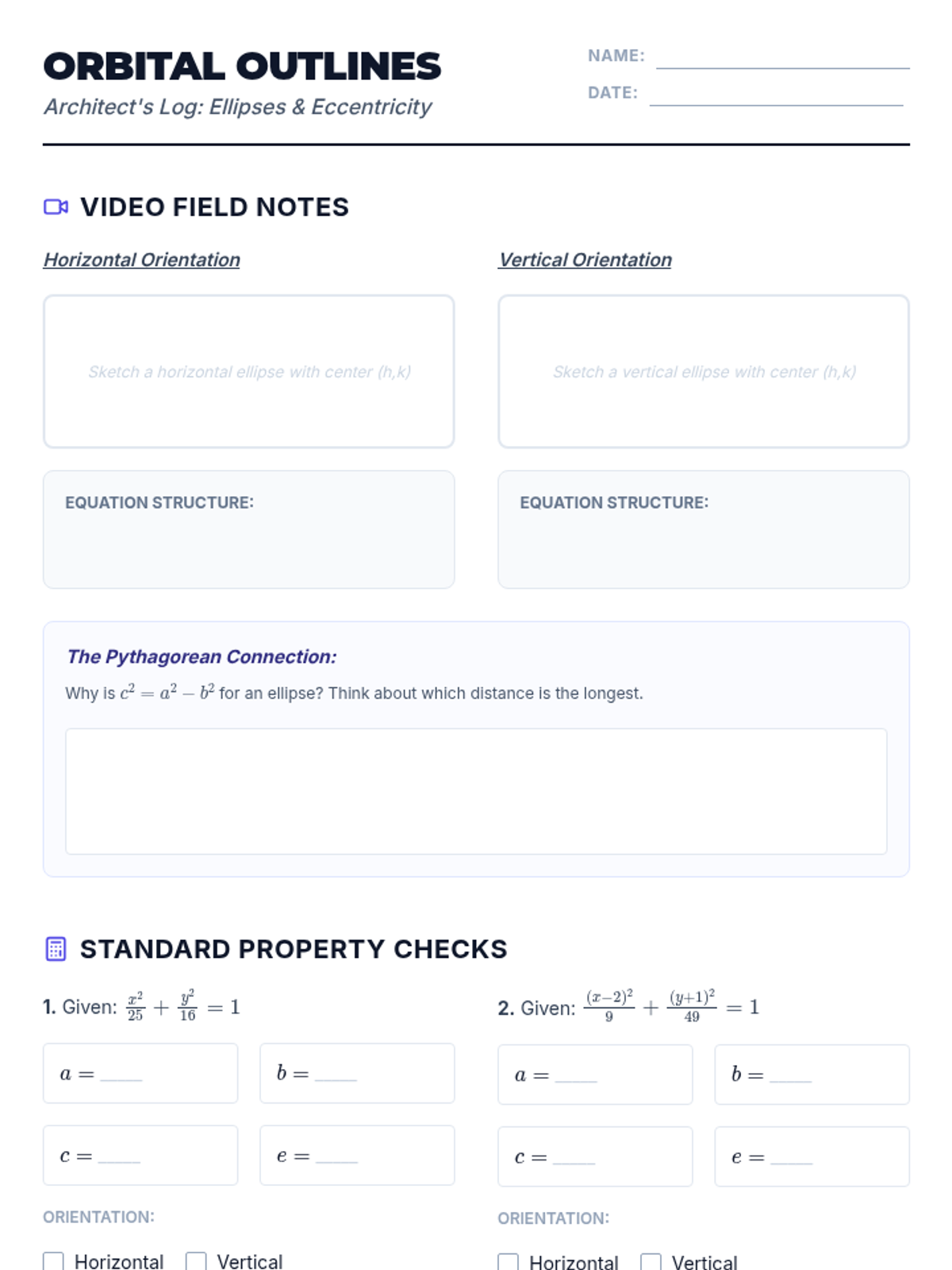
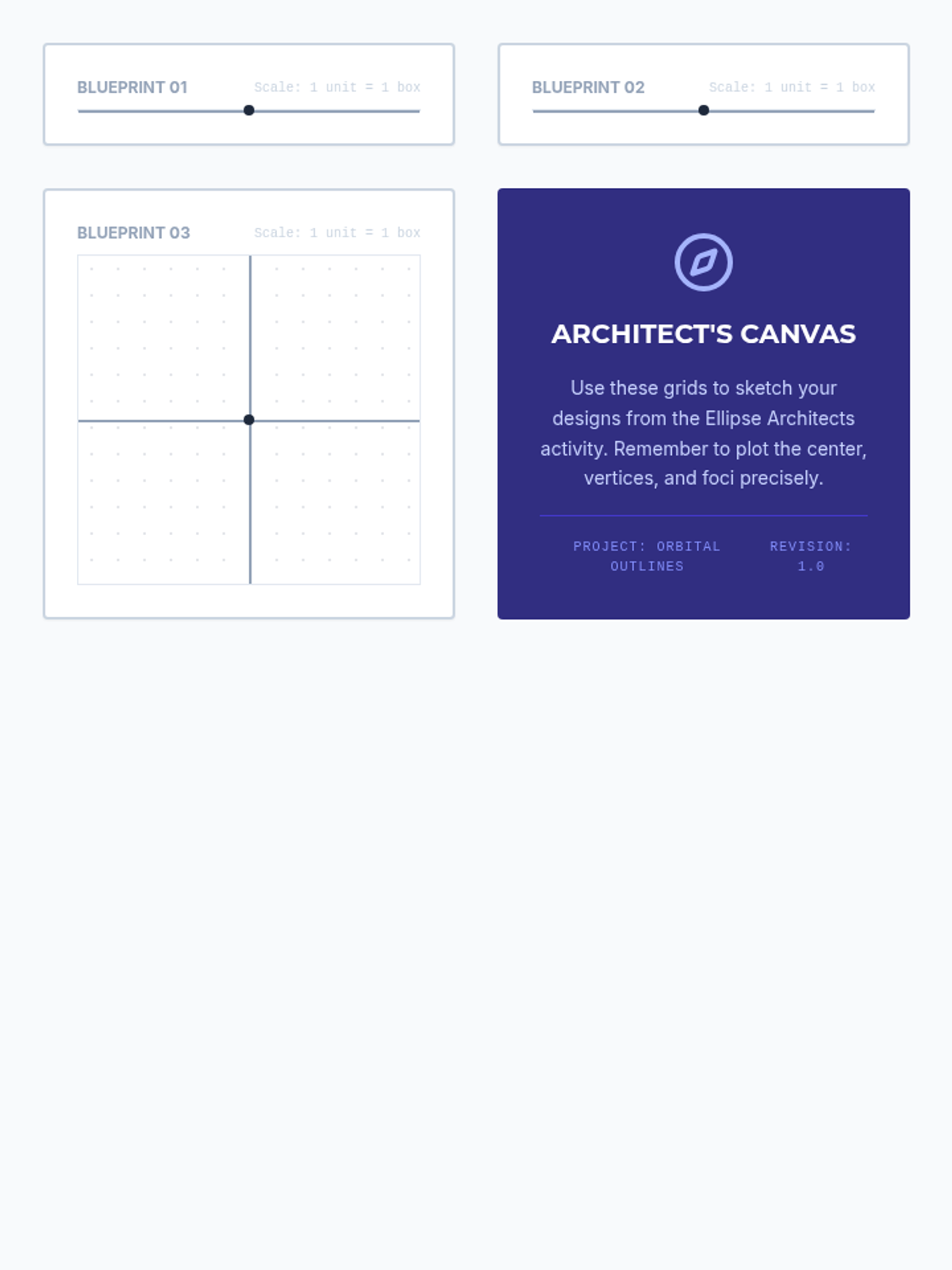
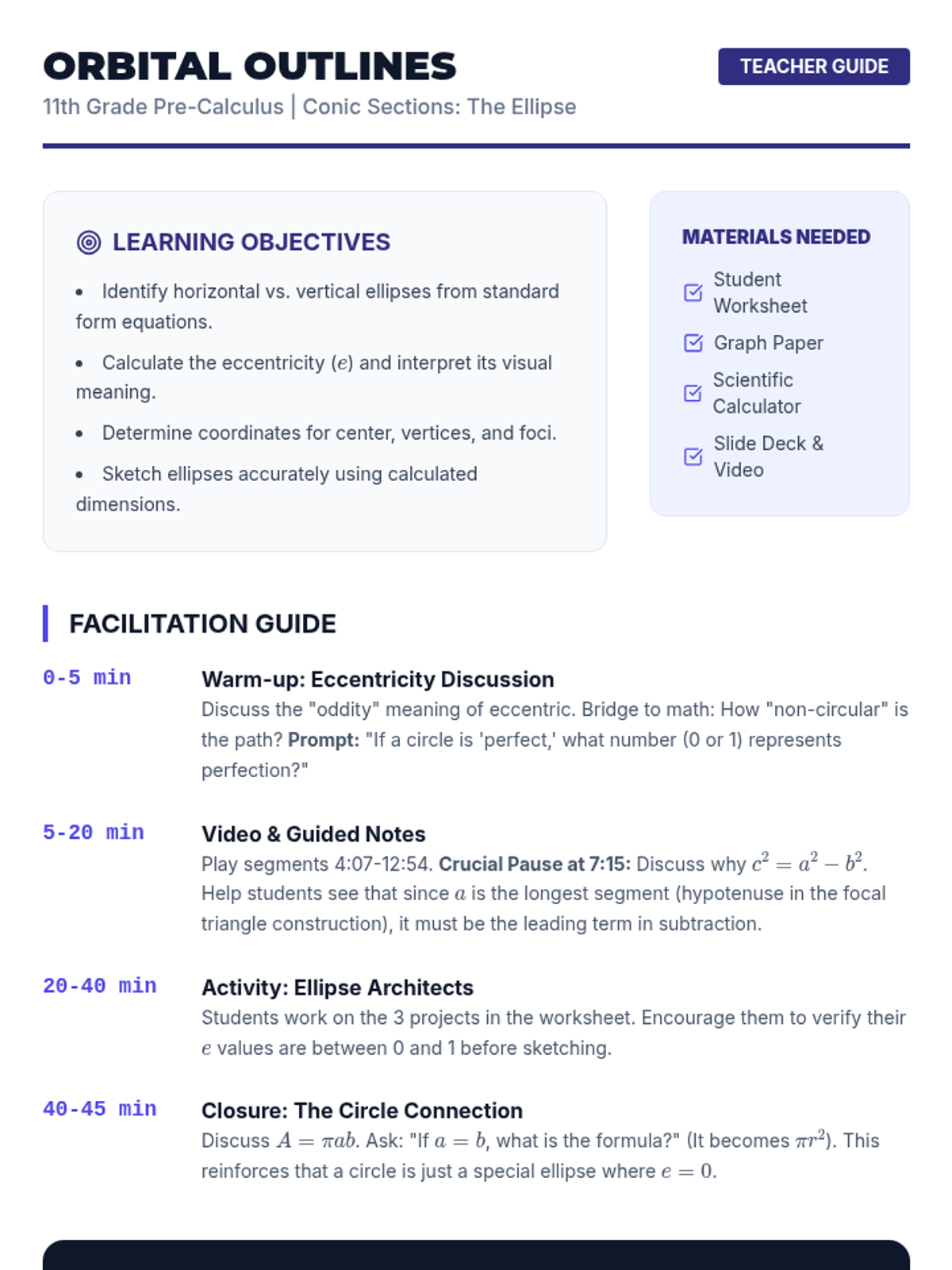
An 11th grade Pre-Calculus lesson on ellipses, covering horizontal and vertical orientations, eccentricity calculations, and coordinate geometry through the lens of orbital mechanics and architecture.
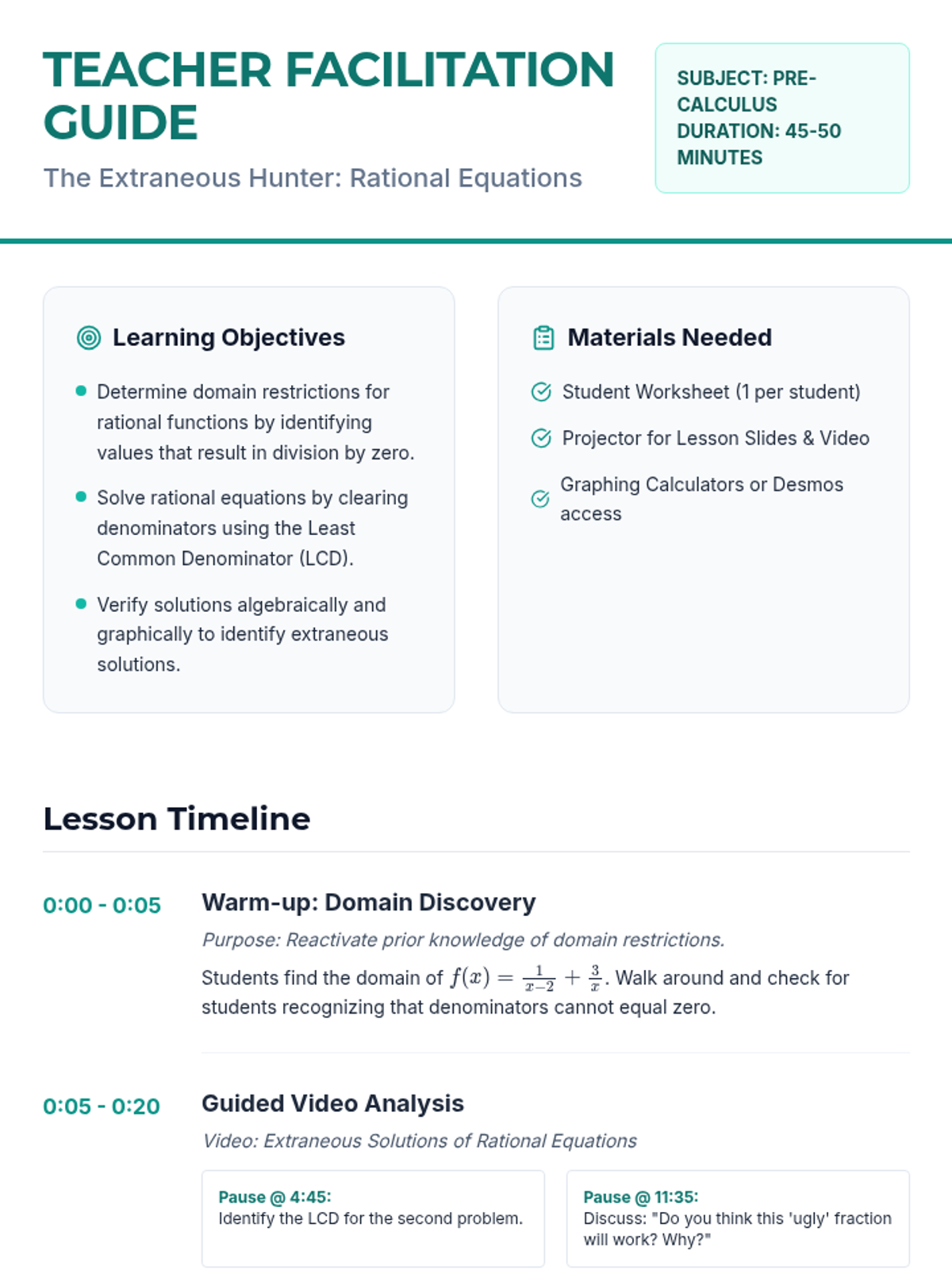
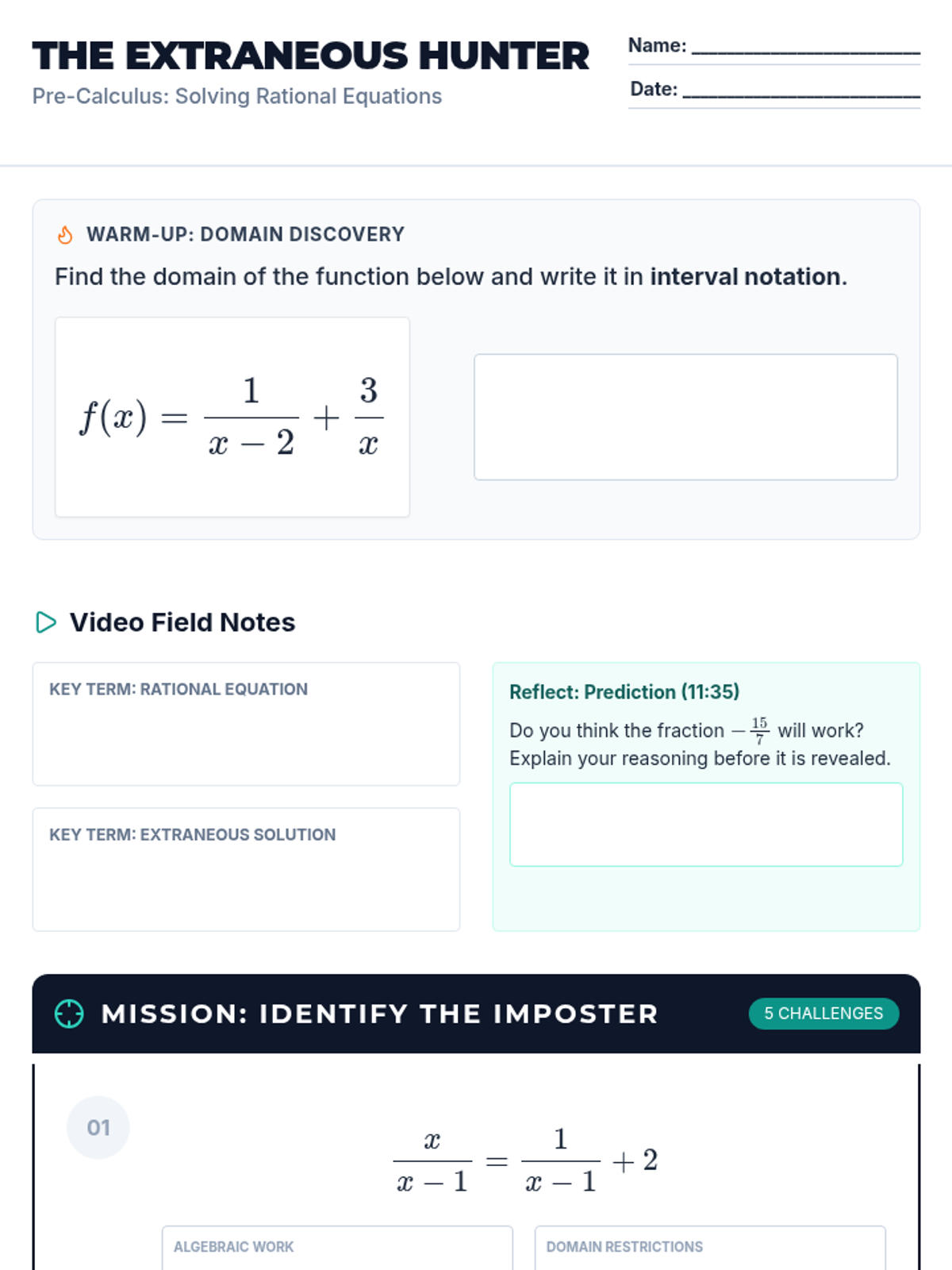
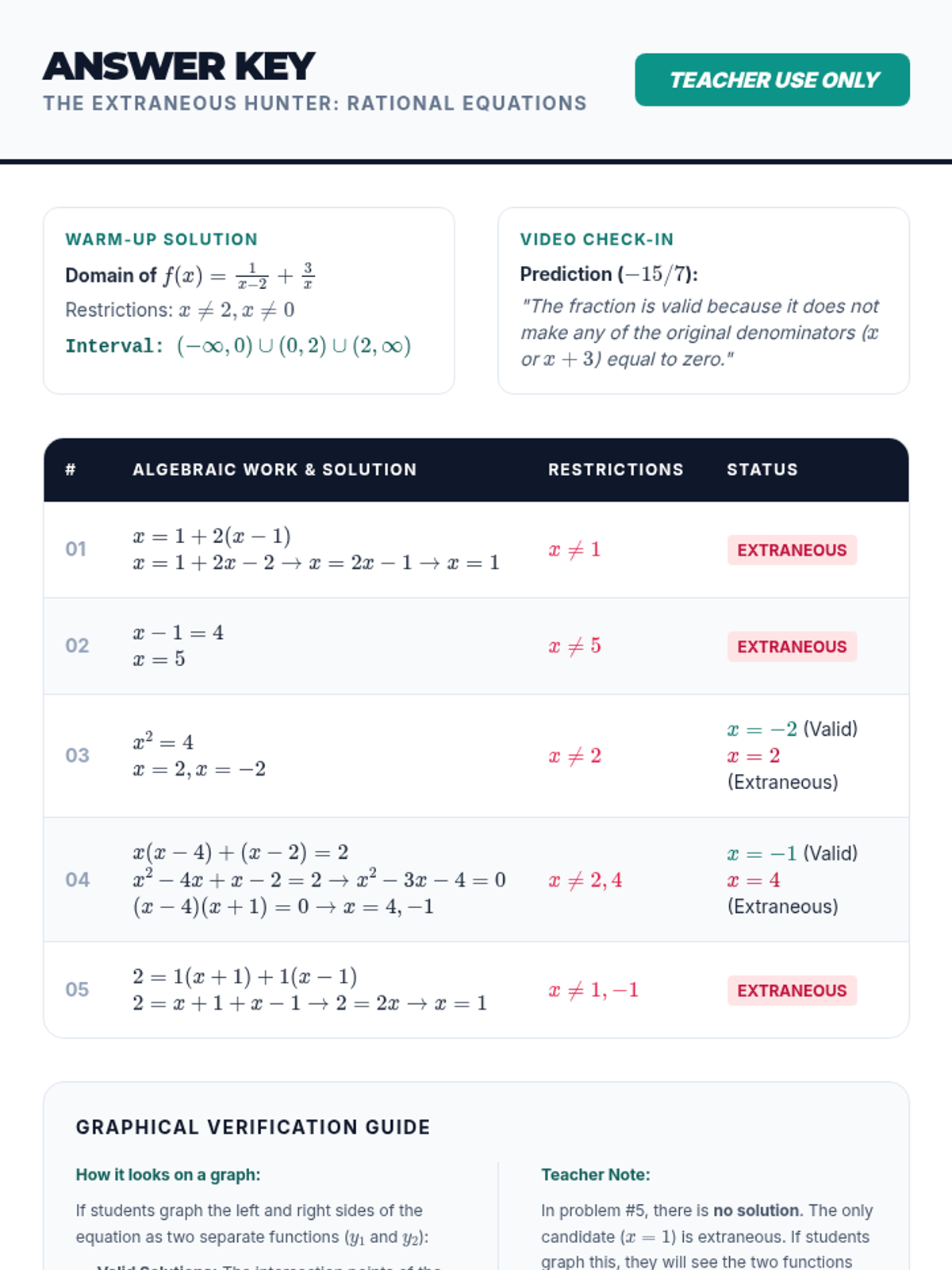
A comprehensive Pre-Calculus lesson focused on identifying domain restrictions and isolating extraneous solutions in complex rational equations through algebraic solving and graphical verification.
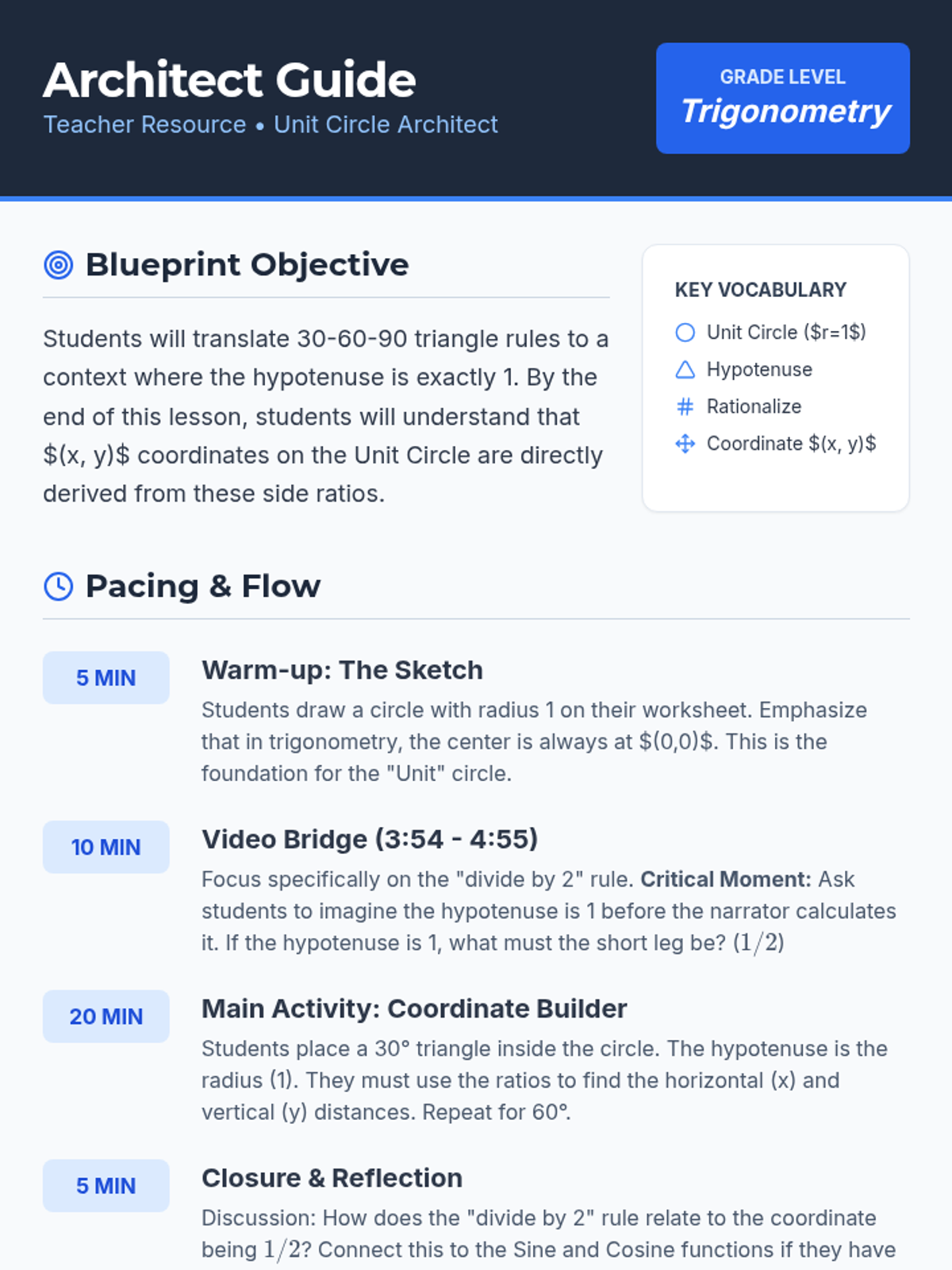
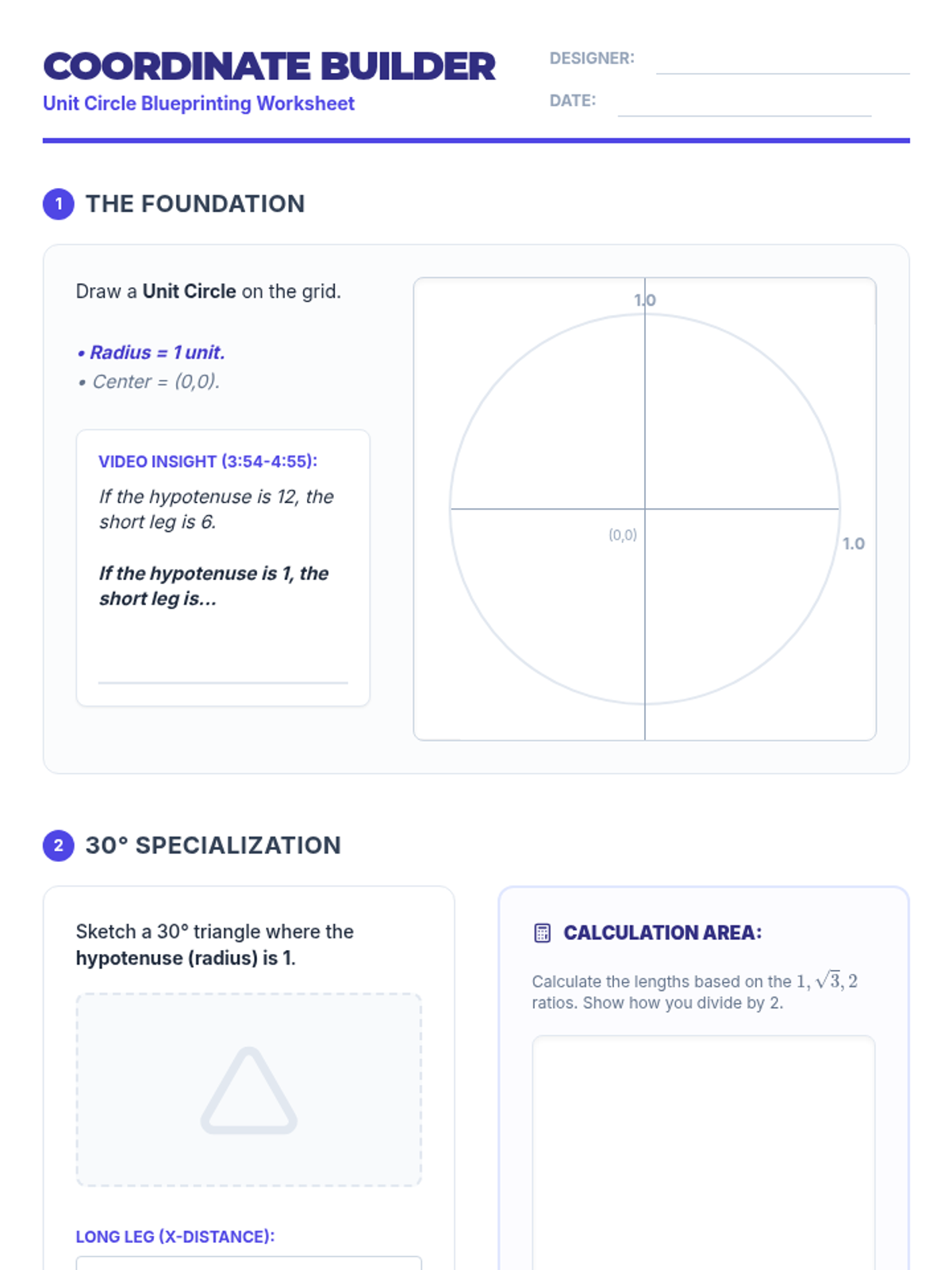
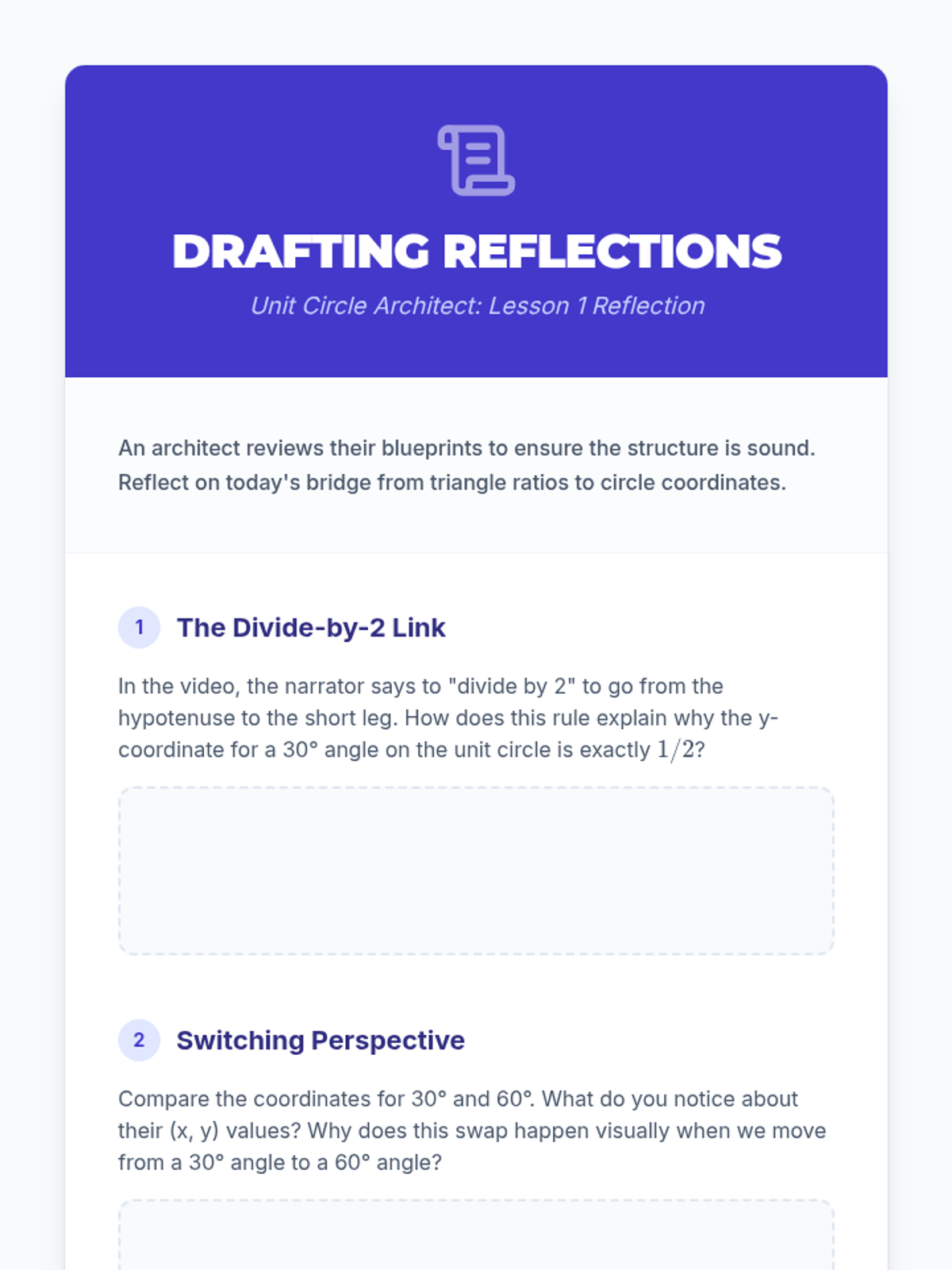
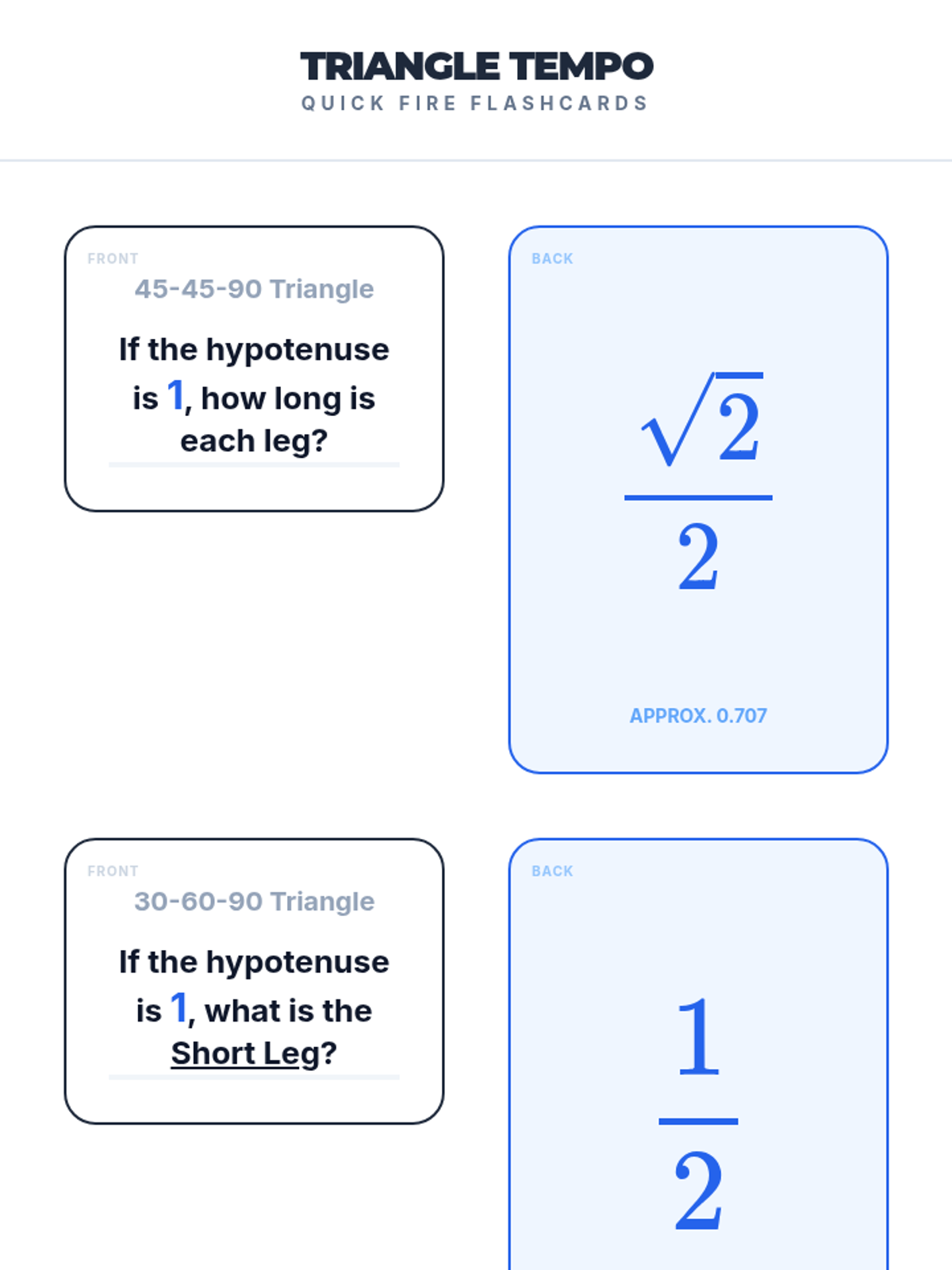
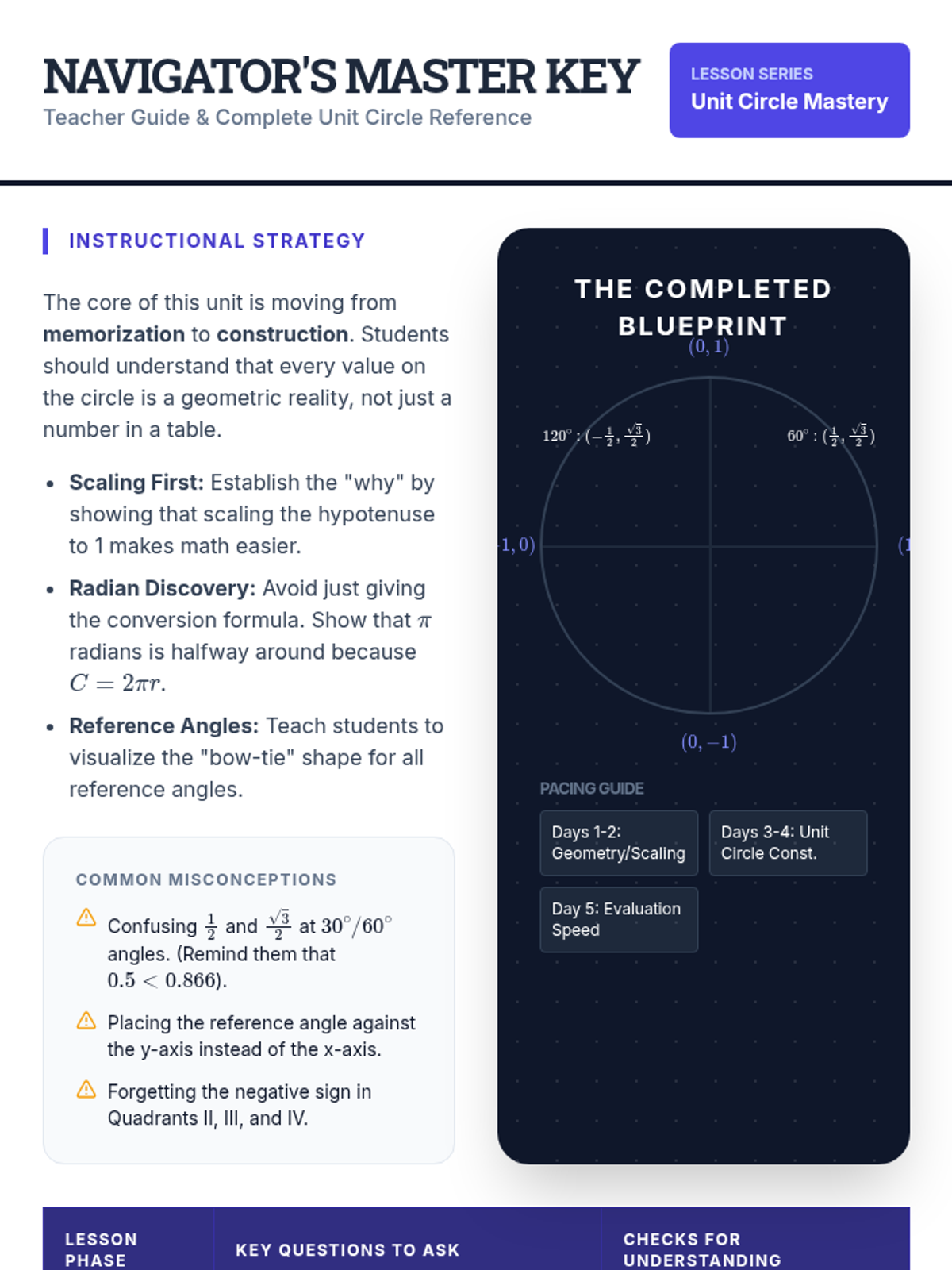
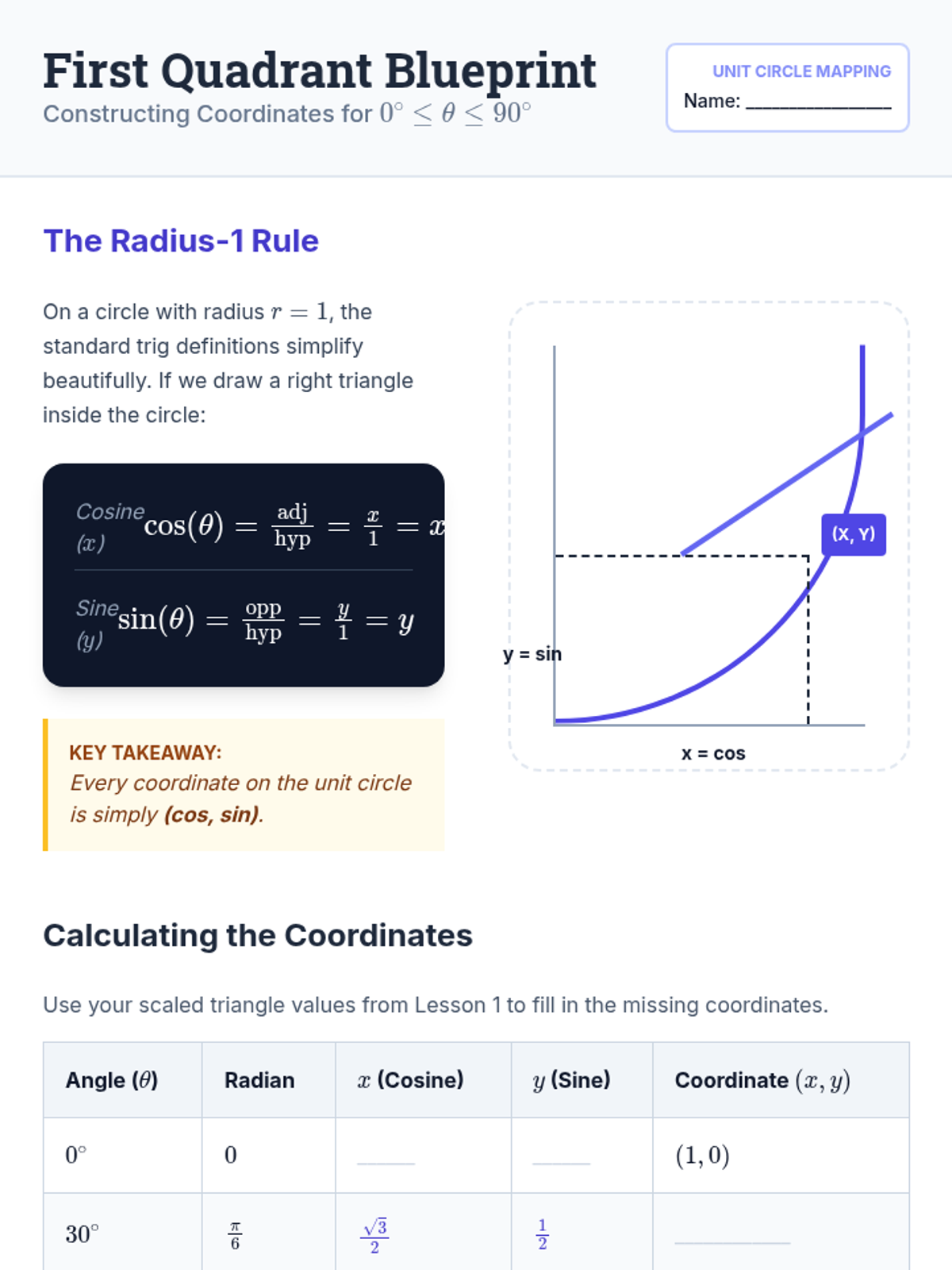
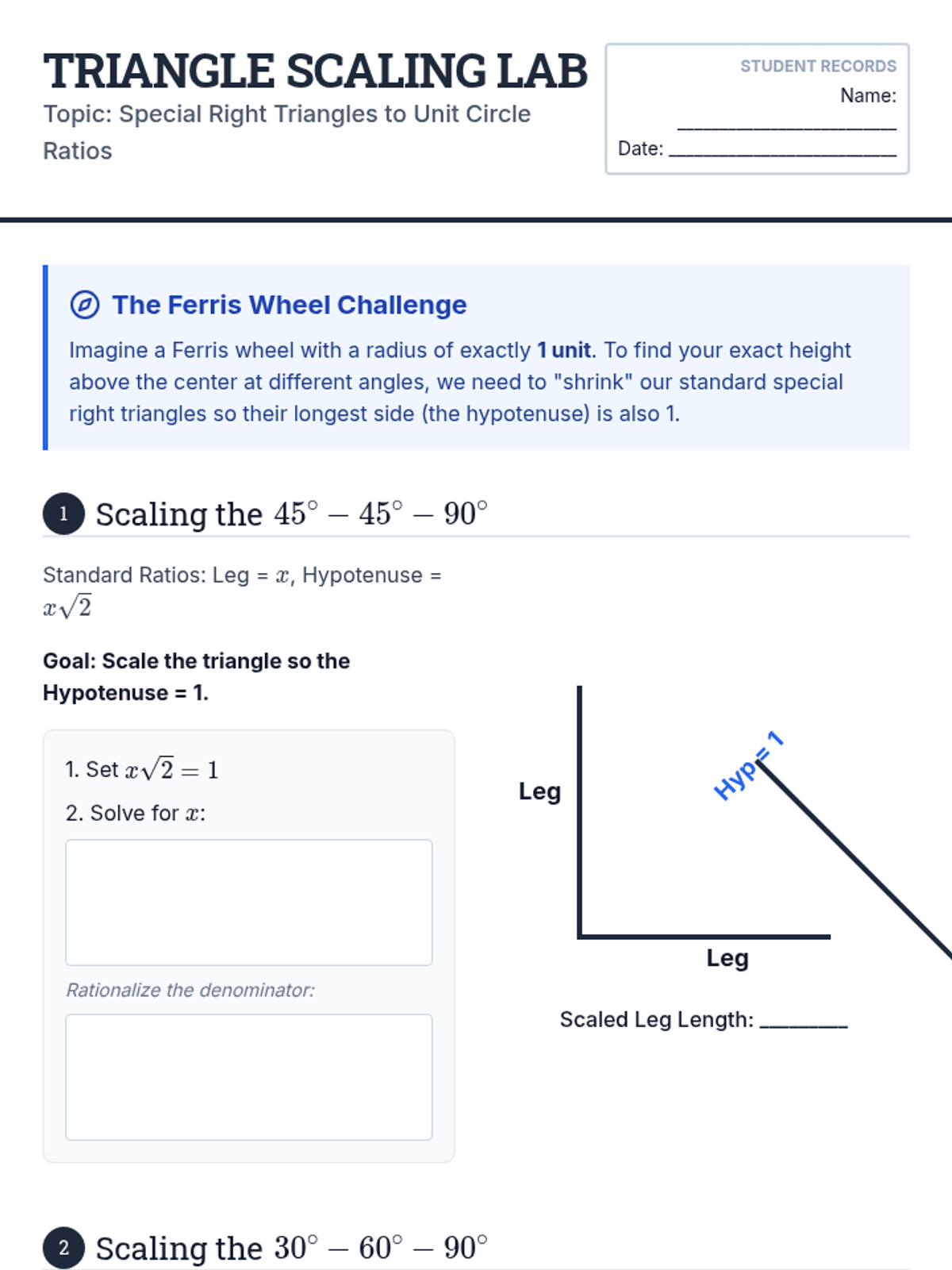
Students will bridge the gap between special right triangle ratios and the Unit Circle by calculating coordinates for 30° and 60° angles using a hypotenuse of 1.
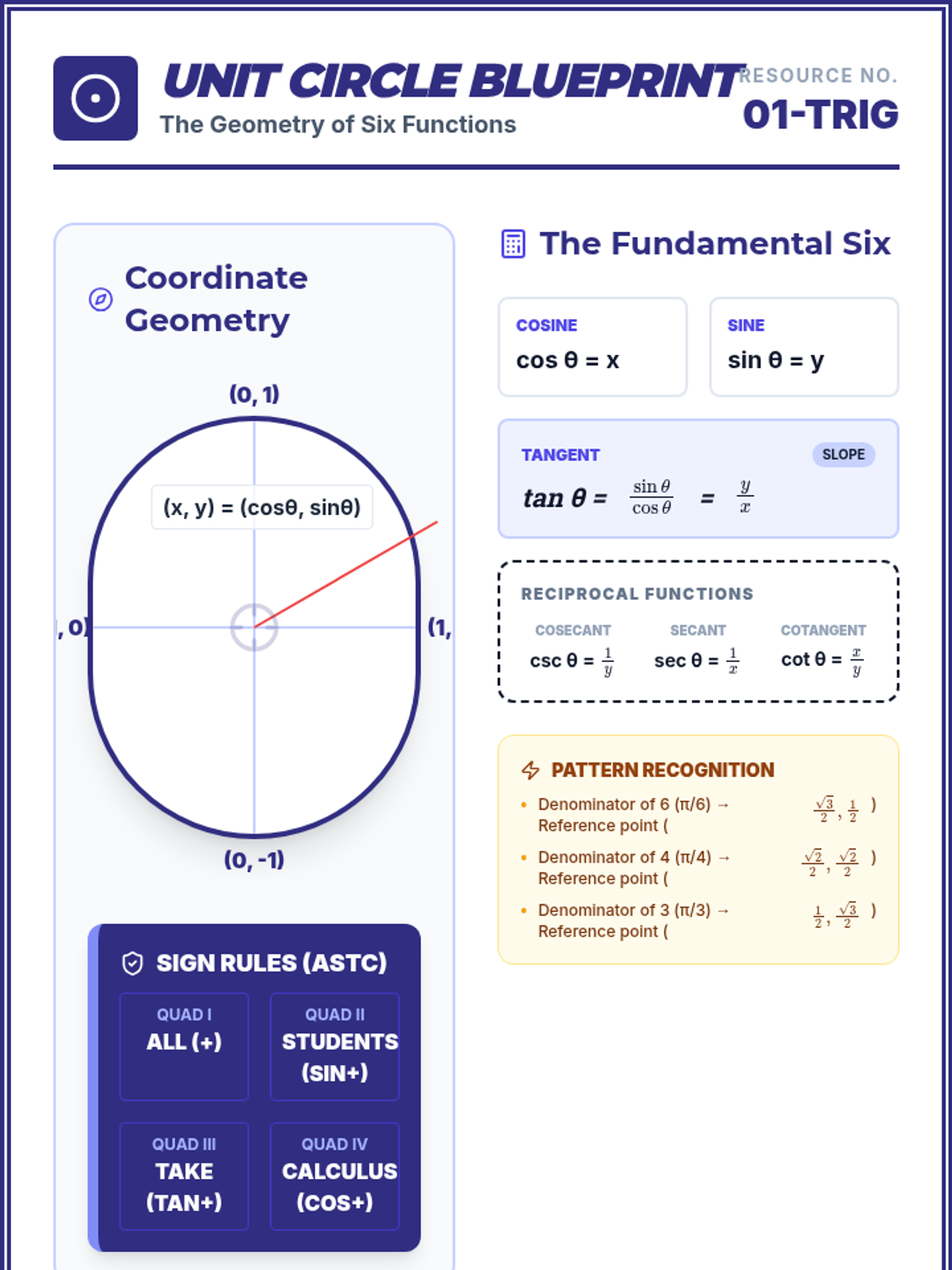
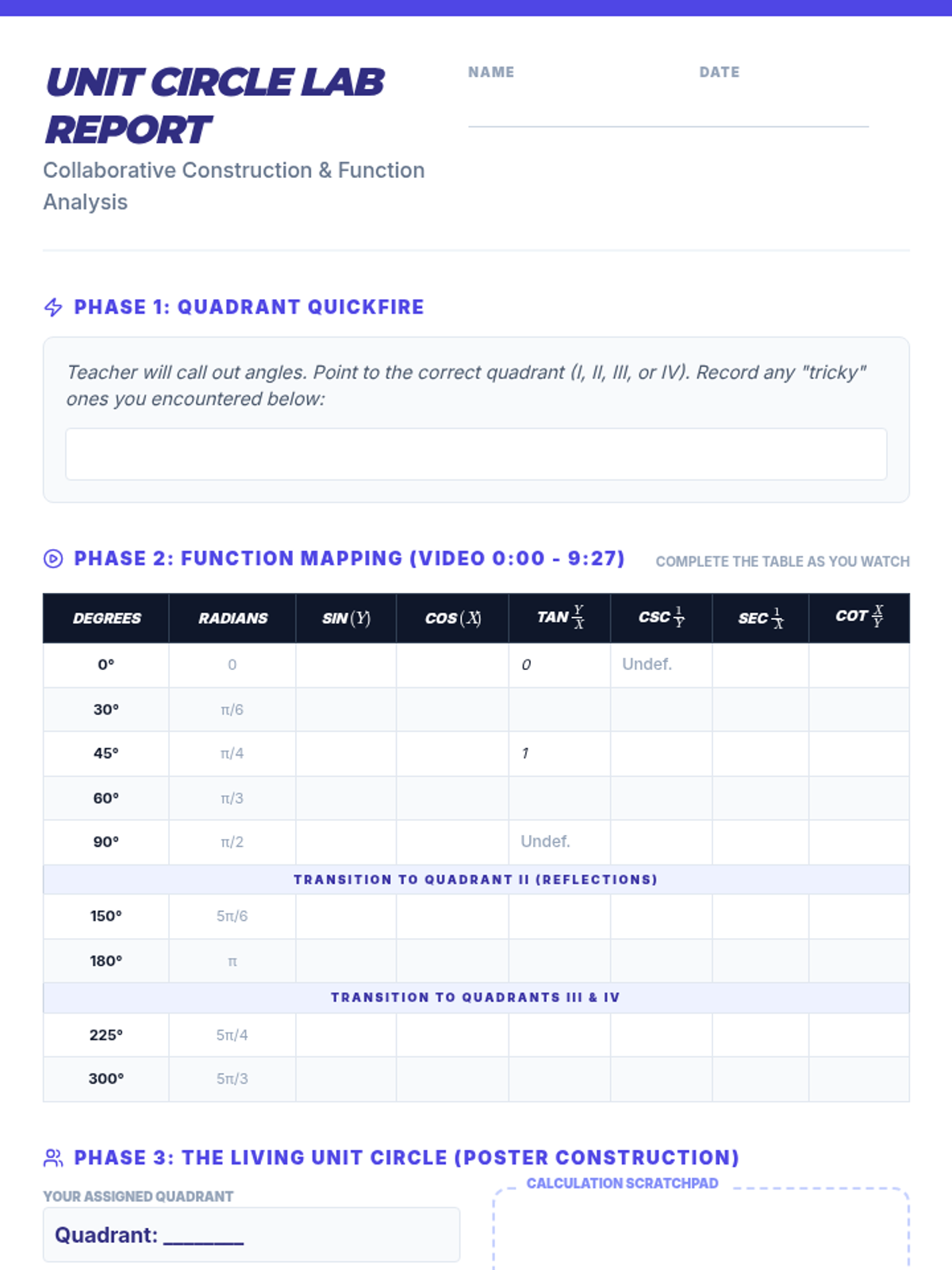
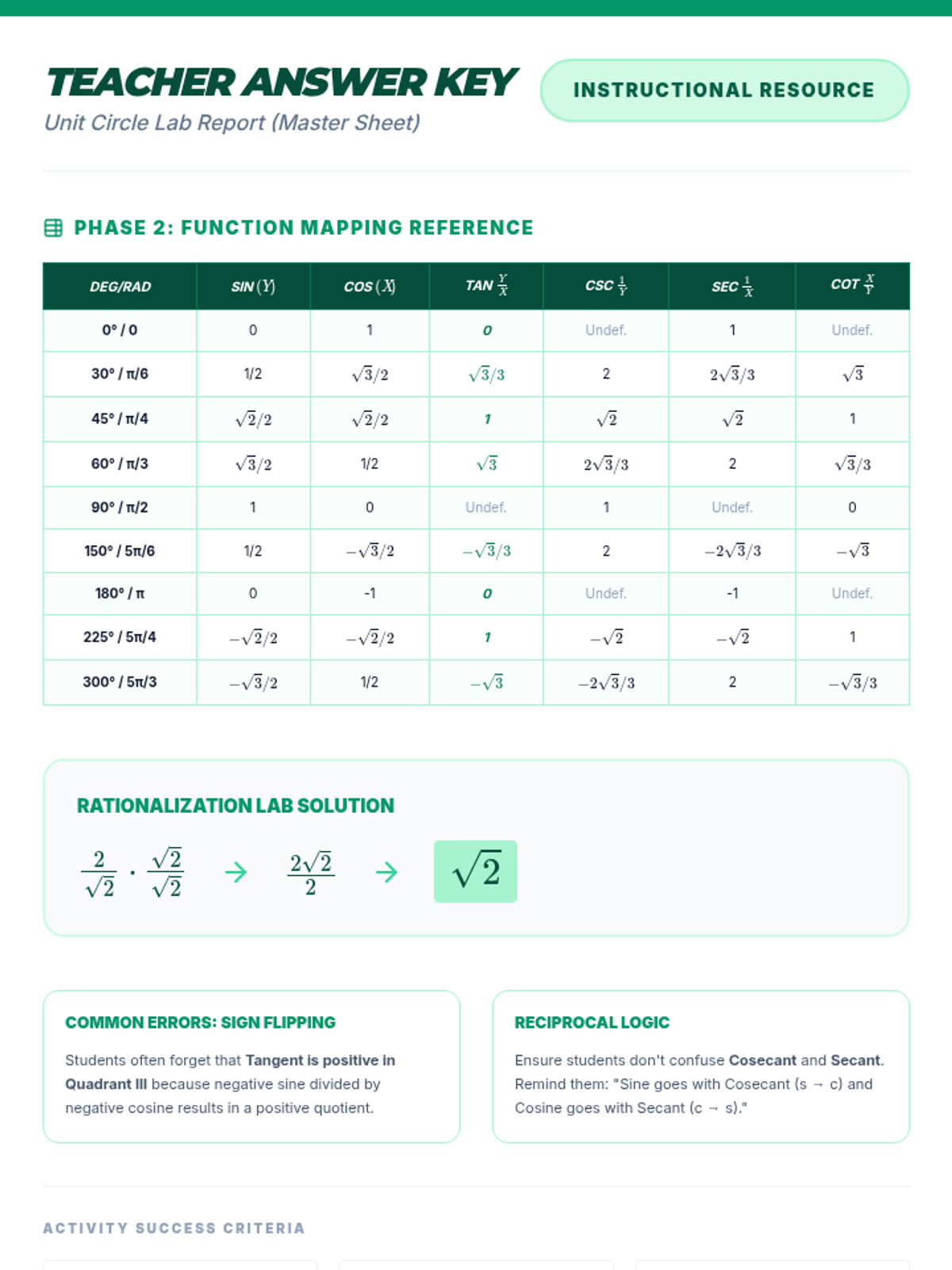
Students will collaboratively construct a large-scale unit circle identifying coordinate points for all six trigonometric functions through video analysis and poster construction.
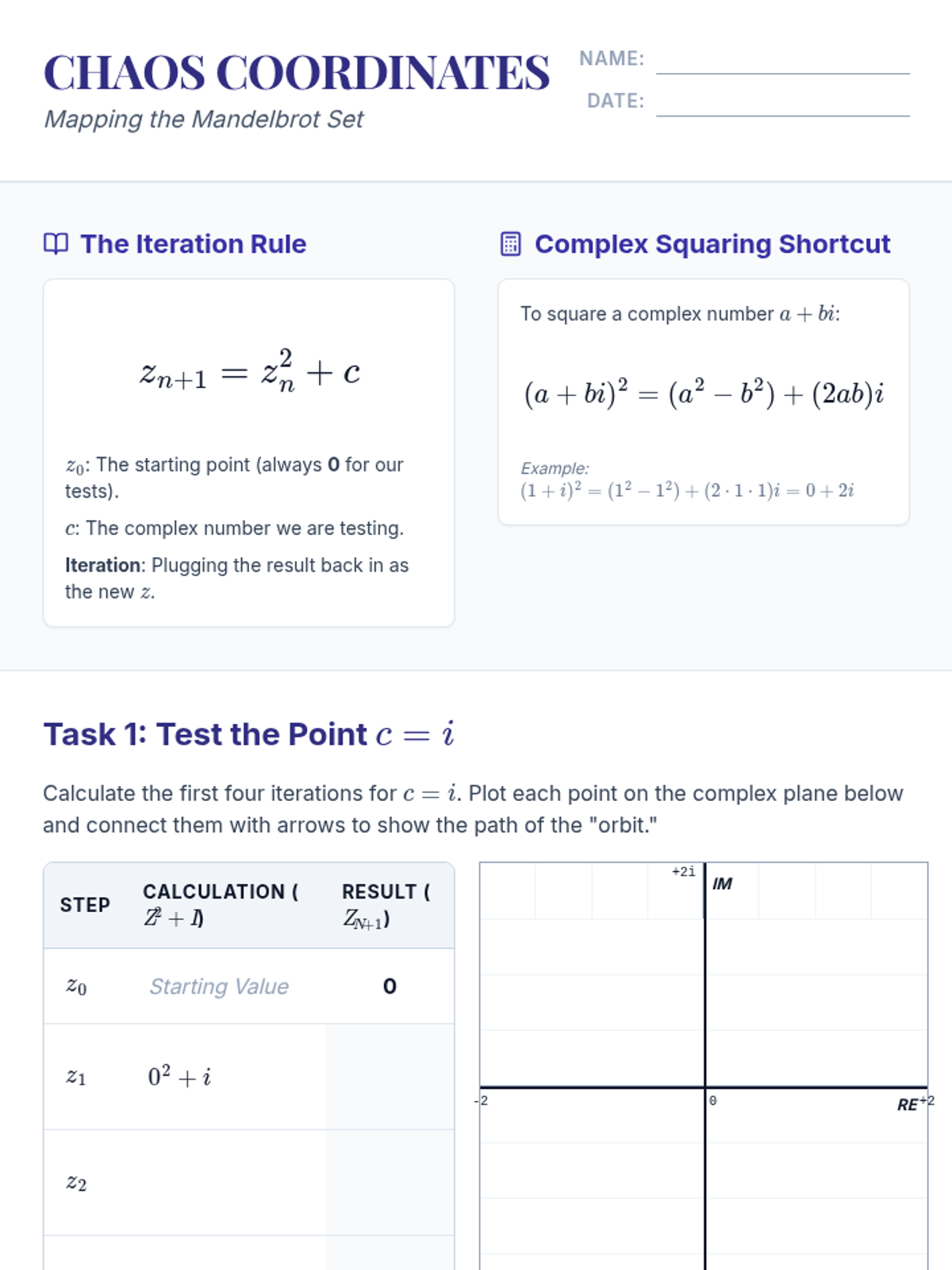
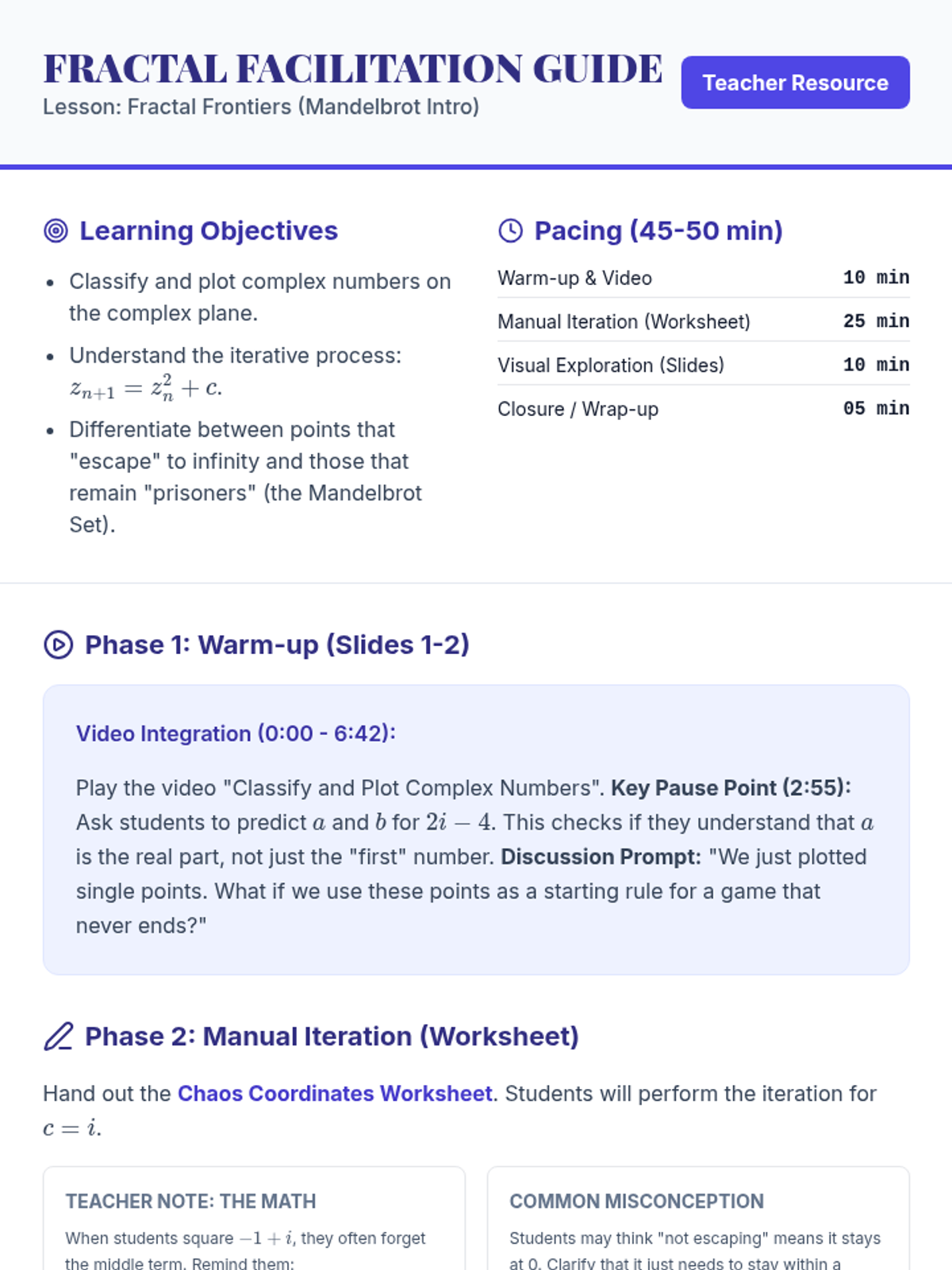
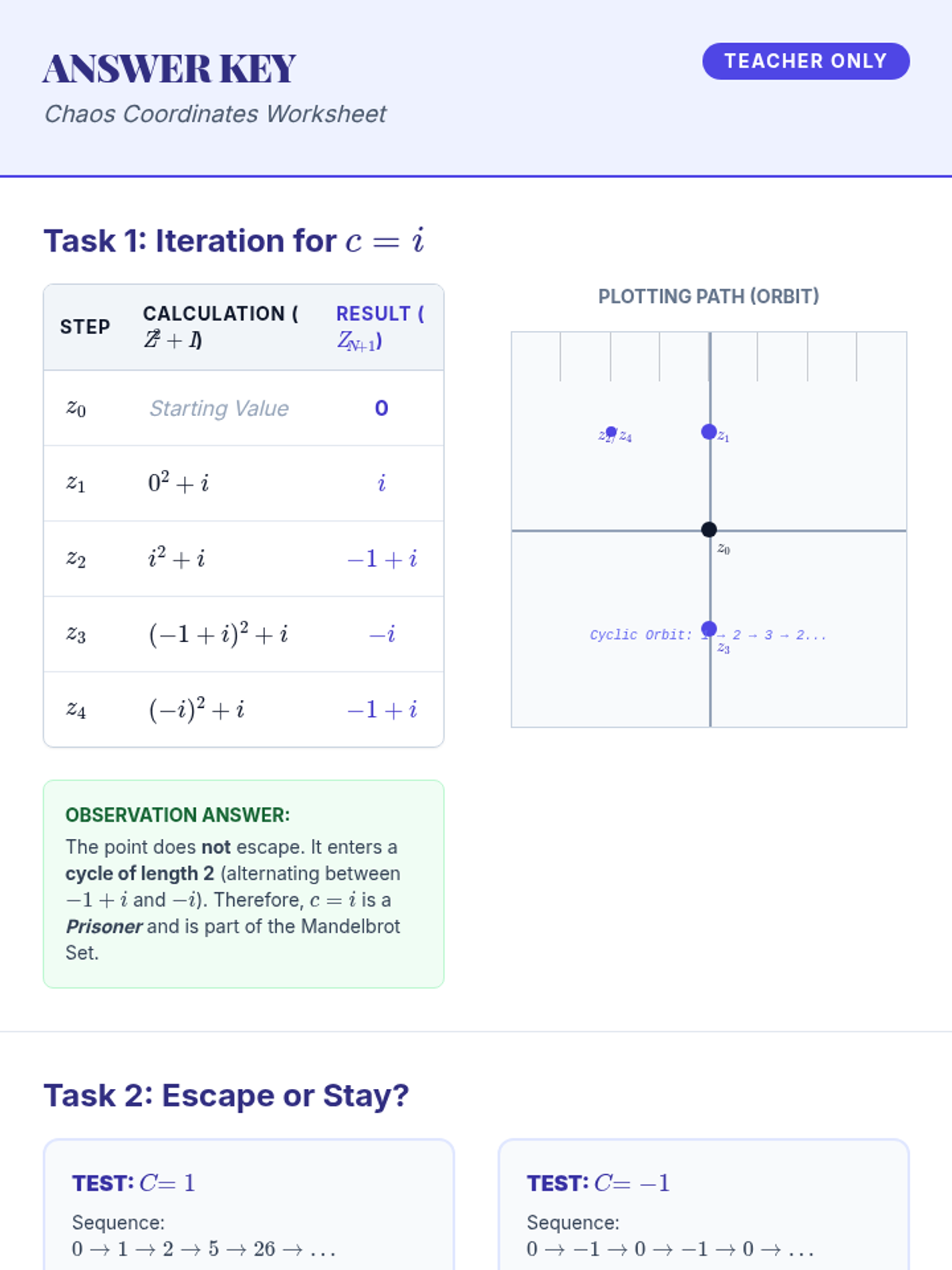
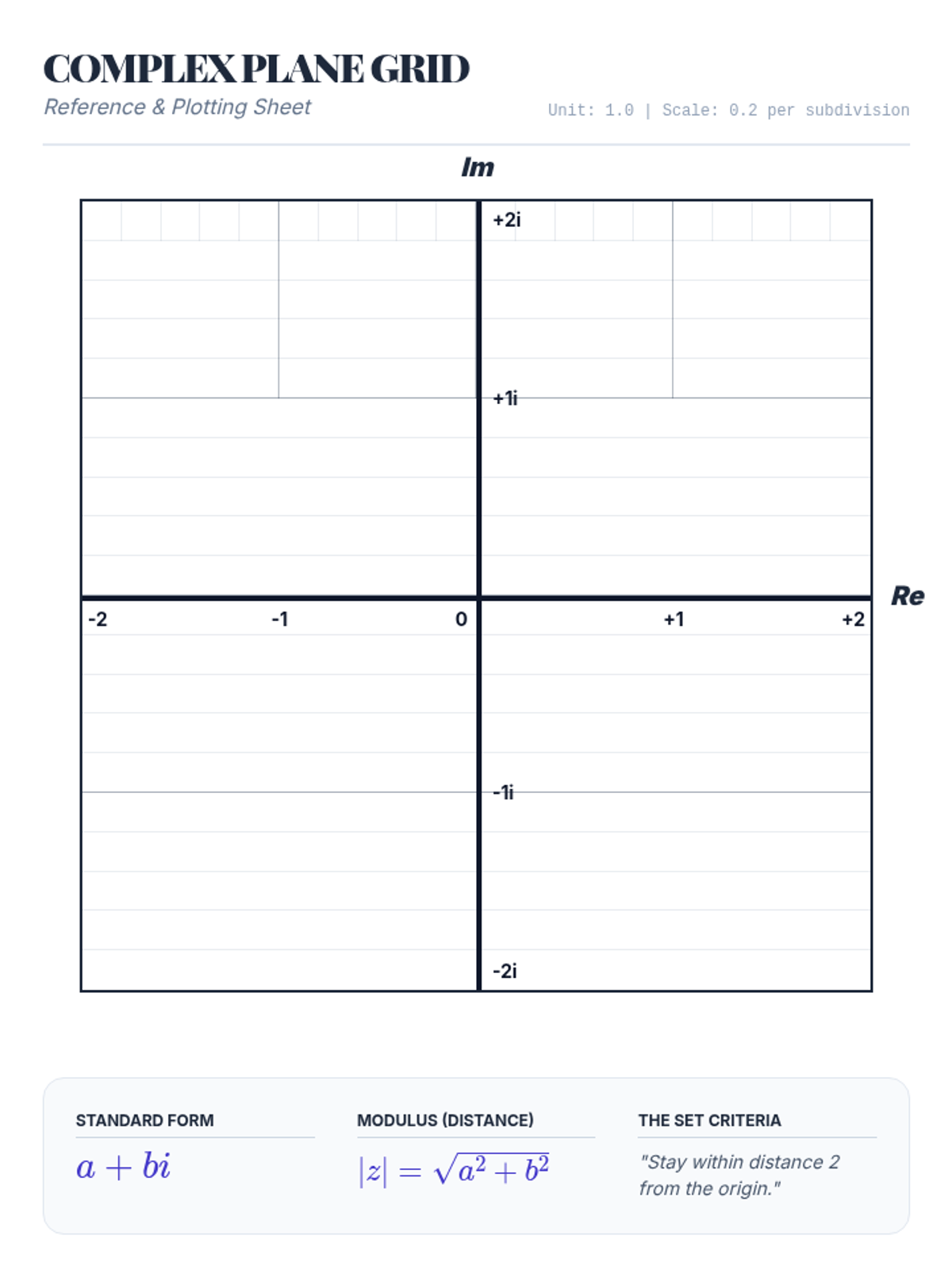
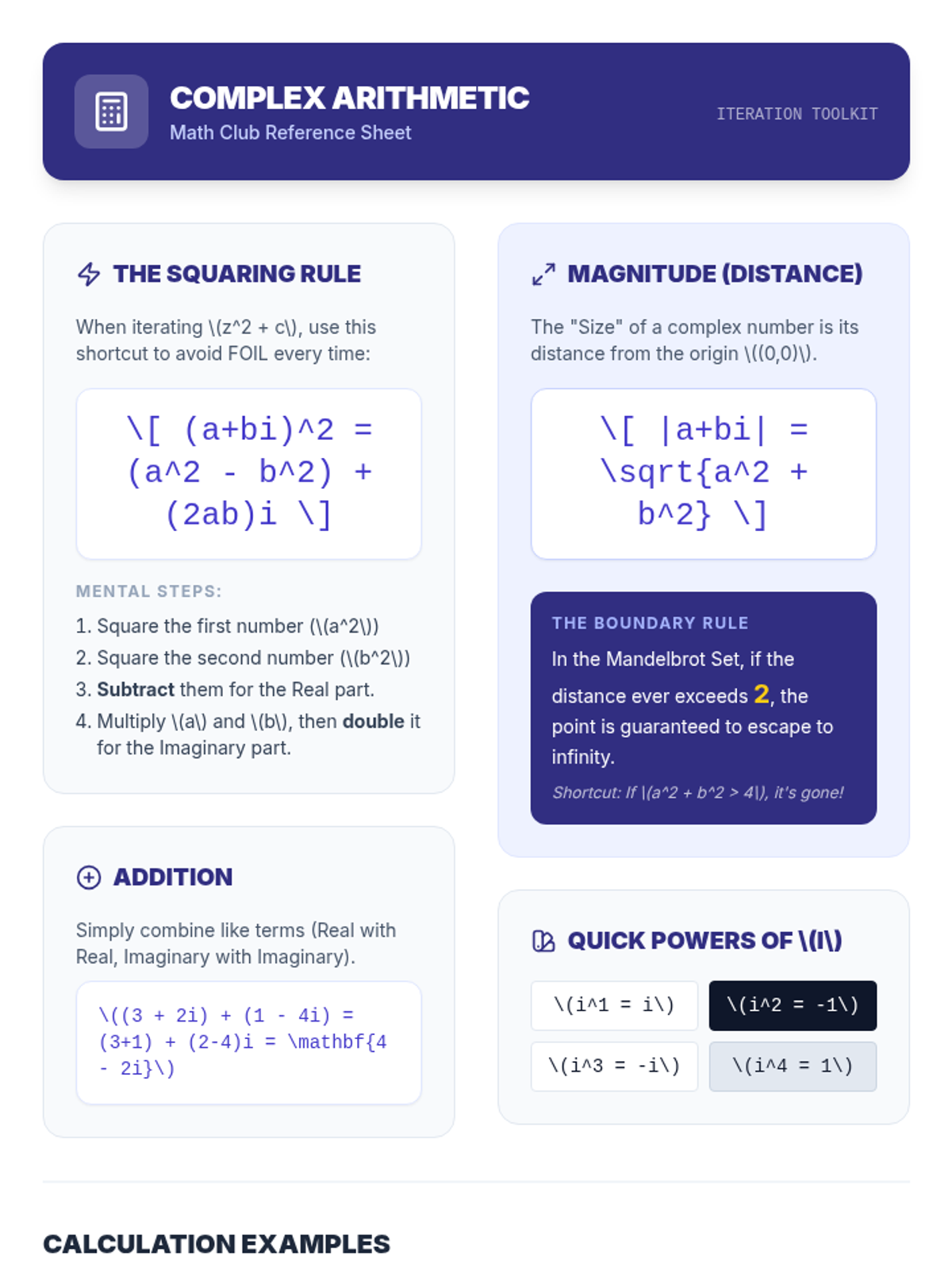
An enrichment lesson for High School Math Club introducing the Mandelbrot set through manual iteration on the complex plane. Students learn to classify and plot complex numbers before exploring how simple iterative rules create infinite complexity.
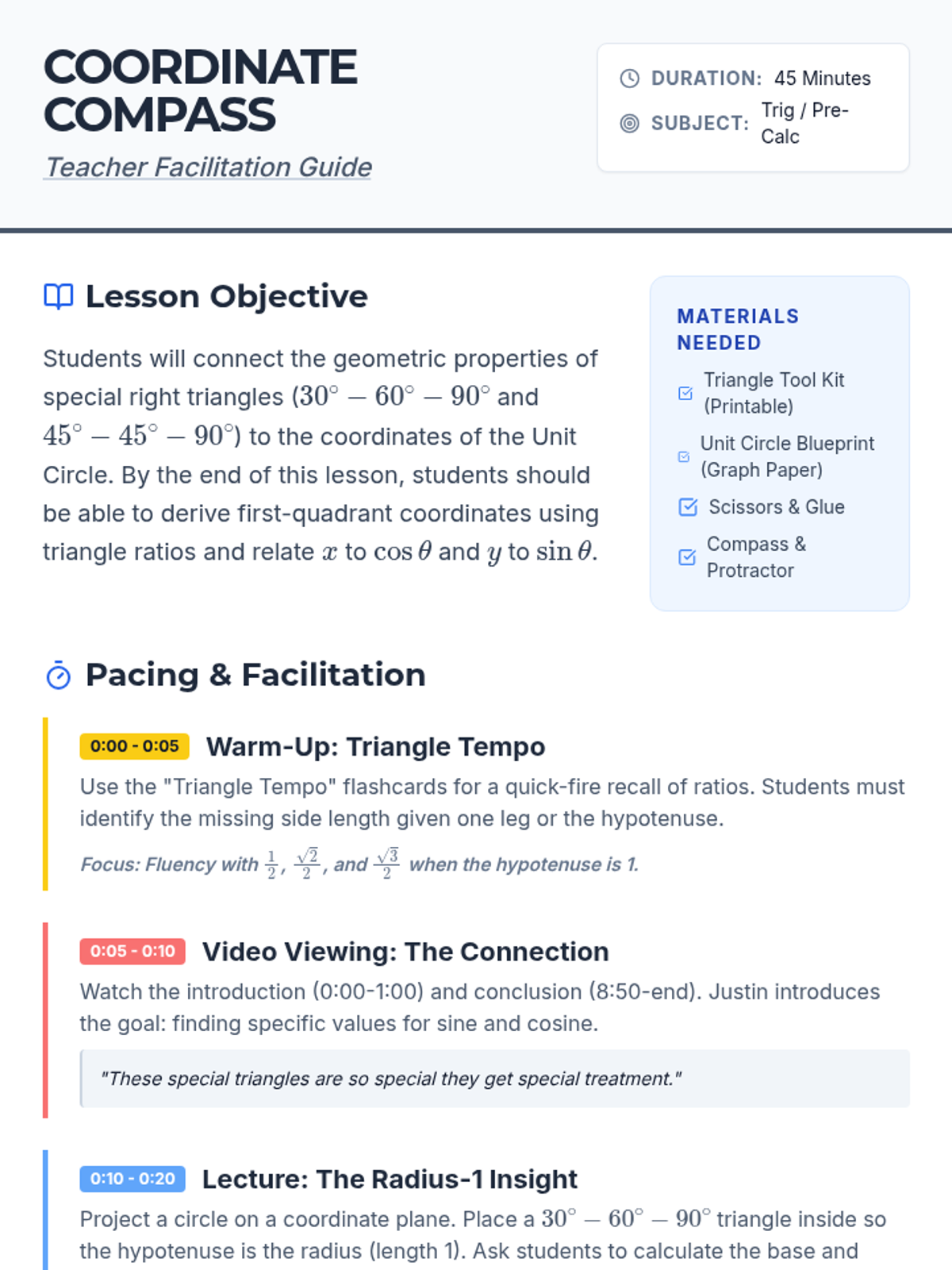
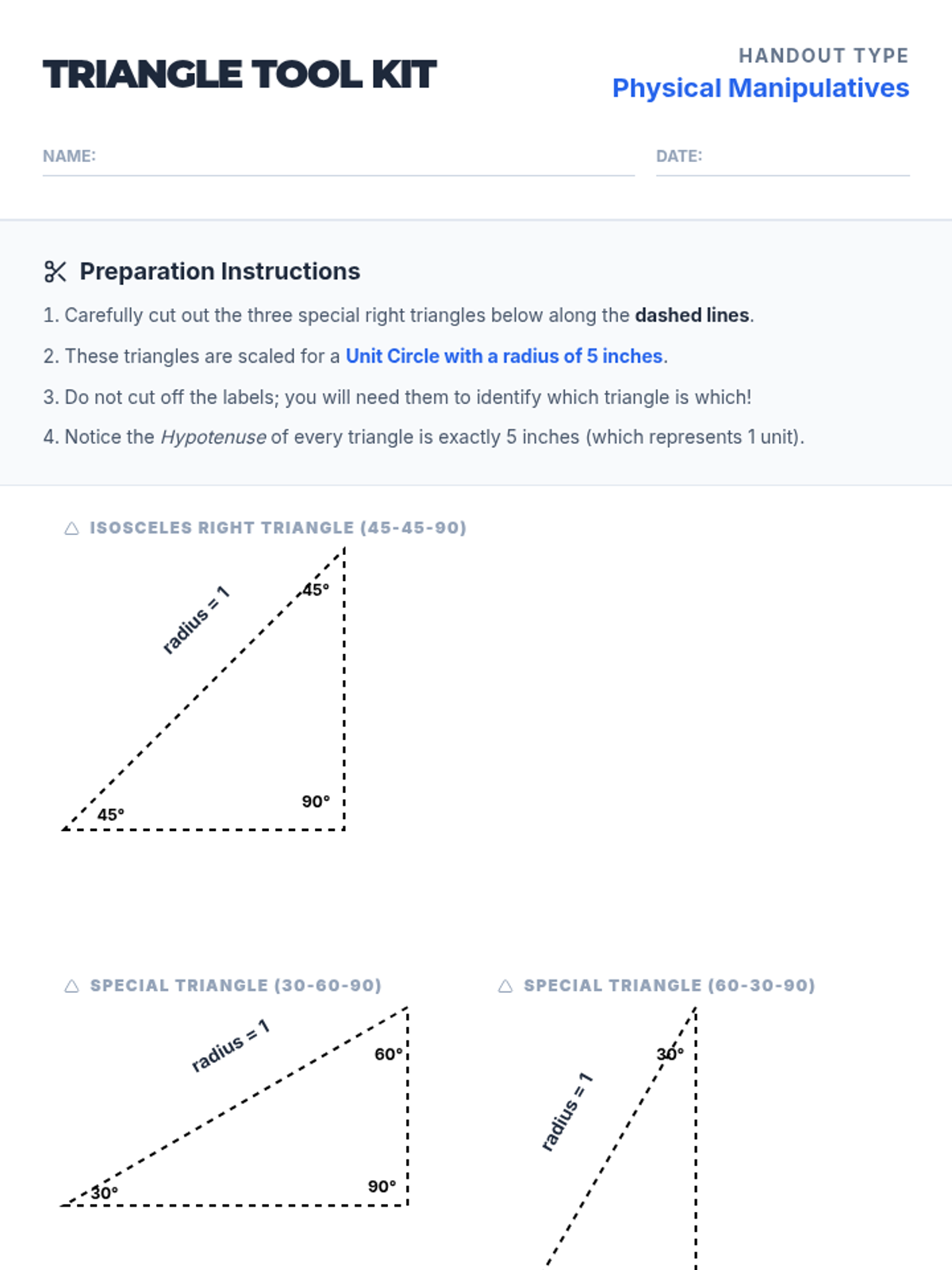
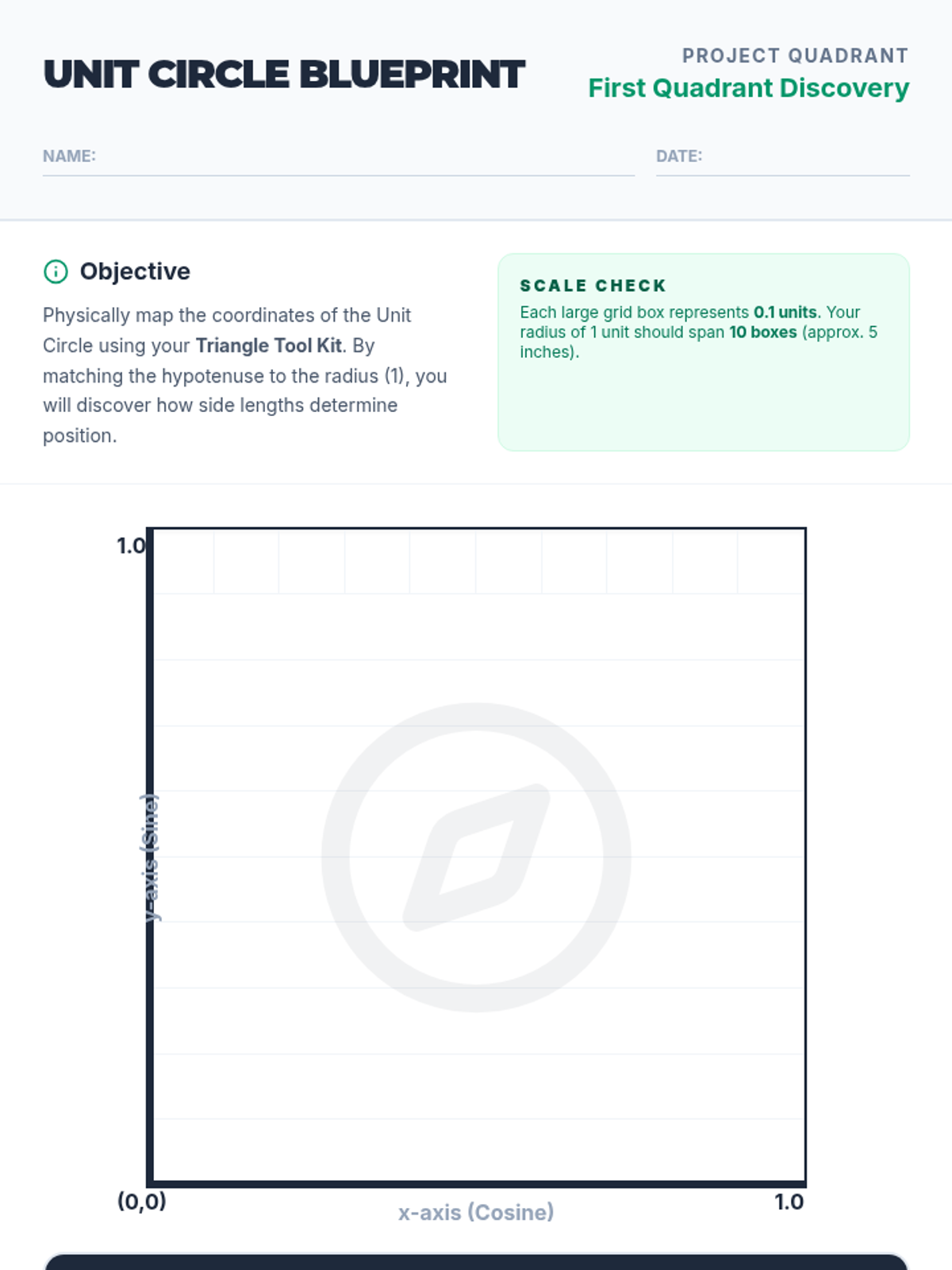
Students bridge the gap between geometry and trigonometry by placing special right triangles within a unit circle. Through physical manipulation of scaled triangles, they derive the coordinates of the first quadrant and connect triangle side lengths to sine and cosine values.
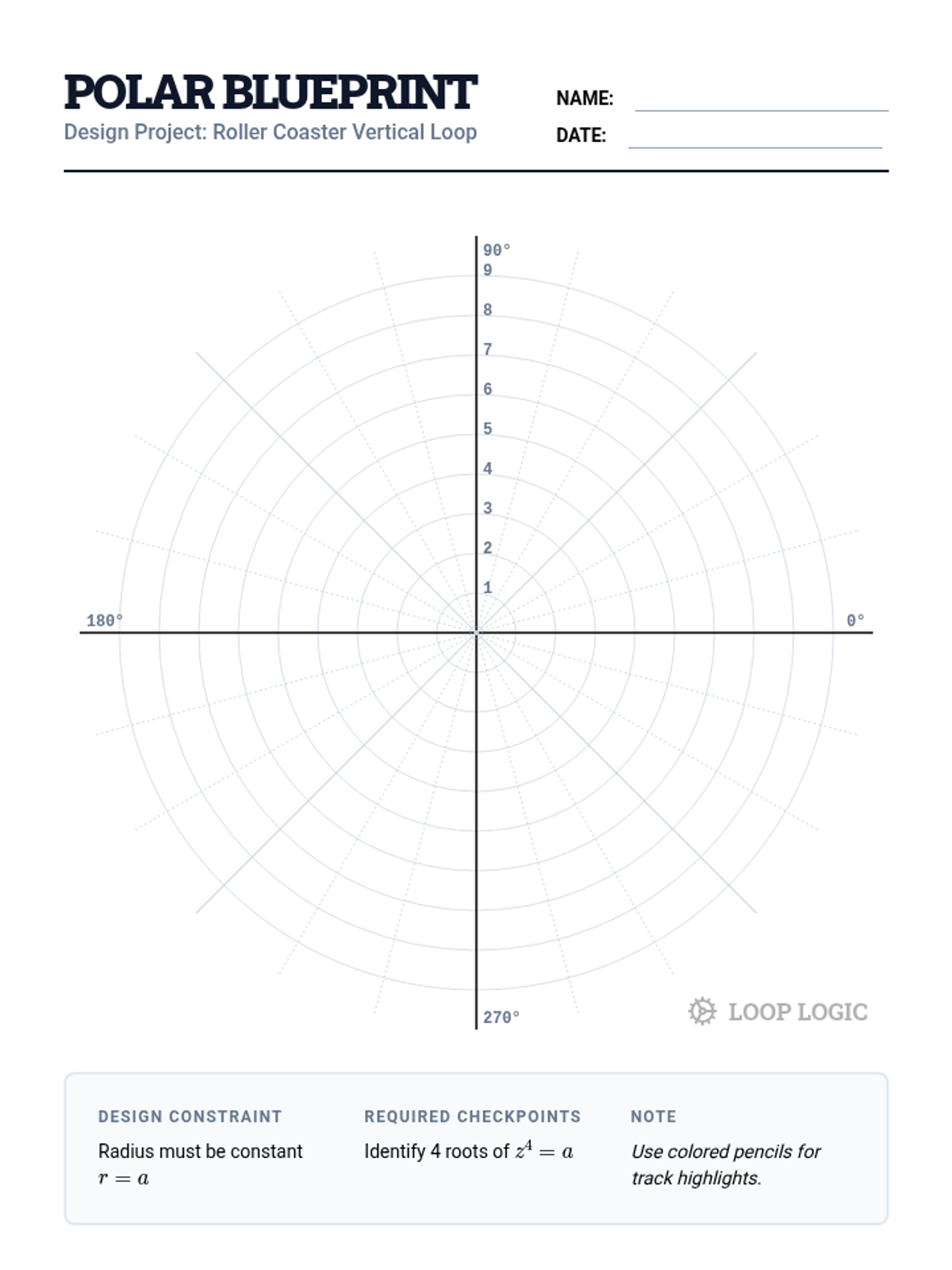
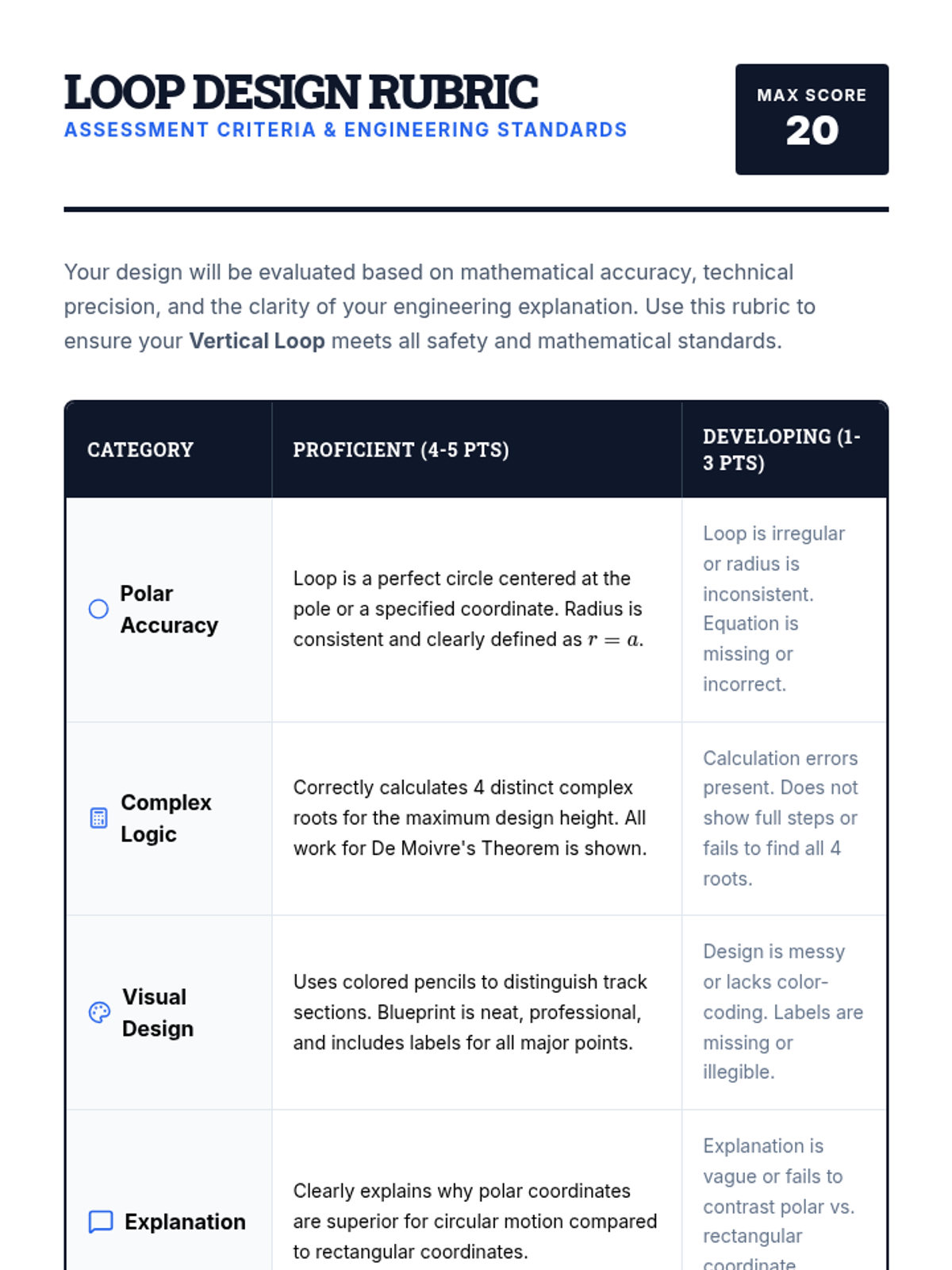
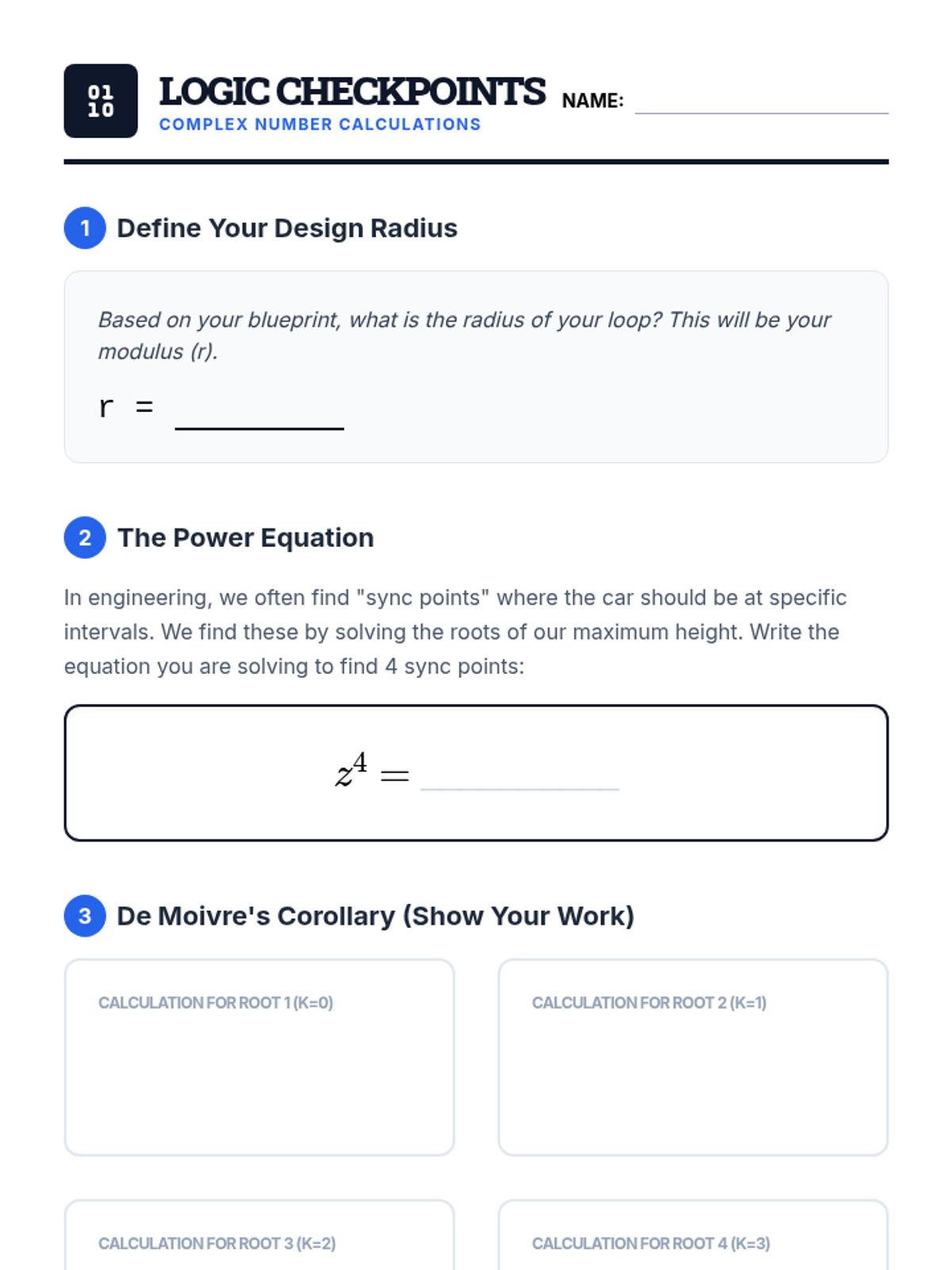
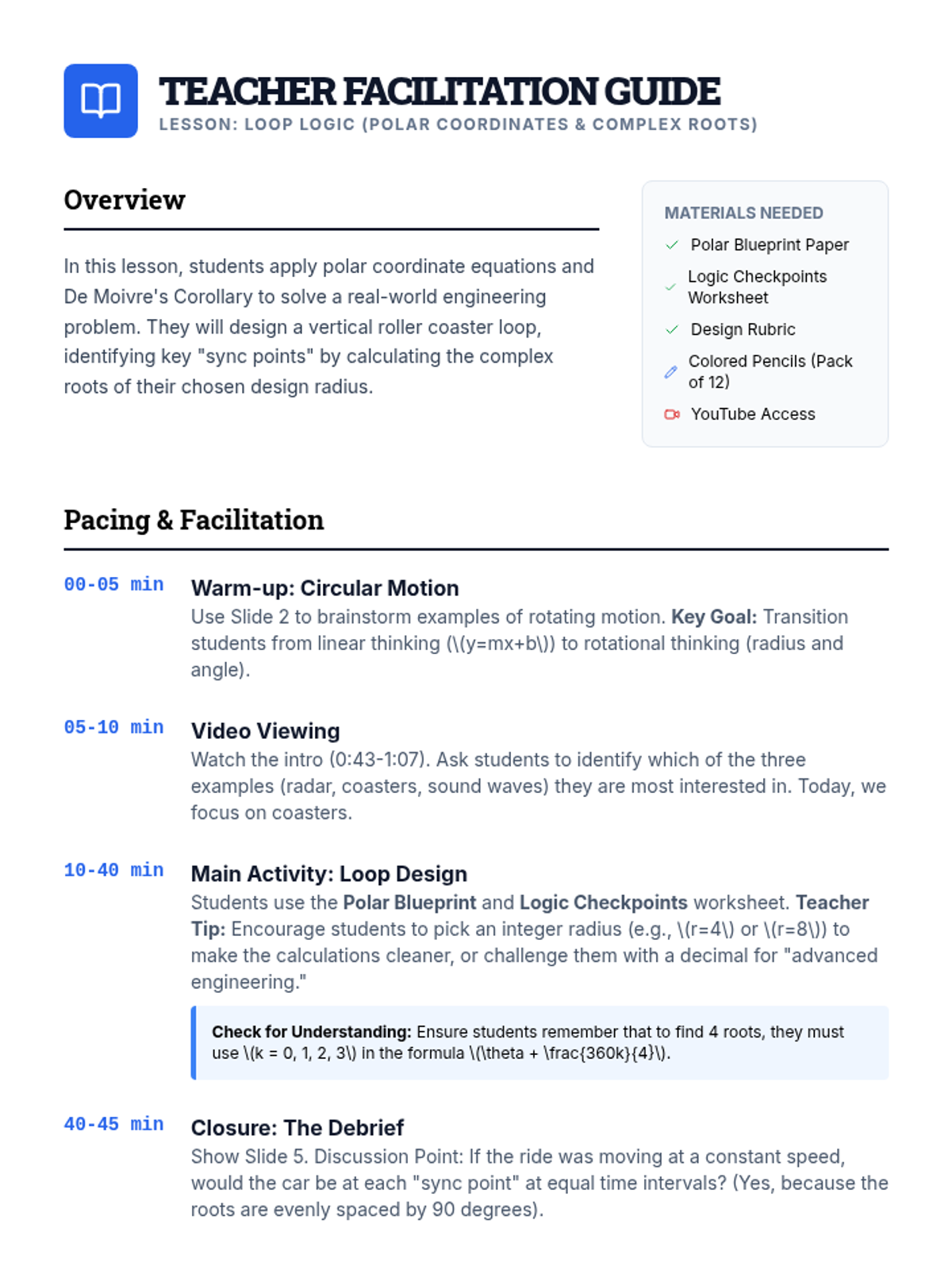
Students design a vertical roller coaster loop using polar coordinates and complex roots, exploring real-world applications of circular motion as seen in engineering and radar systems.
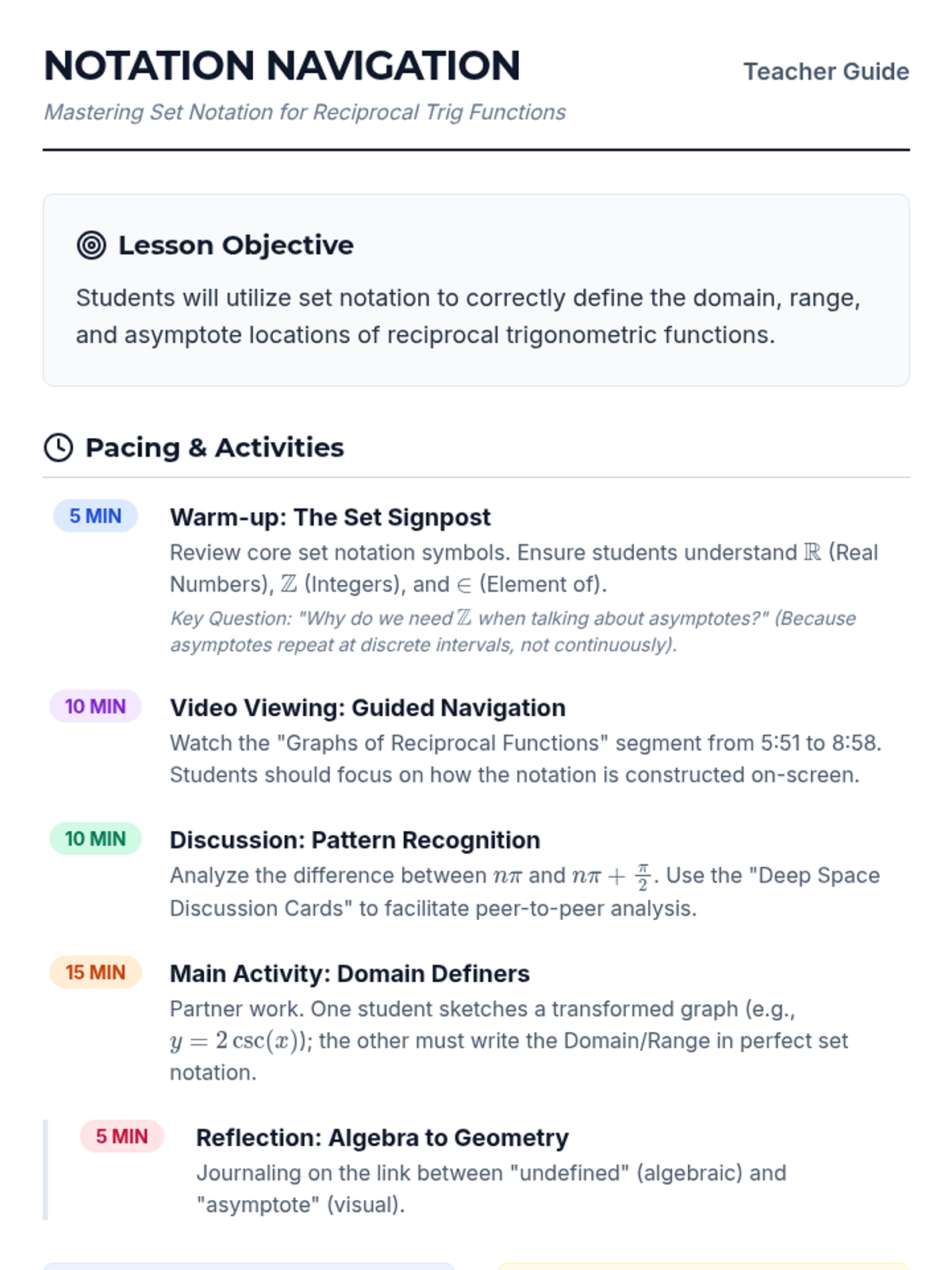
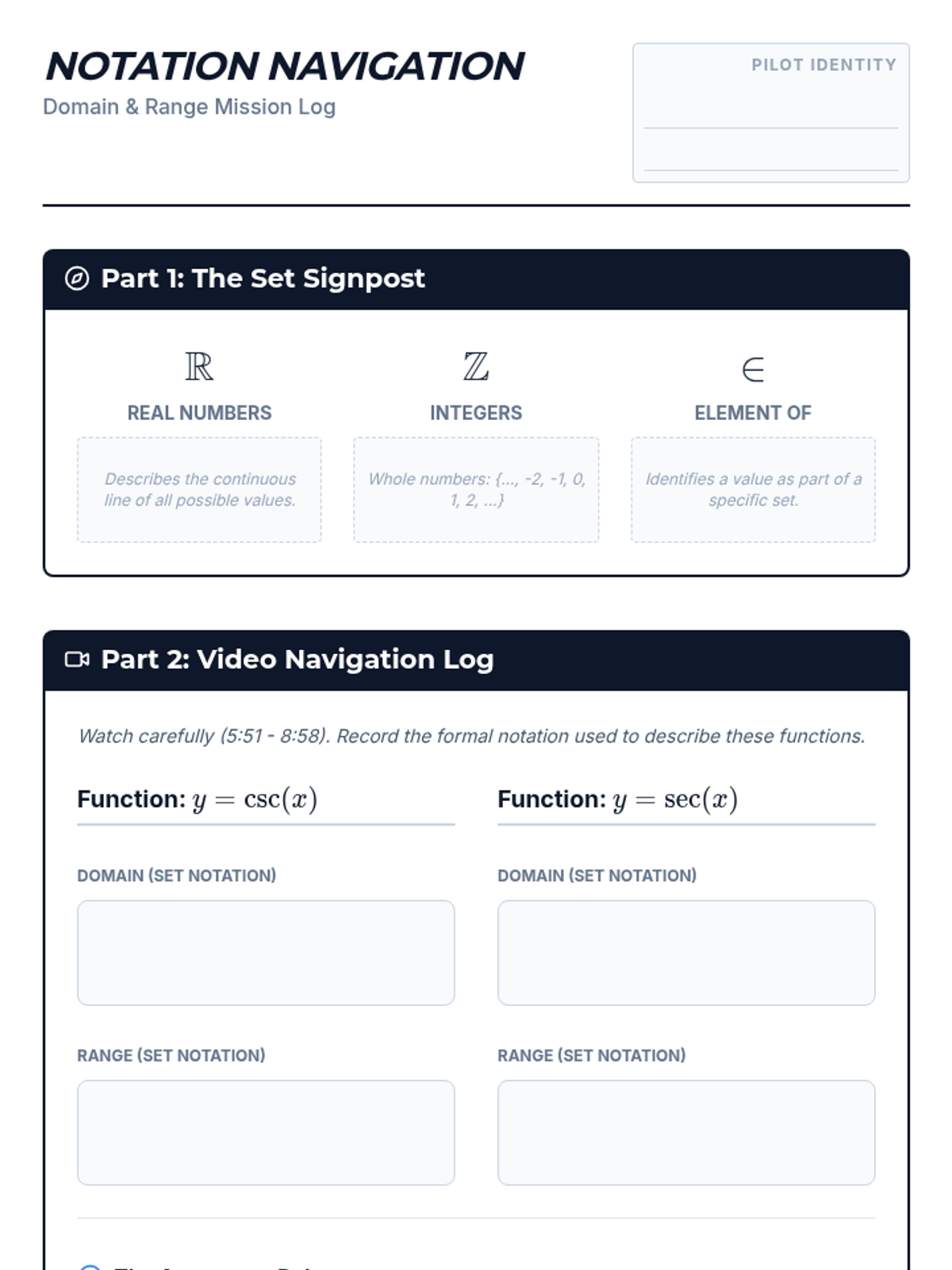
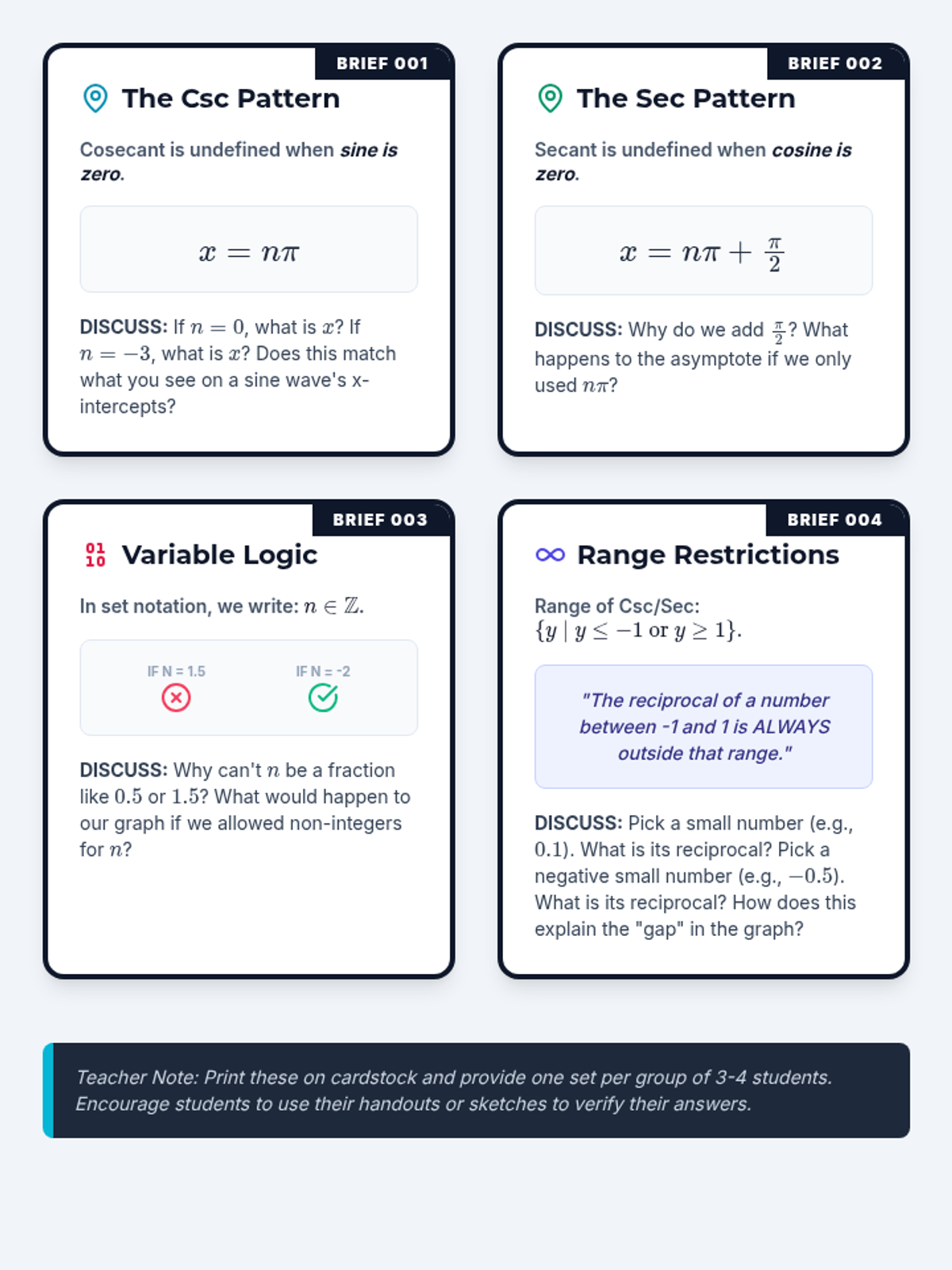
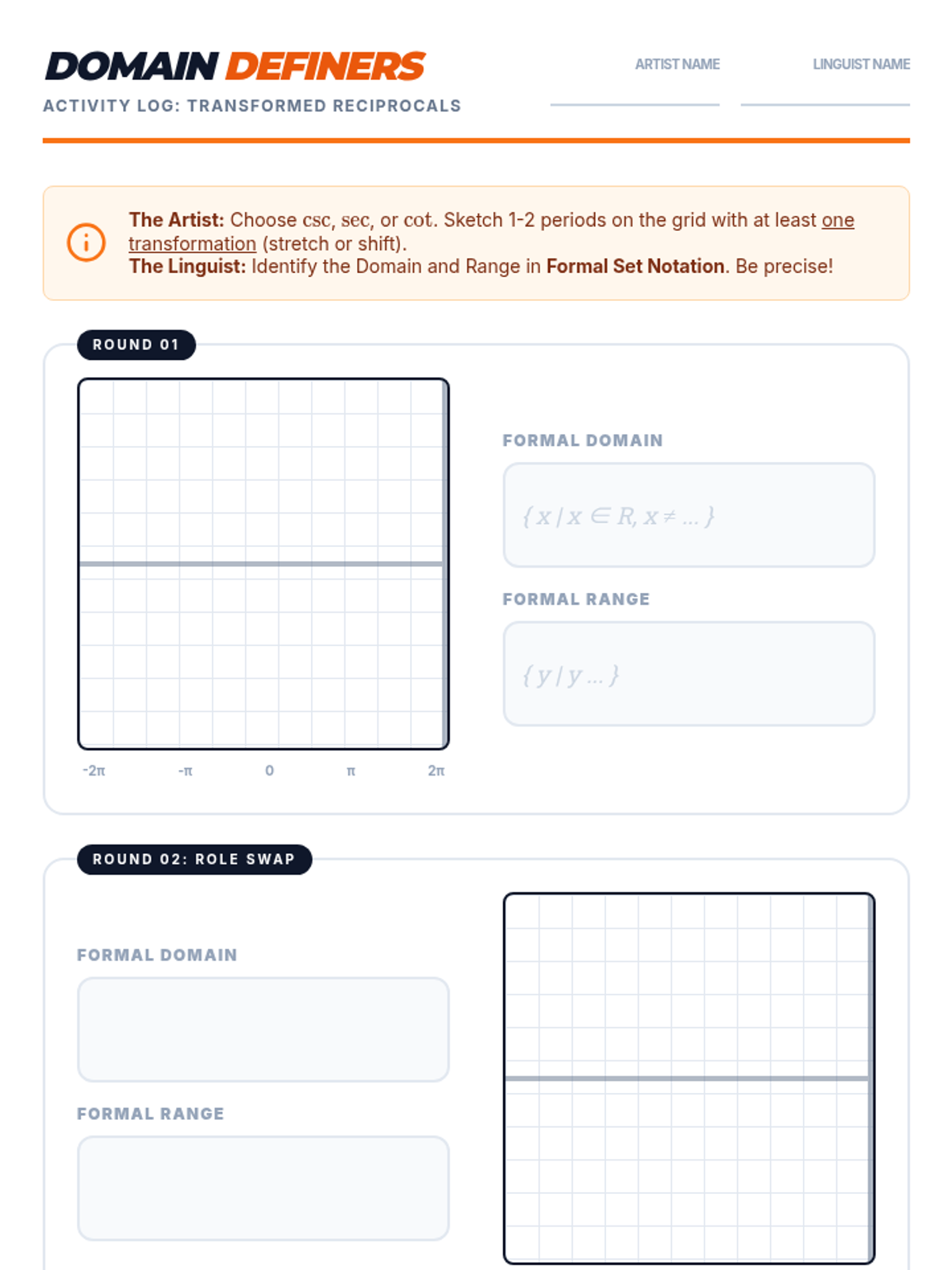
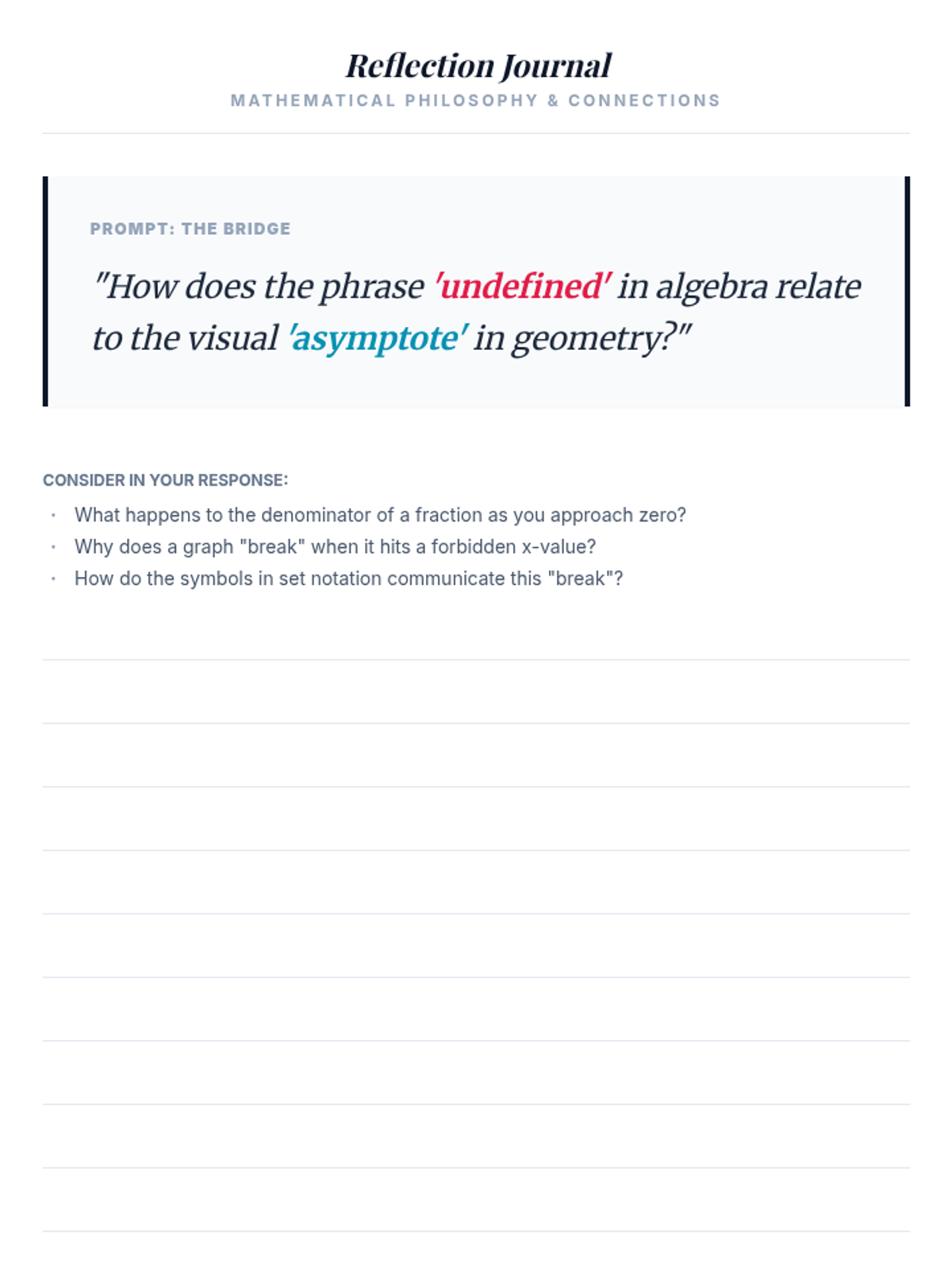
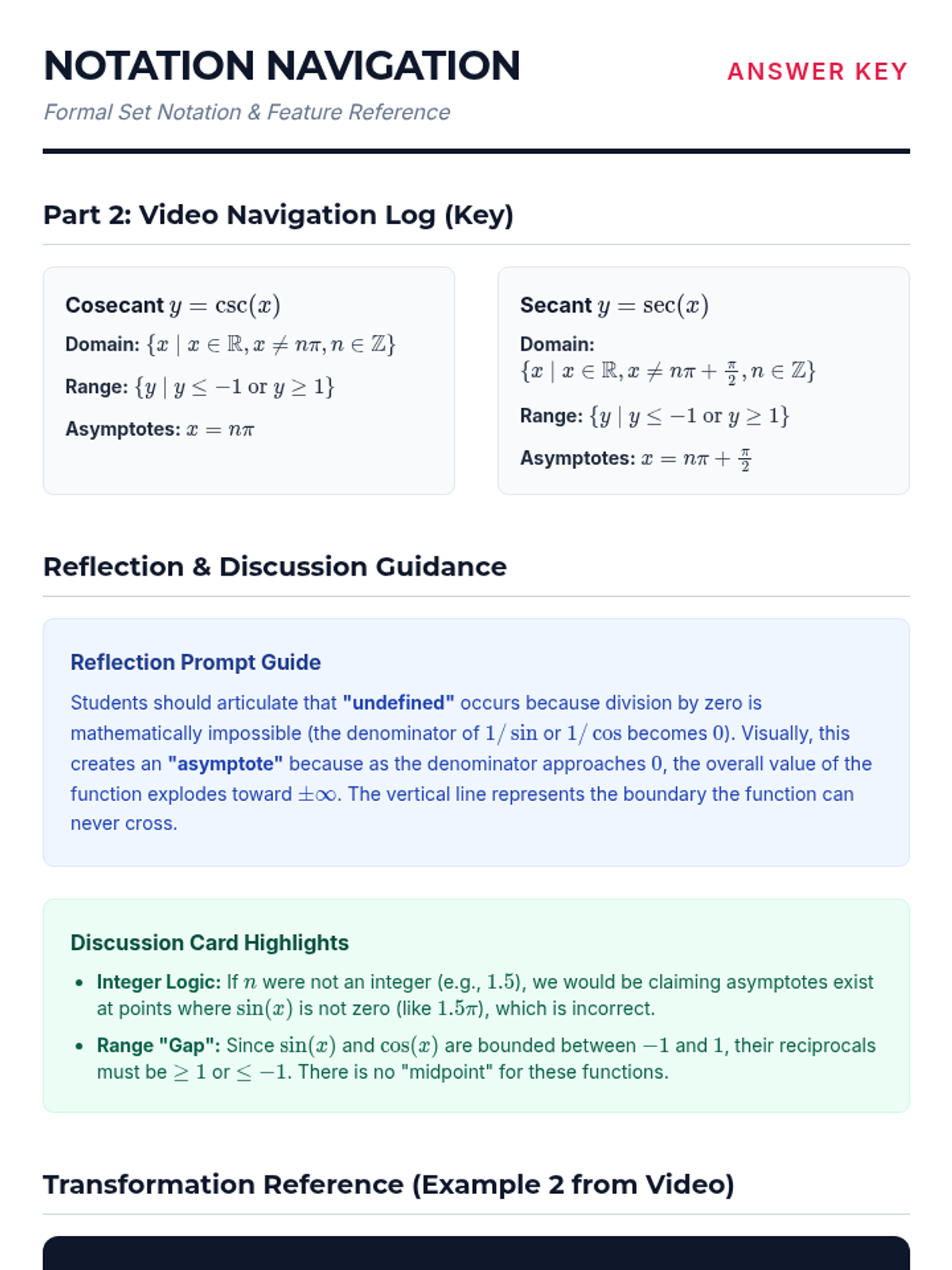
Students will master the use of set notation to define the domain, range, and asymptotes of reciprocal trigonometric functions, specifically focusing on the patterns of integer multiples for cosecant and secant.
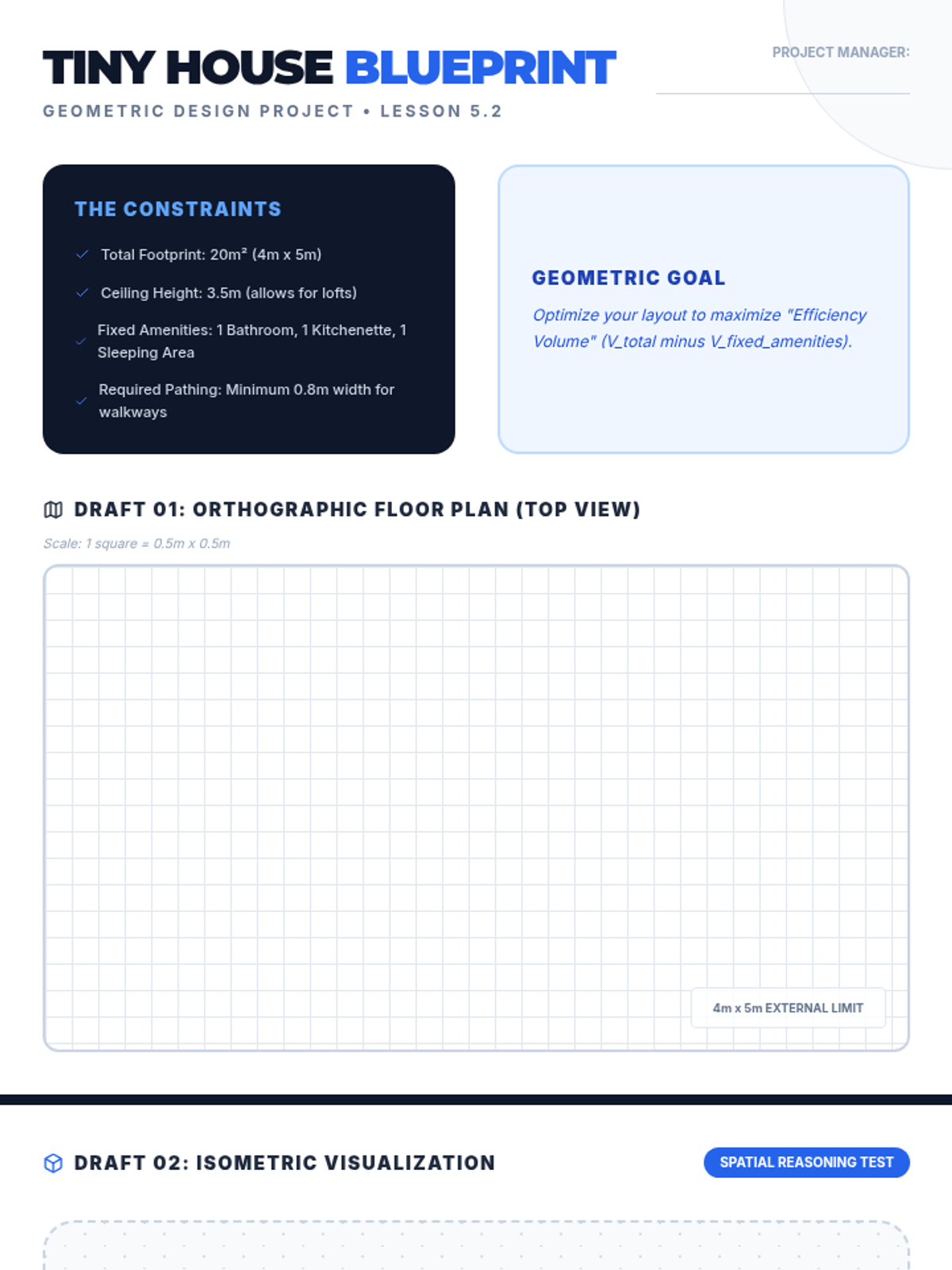
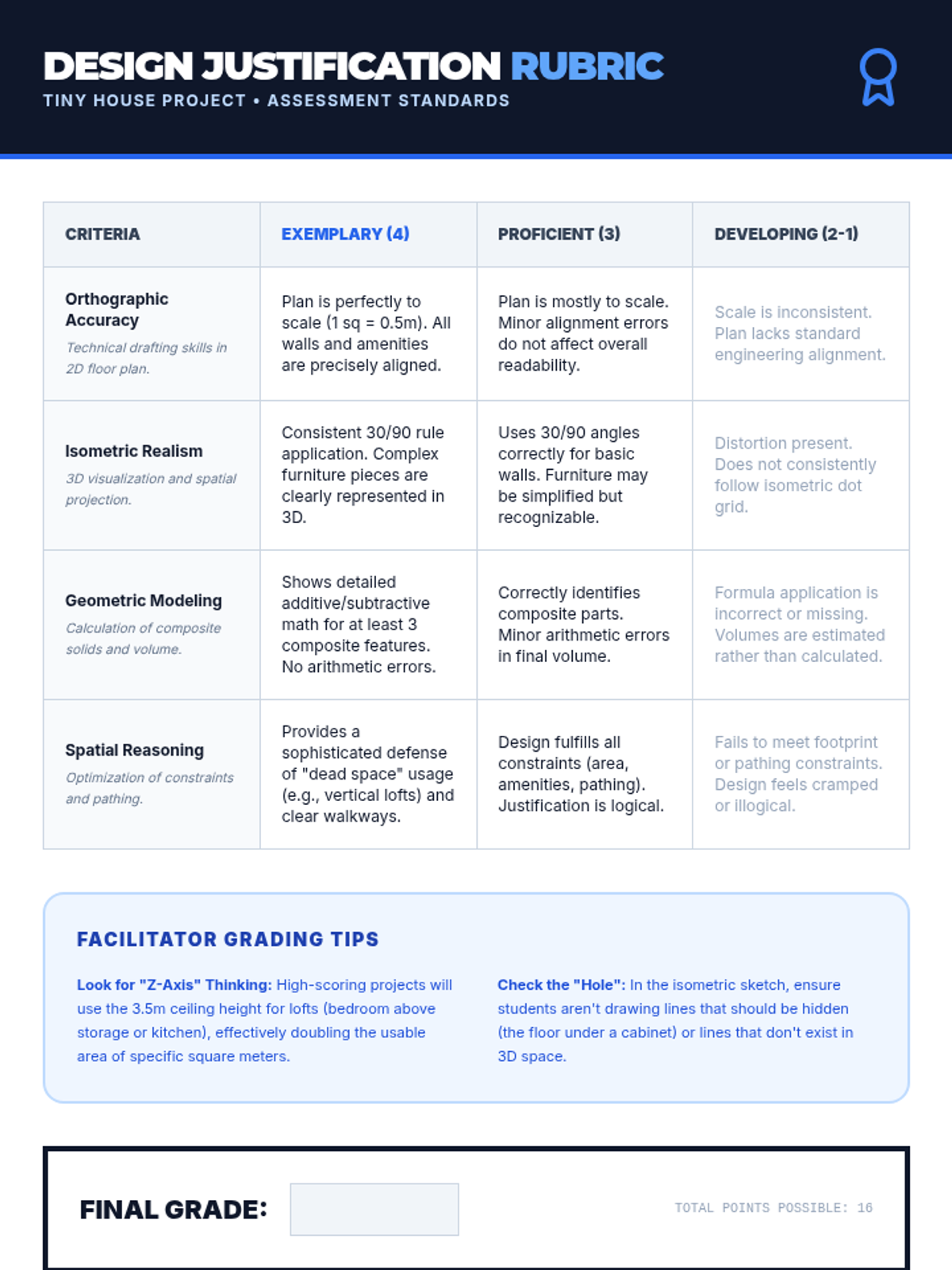
In this culminating project, students solve a spatial design problem (the Tiny House Challenge), using geometric modeling to justify their layout and material choices.
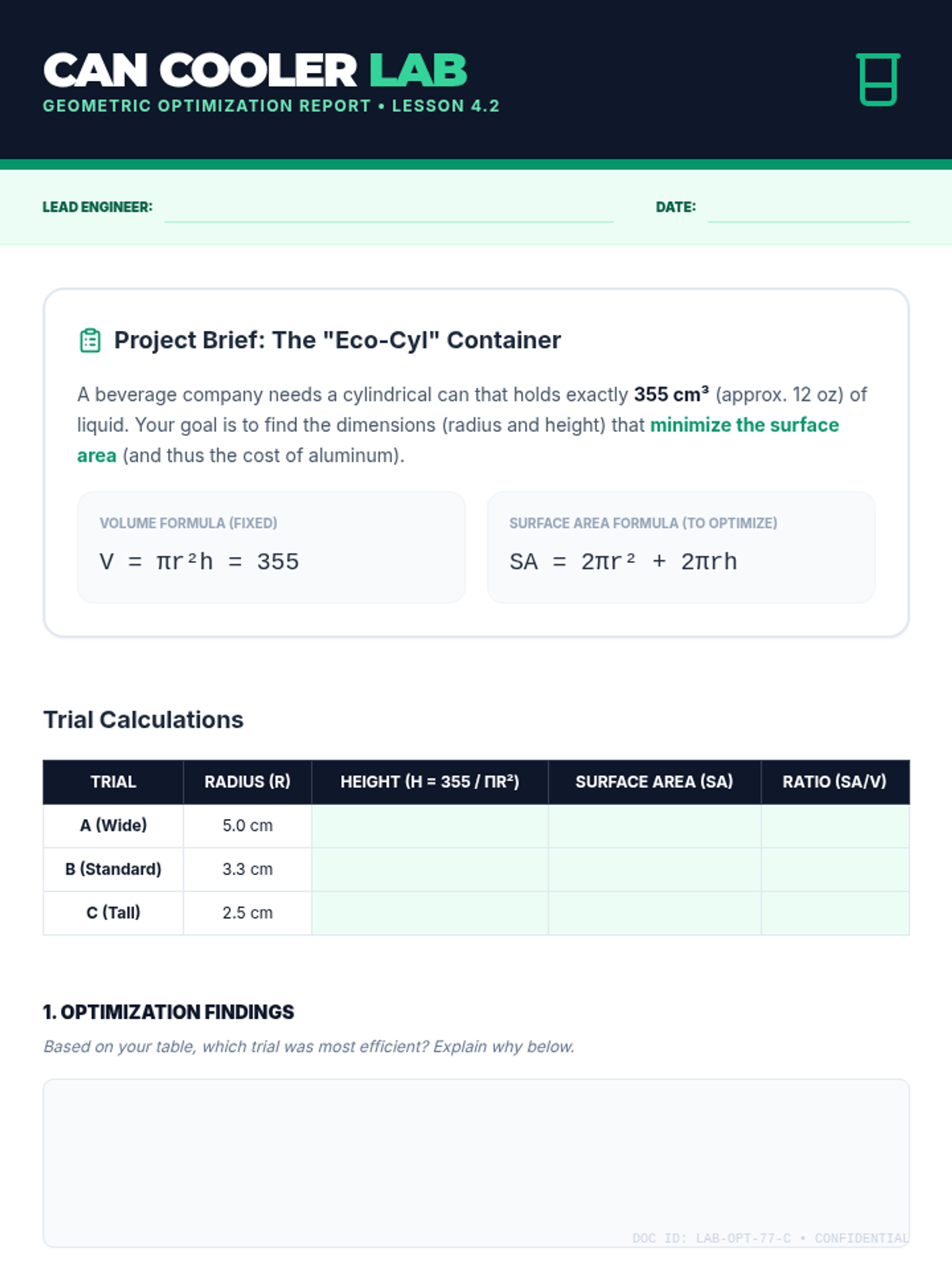
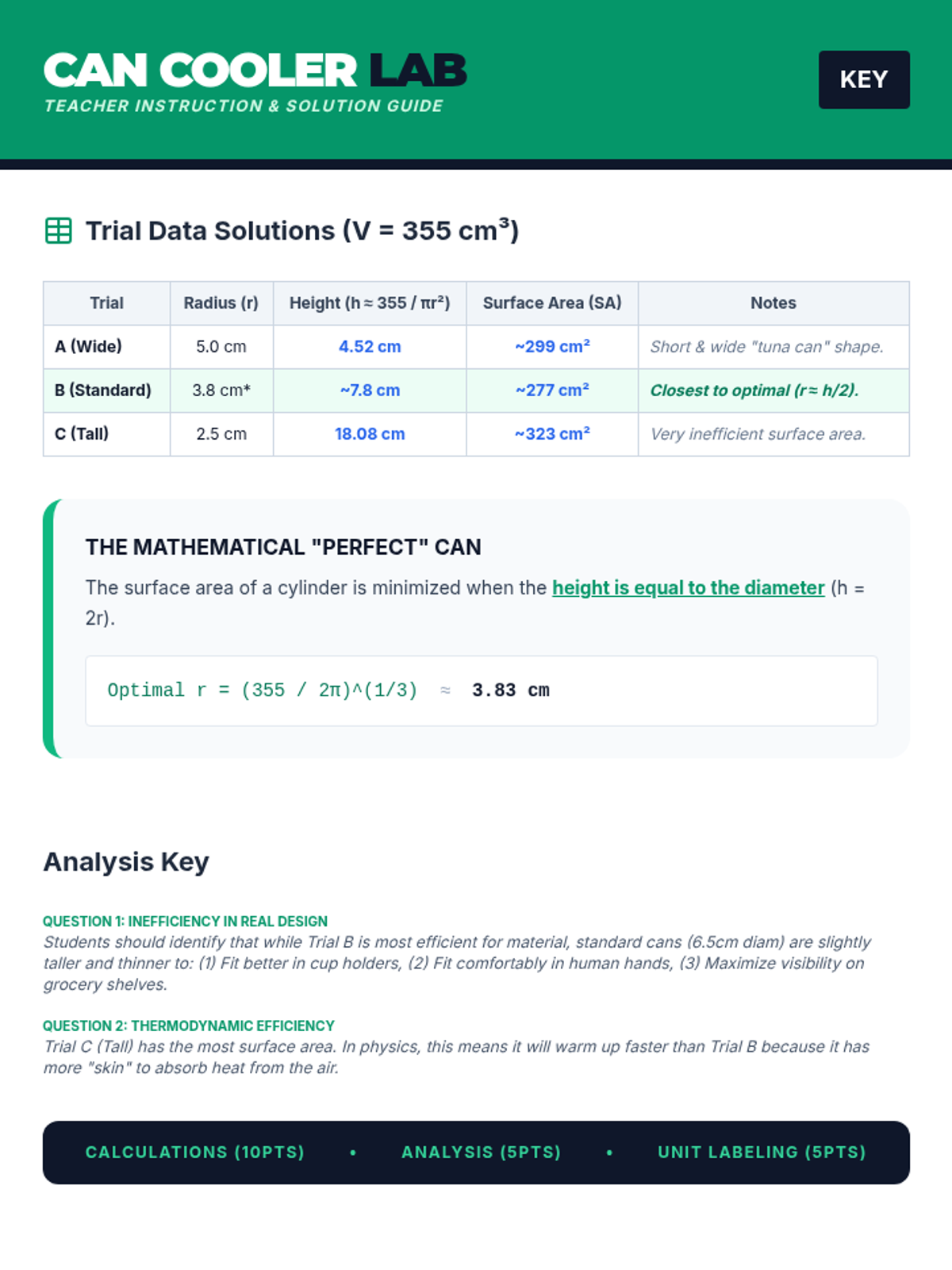
Students investigate the relationship between surface area and volume, exploring heat retention, cooling fins, and container efficiency through the lens of geometry.
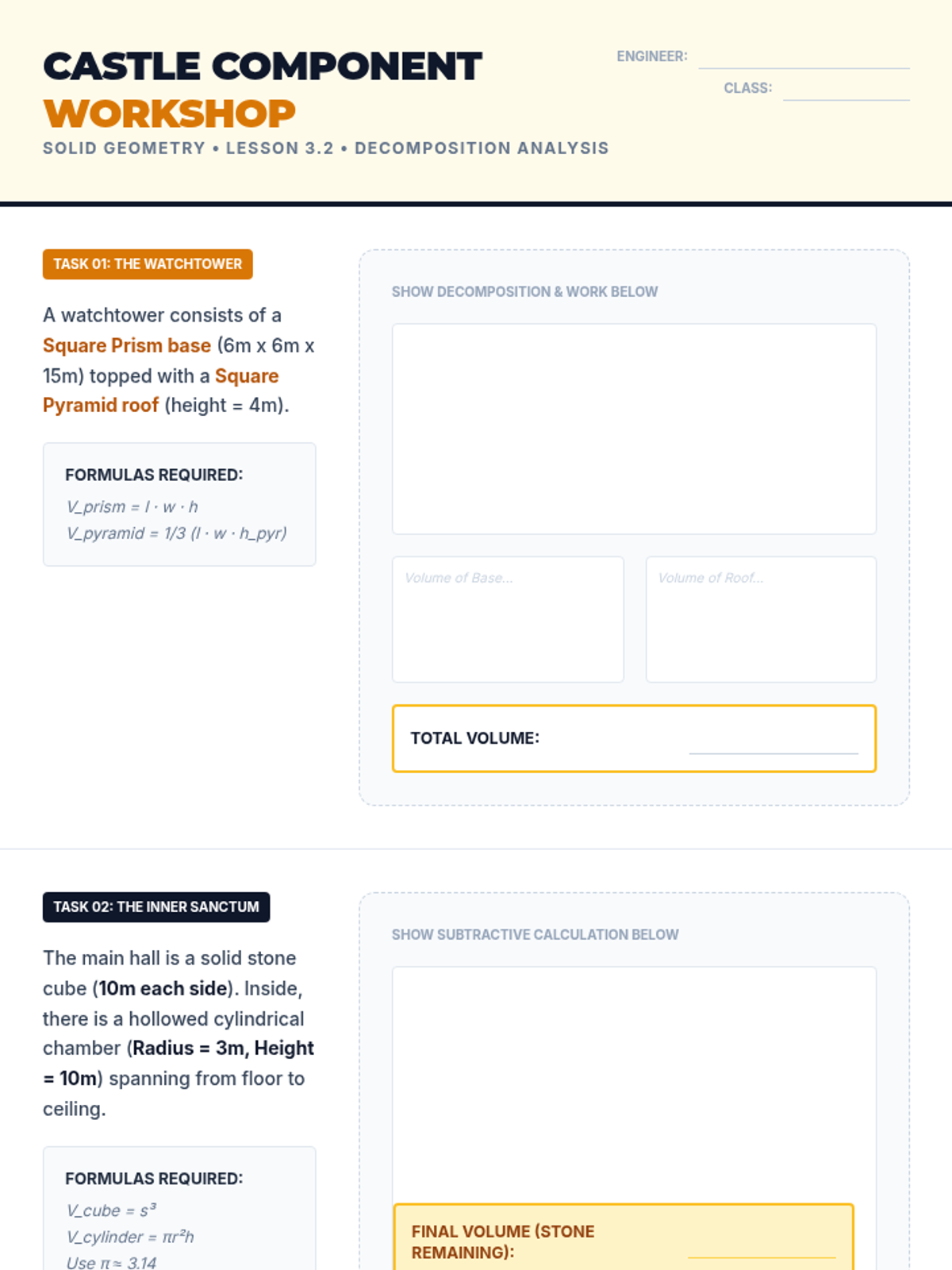
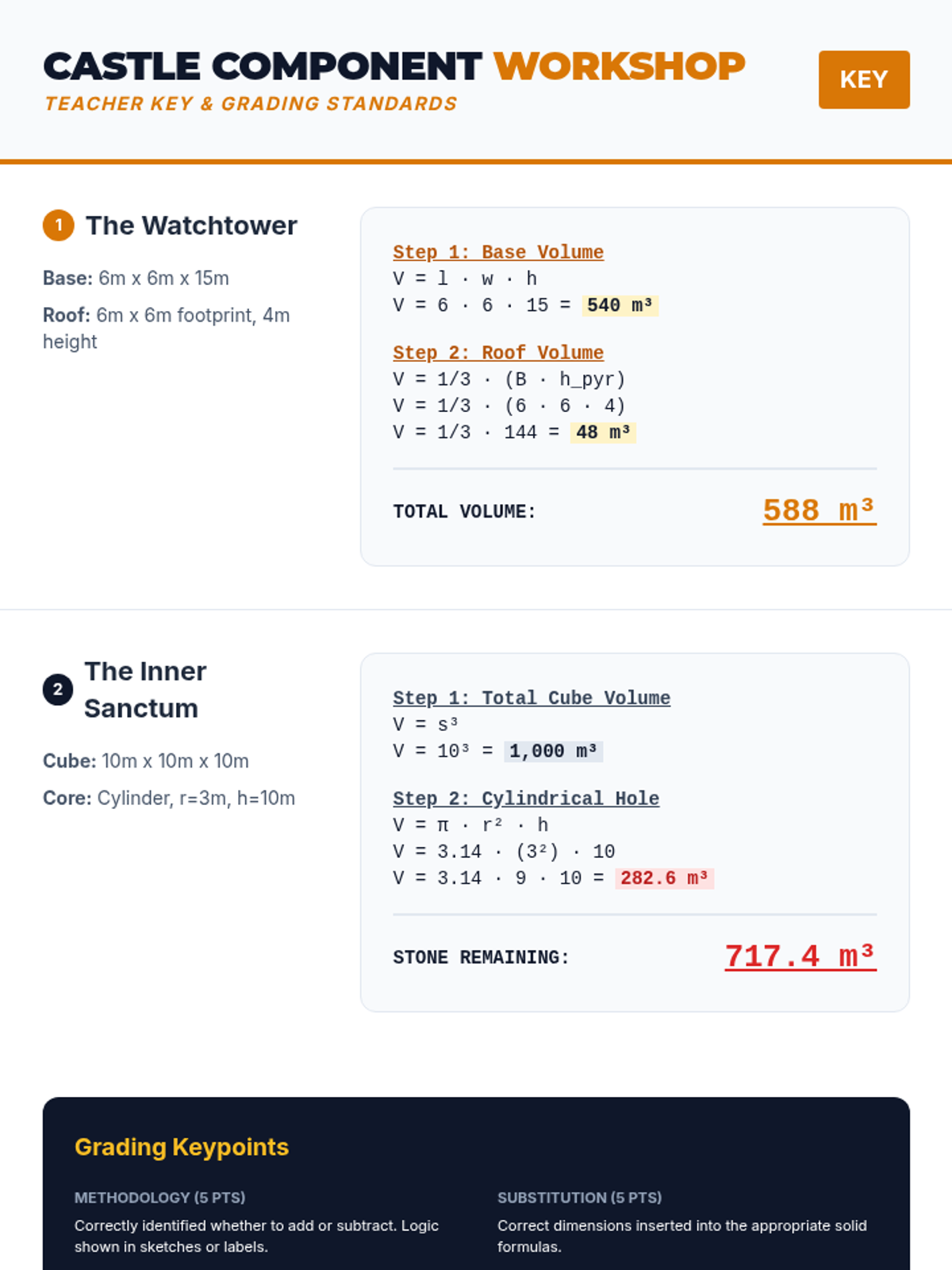
Students break down complex machine parts or architectural shapes into simple solids like prisms and cylinders to calculate total volume or surface area.
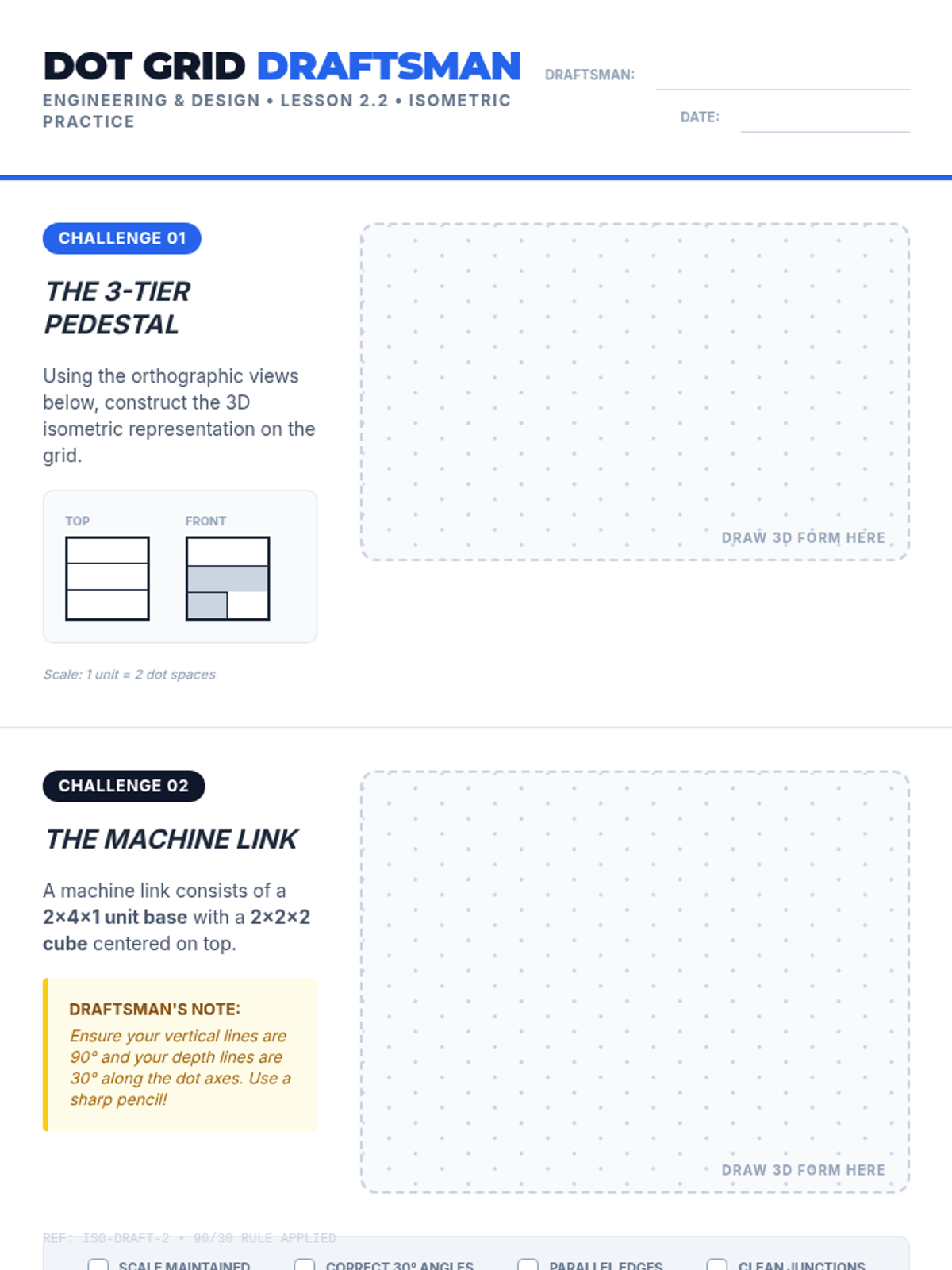
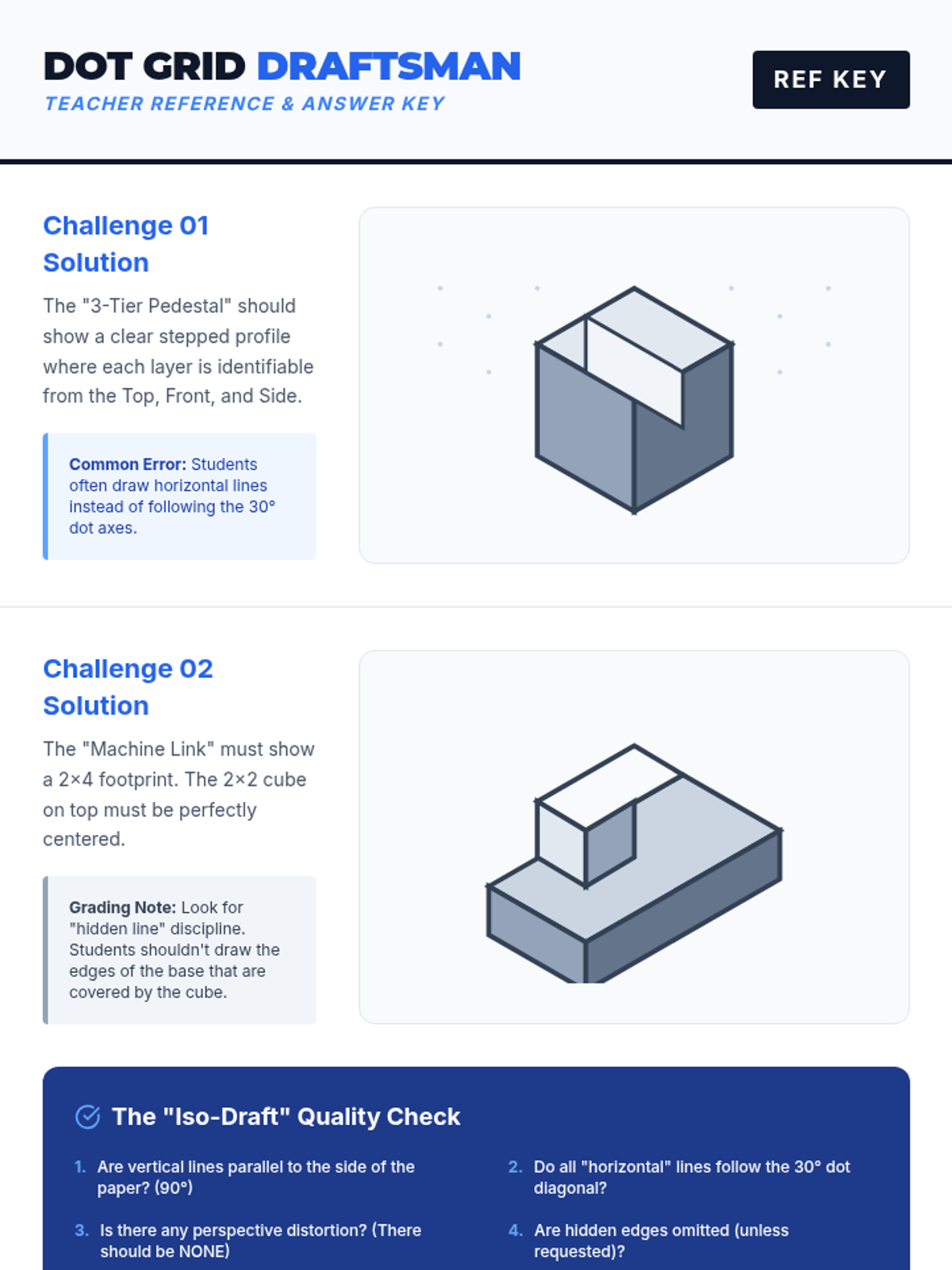
Learners practice drawing objects on isometric dot paper to maintain scale and proportion, comparing this view to standard perspective drawing to understand its utility in technical communication.
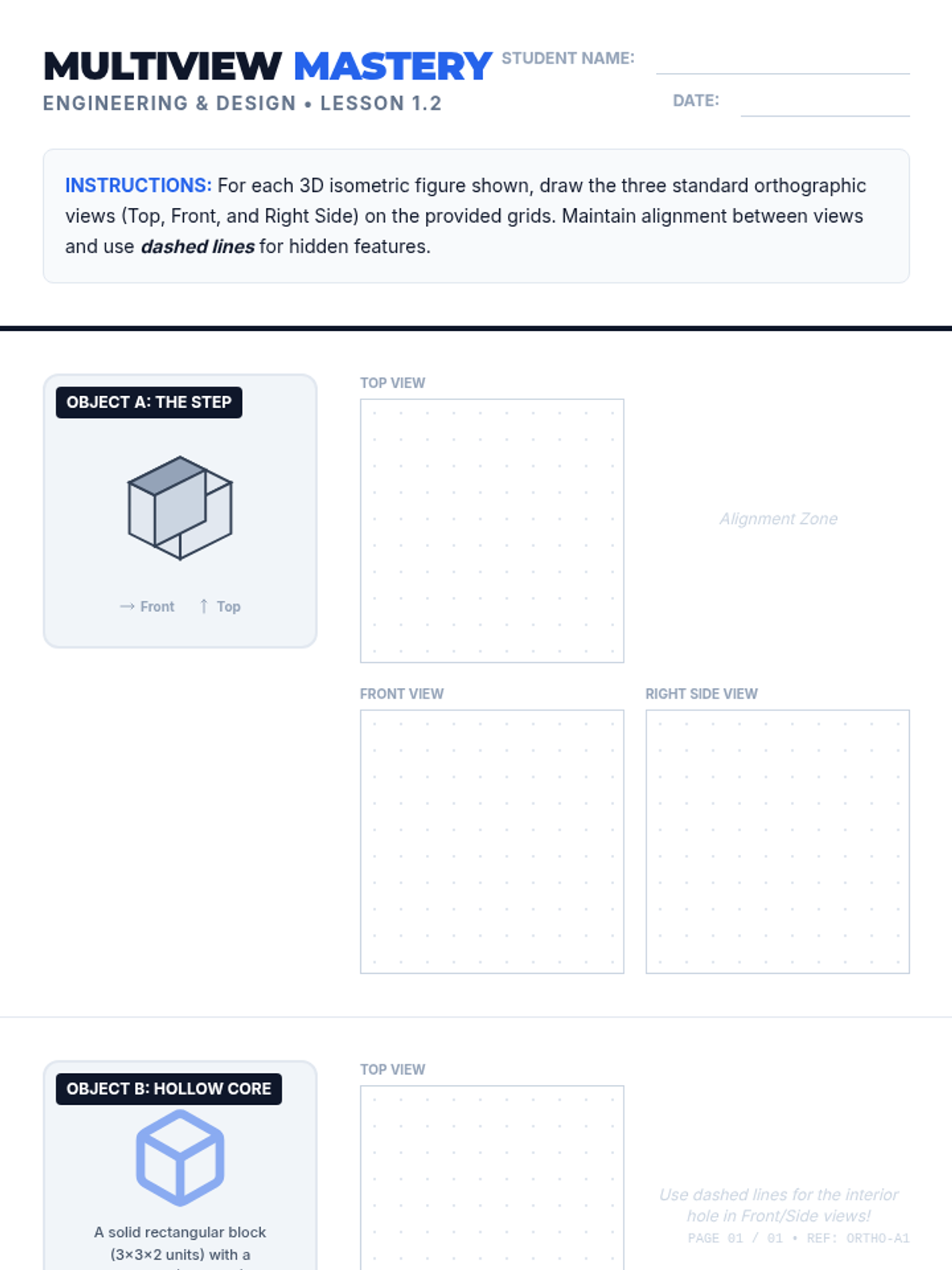
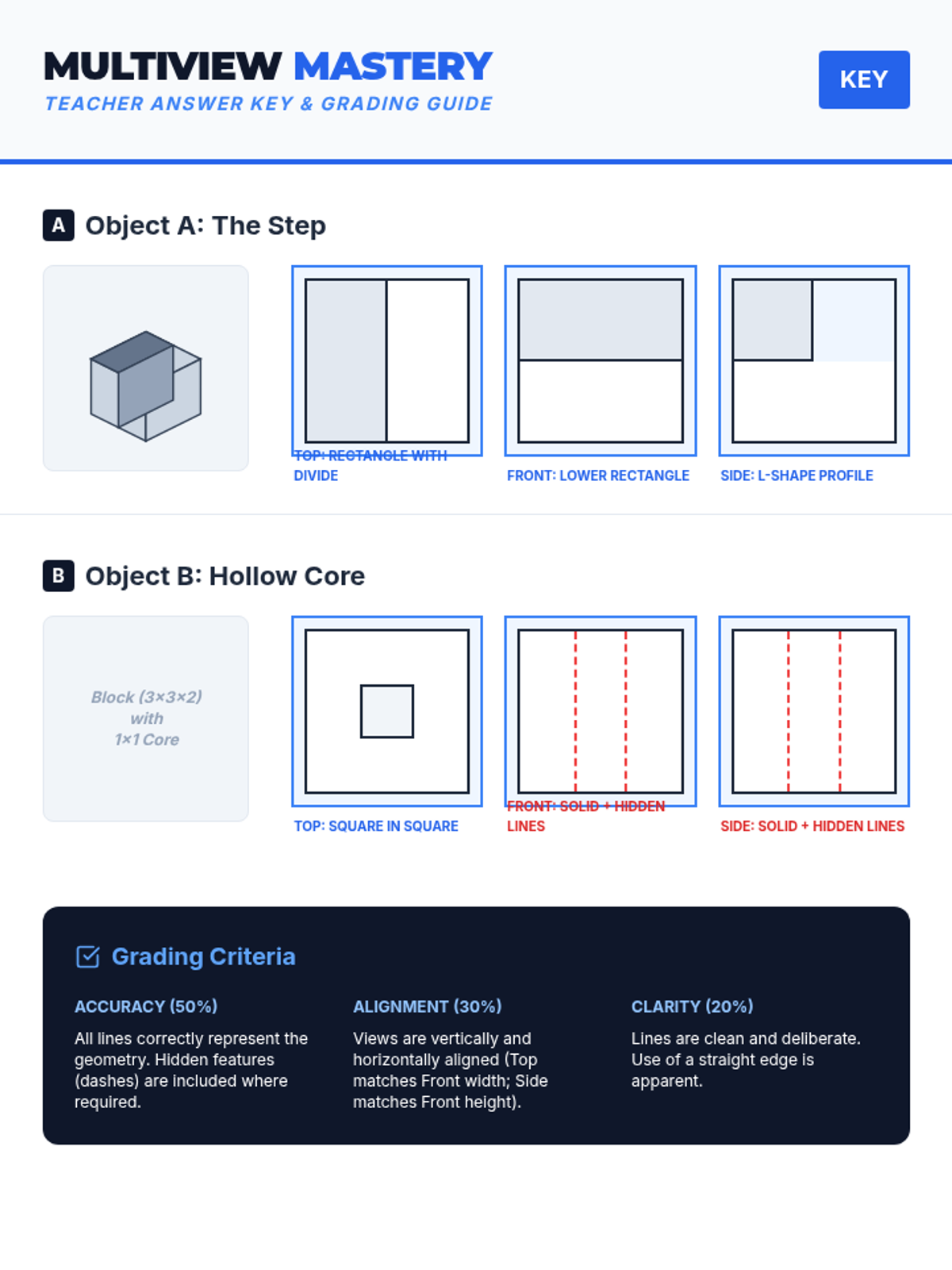
Students learn to draw and interpret 'multiview' sketches (top, front, side) of 3D objects, understanding how 3D information is compressed into 2D plans for engineering and manufacturing.
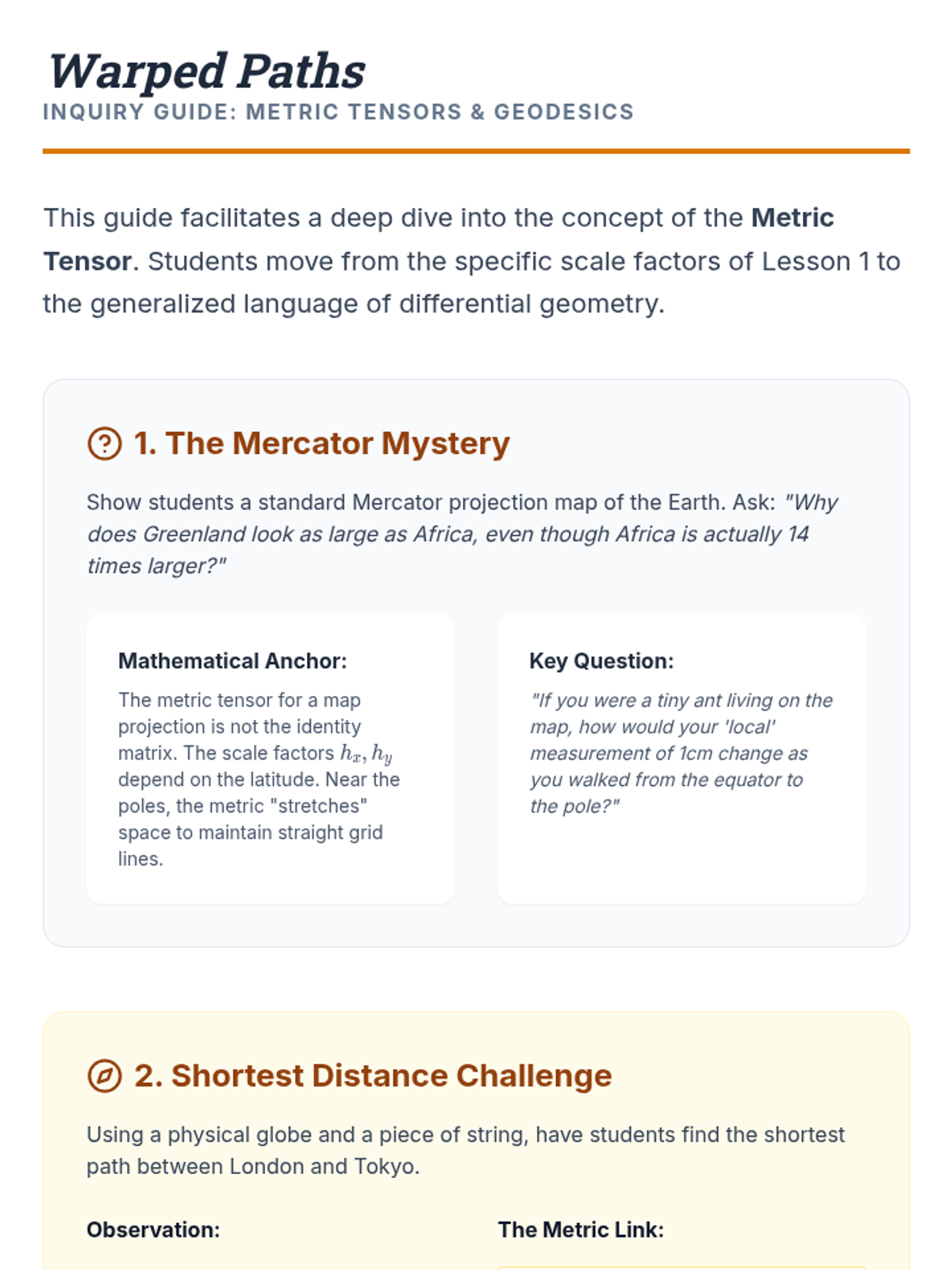
An advanced introduction to the metric tensor and non-Euclidean geometry, serving as a primer for General Relativity.
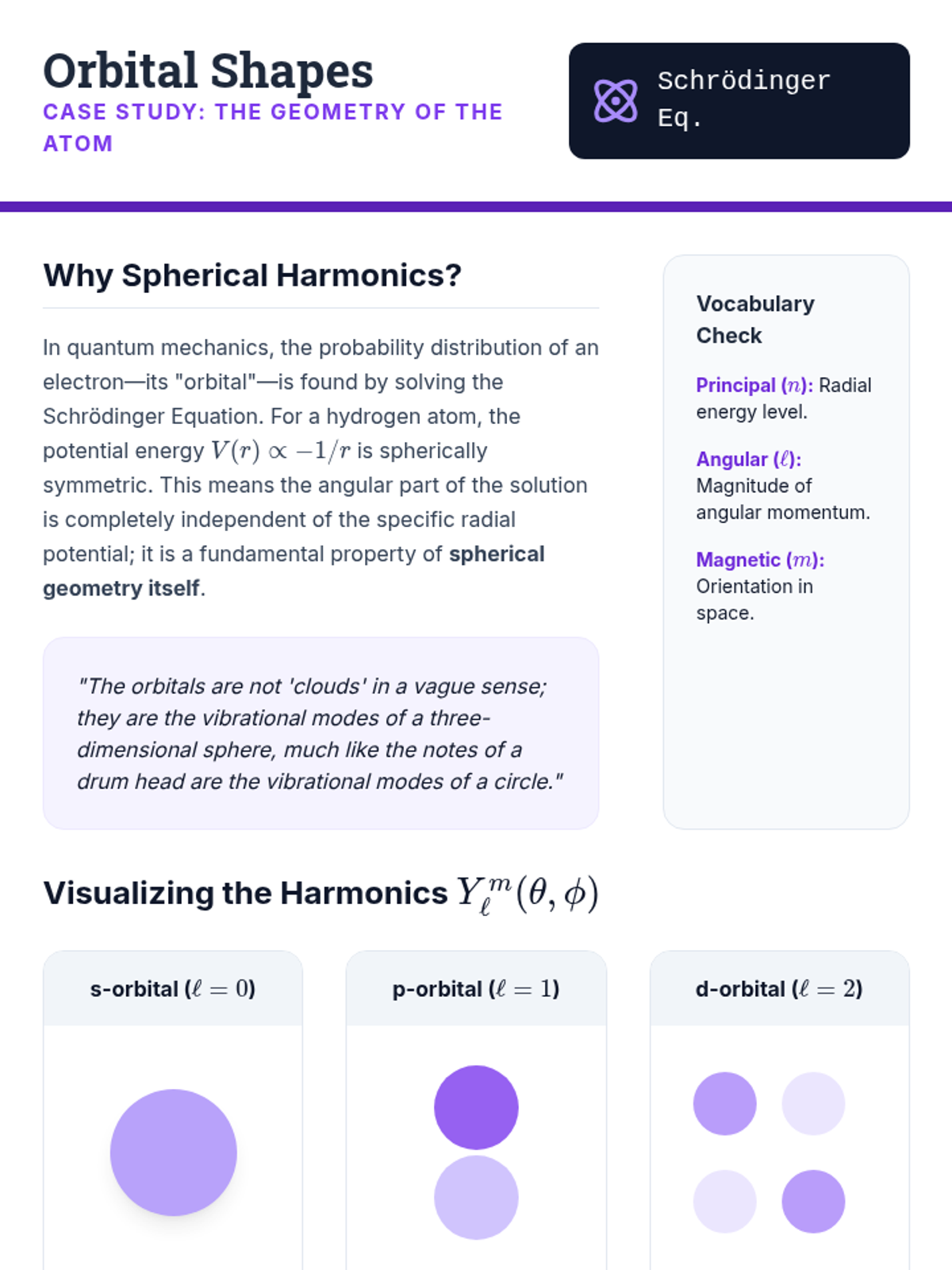
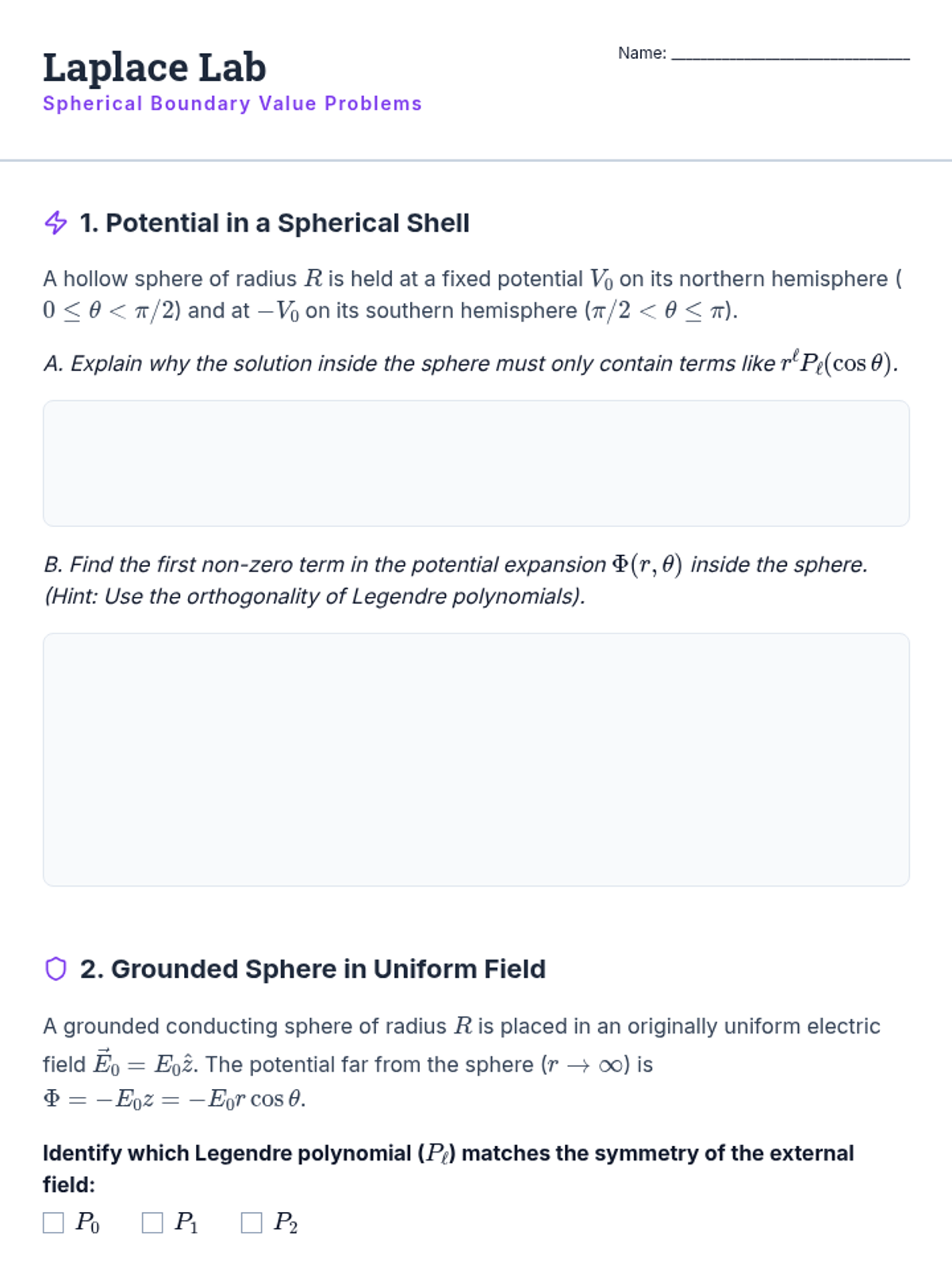
Students solve Laplace's equation for systems with spherical symmetry, introducing Legendre polynomials and Spherical Harmonics.
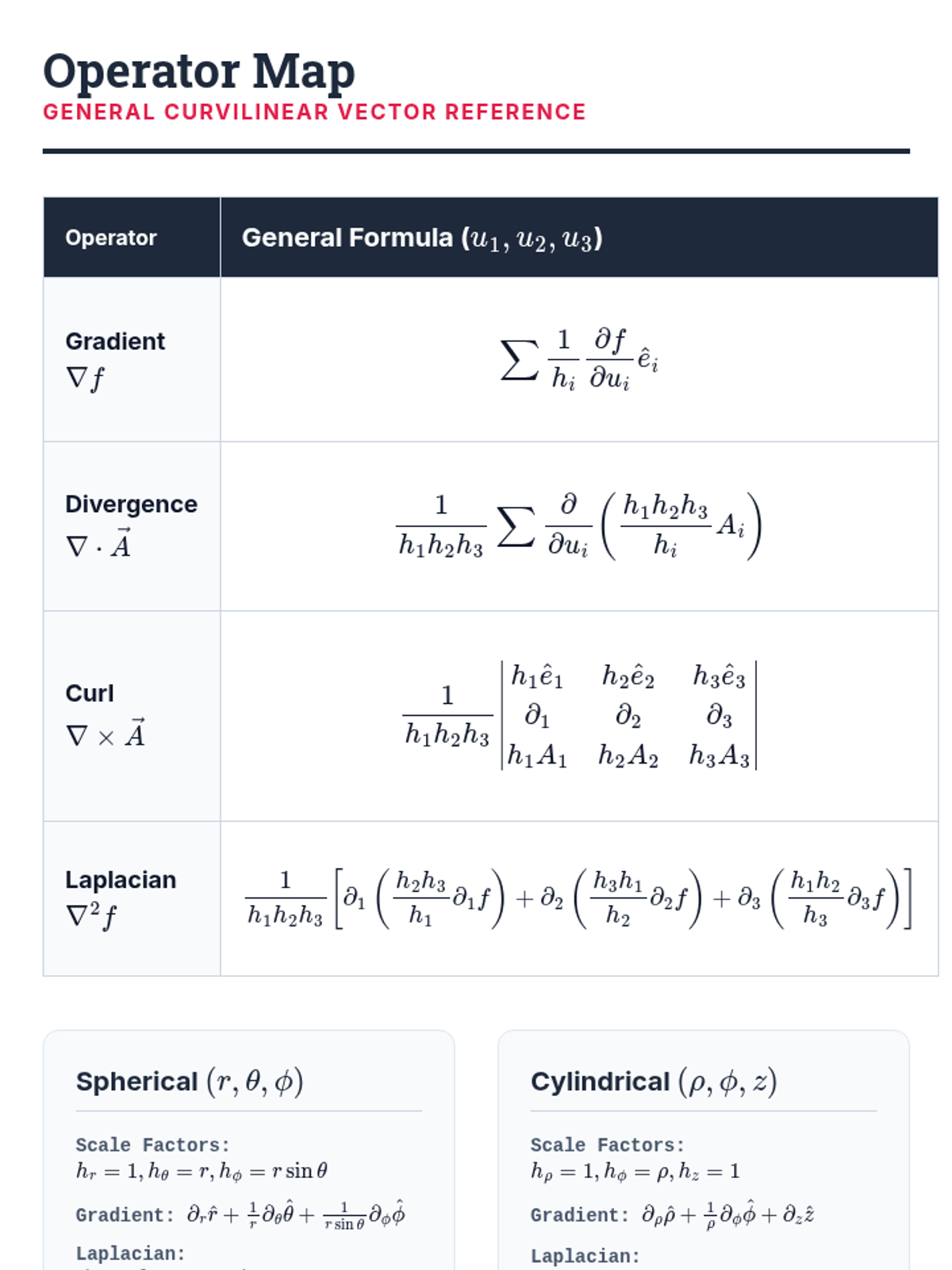
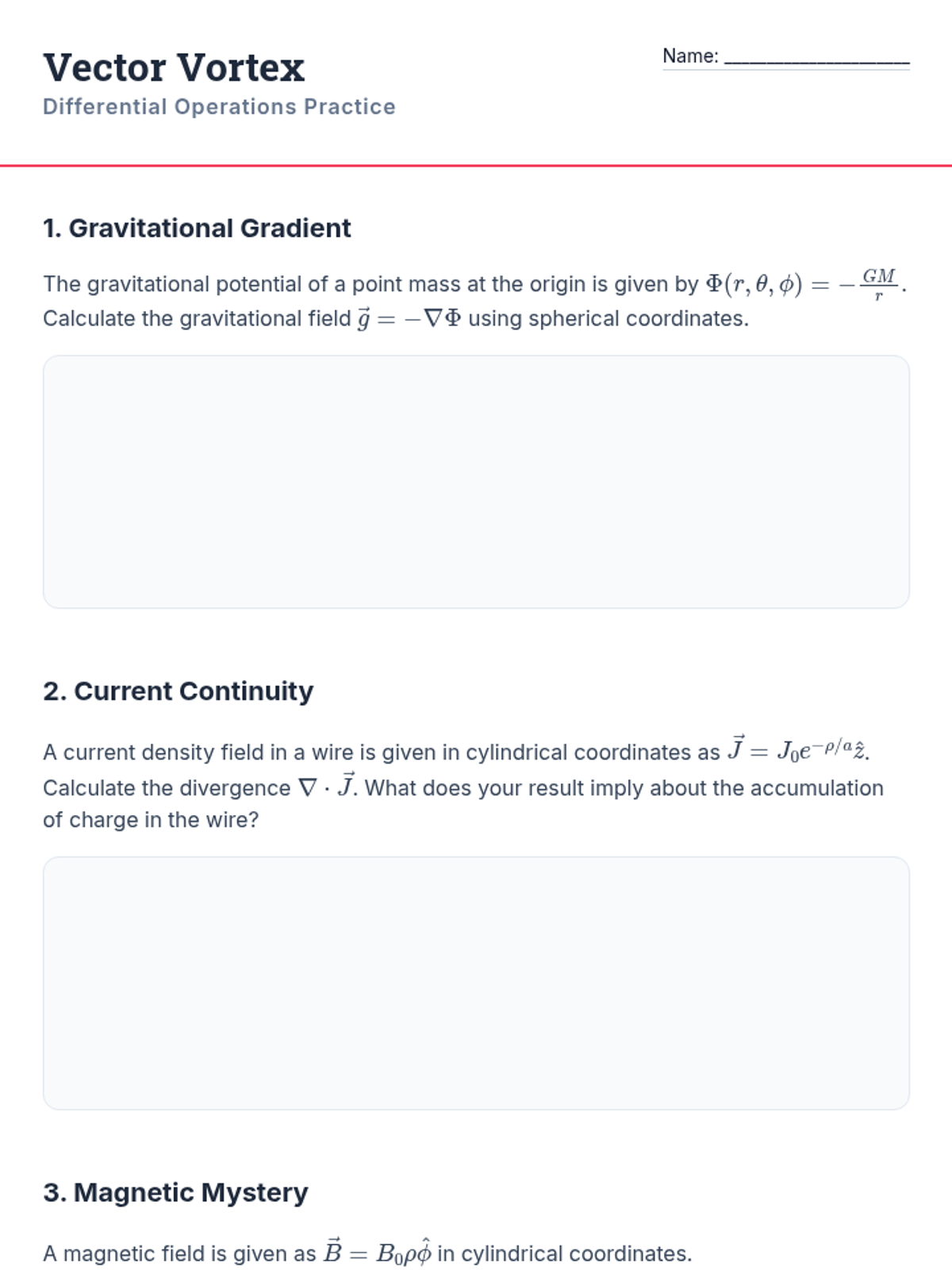
Students translate the Del operator into general curvilinear coordinates and apply these operators to physical vector fields.
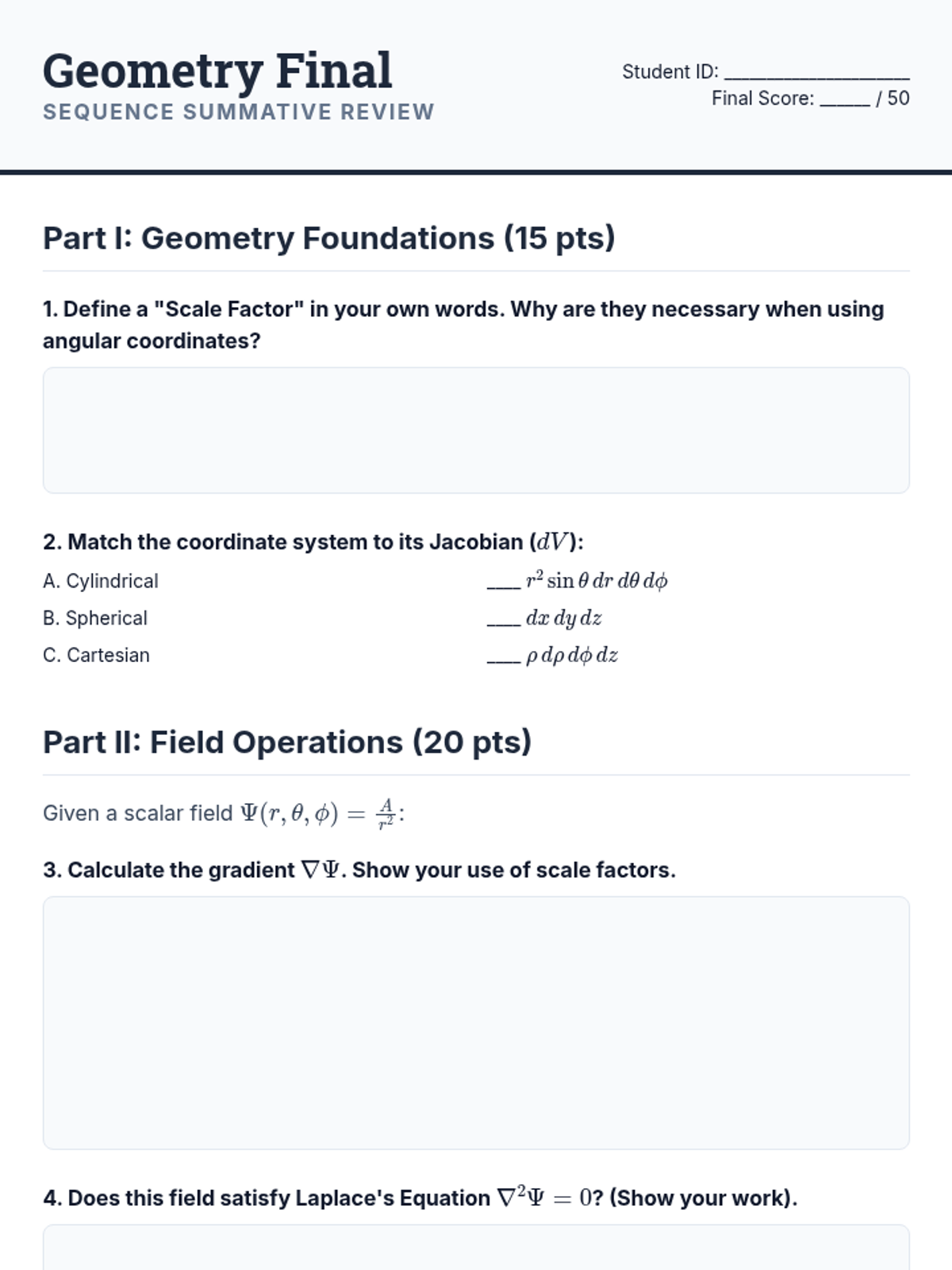
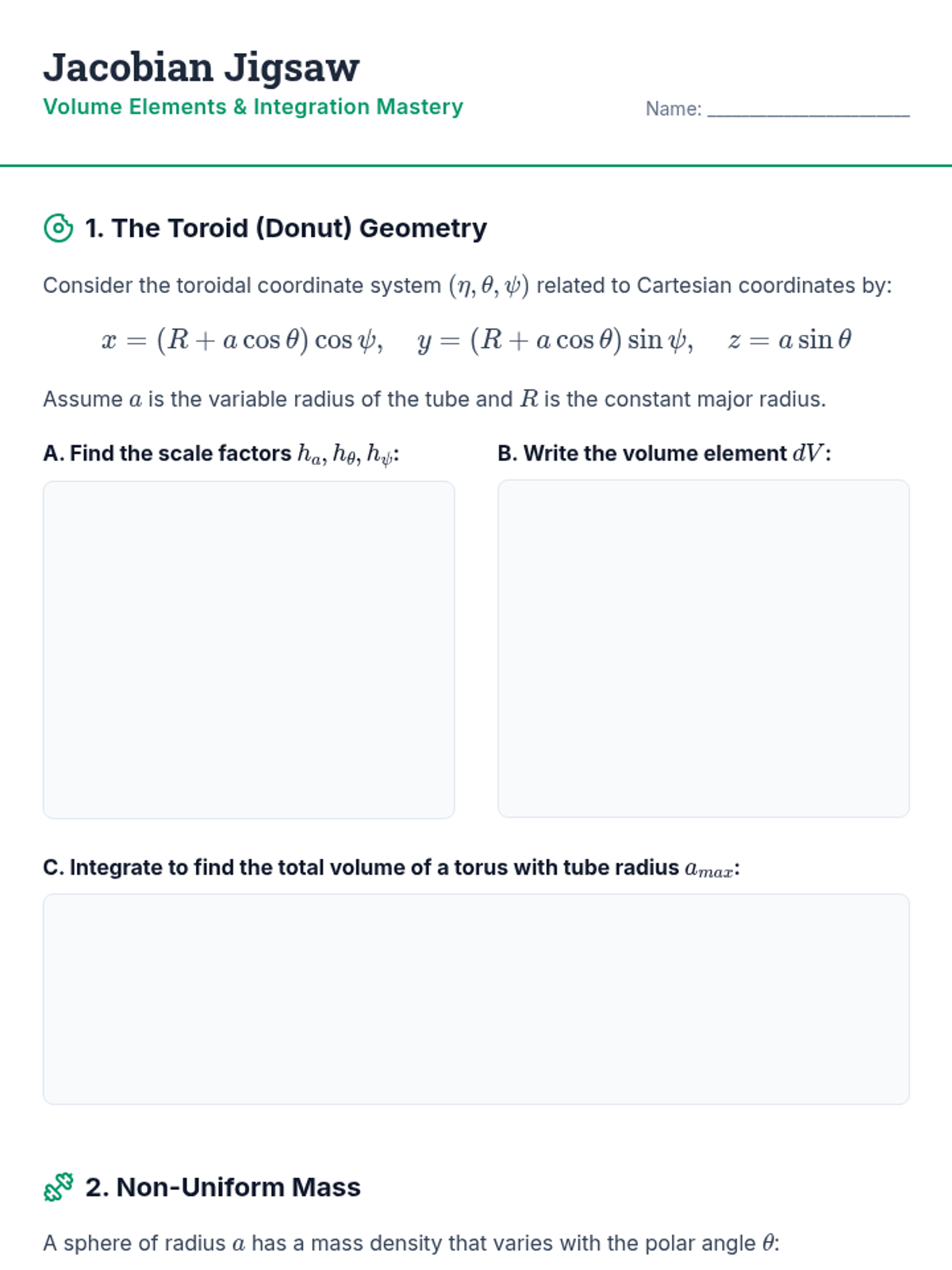
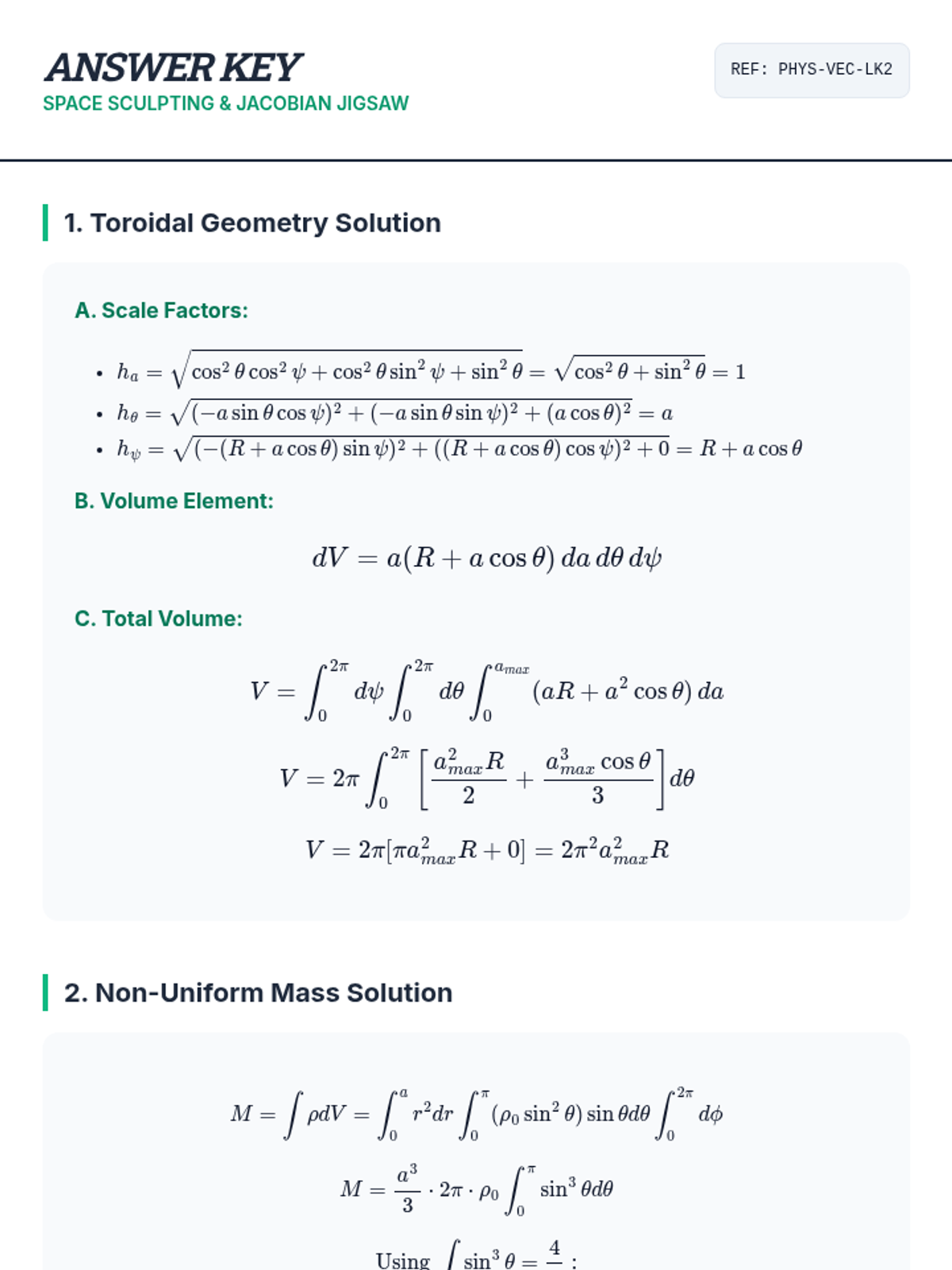
Focusing on integration, students construct volume and area elements (Jacobians) for spherical and cylindrical geometries and practice integrating scalar fields over complex 3D domains.
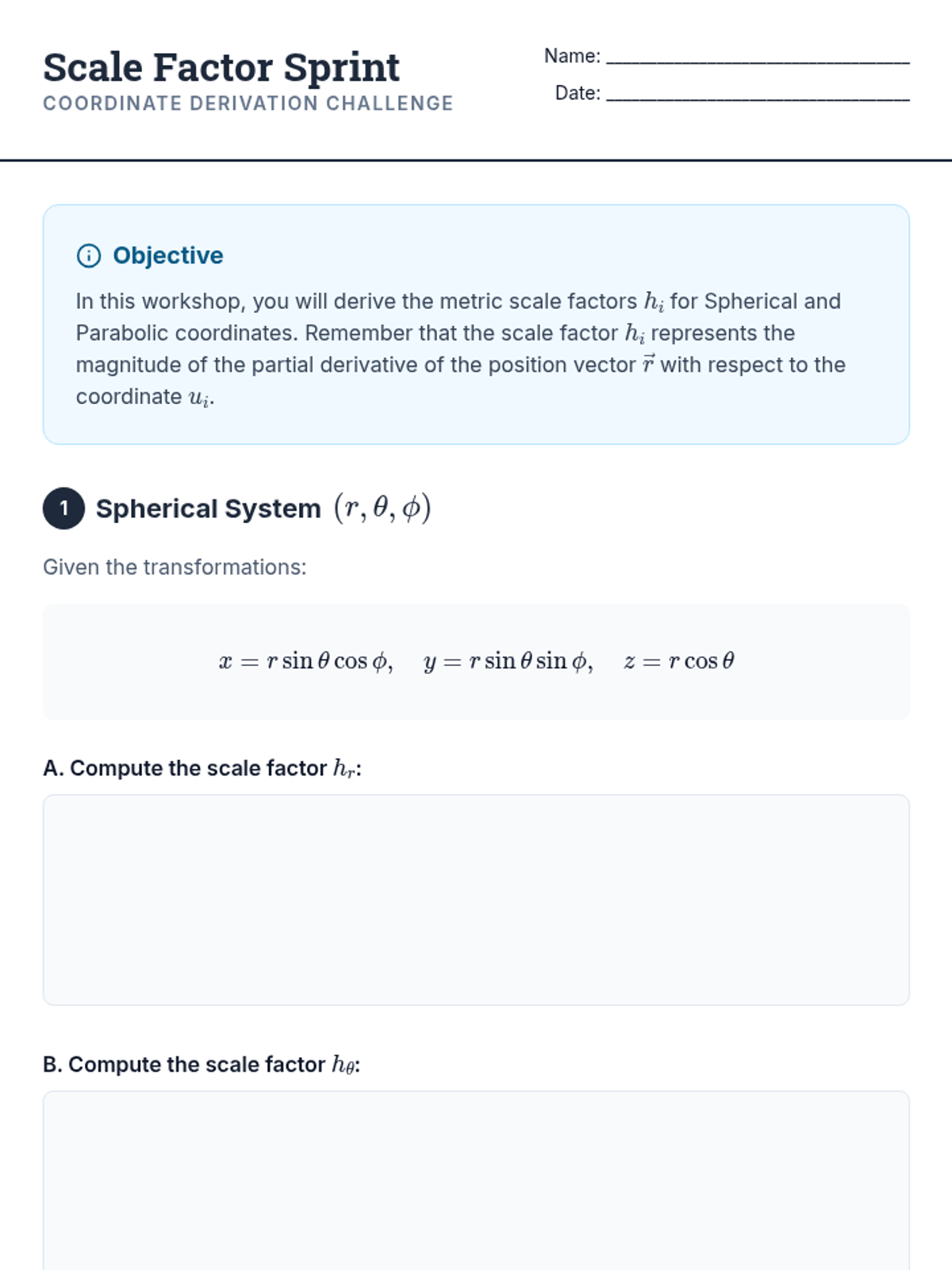
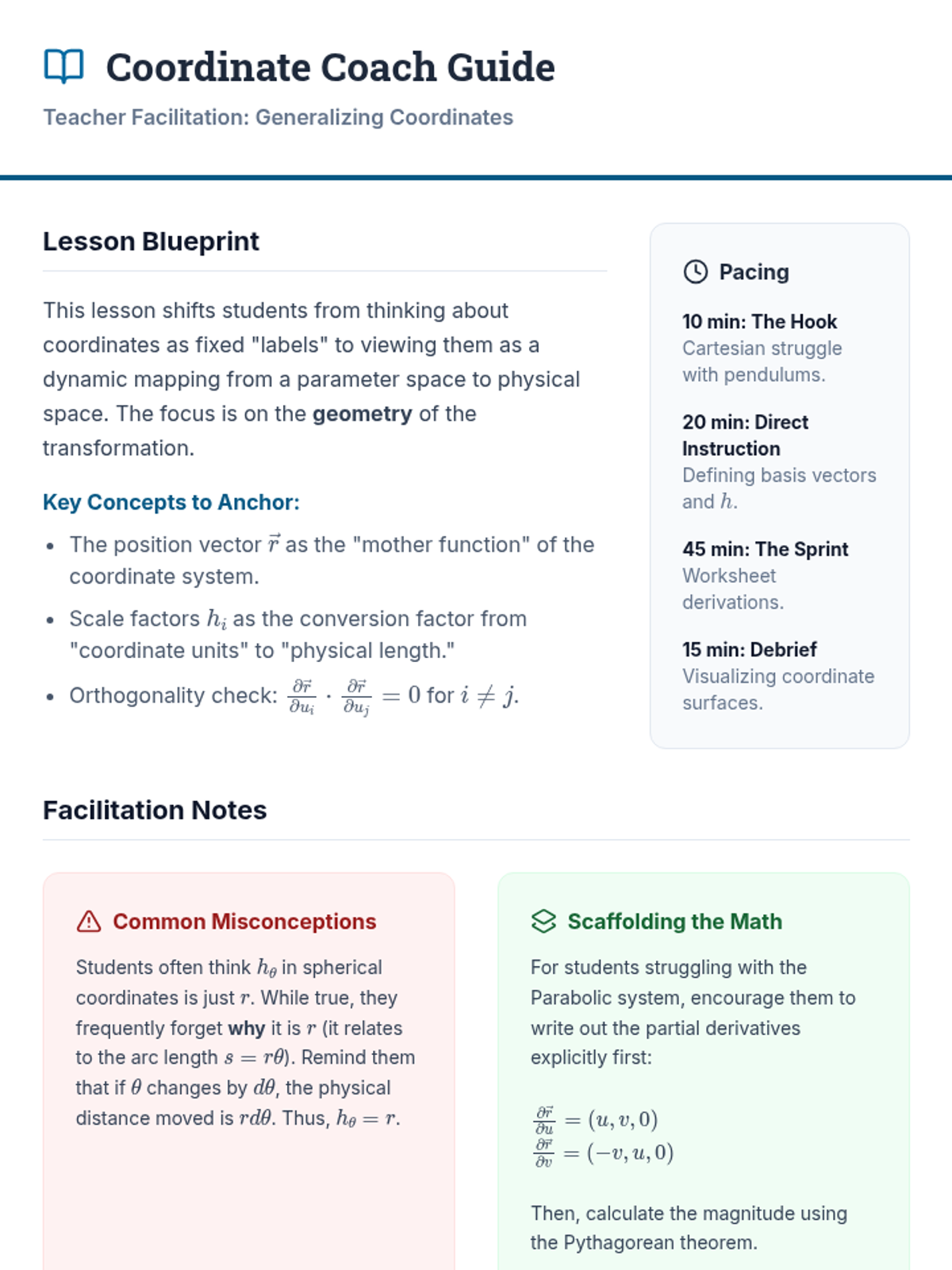
Students derive basis vectors and scale factors for general orthogonal curvilinear coordinates and learn how to define position vectors in non-Cartesian geometries.
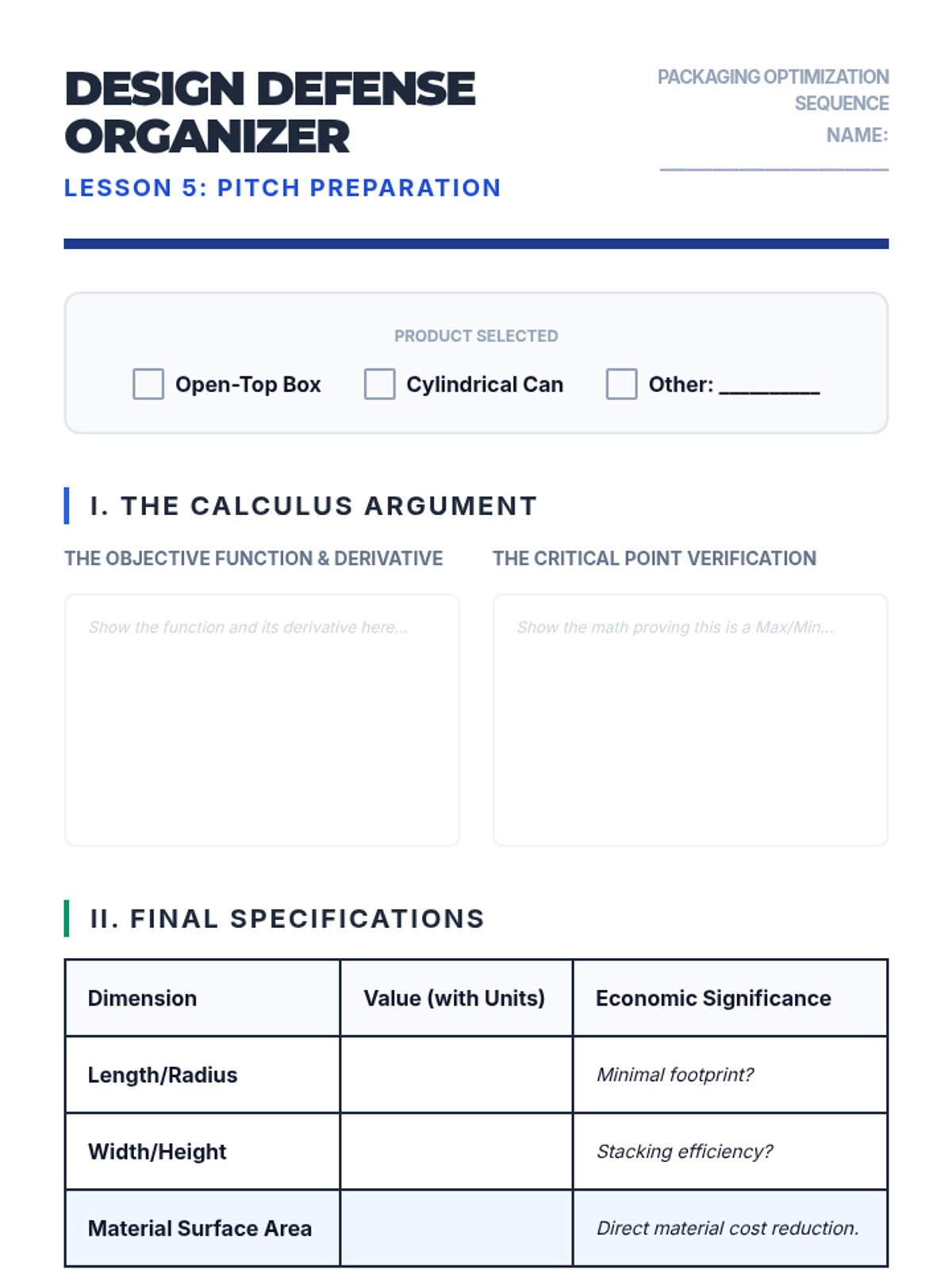
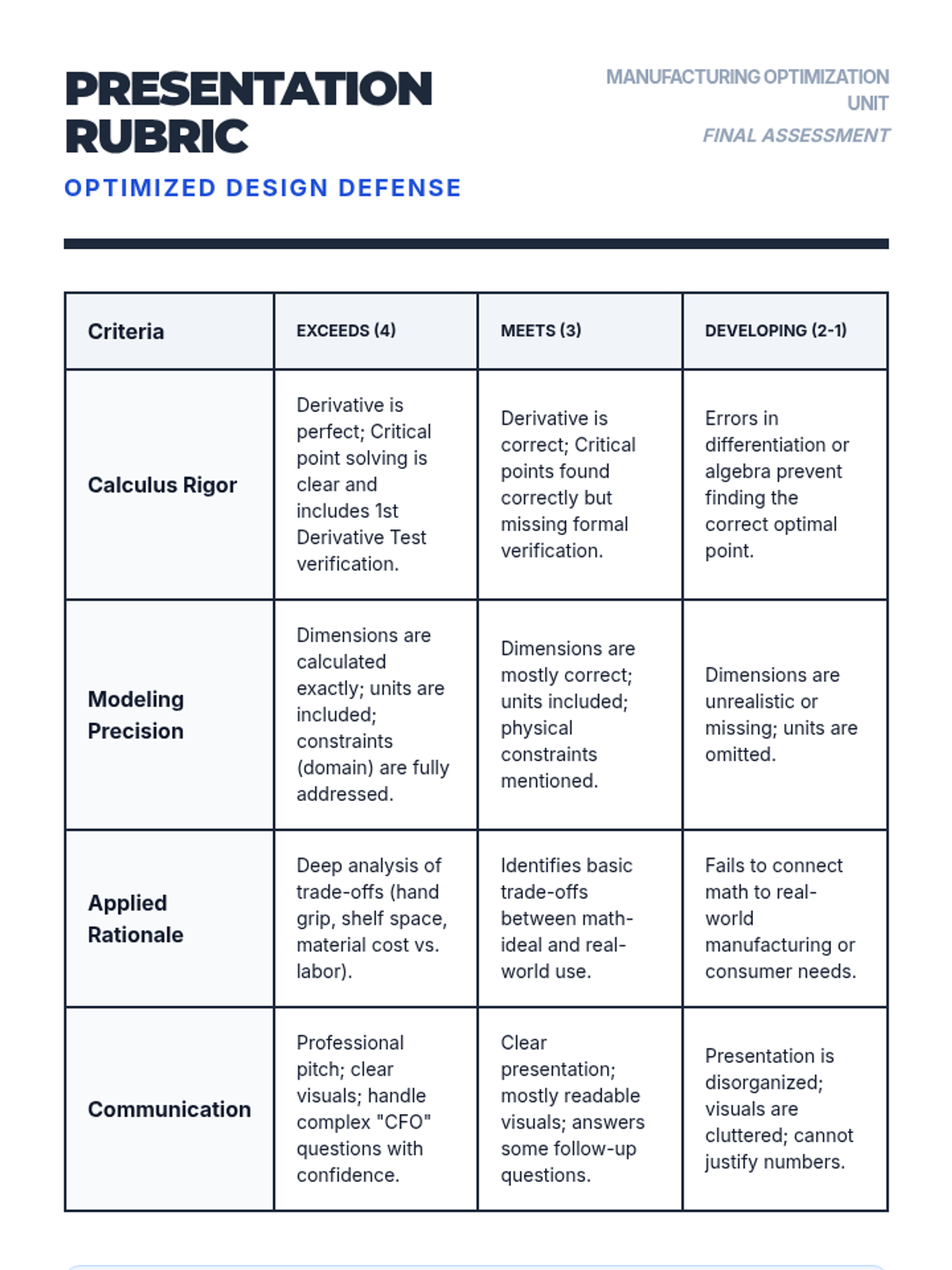
Students present their optimized packaging solutions for a specific product scenario. They must show their calculus work, justify their dimensions using derivative tests, and explain the trade-offs between form factor and material efficiency.
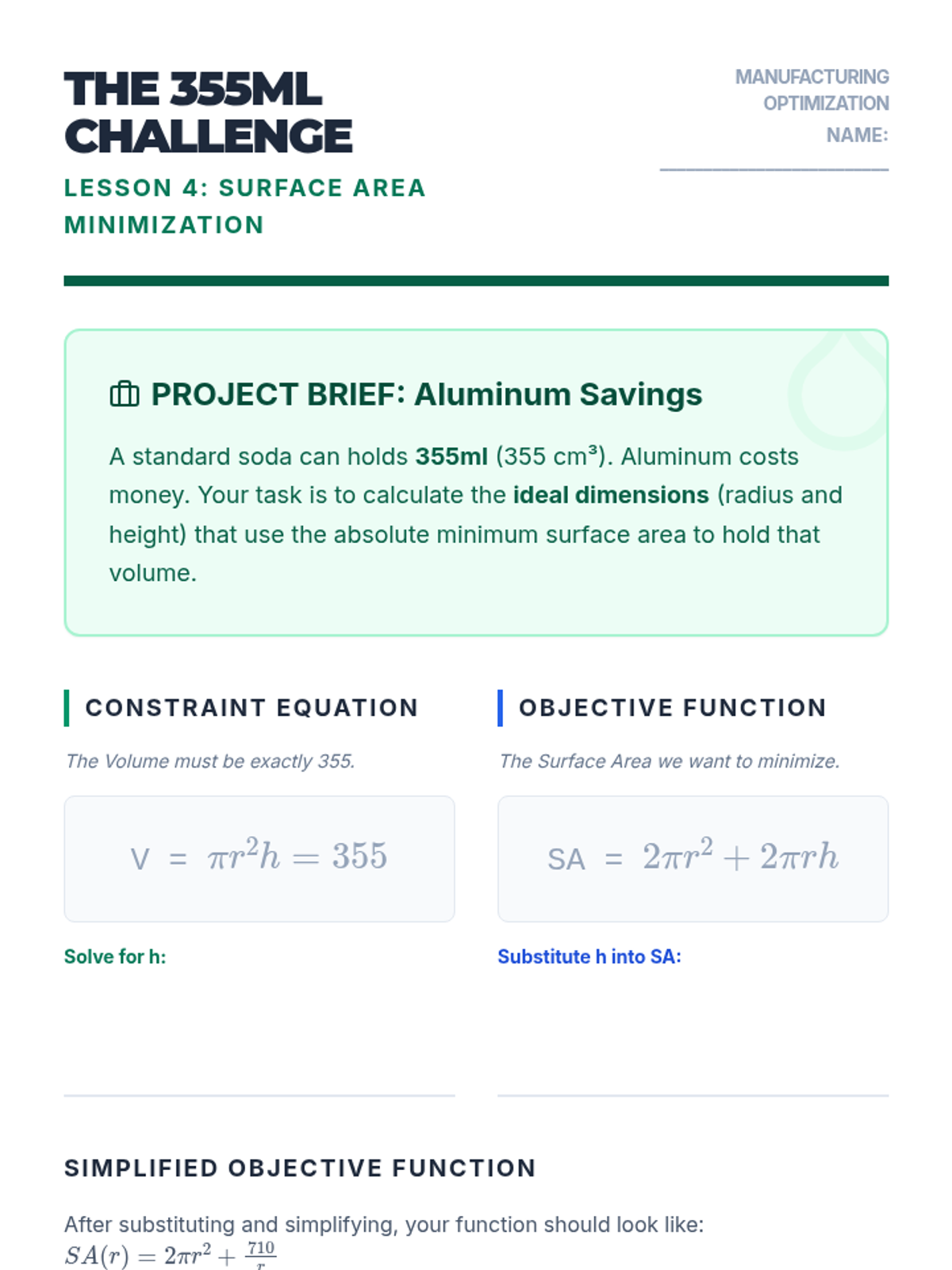
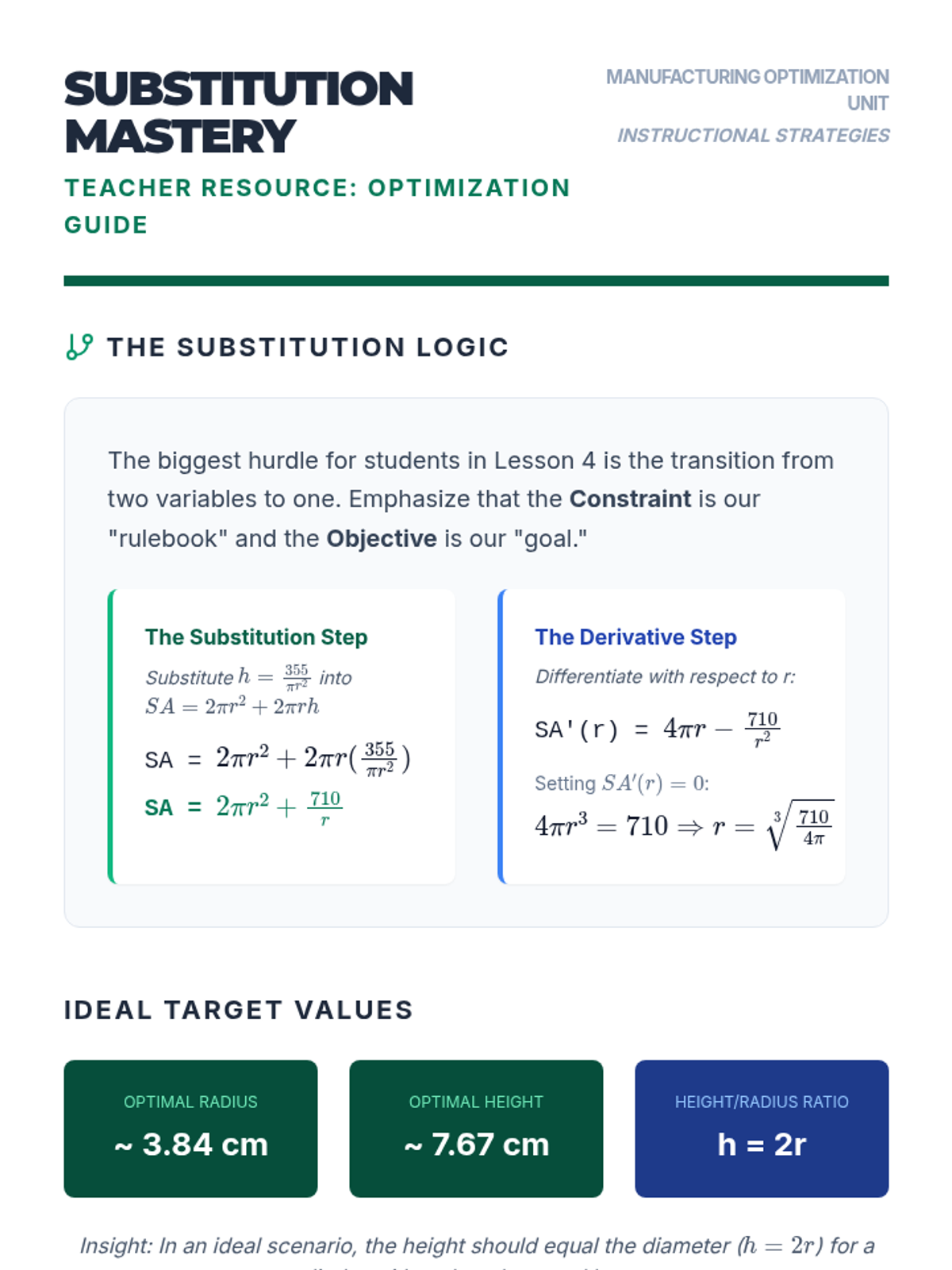
The scenario shifts from maximizing volume to minimizing surface area (cost) for a fixed volume requirement. Students set up new constraint equations and objective functions, learning to substitute variables to create a differentiable function of one variable.
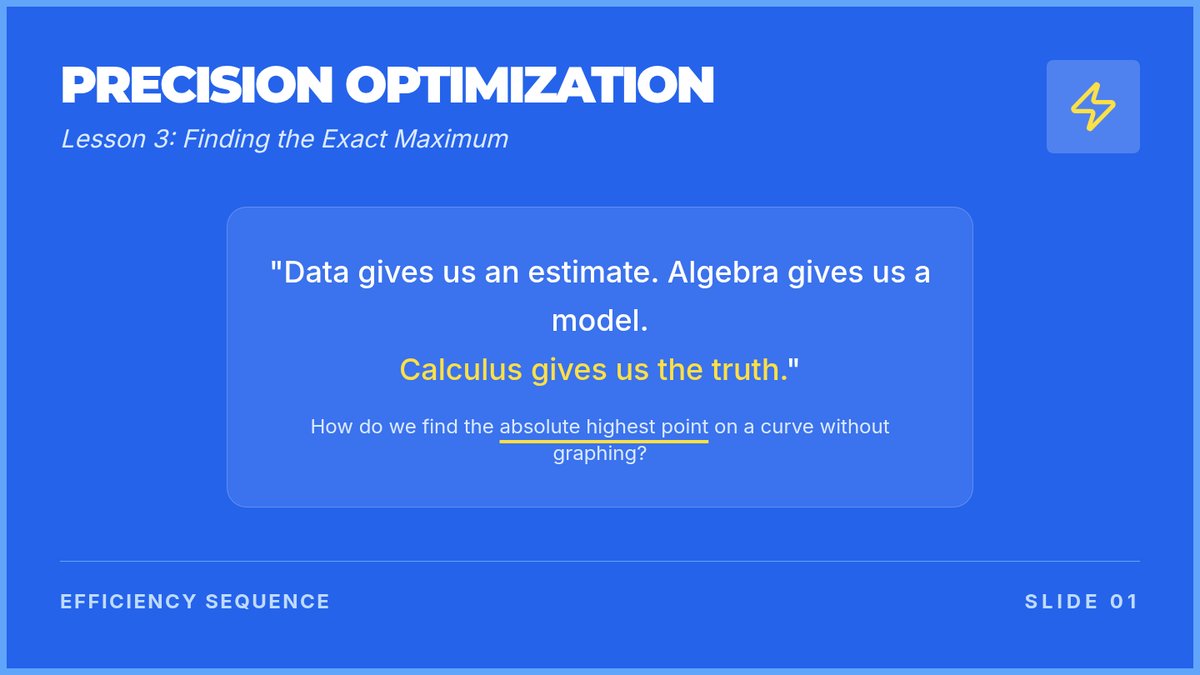
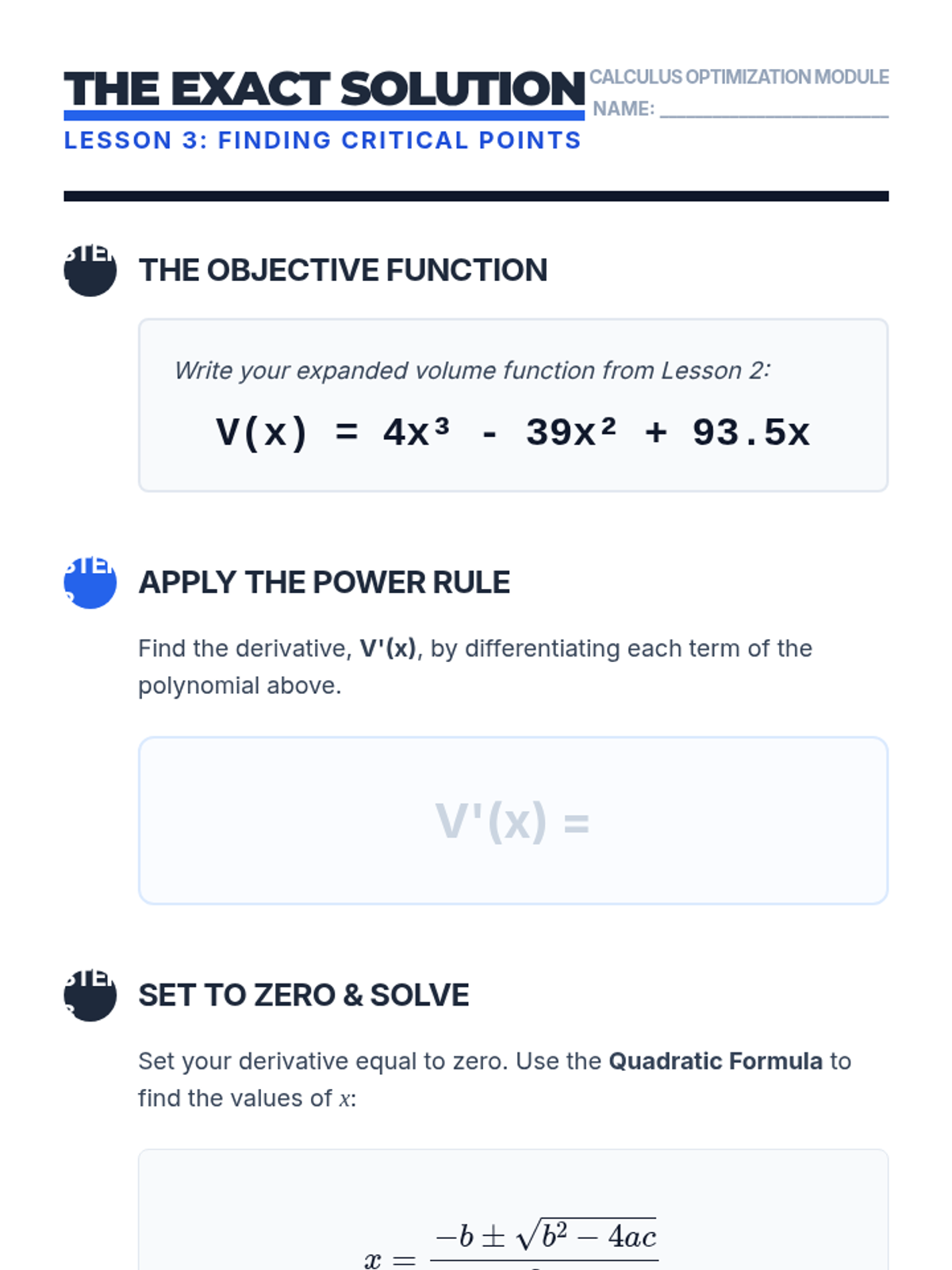
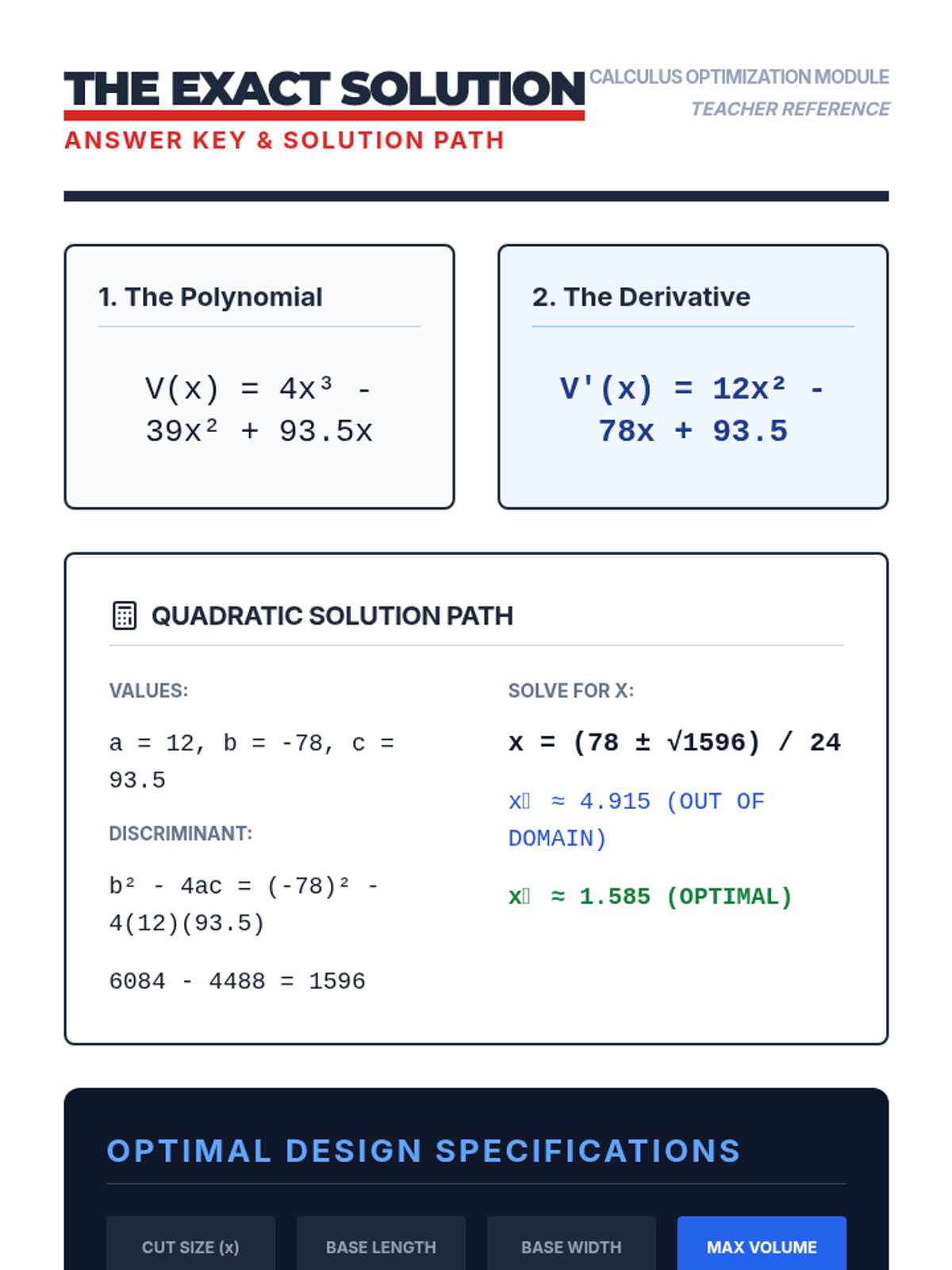
Students apply the power rule to differentiate their volume functions and solve for critical points where the derivative equals zero. They verify these critical points using the first derivative test to mathematically prove which dimensions yield the absolute maximum volume.
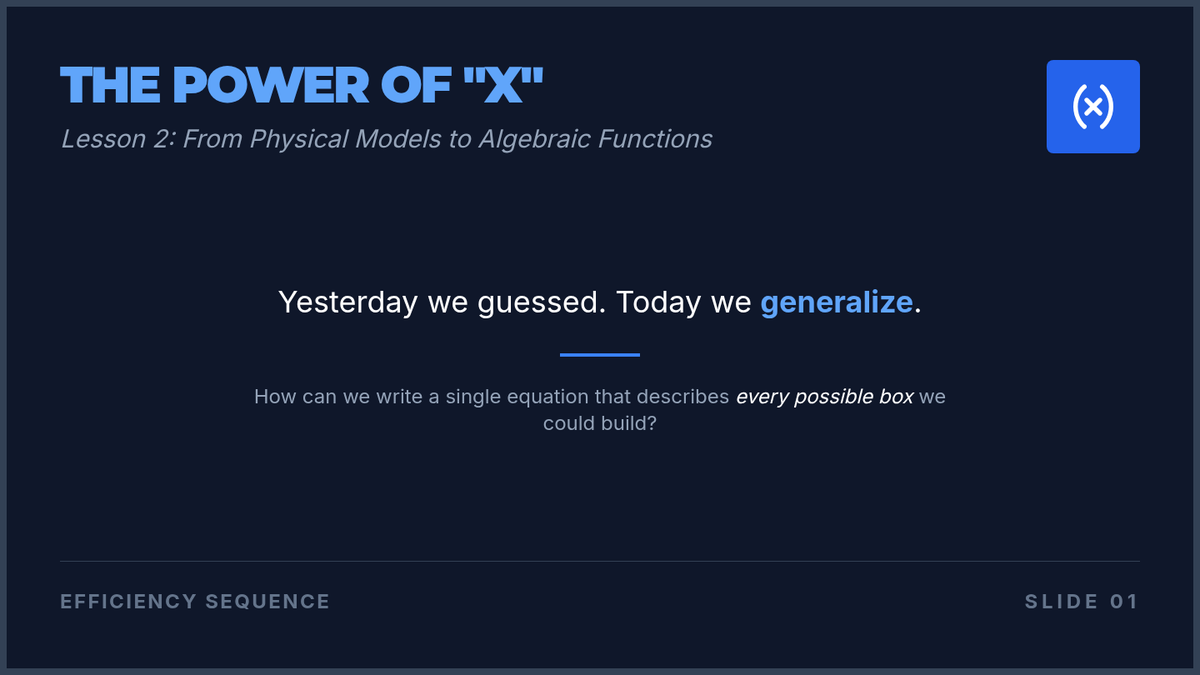
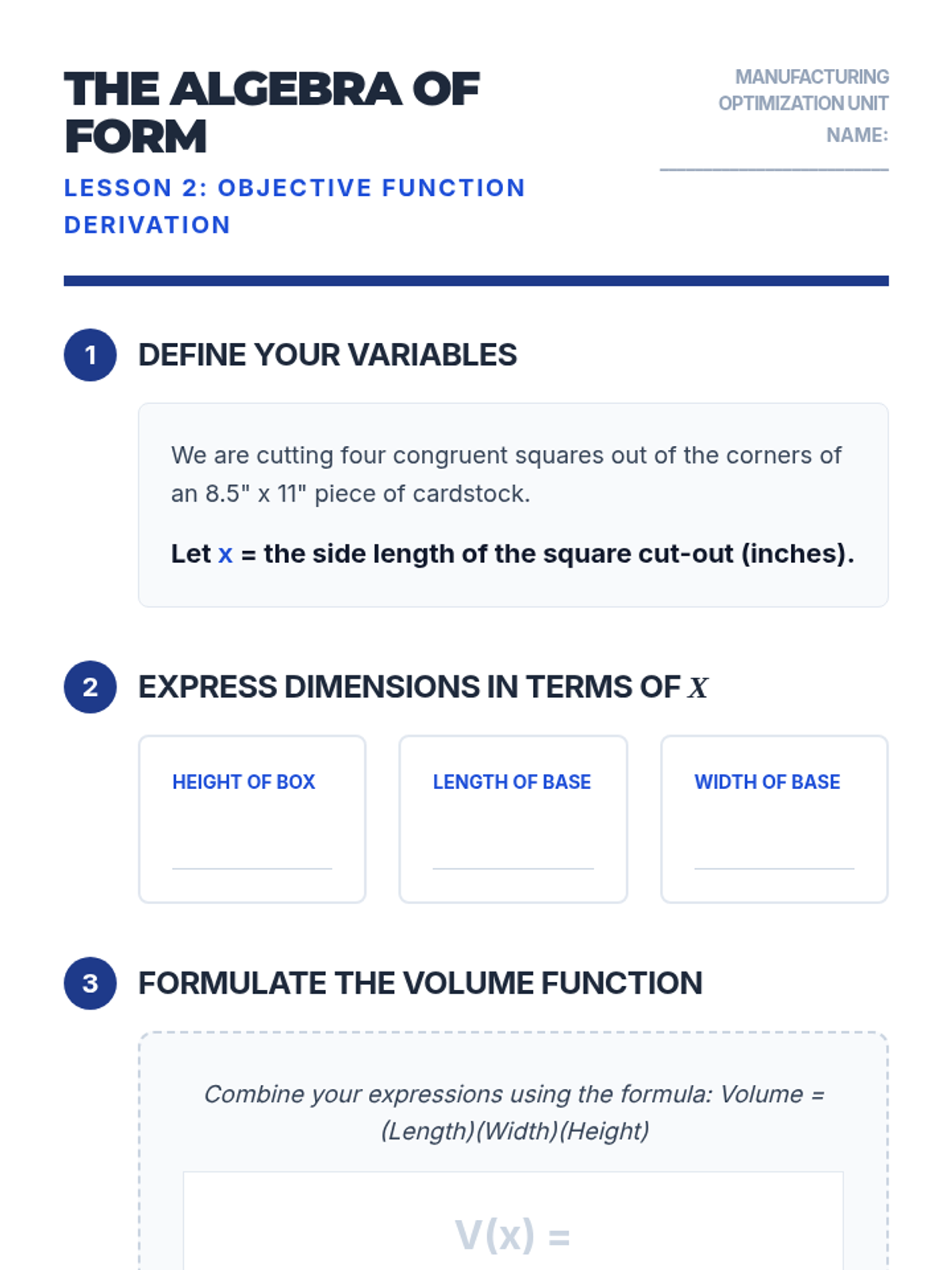
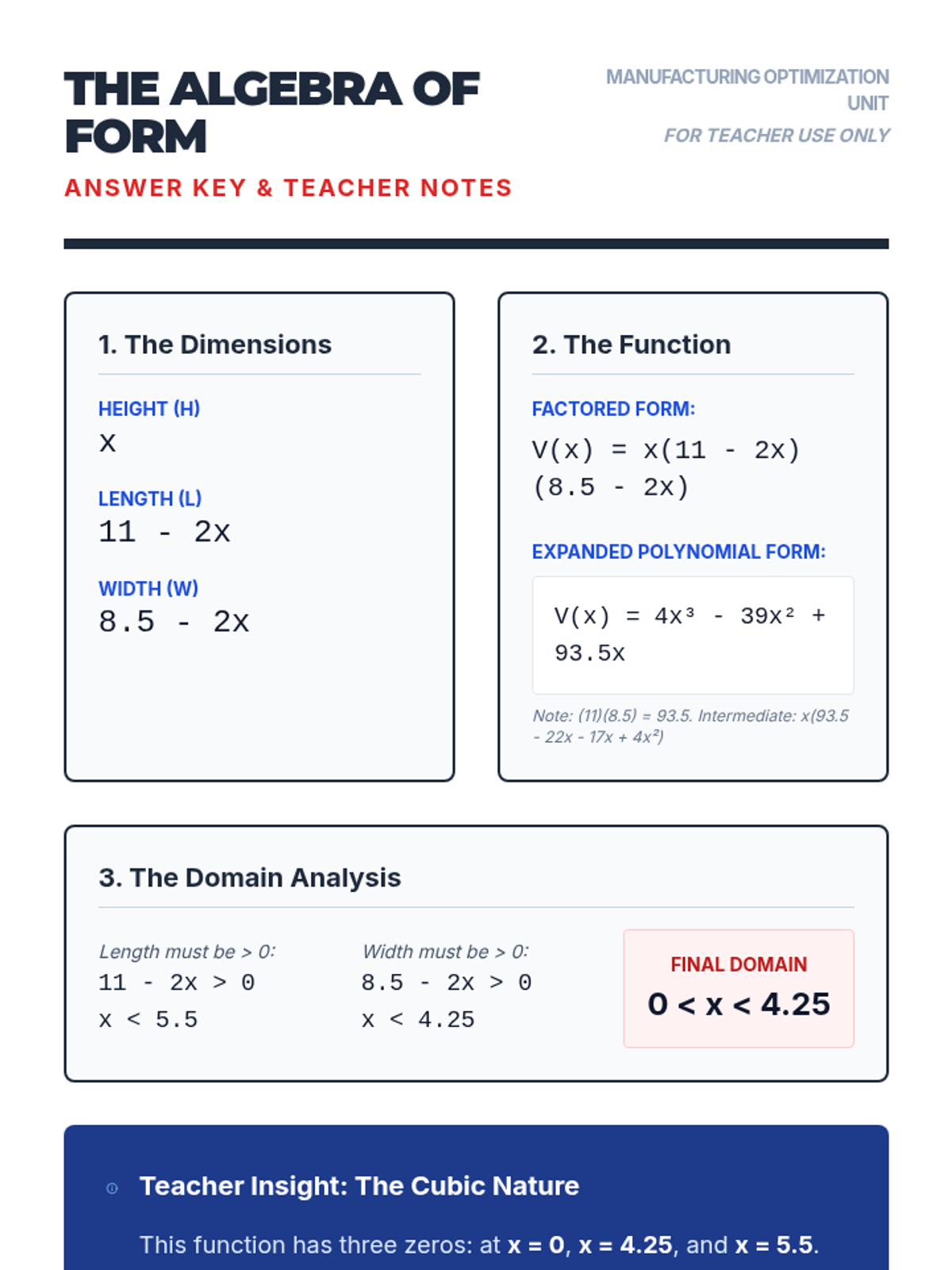
Students translate their physical box models into algebraic functions, expressing volume in terms of a single variable. They identify the domain constraints and graph the function.
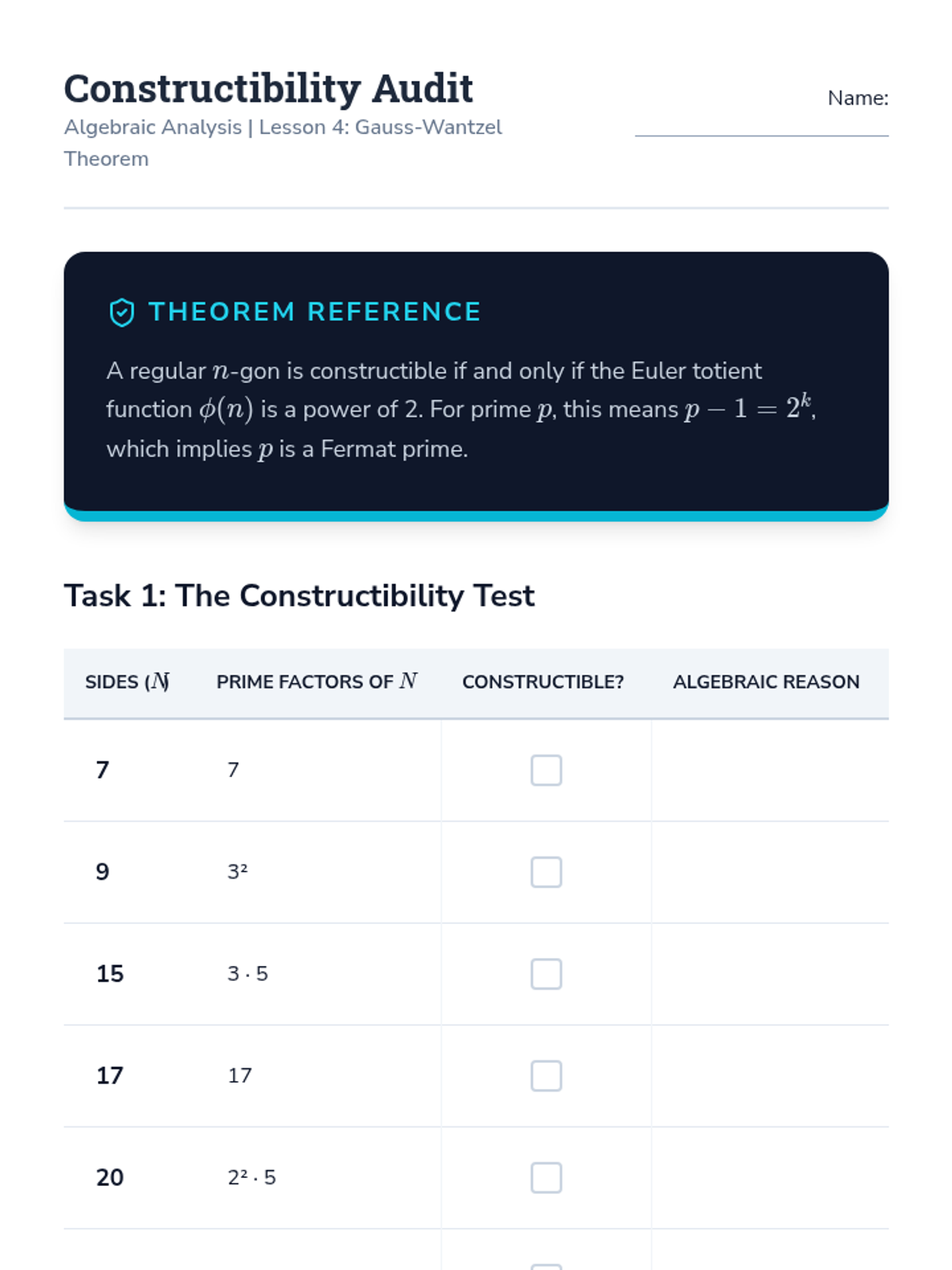
Students analyze the impossibility of trisecting angles and constructing 7-gons or 9-gons, focusing on the limitations imposed by cubic equations.
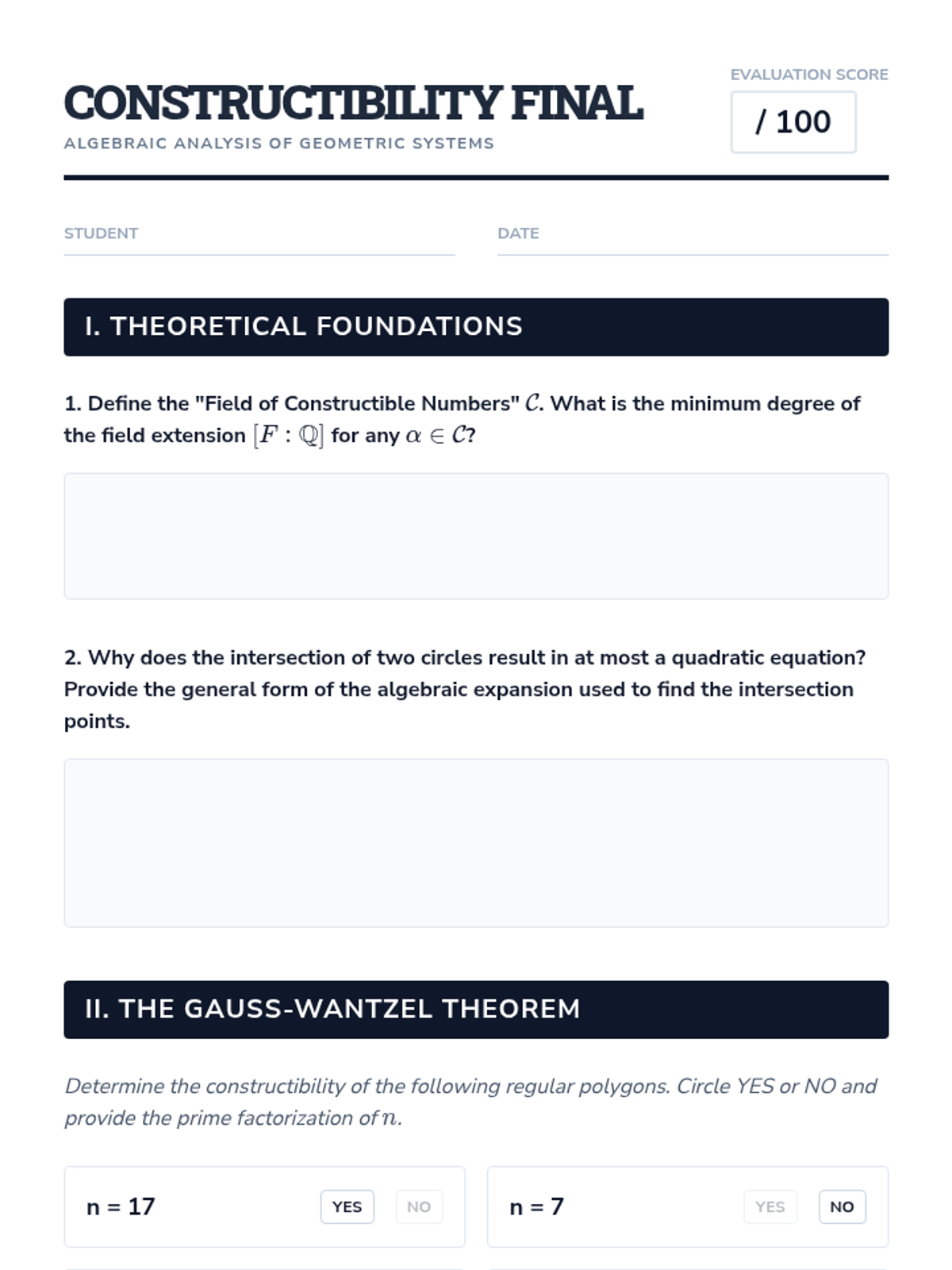
An exploration of the Gauss-Wantzel Theorem and Fermat primes, explaining why the 17-gon is constructible while others are not.
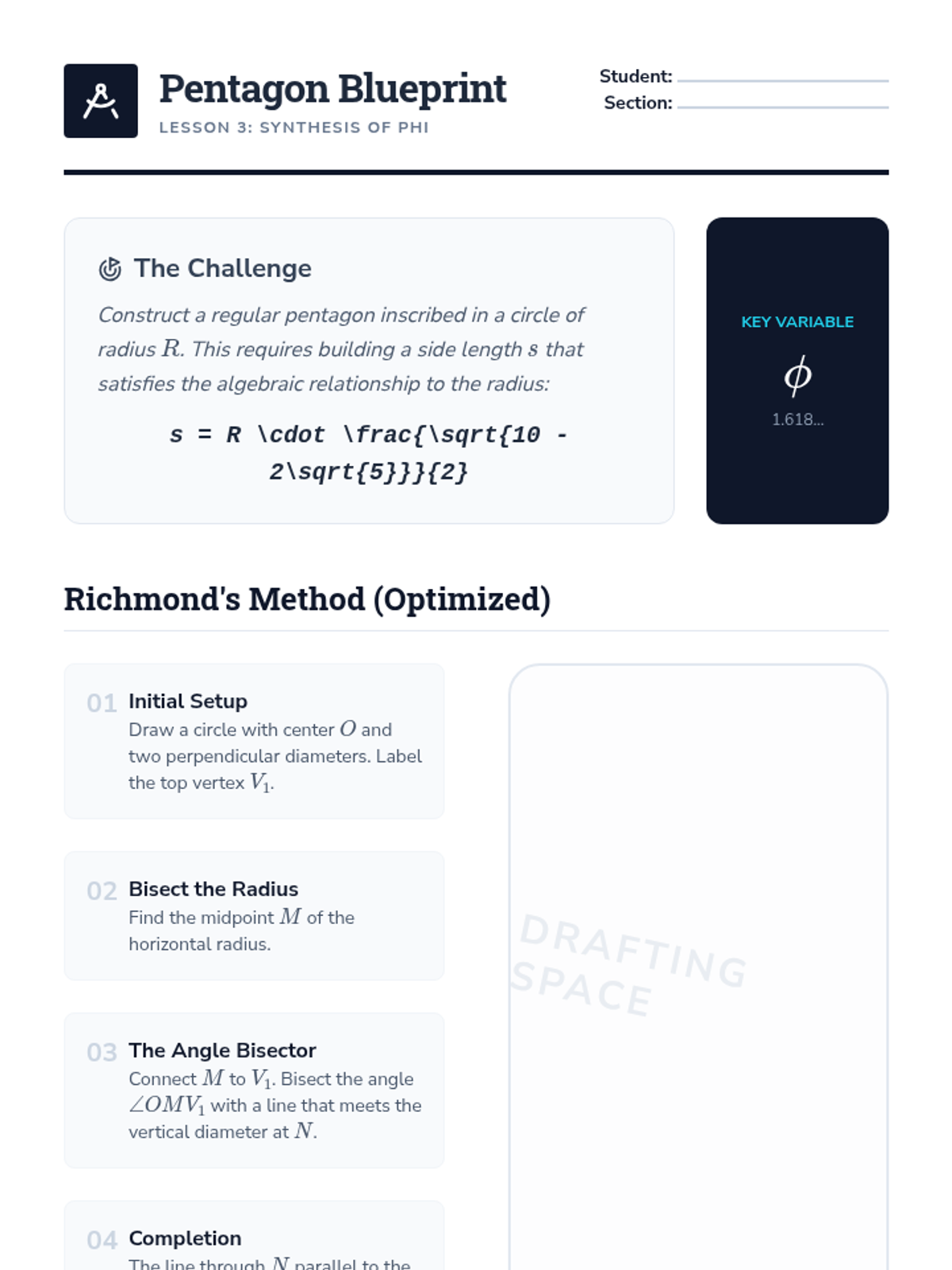
Students derive the Golden Ratio algebraically and use it to construct a regular pentagon, linking algebraic solutions of quadratic equations to five-fold symmetry.
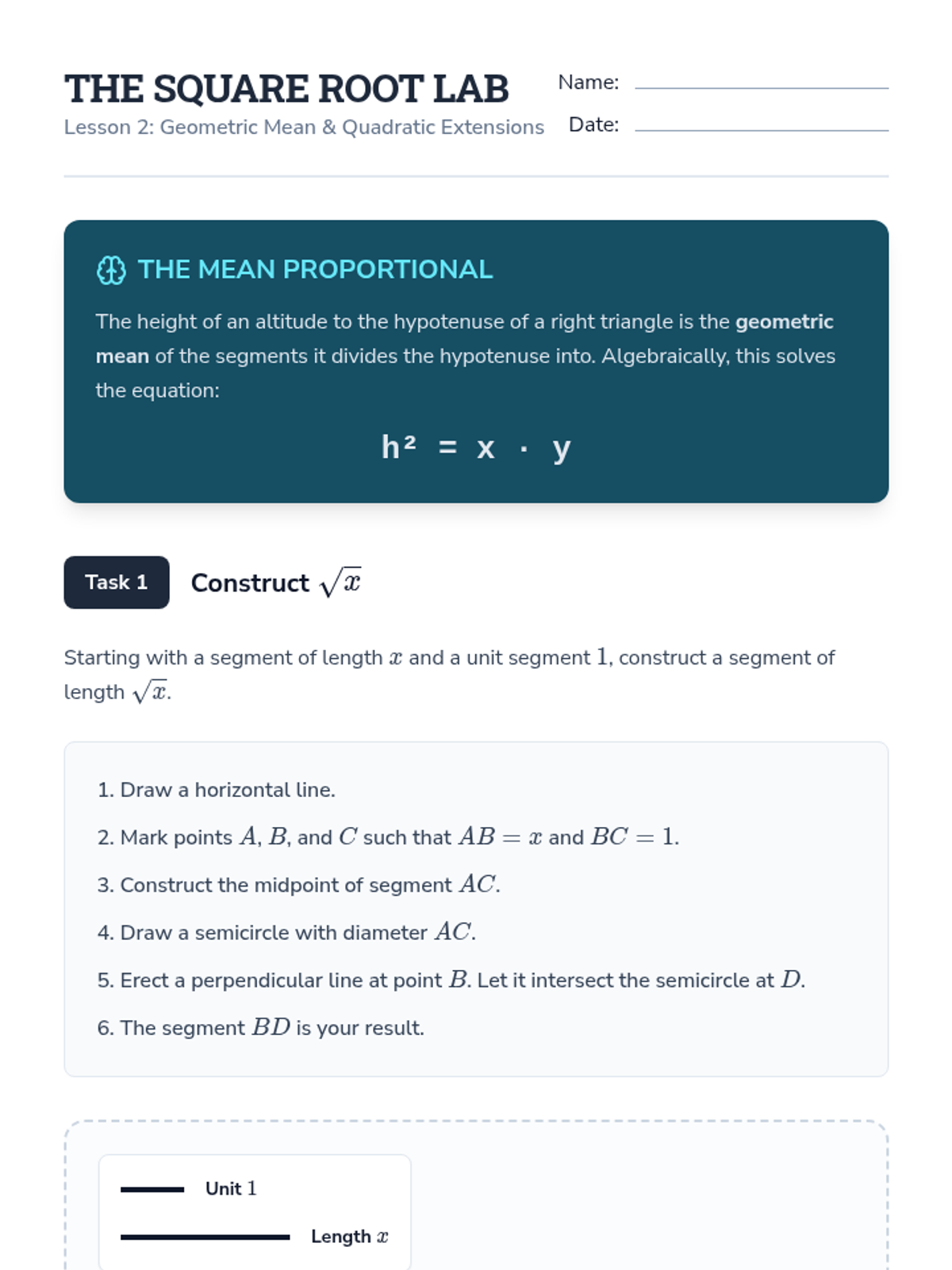
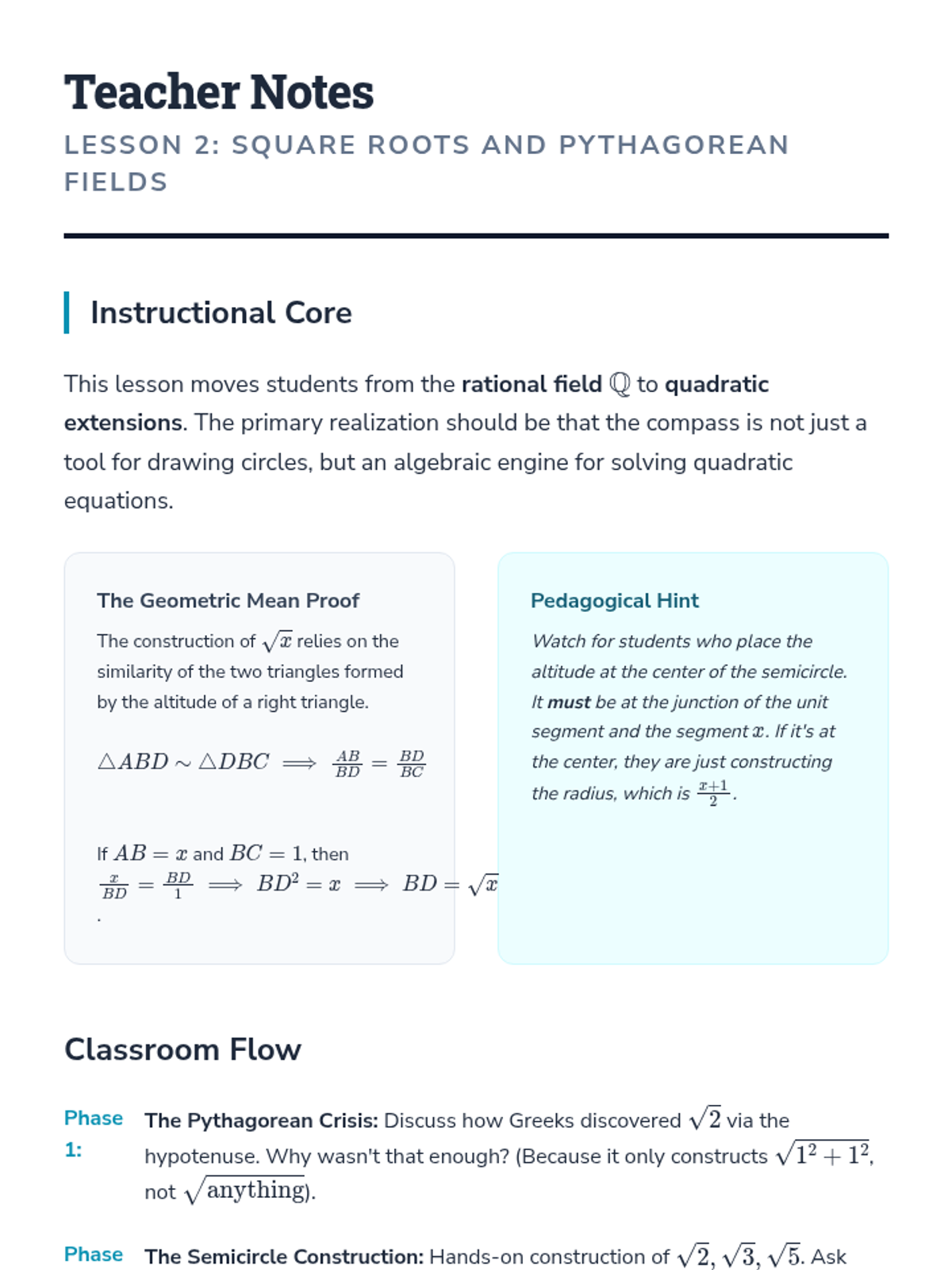
Focusing on the geometric mean, students learn to construct square roots and analyze how compass operations correspond to quadratic field extensions.
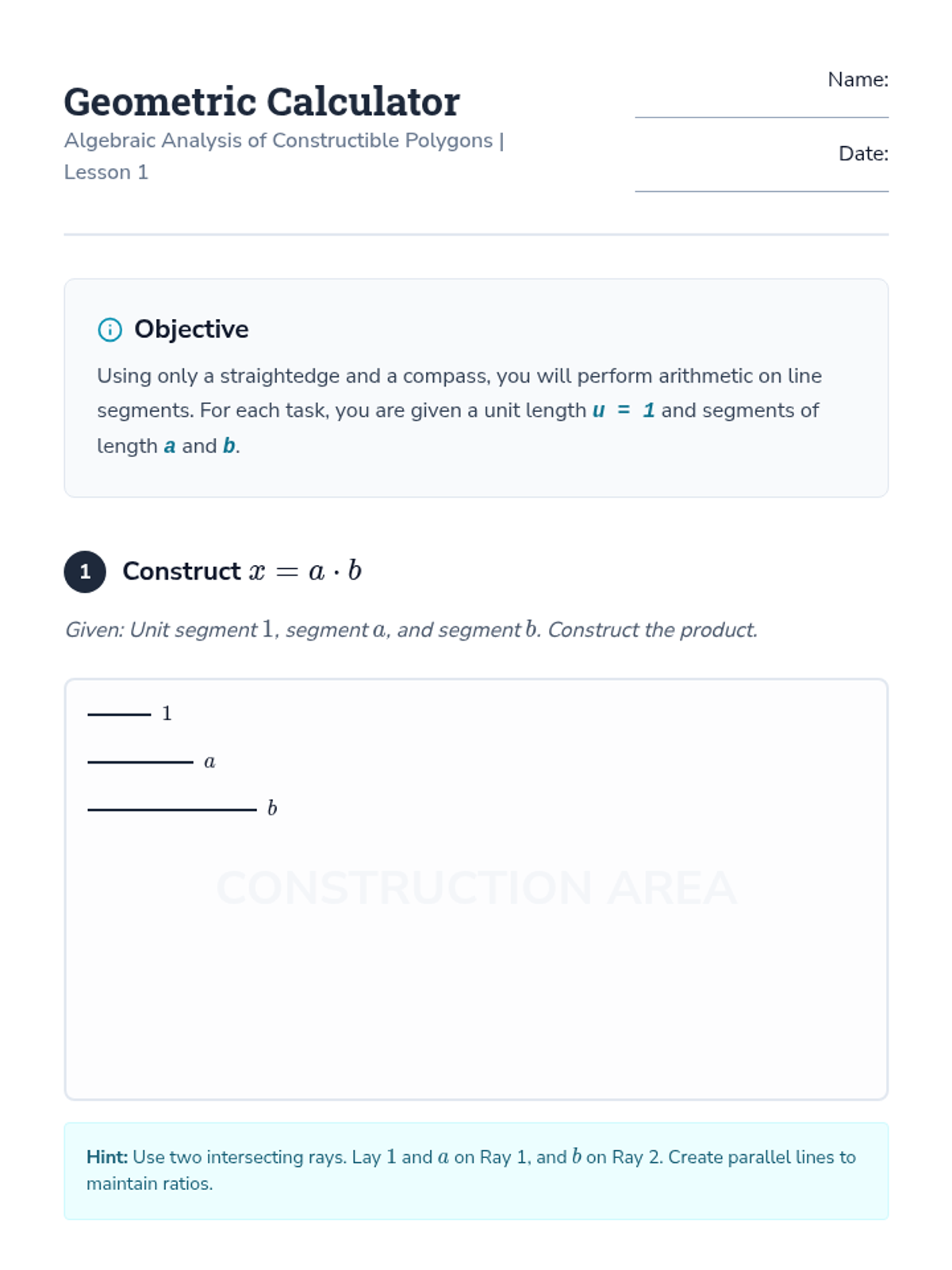
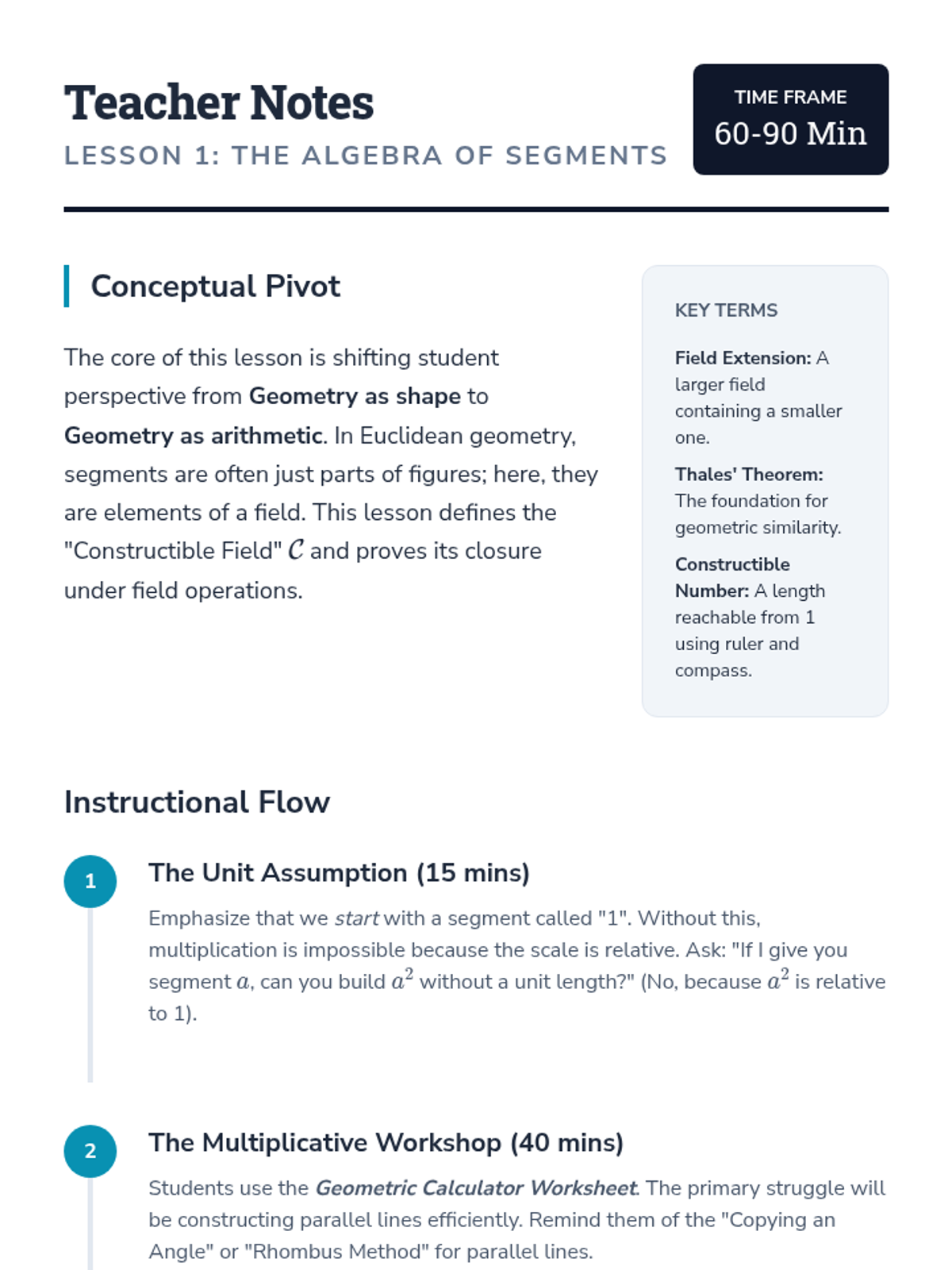
Students establish that the set of constructible numbers is closed under basic arithmetic operations (addition, subtraction, multiplication, division) by developing geometric methods for each.
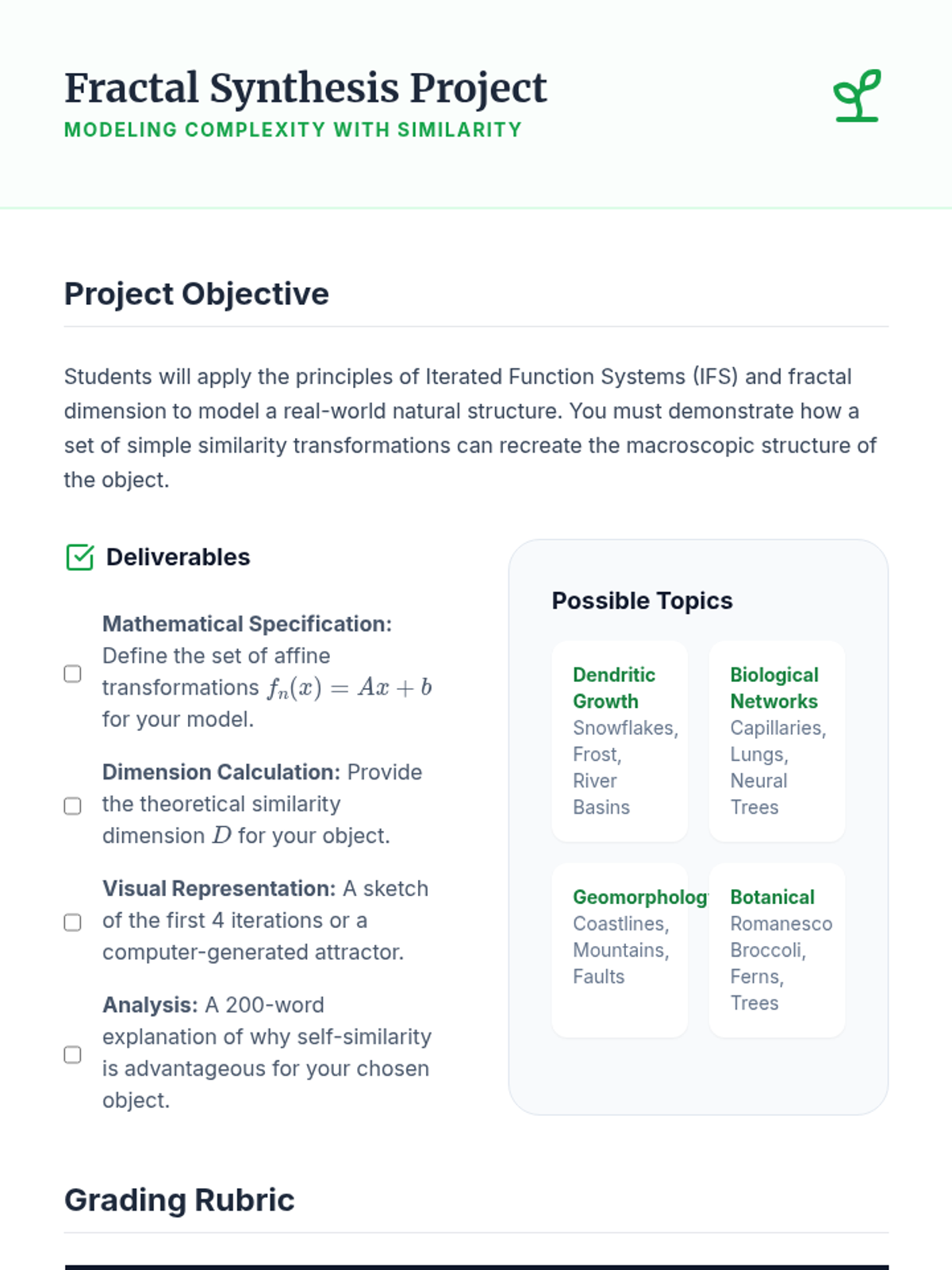
Students apply their knowledge of similarity and dimension to model natural objects like coastlines, ferns, or lungs. They synthesize the sequence by creating a fractal model using similarity rules.
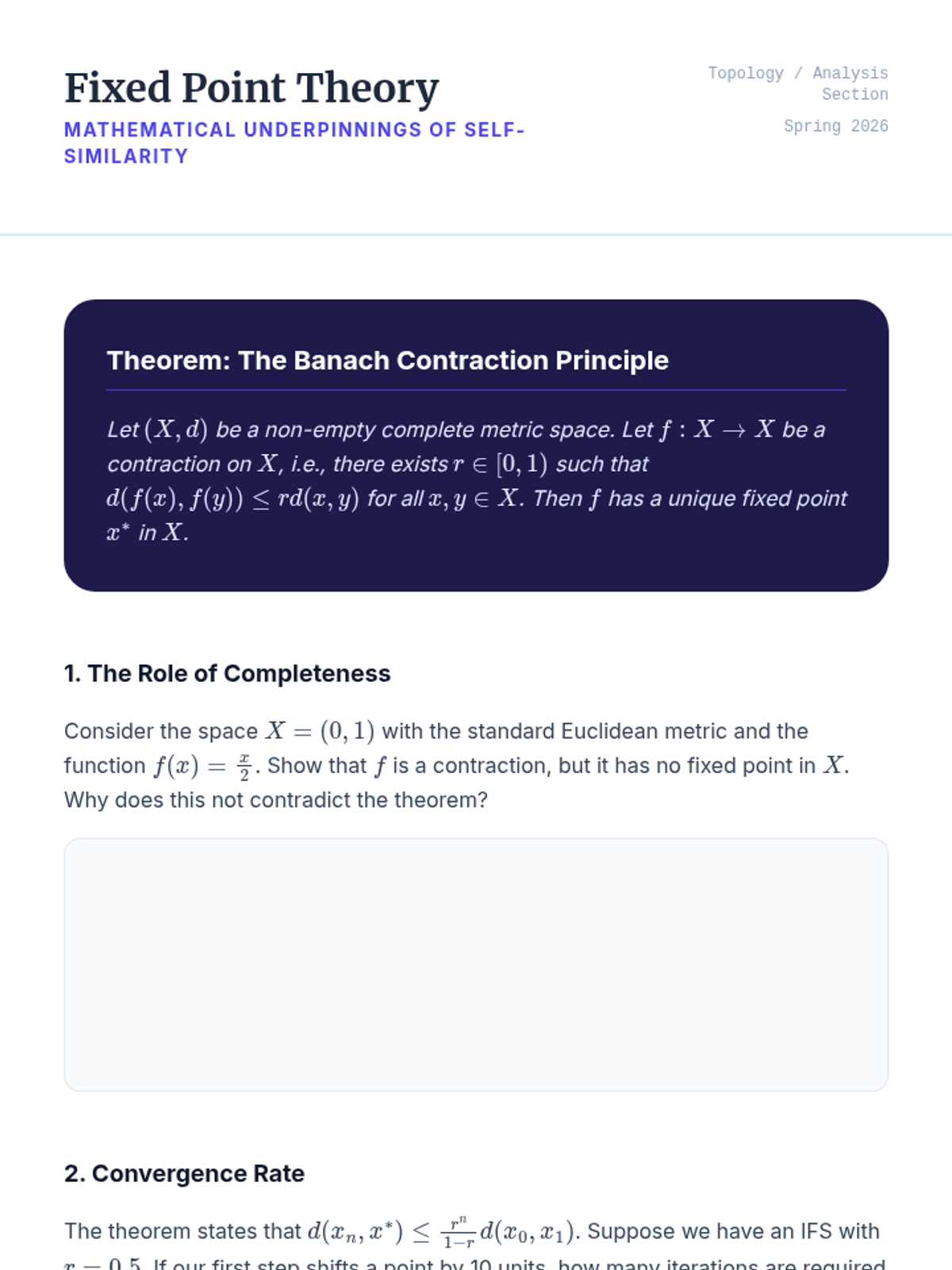
This lesson provides the theoretical foundation for fractal convergence. Students explore the Banach Contraction Principle and fixed-point theorems in complete metric spaces.
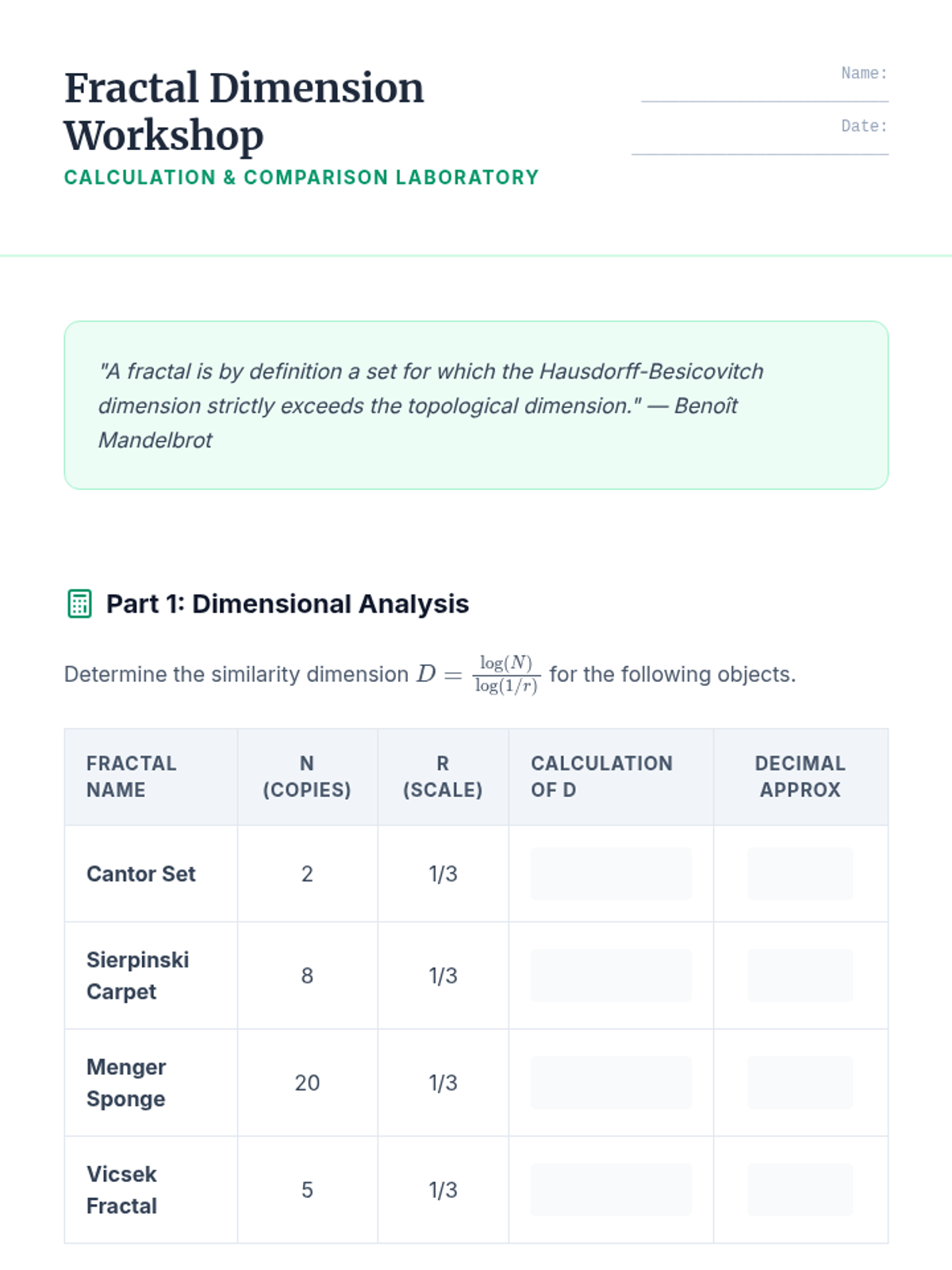
Students derive and apply the similarity dimension formula to non-integer shapes like the Koch Snowflake and Sierpinski Gasket, exploring the logarithmic relationship between scaling and self-similarity.
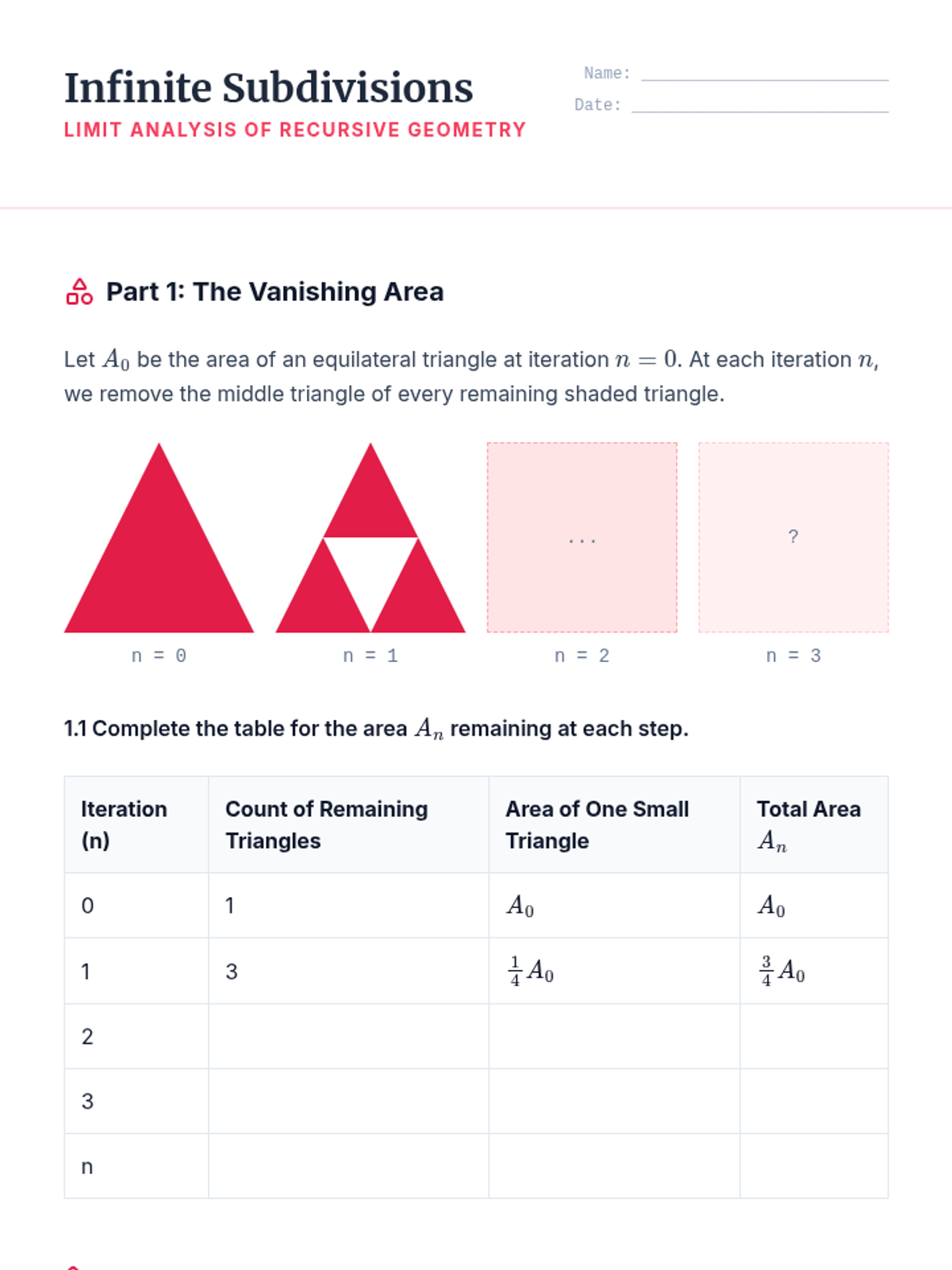
Students analyze the Sierpinski Gasket through recursive triangle removal, calculating the limits of area and perimeter using geometric series. This lesson bridges similarity with infinite processes.
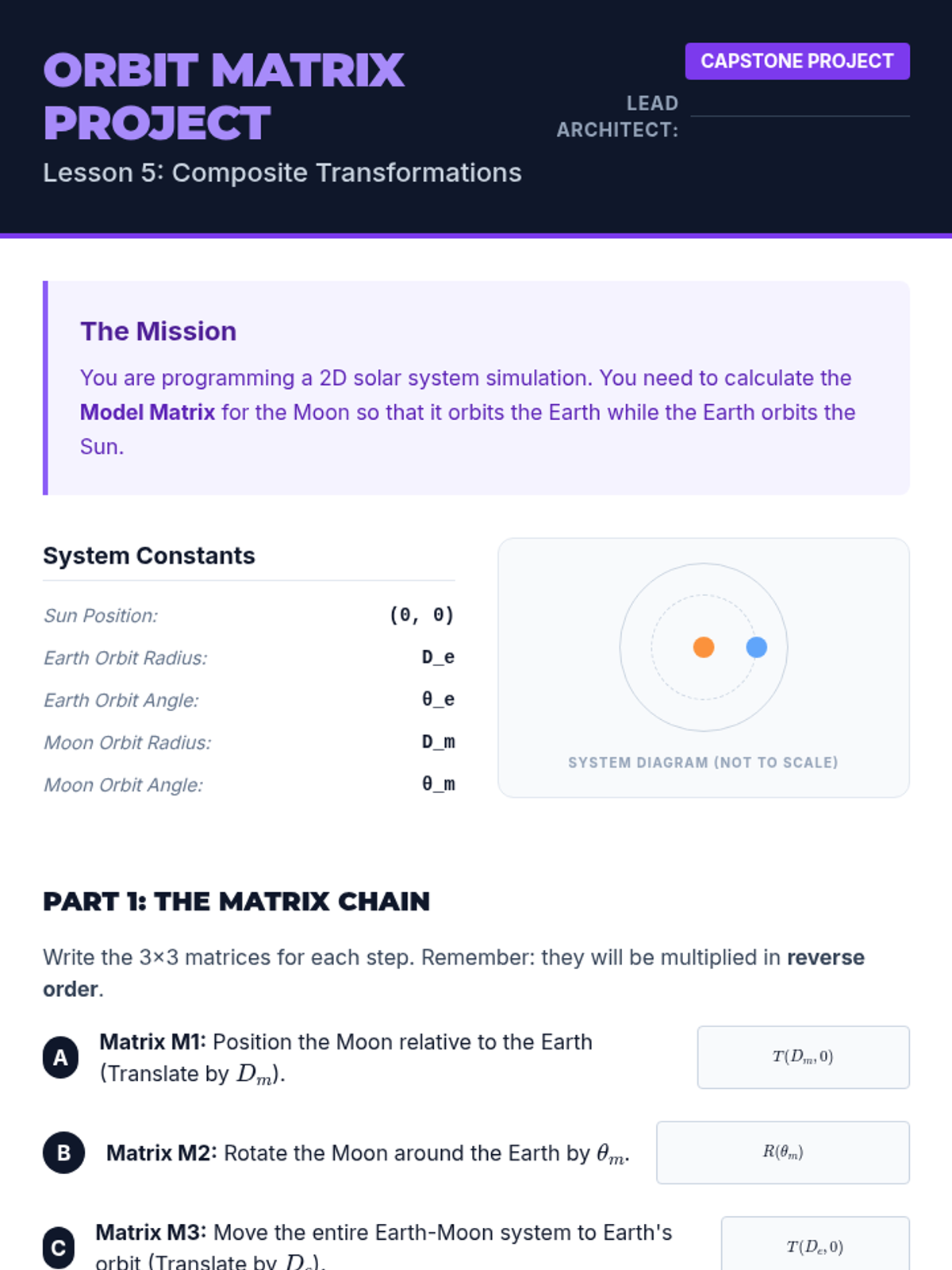
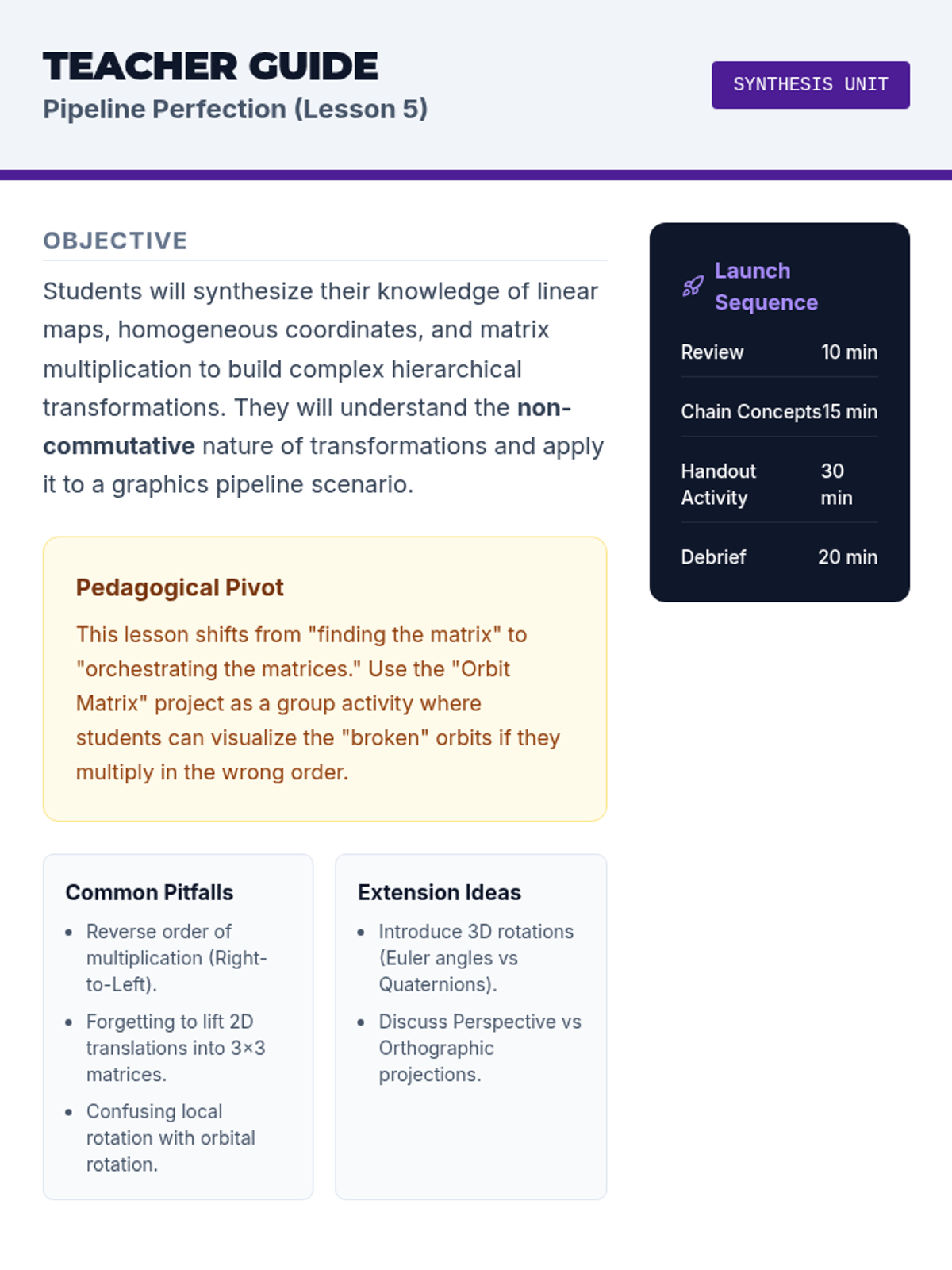
Students calculate composite matrices to perform complex sequences (e.g., rotate around a specific point). They apply this to a simplified graphics pipeline scenario involving model-view-projection.
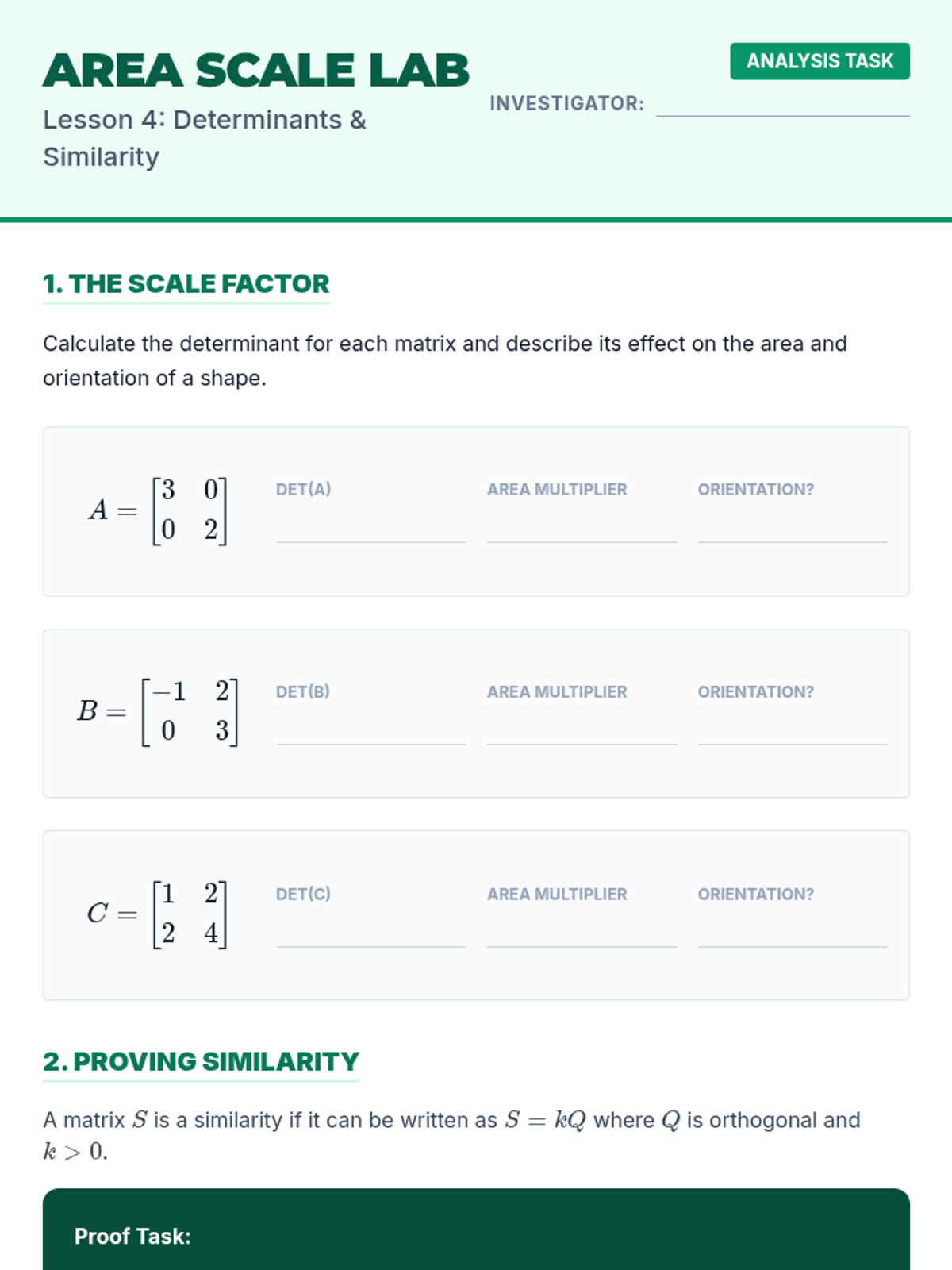
Students explore the geometric interpretation of the determinant as an area-scaling factor. They define similarity transformations in terms of scalar matrices and analyze how area and orientation change under various mappings.
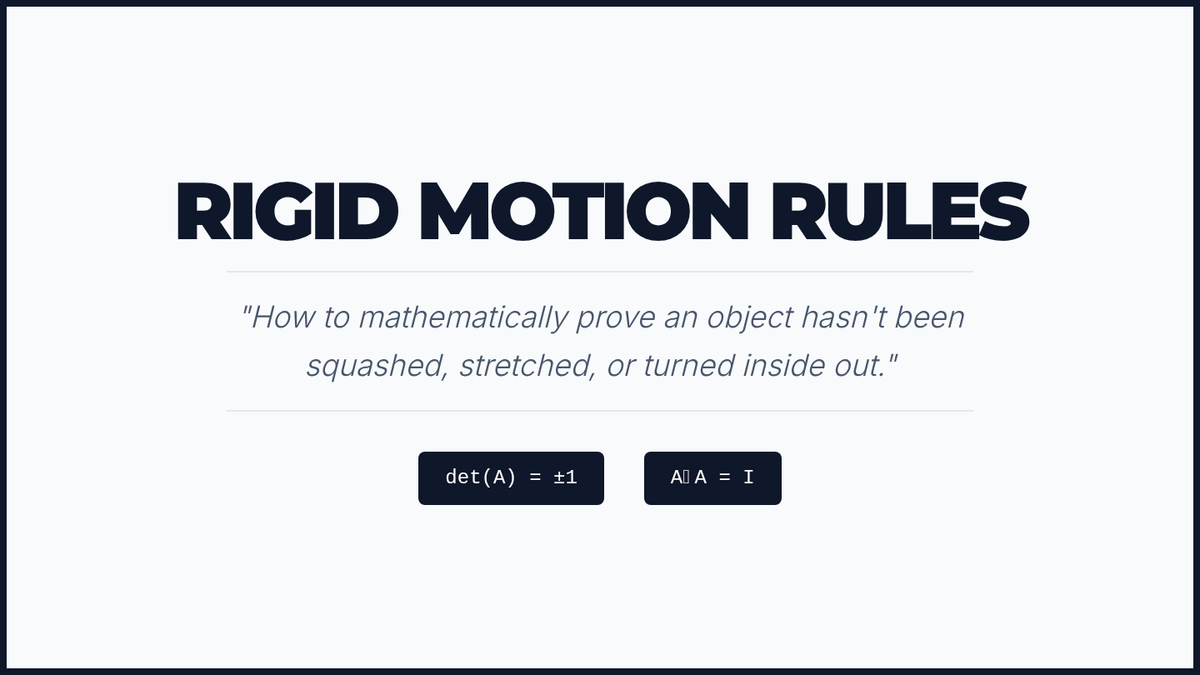
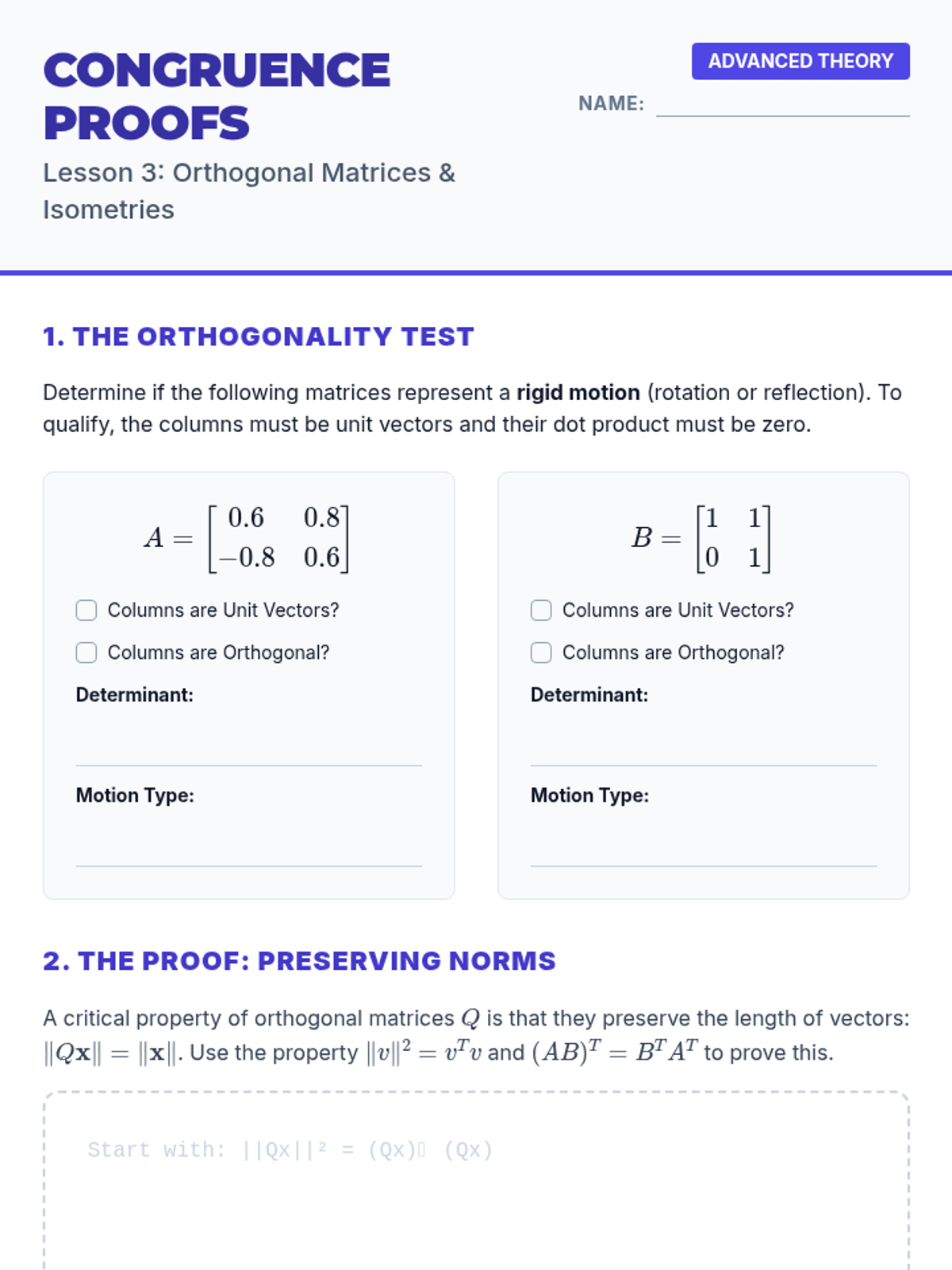
This lesson focuses on orthogonal matrices and their relationship to isometries. Students prove that matrices with determinant ±1 (and orthogonal columns) preserve distances and angles, formally linking linear algebra to congruence.
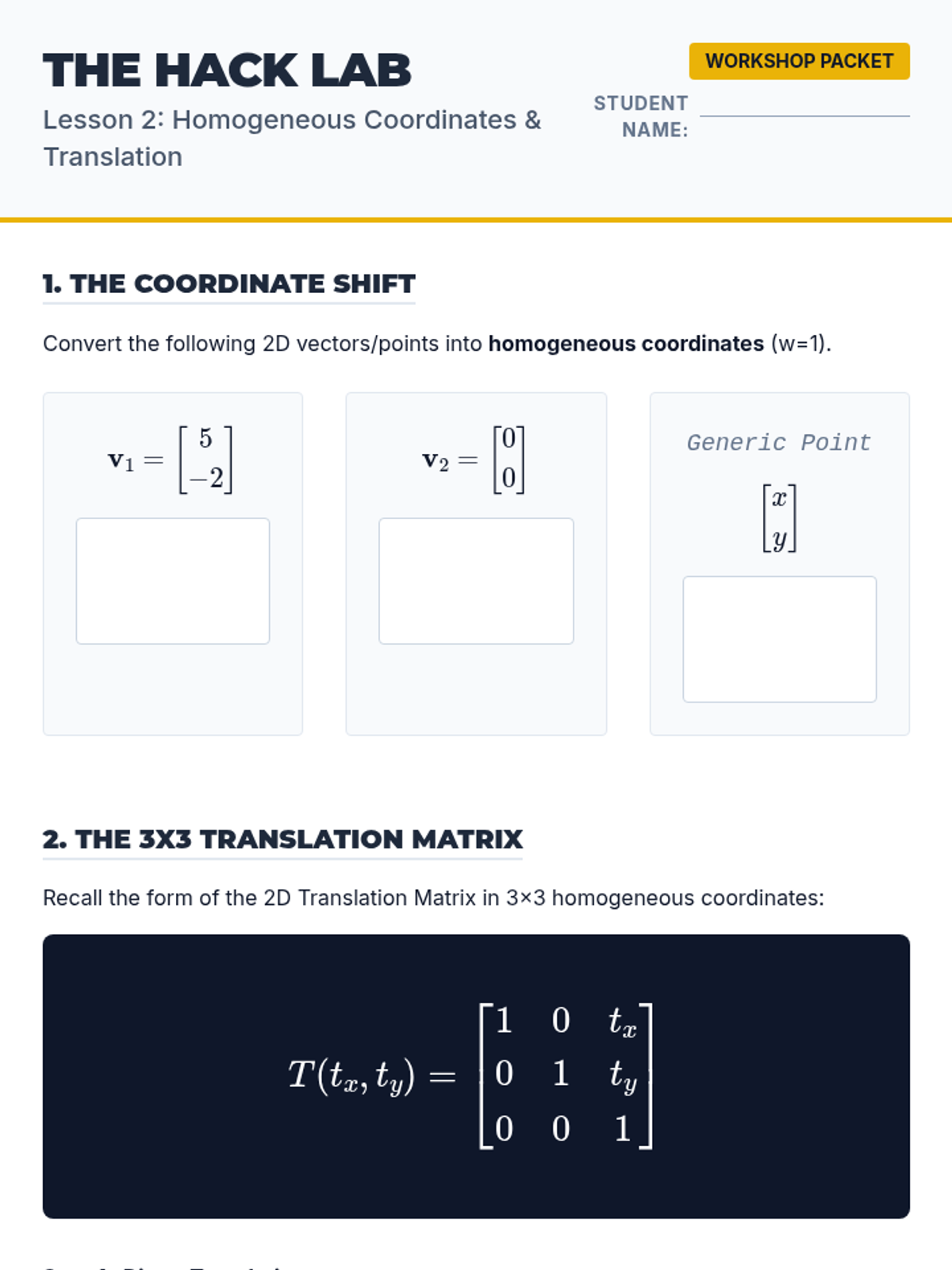
Students address the limitation of linear algebra regarding translations by introducing homogeneous coordinates. They construct 3x3 matrices to represent 2D translations, allowing for a unified approach to all affine transformations.
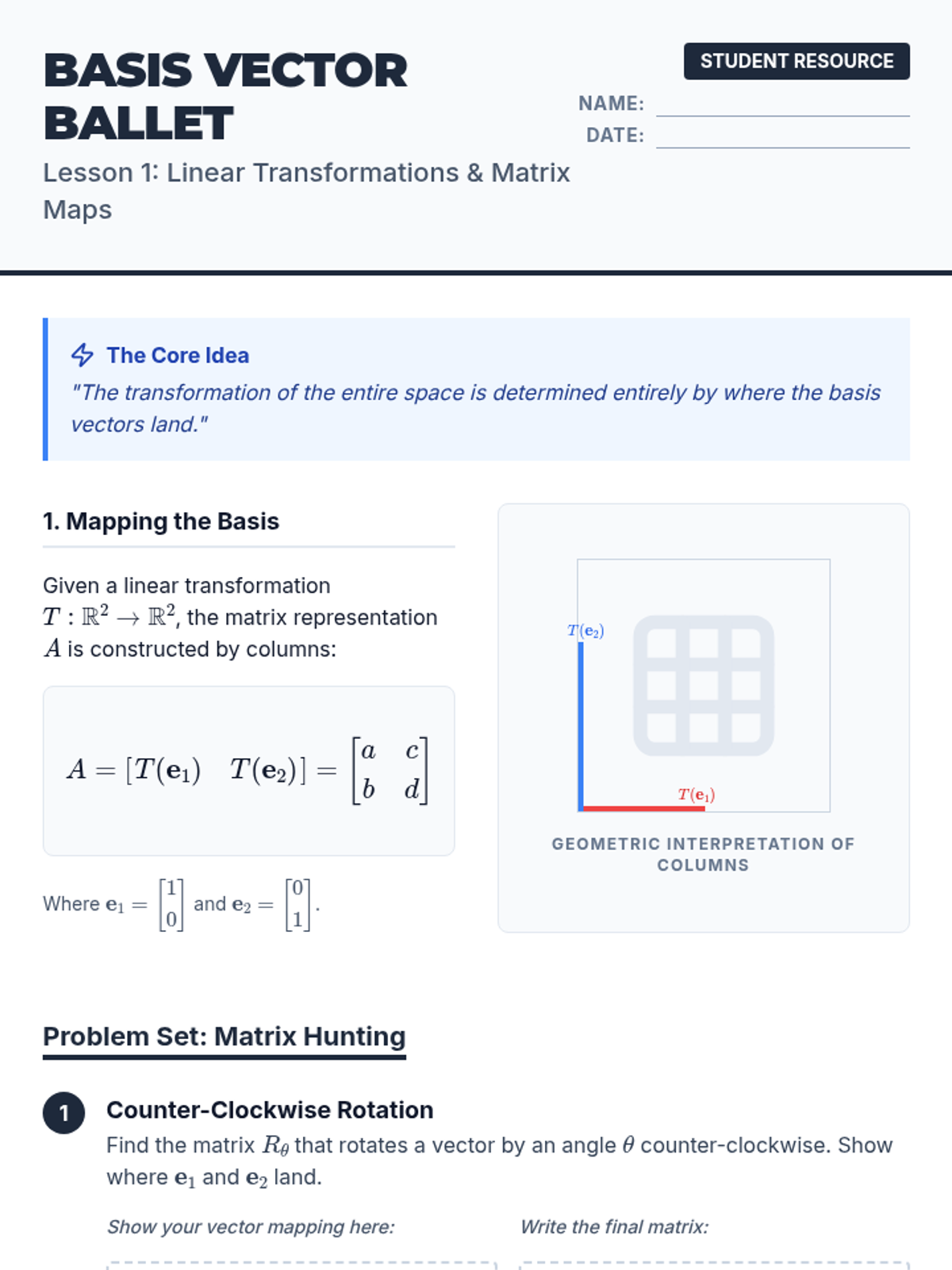
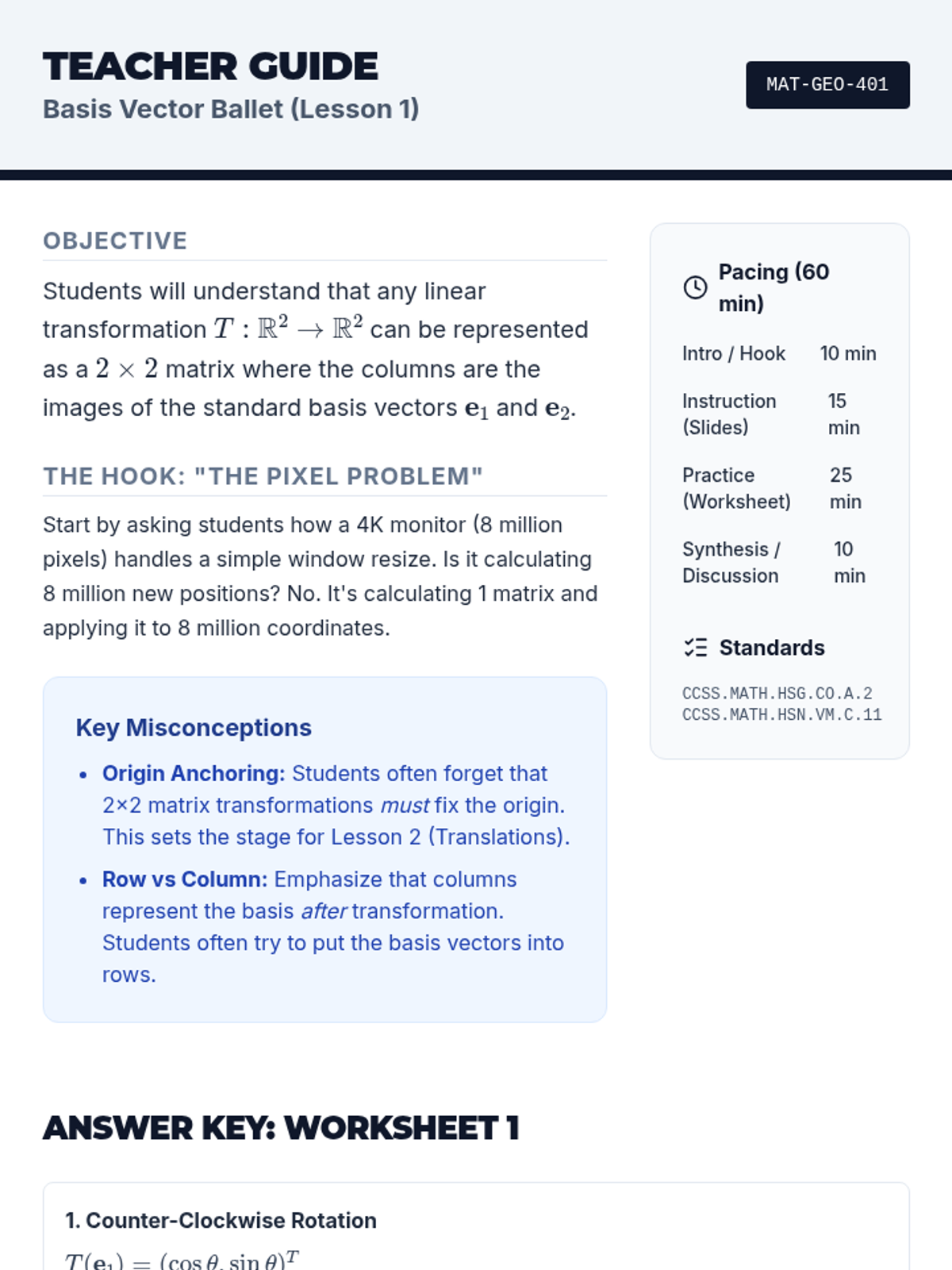
Students review linear maps and visualize how basis vectors transform. They determine how specific matrices result in geometric scaling, rotation, and shearing relative to the origin.
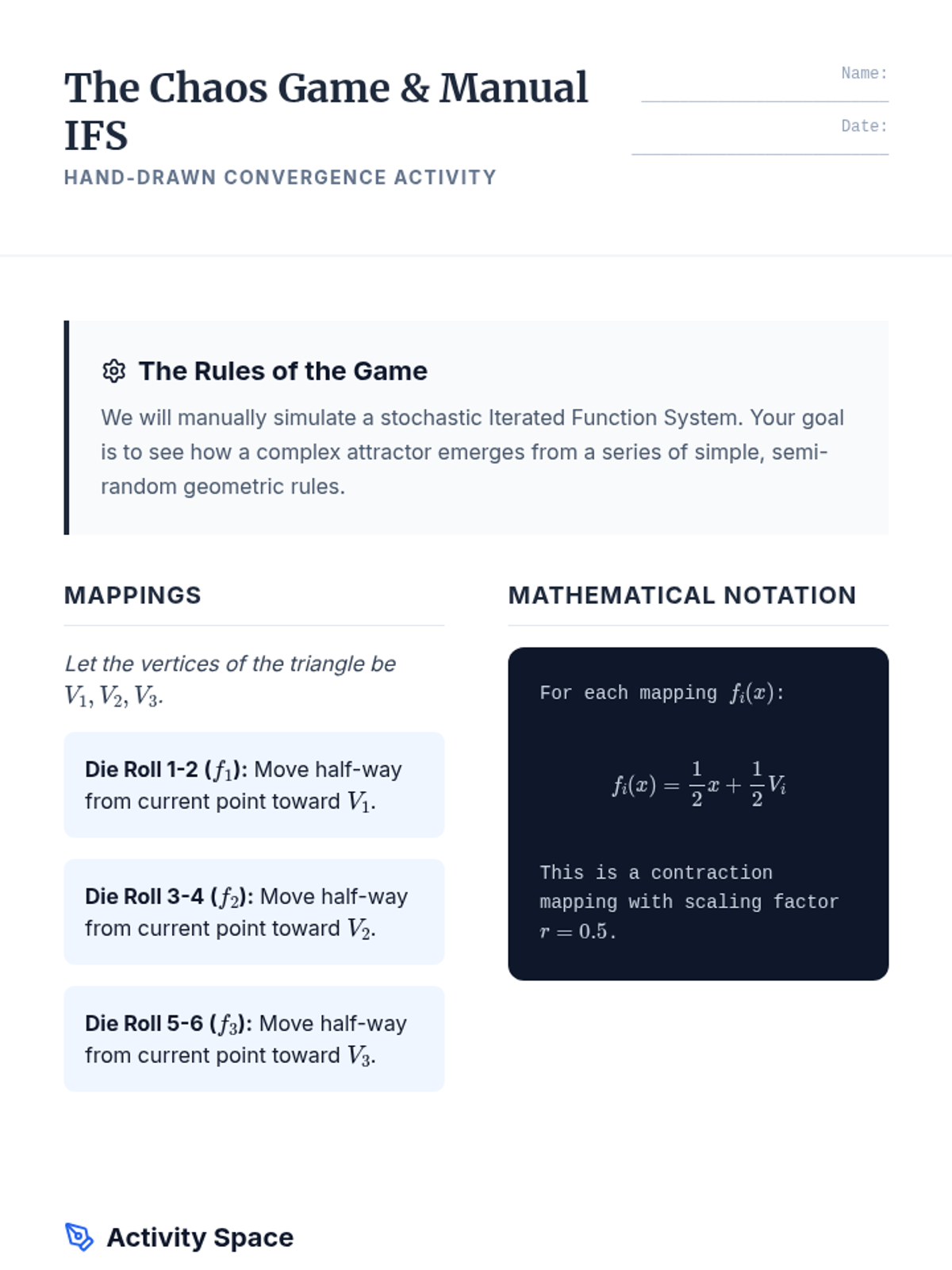
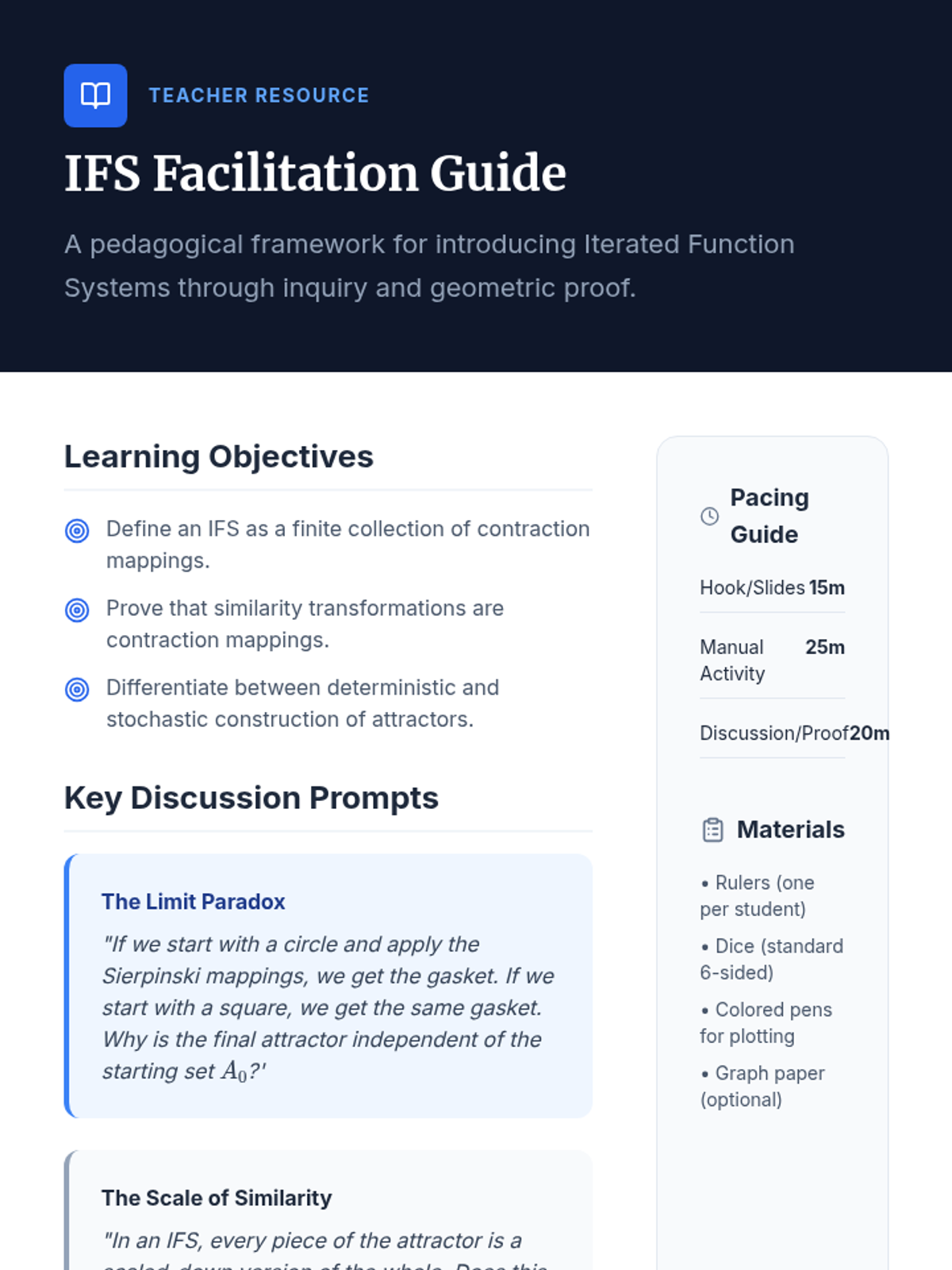
Students are introduced to Iterated Function Systems (IFS) as a collection of contraction mappings. They manually apply transformations to visualize the emergence of an attractor.
Students apply the concept of iterative complex mappings to generate fractals like the Julia set. They explore how self-similarity arises from repeated application of similarity transformations.
Students express similarity transformations using 2x2 matrices. They identify the specific form of matrices that preserve angles and scale lengths uniformly.
Students translate the AA and SAS criteria into conditions involving complex numbers. They solve problems involving similar triangles by setting up equations in the complex plane.
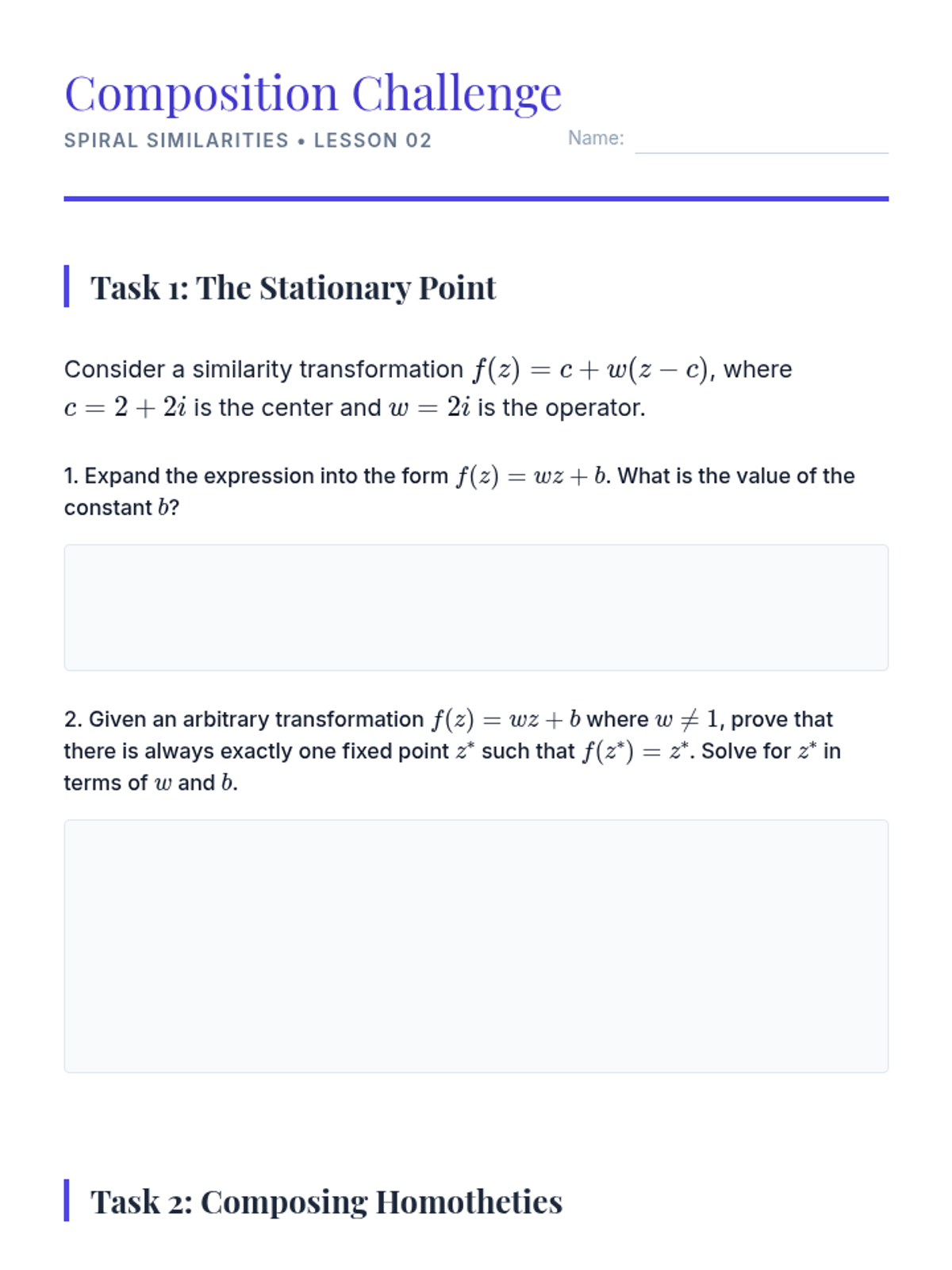
Students investigate spiral similarities, transformations that combine a homothety with a rotation. They prove that the composition of two homotheties with different centers results in a spiral similarity.
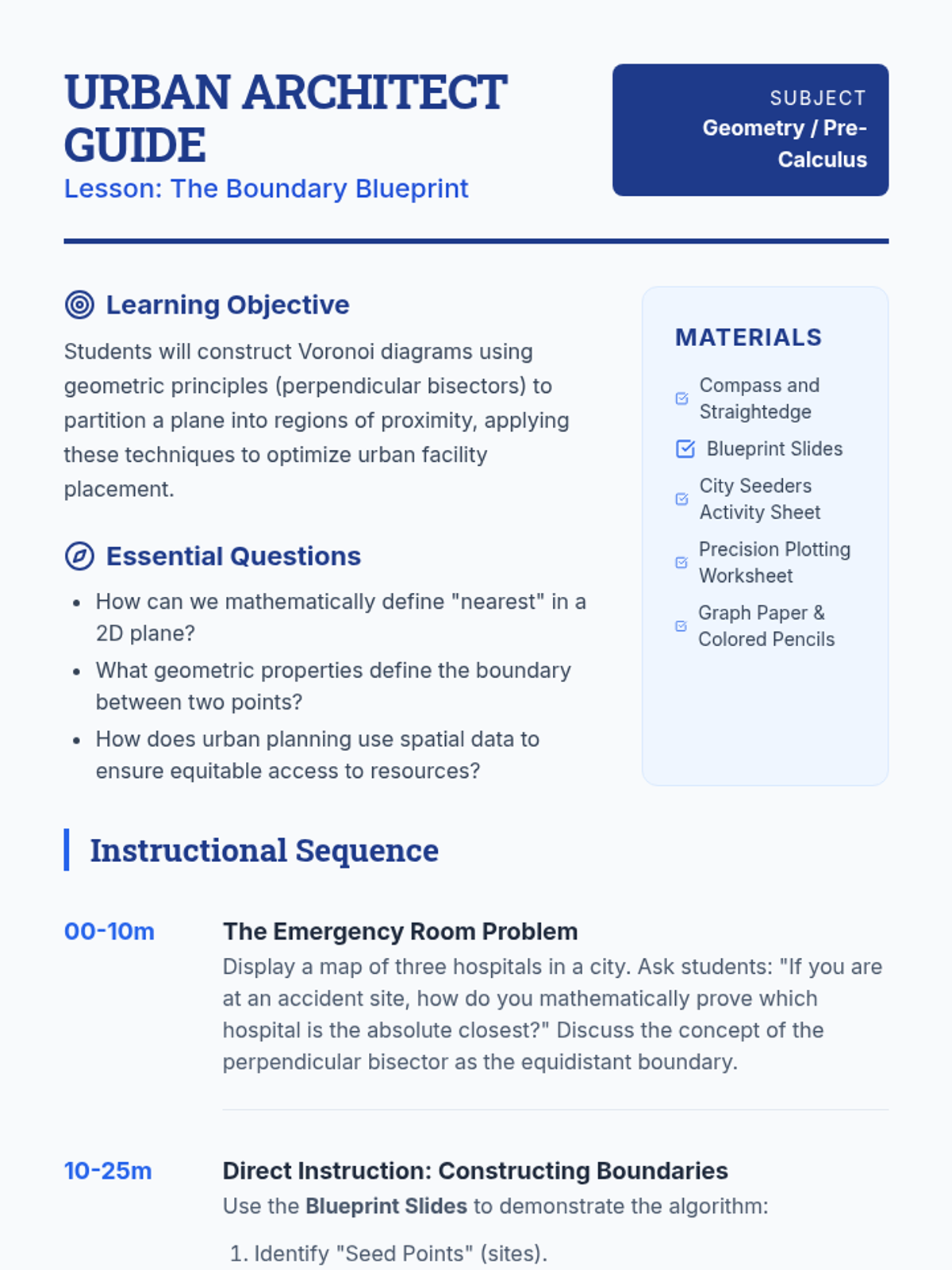
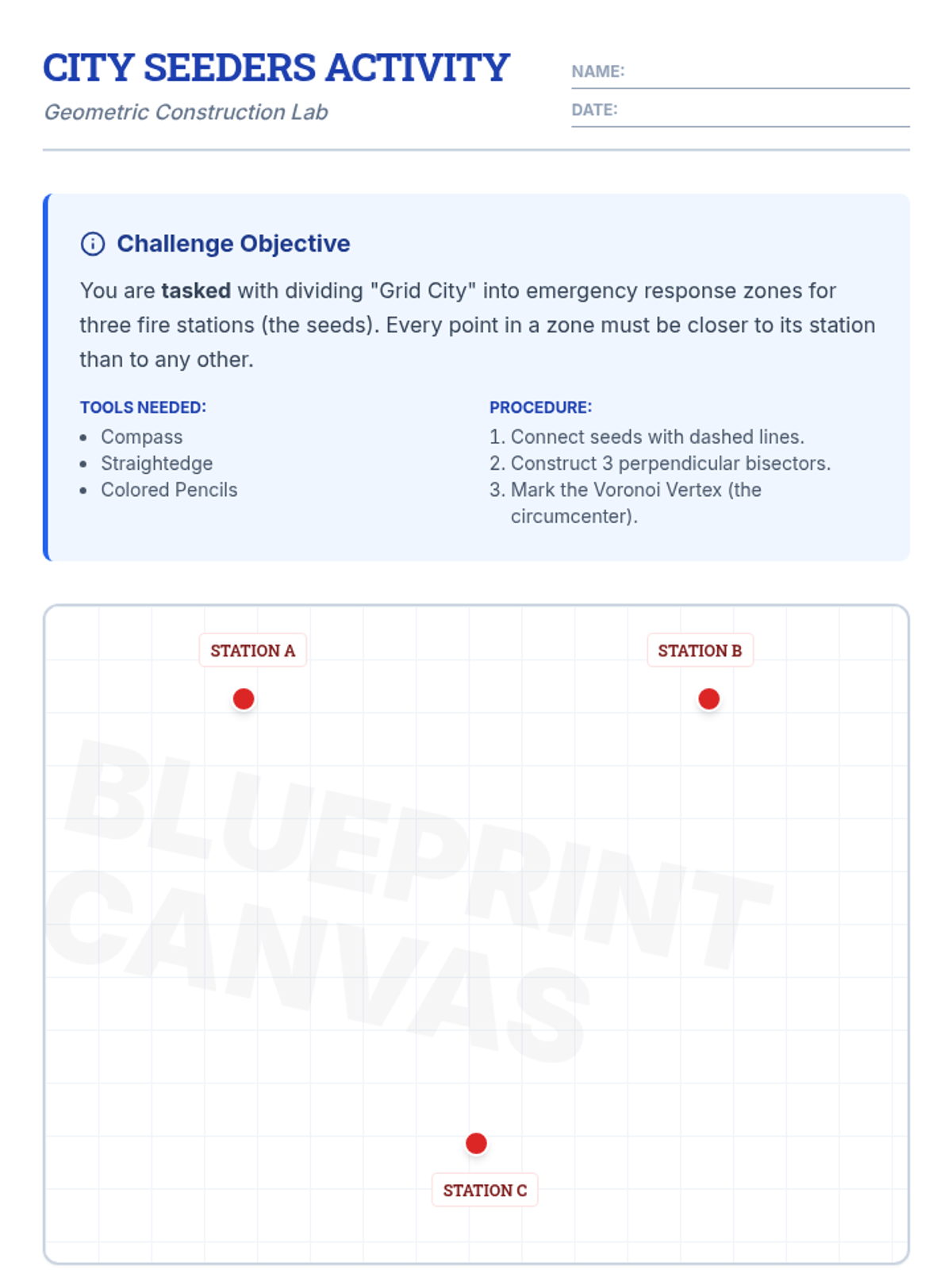
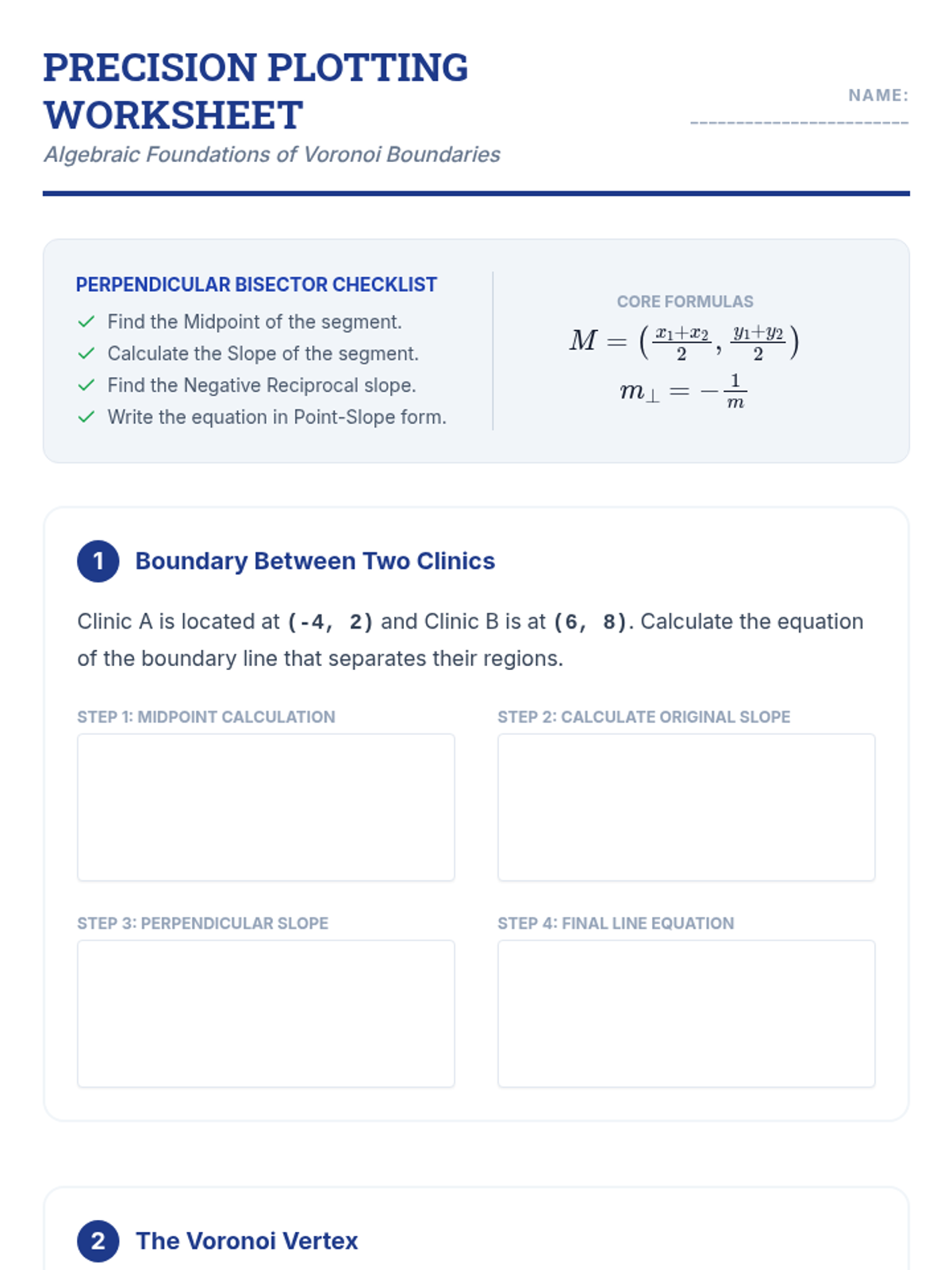
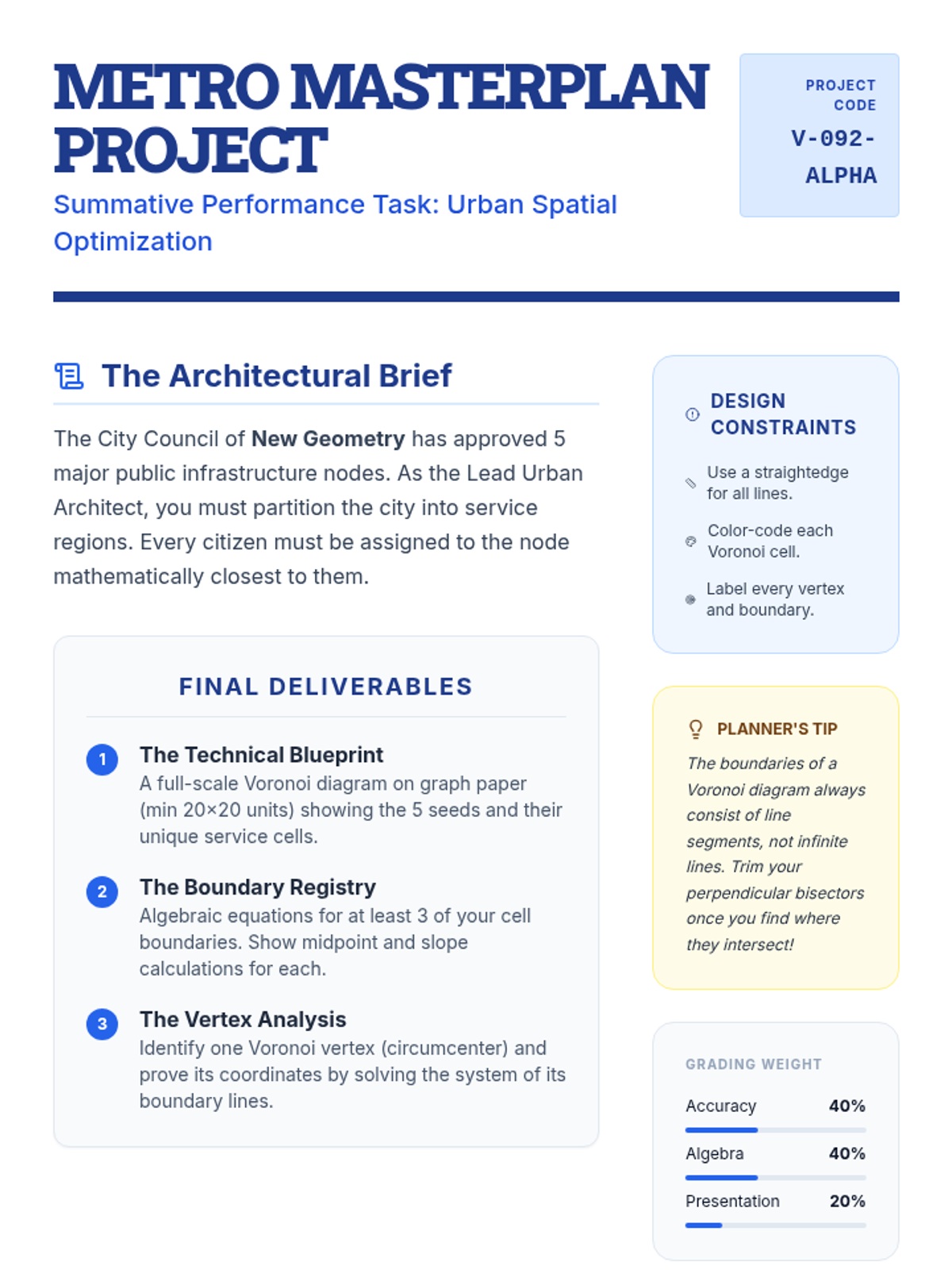
A high school geometry lesson where students learn to construct Voronoi diagrams using perpendicular bisectors to solve real-world spatial optimization problems in urban planning.
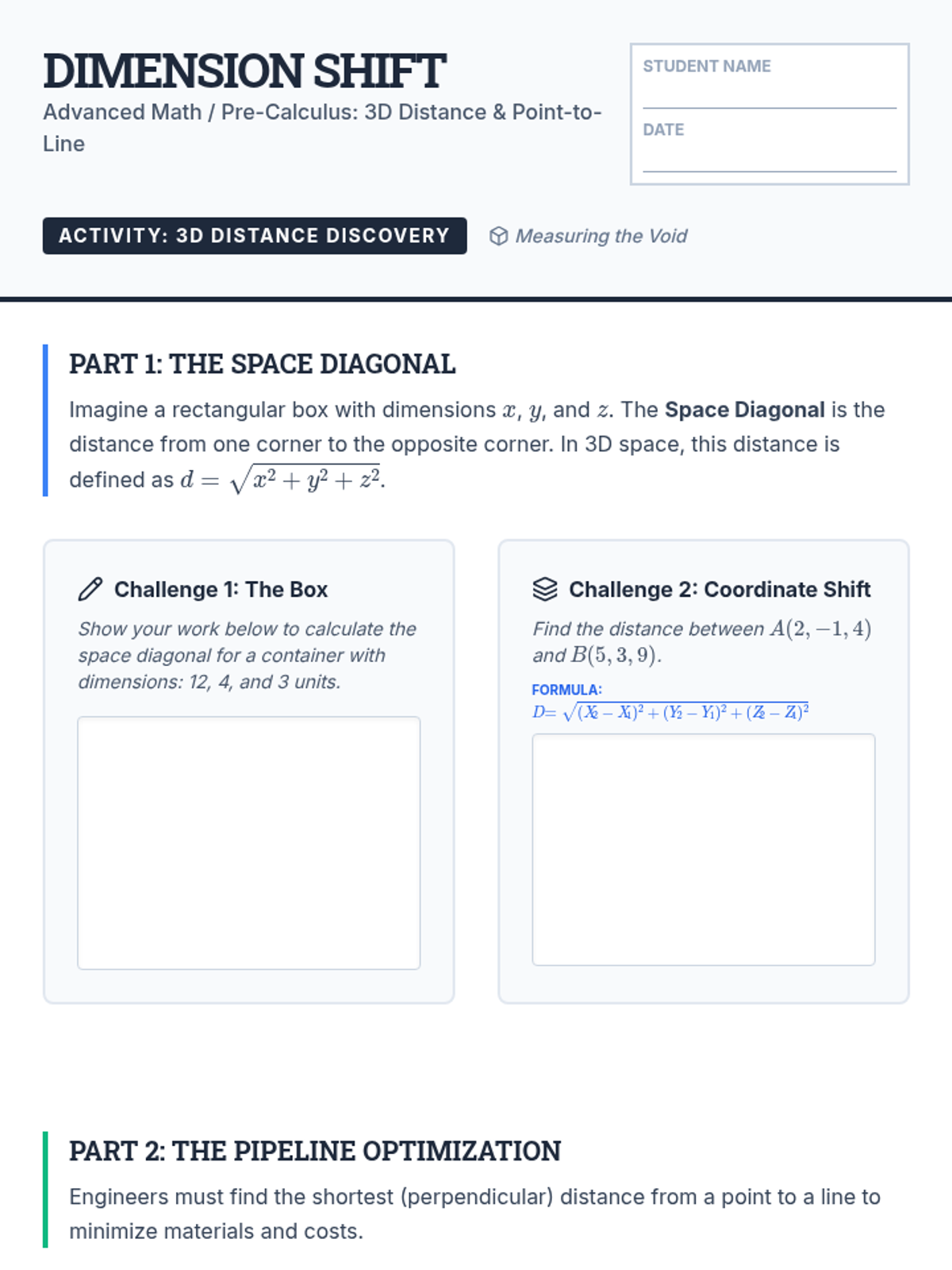
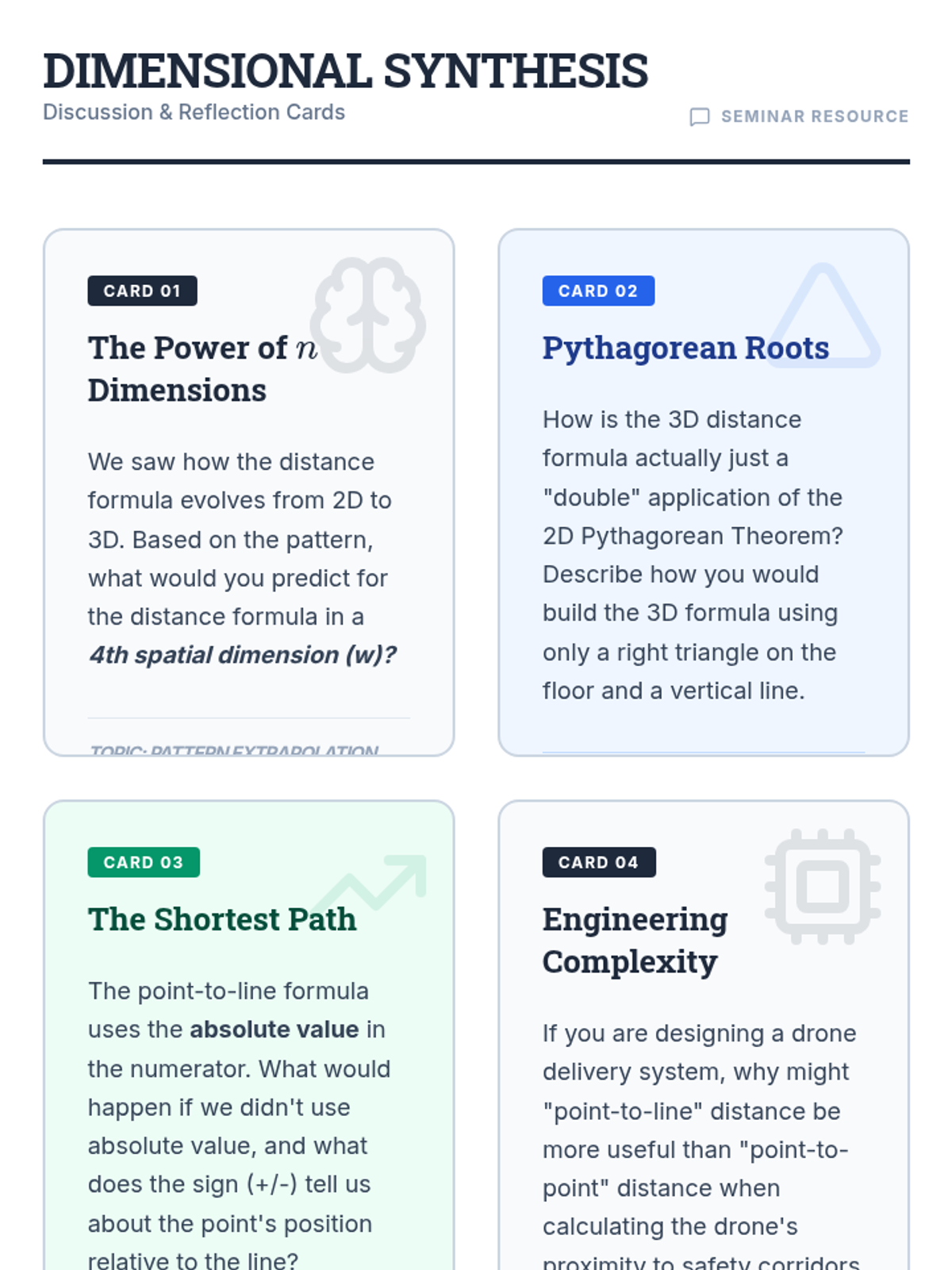
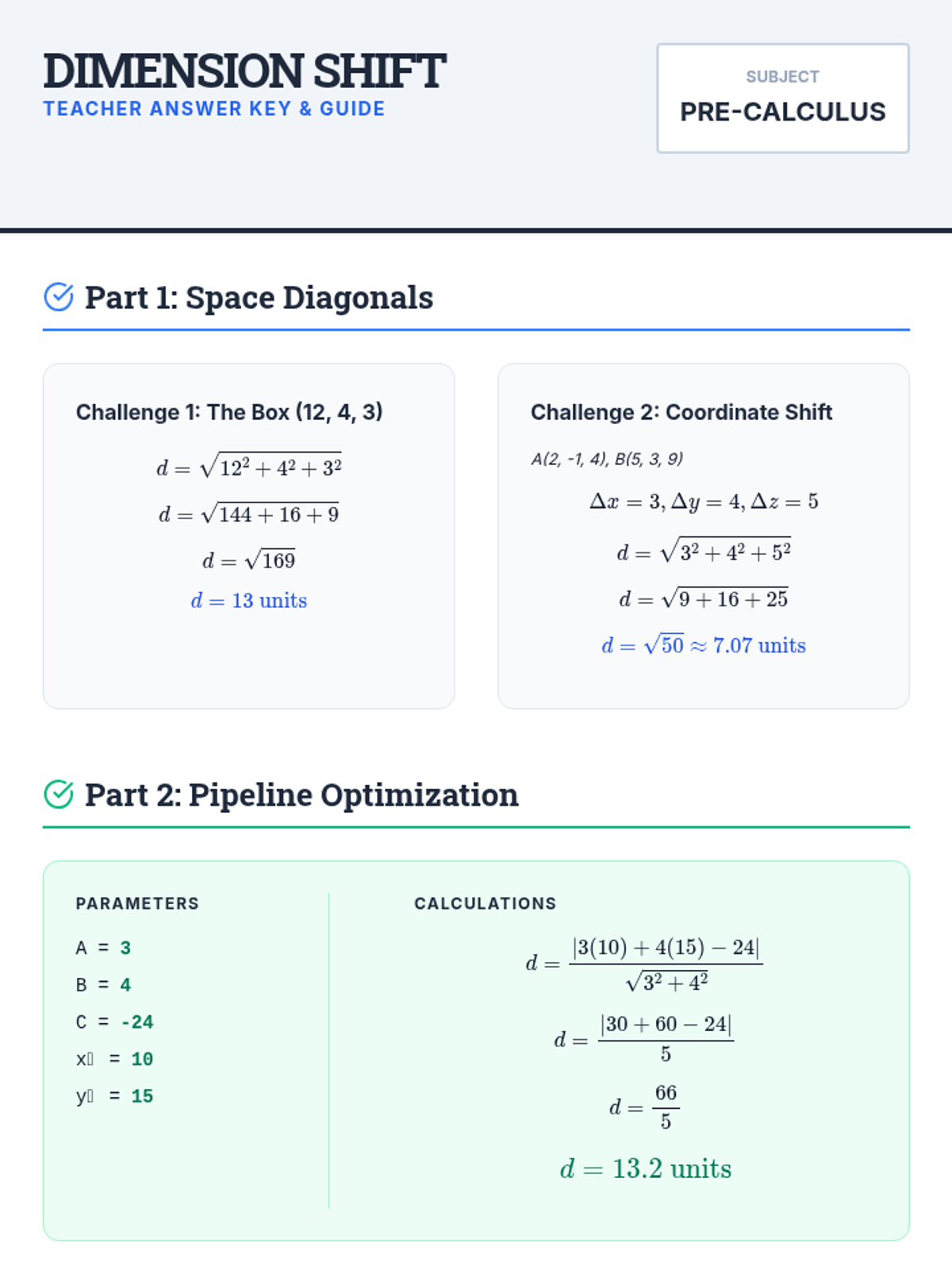
A high-school level exploration of coordinate geometry that extends 2D distance concepts into 3D space and introduces the point-to-line distance formula for optimization problems. Students will visualize spatial diagonals and solve real-world distance challenges.
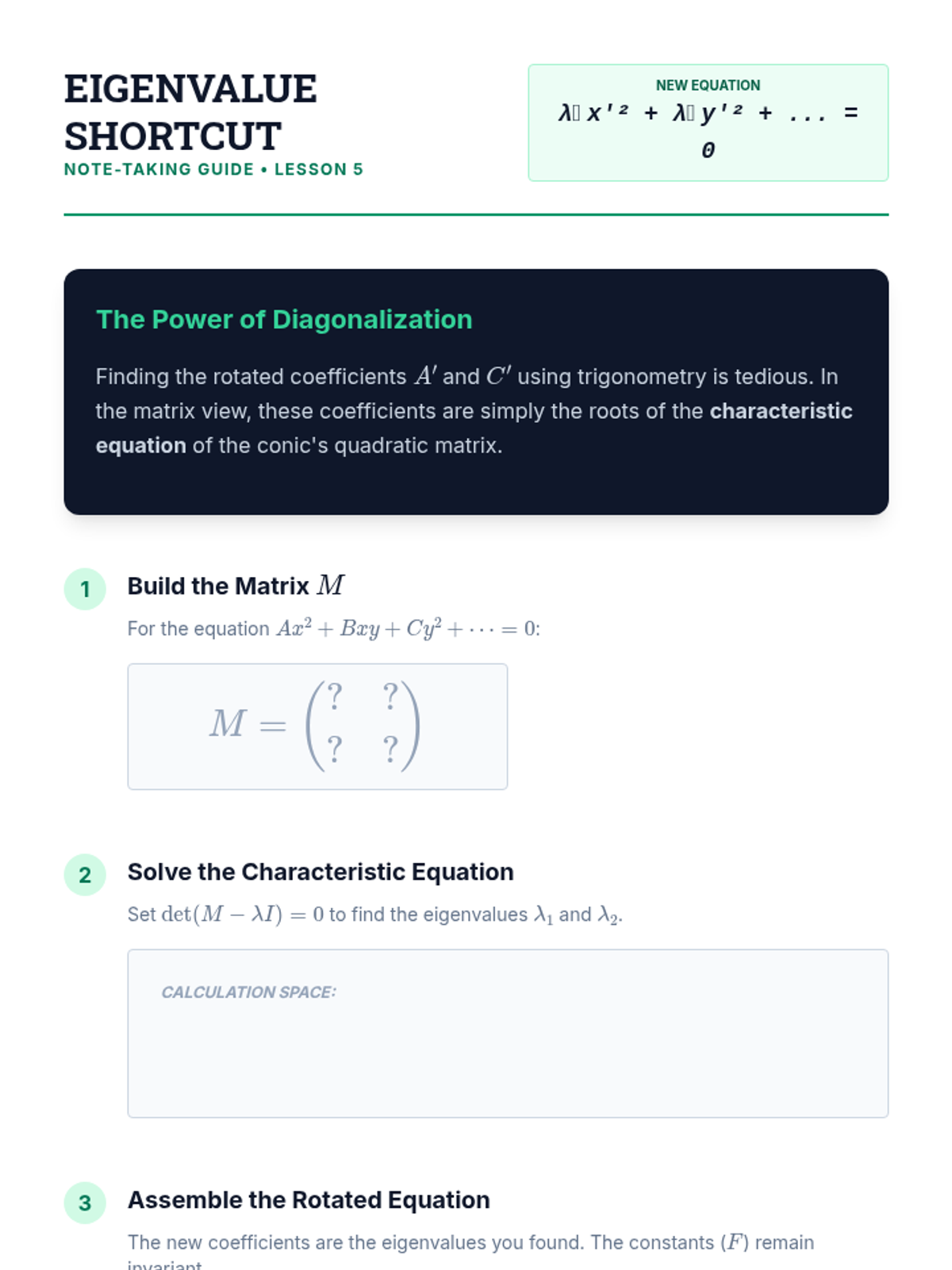
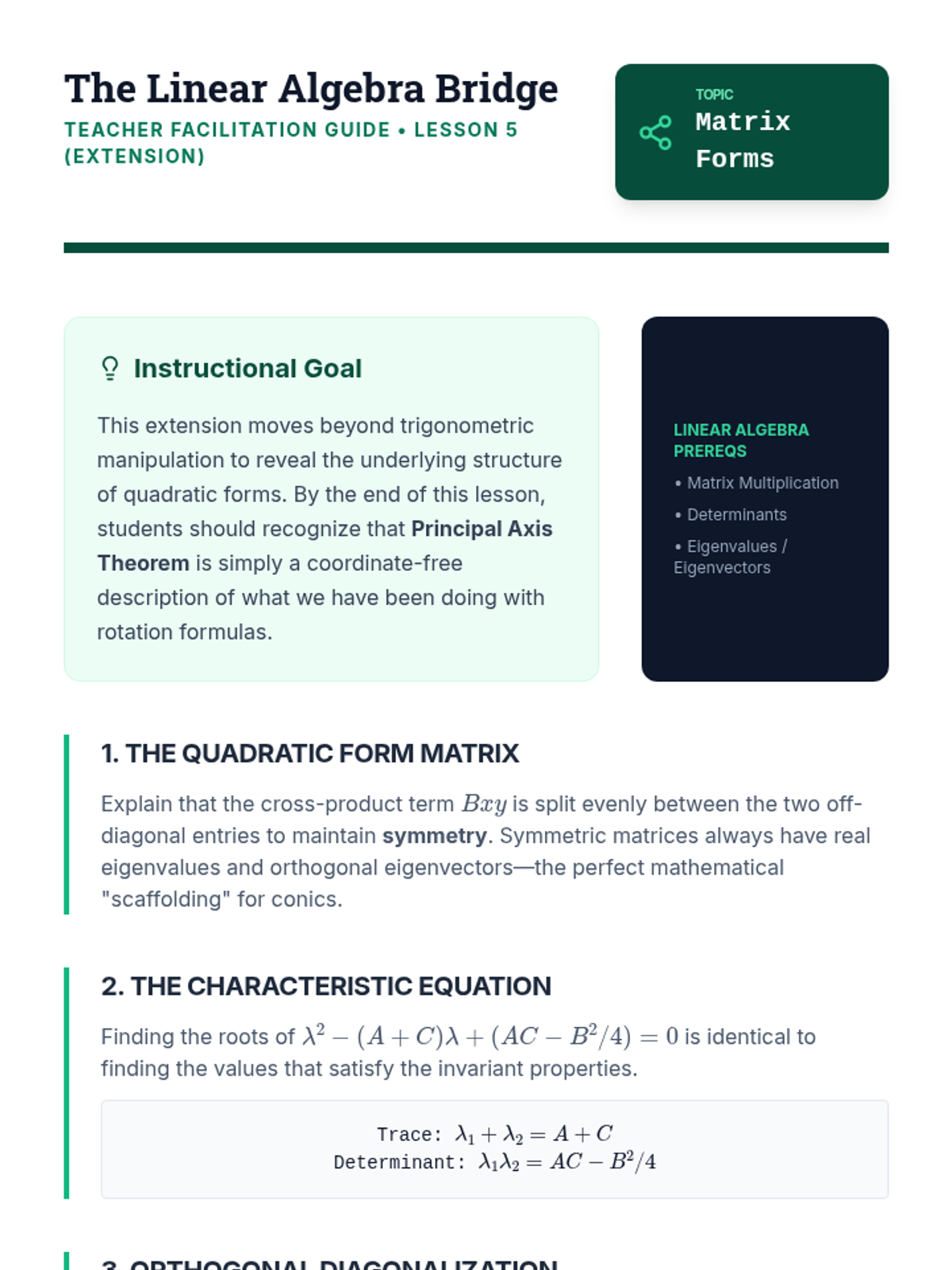
Introduce matrix representations and eigenvalues as a pathway to diagonalizing quadratic forms.
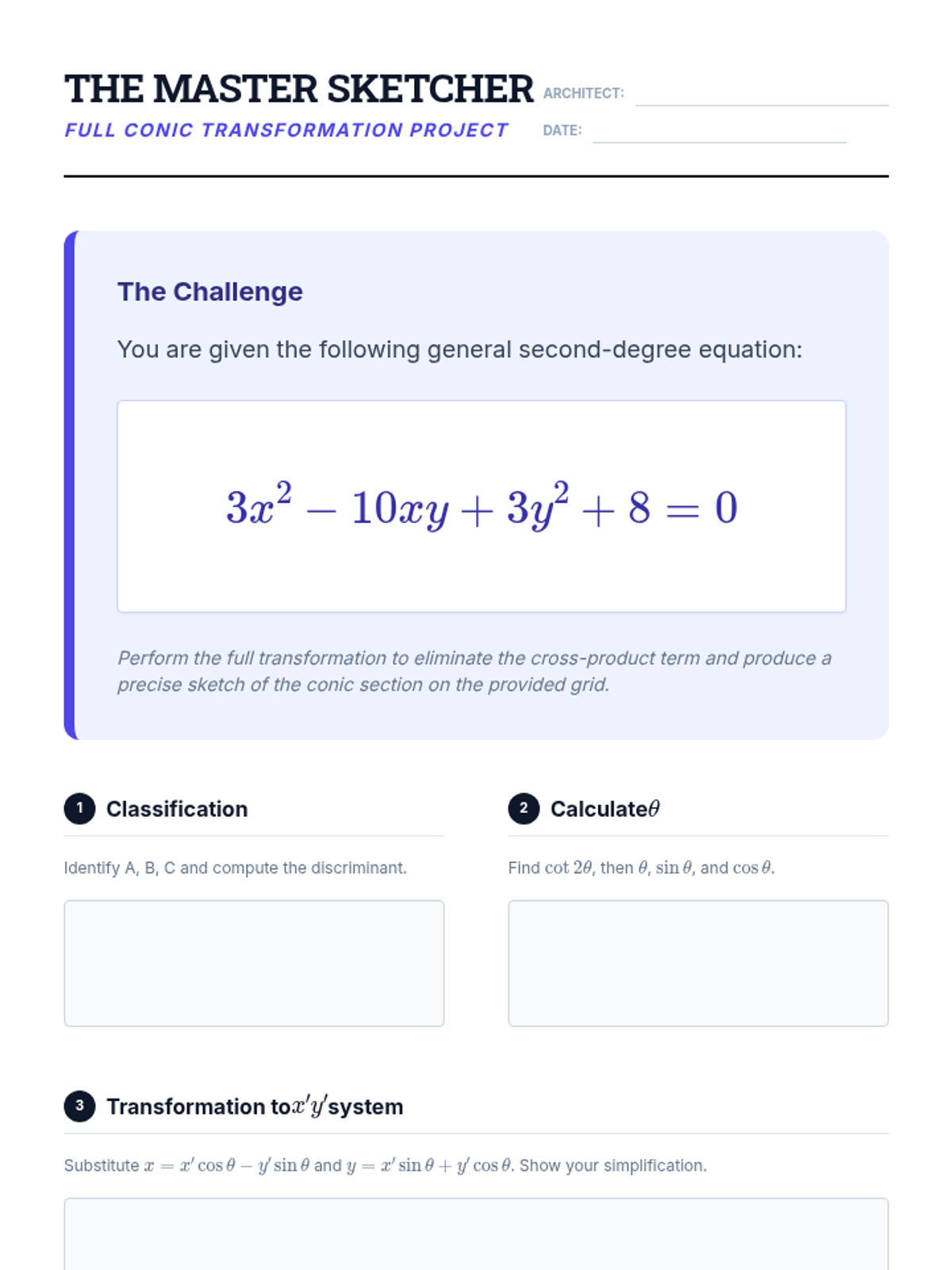
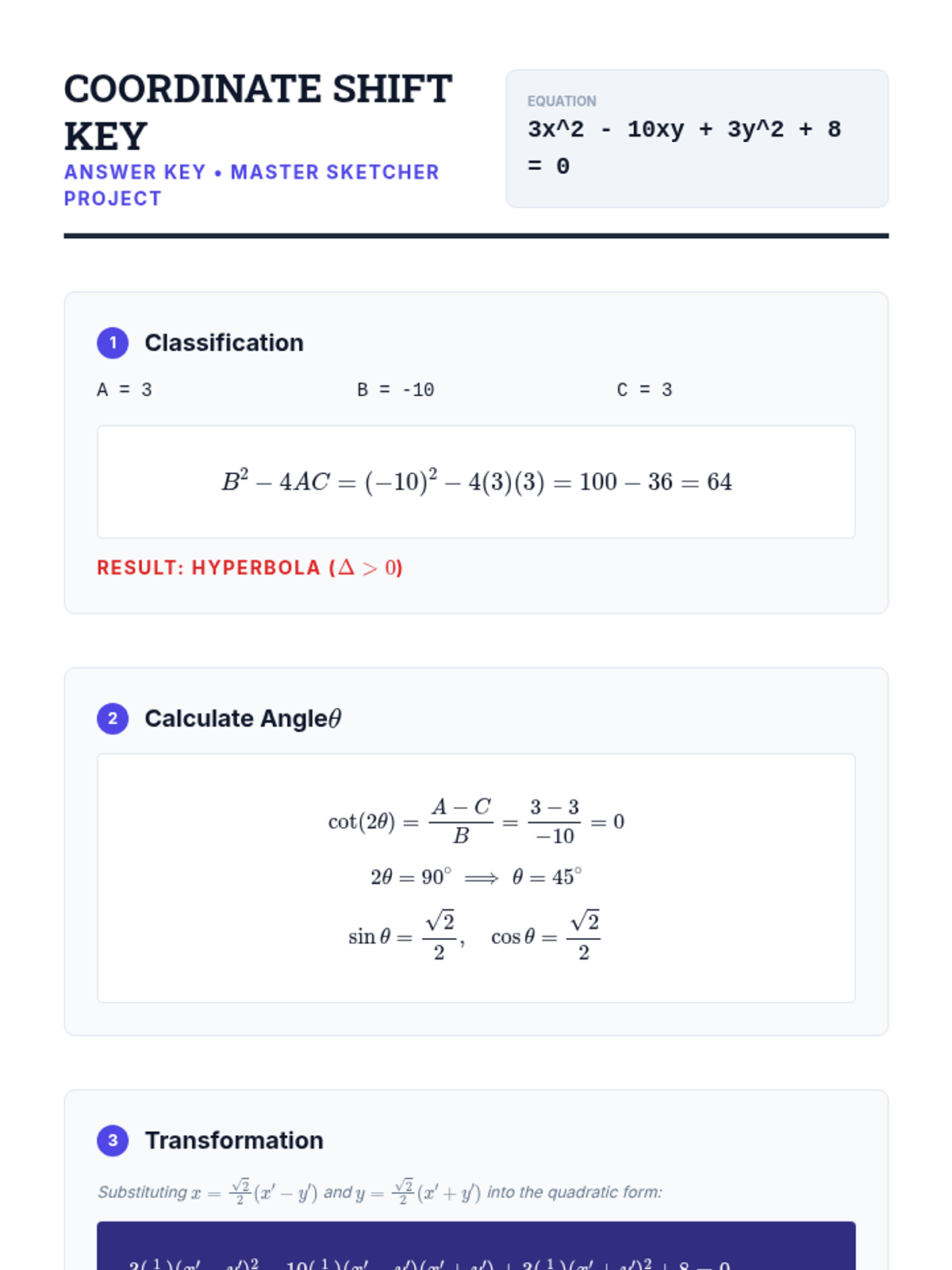
Perform a complete transformation and graphing procedure for a rotated conic section.
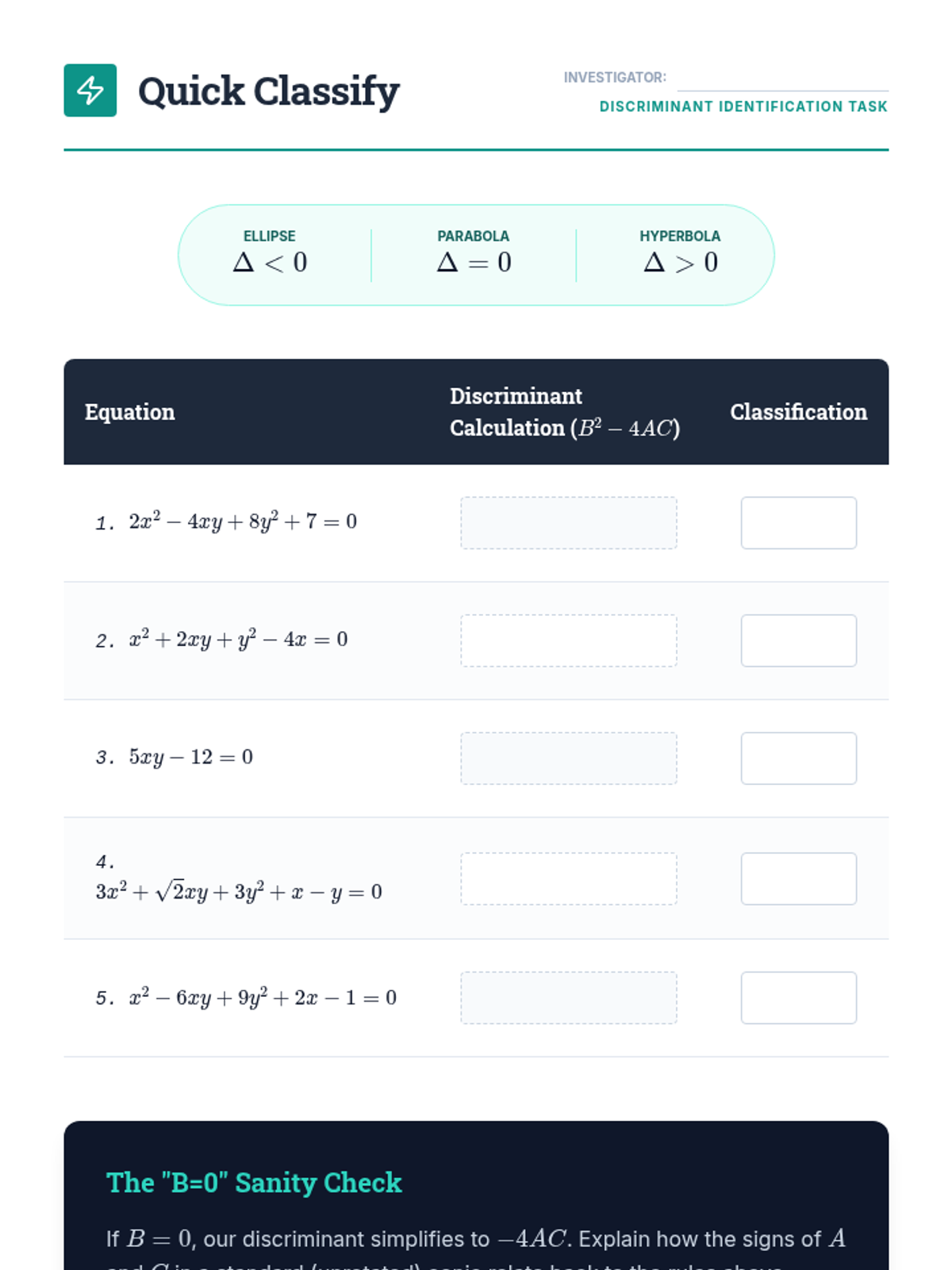
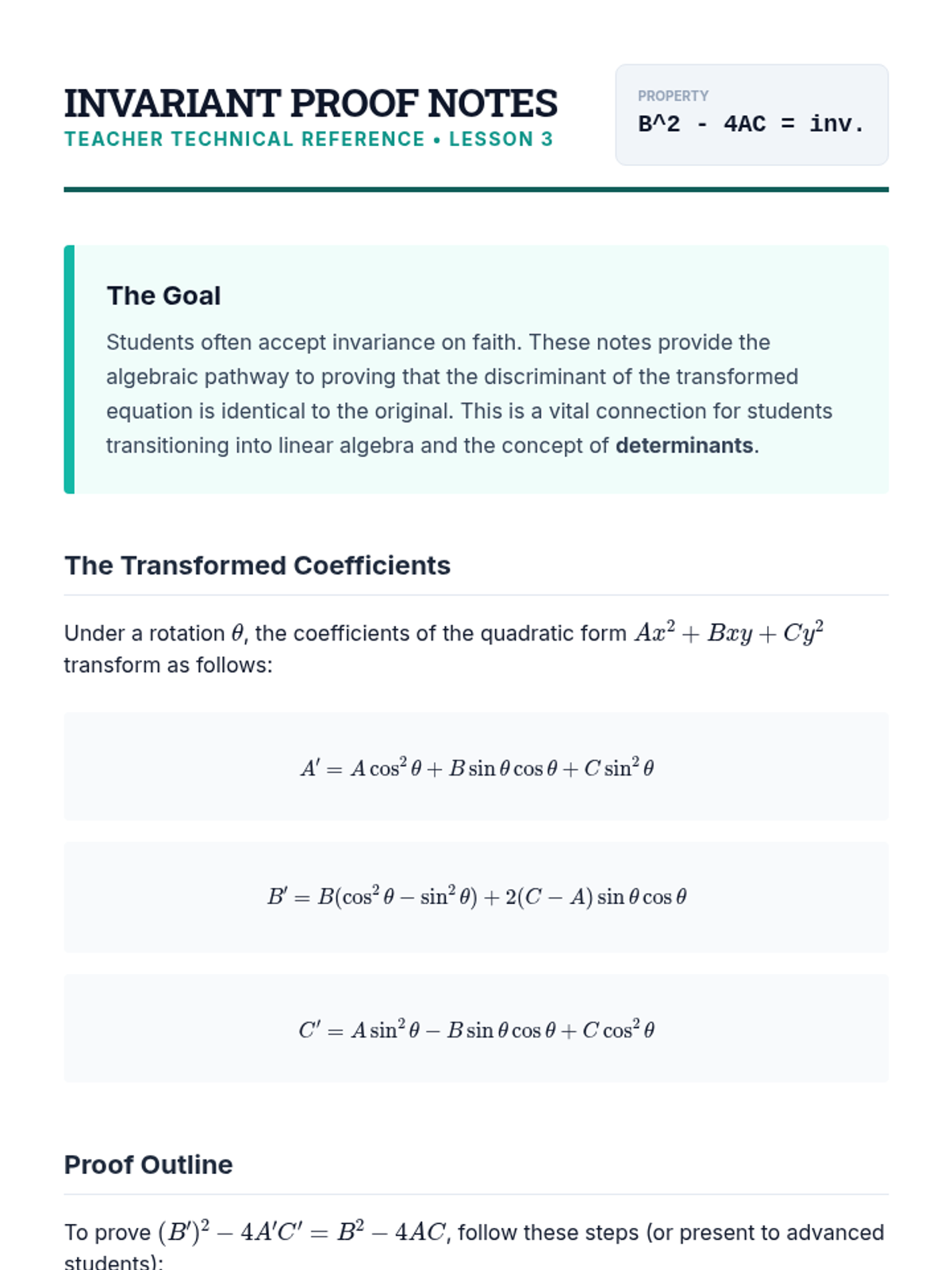
Explore the discriminant and its invariance under rotation to quickly classify conic sections.
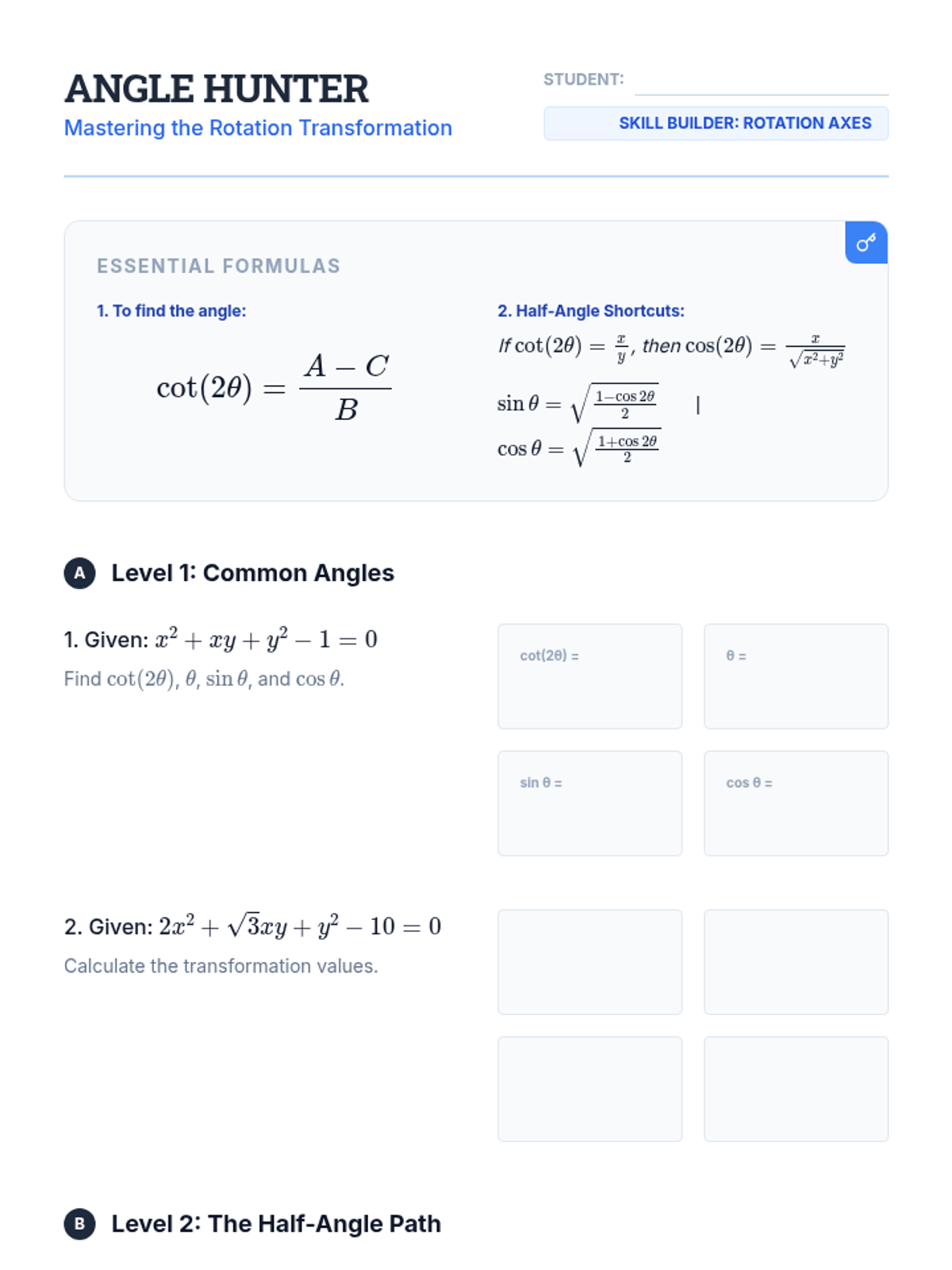
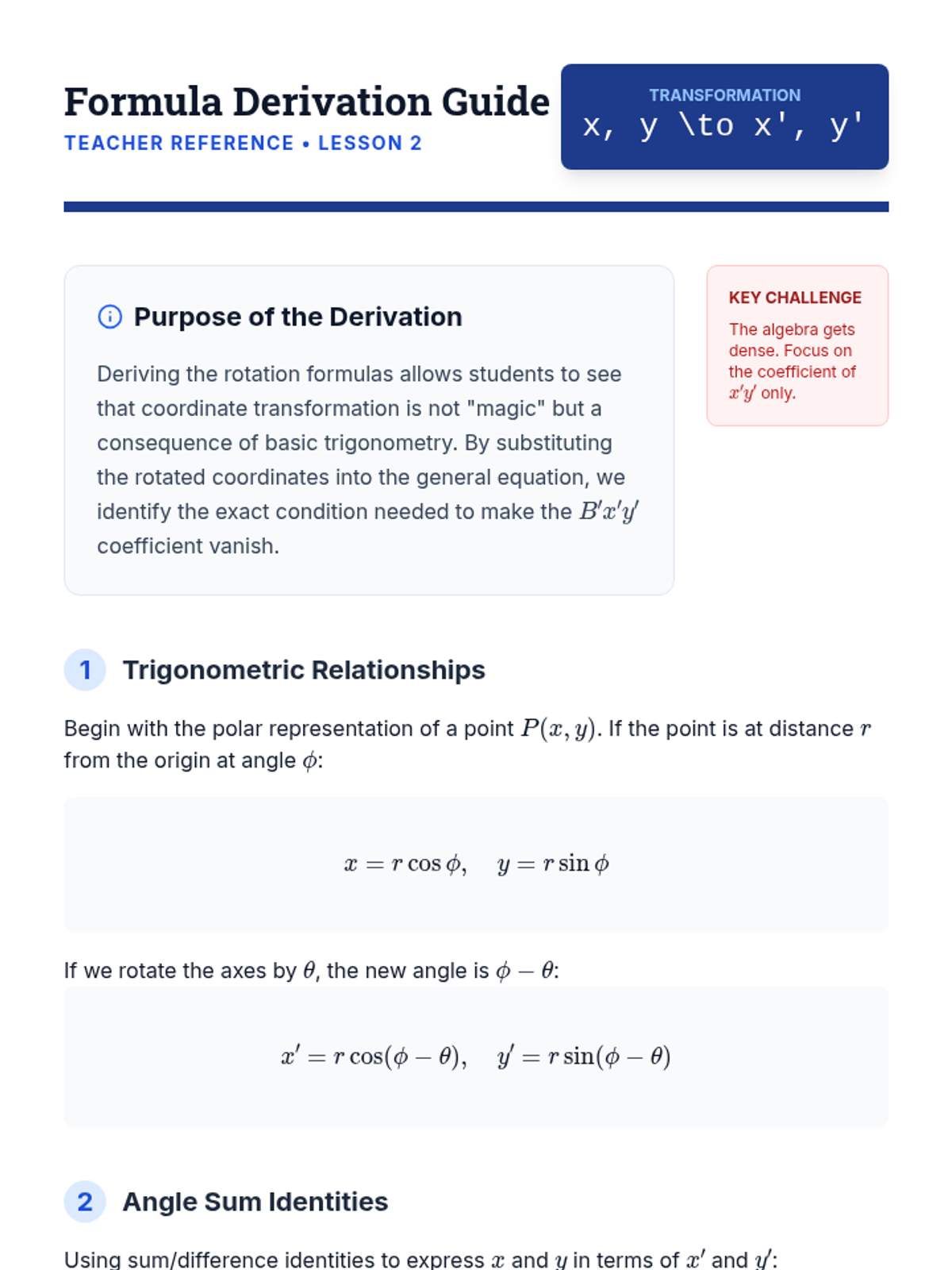
Derive and apply rotation of axes formulas to eliminate the cross-product term in quadratic equations.
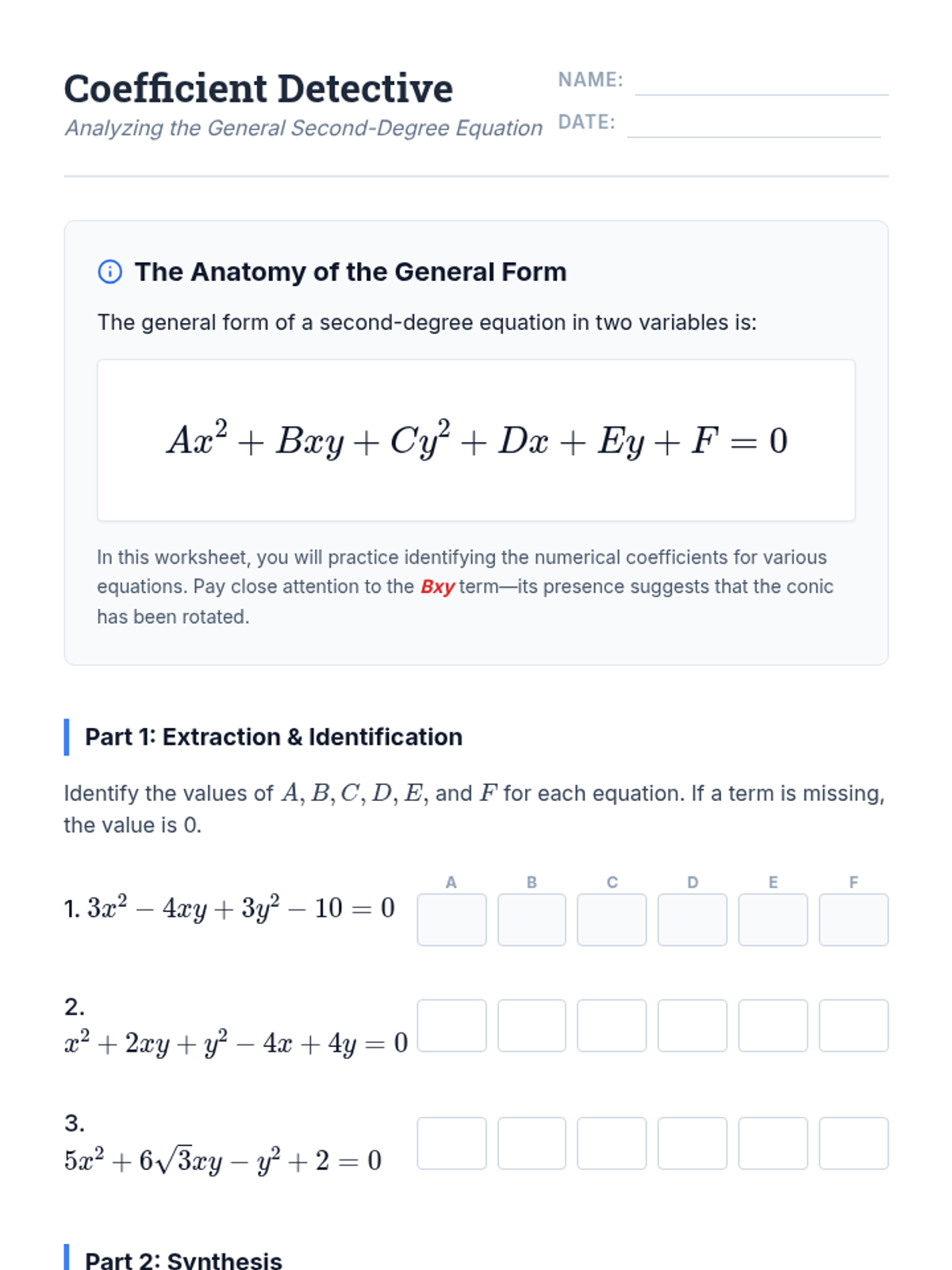
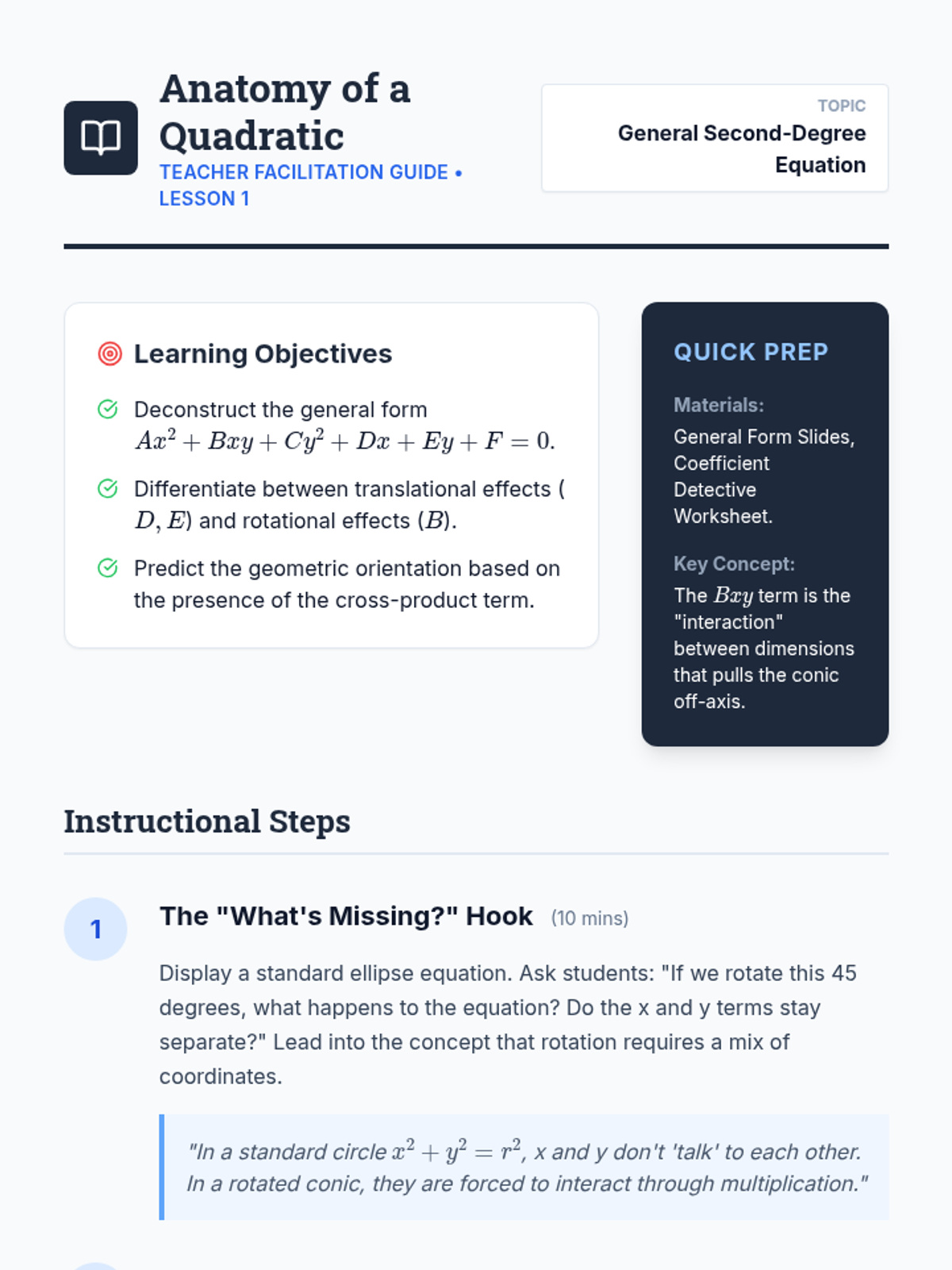
Analyze the general second-degree equation and understand the geometric implications of the cross-product term.
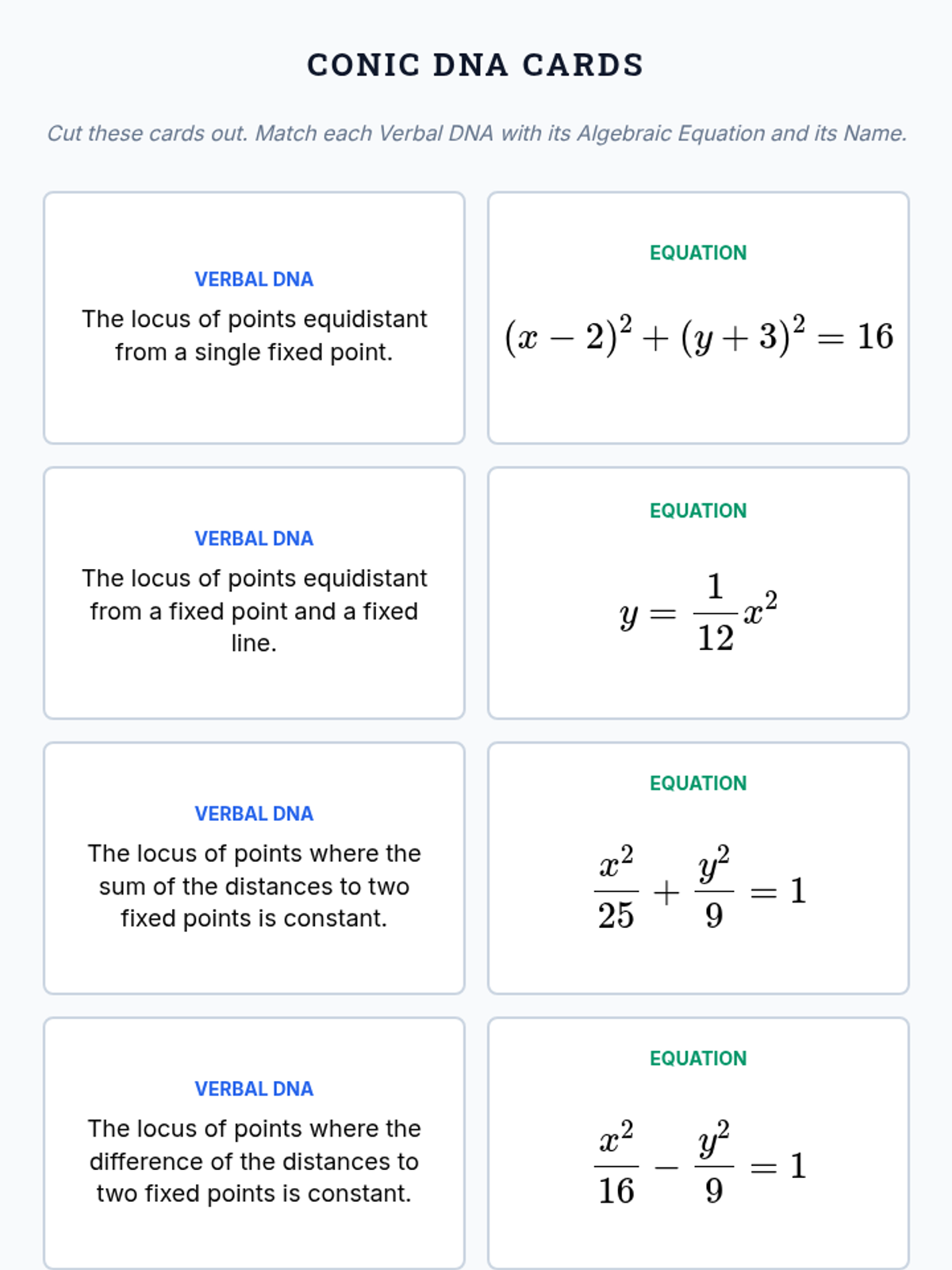
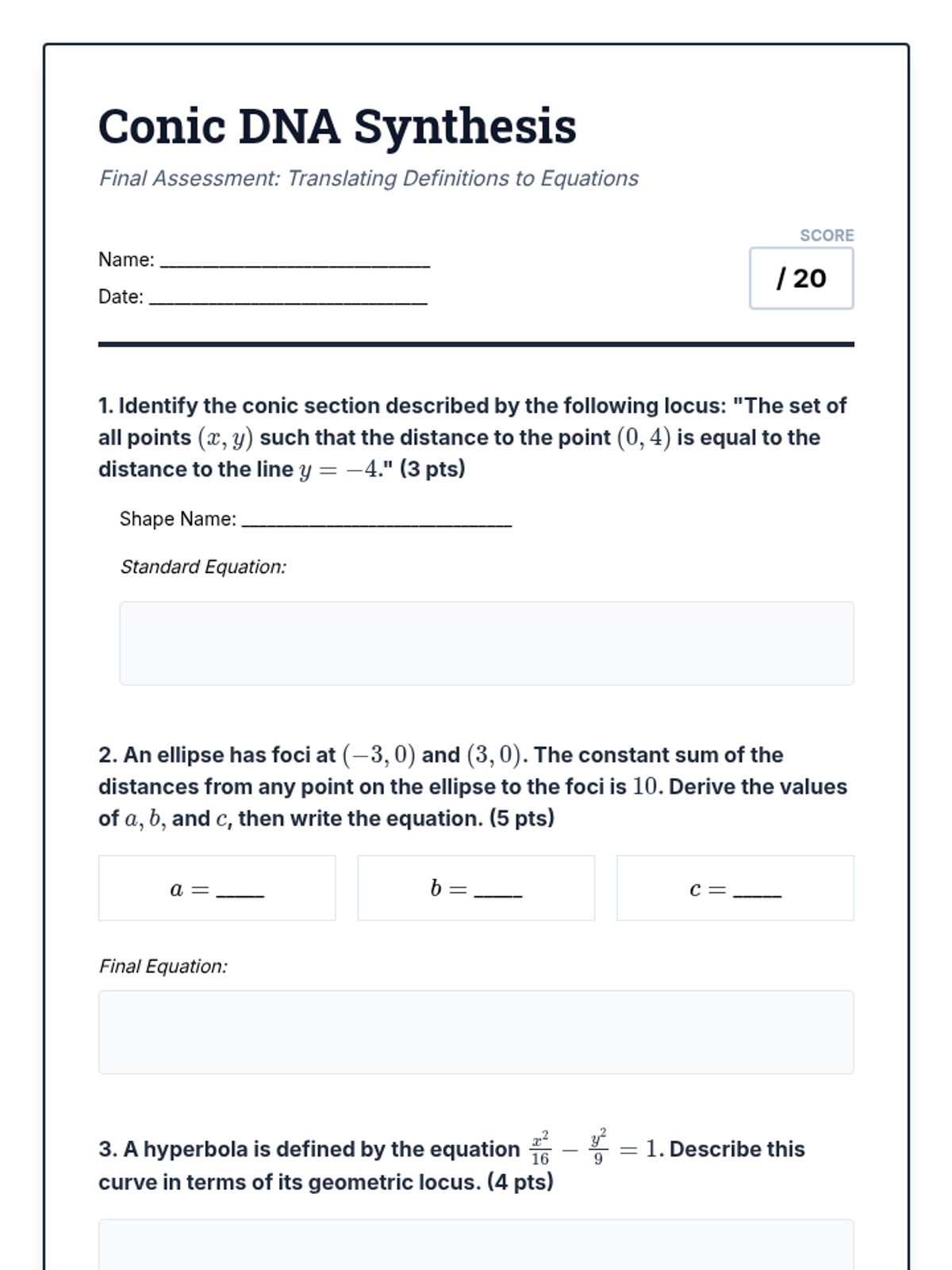
A synthesis lesson where students classify conic sections based on their geometric "DNA" (definitions) and match them to their corresponding coordinate equations.
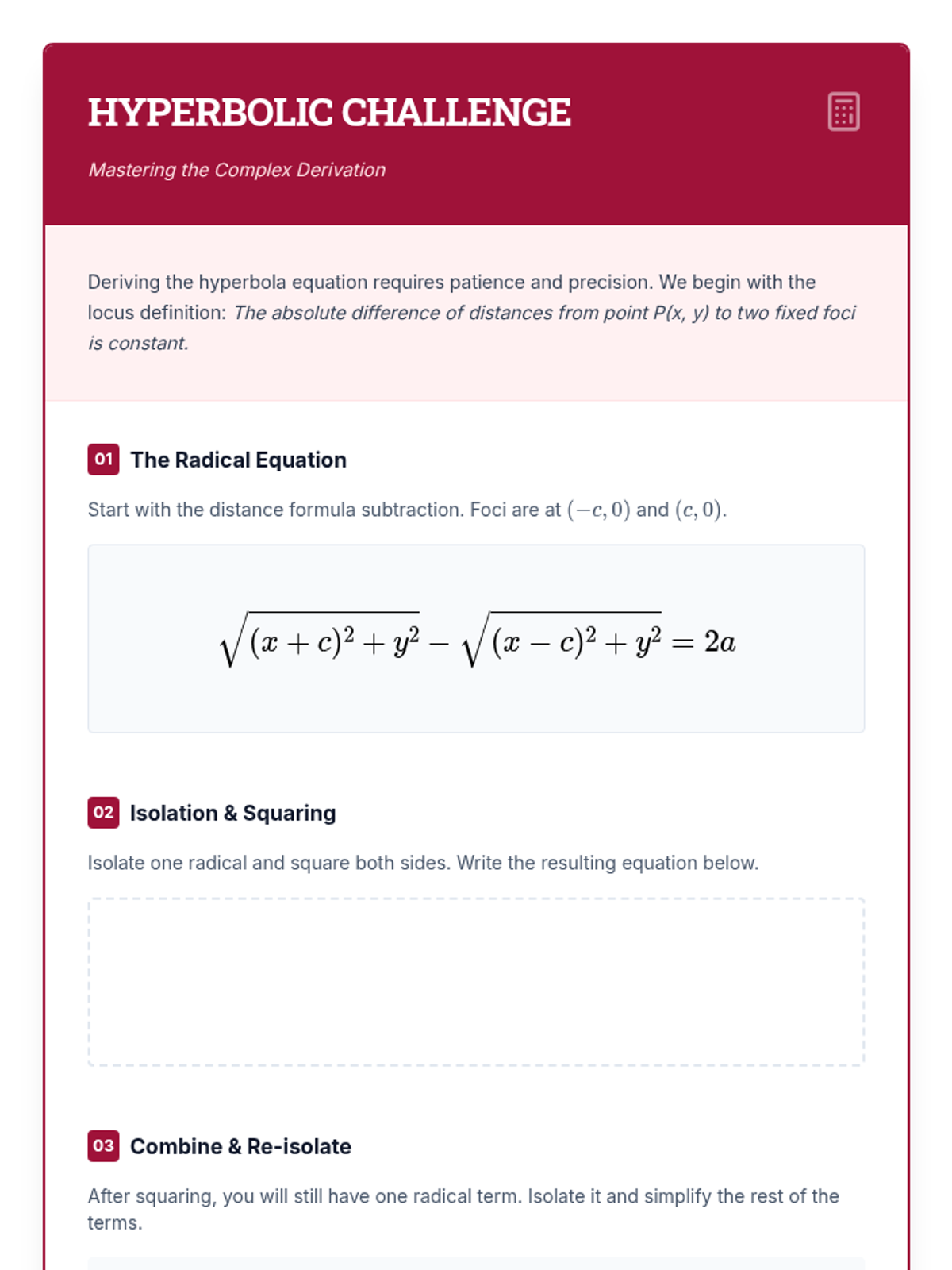
Students contrast the sum-based ellipse definition with the difference-based hyperbola definition, working through the algebraic derivation of the hyperbola's standard form.
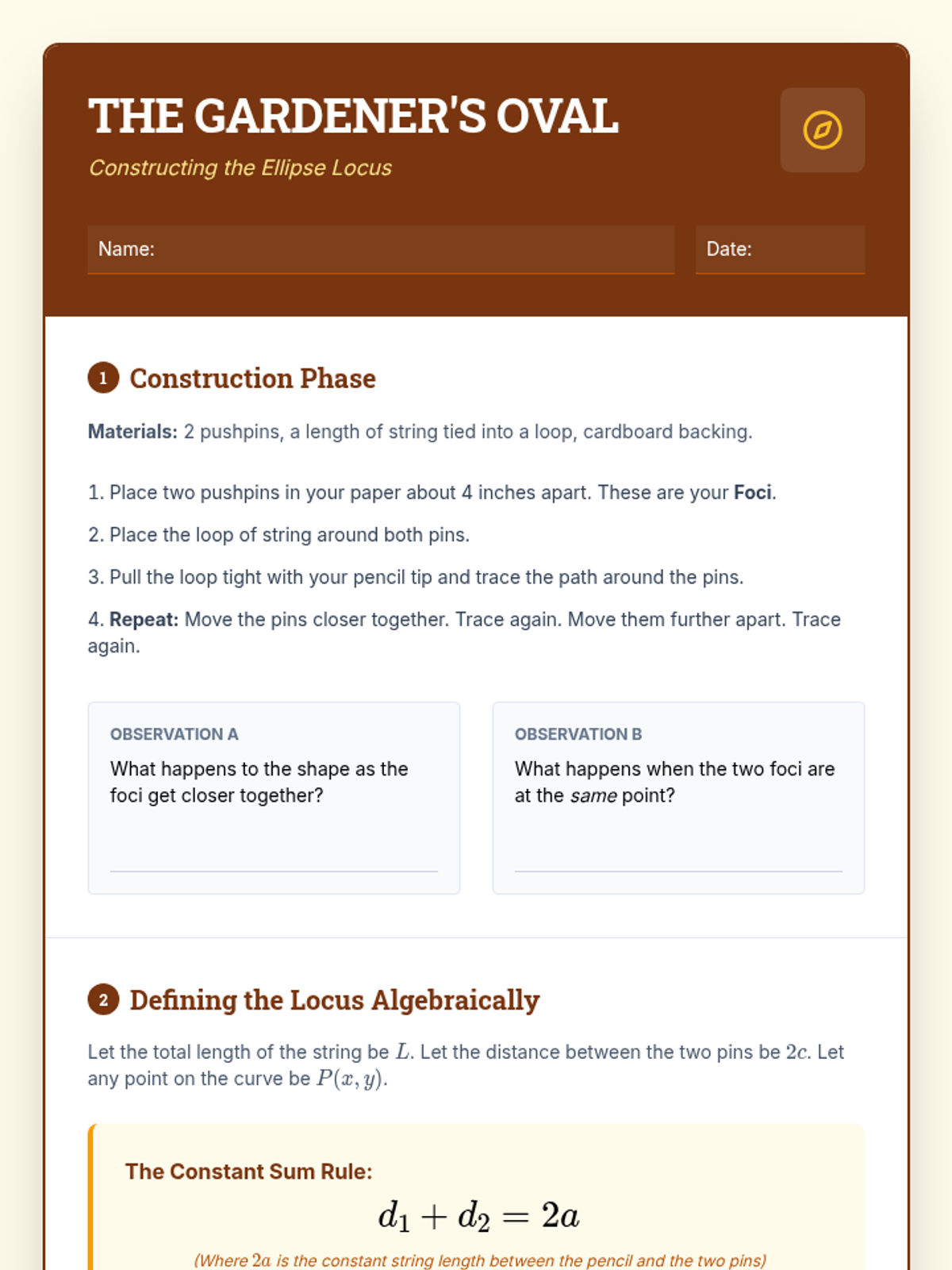
Using a two-foci definition, students construct ellipses and derive the standard equation, establishing the relationship between the semi-axes and focal distance.
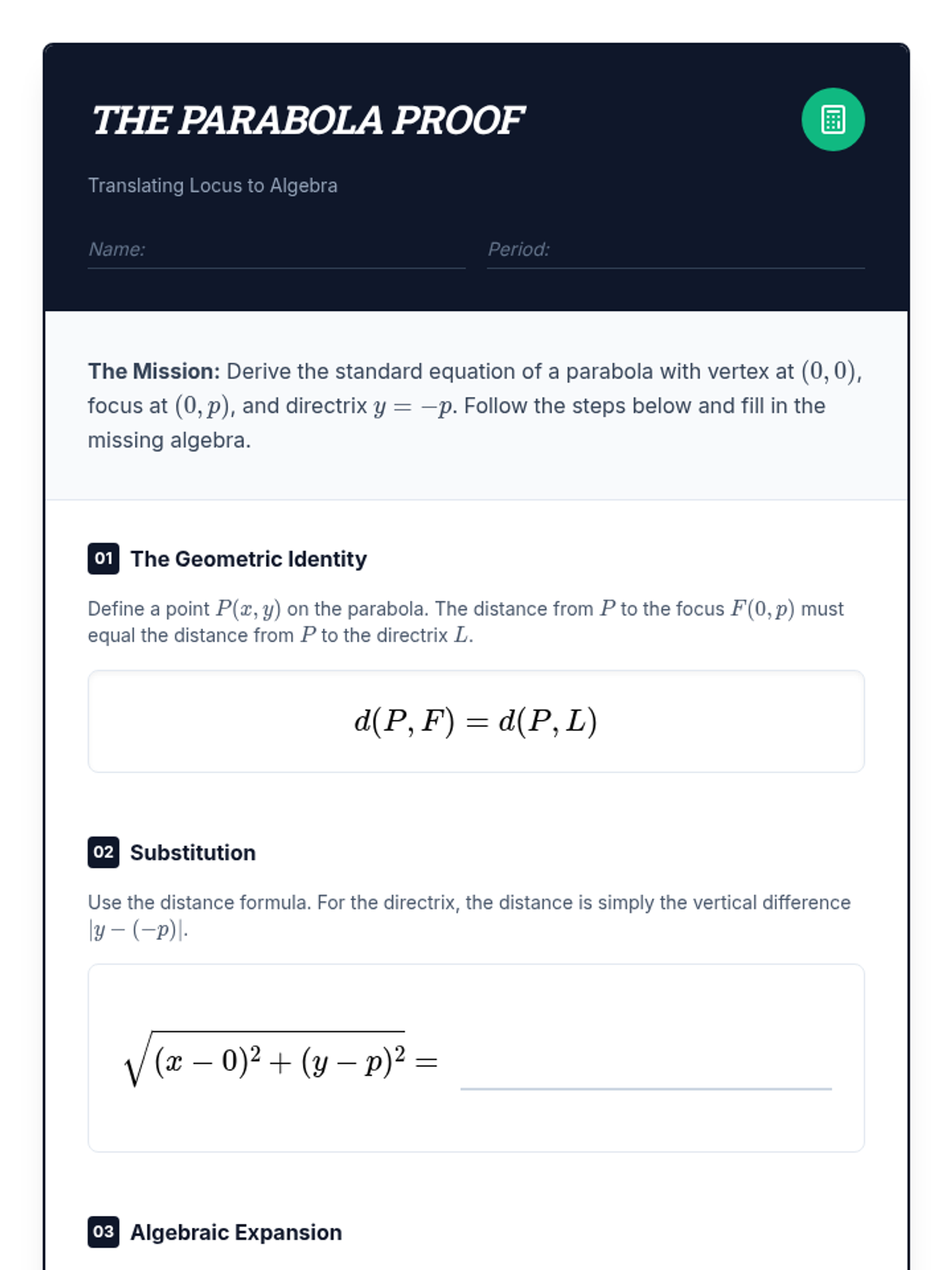
Students algebraically derive the standard form of a parabola using the focus-directrix definition and investigate how parameter 'a' relates to the geometric focus.
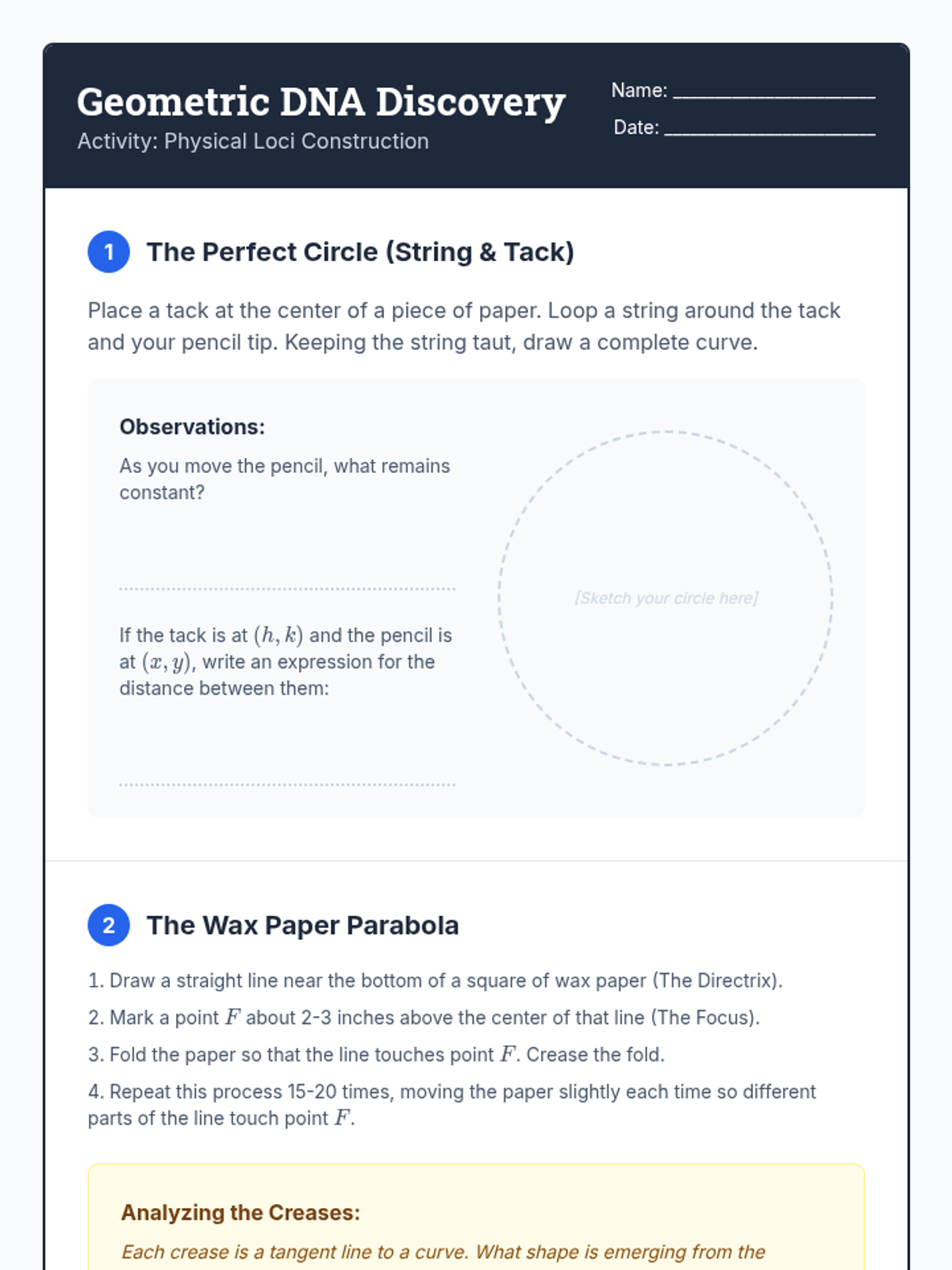
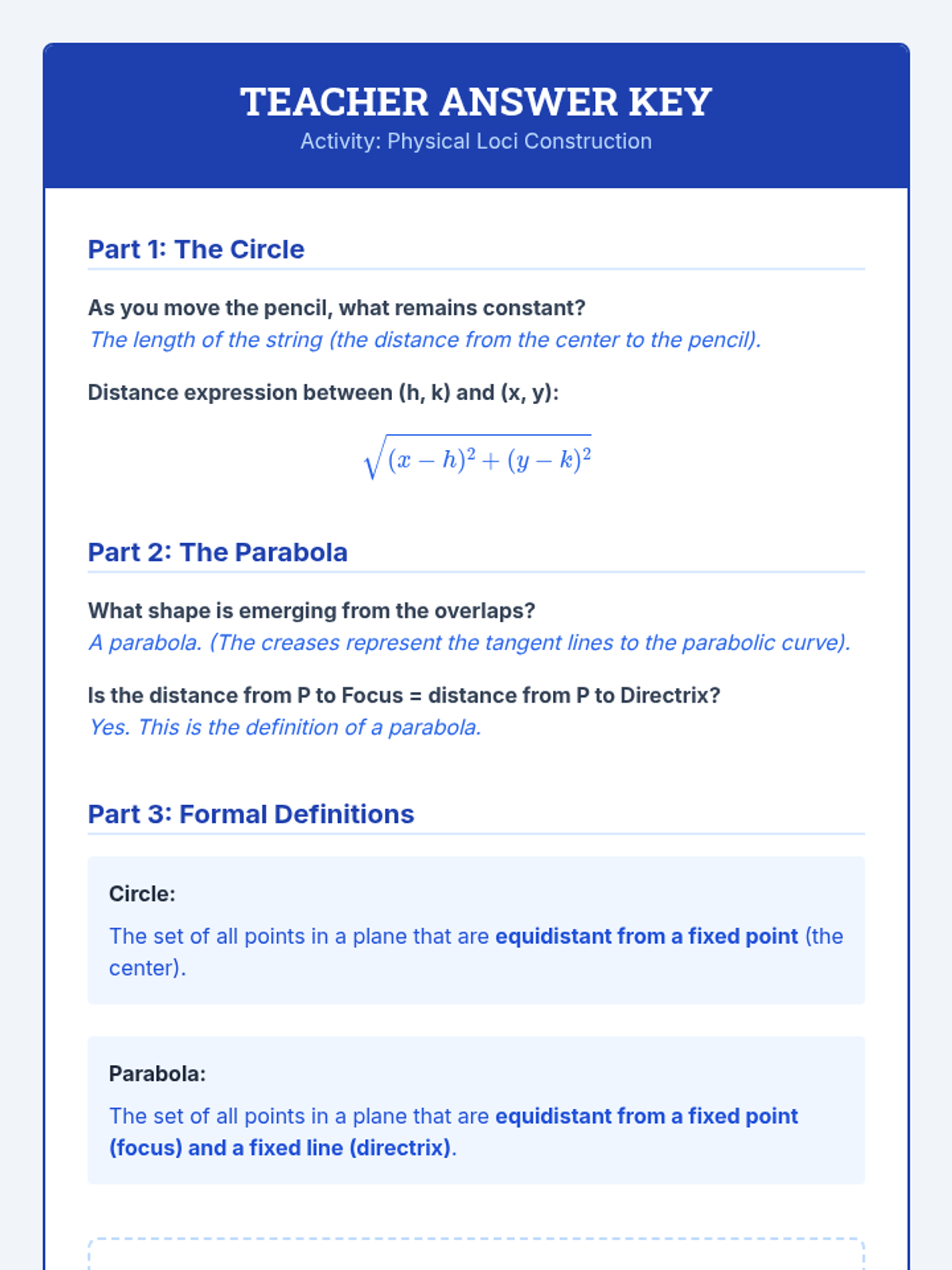
Students define circles and parabolas based on distance constraints from fixed points and lines, performing physical activities to visualize the shapes before deriving the standard circle equation.
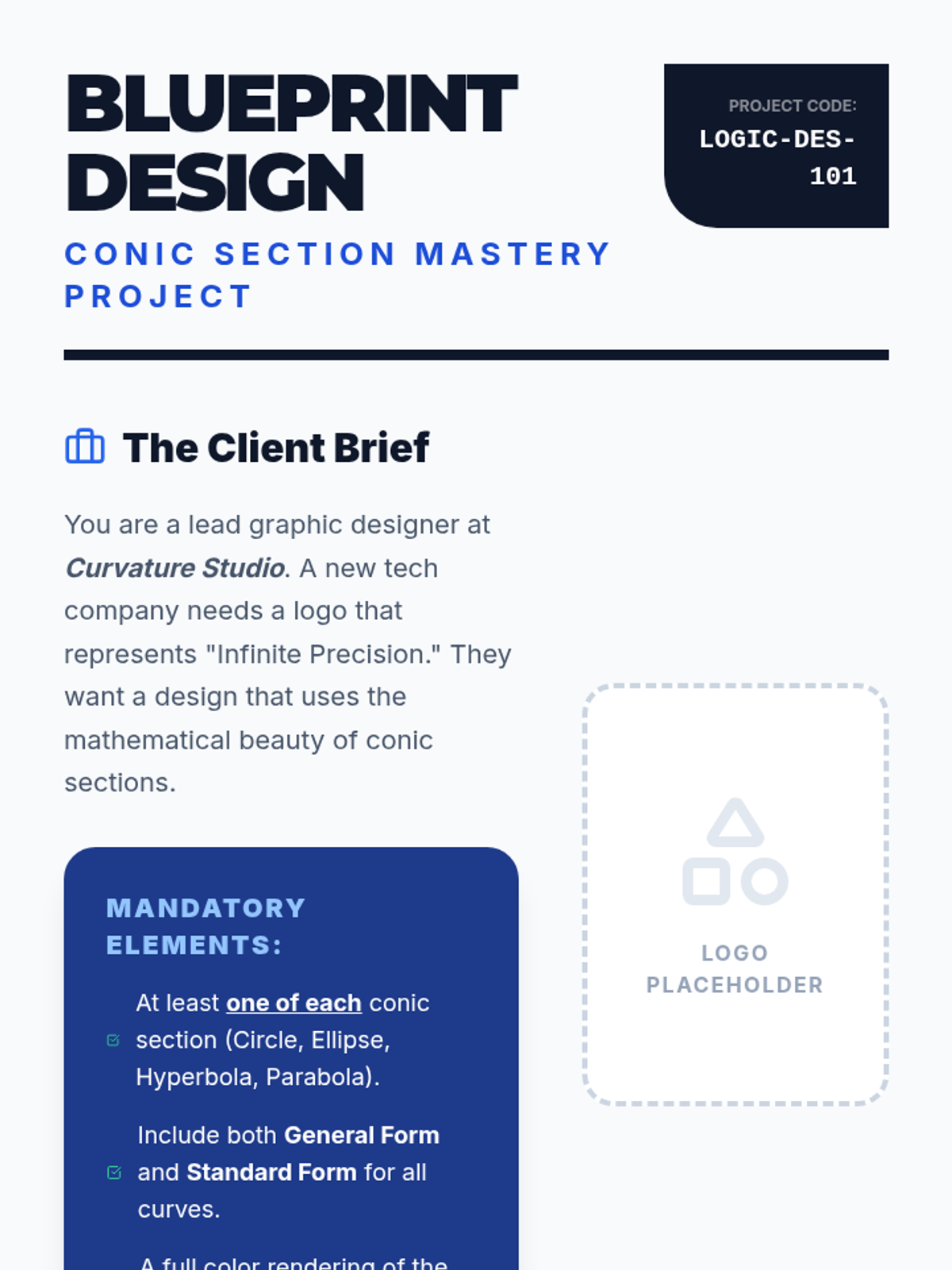
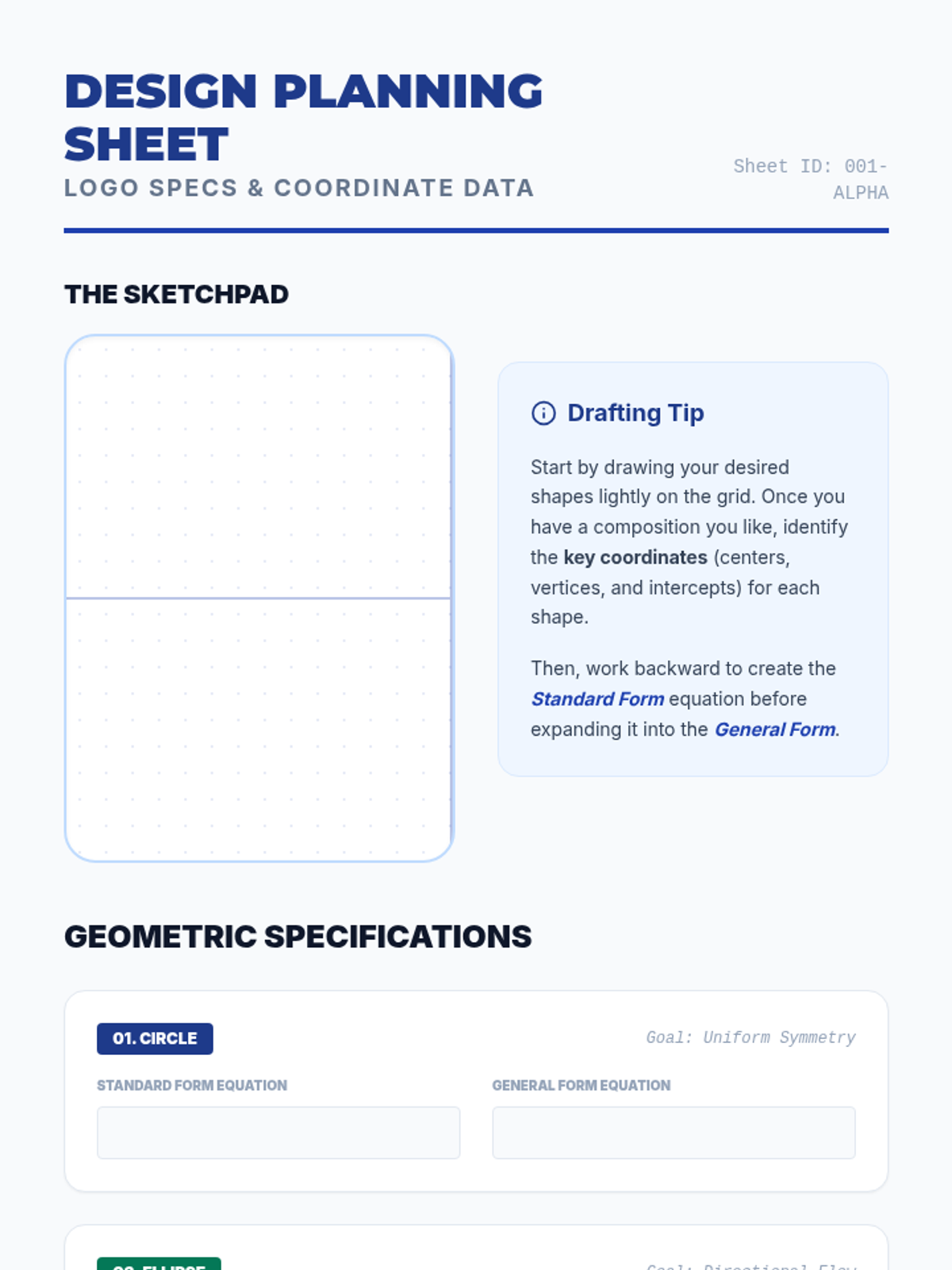
A culminating project where students create a logo using at least one of each type of conic section, providing both general and standard equations.
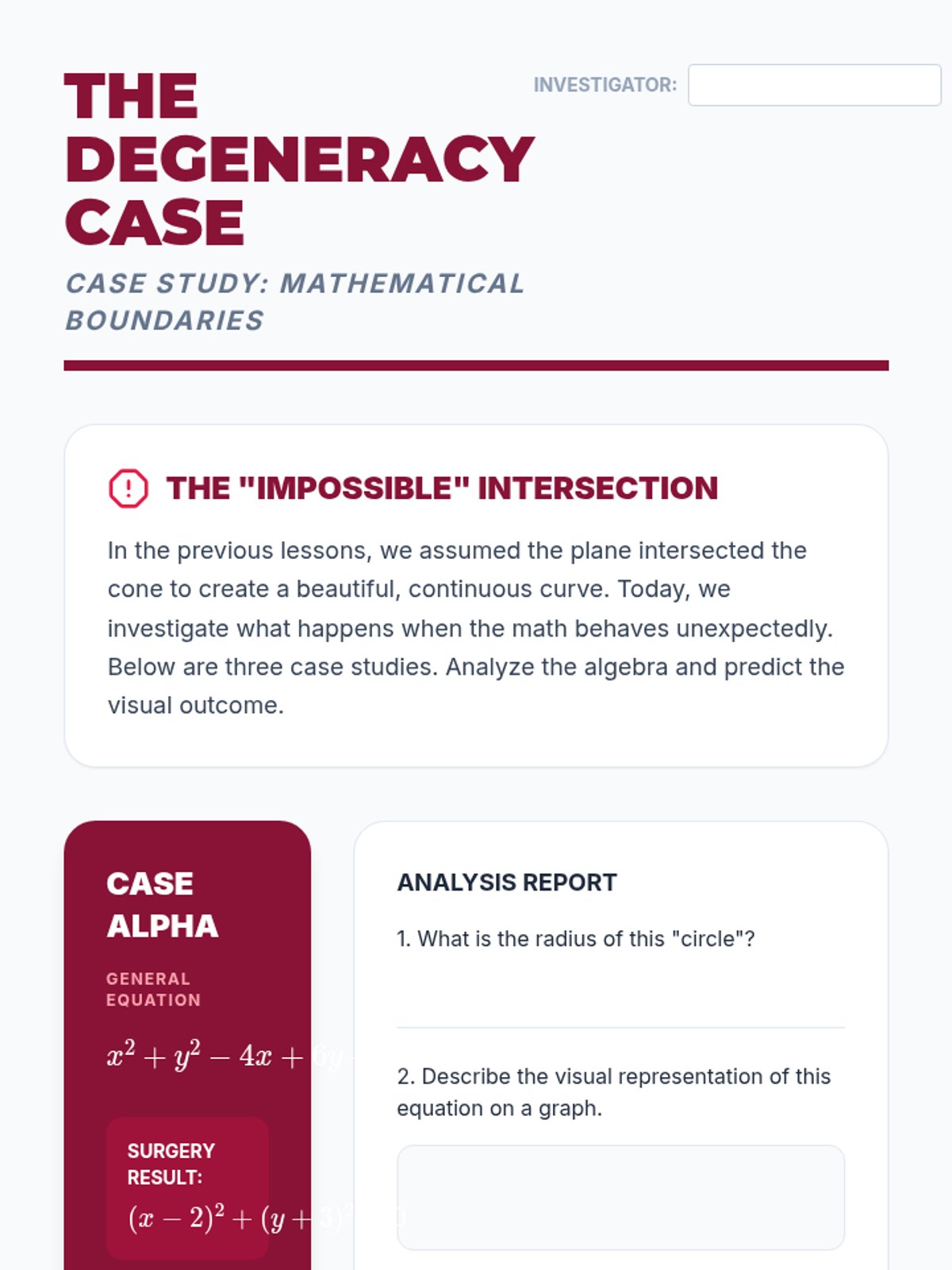
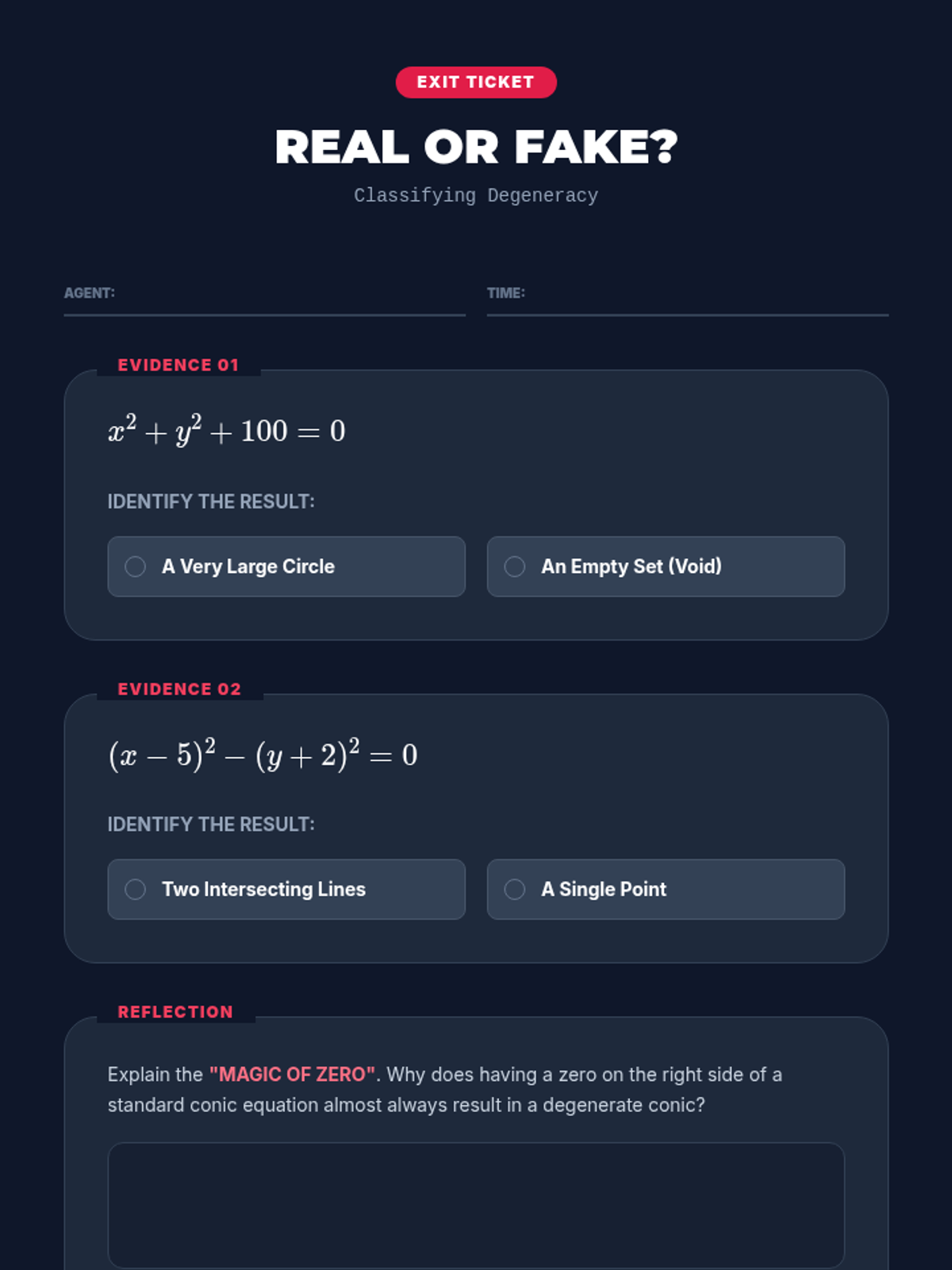
Students investigate degenerate conics like points and intersecting lines, occurring when the plane slices through the vertex of the cone.
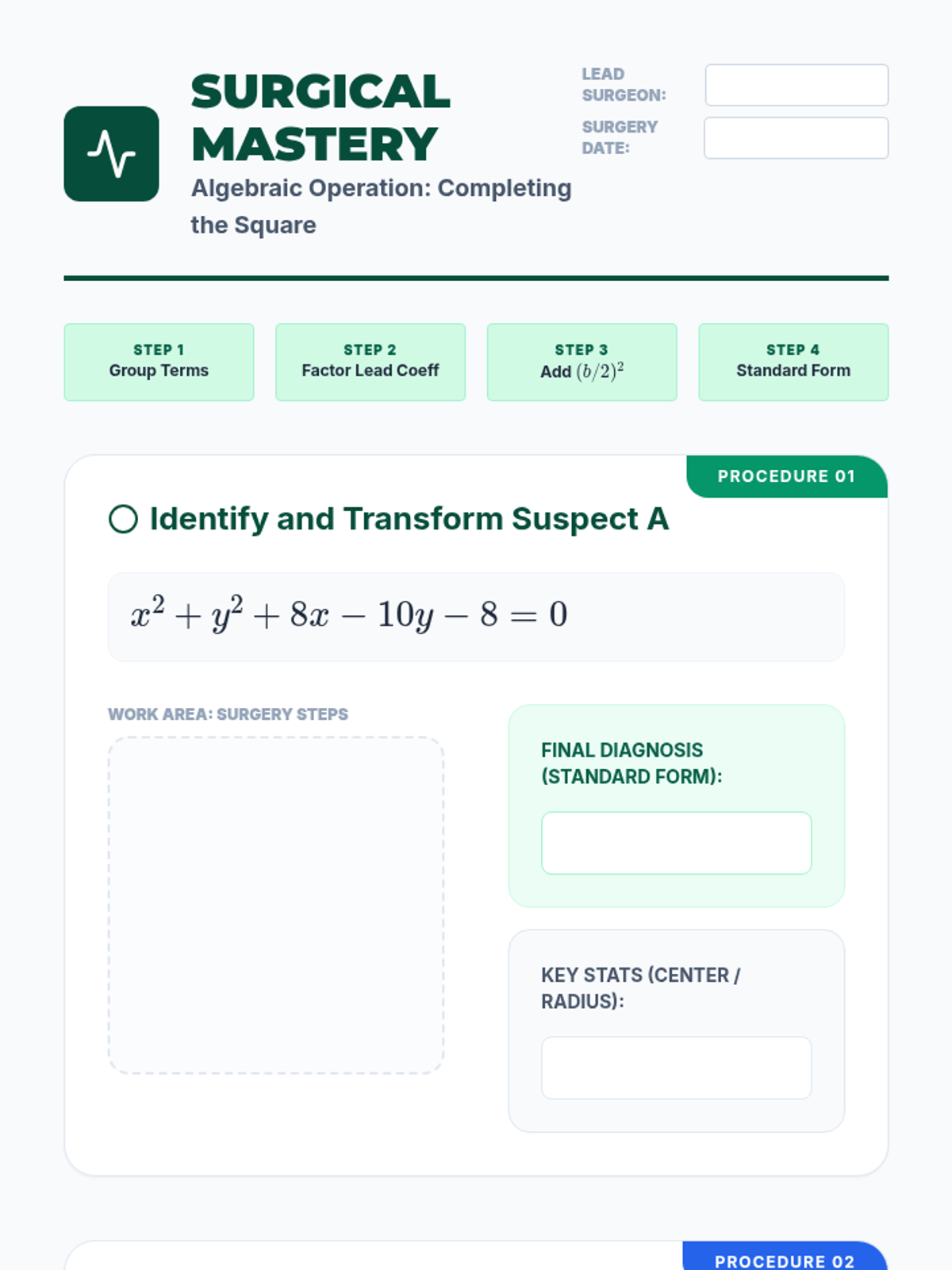
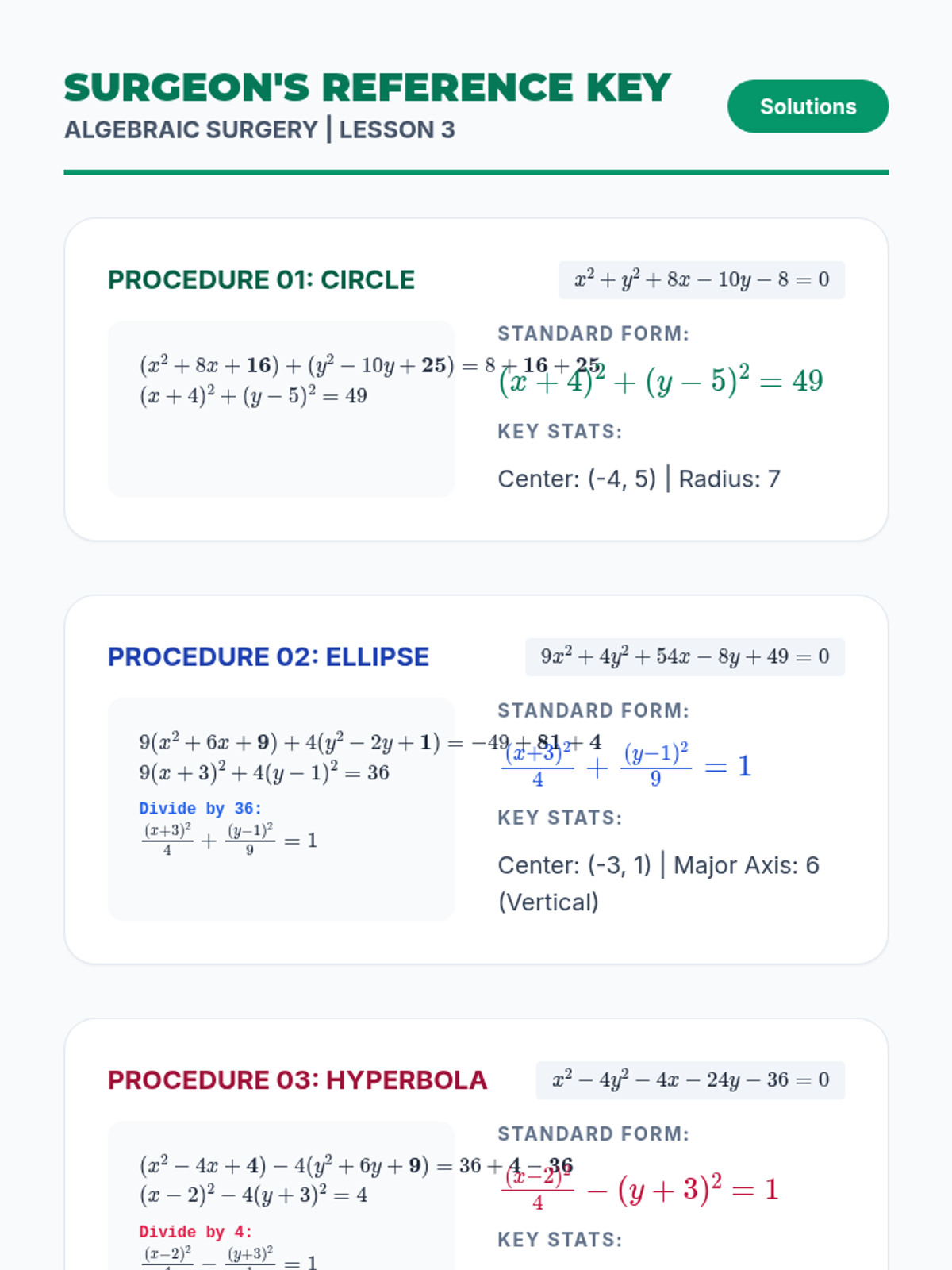
Students consolidate completing the square skills for both x and y variables to convert general equations into clean standard forms.
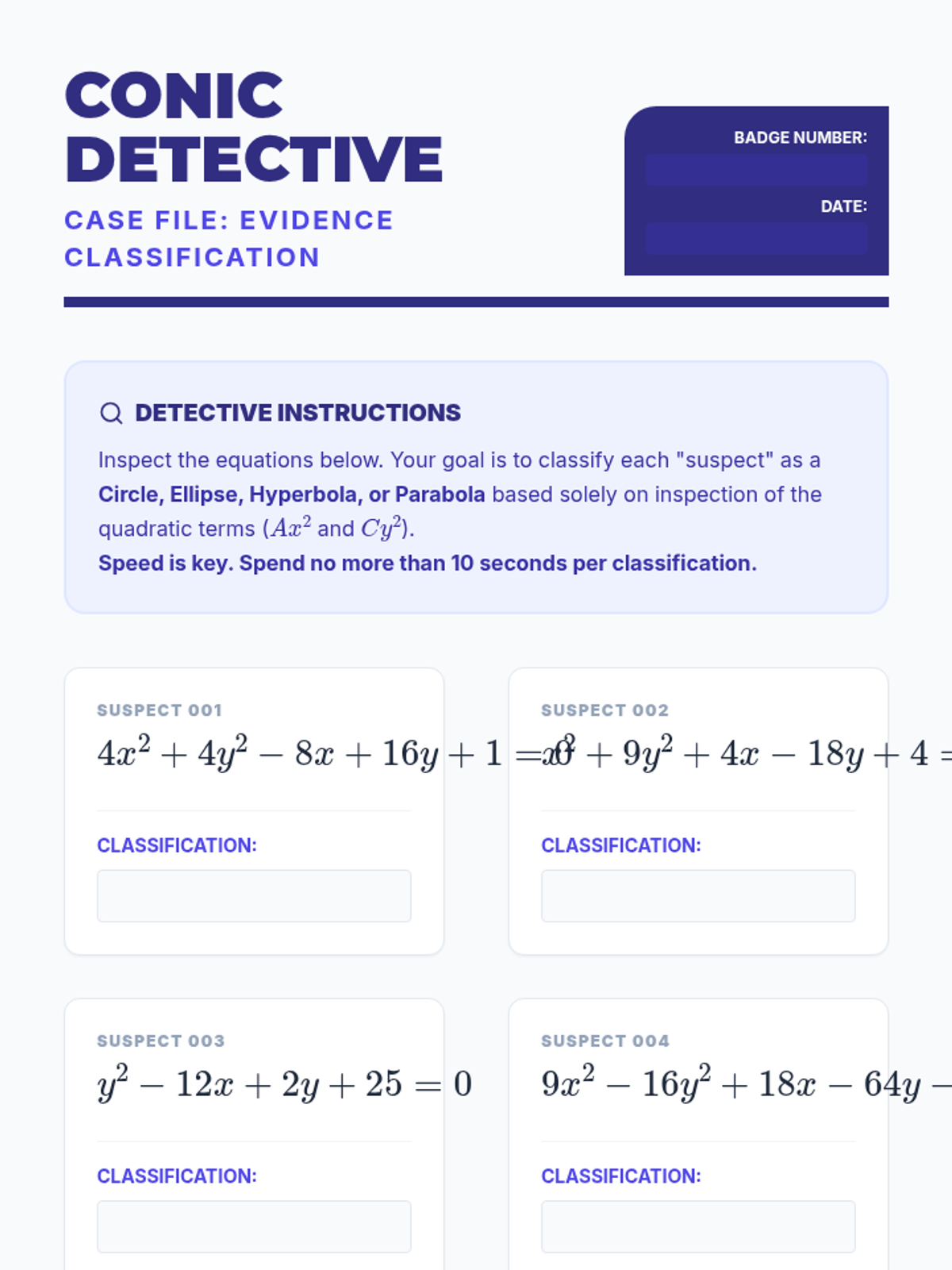
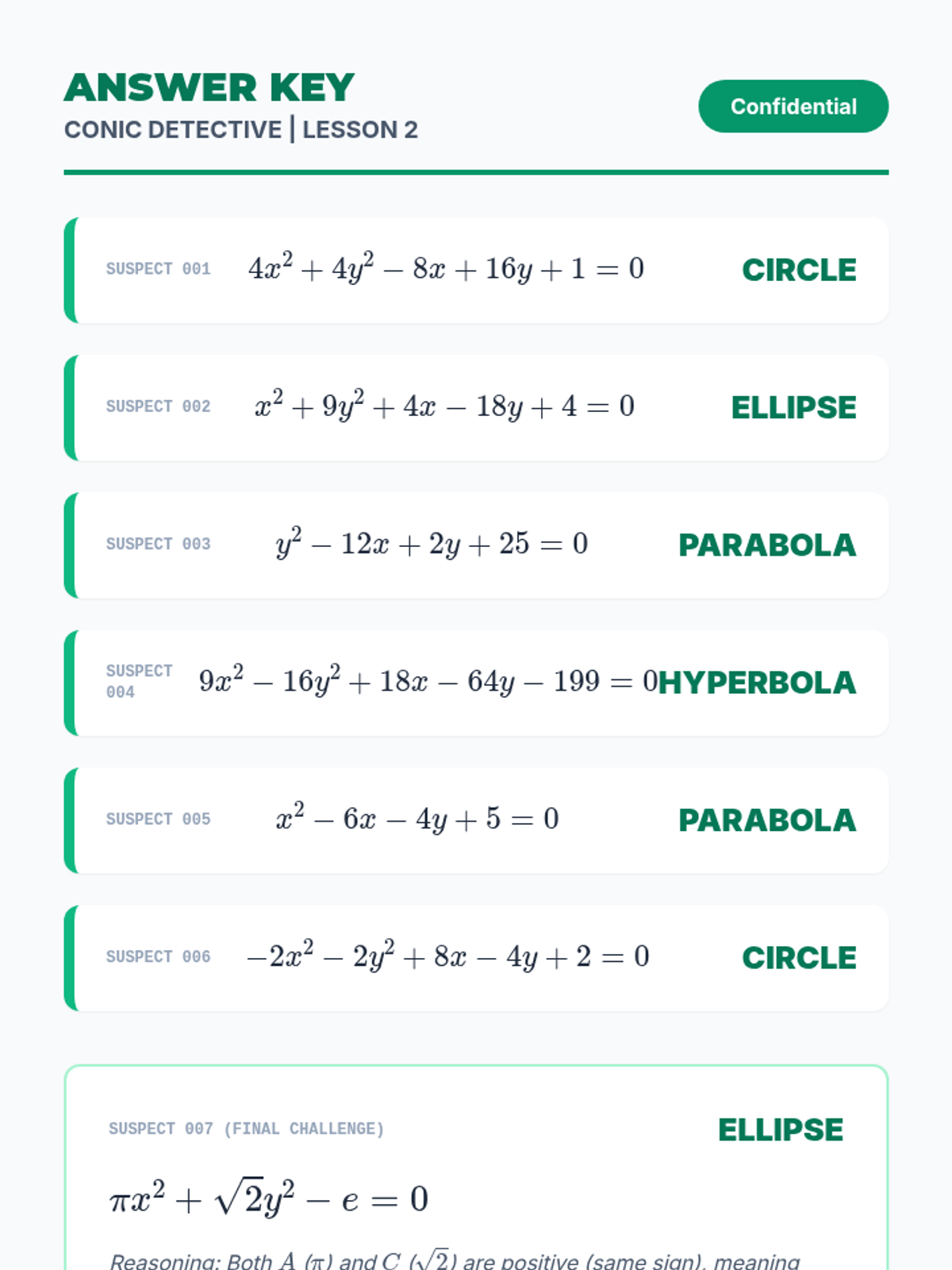
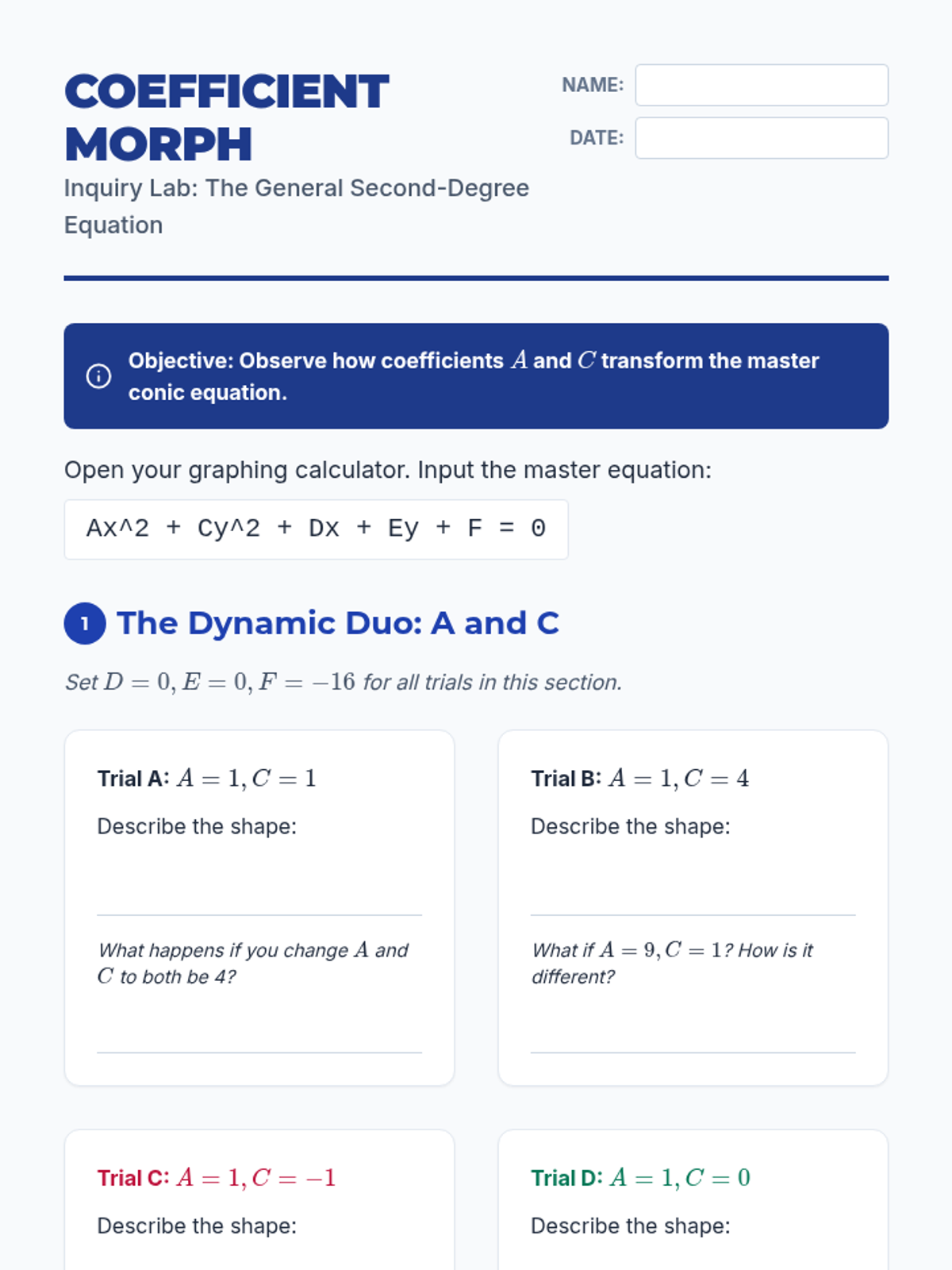
Students develop a flowchart to classify equations based on the relationship between coefficients A and C and practice rapid identification.
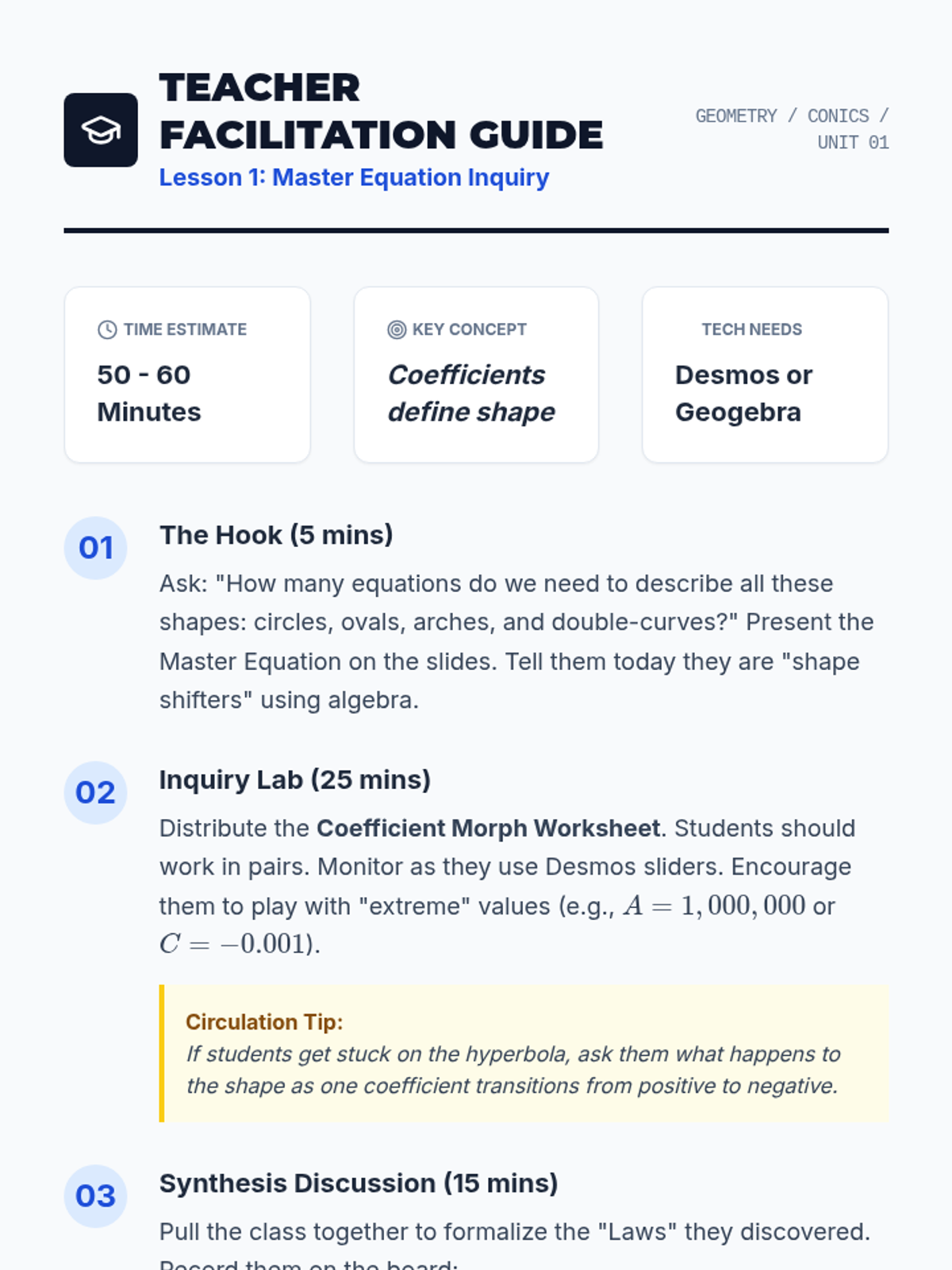
Students explore the general equation $Ax^2 + Cy^2 + Dx + Ey + F = 0$ and how changing coefficients $A$ and $C$ morphs the shape between the four conic types.
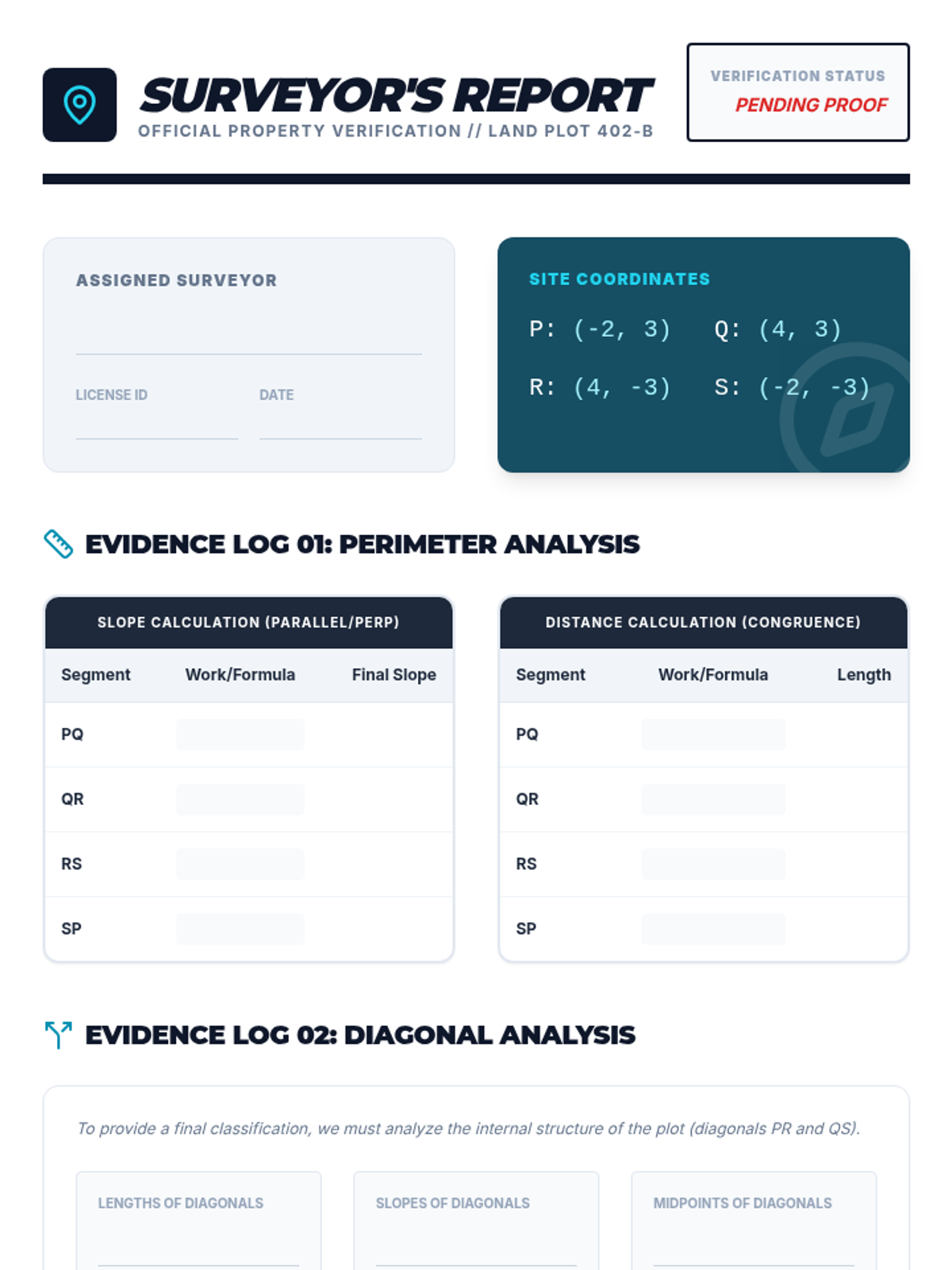
Students apply slope, distance, and midpoint formulas to prove quadrilateral properties on the coordinate plane.
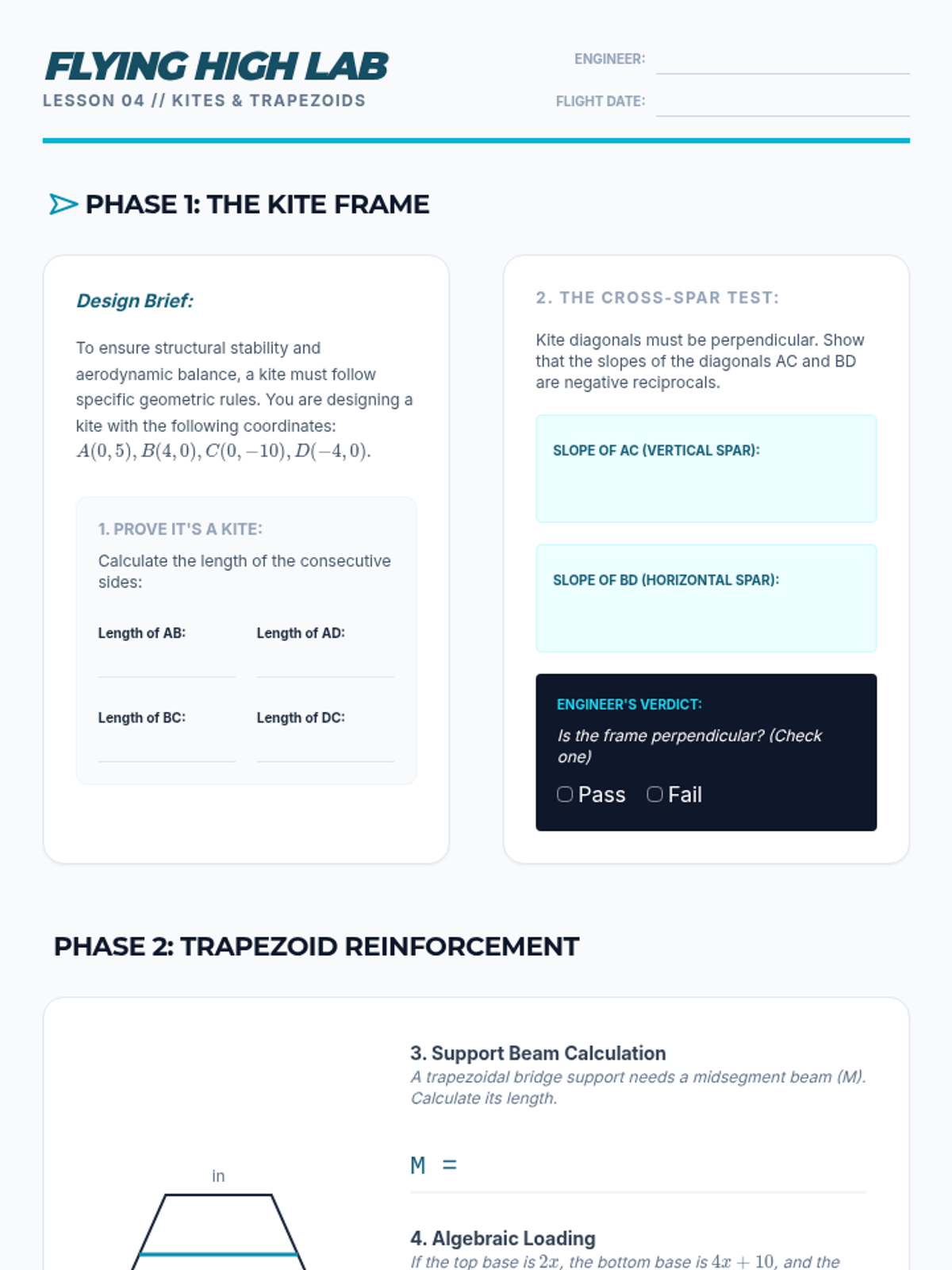
Analysis of non-parallelogram quadrilaterals, including trapezoids and kites, with a focus on base angles and diagonal properties.
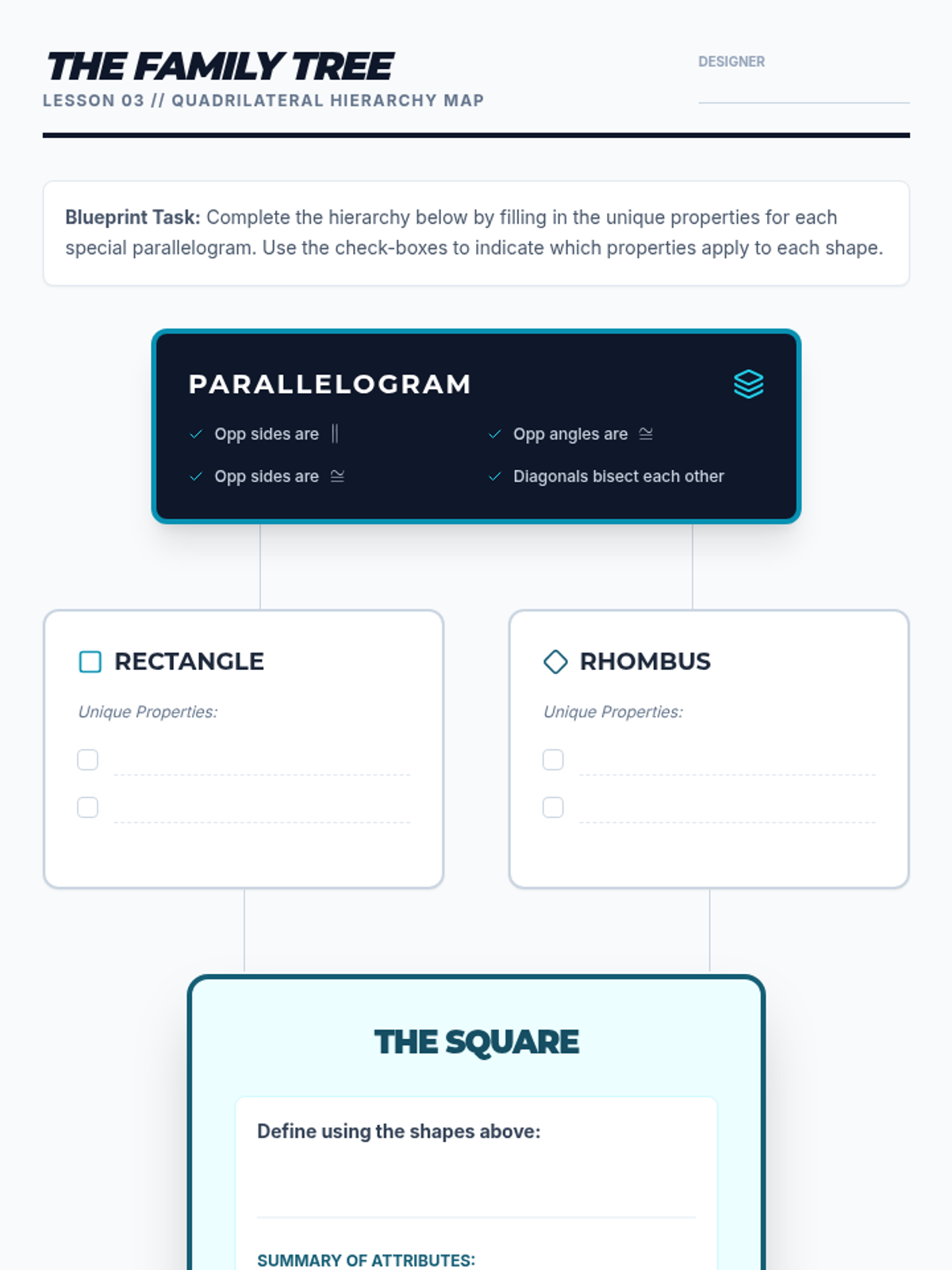
An exploration of the special properties of rectangles, rhombi, and squares, and how they fit into a hierarchical classification system.
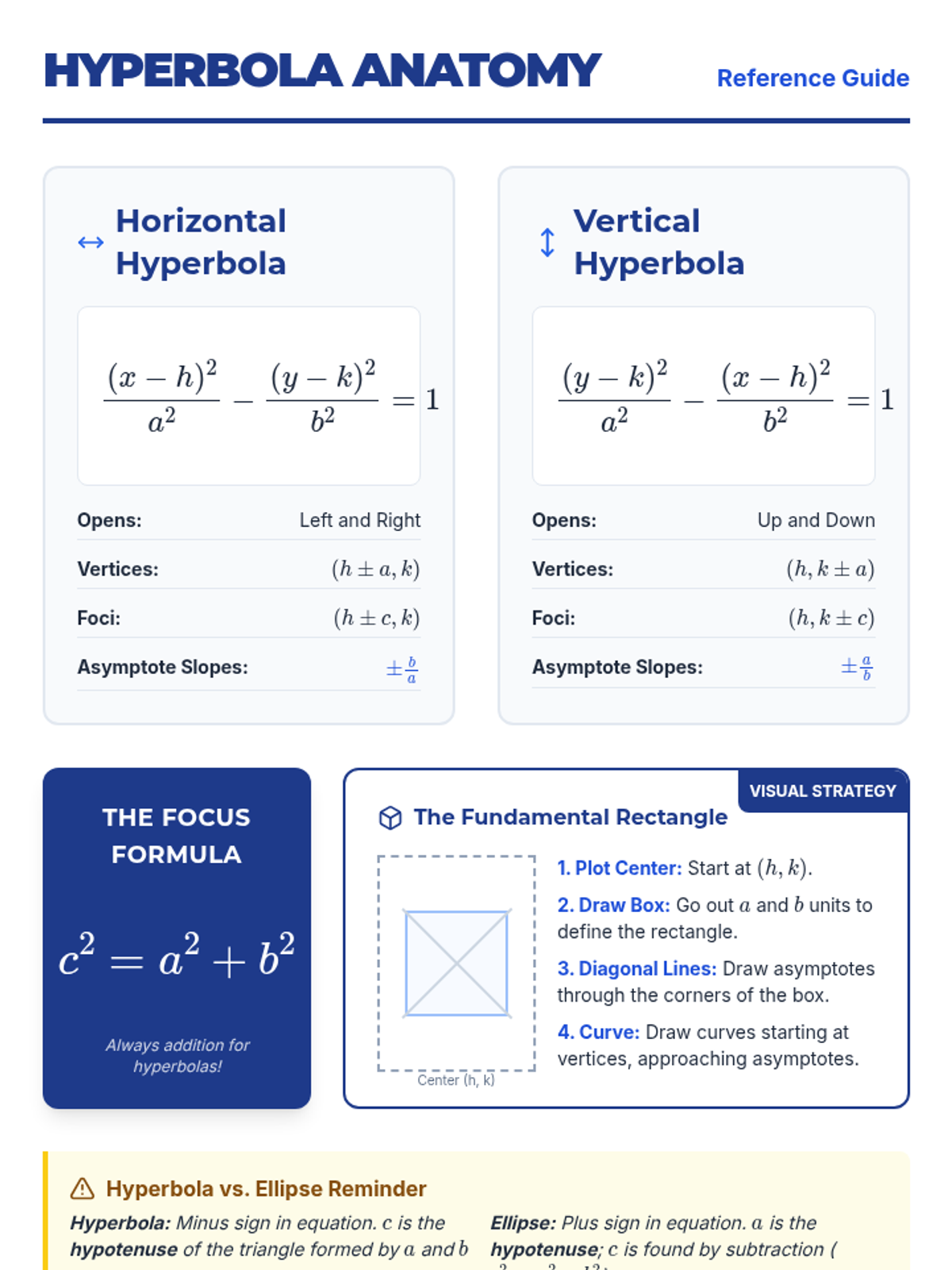
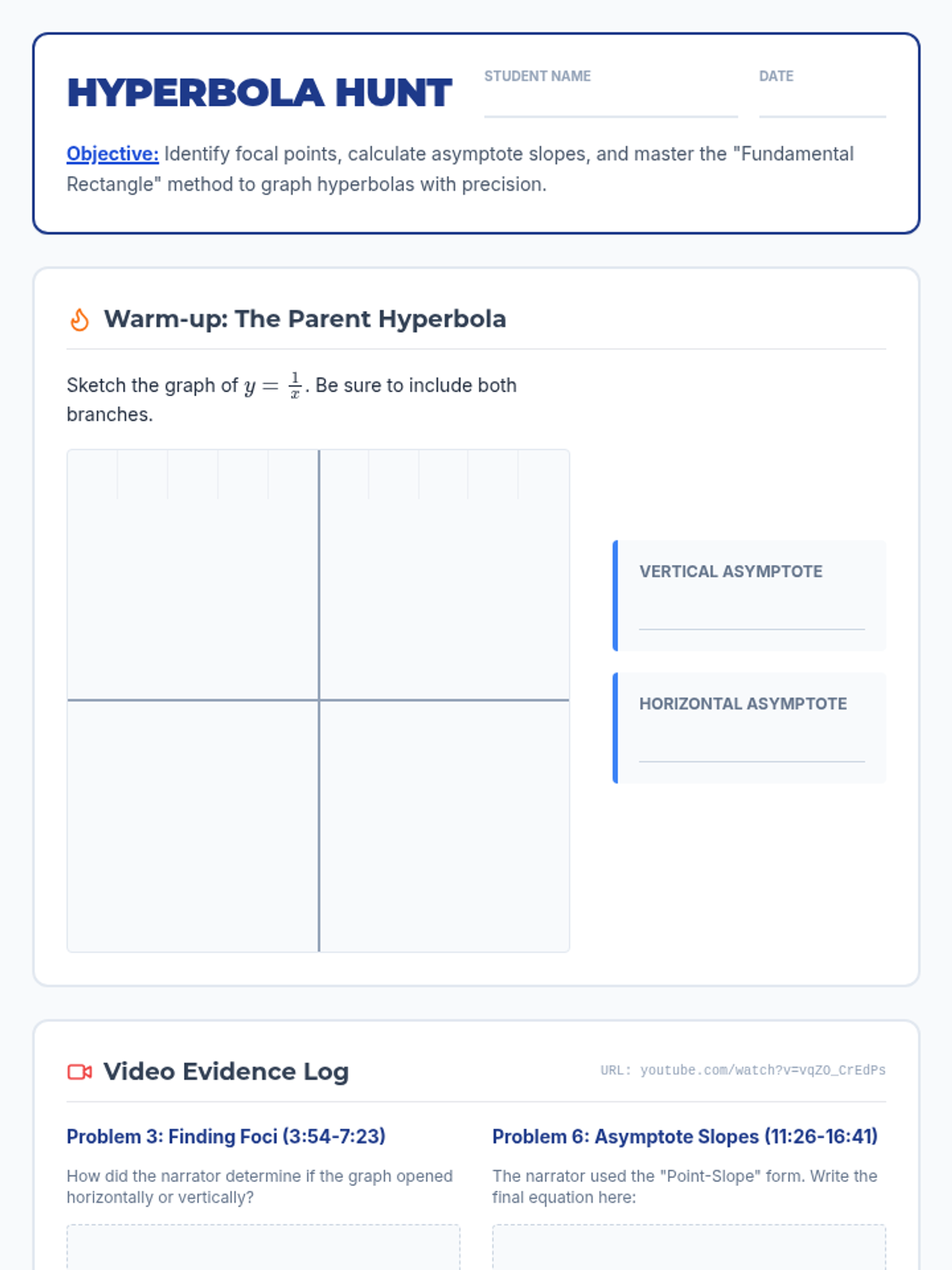
A comprehensive lesson on hyperbola properties, focusing on calculating foci, determining asymptote equations via the fundamental rectangle, and converting between general and standard forms. Includes a video-guided tutorial and a 'Hyperbola Hunters' graphing activity.
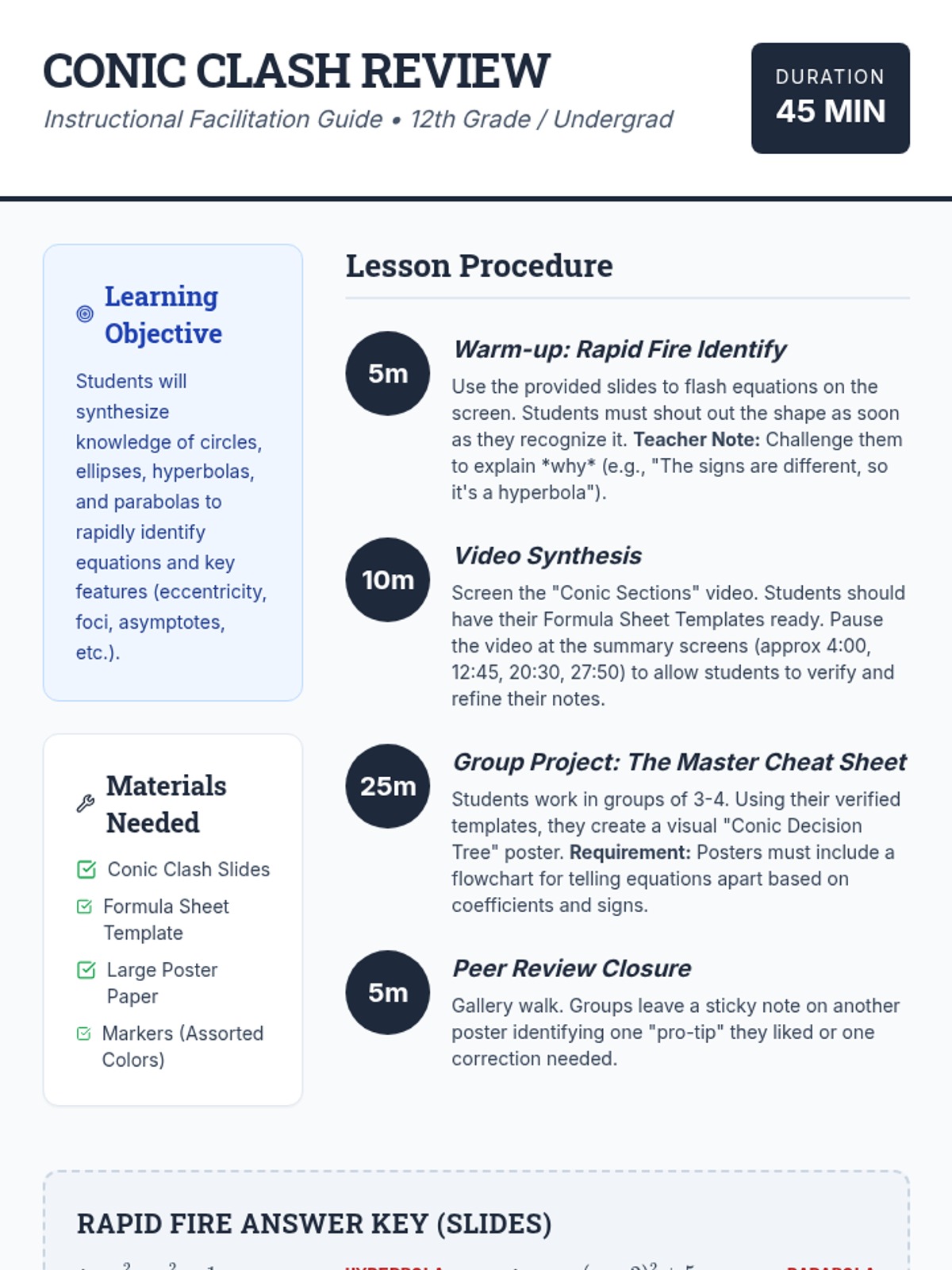
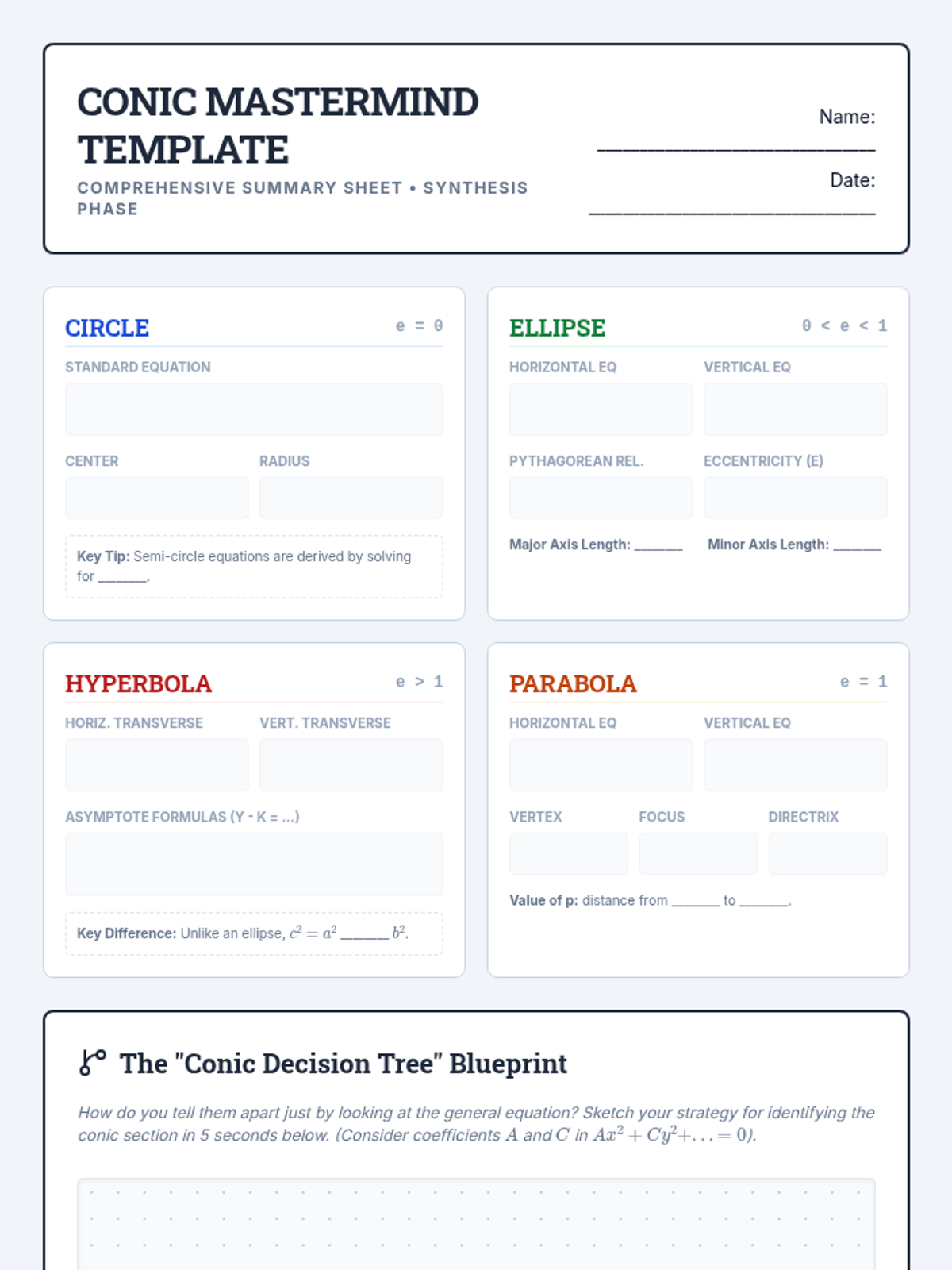
A high-energy review lesson for 12th grade or undergraduate students to master the identification and properties of all four conic sections through rapid-fire drills, video synthesis, and collaborative poster creation.
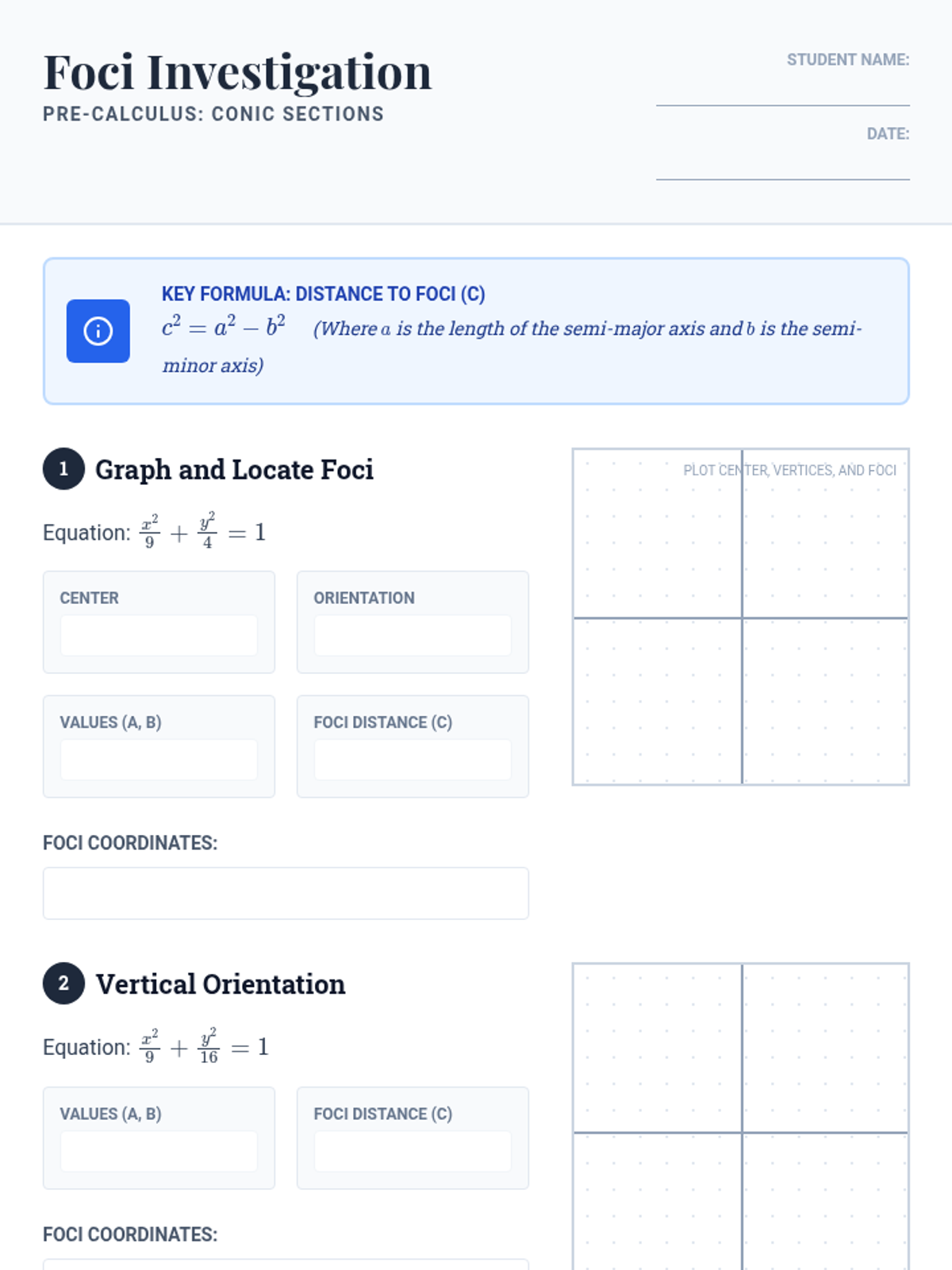
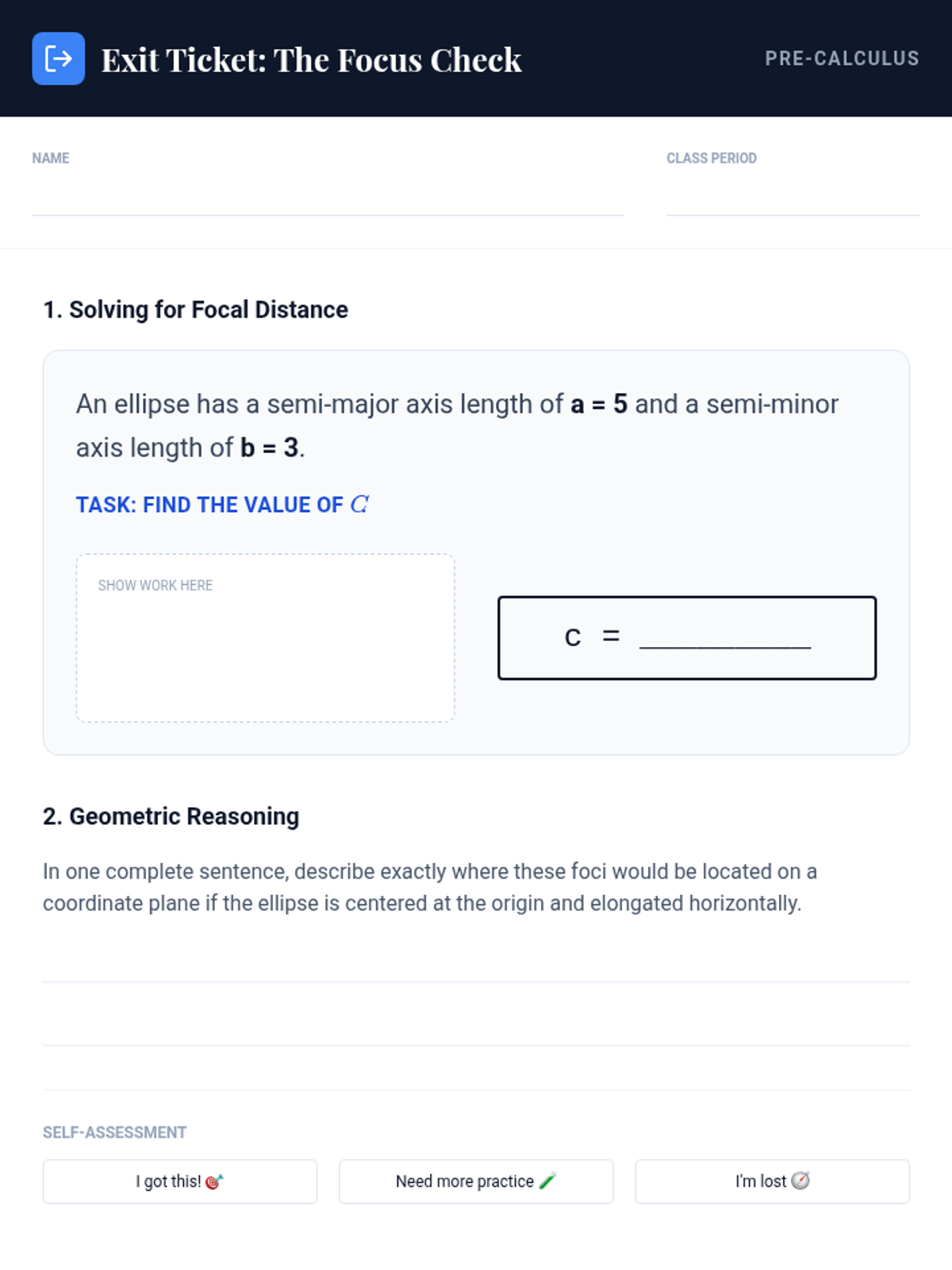
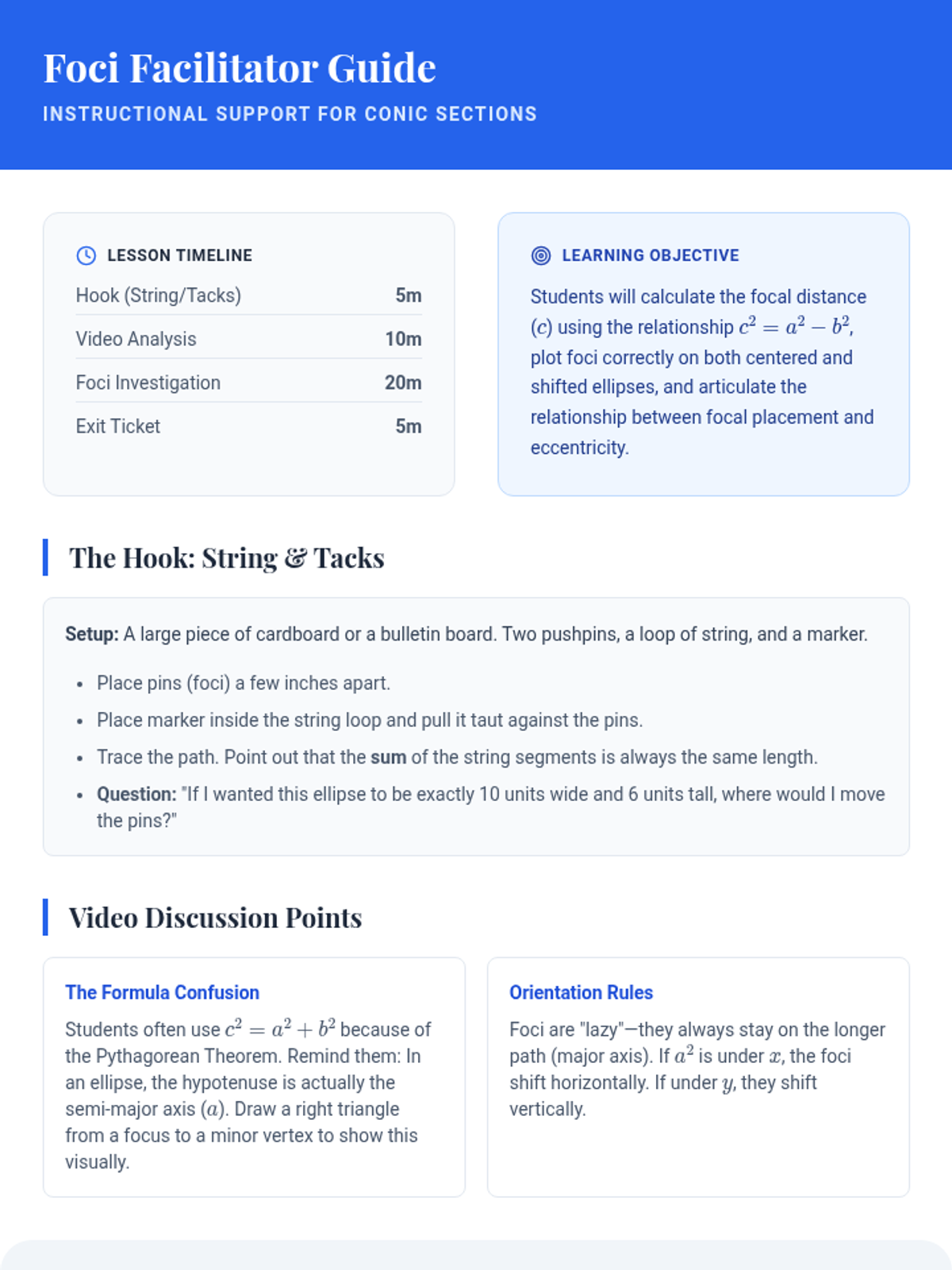
A rigorous exploration of ellipse foci, focusing on the geometric derivation of the distance 'c' and the relationship between focal points and eccentricity. Students move from a physical string-and-tacks demonstration to mathematical calculation and graphing.
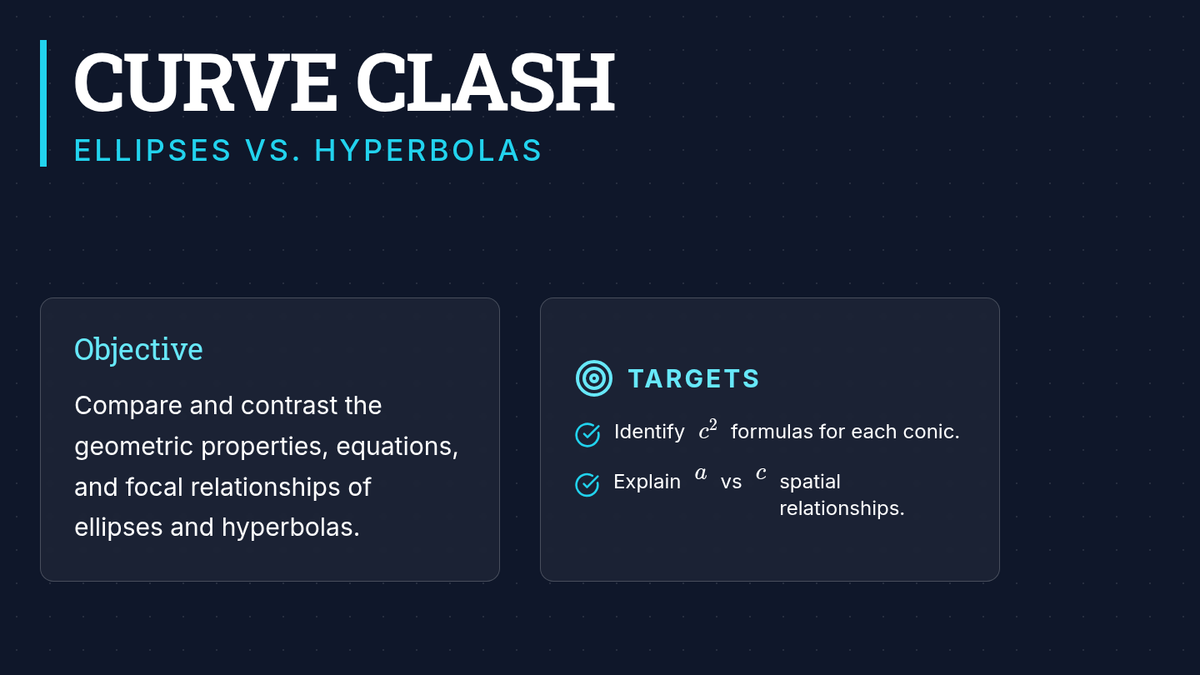
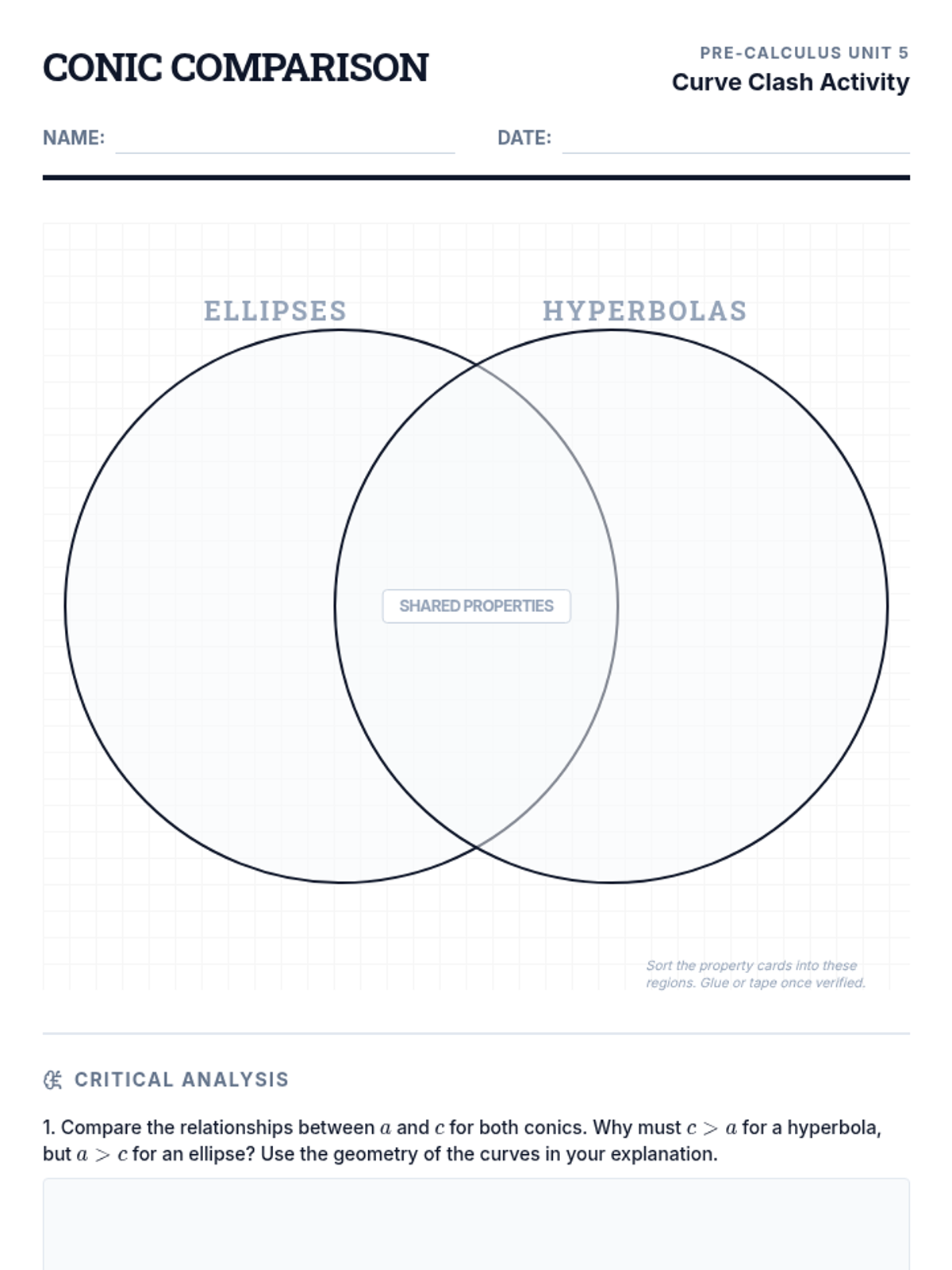
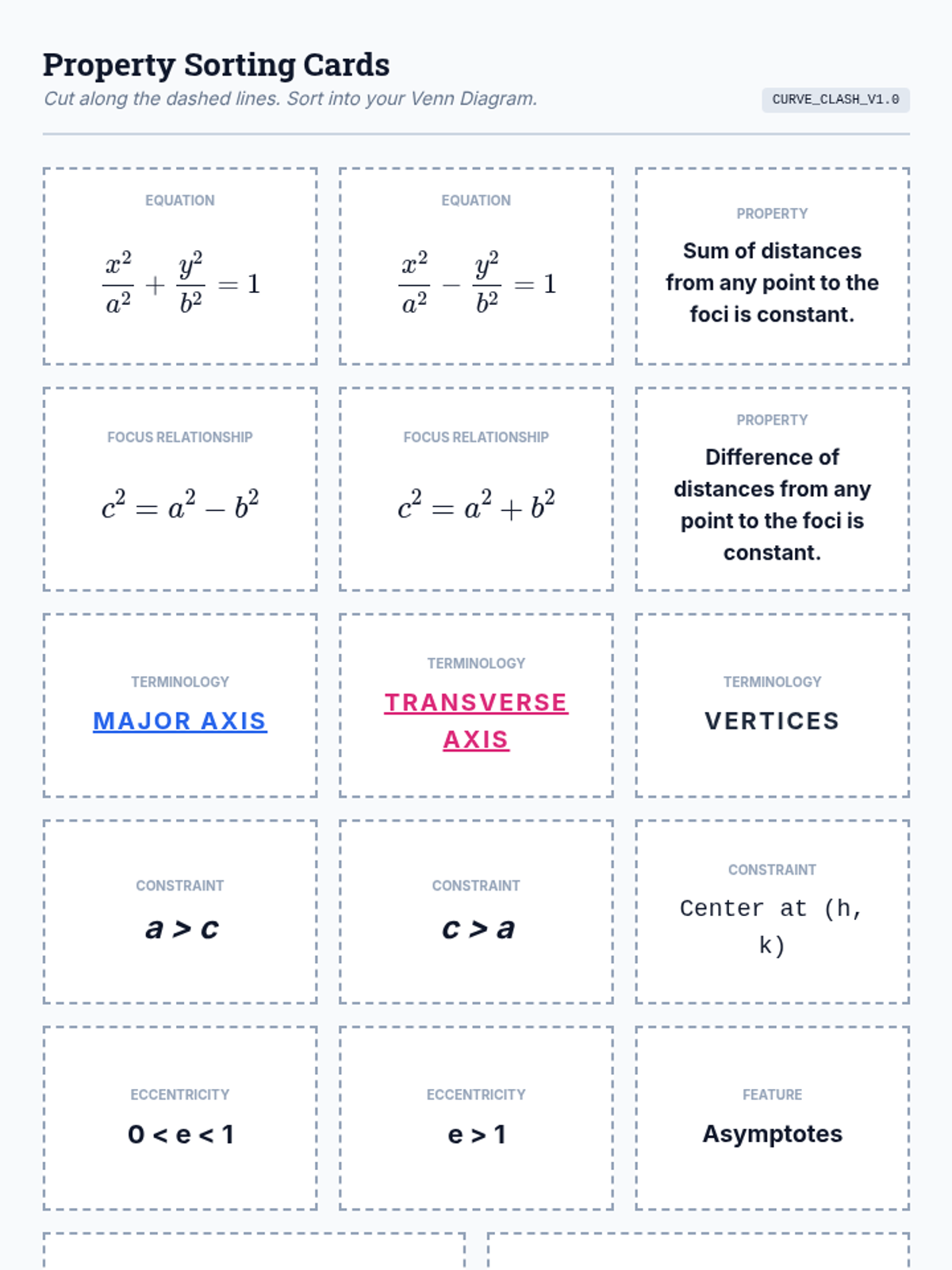
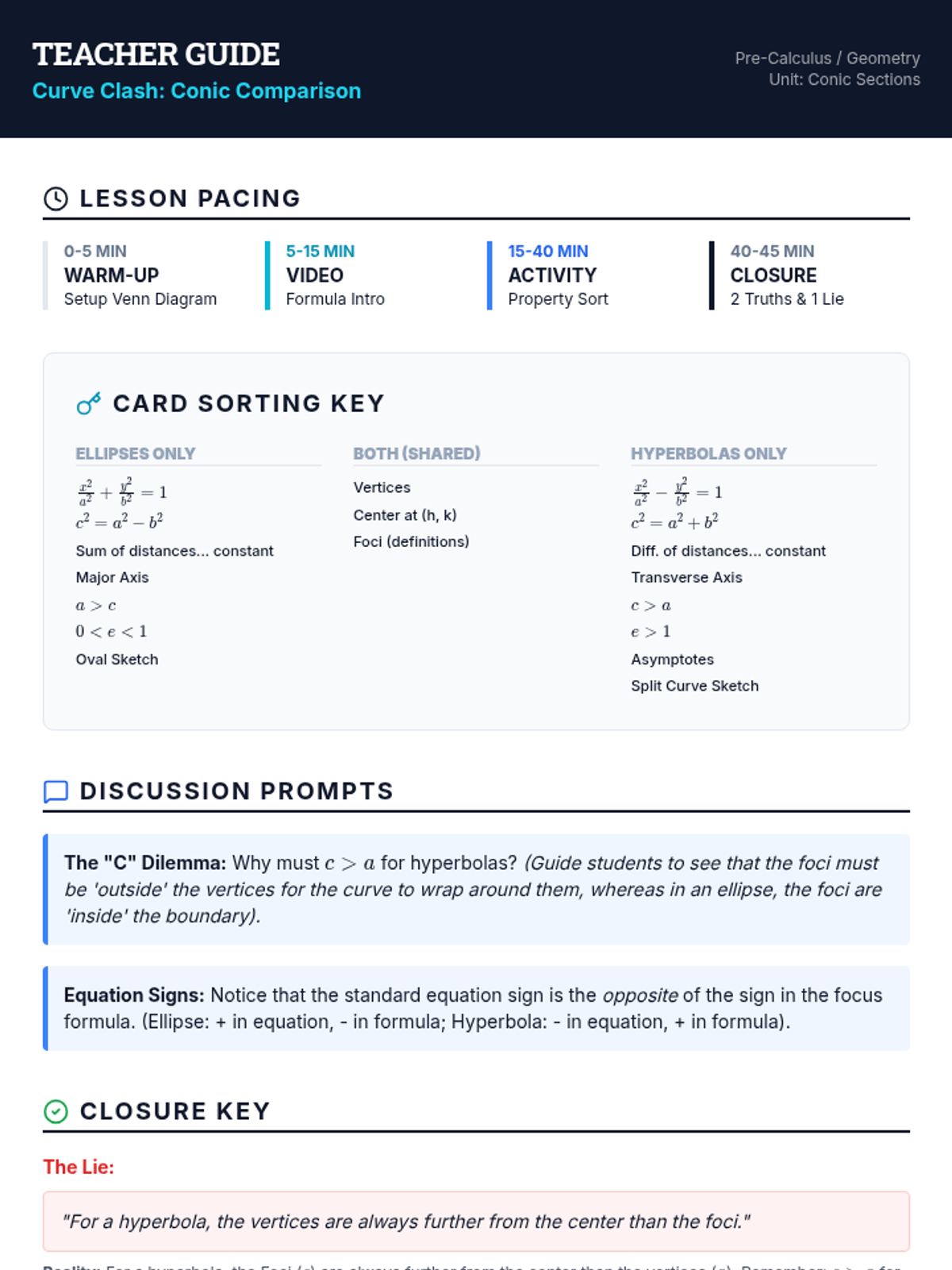
A comprehensive Pre-Calculus lesson comparing the geometric properties of ellipses and hyperbolas, featuring a video-guided analysis and a hands-on sorting activity.
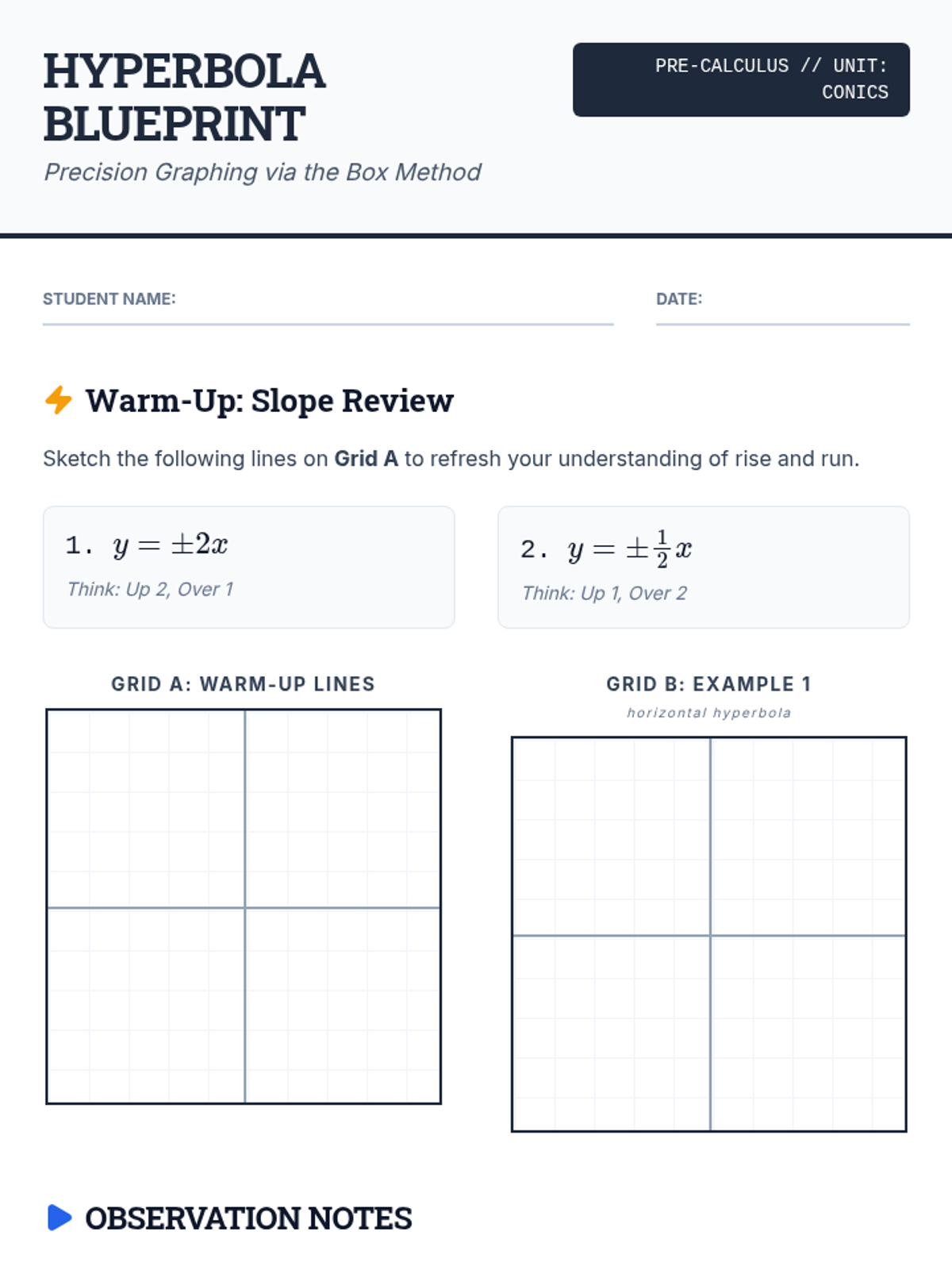
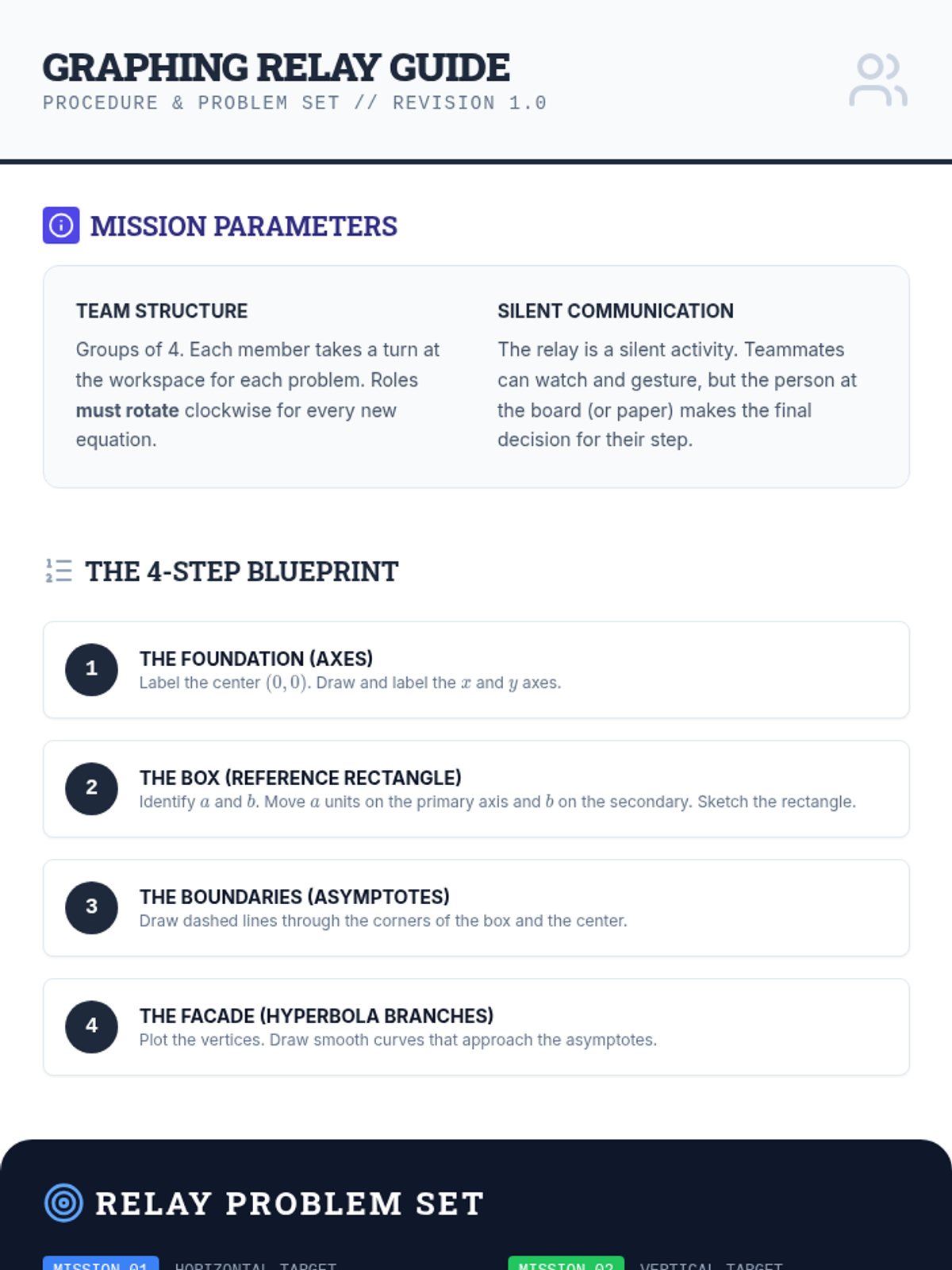
Students master the technique of graphing hyperbolas centered at the origin by constructing reference rectangles and asymptotes. This lesson utilizes a video demonstration and a collaborative 'Graphing Relay' to reinforce the relationship between the equation's constants and the visual graph.
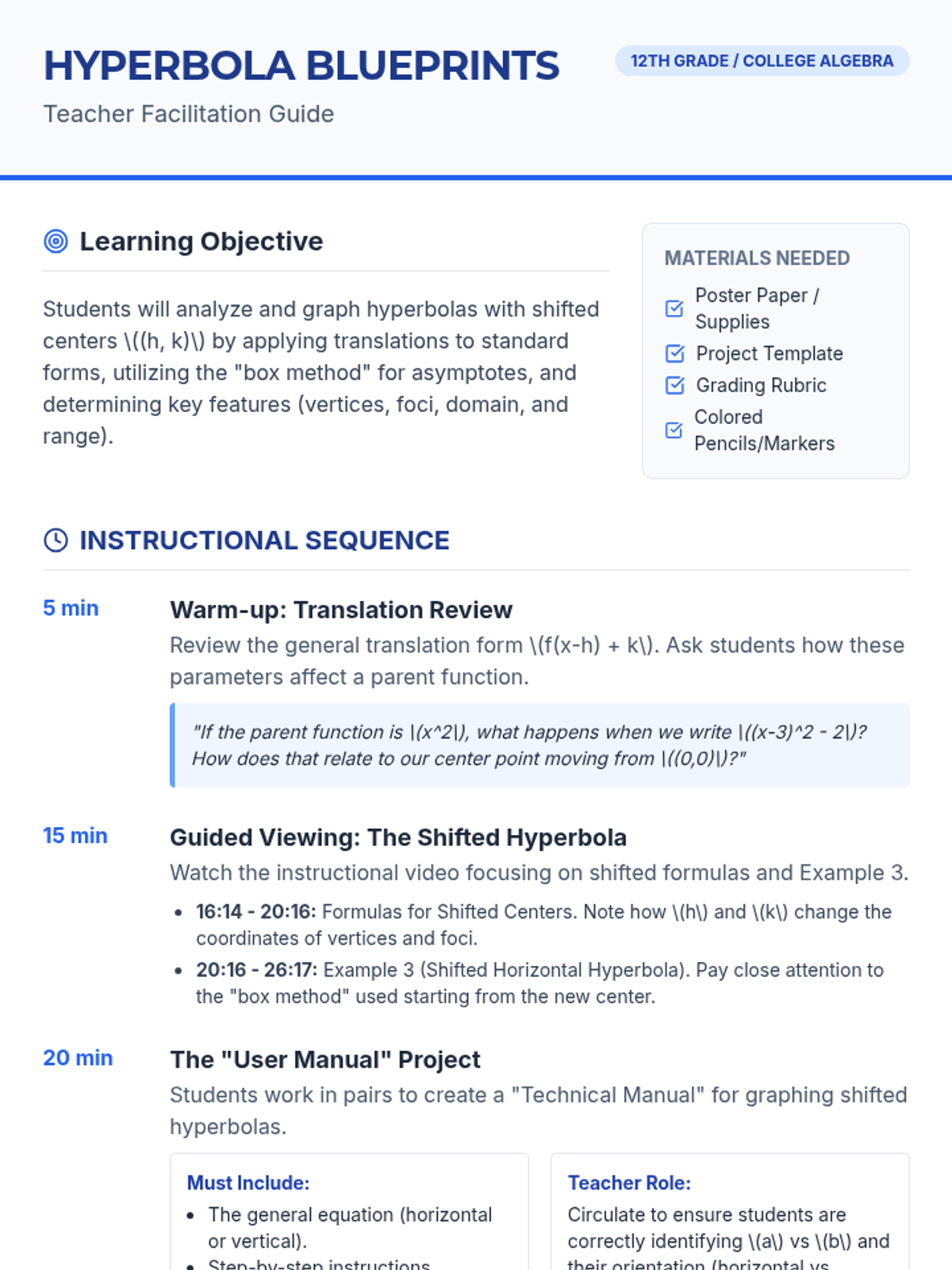
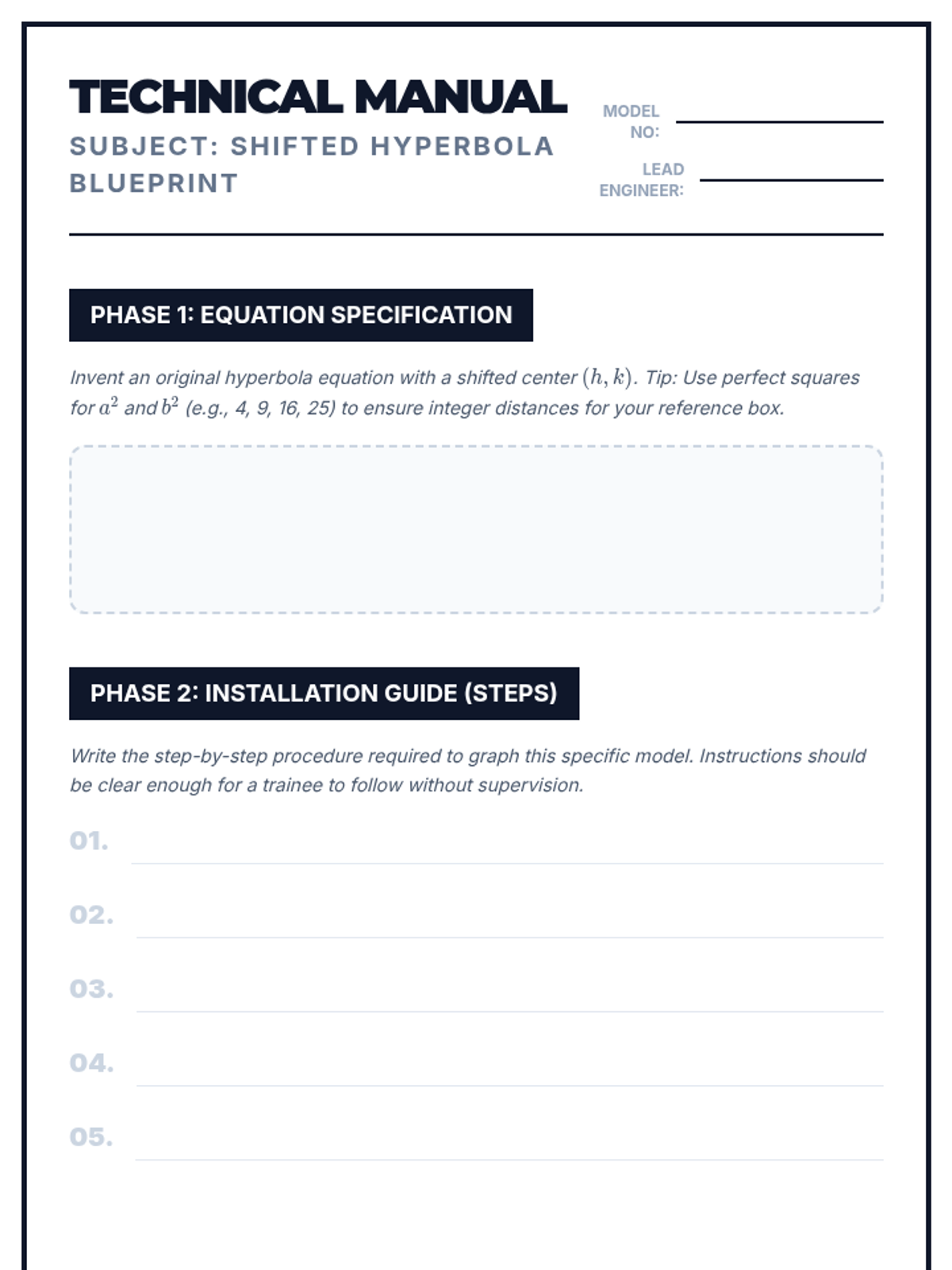
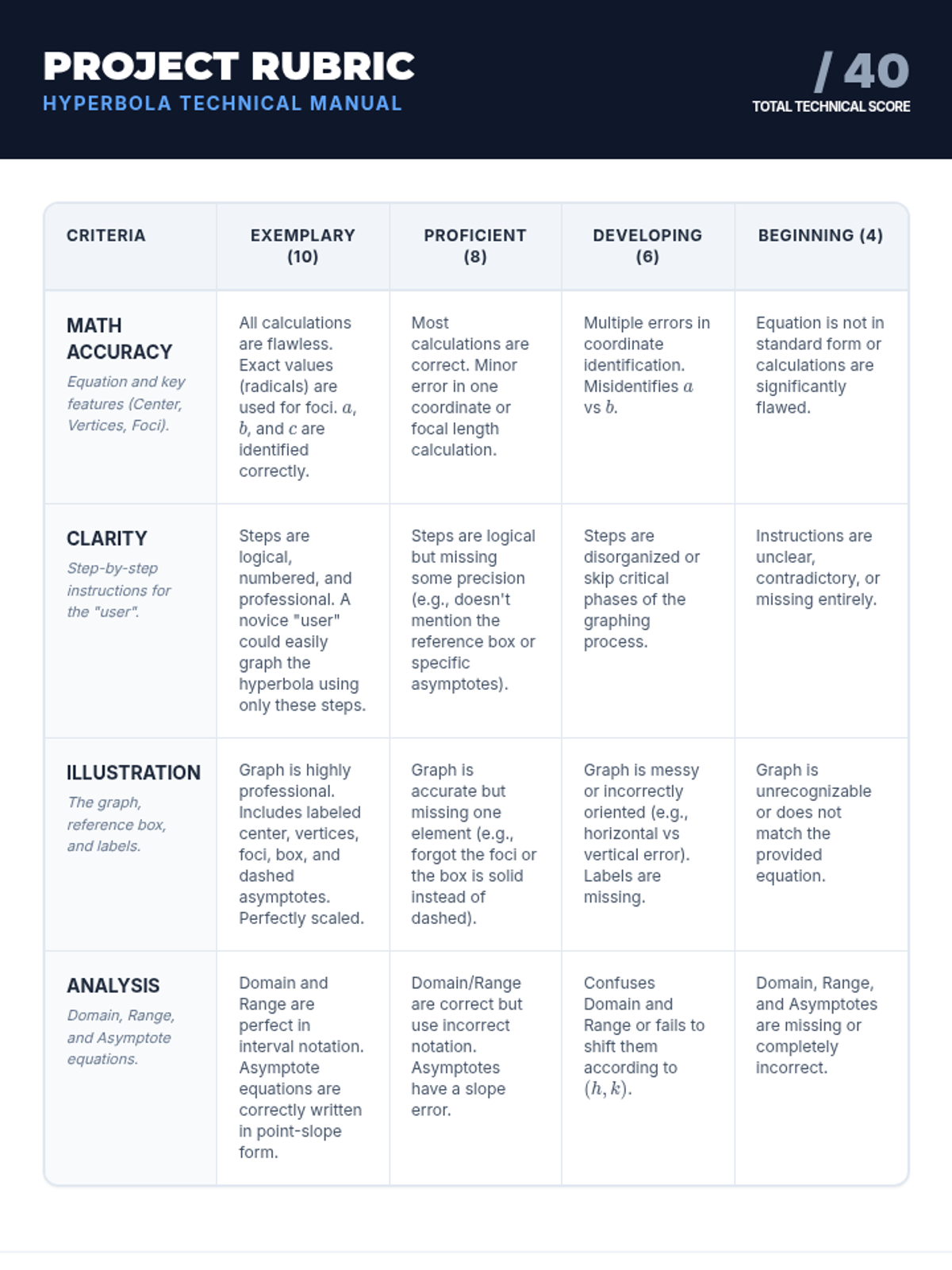
A lesson focusing on identifying, graphing, and analyzing hyperbolas with shifted centers (h,k). Students will view instructional video content and create a 'User Manual' to demonstrate their mastery of the step-by-step graphing process.
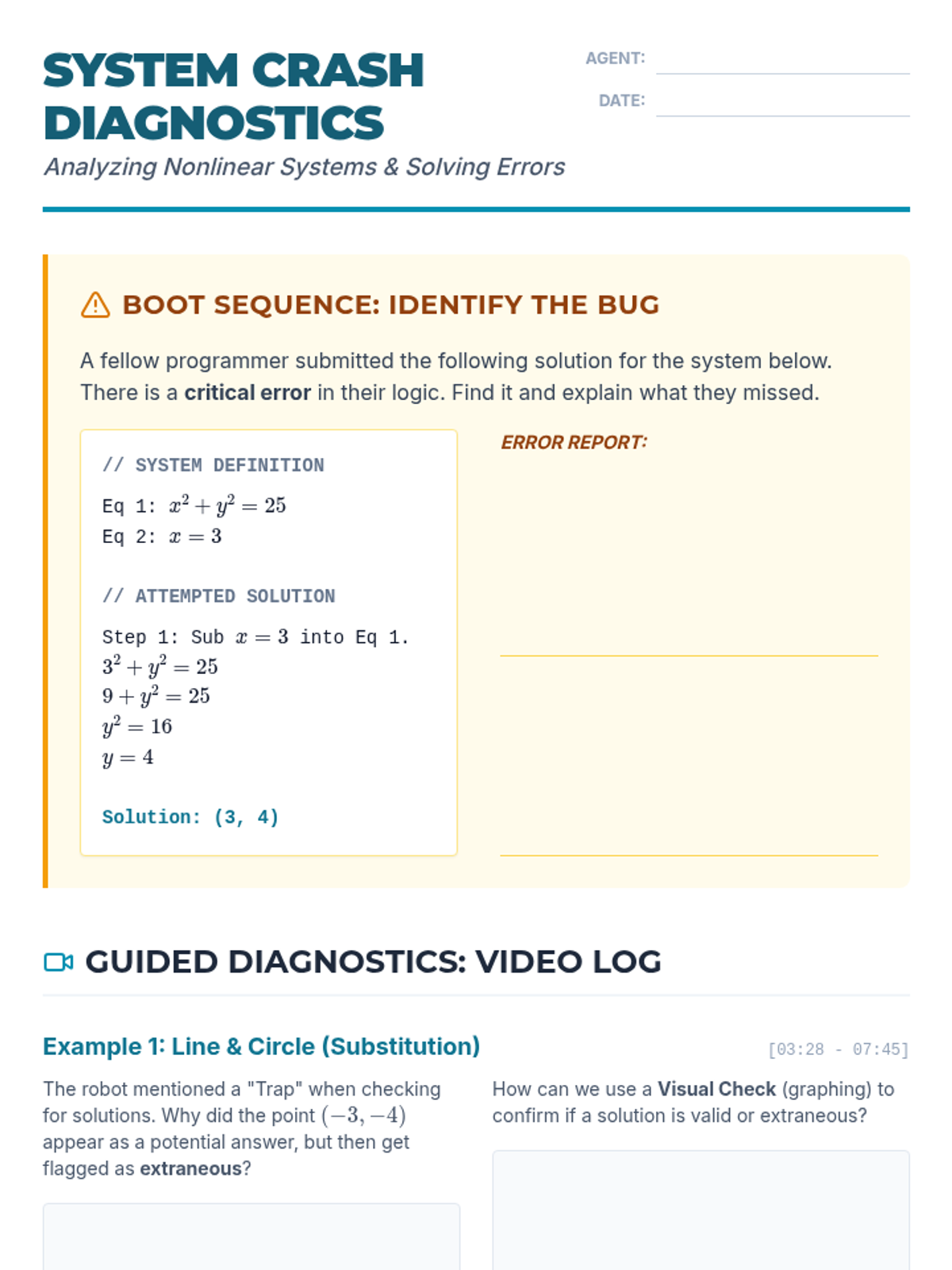
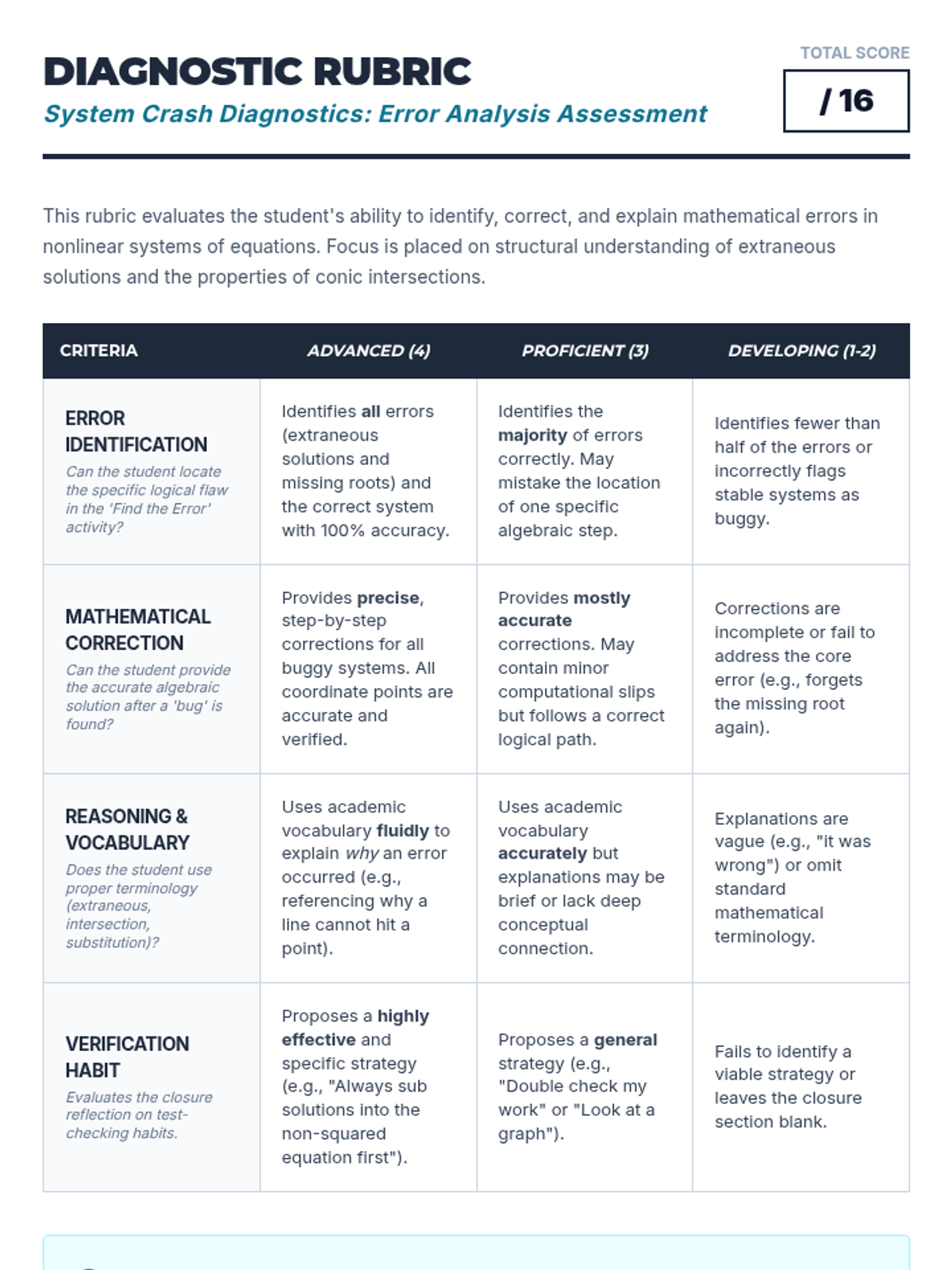
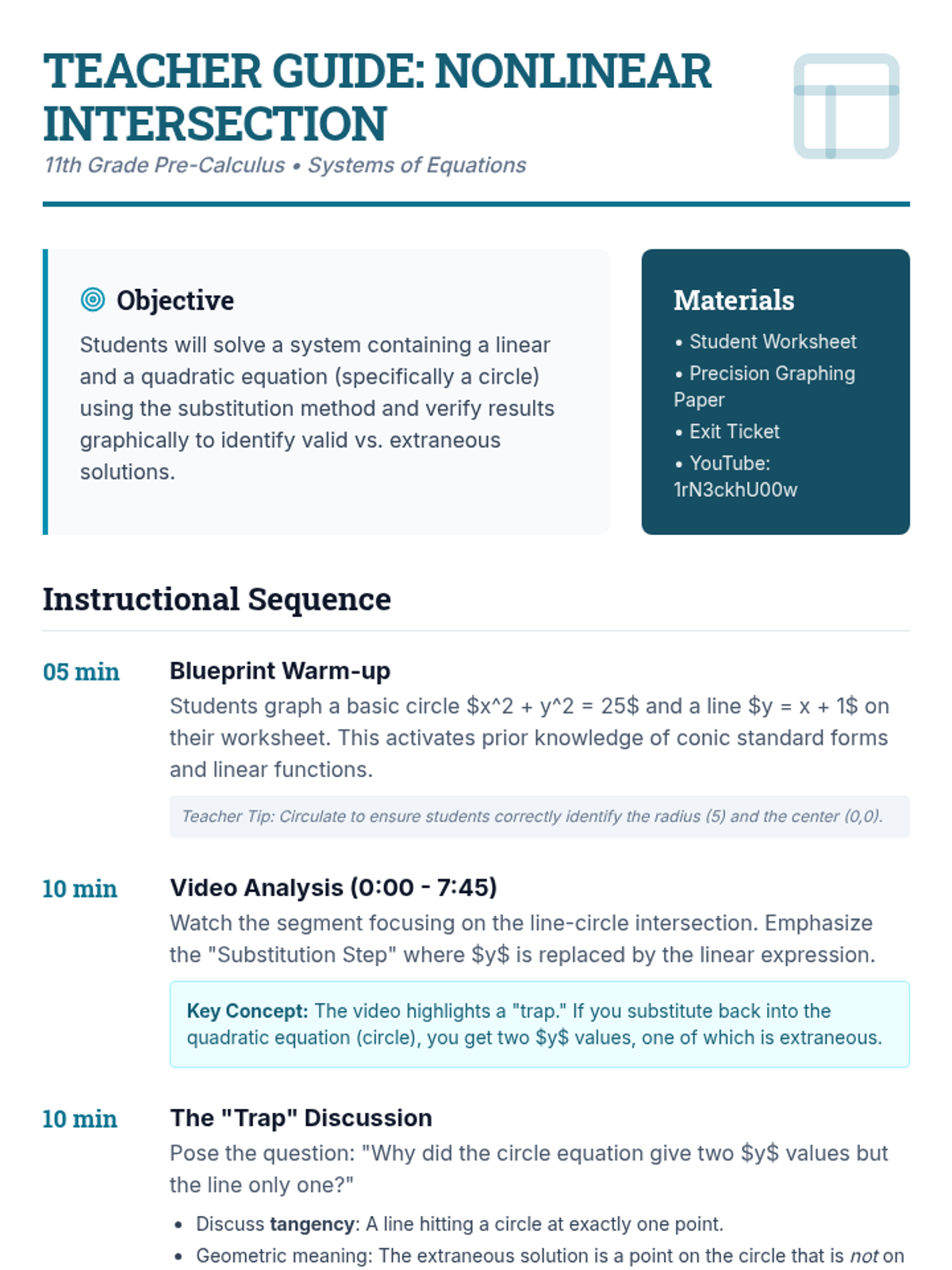
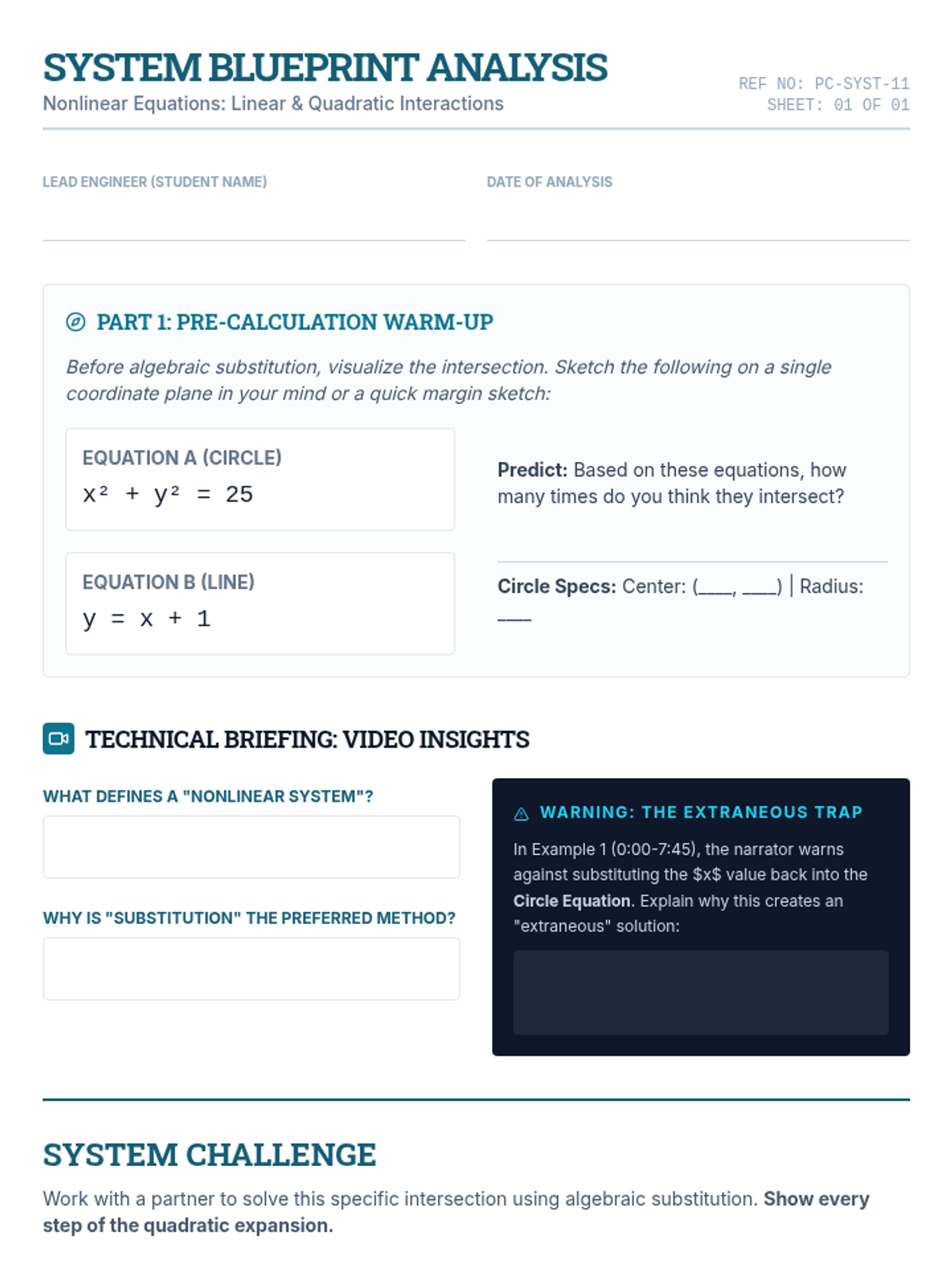
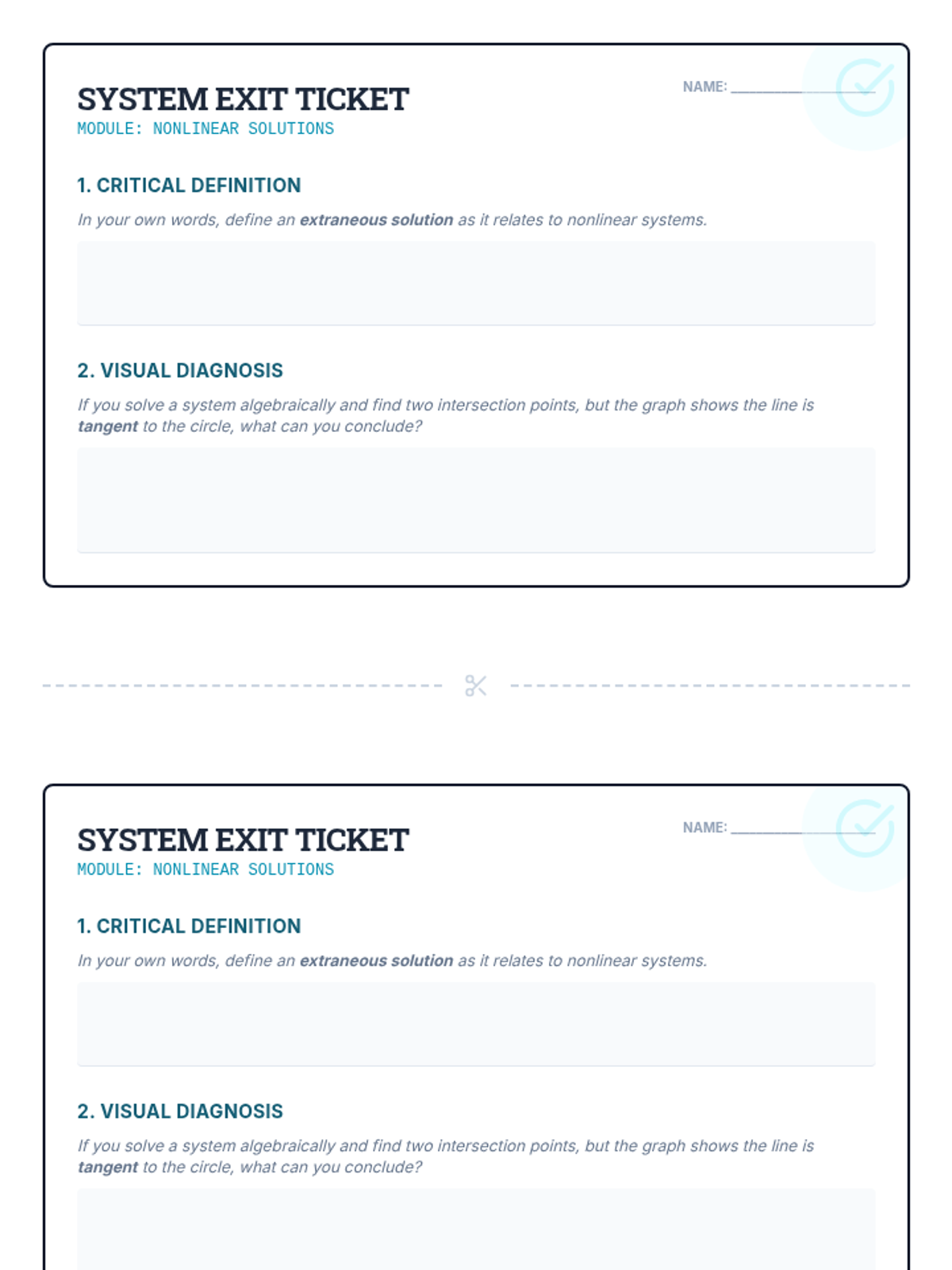
This lesson focuses on identifying and correcting common algebraic errors in solving systems of nonlinear equations, specifically addressing extraneous solutions and missing roots. Students engage with a video tutorial, guided notes, and a 'Find the Error' diagnostic activity to strengthen their verification strategies.
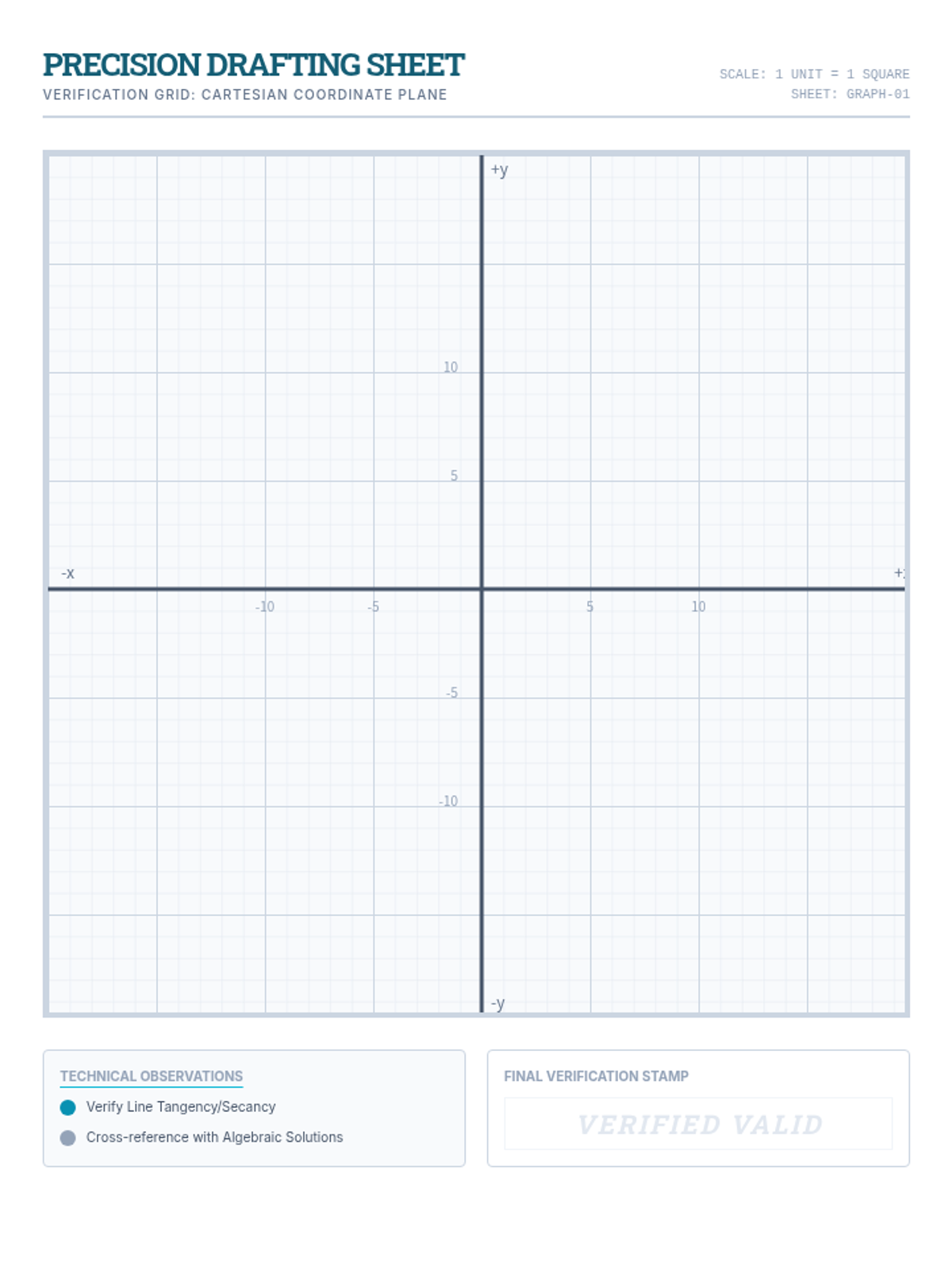
A comprehensive Pre-Calculus lesson on solving systems of nonlinear equations (linear and quadratic) using substitution, featuring a blueprint-themed set of materials including a guided worksheet, specialized graphing paper, and an exit ticket.
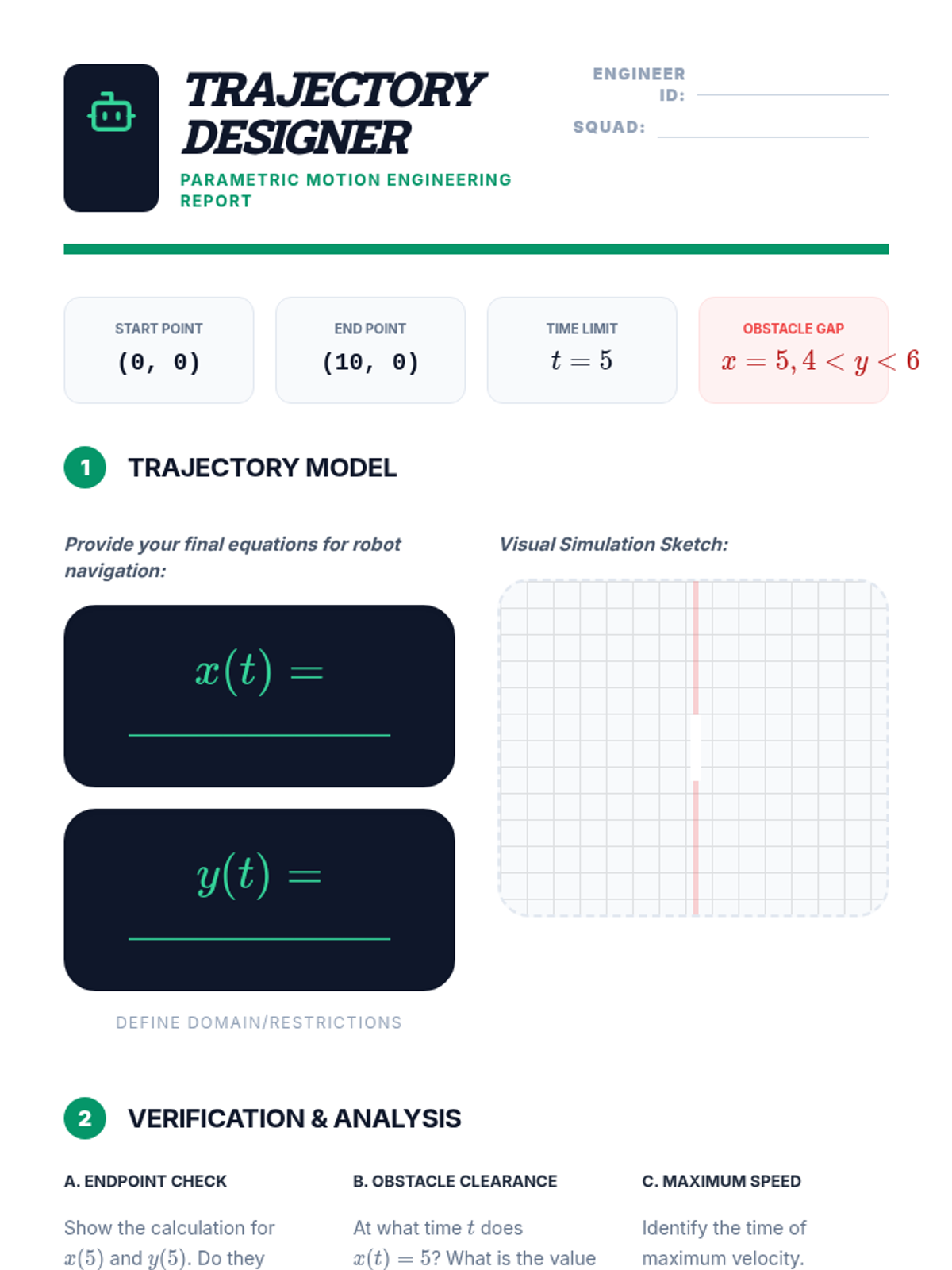
A culminating workshop where students design parametric equations to navigate a 'robot' through a constrained obstacle course.
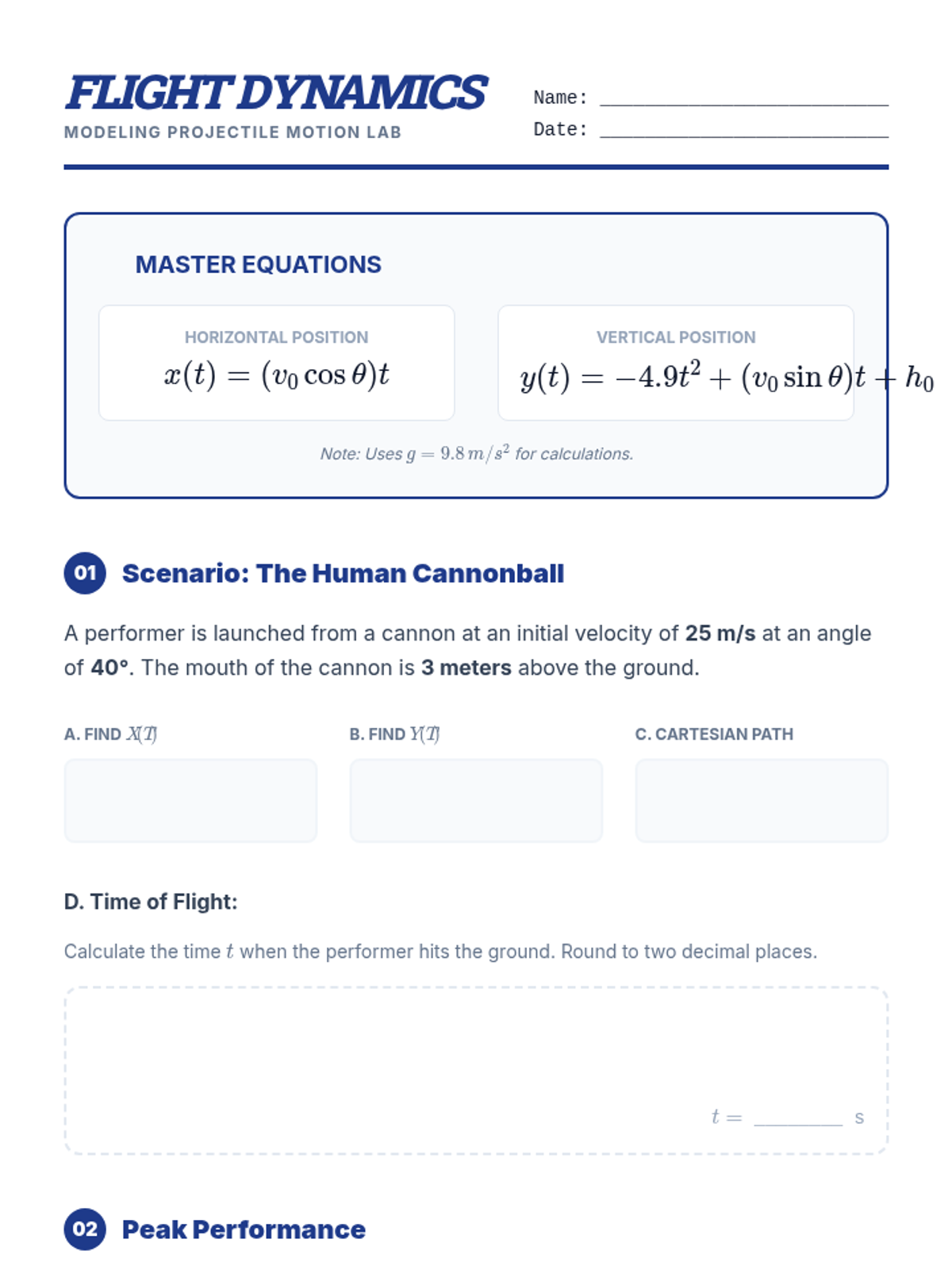
Students apply parametric equations to real-world physics problems involving projectiles, calculating time of flight, range, and maximum height.
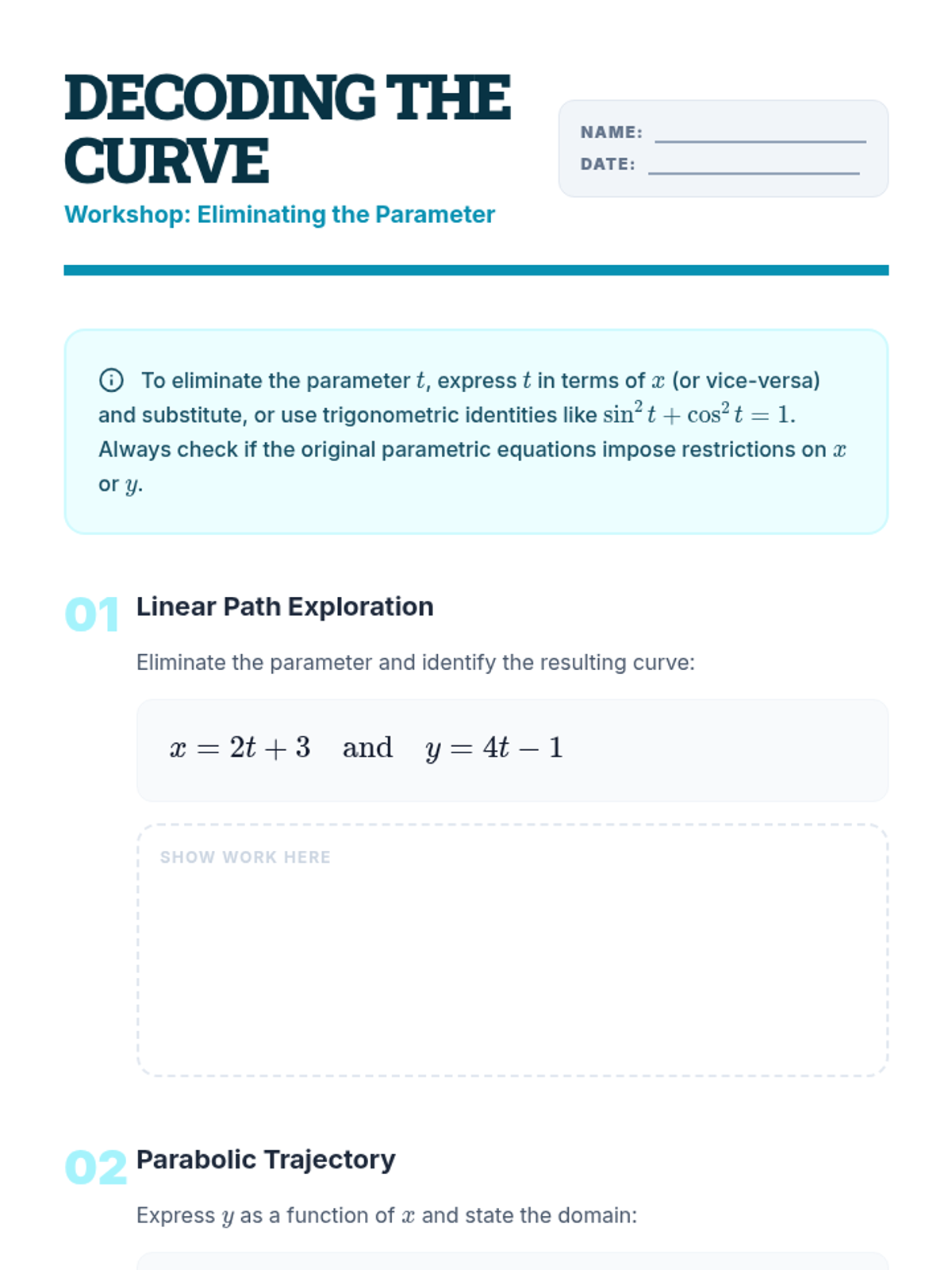
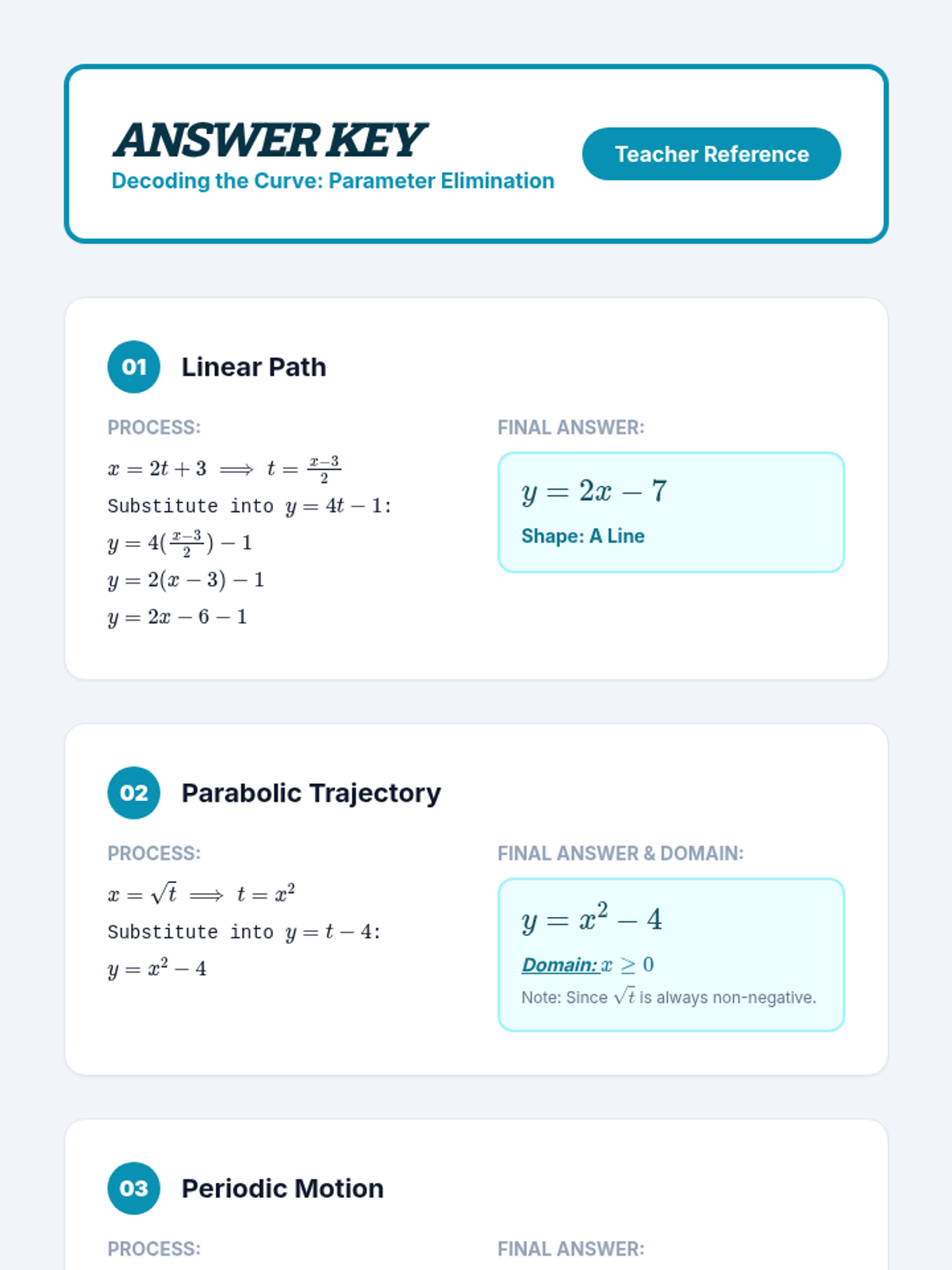
Focuses on the algebraic techniques required to convert parametric equations into Cartesian rectangular forms using substitution and trigonometric identities.
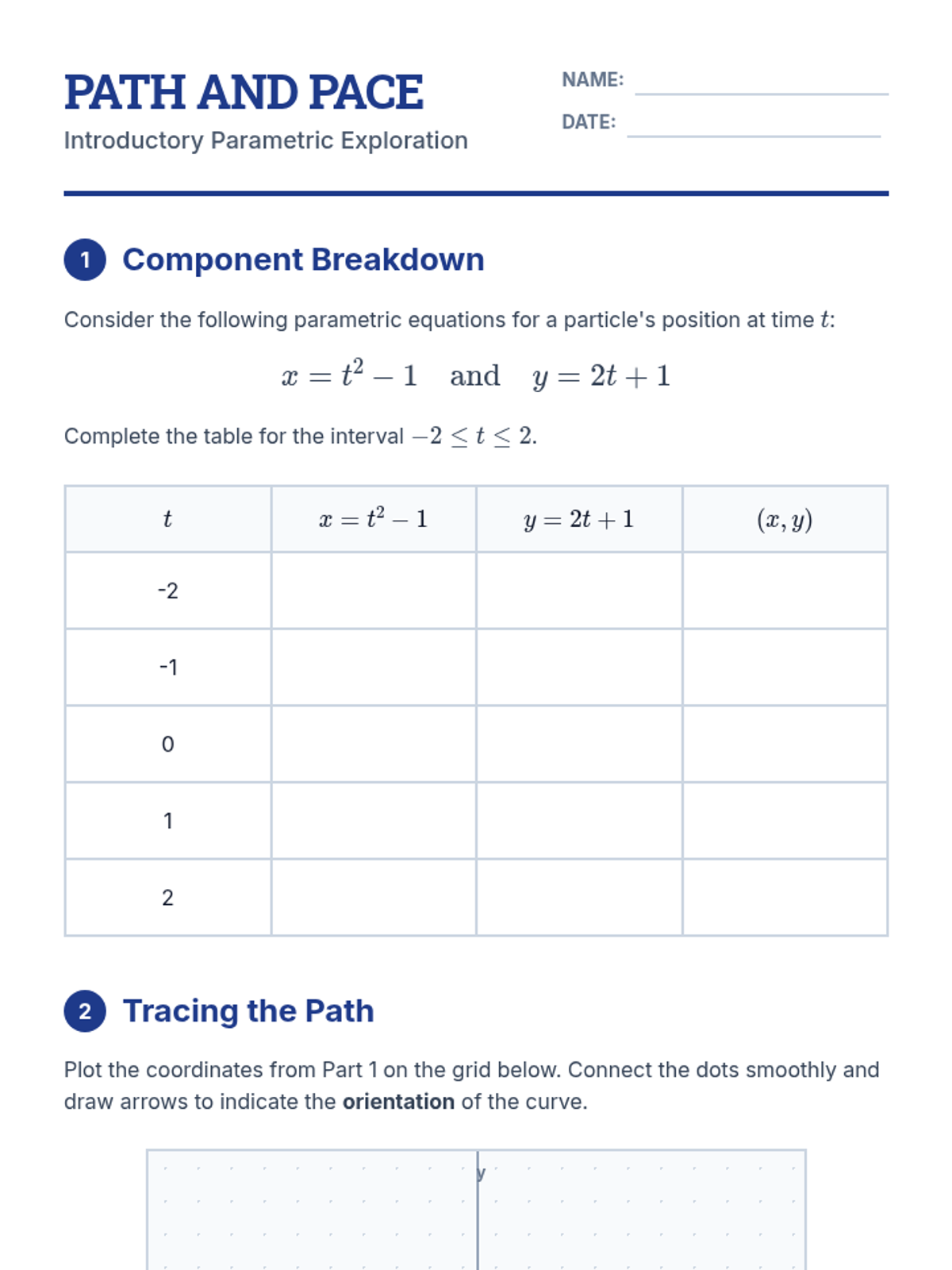
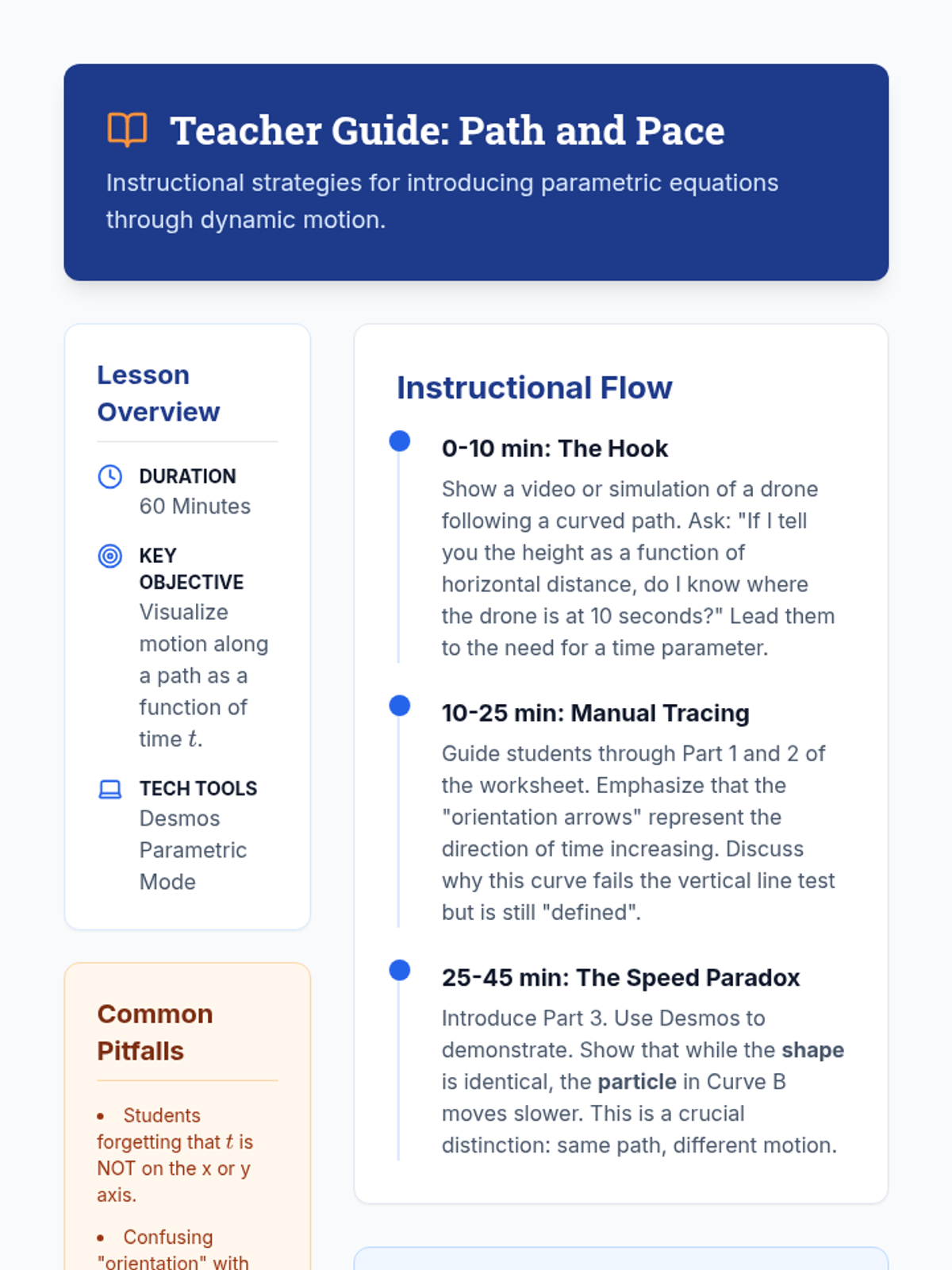
Students use graphing software to visualize how a third variable, t, controls the x and y coordinates simultaneously. The class explores the difference between the path and the motion along the path.
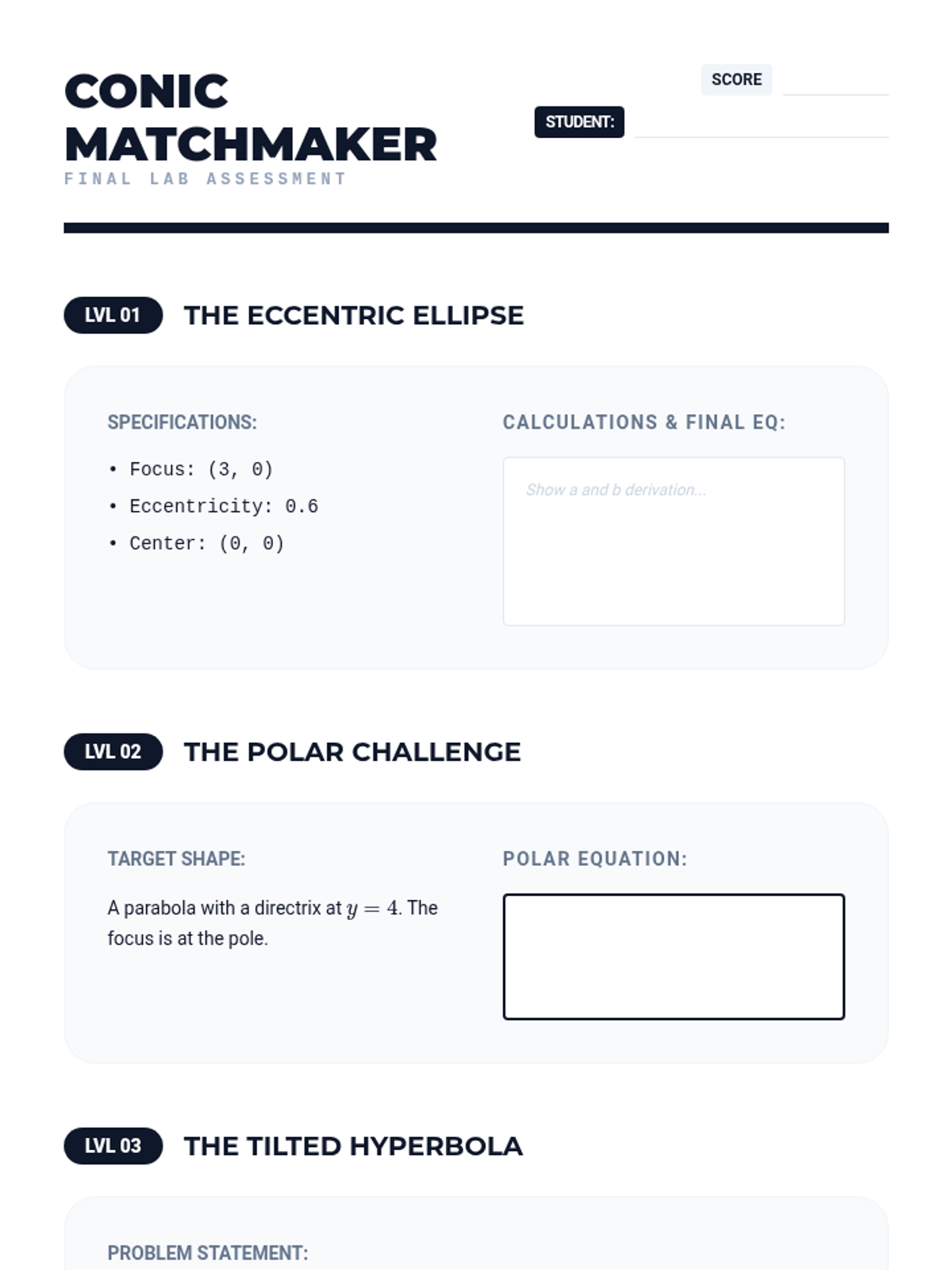
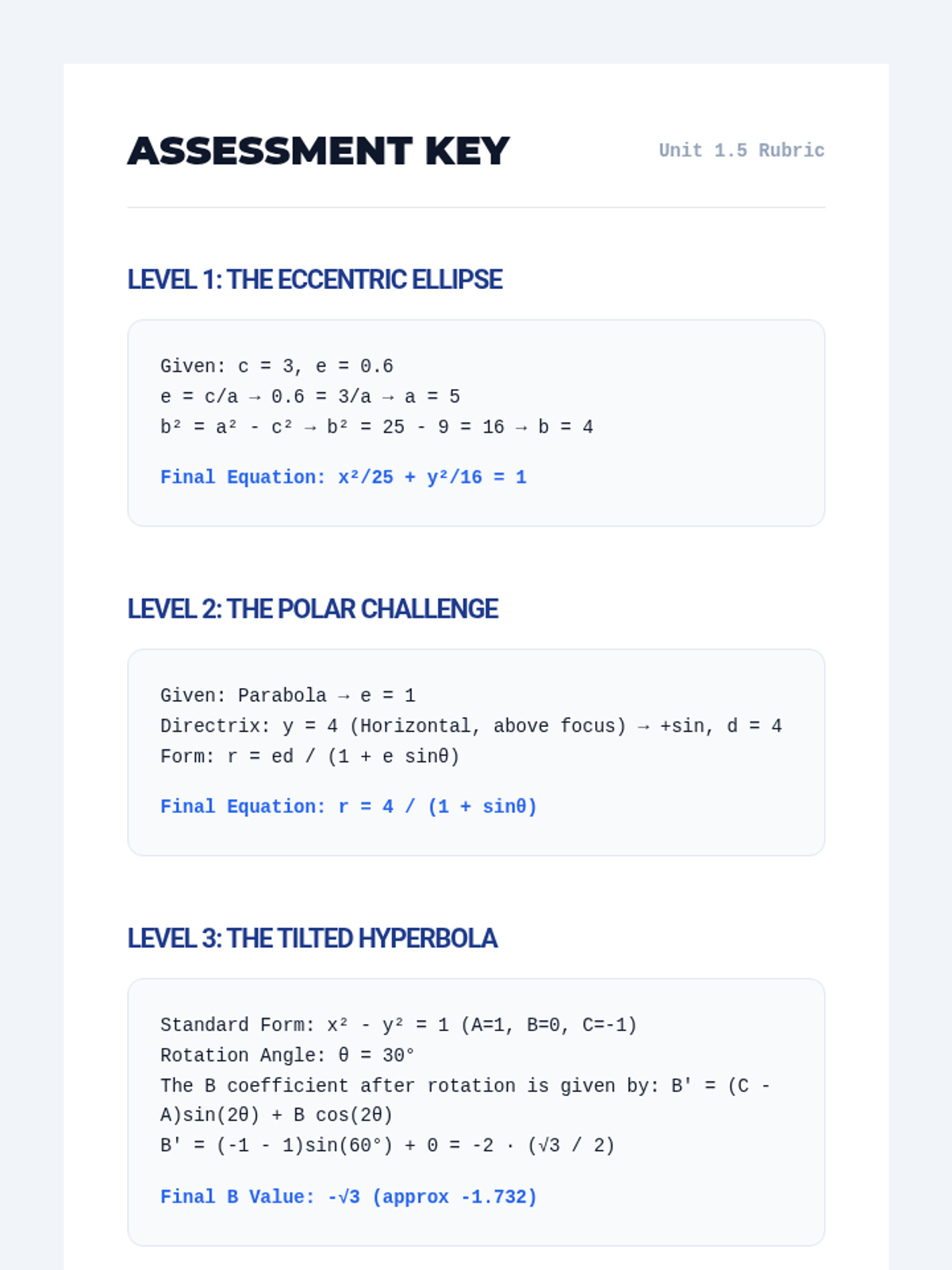
A culminating activity where students apply their knowledge of eccentricity, polar coordinates, and rotation to solve a series of dynamic matching challenges.
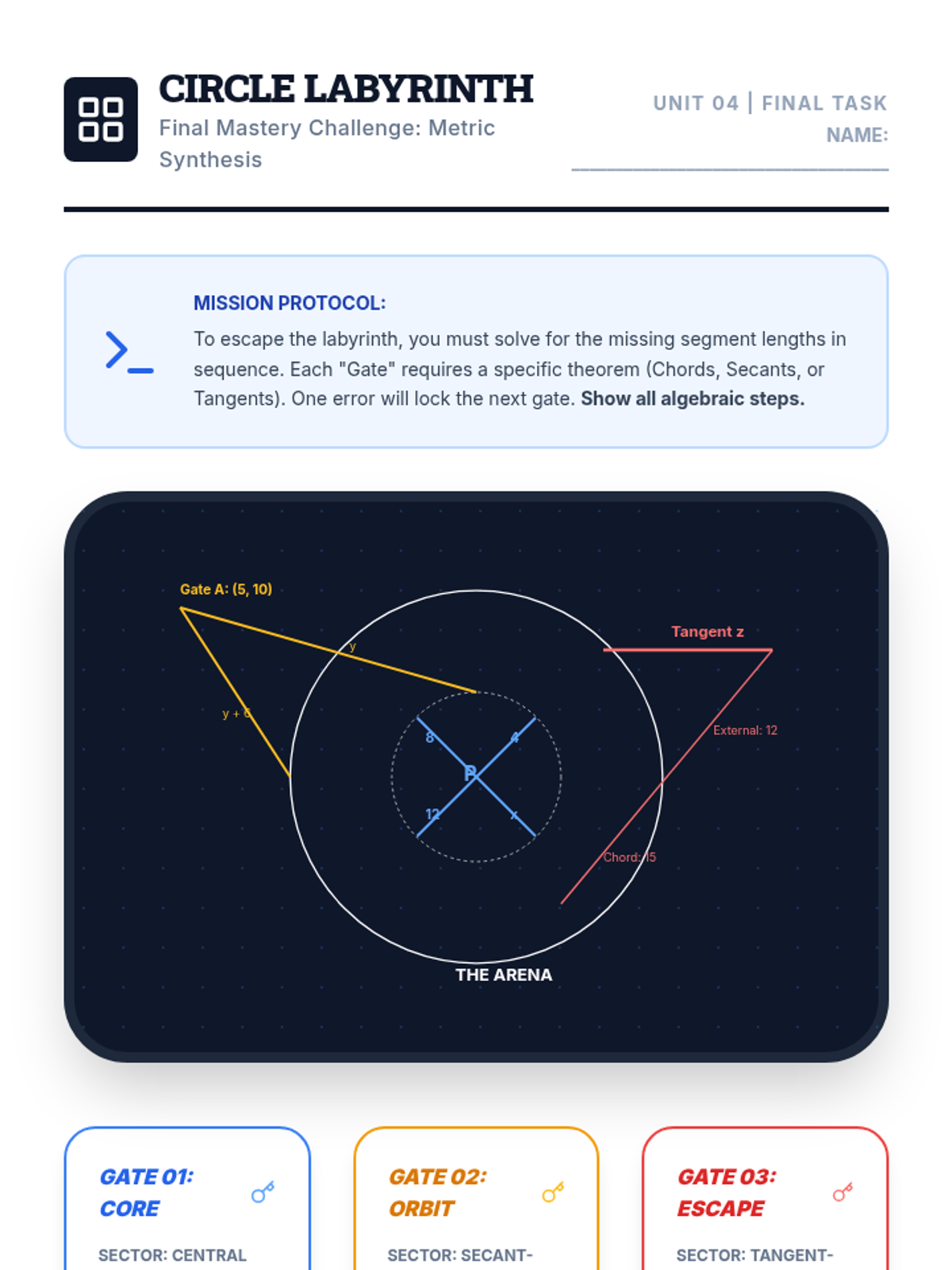
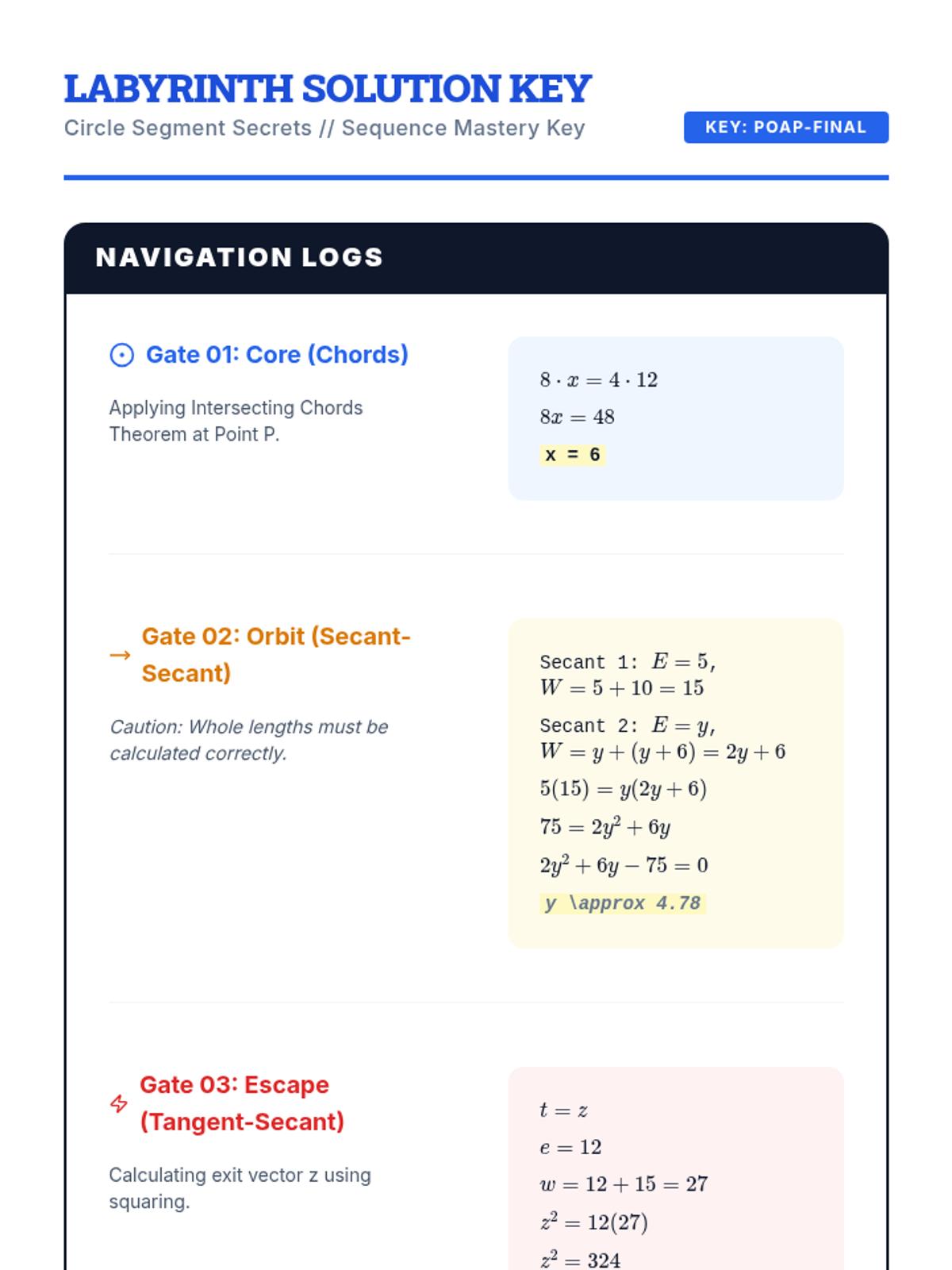
A mastery-based finale where students navigate a complex 'Circle Labyrinth' by synthesizing all learned segment theorems.
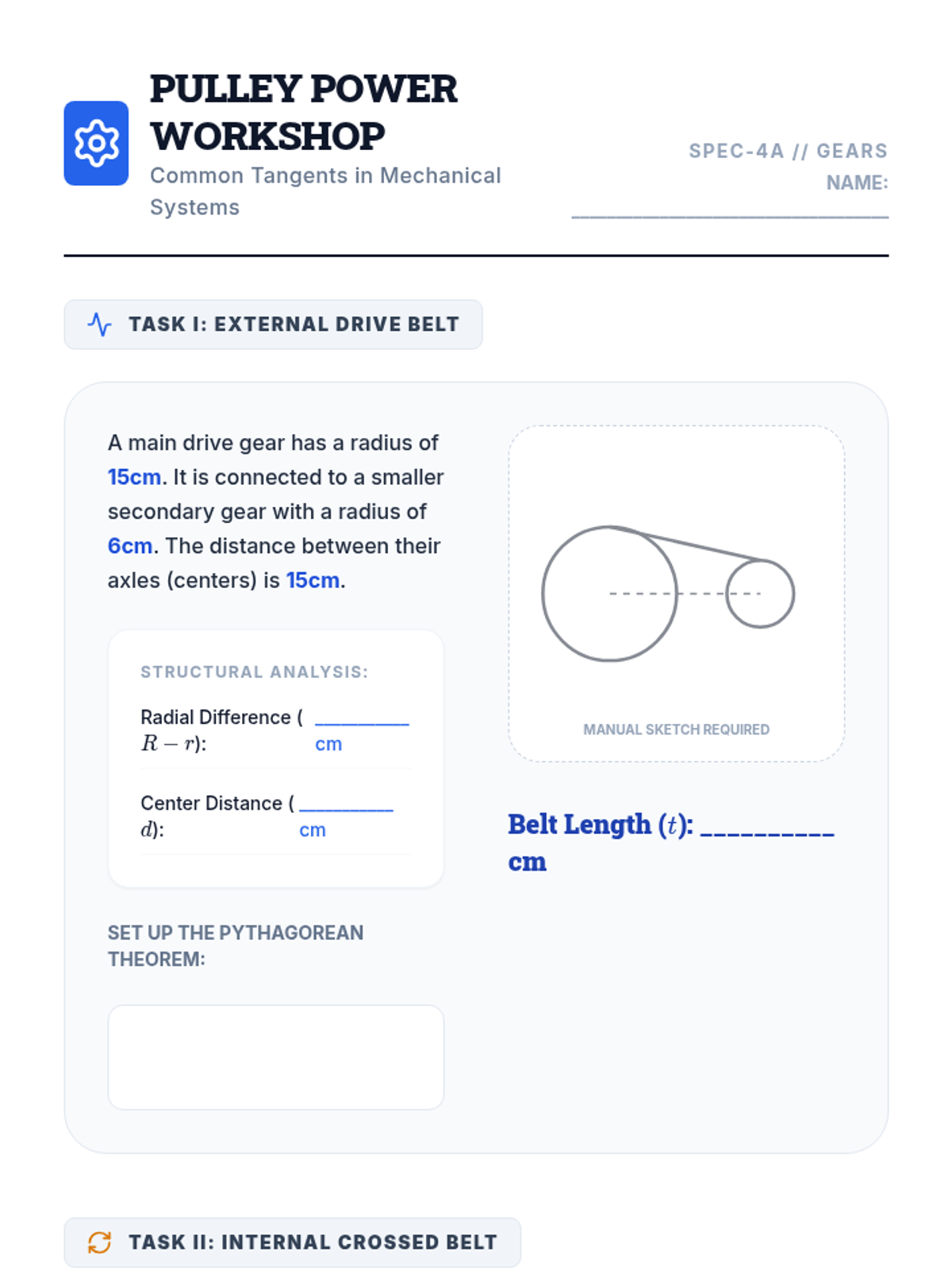
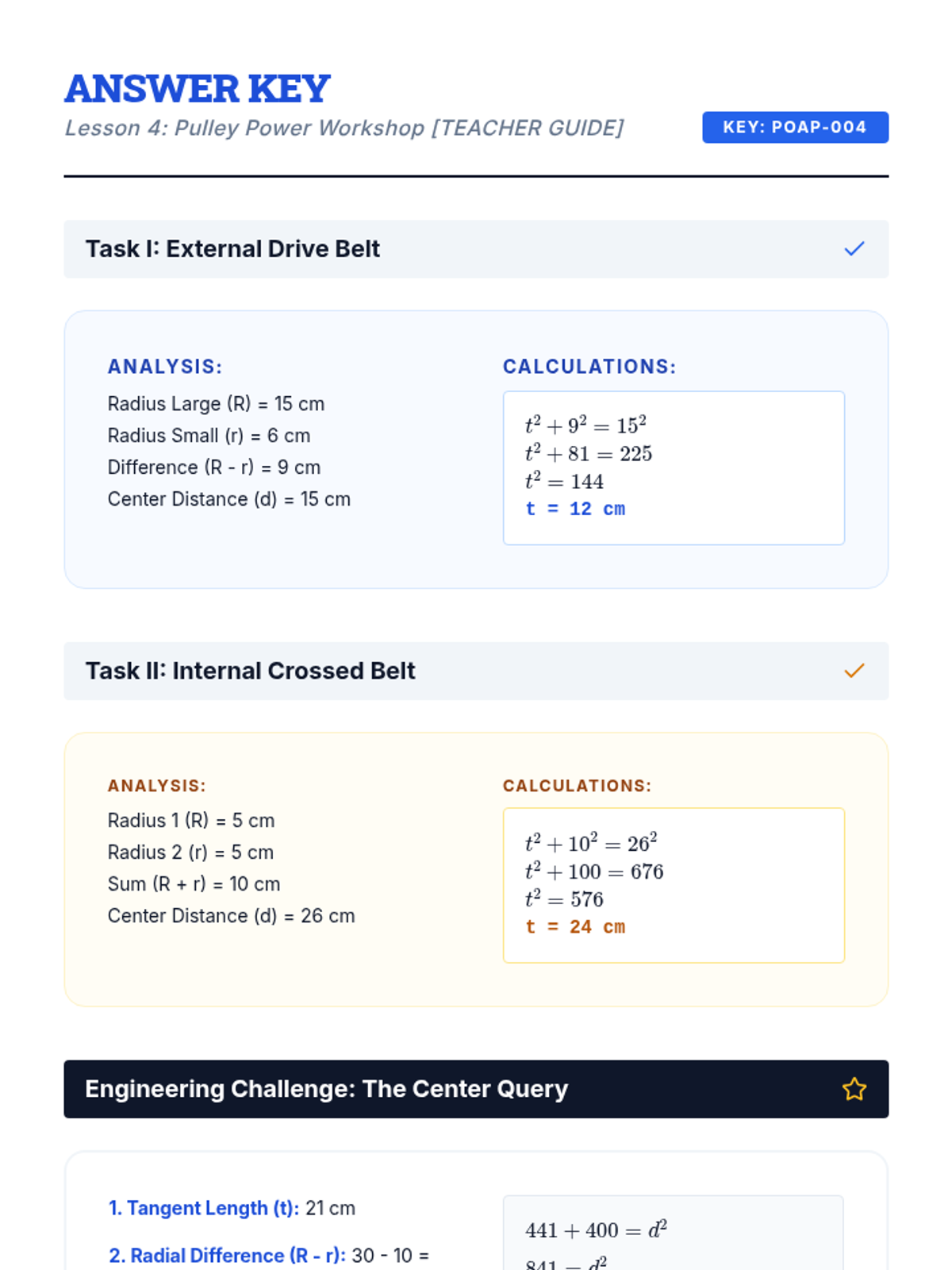
Students apply circle theorems to find lengths of internal and external common tangents, utilizing auxiliary lines and the Pythagorean theorem.
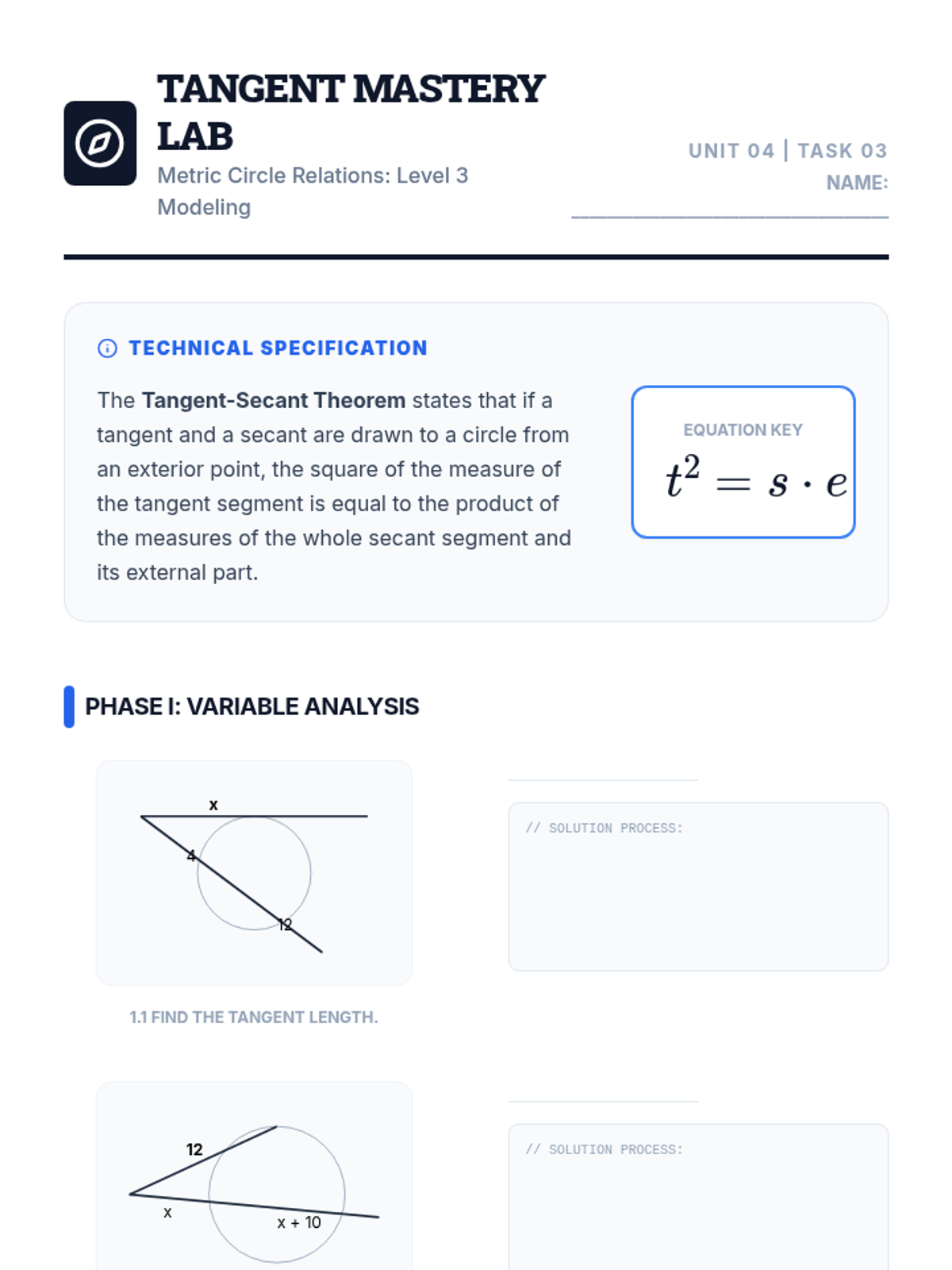
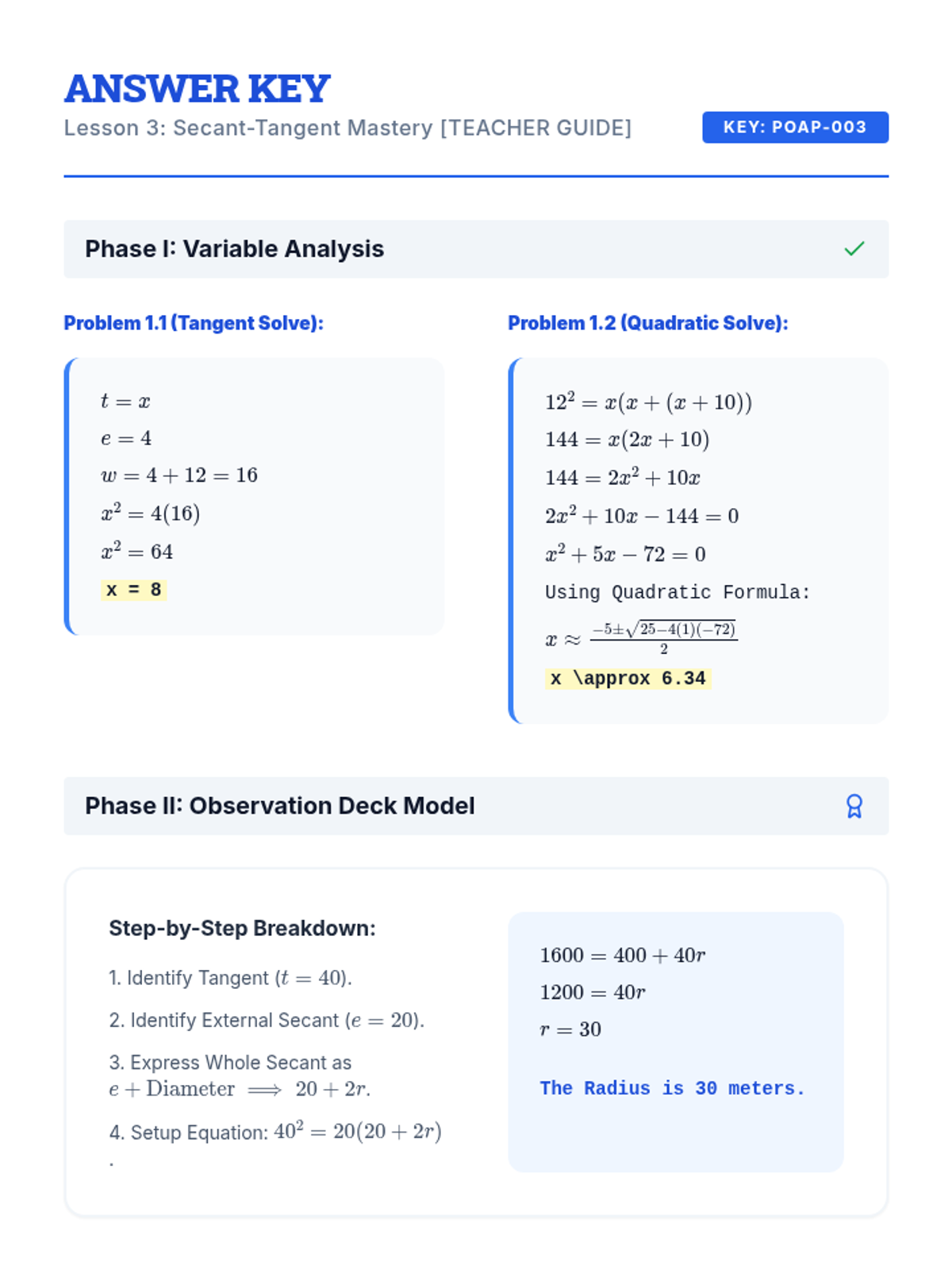
Students analyze the relationship between a tangent and a secant, solving problems that model real-world geometric constraints.
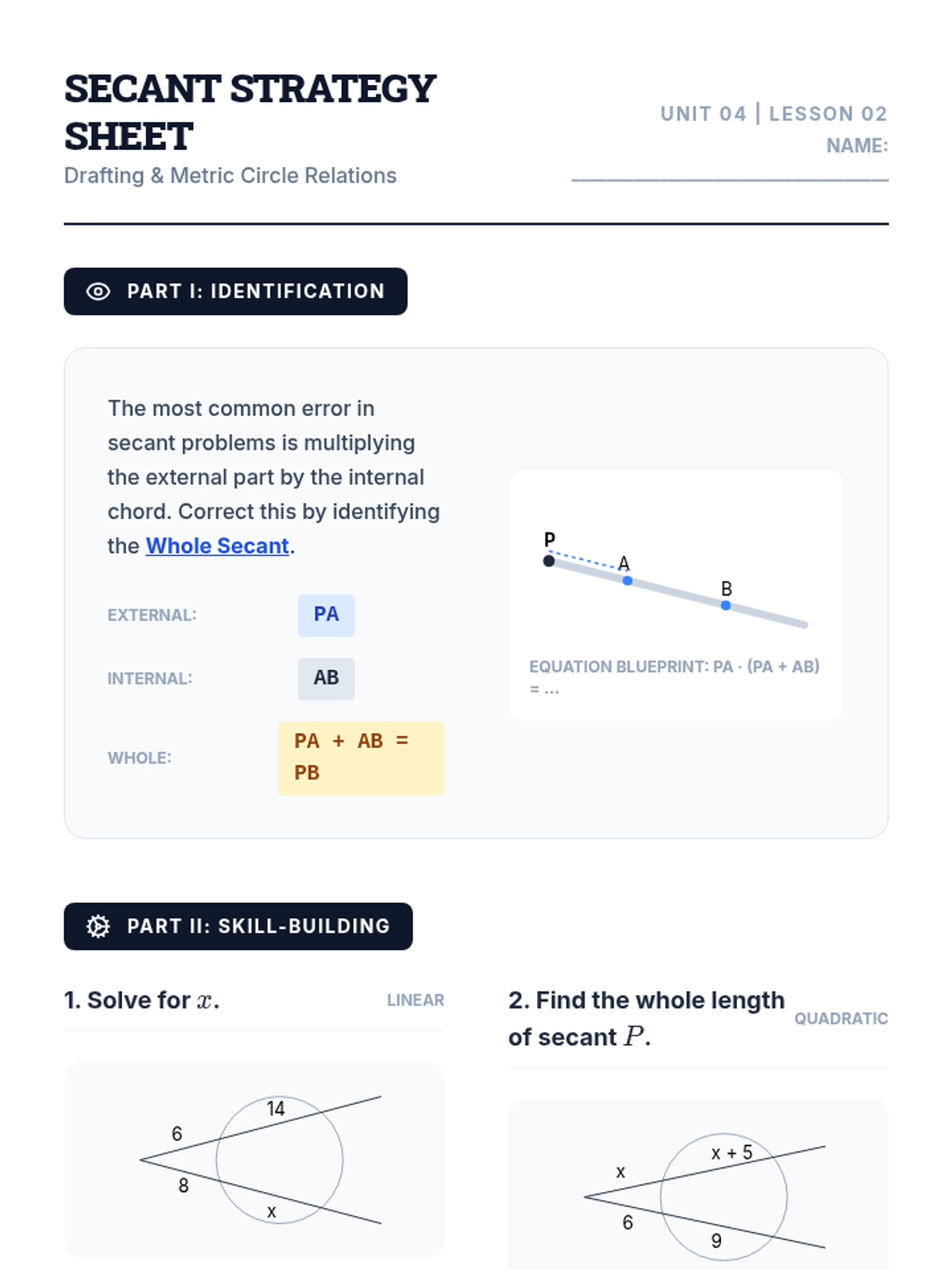
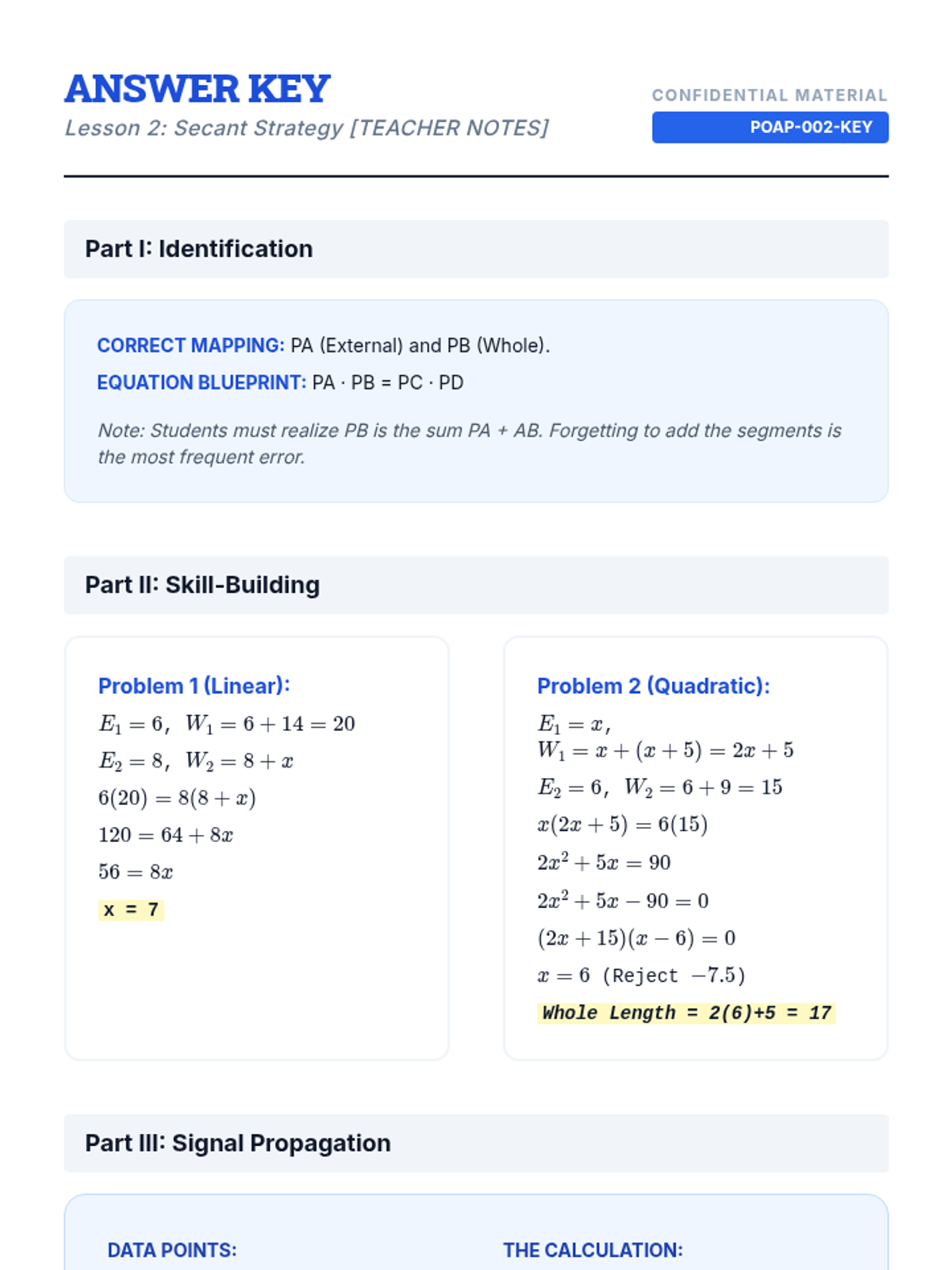
Students extend the Power of a Point concept to secants intersecting outside a circle, deriving the whole-times-external relationship.
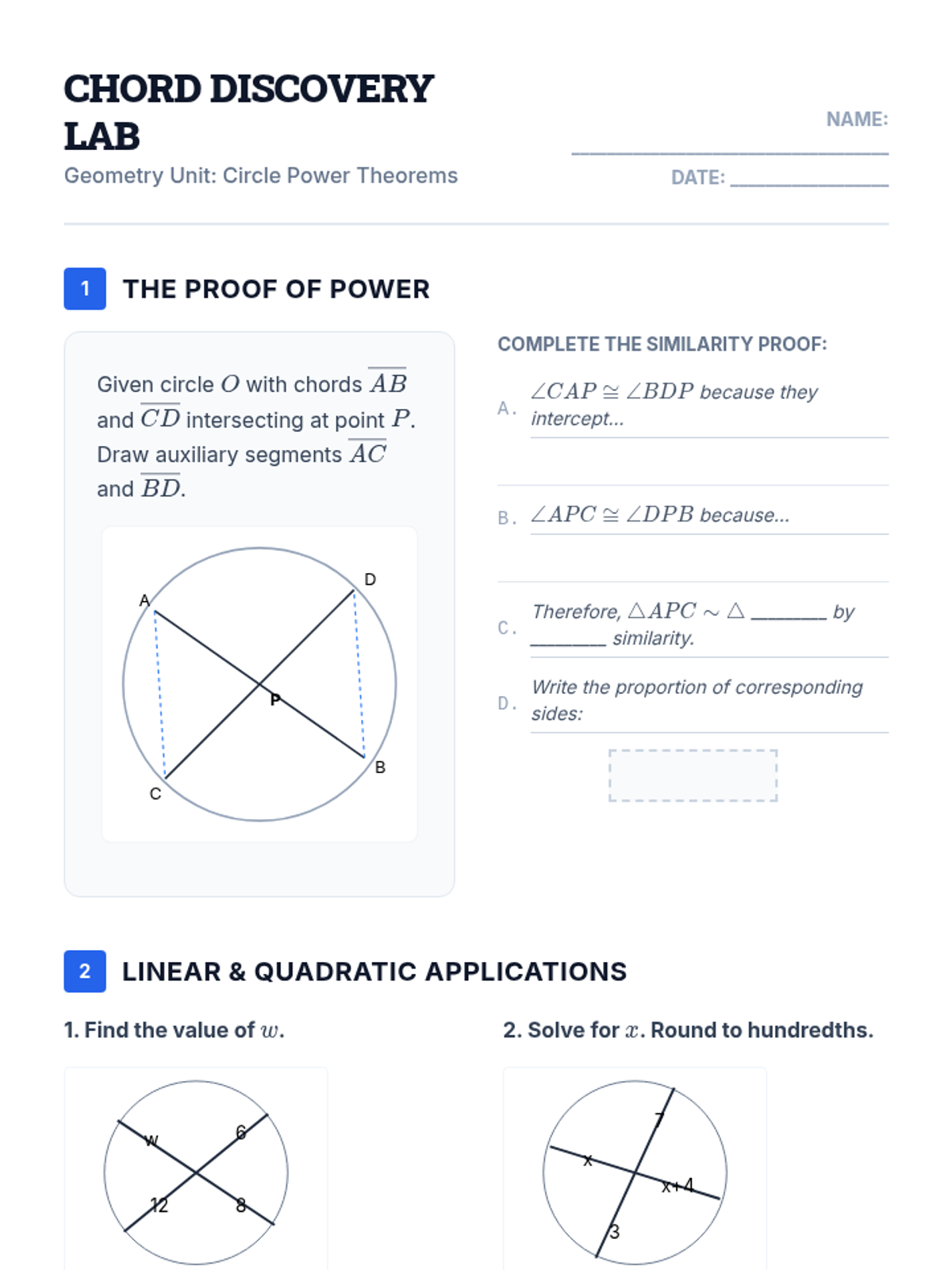
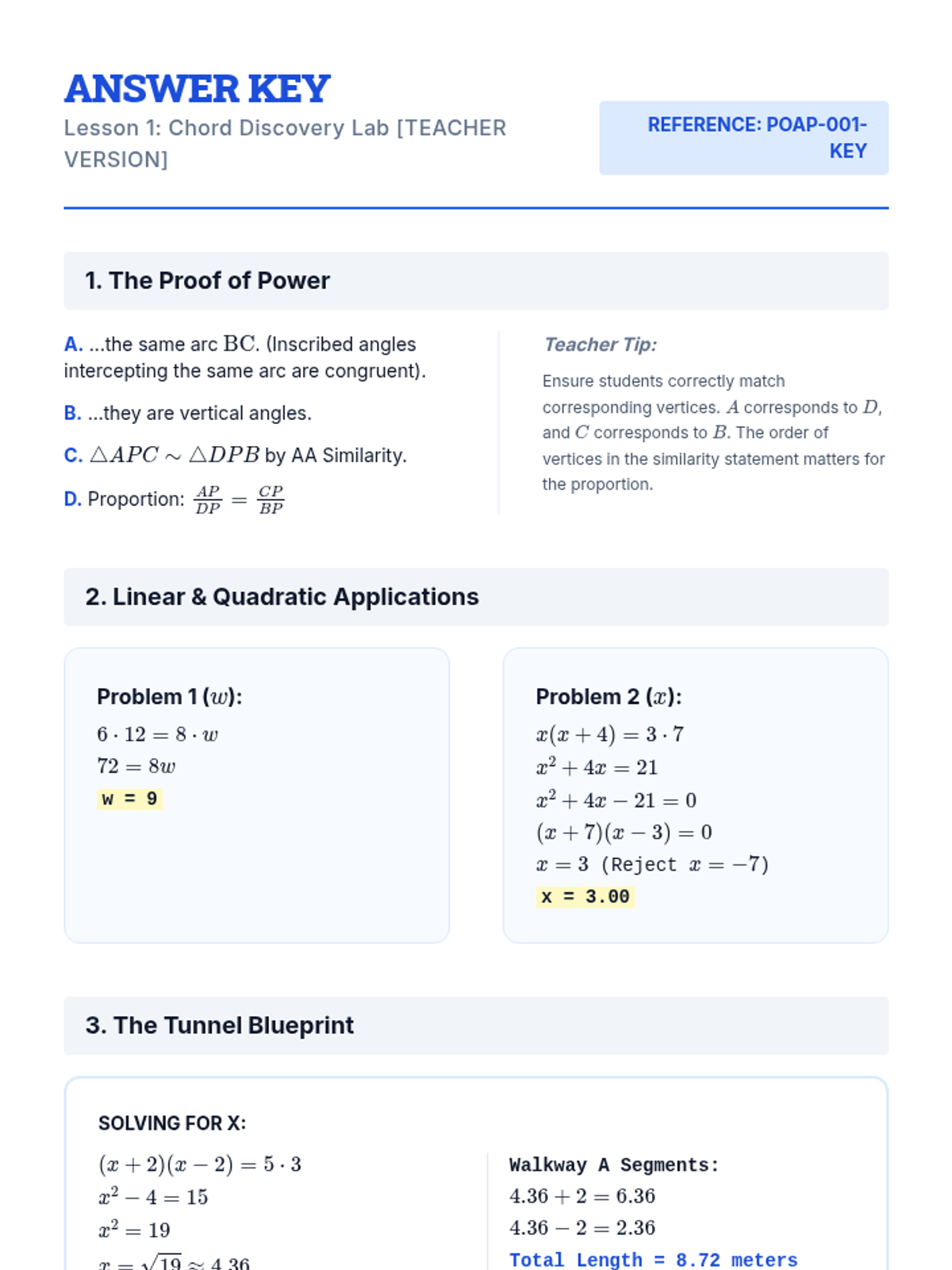
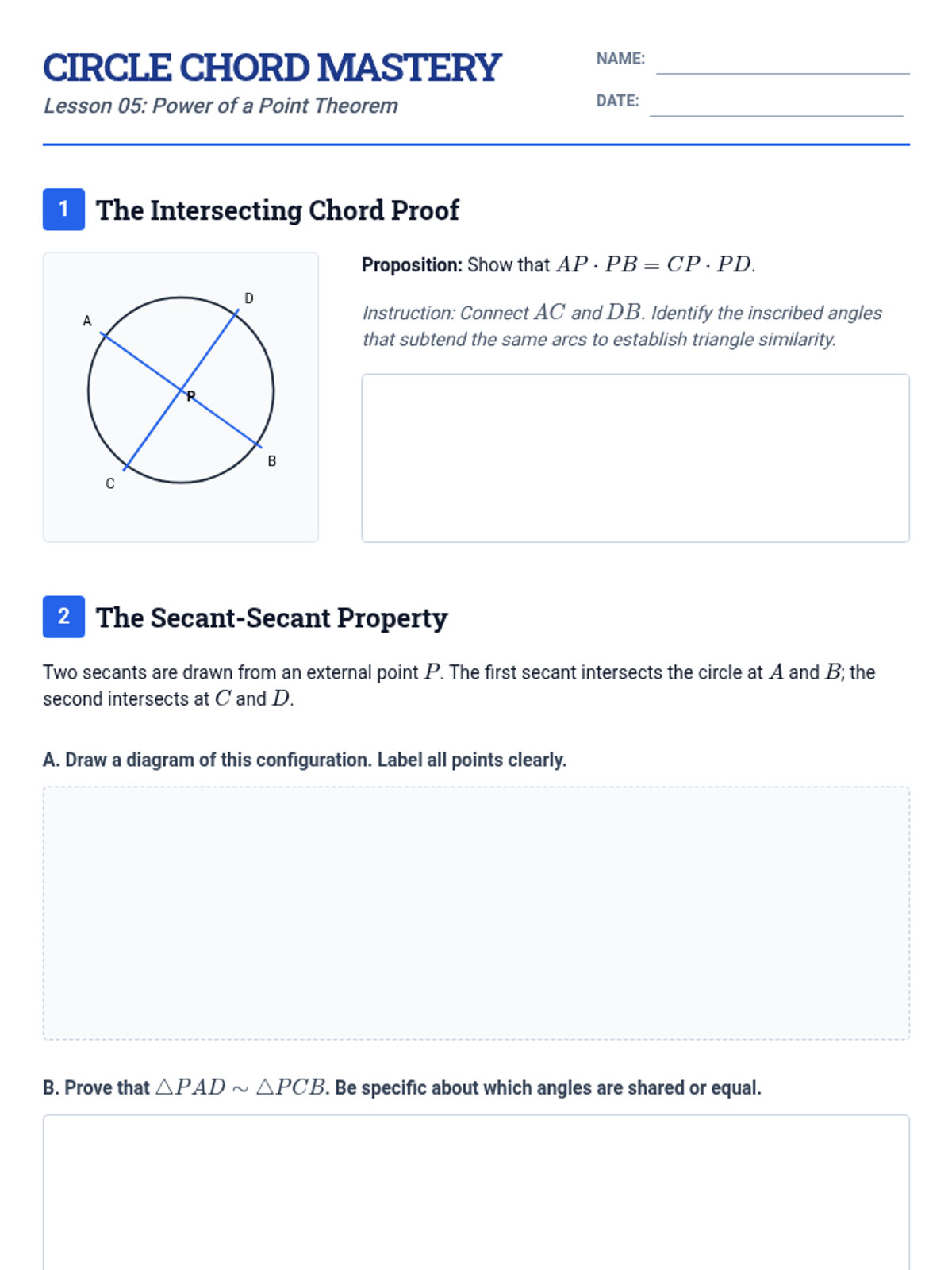
Students discover the Intersecting Chords Theorem through similarity and apply it to solve geometric problems involving linear and quadratic equations.
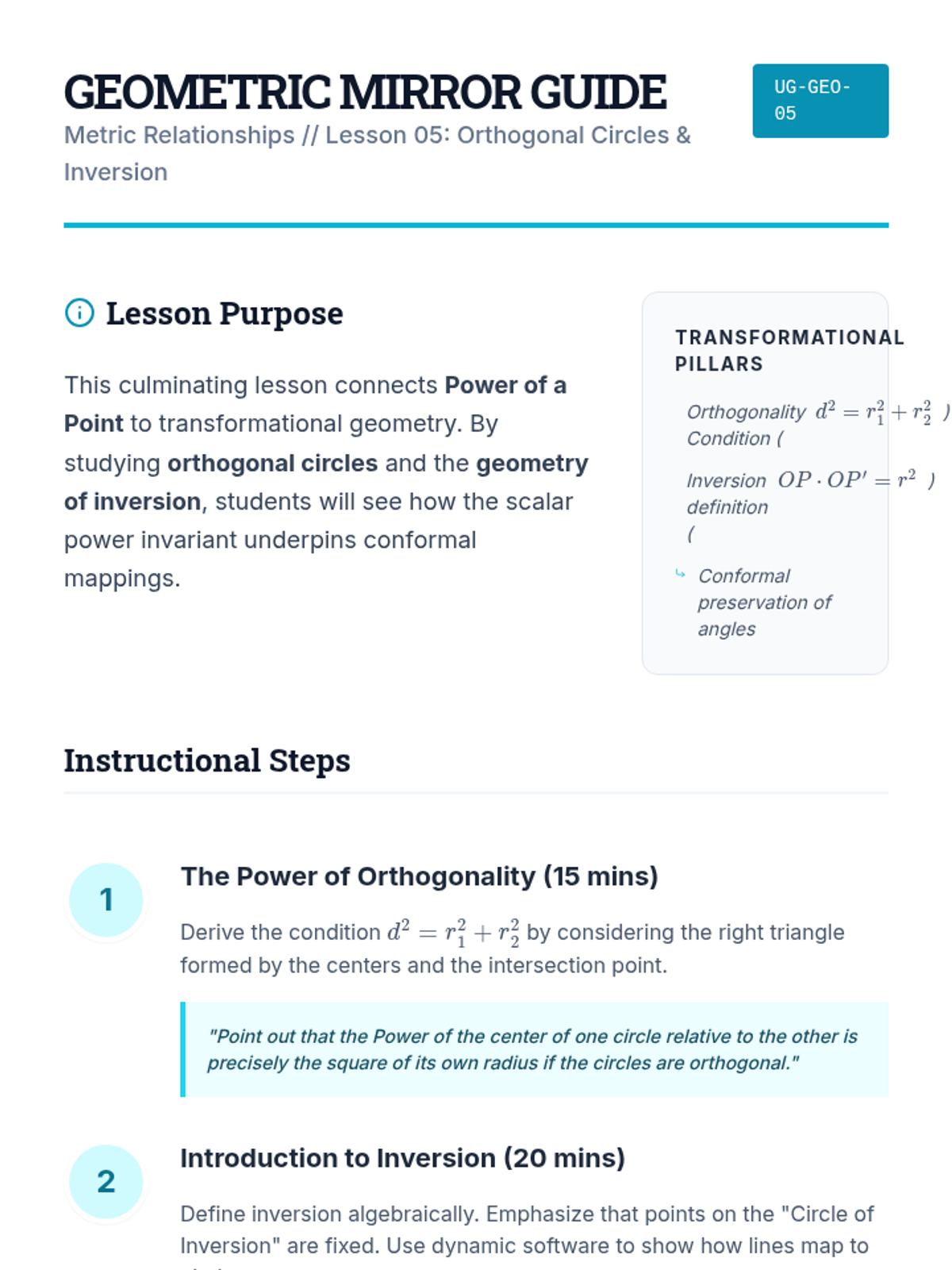
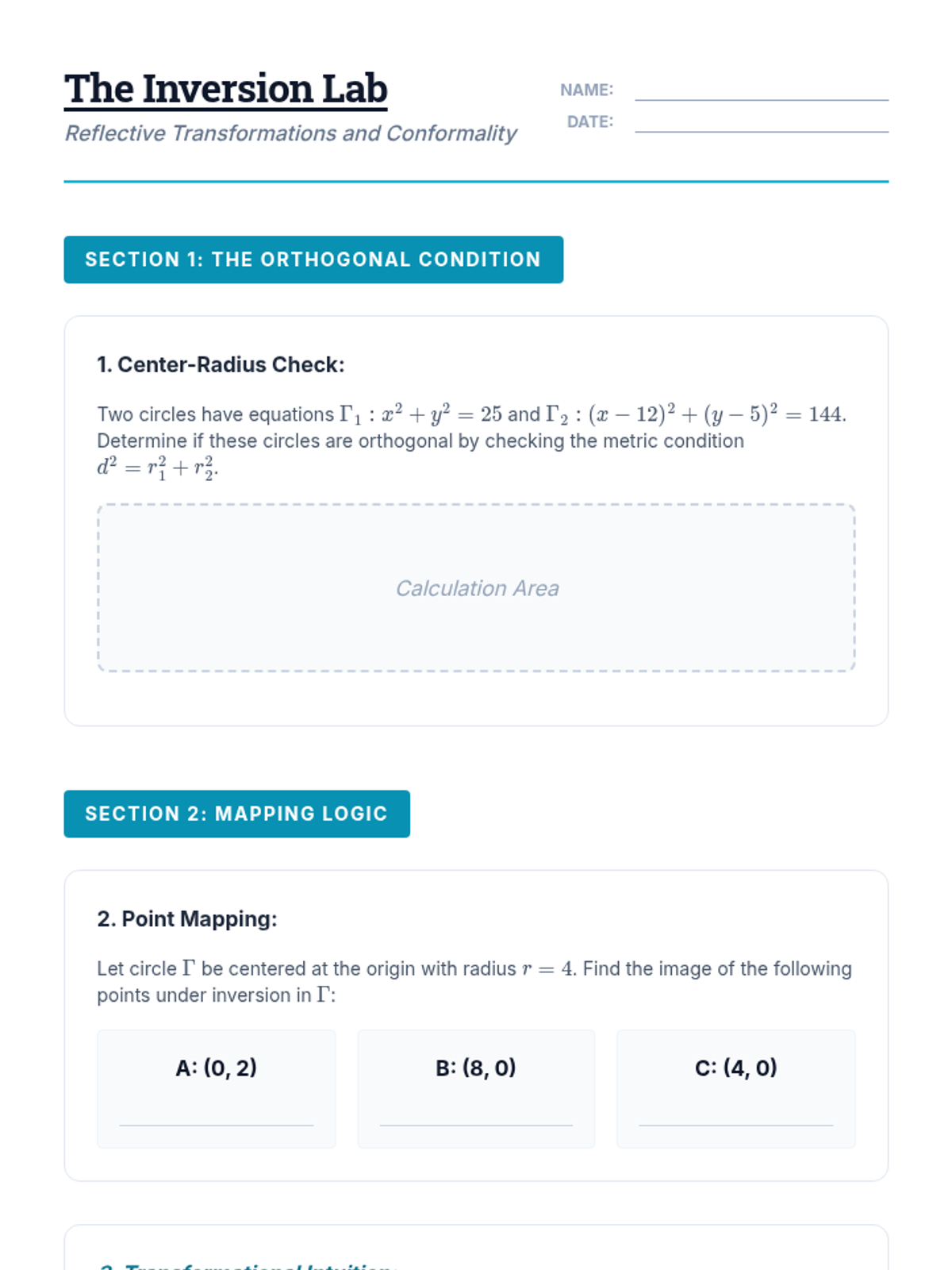
Applies Power of a Point to understand orthogonal circles and the transformational geometry of inversion.
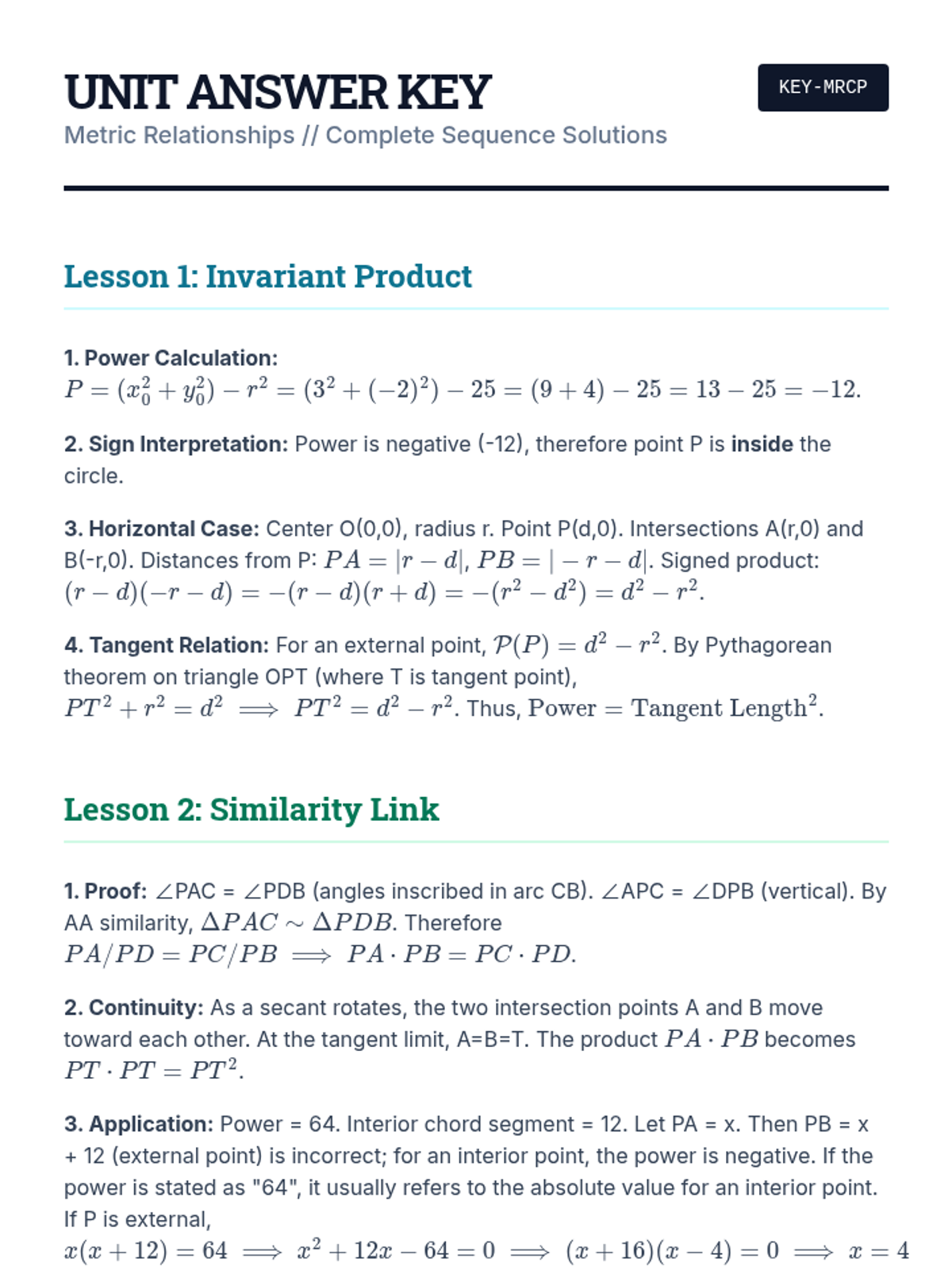
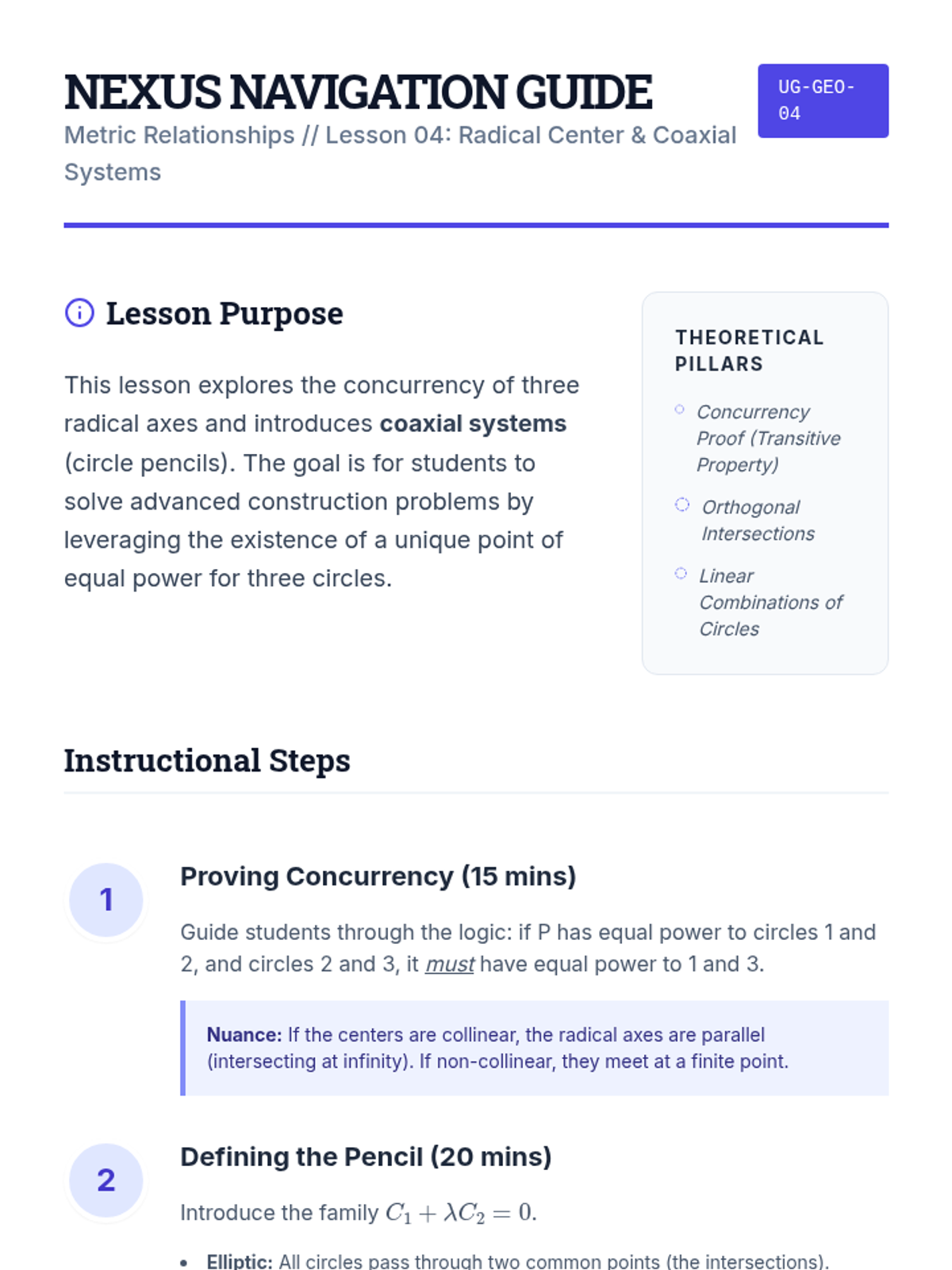
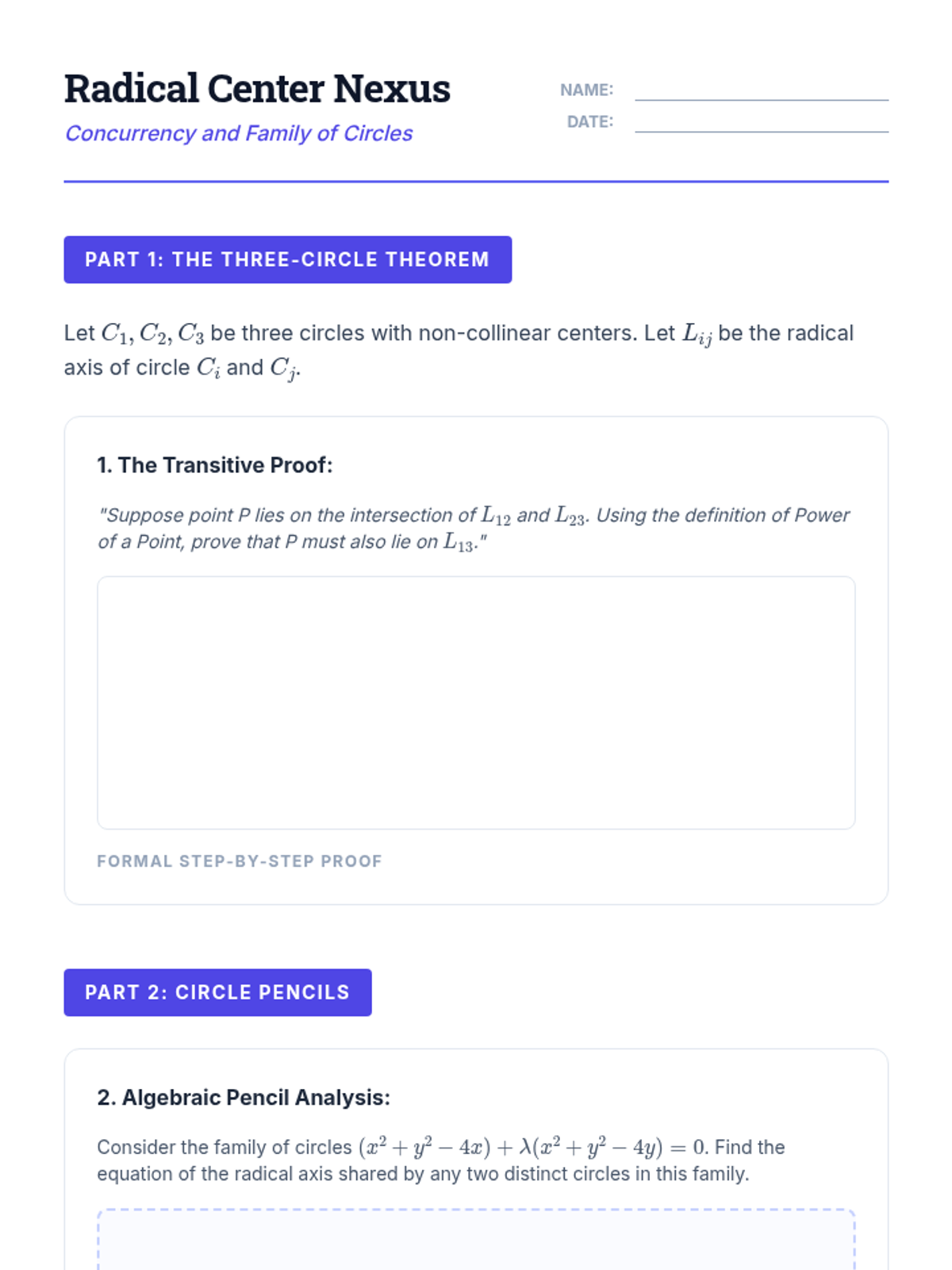
Explores the concurrency of radical axes at the radical center and examines systems of coaxial circles.
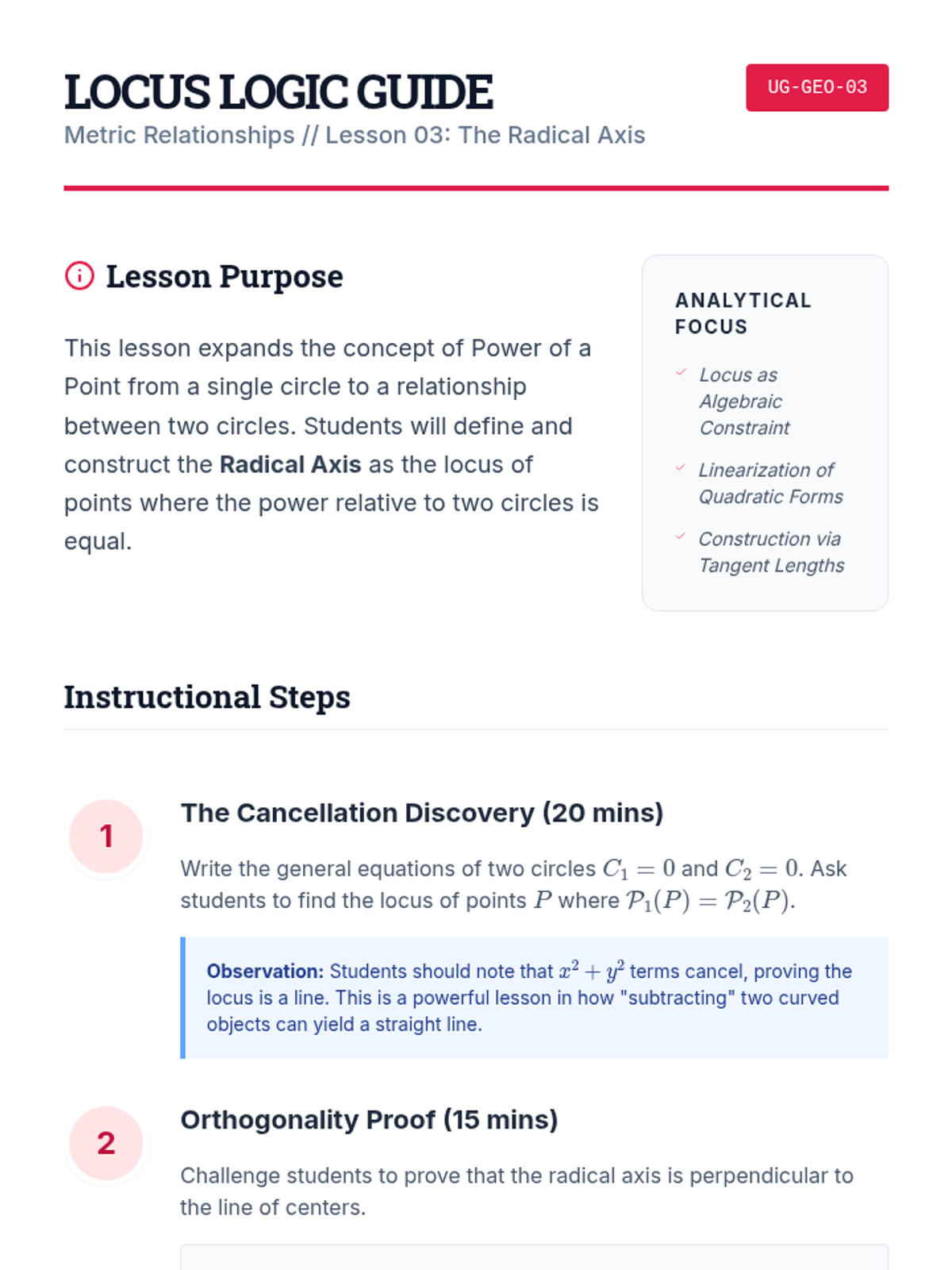
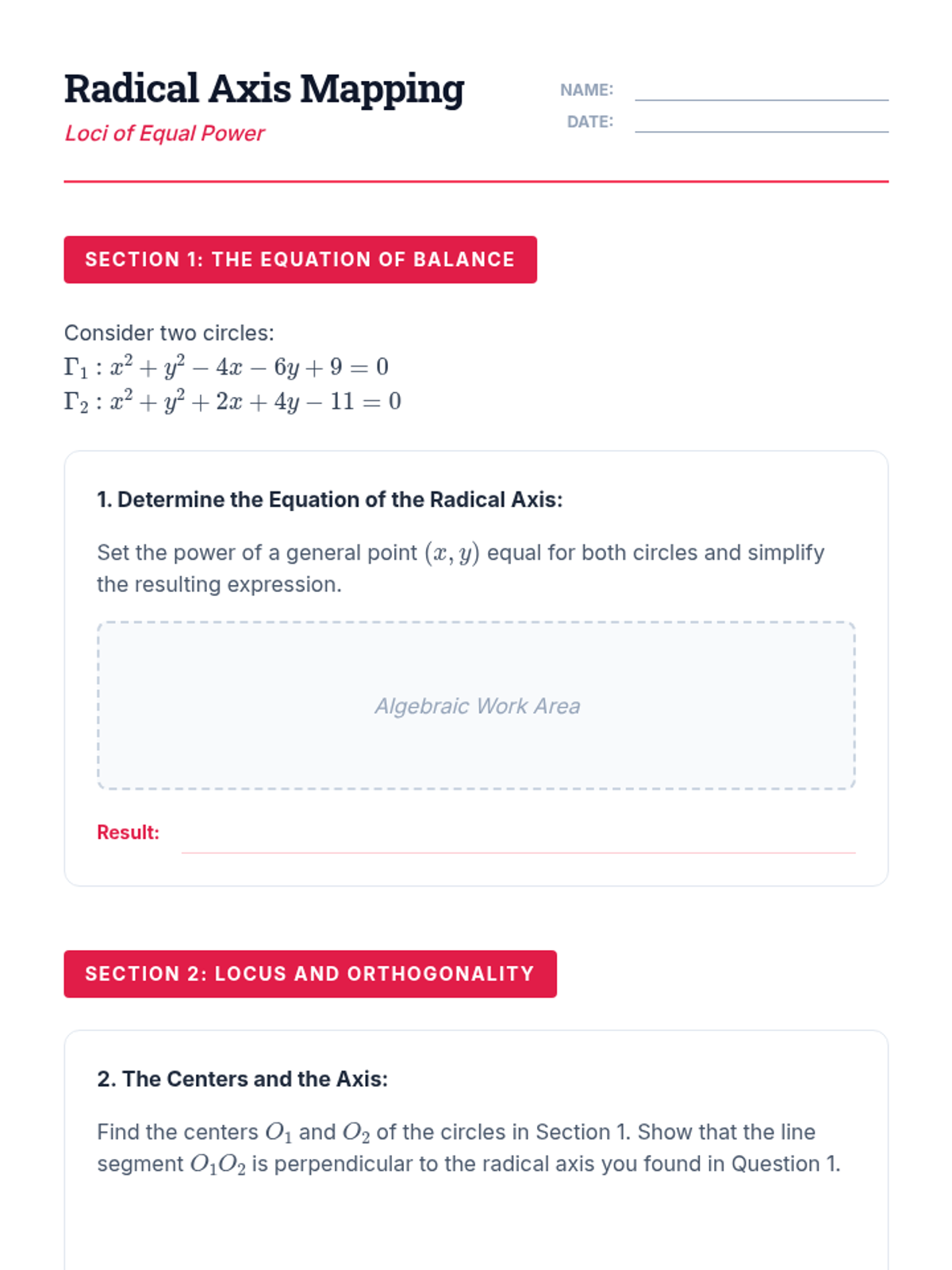
Defines the radical axis as a locus of equal power and investigates its properties relative to two circles.
Proves the unity of chord, secant, and tangent theorems using similar triangles and generalizes the formula for all line-circle intersections.
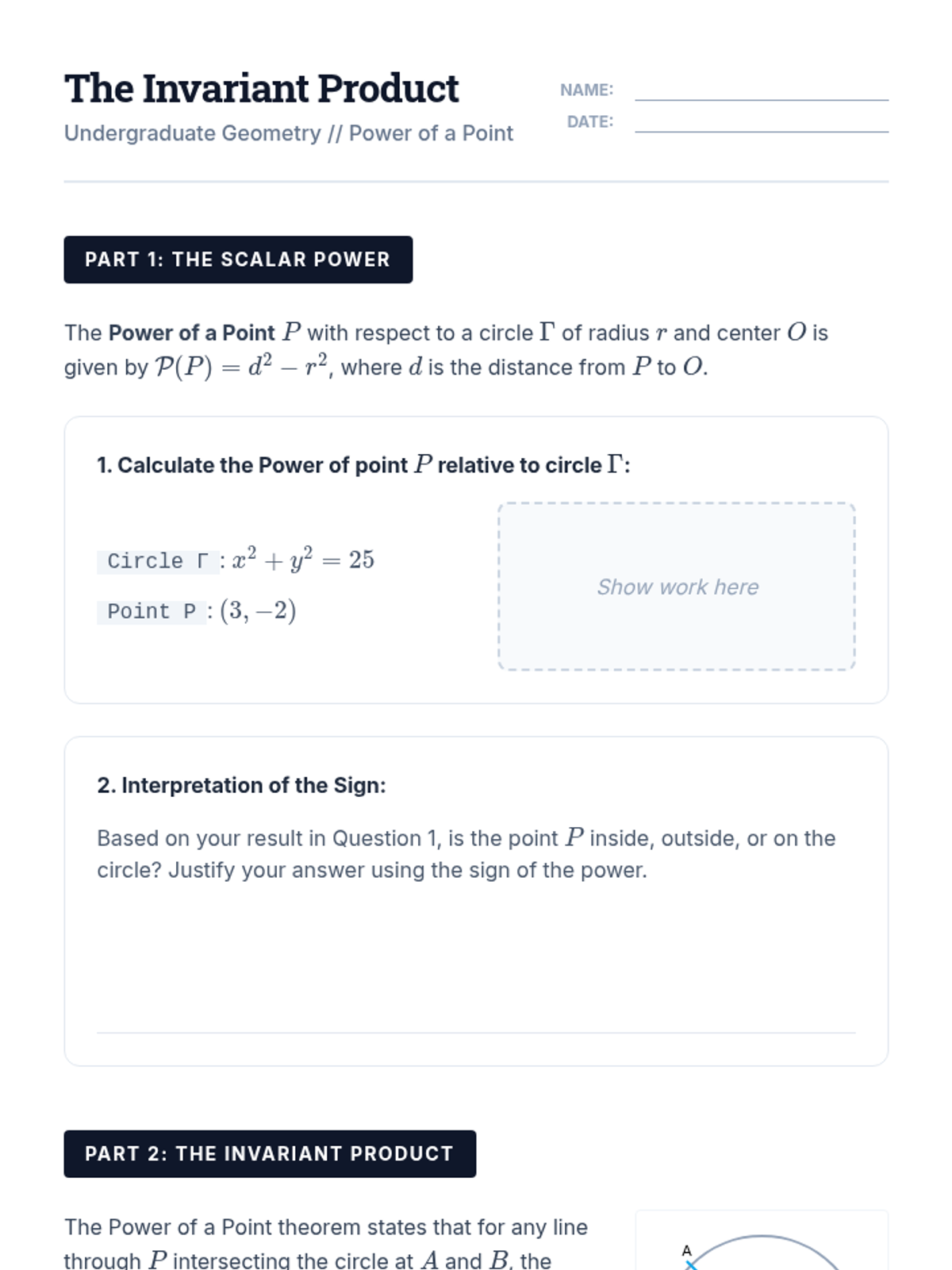
Introduces the scalar 'Power of a Point' relative to a circle and explores the invariance of segment products through chords and secants.
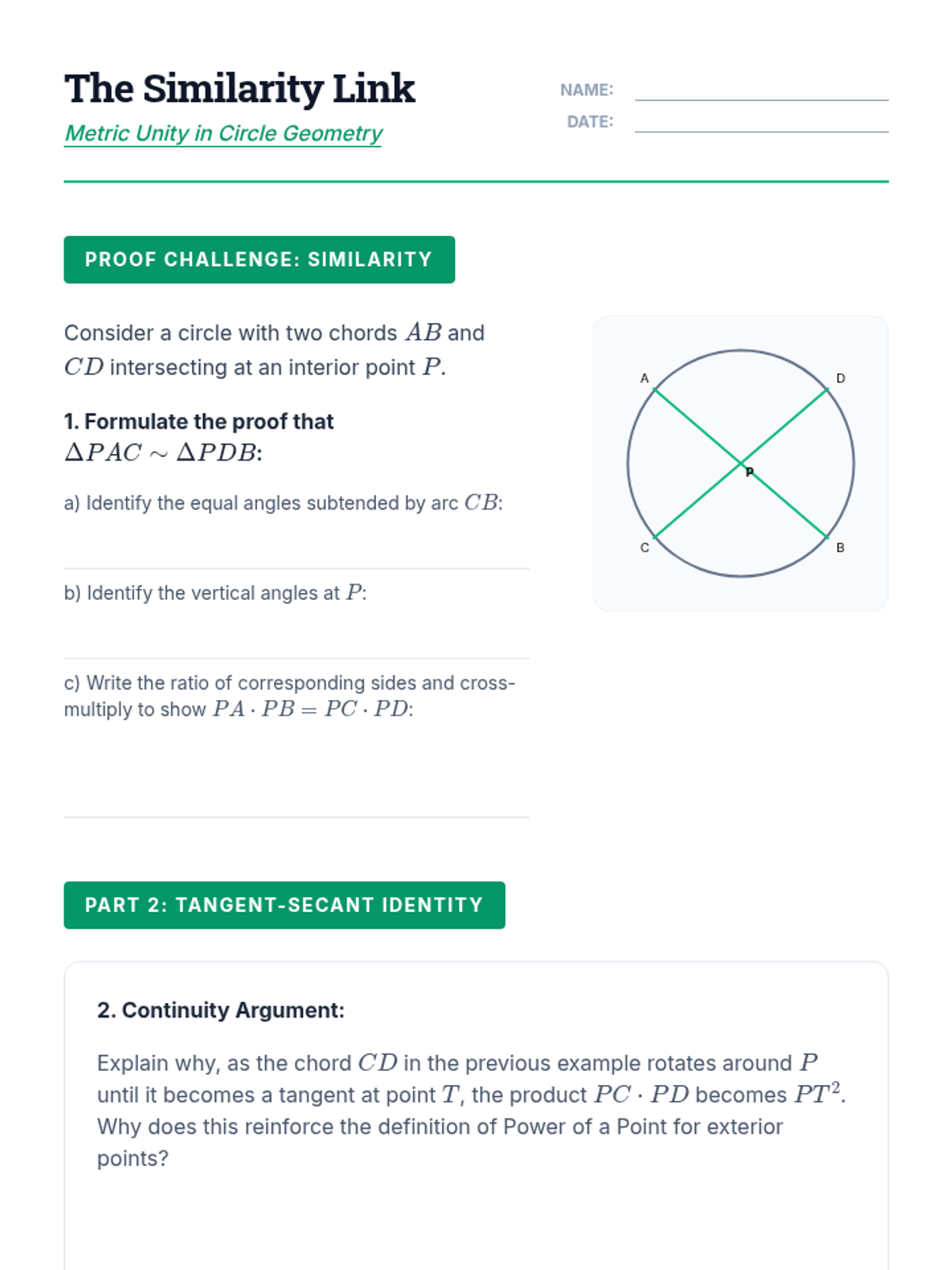
Apply similarity principles to prove the Power of a Point theorem for chords, secants, and tangents.
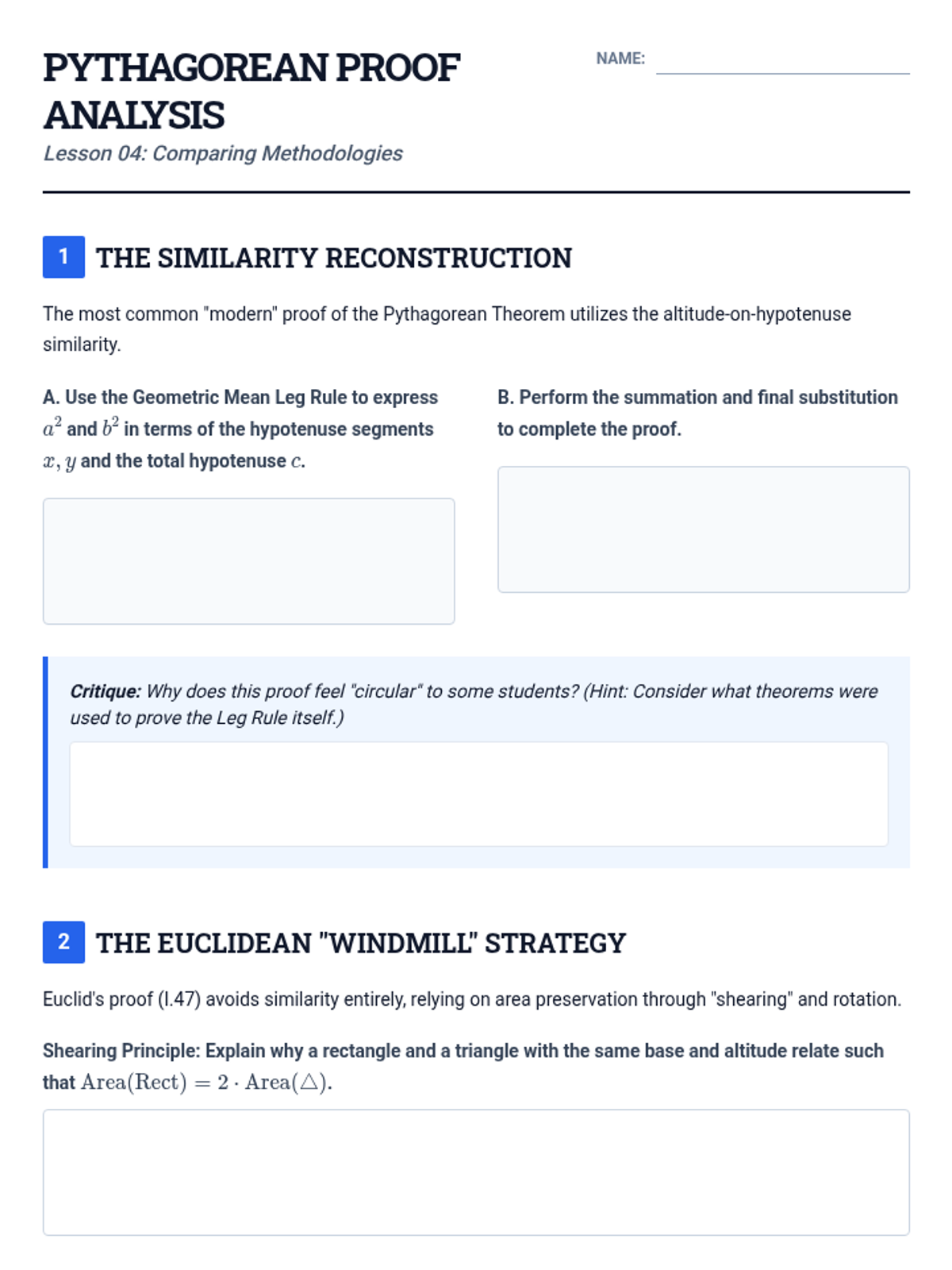
Critically analyze and reconstruct different proofs of the Pythagorean Theorem, focusing on Euclid's Windmill and similarity-based methods.
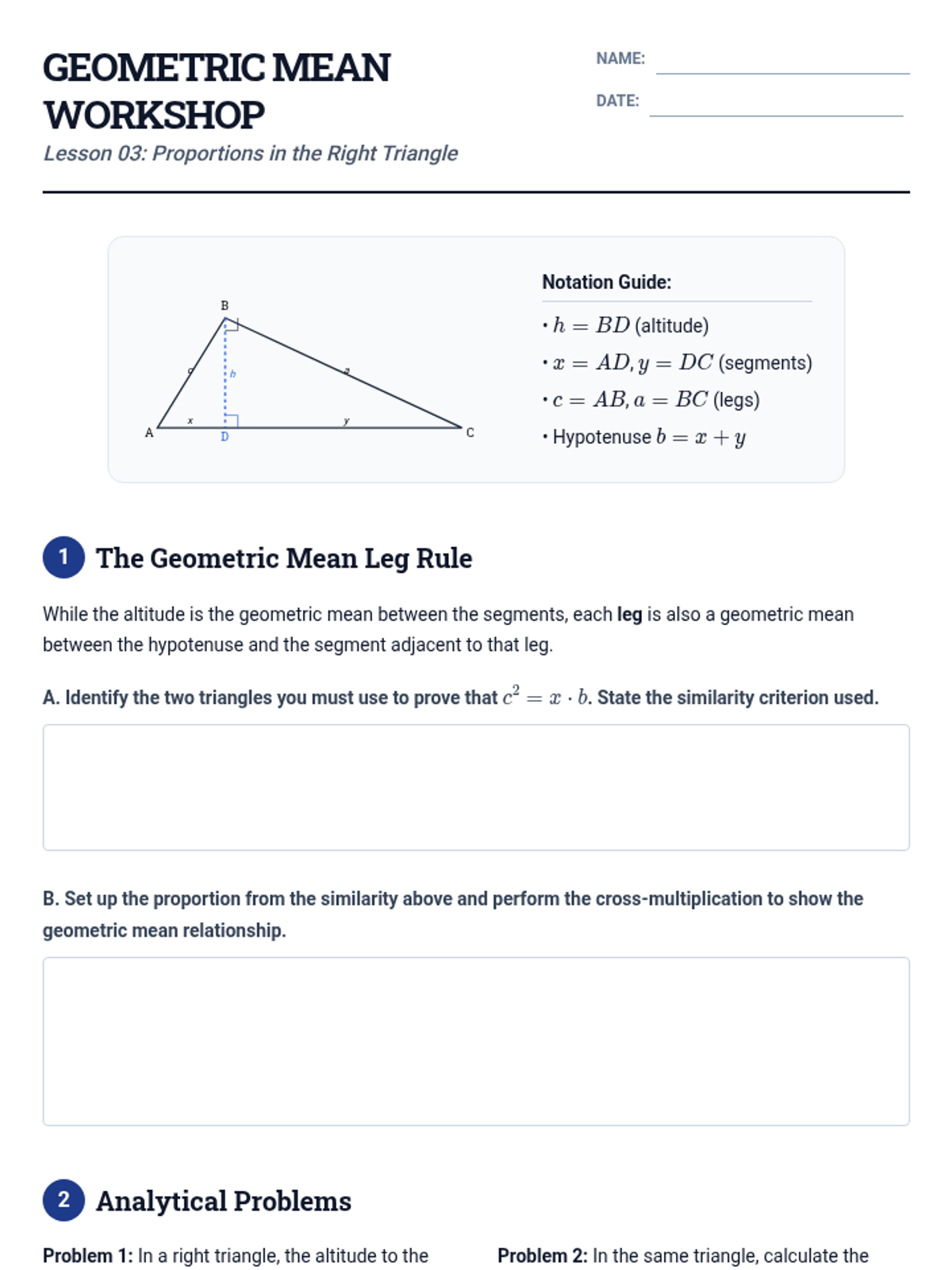
Analyze similarity in right triangles and prove the geometric mean theorems relating the altitude and legs.
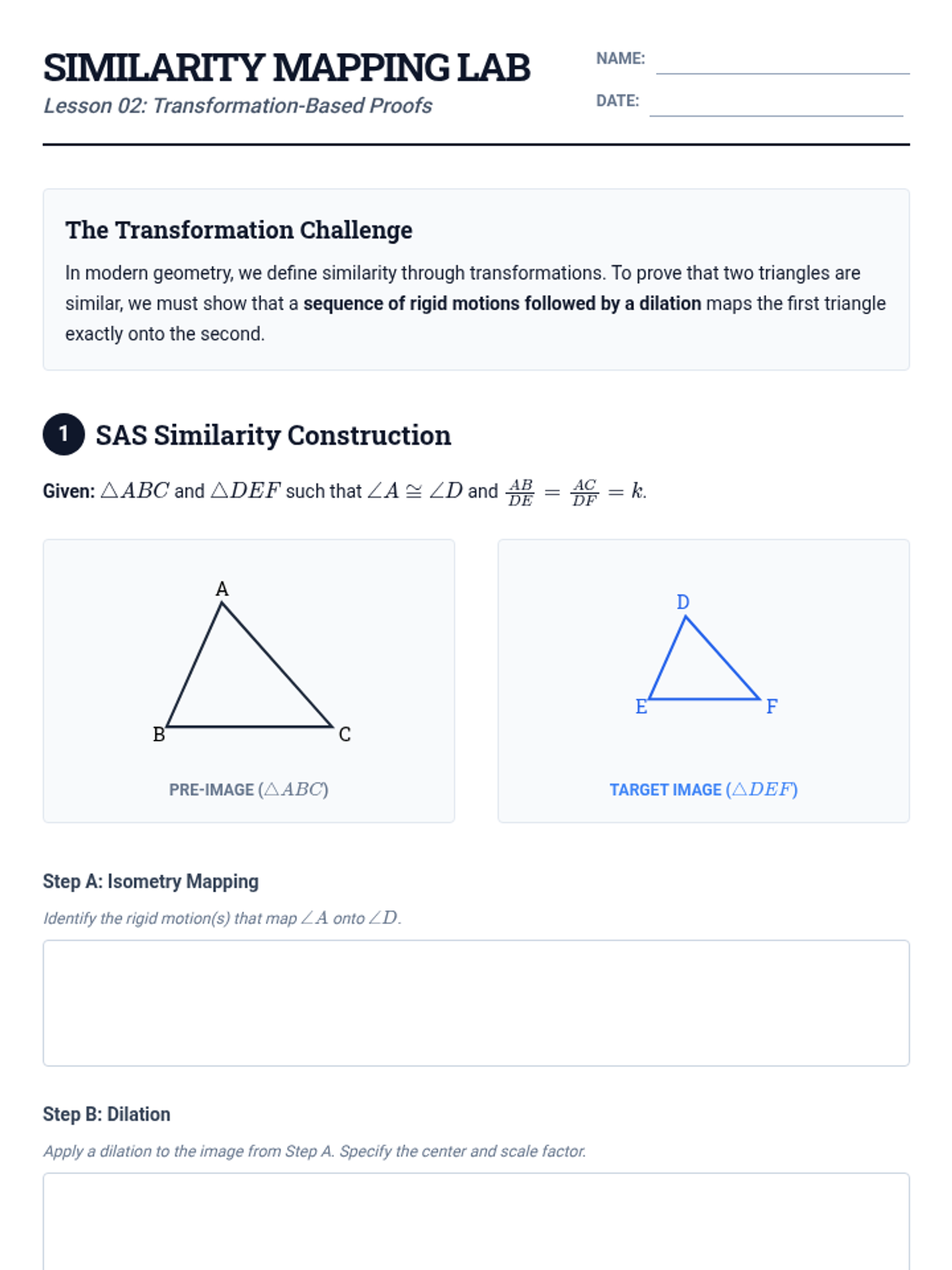
Formally prove AA, SAS, and SSS similarity criteria using transformations and dilations.
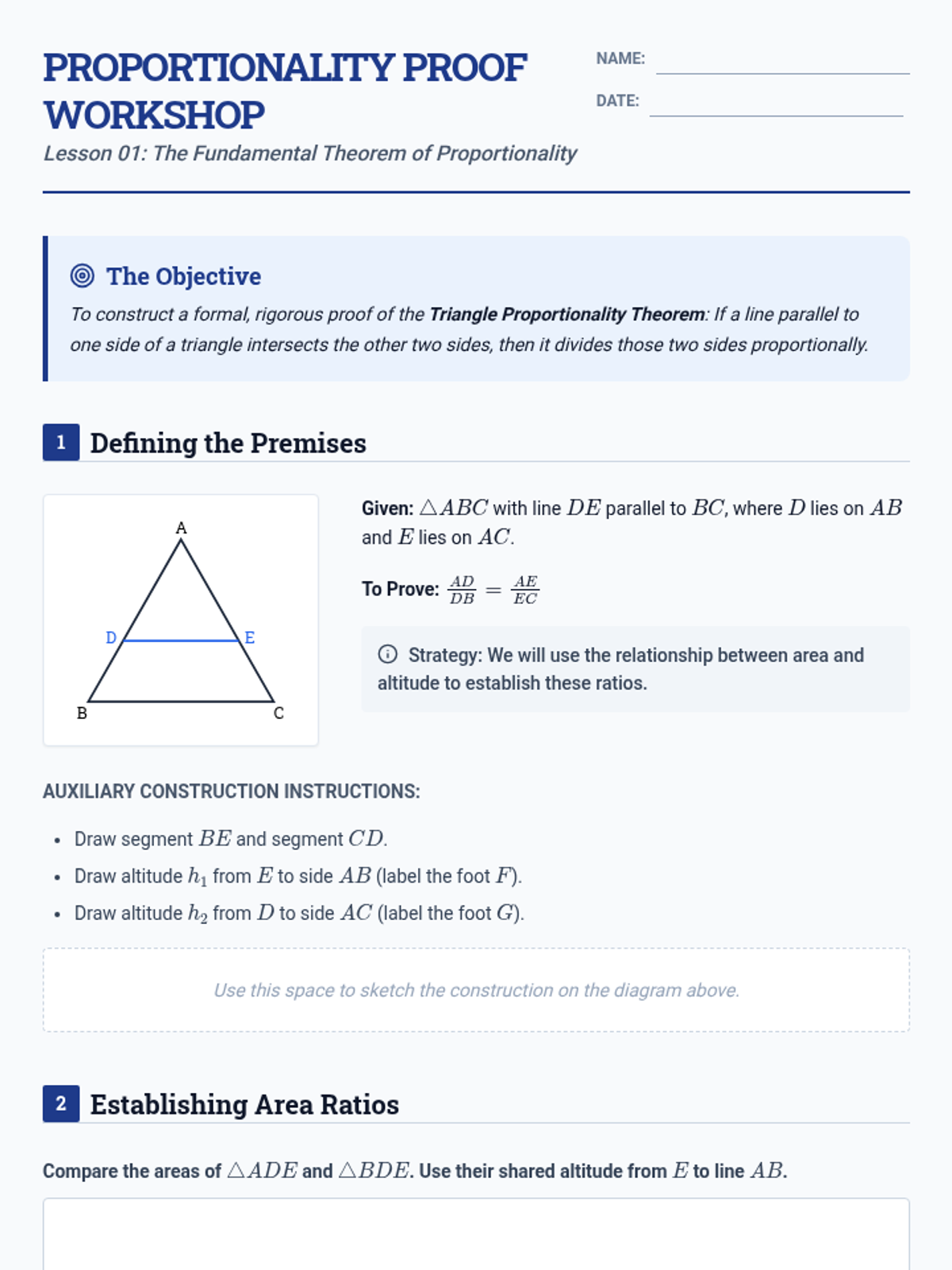
Explore the proportionality of segments cut by parallel lines and prove Thales' Basic Proportionality Theorem.
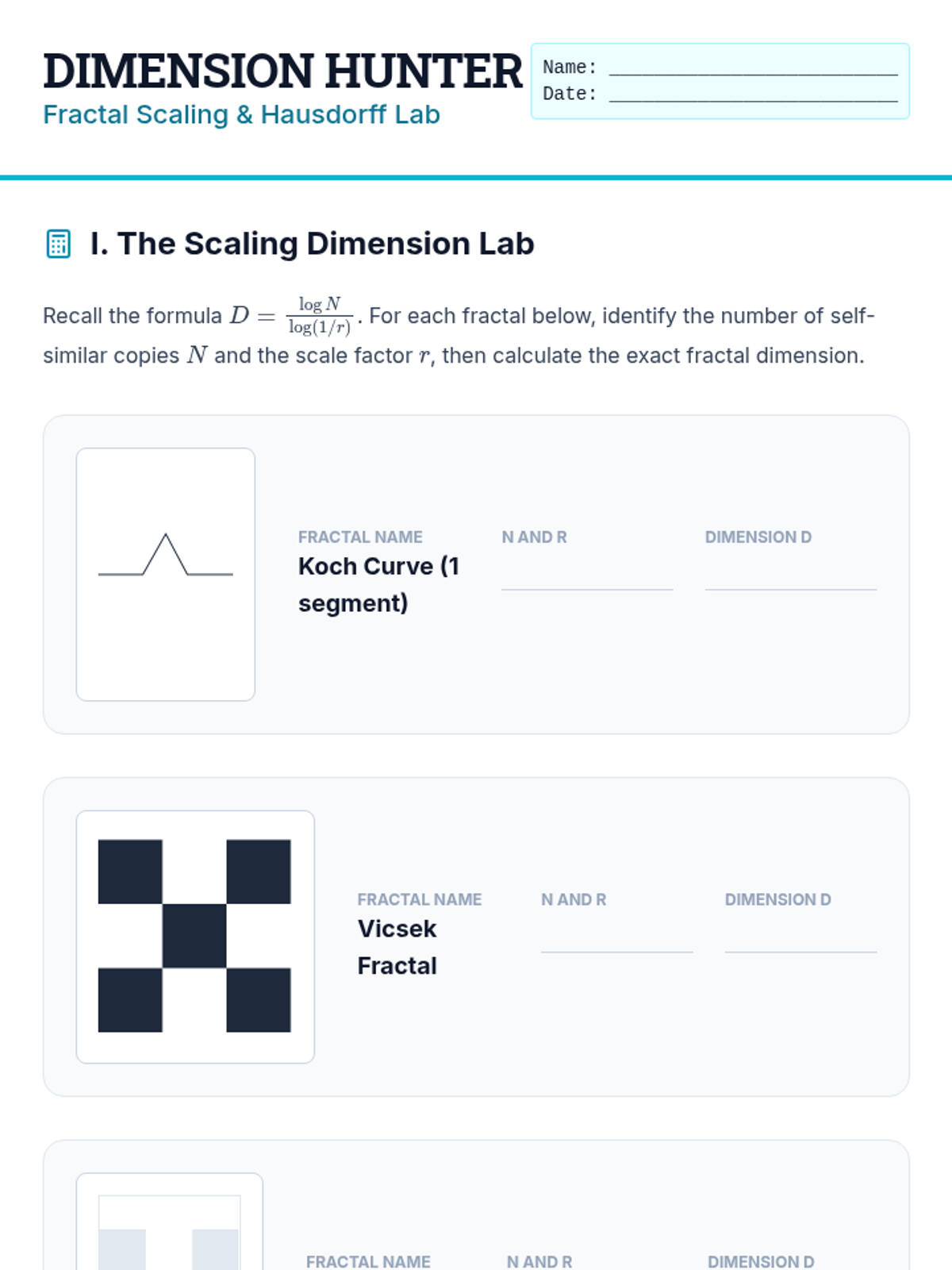
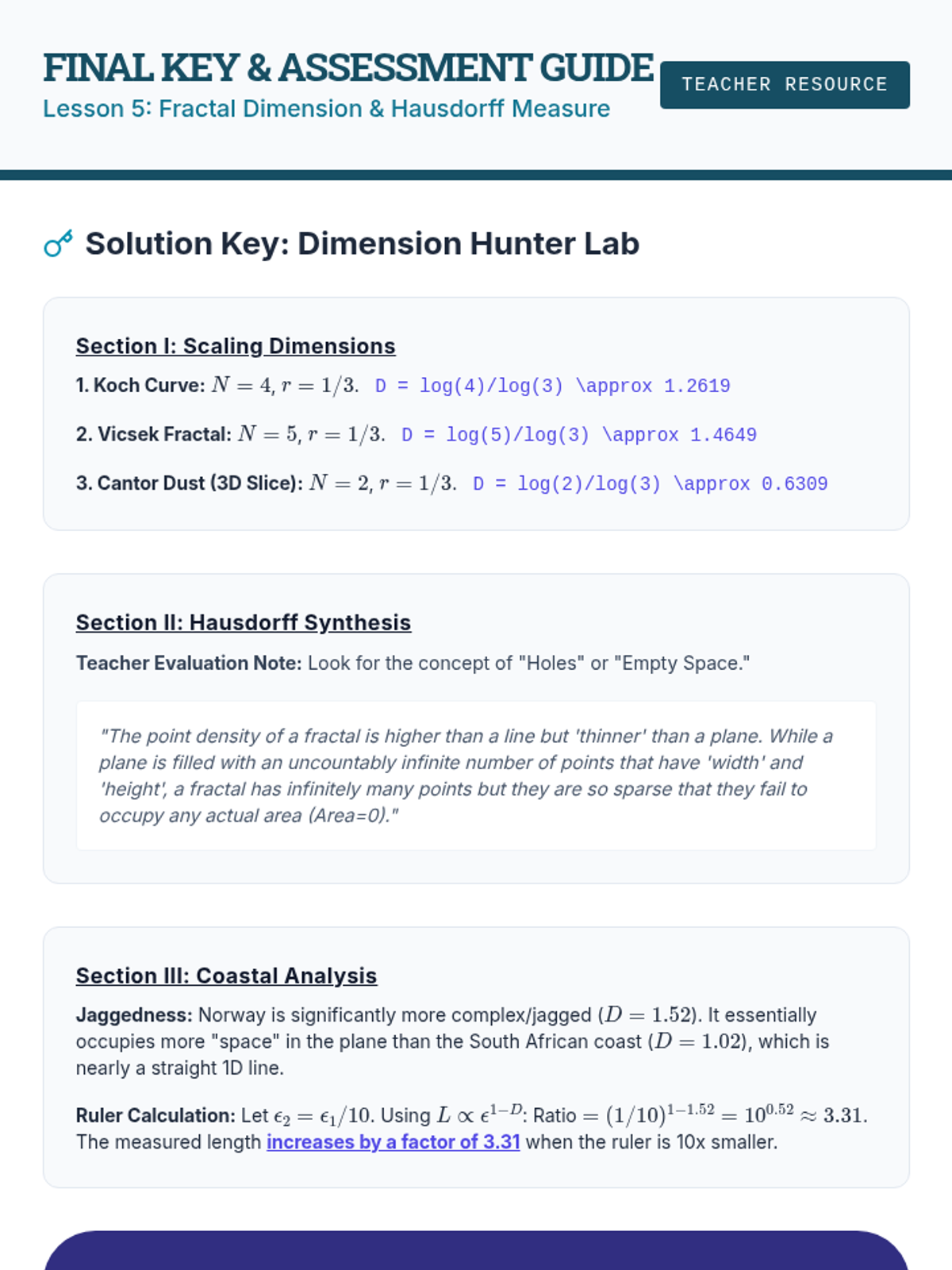
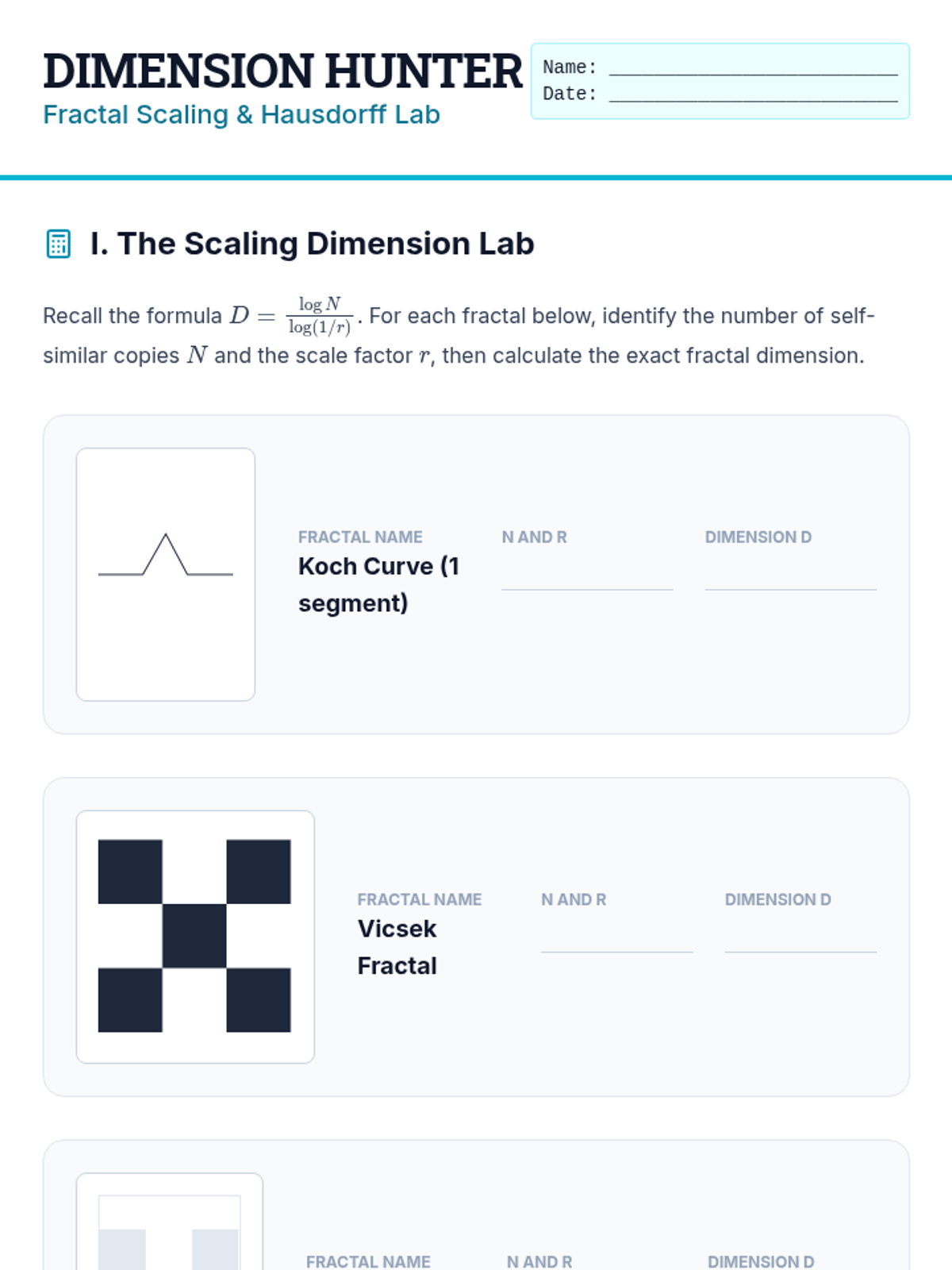
Students calculate the fractal dimension of self-similar sets using scaling properties. They are introduced to the Hausdorff measure and conceptualize how dimension can be a non-integer, resolving the 'Coastline Paradox'.
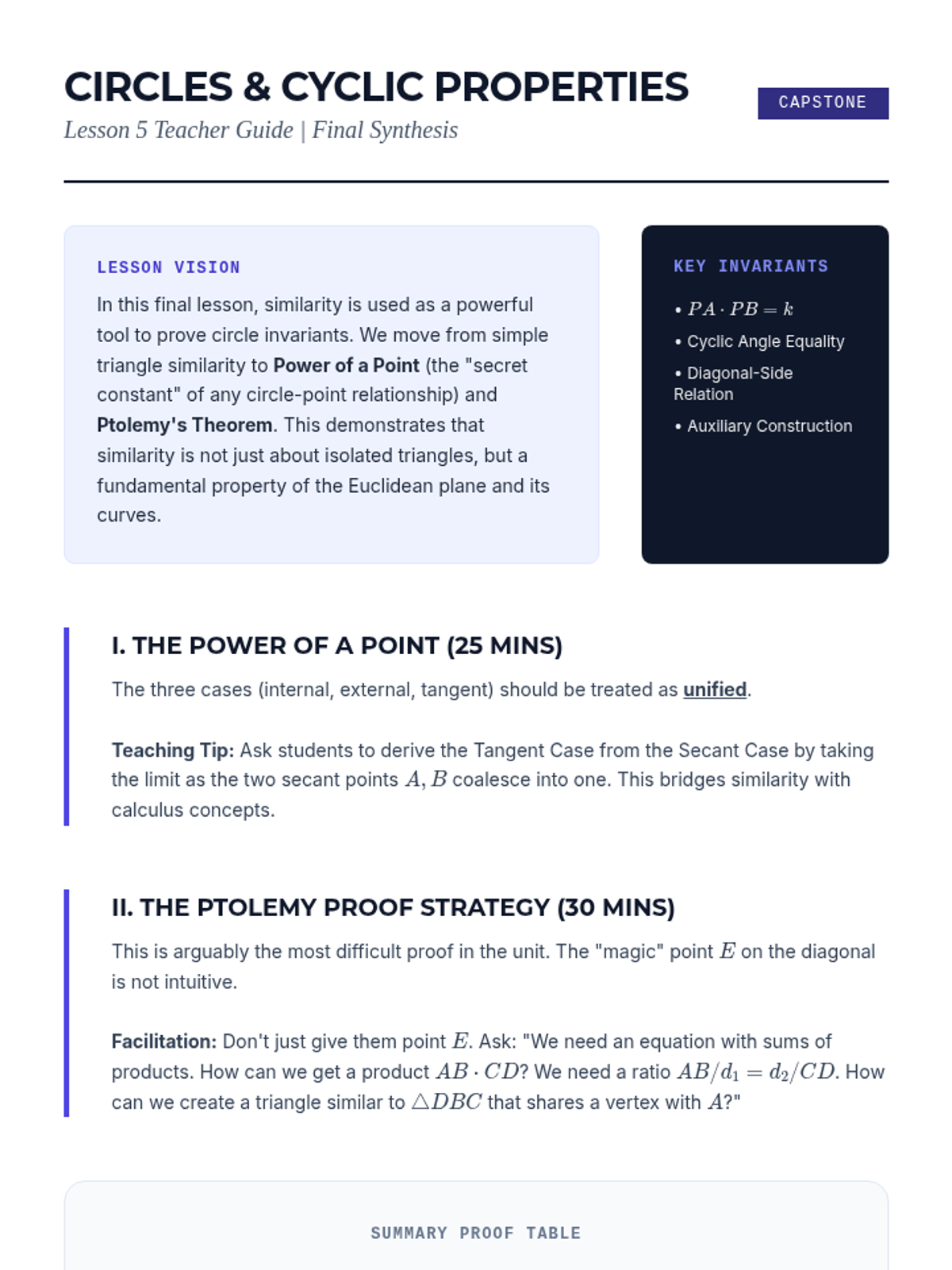
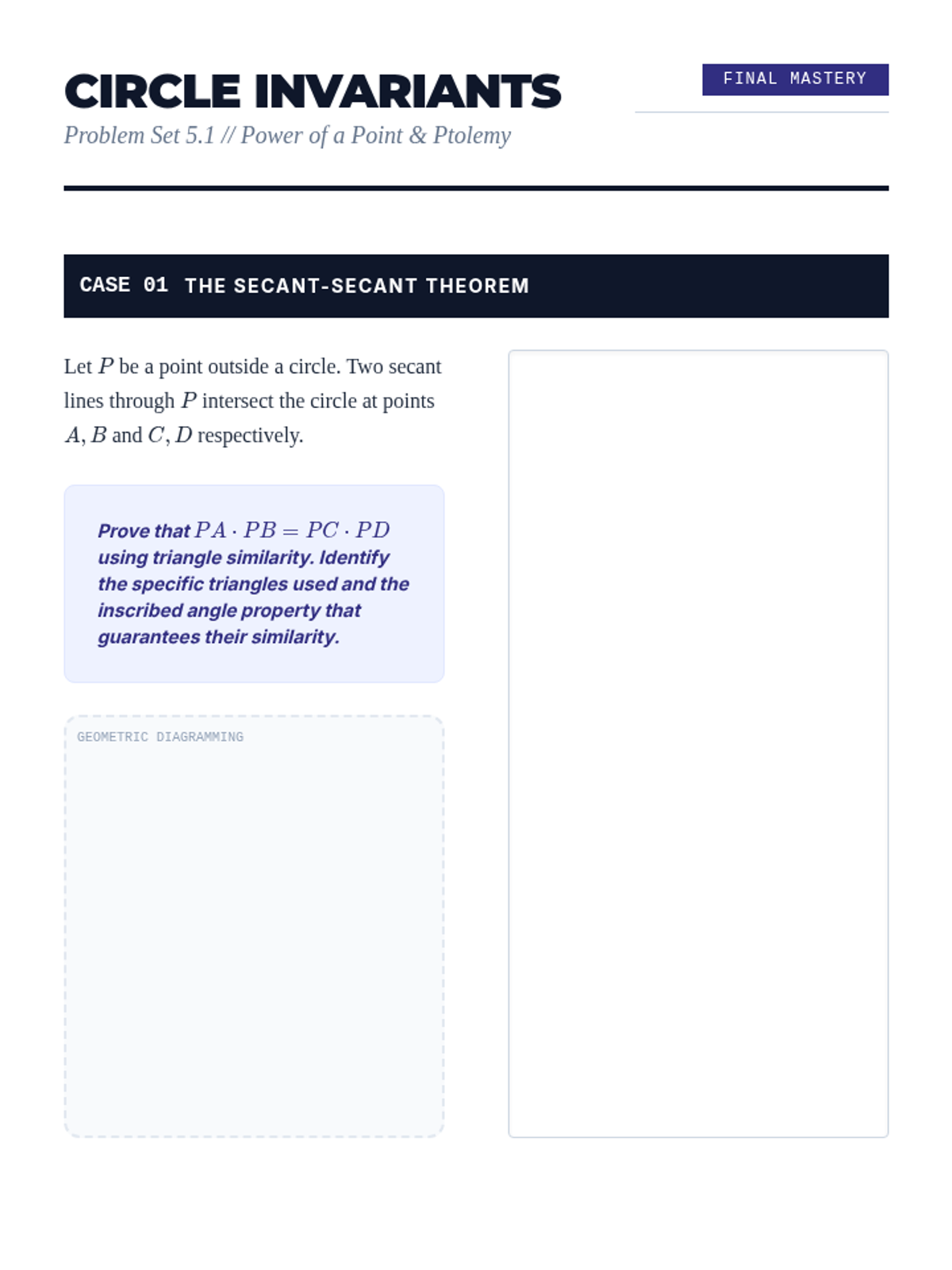
Students apply similarity criteria to prove the Power of a Point theorems (Tangent-Secant and Secant-Secant). The lesson culminates in proving Ptolemy's Theorem using similar triangles within cyclic quadrilaterals.
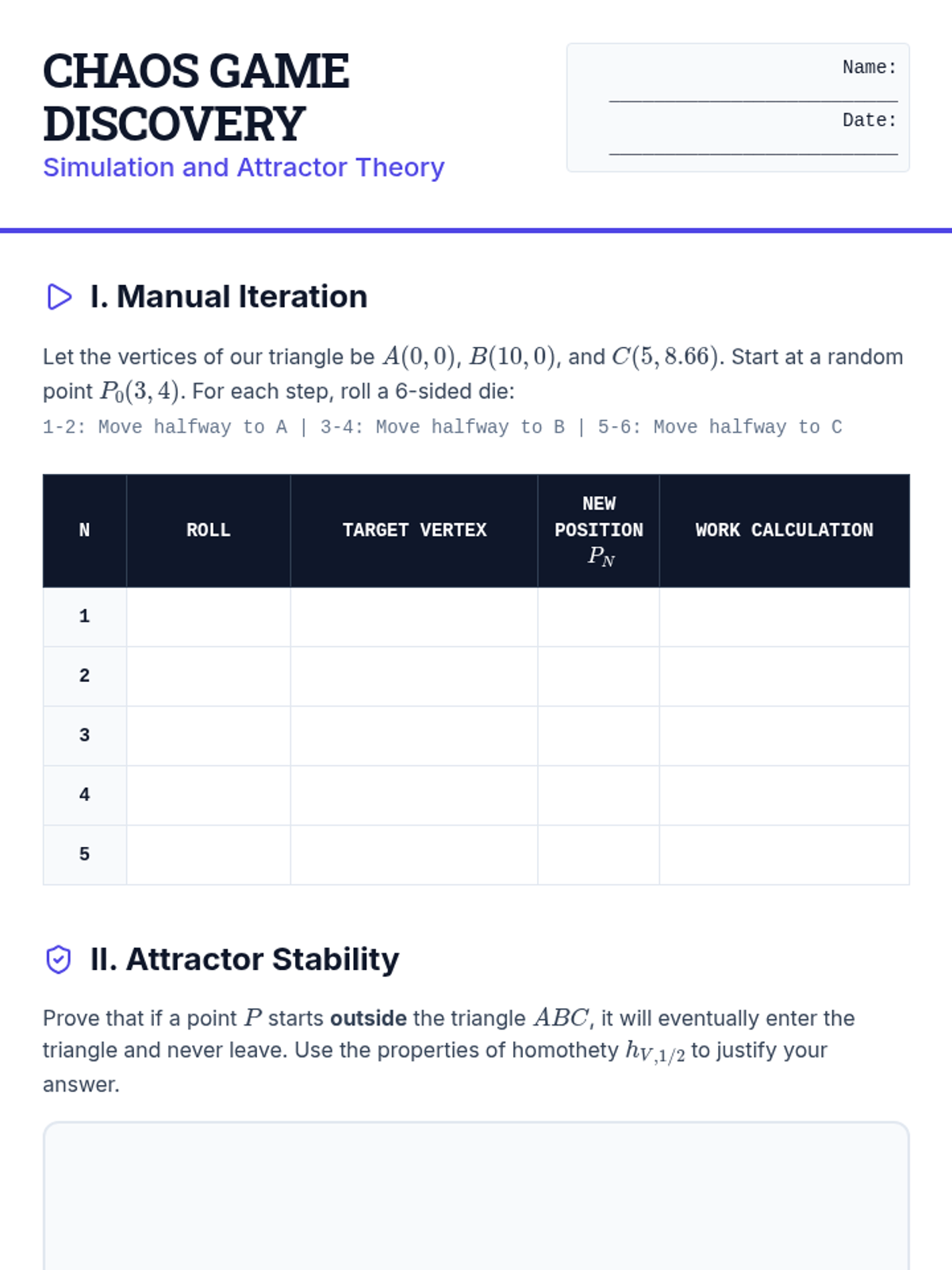
Students explore what happens when contraction mappings are applied recursively. They generate fractals like the Sierpinski Triangle using multiple similarity transformations, introducing the concept of self-similarity and the 'Chaos Game' algorithm.
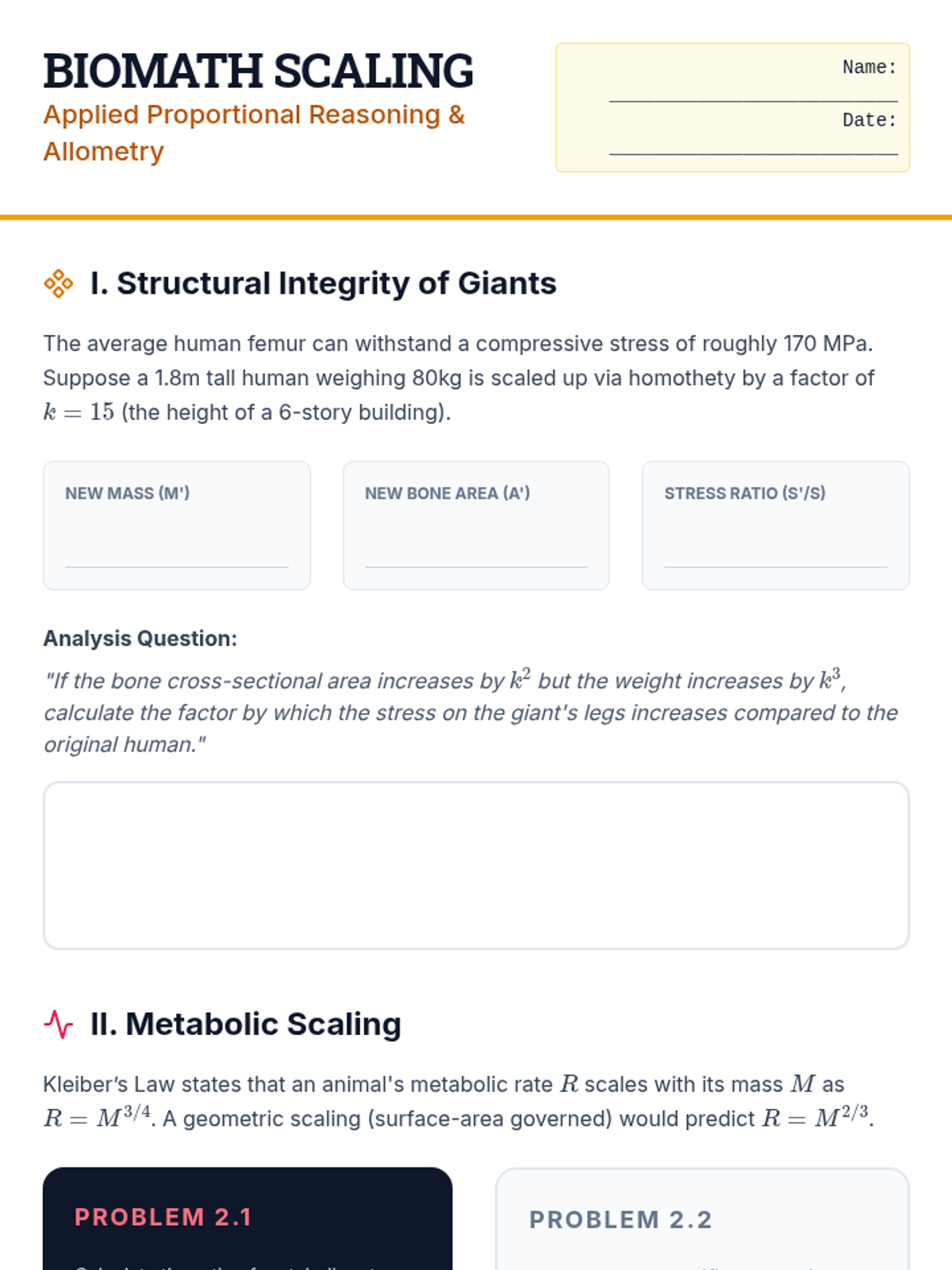
This lesson investigates the relationship between length scale factors (k) and the resulting area (k²) and volume (k³). Students apply these scaling laws to biological and physical contexts, such as allometry and structural limits.
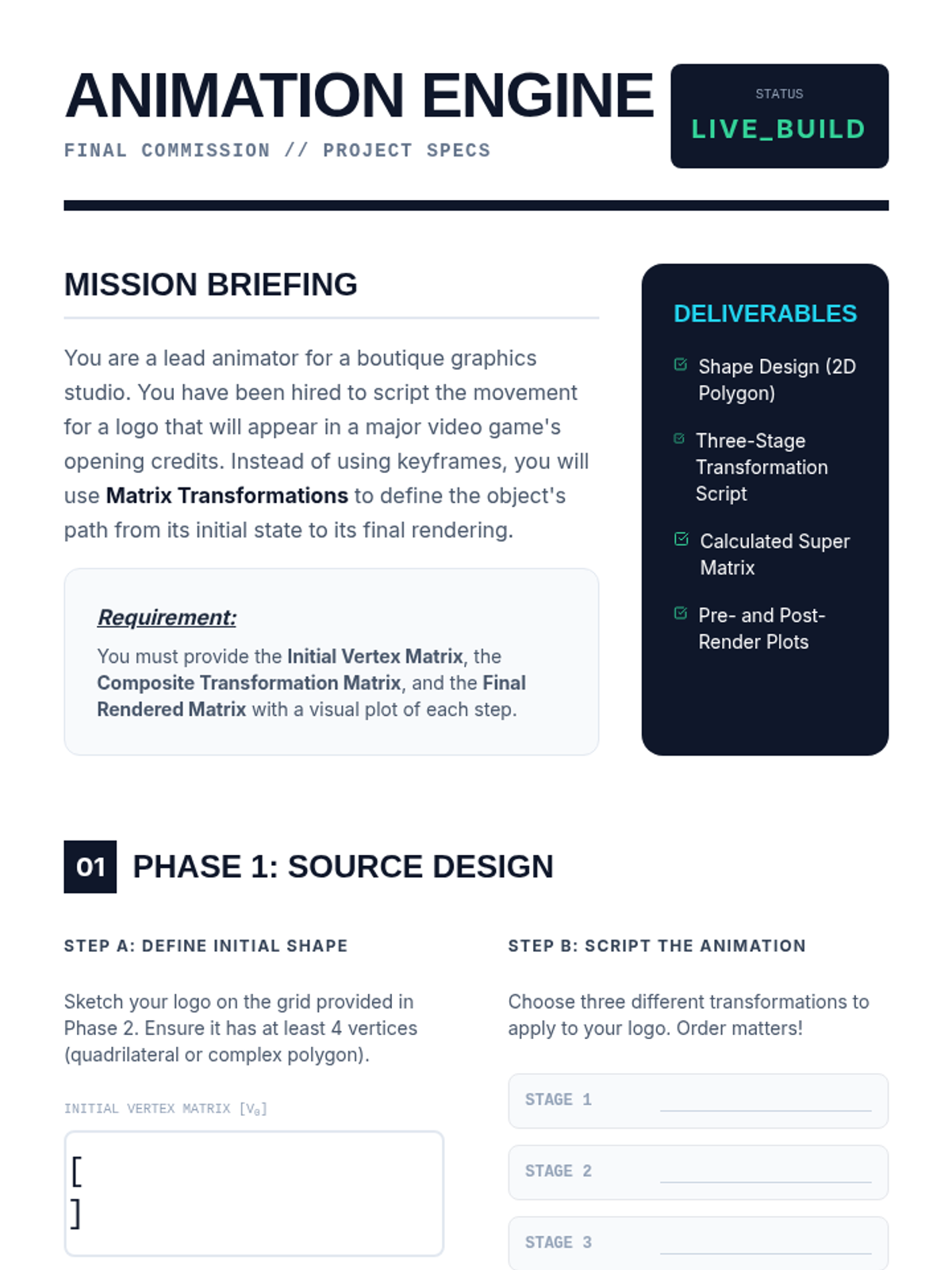
Apply matrix transformation logic to design a simple animation sequence for a digital object, mimicking graphics engine logic.
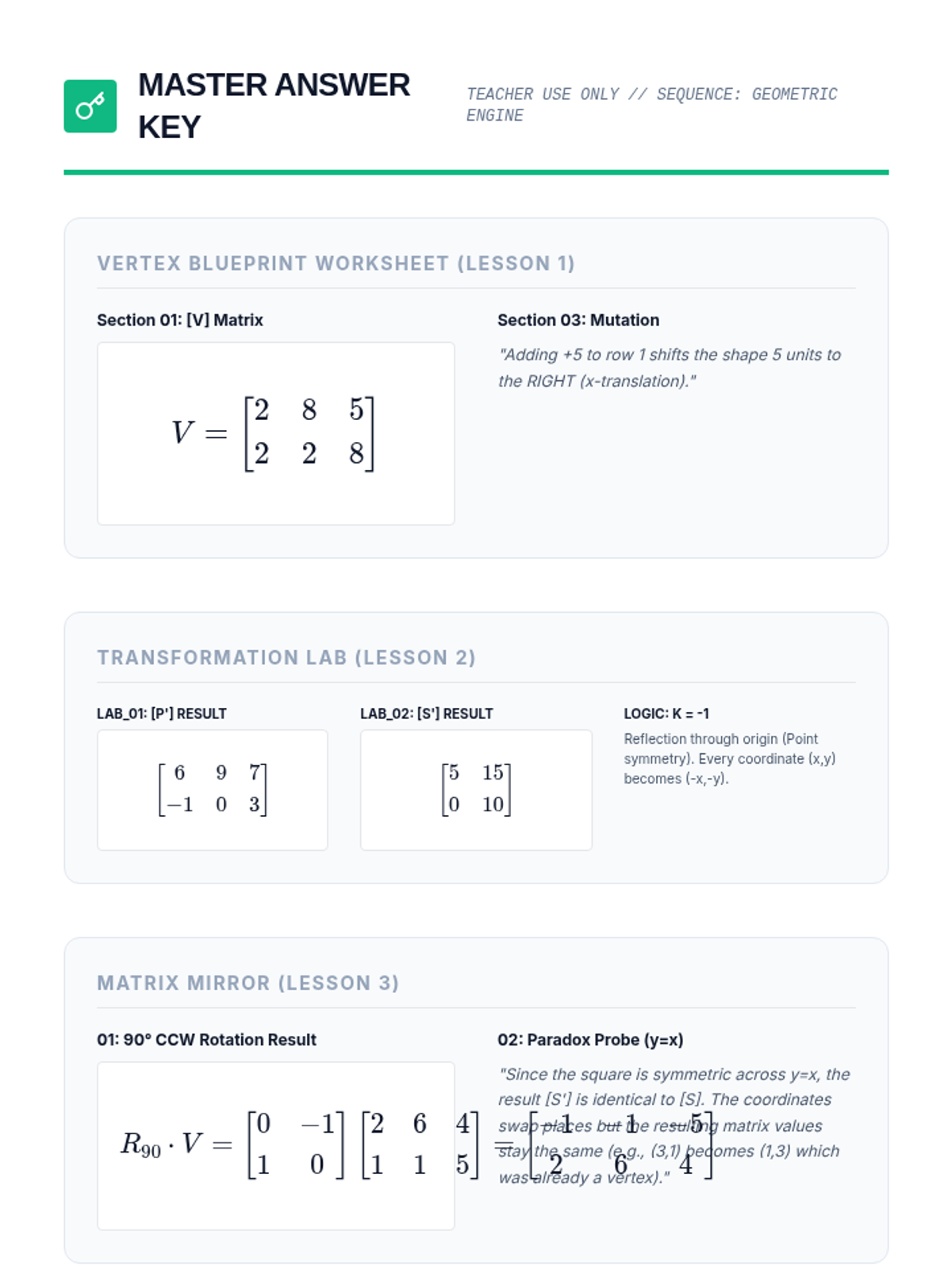
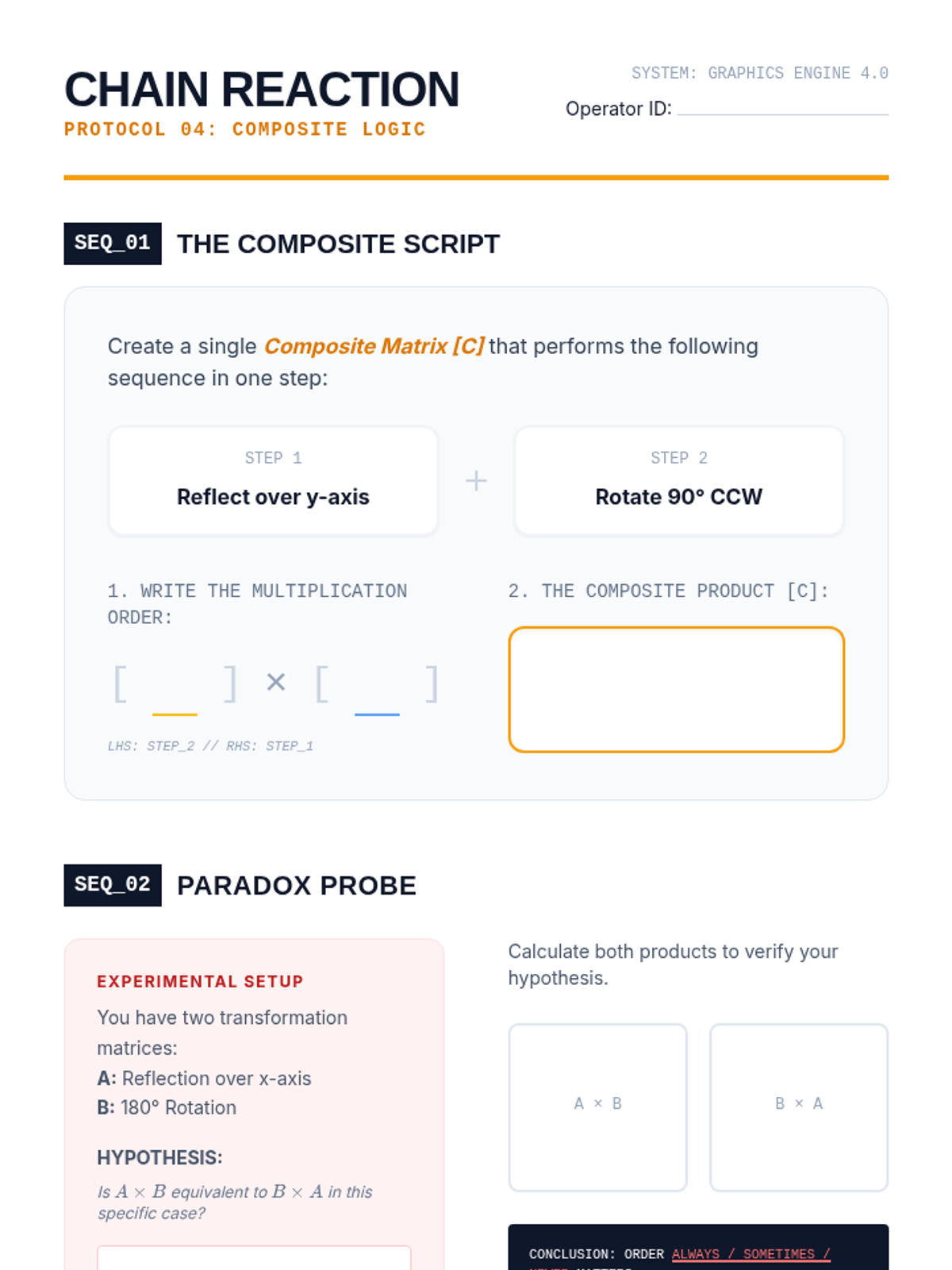
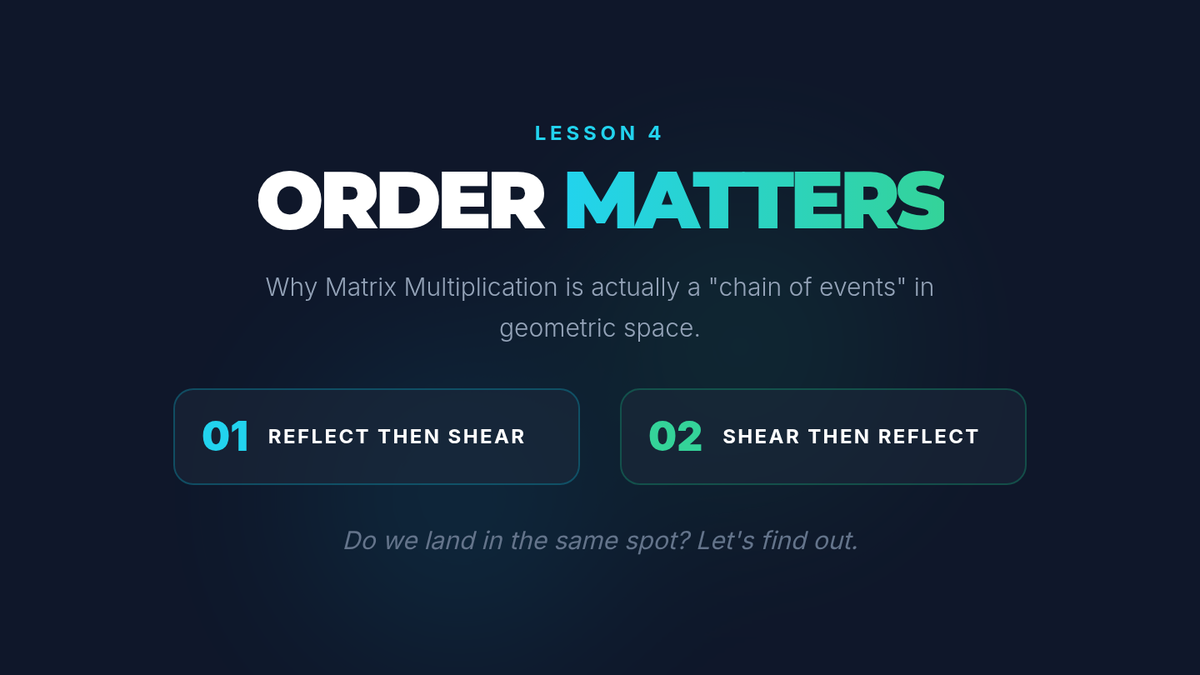
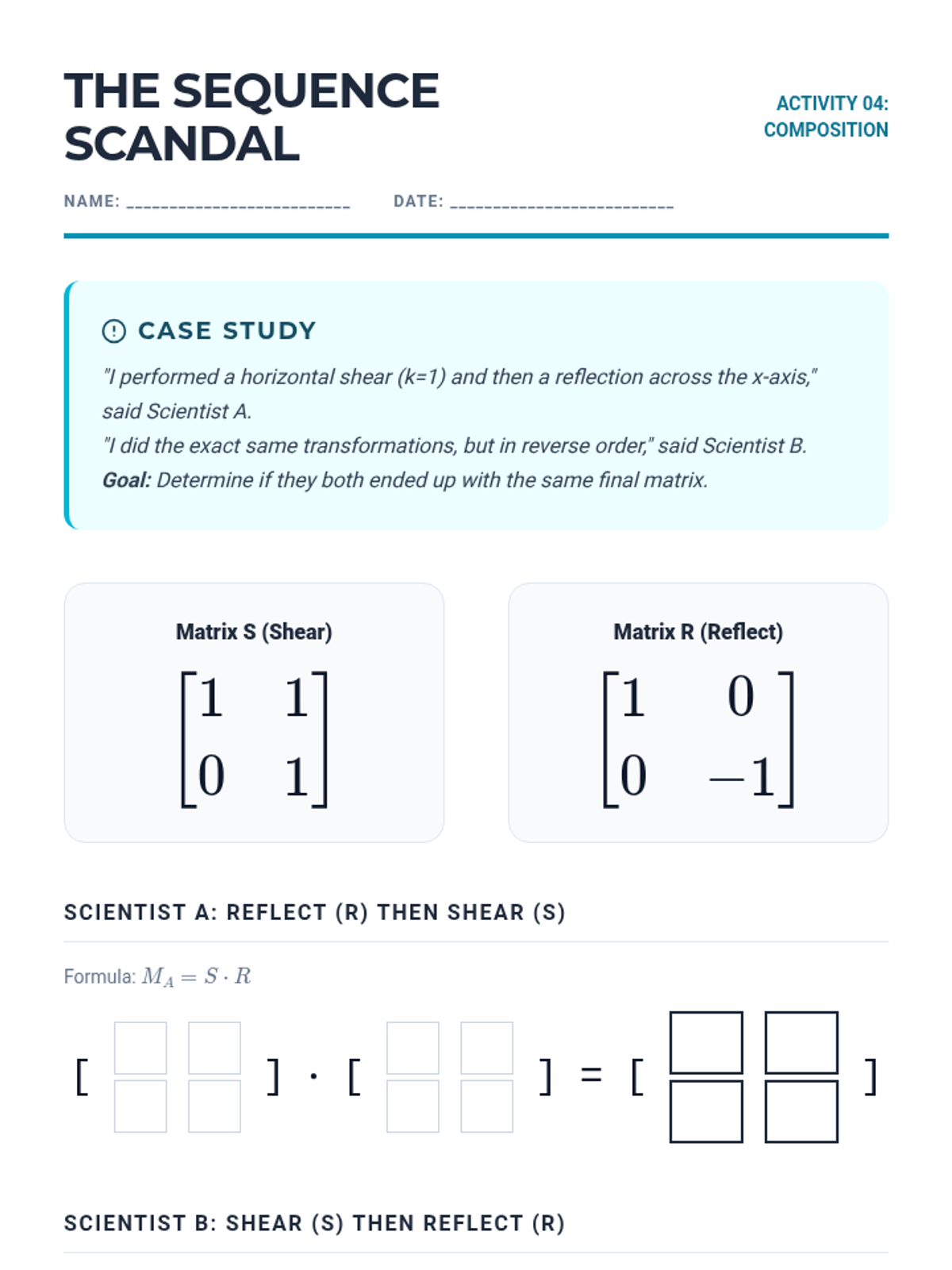
Discover how to combine multiple transformations into a single composite matrix and explore the importance of operation order.
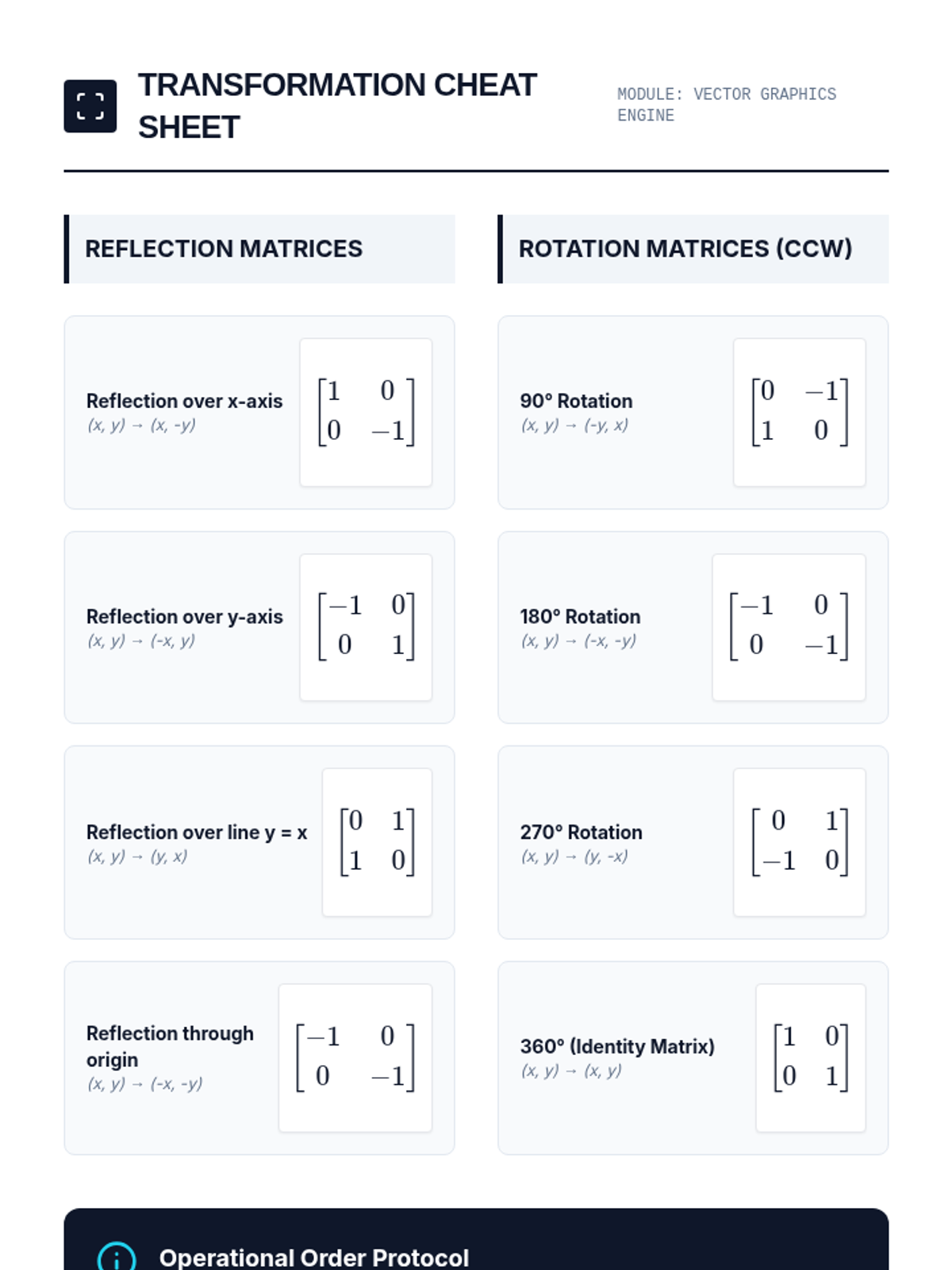
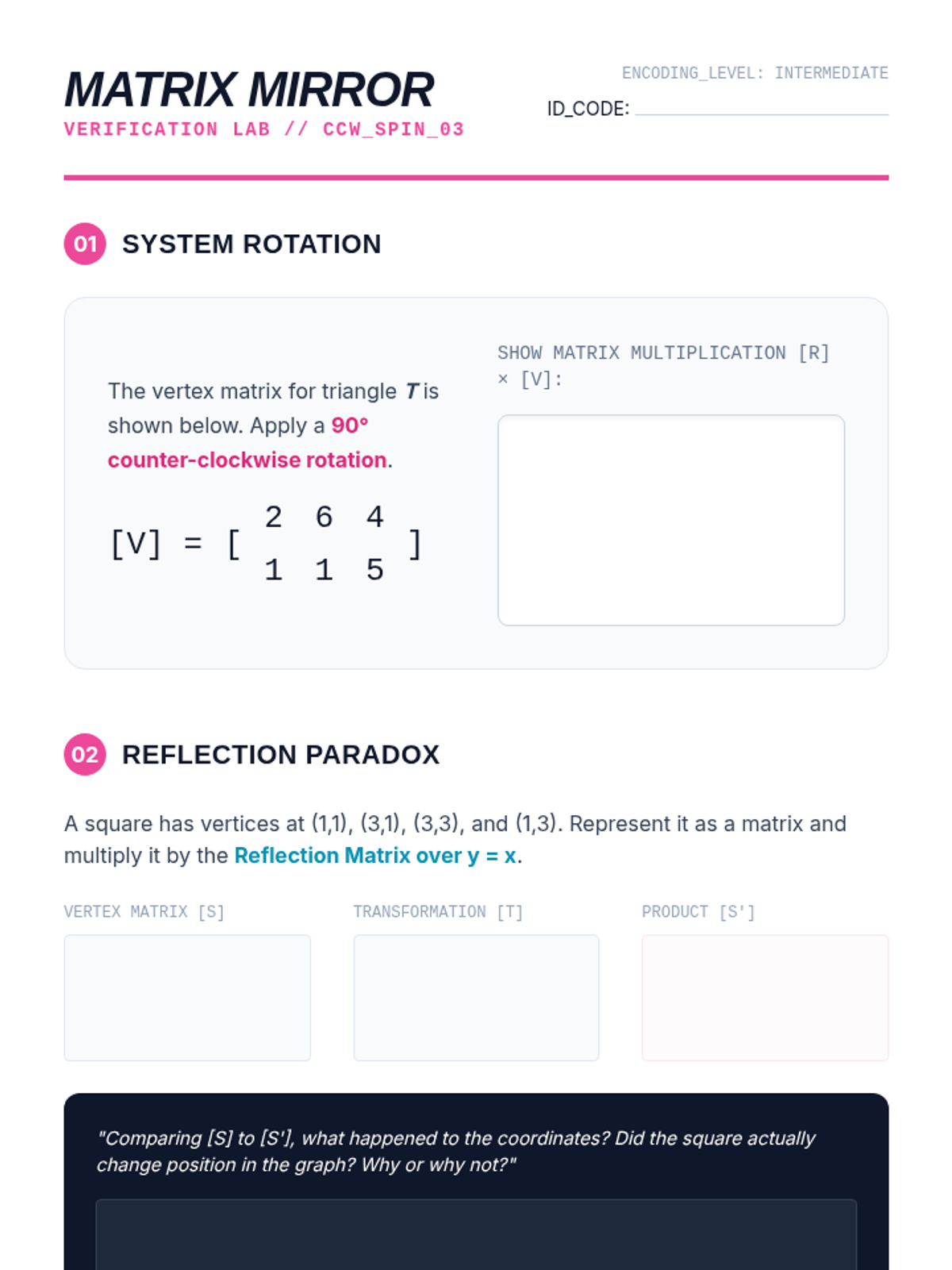
Introduce rotation and reflection matrices and use matrix multiplication to reorient shapes in the 2D plane.
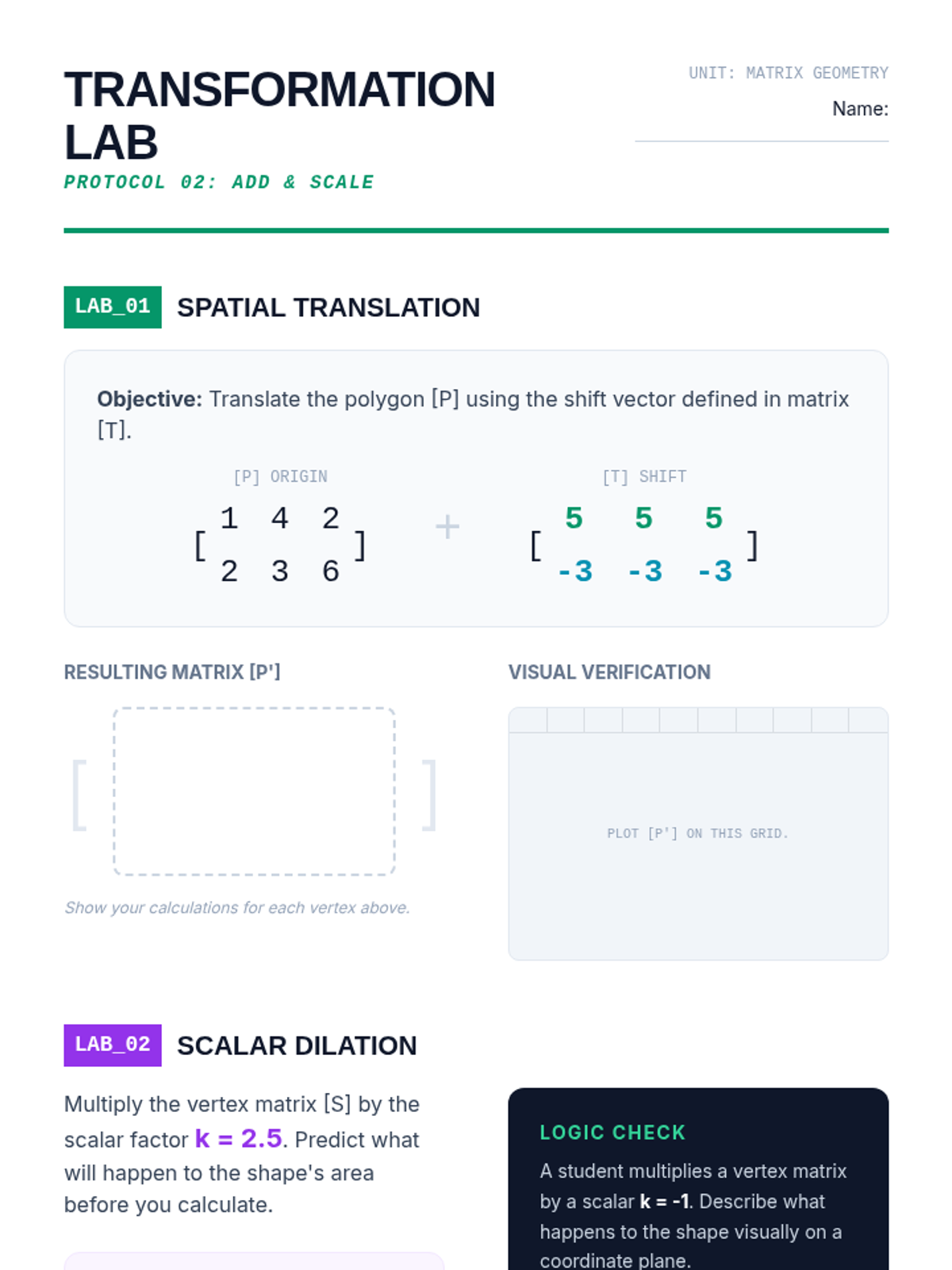
Explore how matrix addition performs translations and scalar multiplication performs dilations on geometric shapes.
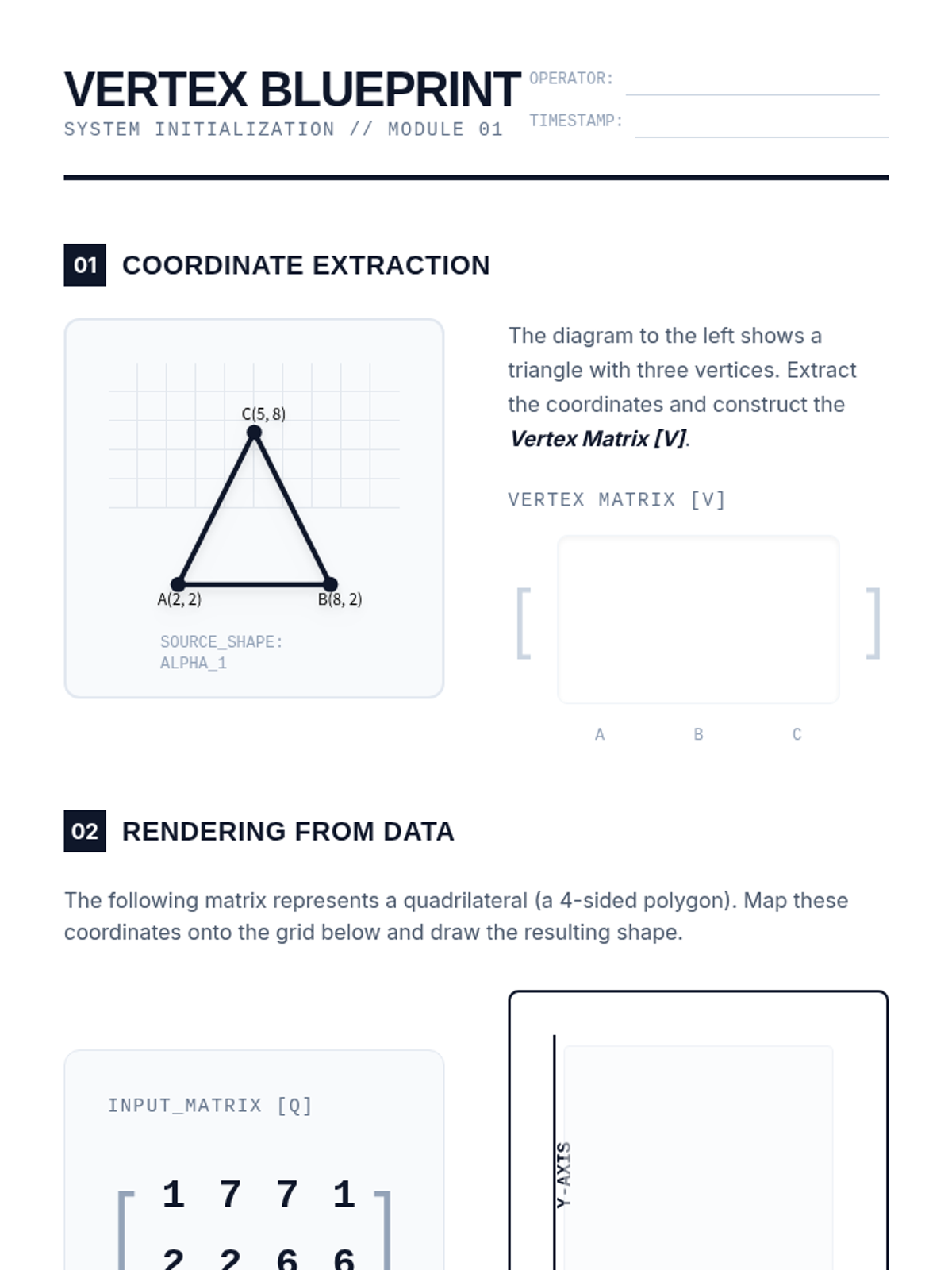
Students learn to represent the vertices of 2D shapes as columns in a matrix and explore how these arrays correspond to physical points on a coordinate plane.
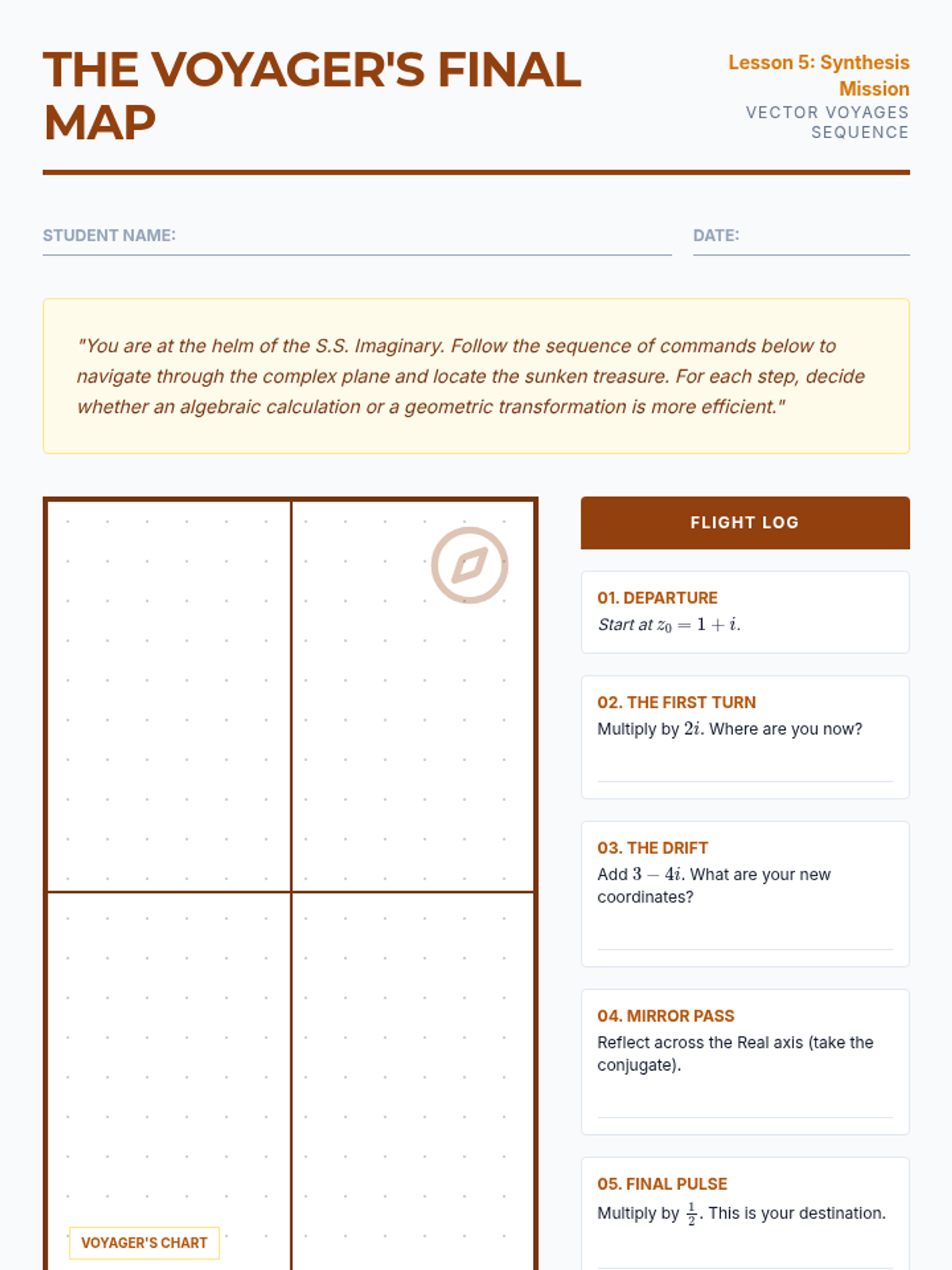
Students tackle complex problems requiring them to toggle between algebraic manipulation and geometric intuition. The final activity involves solving a puzzle where clues are given in both algebraic and vector formats.
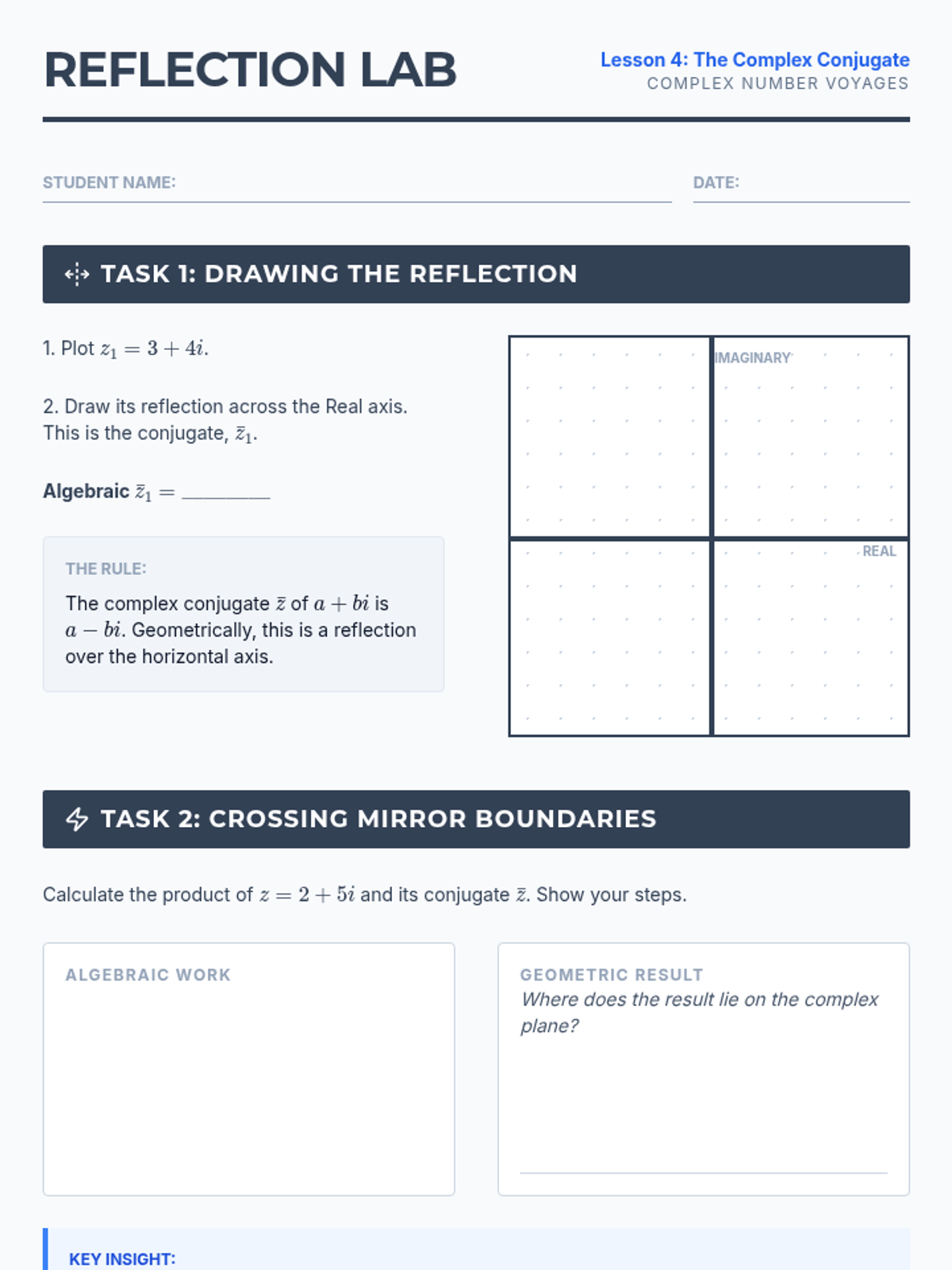
This lesson focuses on the geometric meaning of the complex conjugate as a reflection across the real axis. Students explore why multiplying a number by its conjugate produces a real number, laying the groundwork for division.
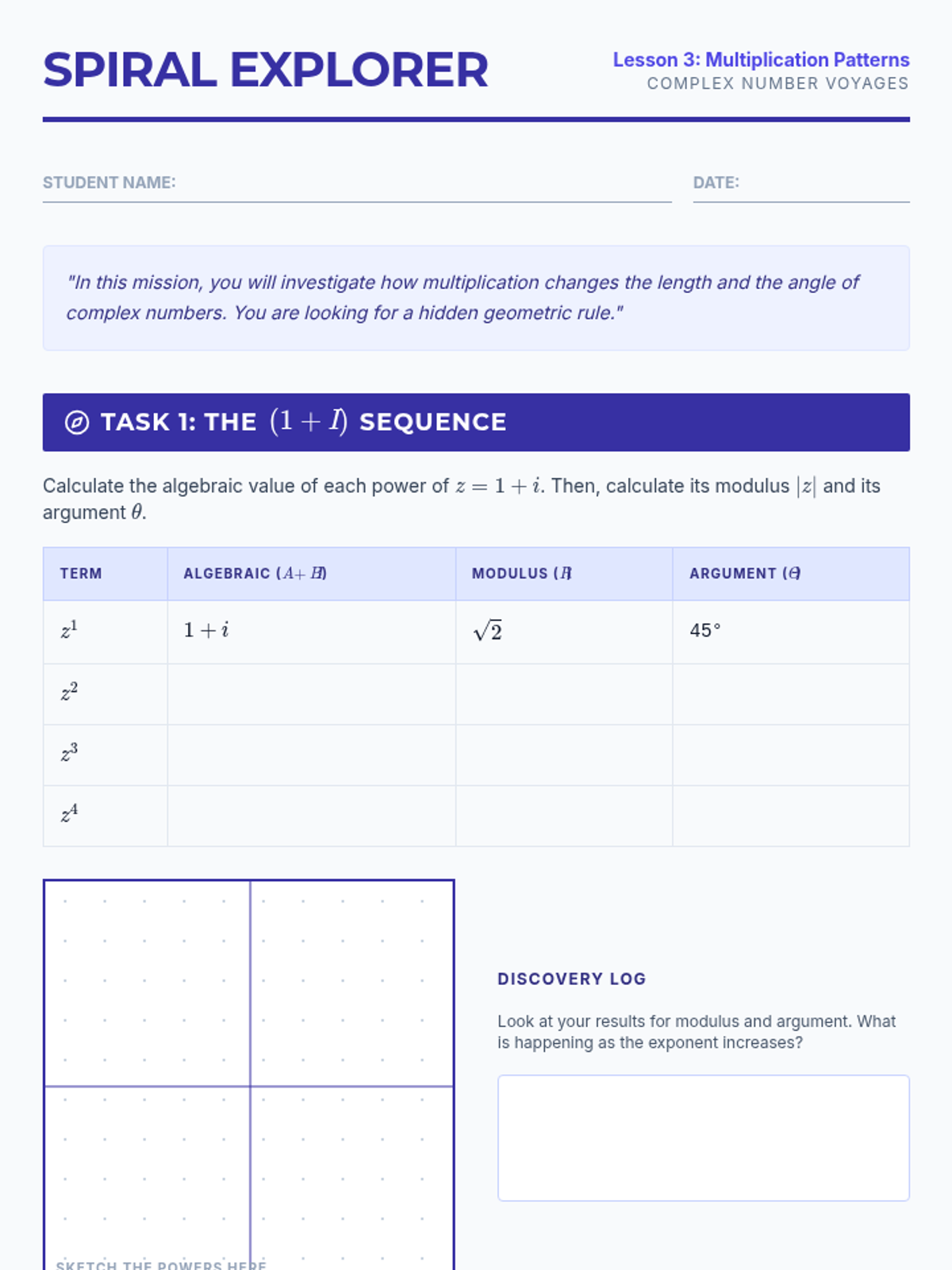
Students investigate patterns in the moduli and arguments of complex numbers when multiplied. Through guided discovery, they conclude that multiplication involves scaling lengths and adding angles.
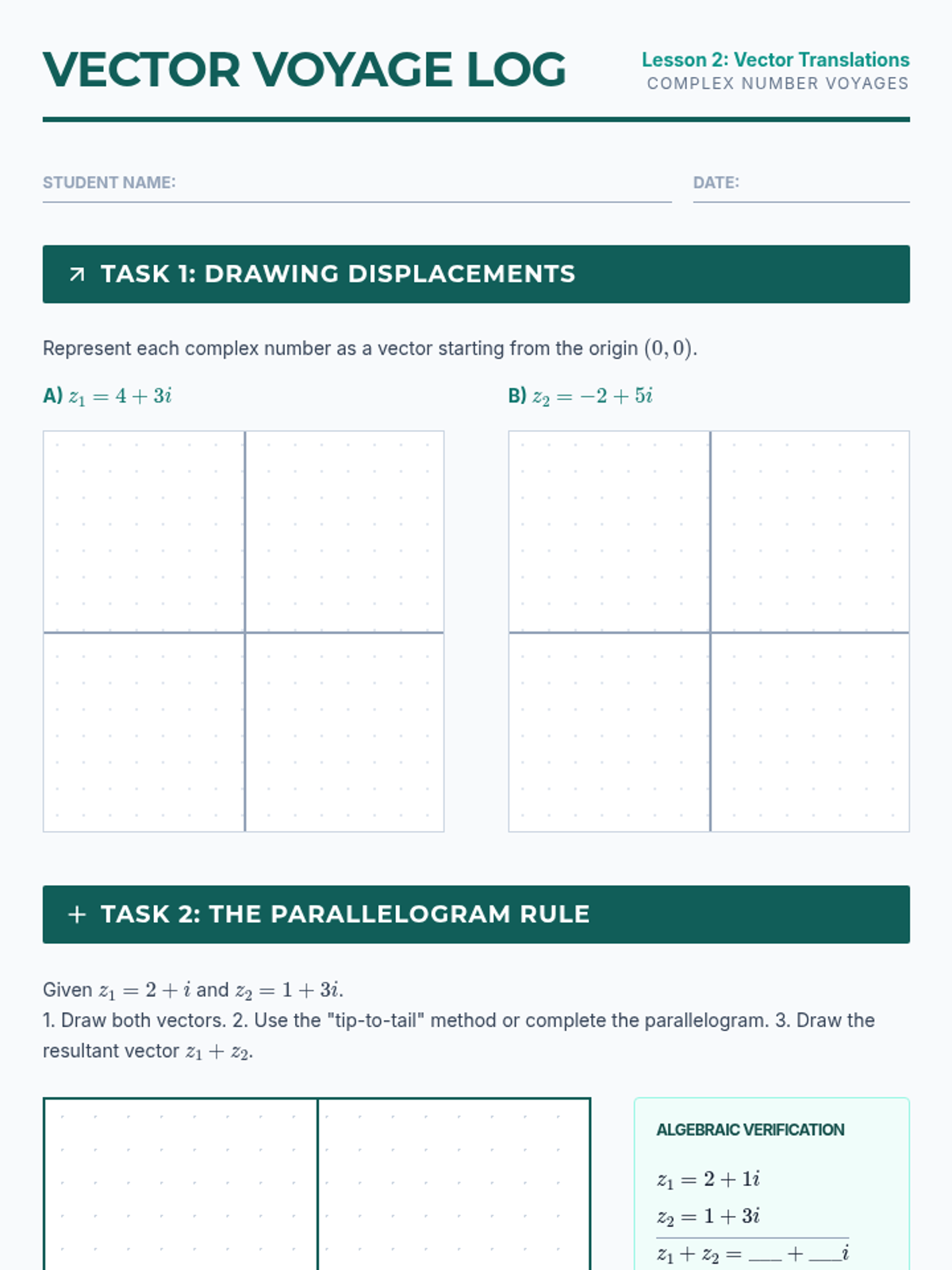
Learners represent complex numbers as vectors to visualize addition and subtraction. They verify algebraic results using the parallelogram rule on graph paper, connecting linear algebra concepts to complex arithmetic.
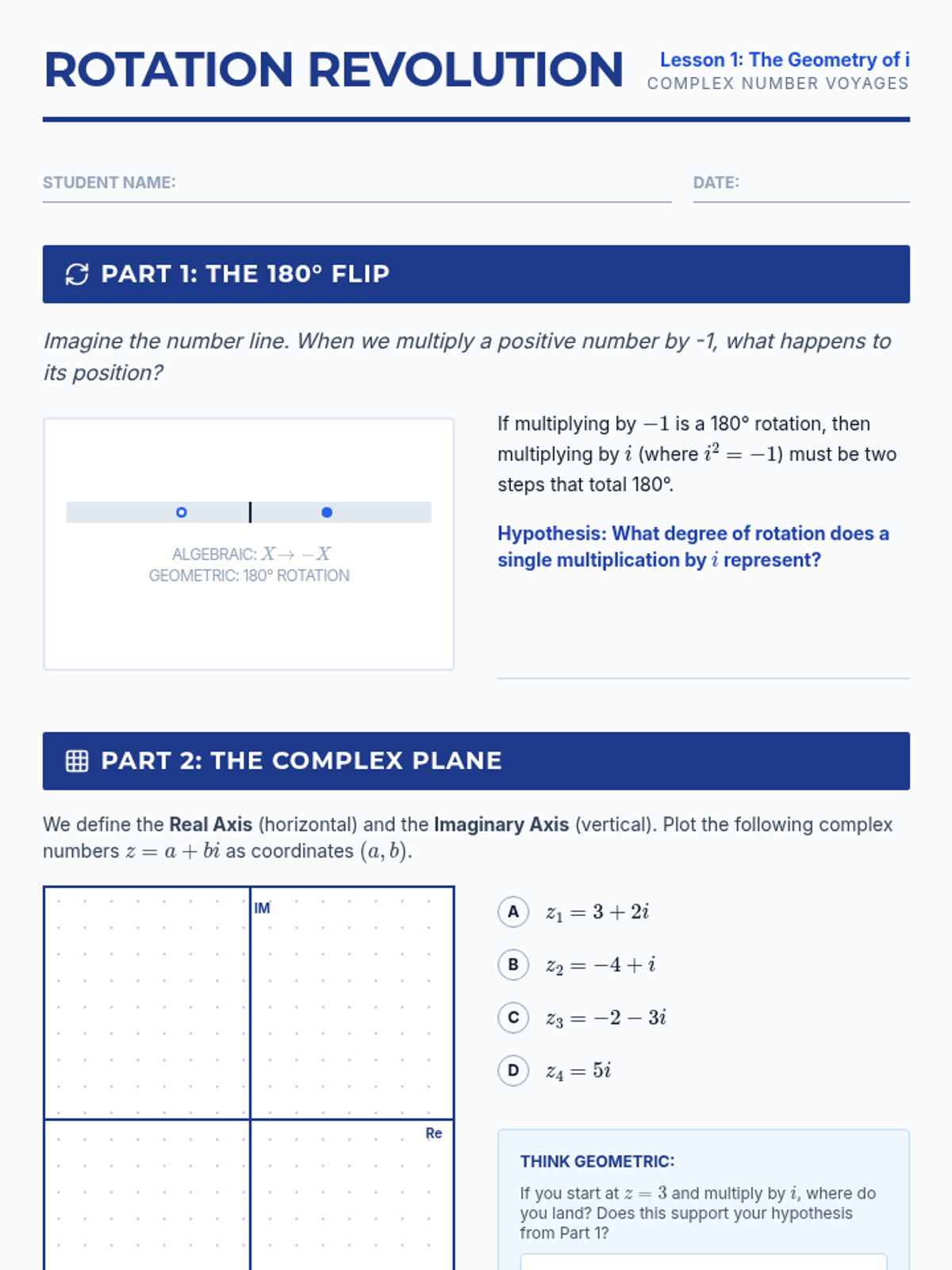
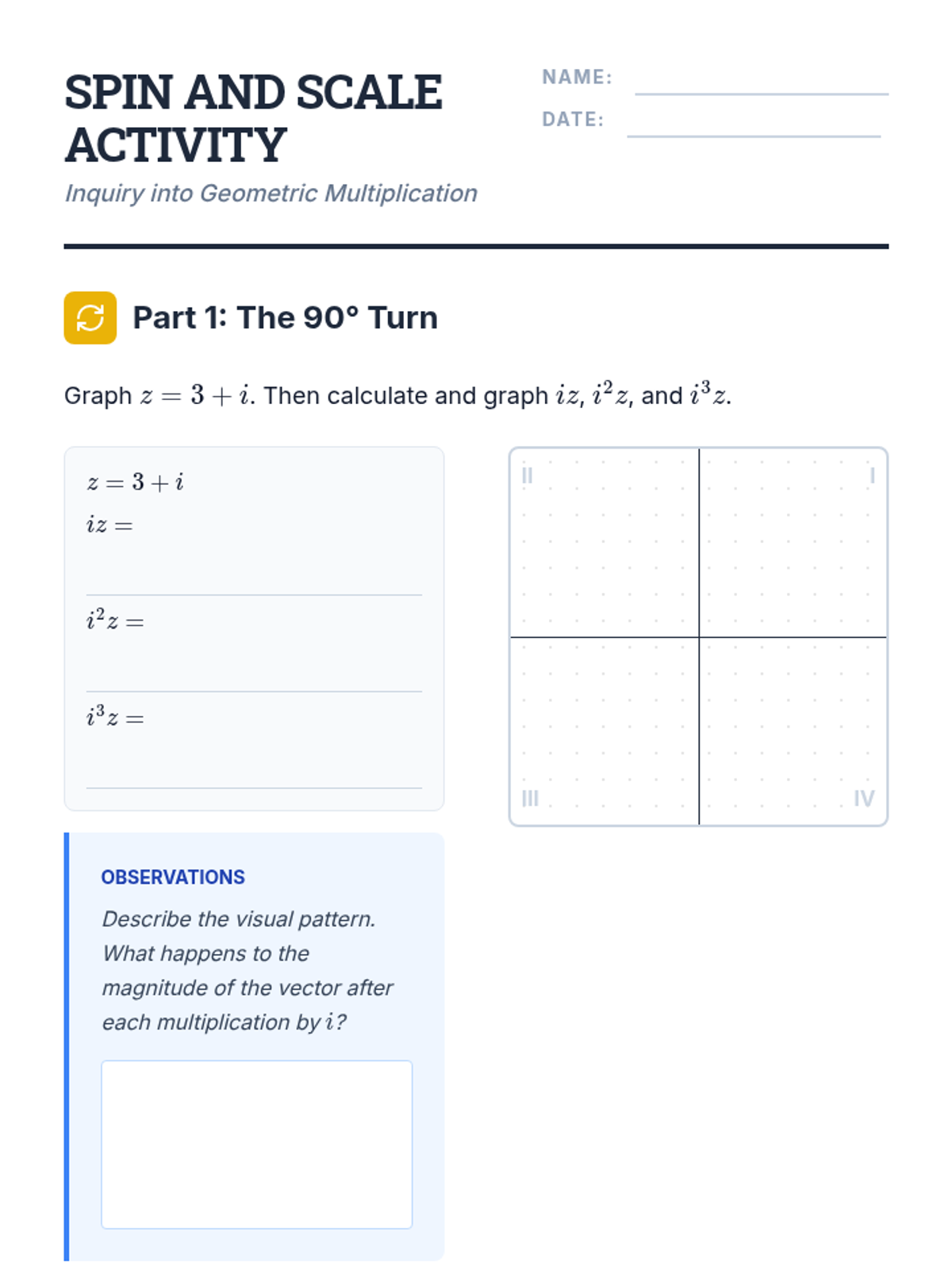
Students explore the concept of multiplication by negative one as a 180-degree rotation and hypothesize what a 90-degree rotation represents. This lesson introduces the complex plane and plotting complex numbers as coordinates.
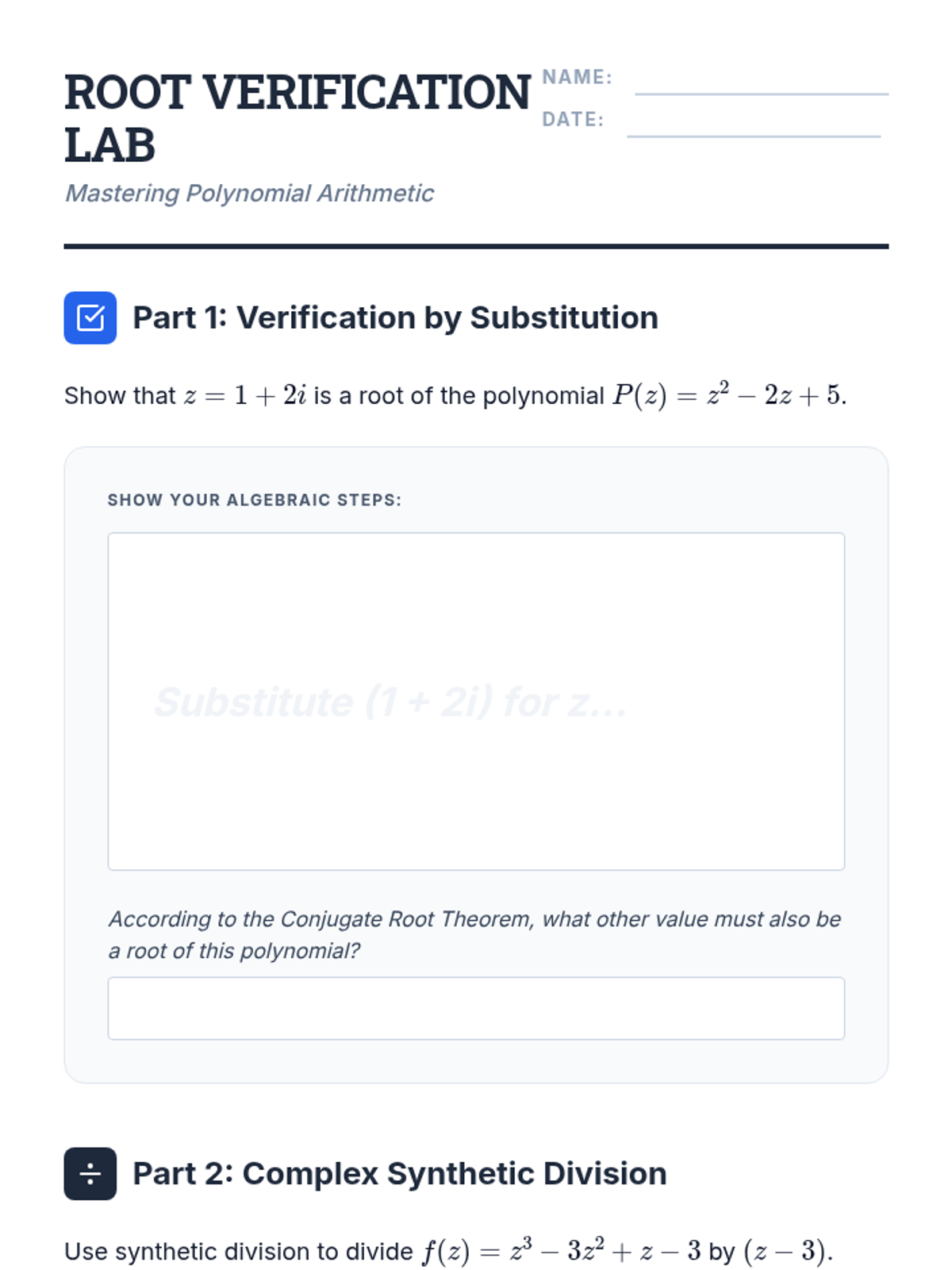
Applying complex arithmetic to verify roots of polynomial equations and practicing synthetic division with complex numbers.
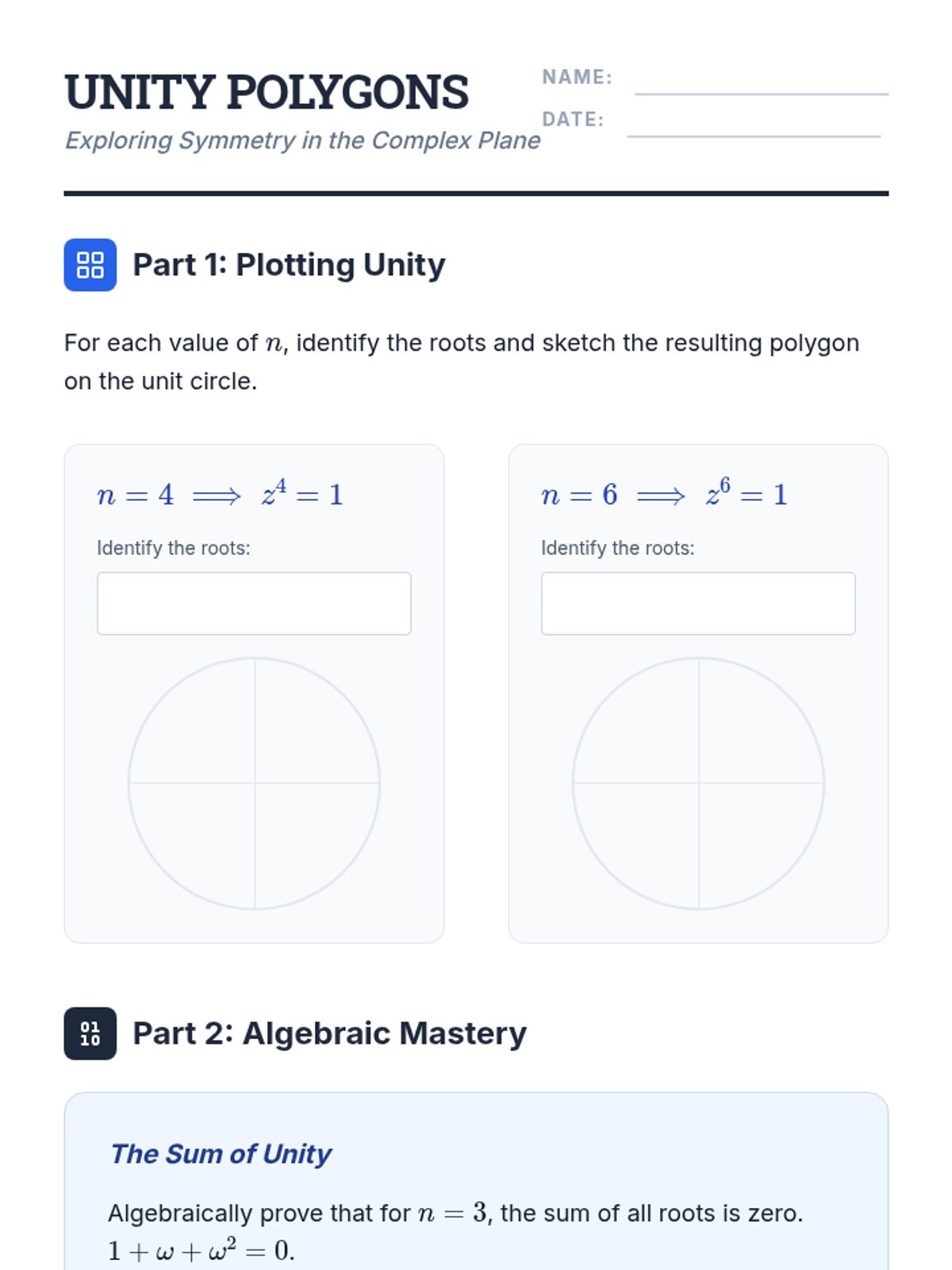
Exploring the symmetry of roots of unity and practicing arithmetic operations within the context of these cyclotomic values.
Investigating the geometric effect of multiplication by i and general complex numbers, focusing on rotation and scaling.
Students use vector addition (parallelogram rule) to visualize the addition and subtraction of complex numbers, verifying results algebraically and geometrically.
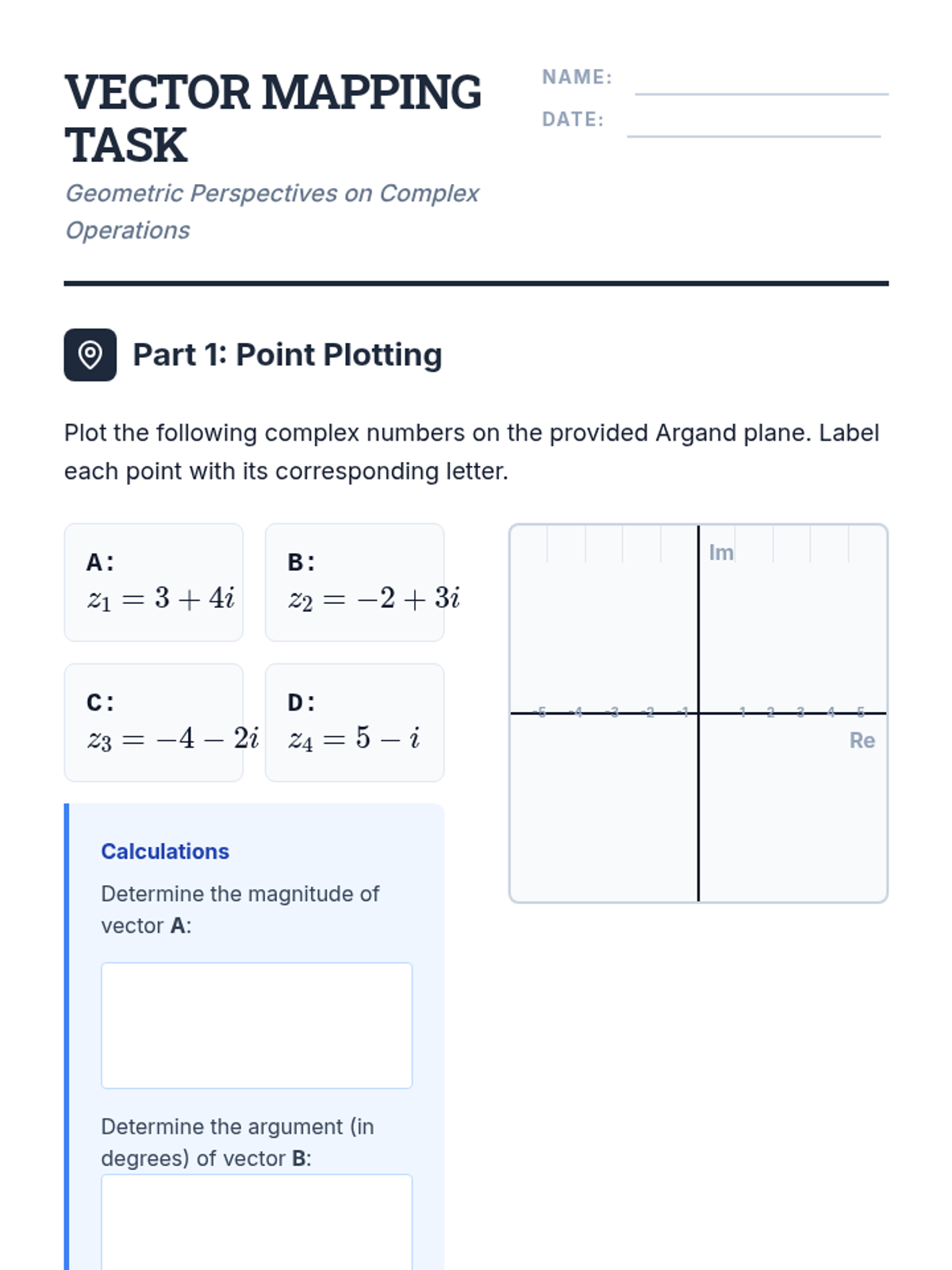
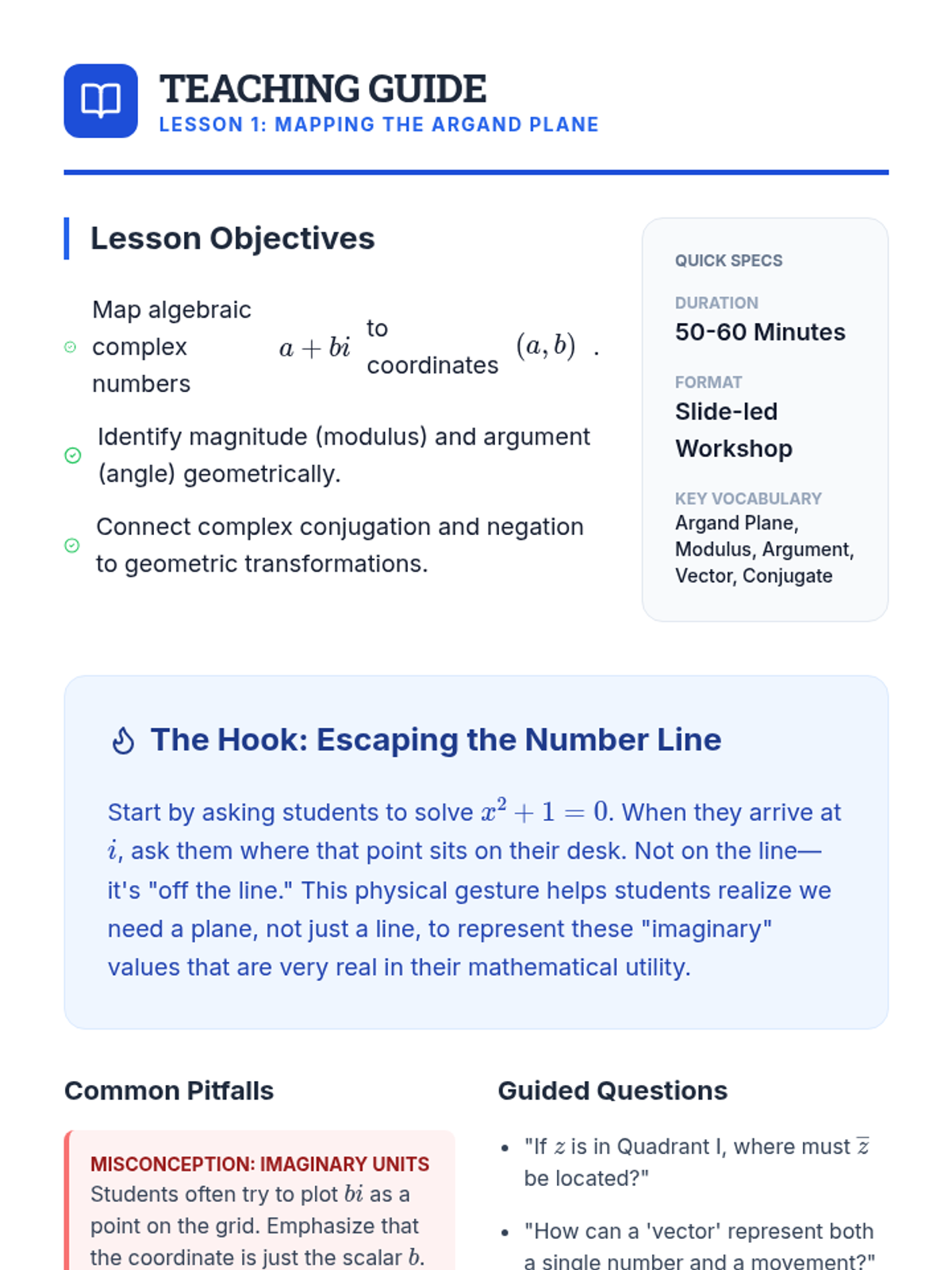
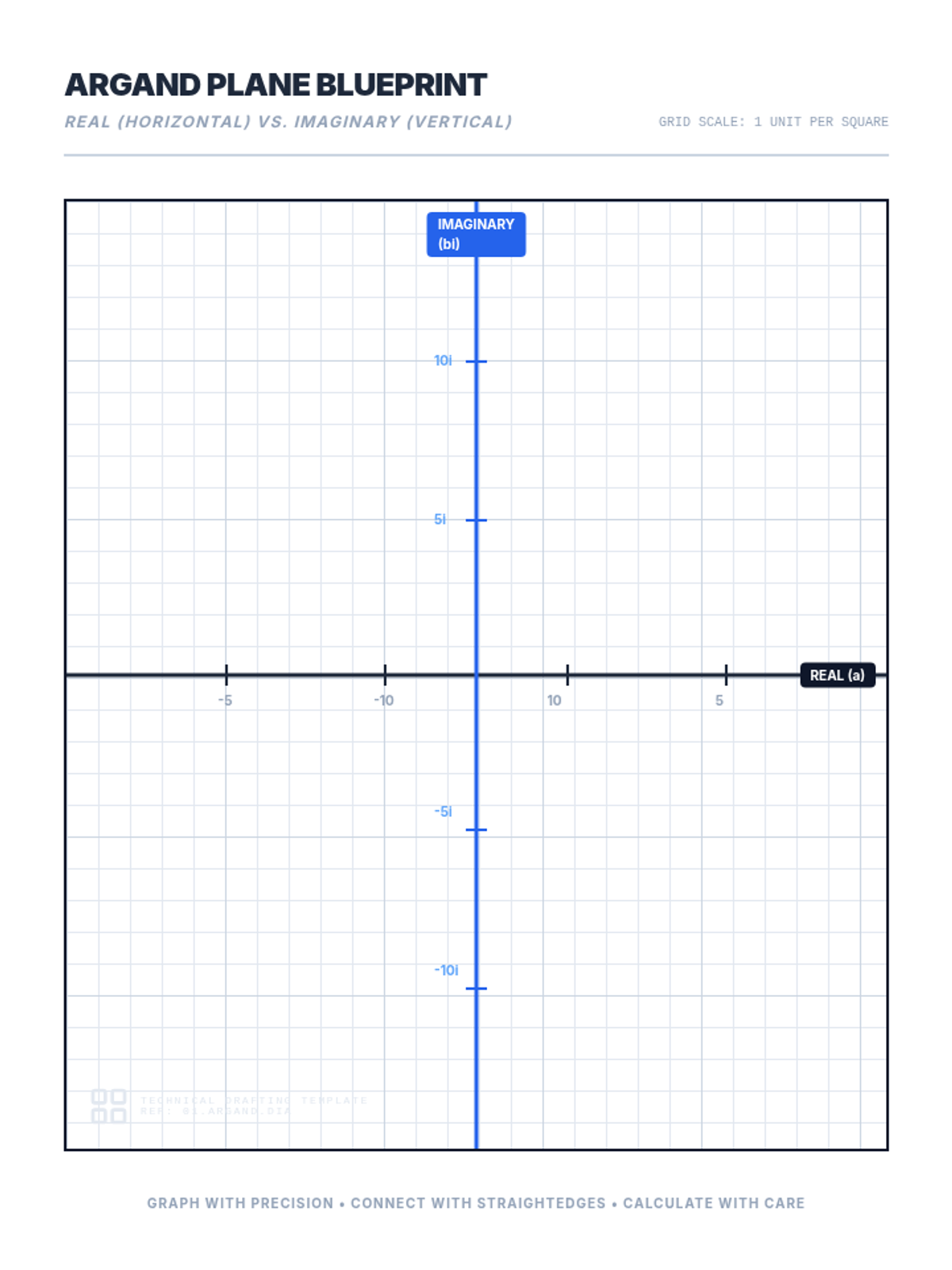
Students map complex numbers onto the Argand plane, associating real and imaginary parts with x and y coordinates, and connecting them to vector representations.
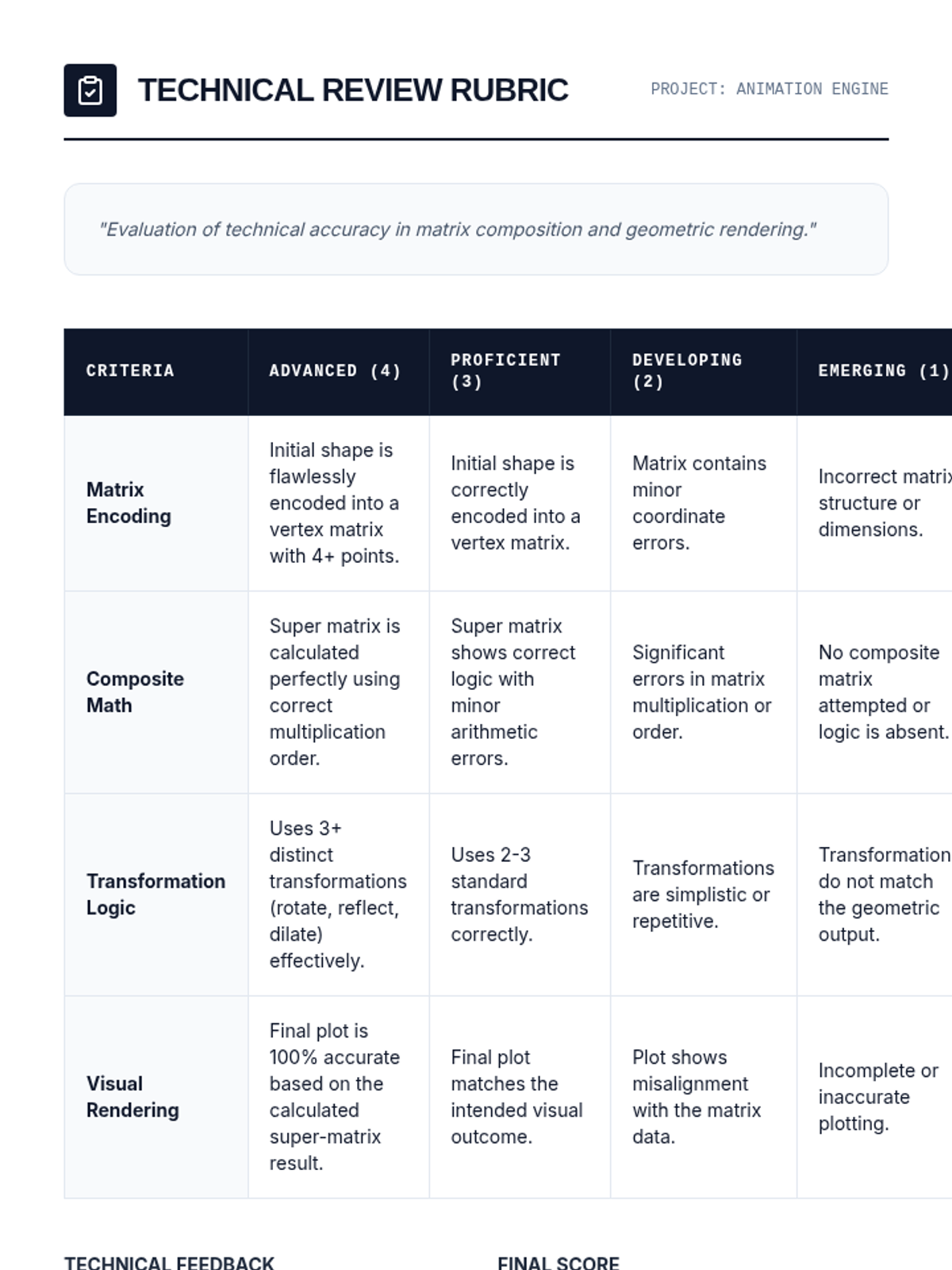
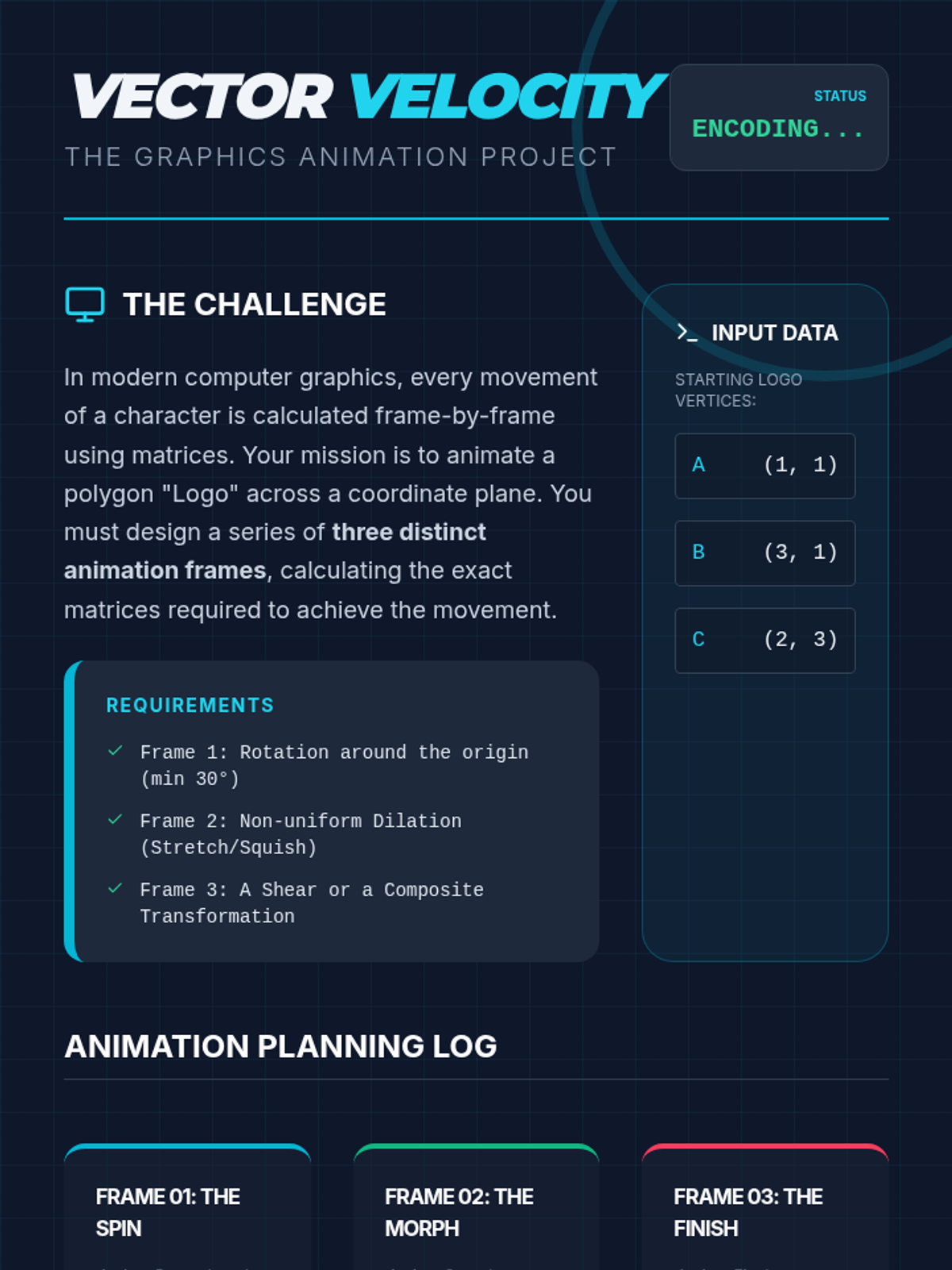
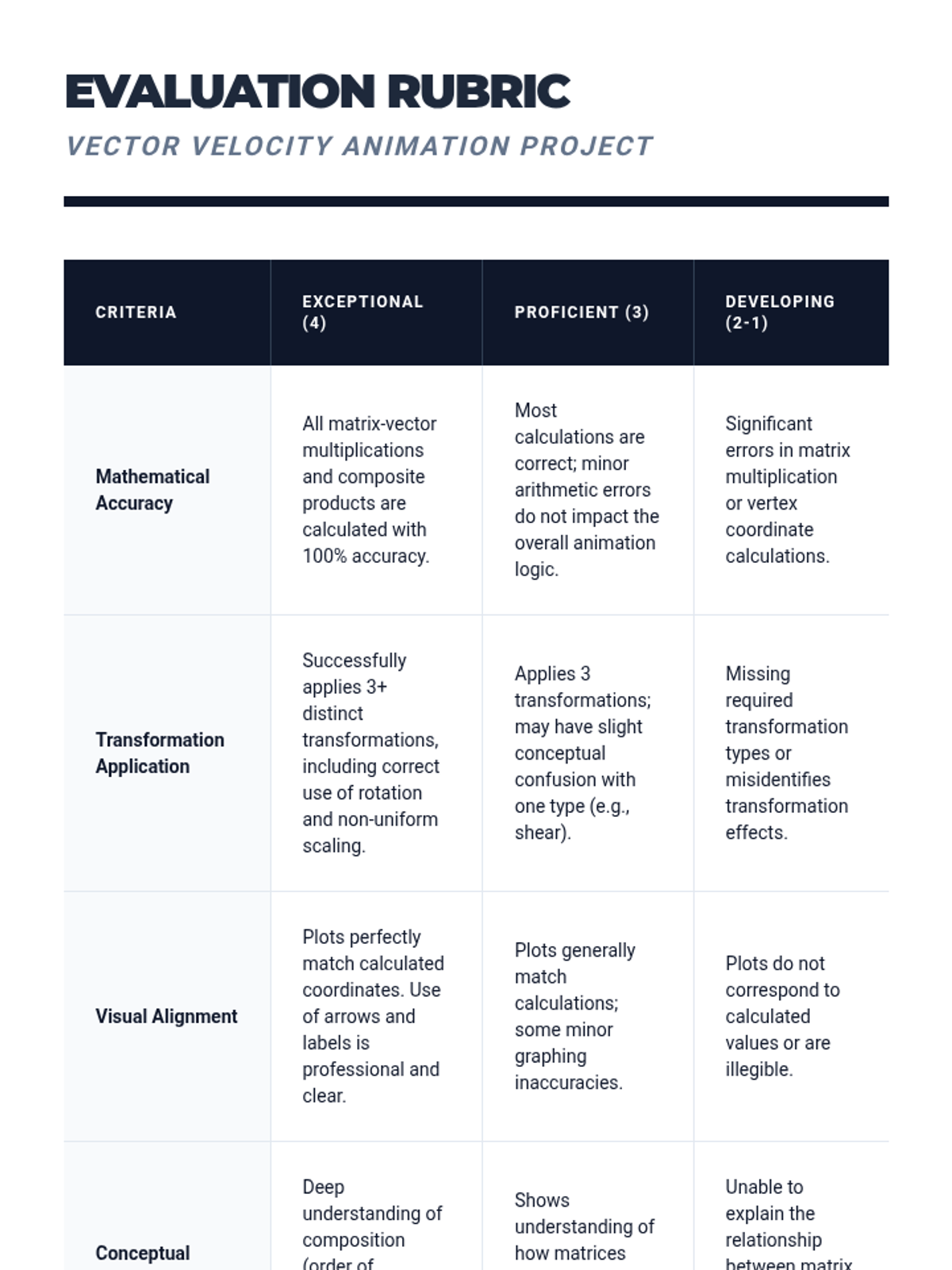
In this final project, students apply their knowledge to create a frame-by-frame transformation plan for a polygon, simulating the math used in modern computer graphics and animation.
Students explore the geometric meaning of matrix multiplication as the composition of transformations. They discover why the order of transformations matters through hands-on inquiry and calculation.
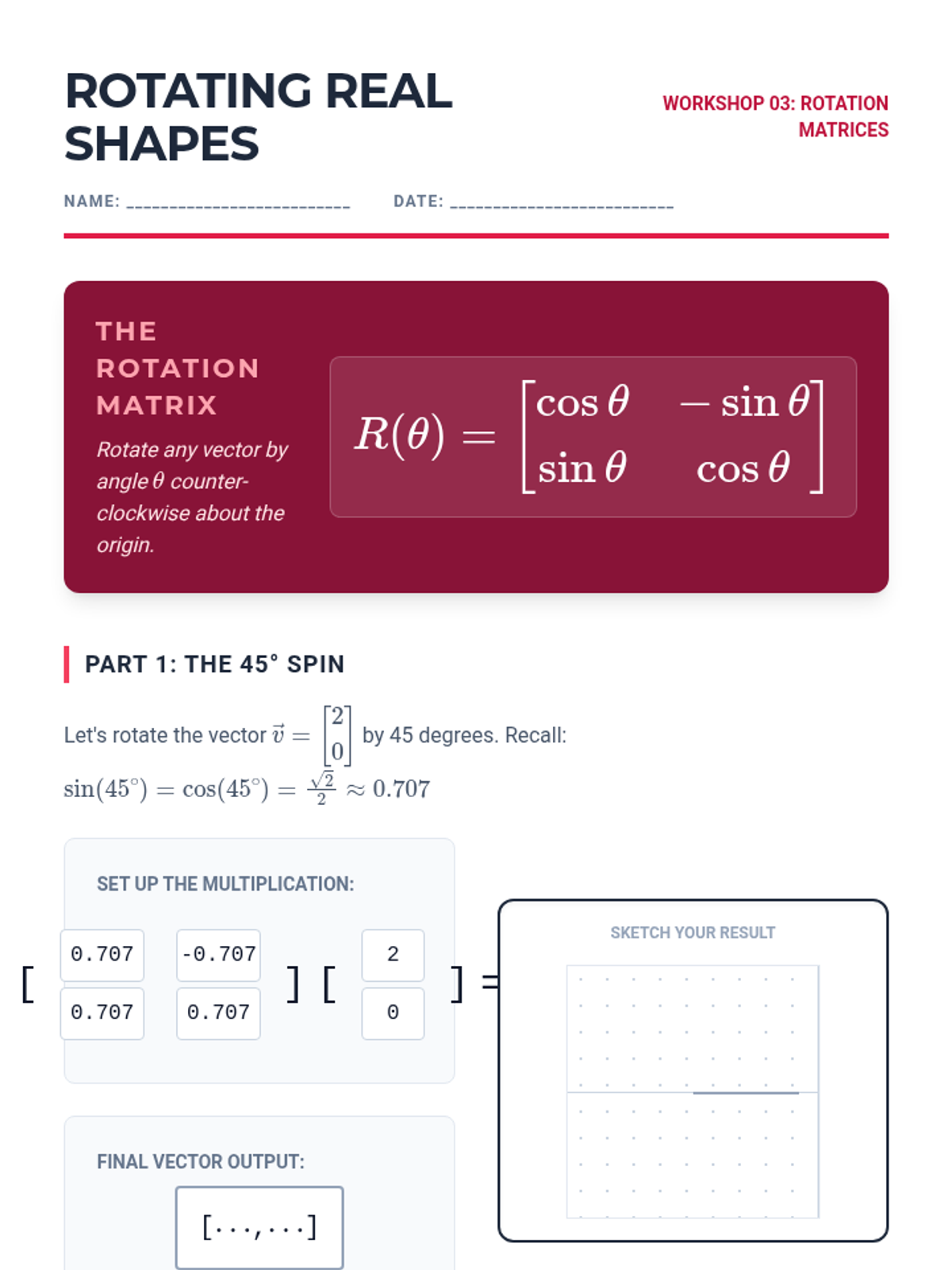
Focusing on trigonometry, students derive and apply the general rotation matrix. They practice rotating complex shapes (polygons) around the origin using matrix multiplication.
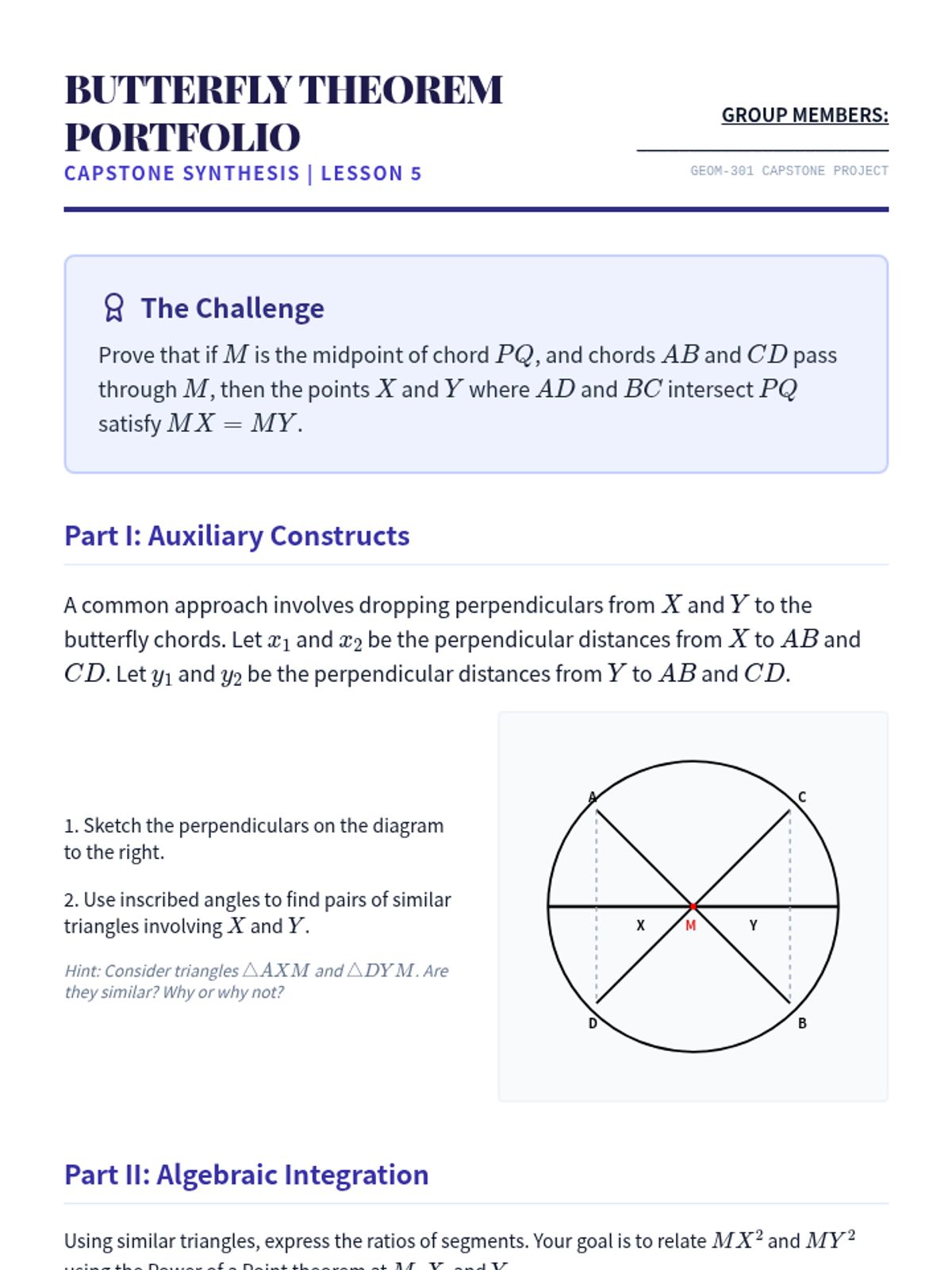
A capstone lesson where students synthesize all previous theorems to prove the Butterfly Theorem.
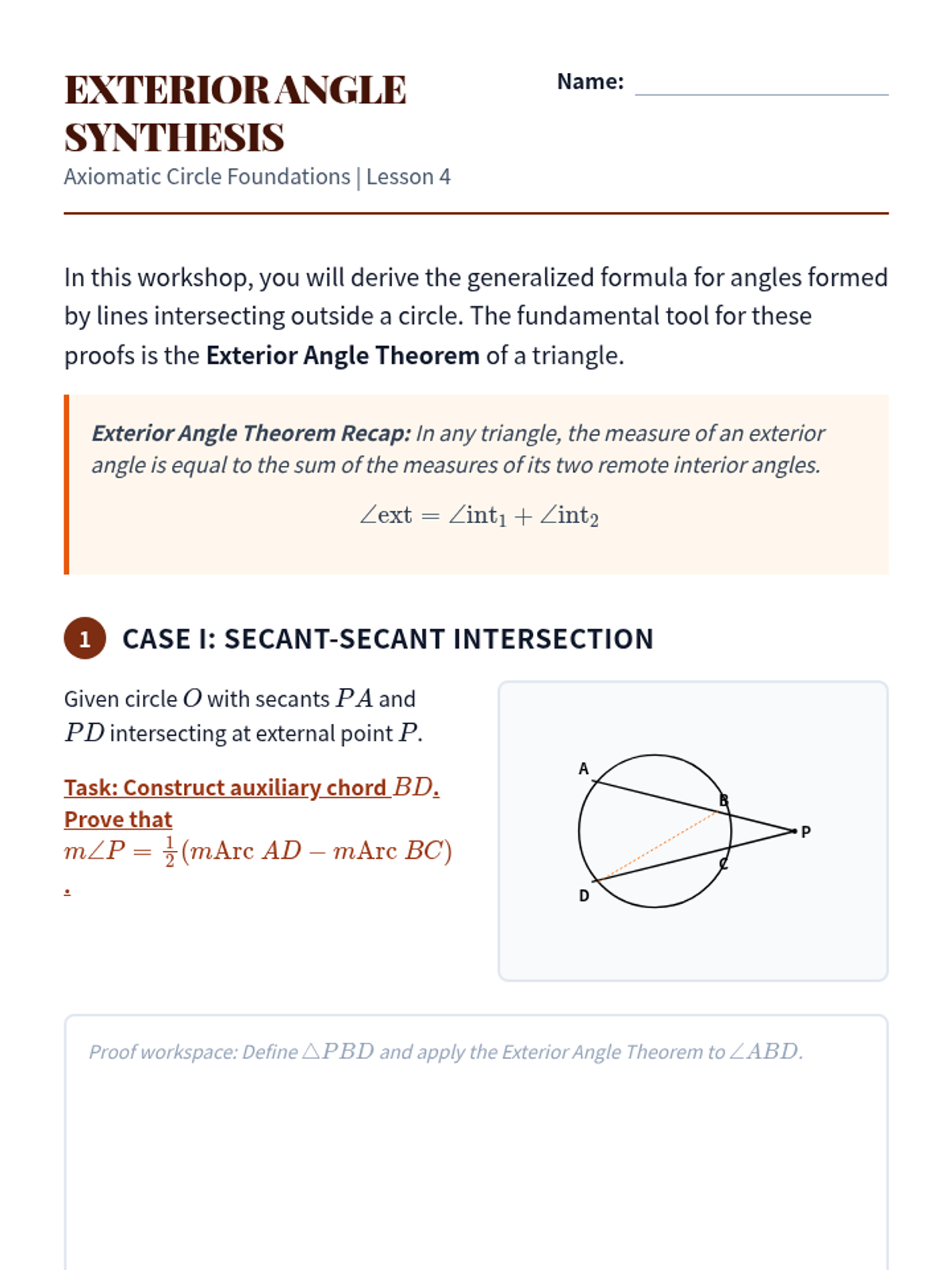
Generalizes angle theorems to intersections occurring outside the circle boundary using the Exterior Angle Theorem.
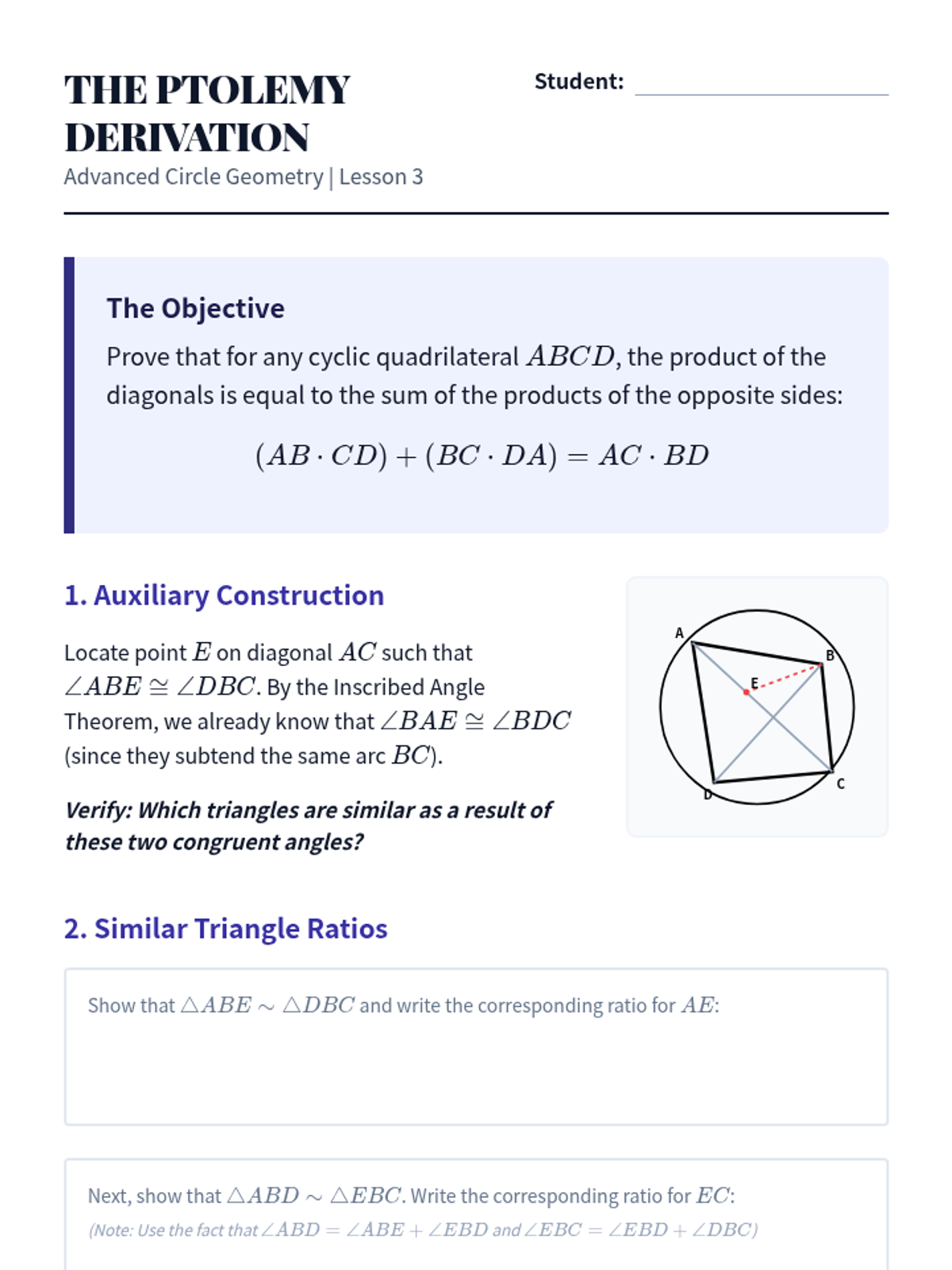
Investigates the properties of cyclic quadrilaterals and provides a formal derivation of Ptolemy's Theorem.
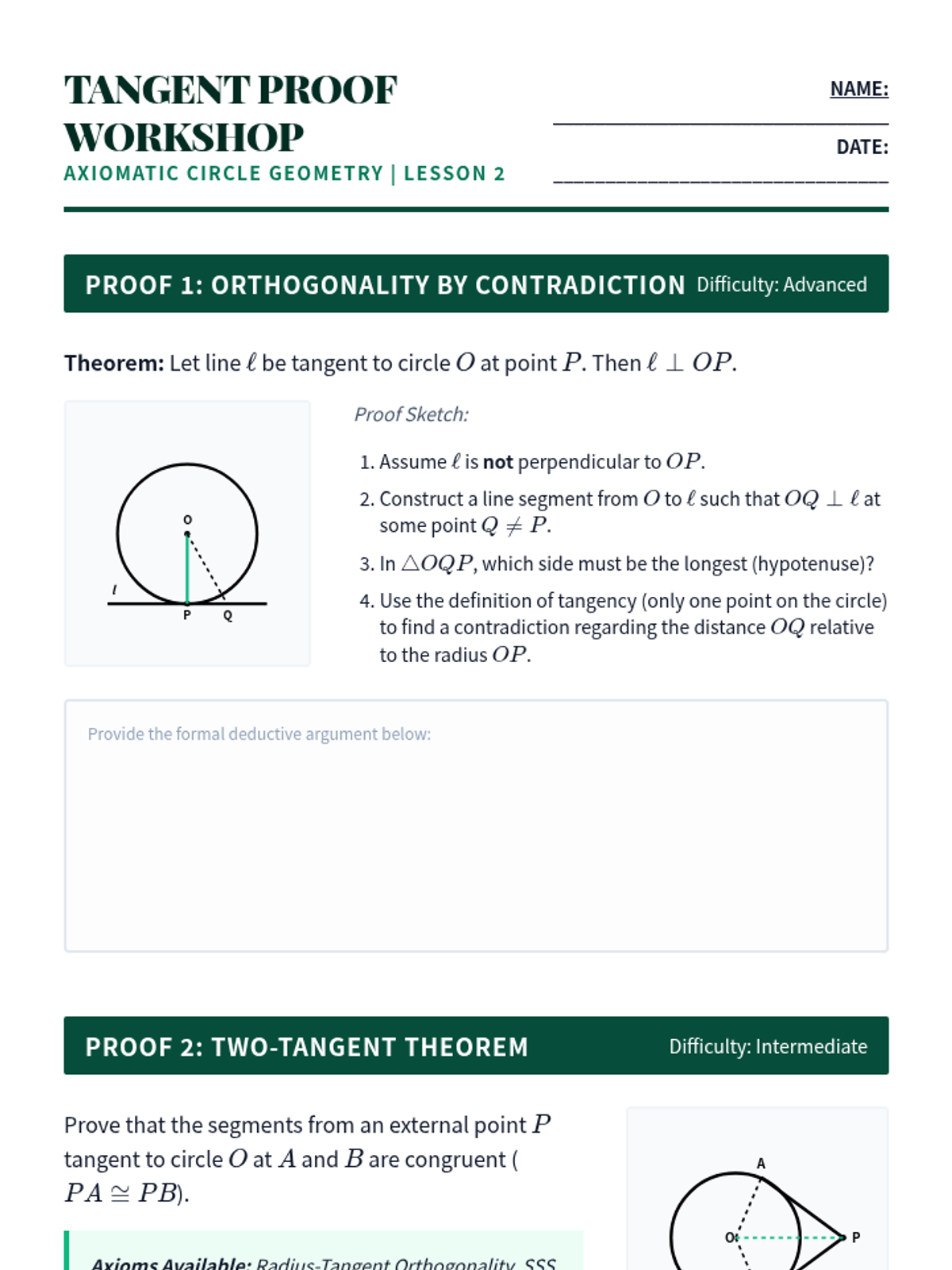
Explores the geometric properties of tangents, treating them as limiting cases of secants and proving orthogonality to the radius.
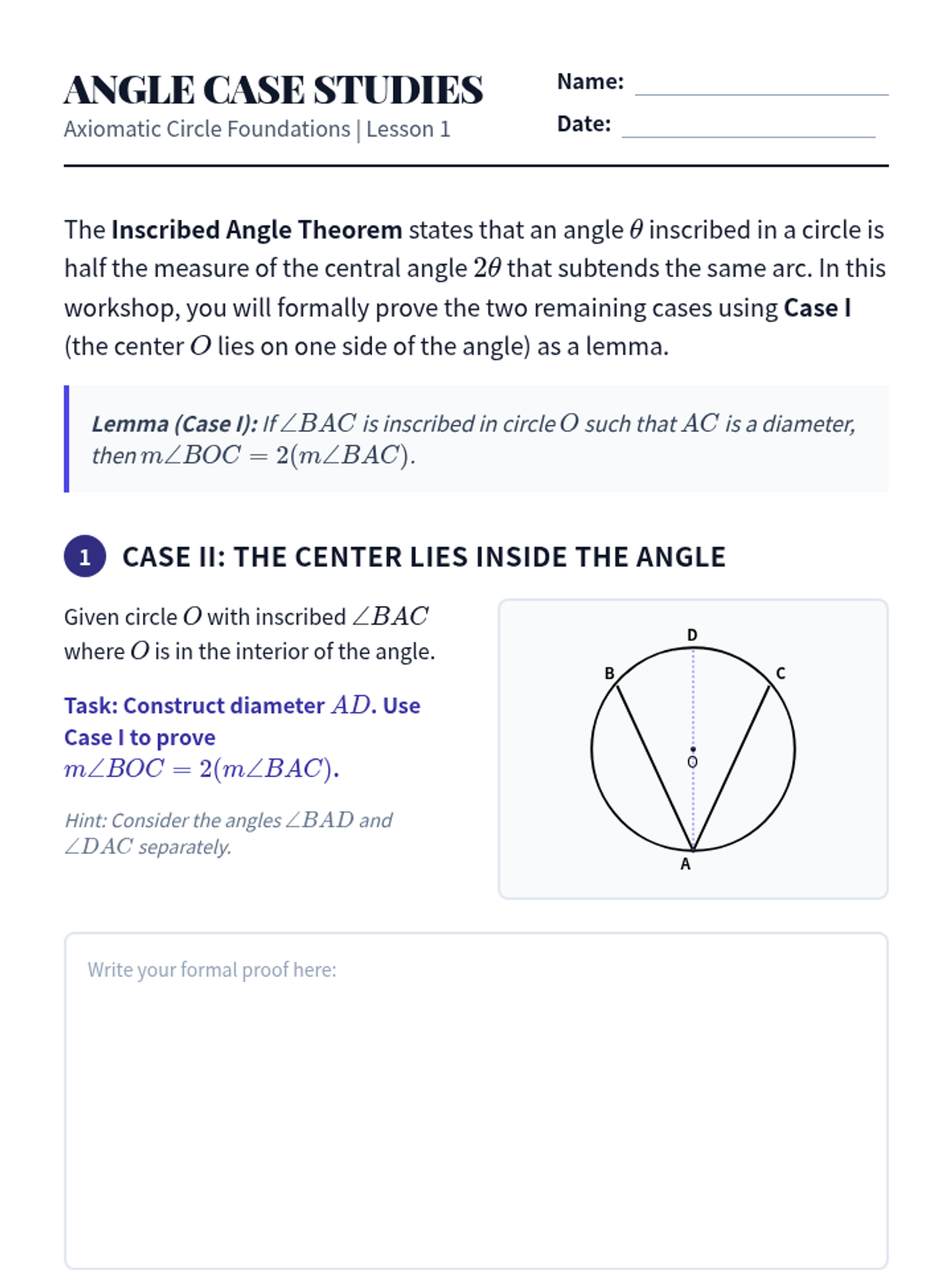
Focuses on the formal proof of the Inscribed Angle Theorem using a case-based approach (center on, inside, and outside the angle).
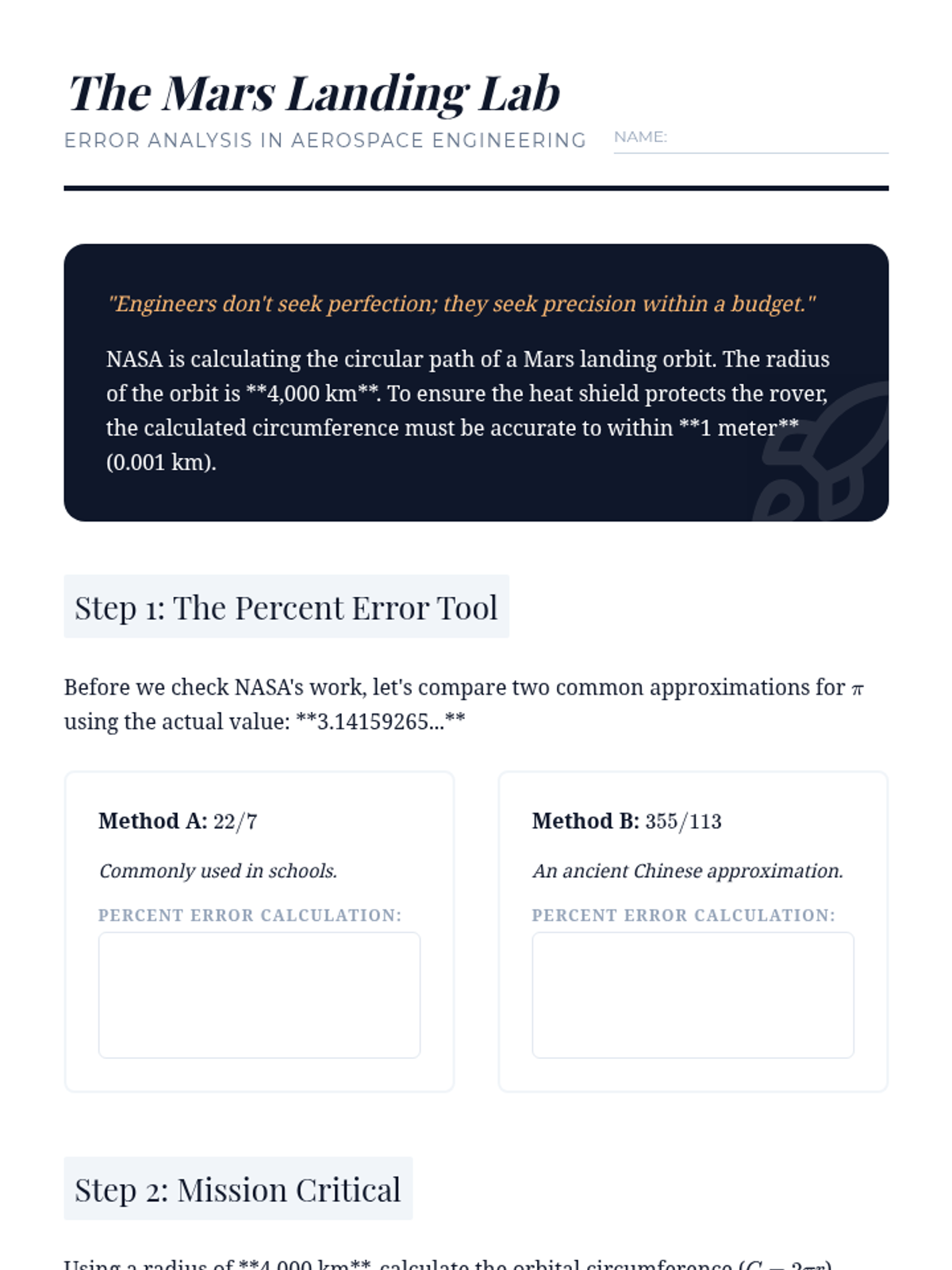
Students compare various approximation methods to analyze percent error. They discuss the importance of precision in engineering and science, particularly in aerospace applications.
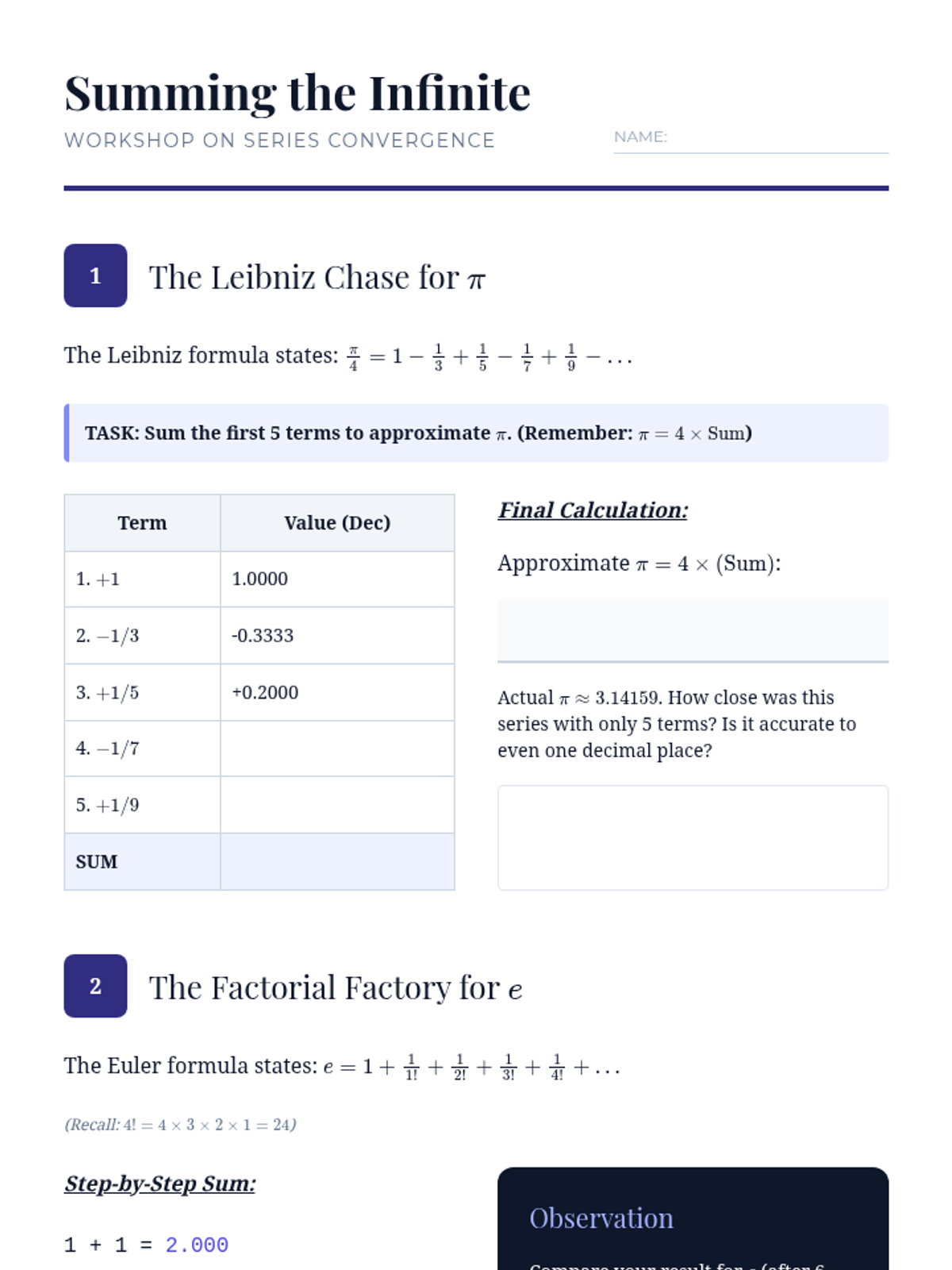
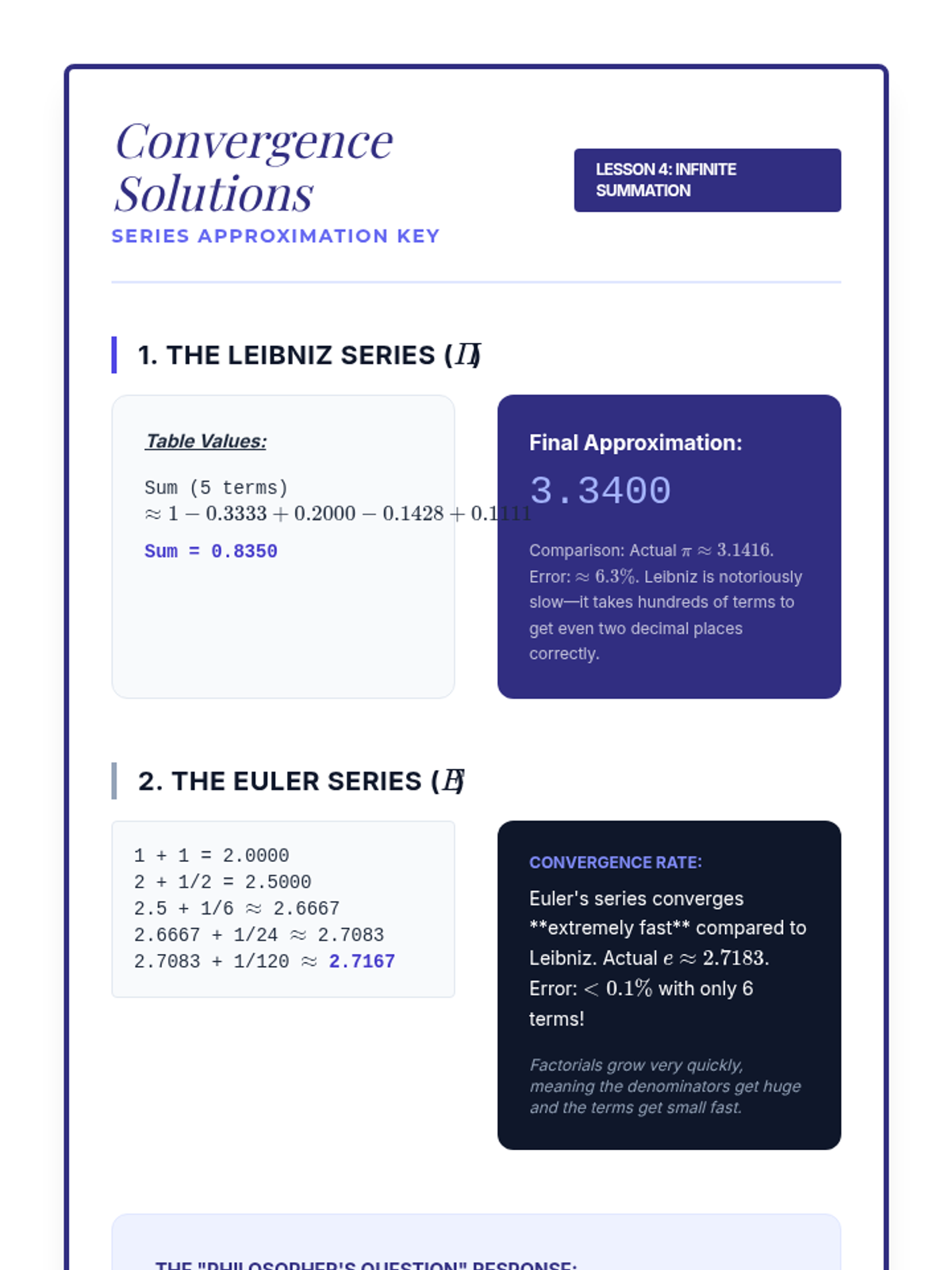
Students look at how modern calculators compute irrational numbers using infinite series. They sum the first few terms to see the convergence toward the irrational value.
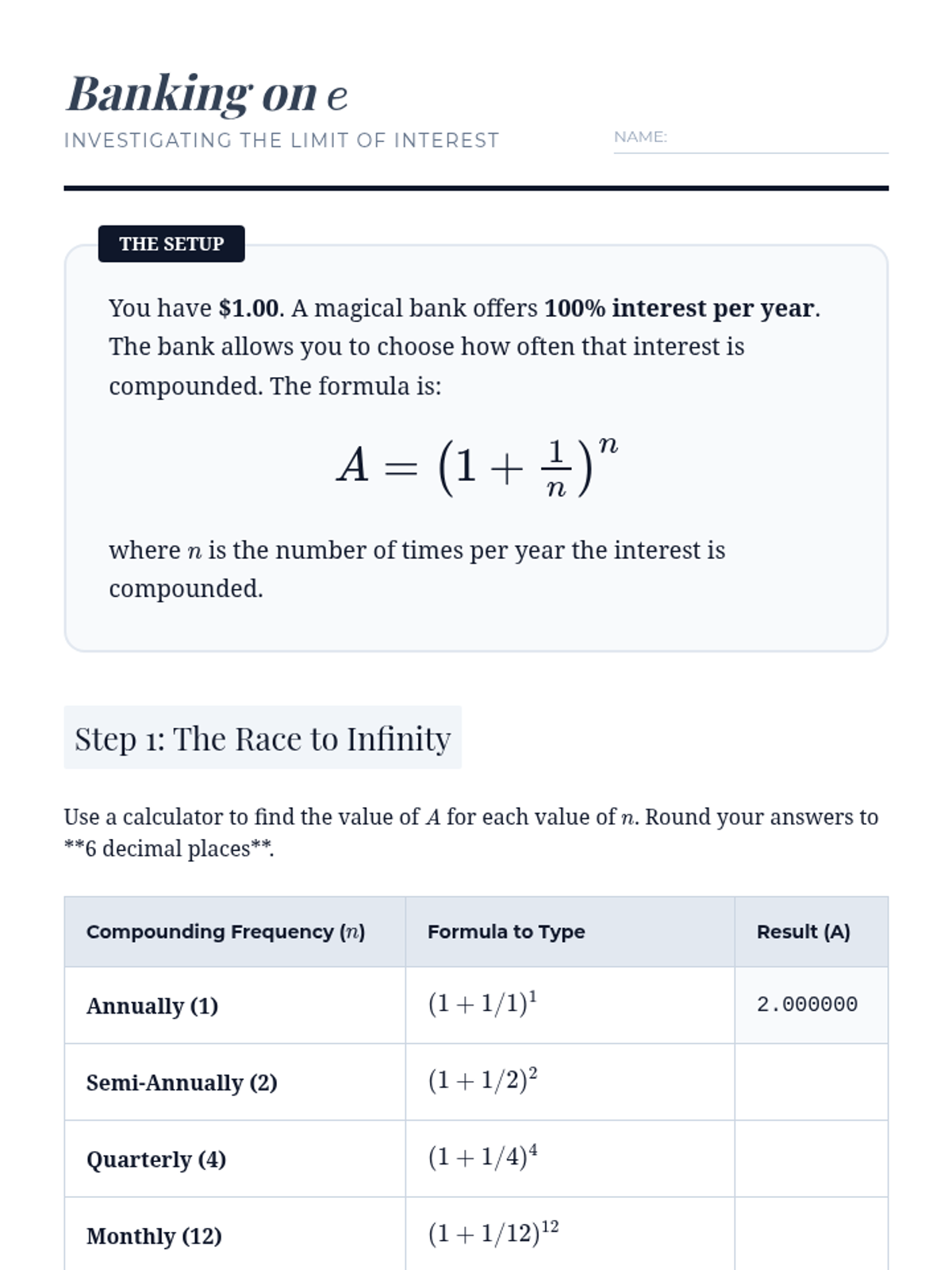
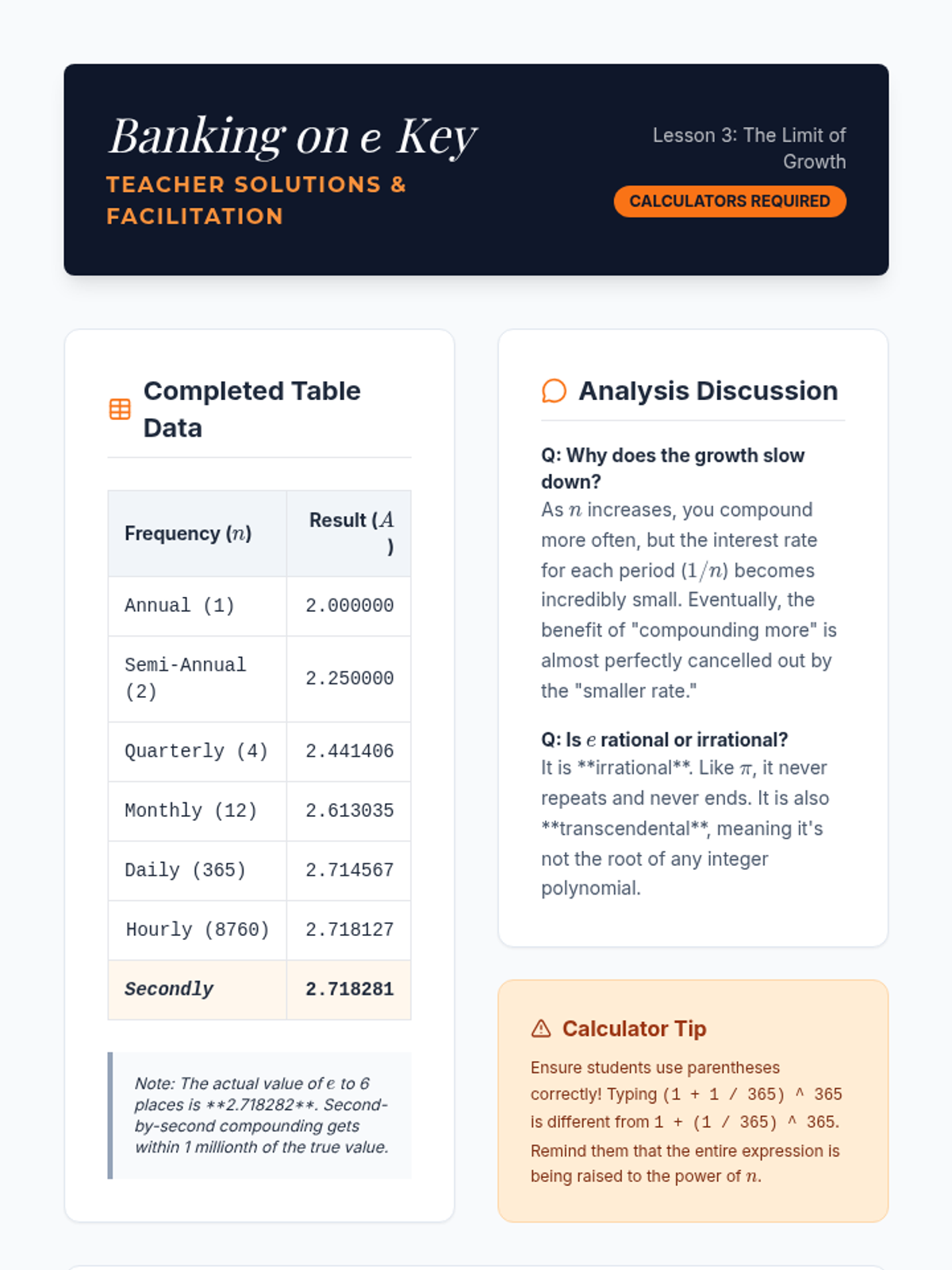
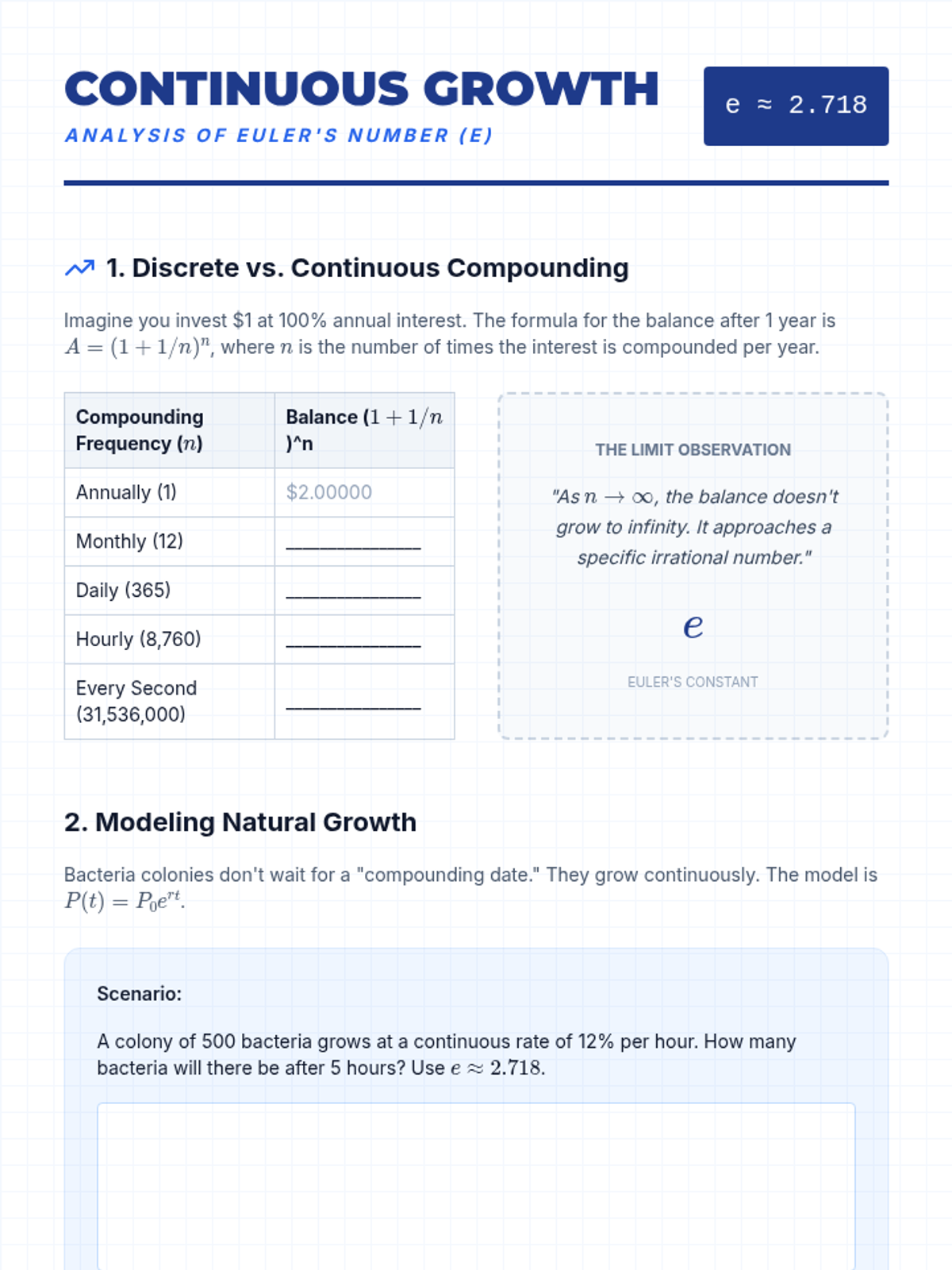
Students investigate 'e' through the lens of compound interest. By increasing compounding frequency, they discover the limit that defines this ubiquitous irrational number.
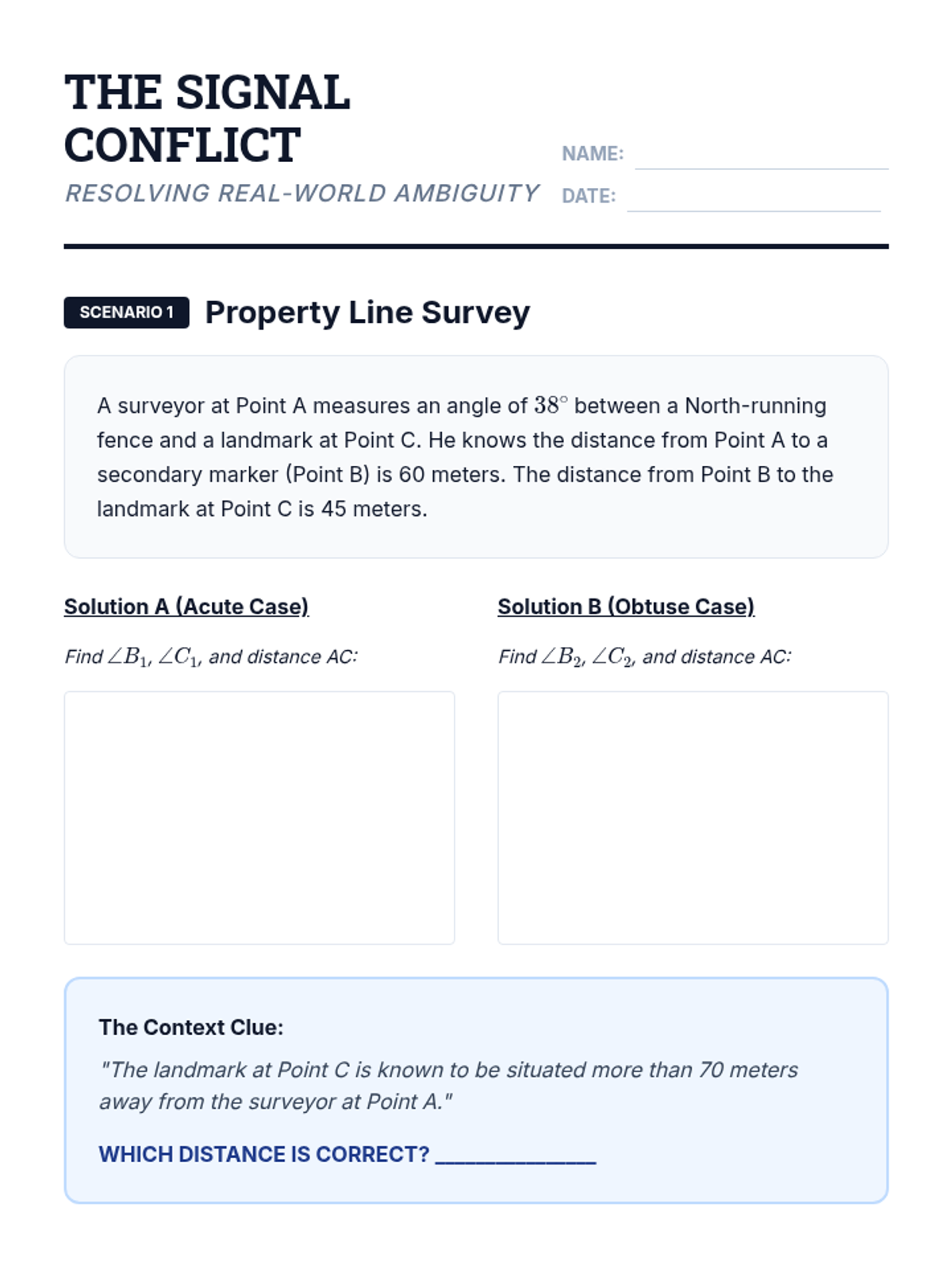
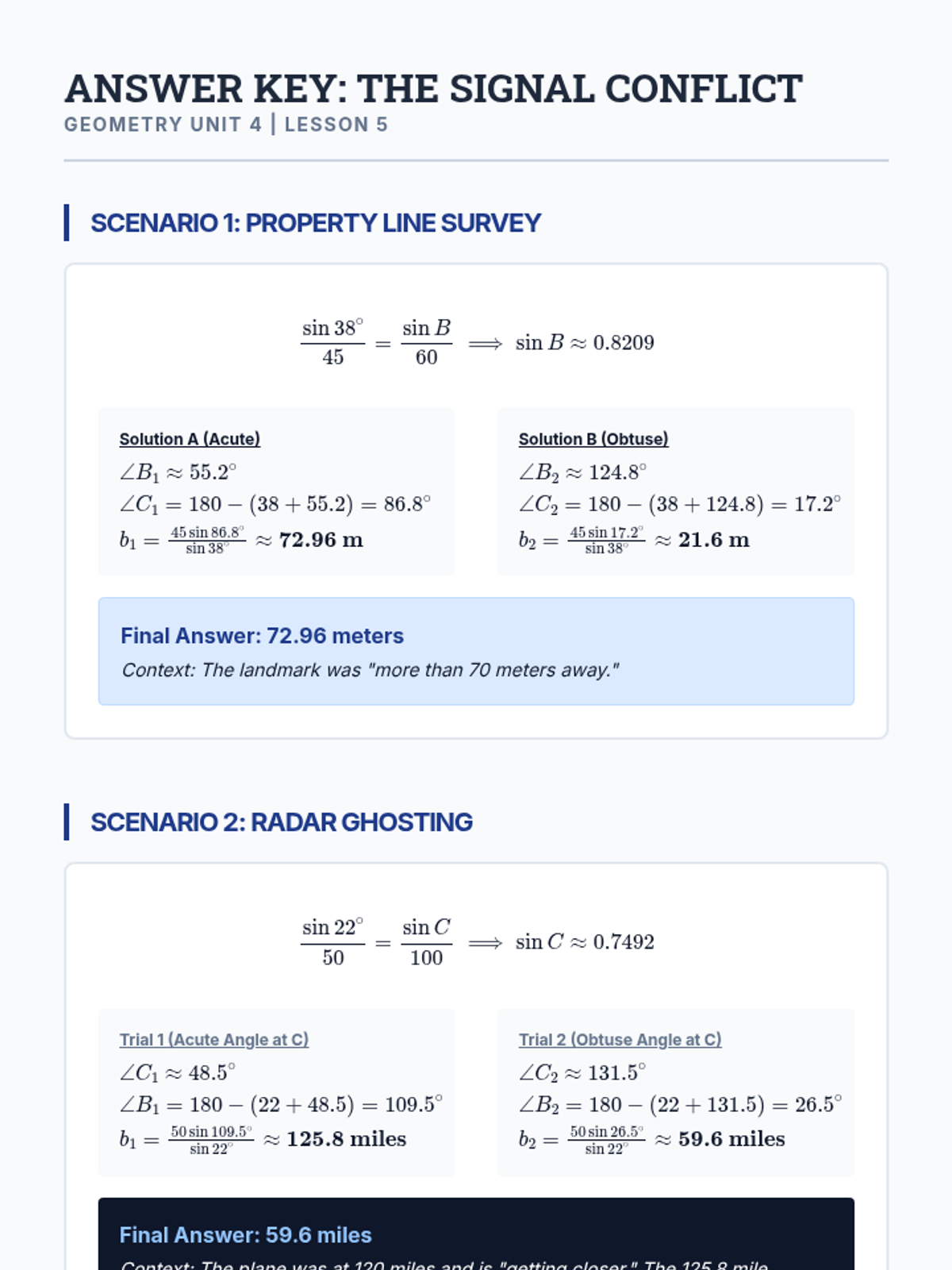
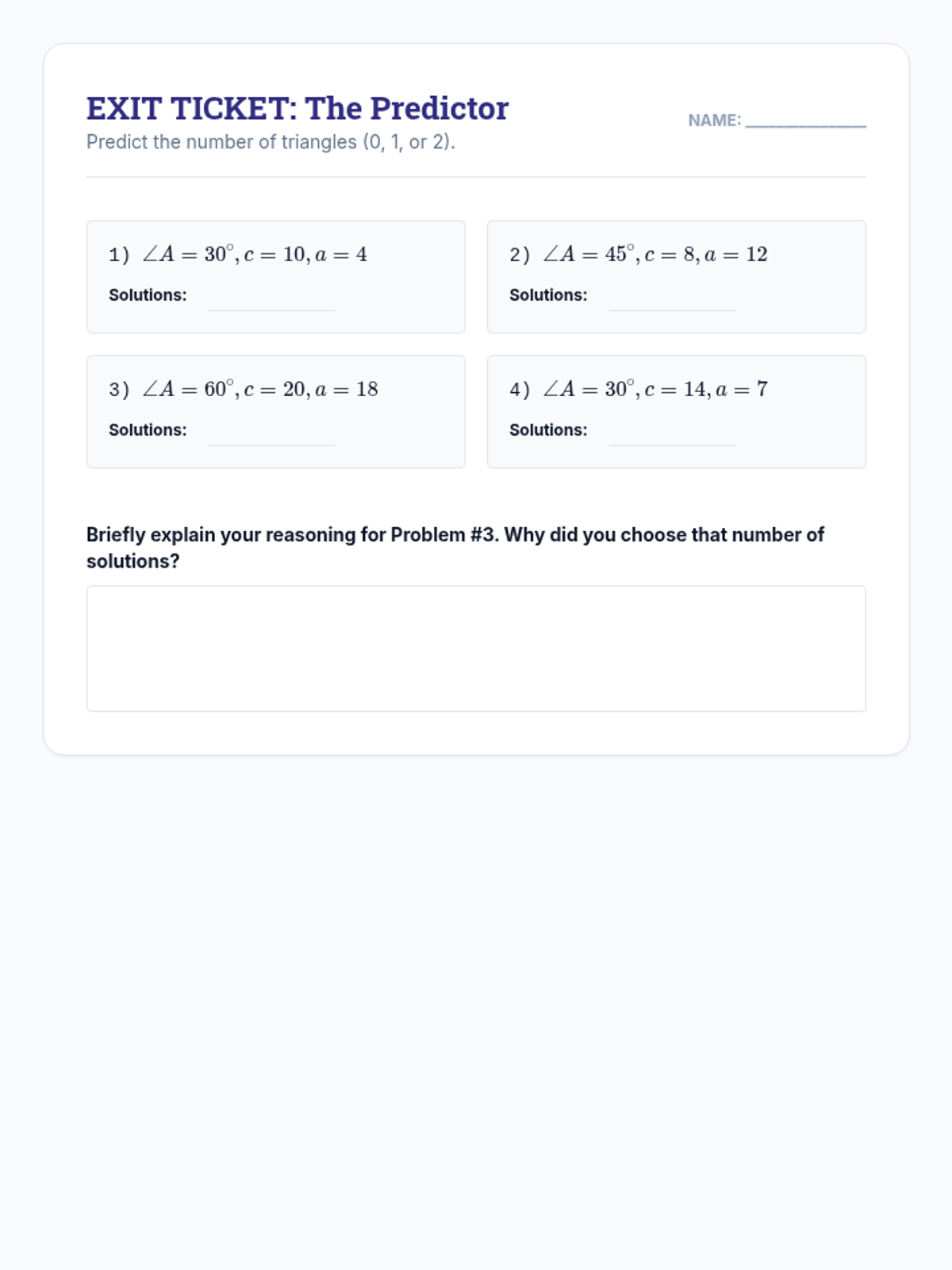
Students apply their knowledge to real-world word problems where the ambiguous case creates multiple physical possibilities.
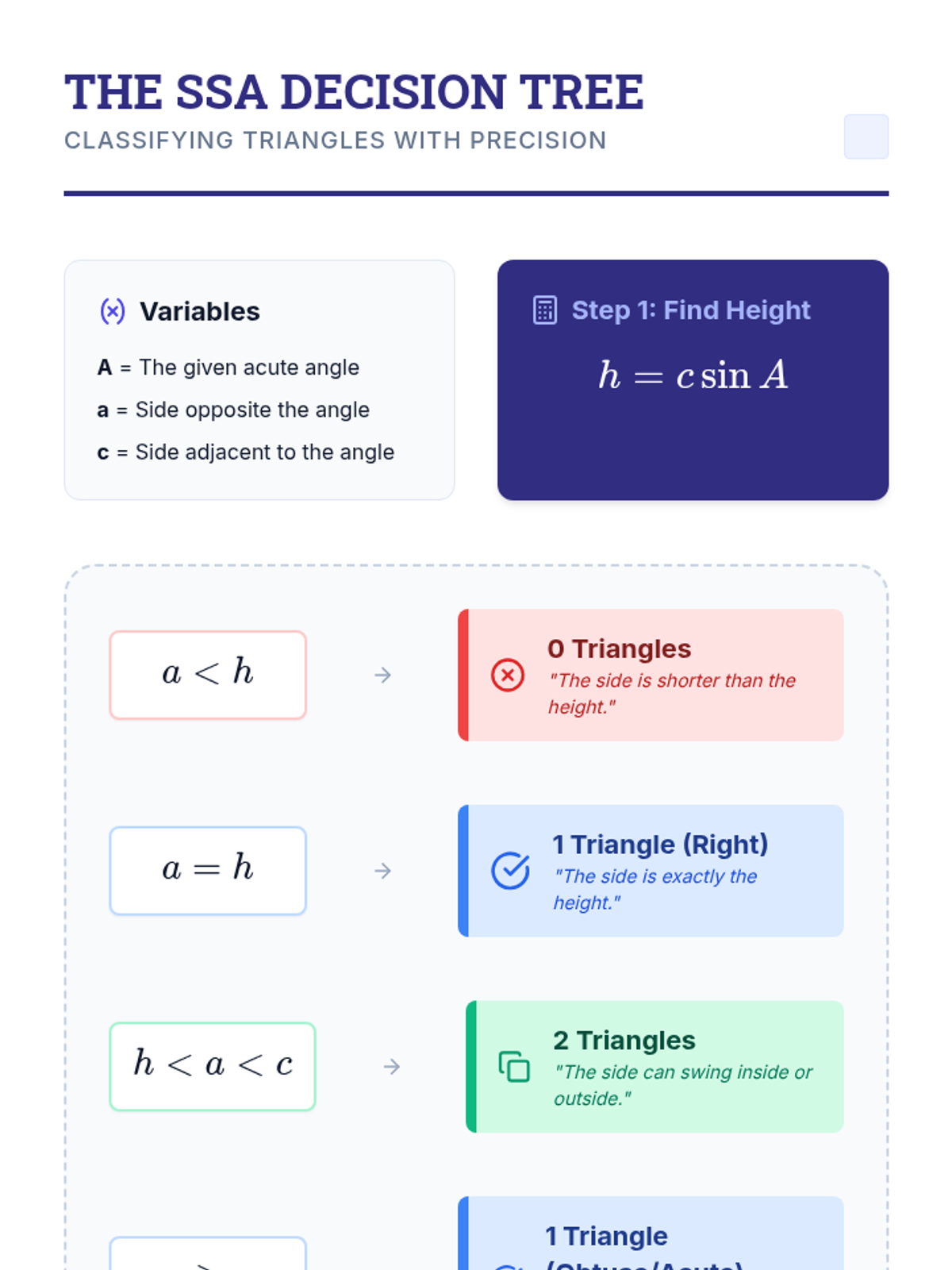
Students create a systematic framework for classifying SSA scenarios based on the relationship between side lengths and the triangle's height.
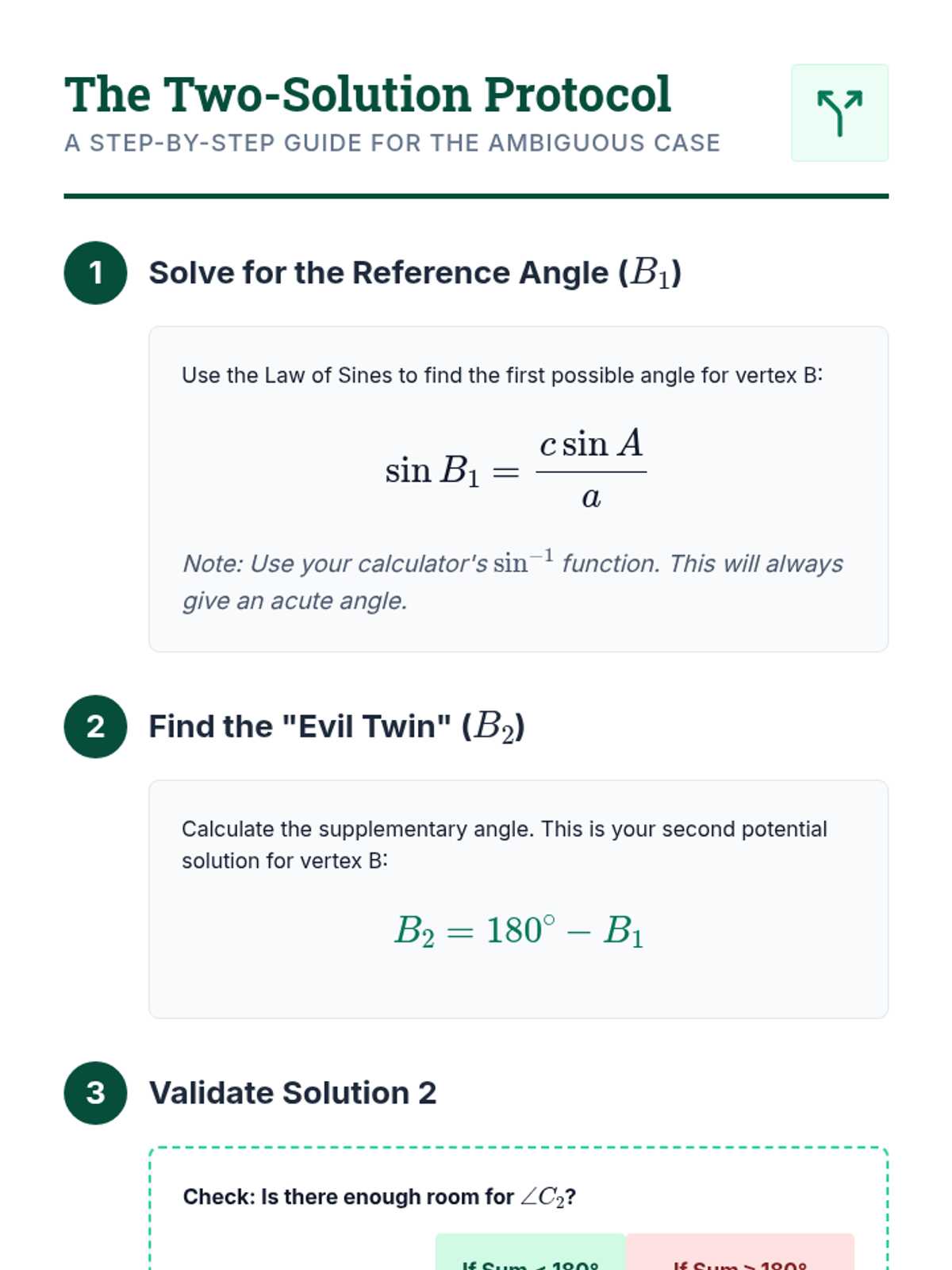
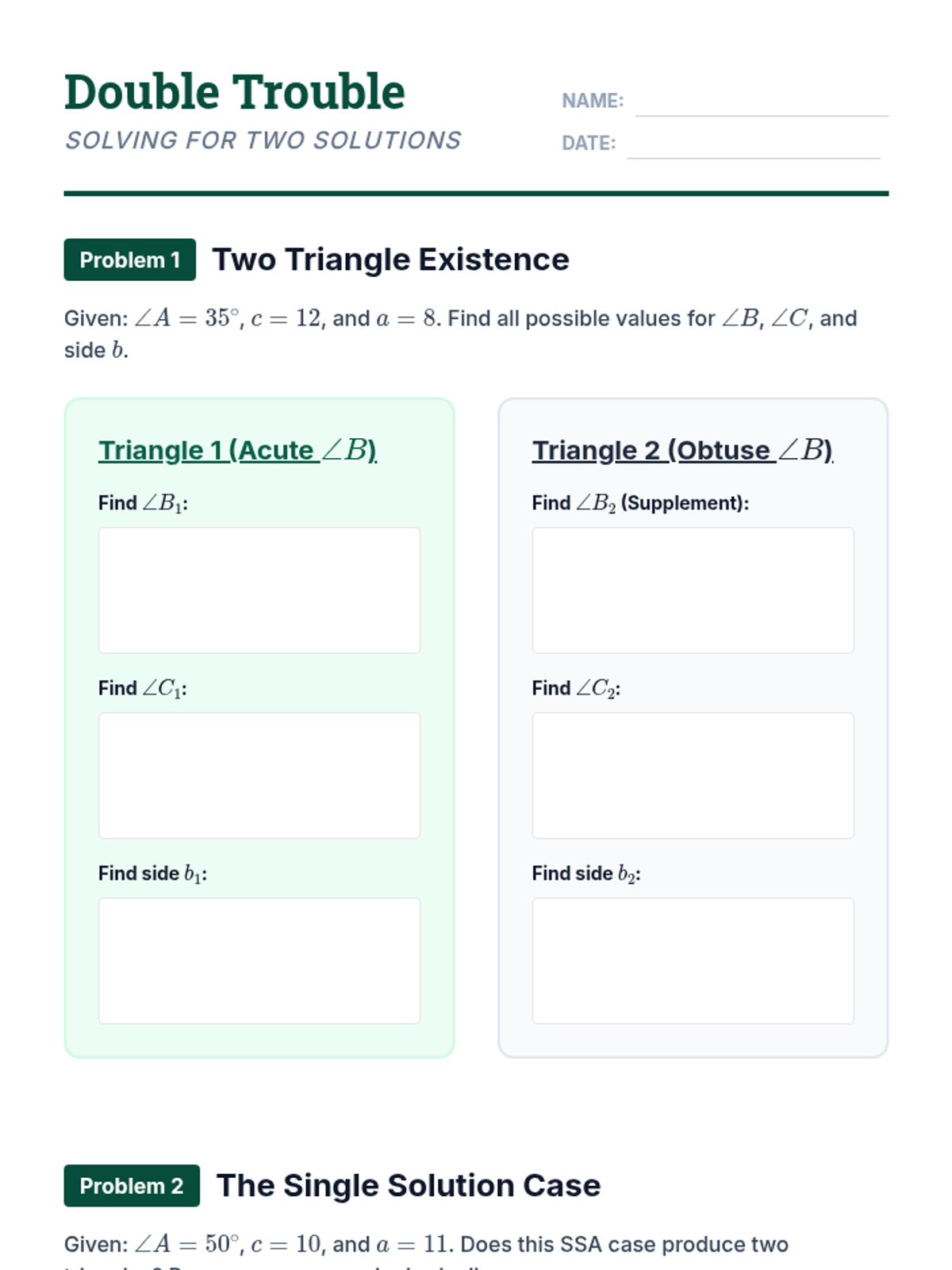
Students learn to identify and calculate both possible triangle solutions in the ambiguous case by finding supplementary angles.
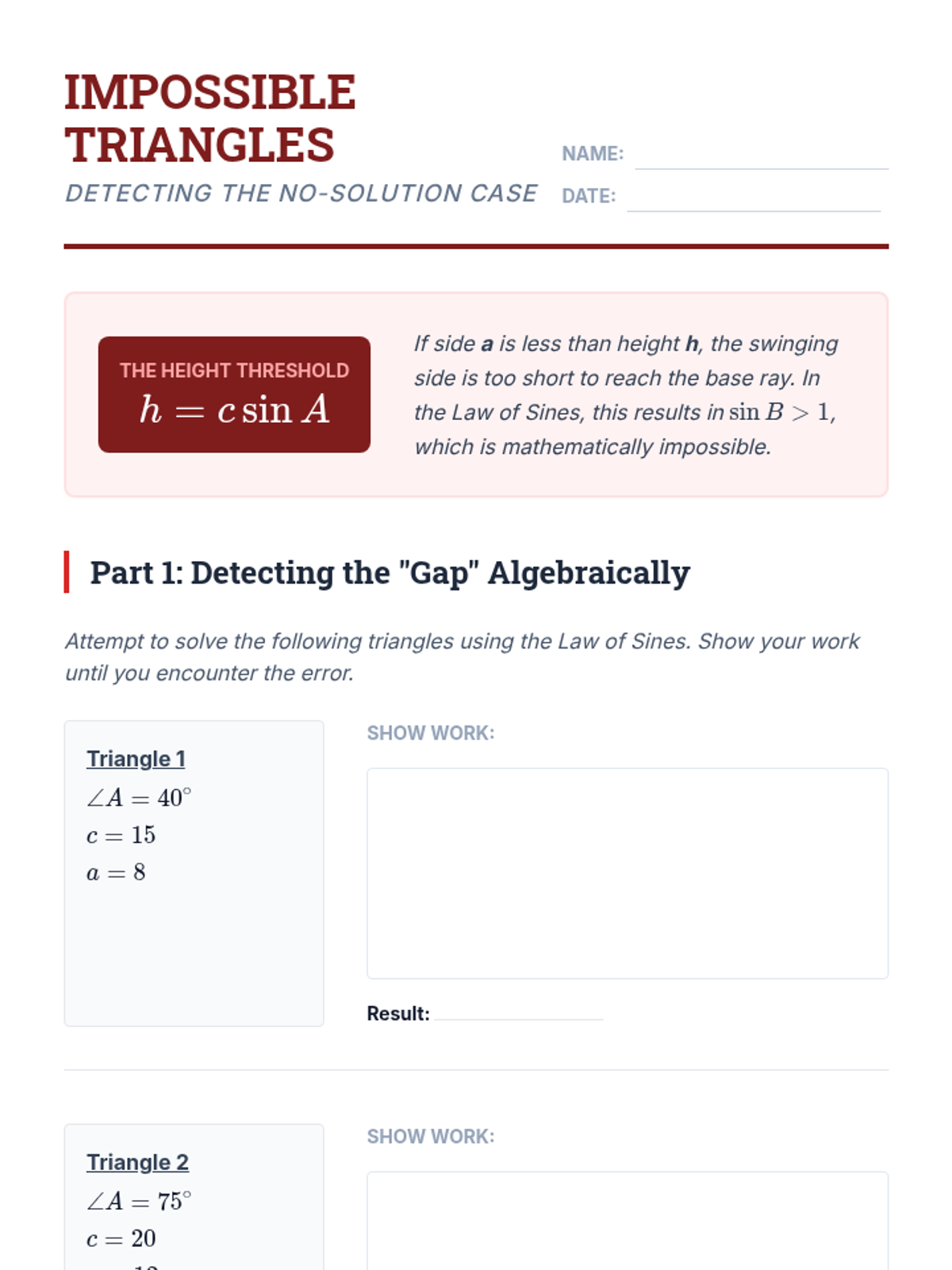
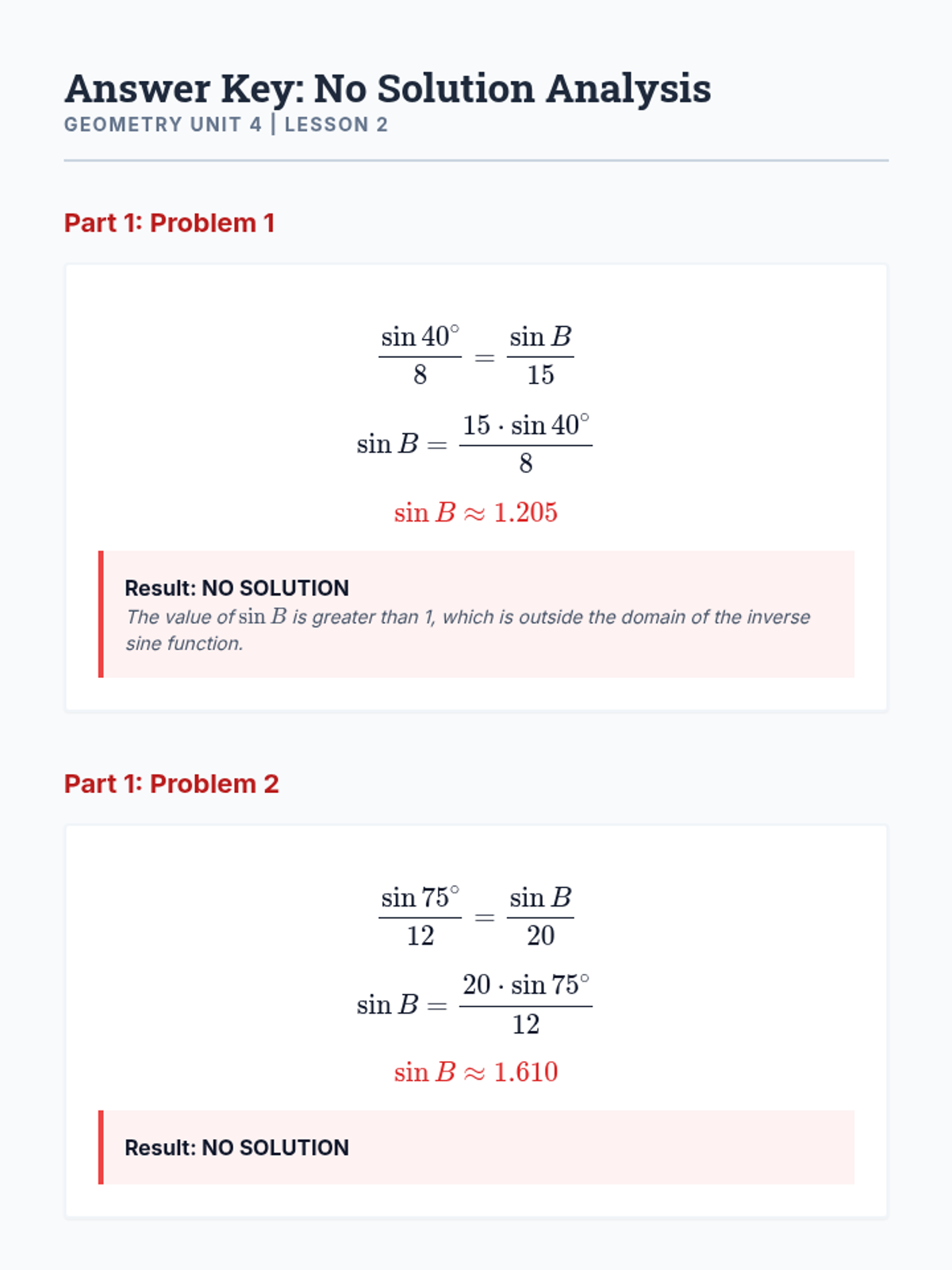
Students investigate scenarios where the given side is too short to form a triangle, linking geometric impossibility to algebraic errors.
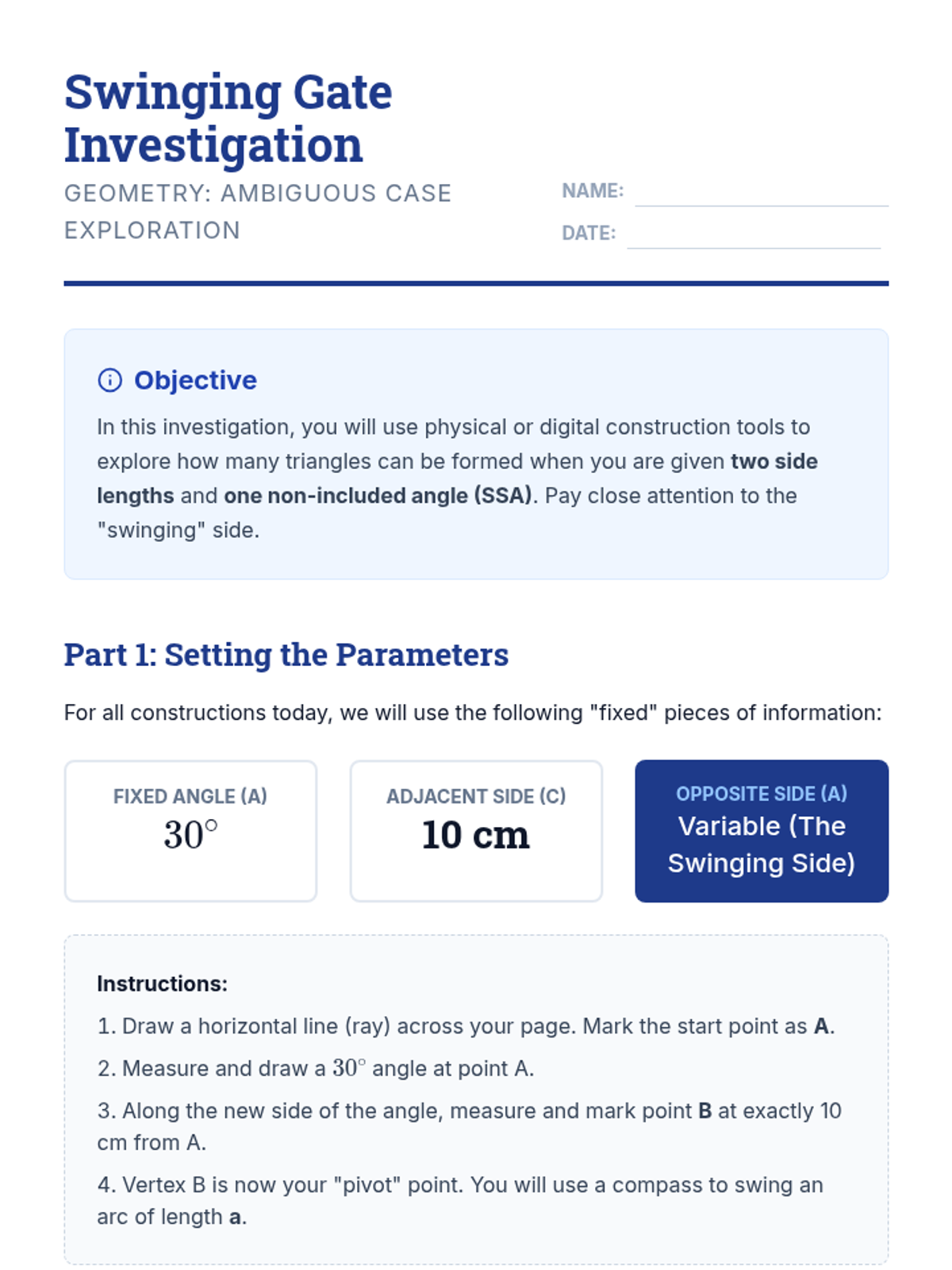
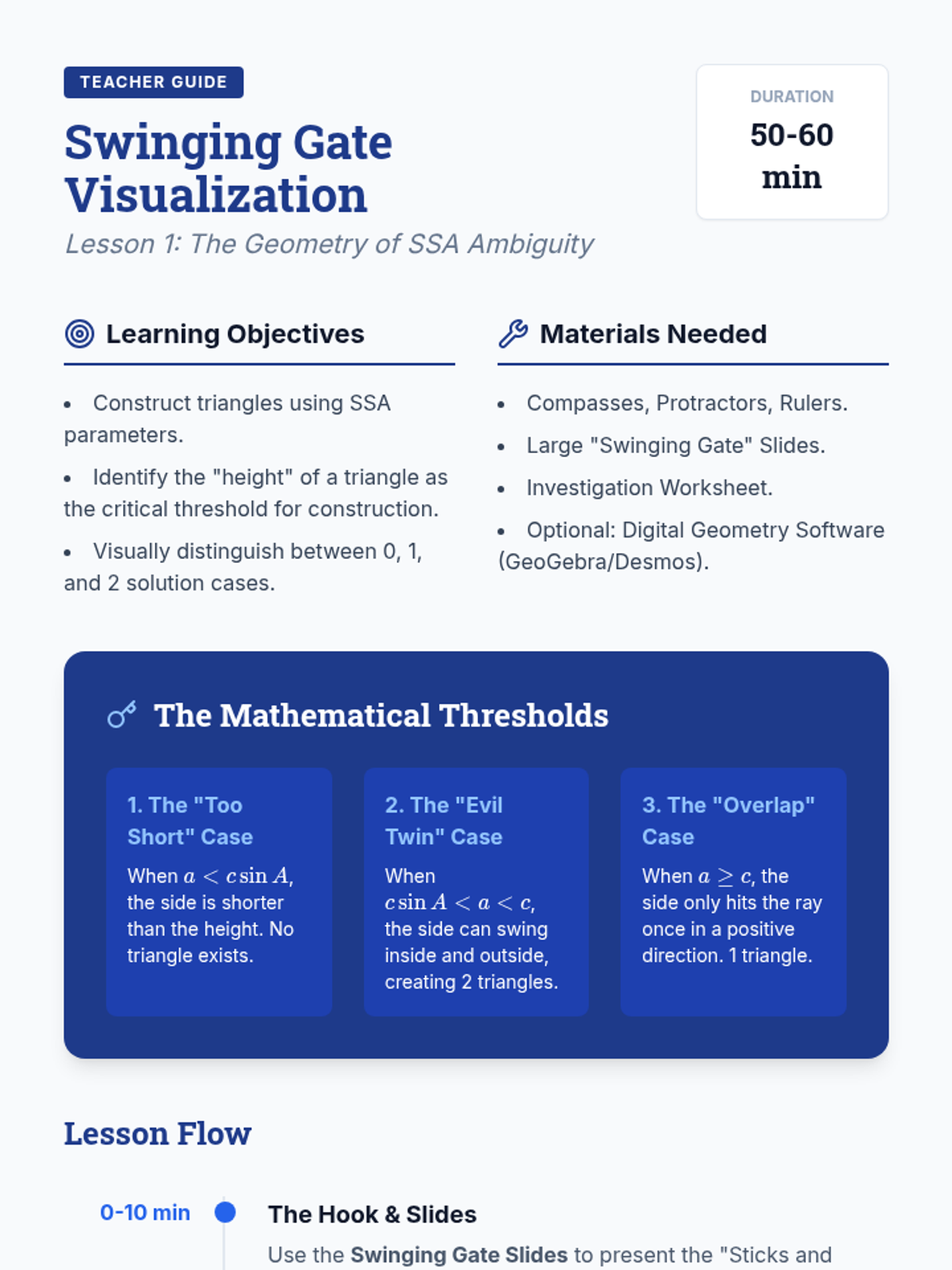
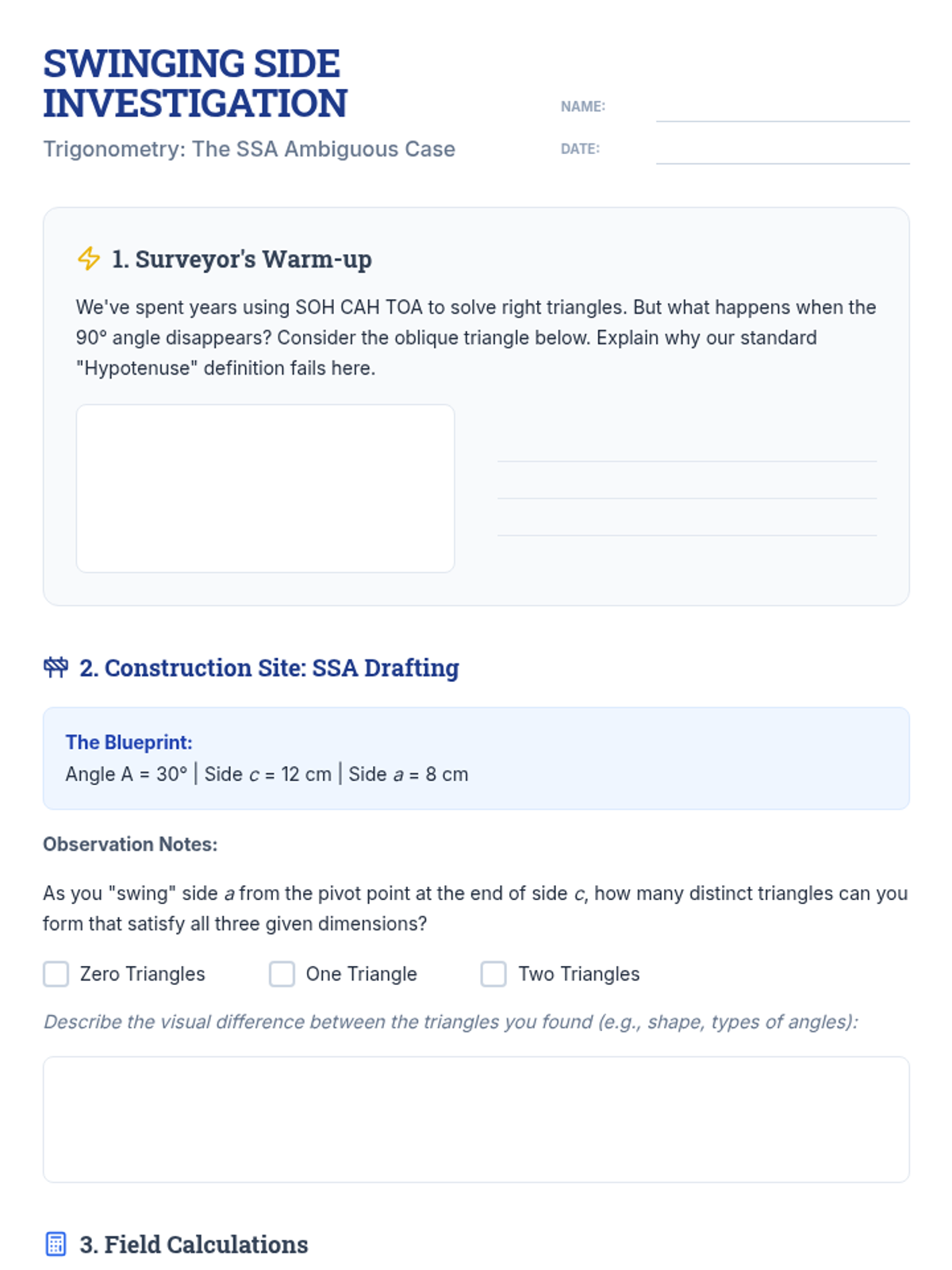
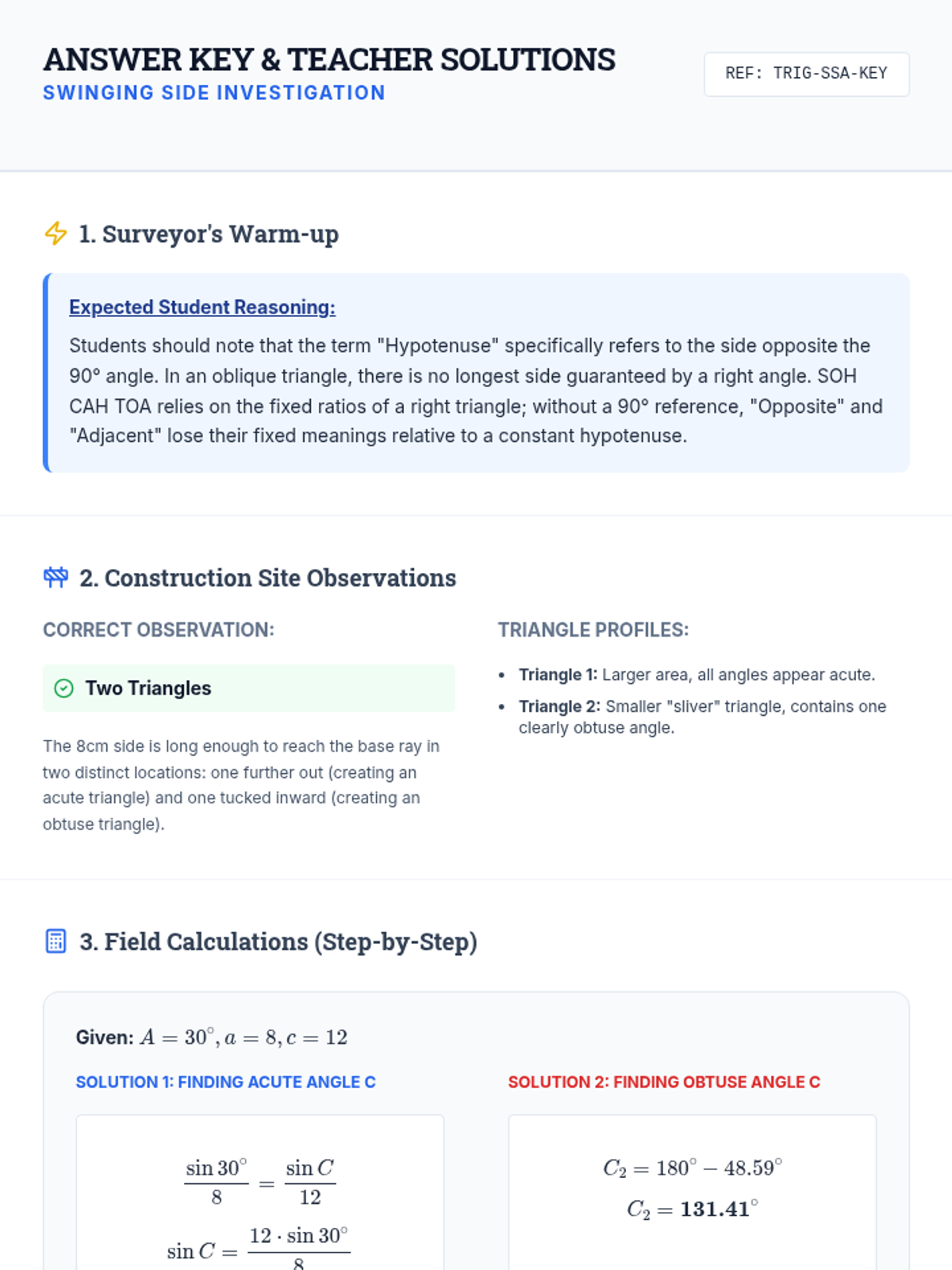
Students use geometric construction to explore how many triangles can be formed given Side-Side-Angle (SSA) data, focusing on the visual concept of the 'swinging side.'
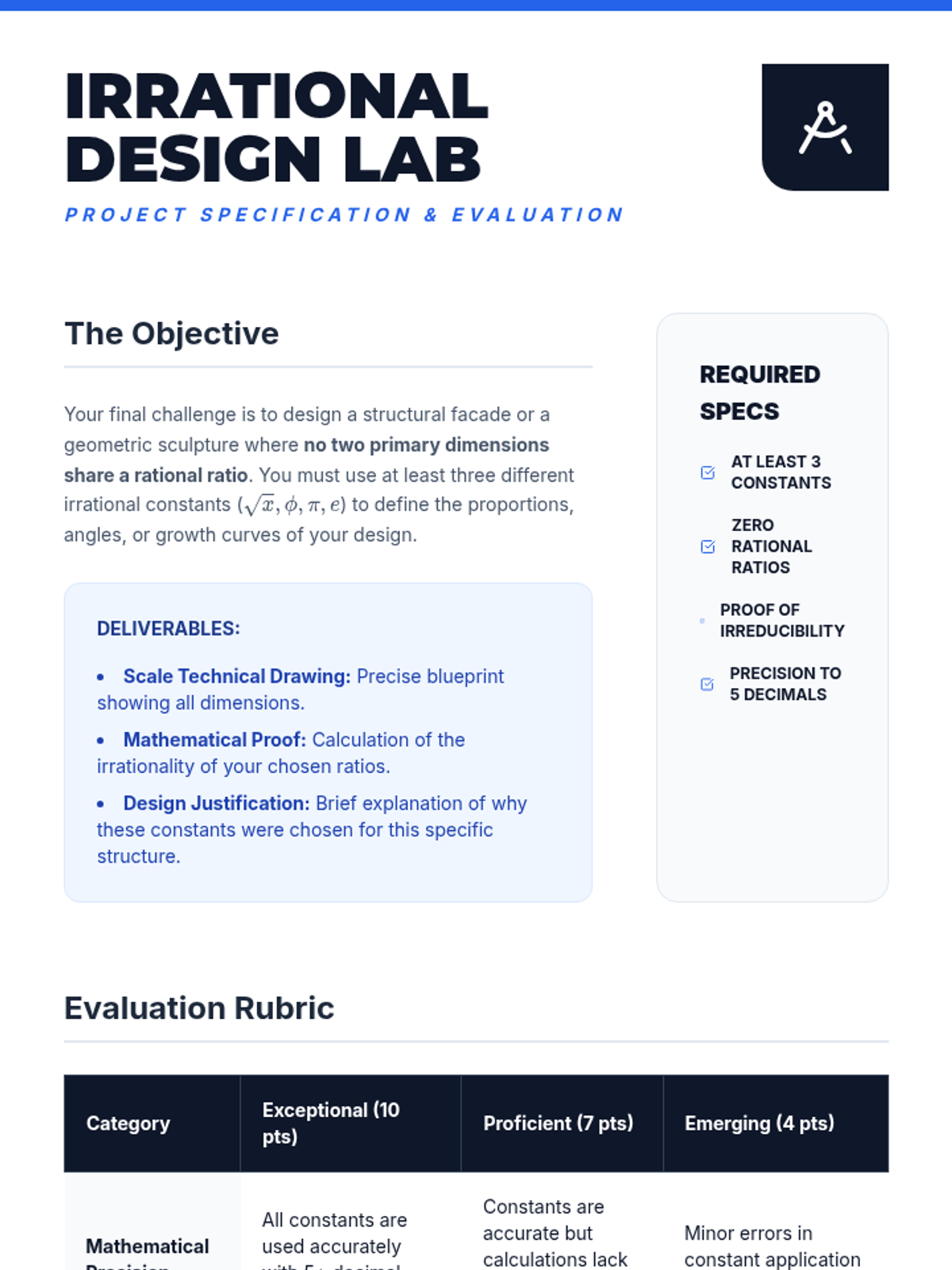
Students synthesize their learning by creating a geometric design or architectural model utilizing irrational proportions with mathematical justification.
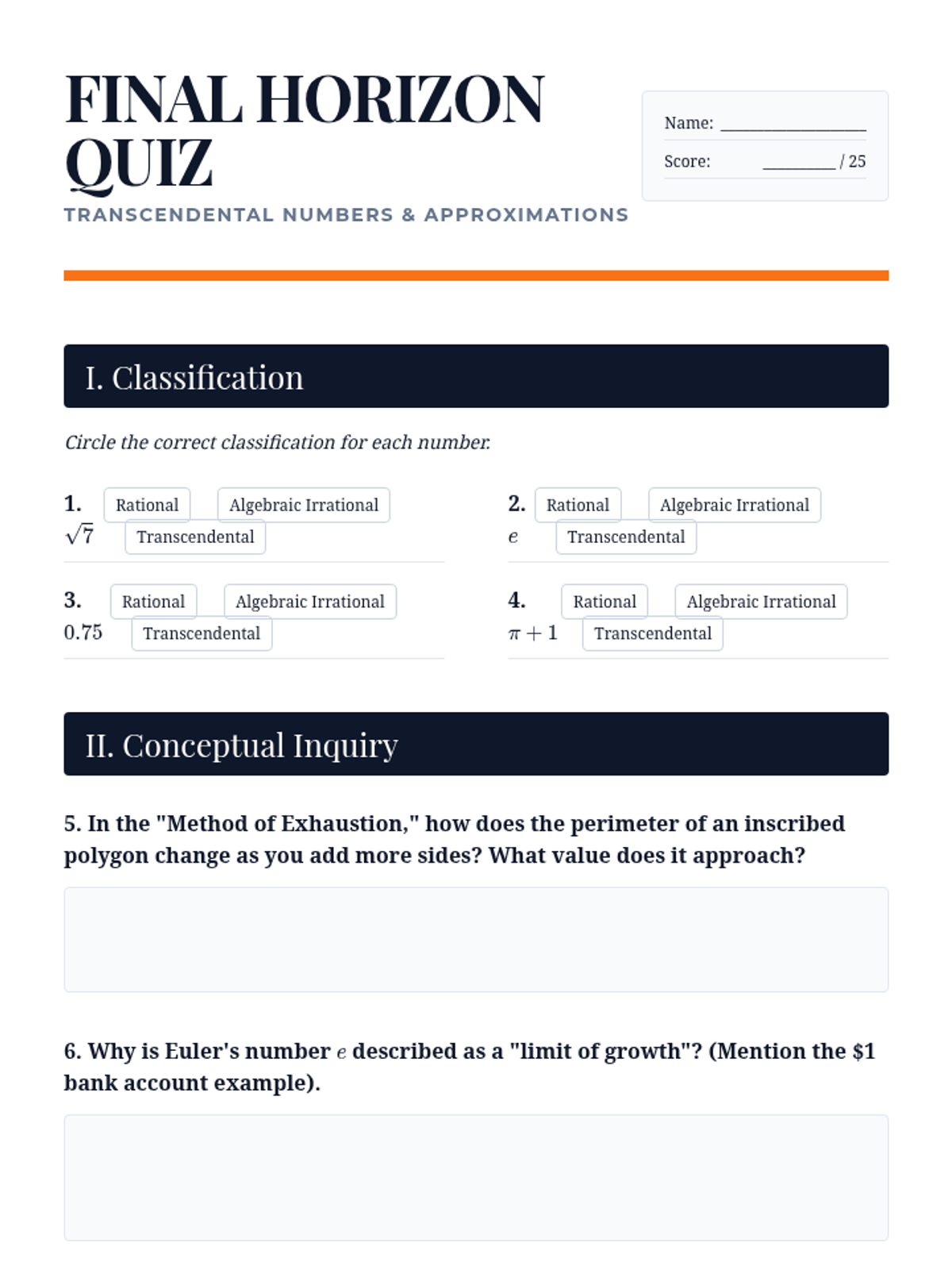
Students investigate Euler's number (e) as the limit of compound interest, contrasting discrete growth with continuous irrational curves.
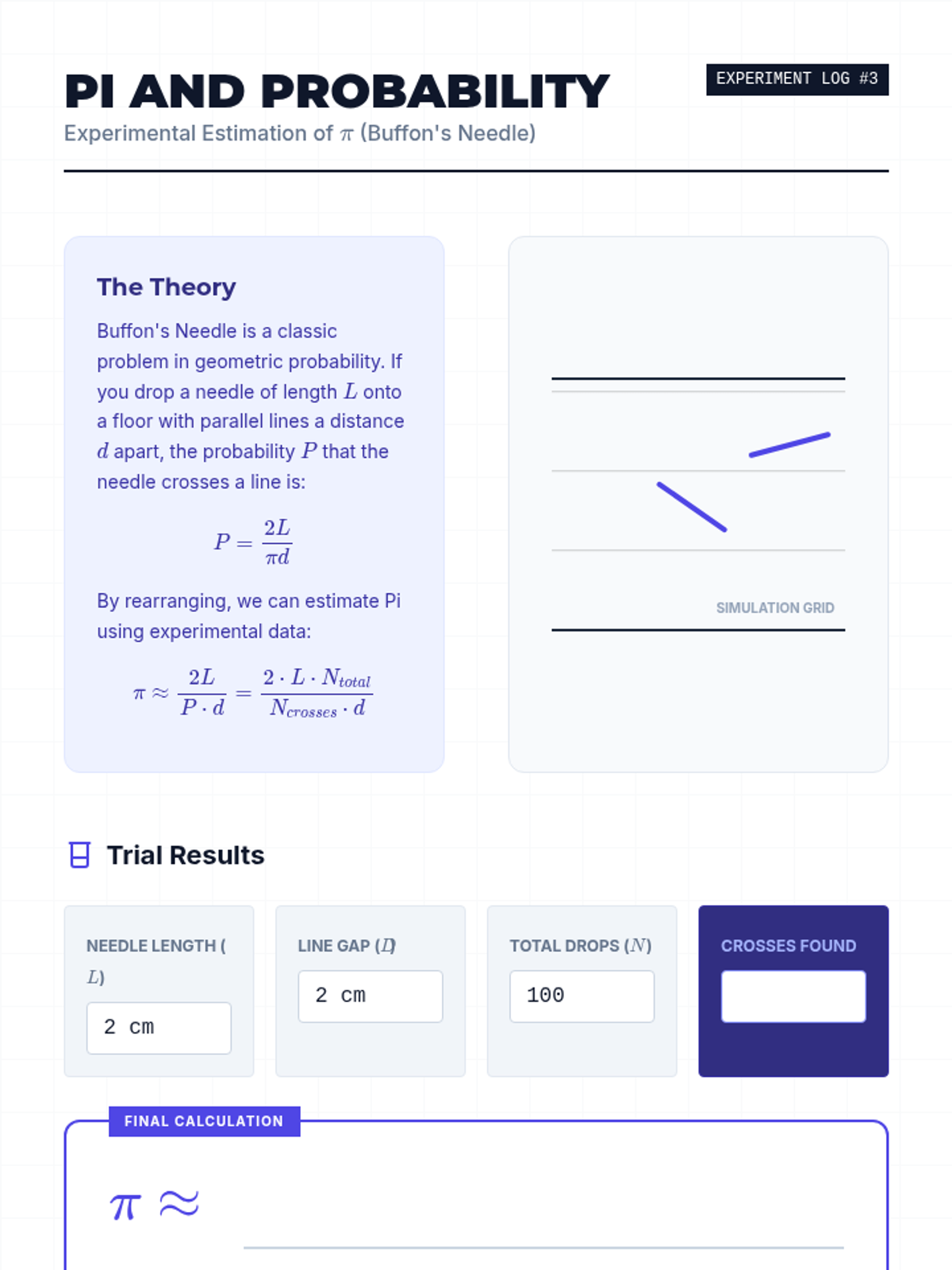
Students explore applications of Pi in probability (Buffon's Needle) and volume optimization, estimating Pi through experimental data.
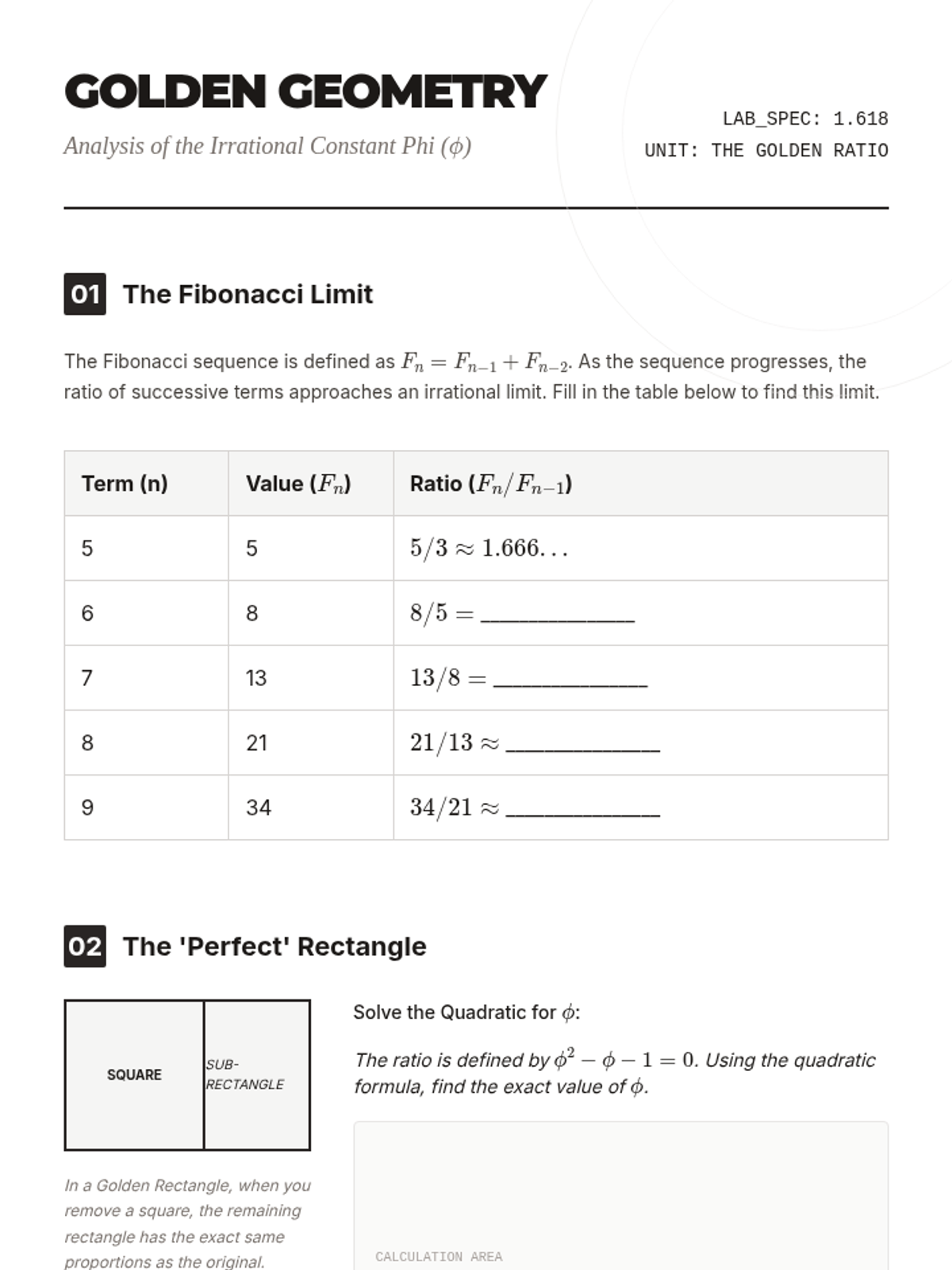
Students analyze the Golden Ratio (Phi) and its relationship to the Fibonacci sequence, calculating approximations and examining its presence in architecture and nature.
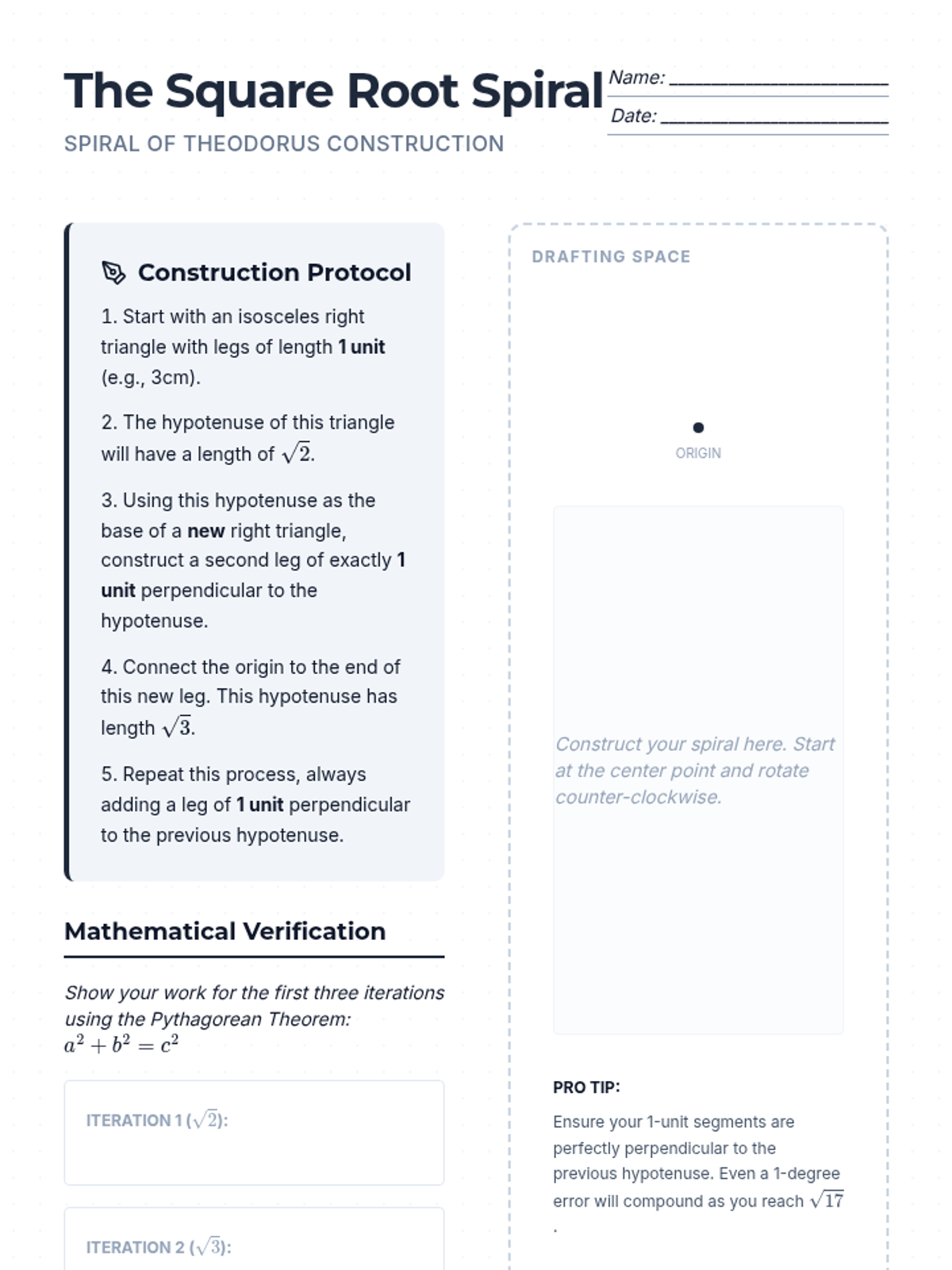
Students construct the Spiral of Theodorus to visualize square roots as physical lengths of hypotenuses, connecting the Pythagorean theorem to irrational magnitudes.
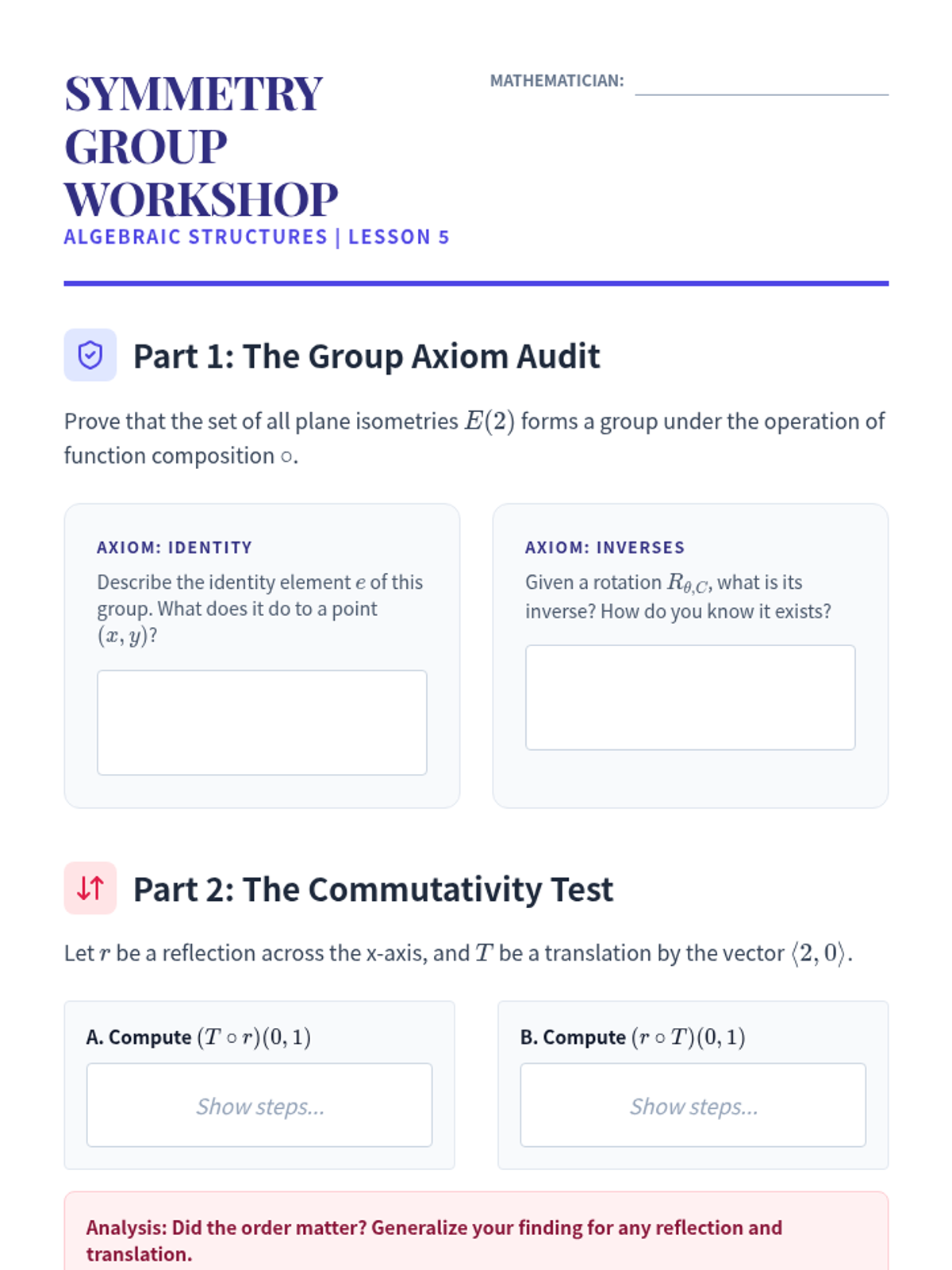
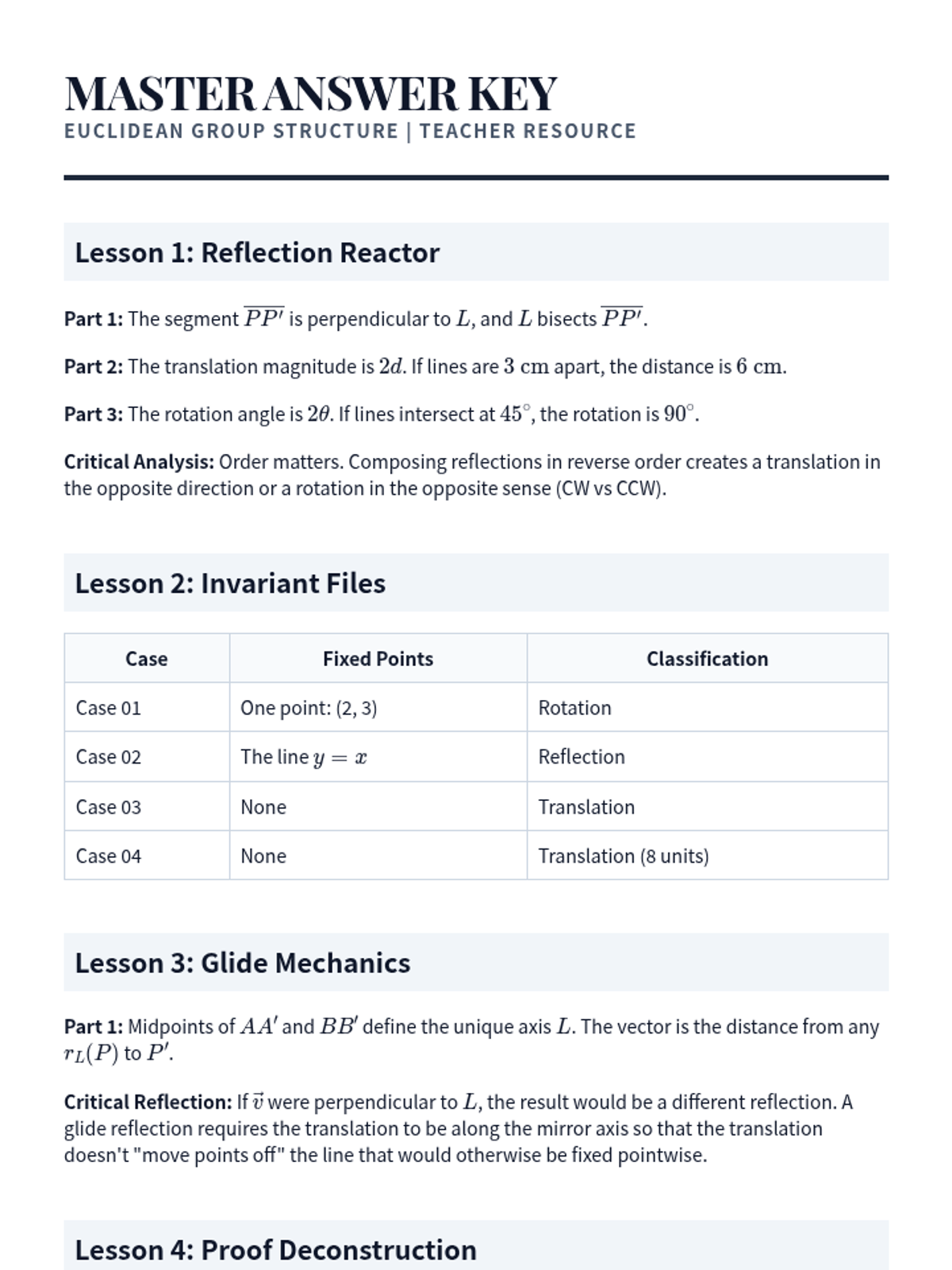
Exploration of isometries as a group under composition, examining axioms, non-commutativity, and Cayley tables for finite subgroups.
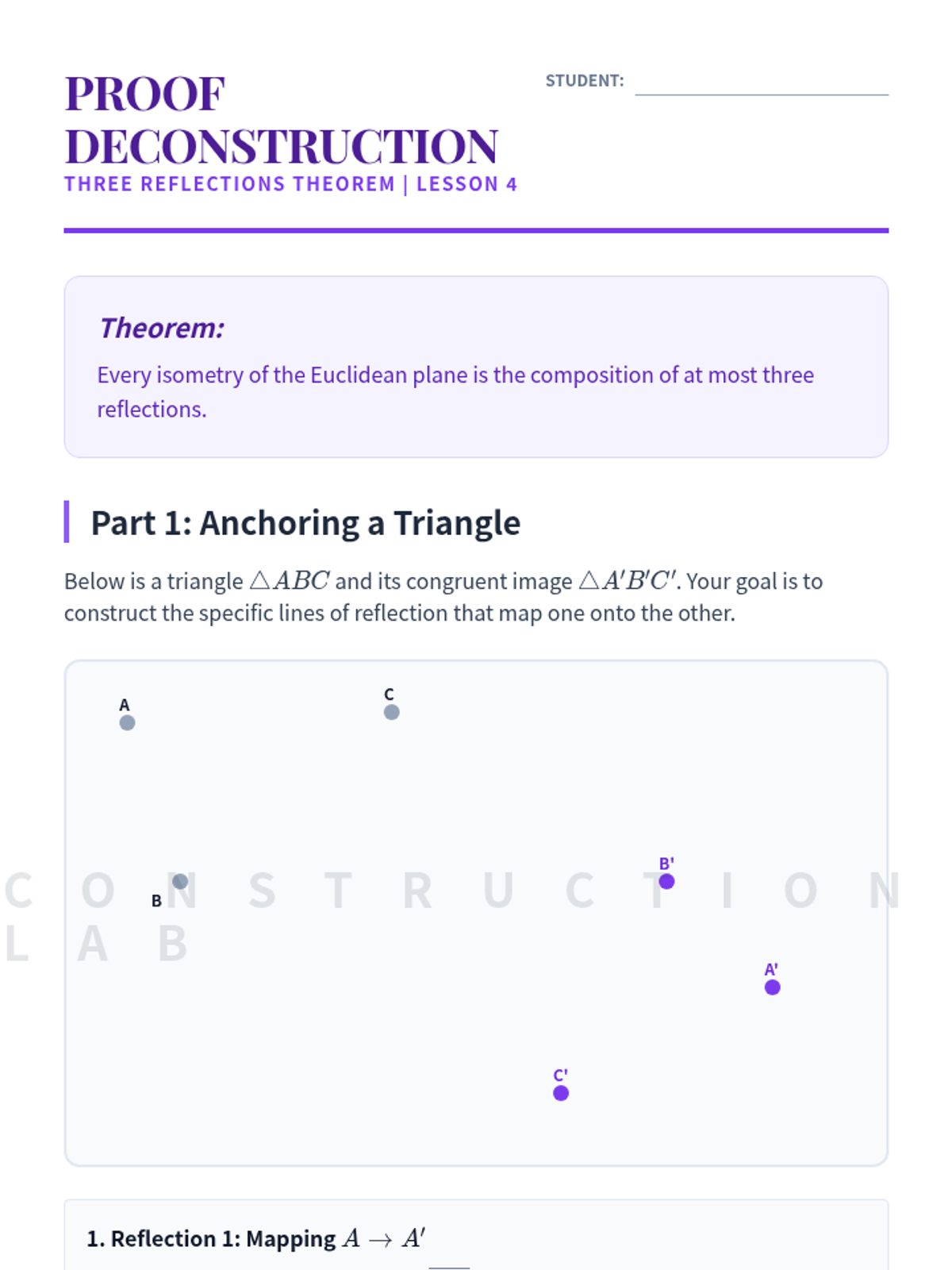
Students prove that any isometry of the plane can be decomposed into at most three reflections, solidifying the reflection's role as a generator.
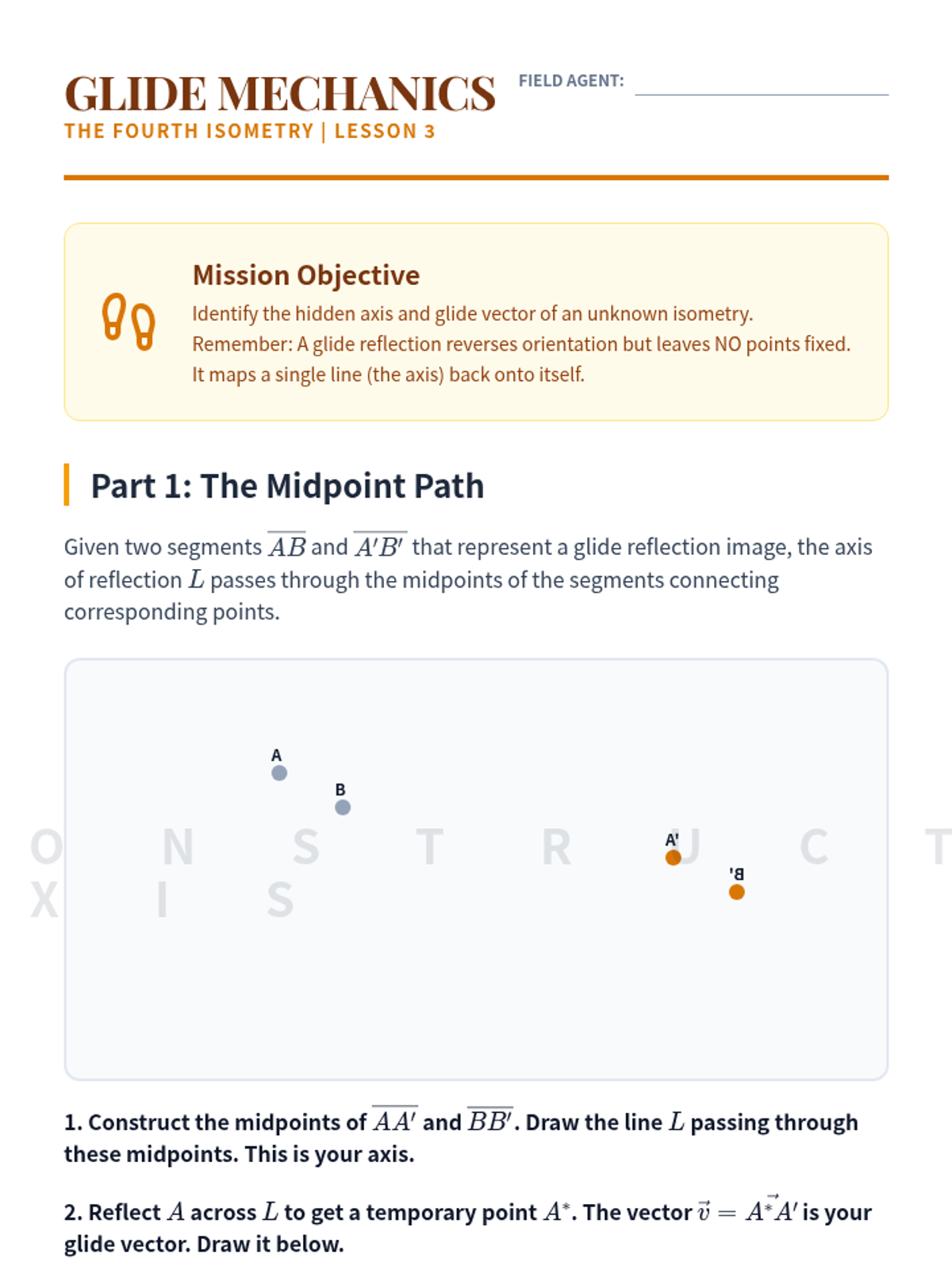
Introduction to the glide reflection as the unique fourth isometry, exploring its properties and composition-based definition.
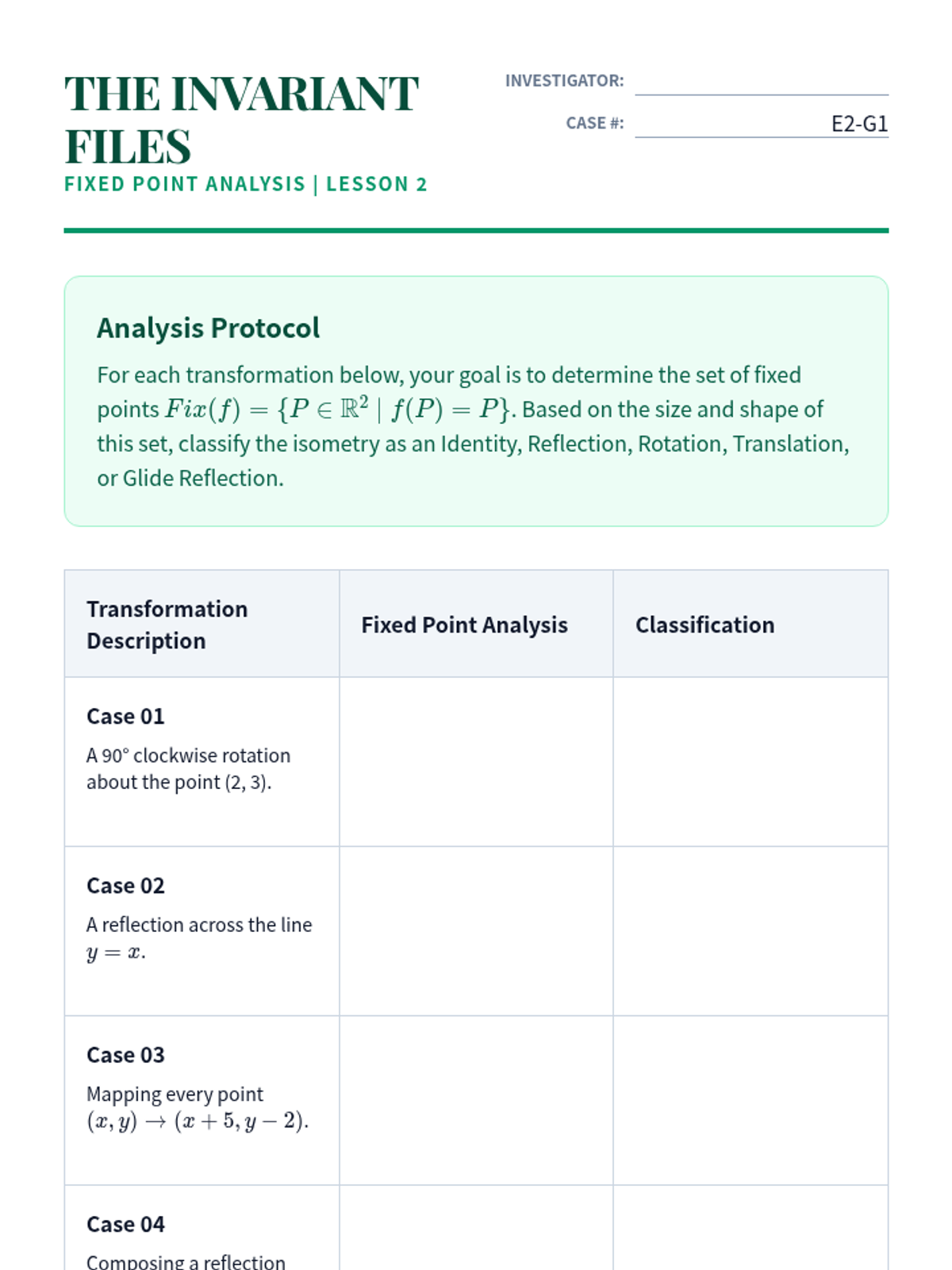
A formal classification of isometries based on their fixed point sets, leading to a logical framework for identifying rigid motions.
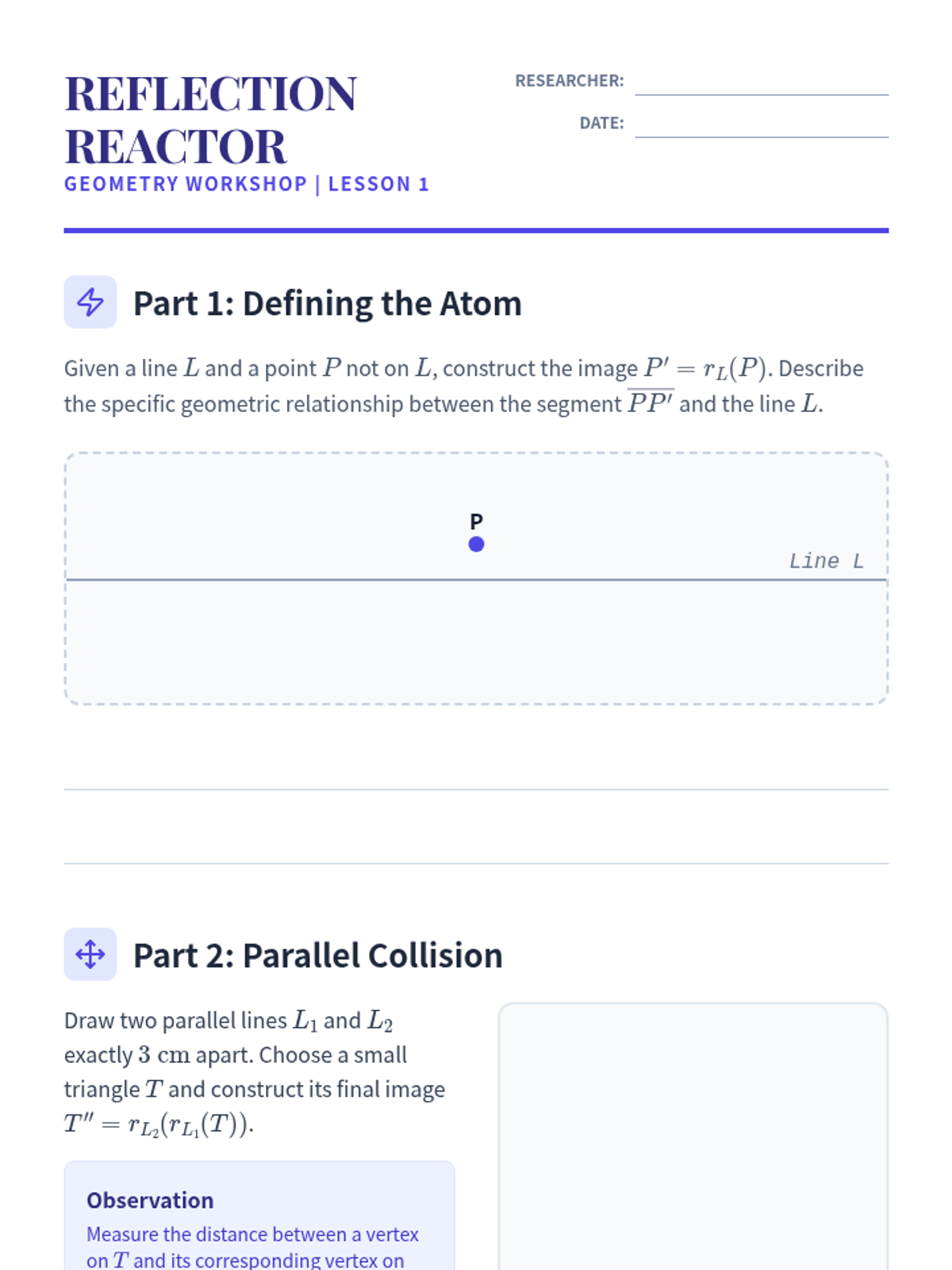
Students investigate reflections as the fundamental atoms of rigid motion, discovering how pairs of reflections generate rotations and translations.
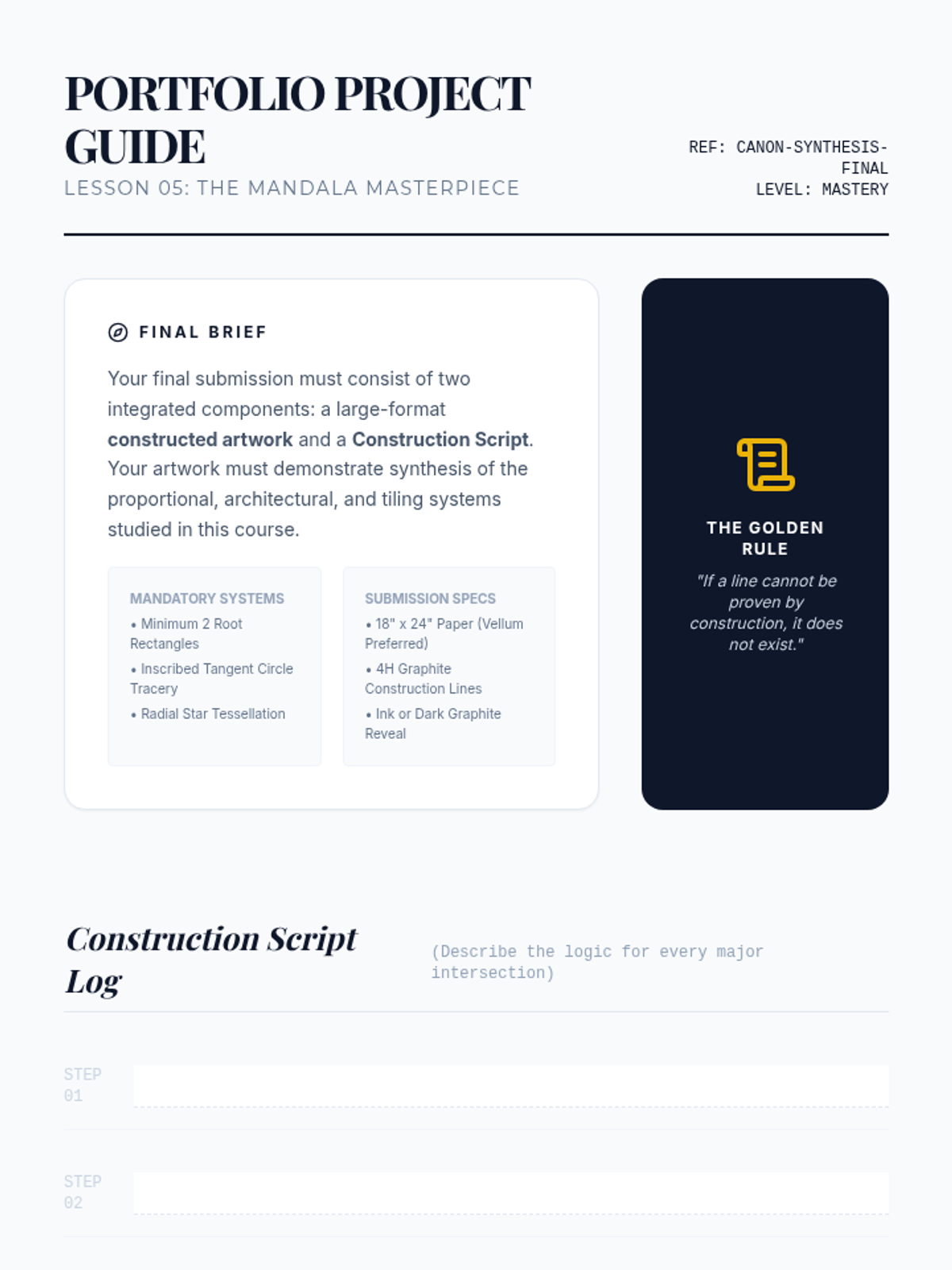
Synthesis project where students create a complex geometric mandala. They must provide a documented 'construction script' proving the geometric validity of every intersection.
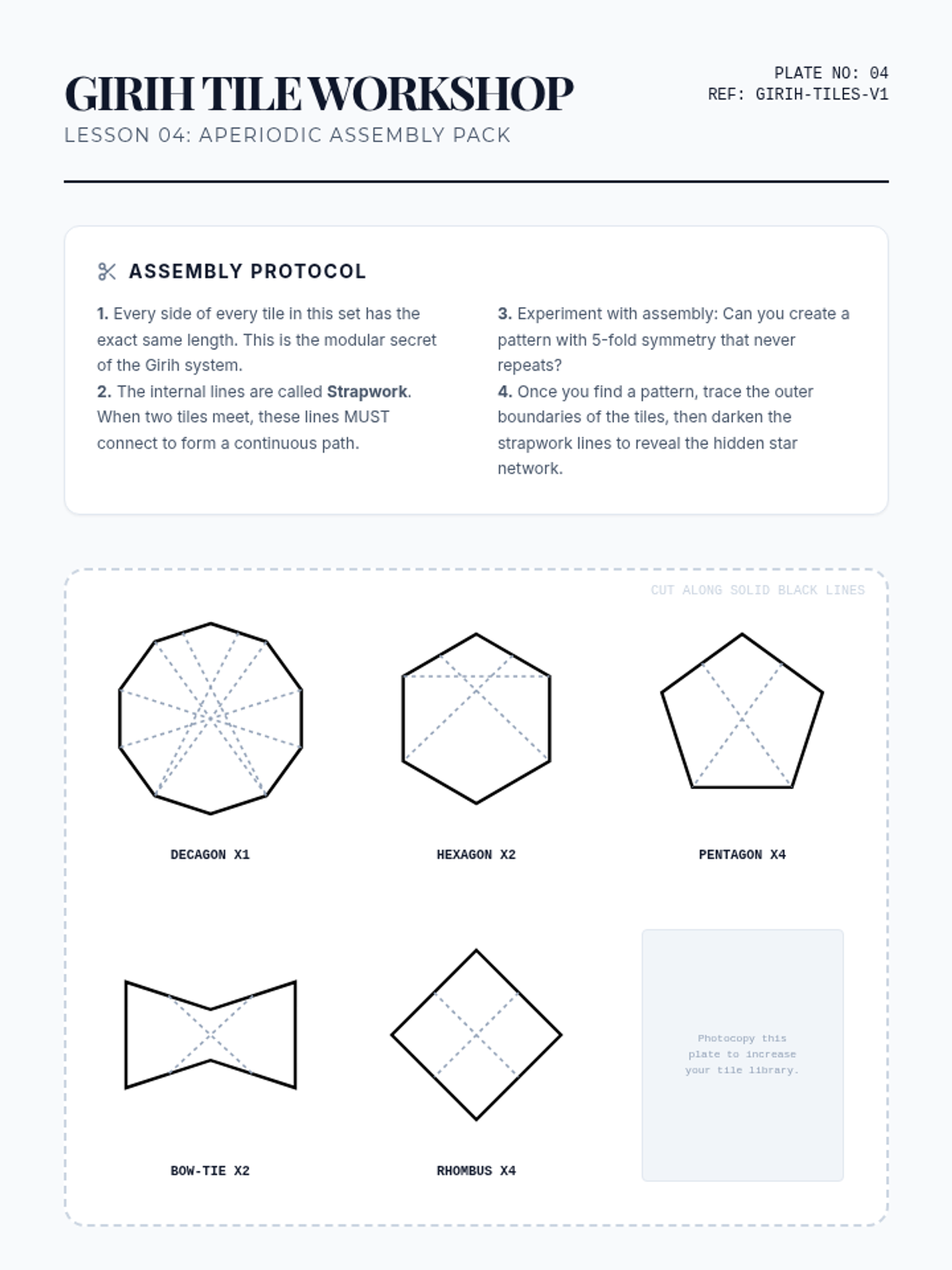
An exploration of Girih tiles and their connection to modern aperiodic tilings and Penrose geometry. Students construct and assemble modular tile sets.
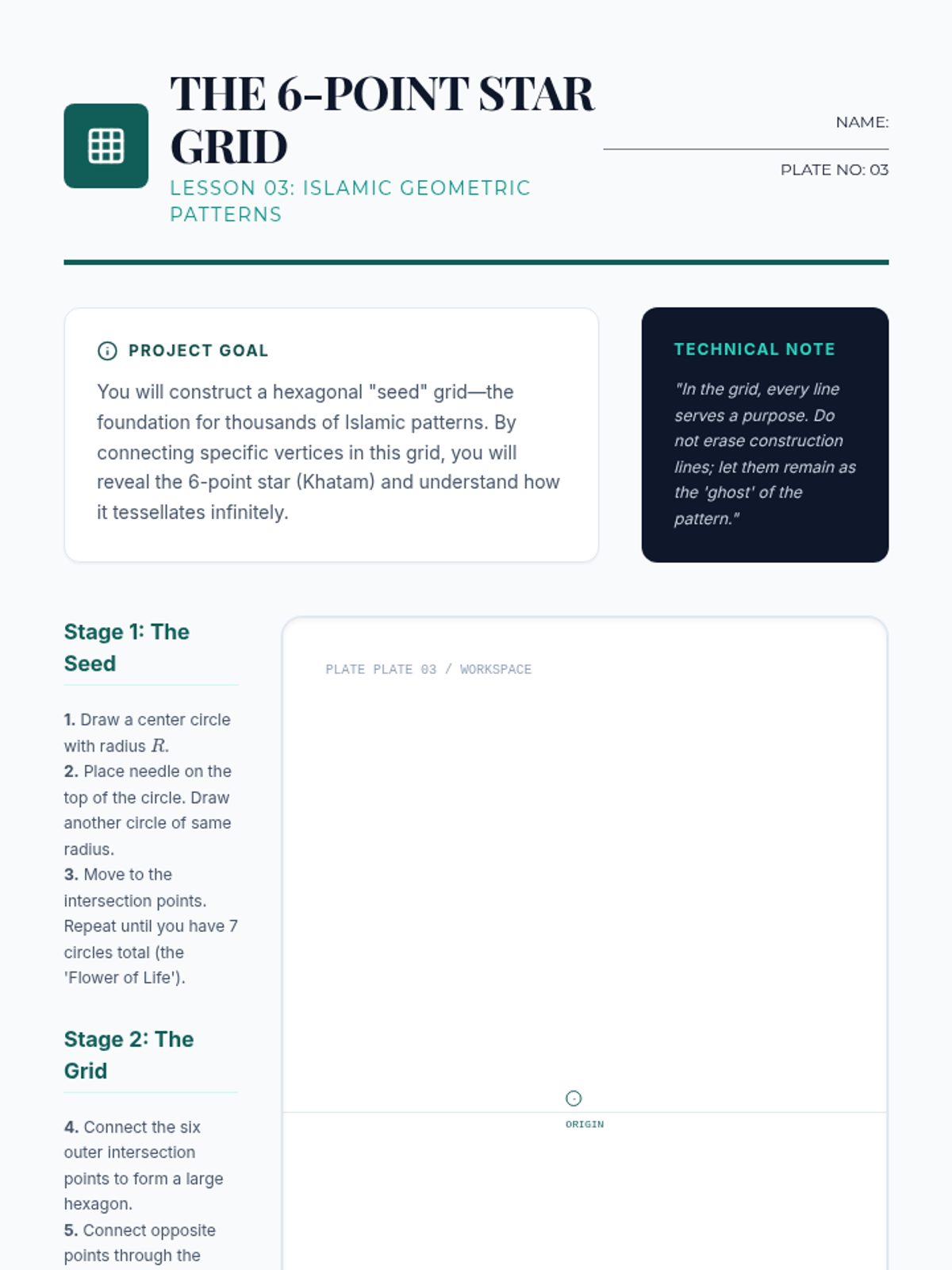
A deep dive into 6-fold and 8-fold symmetry. Students use the 'grid' method to generate complex Islamic star patterns and understand the logic of tessellation.
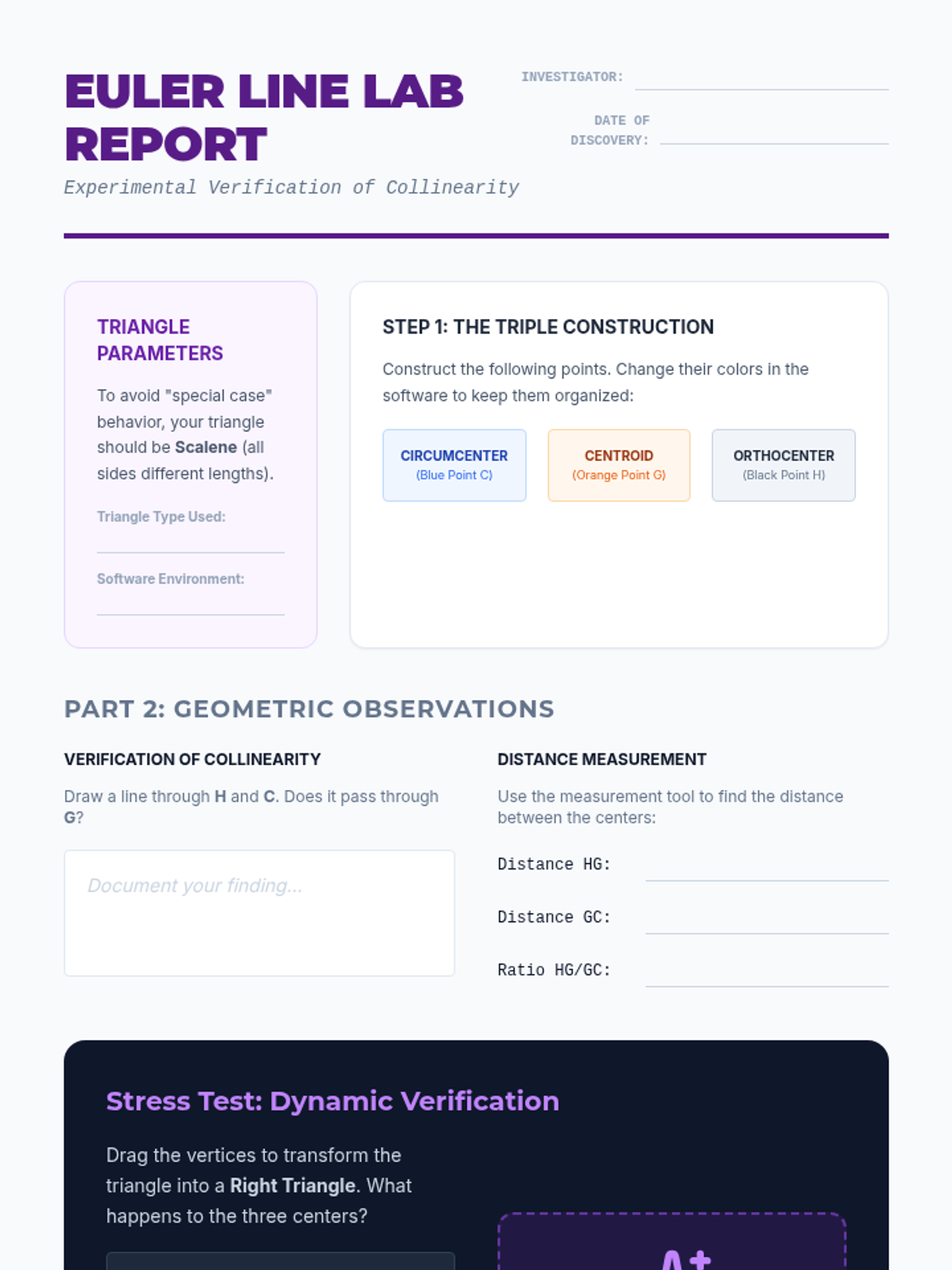
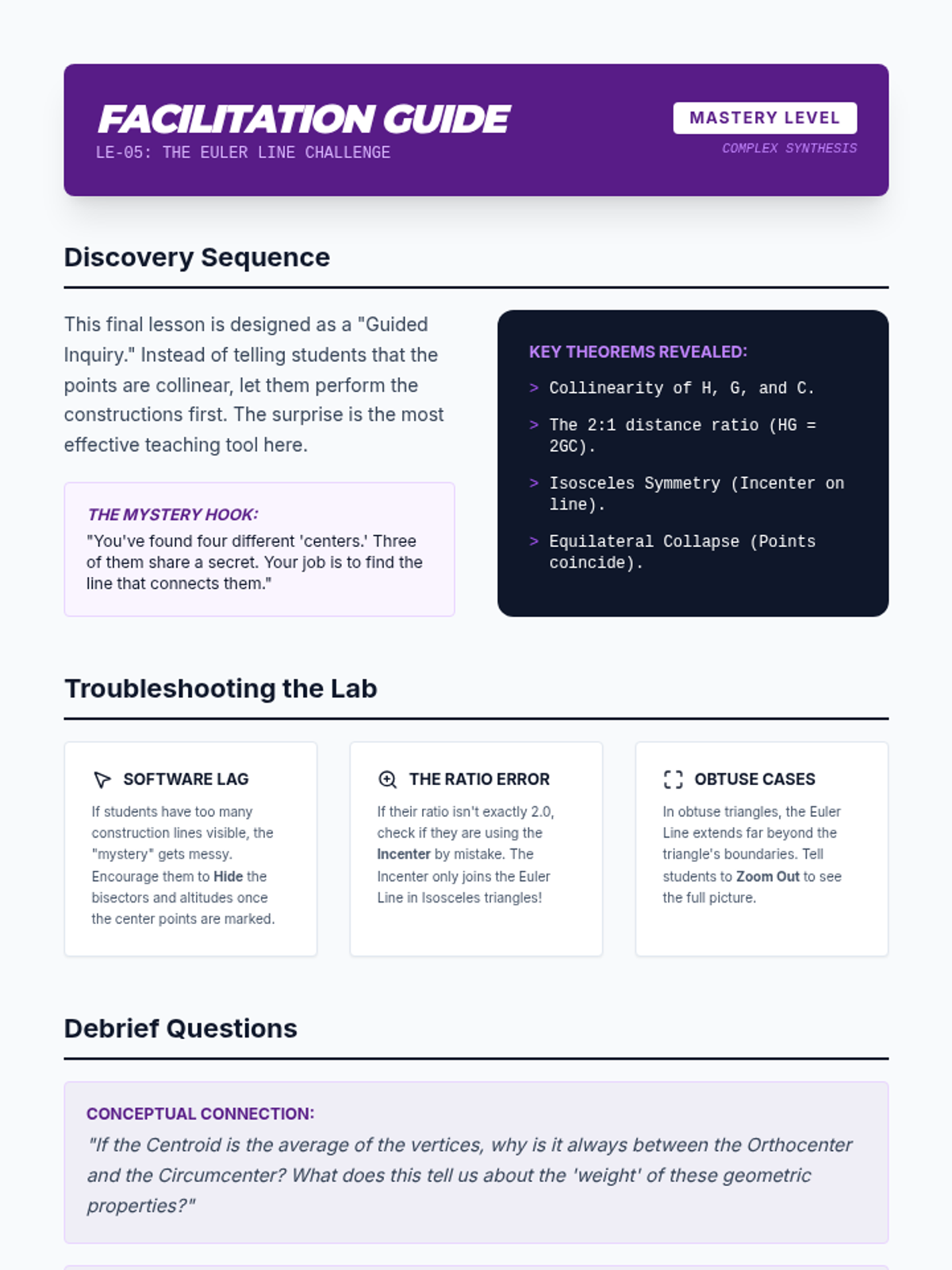
Students construct the Orthocenter, Circumcenter, and Centroid on a single scalene triangle to discover that they always lie on a straight line (the Euler Line).
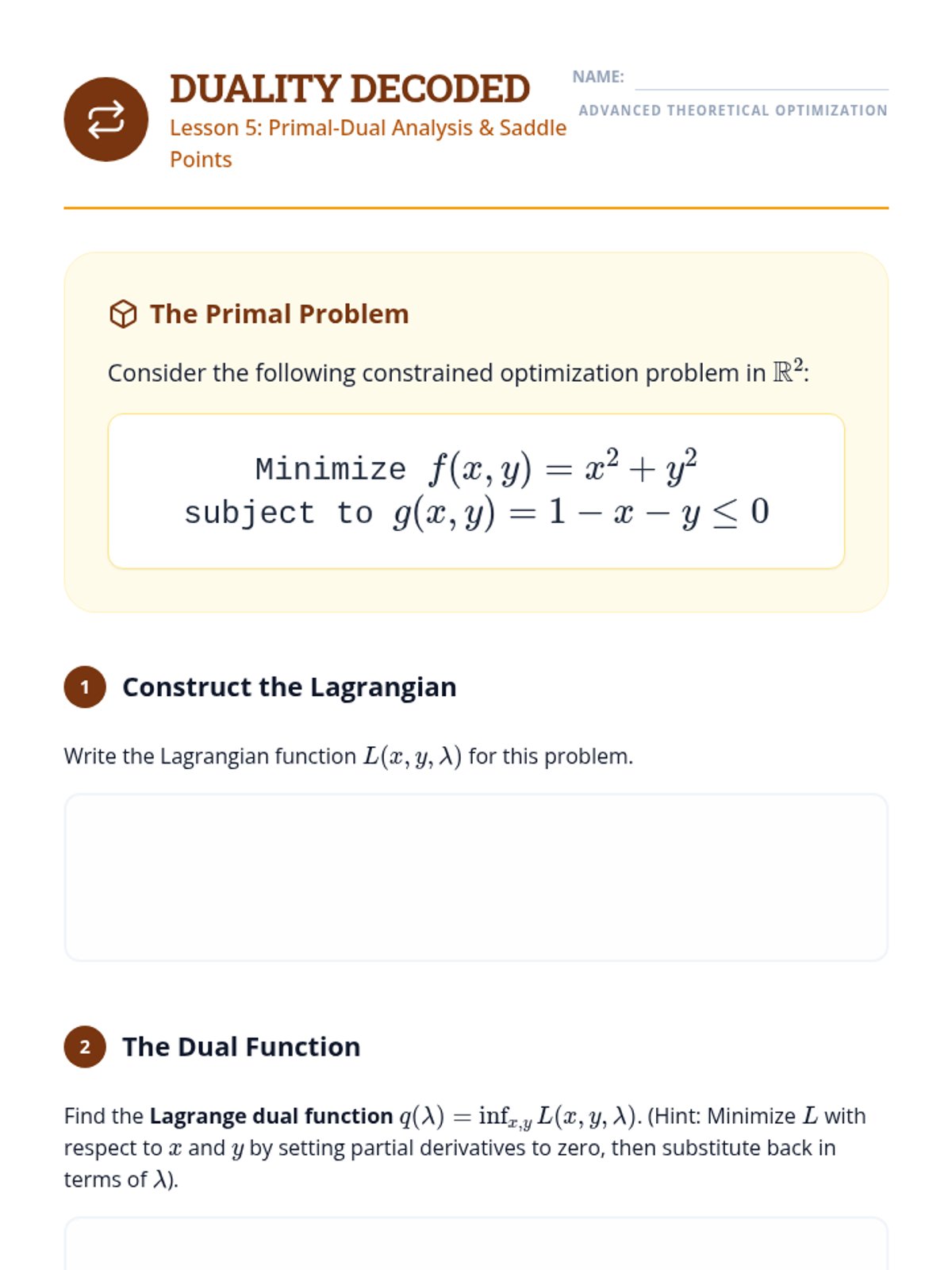
The sequence concludes with an introduction to Min-Max theorems and saddle point analysis, exploring duality gaps and the conditions under which primal and dual problems align.
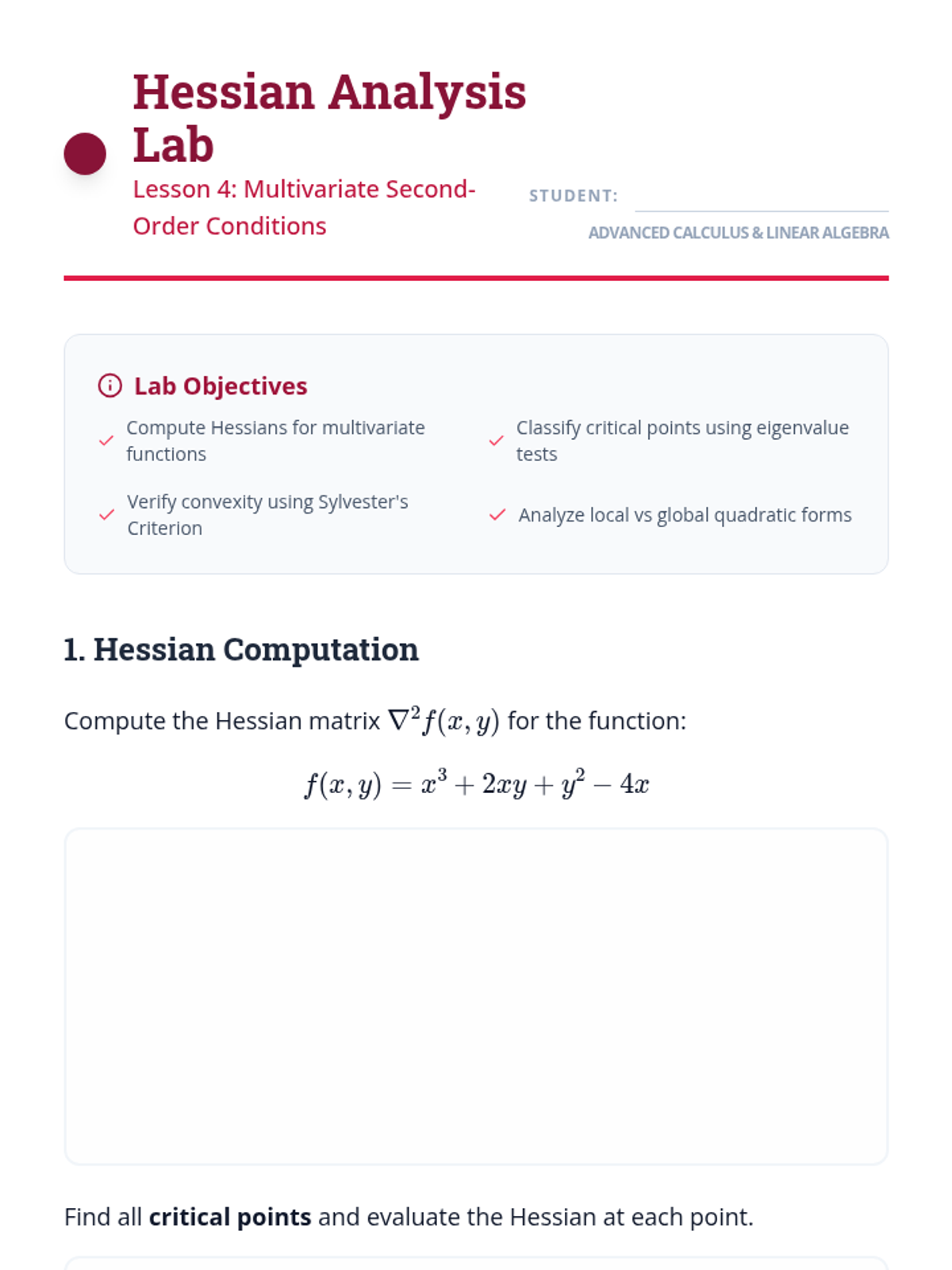
Focusing on the Hessian matrix, students derive and apply tests for positive definiteness to classify critical points in higher dimensions, bridging linear algebra and calculus.
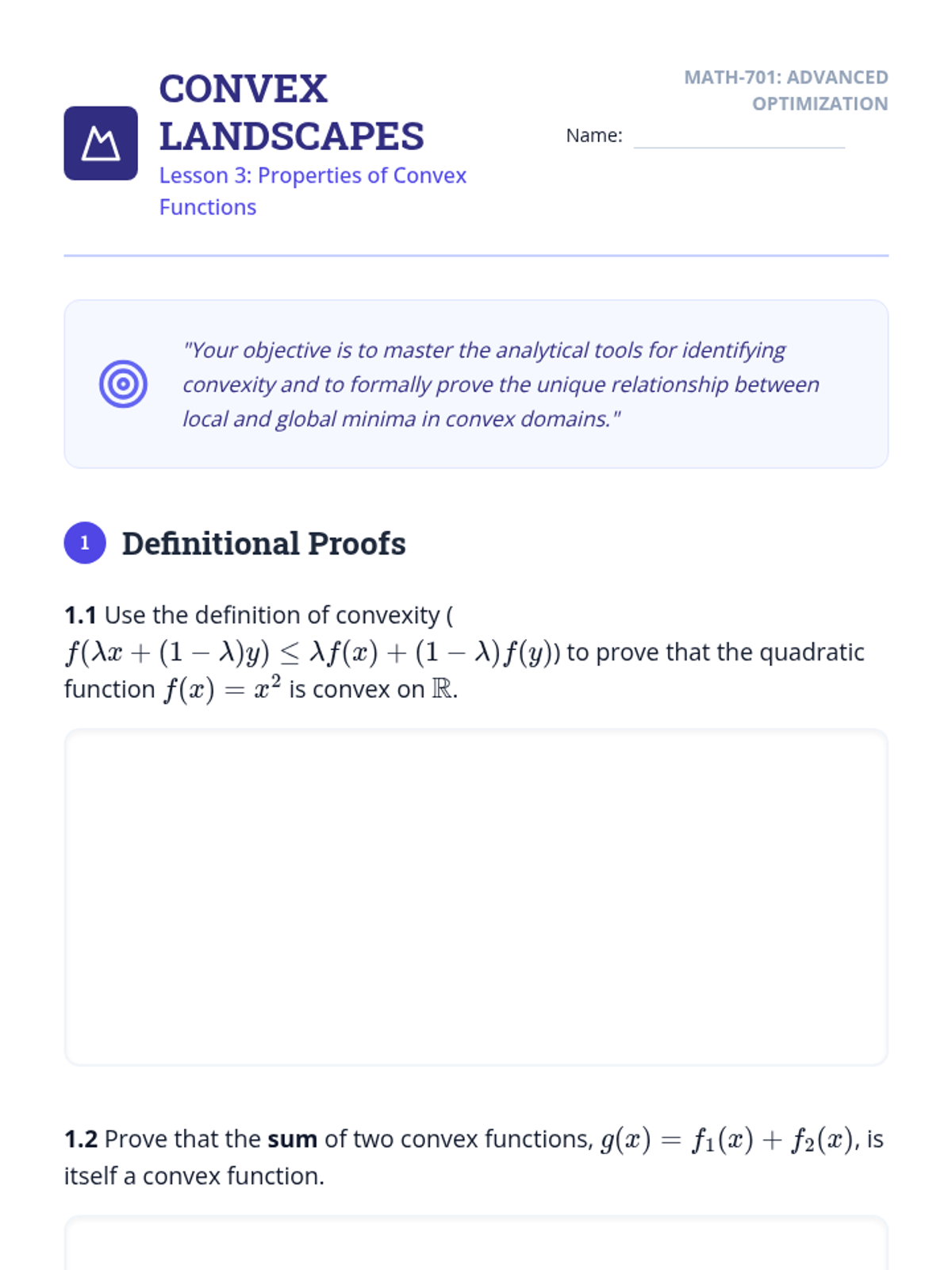
Students analyze the definitions of convex and concave functions, proving that local minima in convex functions are global minima and applying Jensen's Inequality.
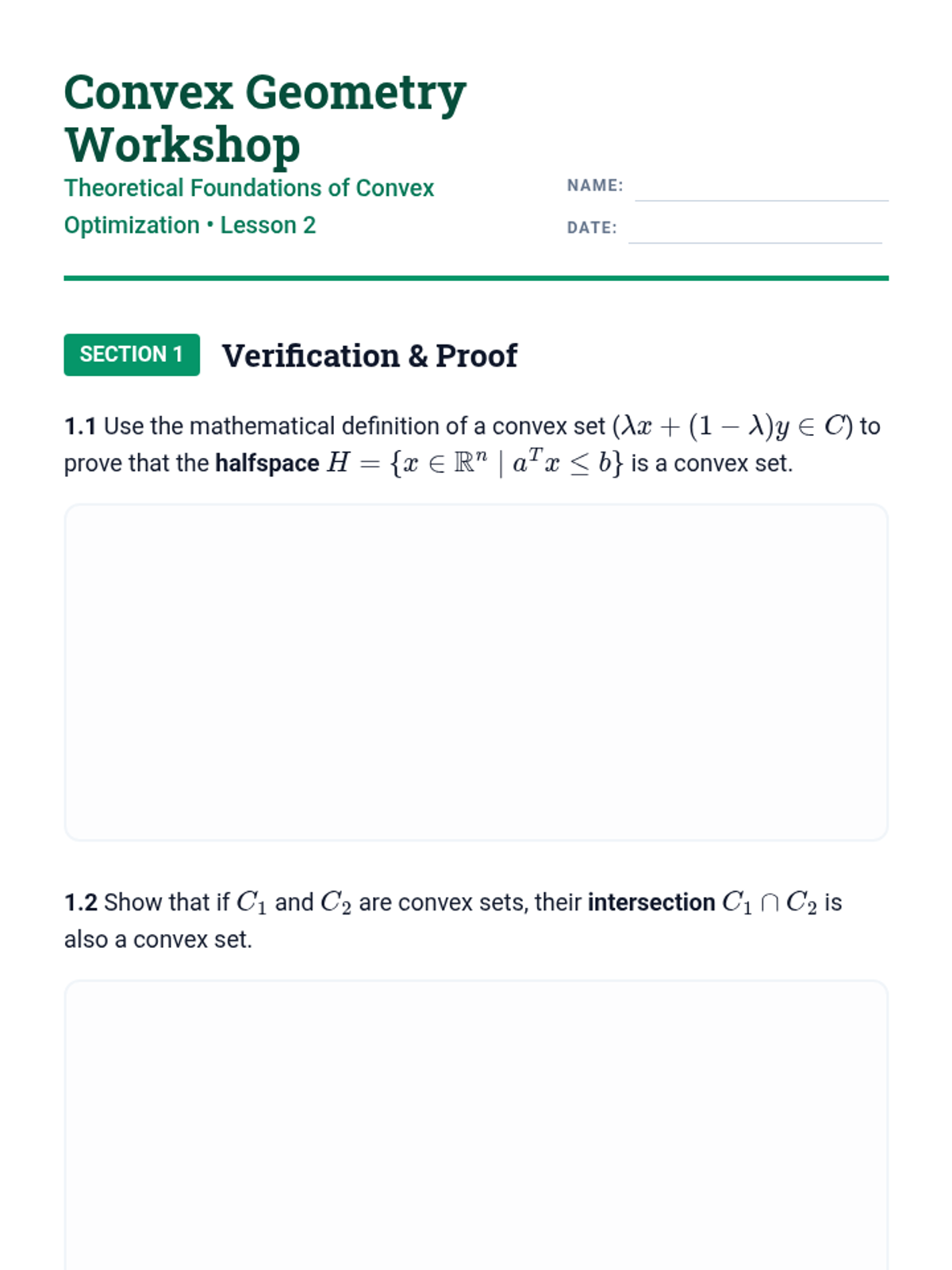
This lesson explores the geometry of the domain, defining convex sets, hulls, and separating hyperplanes, and distinguishing between convex and non-convex constraints.
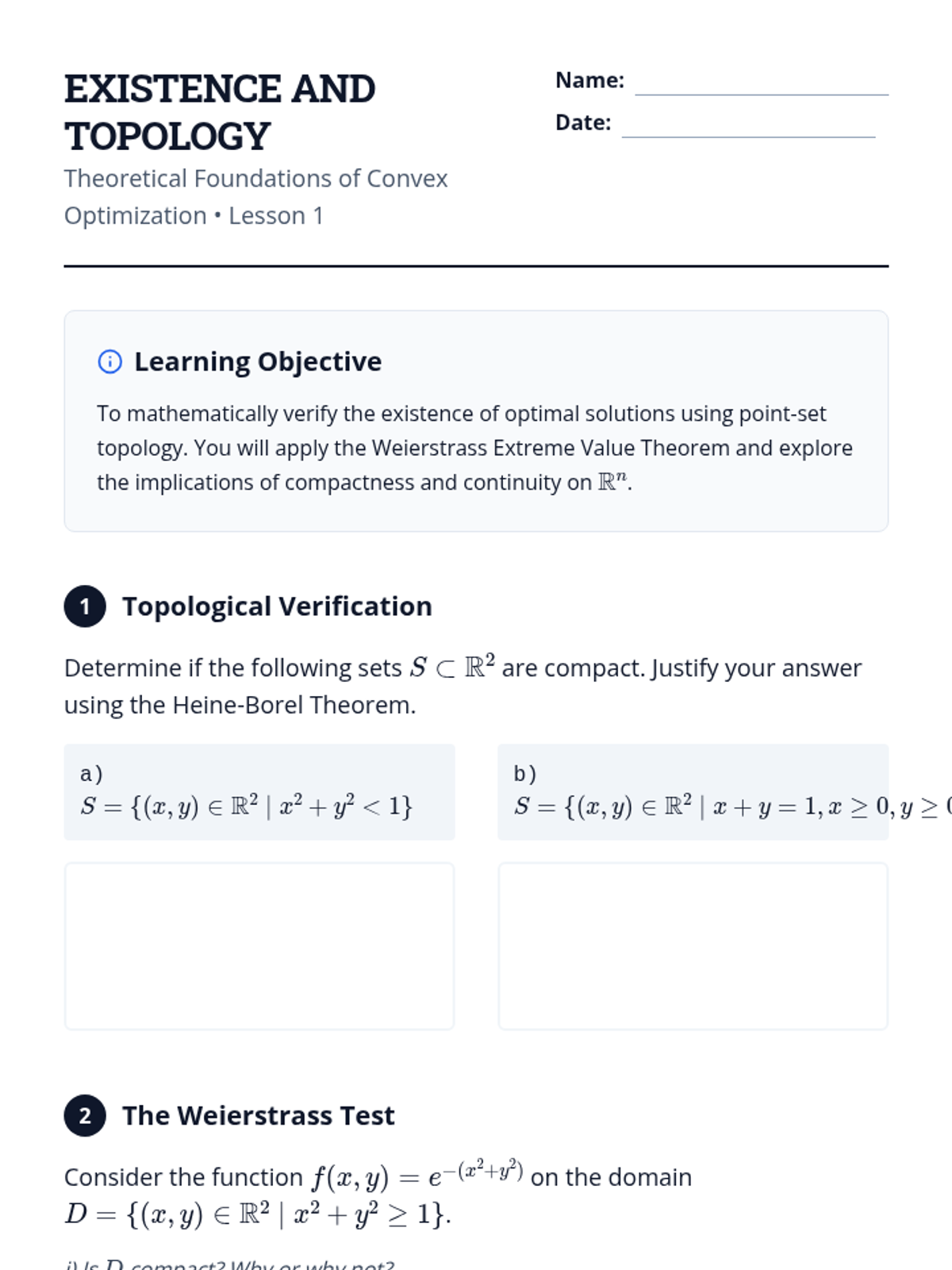
Students review point-set topology concepts including compactness and continuity to prove the Extreme Value Theorem in n-dimensions, focusing on identifying when a function is guaranteed to attain a maximum or minimum.
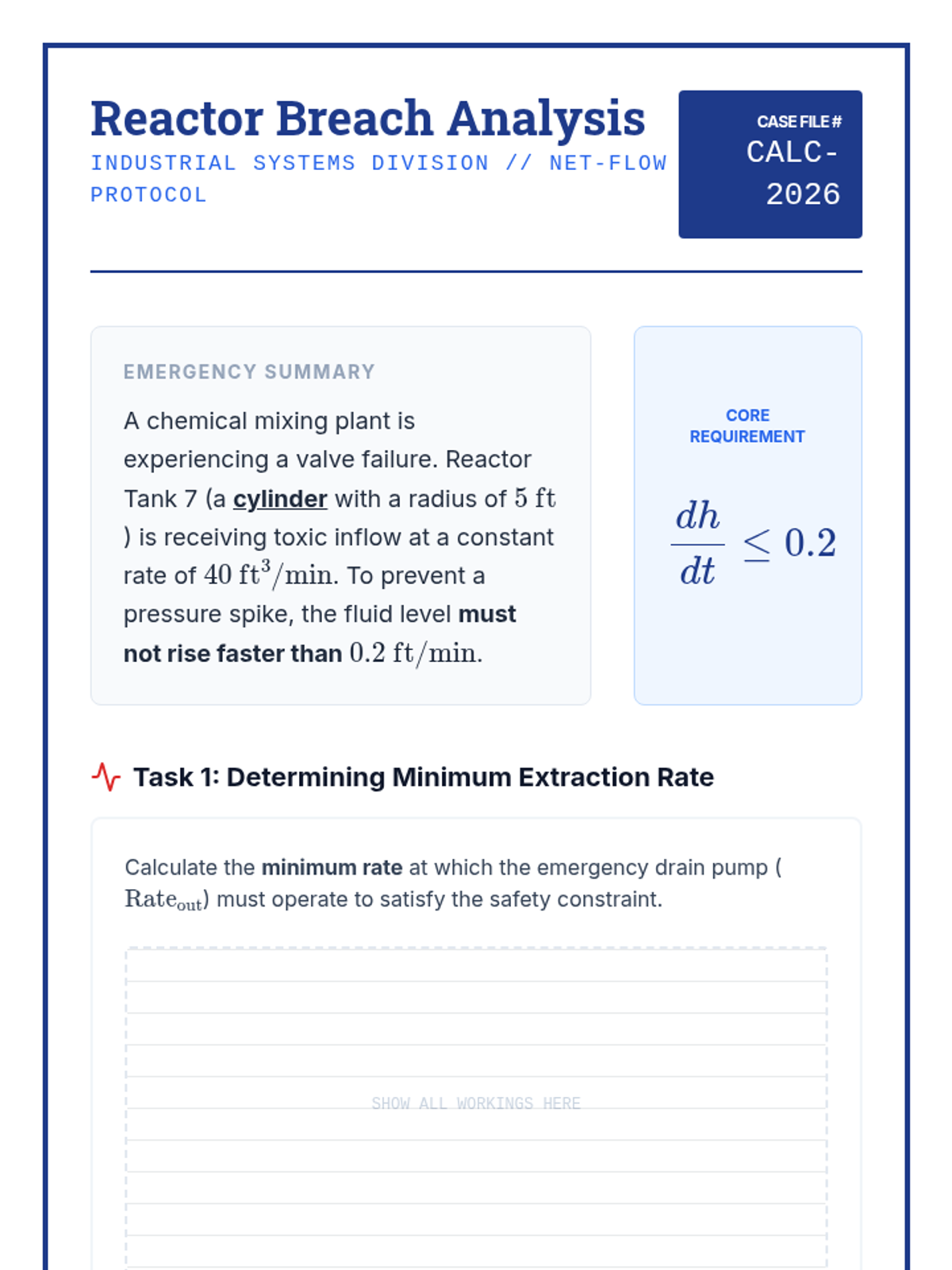
A culminating engineering challenge where students manage net flow rates (inflow vs. outflow) to maintain system stability in various tank geometries.
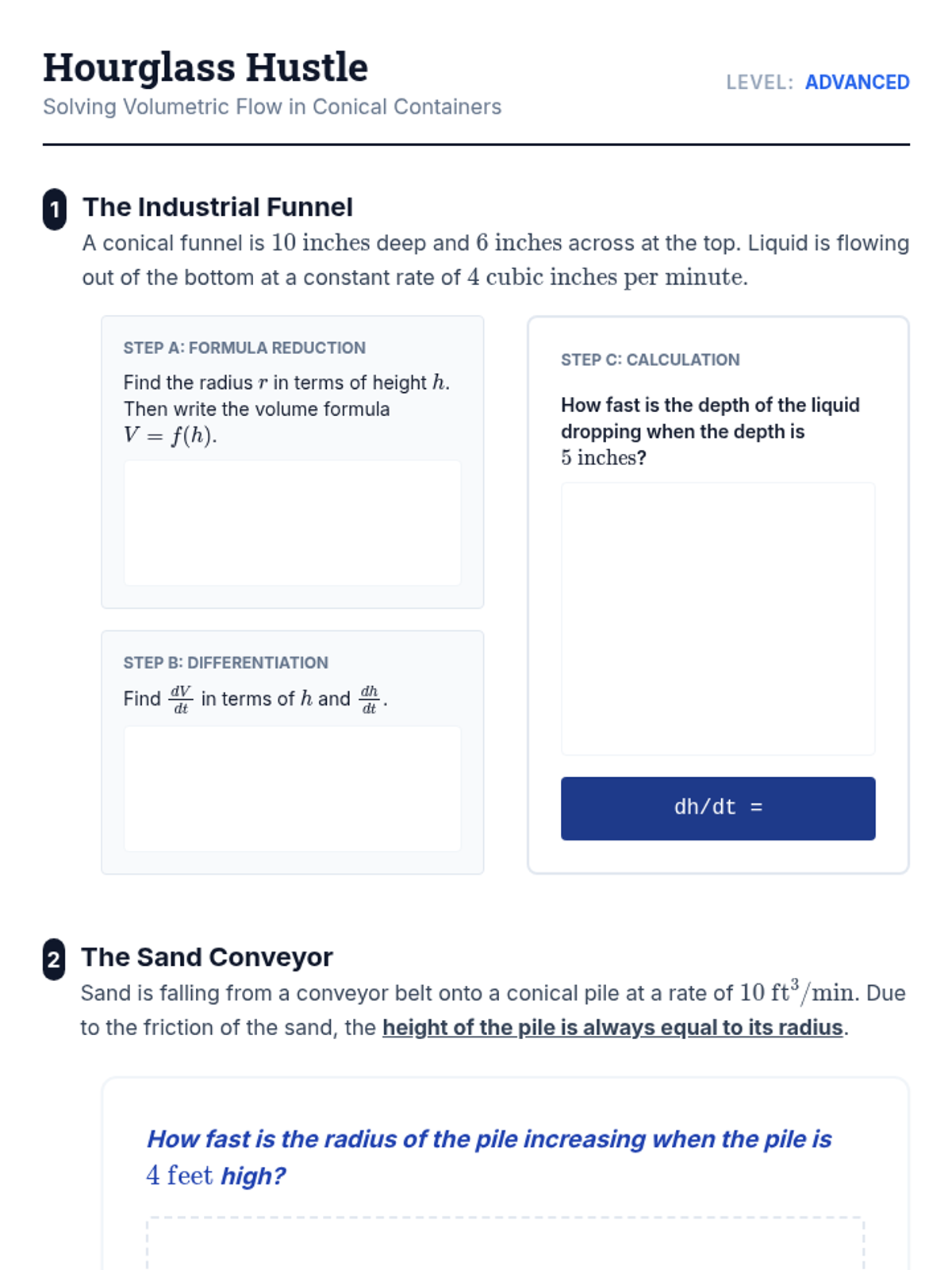
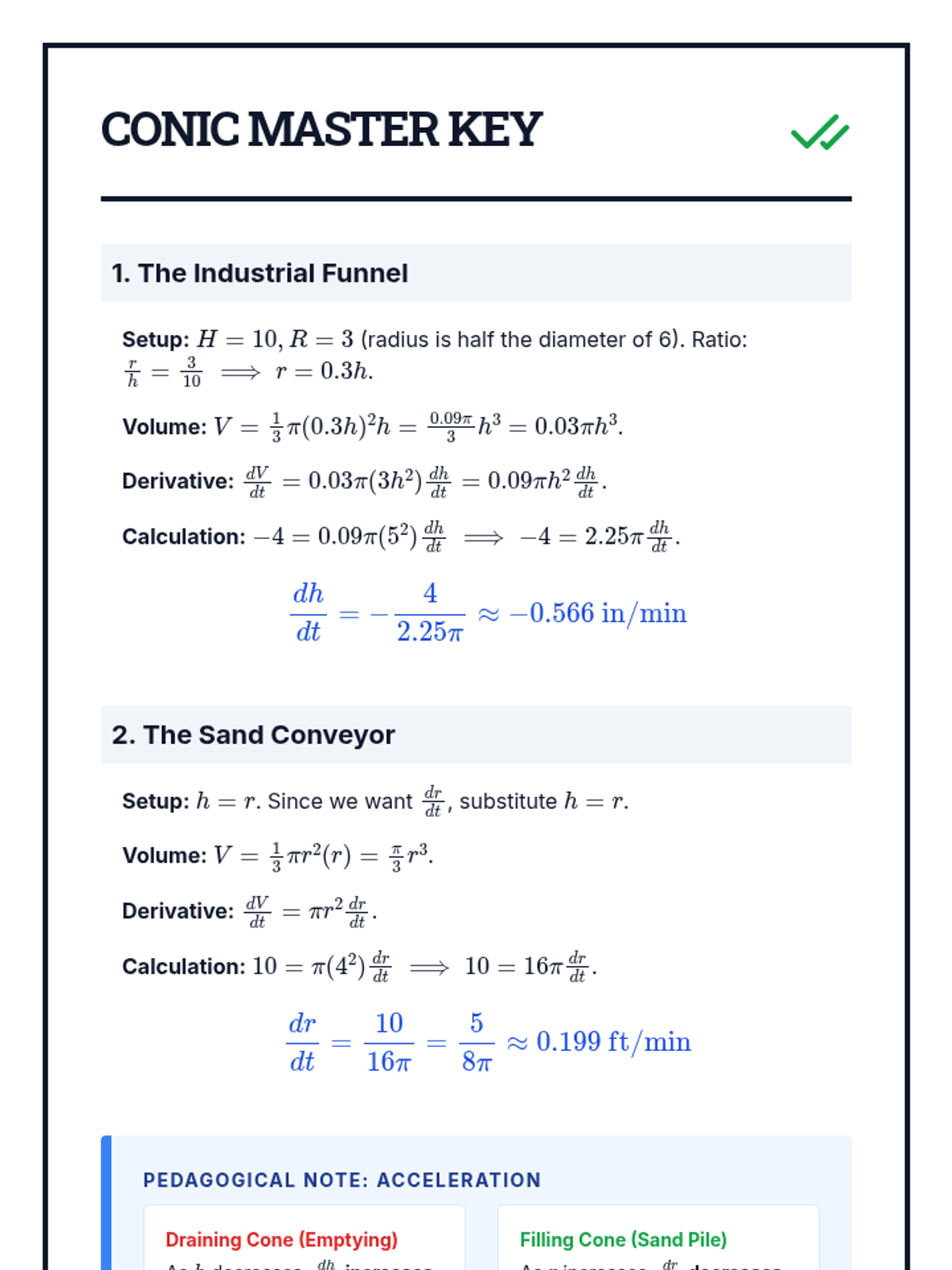
Building on the geometric substitution from the previous lesson, students fully differentiate and solve conical related rates problems, analyzing the 'acceleration' of fluid levels.
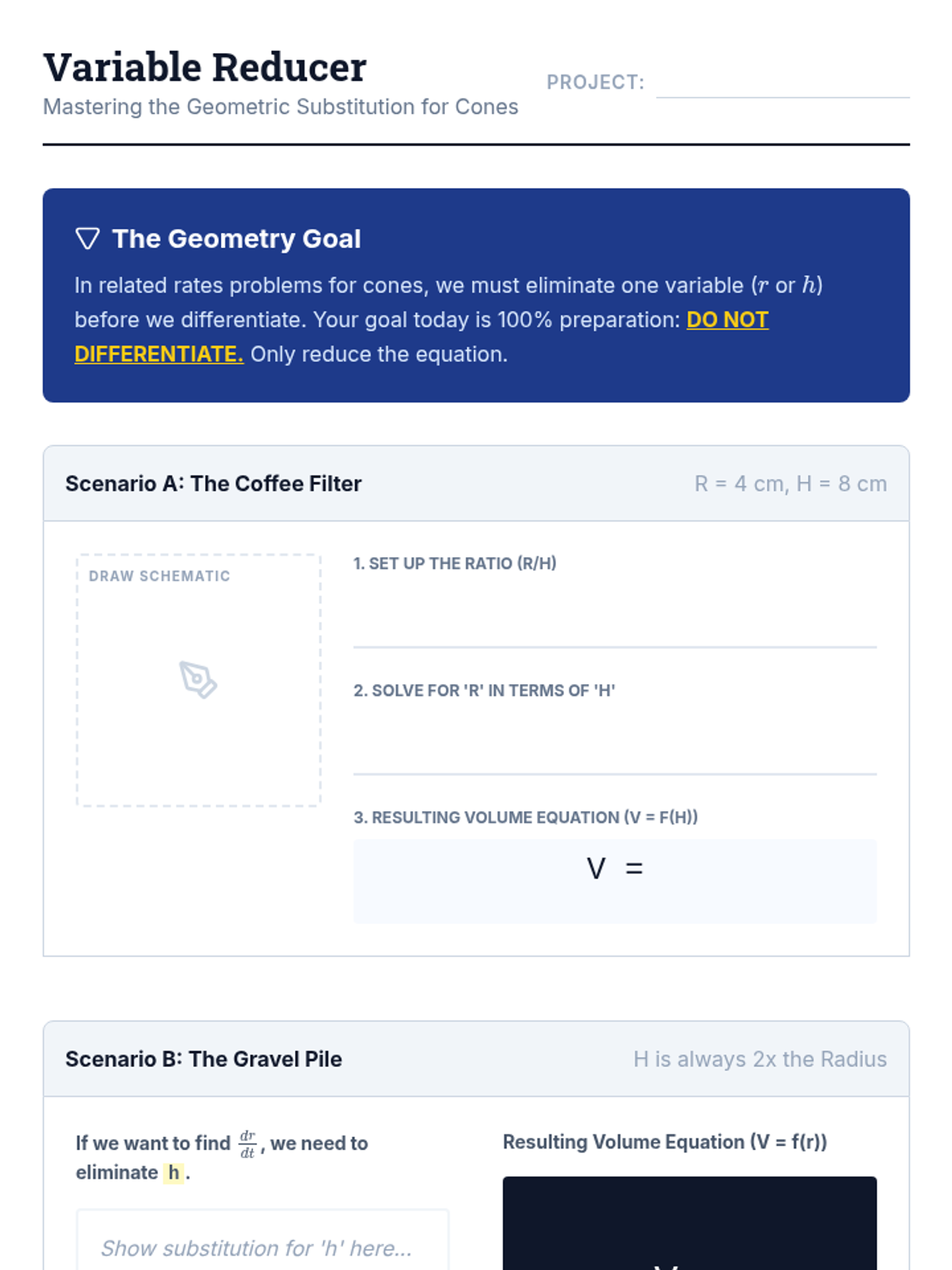
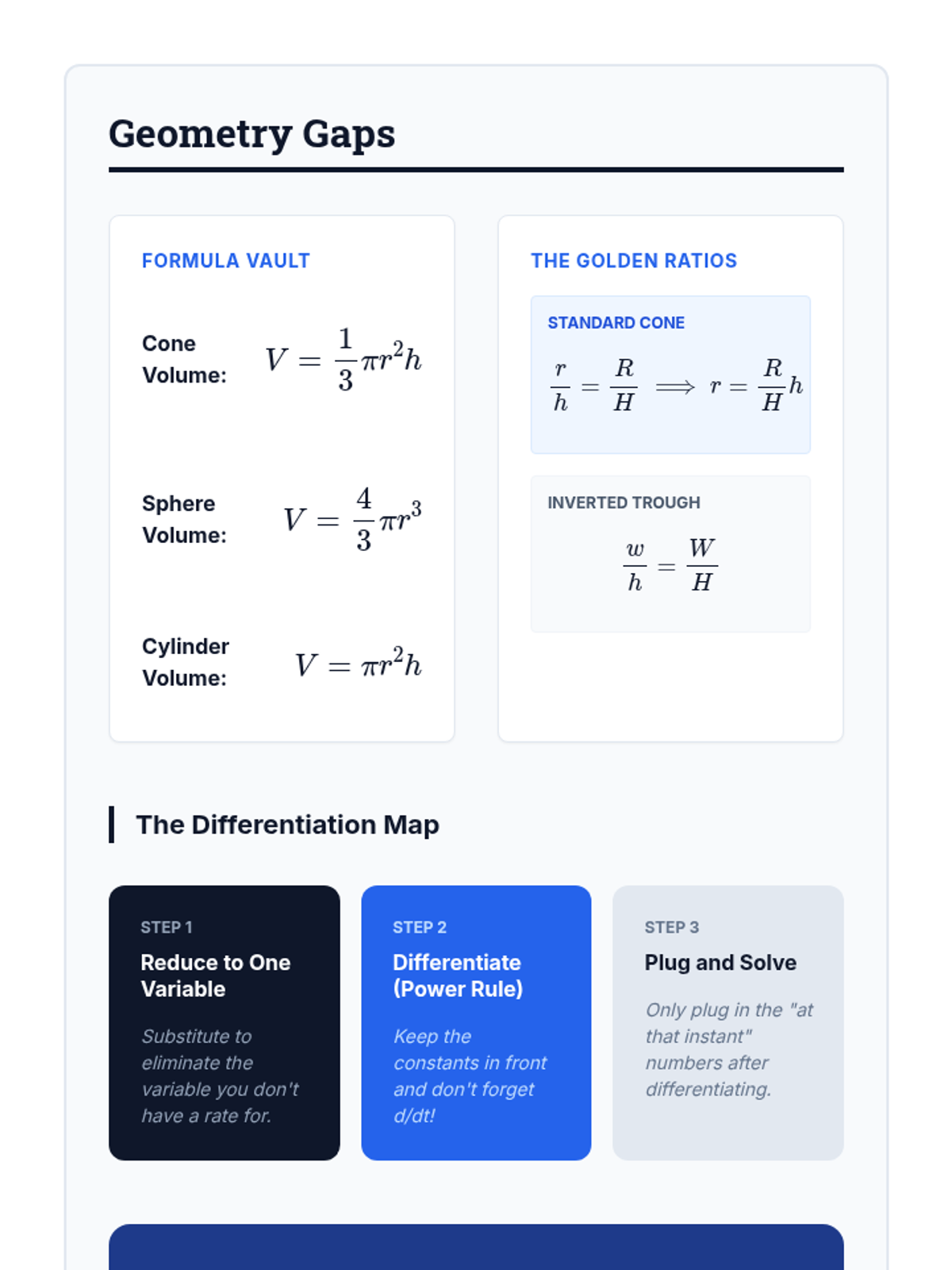
This lesson addresses the geometric complexity of conical tanks, focusing specifically on using similar triangles to reduce multi-variable volume formulas into single-variable equations.
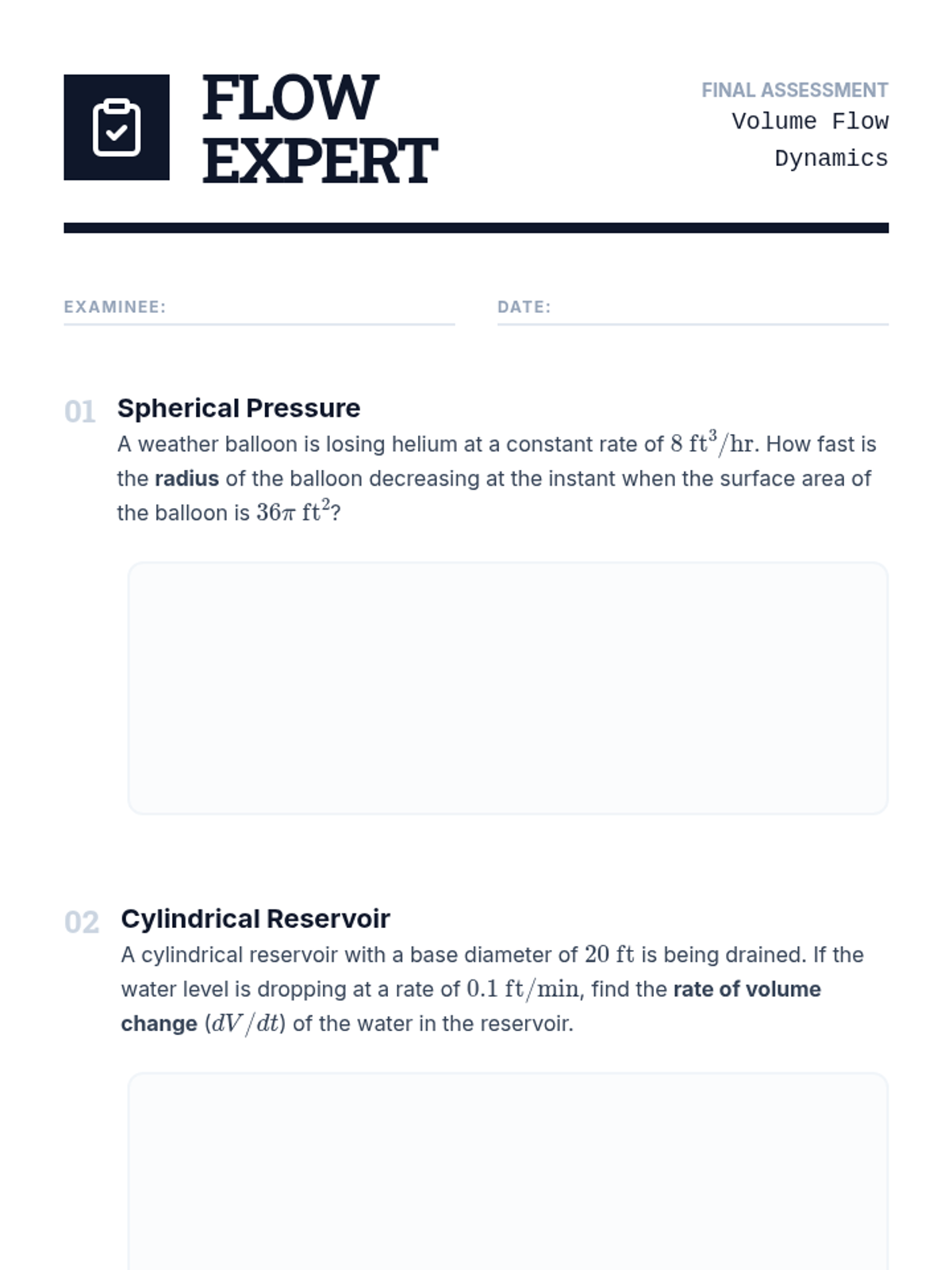
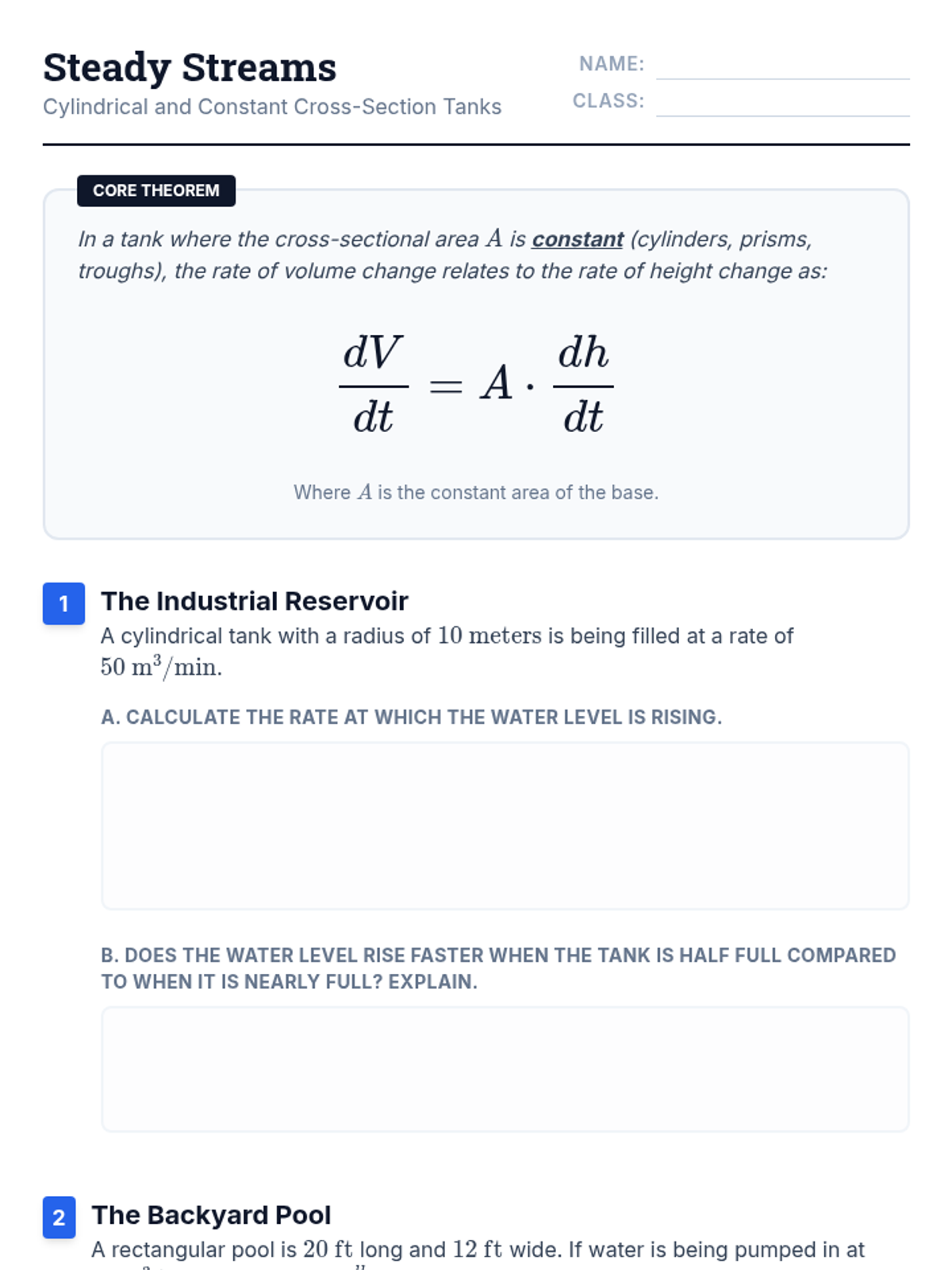
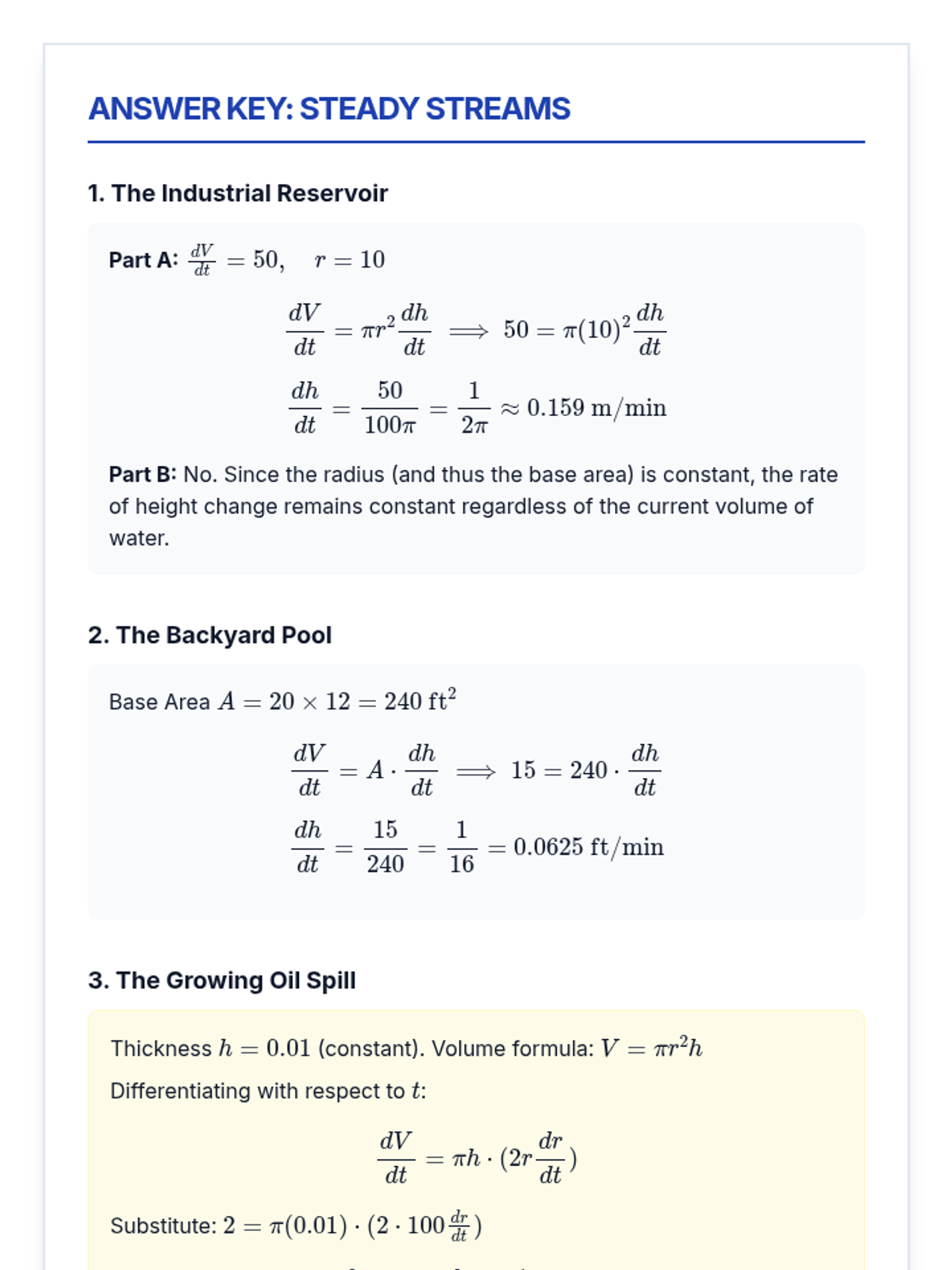
Focusing on containers with constant cross-sections, students learn why cylinders and prisms exhibit linear height changes relative to volume. This provides a baseline for comparing more complex geometries.
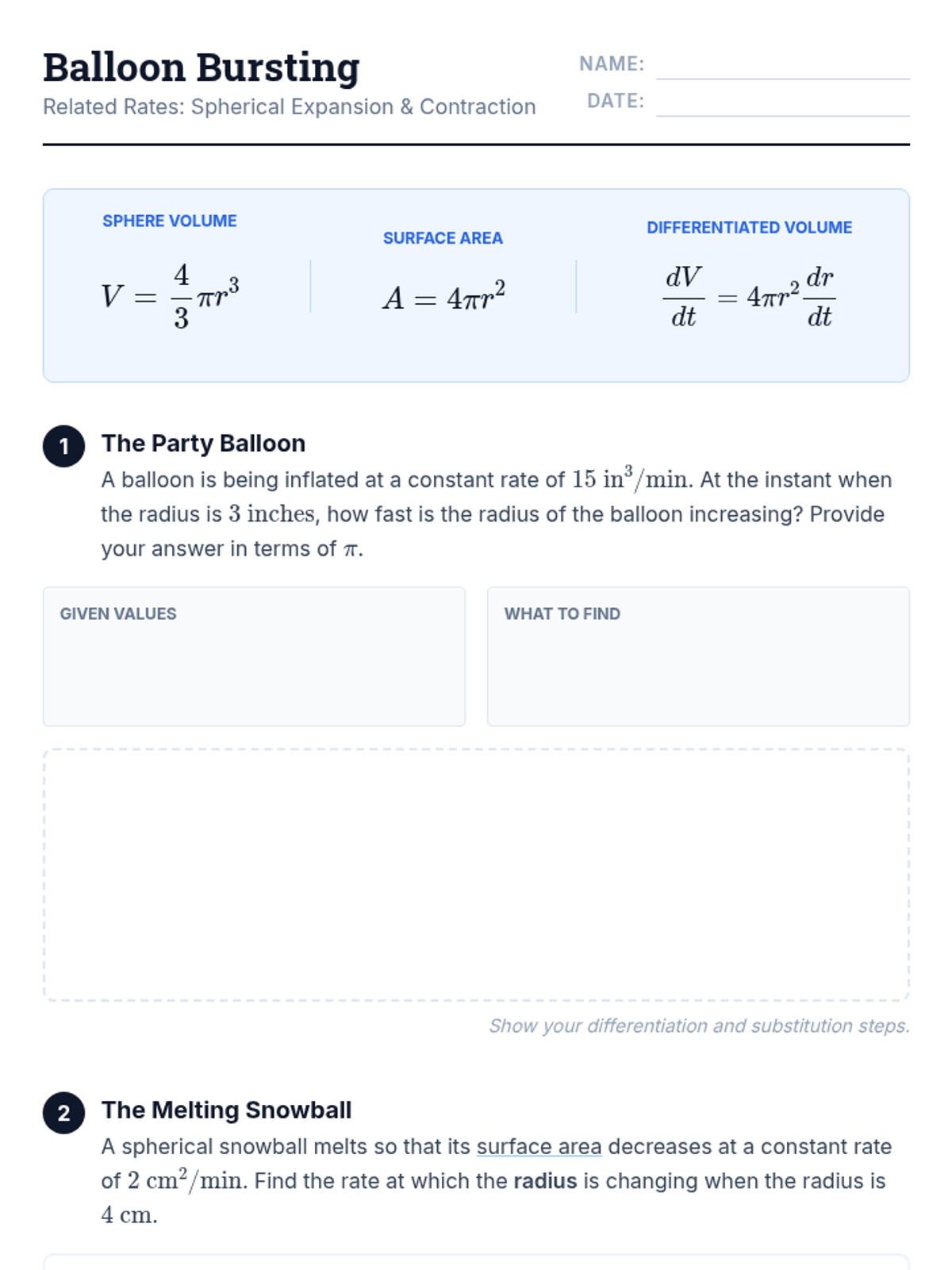
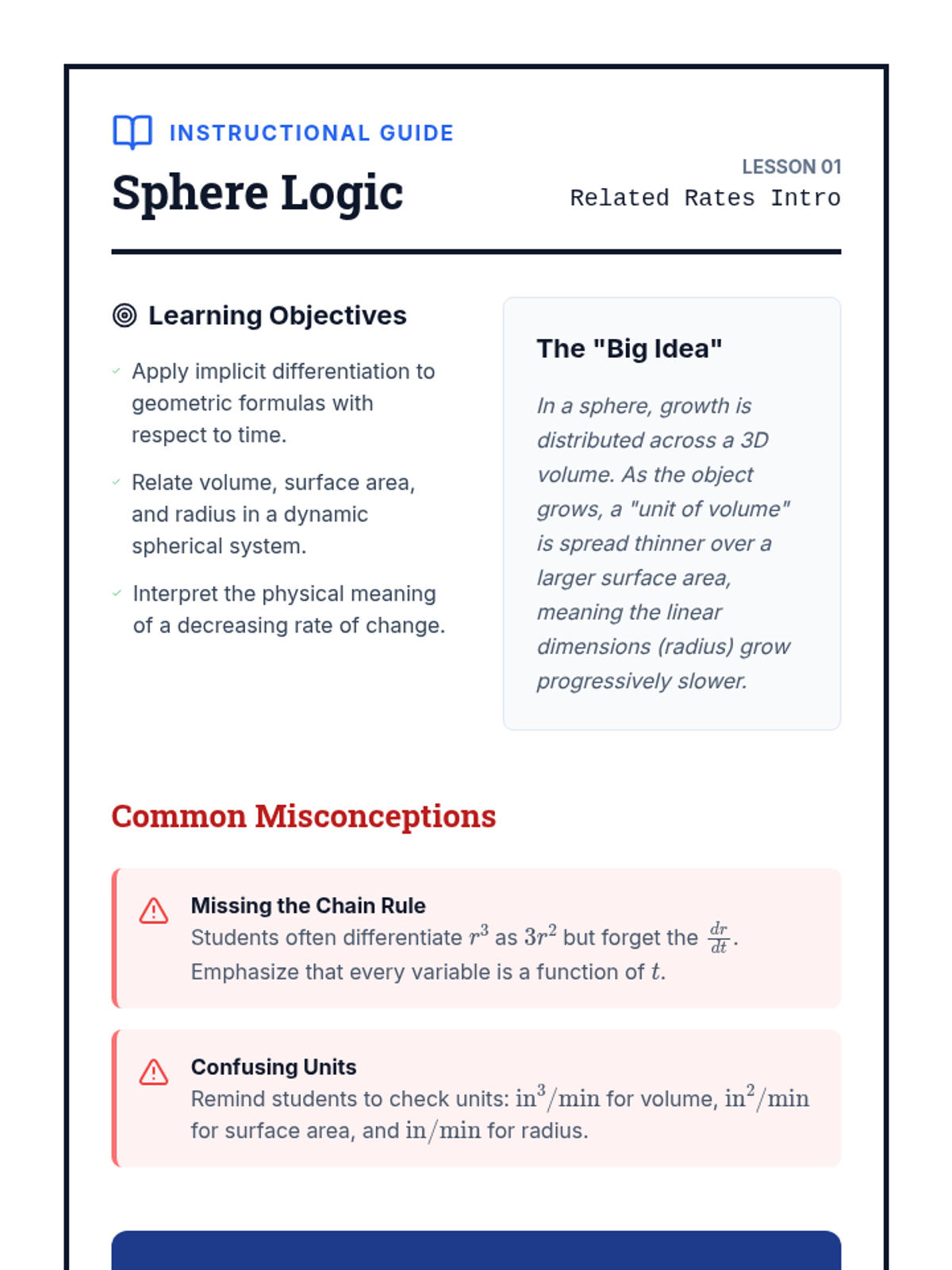
Students explore the calculus of expanding spheres, analyzing how constant volume change affects radius and surface area differently. The lesson highlights the inverse square relationship in spherical growth.
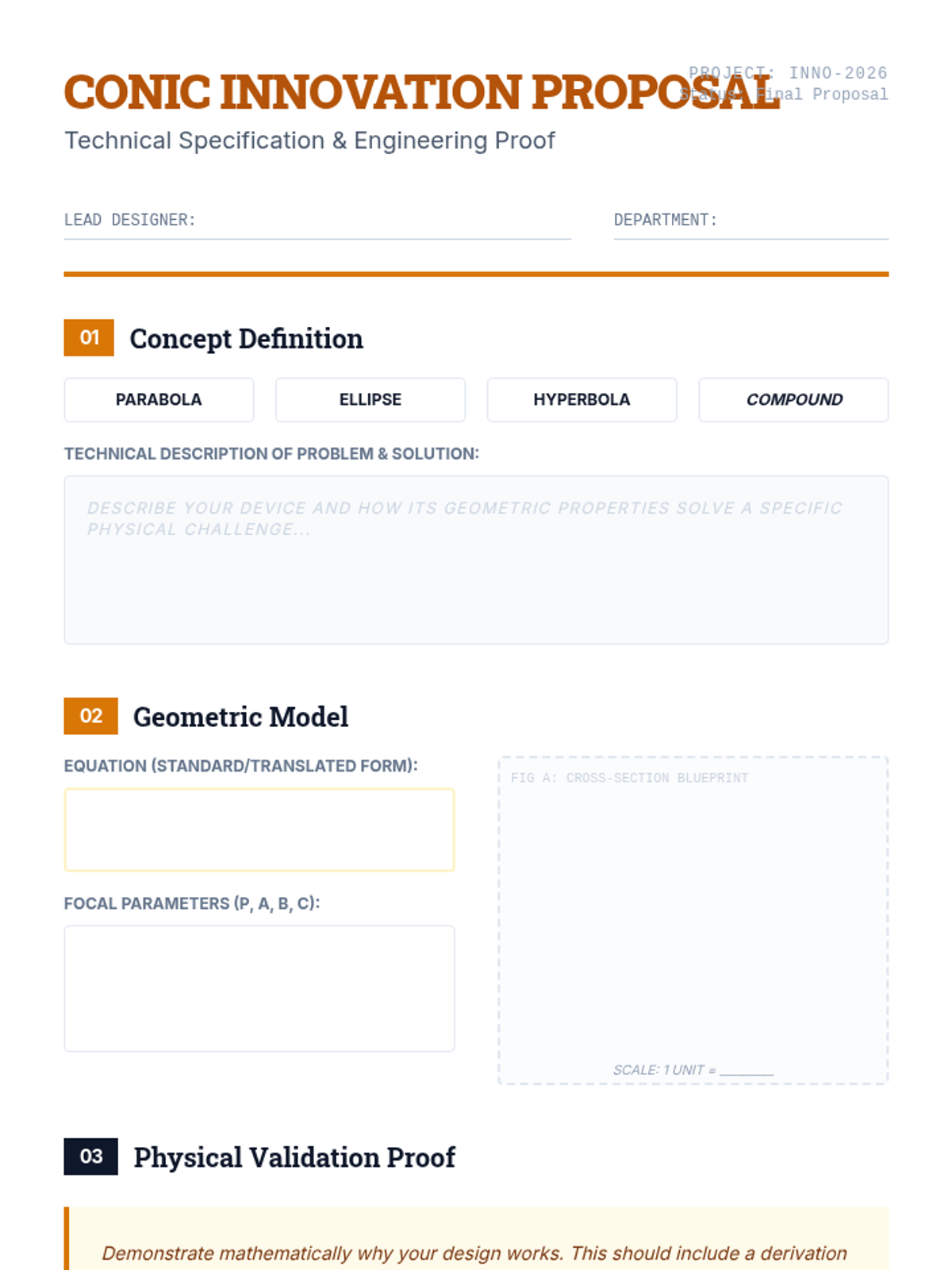
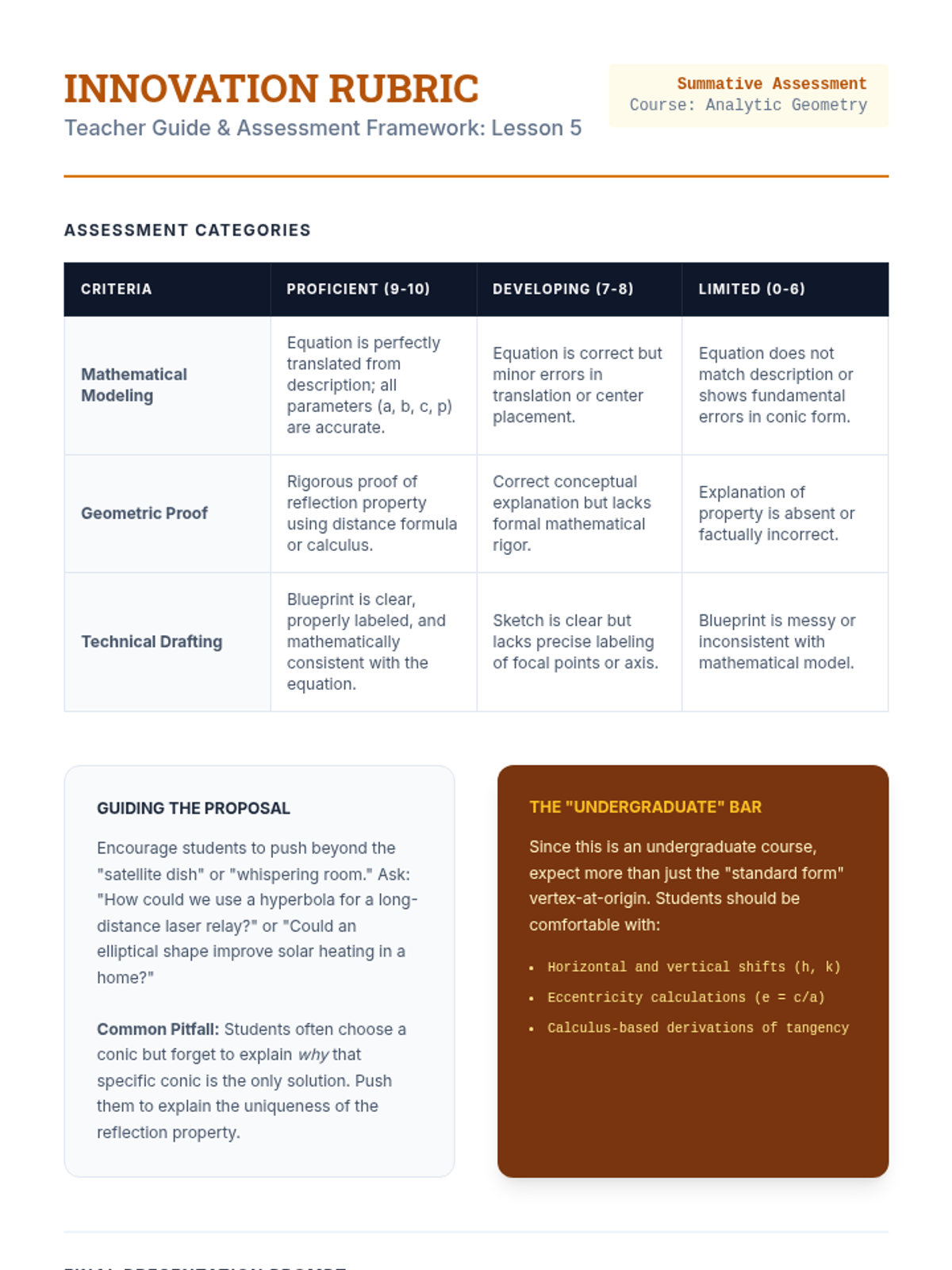
A summative design challenge where students propose a technical application of a conic section, backed by formal geometric modeling and algebraic proofs.
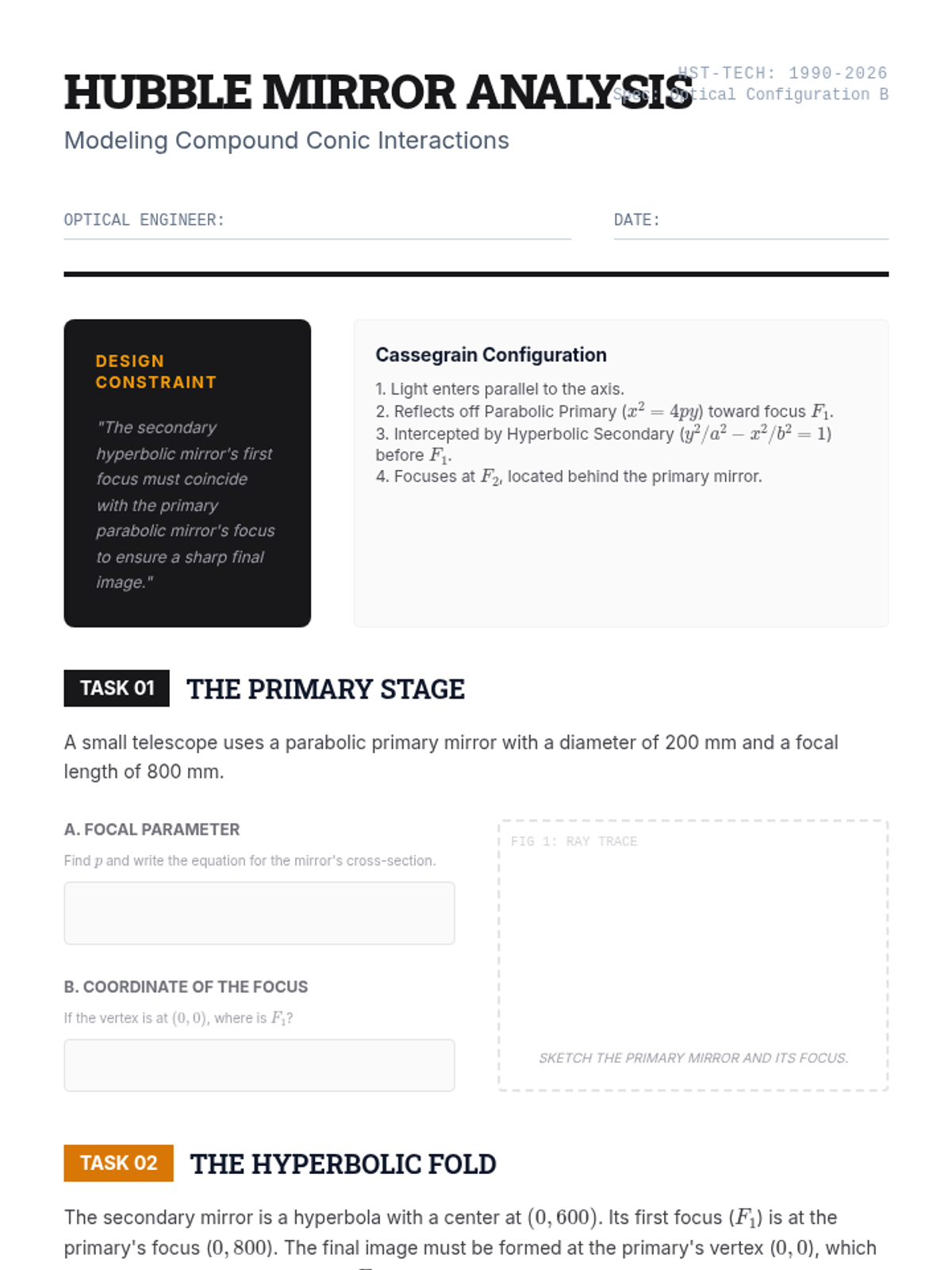
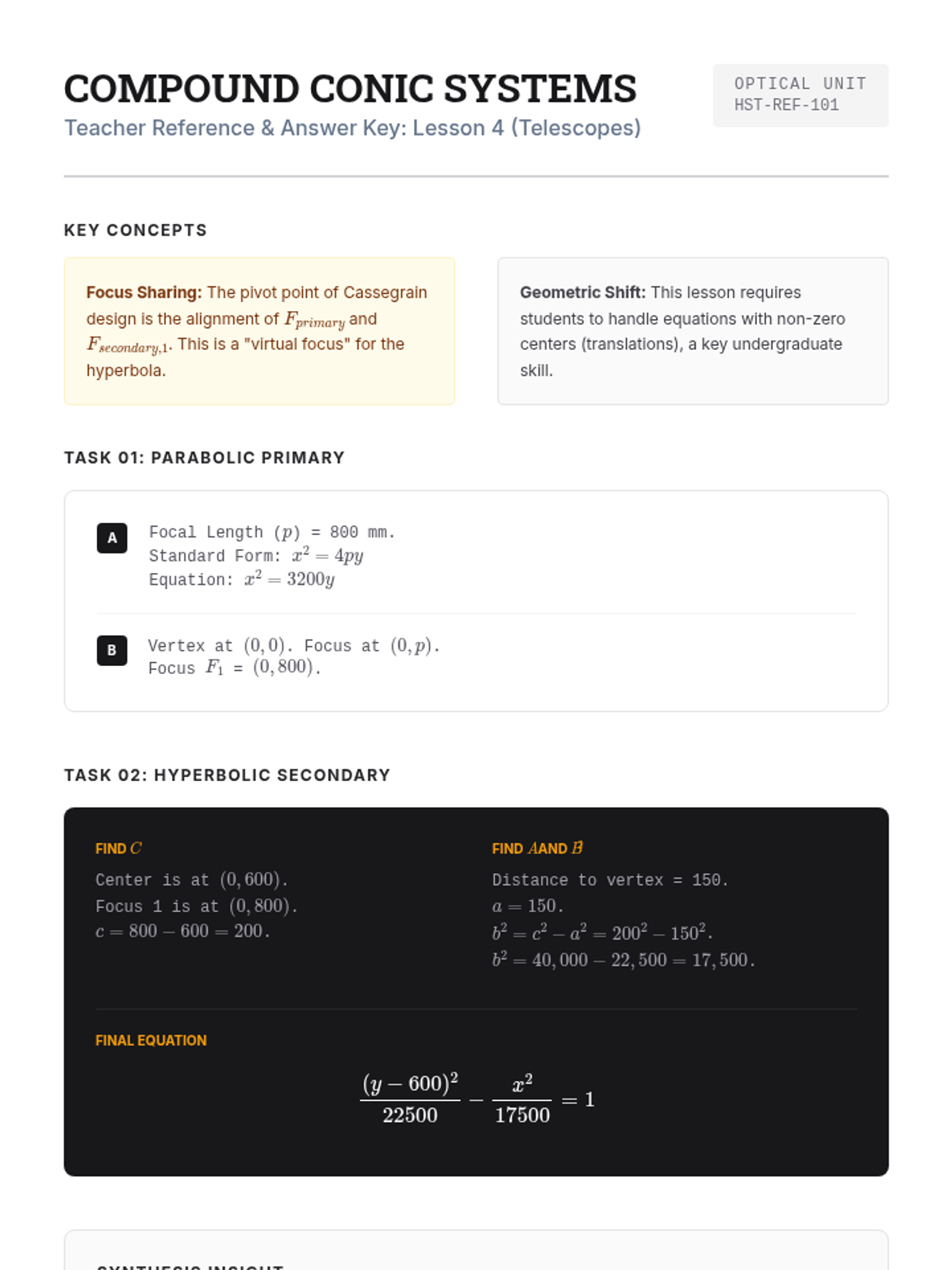
Analysis of compound conic systems in Cassegrain telescopes, focusing on the interplay between parabolic primary and hyperbolic secondary mirrors.
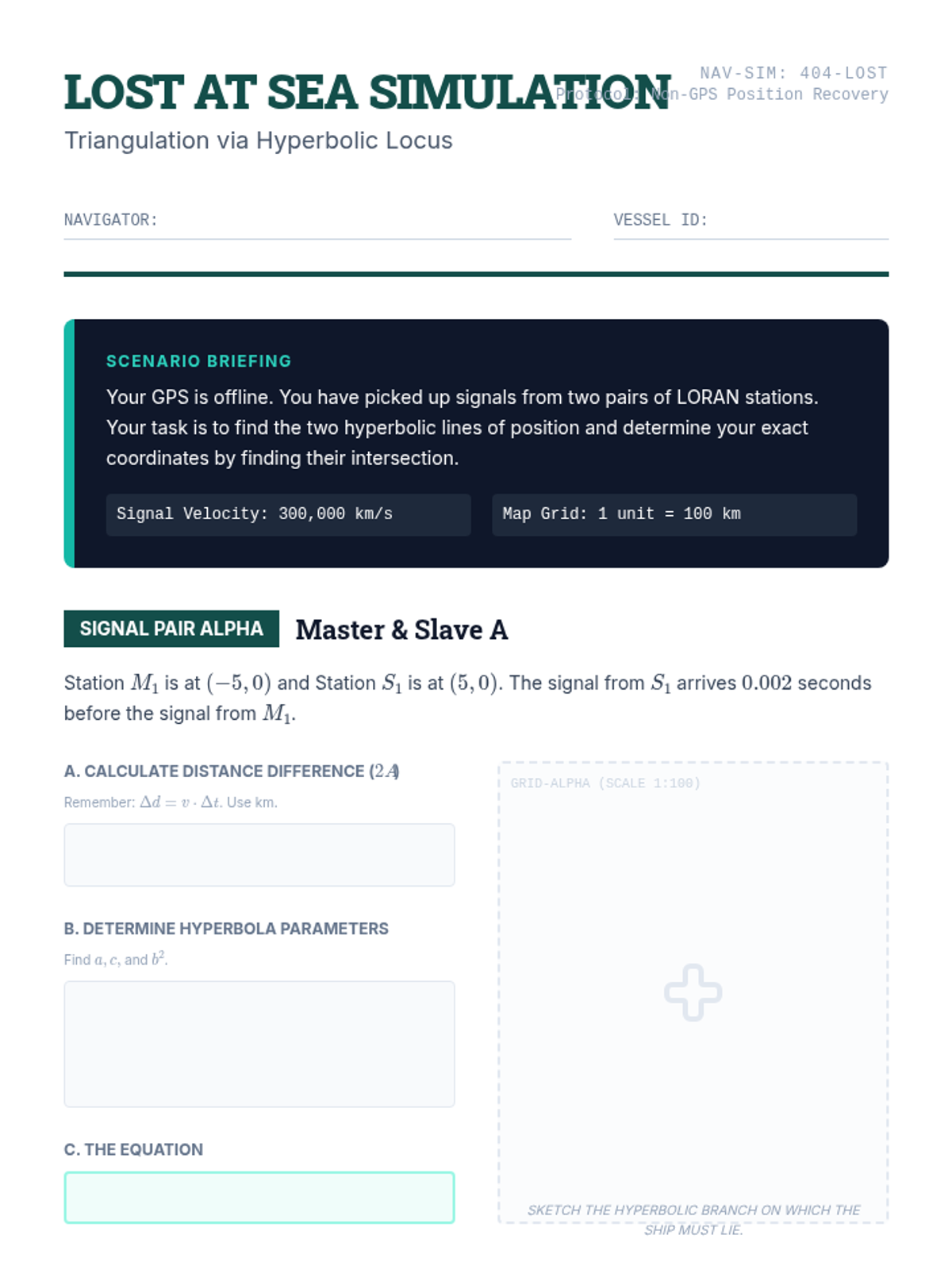
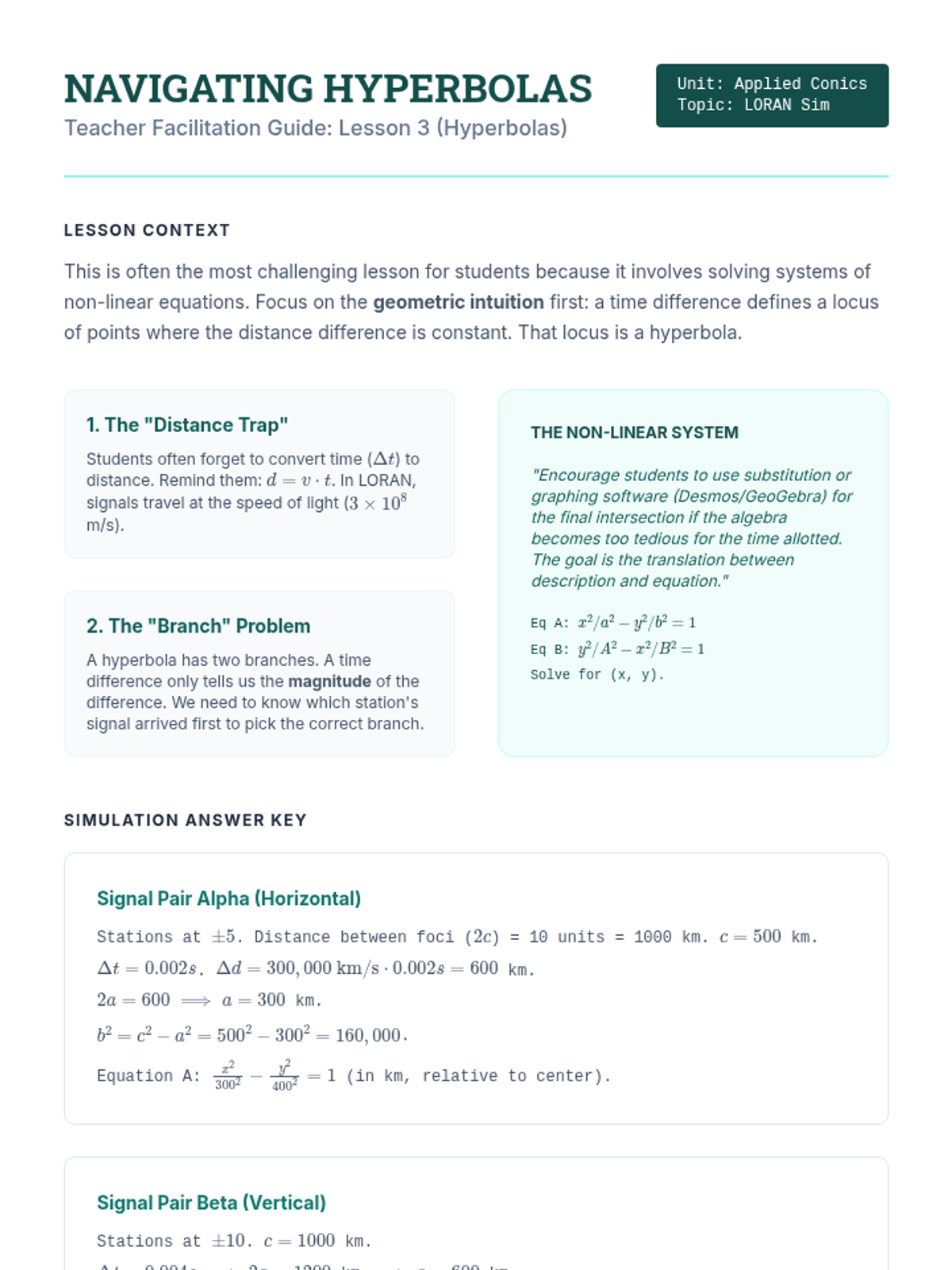
Exploring hyperbolic geometry through the lens of LORAN navigation, where students solve systems of equations to triangulate position based on time-difference of arrival.
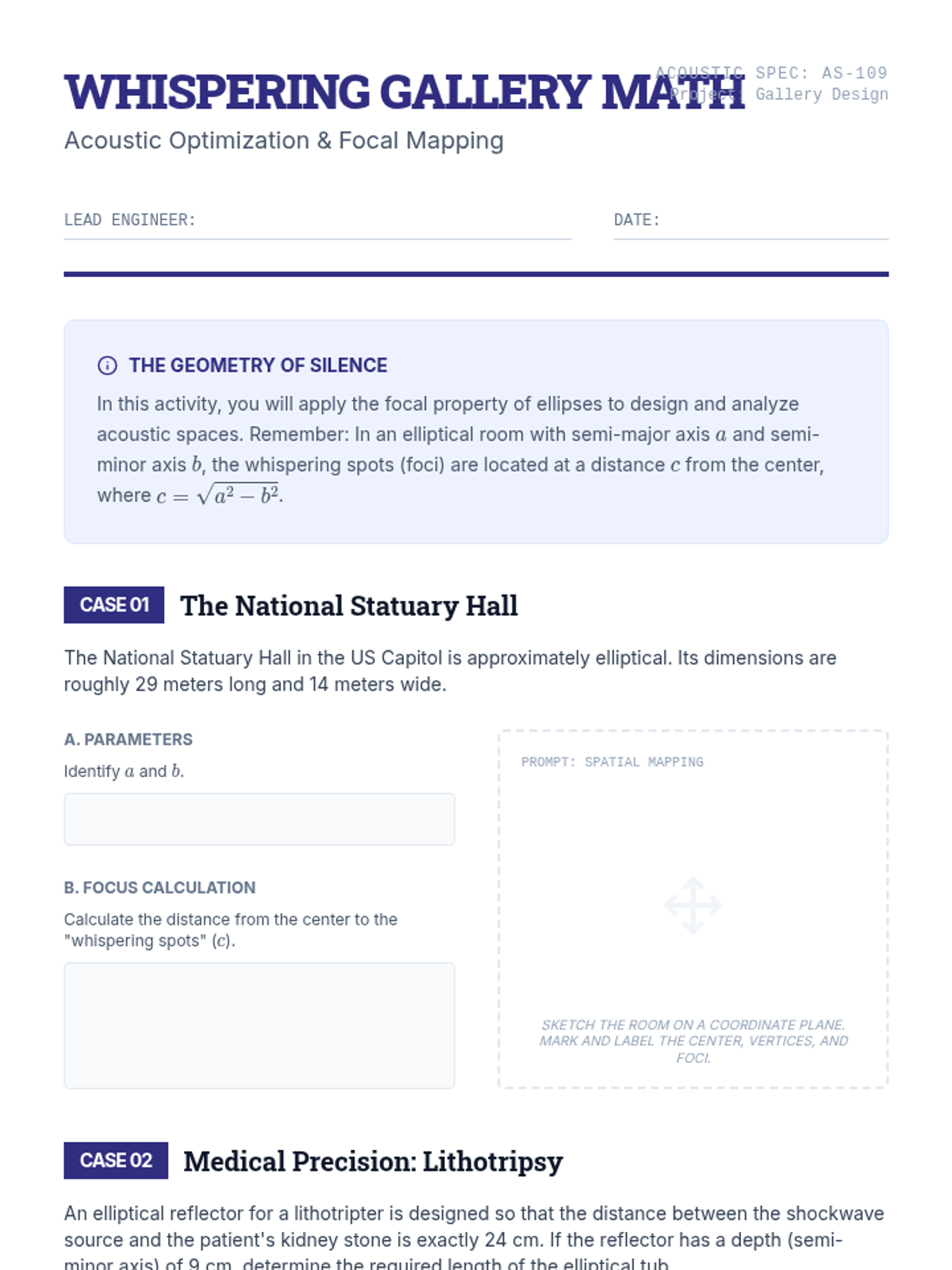
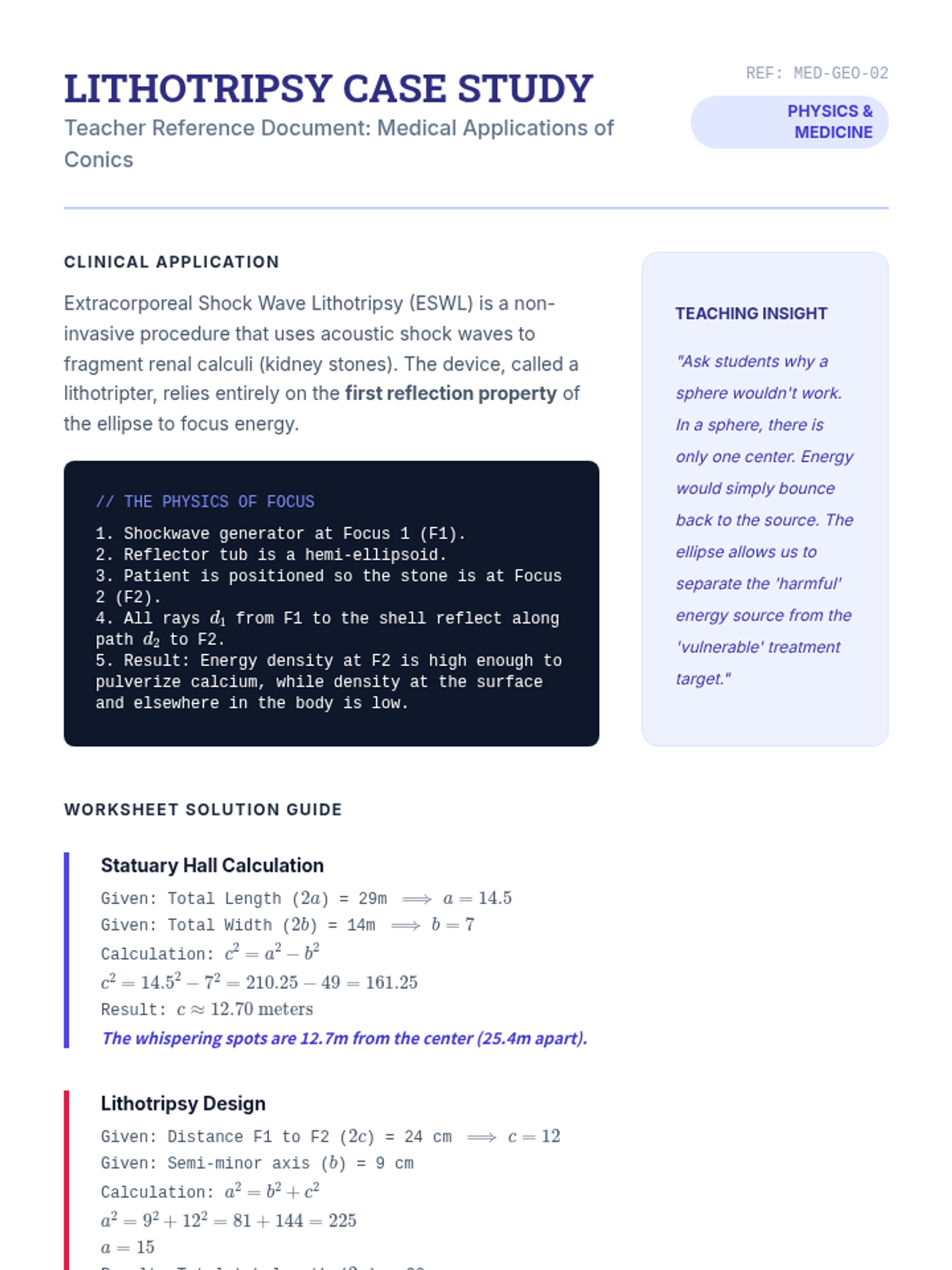
Investigation of the reflective property of ellipses, focusing on acoustic whispering galleries and medical lithotripsy applications.
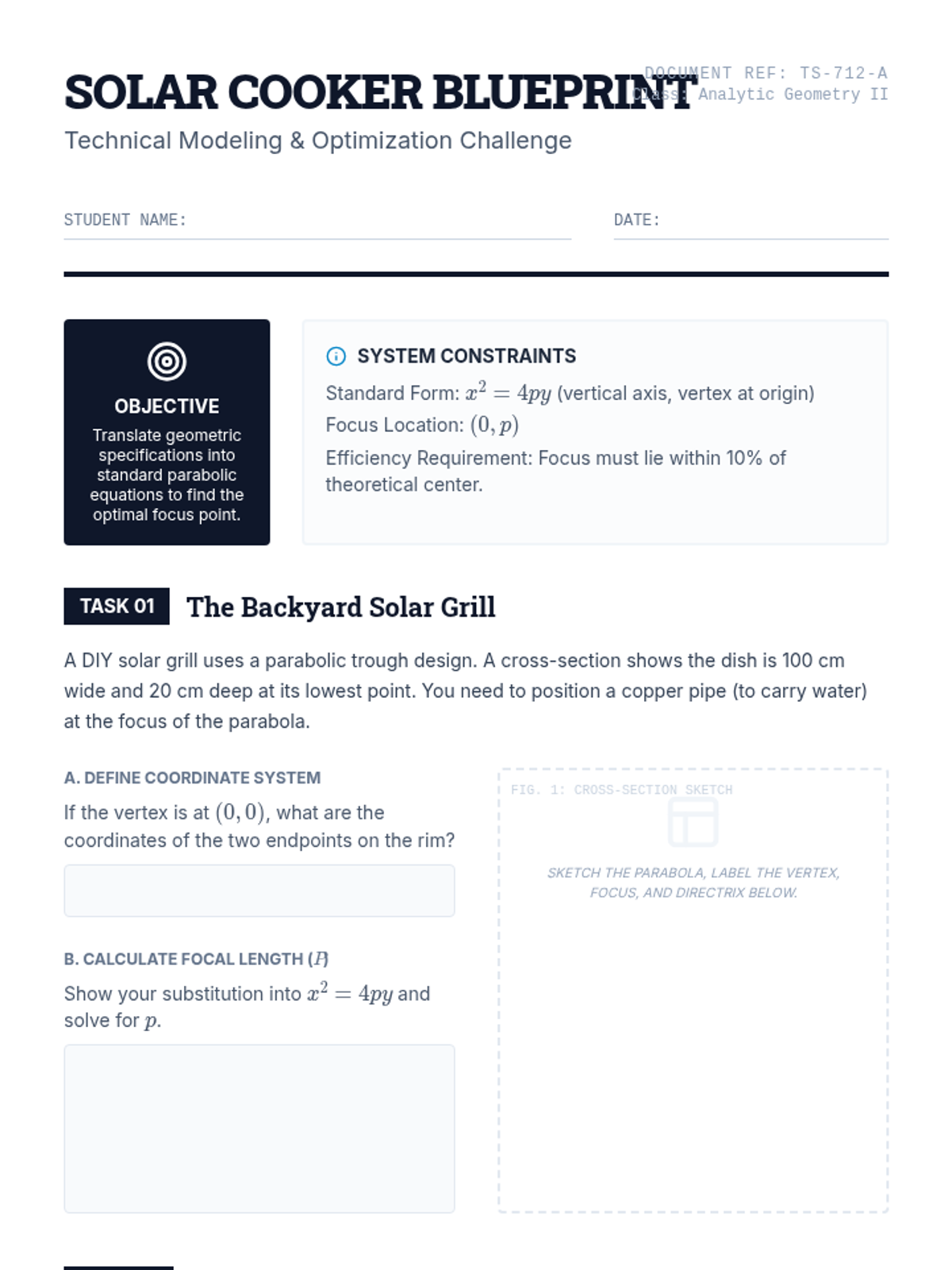
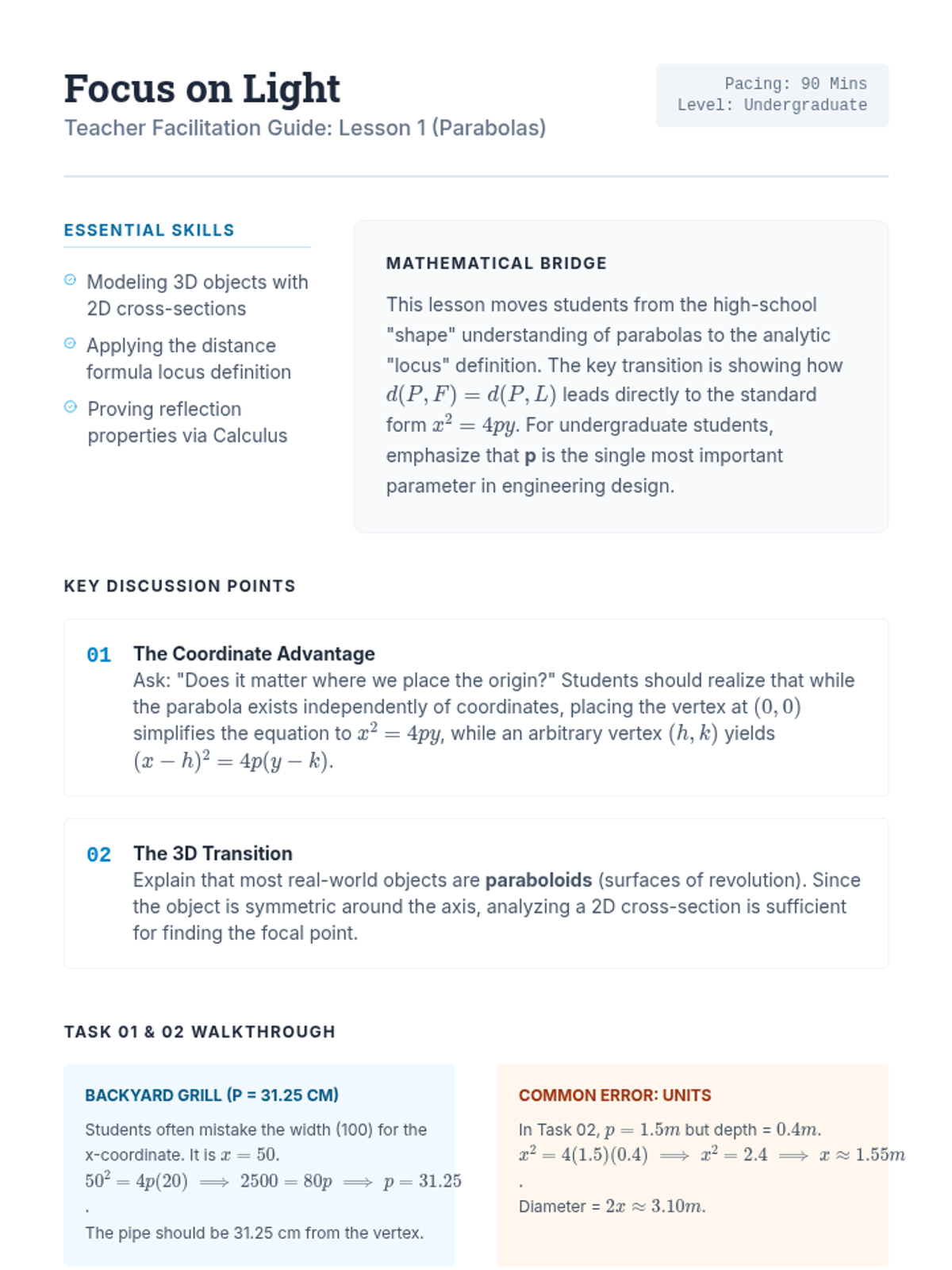
Students derive and apply the reflection property of parabolas to model solar cookers and satellite dishes, translating between physical dimensions and standard form equations.
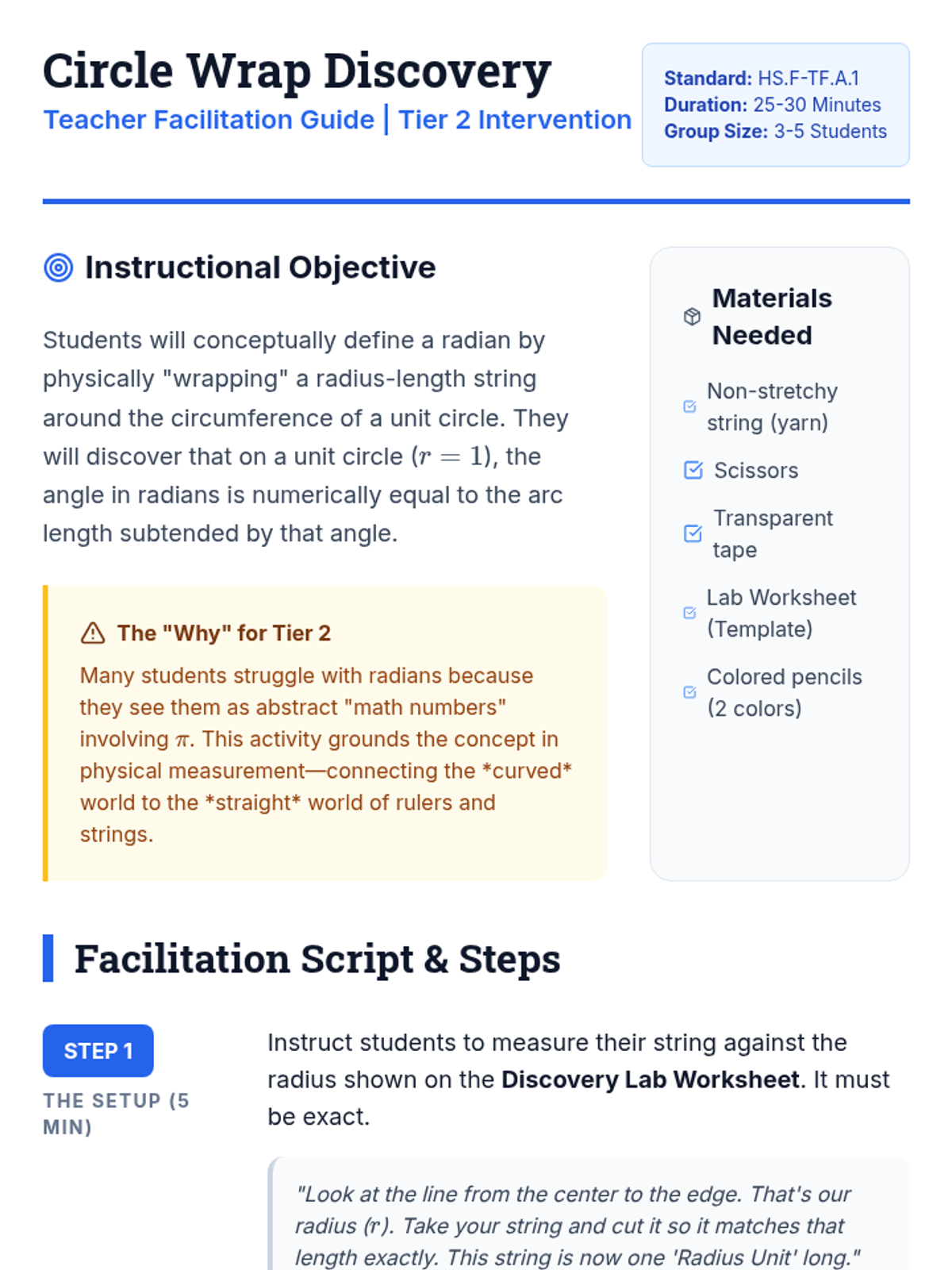
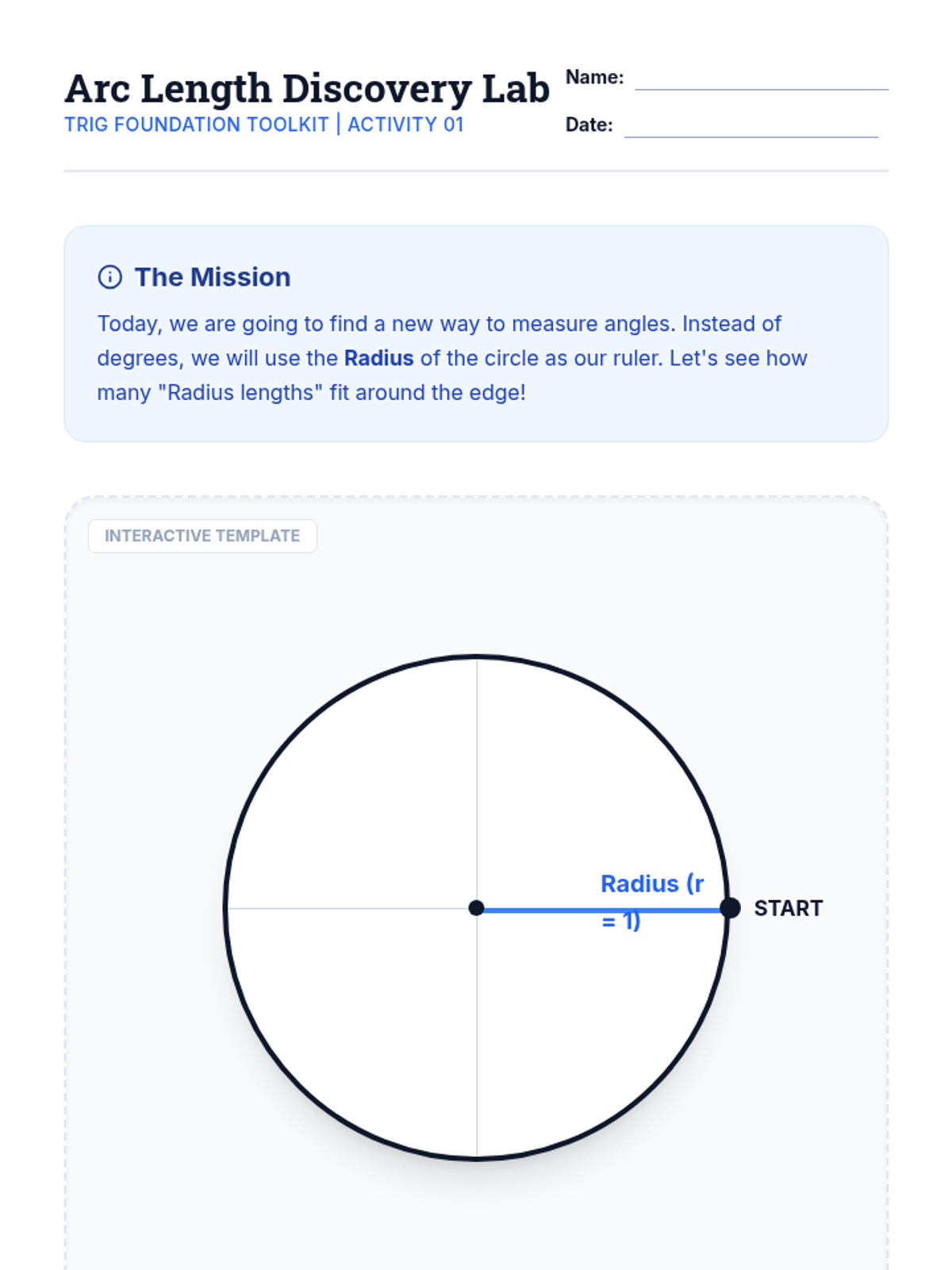
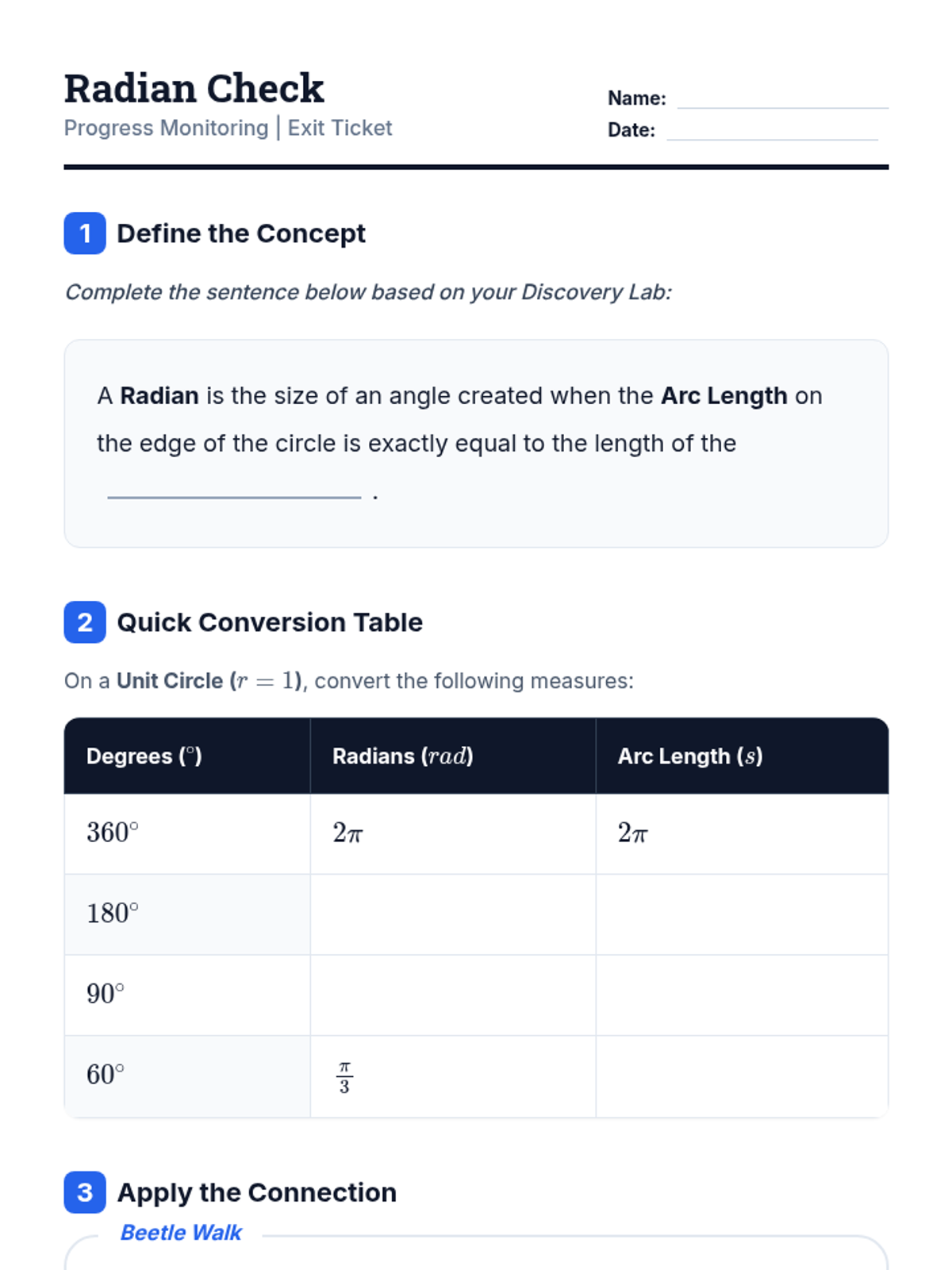
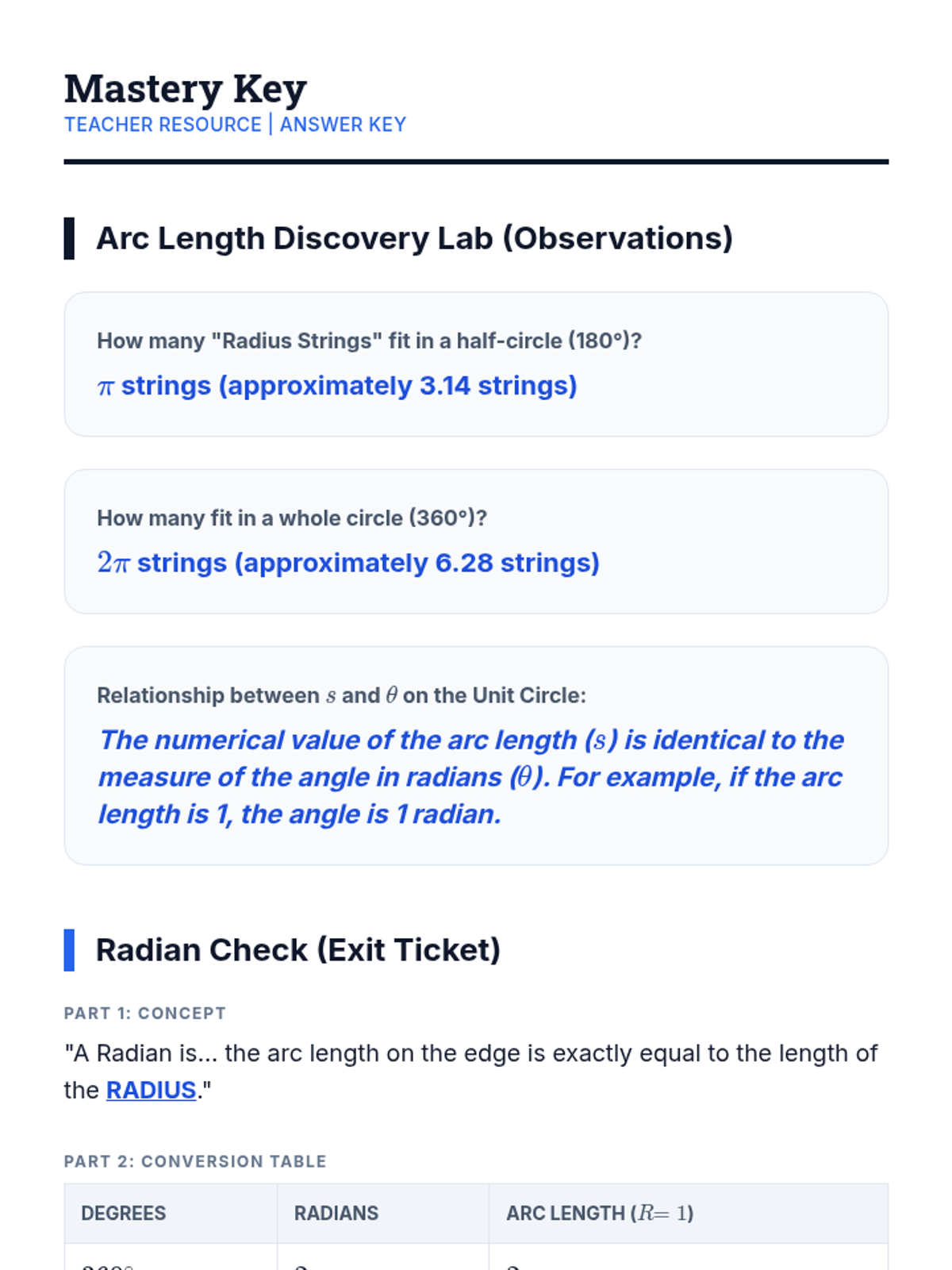
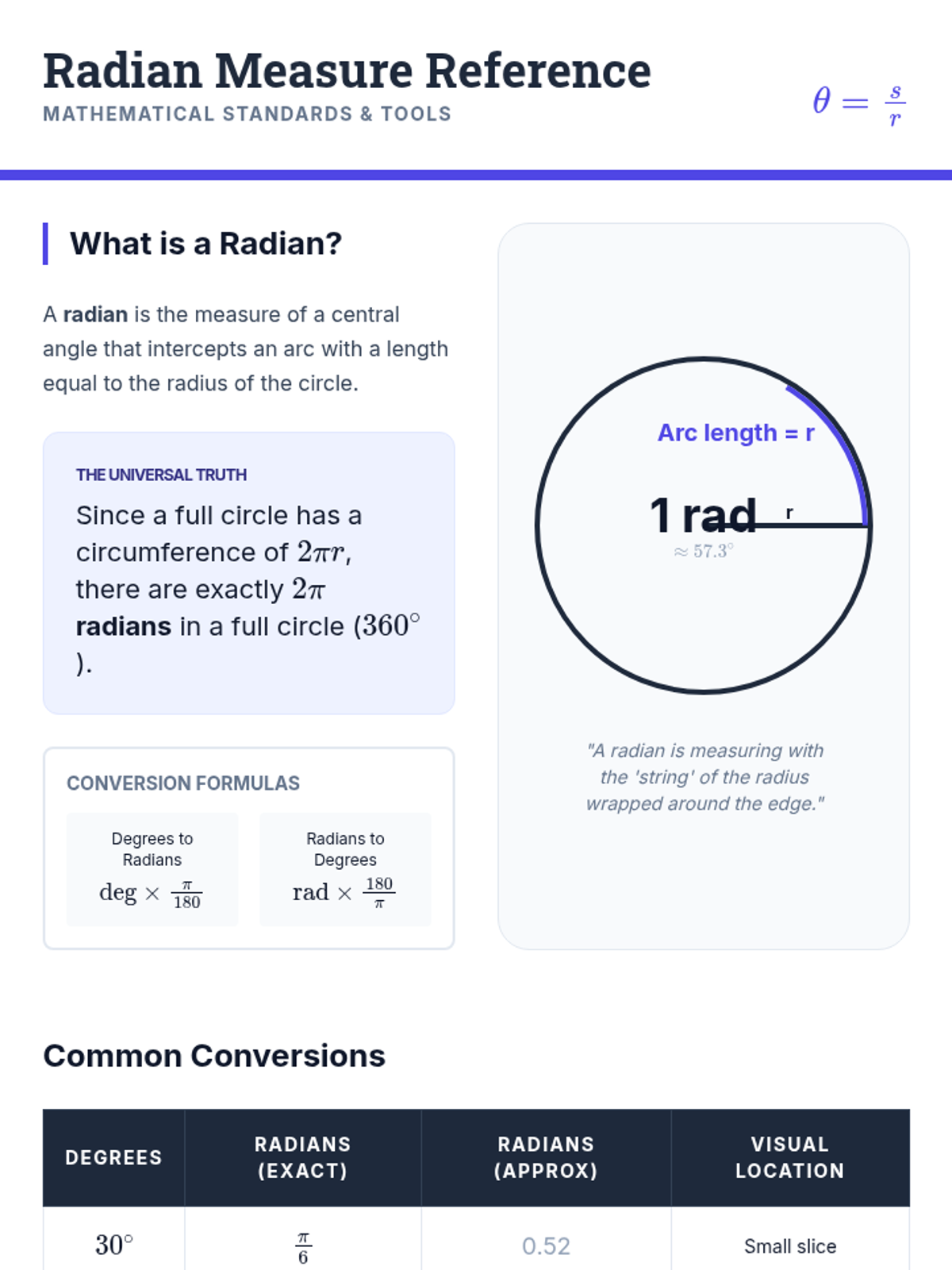
A targeted small-group lesson where students use string and unit circle models to discover that radian measure is equivalent to arc length when the radius is one.
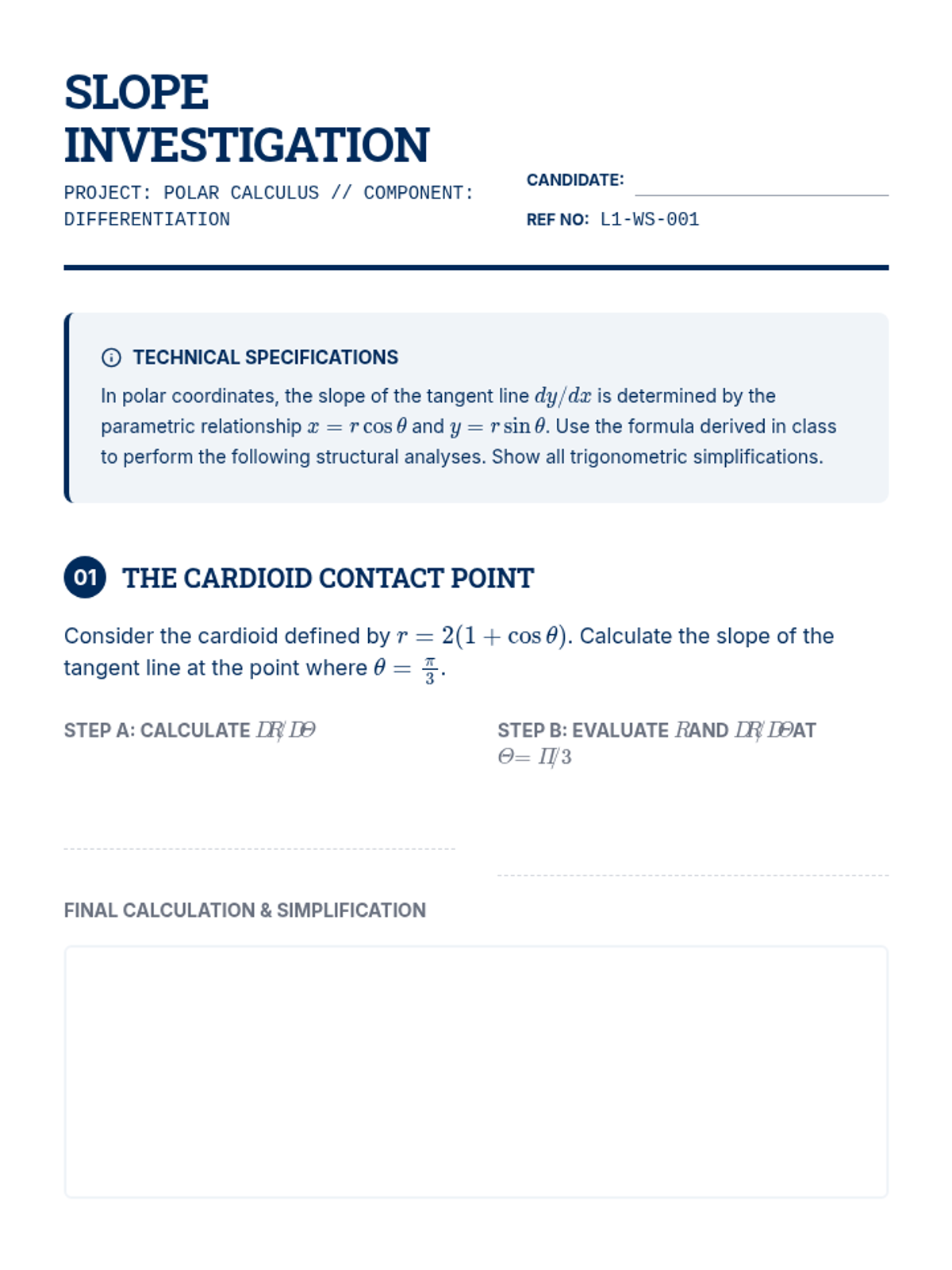
Students derive and apply the formula for dy/dx in polar coordinates, identifying horizontal and vertical tangent lines on complex polar graphs.
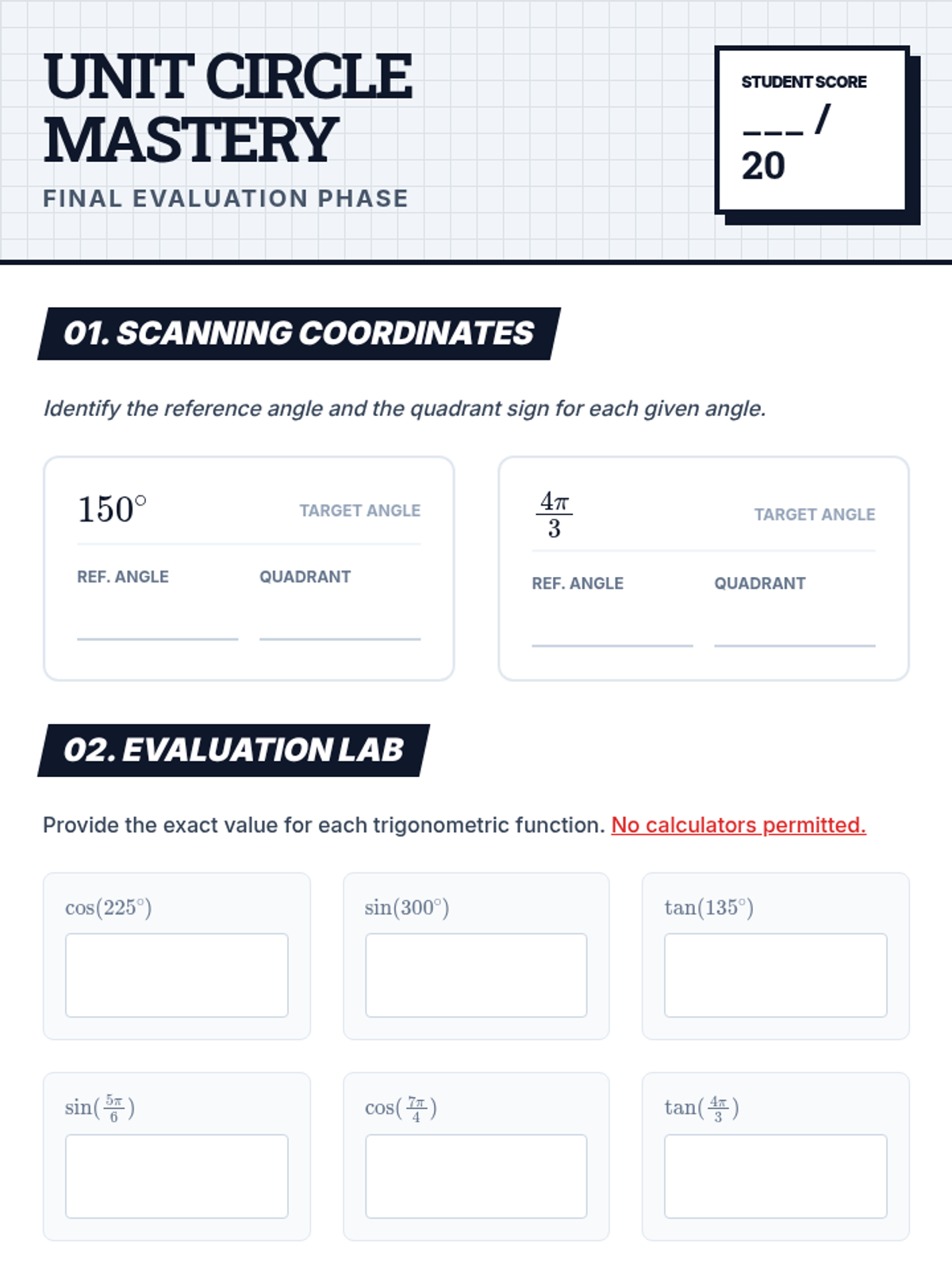
Mastering the evaluation of exact trigonometric values for all standard angles on the unit circle.
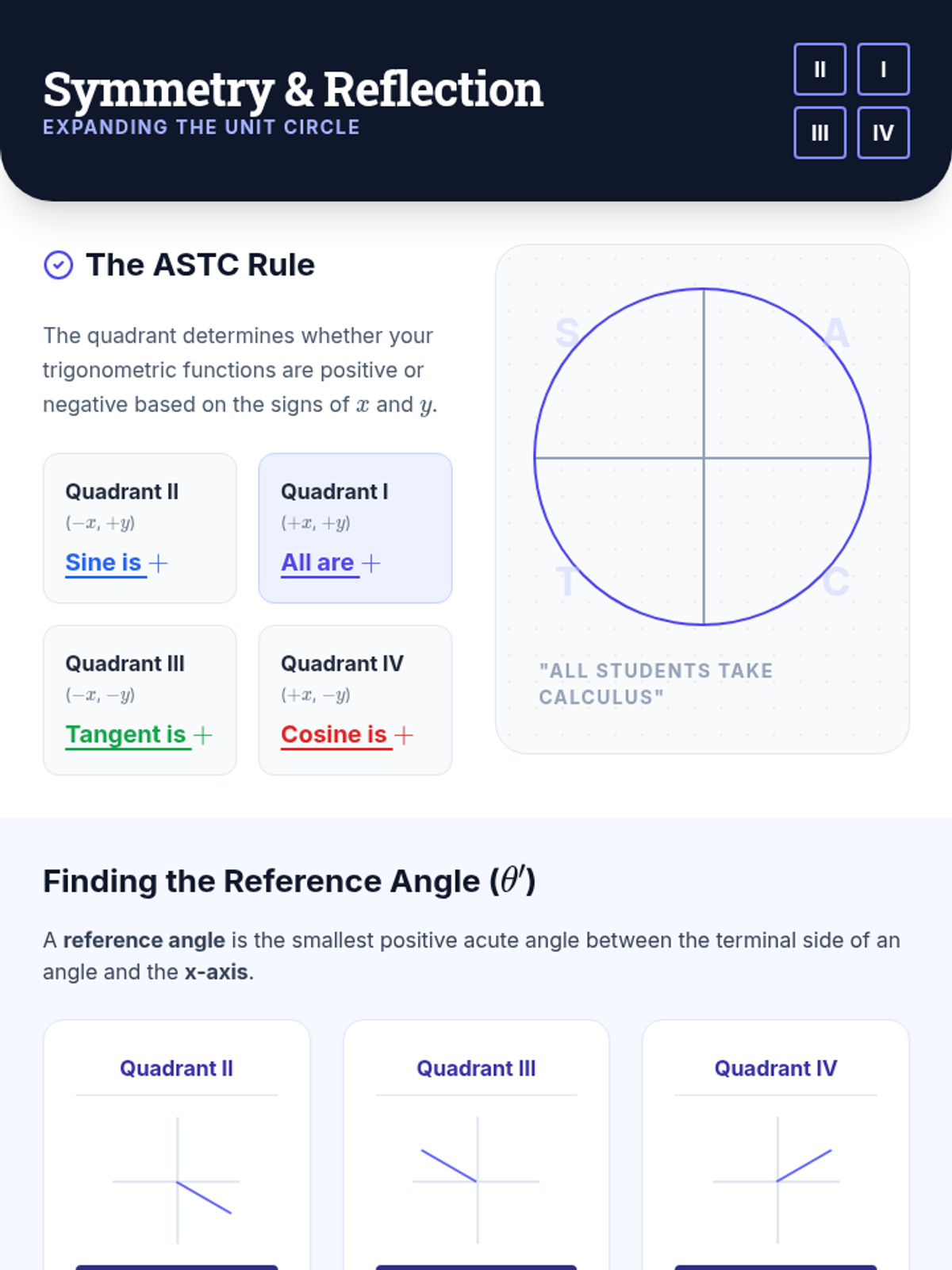
Using symmetry and reference angles to extend trigonometric values across all four quadrants.
Mapping scaled triangles onto the coordinate plane to define sine and cosine as x and y coordinates in the first quadrant.
Students discover the radian as a measure of arc length relative to radius and practice converting between degrees and radians.
Students scale special right triangles (30-60-90 and 45-45-90) so that their hypotenuse equals one, establishing the fundamental coordinates for the unit circle.
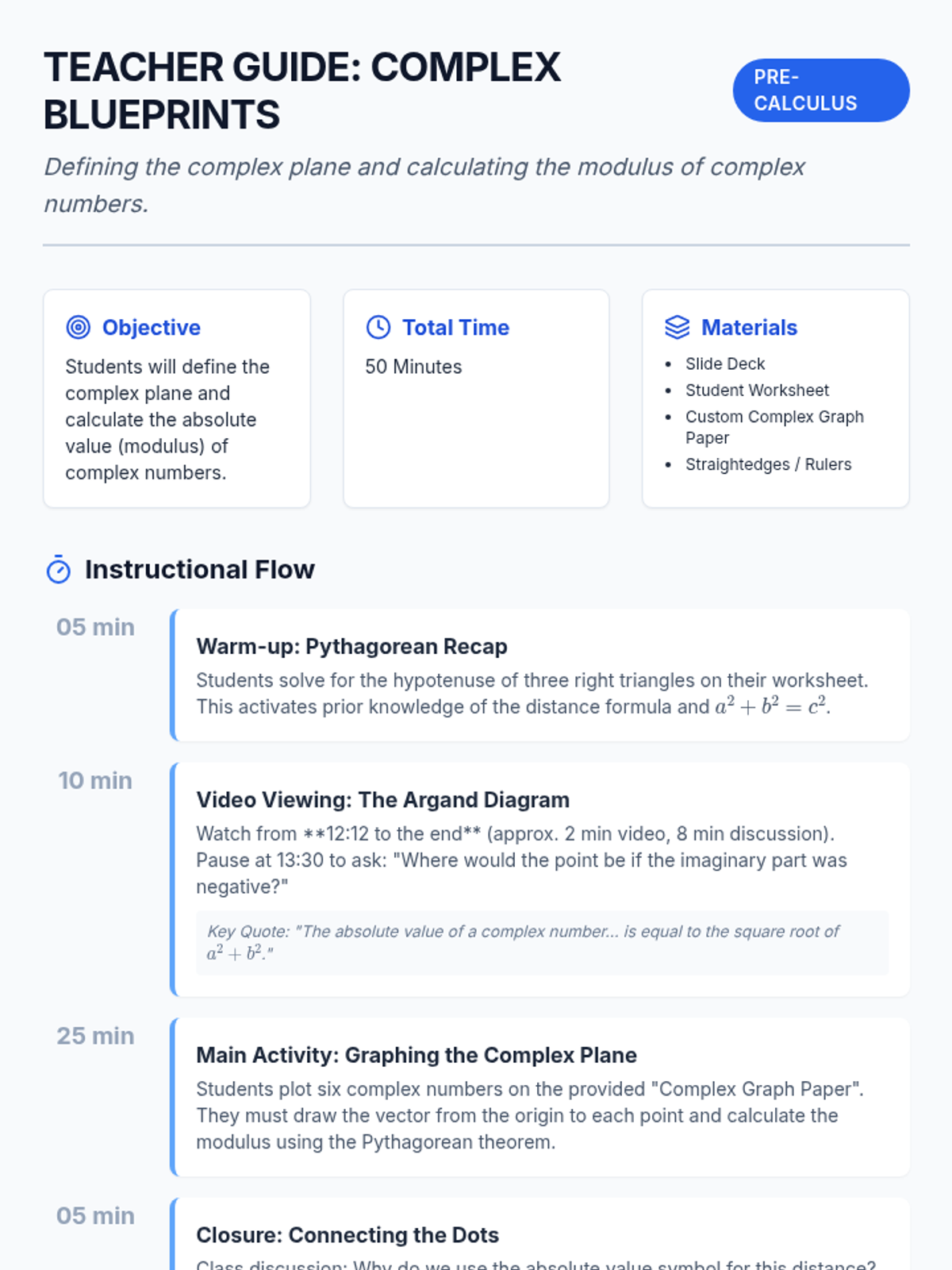
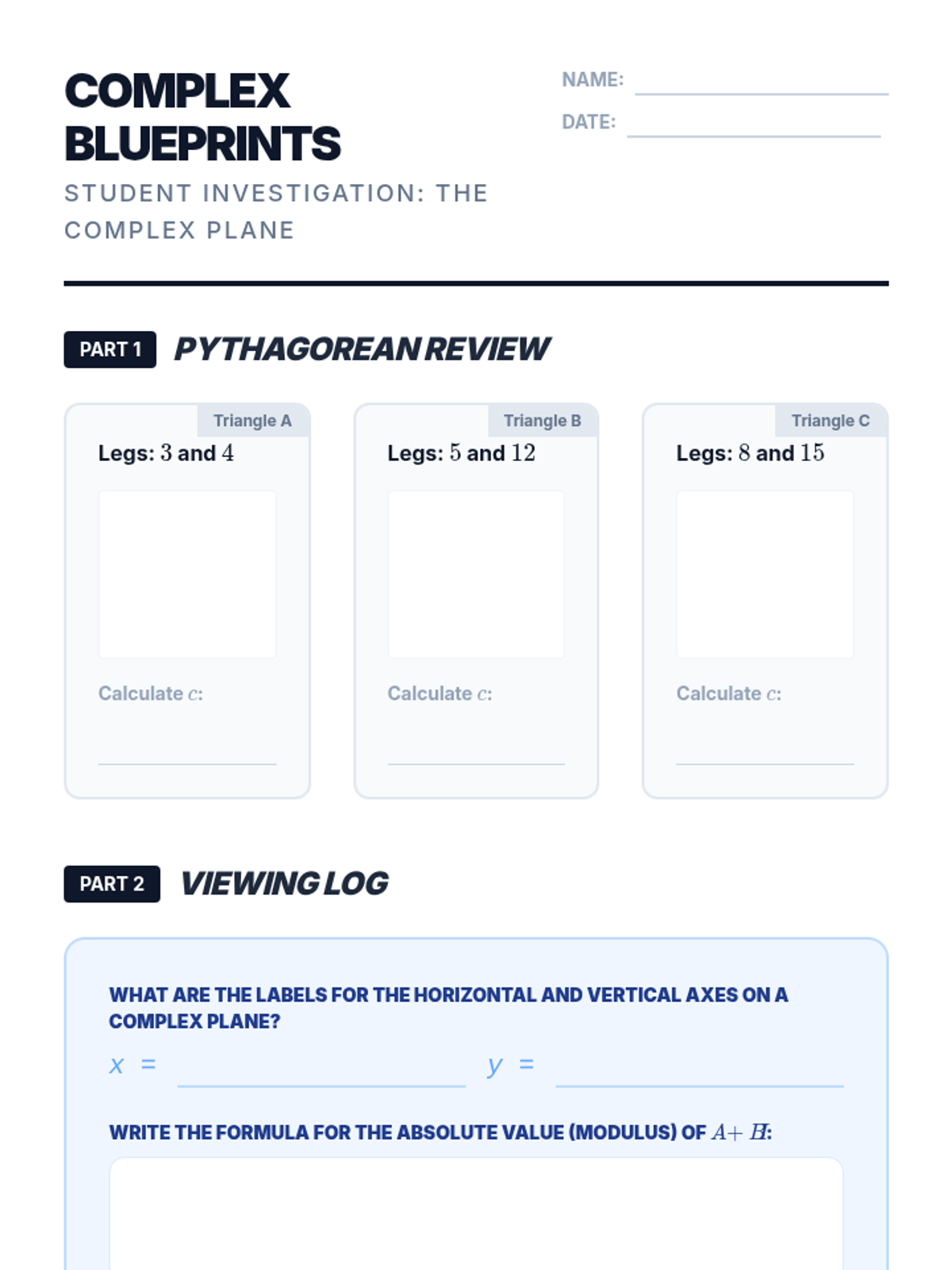
A Pre-Calculus lesson introducing the complex plane (Argand diagram) and the calculation of the modulus (absolute value) of complex numbers using the Pythagorean theorem.
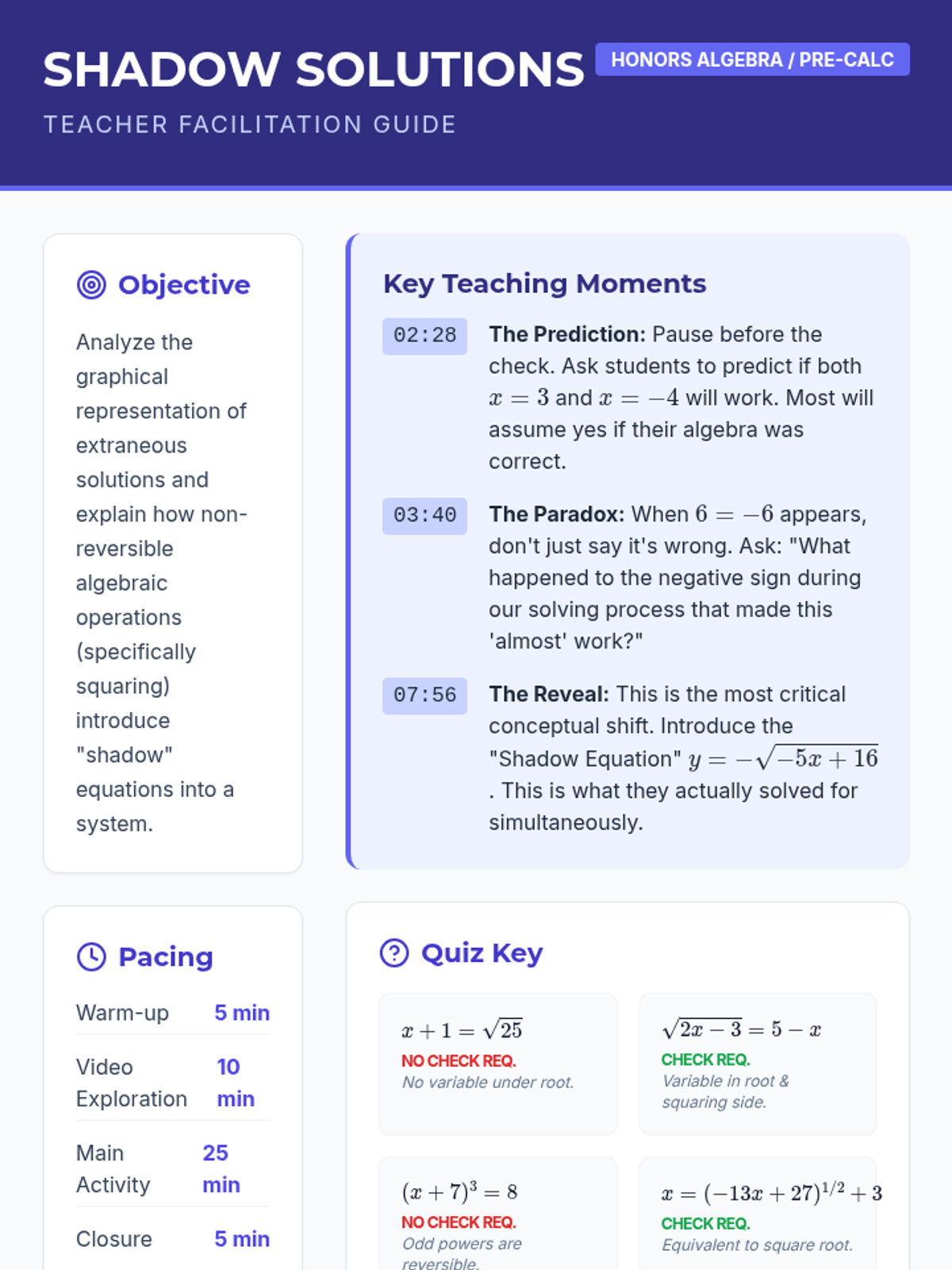
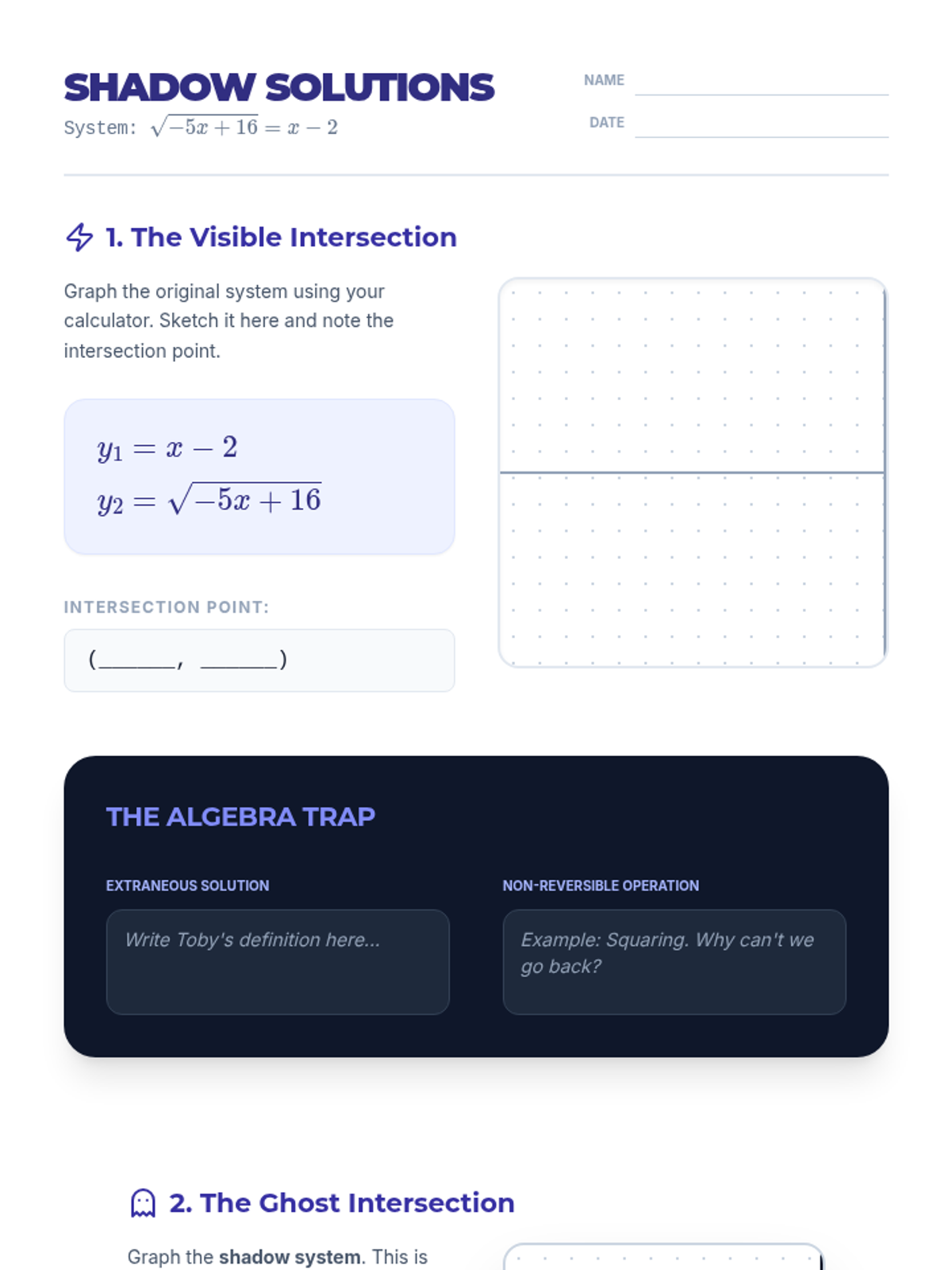
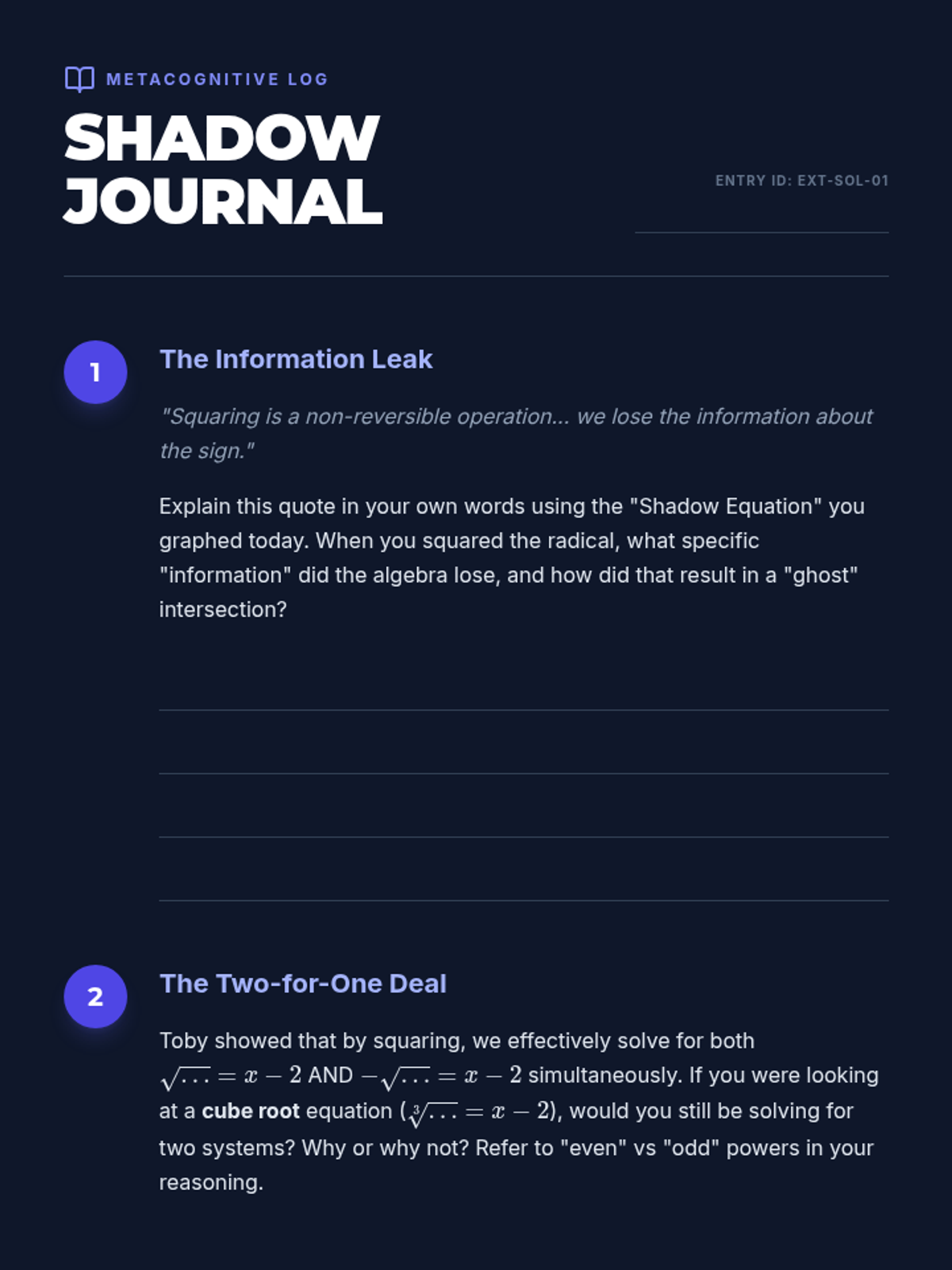
A deep dive into extraneous solutions using a 'shadow equation' framework. Students visualize how squaring a radical equation effectively solves two distinct systems simultaneously, creating 'ghost' intersections.
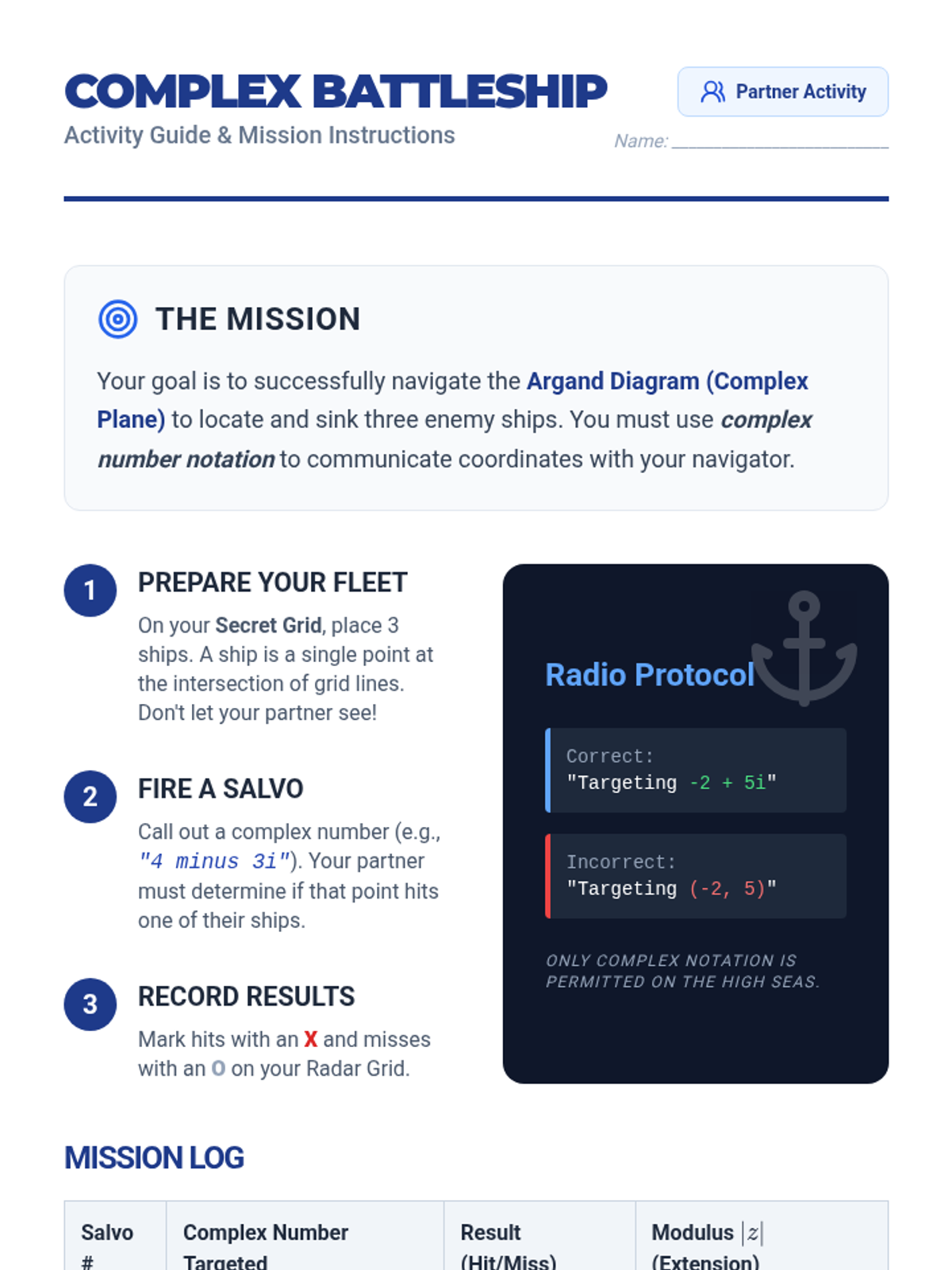
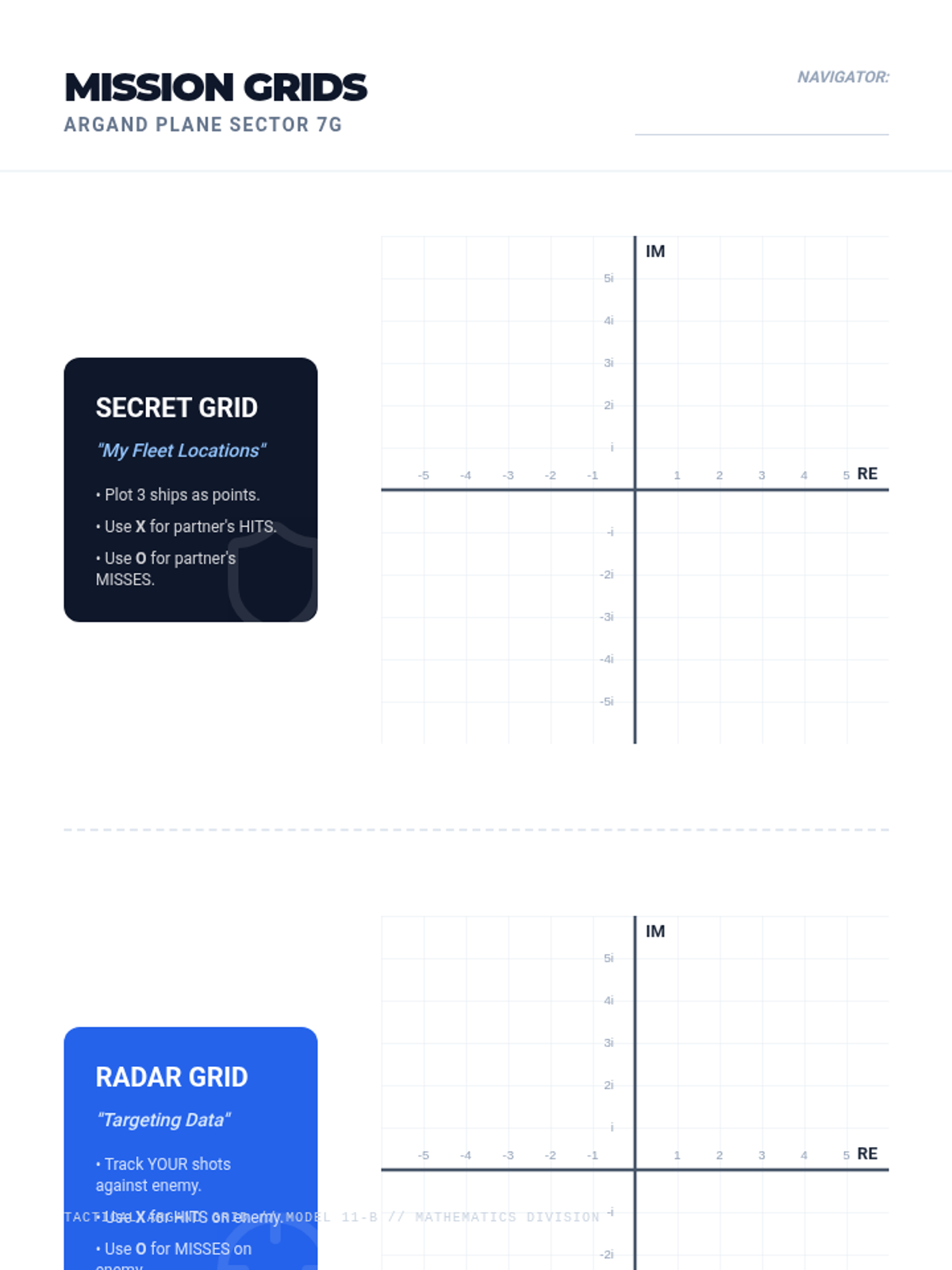
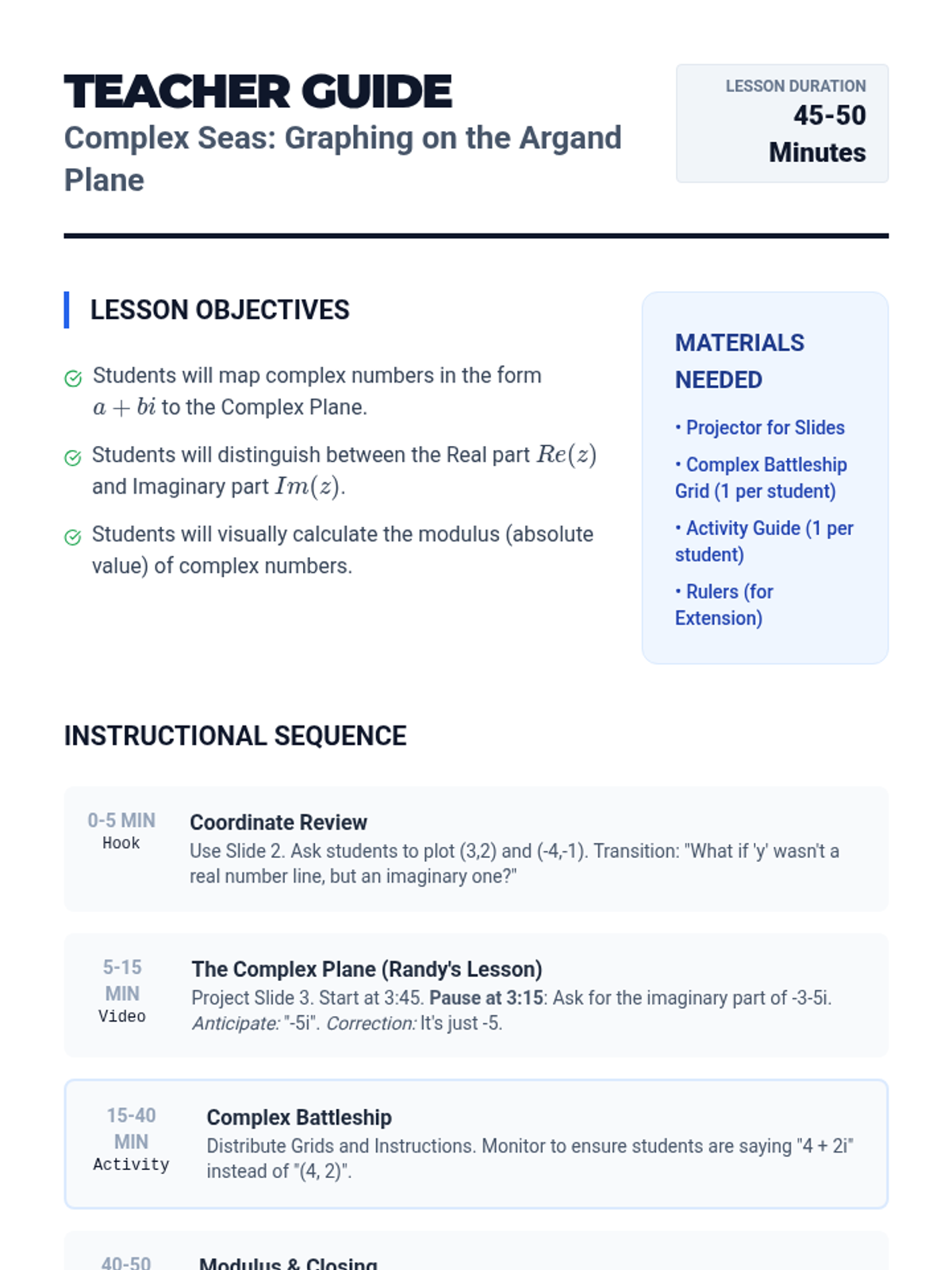
A lesson on graphing complex numbers on the Argand diagram, featuring a 'Complex Battleship' game to reinforce coordinate-to-complex mapping skills.
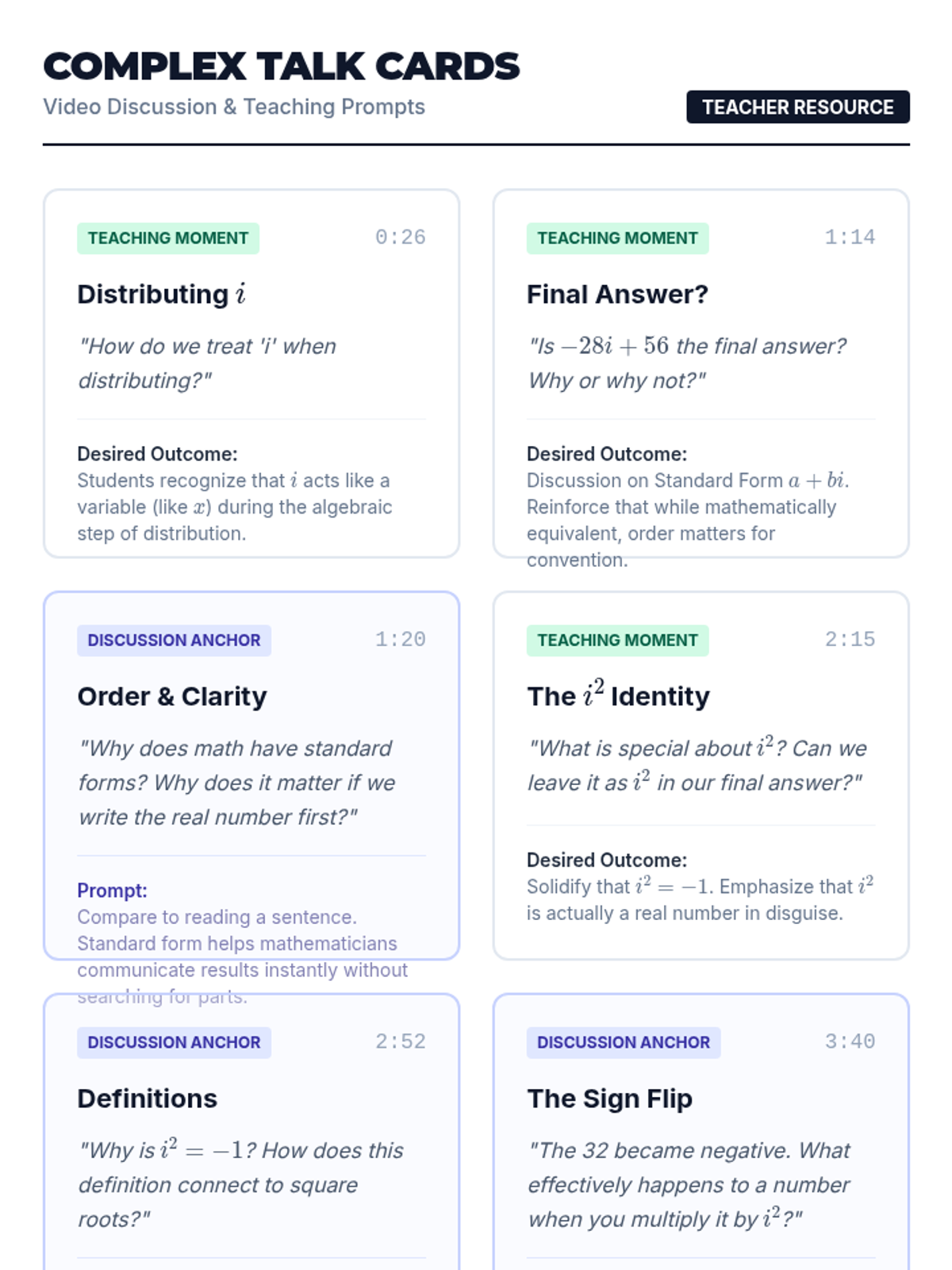
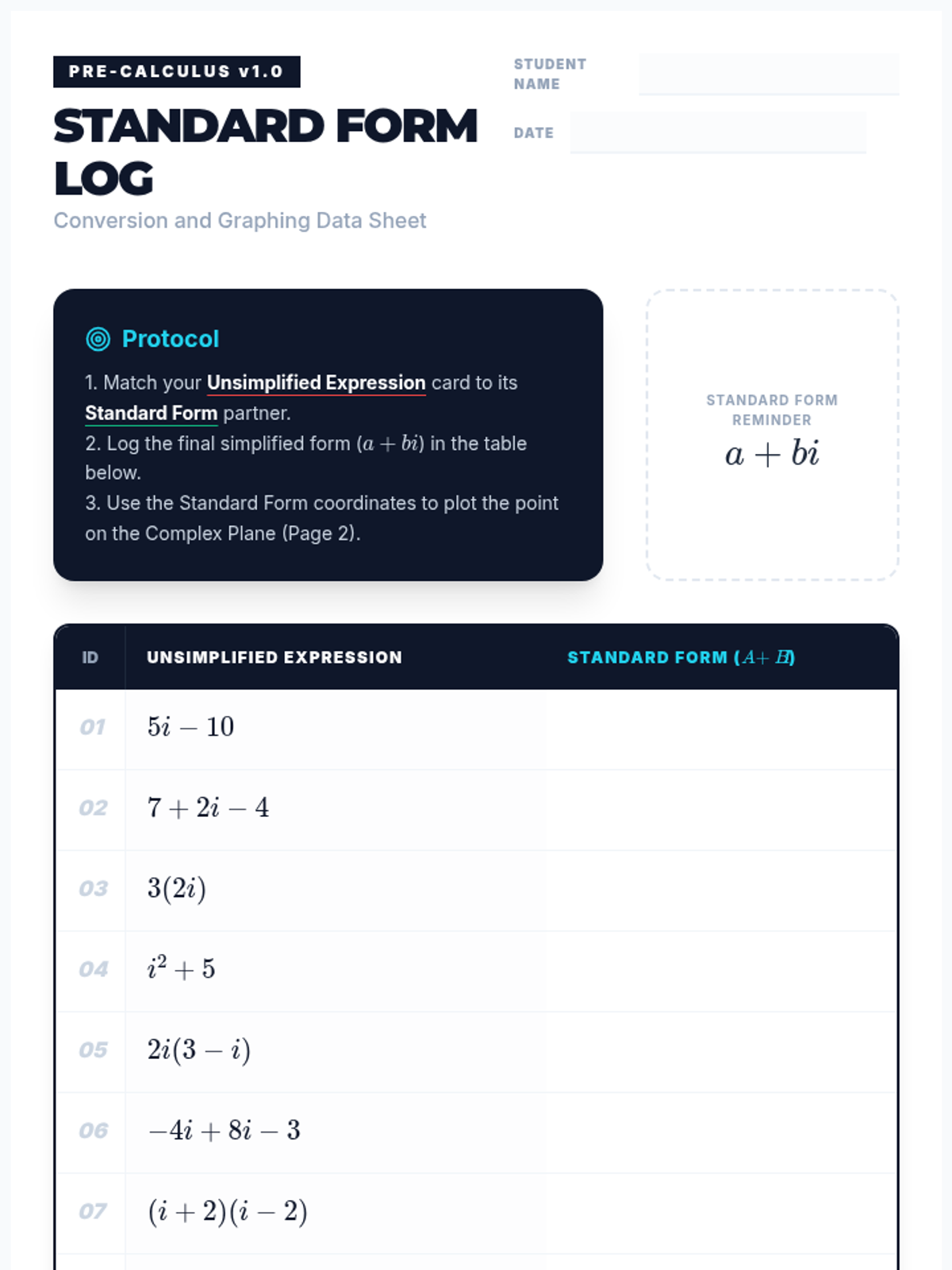
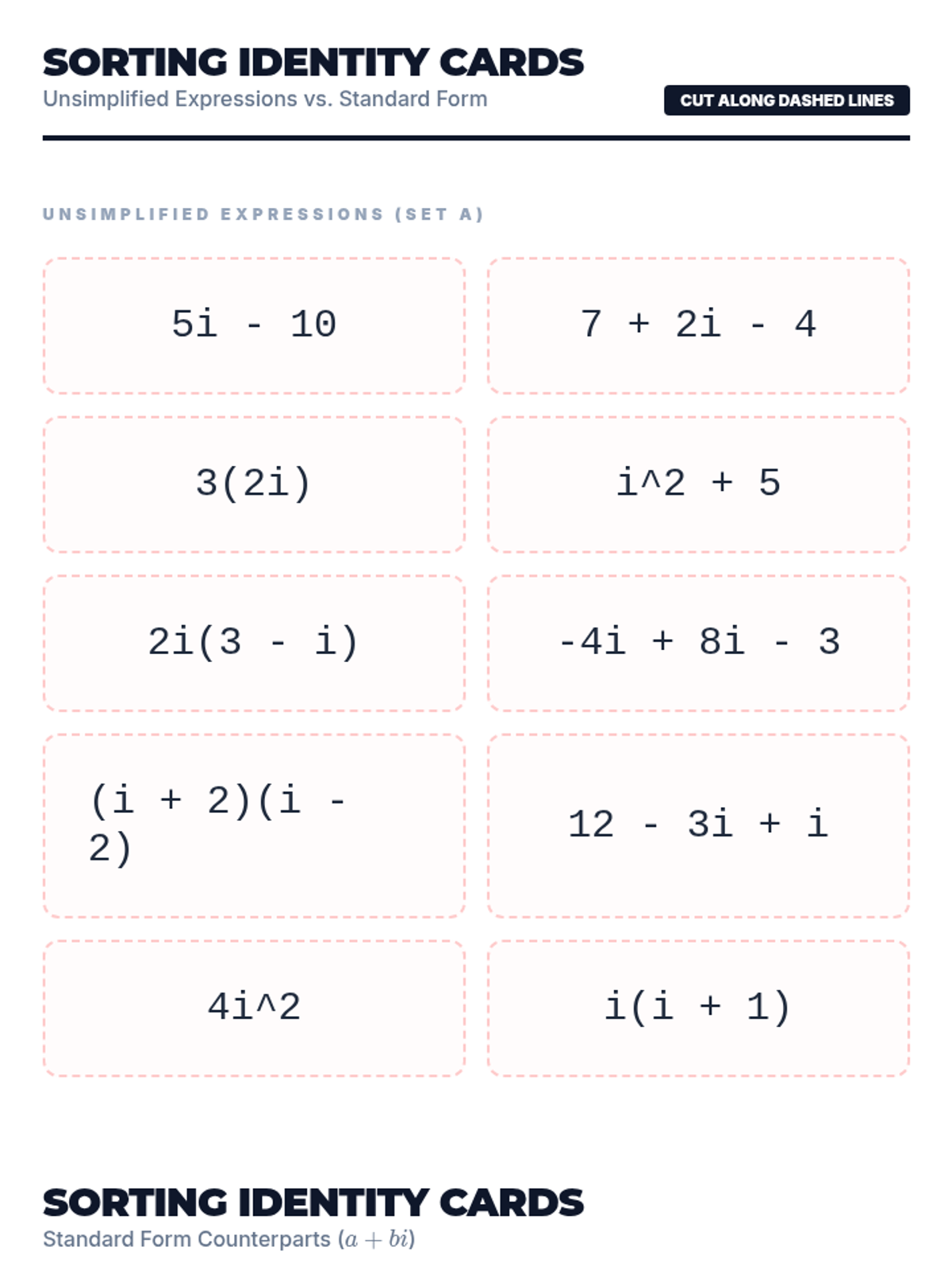
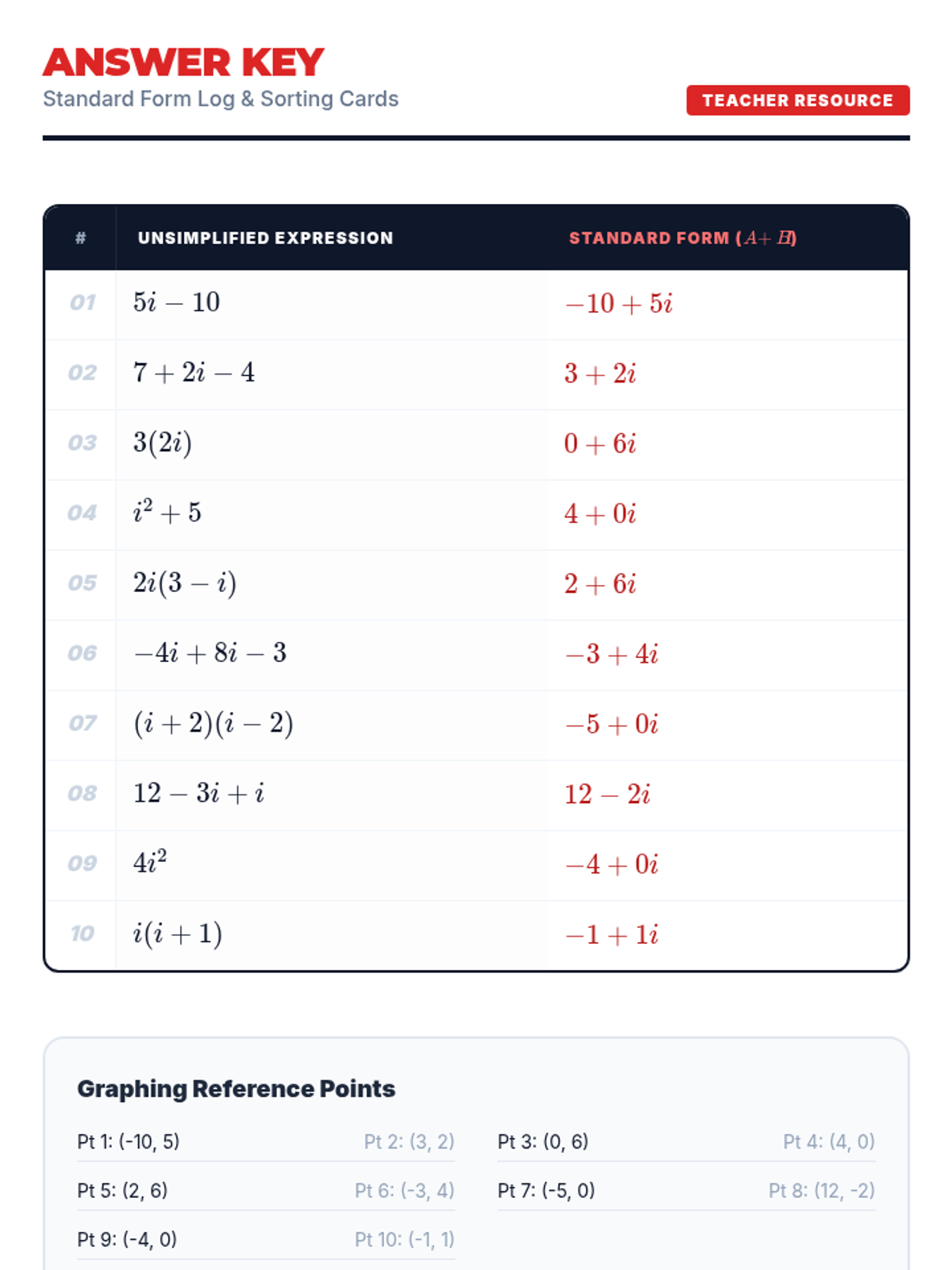
This lesson focuses on converting complex number expressions into standard form (a + bi) and graphing them on the complex plane. Students will use a video to observe mathematical habits of mind and practice simplifying expressions involving powers of i and the distributive property.
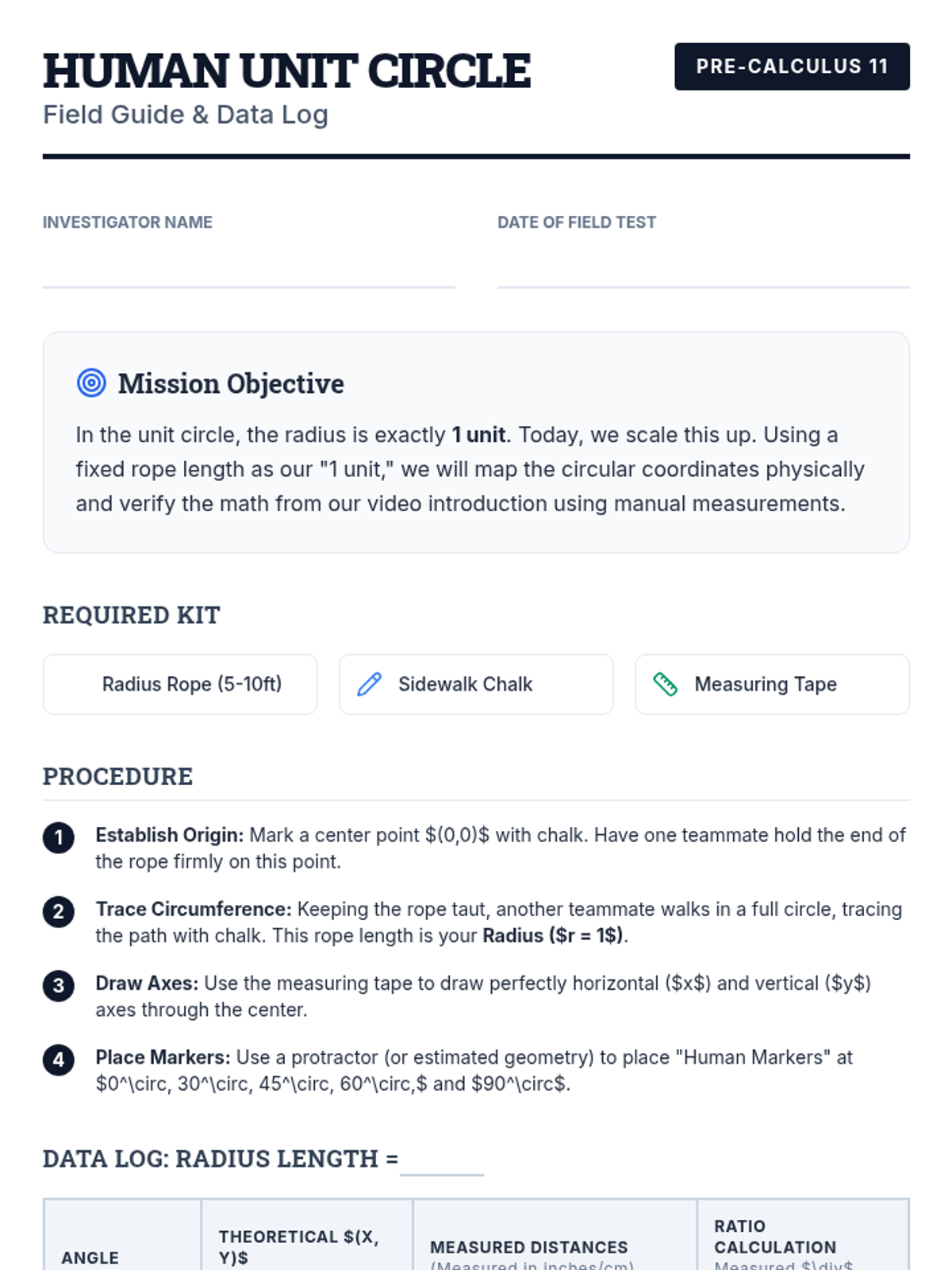
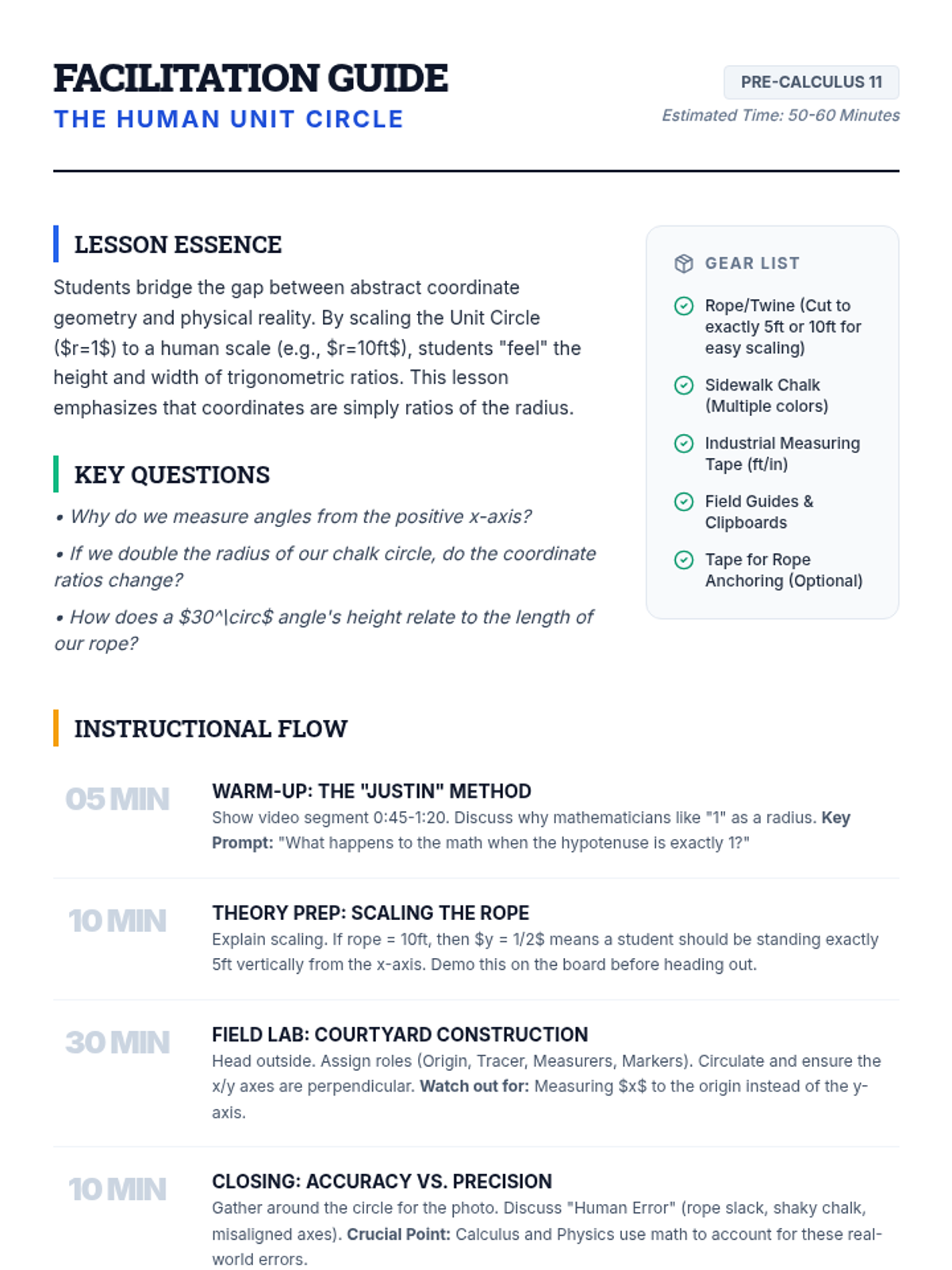
A kinesthetic pre-calculus lesson where students physically construct a large-scale unit circle to verify trigonometric coordinates through measurement and movement.
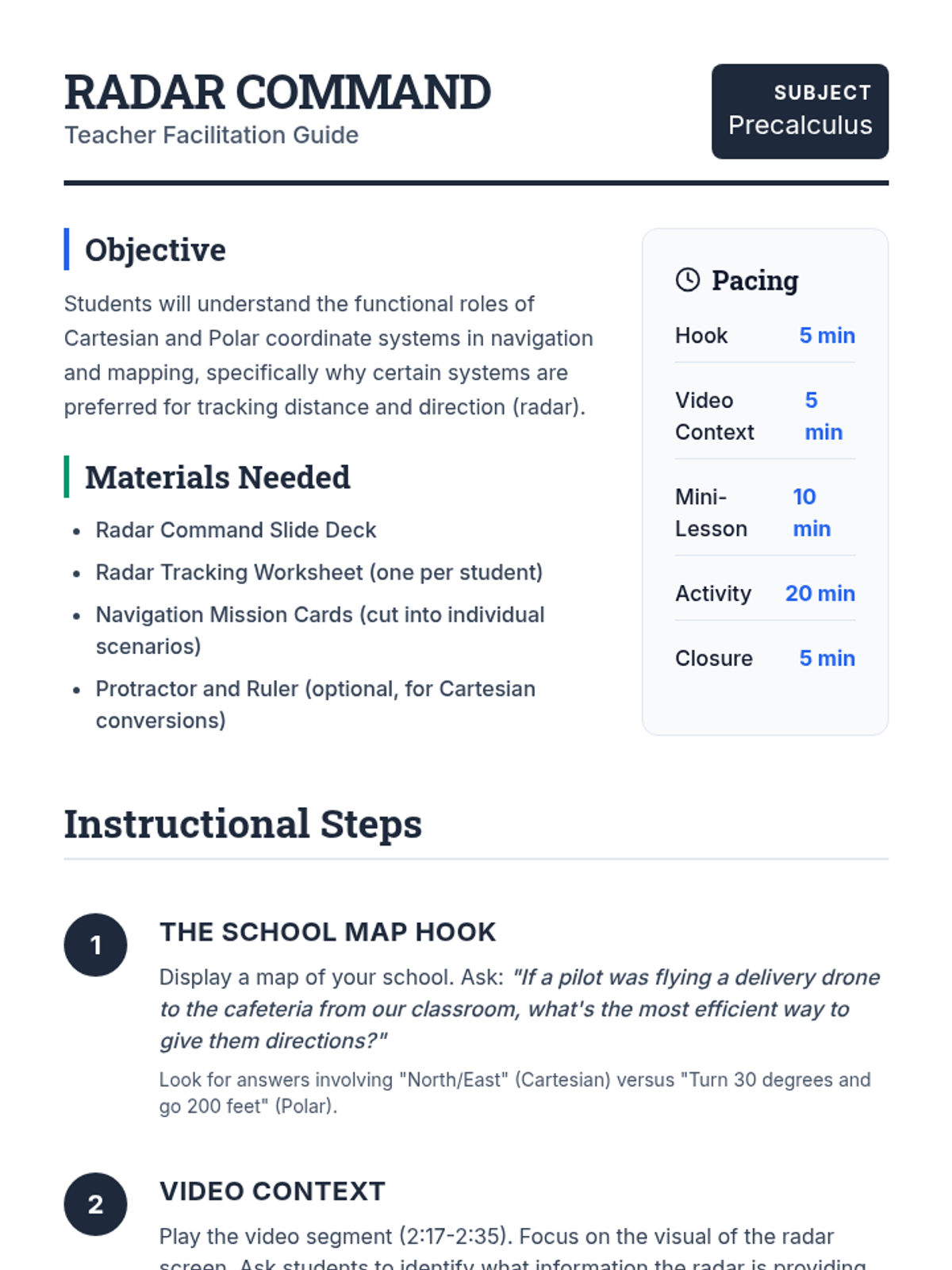
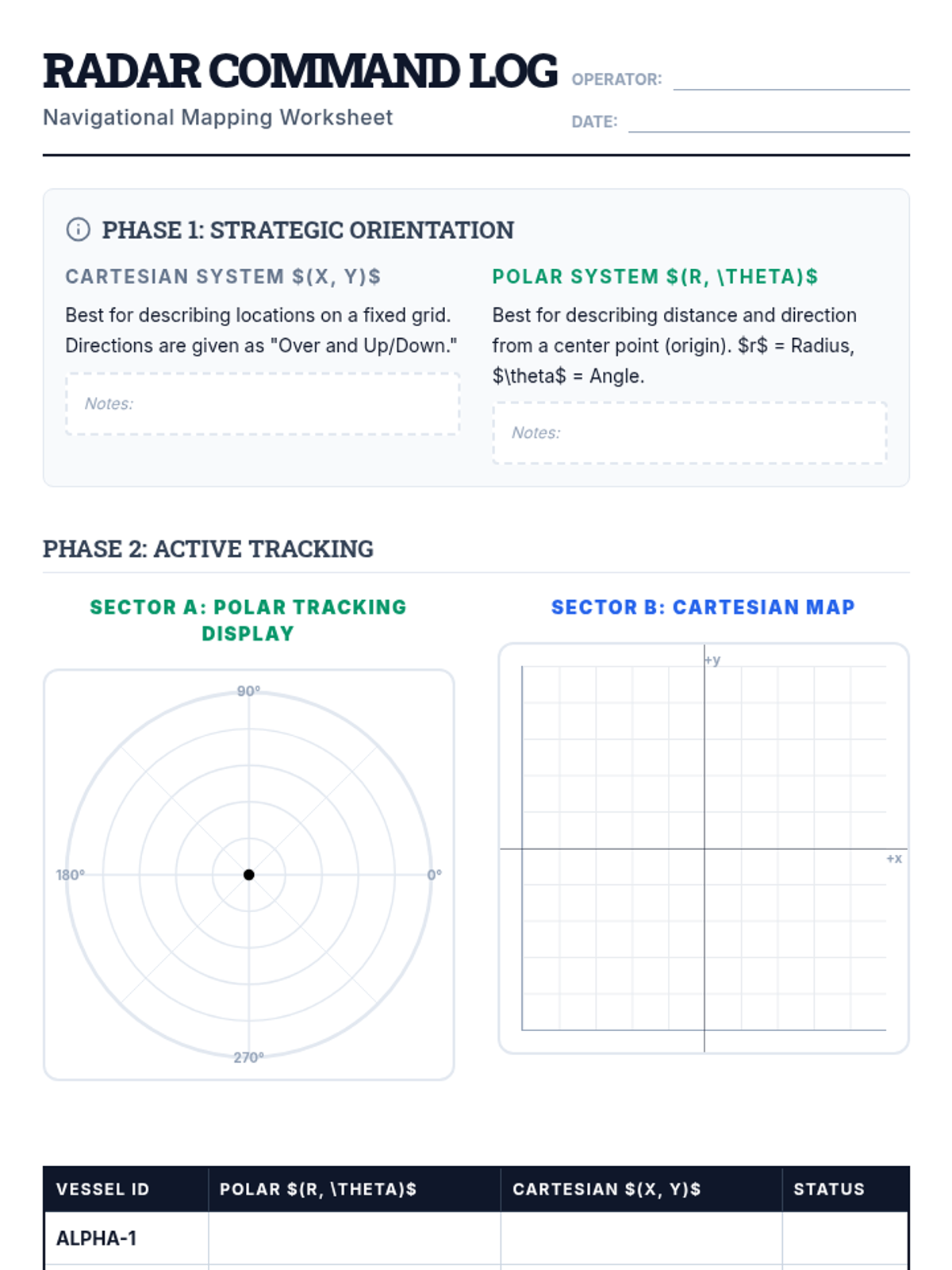
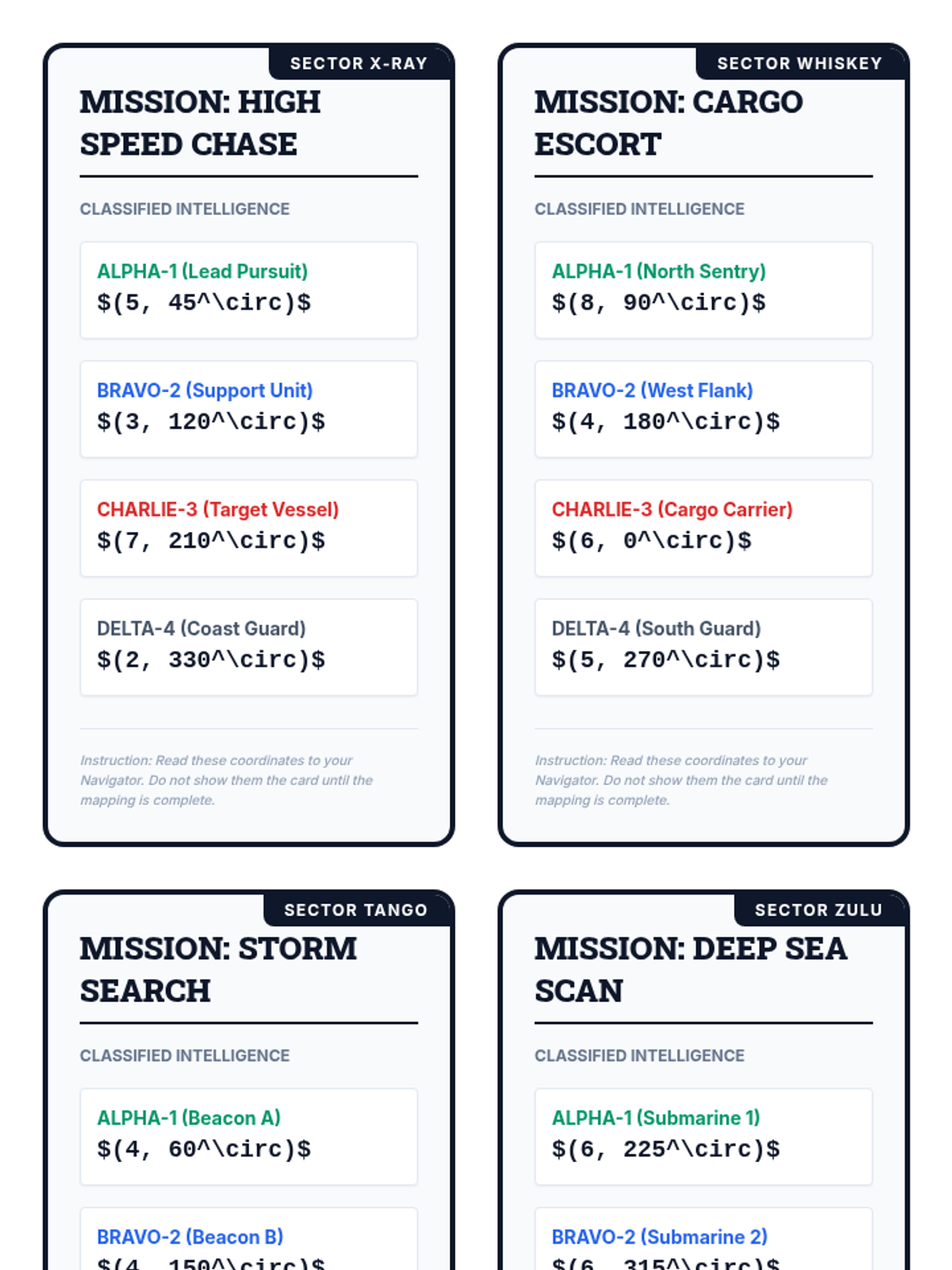
A Precalculus lesson exploring coordinate systems through the lens of maritime and aerial navigation, featuring a hands-on radar tracking simulation.
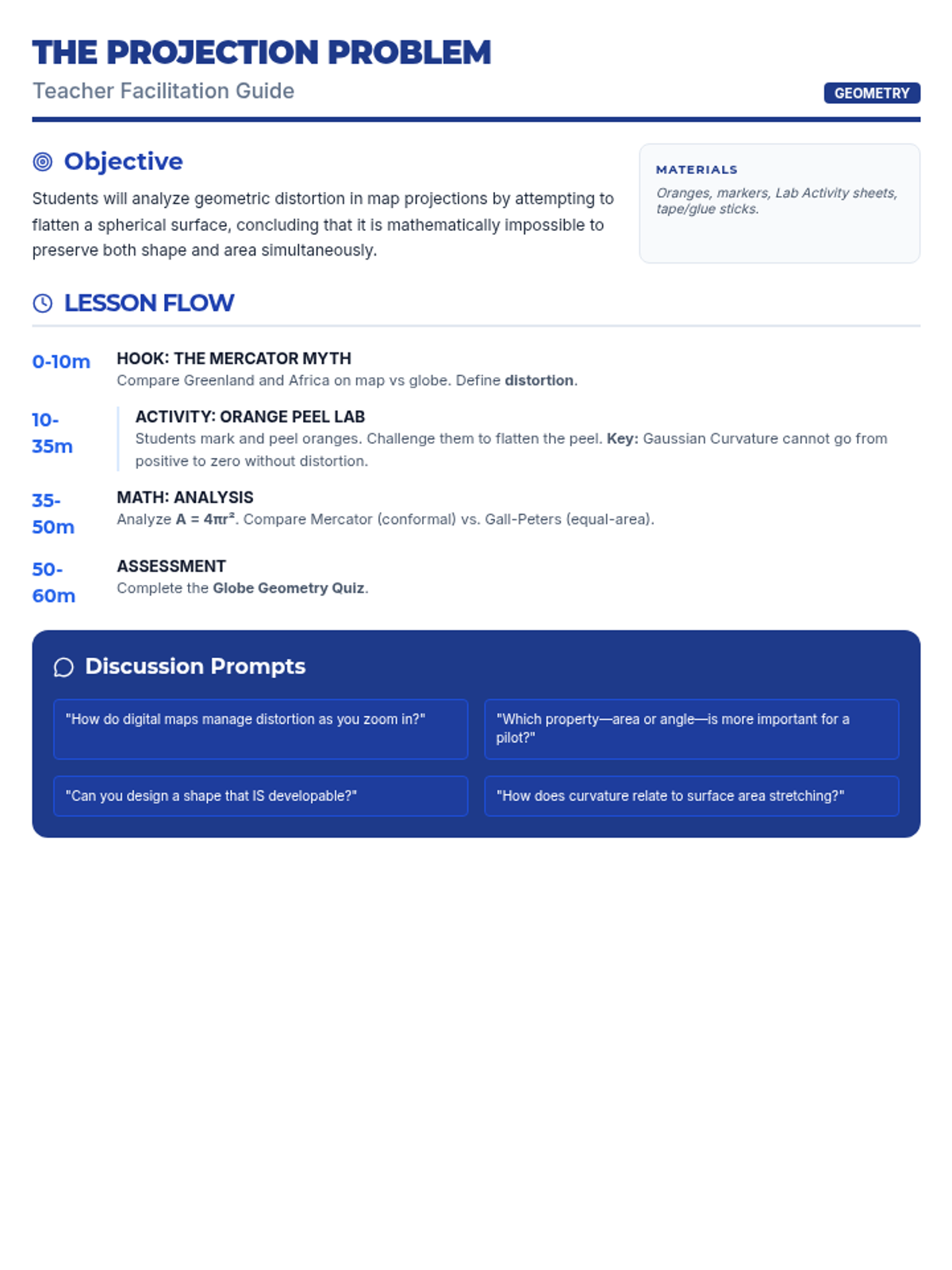
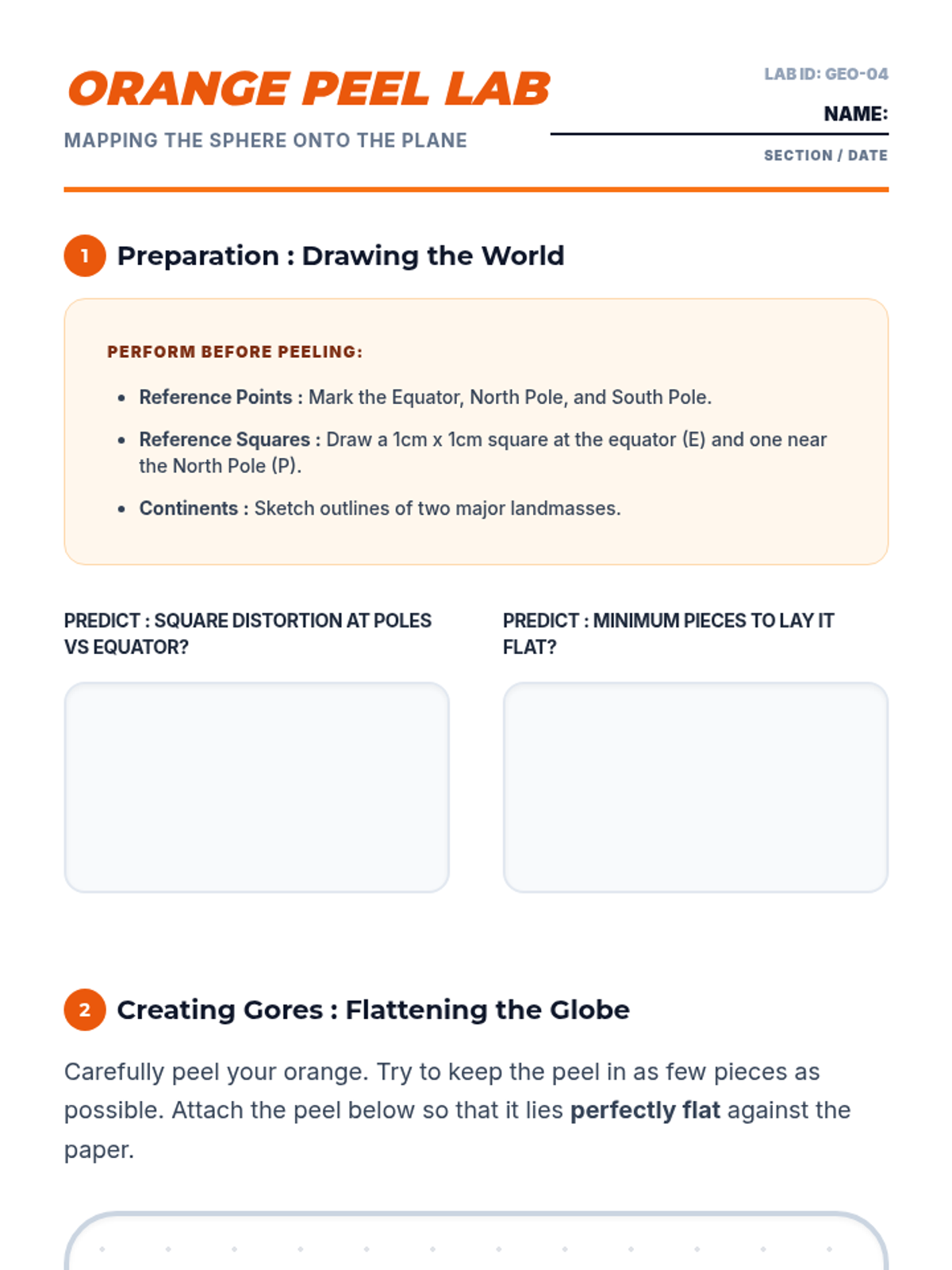
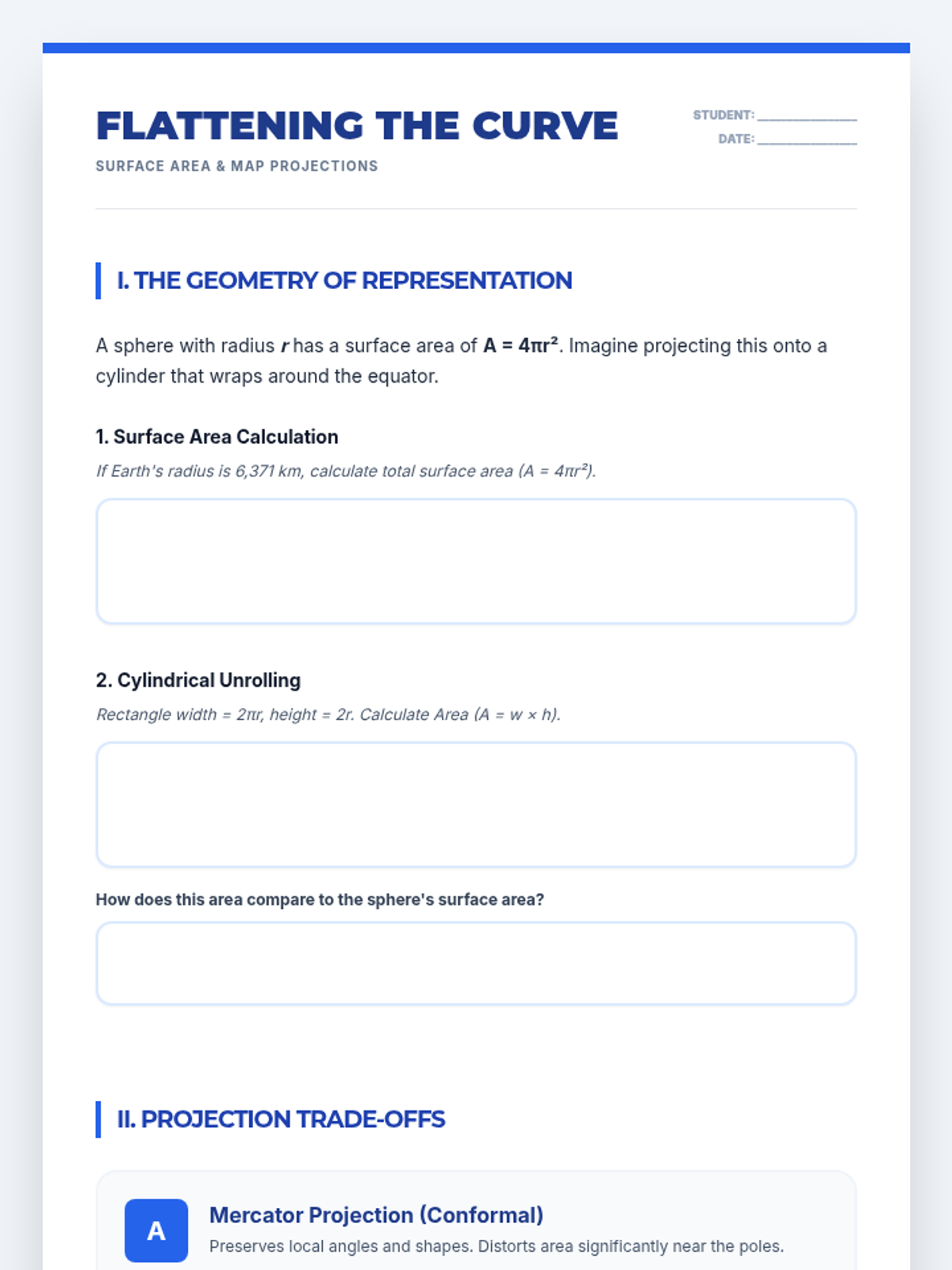
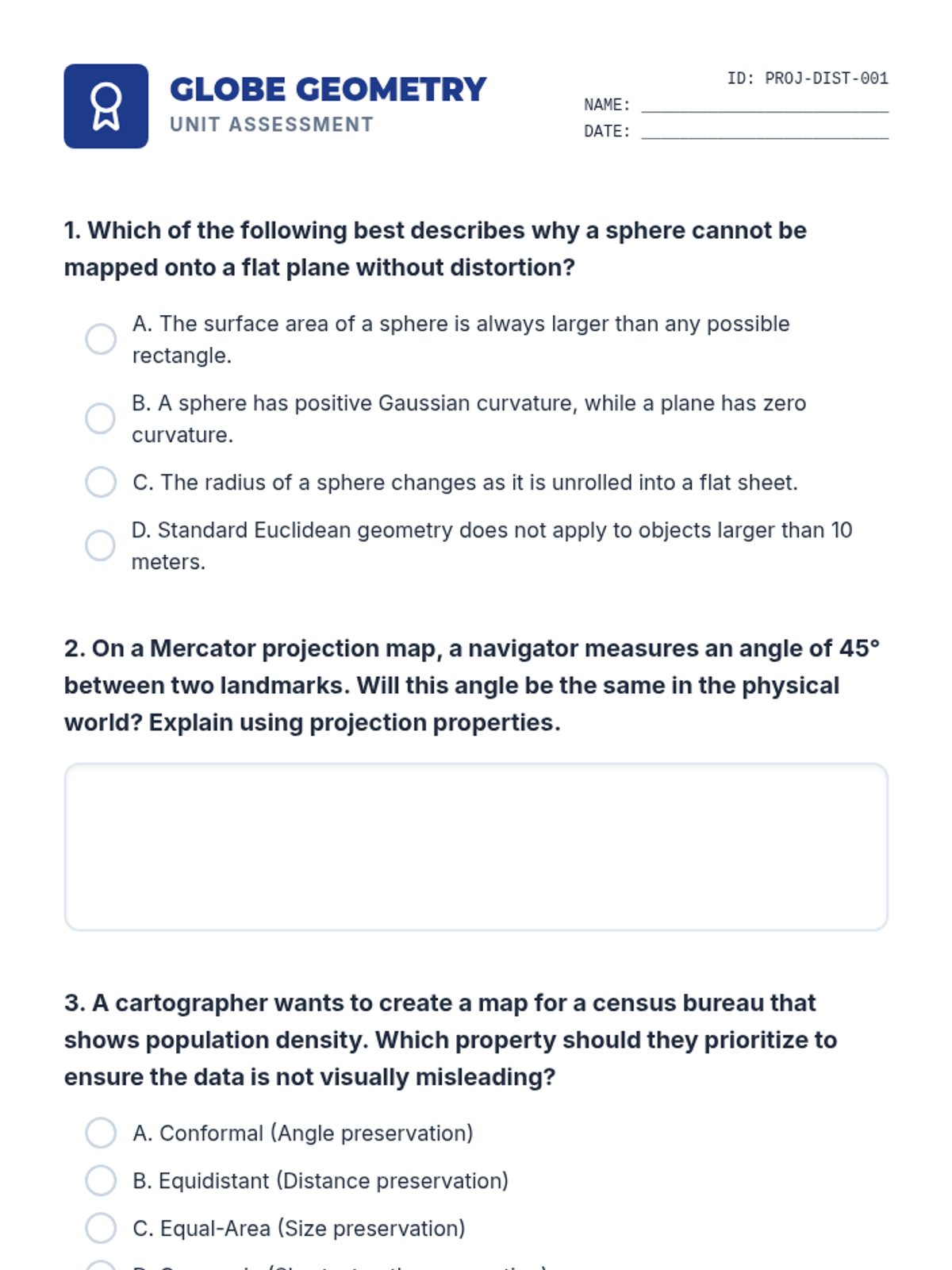
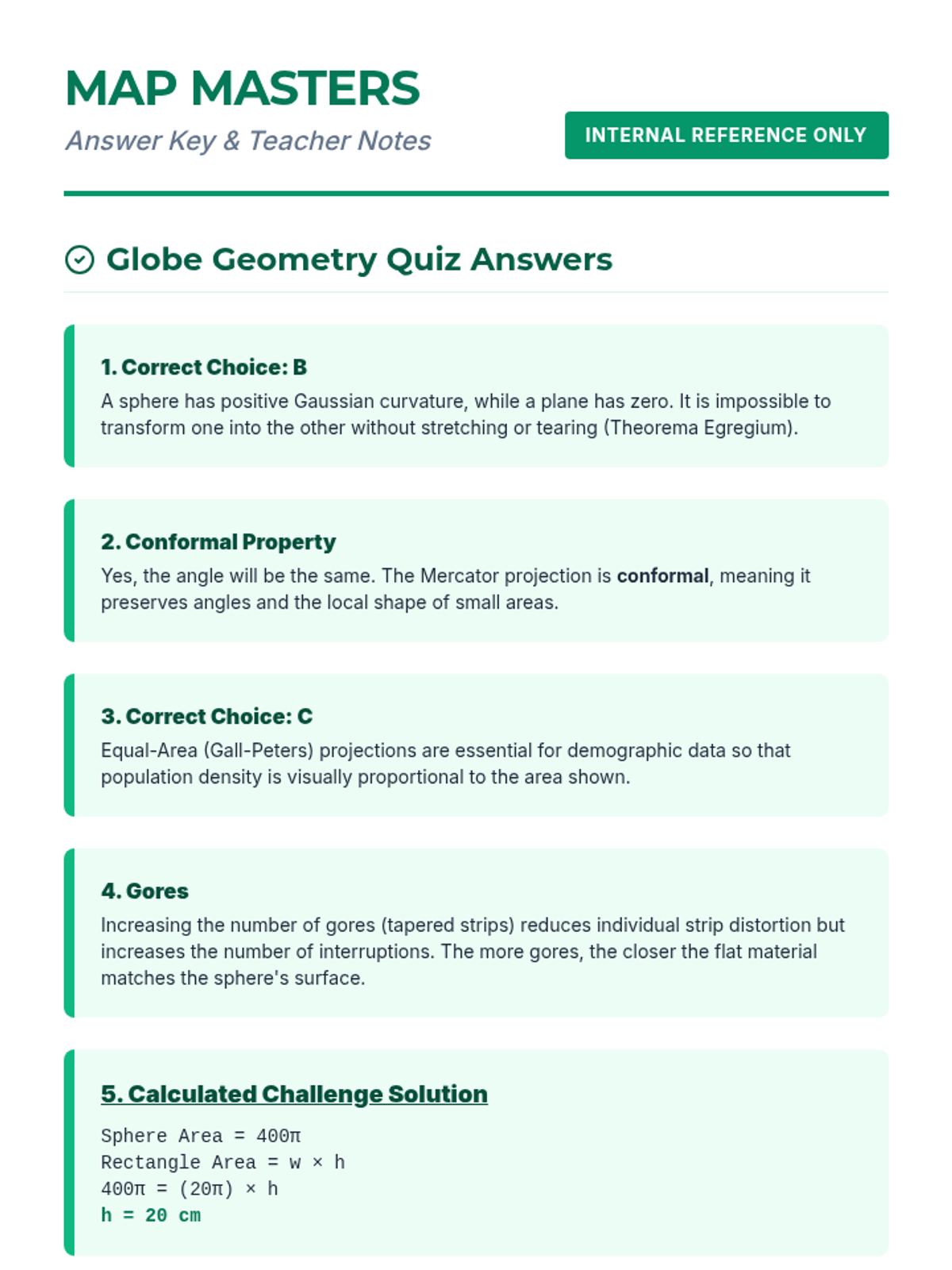
A geometry lesson exploring the mathematical challenges of representing a 3D sphere on a 2D plane through map projections, featuring a hands-on orange-peeling activity to demonstrate surface area distortion.
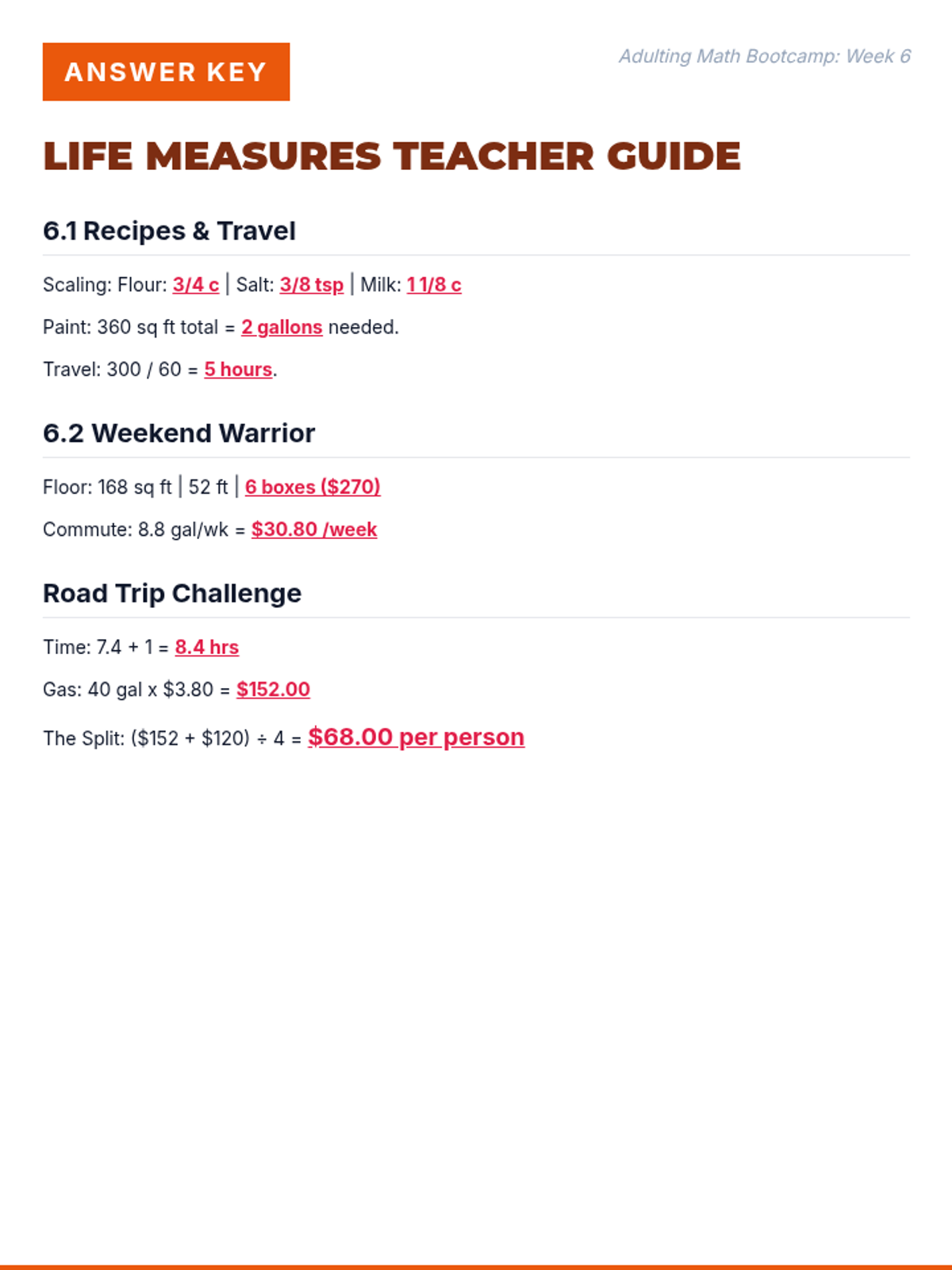
Applies geometry and arithmetic to everyday tasks like cooking measurements, home DIY projects, and travel planning.
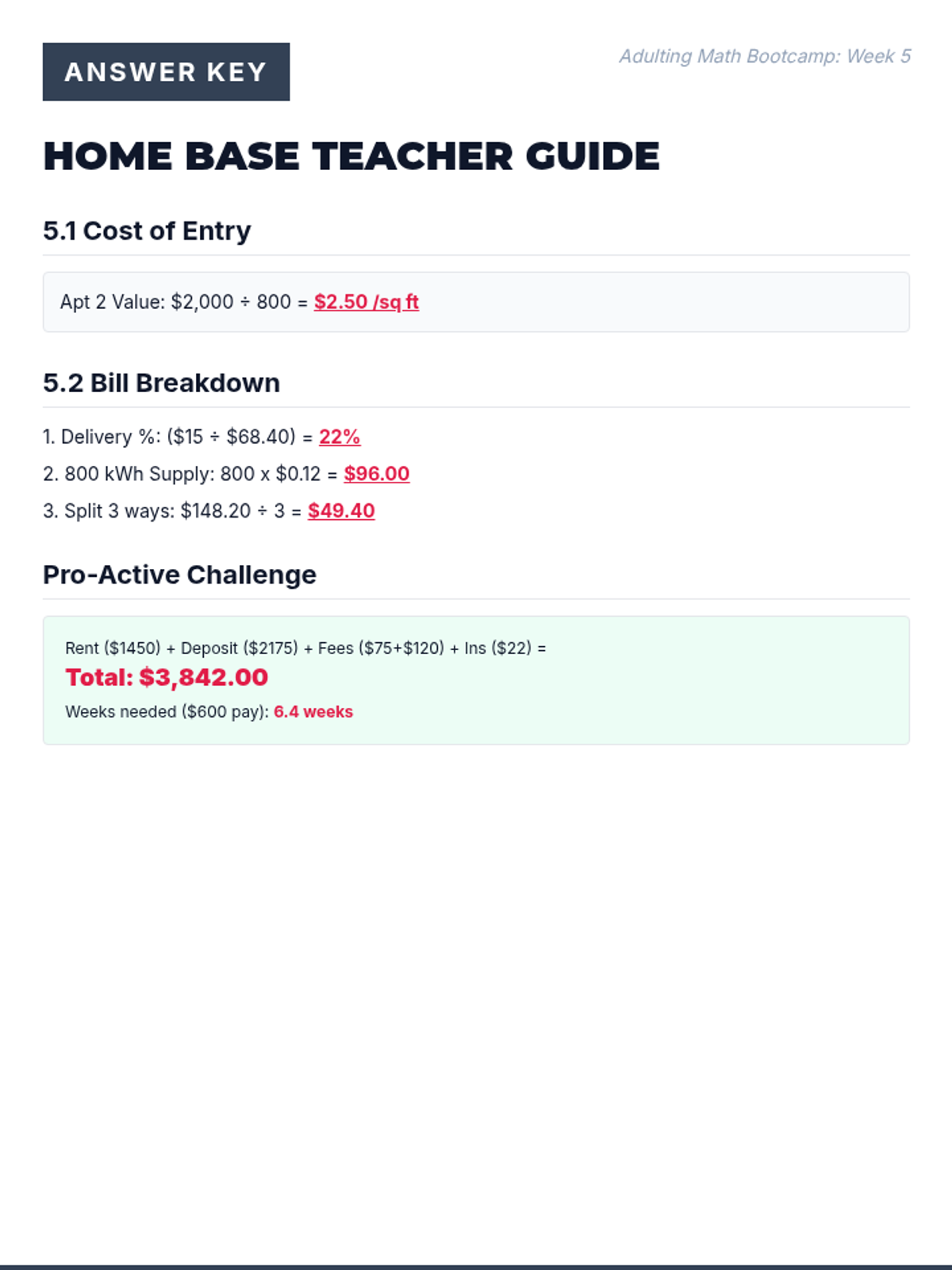
Covers the financial aspects of independent living, including renting, utility usage math, and basic insurance concepts.
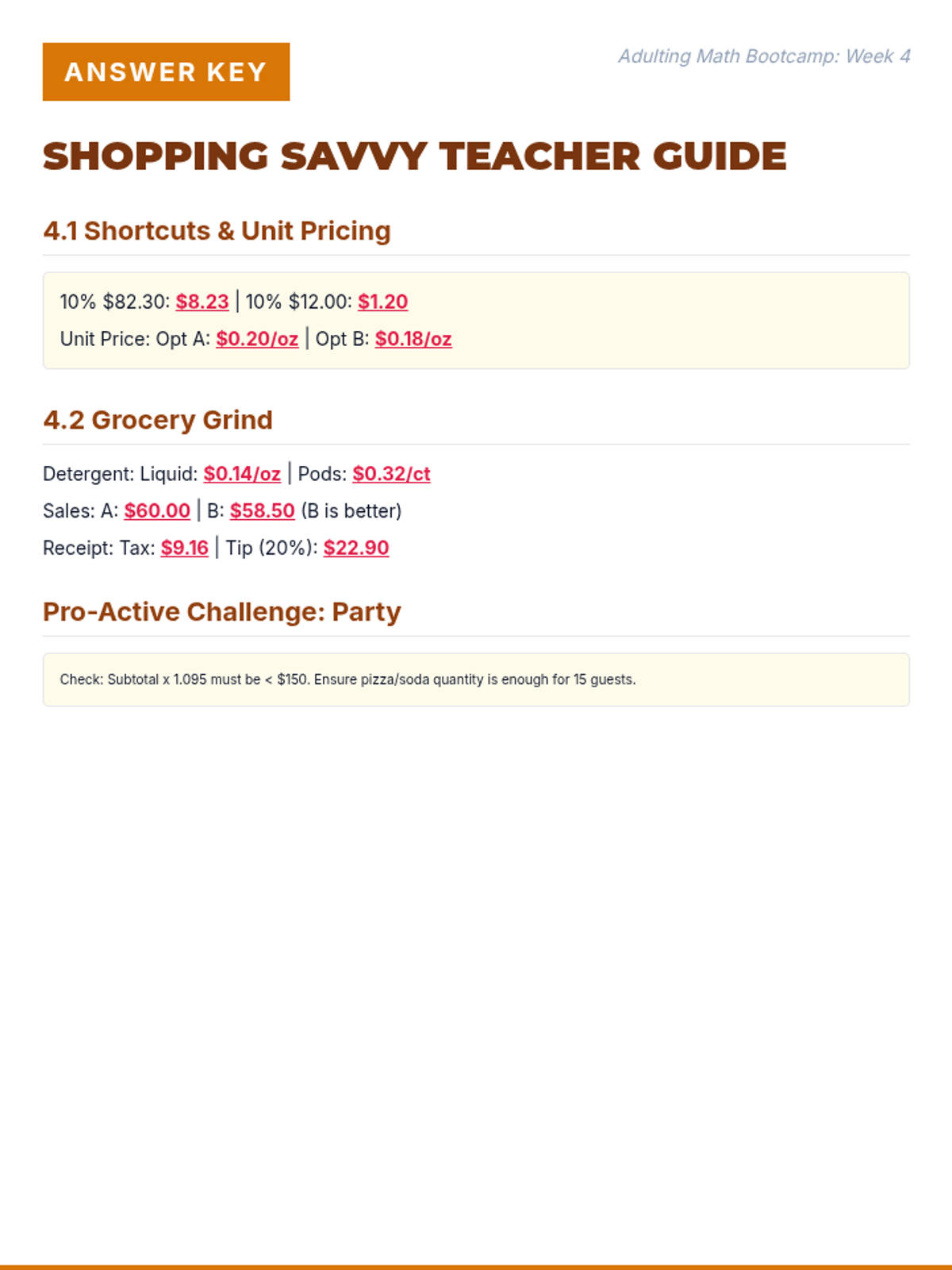
Practical applications of percentages and ratios in shopping, including sales tax, discounts, tips, and unit price comparisons.
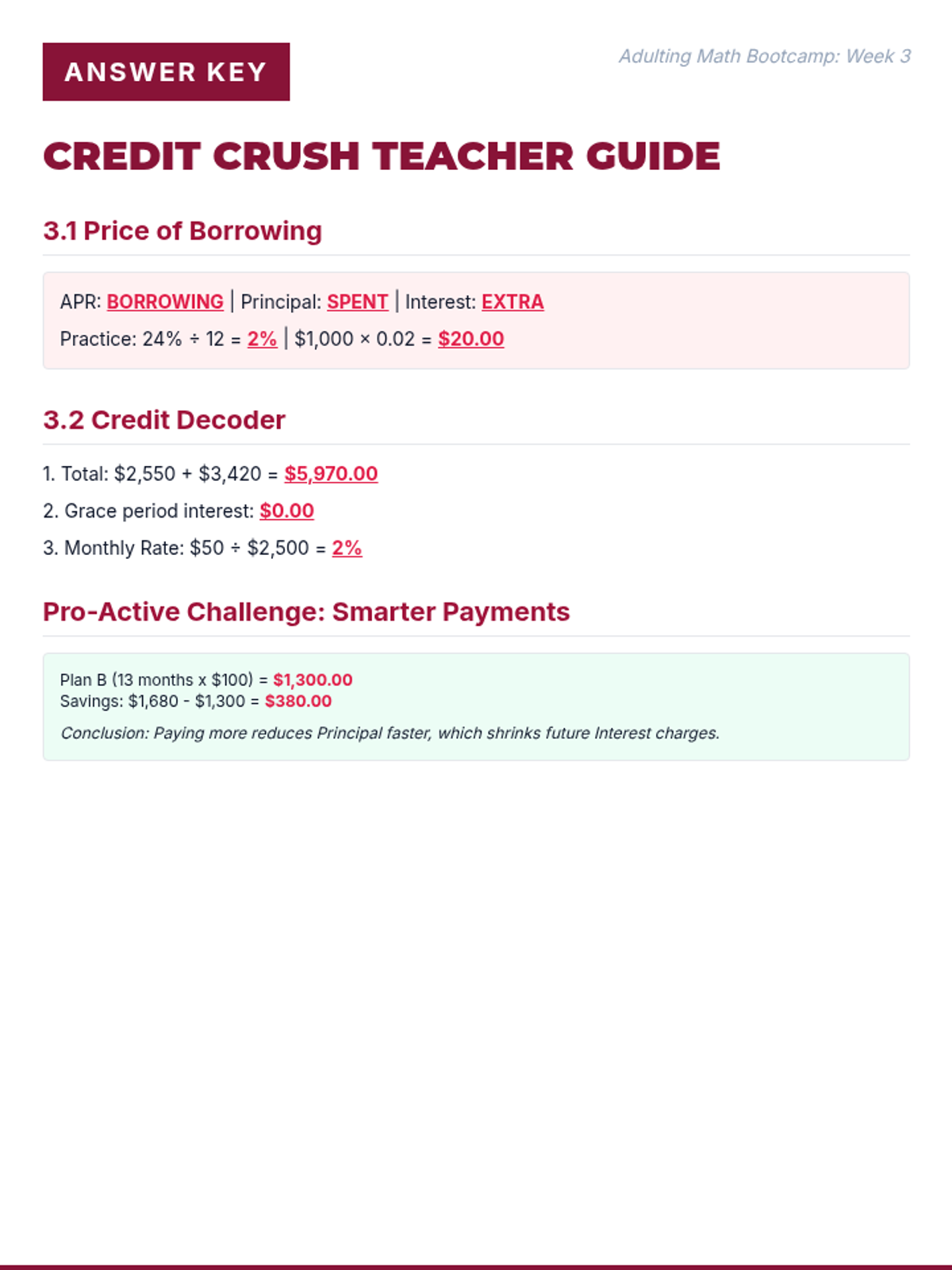
Explores the math behind interest rates (APR), credit card statements, and the long-term impact of debt.
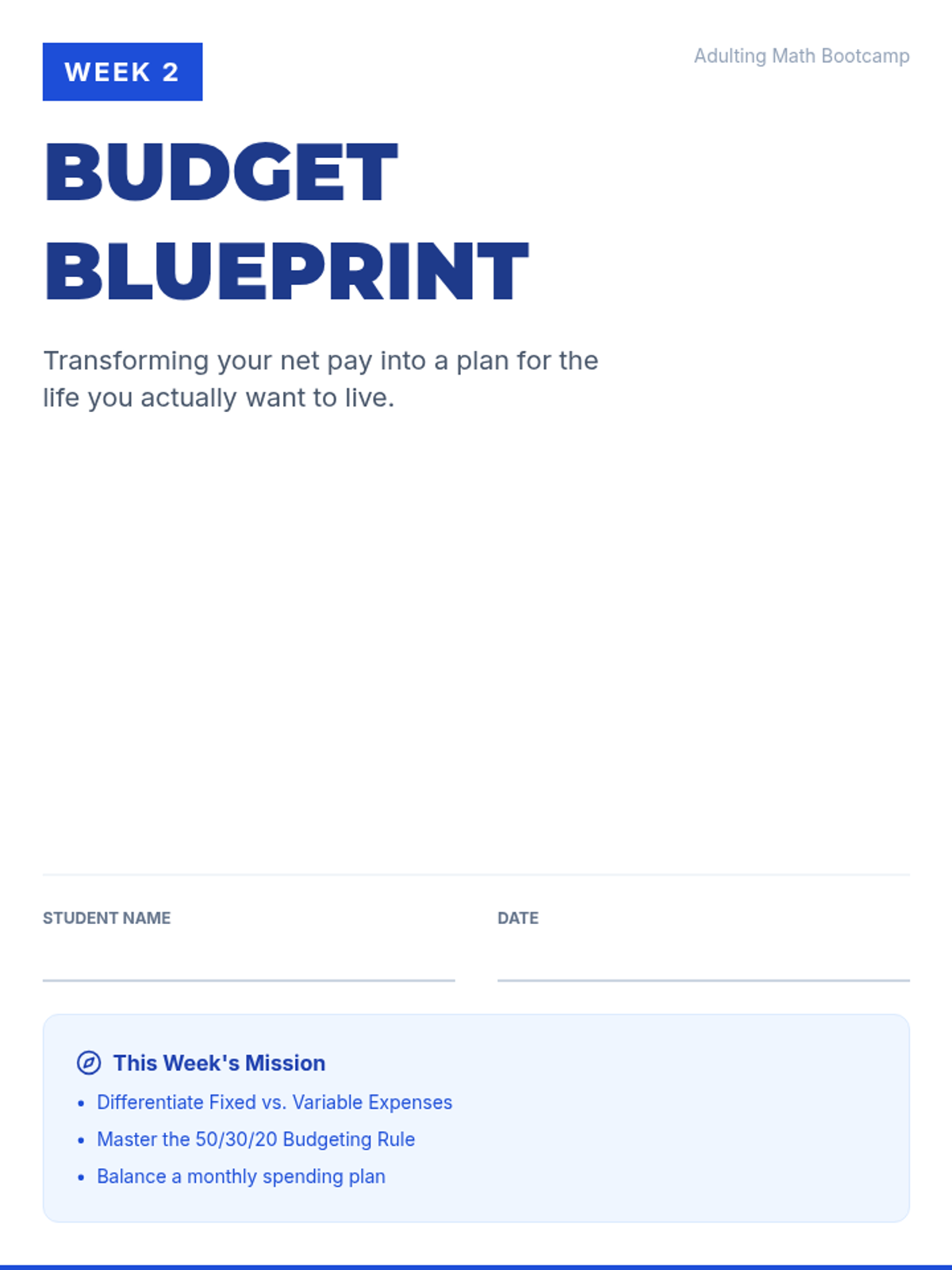
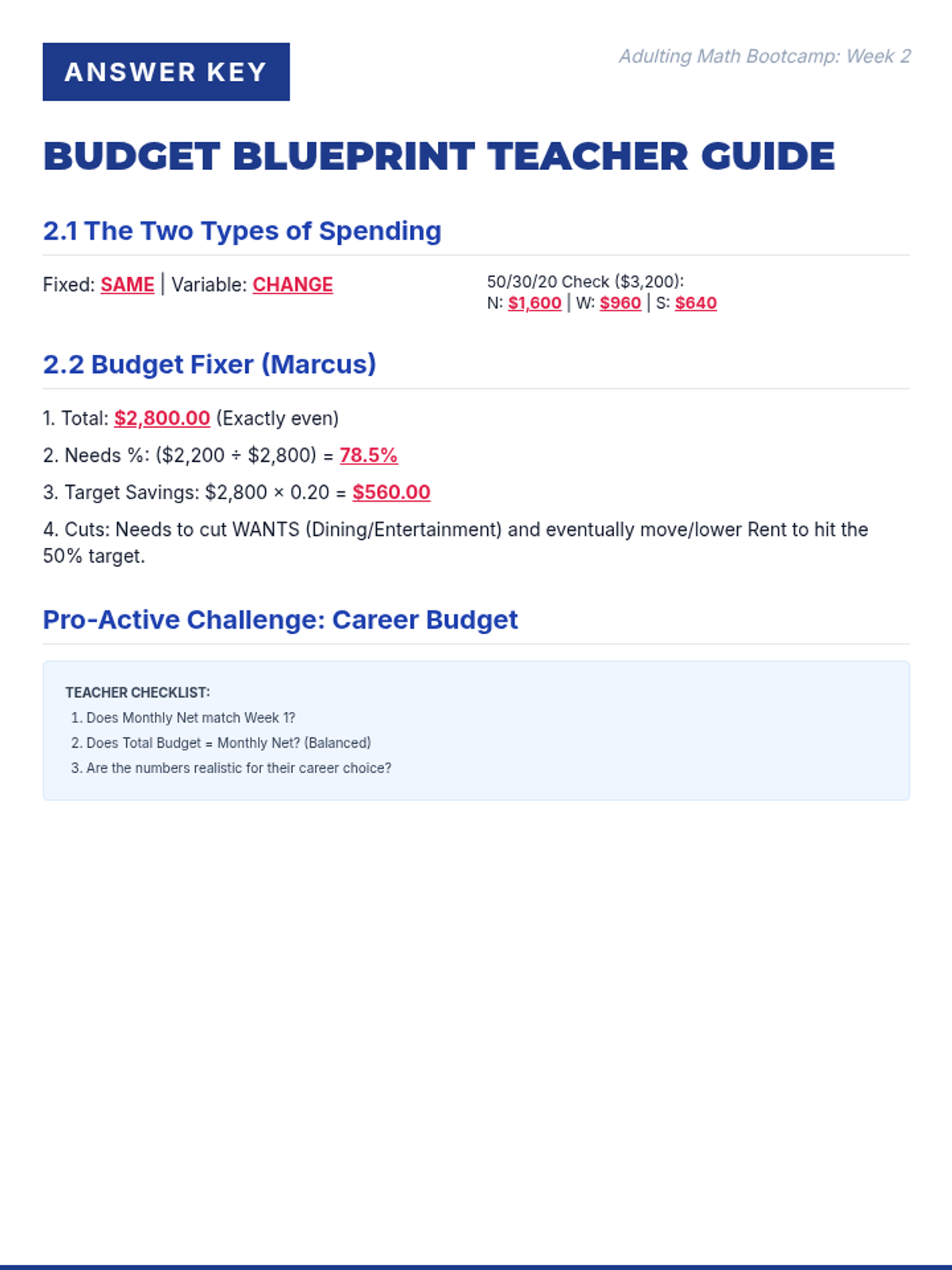
Teaches students how to categorize expenses, use the 50/30/20 rule, and build a sustainable monthly budget.
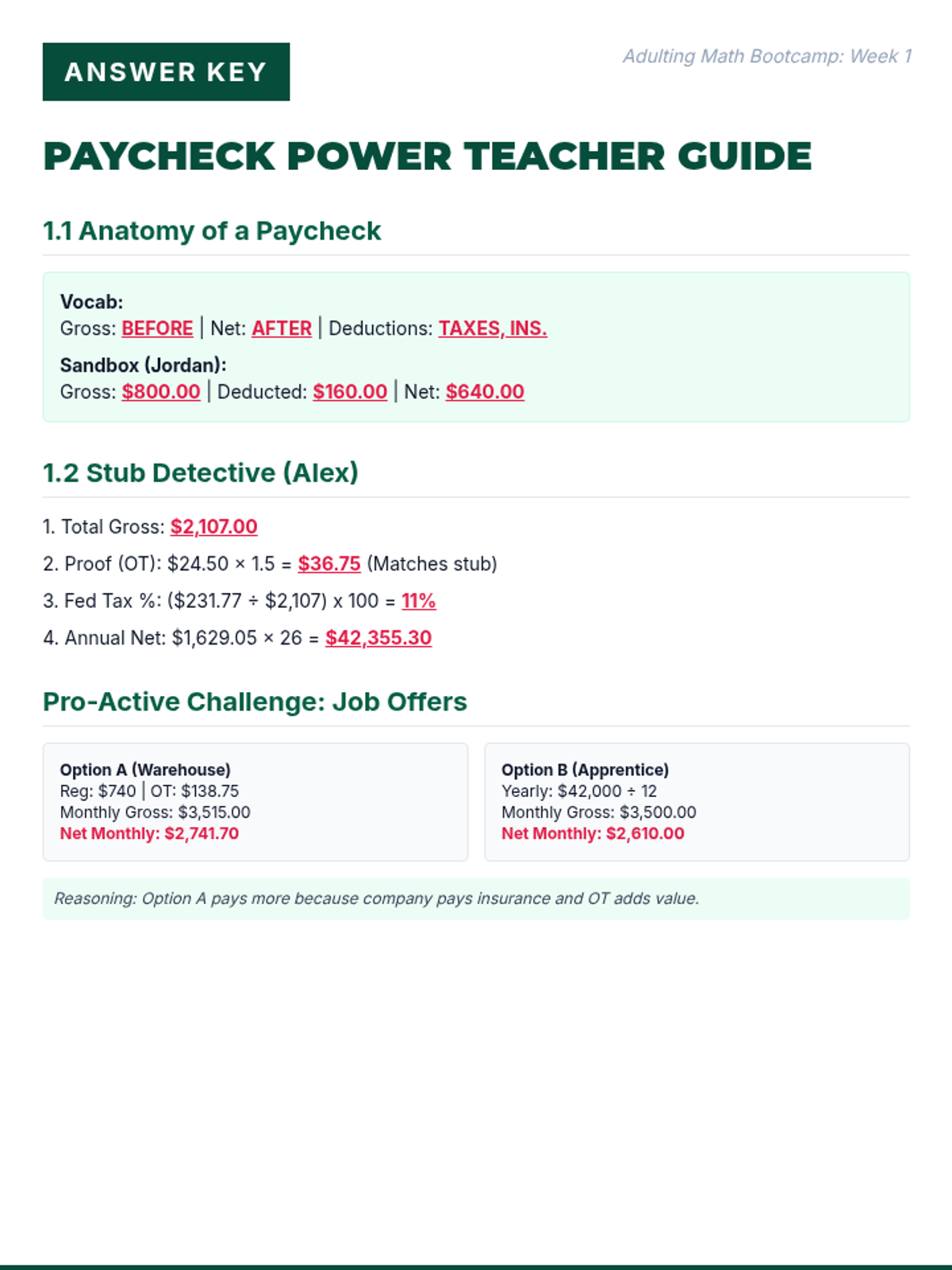
Focuses on understanding gross vs. net pay, reading paystubs, and calculating common tax deductions to prepare students for their first professional earnings.
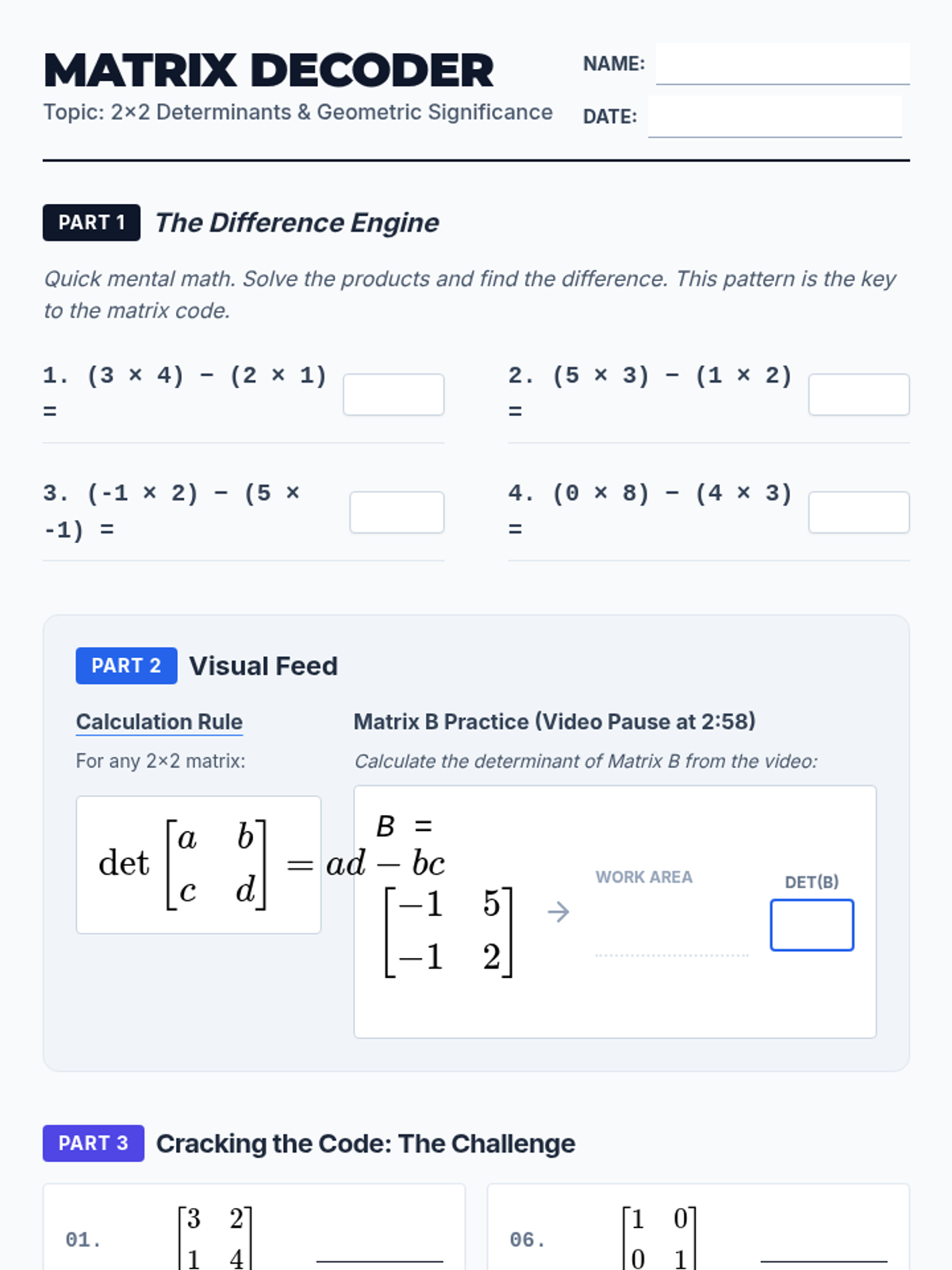
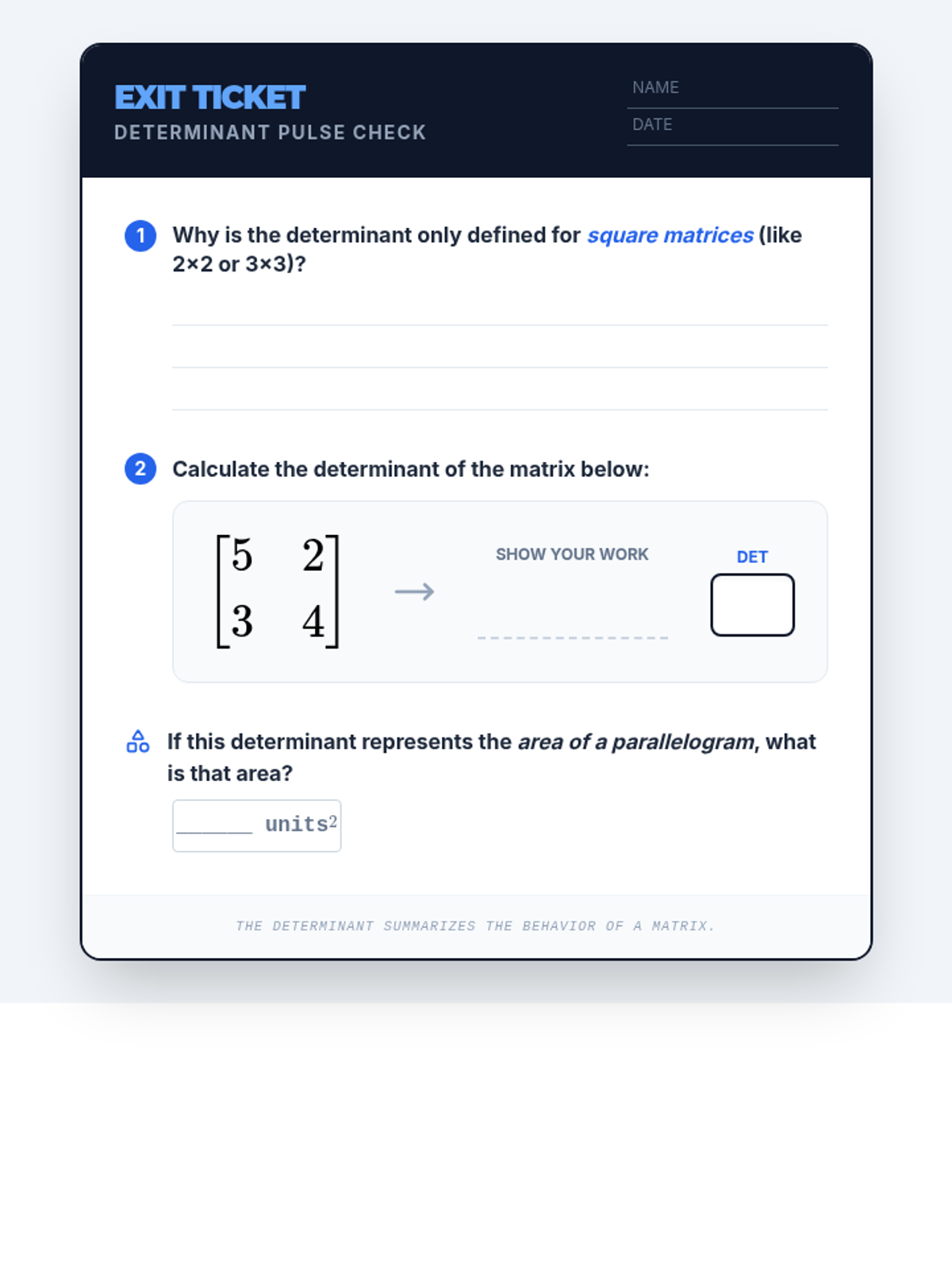
This lesson introduces students to the determinant of 2x2 matrices. Students will learn the calculation formula, practice with various examples, explore matrices with a determinant of zero, and understand the geometric interpretation of a determinant as the area of a parallelogram.
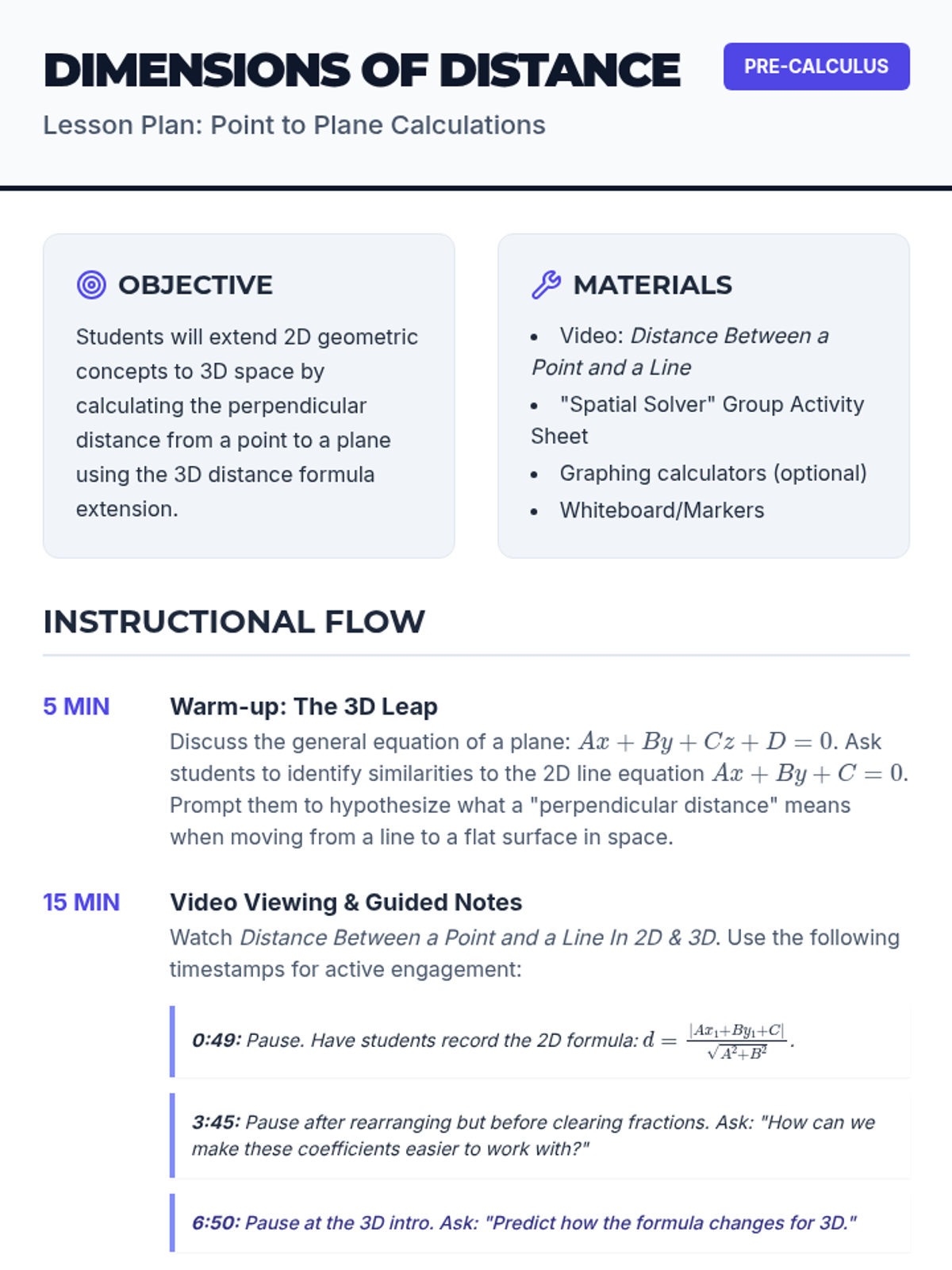
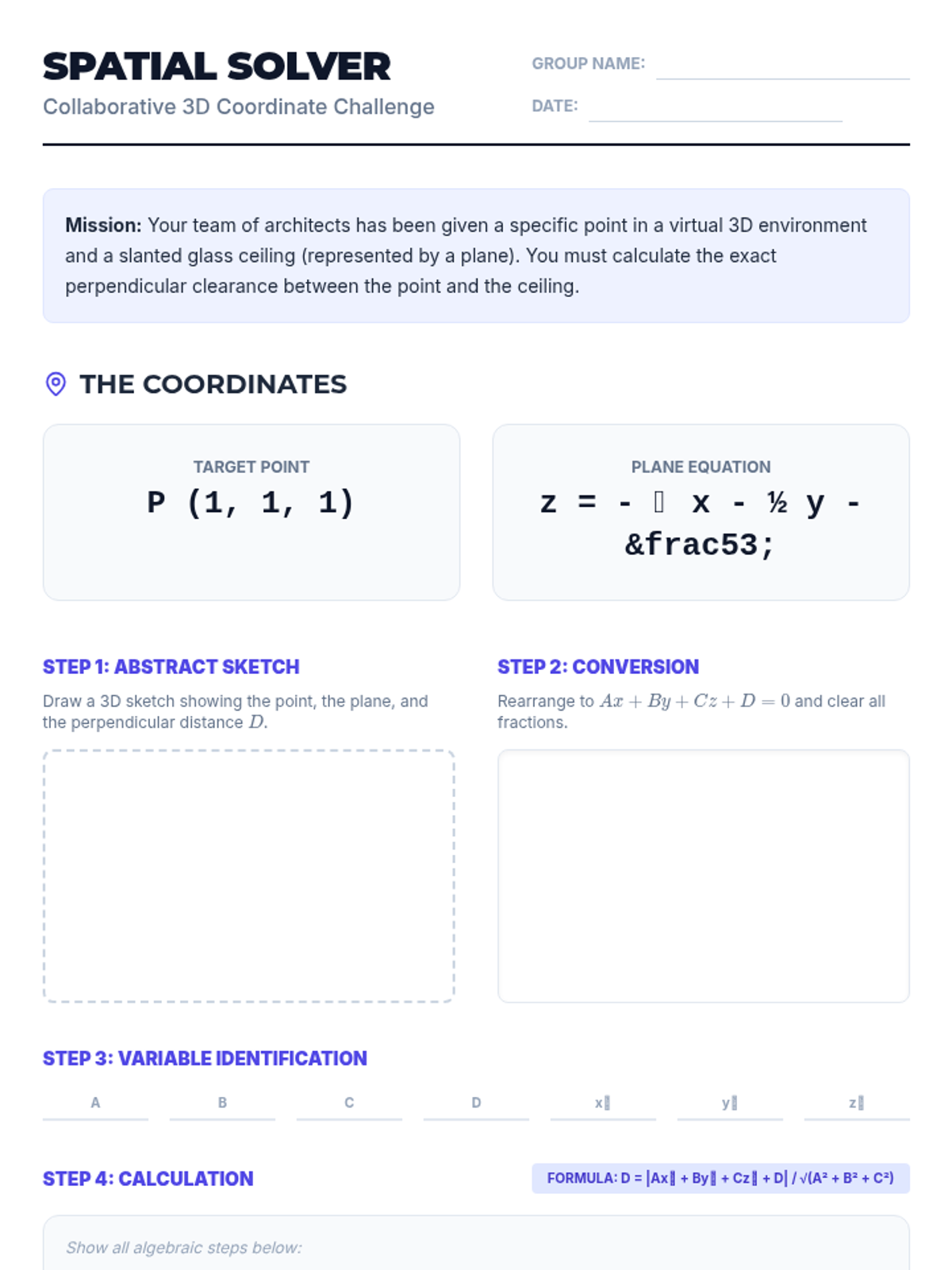
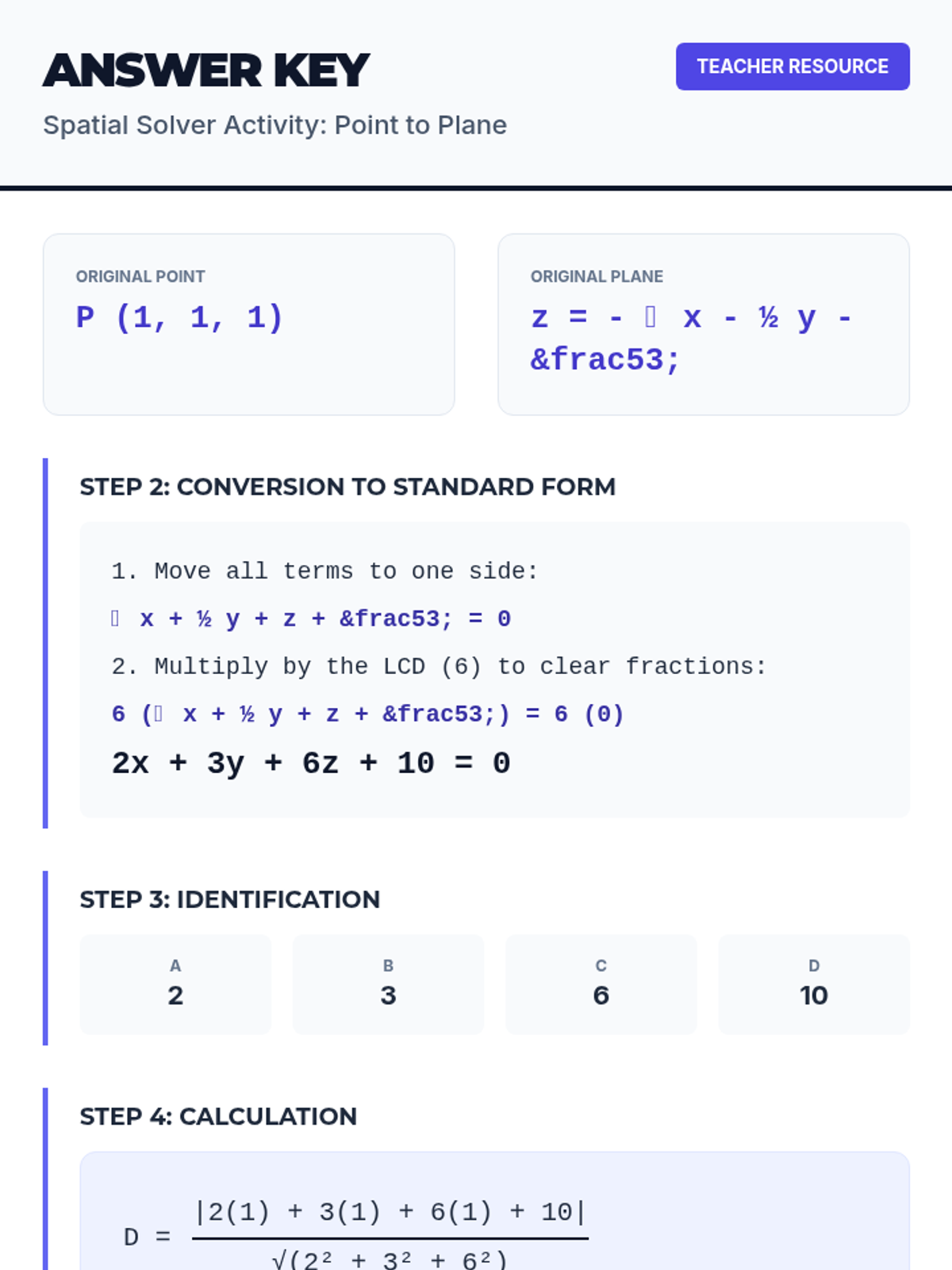
A Pre-Calculus lesson focused on extending 2D distance concepts into 3D space to calculate the distance between a point and a plane. Students use coordinate geometry and algebraic manipulation to solve spatial problems.
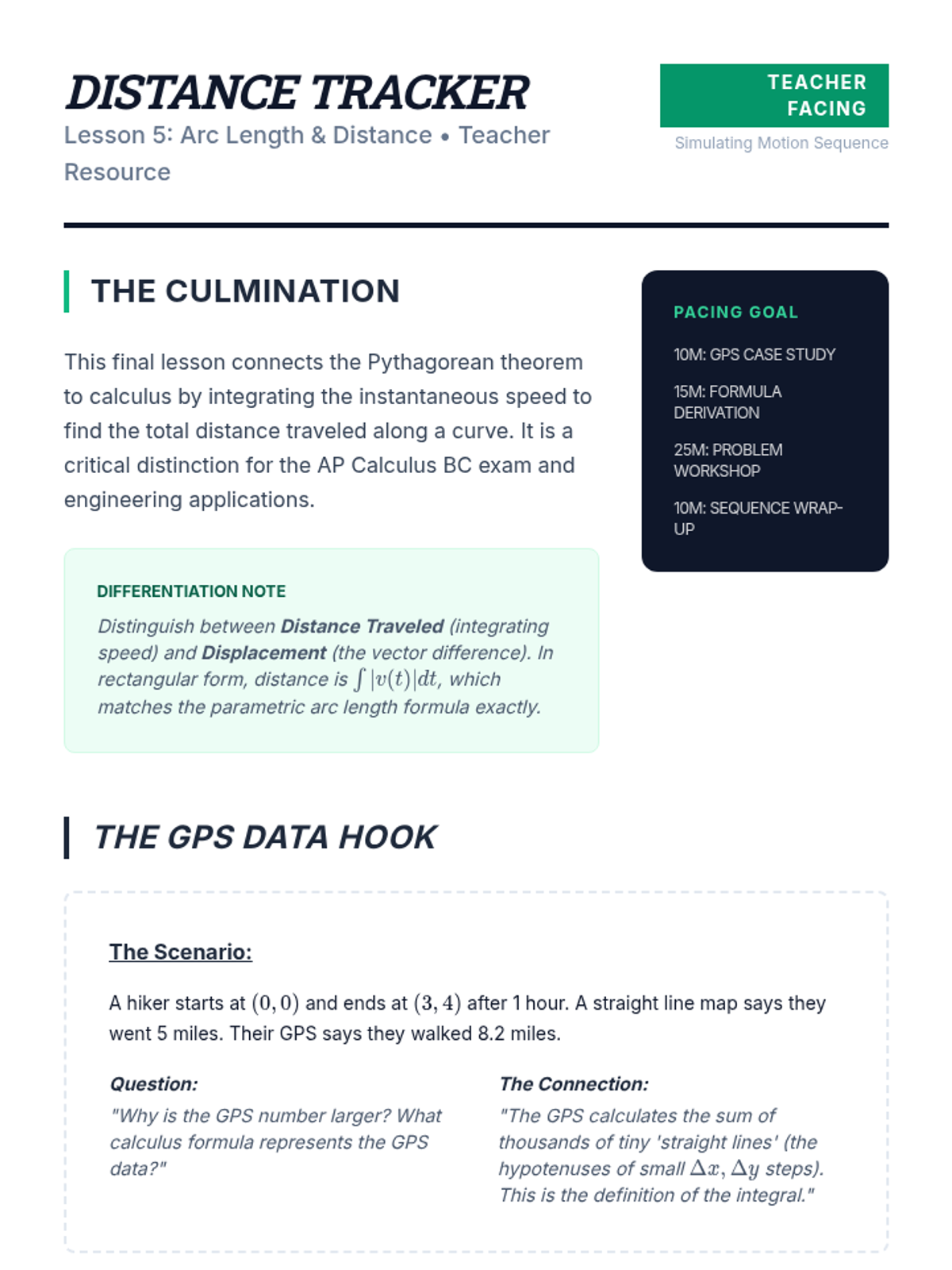
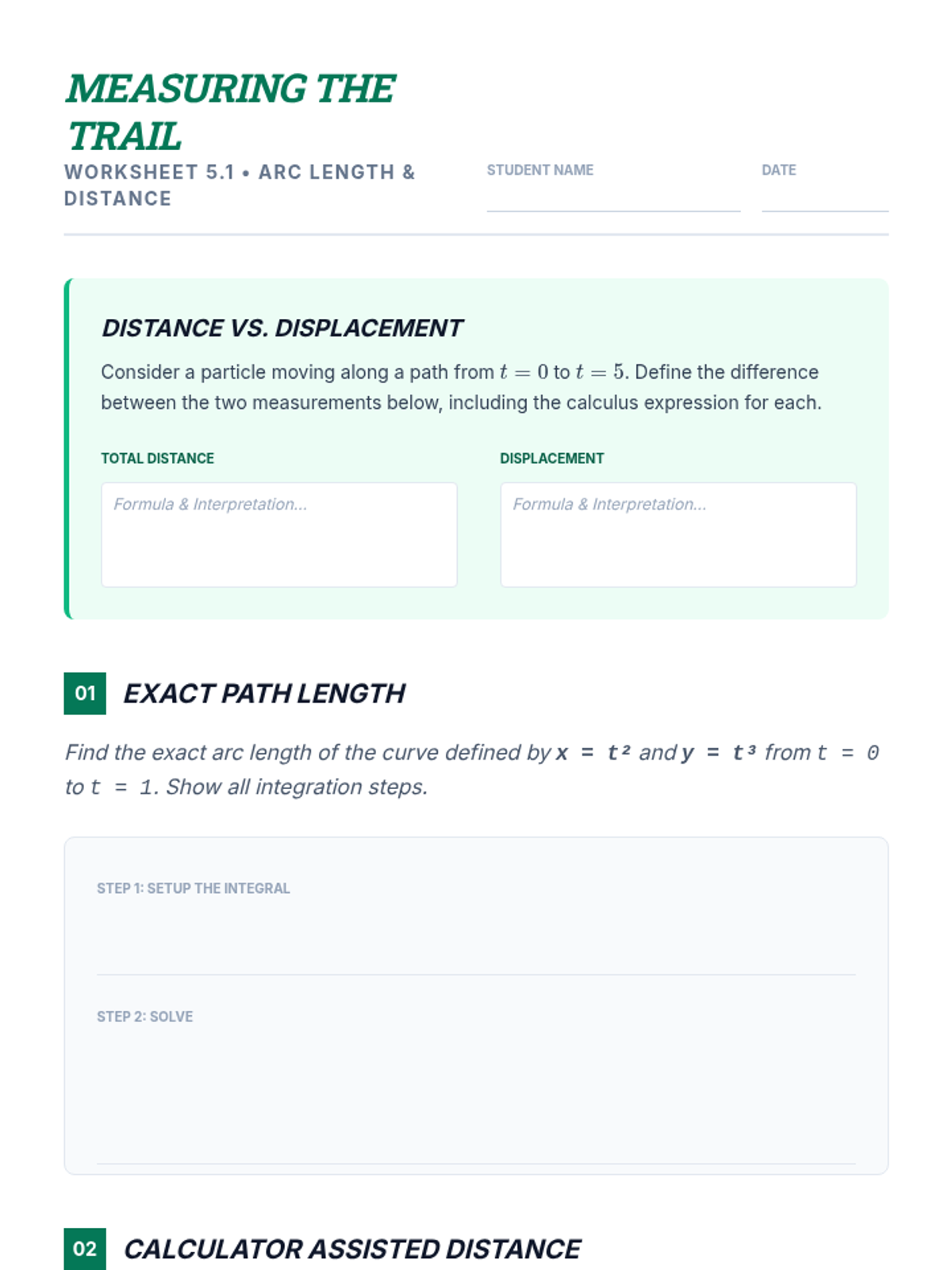
Students derive and apply the arc length formula for parametric curves. They distinguish between displacement and total distance traveled along a curve.
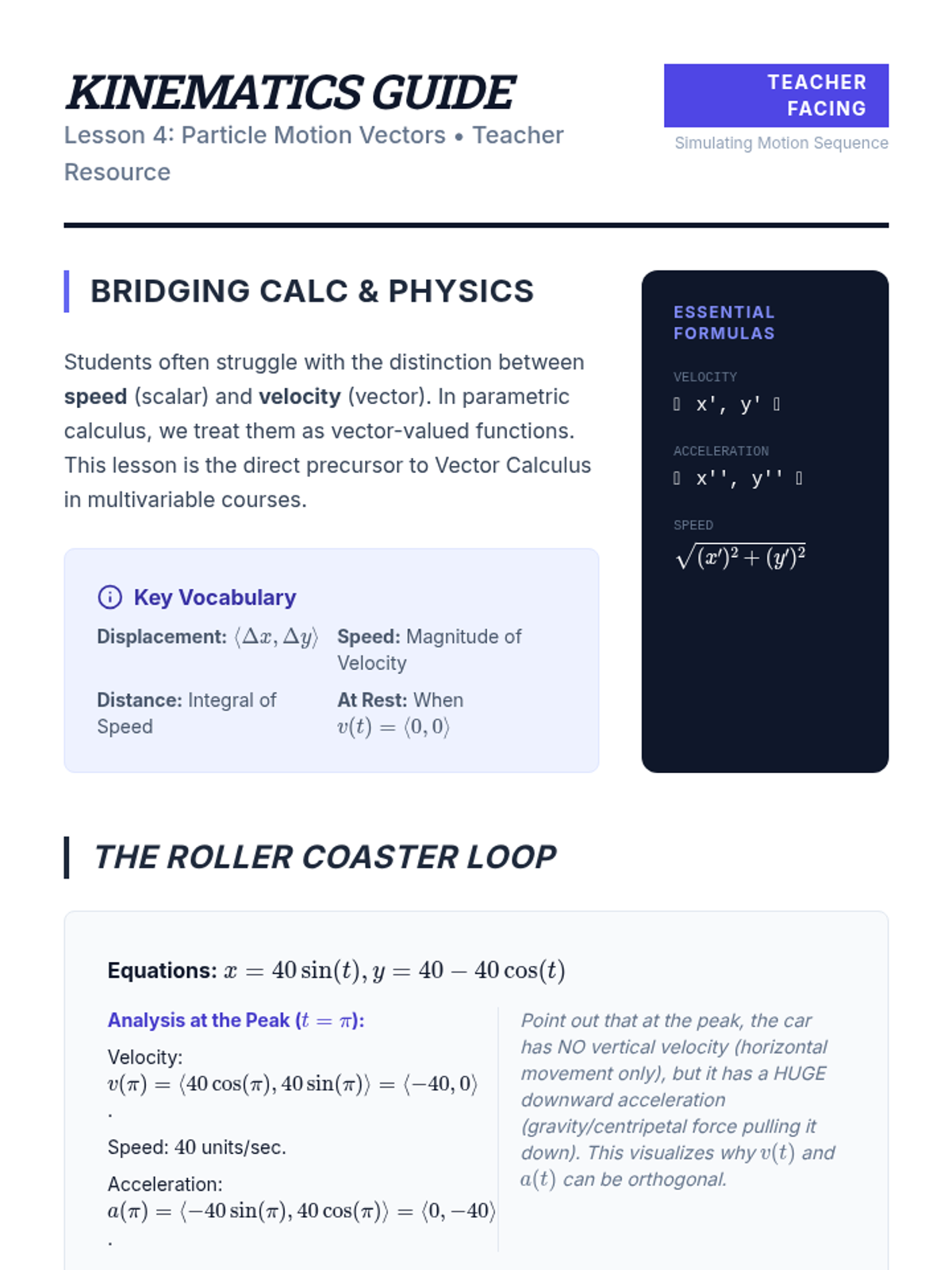
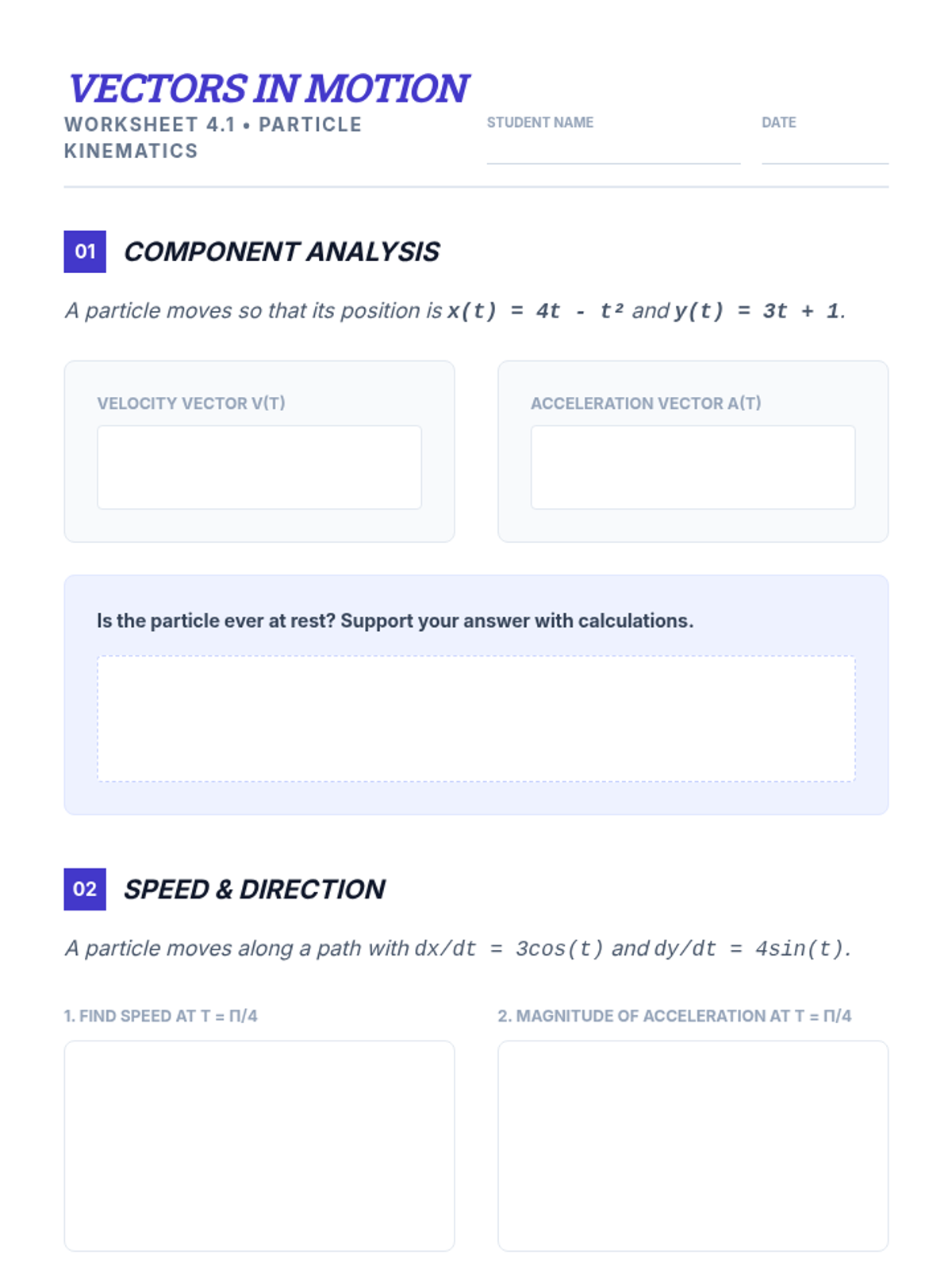
Integrating physics concepts, students treat parametric equations as vector-valued functions. They calculate velocity and acceleration vectors, determine speed, and interpret direction.
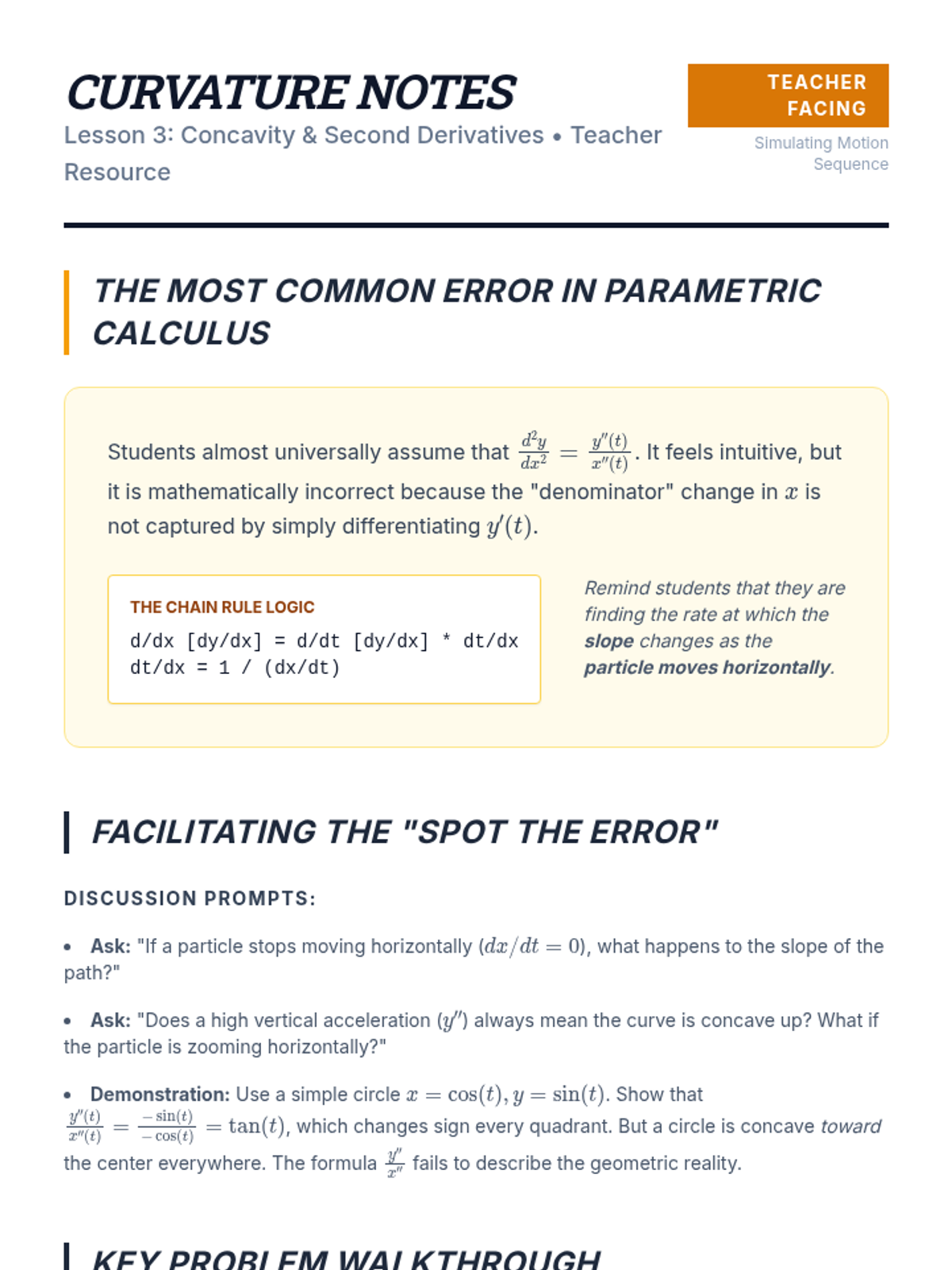
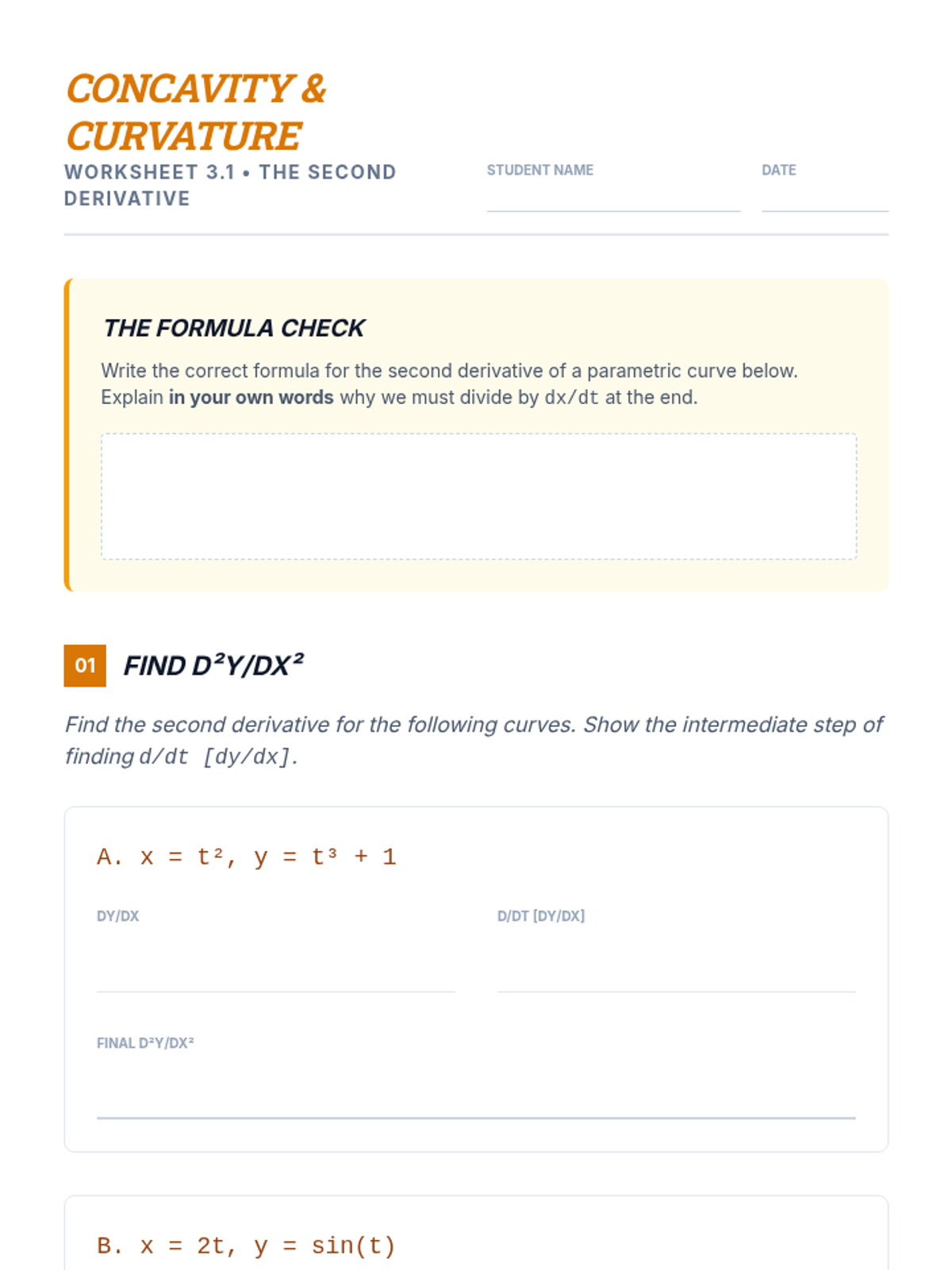
Students tackle the complex derivation of the second derivative for parametric equations. The lesson focuses on avoiding common misconceptions and using concavity to analyze curvature.
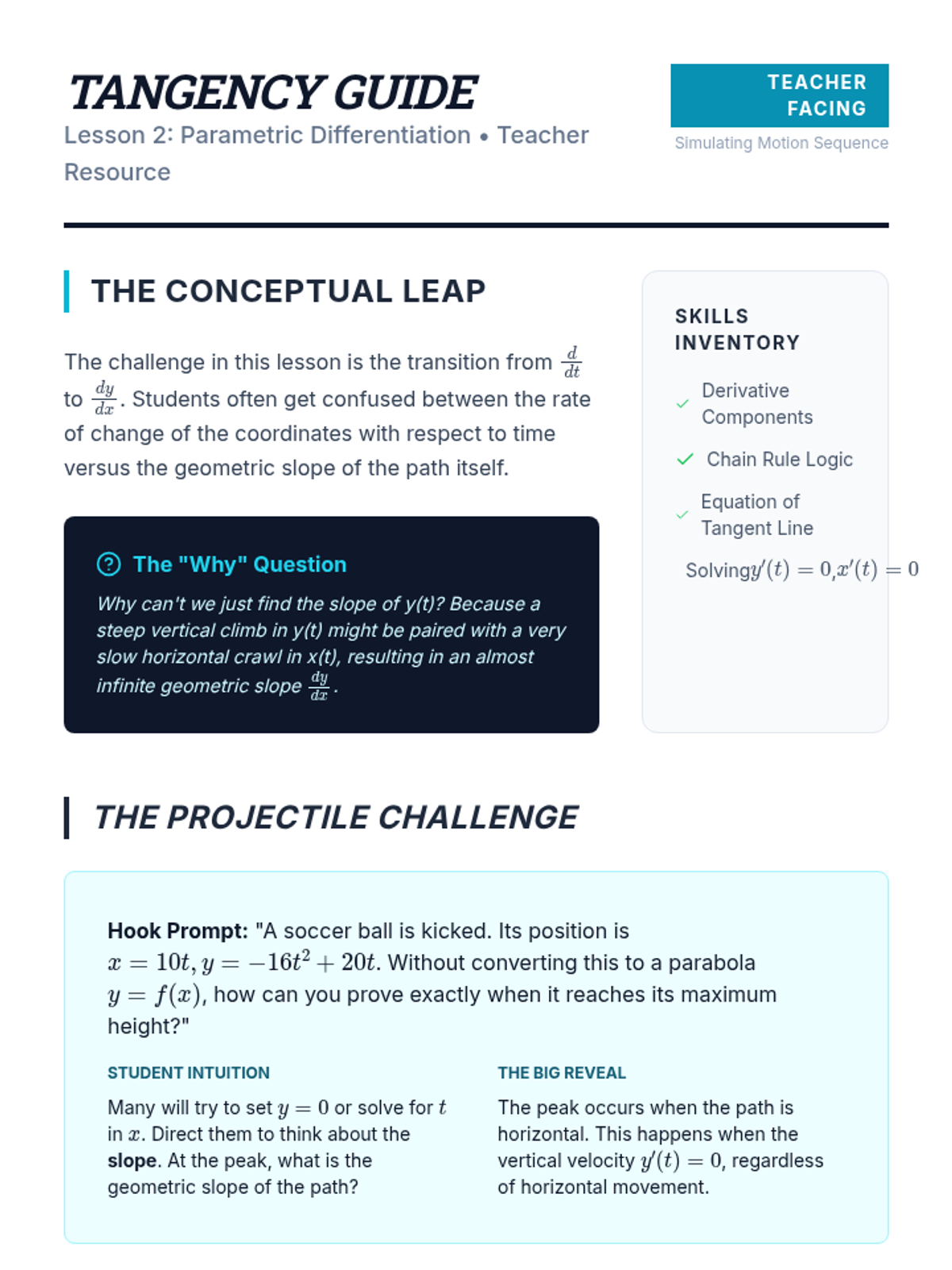
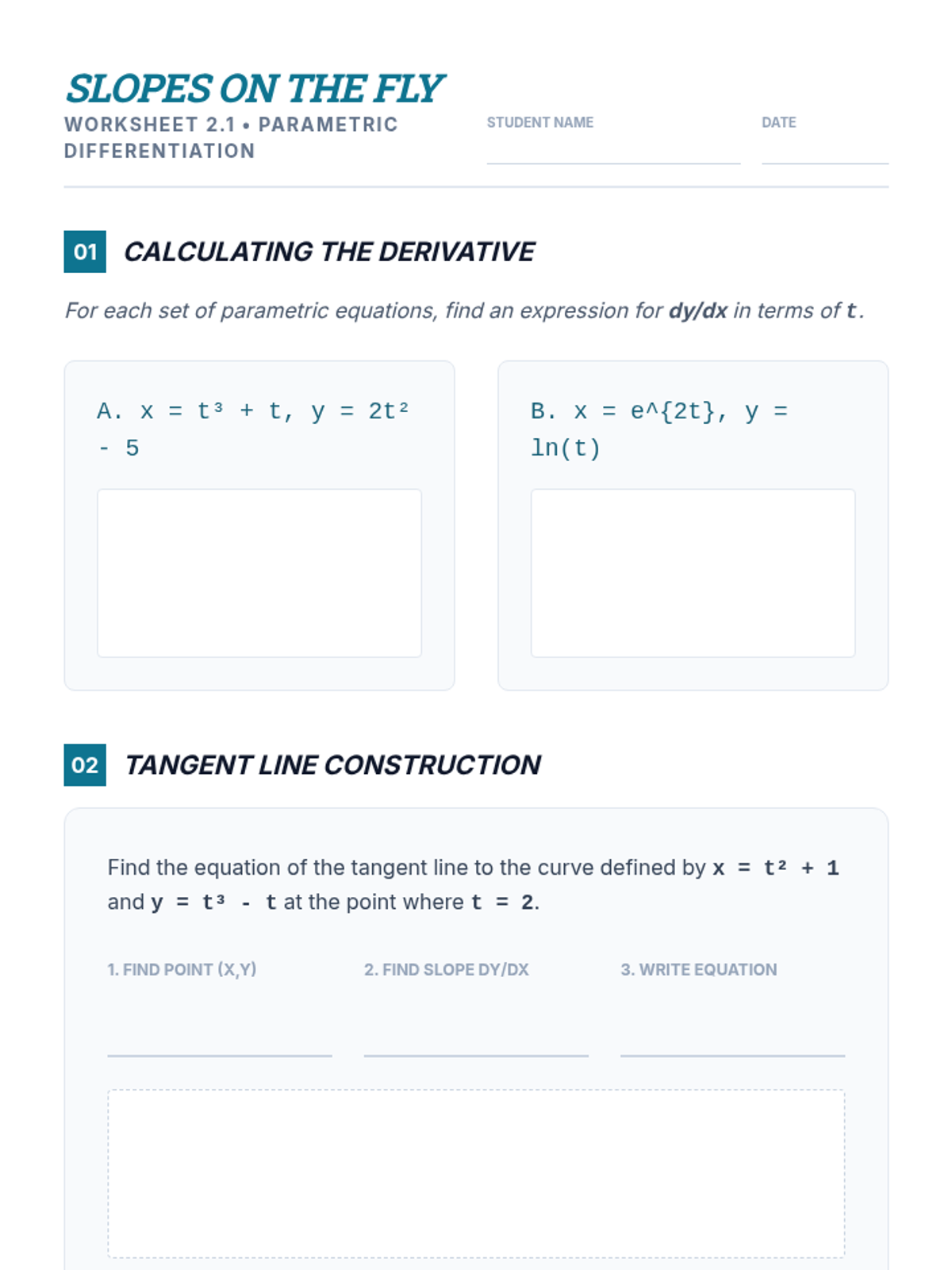
This lesson establishes the chain rule application required to find dy/dx given x(t) and y(t). Students calculate the slope of tangent lines and identify points of horizontal and vertical tangency.
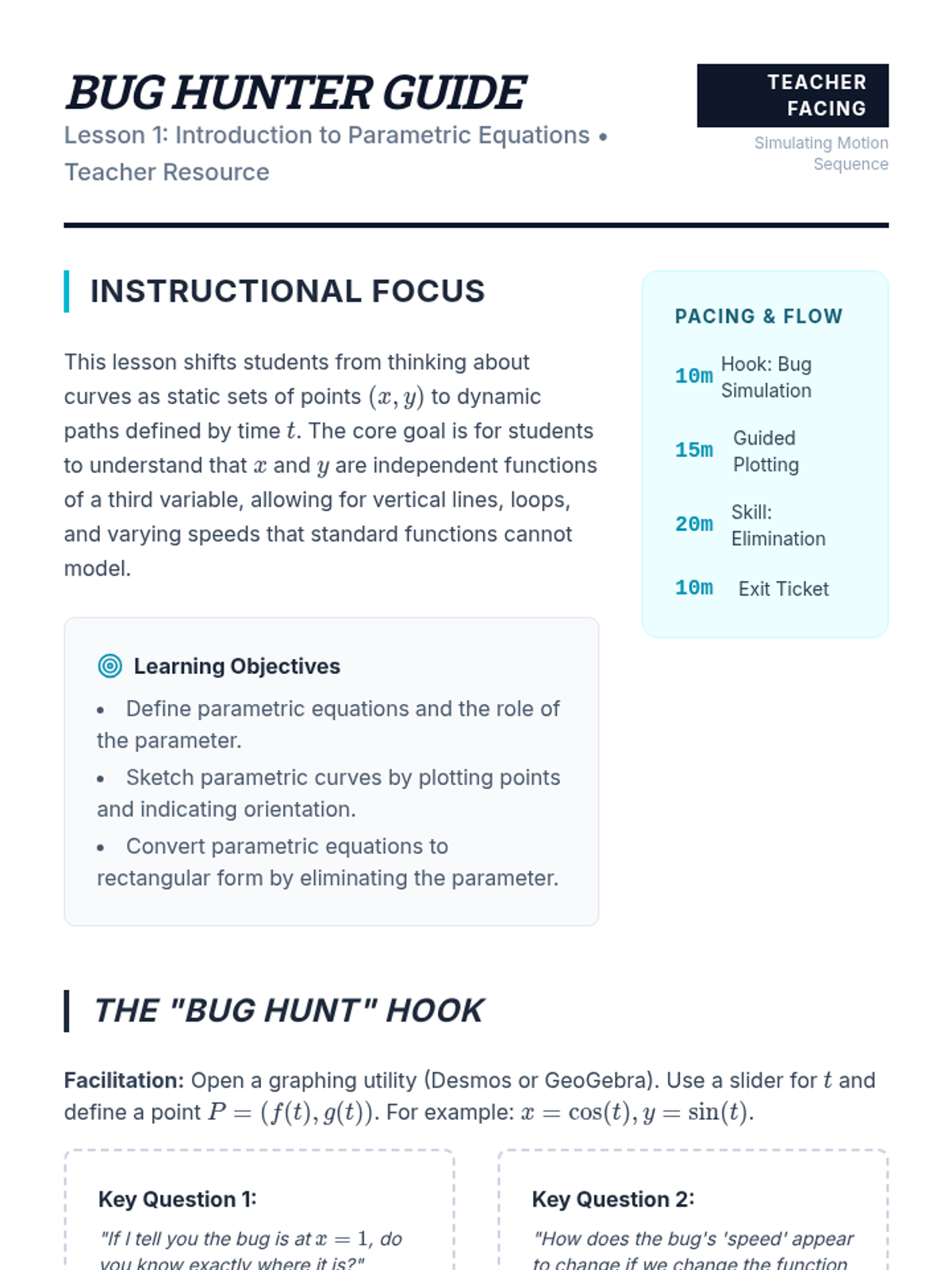
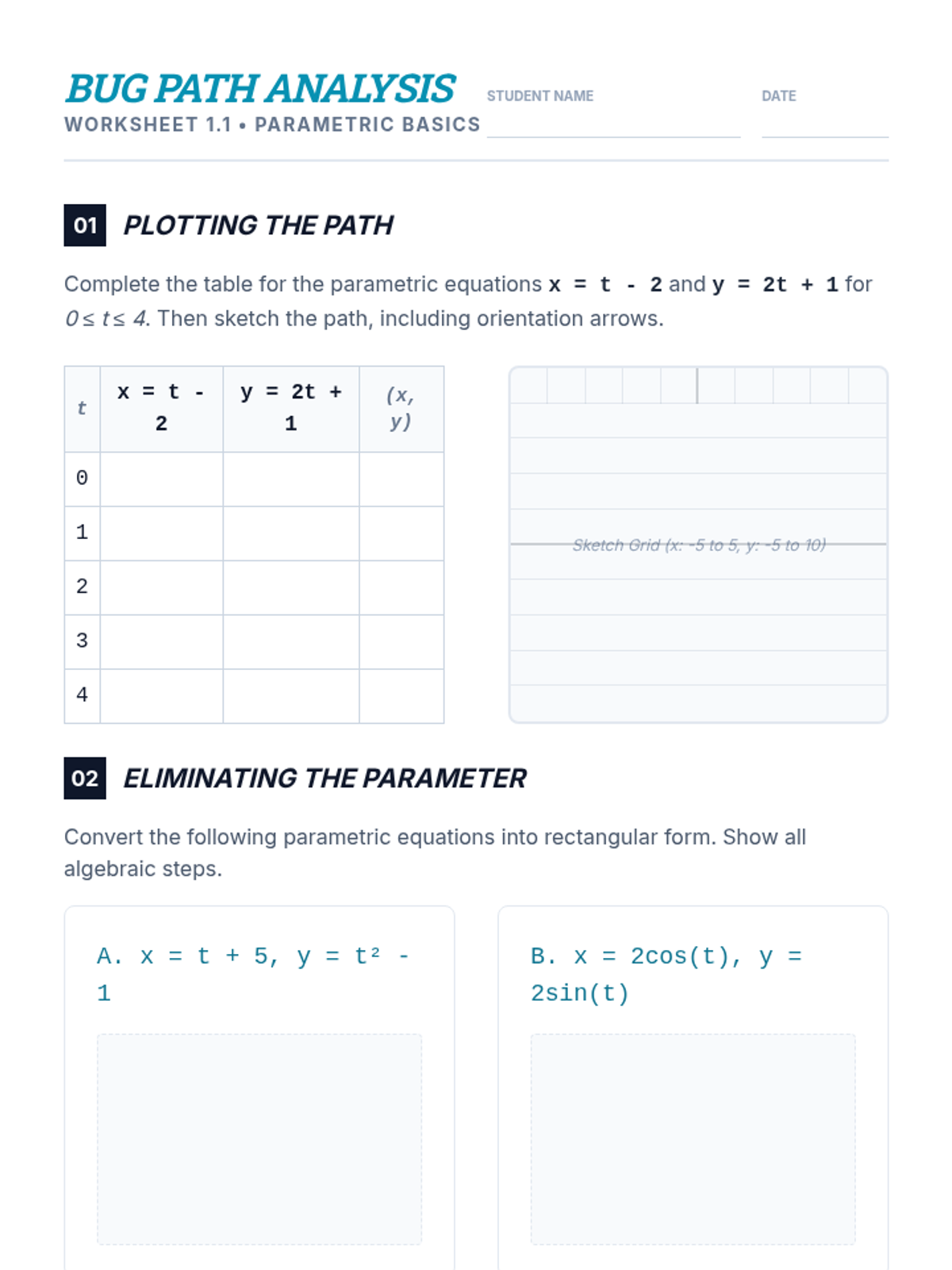
Students explore the definition of parametric equations by manually plotting points based on a parameter 't'. They practice eliminating the parameter to convert parametric equations into rectangular form.
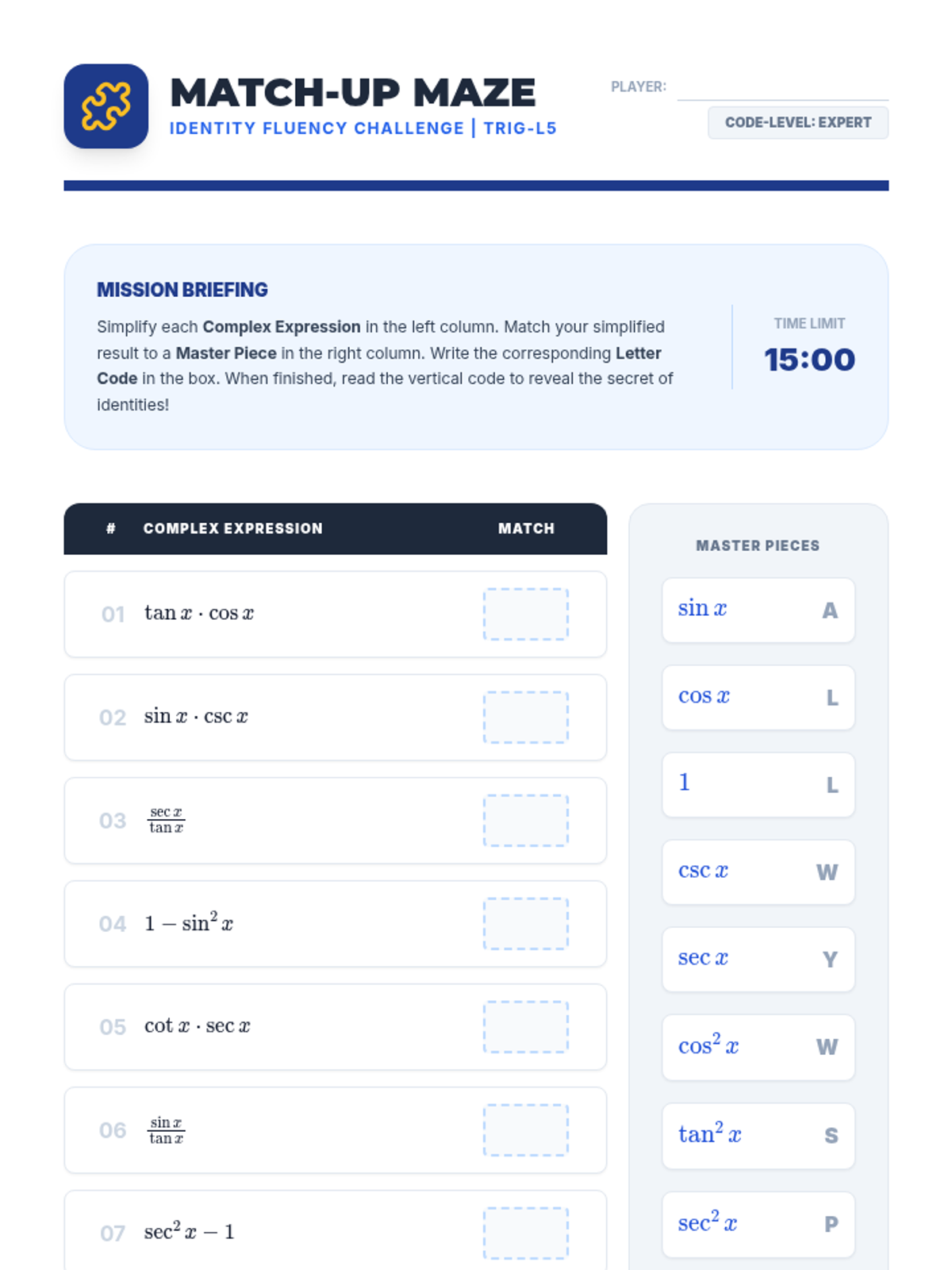
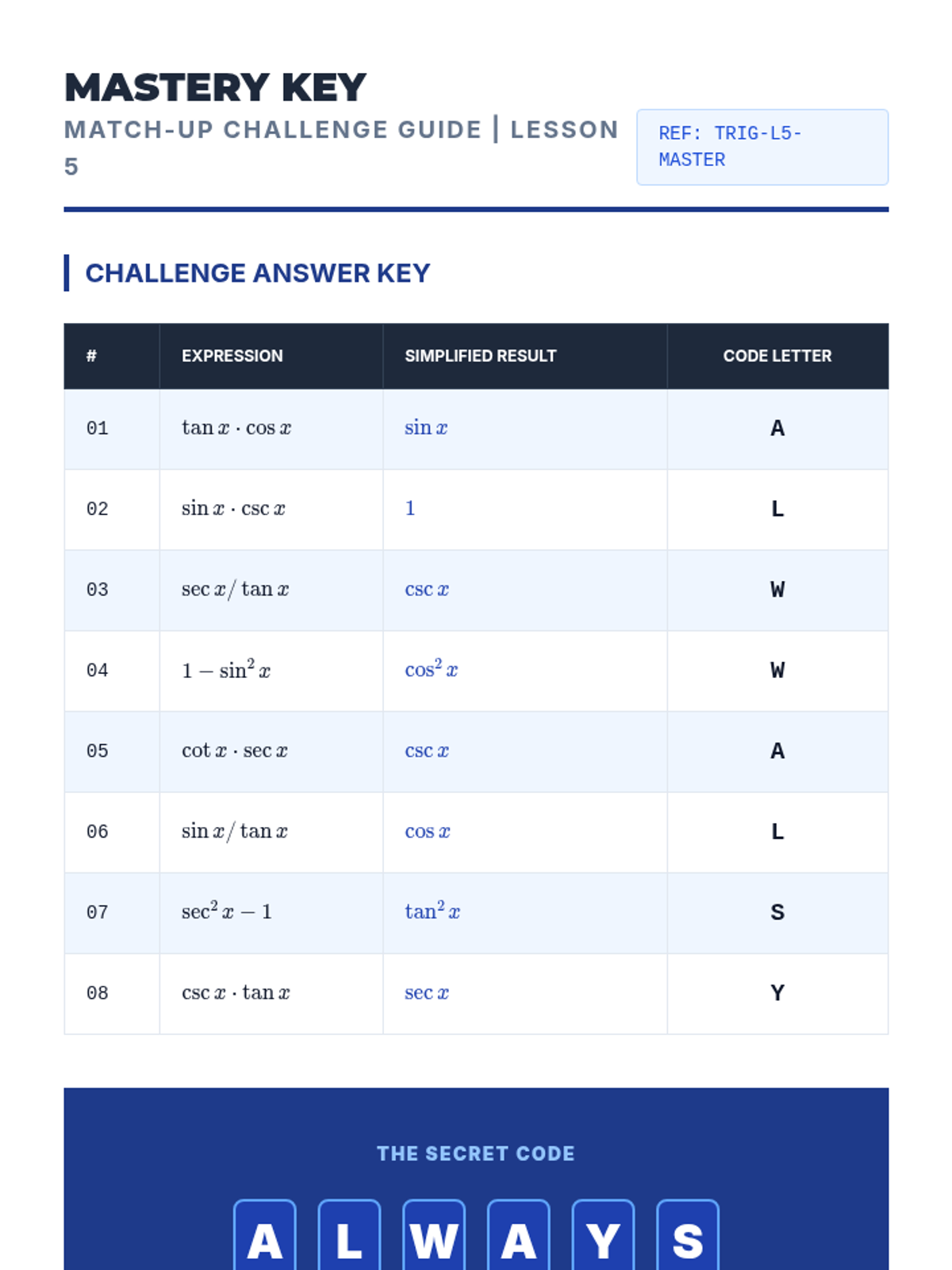
A gamified review where students match complex expressions with simplified forms to build fluency and pattern recognition.
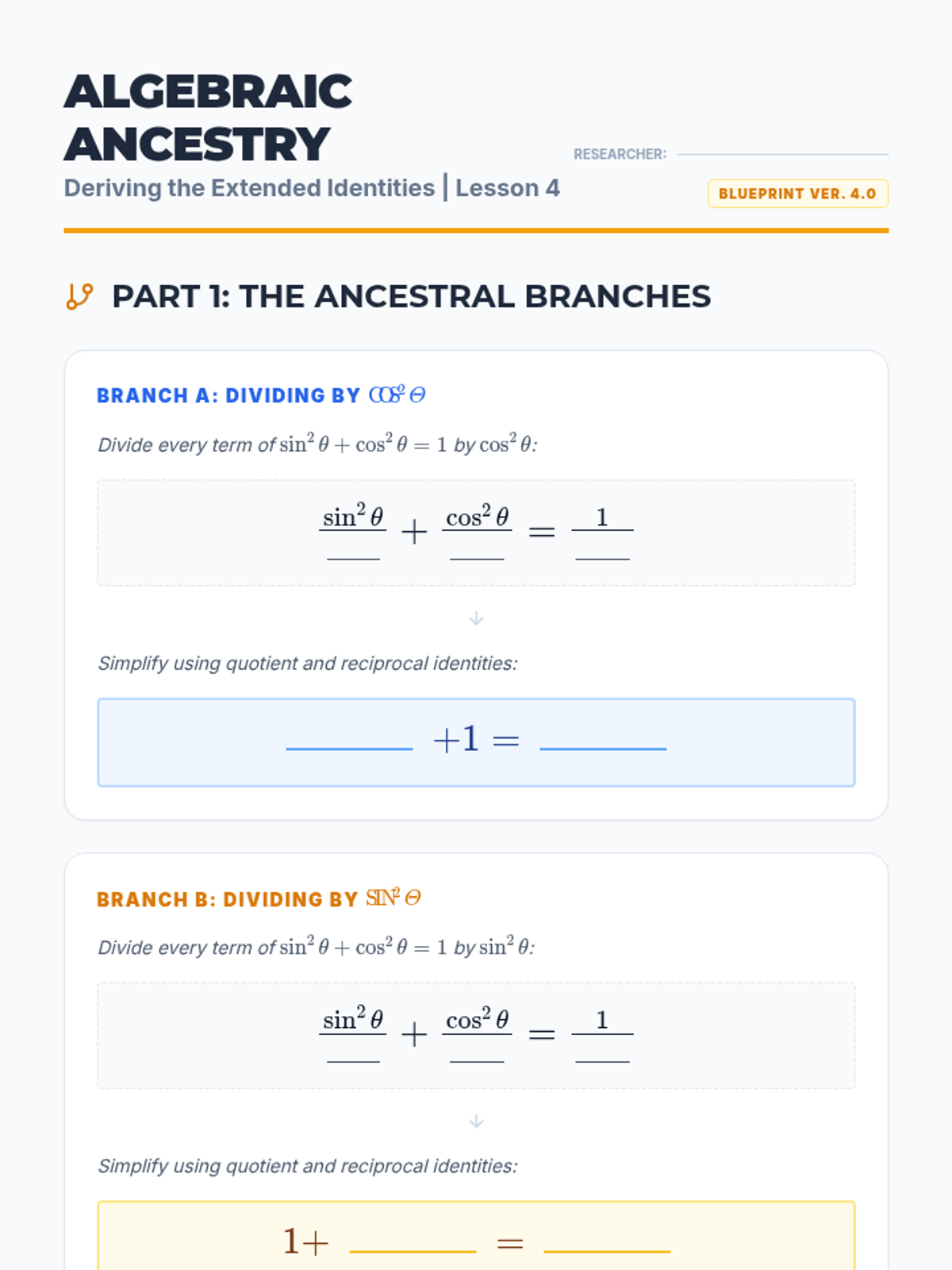
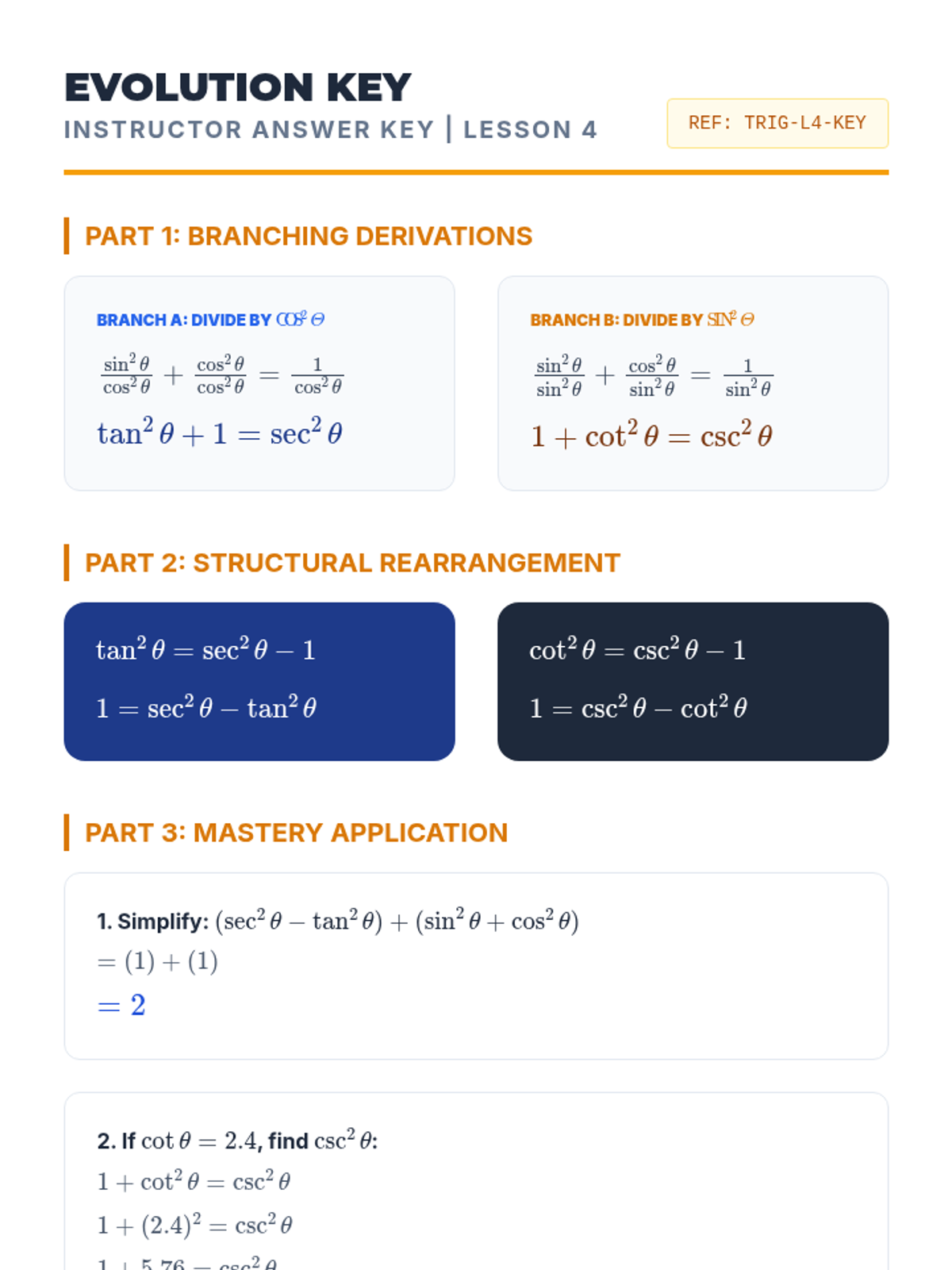
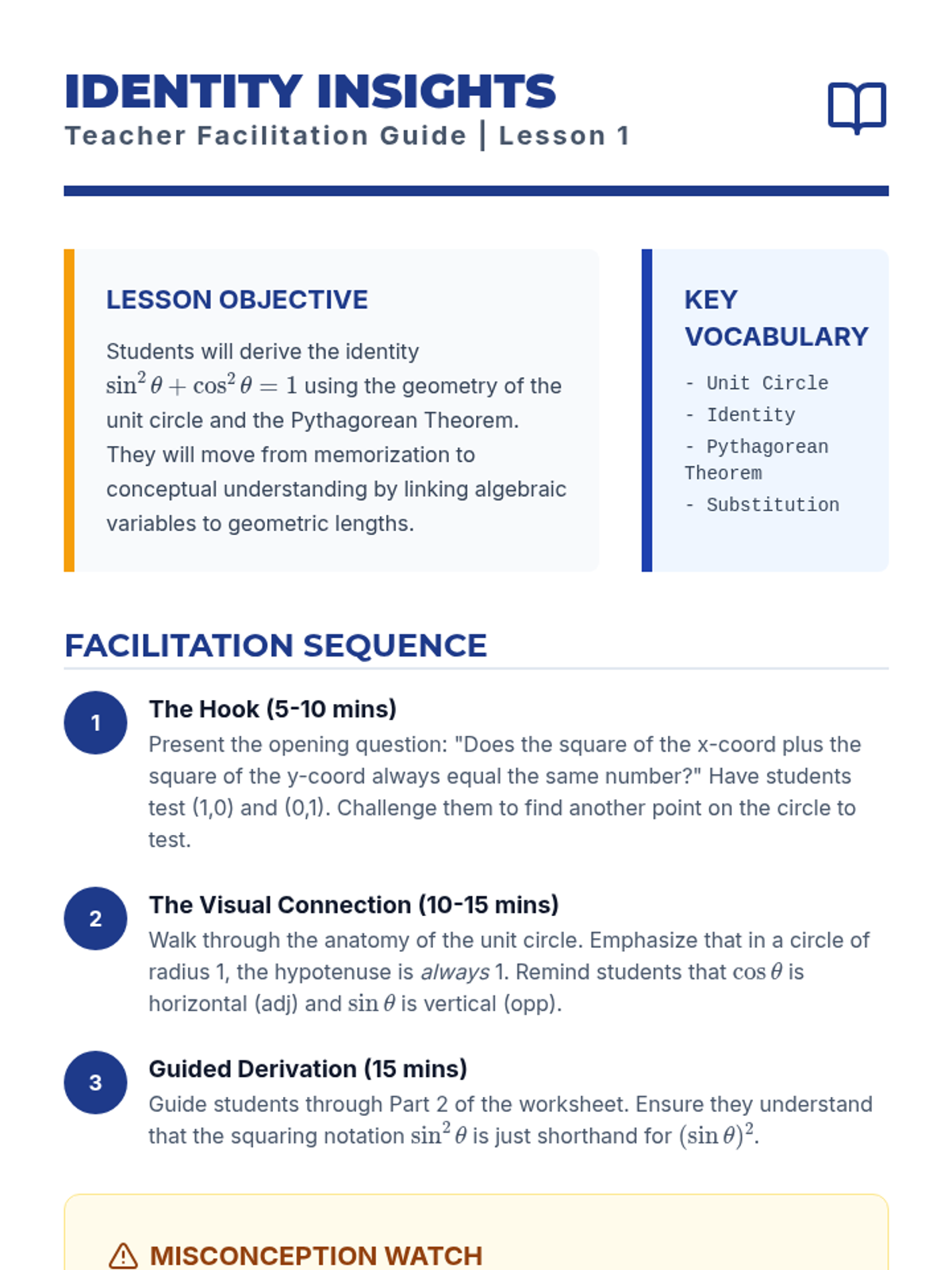
Building on the primary Pythagorean identity, students use algebraic manipulation to derive secondary forms involving tangent, secant, cotangent, and cosecant.
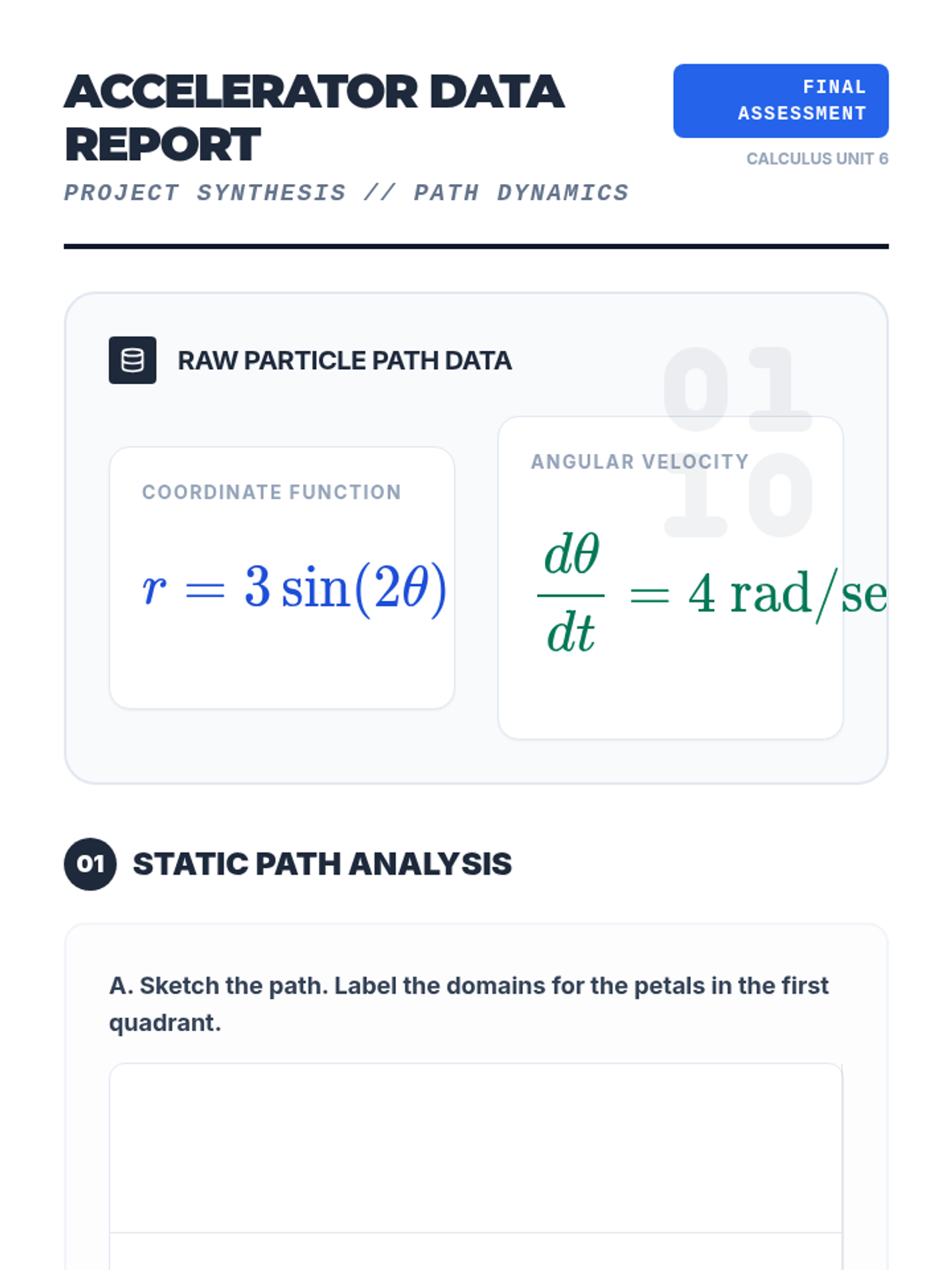
A comprehensive performance task where students analyze a raw data set from a simulated particle accelerator to generate a full kinematic report.
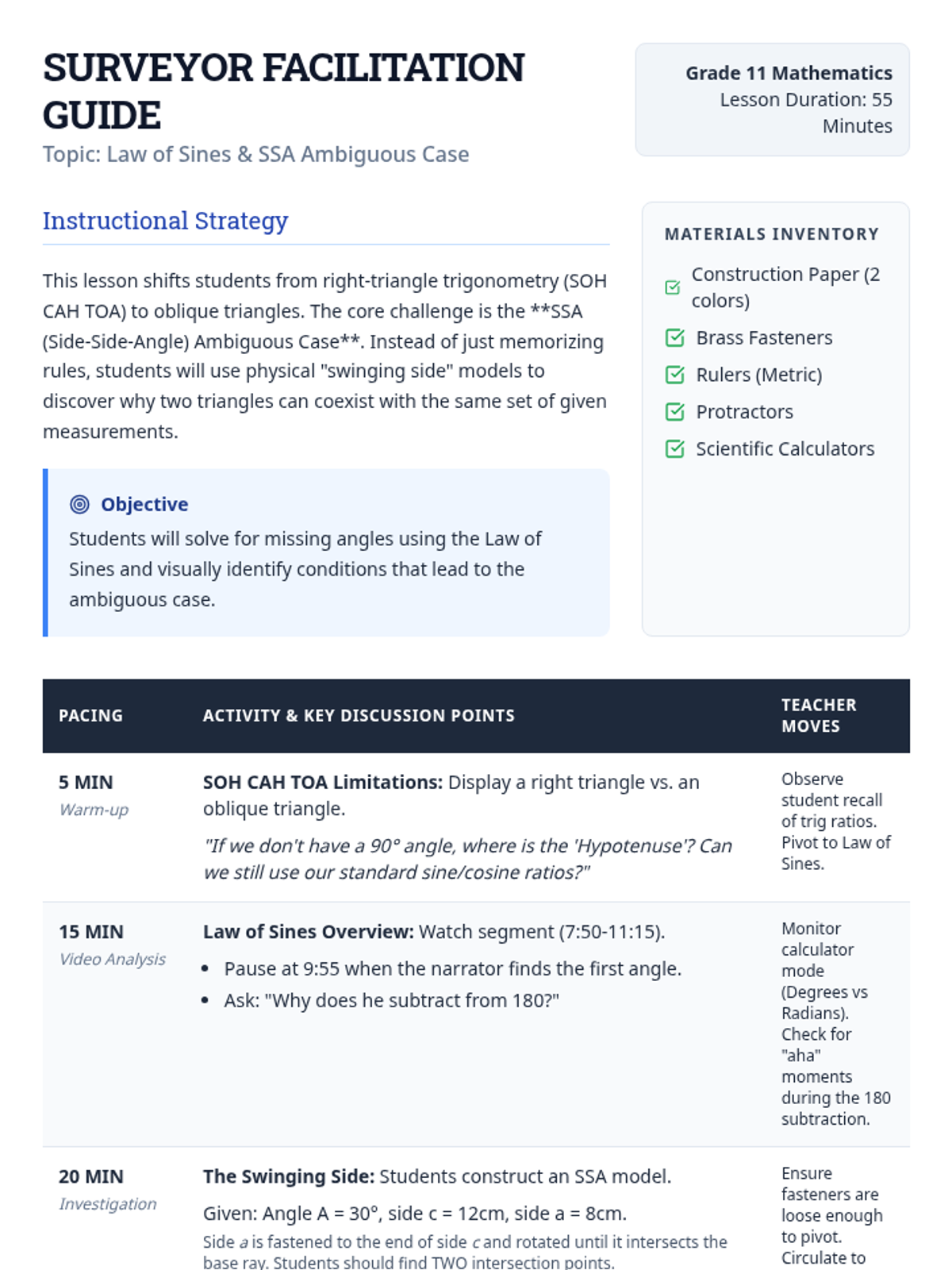
A high school trigonometry lesson focused on the Law of Sines and the SSA Ambiguous Case, featuring a physical construction activity to visualize the 'swinging side' phenomenon.
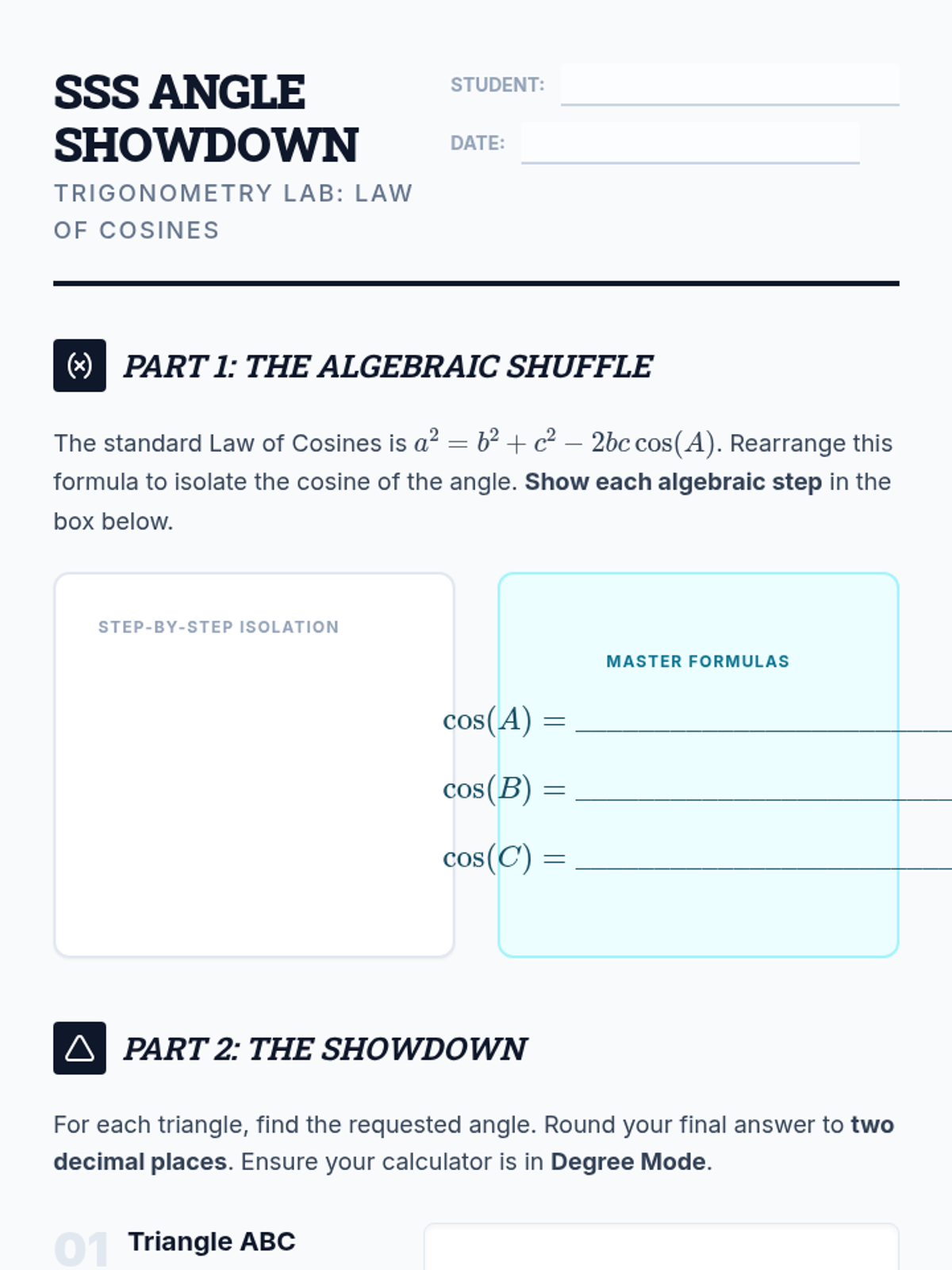
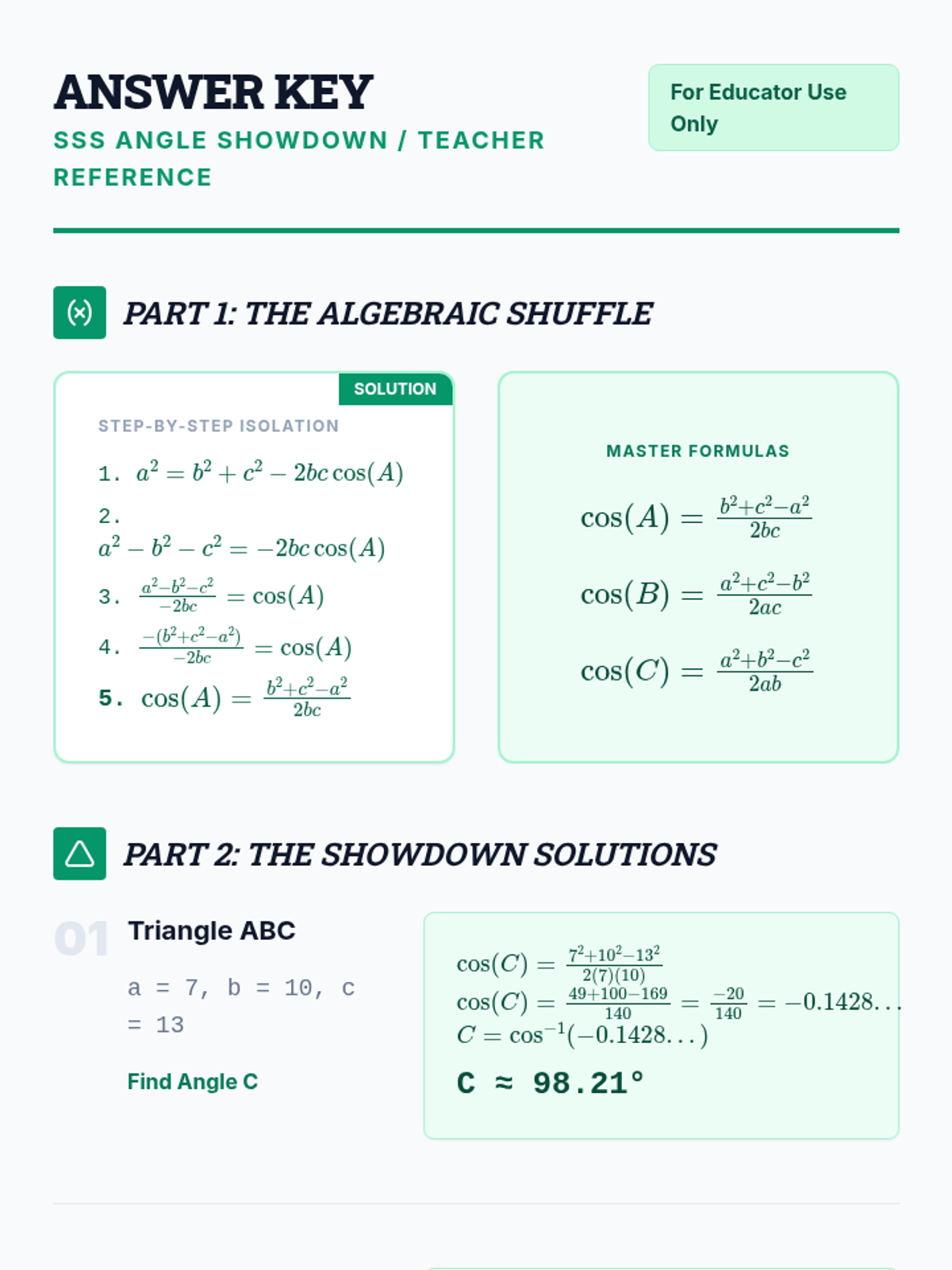
This lesson focuses on using the Law of Cosines to solve for unknown angles in SSS (Side-Side-Side) triangles, emphasizing algebraic rearrangement and verification through the relationship between side lengths and angle measures.
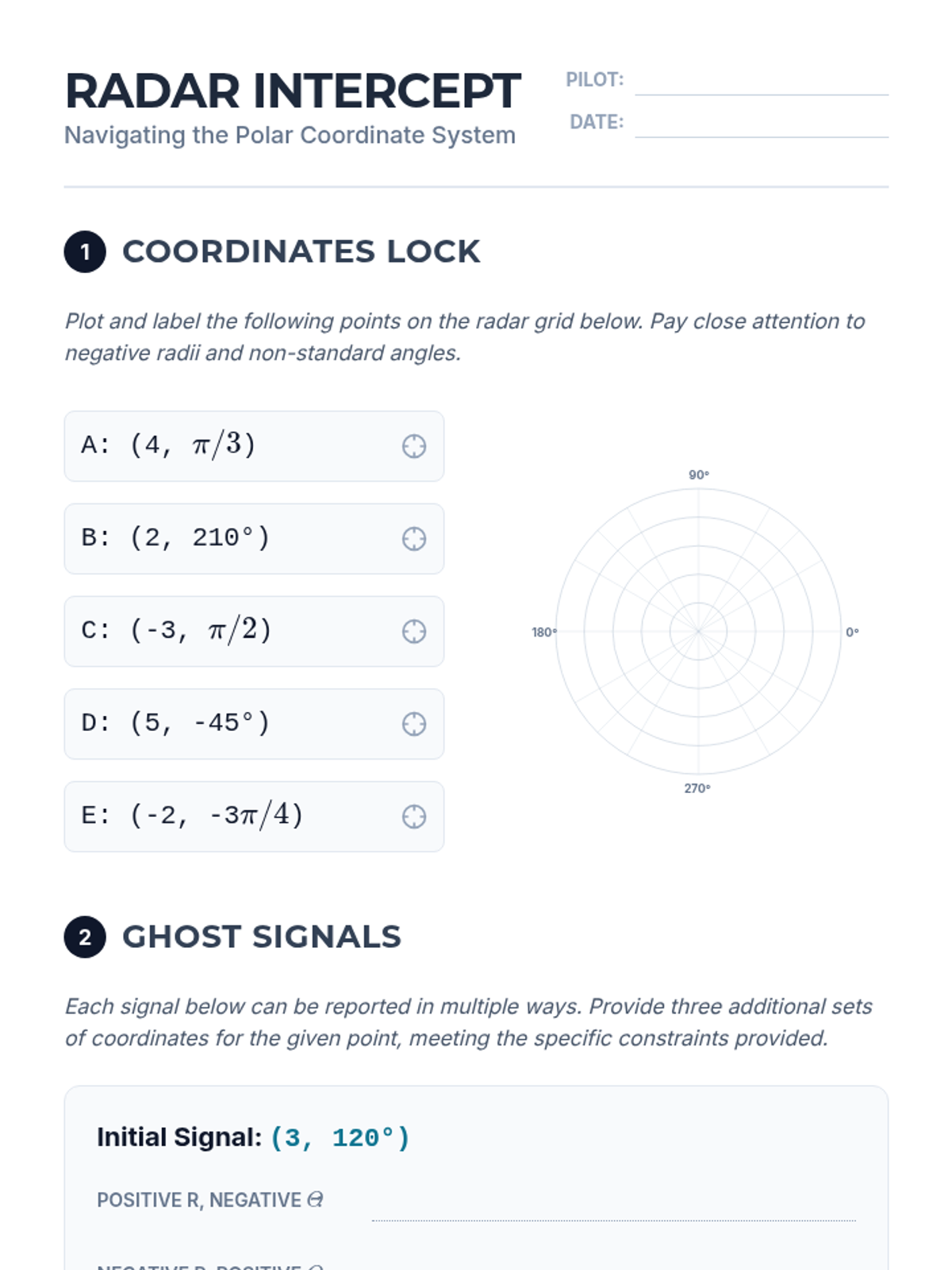
Students learn the conventions of polar coordinates (r, theta) and practice plotting points, including those with negative radii. They explore the non-uniqueness of polar coordinates by finding multiple representations for a single point.
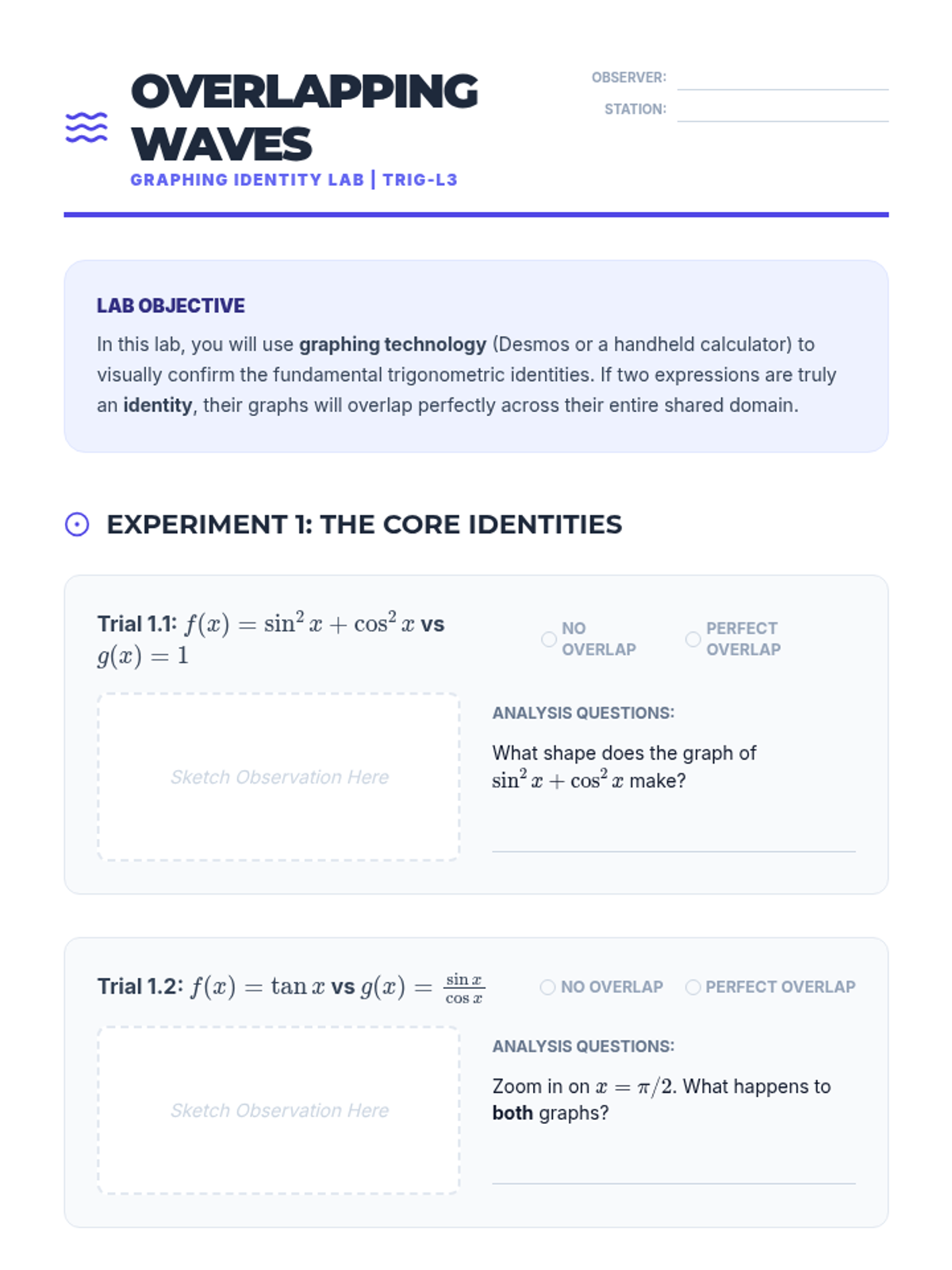
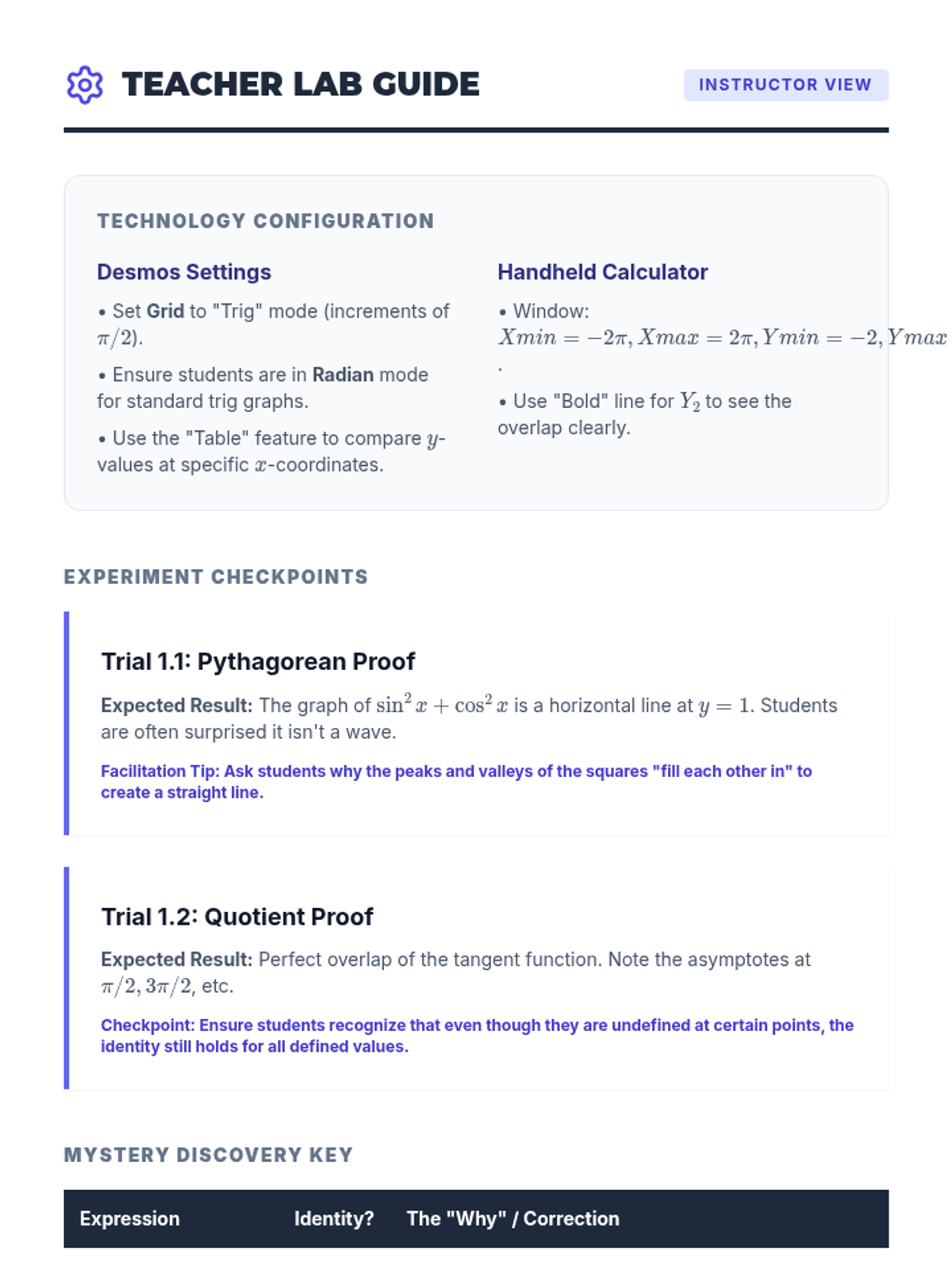
Students use graphing technology to observe overlapping trigonometric expressions, verifying that identities hold true for all values.
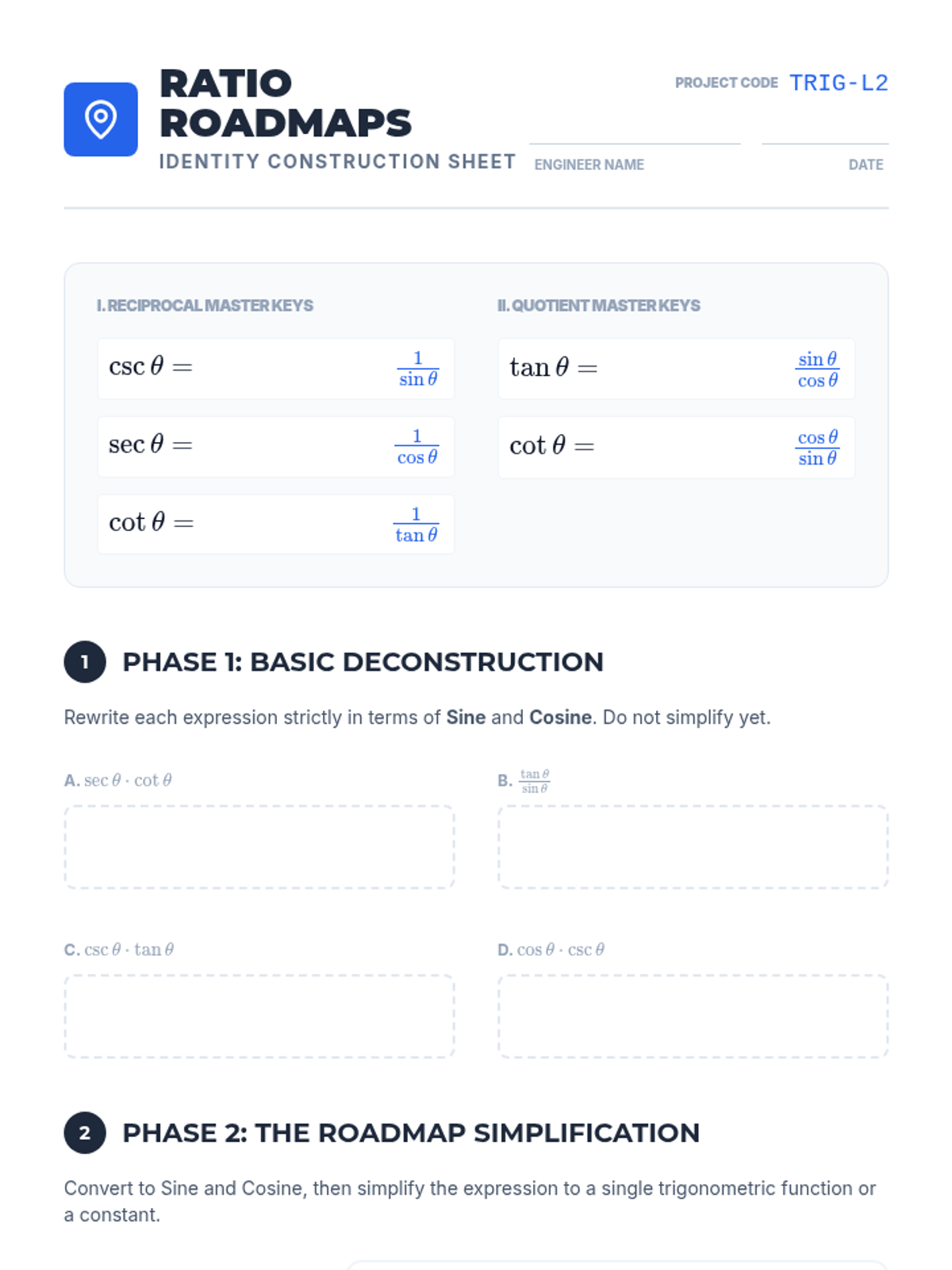
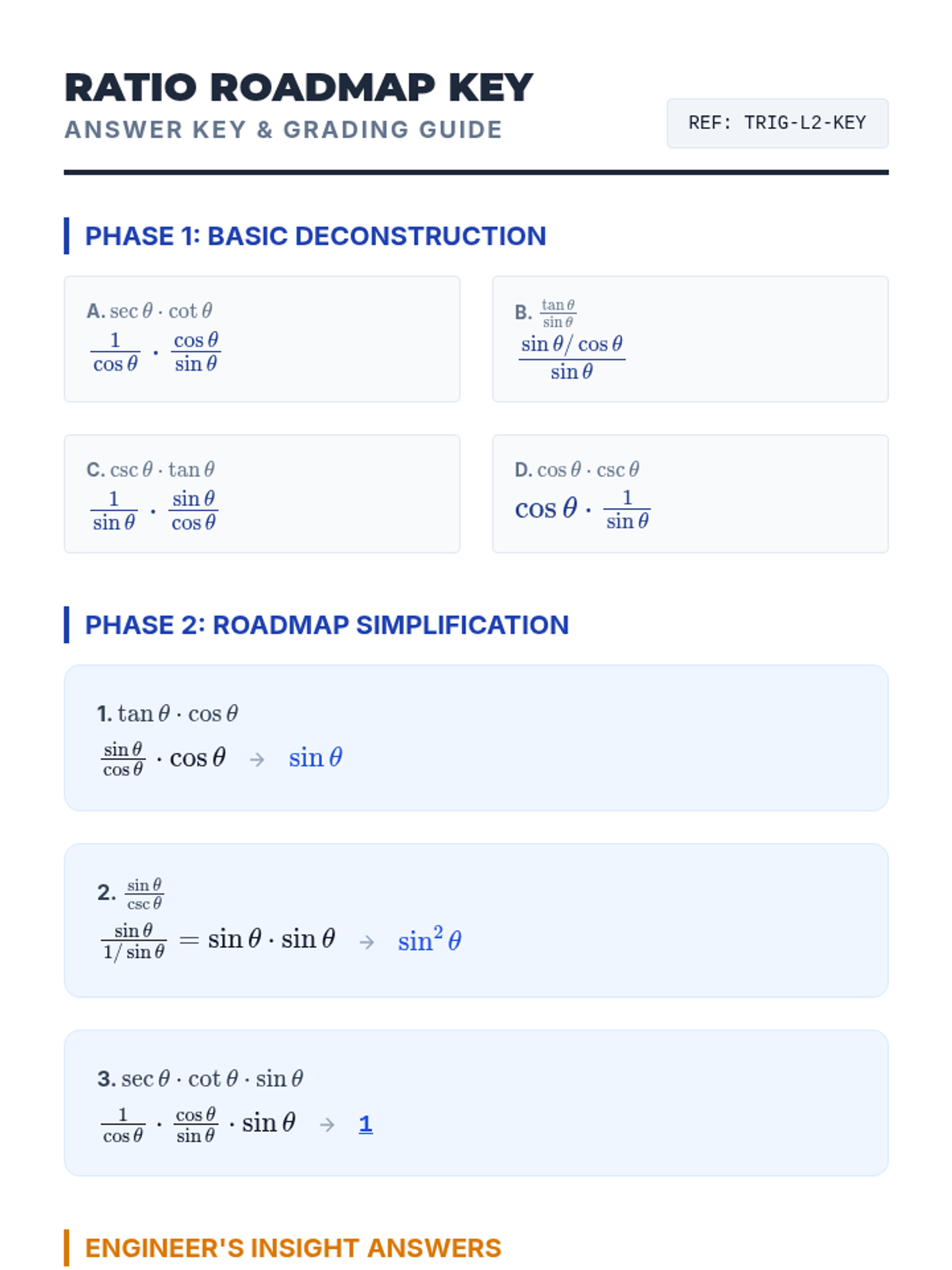
Learners investigate reciprocal functions (csc, sec, cot) and quotient identities to rewrite expressions in terms of sine and cosine.
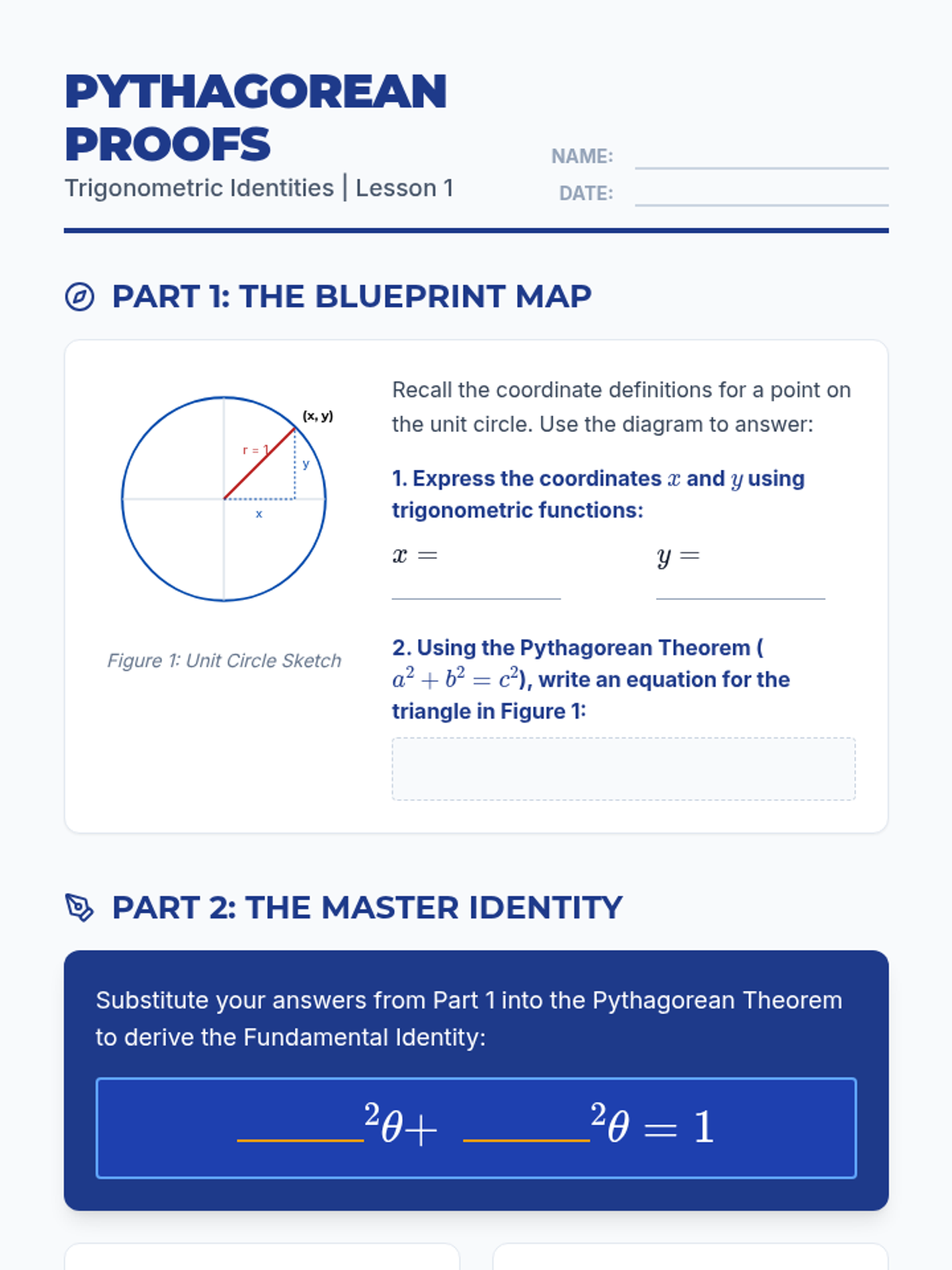
Students utilize the distance formula and the unit circle to discover the fundamental Pythagorean identity, bridging the gap between Geometry and Algebra II.
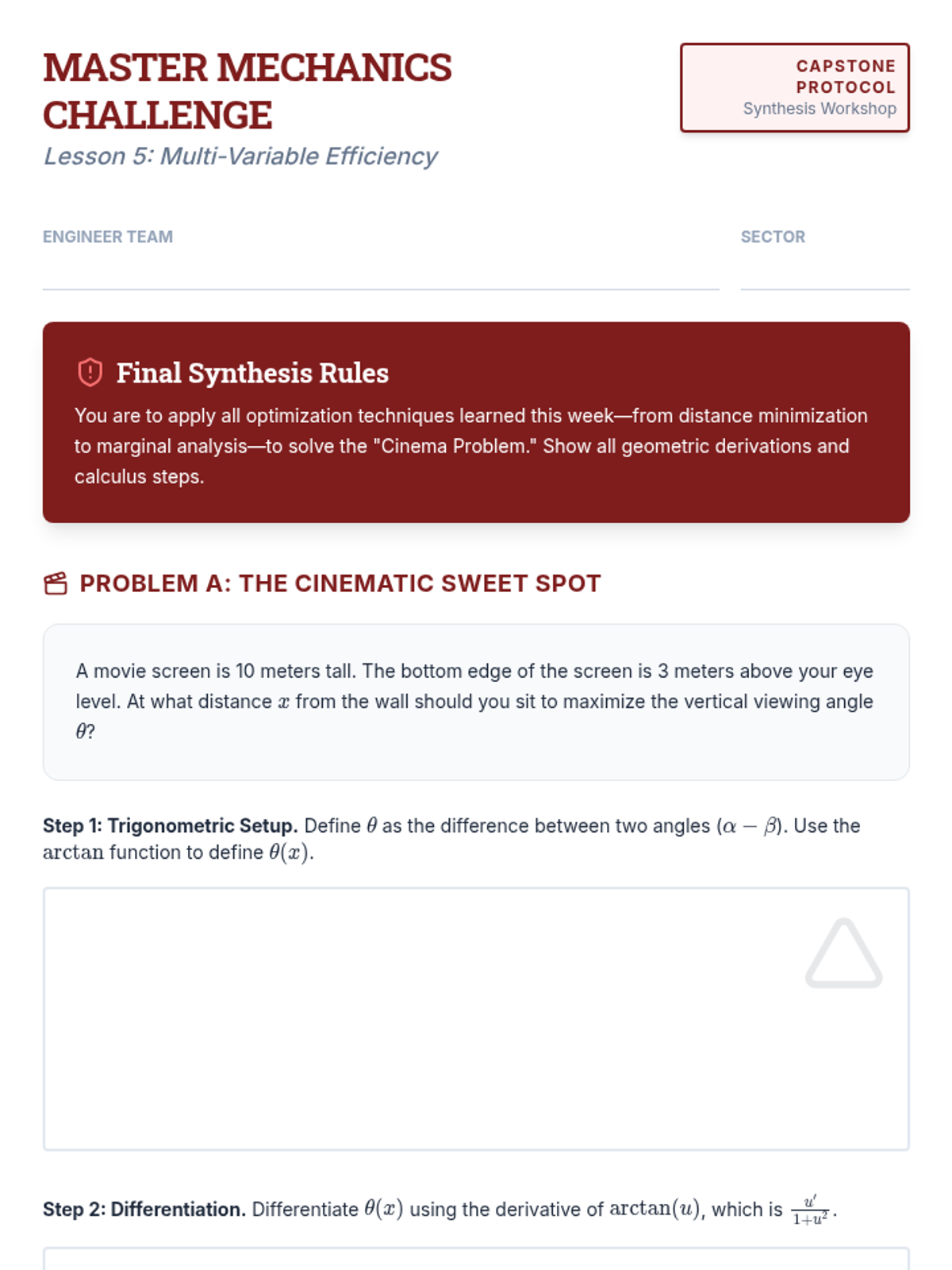
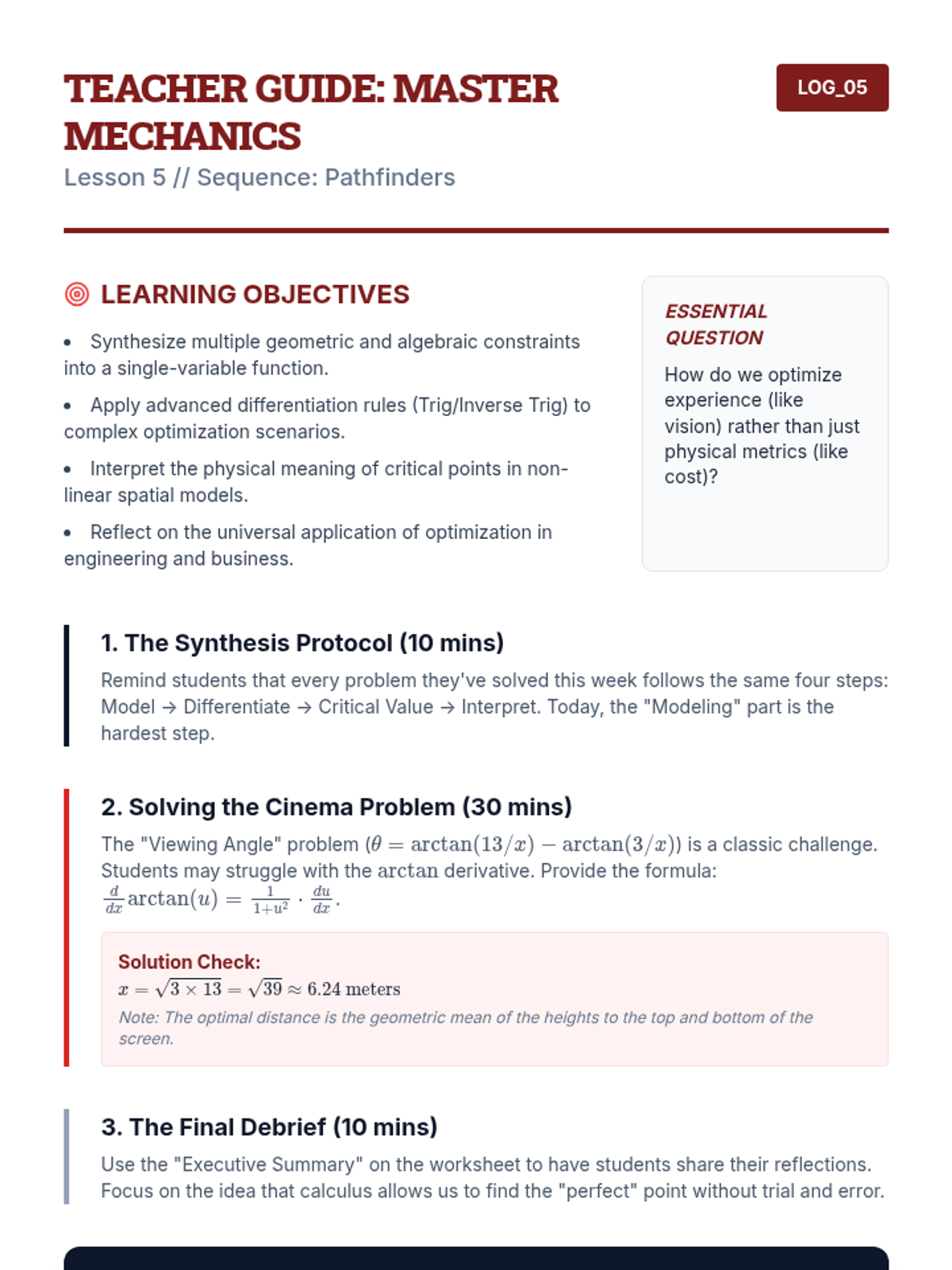
A culminating workshop where students solve complex, multi-constraint problems like viewing angles and projectile efficiency.
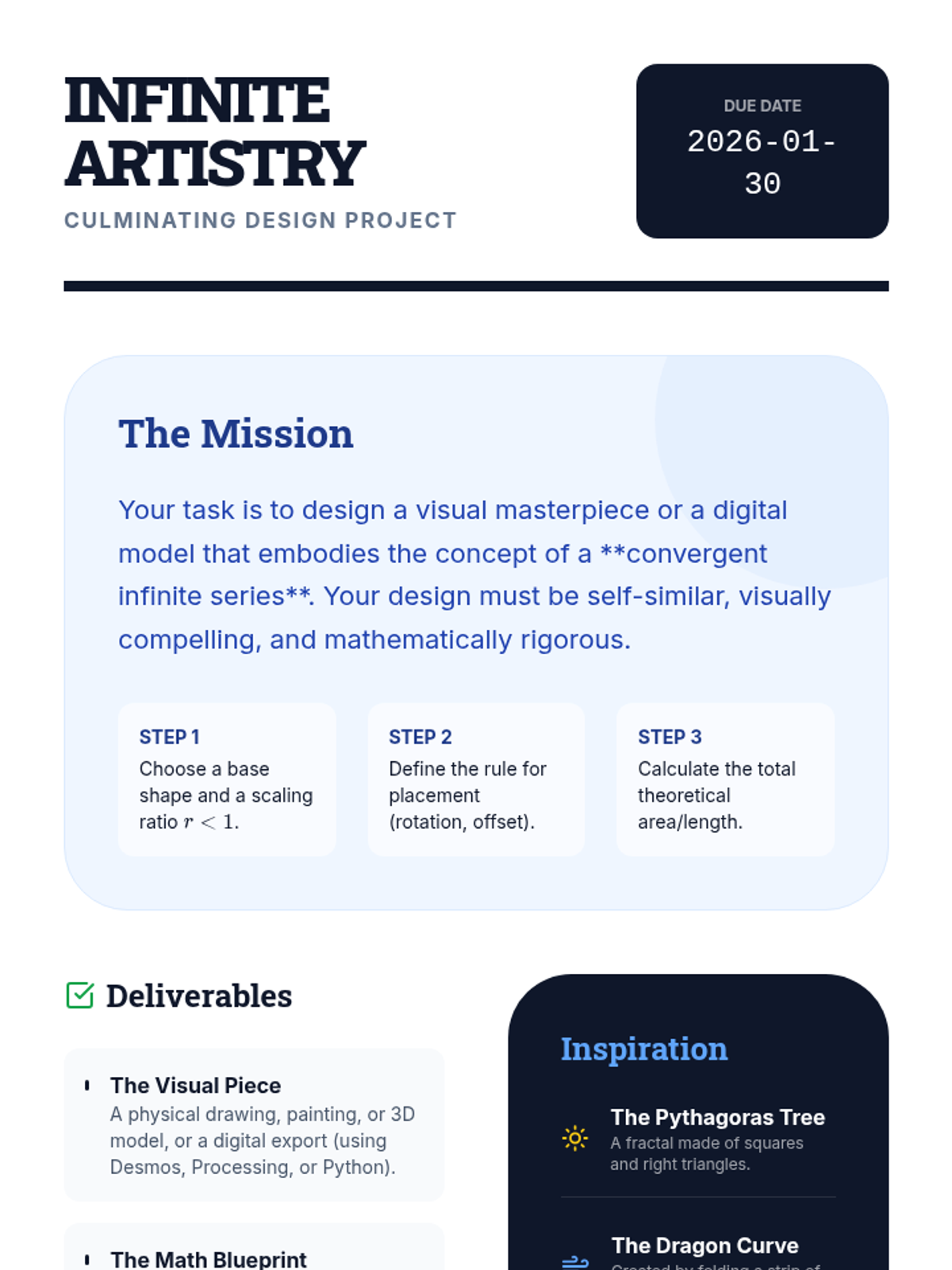
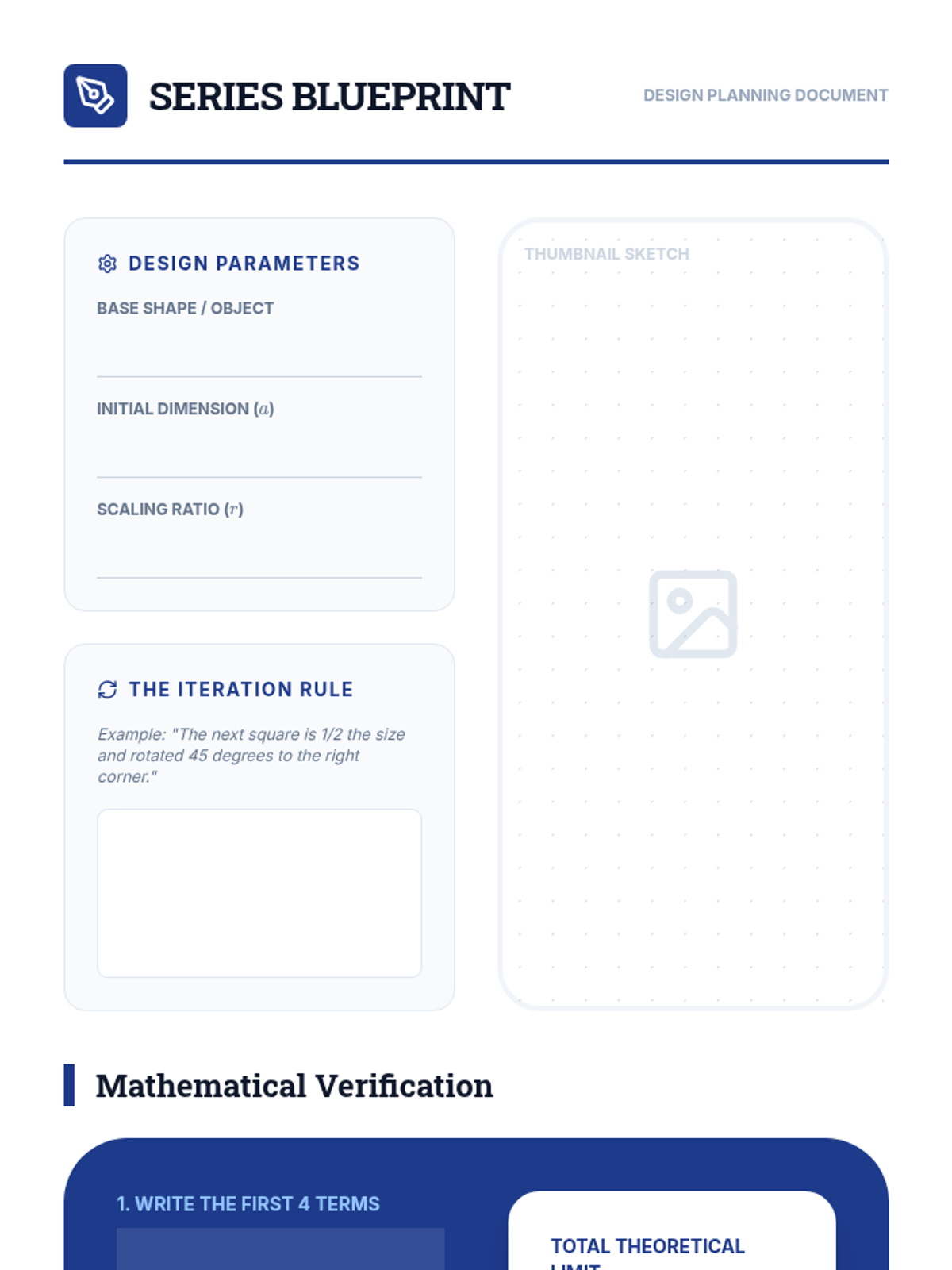
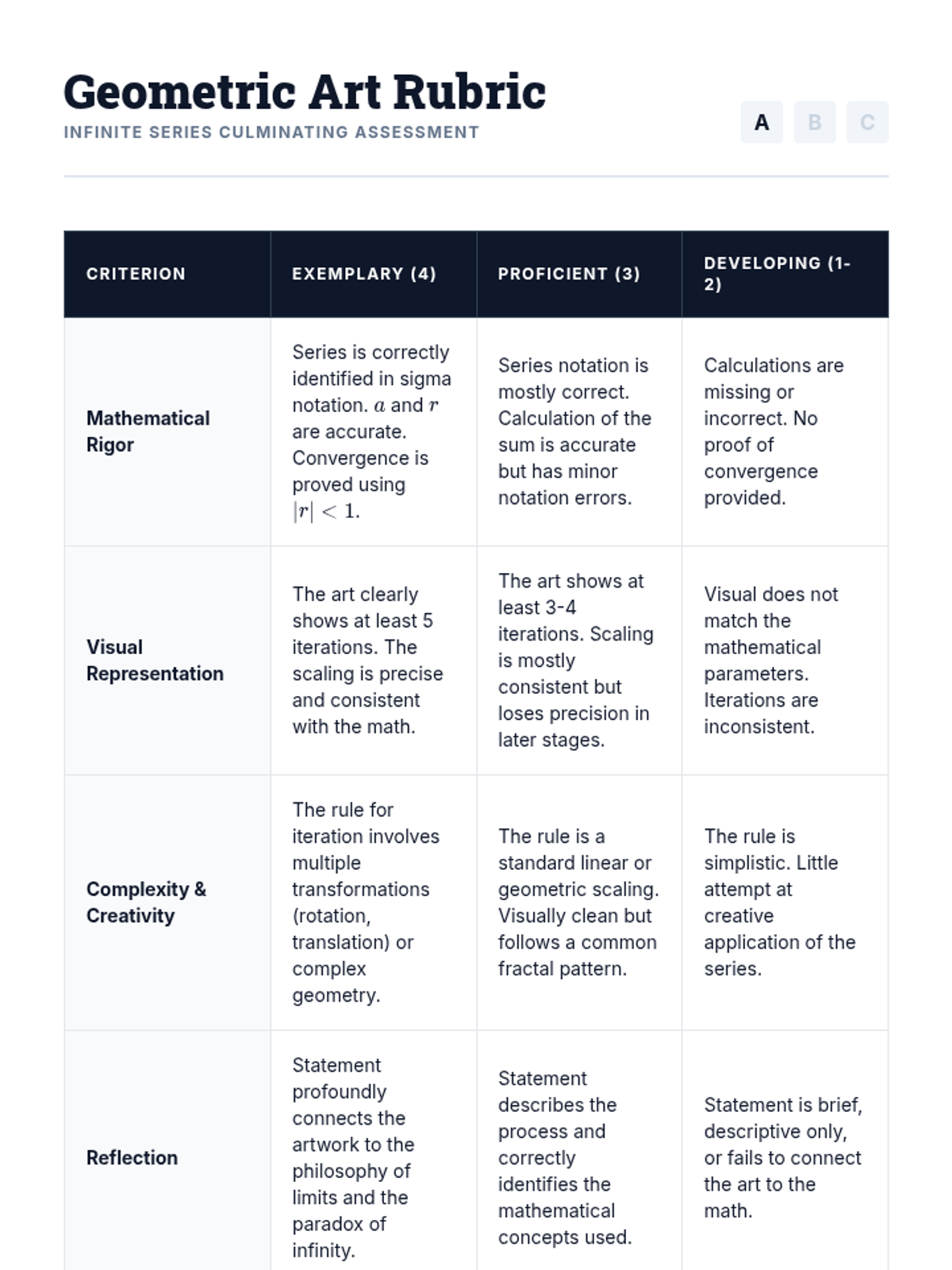
A culminating project where students design a piece of art or digital model based on a convergent series, calculating the theoretical limits of their design.
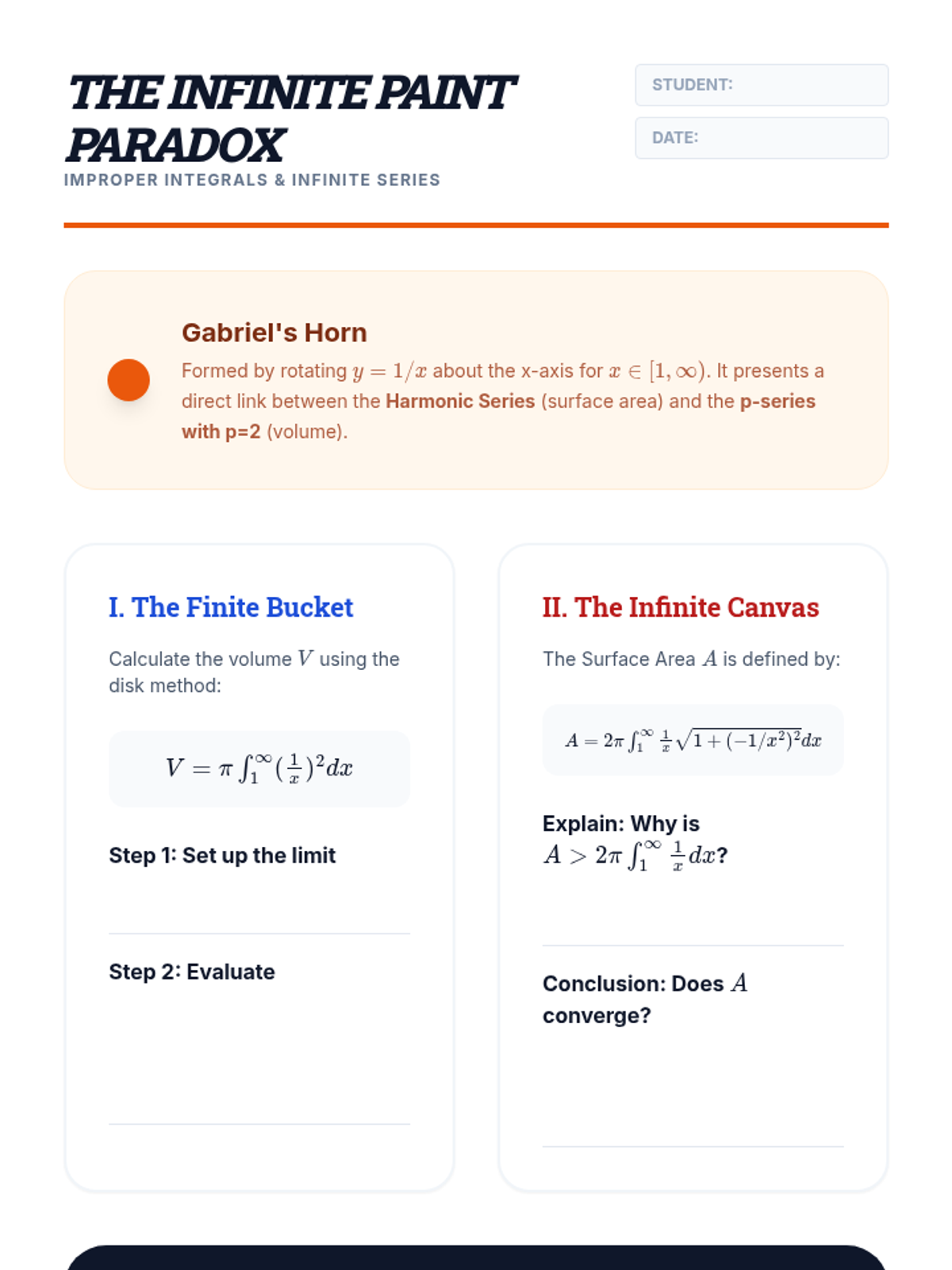
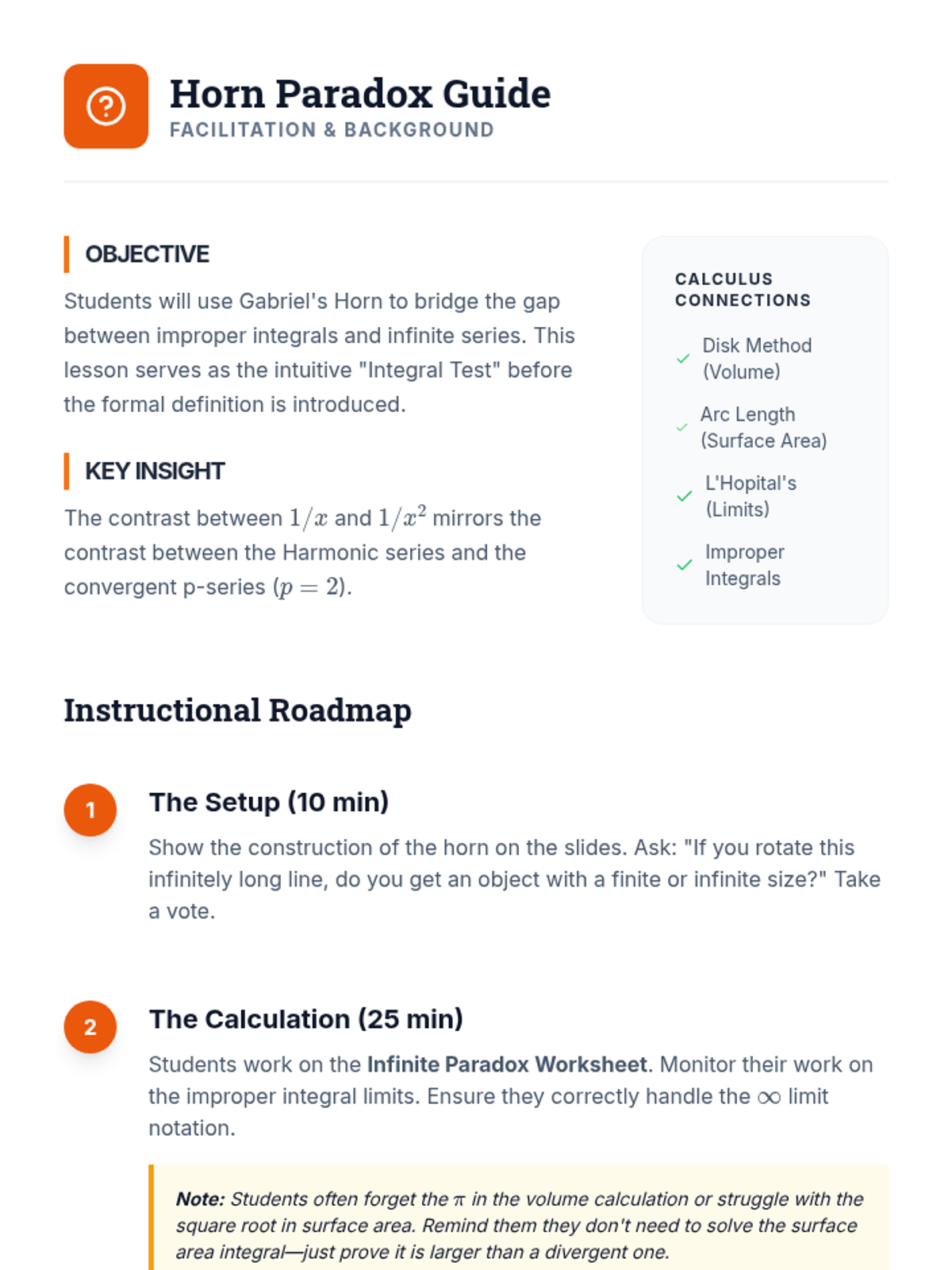
Students examine the paradox of Gabriel's Horn (finite volume, infinite surface area) to connect improper integrals with infinite series concepts.
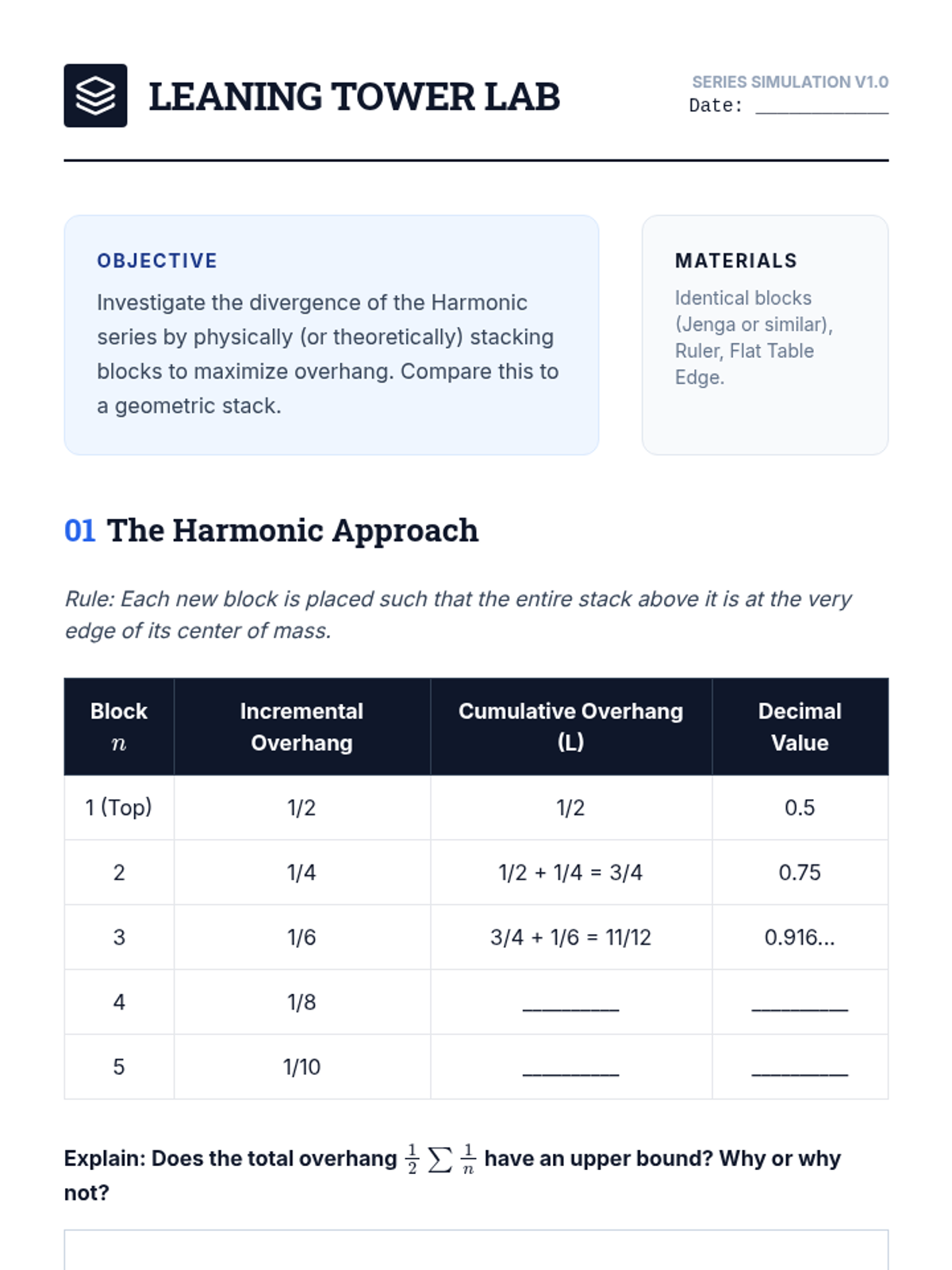
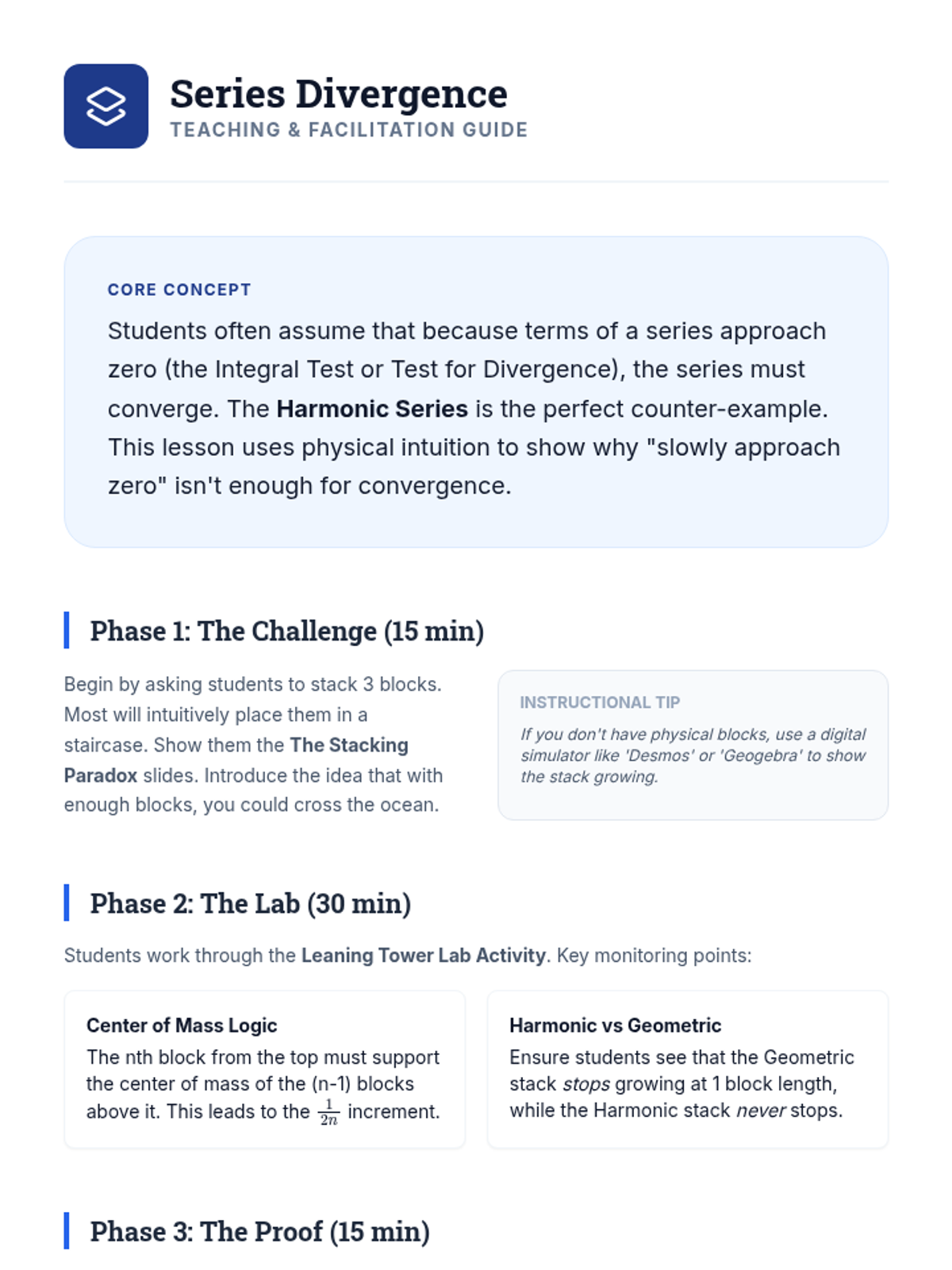
A comparative lesson contrasting the divergent Harmonic series with convergent geometric series using stacking block simulations (the Leaning Tower of Lire).
Learners explore famous fractals like the Koch Snowflake and Sierpinski Triangle. They calculate perimeter and area using series concepts to understand self-similarity.
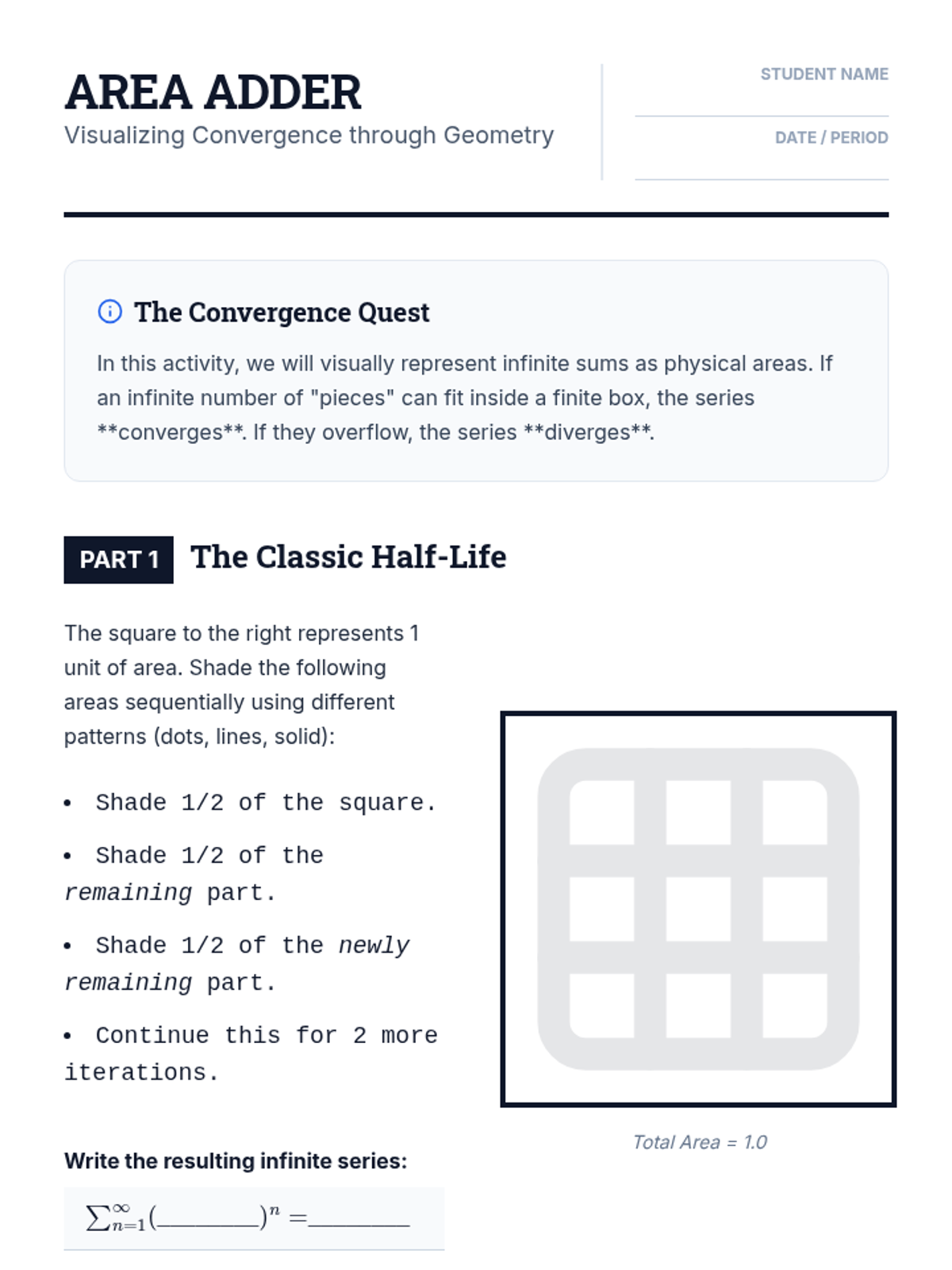
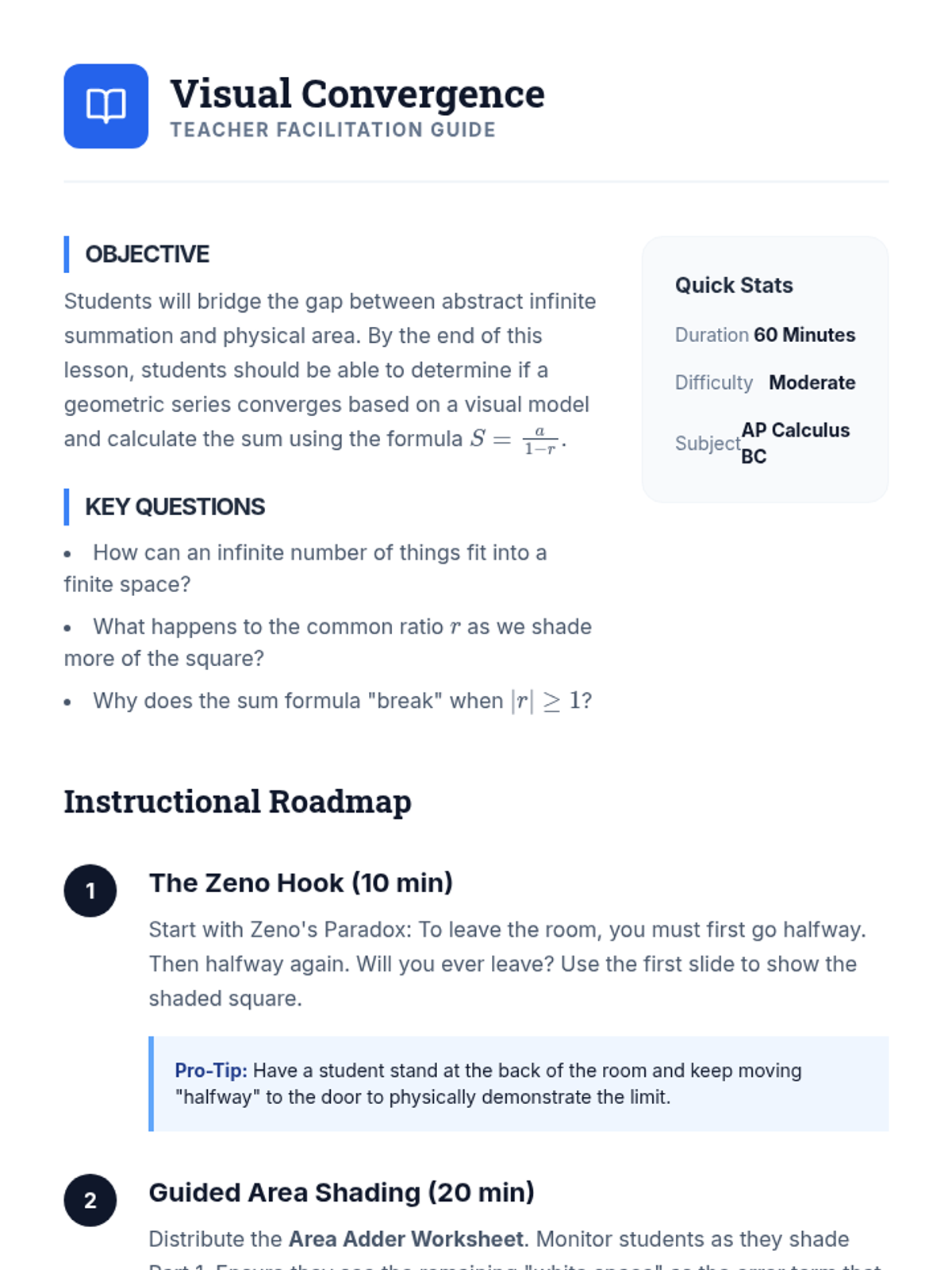
Students use geometric area models to visualize the convergence of infinite series. By shading squares and circles, they bridge the gap between algebraic limits and spatial reasoning.