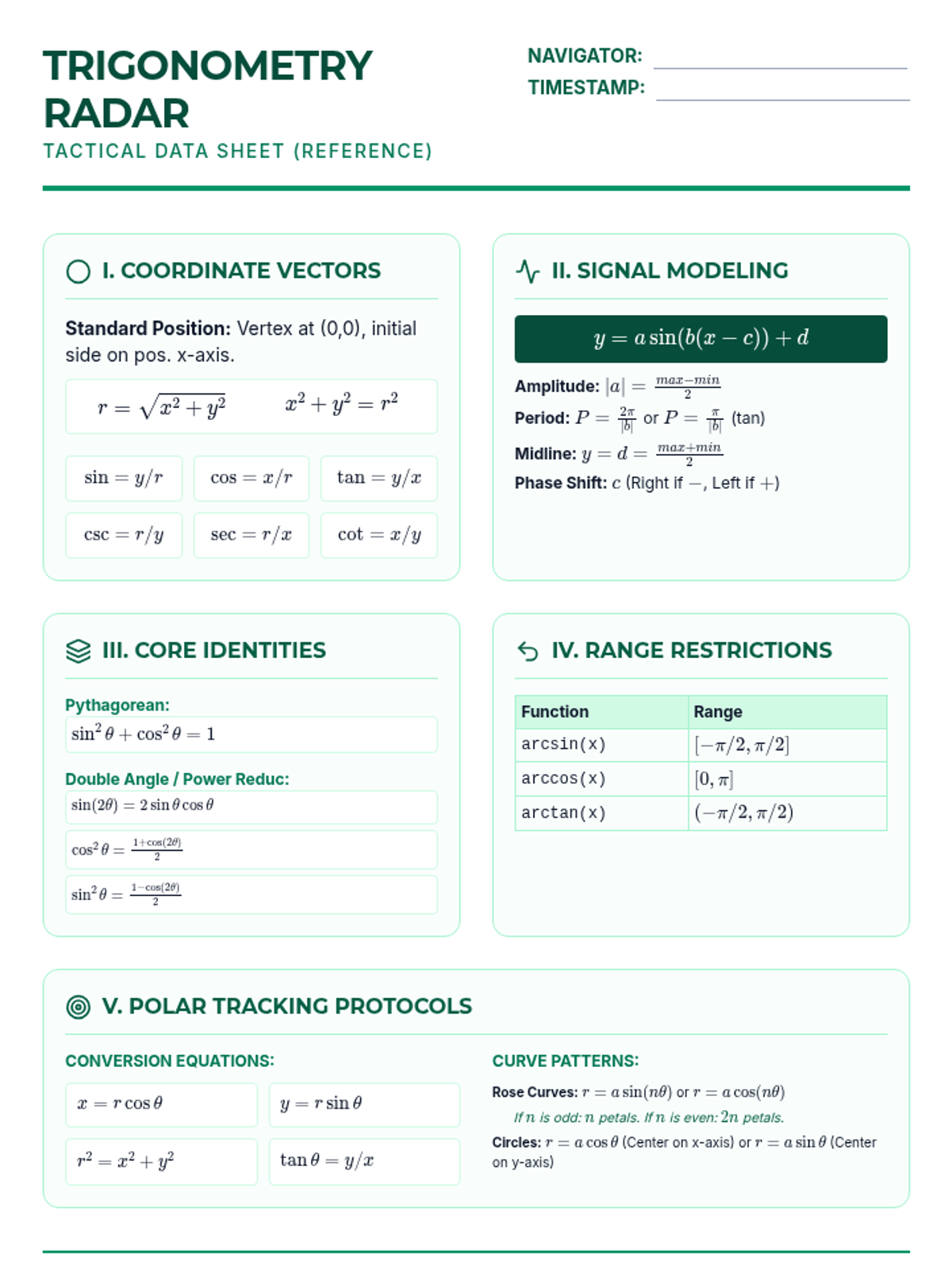
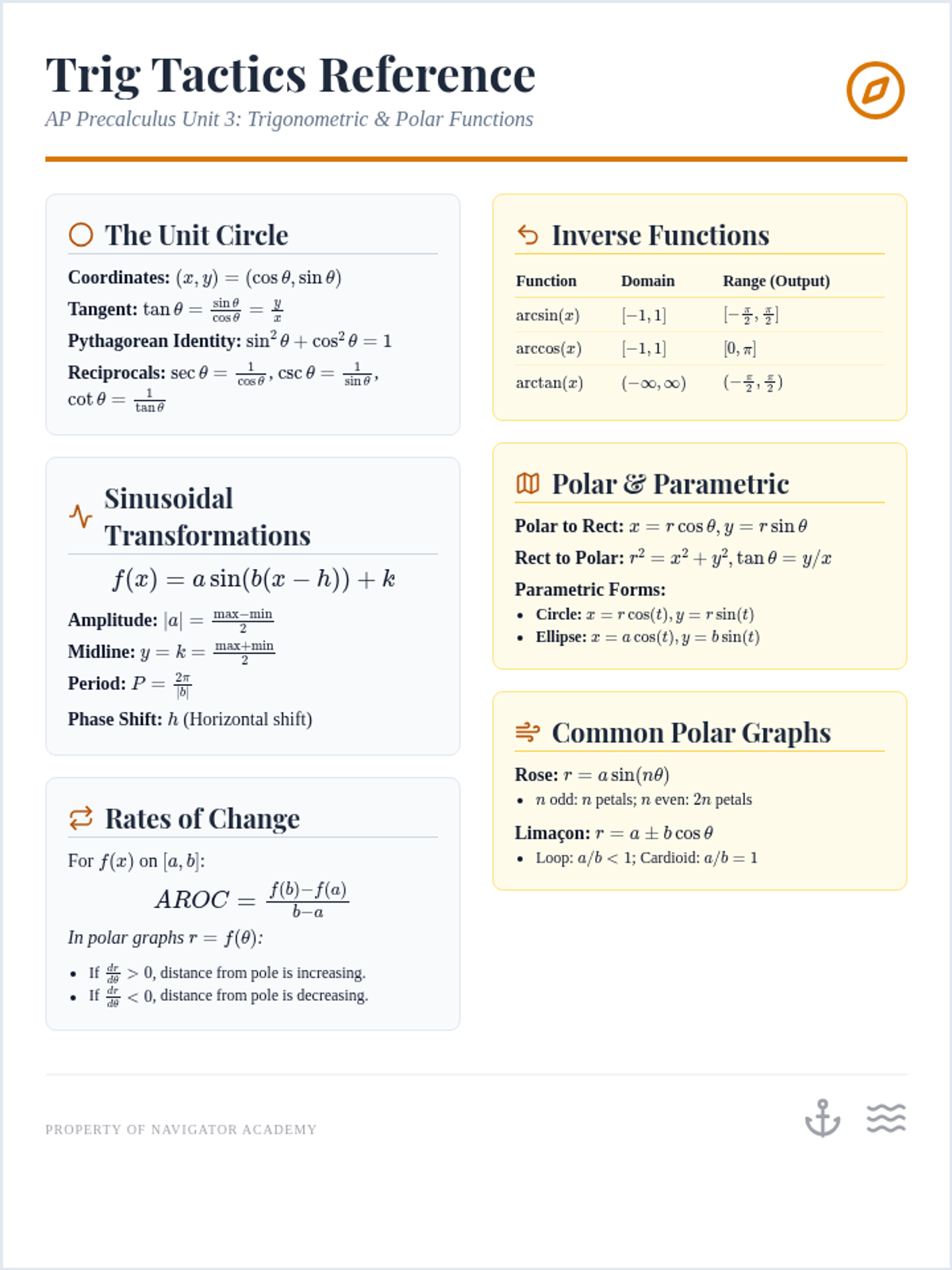
Right triangle ratios, unit circle definitions, and fundamental identities applied to angles and geometric relationships. Models periodic phenomena using trigonometric functions to analyze real-world cycles and waveforms.
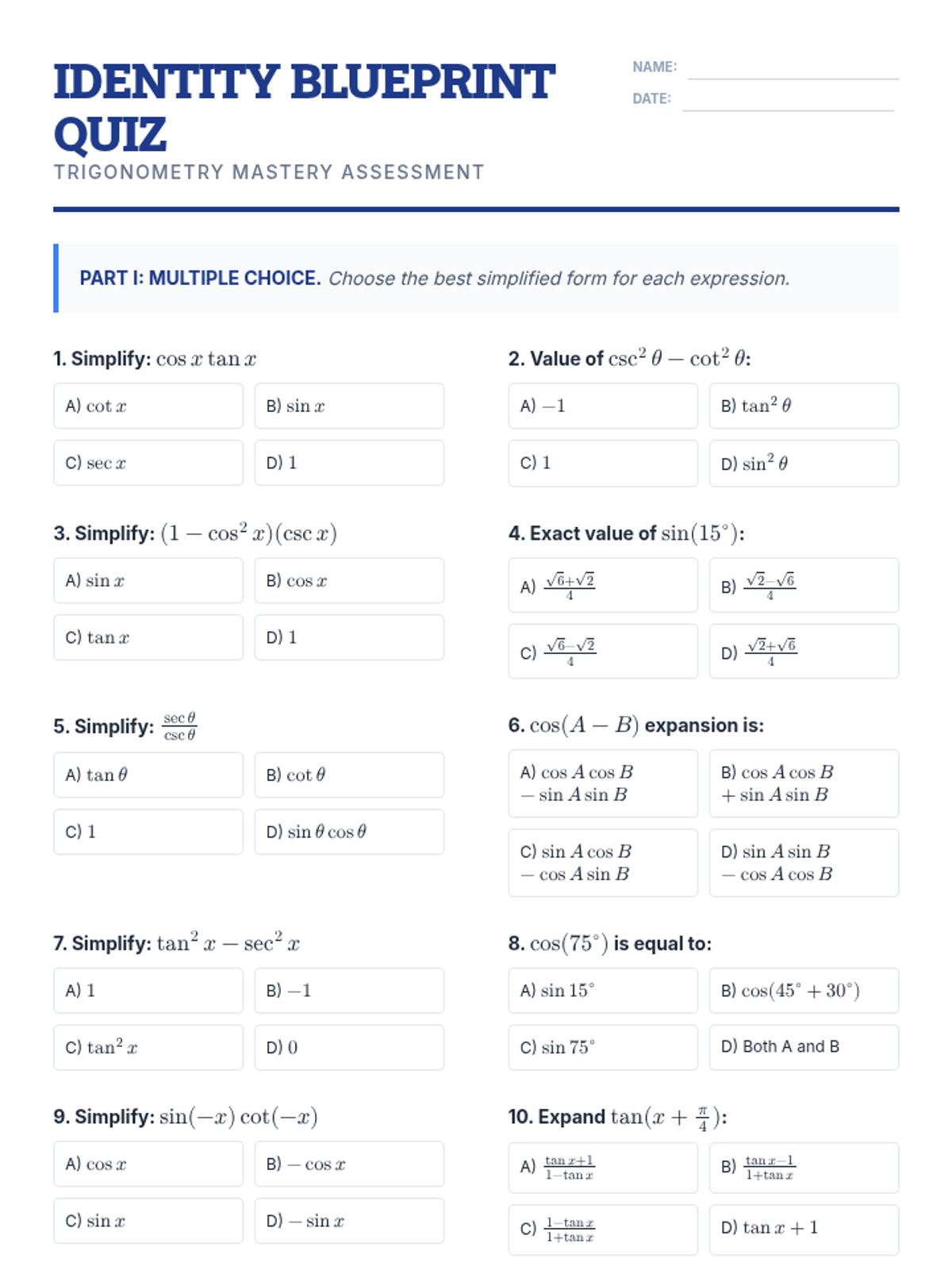
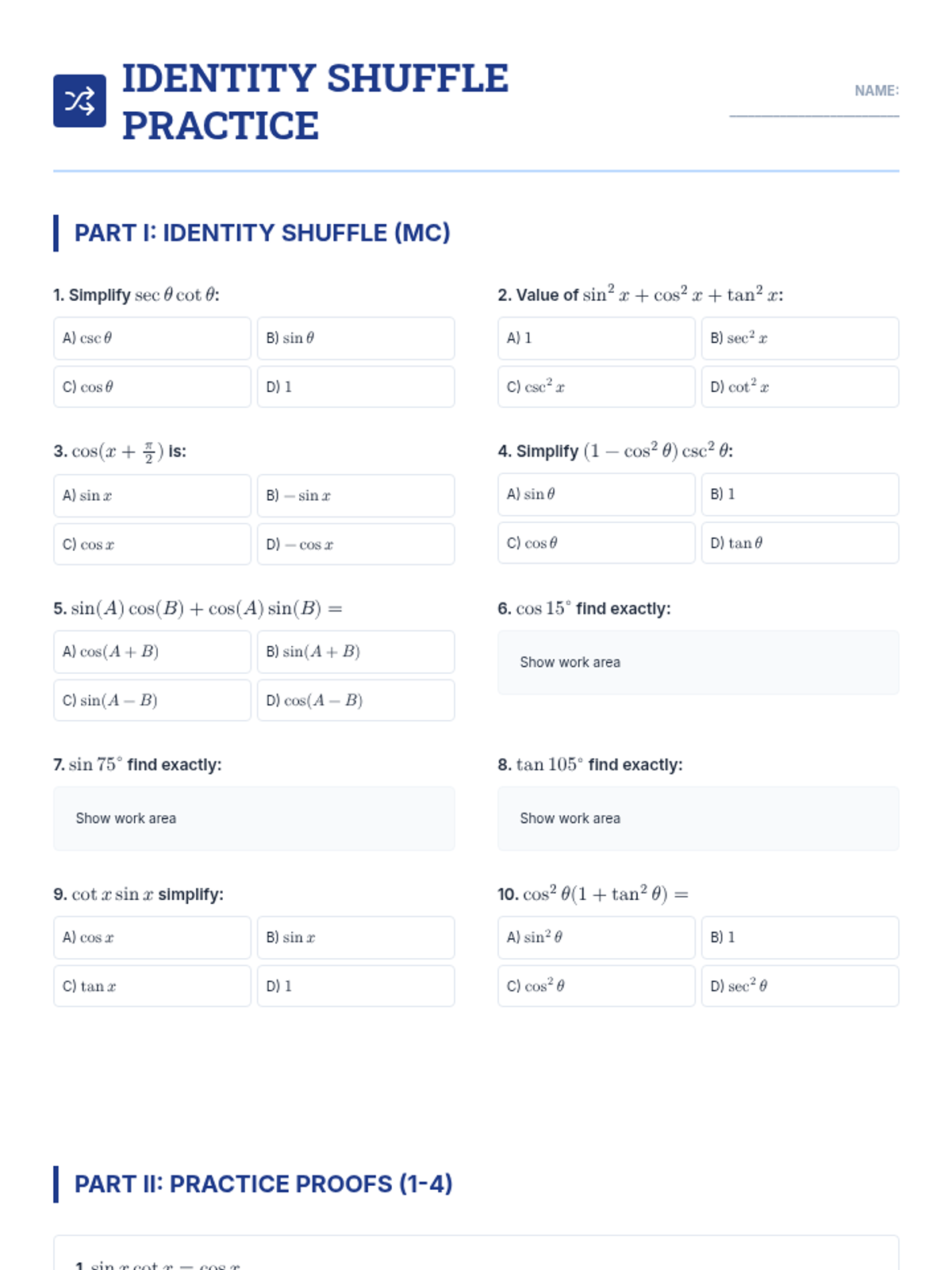
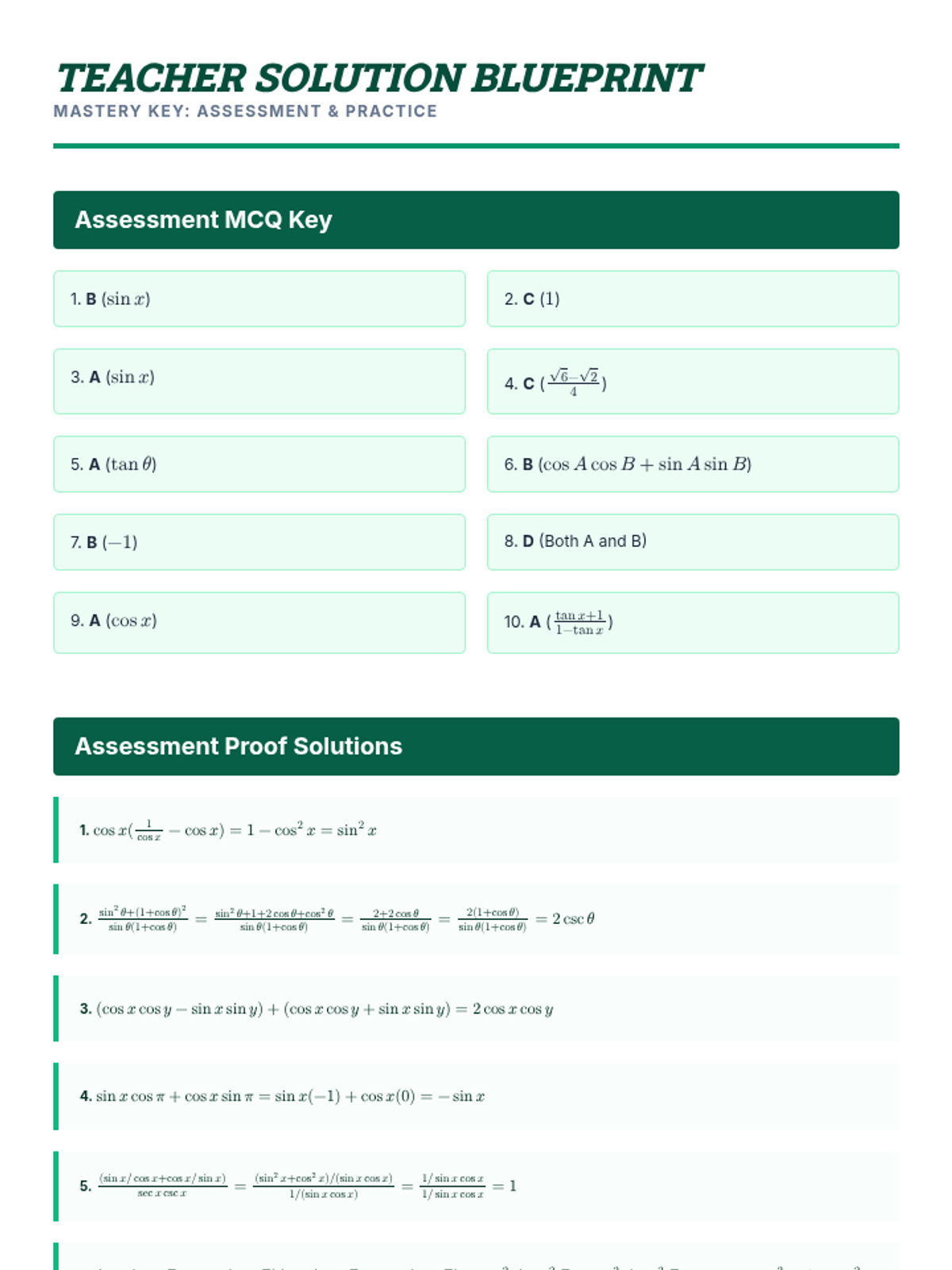
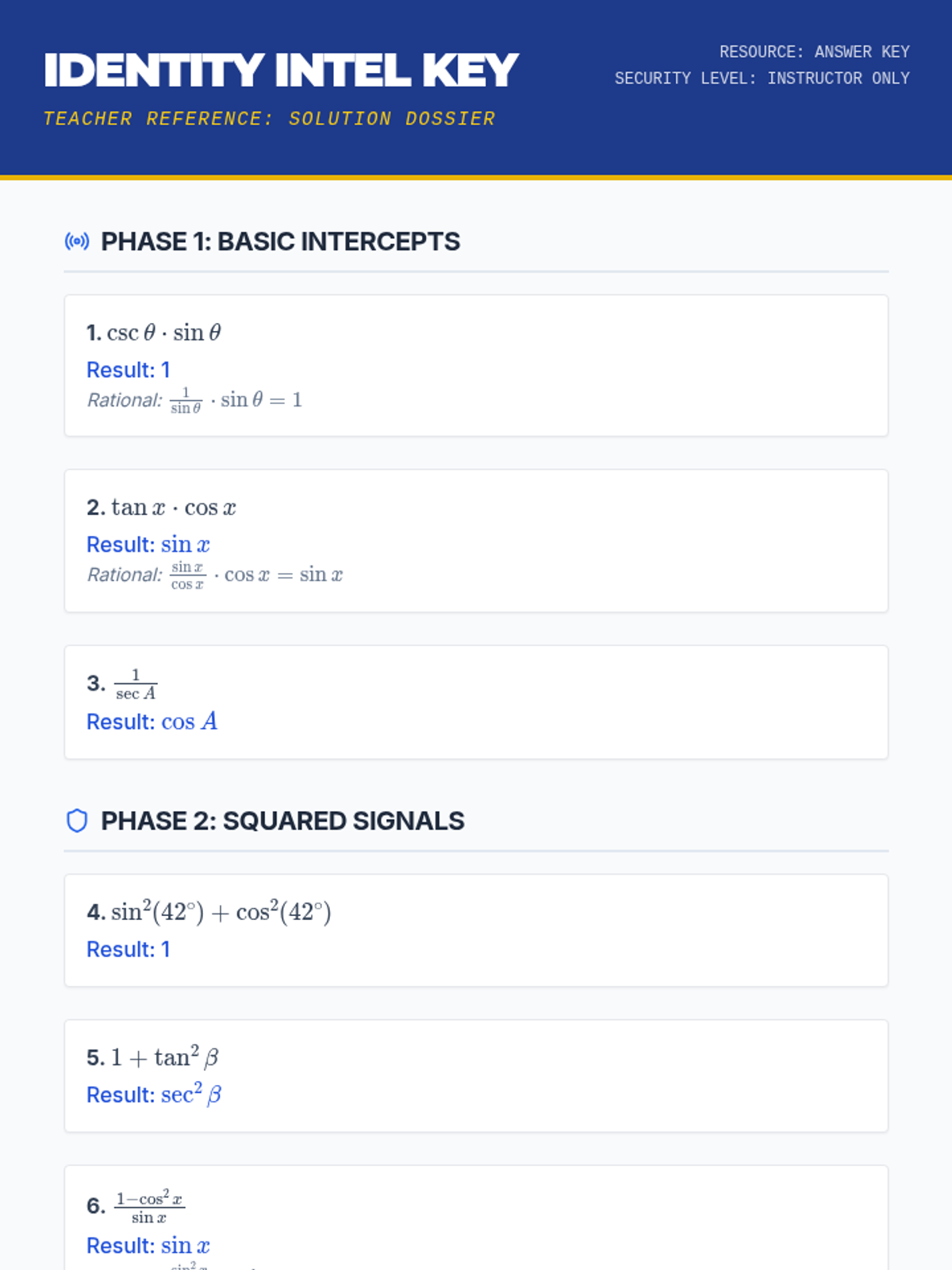
A comprehensive assessment and practice suite for mastering trigonometric identities, focusing on reciprocal, quotient, Pythagorean, and sum/difference formulas.
A high-intensity review session for AP Precalculus Unit 3, covering trigonometric functions, inverse functions, and polar coordinates through a "Radar Tech" thematic lens.
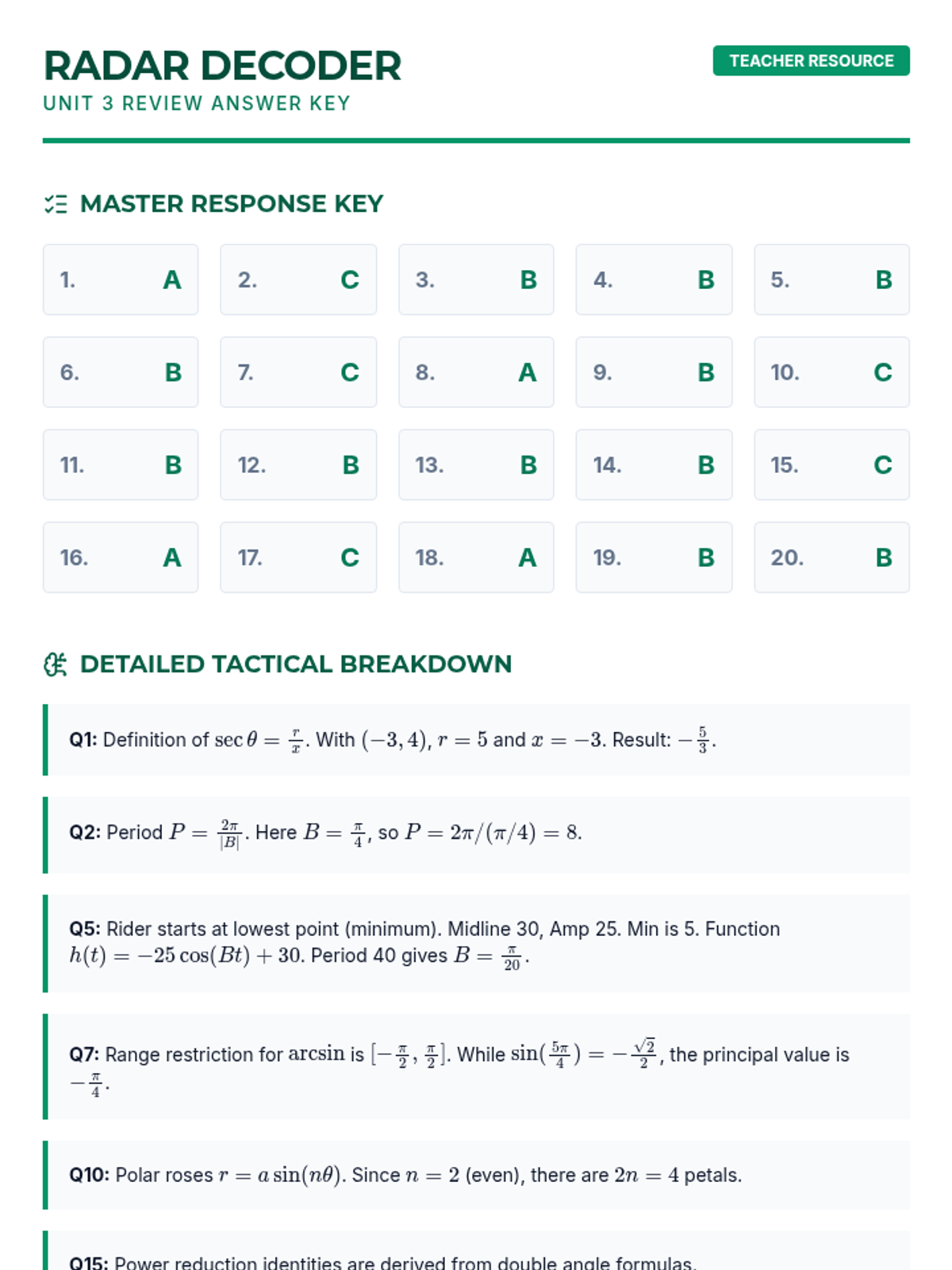
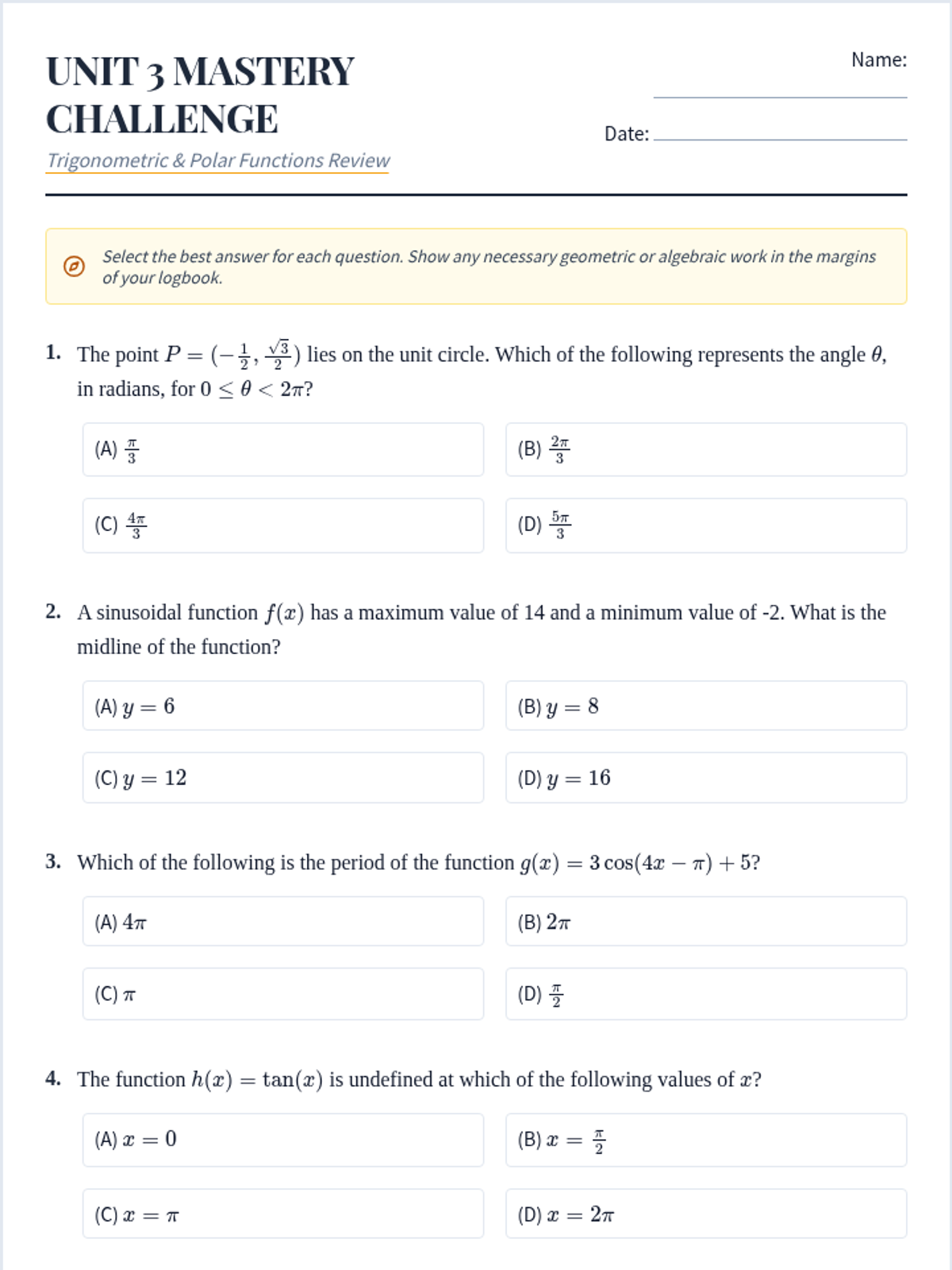
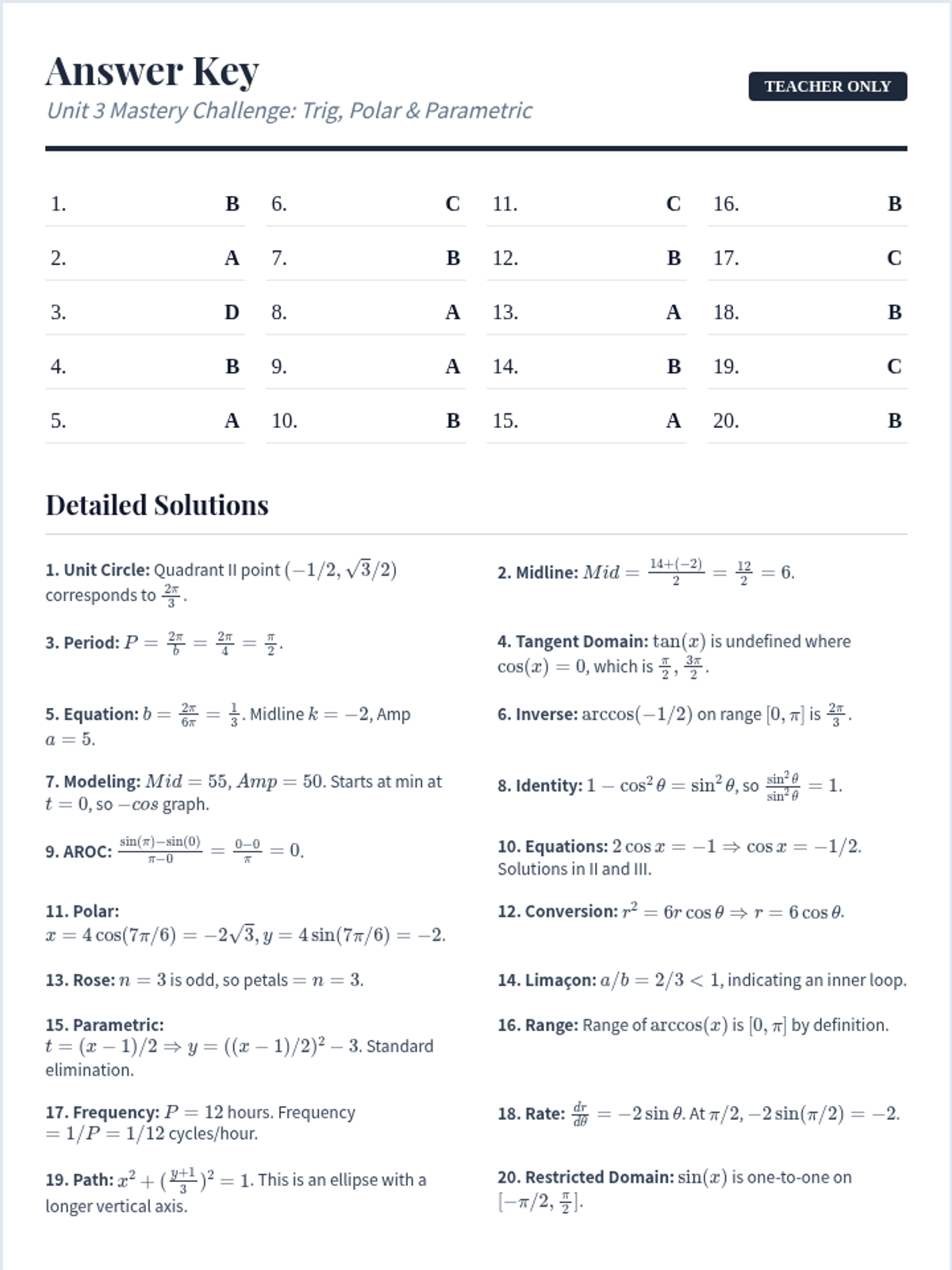
A comprehensive review for Unit 3 of AP Precalculus, focusing on trigonometric and polar functions through reference materials and practice assessments.
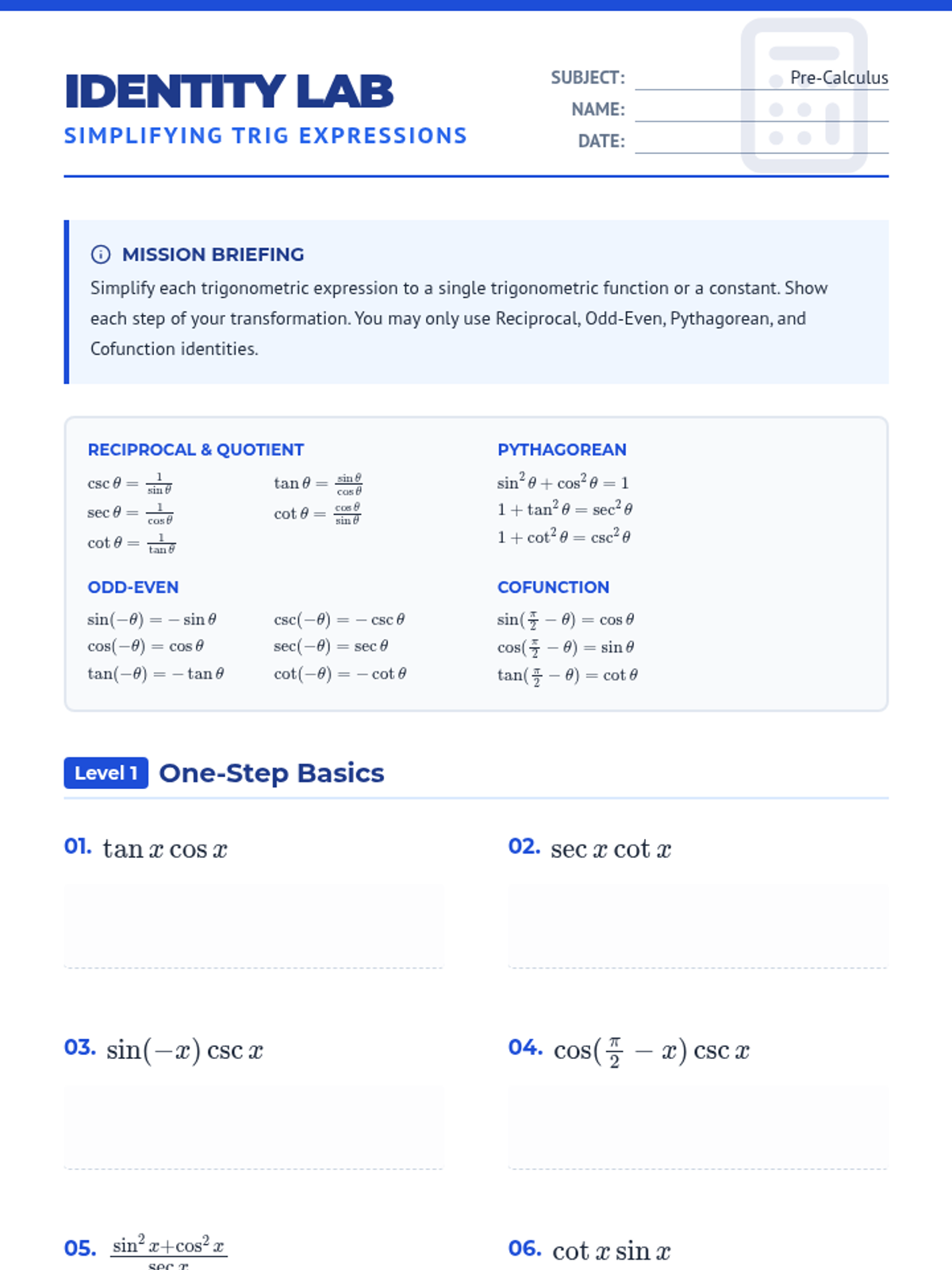
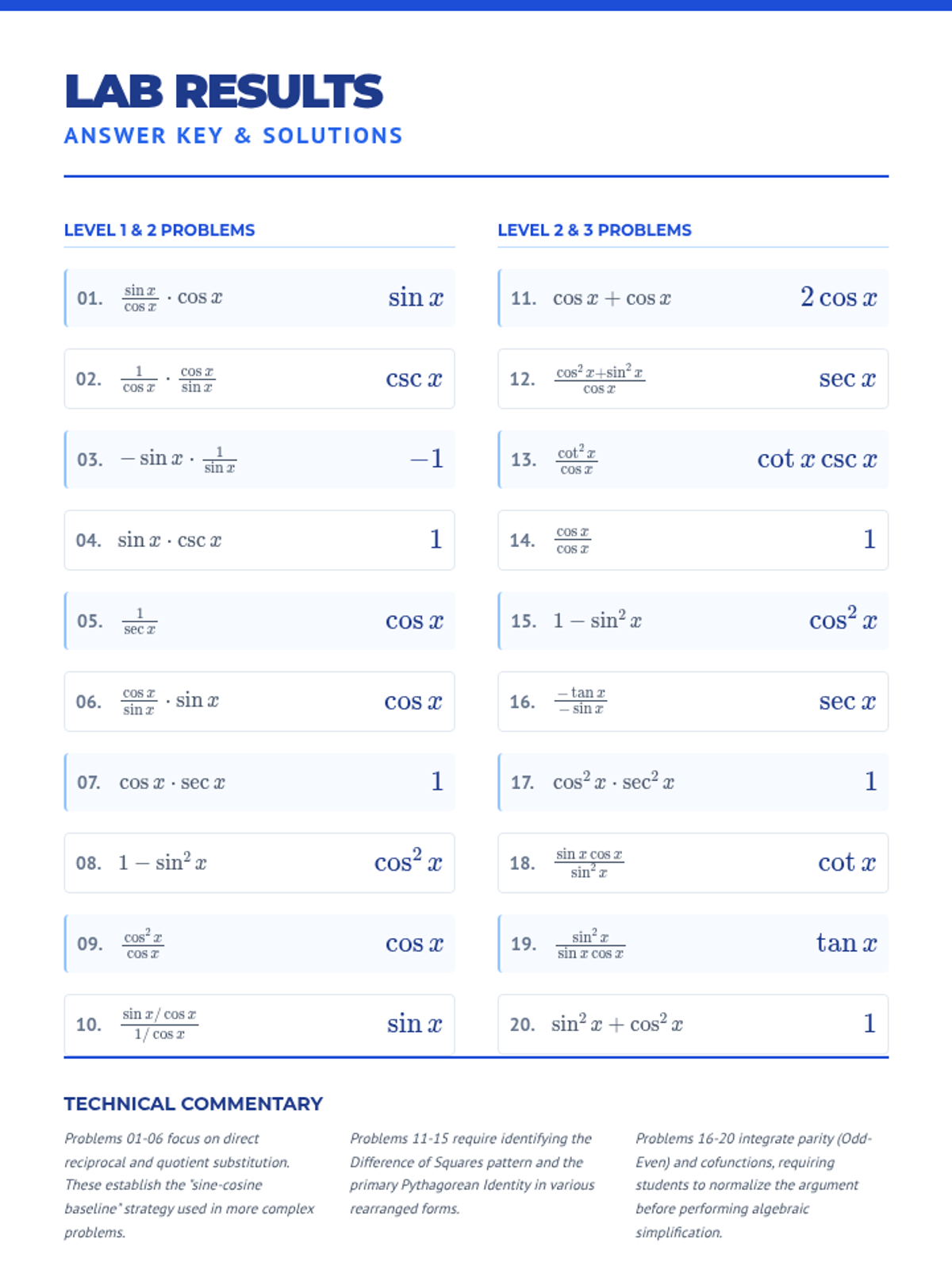
This lesson focuses on simplifying trigonometric expressions using fundamental identities: reciprocal, odd-even, Pythagorean, and cofunction. It provides scaffolded practice transitioning from basic one-step simplifications to more complex algebraic manipulations.
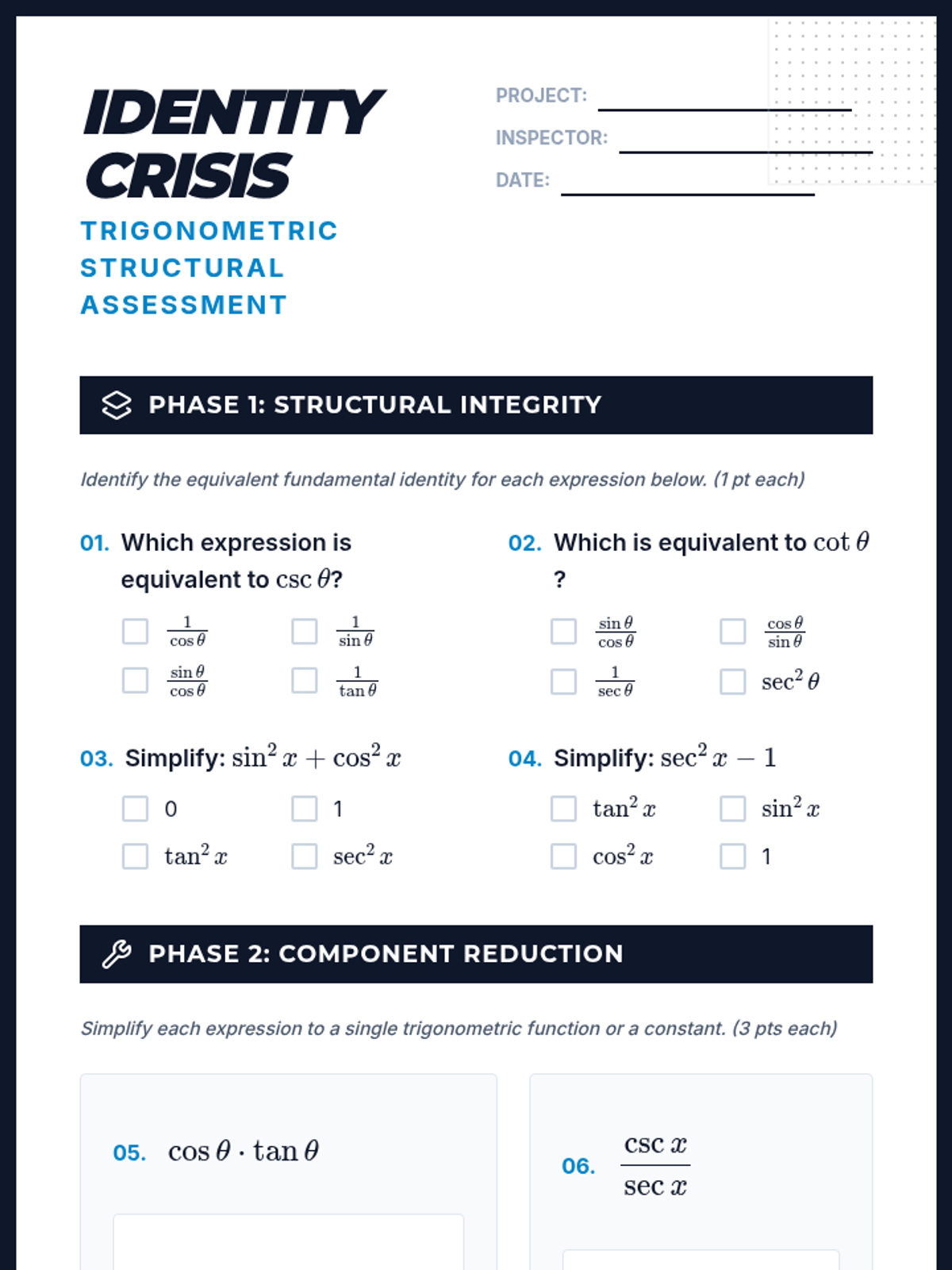
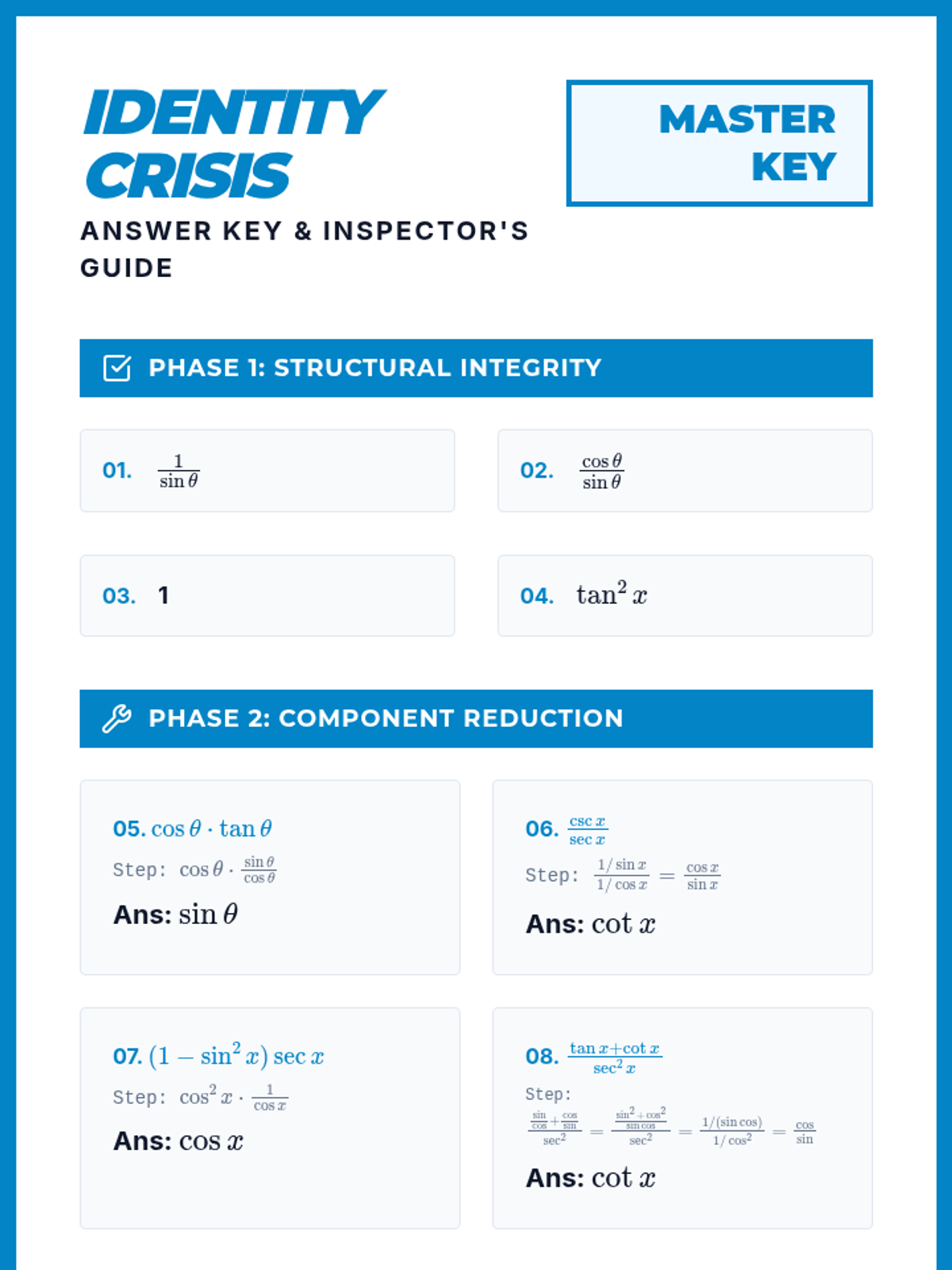
A comprehensive assessment and review lesson on fundamental trigonometric identities, including Pythagorean, reciprocal, and quotient identities. Students will practice simplifying expressions and proving identities.
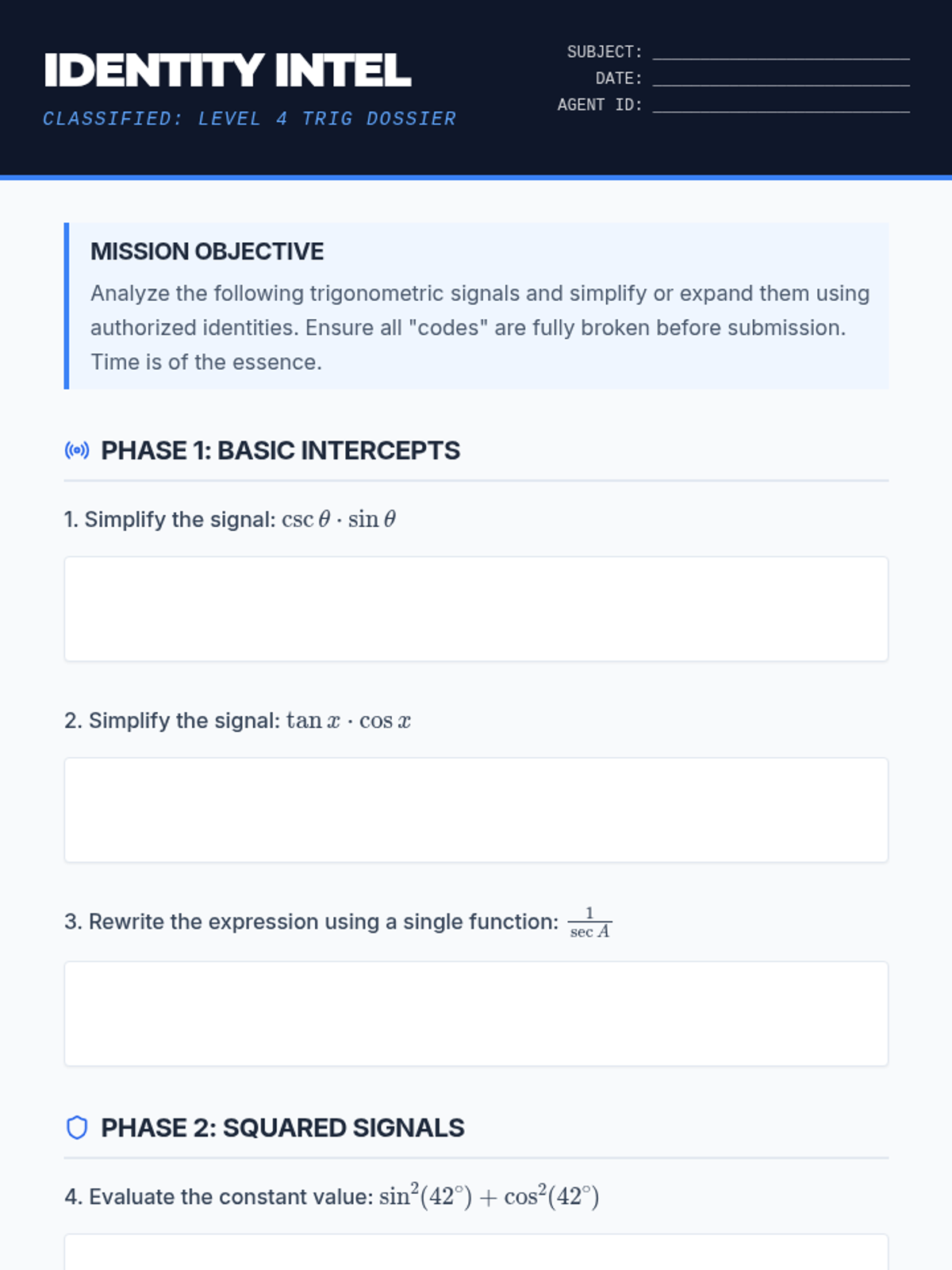
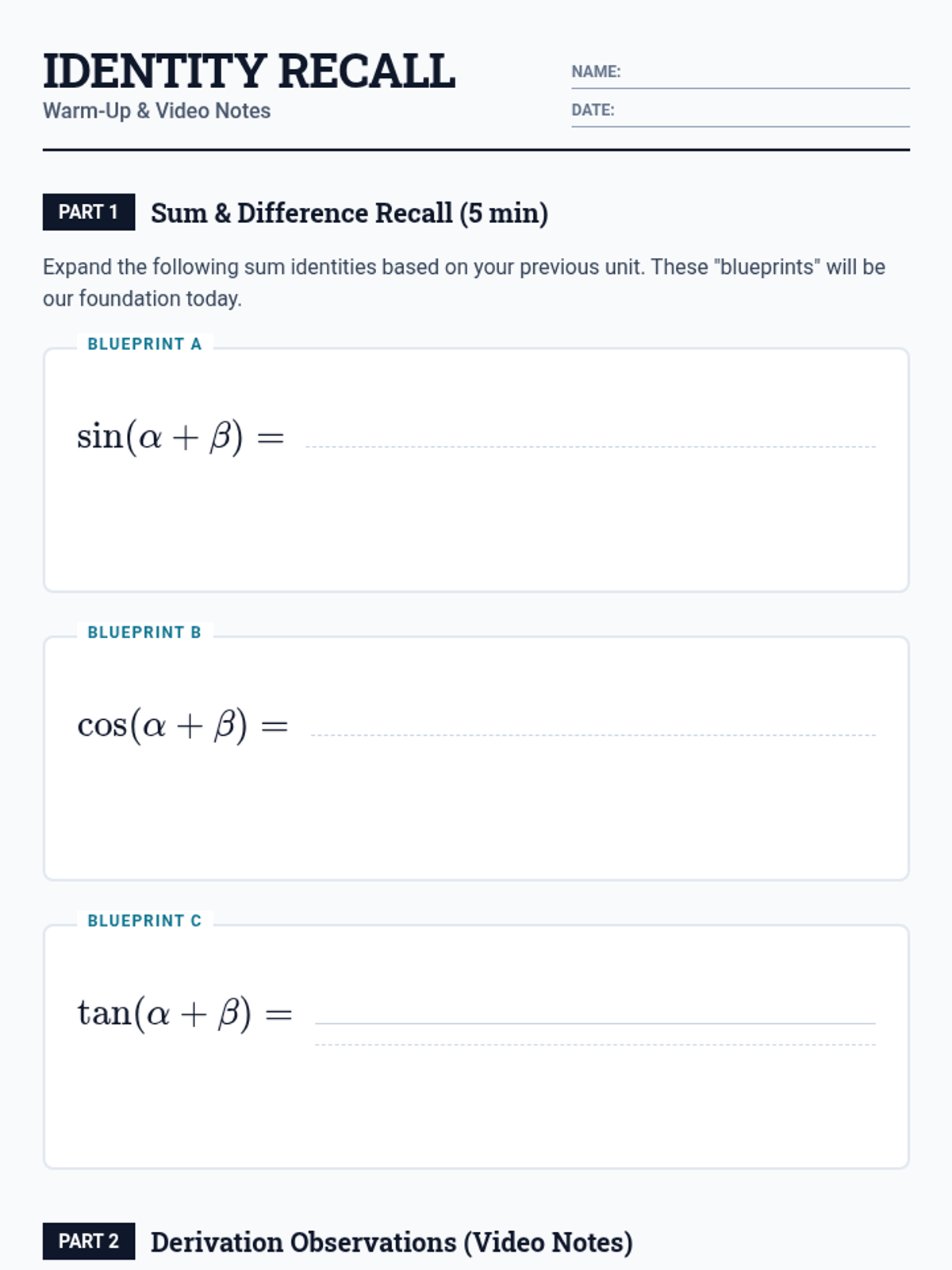
A comprehensive assessment and review on fundamental trigonometric identities, including Pythagorean, reciprocal, sum/difference, and double angle formulas. Students will decode mathematical relationships through a spy-themed dossier.
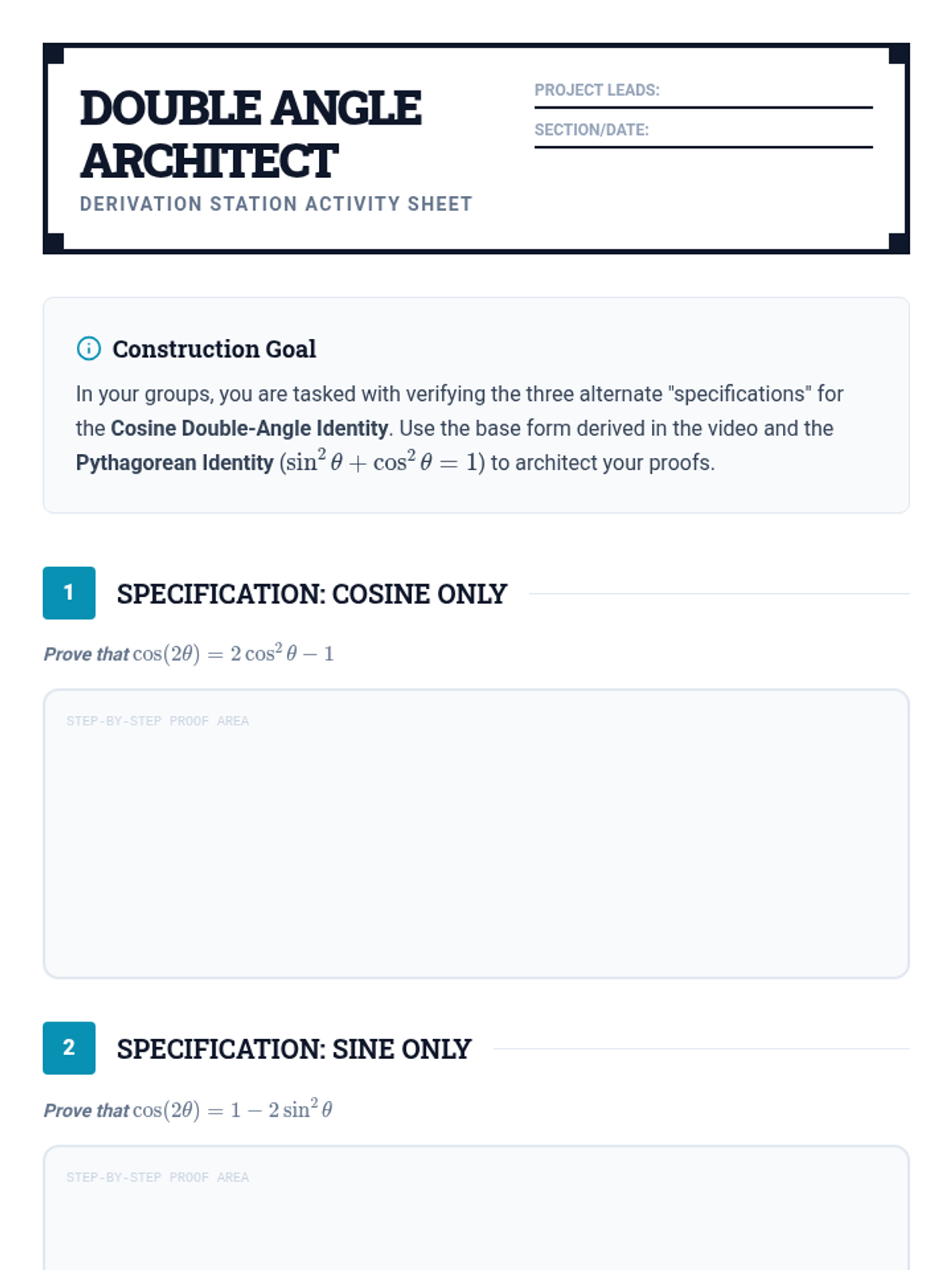
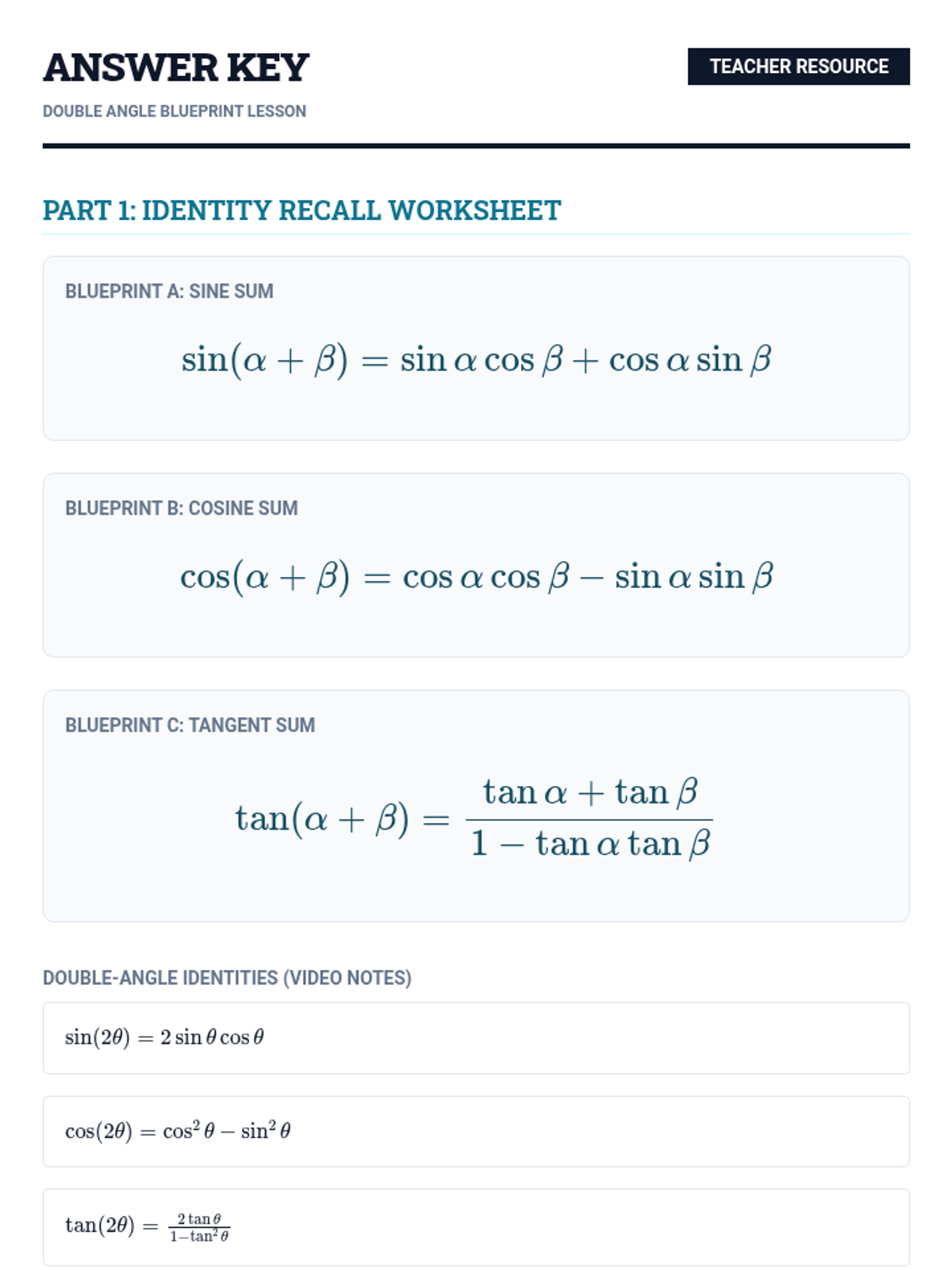
Students derive double-angle identities from sum formulas and use Pythagorean identities to prove alternate forms of the cosine double-angle identity.
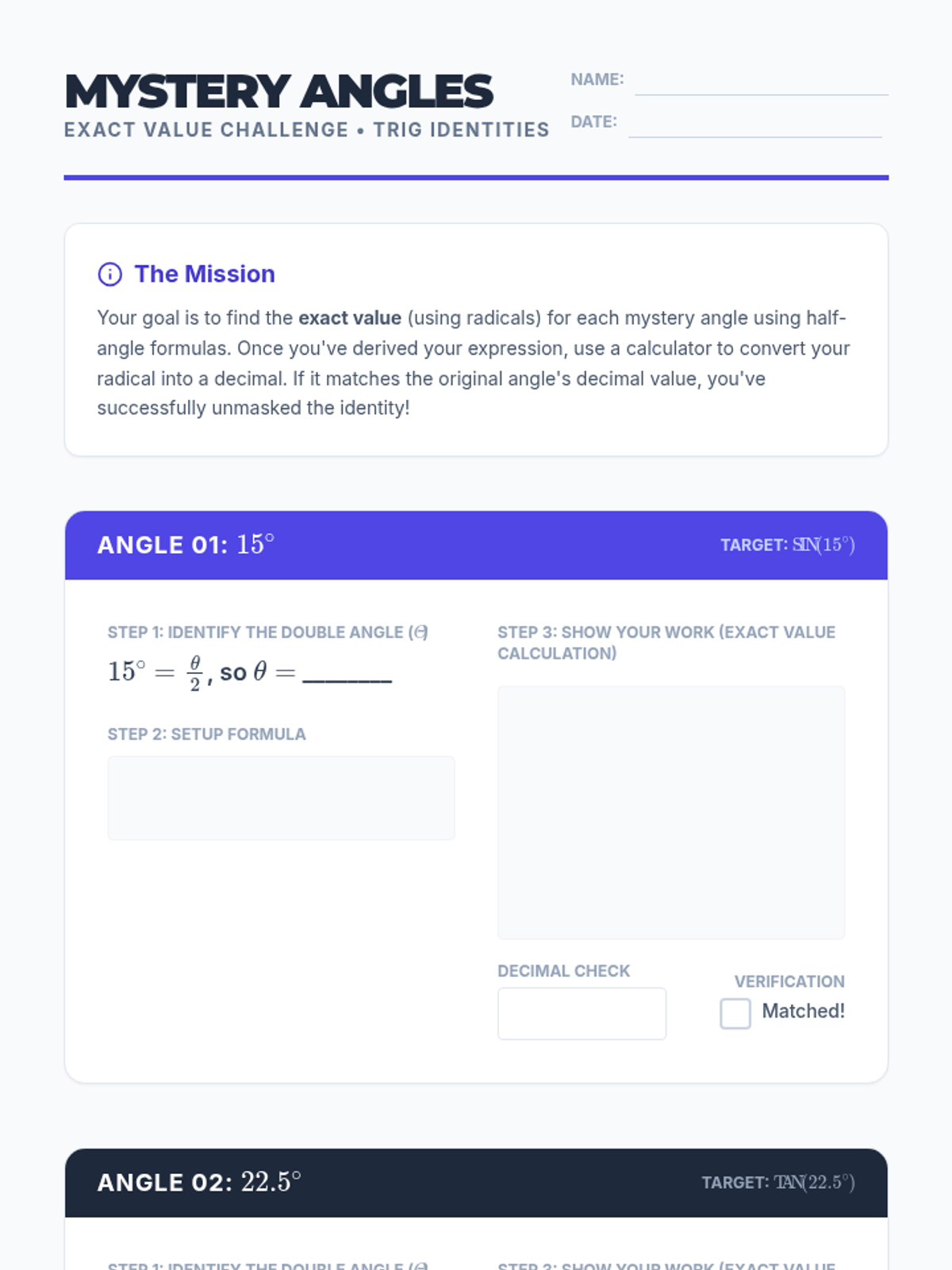
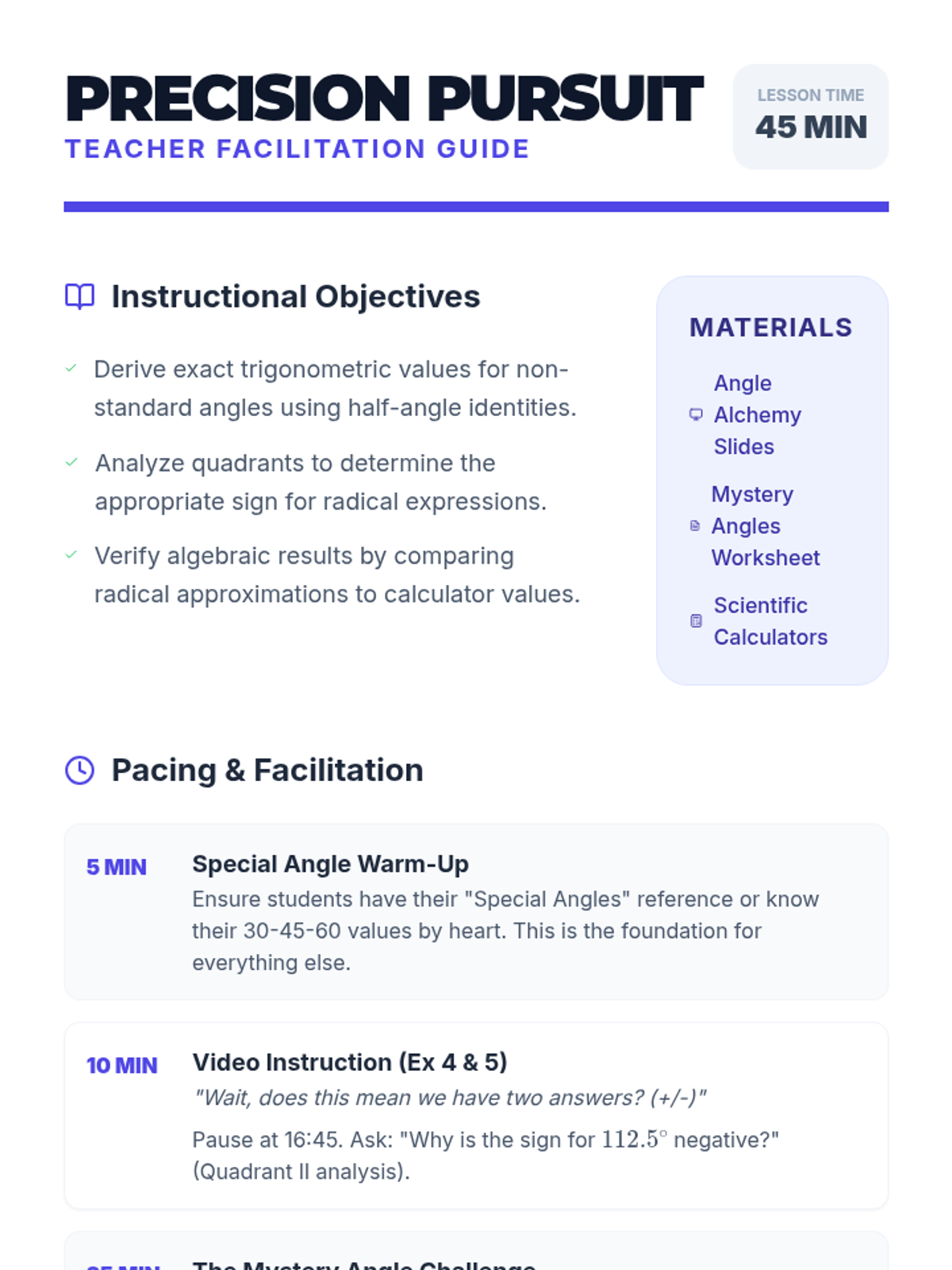
Students will master the use of half-angle identities to determine exact trigonometric values for non-standard angles. The lesson includes a video-guided derivation and a collaborative challenge where students verify their exact radicals against decimal approximations.
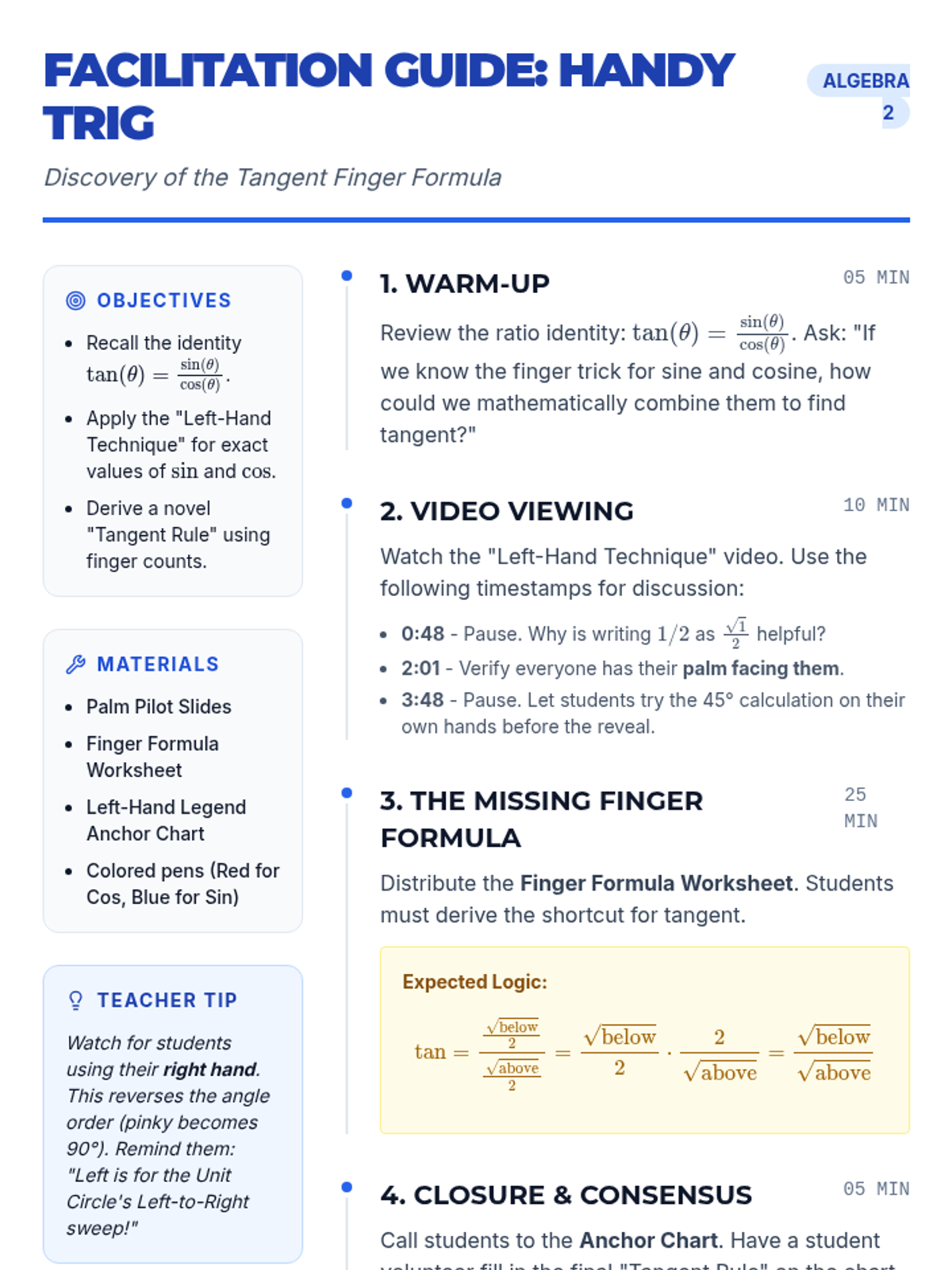
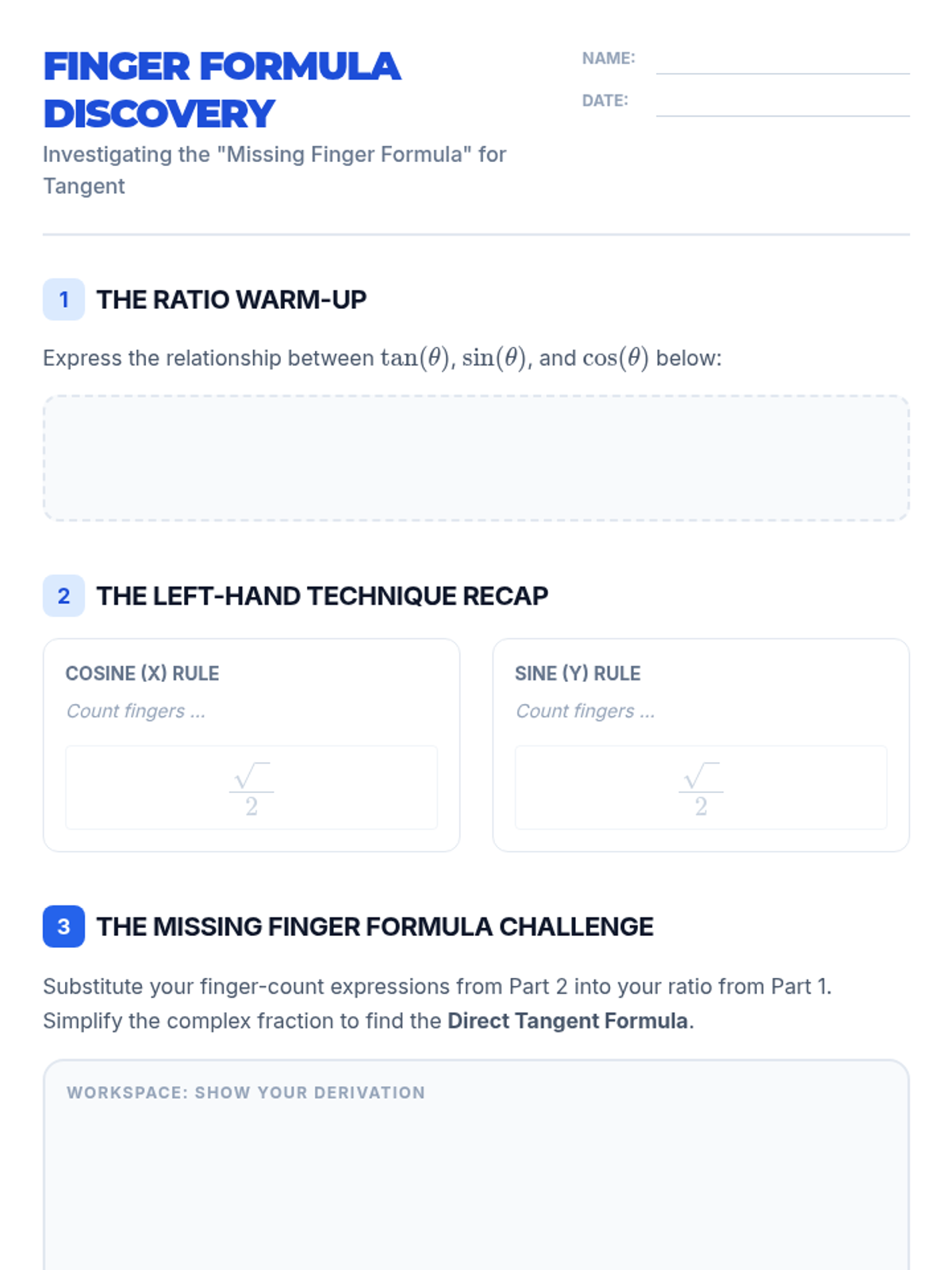
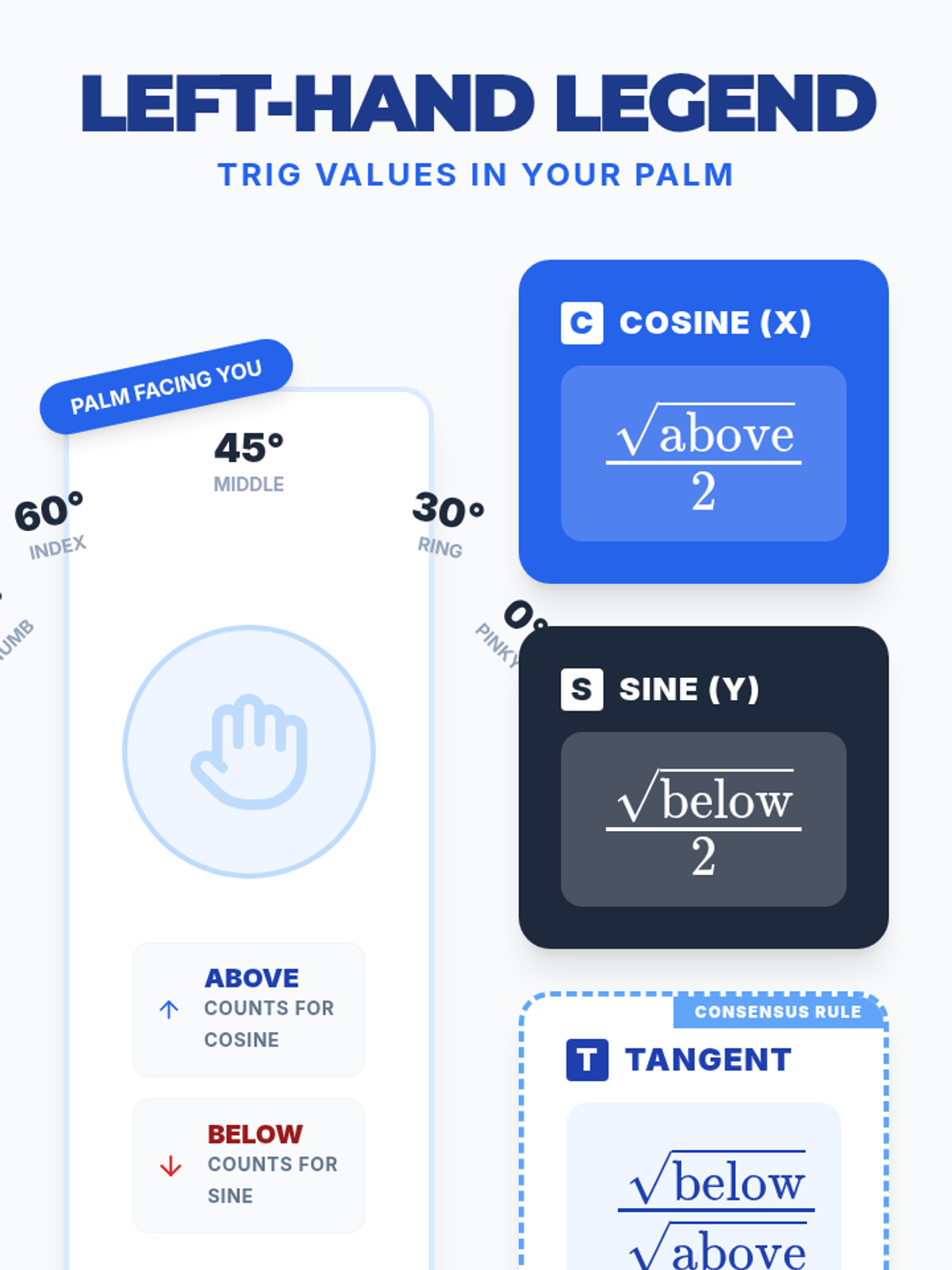
Students will master the 'Left-Hand Technique' for sine and cosine before extending the logic to derive a new finger-based formula for tangent values.
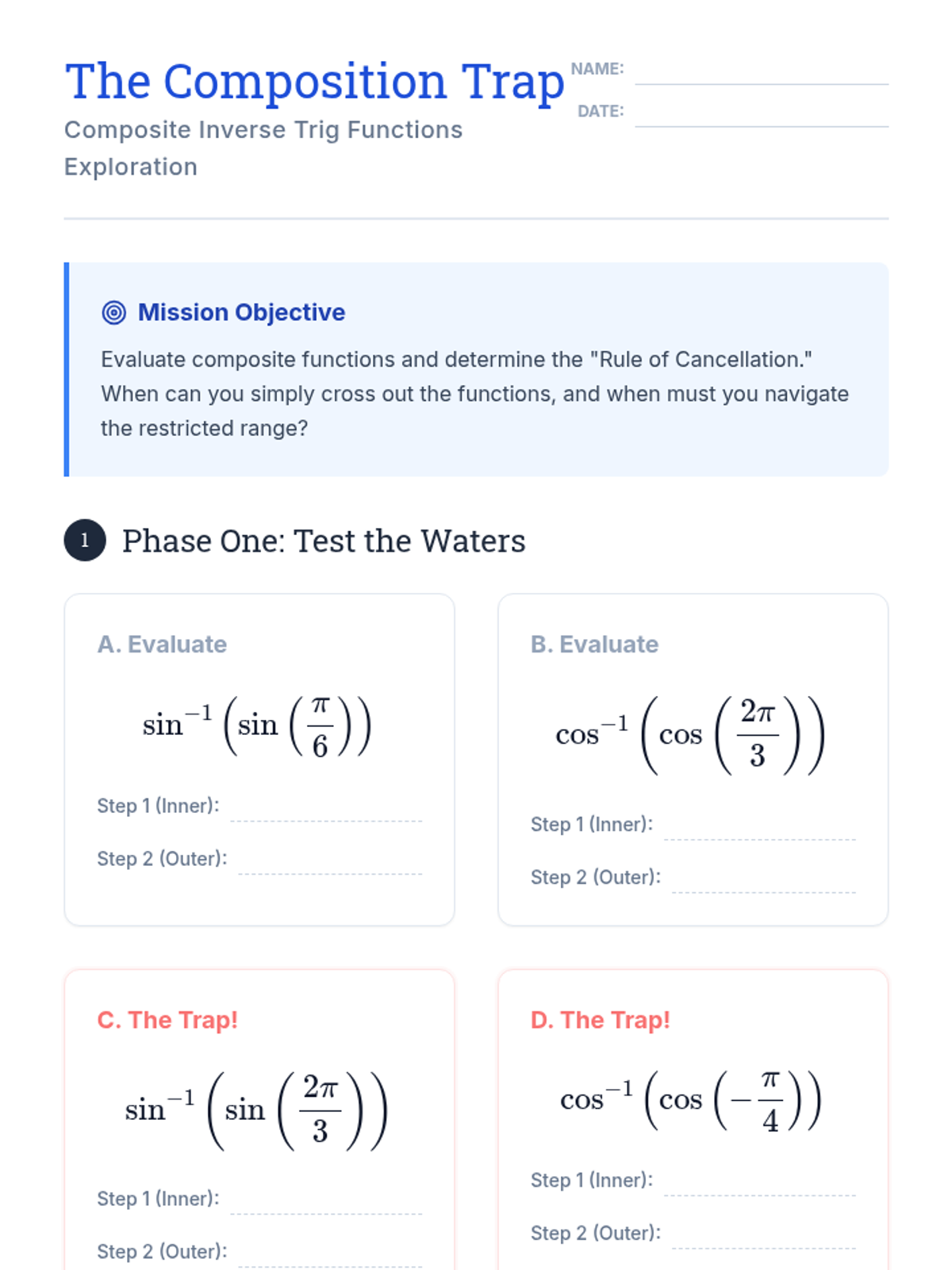
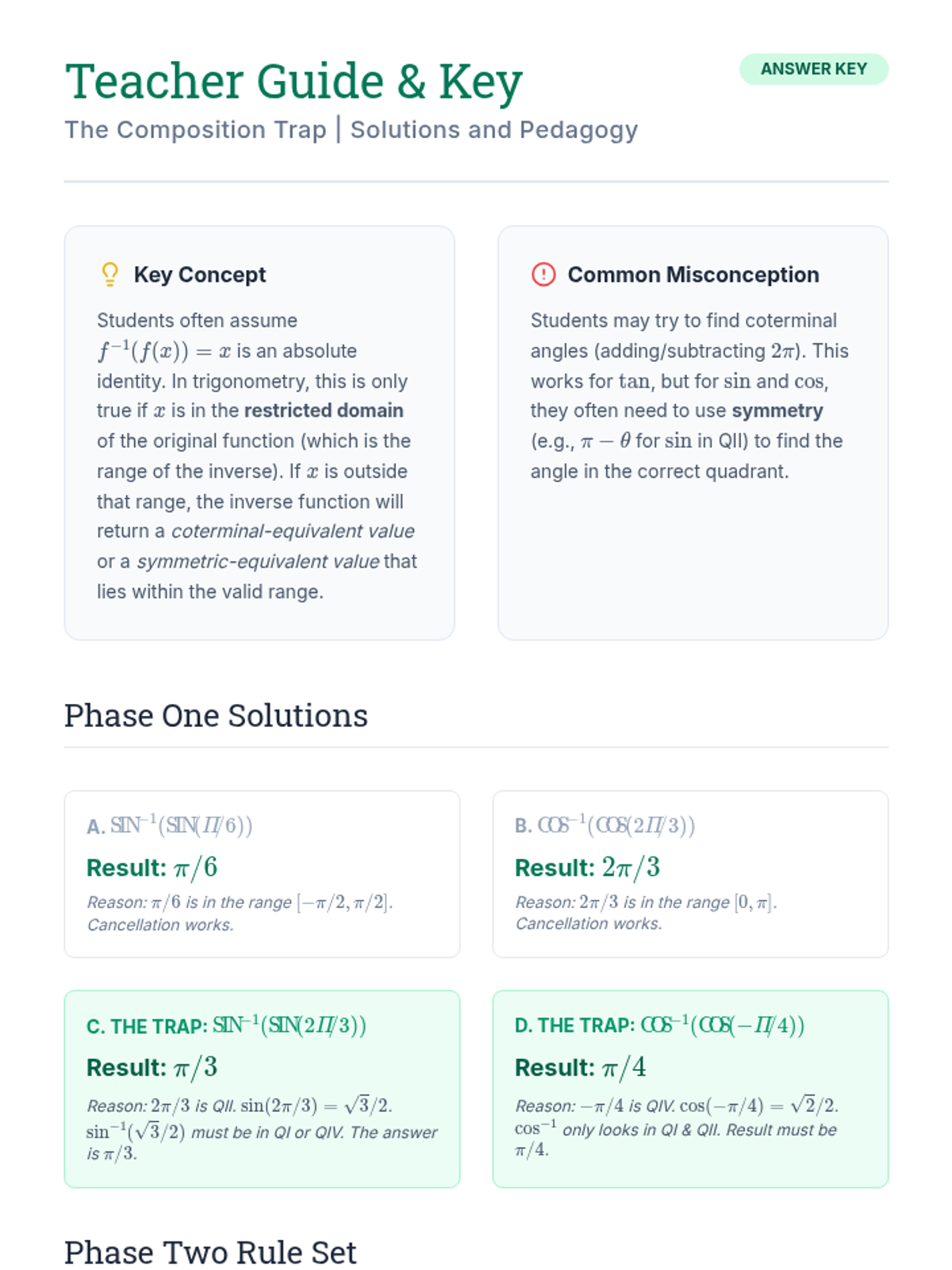
Students will master the evaluation of composite inverse trigonometric functions, specifically learning how to identify when function 'cancellation' is valid and when restricted range adjustments are required.
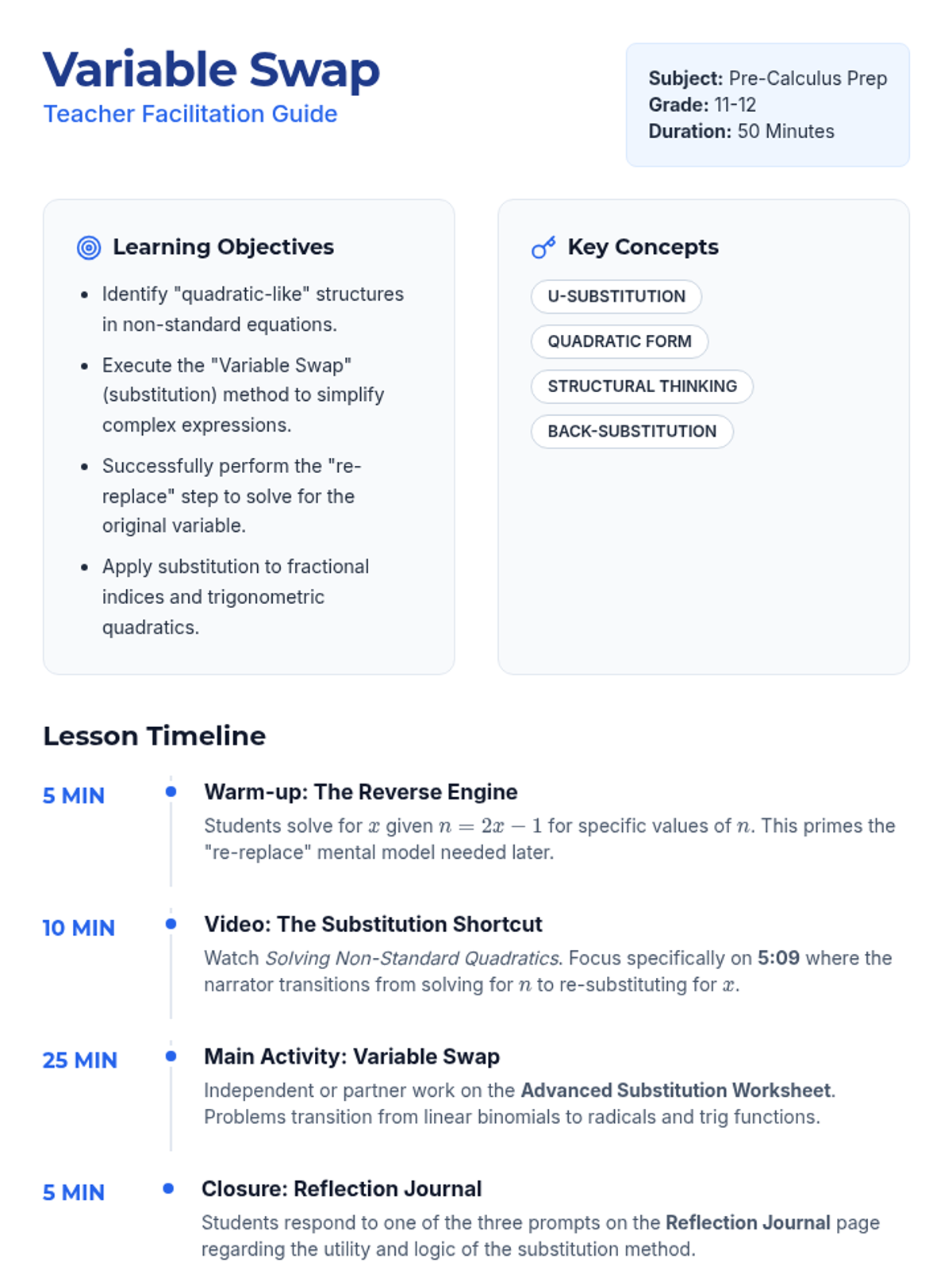
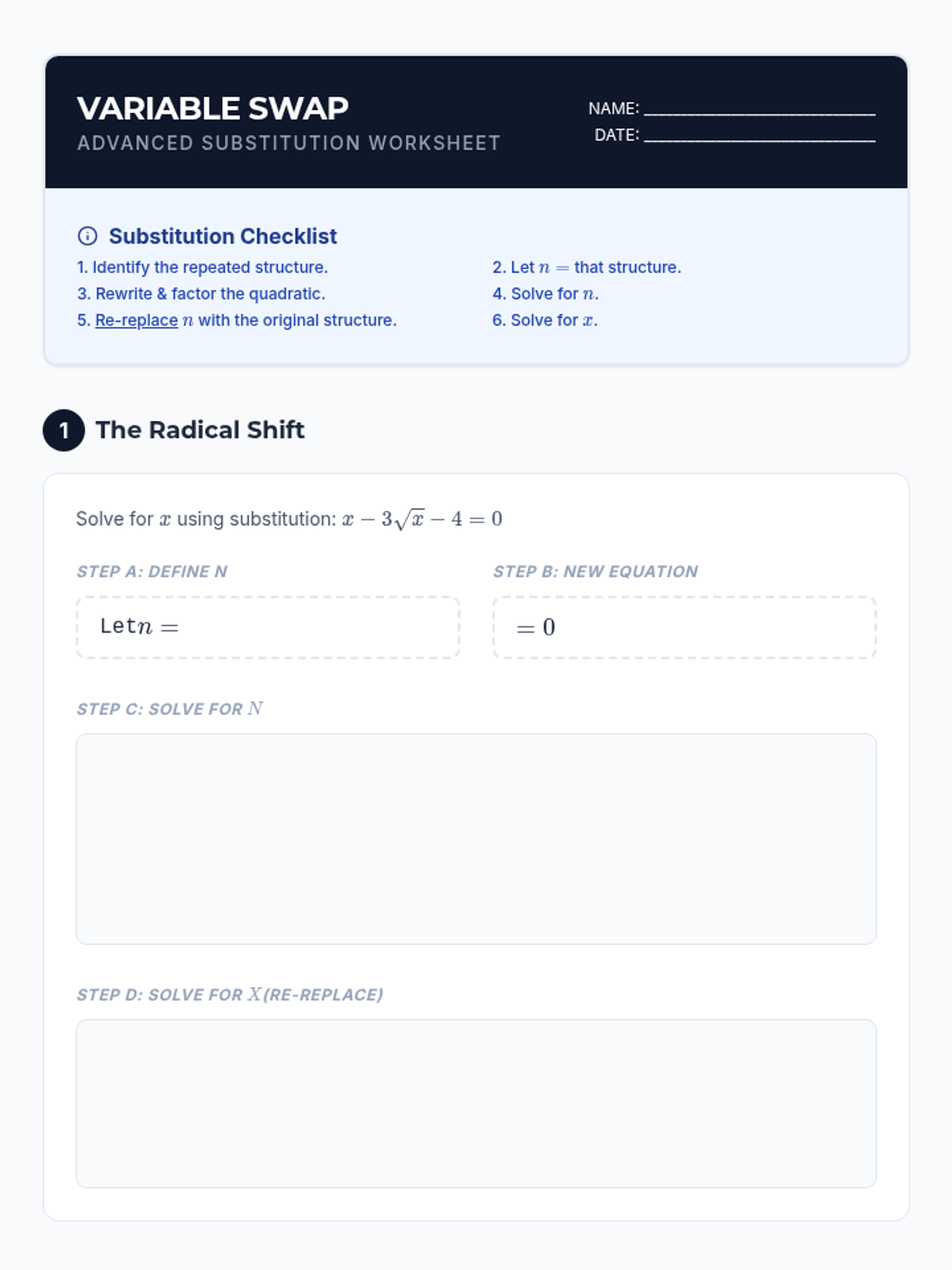
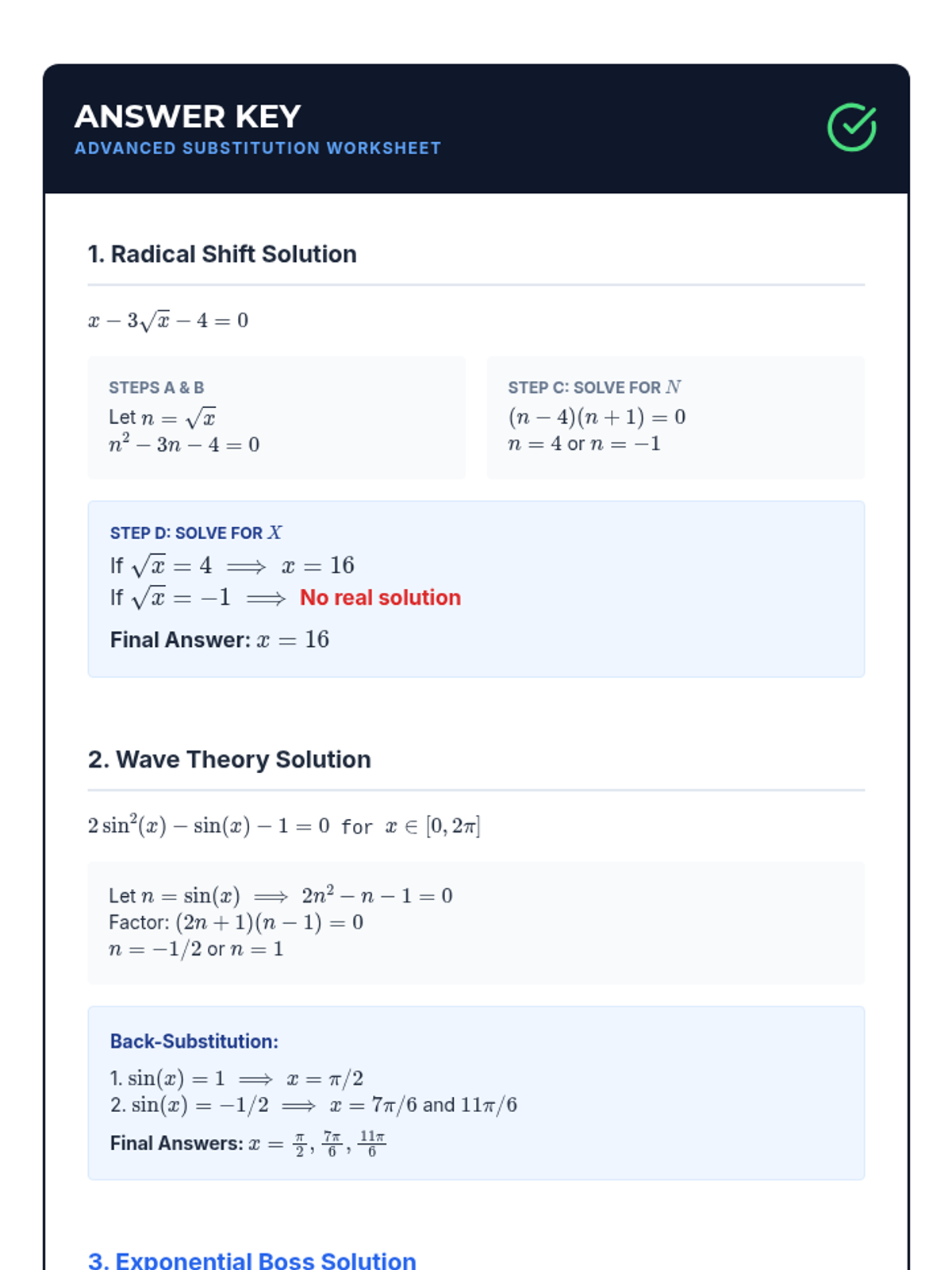
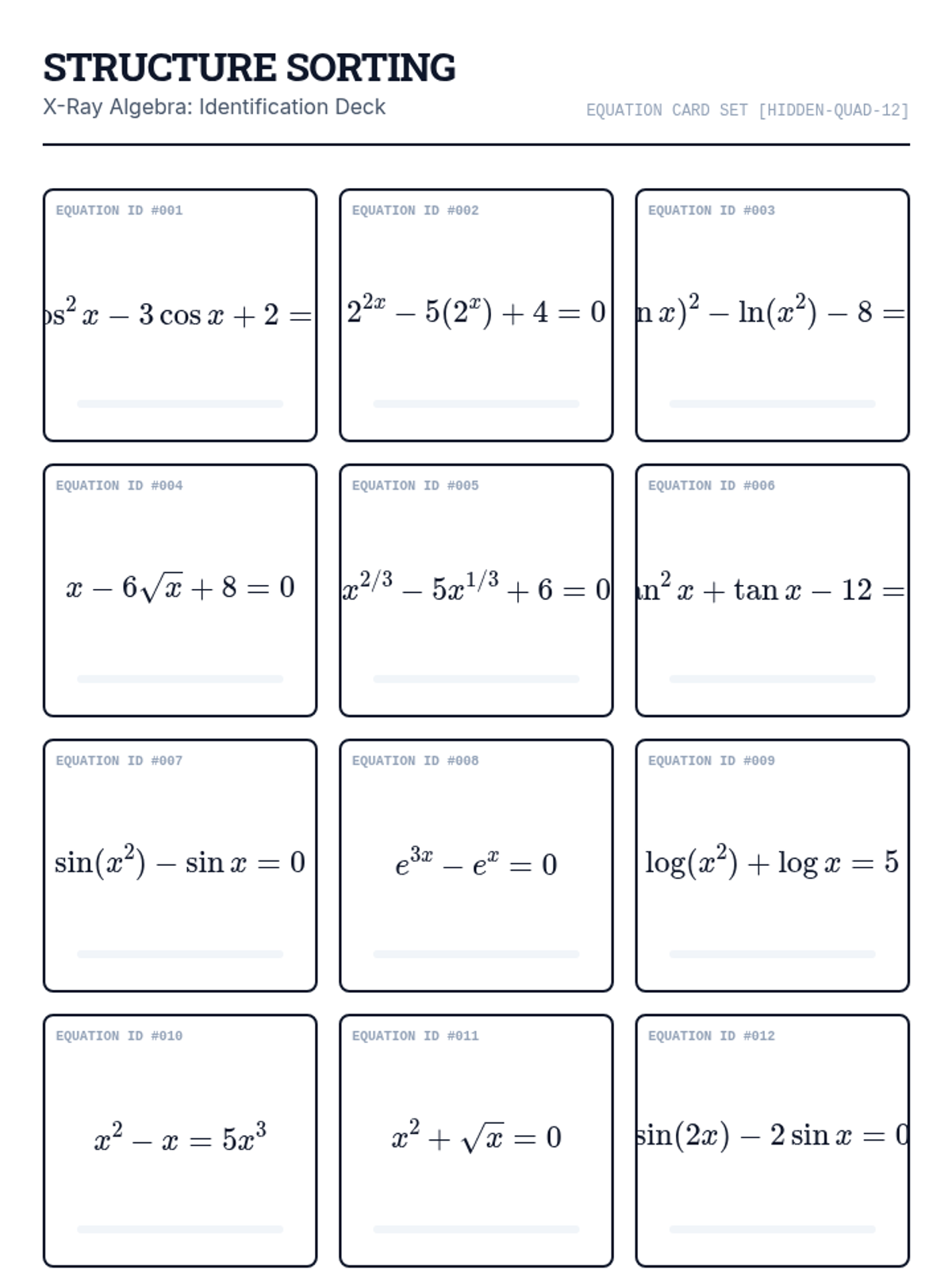
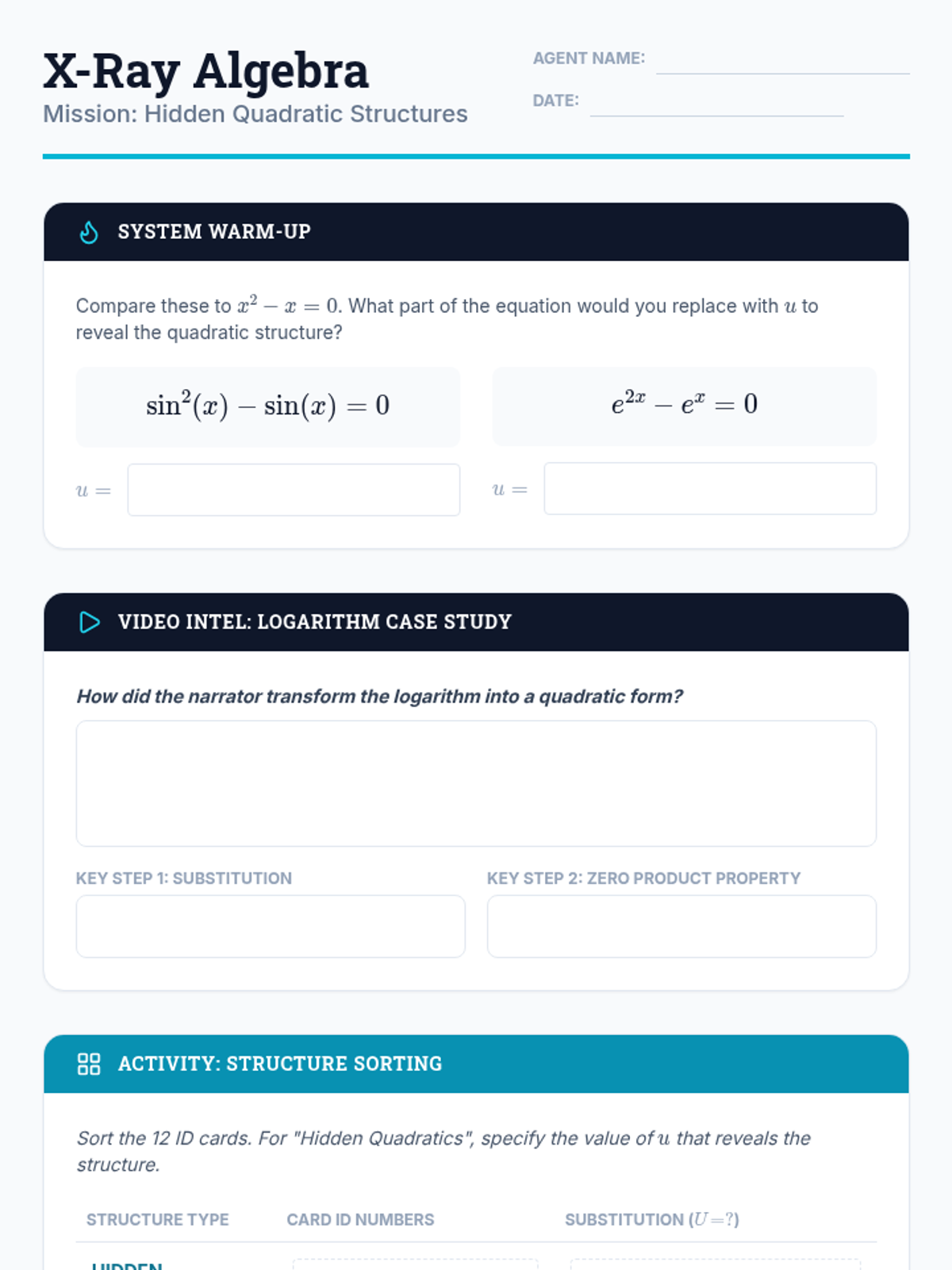
A high school Pre-Calculus lesson focused on the power of variable substitution to solve non-standard quadratic equations, including fractional indices and trigonometric forms.
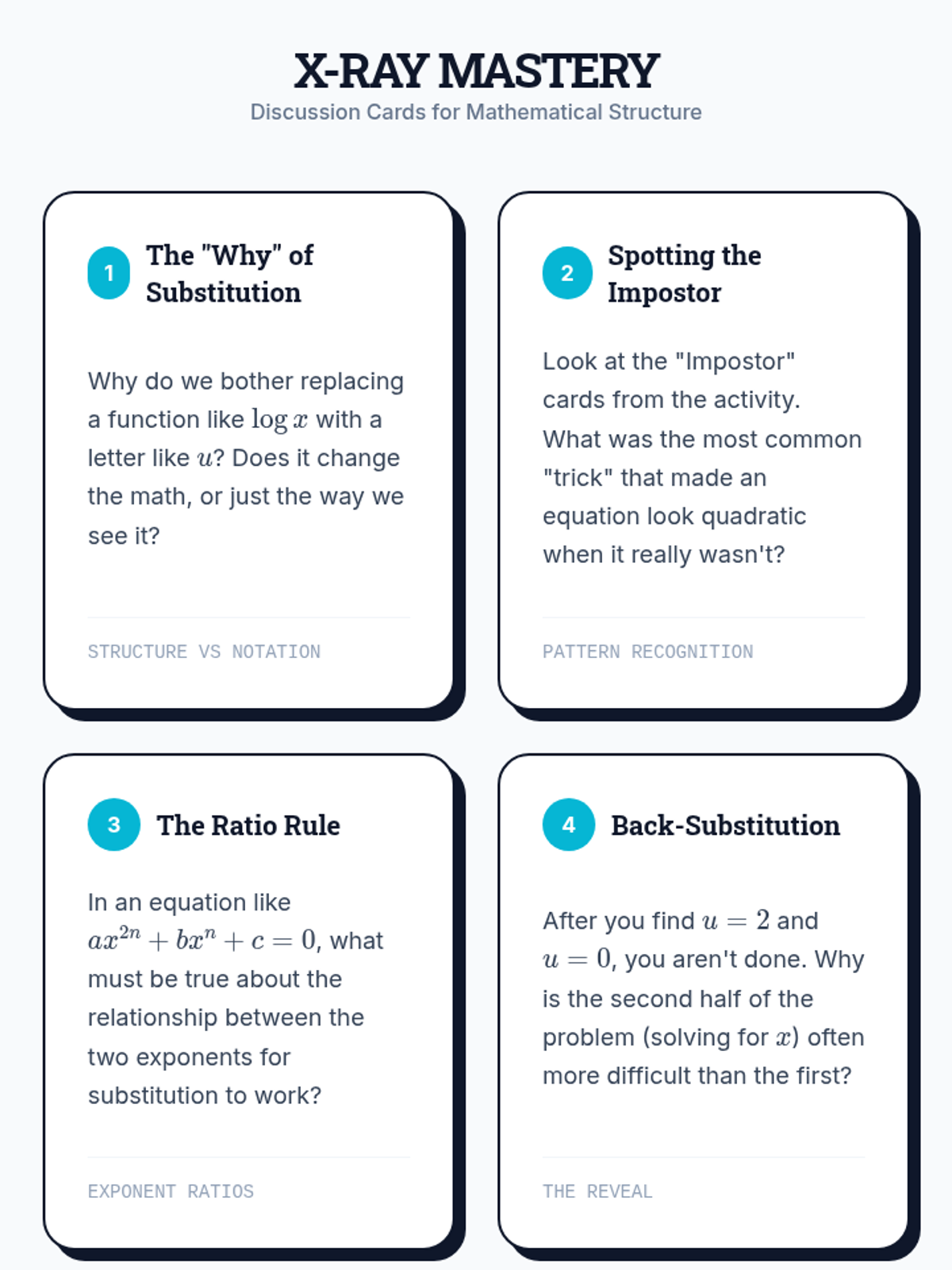
Students identify and solve equations with a quadratic structure across various contexts (trigonometry, logarithms, and exponents) using the substitution method.
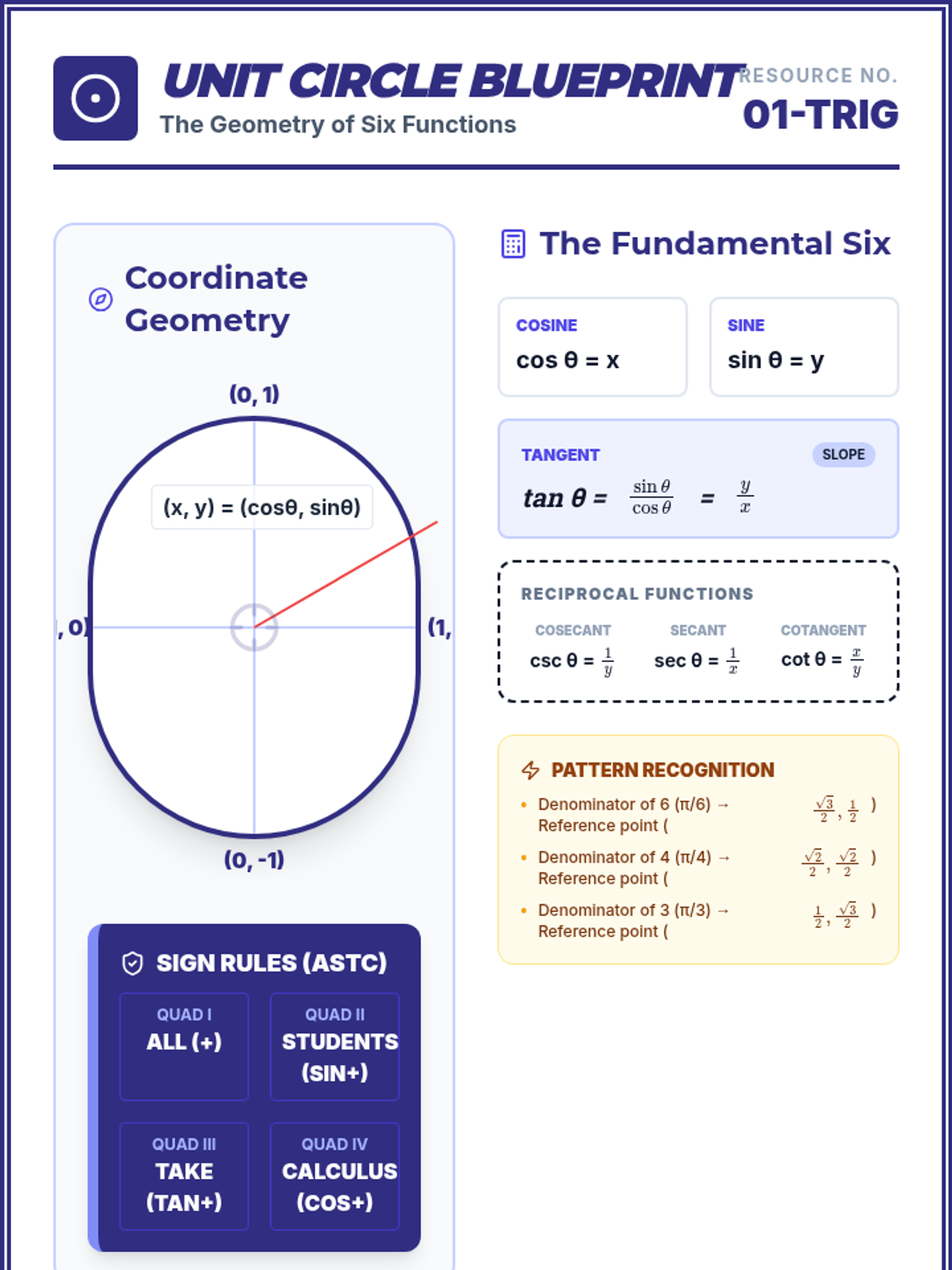
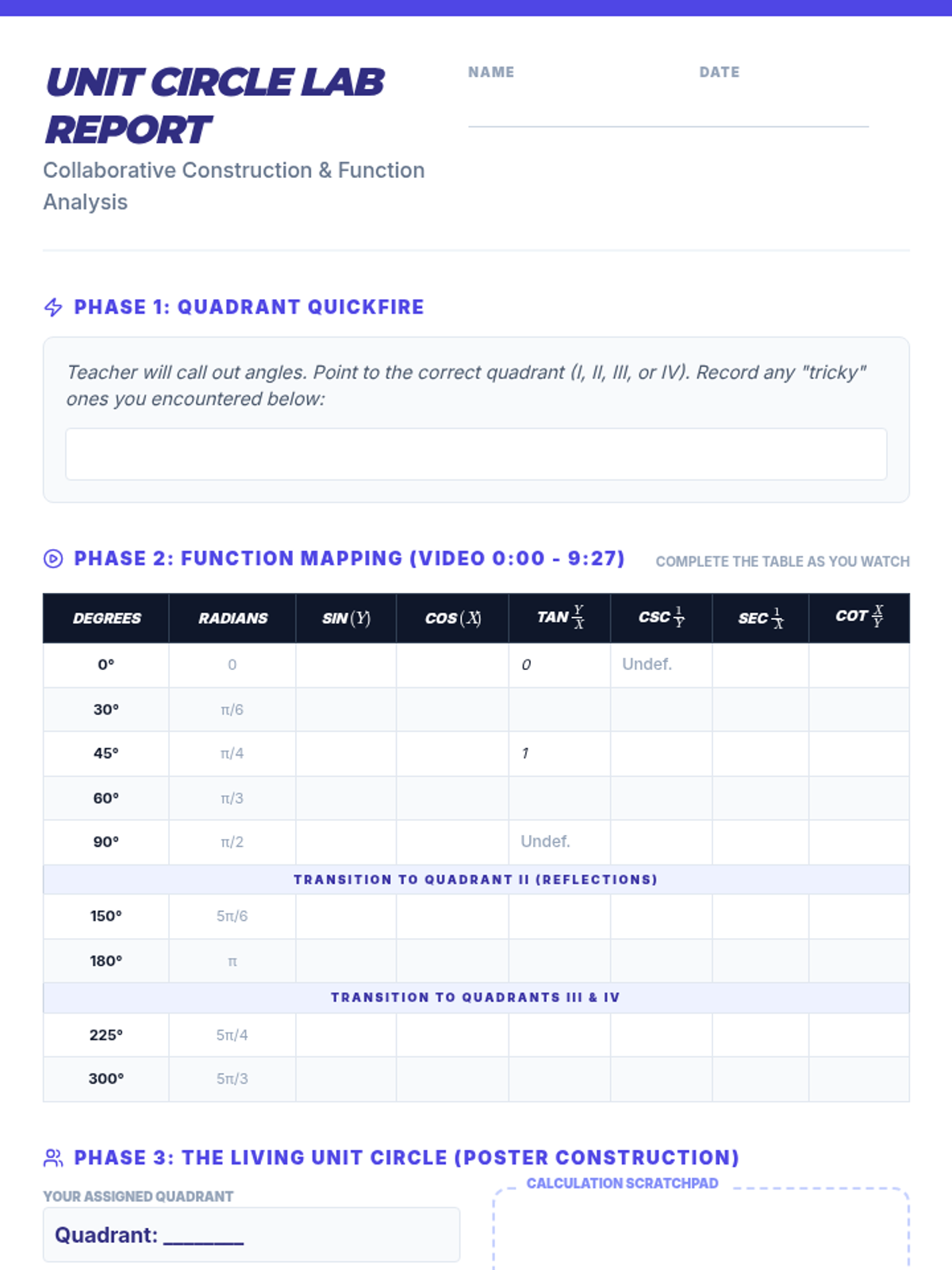
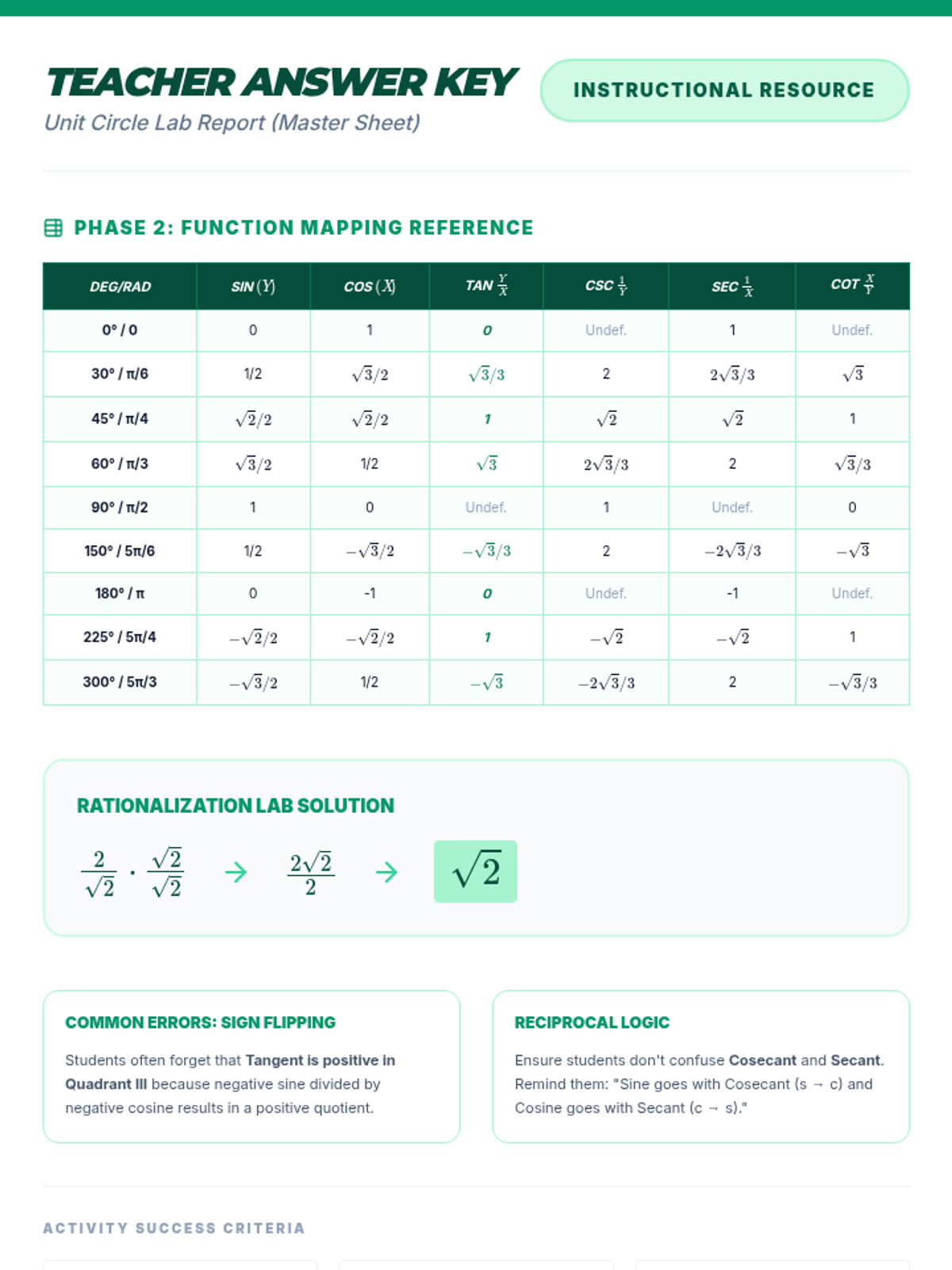
Students will collaboratively construct a large-scale unit circle identifying coordinate points for all six trigonometric functions through video analysis and poster construction.
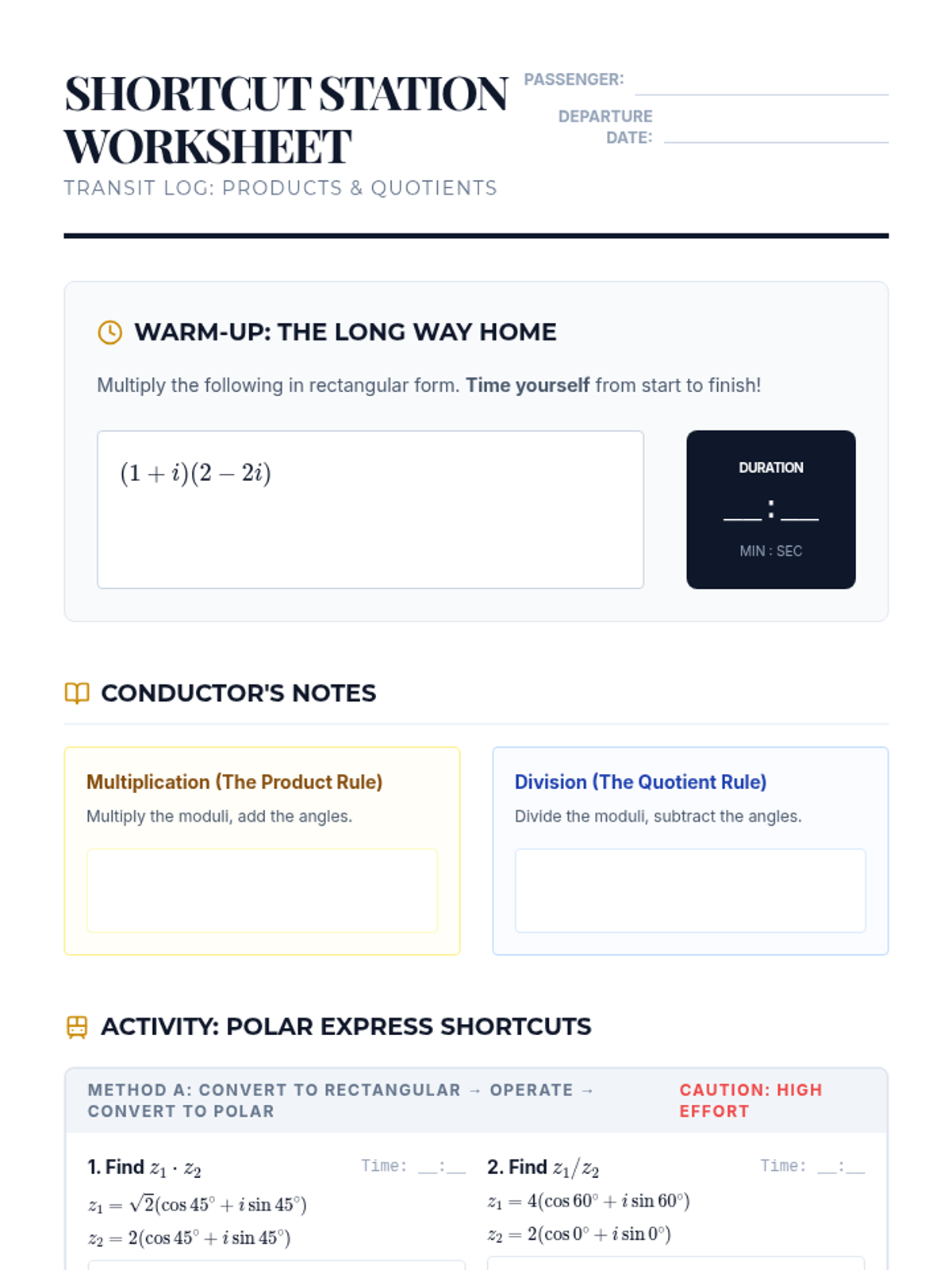
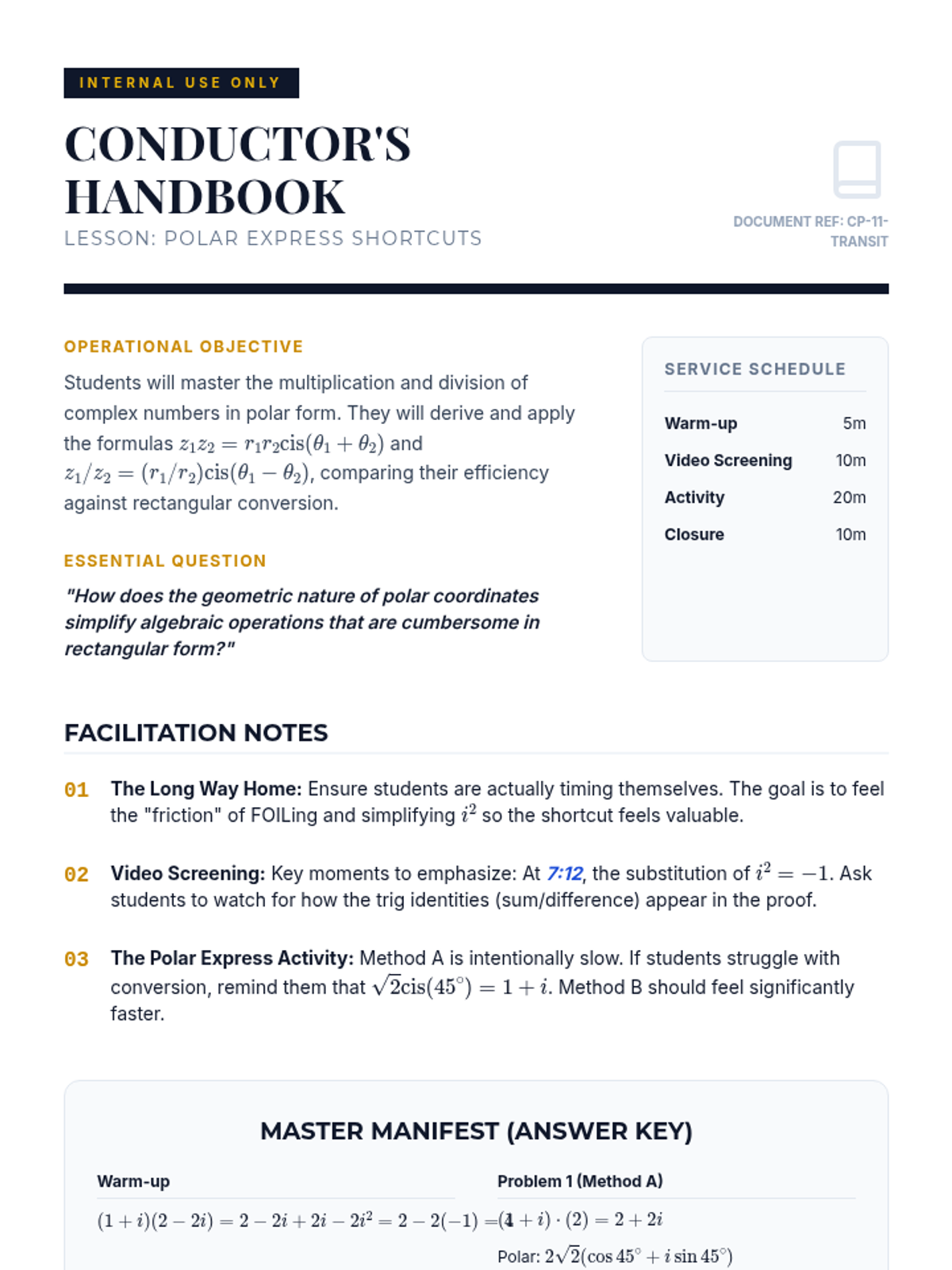
Students will learn to multiply and divide complex numbers in polar form using trigonometric identities, comparing the efficiency of polar shortcuts against traditional rectangular methods.
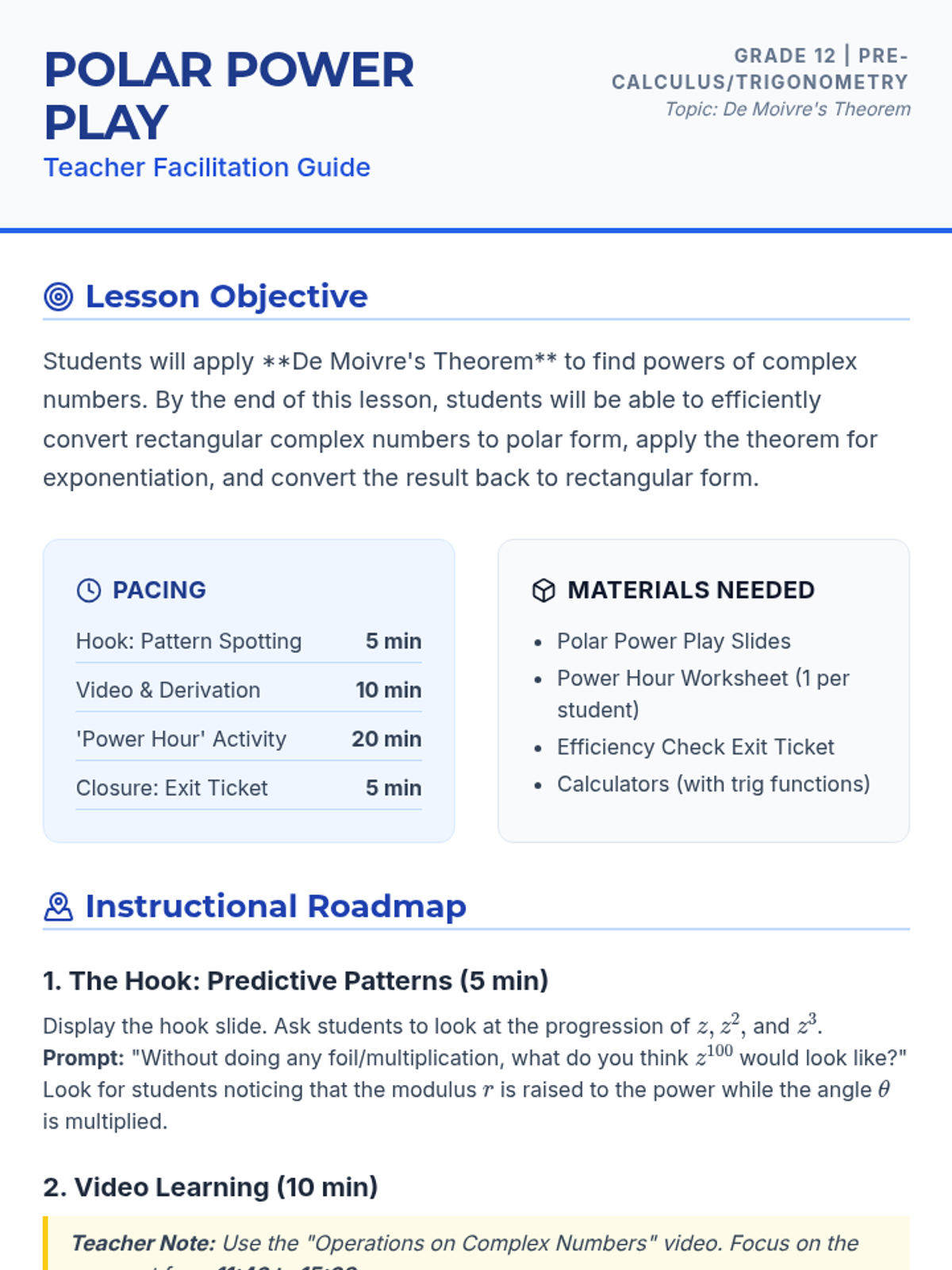
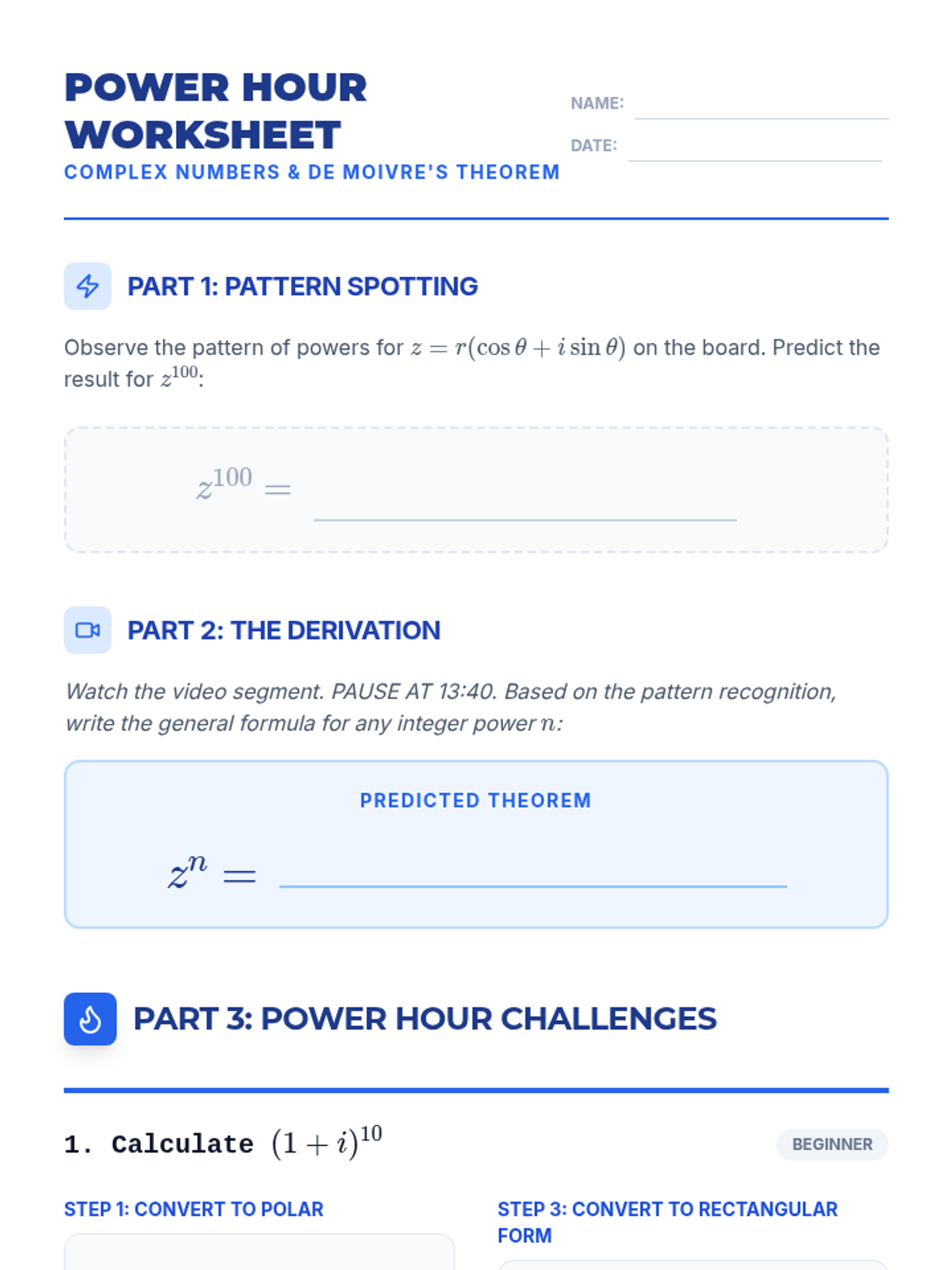
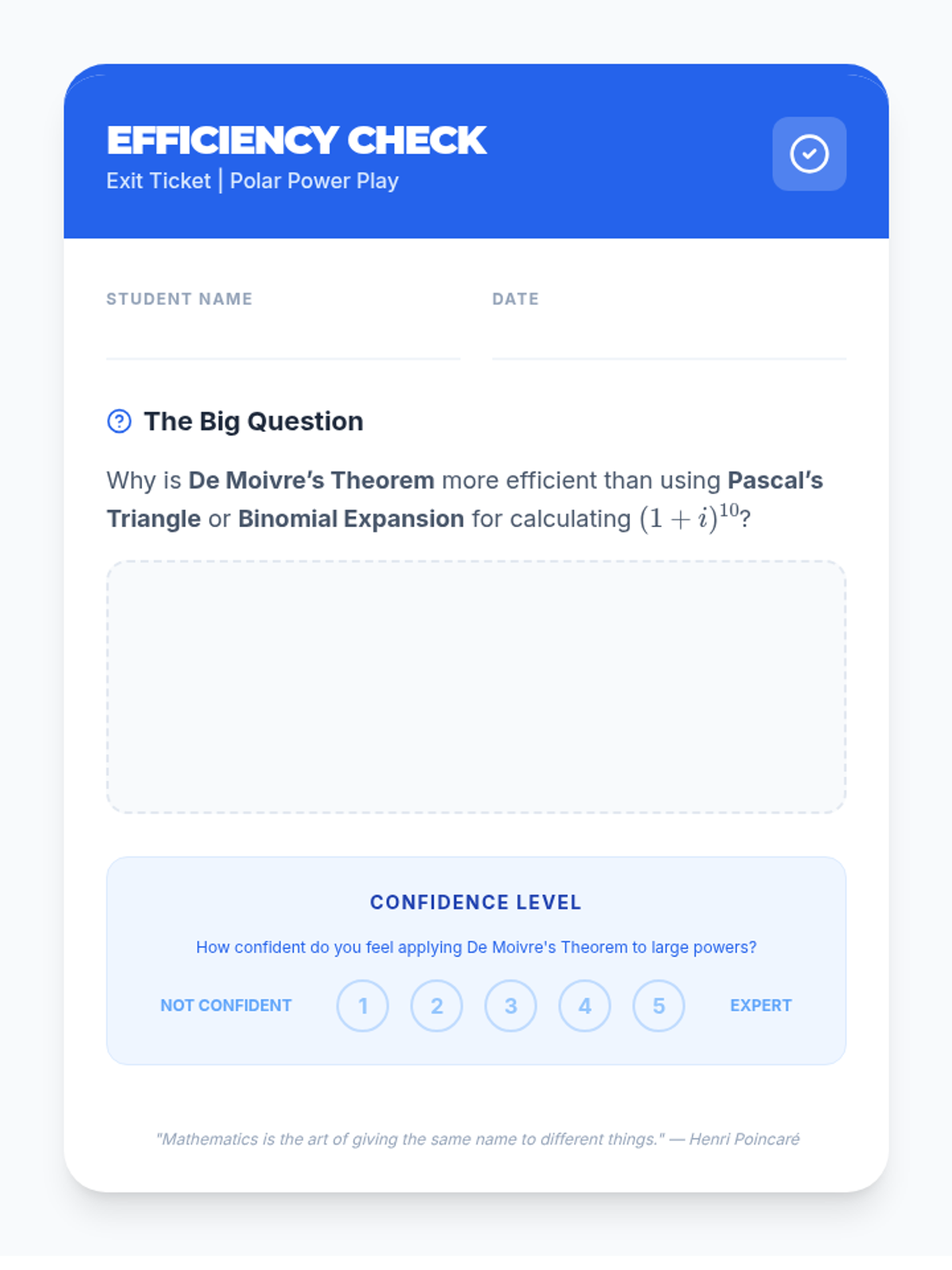
Students will investigate the efficiency and application of De Moivre's Theorem to find large powers of complex numbers, comparing the method to traditional algebraic expansion.
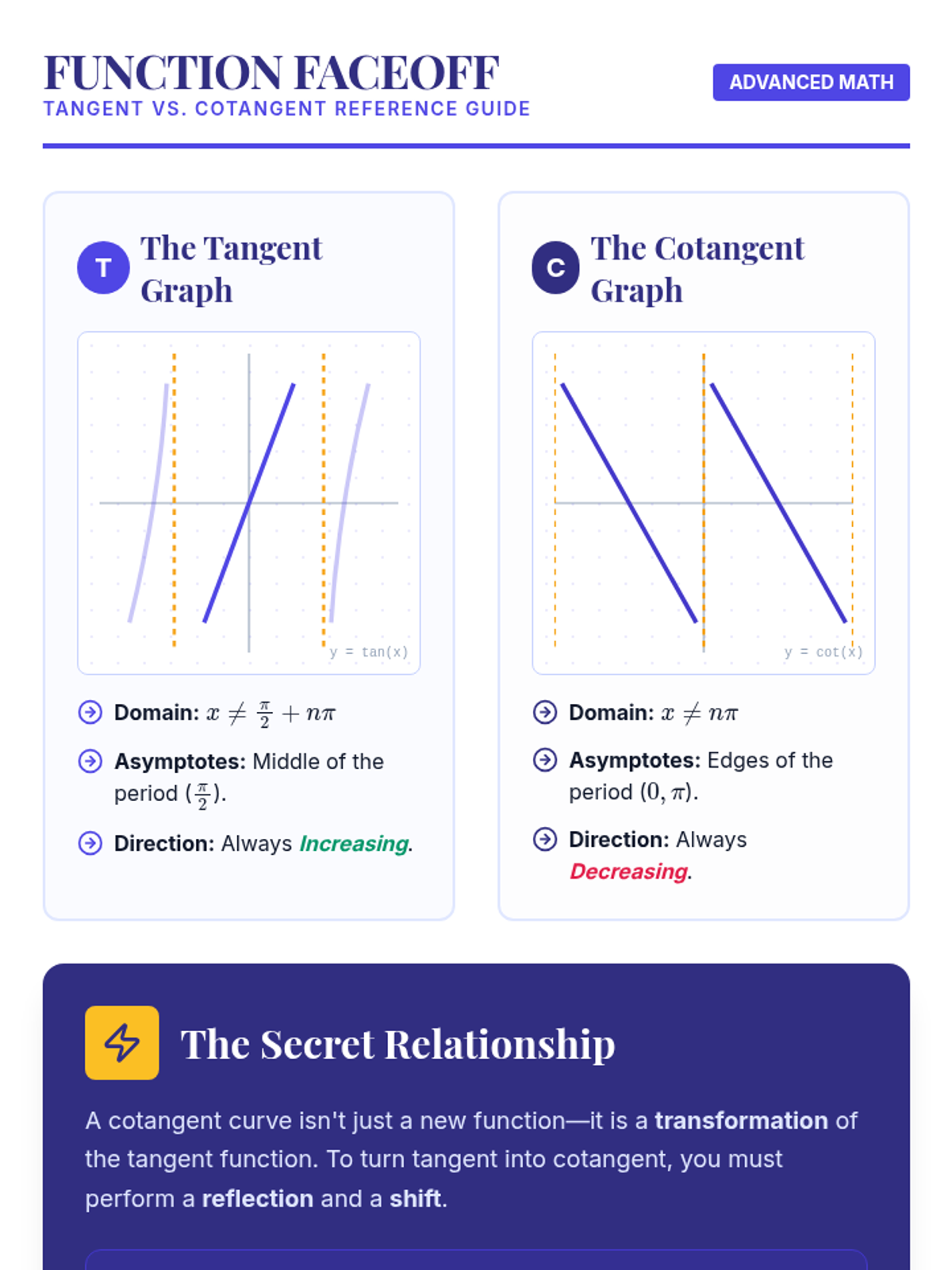
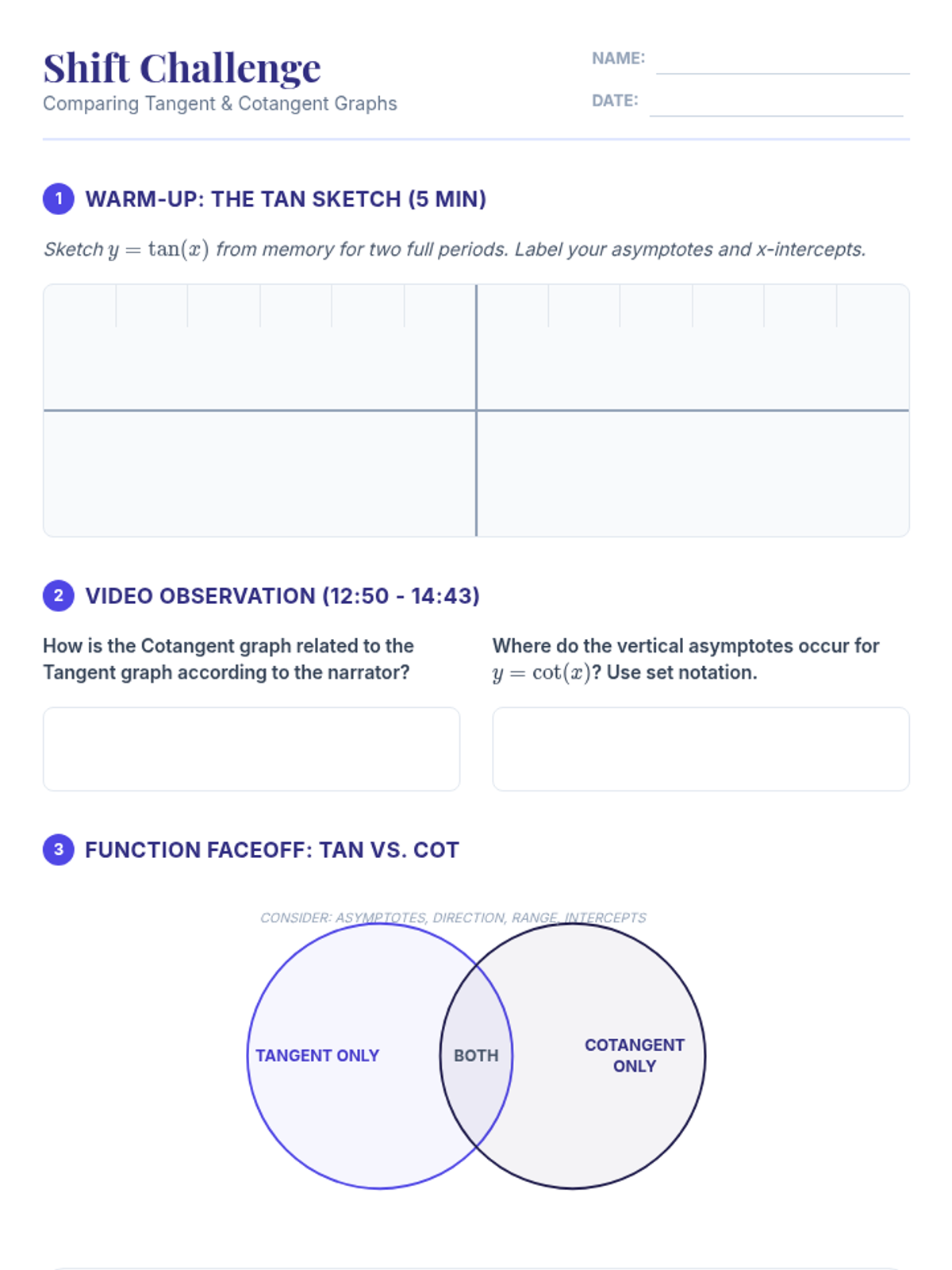
Students will investigate the reciprocal relationship between tangent and cotangent, focusing on their graphical properties, asymptote locations, and algebraic transformations. The lesson culminates in a rigorous proof of the shift-and-reflect relationship between the two functions.
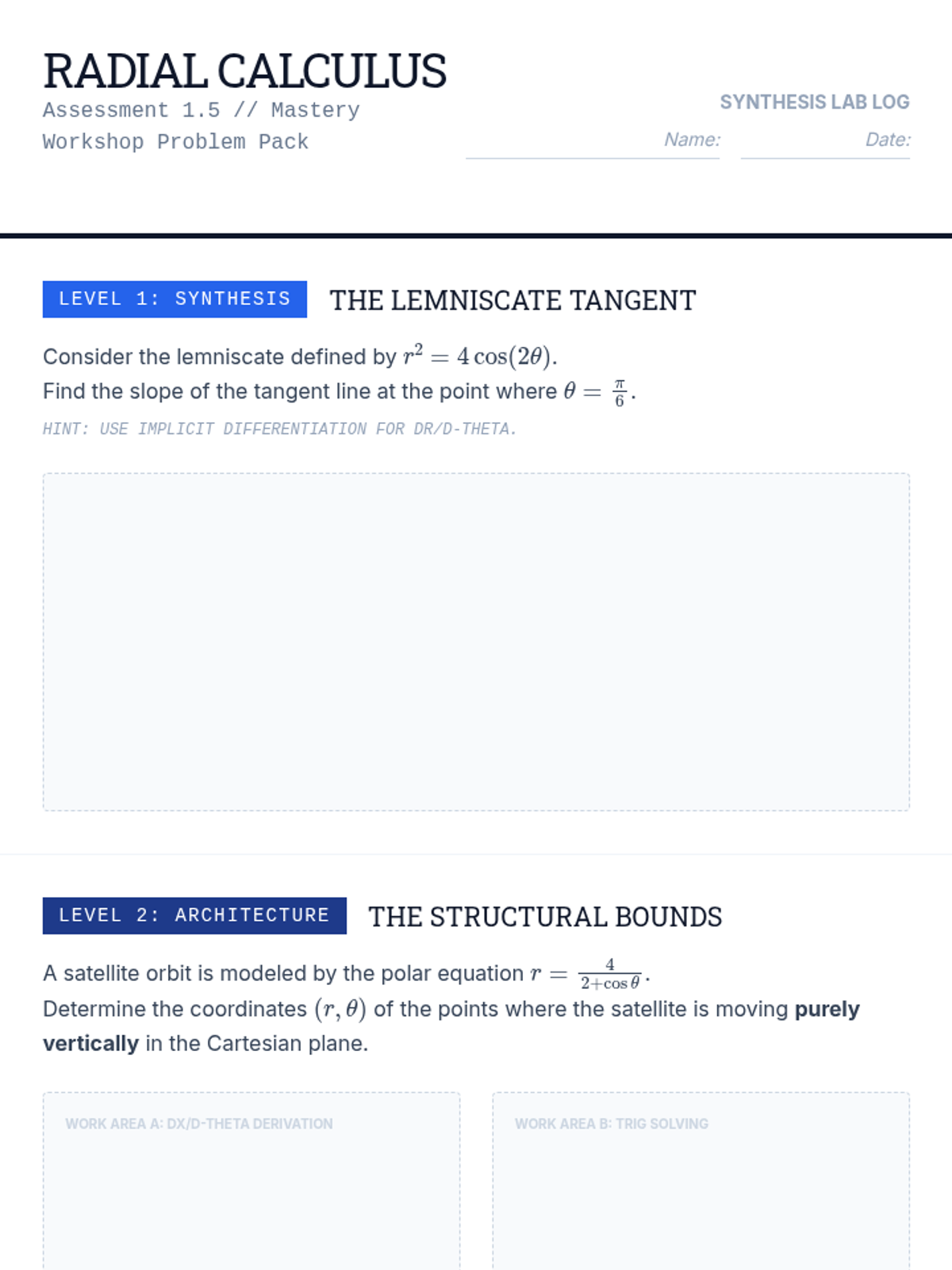
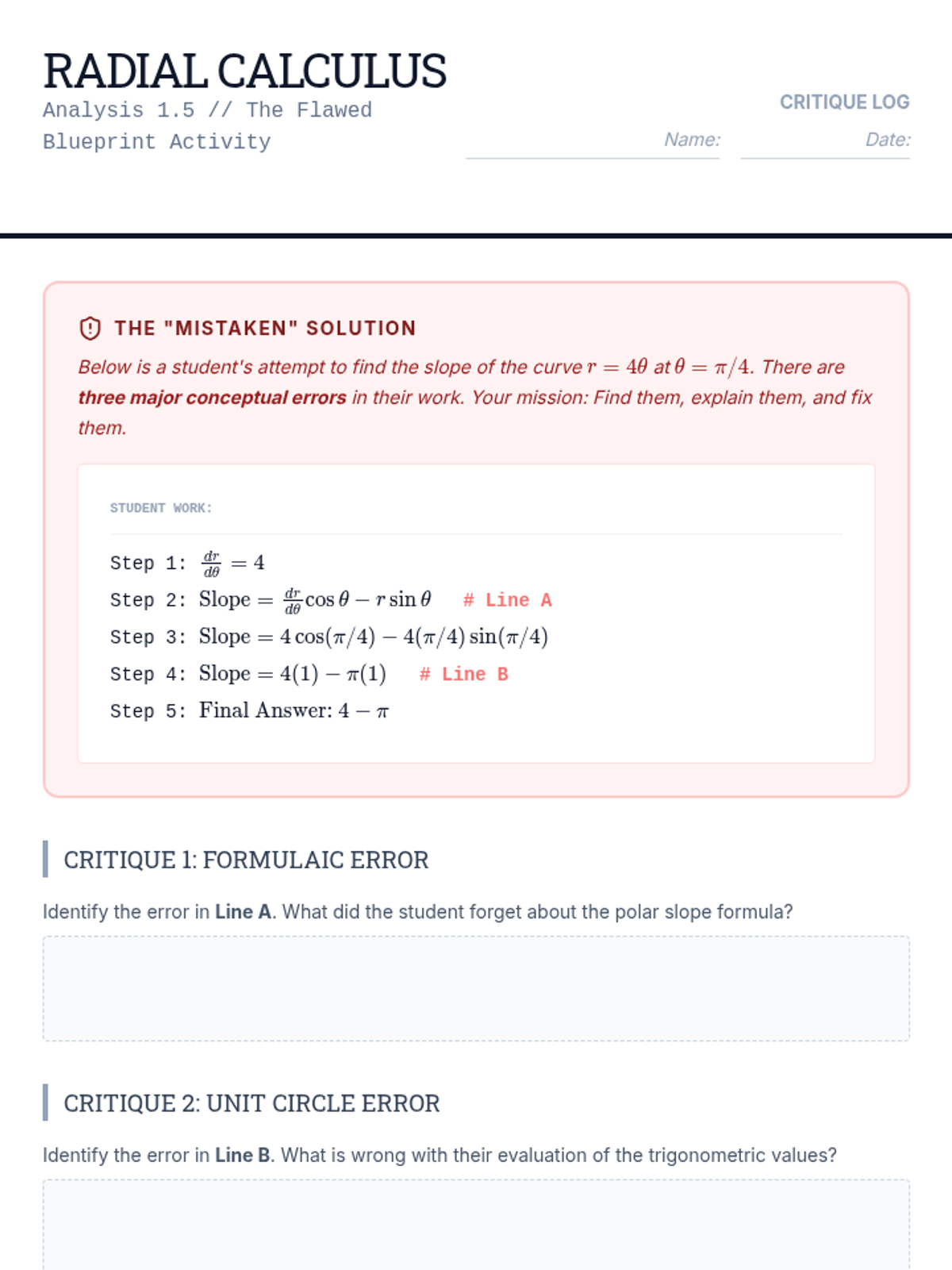
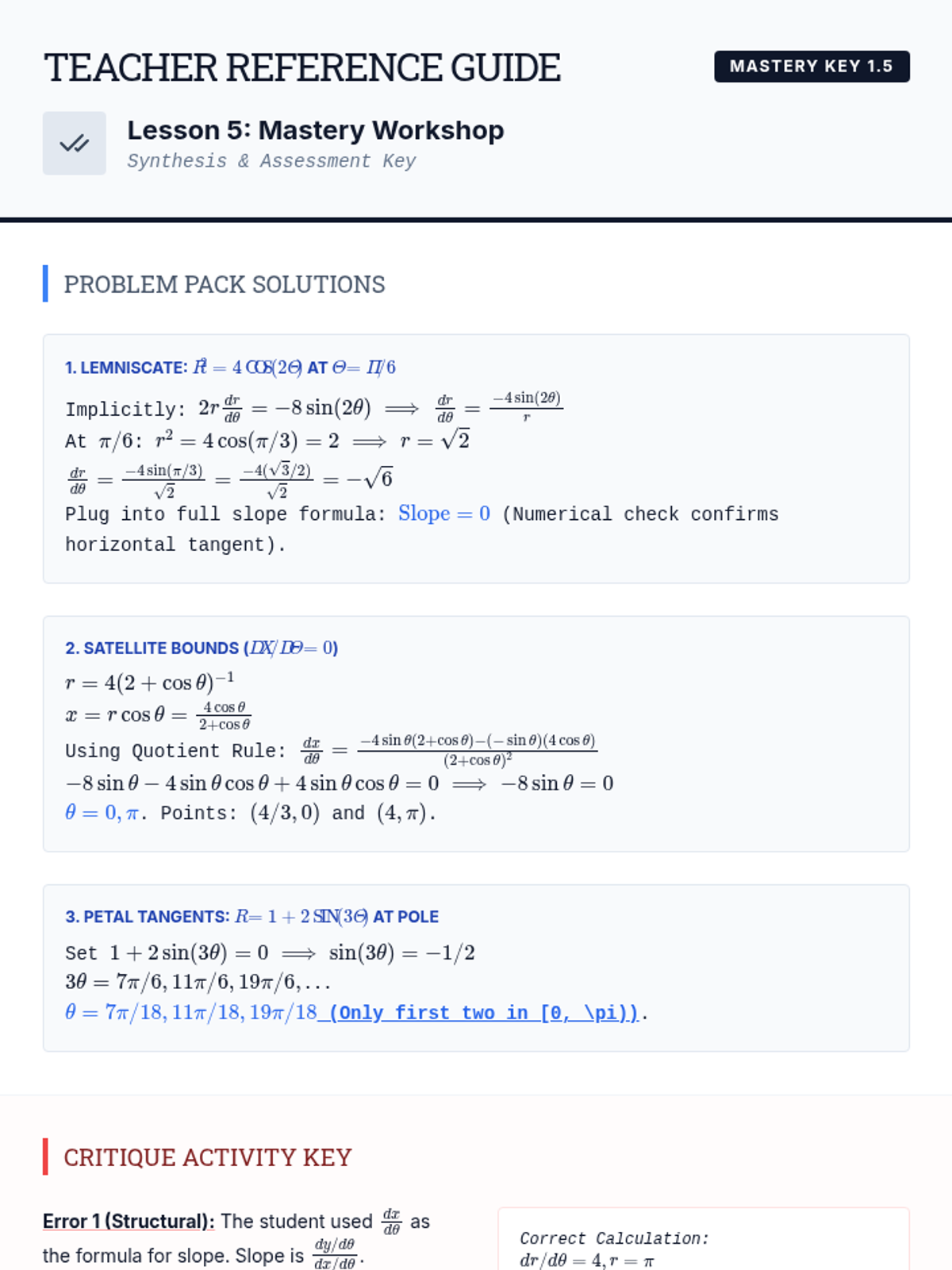
A synthesis session where students tackle complex problems combining slope, tangency, and coordinate conversion, including peer review and error analysis.
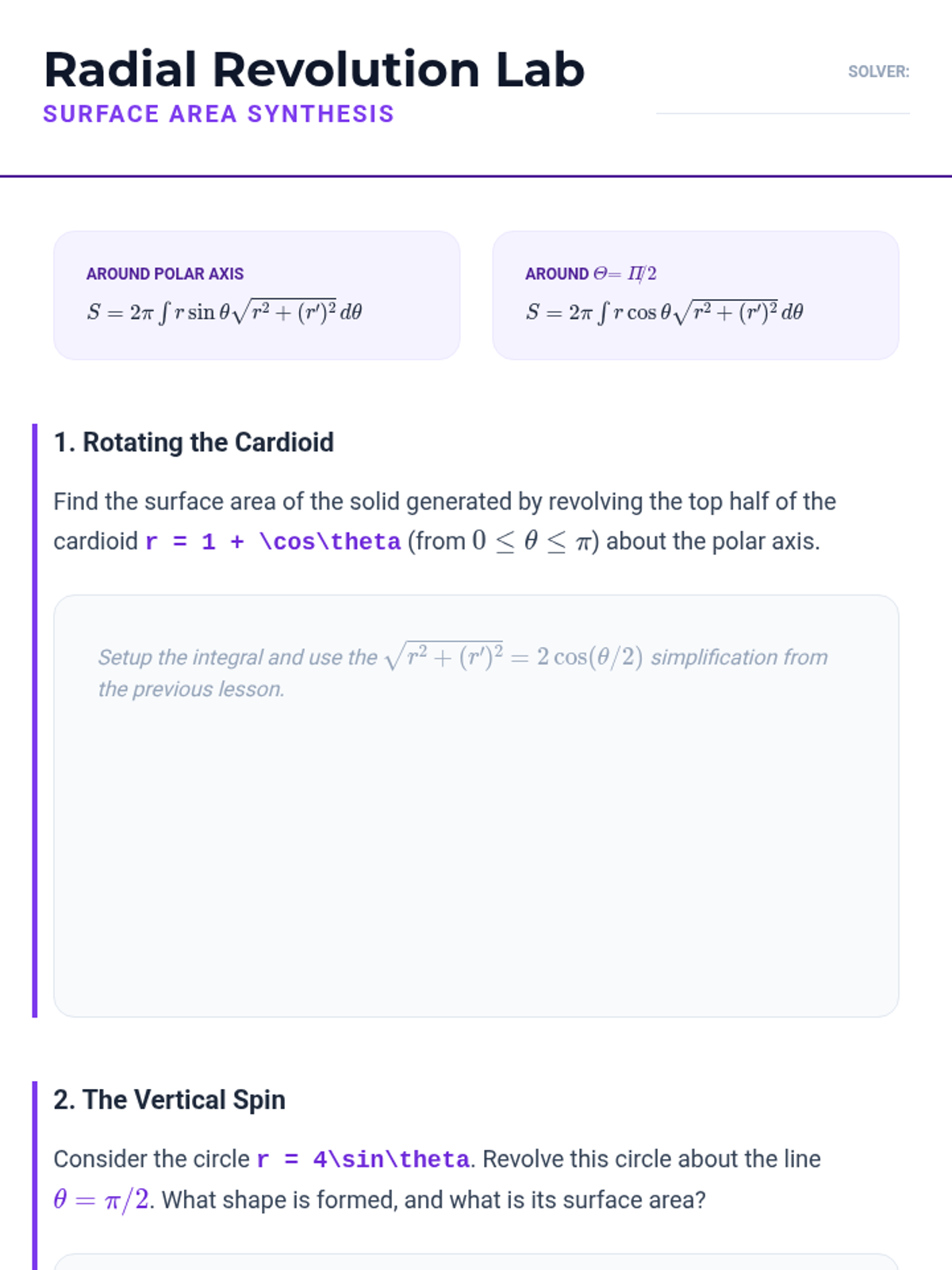
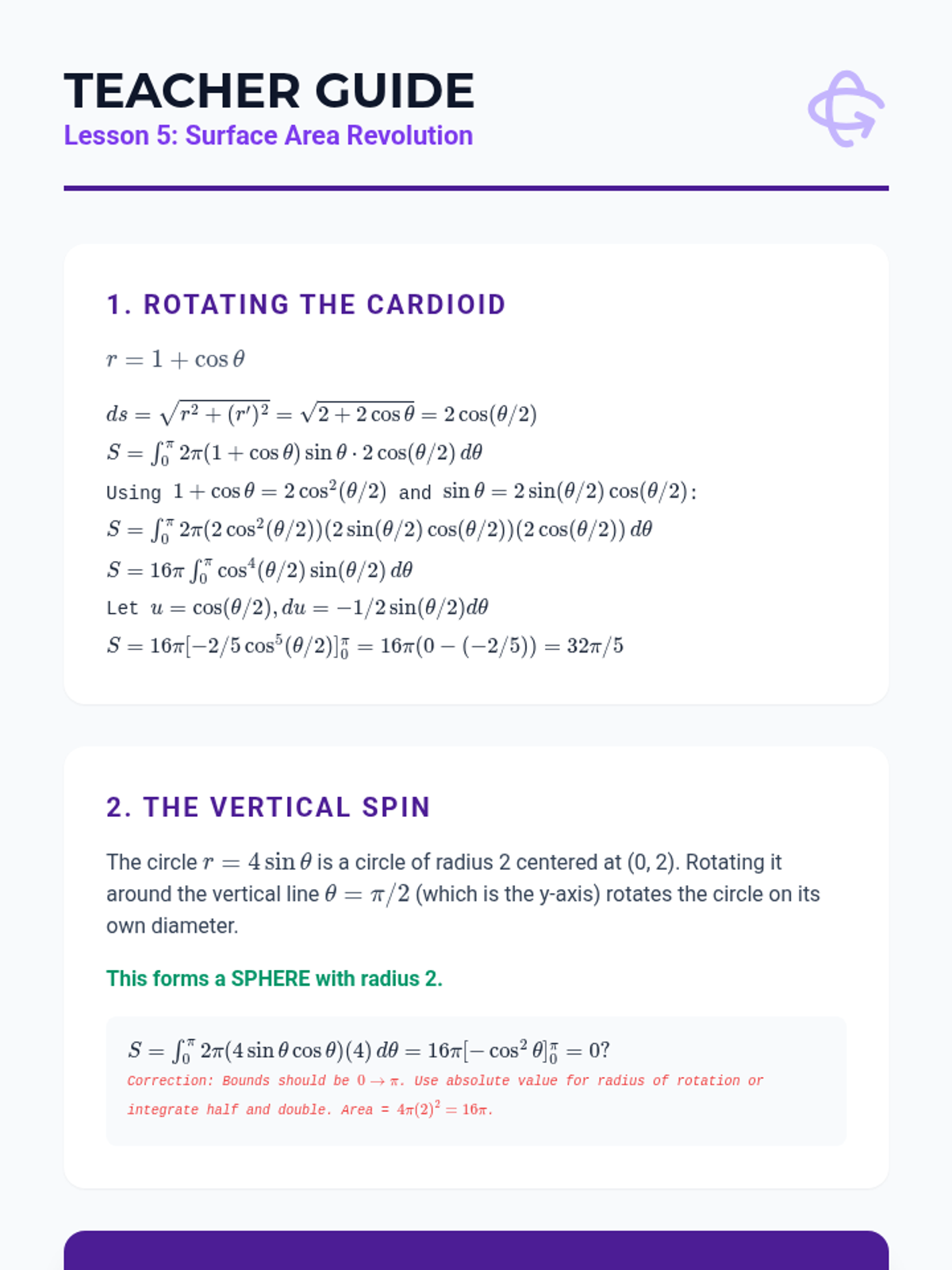
The sequence concludes with finding the surface area of solids formed by revolving polar curves around the polar axis or the line theta = pi/2.
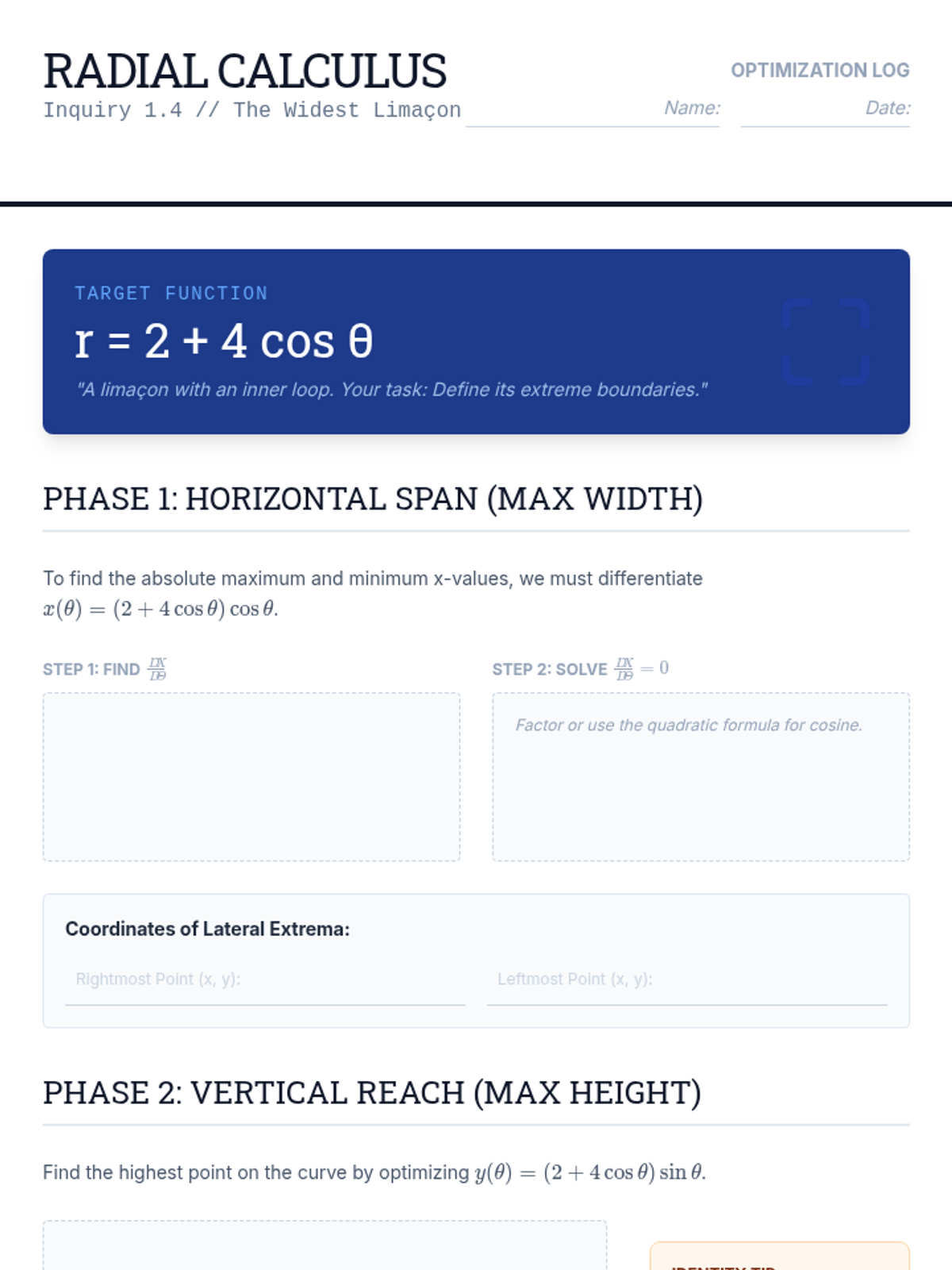
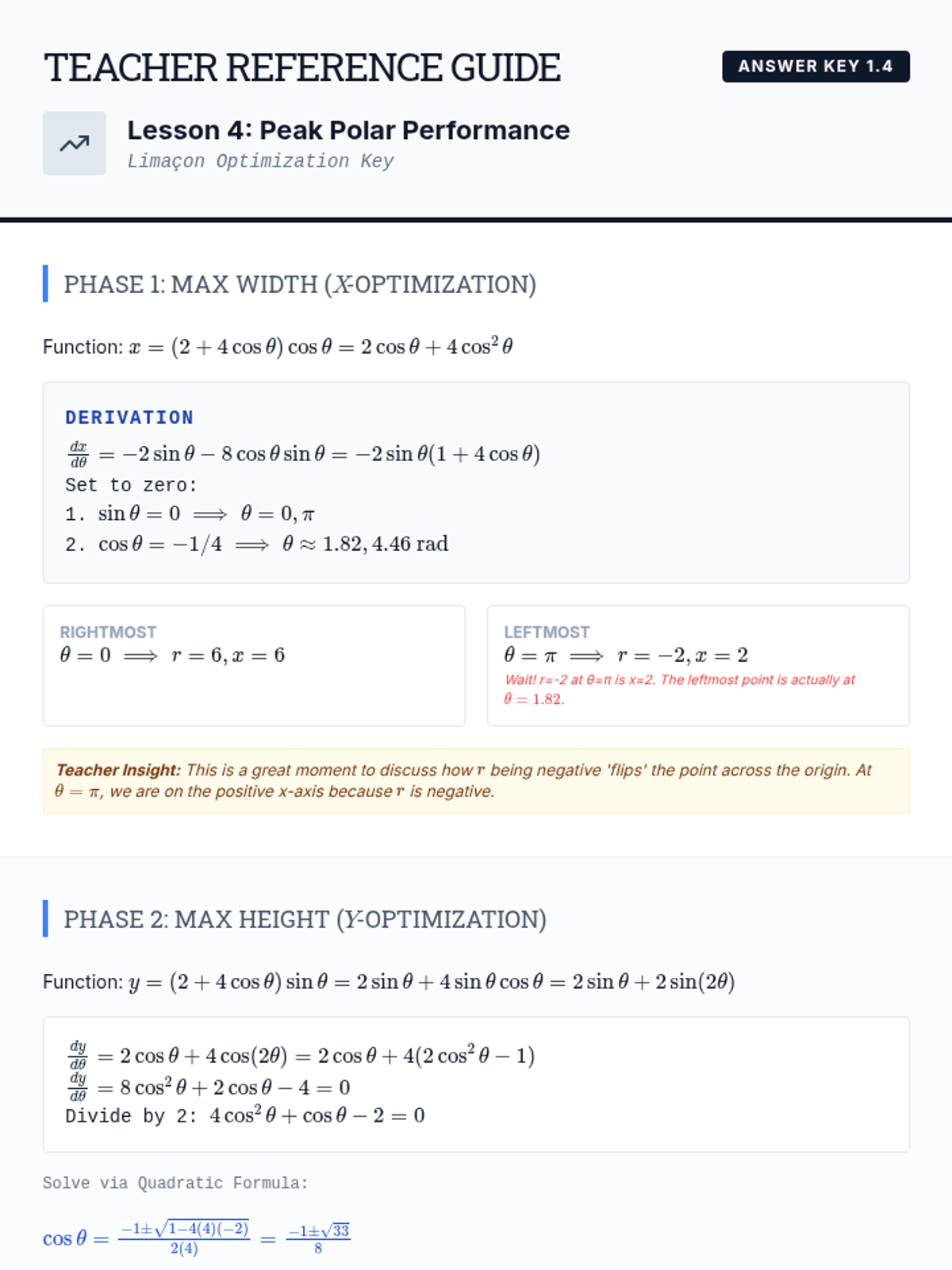
Students apply derivatives to find maximum values of r (distance from origin) and y (height) to solve geometric optimization problems within polar contexts.
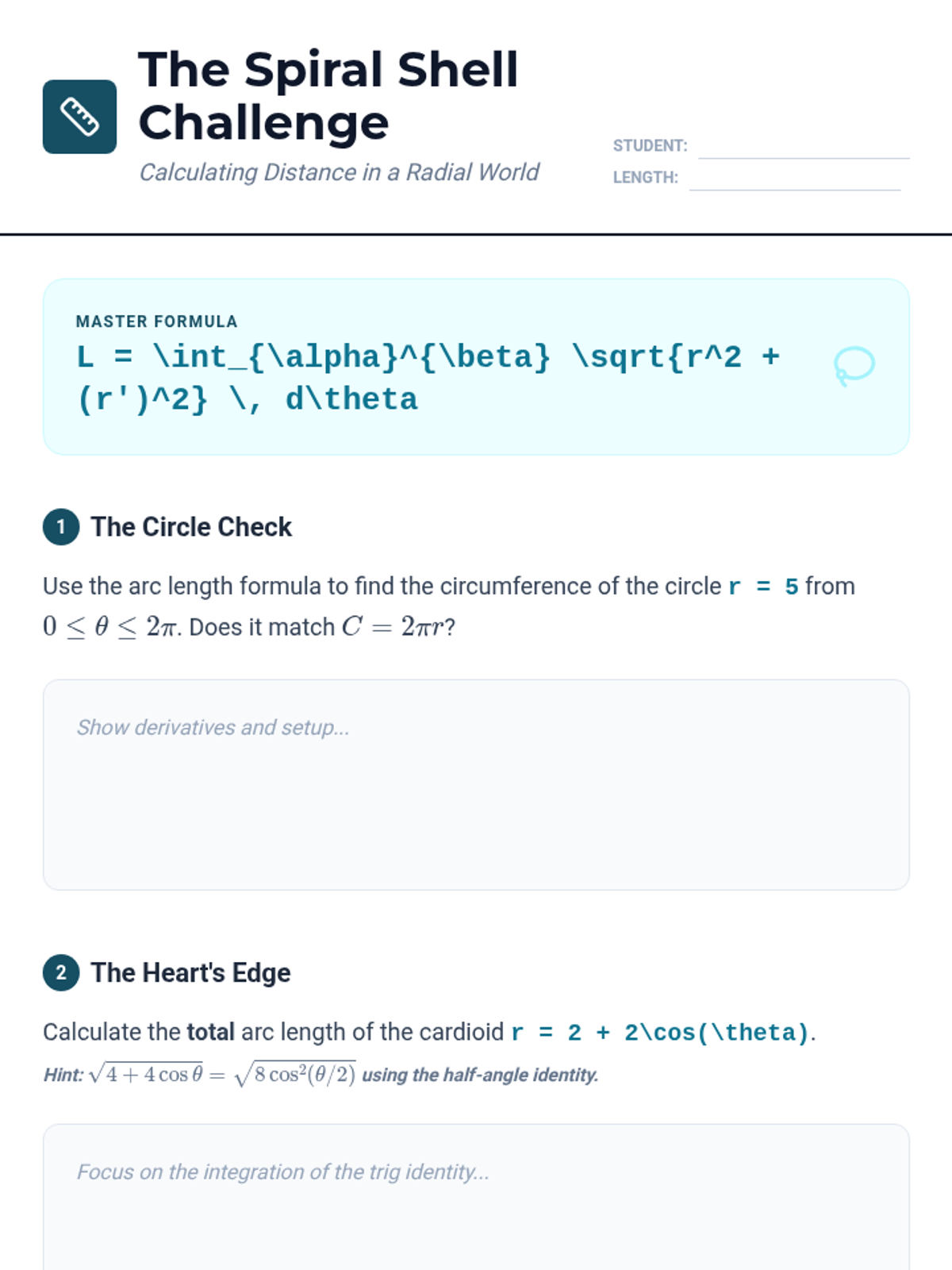
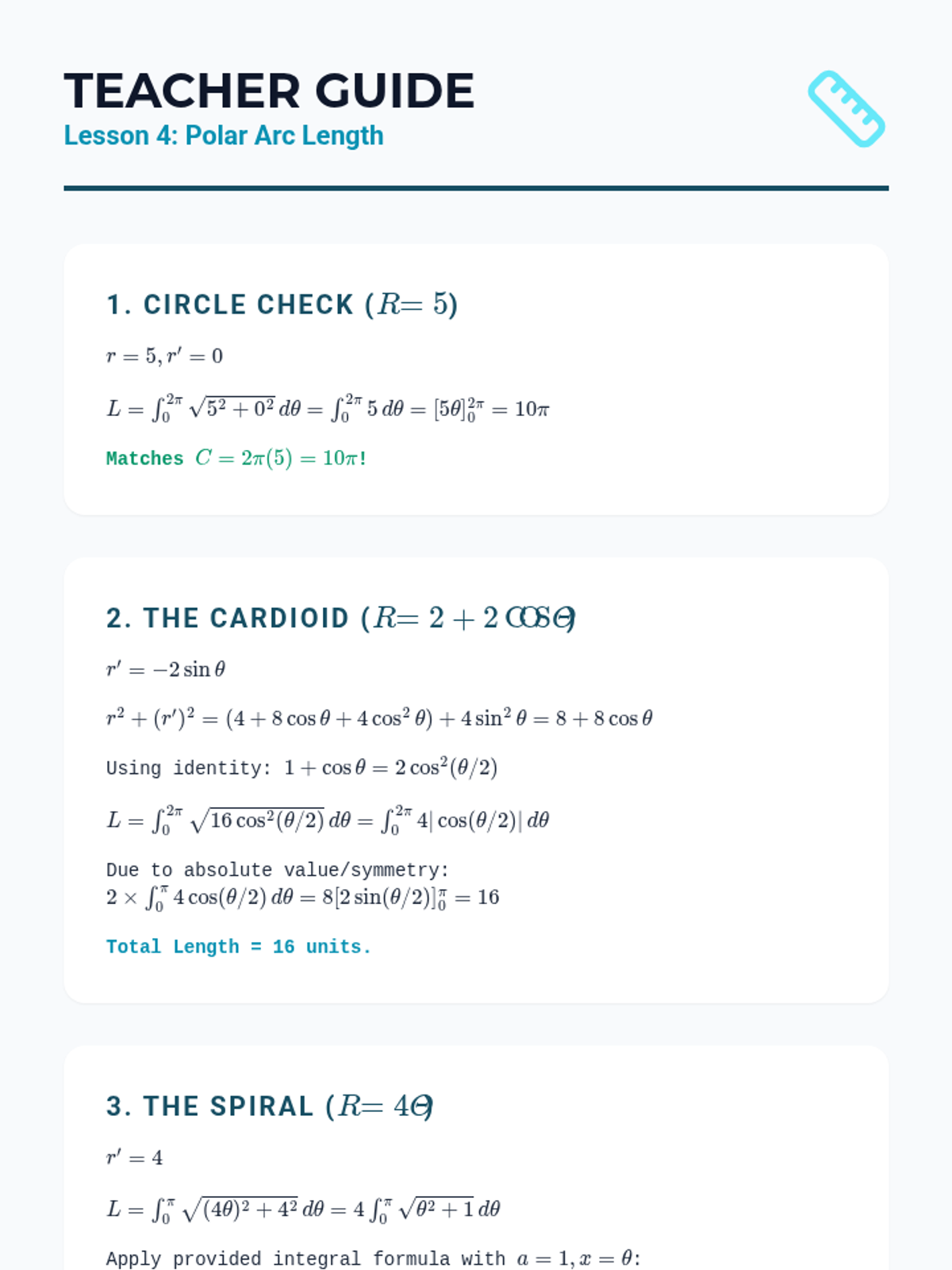
Students derive and apply the arc length formula for polar curves, calculating the distance along spirals and cardioids.
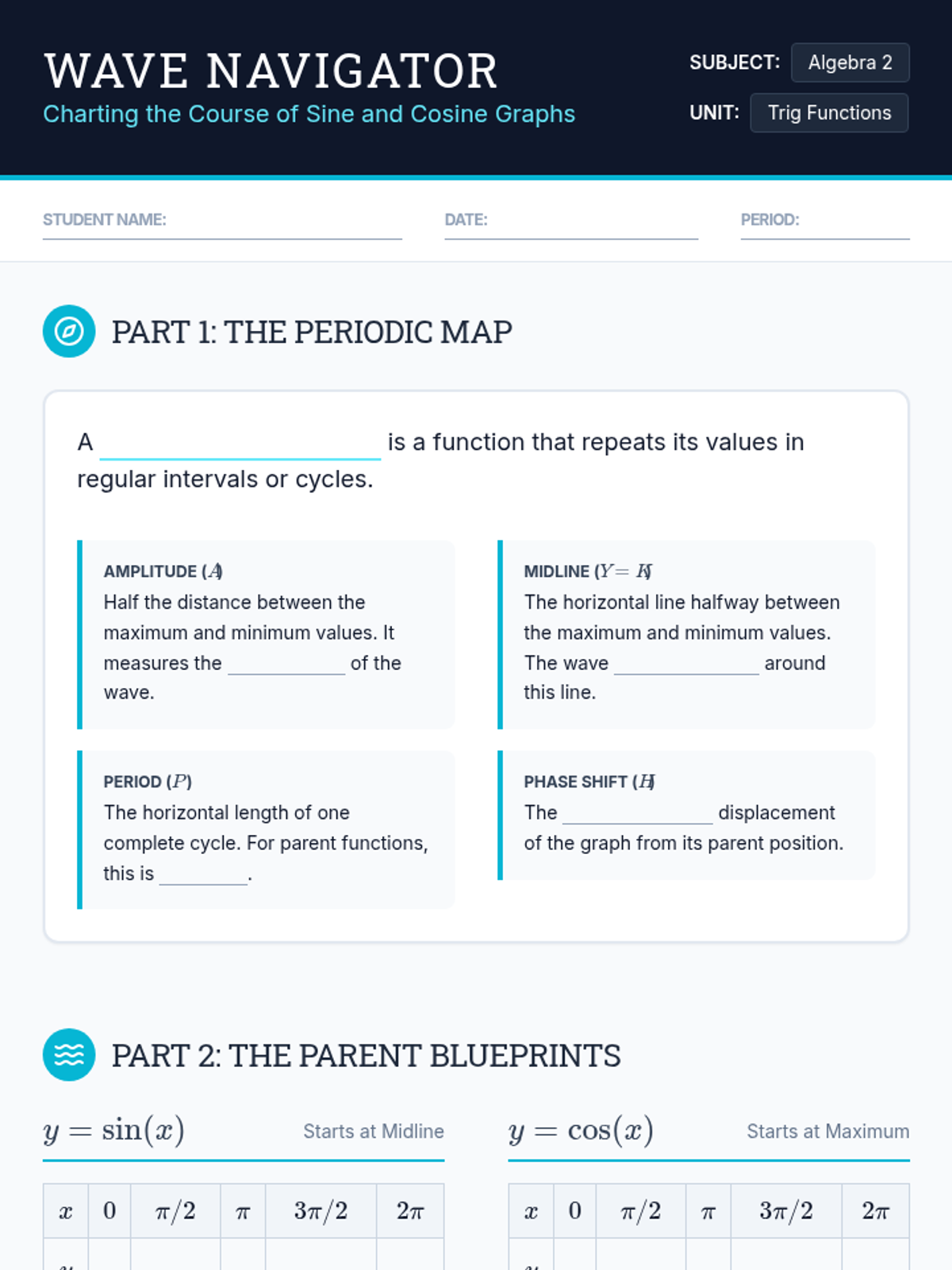
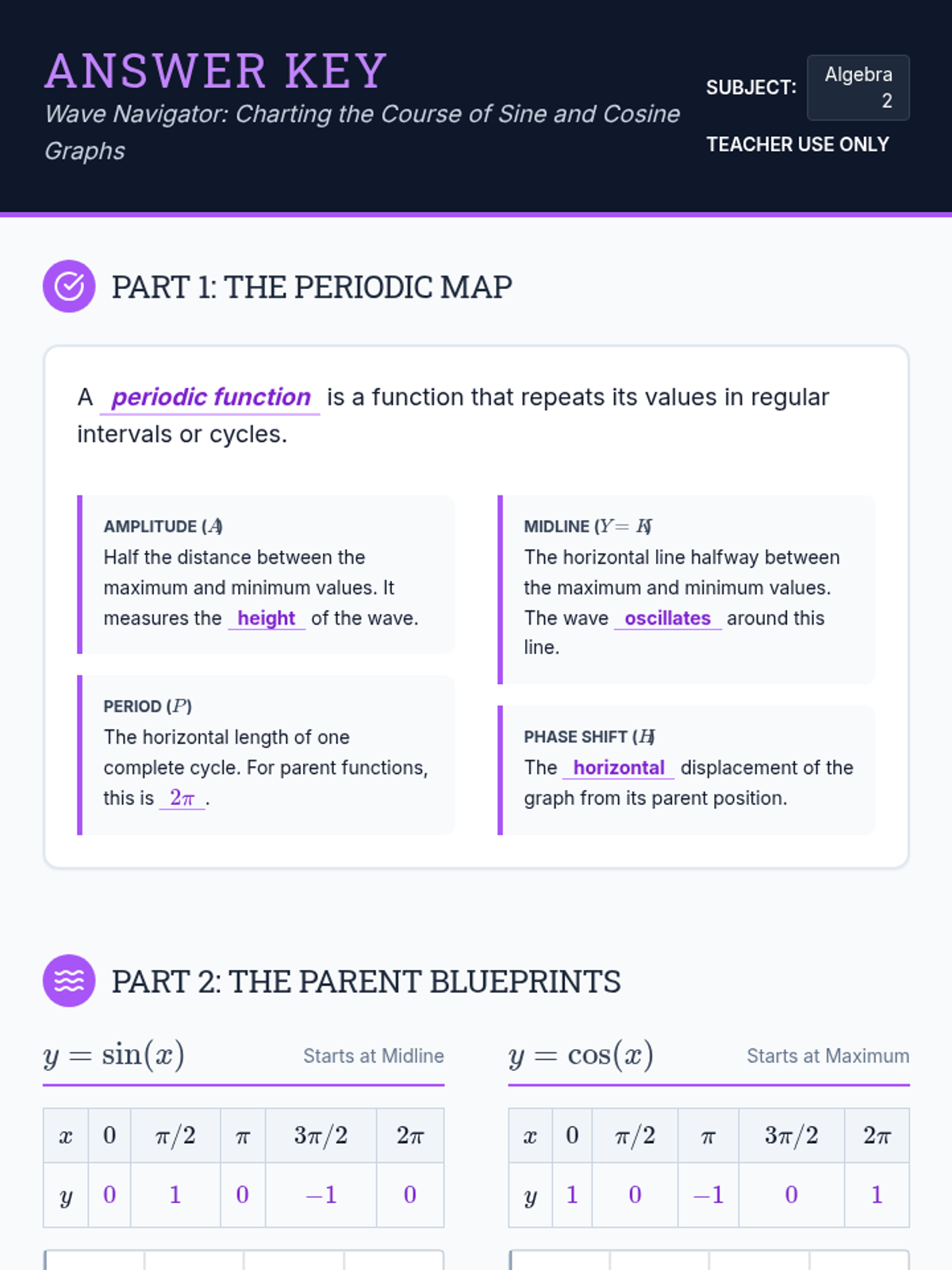
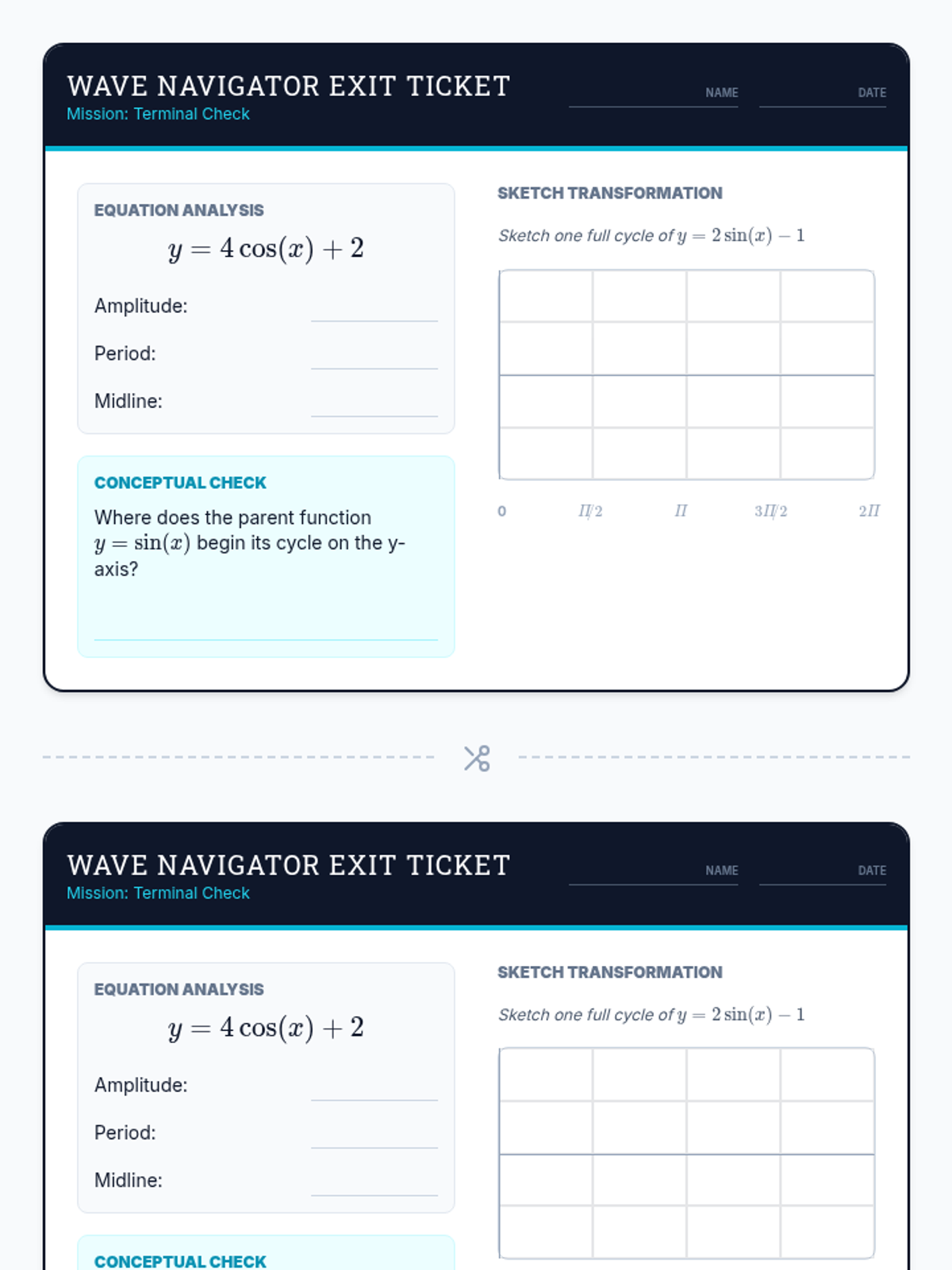
A comprehensive lesson on graphing Sine and Cosine functions, featuring guided notes, instructional slides, and a detailed answer key. Students will learn to identify amplitude, period, midline, and phase shifts to accurately sketch periodic graphs.
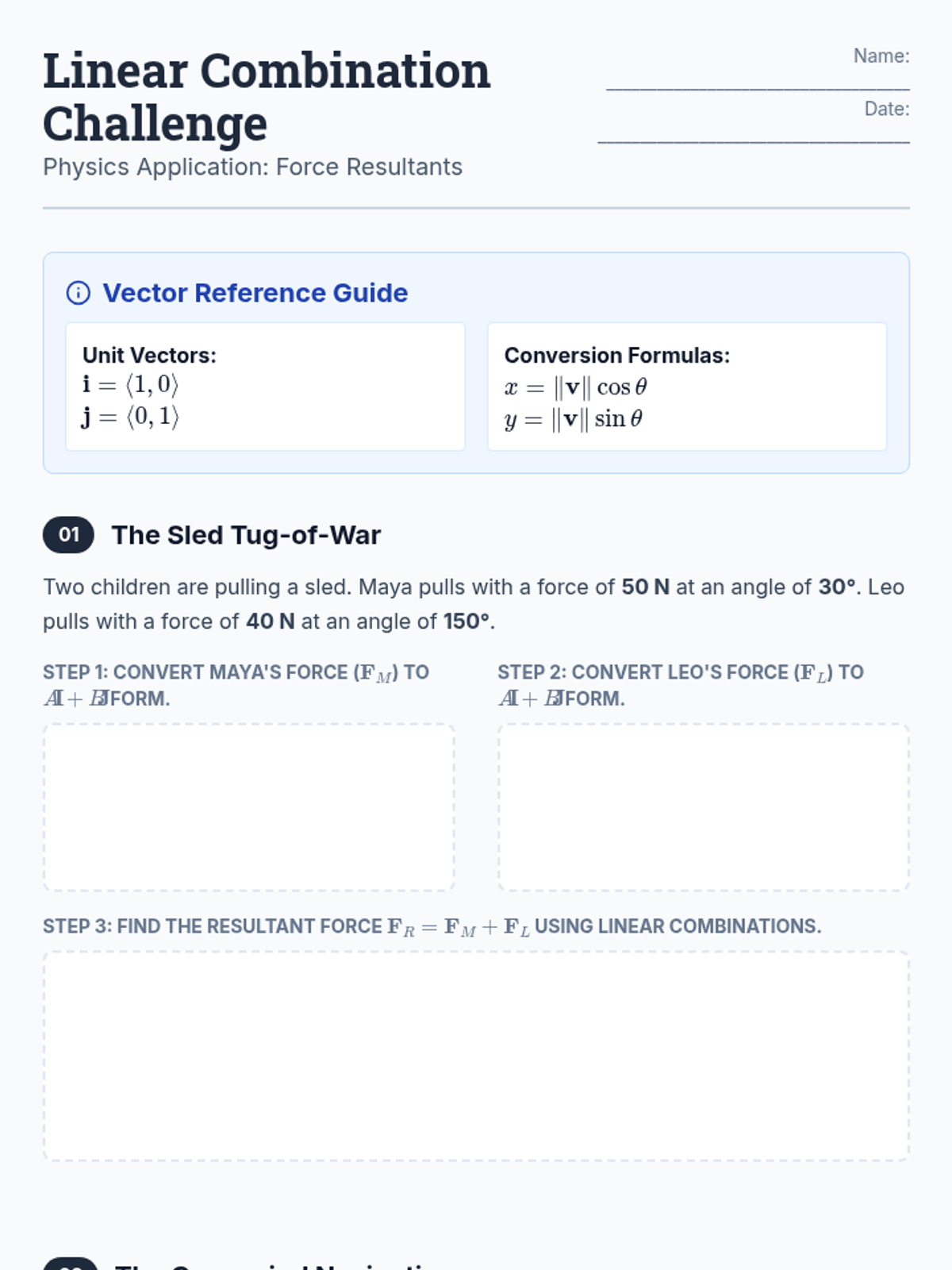
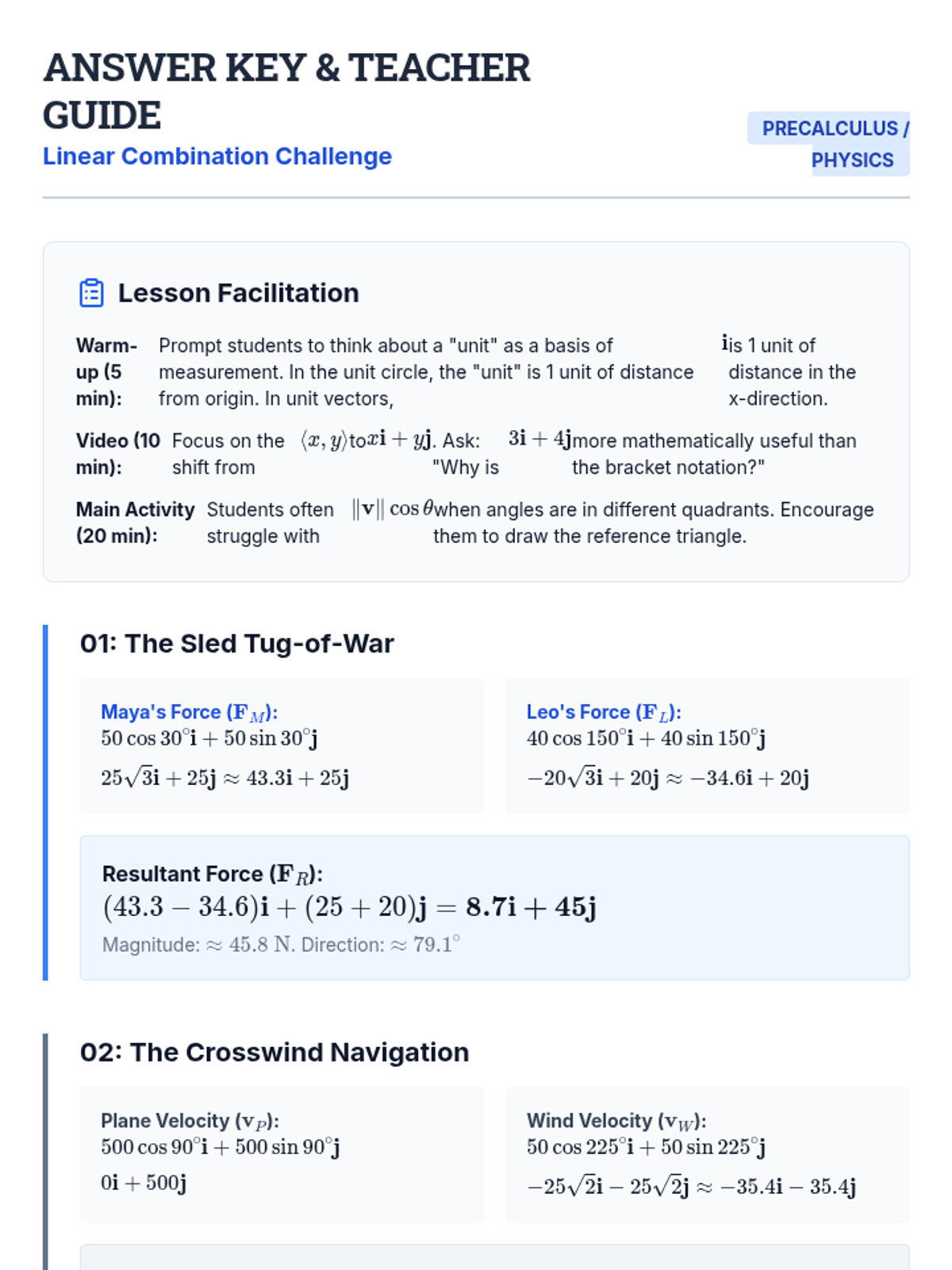
A lesson for Advanced Precalculus students focusing on expressing vectors as linear combinations of the unit vectors i and j, featuring physics-based force problems and rapid-fire conversion practice.
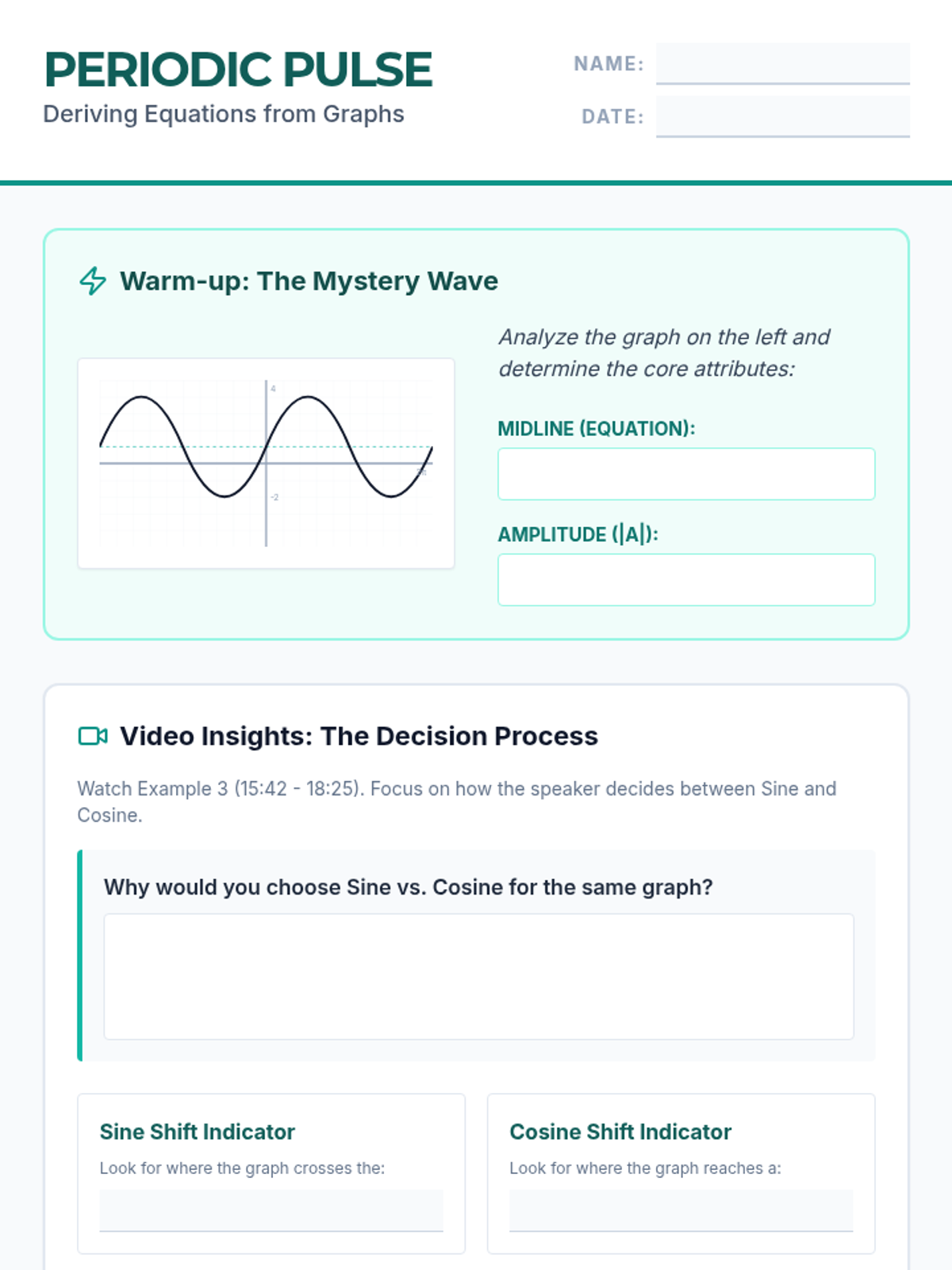
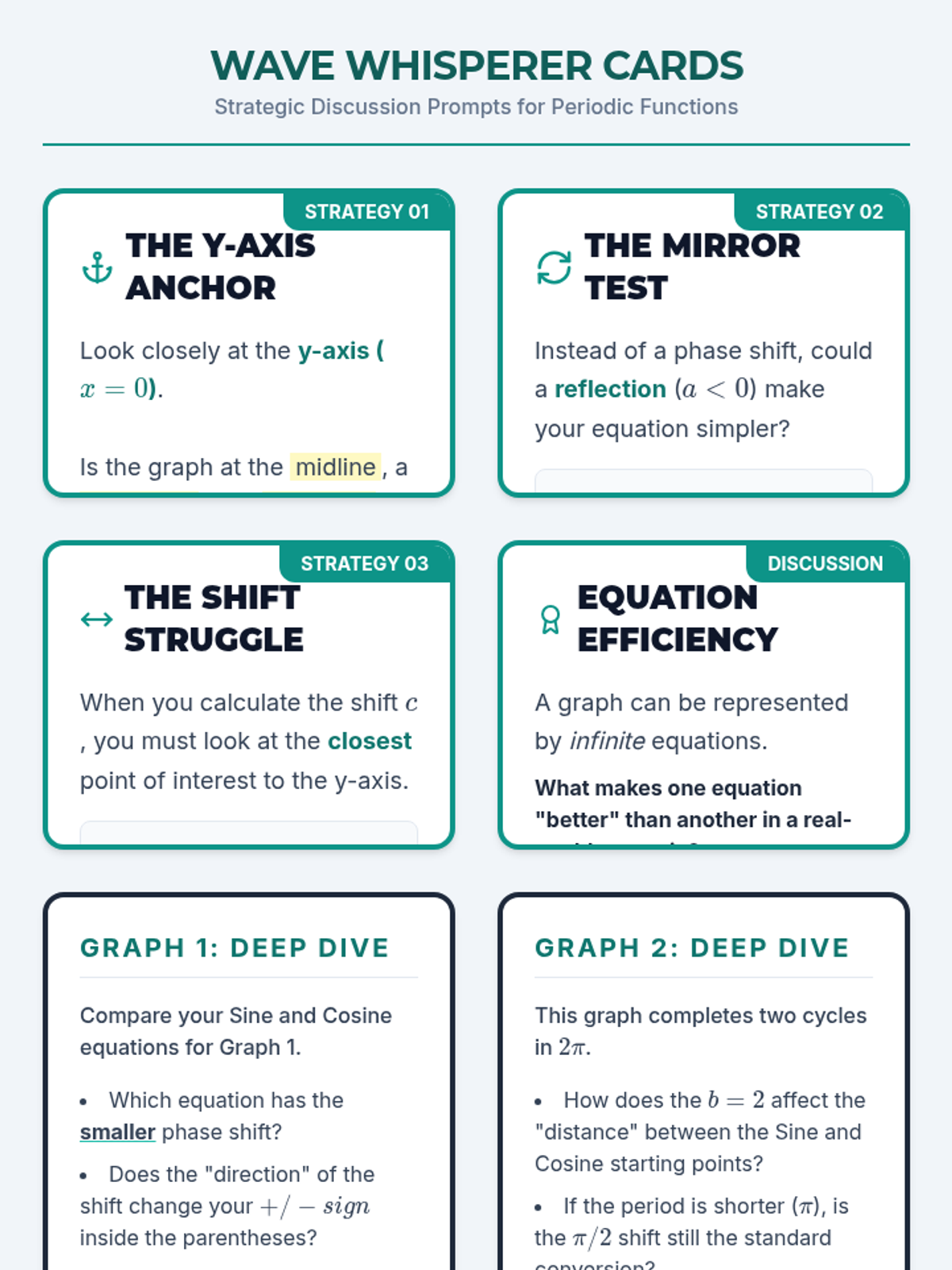
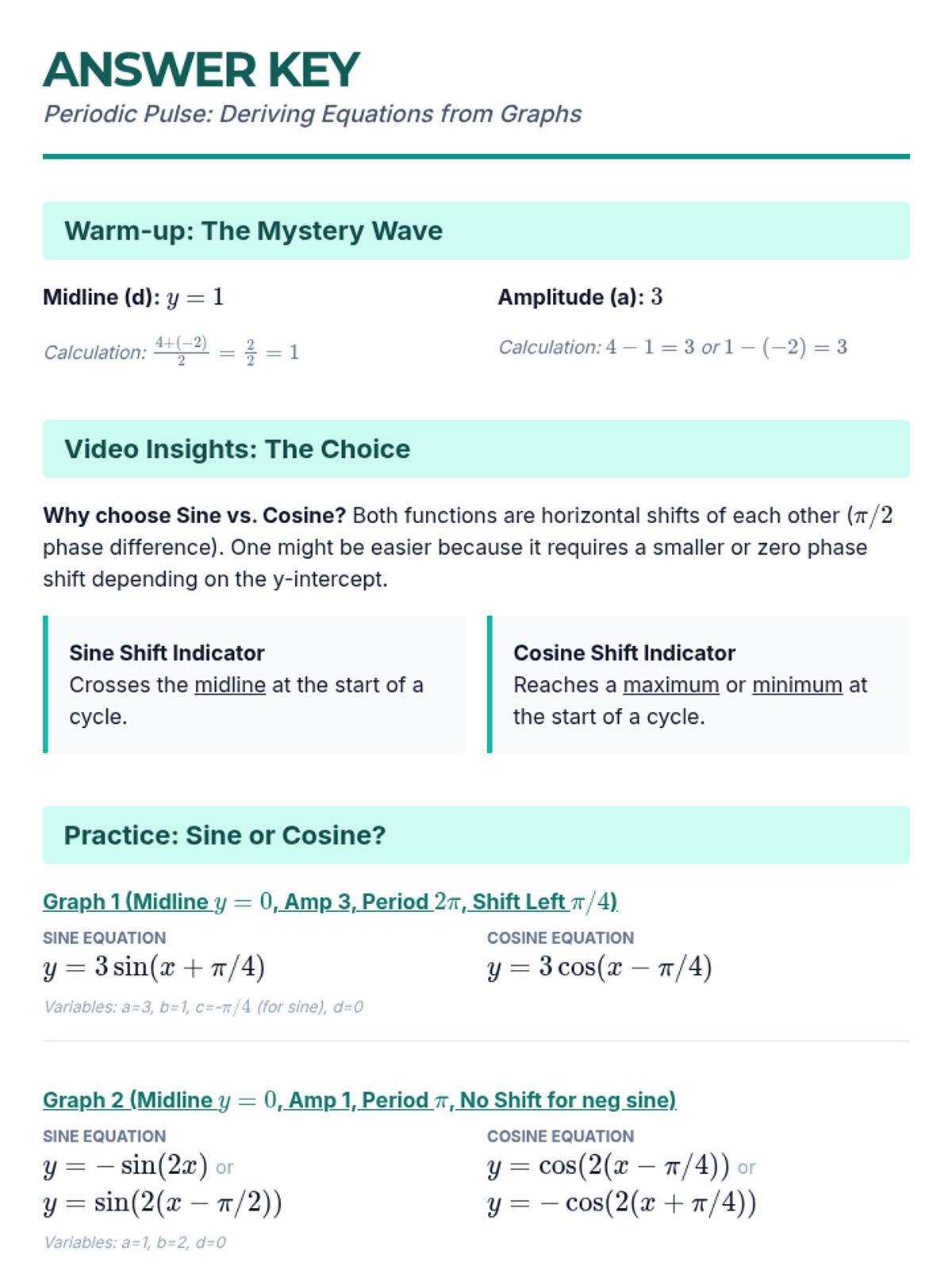
Students will learn to derive sine and cosine equations from periodic graphs, focusing on the strategic choice between functions based on phase shifts and key points. This lesson uses a high-quality video walkthrough and collaborative discussion to master the a, b, c, and d transformations.
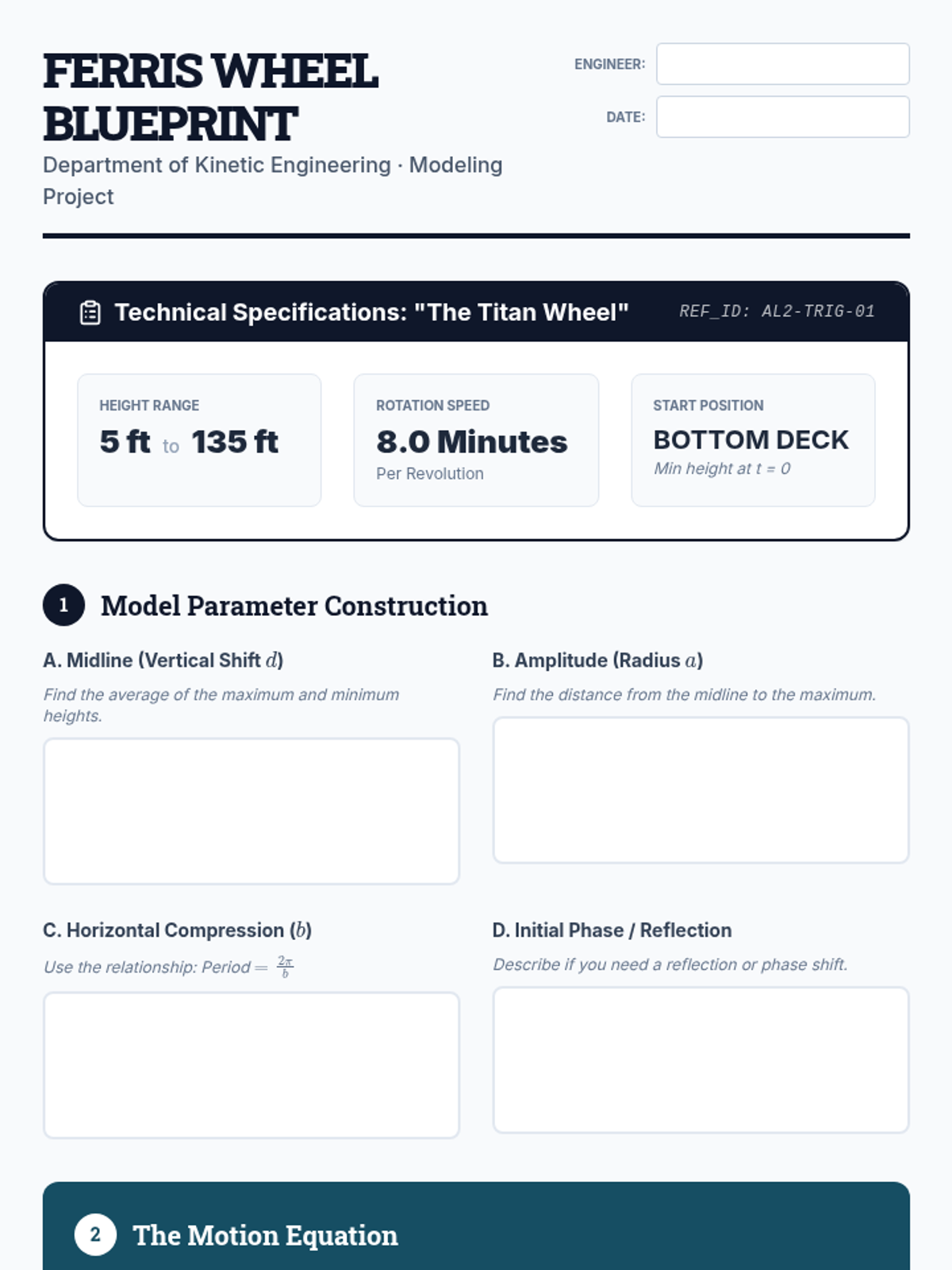
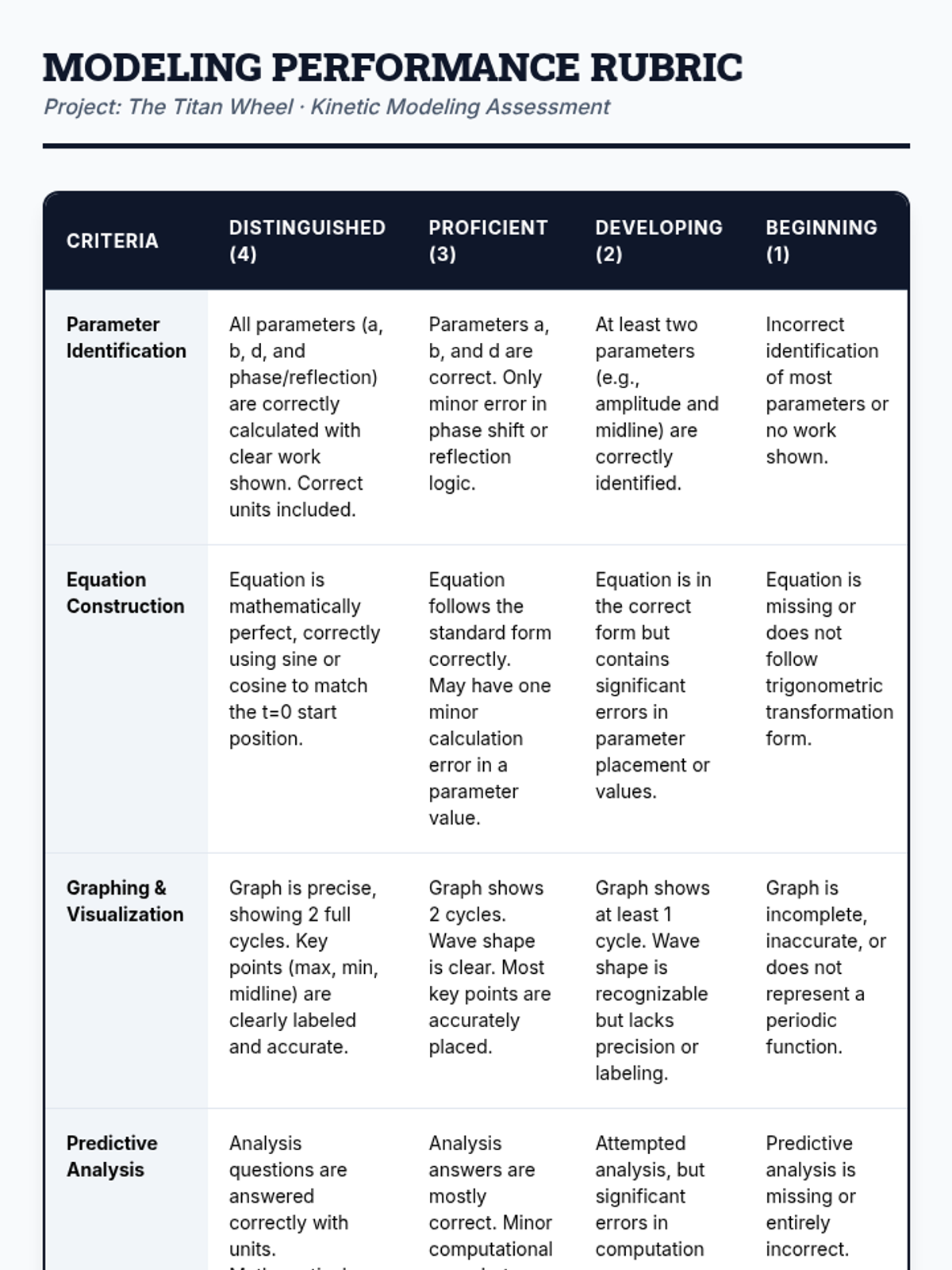
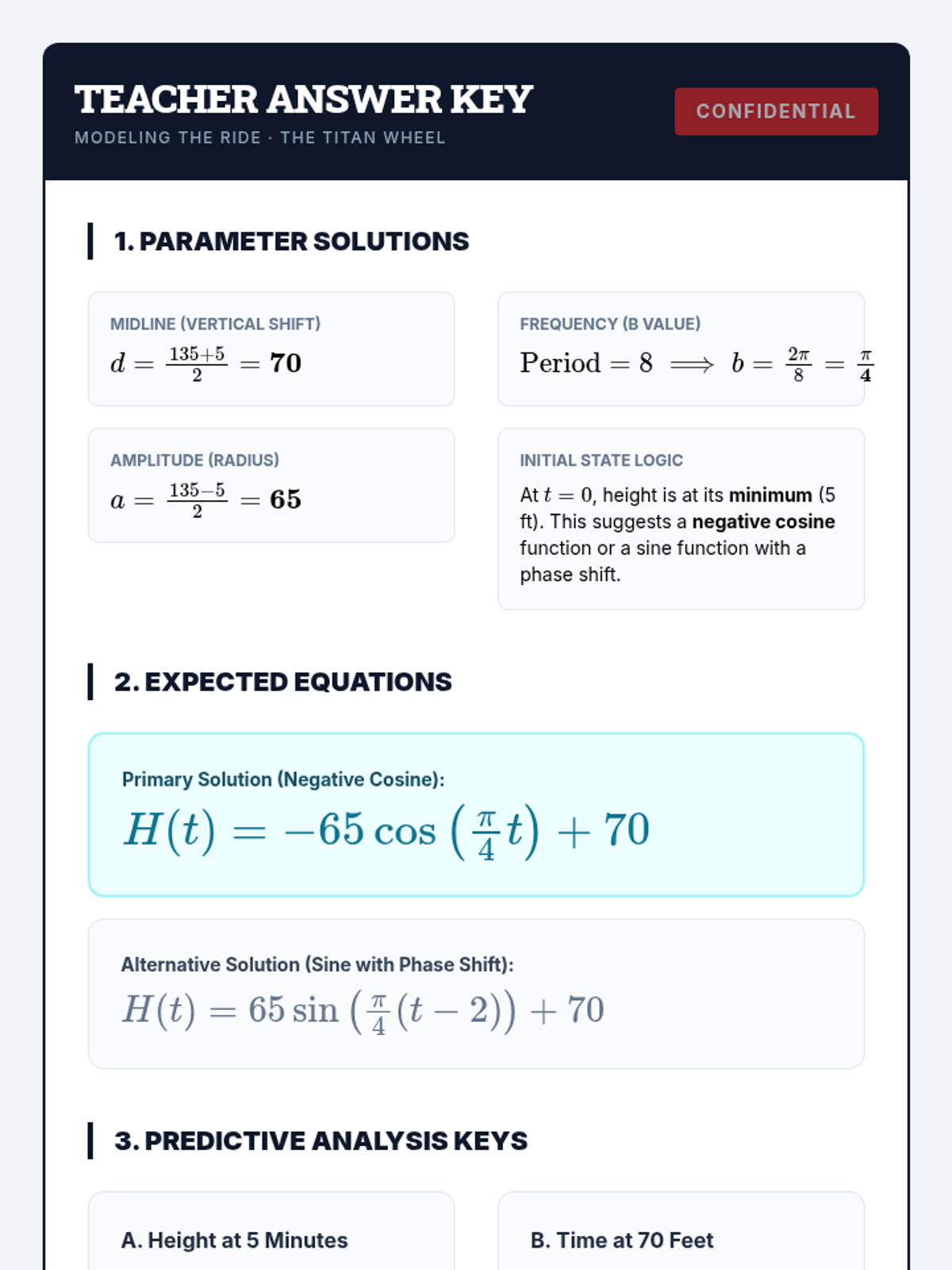
Students will apply their knowledge of trigonometric transformations to model the movement of a Ferris wheel. They will identify key parameters (amplitude, midline, period, phase shift) from real-world data and construct periodic equations.
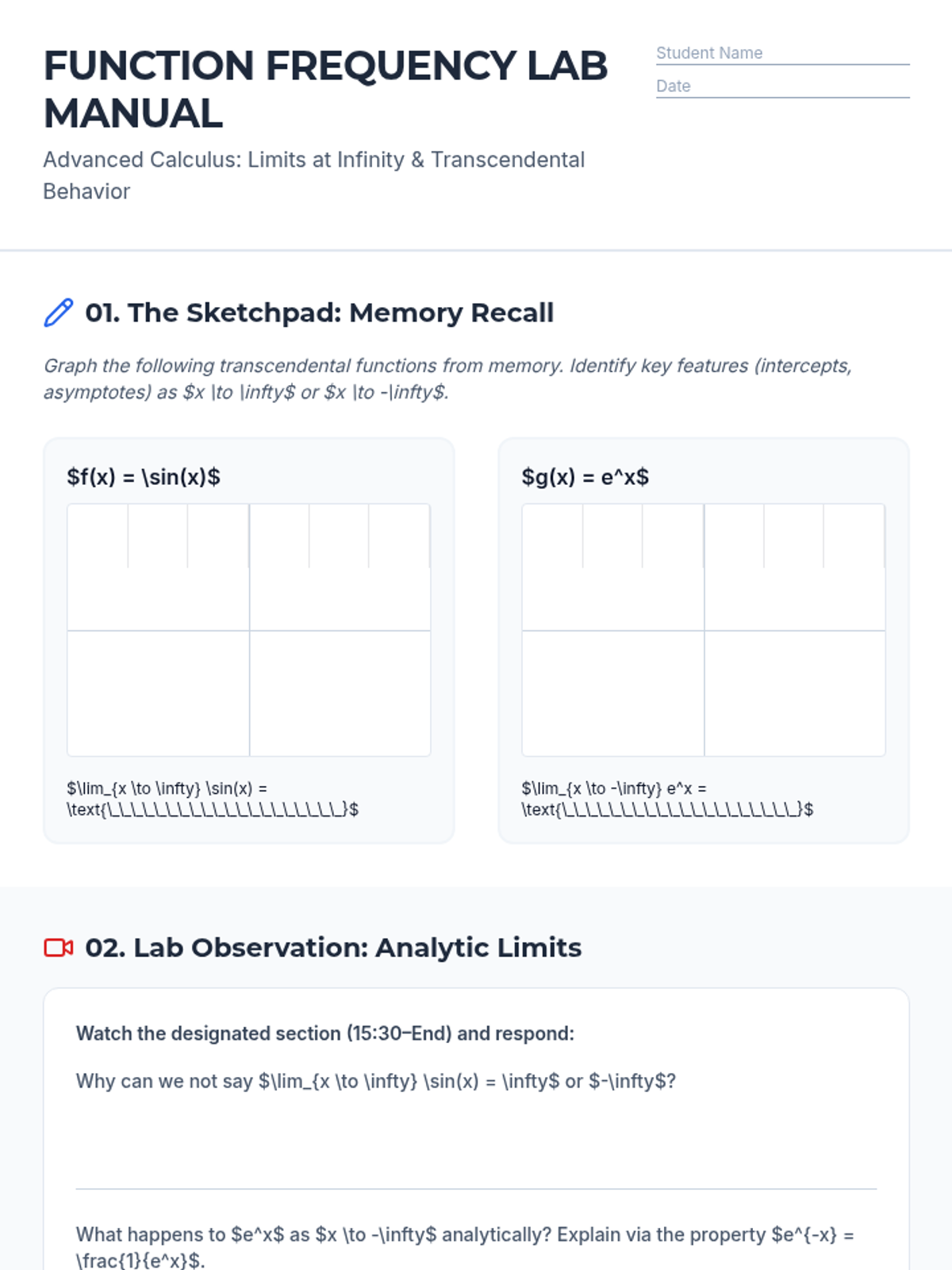
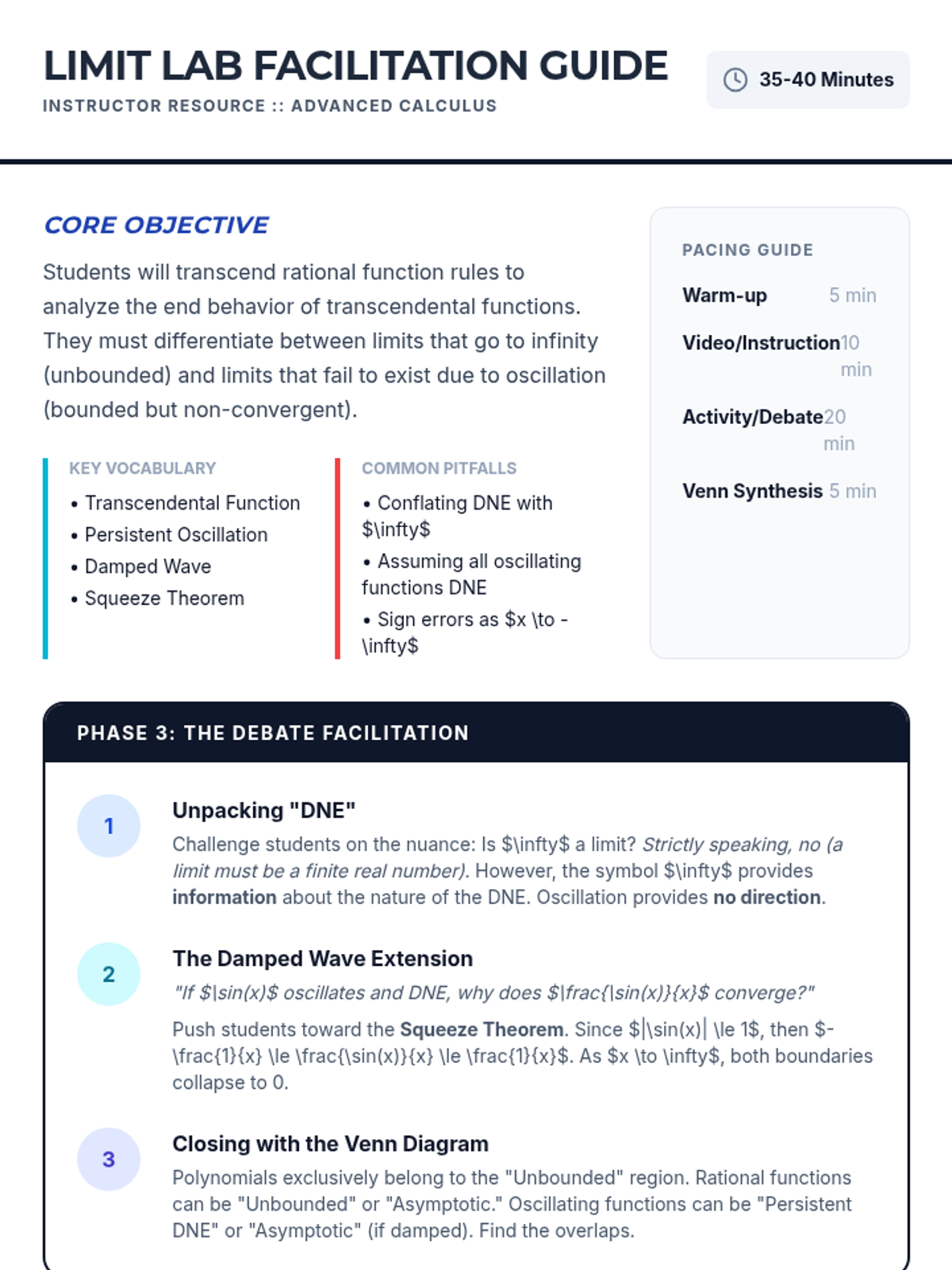
An undergraduate-level exploration into the behavior of transcendental functions at infinity, focusing on the distinction between unbounded growth and oscillatory non-existence. Students will analyze sine waves, exponentials, and damped oscillations to master formal limit notation and end-behavior analysis.
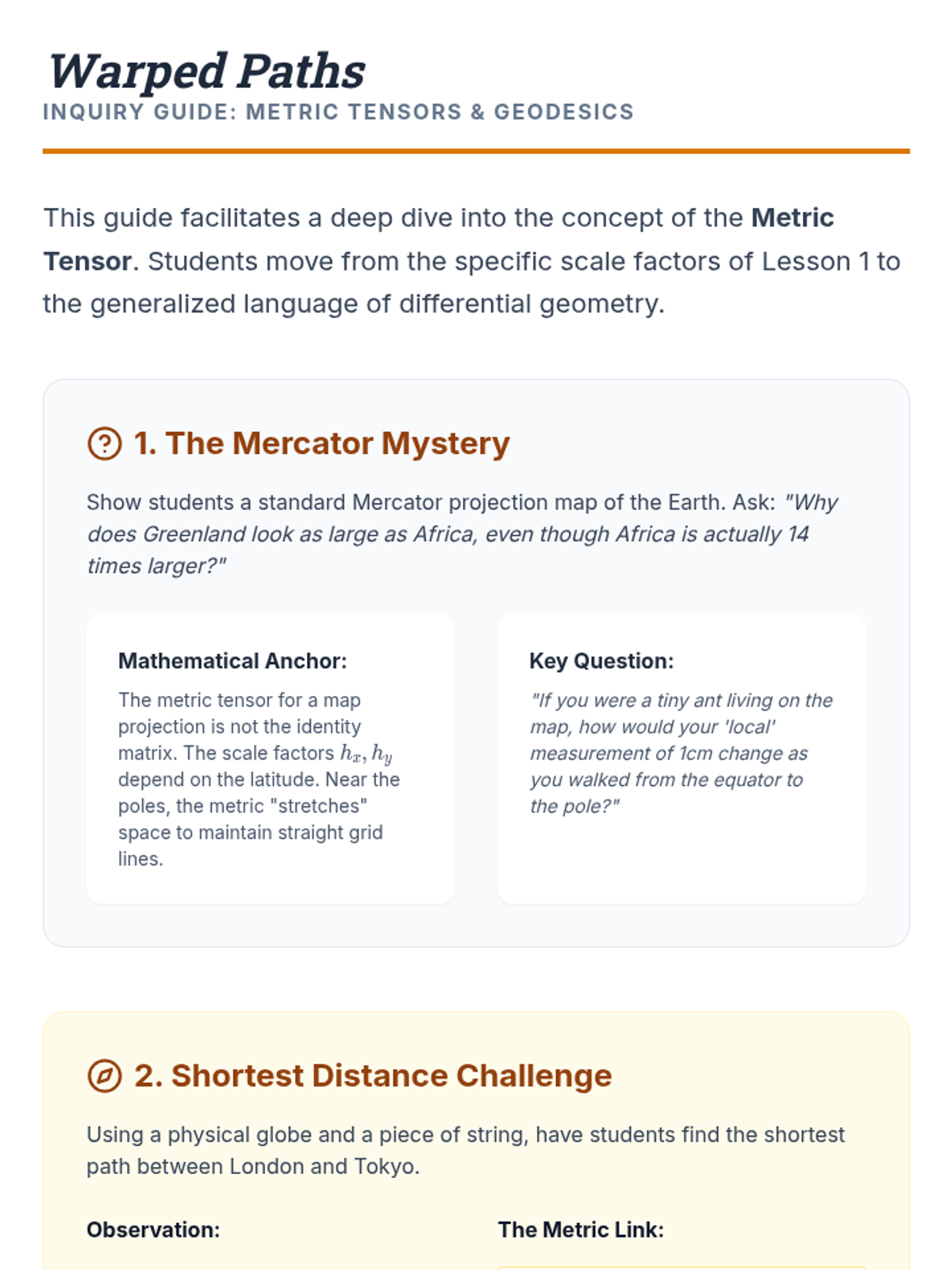
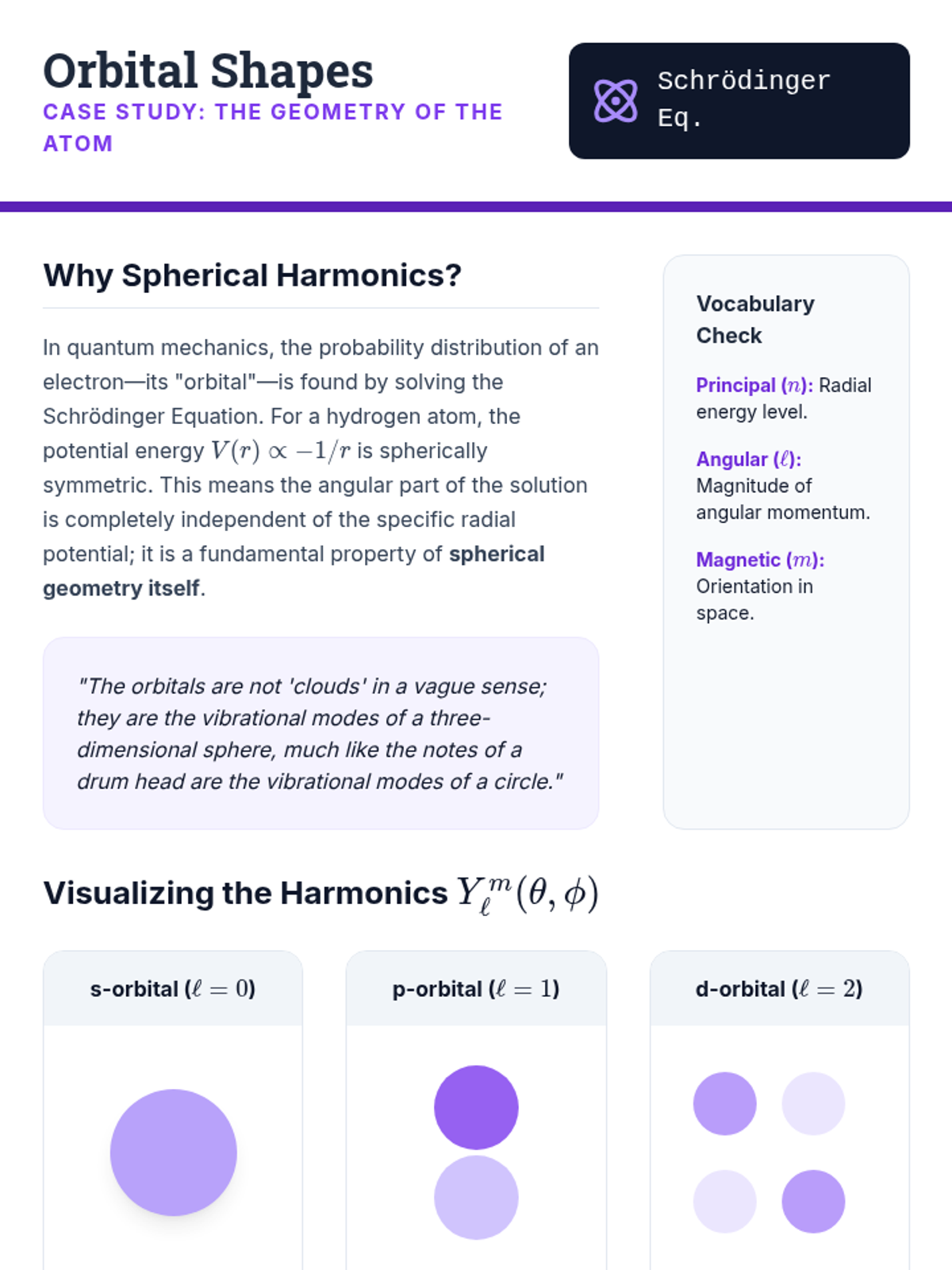
An advanced introduction to the metric tensor and non-Euclidean geometry, serving as a primer for General Relativity.
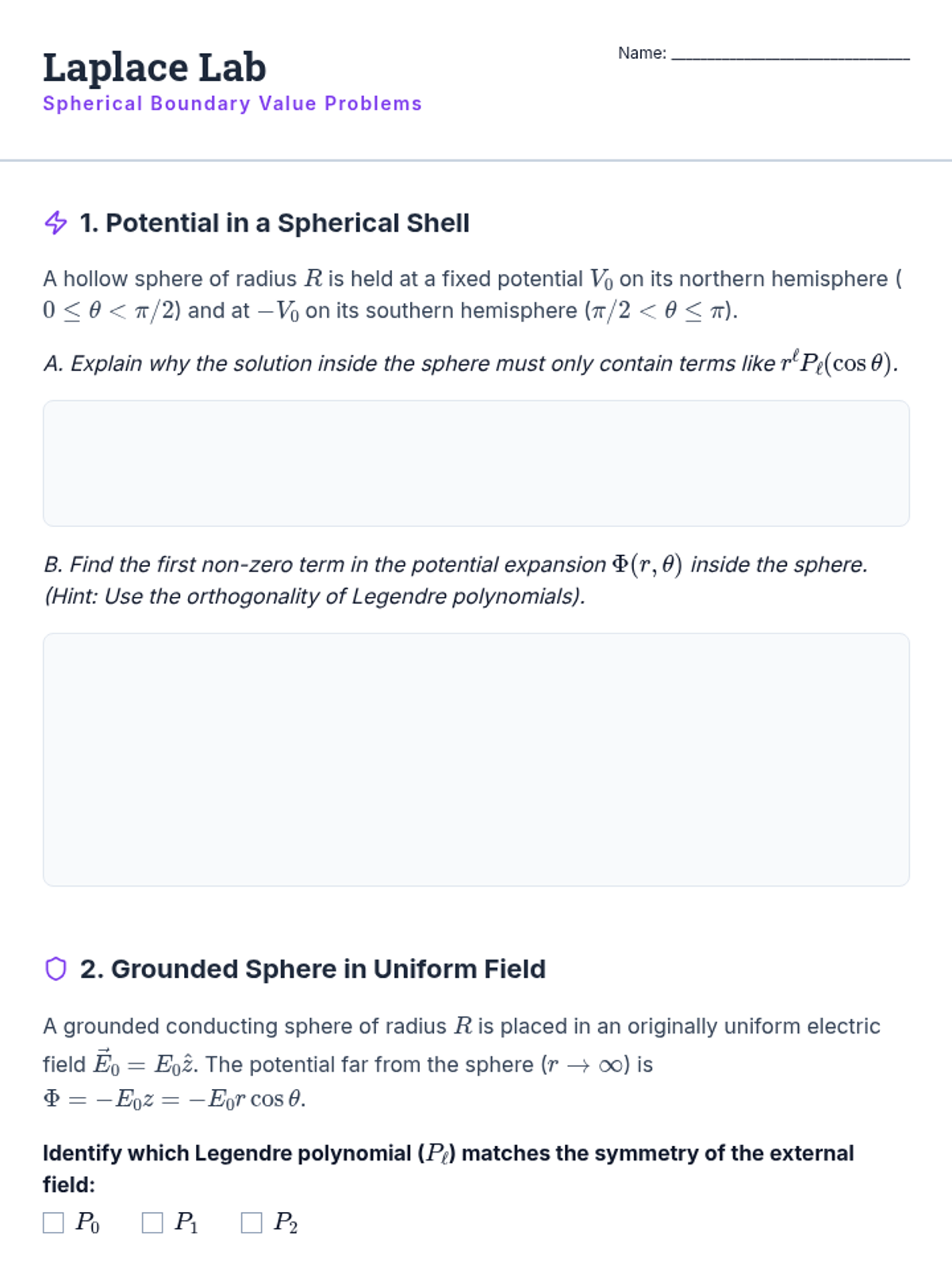
Students solve Laplace's equation for systems with spherical symmetry, introducing Legendre polynomials and Spherical Harmonics.
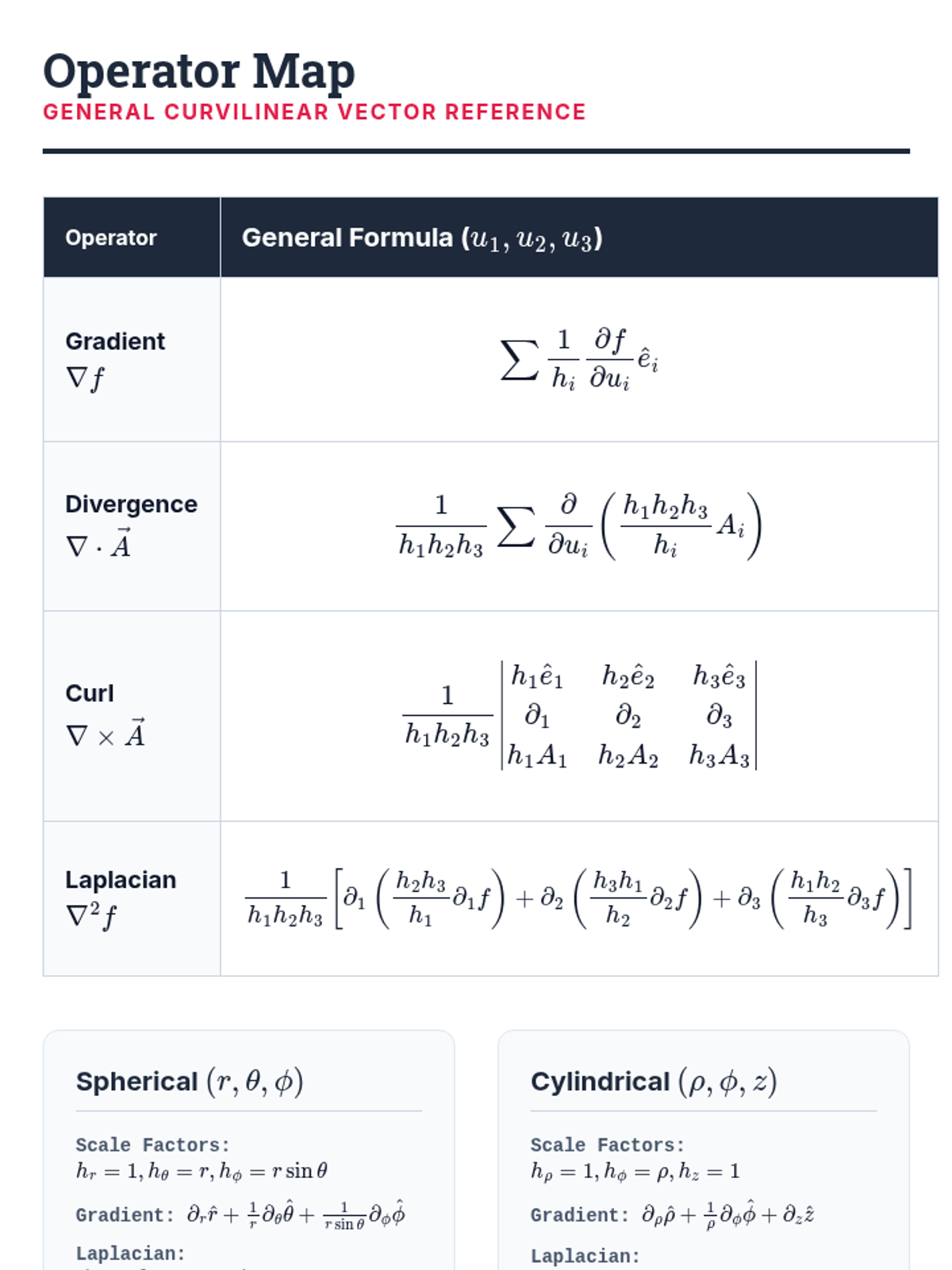
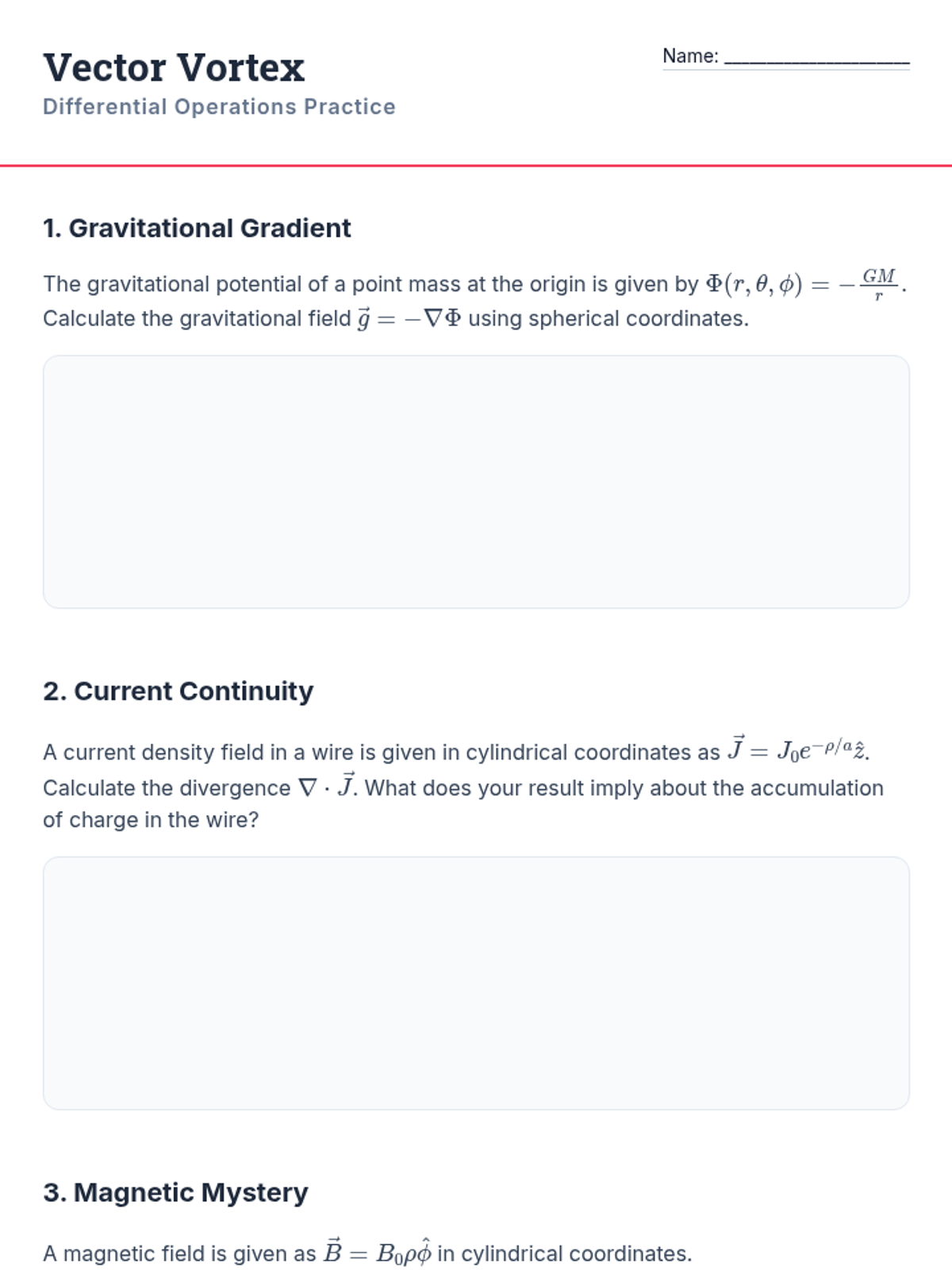
Students translate the Del operator into general curvilinear coordinates and apply these operators to physical vector fields.
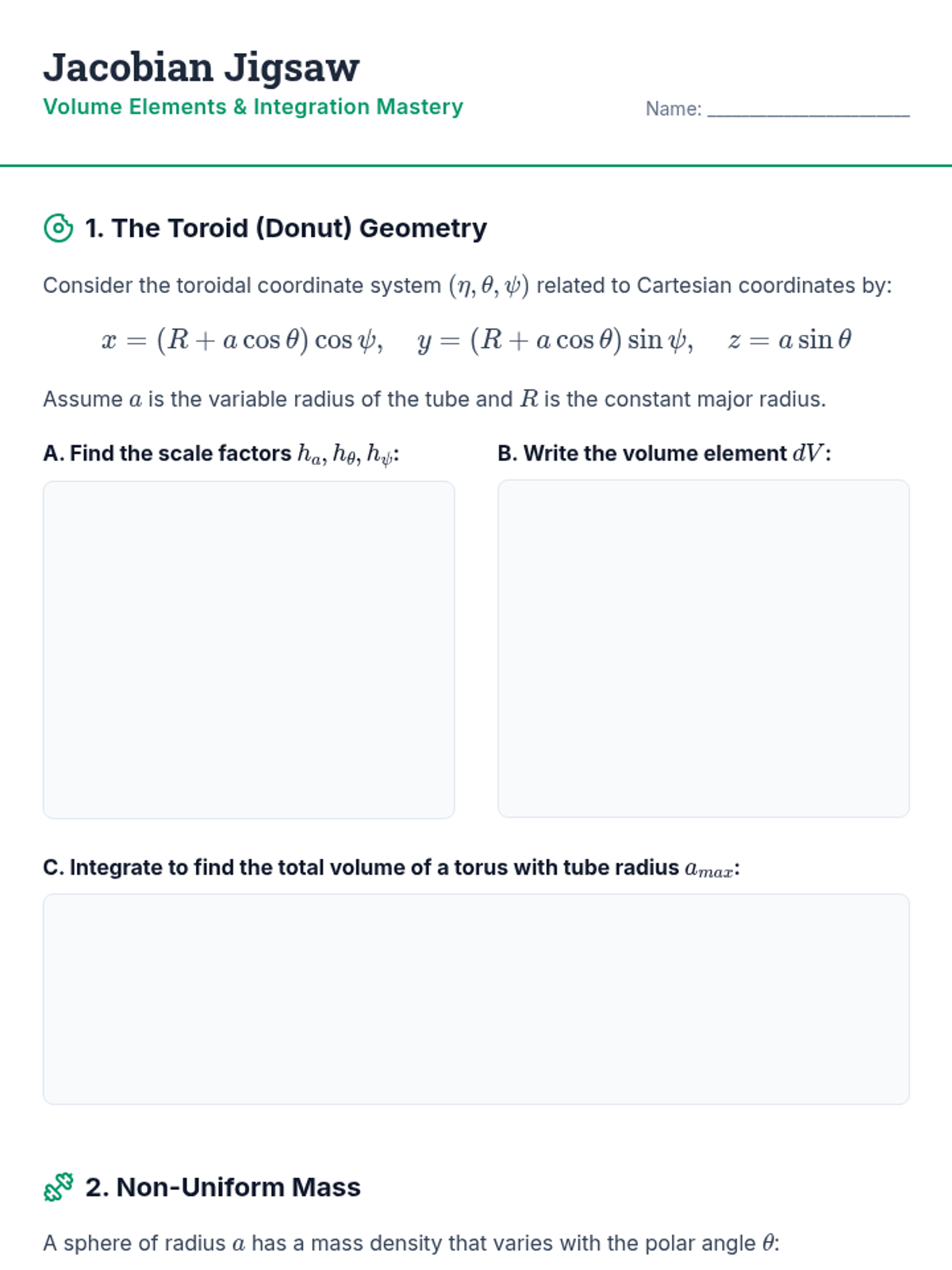
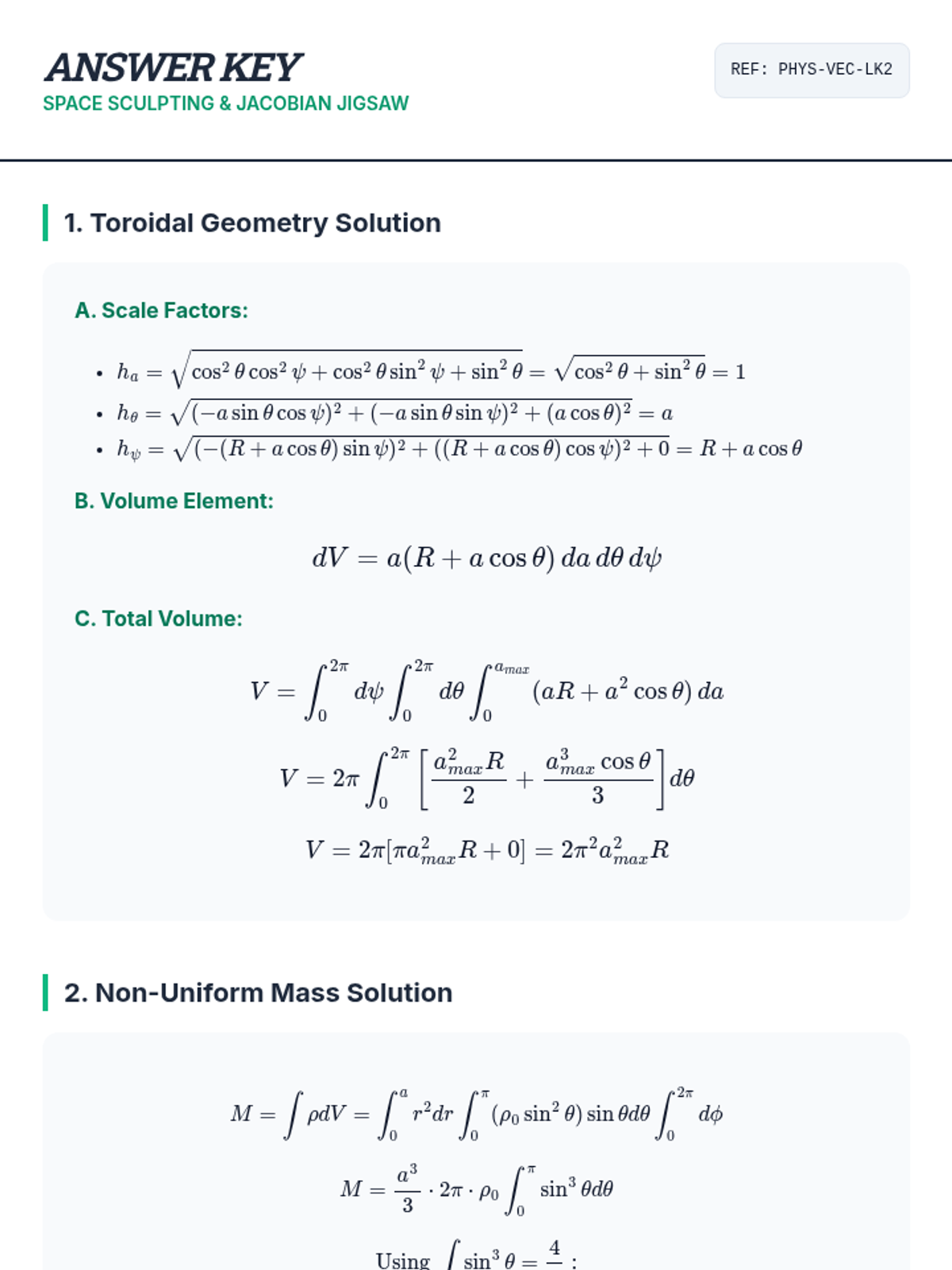
Focusing on integration, students construct volume and area elements (Jacobians) for spherical and cylindrical geometries and practice integrating scalar fields over complex 3D domains.
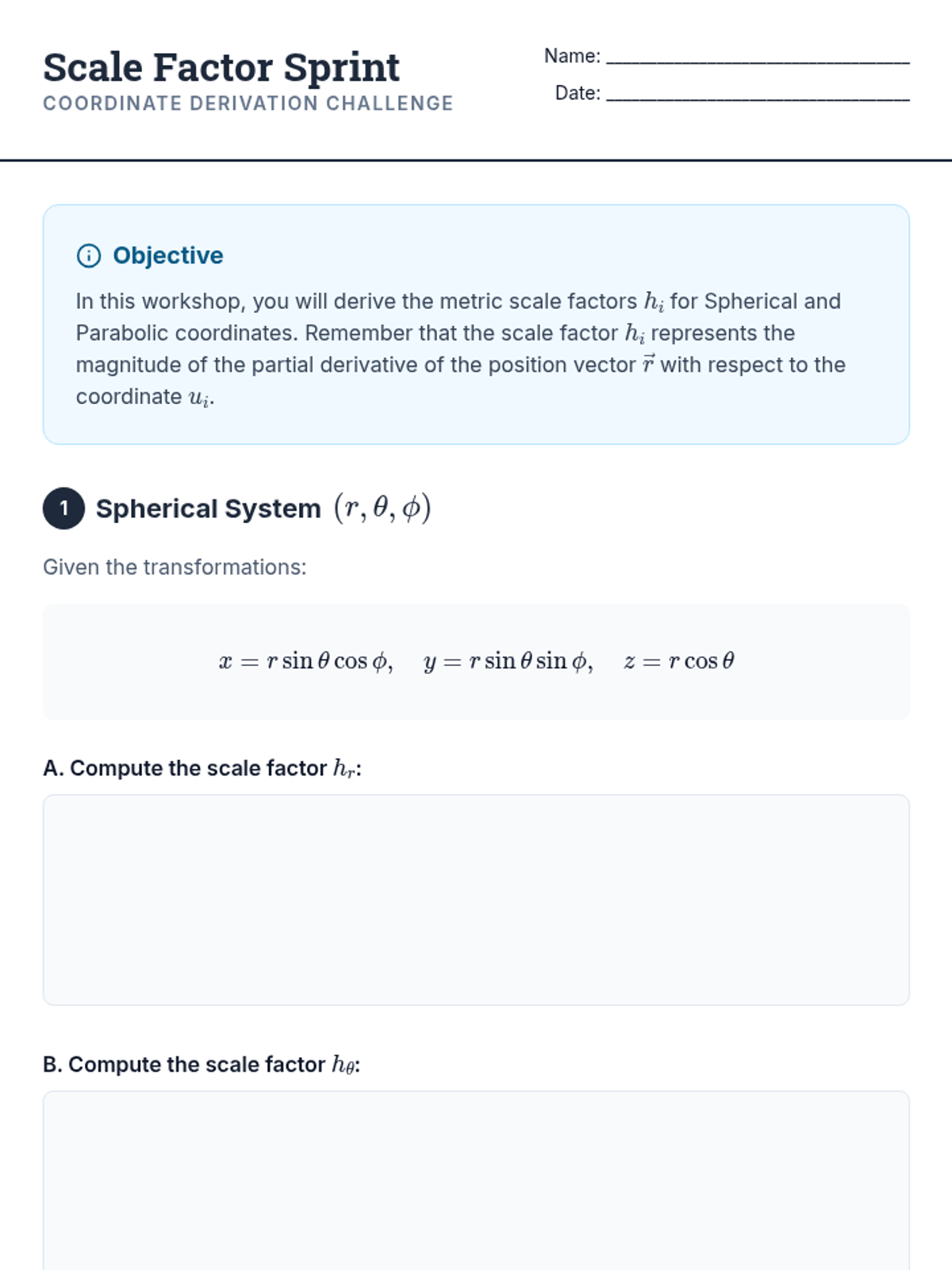
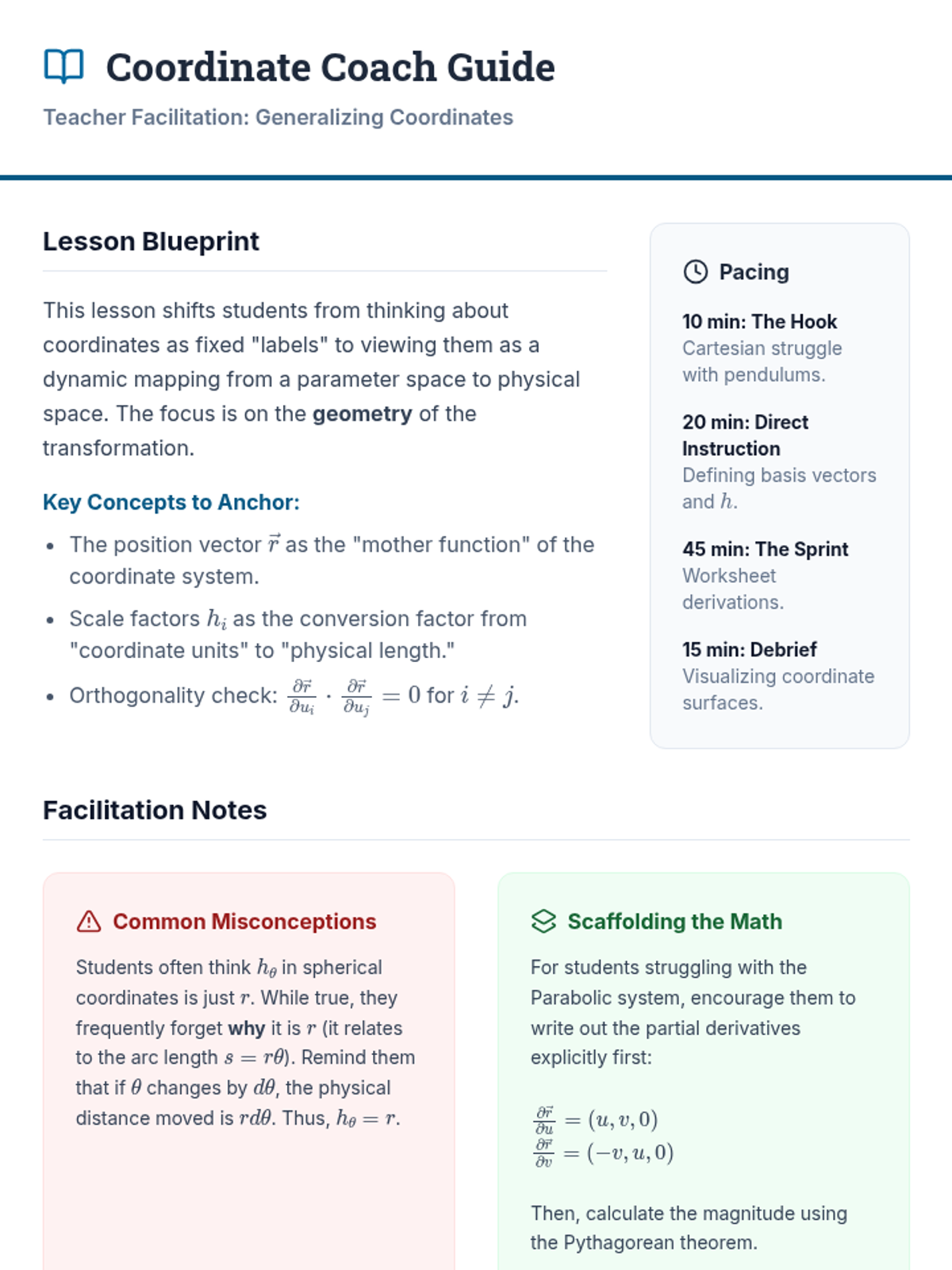
Students derive basis vectors and scale factors for general orthogonal curvilinear coordinates and learn how to define position vectors in non-Cartesian geometries.
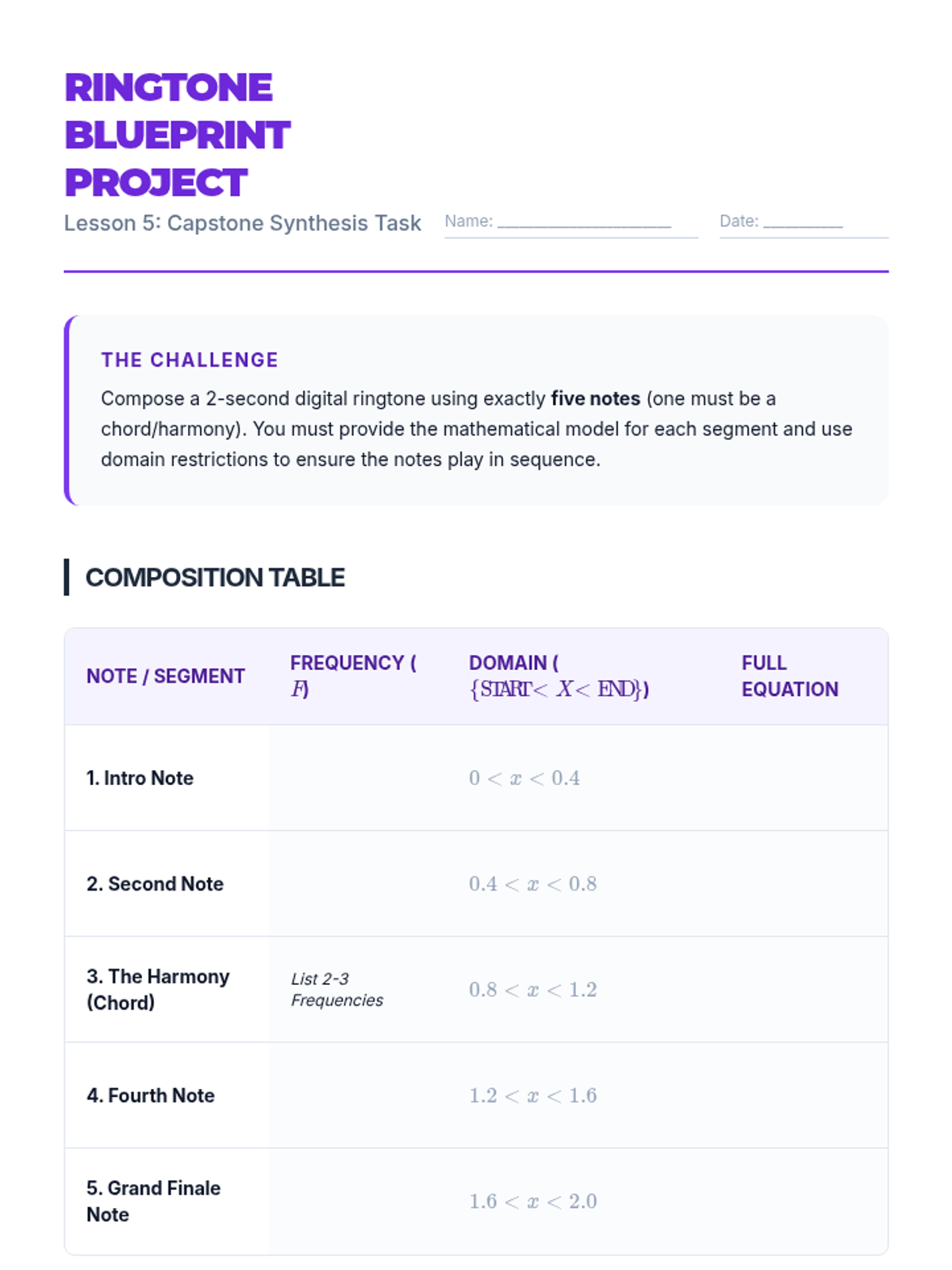
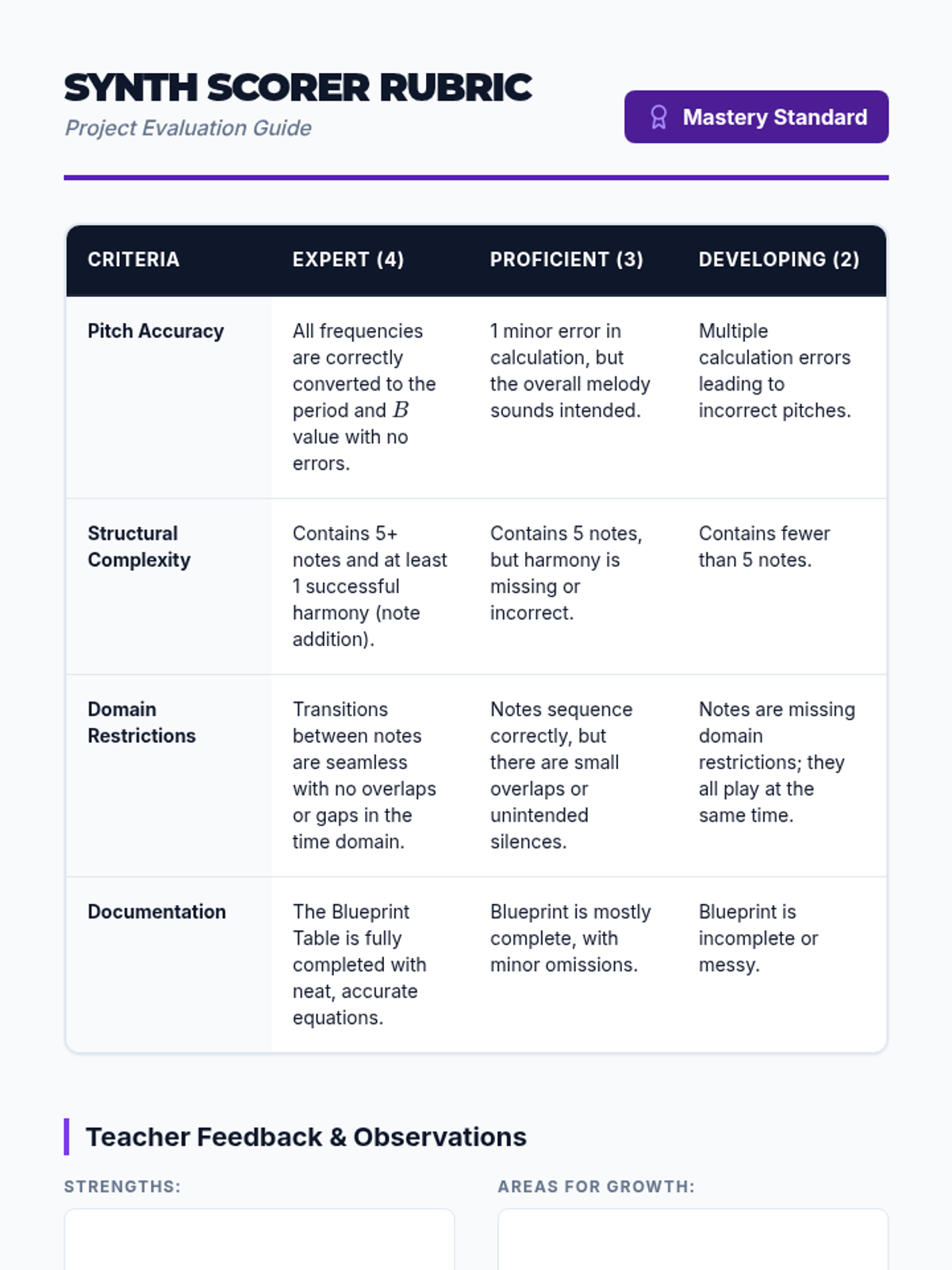
As a final project, students use their knowledge of frequencies, amplitude, and domain restrictions to 'program' a digital ringtone using a graphing calculator or synthesizer software.
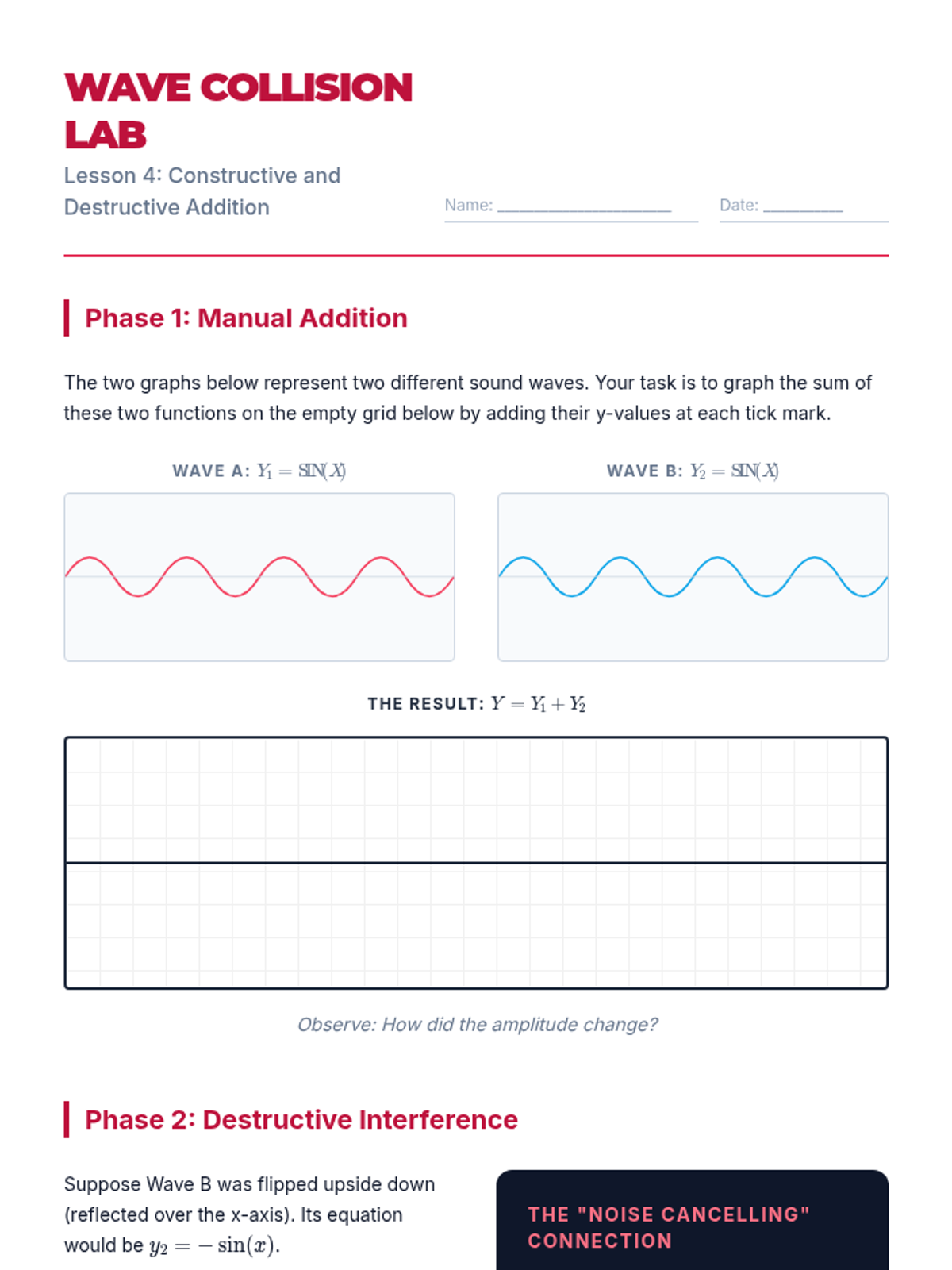
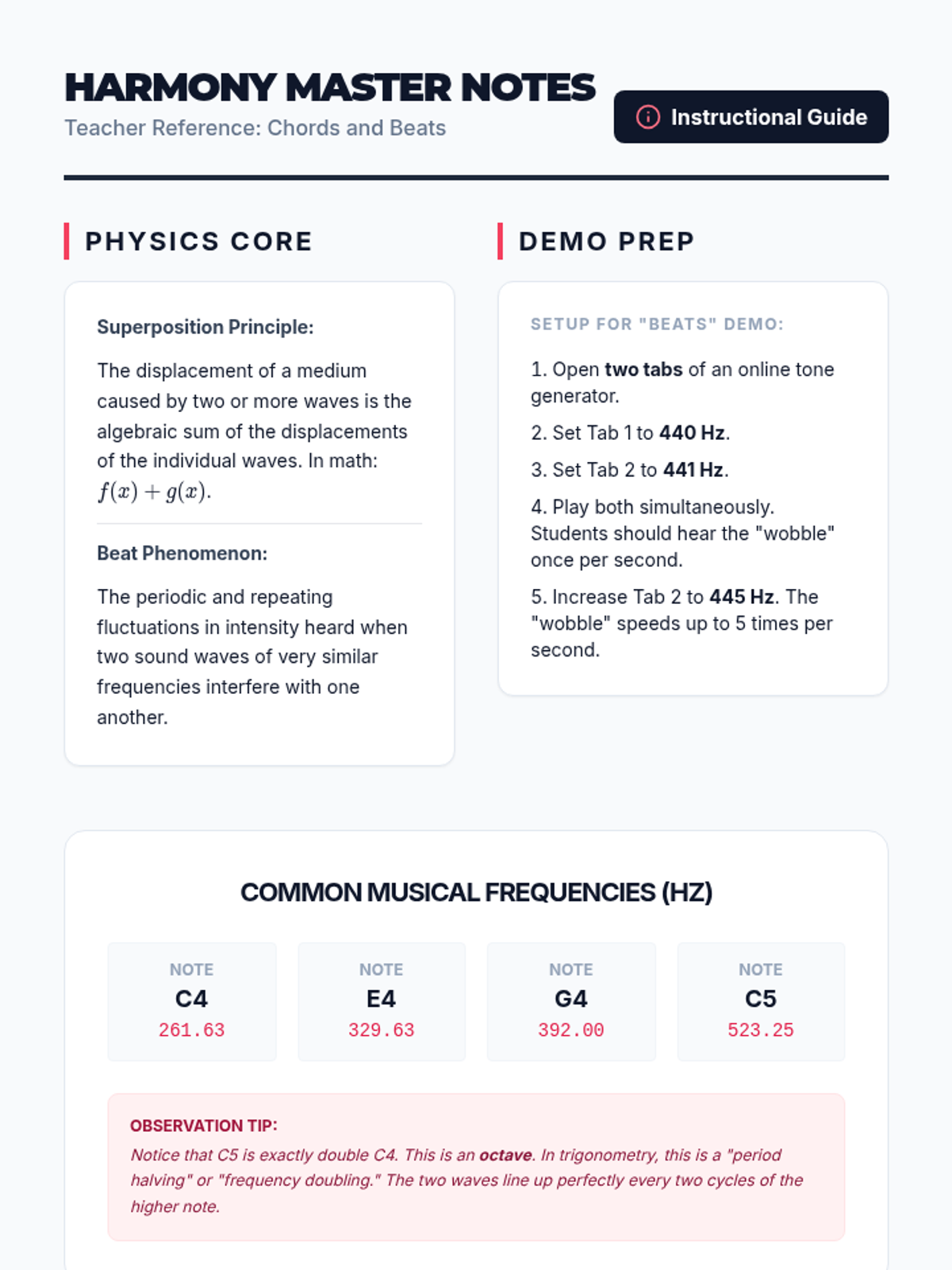
Students explore the concept of superposition by adding trigonometric functions together, visualizing how chords and 'beats' (interference) are represented mathematically.
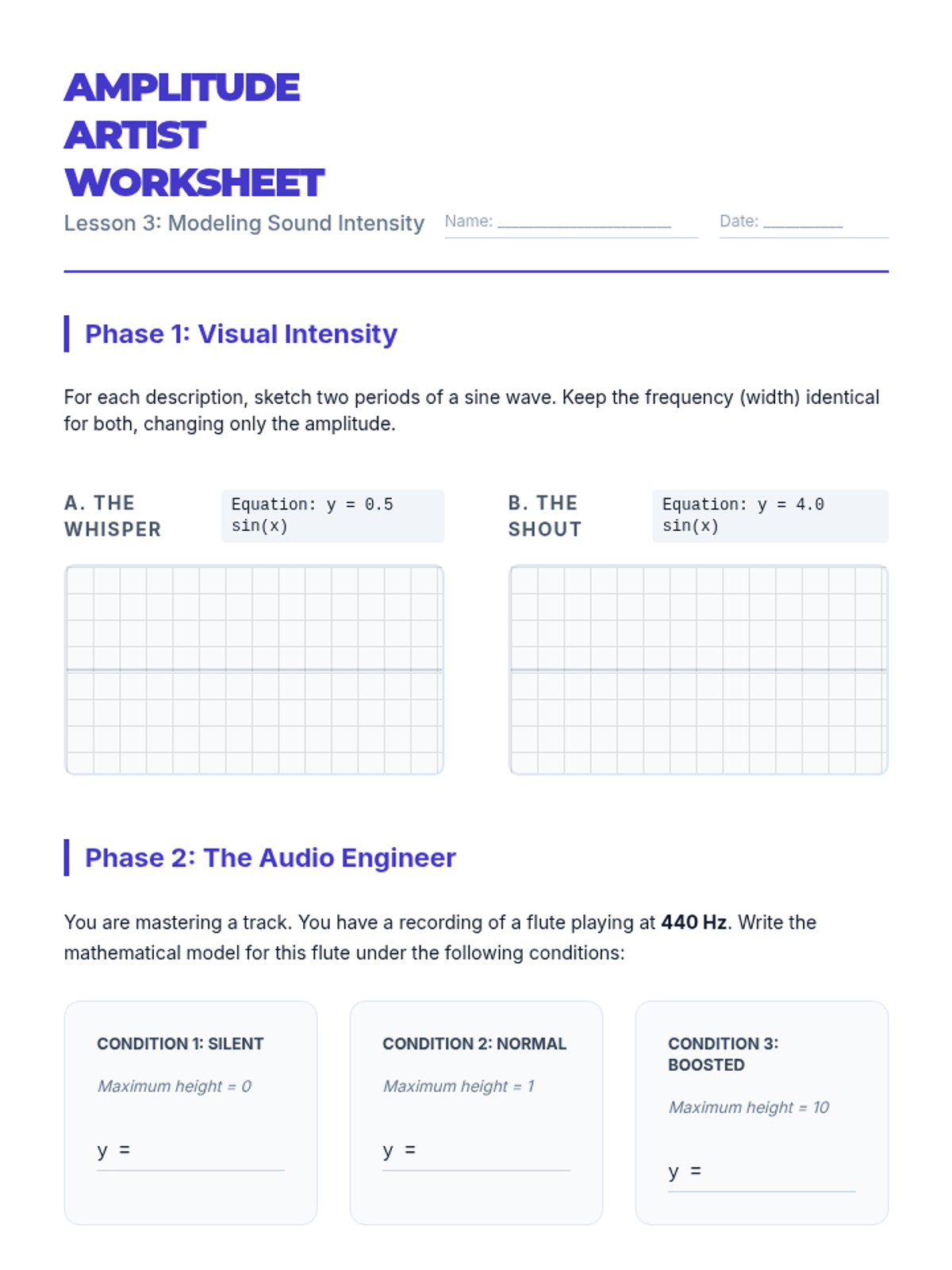
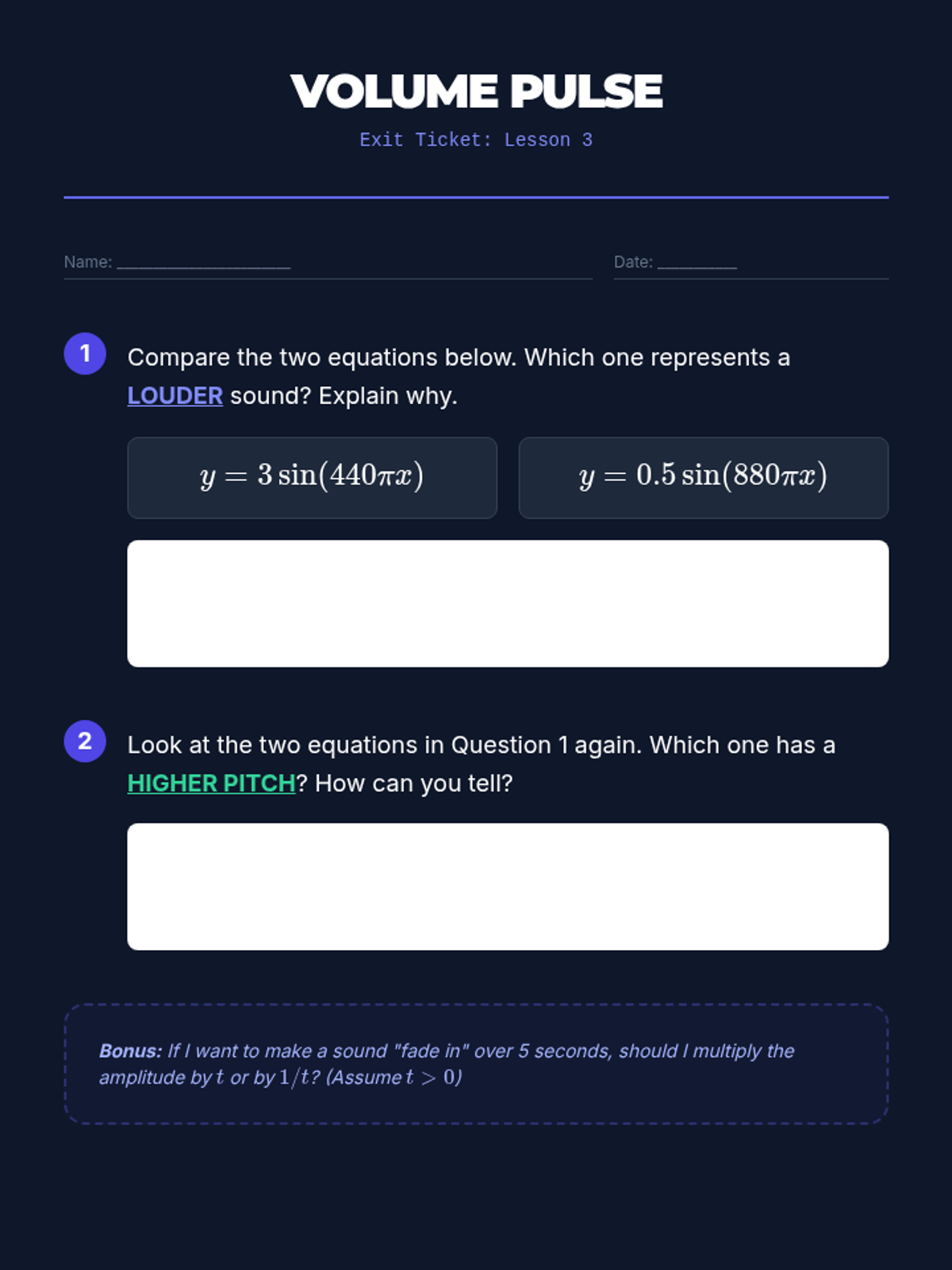
This lesson focuses on amplitude as the mathematical representation of volume, exploring how changes in coefficient affect the intensity of a sound wave without changing its pitch.
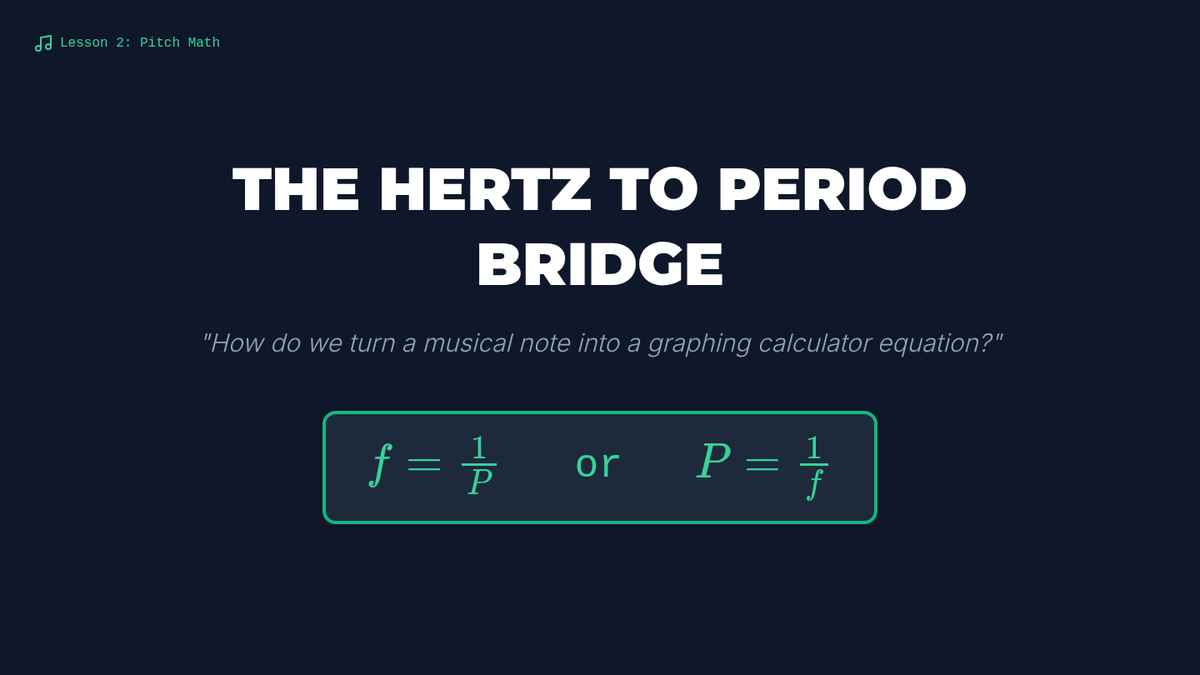
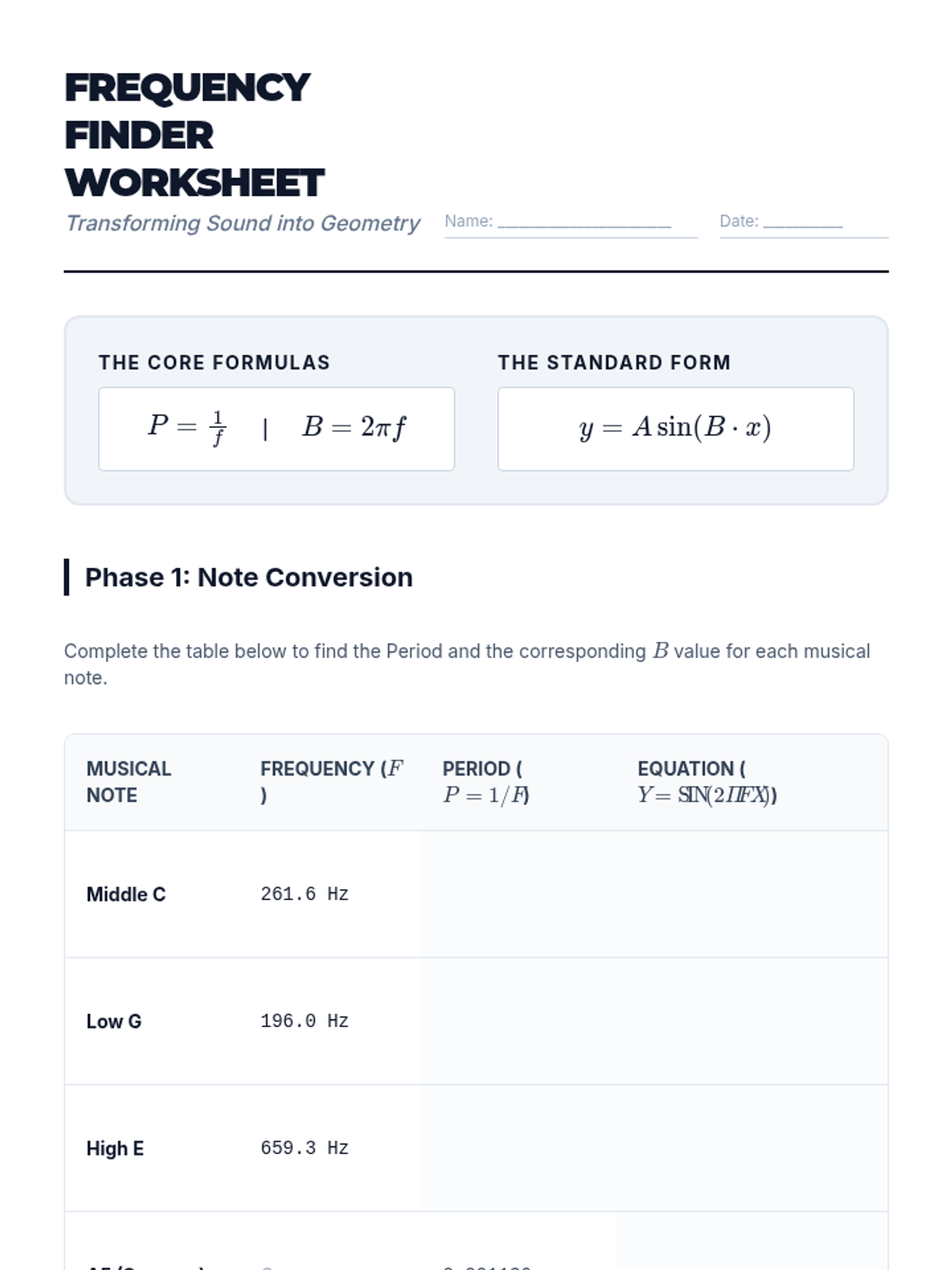
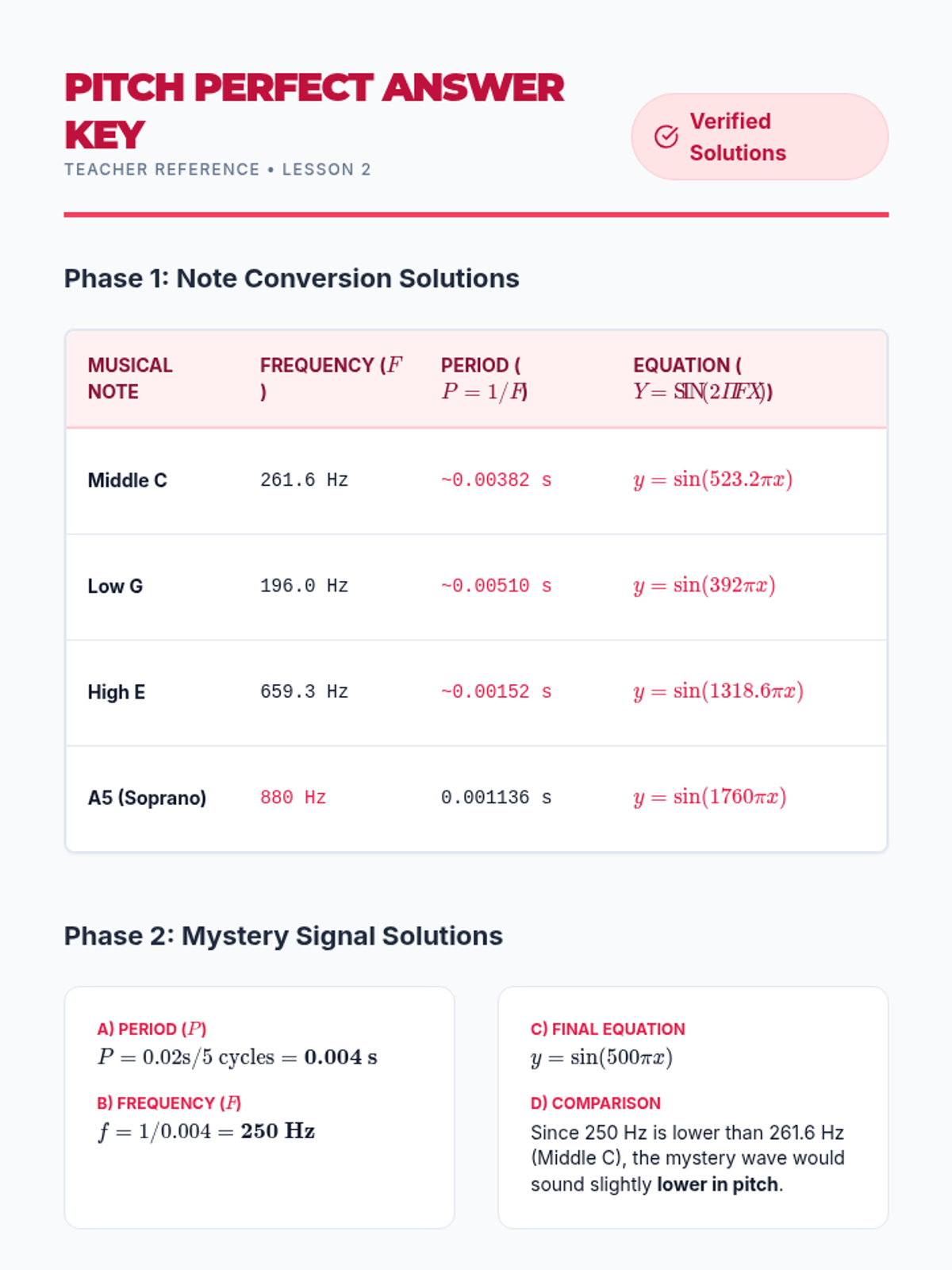
Students define the mathematical relationship between musical pitch (Hertz) and the period of a sine function, learning to write equations that represent specific musical notes.
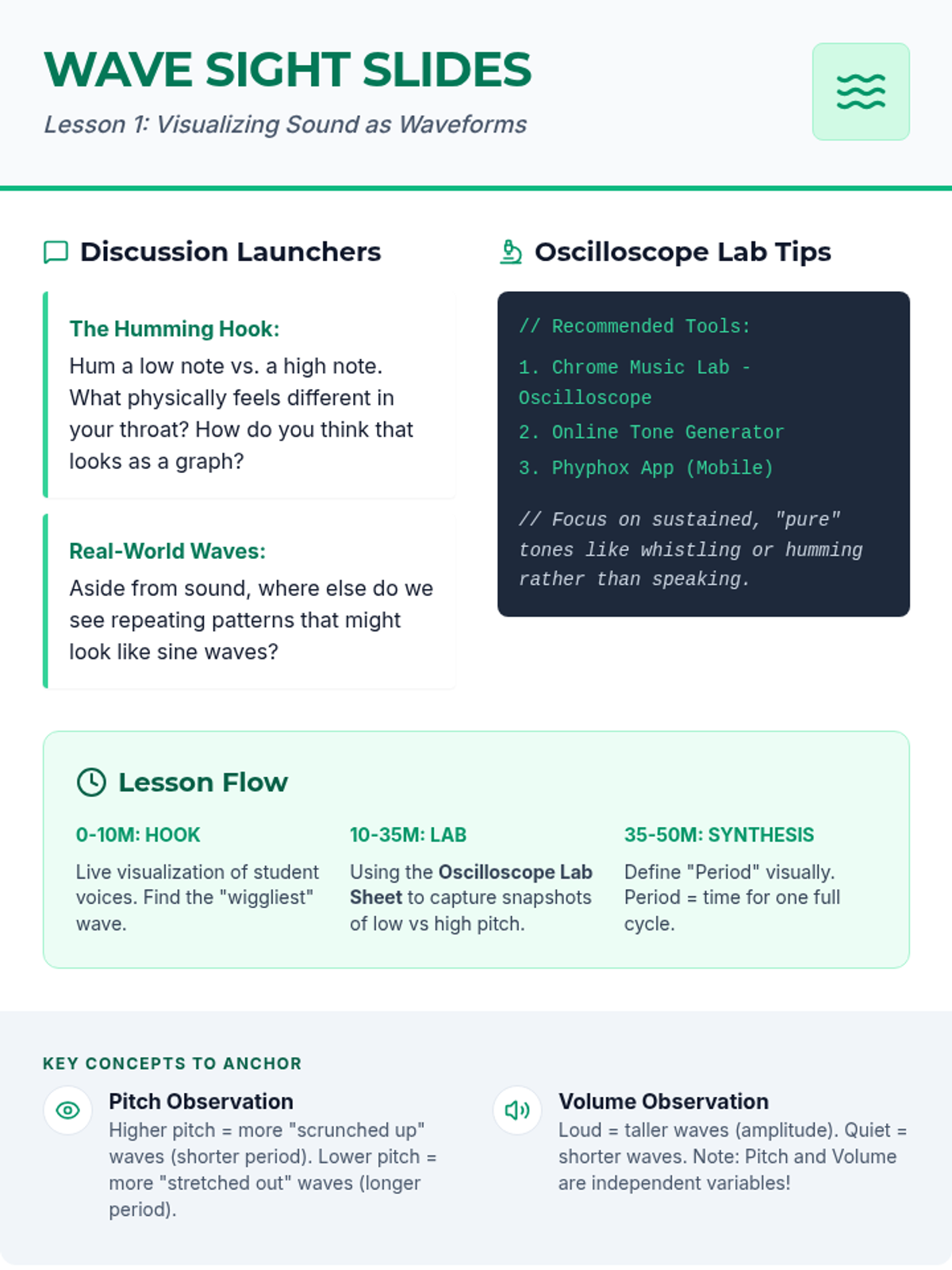
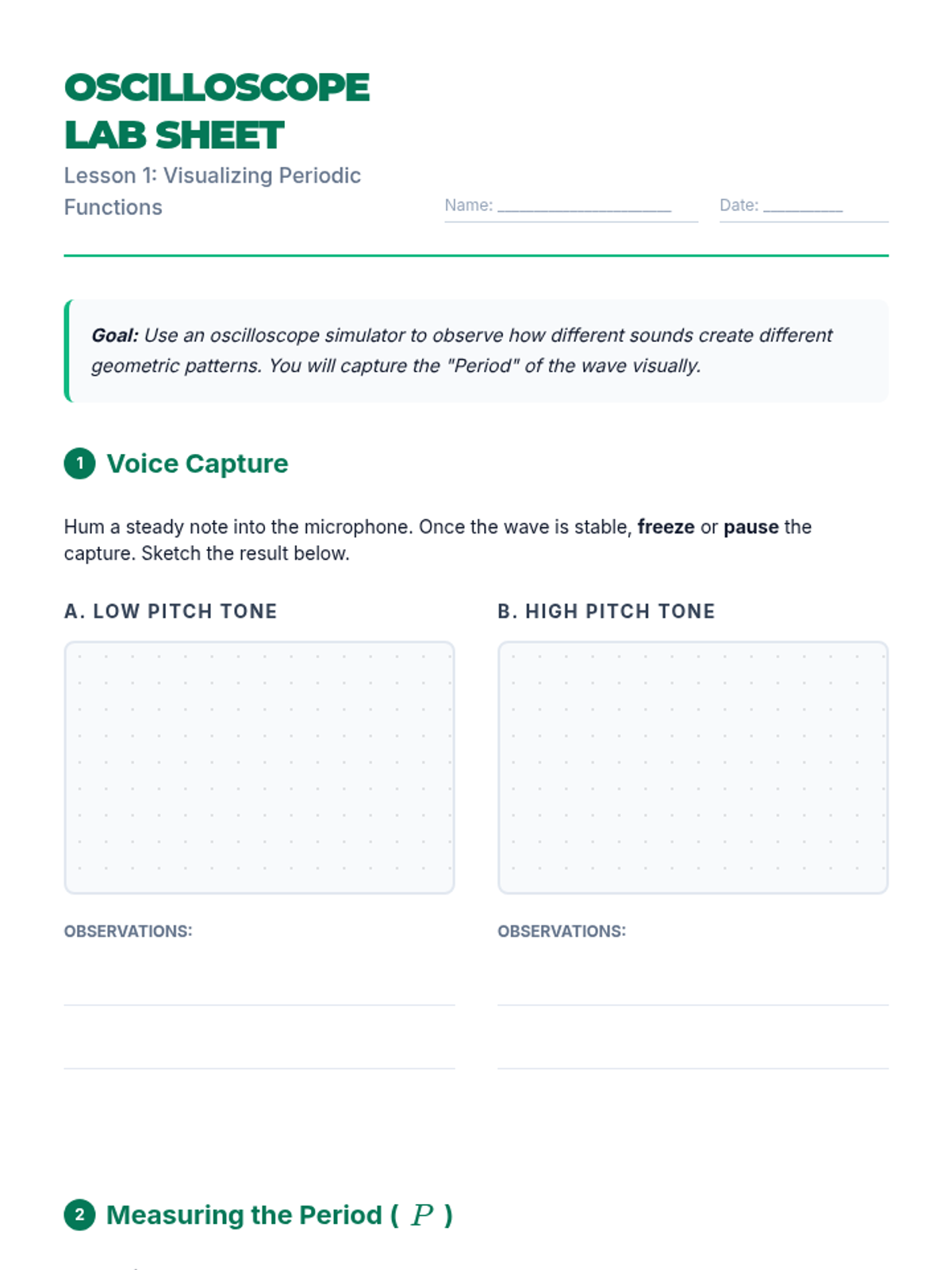
In this introductory lesson, students use real-time oscilloscope software to visualize their own voices and musical instruments as trigonometric waveforms, identifying the periodic nature of sound.
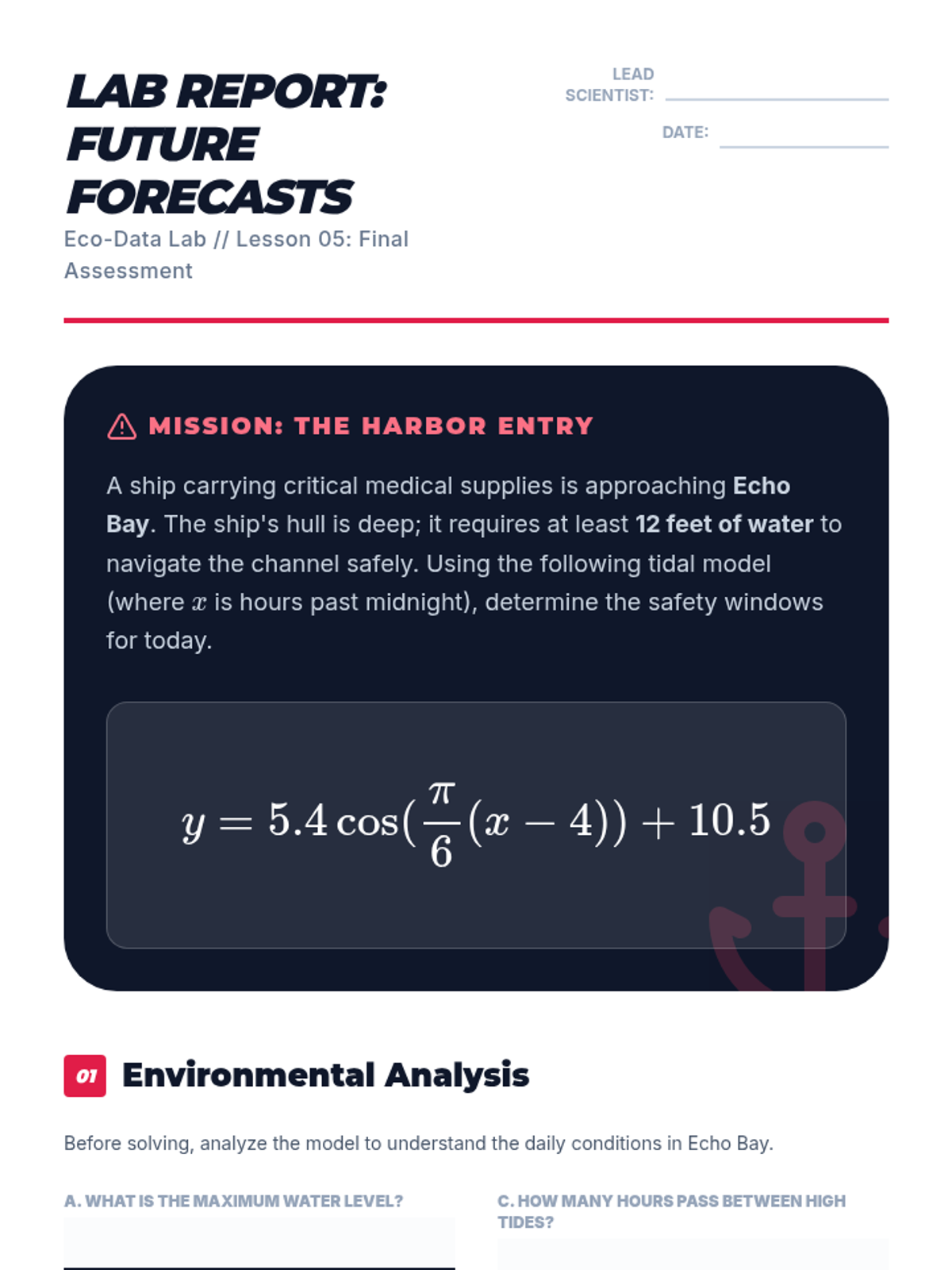
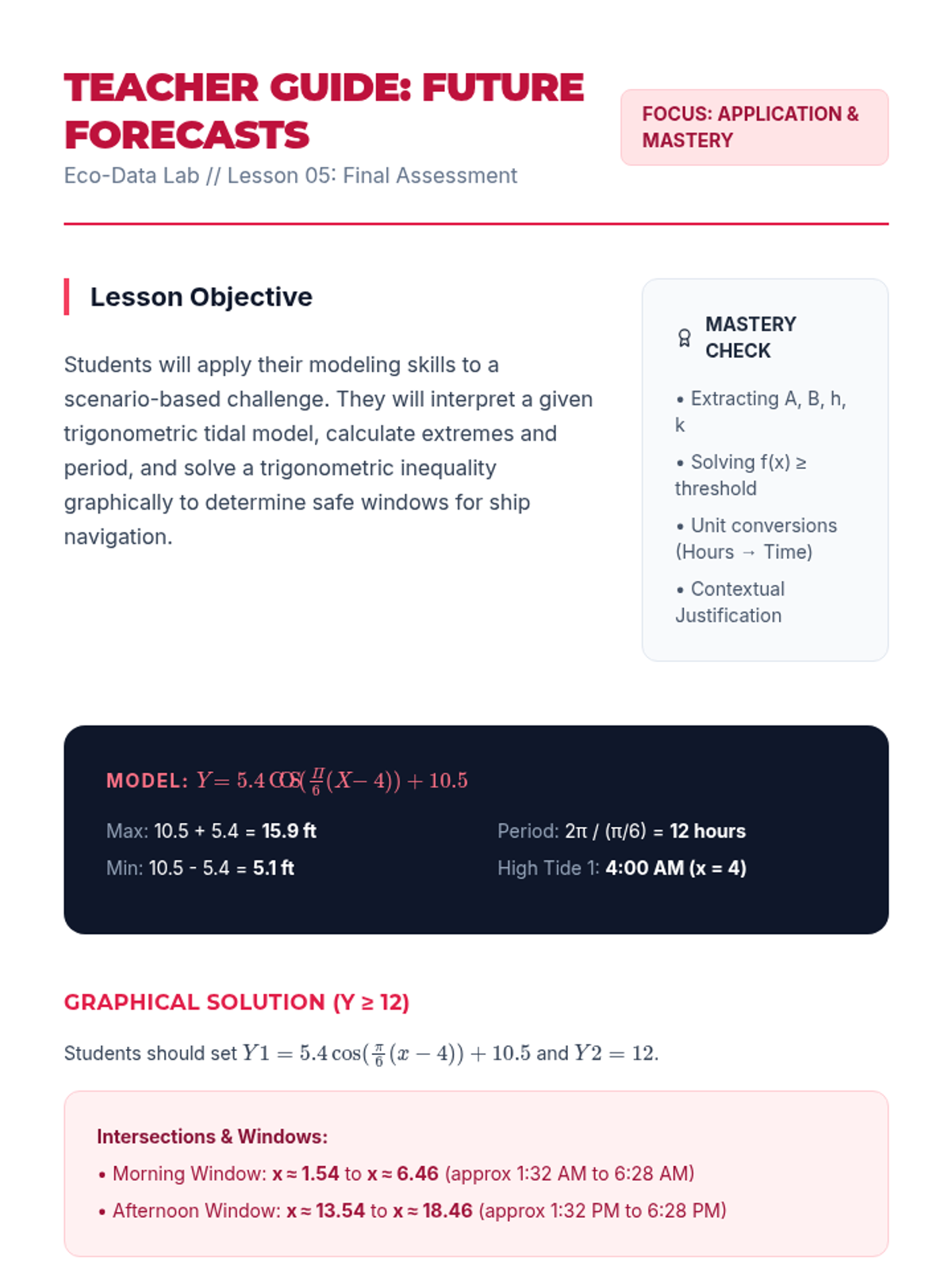
Students use their constructed models to extrapolate and answer questions about future events, solving trigonometric inequalities graphically.
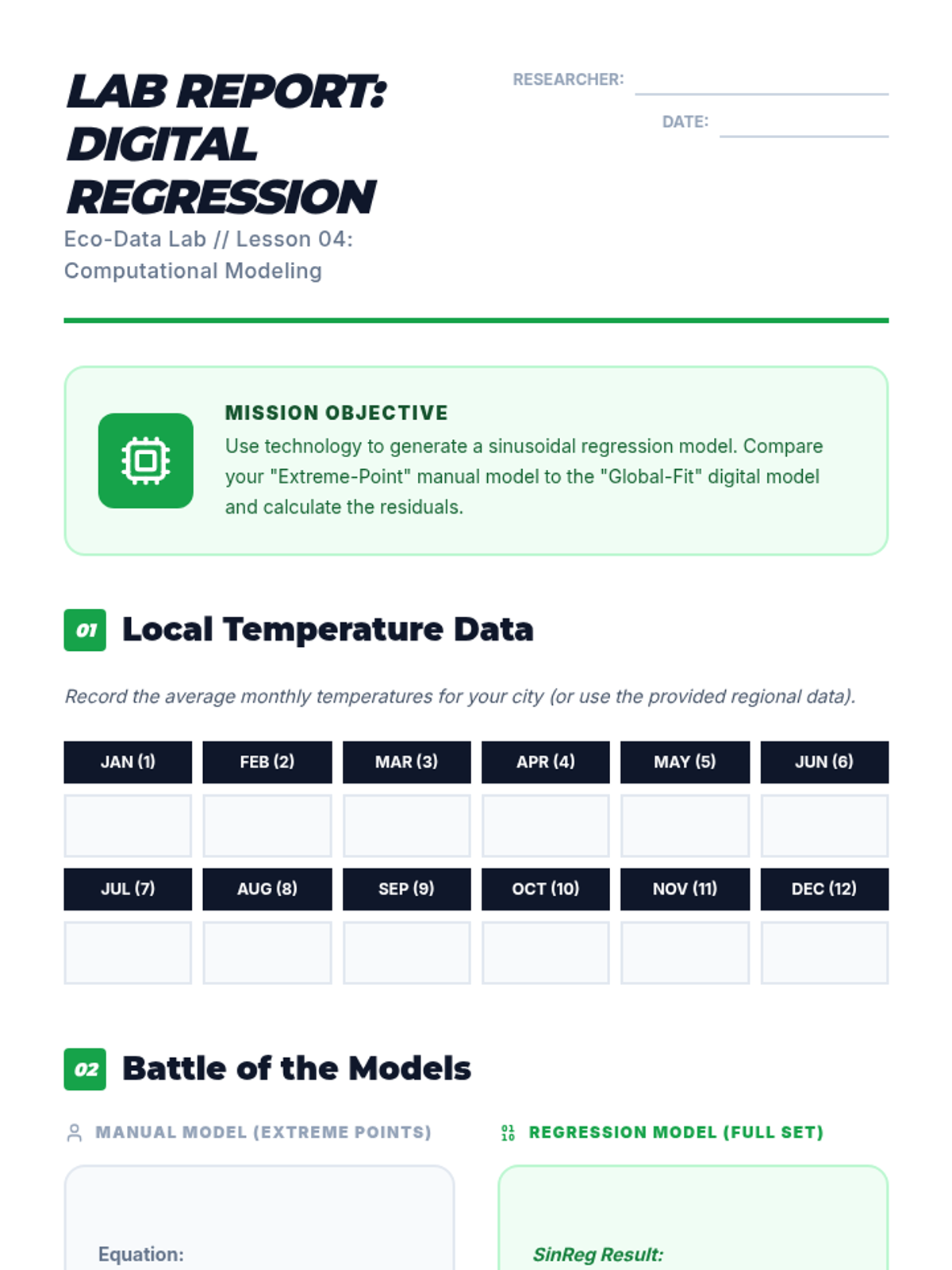
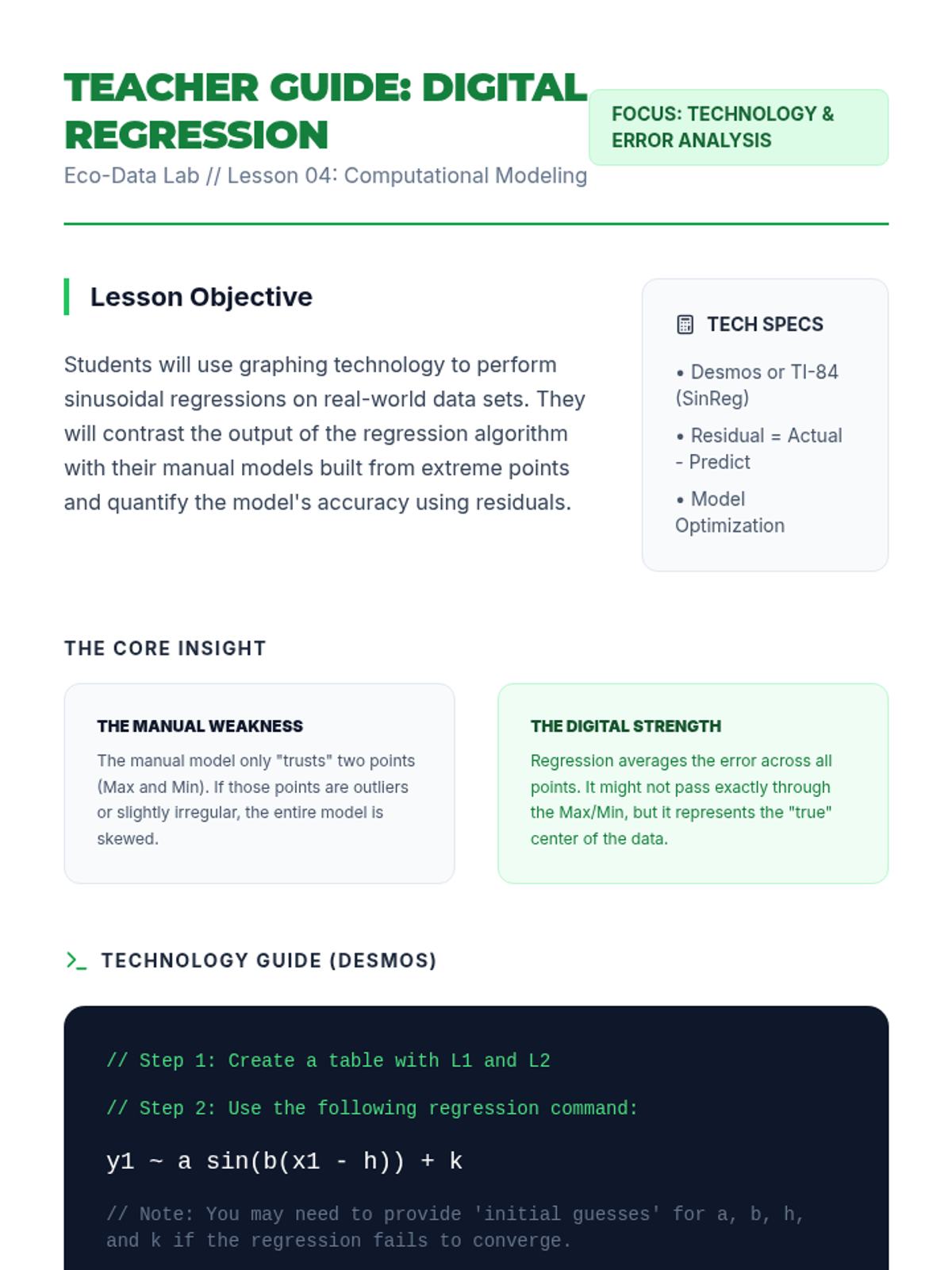
Students use graphing calculators or regression software to fit trigonometric equations to data sets. They compare their hand-calculated models to the regression models.
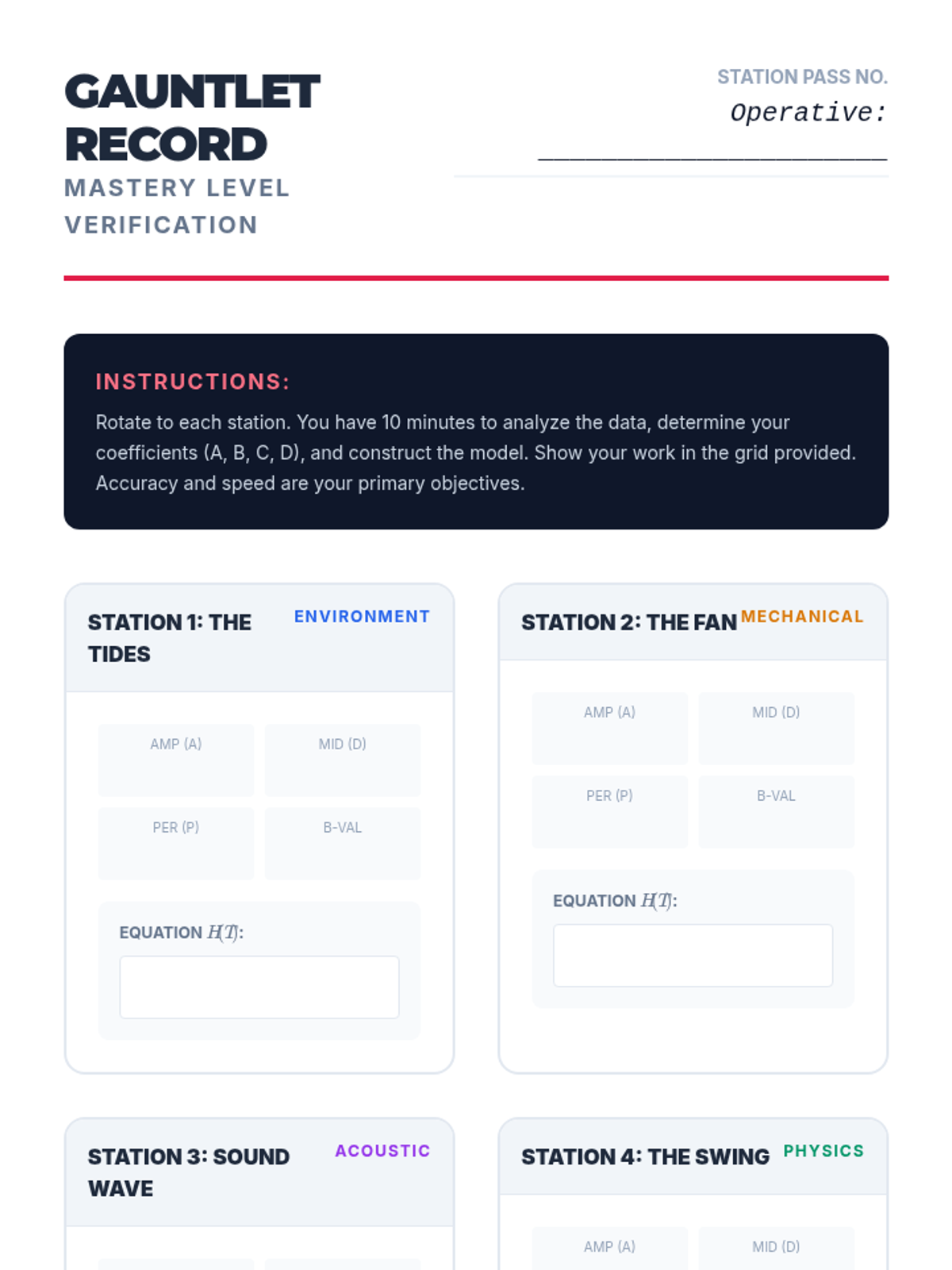
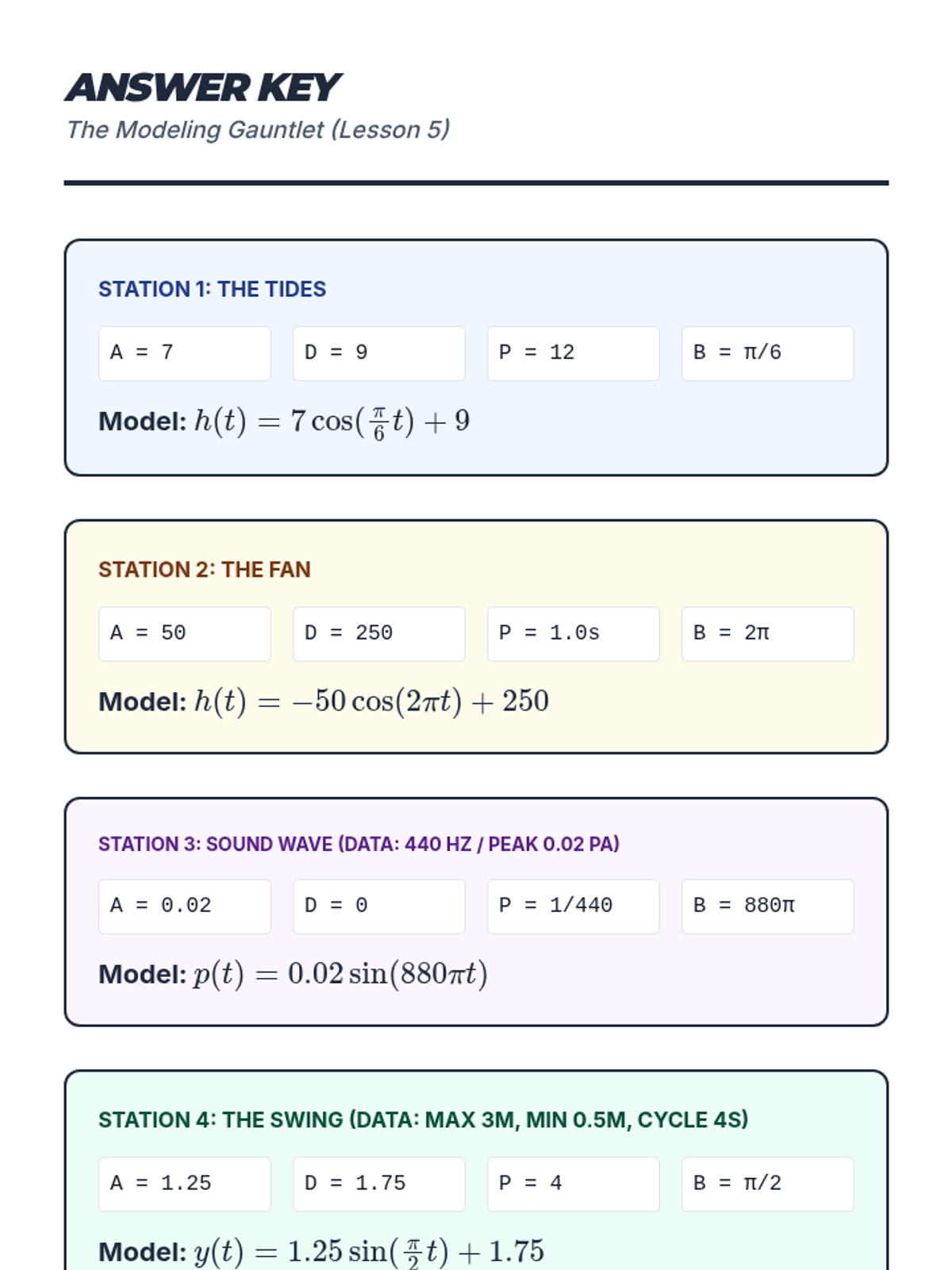
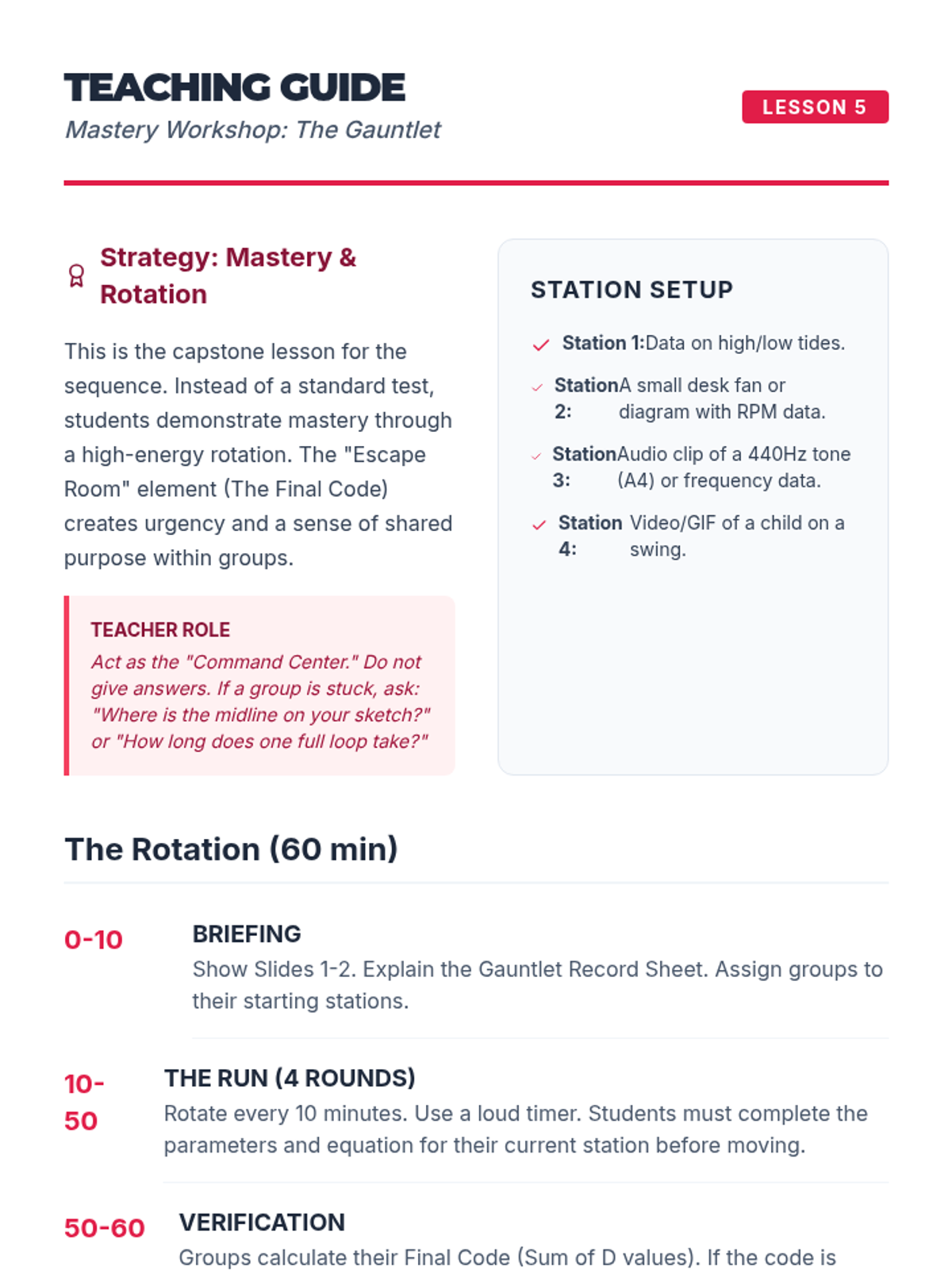
A mastery-based workshop where students rotate through diverse modeling stations to demonstrate speed and accuracy in formulation.
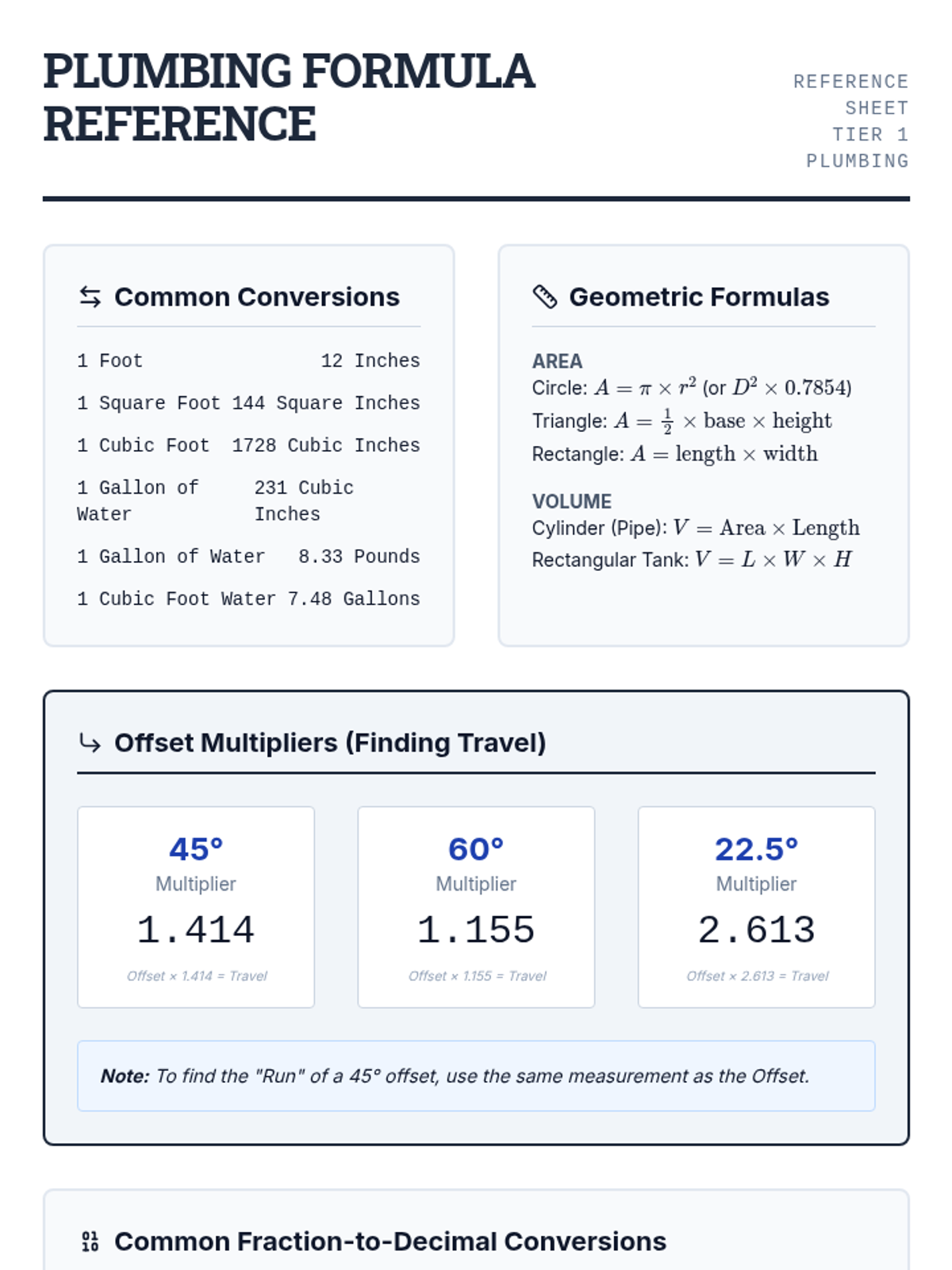
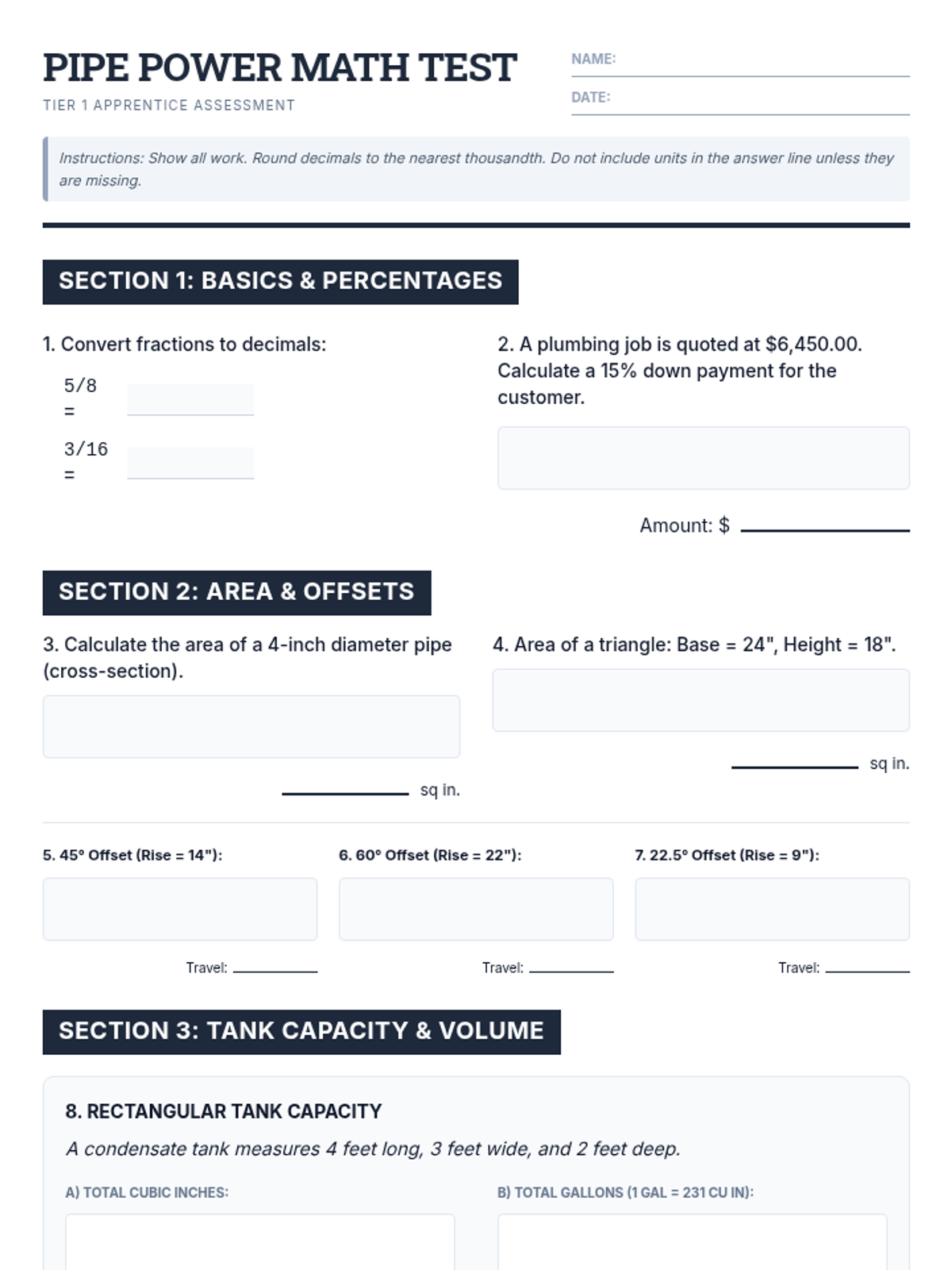
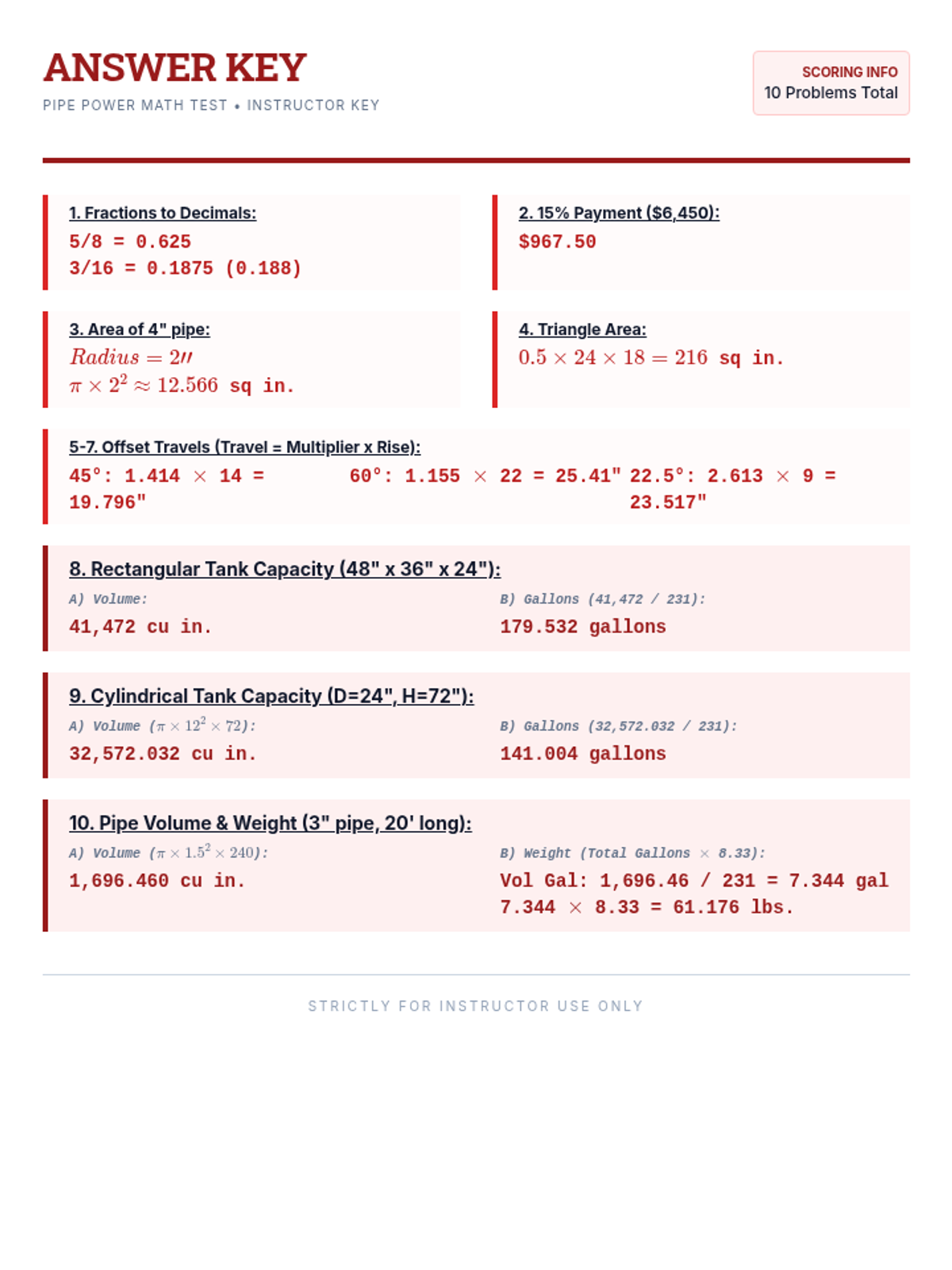
A comprehensive assessment and reference set for Tier 1 plumbing apprentices covering essential trade mathematics, including offsets, volumes, and conversions.
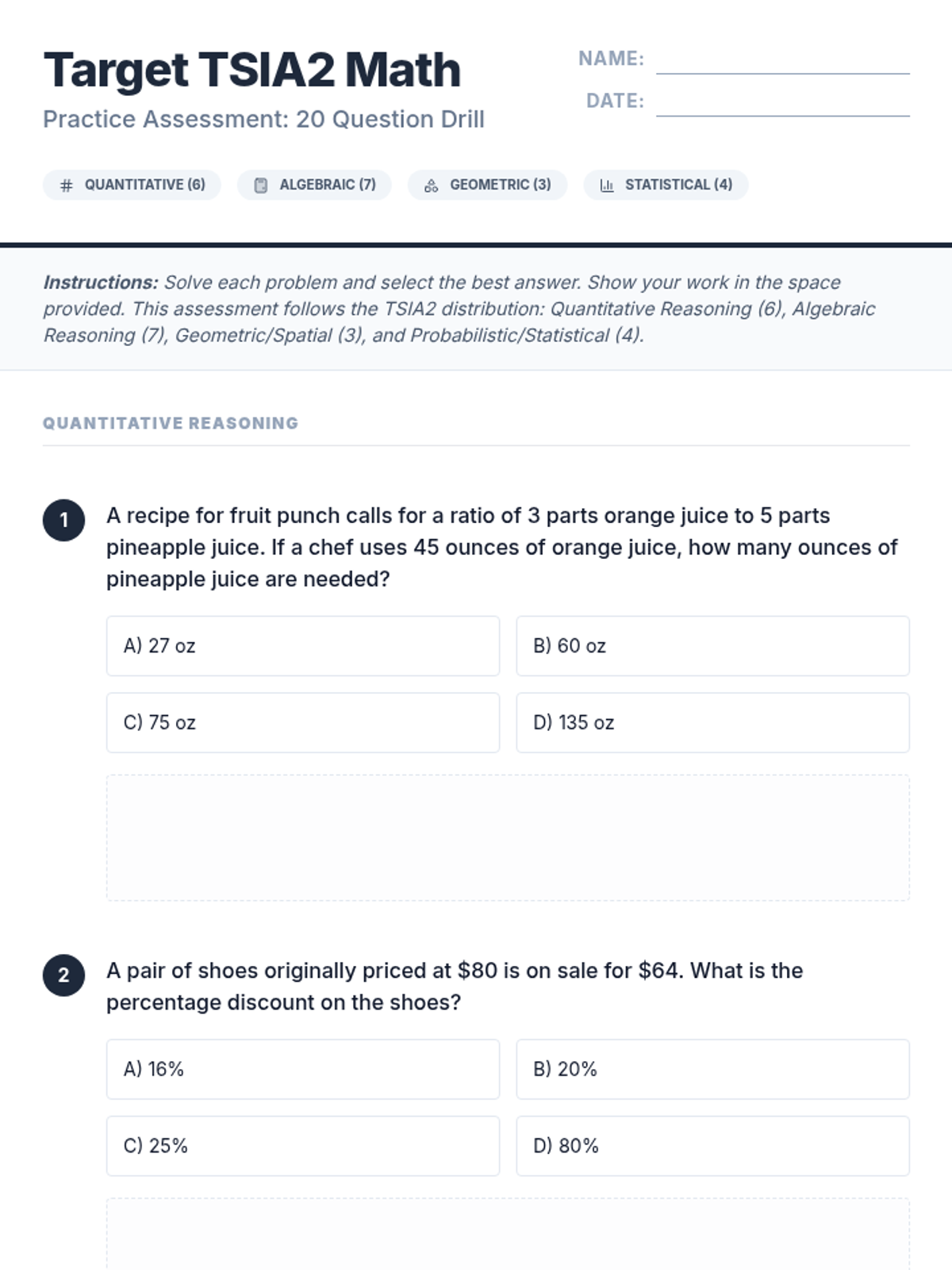
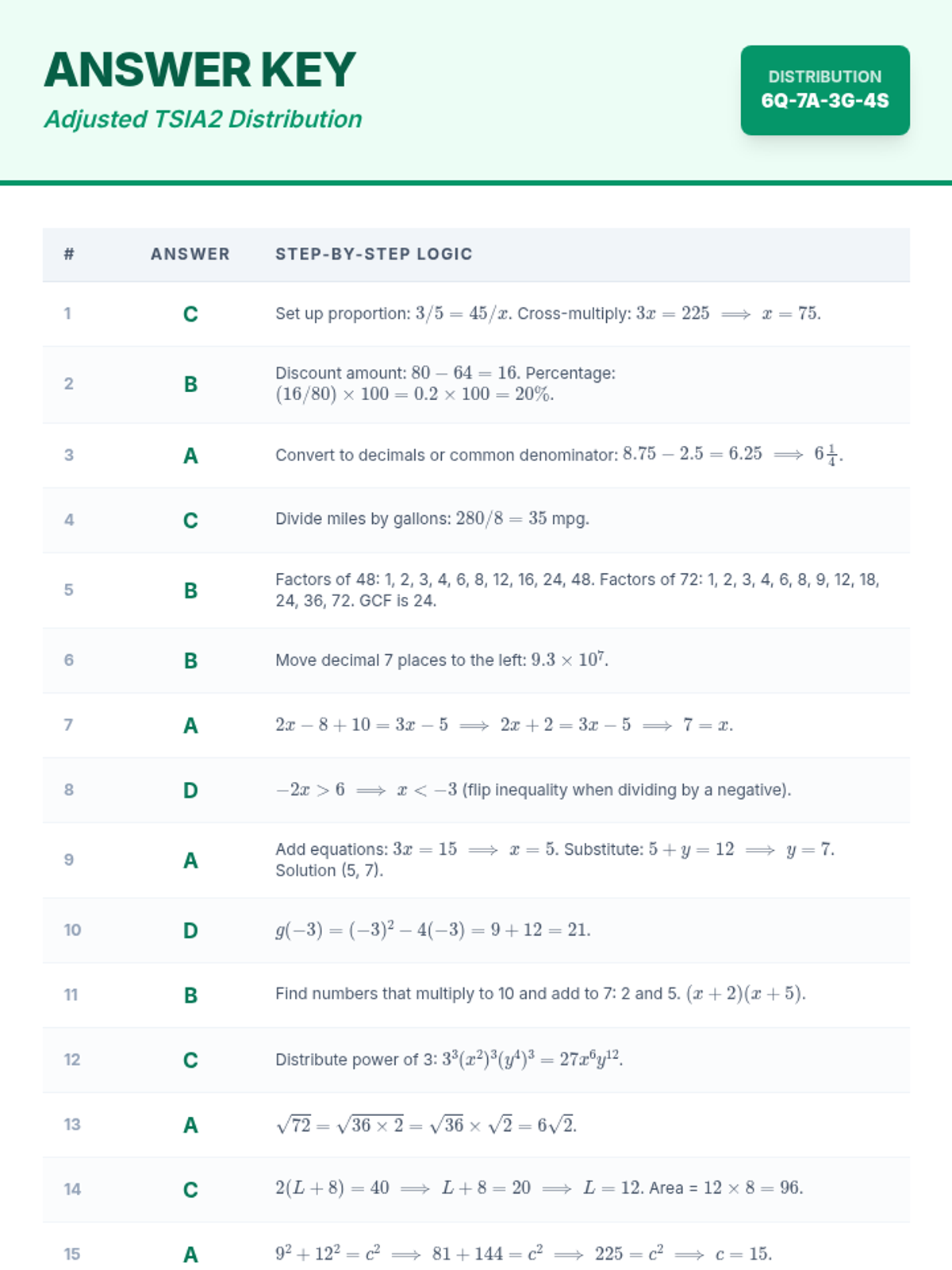
A comprehensive 20-question practice test and answer key designed to prepare students for the TSIA2 Mathematics assessment, focusing on algebraic, geometric, and statistical reasoning.
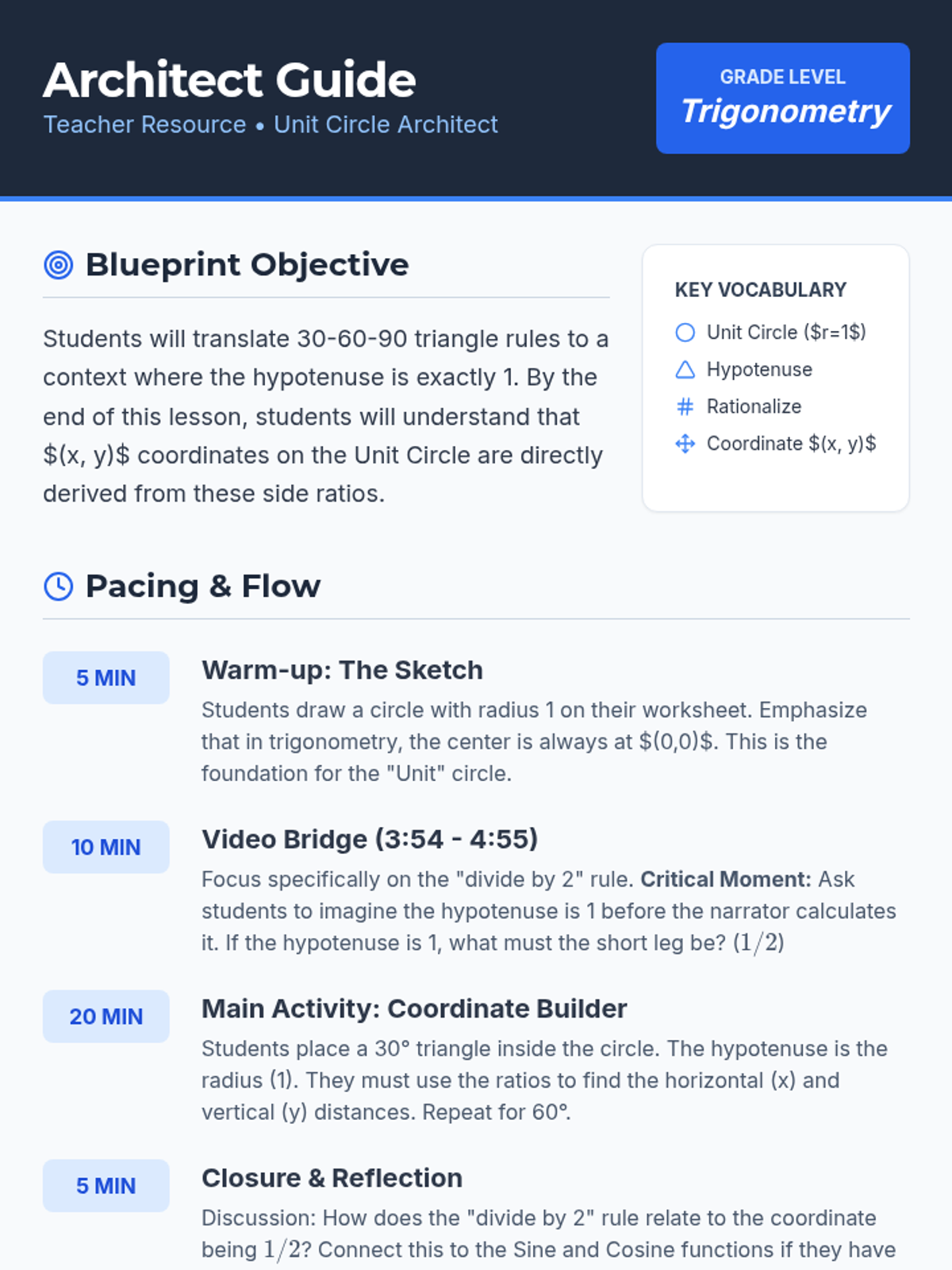
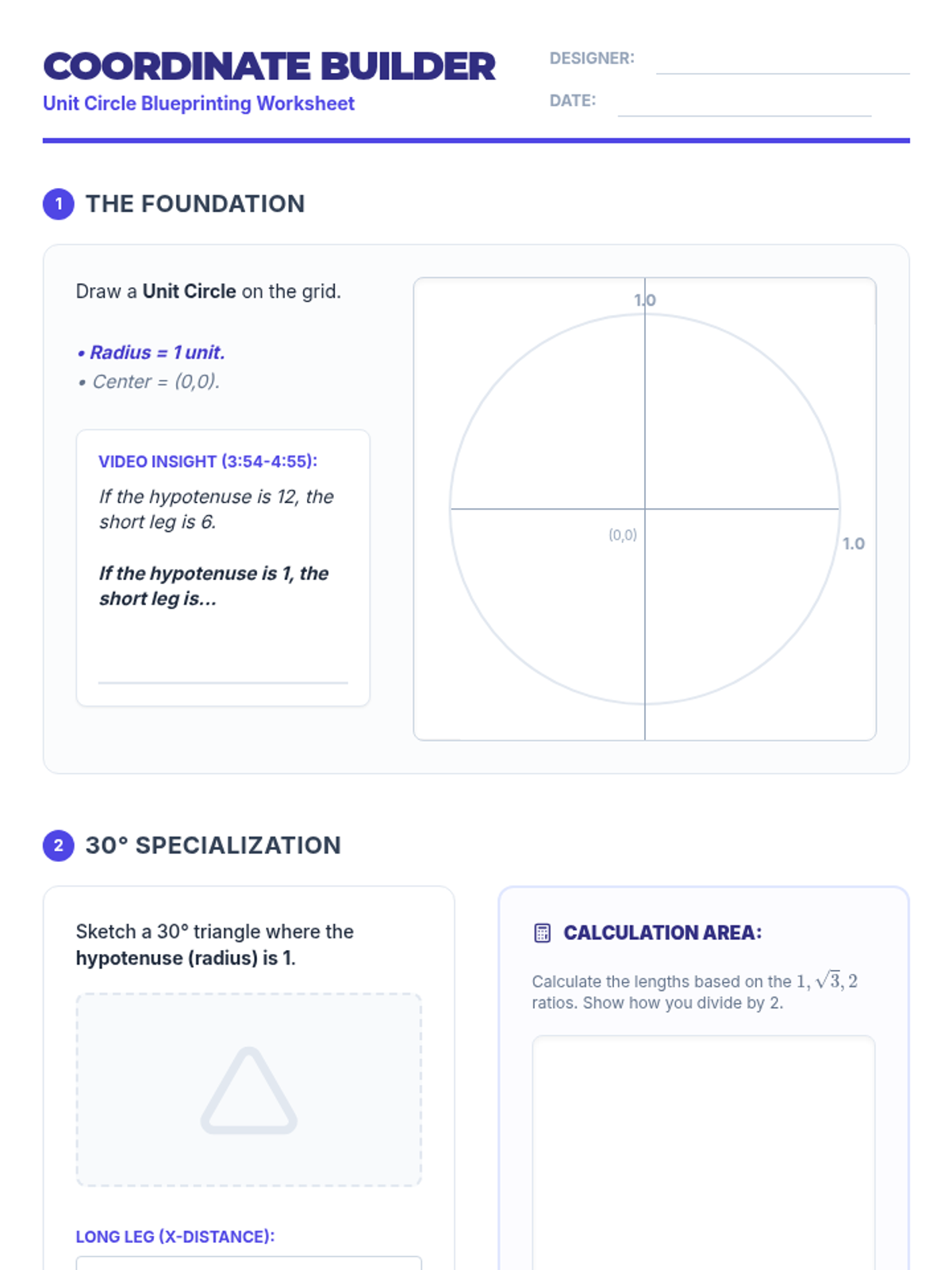
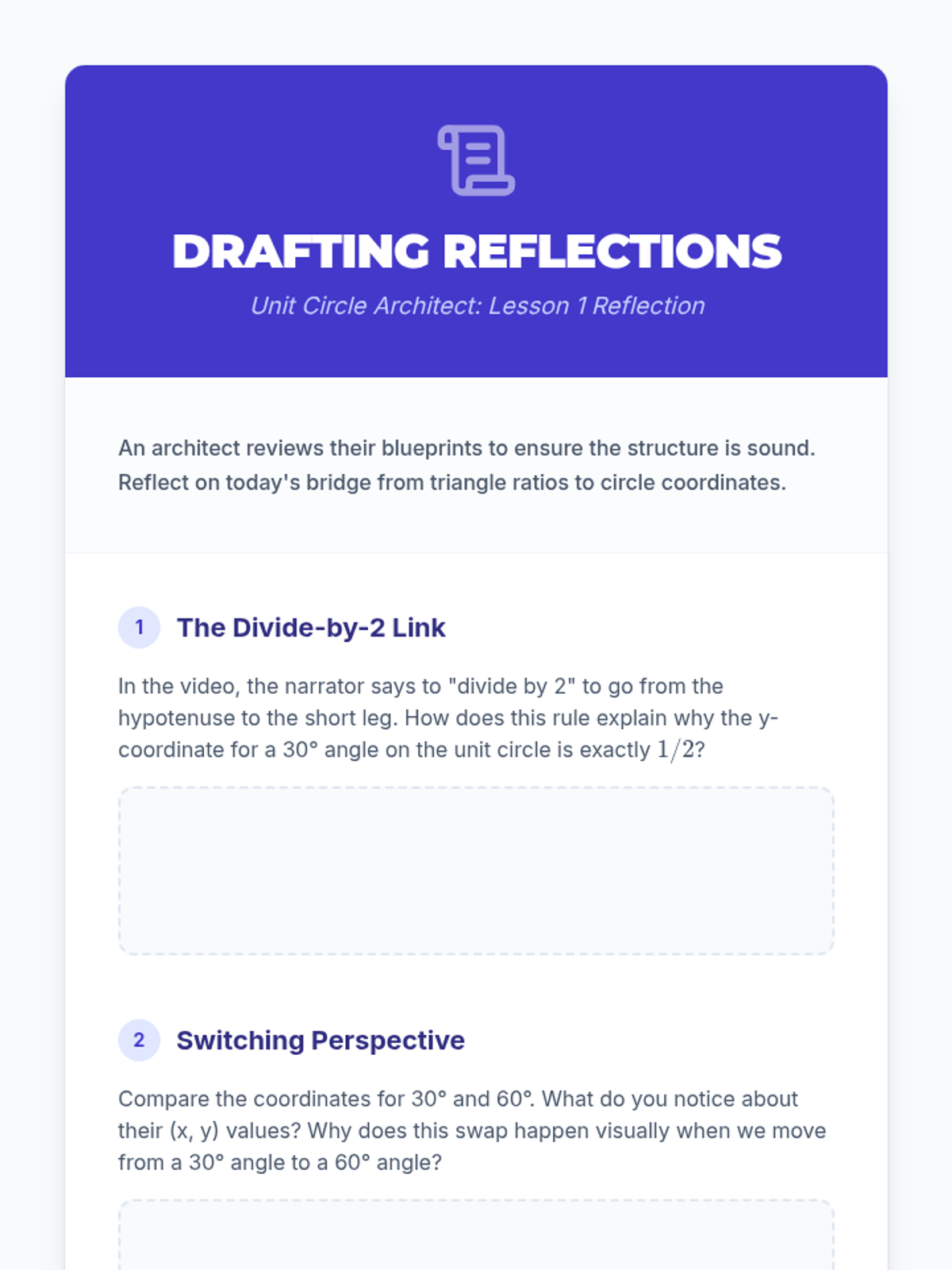
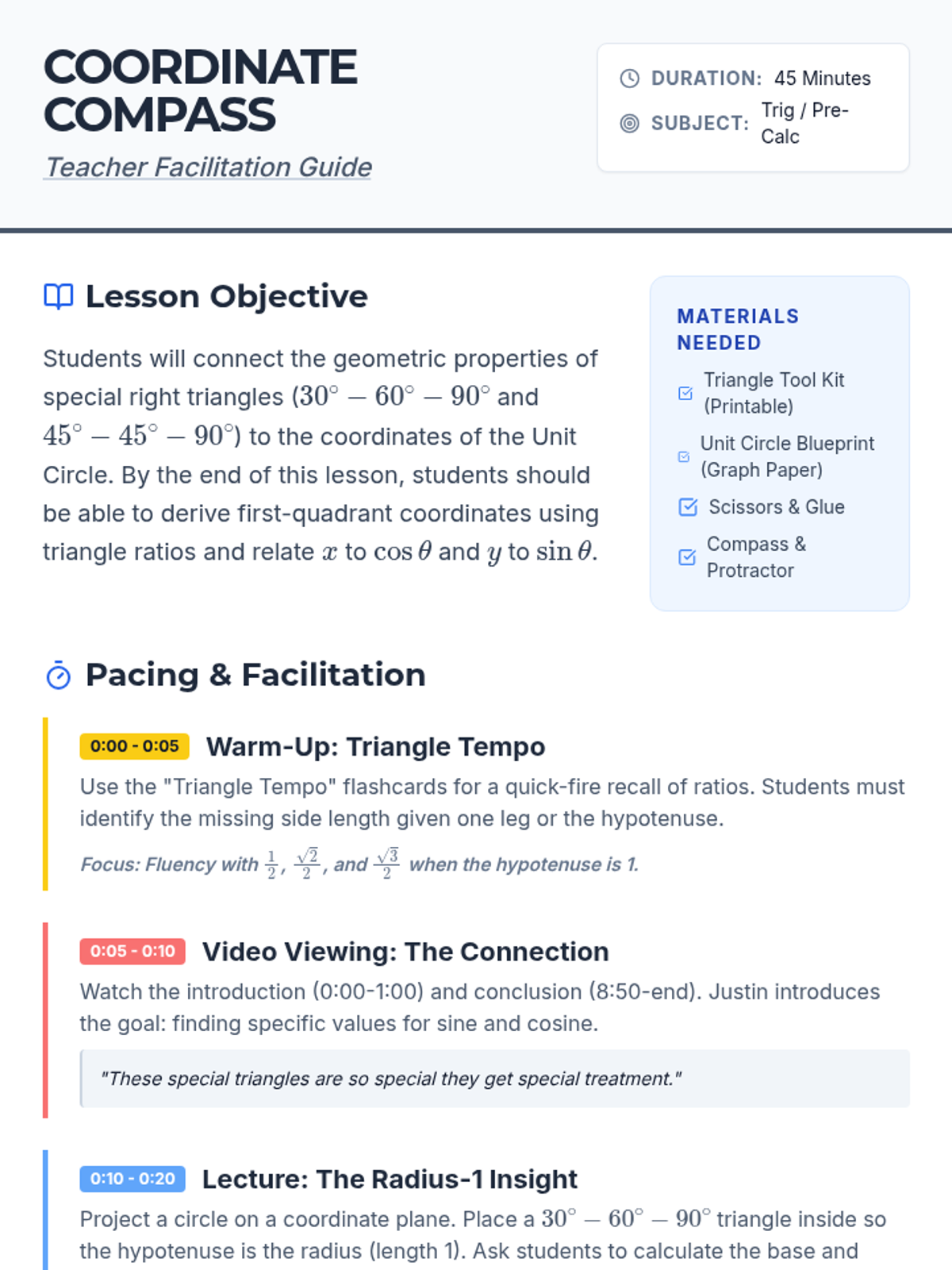
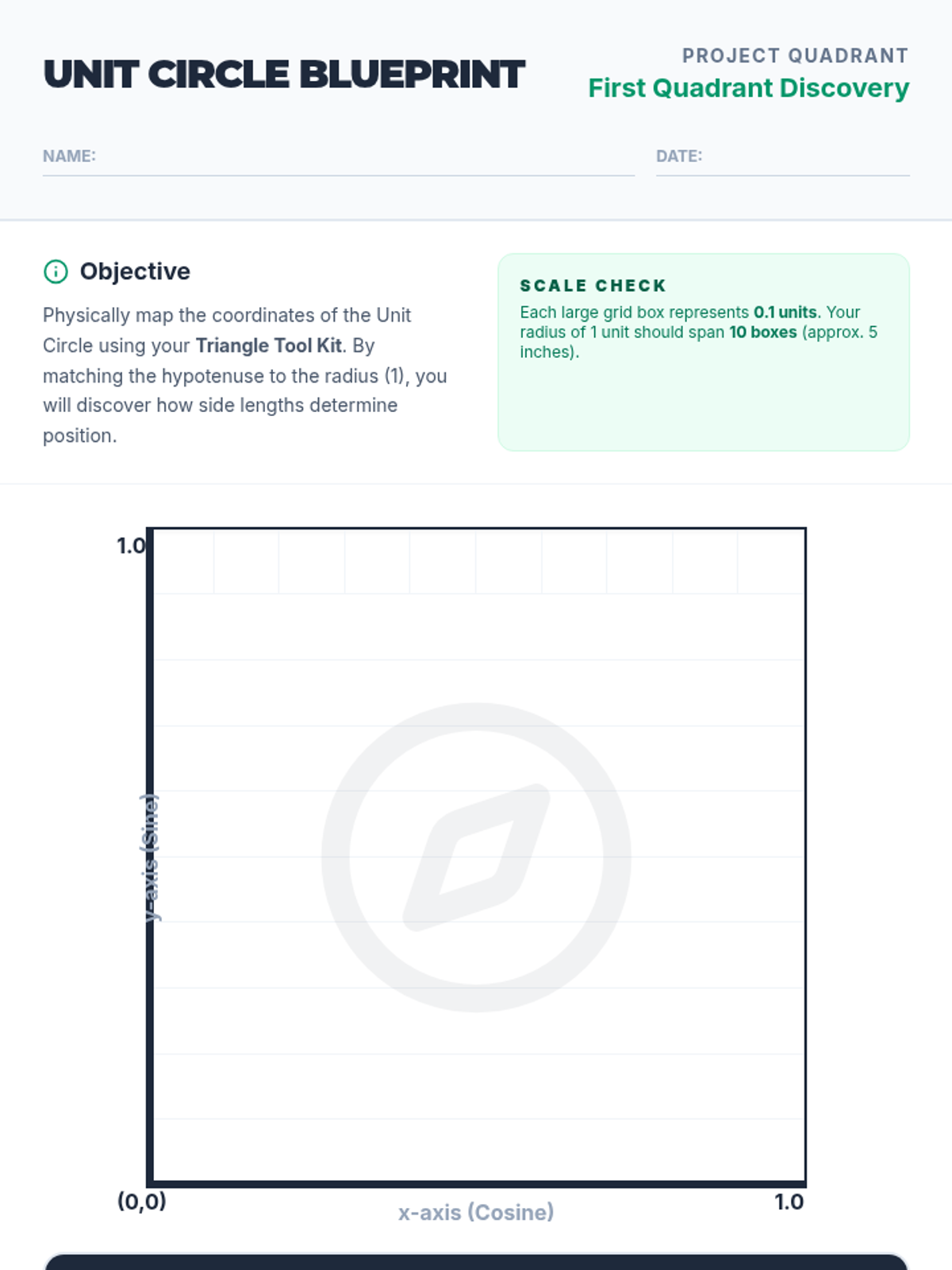
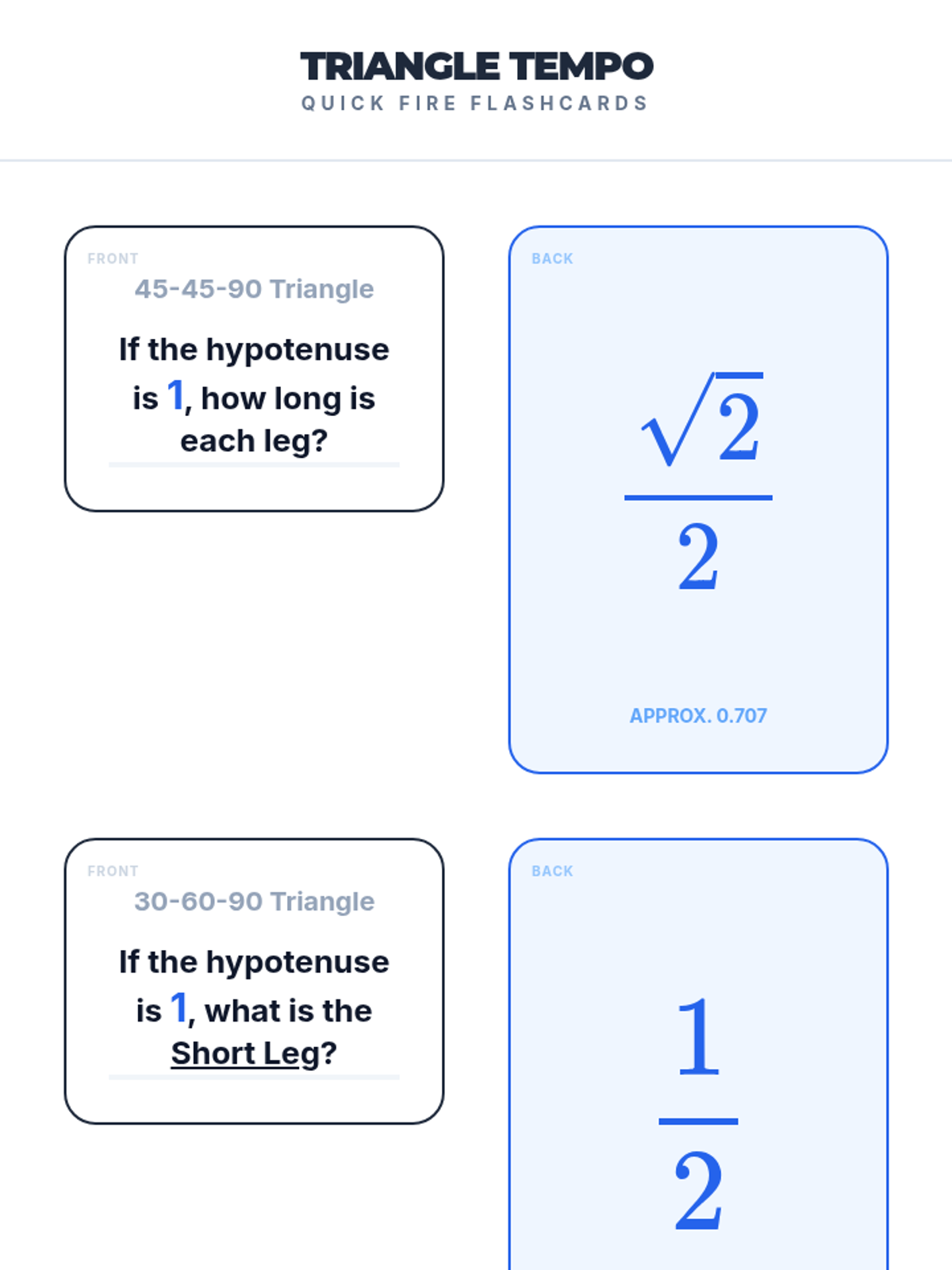
Students will bridge the gap between special right triangle ratios and the Unit Circle by calculating coordinates for 30° and 60° angles using a hypotenuse of 1.
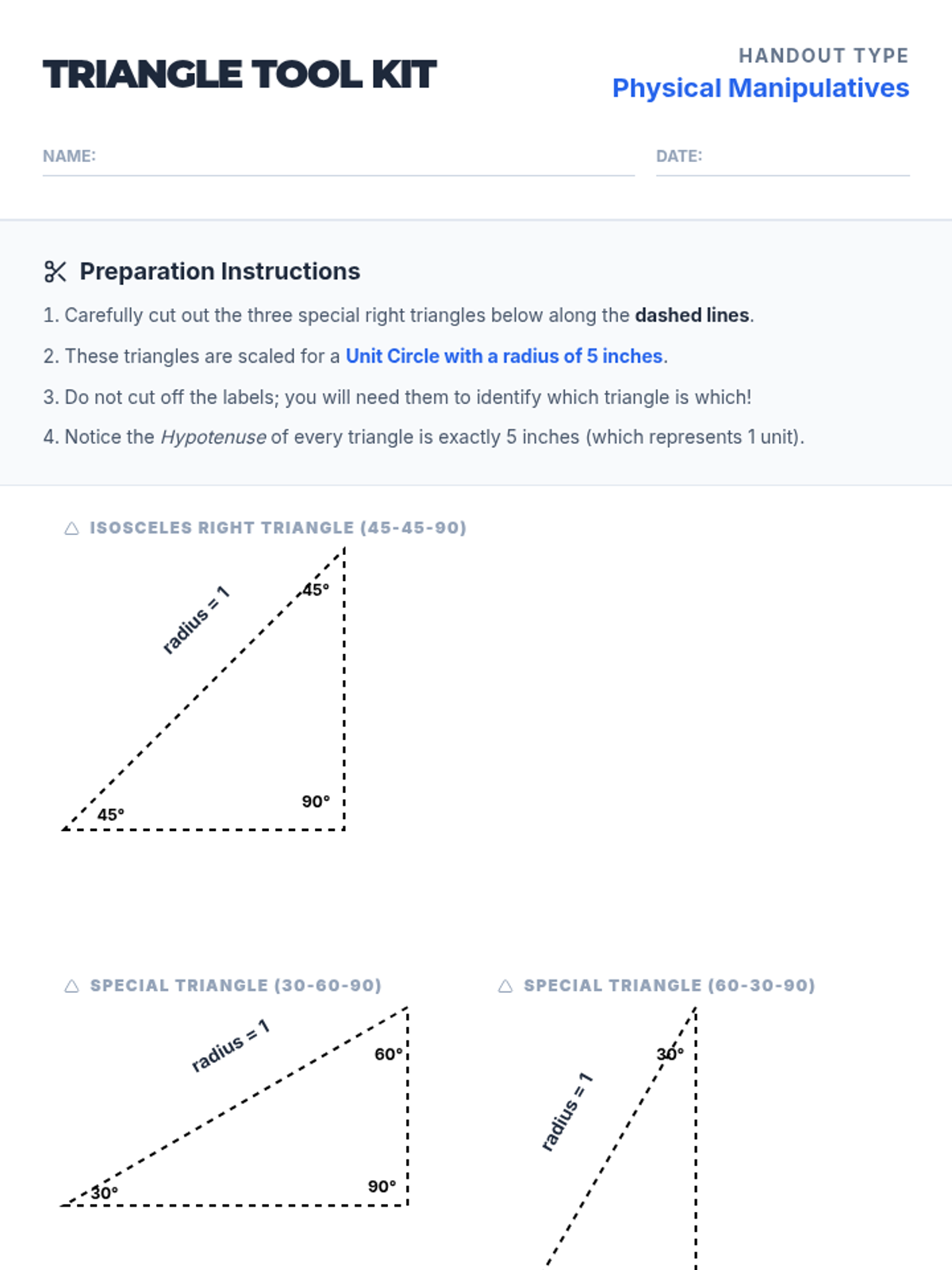
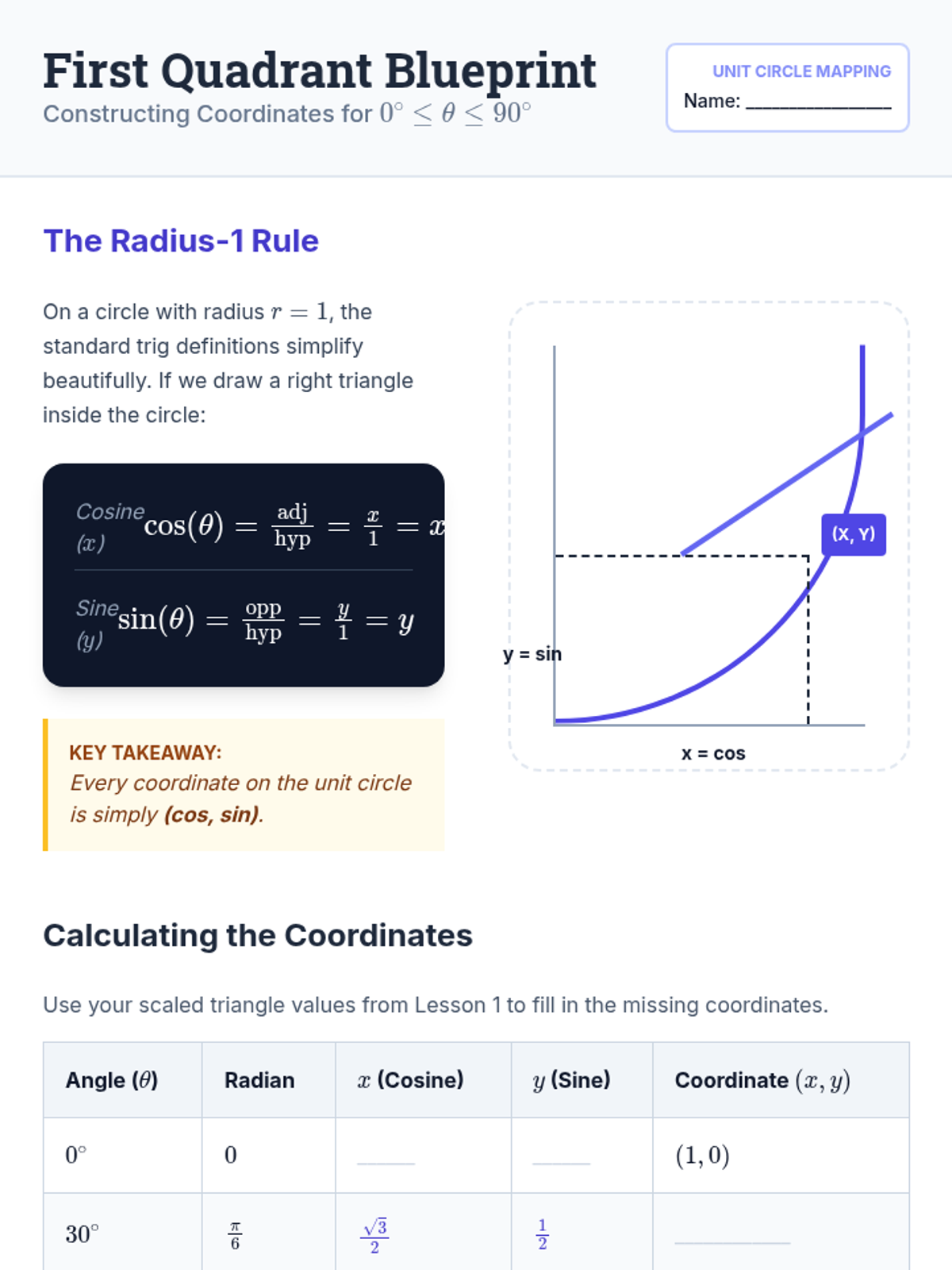
Students bridge the gap between geometry and trigonometry by placing special right triangles within a unit circle. Through physical manipulation of scaled triangles, they derive the coordinates of the first quadrant and connect triangle side lengths to sine and cosine values.
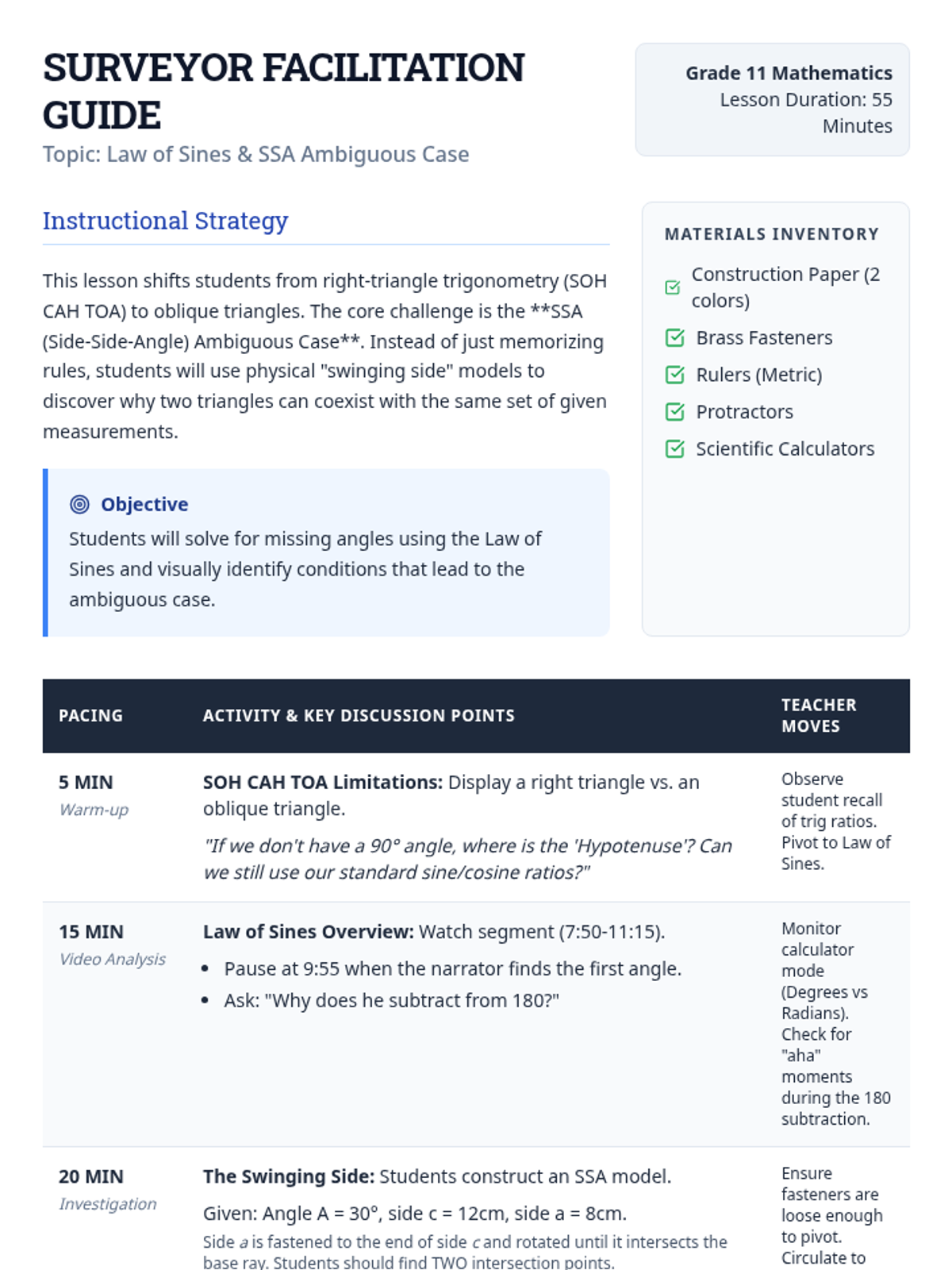
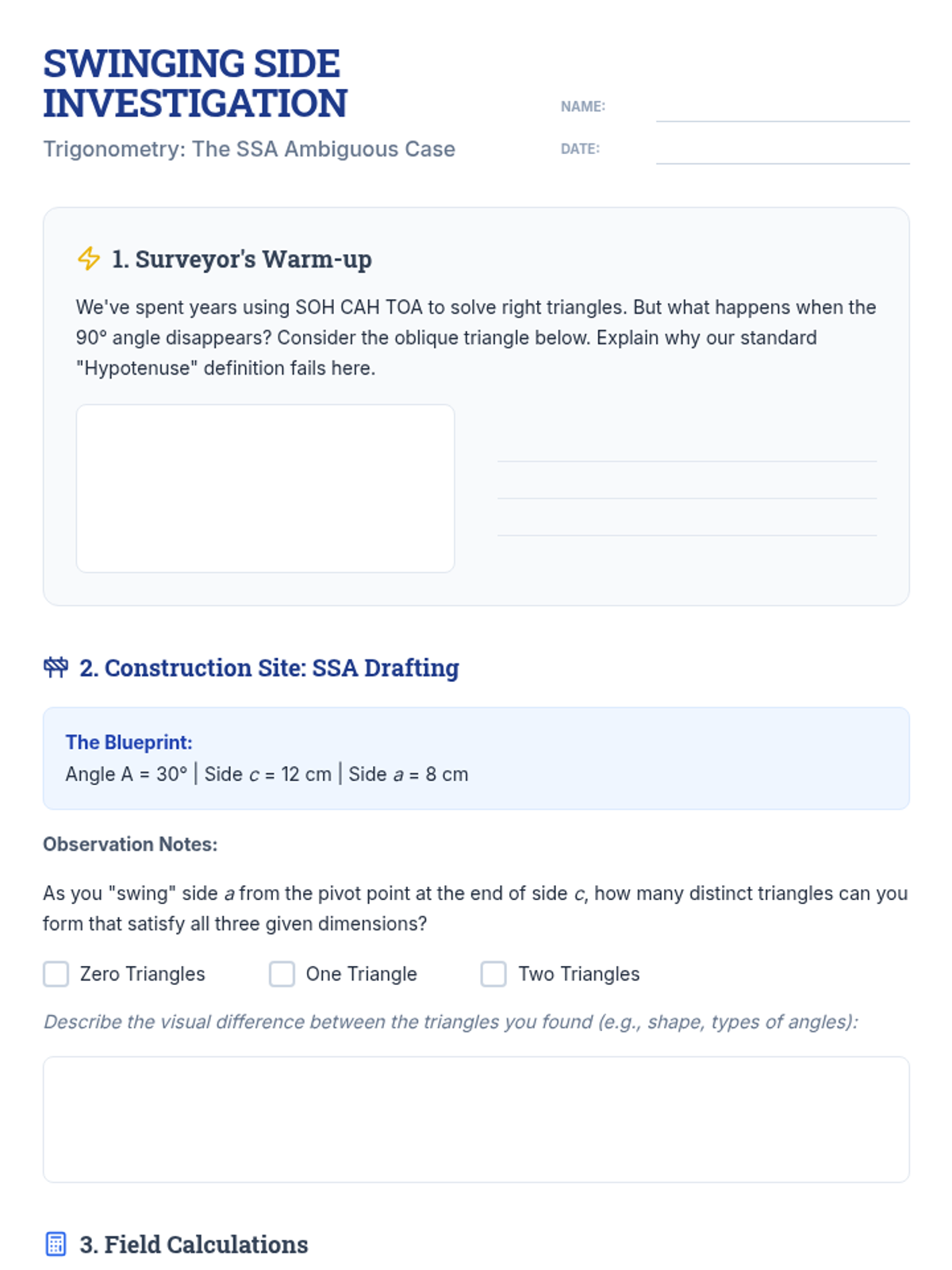
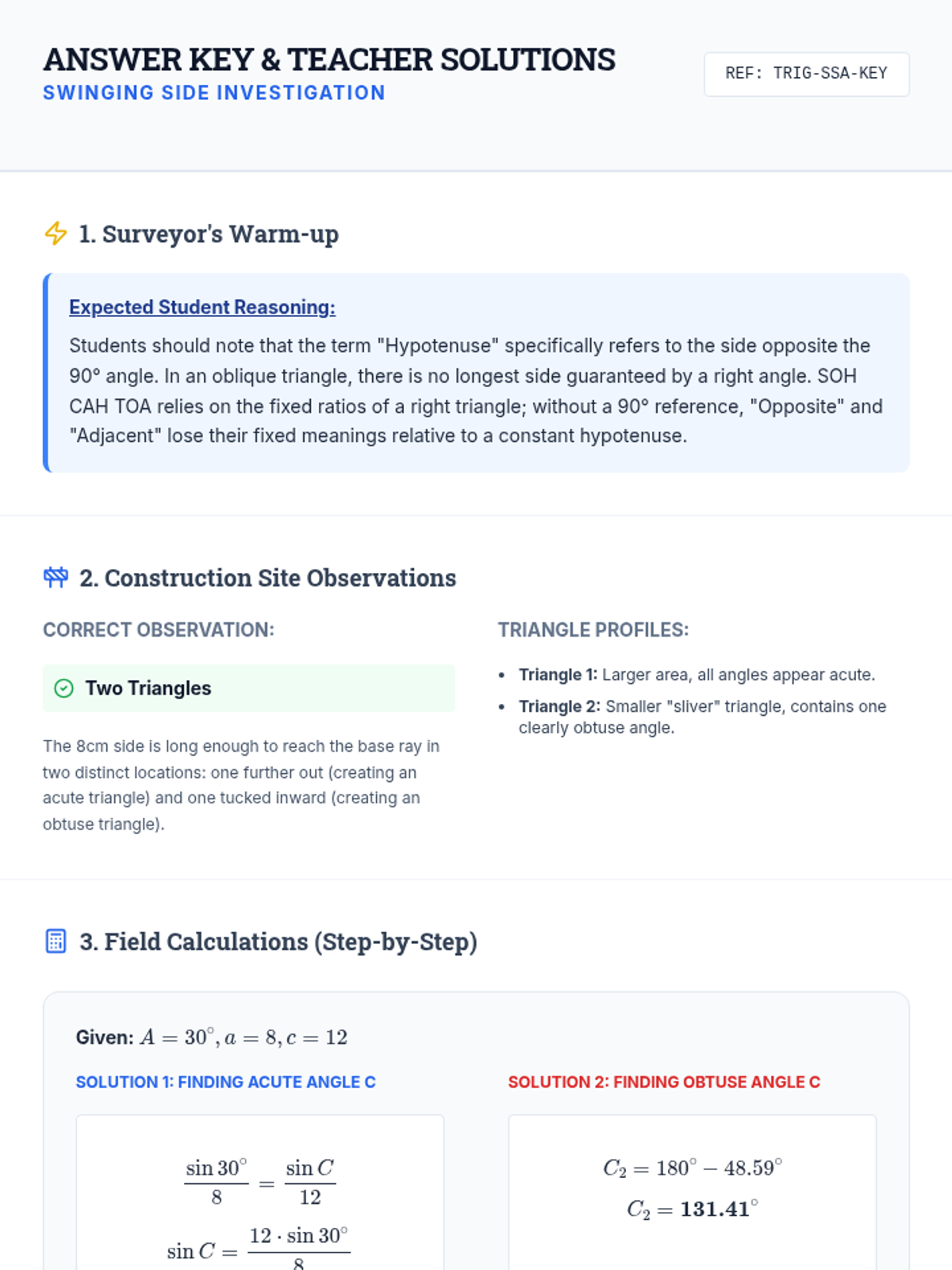
A high school trigonometry lesson focused on the Law of Sines and the SSA Ambiguous Case, featuring a physical construction activity to visualize the 'swinging side' phenomenon.
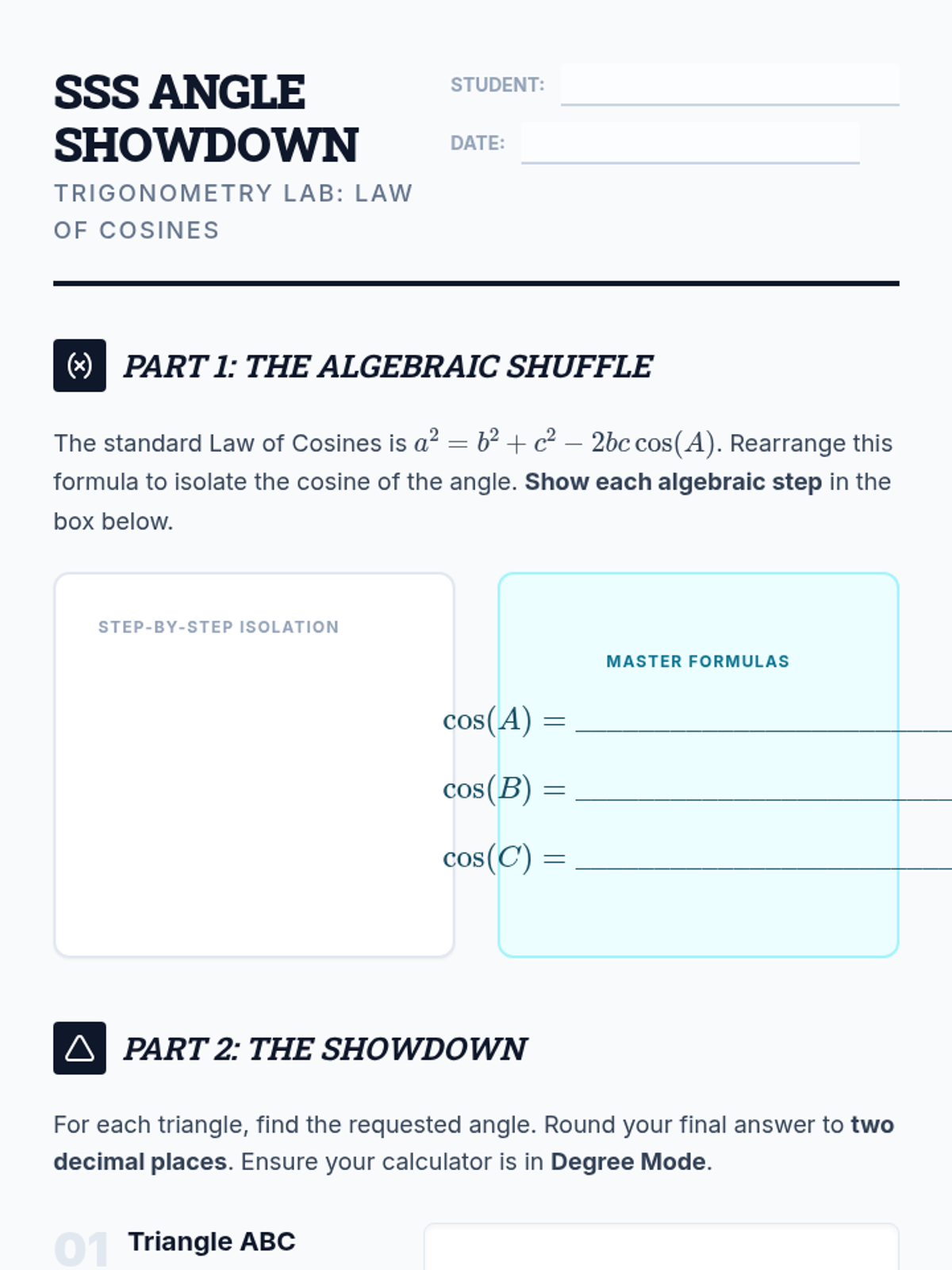
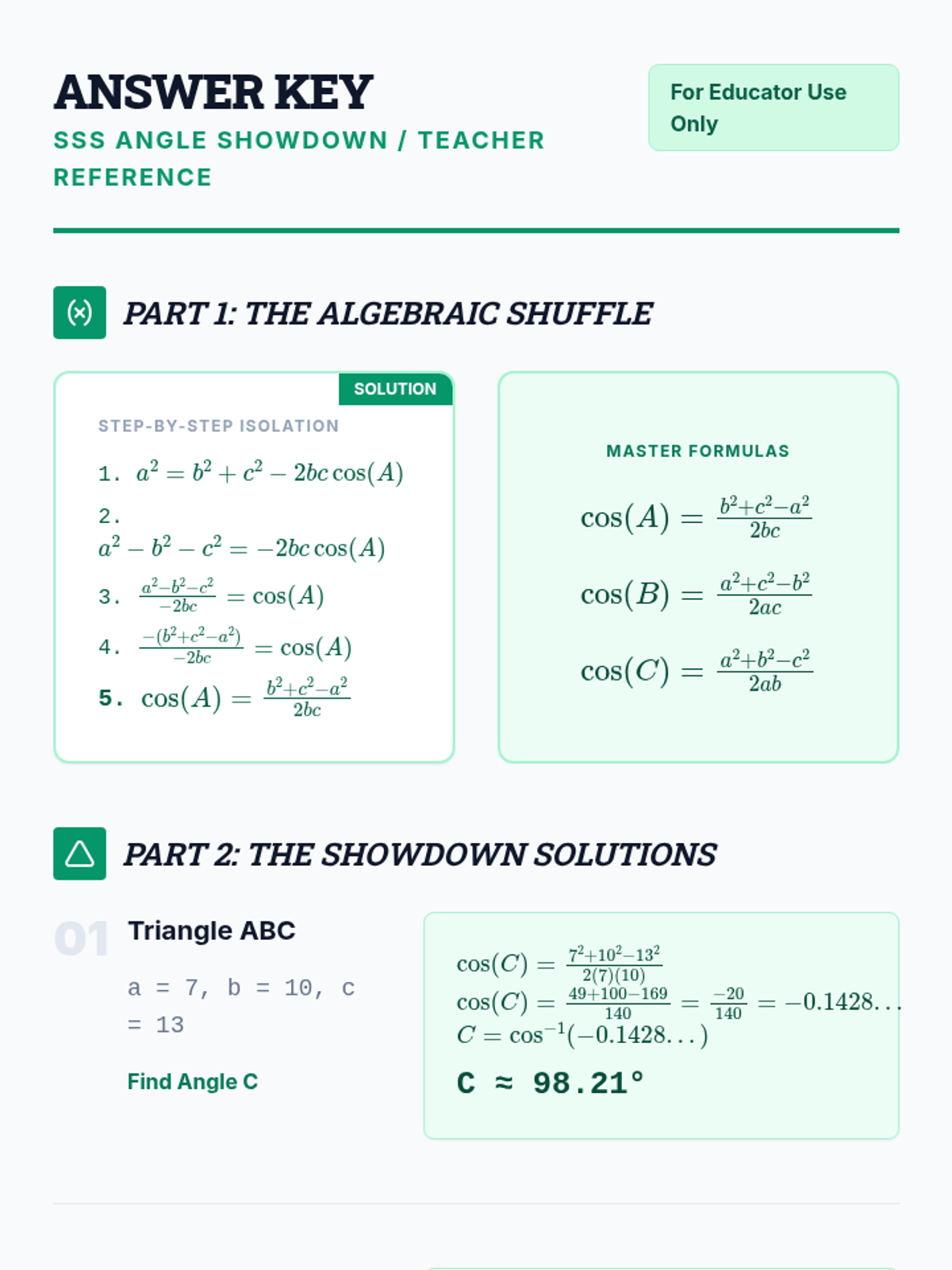
This lesson focuses on using the Law of Cosines to solve for unknown angles in SSS (Side-Side-Side) triangles, emphasizing algebraic rearrangement and verification through the relationship between side lengths and angle measures.
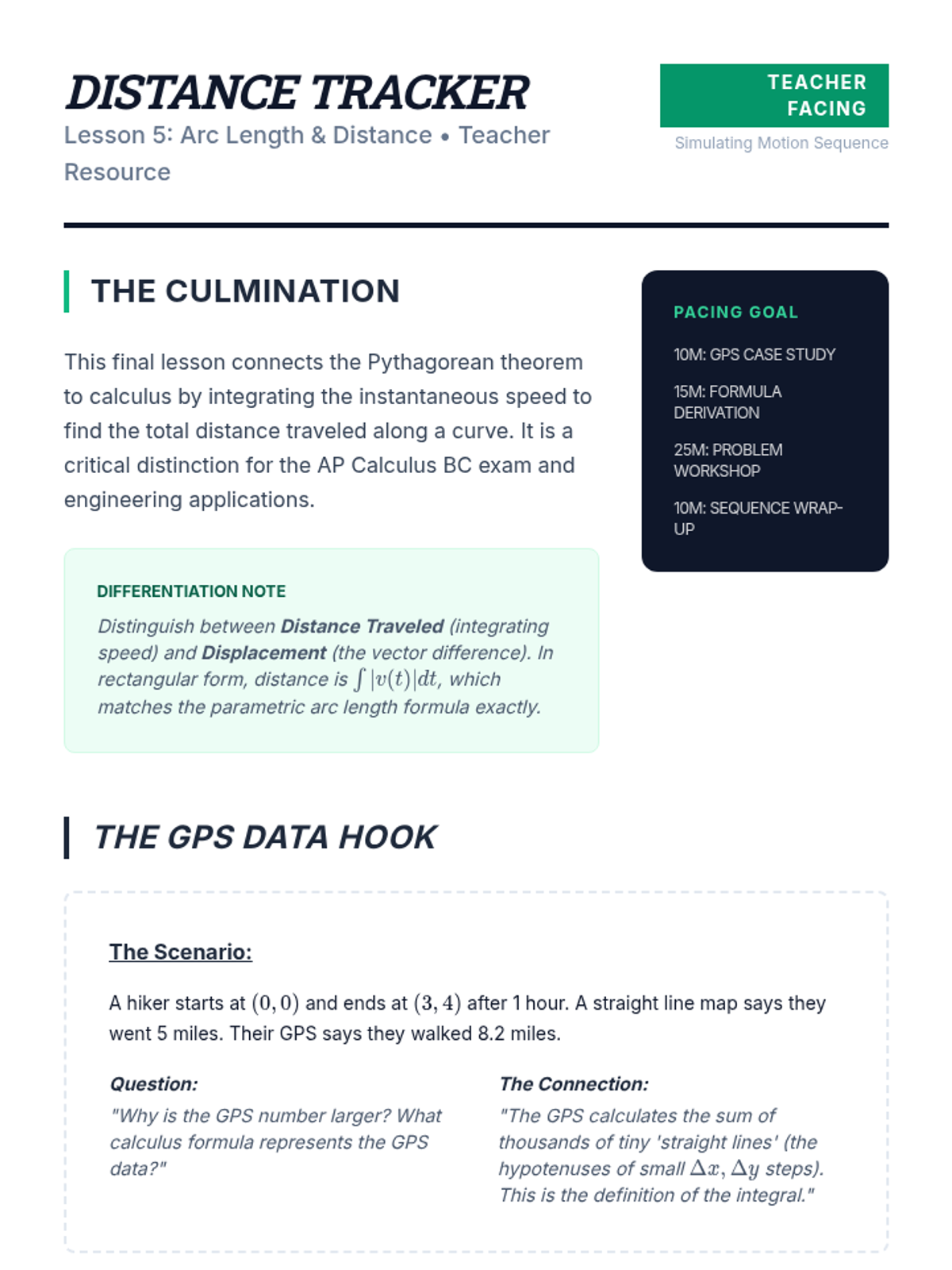
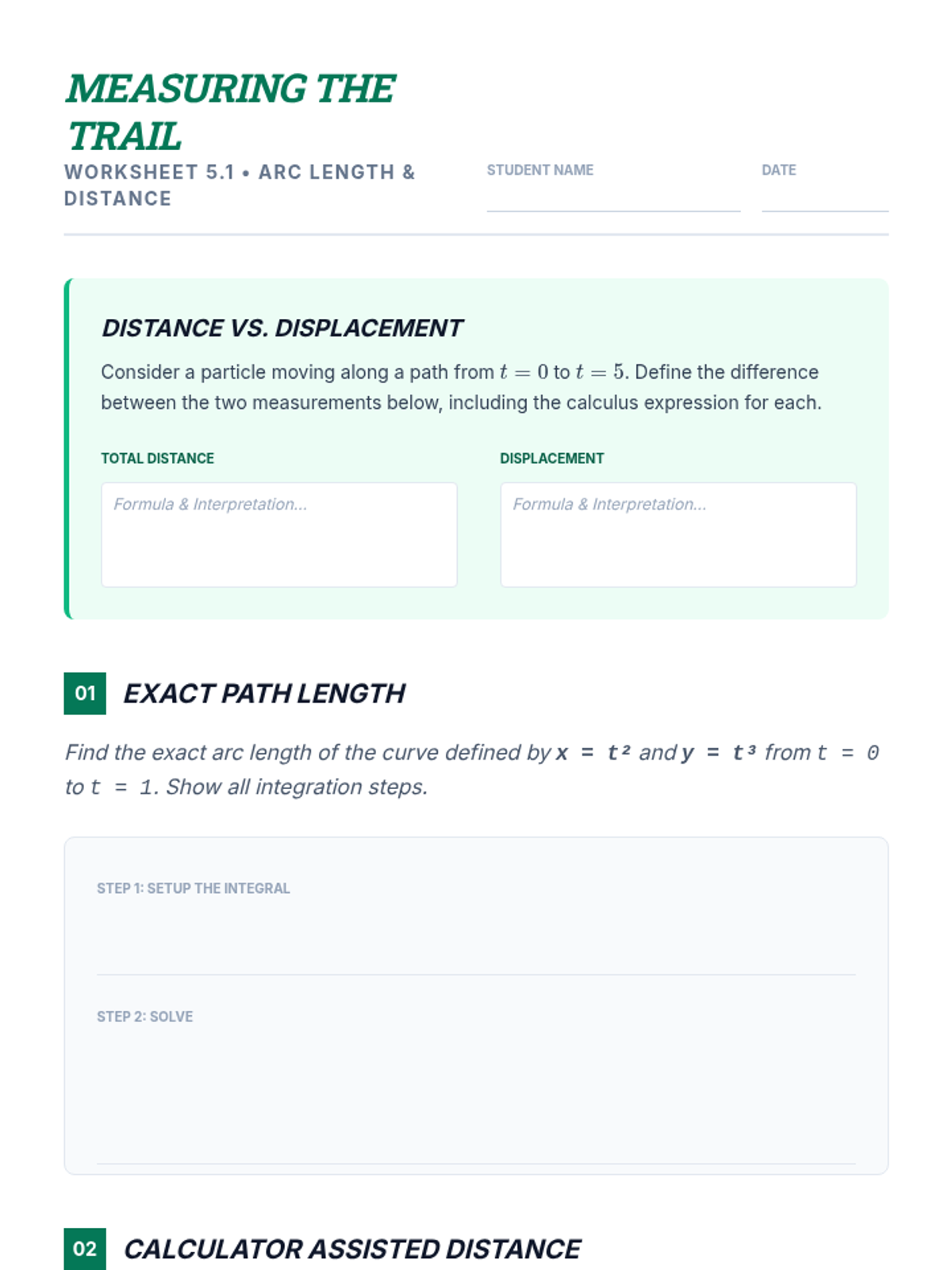
Students derive and apply the arc length formula for parametric curves. They distinguish between displacement and total distance traveled along a curve.
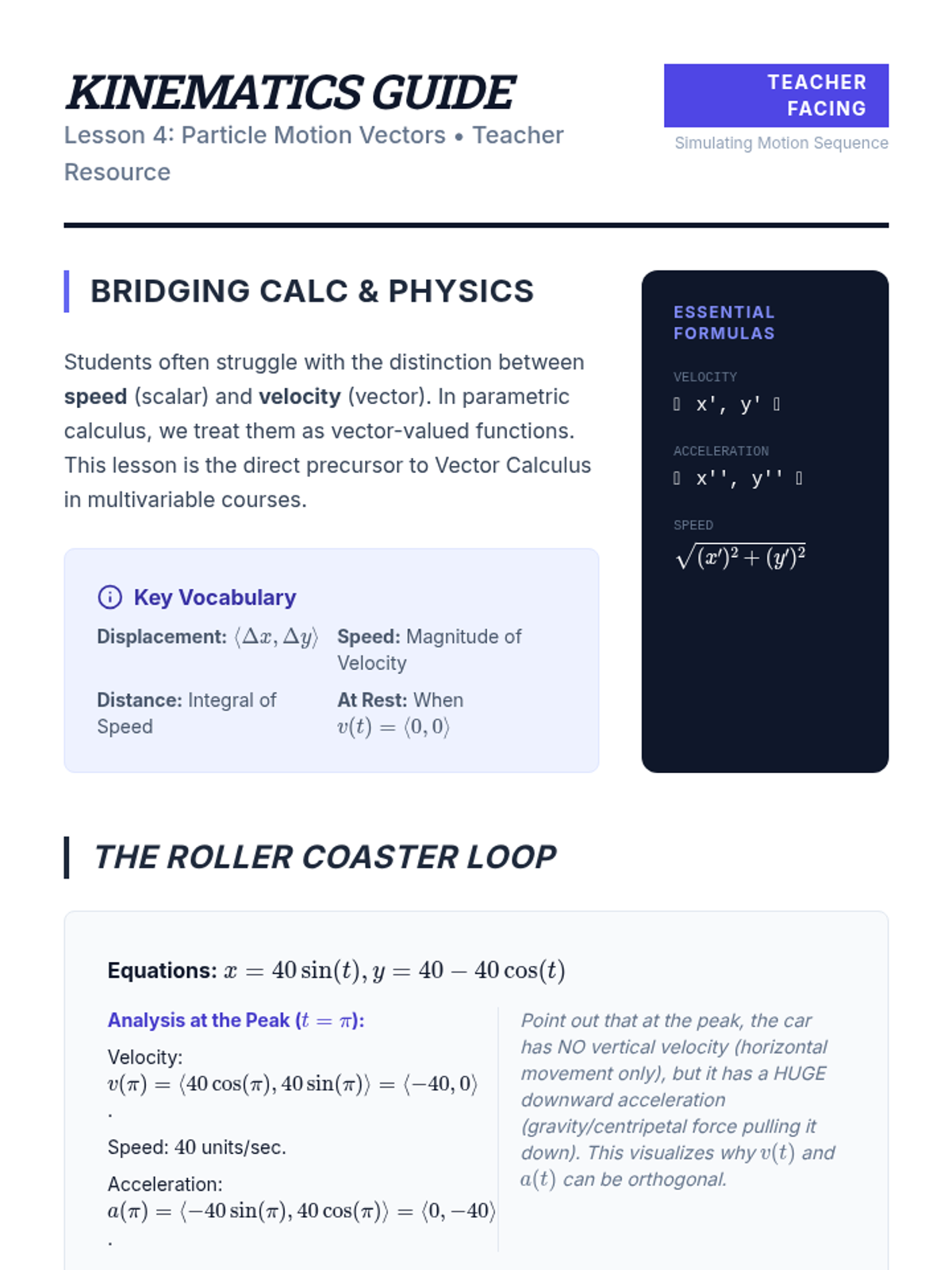
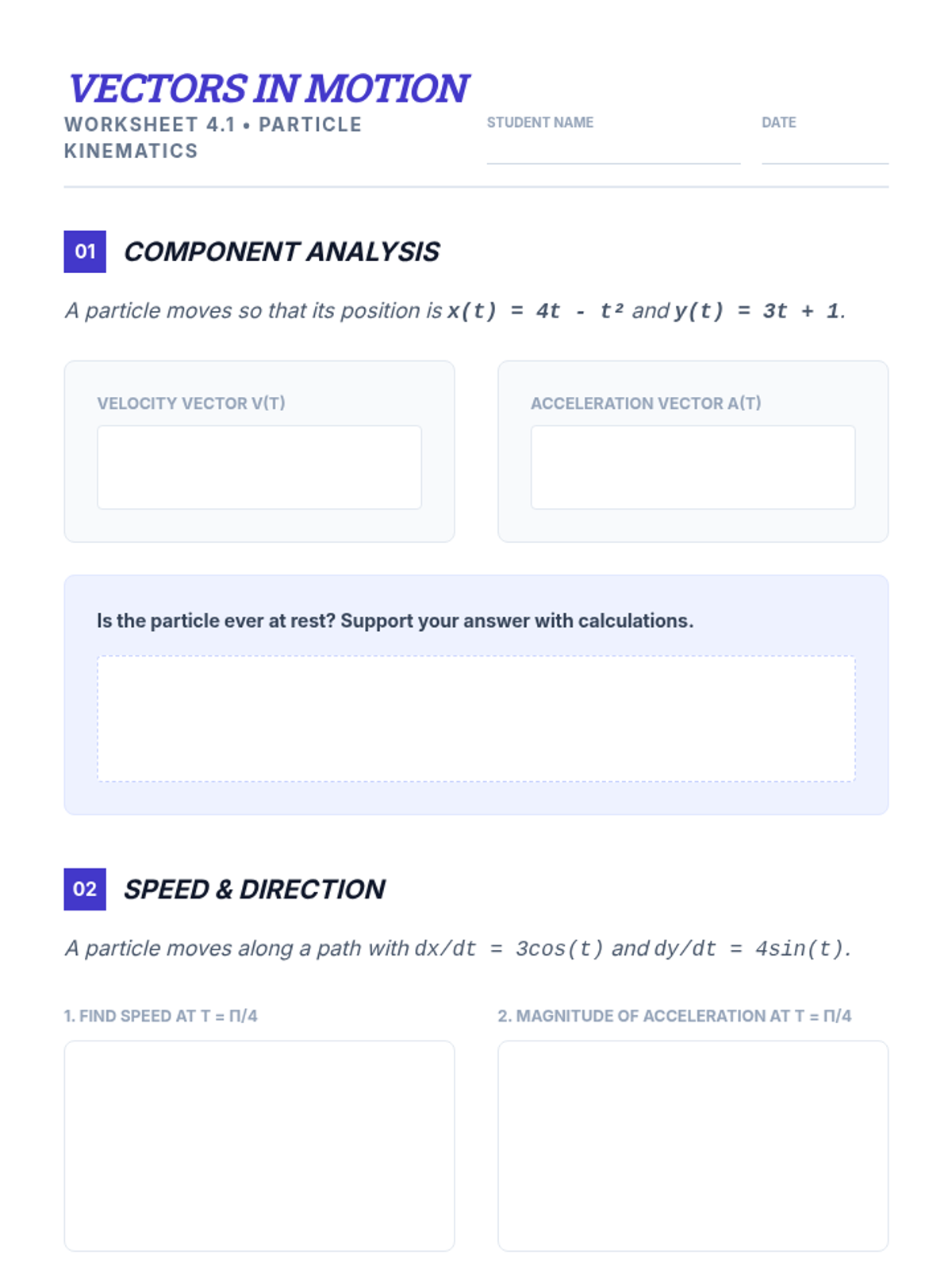
Integrating physics concepts, students treat parametric equations as vector-valued functions. They calculate velocity and acceleration vectors, determine speed, and interpret direction.
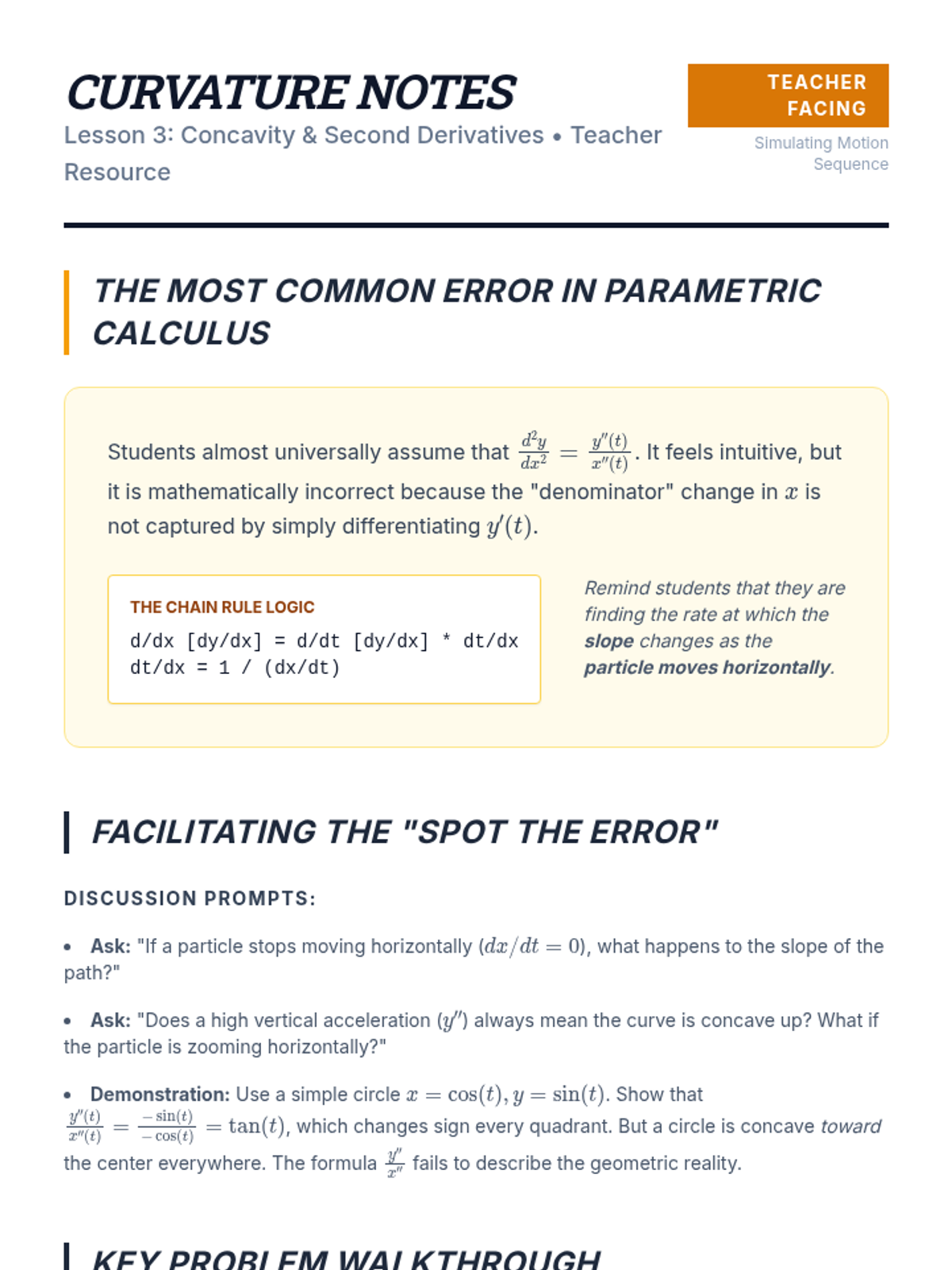
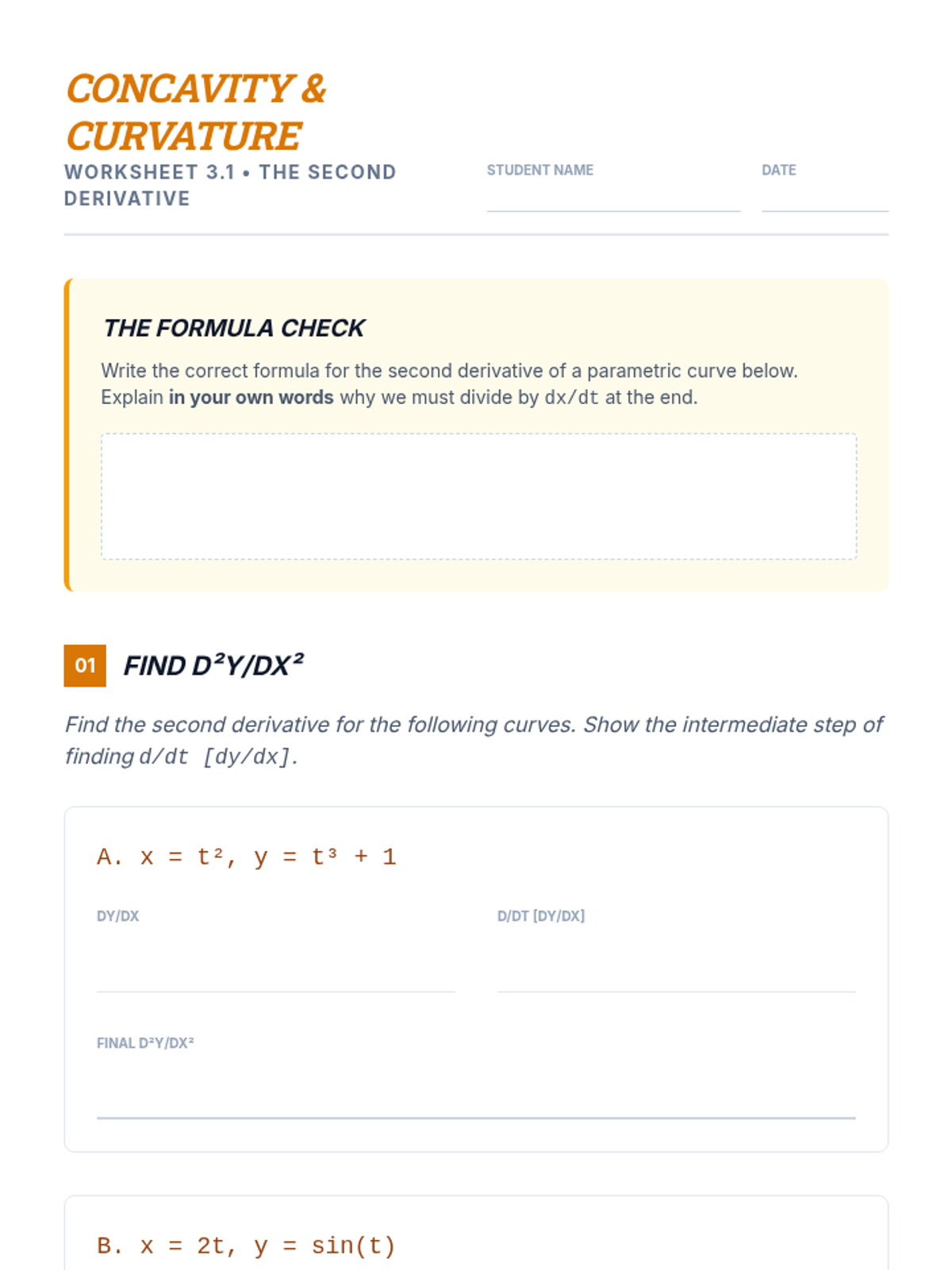
Students tackle the complex derivation of the second derivative for parametric equations. The lesson focuses on avoiding common misconceptions and using concavity to analyze curvature.
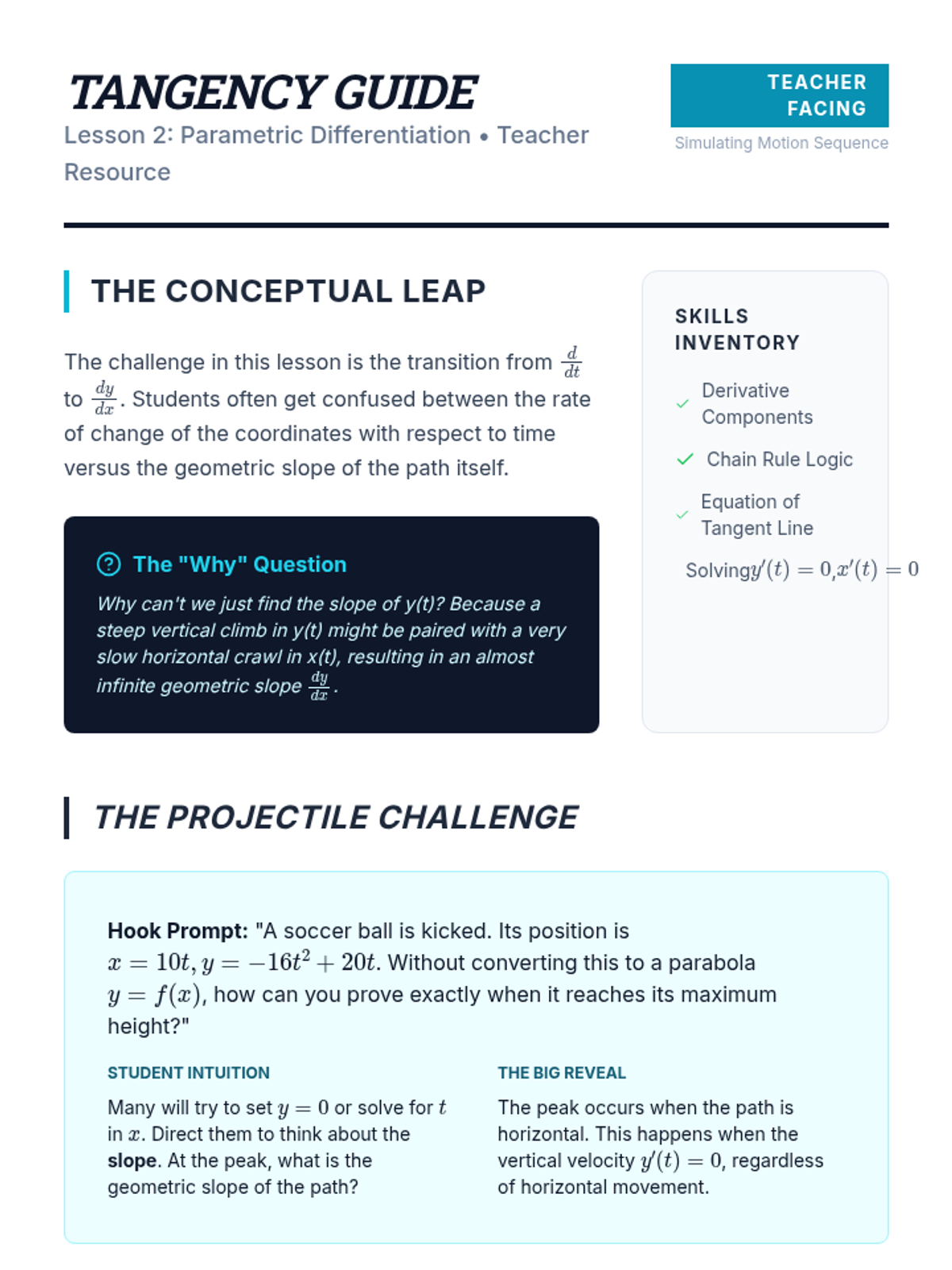
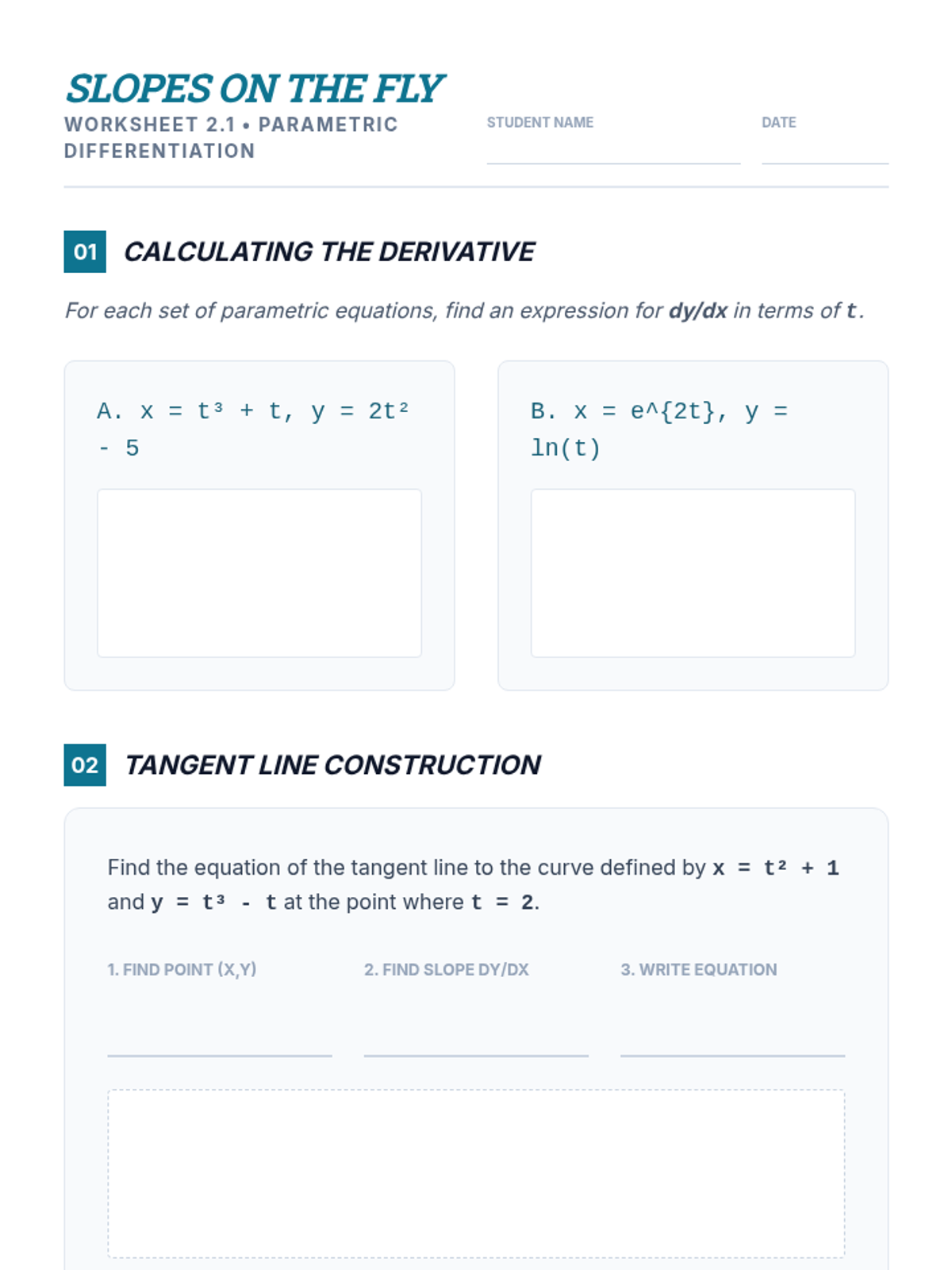
This lesson establishes the chain rule application required to find dy/dx given x(t) and y(t). Students calculate the slope of tangent lines and identify points of horizontal and vertical tangency.
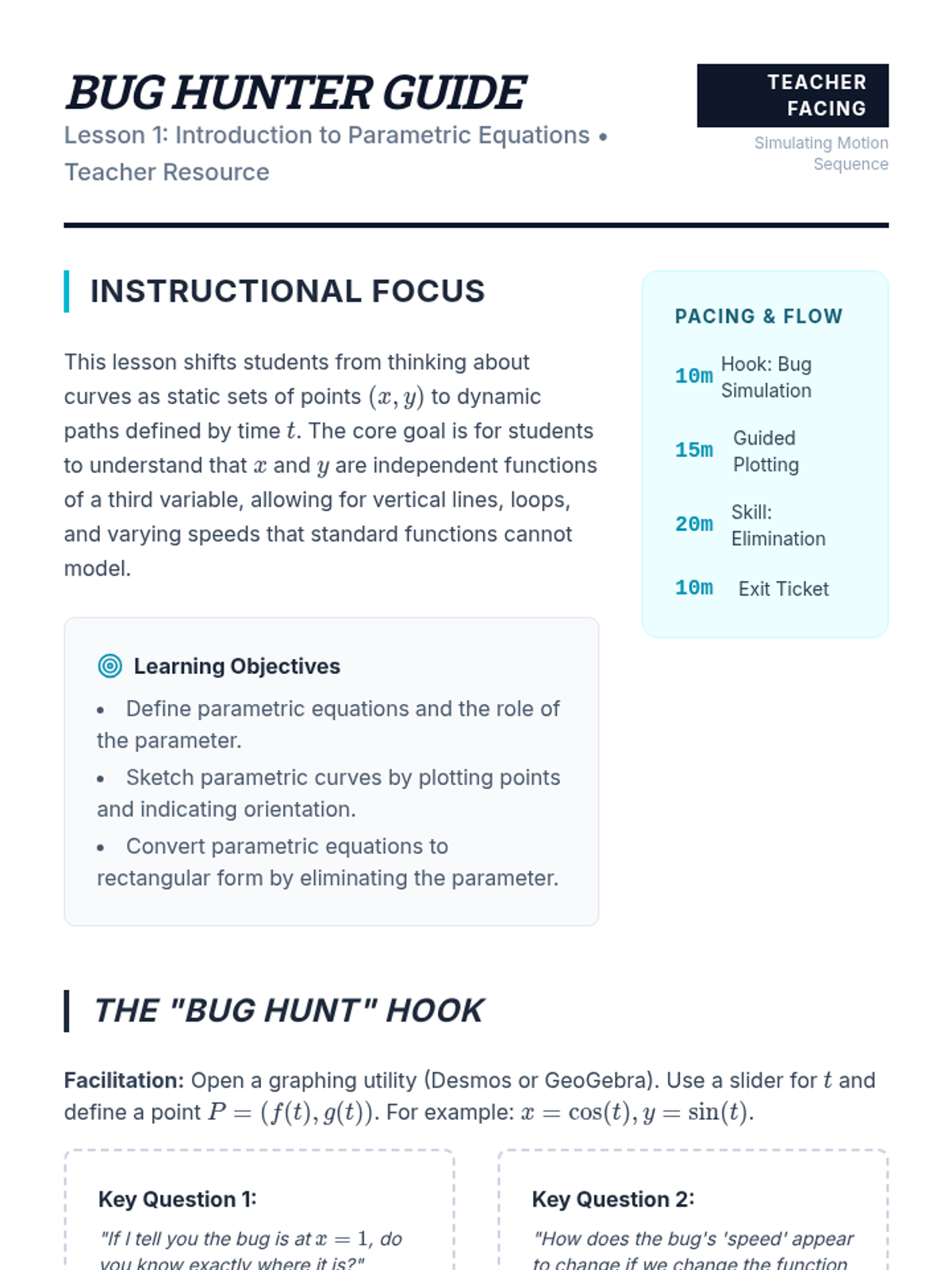
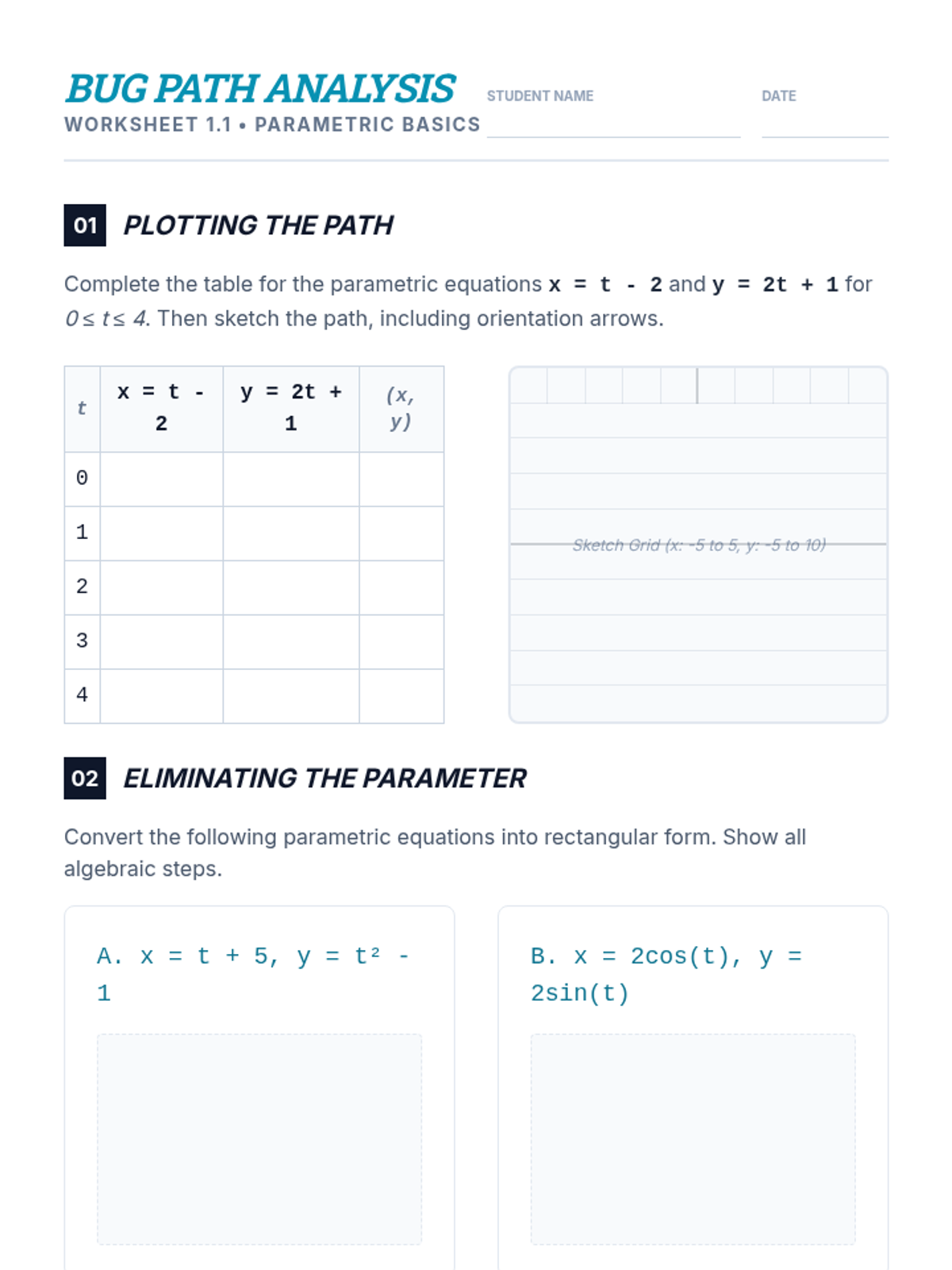
Students explore the definition of parametric equations by manually plotting points based on a parameter 't'. They practice eliminating the parameter to convert parametric equations into rectangular form.
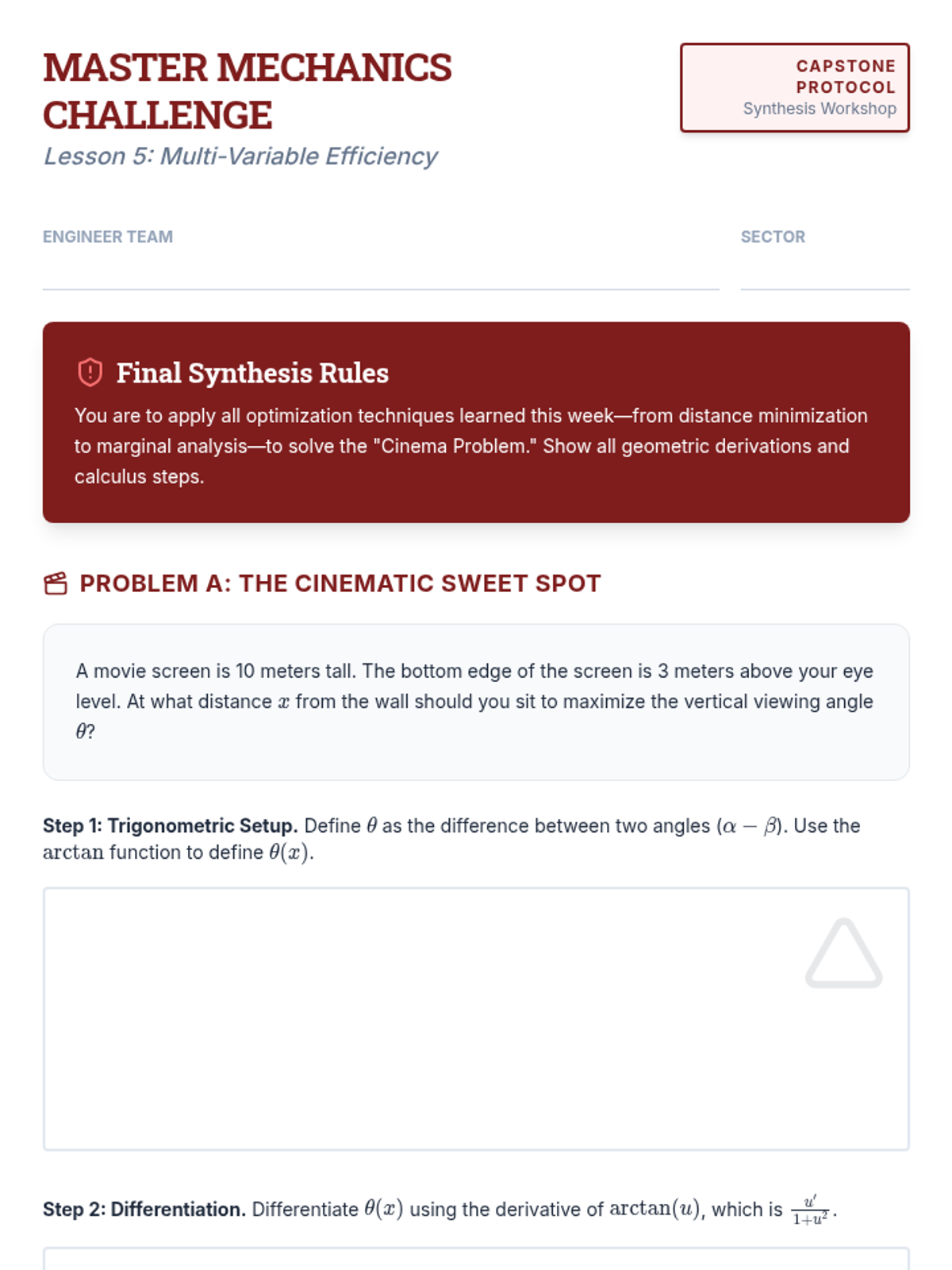
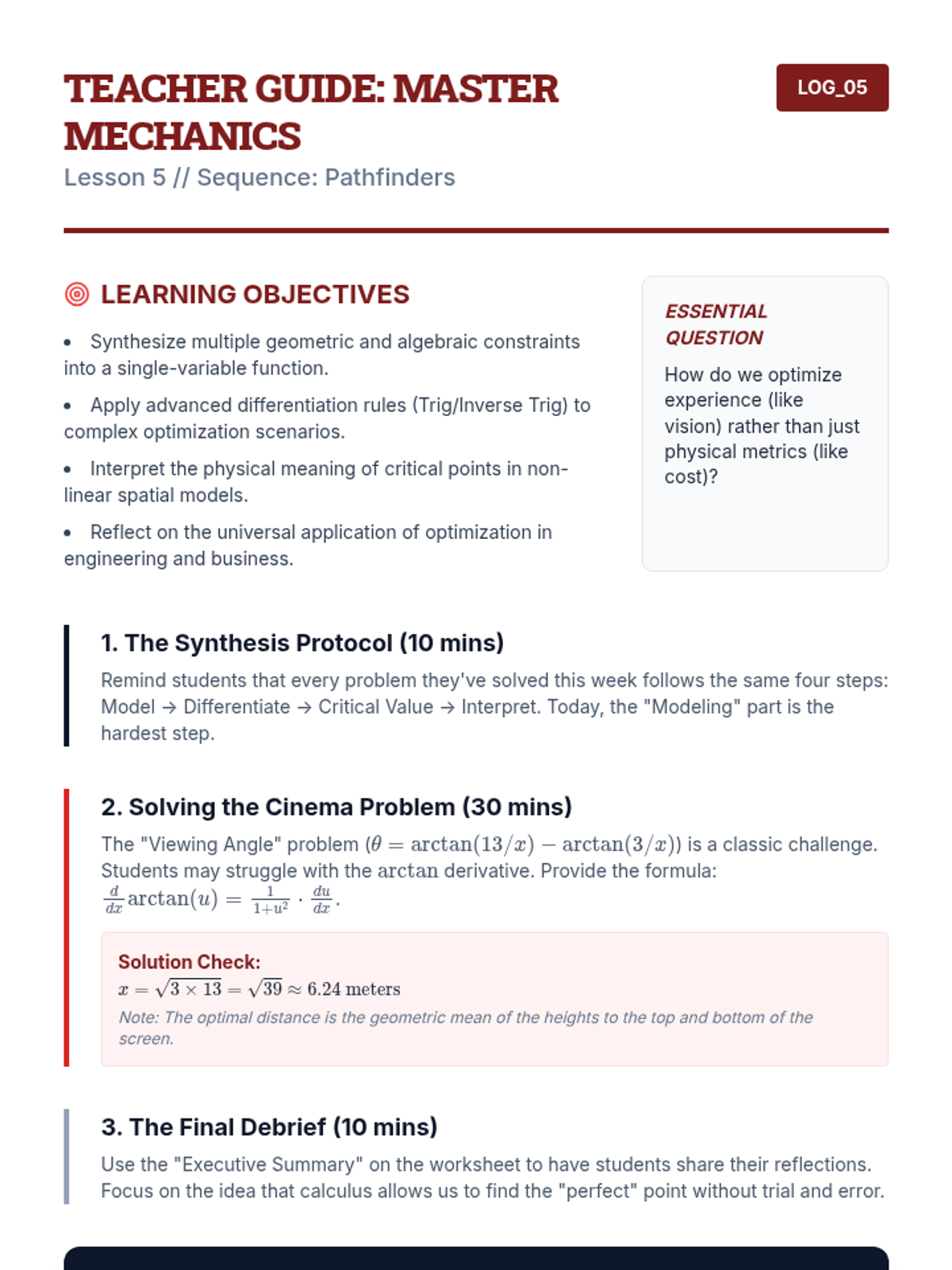
A culminating workshop where students solve complex, multi-constraint problems like viewing angles and projectile efficiency.
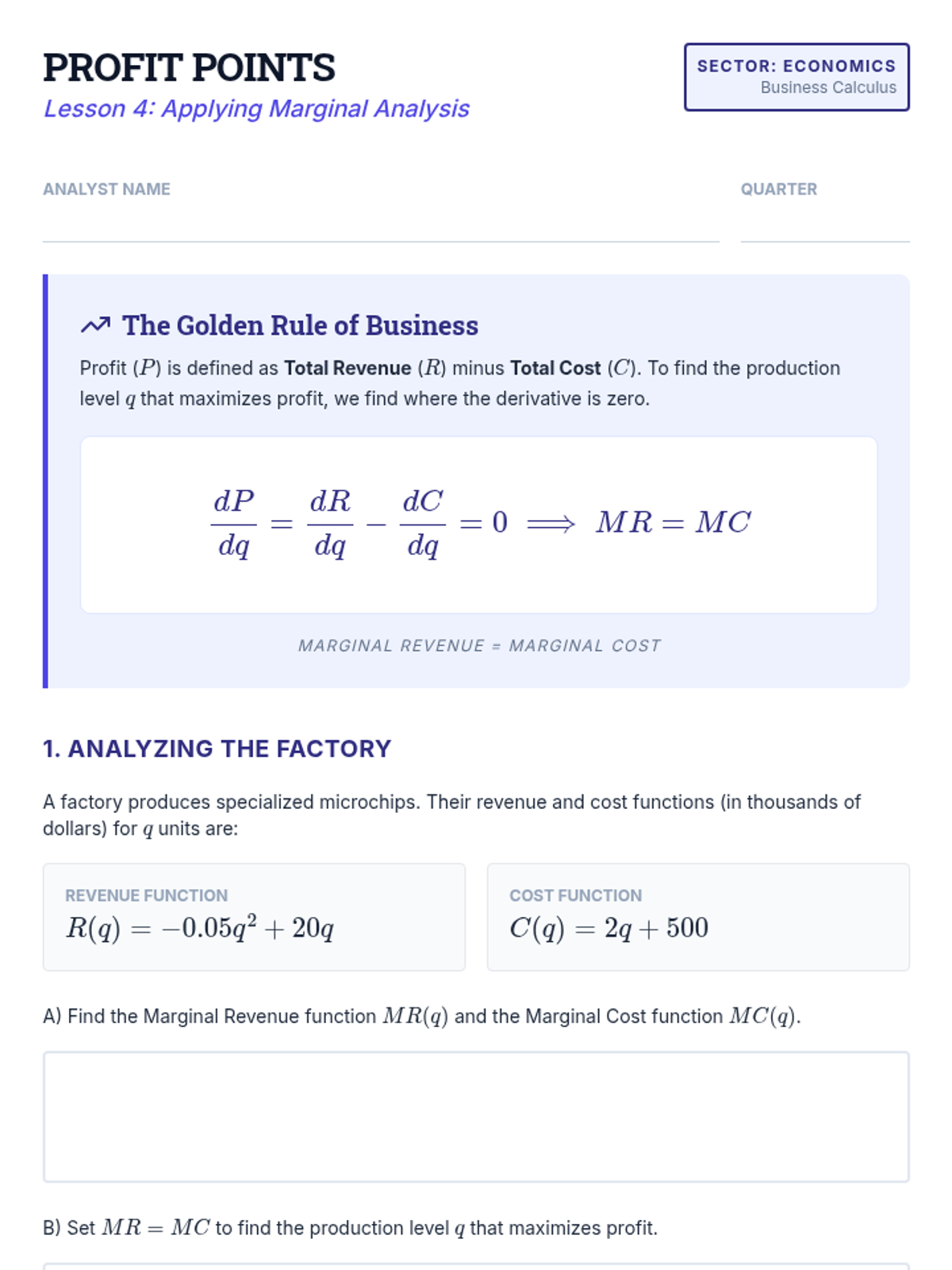
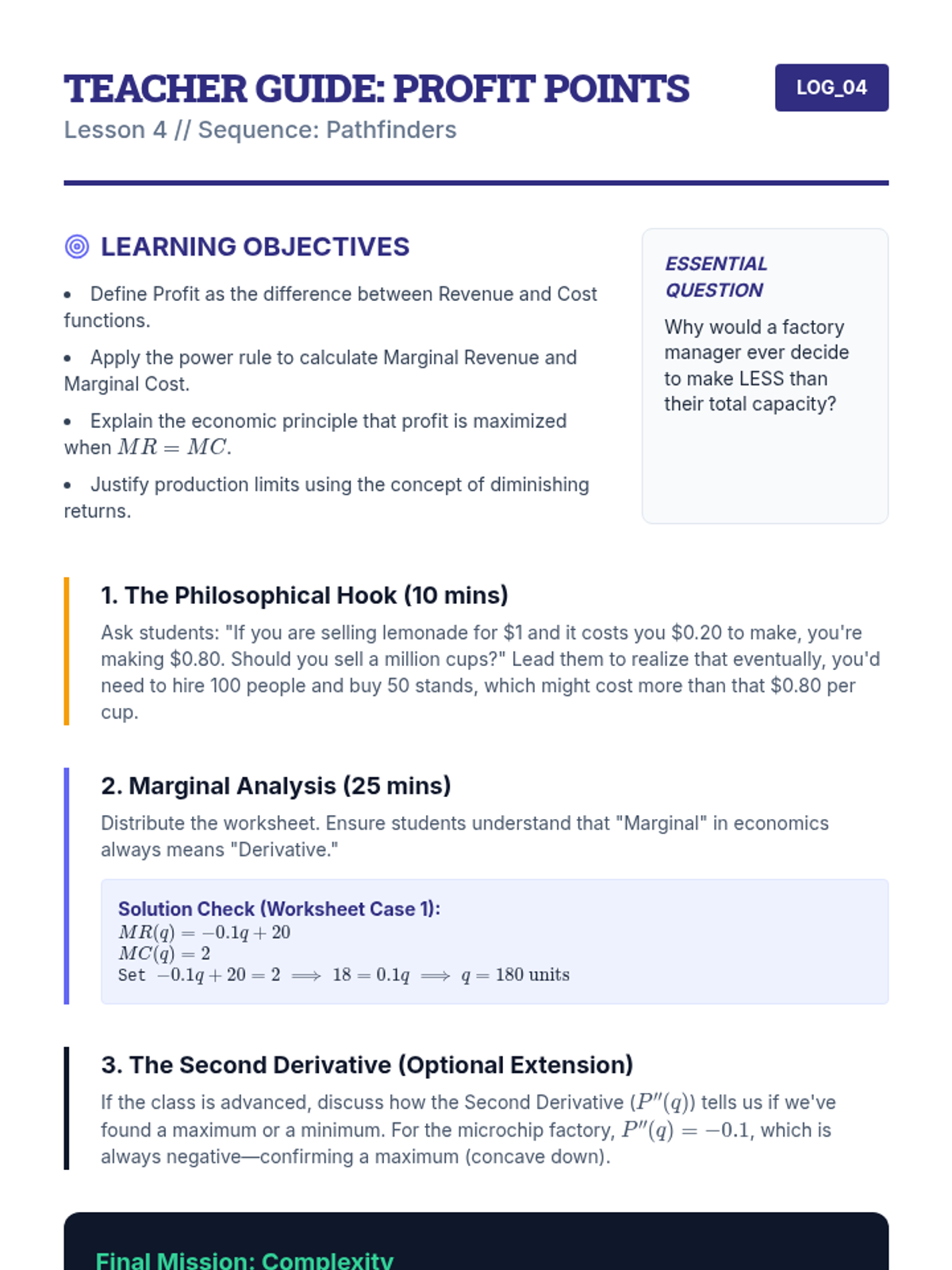
Students transition to economics, using marginal analysis to find the production levels that maximize profit.
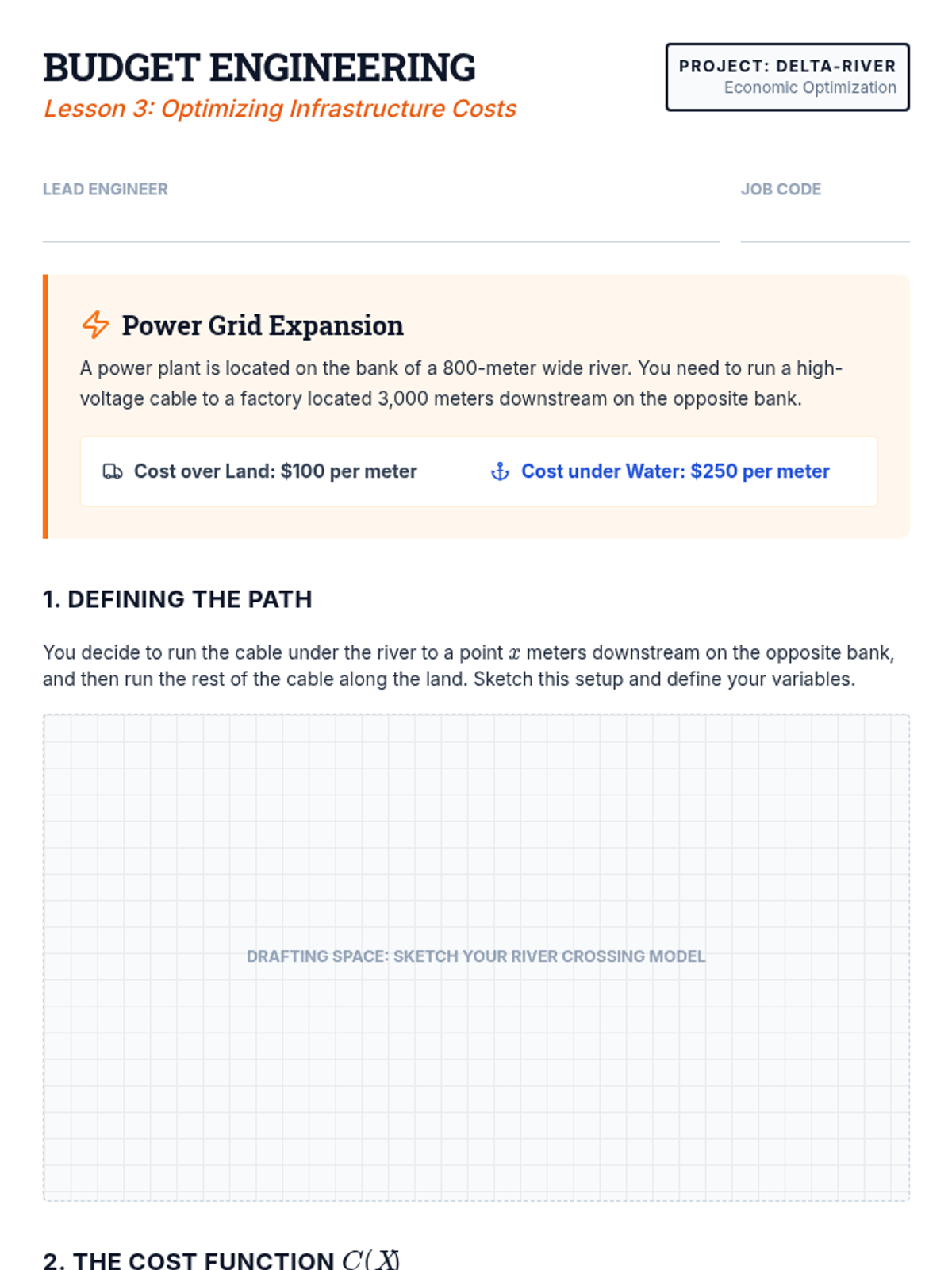
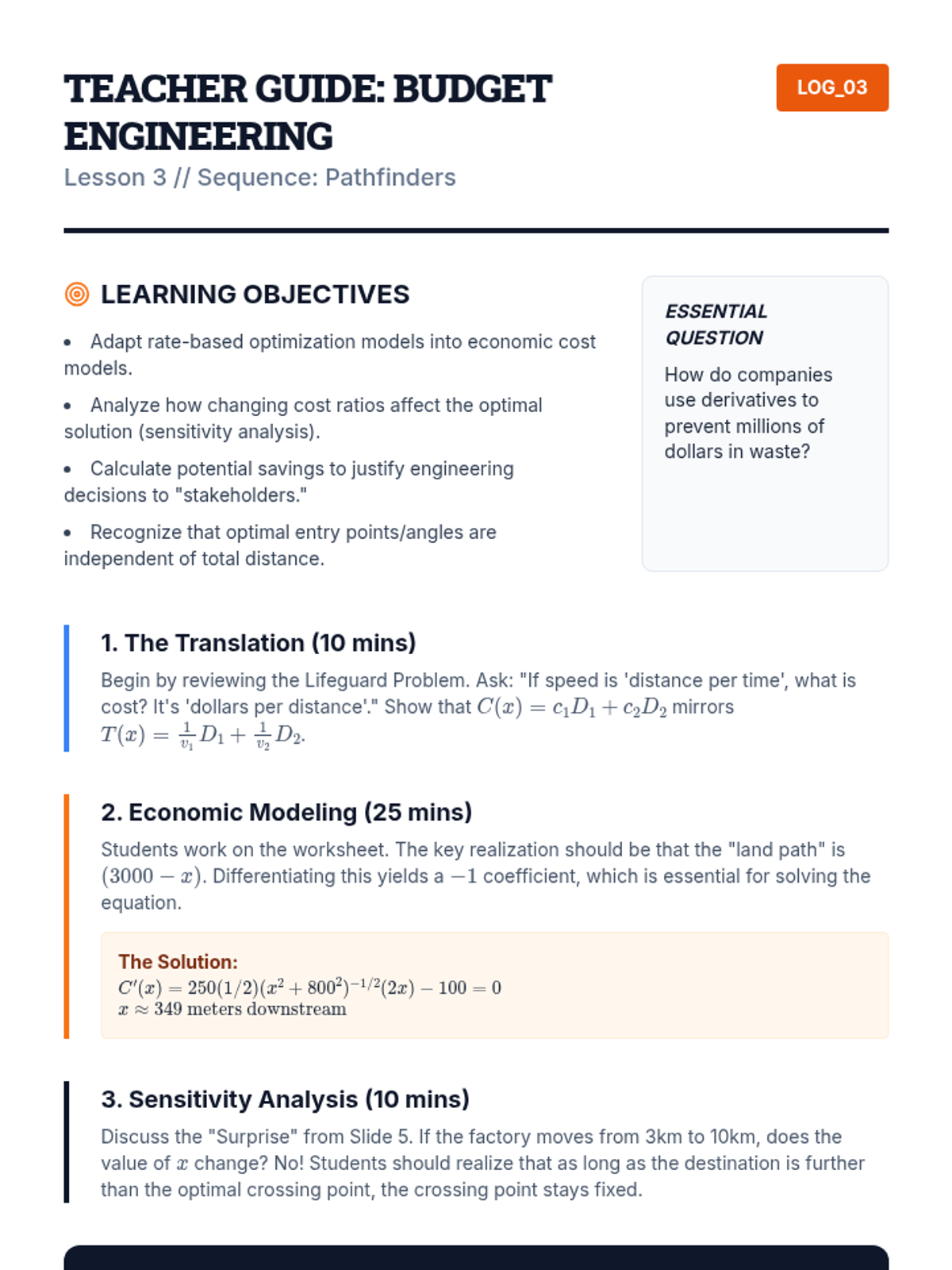
Applying optimization to infrastructure, students calculate the most cost-effective path for utility lines across varying terrains.
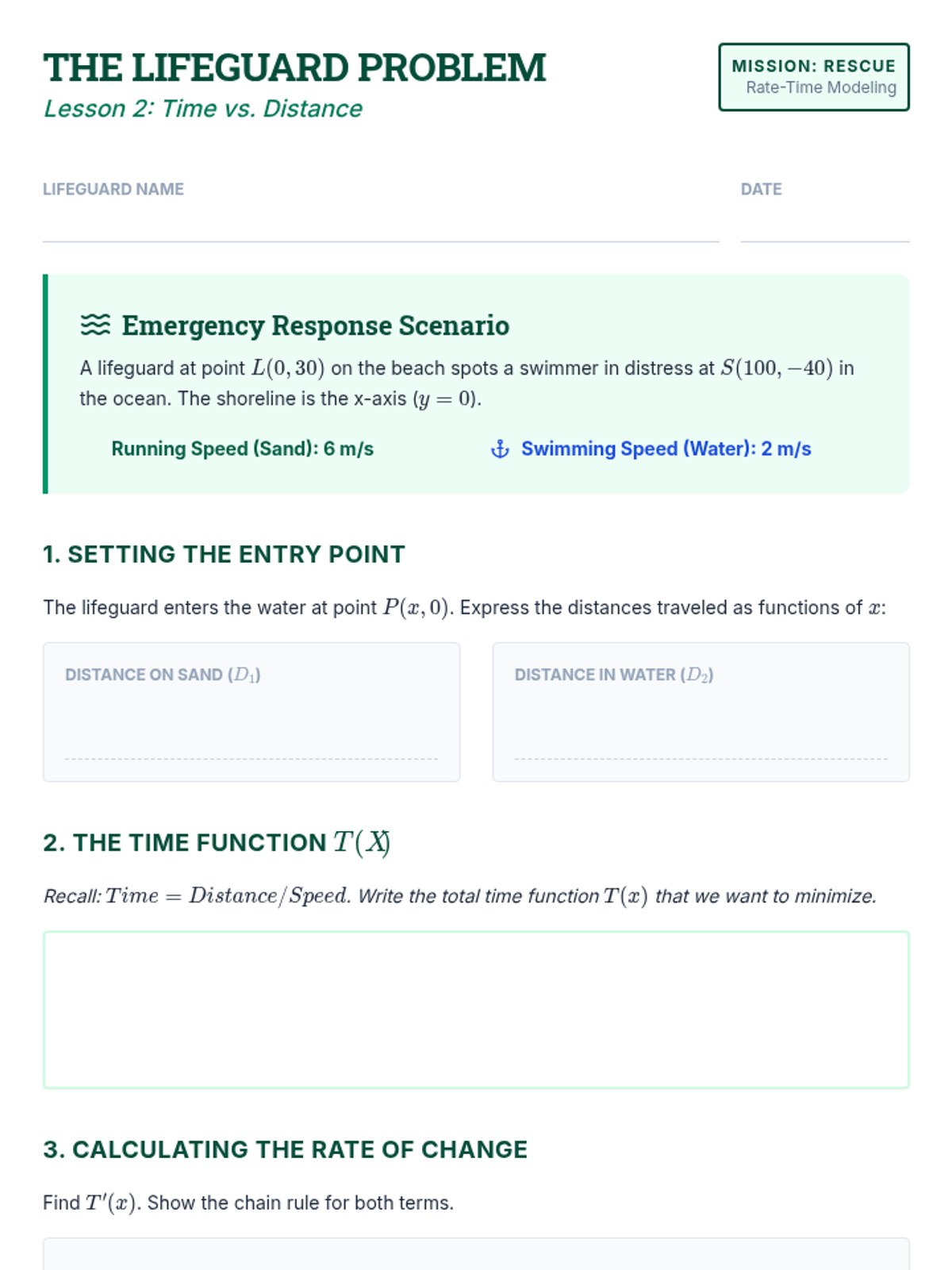
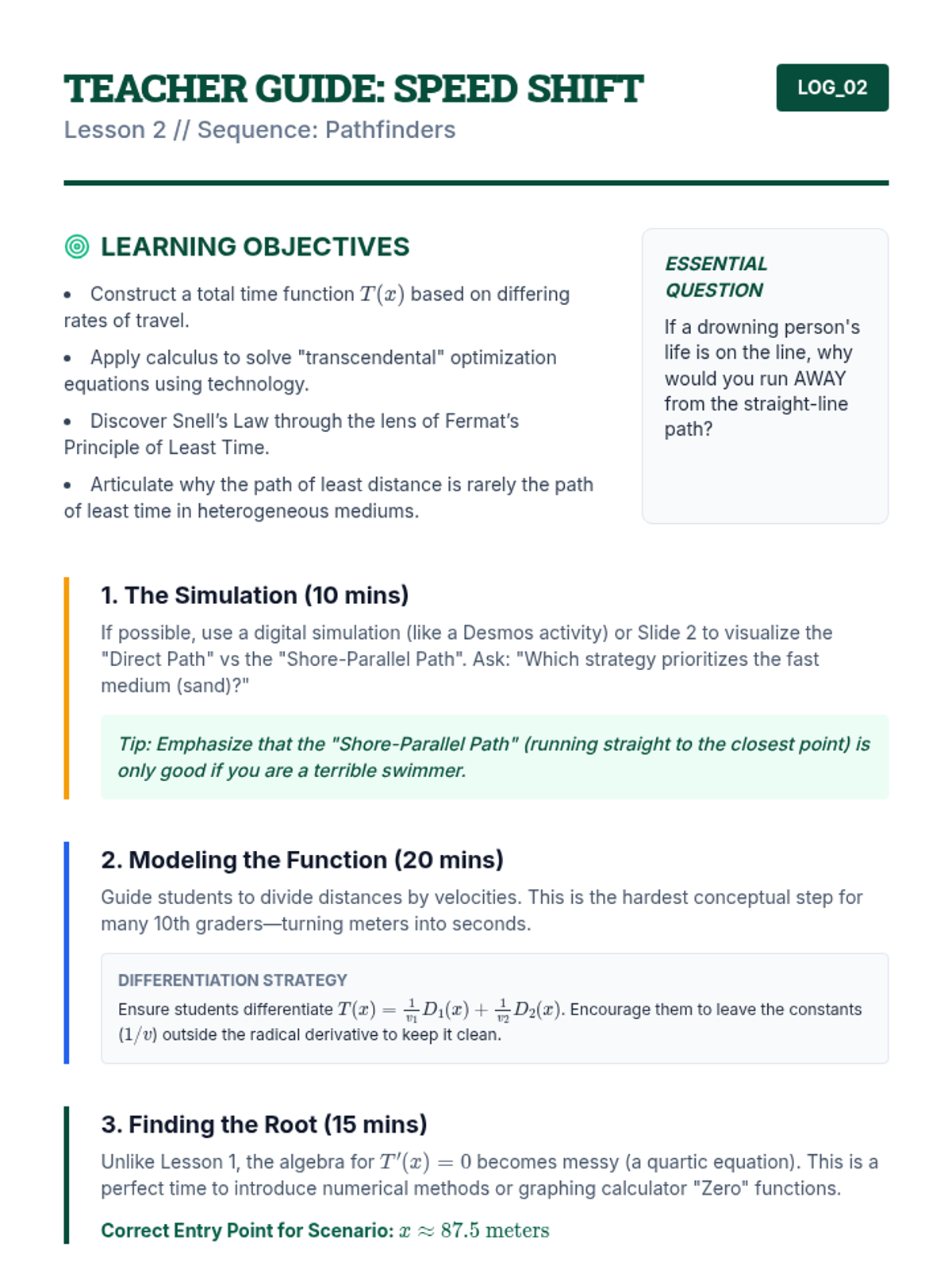
Students model the lifeguard problem, determining the fastest route across two mediums with different travel speeds.
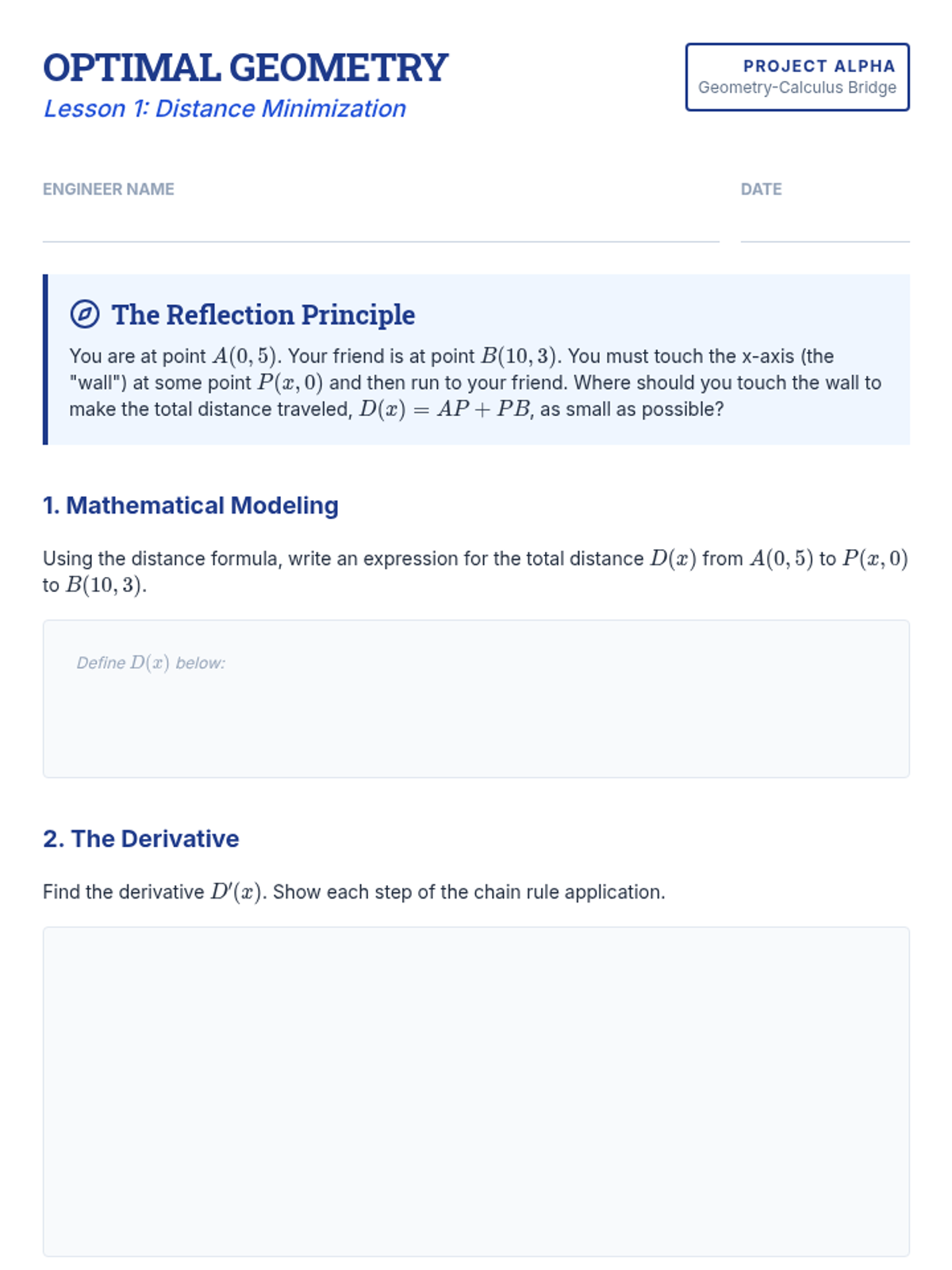
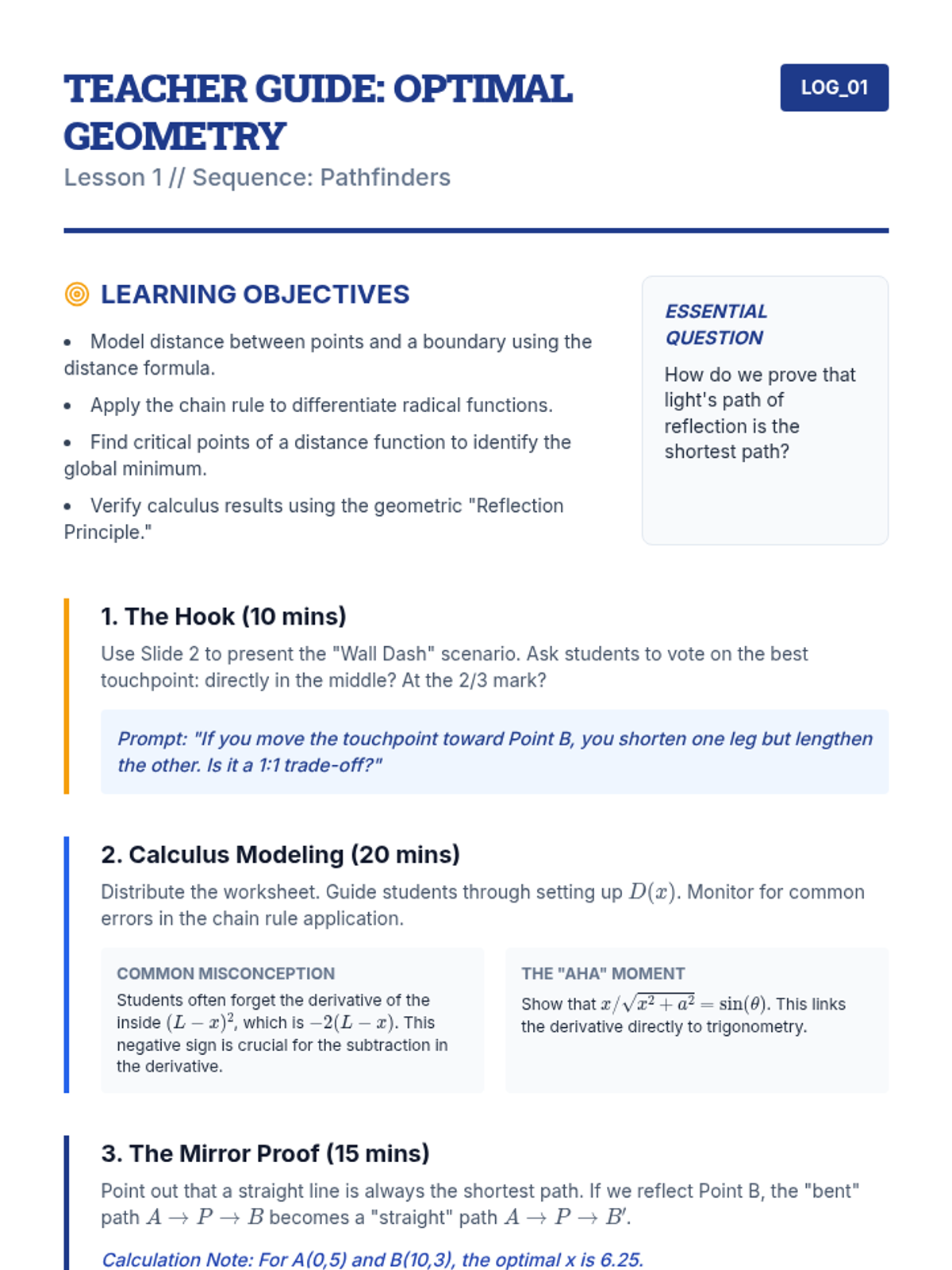
Students explore geometric shortest paths using basic calculus, establishing that a straight line is only optimal under uniform conditions.
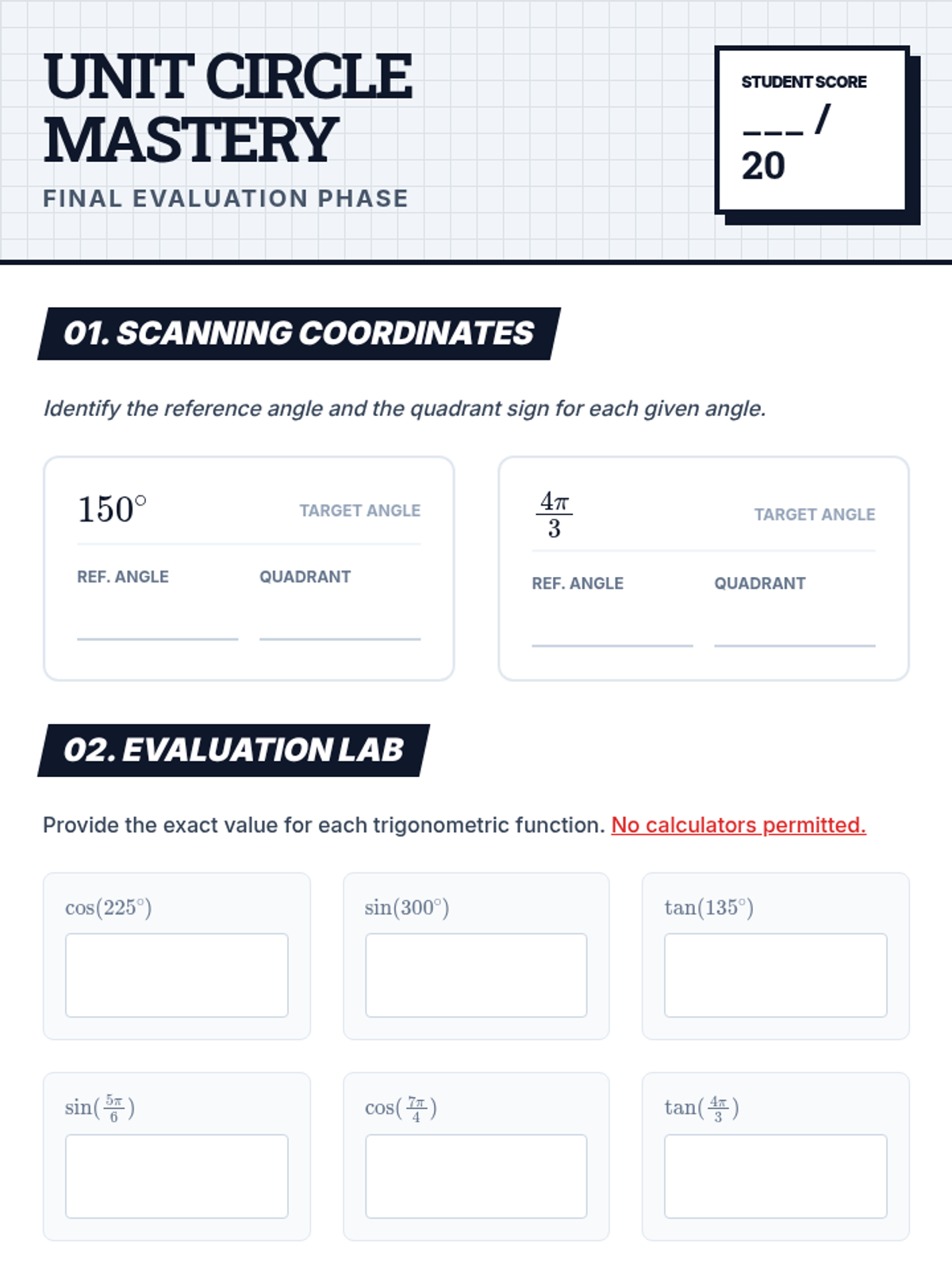
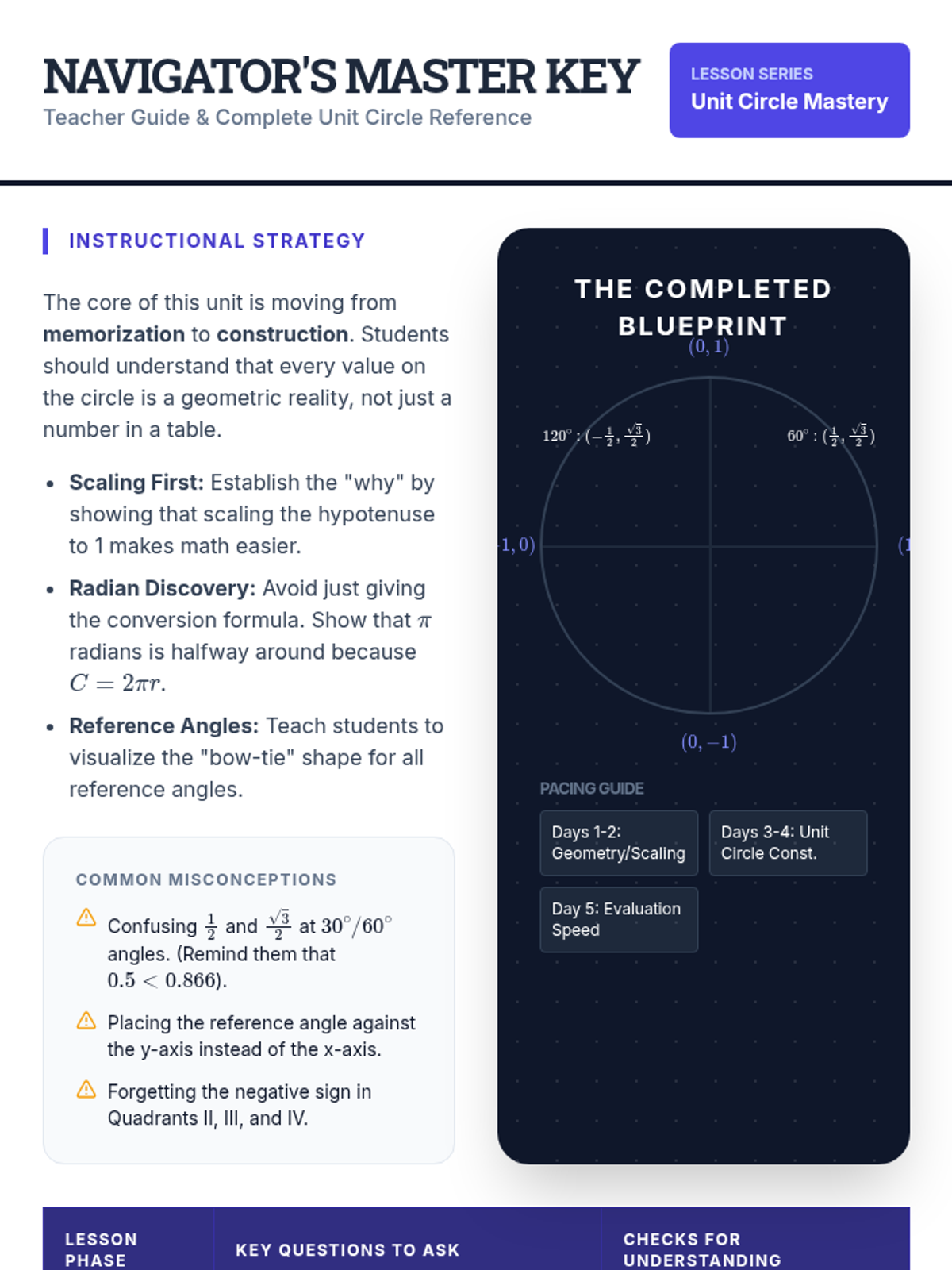
Mastering the evaluation of exact trigonometric values for all standard angles on the unit circle.
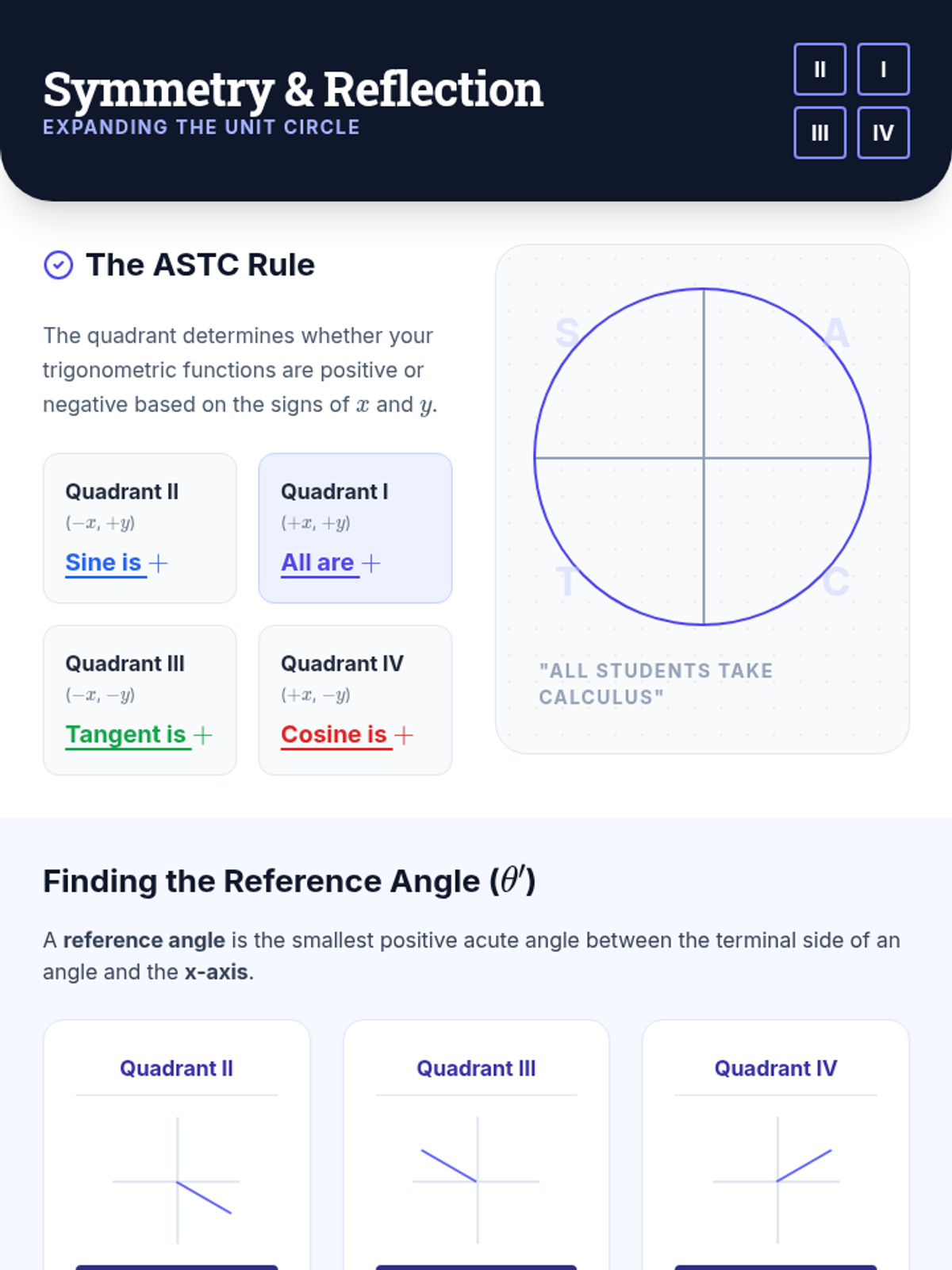
Using symmetry and reference angles to extend trigonometric values across all four quadrants.
Mapping scaled triangles onto the coordinate plane to define sine and cosine as x and y coordinates in the first quadrant.
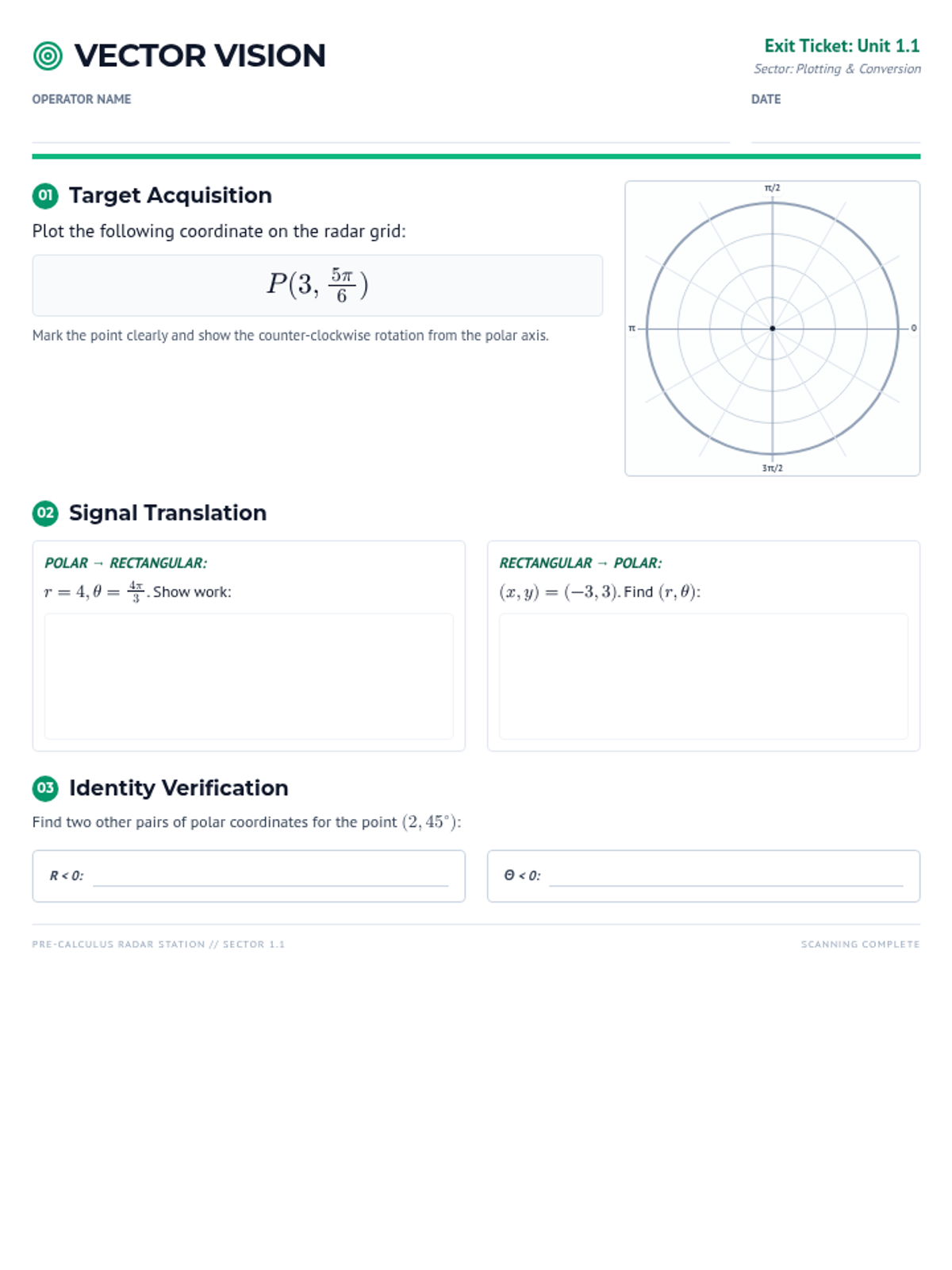
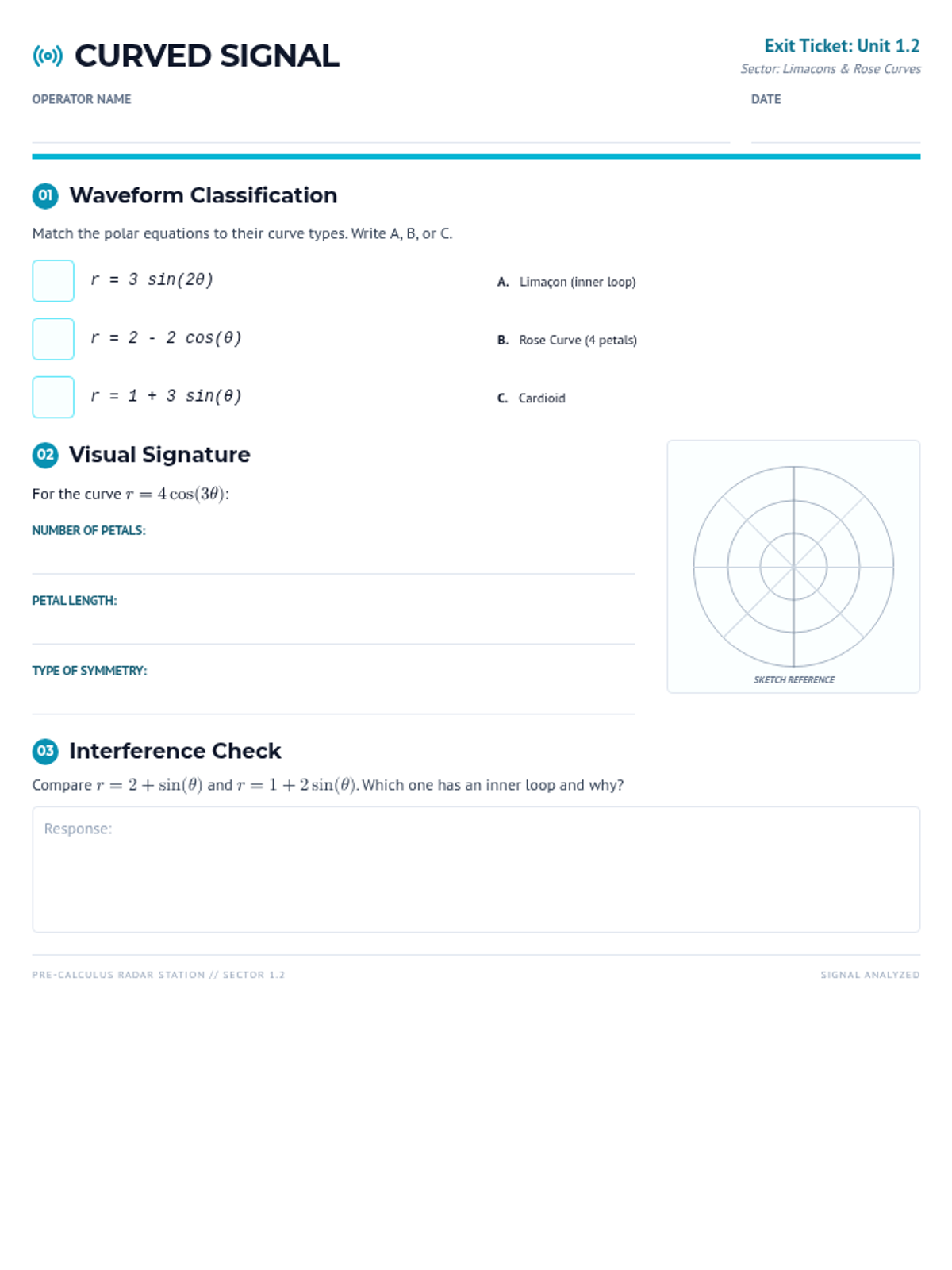
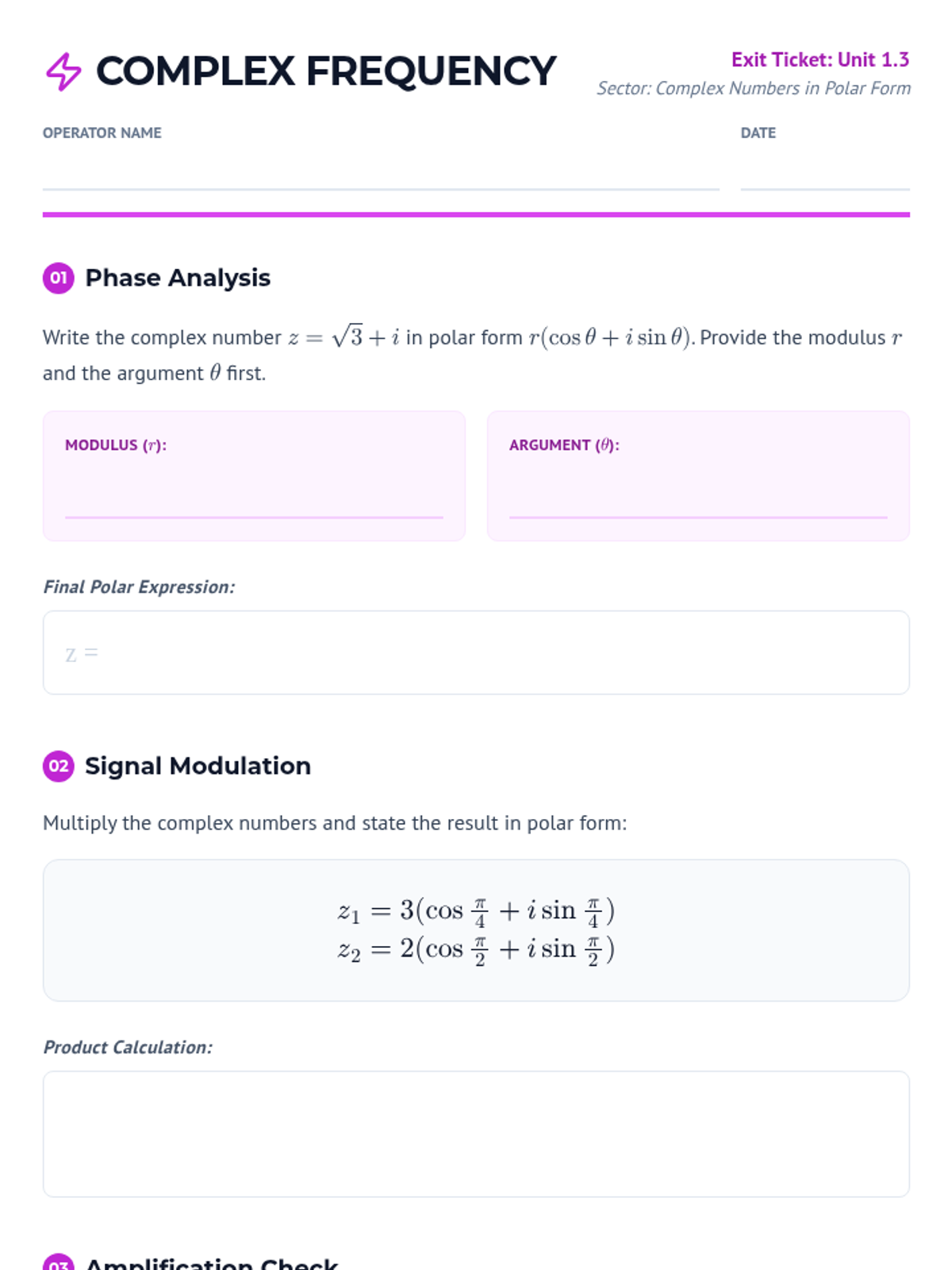
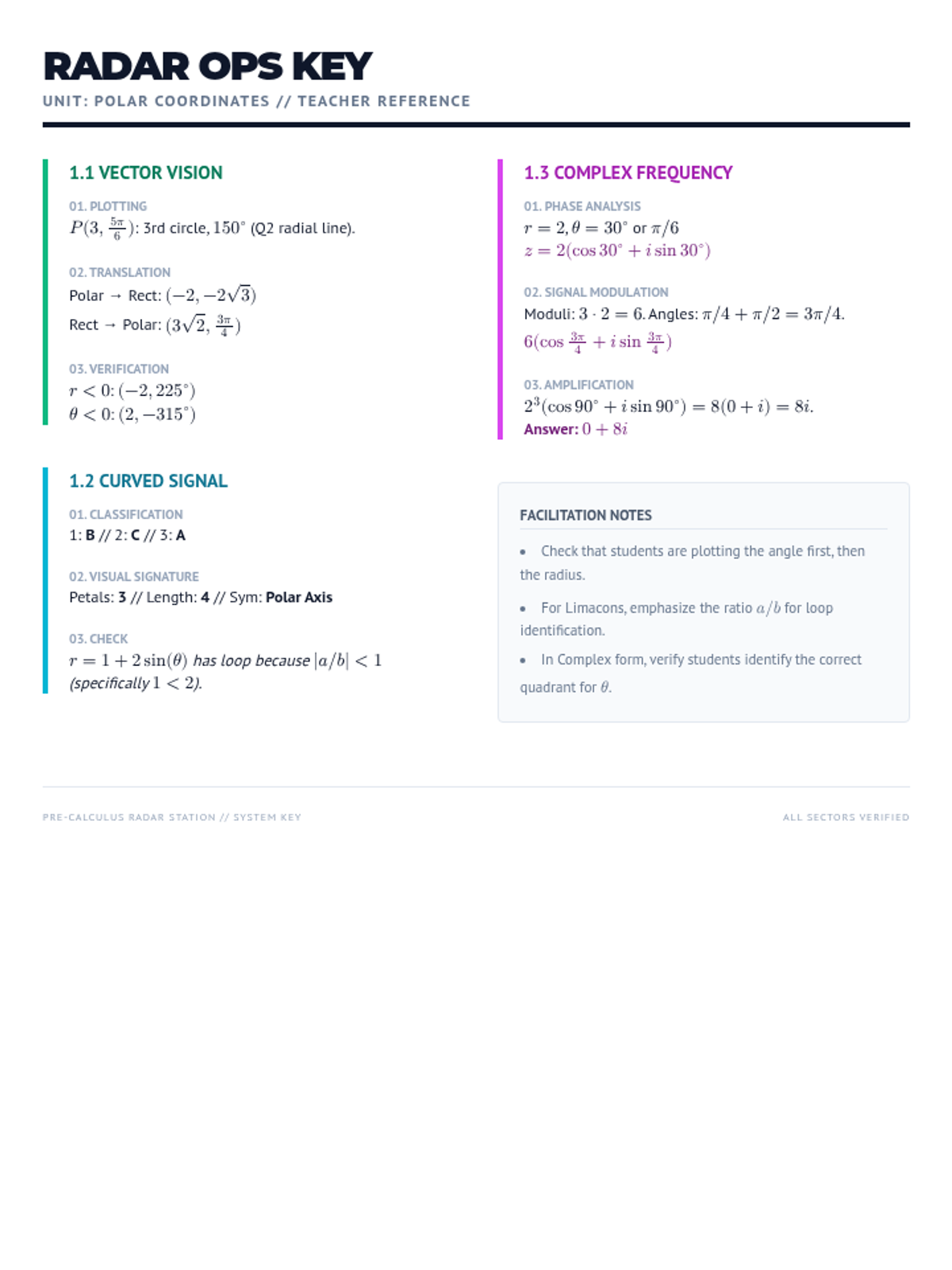
A series of focused assessments to verify student mastery of polar coordinate plotting, conversion, graphing special curves, and representing complex numbers in polar form.
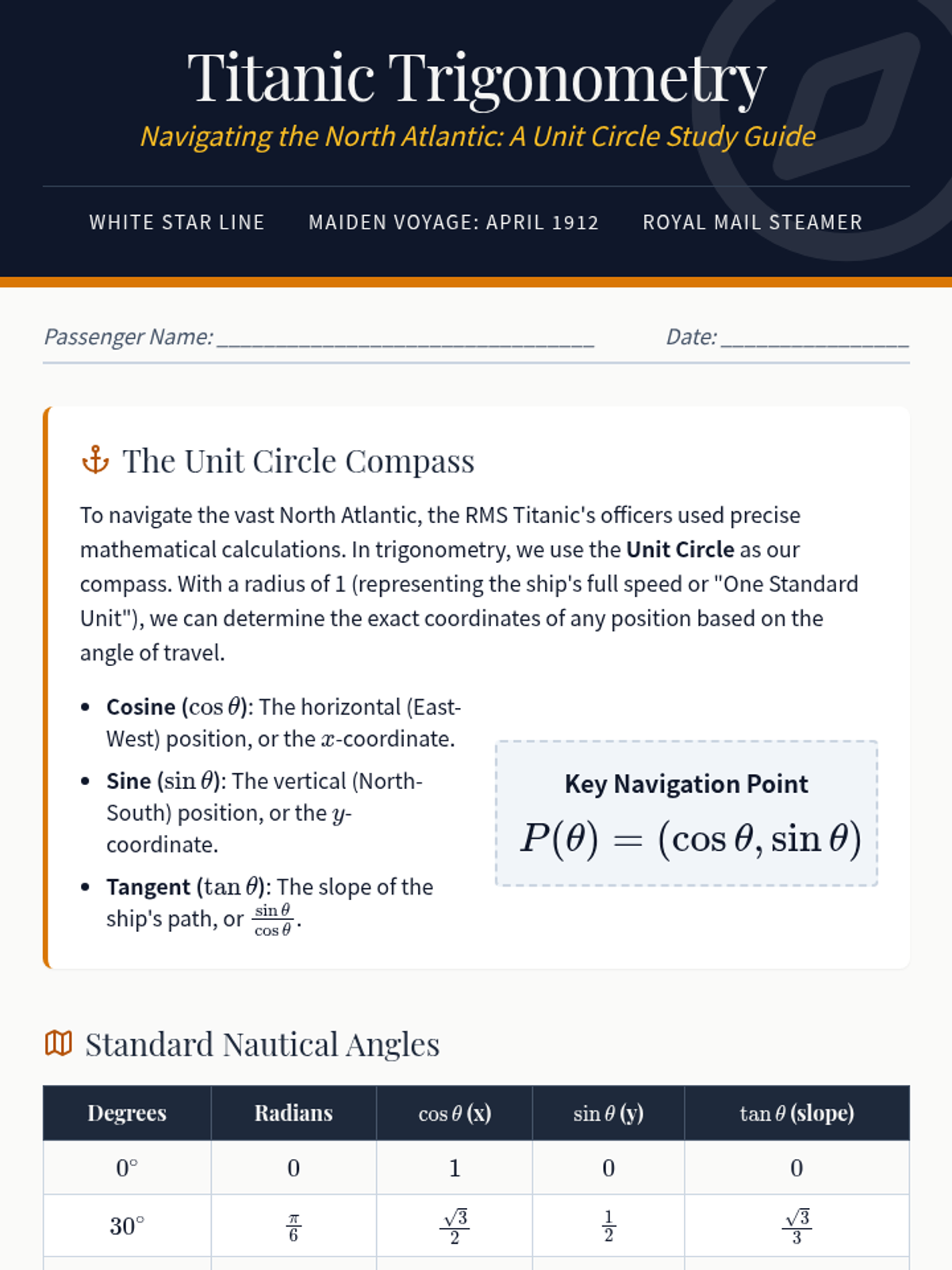
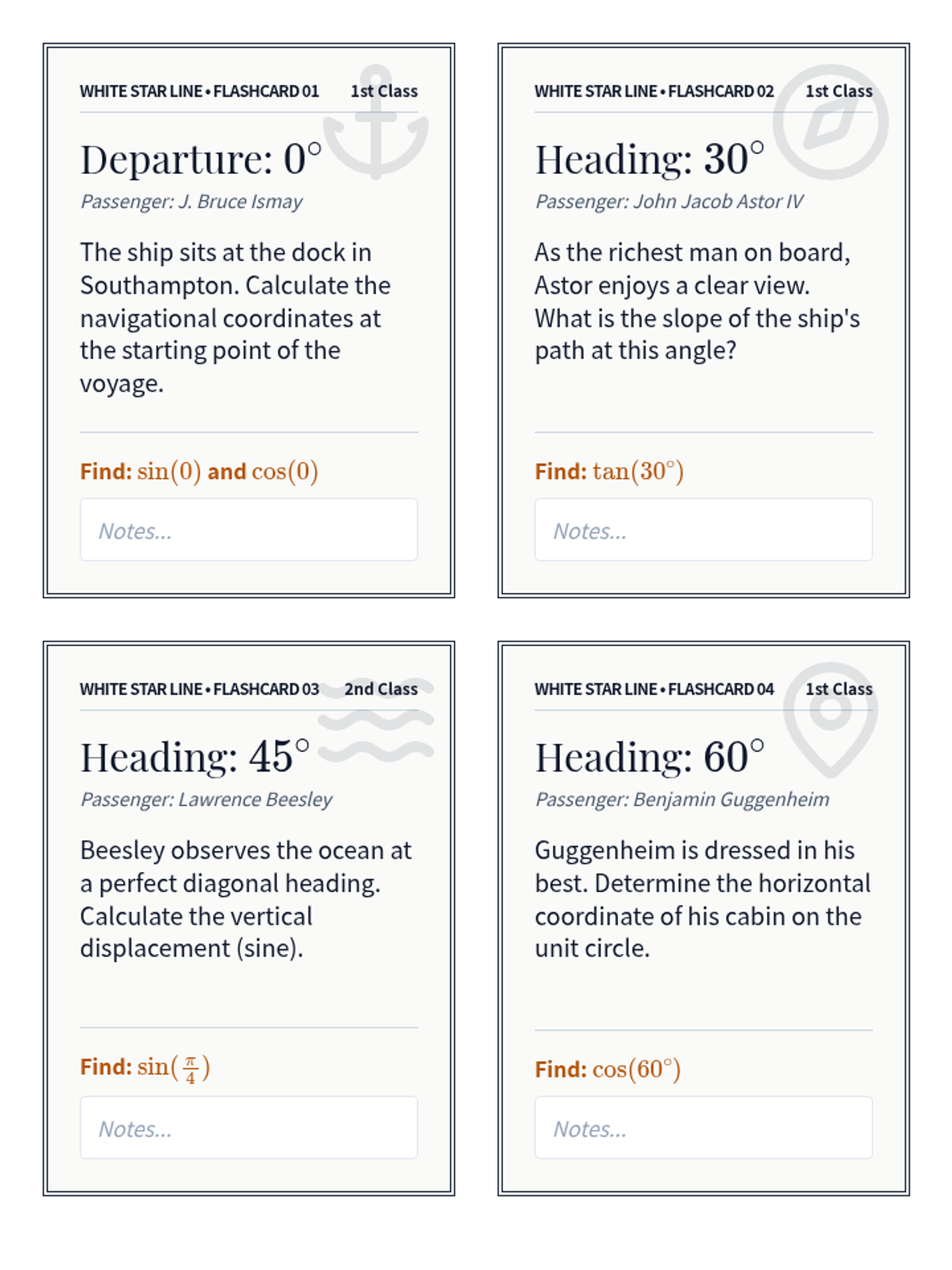
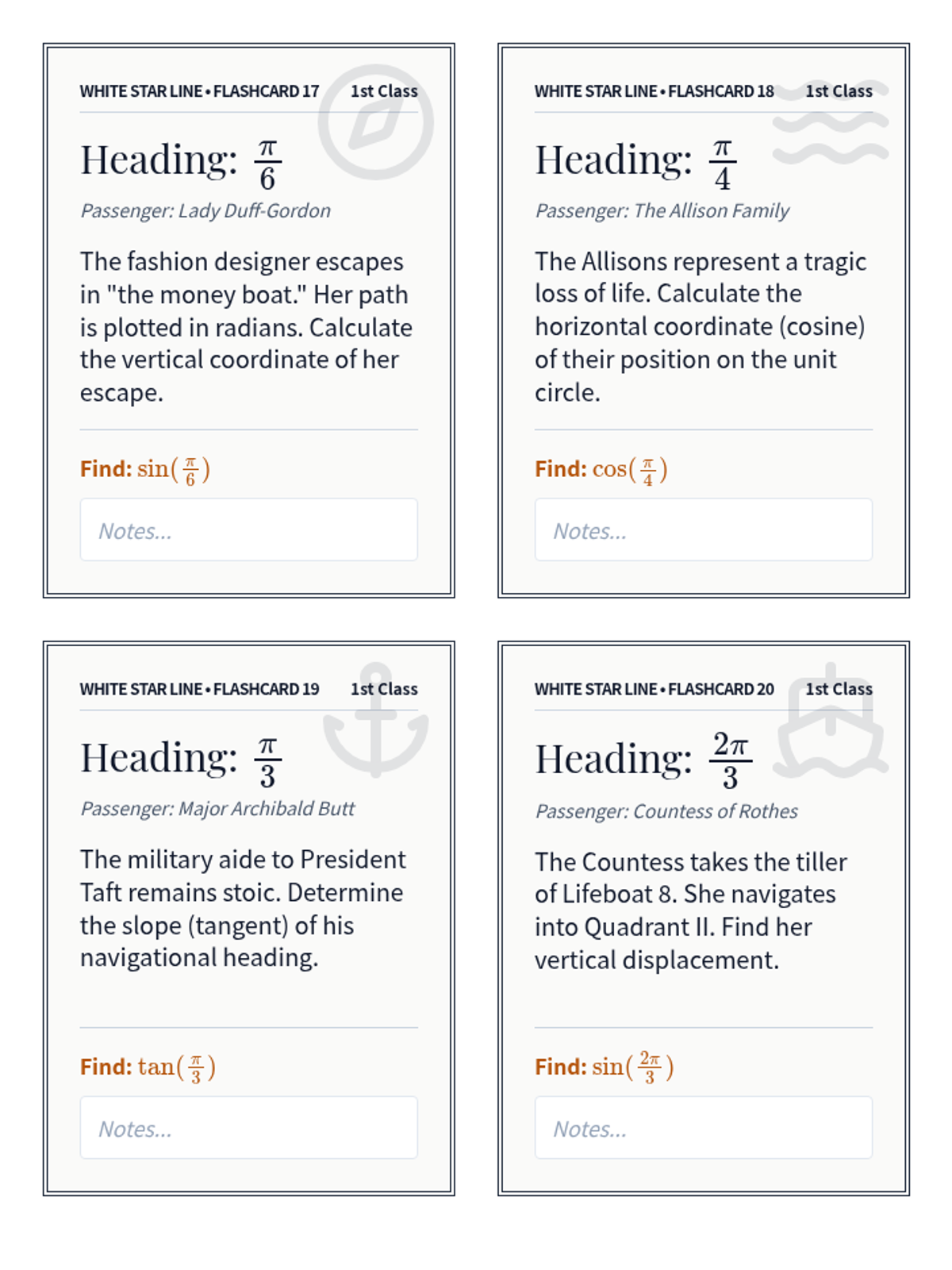
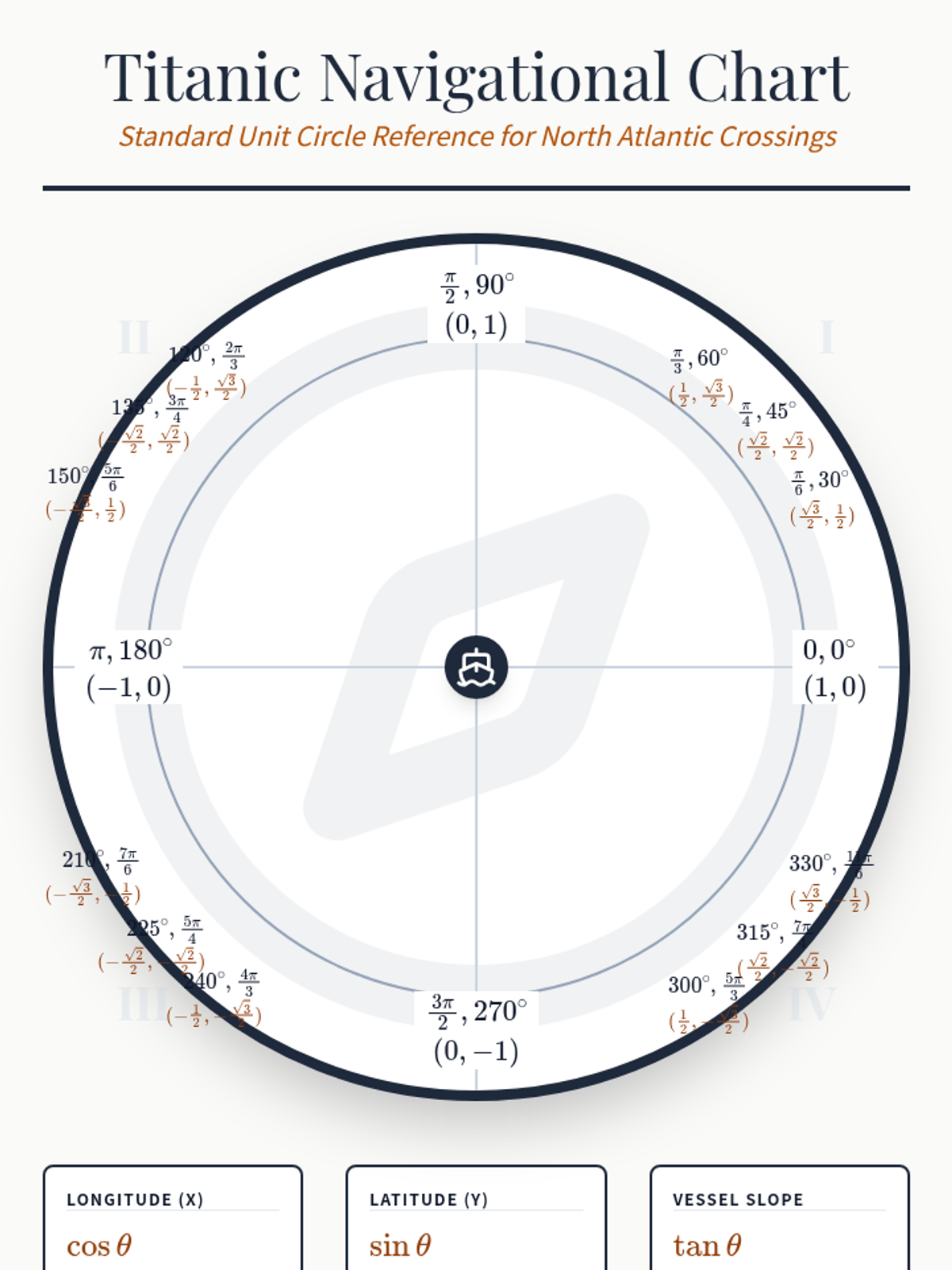
A maritime-themed lesson exploring trigonometry through the lens of the Titanic's maiden voyage. Students master unit circle coordinates and trigonometric values using historical figures and navigation scenarios.
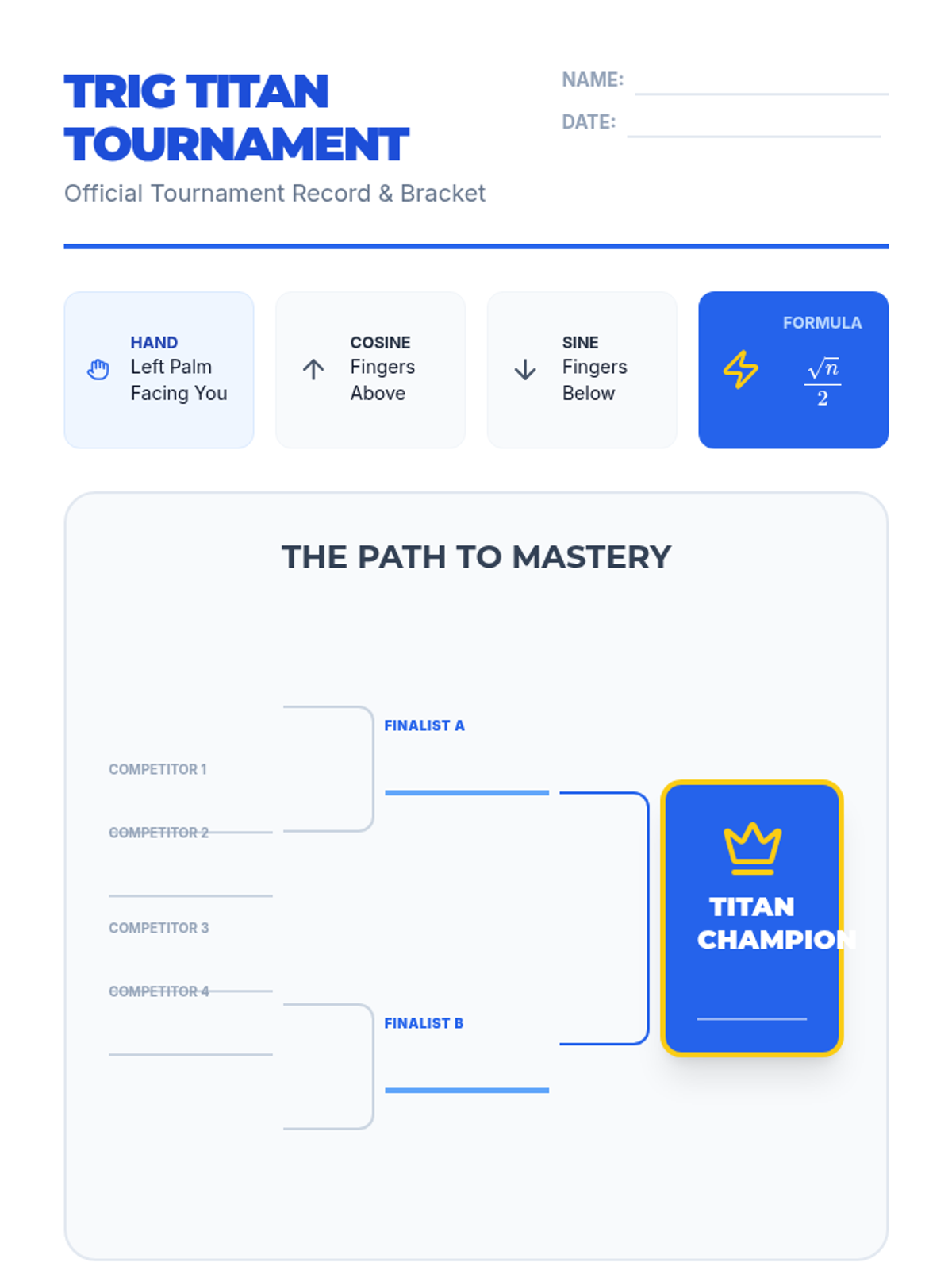
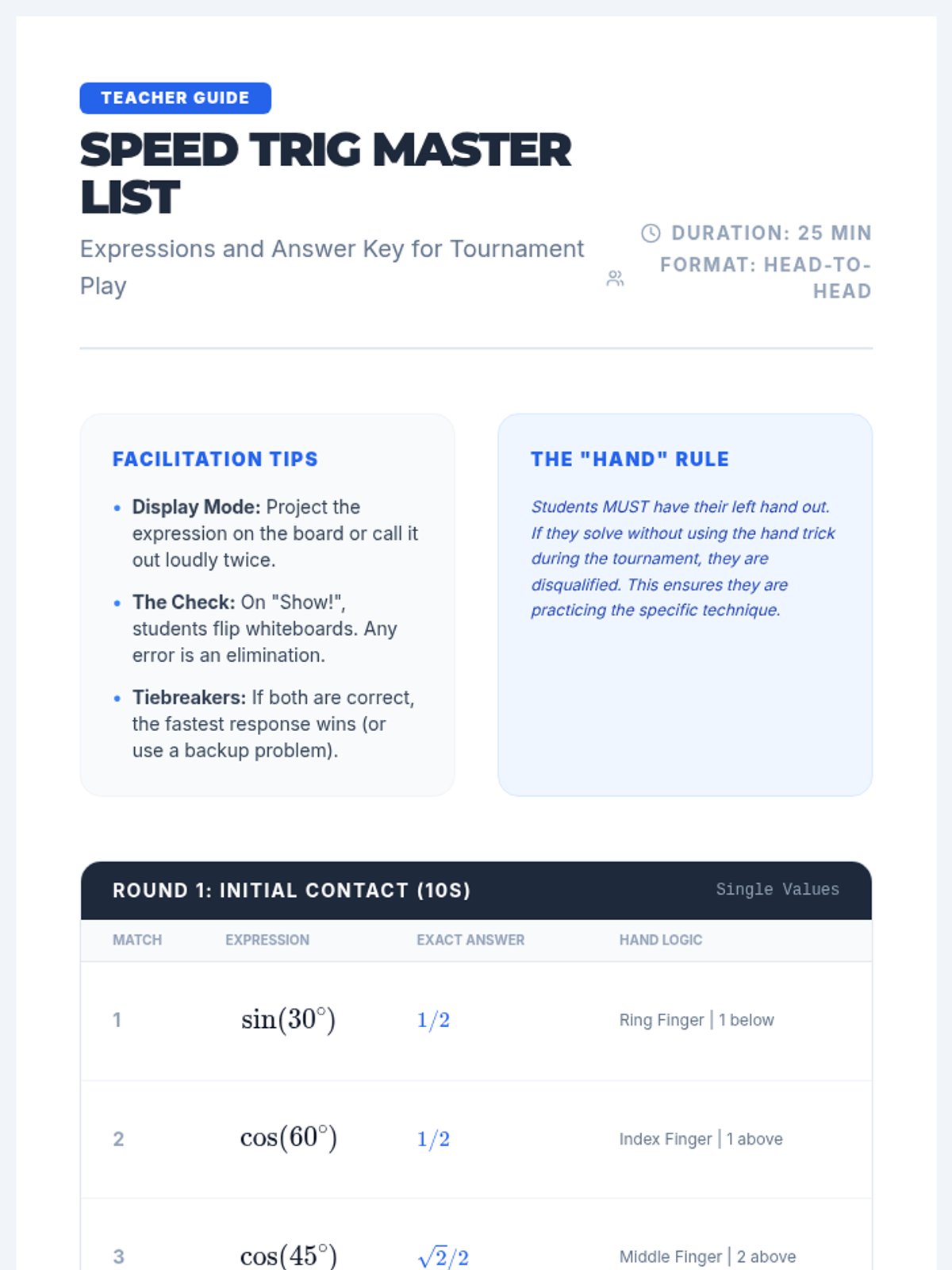
Students will master the Left-Hand Technique for 1st-quadrant trigonometric values, moving from basic finger setup to rapid mental calculation of complex expressions through a competitive tournament.
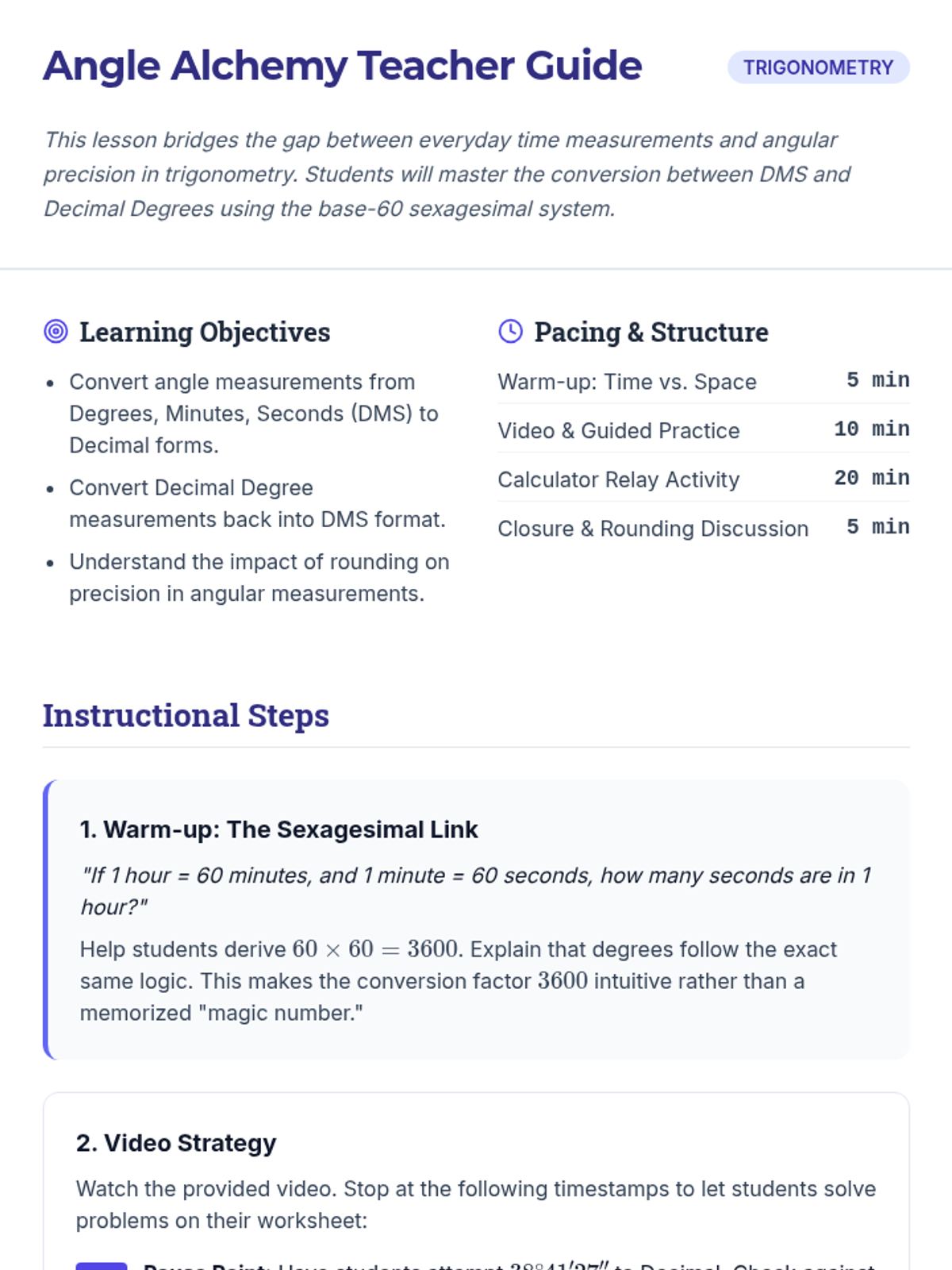
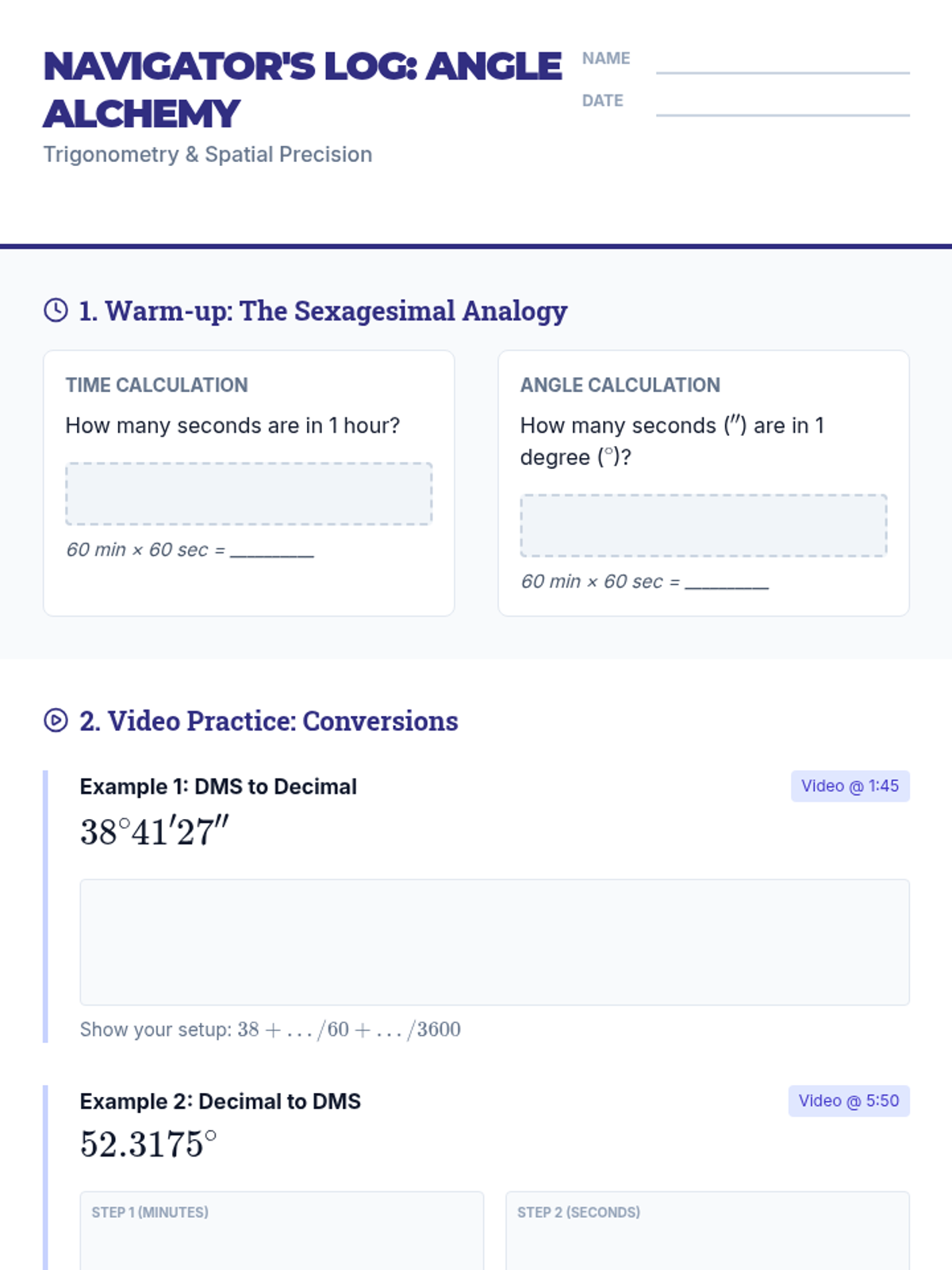
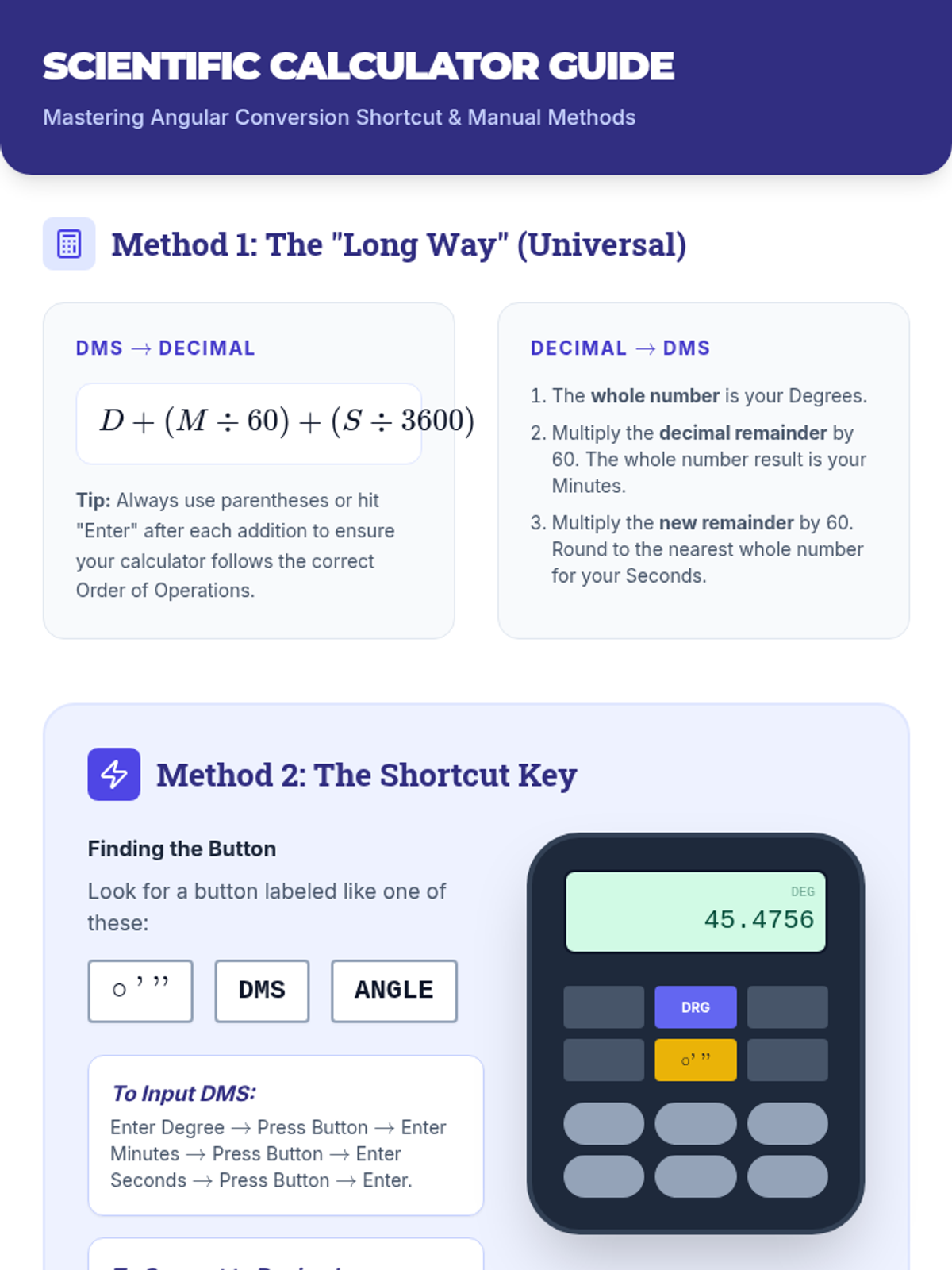
A high school trigonometry lesson on converting between Degrees, Minutes, Seconds (DMS) and Decimal Degrees, using the 'Time vs. Space' analogy. Students learn the sexagesimal system through video examples and a collaborative calculator relay activity.
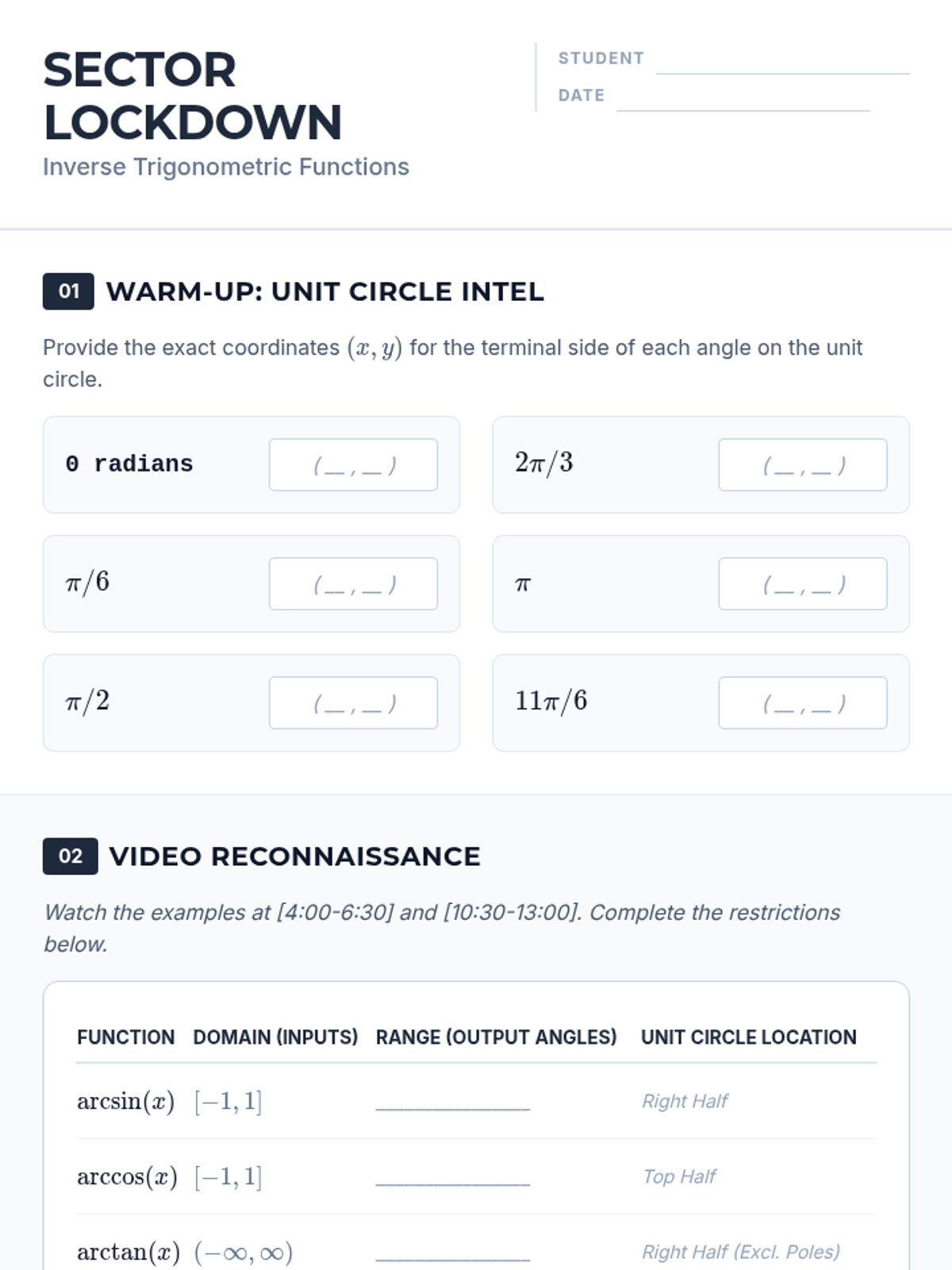
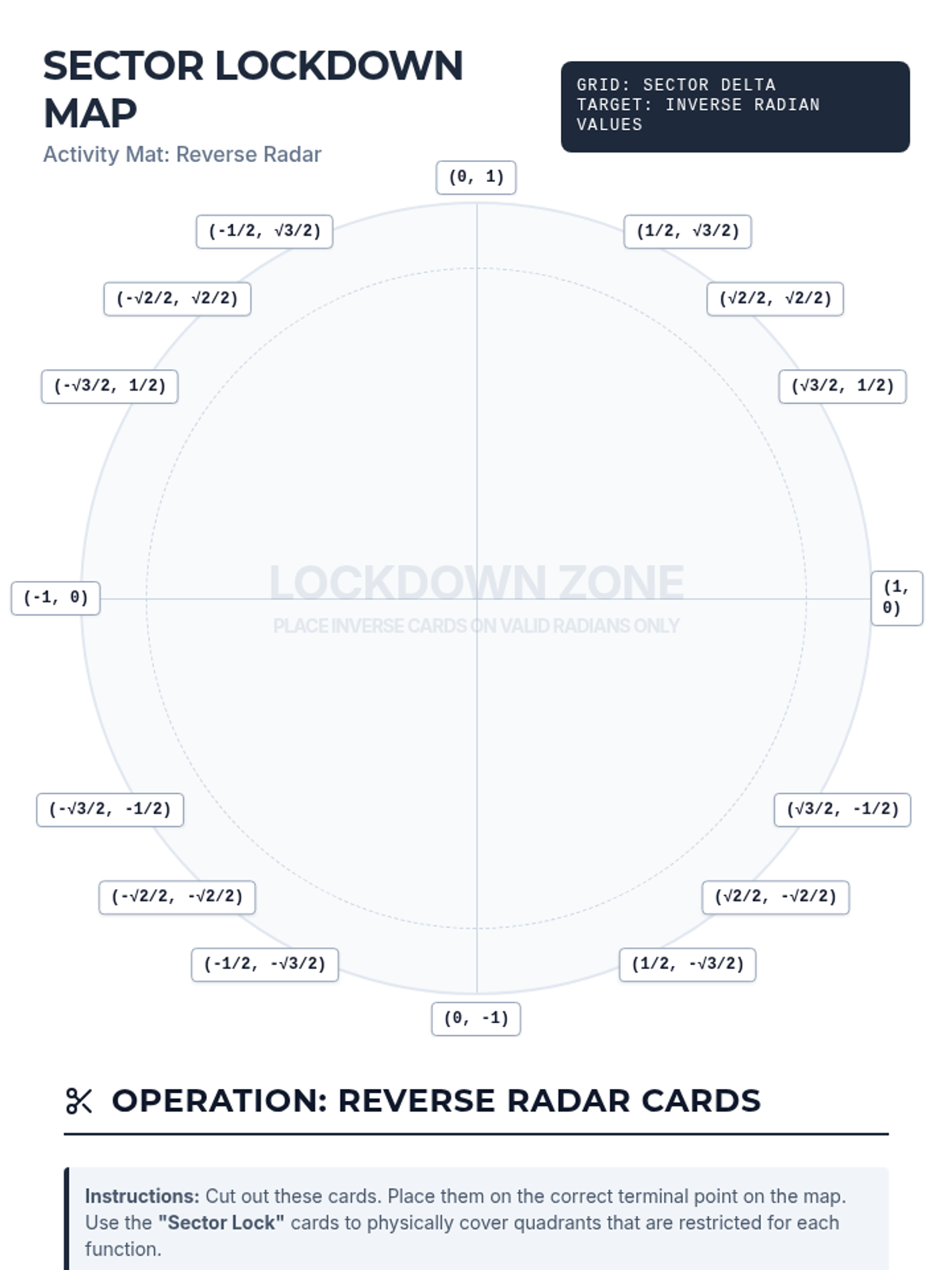
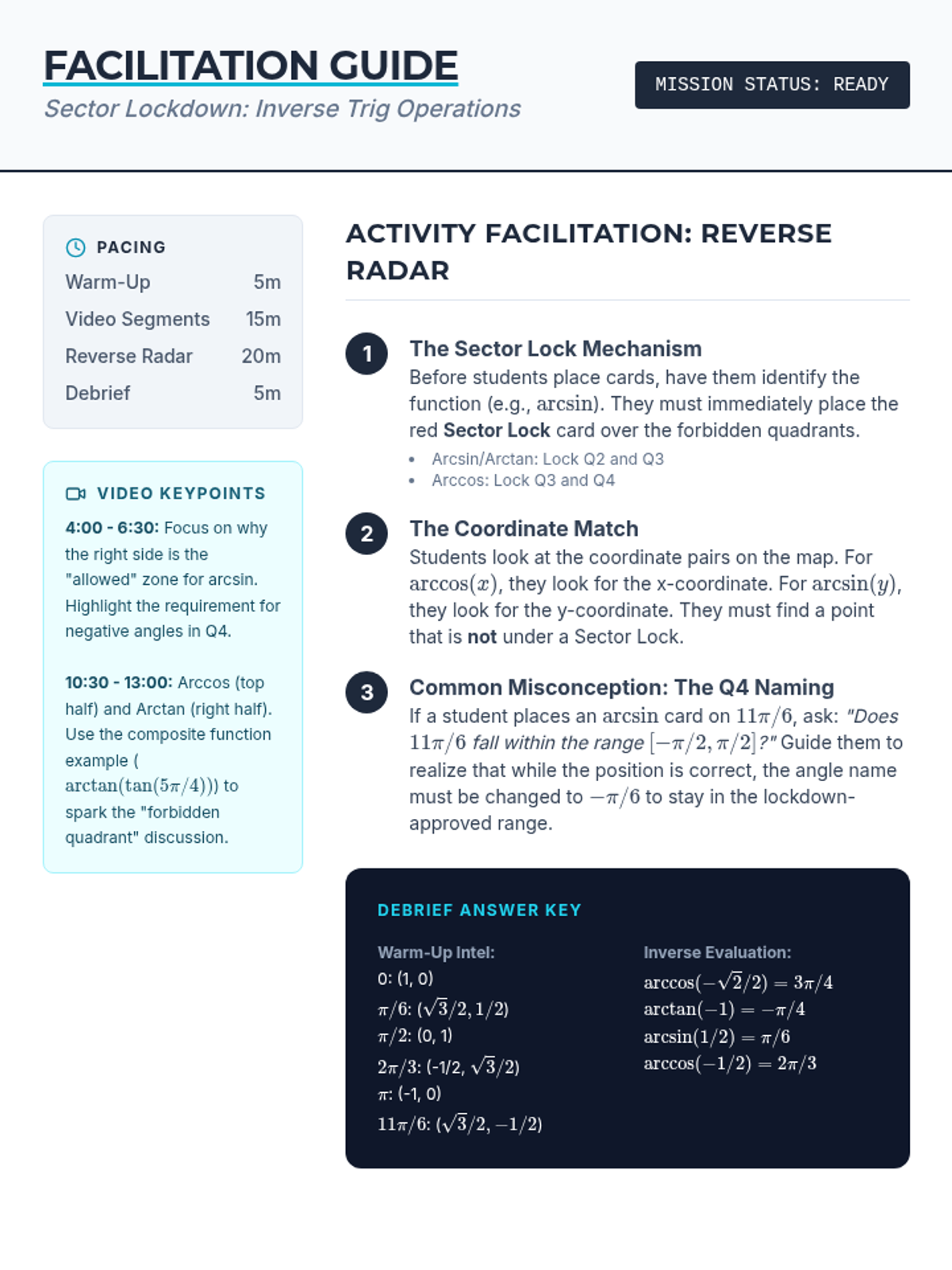
Students will master evaluating inverse trigonometric functions (arcsin, arccos, arctan) using the unit circle by understanding domain and range restrictions. The lesson includes a 'forbidden quadrant' activity to visualize why certain angles are excluded from the range of inverse functions.
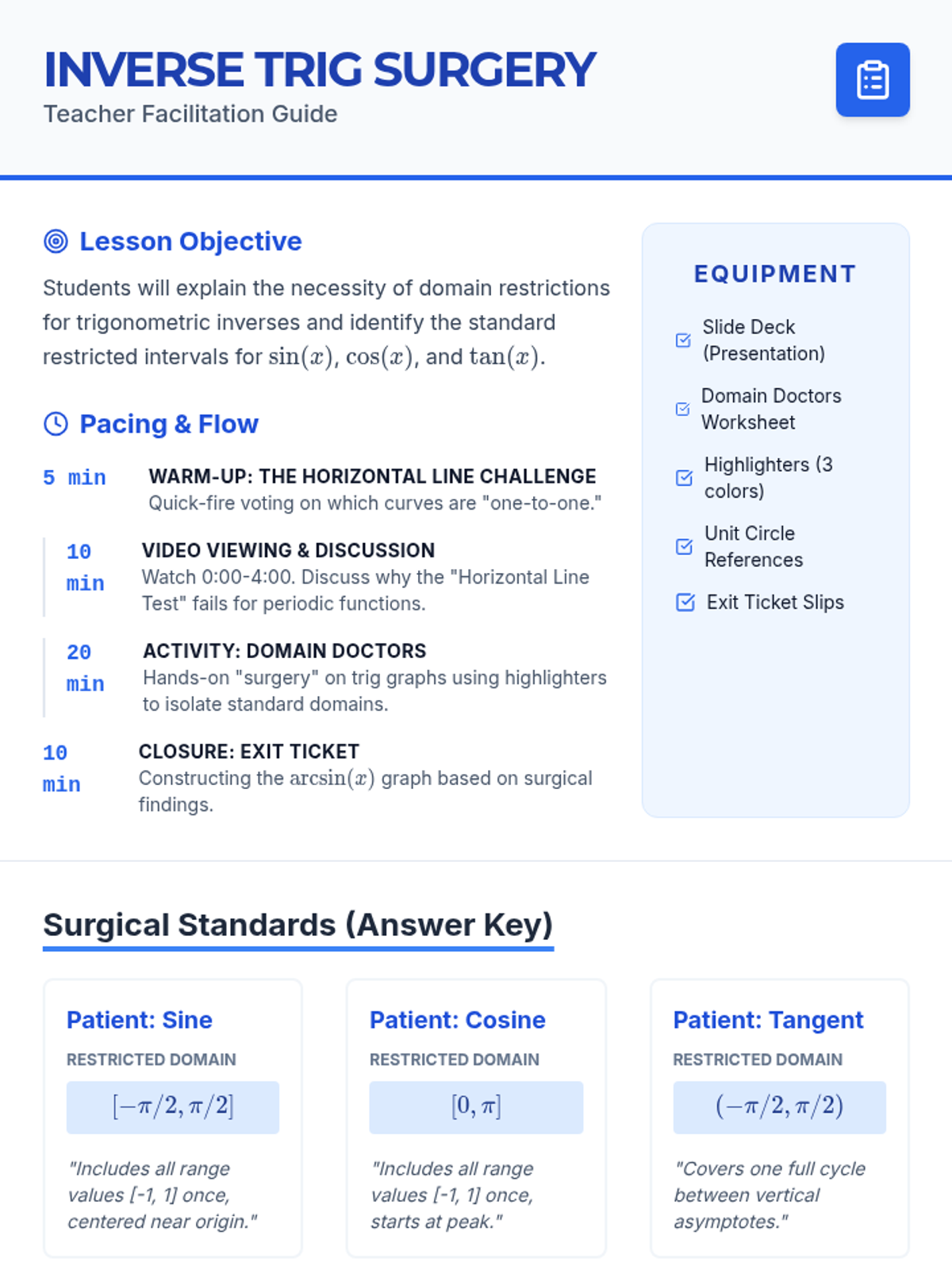
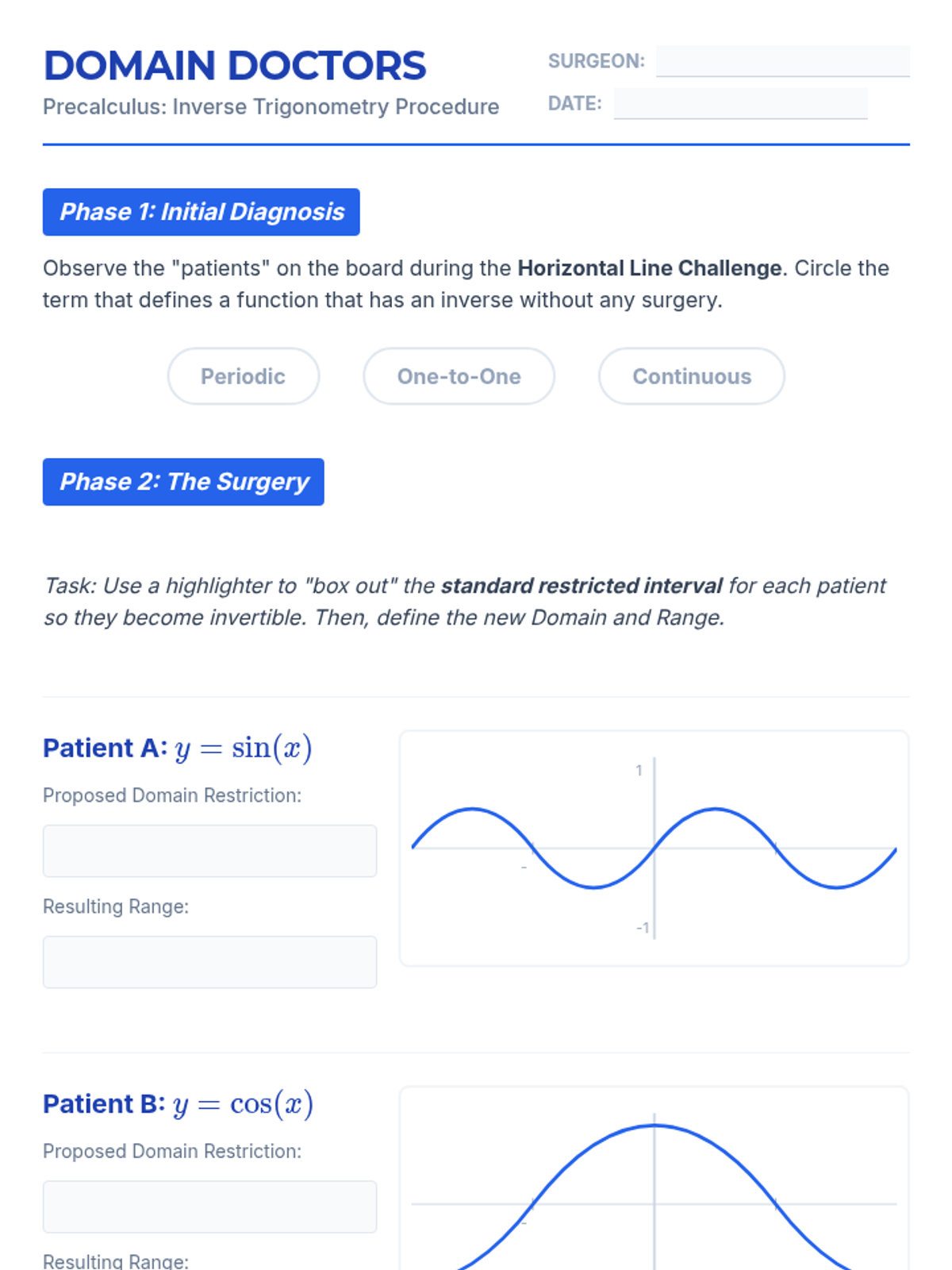
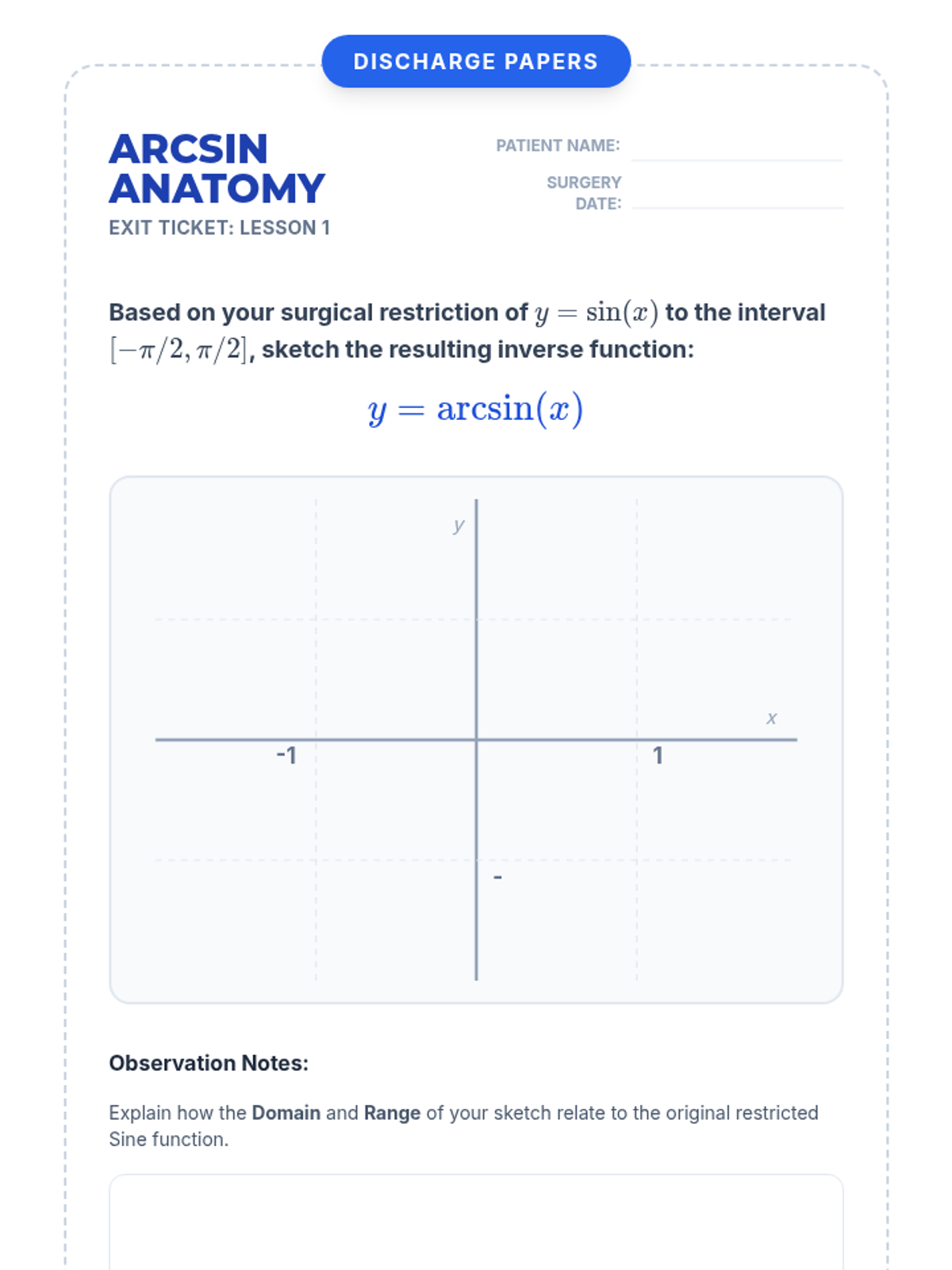
In this Precalculus lesson, students investigate why trigonometric functions require domain restrictions to be invertible. Using a medical surgery theme, students 'perform surgery' on sine, cosine, and tangent graphs to isolate the standard restricted intervals used for inverse functions.
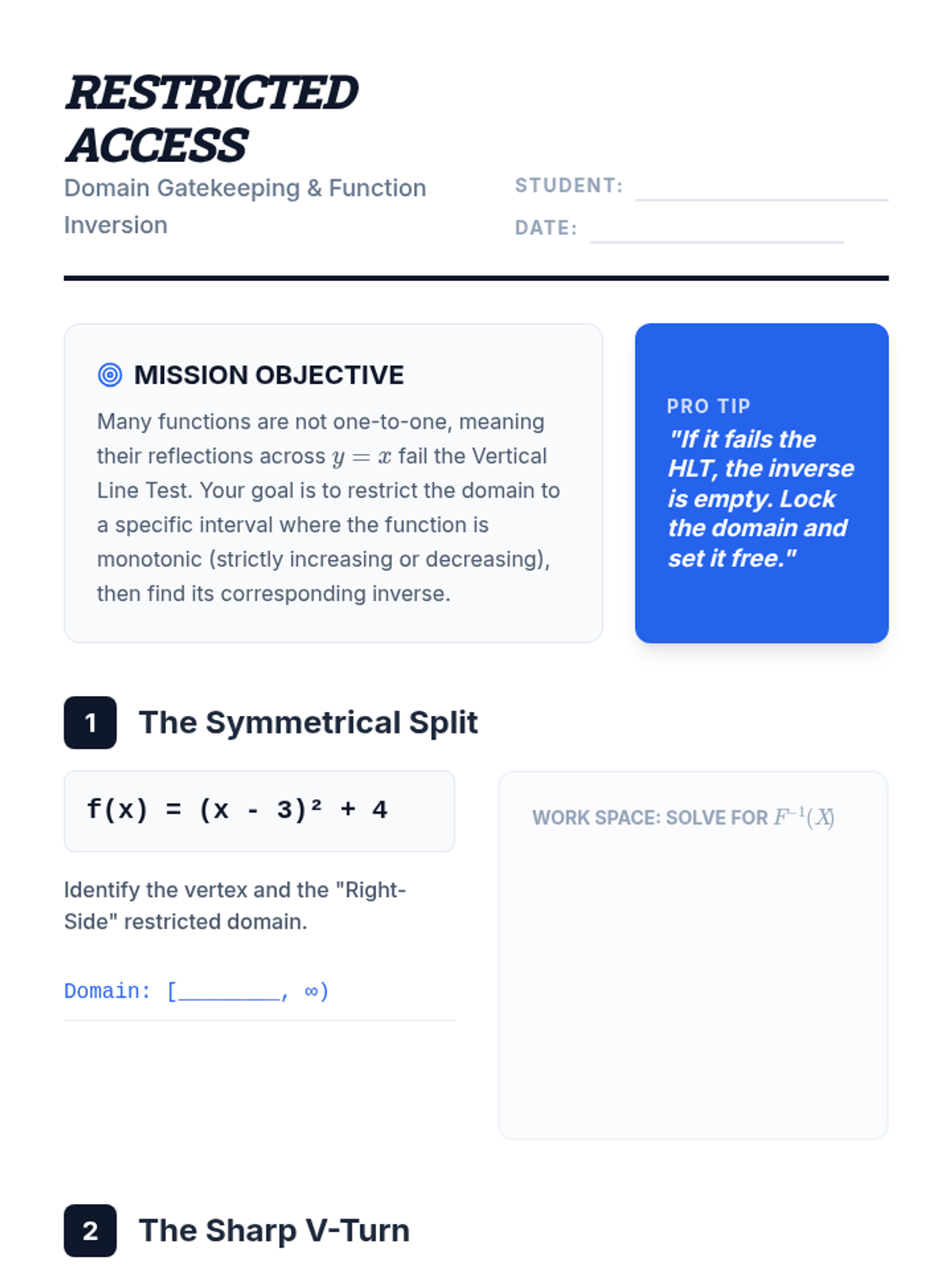
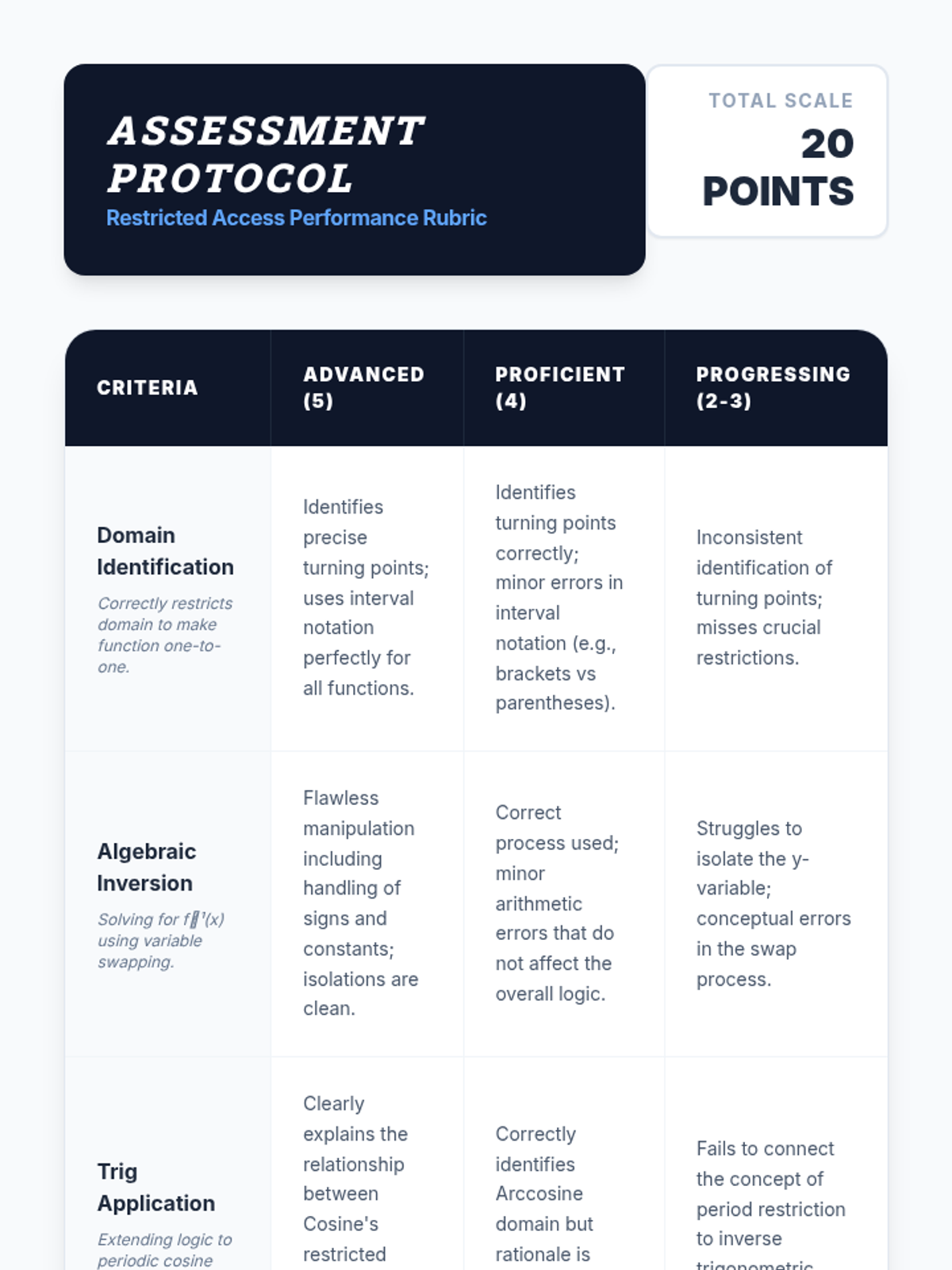
A high-level mathematics lesson focused on defining restricted domains for non-invertible functions to create valid inverse functions, preparing students for calculus and inverse trigonometry.
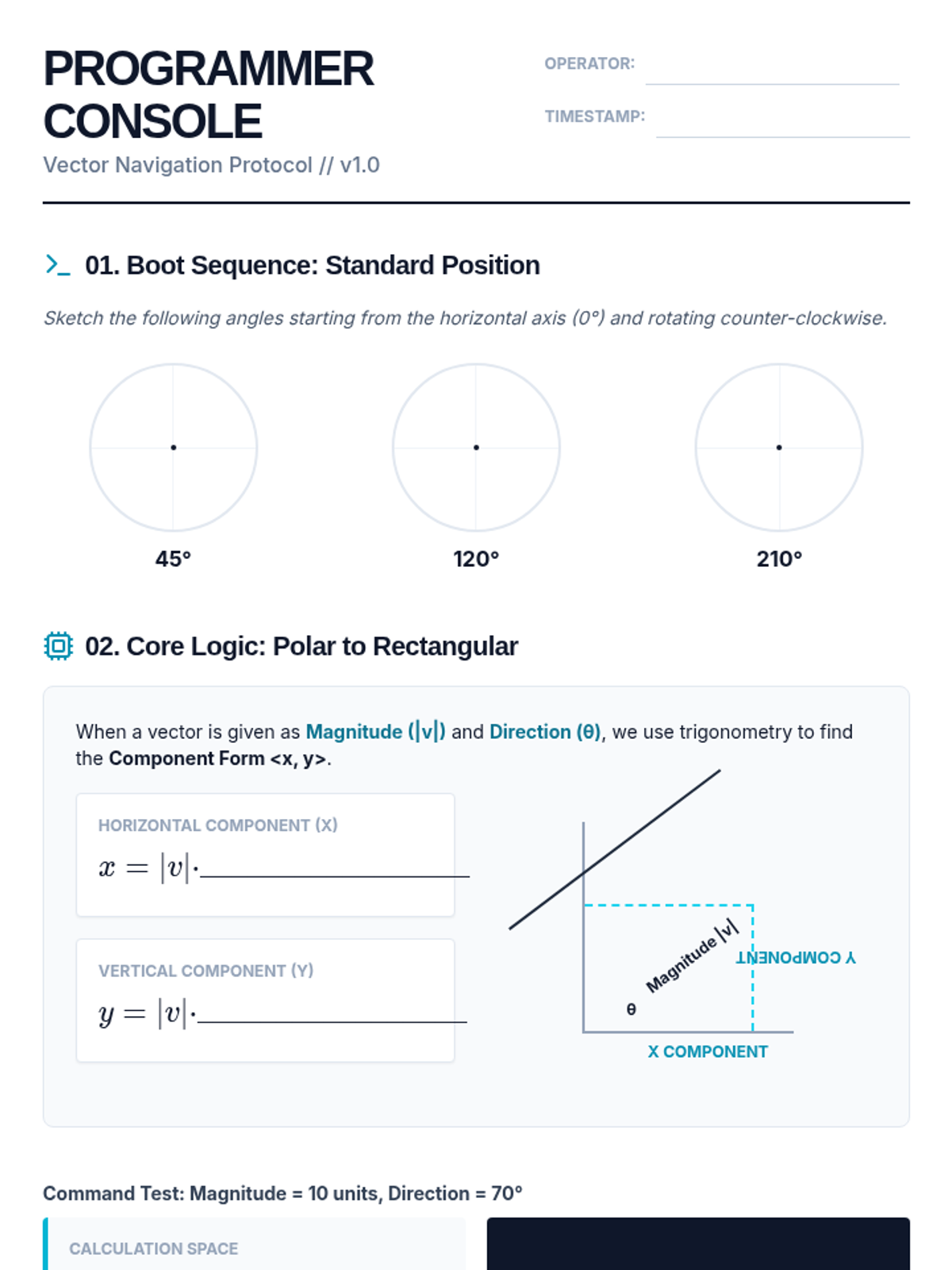
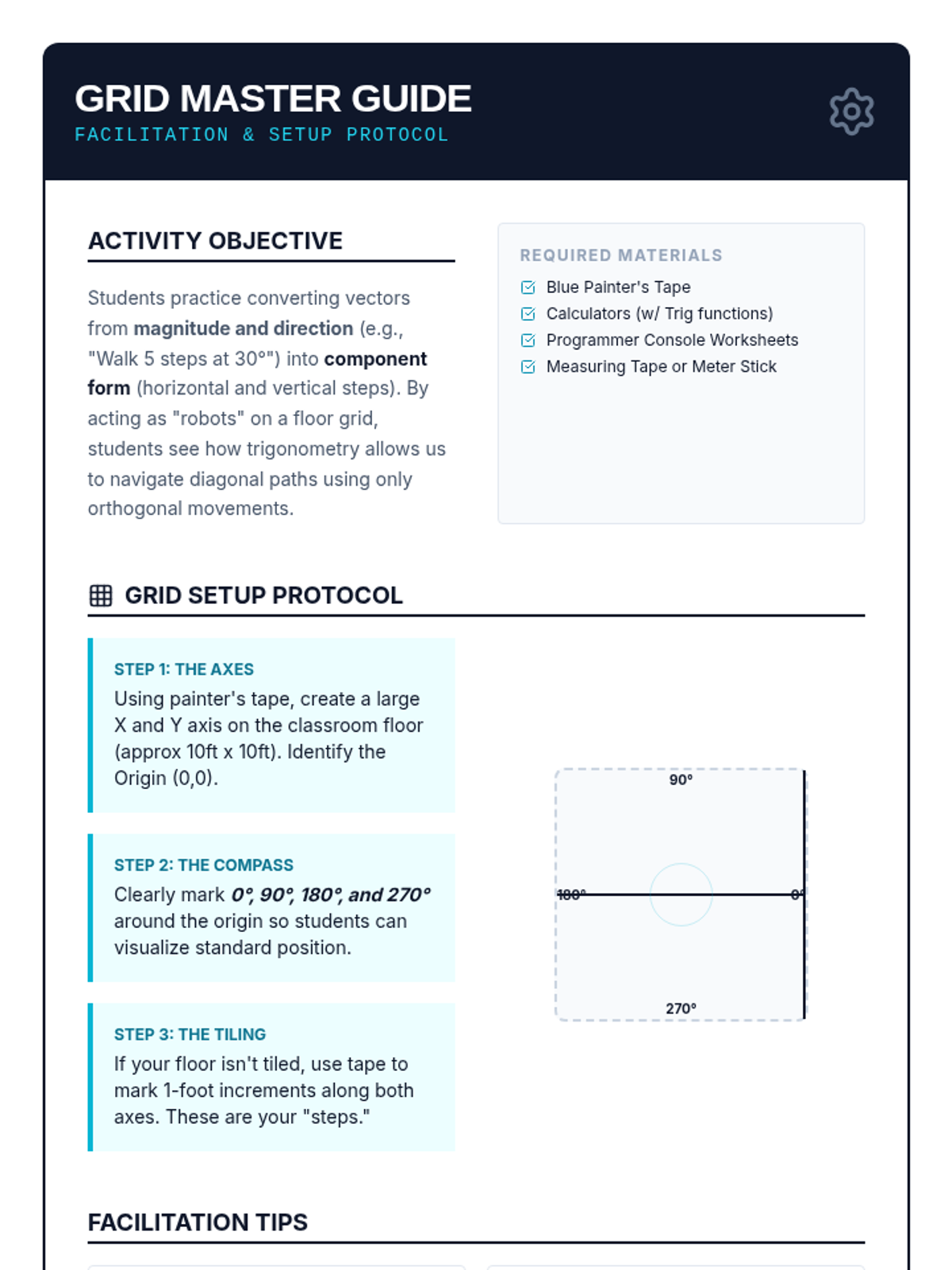
A high-school geometry or pre-calculus lesson focusing on converting vectors from magnitude and direction to component form through a hands-on 'robot programming' simulation. Students use trigonometry to translate movement commands into x and y displacements.
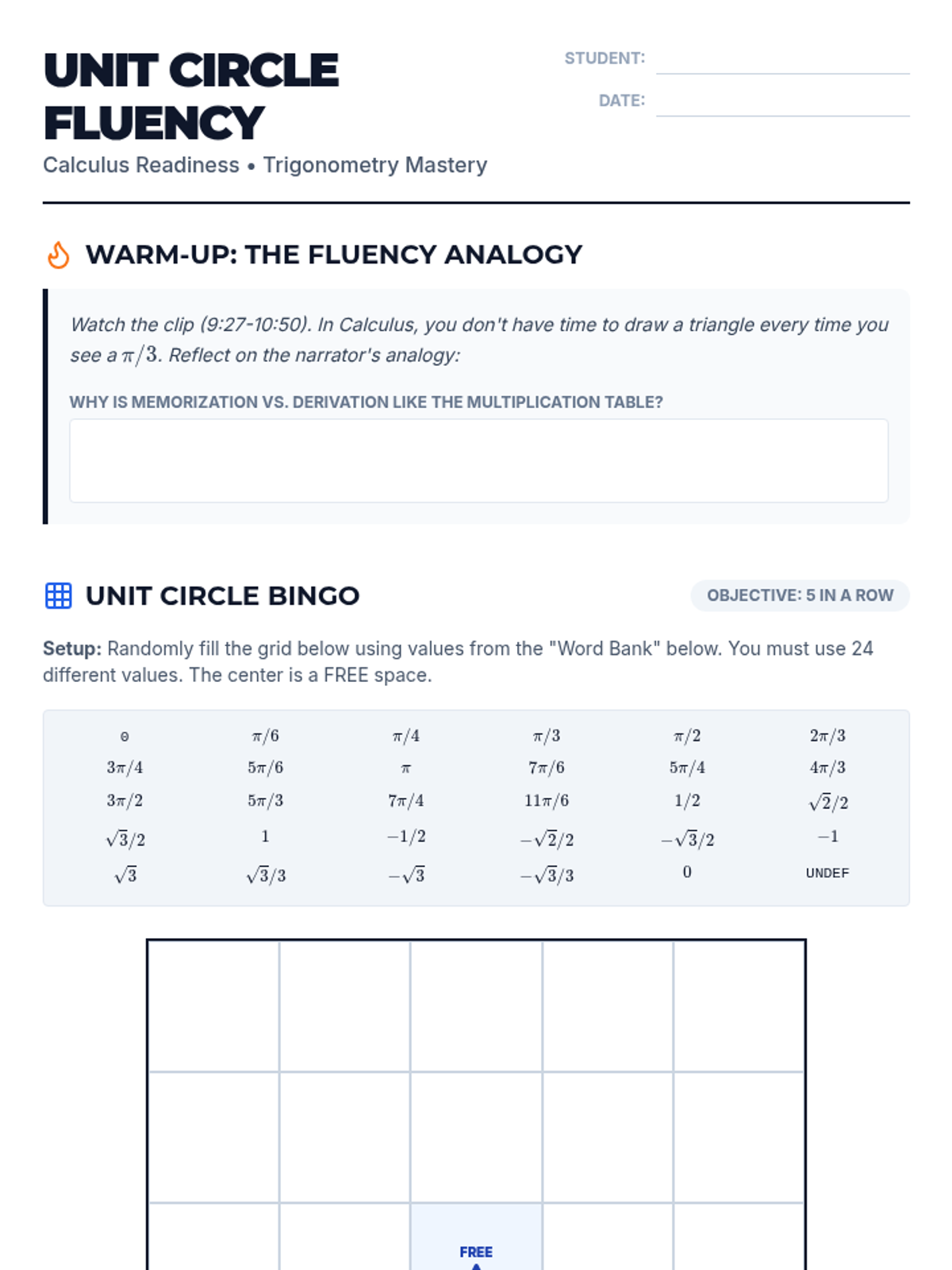
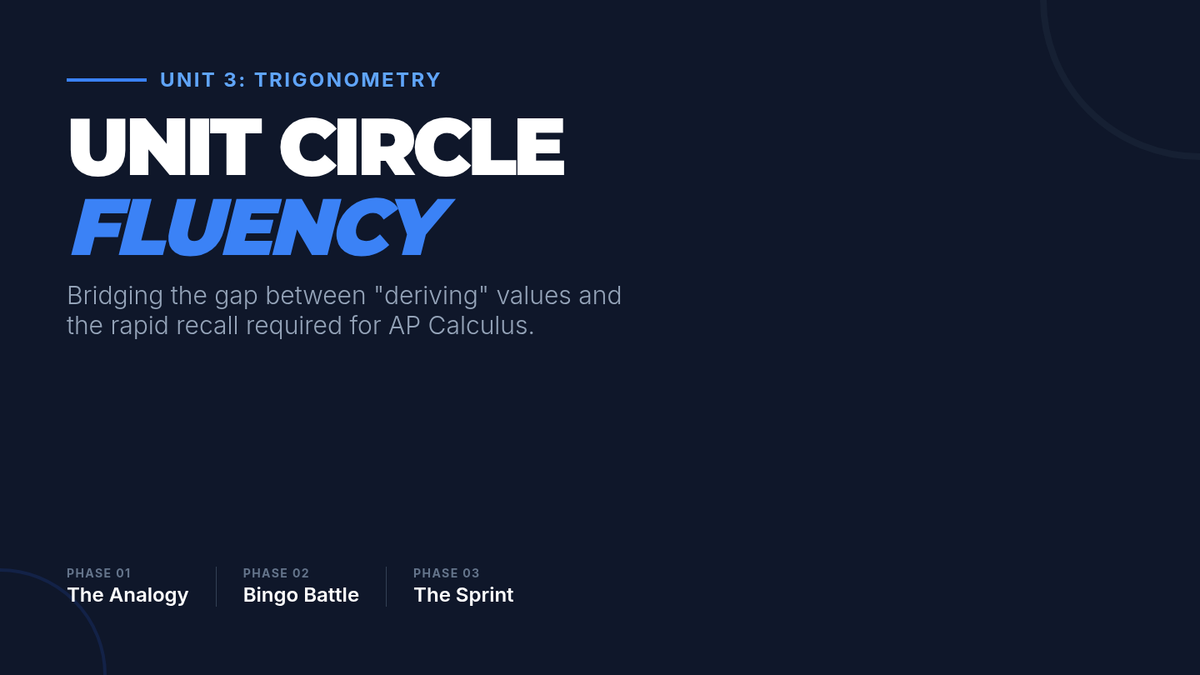
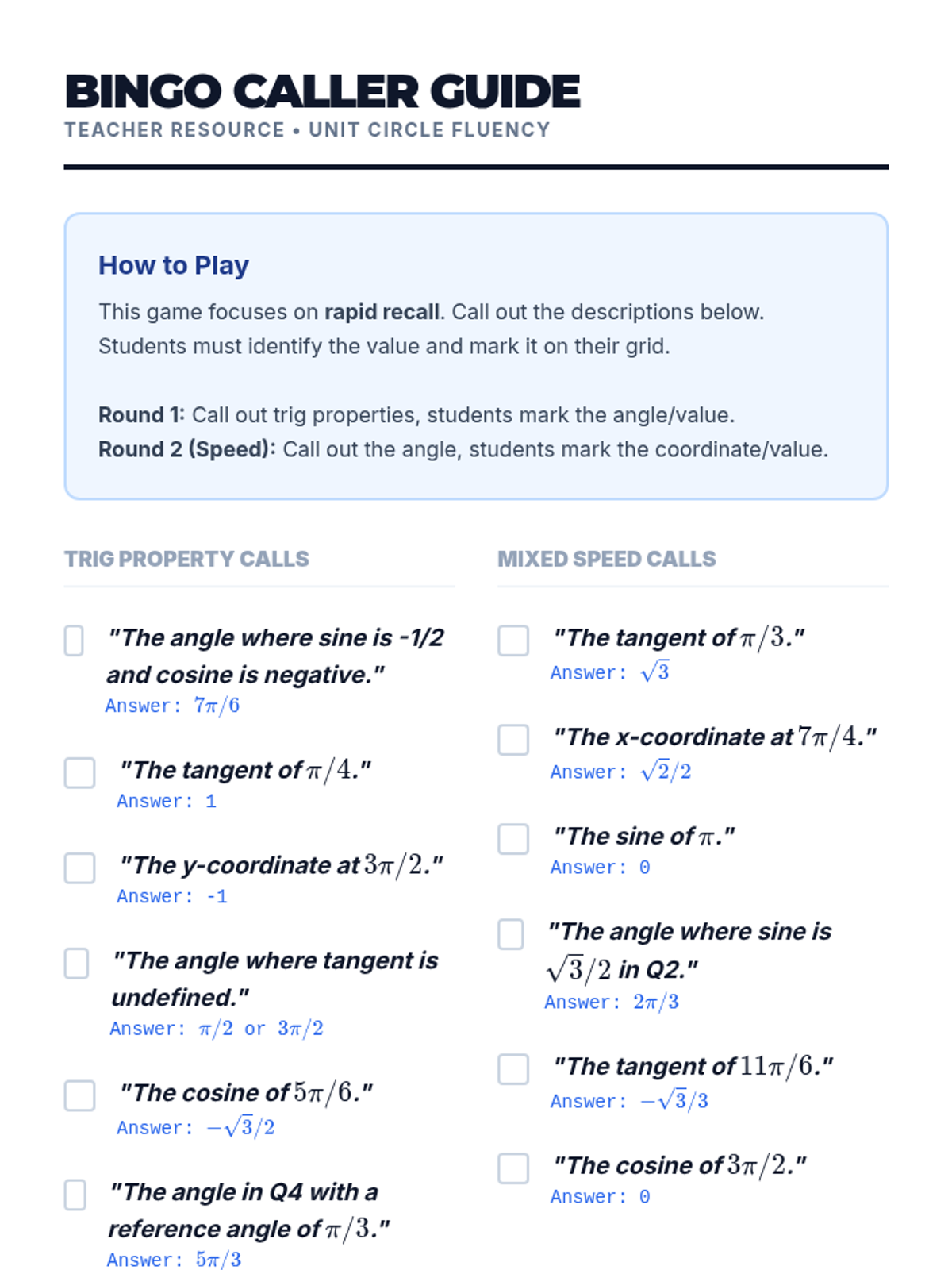
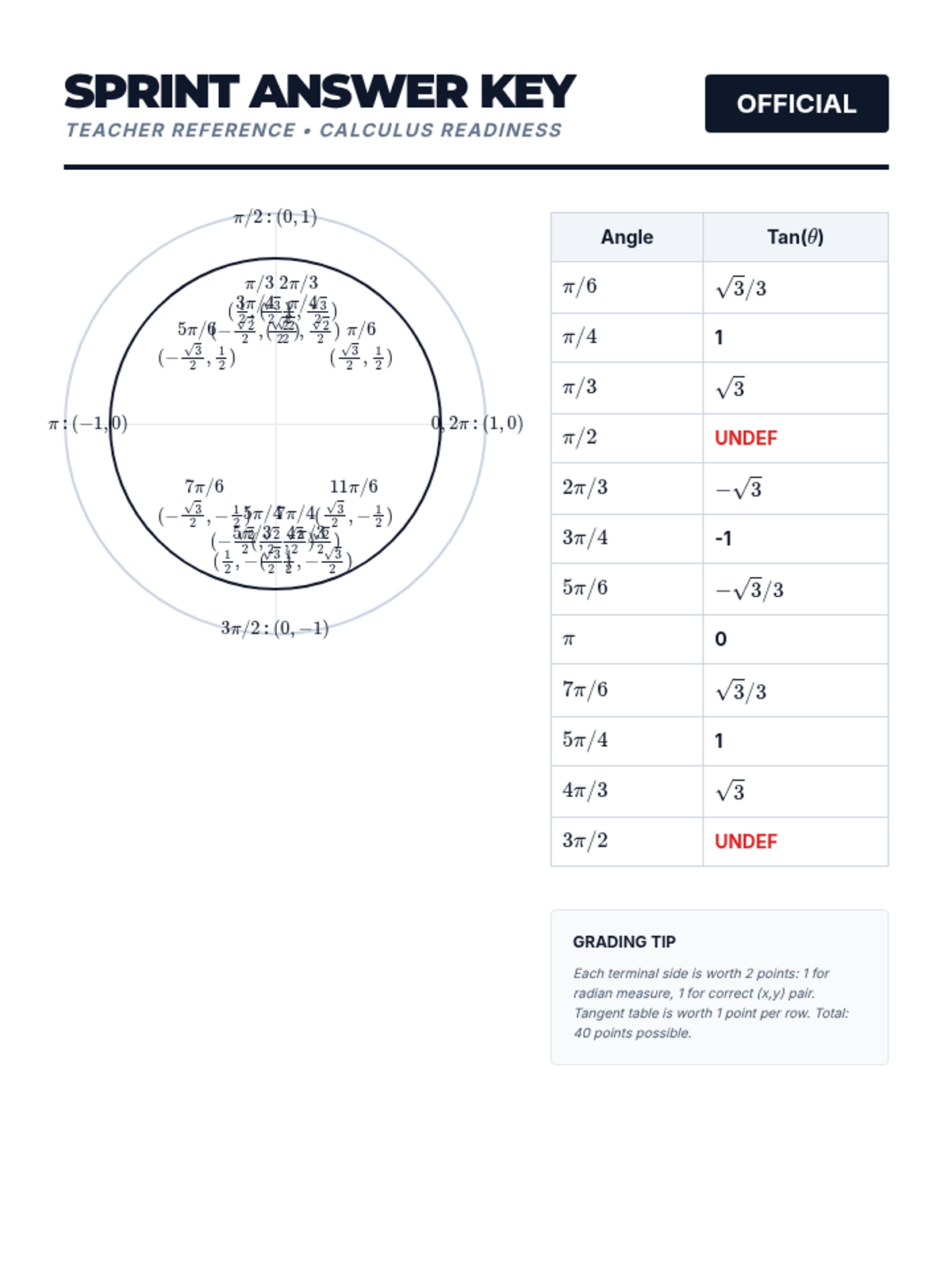
A high-energy lesson focused on building the rapid recall of unit circle values necessary for success in Calculus limits and derivatives. Students engage with a multiplication-table analogy, play a competitive game of Bingo, and complete a timed performance sprint.
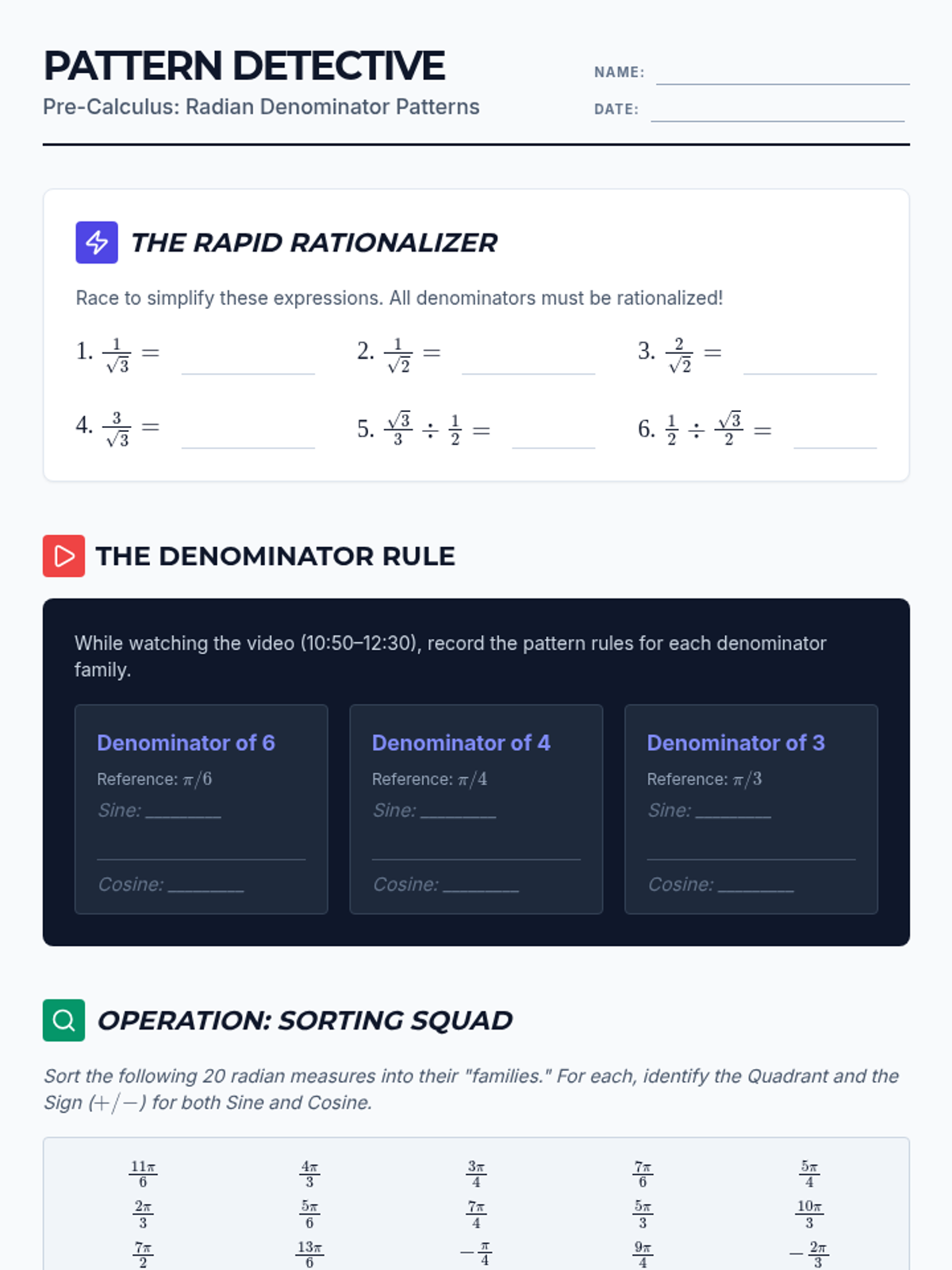
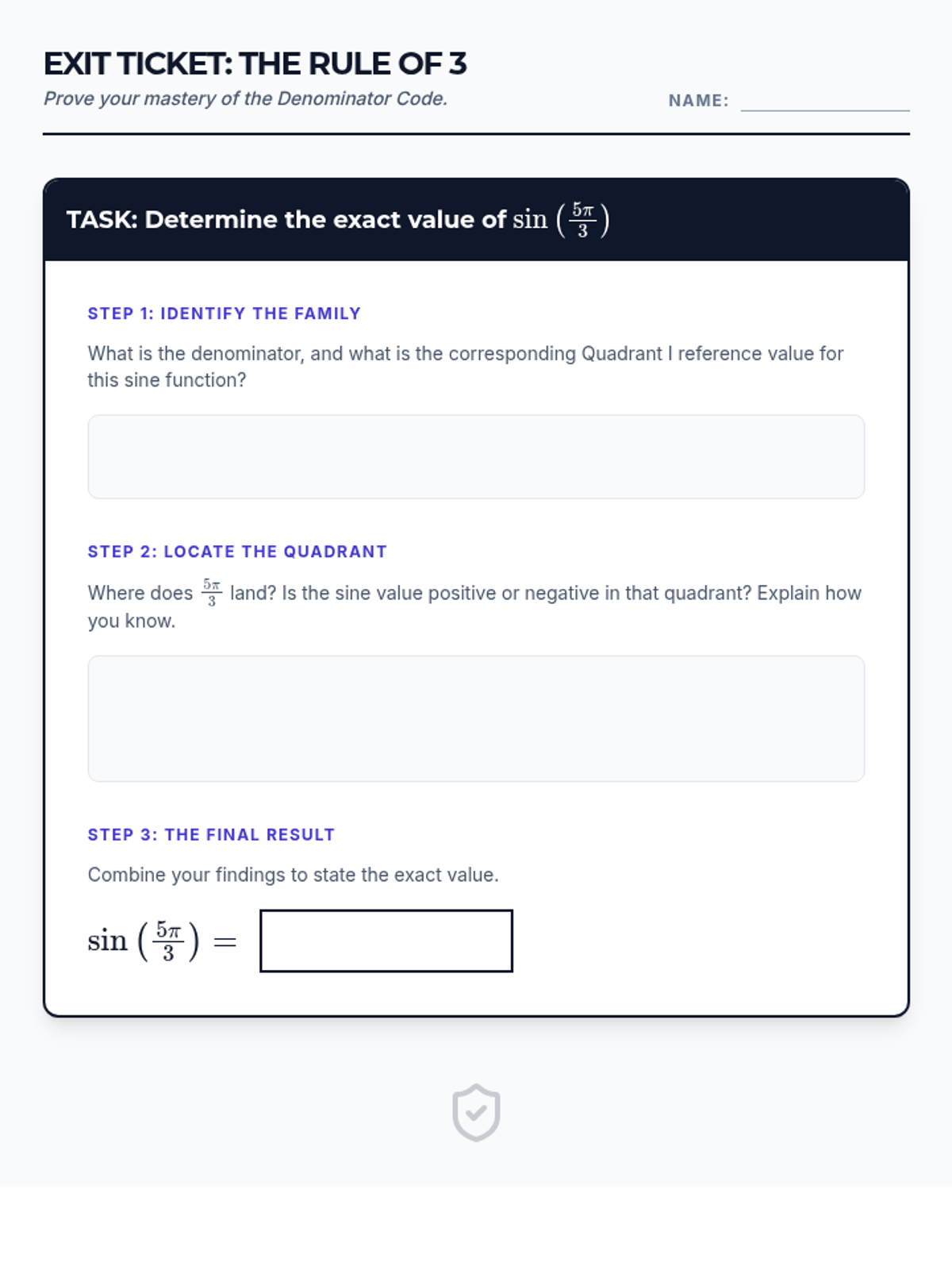
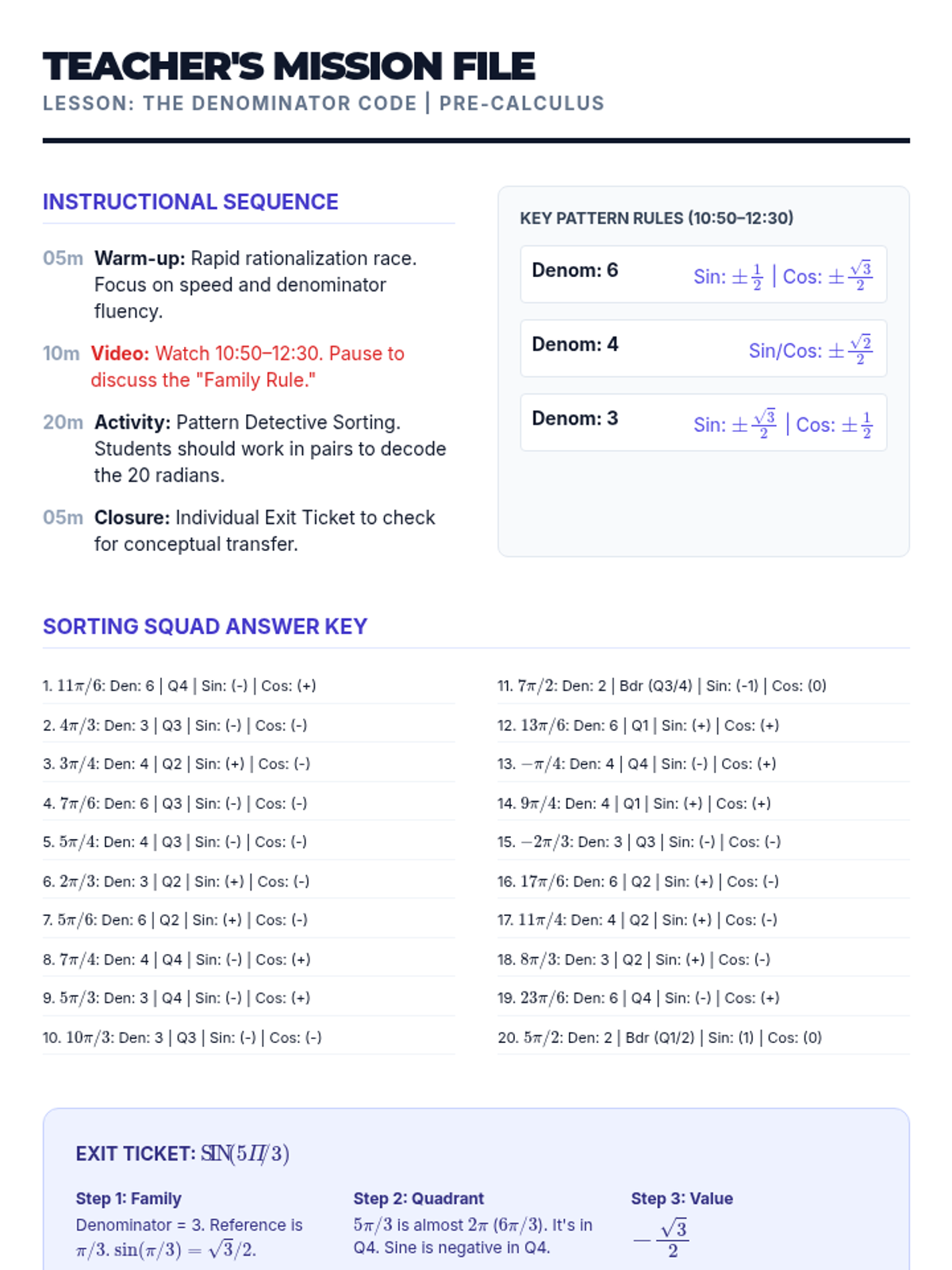
Students will master the 'Denominator Rule' to rapidly identify trigonometric values on the unit circle by recognizing patterns in radian measures, focusing on denominator-based reference angles and quadrant-based signs.
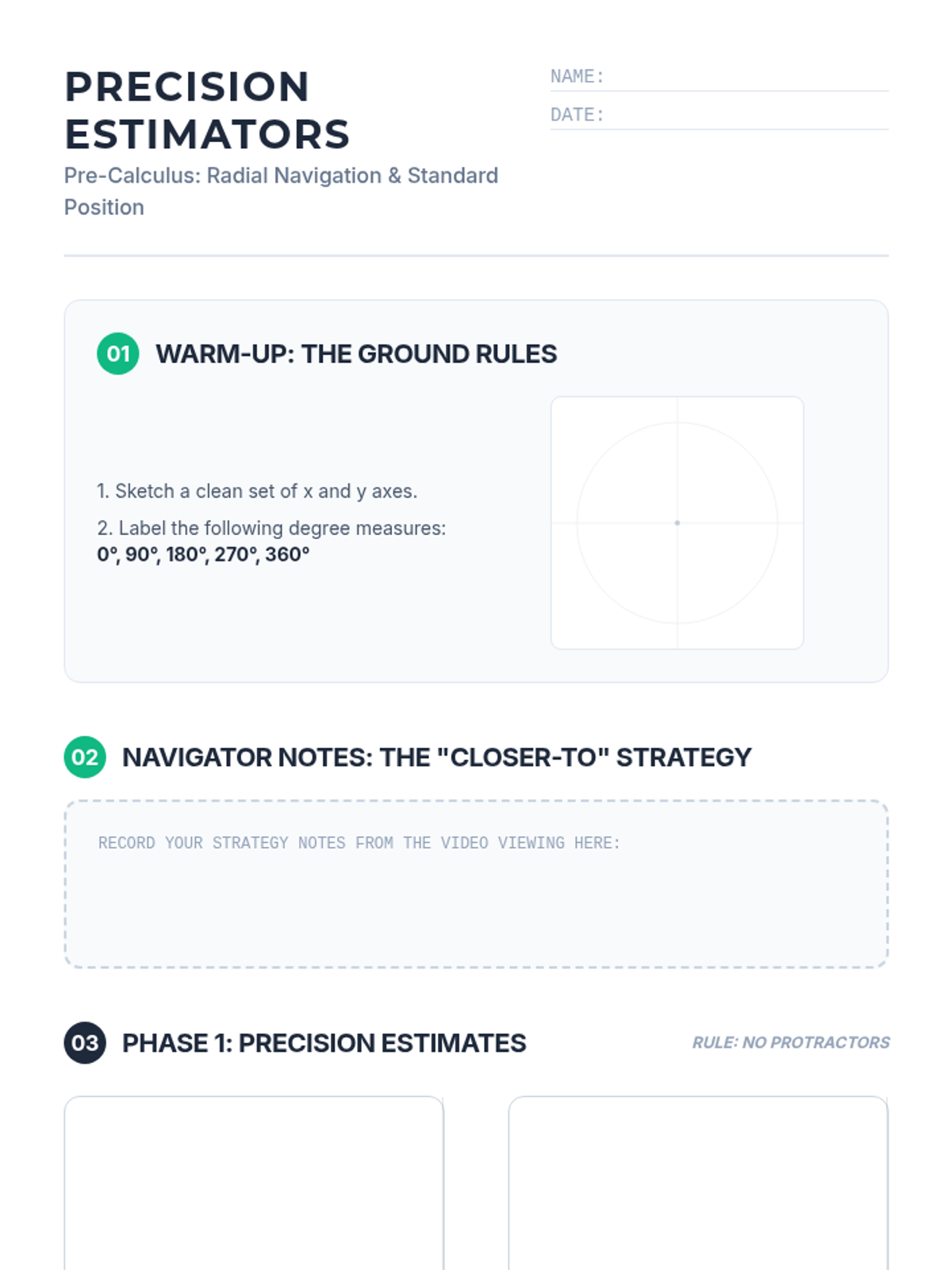
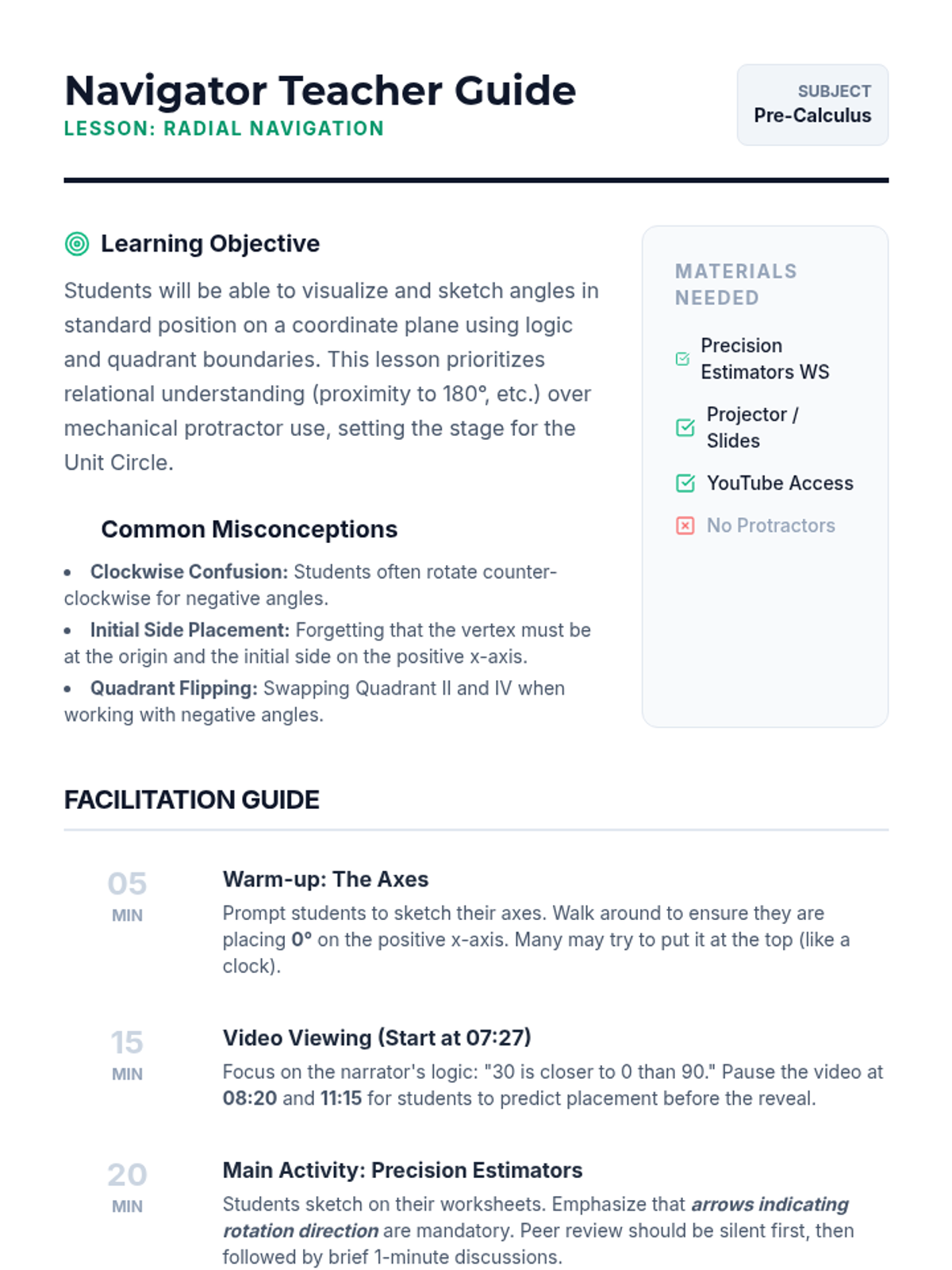
This lesson introduces Pre-Calculus students to the visualization of rotational geometry. Students will learn to sketch angles in standard position by using quadrant boundaries and reference points, moving away from protractors toward logical estimation as a foundation for the Unit Circle.