Vector properties, magnitudes, and algebraic operations including addition and scalar multiplication. Introduces matrix representations, arithmetic, and computational techniques for solving linear systems.
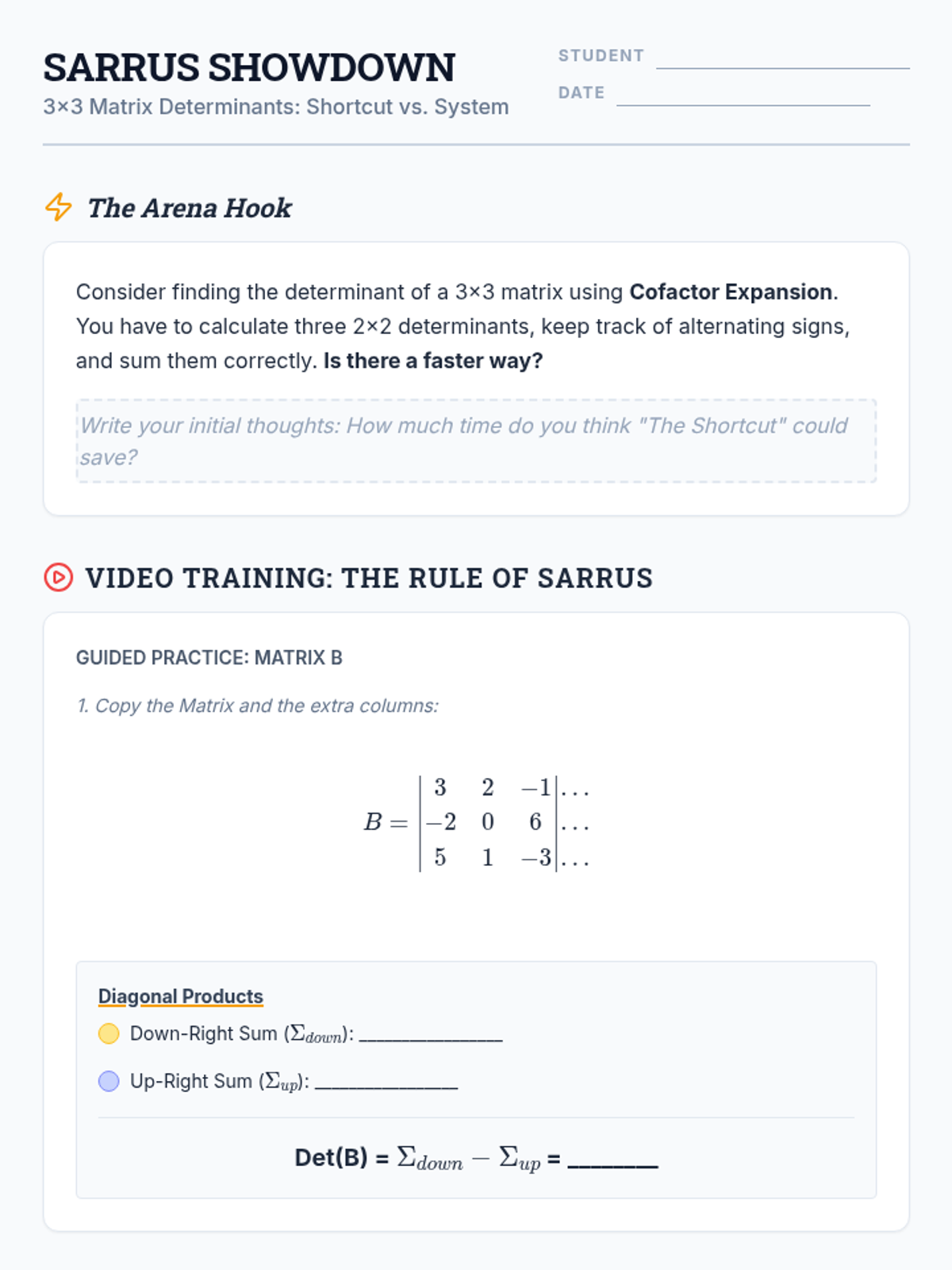
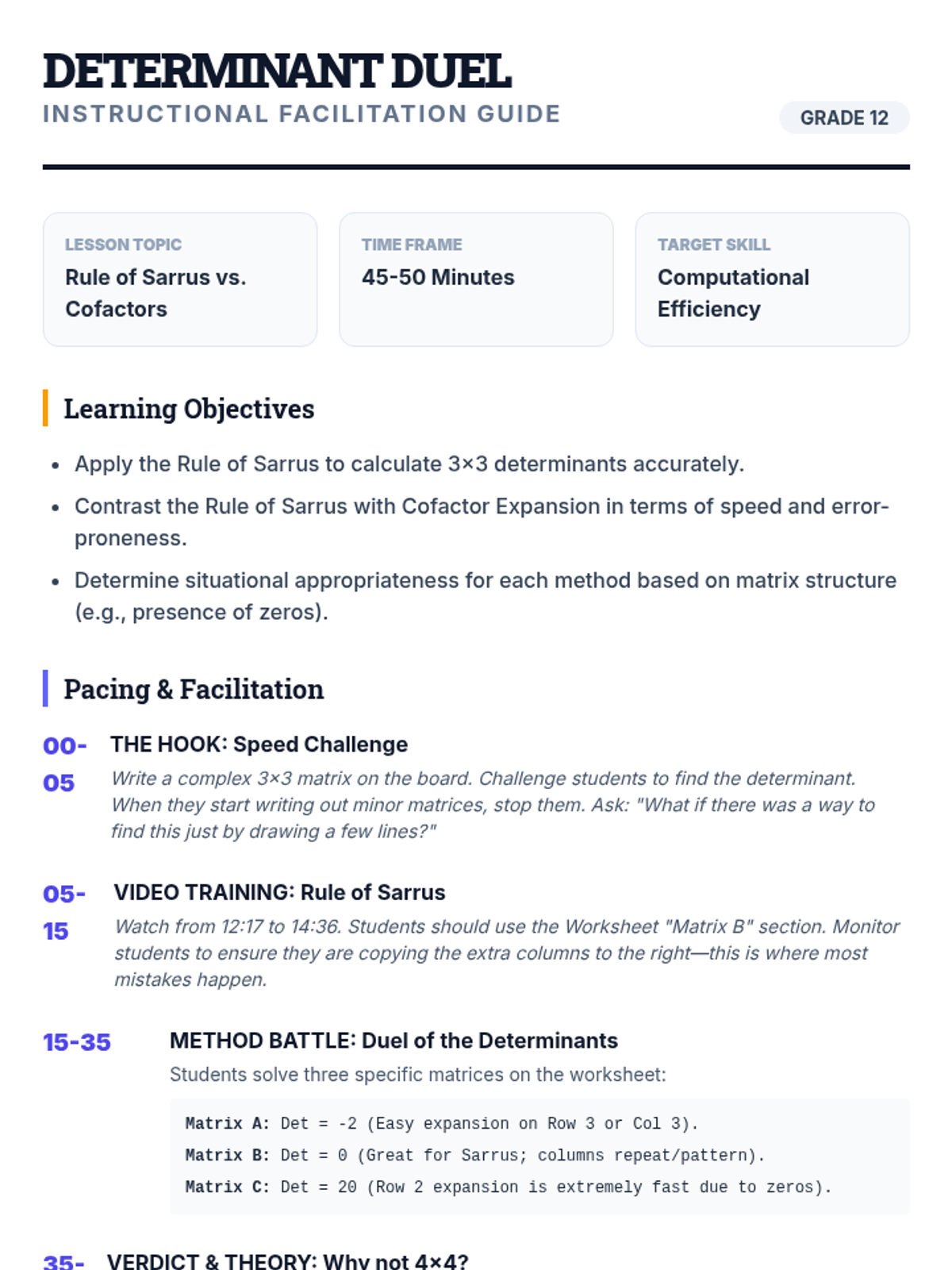
This lesson introduces the Rule of Sarrus as a shortcut for finding 3x3 determinants, comparing its efficiency against the standard cofactor expansion method through a competitive 'Method Battle'.
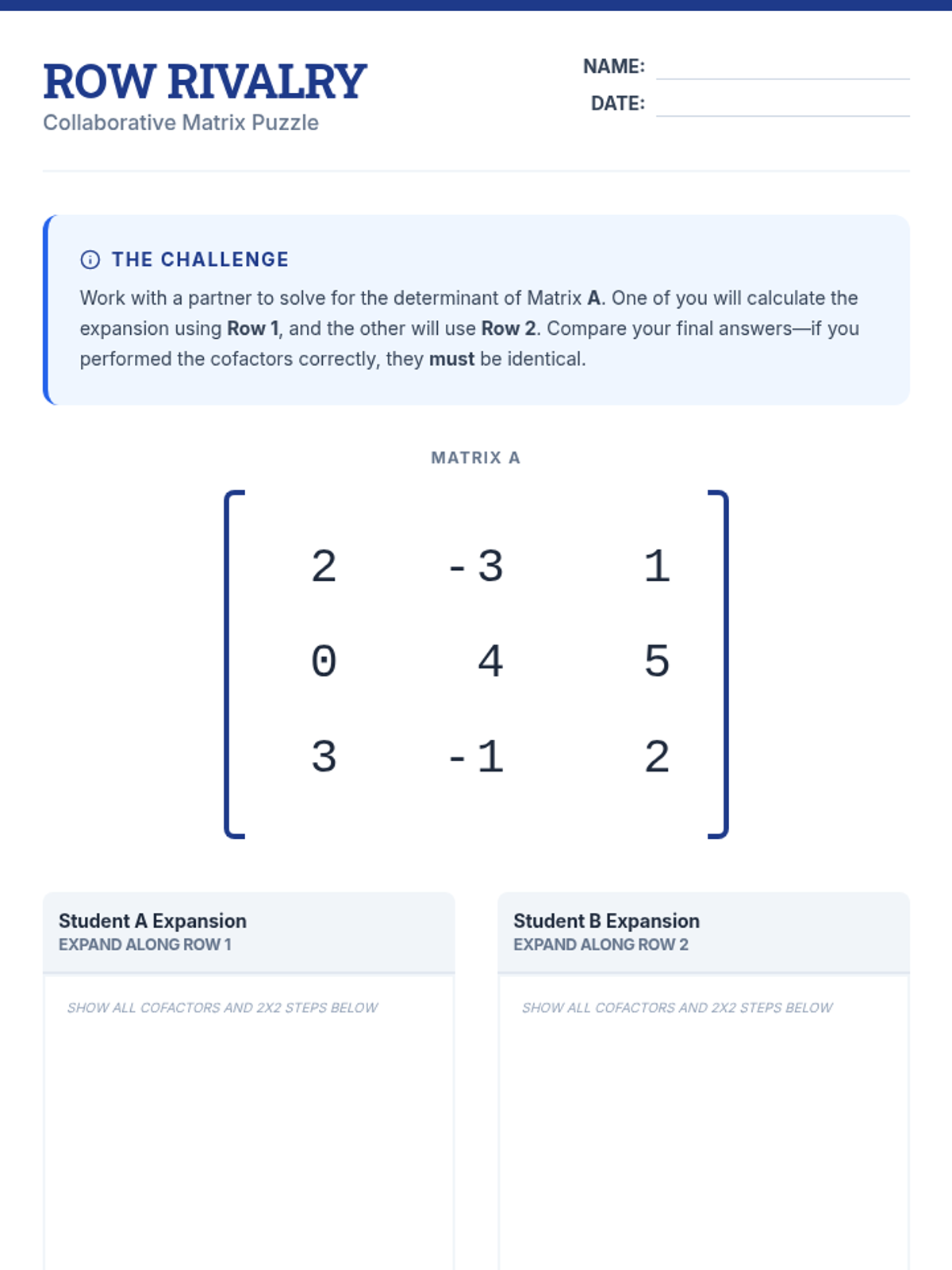
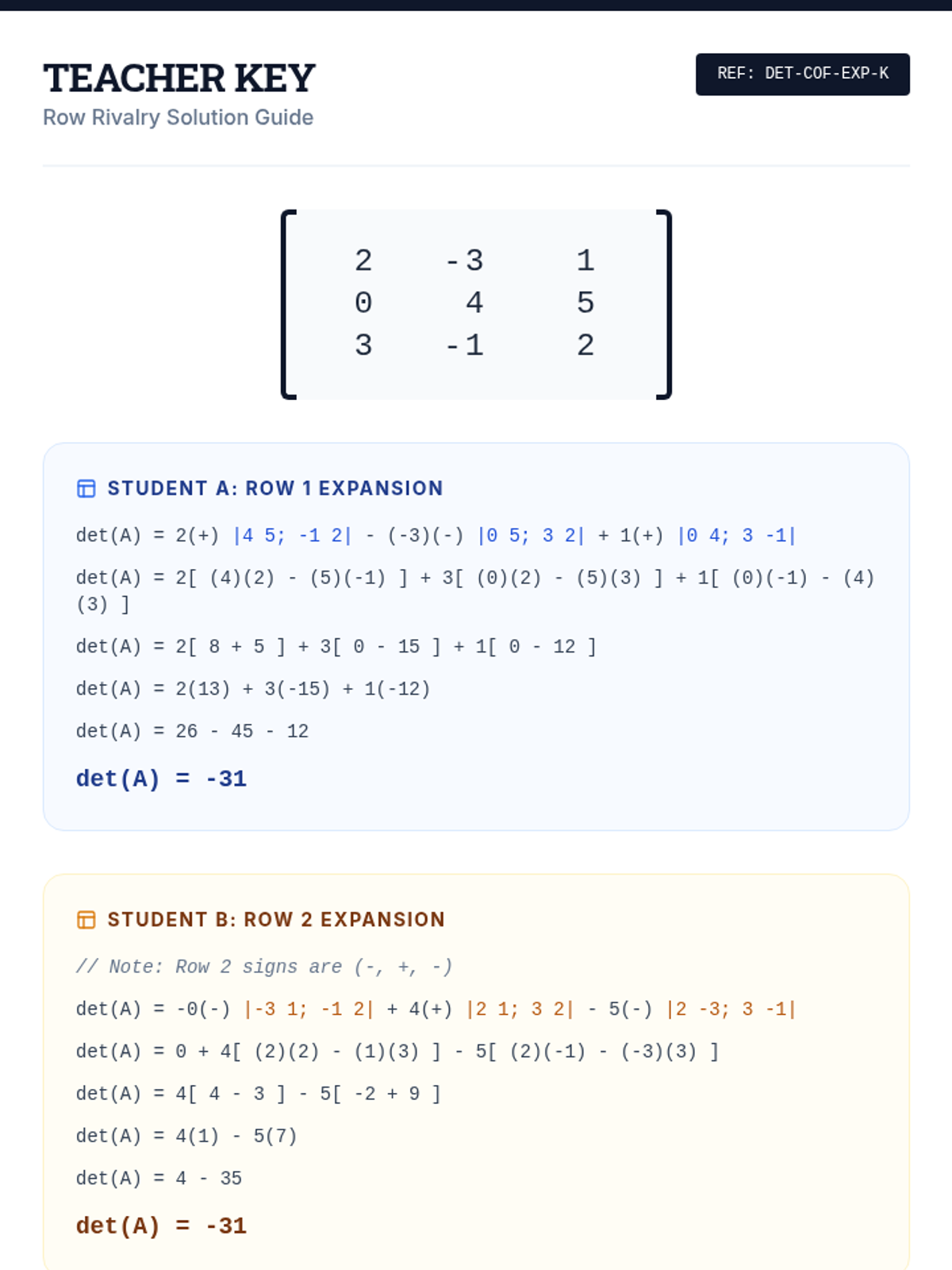
Students learn to calculate 3x3 determinants using the Cofactor Expansion method, focusing on minor matrices and the checkerboard sign pattern through video analysis and collaborative problem-solving.
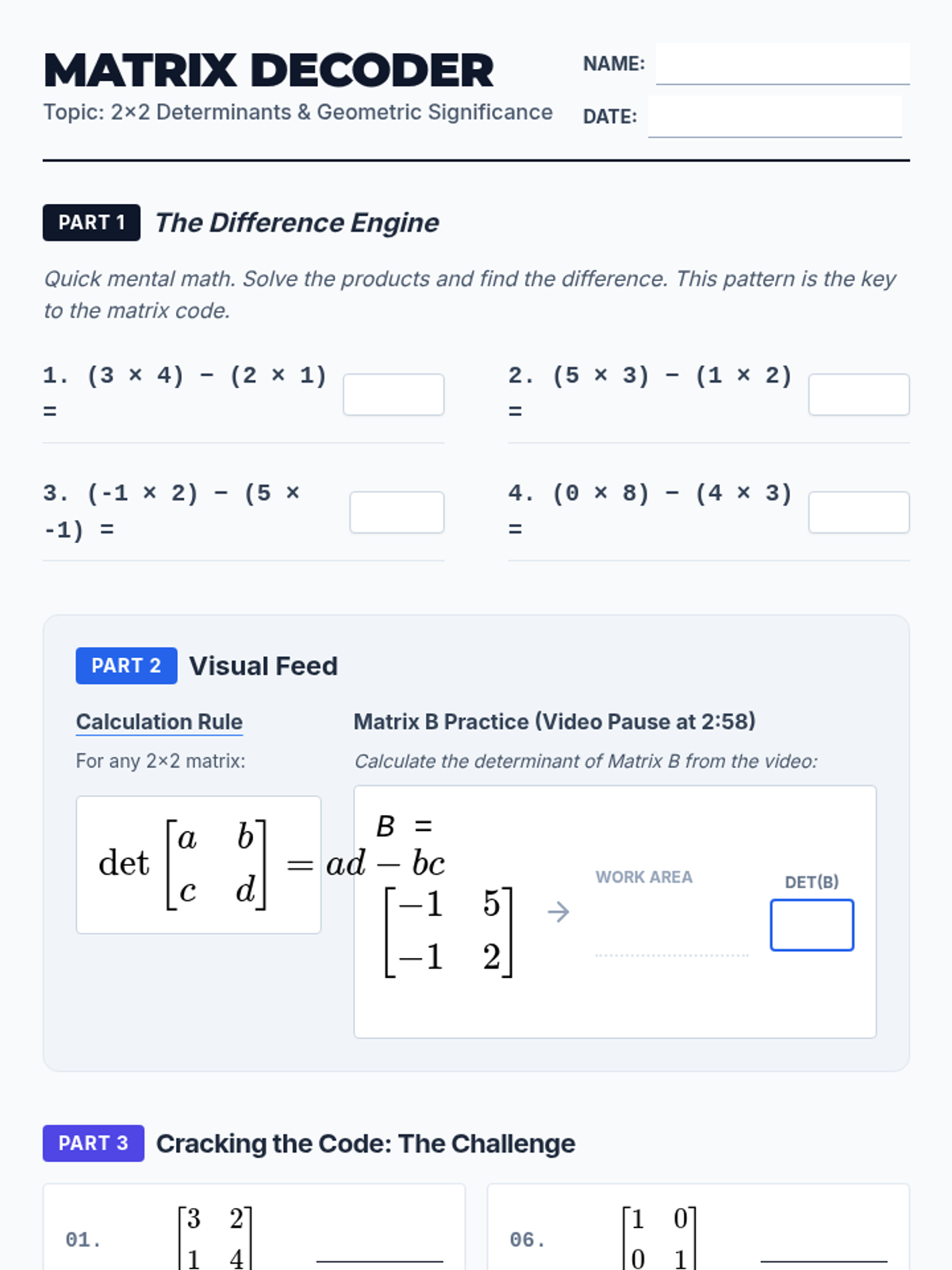
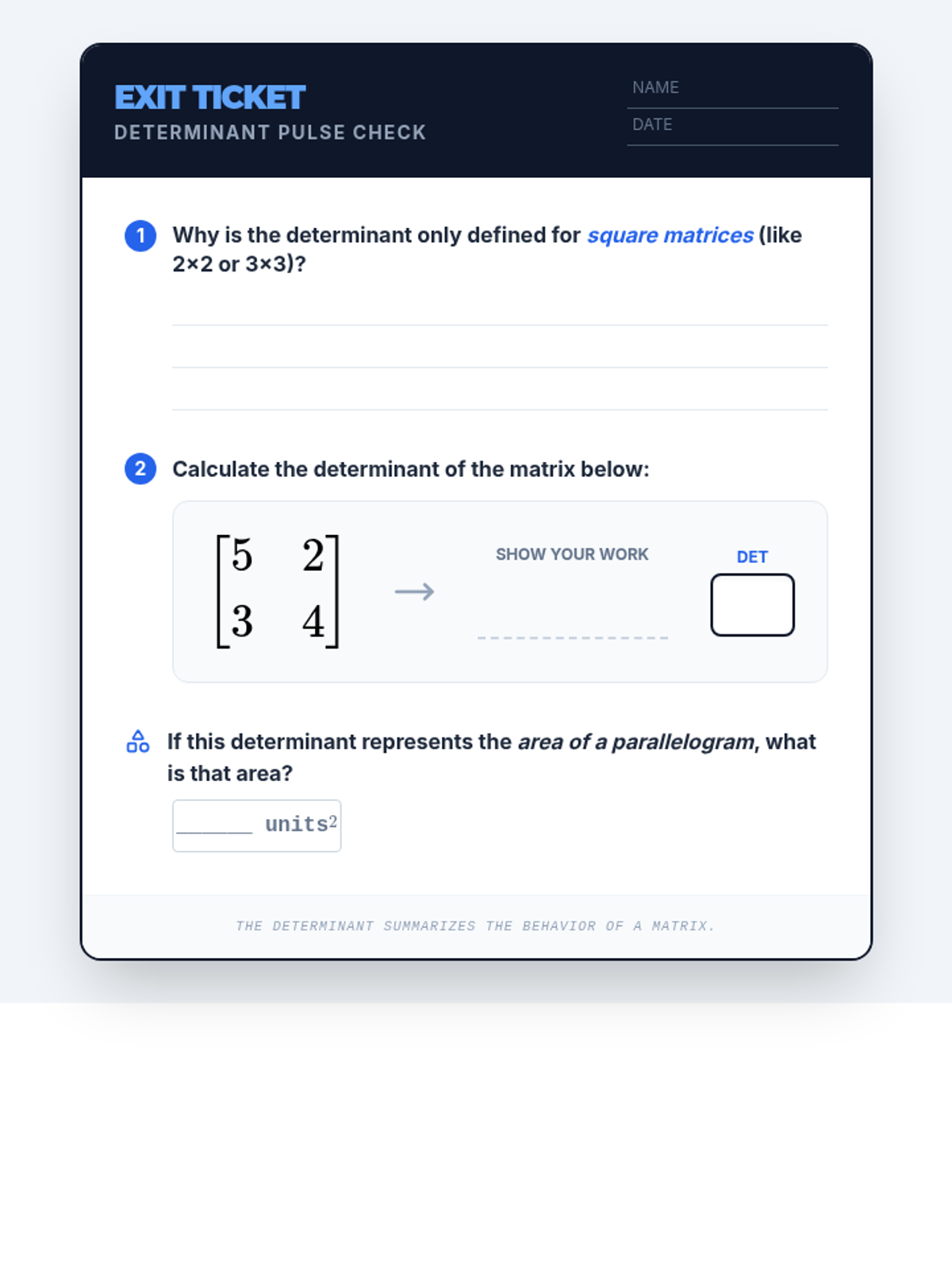
This lesson introduces students to the determinant of 2x2 matrices. Students will learn the calculation formula, practice with various examples, explore matrices with a determinant of zero, and understand the geometric interpretation of a determinant as the area of a parallelogram.
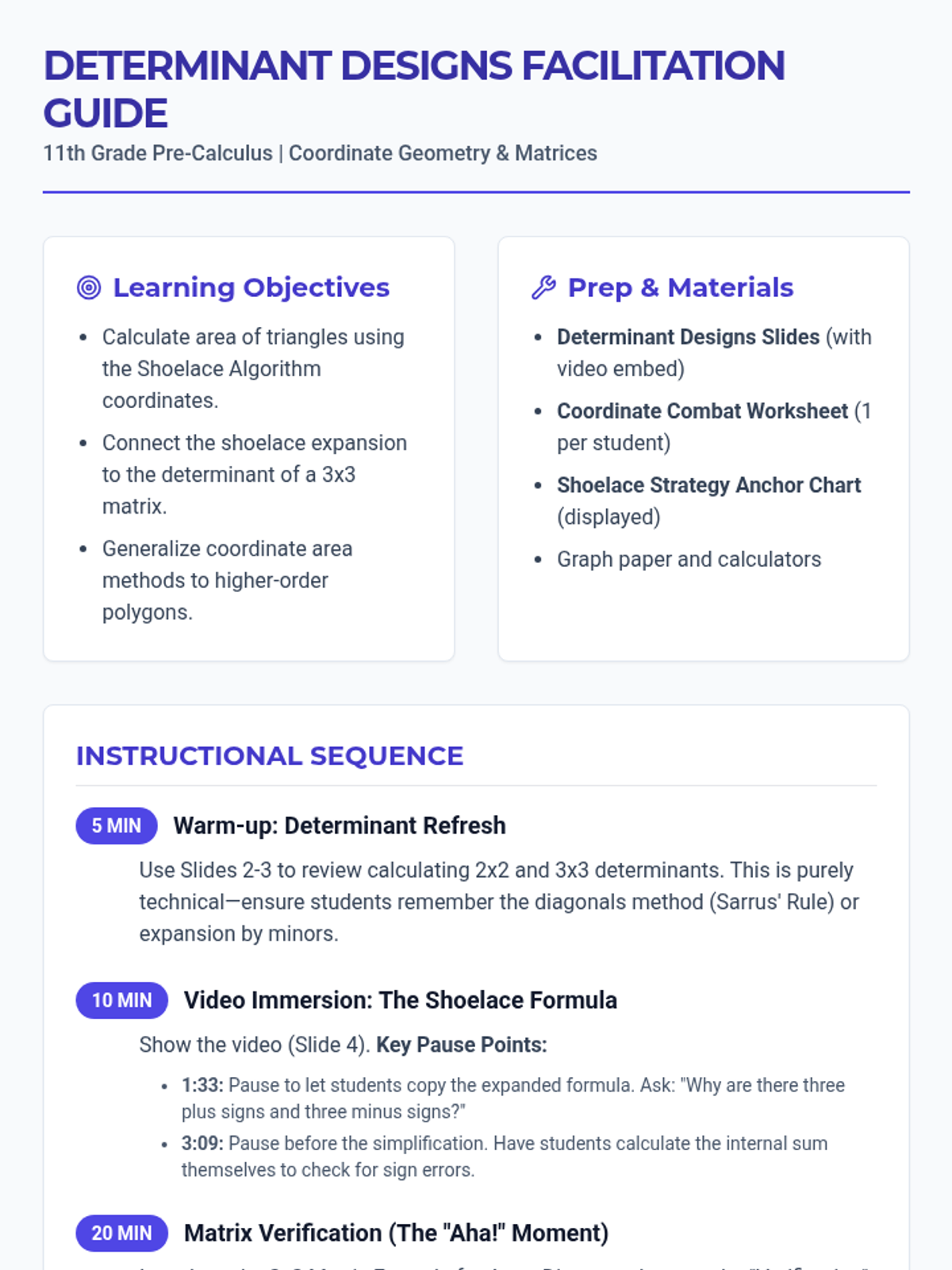
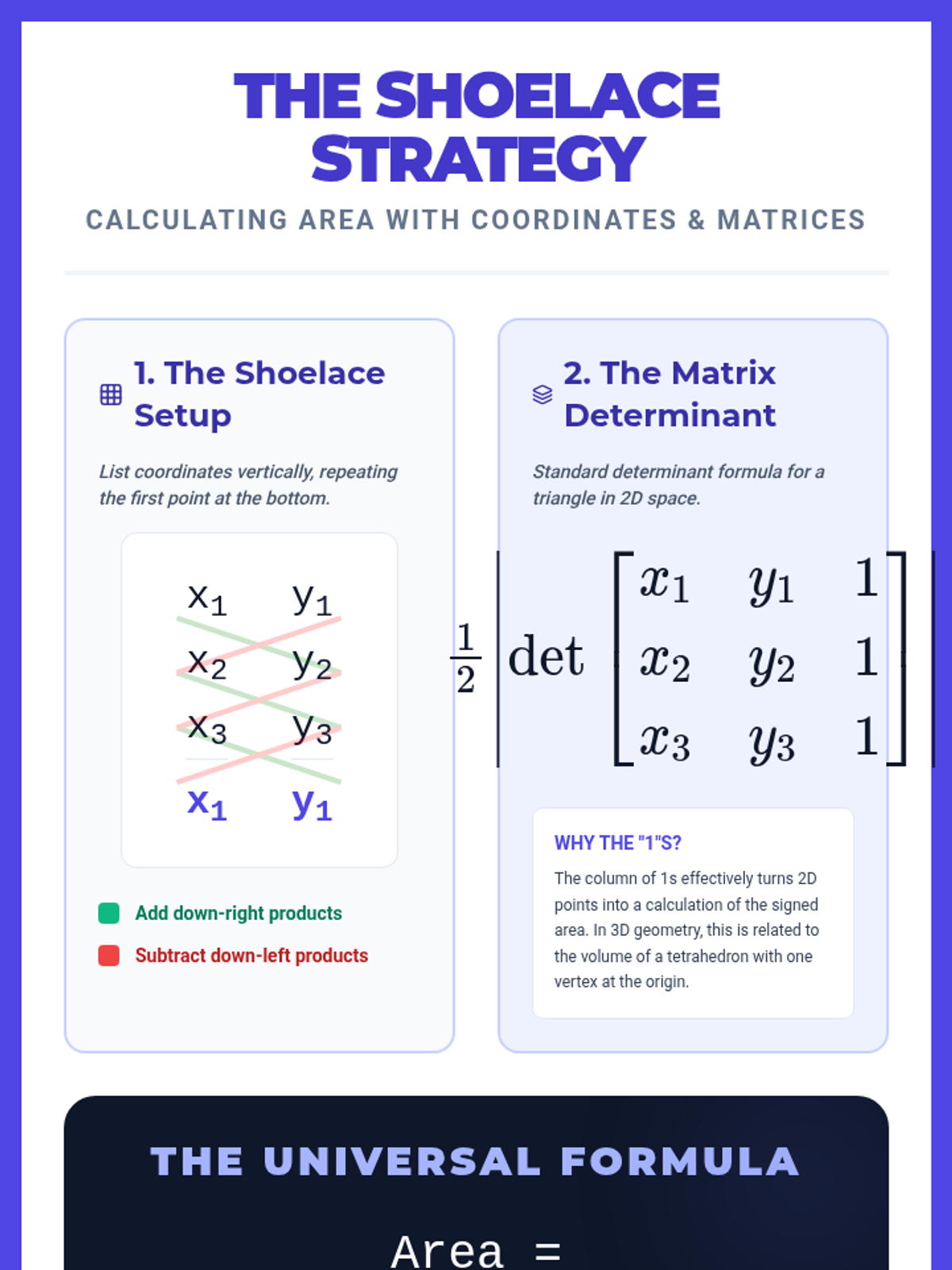
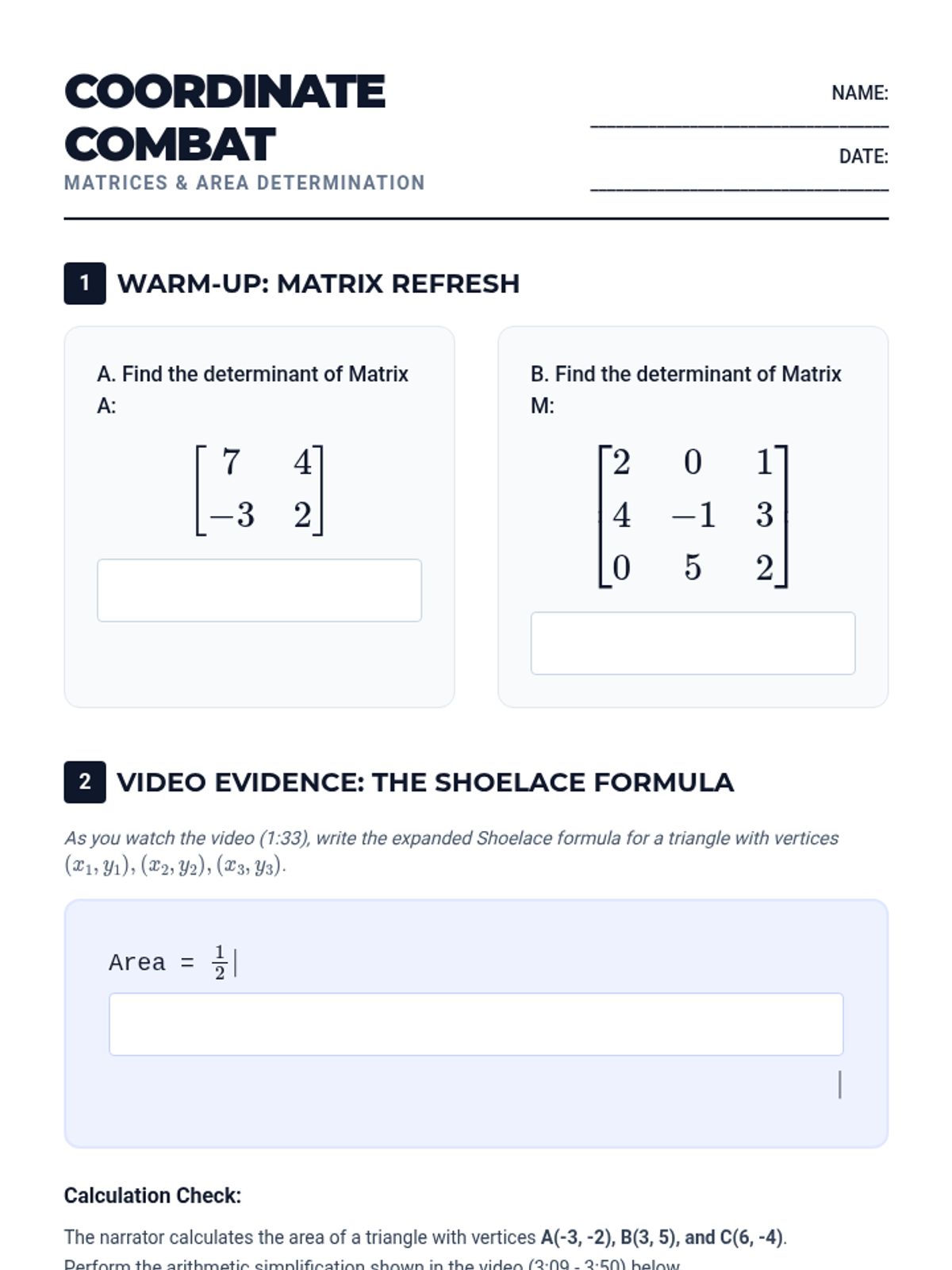
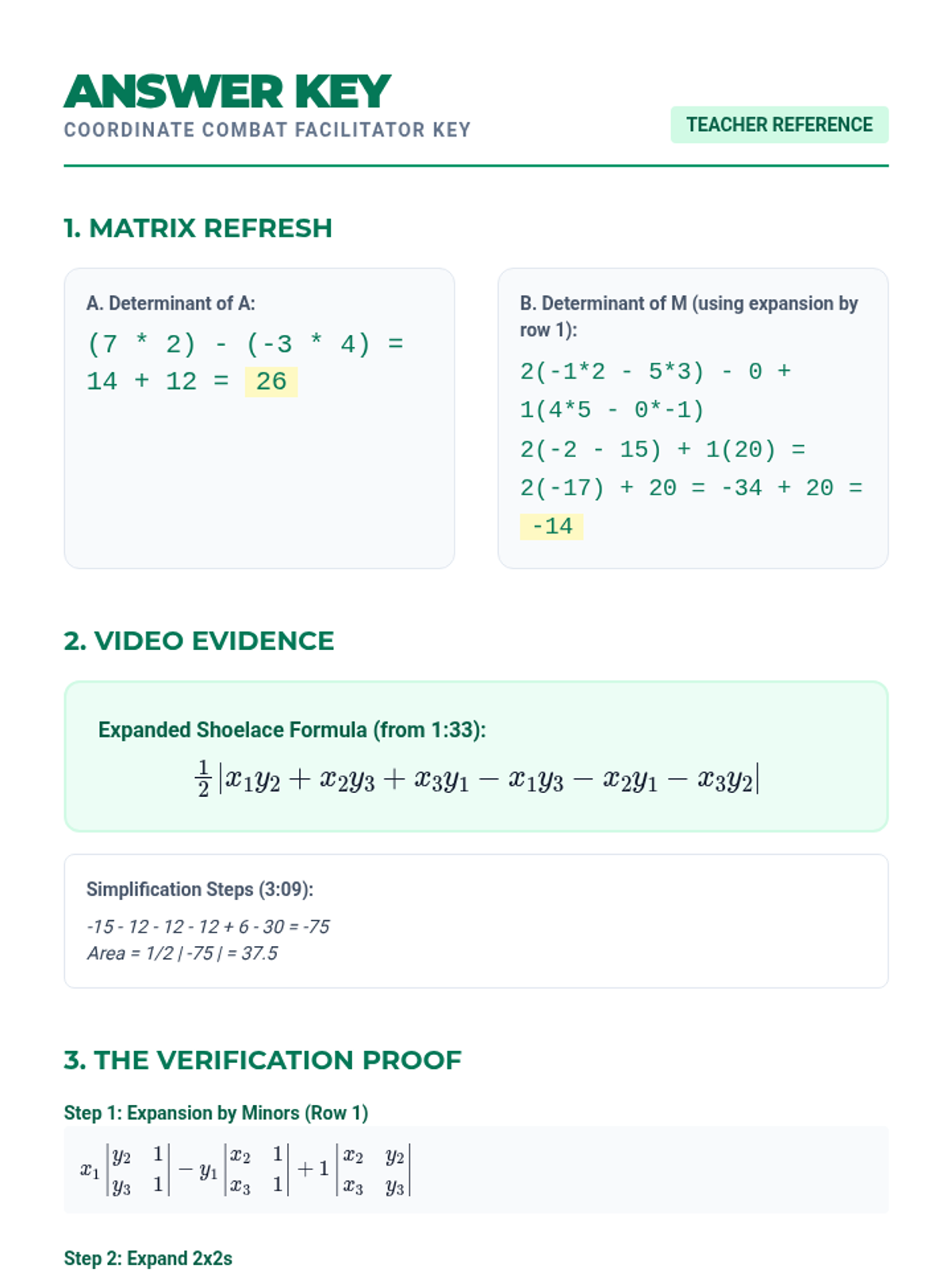
Students will bridge the gap between coordinate geometry and linear algebra by connecting the Shoelace Algorithm to matrix determinants. This lesson uses a step-by-step video demonstration followed by algebraic verification of the 3x3 matrix area formula.
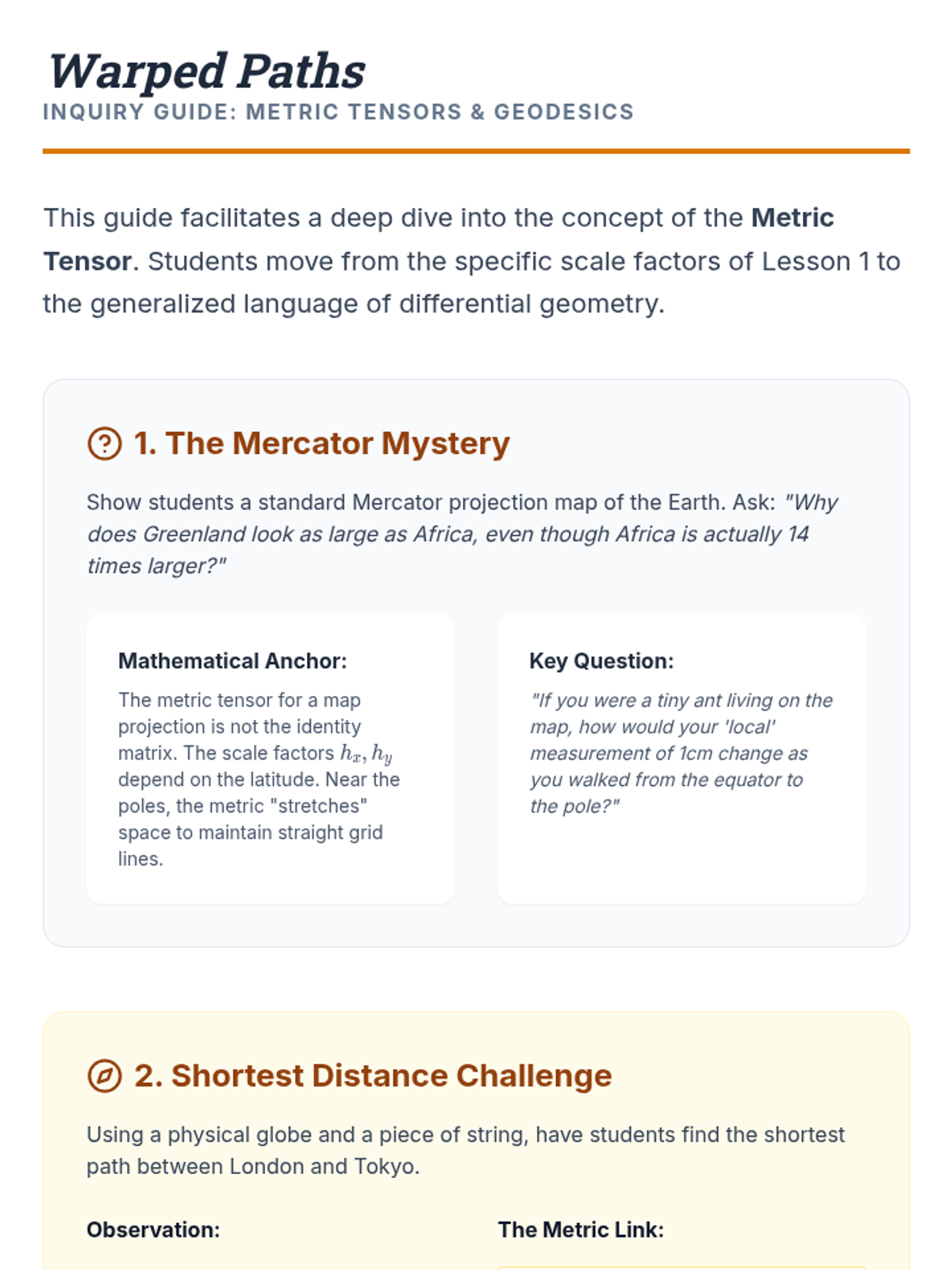
An advanced introduction to the metric tensor and non-Euclidean geometry, serving as a primer for General Relativity.
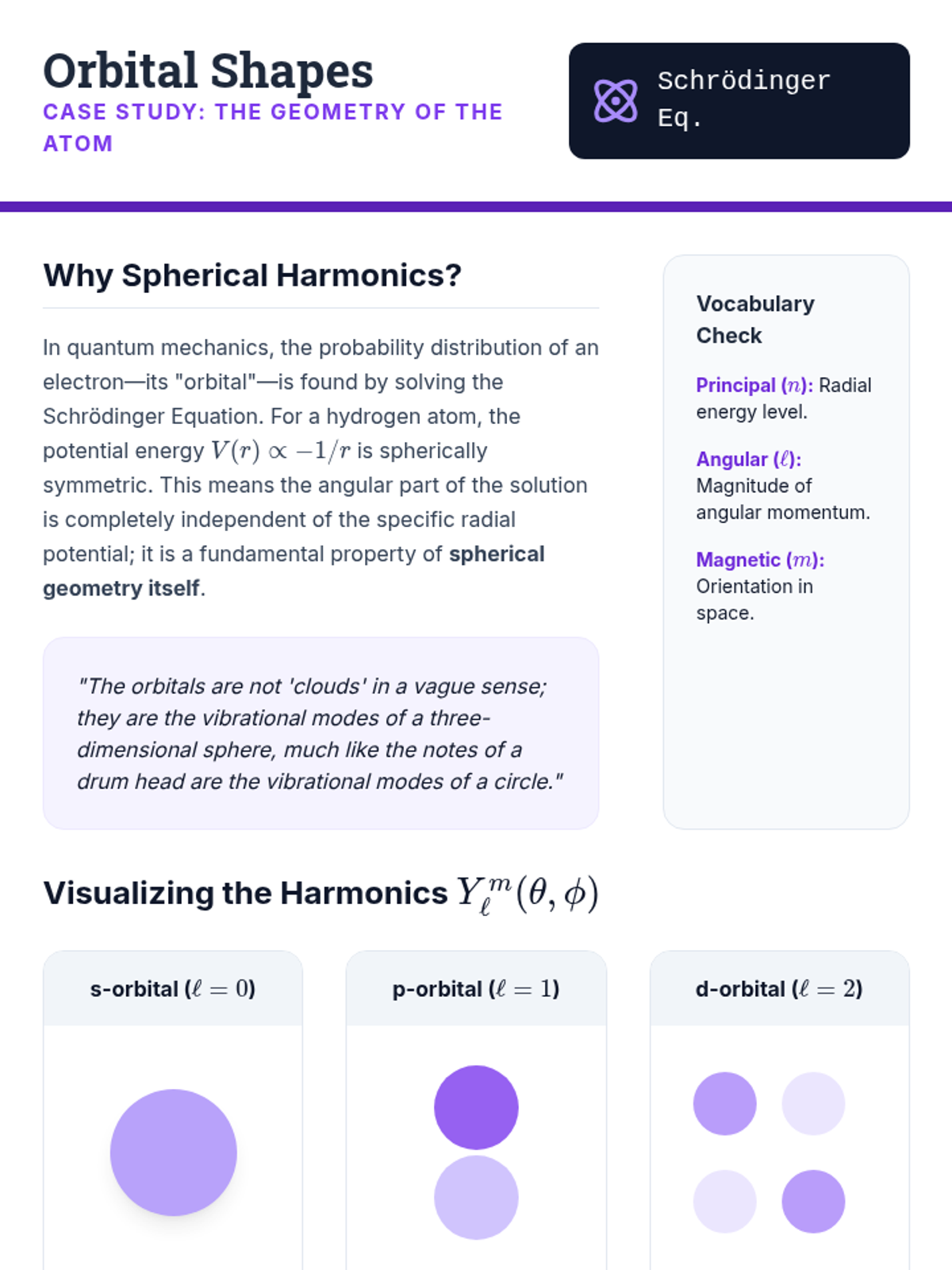
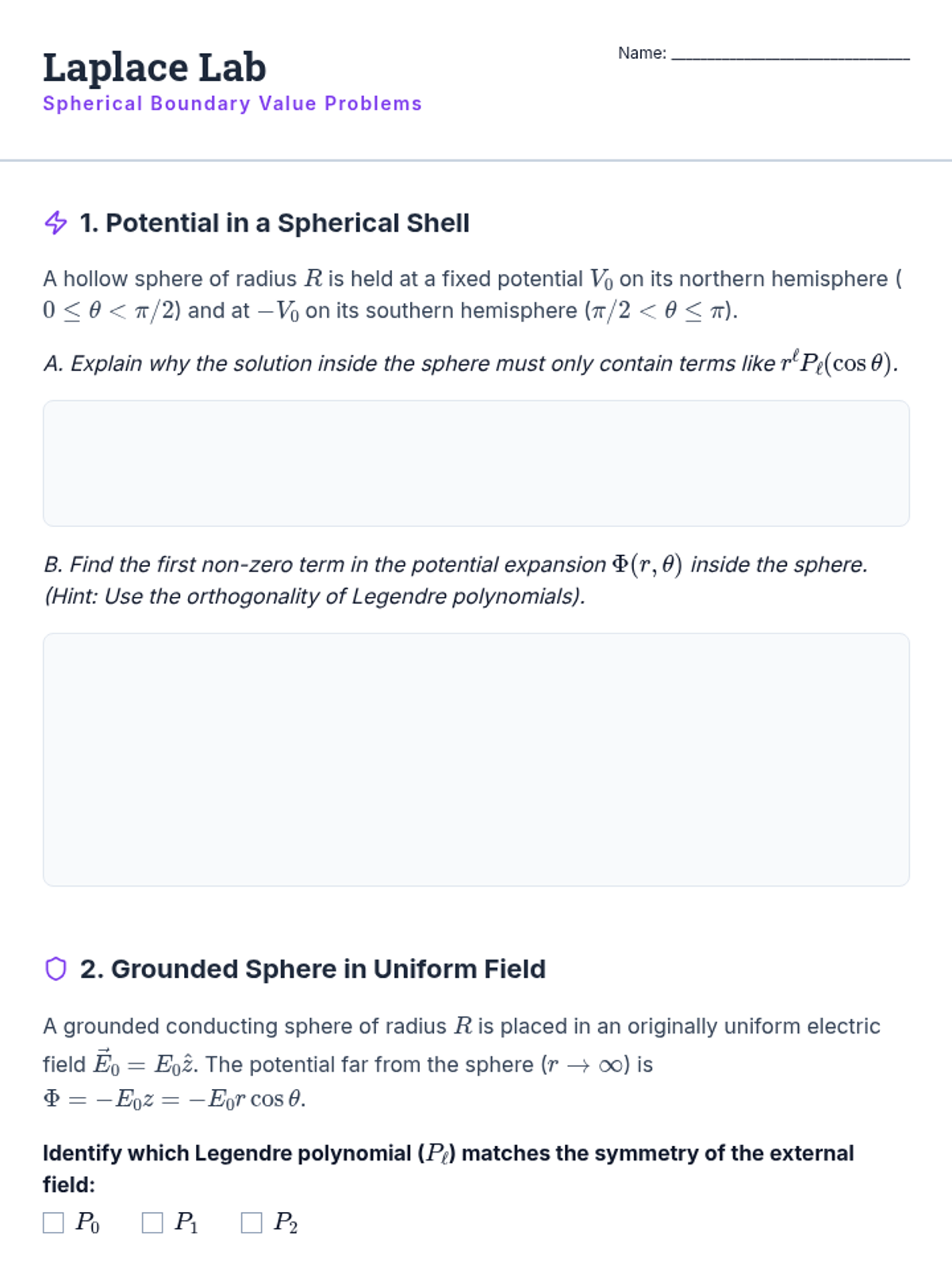
Students solve Laplace's equation for systems with spherical symmetry, introducing Legendre polynomials and Spherical Harmonics.
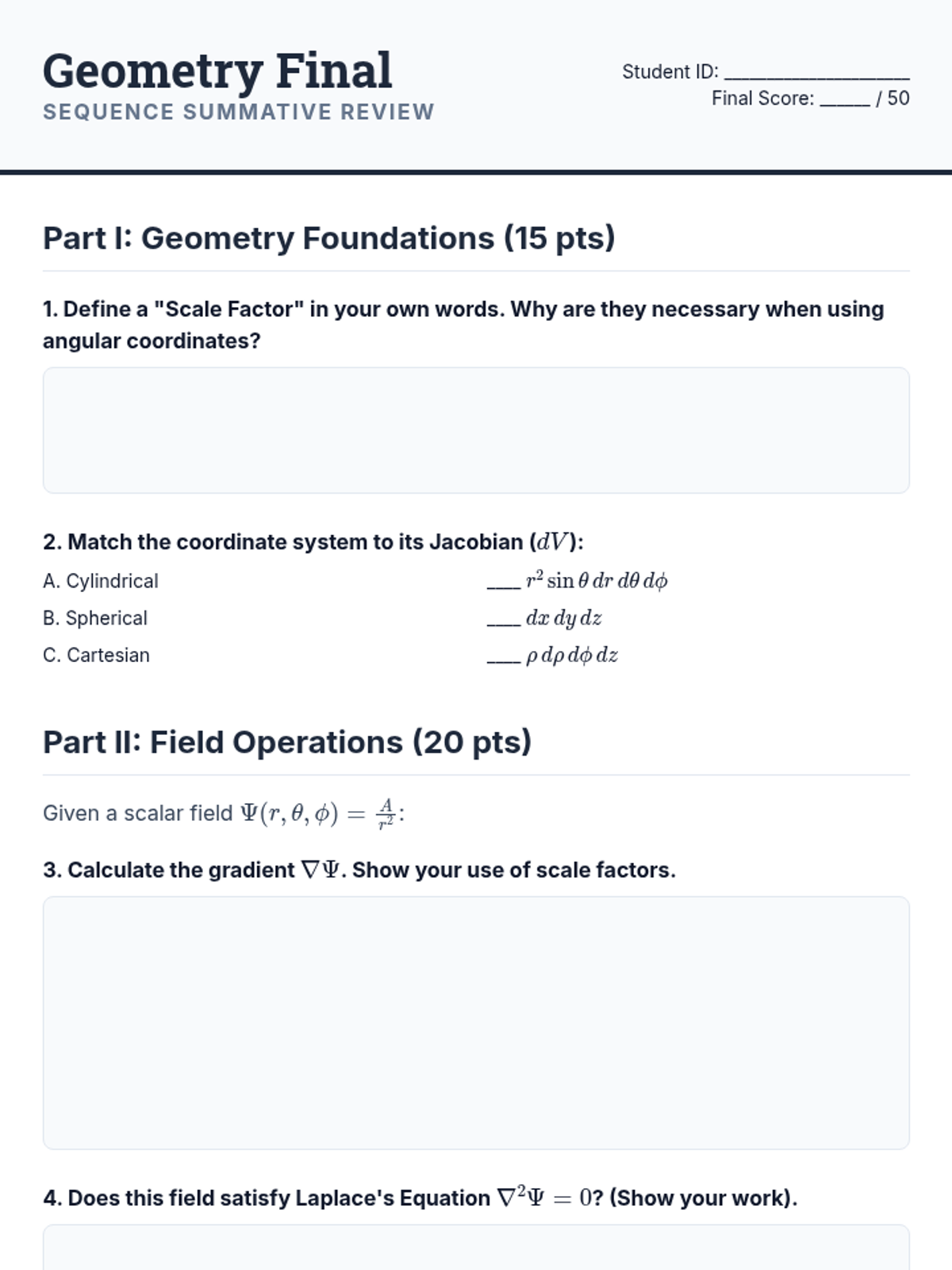
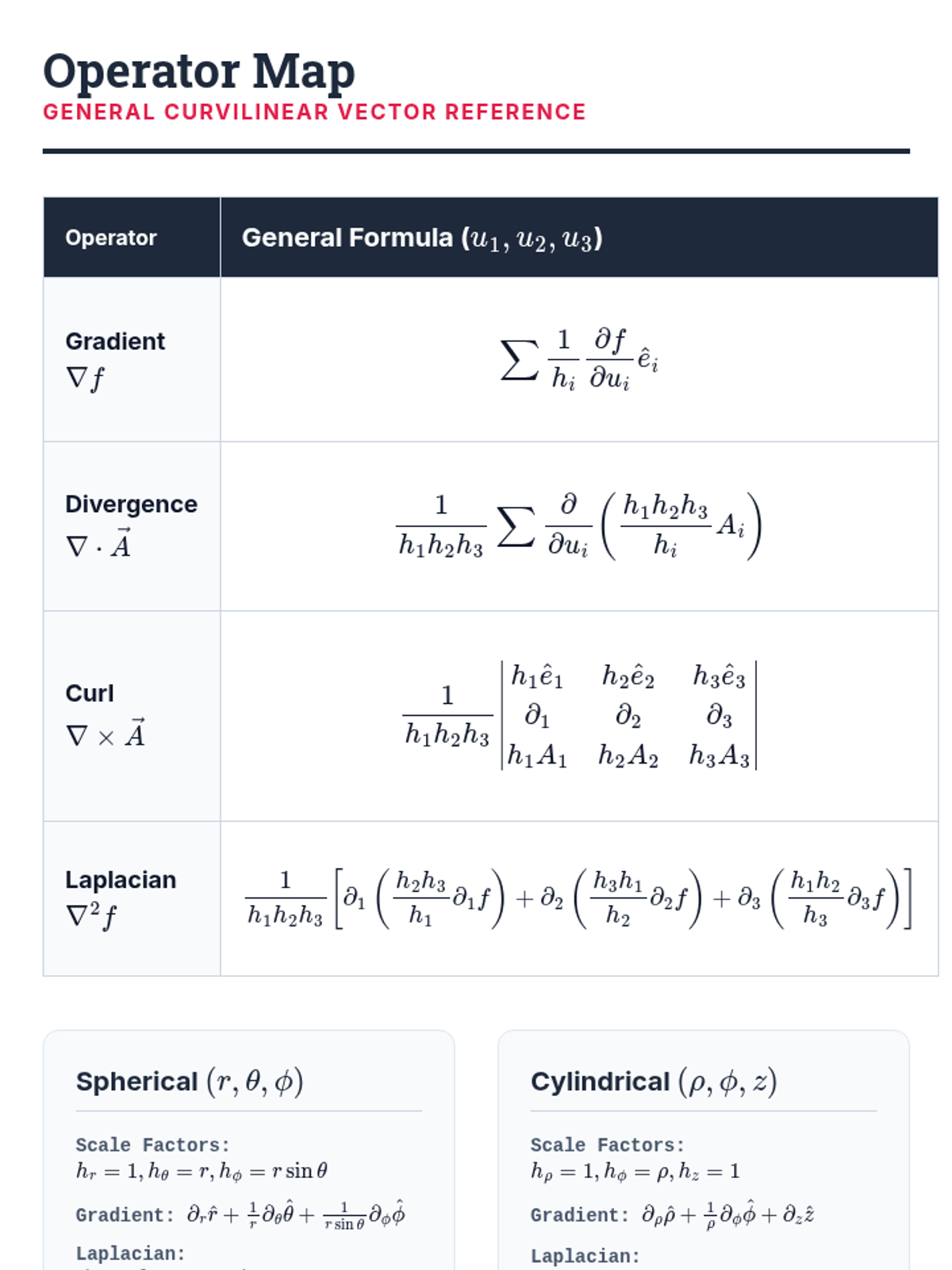
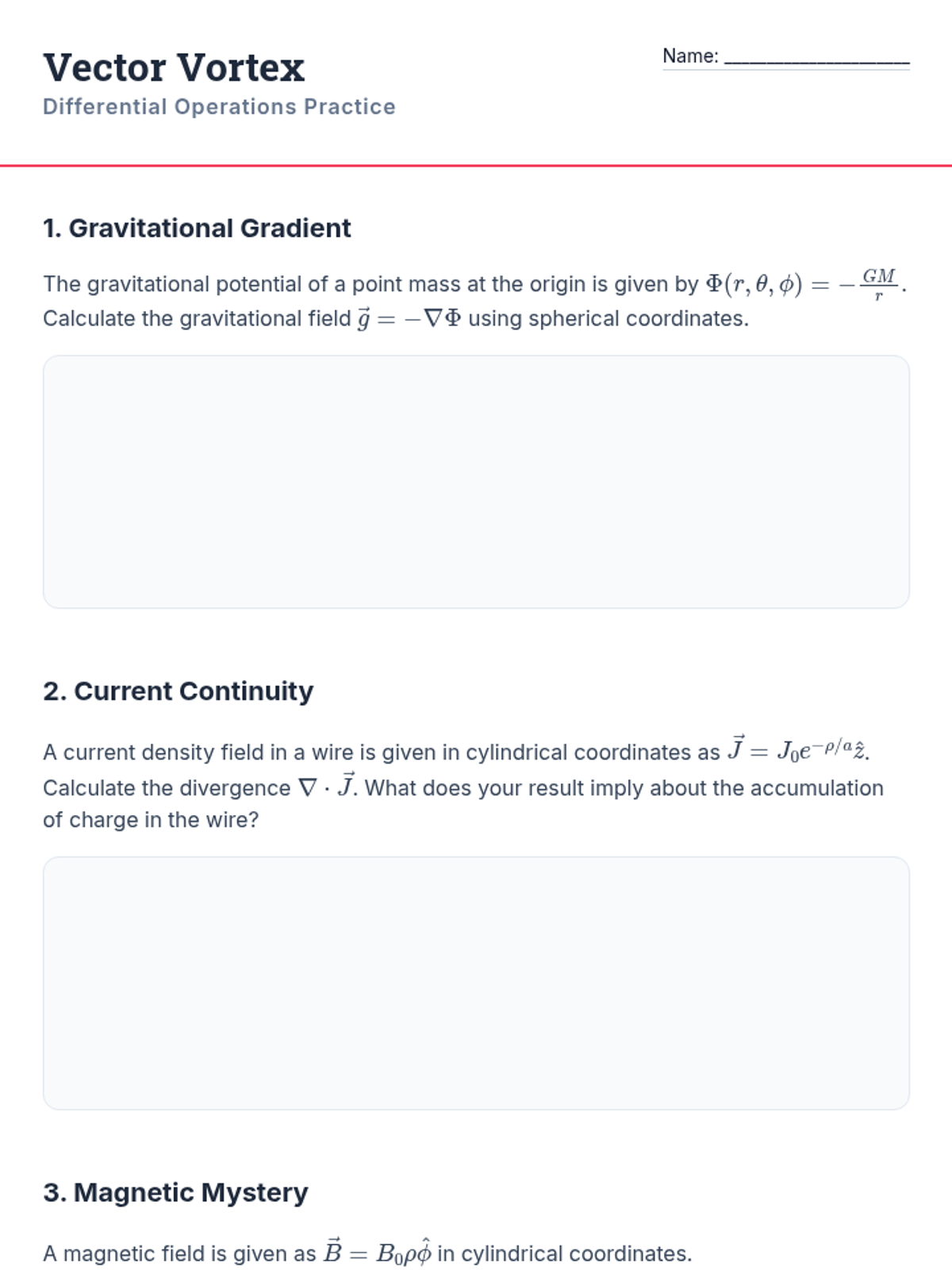
Students translate the Del operator into general curvilinear coordinates and apply these operators to physical vector fields.
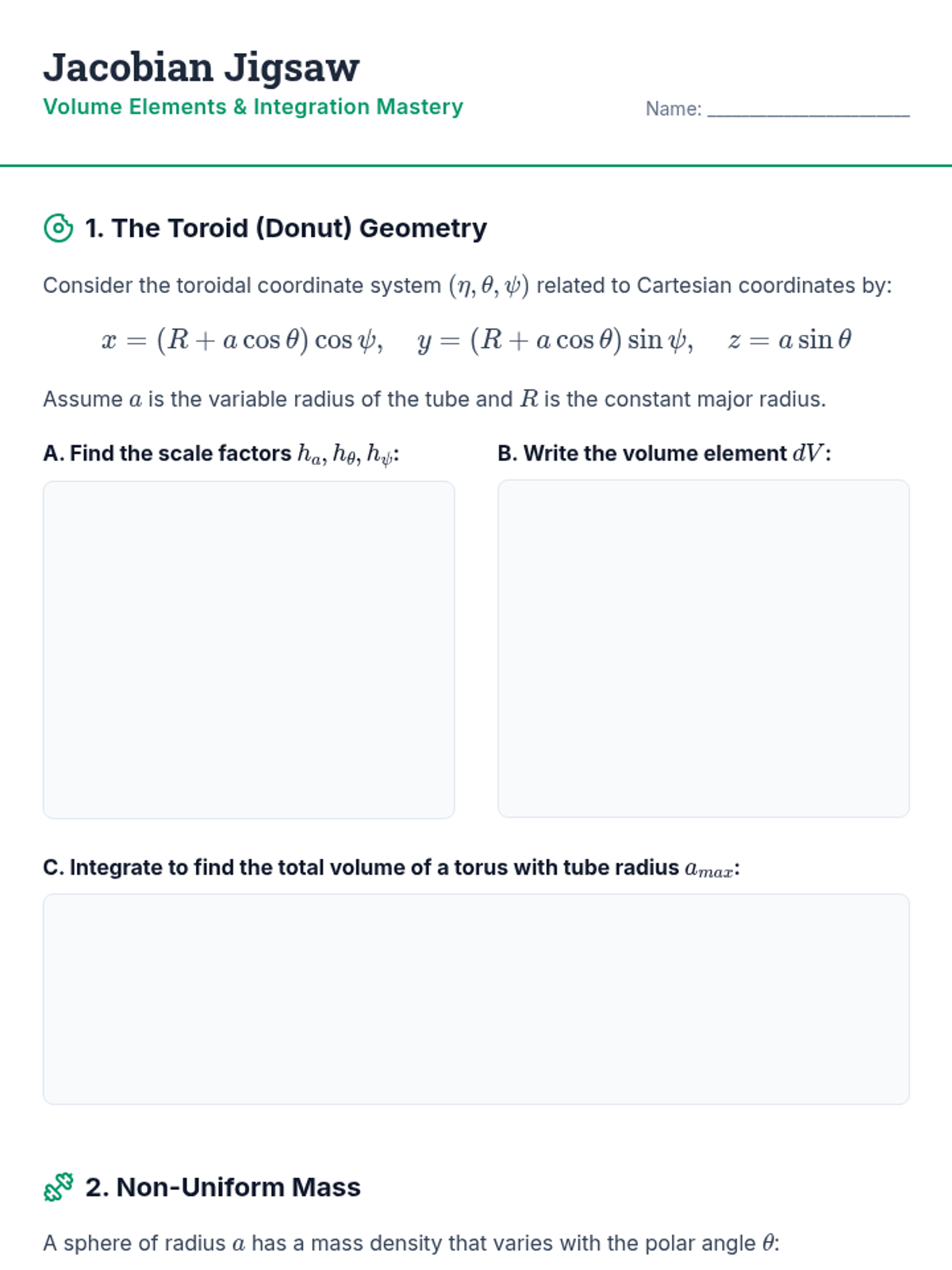
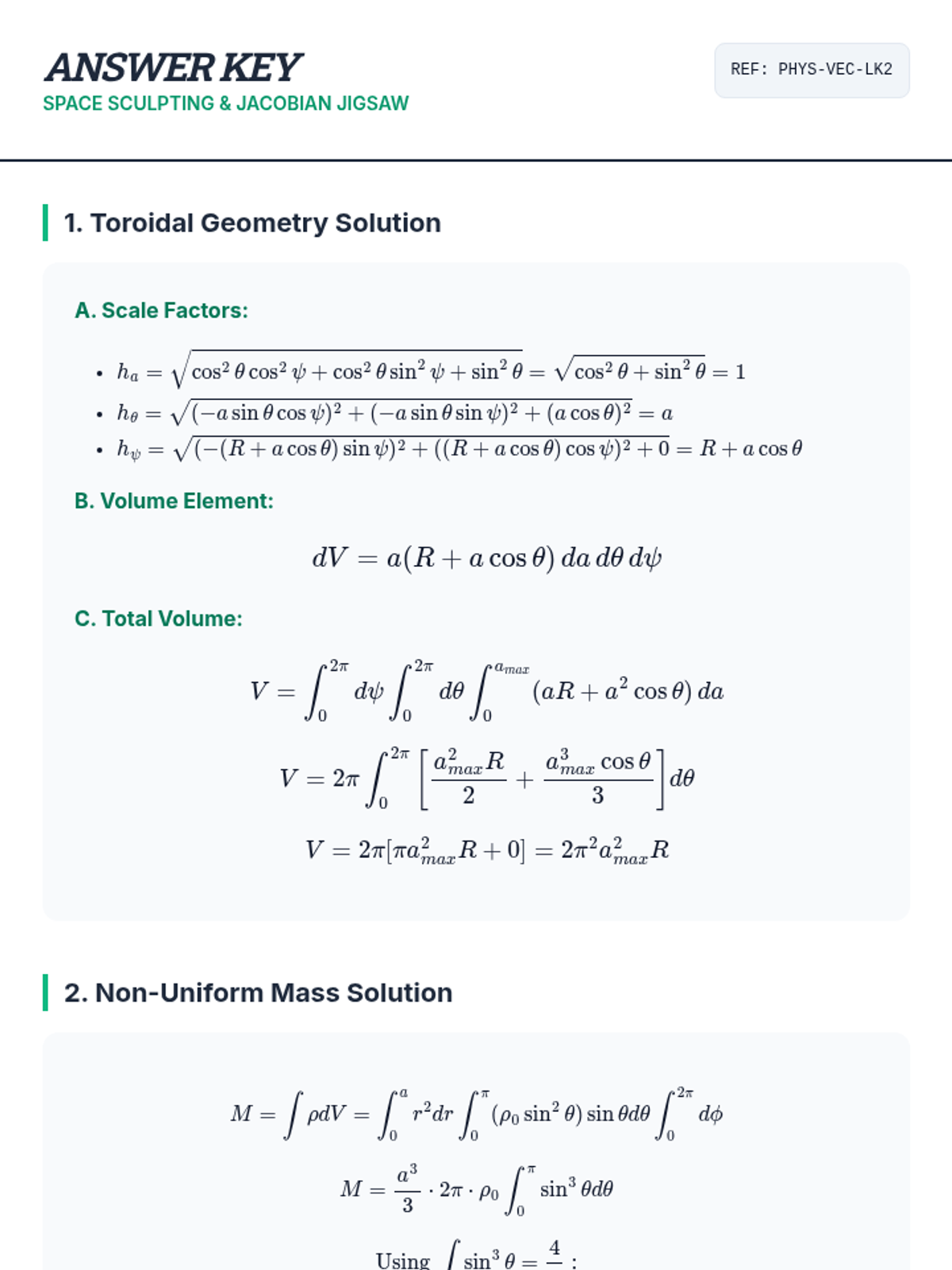
Focusing on integration, students construct volume and area elements (Jacobians) for spherical and cylindrical geometries and practice integrating scalar fields over complex 3D domains.
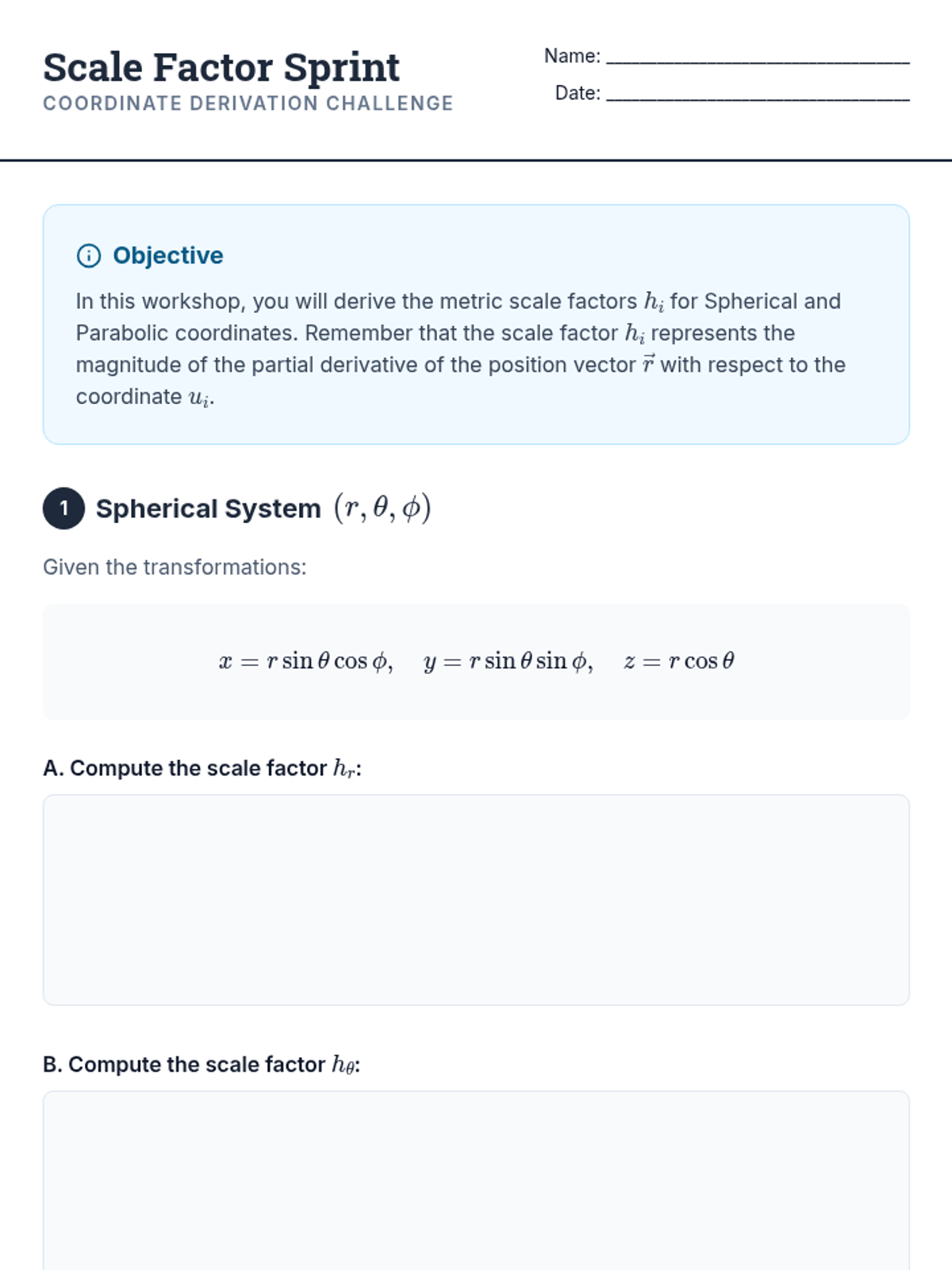
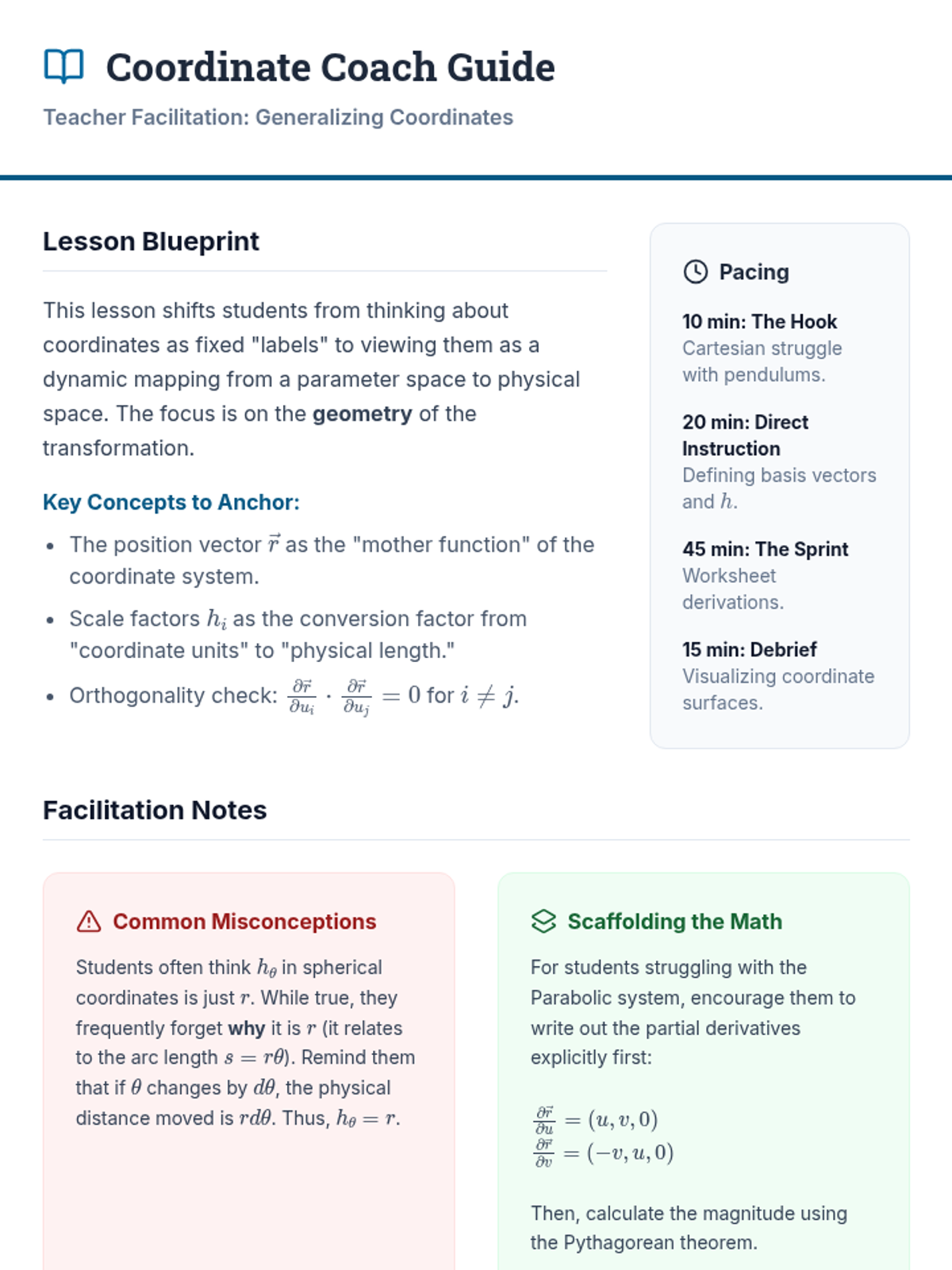
Students derive basis vectors and scale factors for general orthogonal curvilinear coordinates and learn how to define position vectors in non-Cartesian geometries.
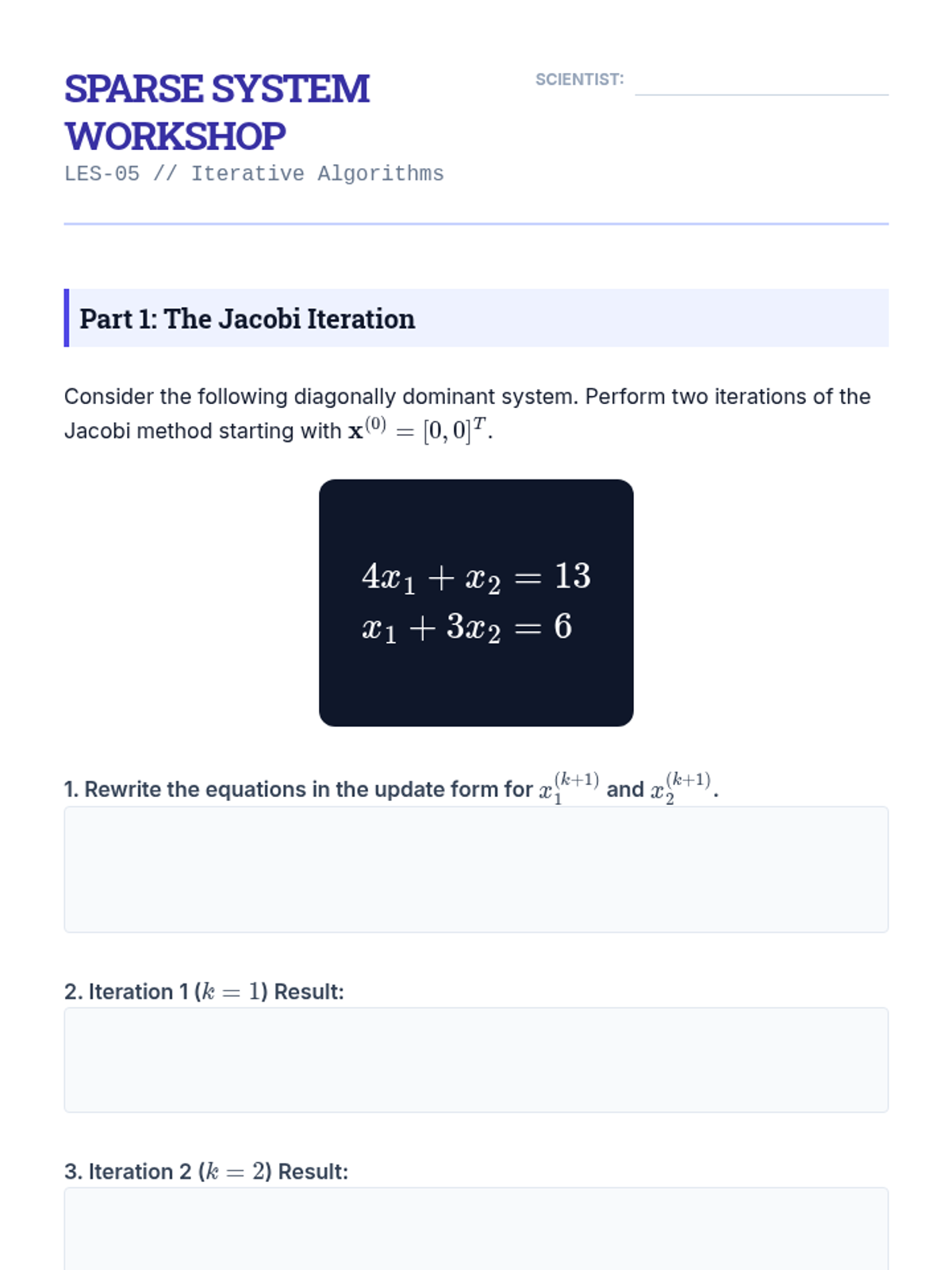
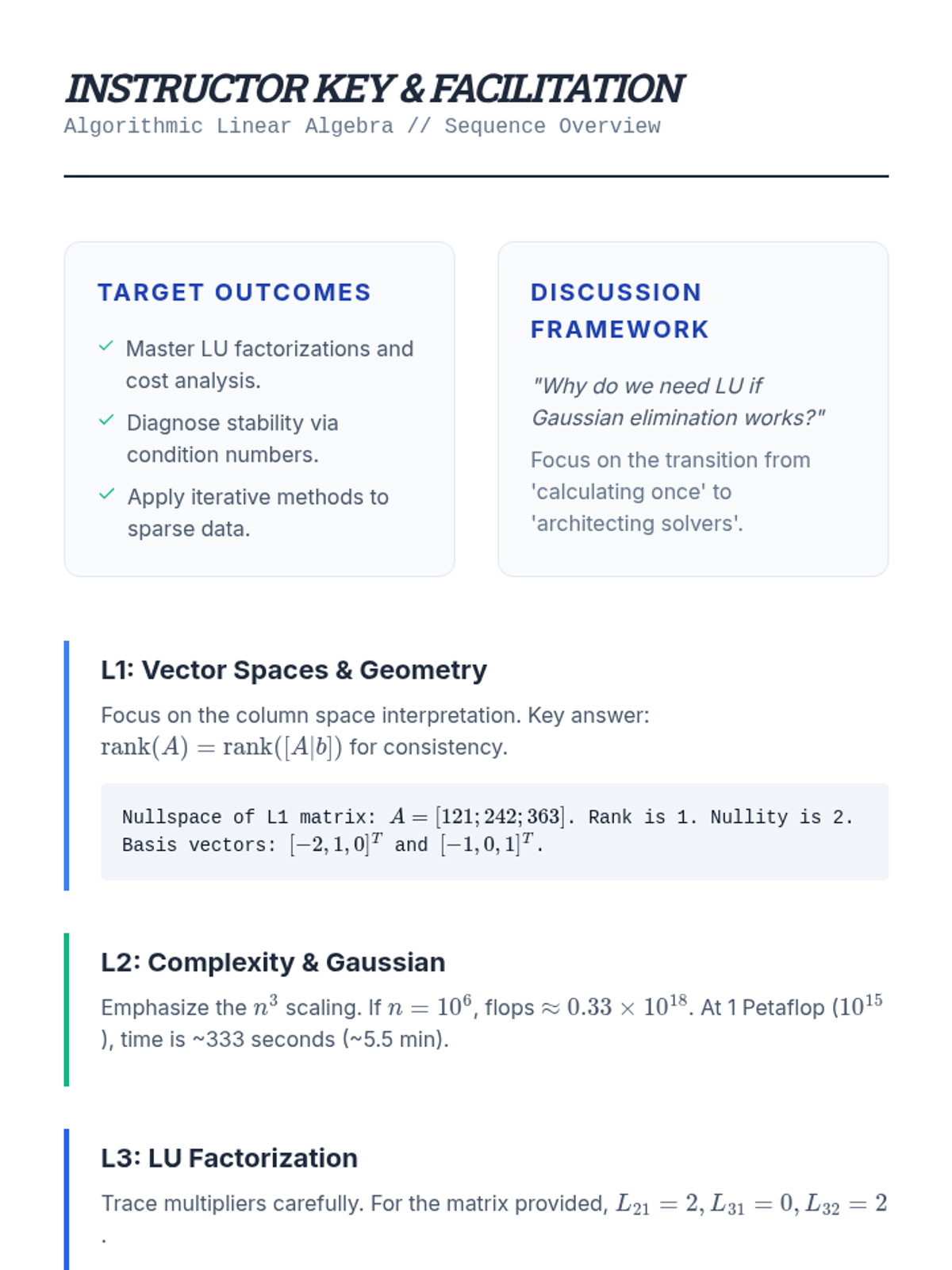
Exploring iterative methods like Jacobi and Gauss-Seidel for solving massive, sparse systems where elimination is computationally prohibitive.
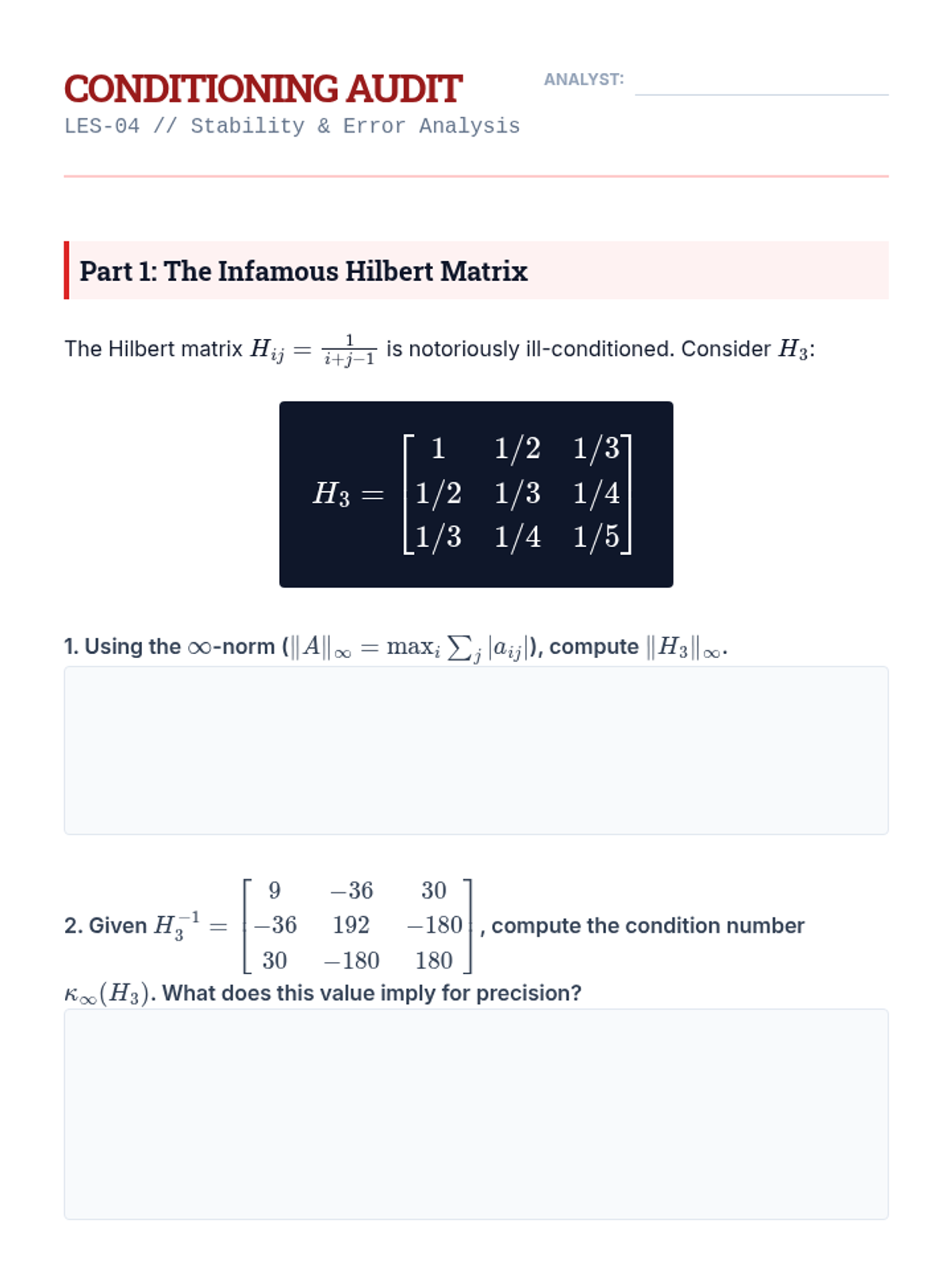
Examination of ill-conditioned systems, condition numbers, and the impact of rounding errors on numerical stability.
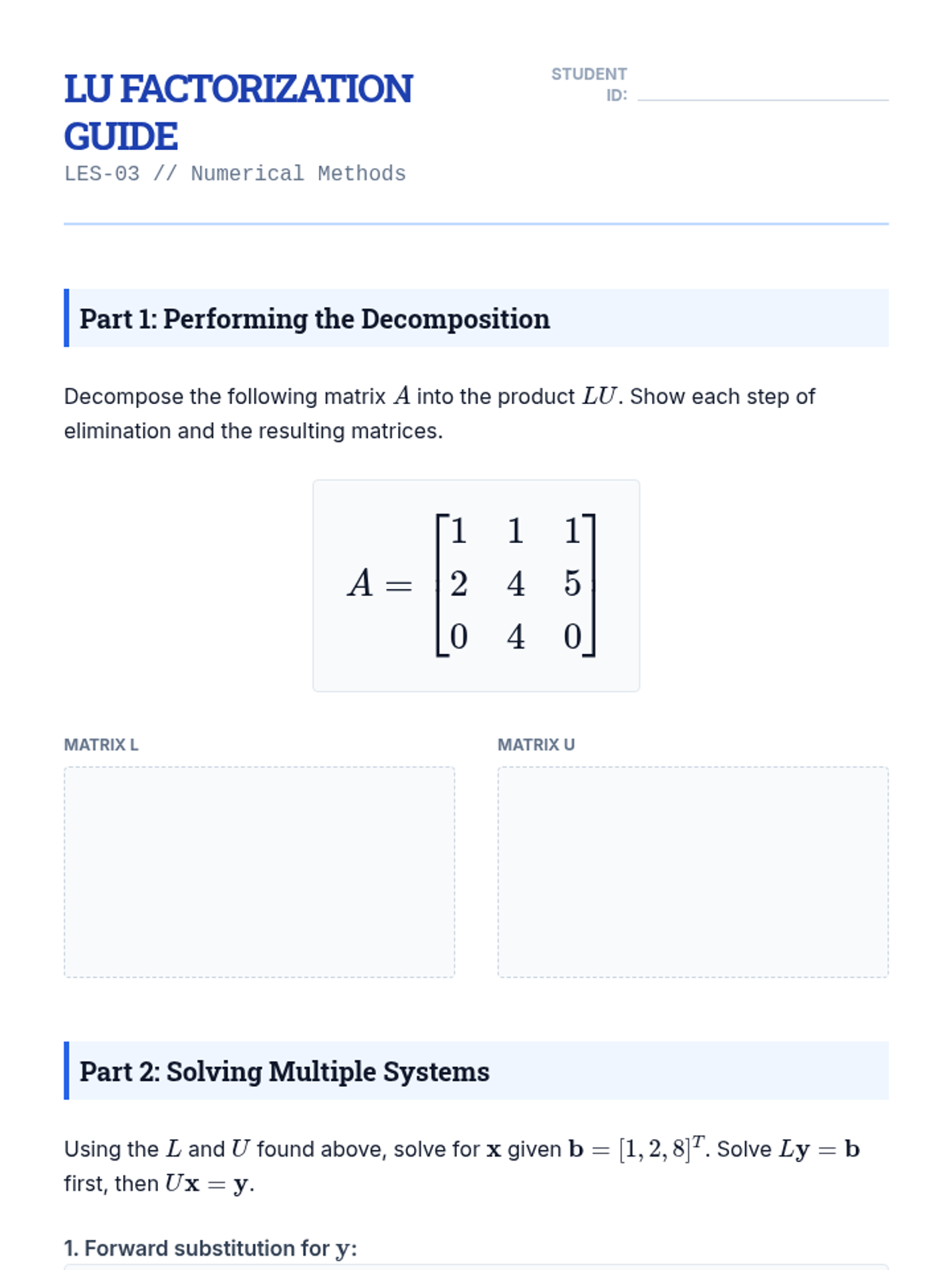
Introduction to Lower and Upper triangular matrix decomposition to optimize solving systems with changing constants.
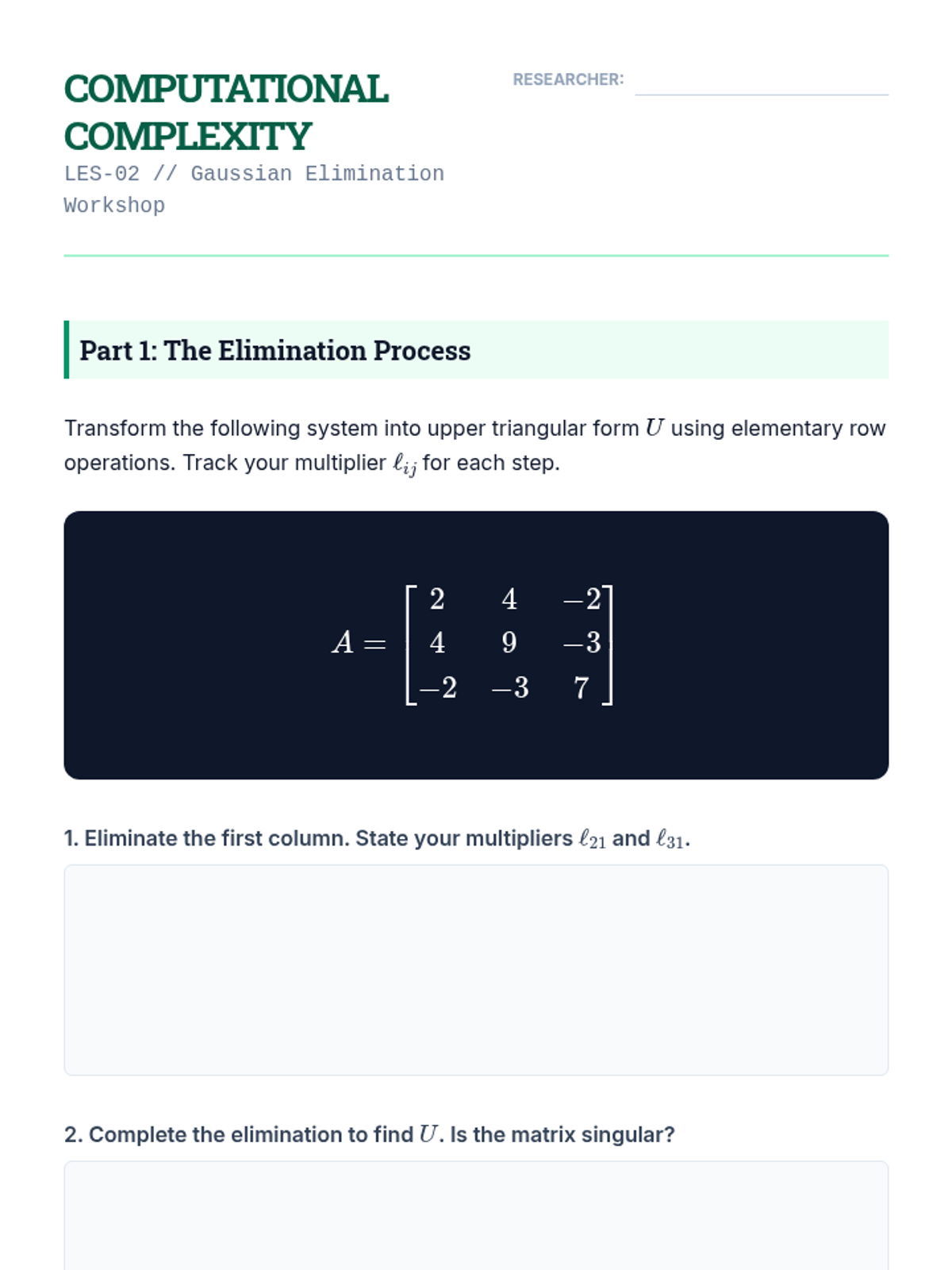
A formalization of the Gaussian algorithm focusing on matrix notation and the computational cost (Big O notation) for large-scale systems.
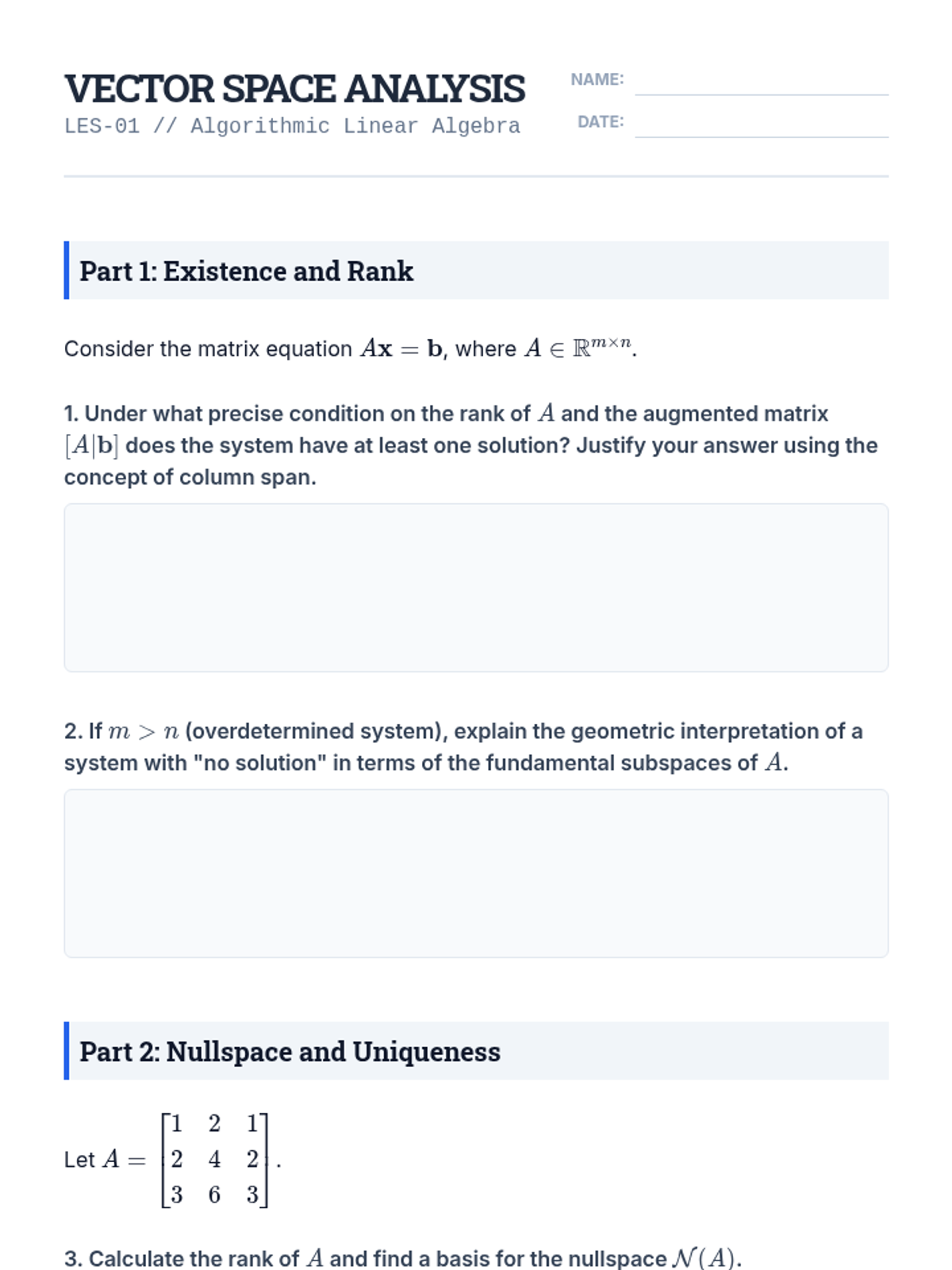
Students explore linear systems as intersections of hyperplanes in n-dimensional space, analyzing uniqueness, existence, and rank within vector spaces.
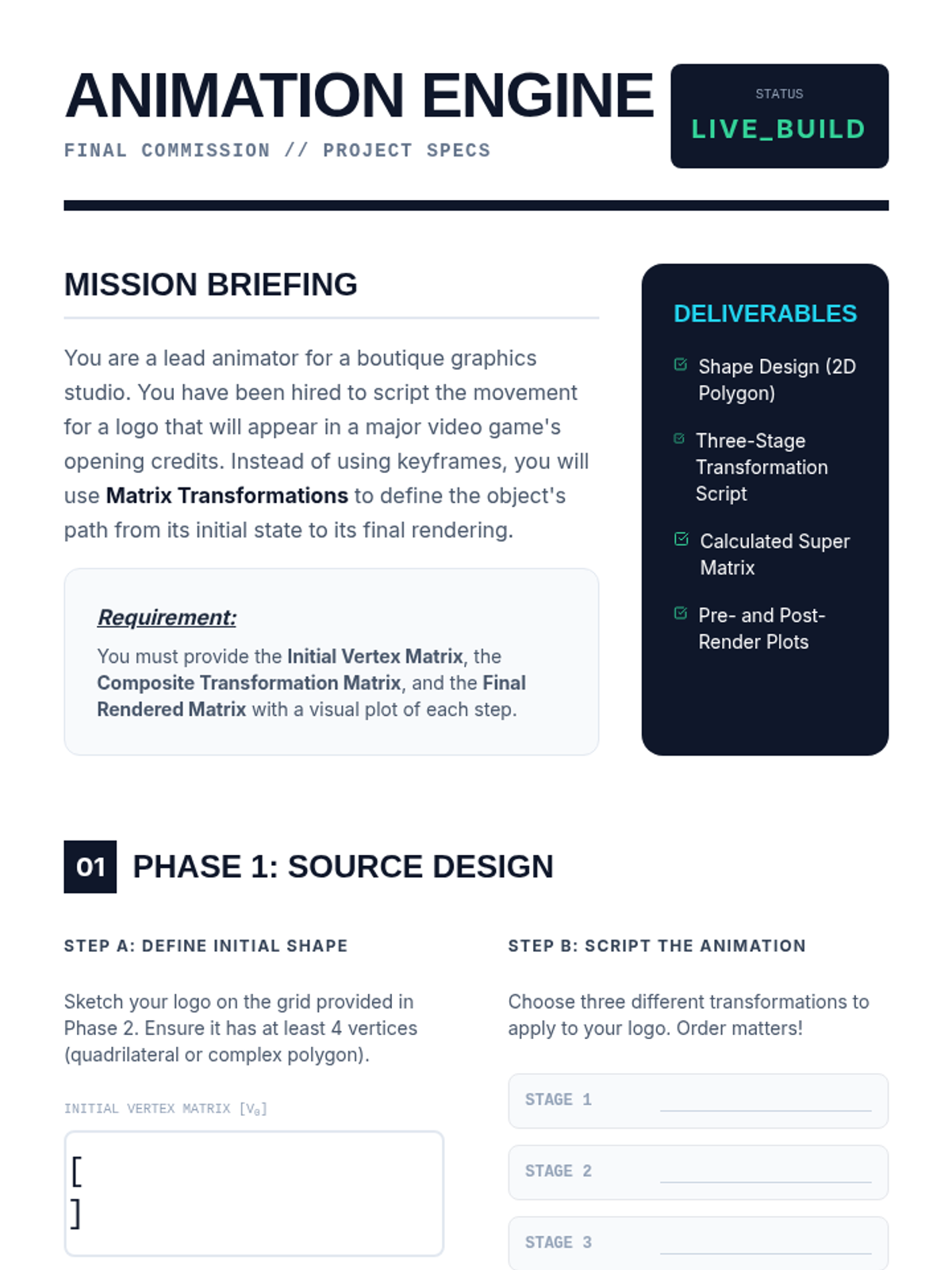
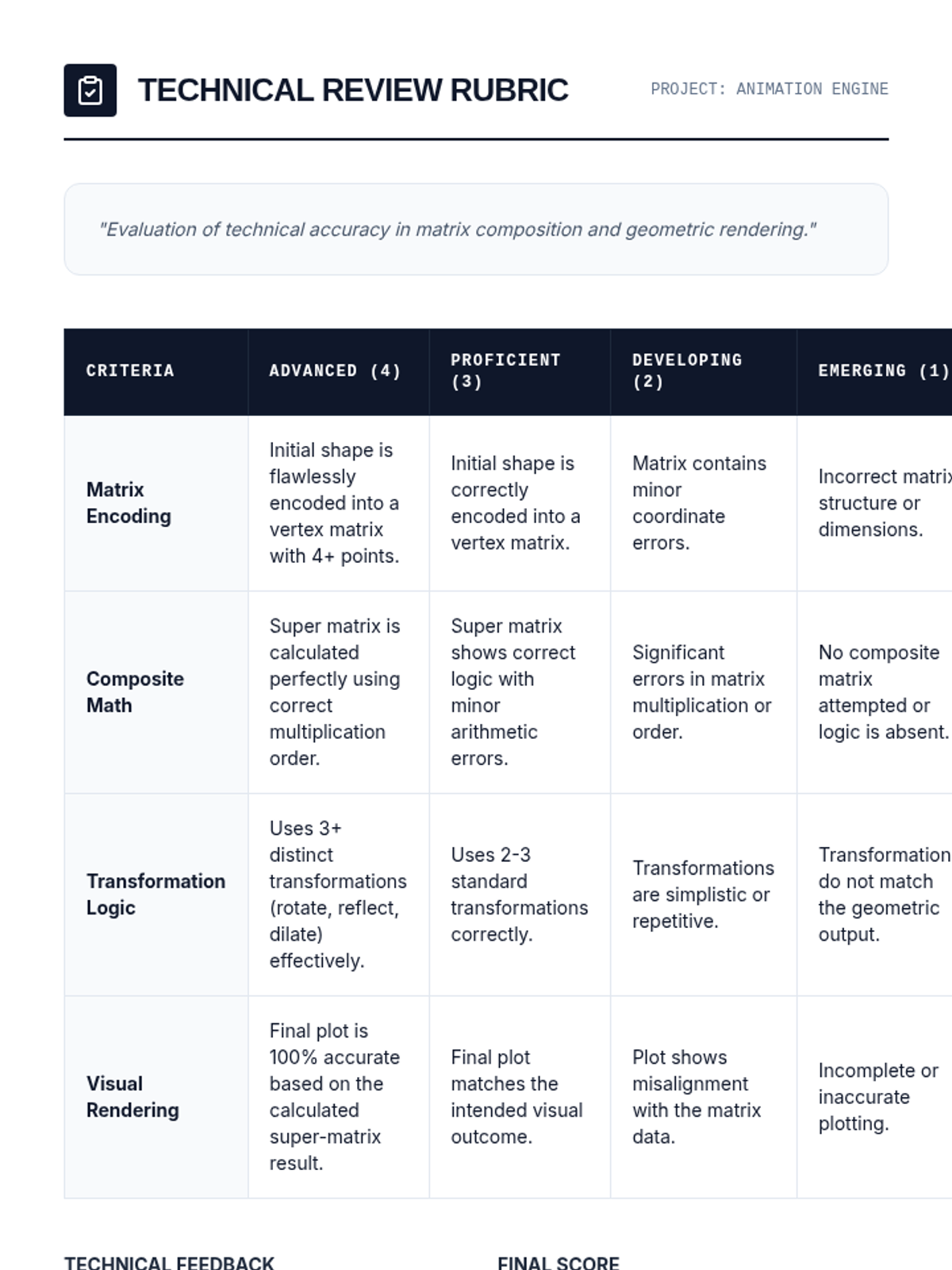
Apply matrix transformation logic to design a simple animation sequence for a digital object, mimicking graphics engine logic.
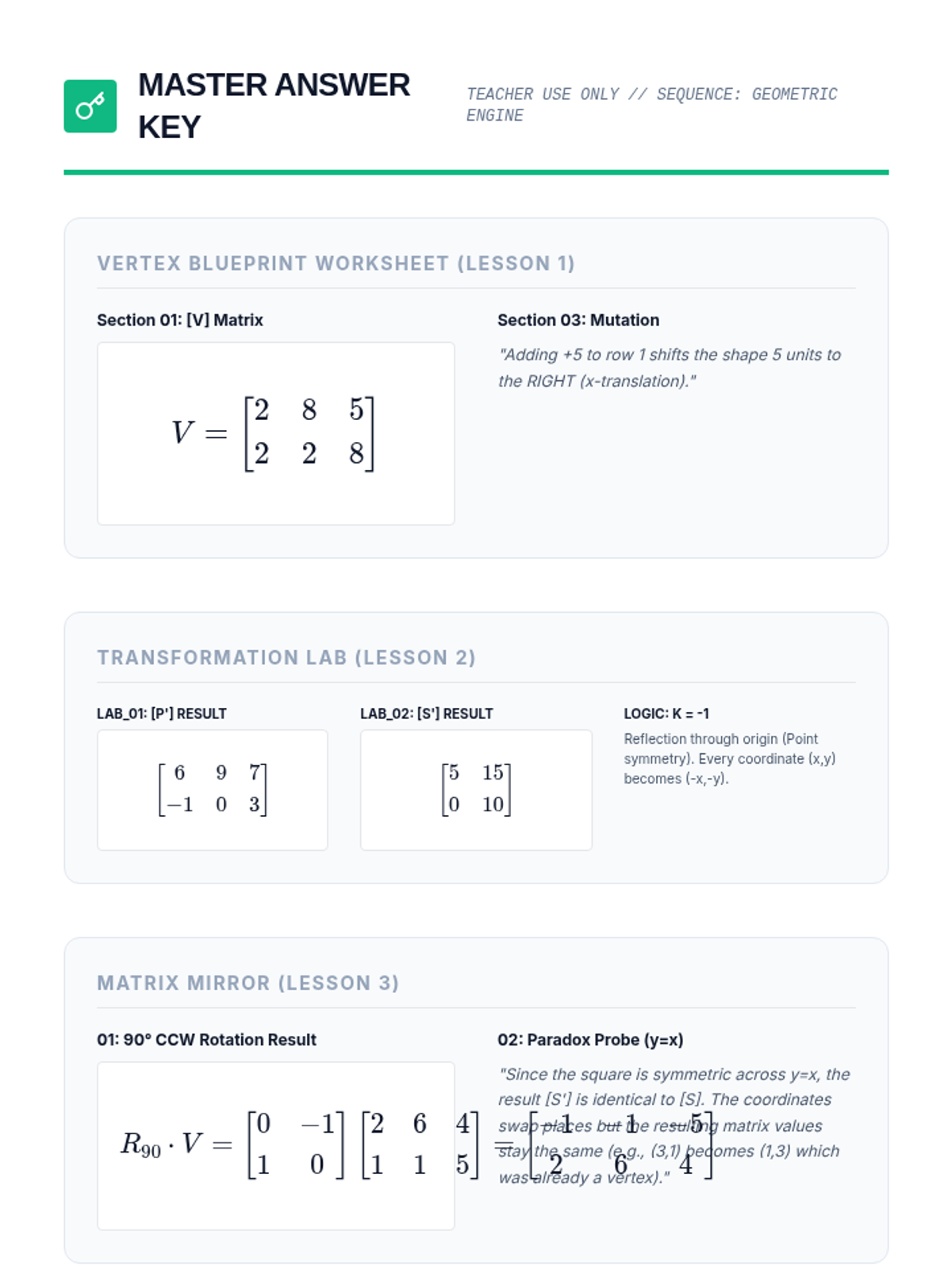
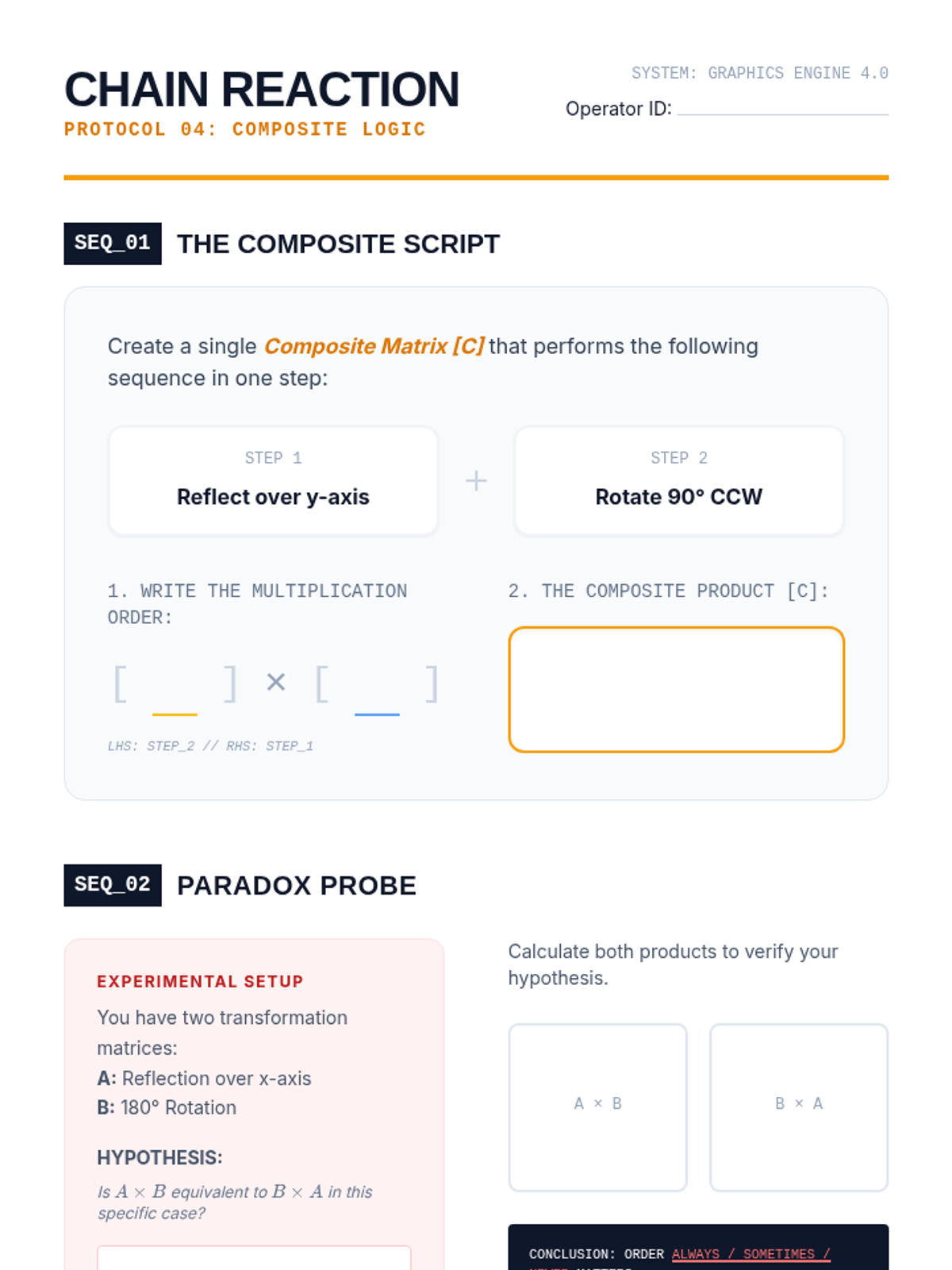
Discover how to combine multiple transformations into a single composite matrix and explore the importance of operation order.
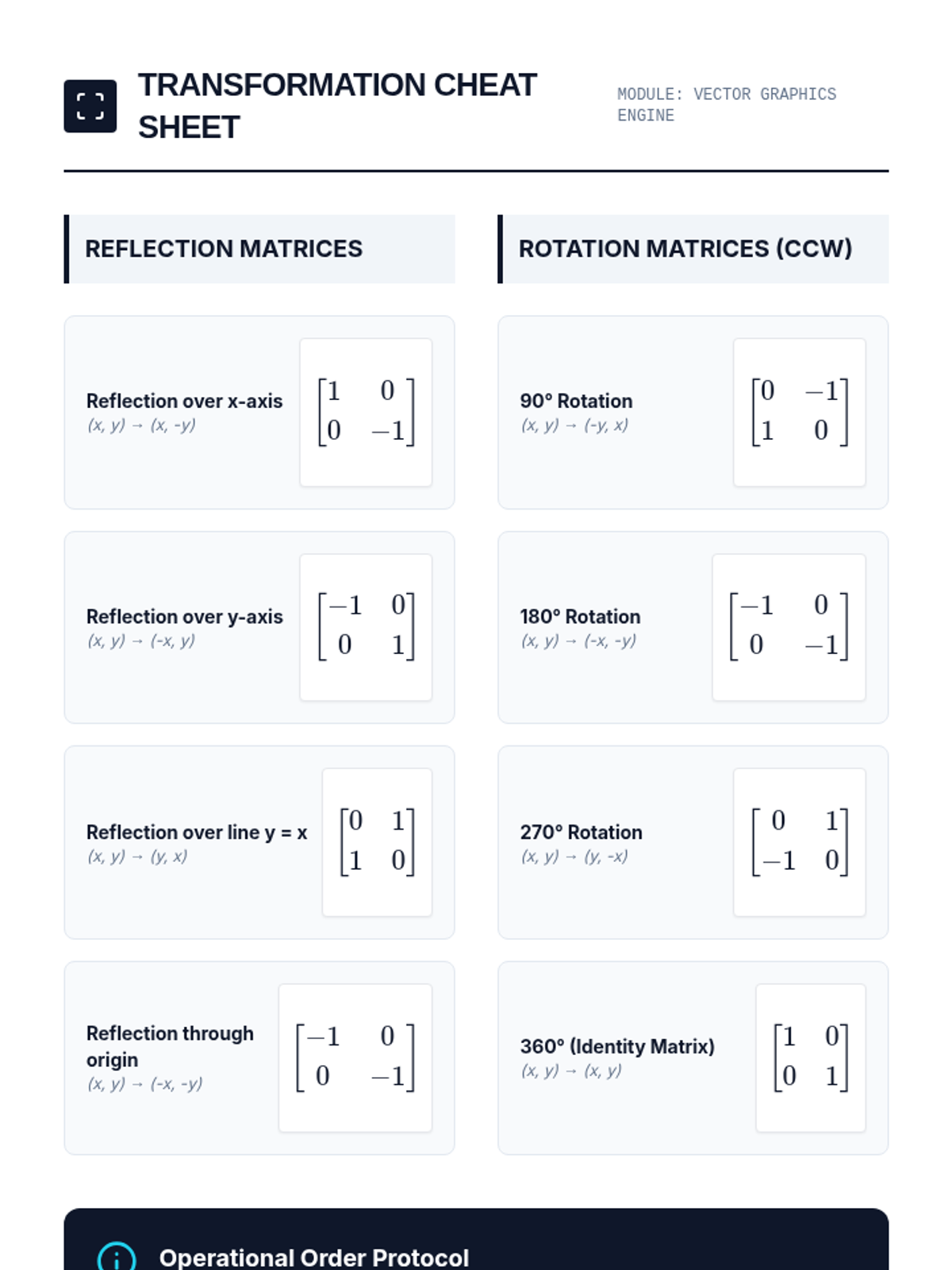
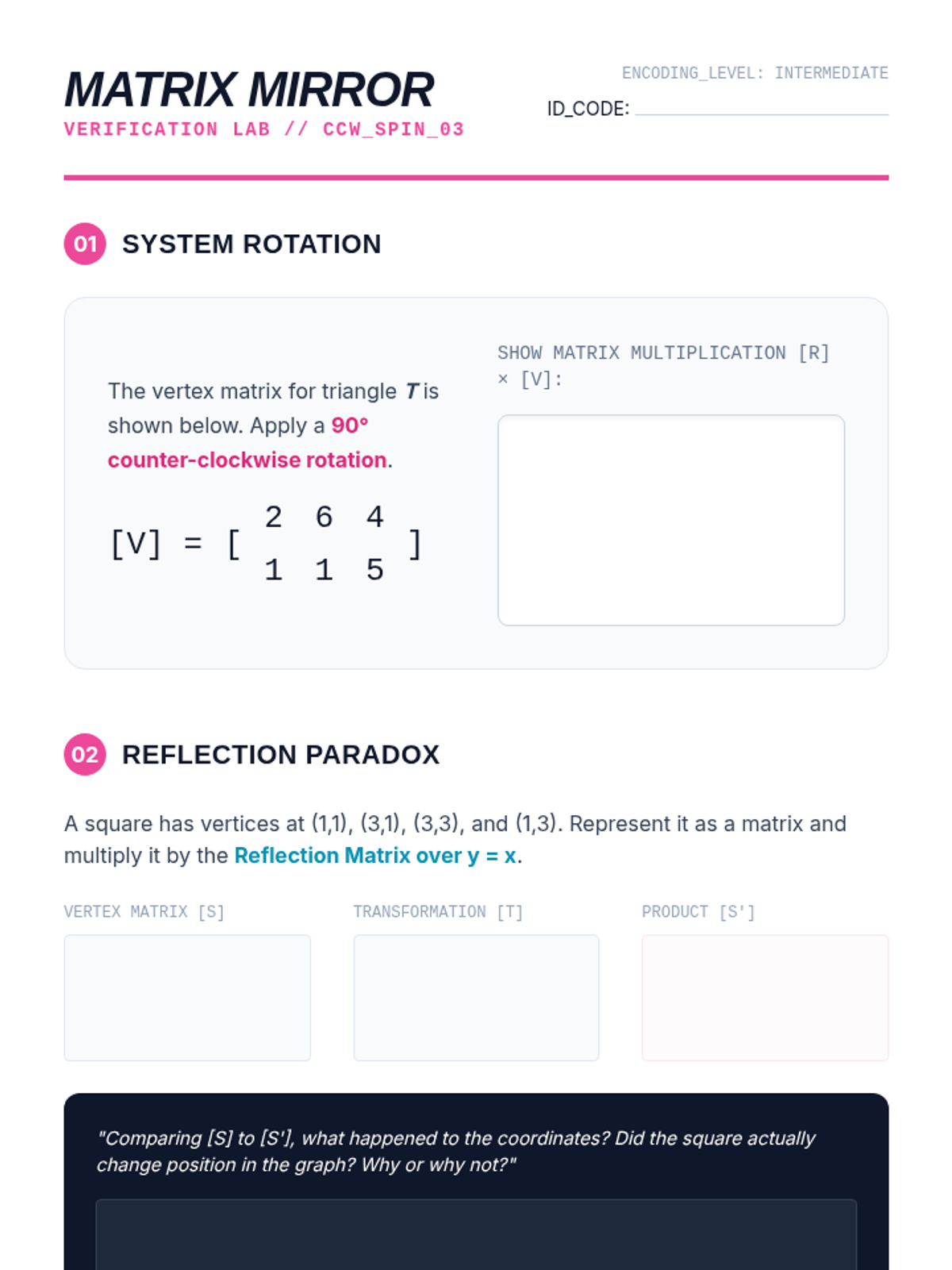
Introduce rotation and reflection matrices and use matrix multiplication to reorient shapes in the 2D plane.
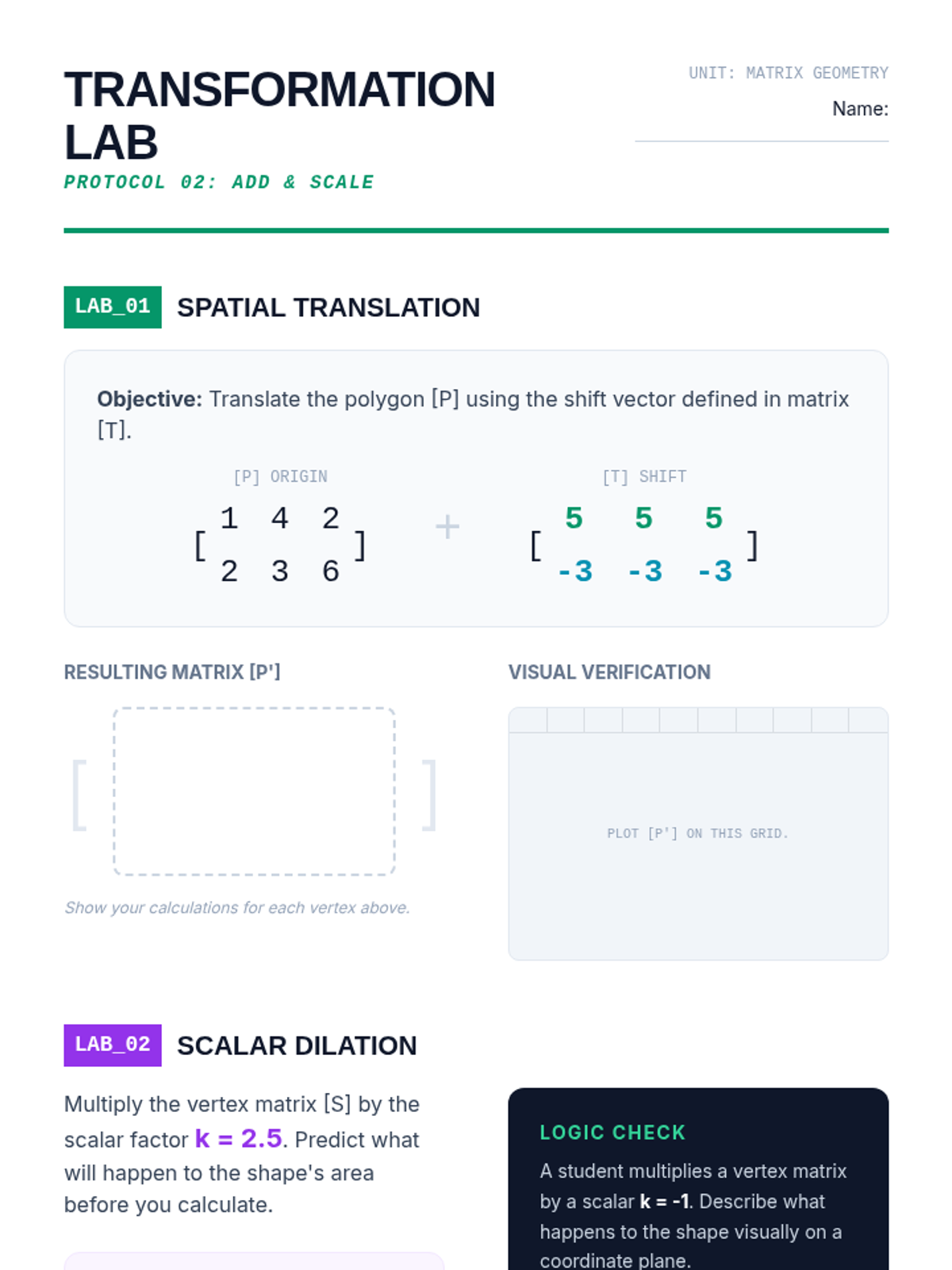
Explore how matrix addition performs translations and scalar multiplication performs dilations on geometric shapes.
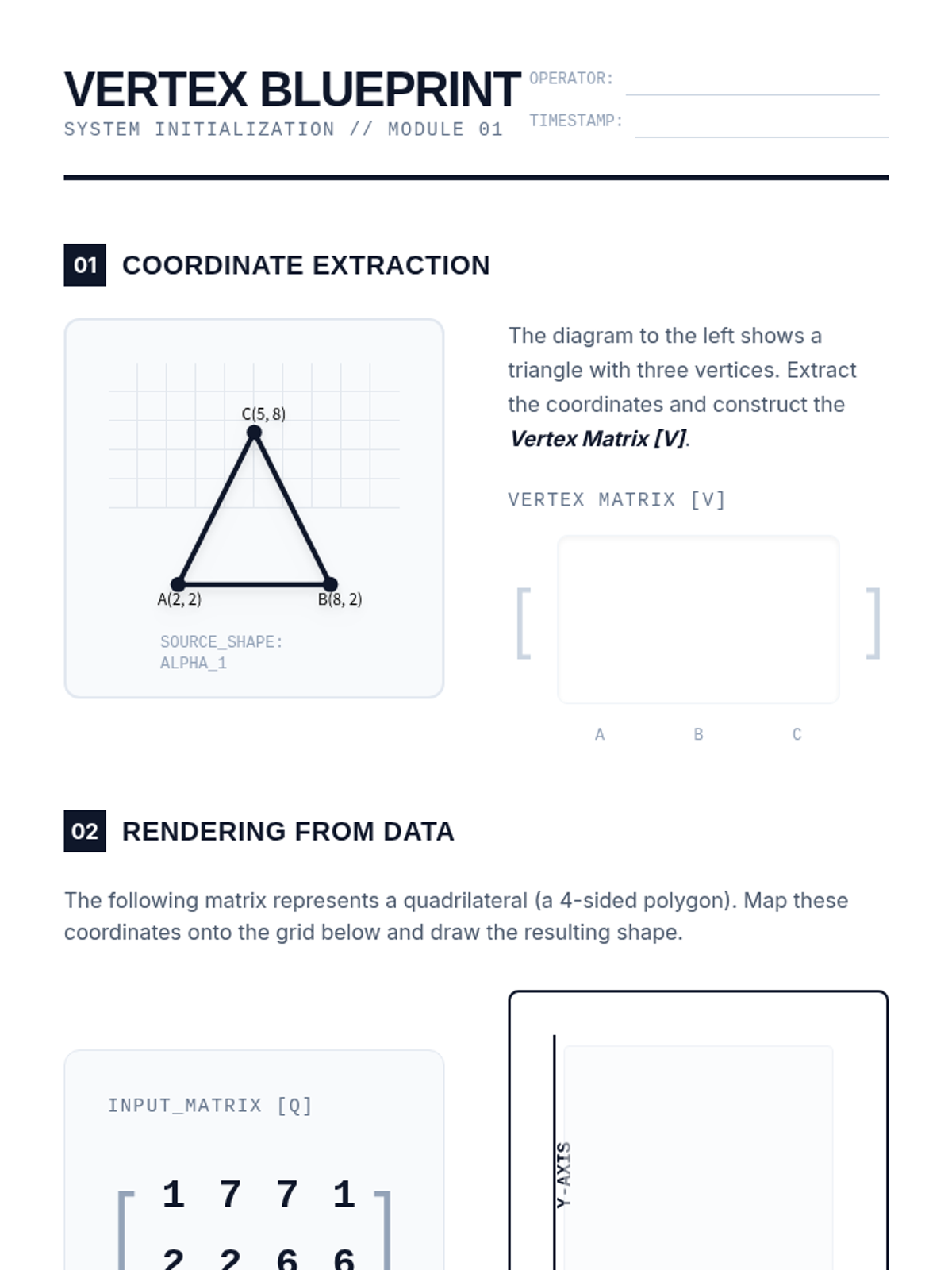
Students learn to represent the vertices of 2D shapes as columns in a matrix and explore how these arrays correspond to physical points on a coordinate plane.
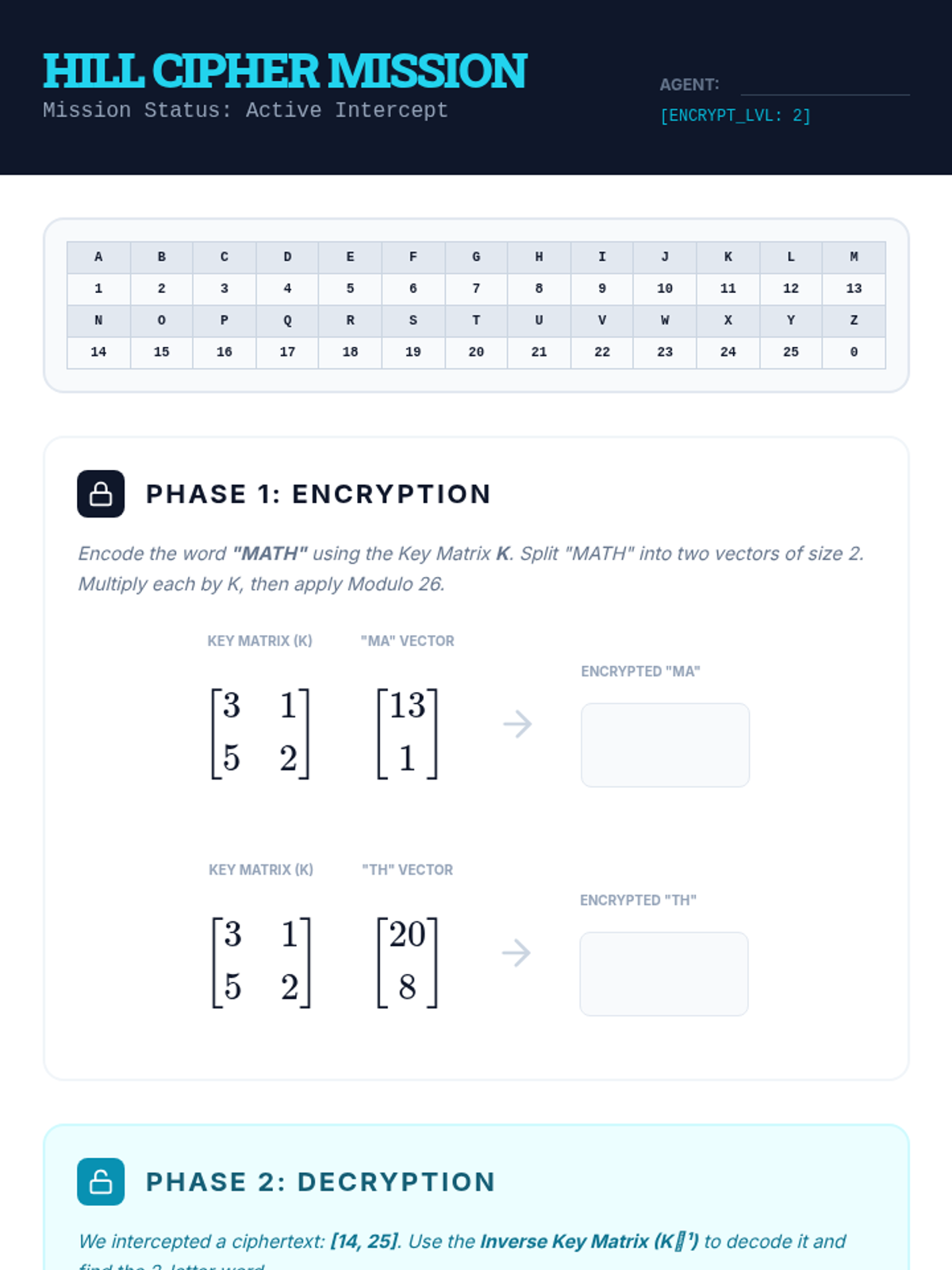
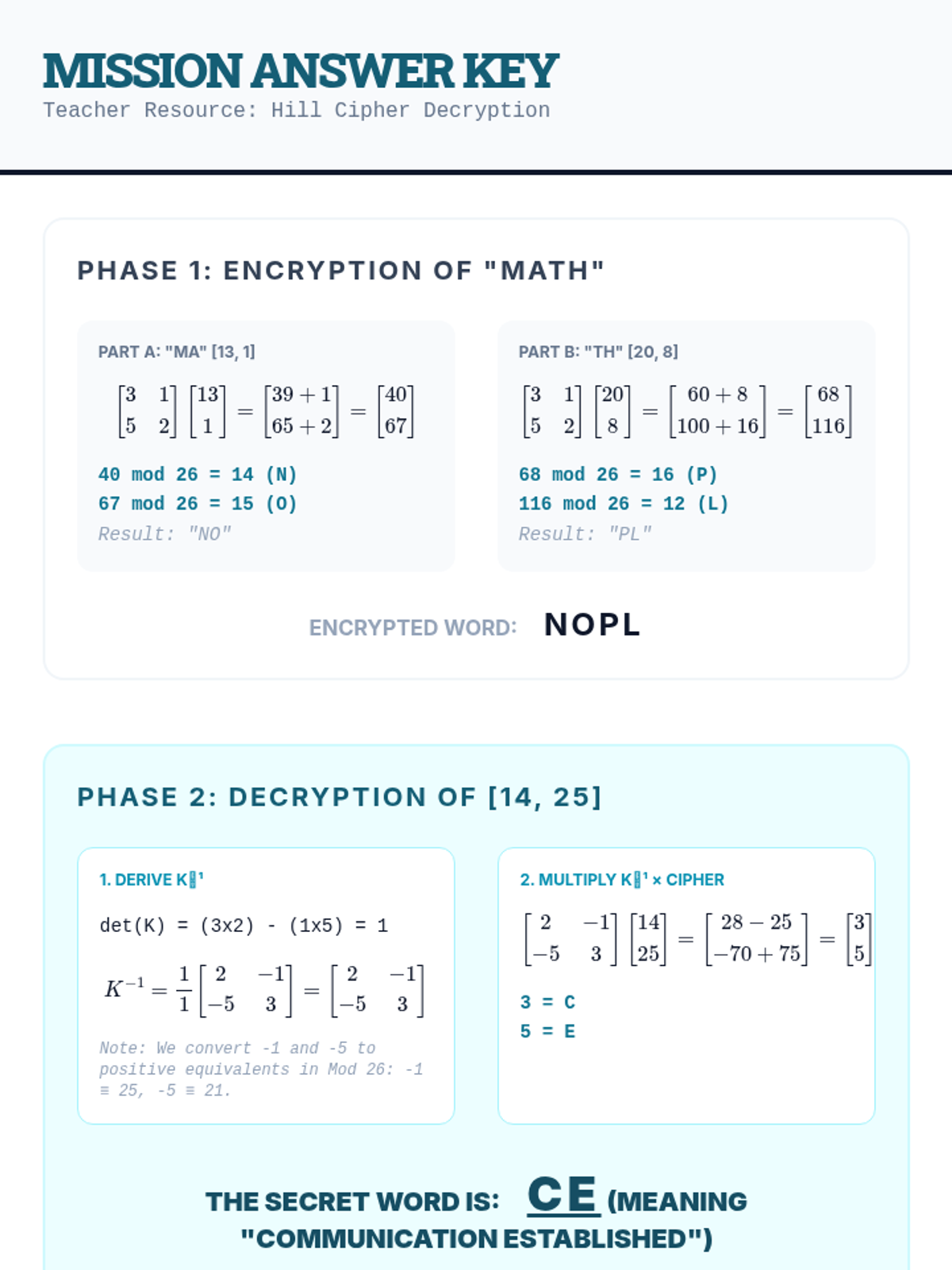
Students apply matrix inverses to encode and decode secret messages using the Hill Cipher.
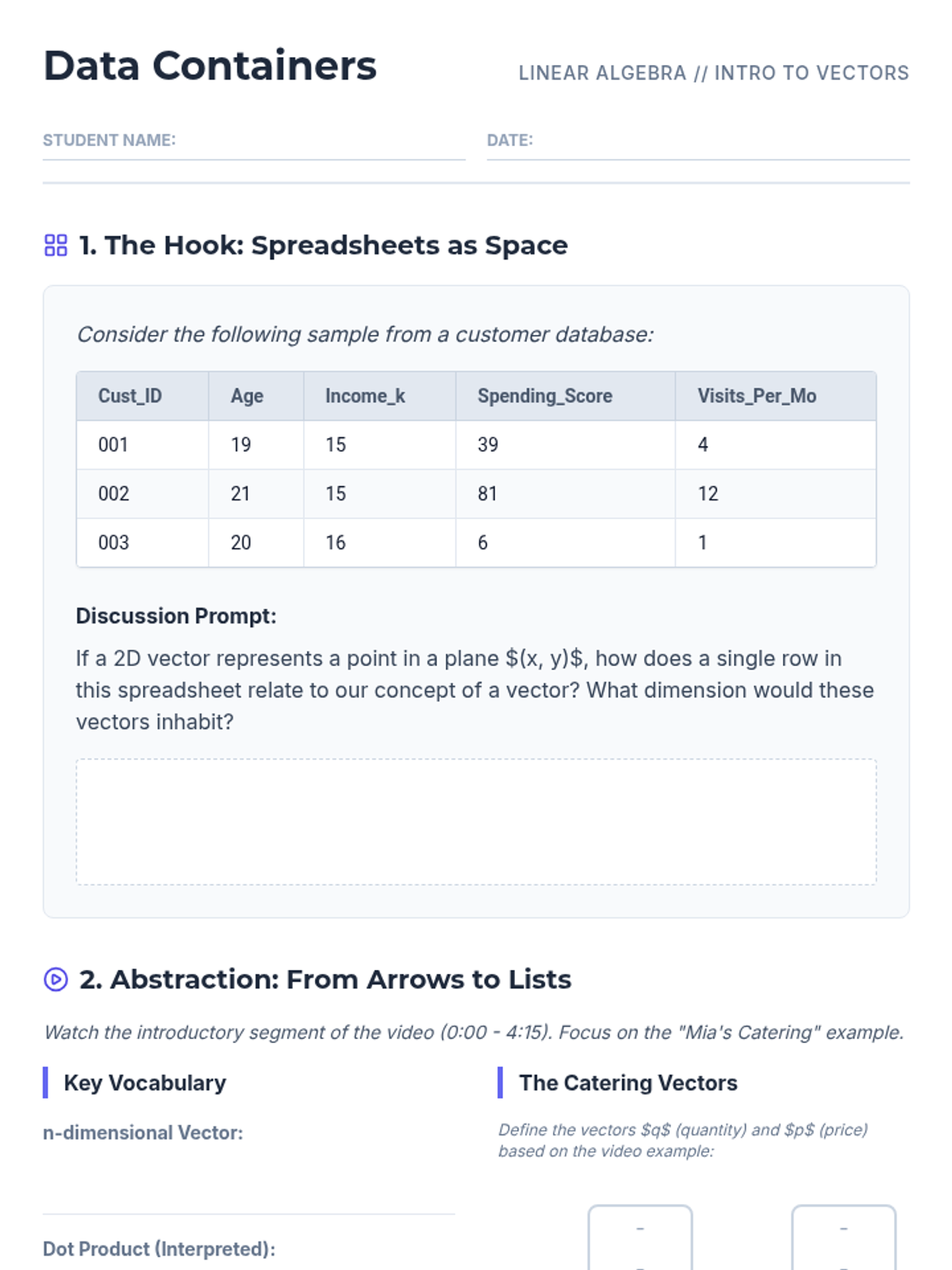
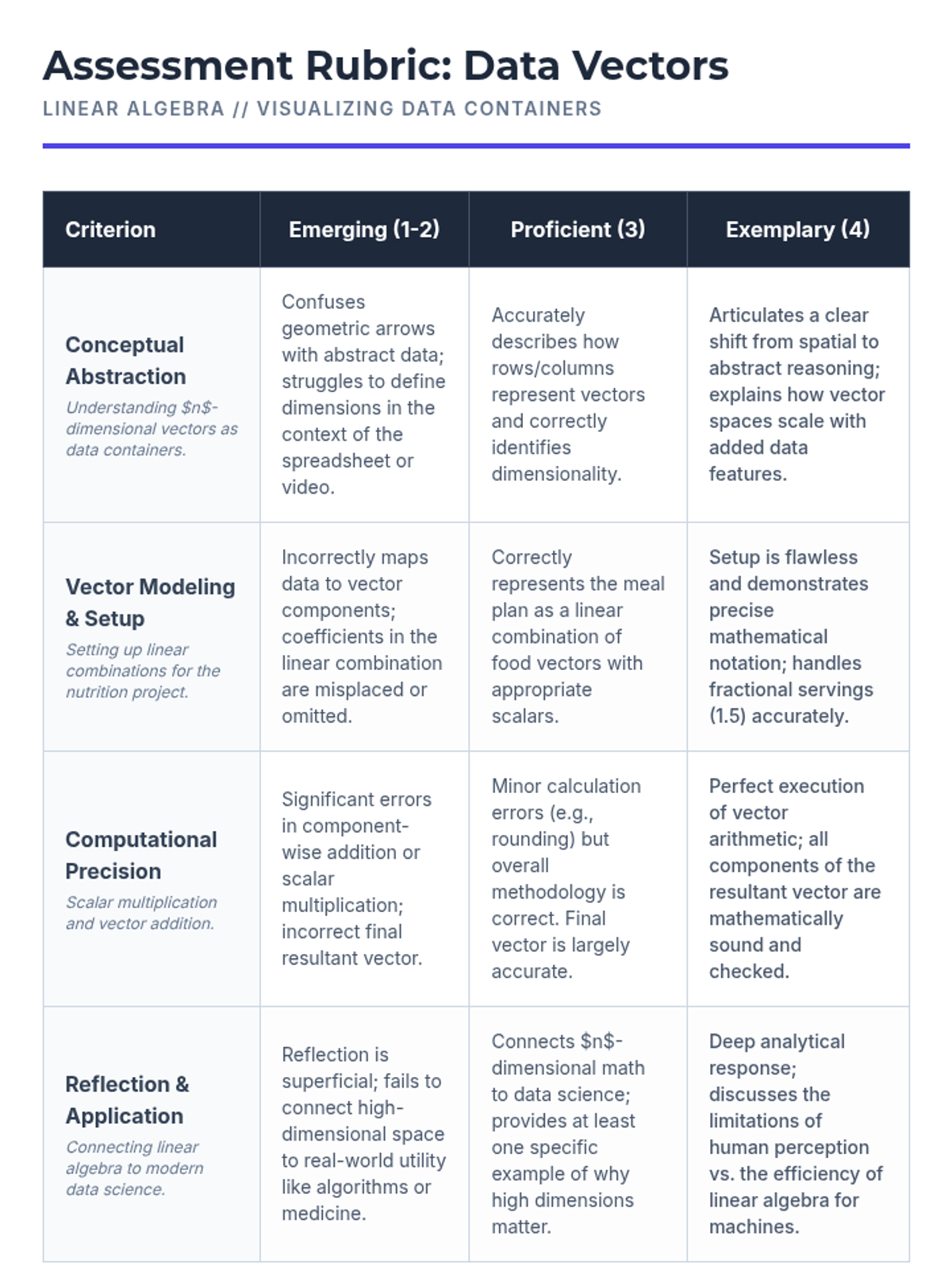
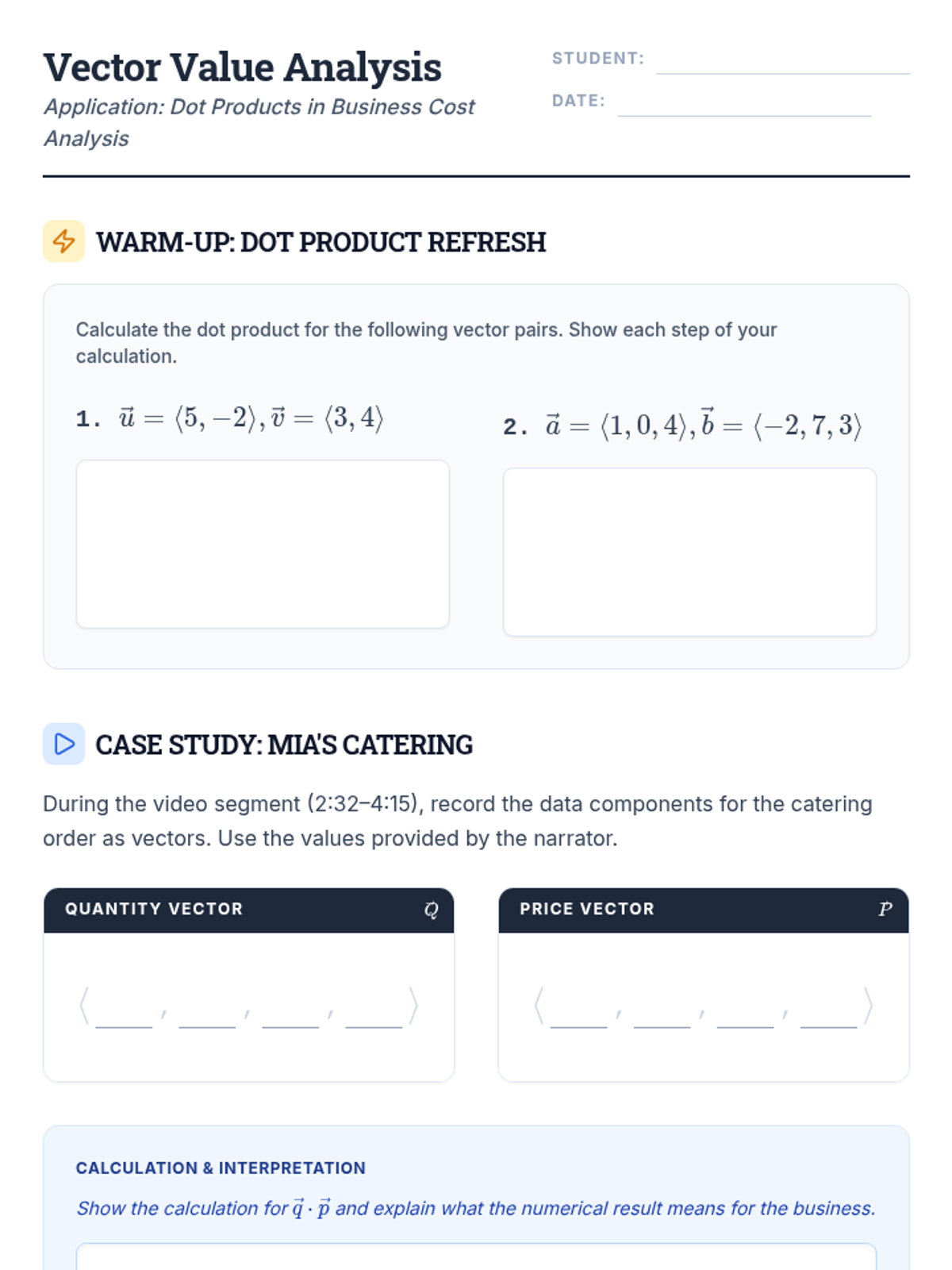
An undergraduate-level introduction to visualizing vectors as multi-dimensional data containers. Students explore real-world applications from catering costs to nutritional data, shifting the perspective of vectors from geometric arrows to abstract data structures.
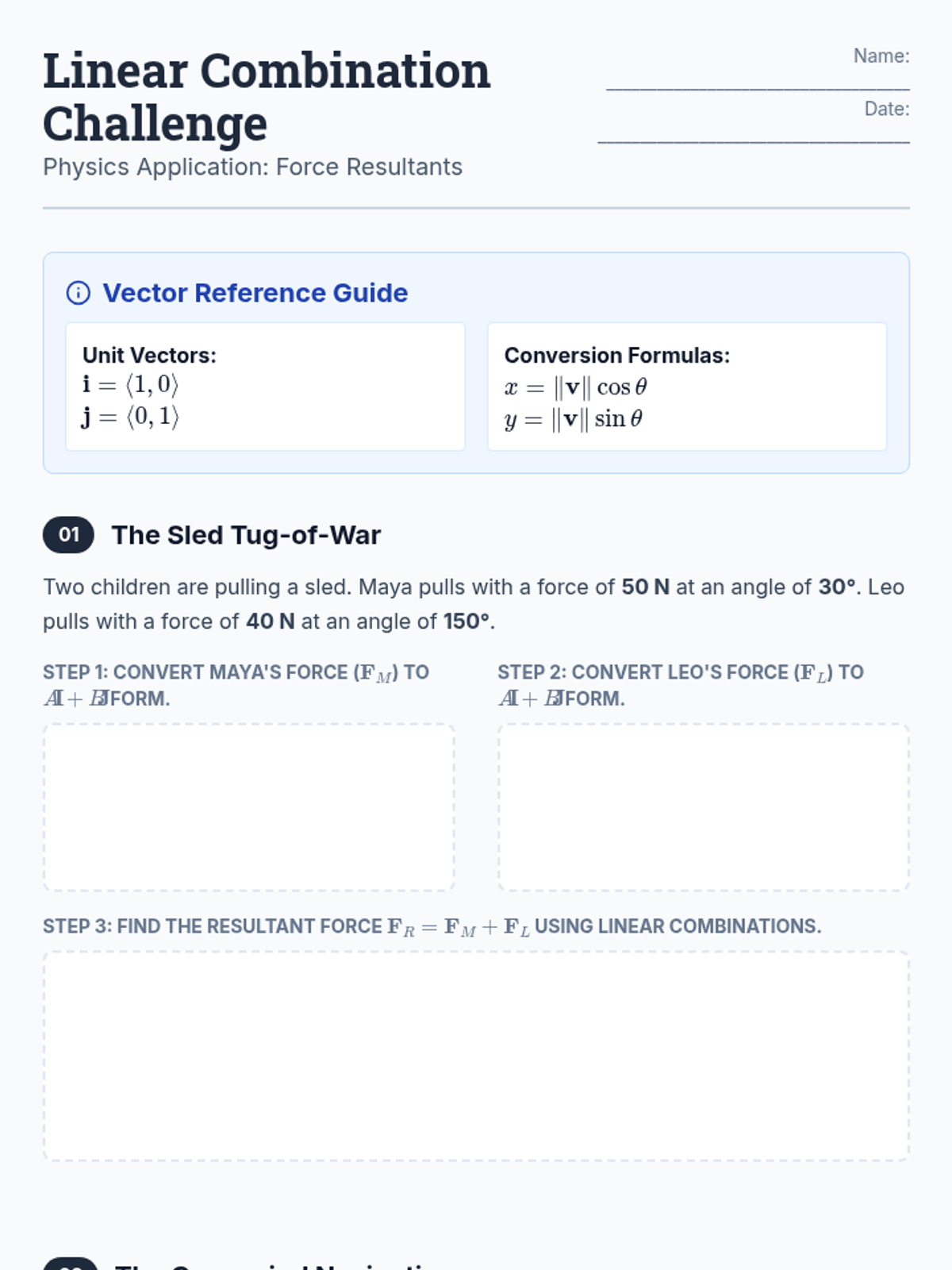
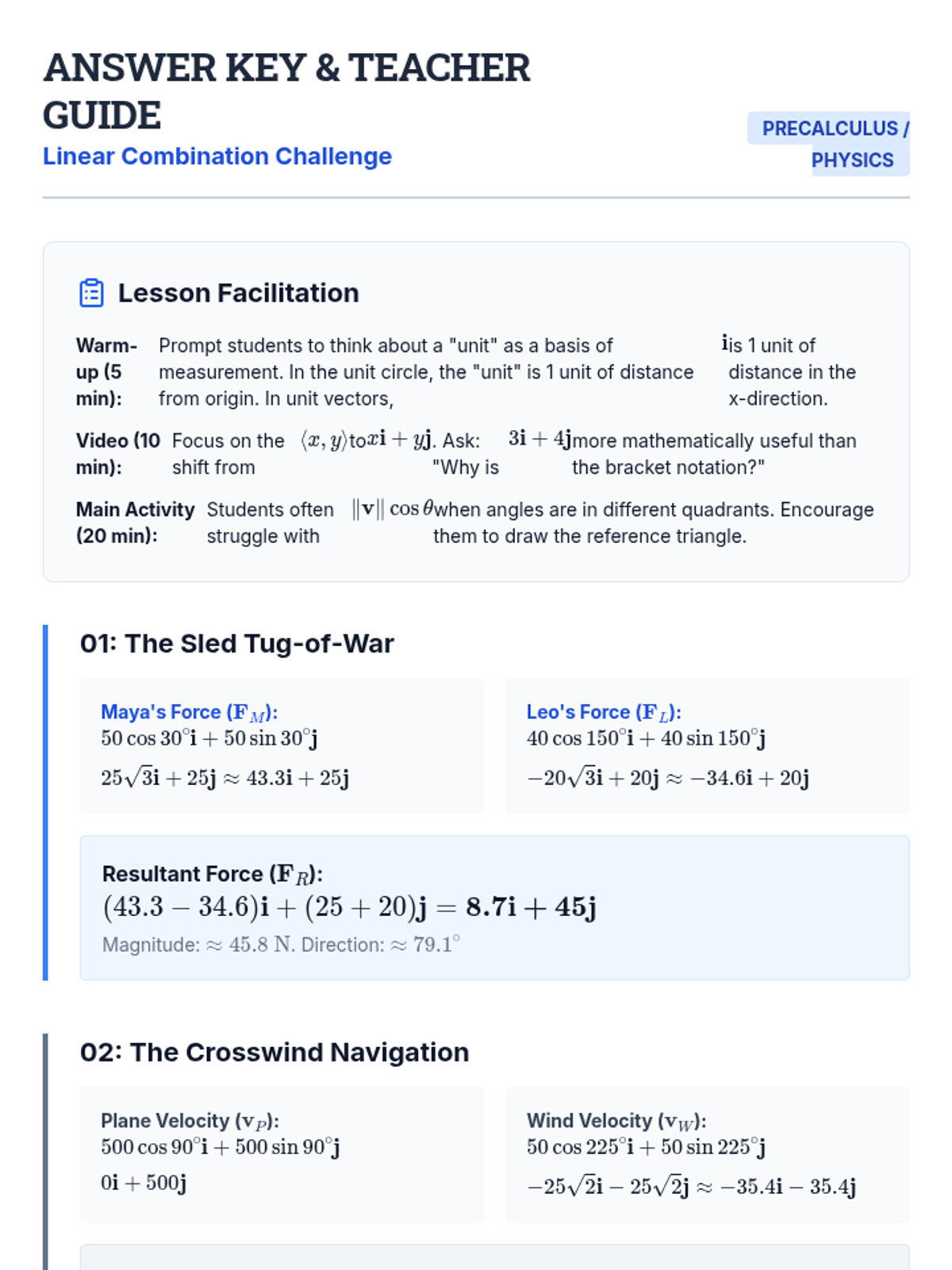
A lesson for Advanced Precalculus students focusing on expressing vectors as linear combinations of the unit vectors i and j, featuring physics-based force problems and rapid-fire conversion practice.
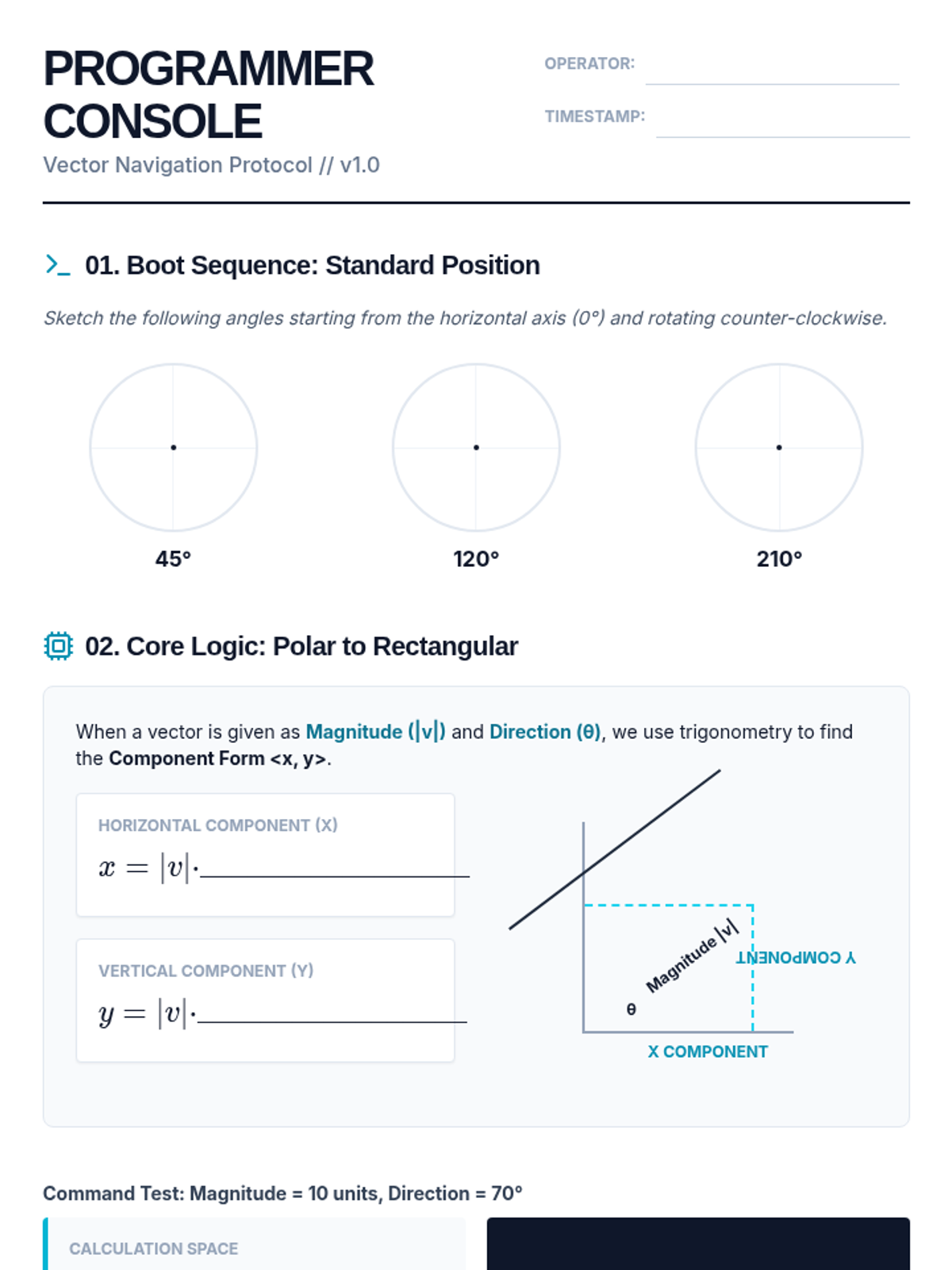
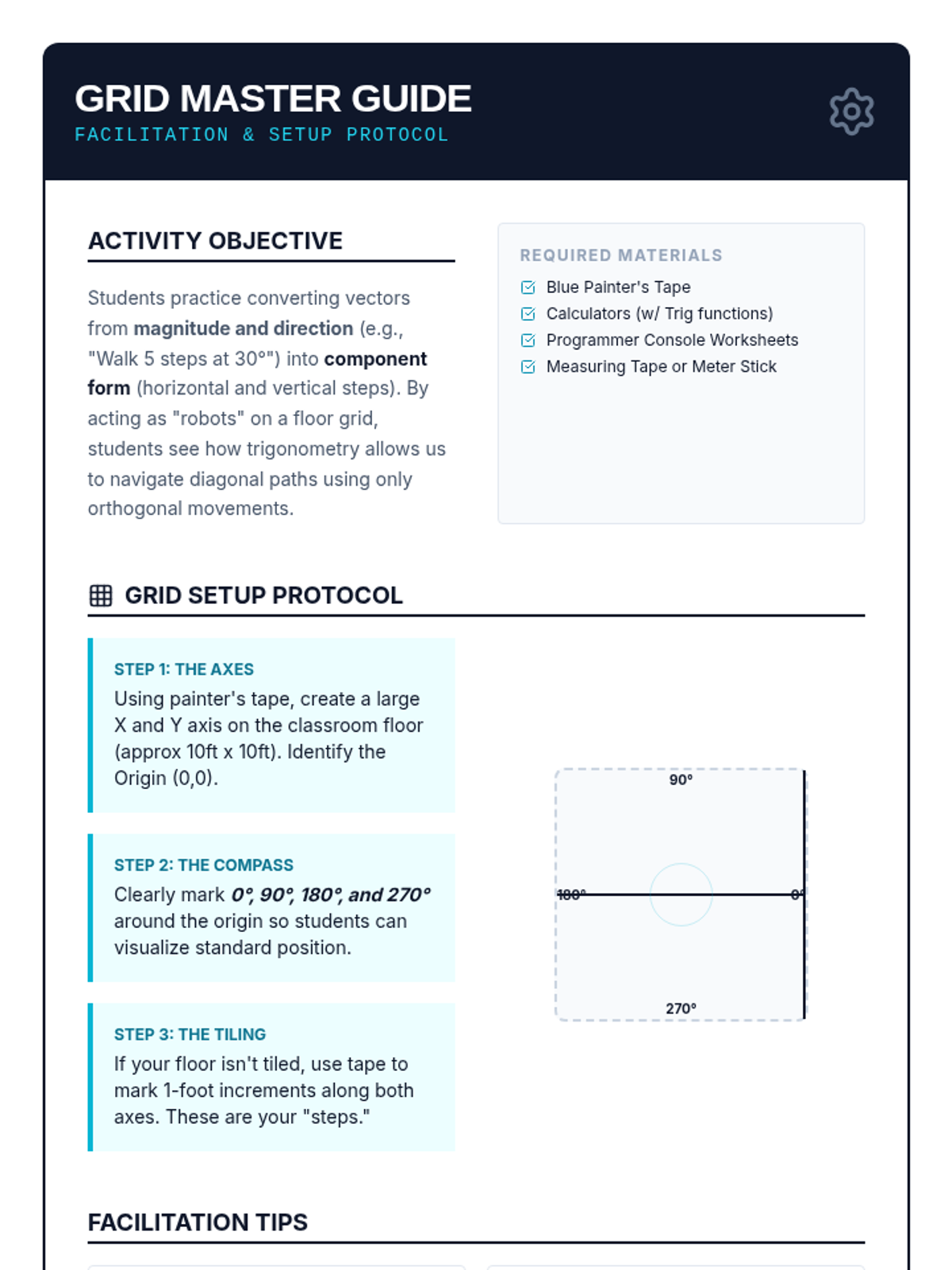
A high-school geometry or pre-calculus lesson focusing on converting vectors from magnitude and direction to component form through a hands-on 'robot programming' simulation. Students use trigonometry to translate movement commands into x and y displacements.
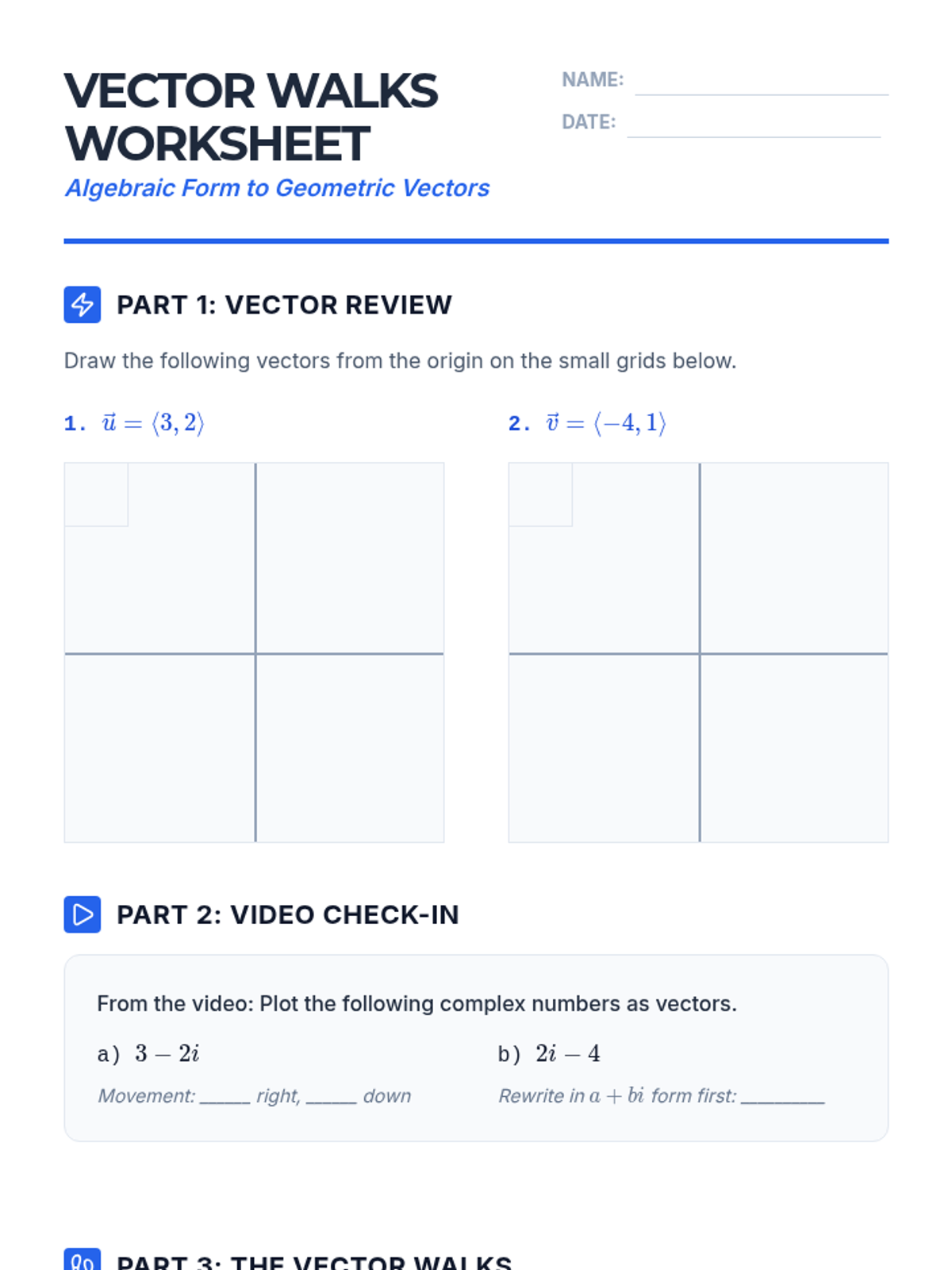
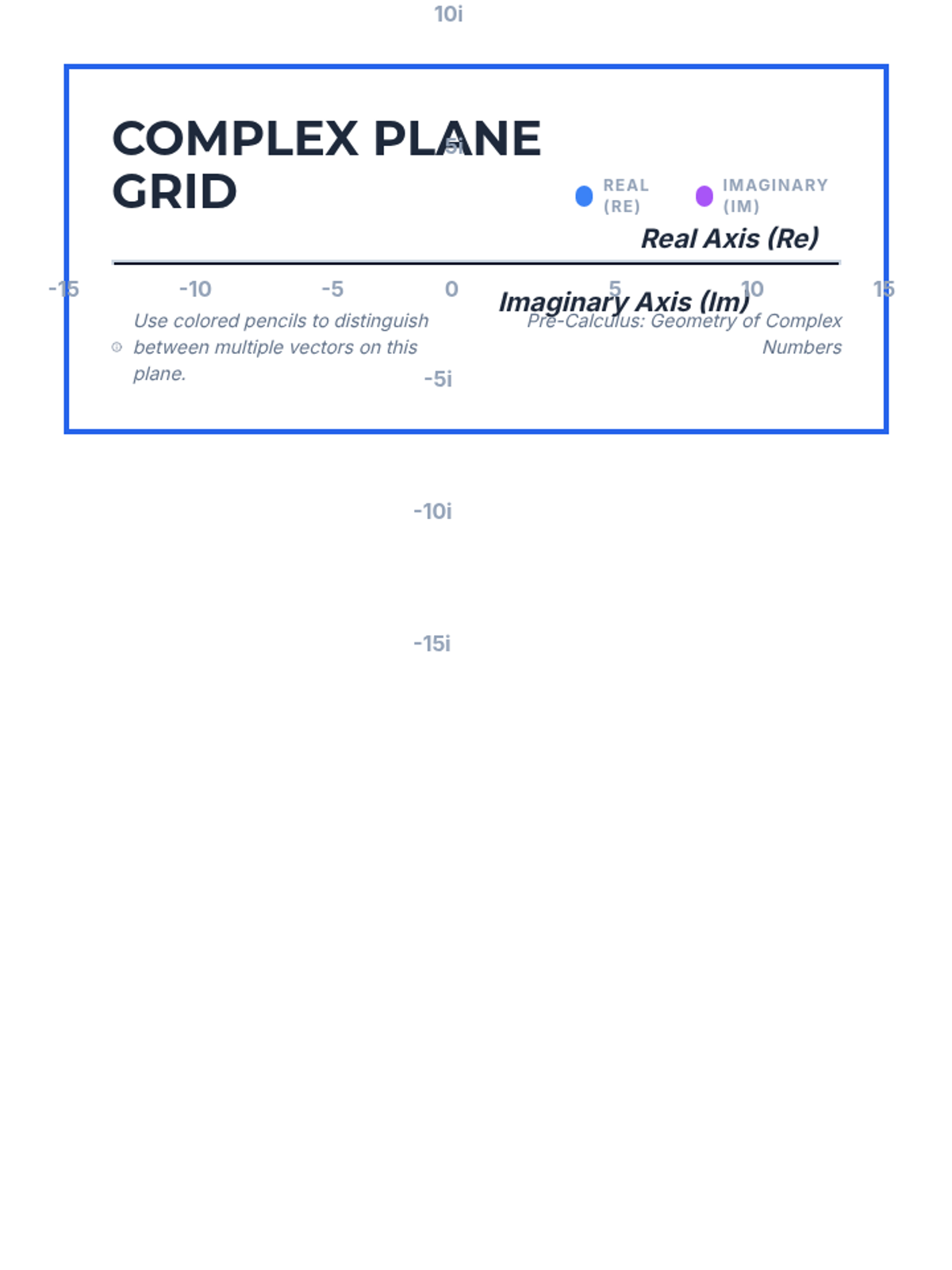
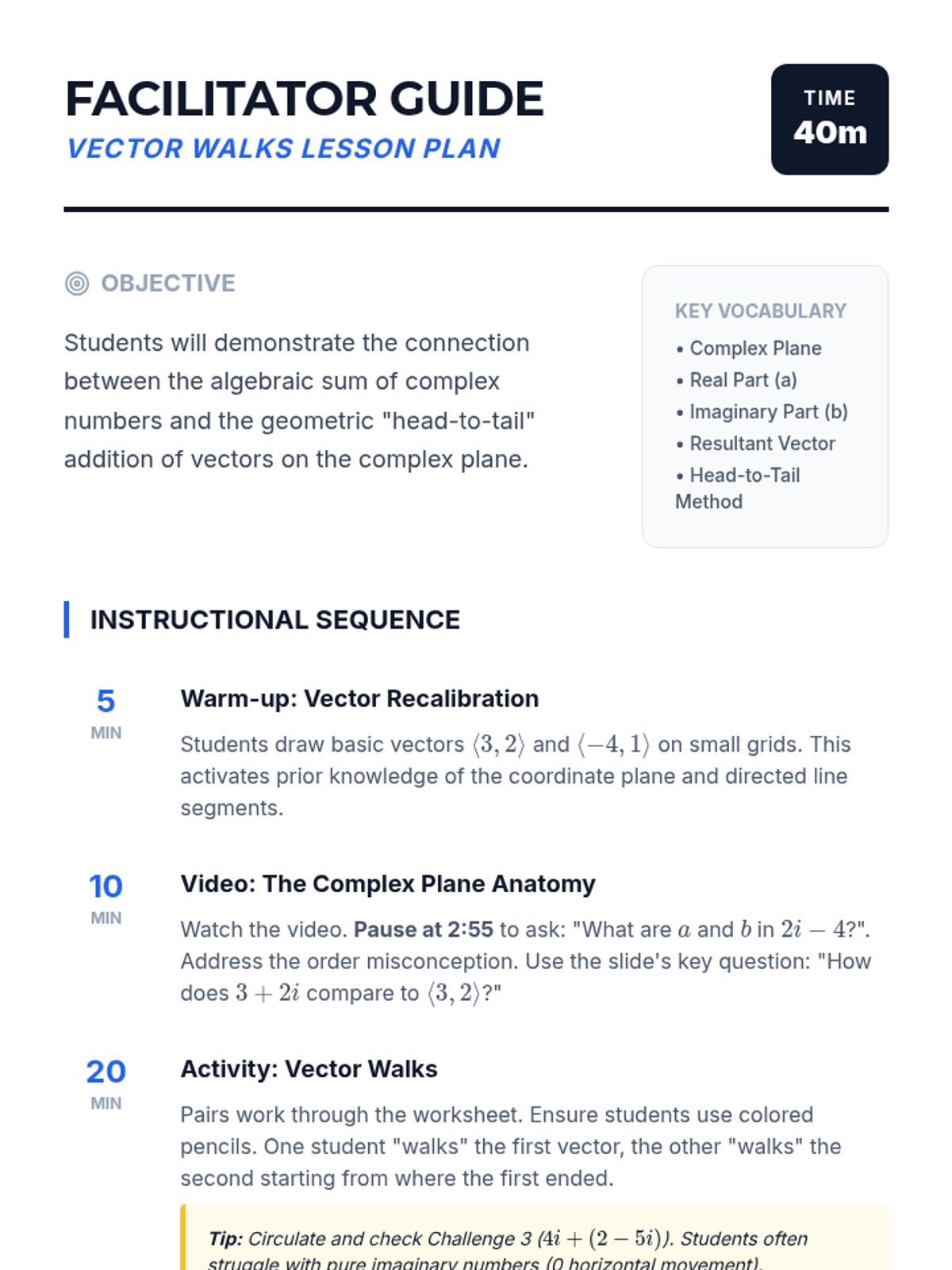
A Pre-Calculus lesson connecting algebraic complex number addition to geometric vector addition on the complex plane using a 'Vector Walk' approach. Students visualize addition as head-to-tail movements on a grid.
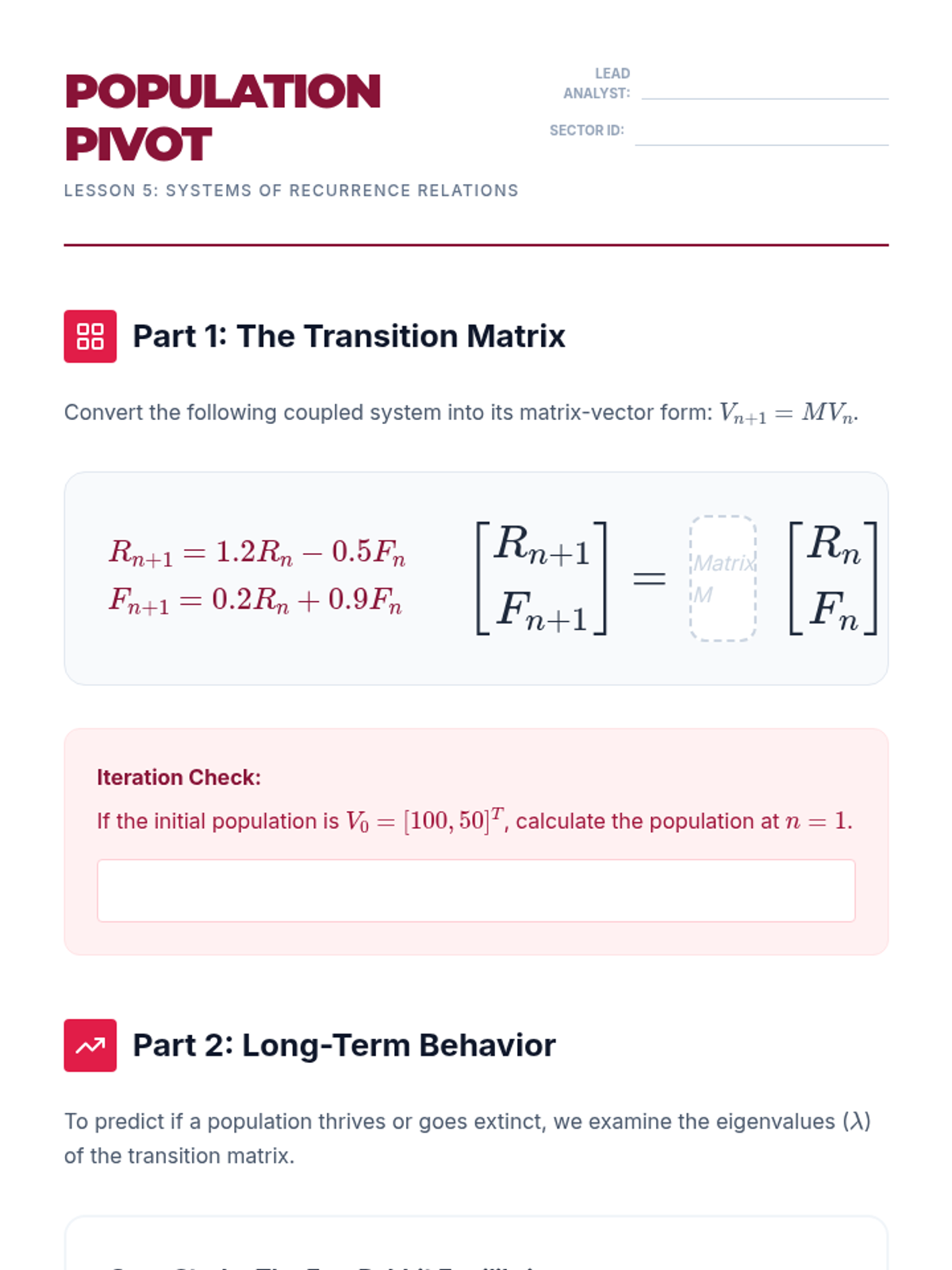
Extending recurrence logic to coupled systems, modeling predator-prey dynamics with matrix methods to predict long-term population stability or extinction.
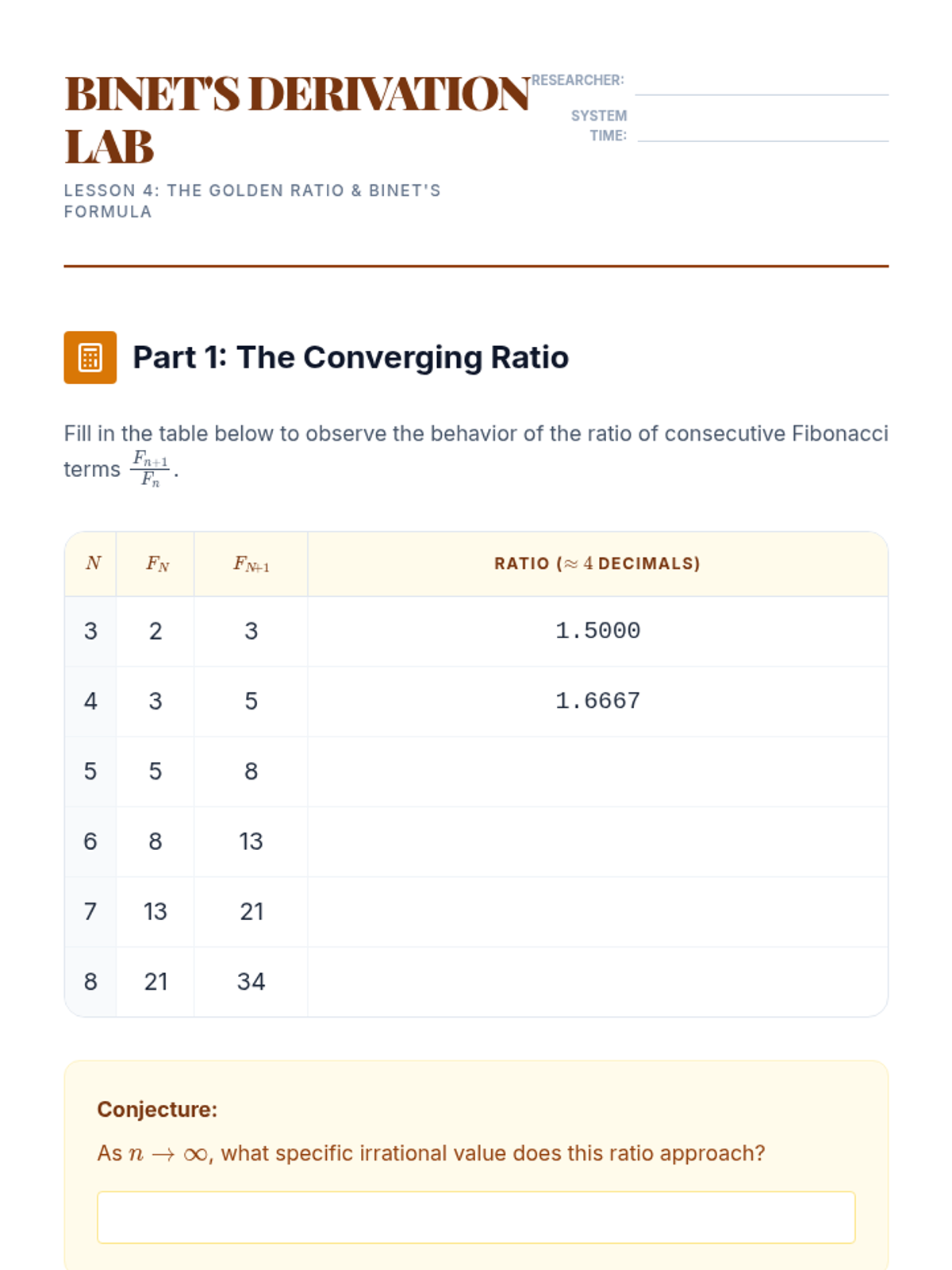
A deep dive into the properties of the Fibonacci sequence, deriving Binet's Formula and exploring the mathematical emergence of the Golden Ratio in nature.
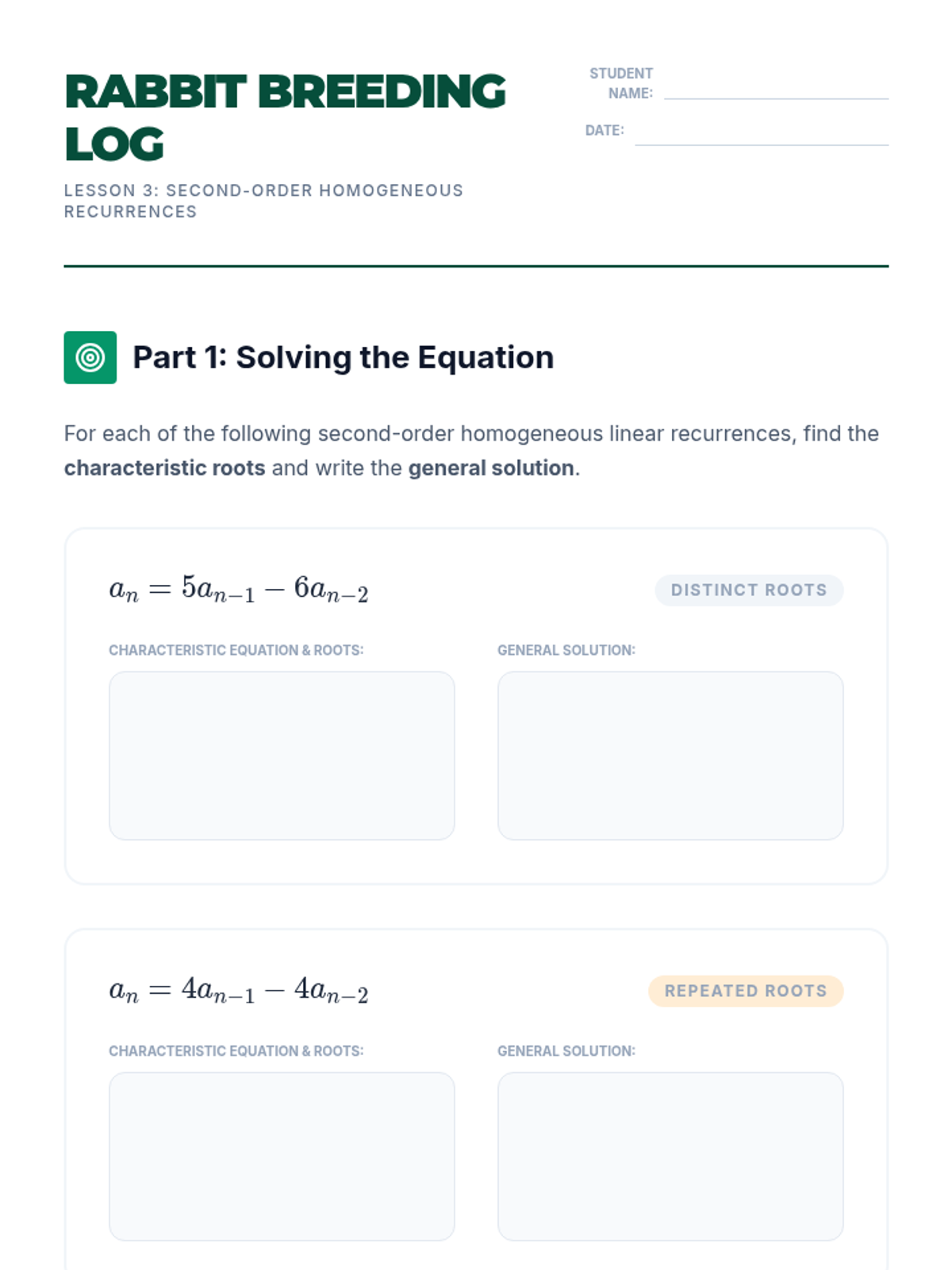
Introduction to second-order relations through the lens of Fibonacci's rabbits, teaching students to solve characteristic equations and construct general solutions.
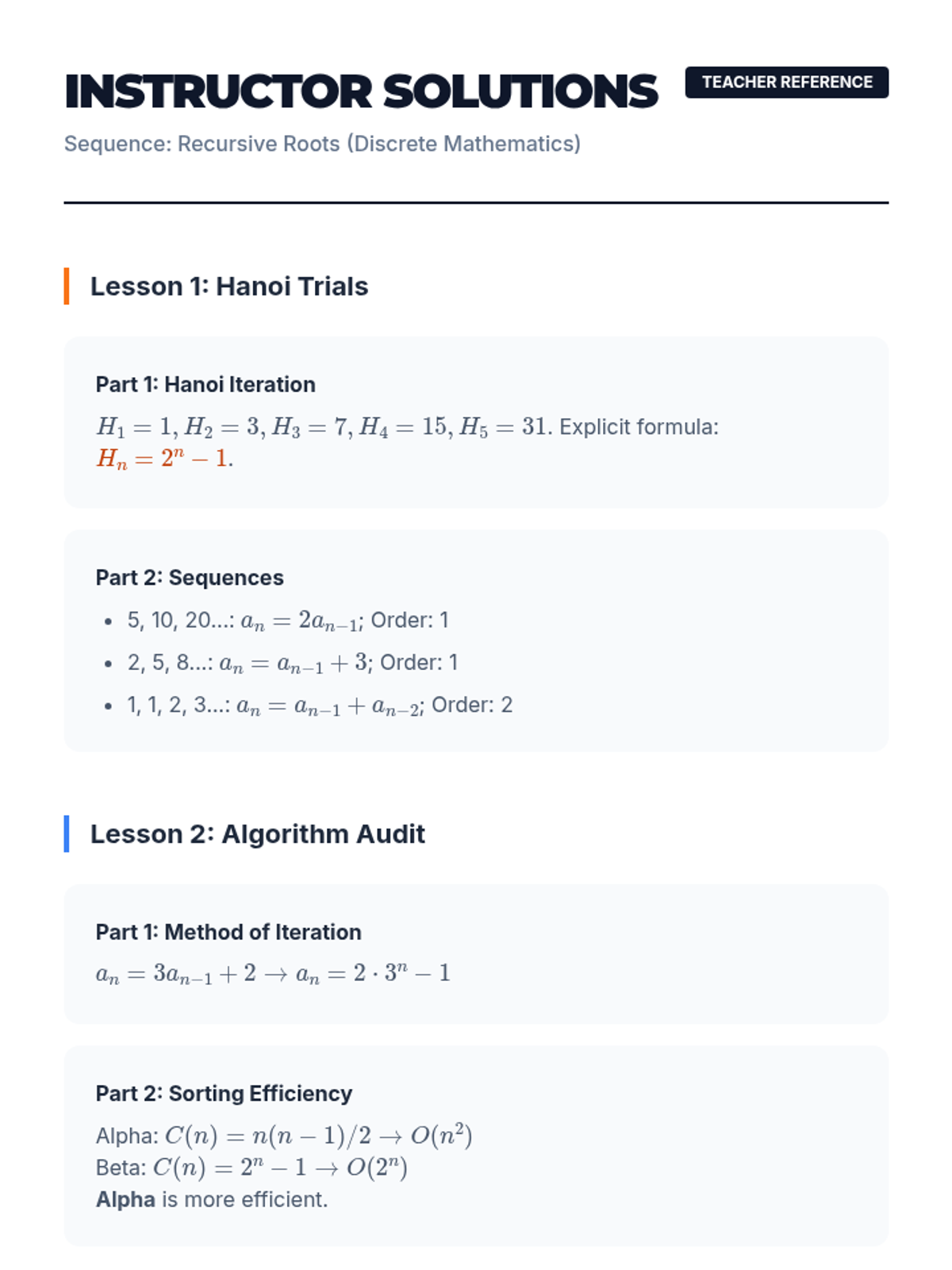
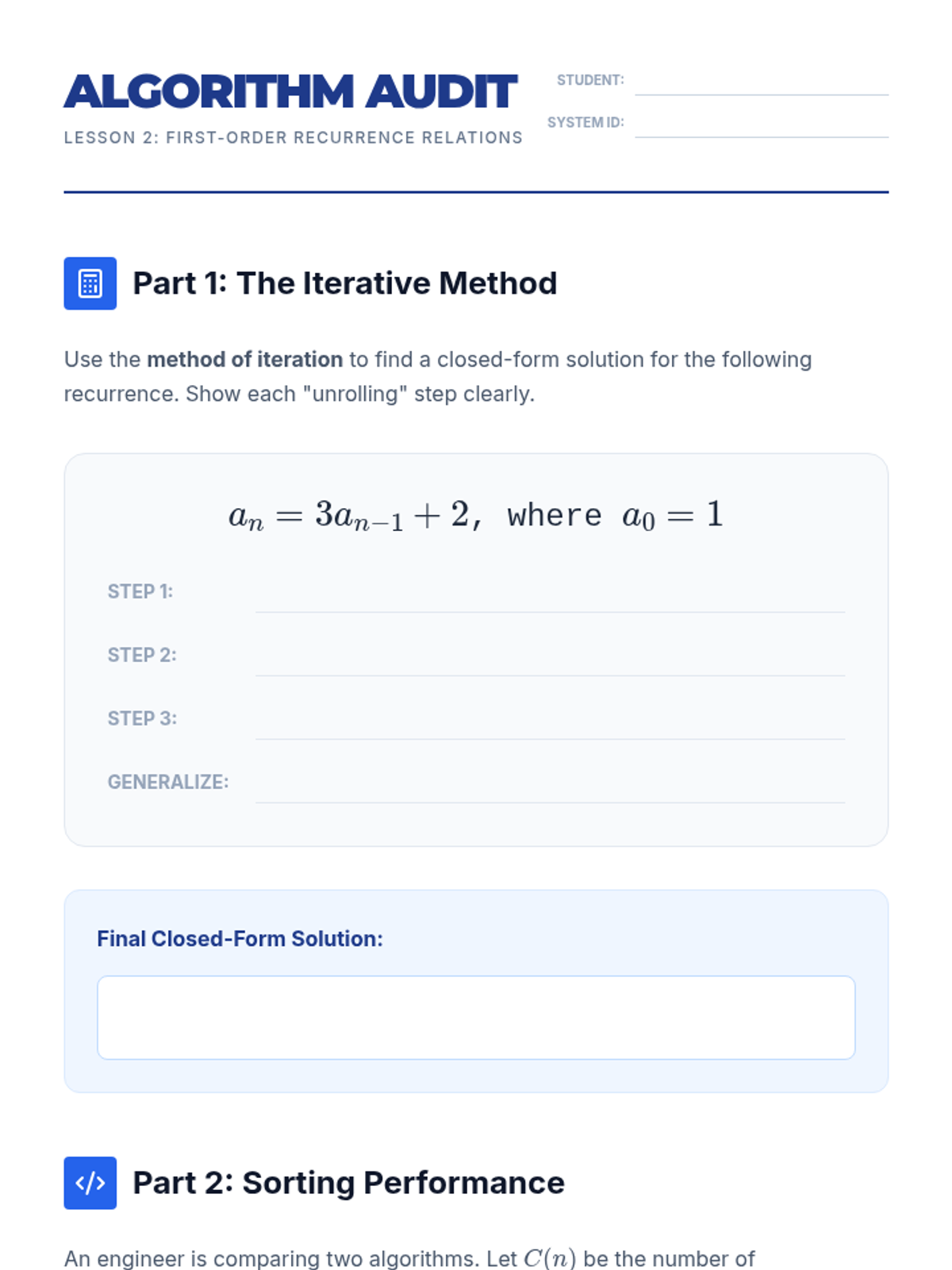
Learn to solve linear recurrences of the form a_n = c * a_{n-1} + g(n) using the method of iteration, applying these skills to analyze the efficiency of computer sorting algorithms.
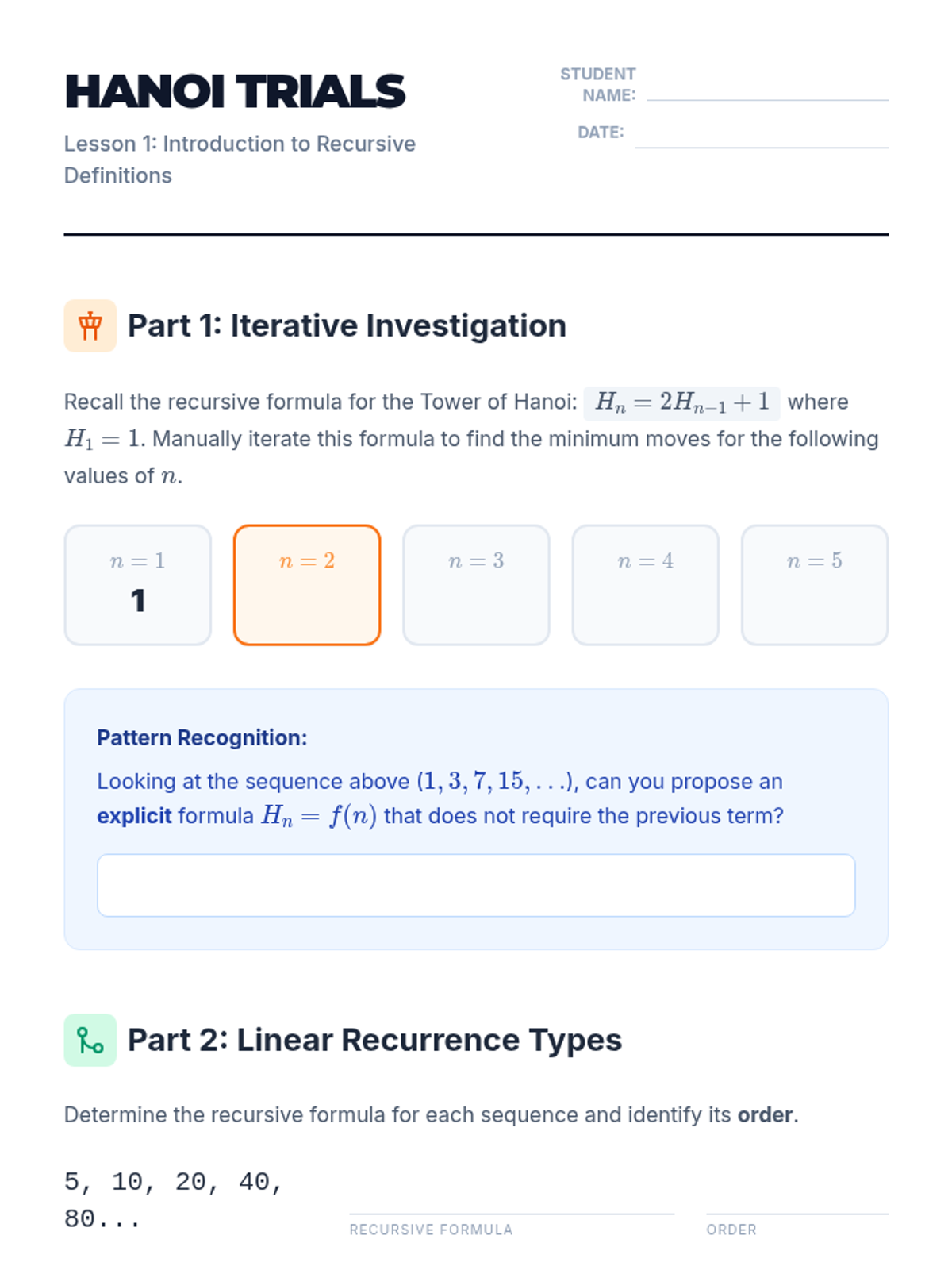
Students explore sequences where terms are defined by predecessors, using the Tower of Hanoi puzzle to bridge the gap between iterative logic and recursive formulas.
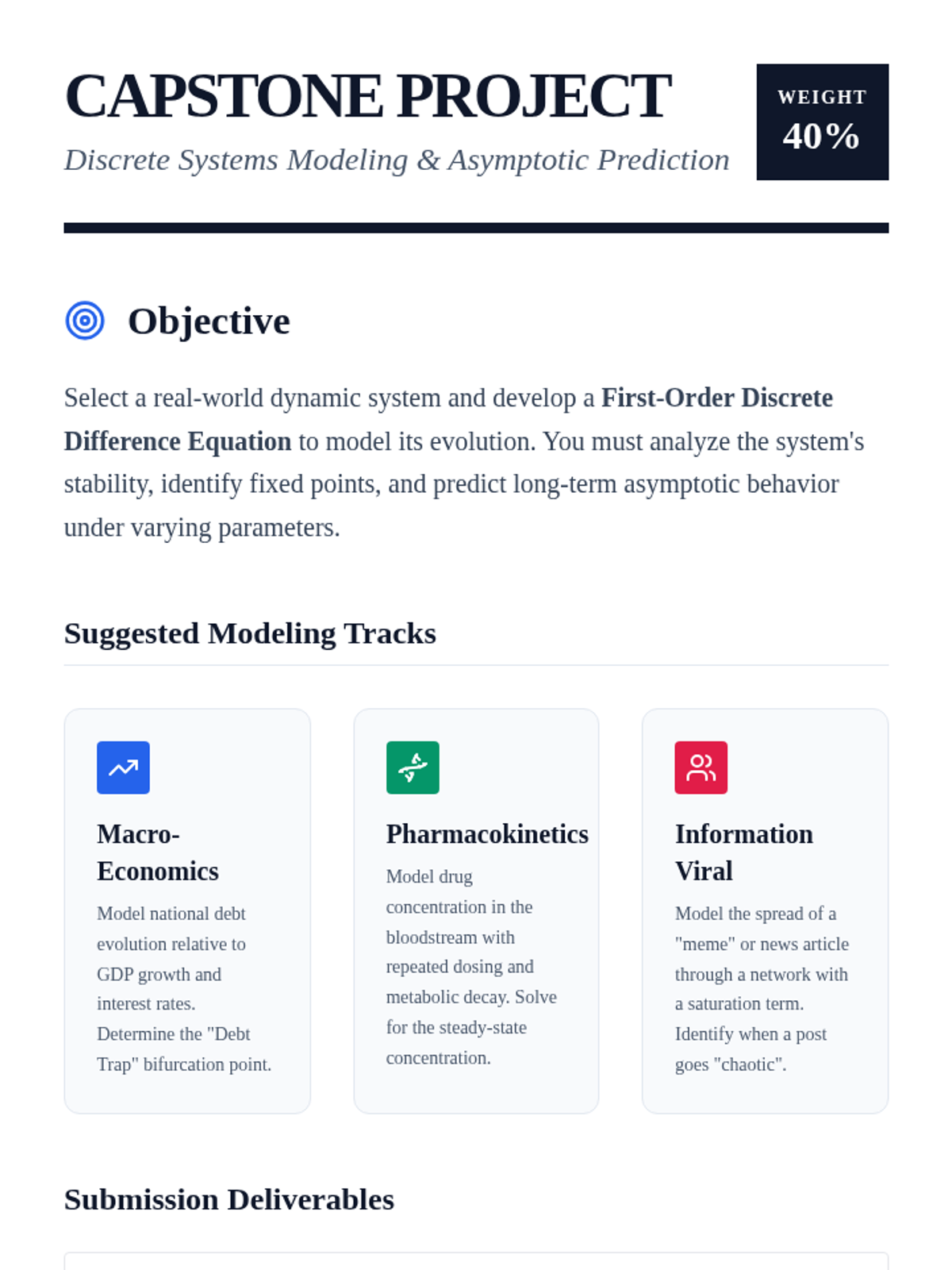
A culminating project-based lesson where students apply discrete modeling tools to real-world scenarios such as drug kinetics, finance, or ecology.
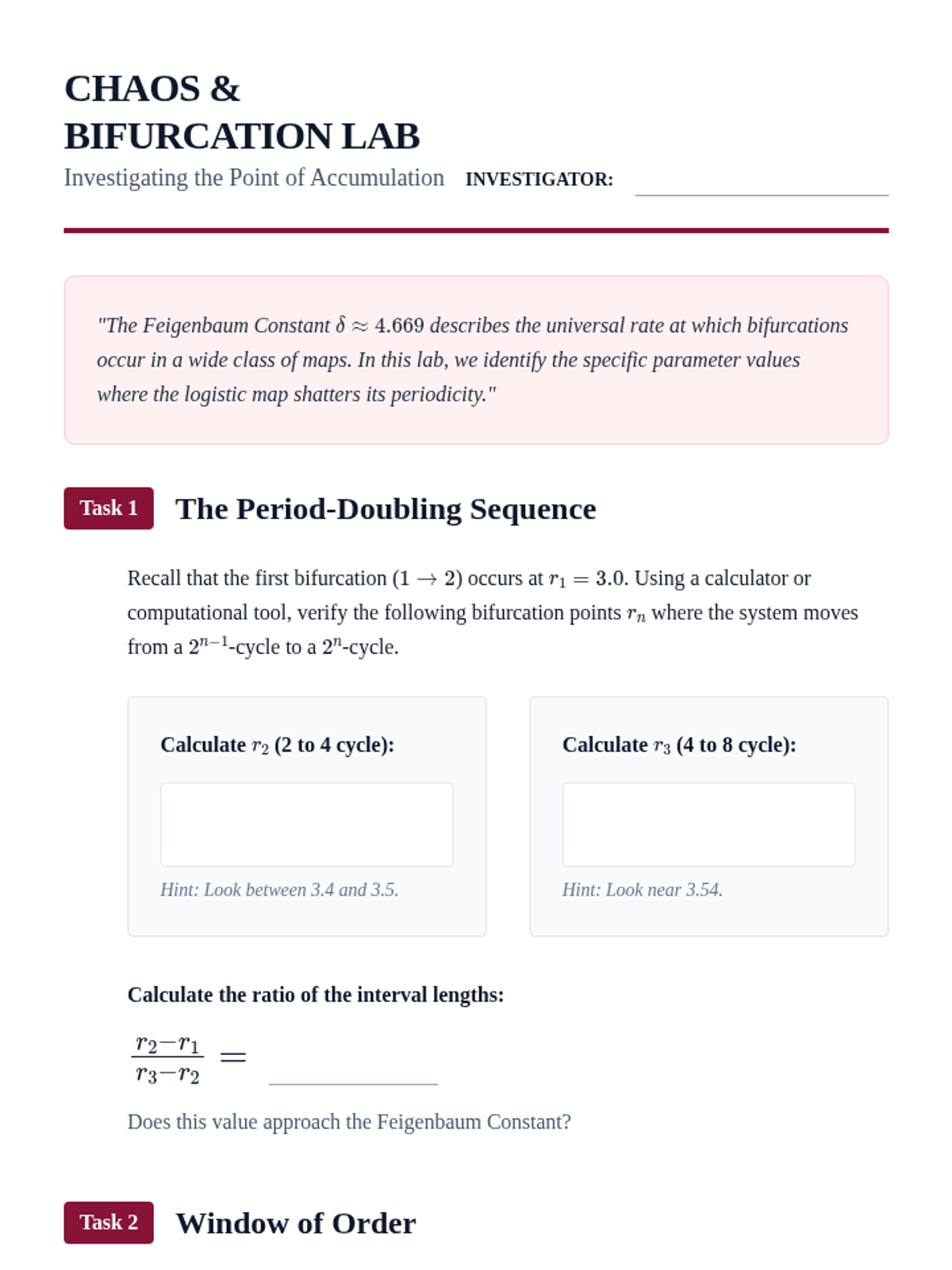
Investigates period-doubling bifurcations and the transition to deterministic chaos in discrete systems as parameters vary.
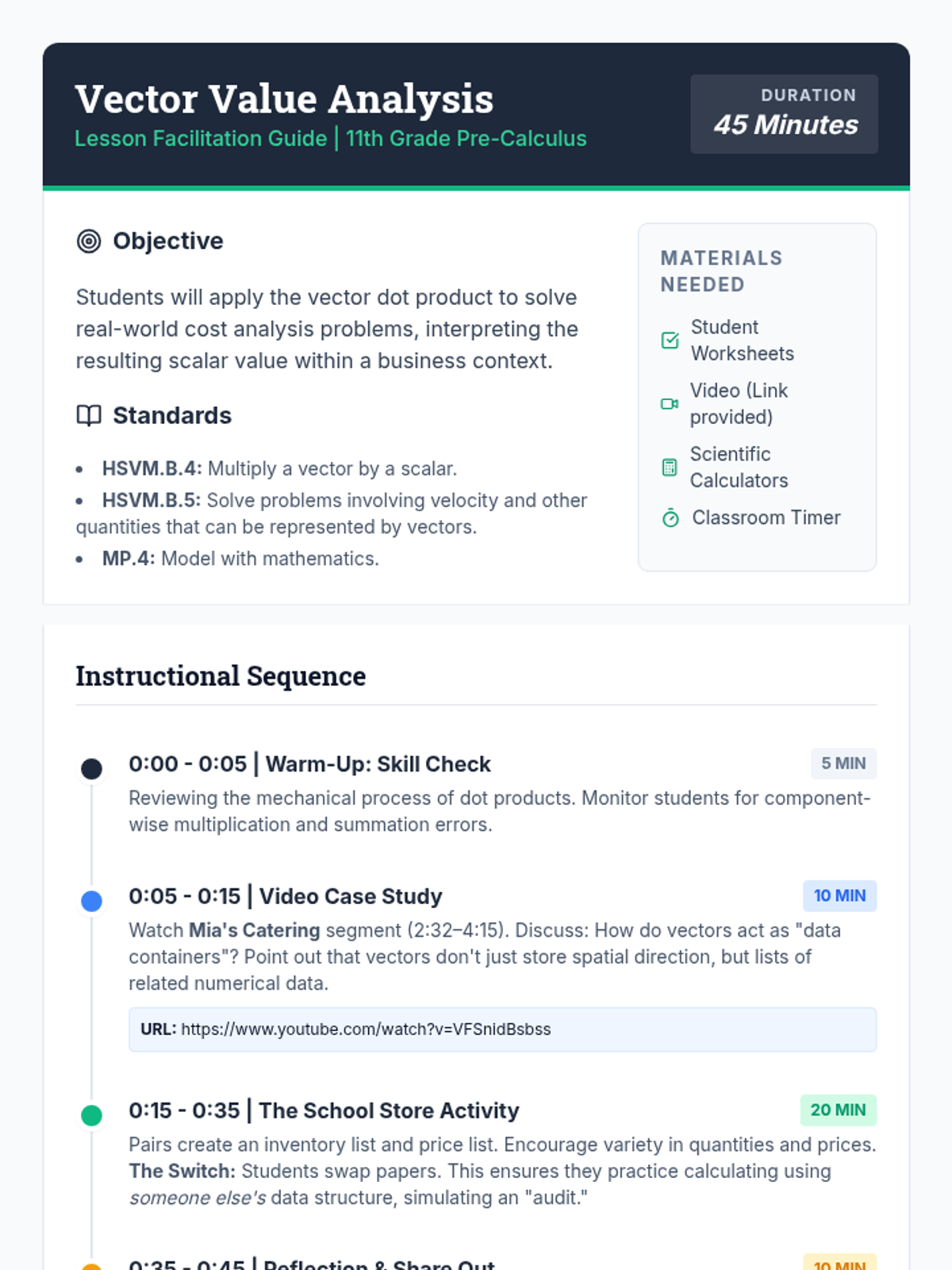
A 45-minute Pre-Calculus lesson where students apply the dot product to real-world business scenarios, specifically calculating total inventory costs using multidimensional vectors. The lesson features a video-based case study on a catering business and a collaborative activity called 'The School Store'.
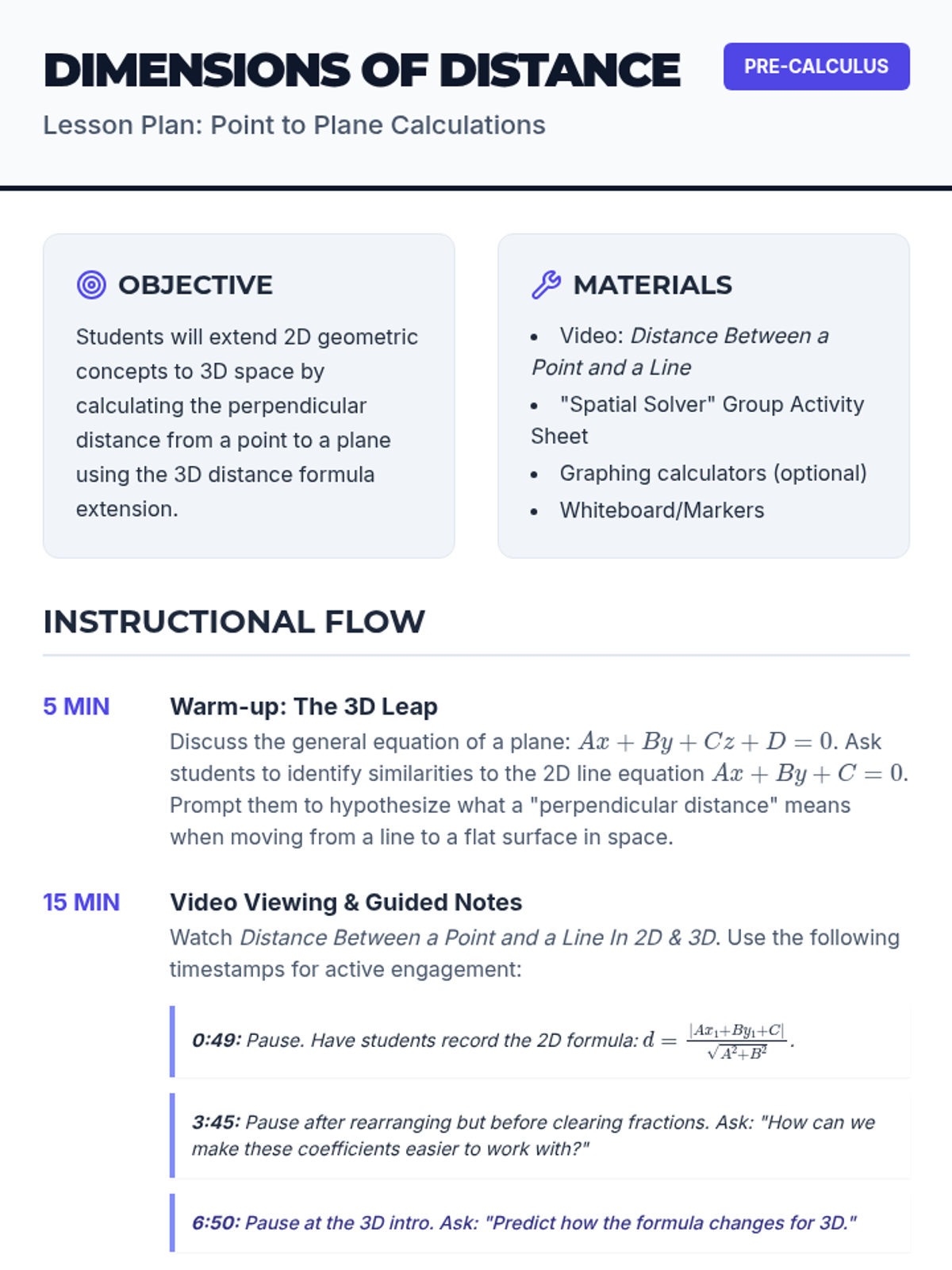
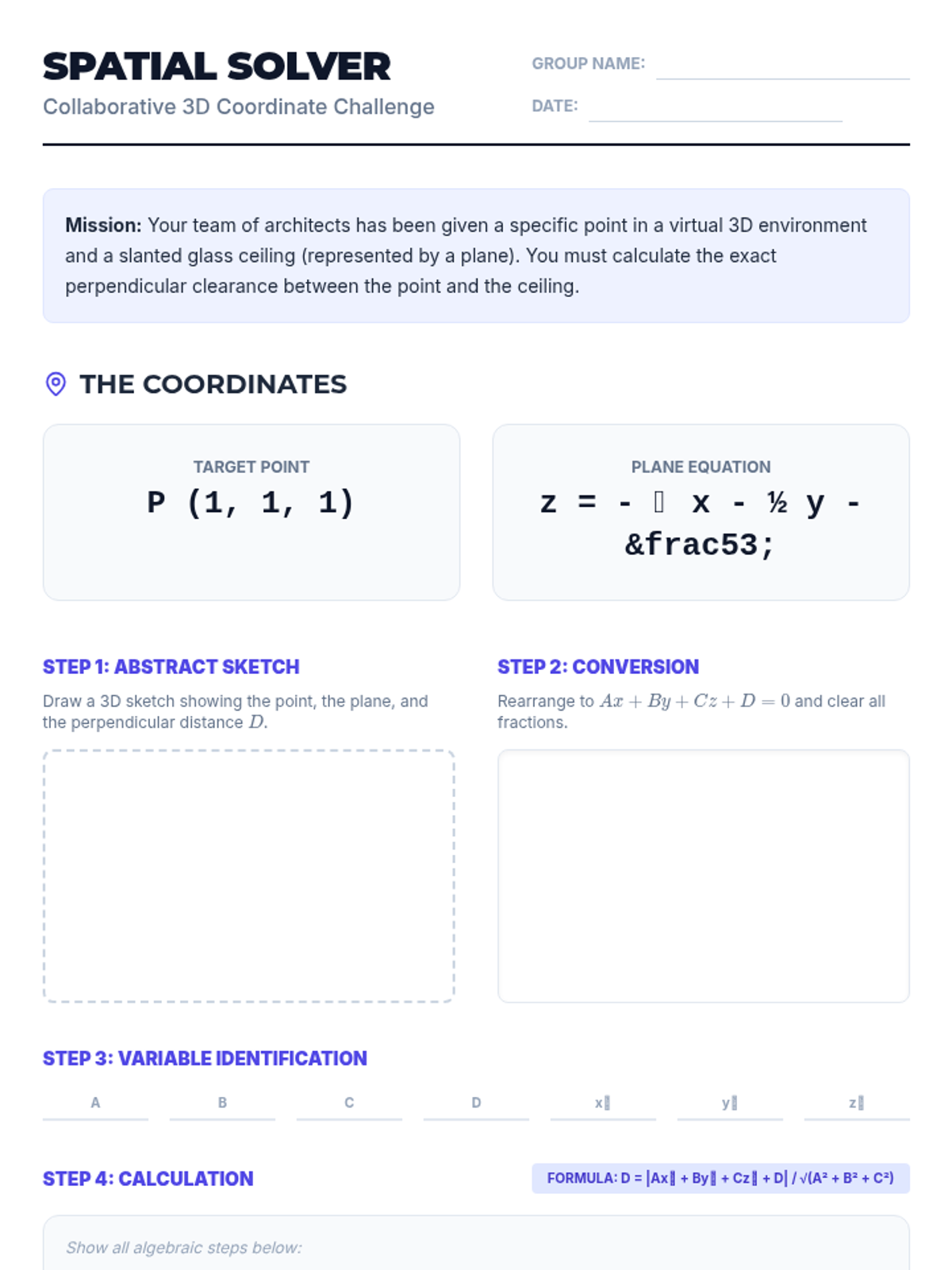
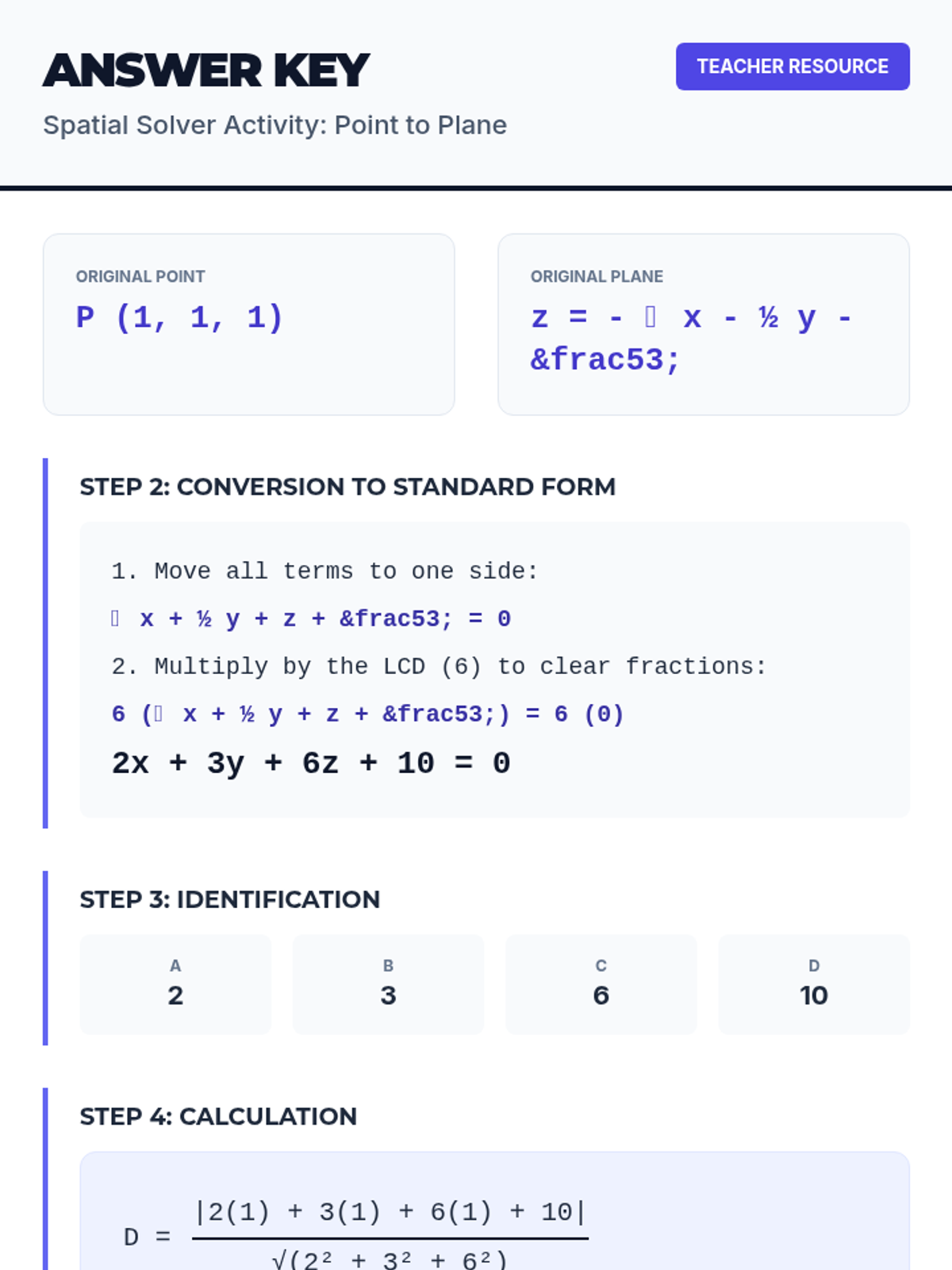
A Pre-Calculus lesson focused on extending 2D distance concepts into 3D space to calculate the distance between a point and a plane. Students use coordinate geometry and algebraic manipulation to solve spatial problems.
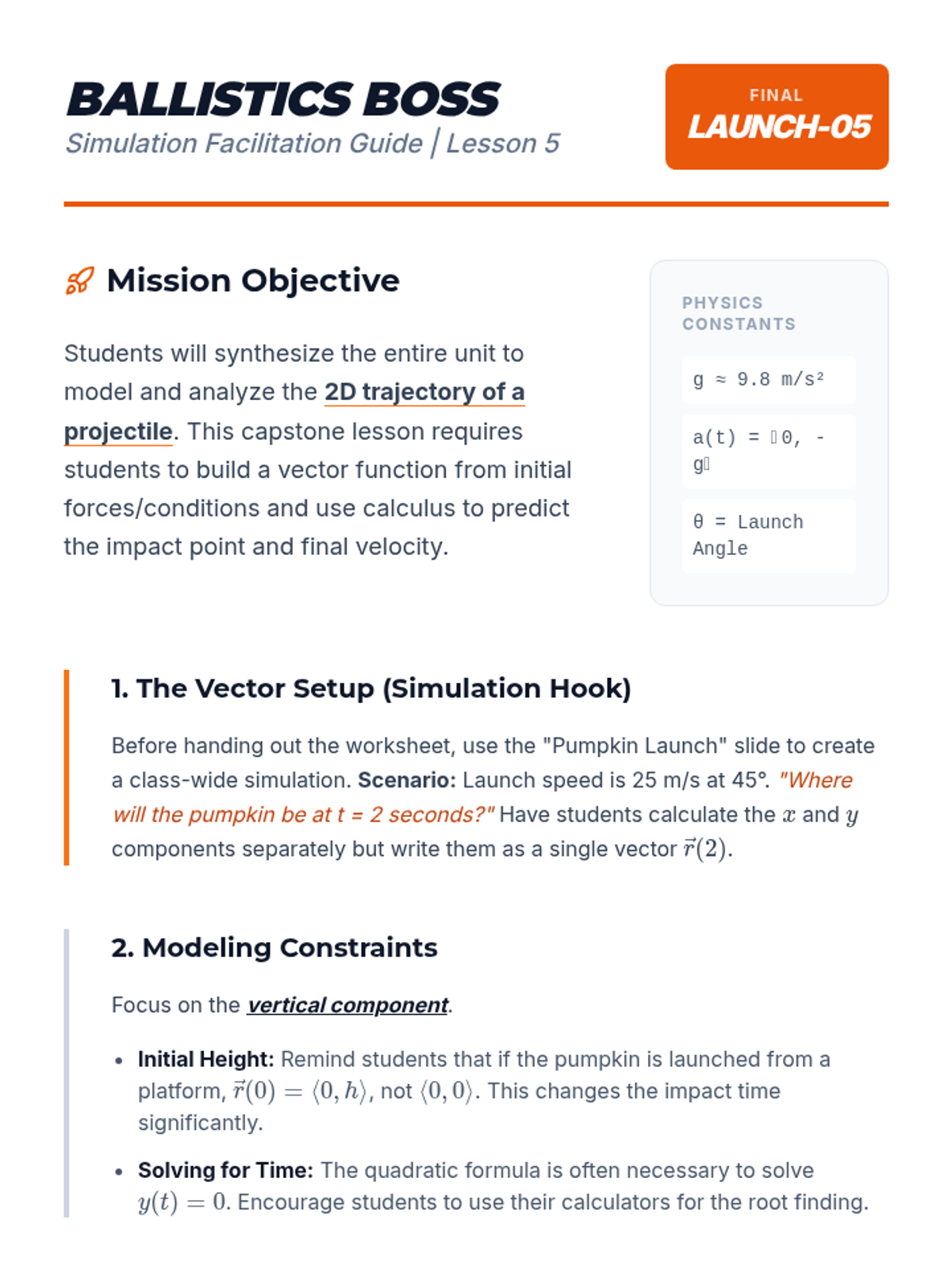
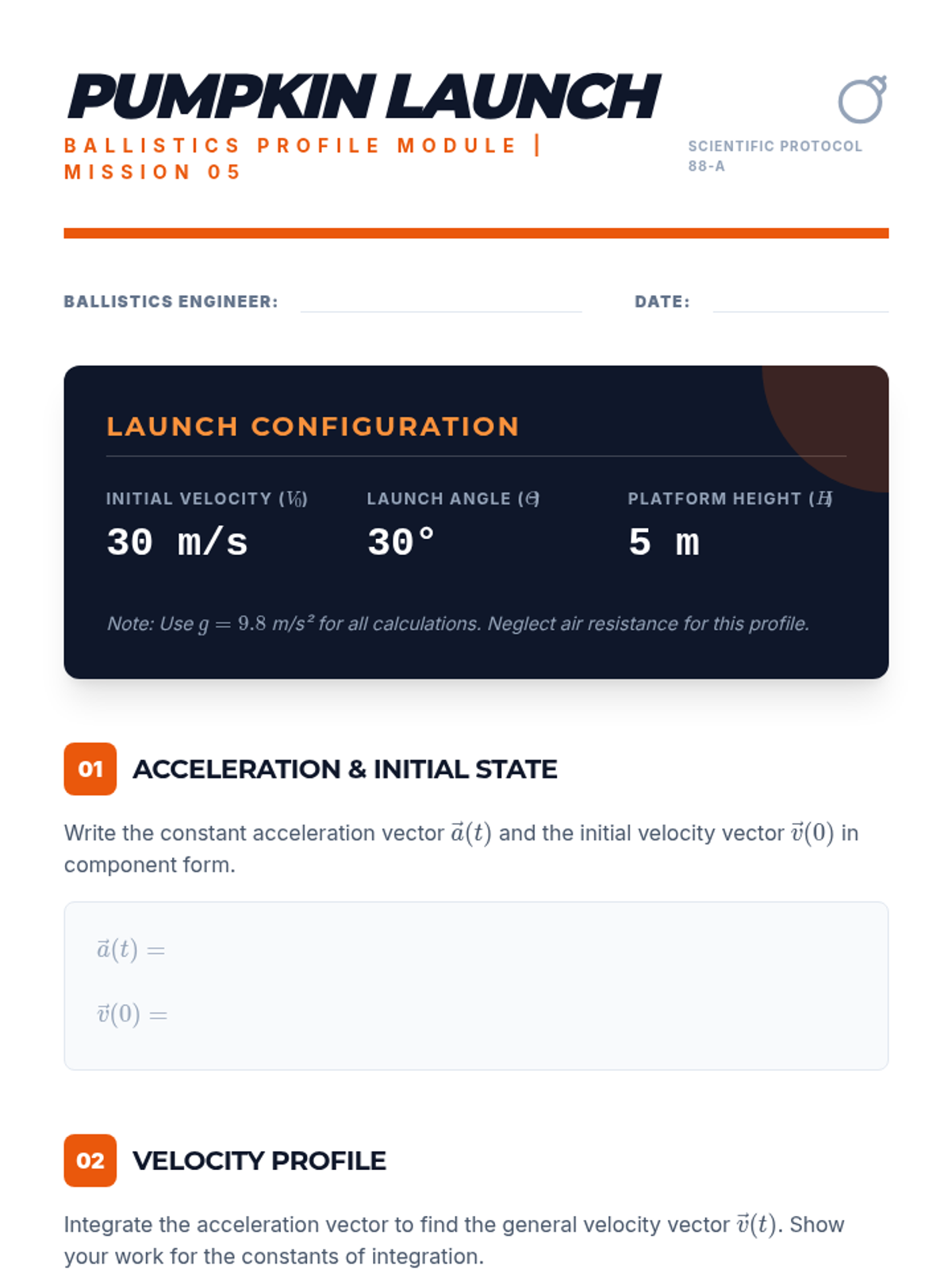
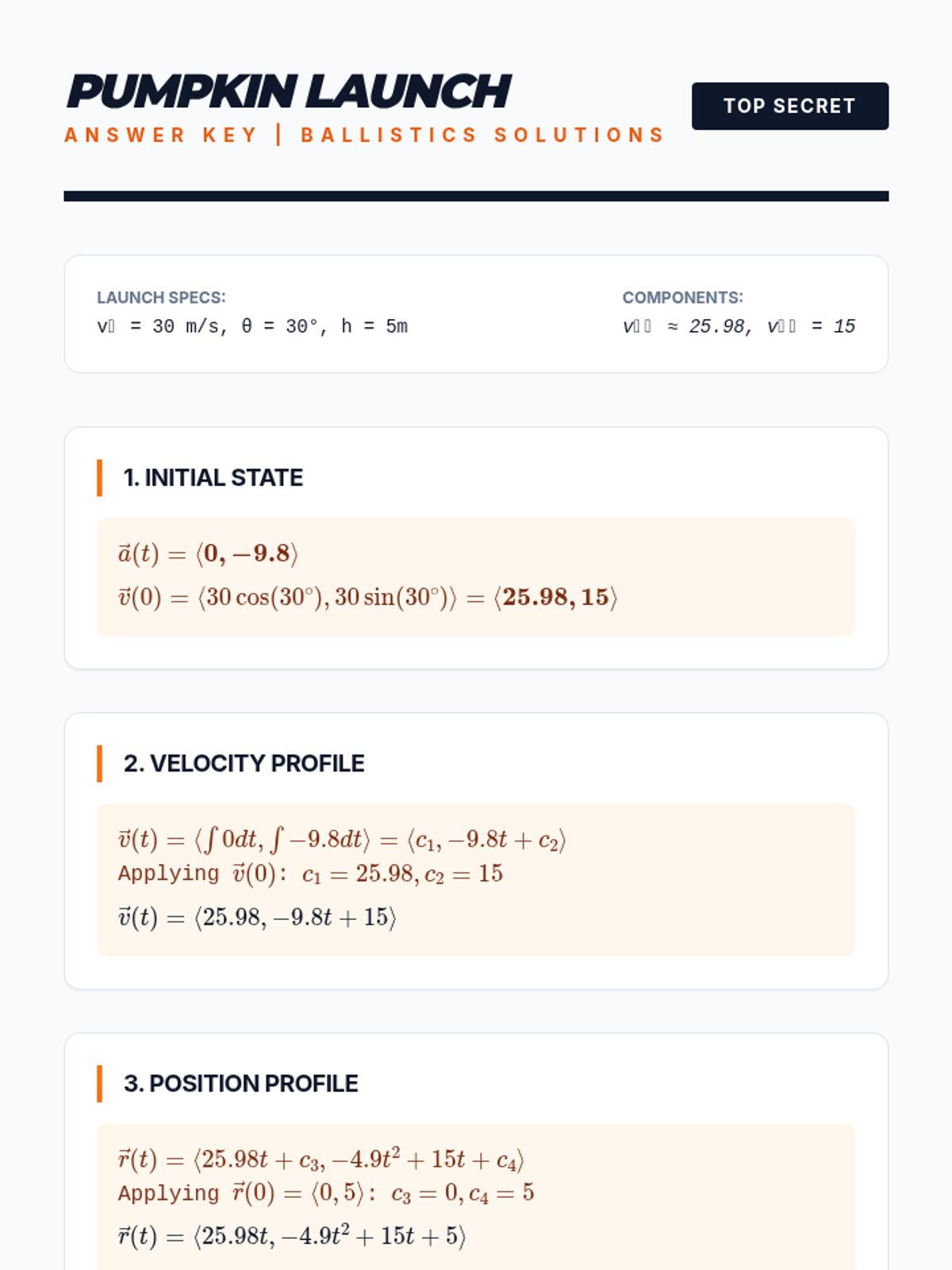
The sequence culminates with a realistic physics modeling lesson. Students set up and analyze parametric equations for projectiles, accounting for gravity and initial velocity vectors.
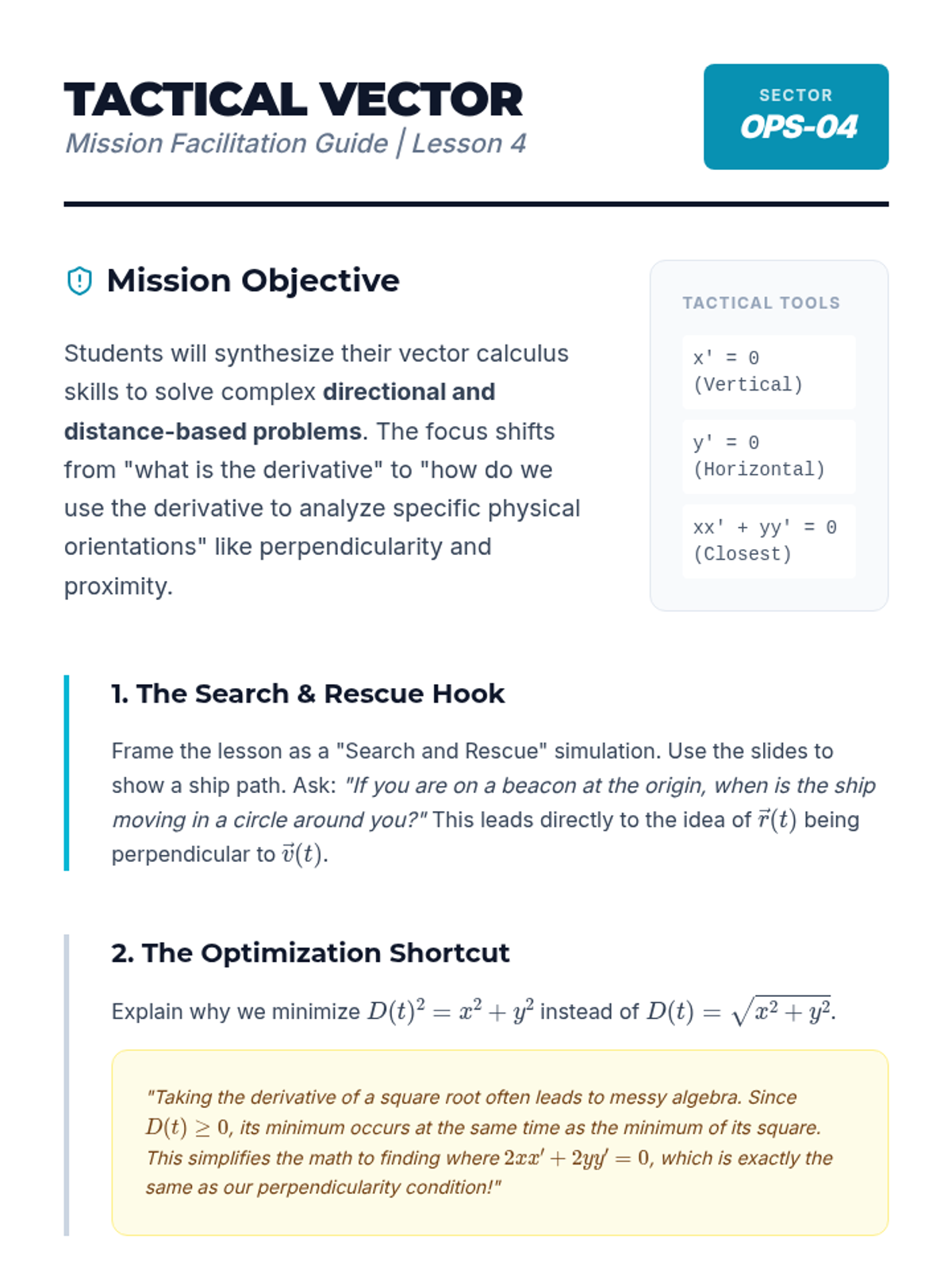
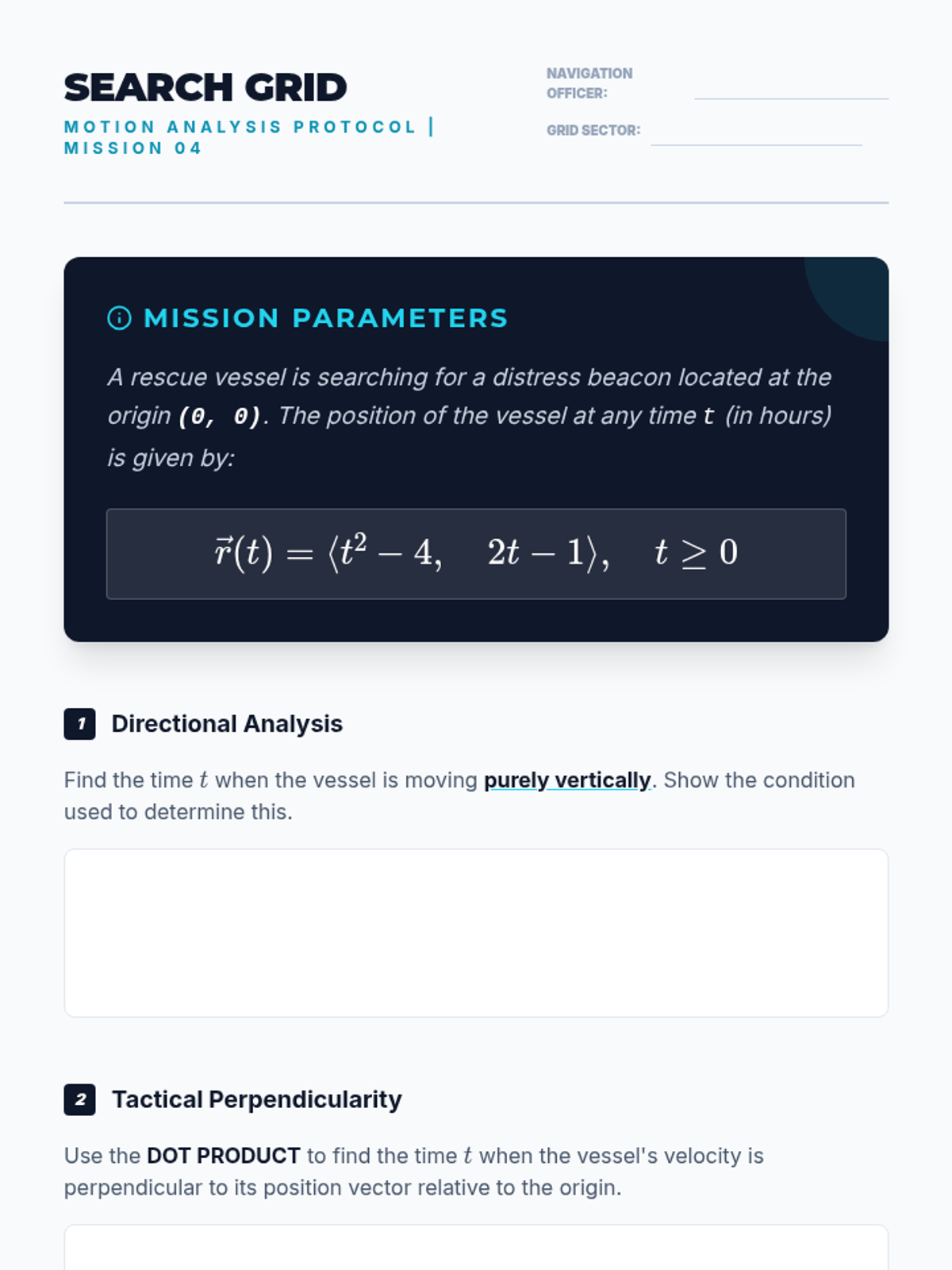
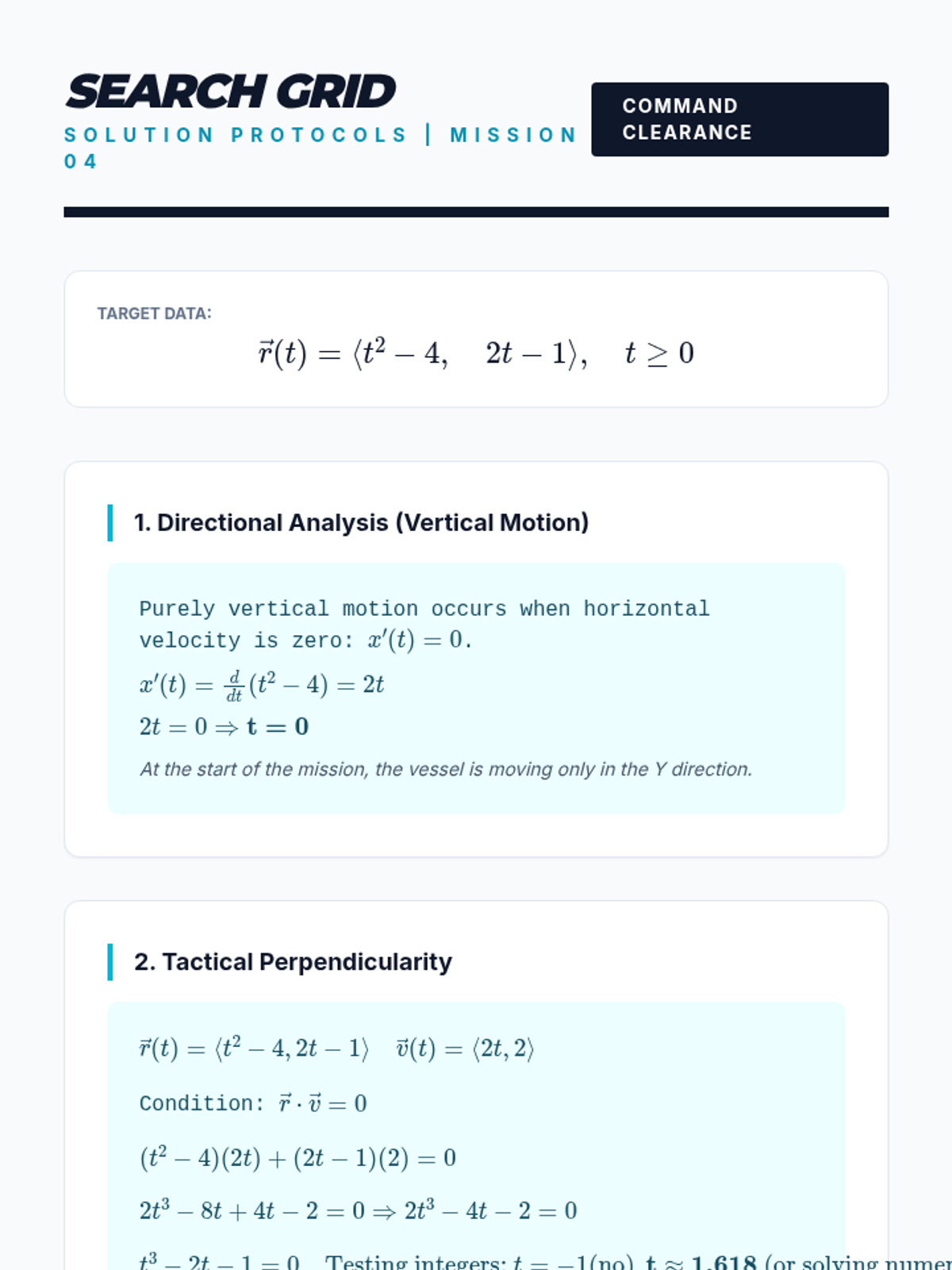
Students solve complex motion problems, such as finding the time when a particle is moving perpendicular to its position vector or closest to the origin.
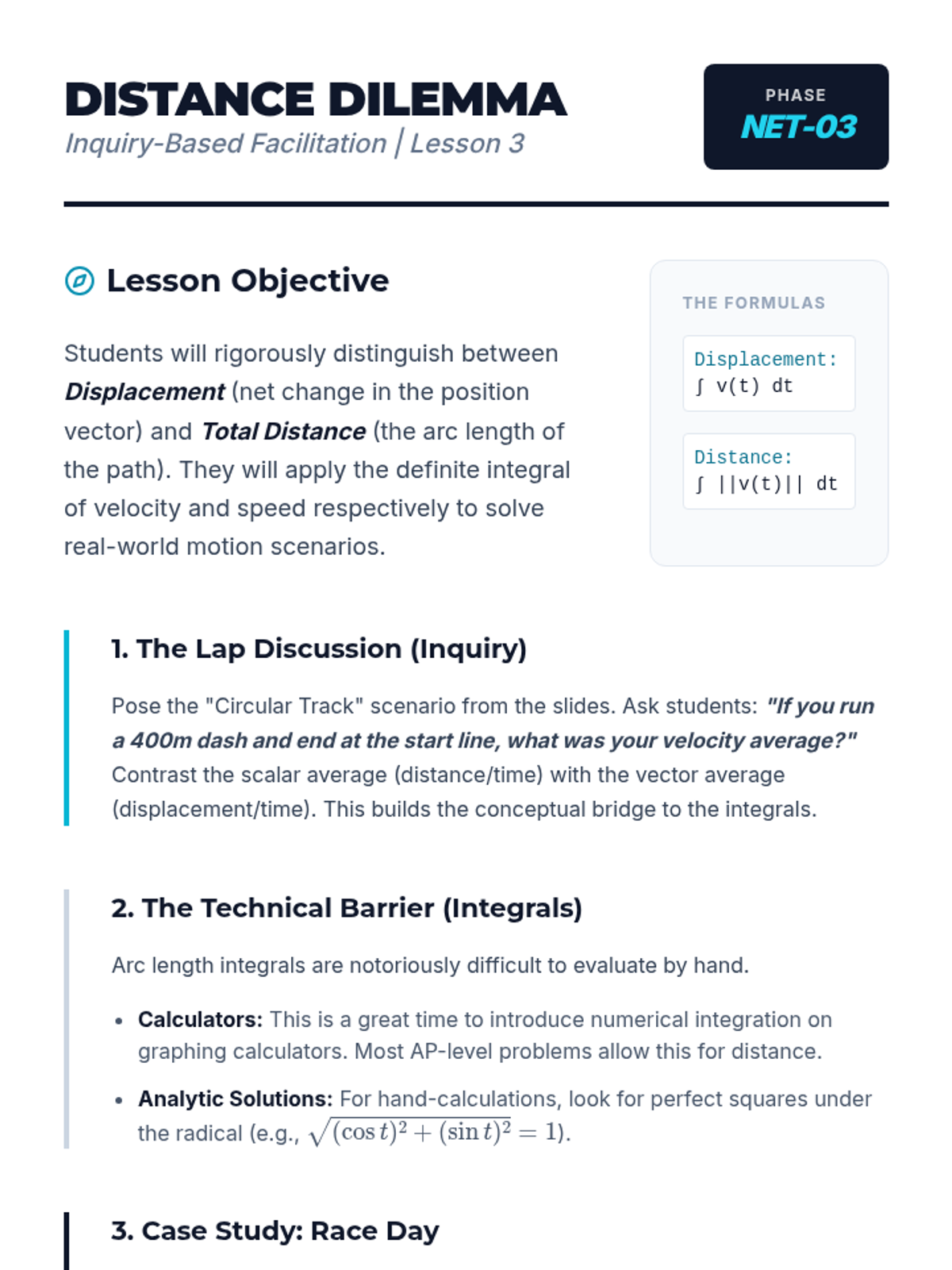
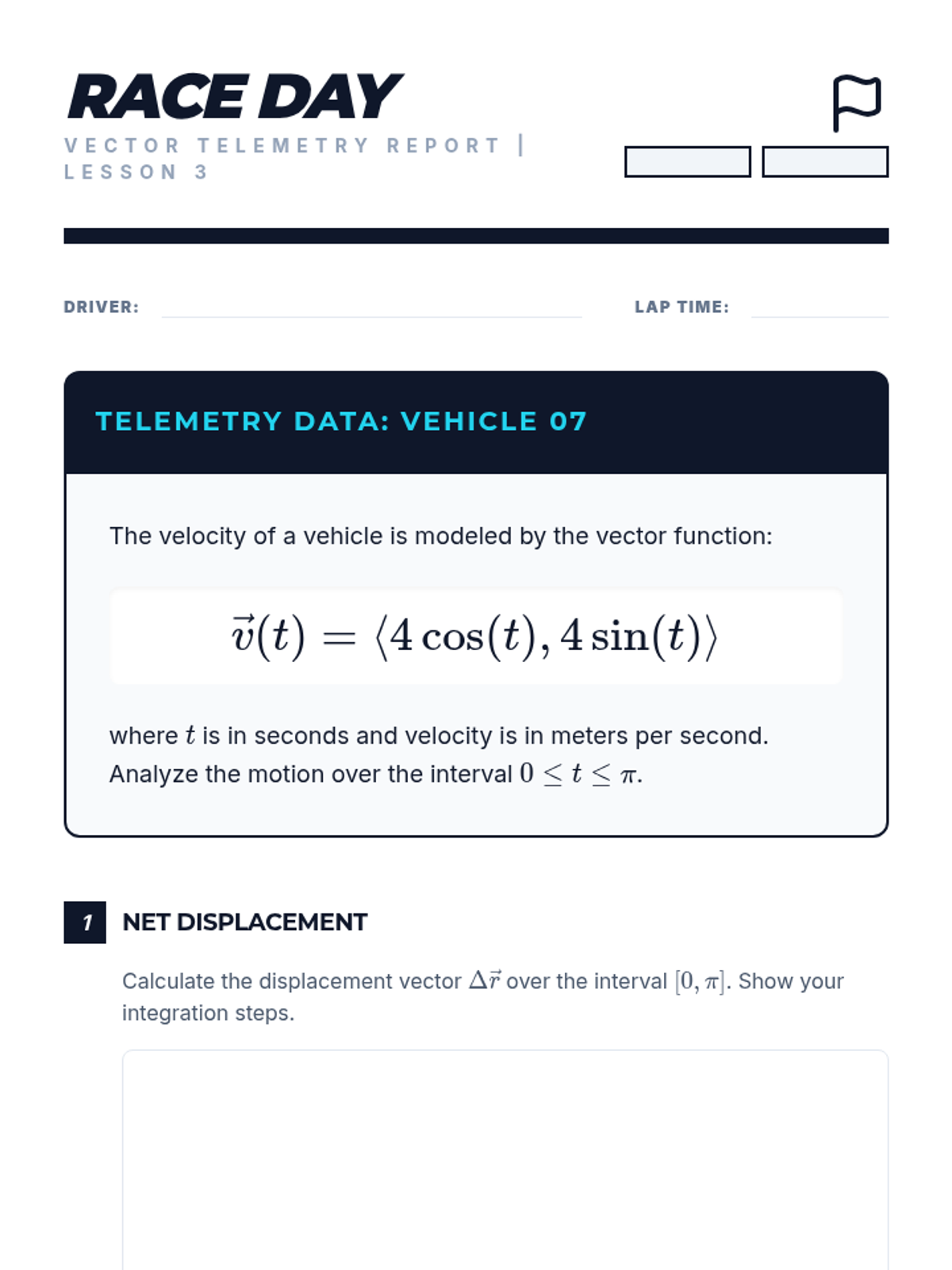
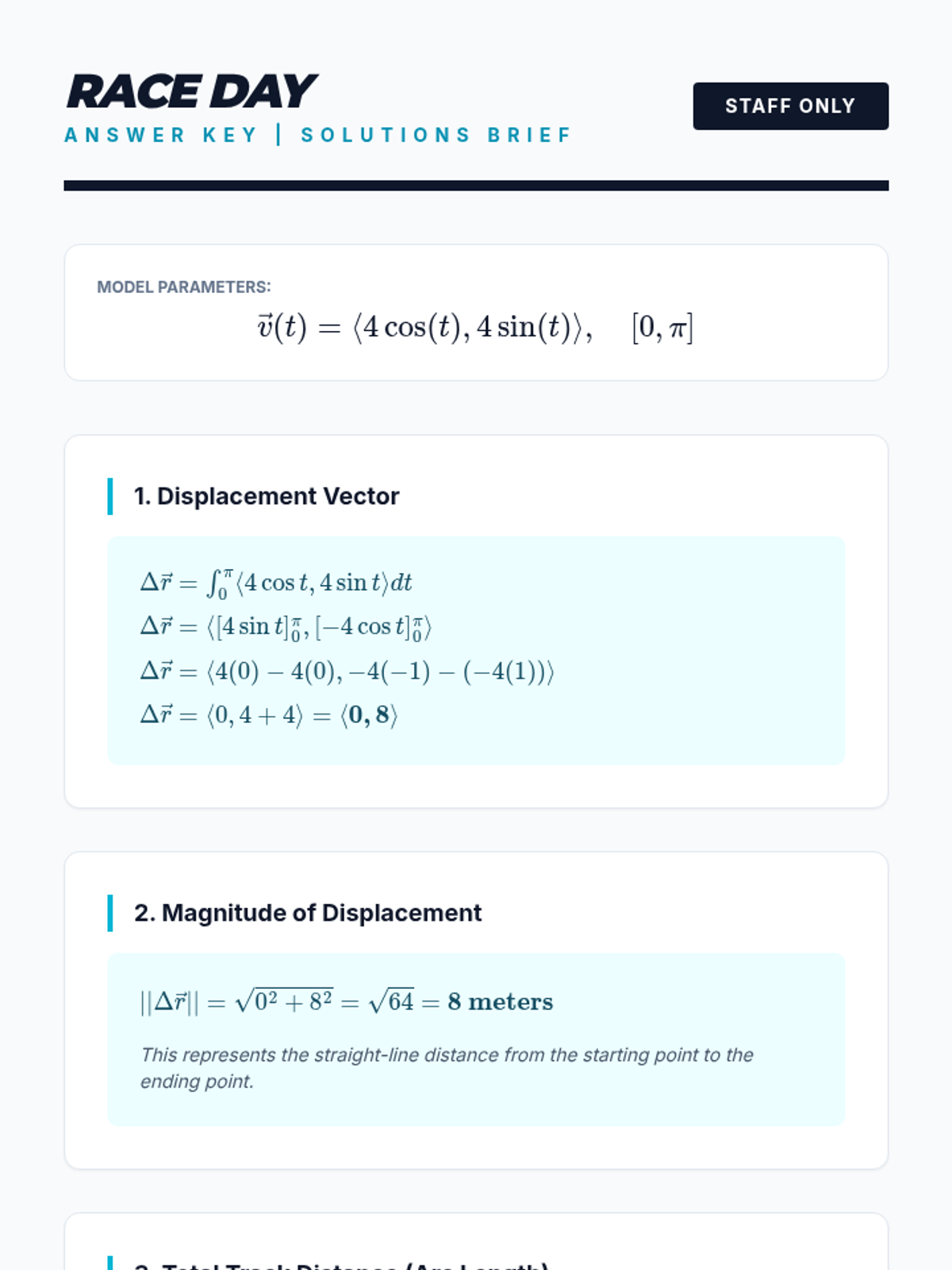
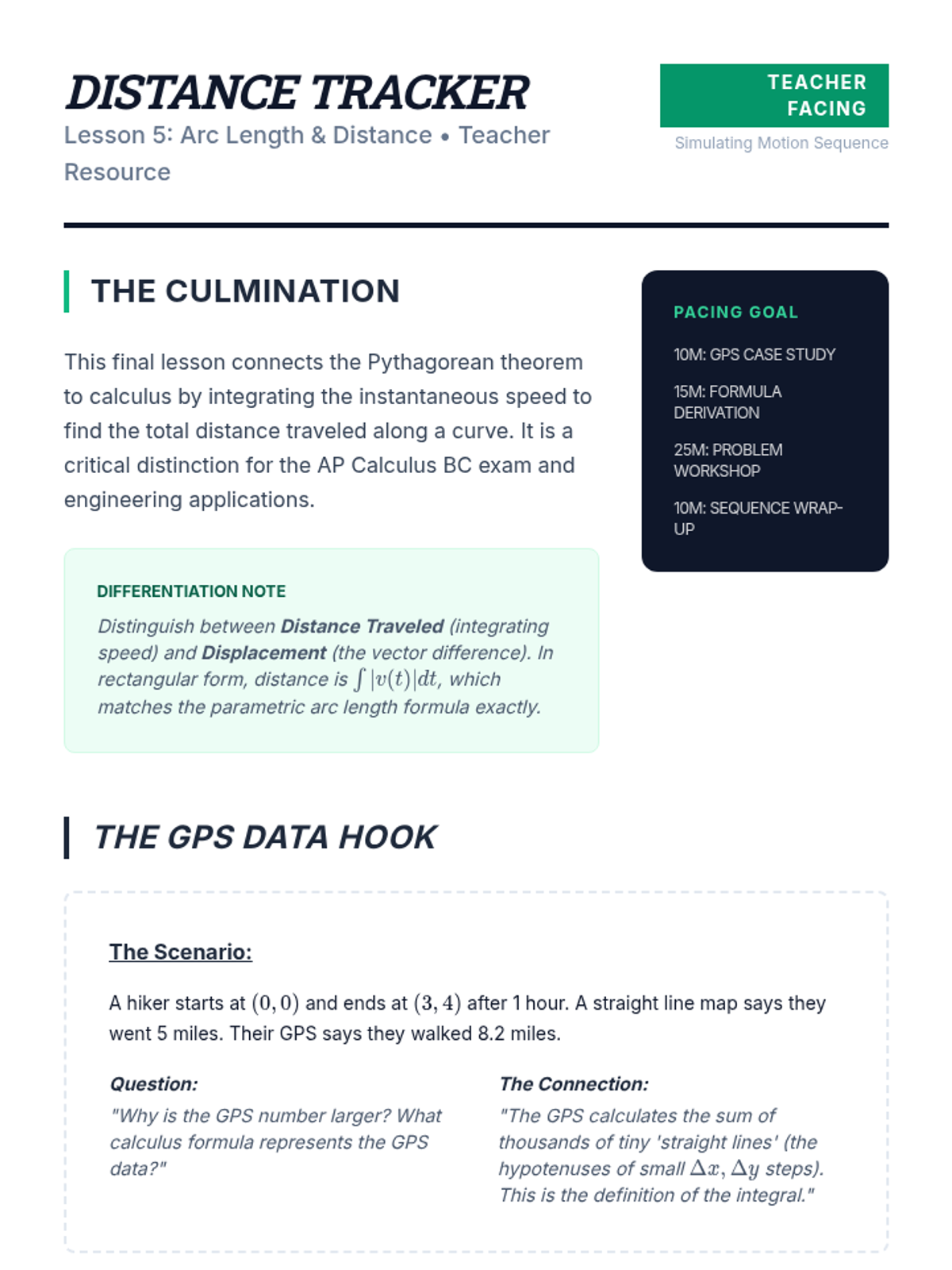
A comparative analysis lesson where students rigorously distinguish between the net change in position (displacement vector) and the total scalar distance traveled (integral of speed).
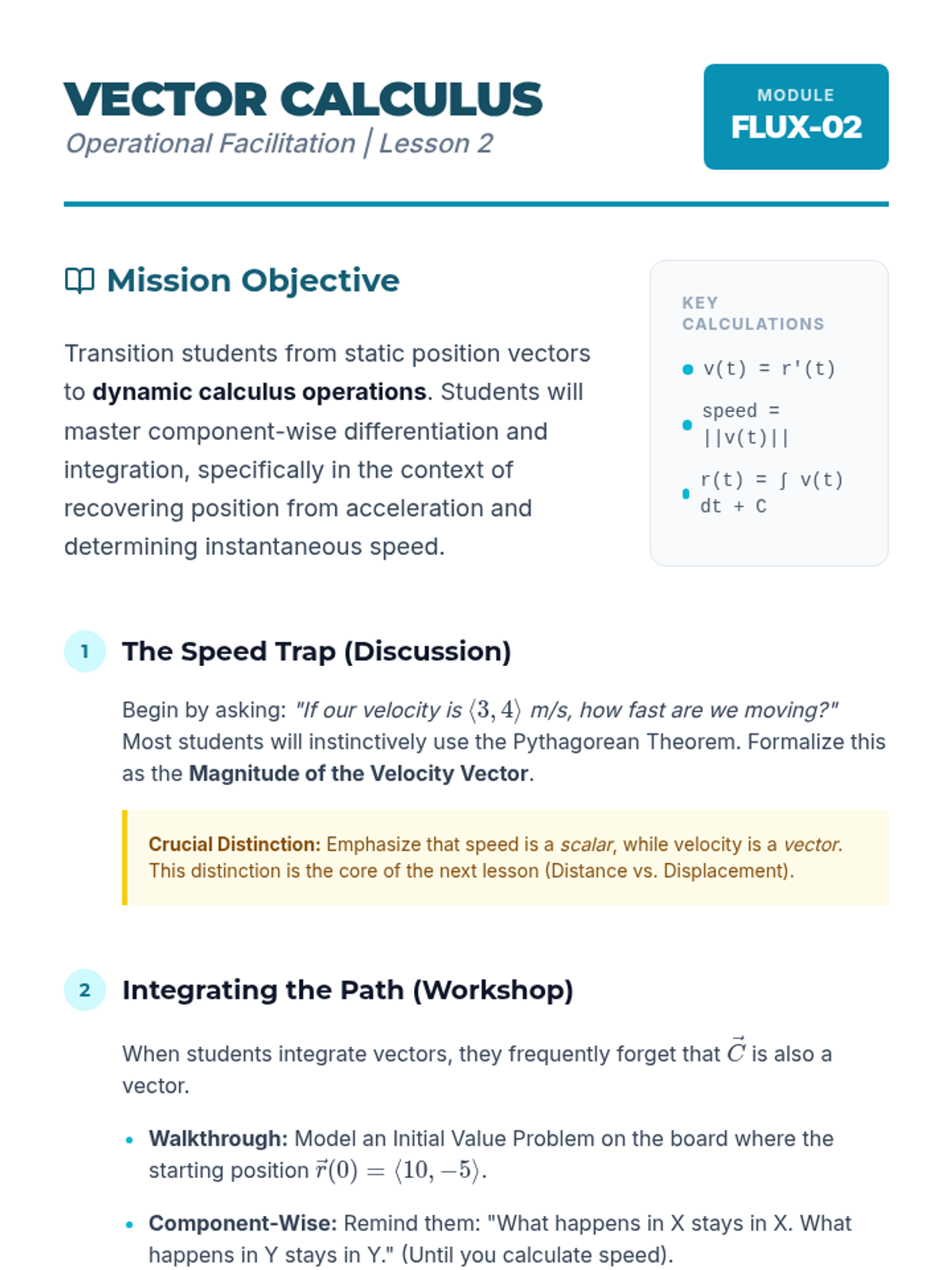
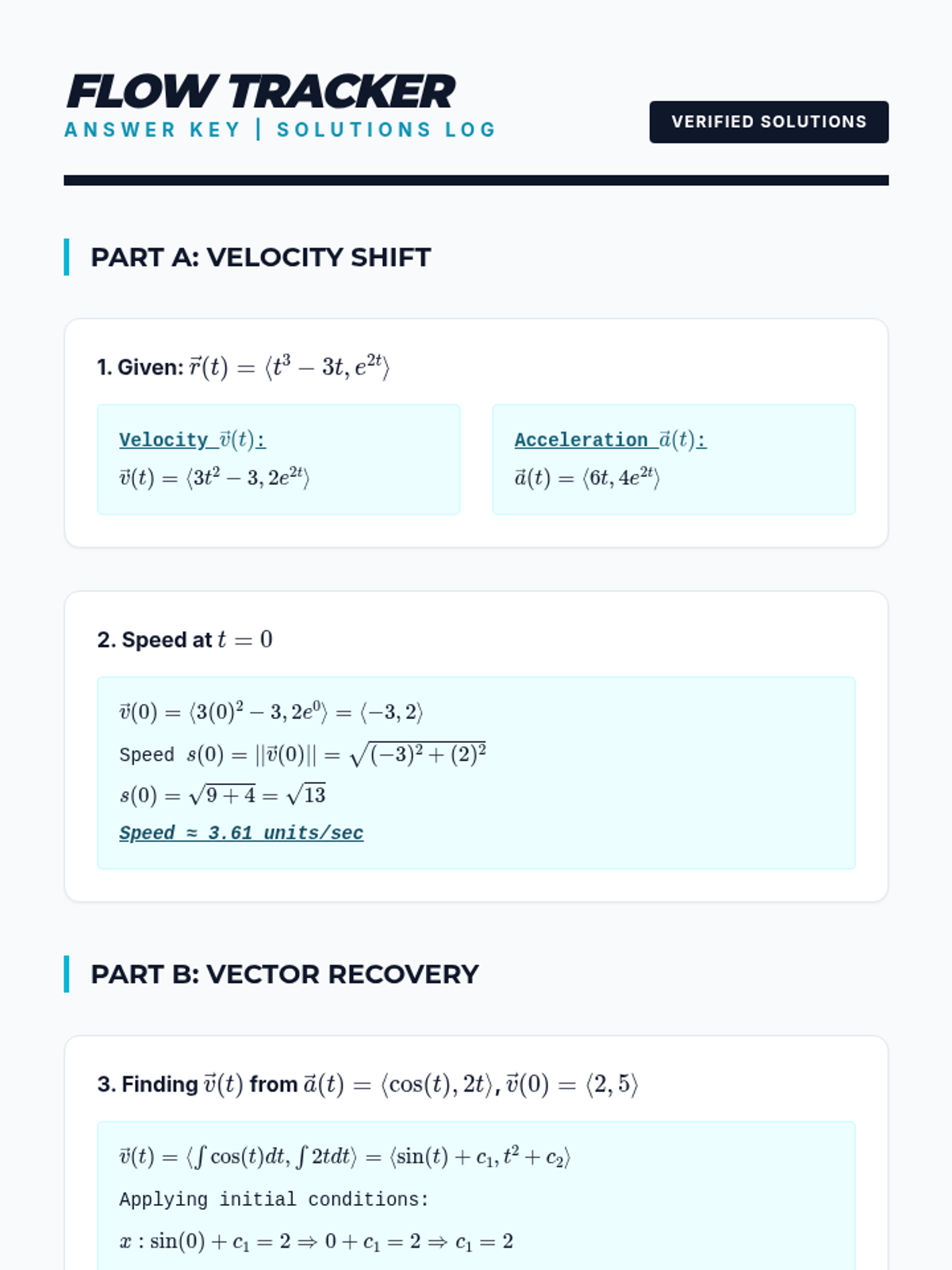
Students extend calculus operations to vector components. They perform component-wise differentiation and integration to find velocity vectors from position and position vectors from velocity.
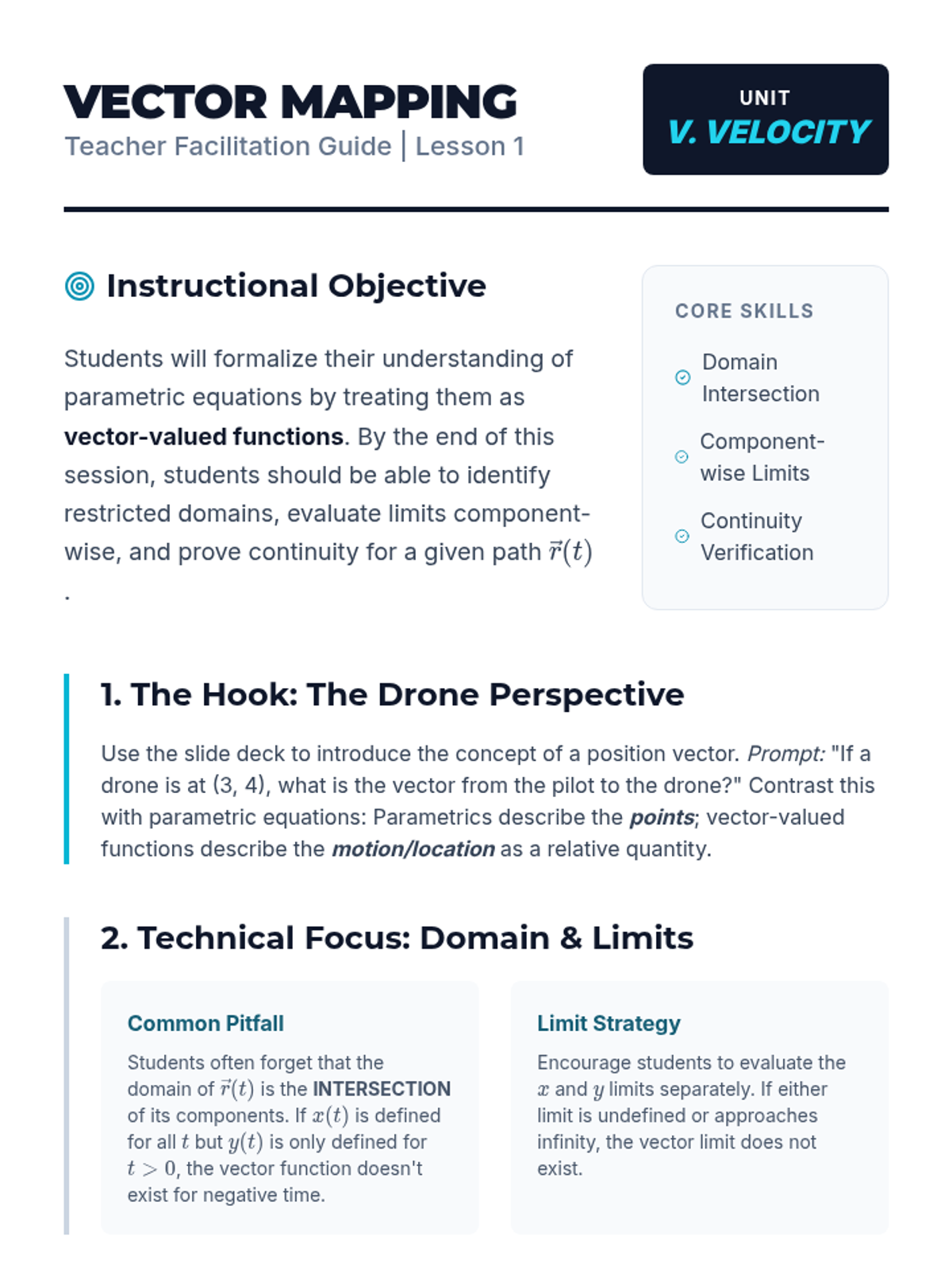
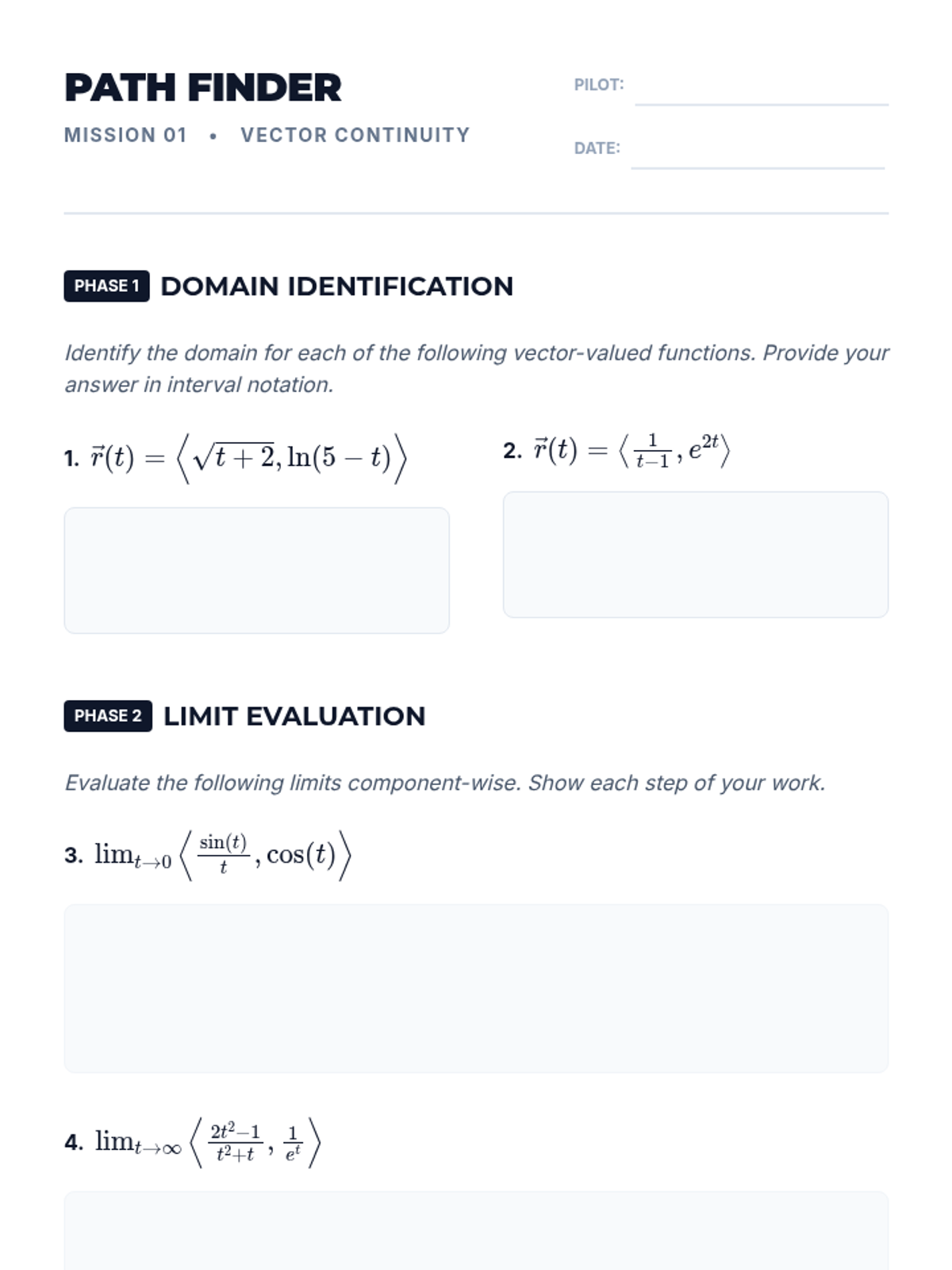
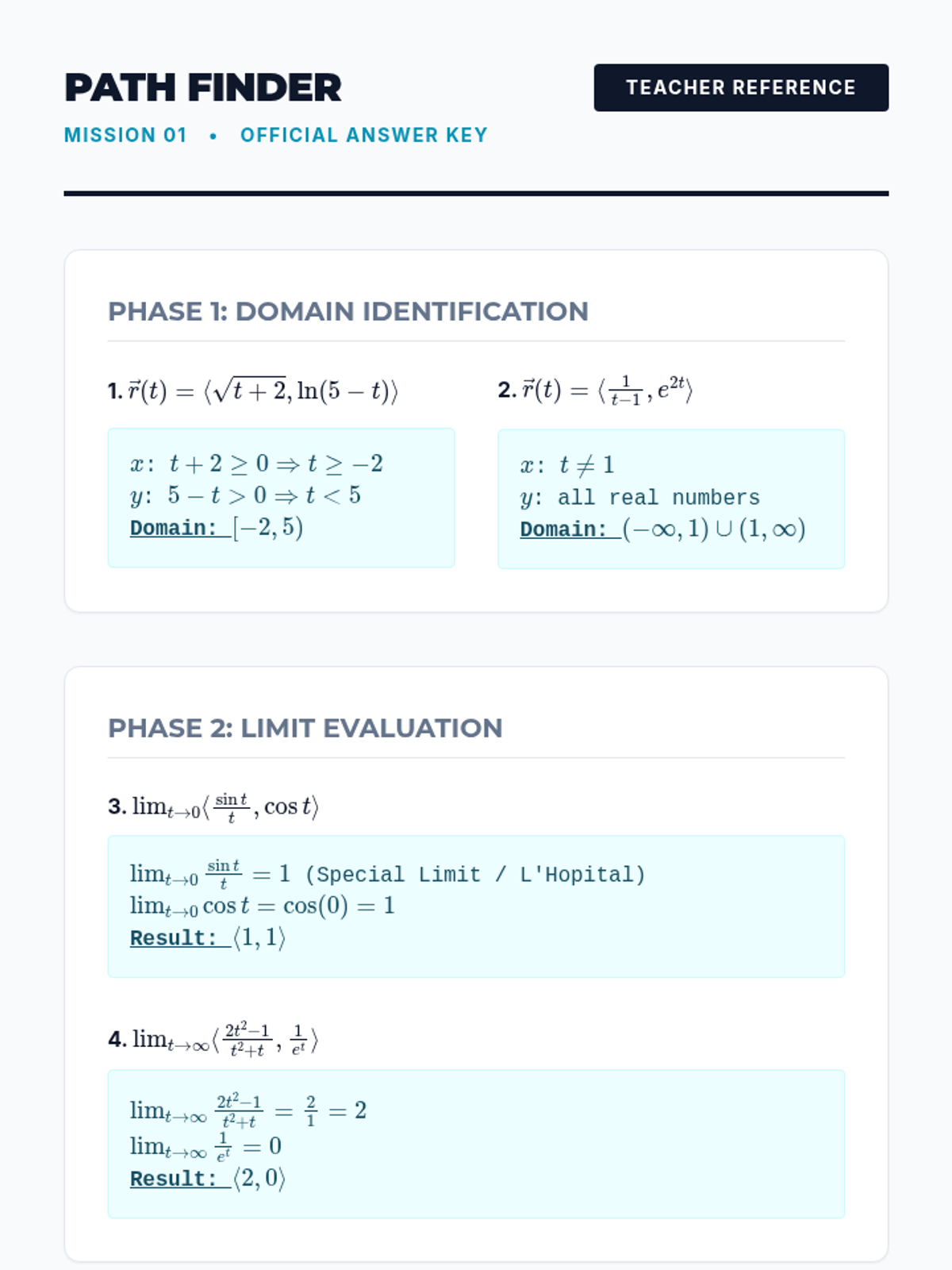
Students formally define vector-valued functions and explore limits and continuity. They learn to visualize the domain and output as vectors pointing to a path.
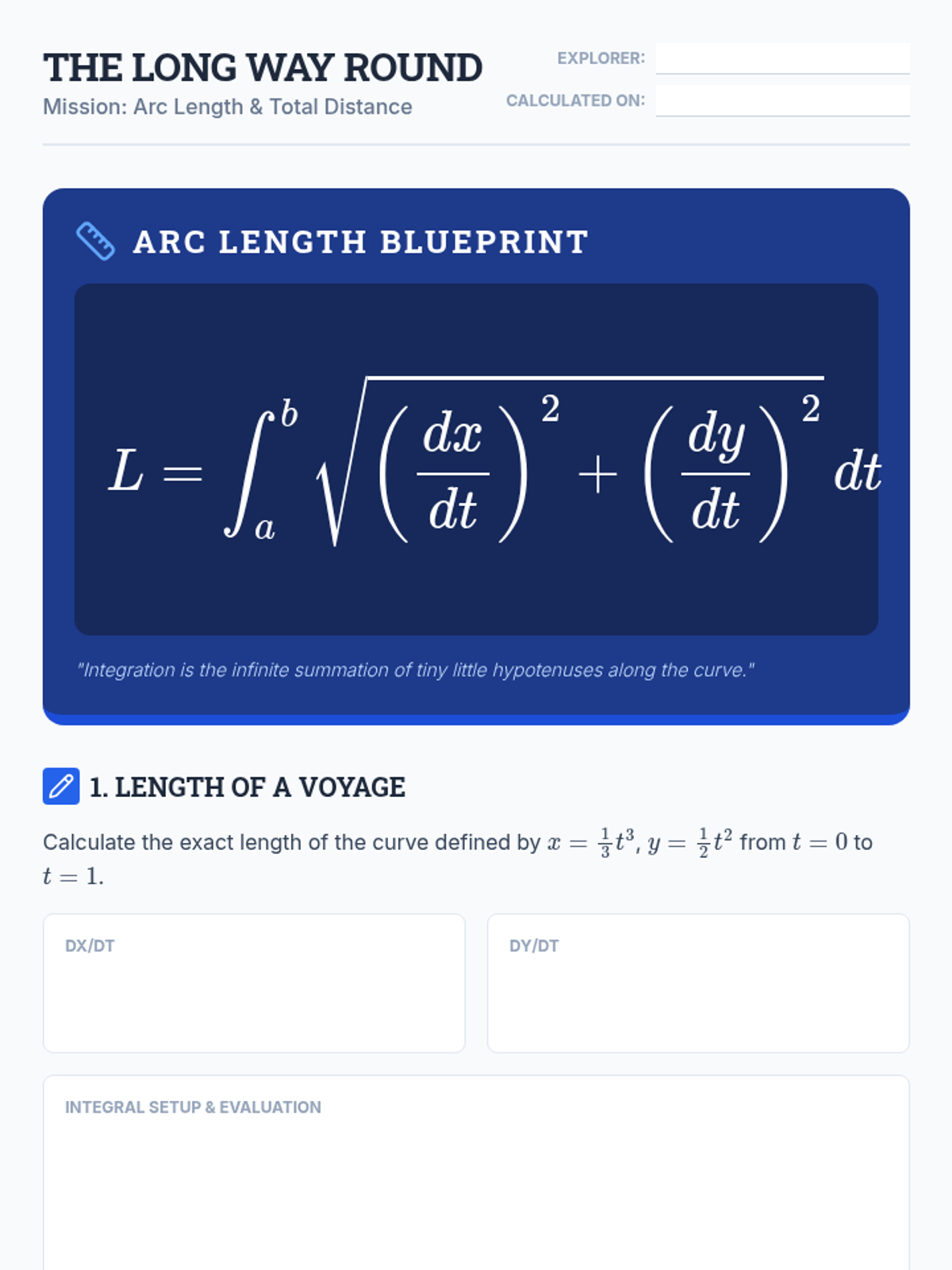
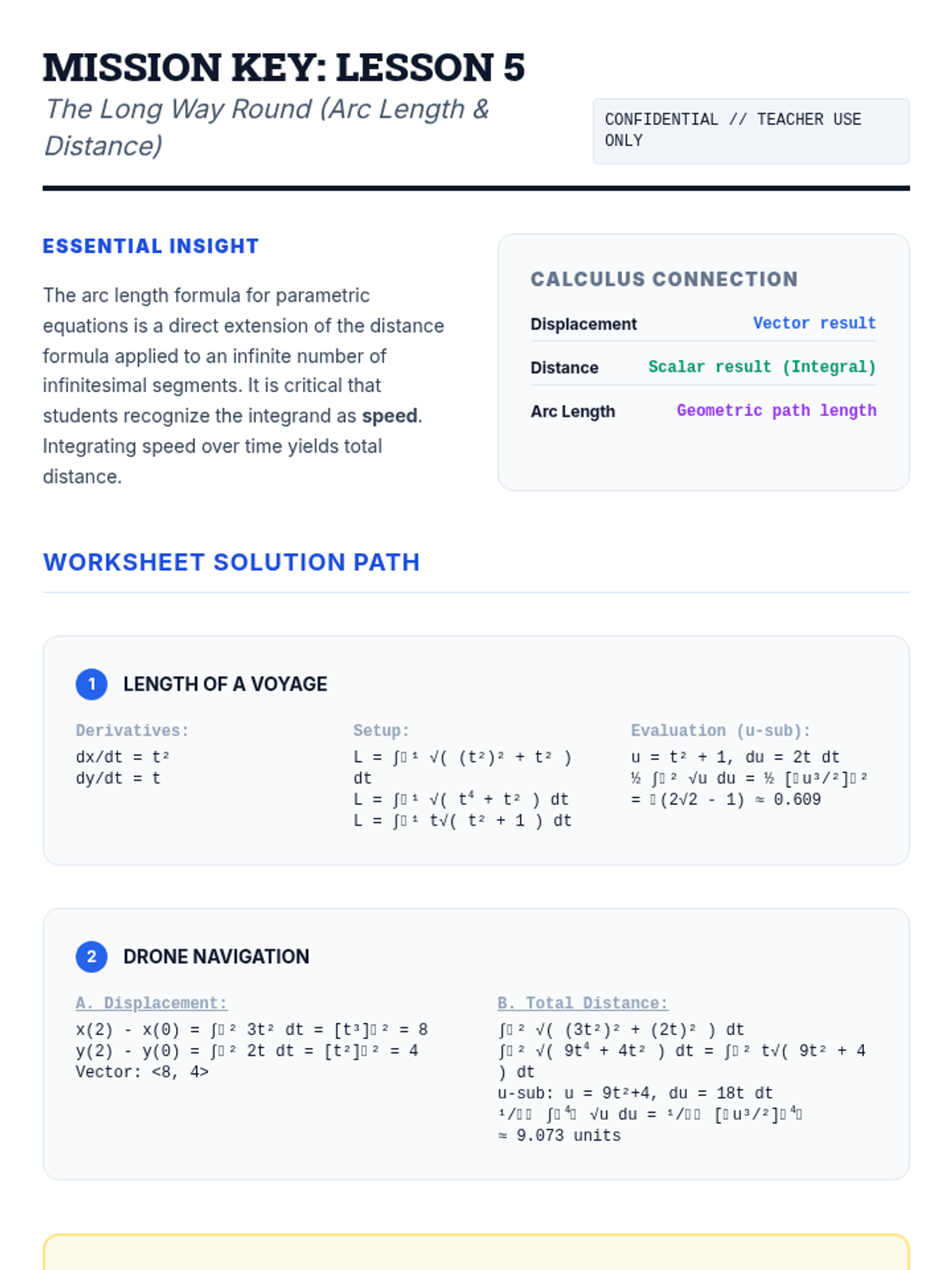
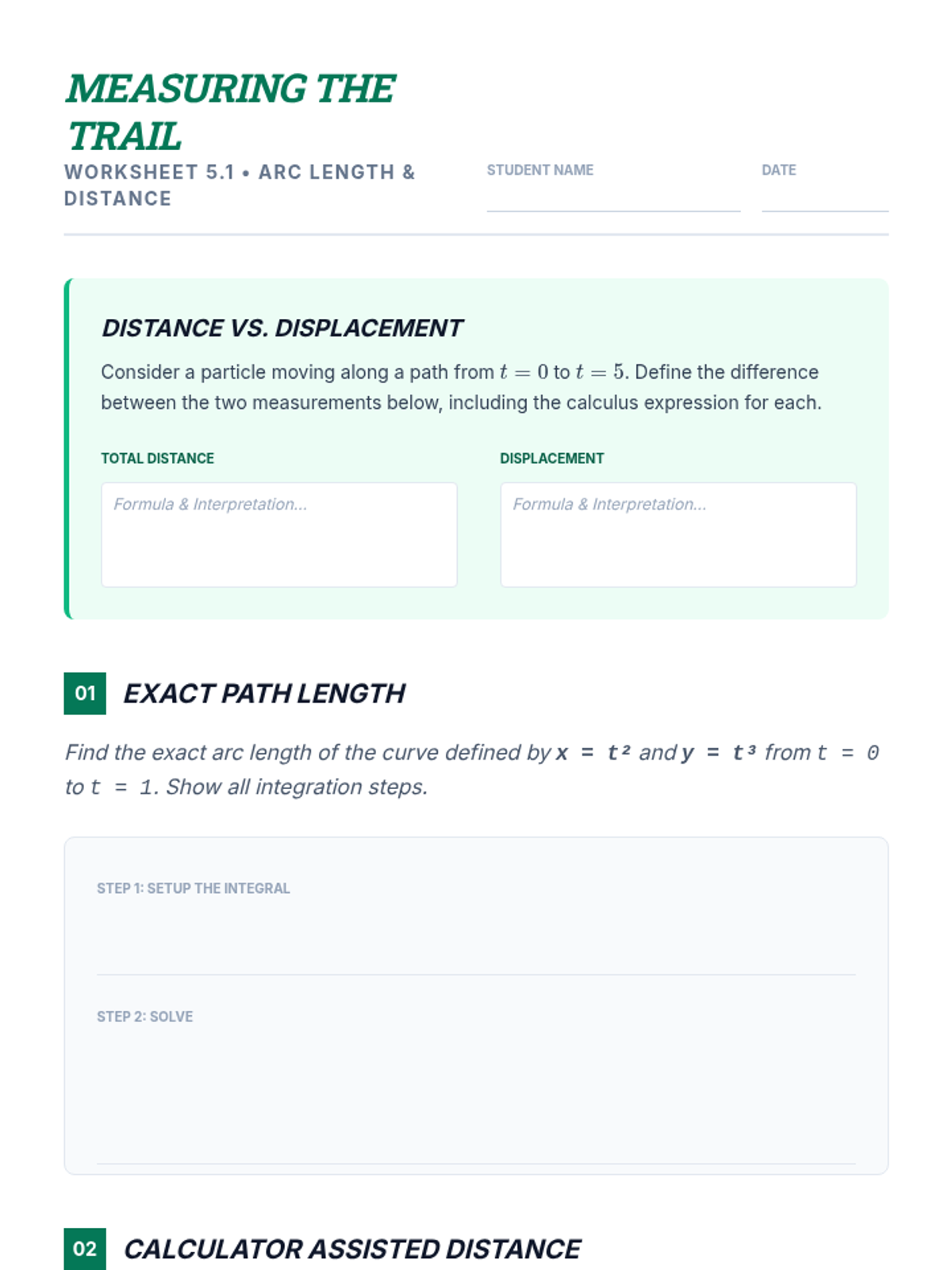
Calculates the total distance traveled and arc length of parametric curves by integrating speed.
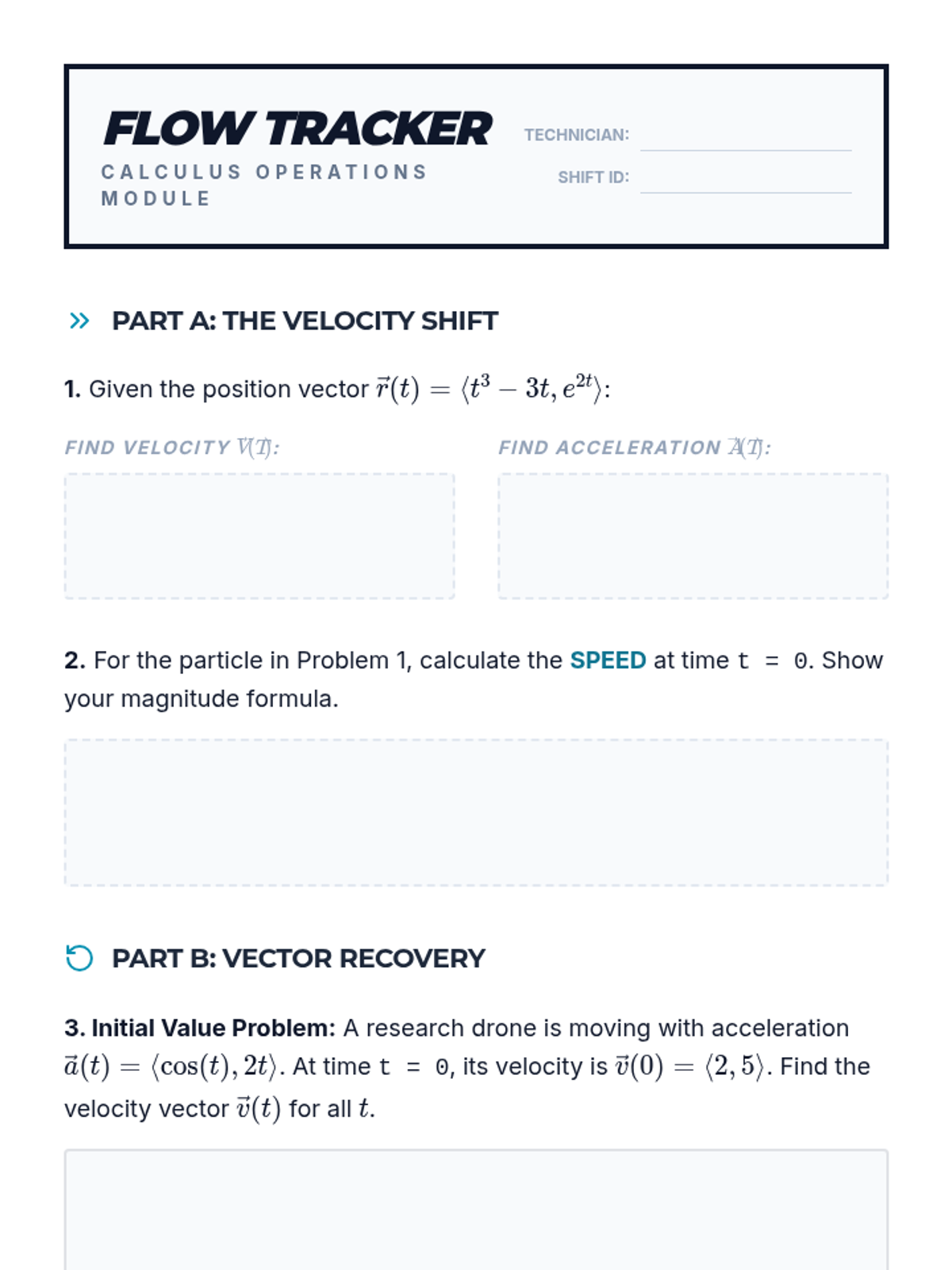
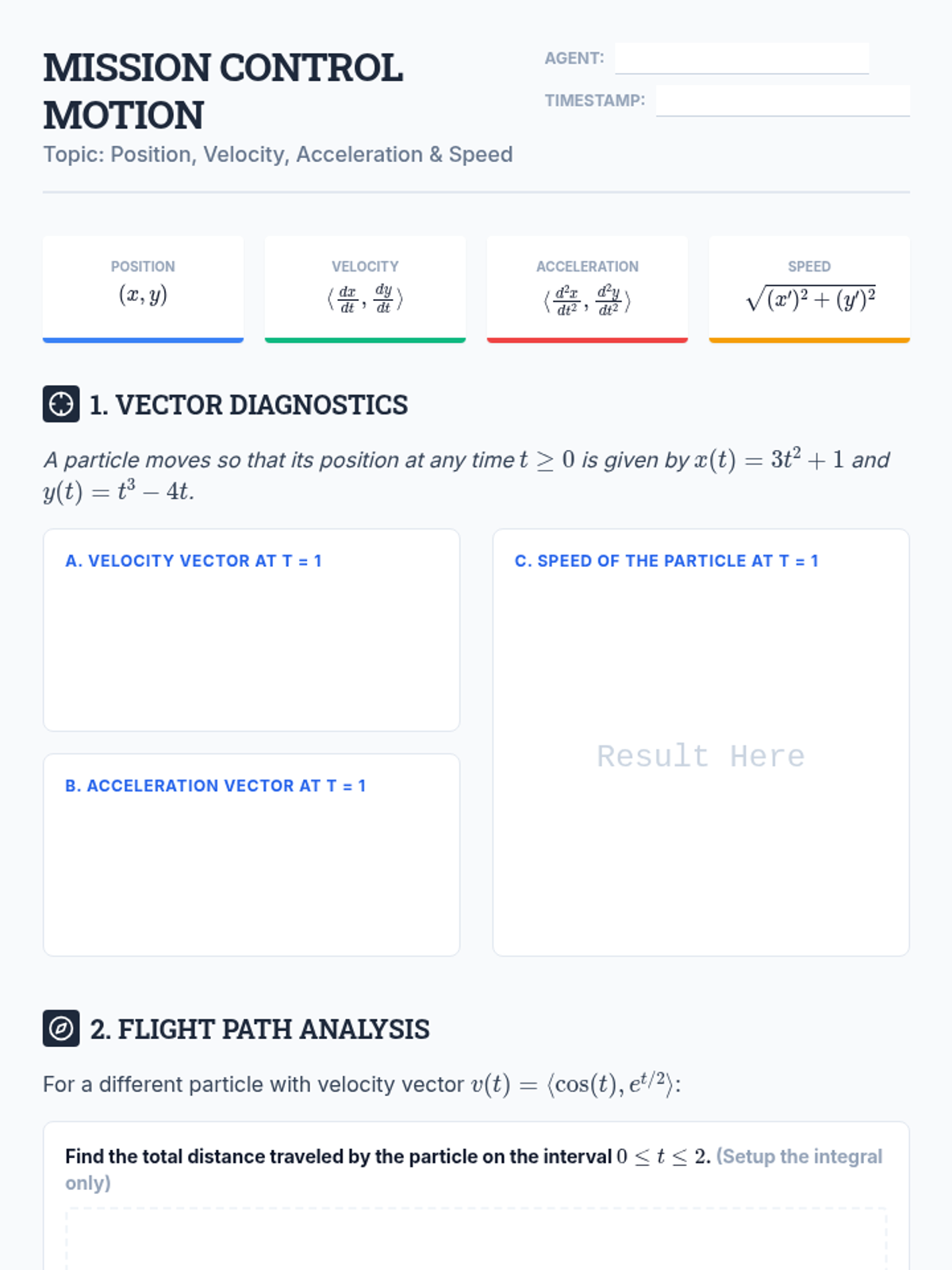
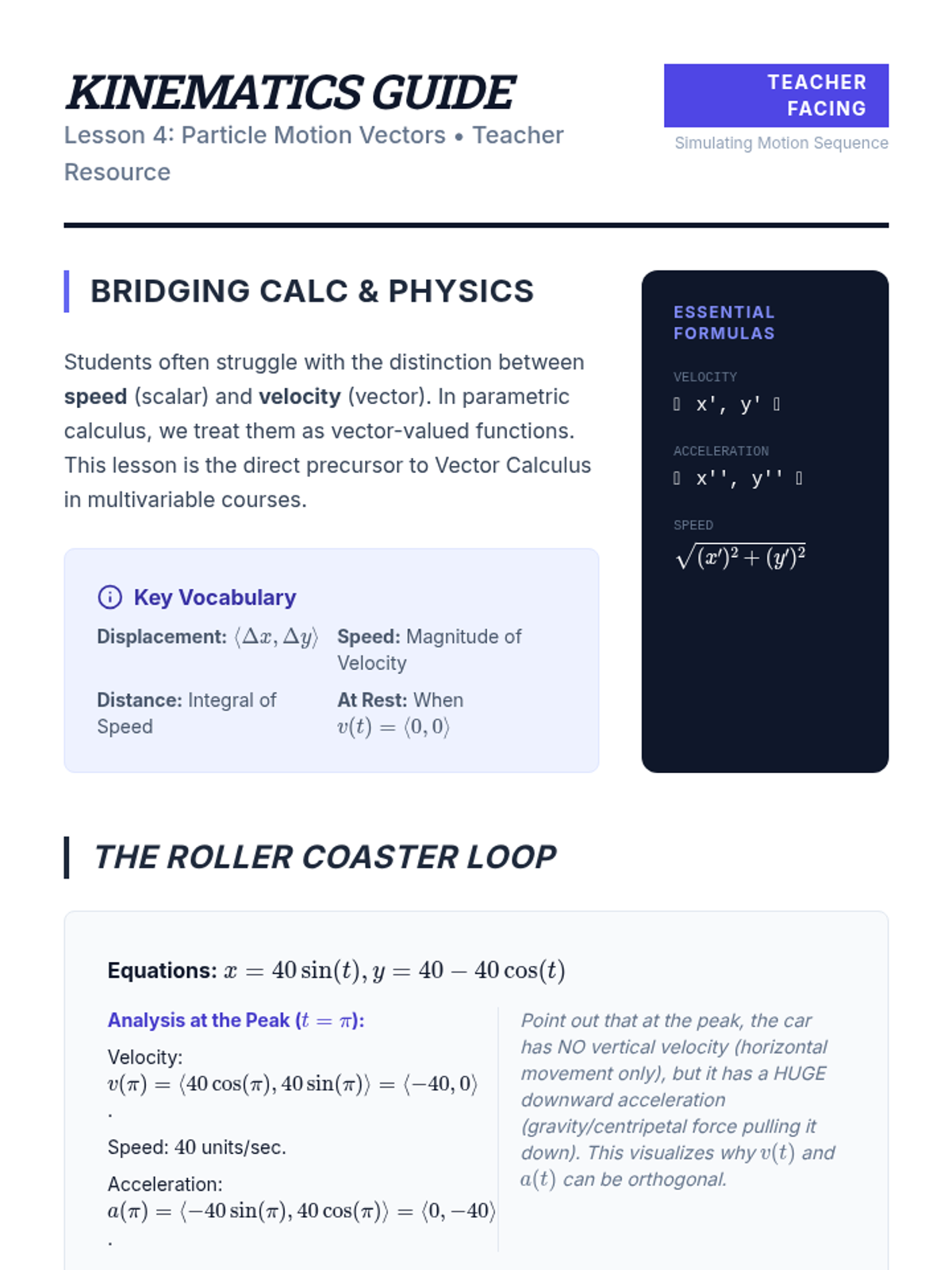
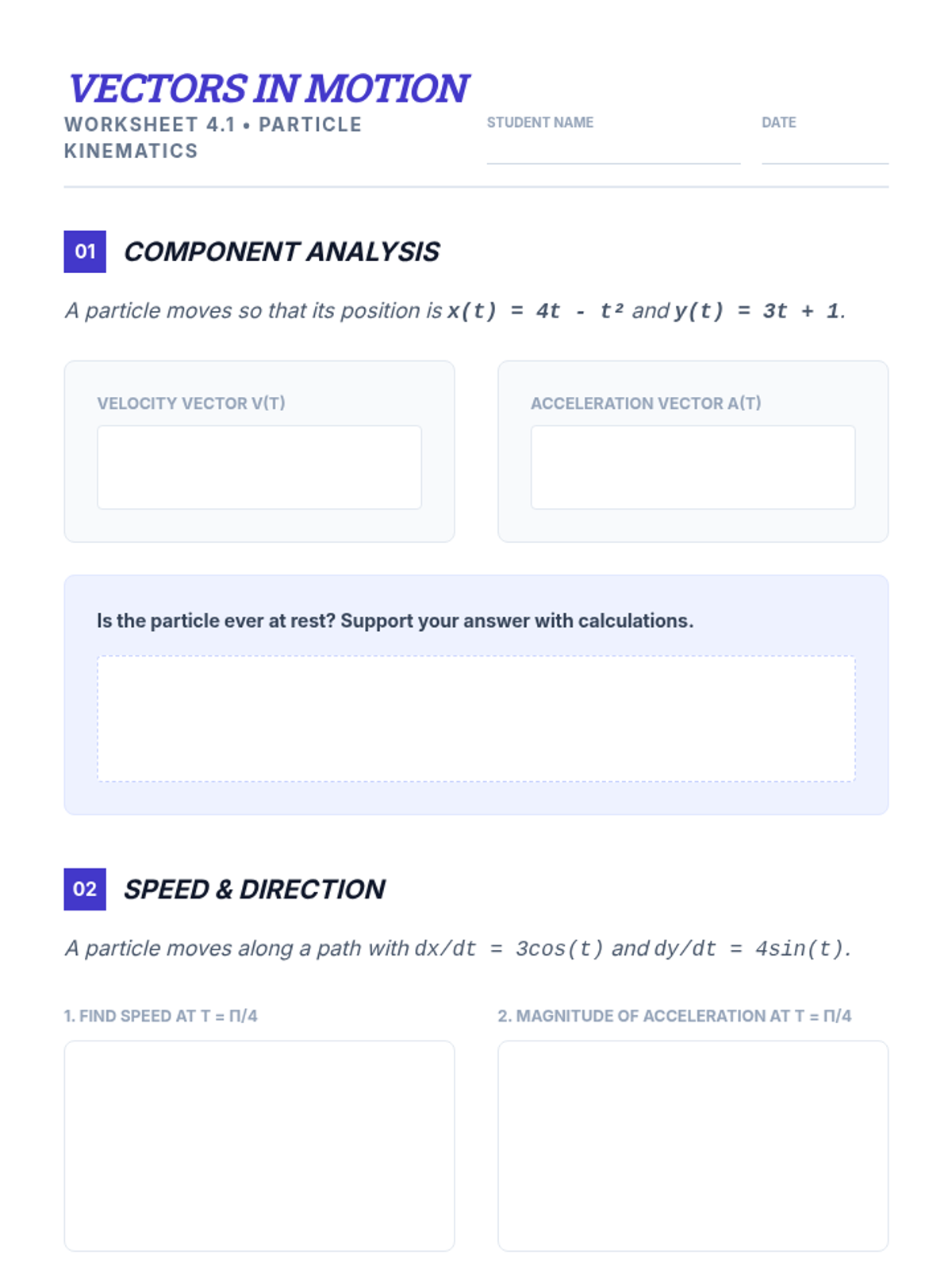
Applies derivatives to physics, interpreting parametric equations as position vectors and calculating velocity, speed, and acceleration.
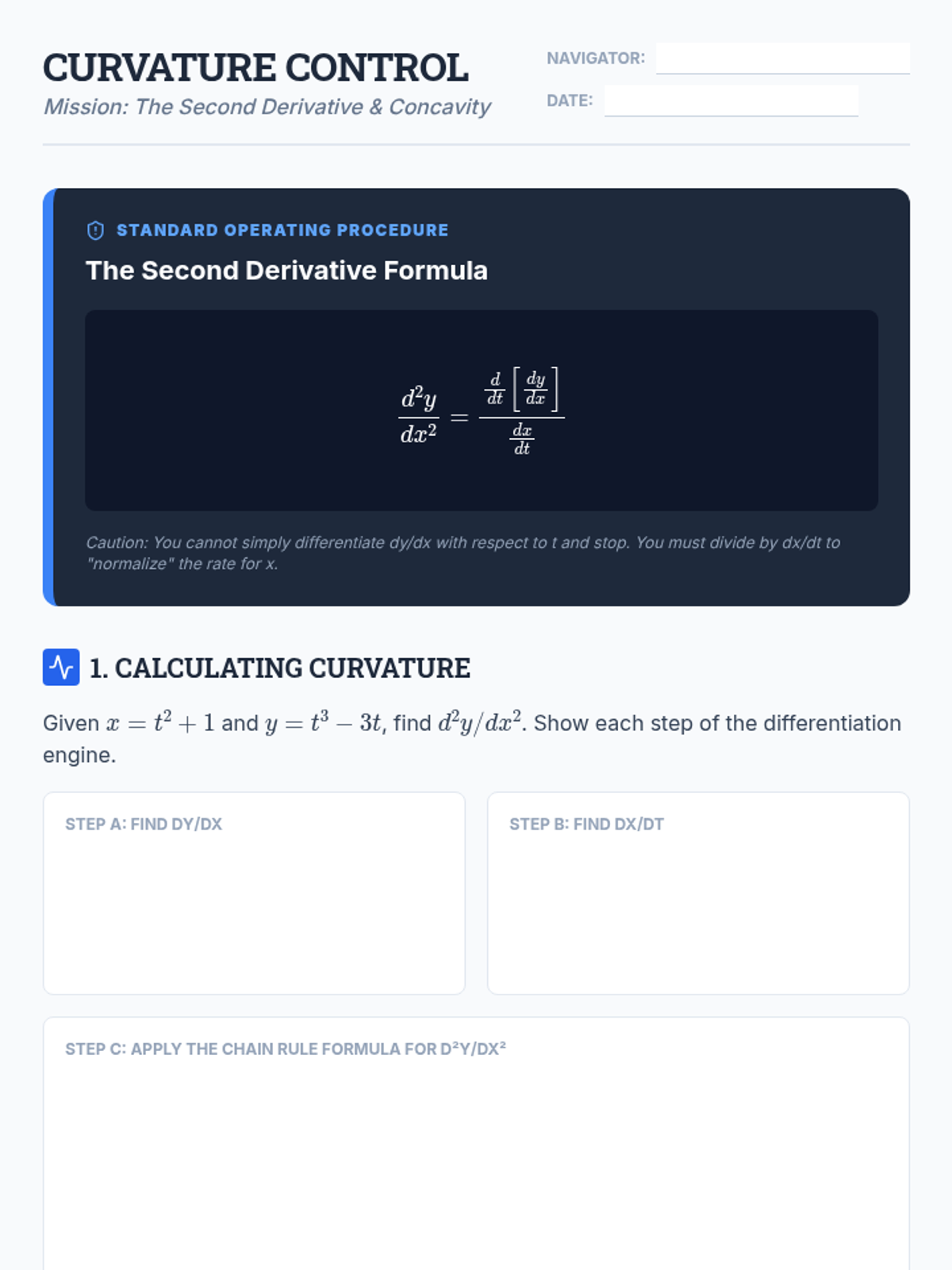
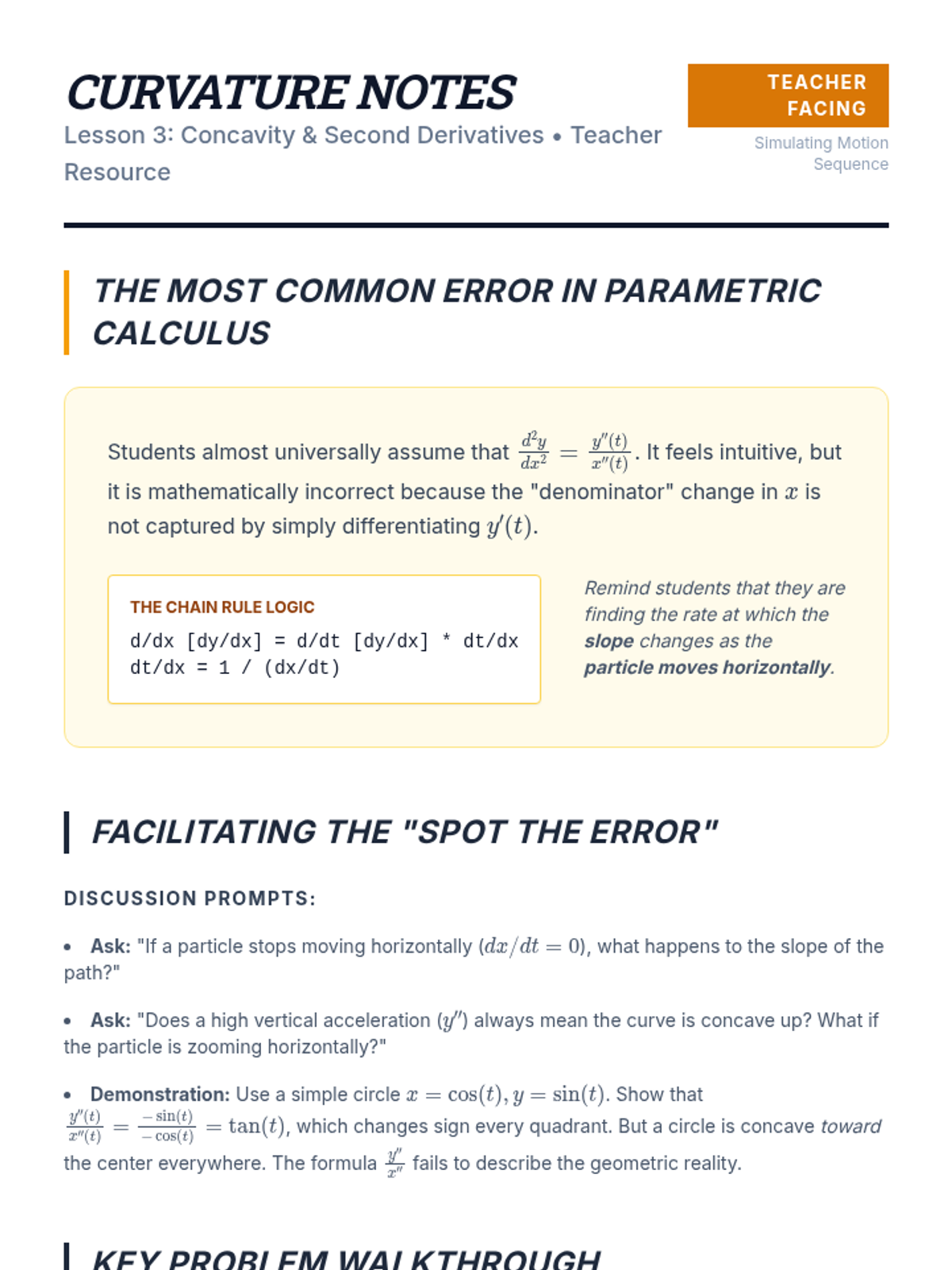
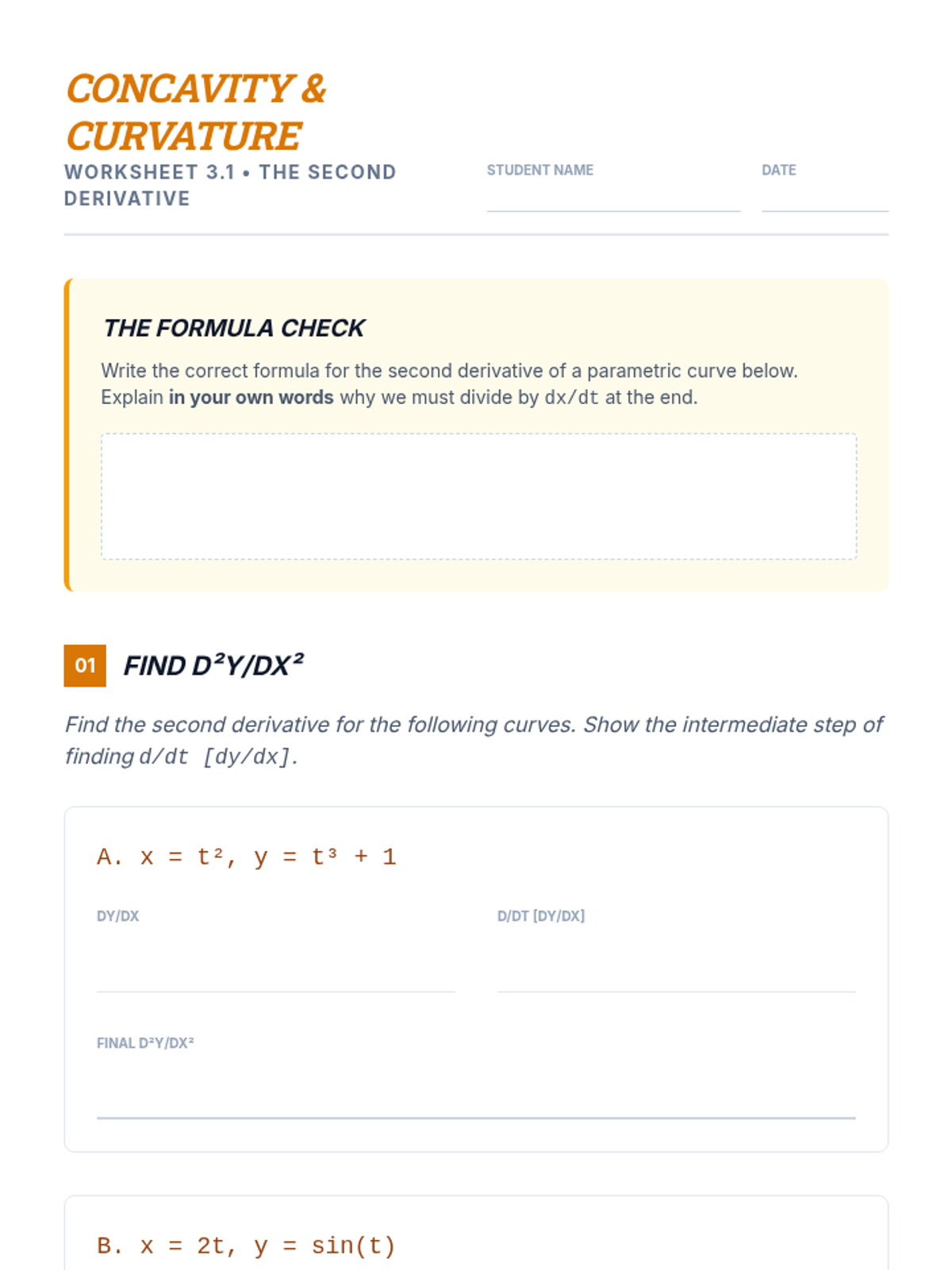
Explores finding second derivatives in parametric form to determine concavity and analyze curve behavior.
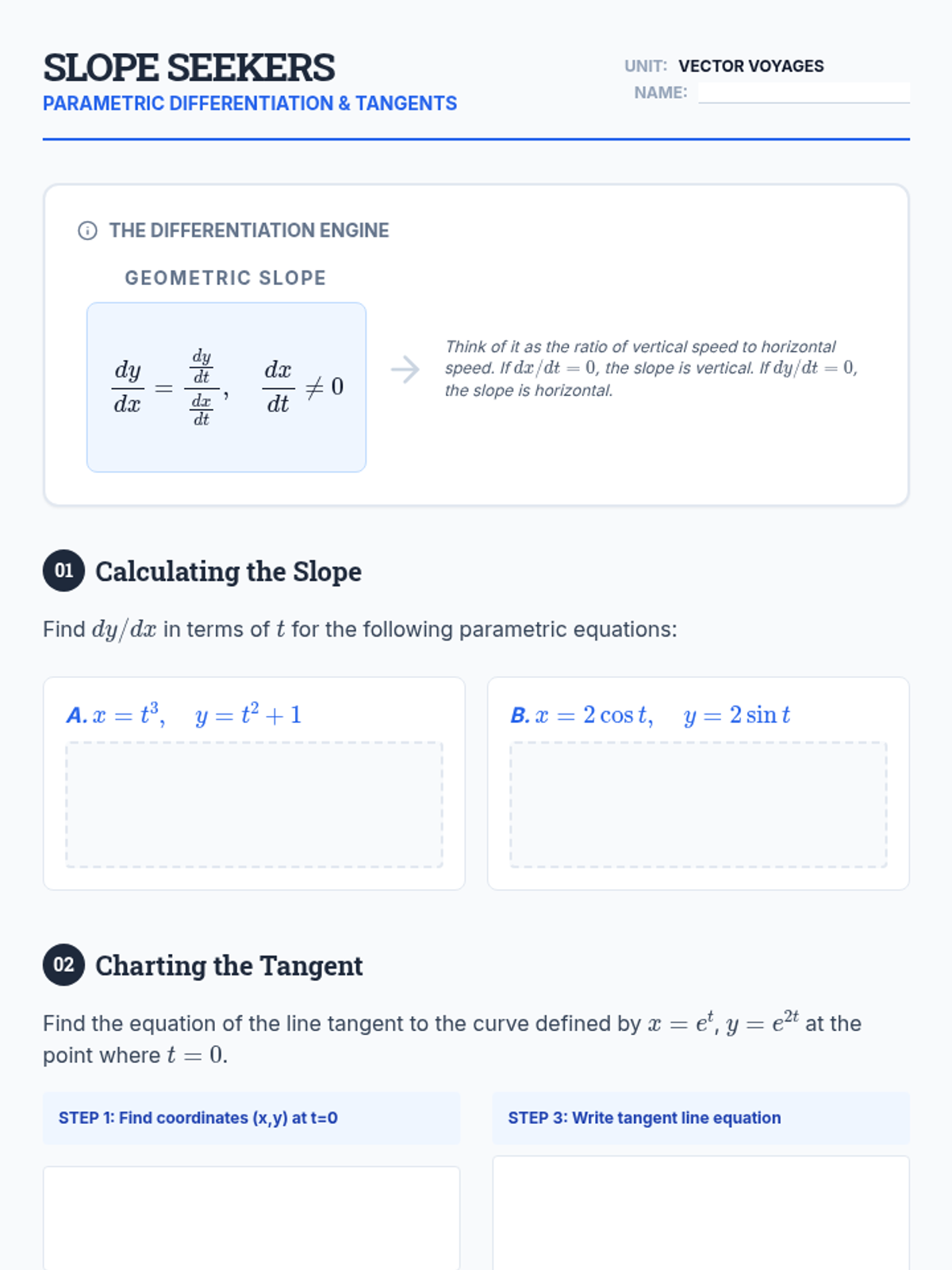
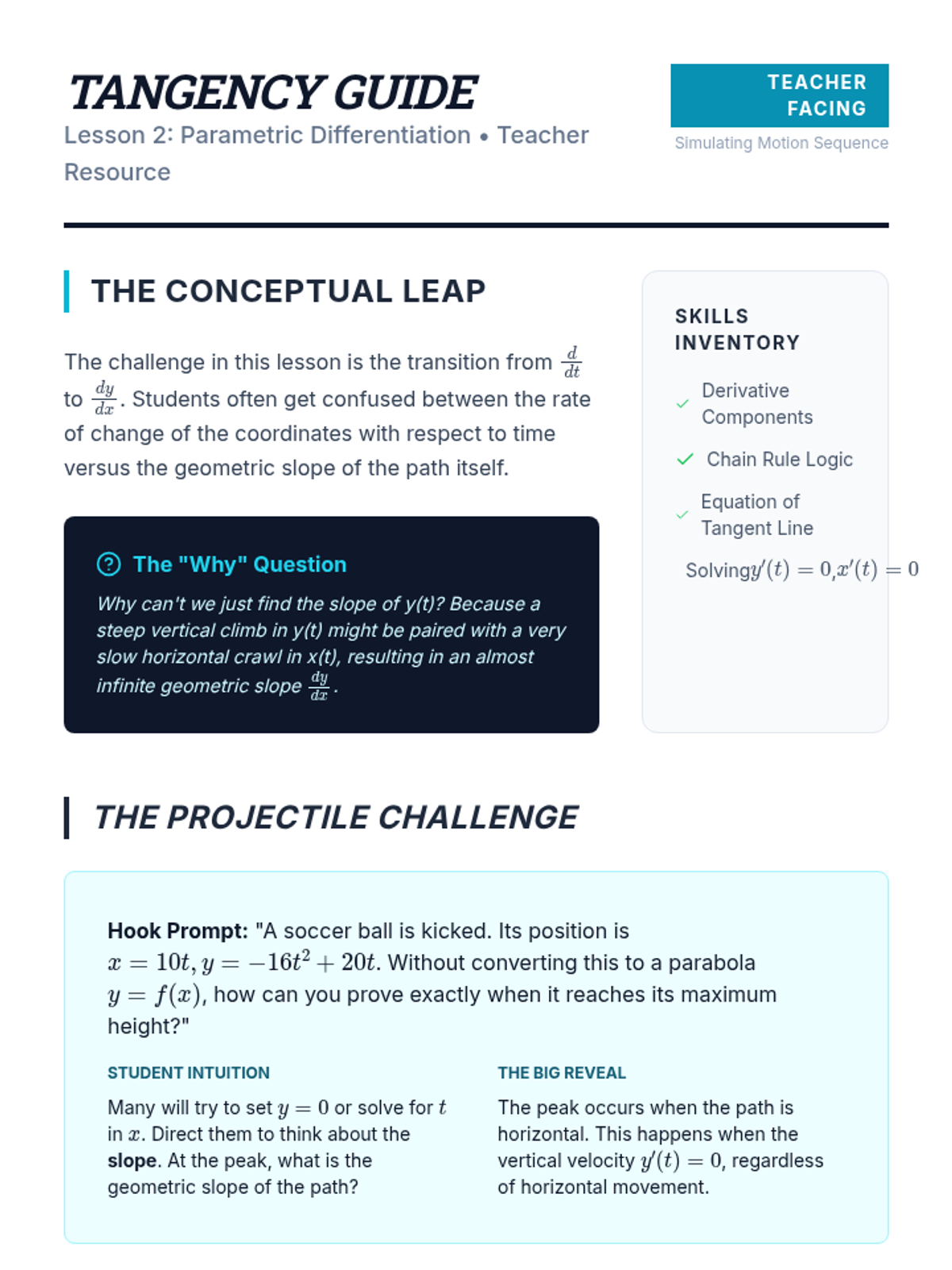
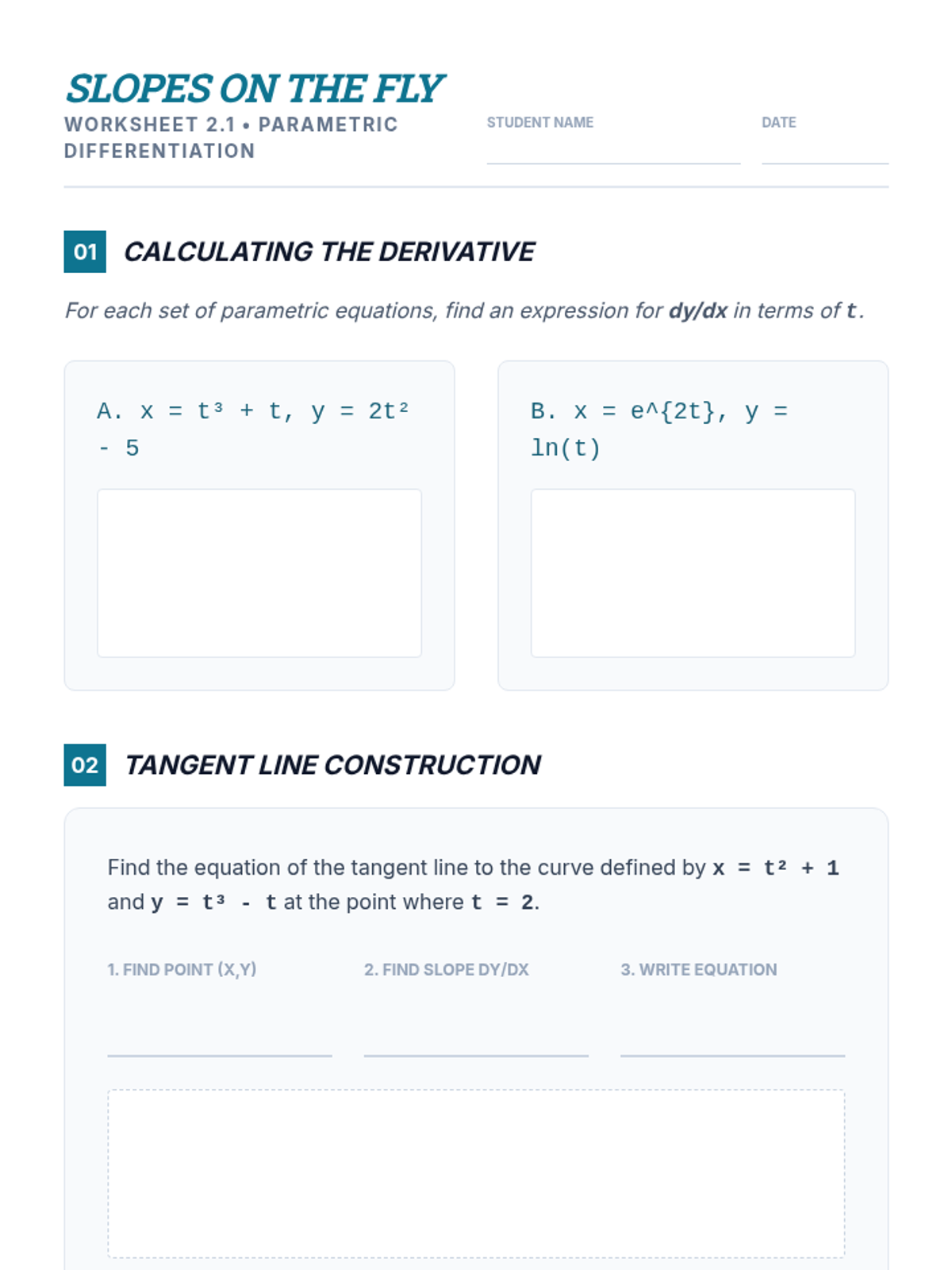
Focuses on calculating dy/dx for parametric curves and finding tangent lines, distinguishing between coordinate rates of change and geometric slope.
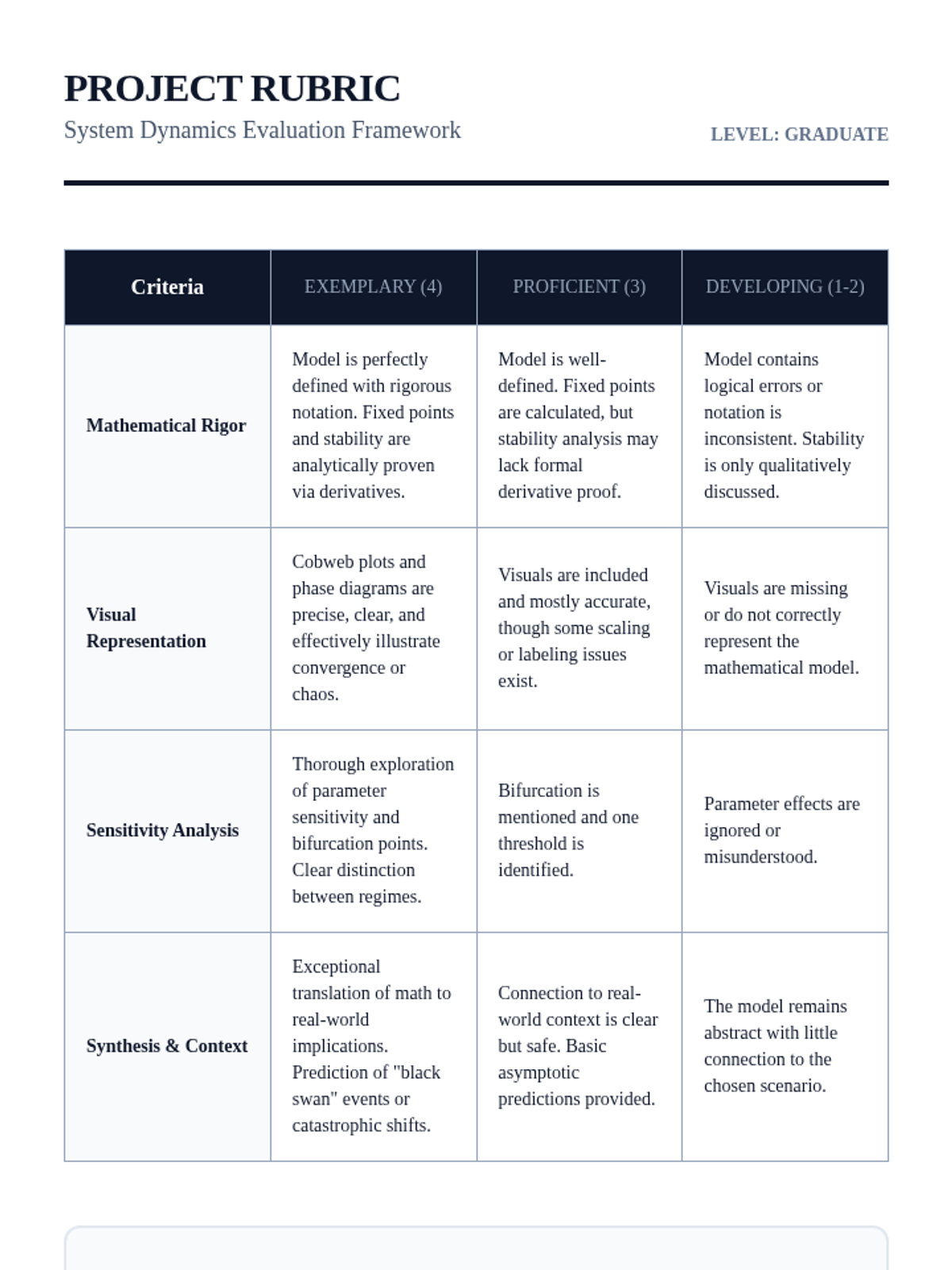
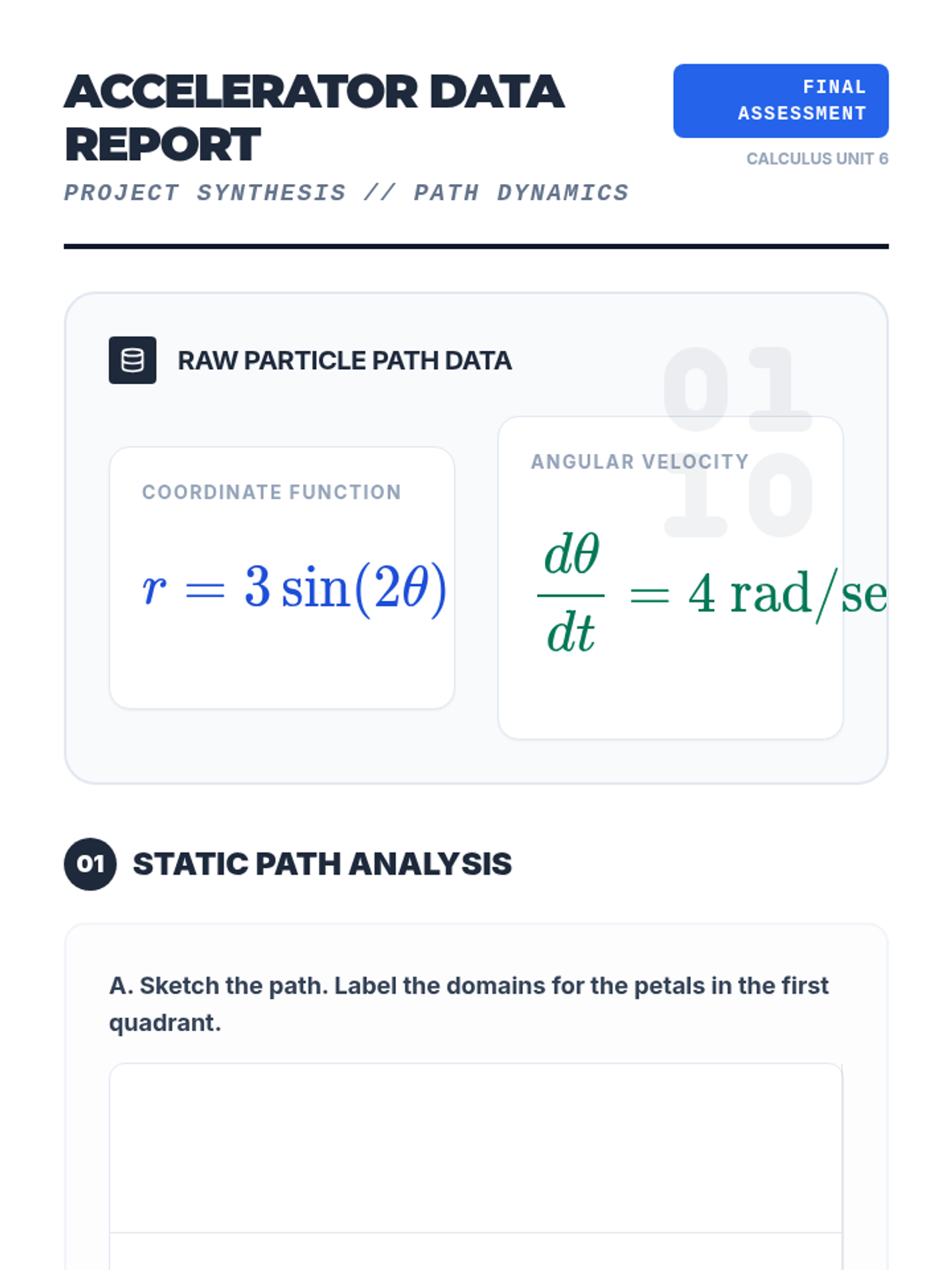
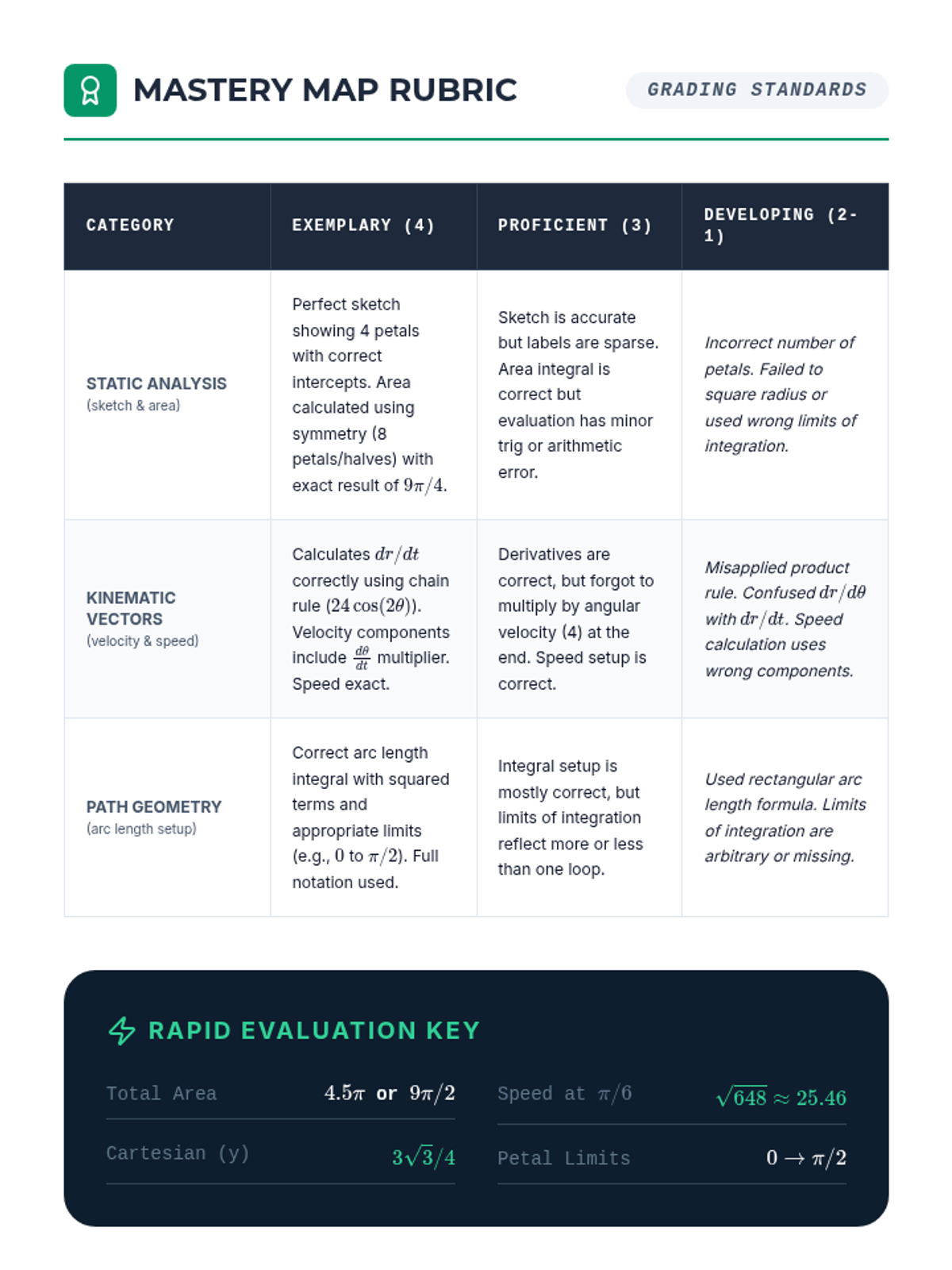
A comprehensive performance task where students analyze a raw data set from a simulated particle accelerator to generate a full kinematic report.
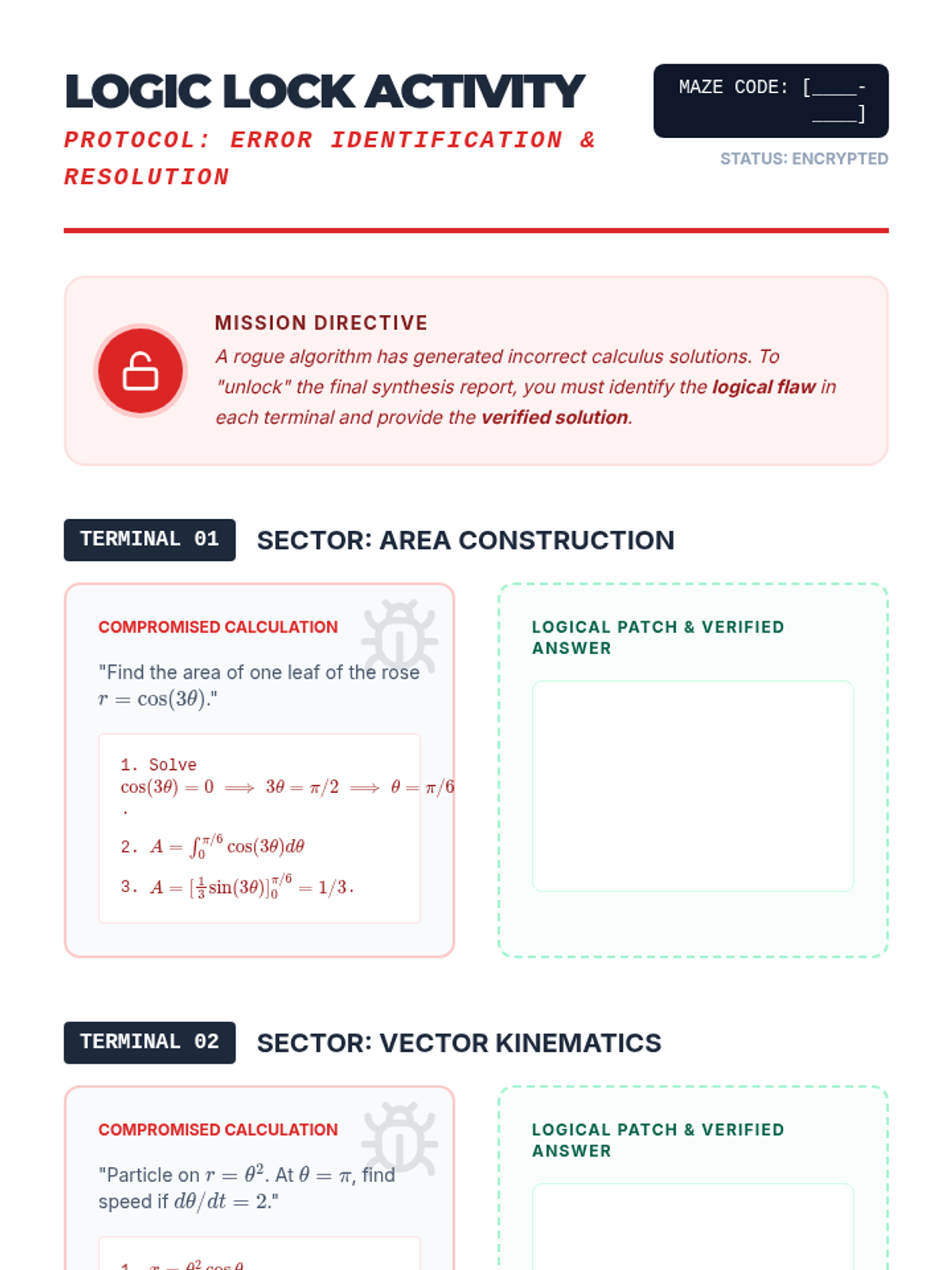
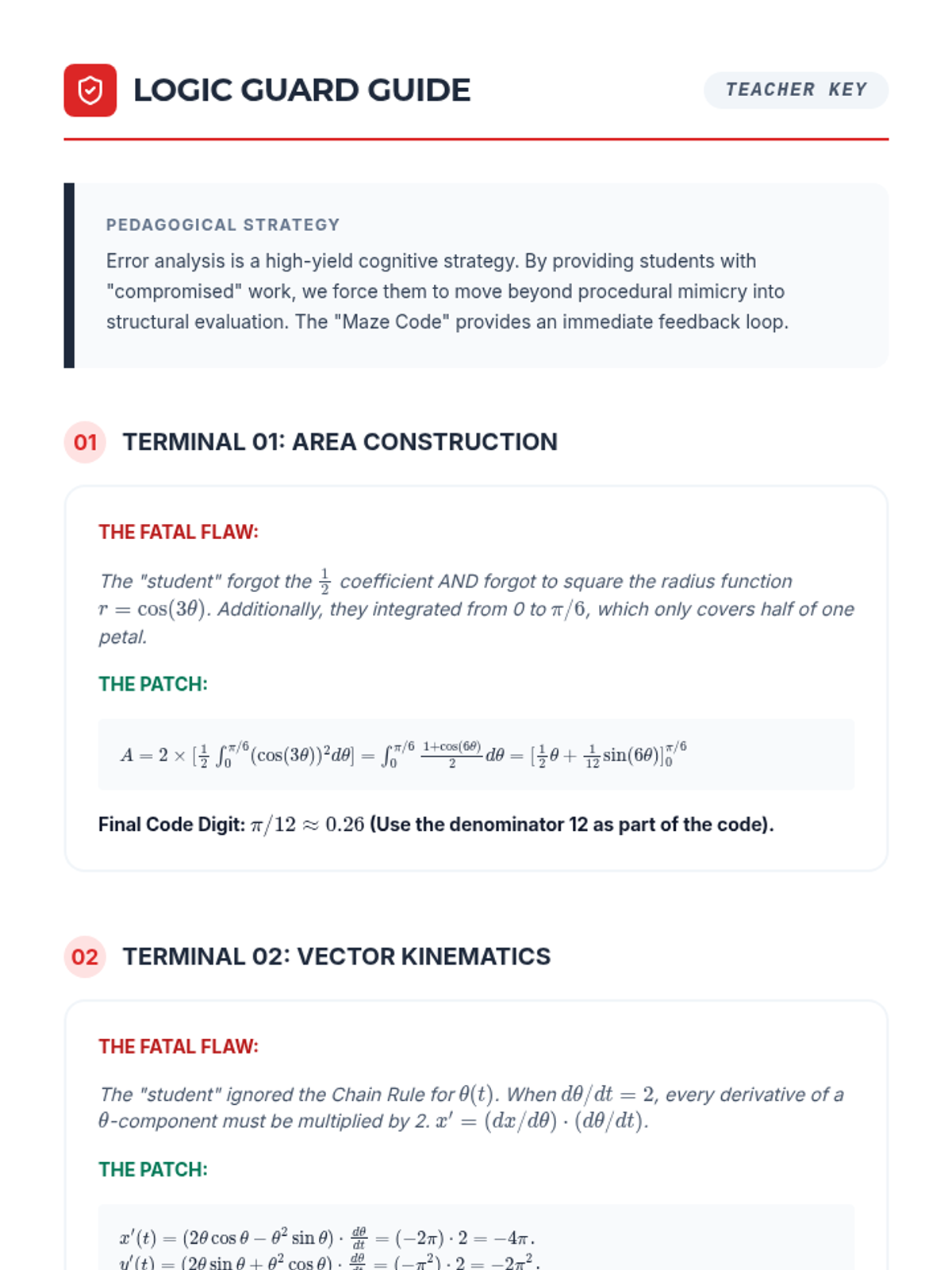
Students critique sample calculus work to identify and correct common misconceptions in limits of integration, derivative rules, and coordinate conversions.
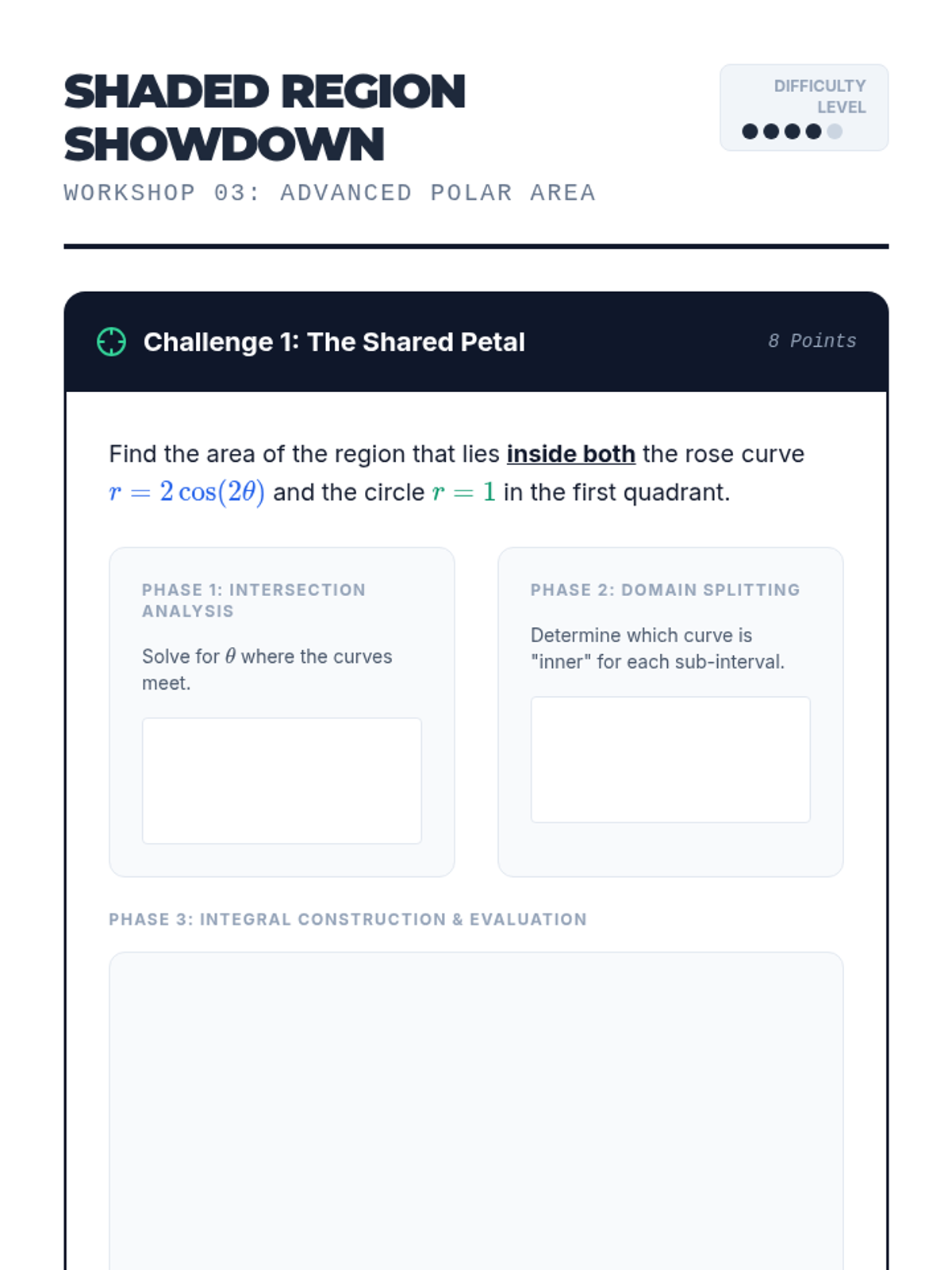
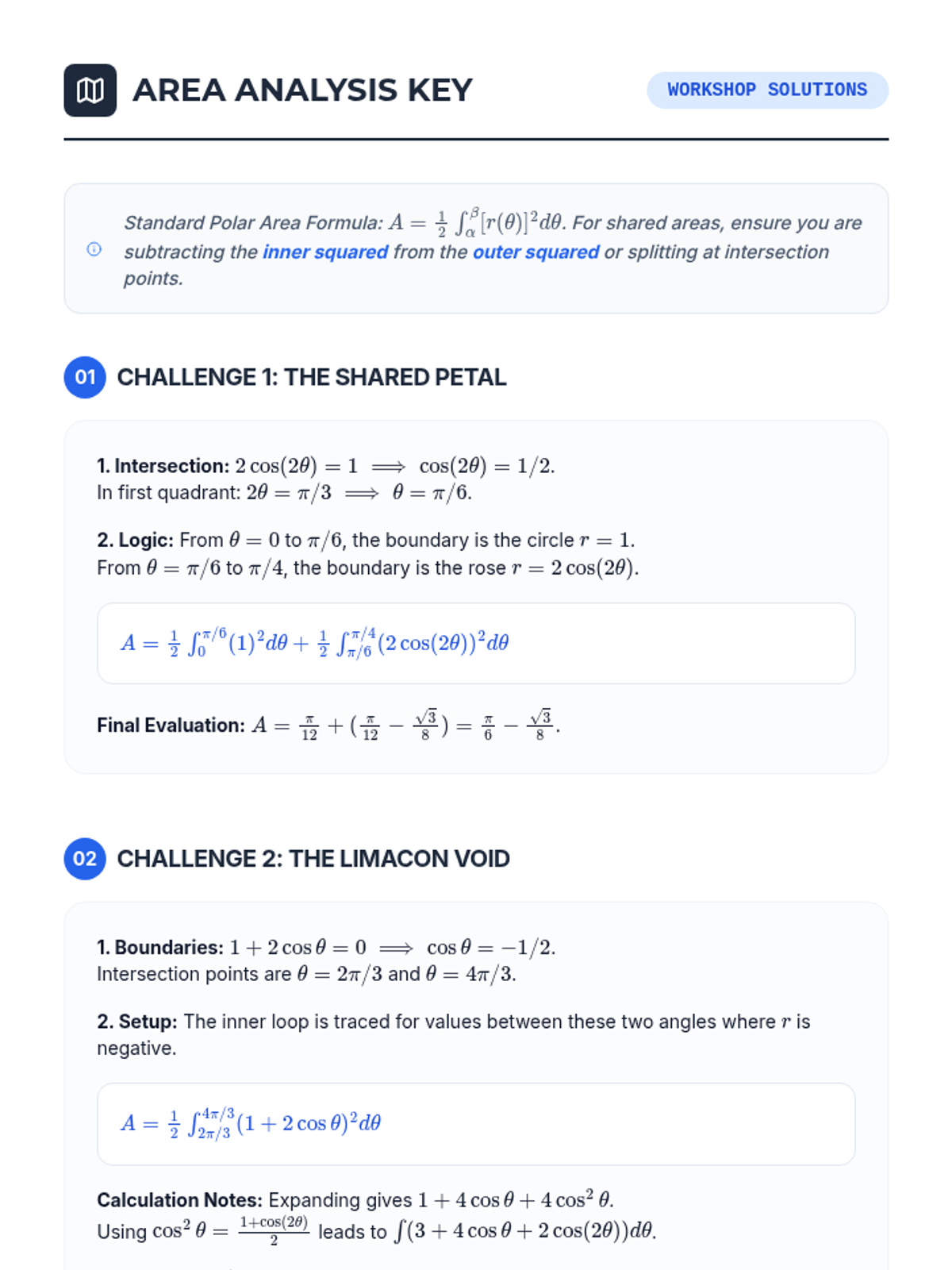
A workshop focused on finding areas of overlapping polar curves and managing regions with multiple intersections or negative r-values.
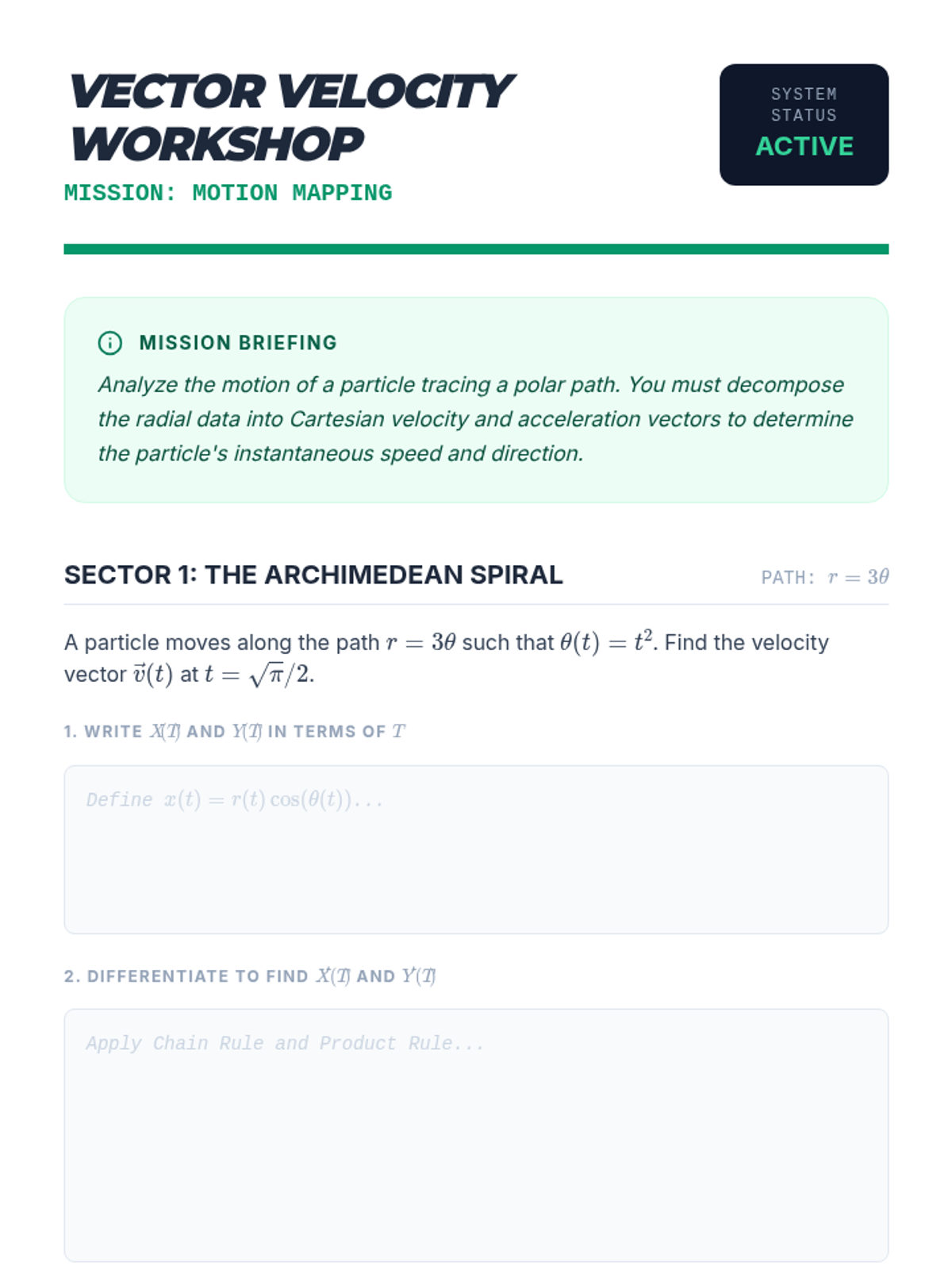
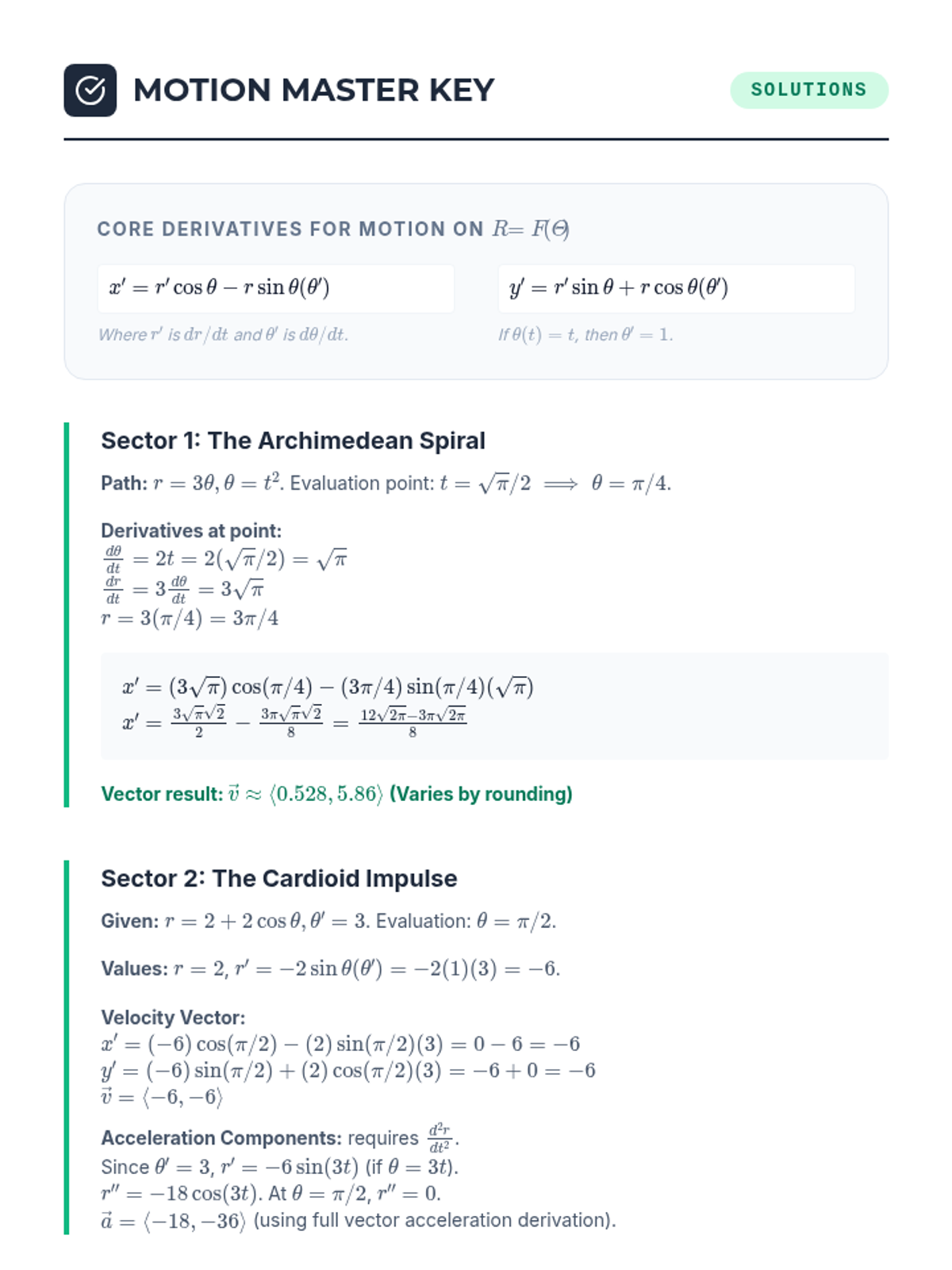
An investigation into motion along polar curves, converting polar paths into parametric velocity and acceleration vectors to analyze particle movement.
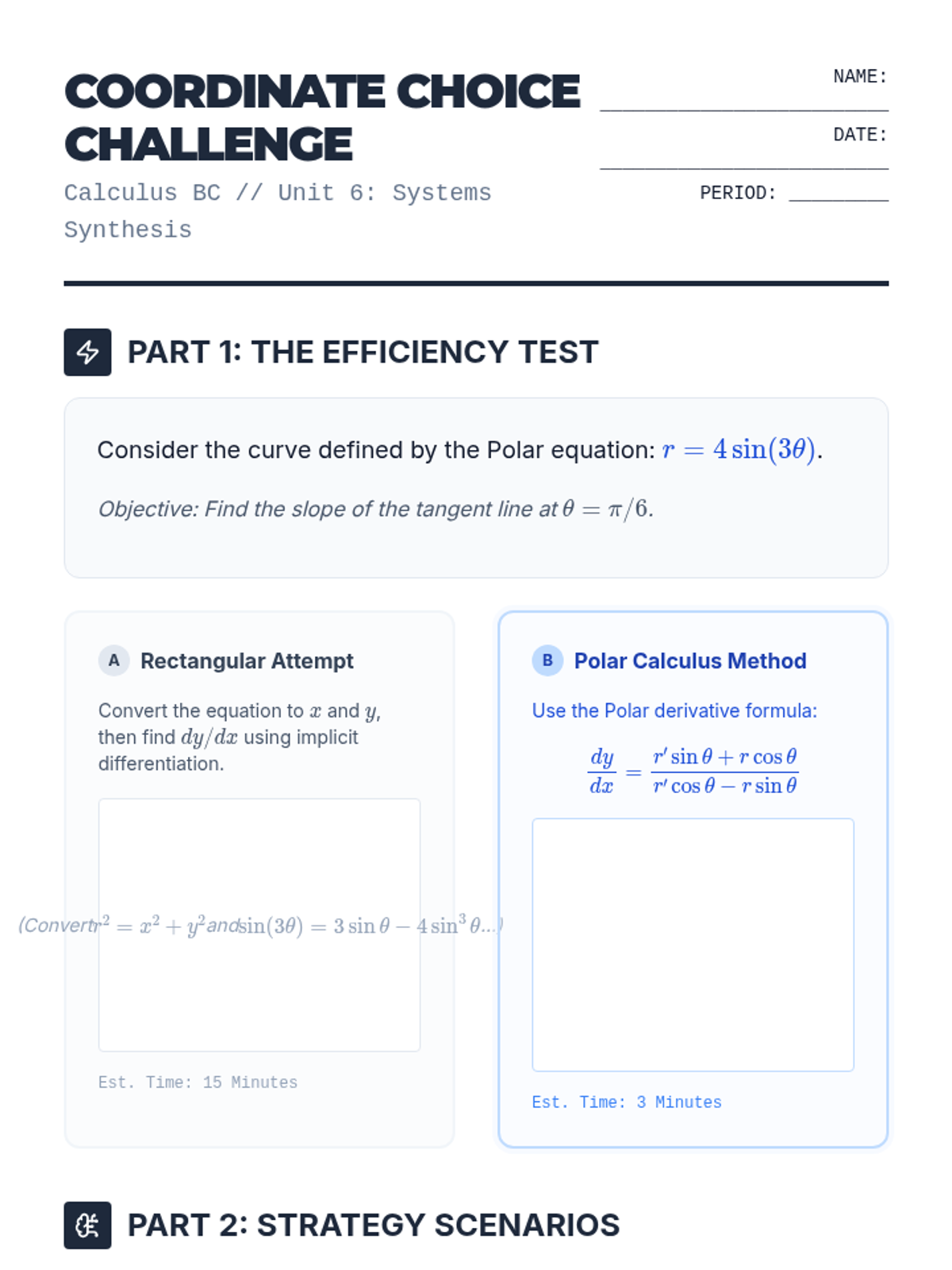
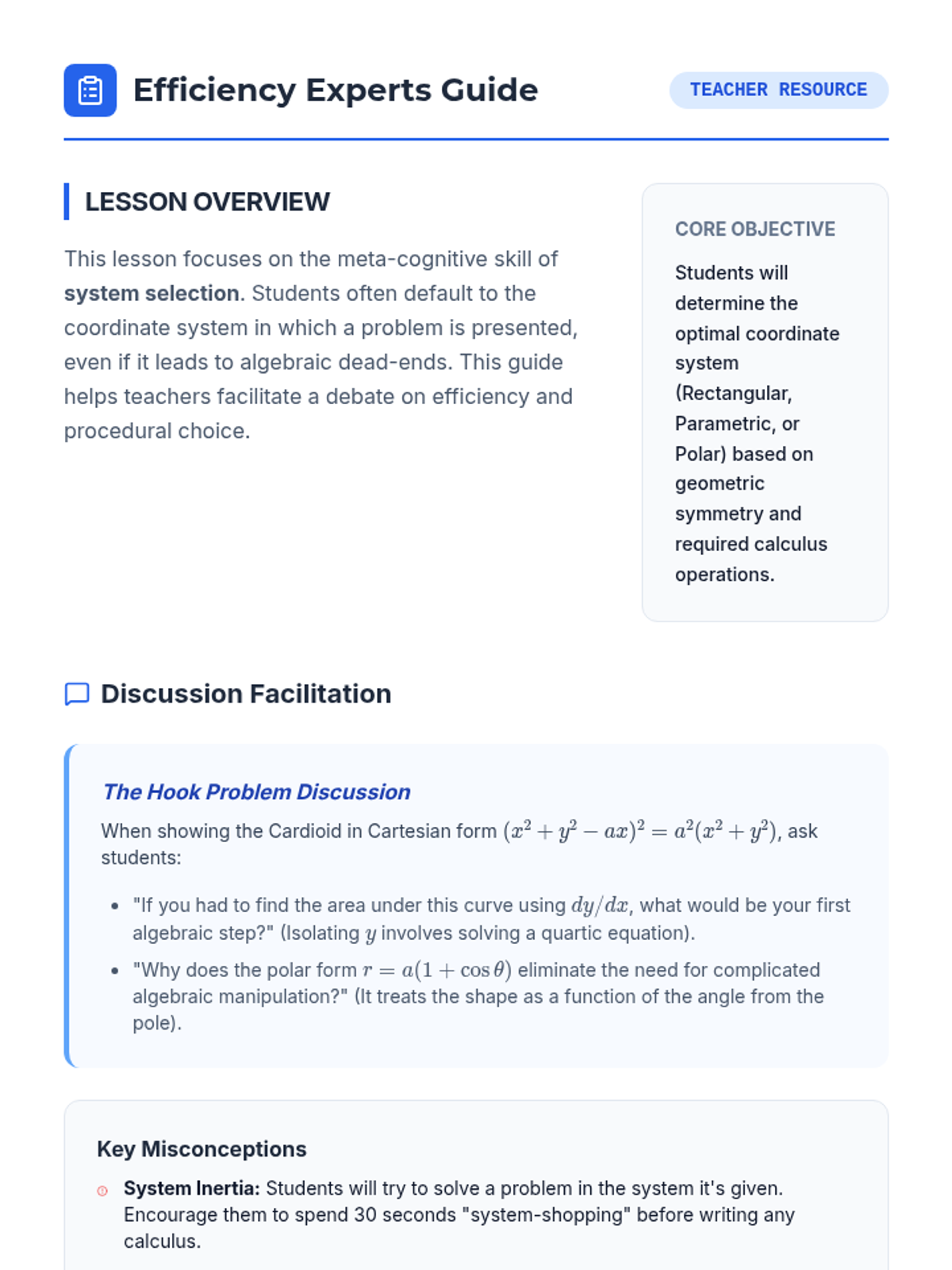
Students evaluate the efficiency of rectangular, parametric, and polar methods for various geometric problems, emphasizing when to switch systems for algebraic simplicity.
Students derive and apply the arc length formula for parametric curves. They distinguish between displacement and total distance traveled along a curve.
Integrating physics concepts, students treat parametric equations as vector-valued functions. They calculate velocity and acceleration vectors, determine speed, and interpret direction.
Students tackle the complex derivation of the second derivative for parametric equations. The lesson focuses on avoiding common misconceptions and using concavity to analyze curvature.
This lesson establishes the chain rule application required to find dy/dx given x(t) and y(t). Students calculate the slope of tangent lines and identify points of horizontal and vertical tangency.
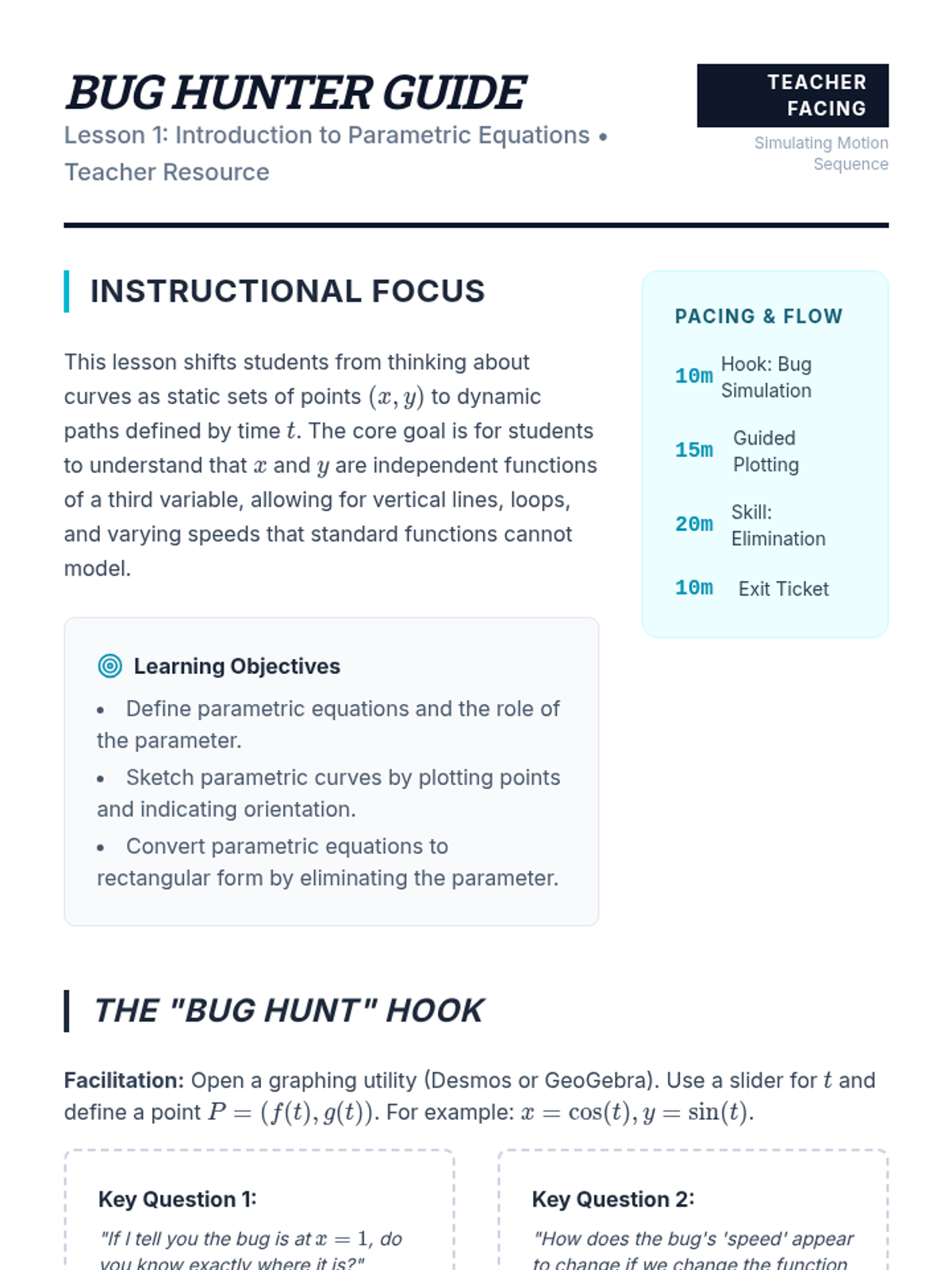
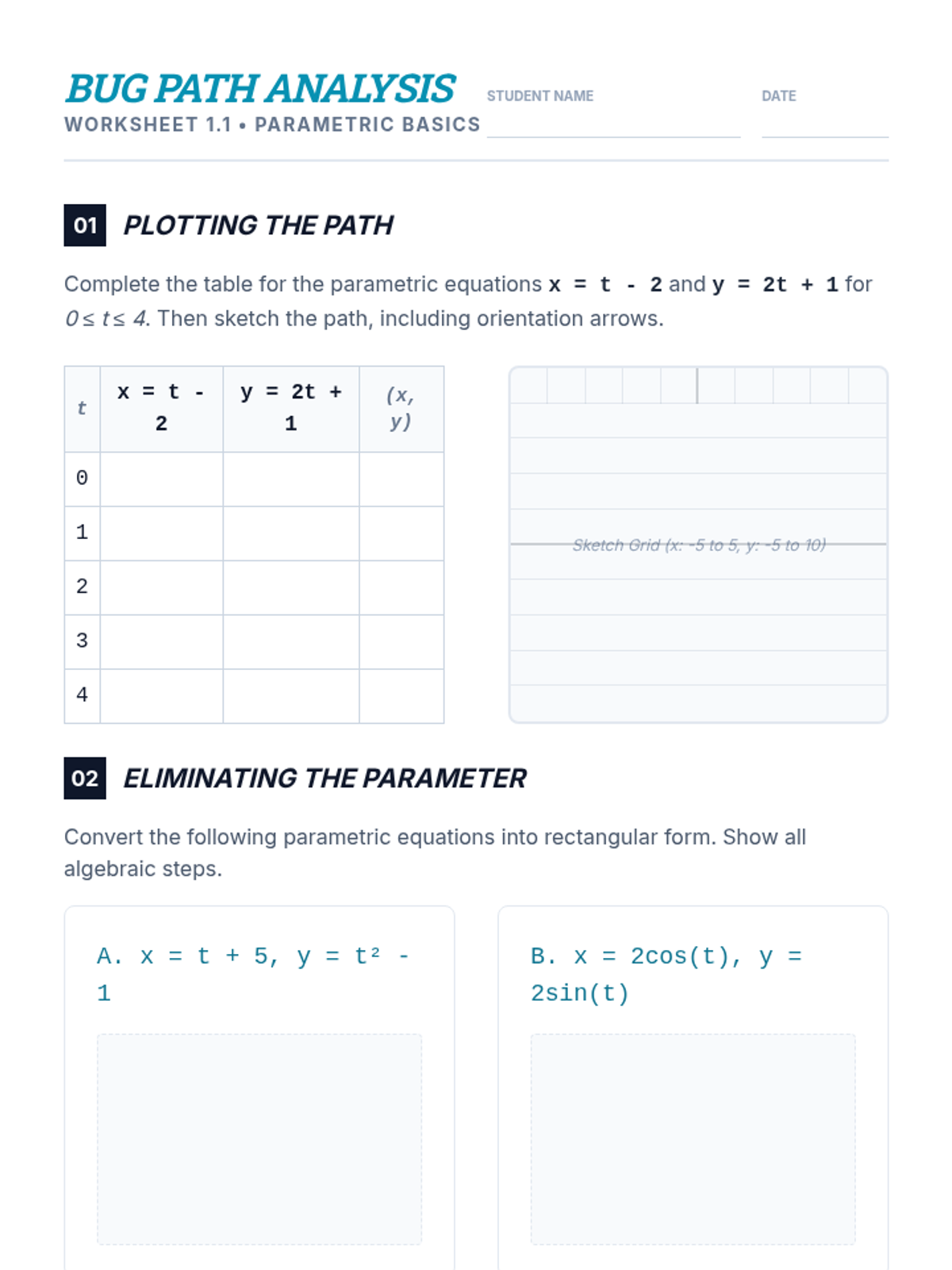
Students explore the definition of parametric equations by manually plotting points based on a parameter 't'. They practice eliminating the parameter to convert parametric equations into rectangular form.