Vocabulary, grammar, and cultural contexts for Spanish language acquisition across all proficiency levels. Develops skills in reading, writing, speaking, and listening through structured linguistic analysis and practice.
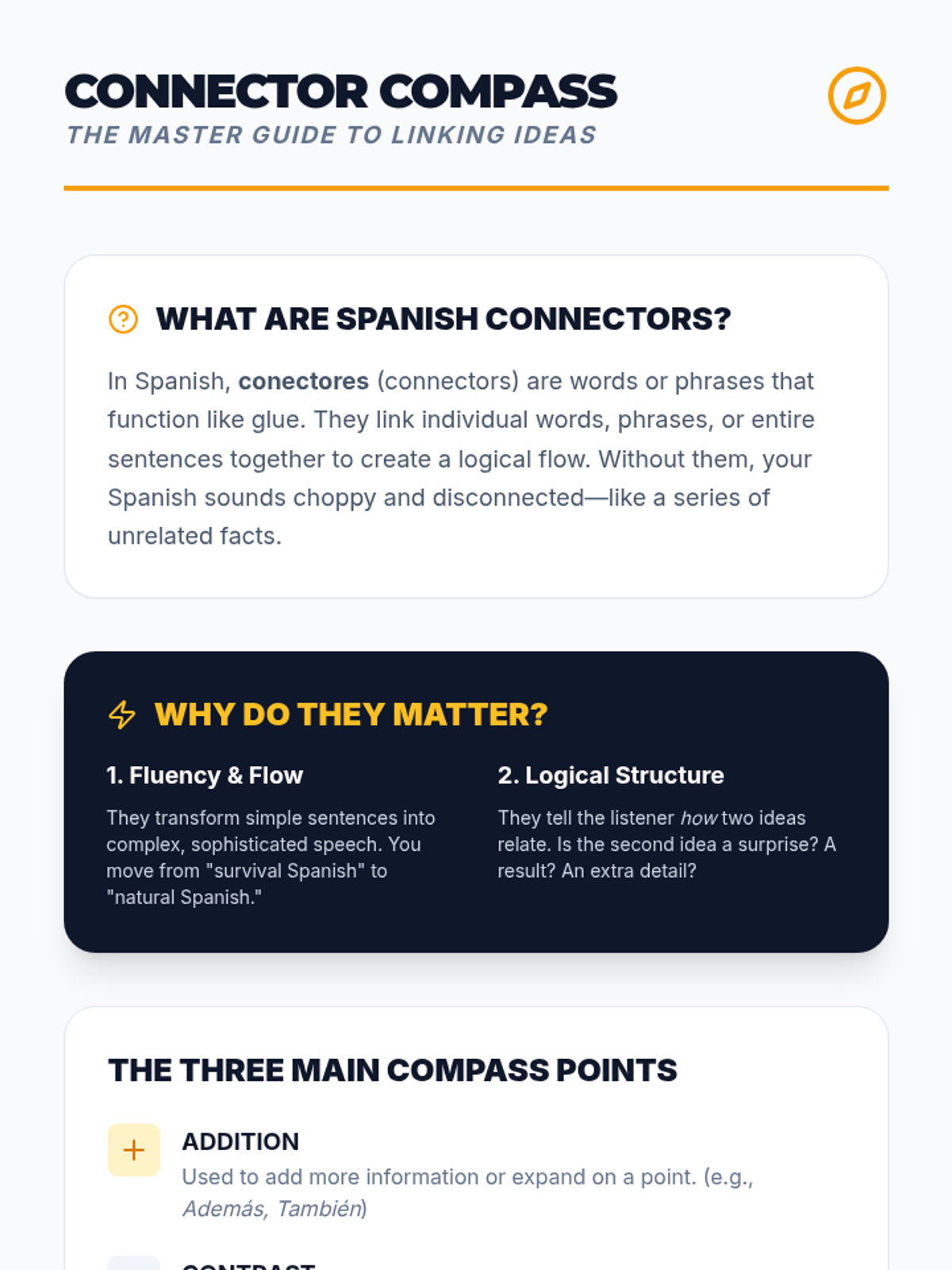
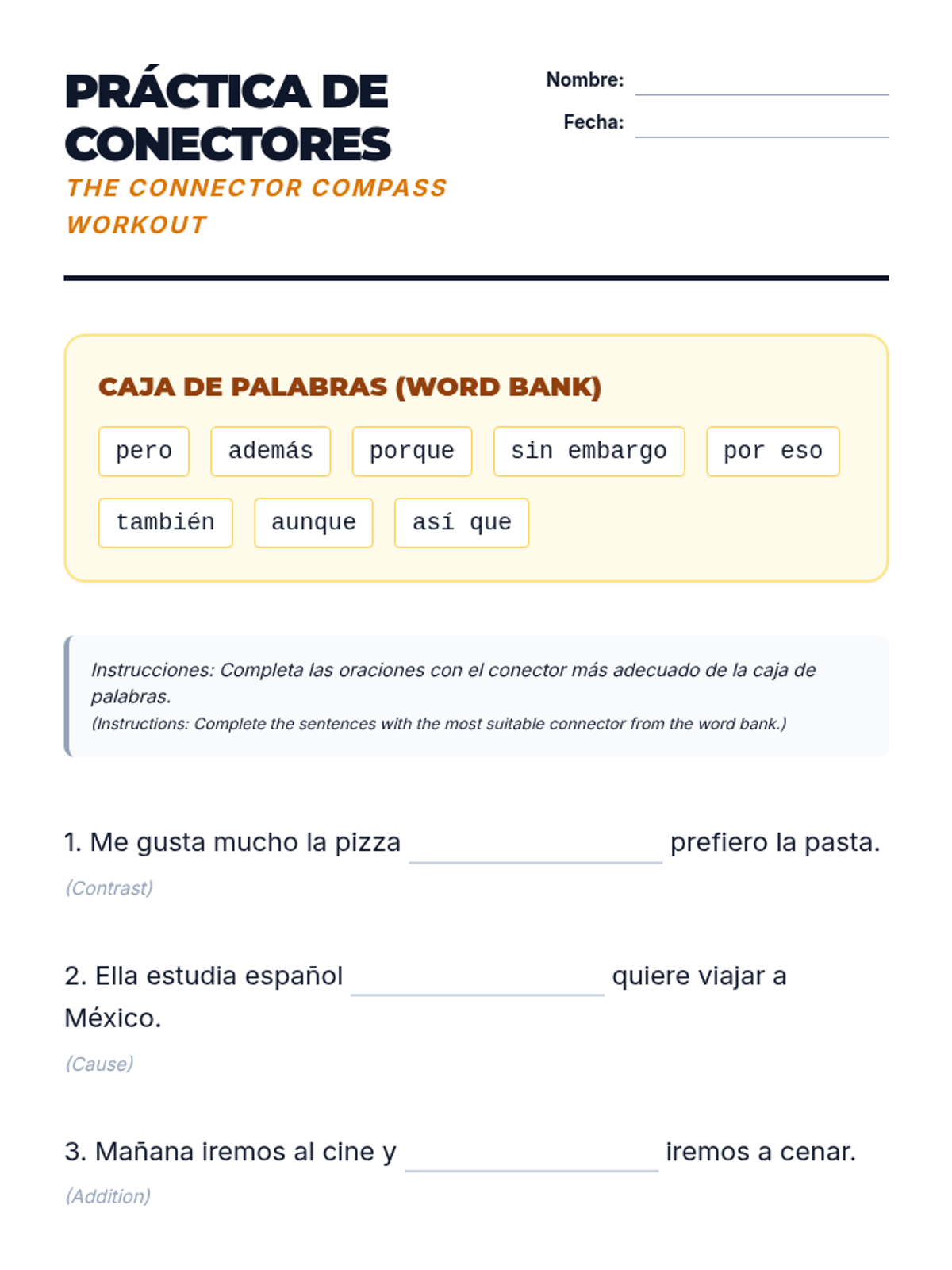
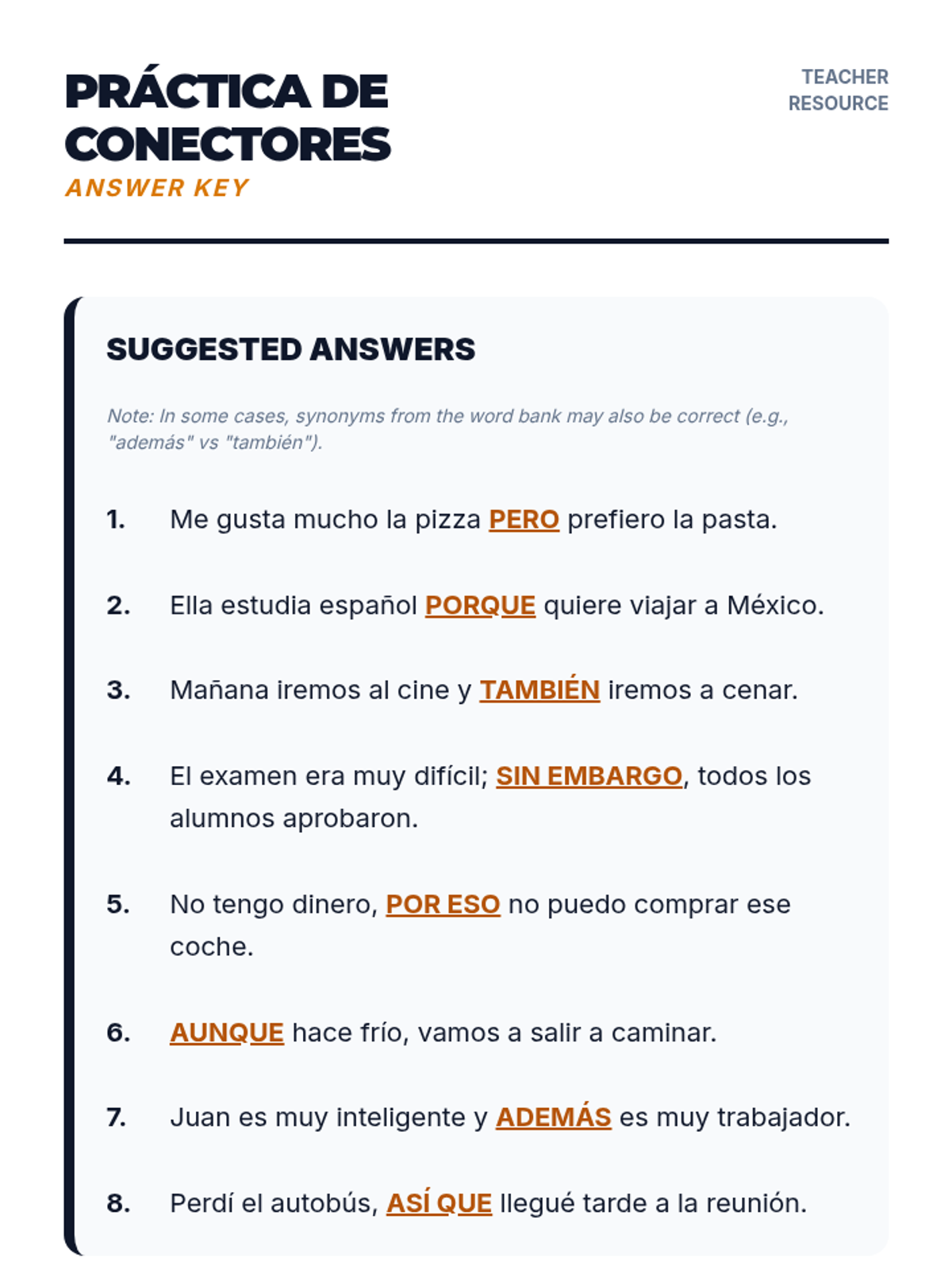
An introduction to essential Spanish conjunctions and transition words to improve sentence structure and narrative flow.
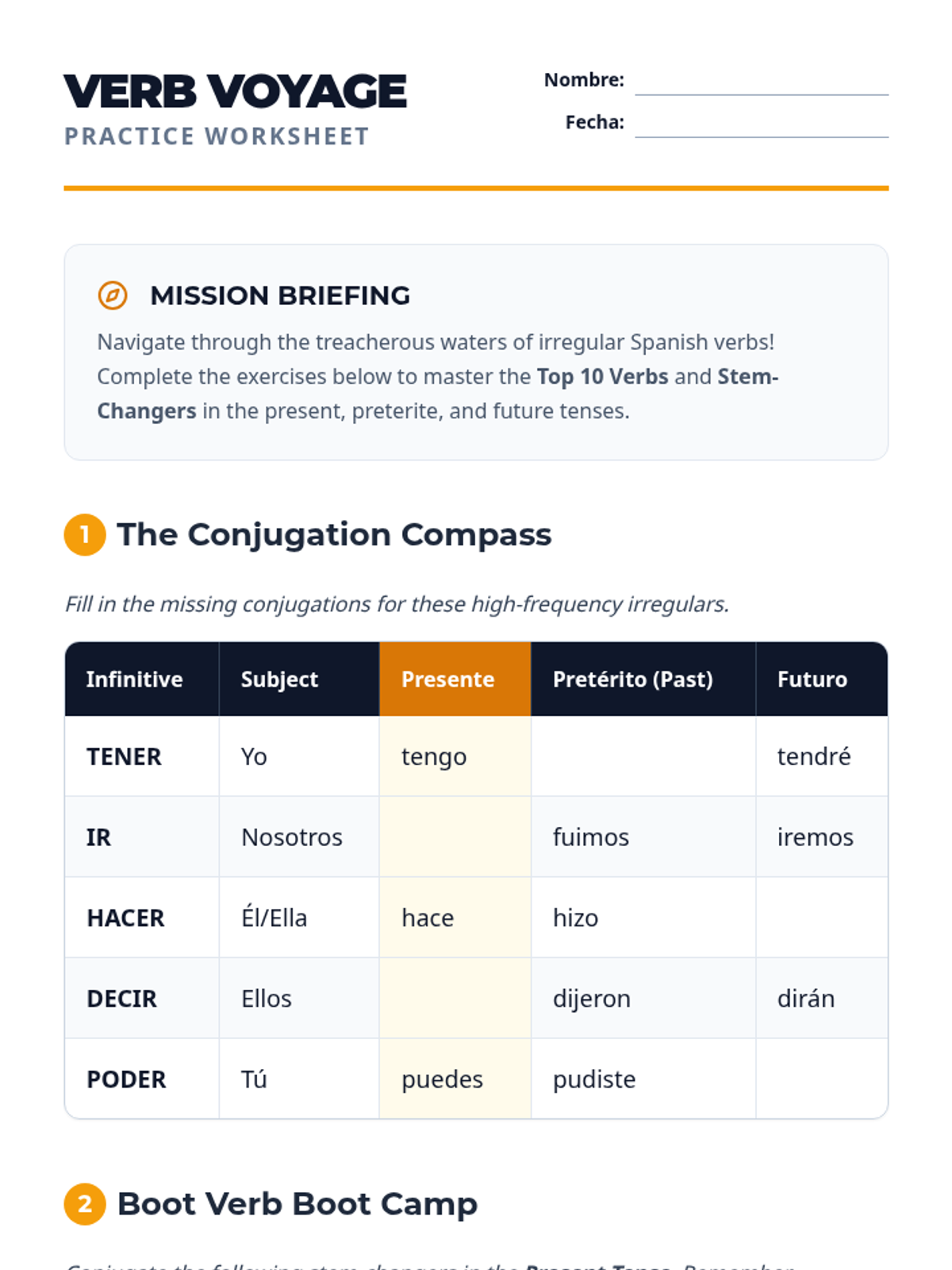
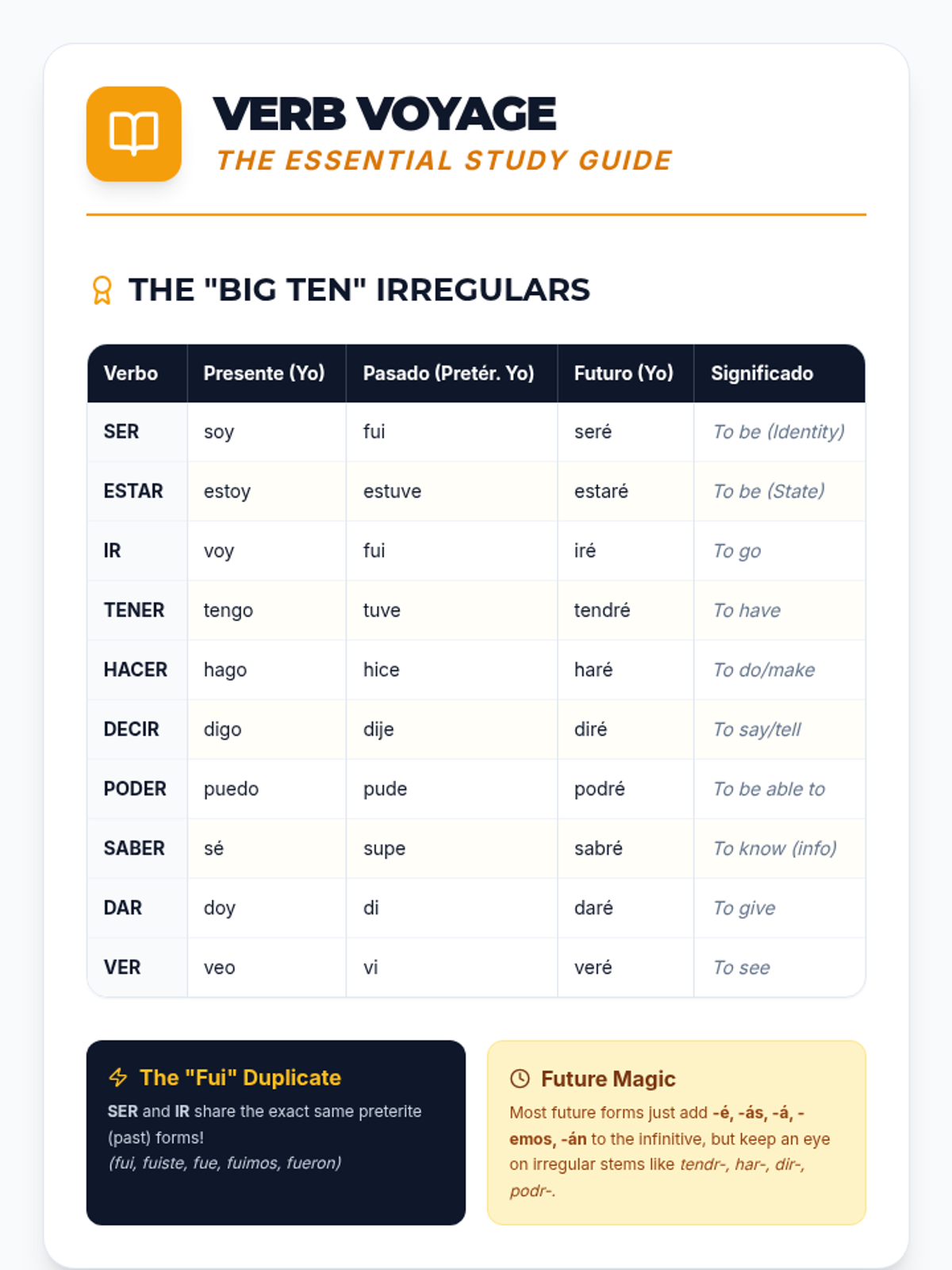
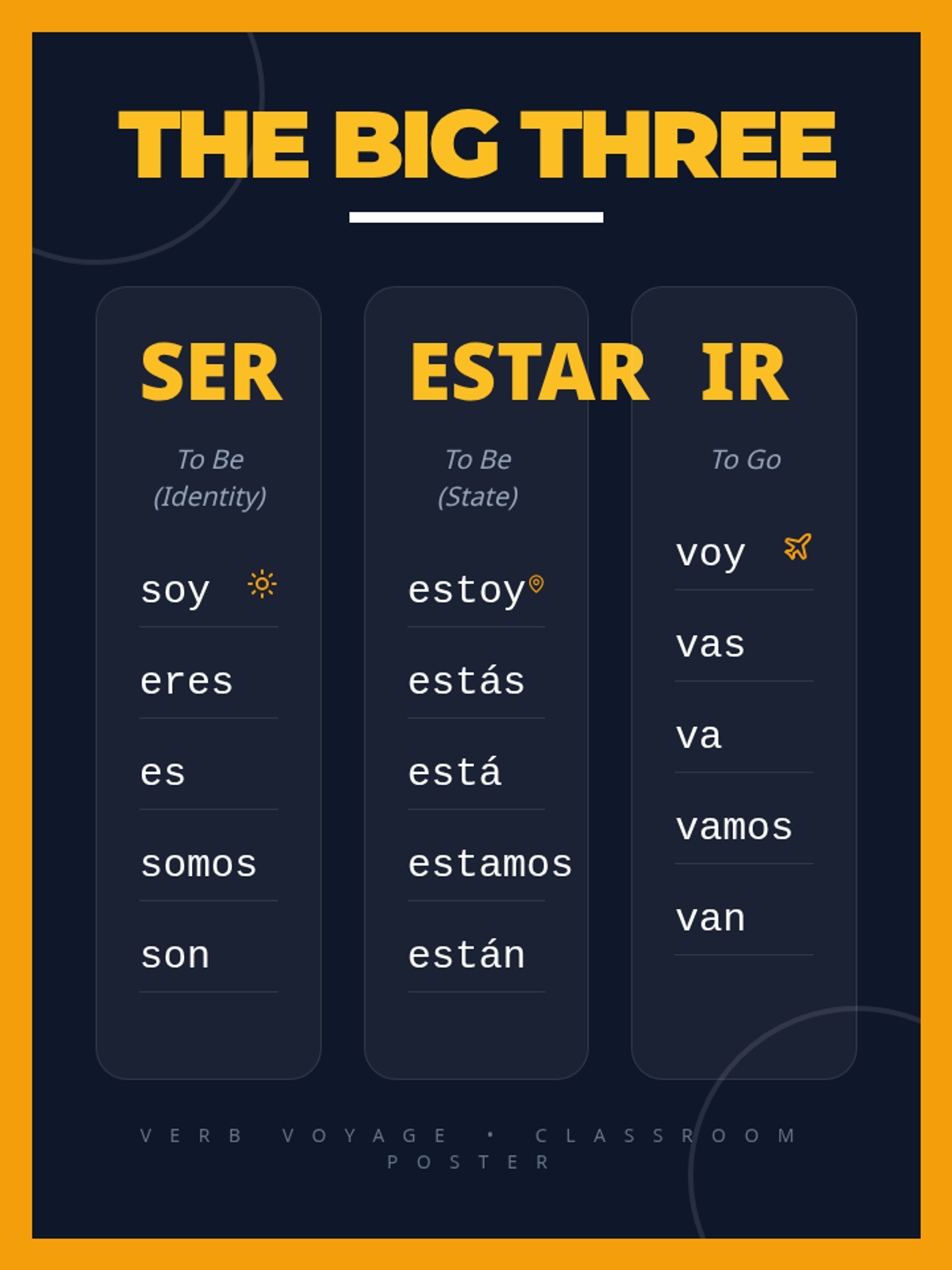
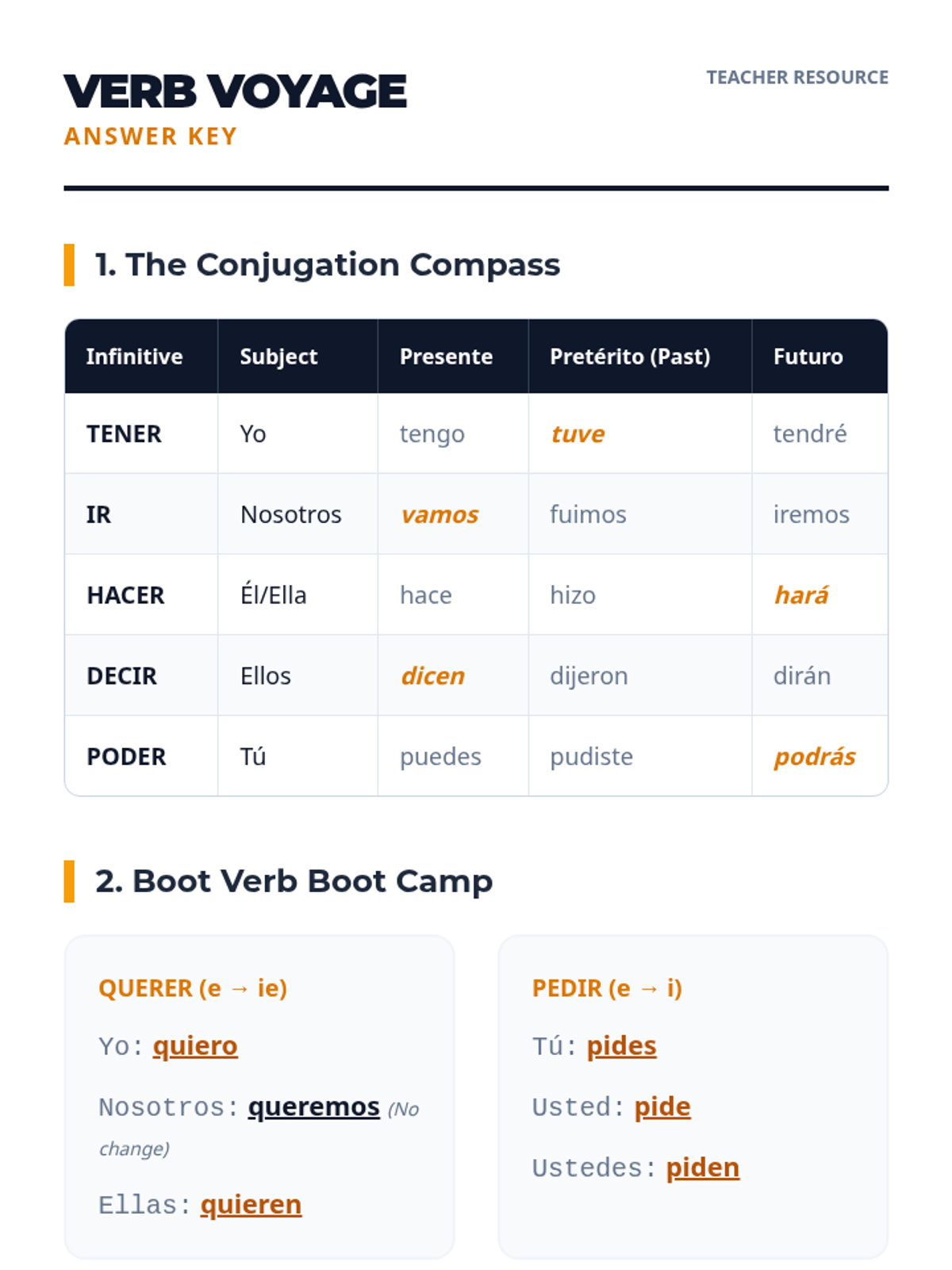
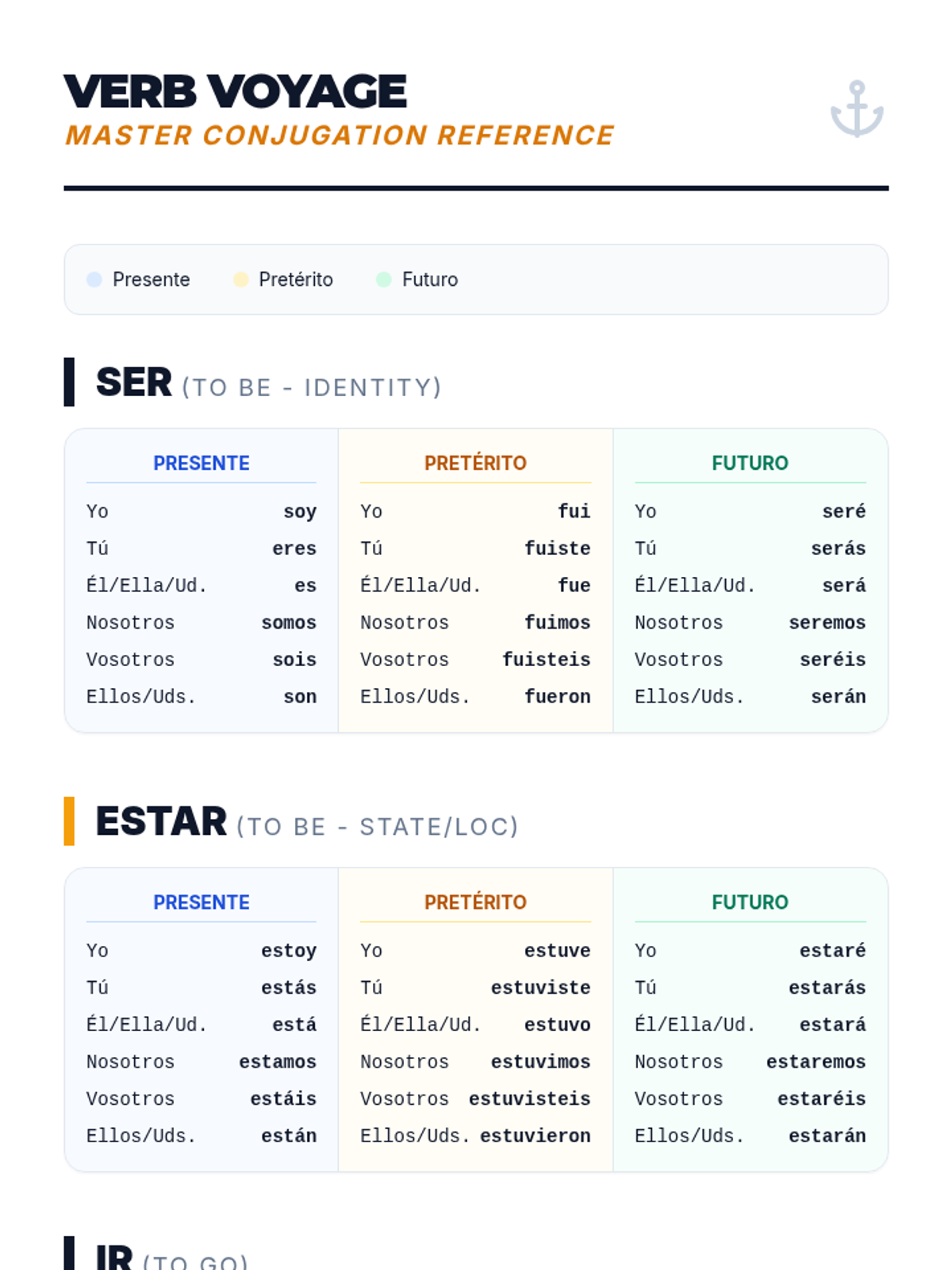
A comprehensive introduction to the most frequent irregular verbs in Spanish across present, preterite, and future tenses, including stem-changers.
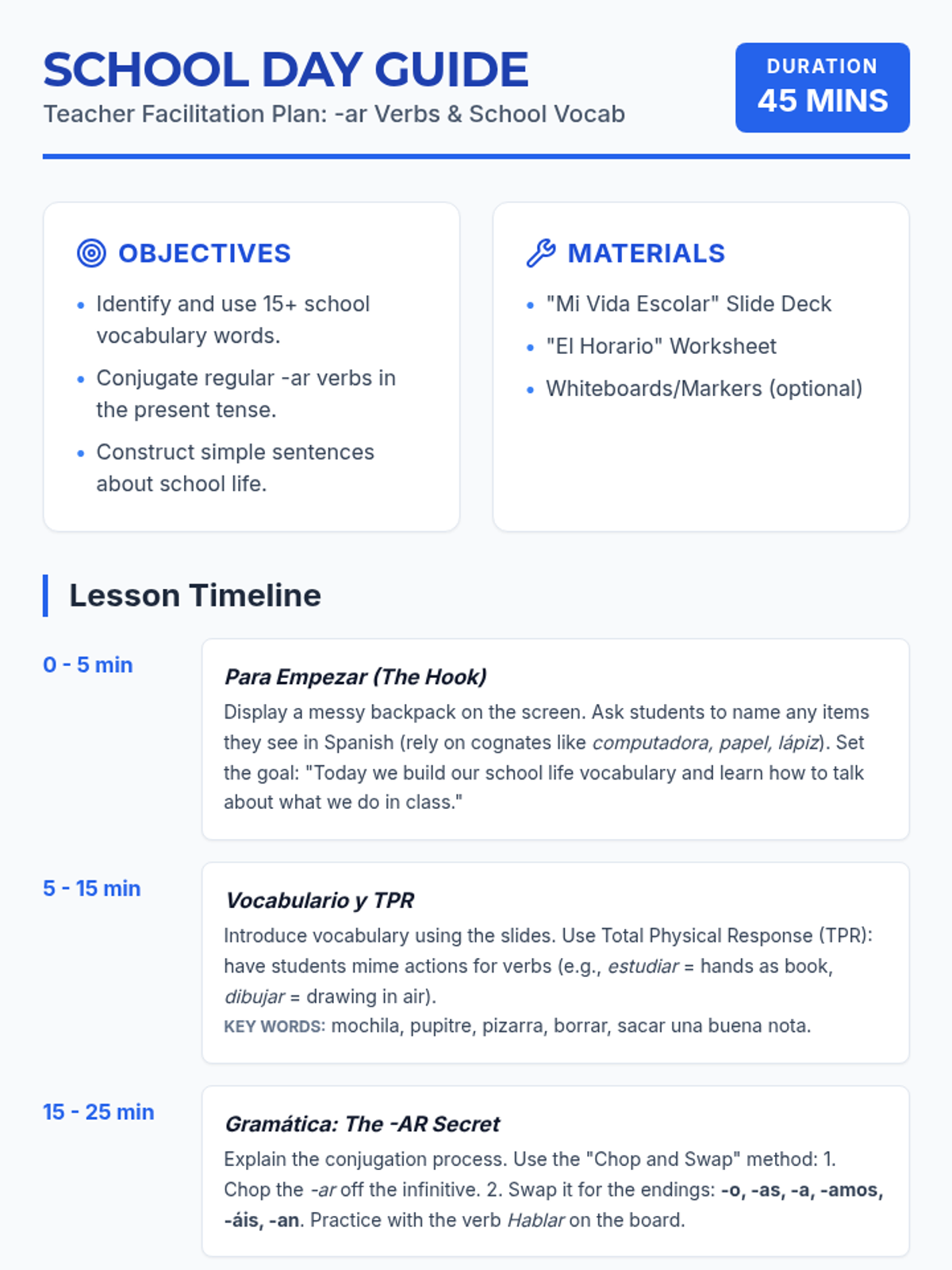
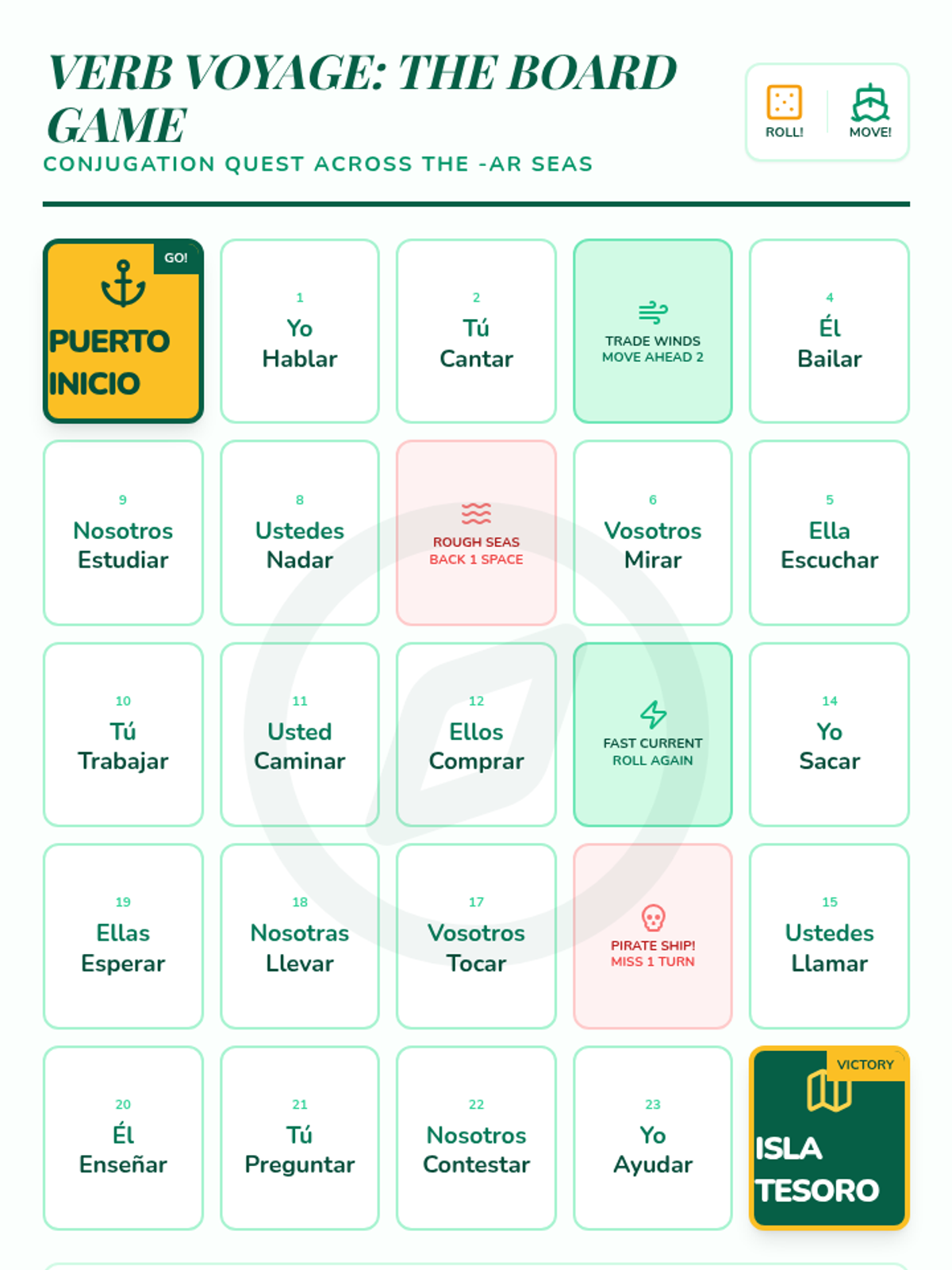
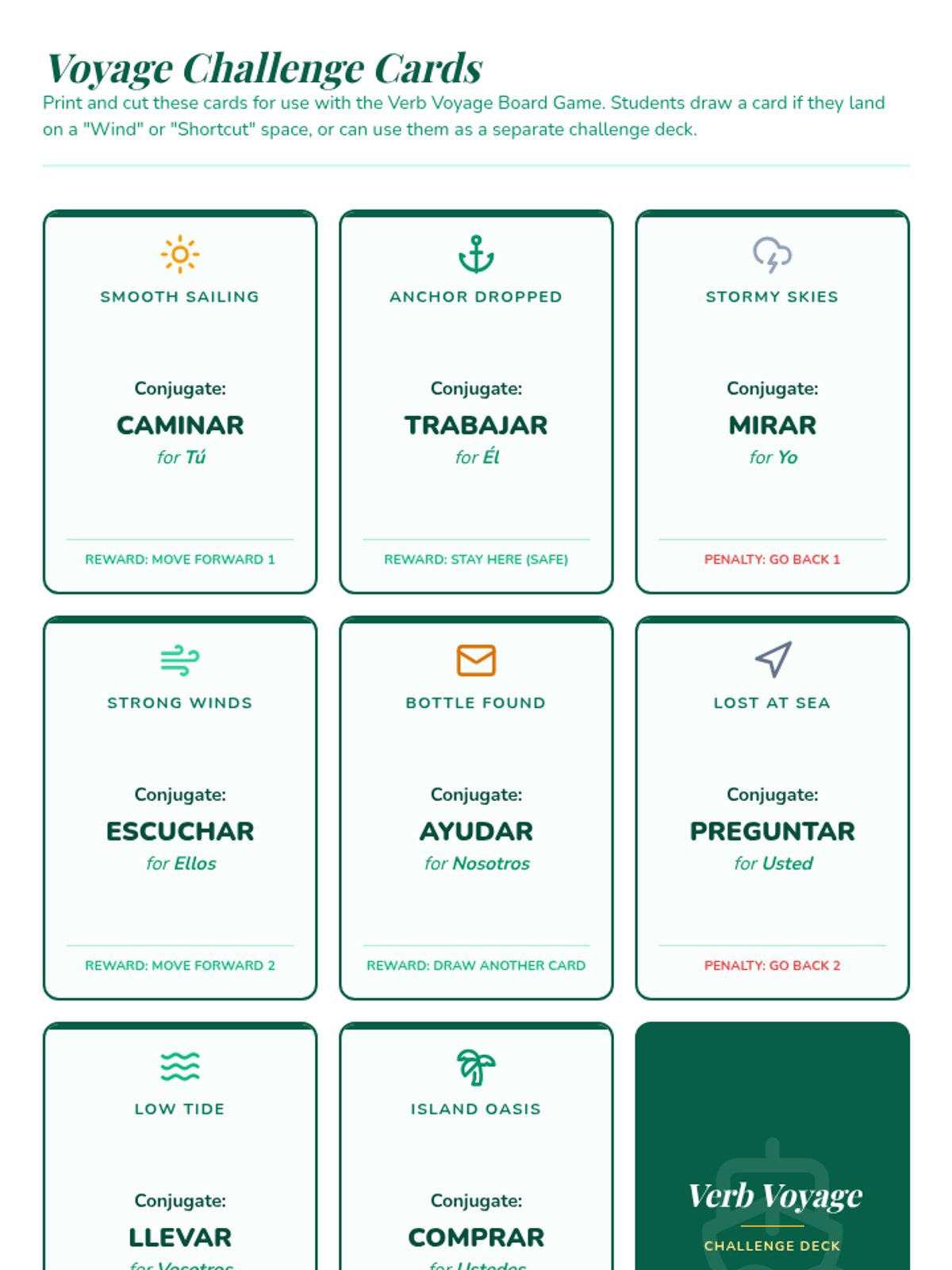
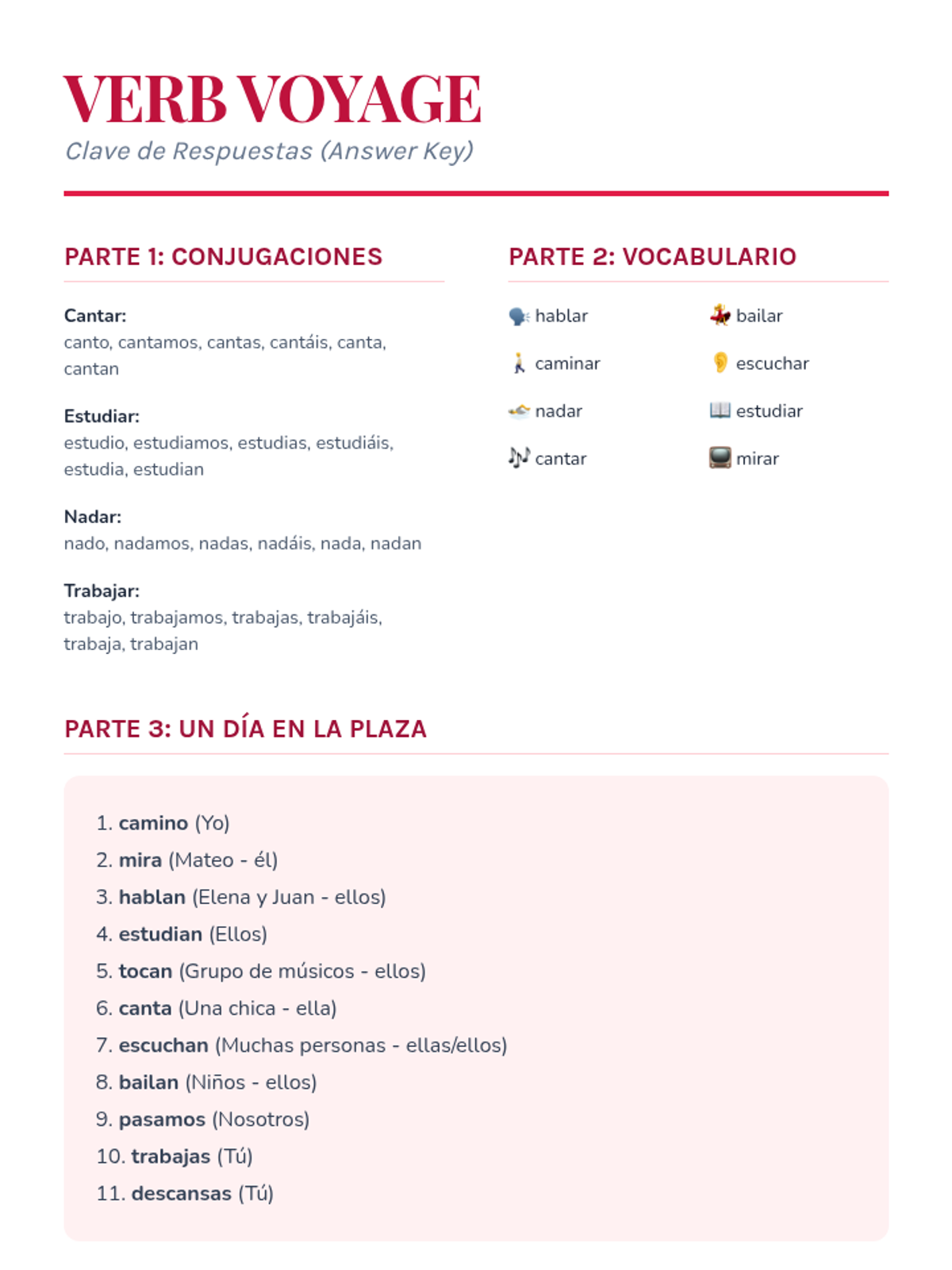
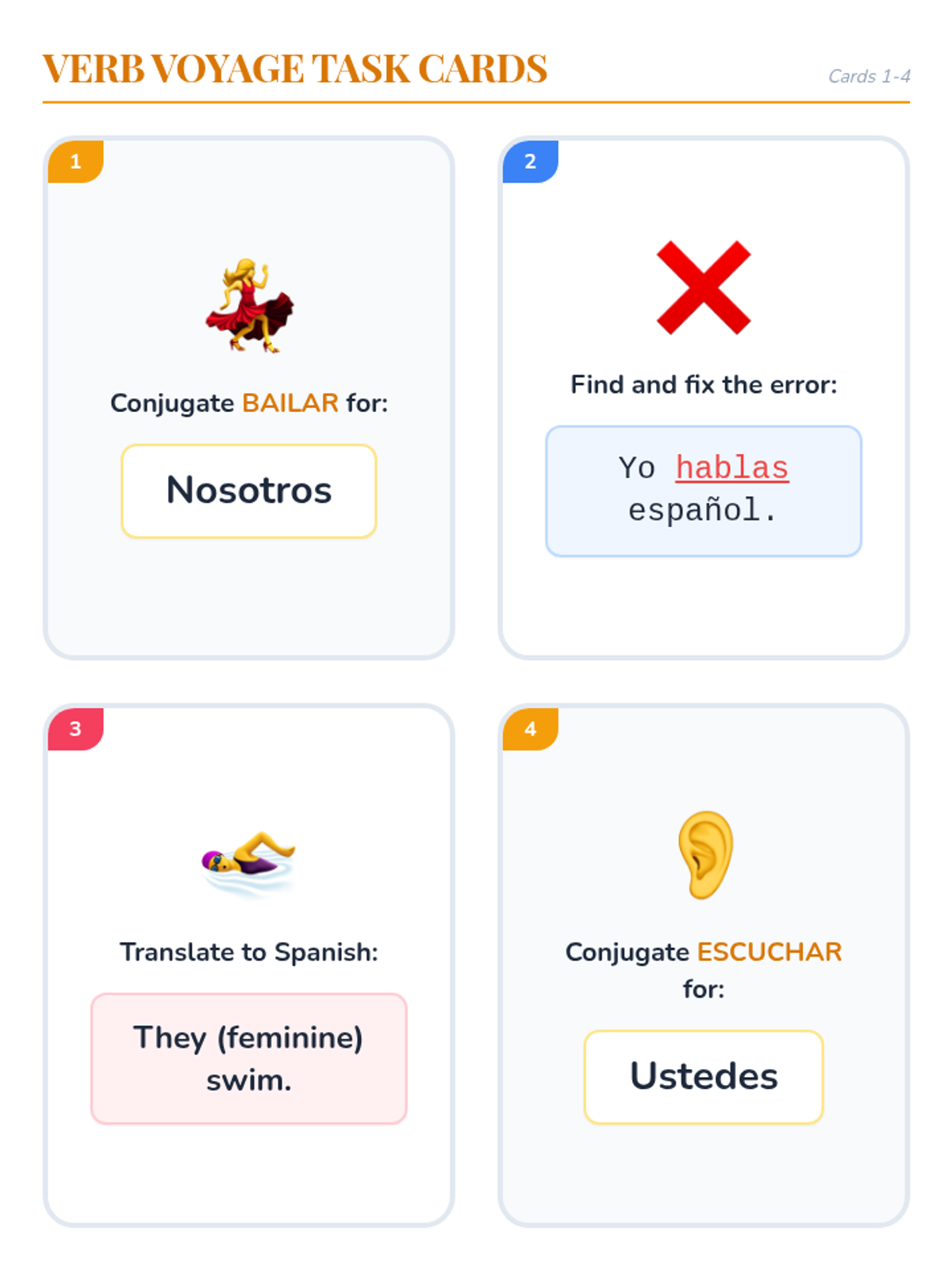
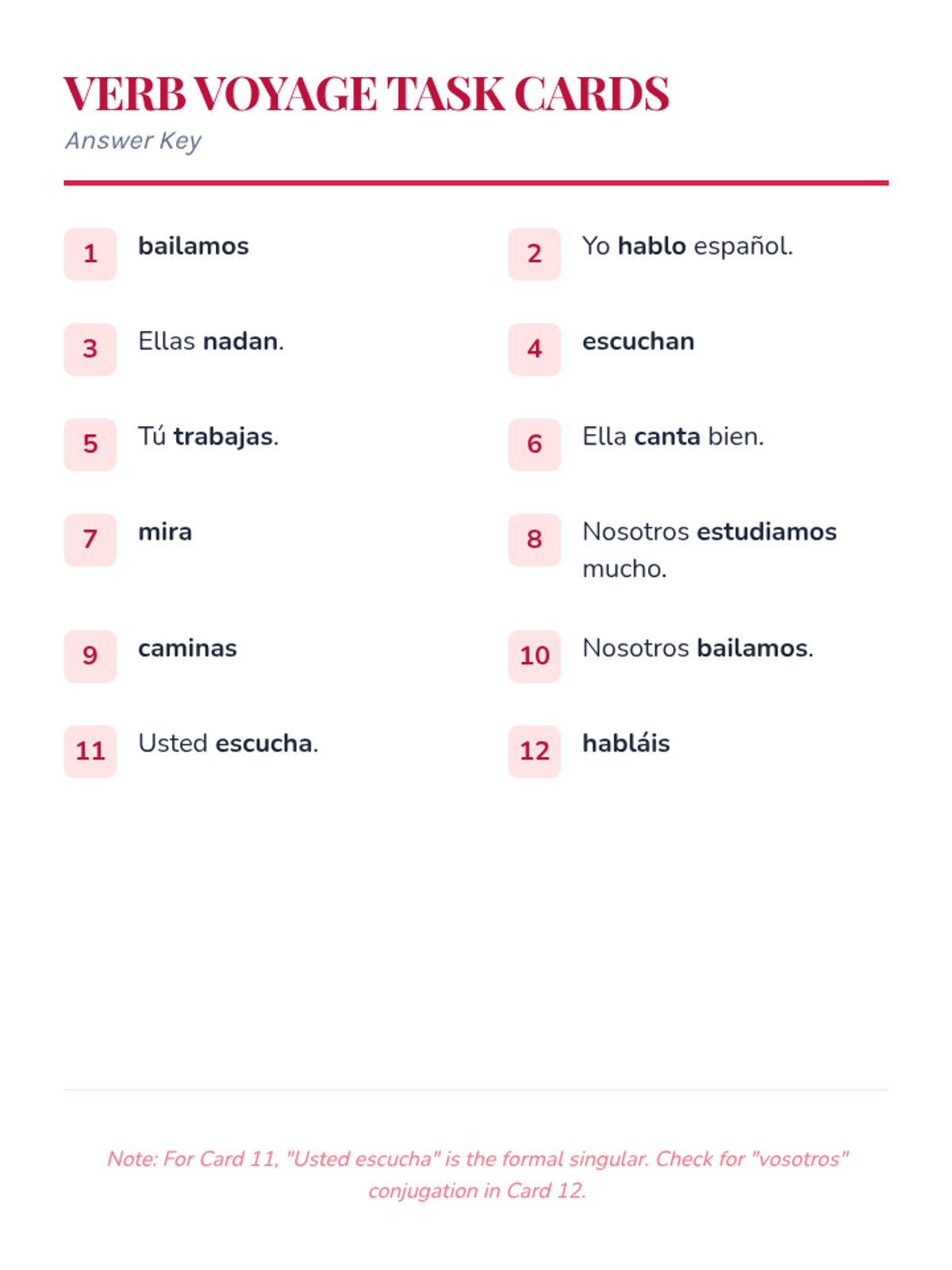
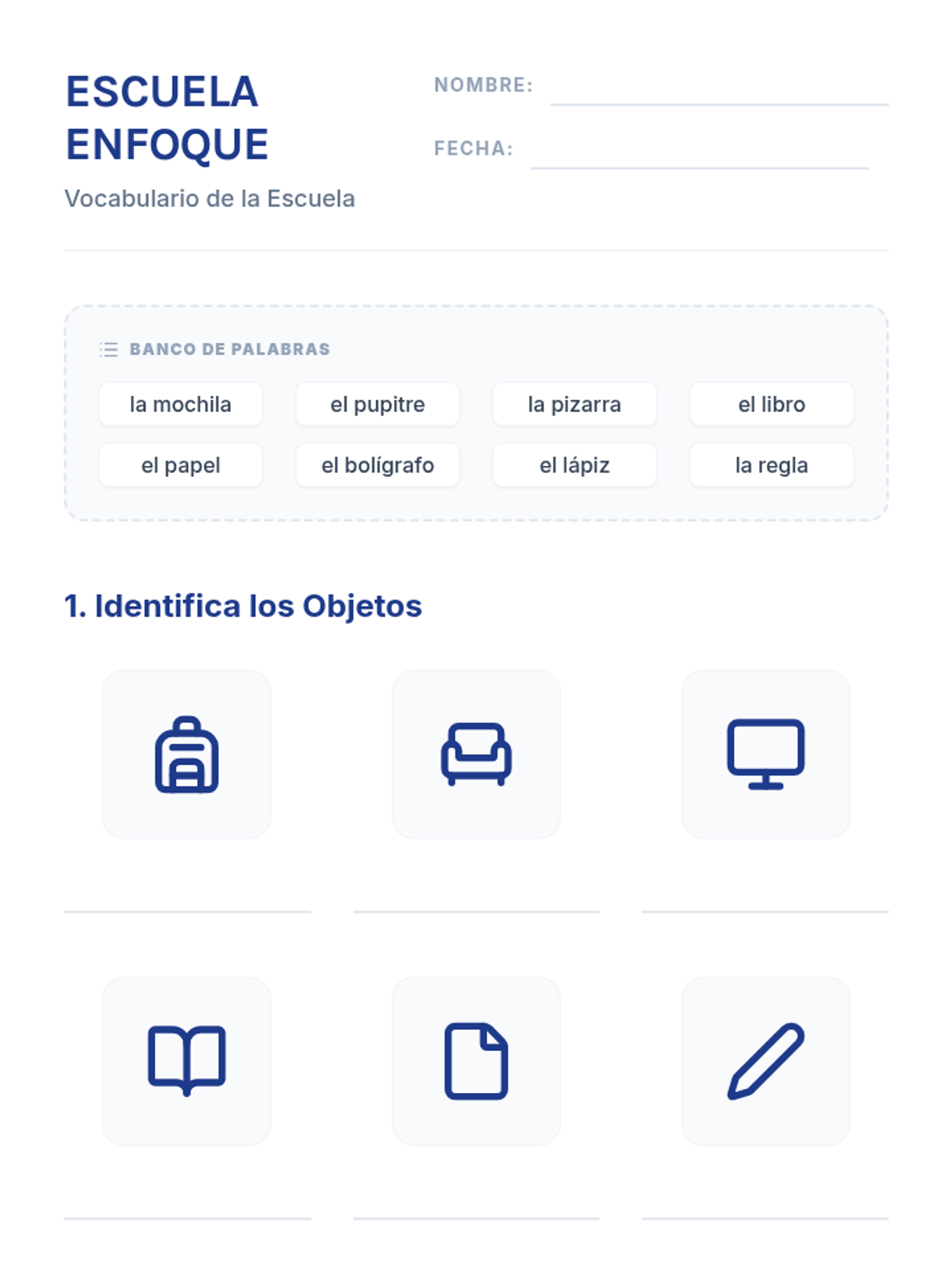
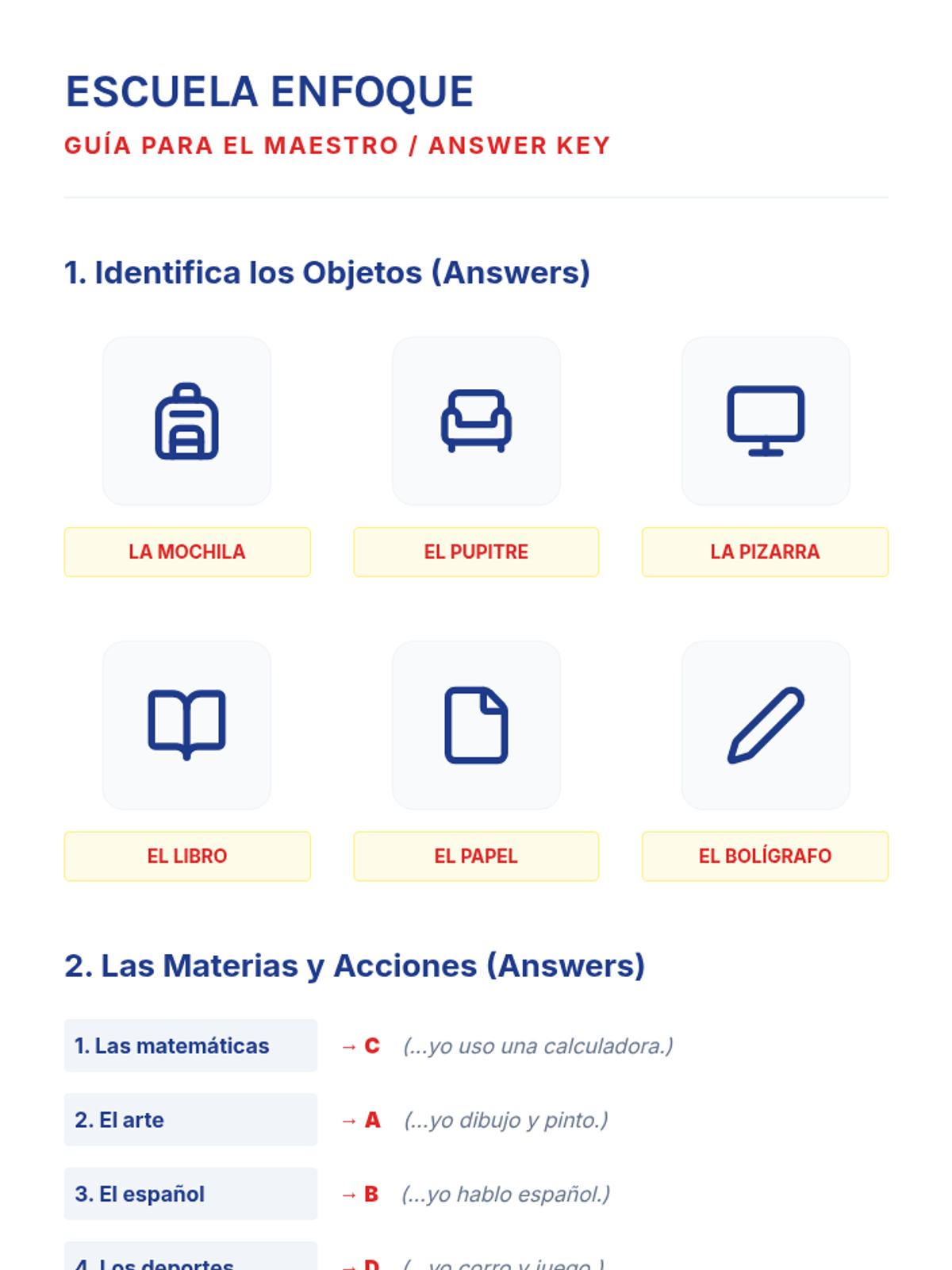
A comprehensive lesson covering regular -ar verb conjugations and school-related vocabulary for beginner Spanish students. includes a detailed timing guide, visual aids, and practice exercises.
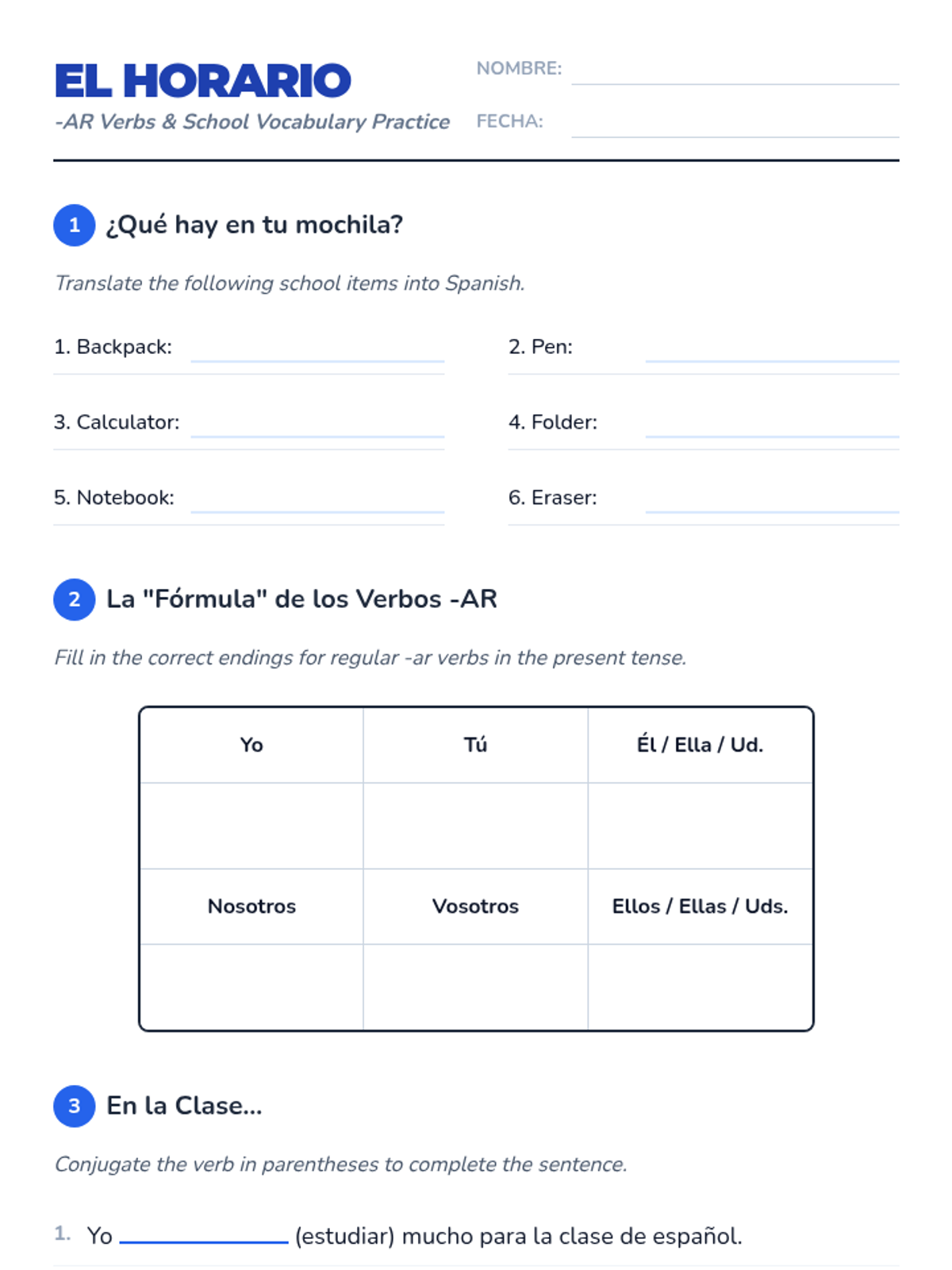
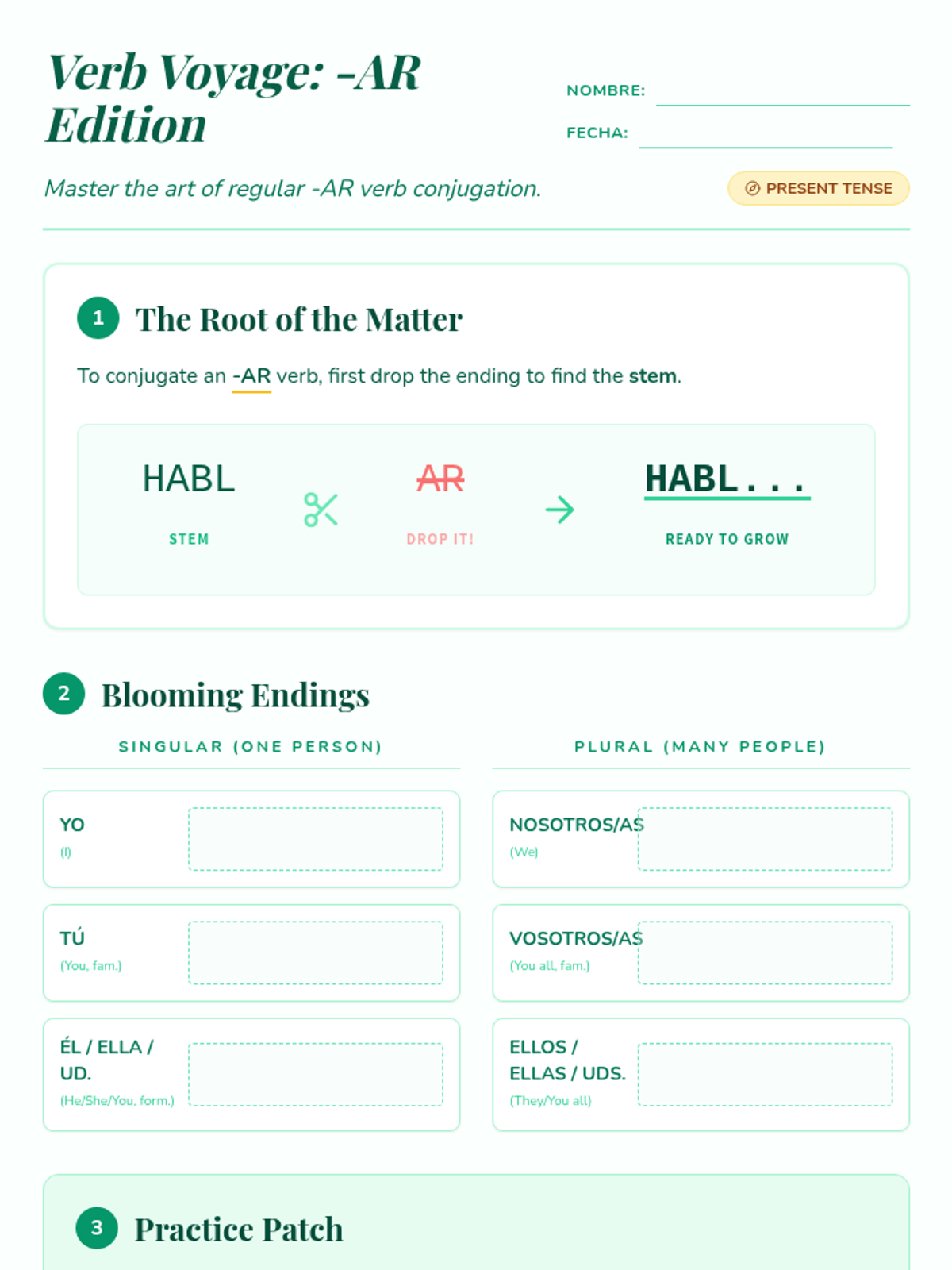
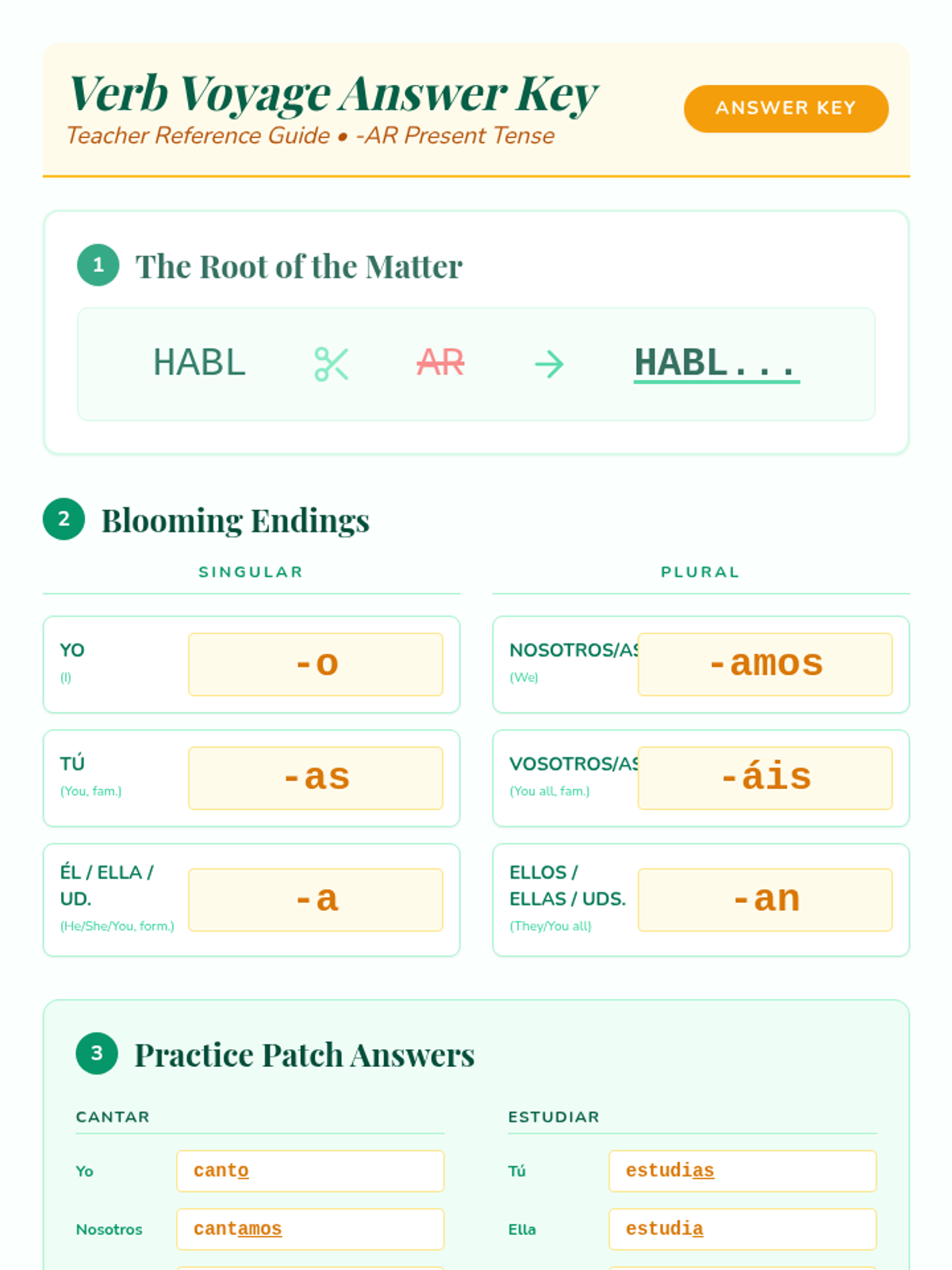
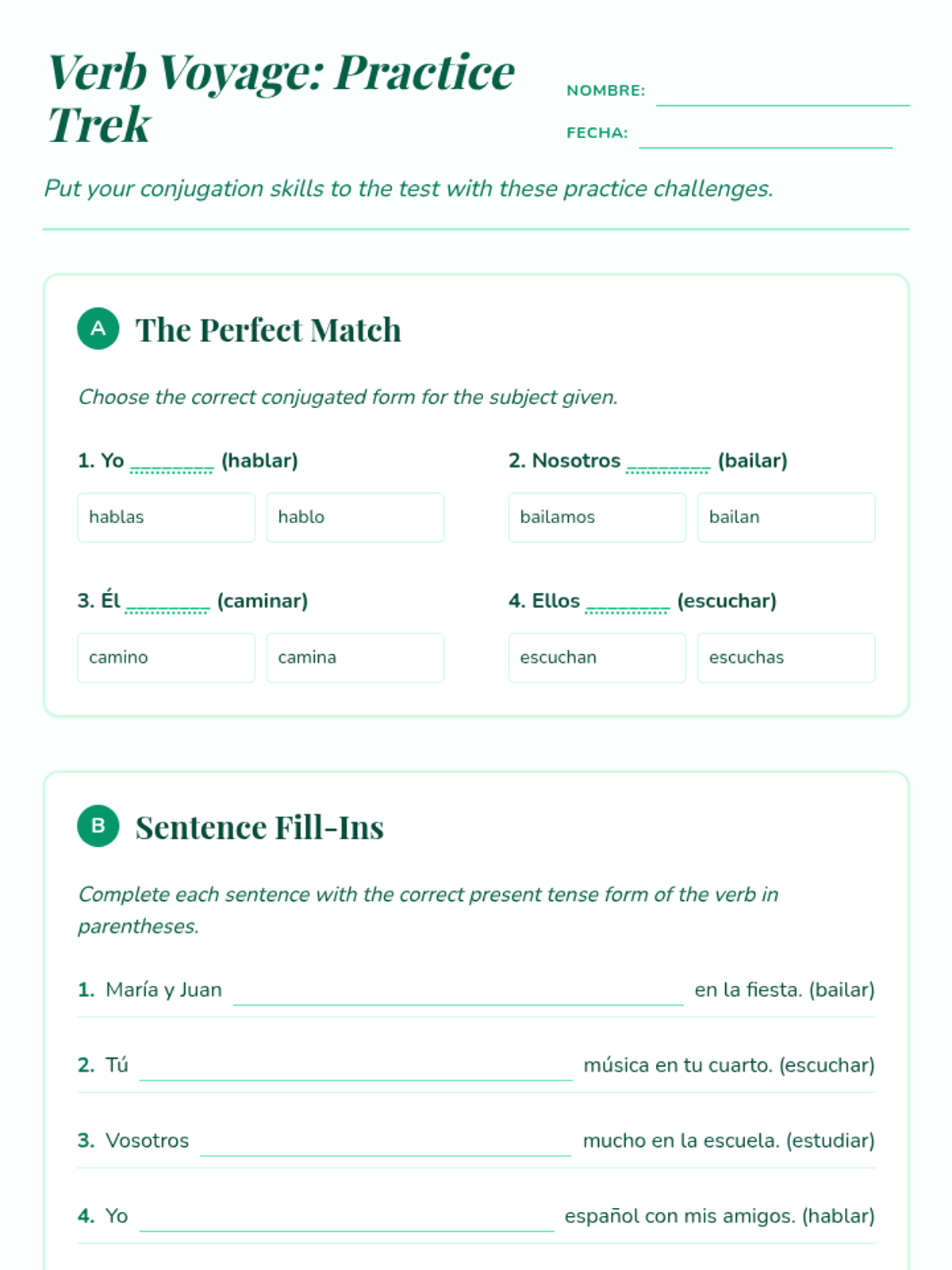
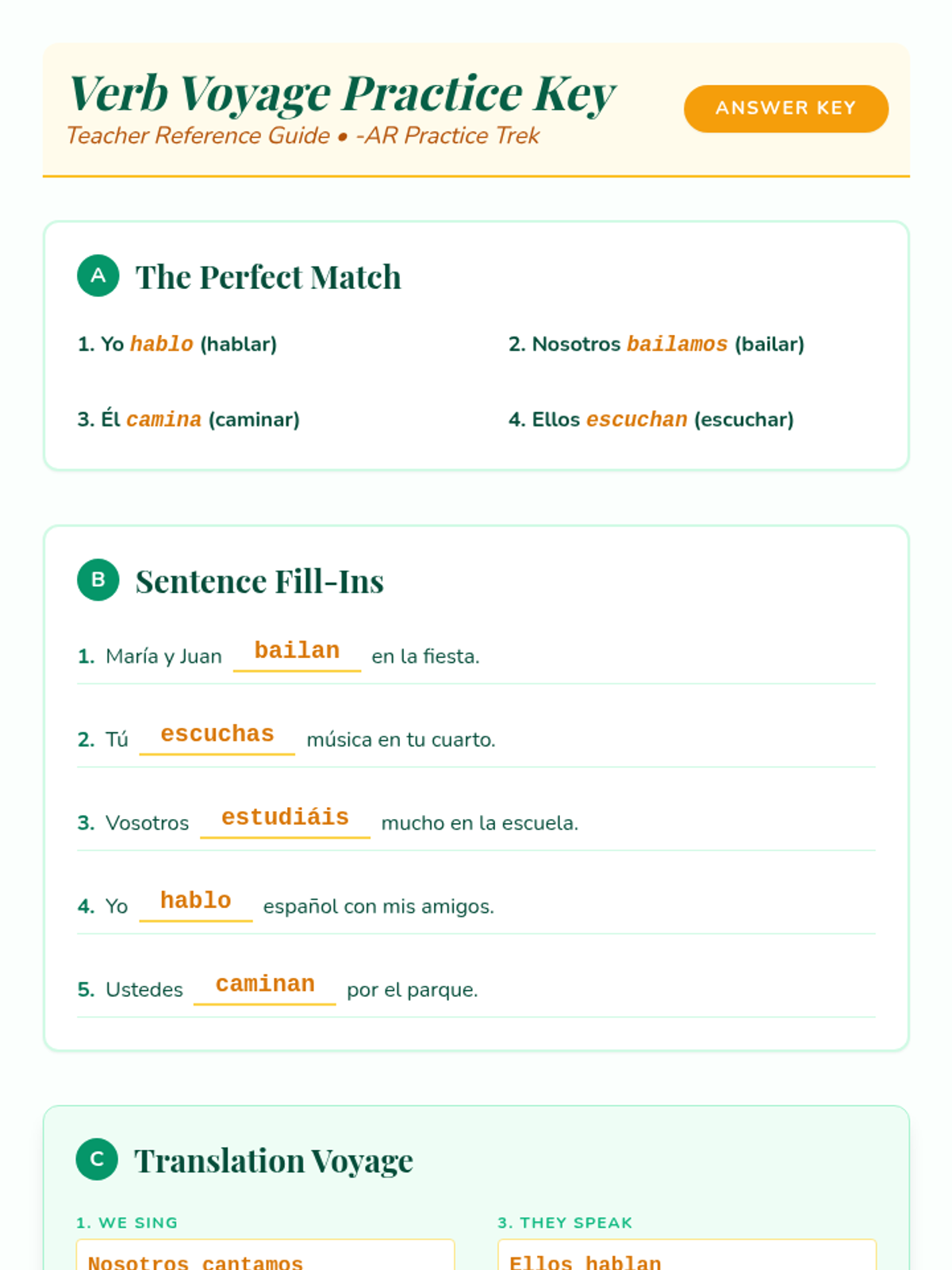
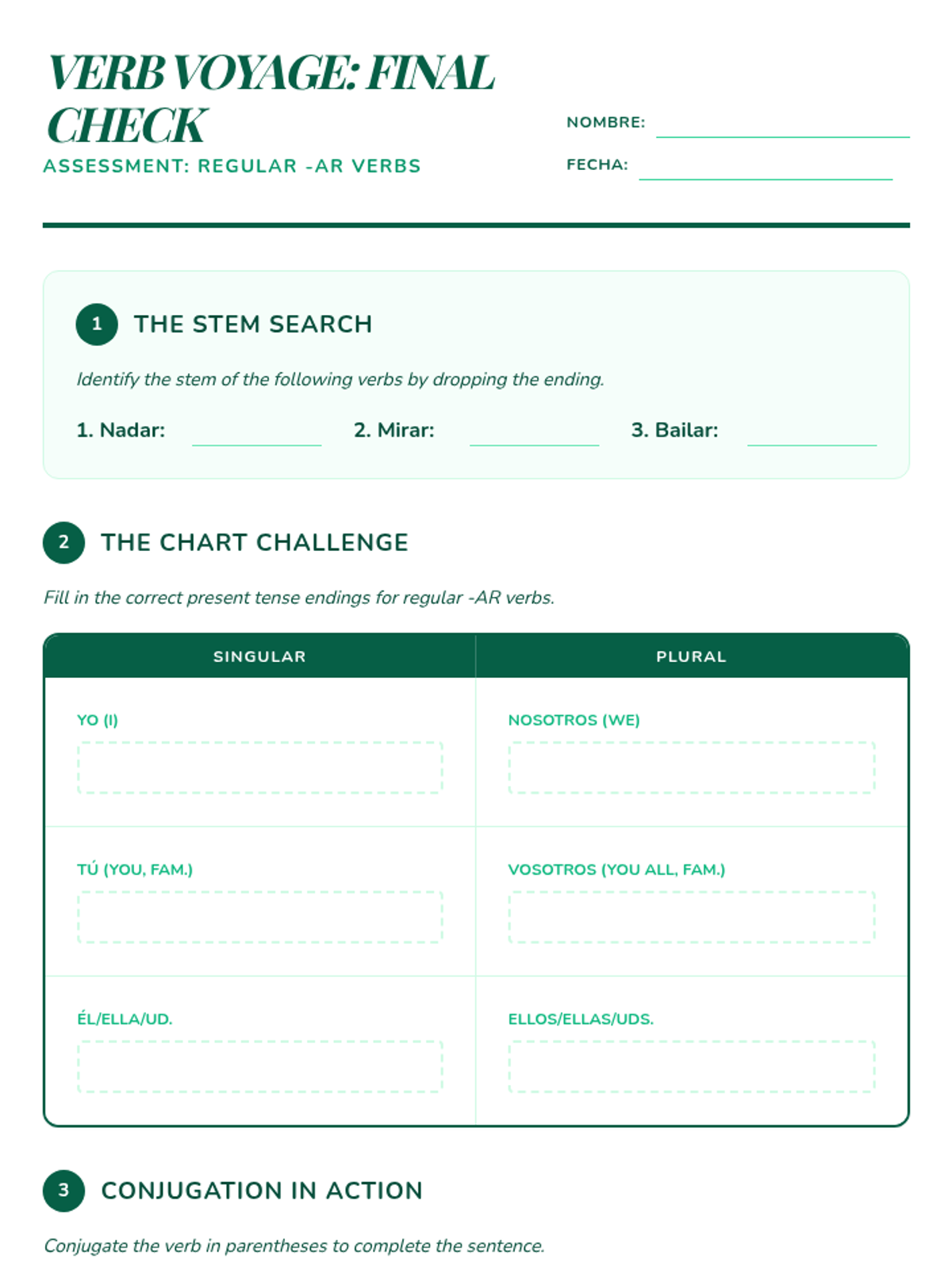
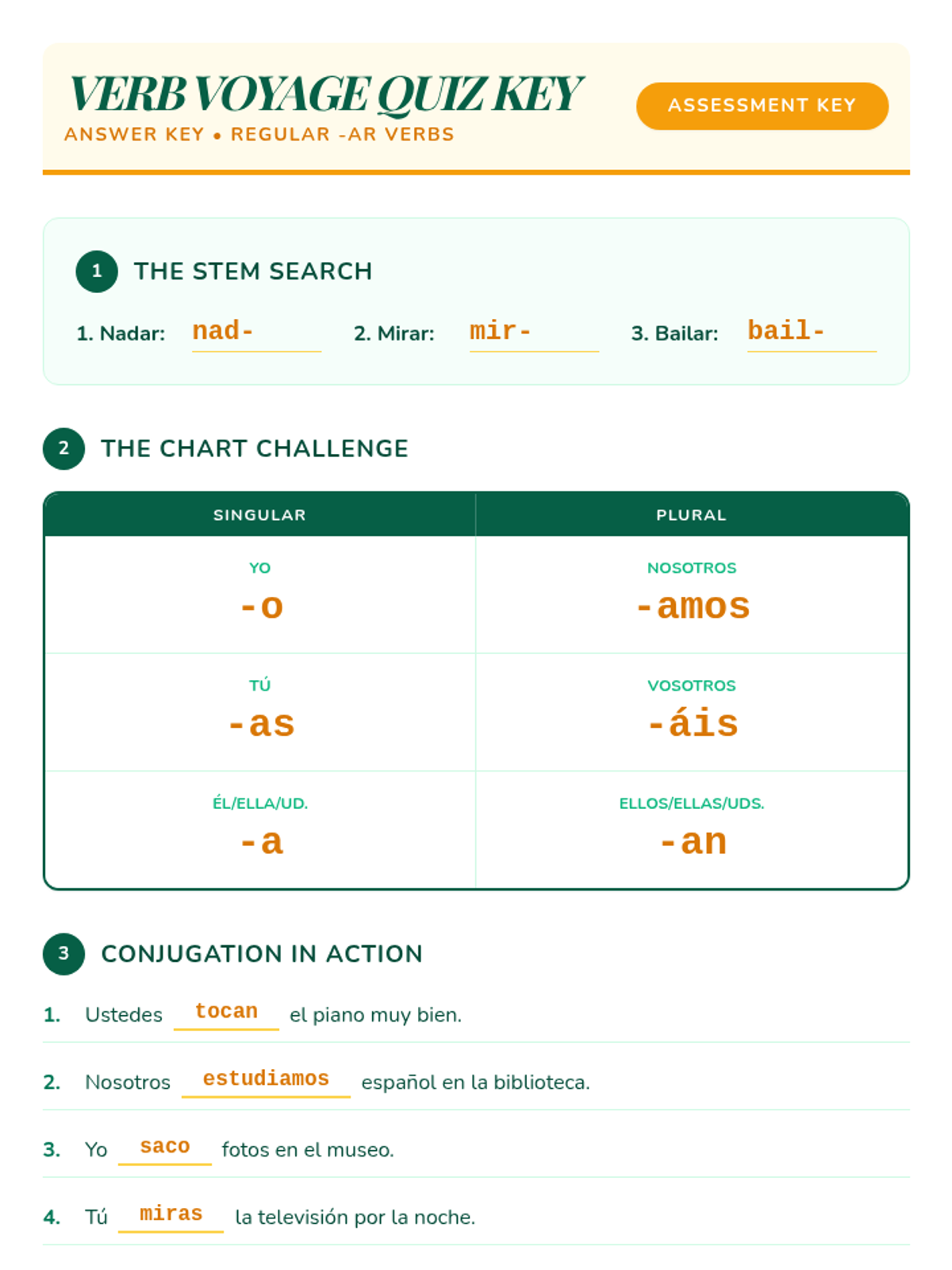
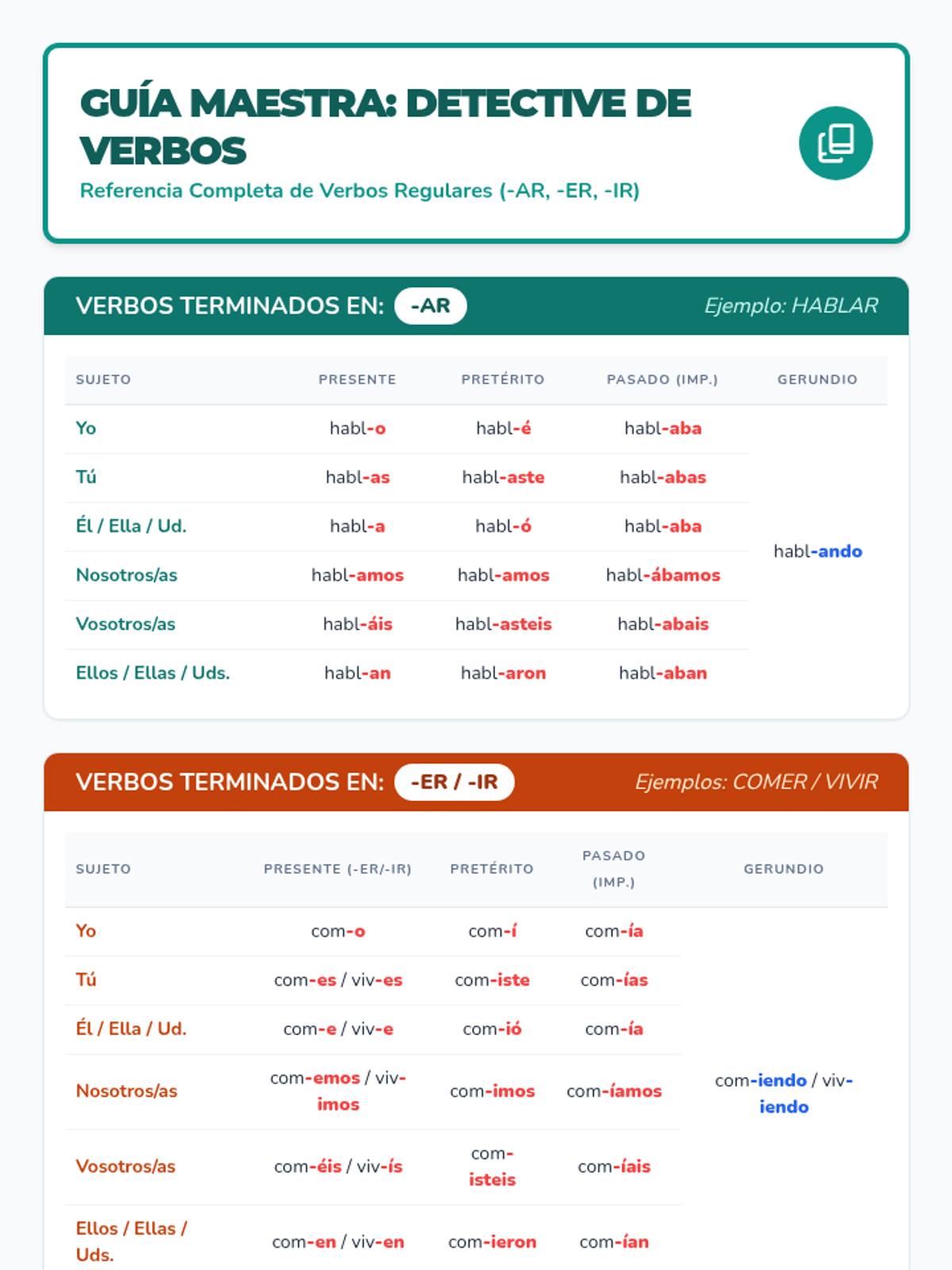
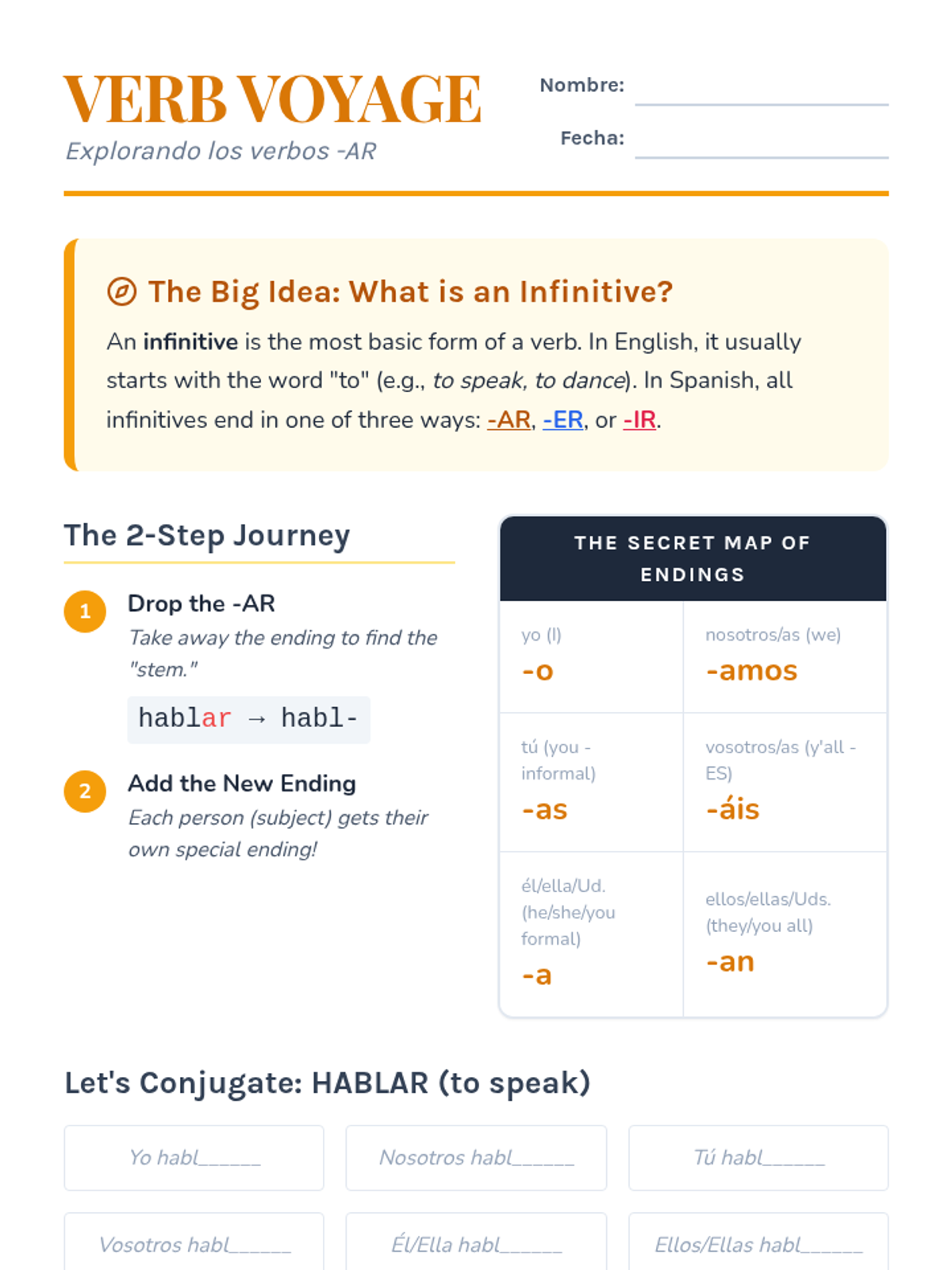
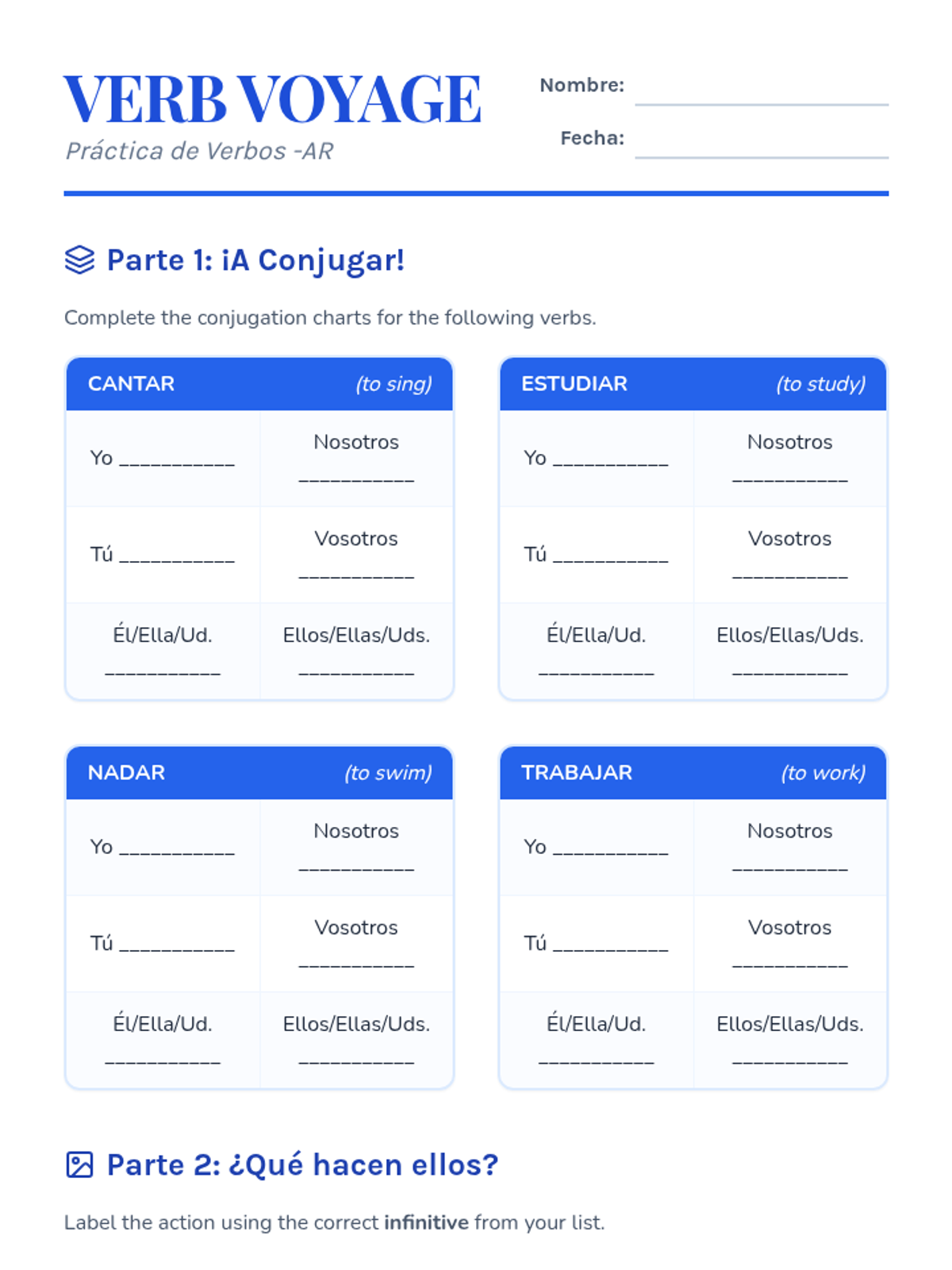
A foundational lesson on regular Spanish -AR verbs, focusing on identifying stems and applying the correct present tense endings.
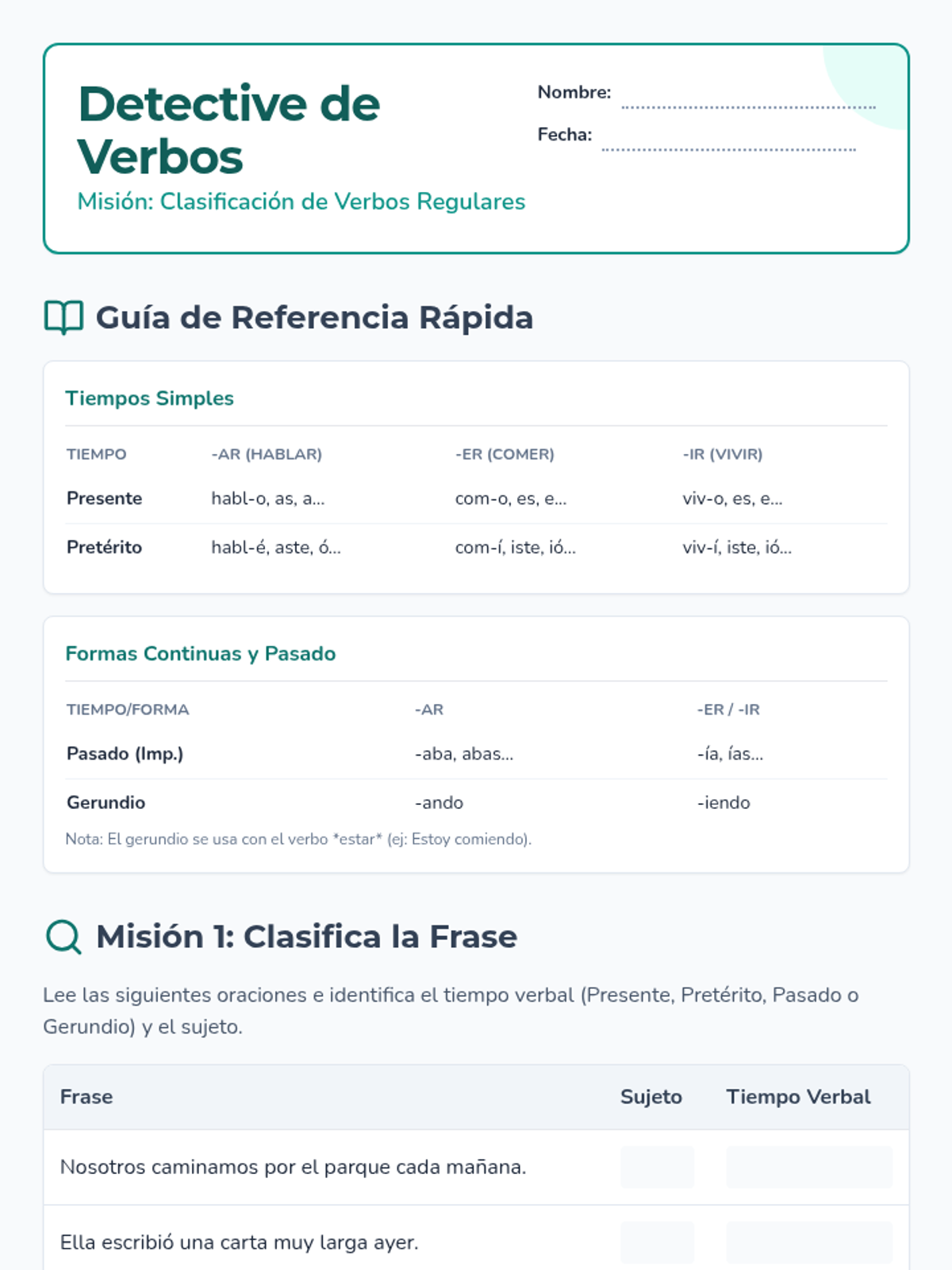
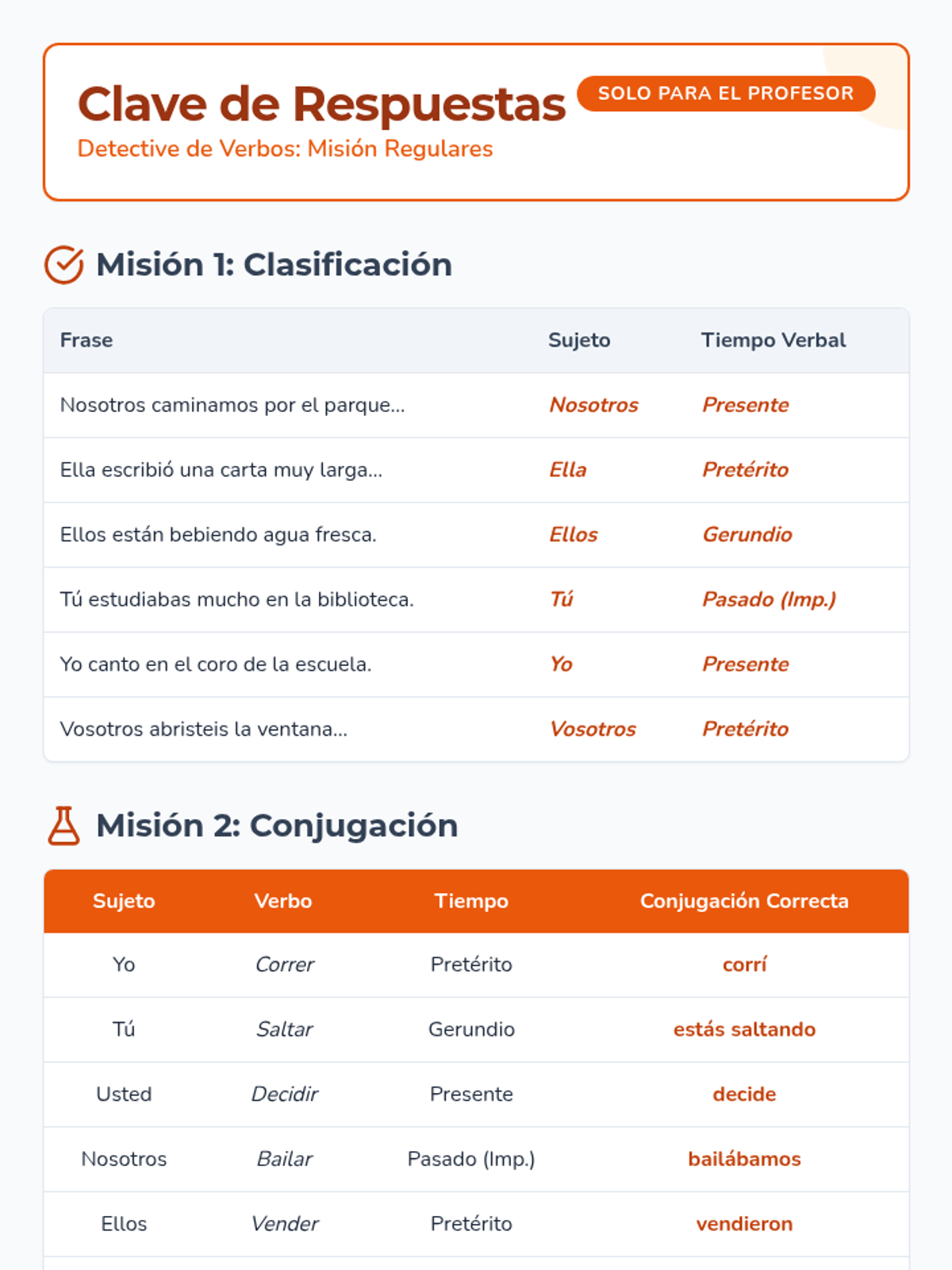
Una lección enfocada en la identificación y uso de verbos regulares en español en diferentes tiempos verbales.
An introductory lesson on Spanish present tense -ar verbs, covering conjugation rules, common vocabulary, and contextual application.
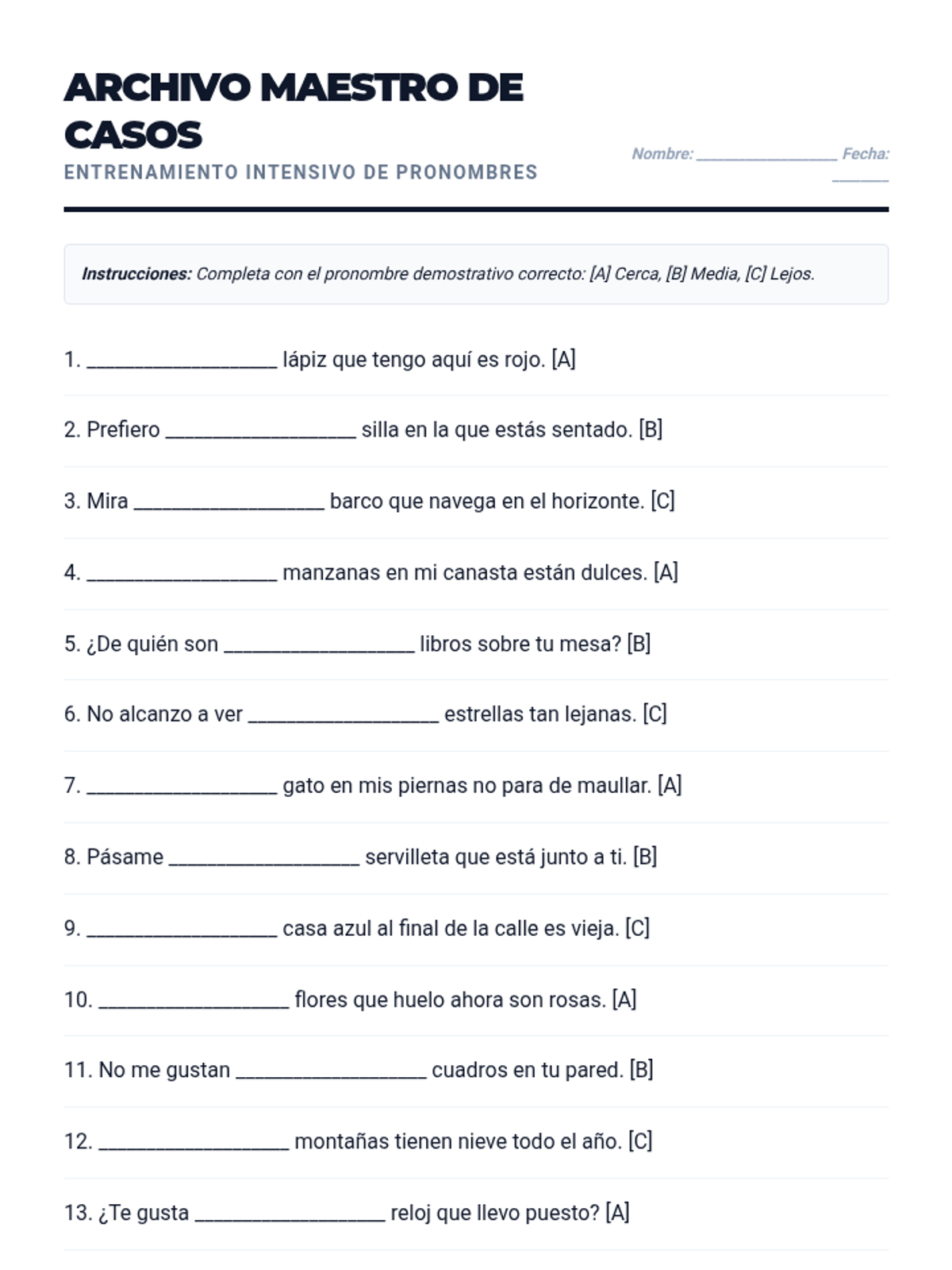
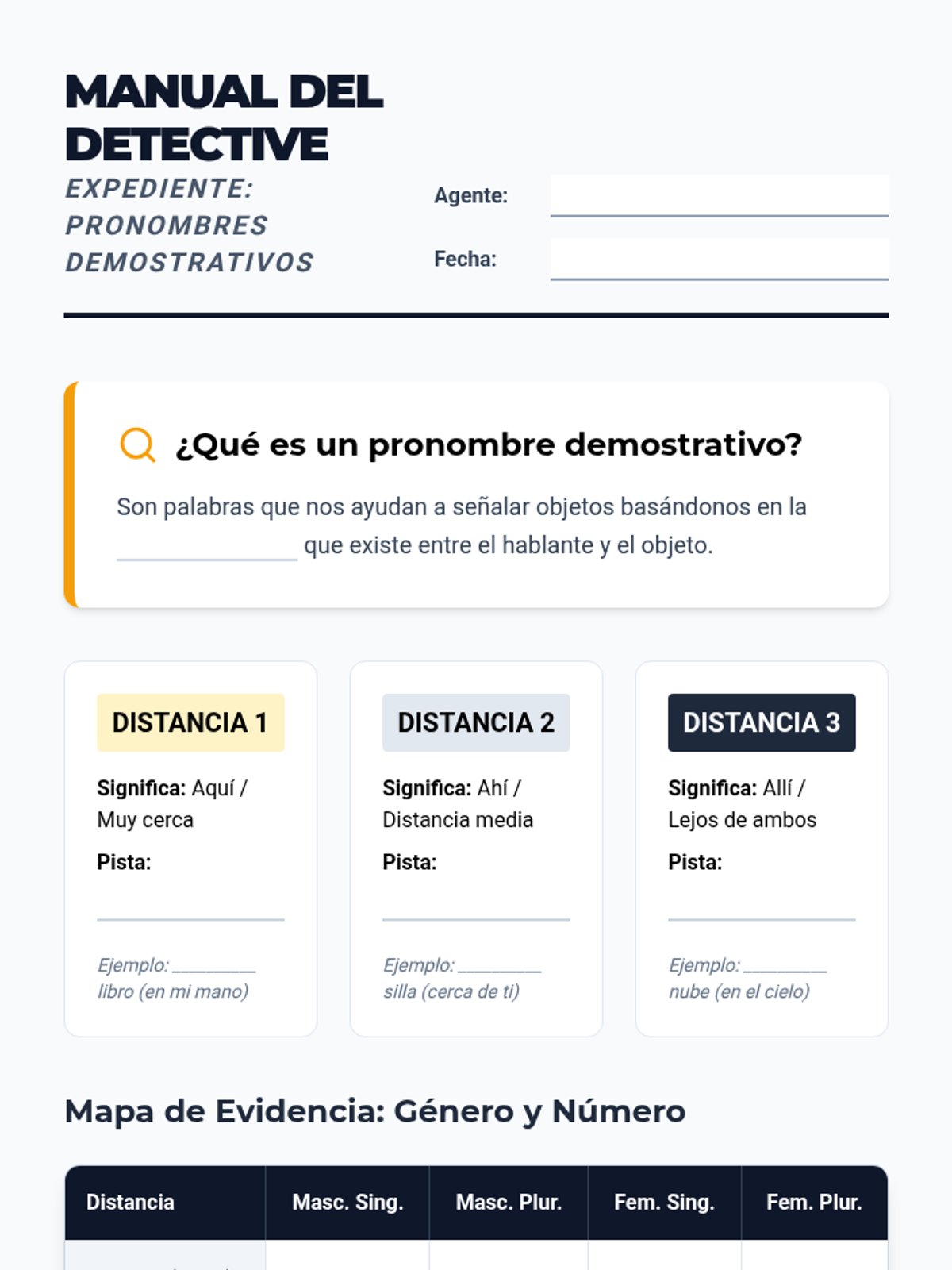
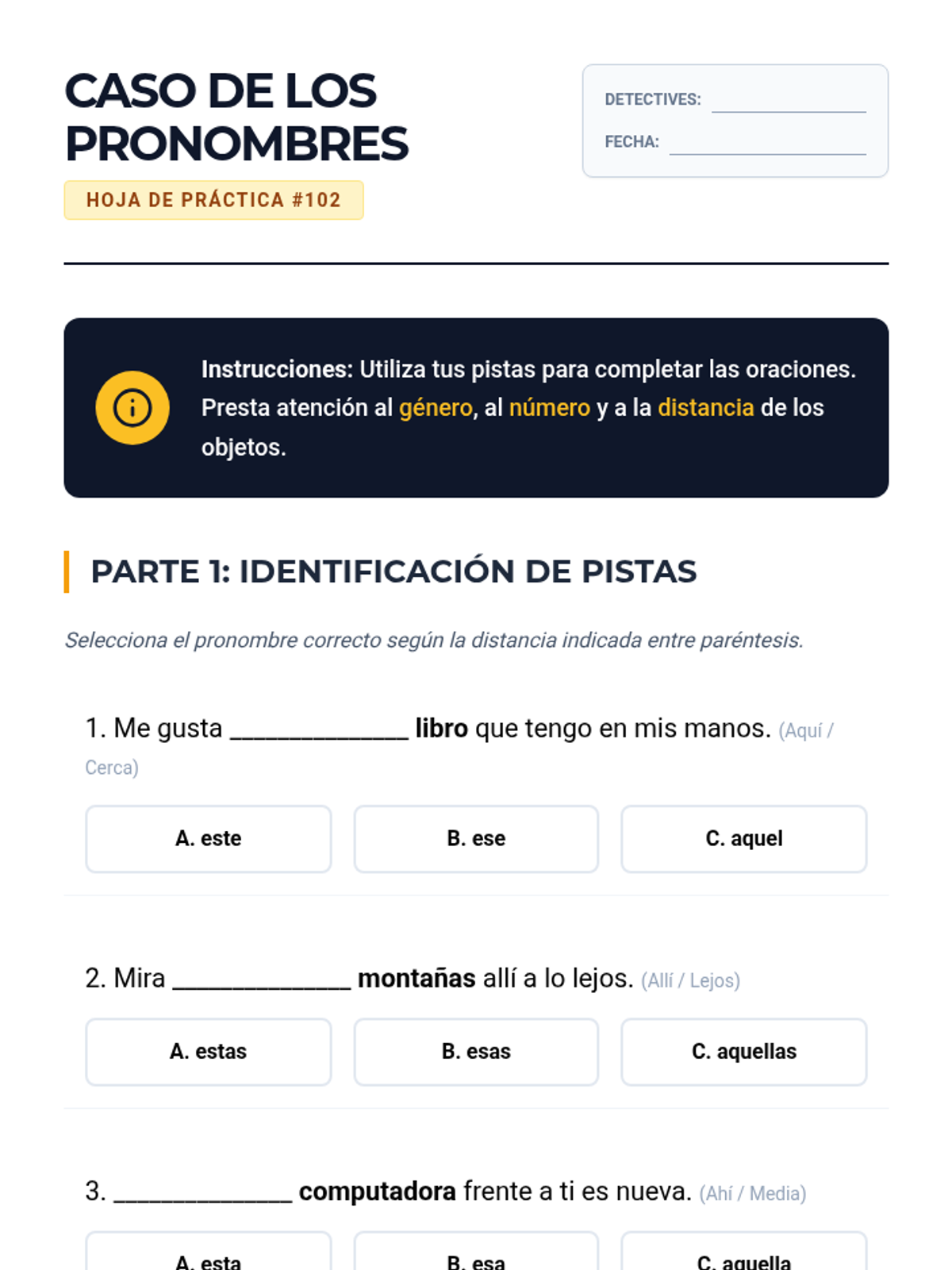
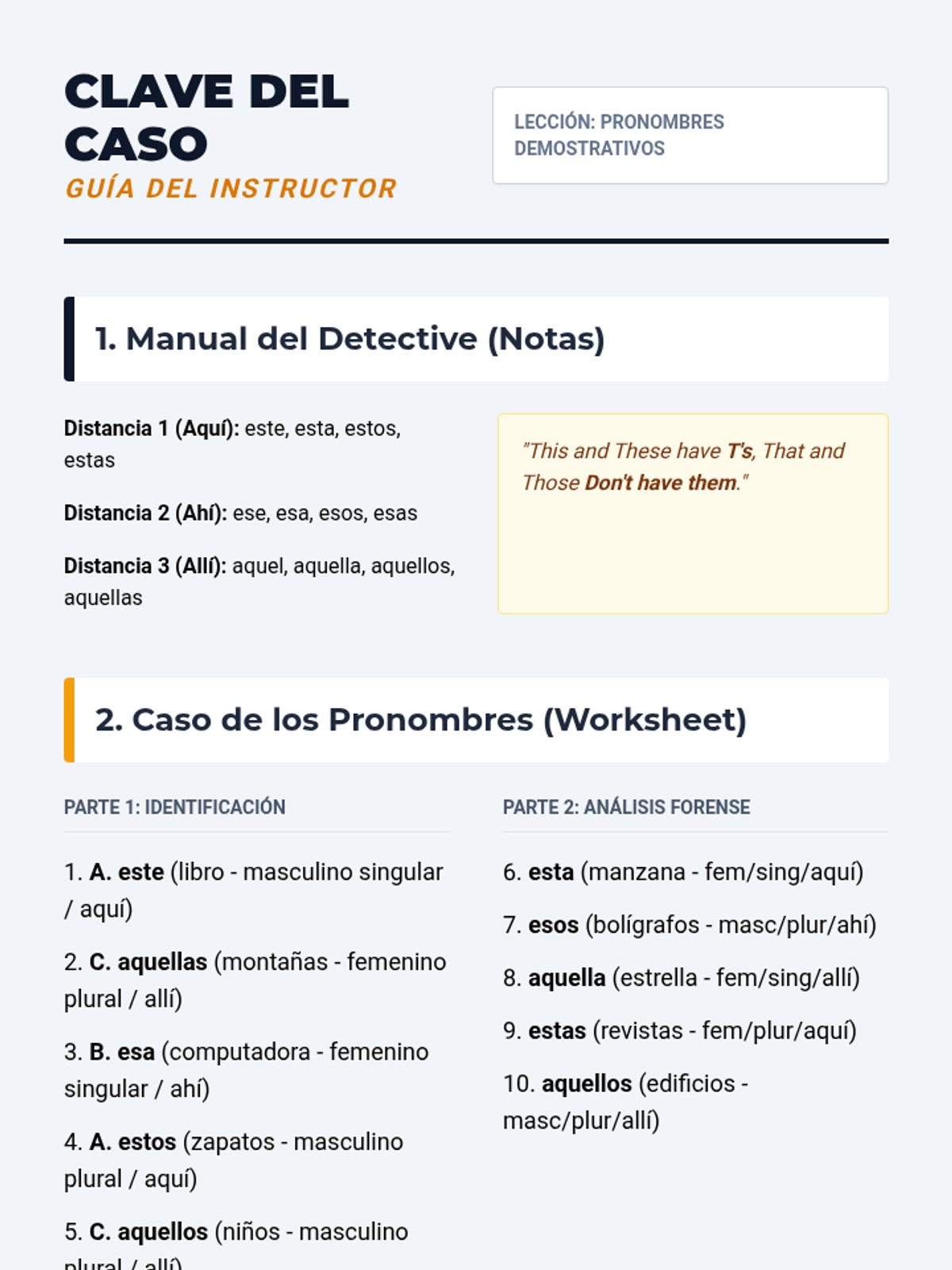
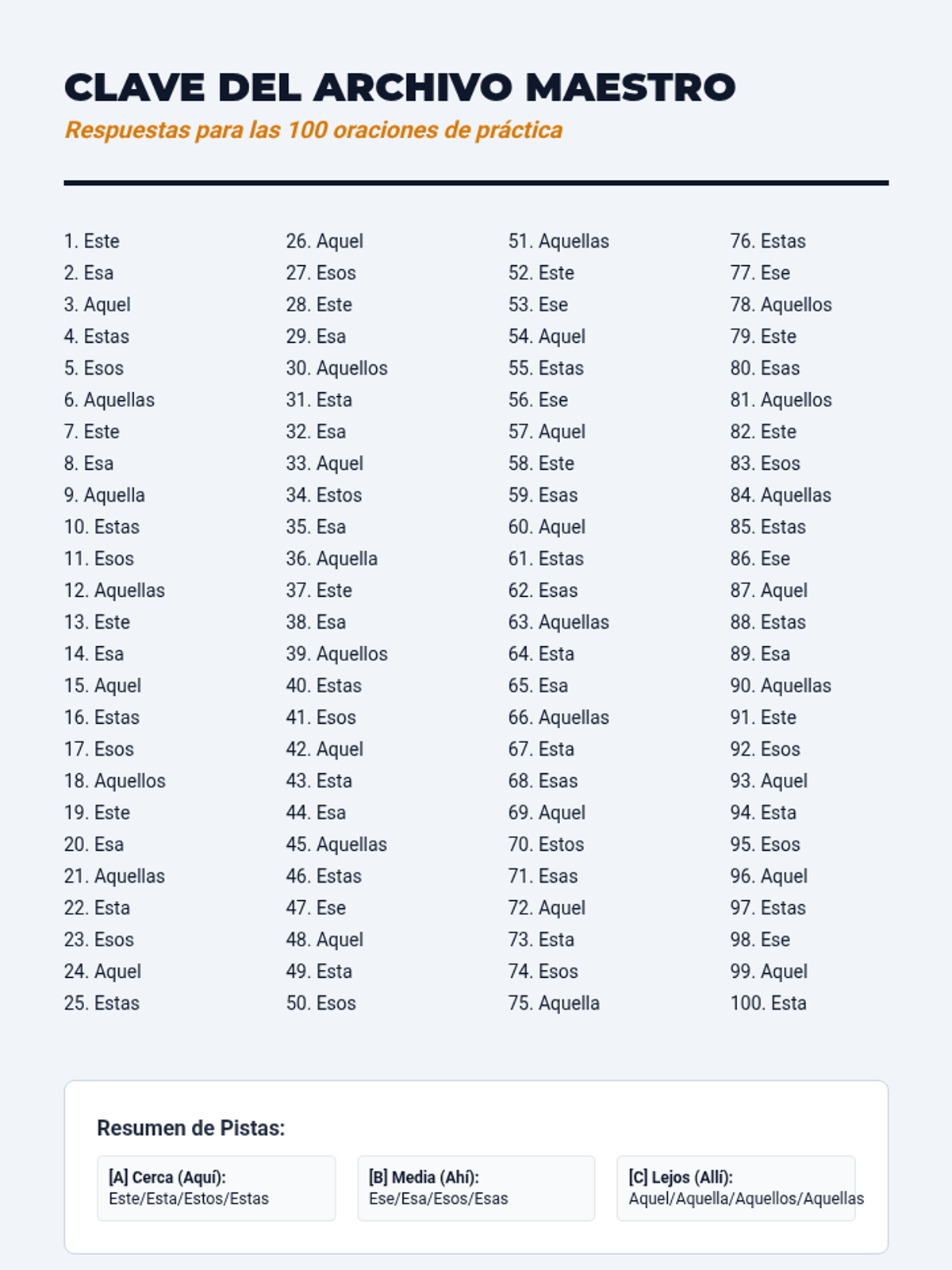
Una lección interactiva sobre los pronombres demostrativos en español (este, ese, aquel) enfocada en la distancia, el género y el número. Incluye una presentación visual, notas guiadas y práctica aplicada.
An introductory Spanish 1 lesson focusing on school-related vocabulary, including classroom objects, academic subjects, daily actions, and extracurricular activities.
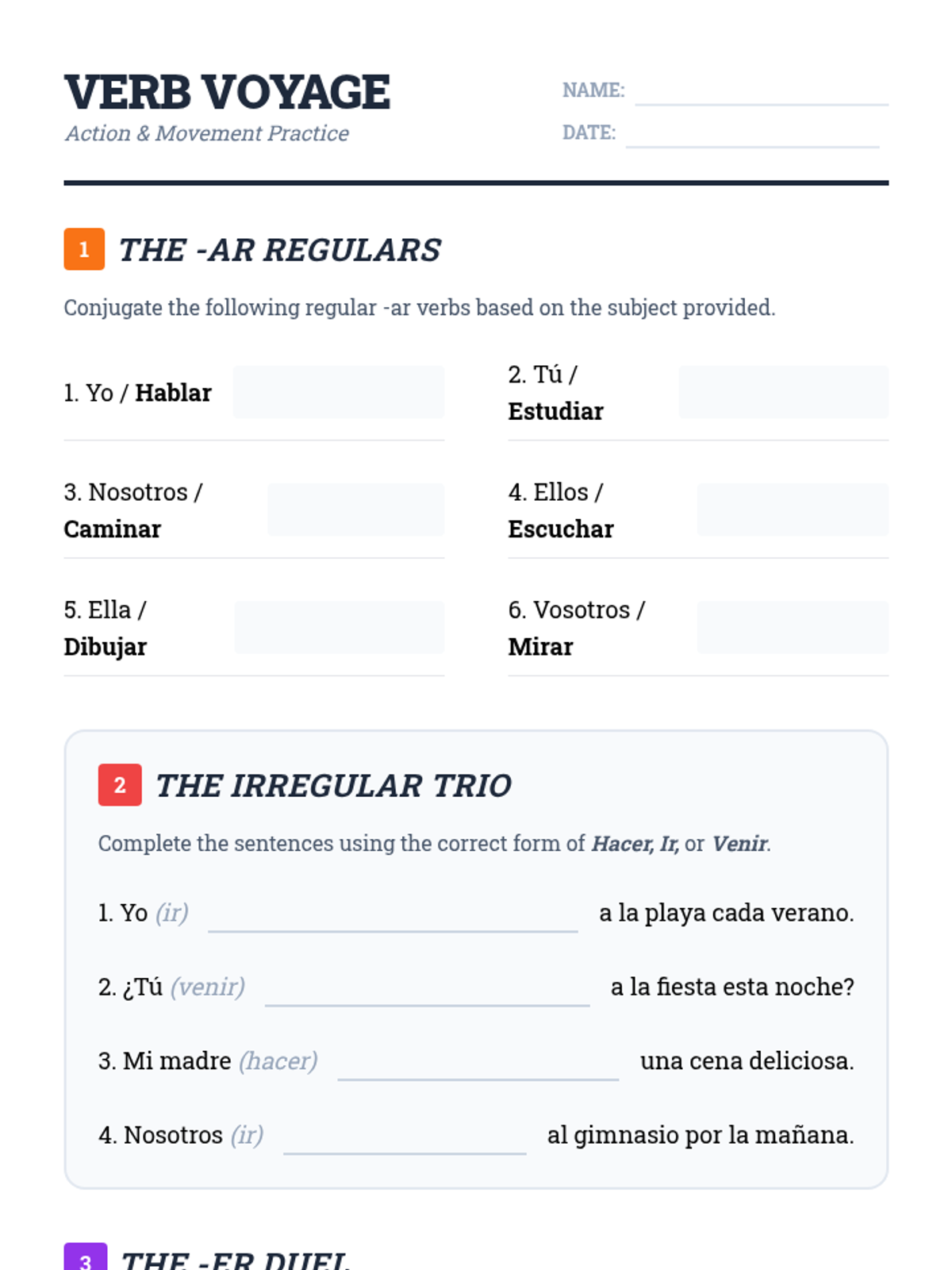
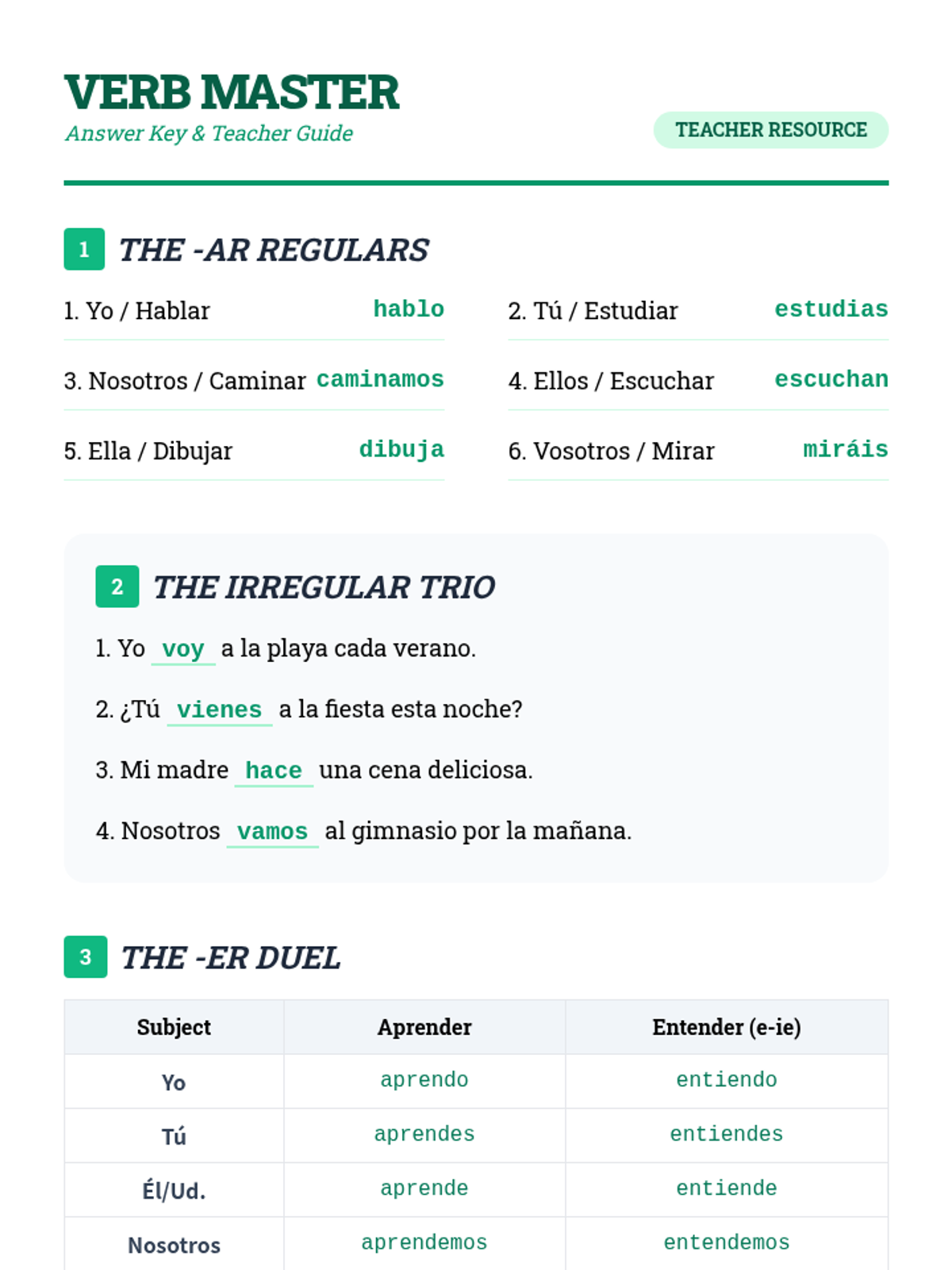
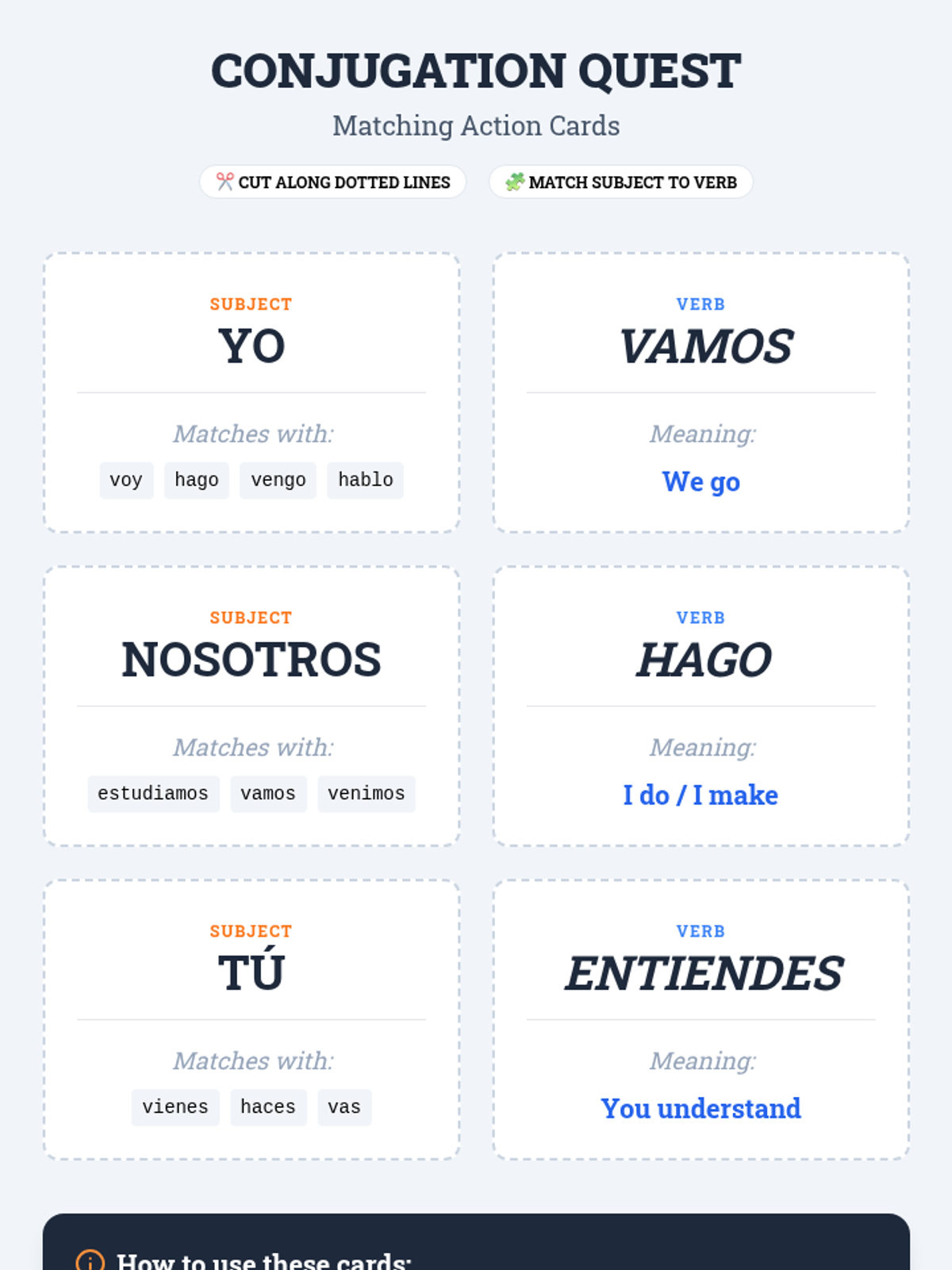
A comprehensive introduction to essential Spanish verbs, covering regular -ar and -er conjugations along with key irregular verbs like hacer, ir, and venir. Students will learn to describe daily actions and movement through interactive practice and translation.
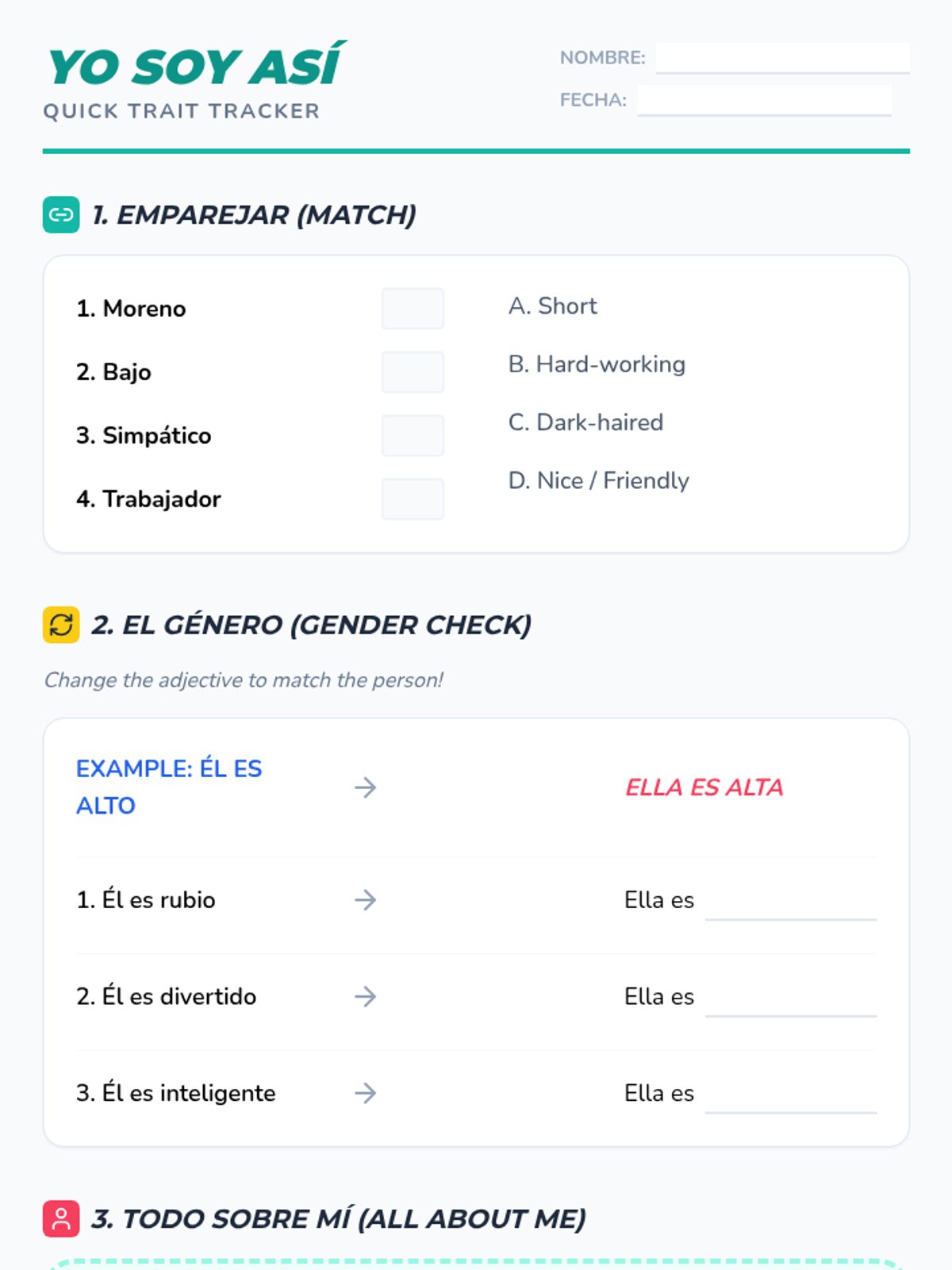
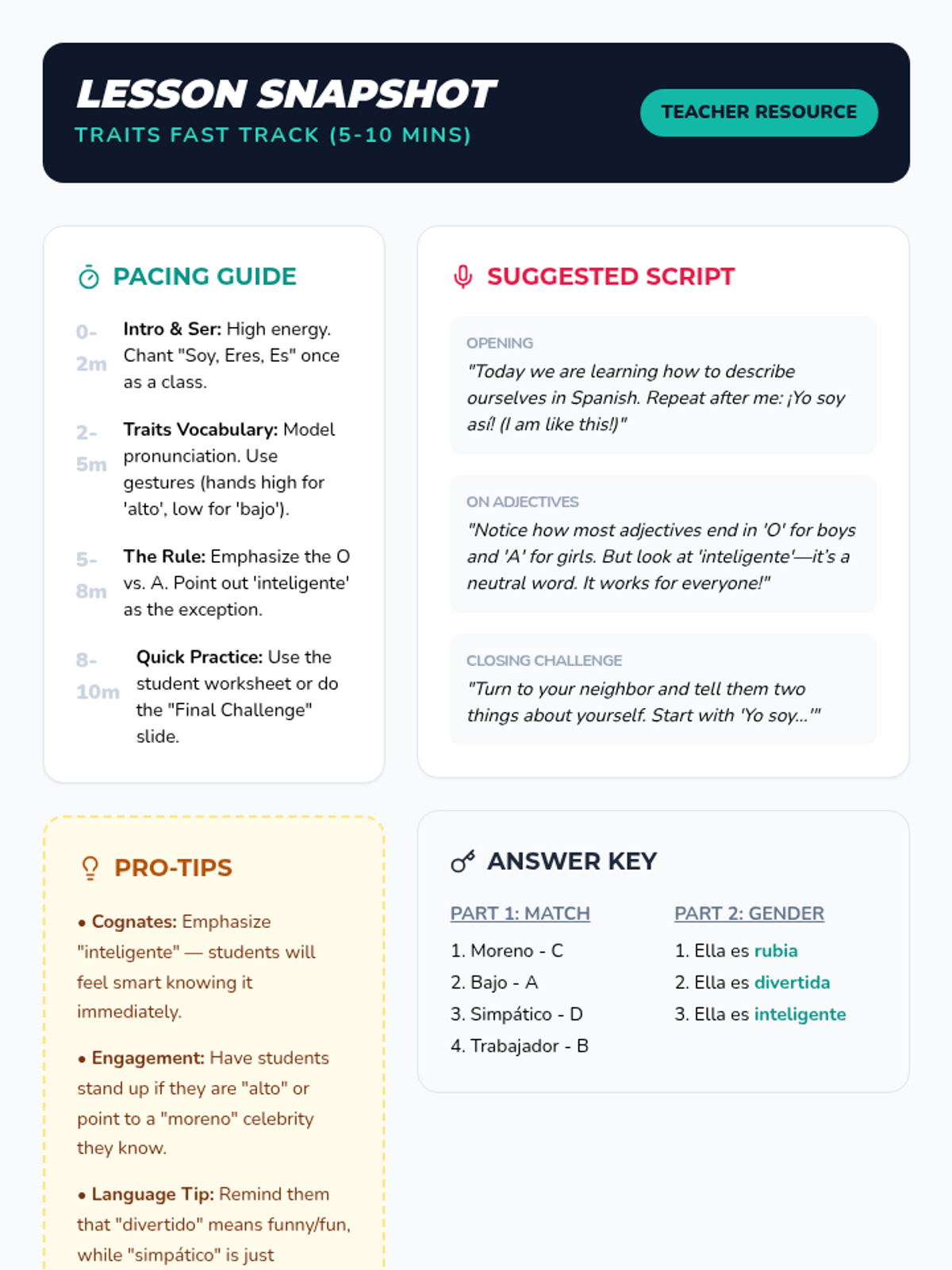
A lightning-fast introduction to physical and personality traits in Spanish, focusing on the verb 'ser' and basic adjective agreement for beginners.
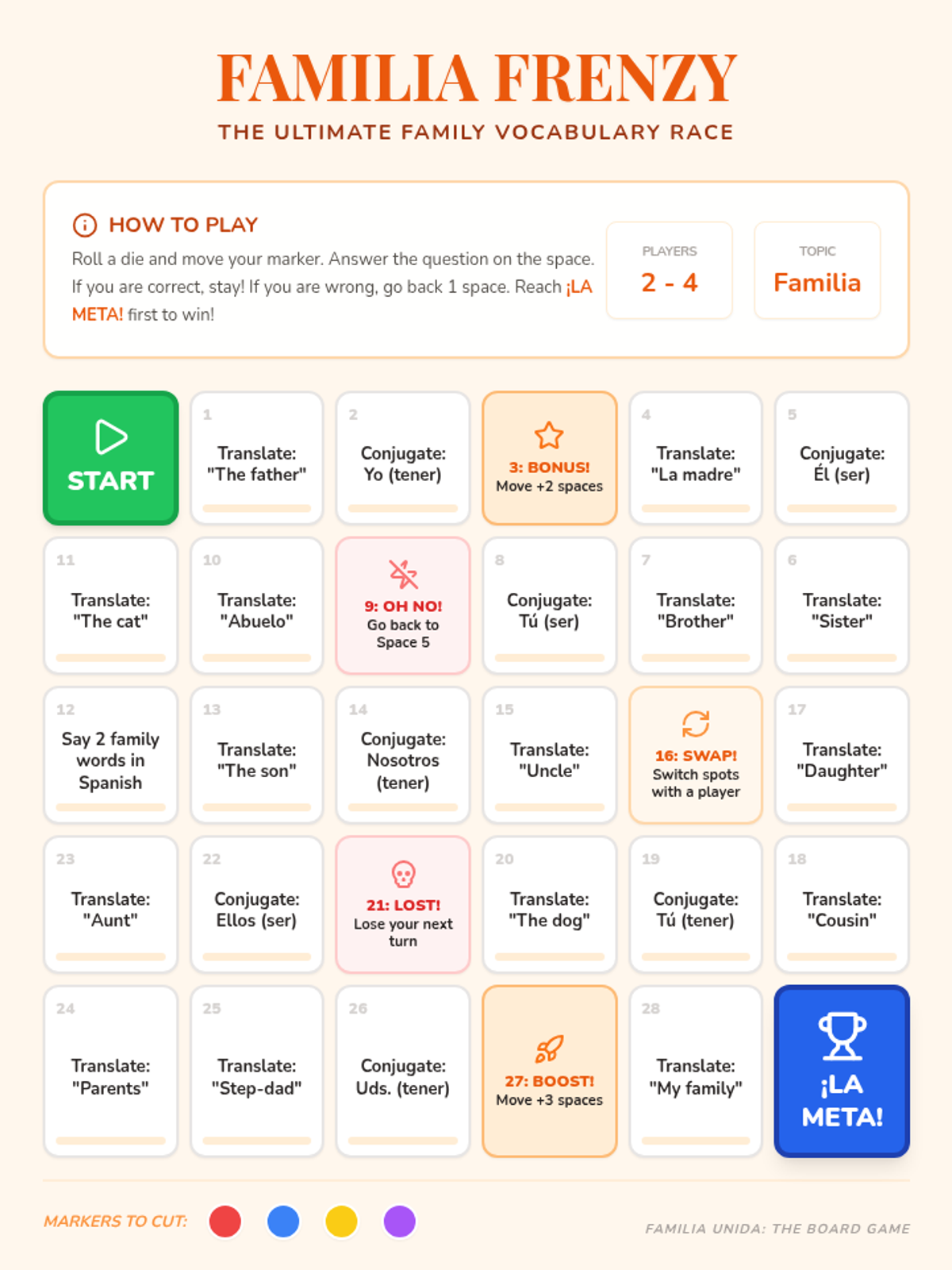
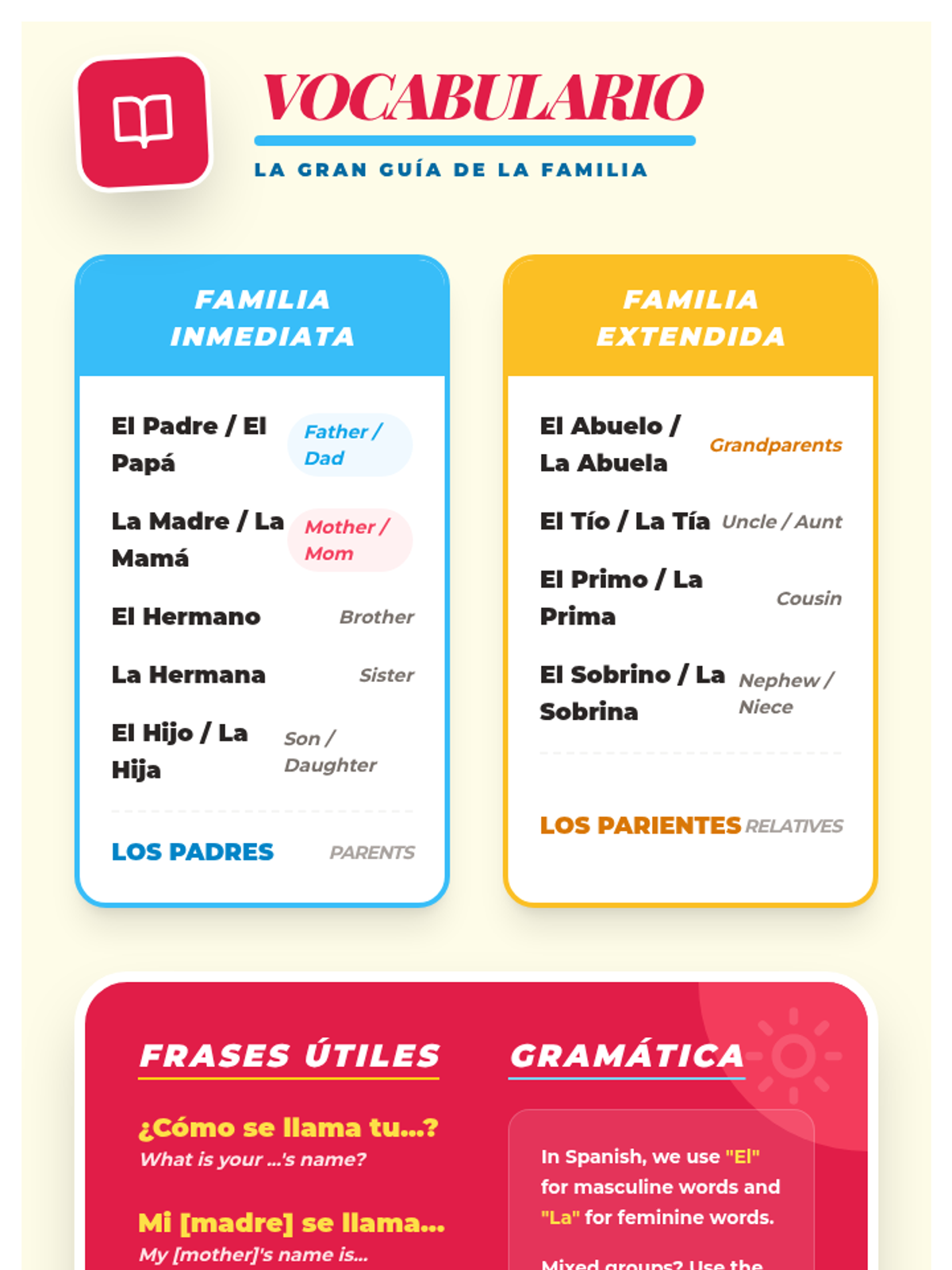
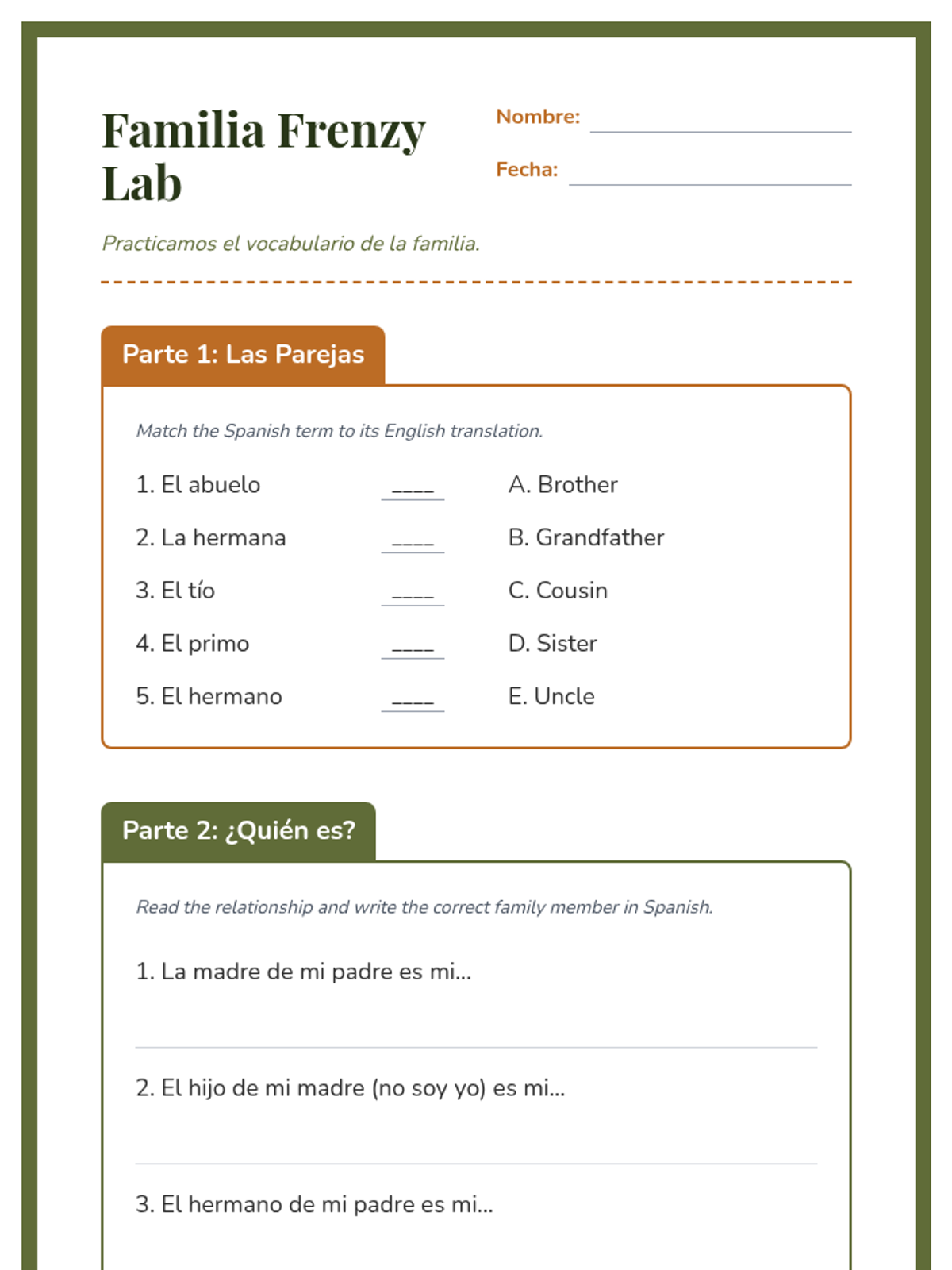
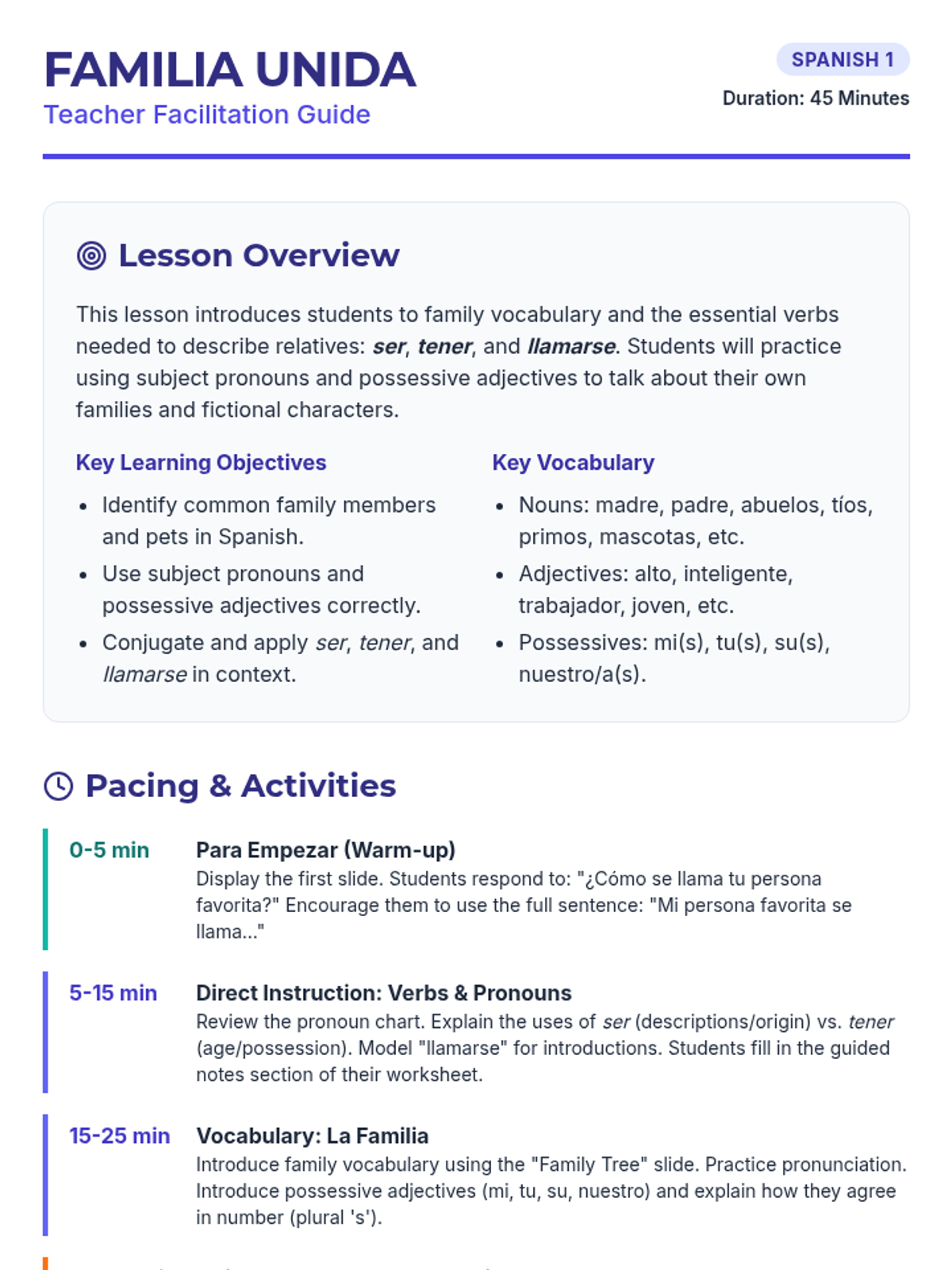
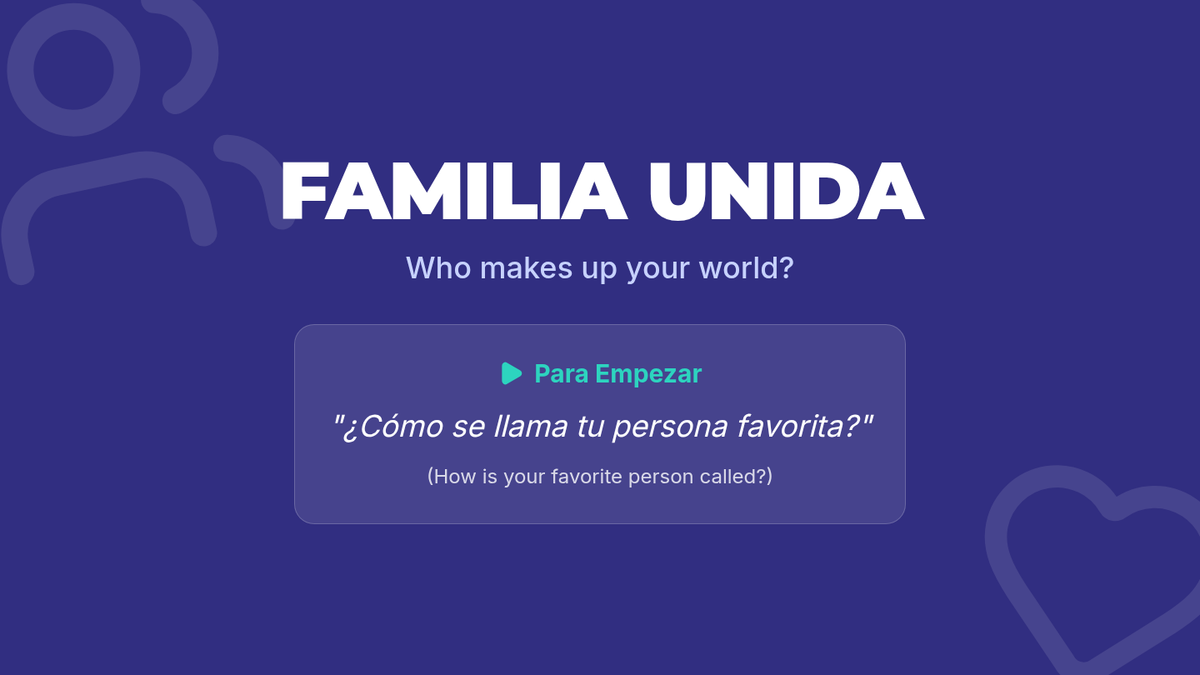
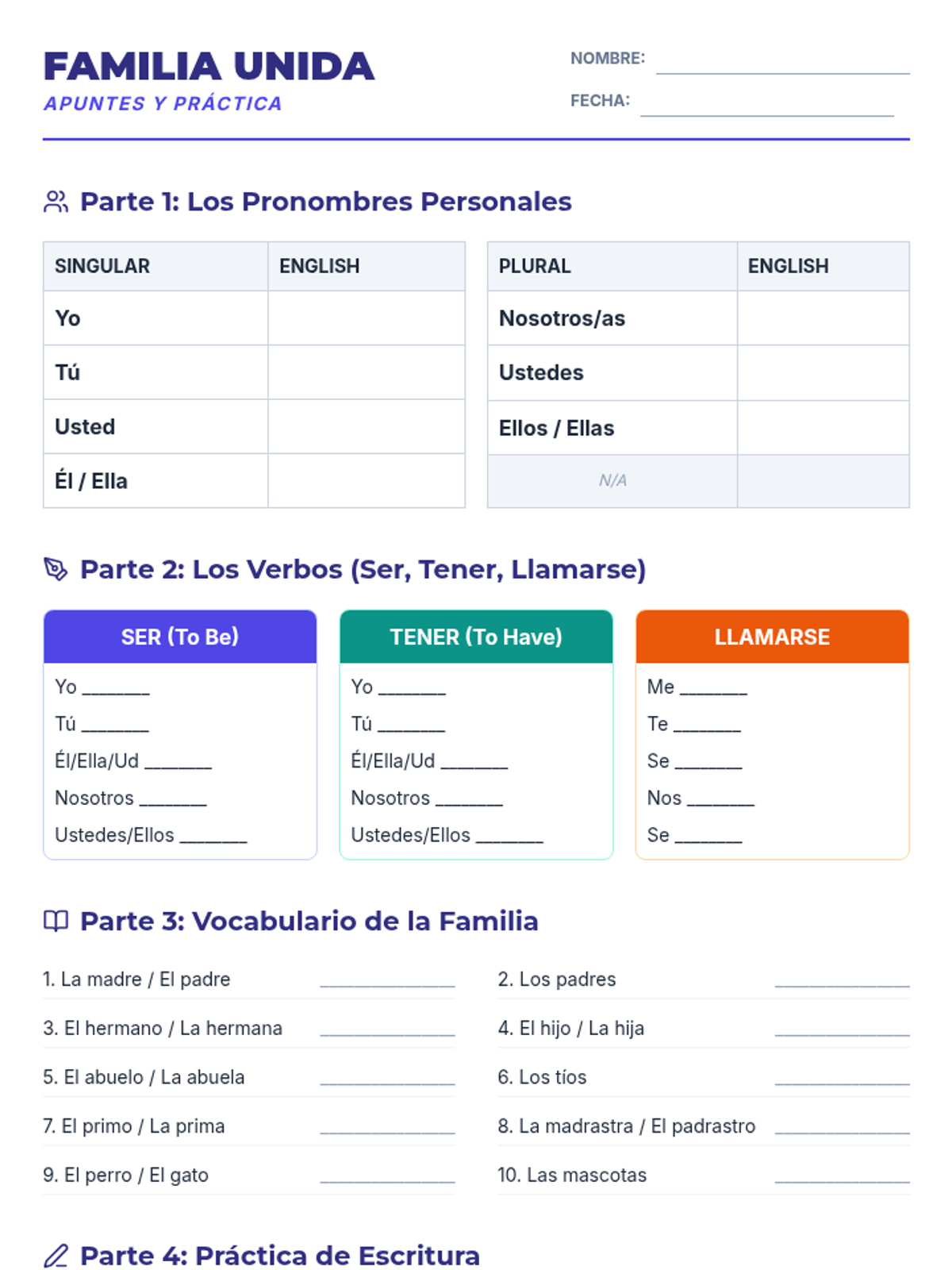
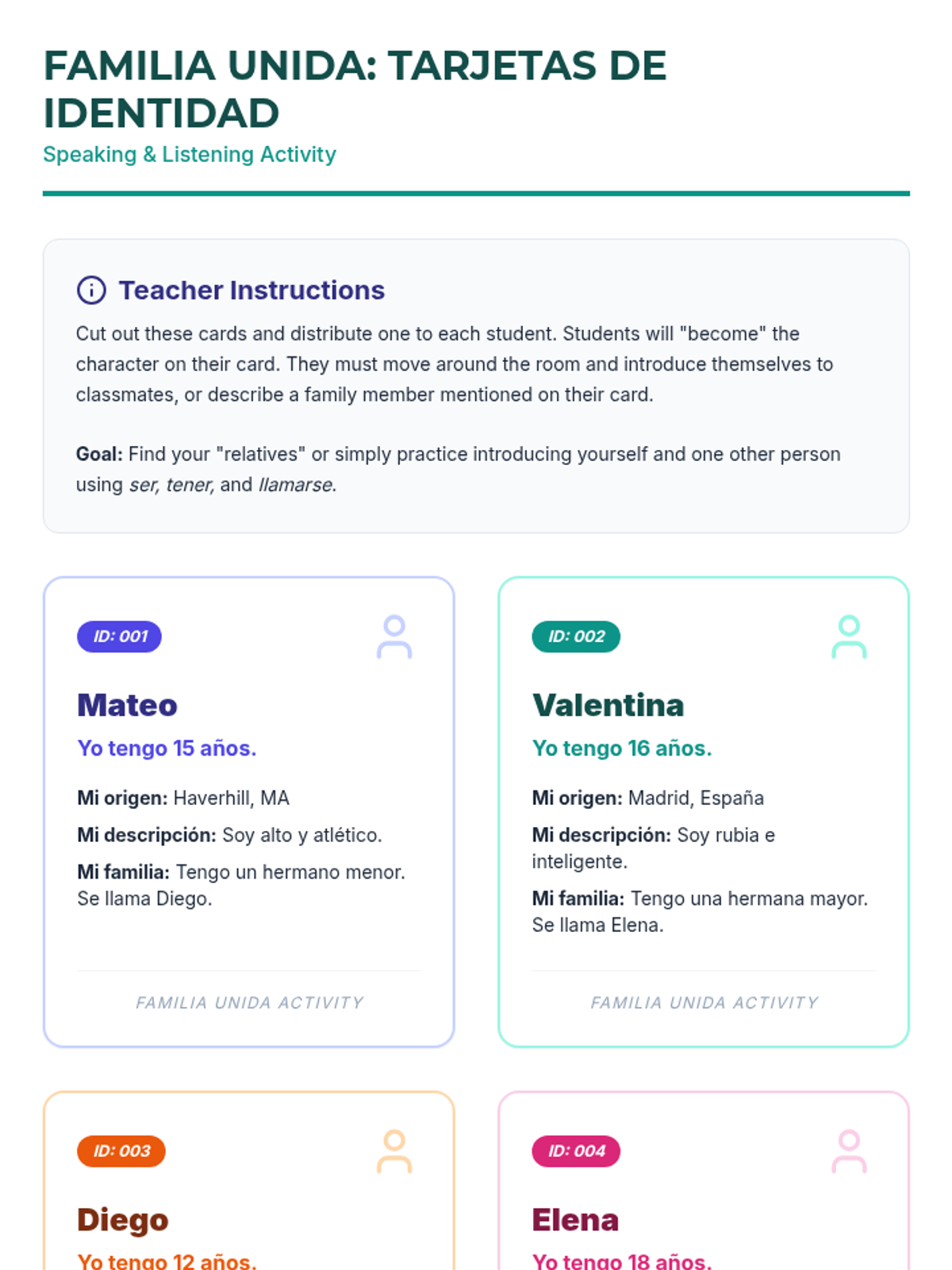
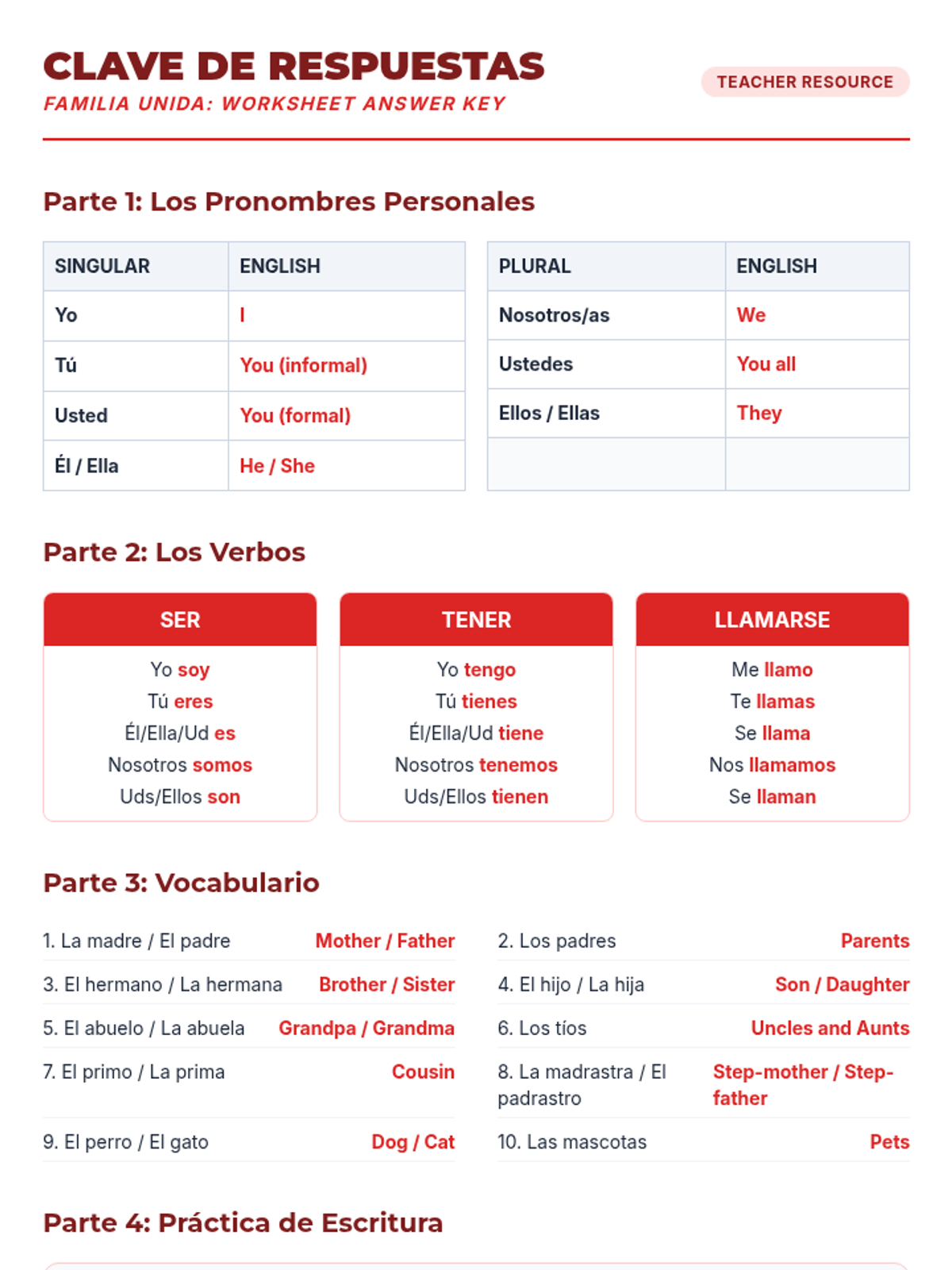
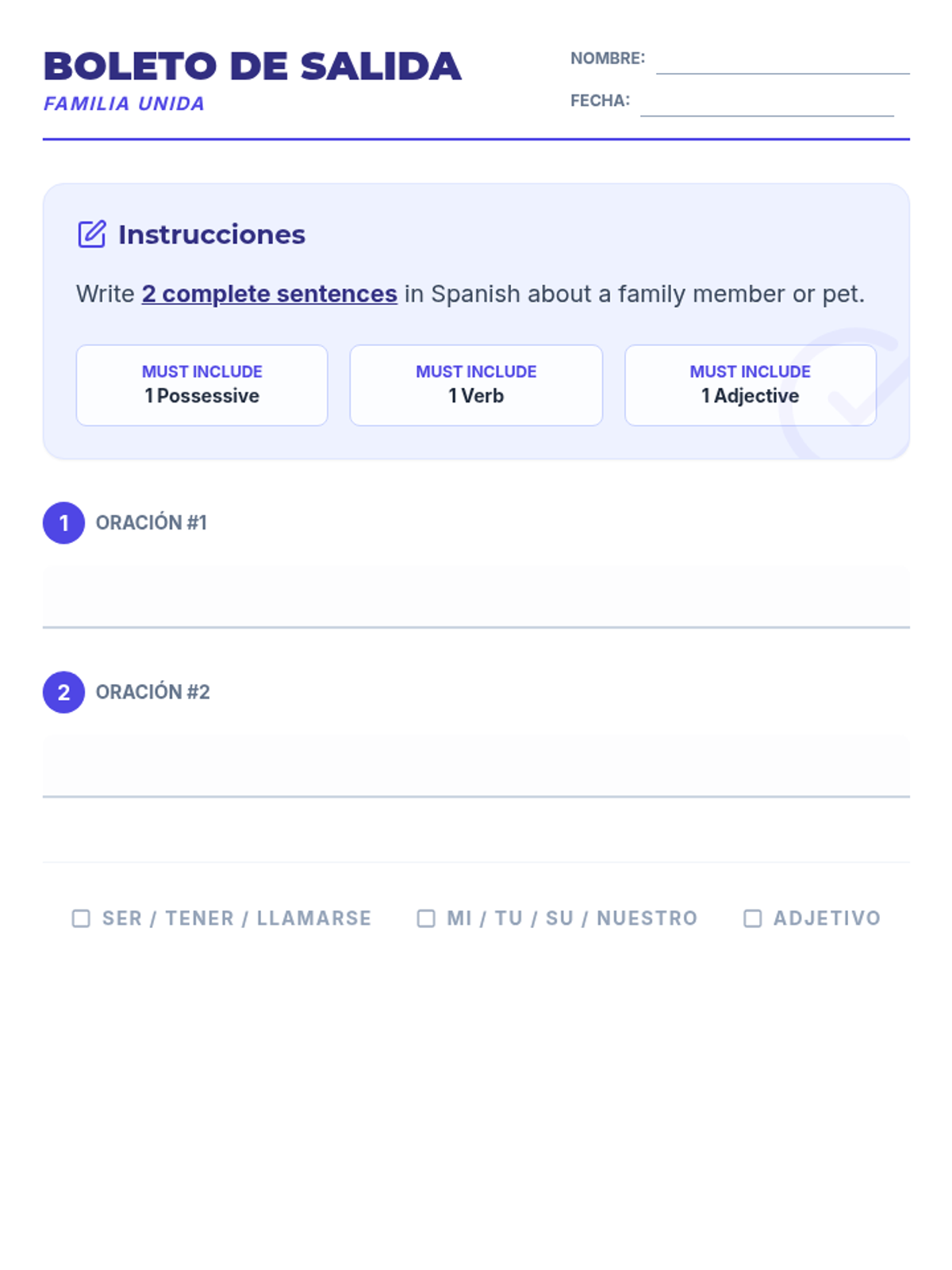
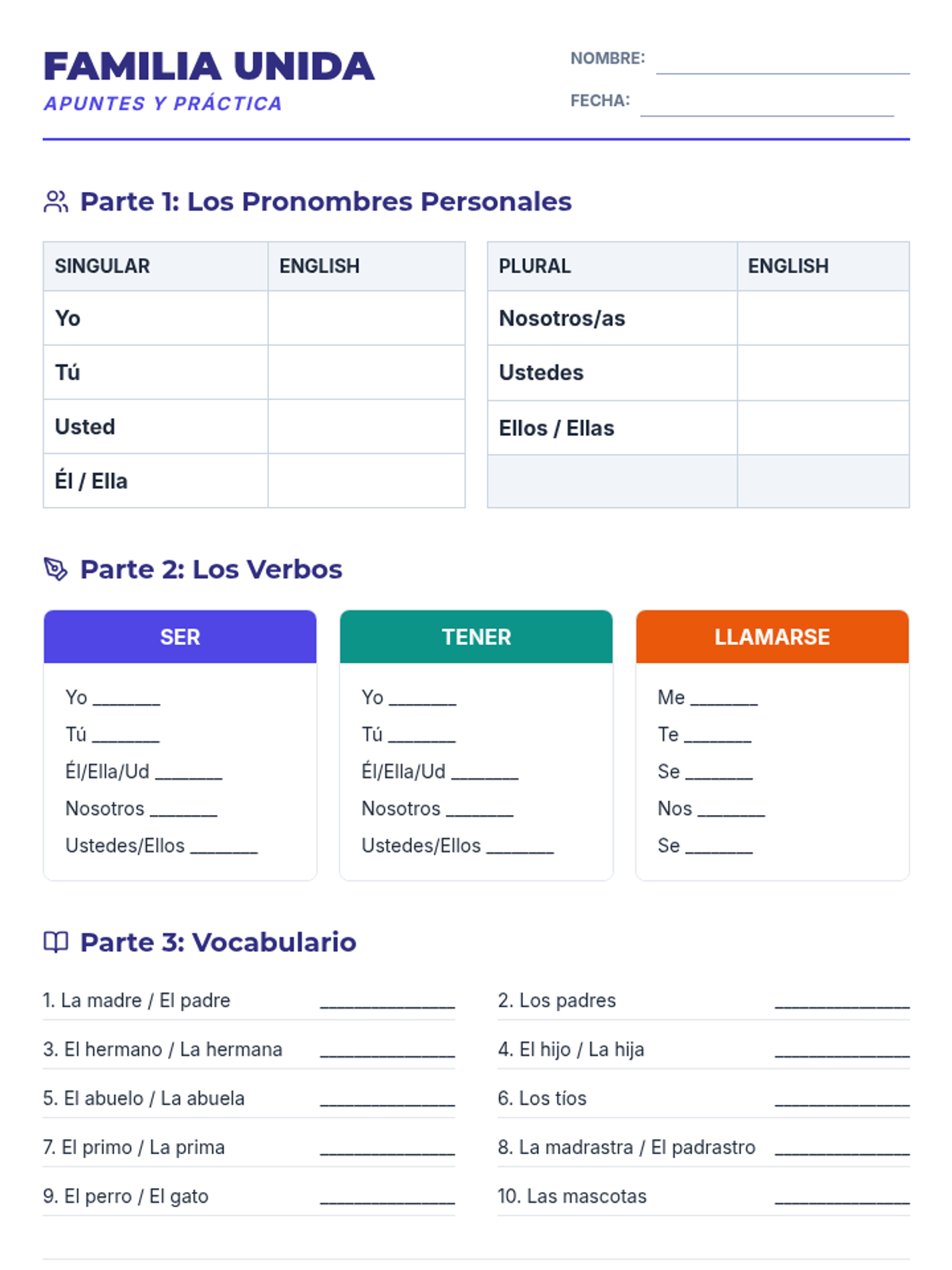
An introductory Spanish 1 lesson focused on family vocabulary, possessive adjectives, and the verbs ser, tener, and llamarse. Students will learn to describe their family members and pets while practicing subject pronouns.
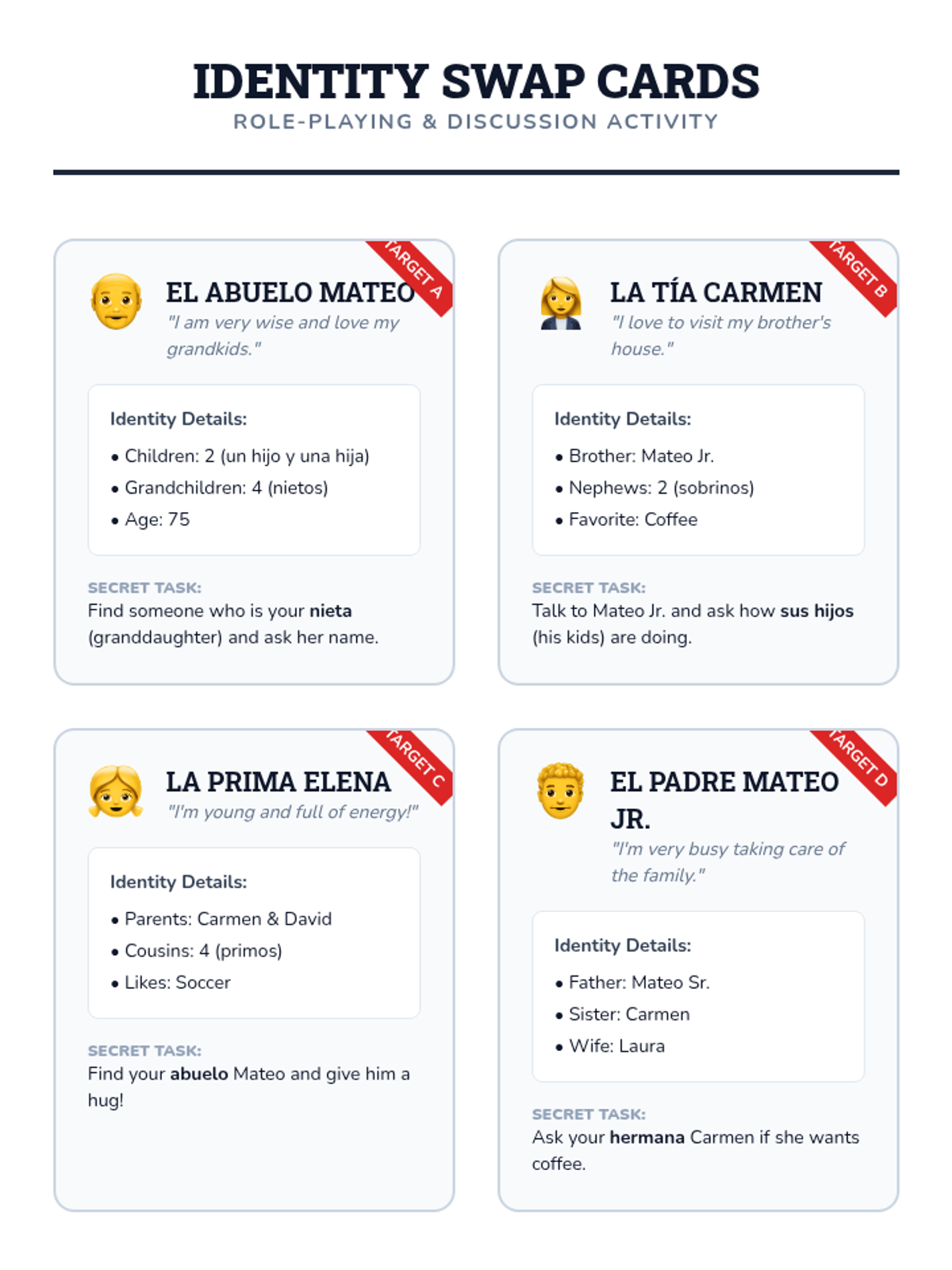
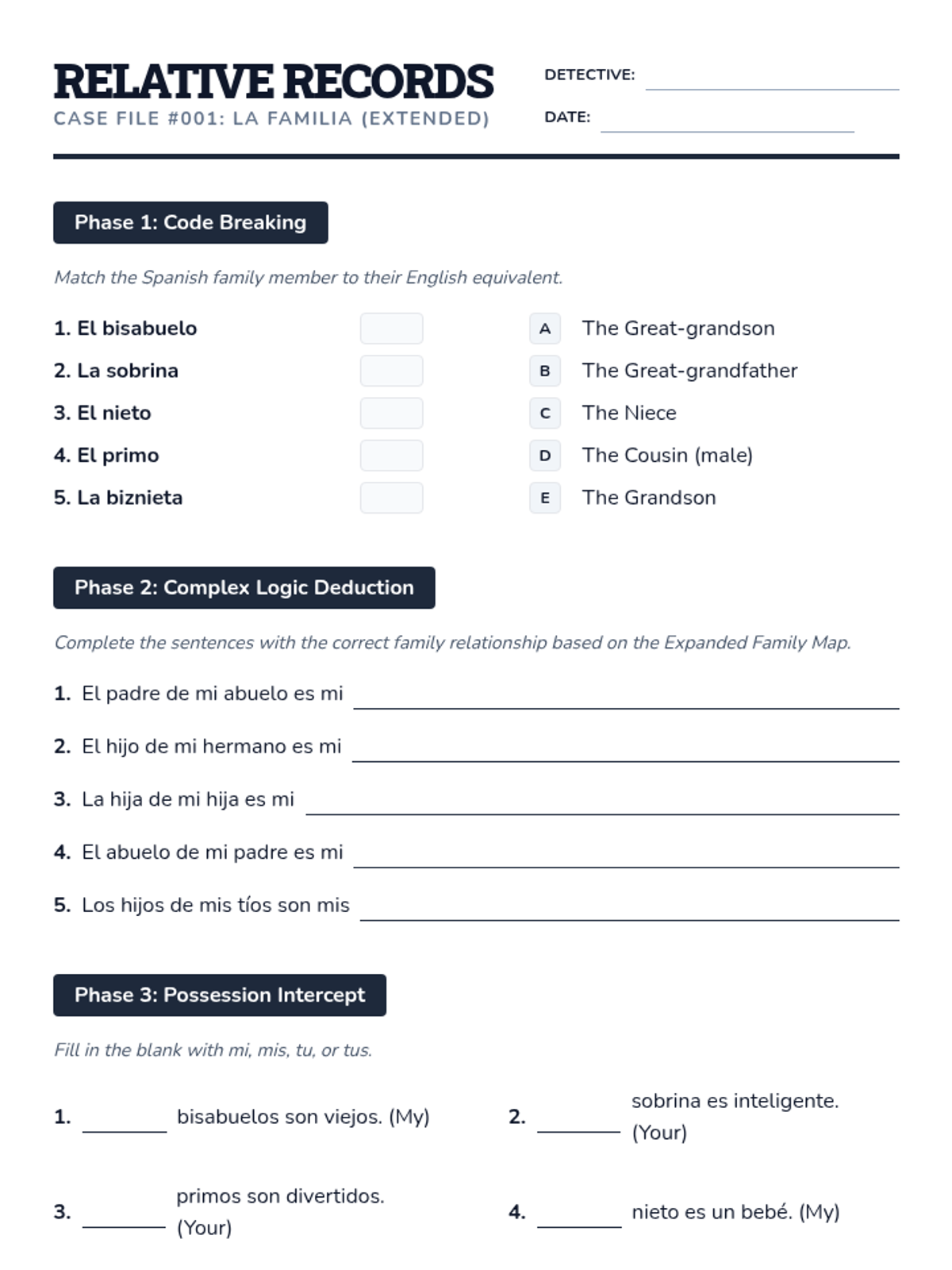
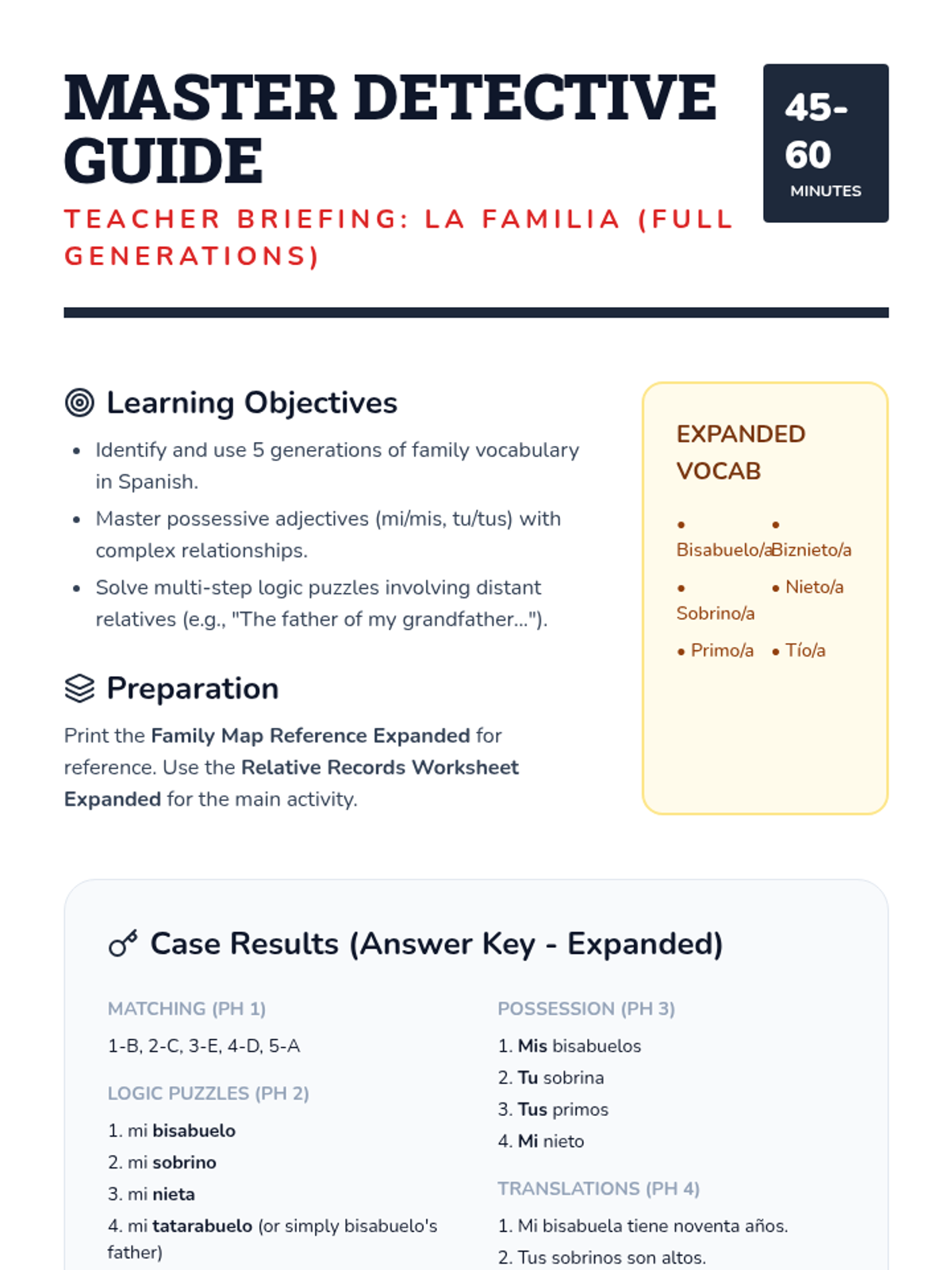
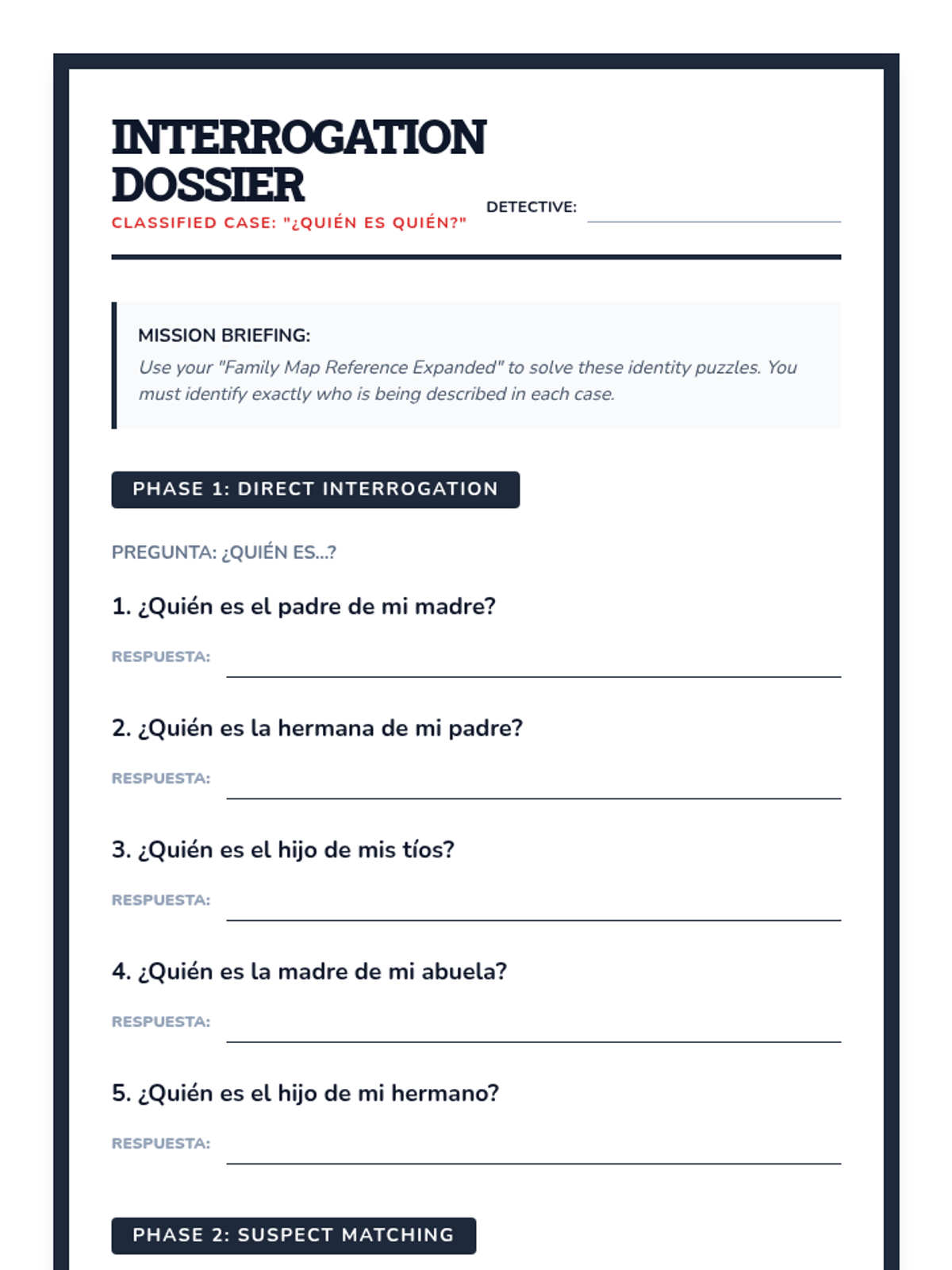
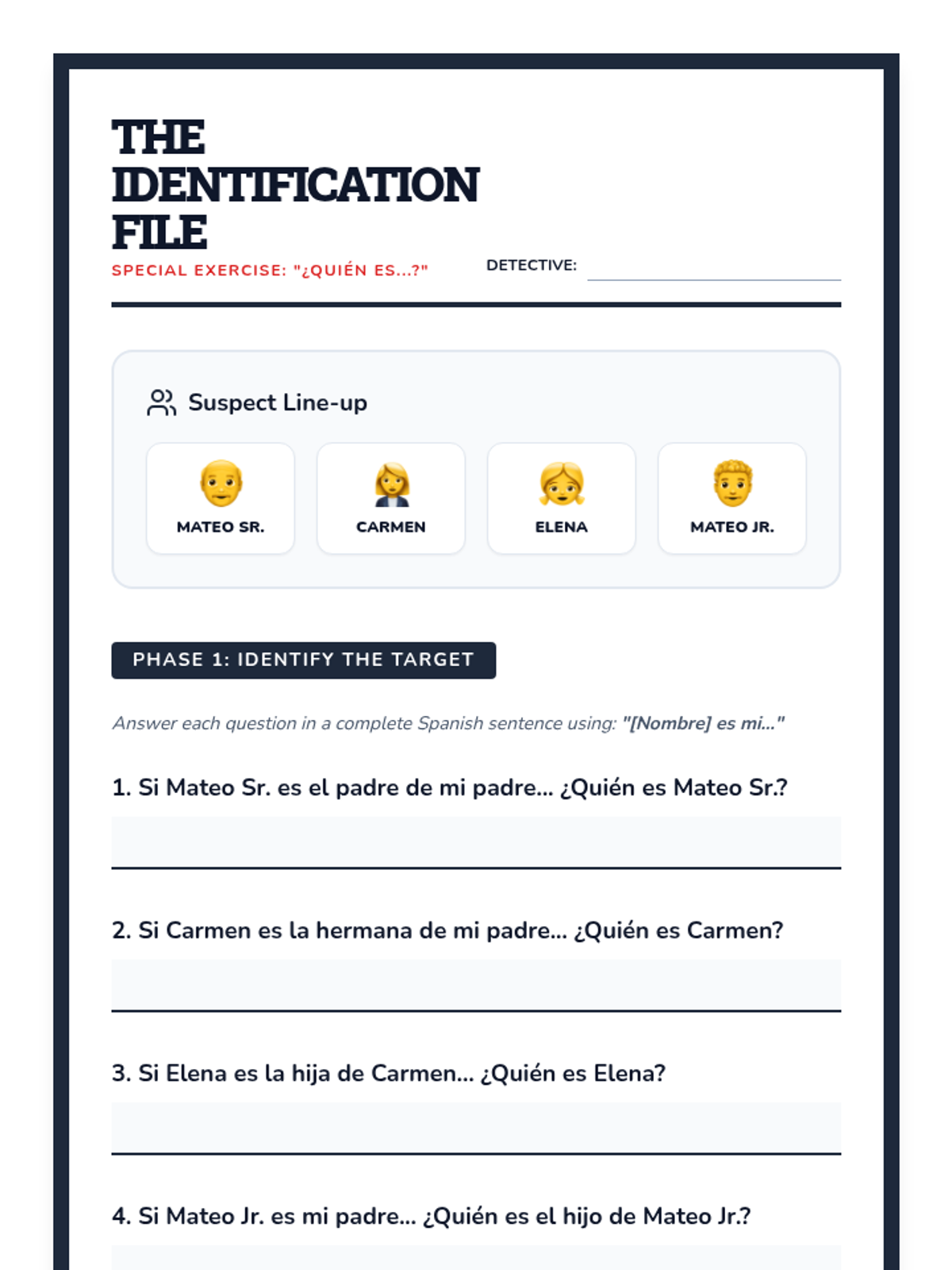
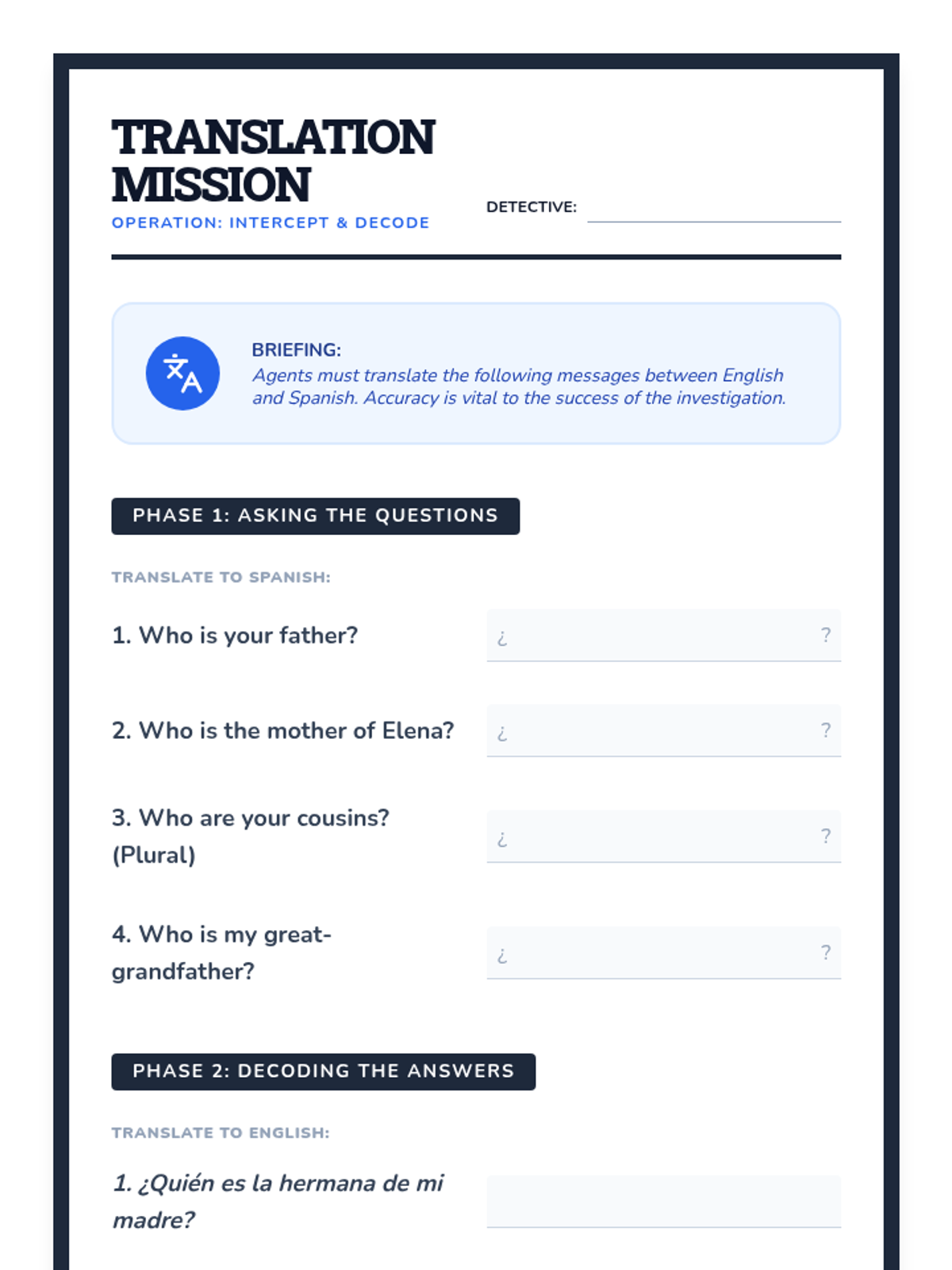
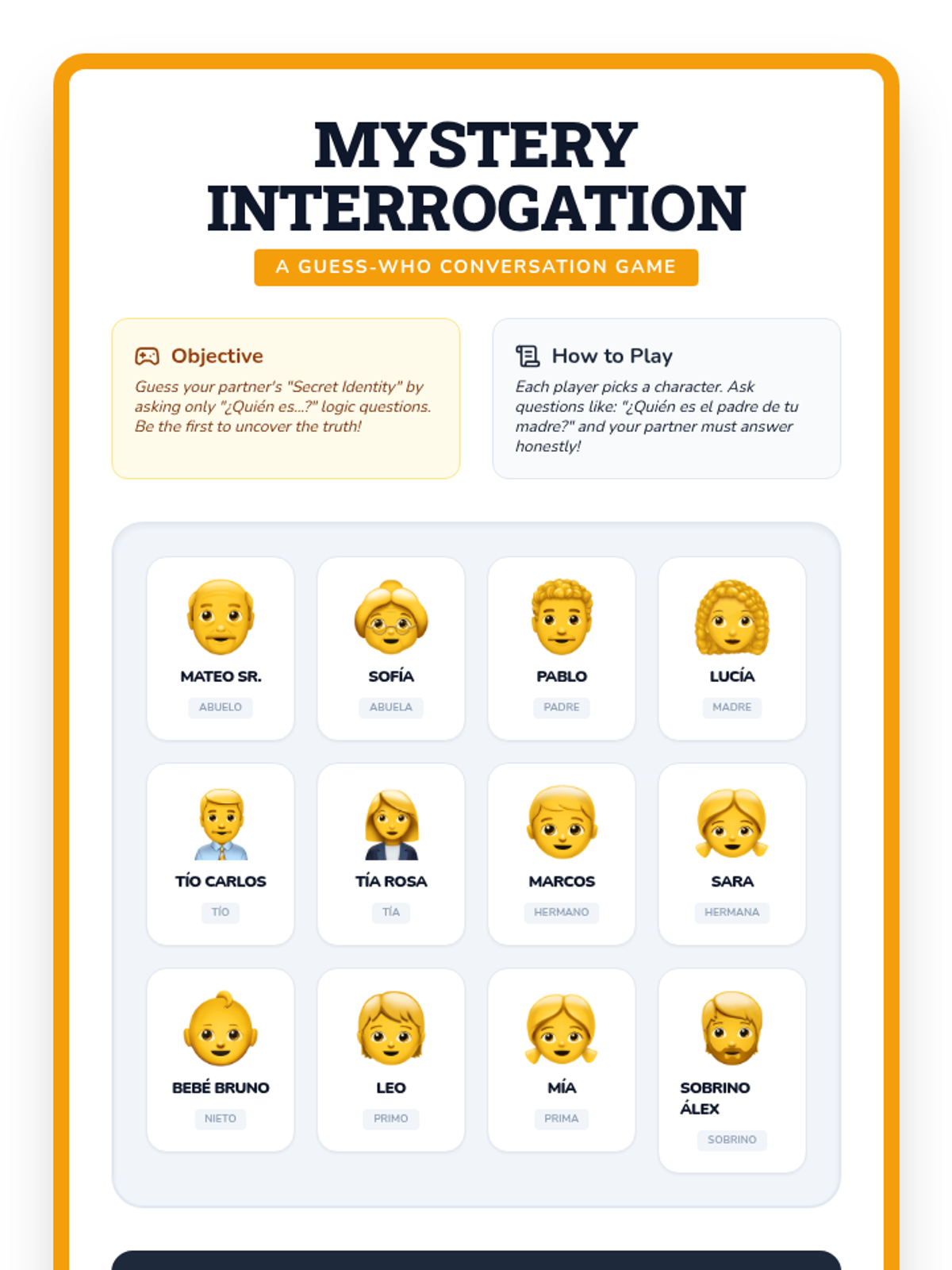
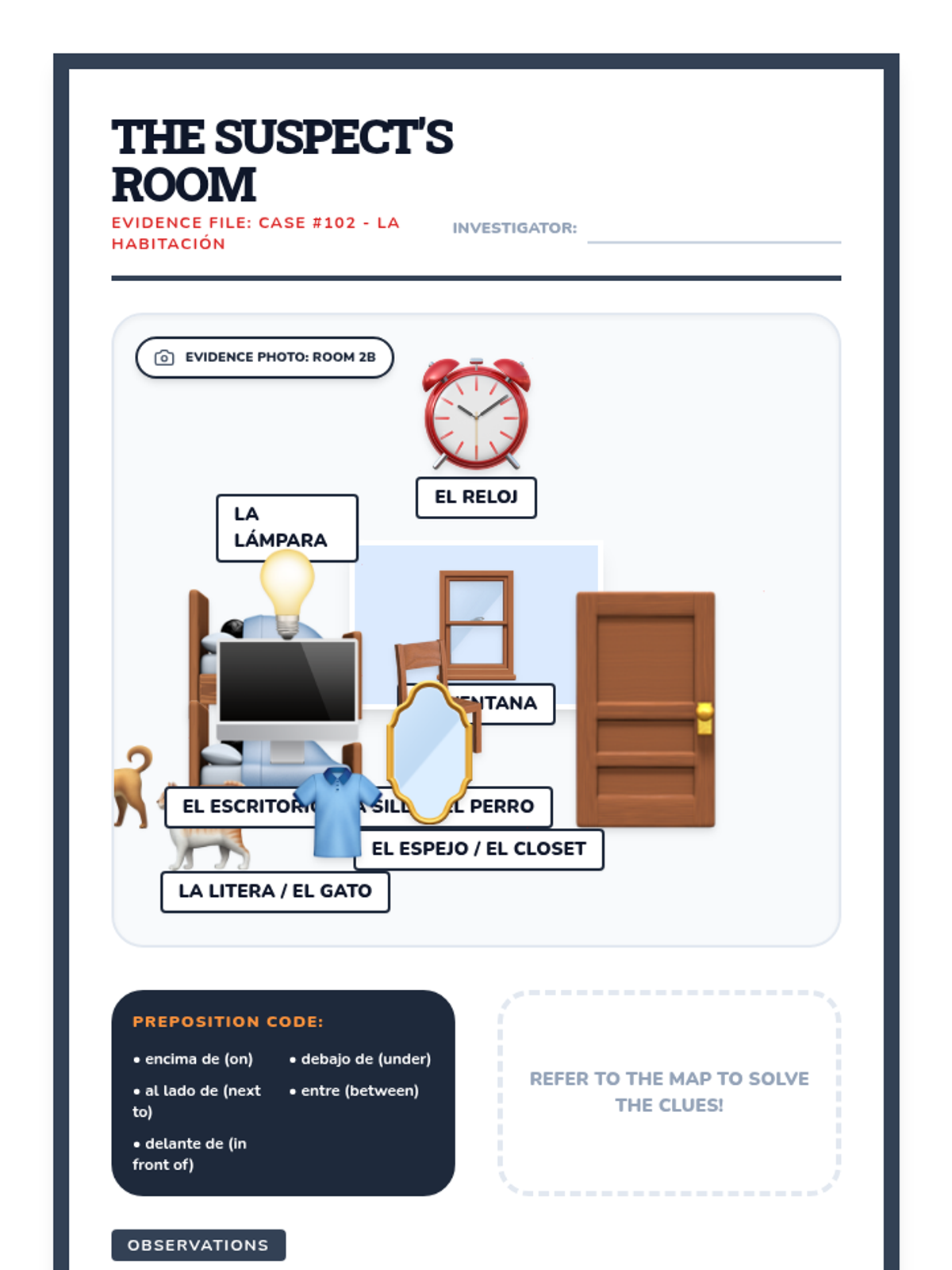
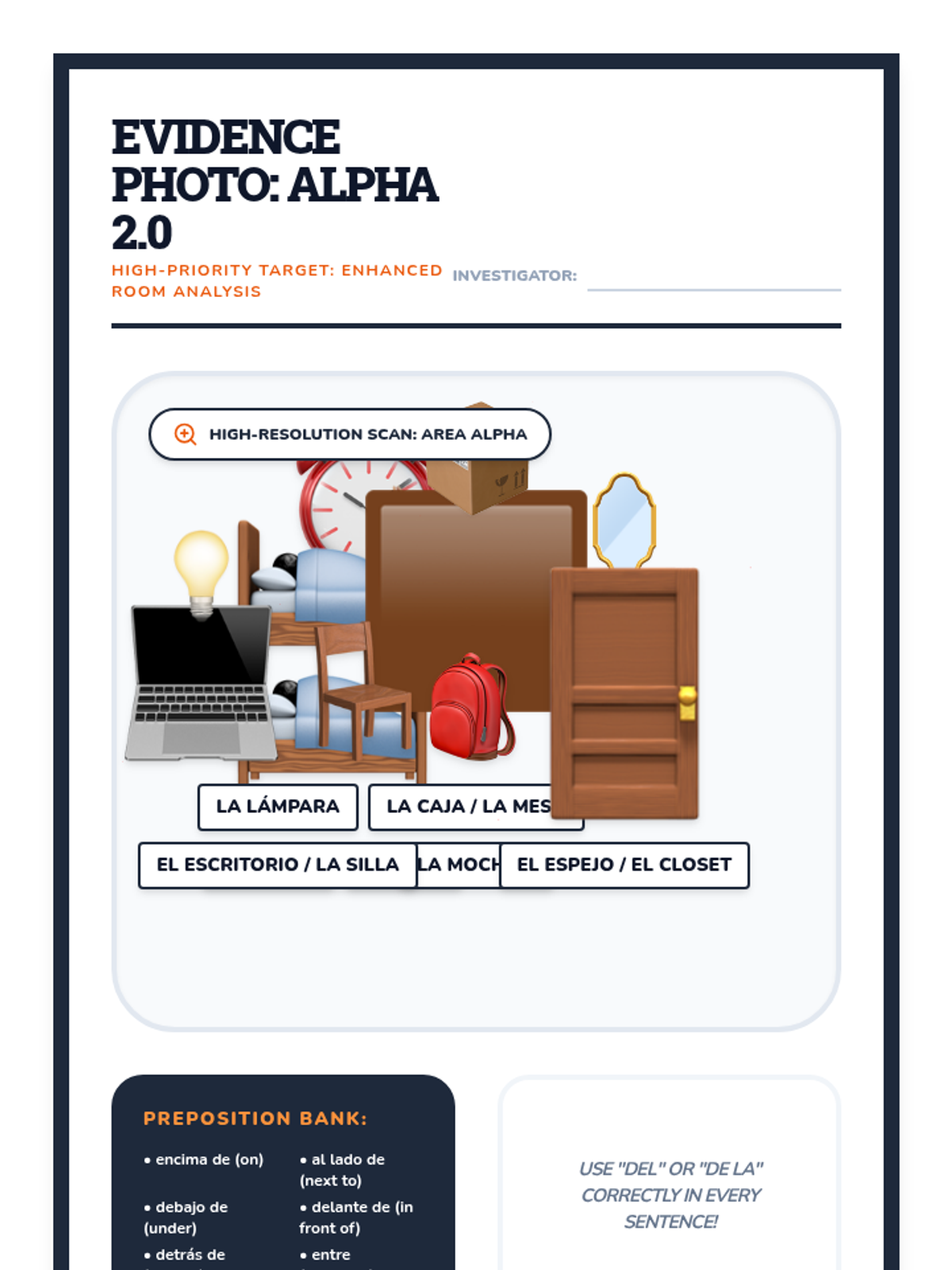
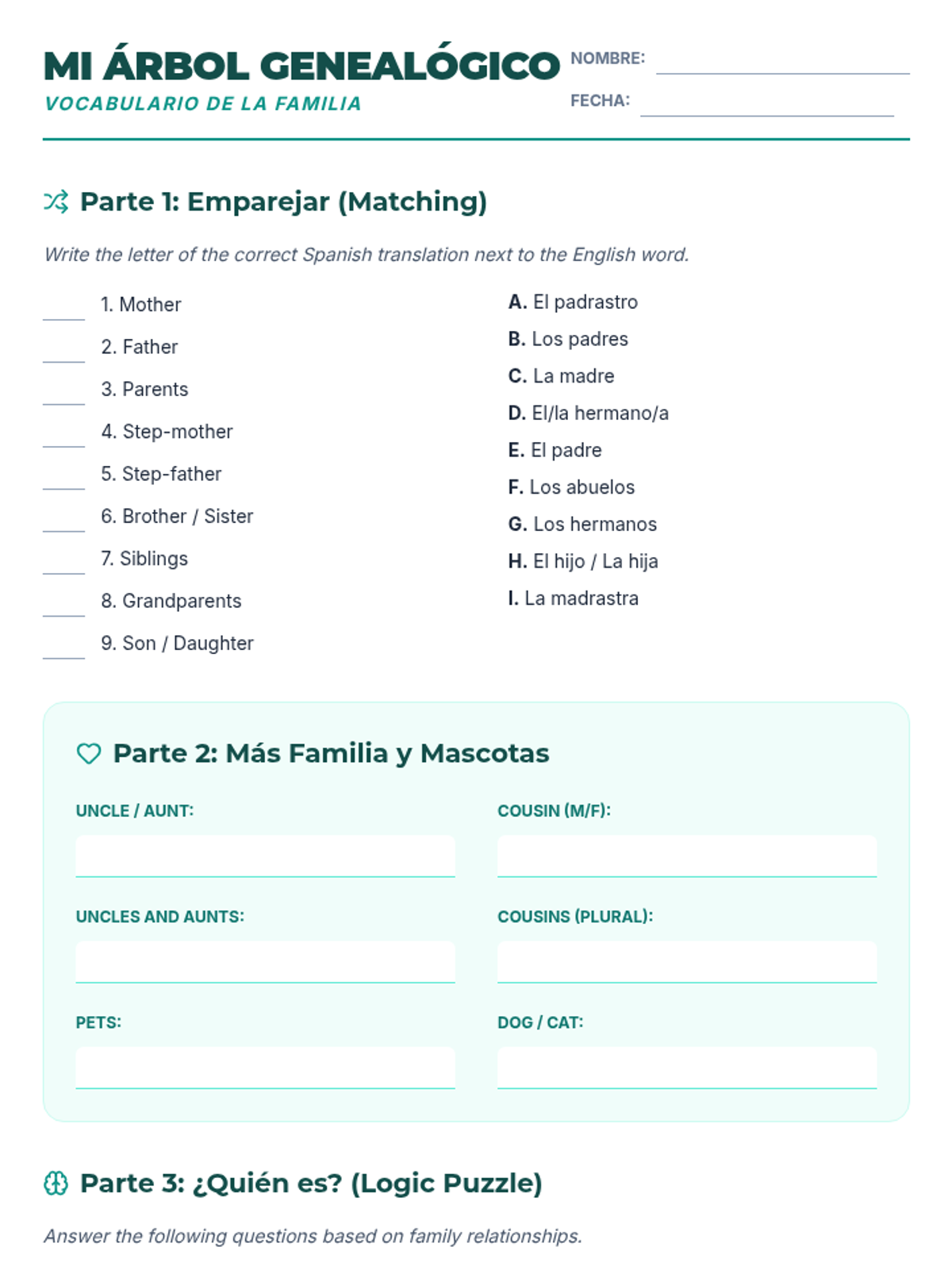
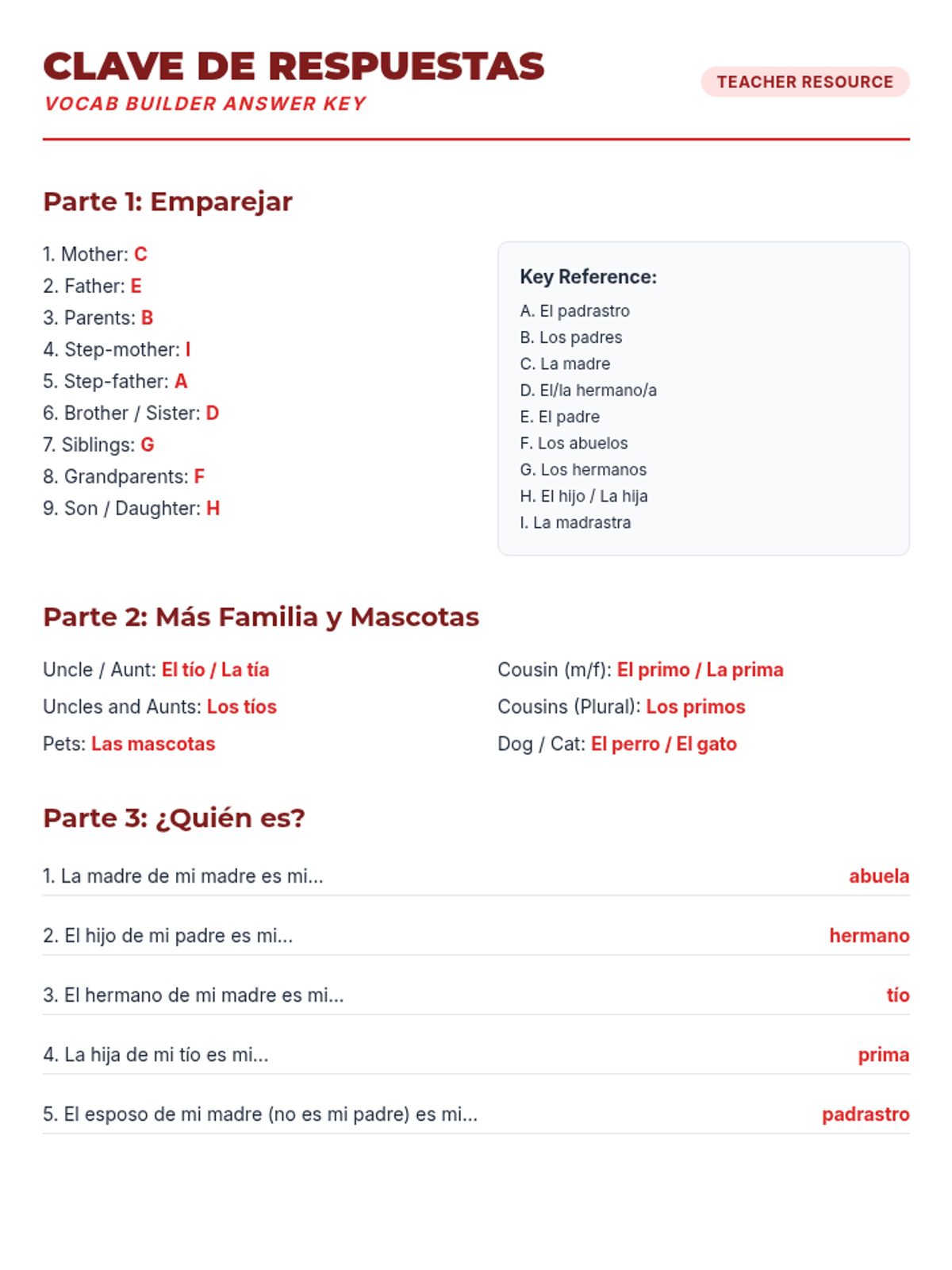
A comprehensive Spanish lesson focused on family and relatives vocabulary through a detective-themed investigation. Students will identify, describe, and discuss family members using a variety of interactive and written exercises.
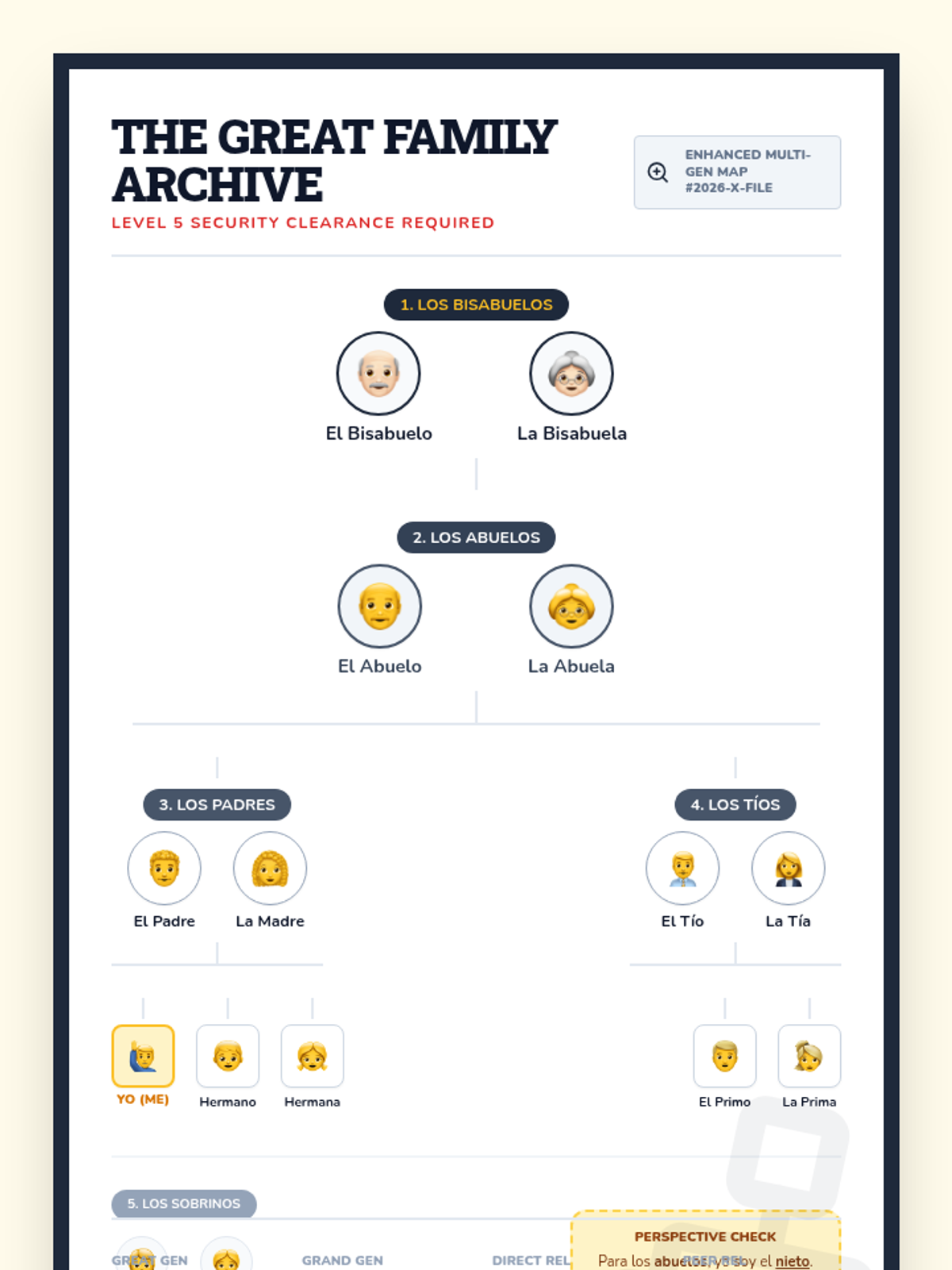
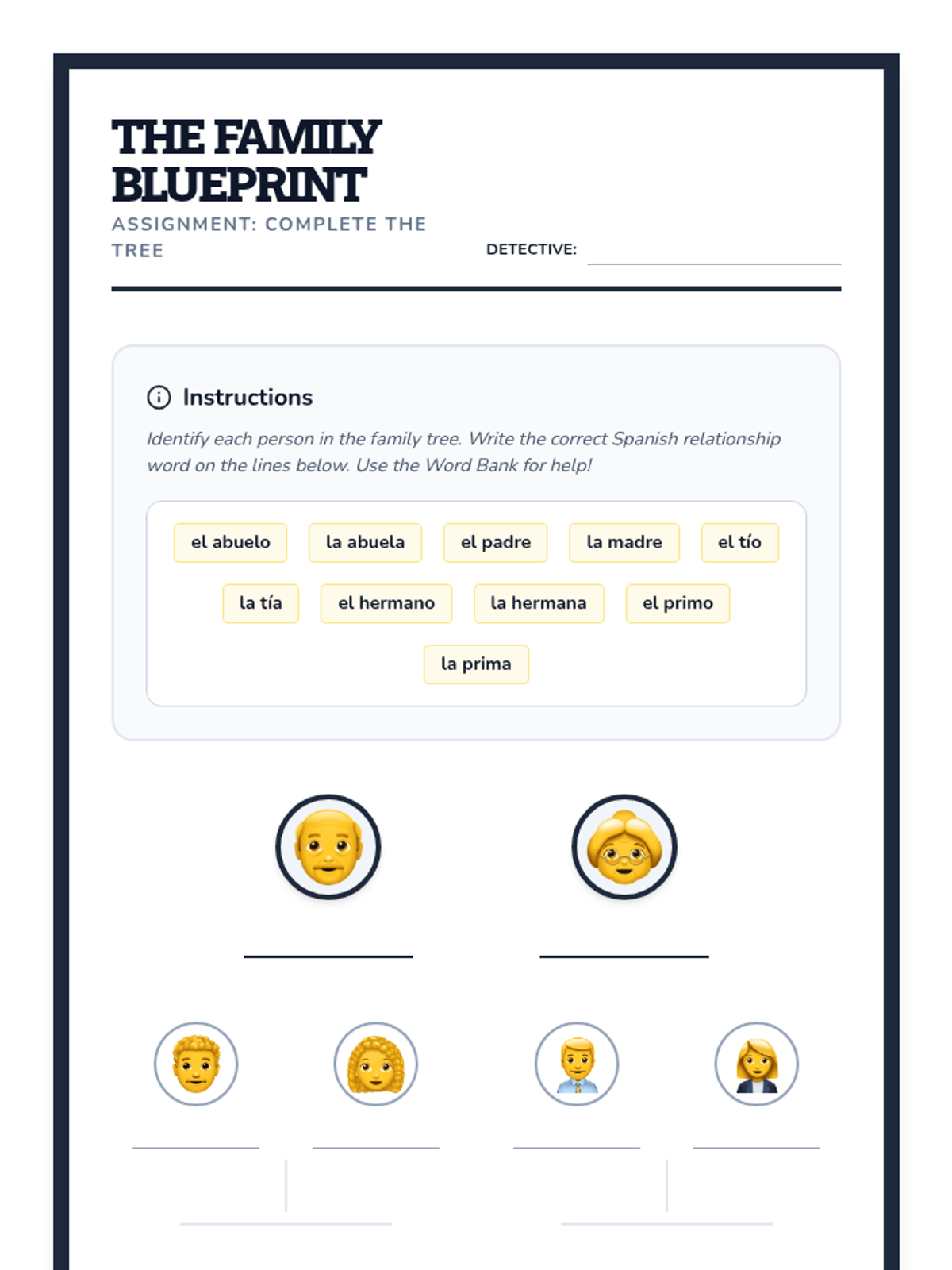
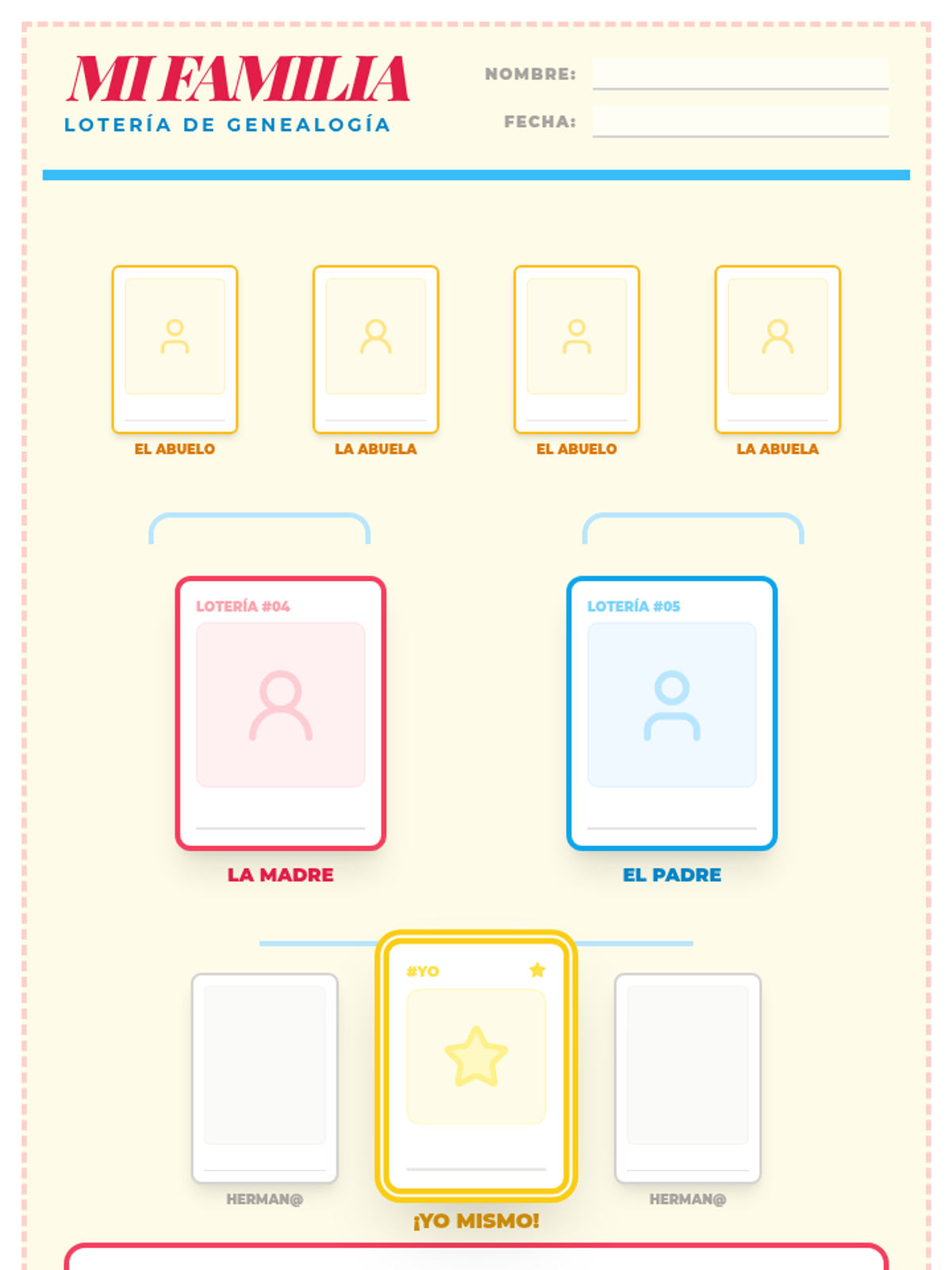
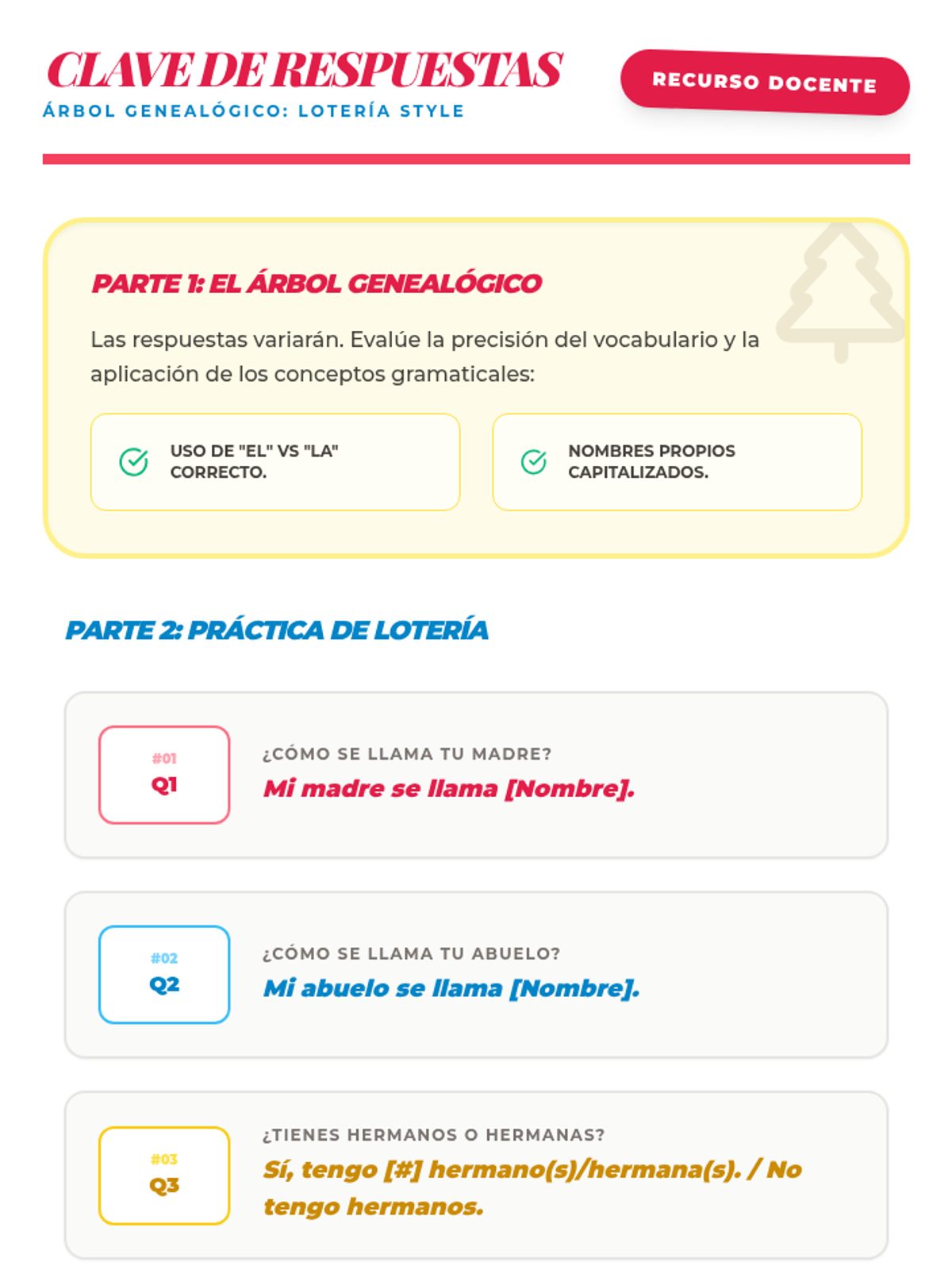
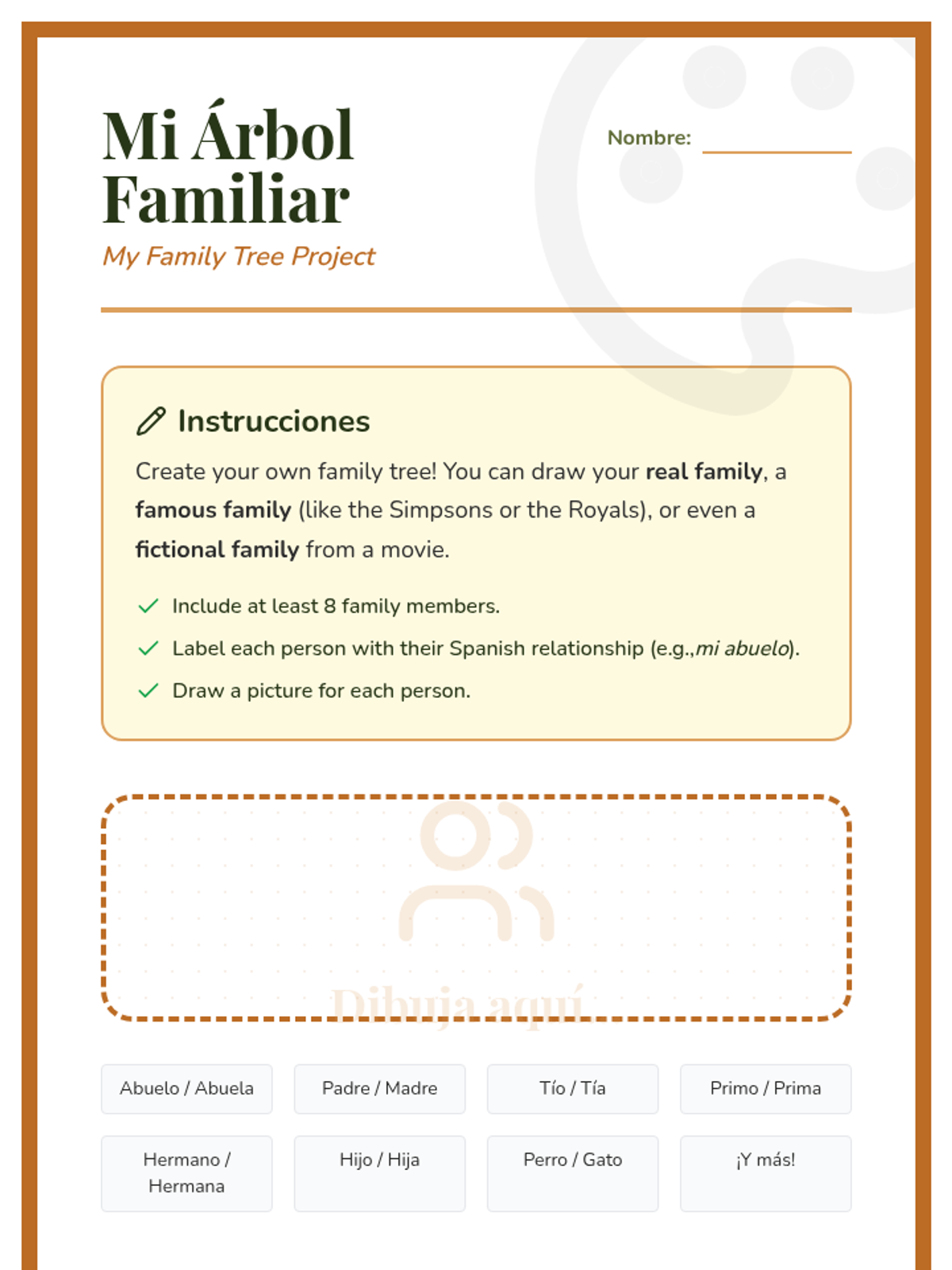
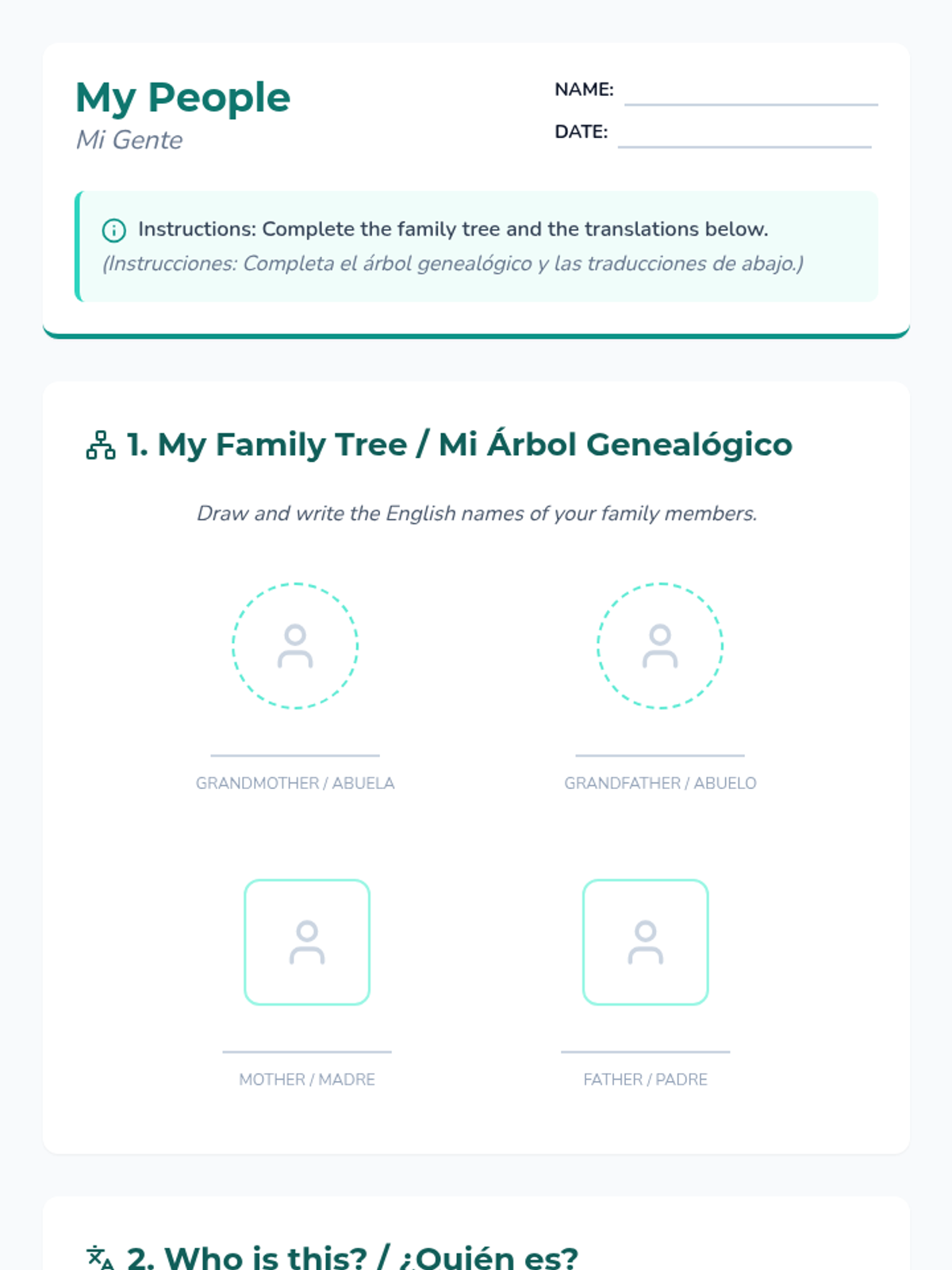
A beginner-level Spanish lesson where students learn and apply basic family vocabulary by constructing their own family tree graphic organizer.
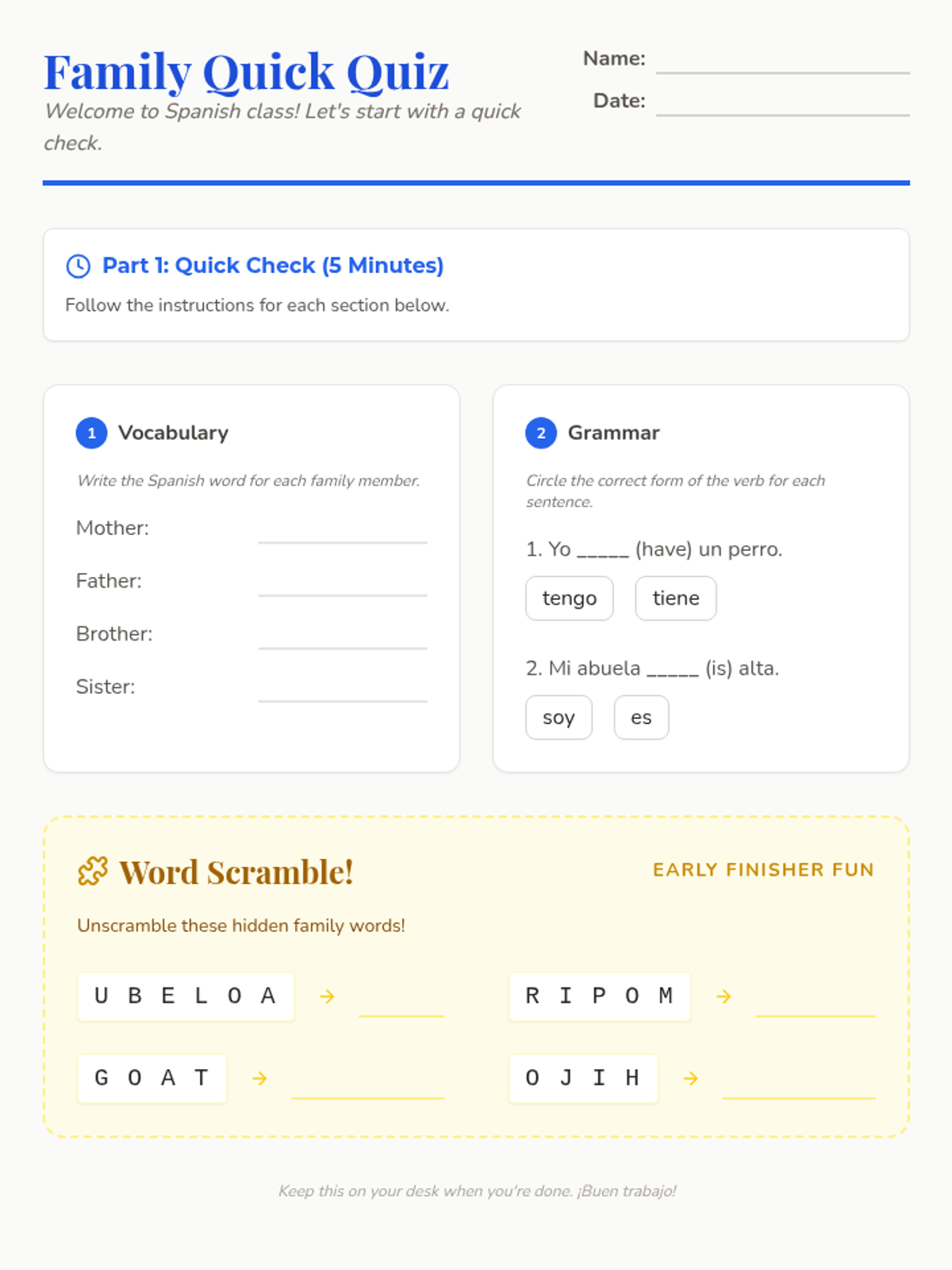
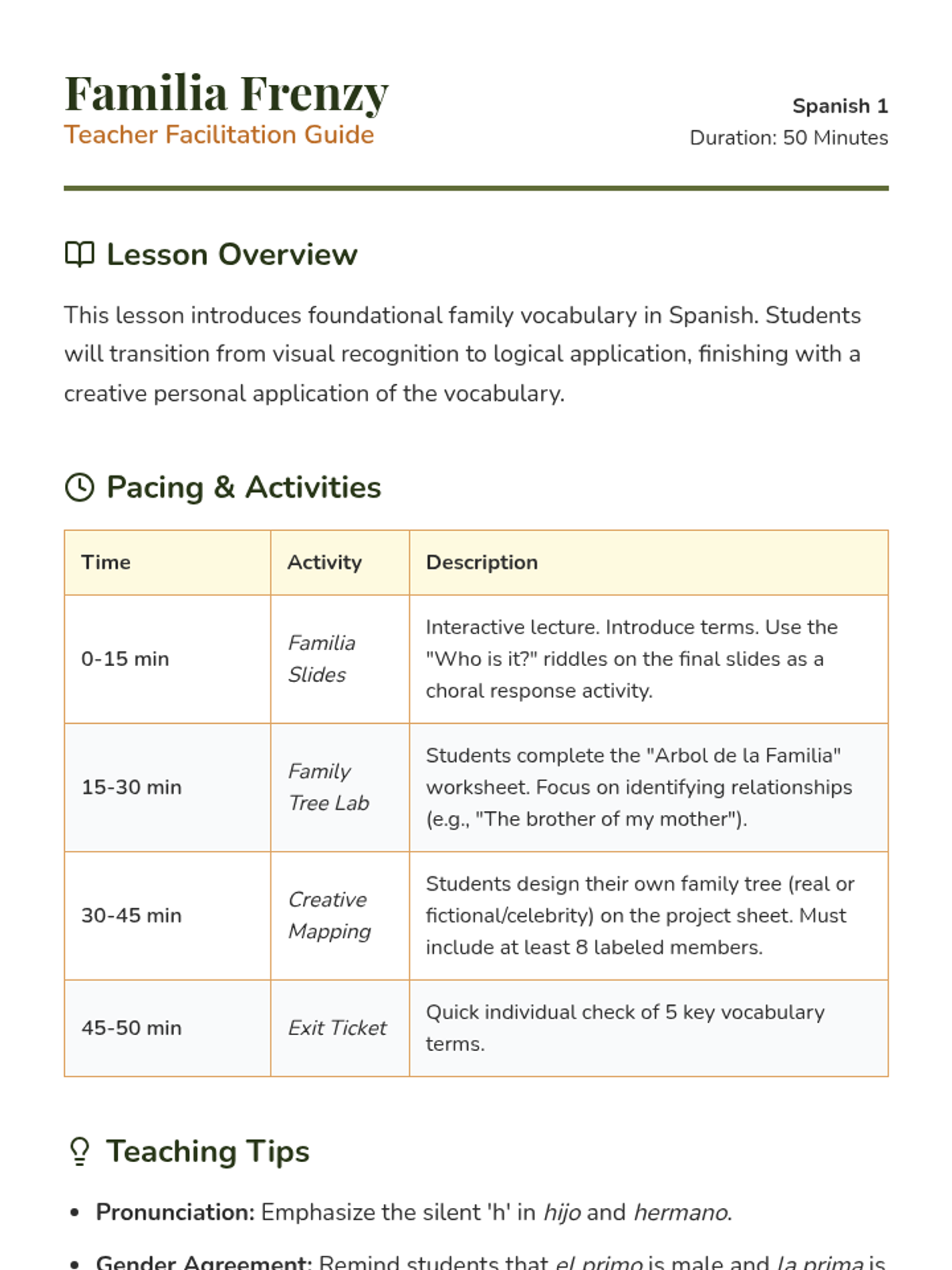
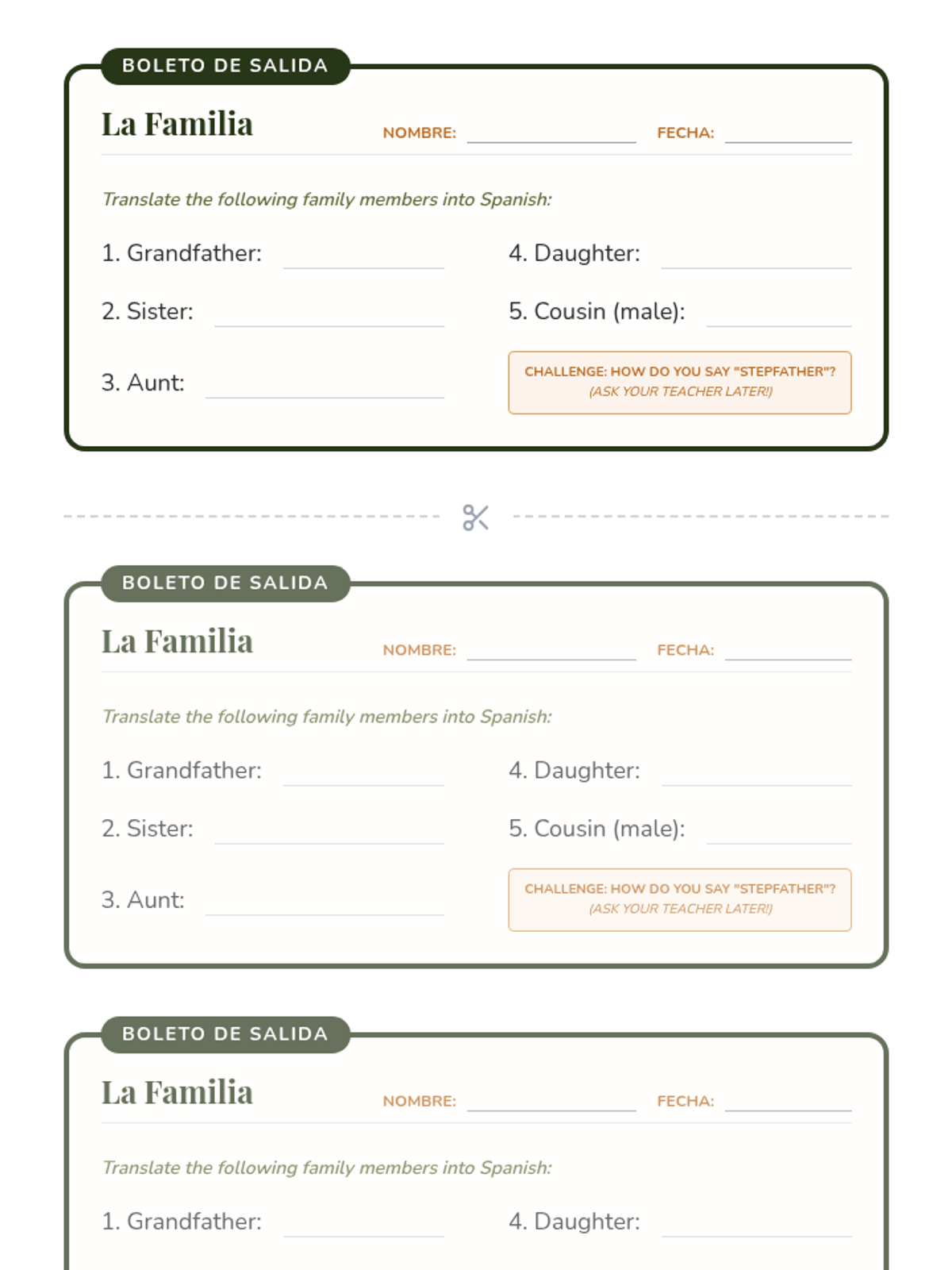
A 50-minute introductory Spanish 1 lesson focused on family member vocabulary through visual slides, a family tree reading activity, a creative mapping project, and a quick vocabulary check.
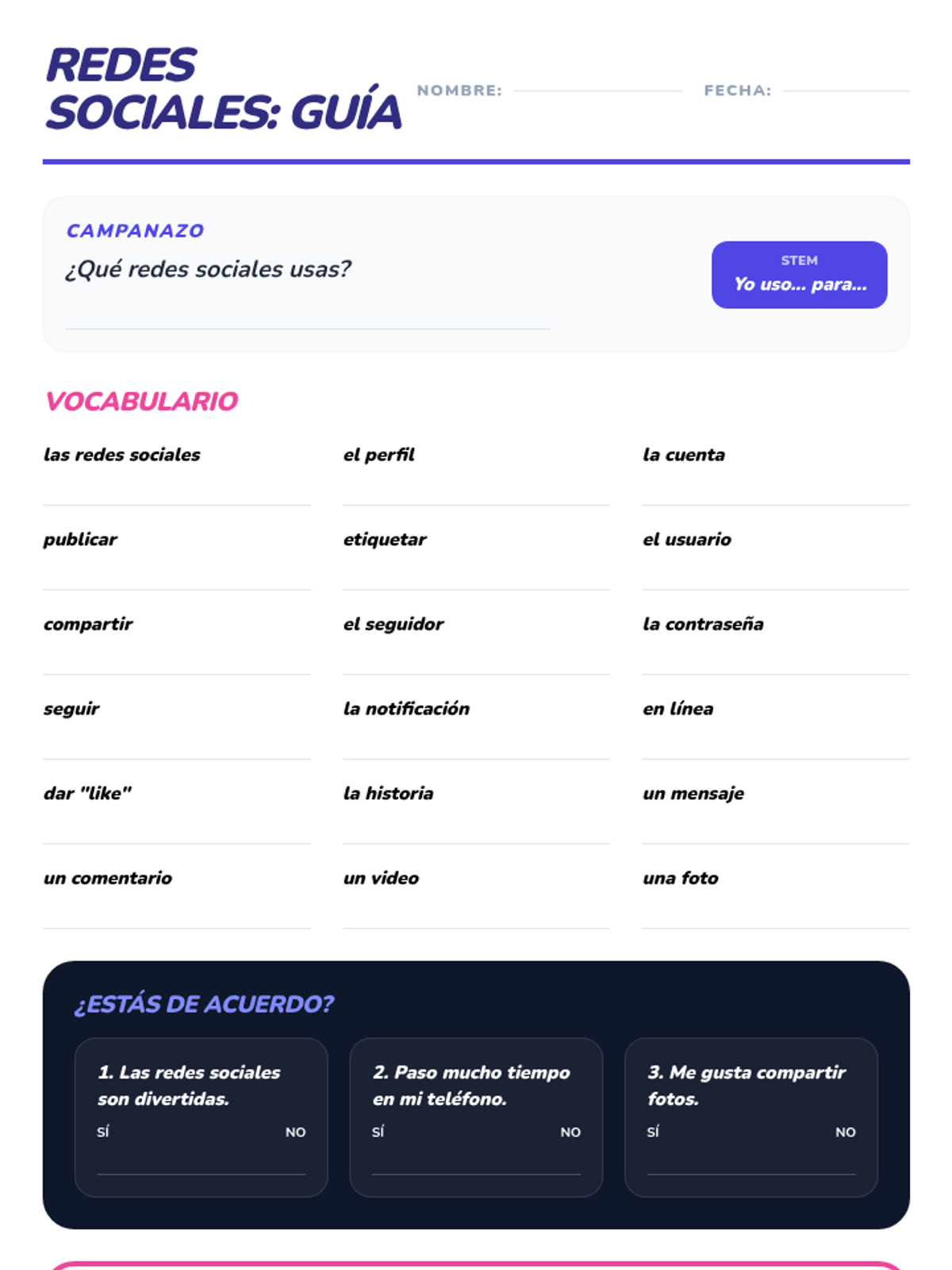
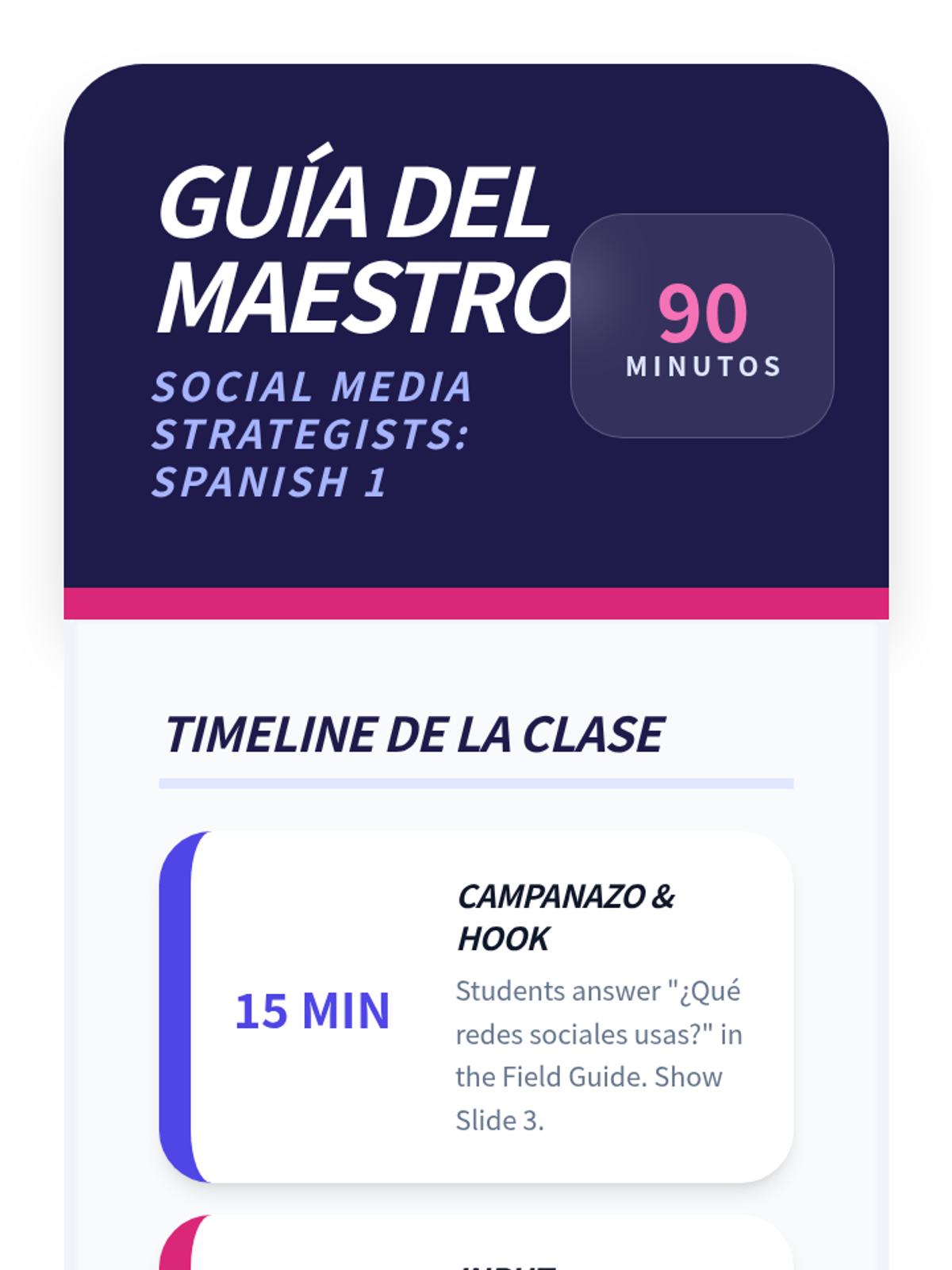
An introductory Spanish 1 lesson on social media vocabulary and expressing opinions (agreement/disagreement). Students will learn to identify key platforms and actions while discussing their digital habits.
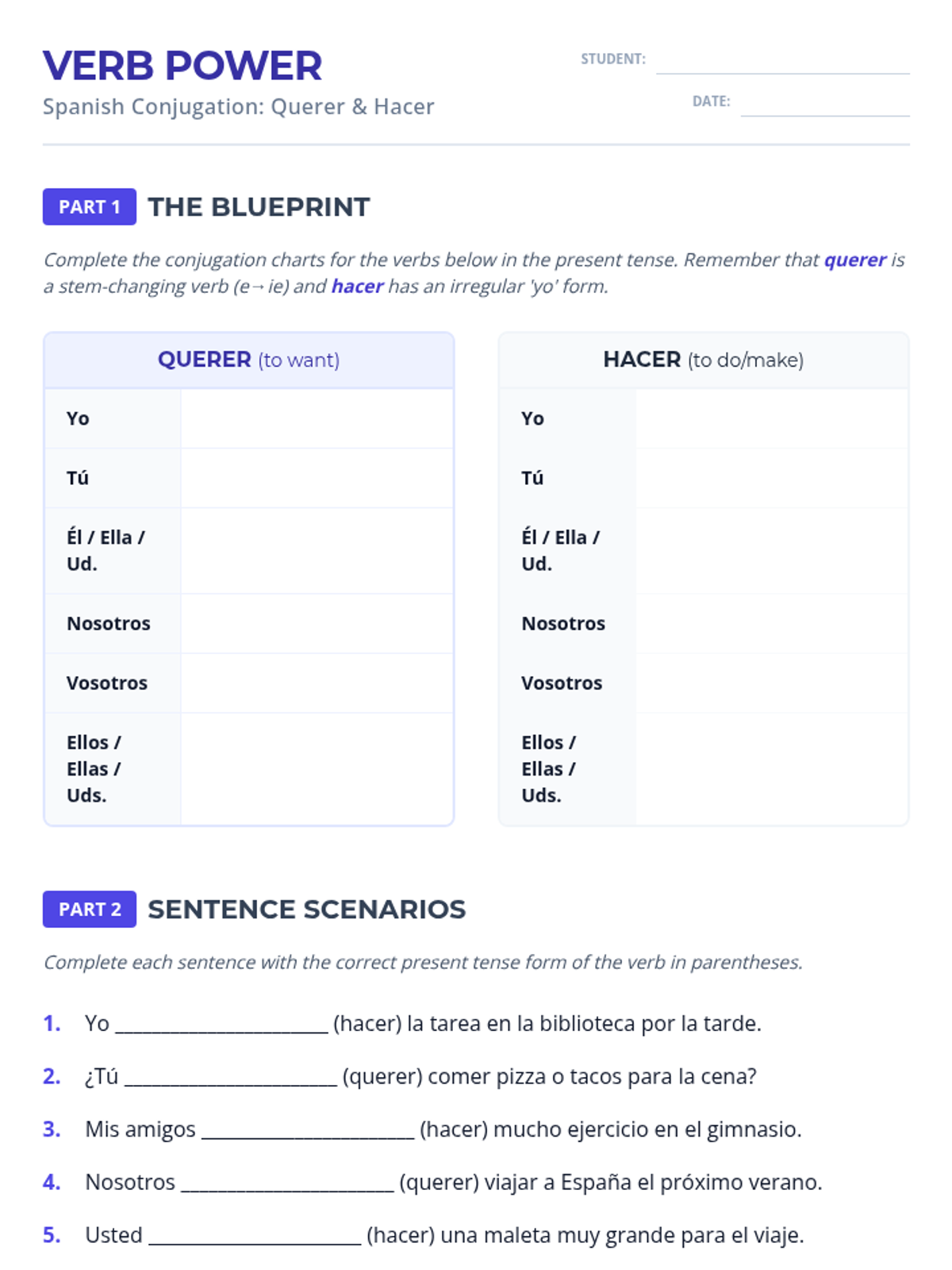
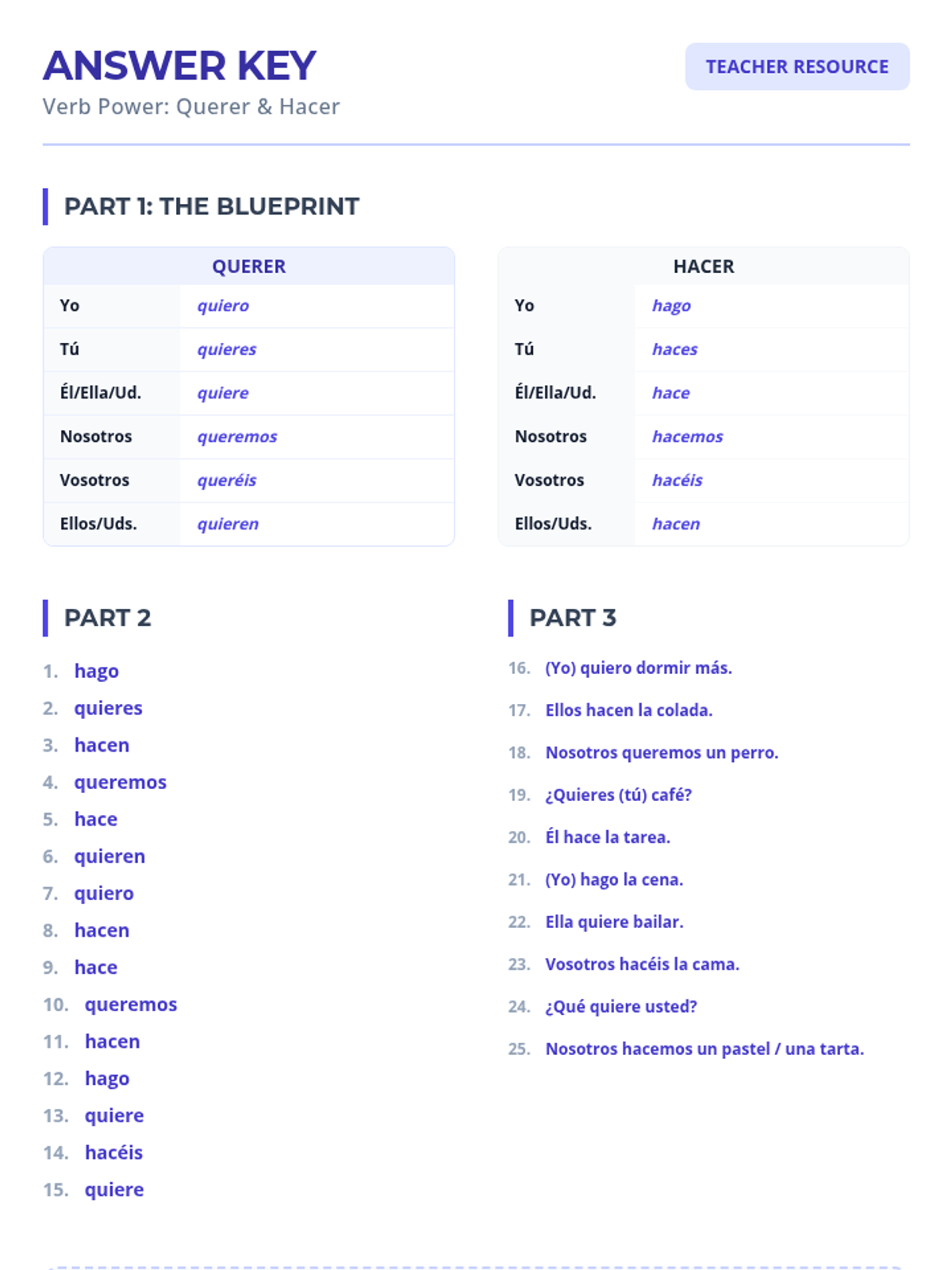
A focused practice session on the irregular present tense conjugations of the Spanish verbs 'querer' and 'hacer' through charts and contextual exercises.
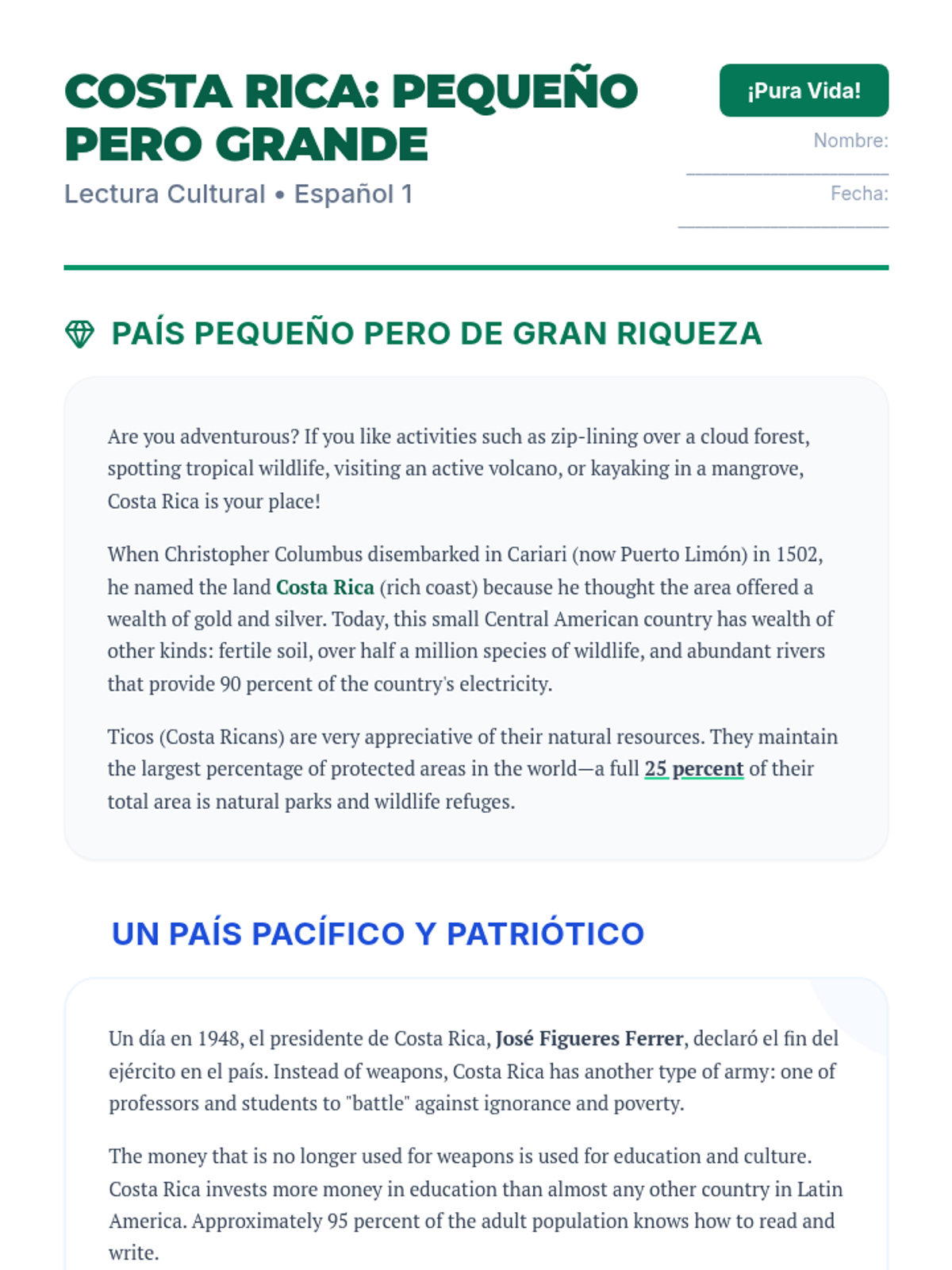
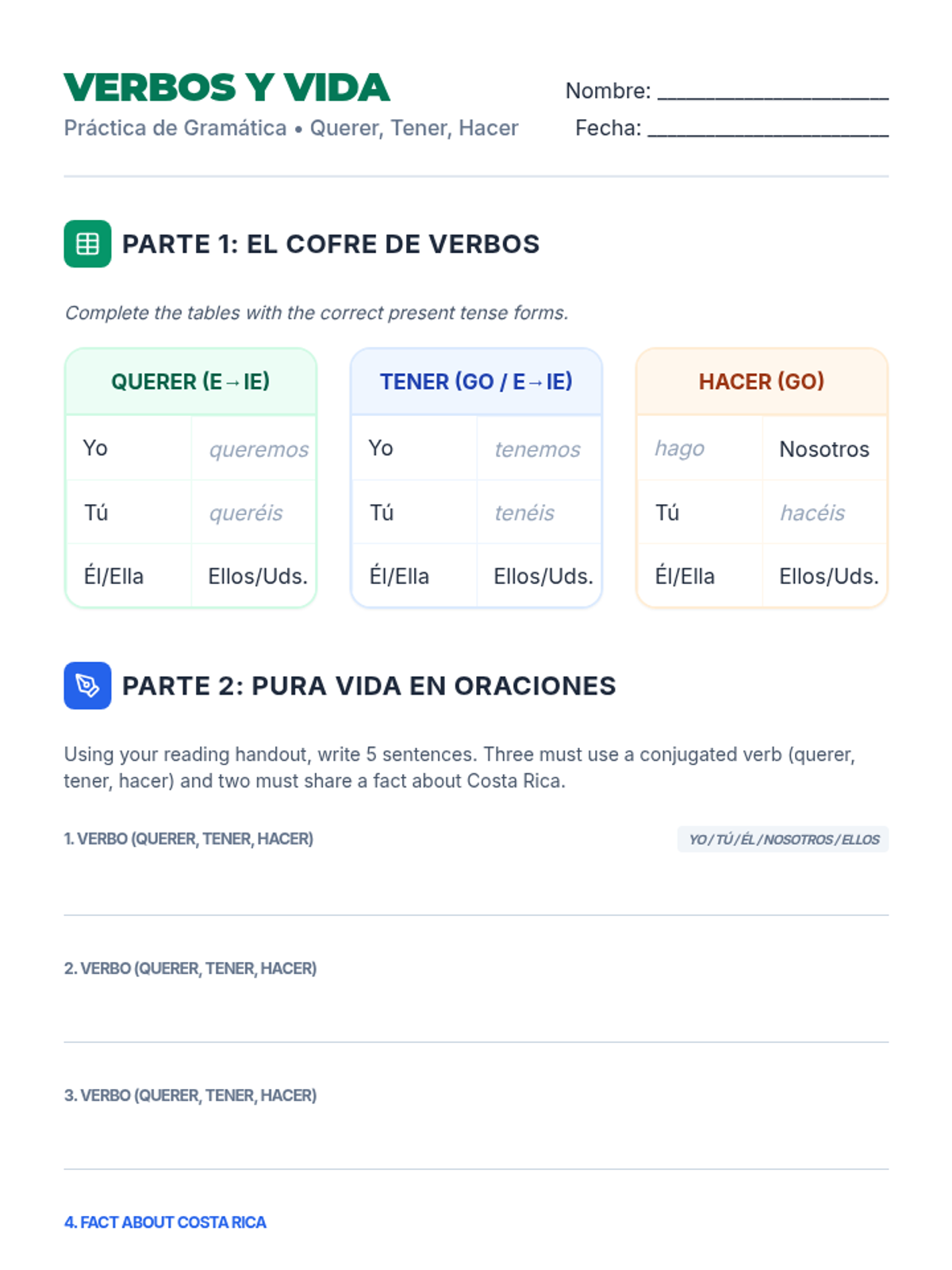
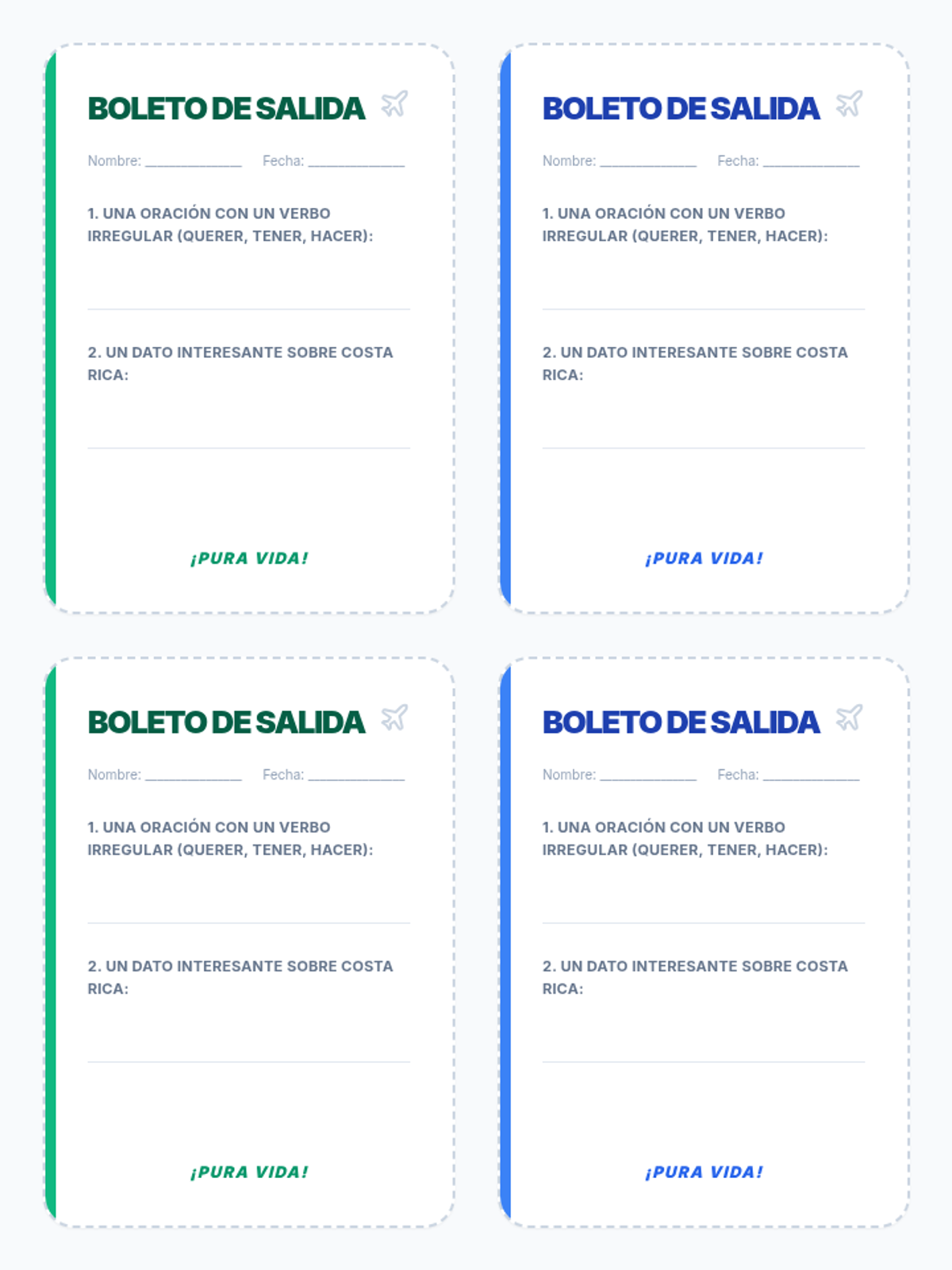
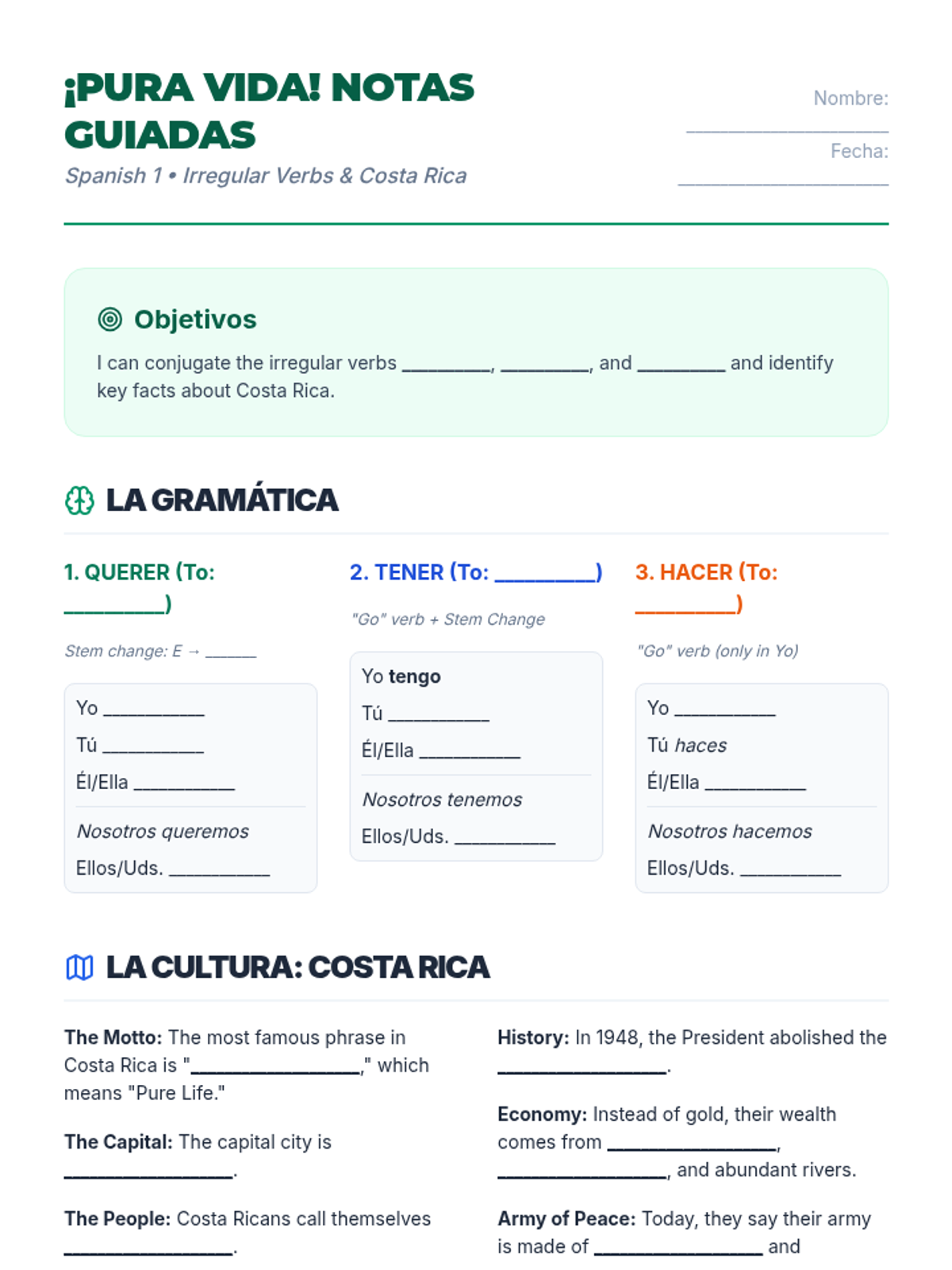
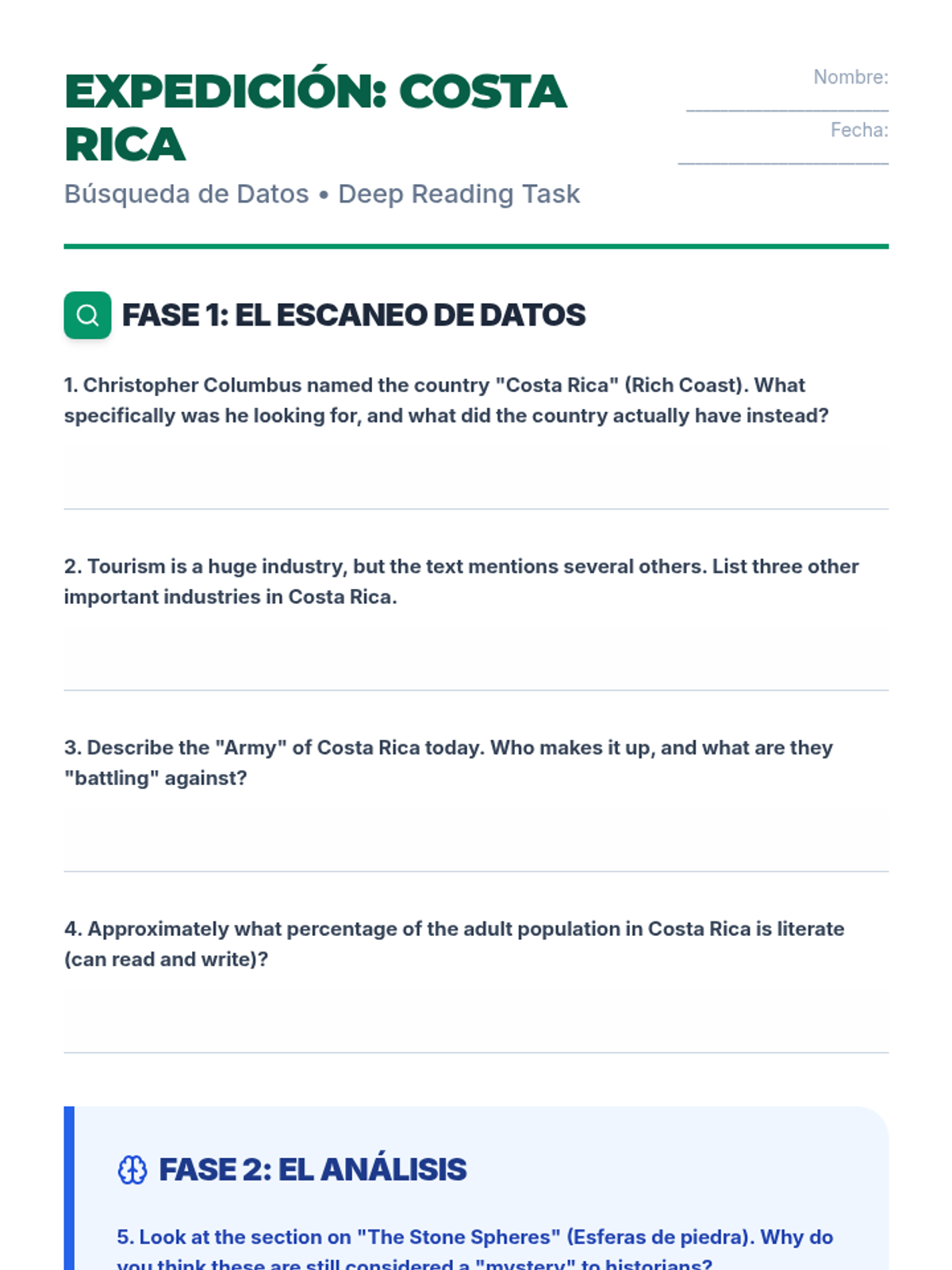
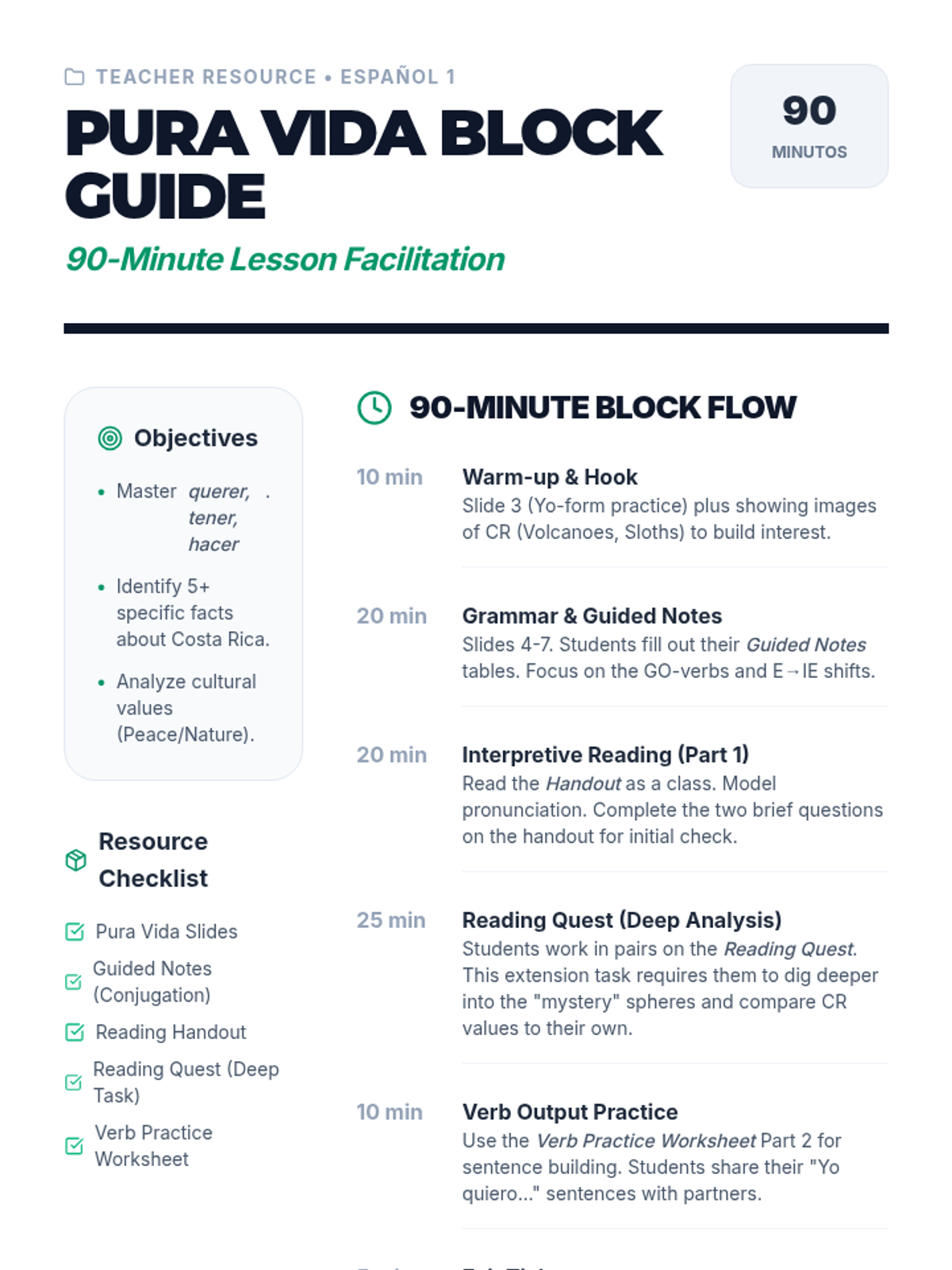
A Spanish 1 lesson focusing on the irregular verbs querer, tener, and hacer, alongside a cultural exploration of Costa Rica's unique geography, history, and 'Pura Vida' lifestyle.
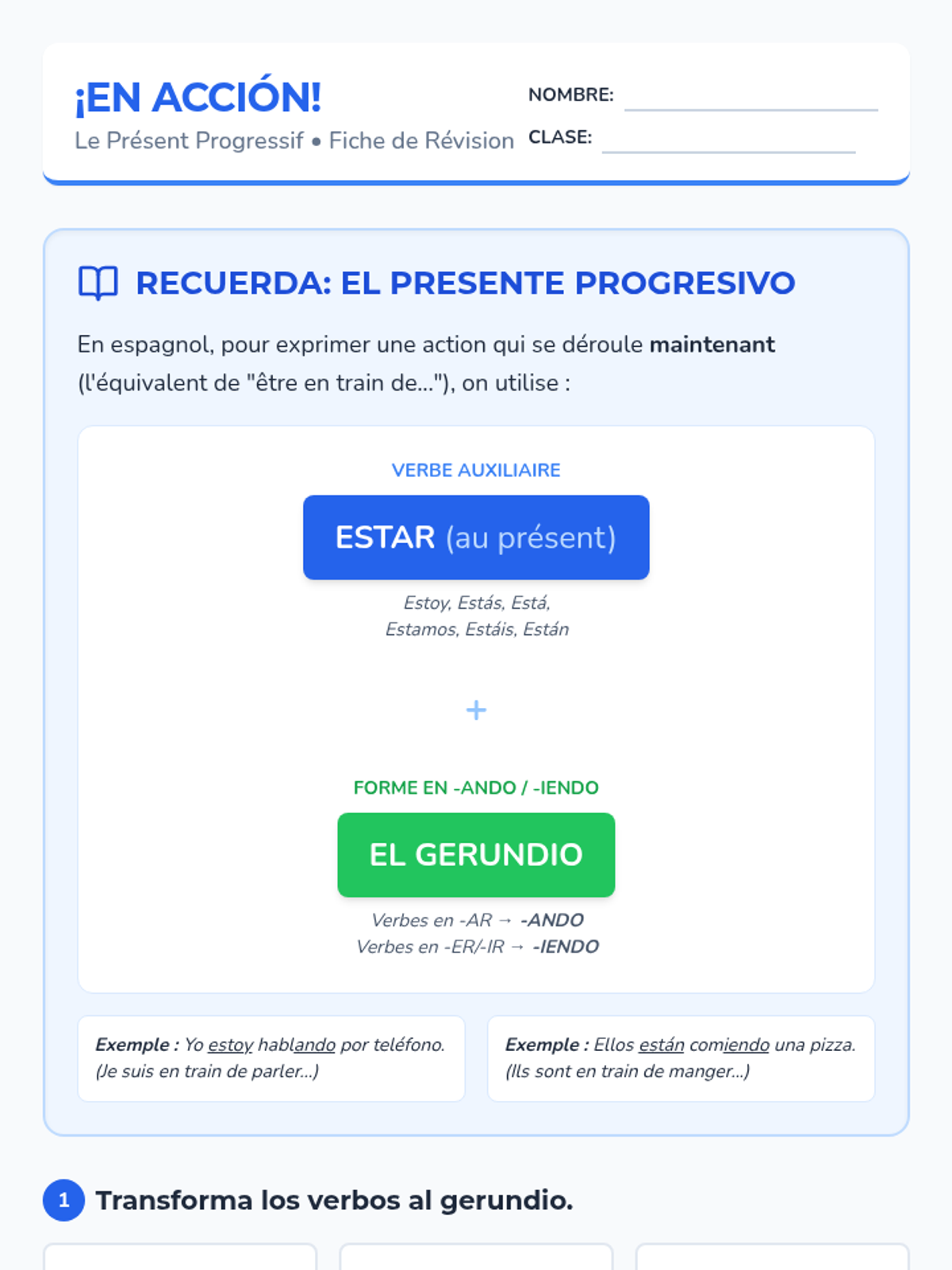
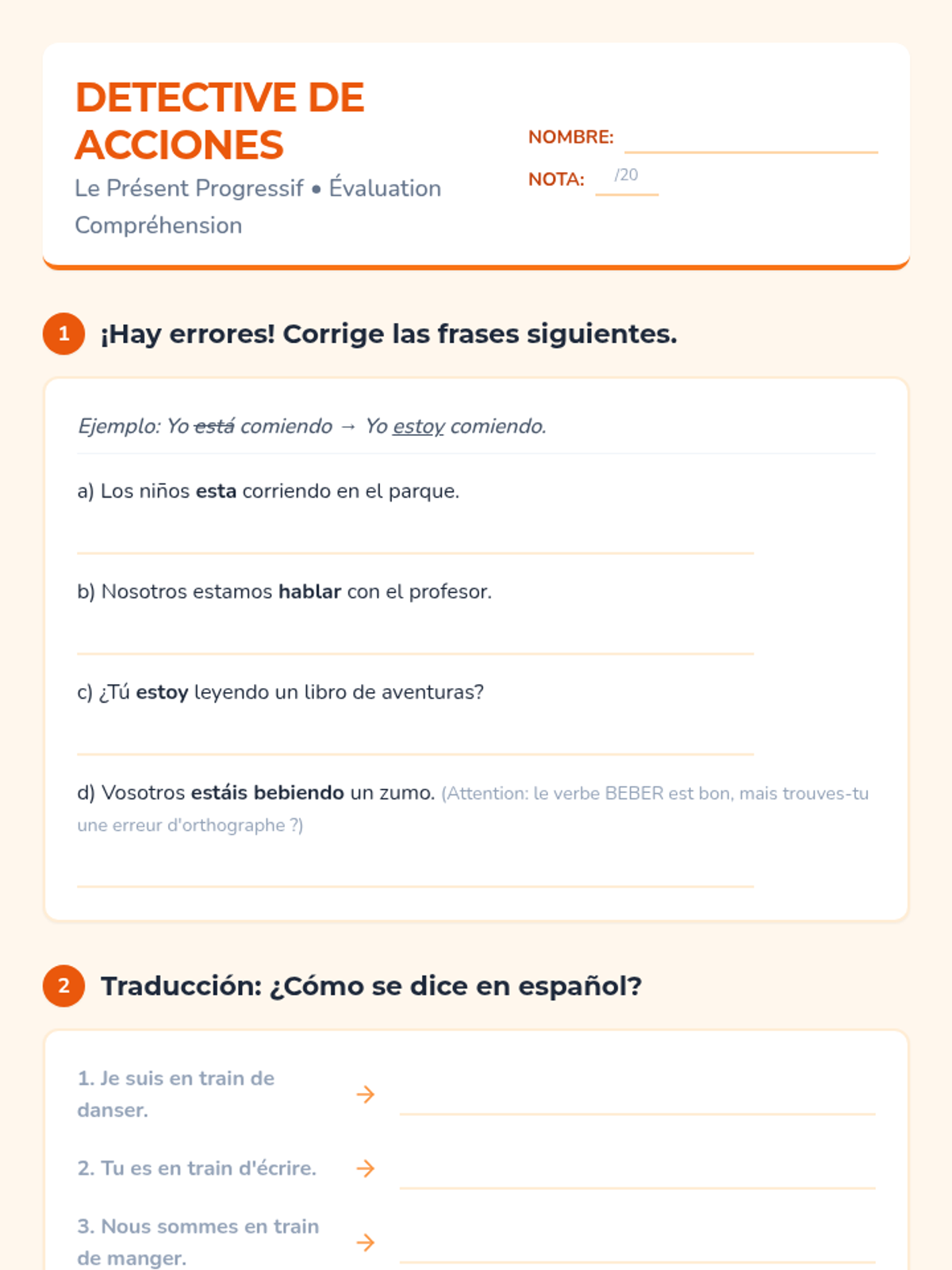
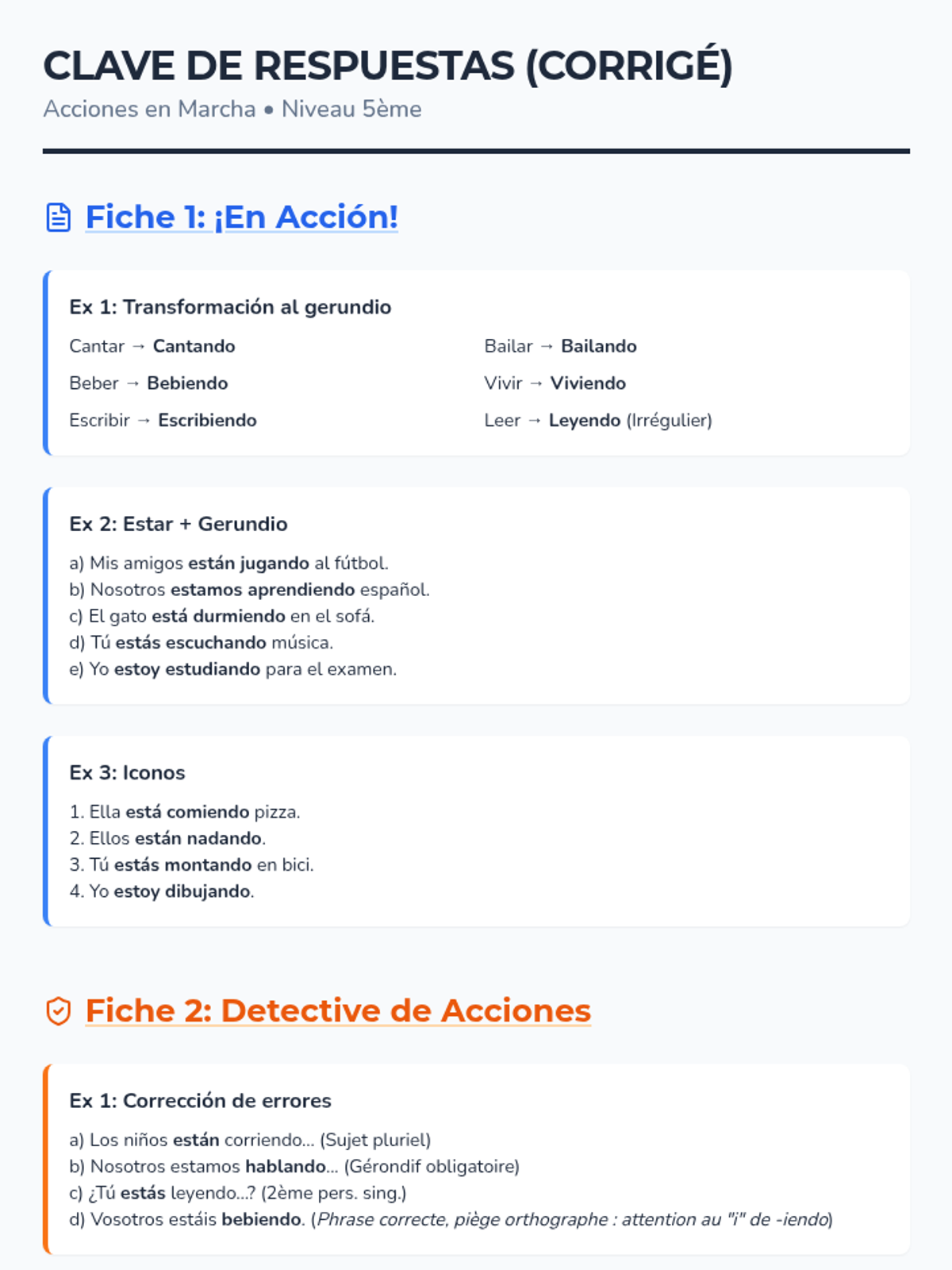
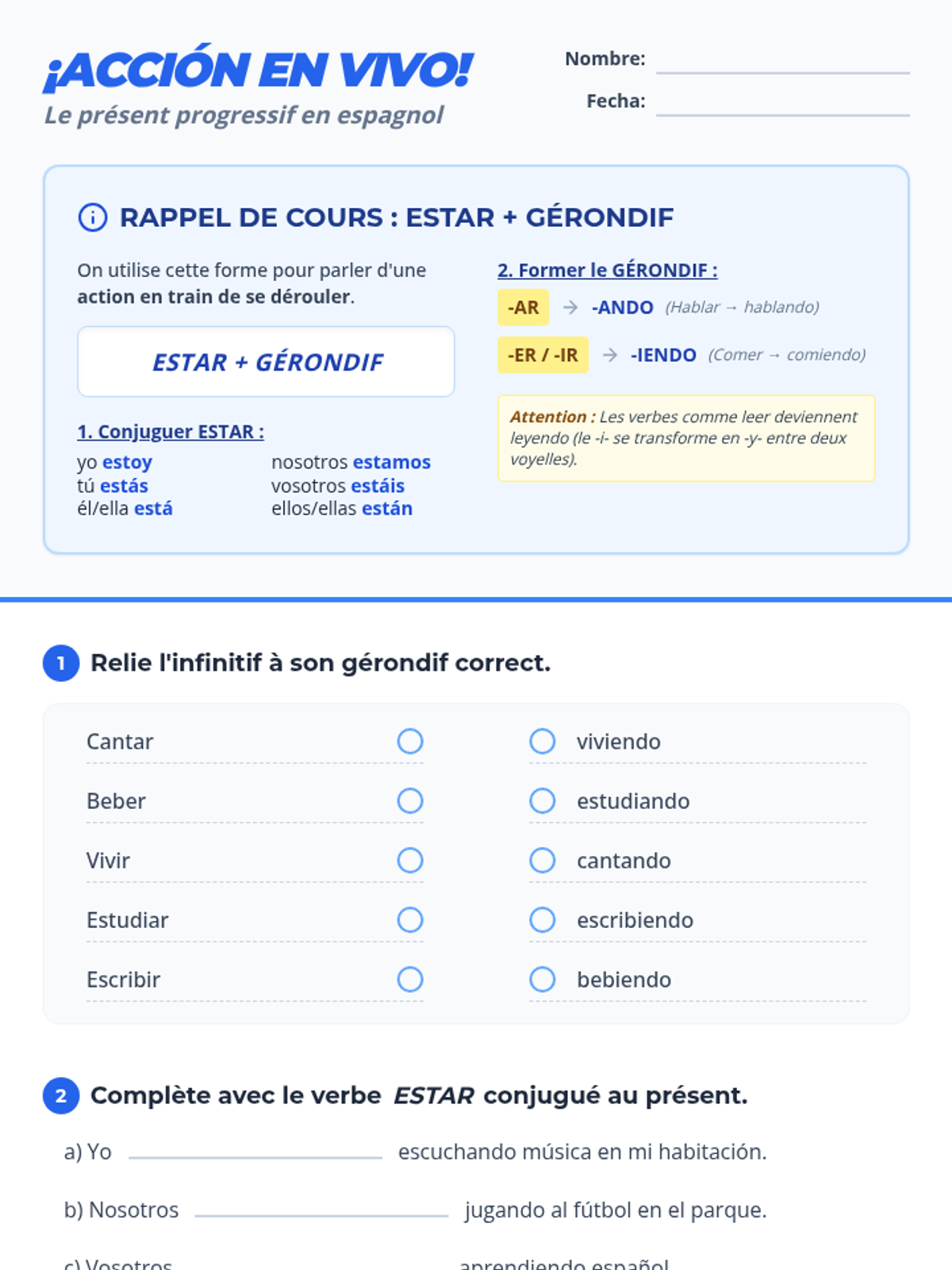
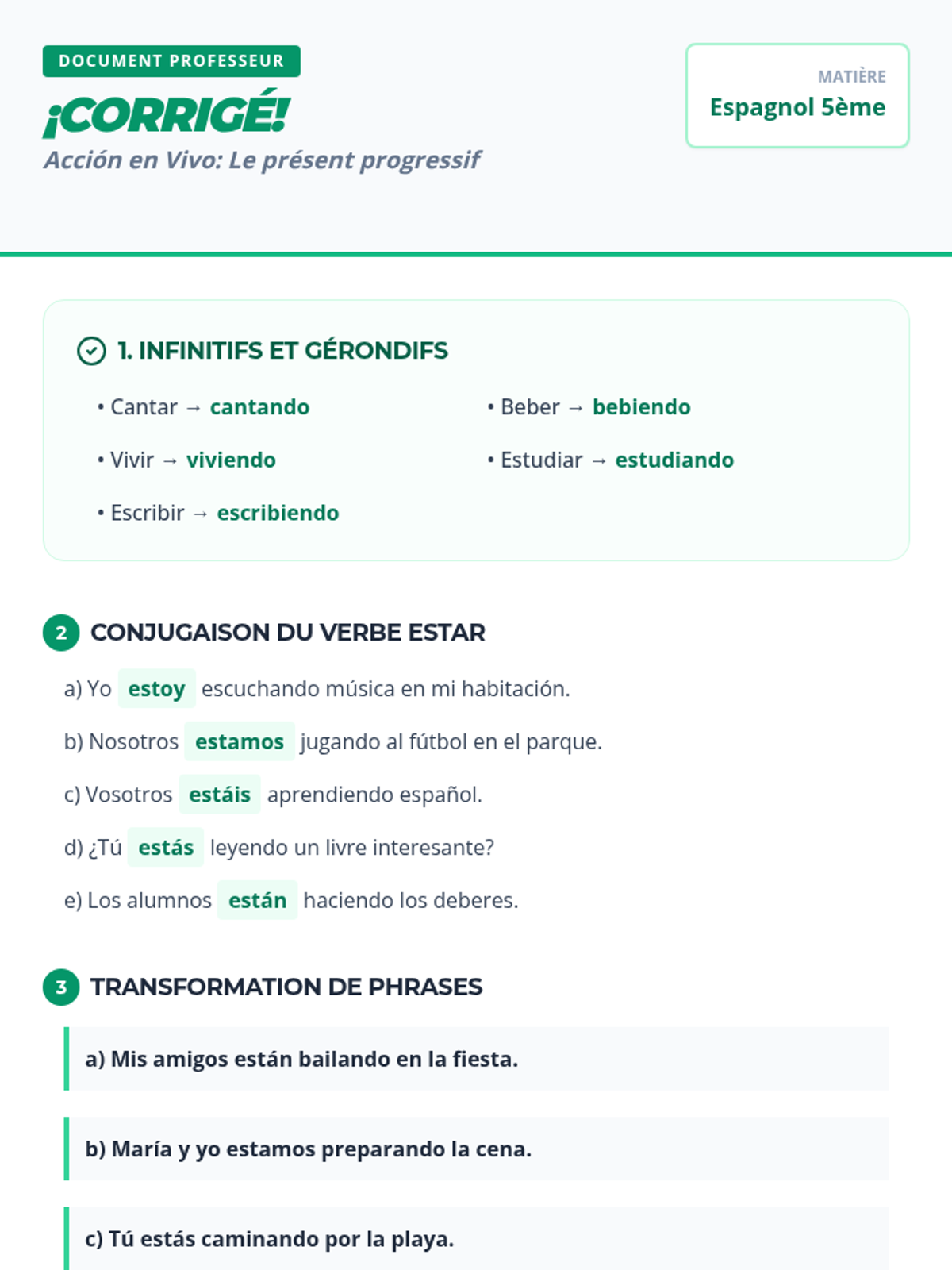
Cette leçon porte sur la formation et l'utilisation du présent progressif (Estar + Gérondif) en espagnol pour des élèves de 5ème. Elle comprend une fiche de rappel avec exercices d'application et une fiche d'évaluation des acquis.
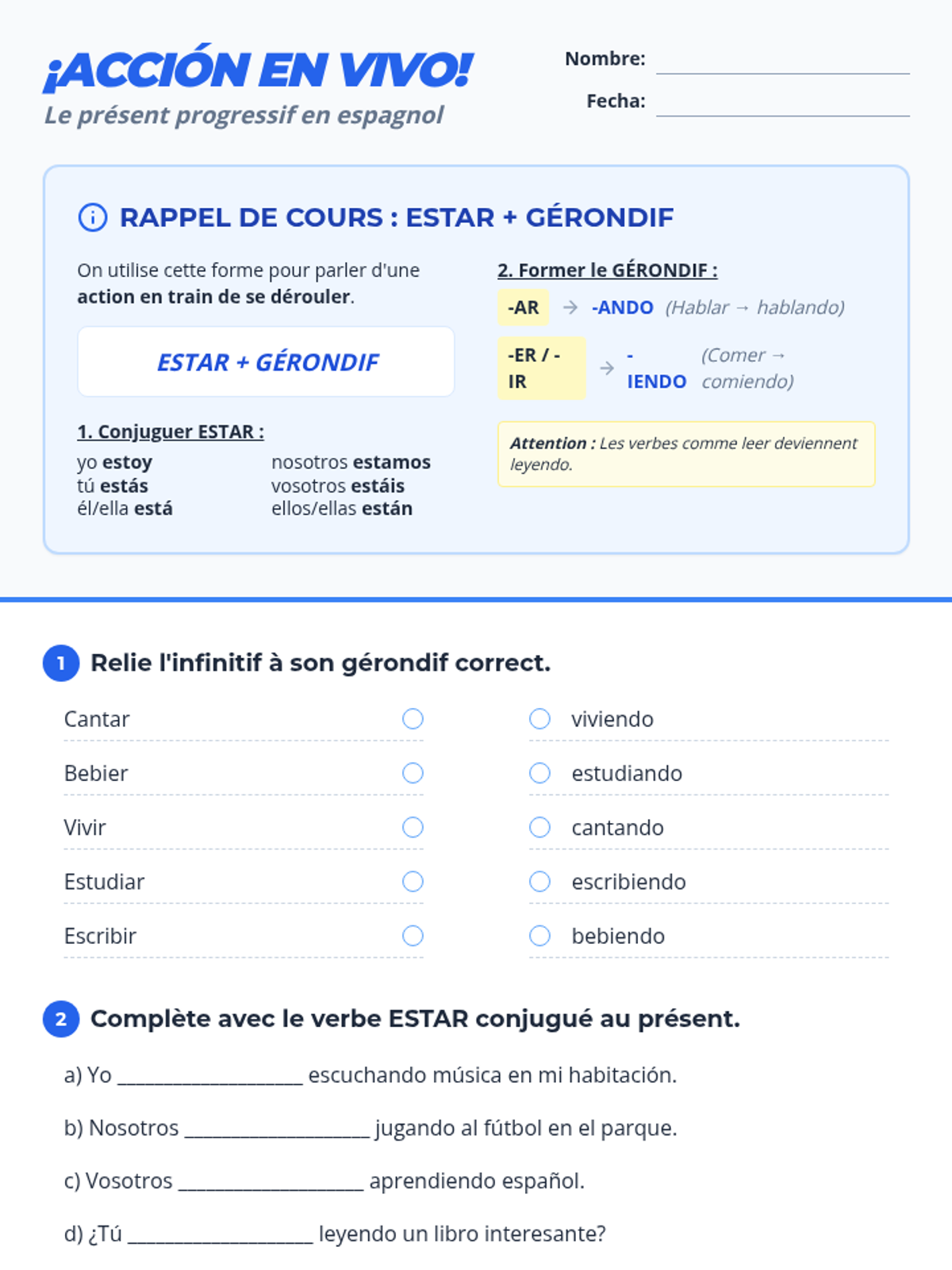
Cette leçon porte sur la formation et l'utilisation du présent progressif (estar + gérondif) en espagnol pour décrire des actions en cours. Elle comprend une fiche d'exercices complète avec un rappel de cours.
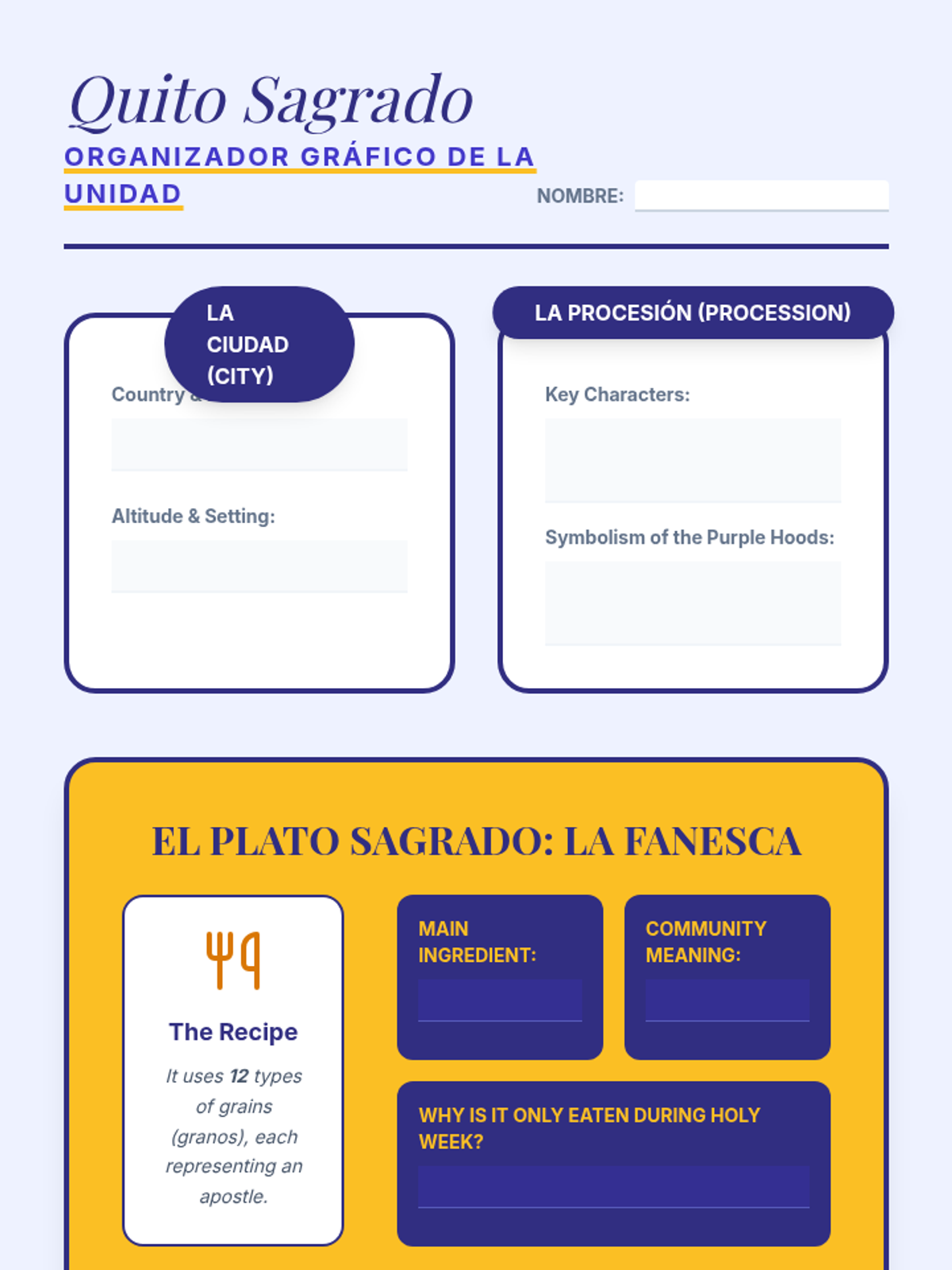
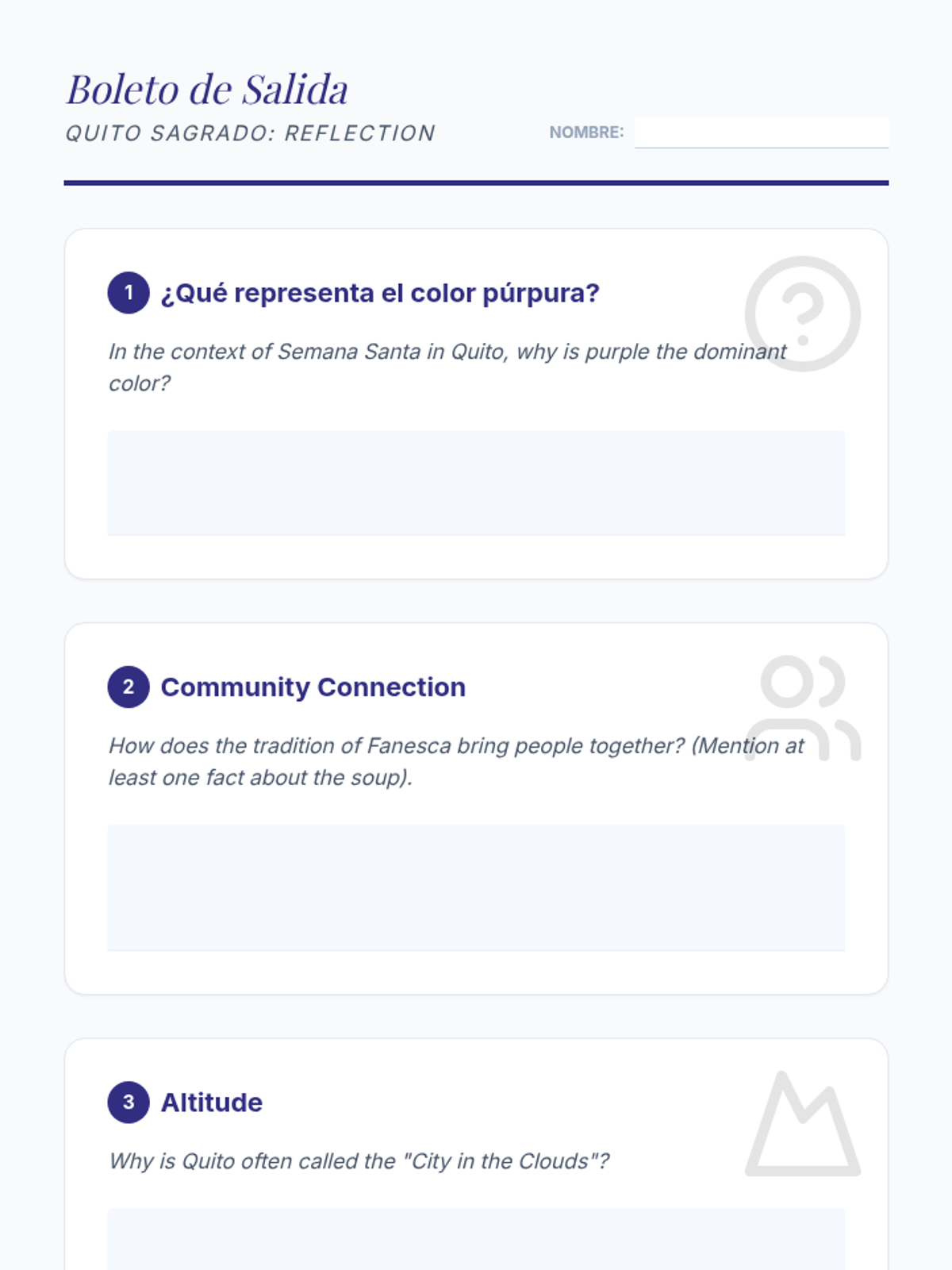
Exploring the role of community through the traditional Fanesca soup and summarizing the unit's learning with a graphic organizer.
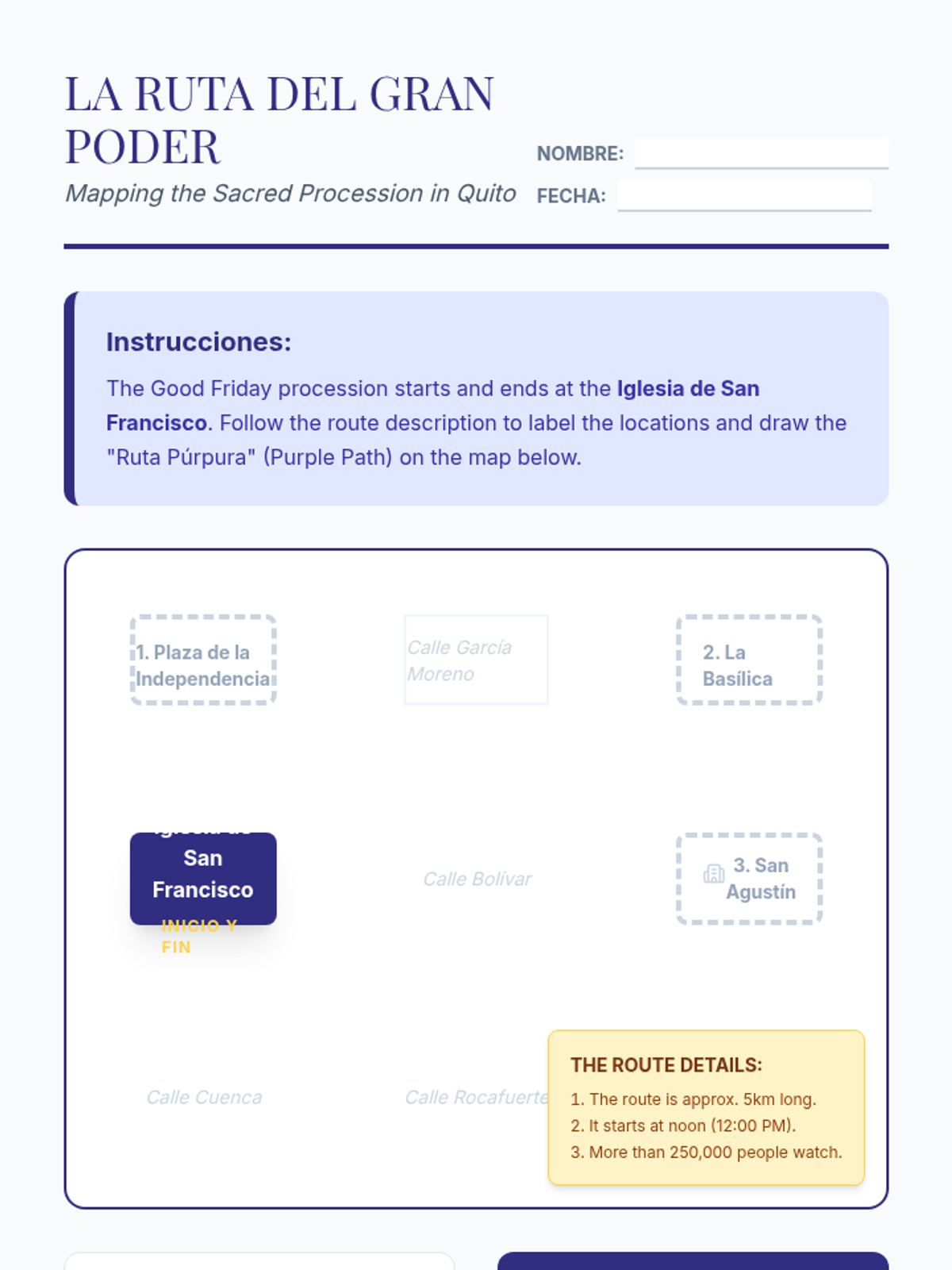
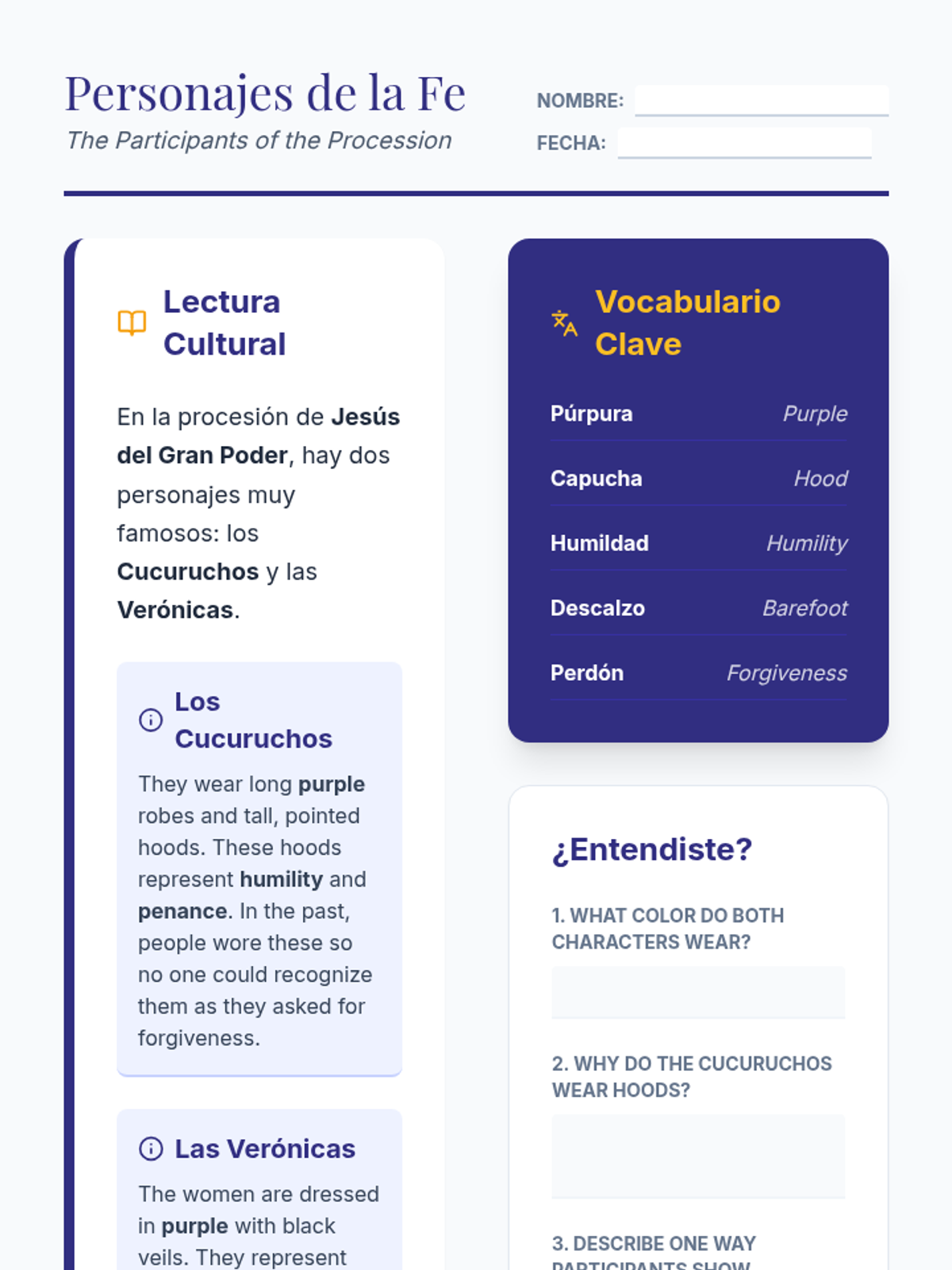
In-depth exploration of the Jesús del Gran Poder procession, including mapping the route through the Historic Center and understanding the symbolism of the participants.
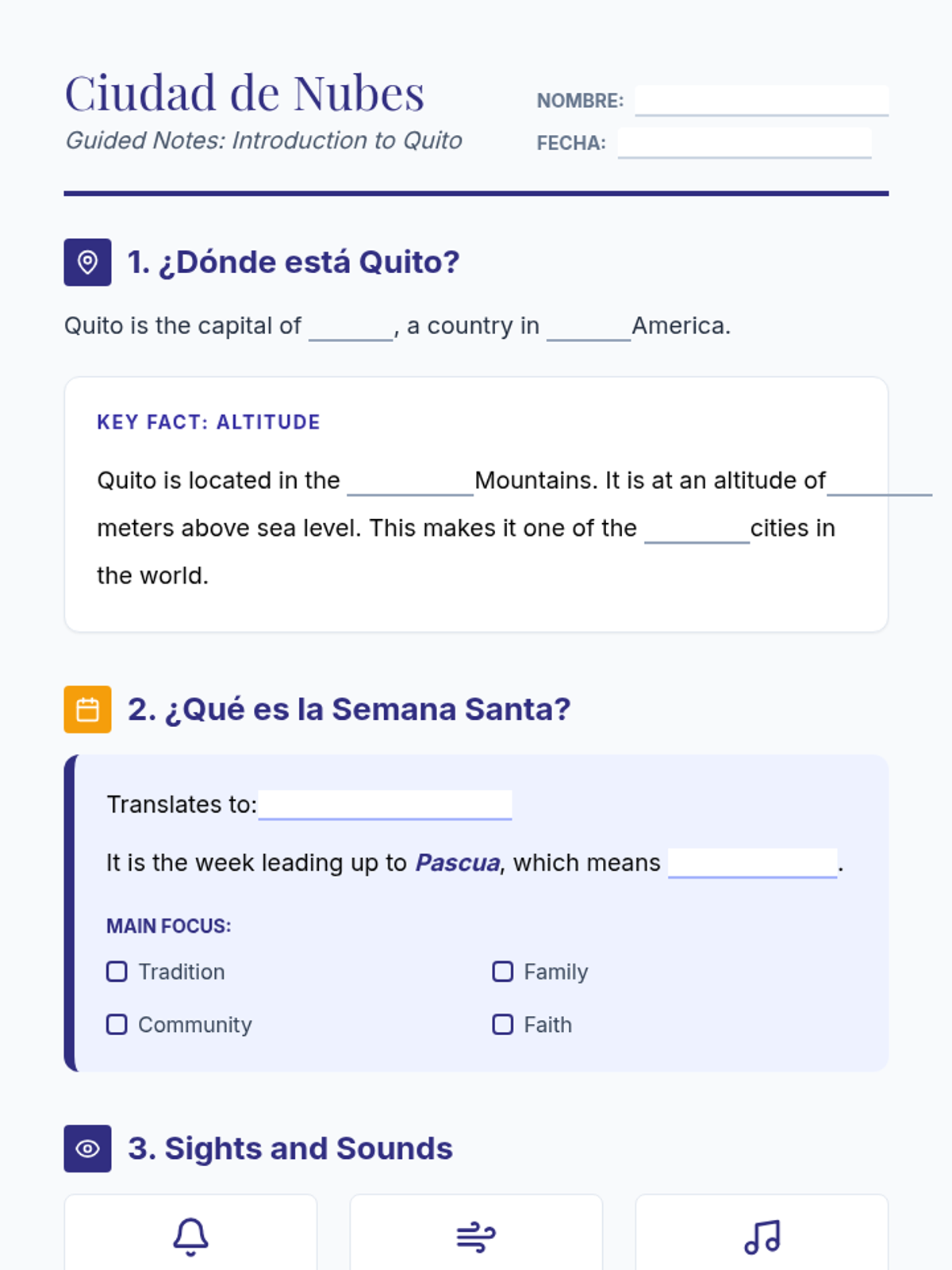
Introduction to Quito's geography and the basic concepts of Semana Santa, focusing on the visual and atmospheric elements of the city.
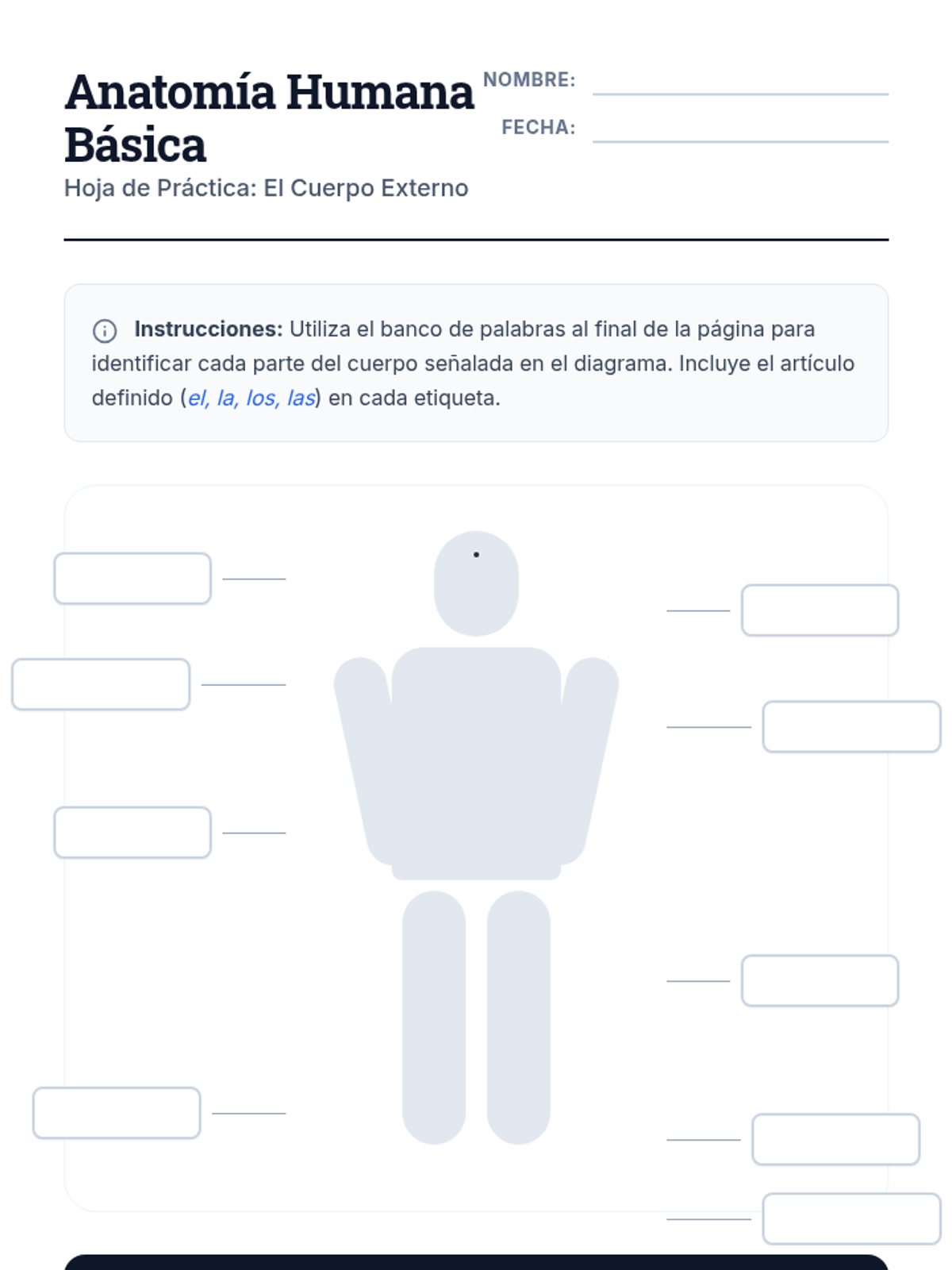
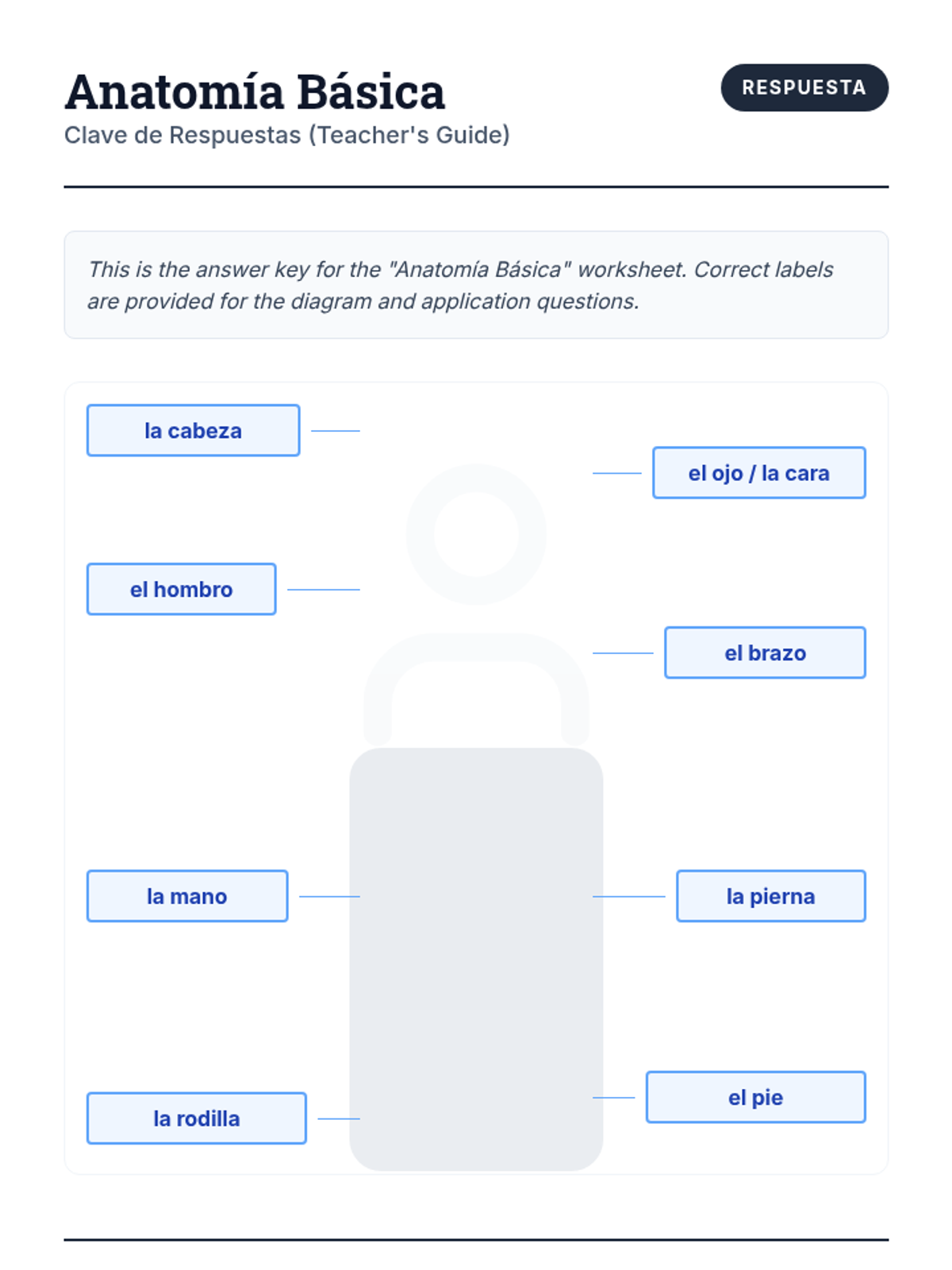
A lesson introducing basic external human anatomy in Spanish, focusing on 'el cuerpo' vocabulary through visual labeling and interactive practice.
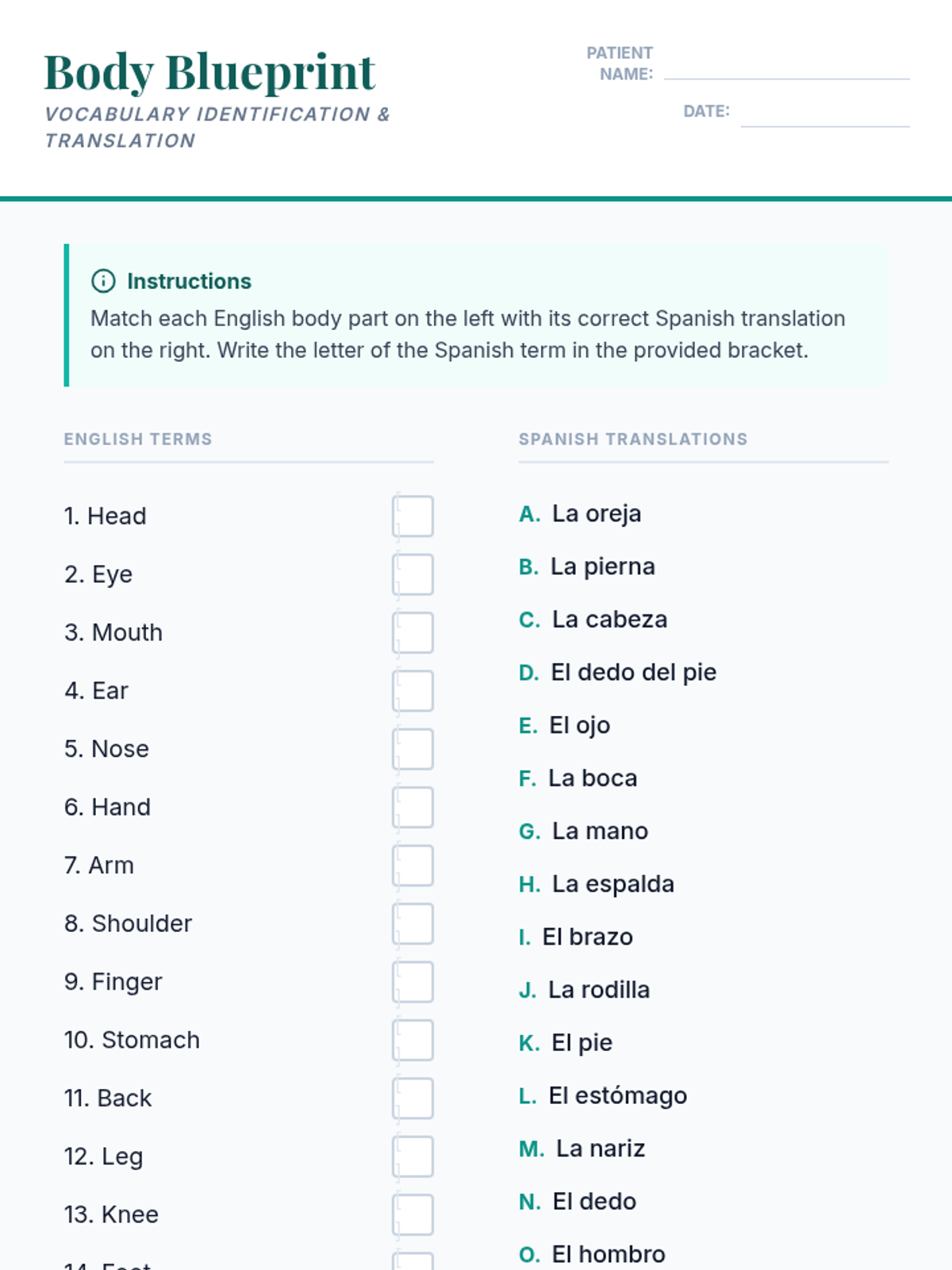
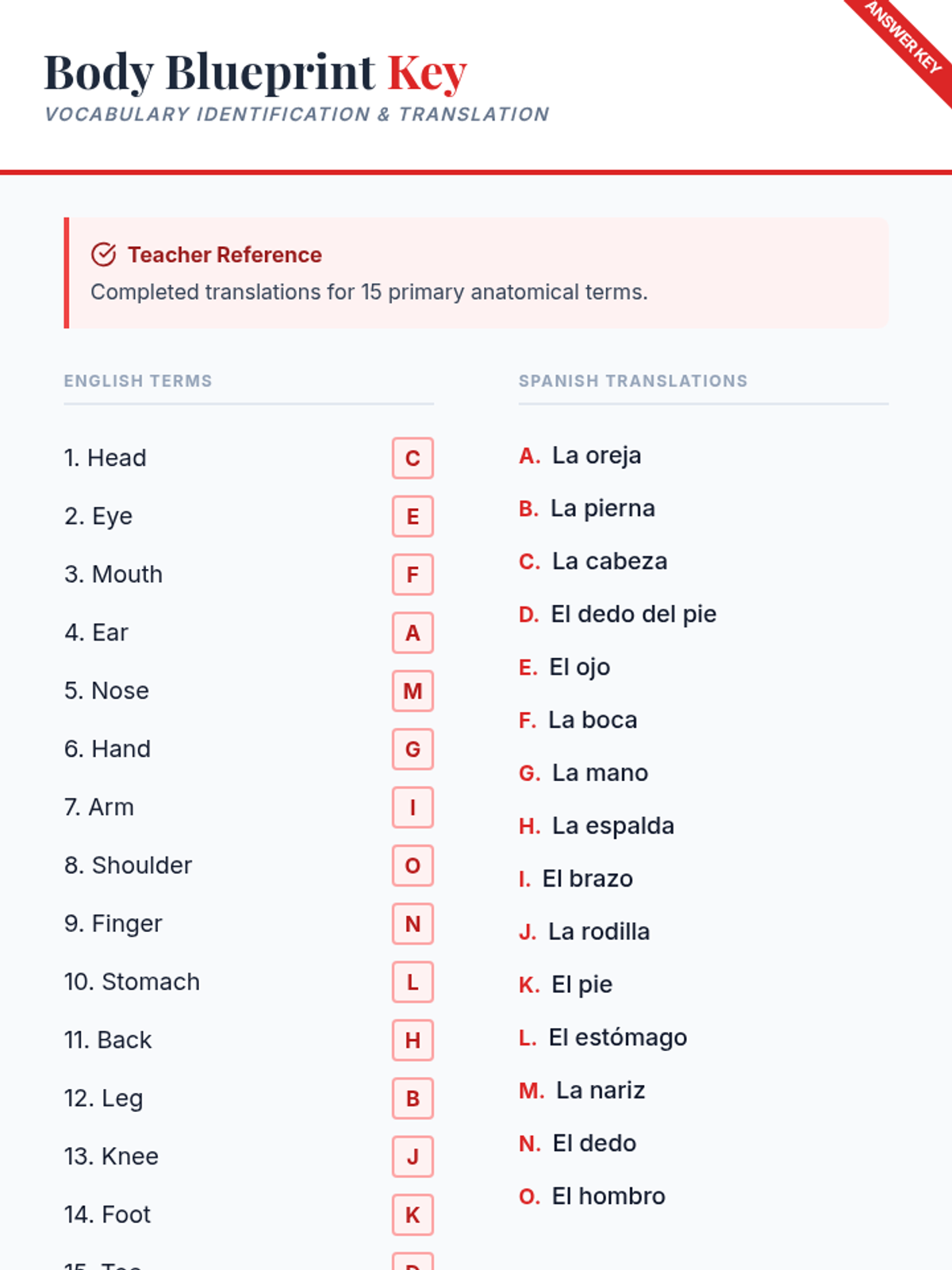
A foundational lesson on human anatomy vocabulary in Spanish, focusing on identifying and translating common body parts from English to Spanish.
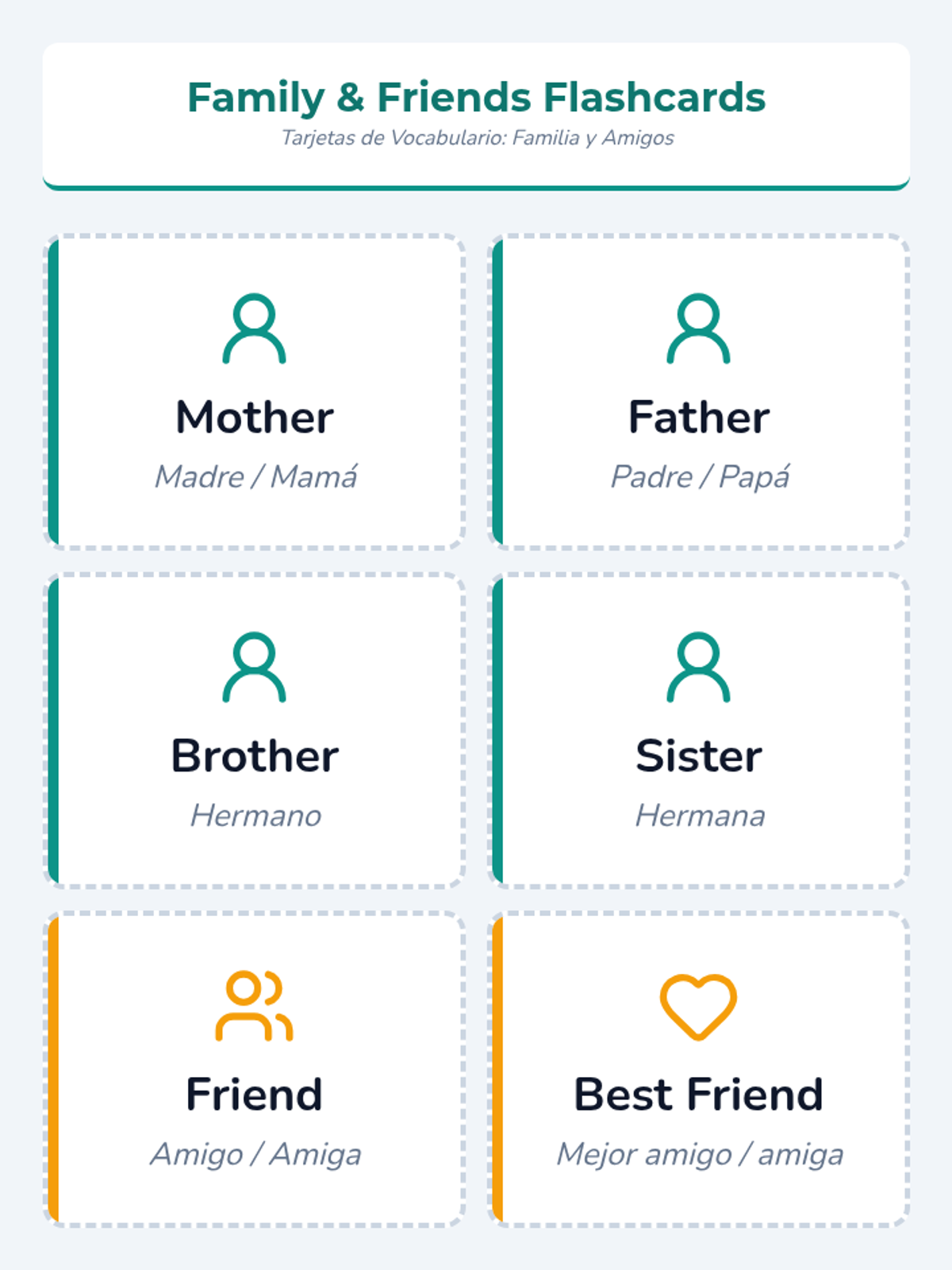
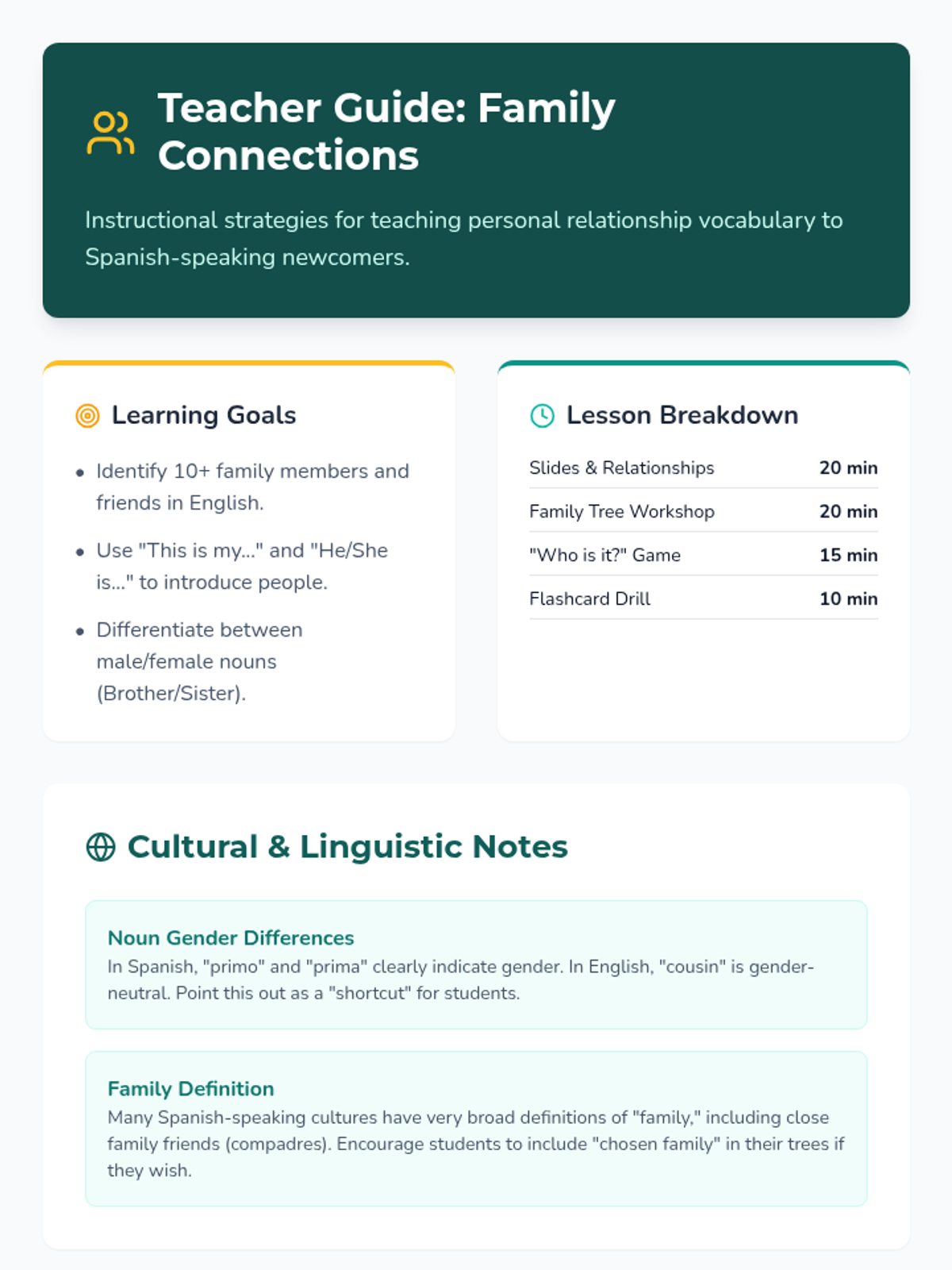
Introduces vocabulary for family members and friends, enabling students to describe their personal connections and home life.
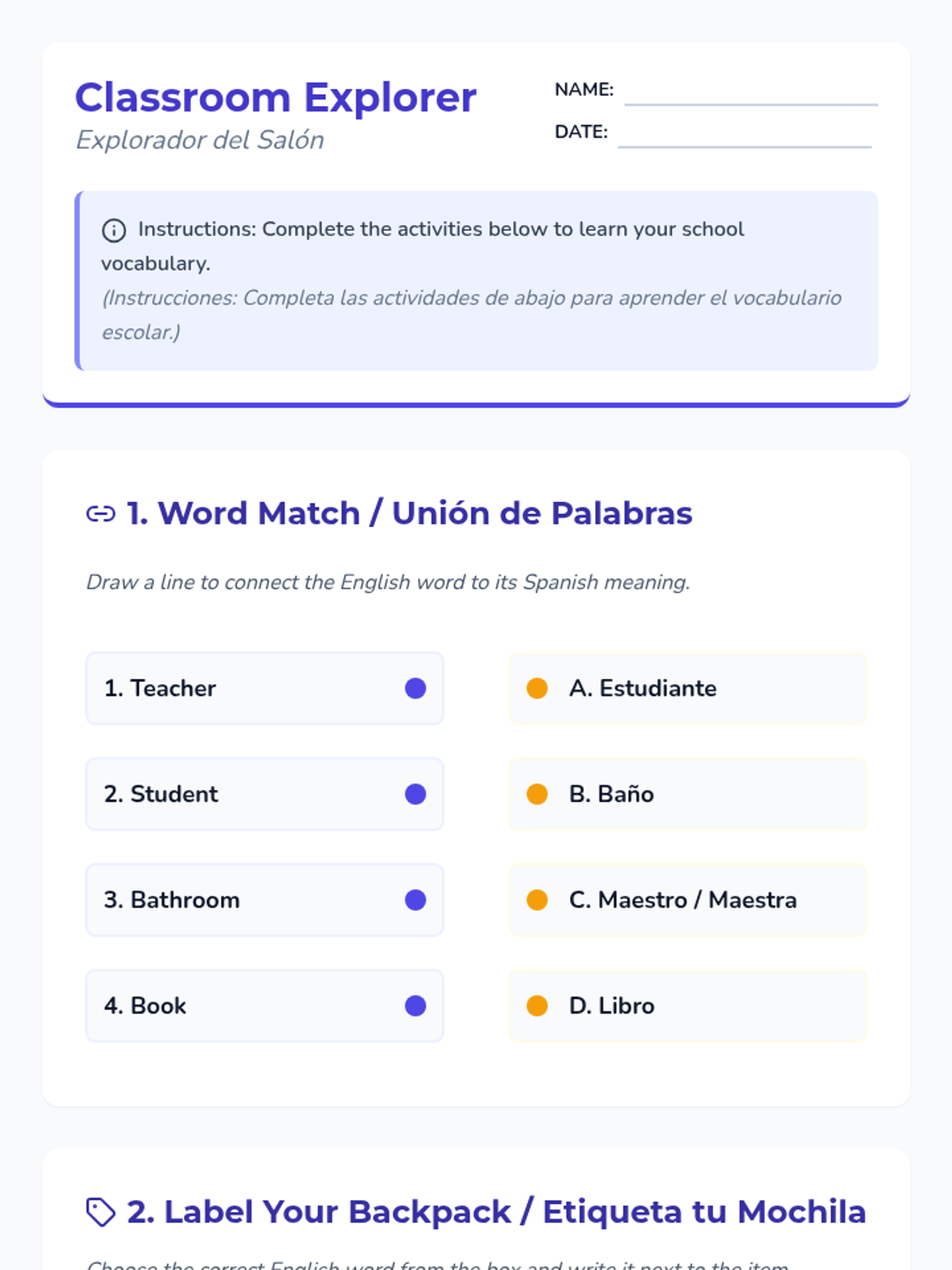
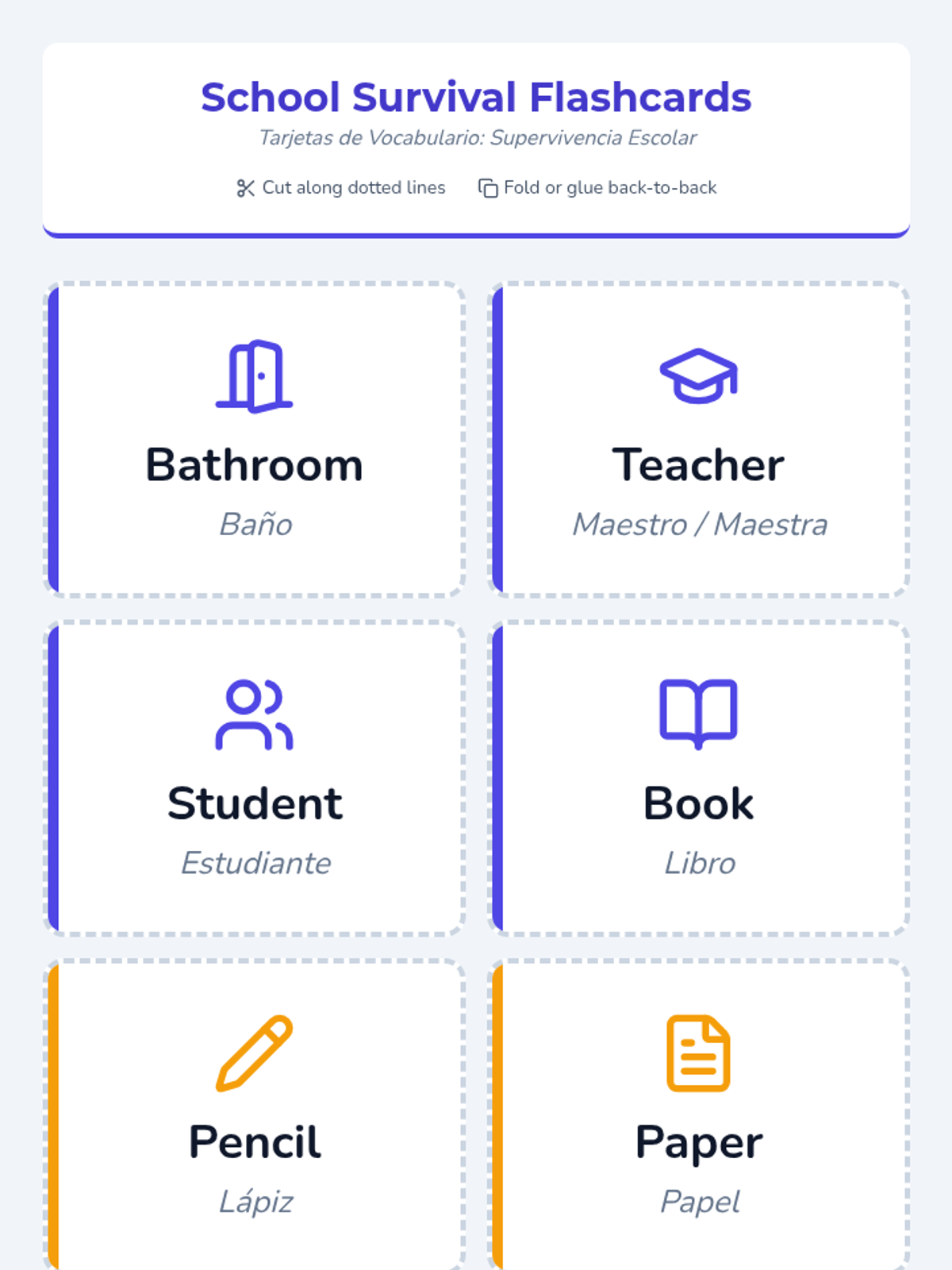
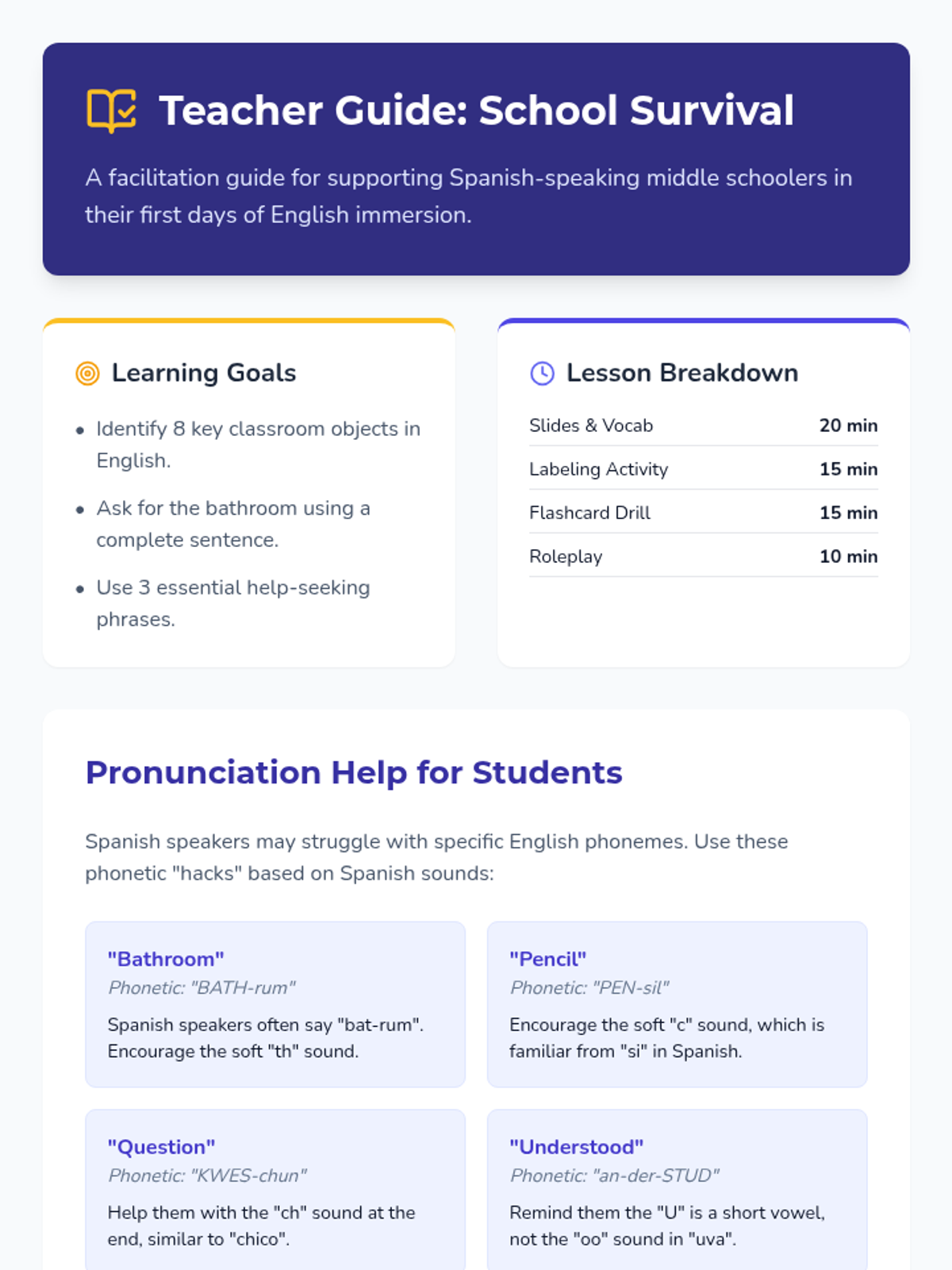
Focuses on essential school navigation including asking for the bathroom, identifying classroom objects, and basic school-day phrases in English and Spanish.
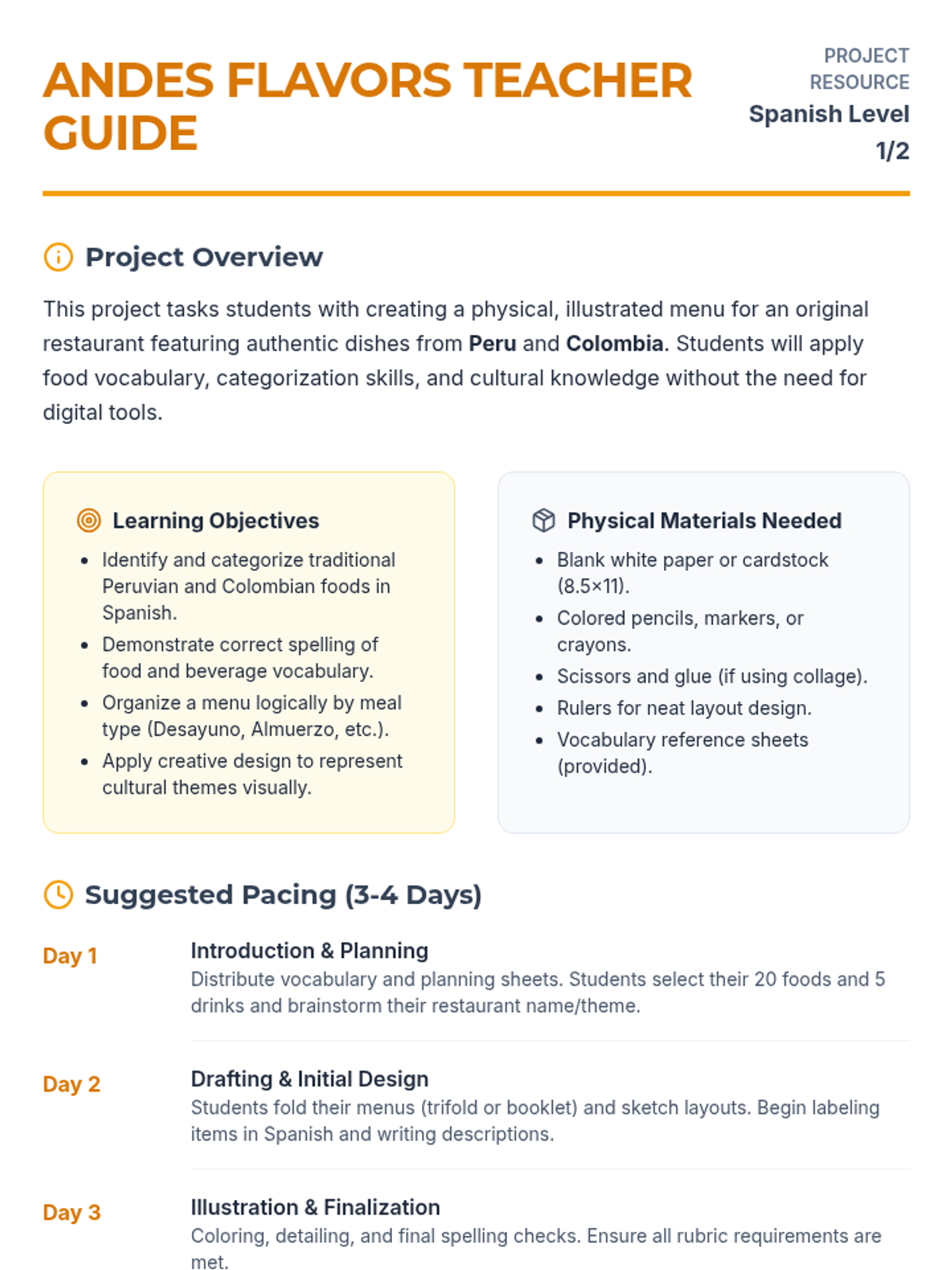
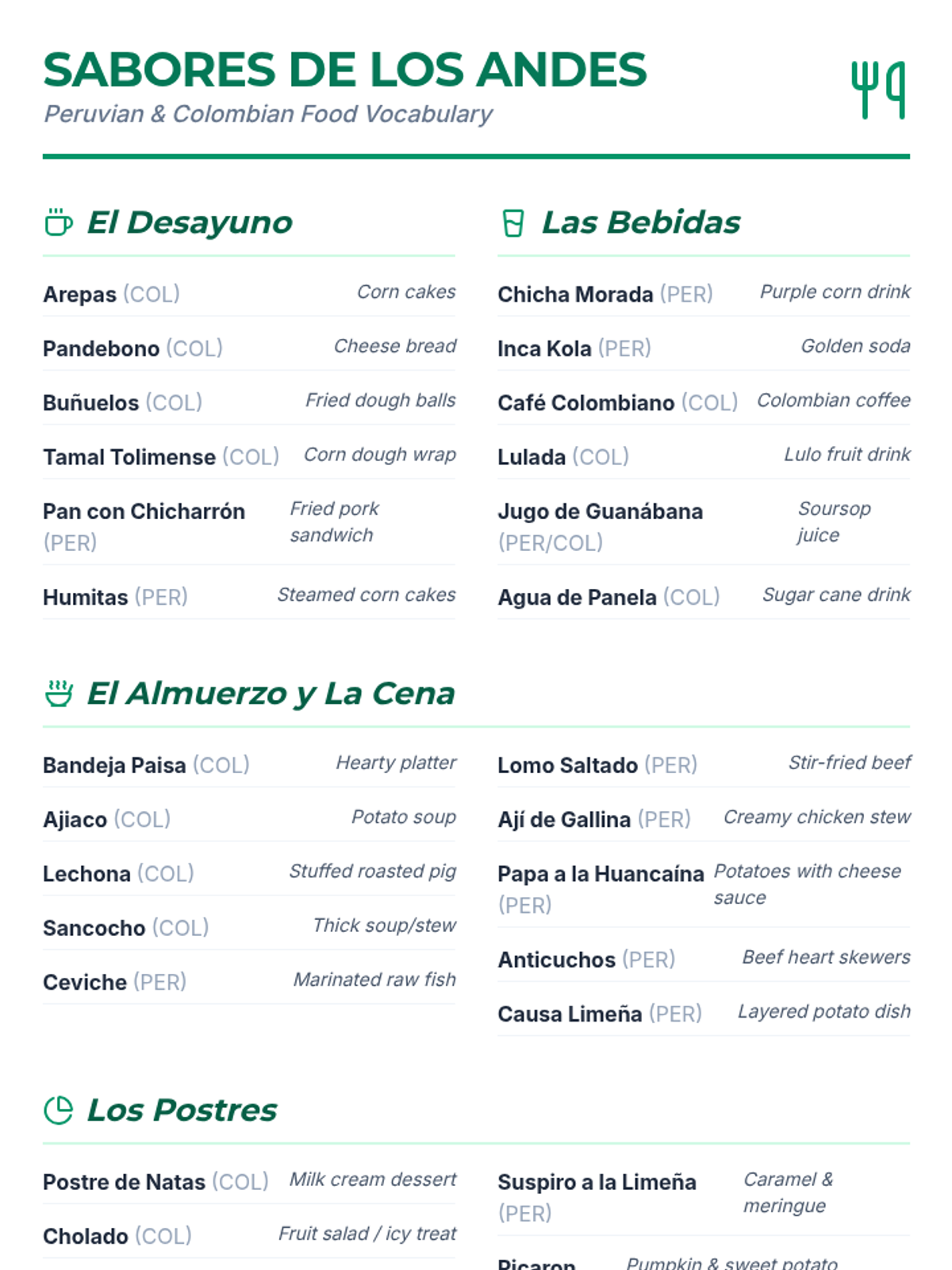
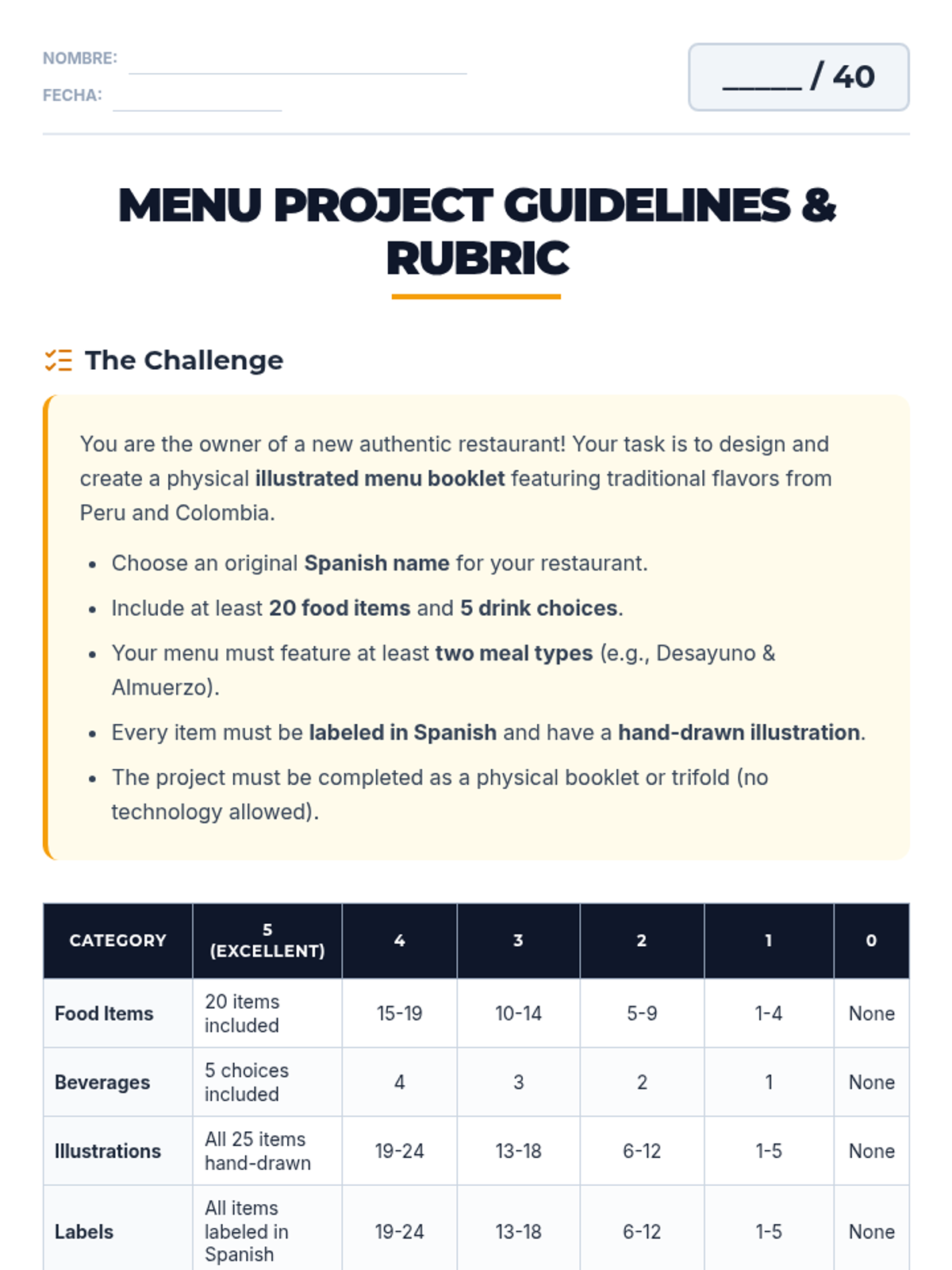
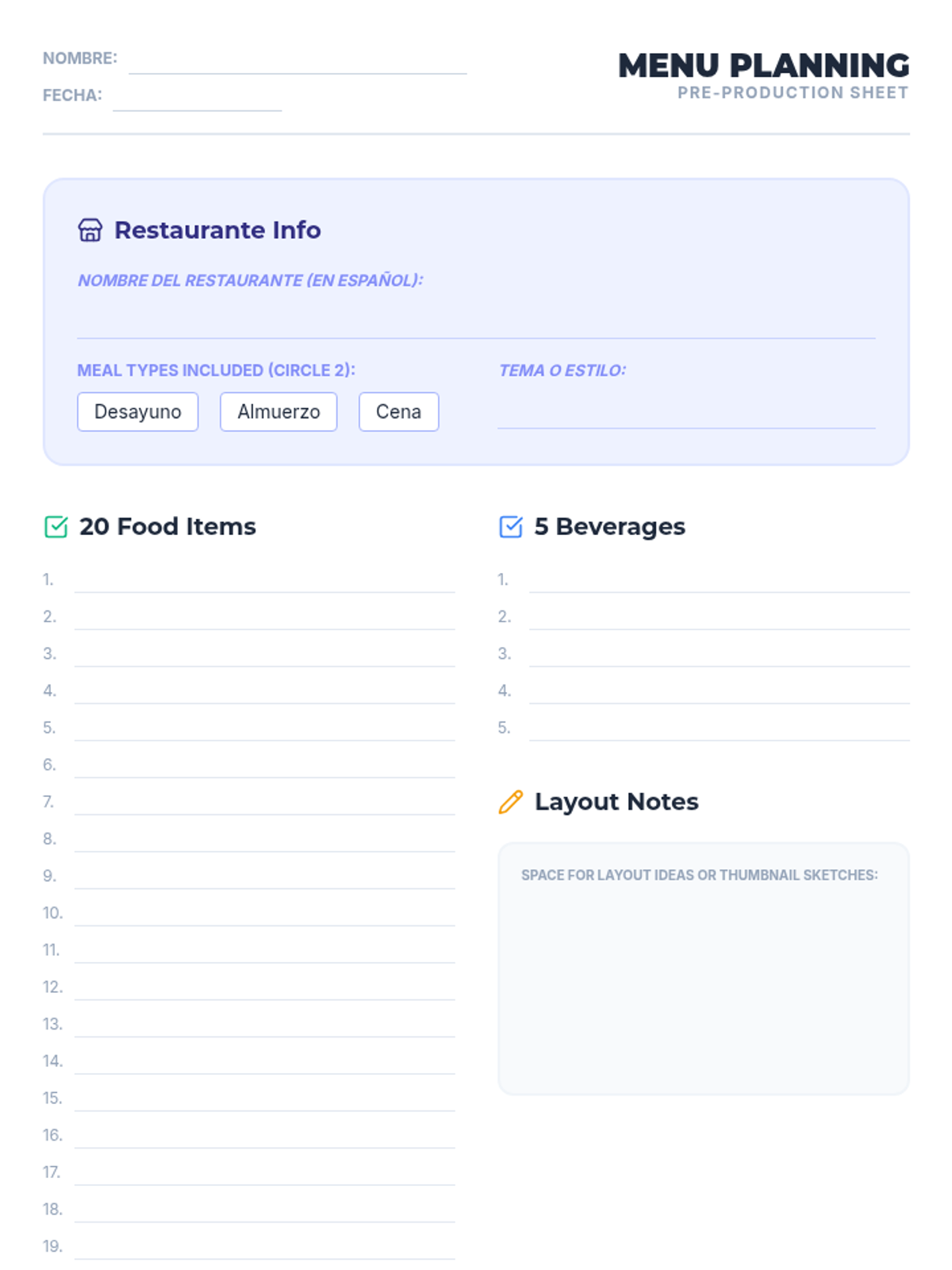
A hands-on Spanish language project where students design and illustrate an authentic menu featuring traditional Peruvian and Colombian cuisine, adapted for a technology-free classroom.
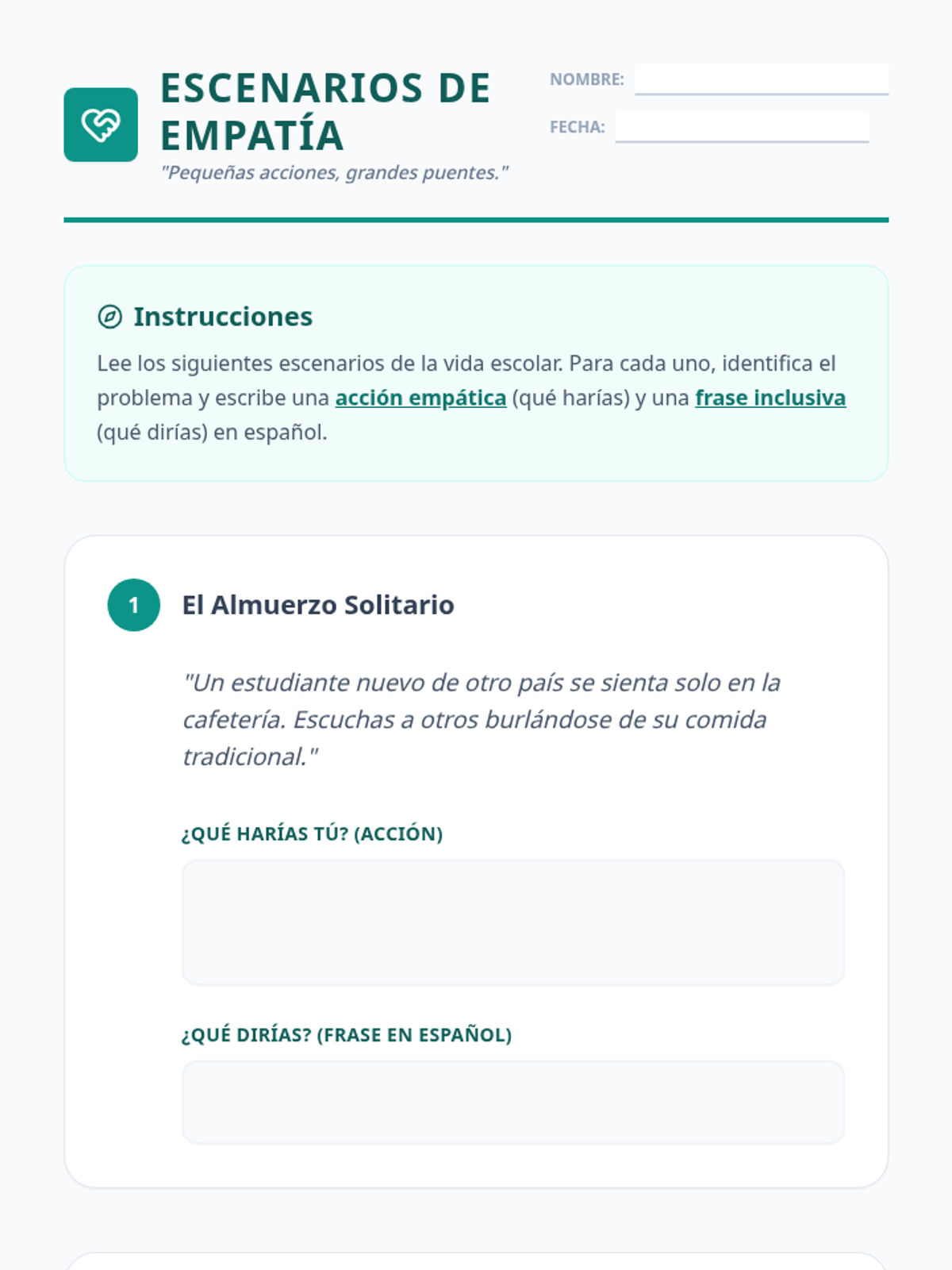
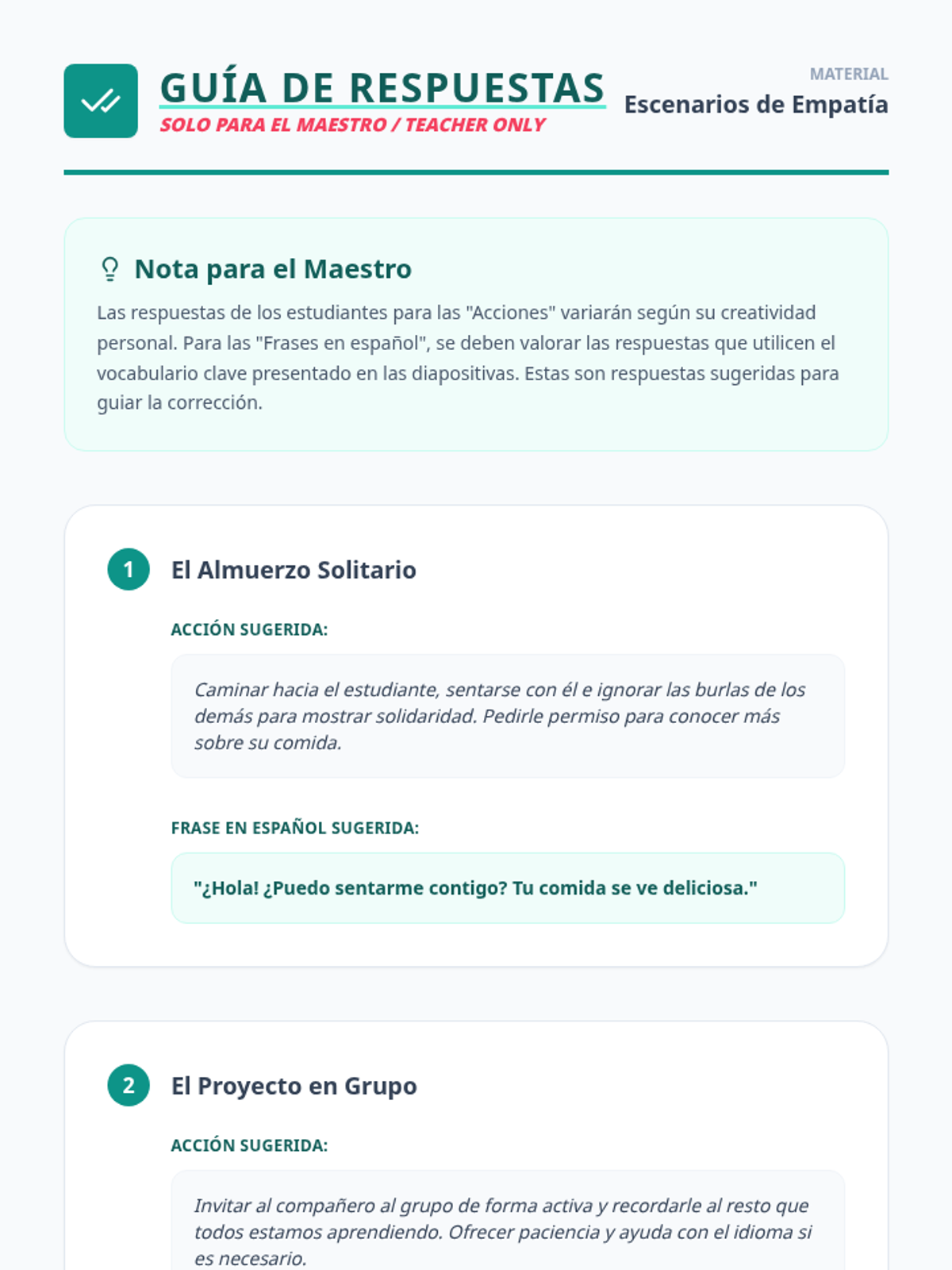
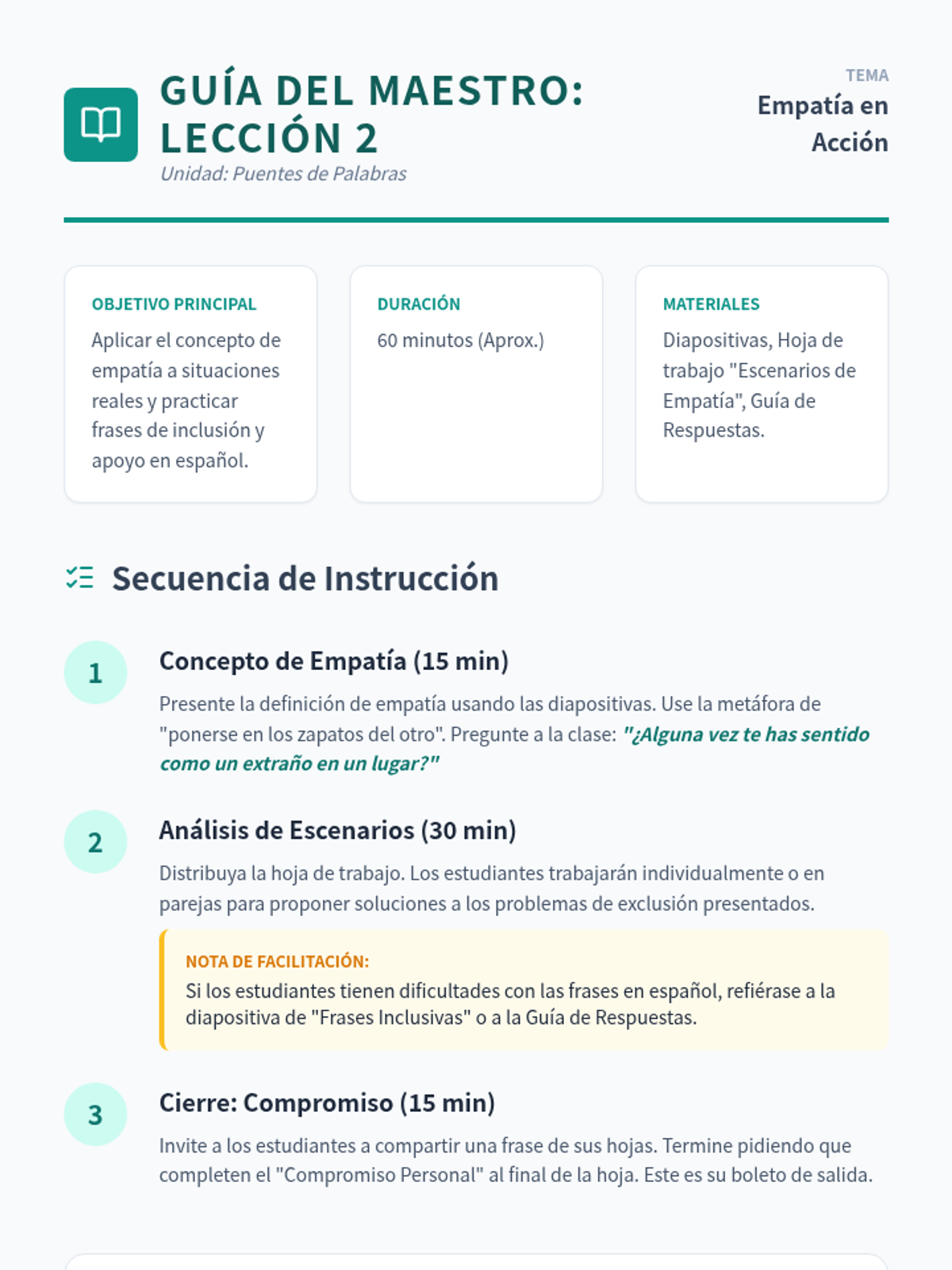
Focuses on empathy and social acceptance by analyzing scenarios and practicing inclusive language in Spanish.
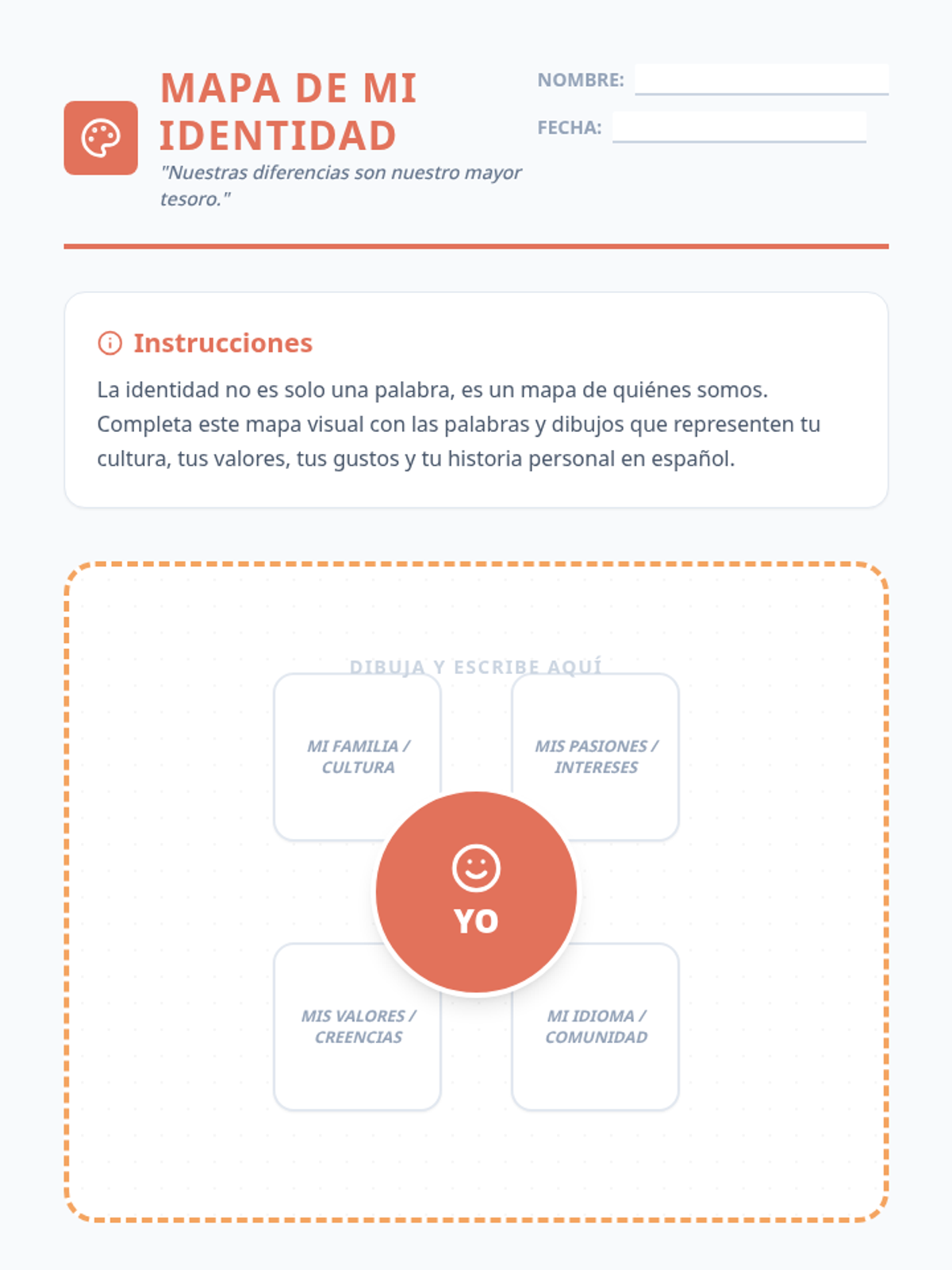
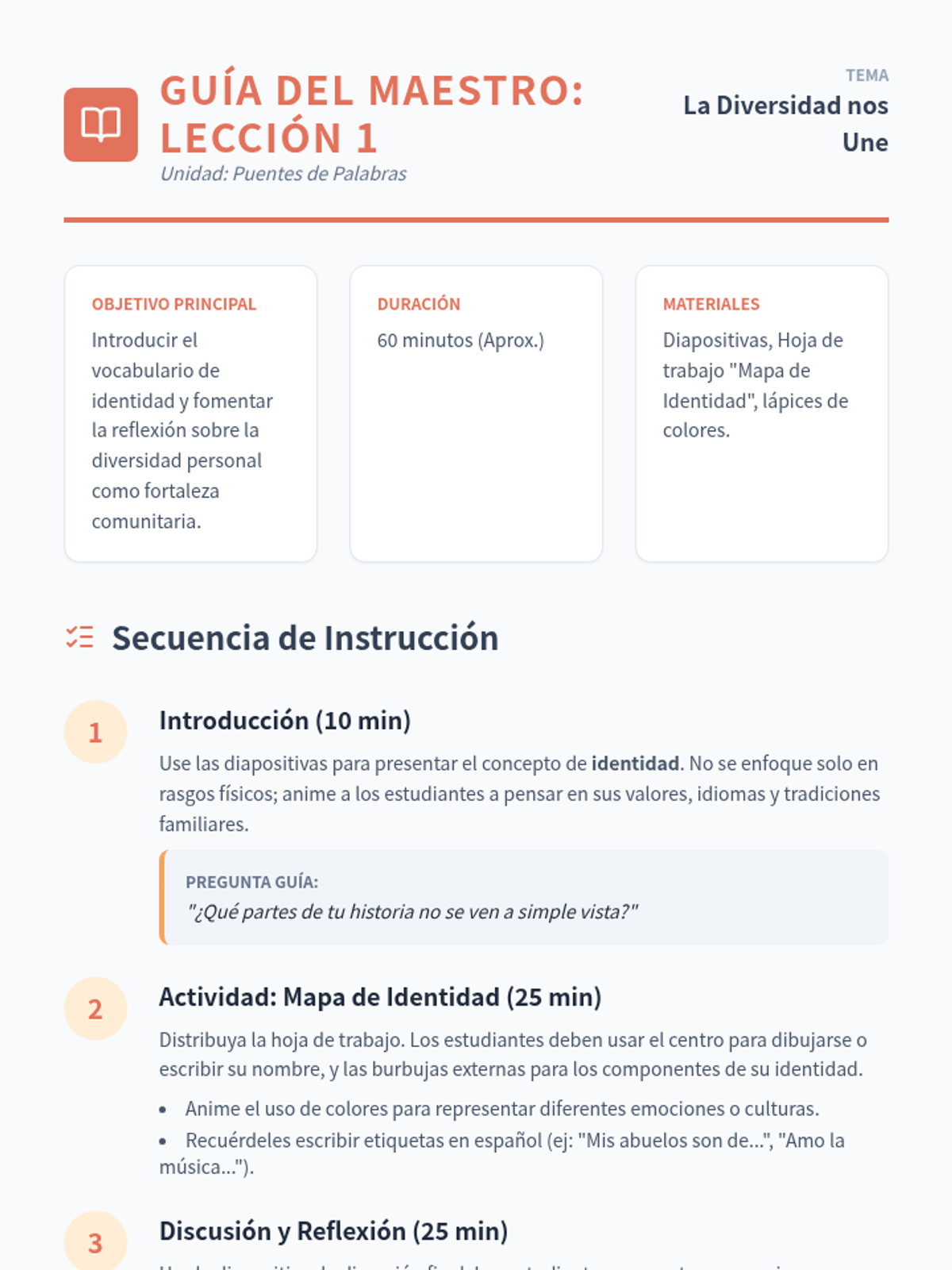
Introduces vocabulary related to identity and diversity, encouraging students to celebrate differences within their classroom and the Spanish-speaking world.
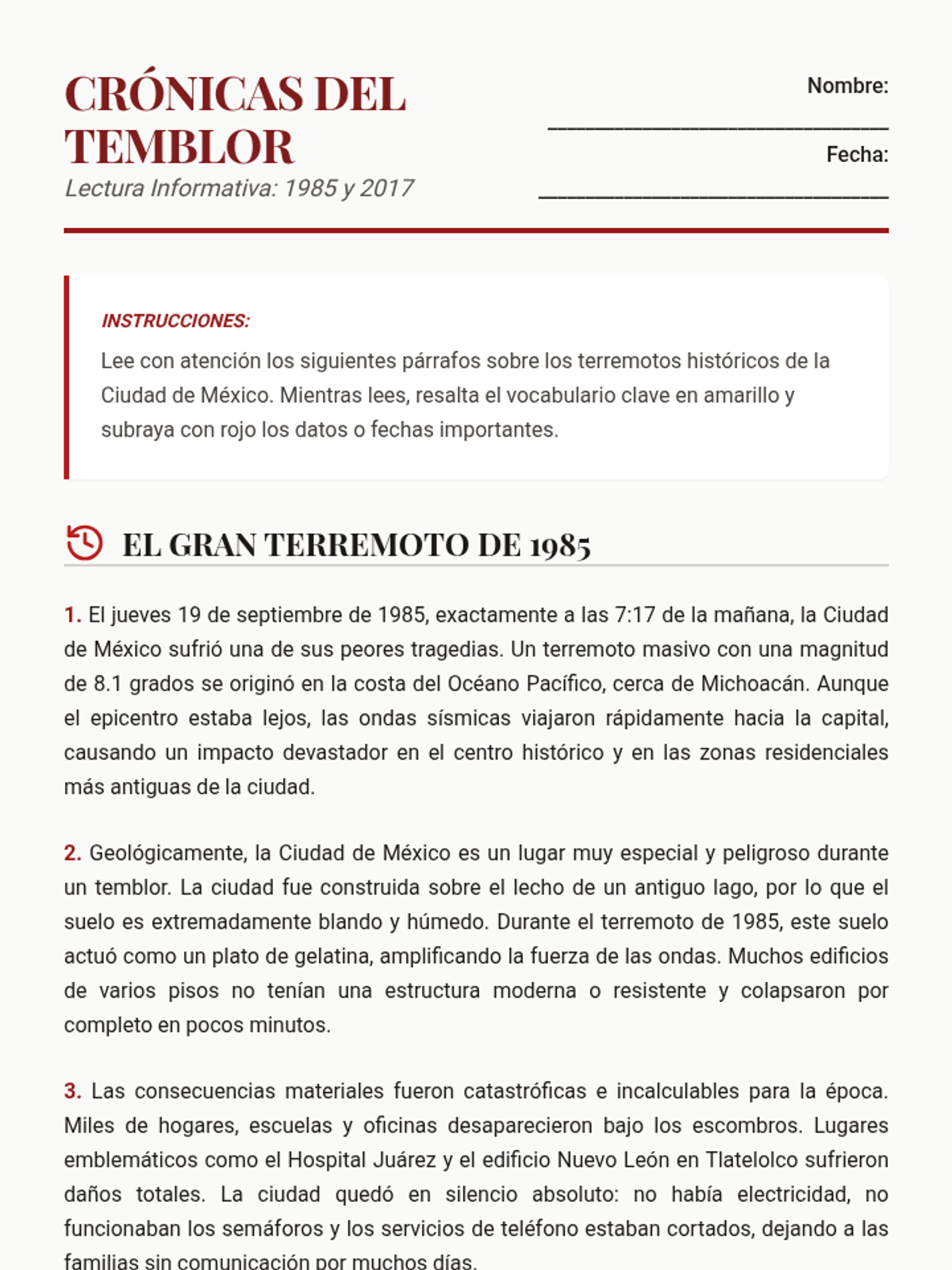
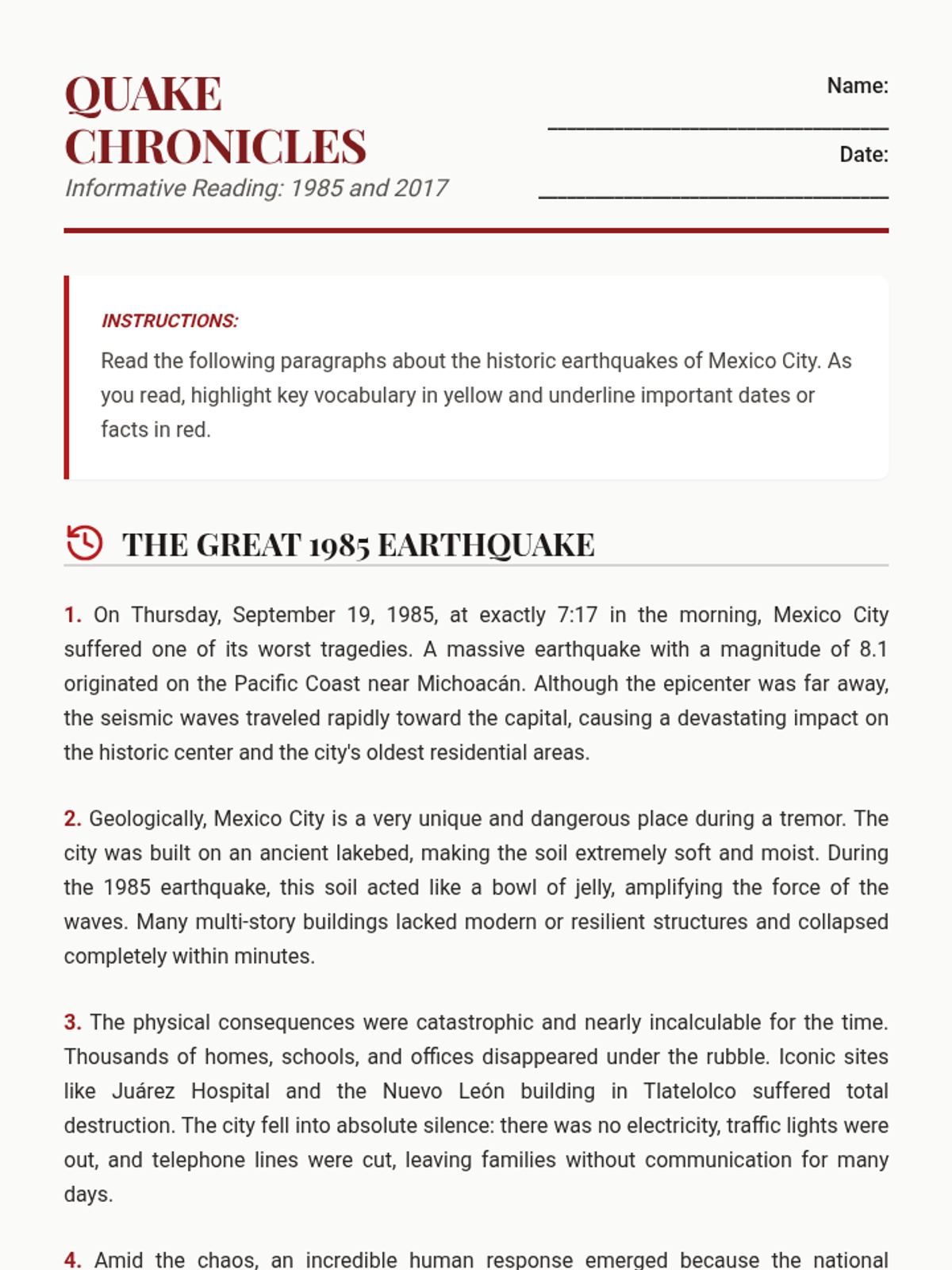
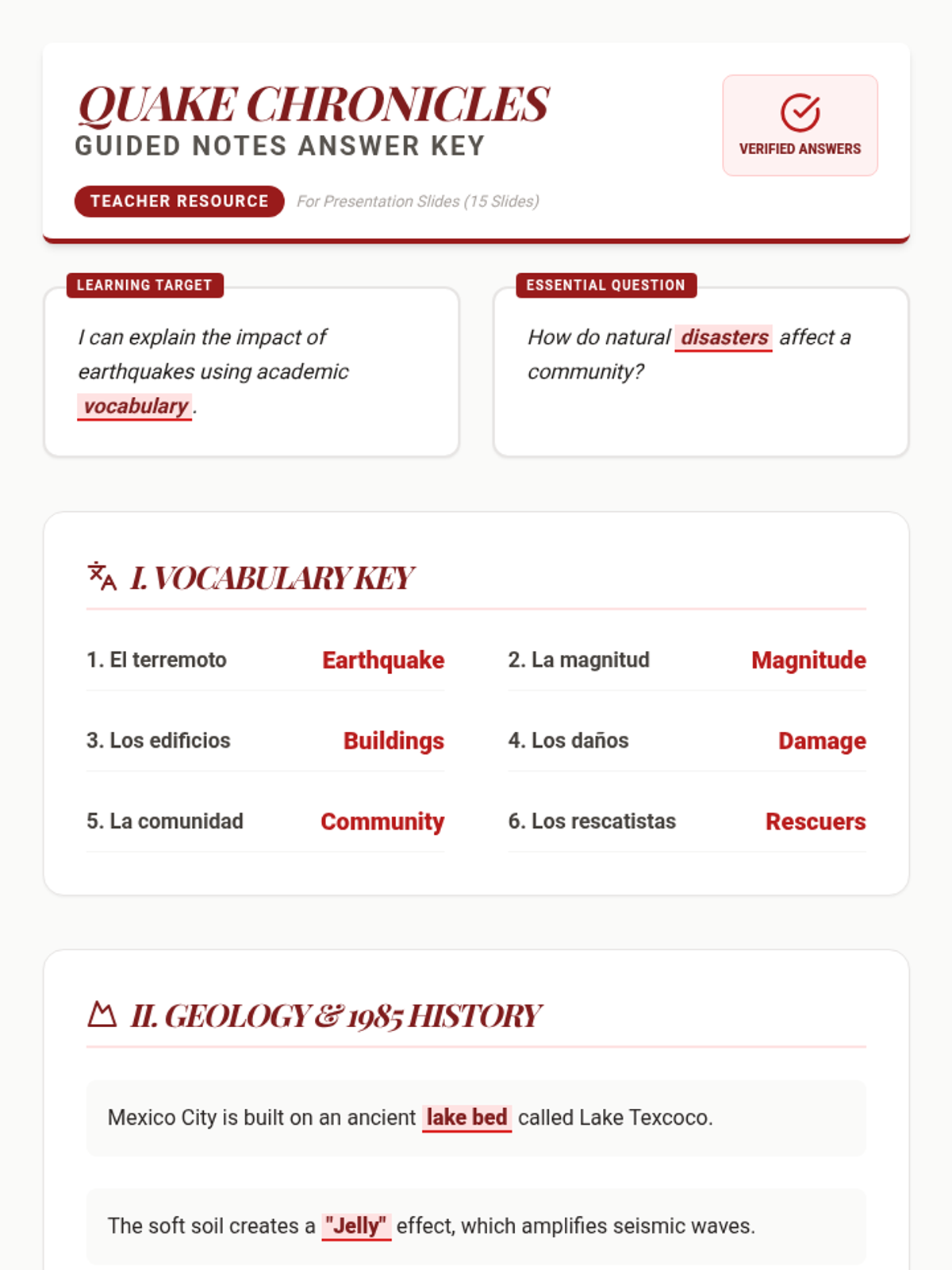
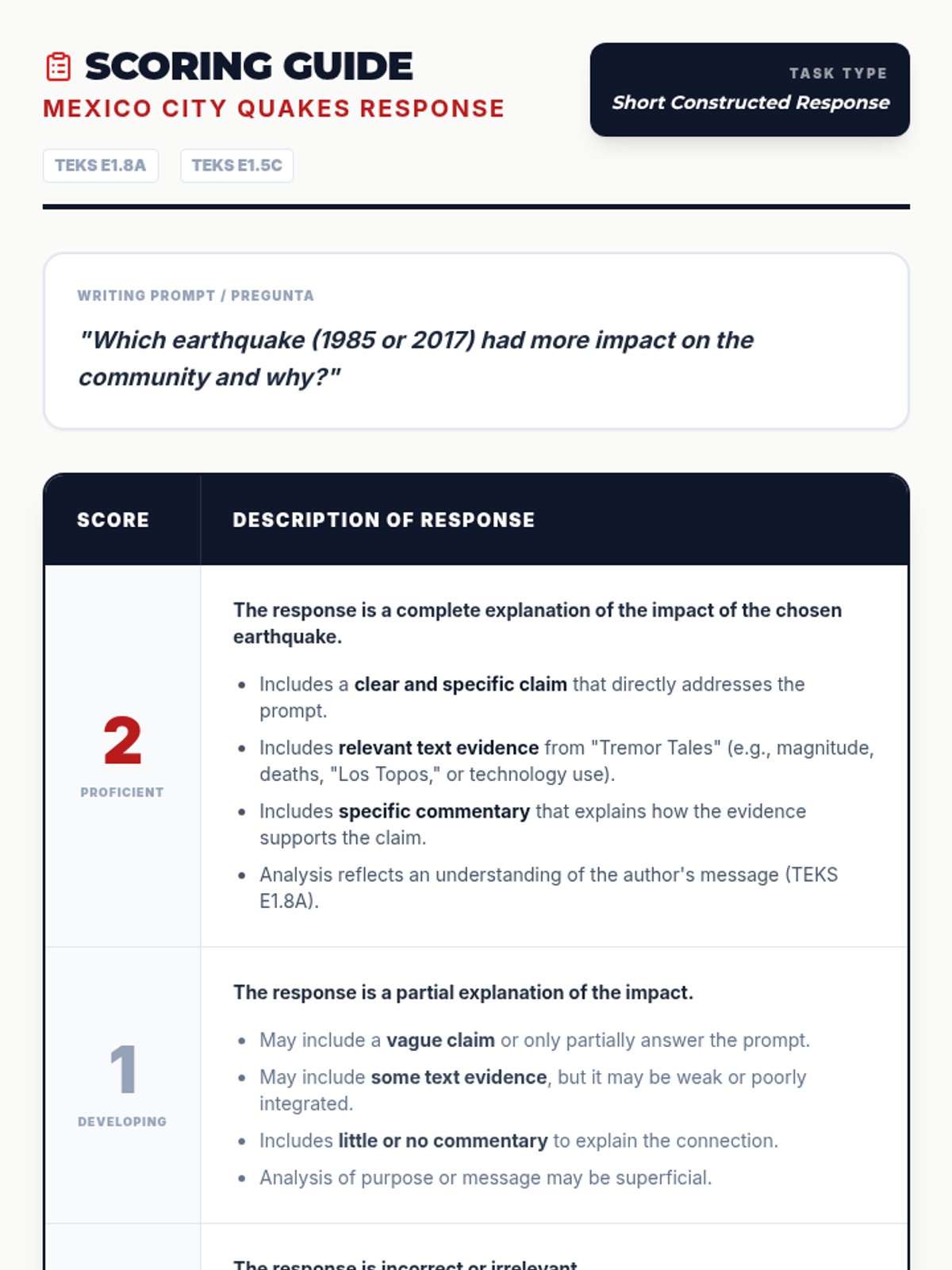
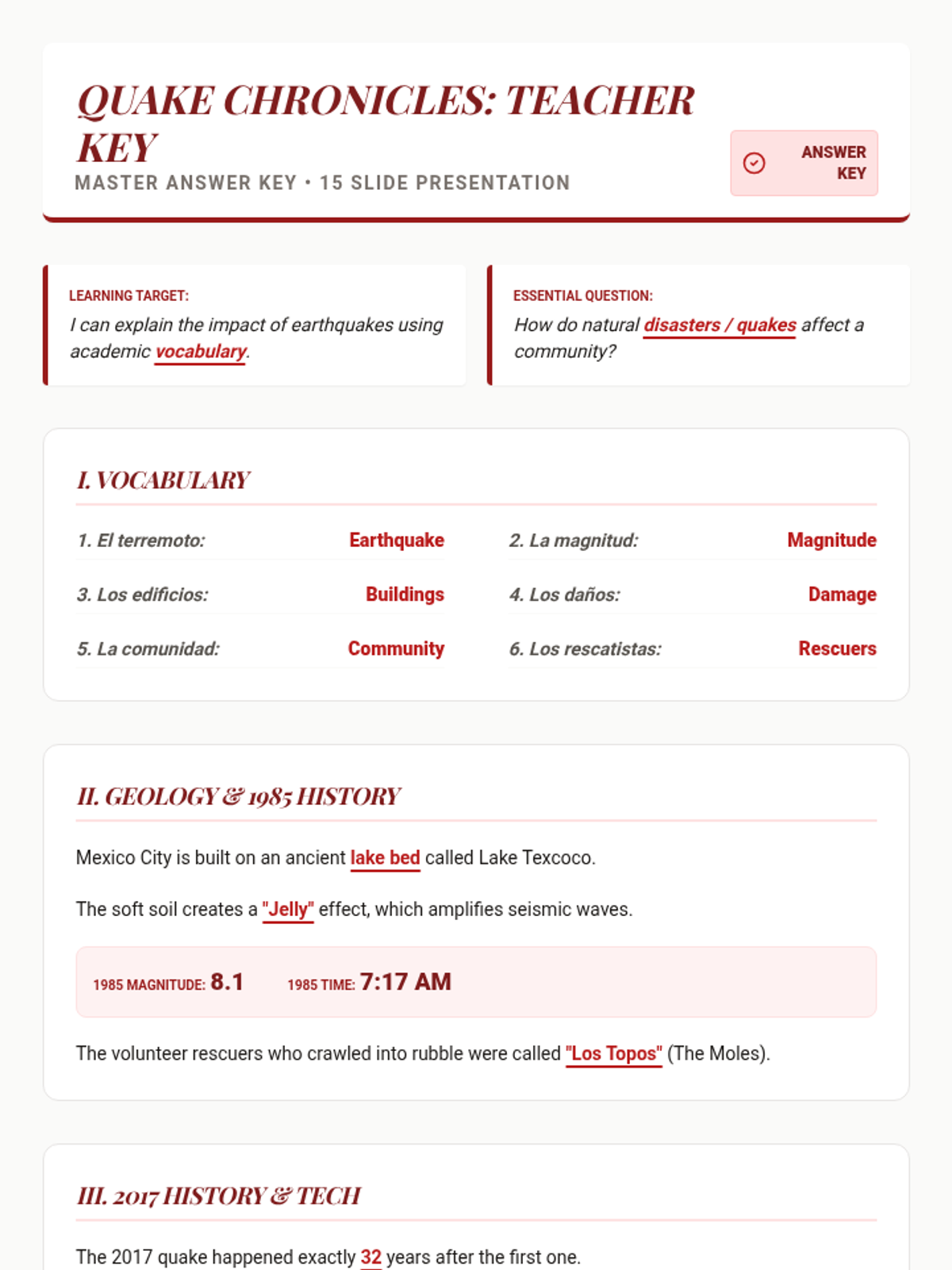
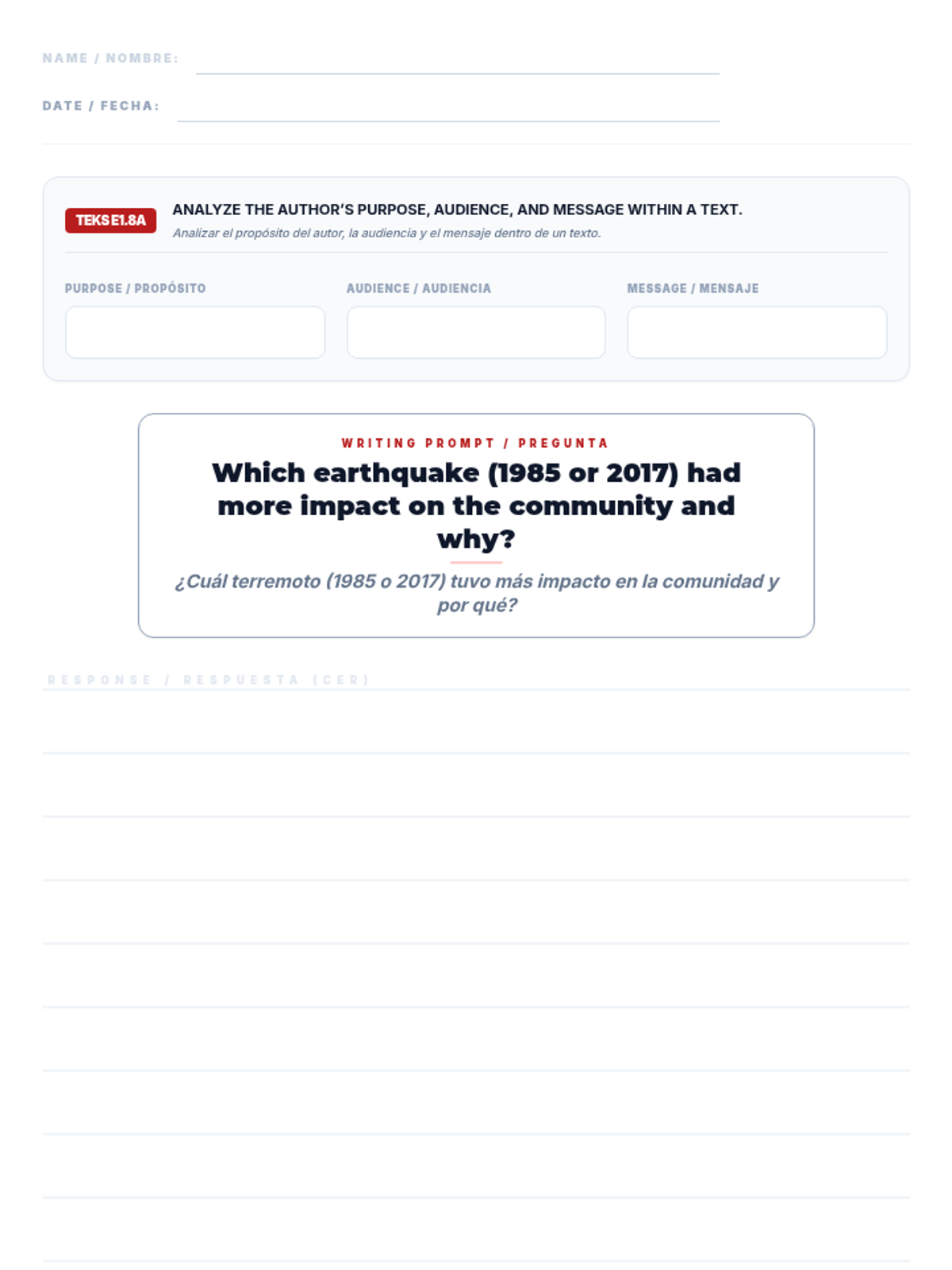
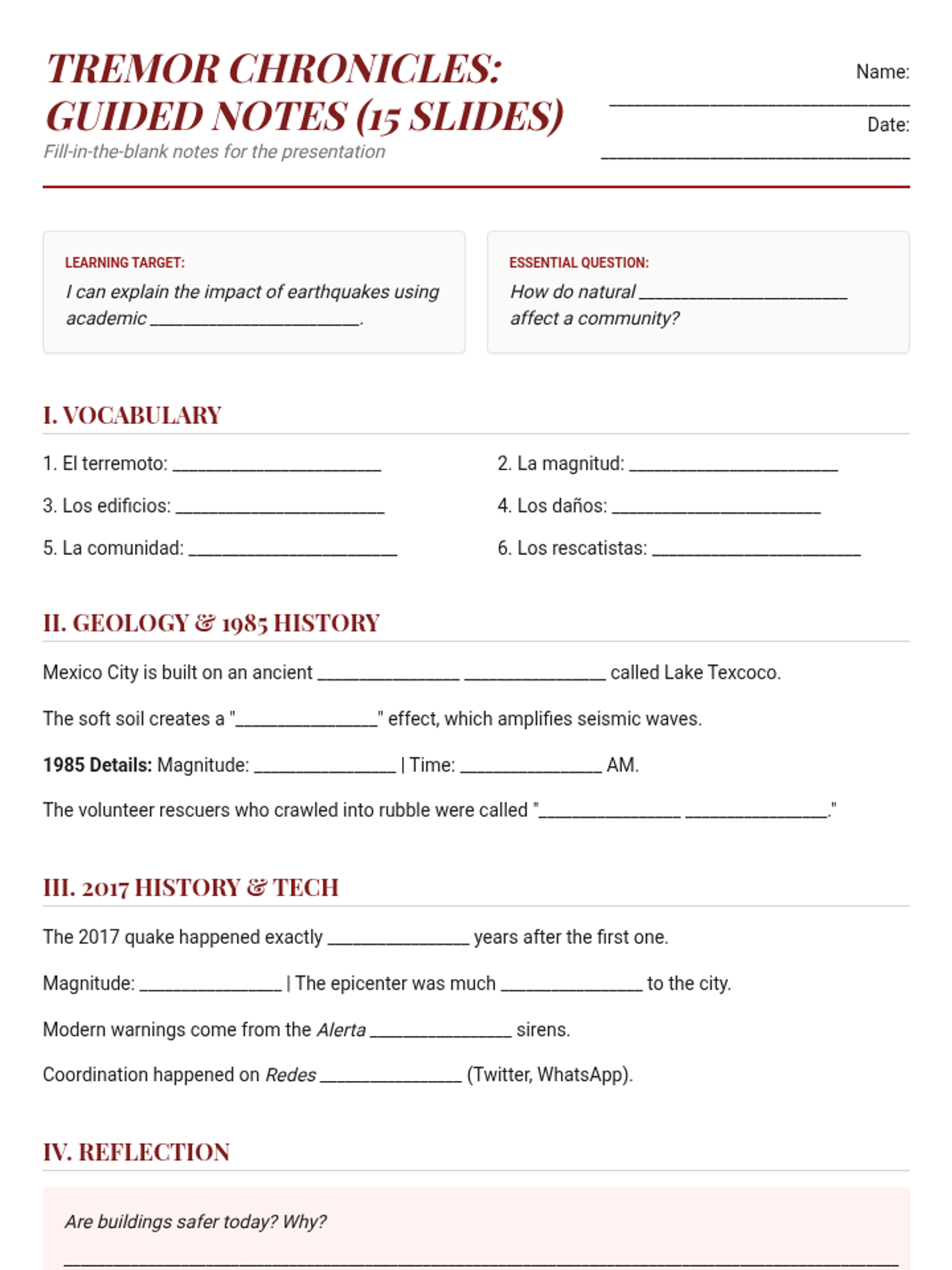
A comprehensive lesson on the historic earthquakes of Mexico City (1985 and 2017), focusing on interpretive reading and academic writing using the Claim, Evidence, Reasoning (CER) framework. Students explore community impact, resilience, and historical comparison.
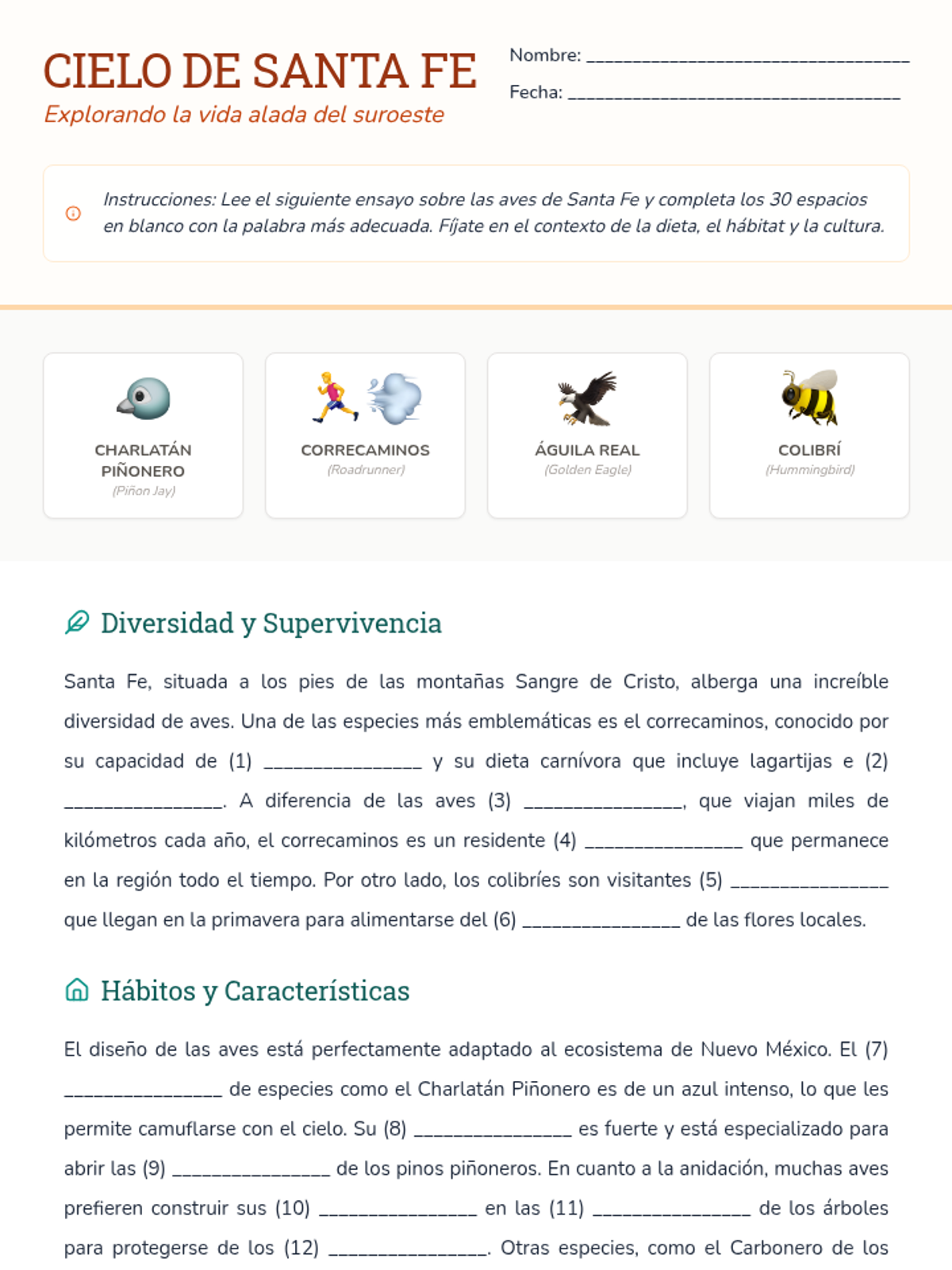
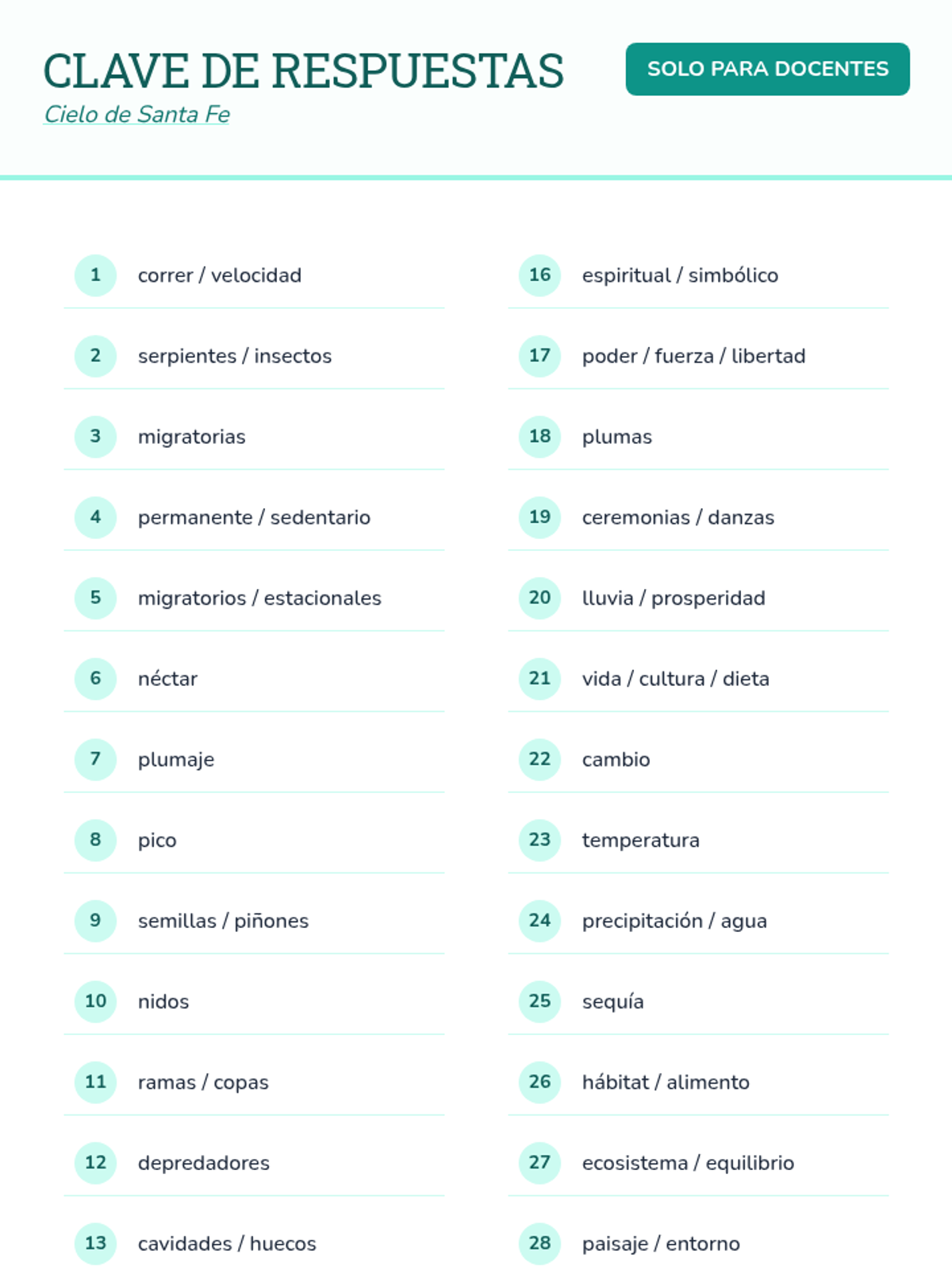
Una lección sobre la avifauna de Santa Fe, Nuevo México, que explora sus características físicas, su importancia cultural para los pueblos indígenas y los desafíos del cambio climático.
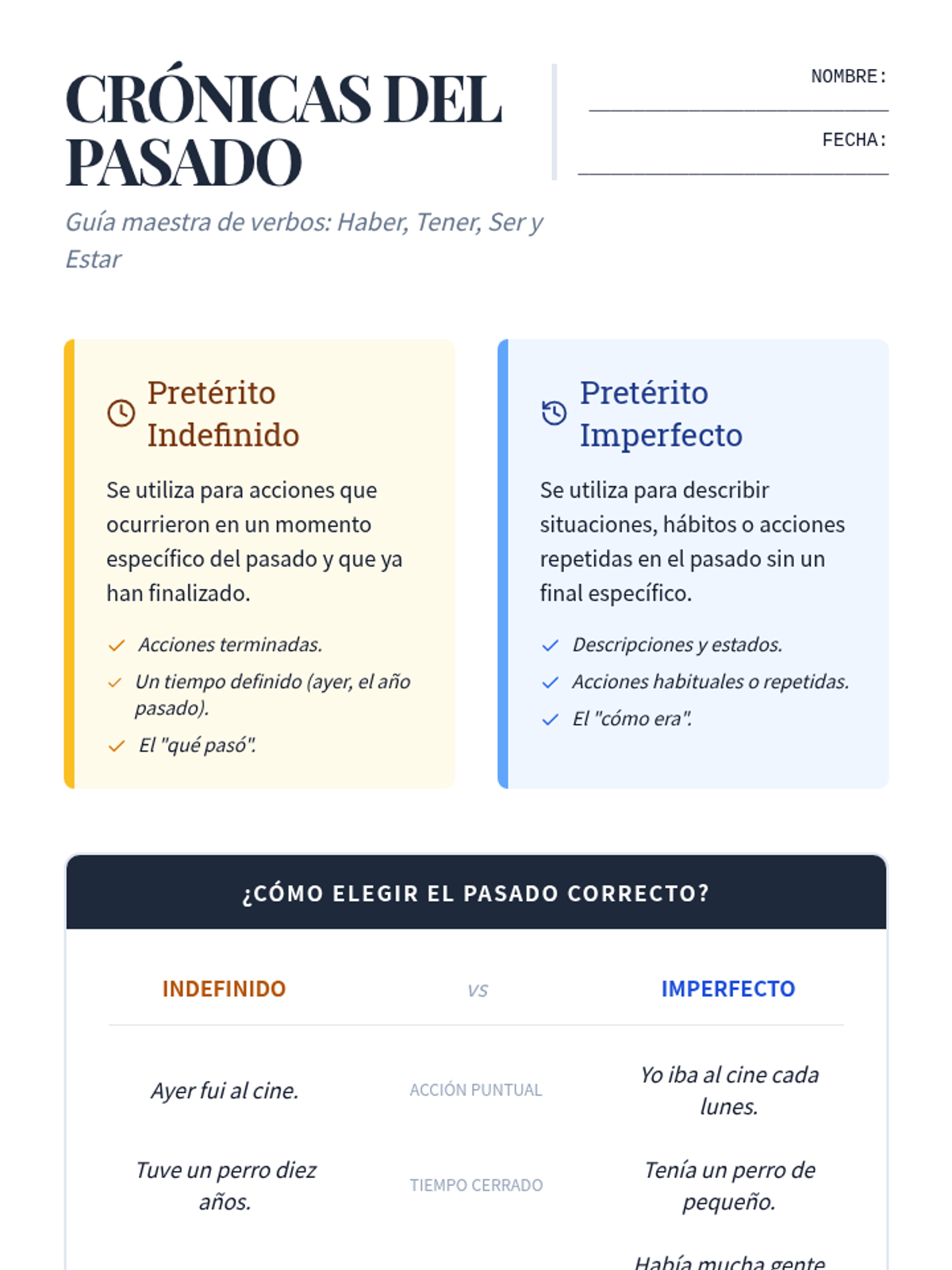
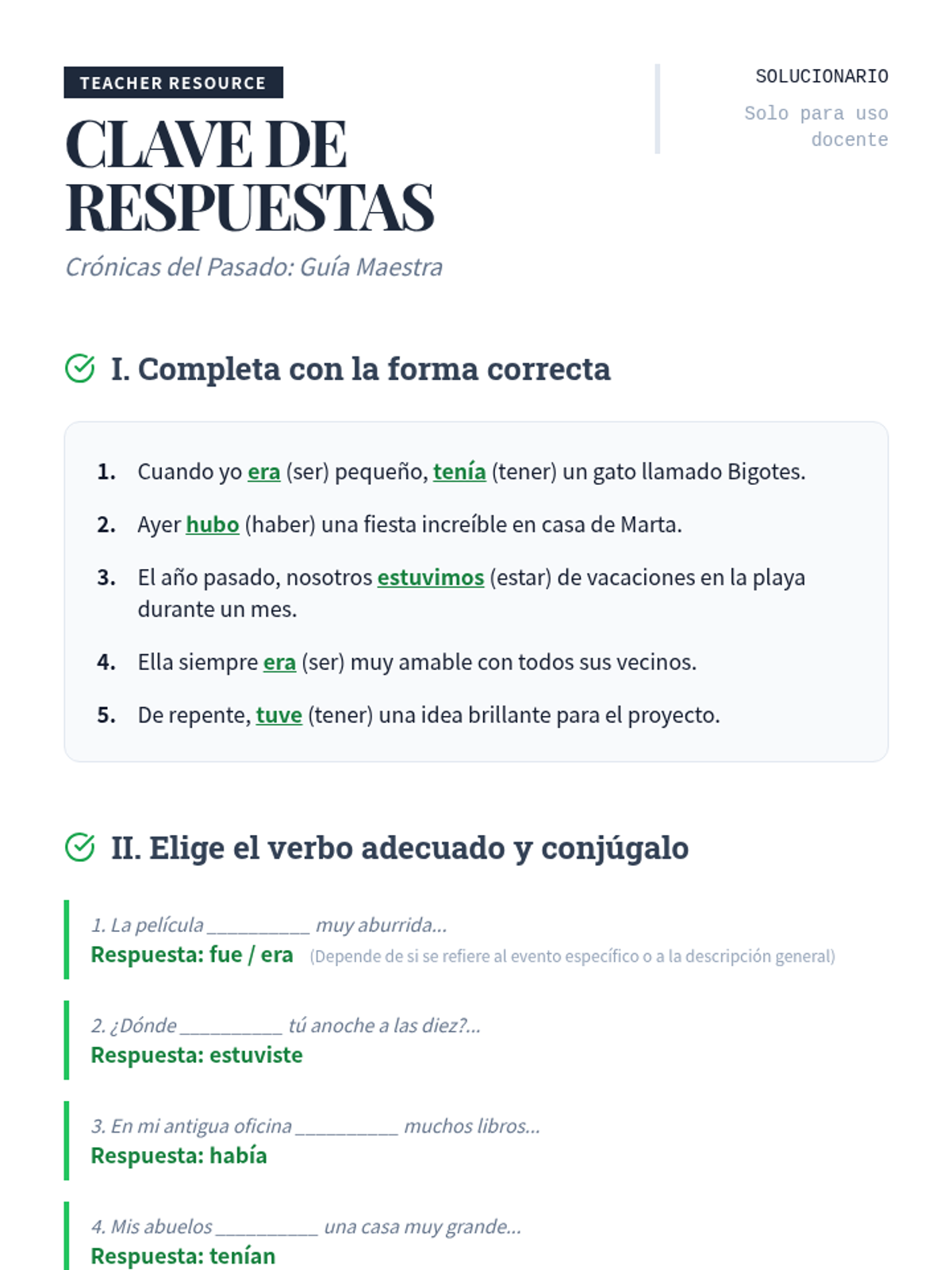
Una guía detallada para dominar los verbos fundamentales (haber, tener, ser, estar) en el pretérito indefinido y el imperfecto. Incluye explicaciones teóricas, tablas de conjugación y ejercicios prácticos.
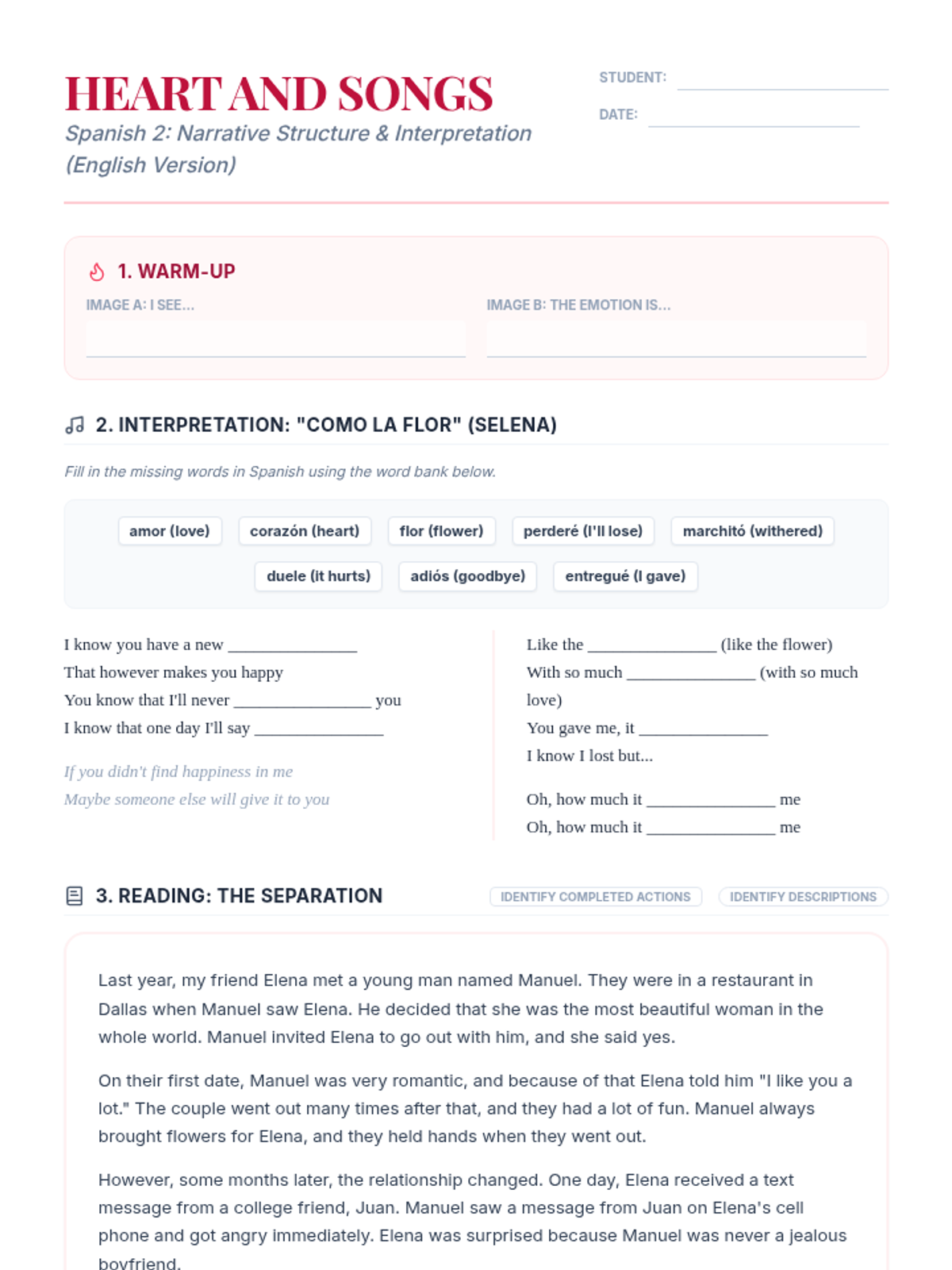
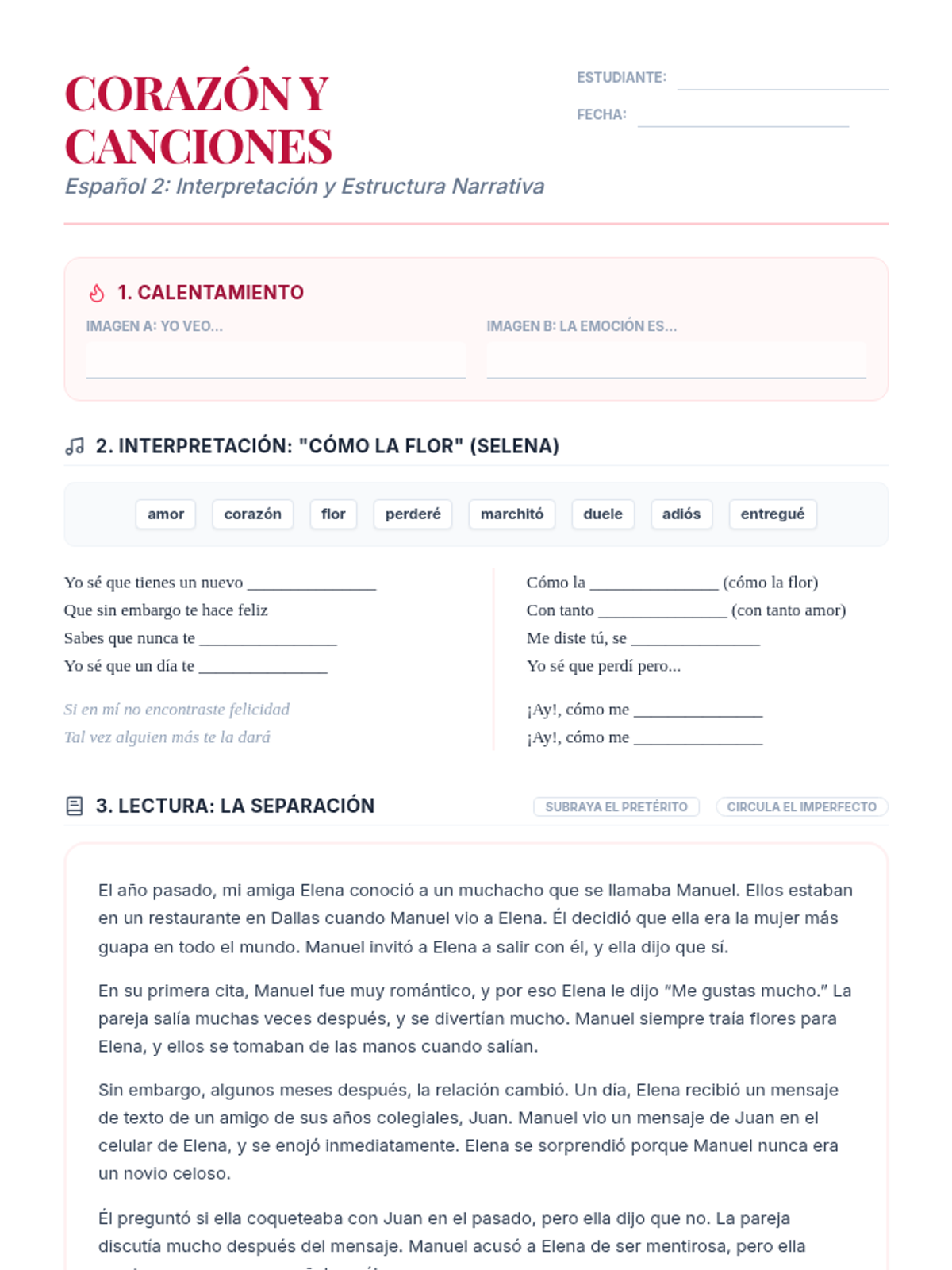
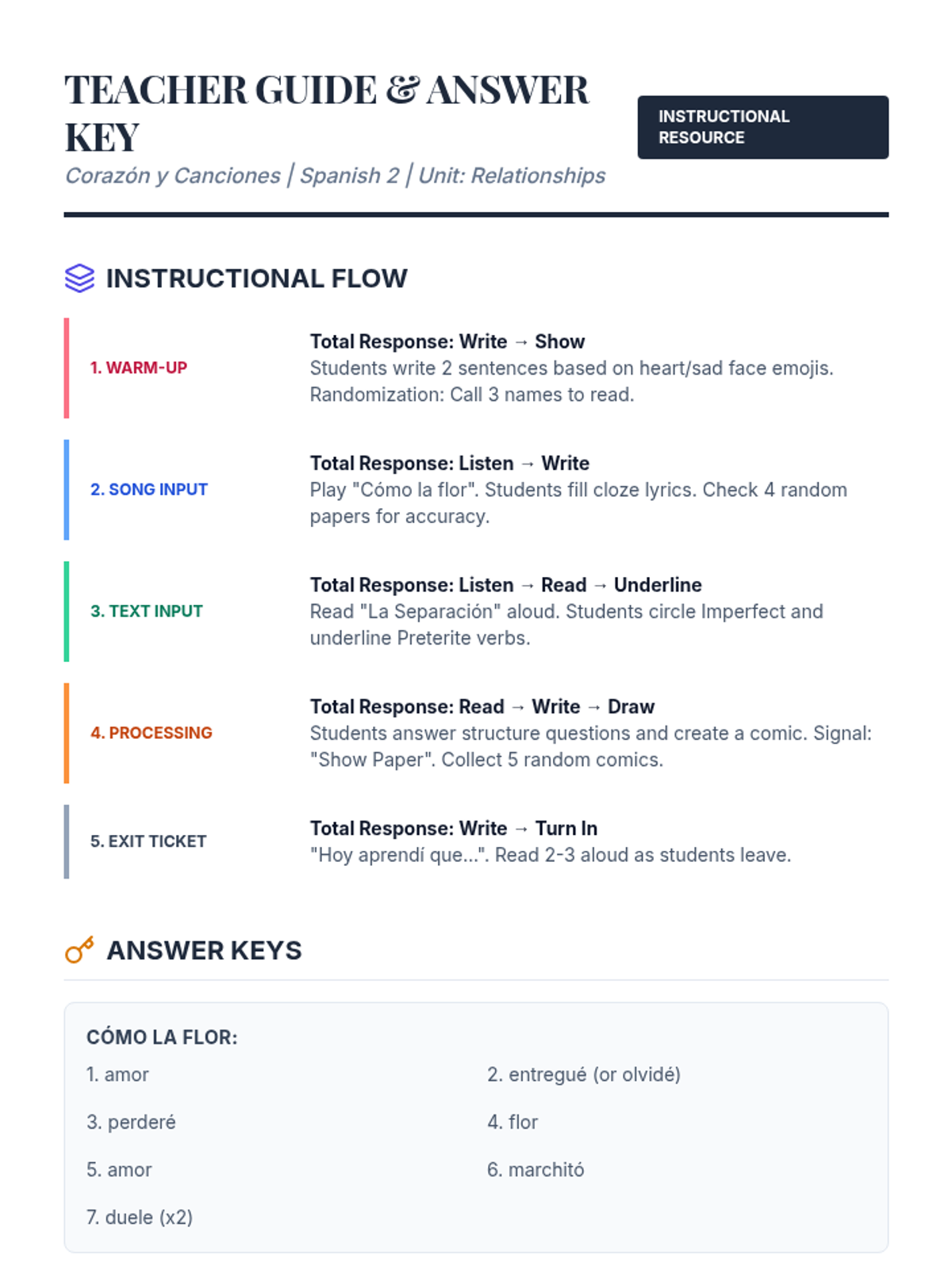
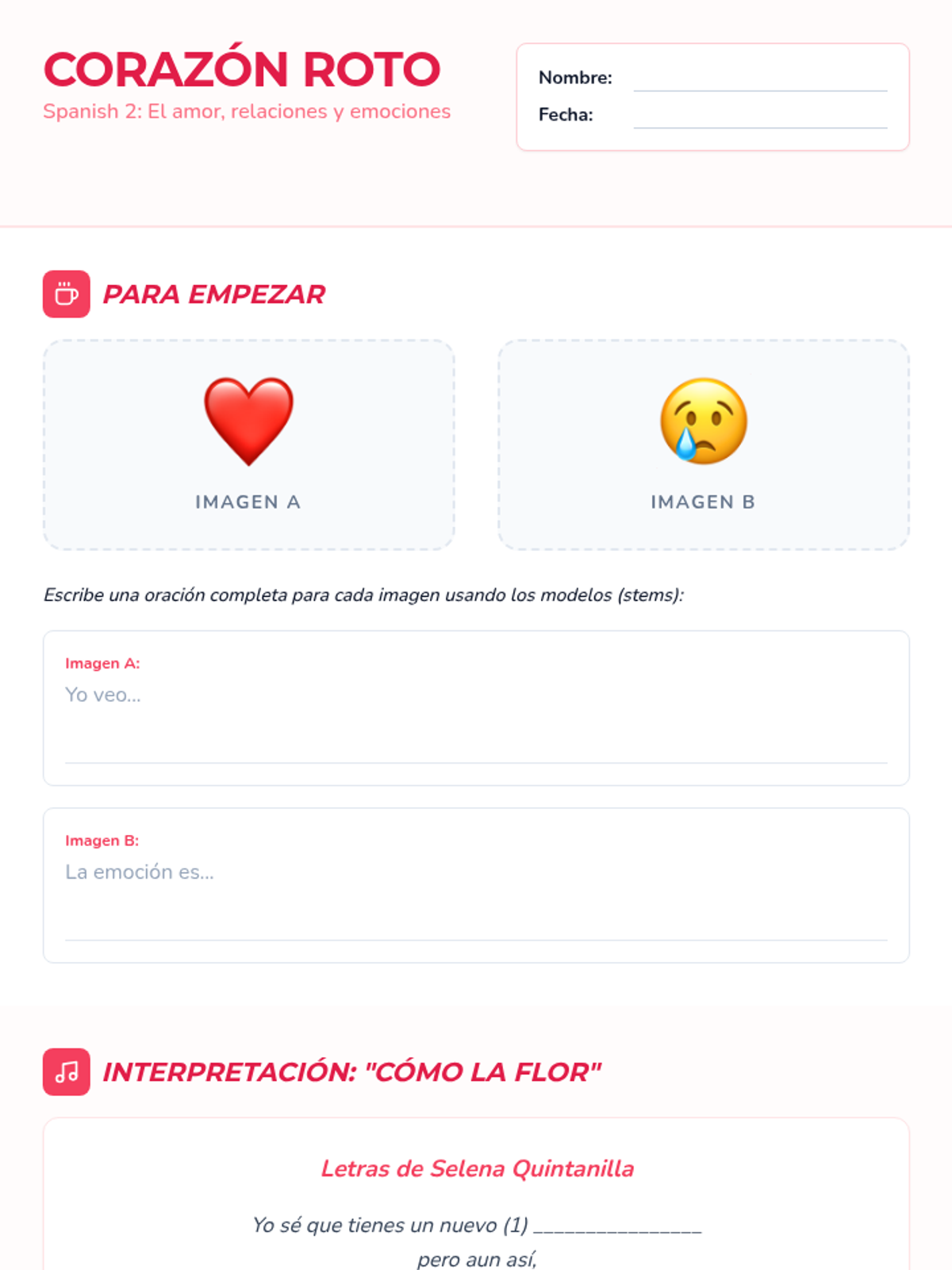
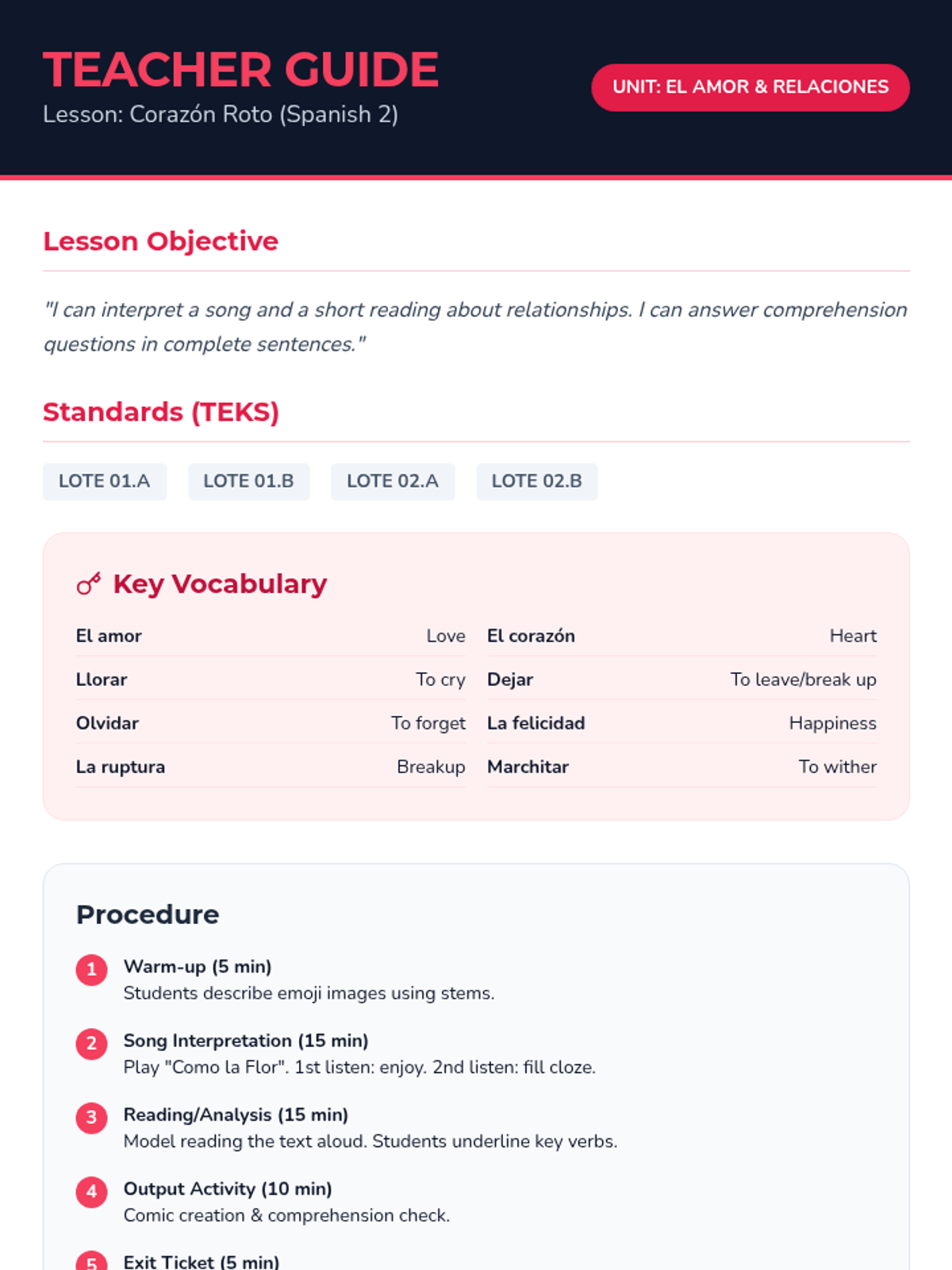
A Spanish 2 lesson focused on interpreting relationships and emotions through Selena's 'Cómo la flor' and a narrative text, with a focus on preterite vs. imperfect and narrative structure.
A Spanish 2 lesson focused on interpreting relationships and emotions through the lens of Selena's 'Como la Flor' and modern relationship concepts like the friend zone. Students practice interpretive skills through song and text, and presentational skills through sentence construction and comic creation.
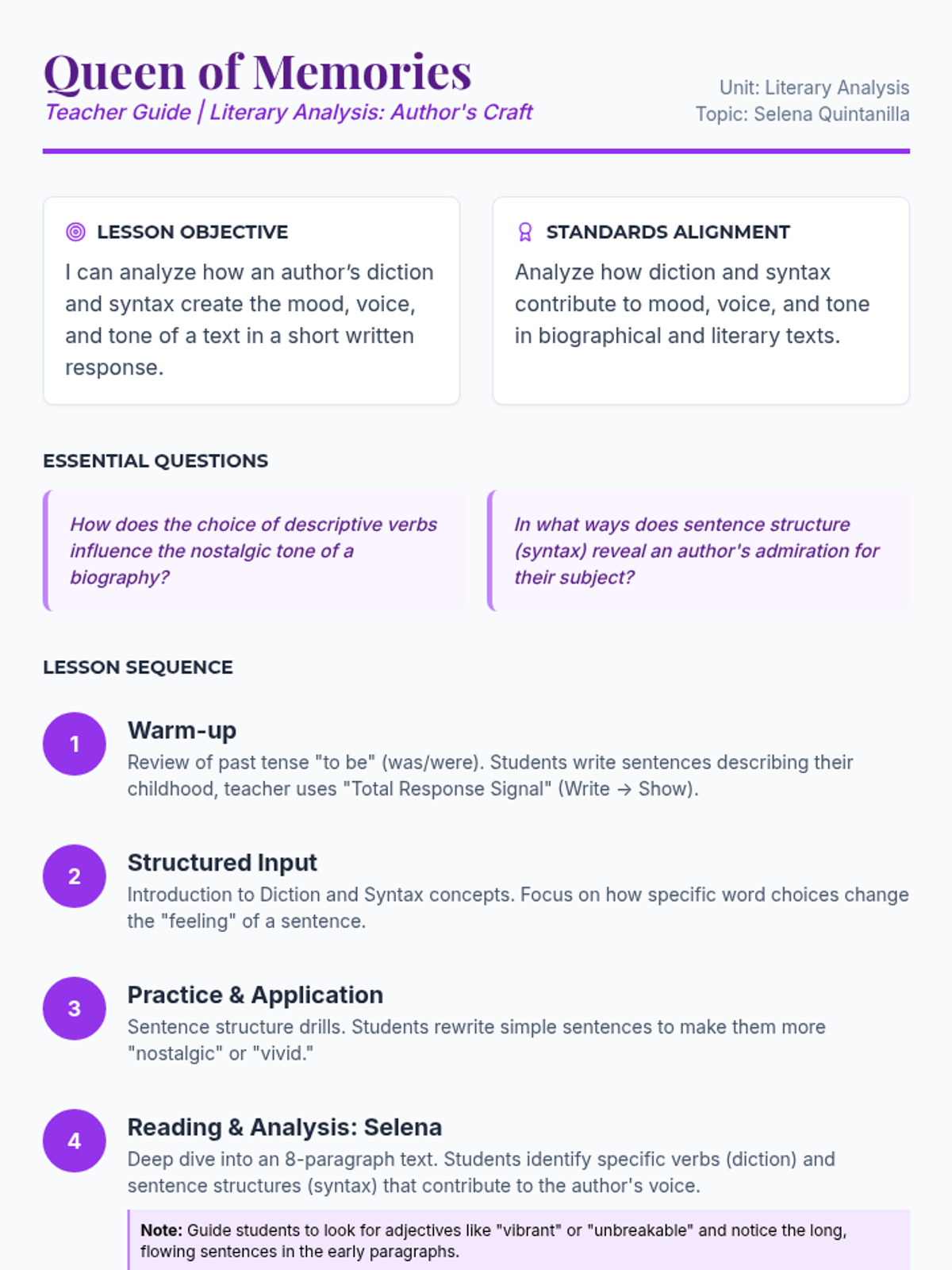
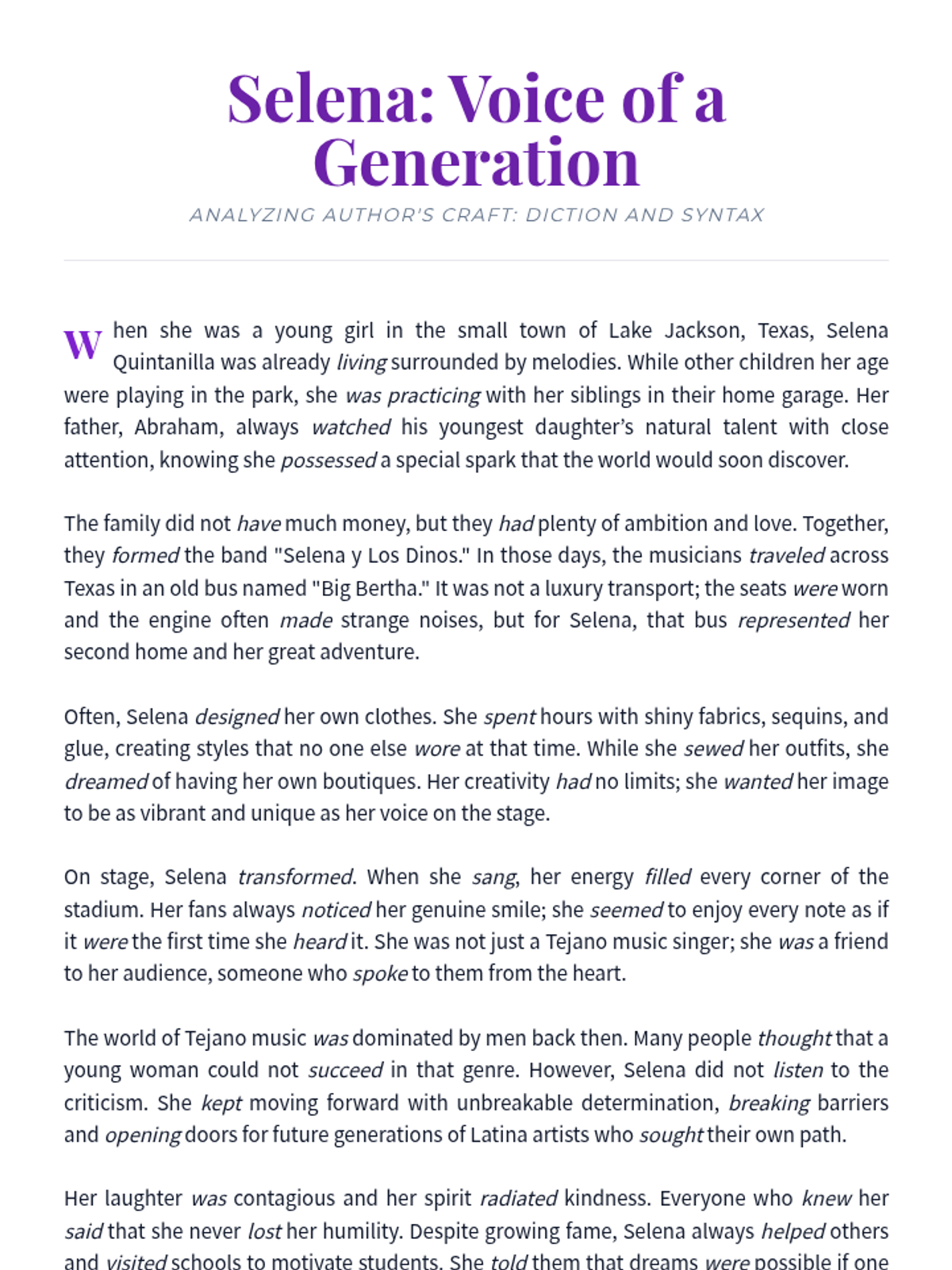
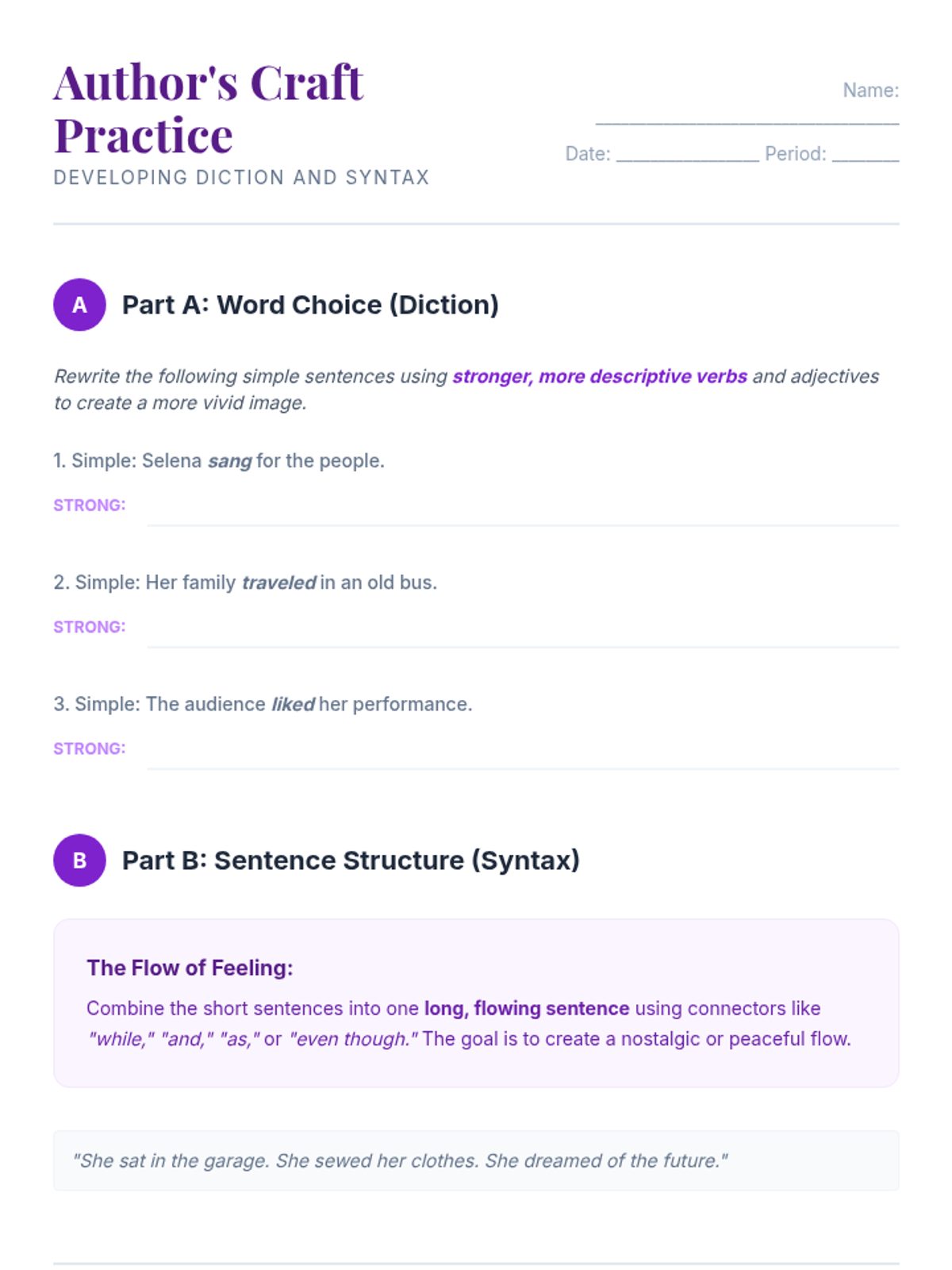
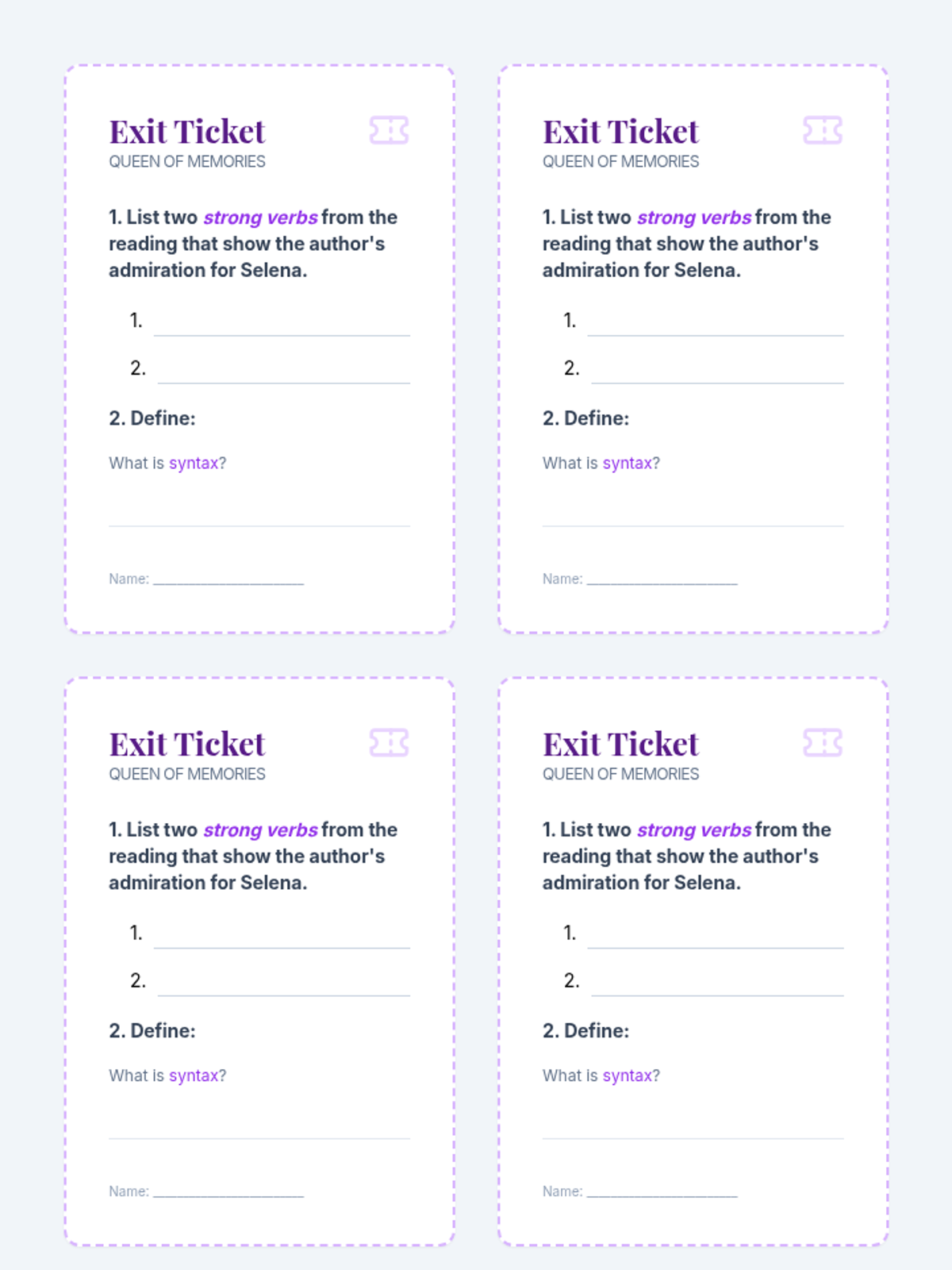
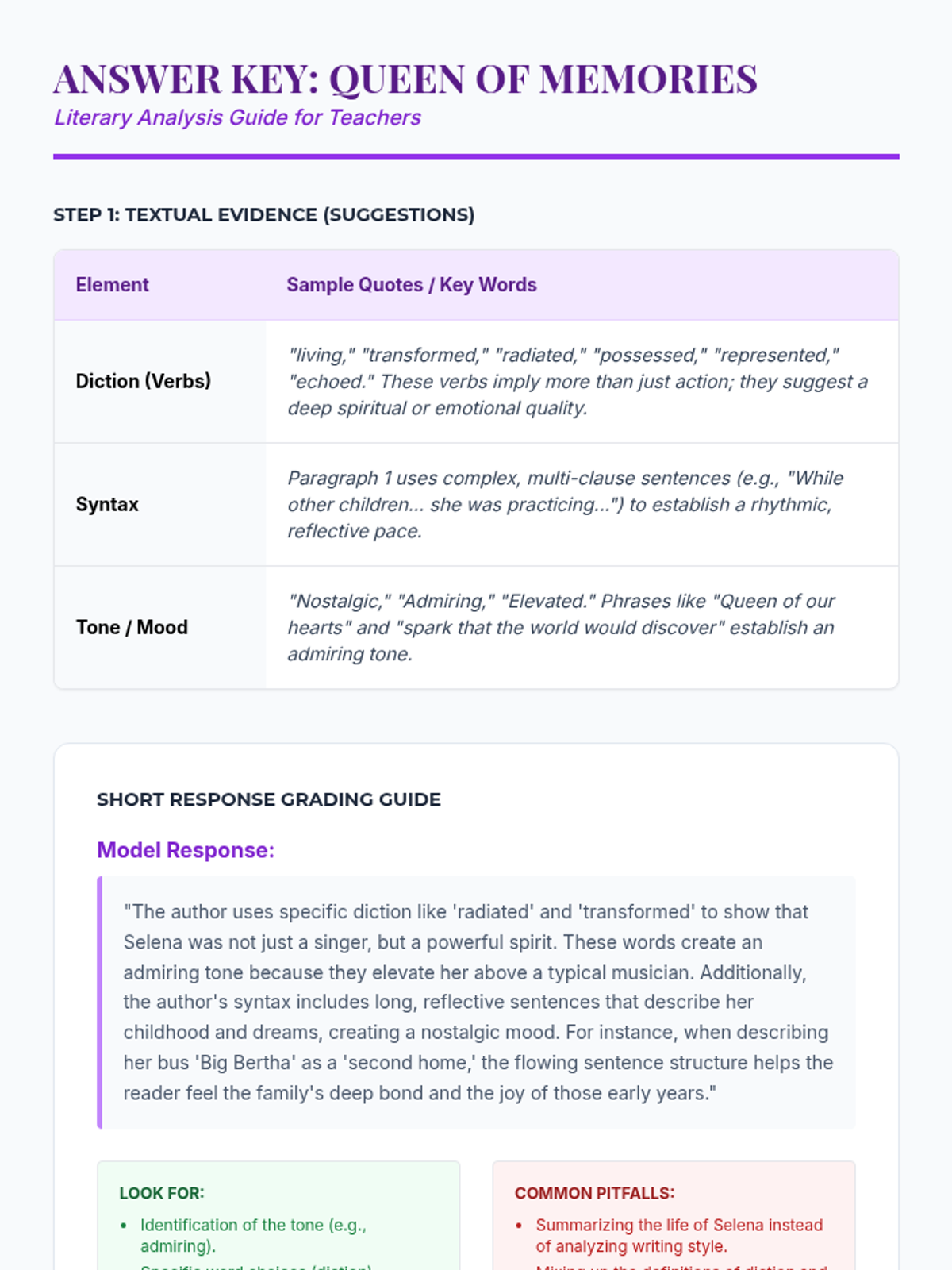
A lesson focused on the life of Selena Quintanilla, using the past tense to analyze how an author's diction and syntax build mood and tone in a biographical text.
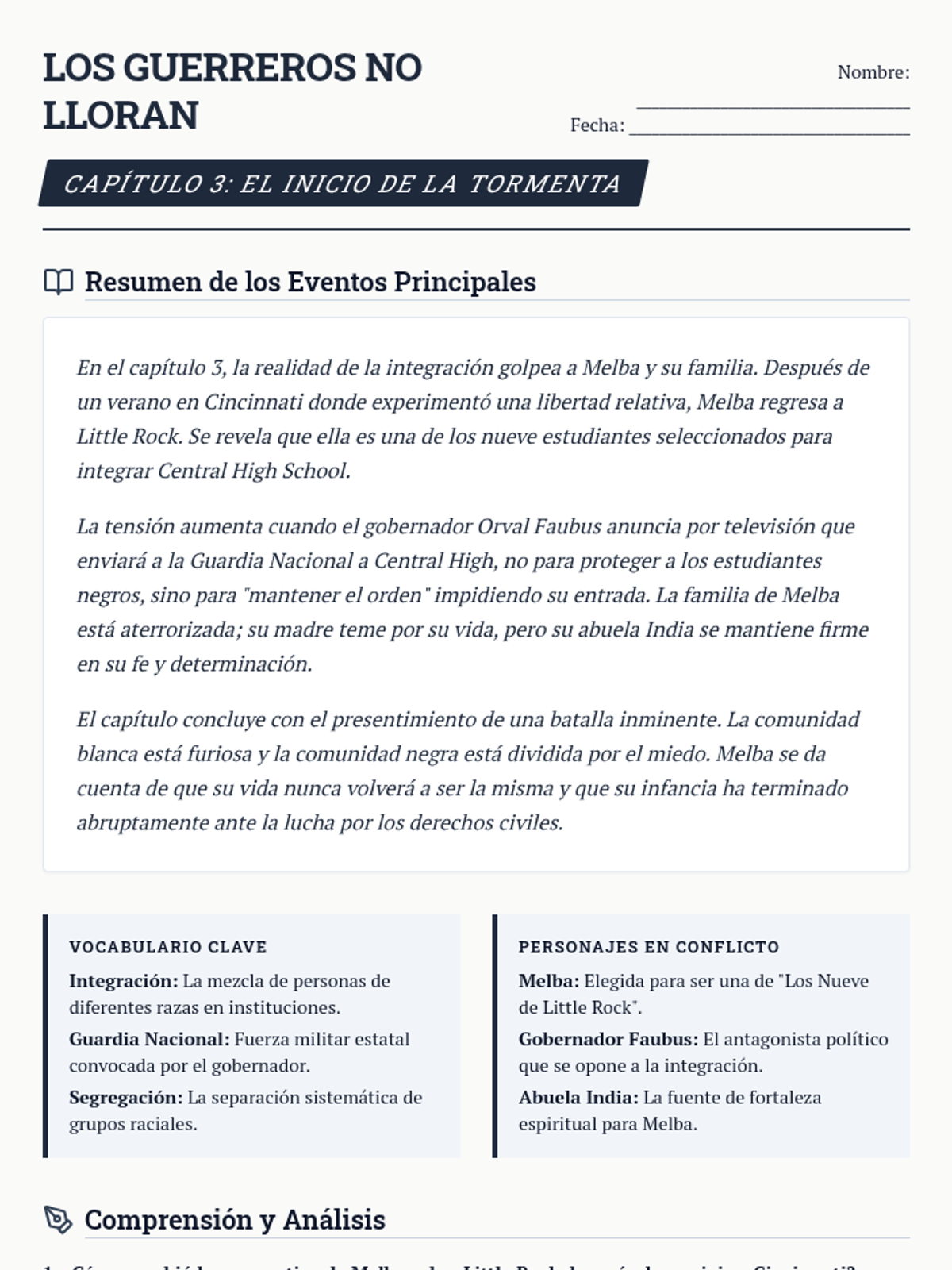
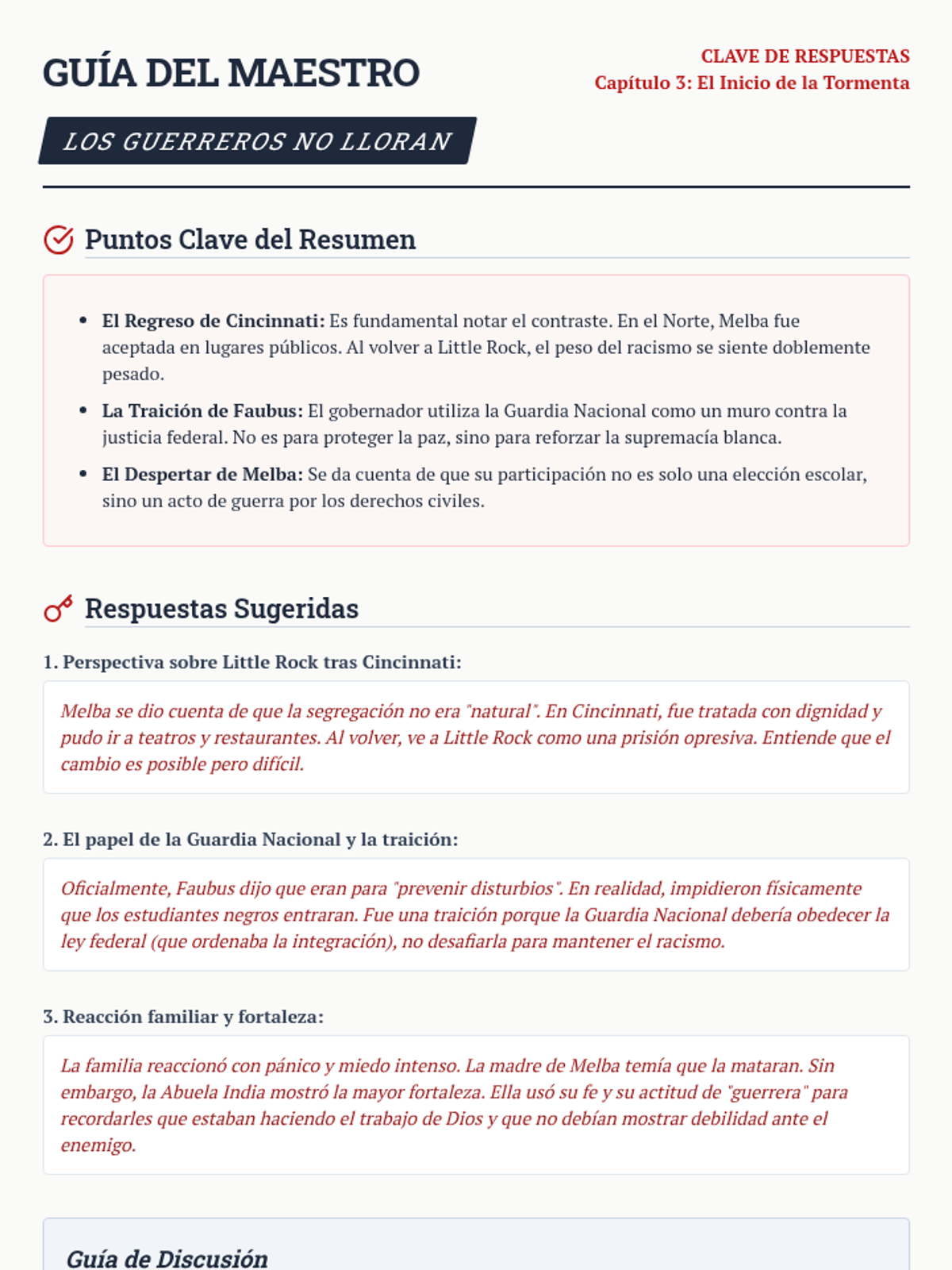
Una lección centrada en el tercer capítulo de la memoria de Melba Pattillo Beals, explorando los eventos iniciales de la integración de Central High School.
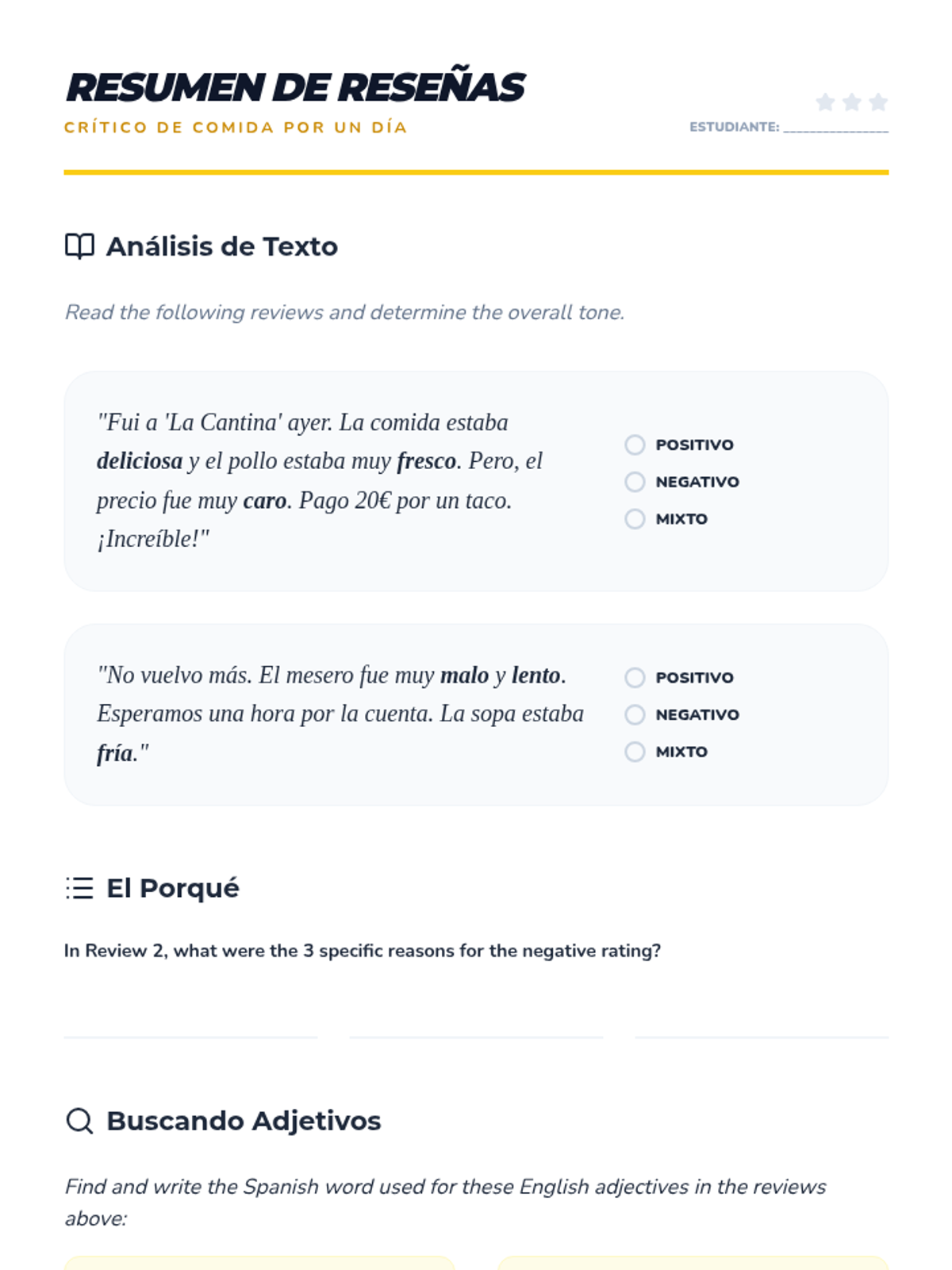
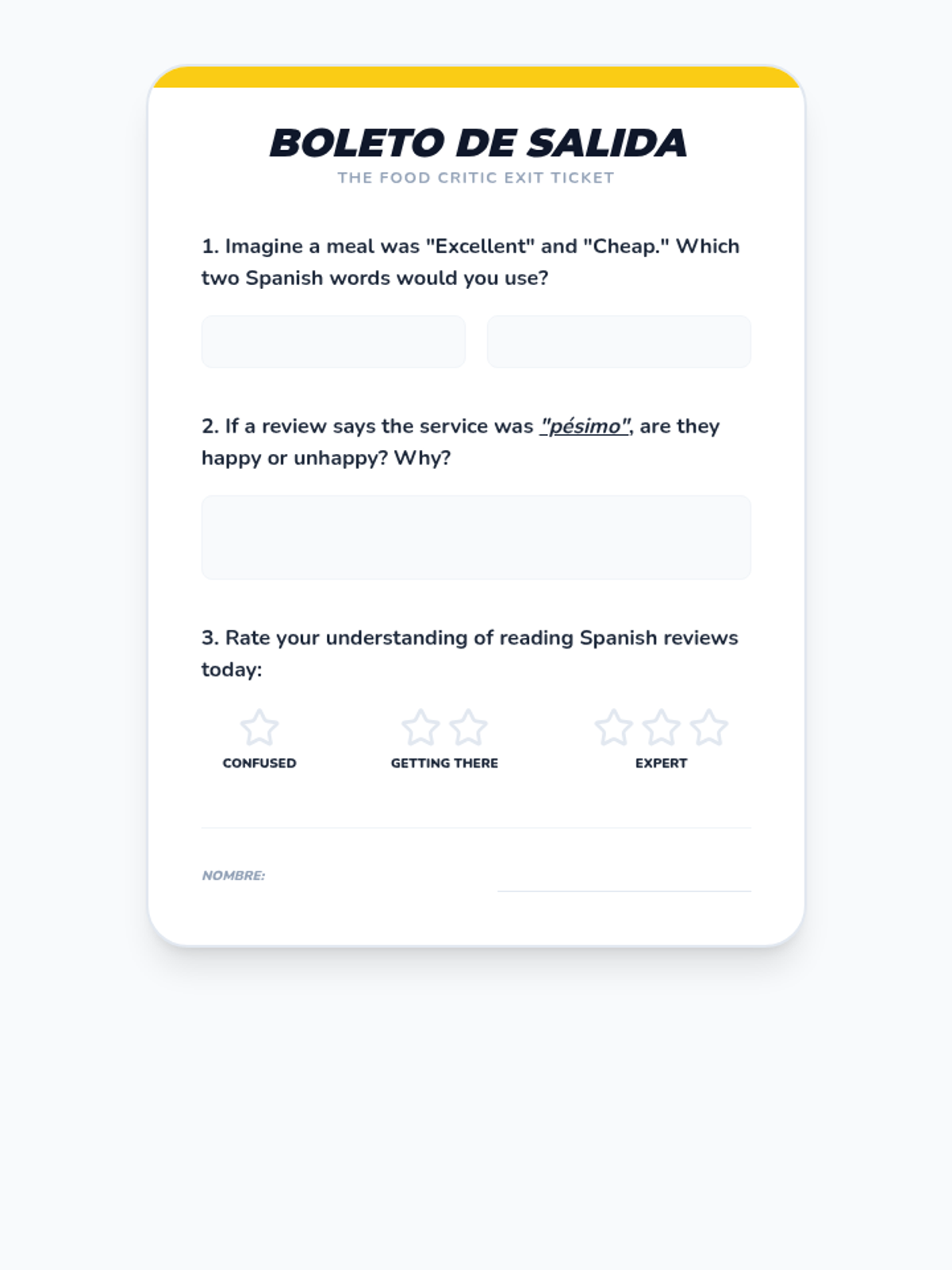
Students read and analyze restaurant reviews to identify tone, opinion, and descriptive adjectives.
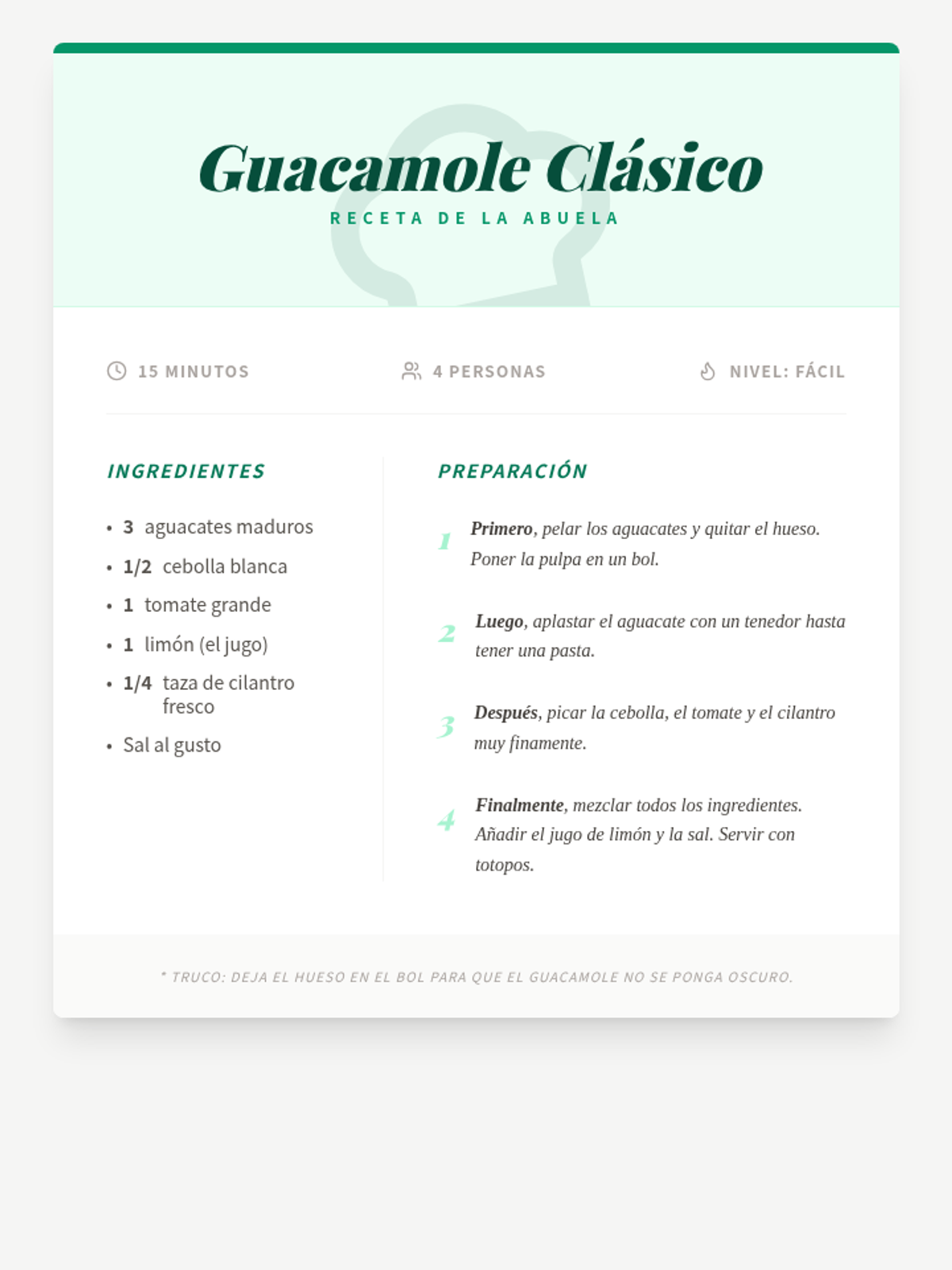
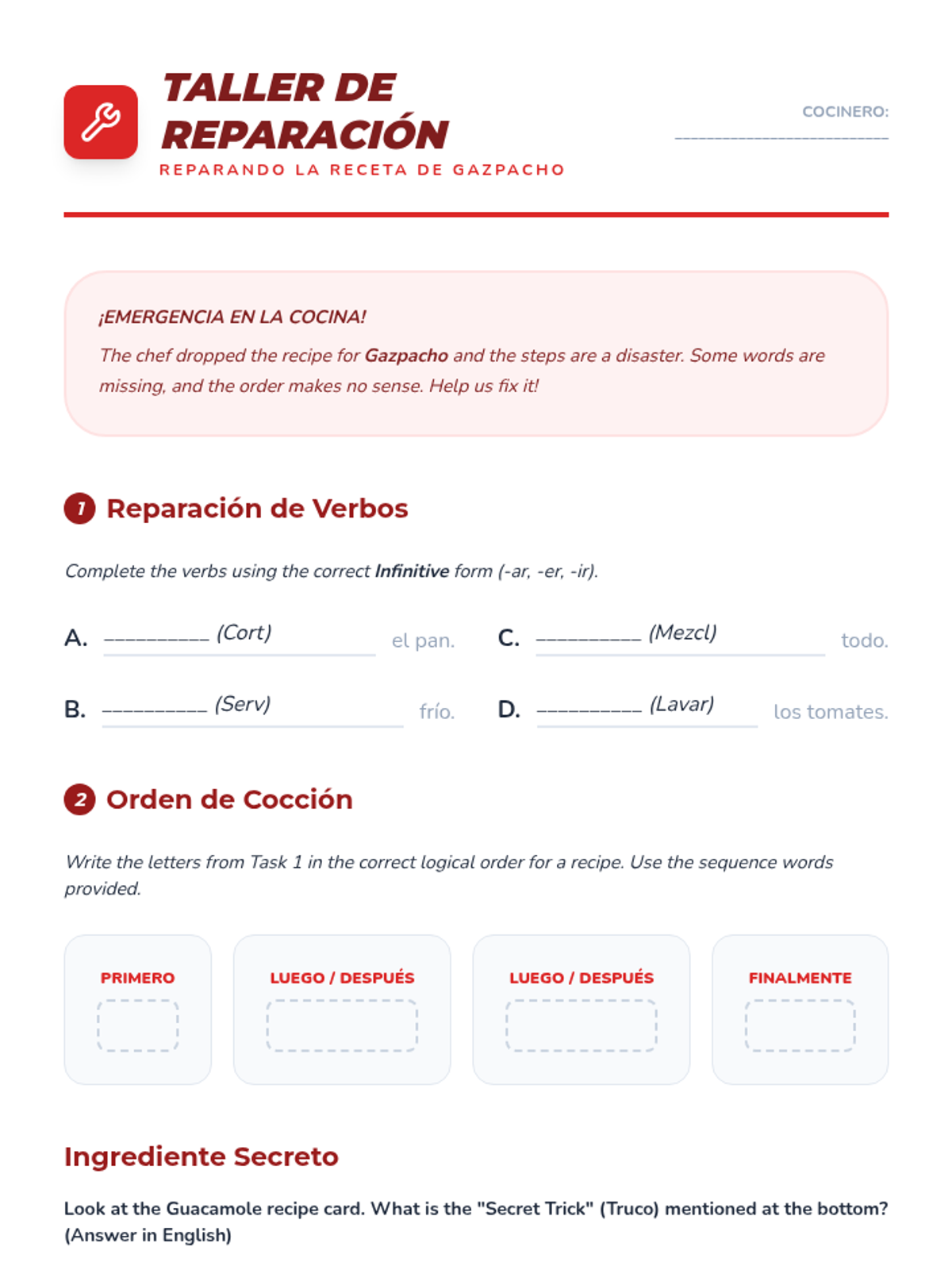
The class deciphers simple recipes, focusing on procedural language, sequencing words, and infinitive-based commands.
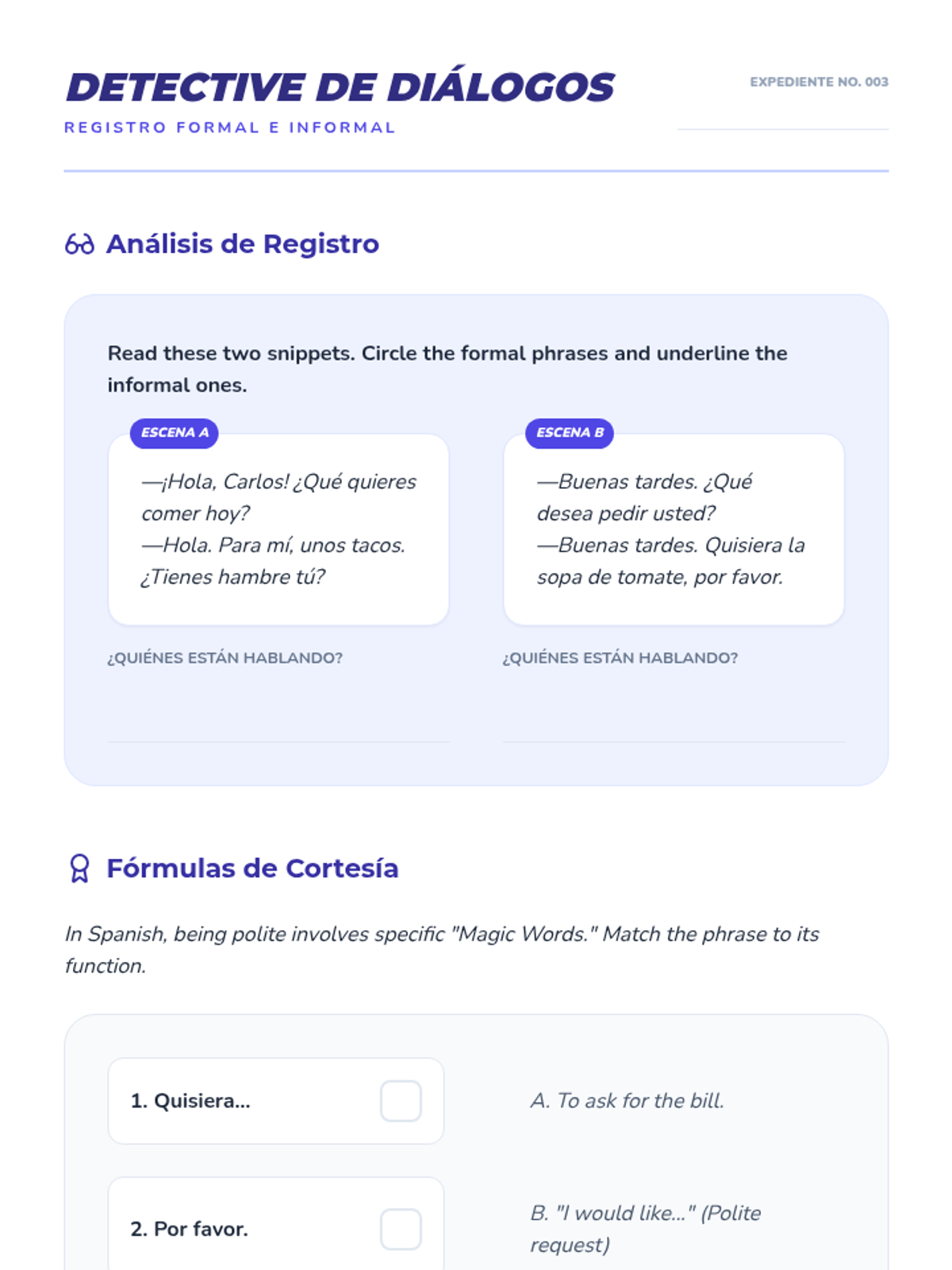
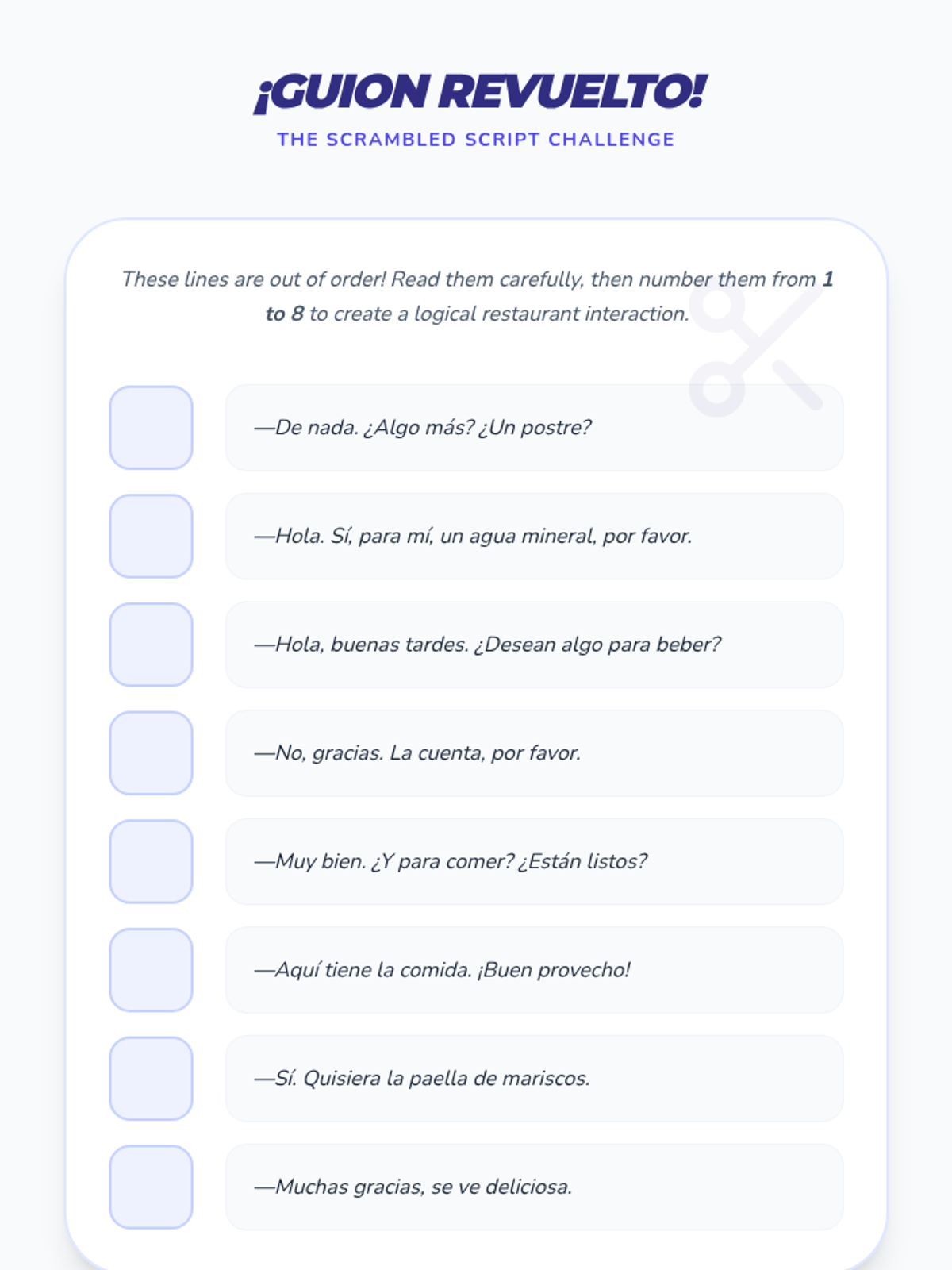
Students analyze restaurant interactions, focusing on the distinction between formal and informal address and polite ordering formulas.
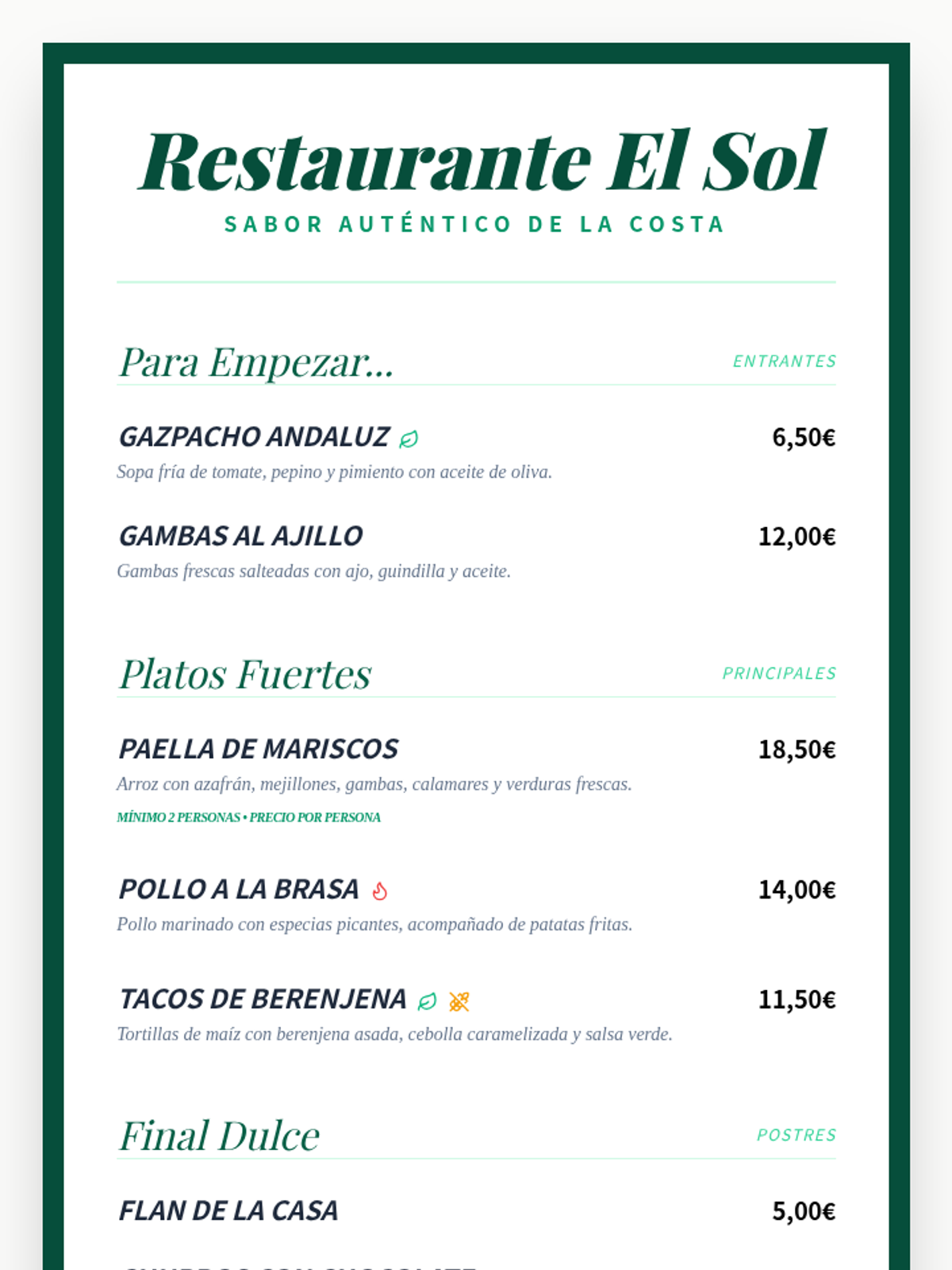
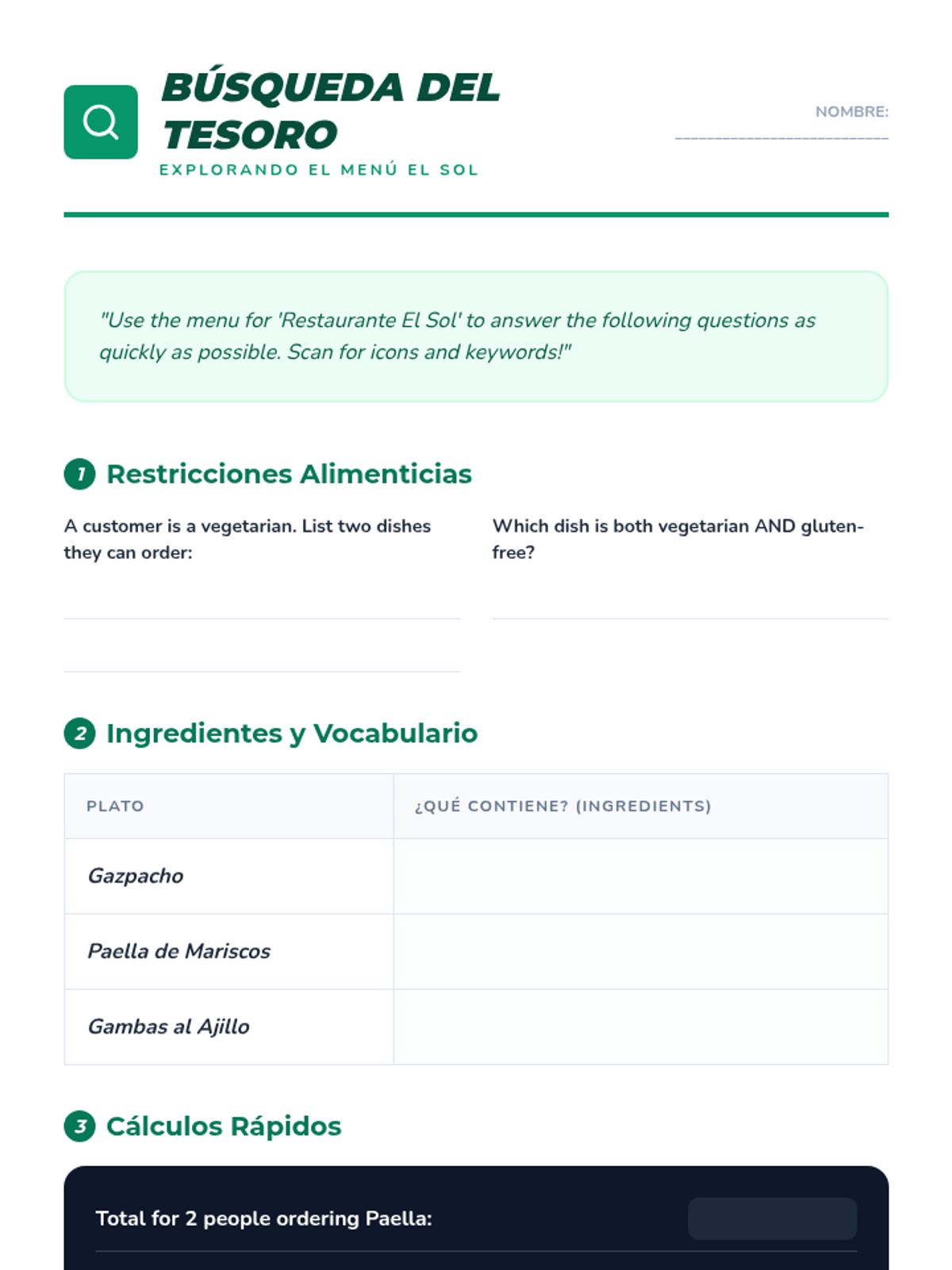
Learners explore authentic menus, scanning for specific ingredients, dietary symbols, and price points.
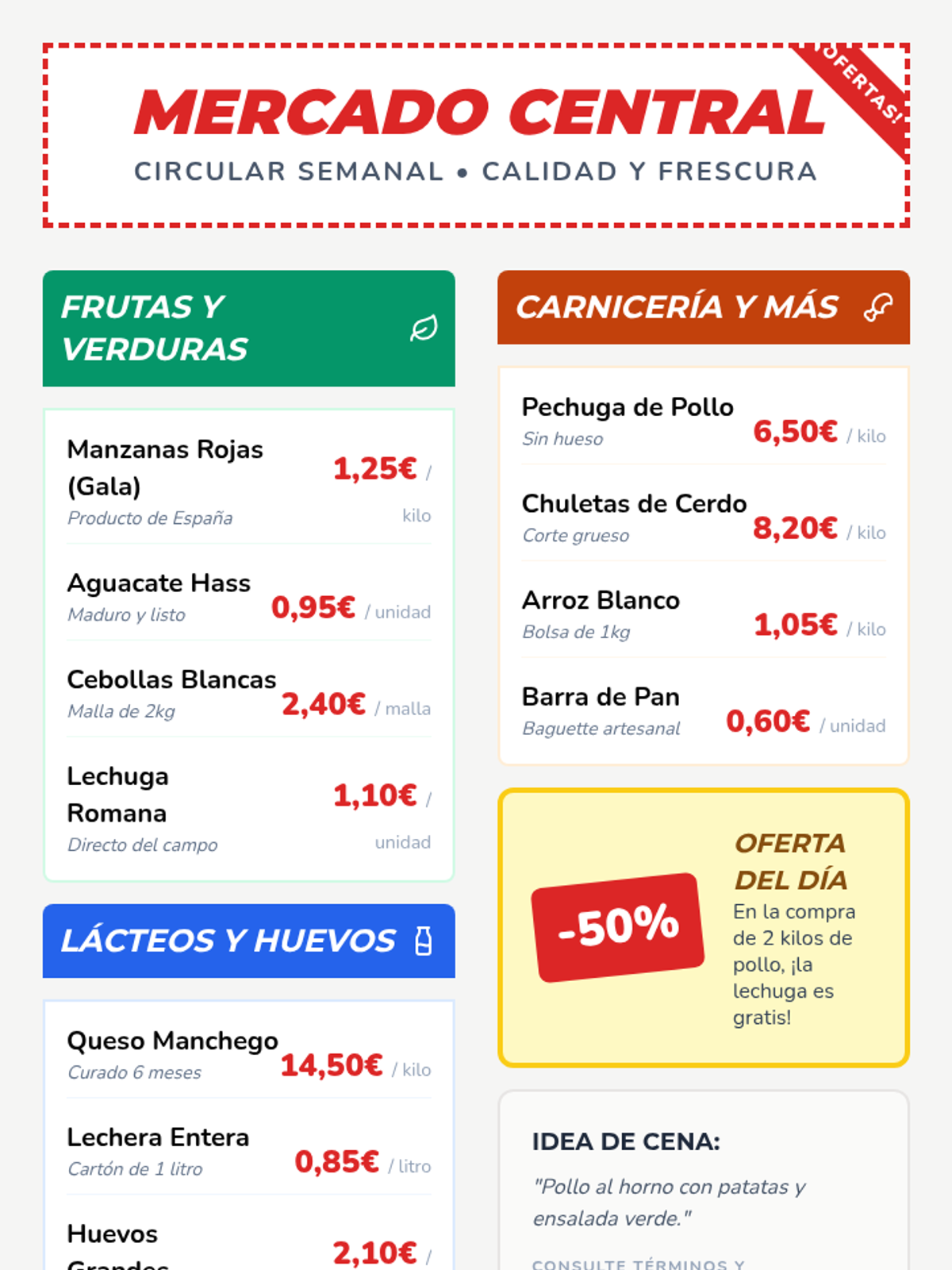
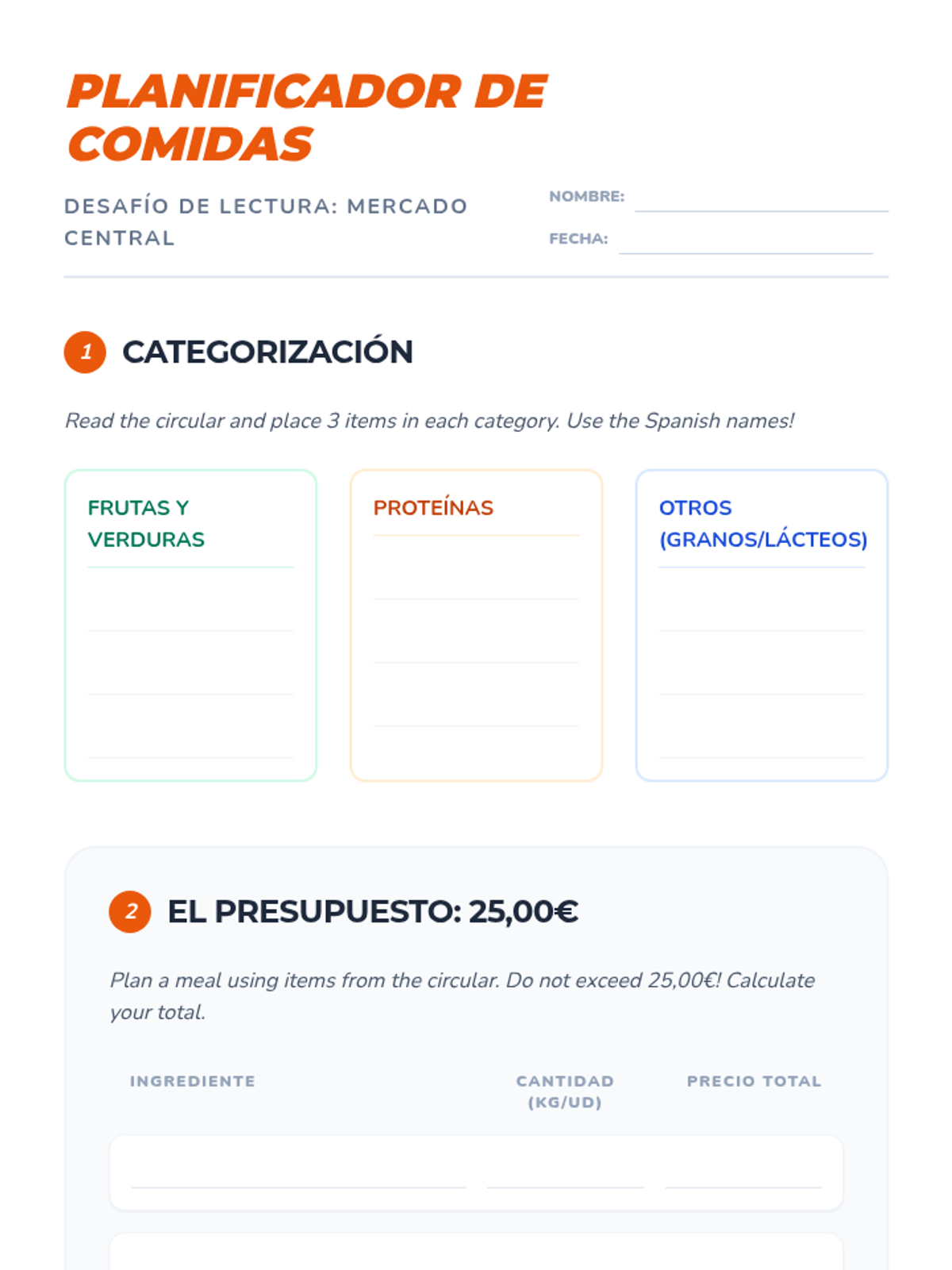
Students read grocery circulars, categorize items into food groups, and interpret metric pricing (kilos vs pounds).
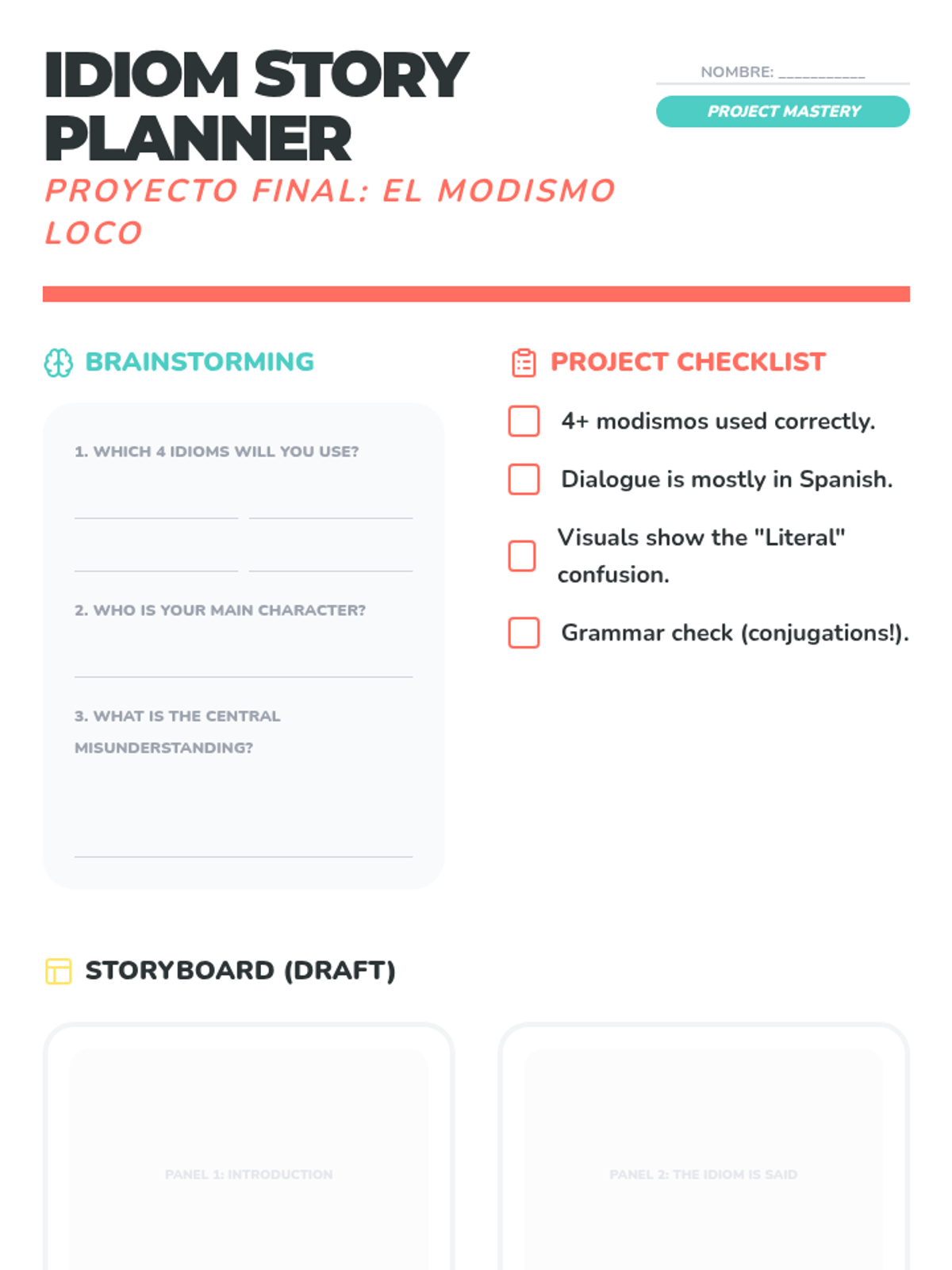
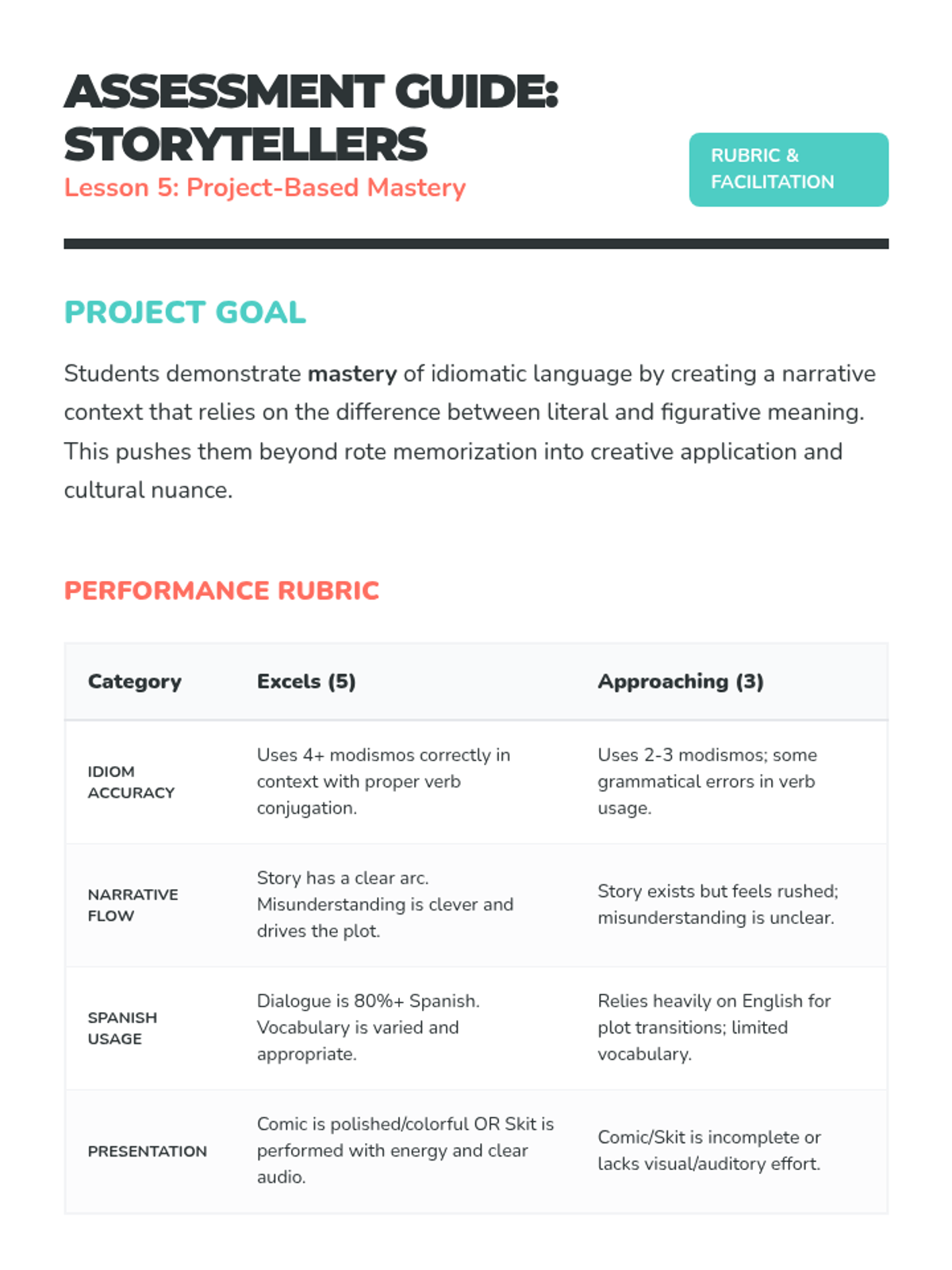
Students create and perform short skits or write comic strips that incorporate a specific set of idioms naturally in a project-based assessment.
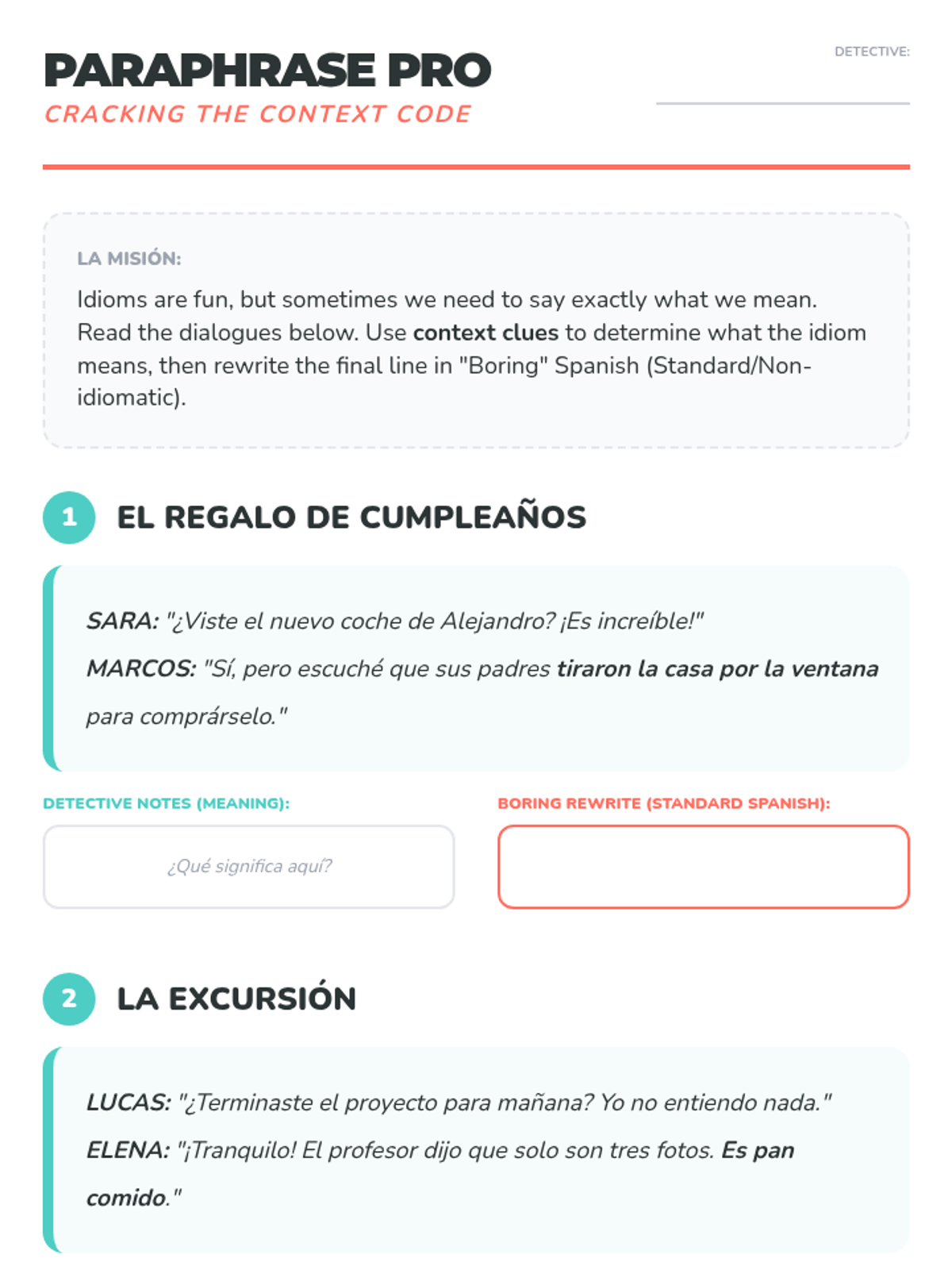
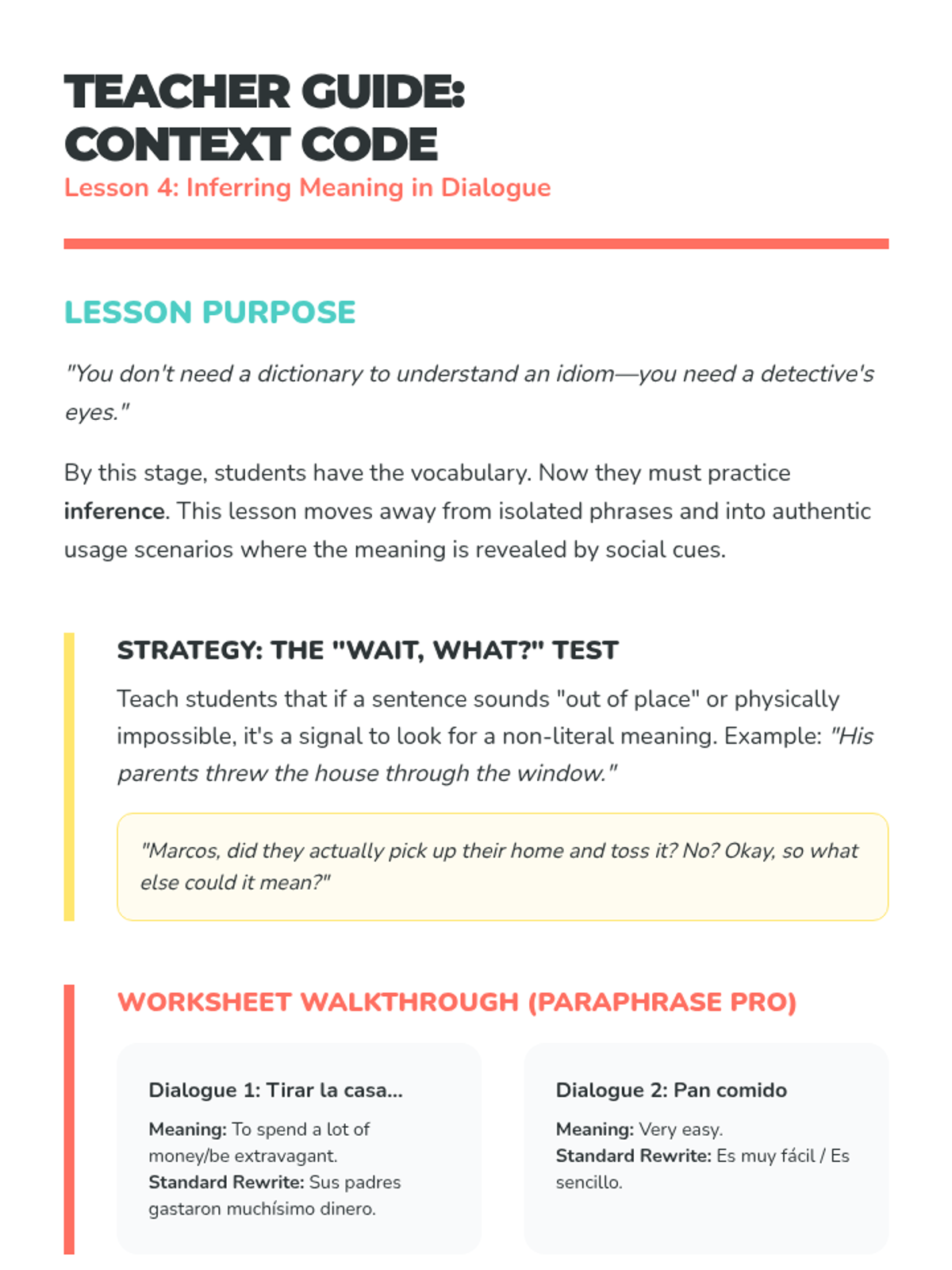
Learners read and listen to dialogues saturated with idioms to practice inferring meaning from context, eventually paraphrasing them into standard Spanish.
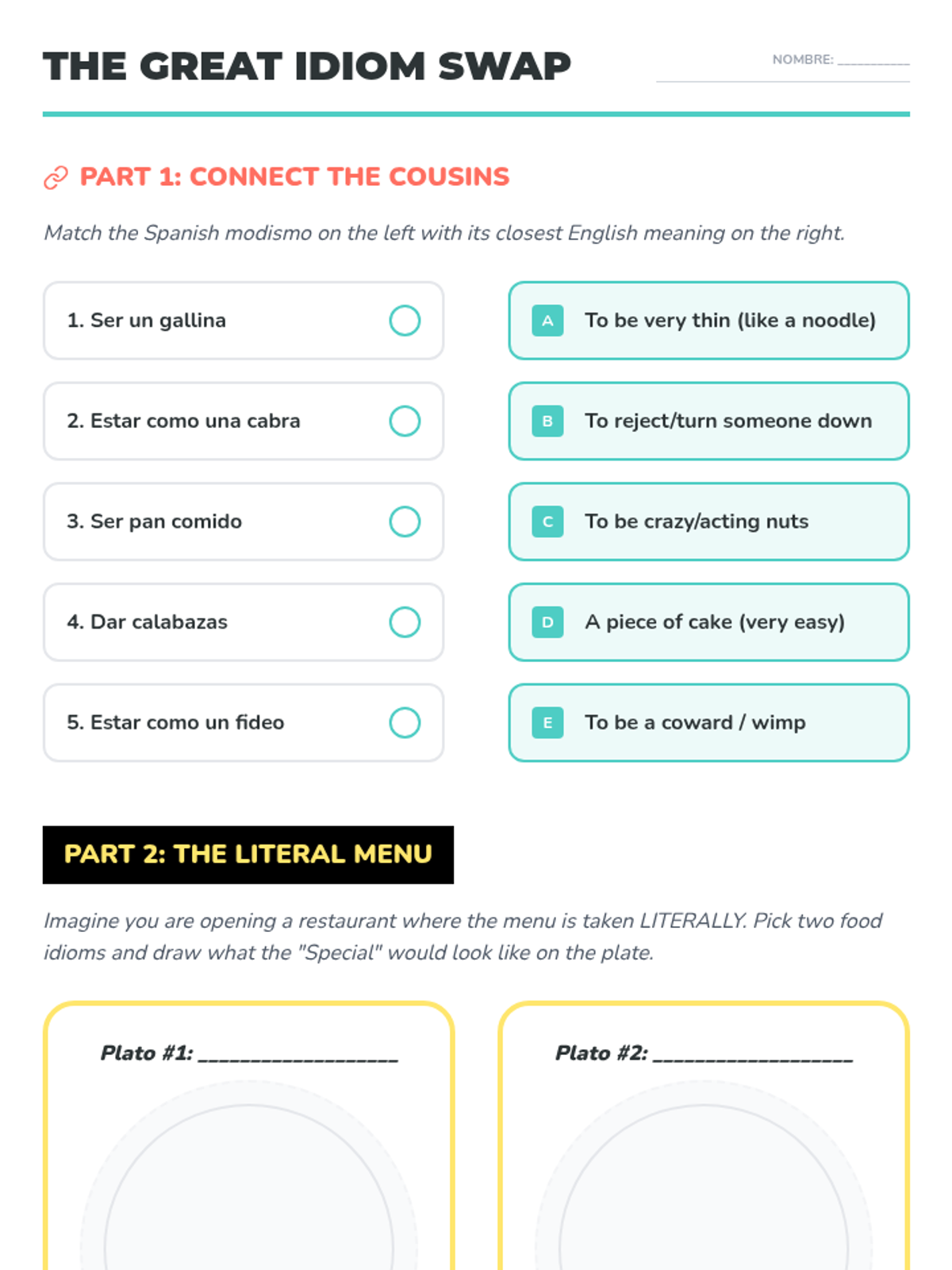
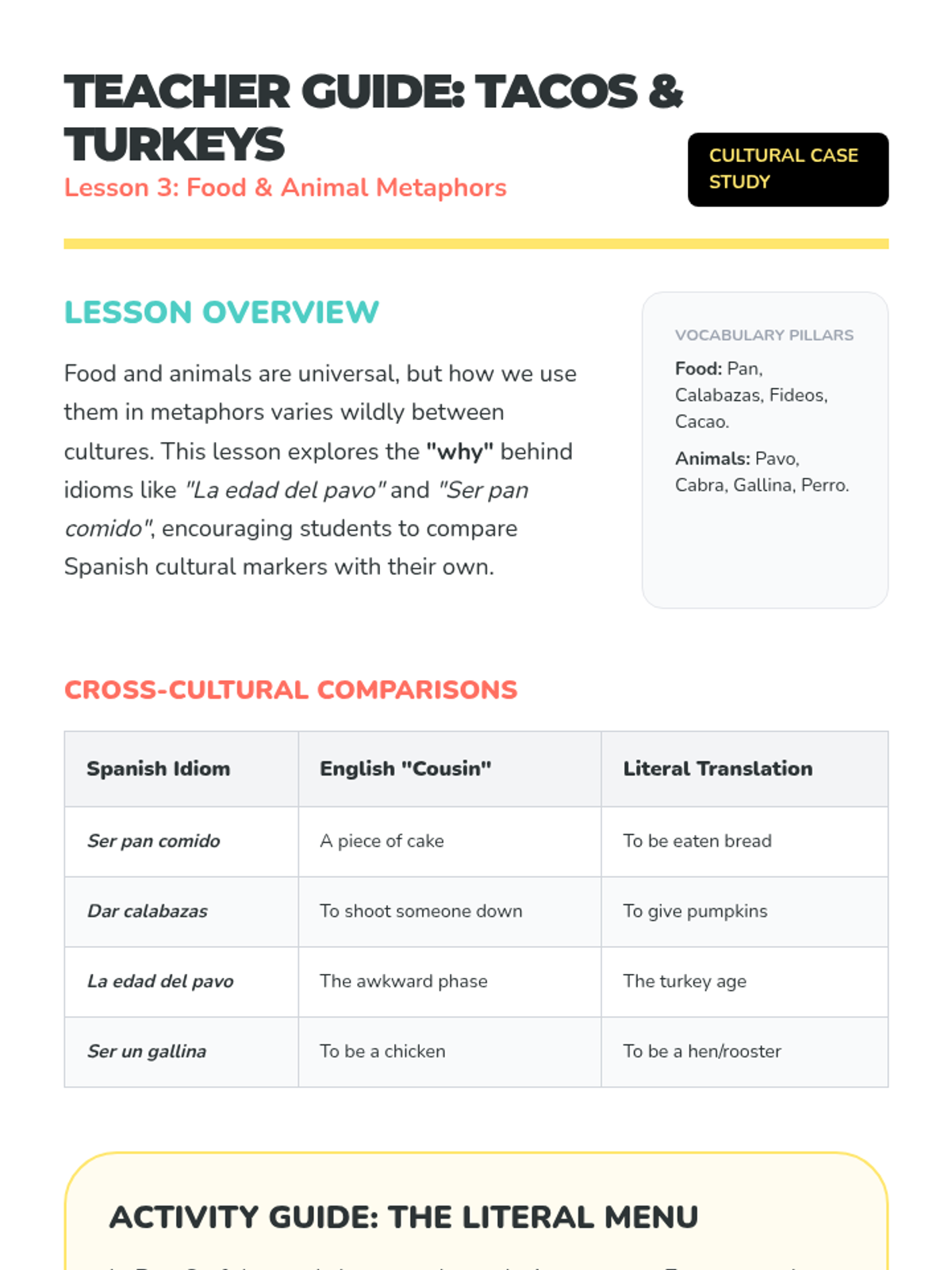
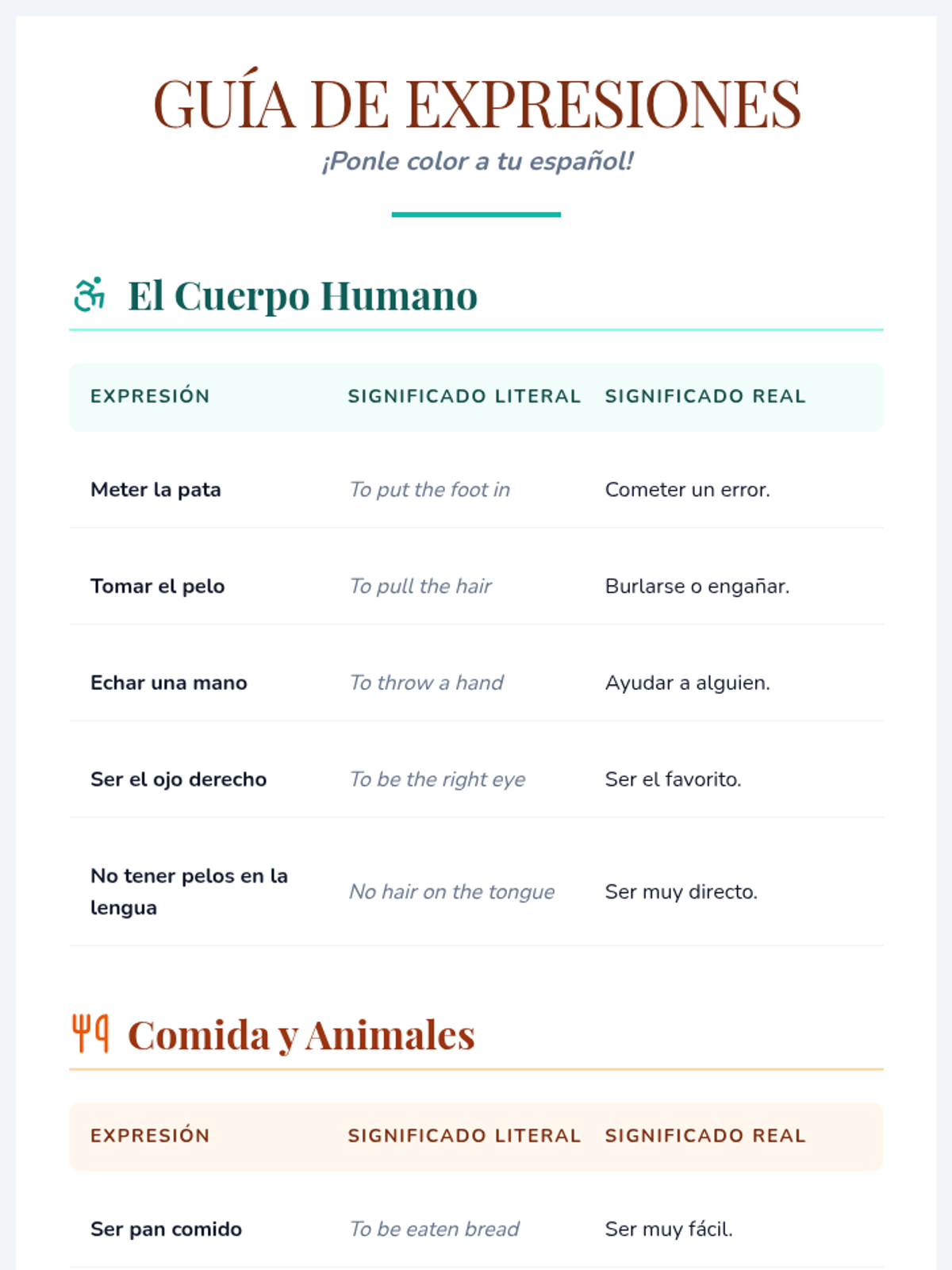
Students explore culturally specific idioms involving food and animals, analyzing how these phrases reflect cultural values and comparing them to English equivalents through matching games.
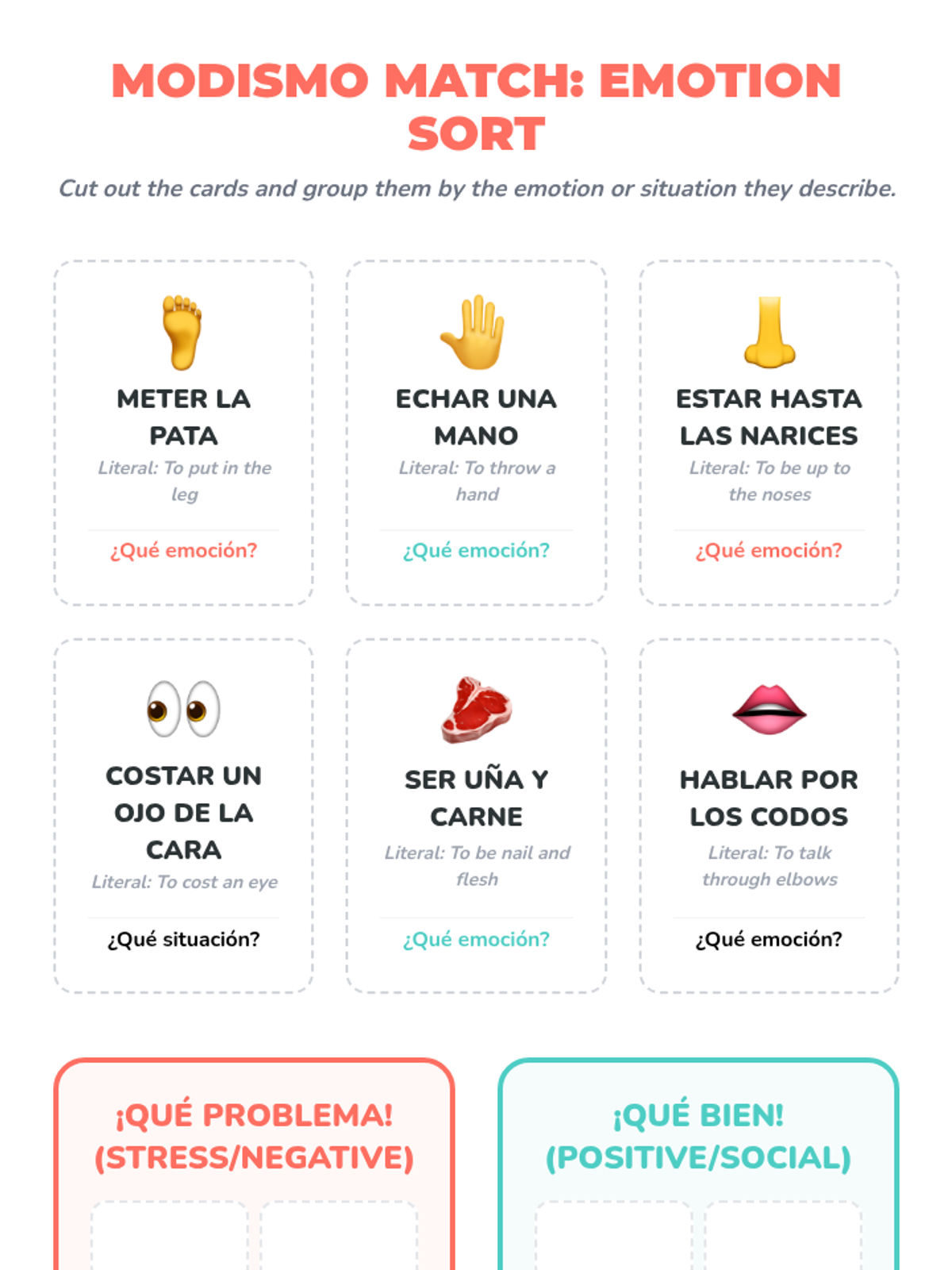
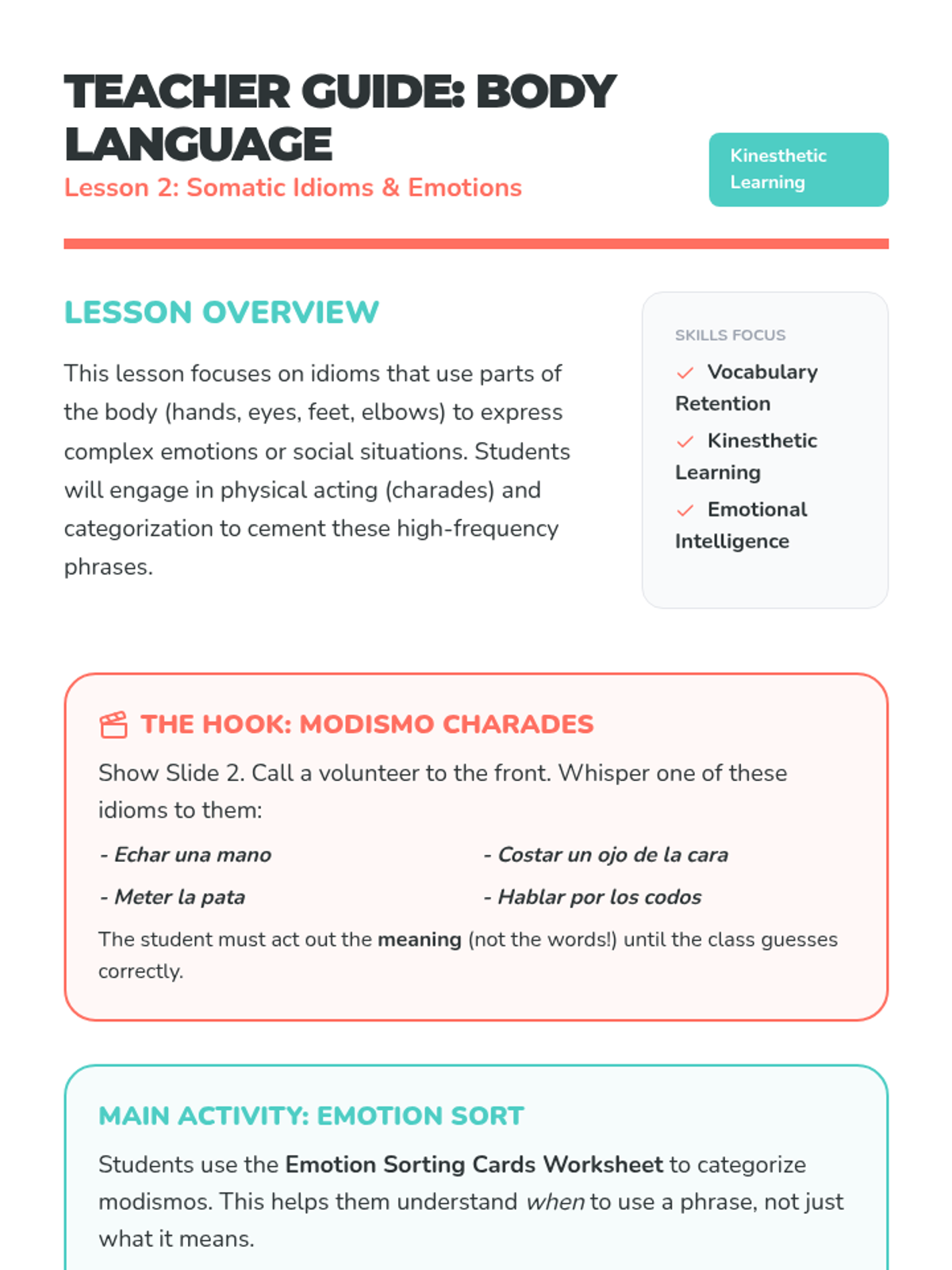
Focusing on somatic idioms (e.g., 'meter la pata', 'echar una mano'), students categorize phrases based on the emotions they convey and engage in kinesthetic learning through charades.
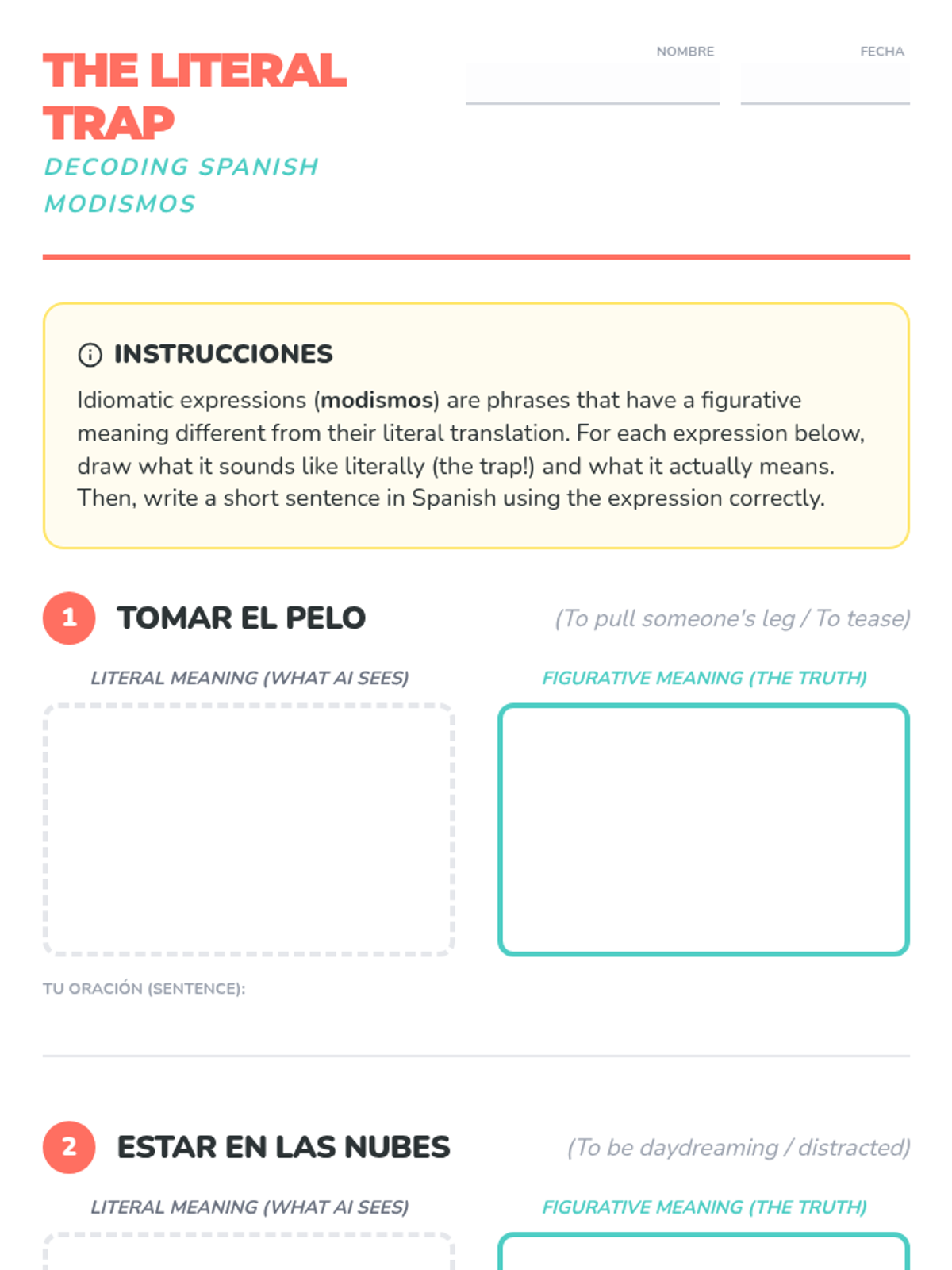
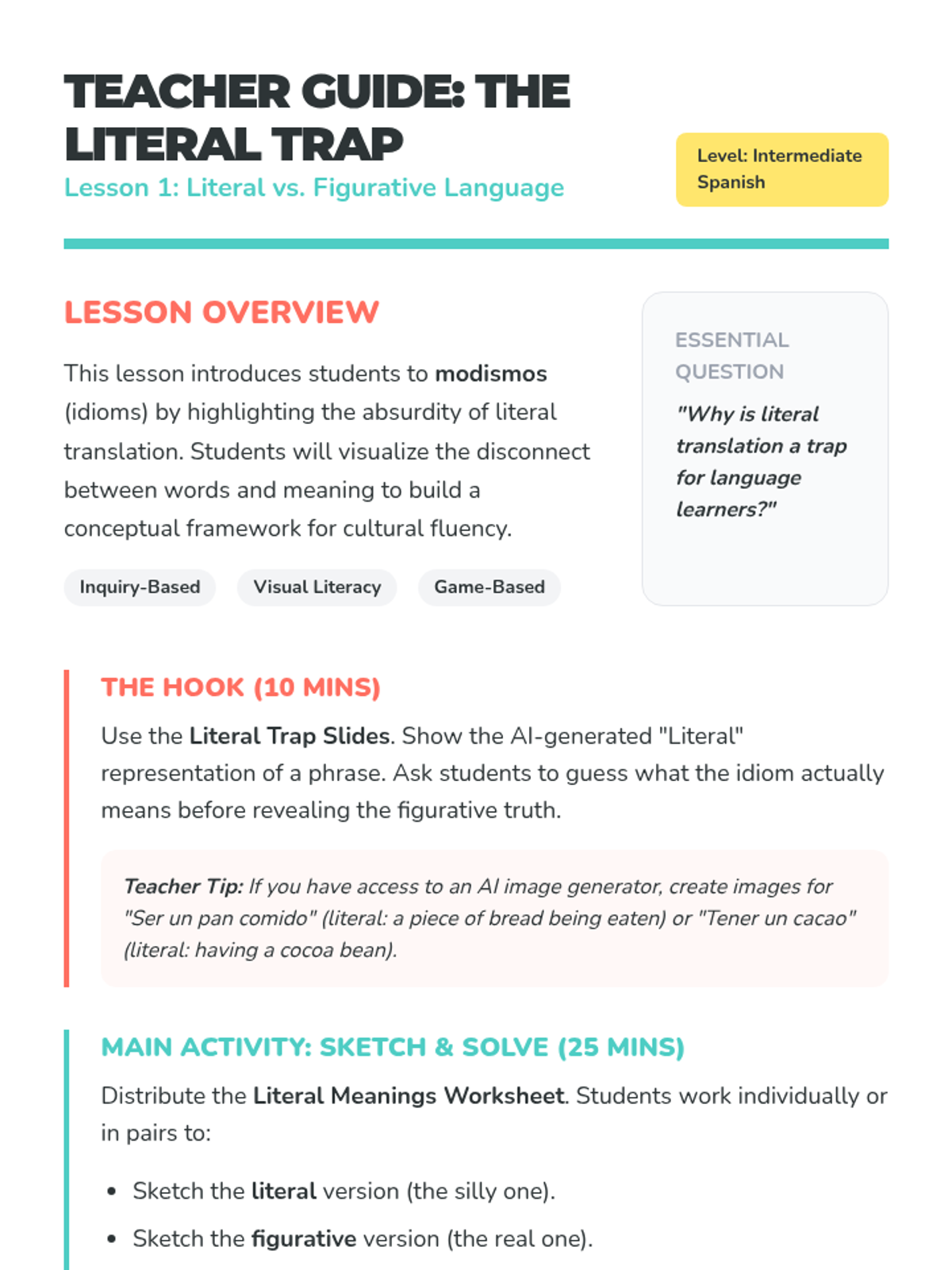
Students are introduced to the concept of idioms by illustrating the literal meaning of phrases like 'tomar el pelo' versus their actual meaning. This visual activity establishes the disconnect between word-for-word translation and meaning.
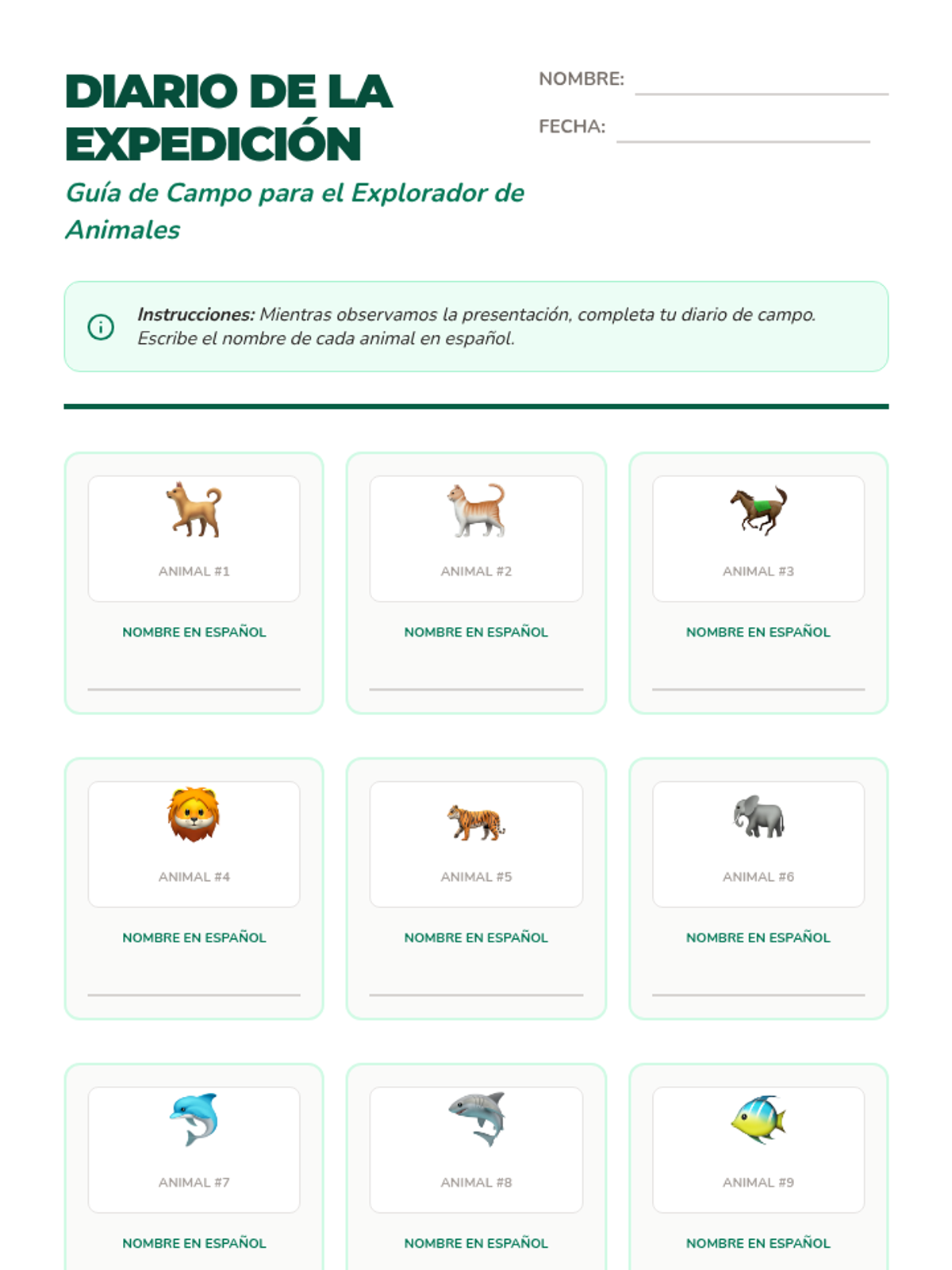
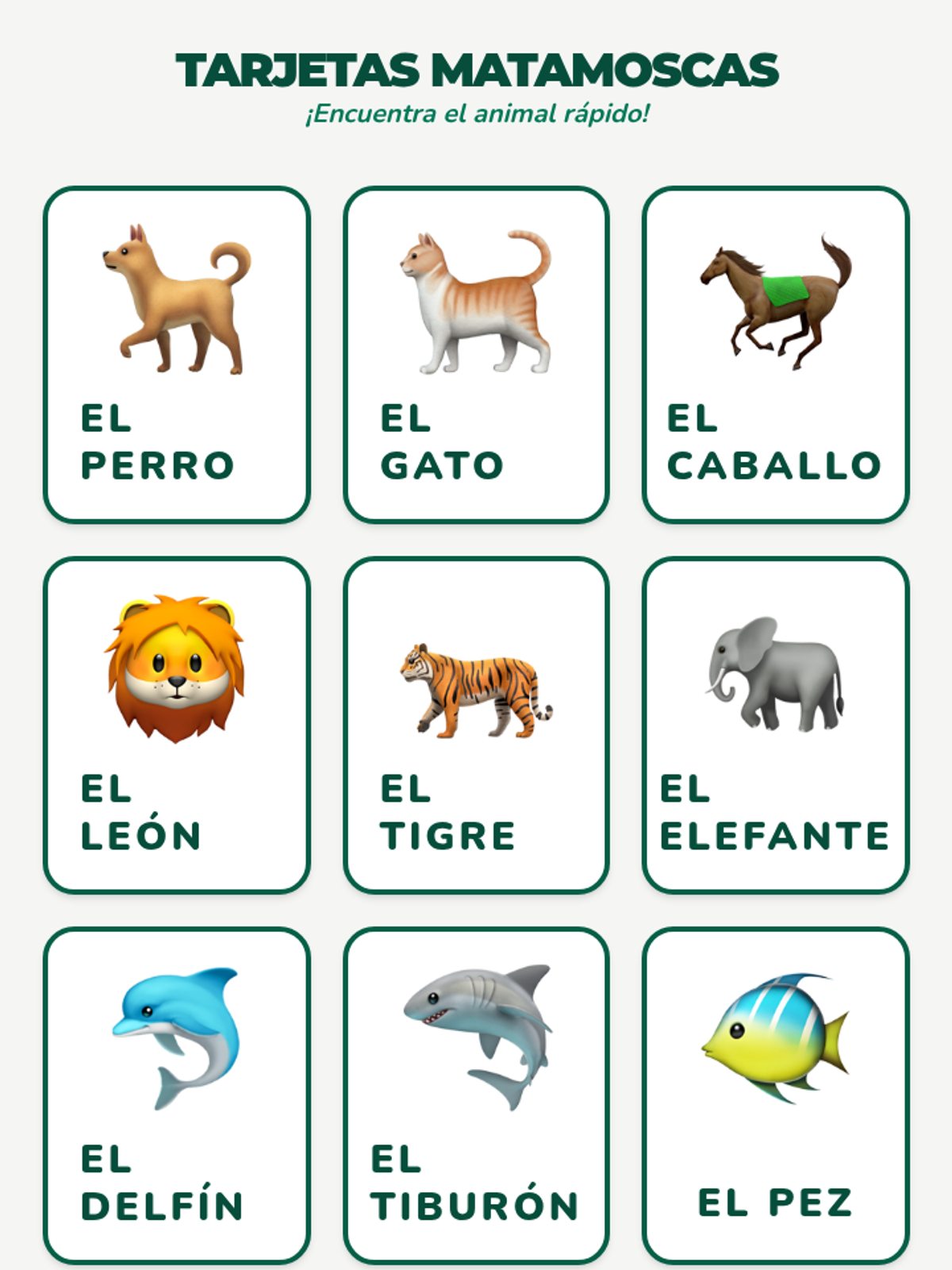
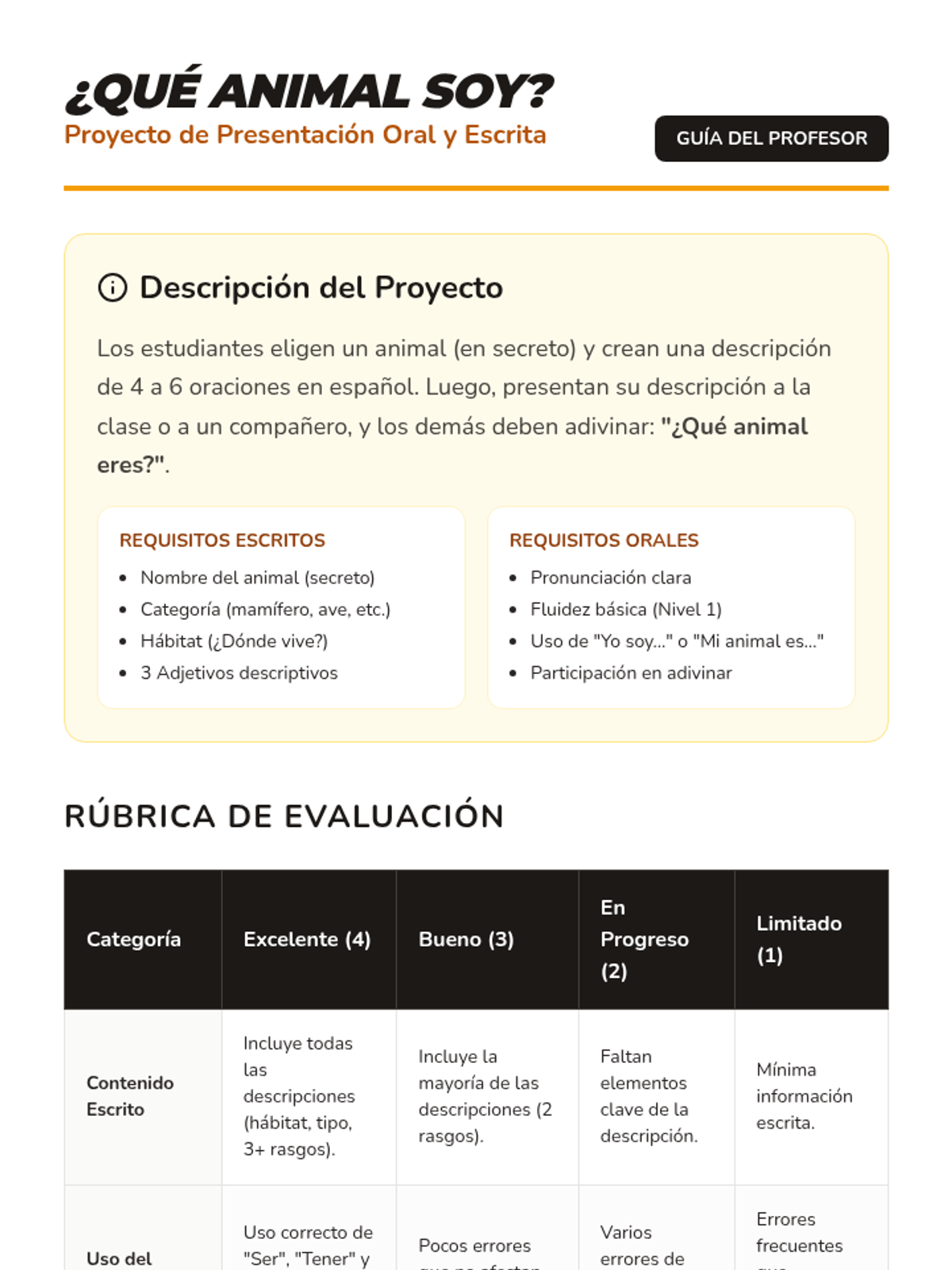
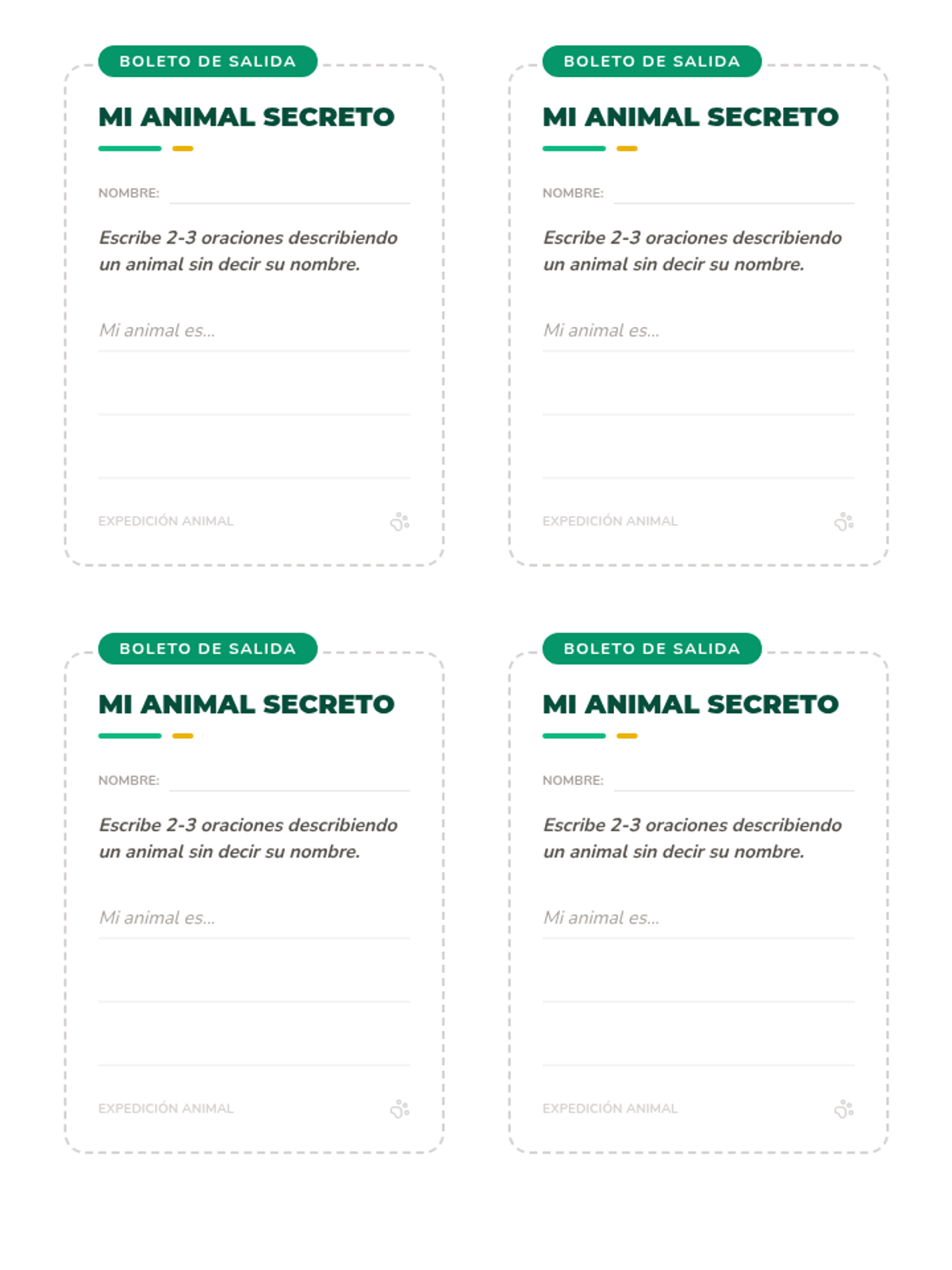
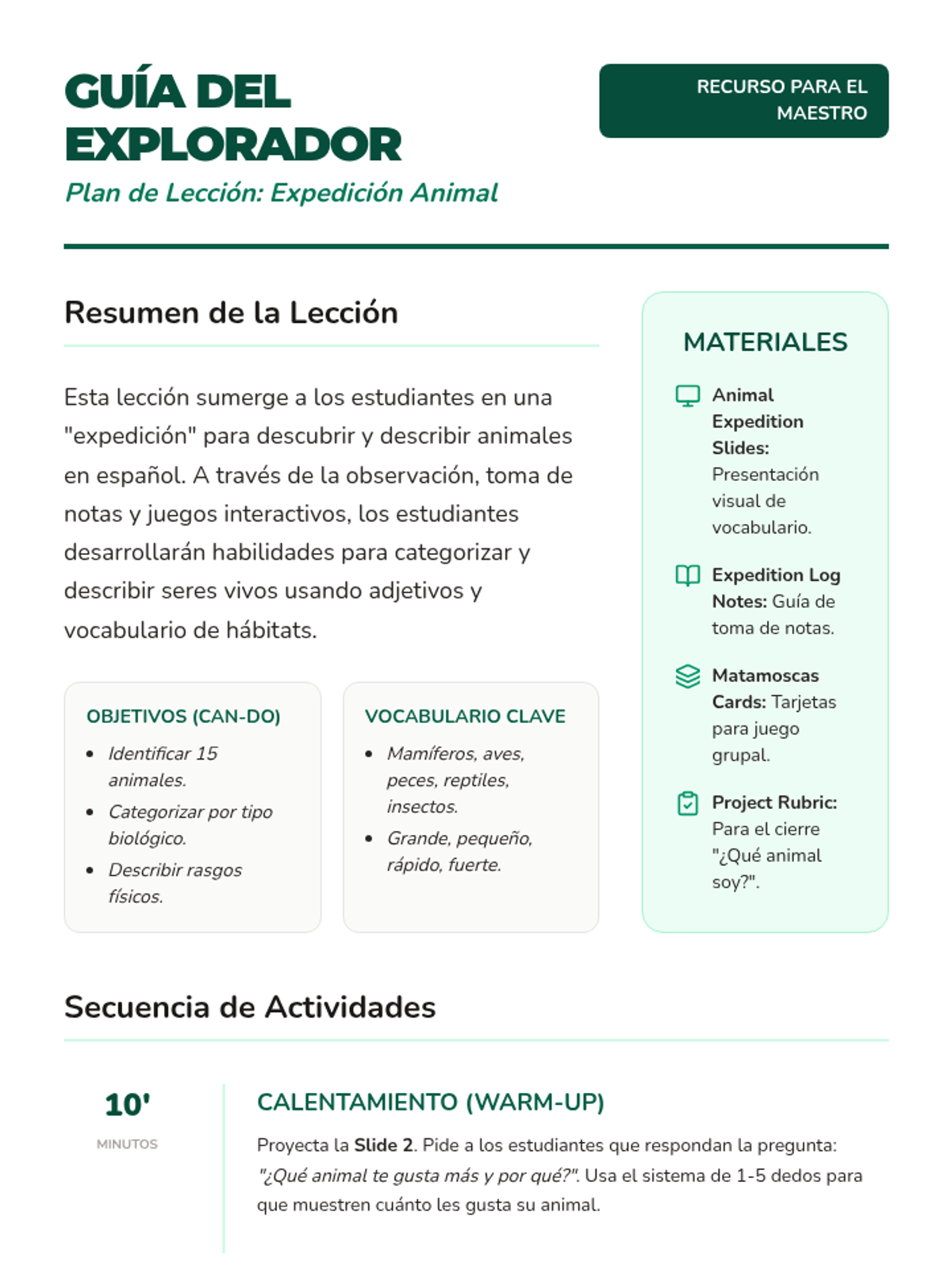
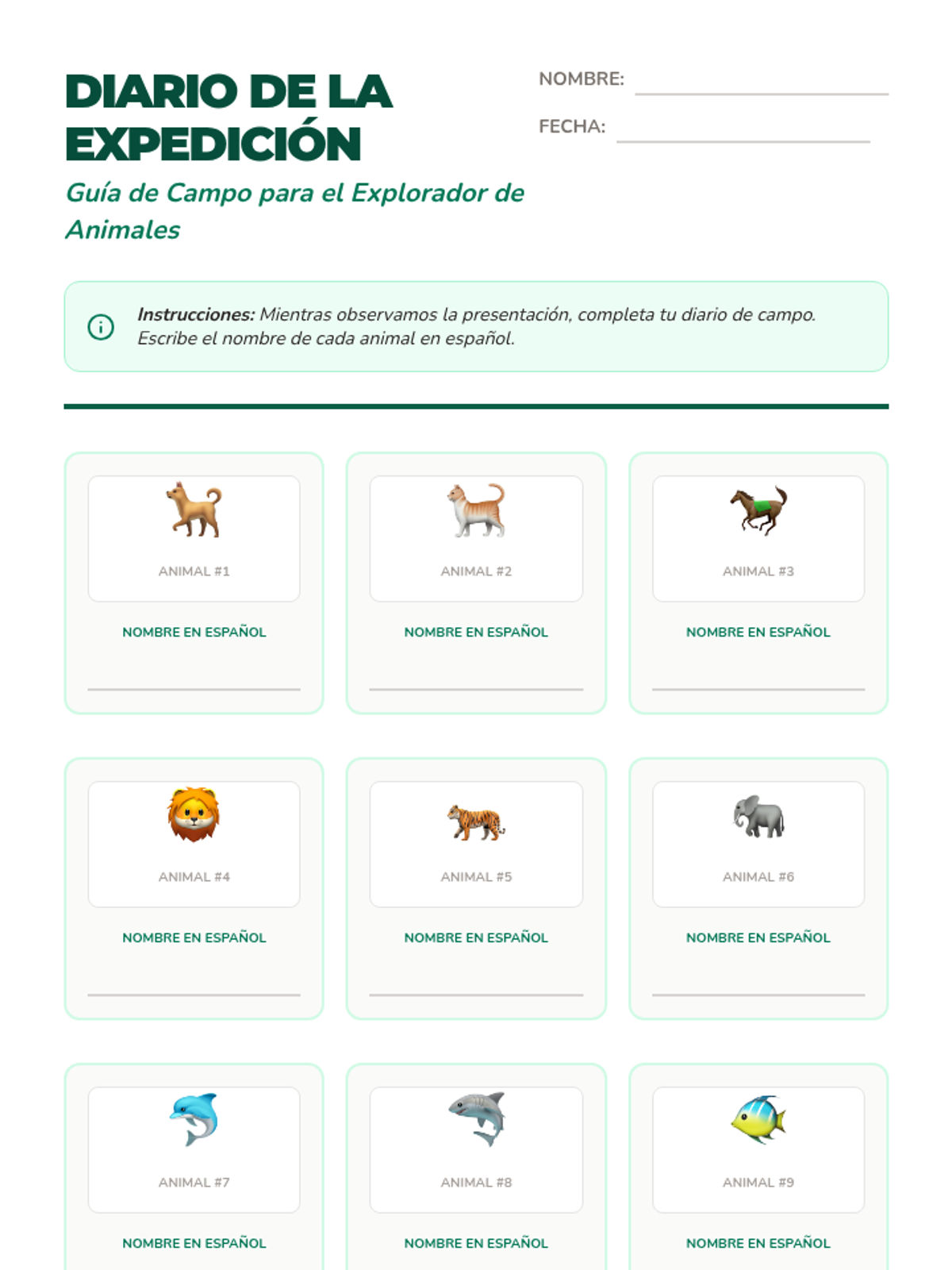
A lesson focused on identifying, categorizing, and describing animals in Spanish using basic adjectives and habitat vocabulary. Students will engage in interpretive listening and presentational writing to demonstrate their learning.
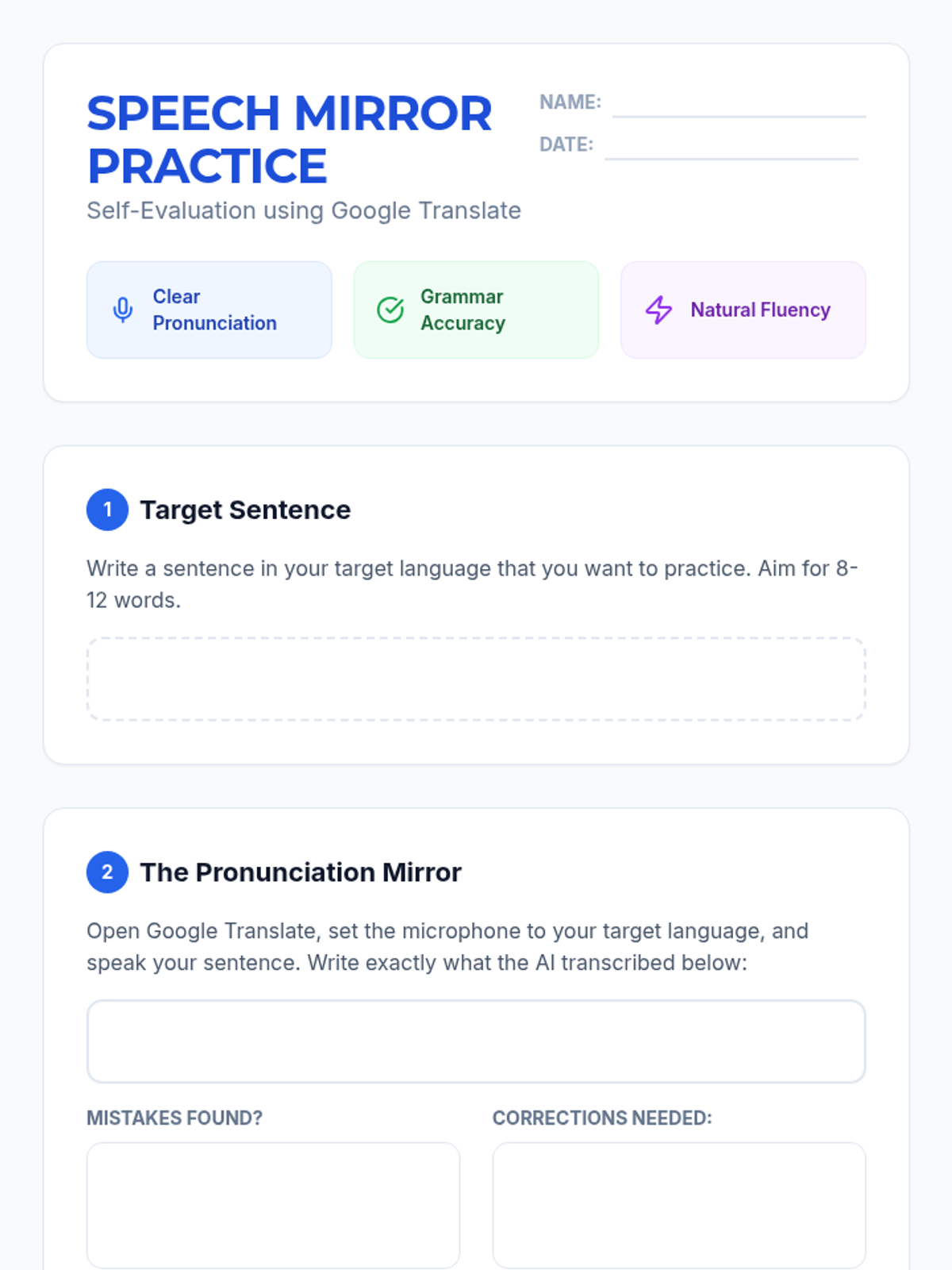
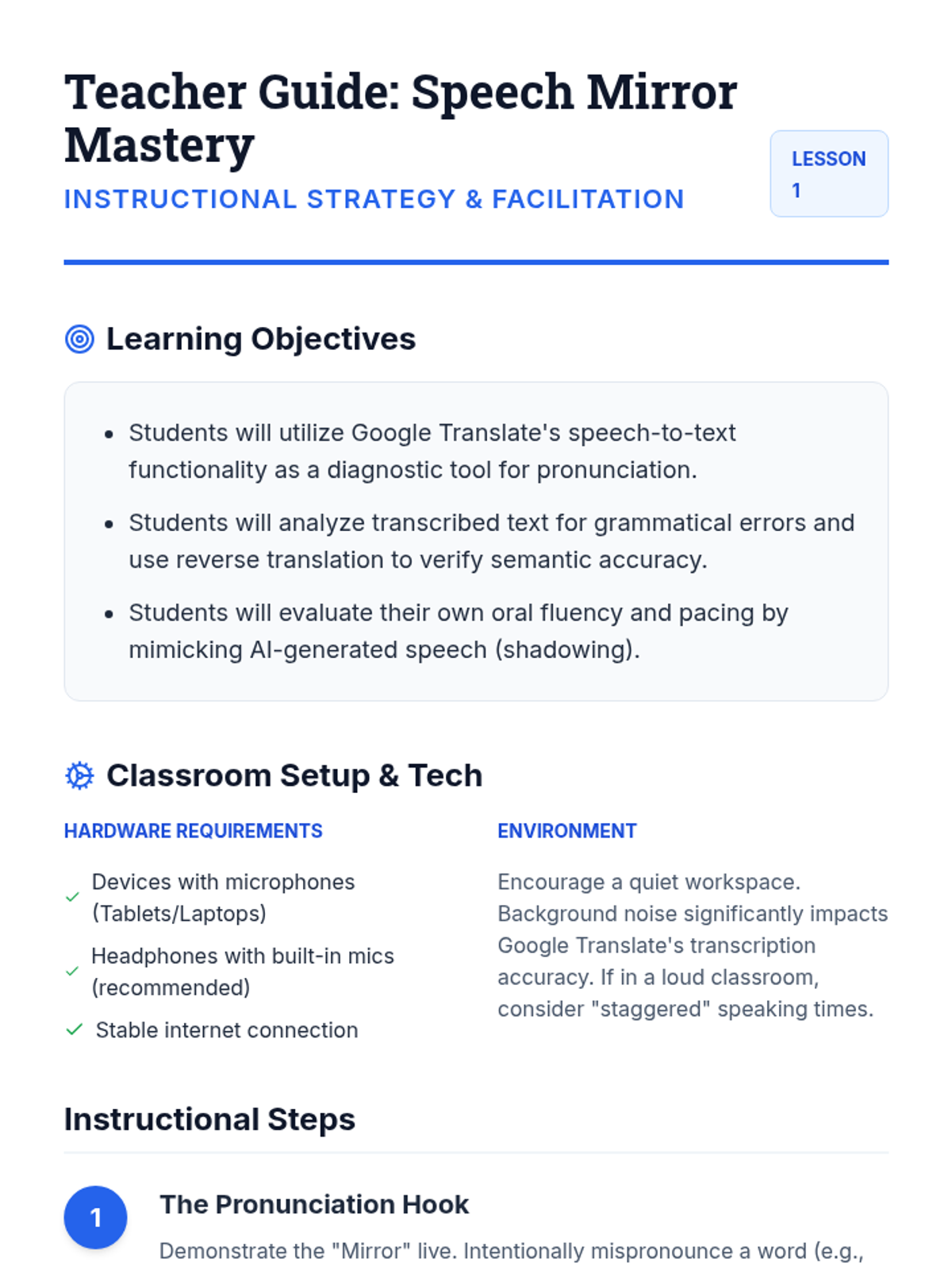
This lesson teaches students how to use Google Translate's speech-to-text and text-to-speech features to self-evaluate their spoken language. Focus areas include pronunciation clarity, grammatical accuracy of transcribed text, and oral fluency.
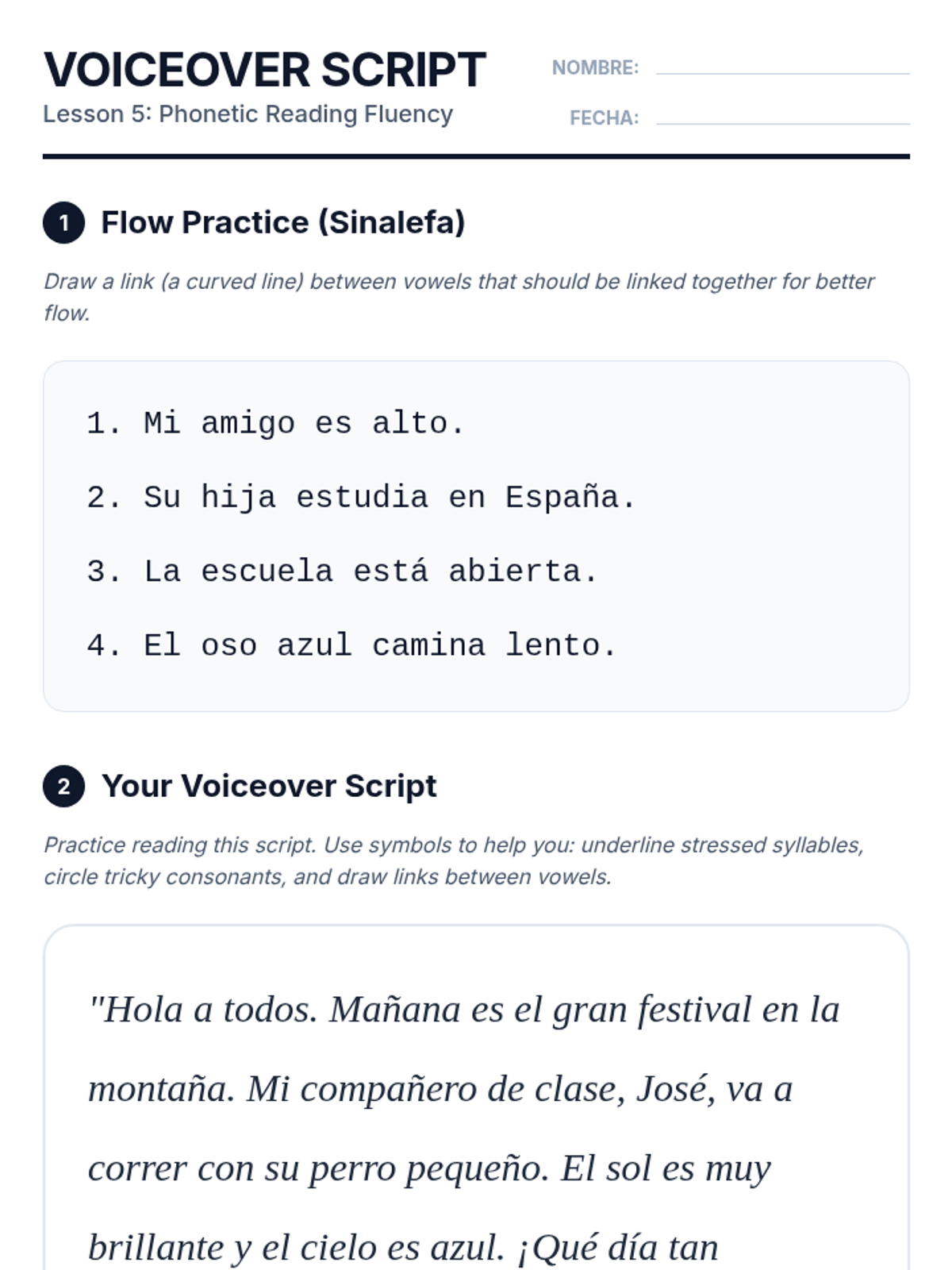
Bringing all skills together, students practice reading short paragraphs aloud, focusing on flow, linking words, and maintaining correct pronunciation, culminating in a recorded 'voiceover' activity.
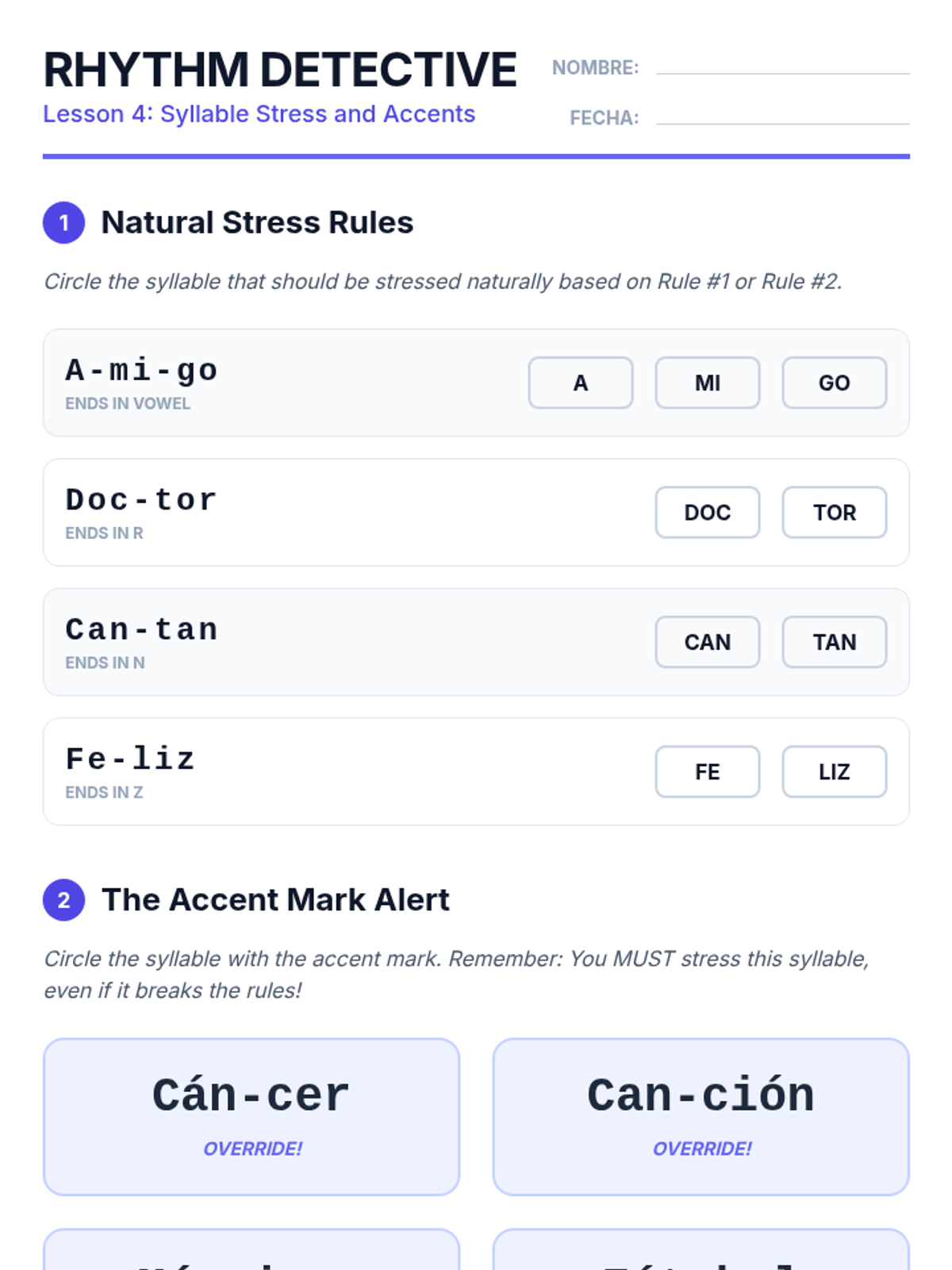
Students learn the two basic rules of natural stress in Spanish and how written accent marks (tildes) break those rules. They practice identifying emphasis through rhythmic activities.
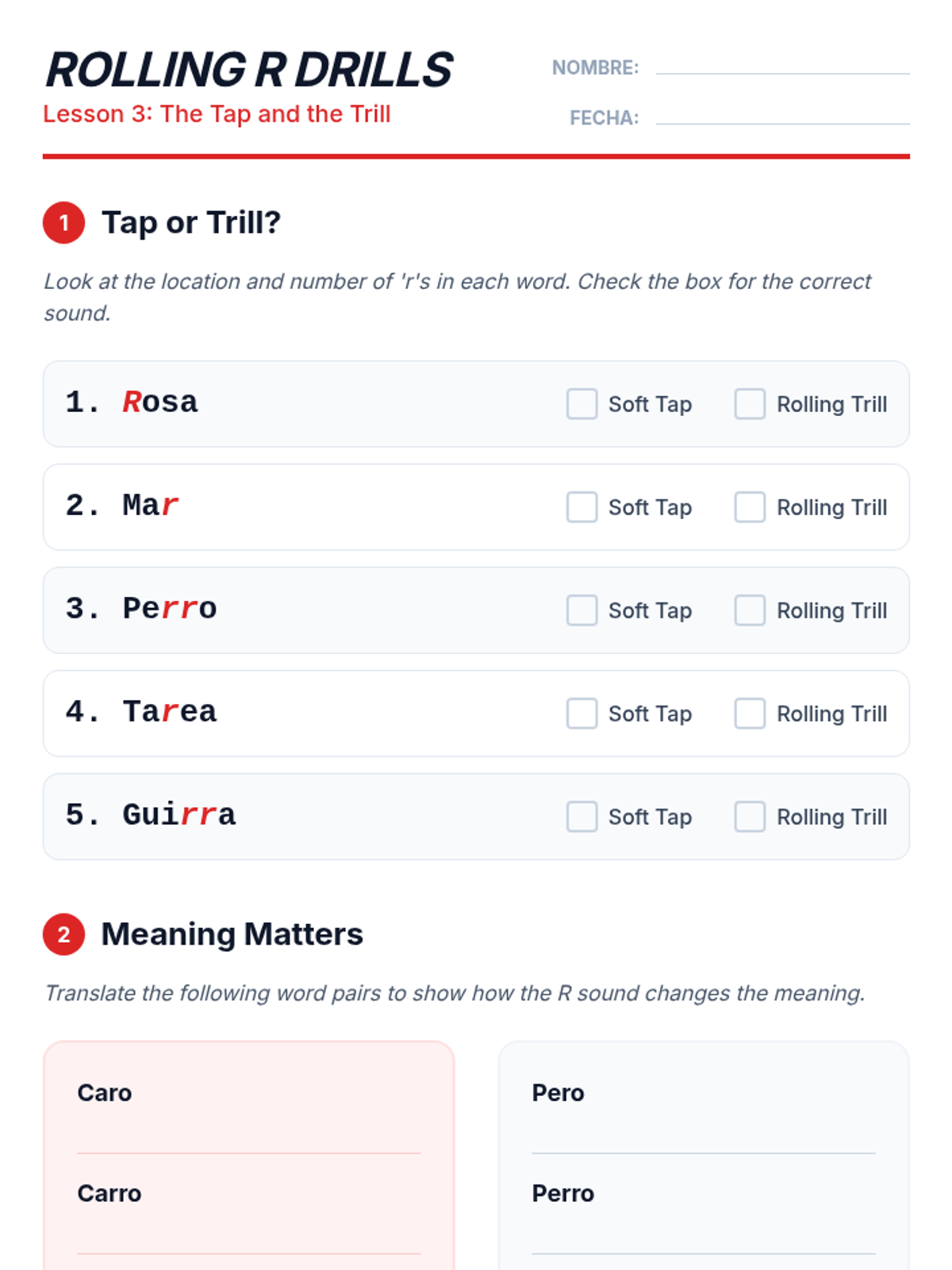
Students explore the difference between the single 'r' (tap) and the double 'rr' (trill), learning the physical mechanics of vibrating the tongue. The lesson focuses on distinguishing minimal pairs like 'pero' and 'perro'.
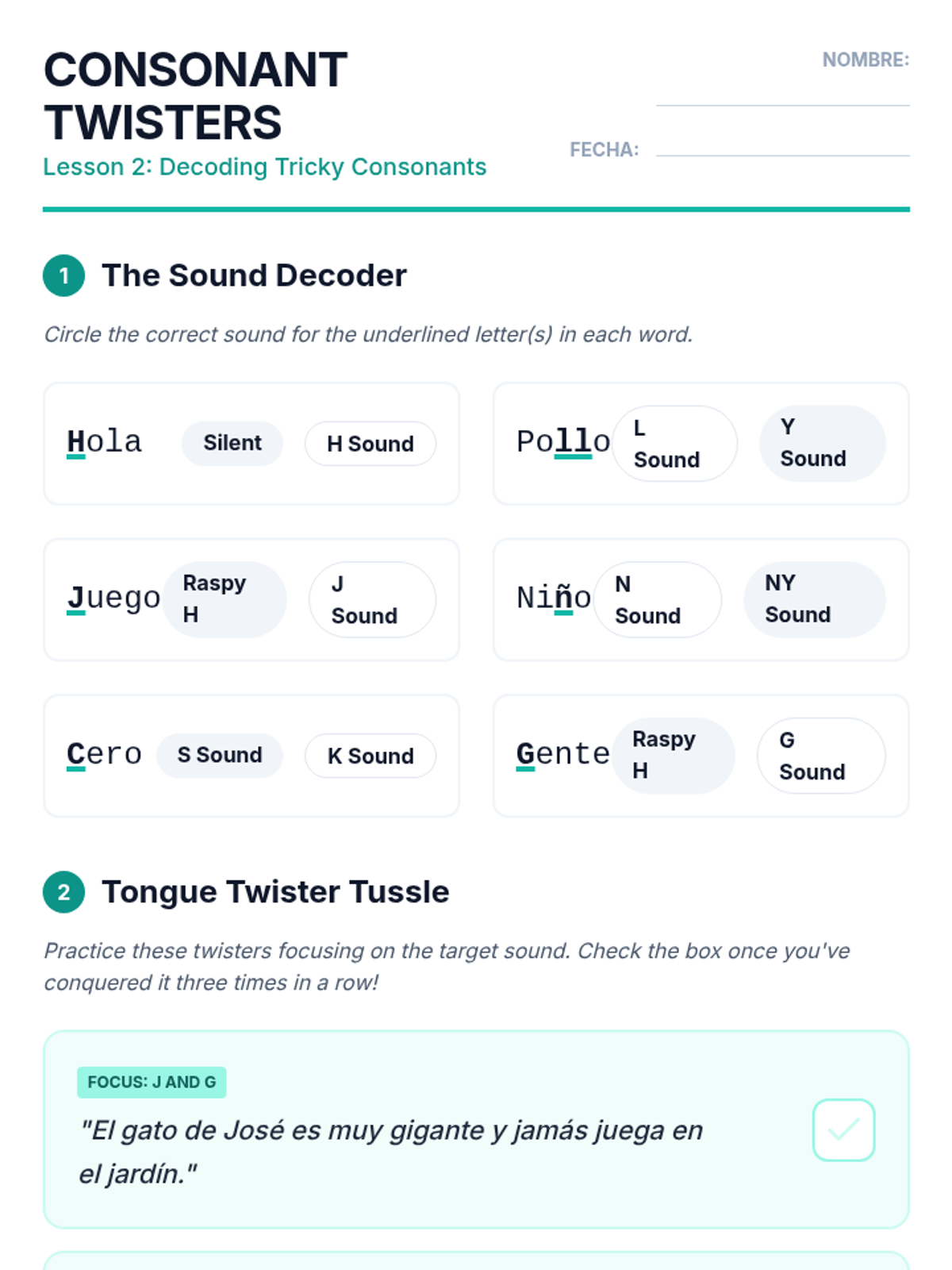
This lesson introduces consonants that function differently in Spanish, such as h (silent), j (aspirated), ll, ñ, and z/c. Students practice tongue placement and air flow to produce these sounds accurately through tongue twister challenges.
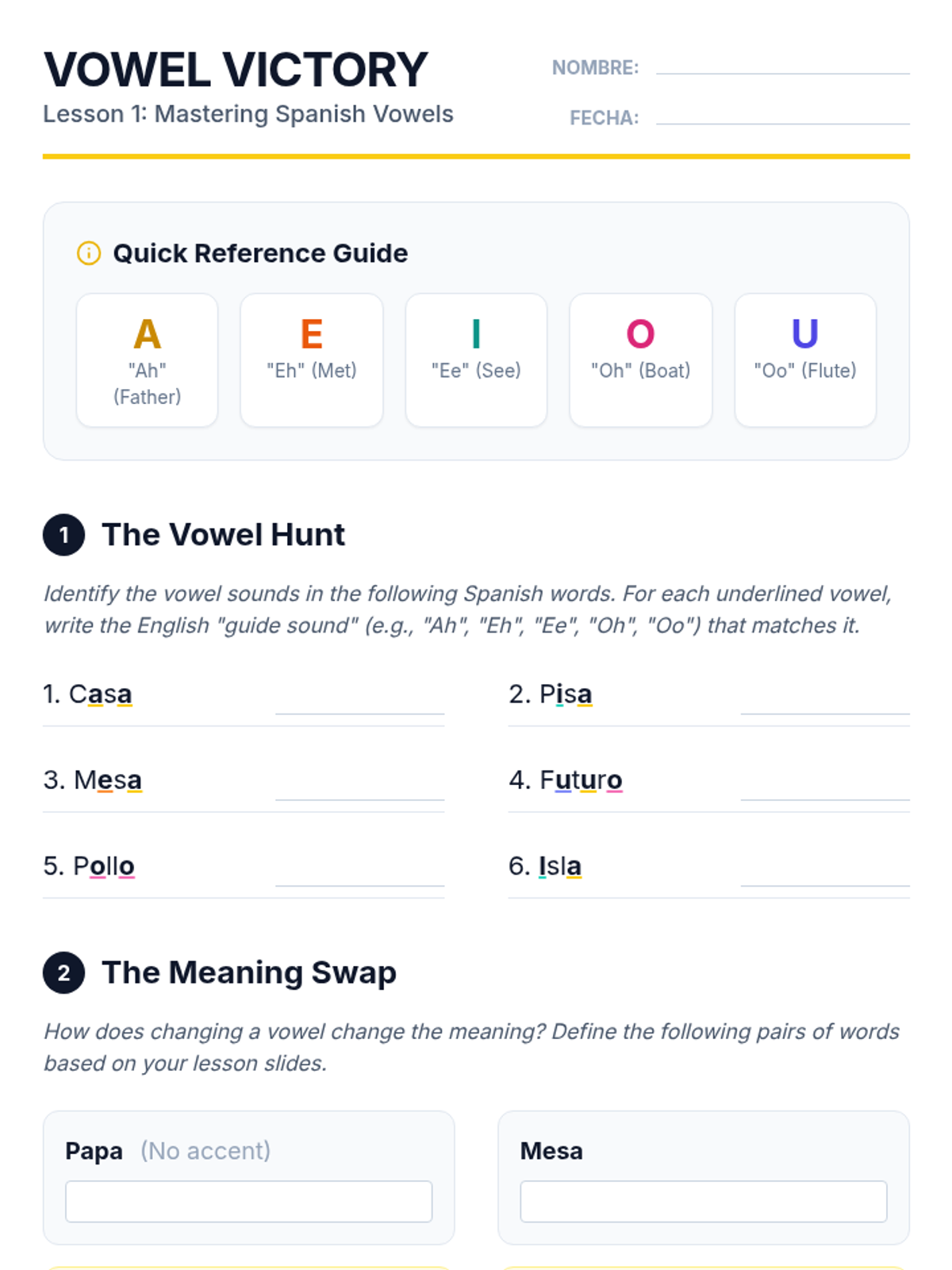
Students focus exclusively on the five Spanish vowels (a, e, i, o, u), learning their short, crisp, and invariable nature compared to English diphthongs. Through choral repetition and listening discrimination drills, students practice identifying and producing these core sounds.
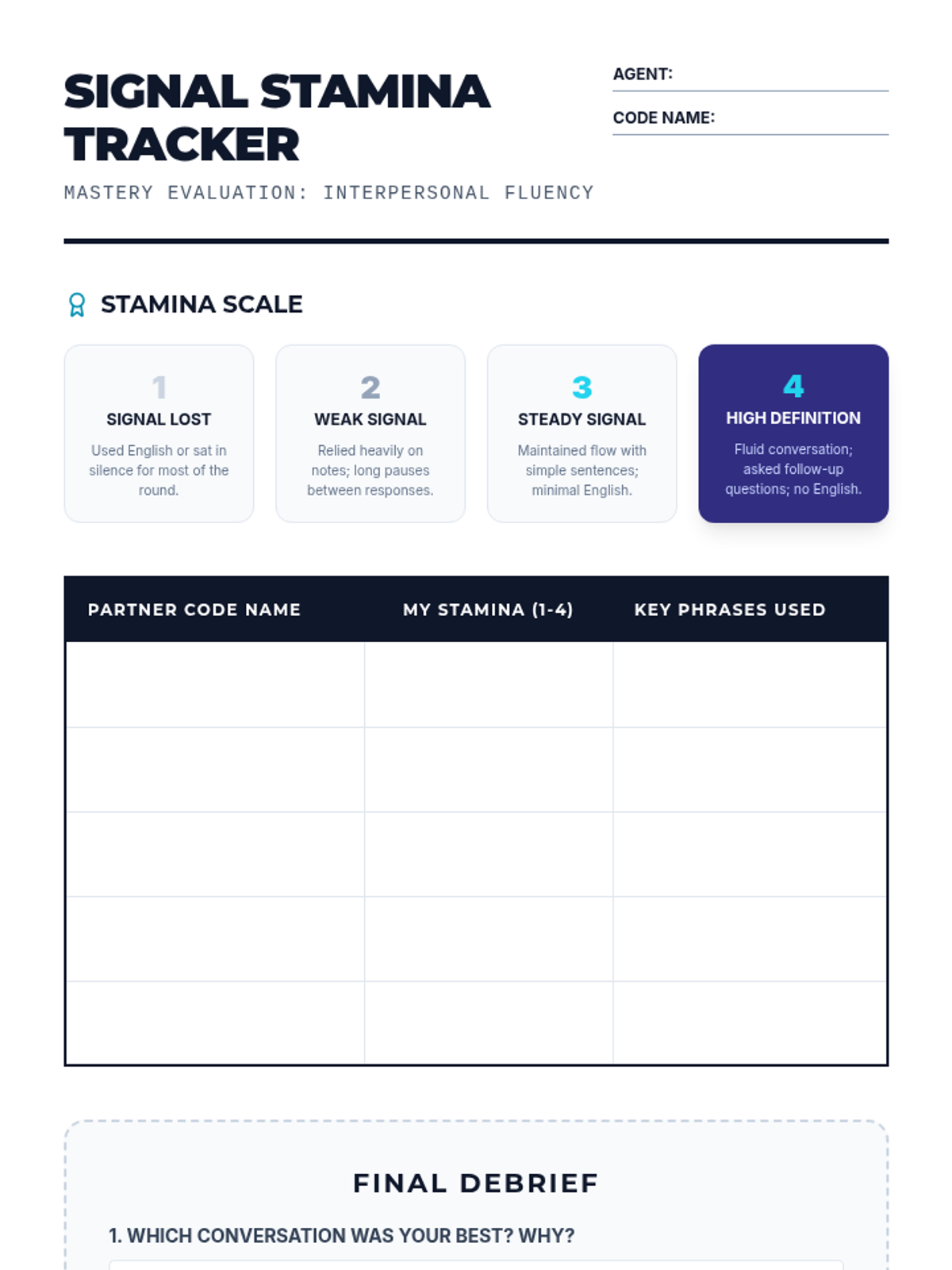
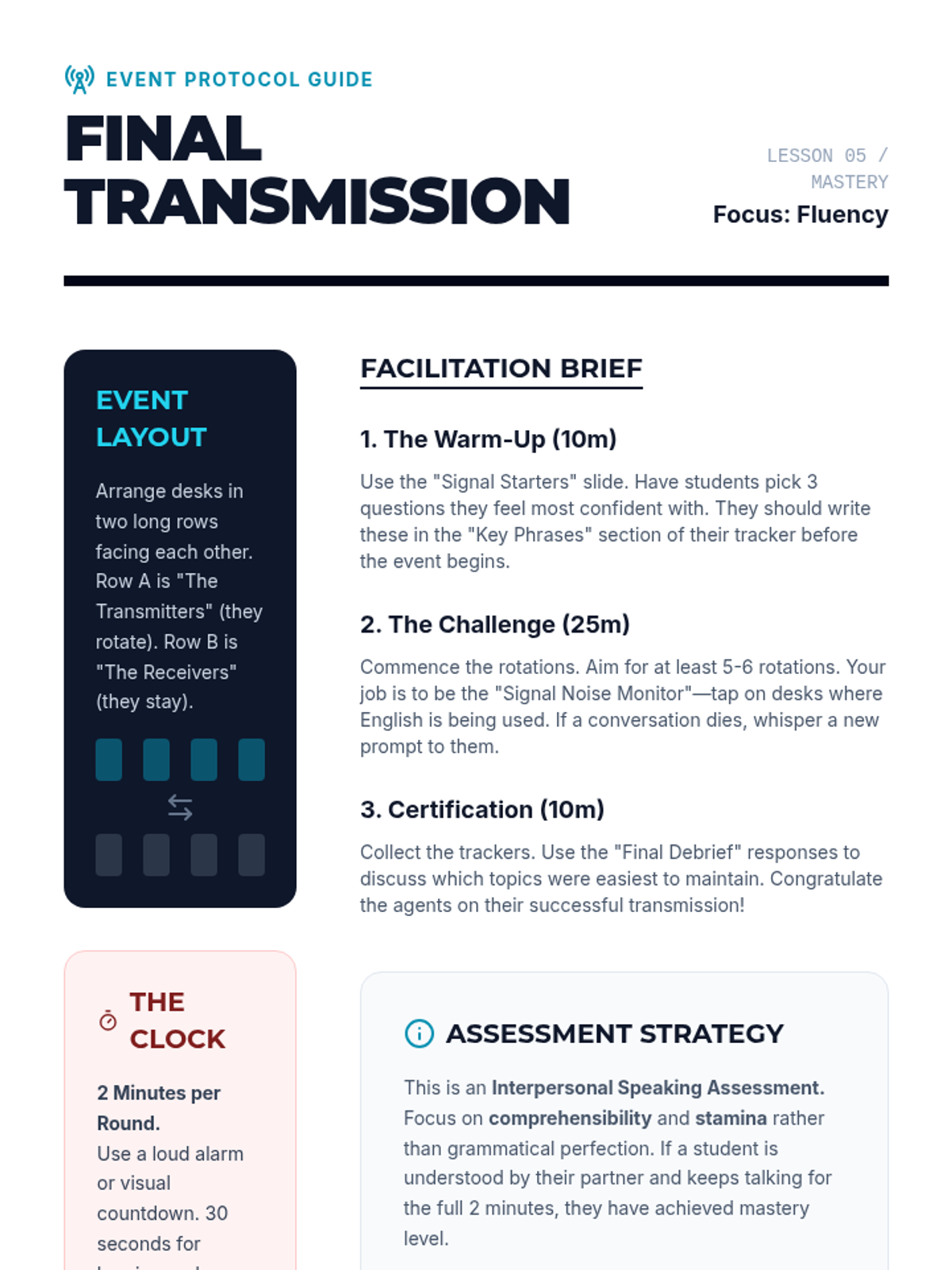
A high-energy speed-friending event where students rotate through timed conversations to build social stamina and demonstrate fluency.
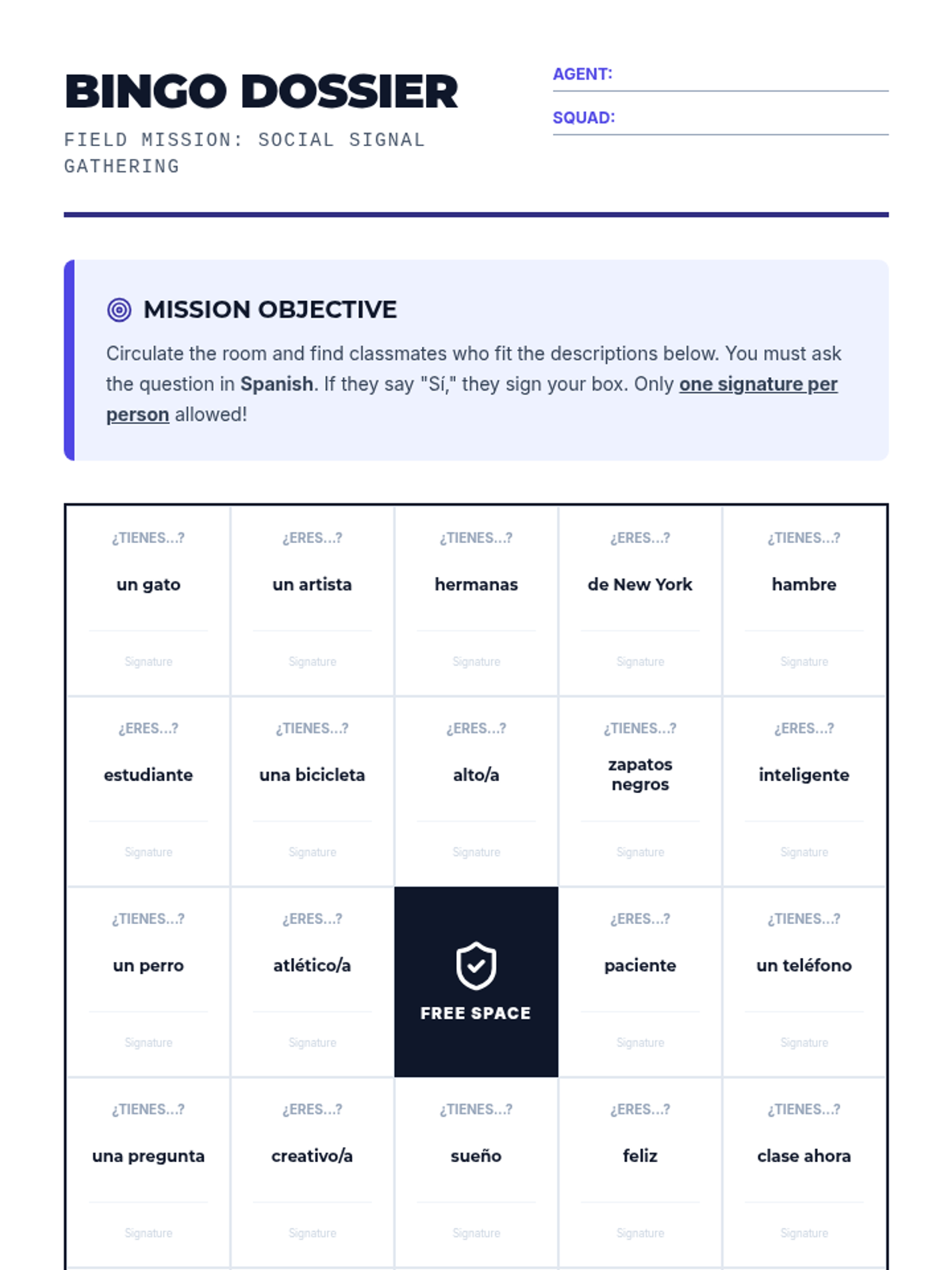
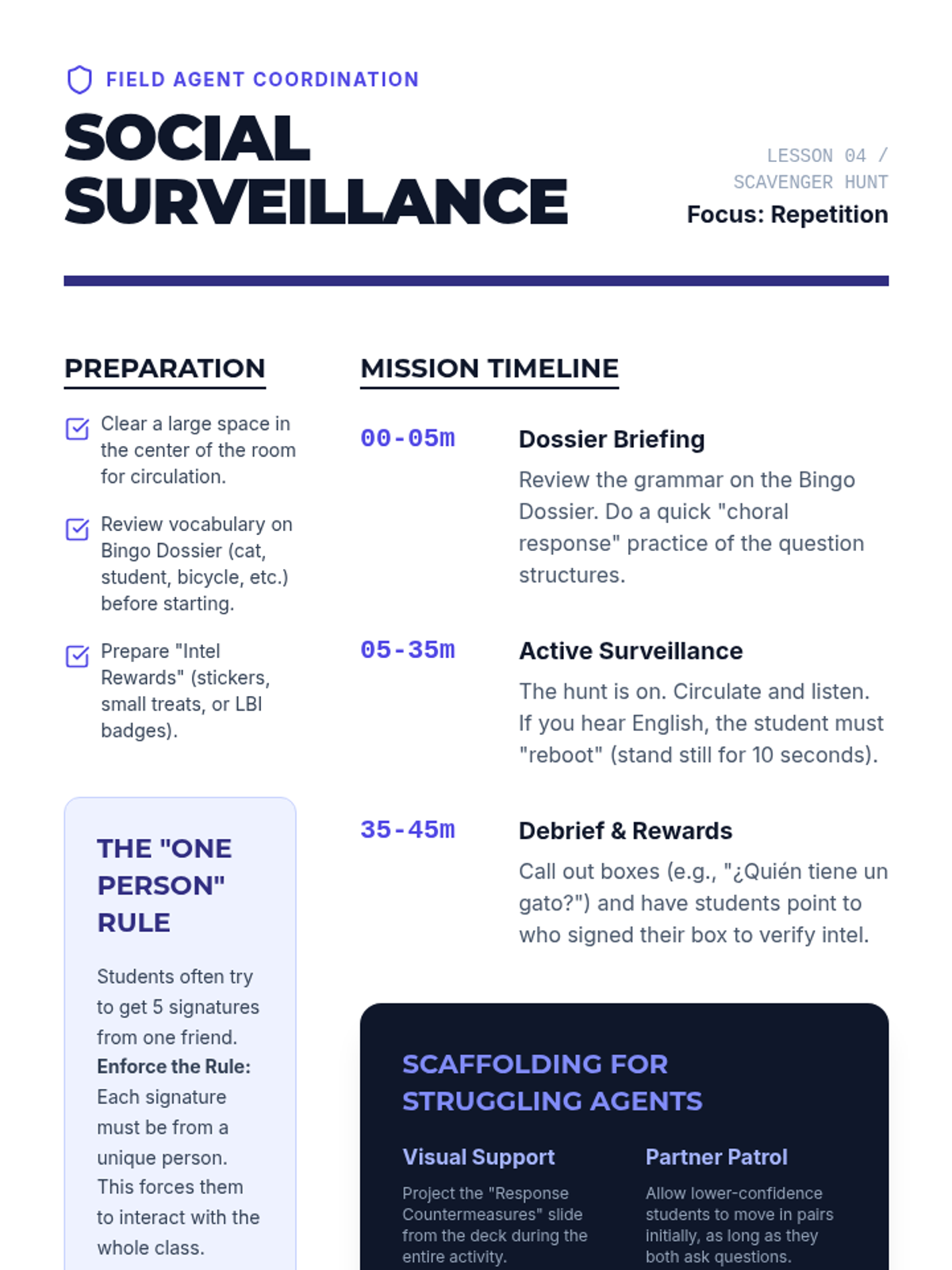
A classroom-wide scavenger hunt where students use specific interrogative structures to collect signatures and complete a bingo grid.
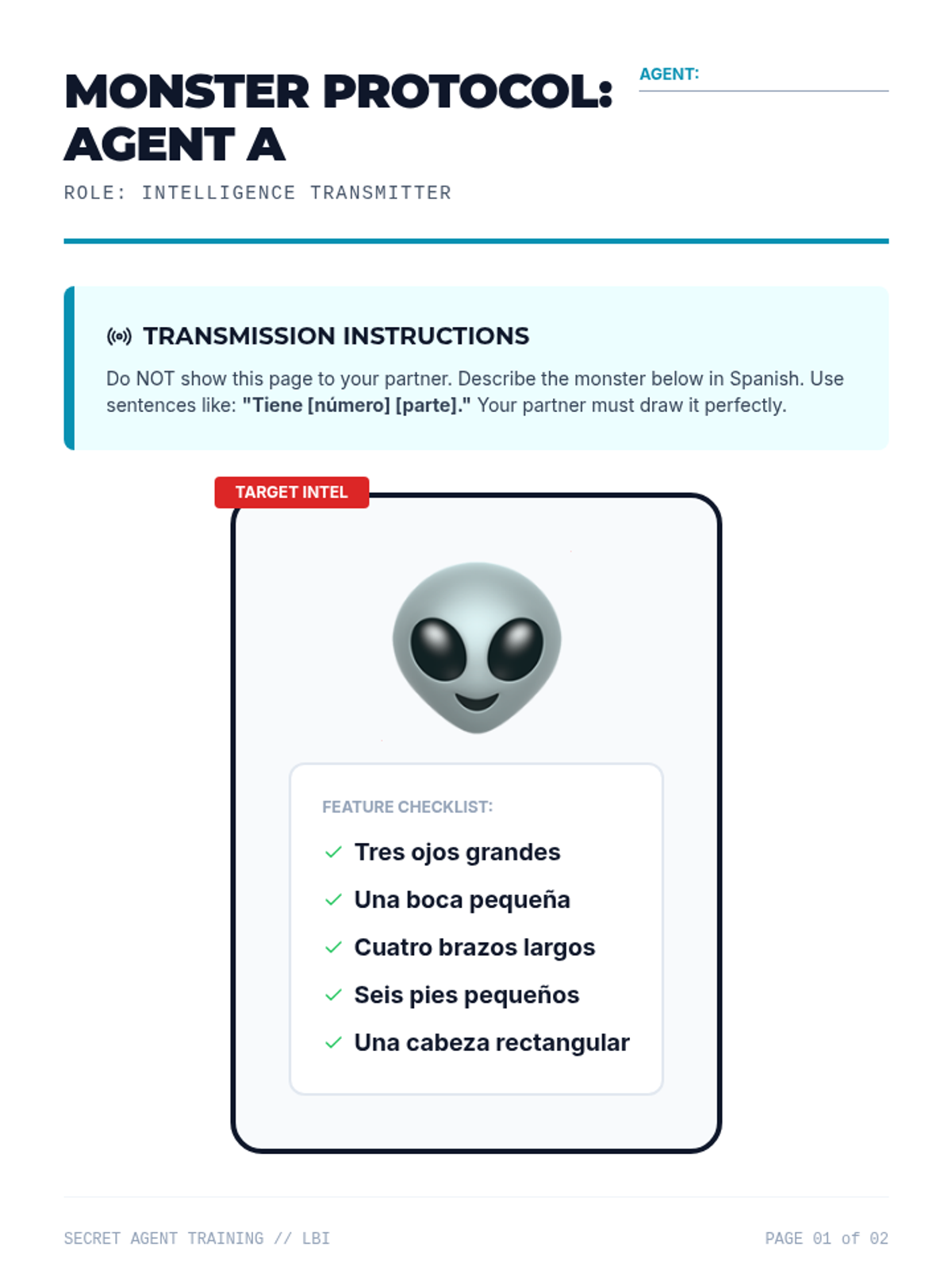
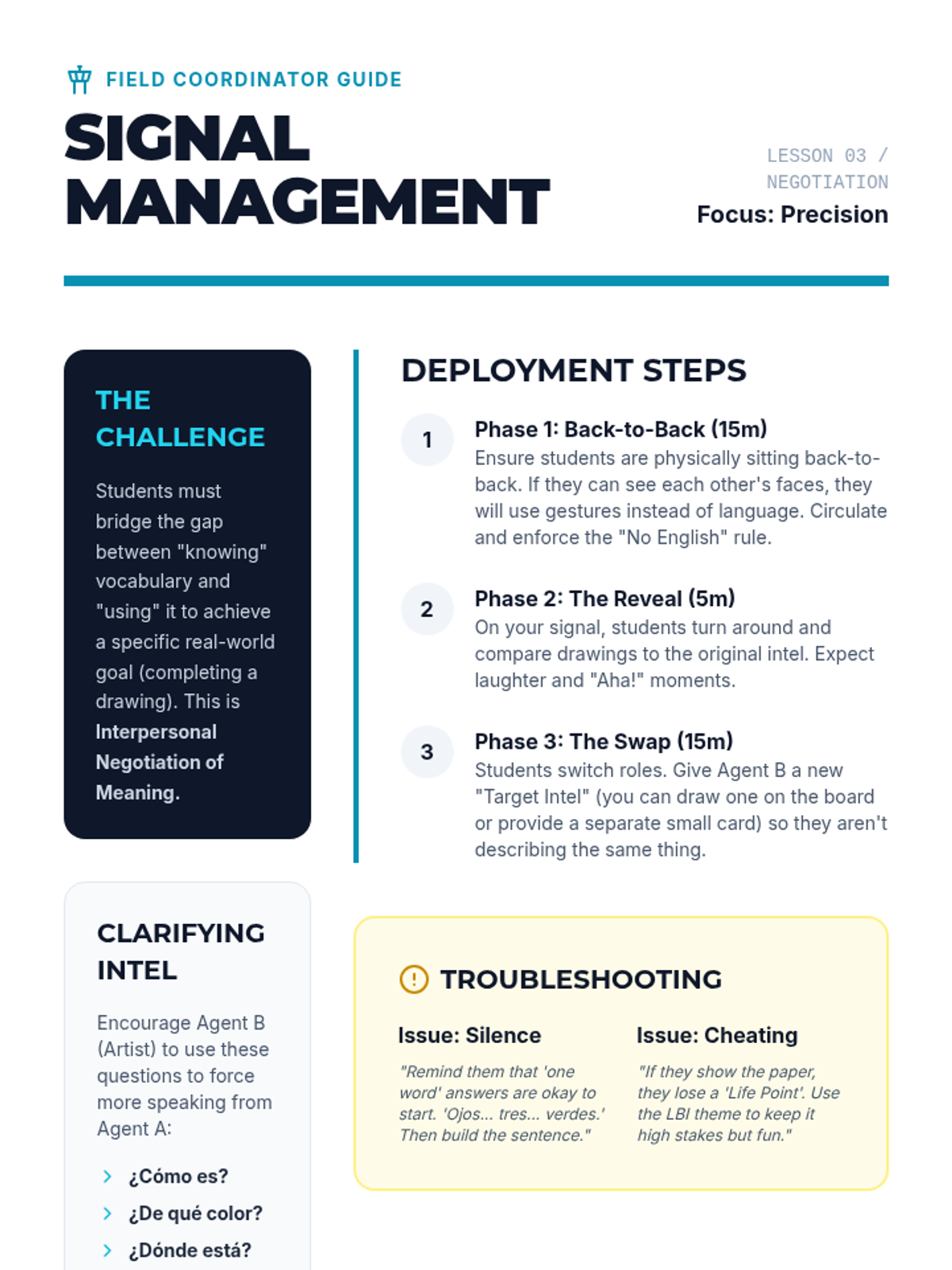
Pairs work back-to-back to exchange missing information, using Spanish descriptions to complete visual or data-based tasks.
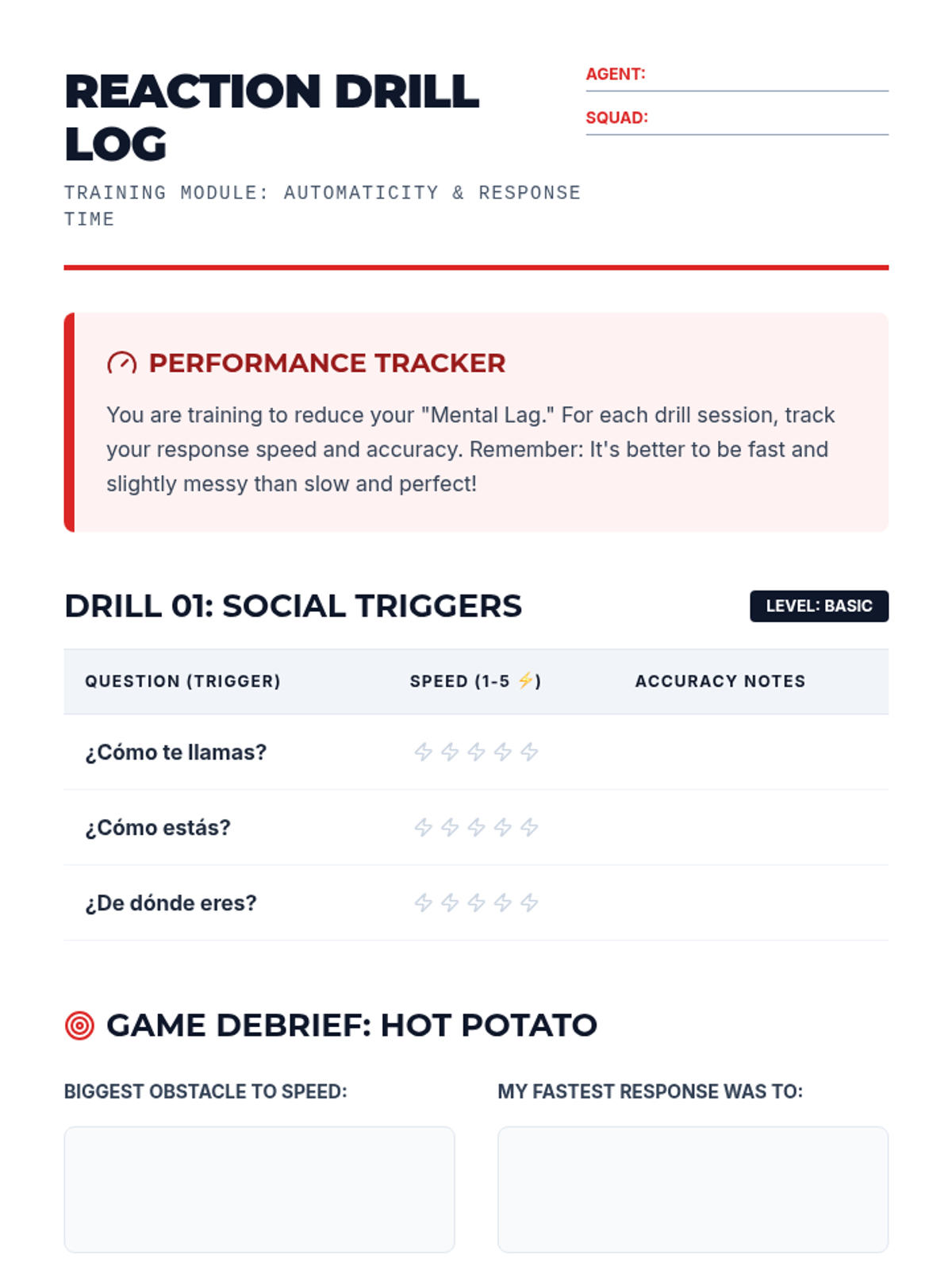
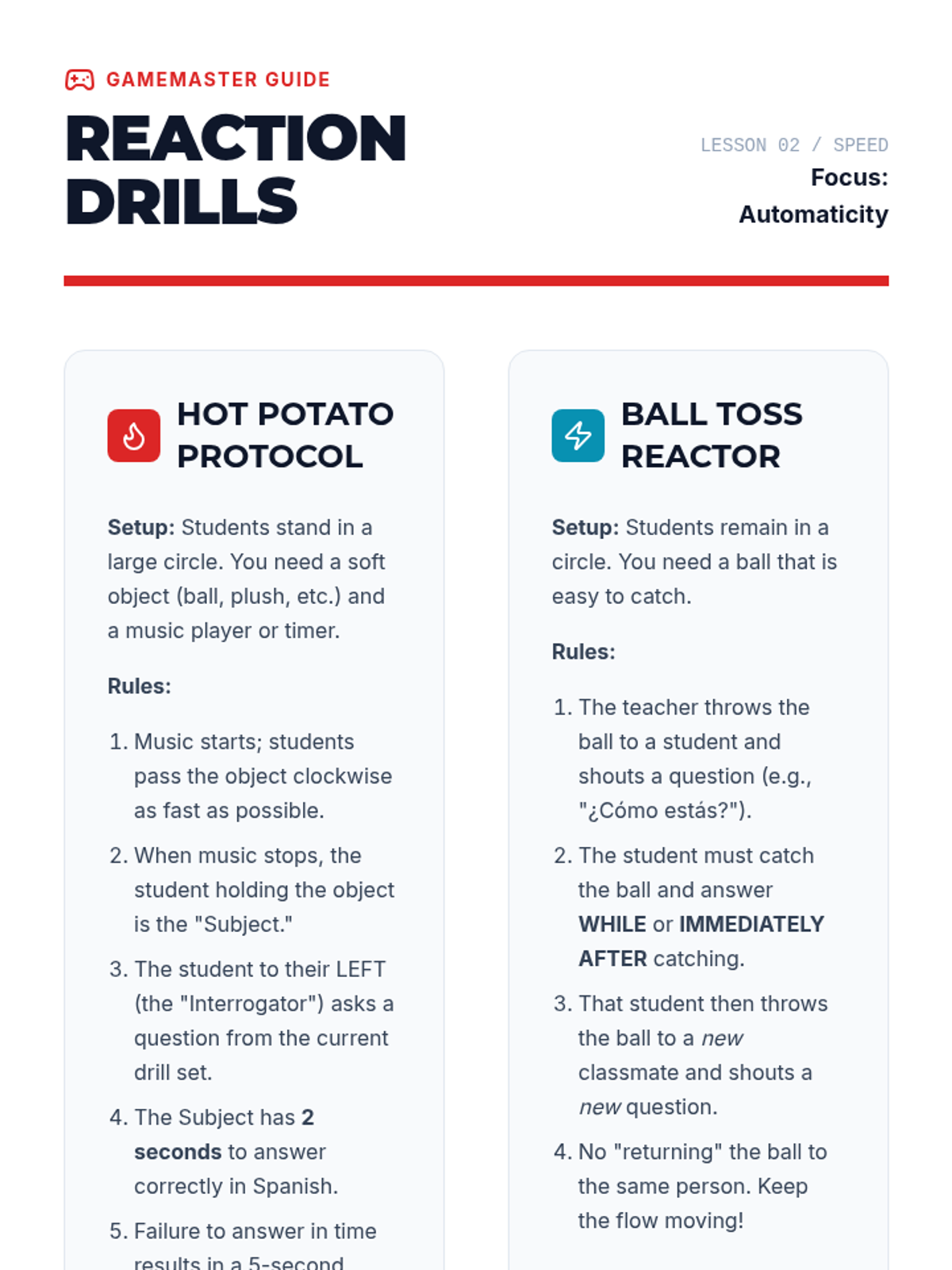
Focuses on reducing mental translation time through rapid-fire response games like ball tosses and timed challenges.
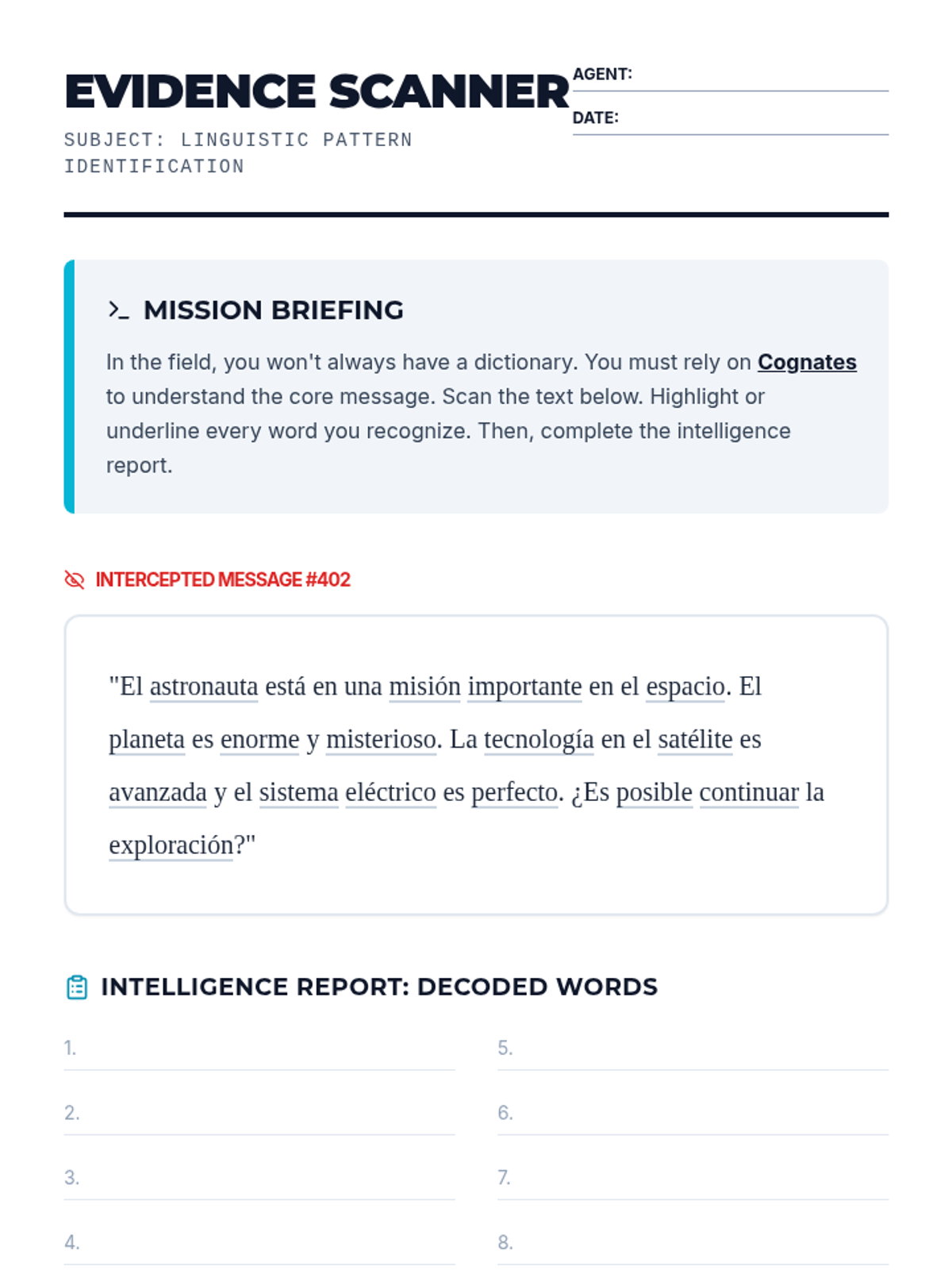
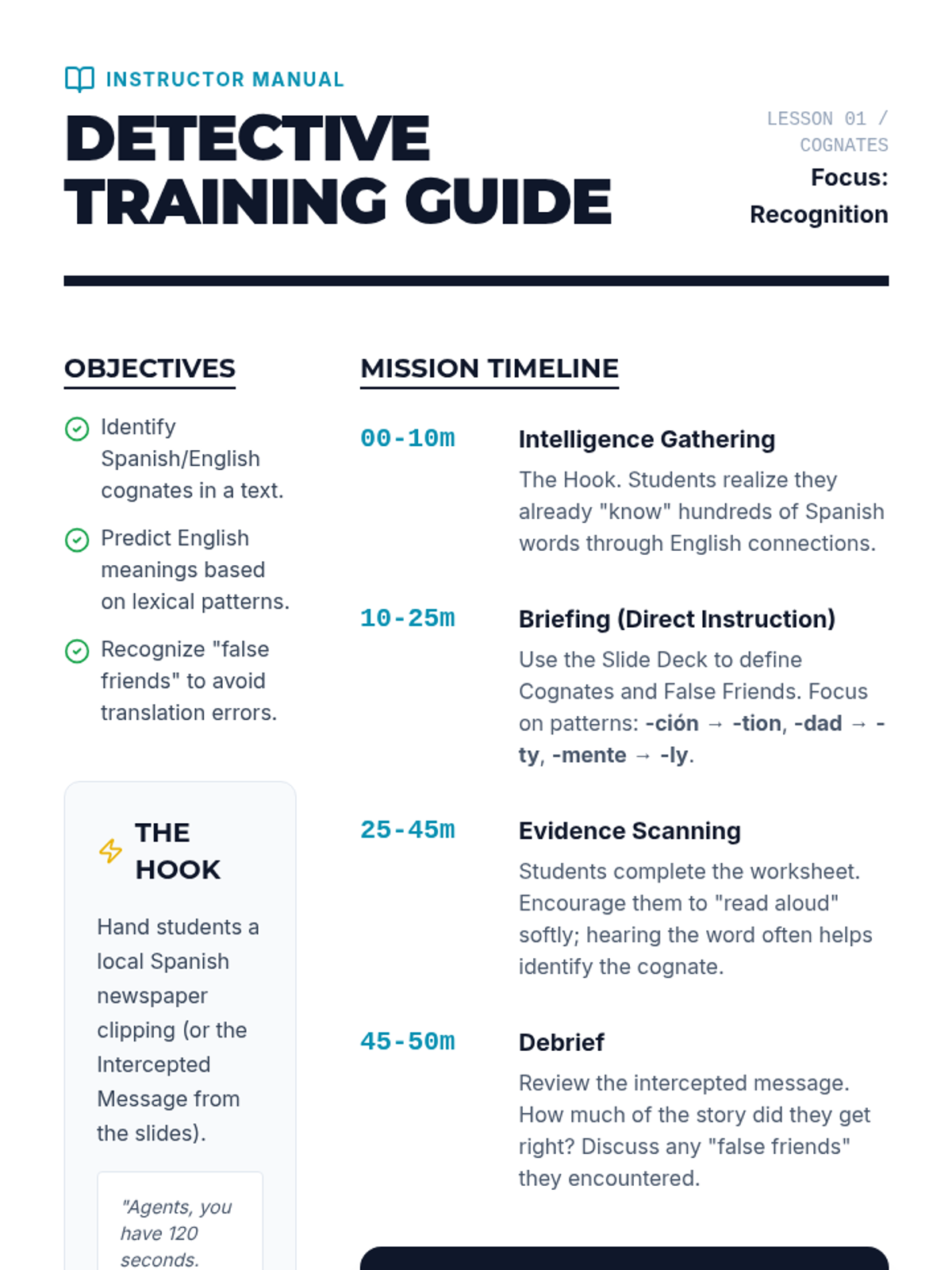
Students act as language detectives to identify cognates in Spanish texts, building immediate vocabulary and reading confidence through pattern recognition.
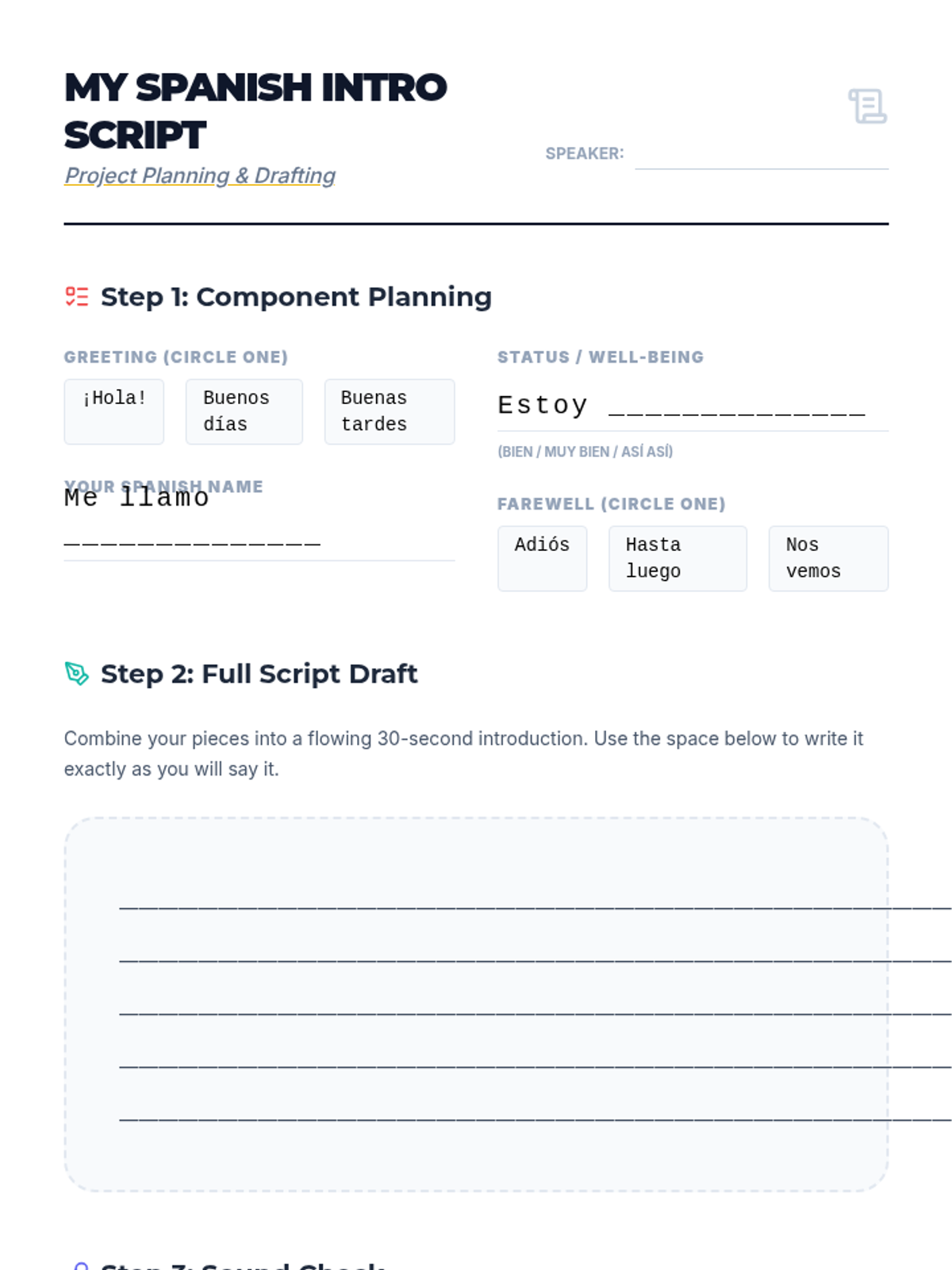
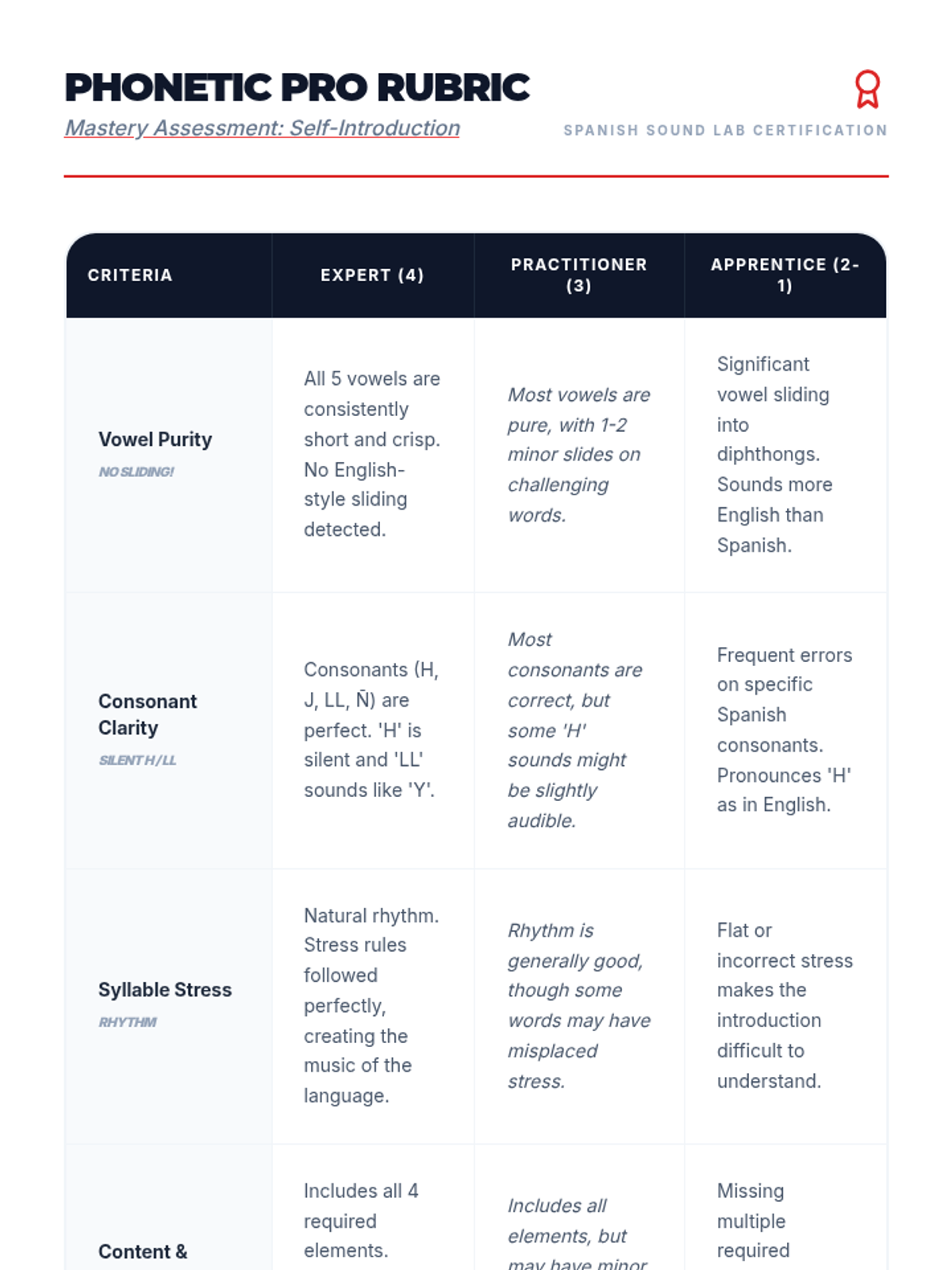
A cumulative lesson where students synthesize their phonetic and conversational knowledge to create and deliver a clear self-introduction.
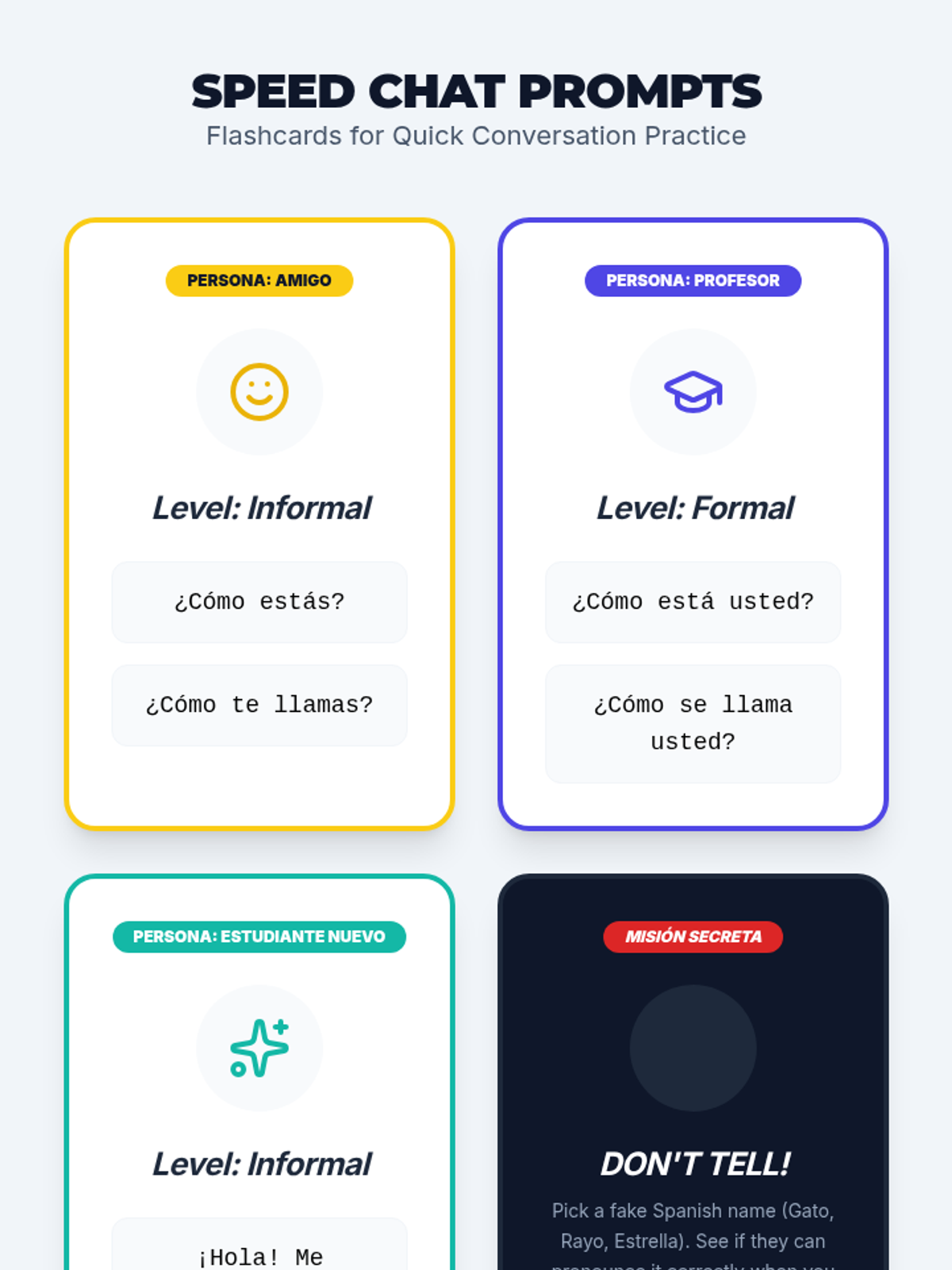
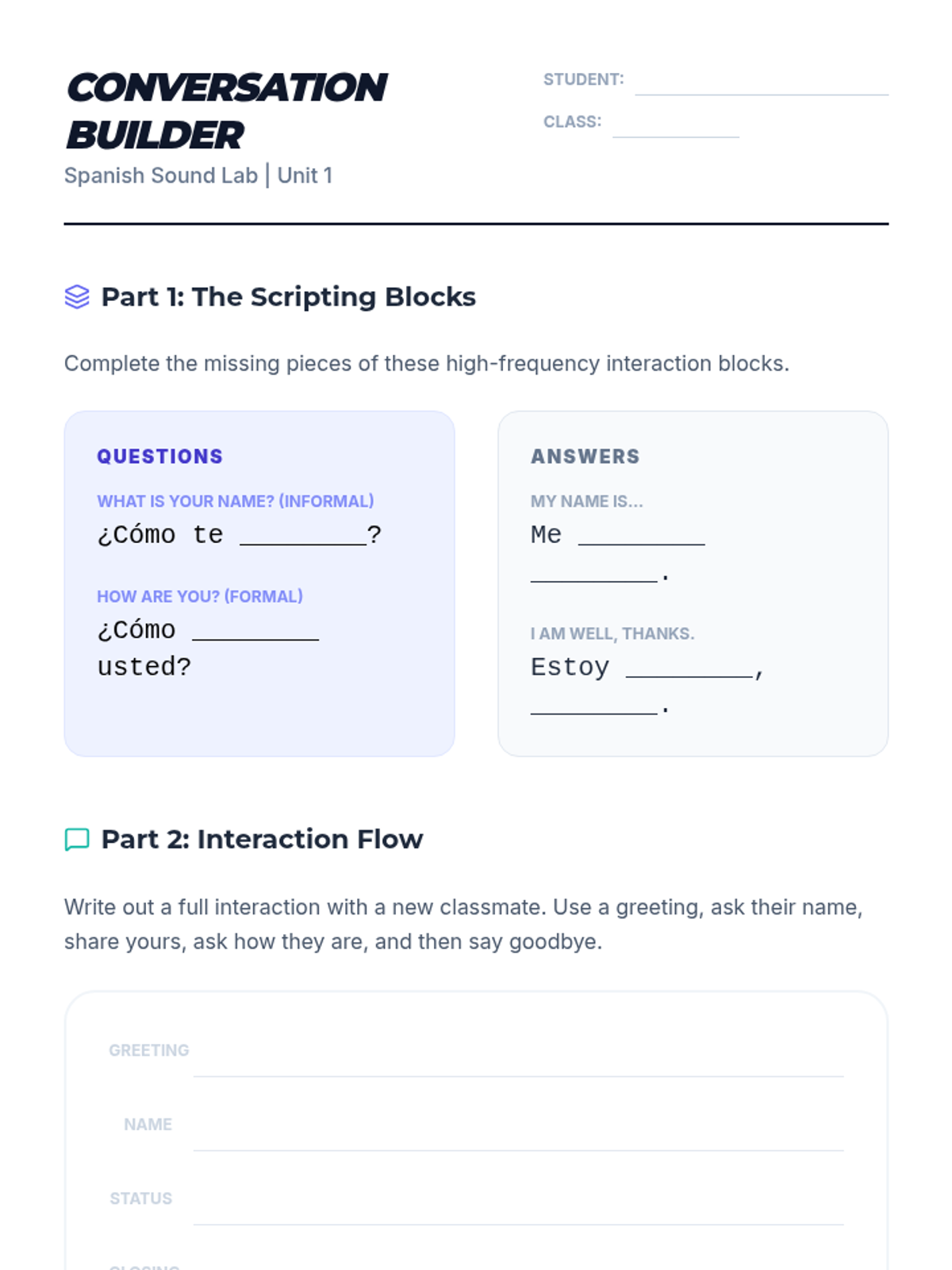
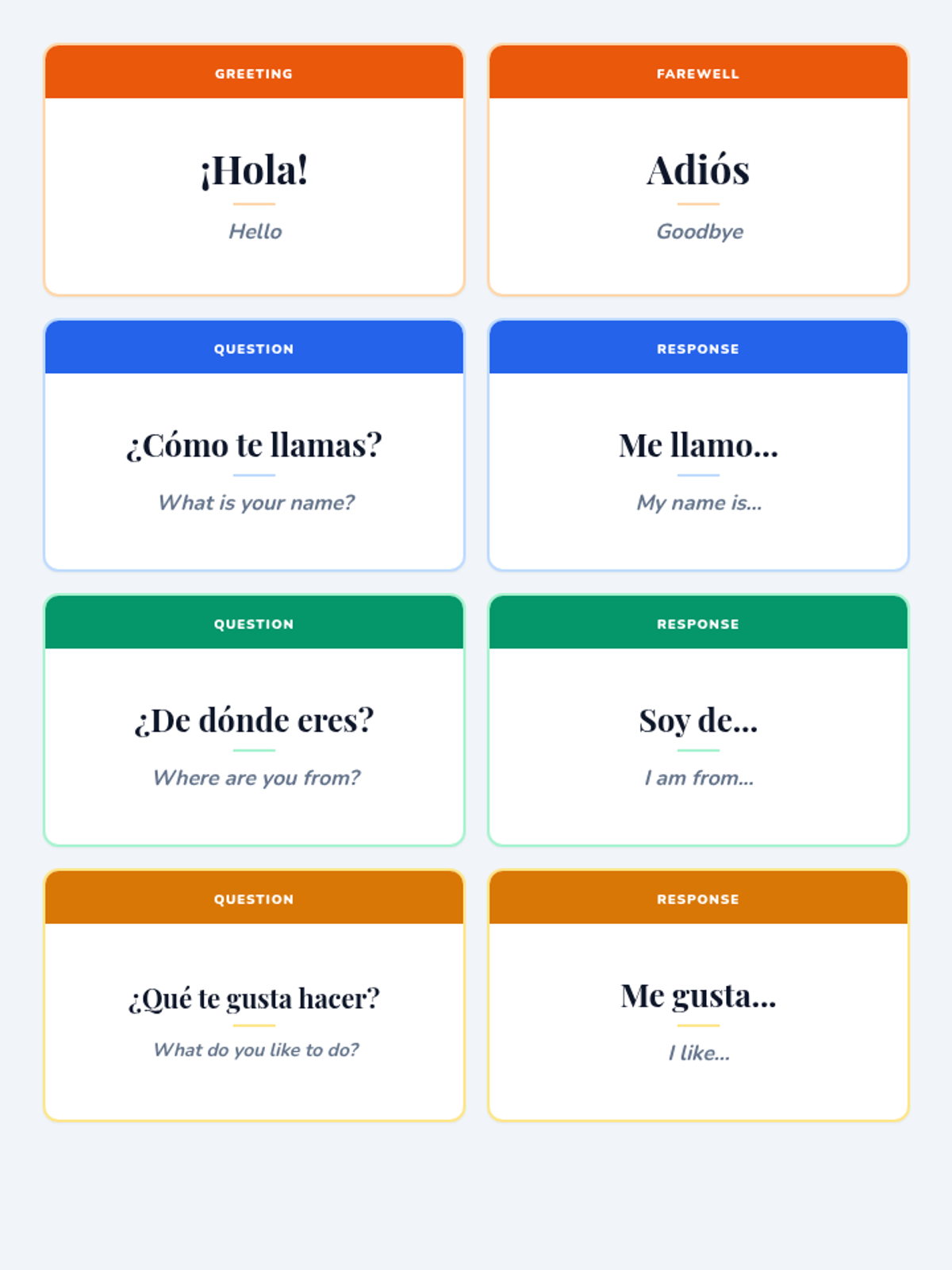
Building interactive skills by learning to ask and answer basic personal questions about name and well-being.
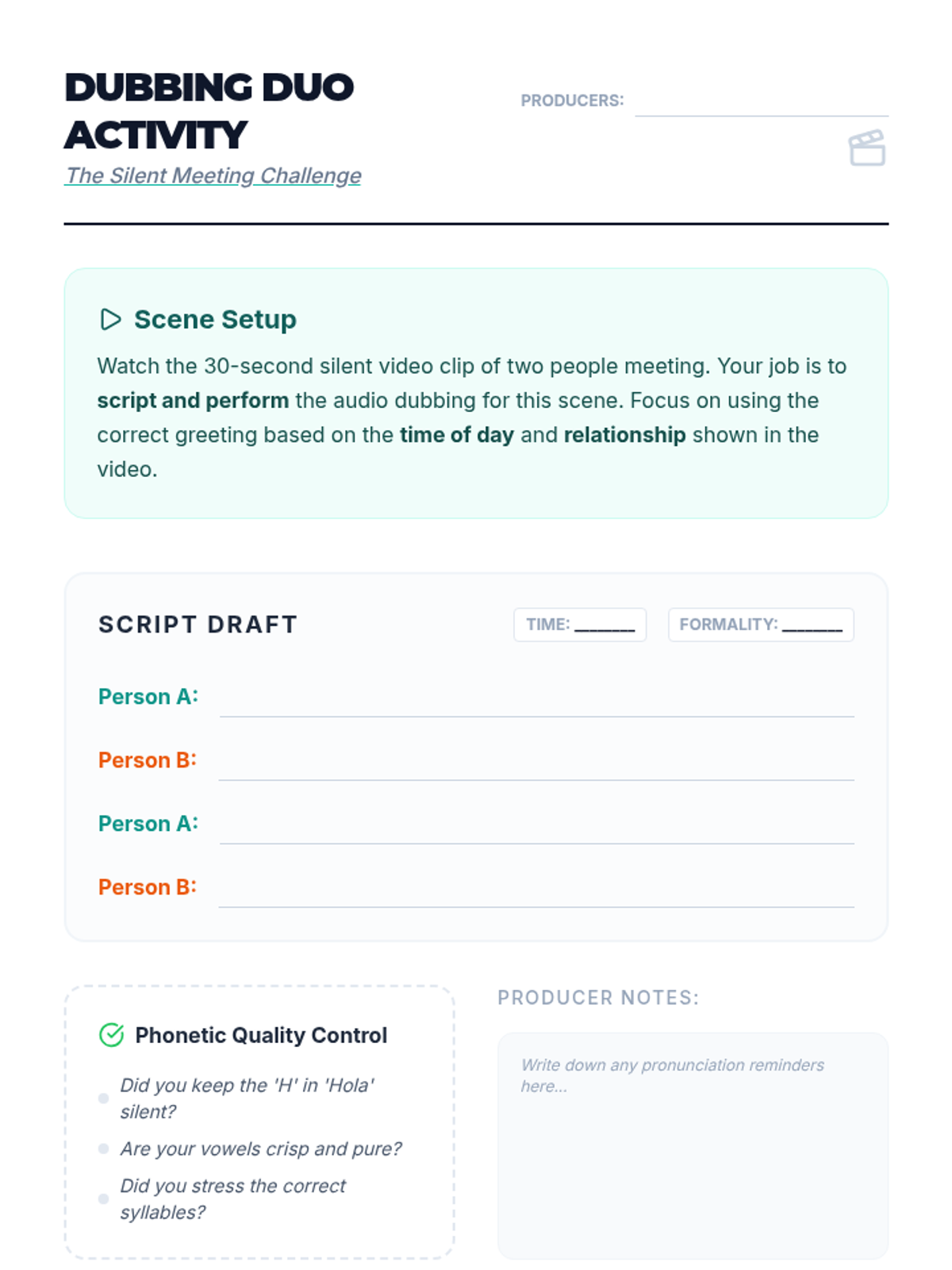
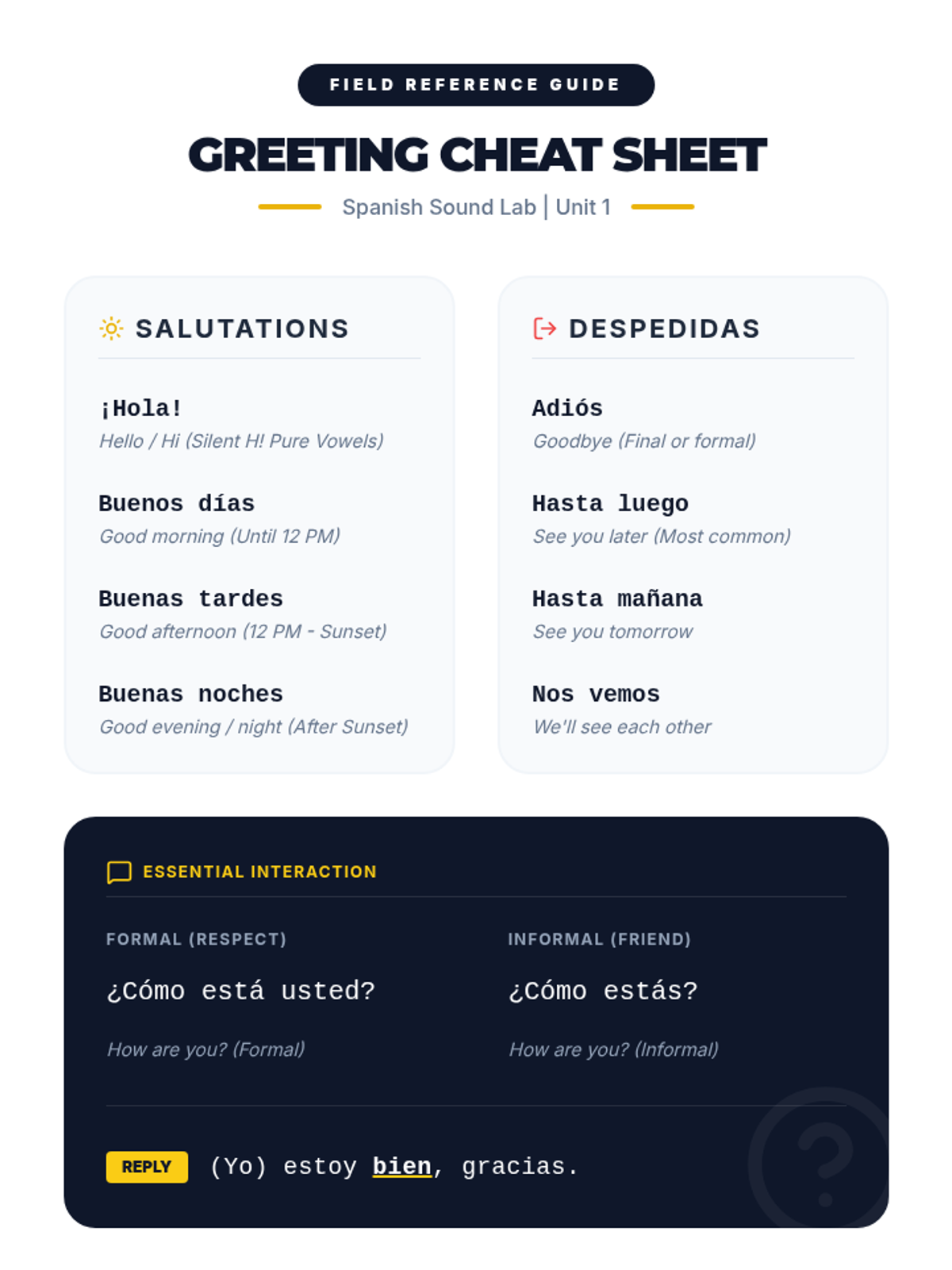
Application of phonetic skills to high-frequency greeting and leave-taking phrases, emphasizing cultural context and formal vs. informal distinctions.
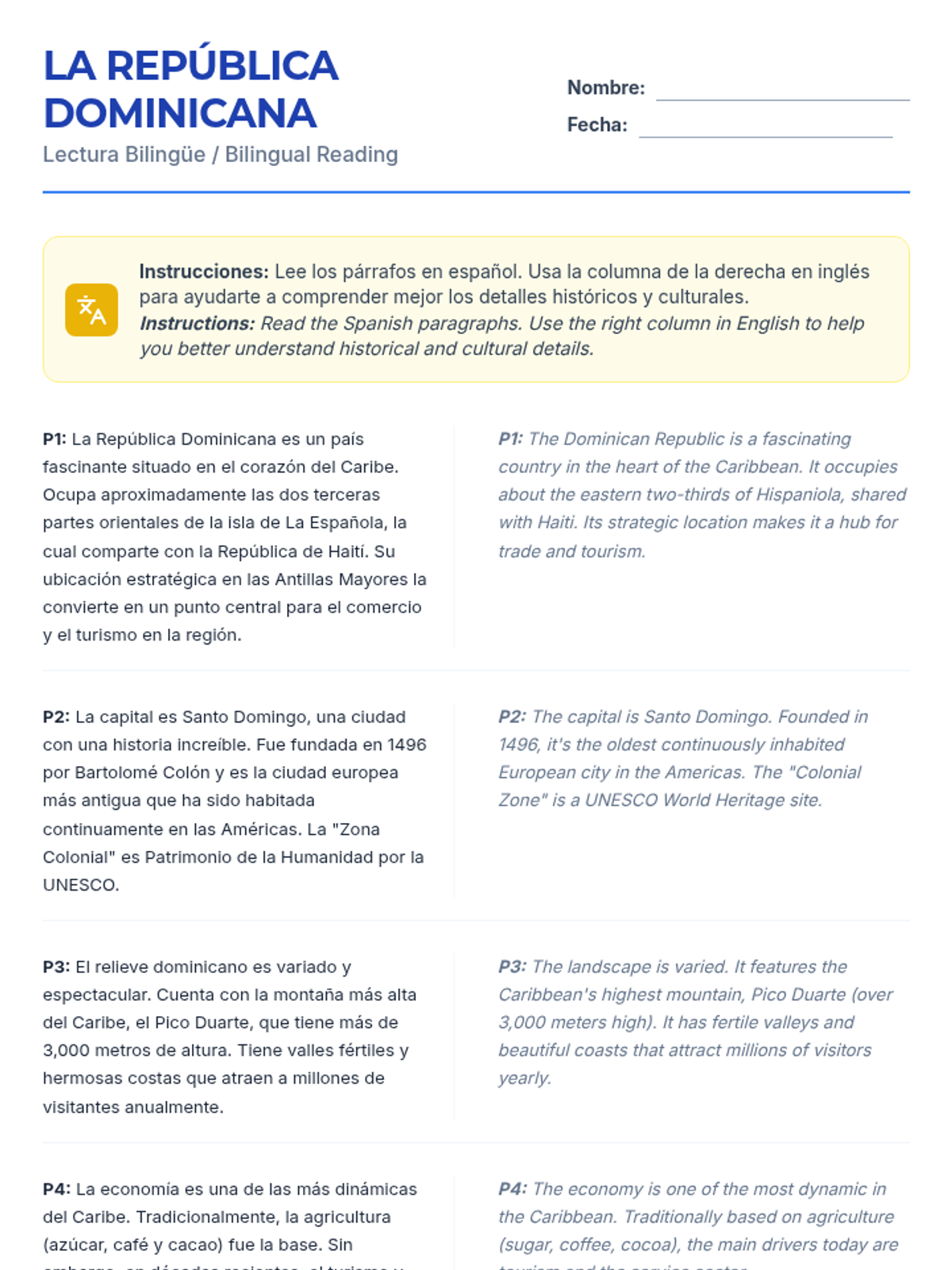
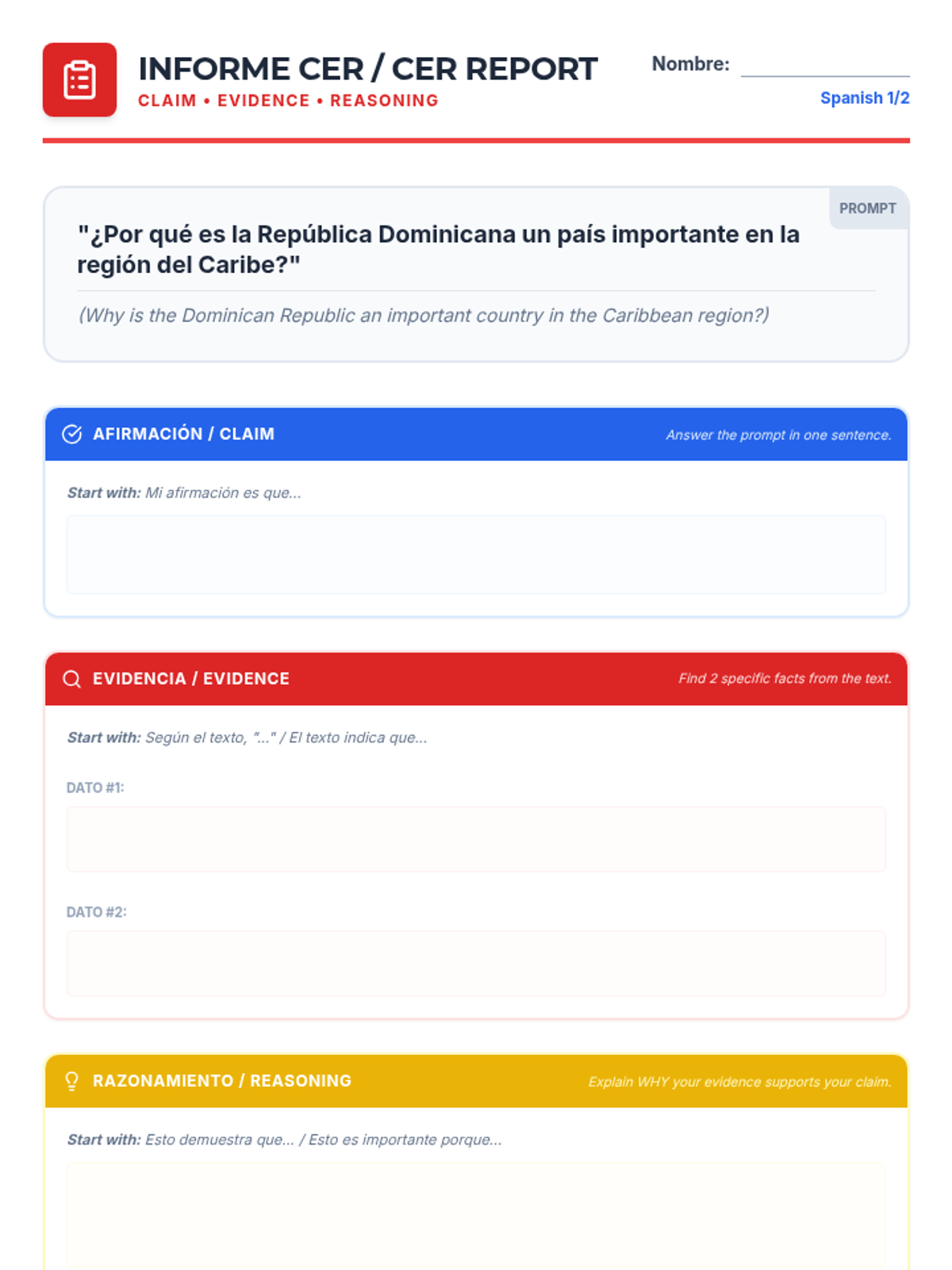
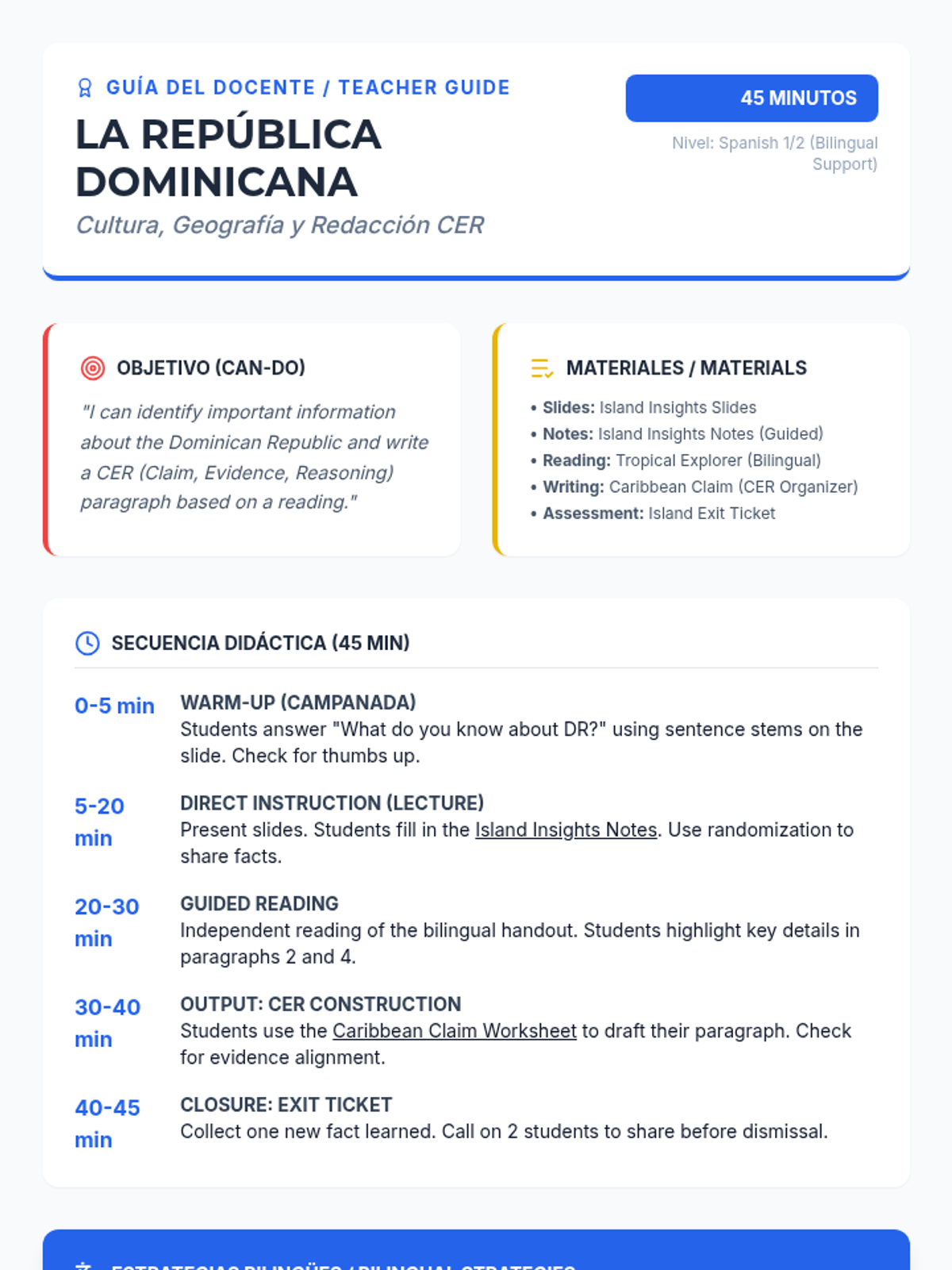
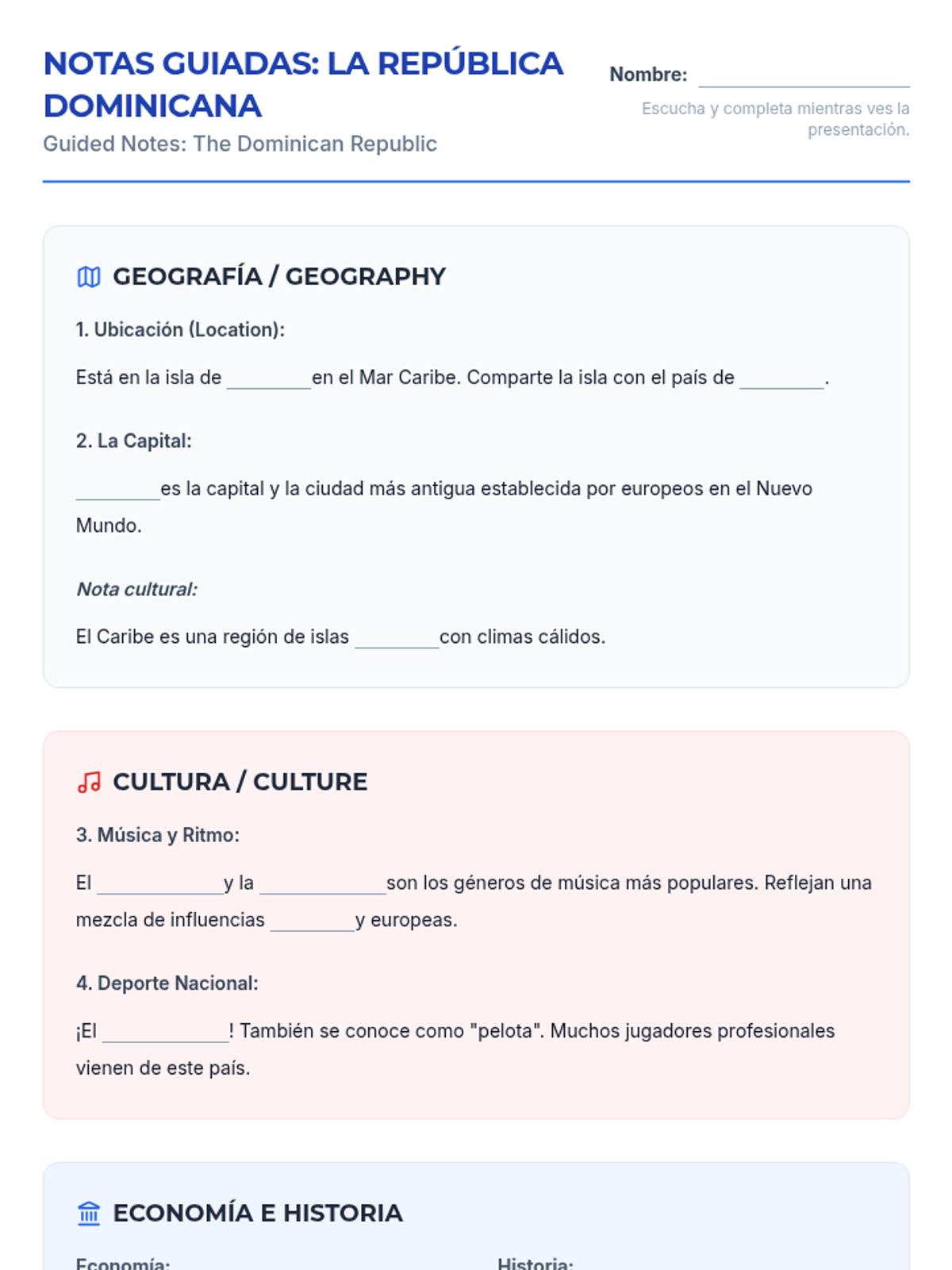
Students will explore the geography, history, and culture of the Dominican Republic, culminating in a CER paragraph using evidence from an informational text.
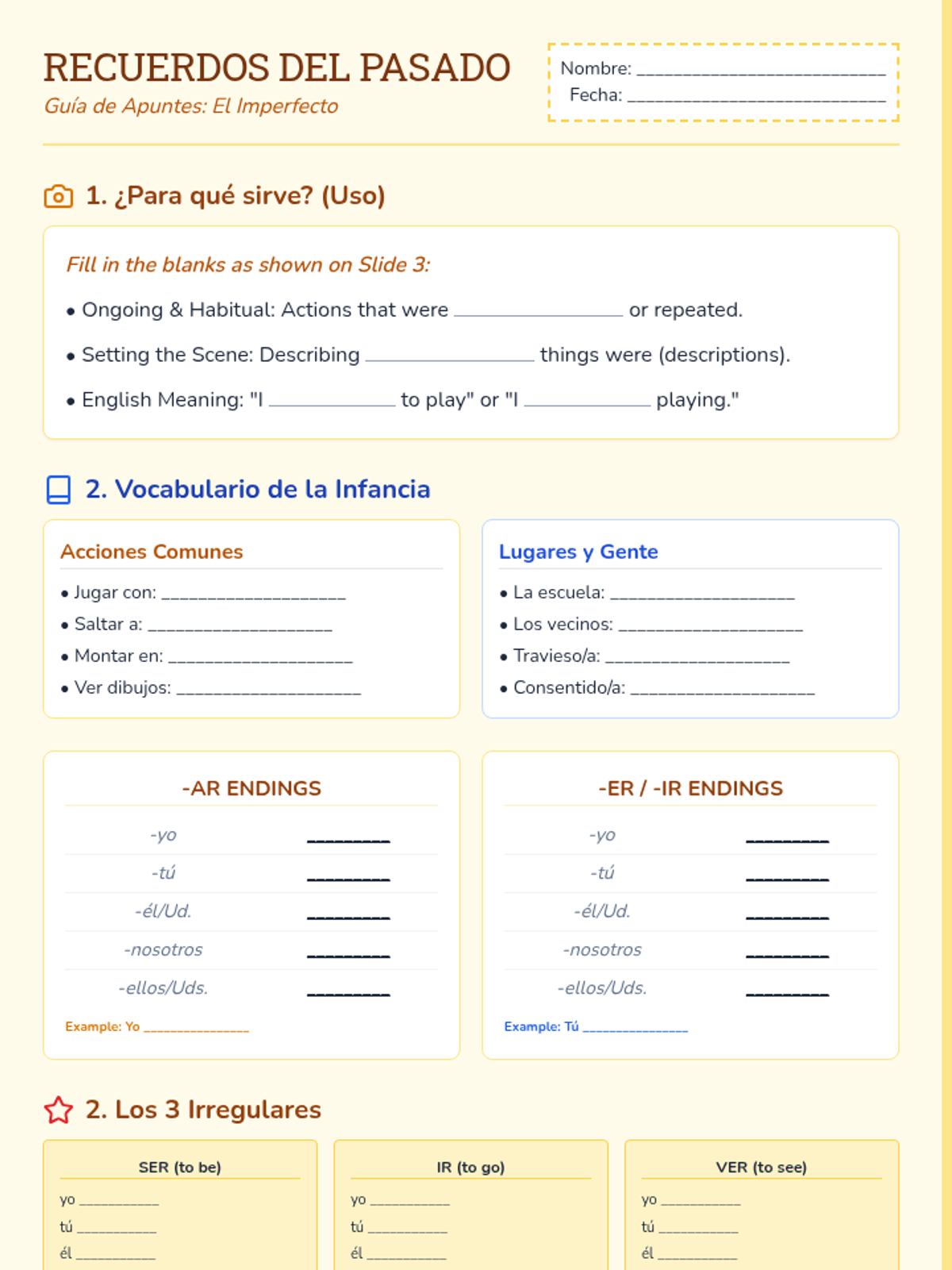
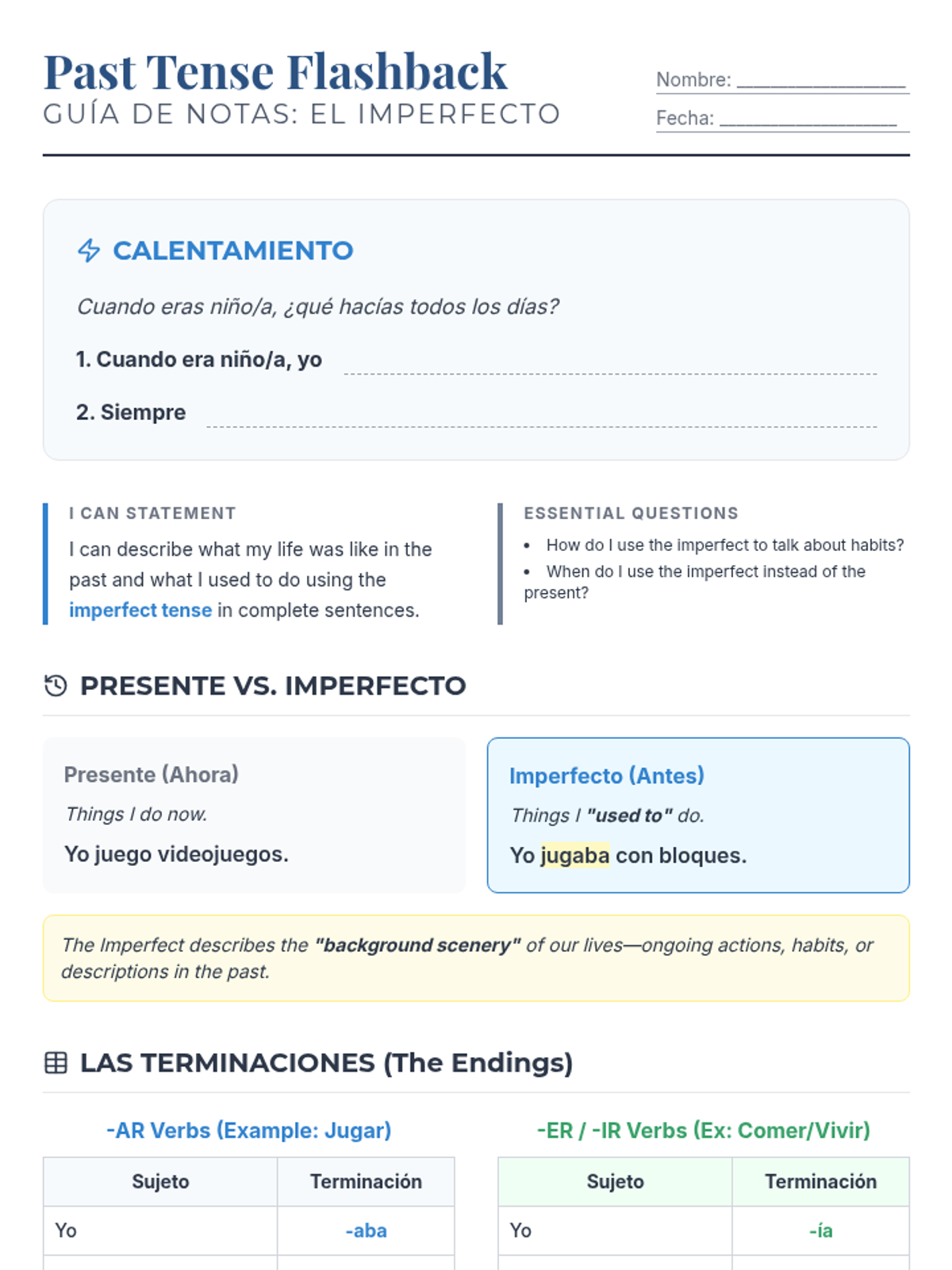
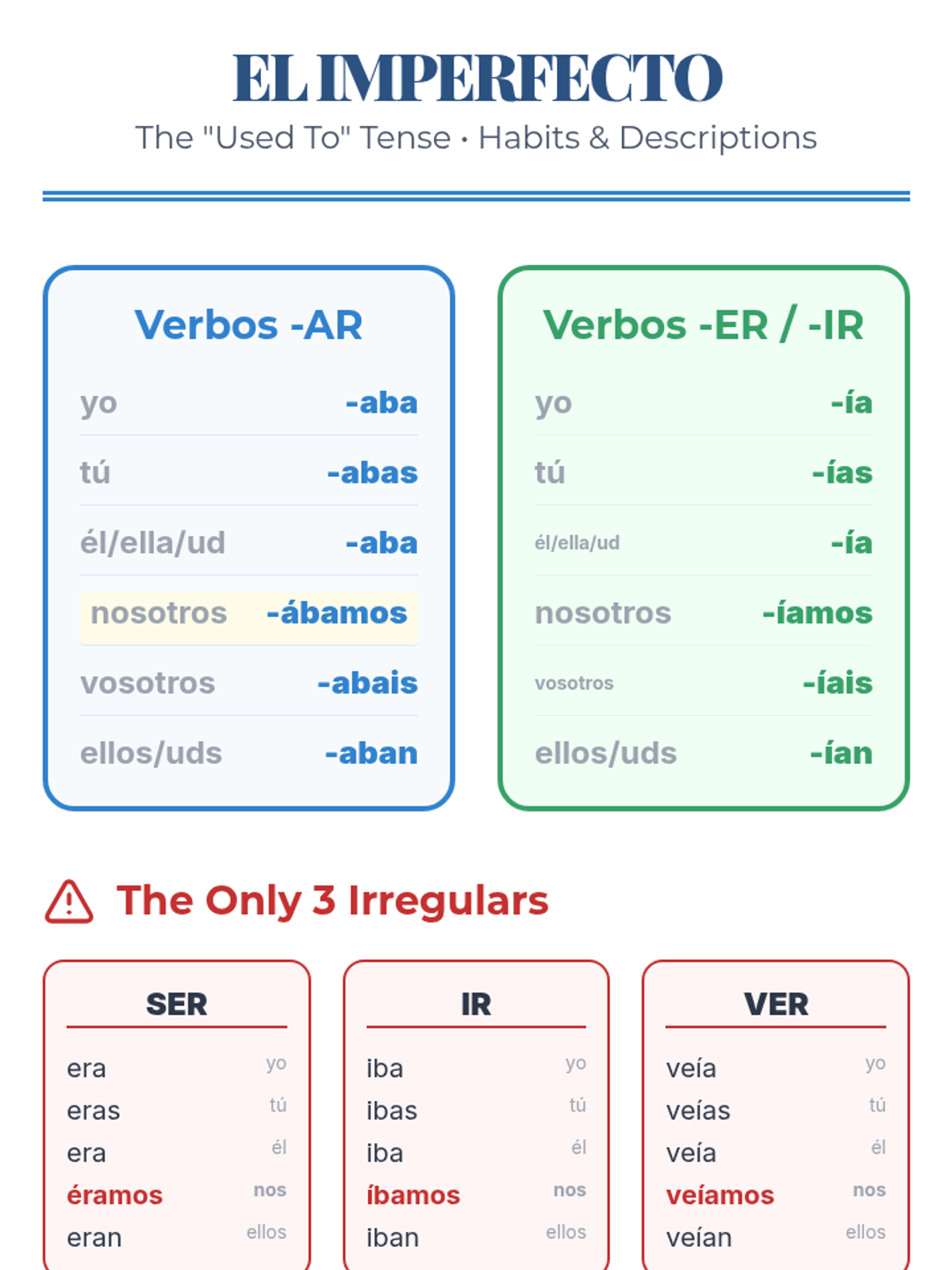
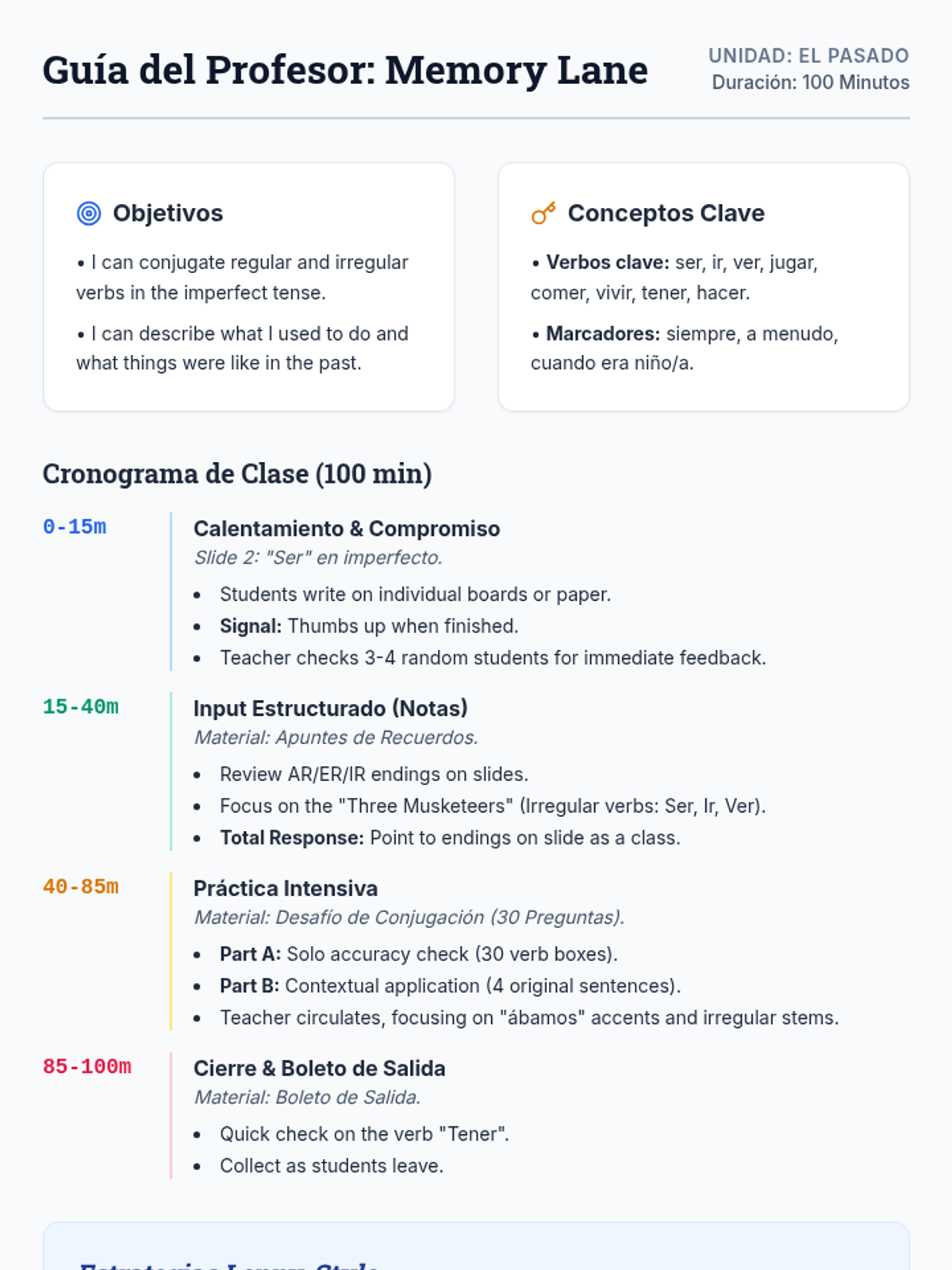
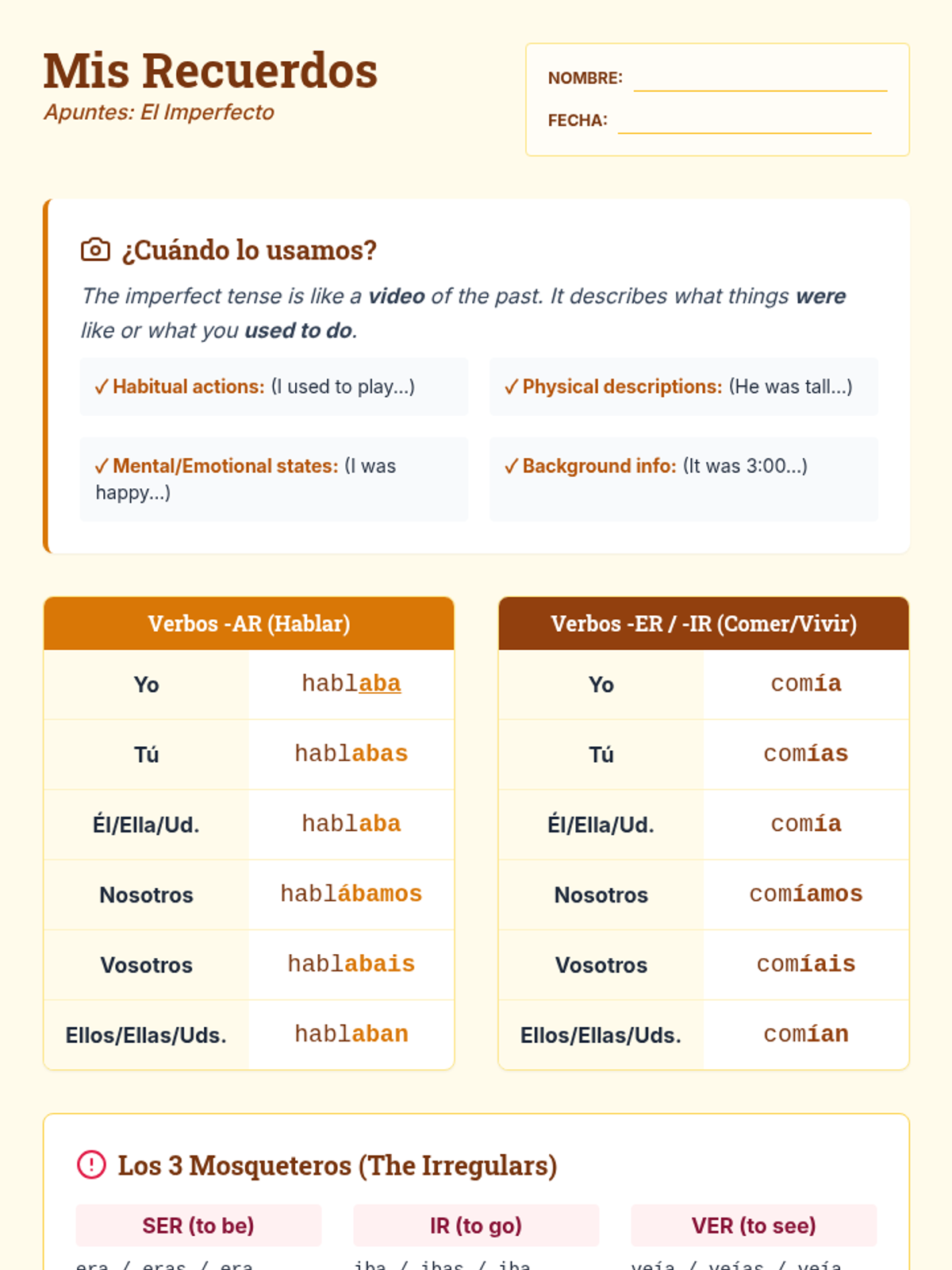
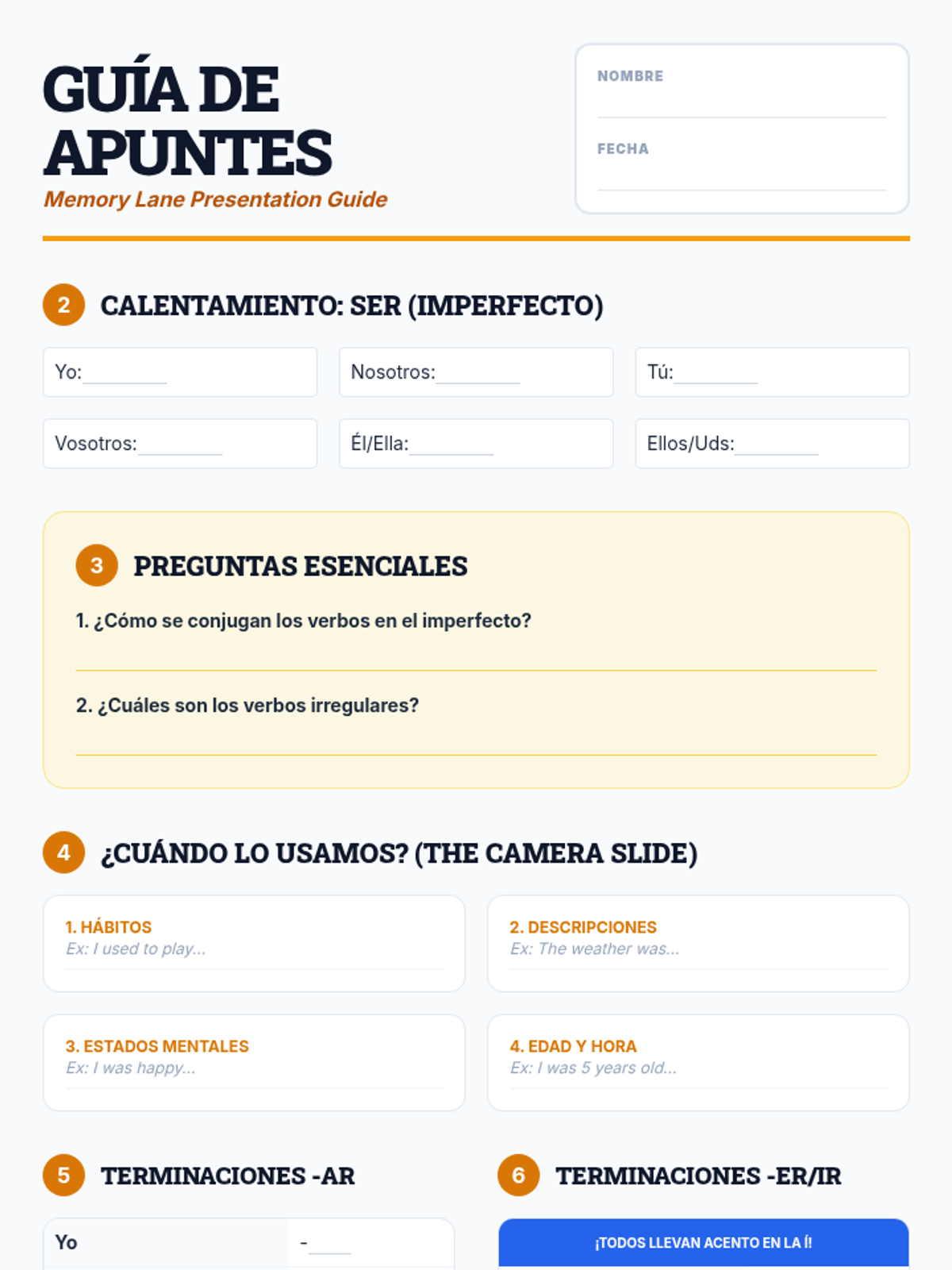
A comprehensive lesson on the Spanish imperfect tense, focusing on childhood descriptions and habits using a scrapbook theme. includes instructional slides, note-taking guides, and intensive conjugation practice.
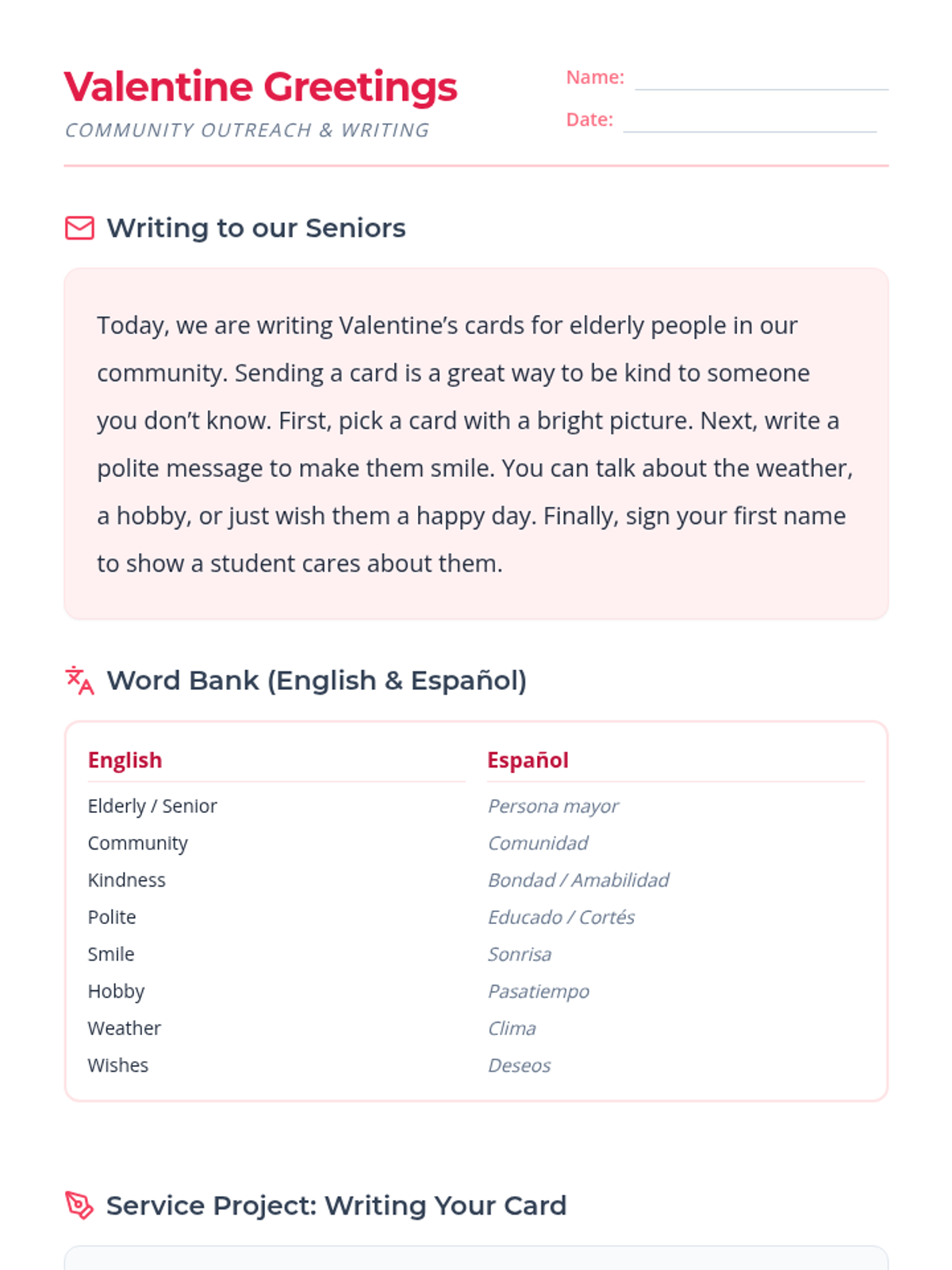
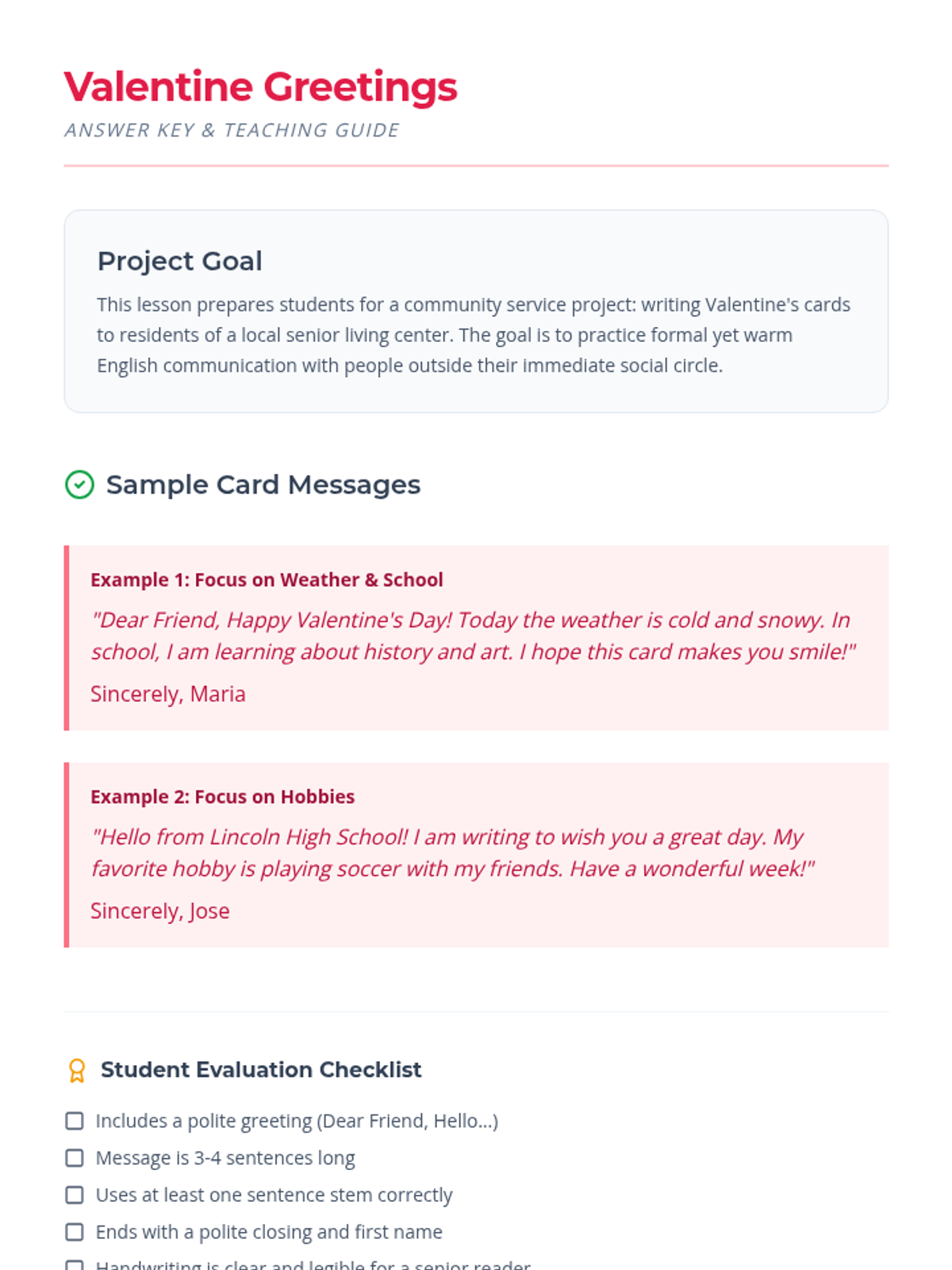
A lesson focused on the cultural tradition of sending Valentine's Day cards, designed for ESL students to practice functional reading and writing skills.
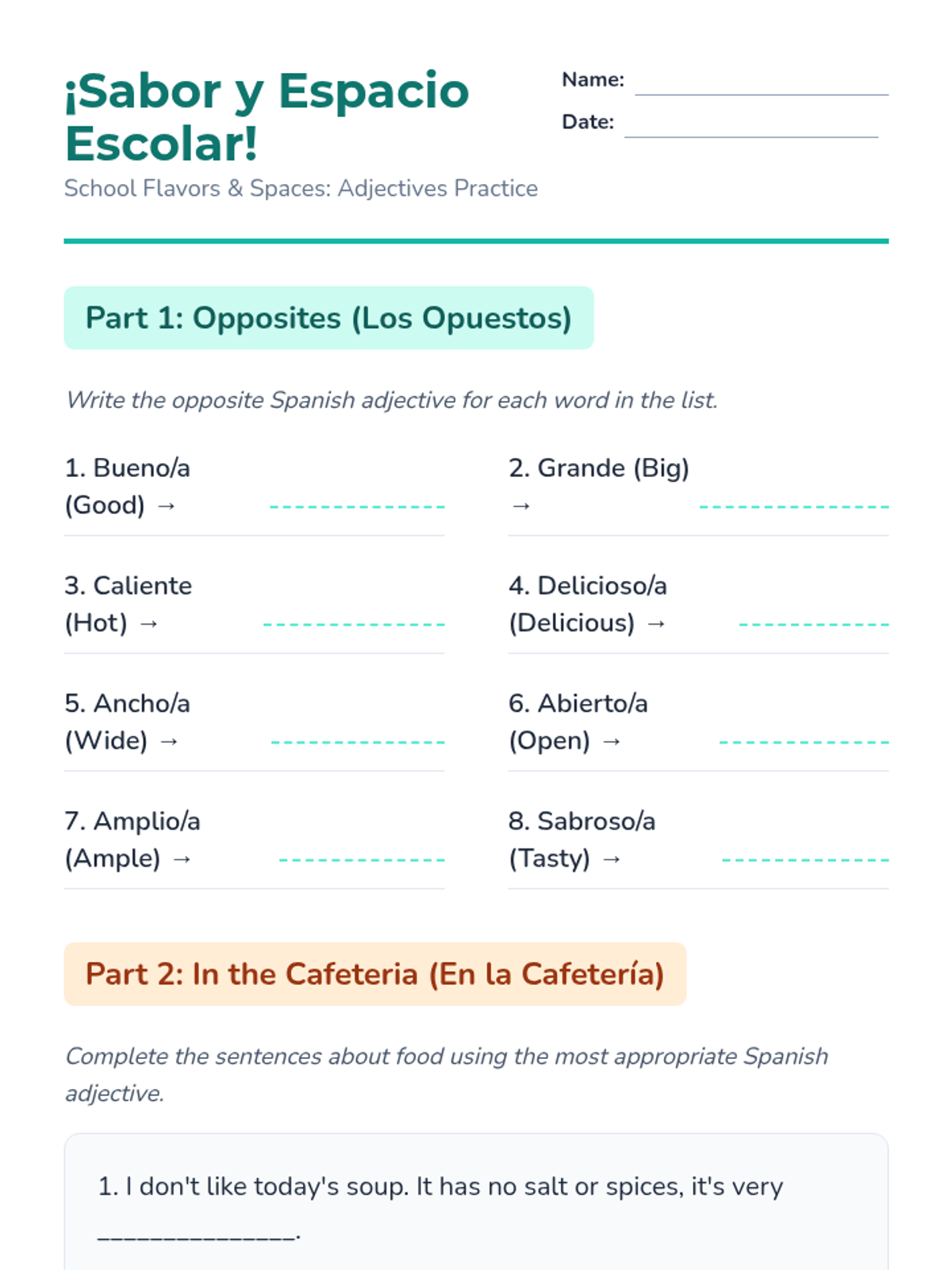
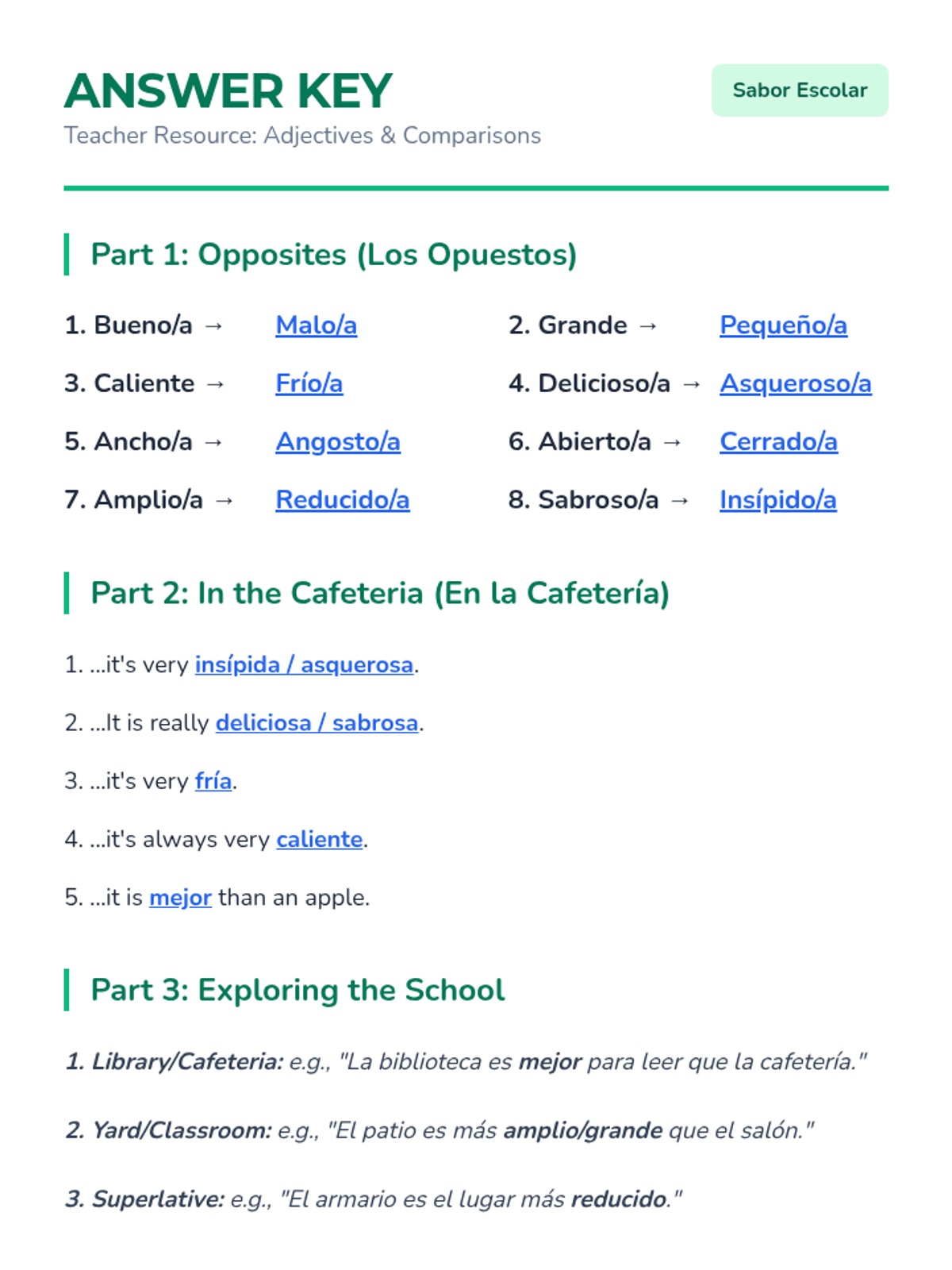
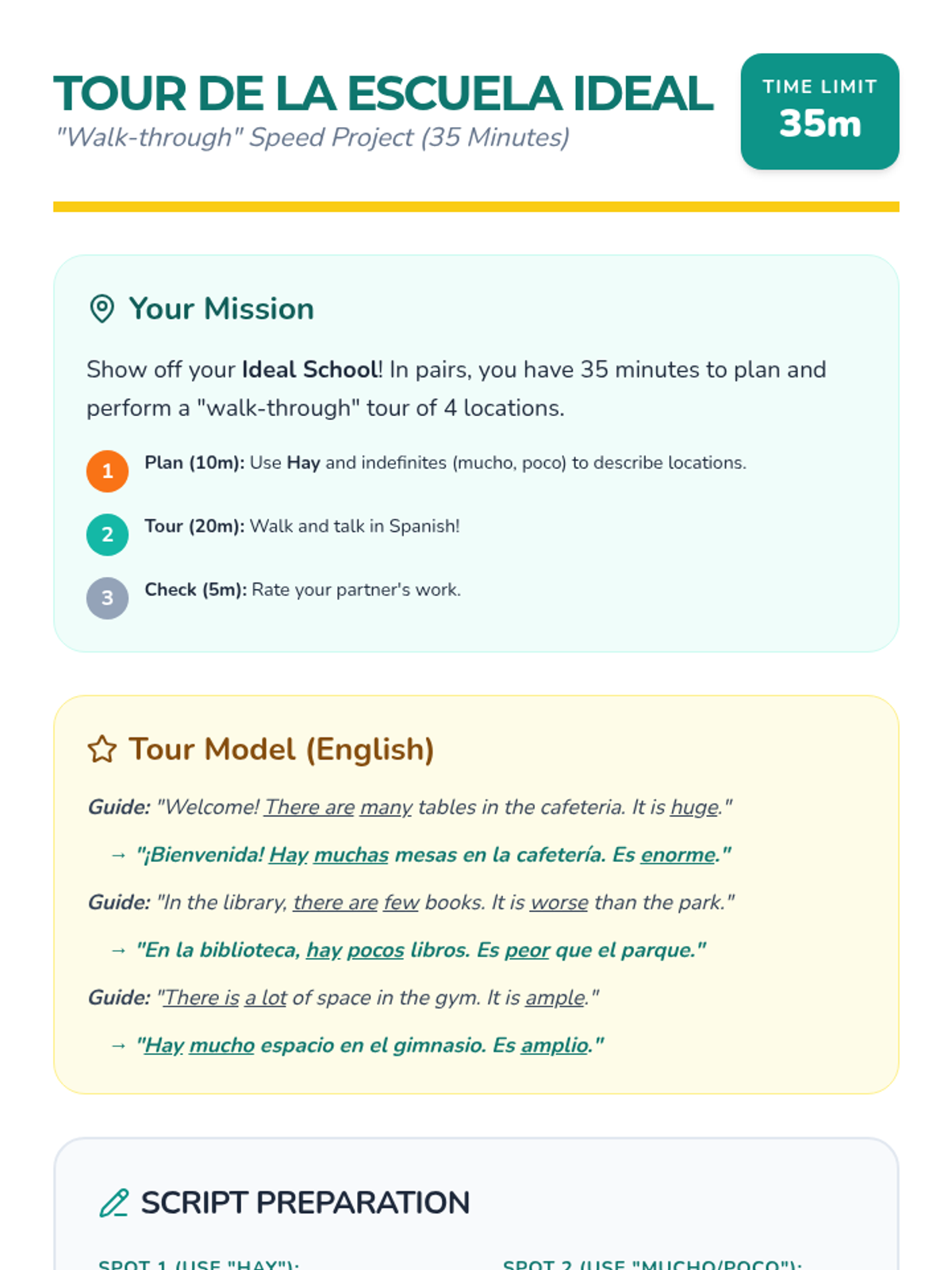
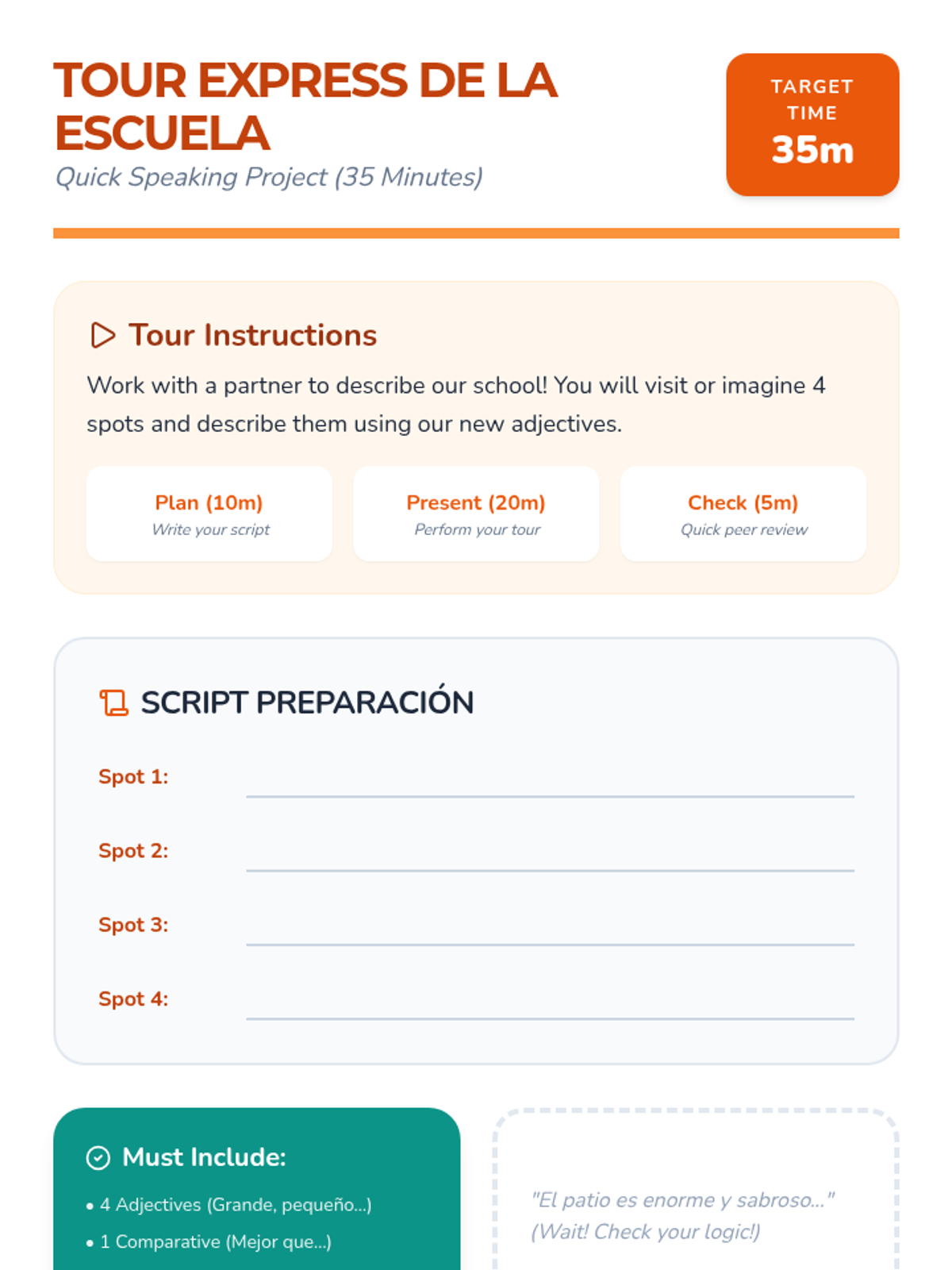
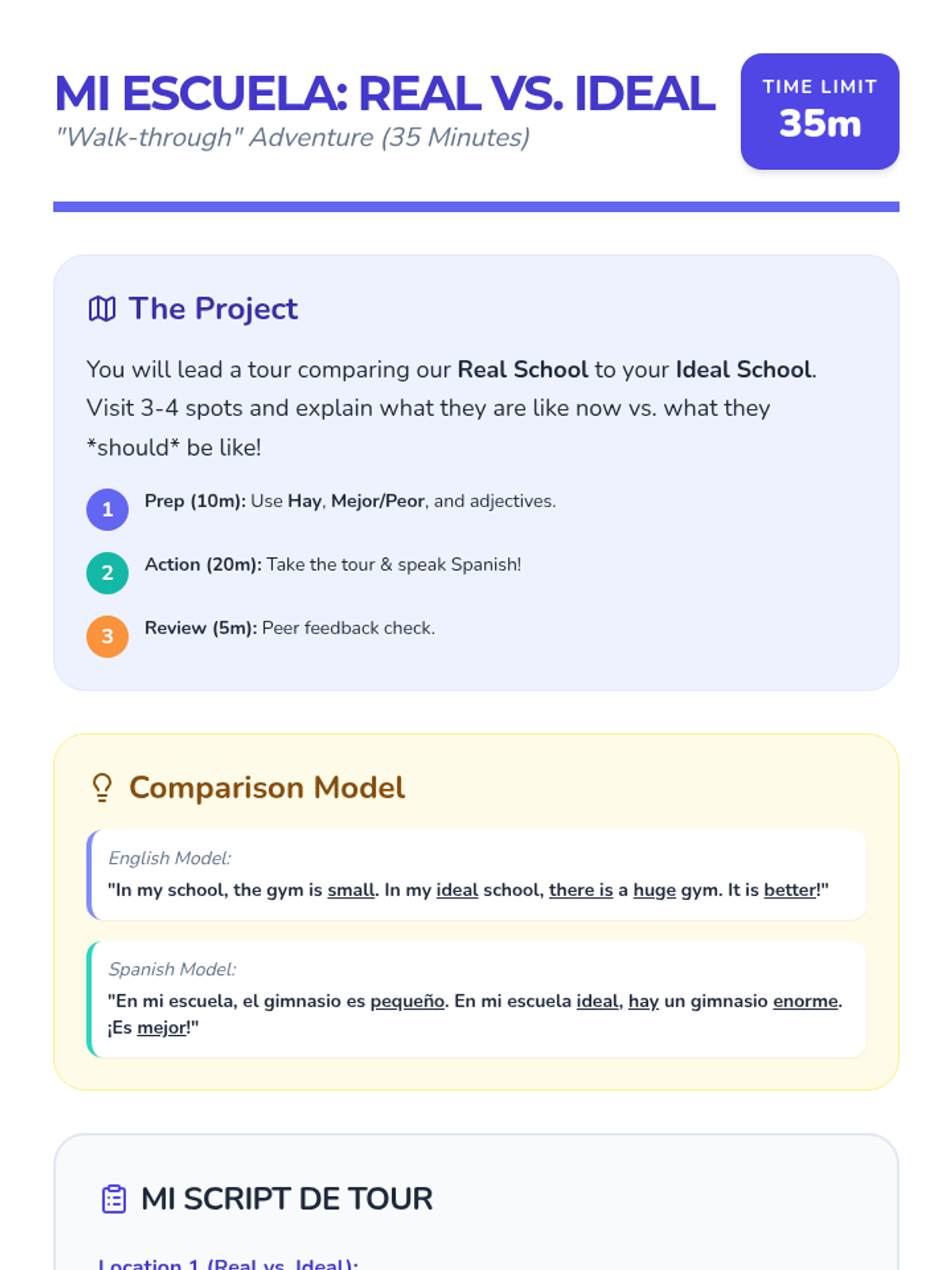
A Spanish grammar lesson focusing on common adjectives (opposites, comparatives, and superlatives) using school-related vocabulary and food as context.
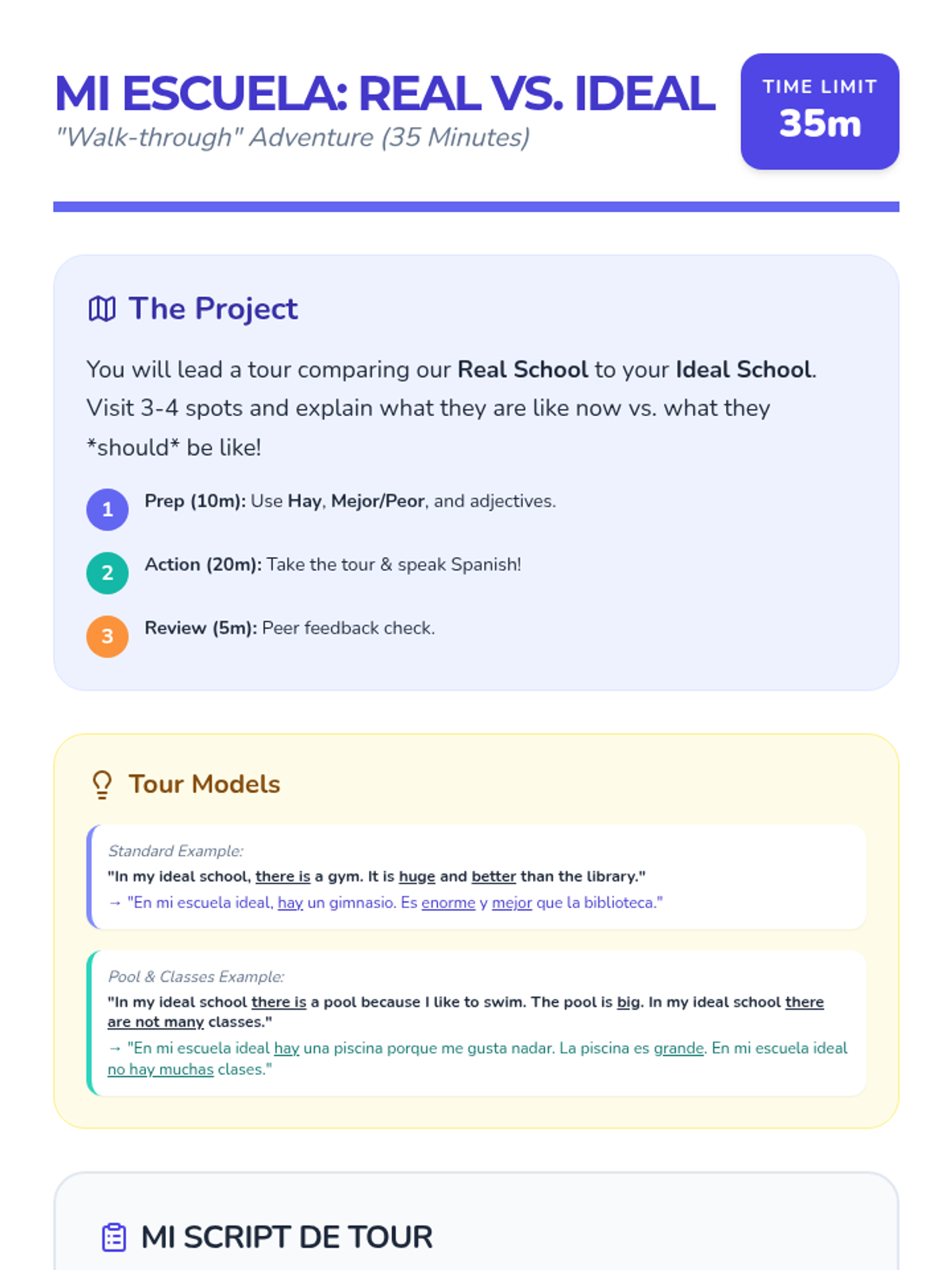
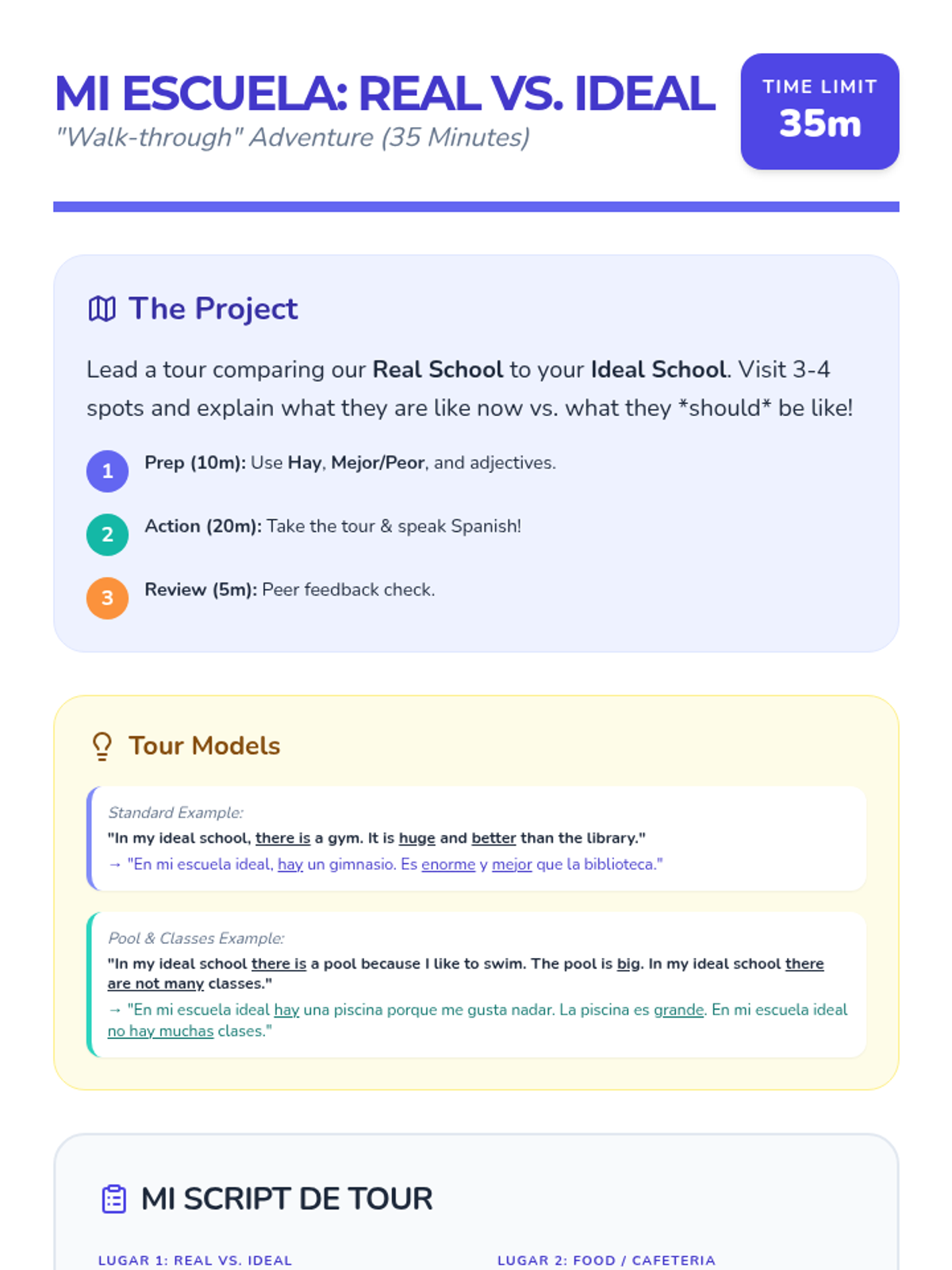
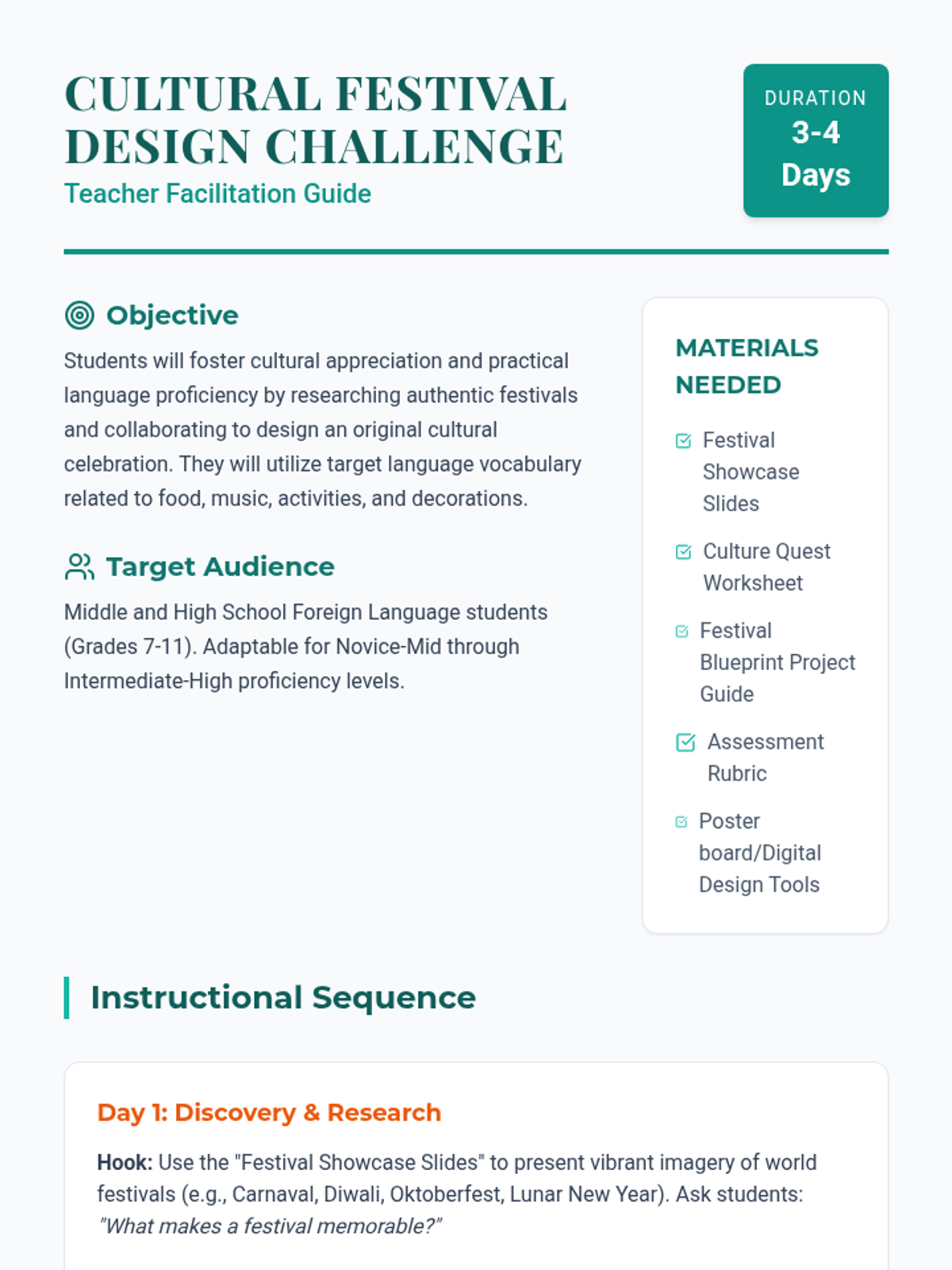
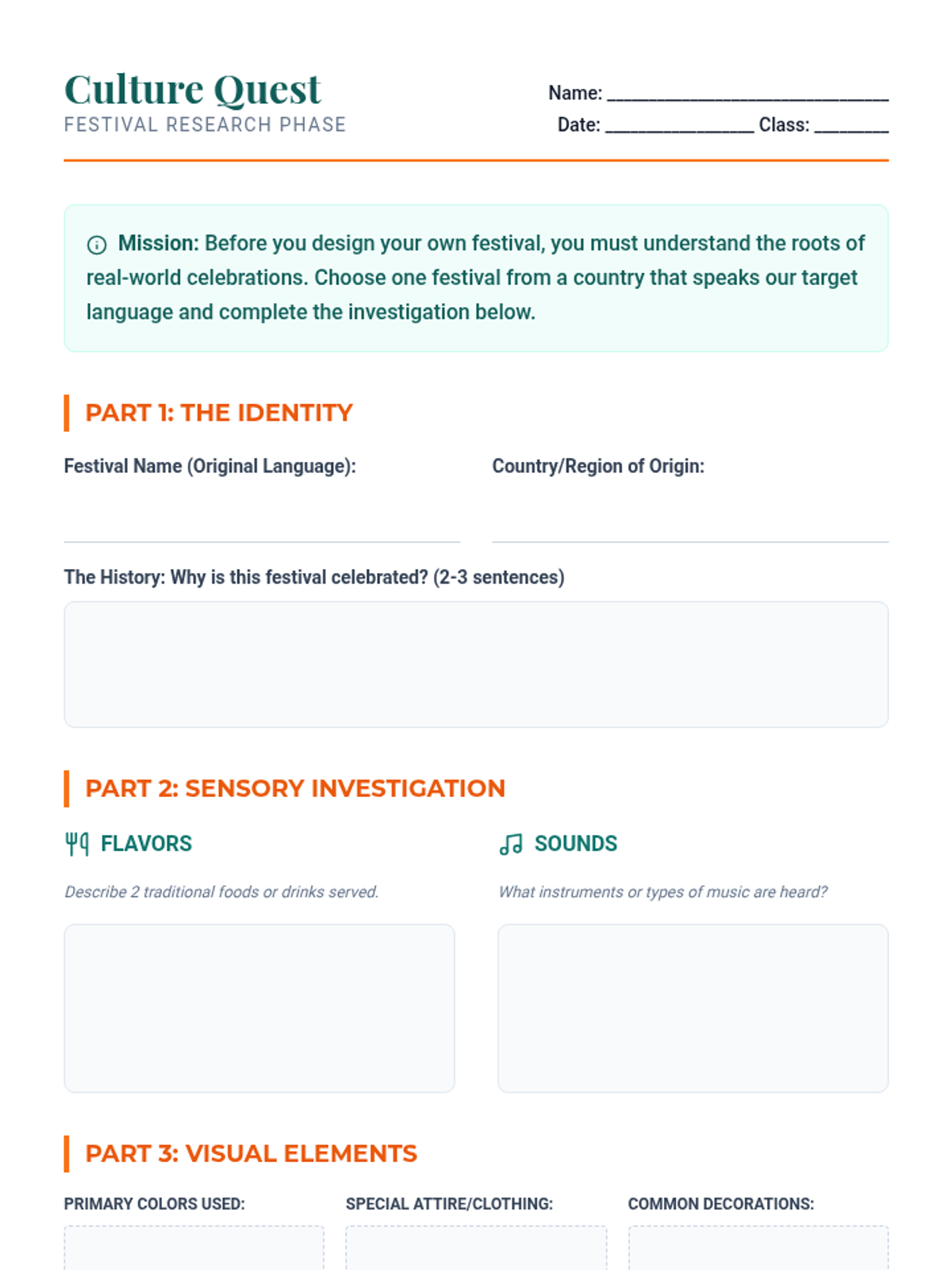
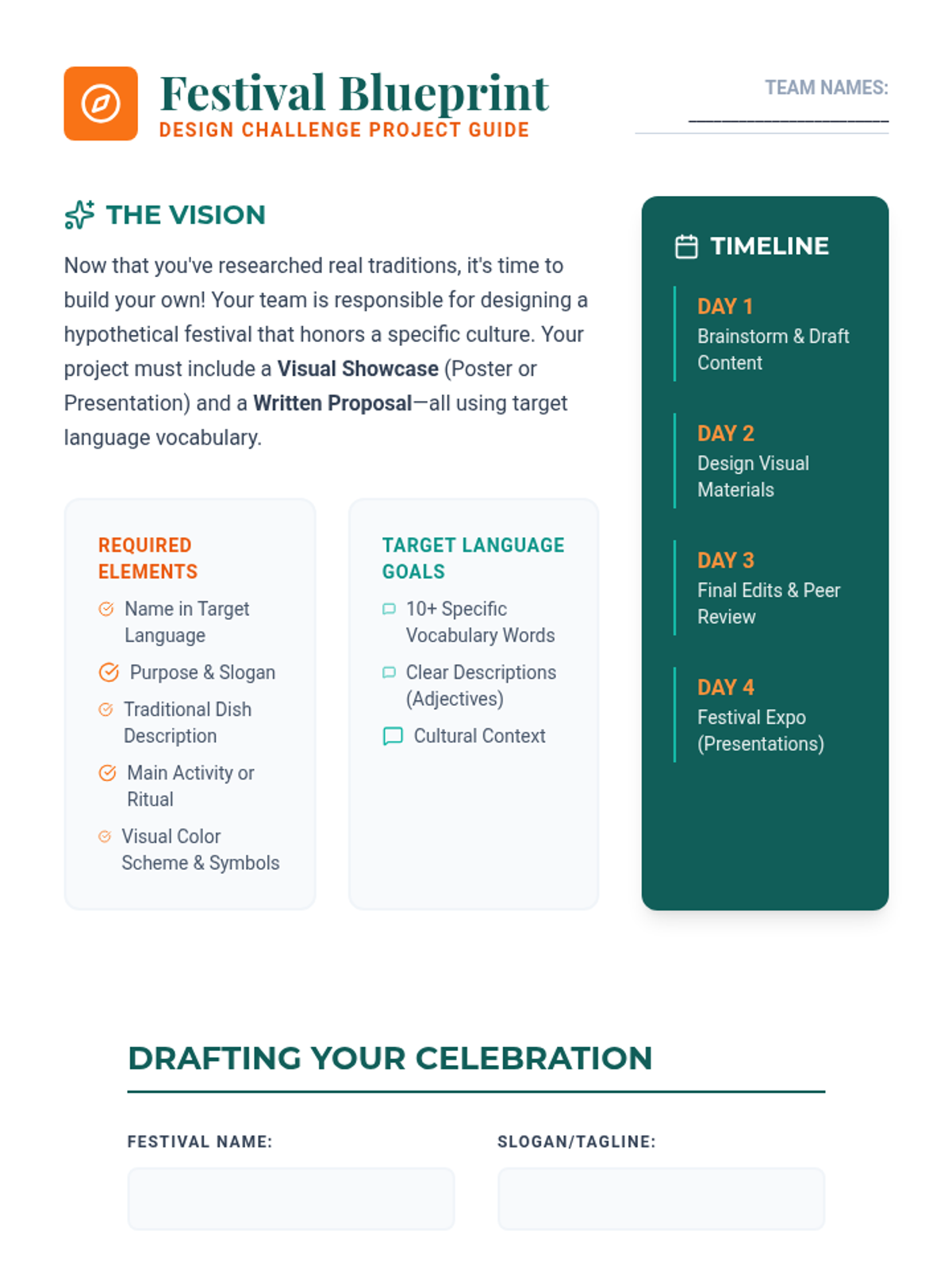
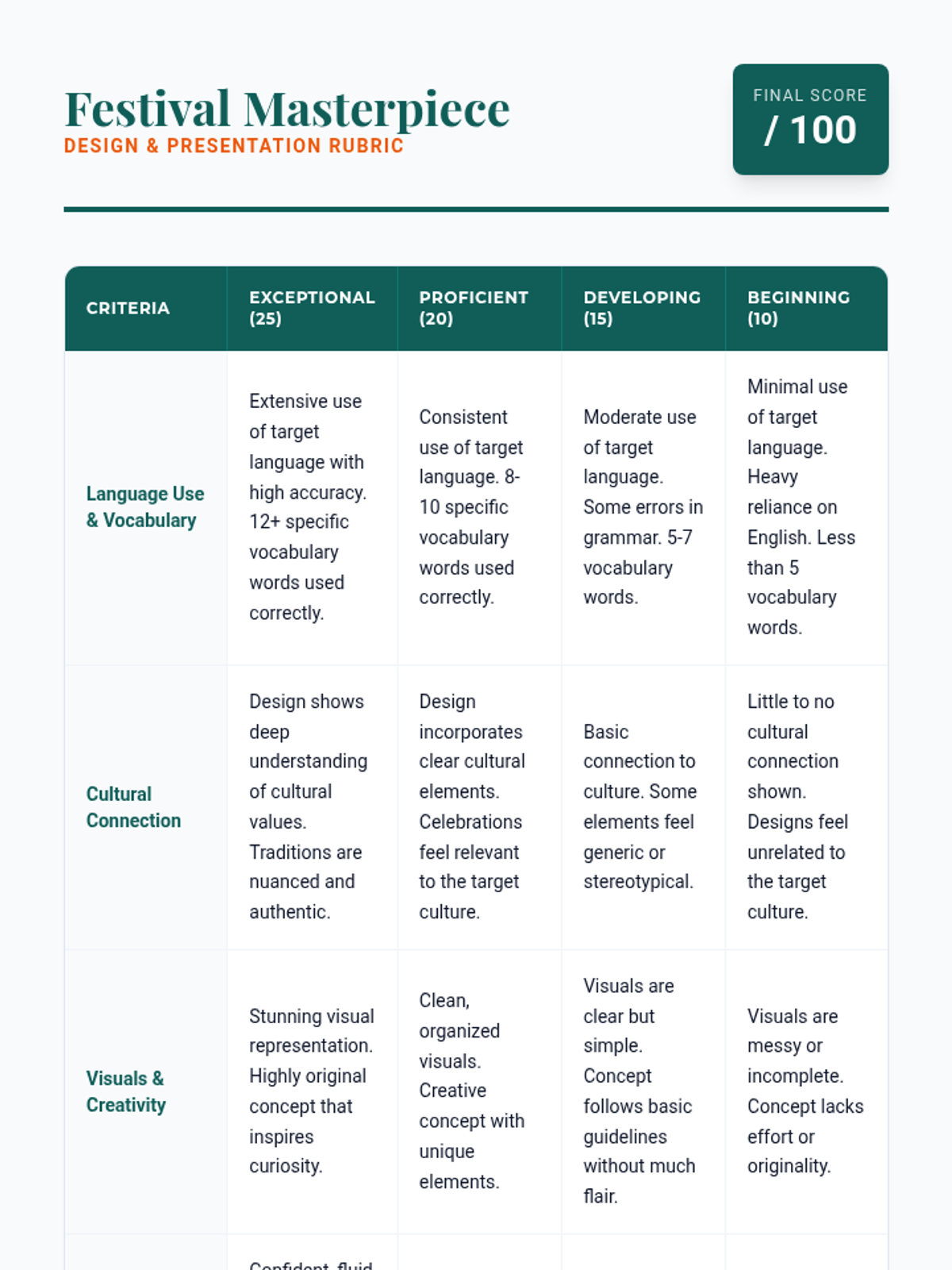
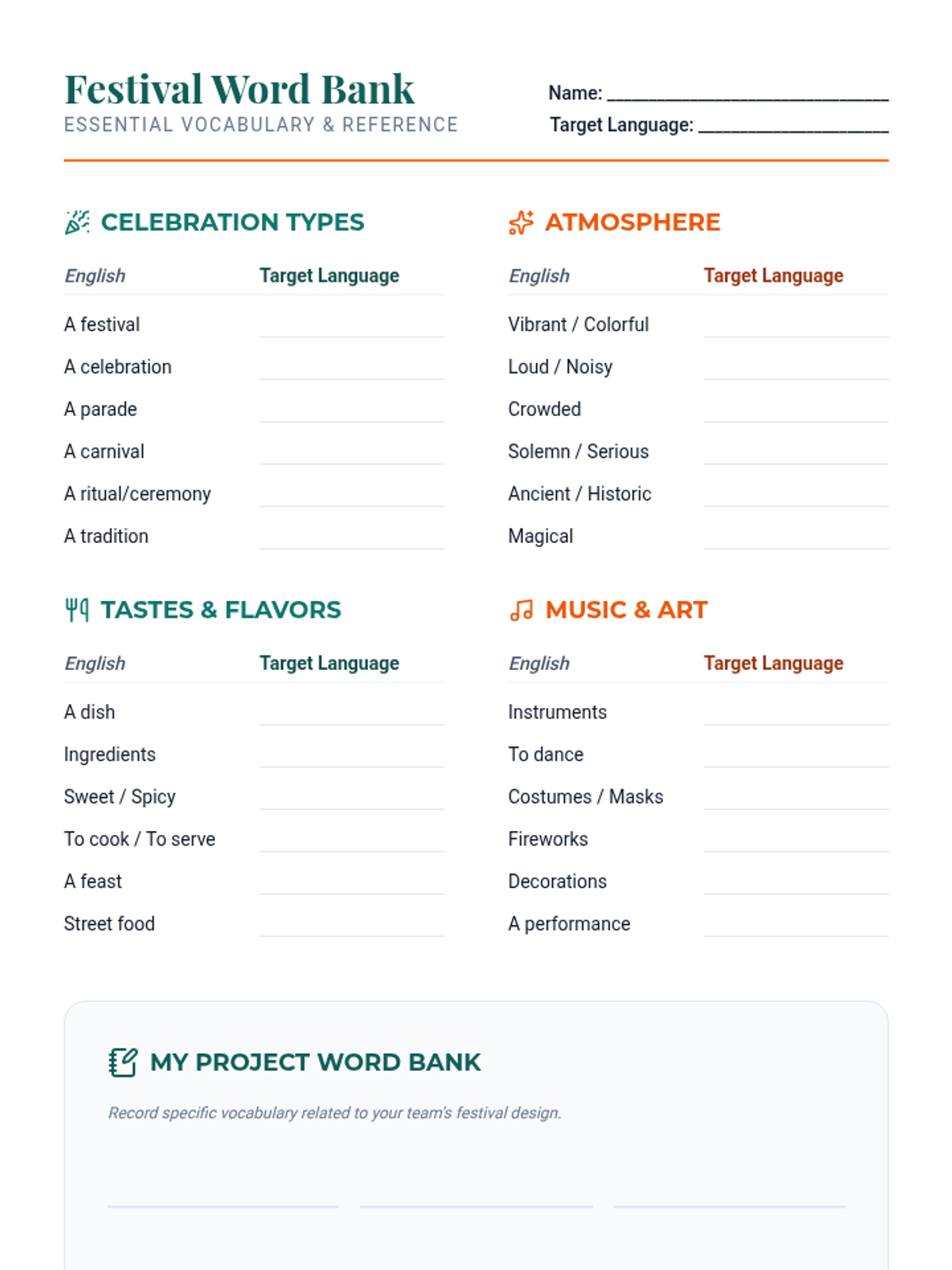
A collaborative project-based lesson where students research real-world cultural festivals and then design their own unique celebration, applying target language vocabulary for food, music, and traditions.
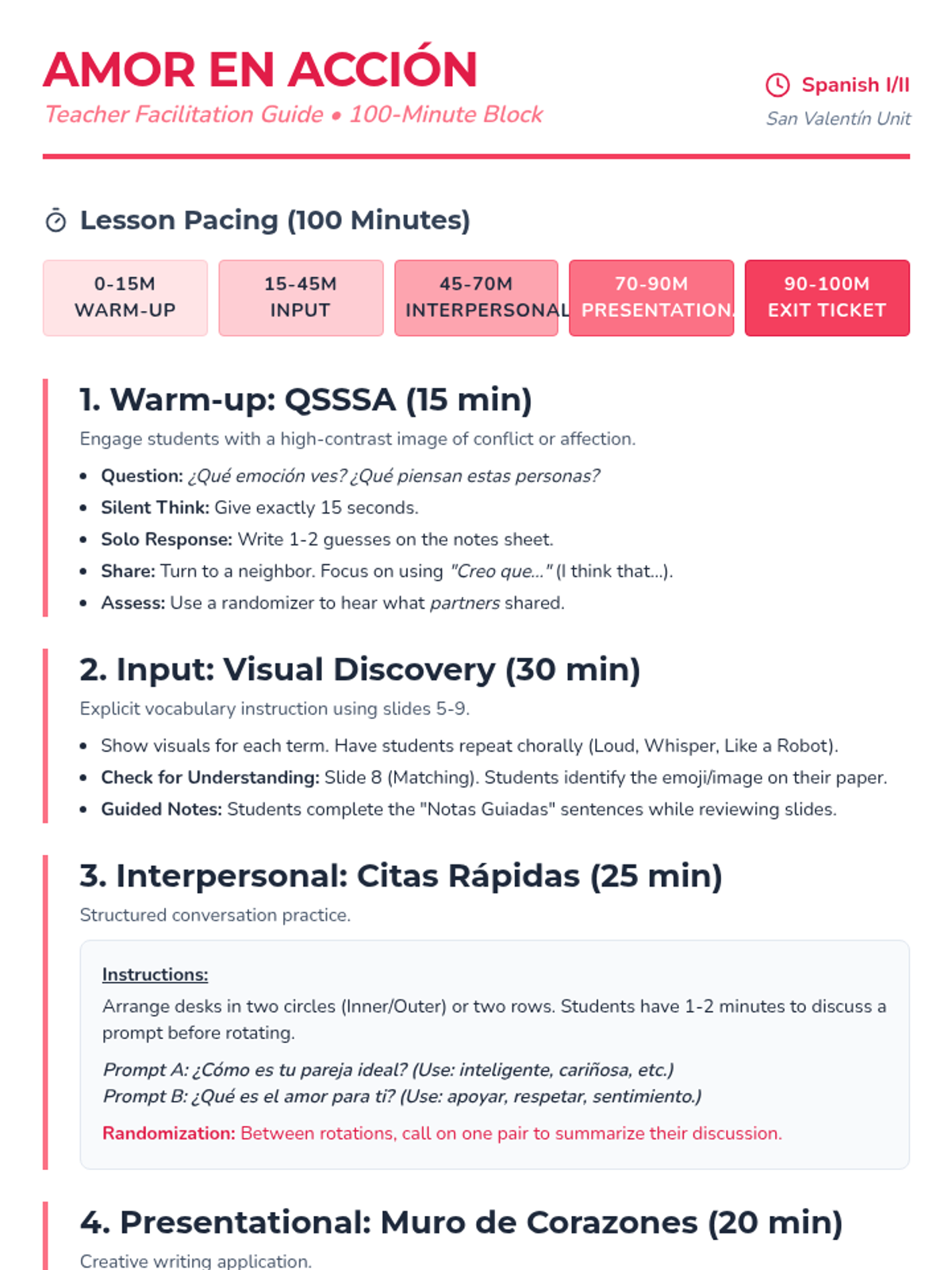
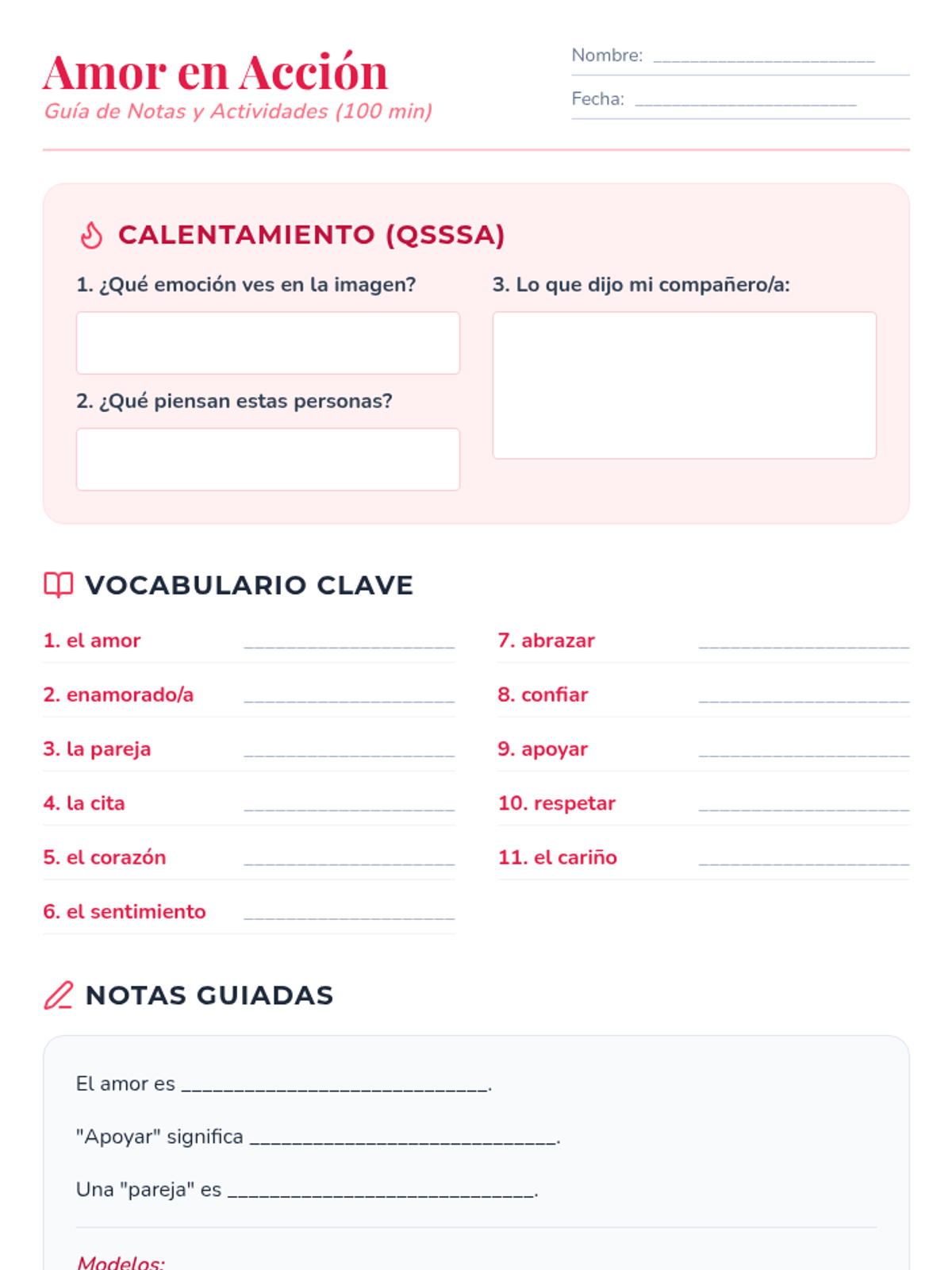
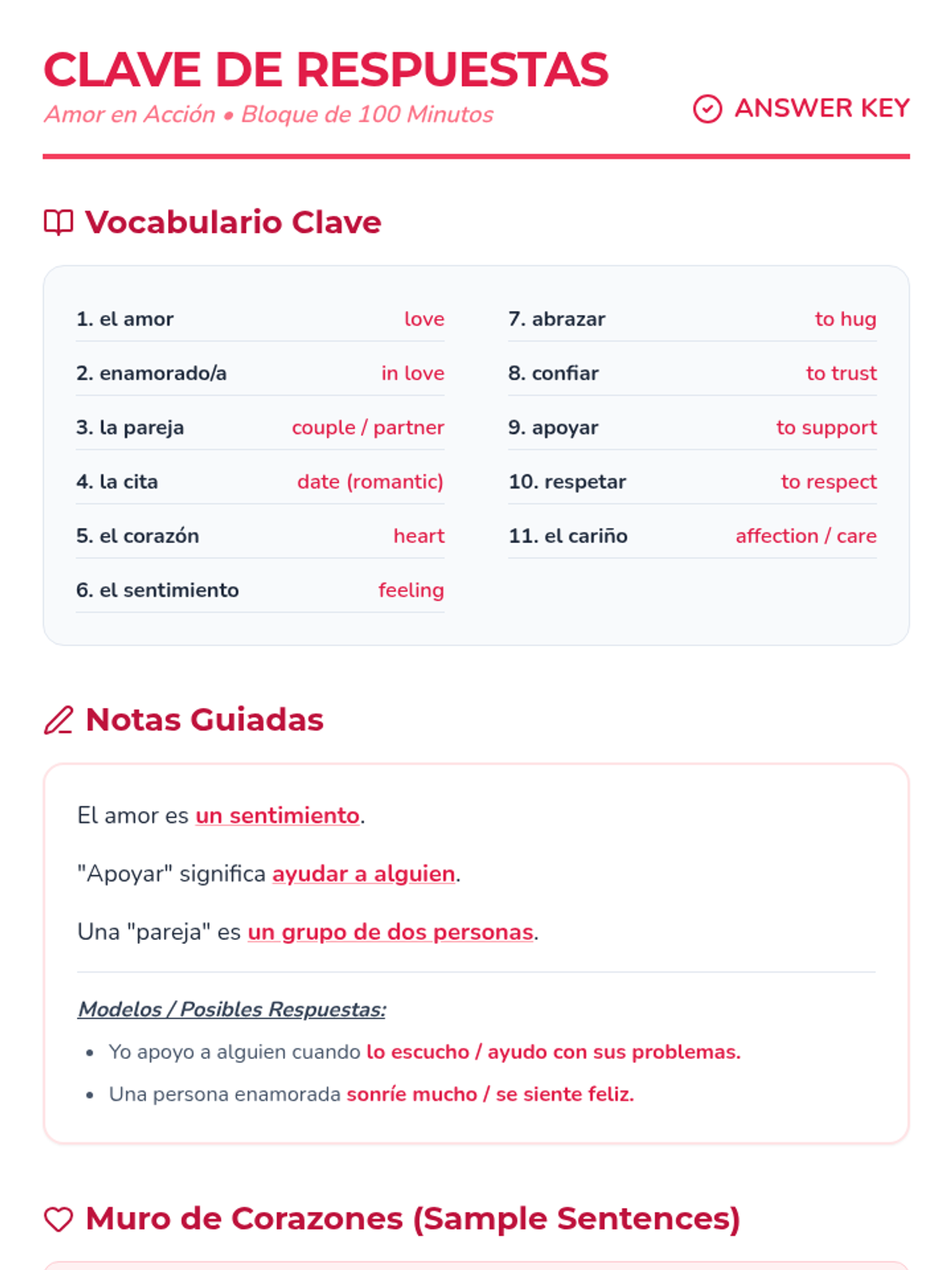
Students will learn and use Spanish vocabulary for love and relationships, progressing from identifying terms to writing original sentences about emotions and ideal partners.
Students demonstrate their learning through video introductions and reflect on their week of Spanish.
Students expand their vocabulary to include hobbies and interests, using vocabulary cards for practice.
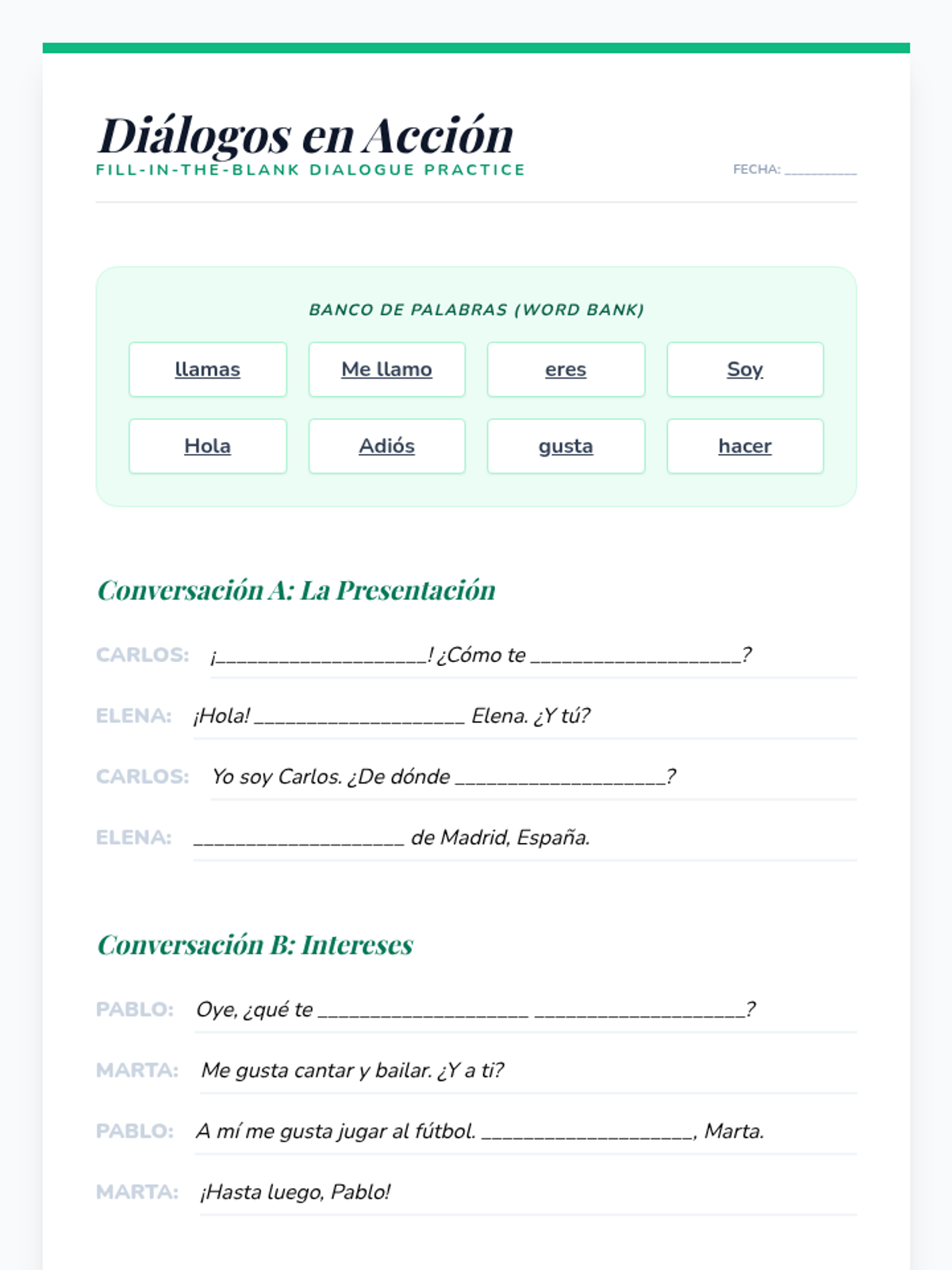
Students deepen their understanding by creating skits and completing dialogue-based activities.
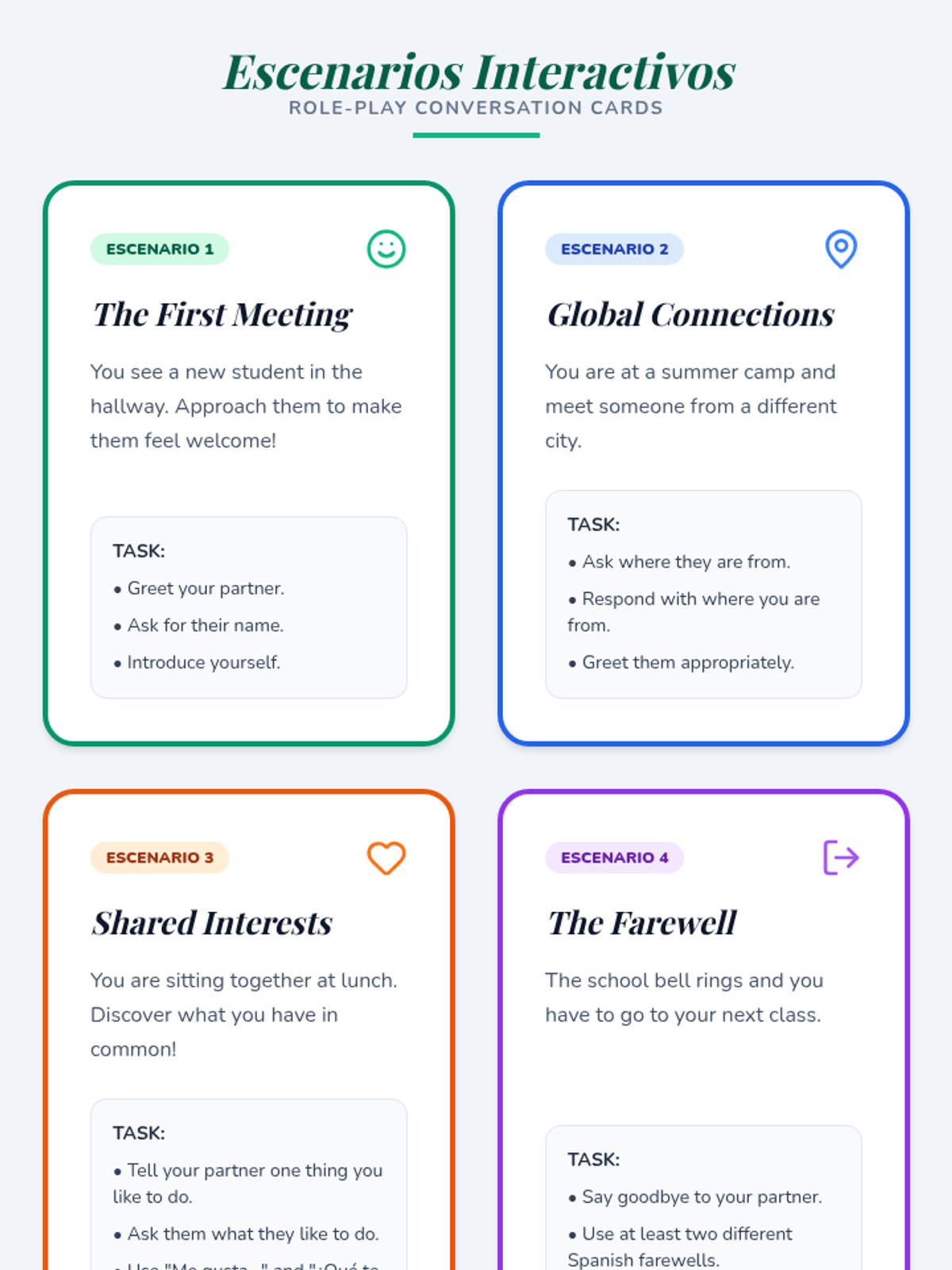
Students practice their conversational skills through guided role-play scenarios and peer feedback.
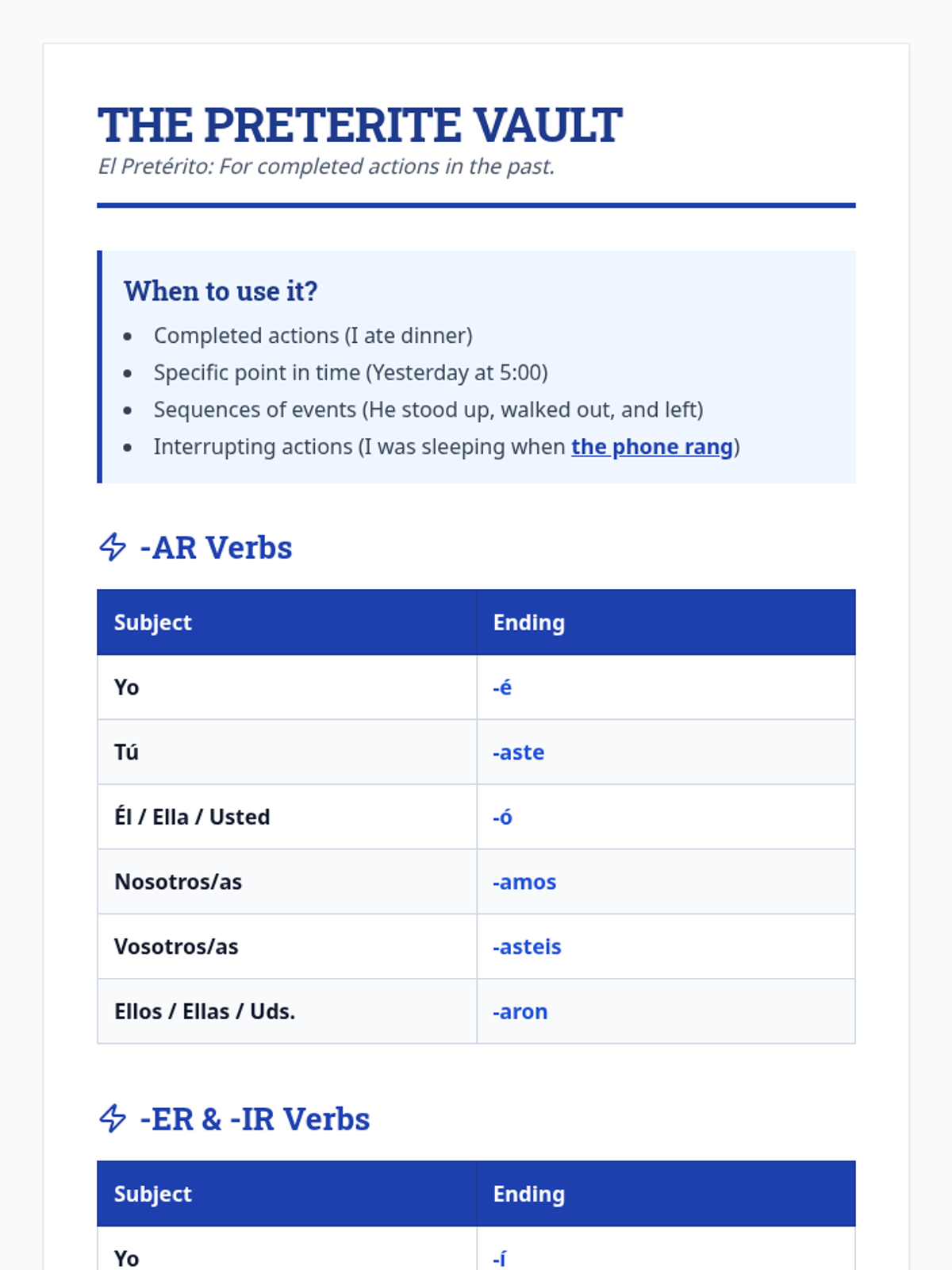
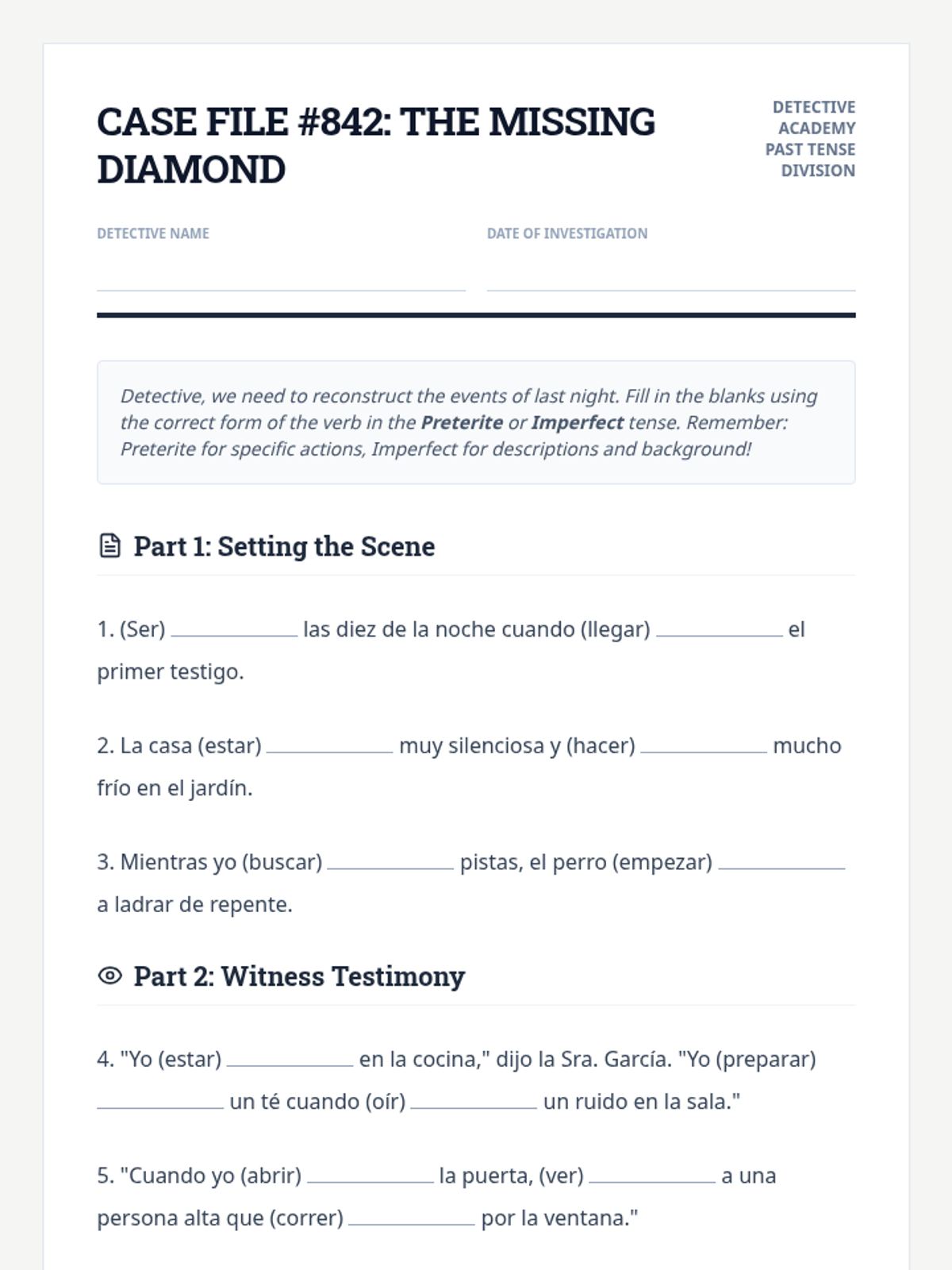
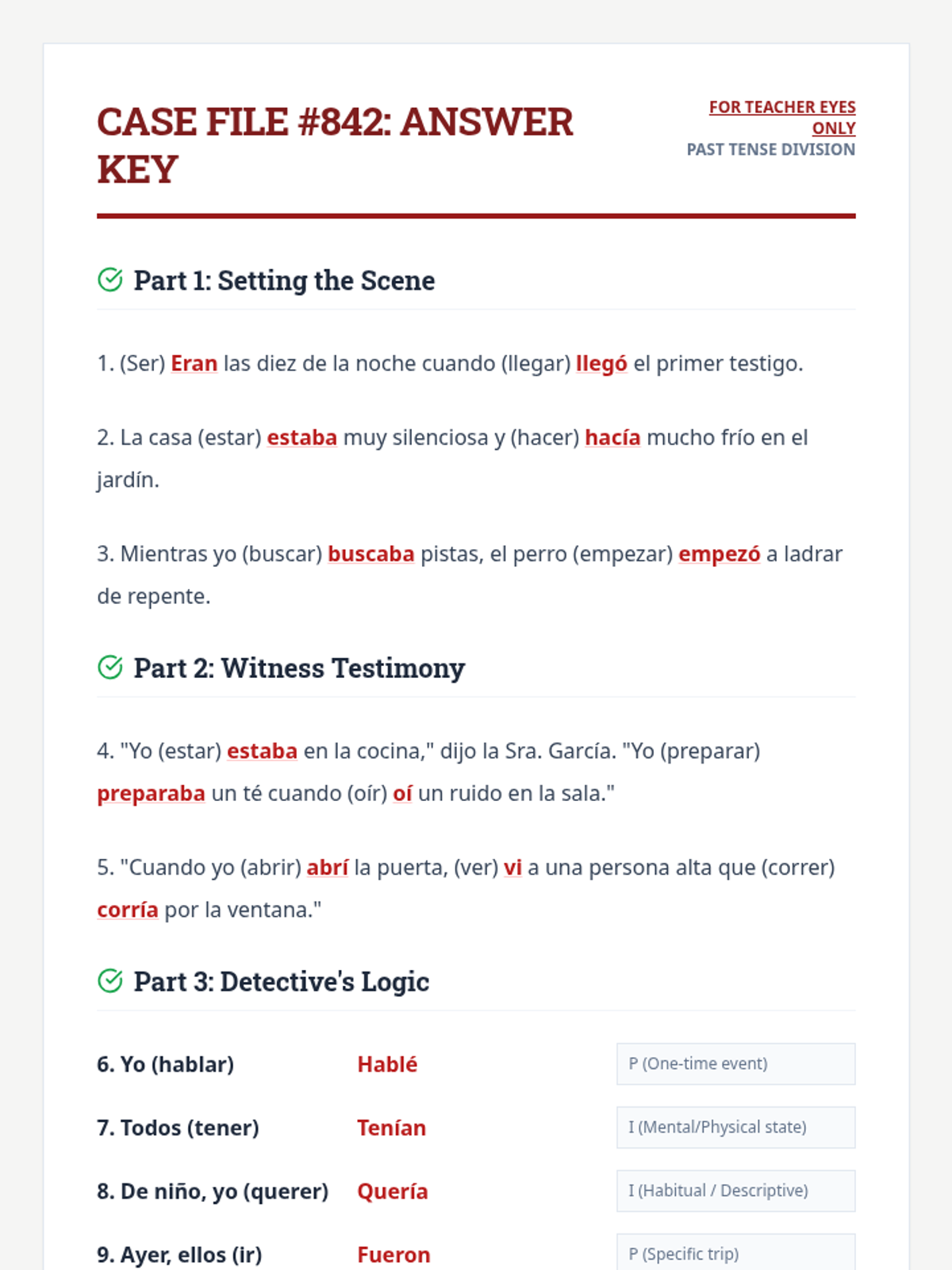
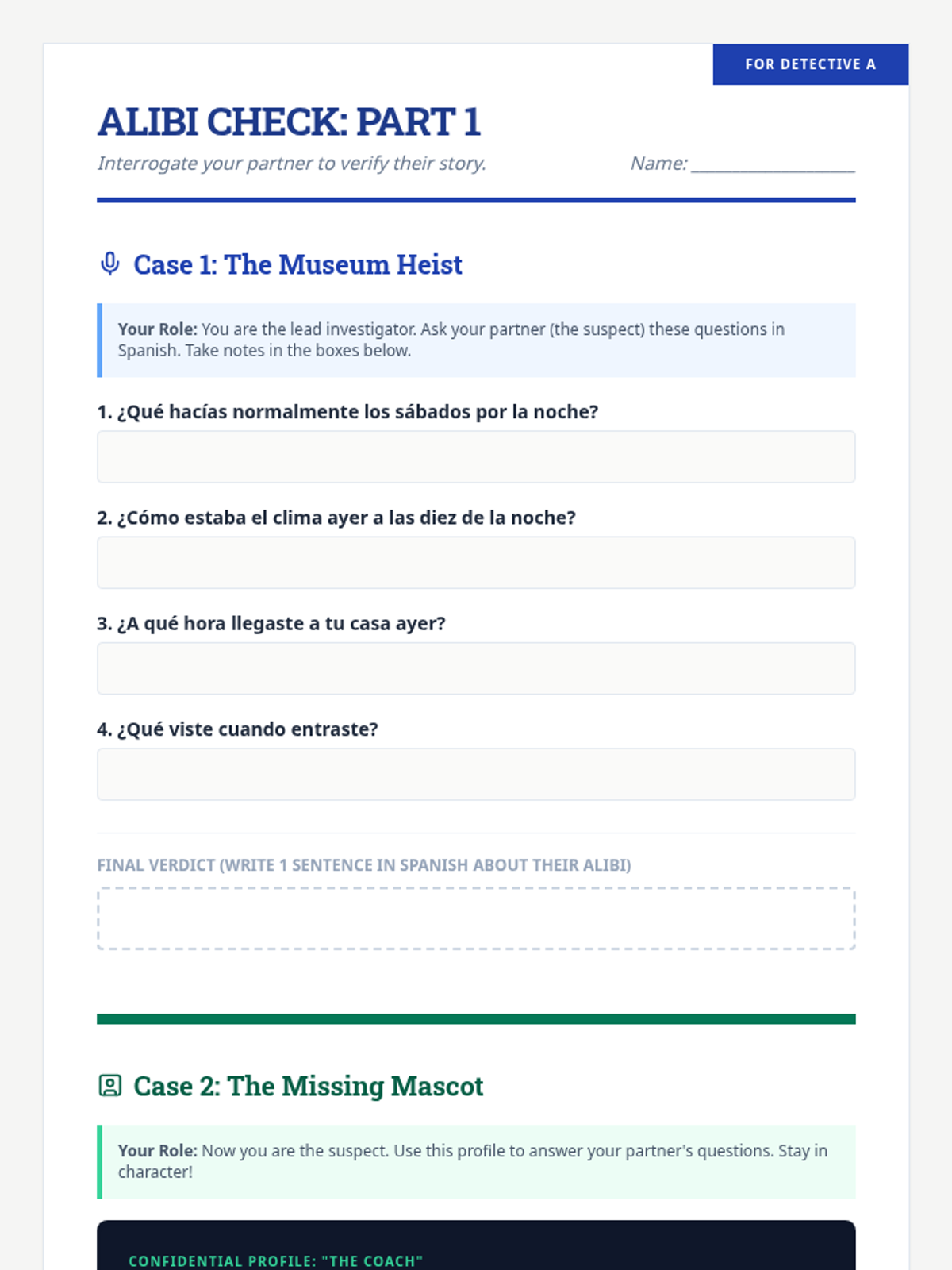
A comprehensive guide to mastering the Spanish Preterite and Imperfect tenses, featuring clear conjugation patterns and usage rules through a detective-themed lens.
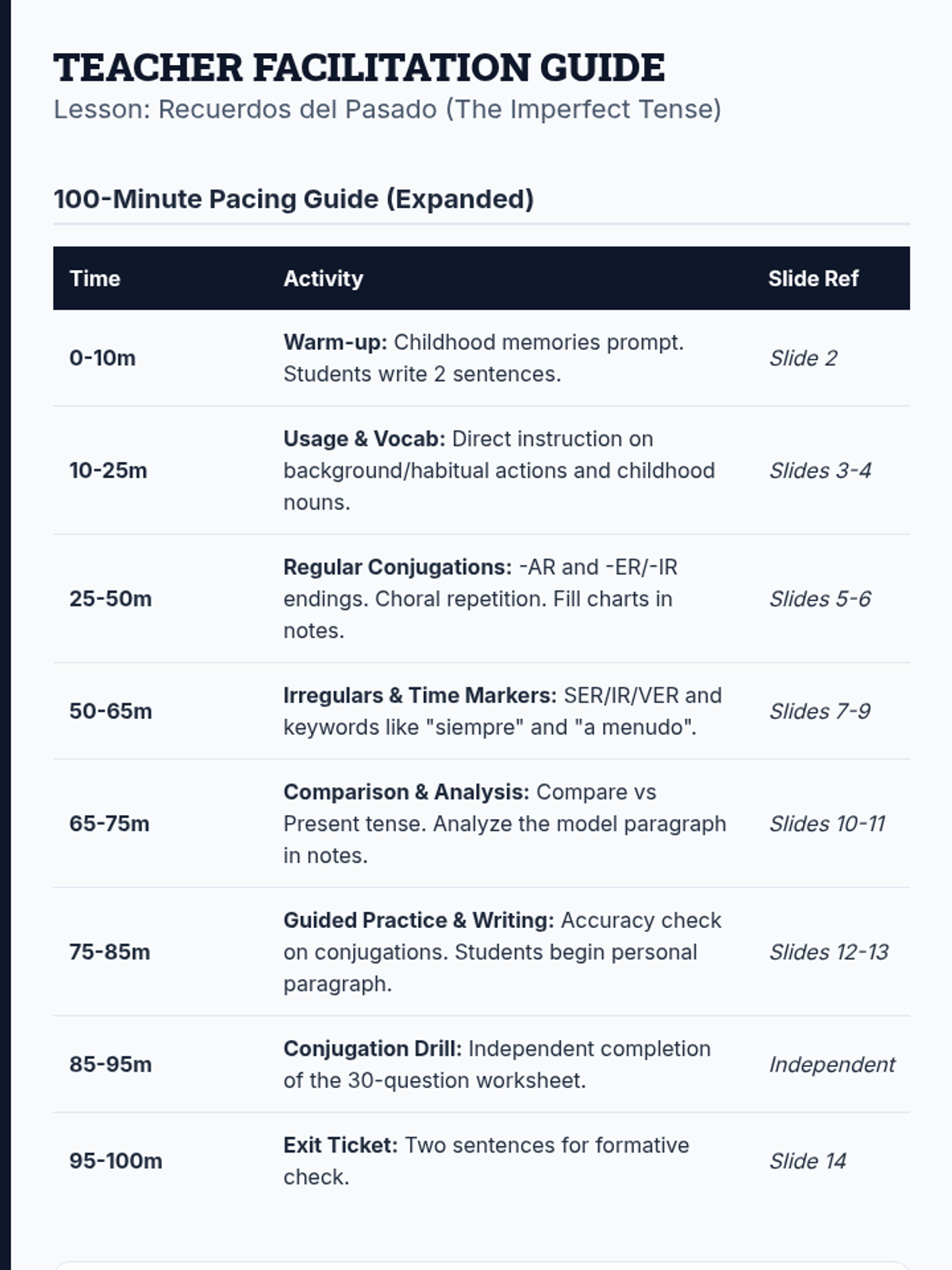
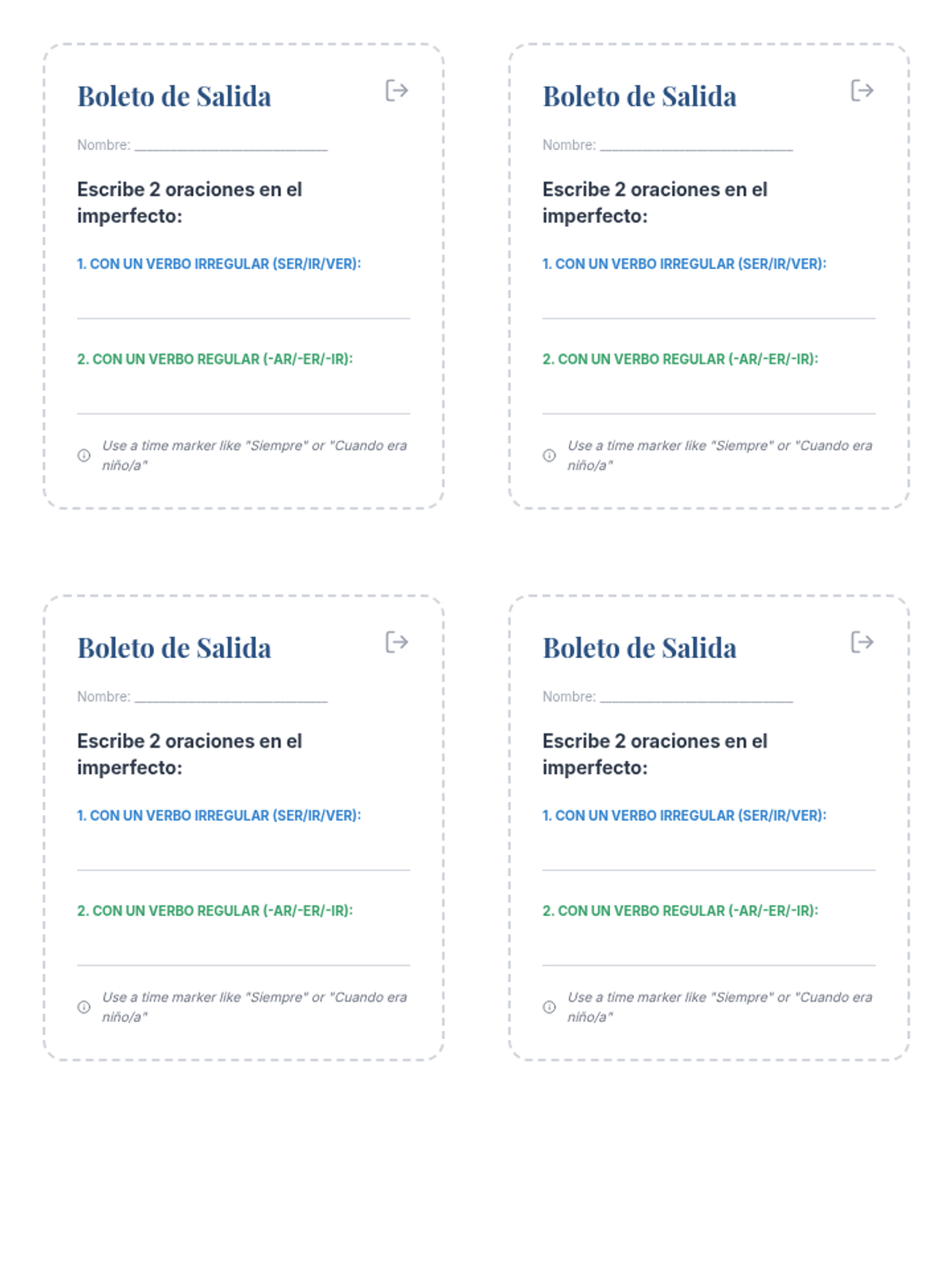
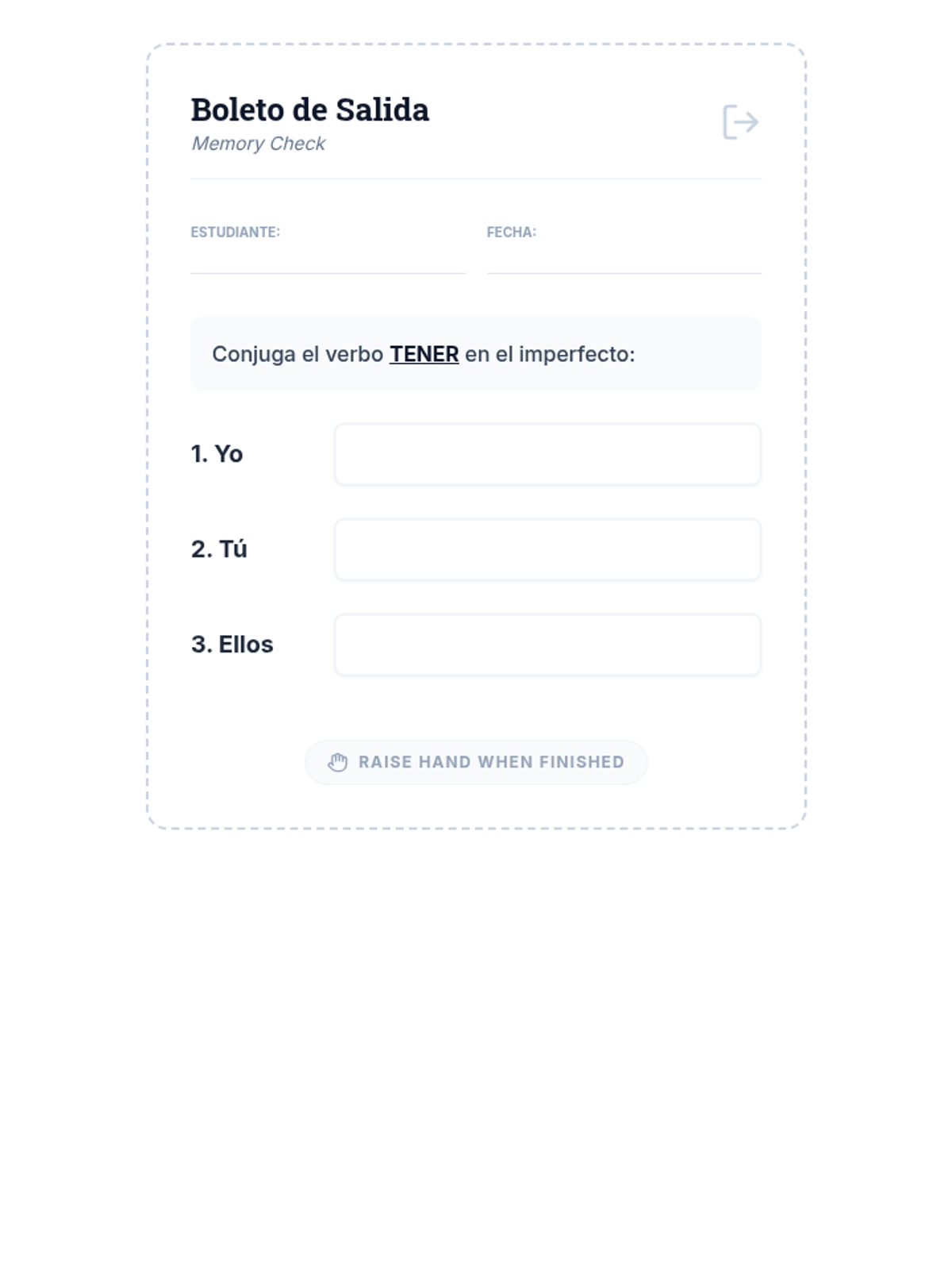
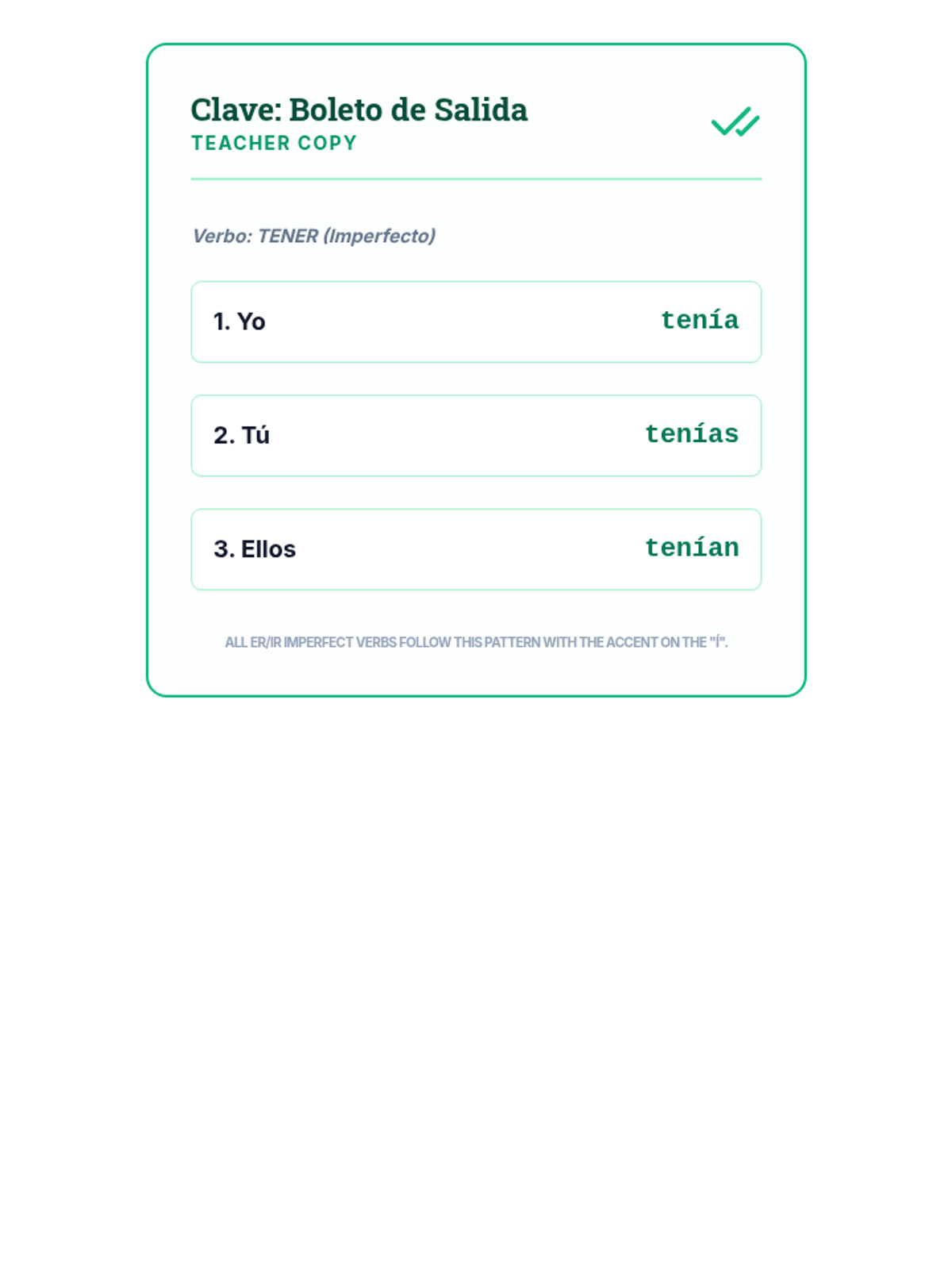
A comprehensive 100-minute direct instruction lesson on the Spanish imperfect tense, focusing on describing childhood habits and routines. Includes visual slides, a guided note-taking packet, and an assessment.
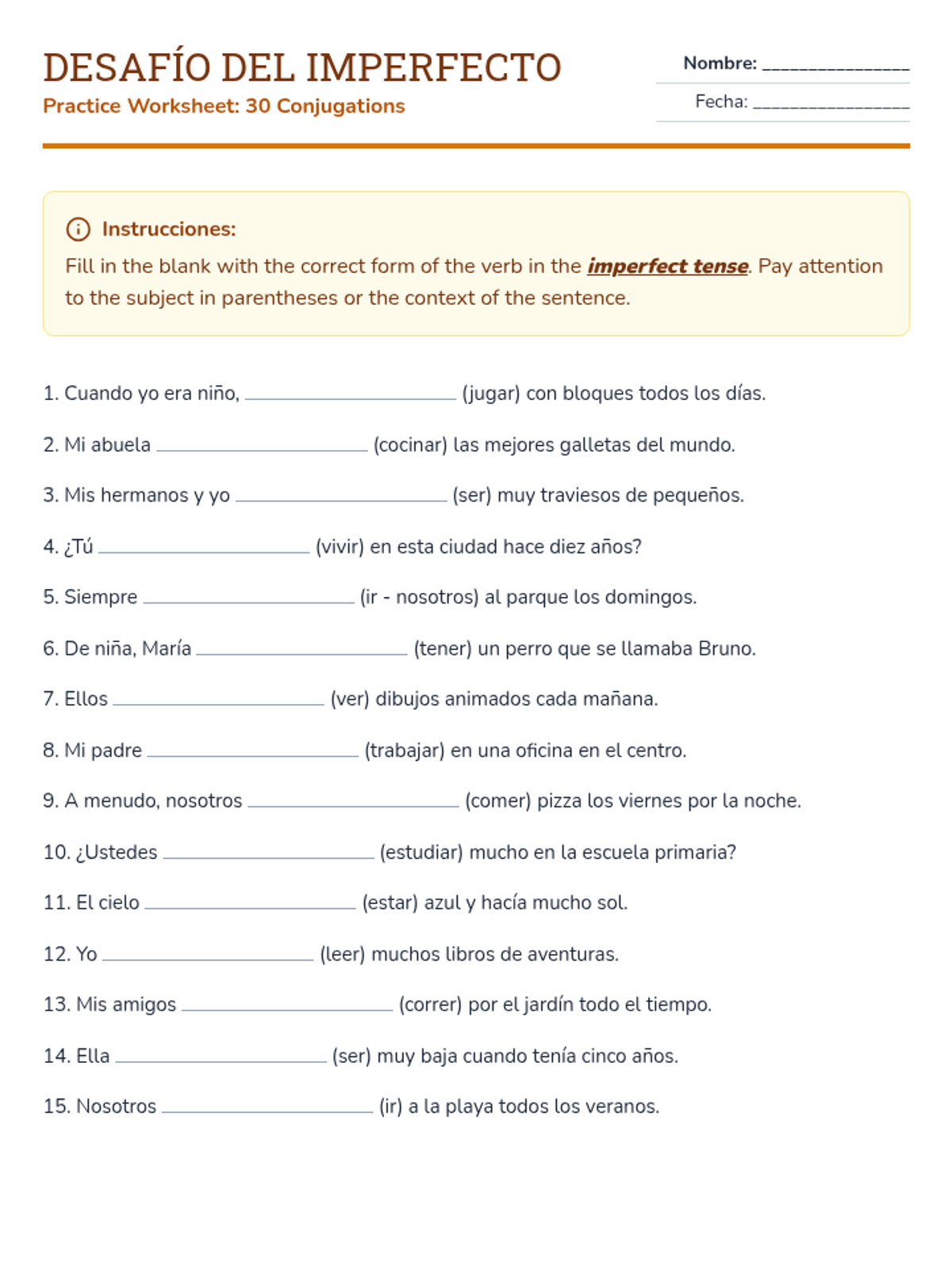
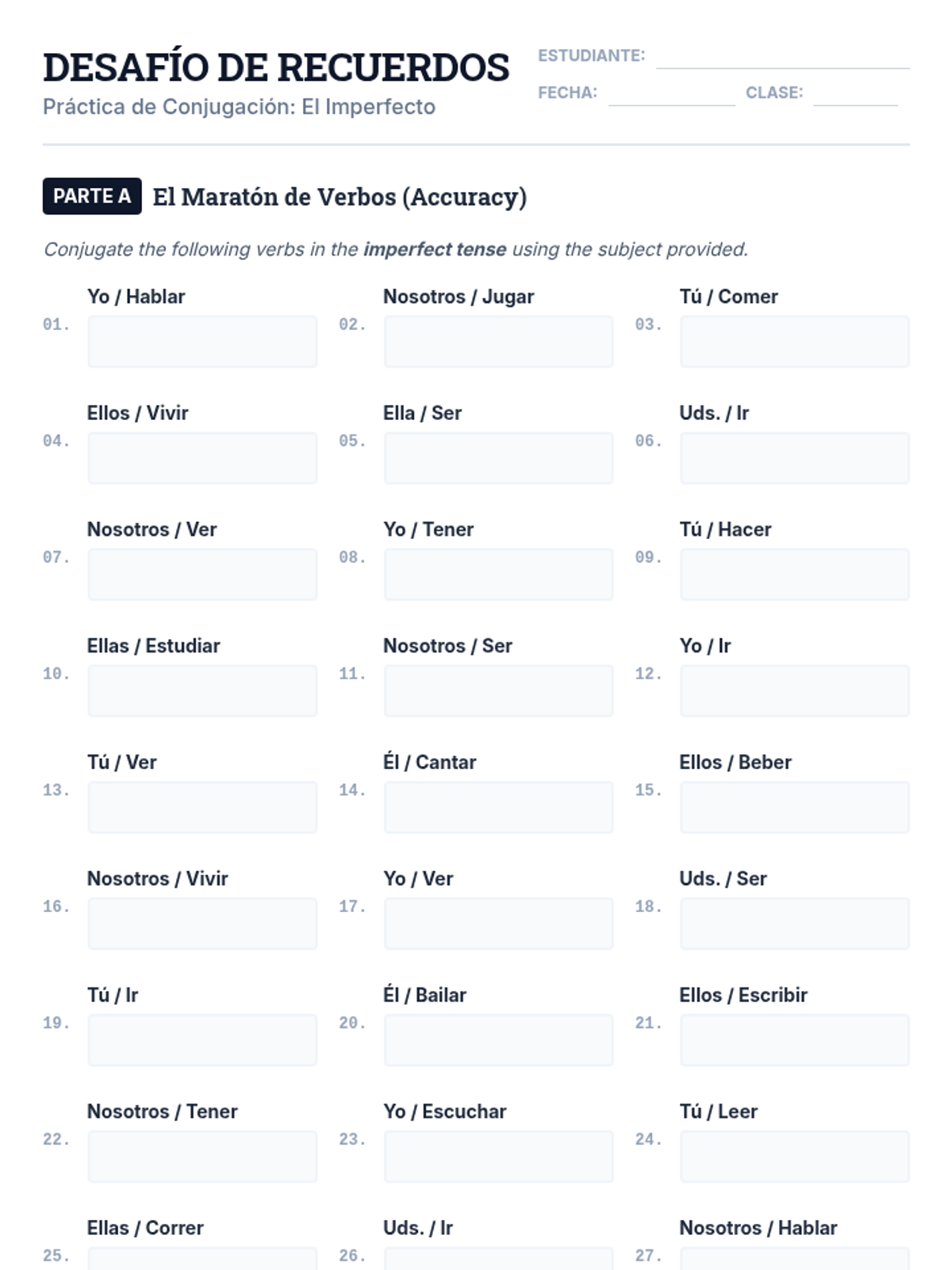
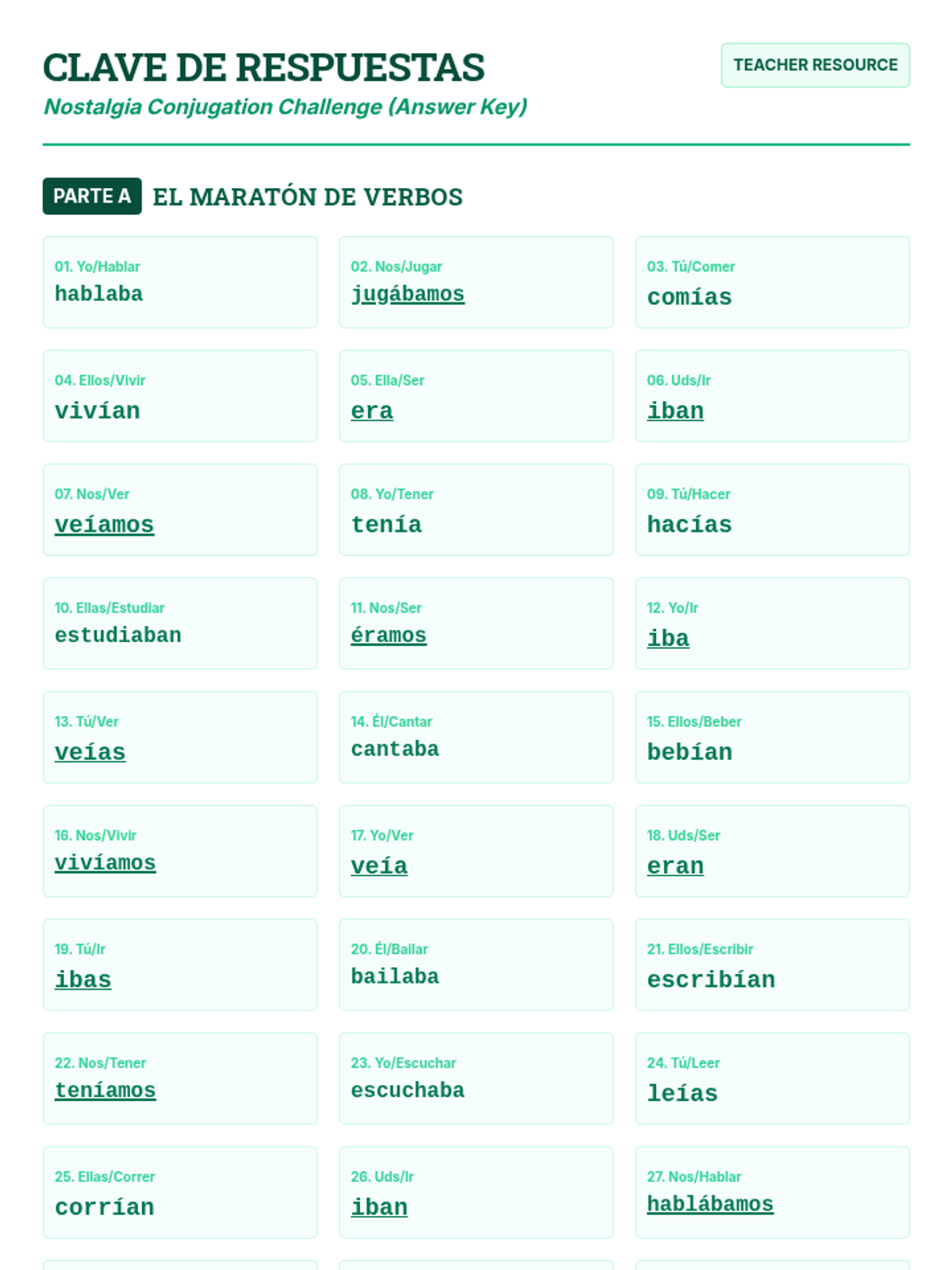
A comprehensive 100-minute lesson on the Spanish imperfect tense, focusing on nostalgic descriptions and childhood routines through structured notes, slides, and a 30-question conjugation challenge.
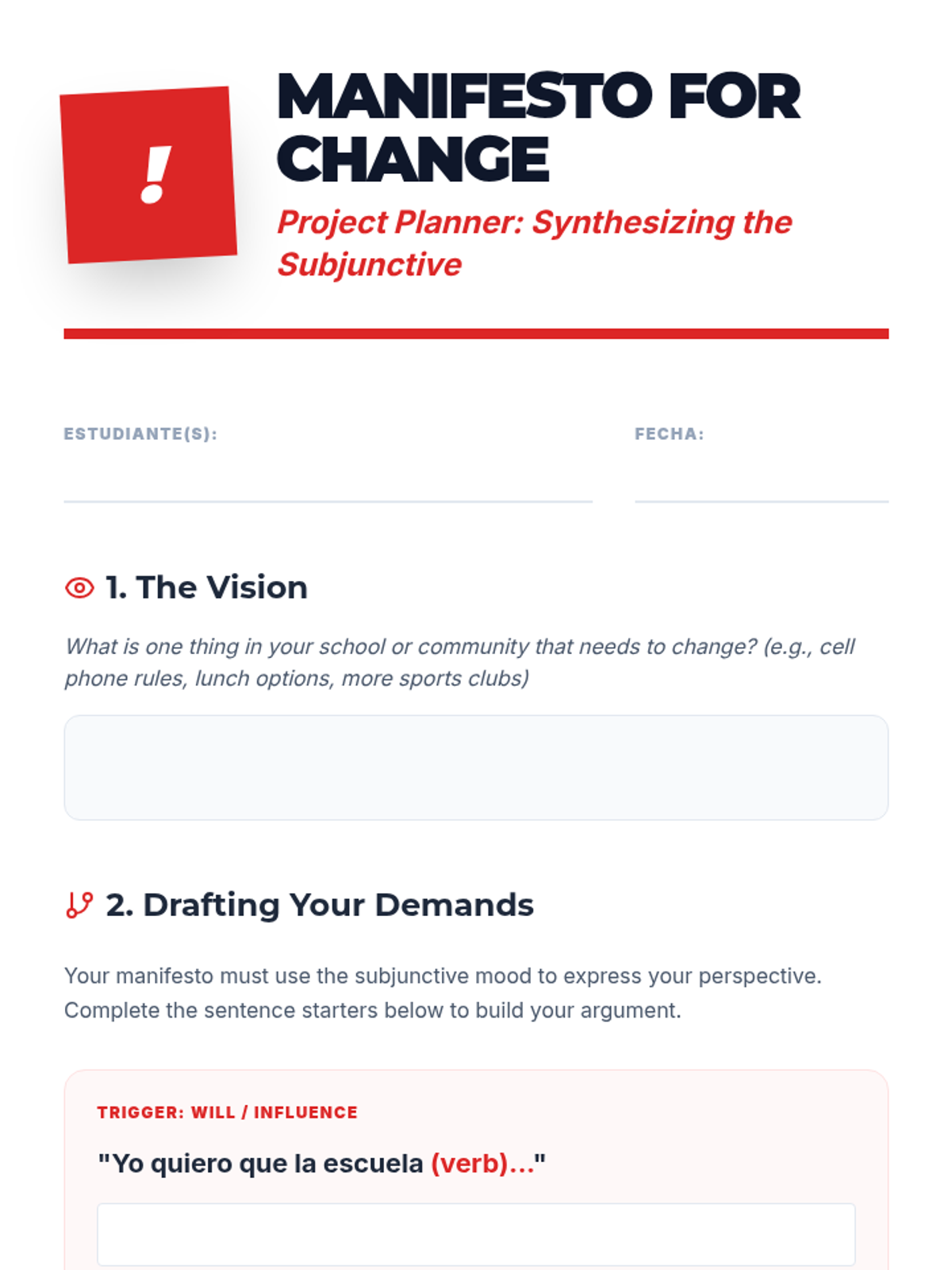
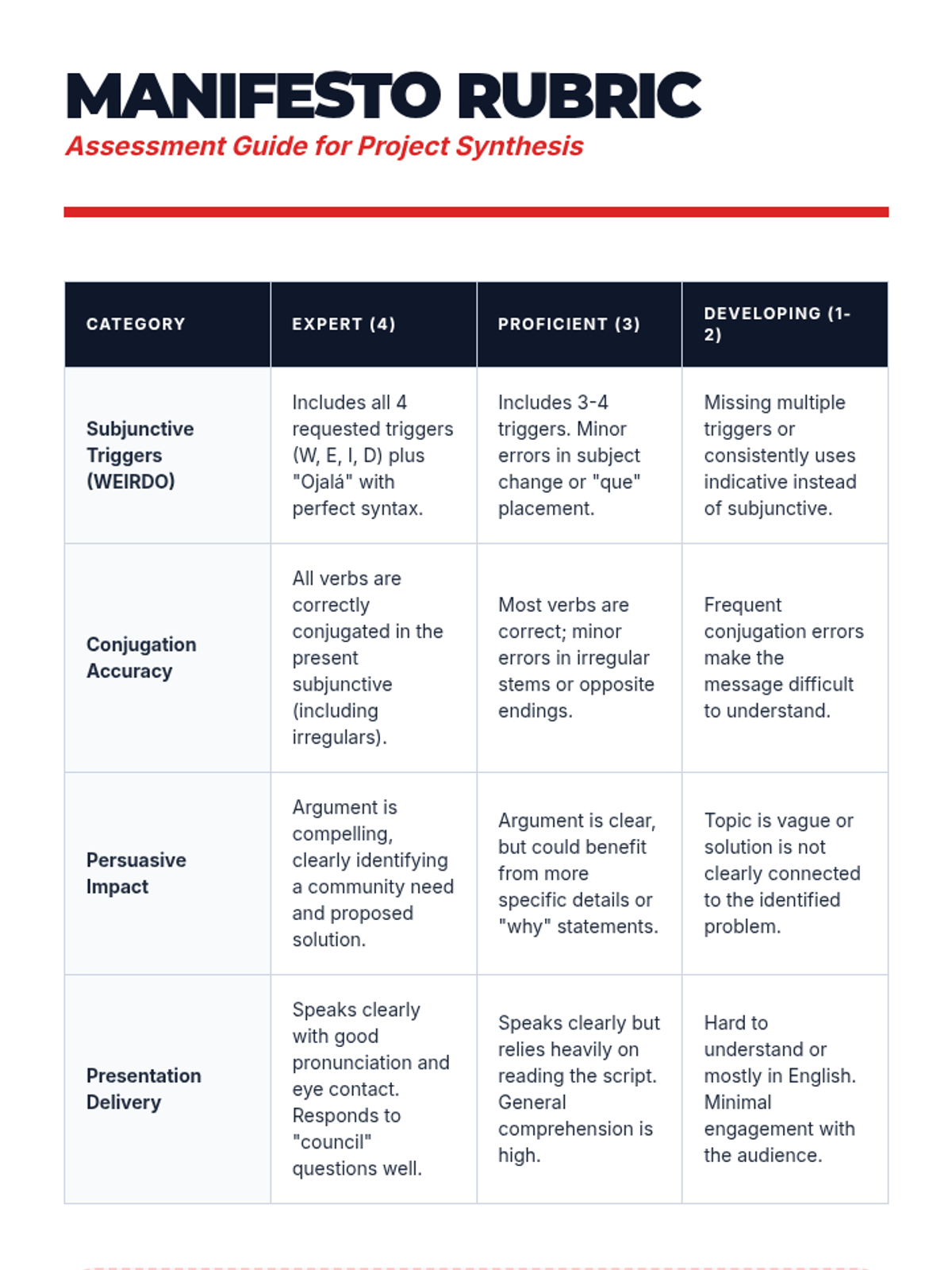
The final project where students synthesize all subjunctive triggers to draft and present a proposal for community or school change.
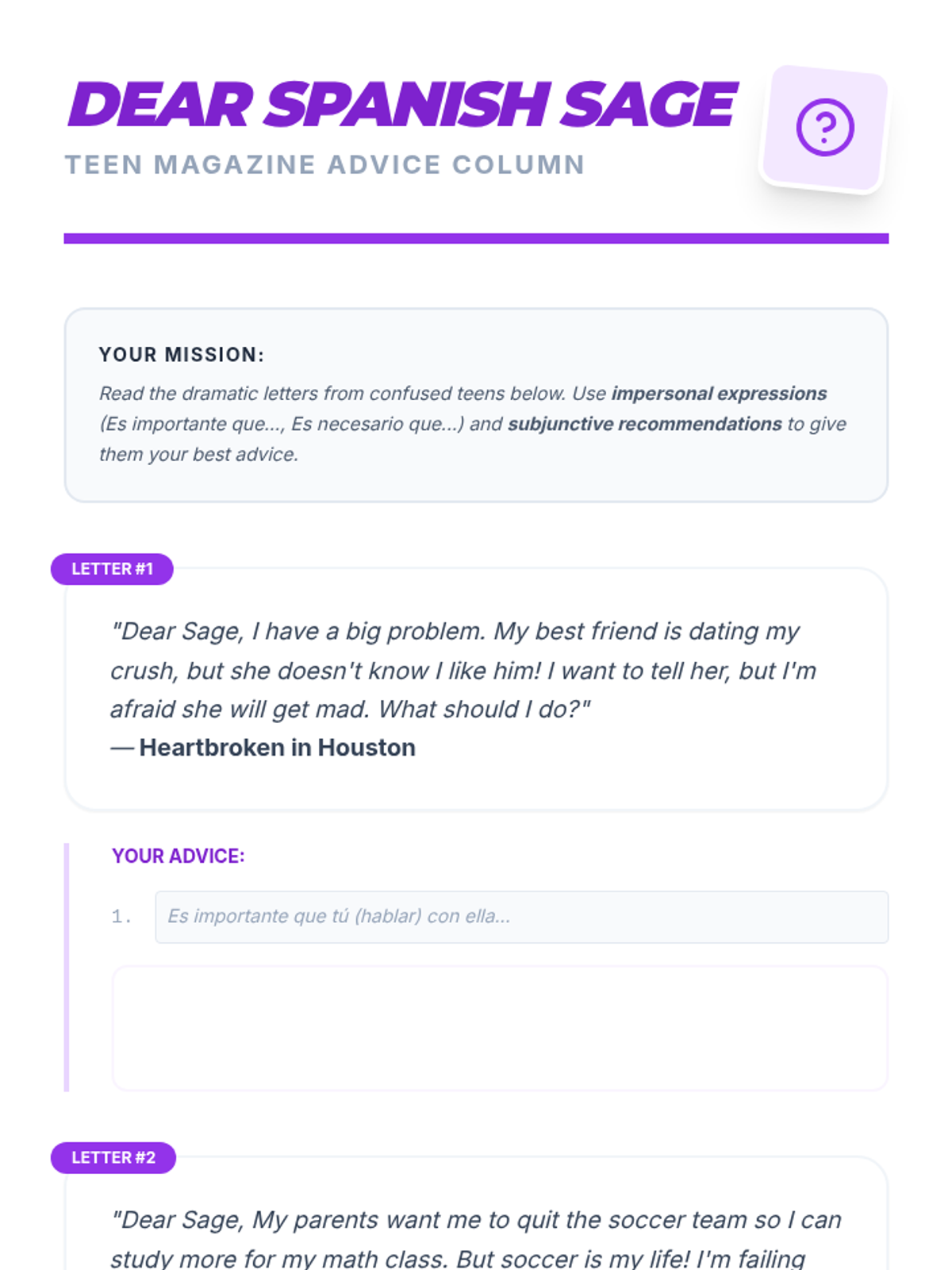
A simulation where students act as advice columnists, using impersonal expressions and recommendations to solve social dilemmas.
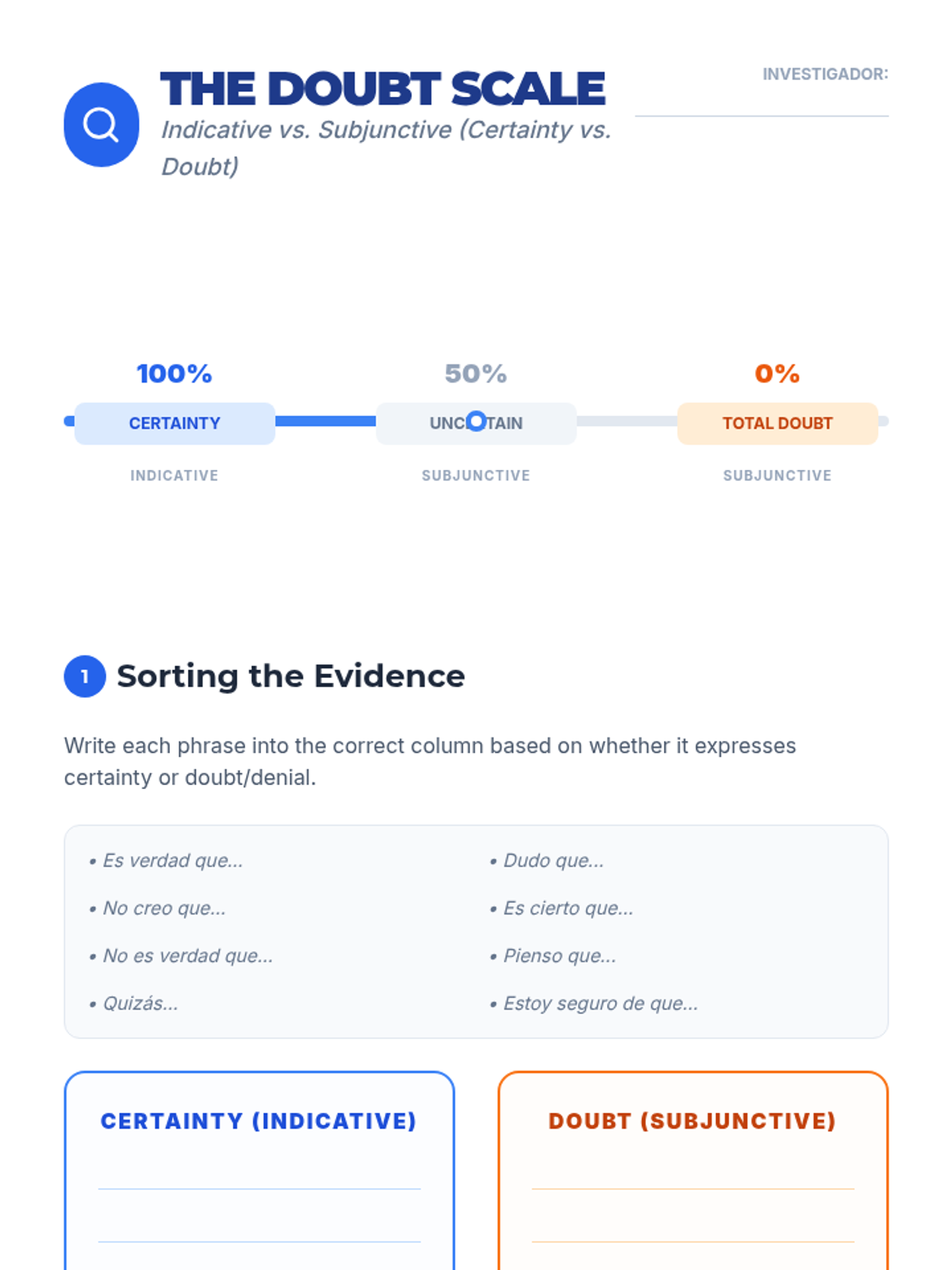
Explores uncertainty and doubt as triggers for the subjunctive. Students contrast certainty with denial through a 'Mystery Detective' simulation.
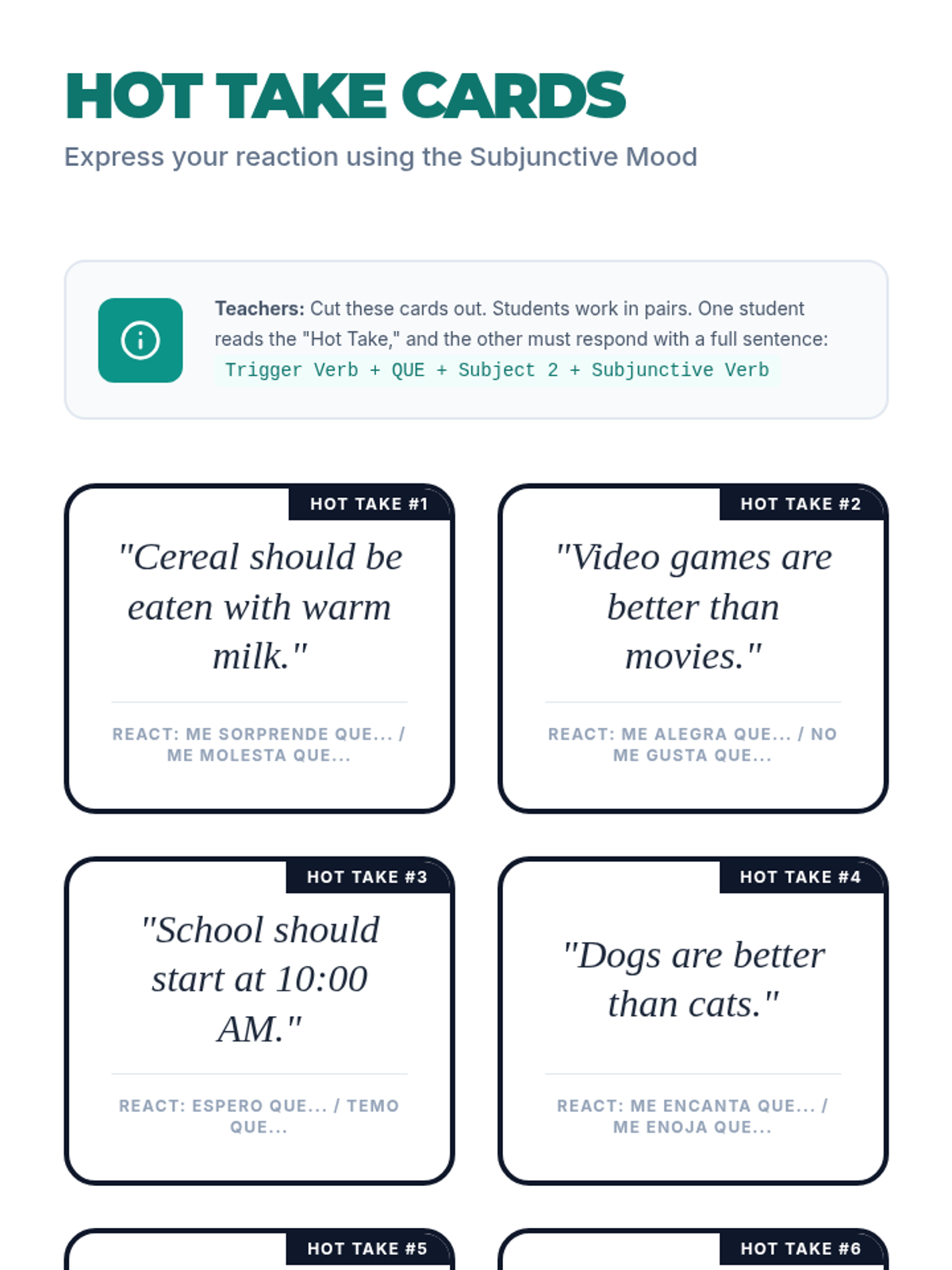
Focuses on using the subjunctive to express feelings and reactions. Students use 'Hot Take' cards to practice emotional triggers in response to various scenarios.
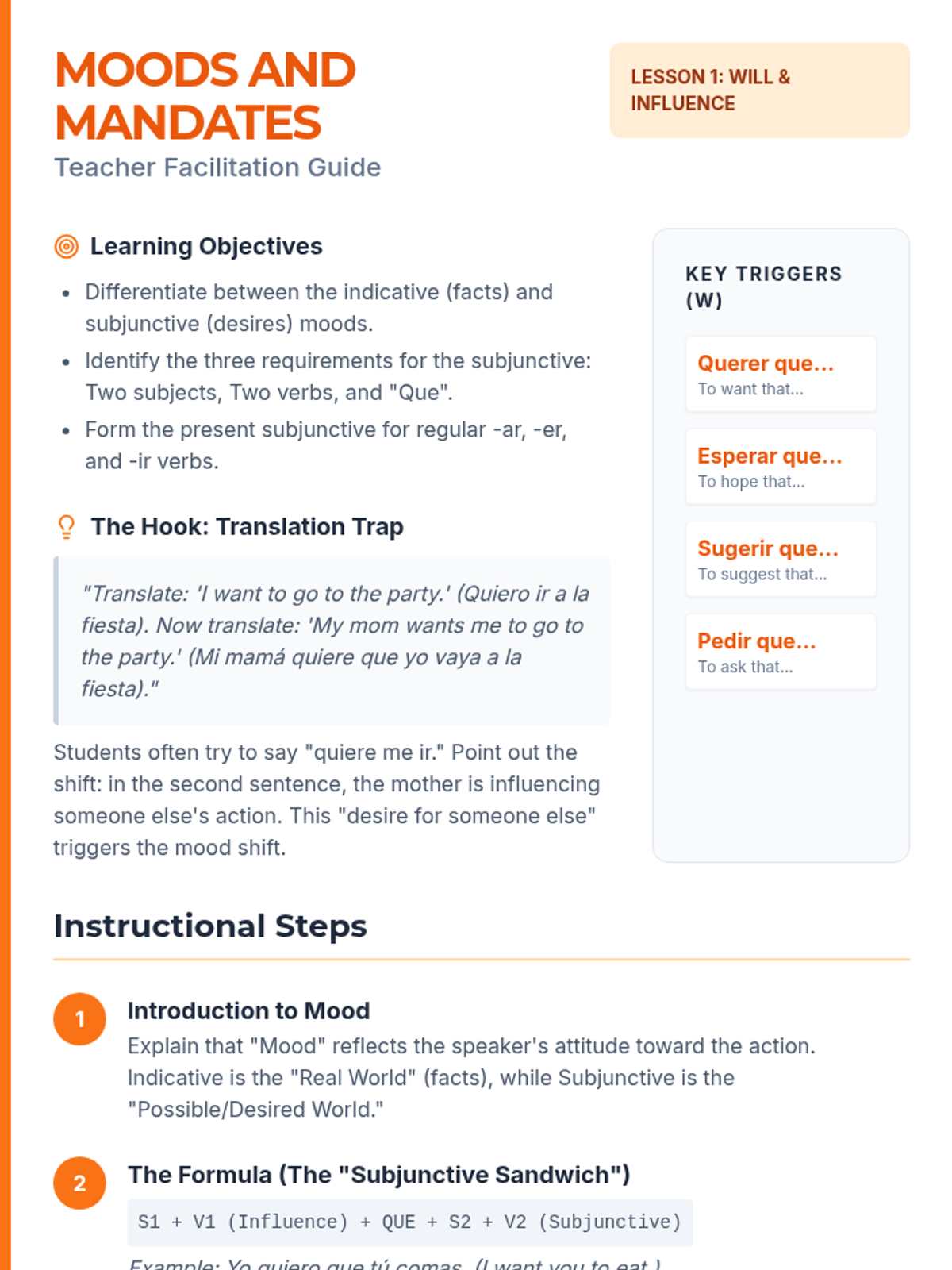
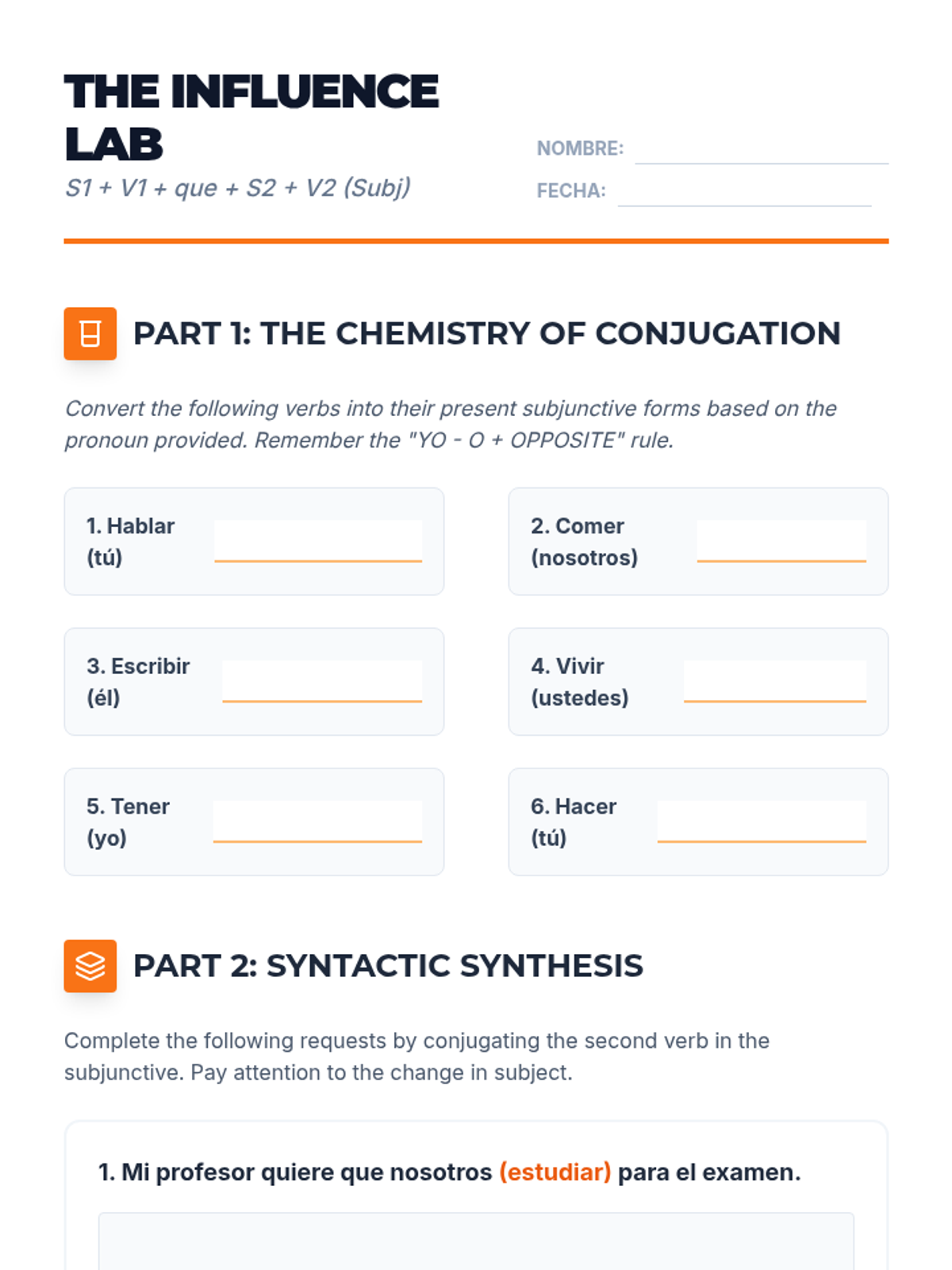
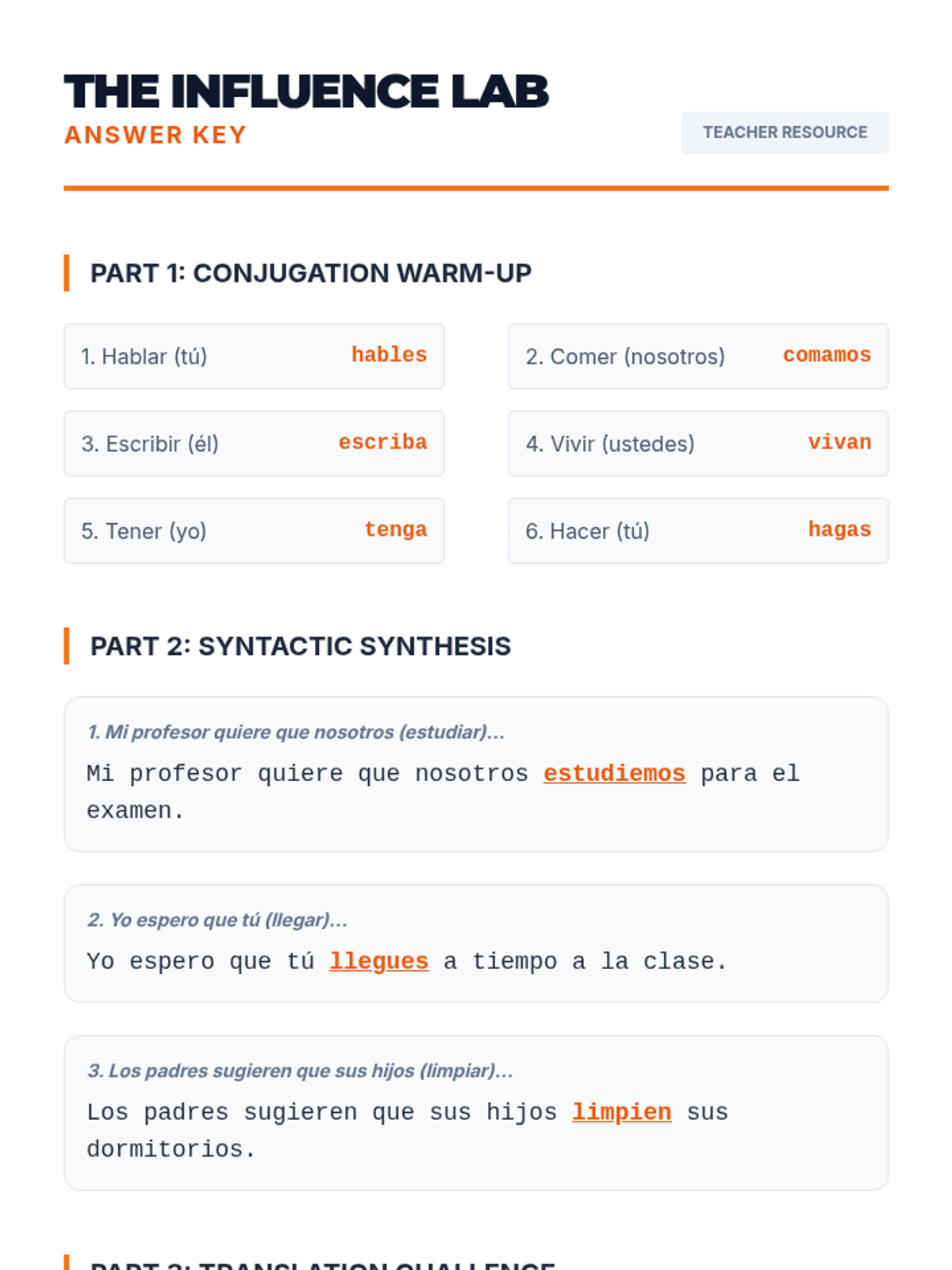
Students distinguish between the indicative and subjunctive moods through the lens of 'Will and Influence'. They learn the basic present subjunctive conjugation formula and the syntax of two-clause sentences.
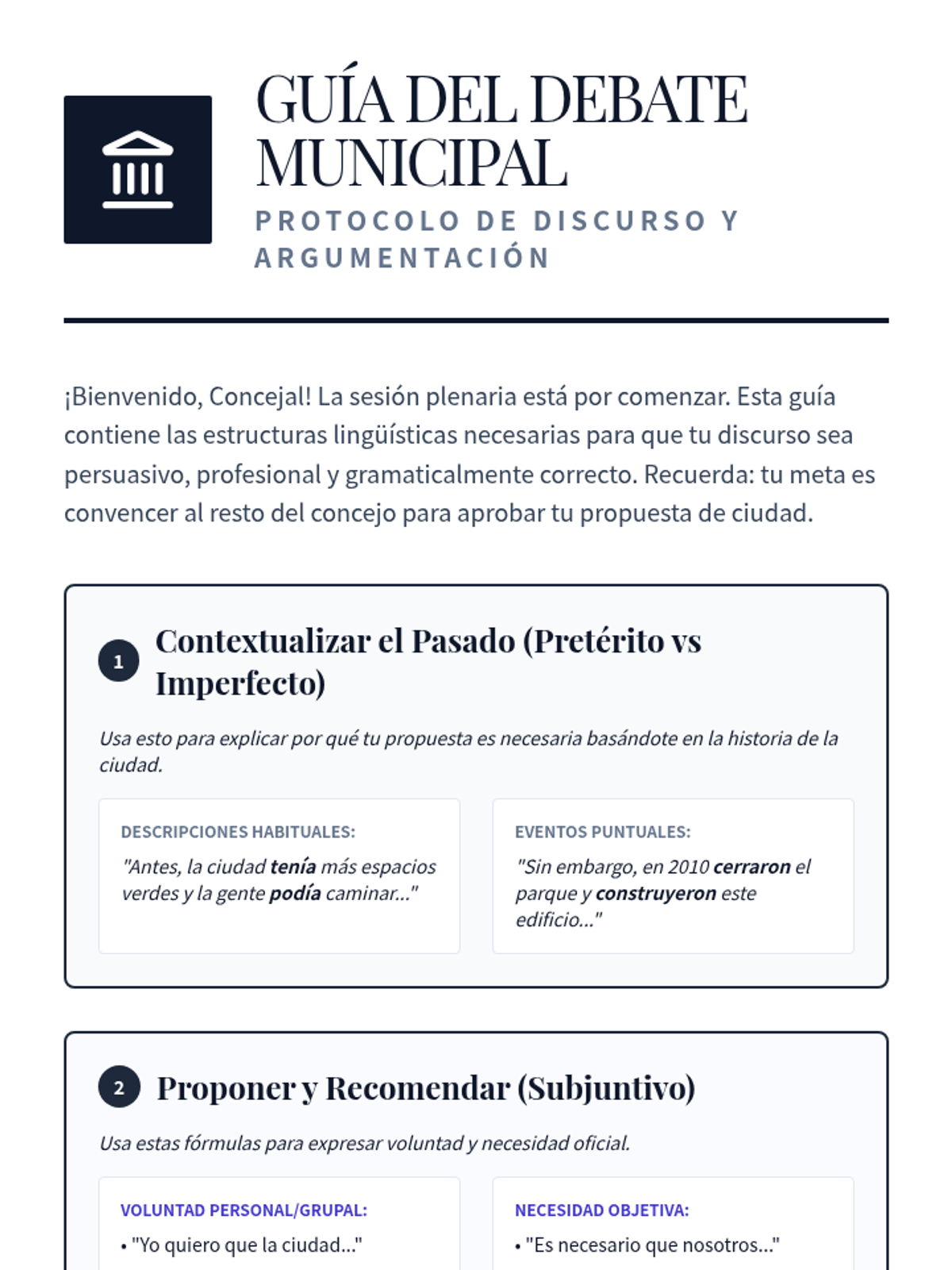
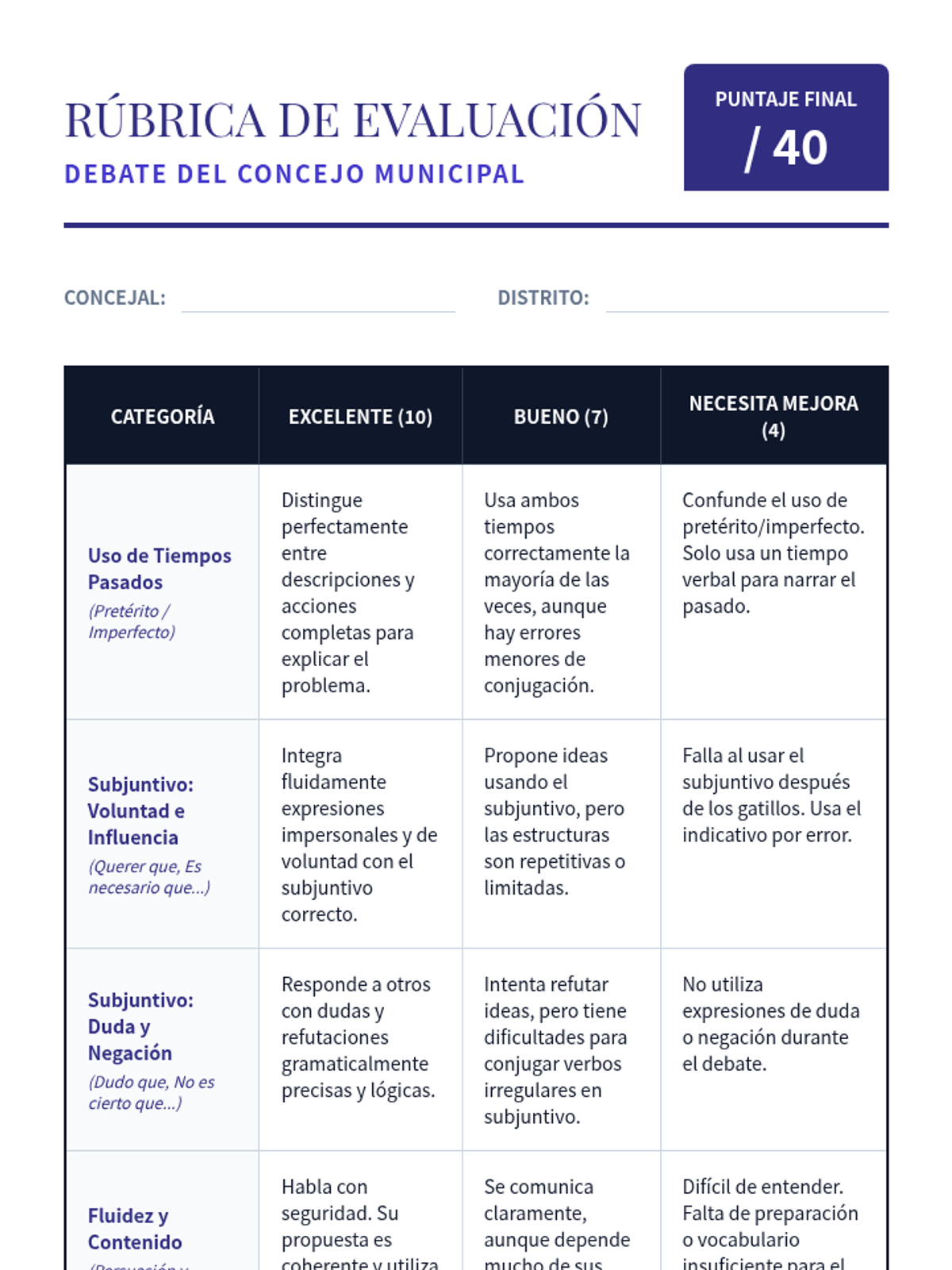
The culminating simulation where students present and defend their city planning proposals. They must synthesize past tenses and the subjunctive mood in a spontaneous town hall debate.
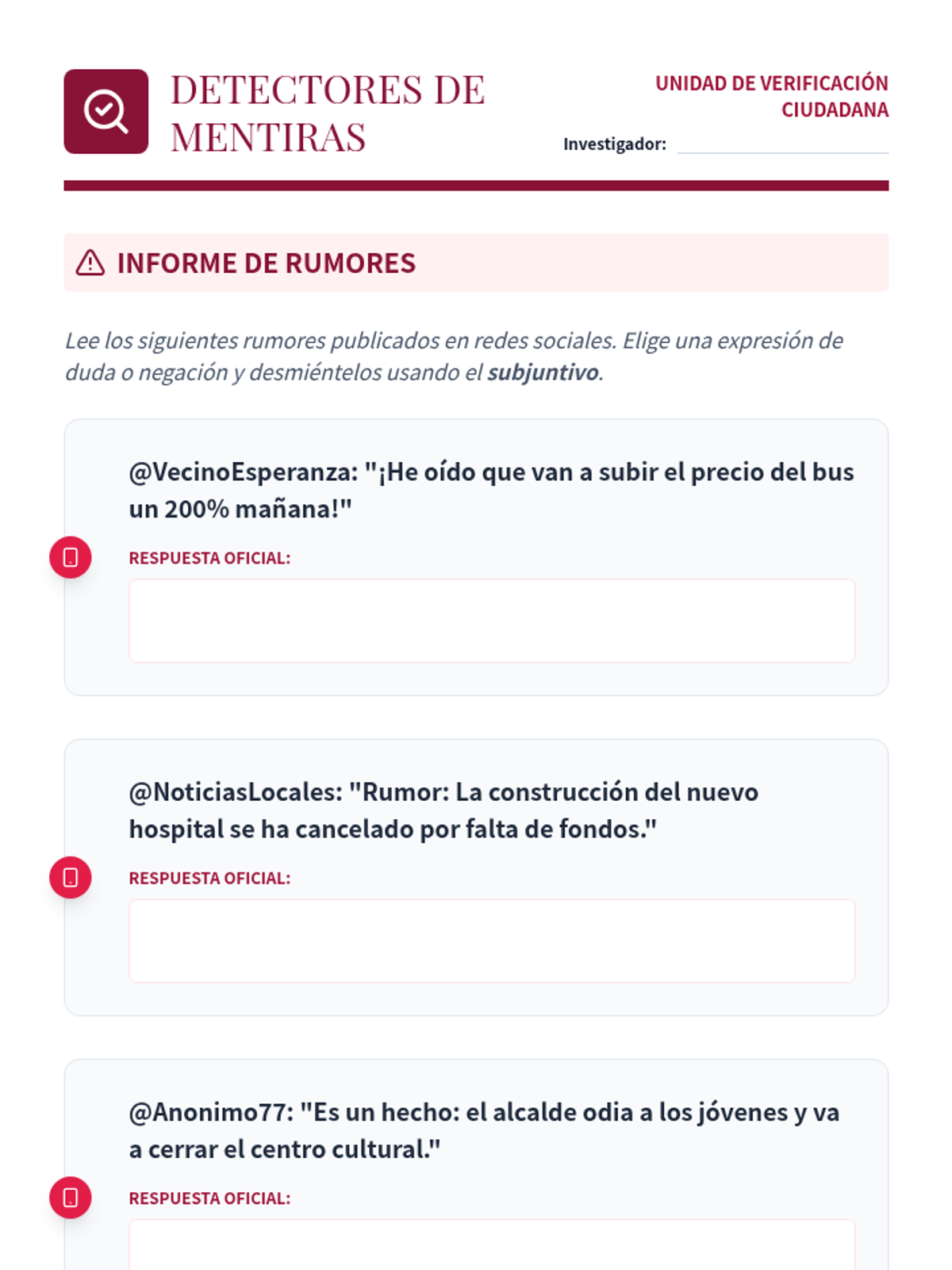
Focus on doubt and denial as subjunctive triggers. Students identify 'fake news' about the city and practice refuting claims during political disagreements.
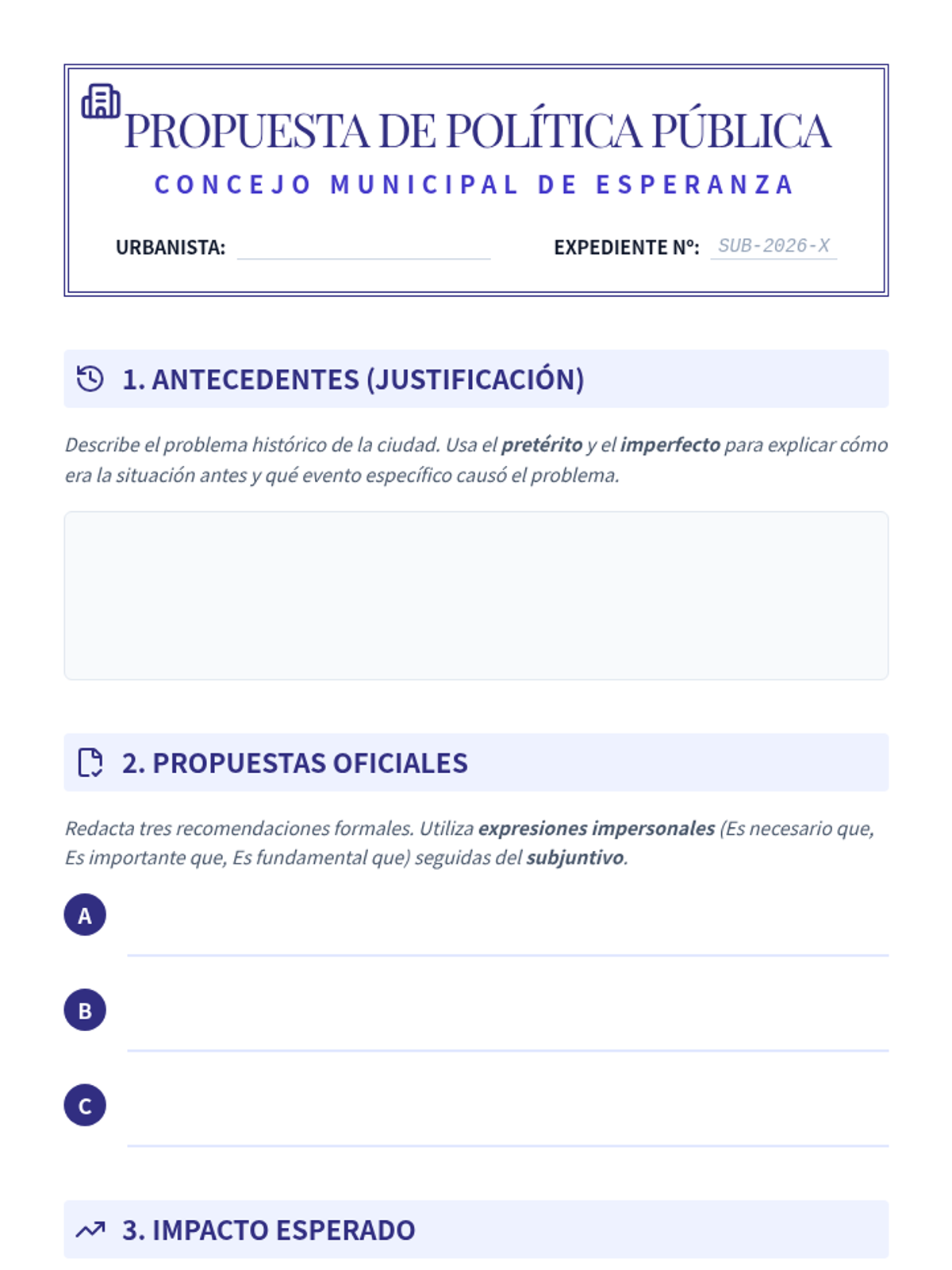
Students master impersonal expressions (Es necesario que, Es importante que) to draft professional policy proposals. They focus on the formal 'bureaucratic' tone of municipal government.
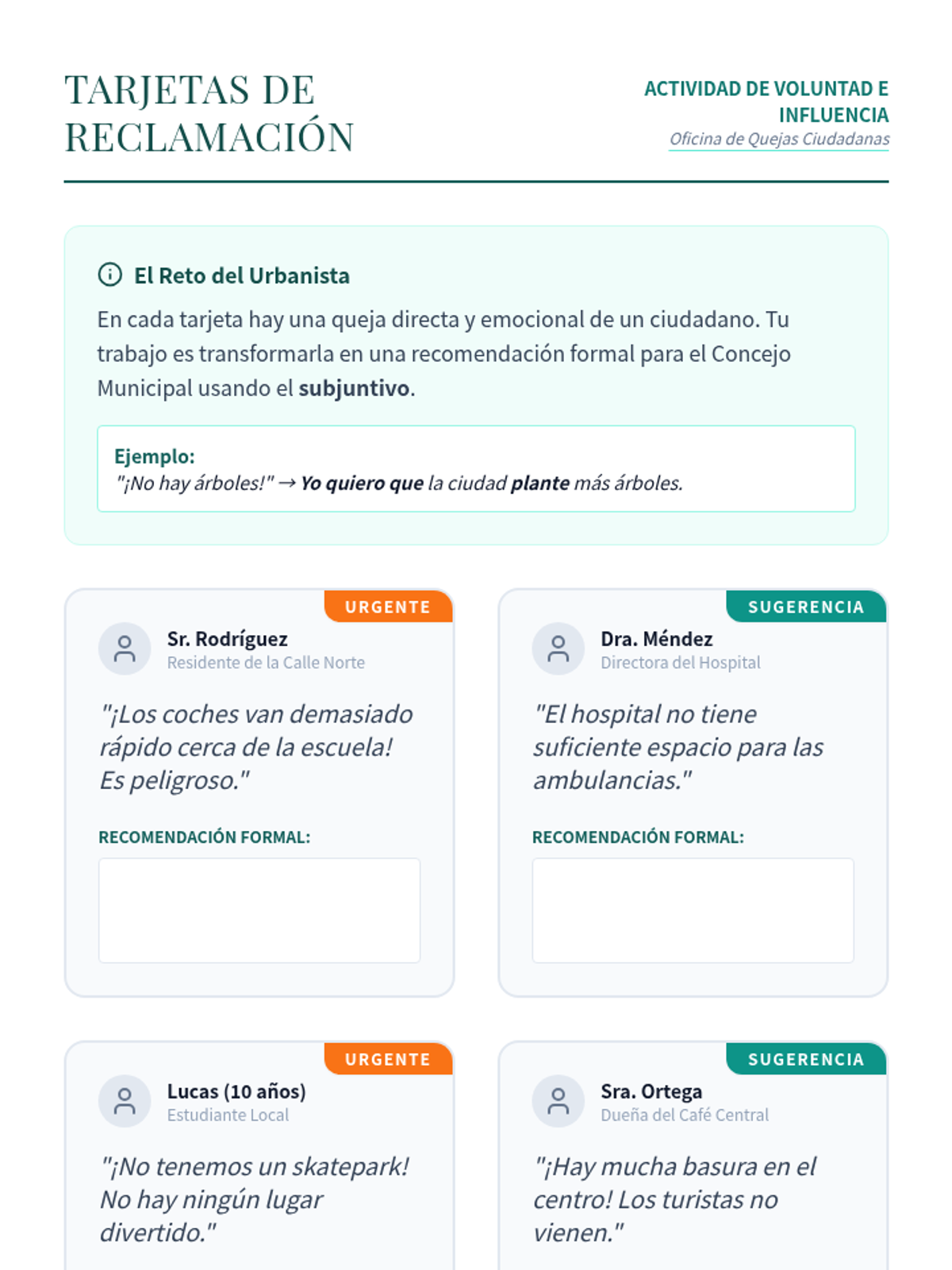
Introduction to the present subjunctive focusing on volition and influence (Will/Wish and Request). Students transform citizen complaints into formal recommendations for the city council.
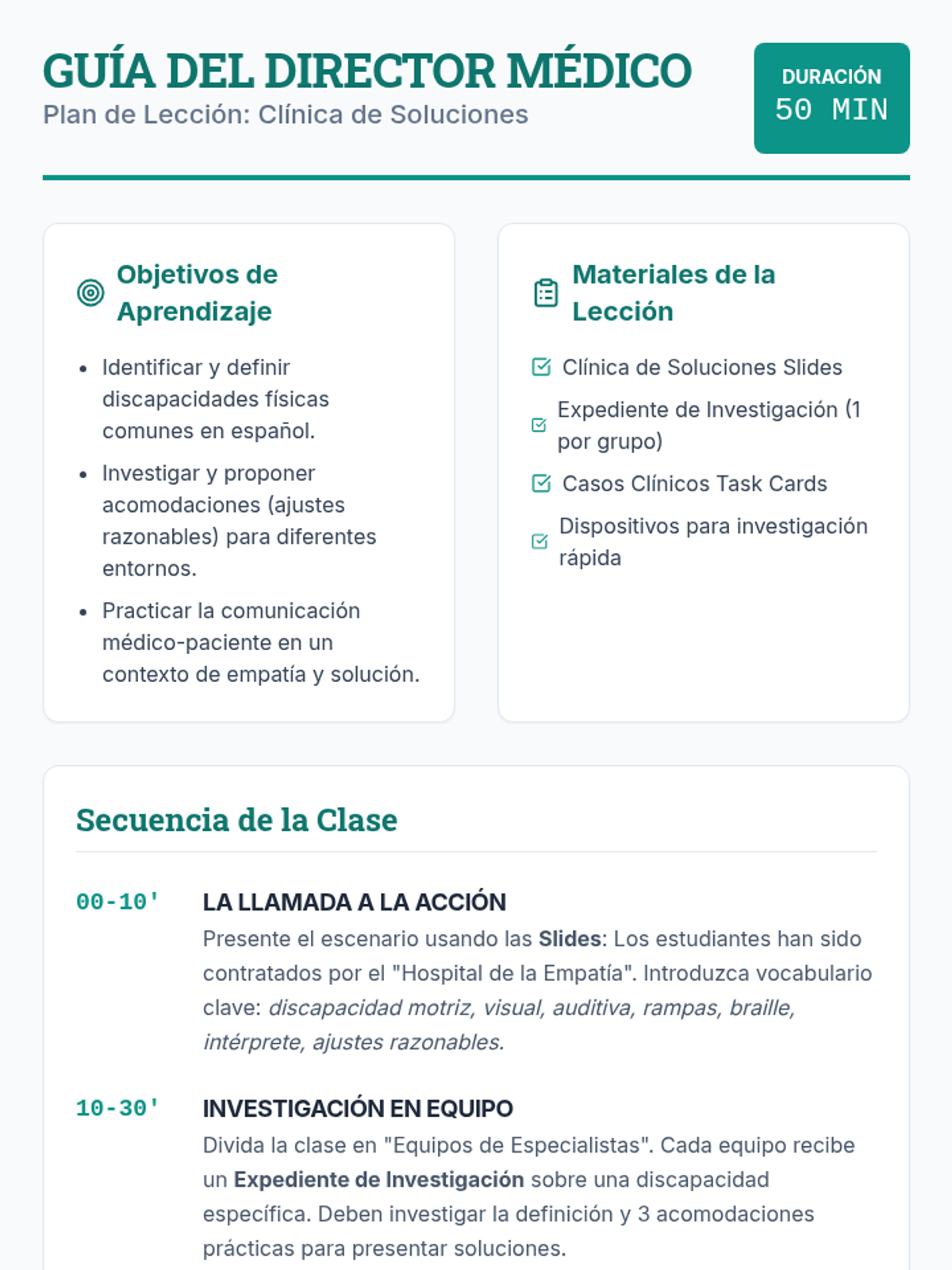
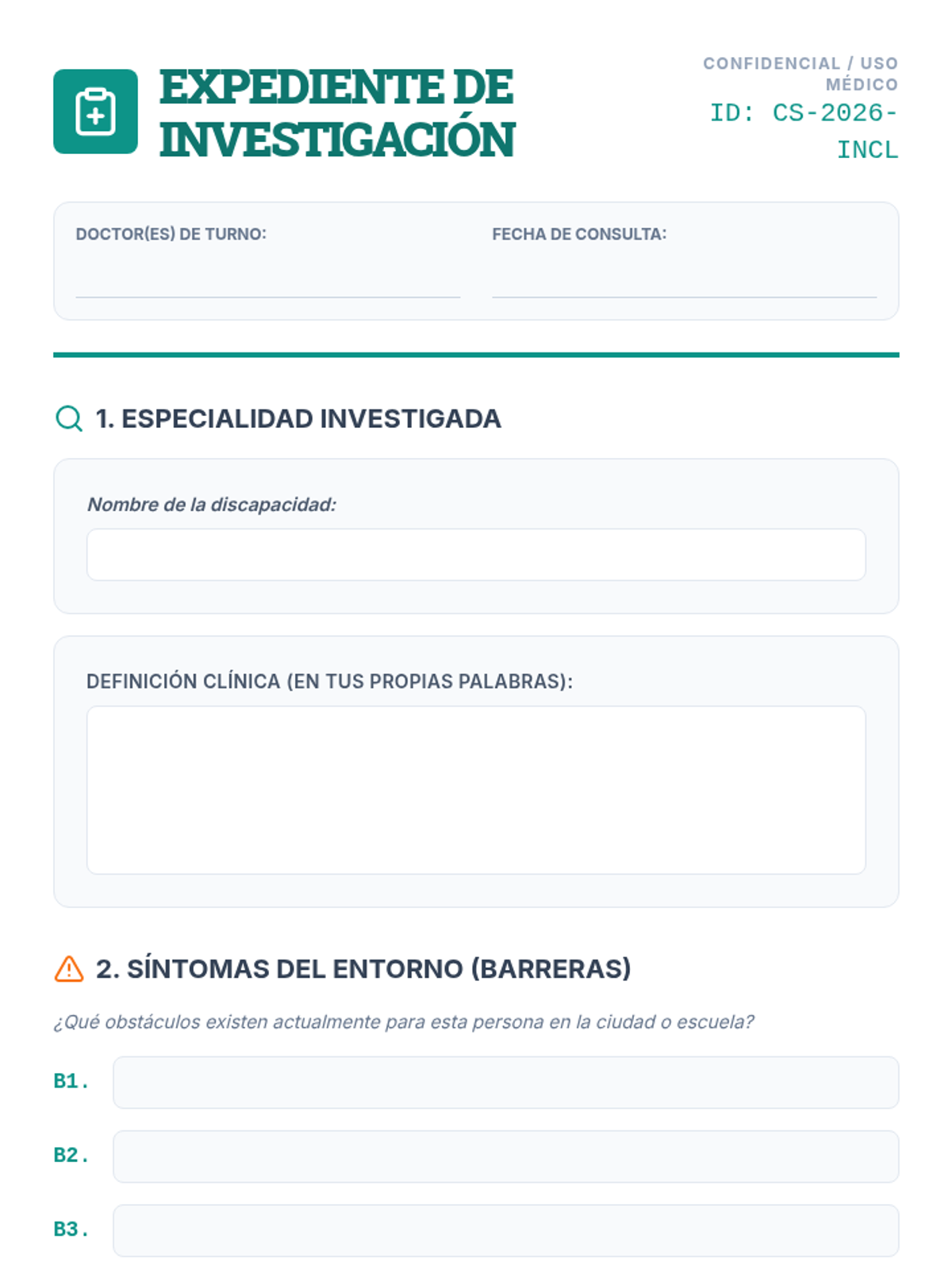
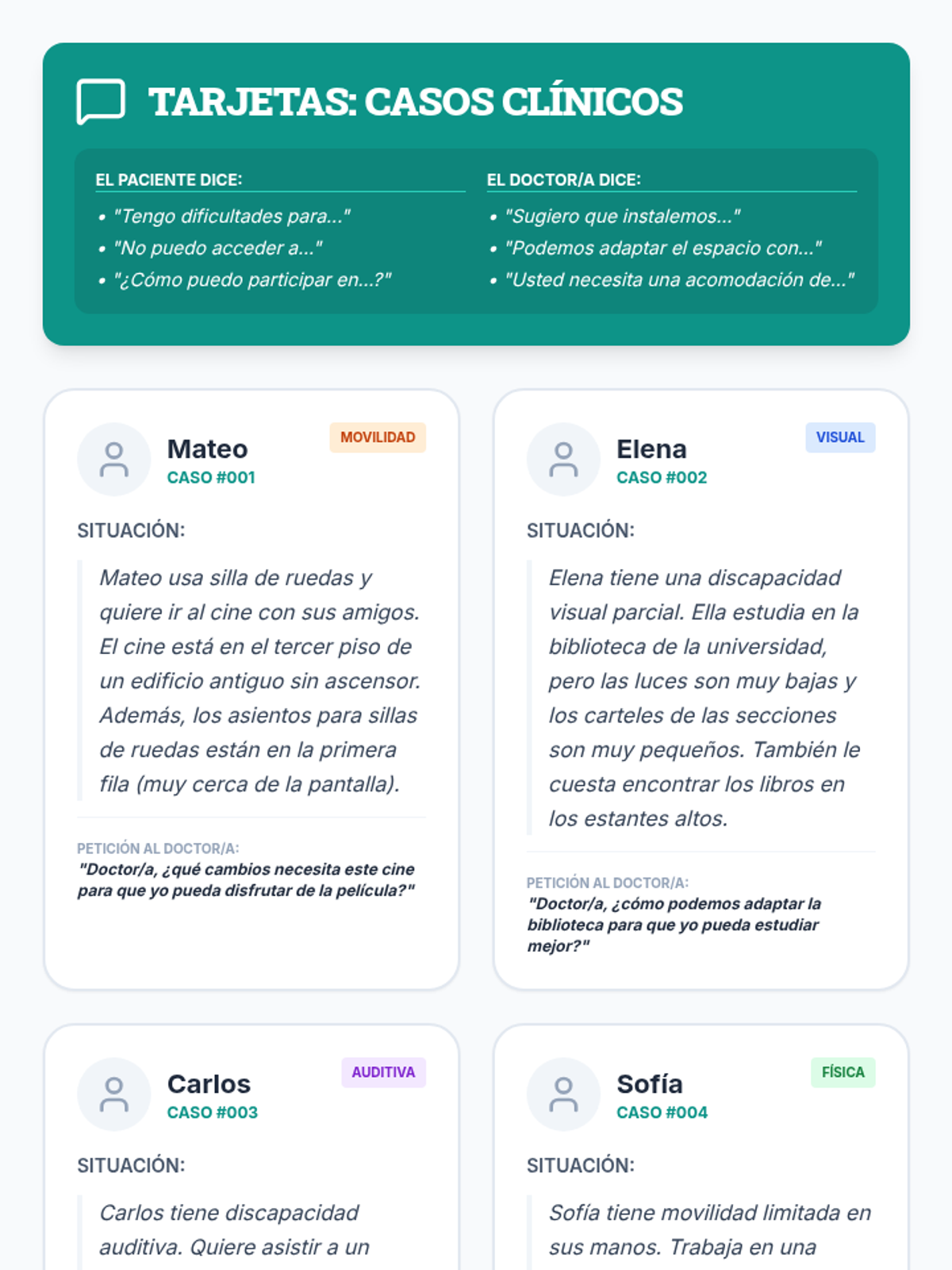
A high-energy, collaborative lesson where students act as medical consultants to research physical disabilities and design inclusive accommodations through role-play.
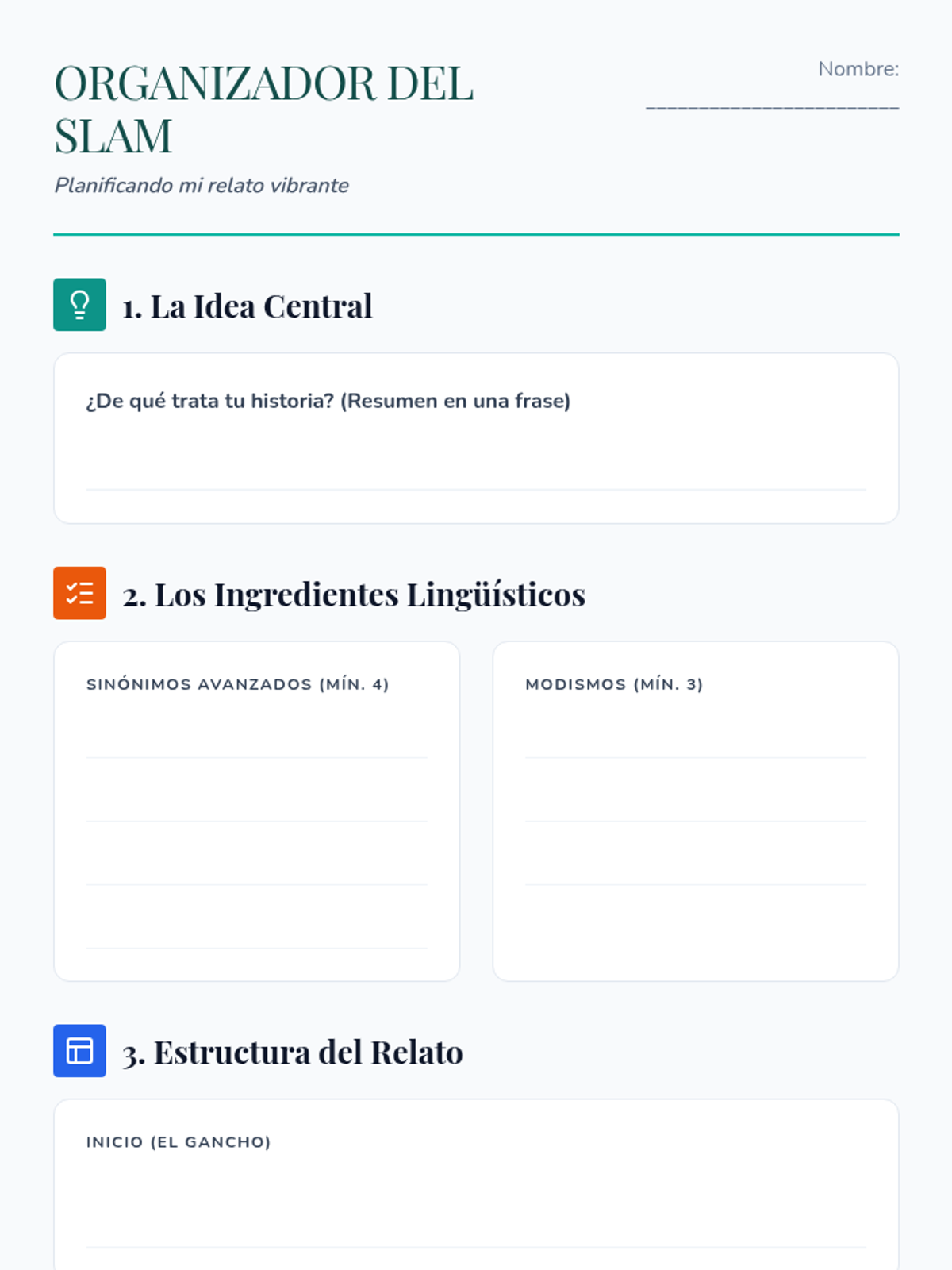
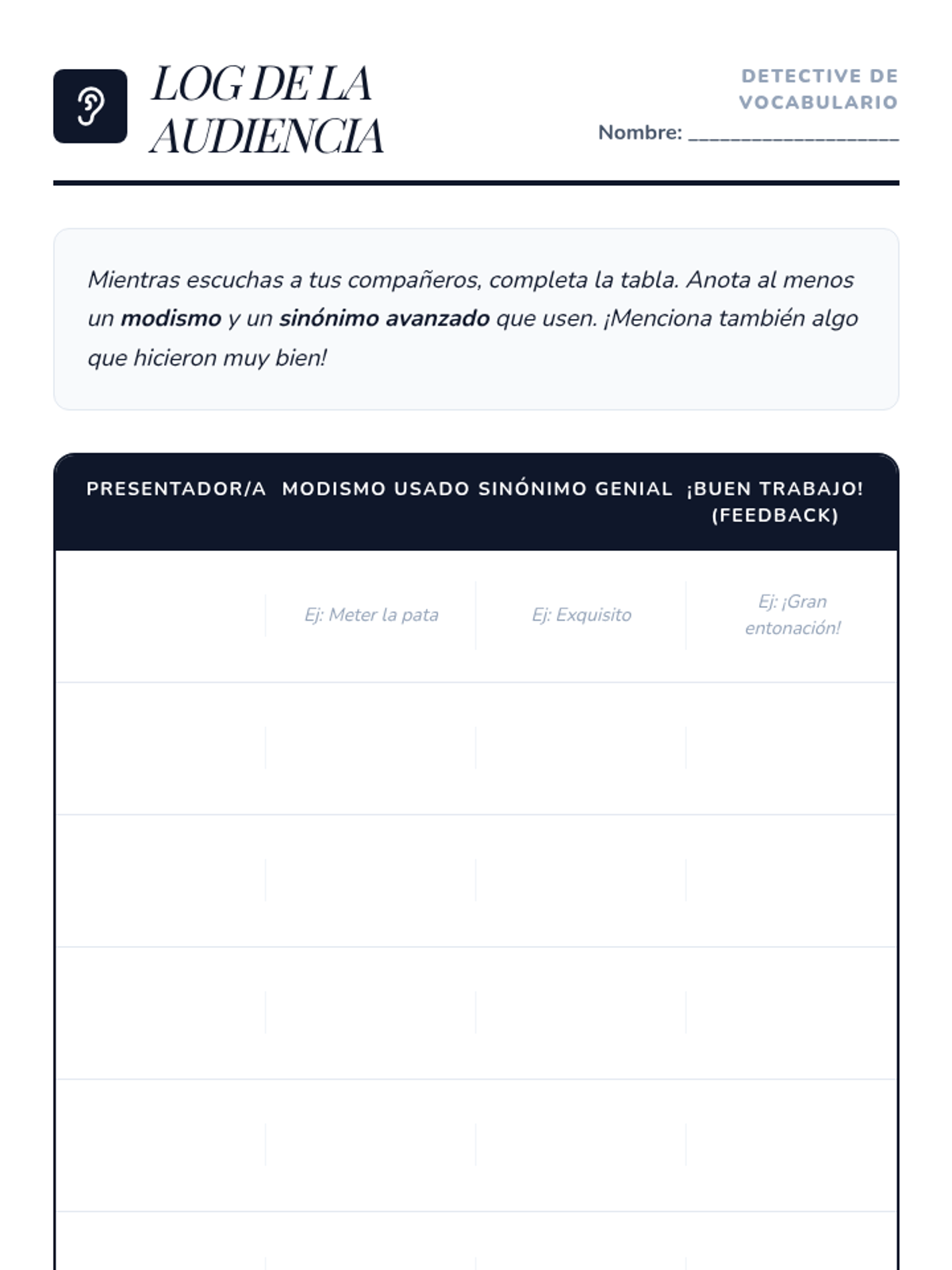
Students present original short stories or personal anecdotes that must include a specific number of idioms and advanced descriptors. The focus is on oral delivery and the natural integration of these complex vocabulary items. Peers listen for and track the idioms used.
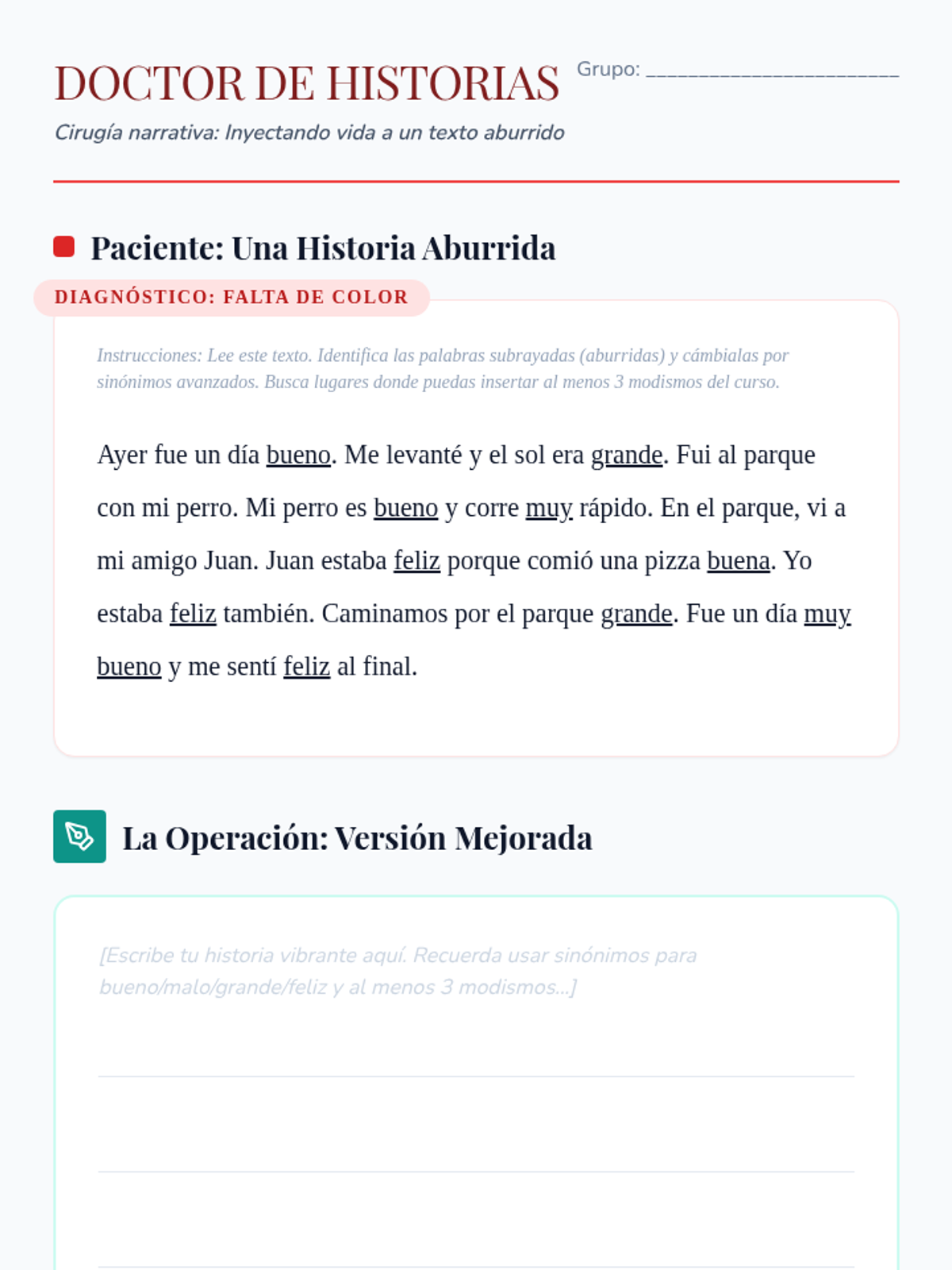
Students take a intentionally dull, repetitive text and work in small groups to 'doctor' it. They inject the synonyms and idioms learned in previous lessons to improve the story's engagement level. Groups compare their revised versions to see different creative choices.
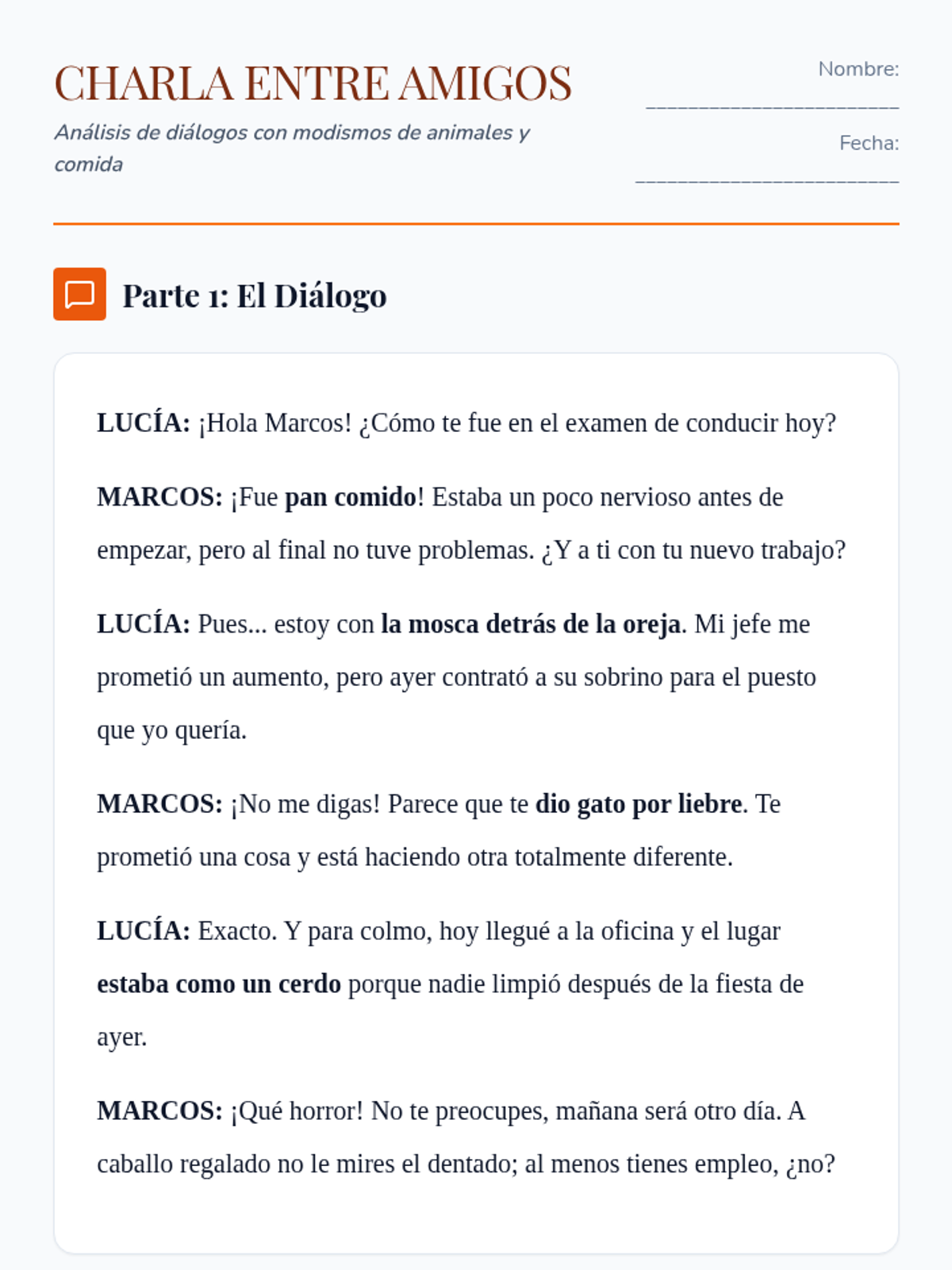
Continuing with idioms, this lesson focuses on food and animal metaphors used in daily Spanish conversation. Students analyze dialogue scripts to see how these phrases fit naturally into conversation, rather than just memorizing lists. They perform short skits using the new terms.
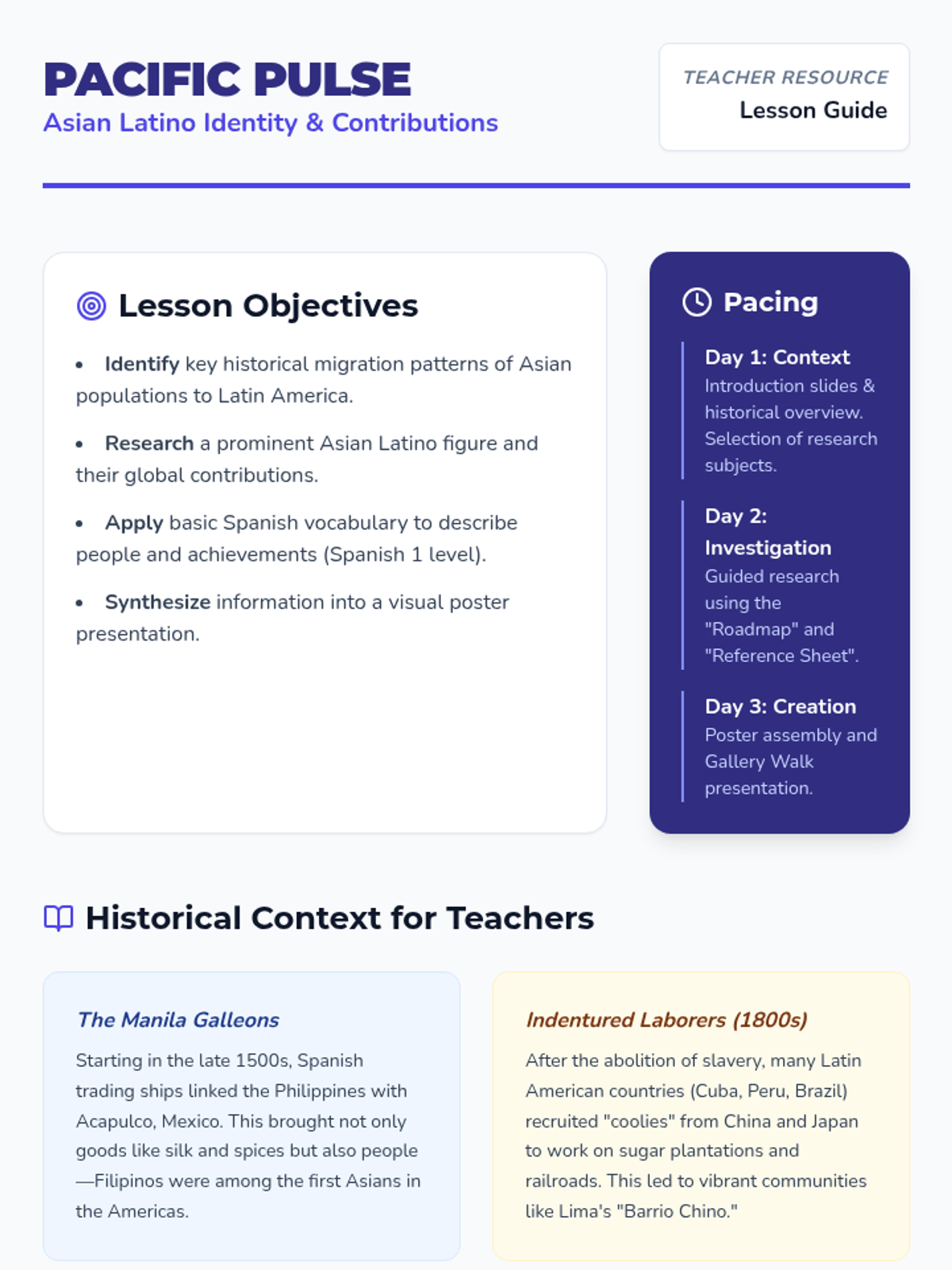
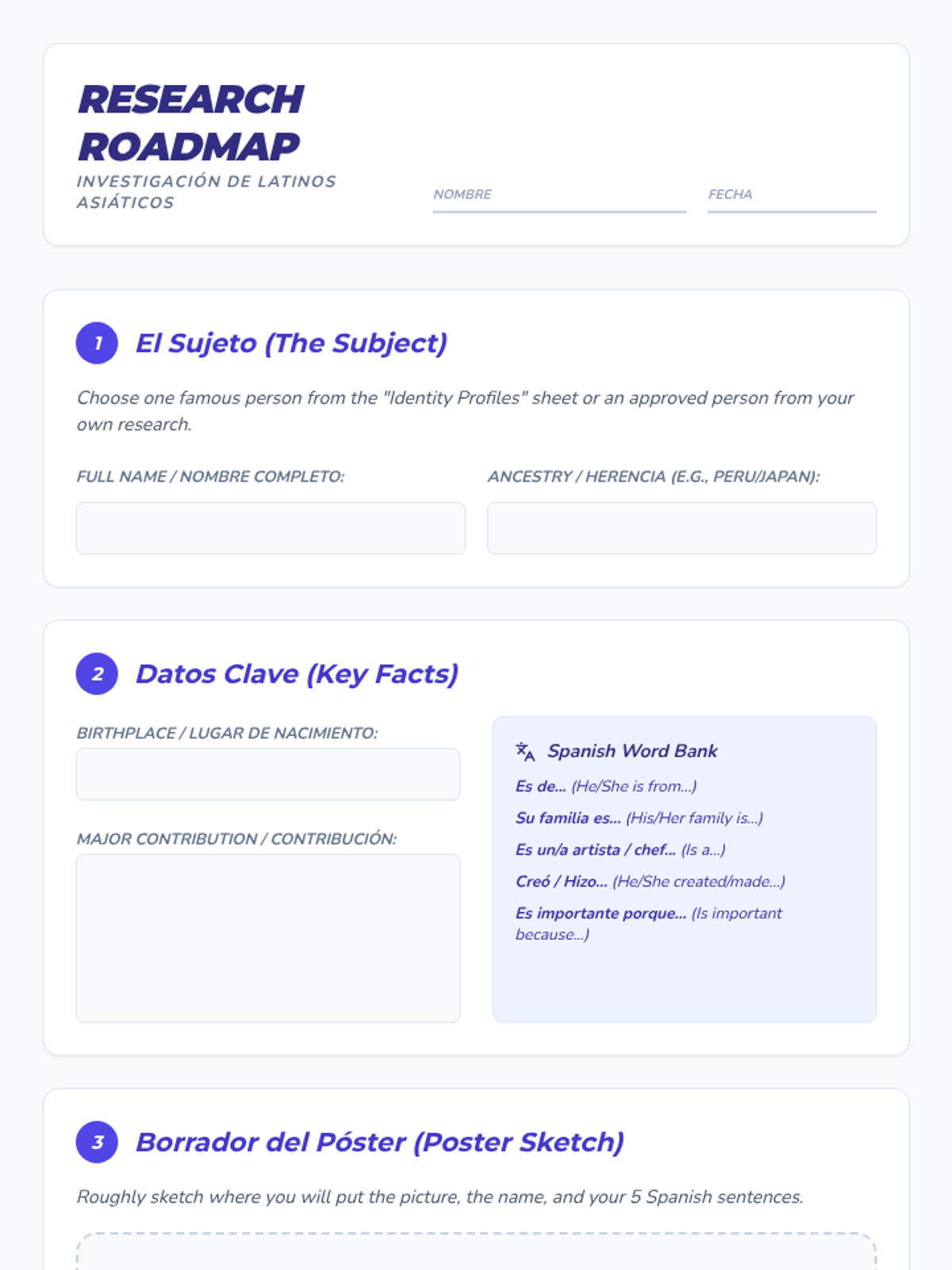
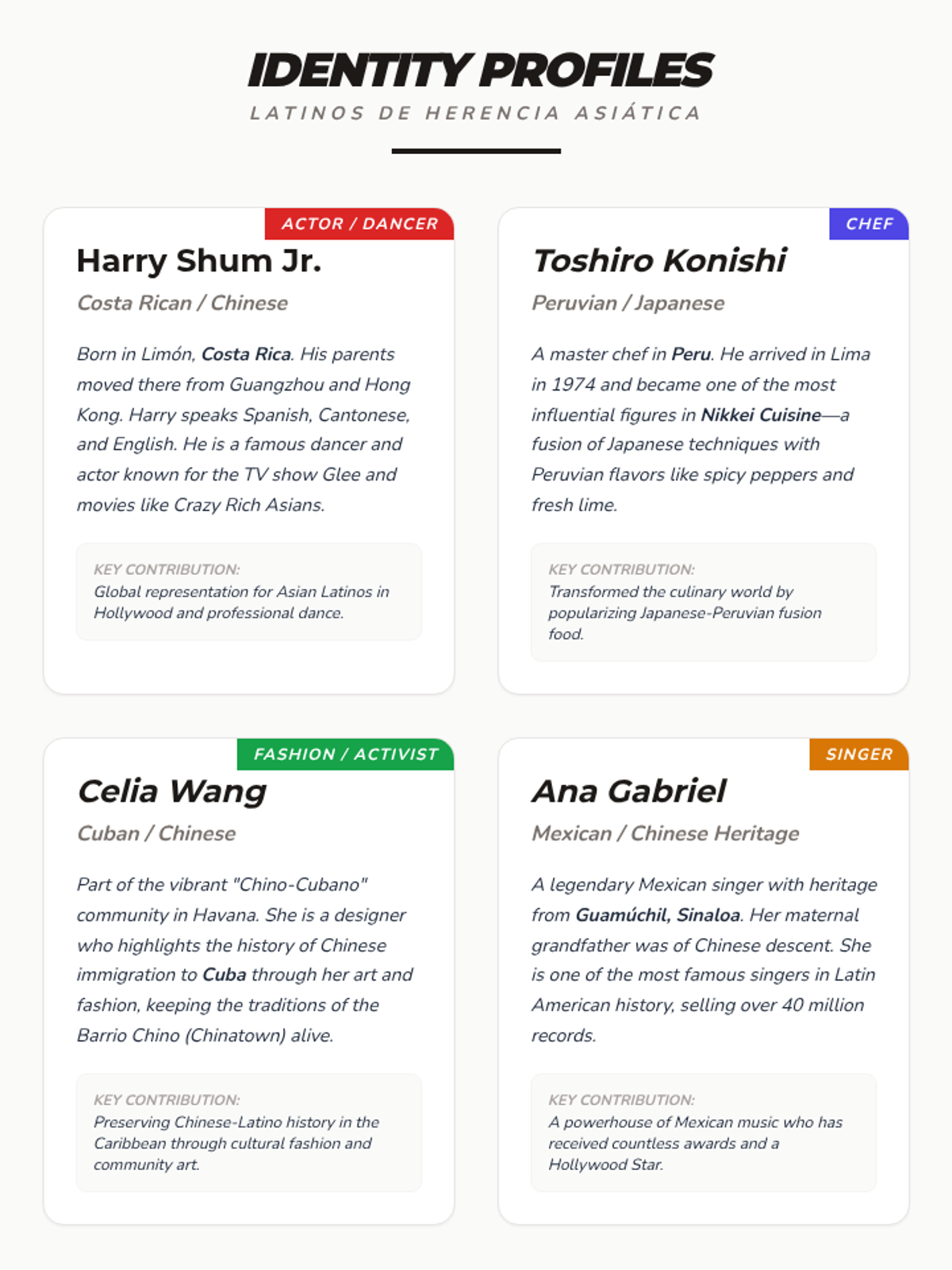
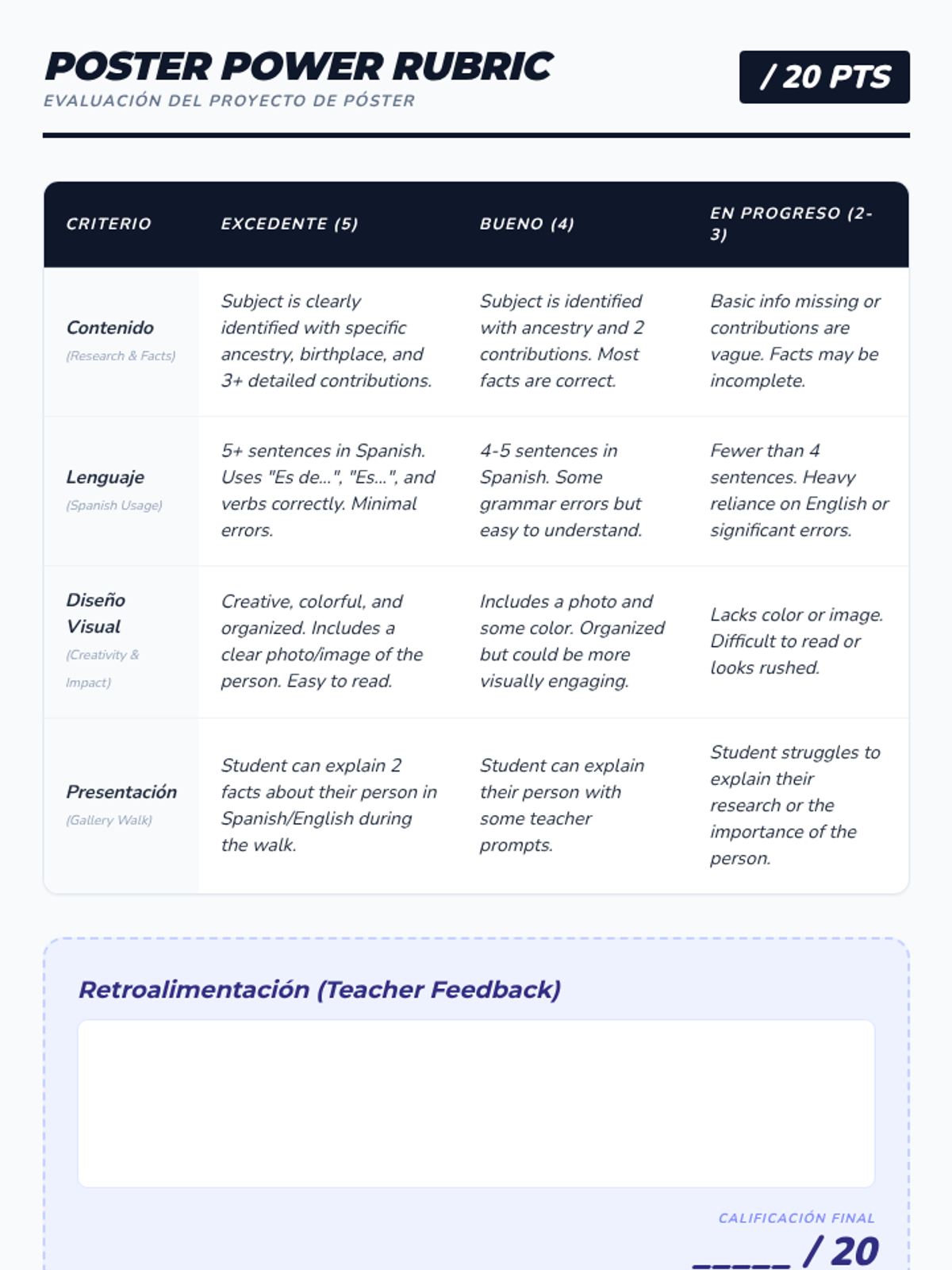
Students will explore the history and contributions of Asian Latinos, researching specific figures to create a commemorative poster. This lesson focuses on cultural identity, migration history, and significant global contributions.
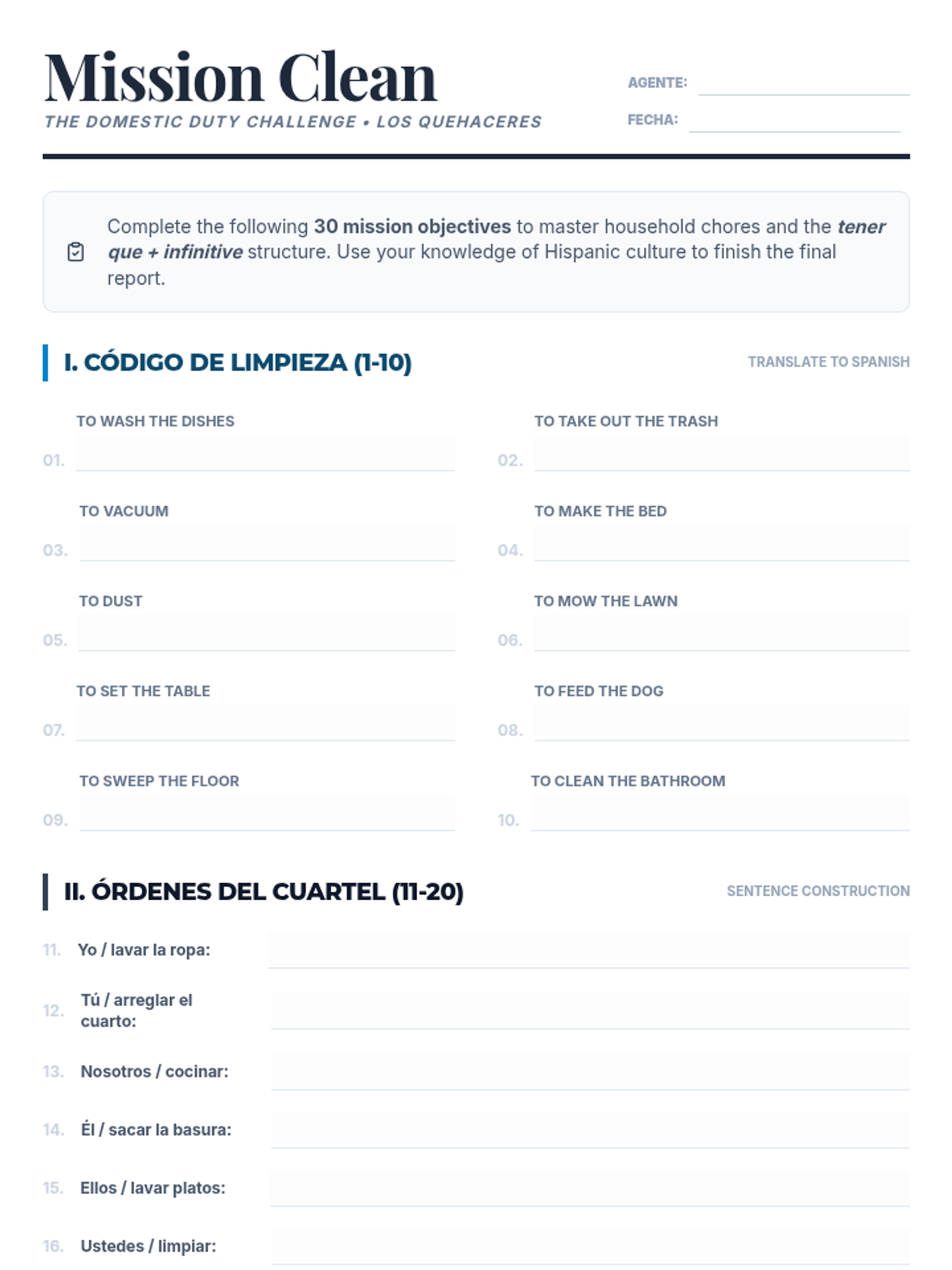
A comprehensive lesson focused on Spanish household chore vocabulary, the 'tener que' + infinitive grammar structure, and cultural reflections on domestic responsibilities.