Comprehensive French language instruction spanning basic literacy to advanced oral and written communication. Strengthens grammar, vocabulary, and cultural understanding through targeted exercises in listening, reading, and composition.
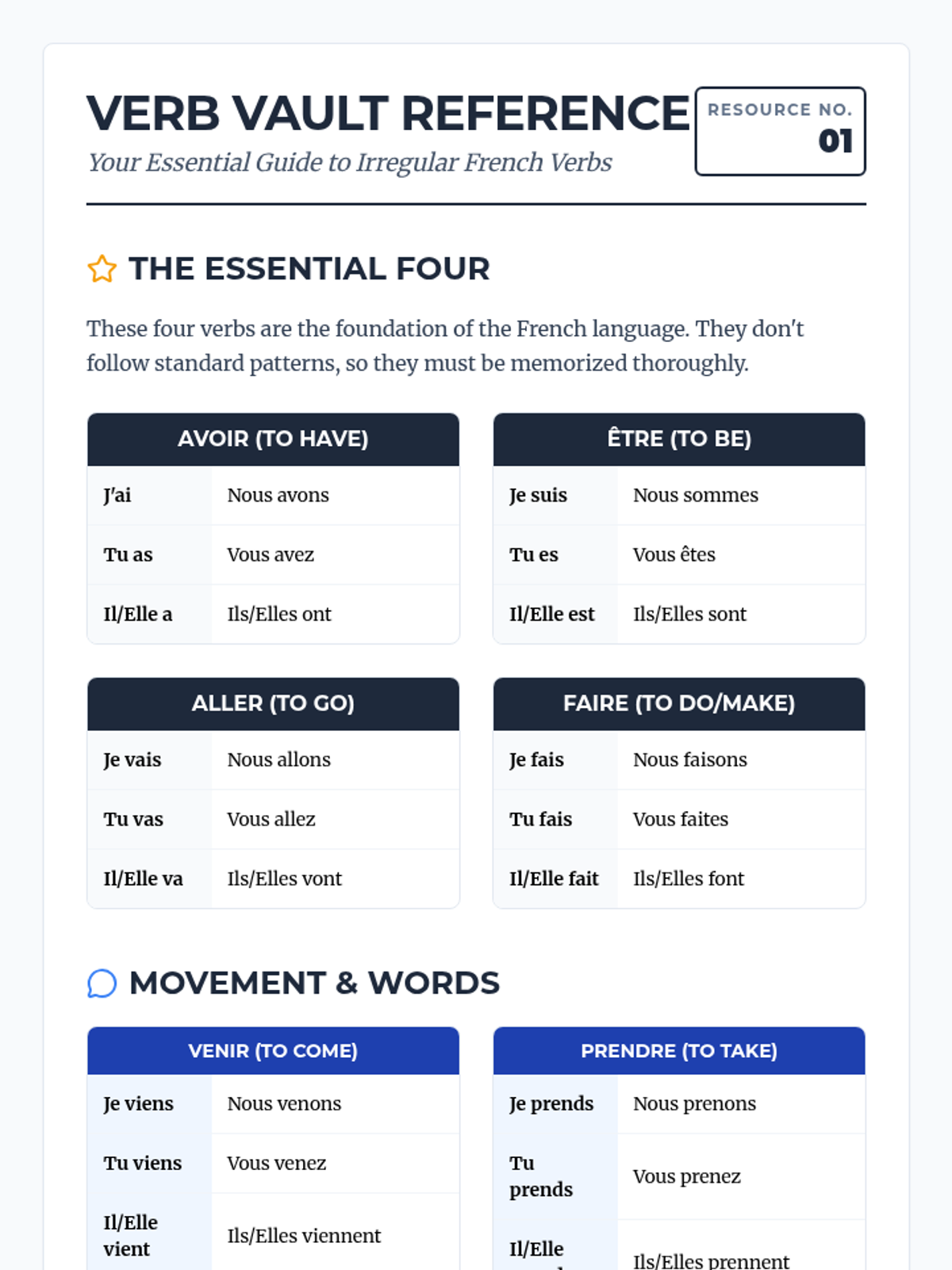
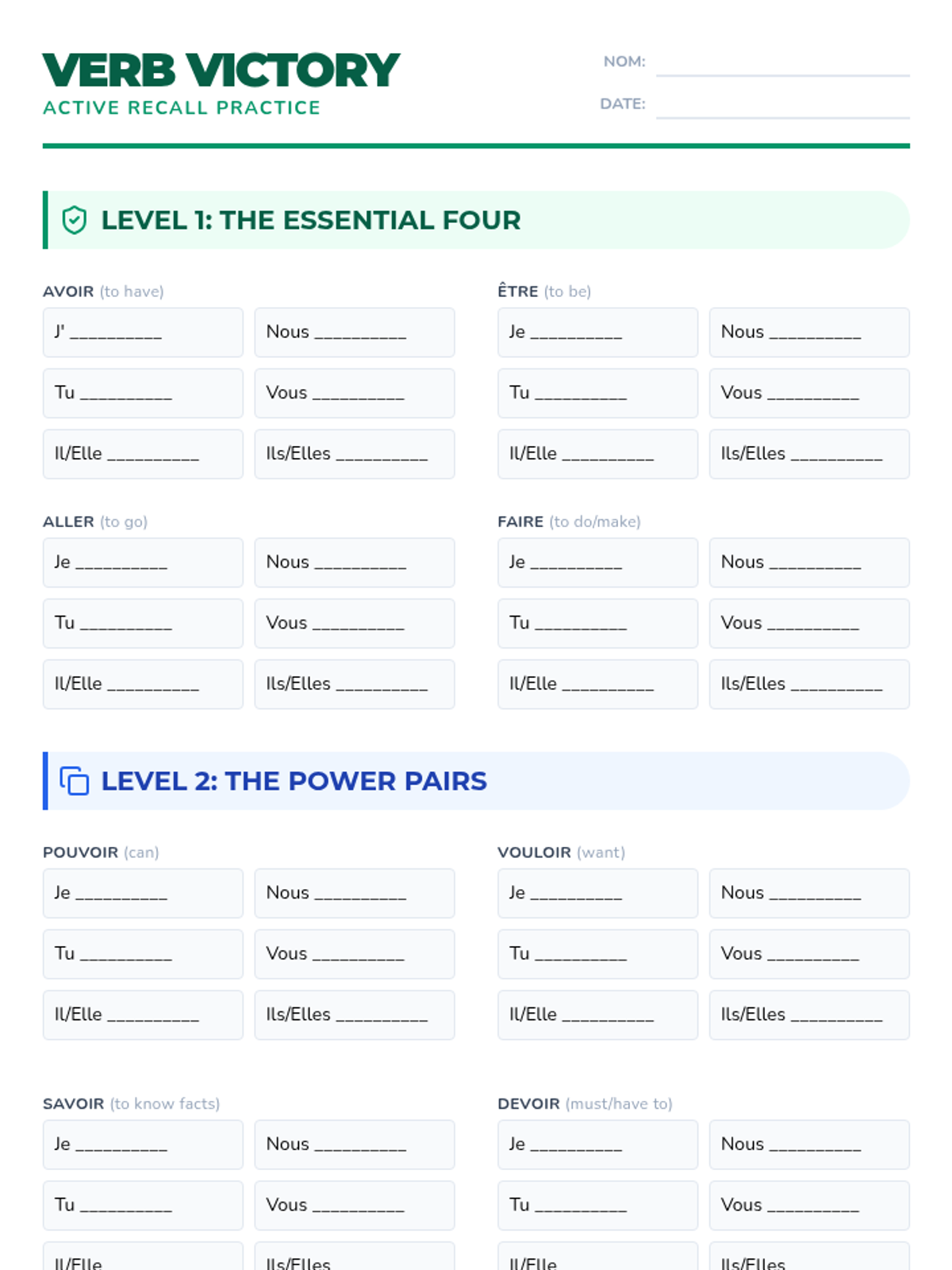
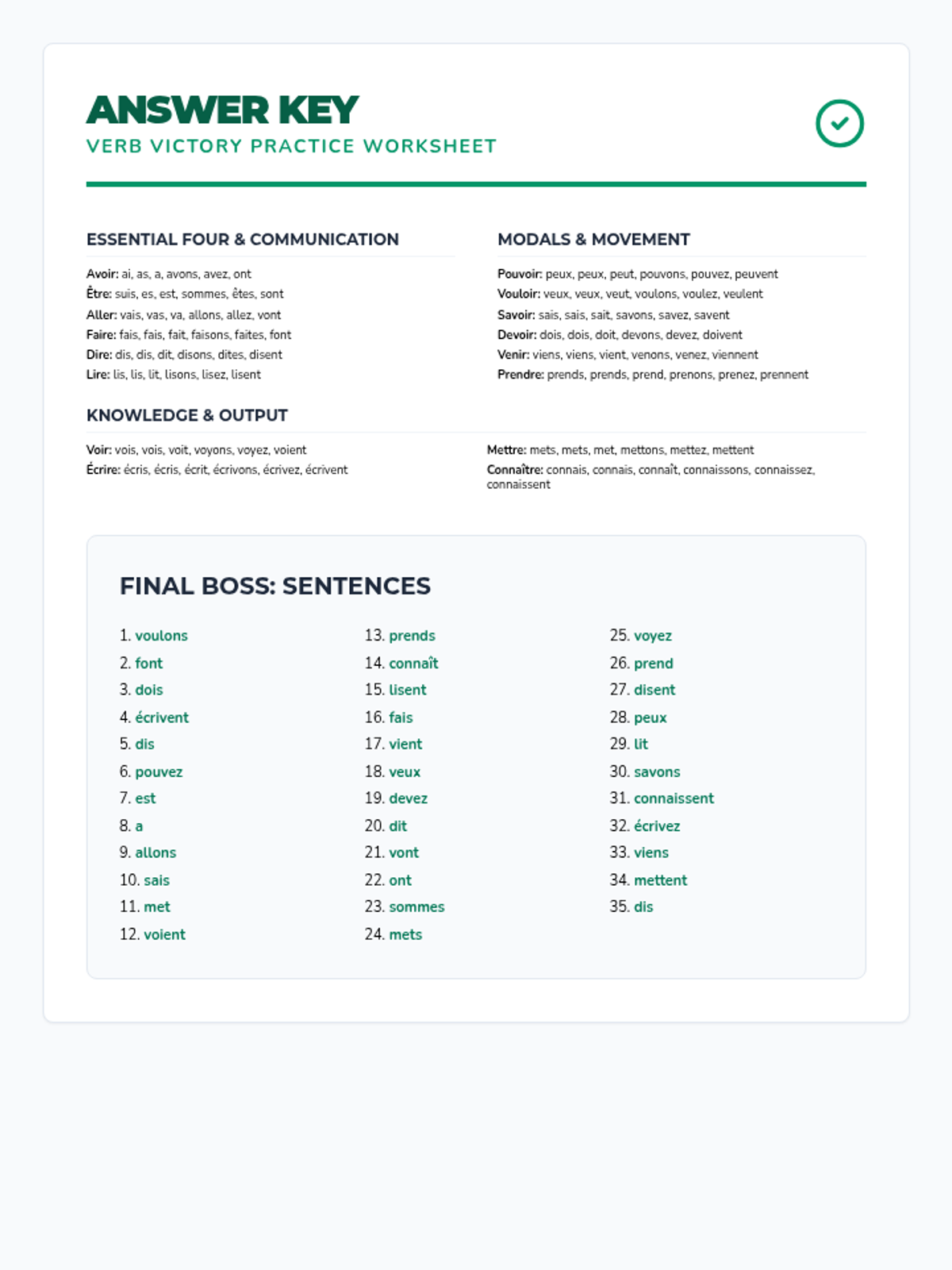
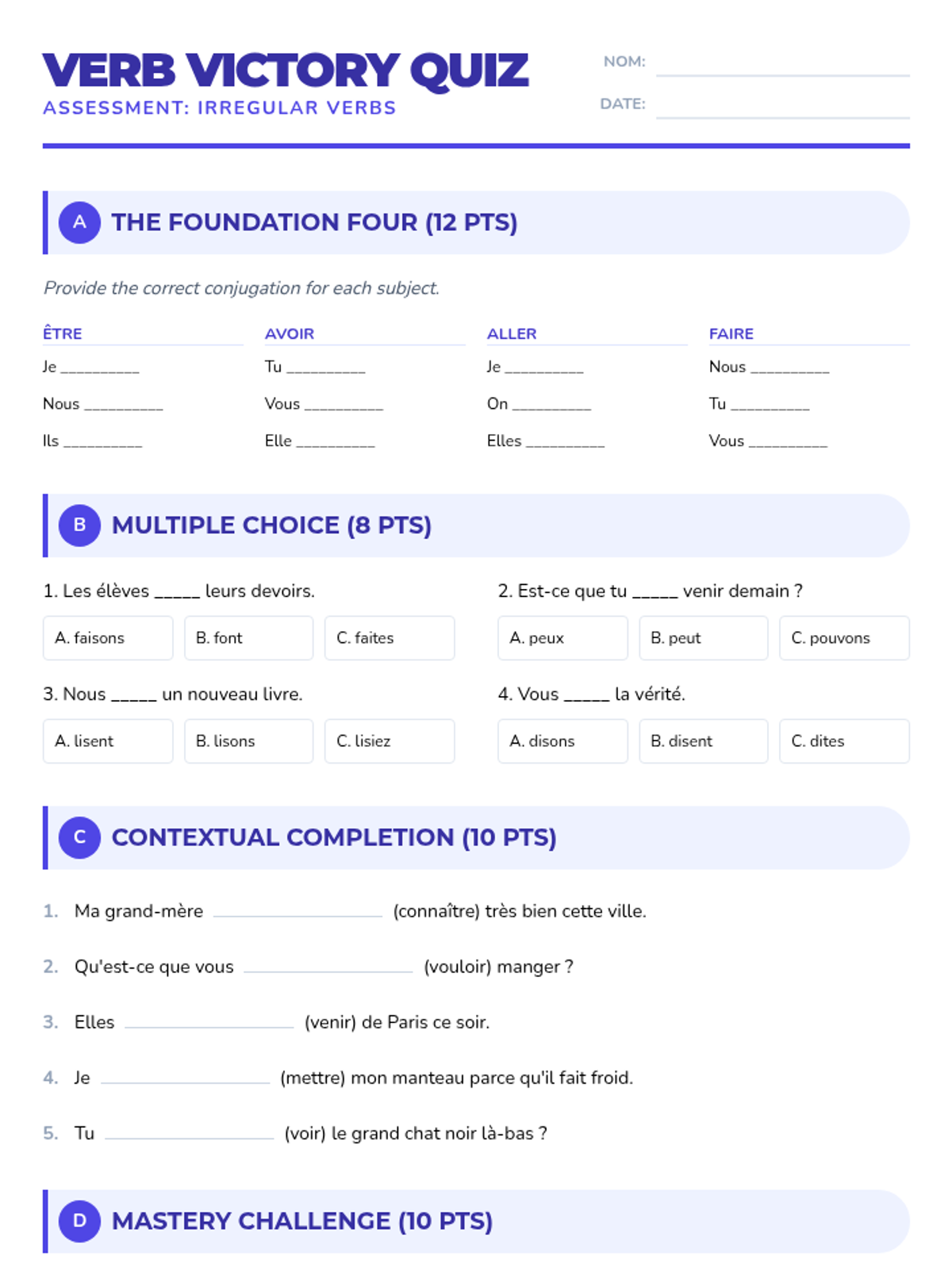
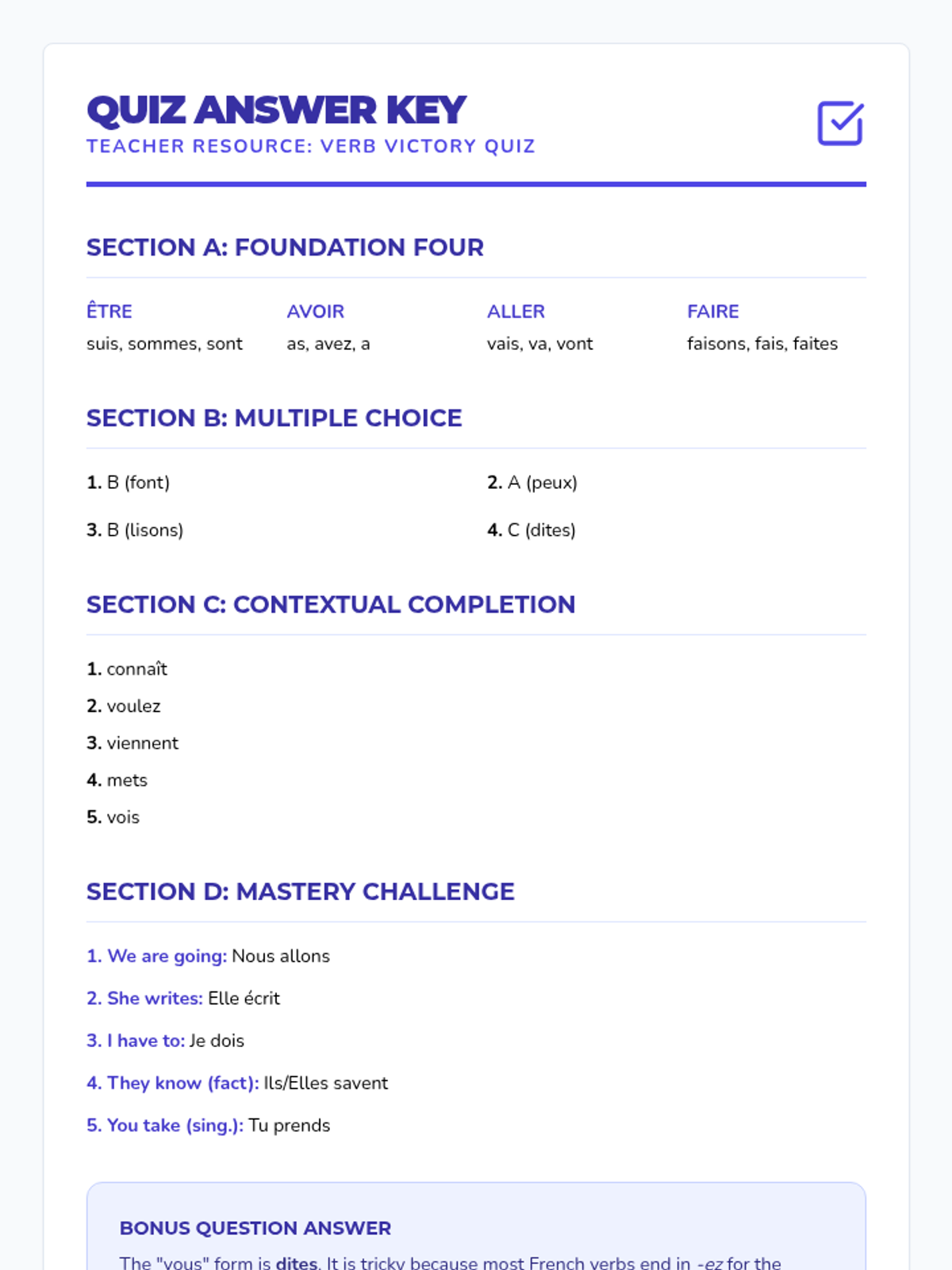
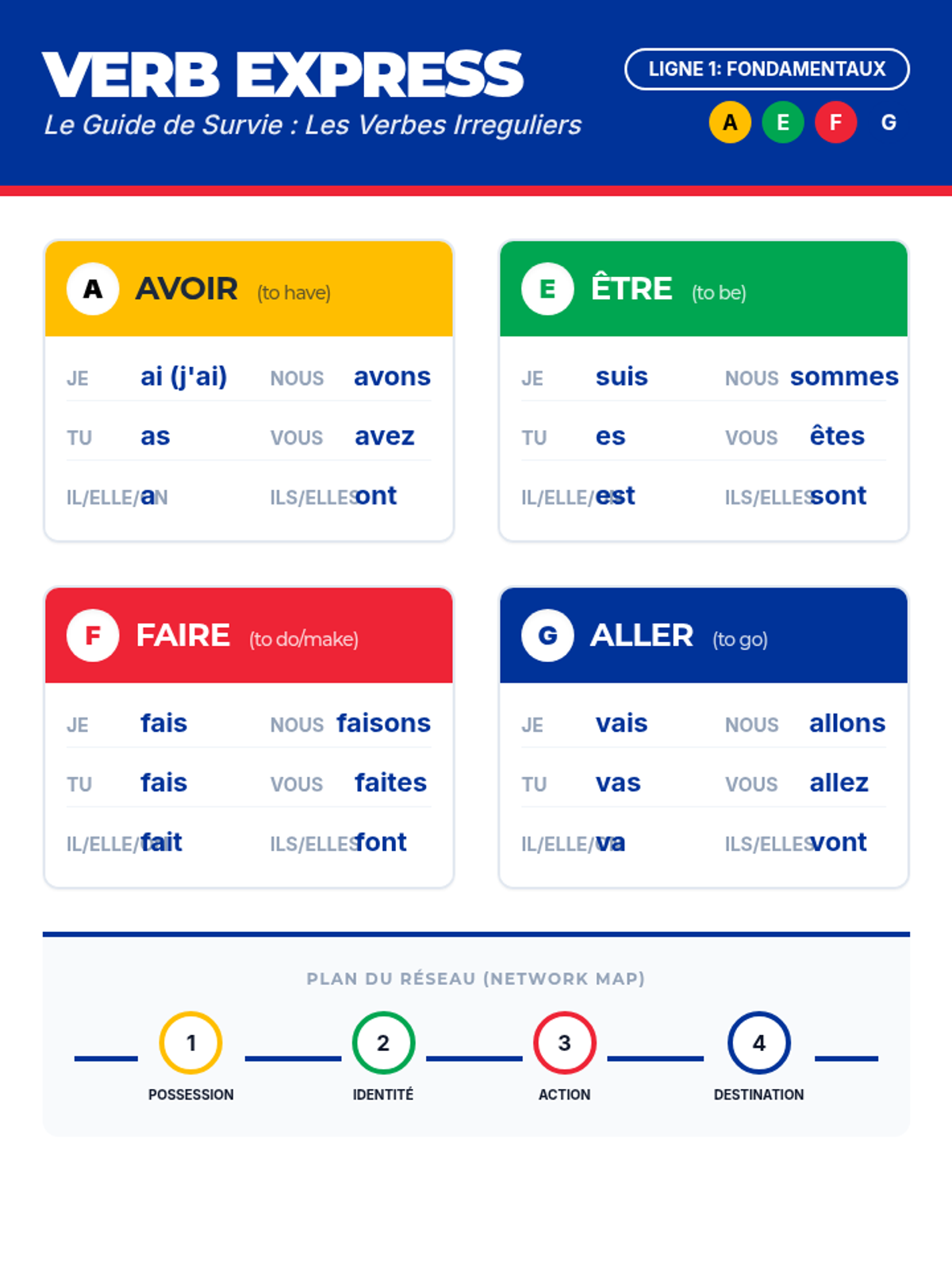
A comprehensive guide and practice set for mastering the most common irregular French verbs, focusing on patterns, comparisons, and active recall.
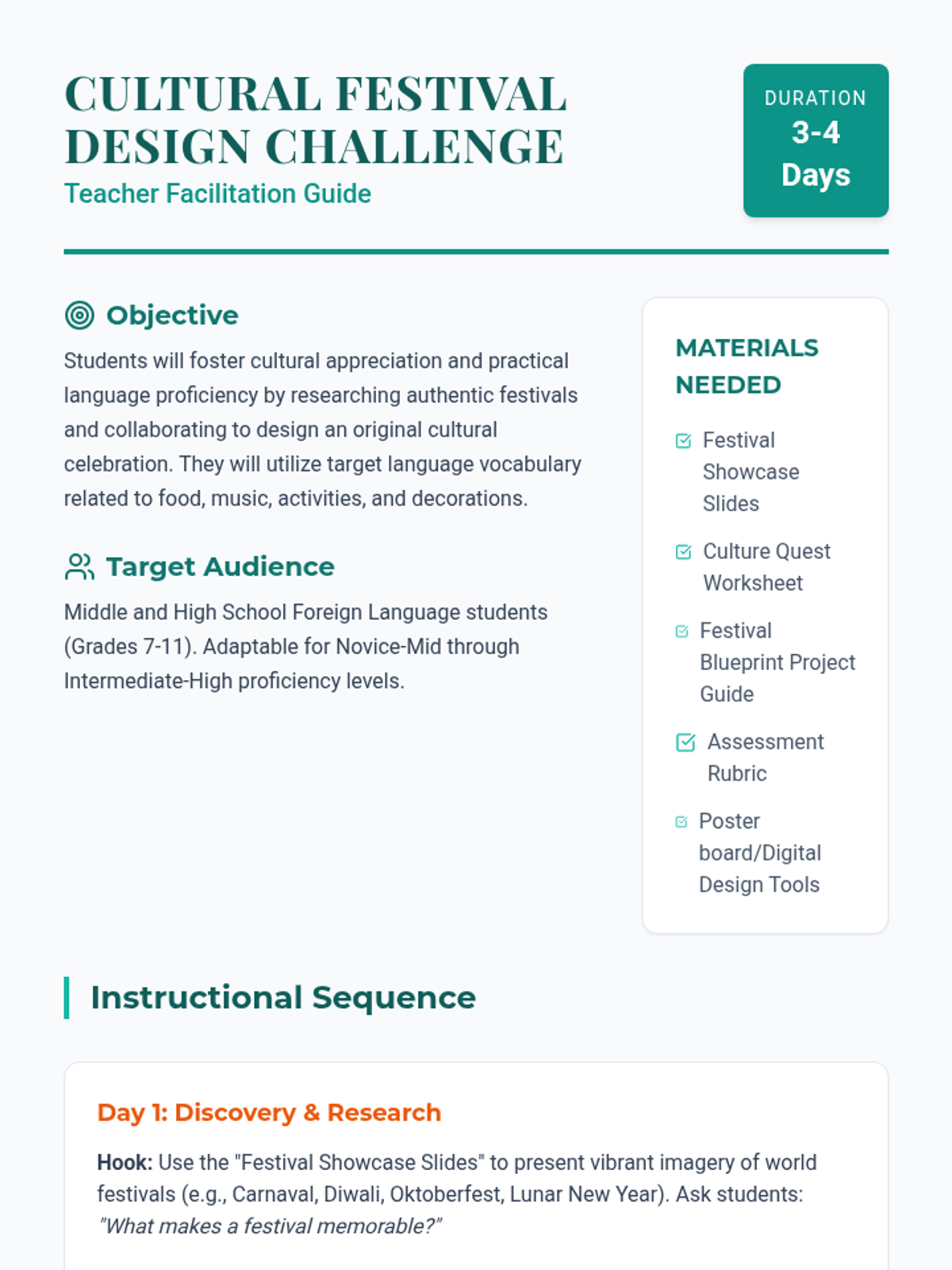
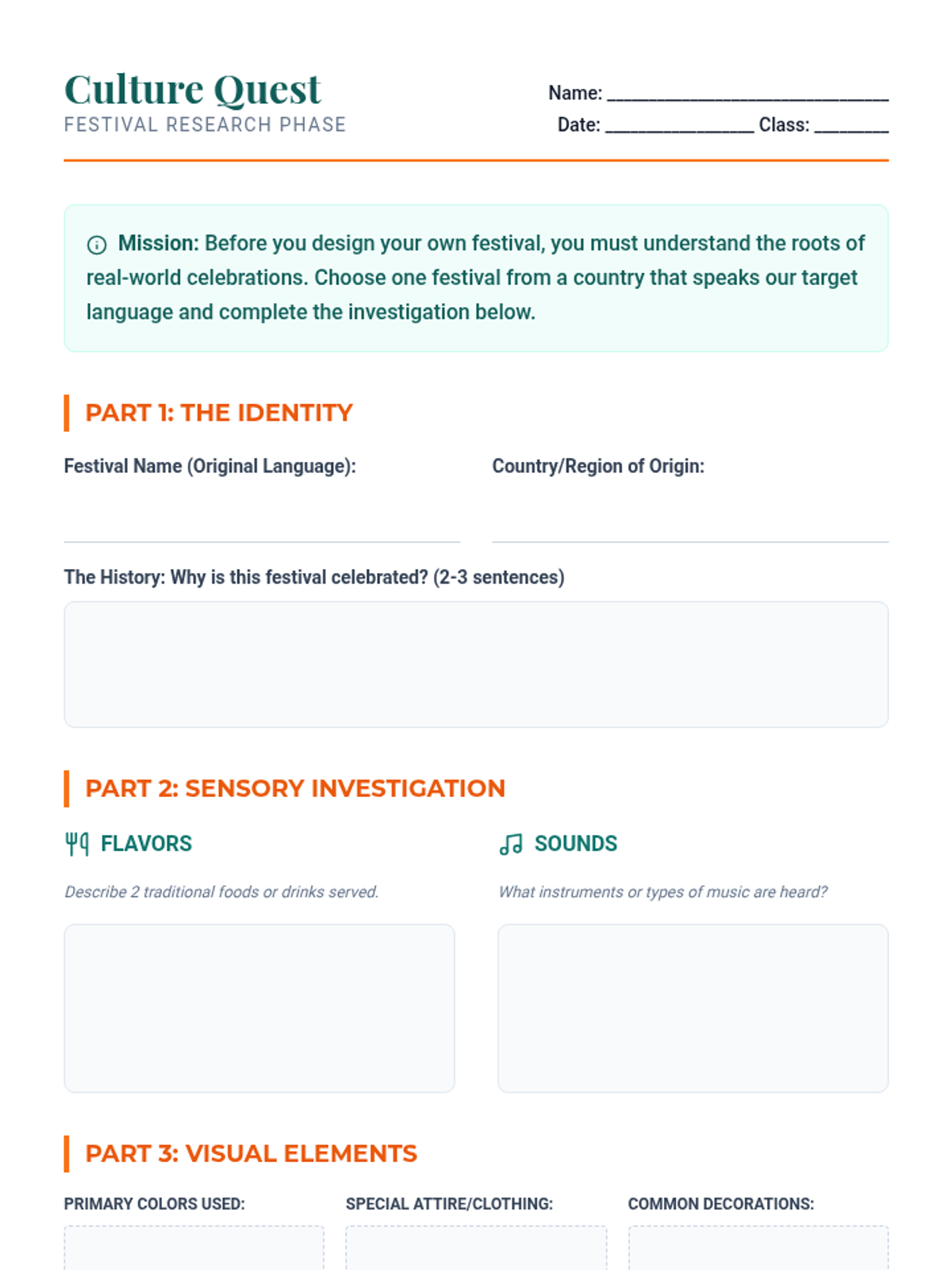
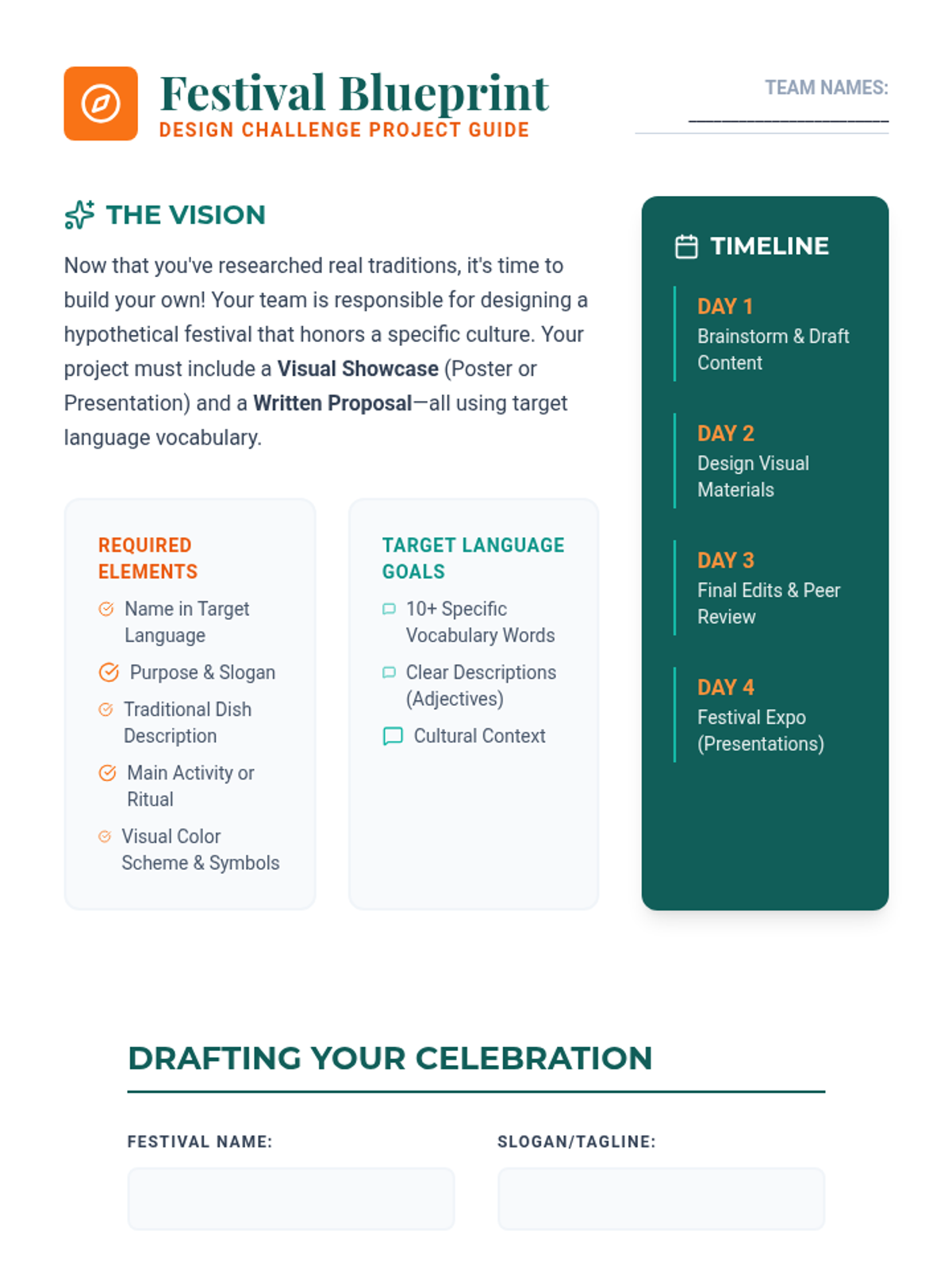
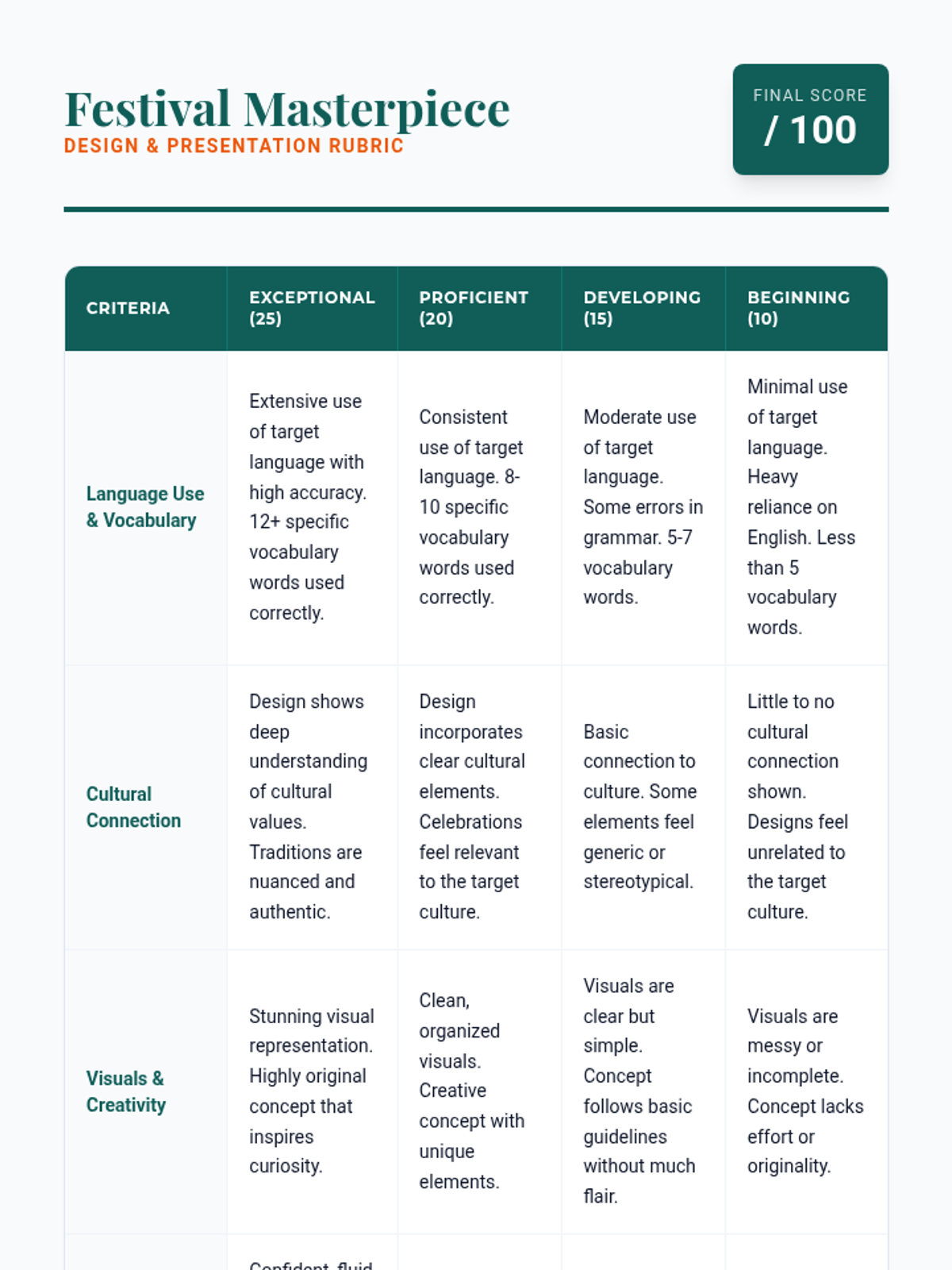
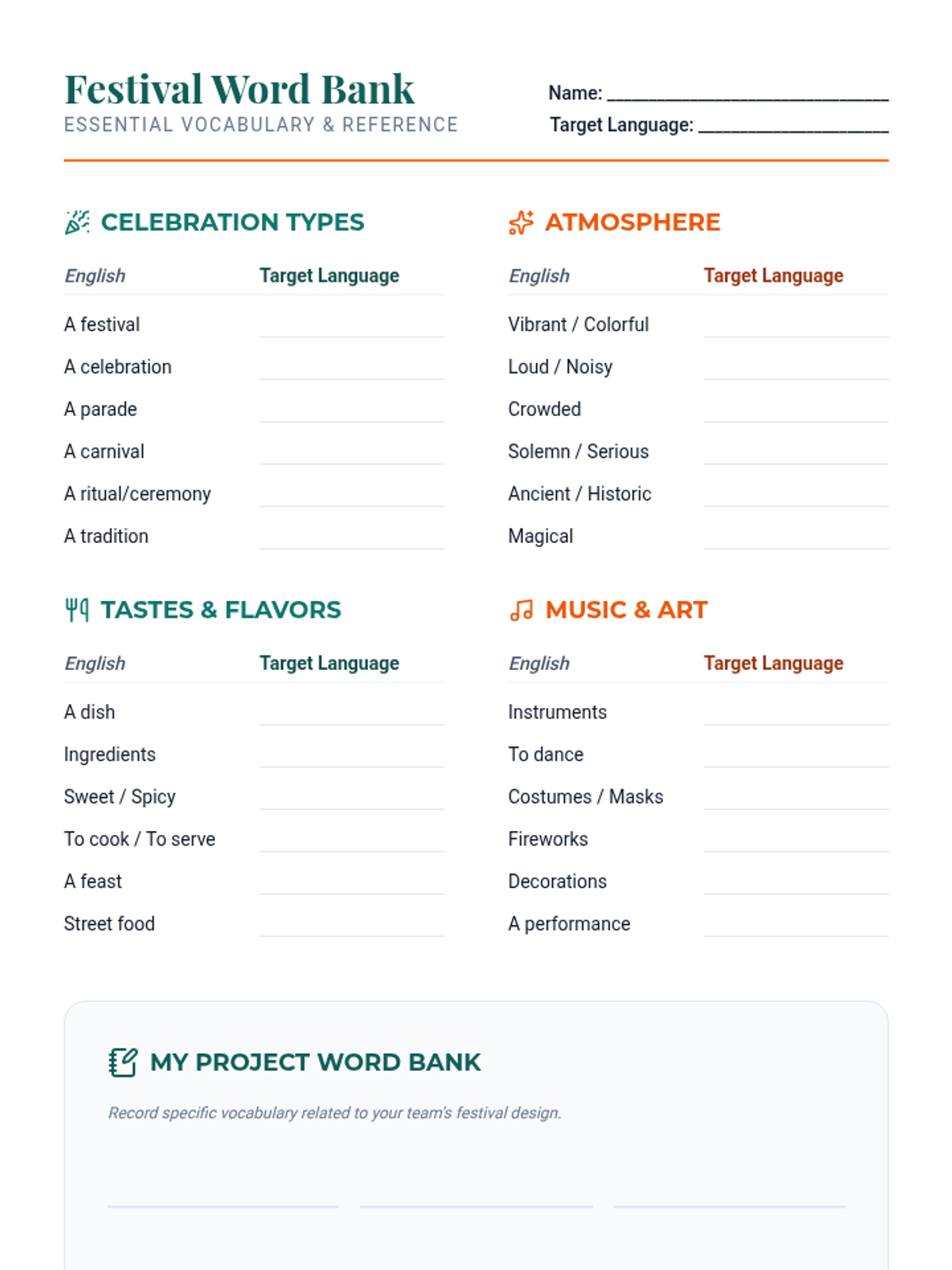
A collaborative project-based lesson where students research real-world cultural festivals and then design their own unique celebration, applying target language vocabulary for food, music, and traditions.
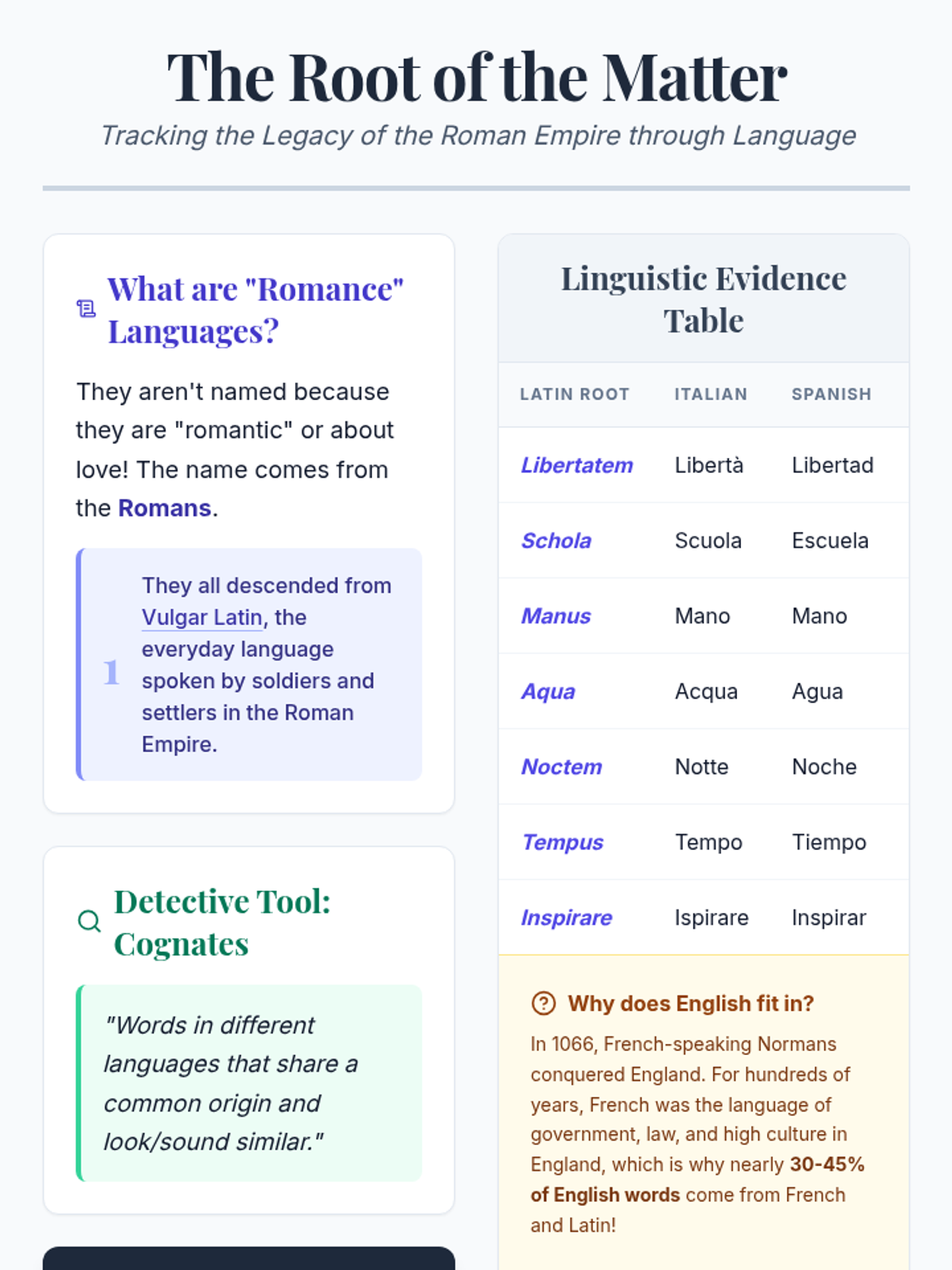
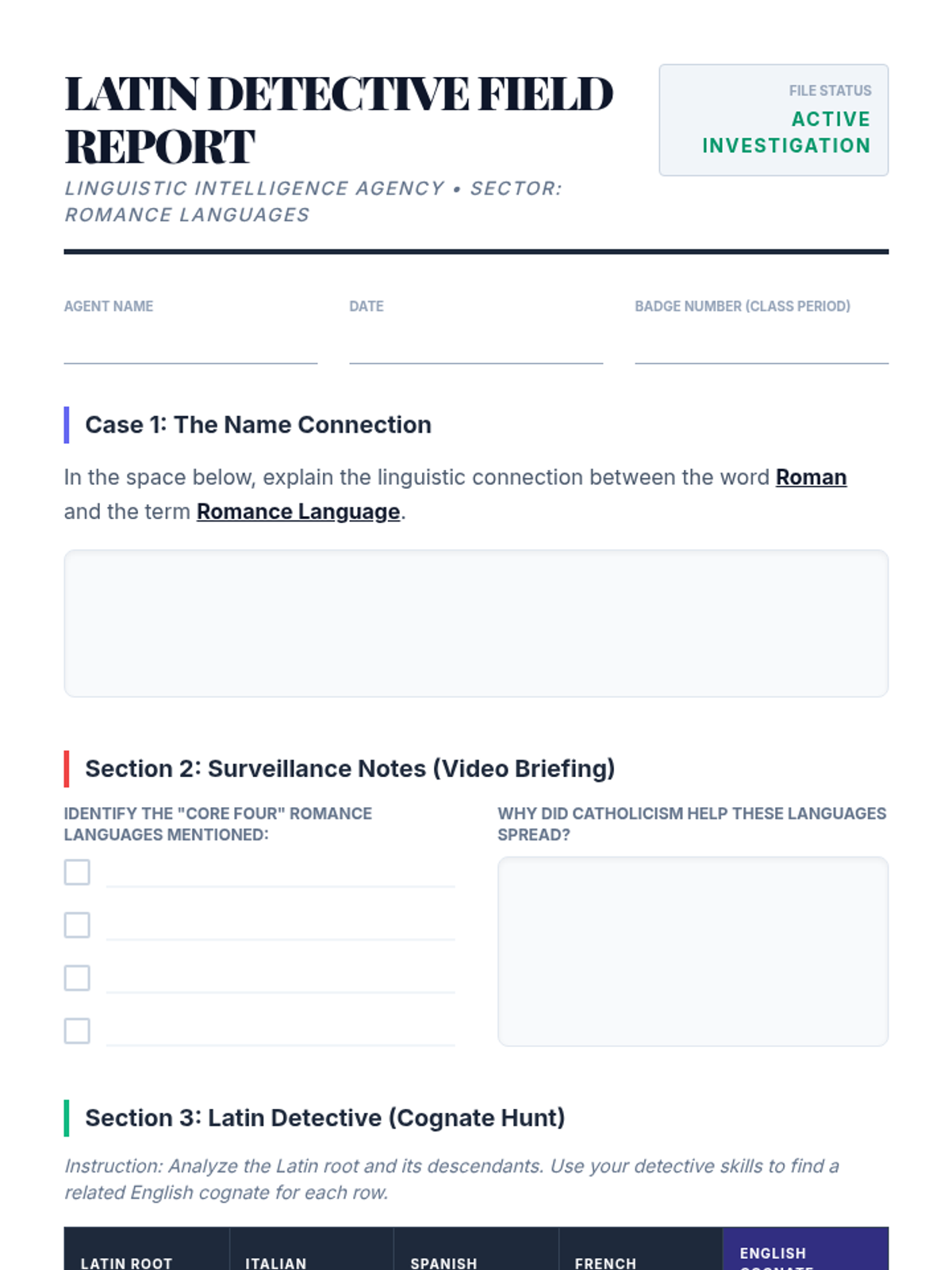
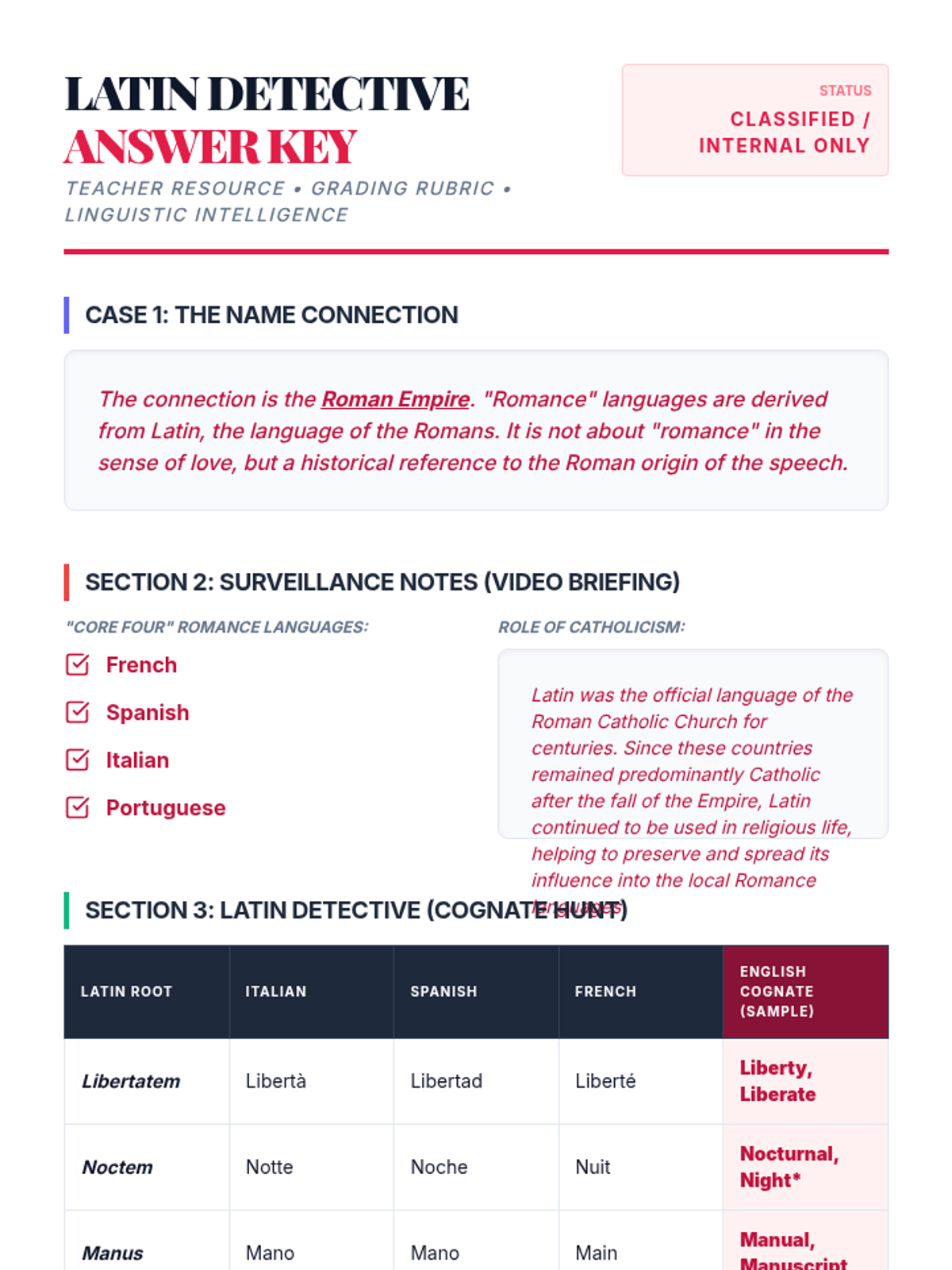
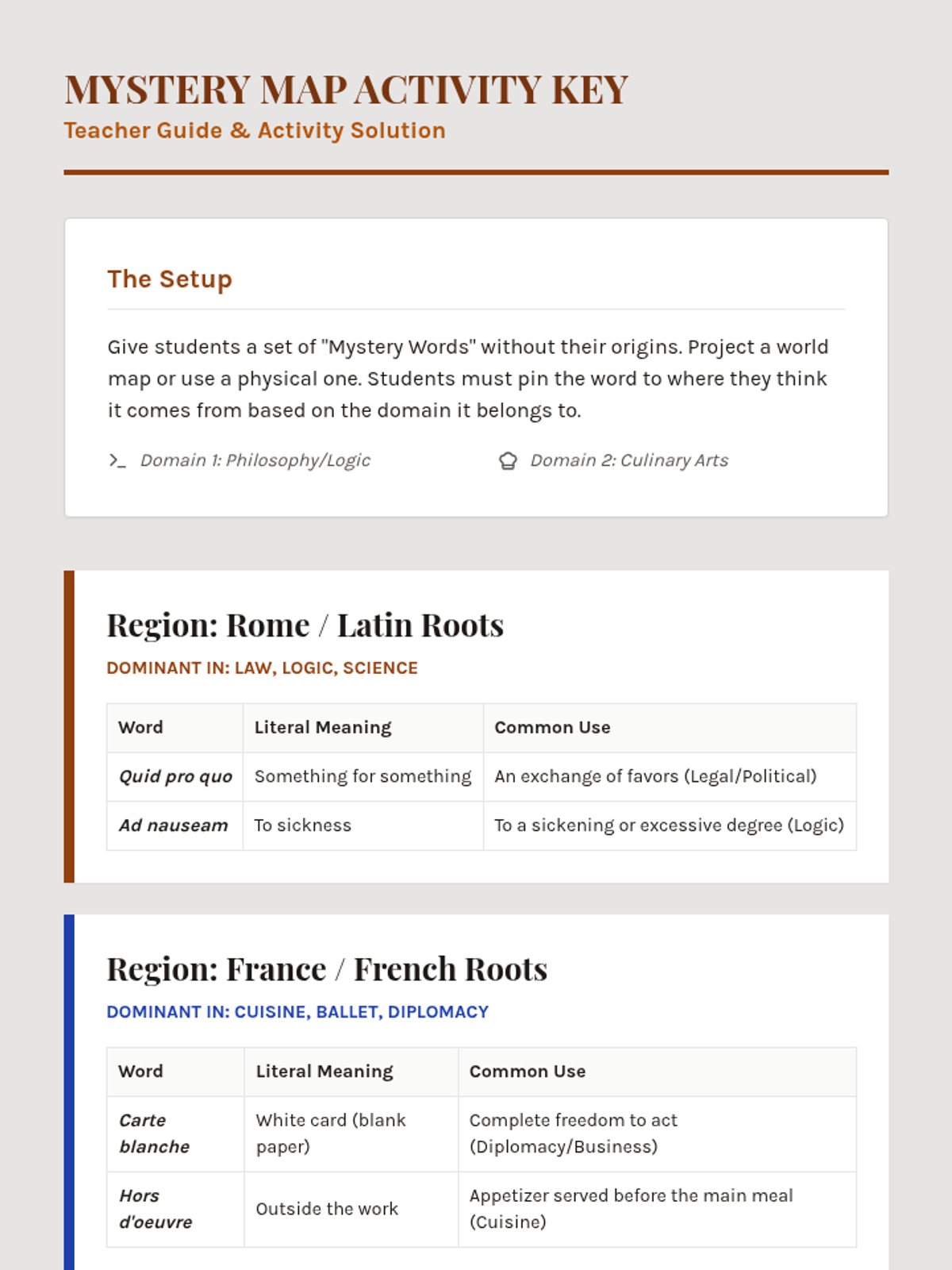
A lesson exploring the linguistic connections between Latin, Romance languages, and English through the lens of 'linguistic detective work.' Students identify cognates and understand the historical influence of the Roman Empire on modern speech.
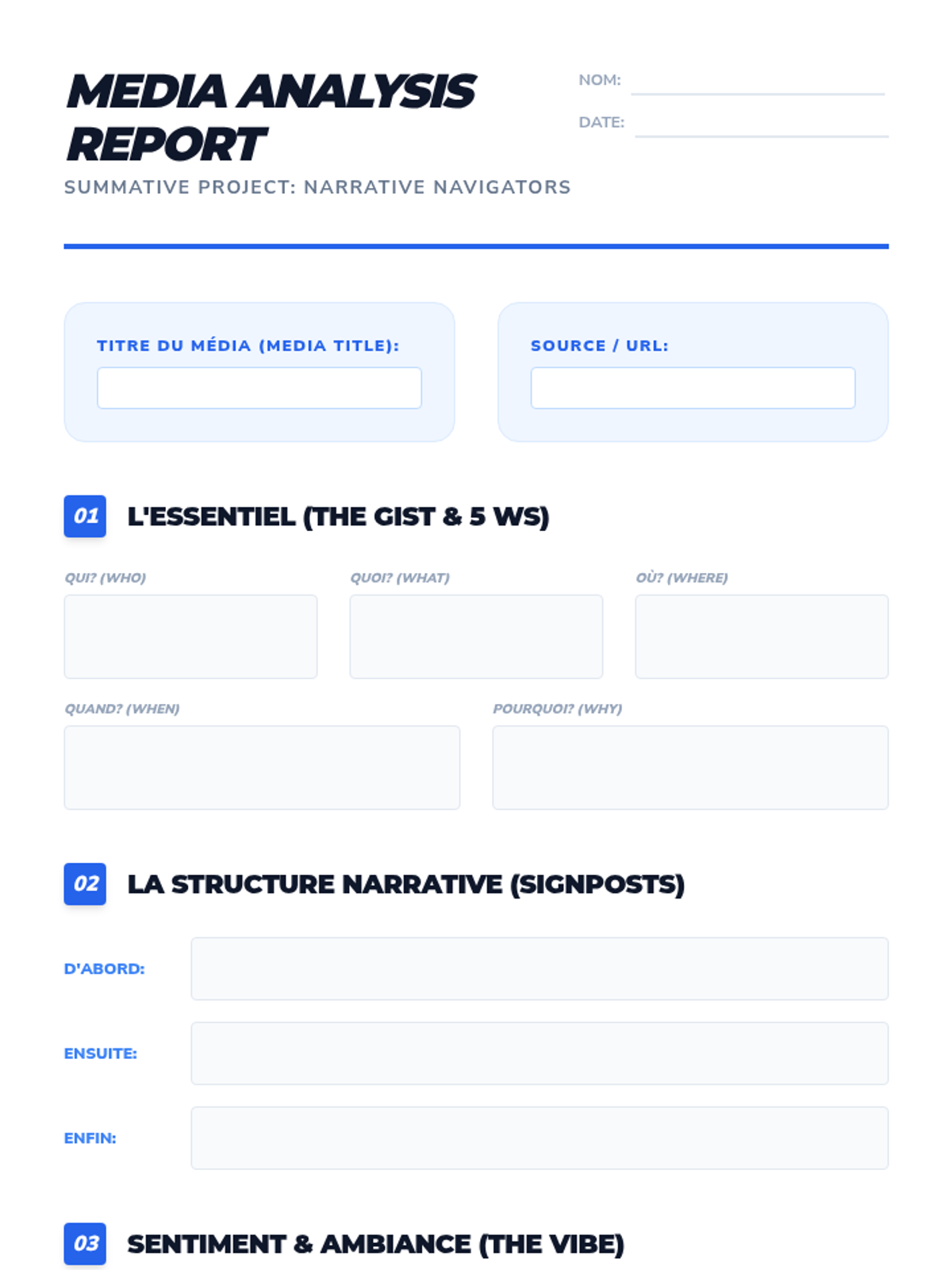
As a final workshop, students select a short audio clip of their choice (podcast intro, video blog, etc.) and apply all strategies to create a 'Listening Report.' They present a summary, key vocabulary, and the structural outline of the clip to peers. This encourages autonomous listening habits.
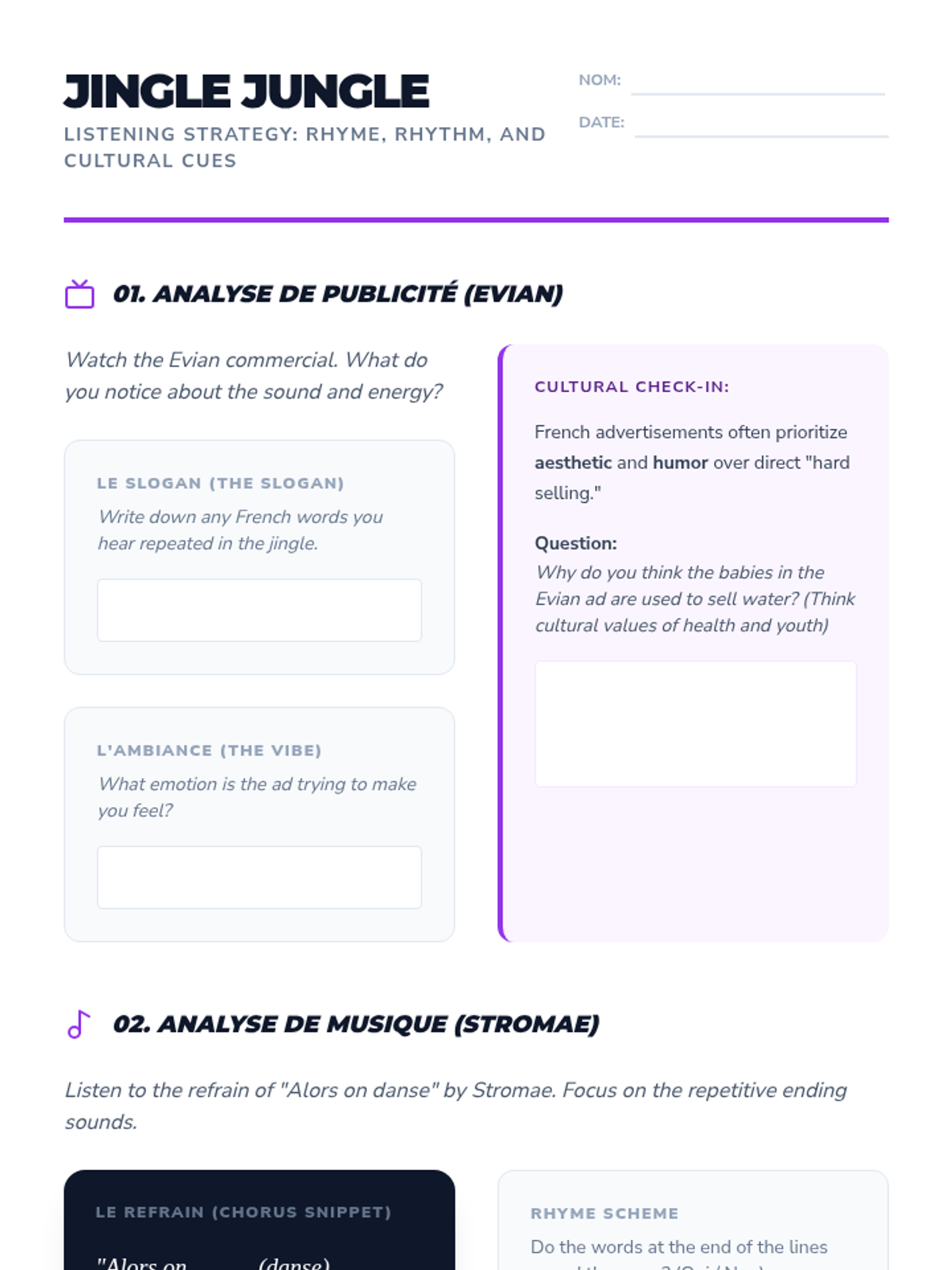
This lesson uses catchy commercials and simple pop songs to explore cultural references and wordplay. Students identify slogans, rhymes, and cultural values embedded in the media. This adds a layer of cultural literacy to auditory skills.
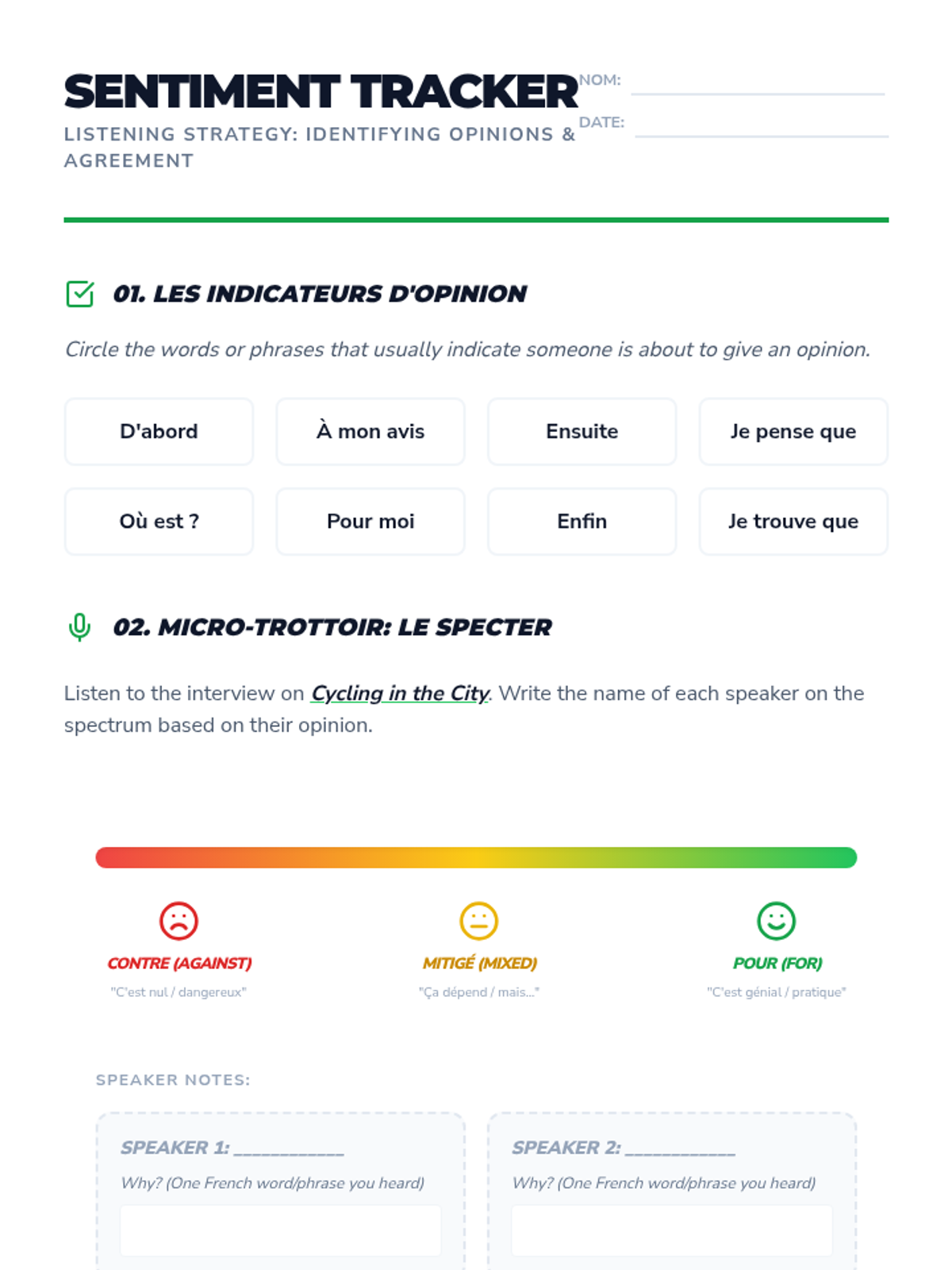
Students listen to street interviews (micro-trottoir) where people express likes, dislikes, and opinions. The lesson focuses on identifying agreement/disagreement phrases and emotive adjectives. Students chart the general sentiment of the speakers toward a specific topic.
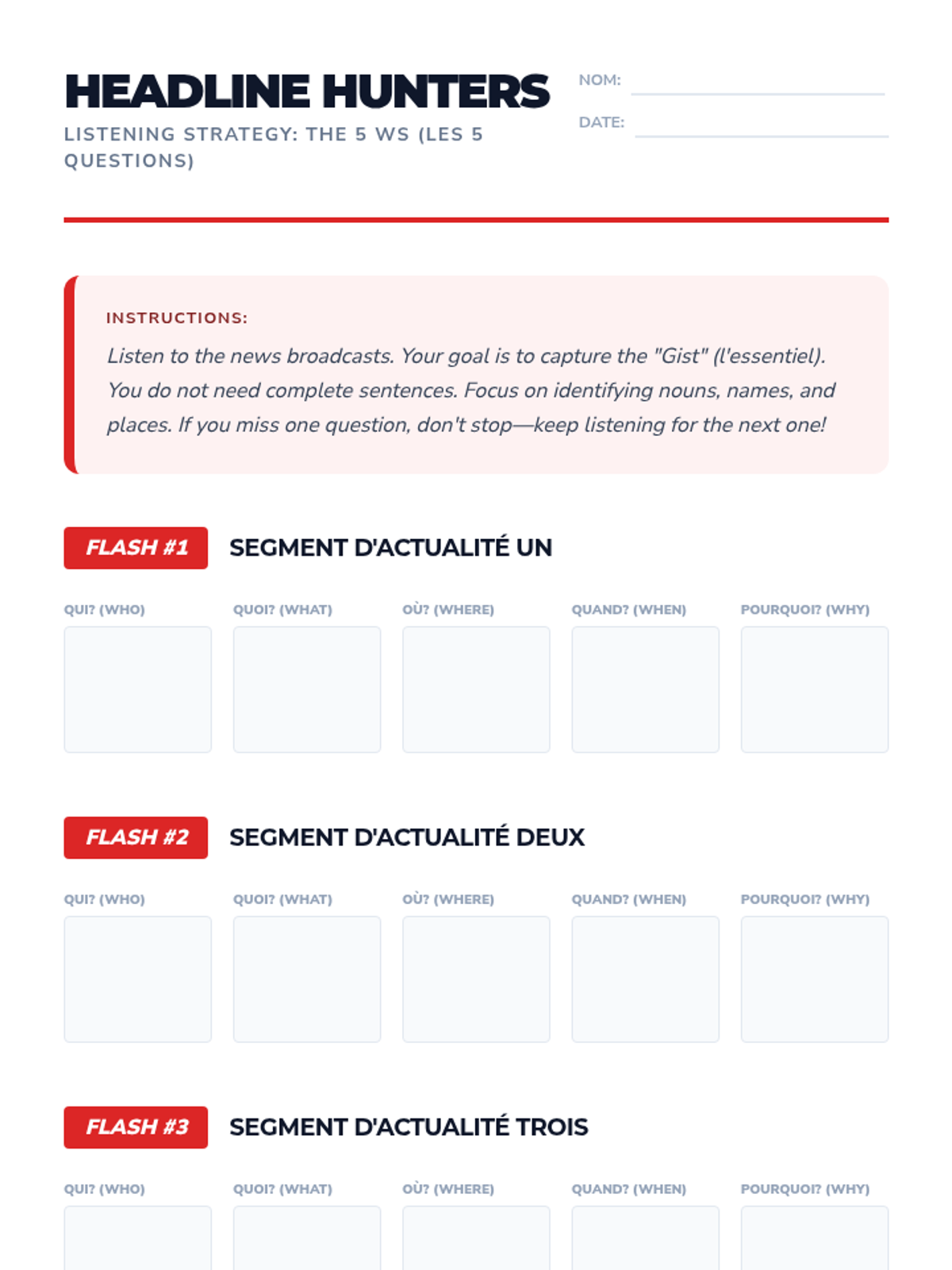
Using simplified news broadcasts (like 'News in Slow French'), students practice answering the '5 Ws' (Who, What, Where, When, Why). The focus is on extracting the main idea or 'gist' without getting stuck on unknown vocabulary. Discussion focuses on how the lead sentence frames the listening.
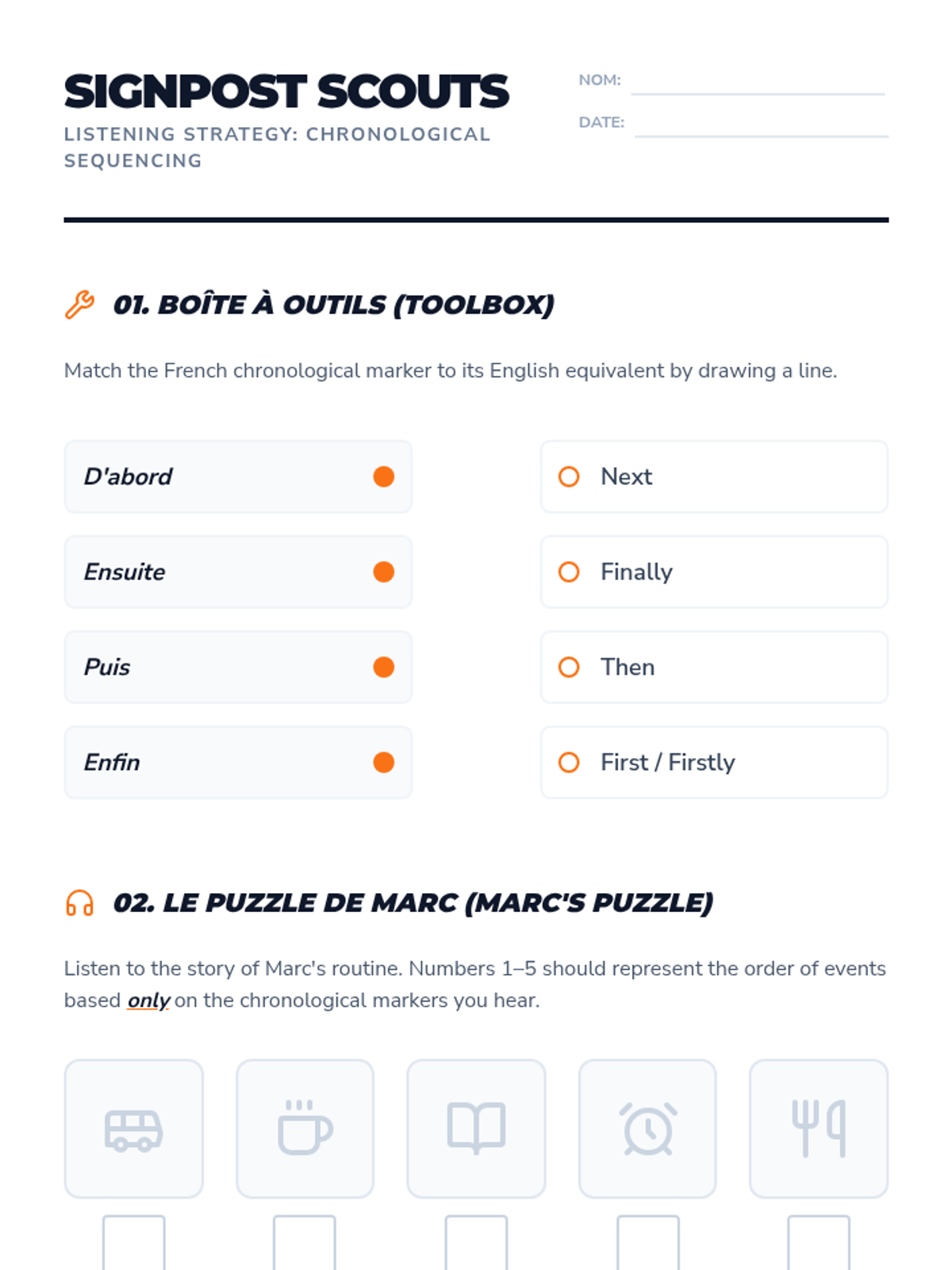
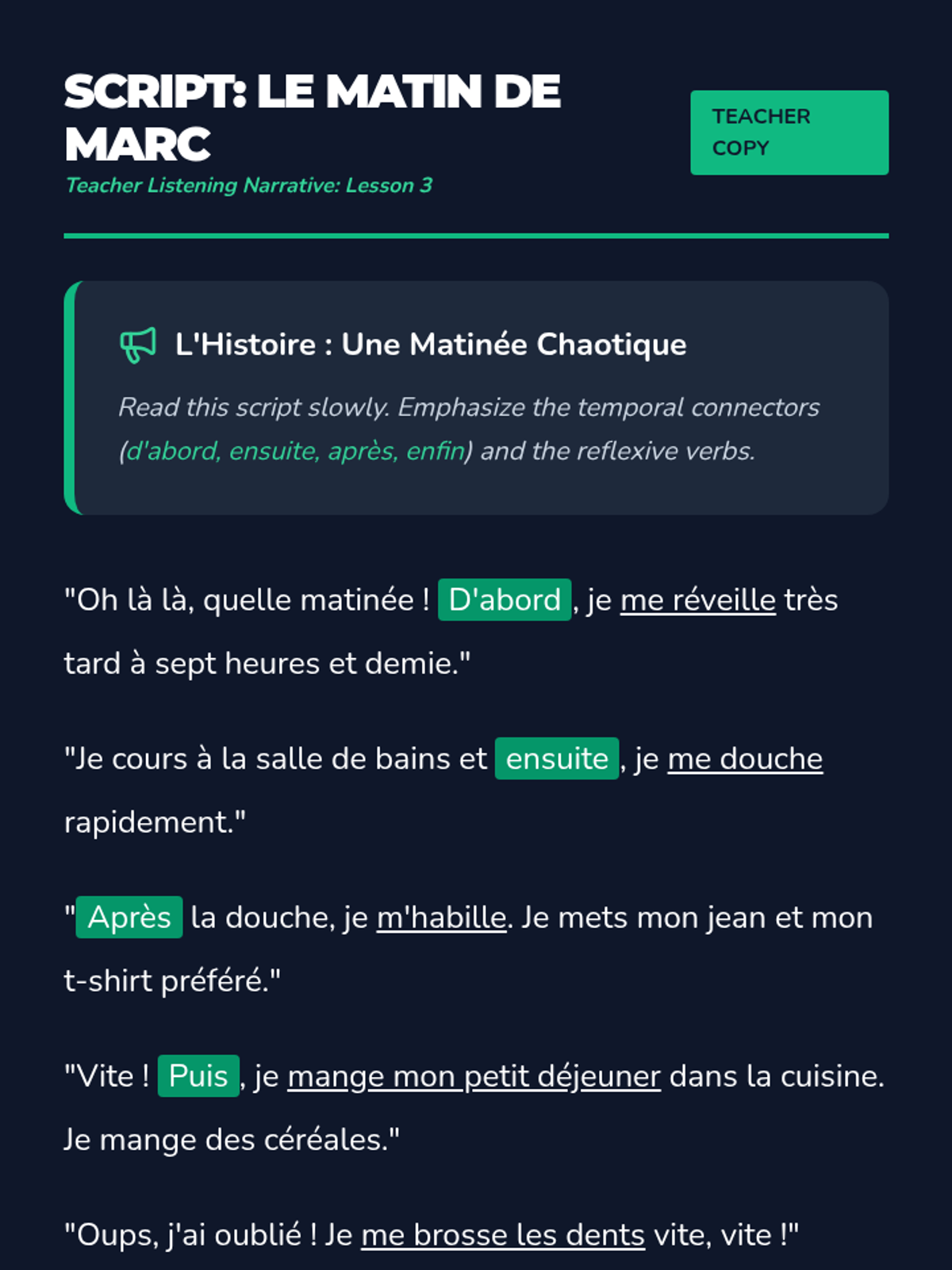
Students learn to identify chronological markers and logical connectors in simple French narratives to organize events mentally without needing word-for-word translation.
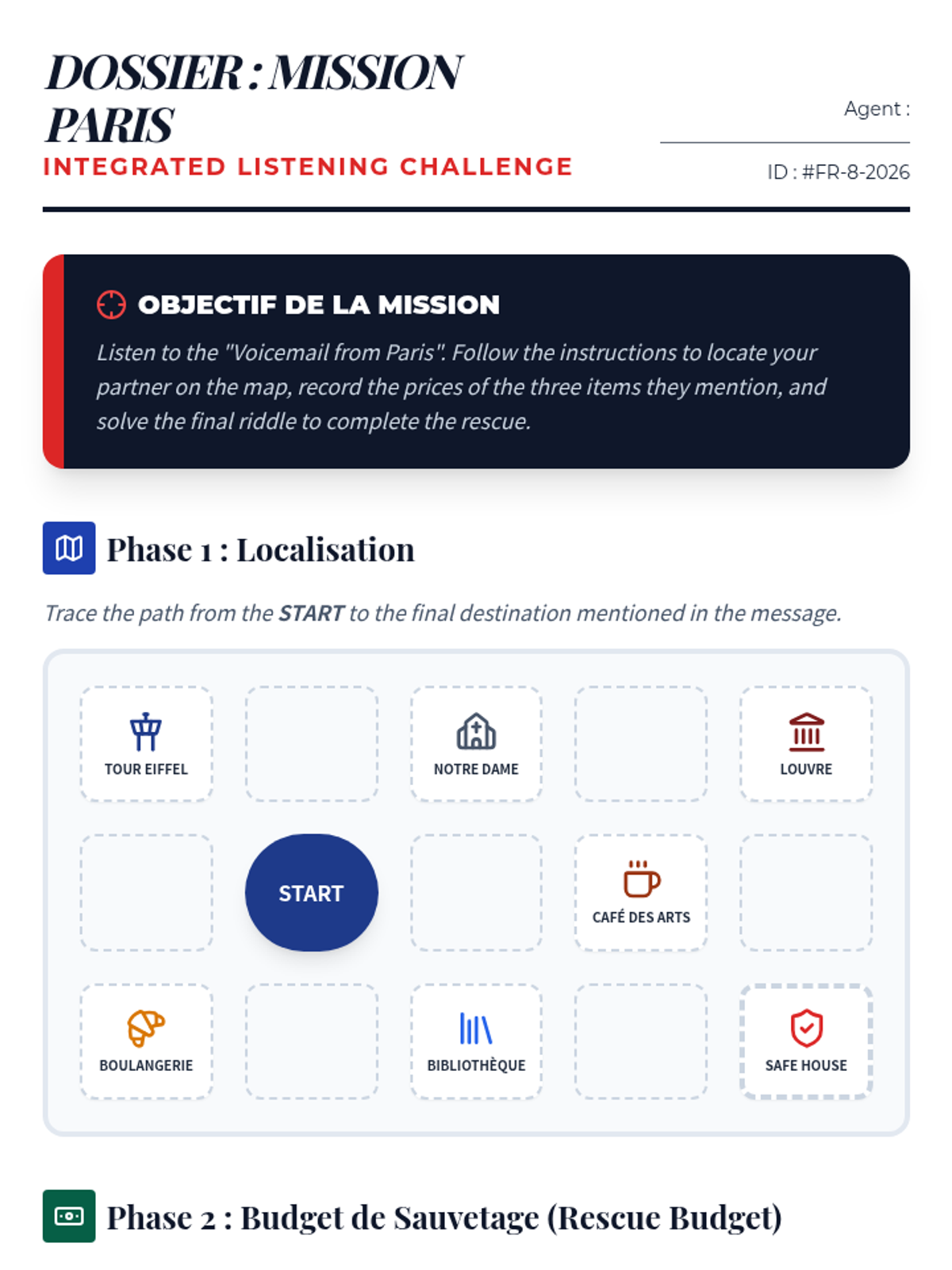
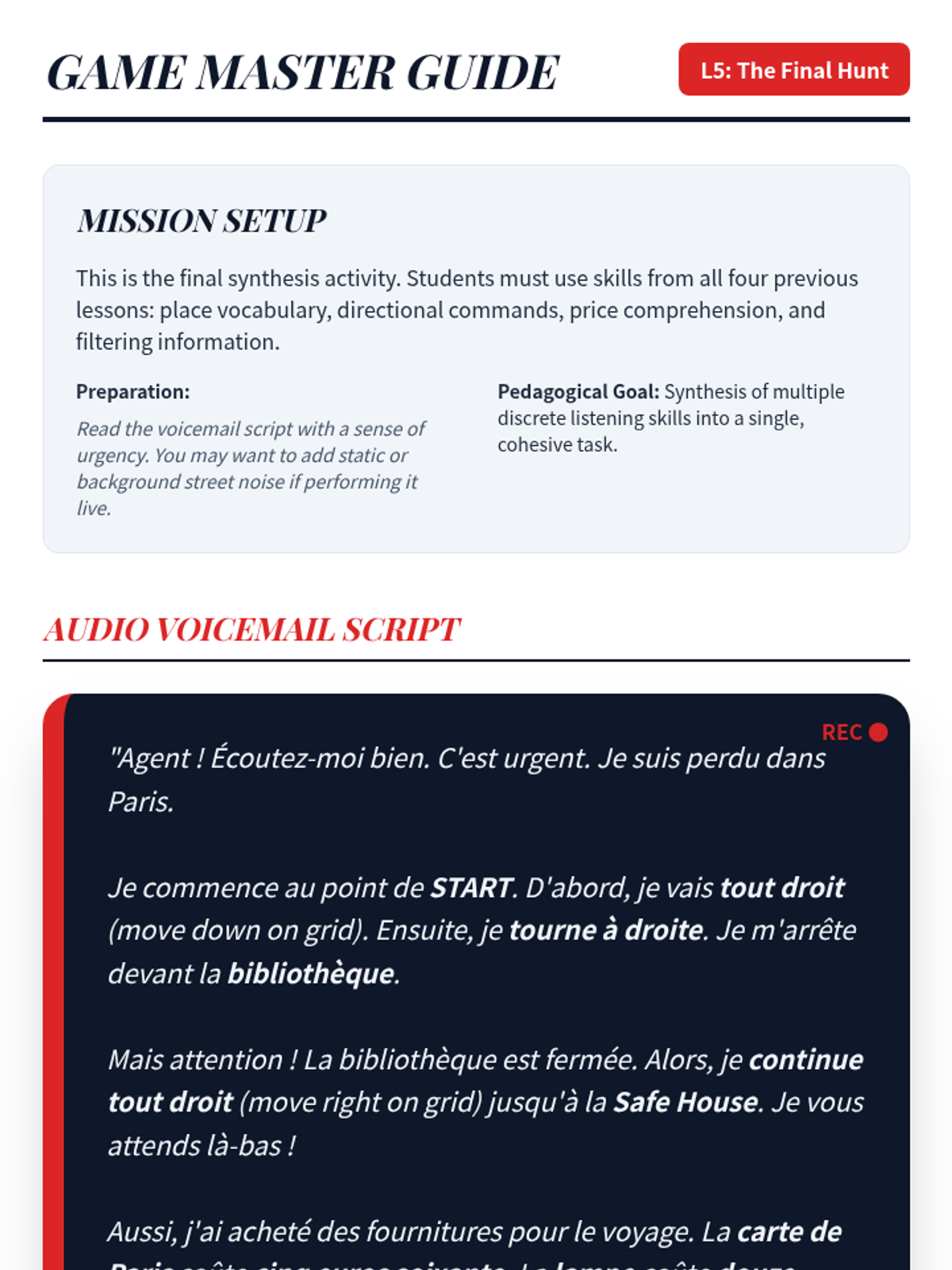
In this final challenge, students solve a series of riddles and navigational clues presented in audio format to find specific locations and items across a virtual city map. This requires synthesizing place names, directions, and descriptive vocabulary.
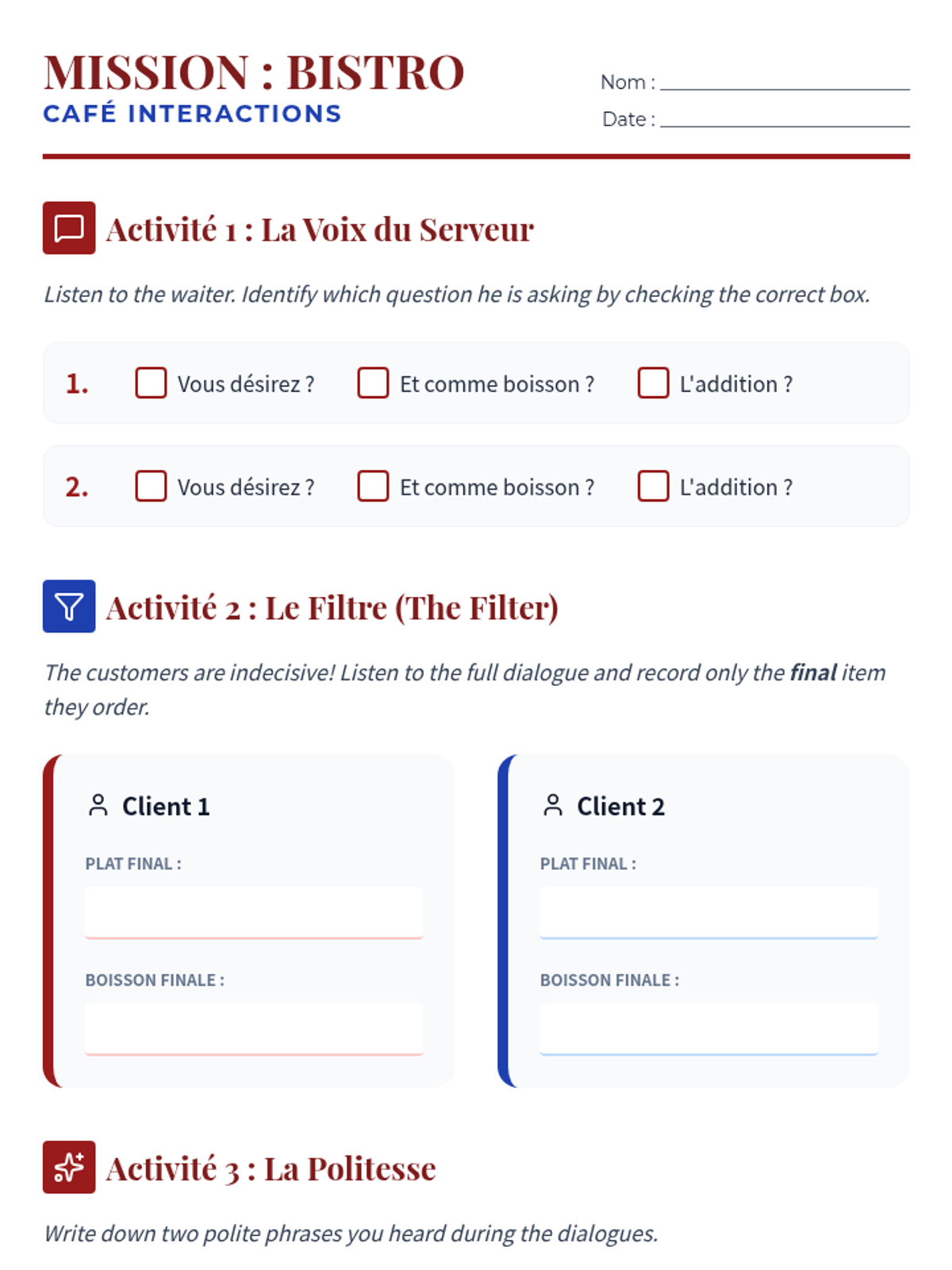
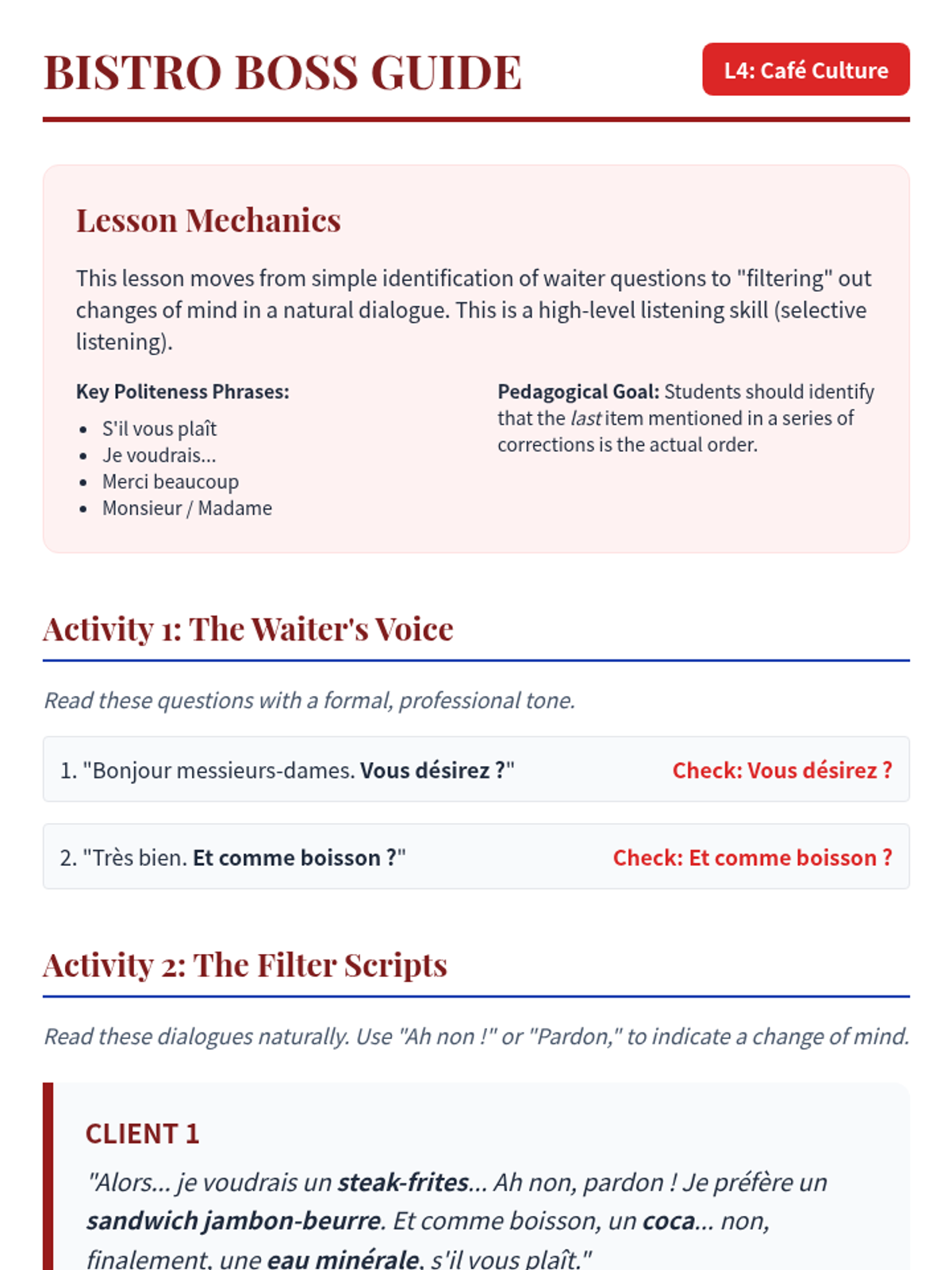
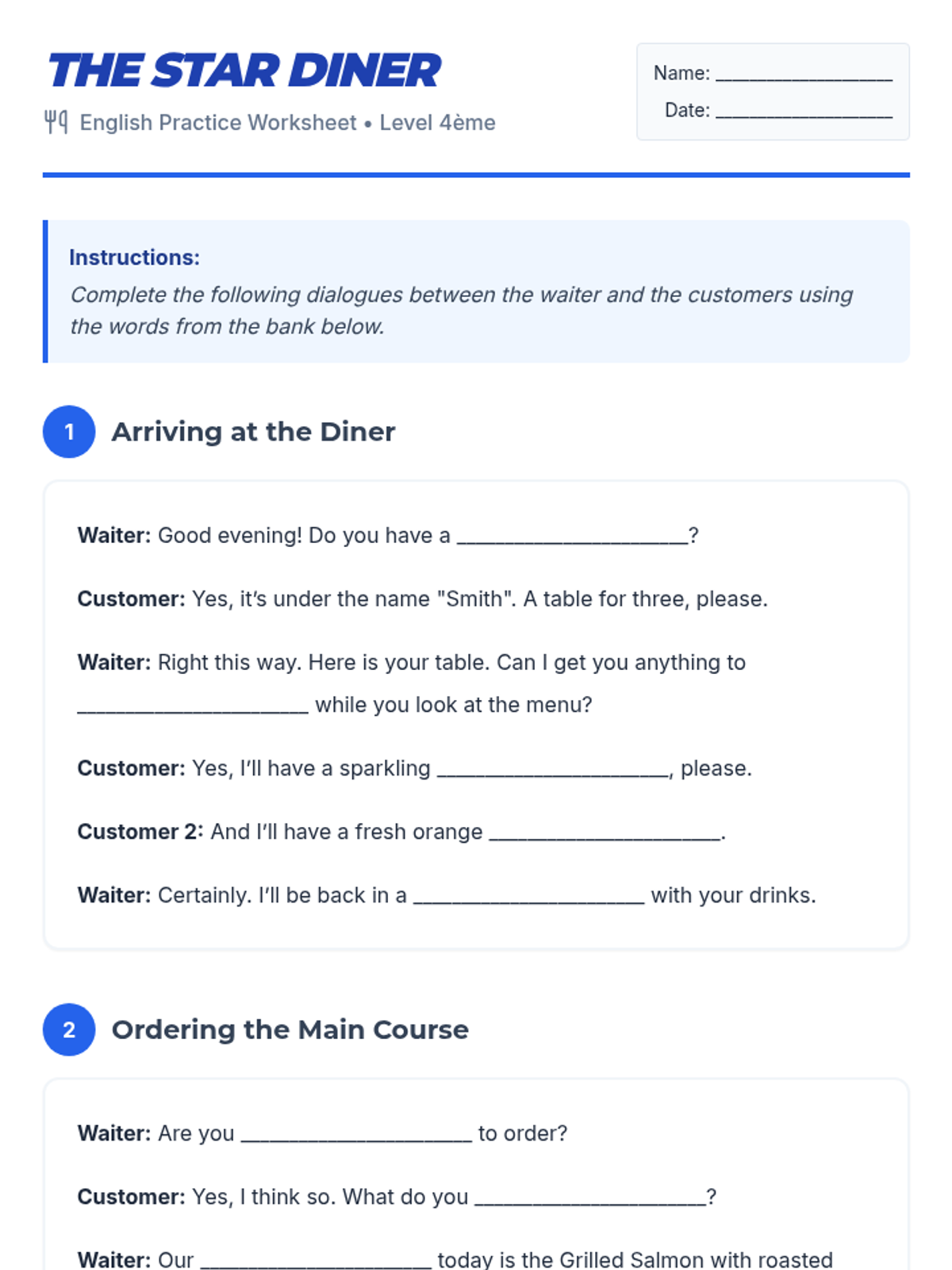
Students analyze dialogues between customers and waiters in a French café. They focus on identifying questions asked by the waiter and the politeness markers used in ordering food and drinks.
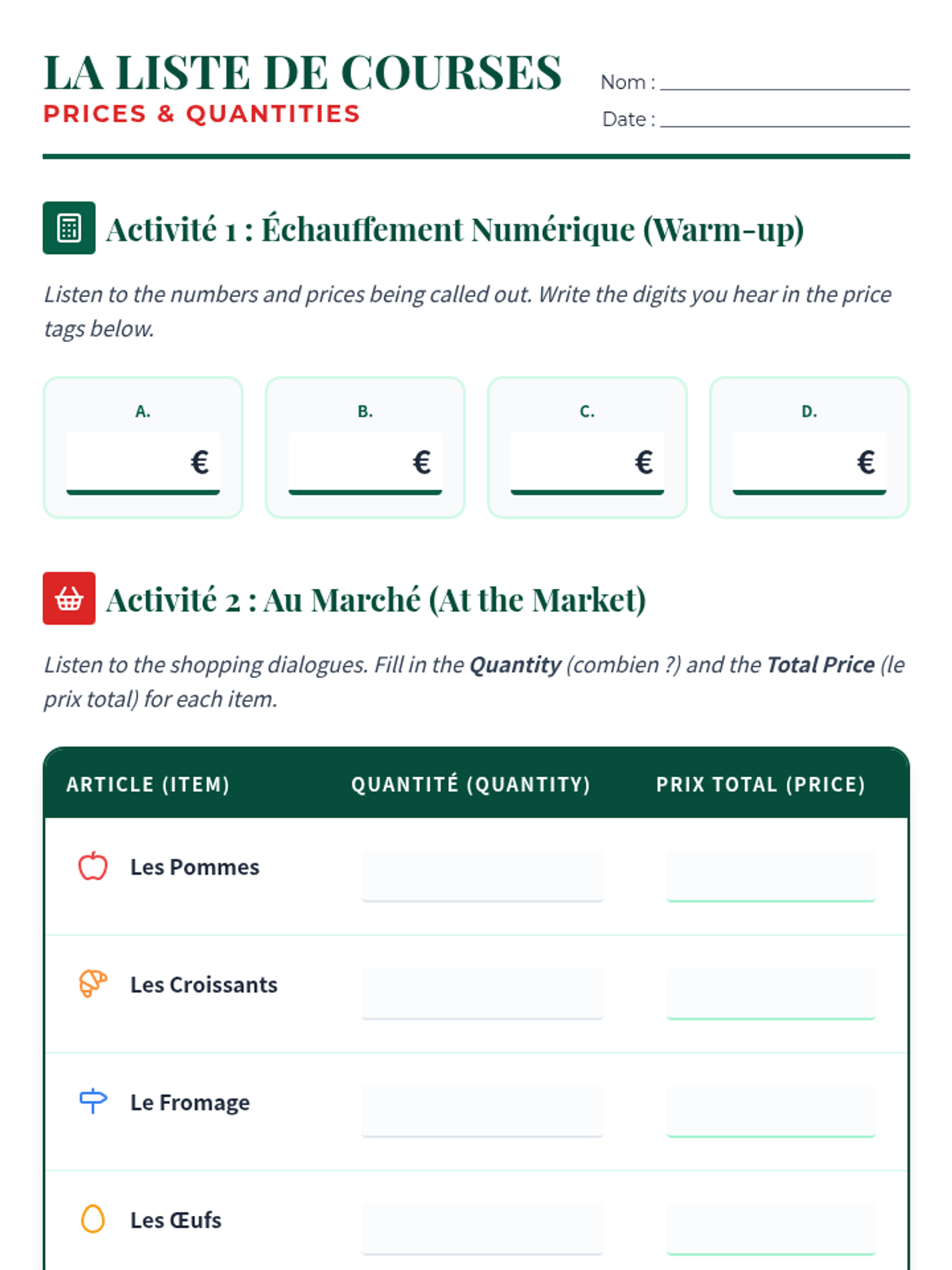
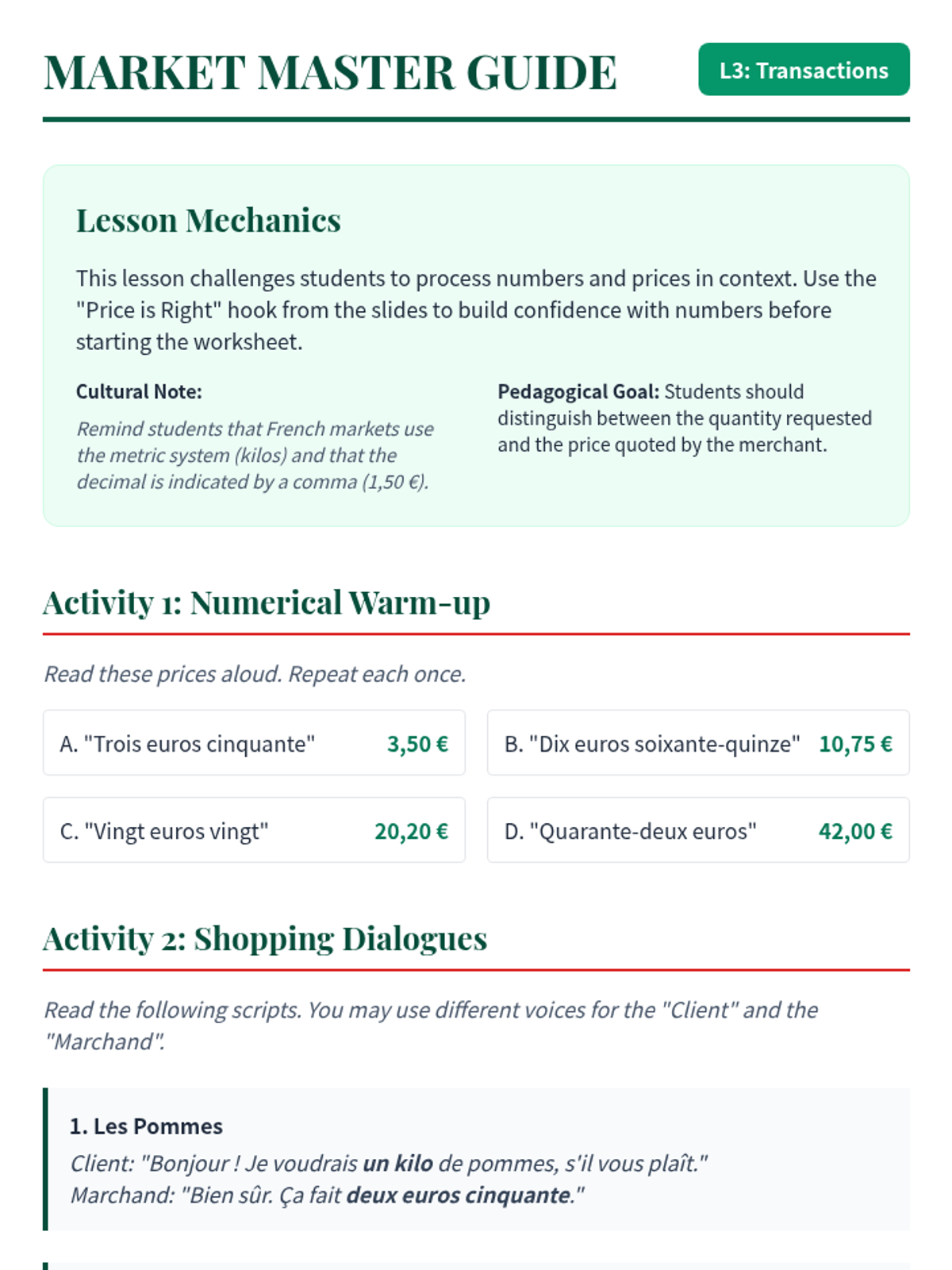
This lesson focuses on transactional listening, specifically hearing prices (using Euros) and quantities. Students listen to shopping dialogues and record the cost of items and the amount purchased.
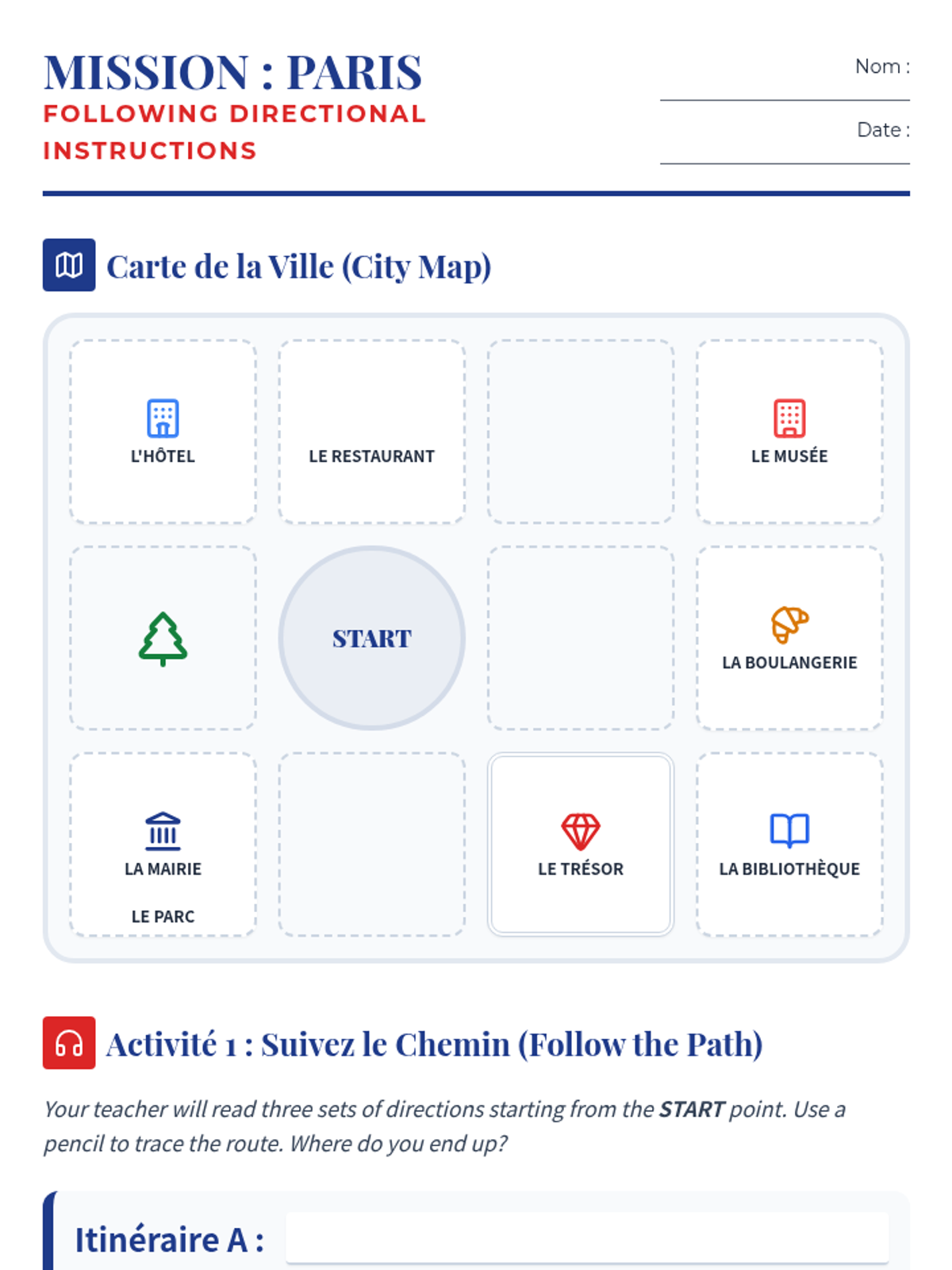
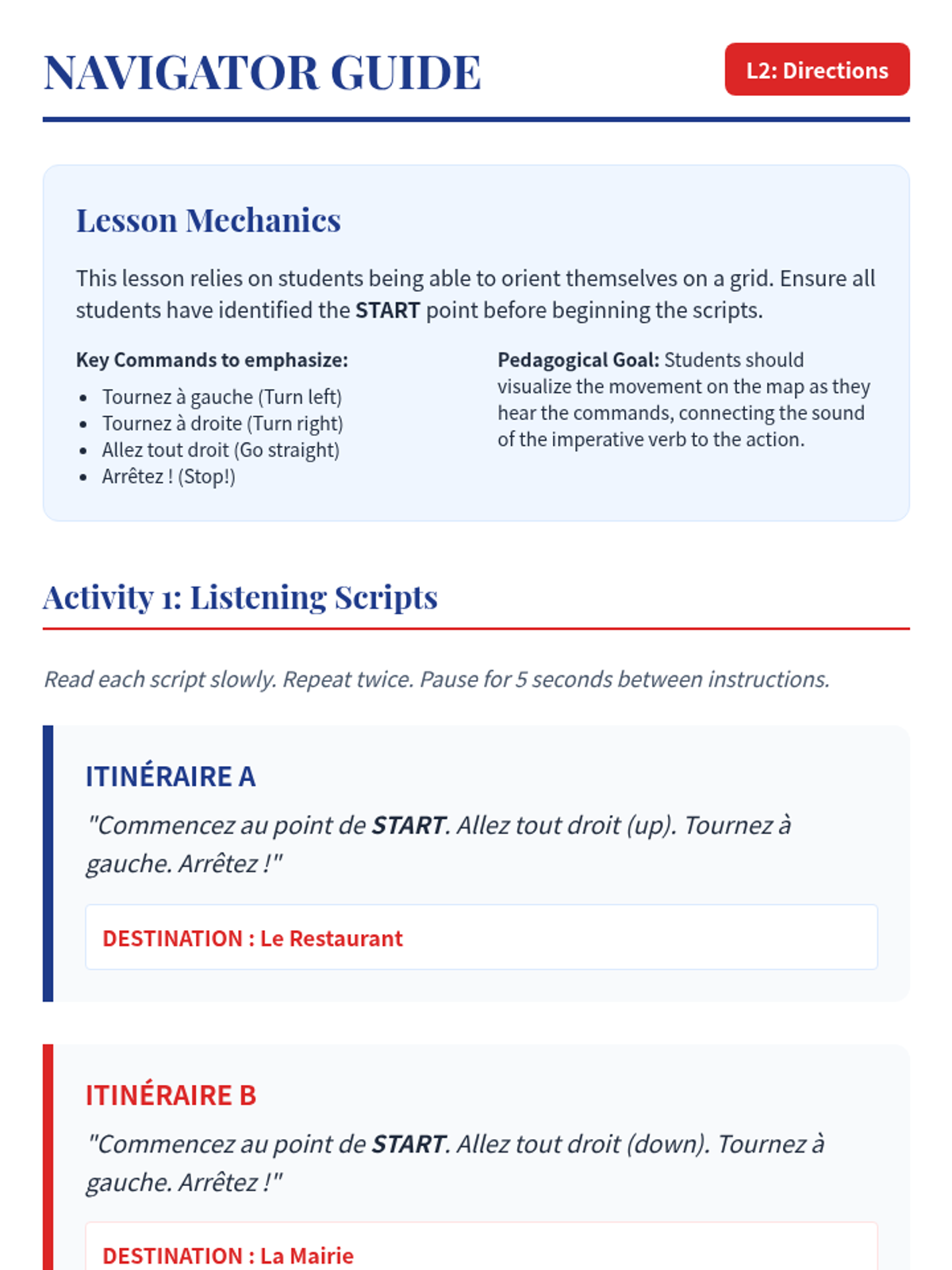
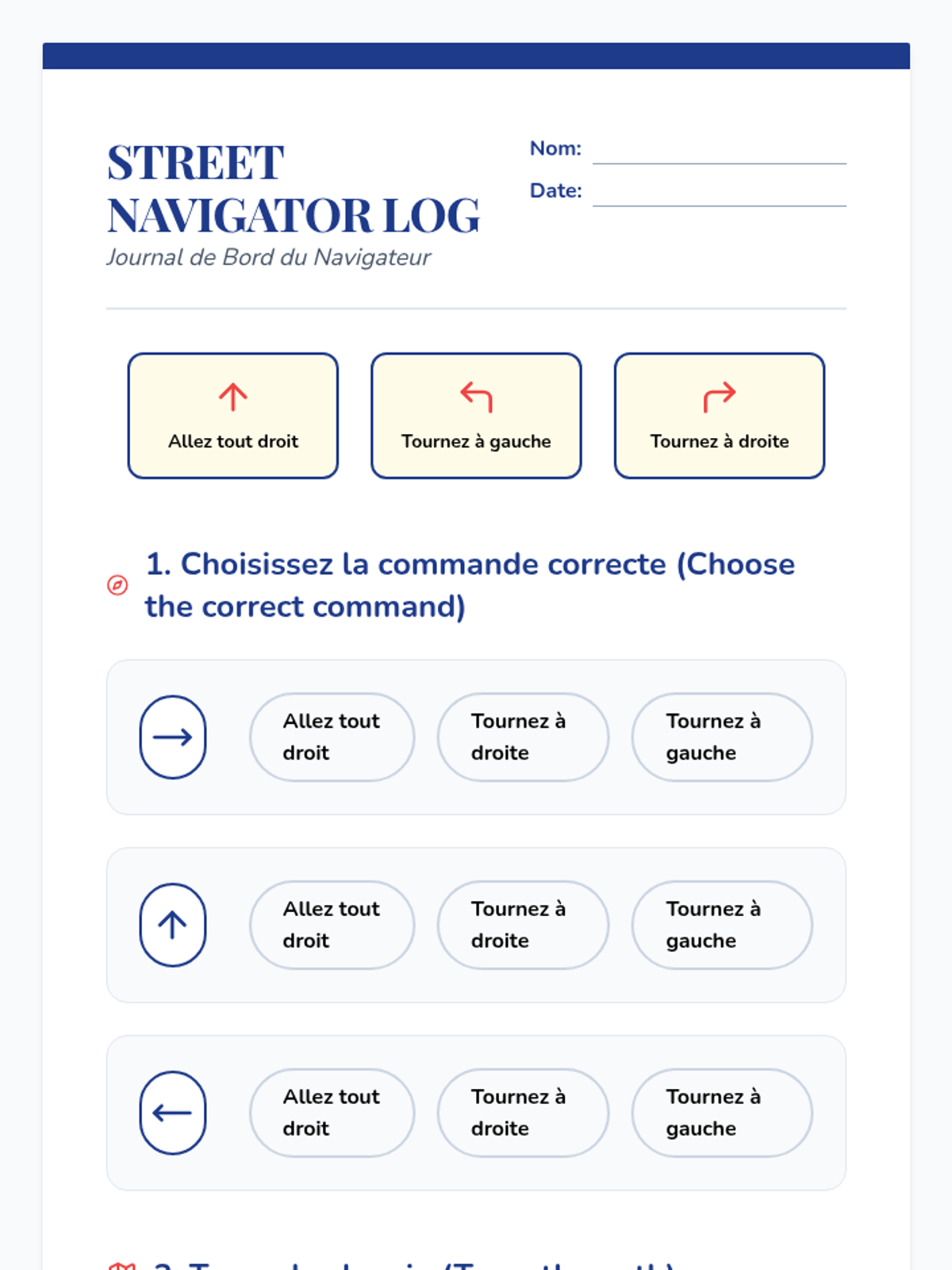
Learners practice listening for directional commands like 'turn left', 'go straight', and 'cross the bridge'. Using a city map, they trace a route with their finger as they listen to a guide giving walking directions.
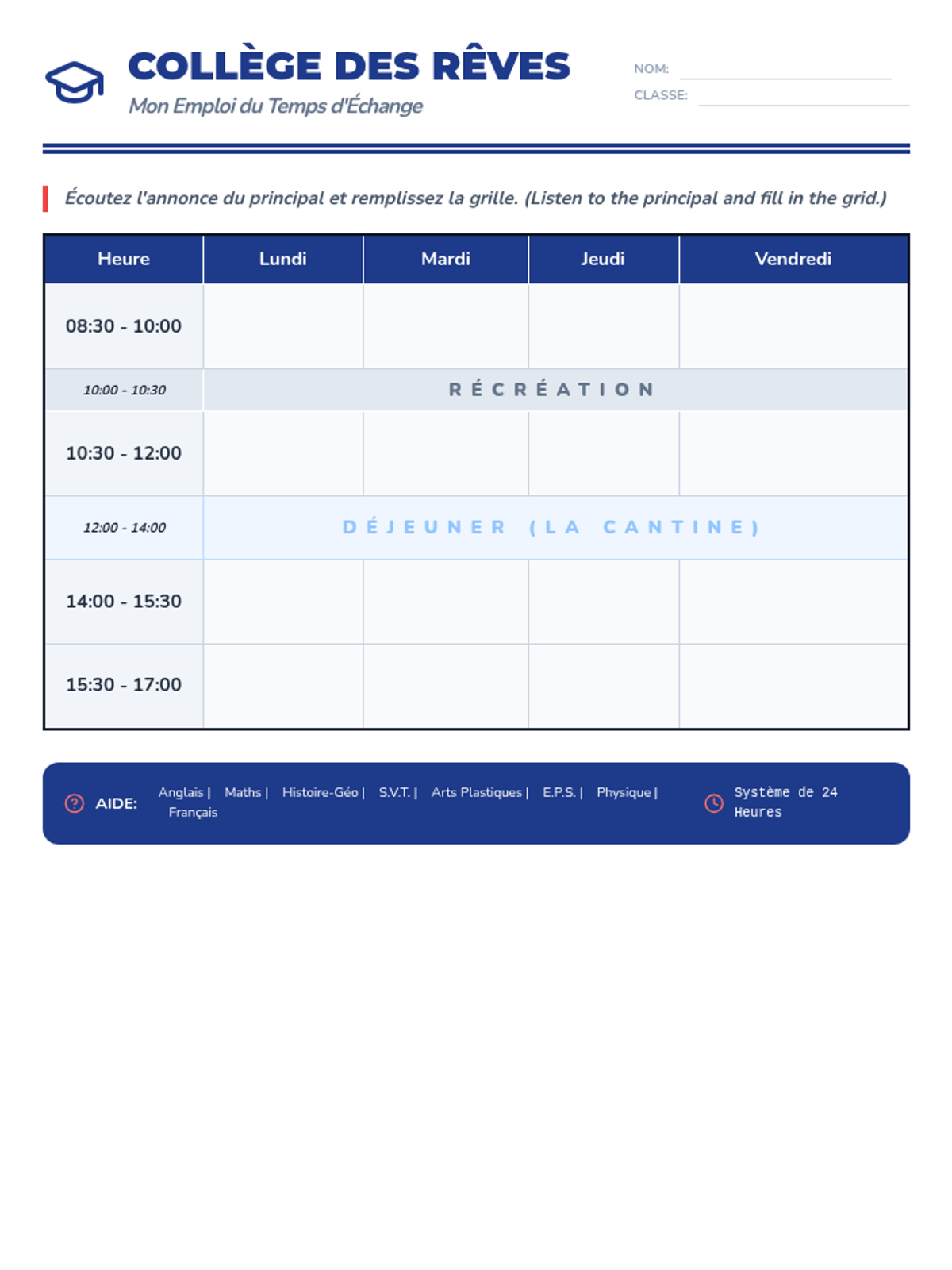
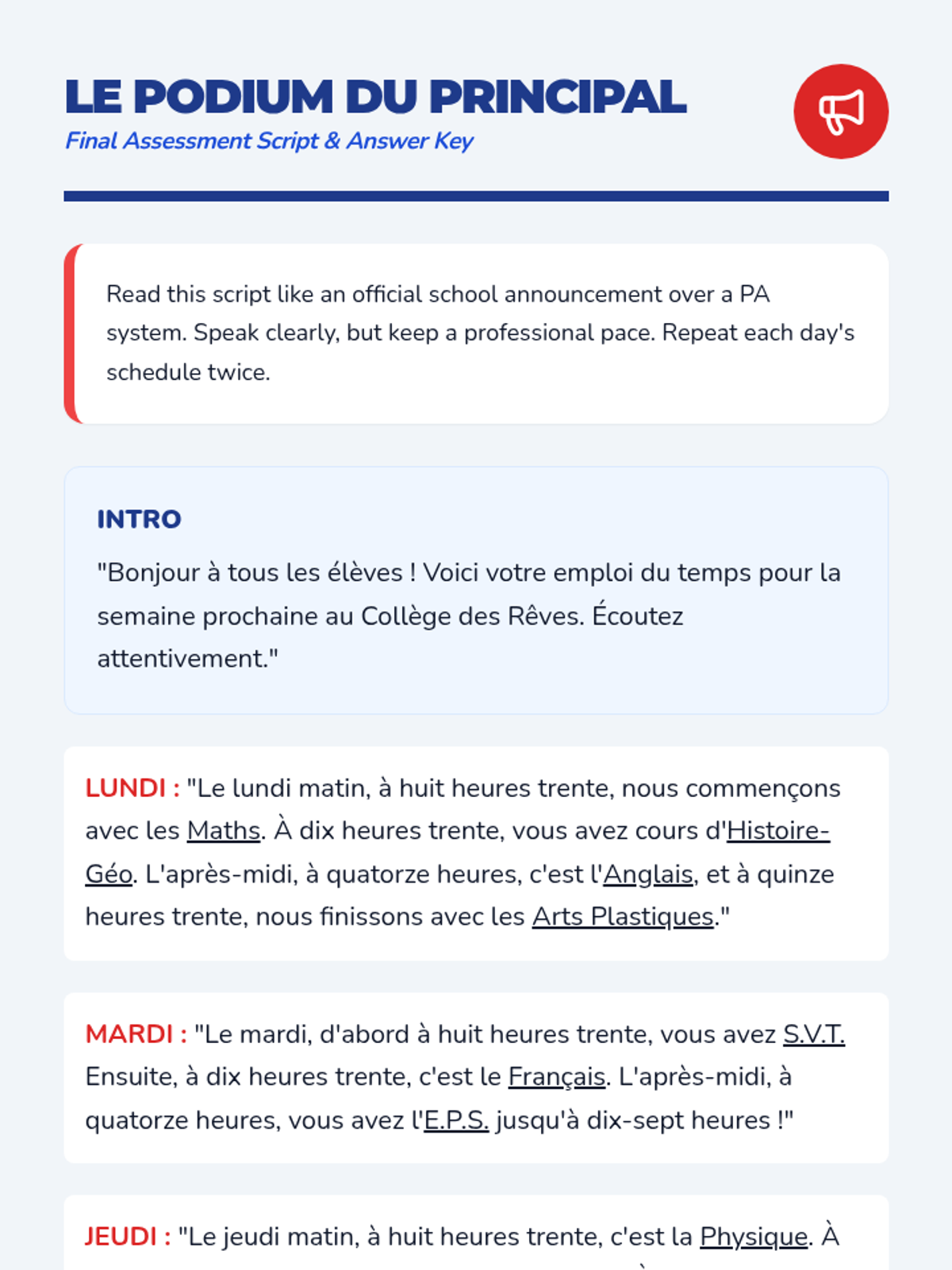
A synthesis lesson where students fill out a weekly timetable based on a detailed auditory description of a school schedule.
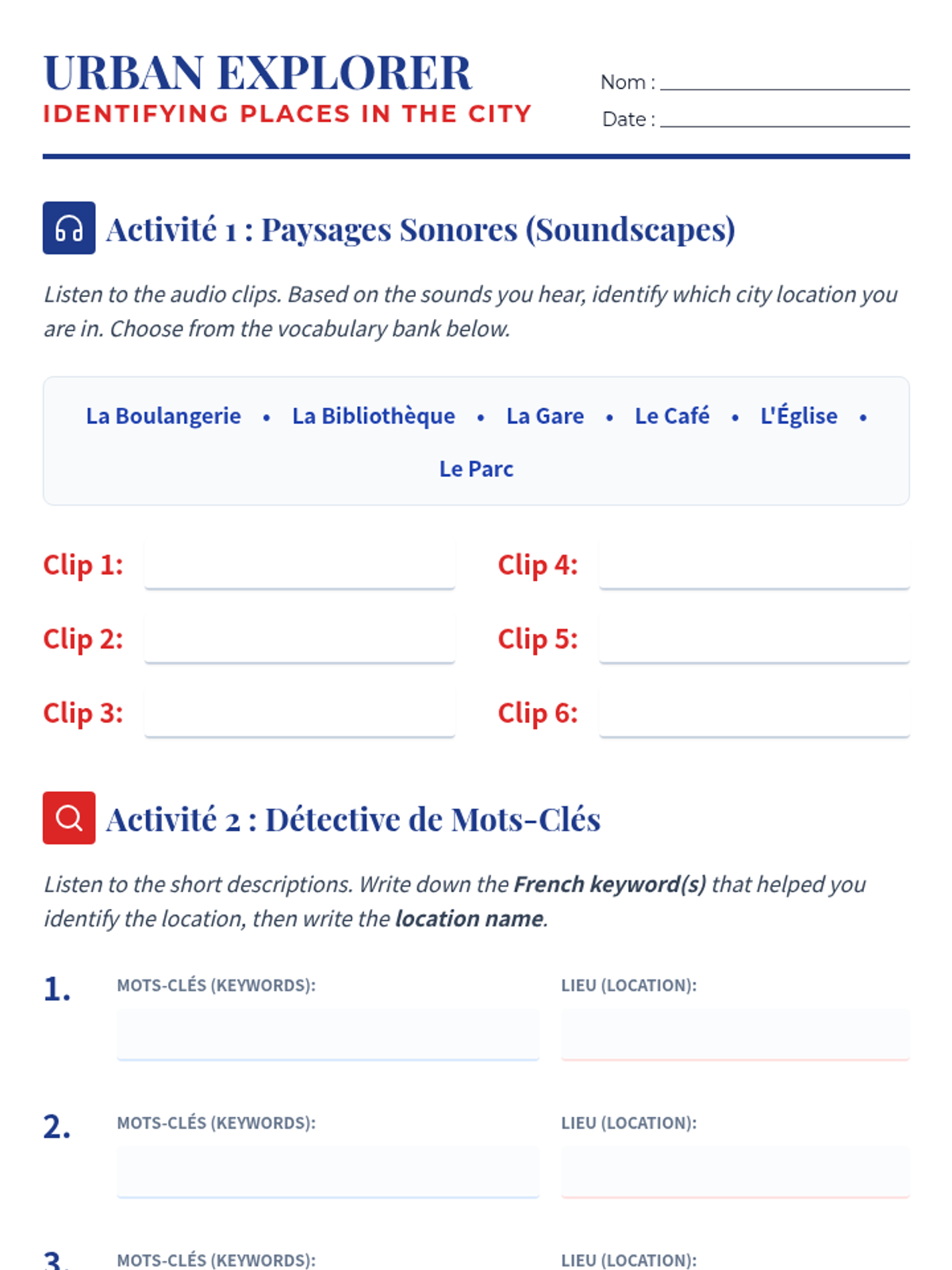
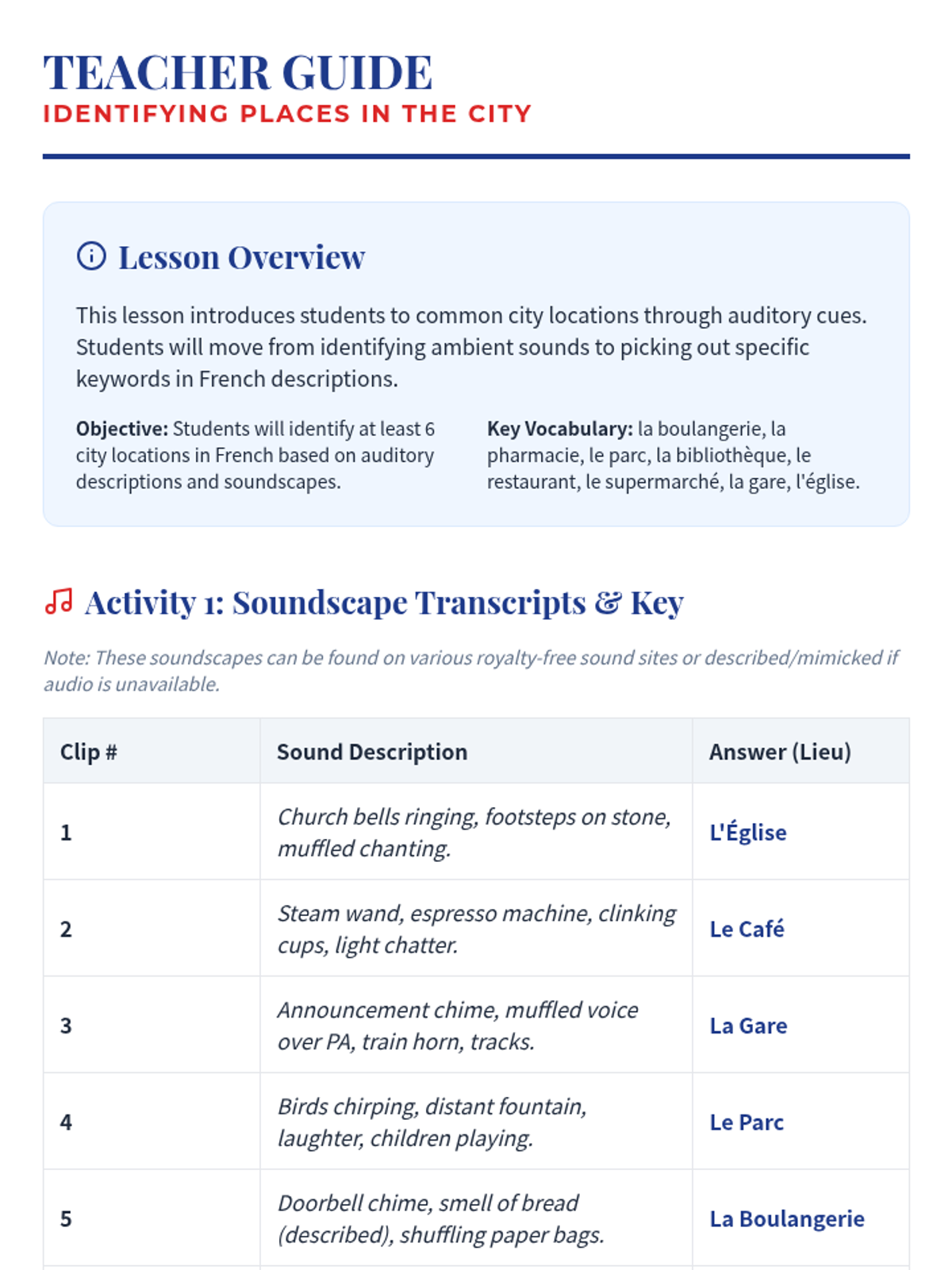
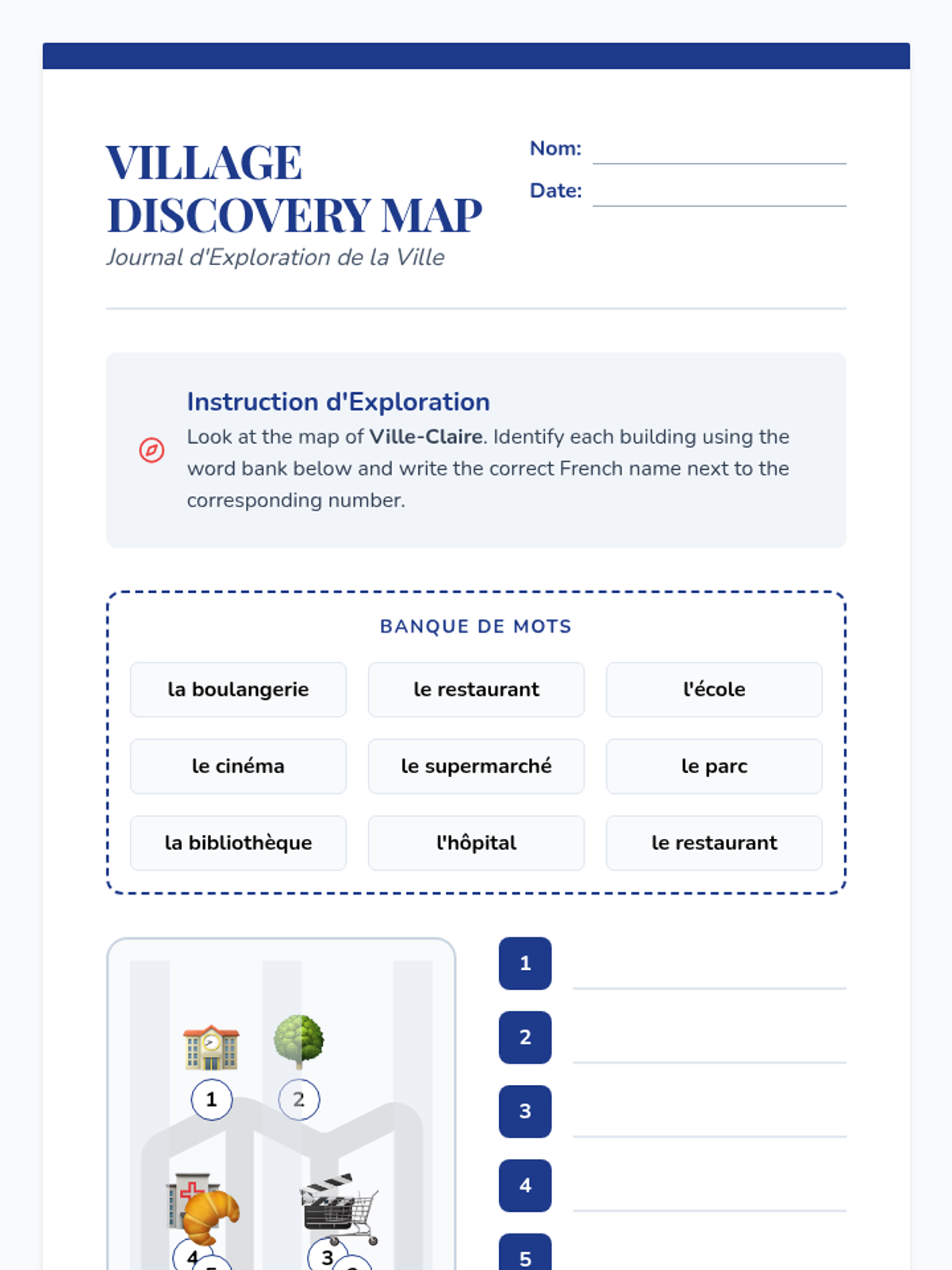
Students listen to audio soundscapes and descriptions to identify various city locations such as the bakery, library, and pharmacy. They associate specific vocabulary words with auditory clues and context sentences.
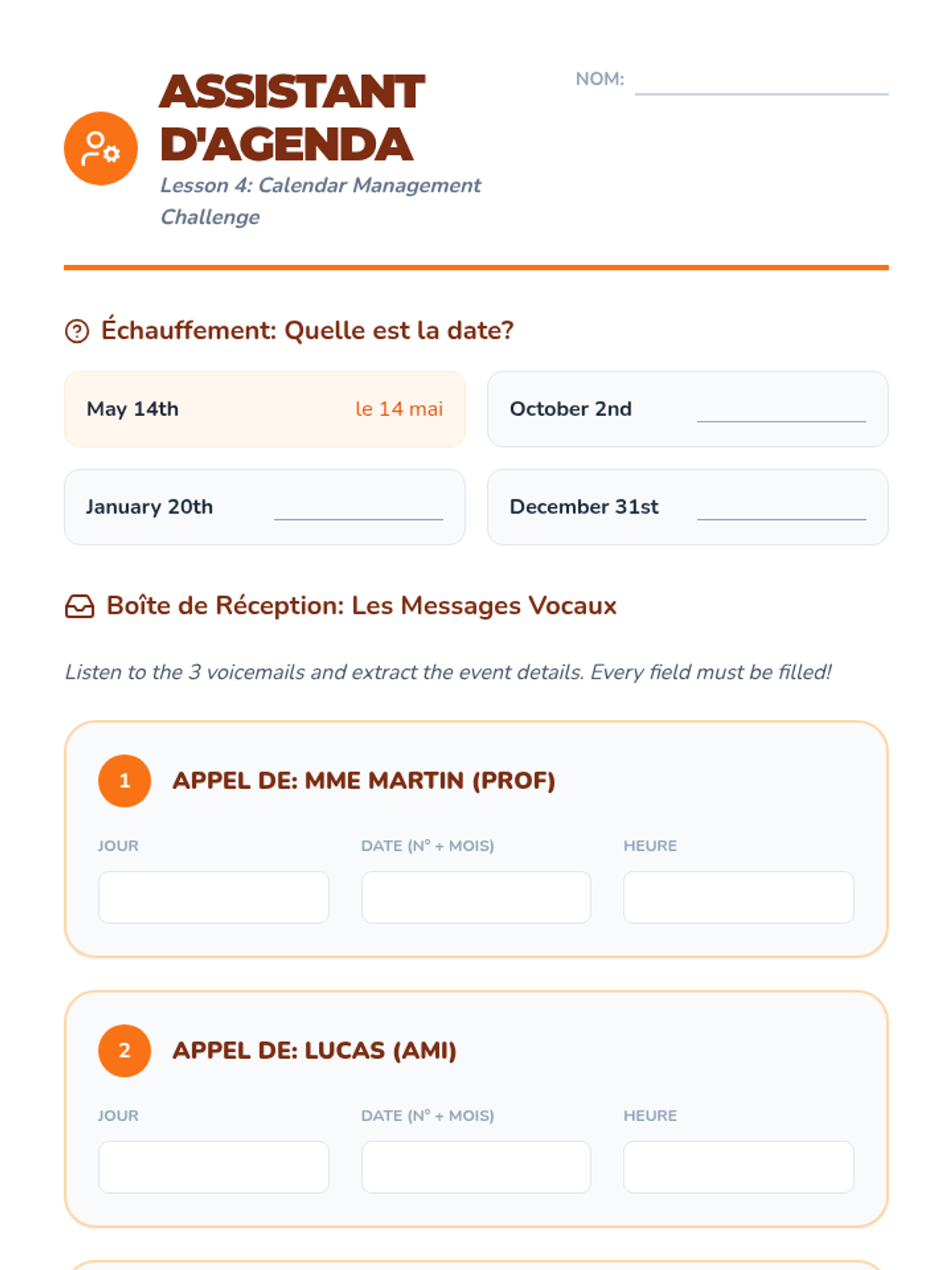
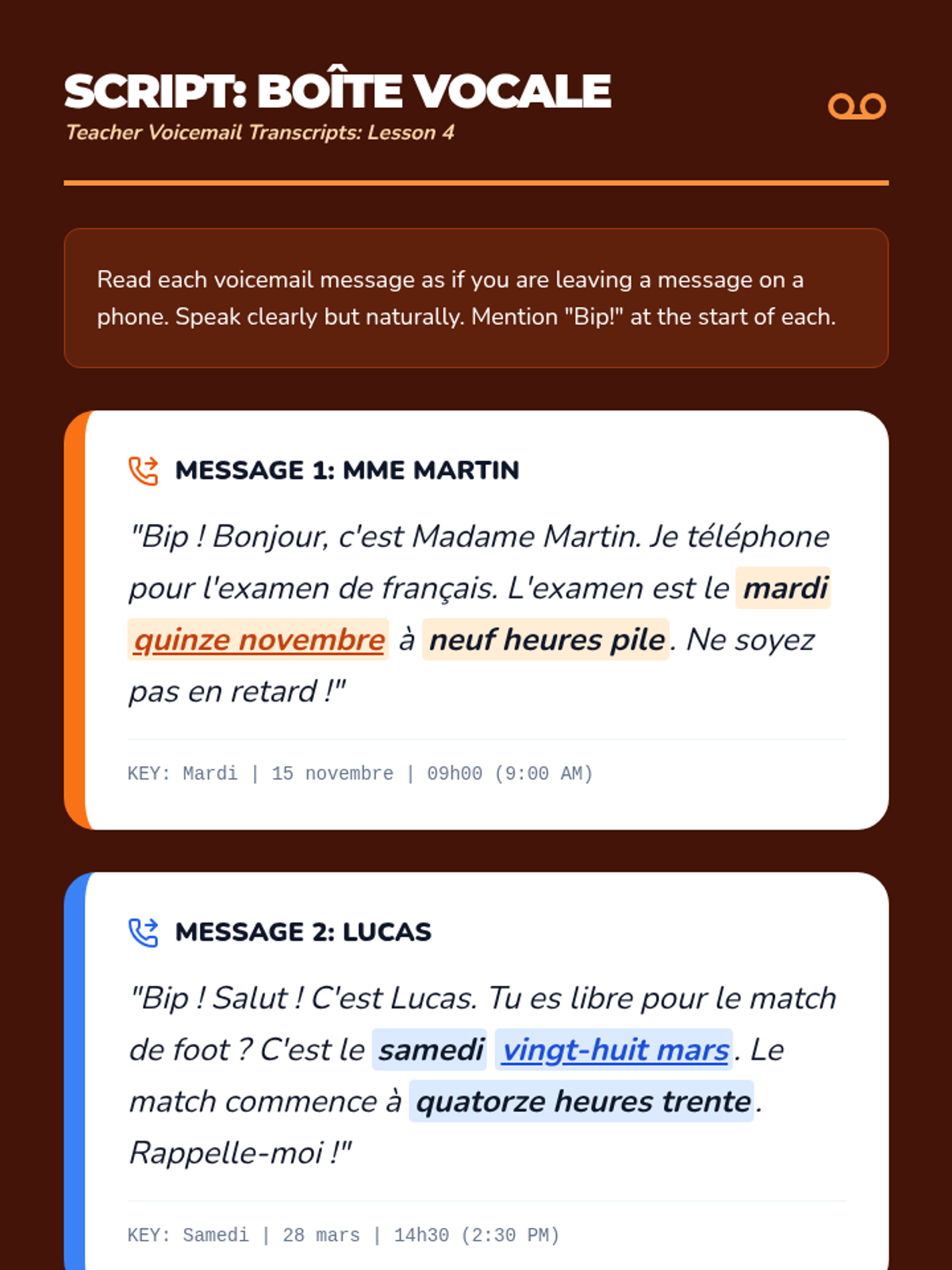
Students recognize days, months, and dates in the context of school announcements and voicemails.
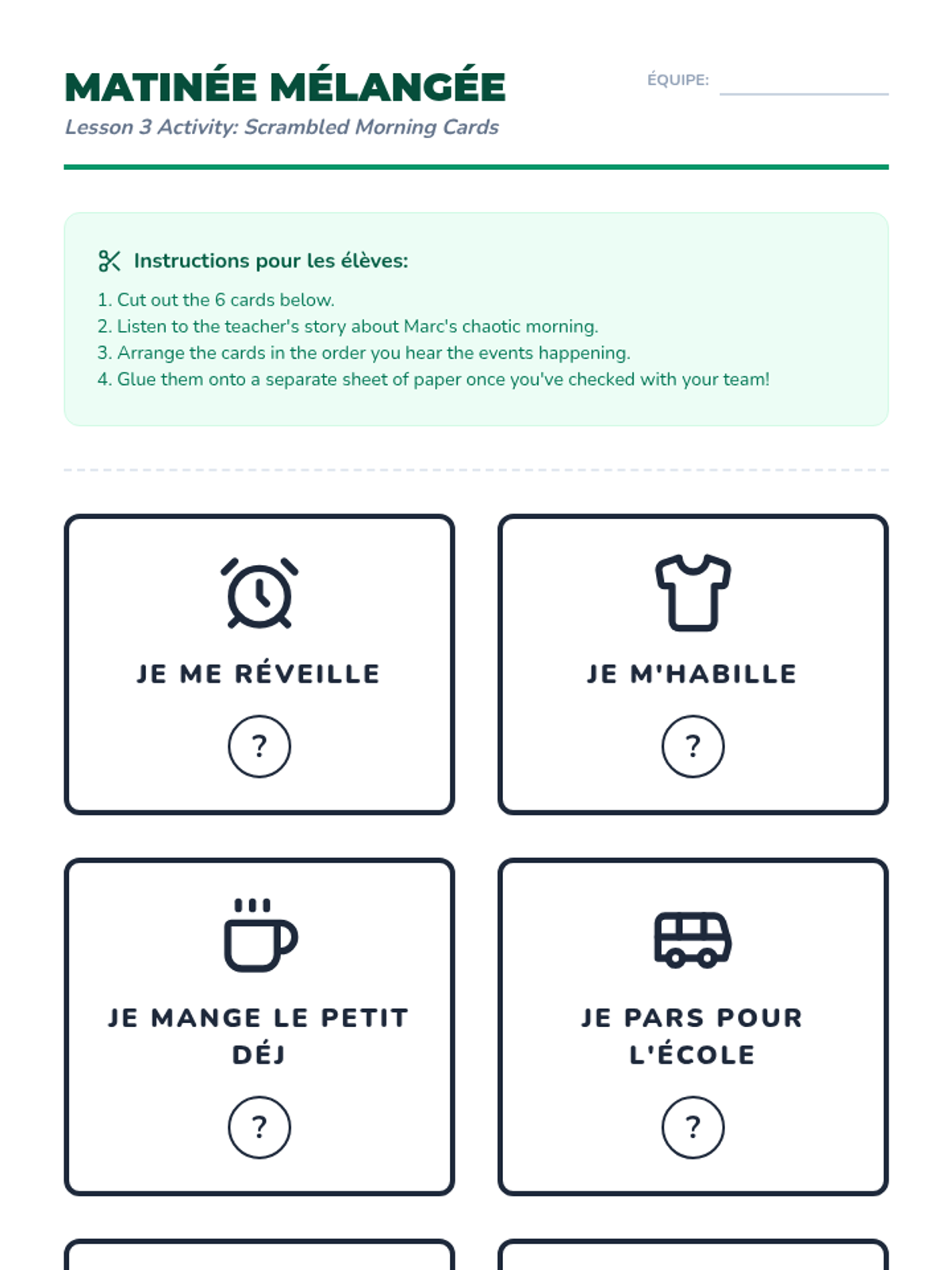
Focuses on sequencing daily routine events using reflexive verbs and temporal connectors like 'd'abord' and 'ensuite'.
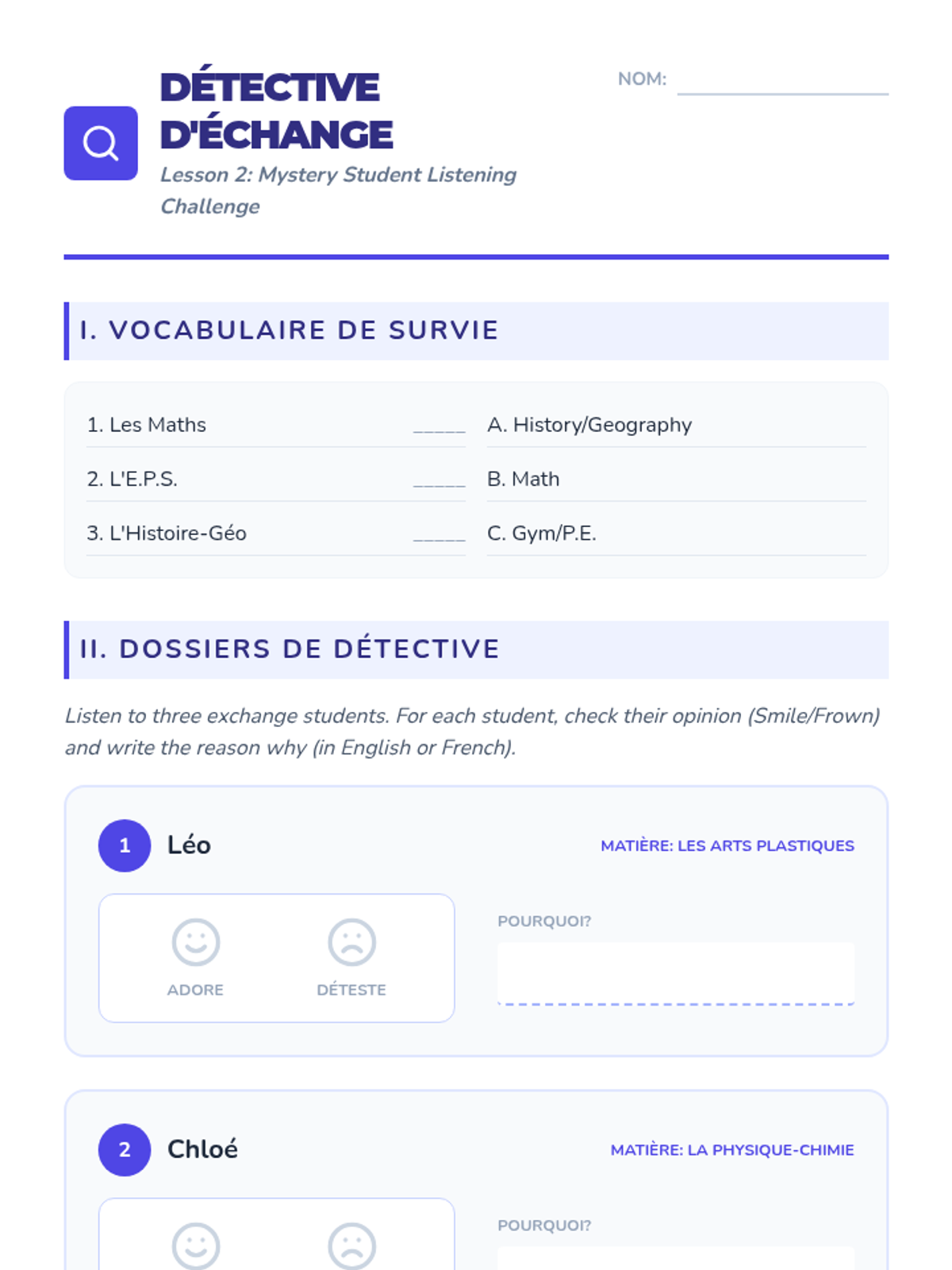
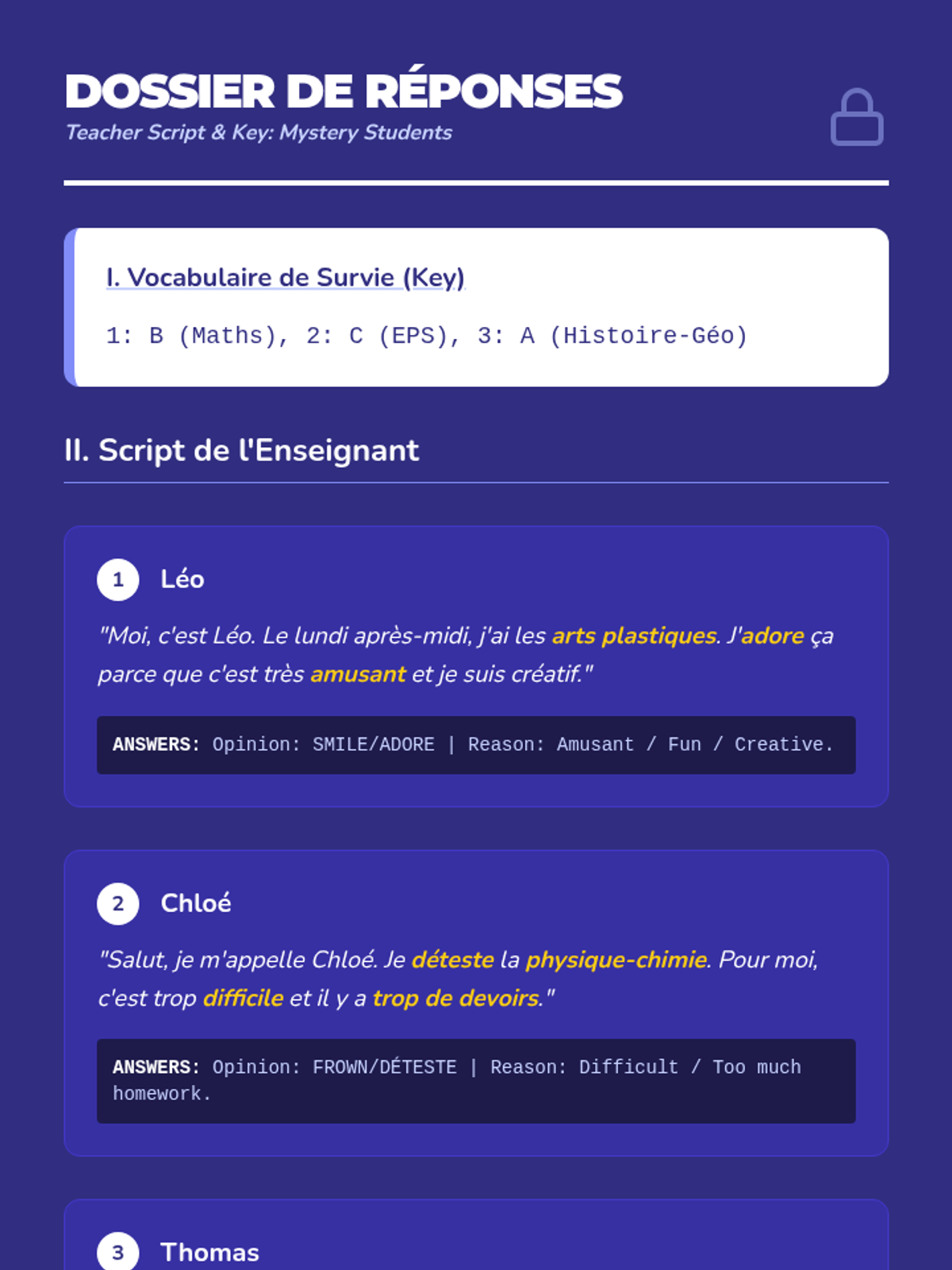
Learners listen to descriptions of school subjects and preferences to identify likes, dislikes, and current class contexts.
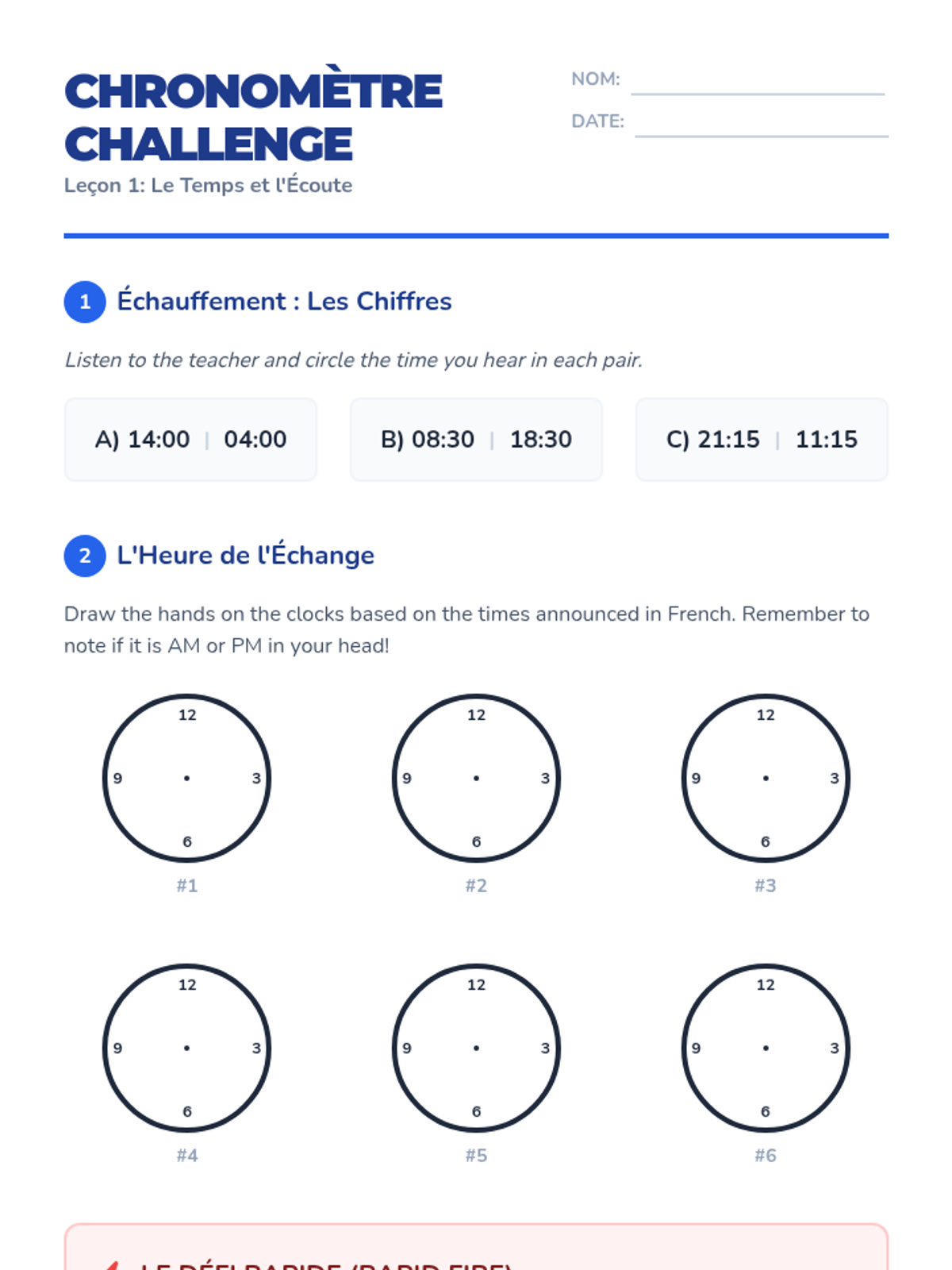
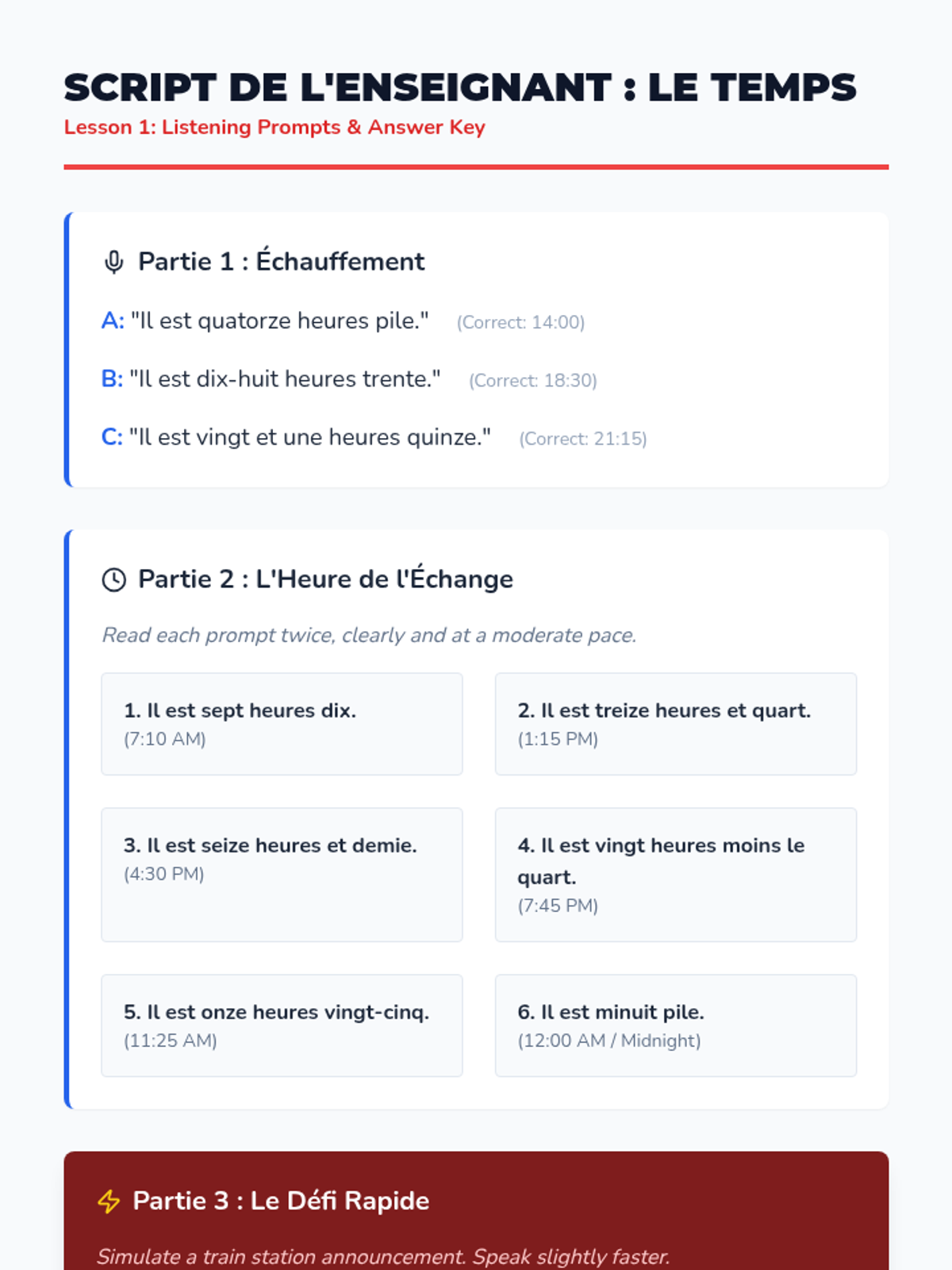
Students learn to listen for and identify time using the 24-hour system commonly used in France, matching spoken times to clock faces.
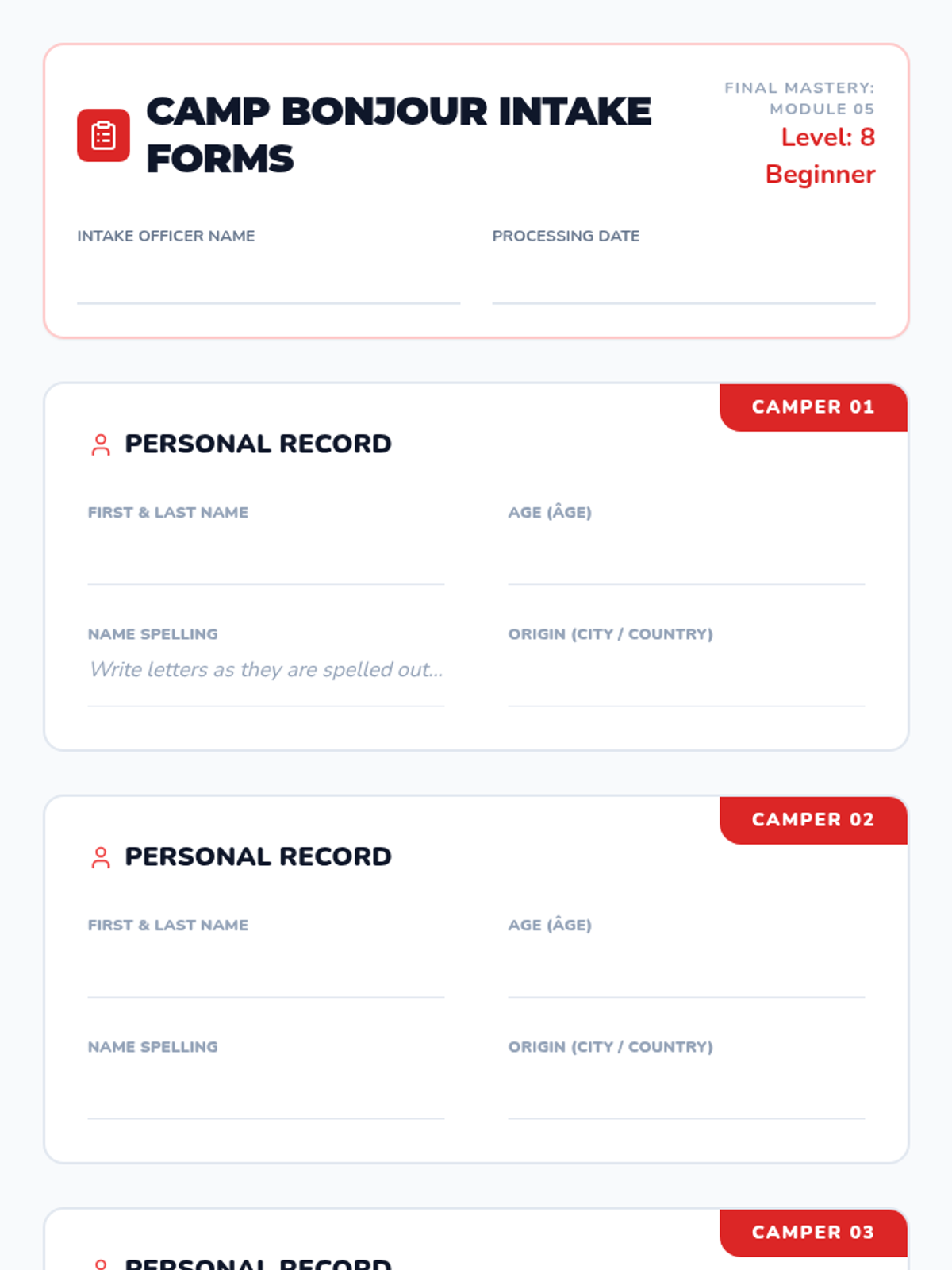
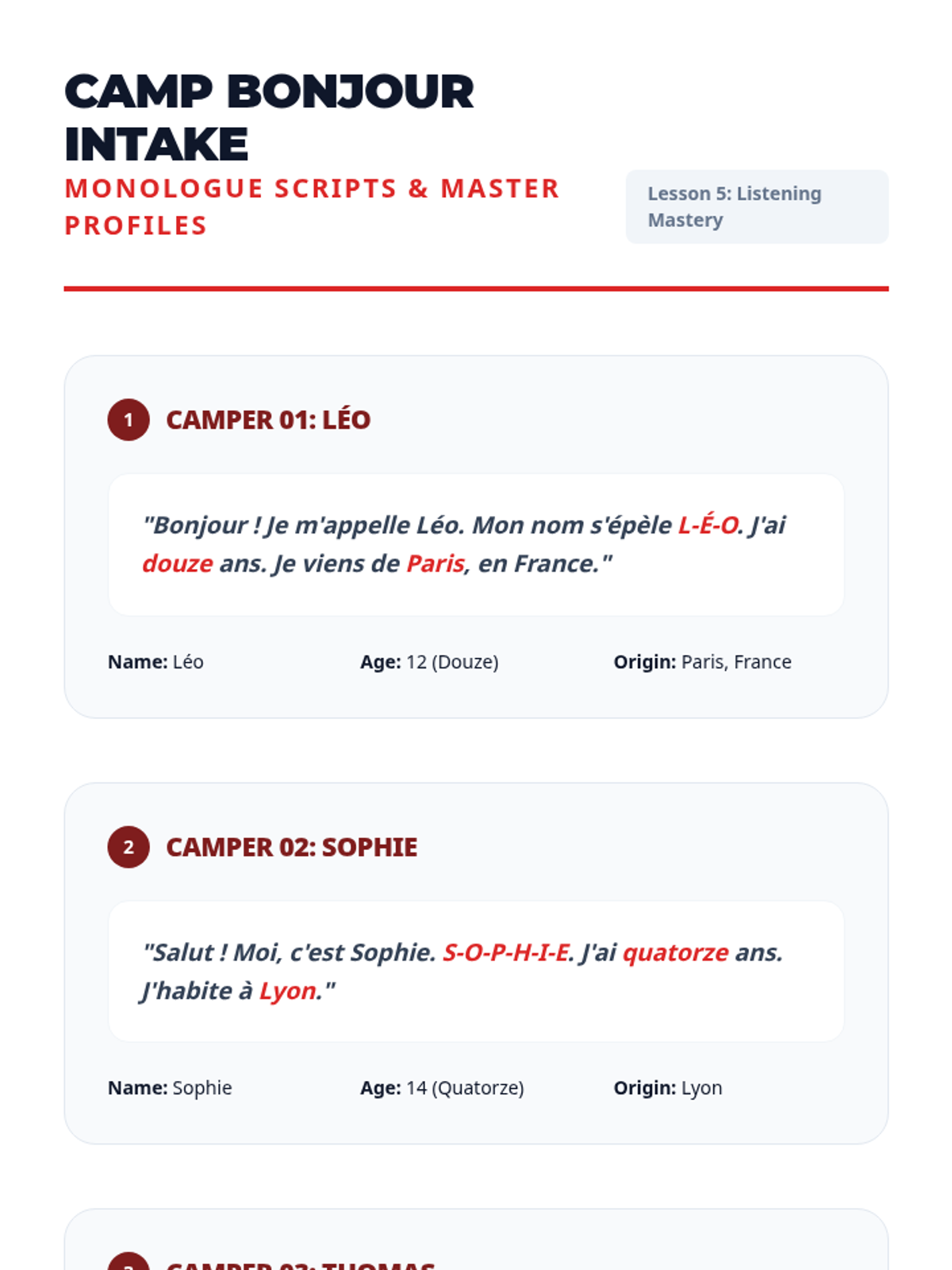
Culminates the sequence by having students synthesize their listening skills to comprehend and extract key details from full personal introductions.
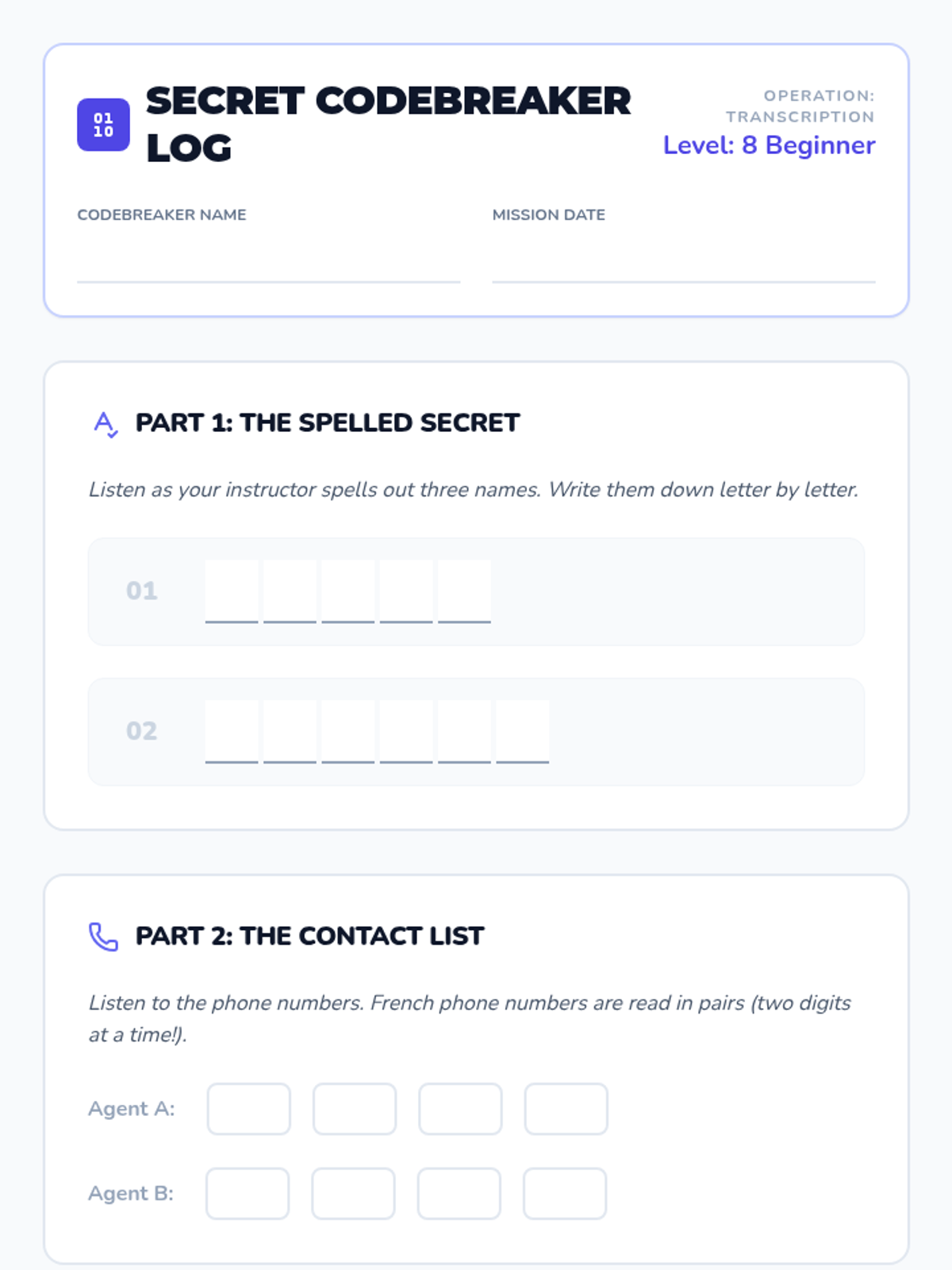
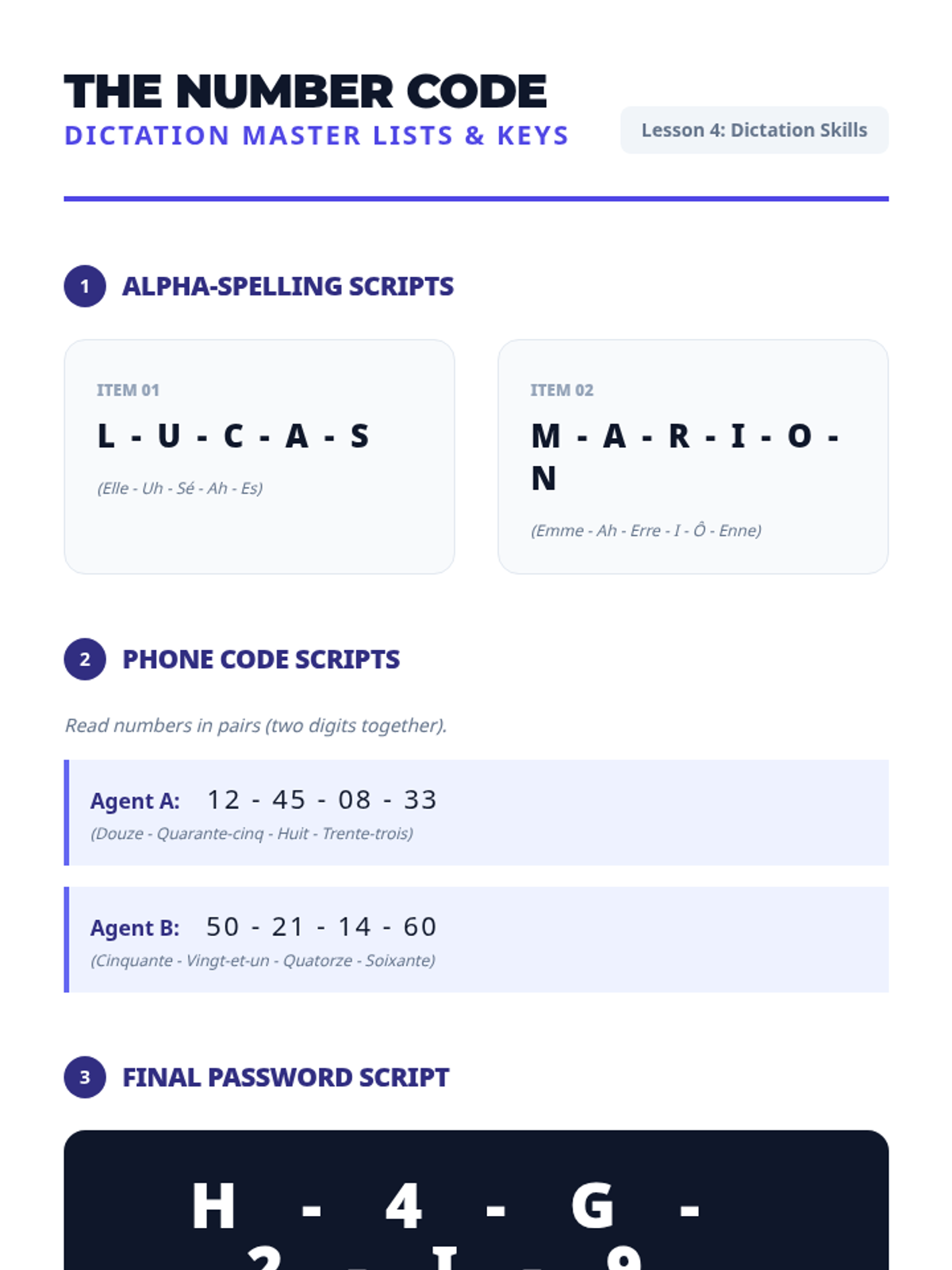
Develops rapid recognition and transcription skills for the French alphabet and numbers 0-60 through code-breaking dictation activities.
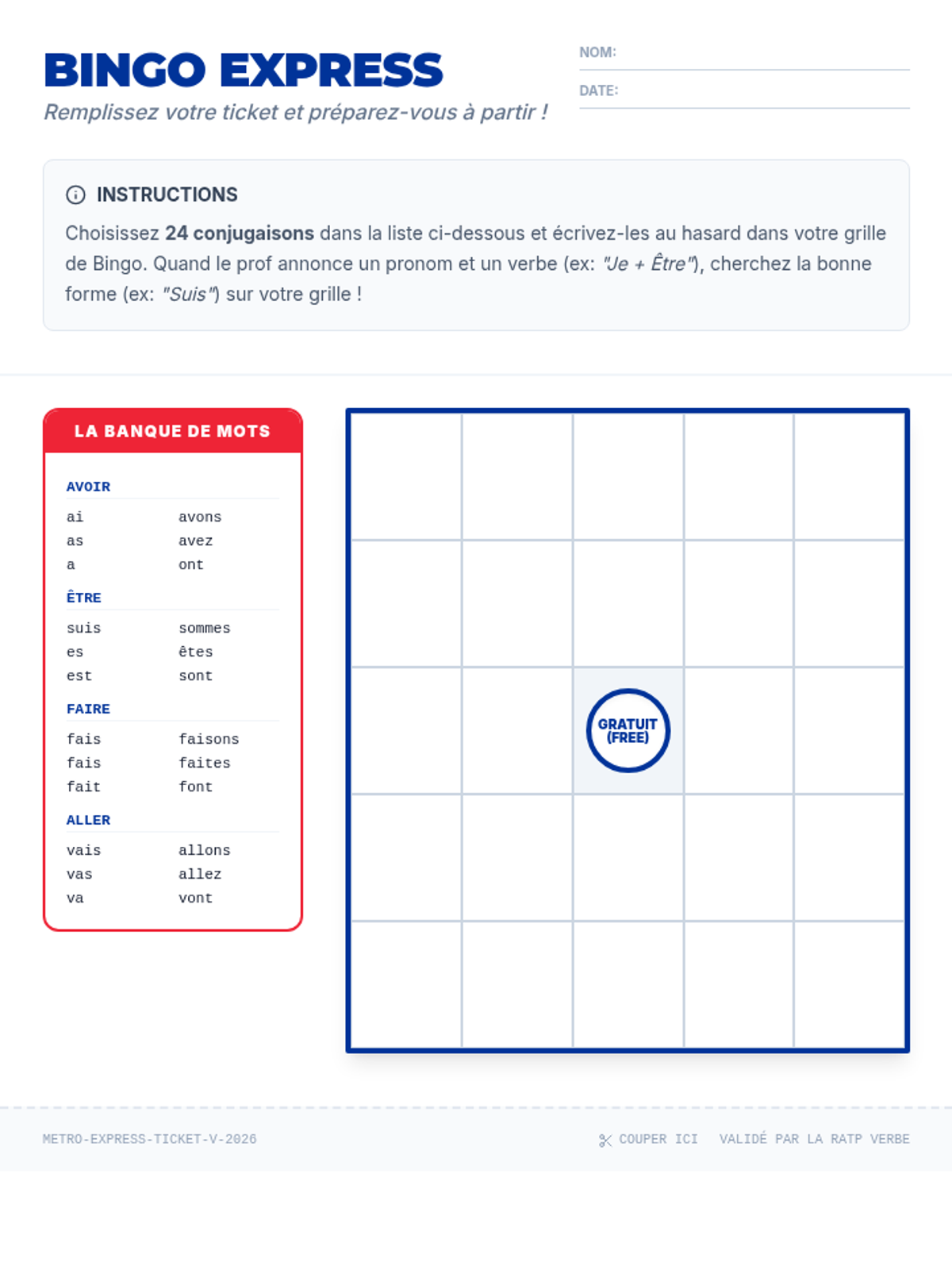
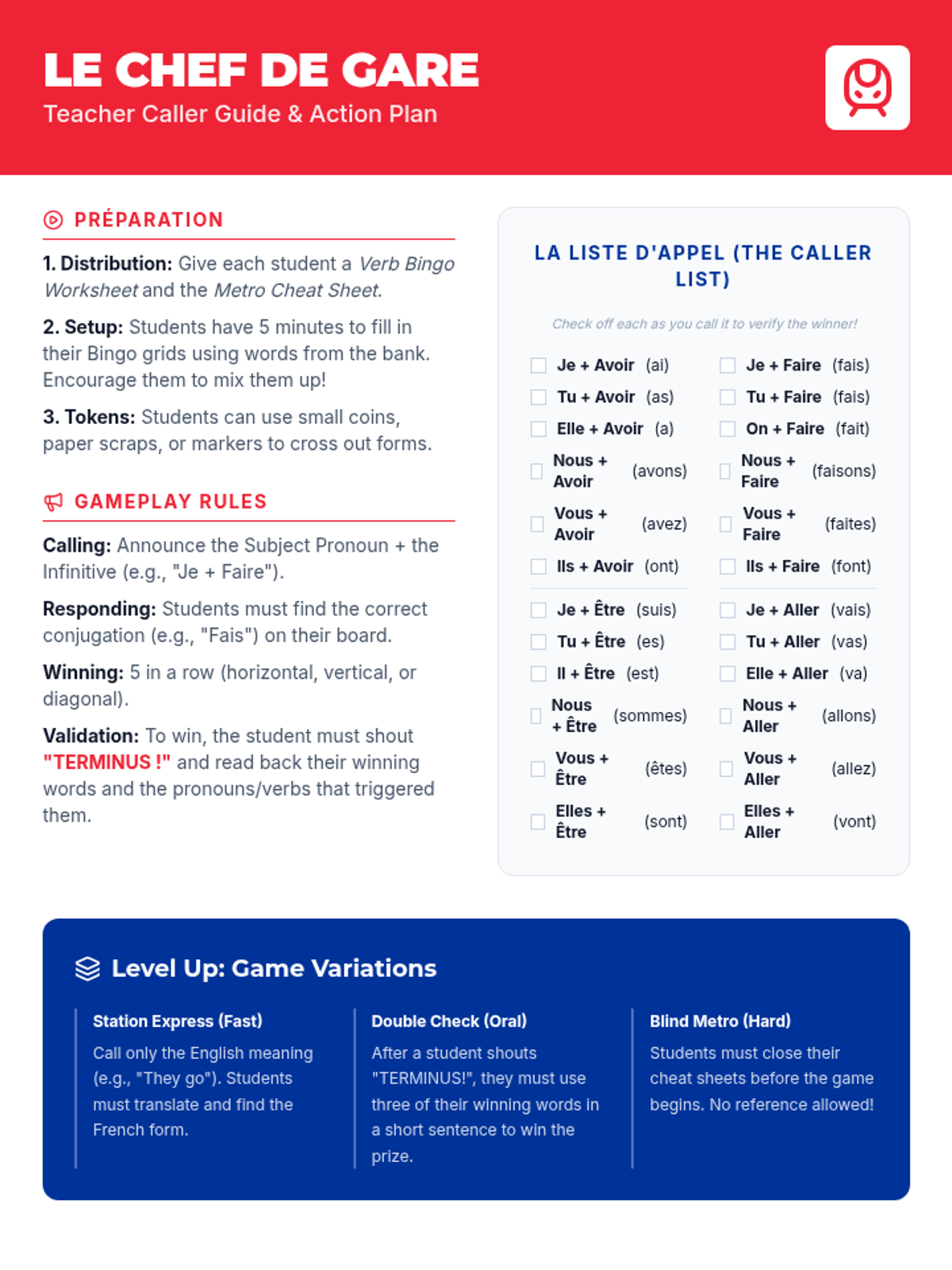
A high-energy lesson focused on mastering the four most important irregular French verbs (avoir, être, faire, aller) through a competitive Metro-themed Bingo game. Students review conjugations and apply them in a fast-paced listening activity.
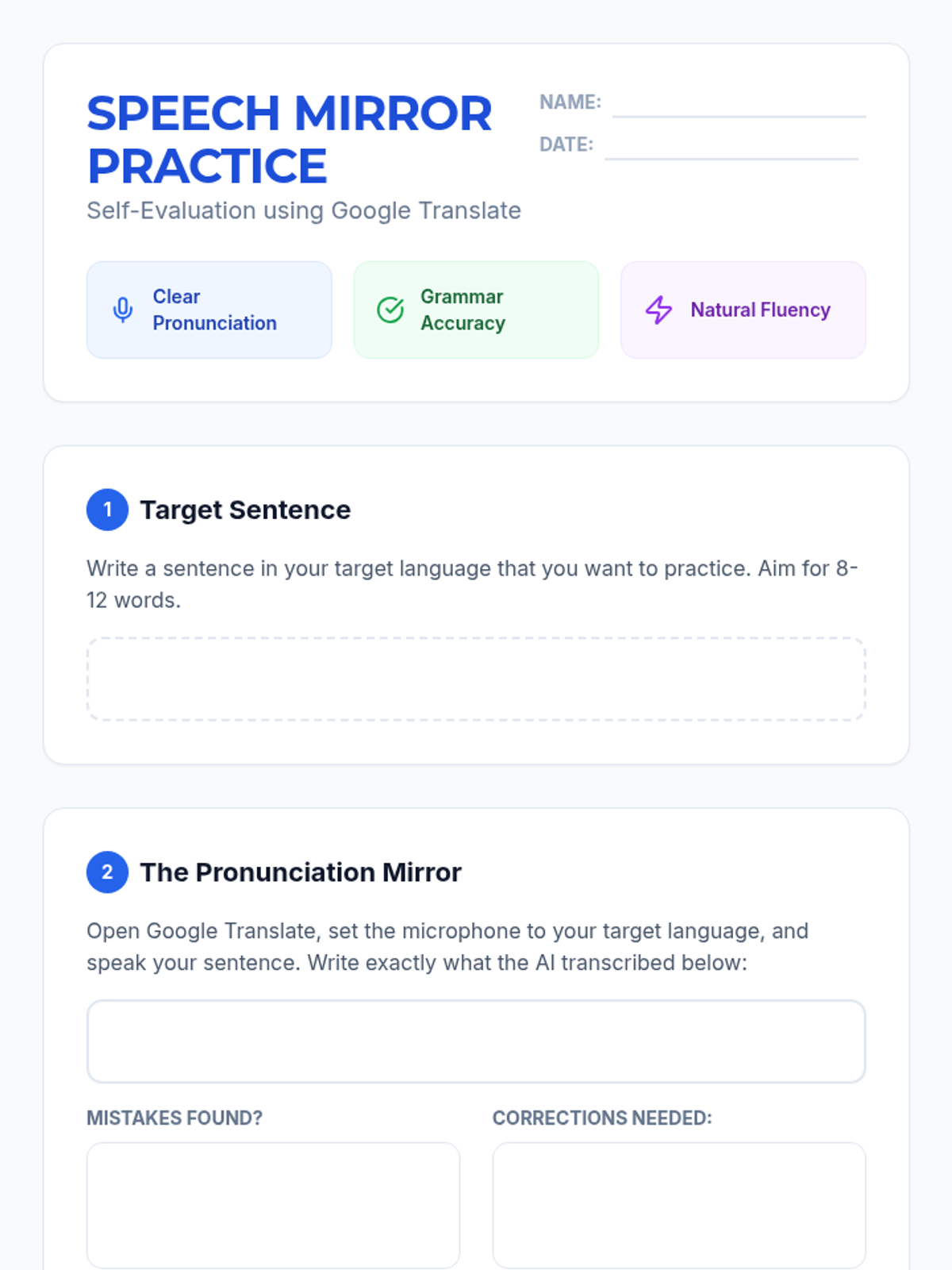
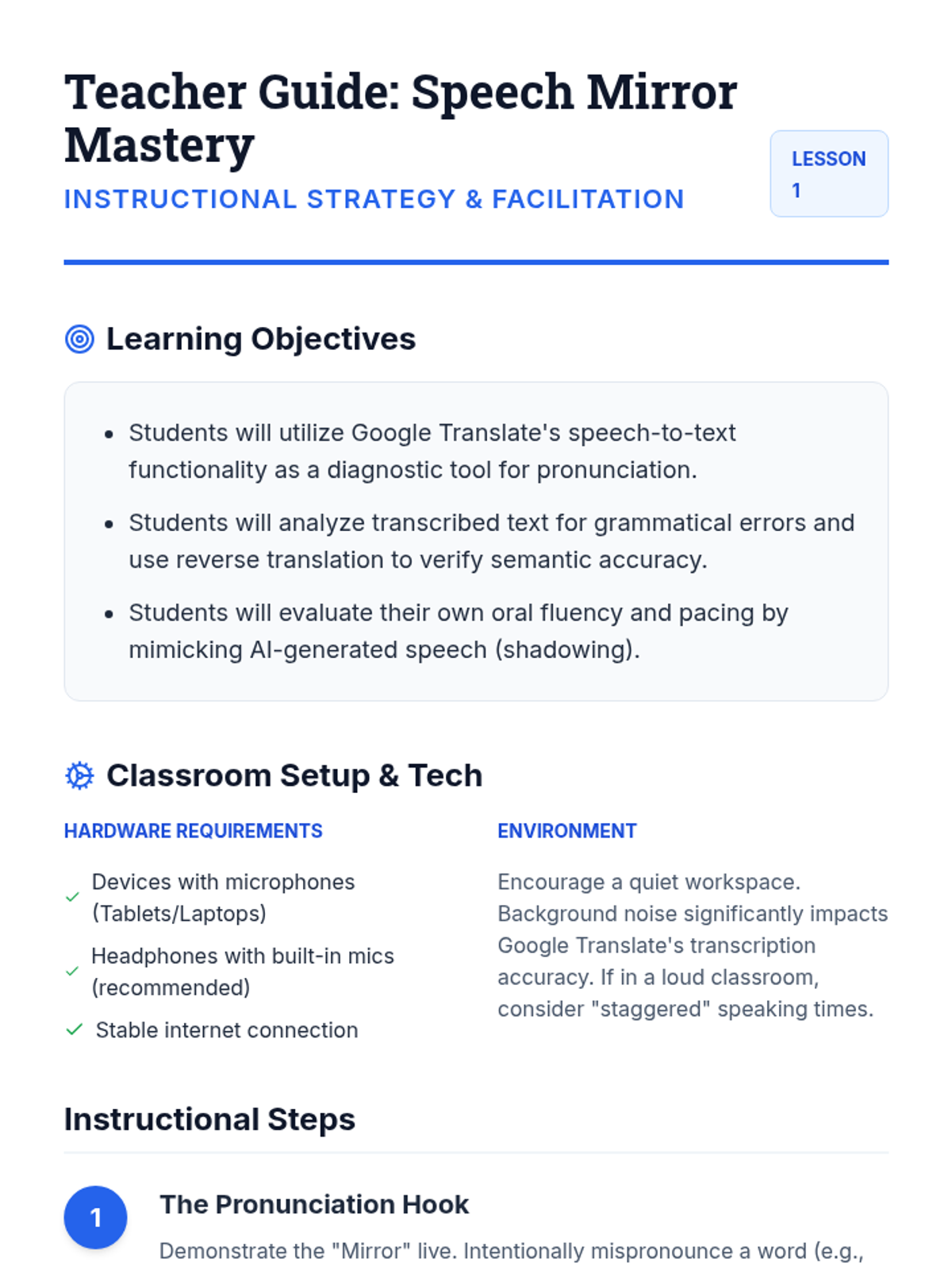
This lesson teaches students how to use Google Translate's speech-to-text and text-to-speech features to self-evaluate their spoken language. Focus areas include pronunciation clarity, grammatical accuracy of transcribed text, and oral fluency.
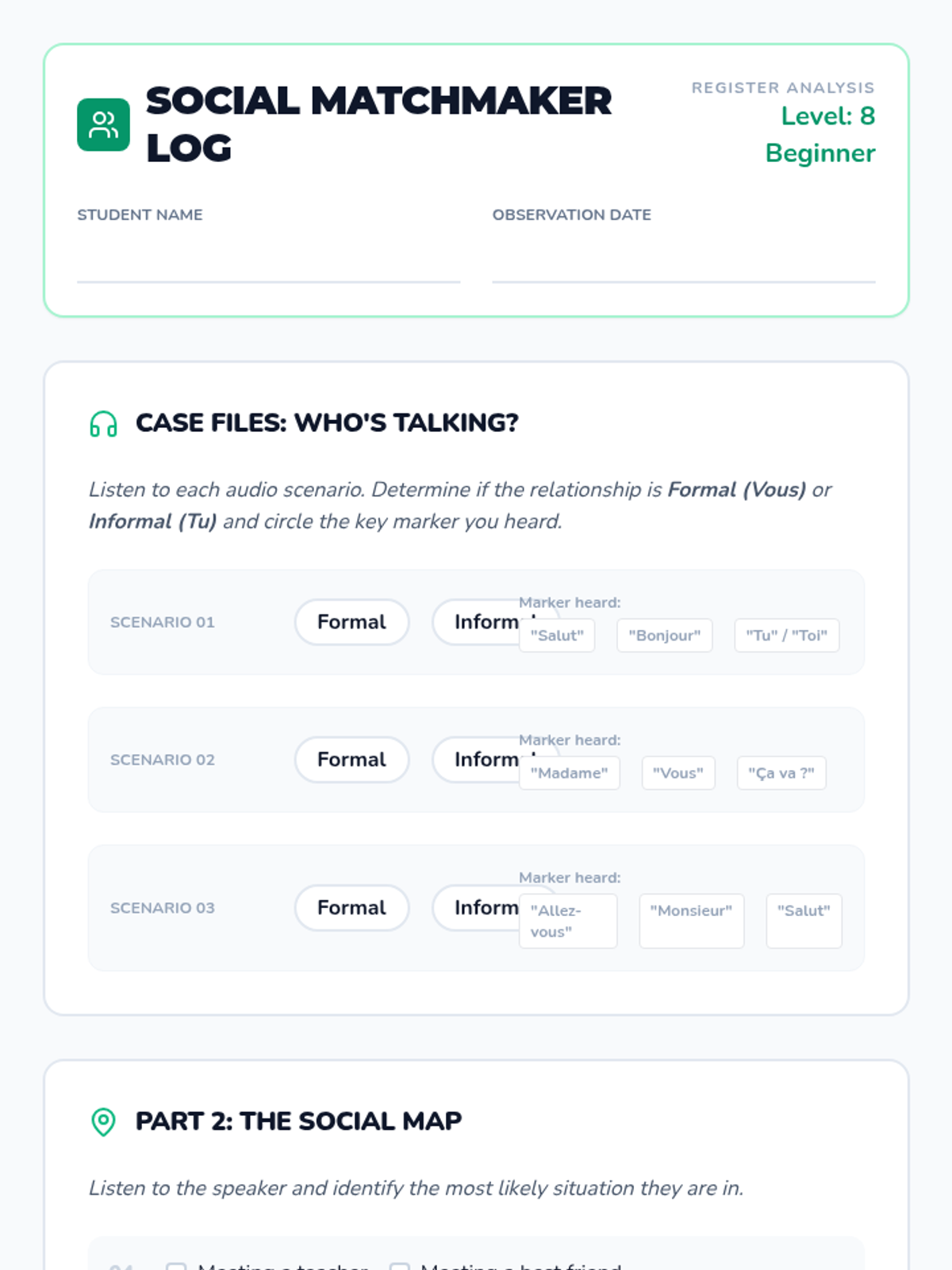
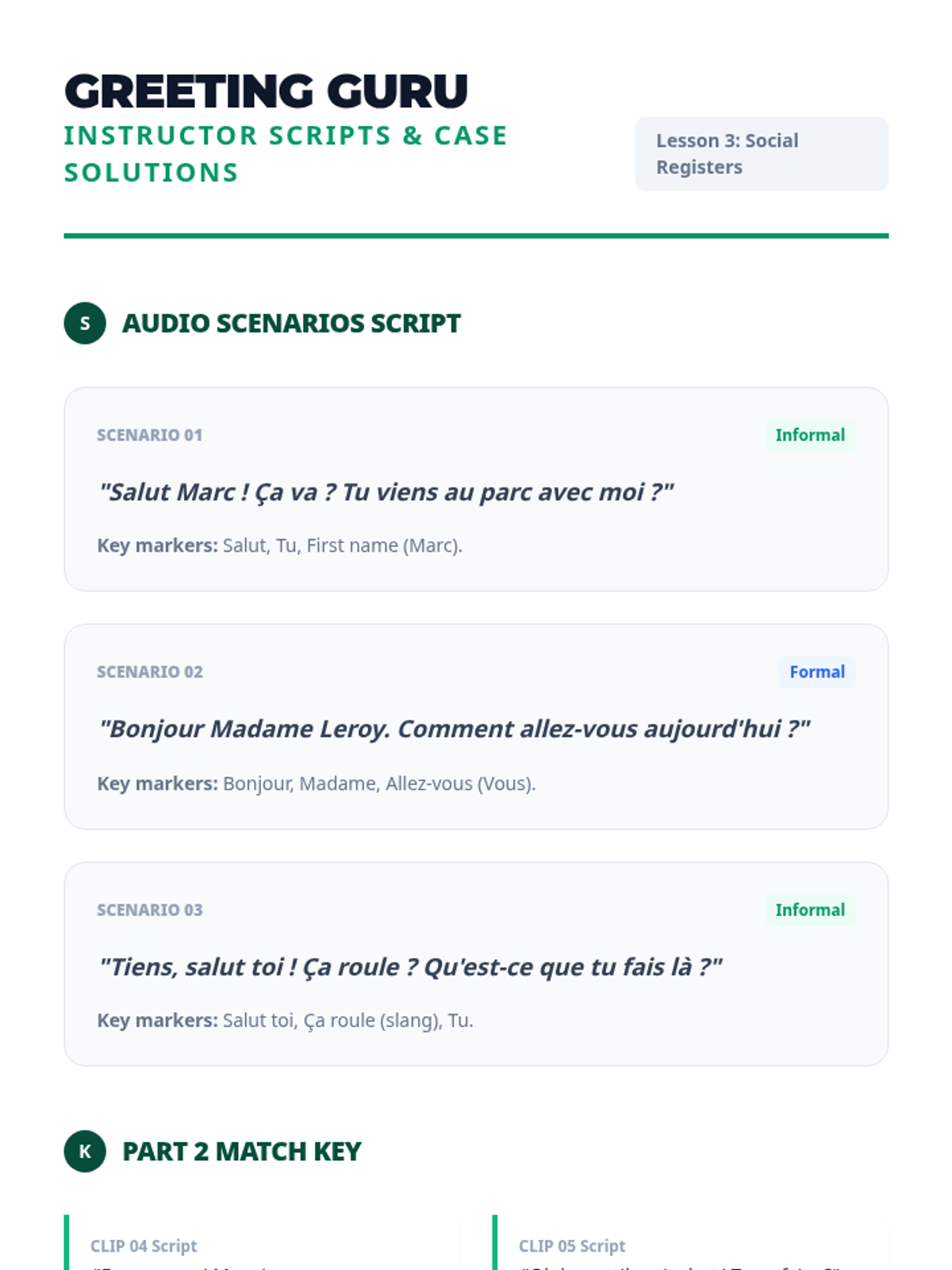
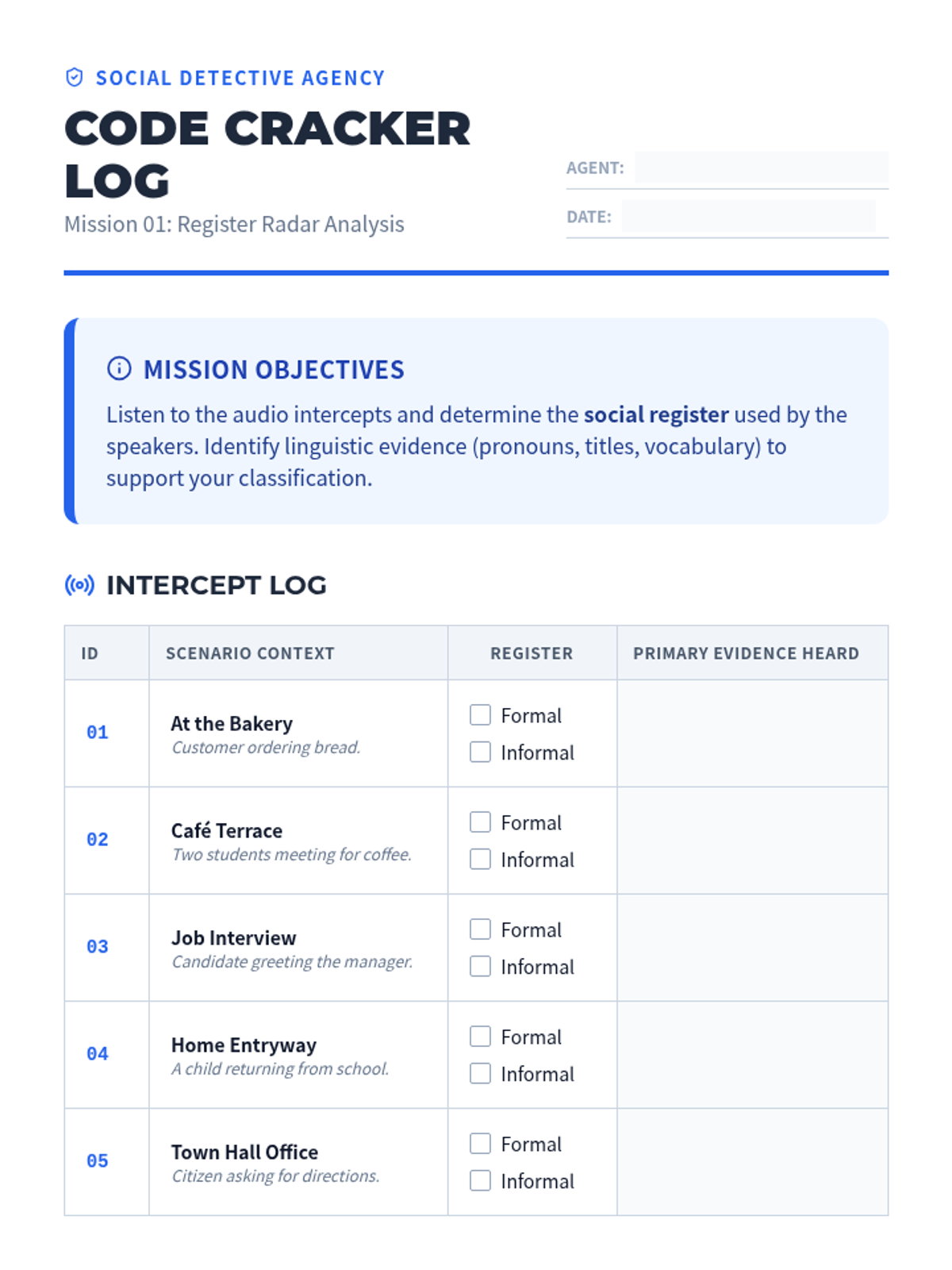
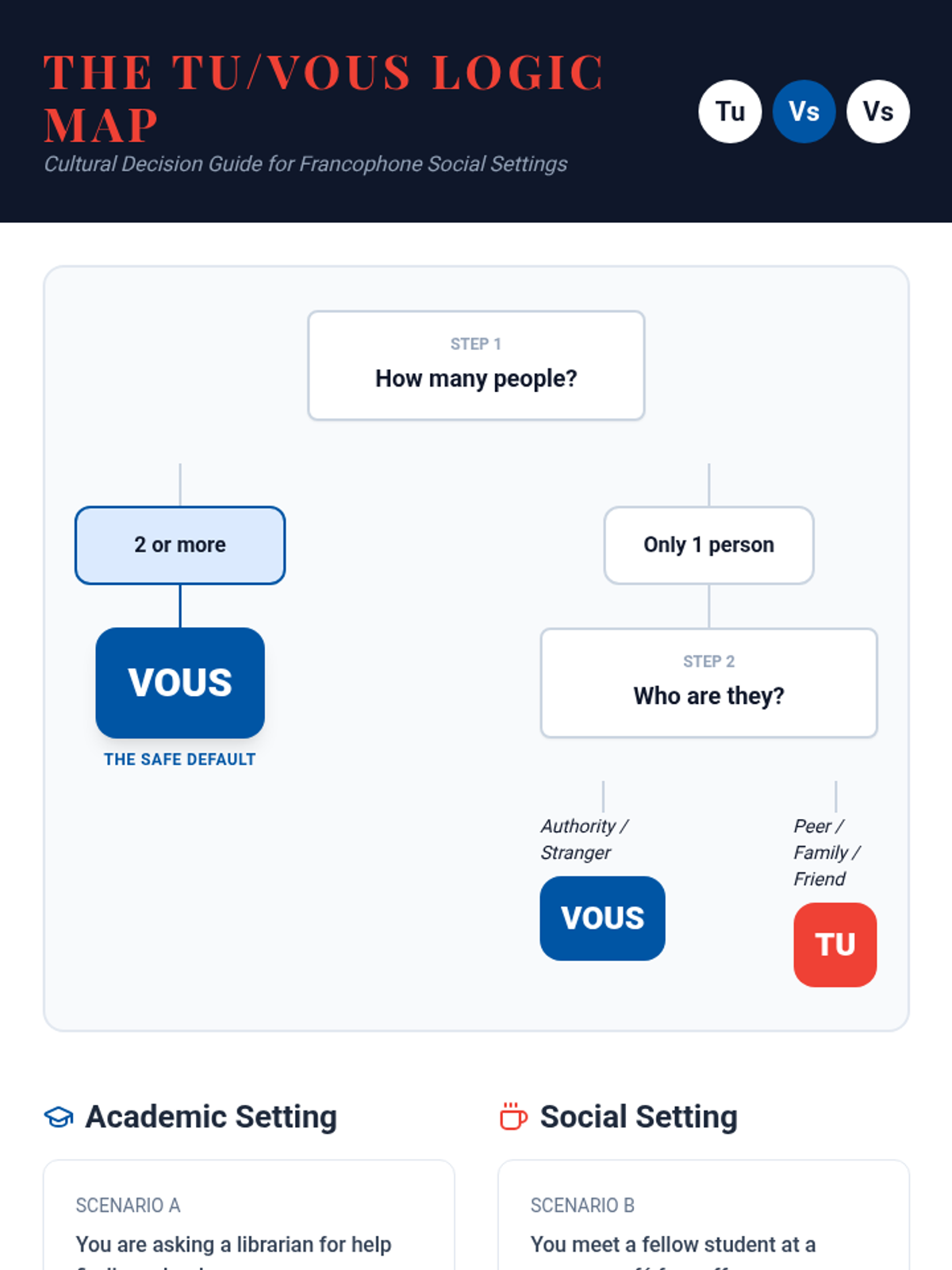
Analyzes the auditory cues of formality in French greetings, focusing on the tu/vous distinction and social context markers.
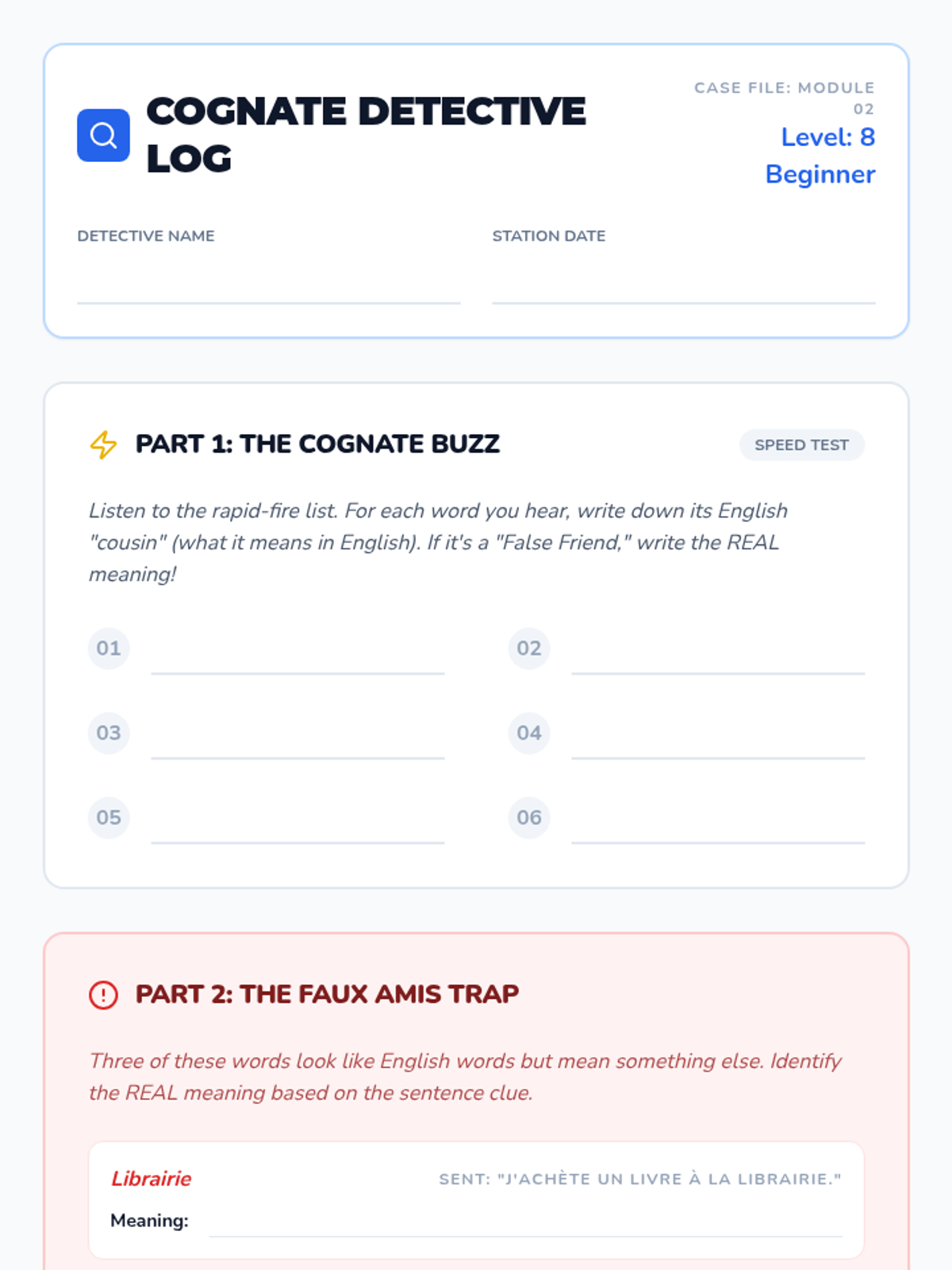
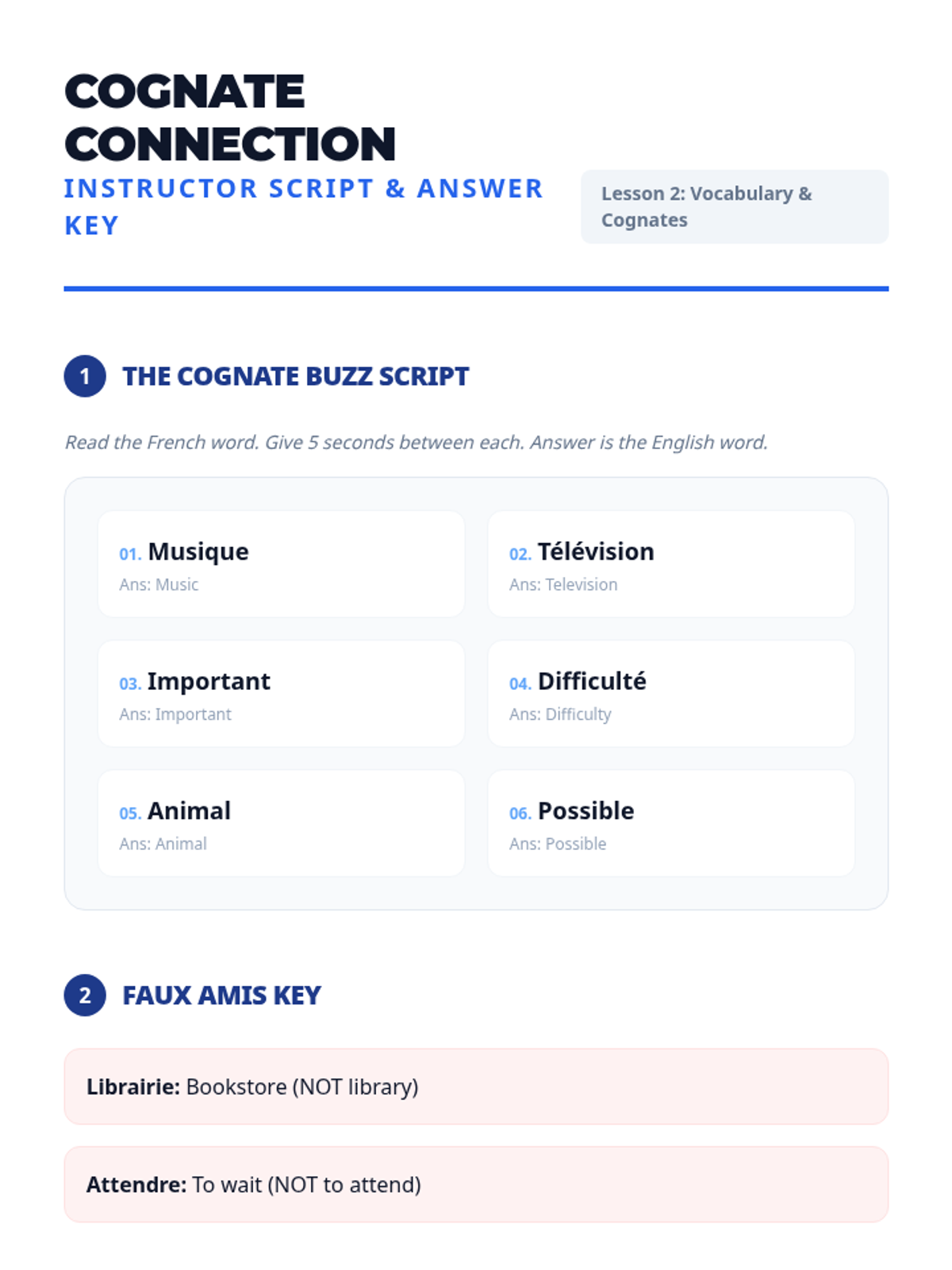
Students identify English-French cognates in spoken French, learning to navigate 'false friends' and recognize familiar words through a French phonetic lens.
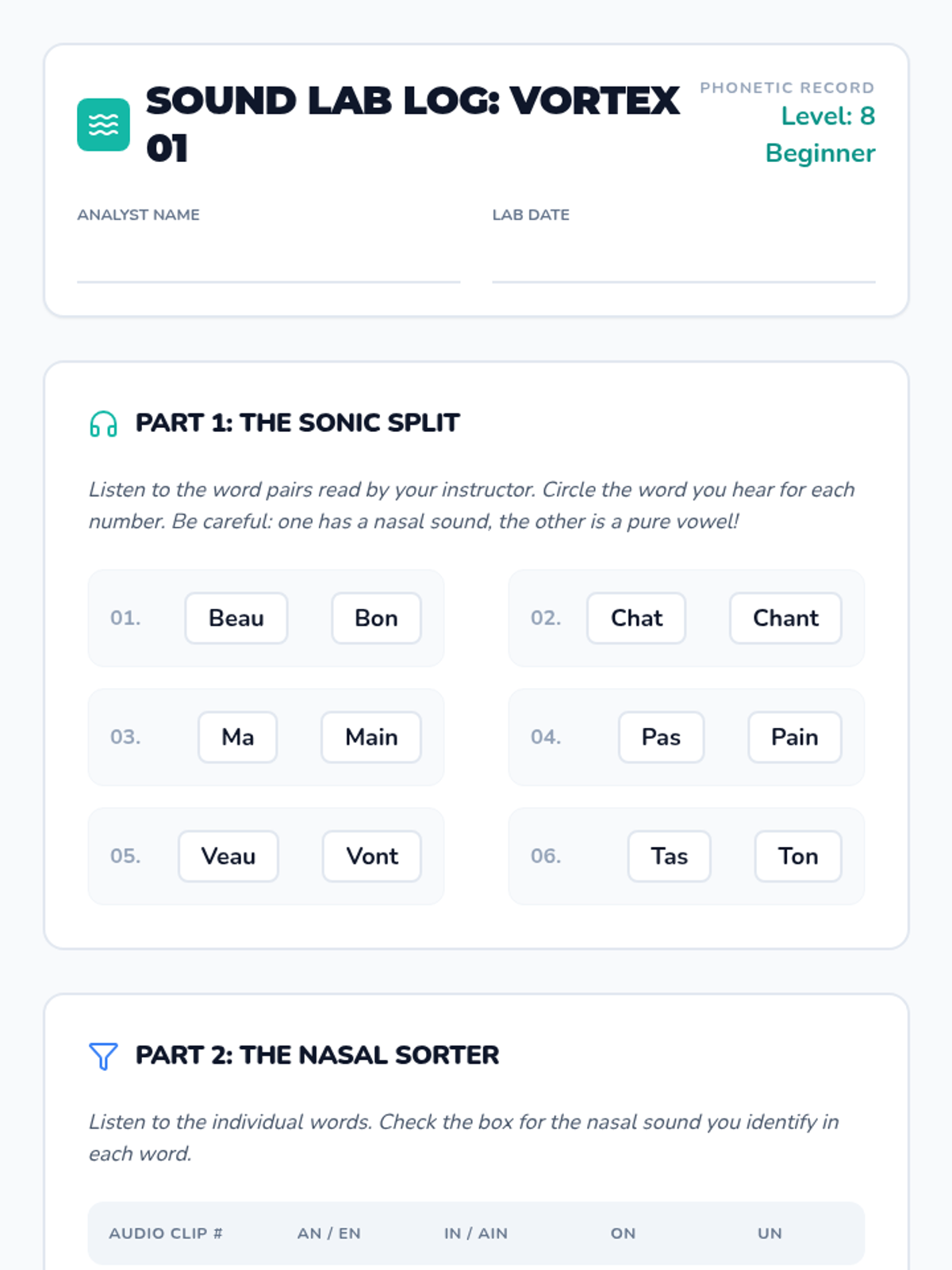
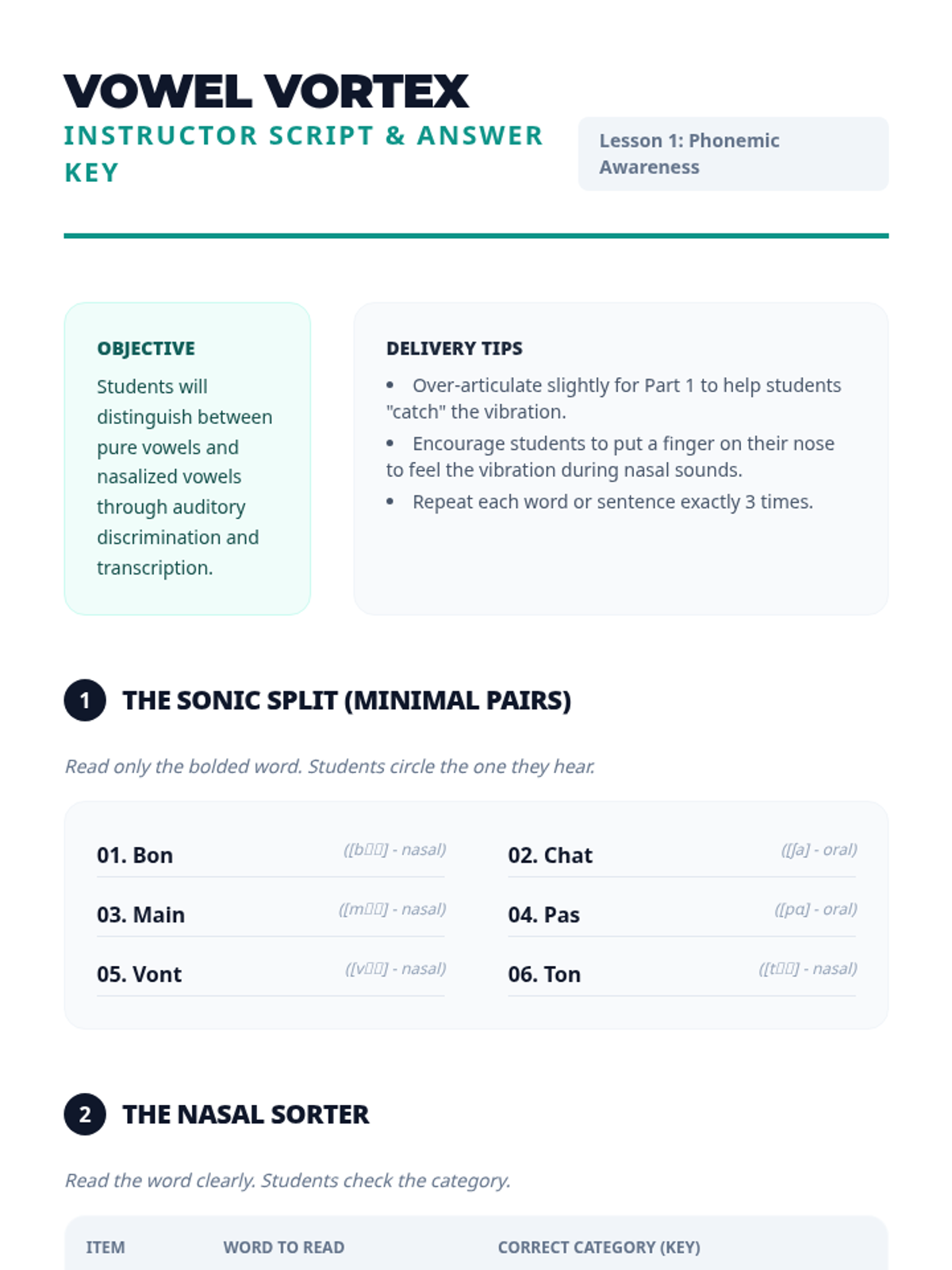
Focuses on distinguishing French vowel sounds and nasal patterns (an/en, in, on, un) through minimal pair exercises and phonetic discrimination.
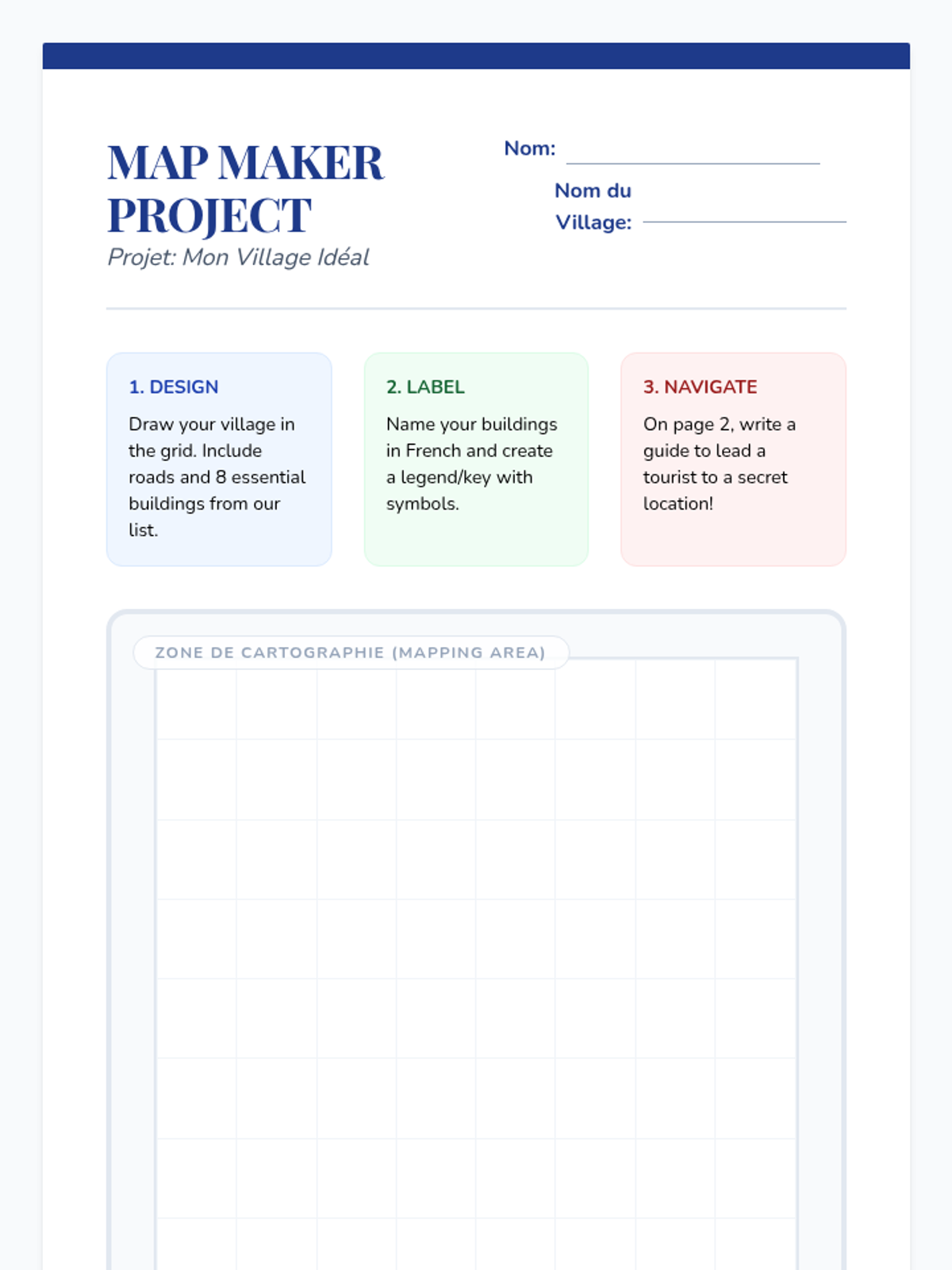
Students design their own town maps and write navigation guides, applying all previously learned vocabulary and grammar.
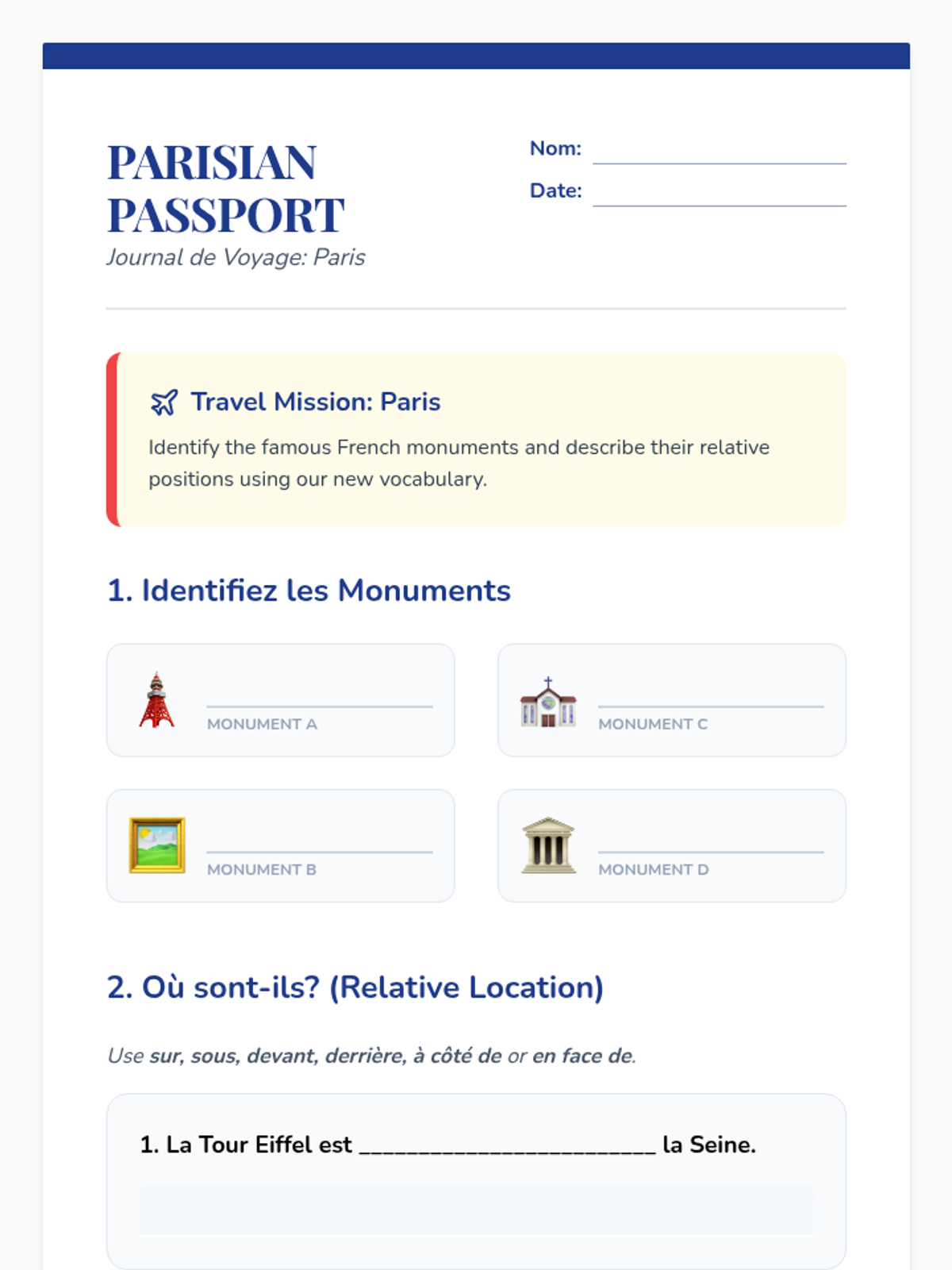
Students explore iconic Francophone landmarks and practice describing their positions in a real-world cultural context.
Students master directional commands and the imperative mood to navigate and guide others through a city.
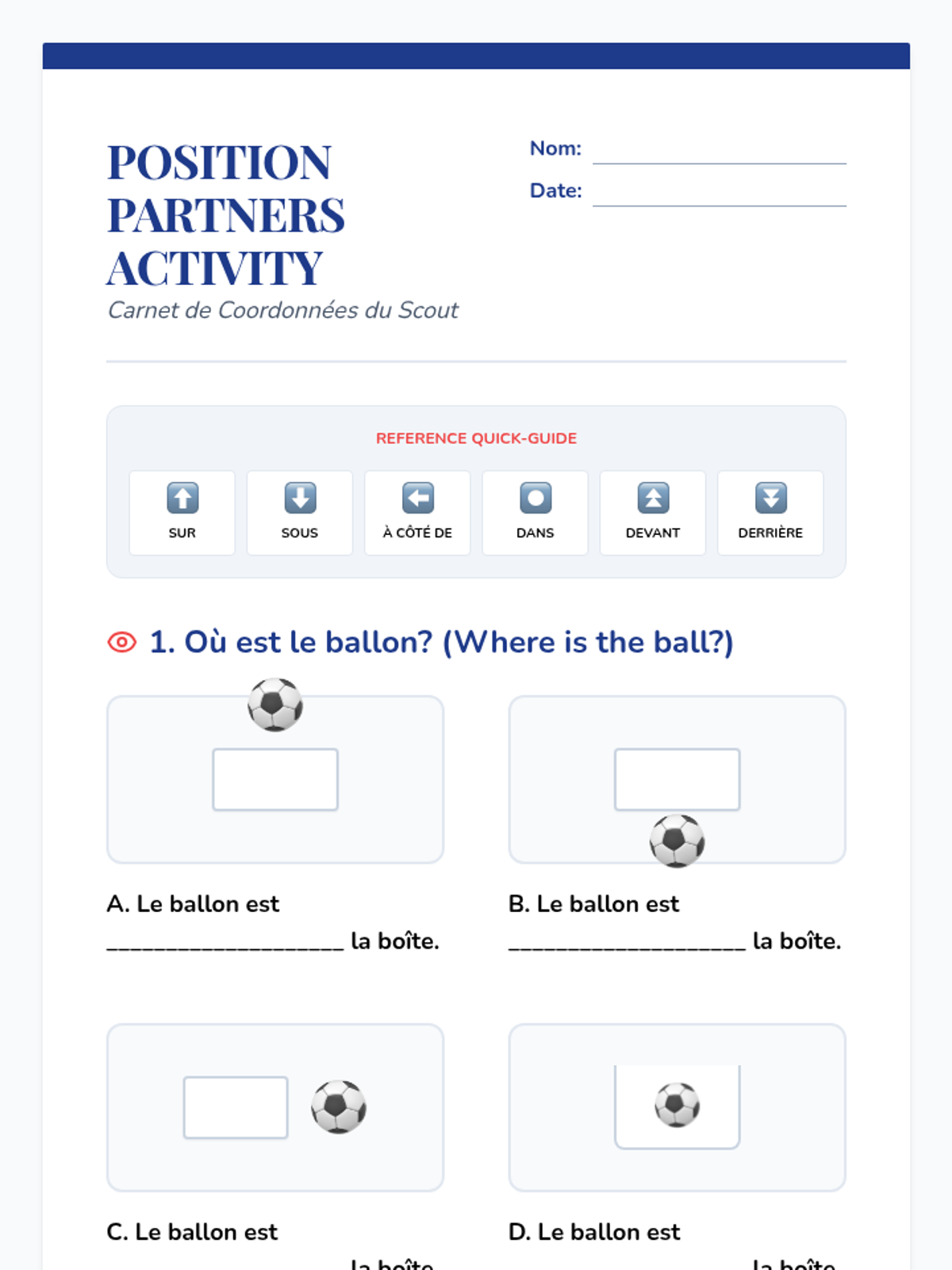
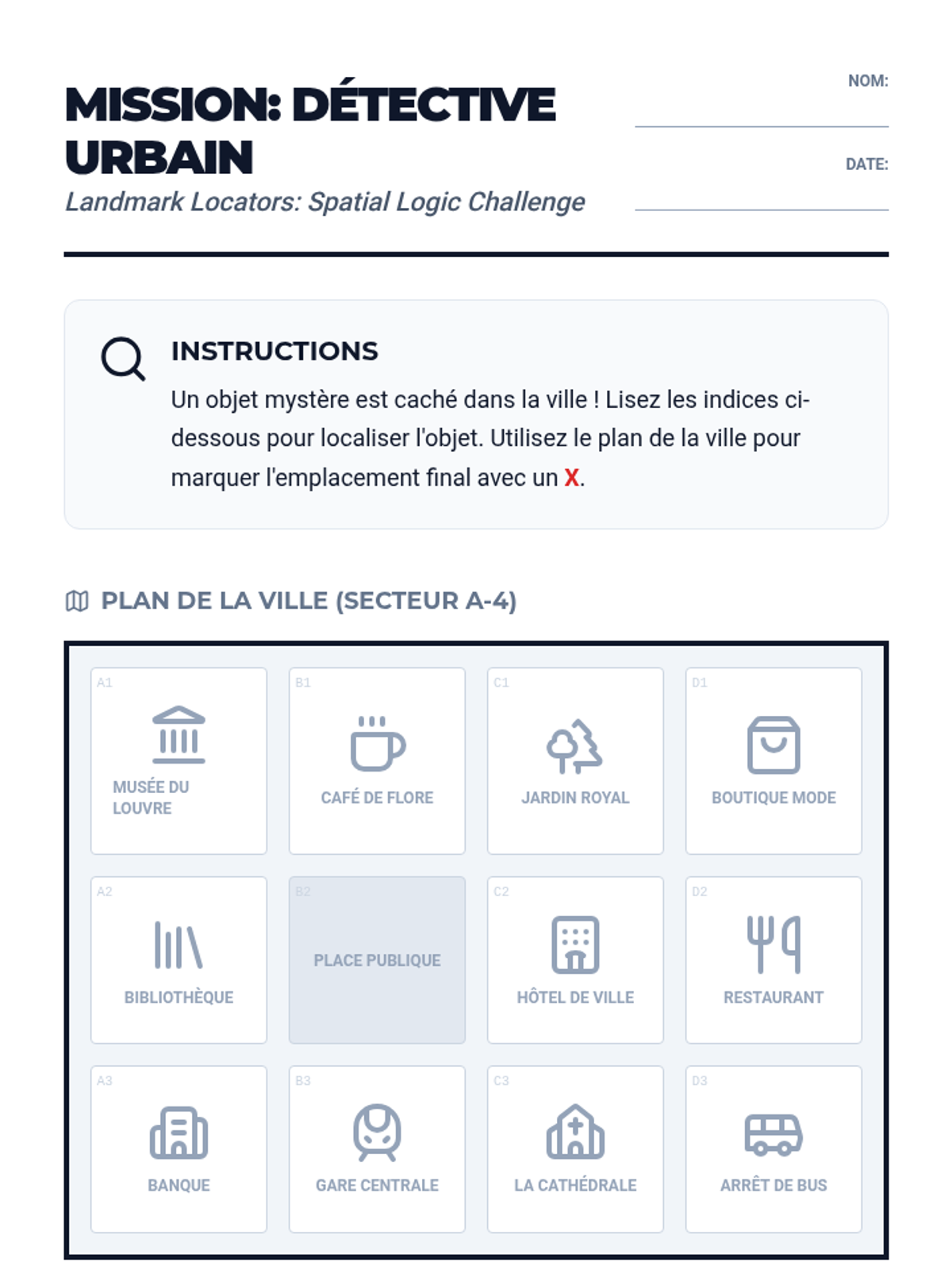
Students learn spatial prepositions to describe the relative locations of buildings and objects in a French setting.
Students identify common city locations in French through visual clues and categorize them by service.
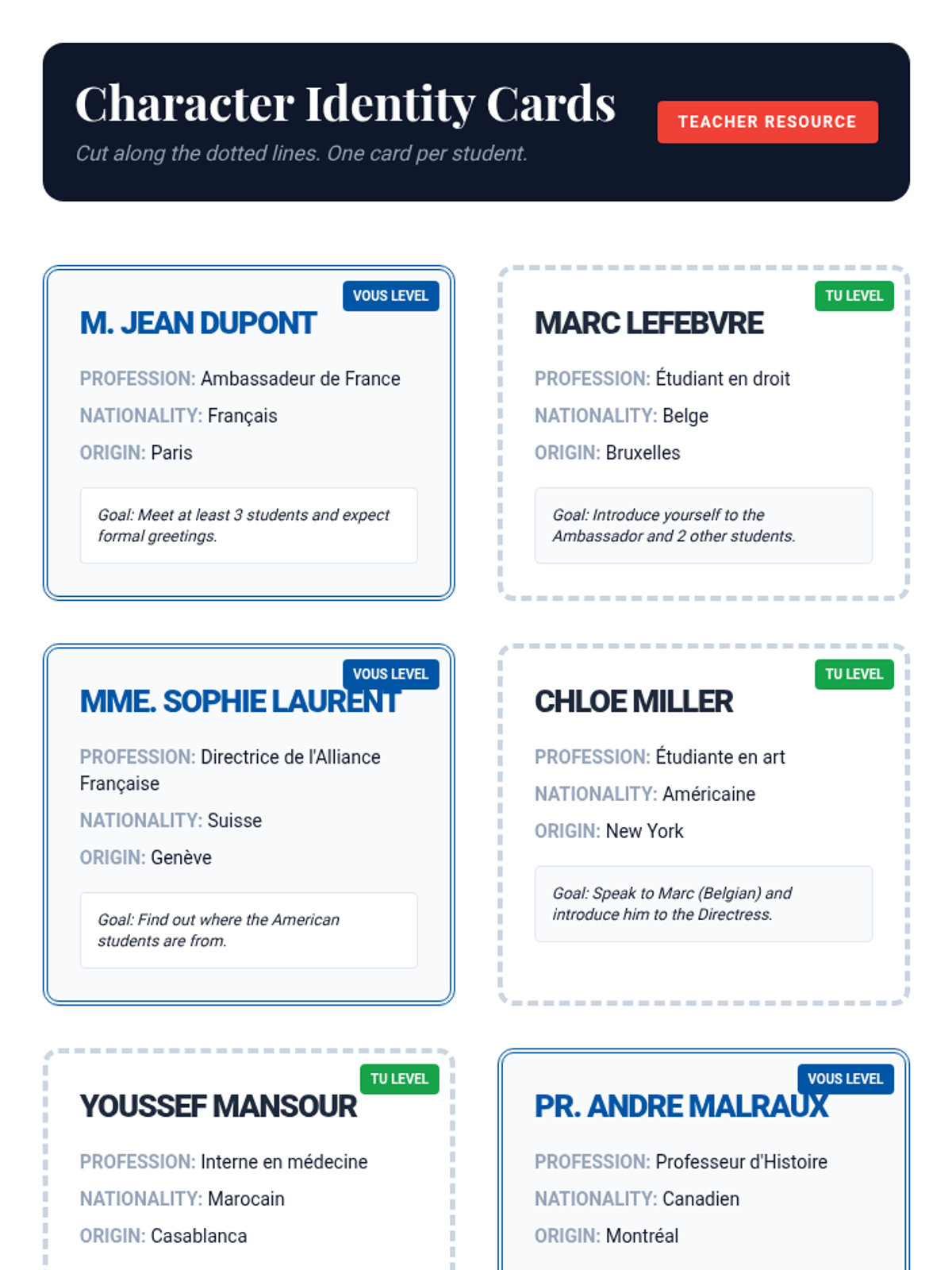
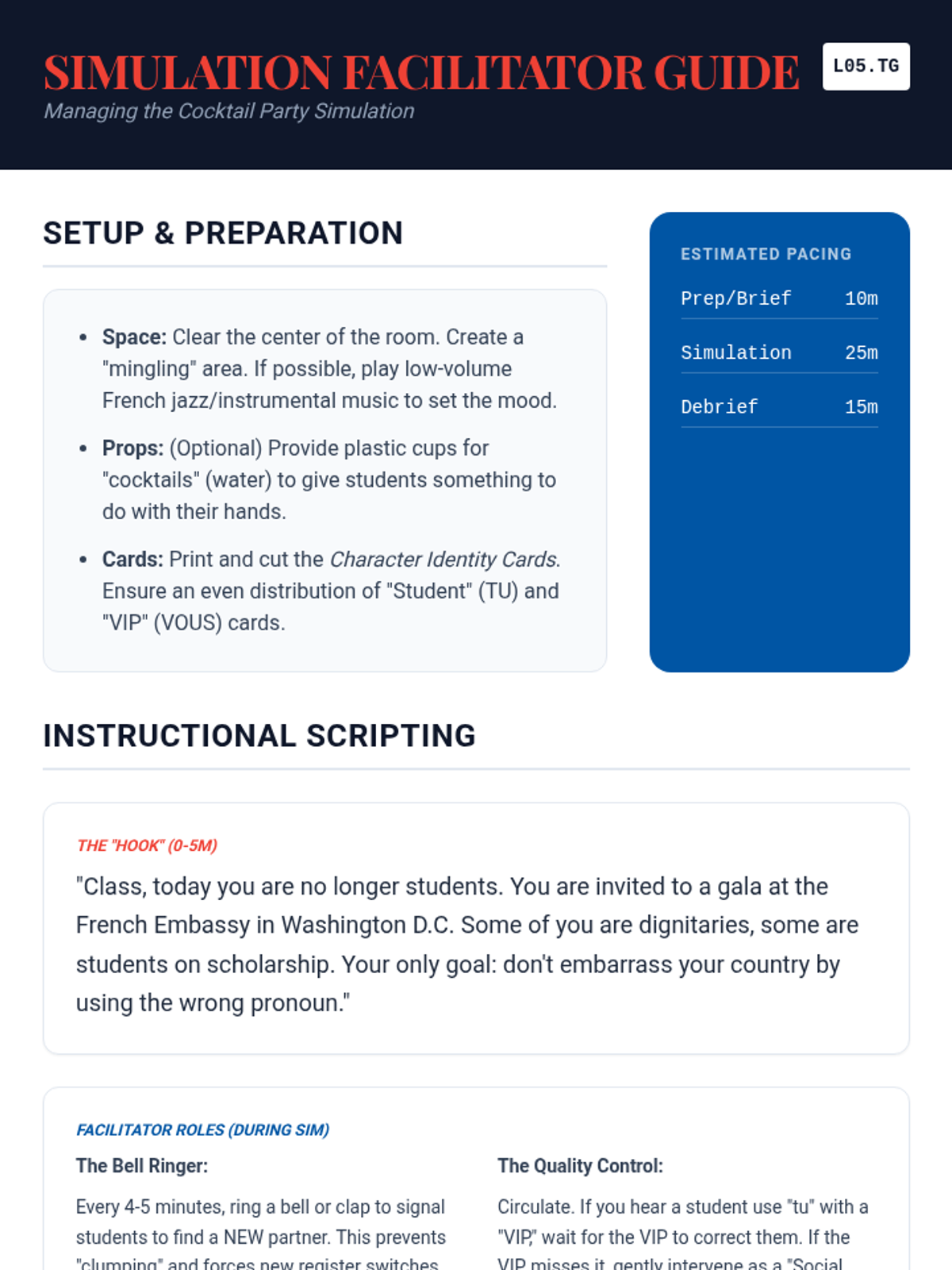
Apply all learned skills in a mock social simulation, practicing code-switching and introductions across different social statuses.
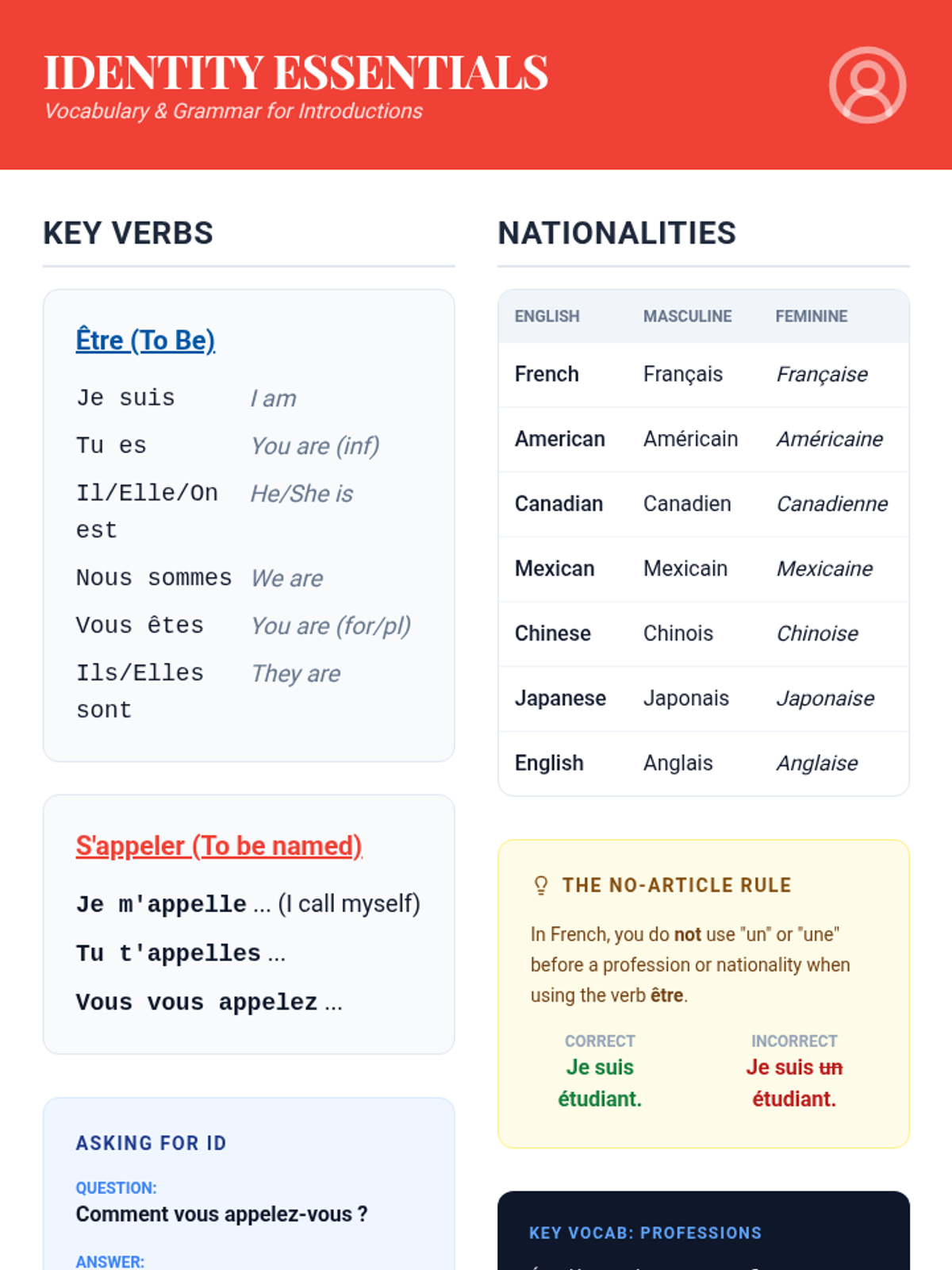
Master the verbs 'être' and 's'appeler' along with gendered nationalities to confidently introduce yourself and others.
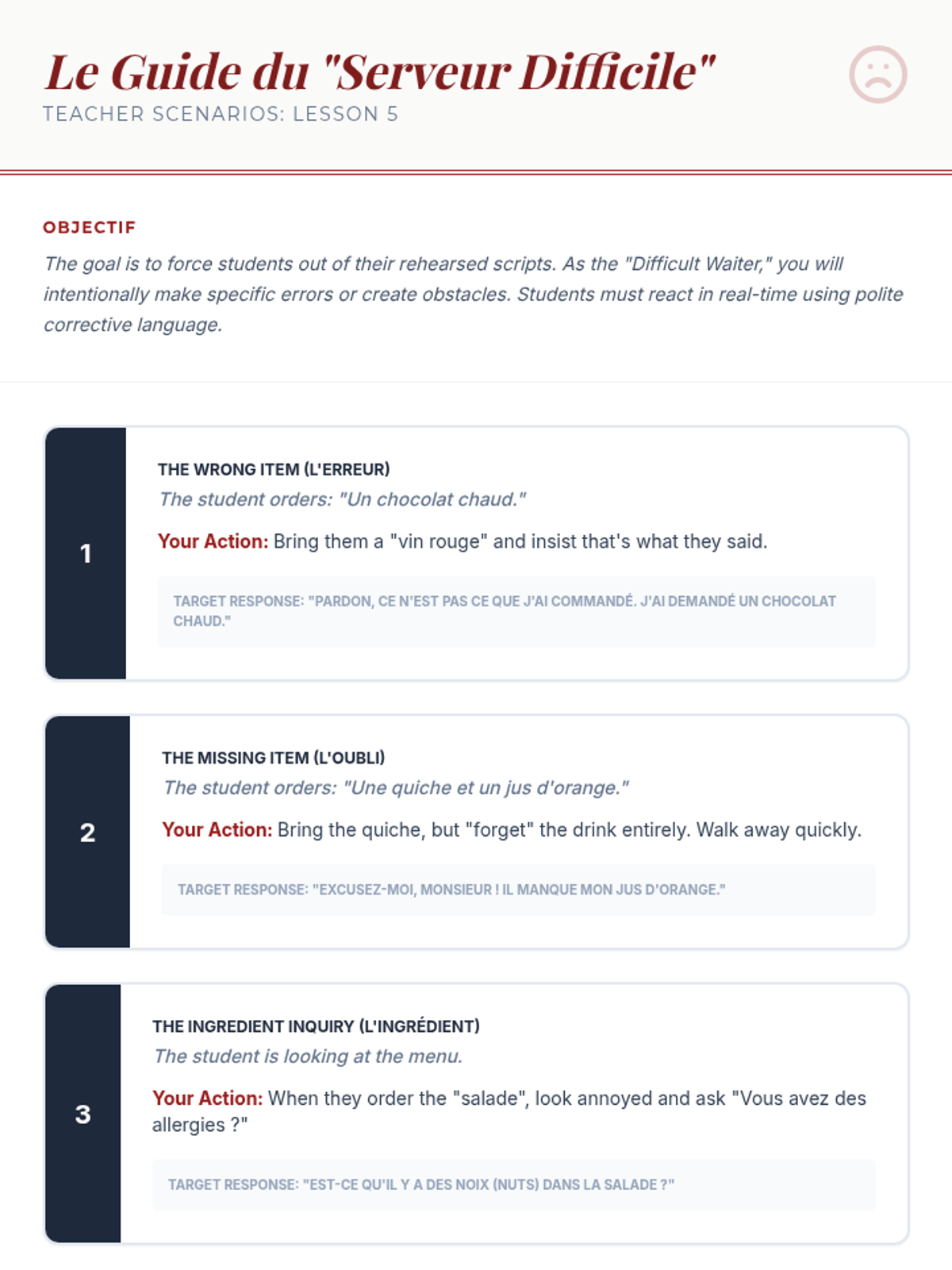
Students practice resolving order errors and inquiring about ingredients, pushing their language use into adaptive and spontaneous territory.
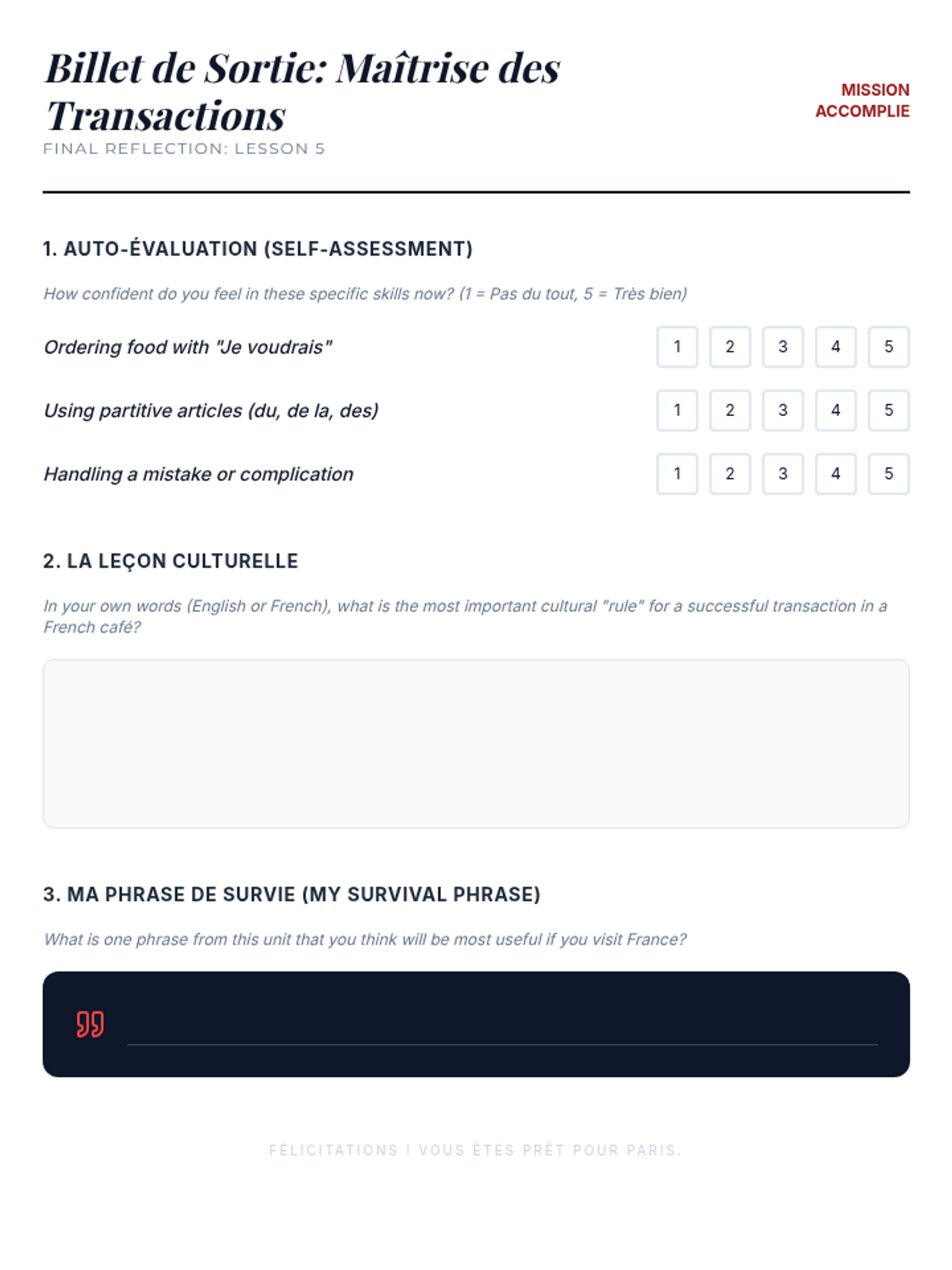
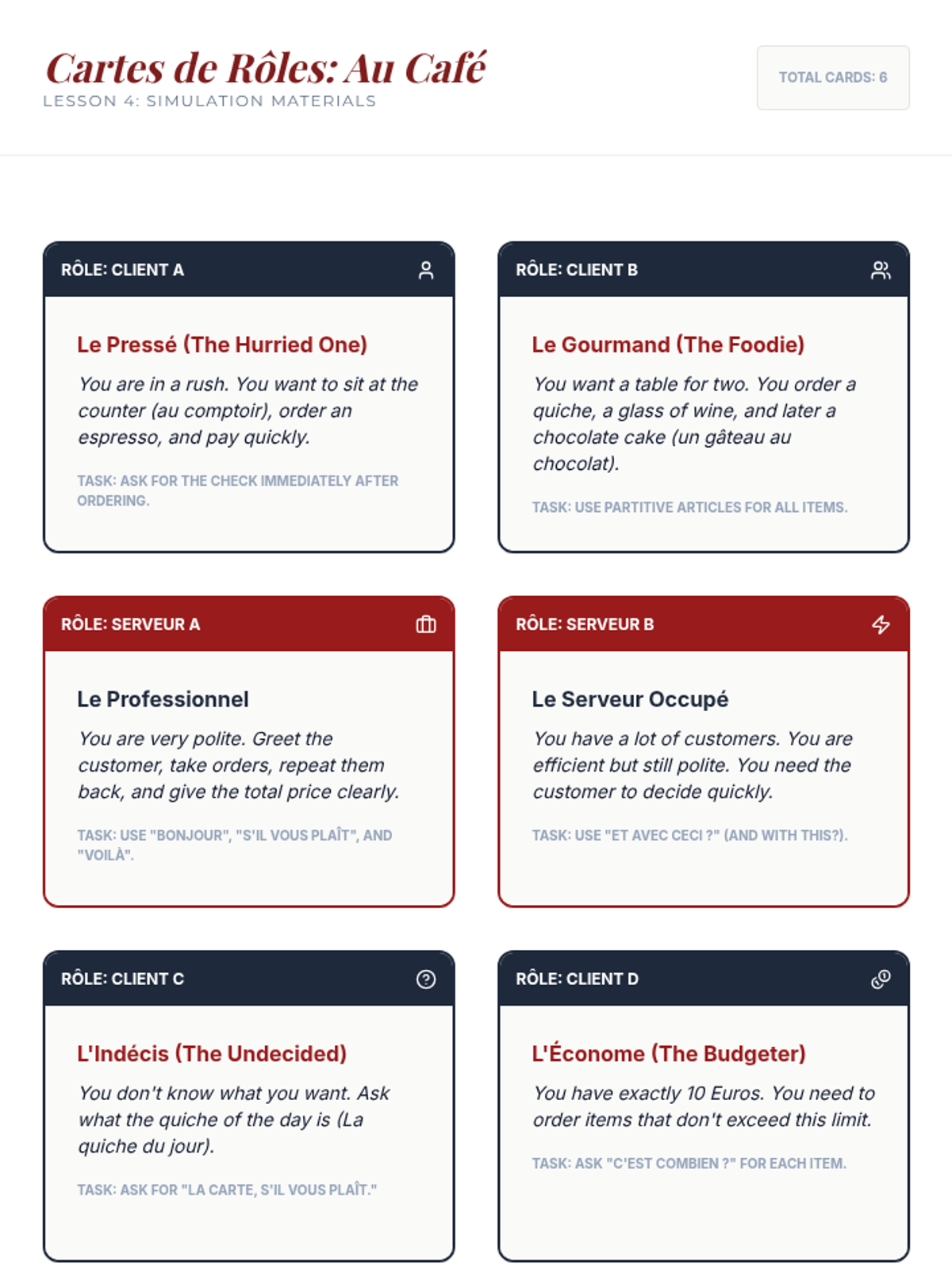
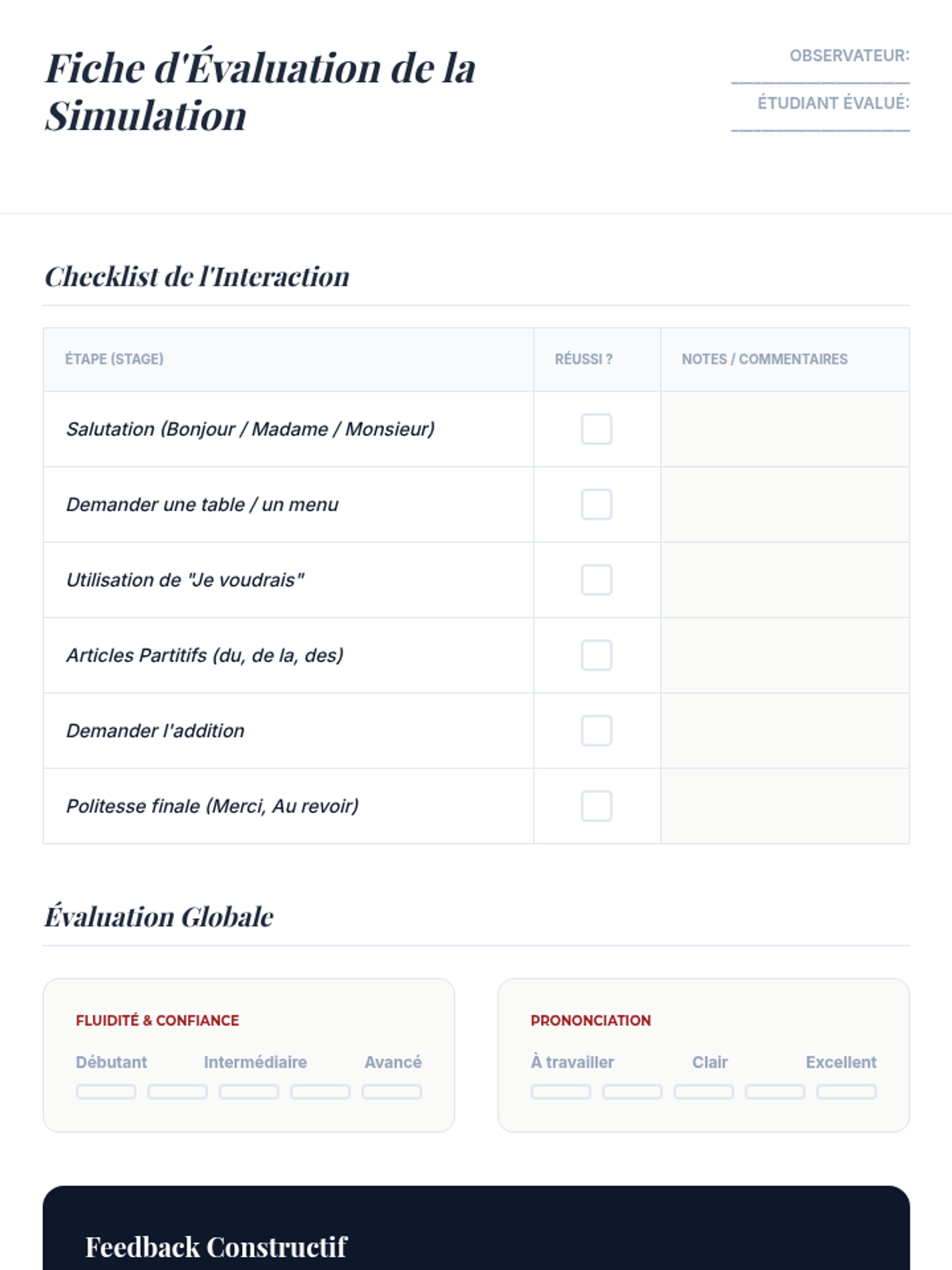
A full-scale simulation of a café visit, covering everything from being seated to asking for the check using authentic cultural scripts.
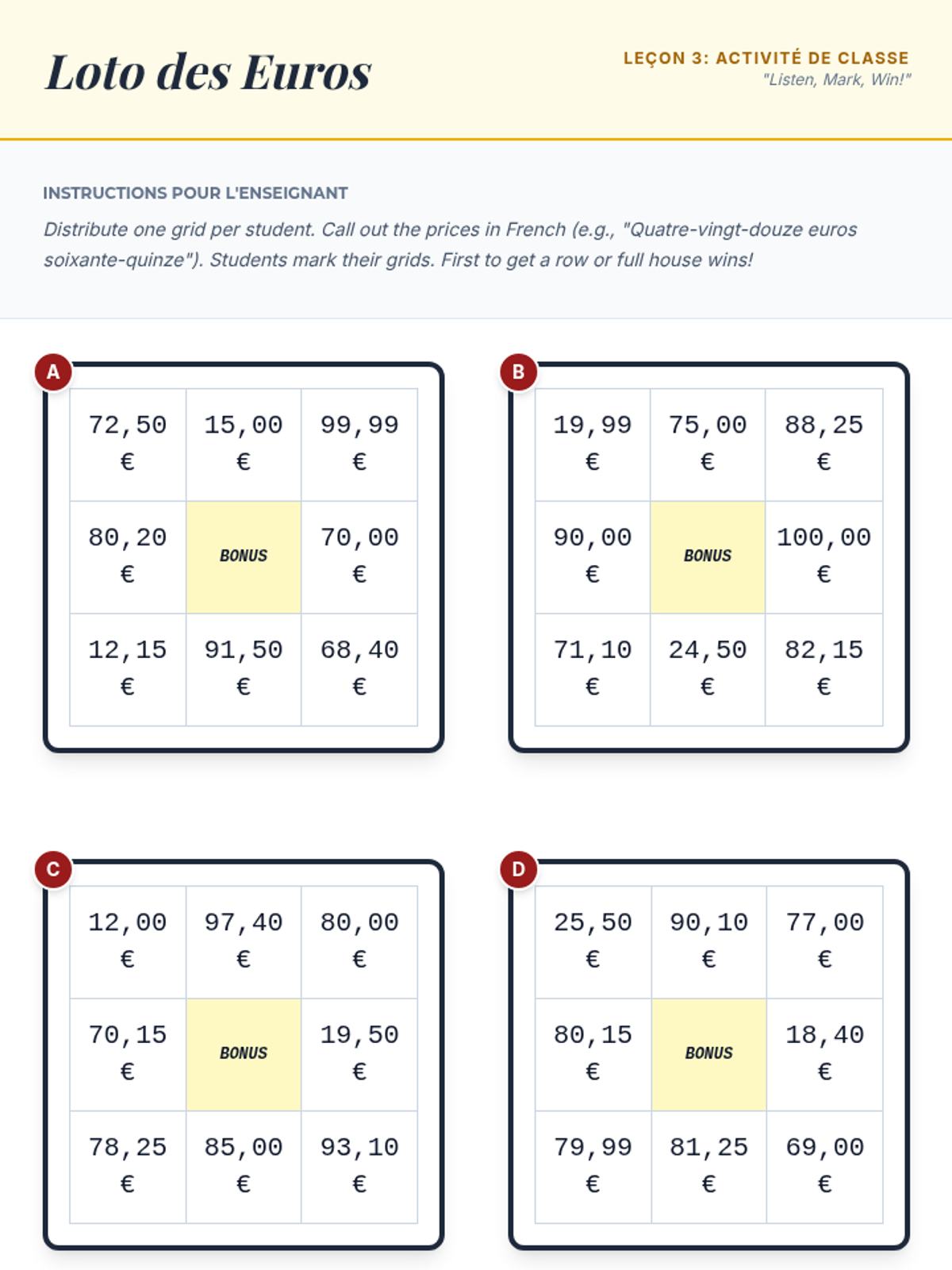
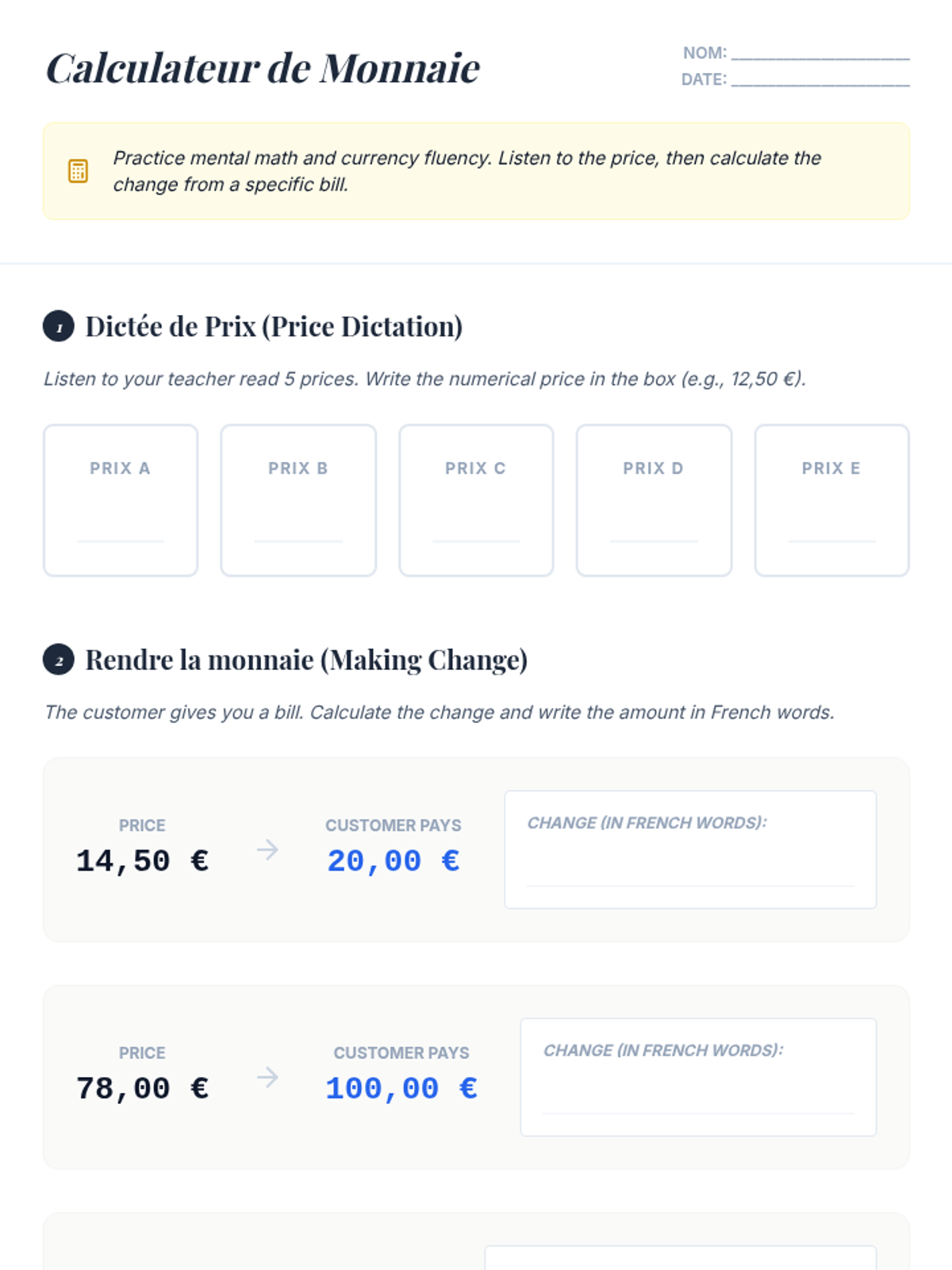
Focused on numerical fluency from 1-100 and Euro currency, students practice the complex French numbering system and mental math for transactions.
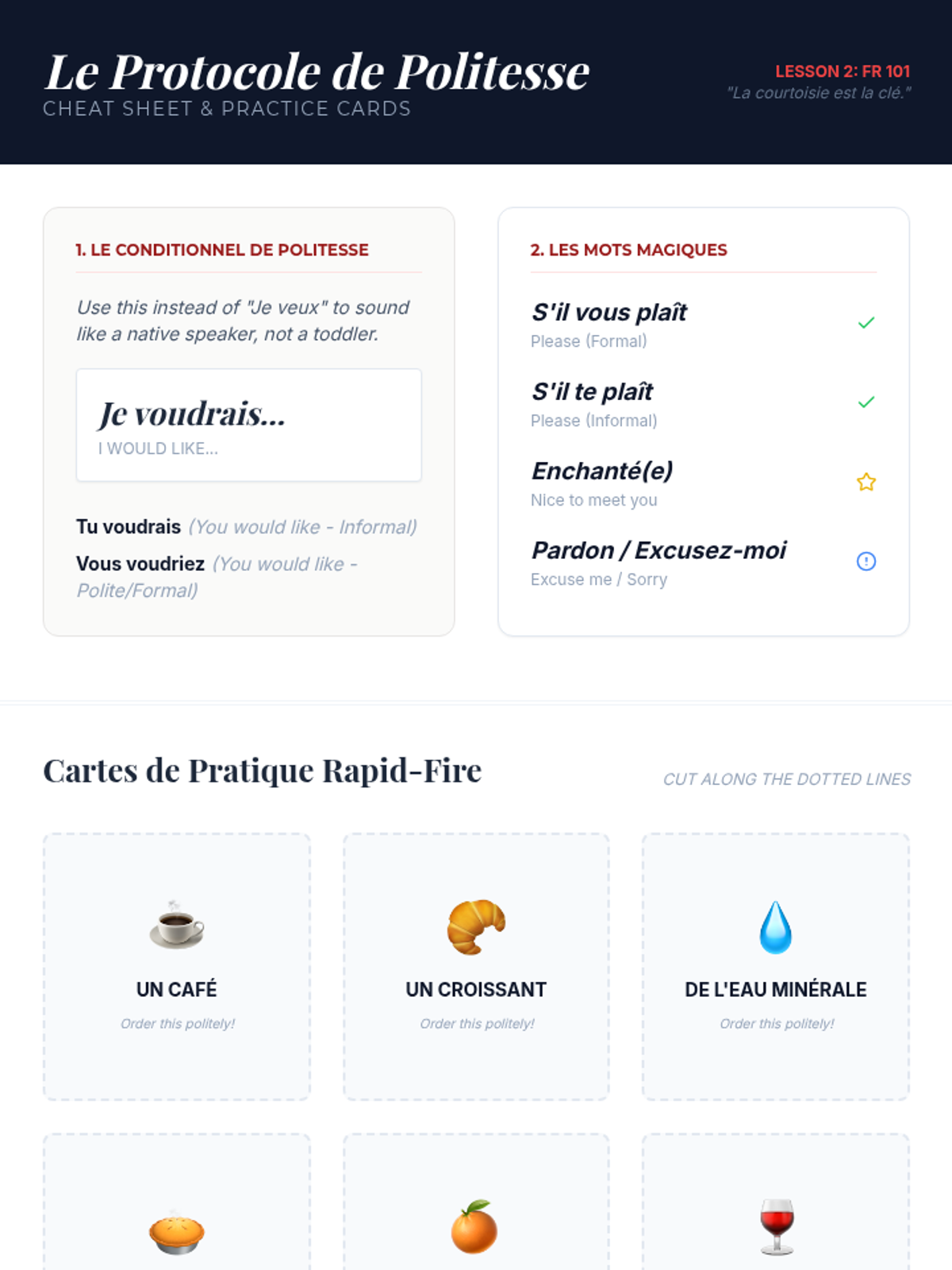
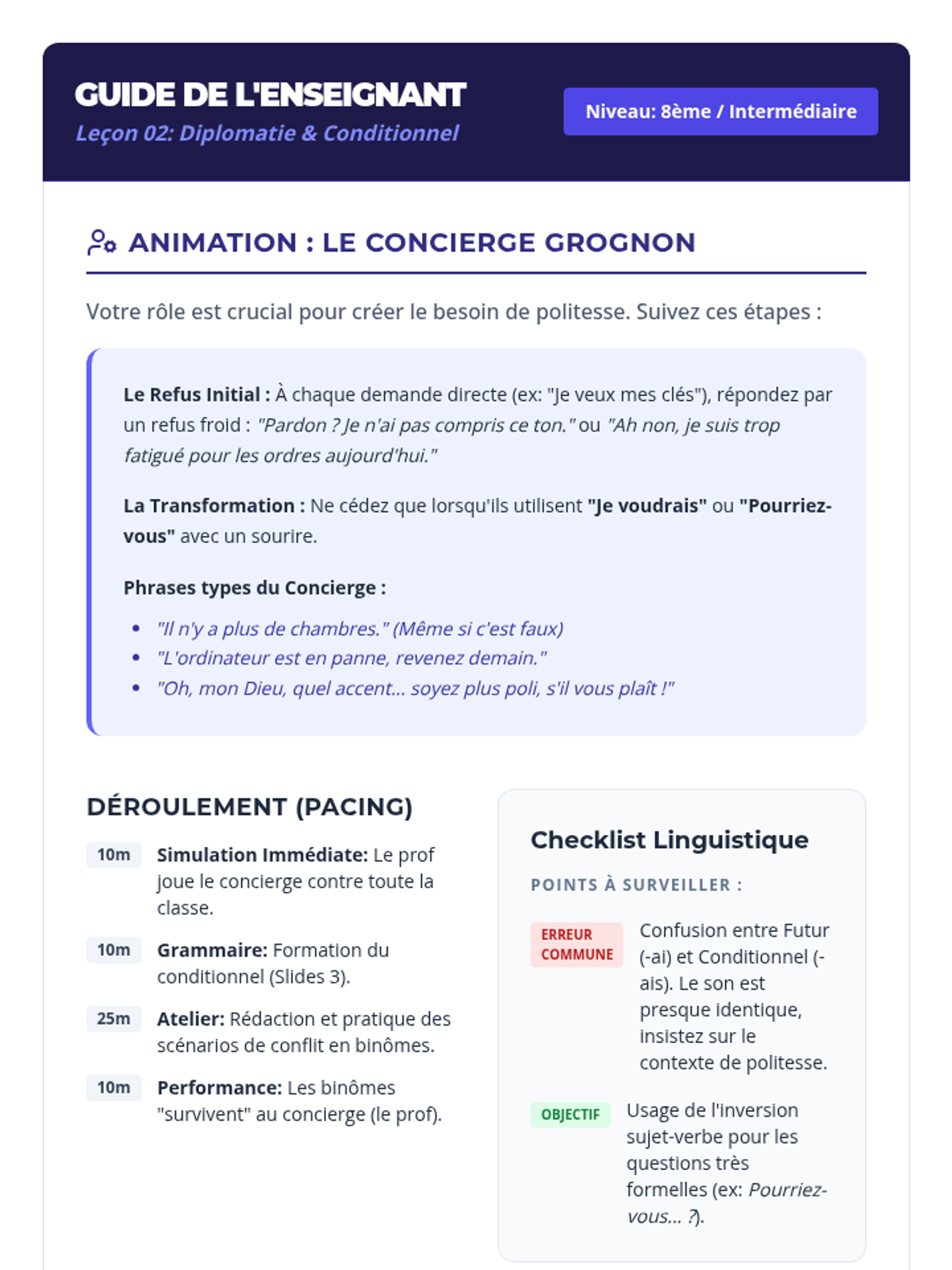
Students transition from demanding 'Je veux' to requesting 'Je voudrais', exploring the cultural importance of the conditional tense in French service interactions.
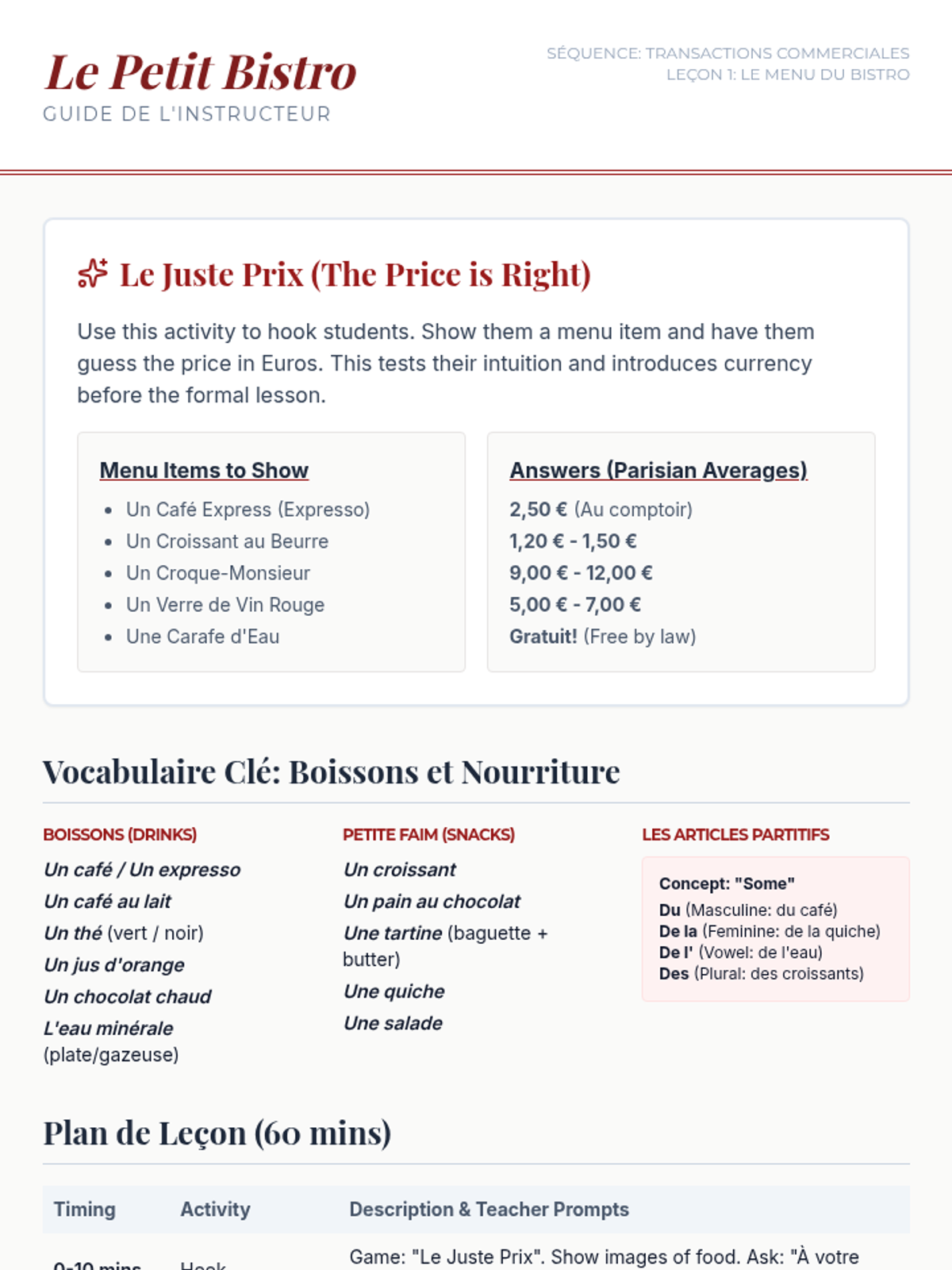
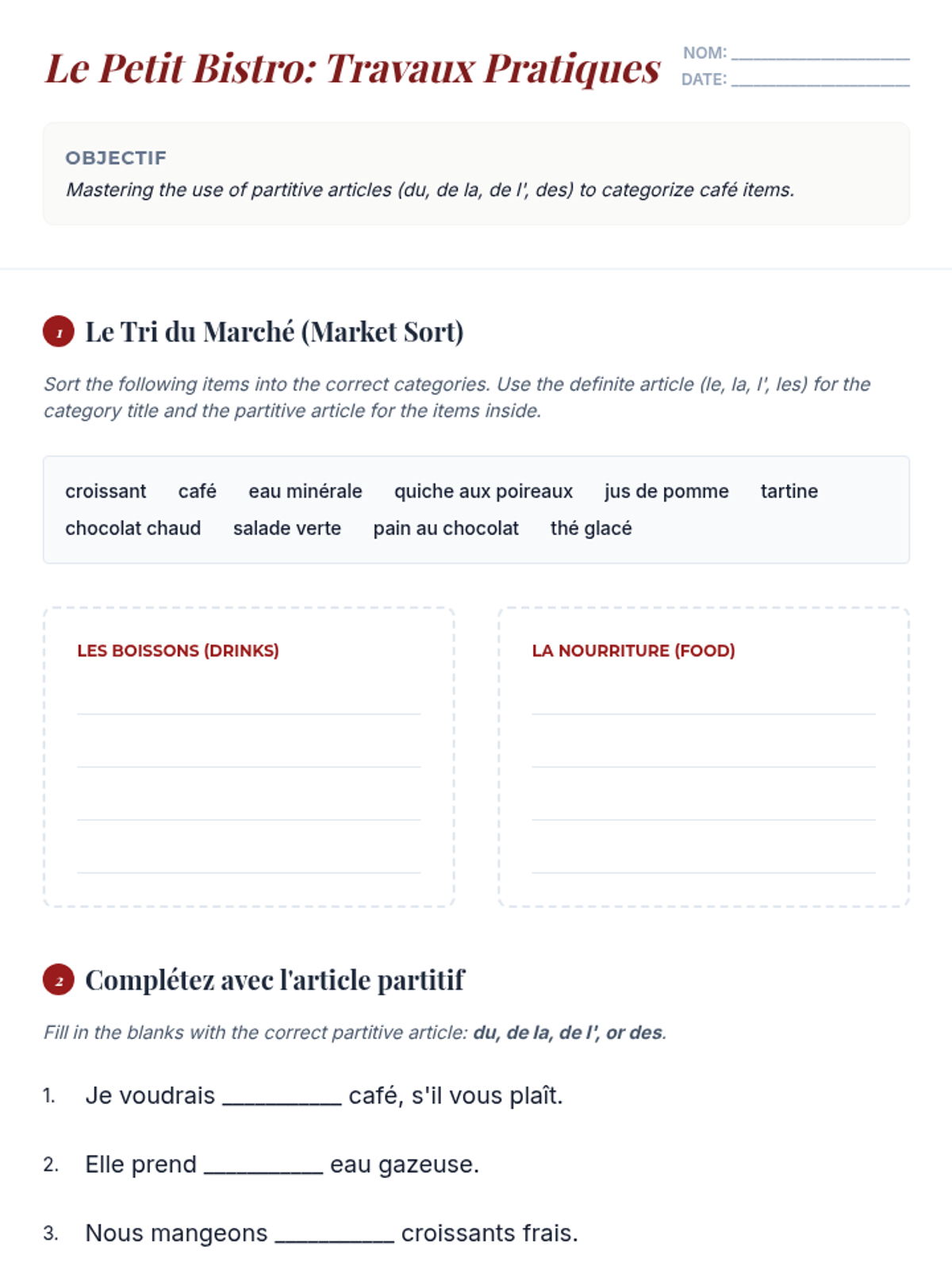
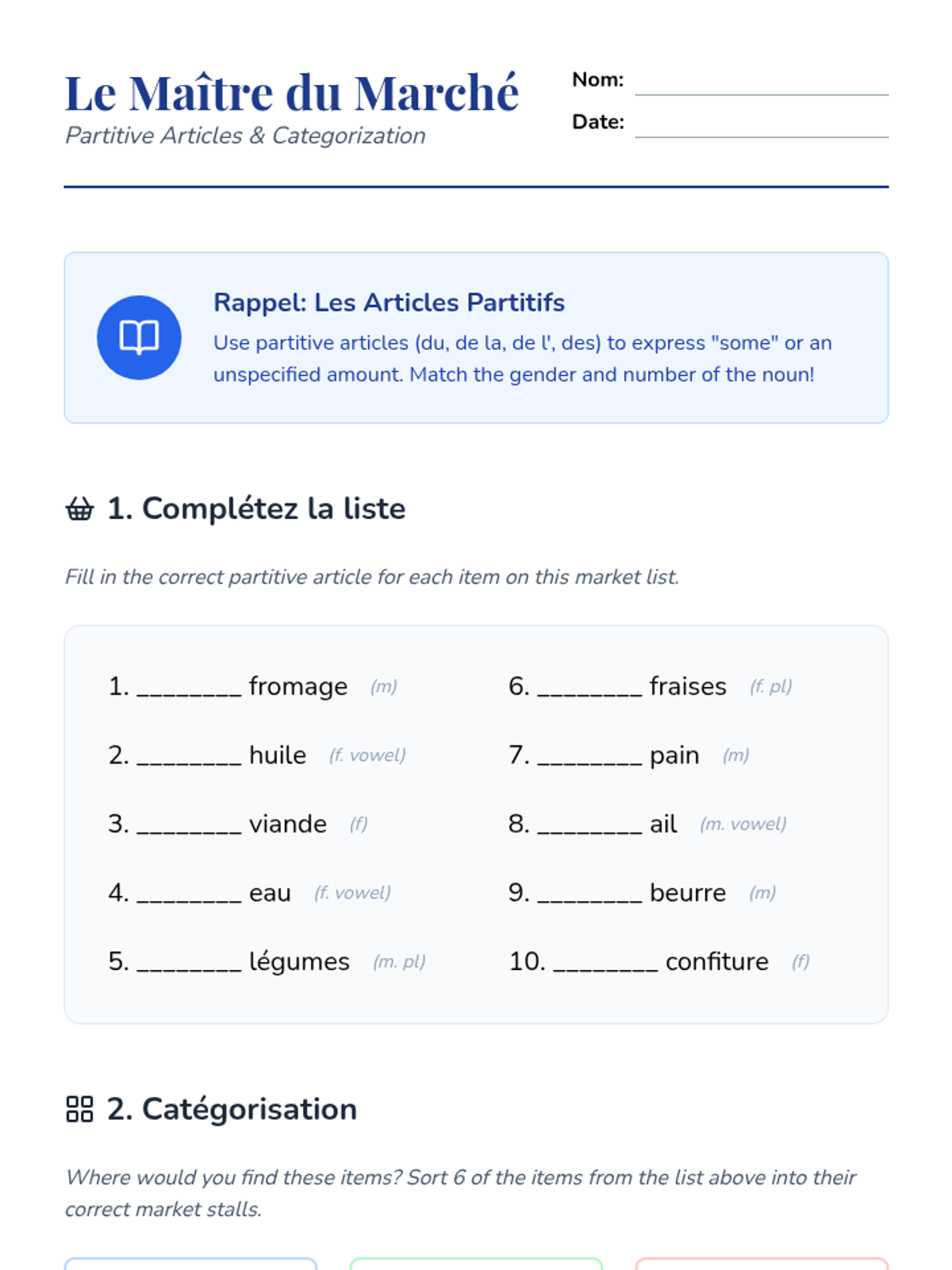
Students learn common food and drink items and master the use of partitive articles (du, de la, des) to express 'some'.
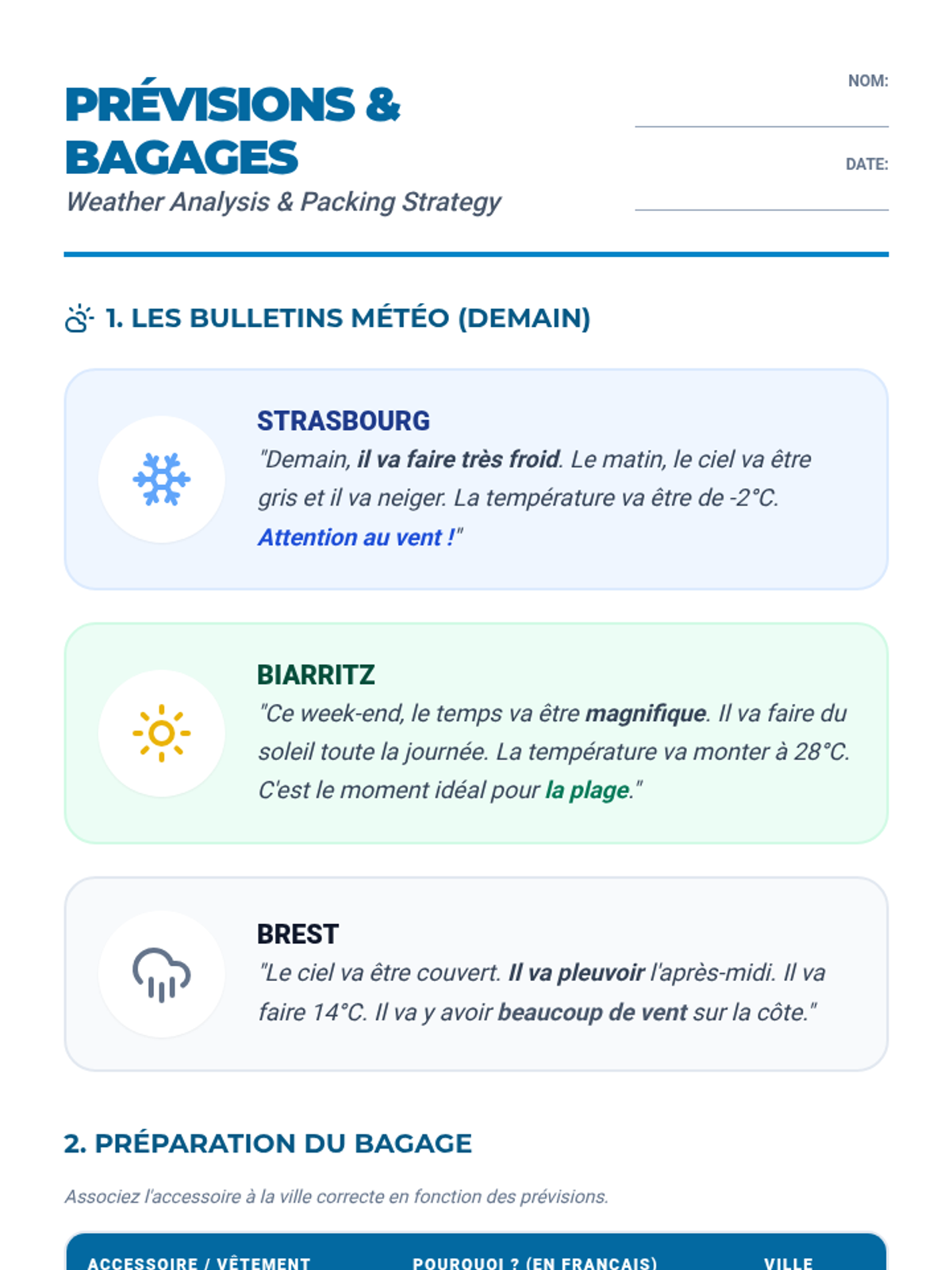
Students read weather forecasts and maps to prepare for travel and make wardrobe decisions using future context.
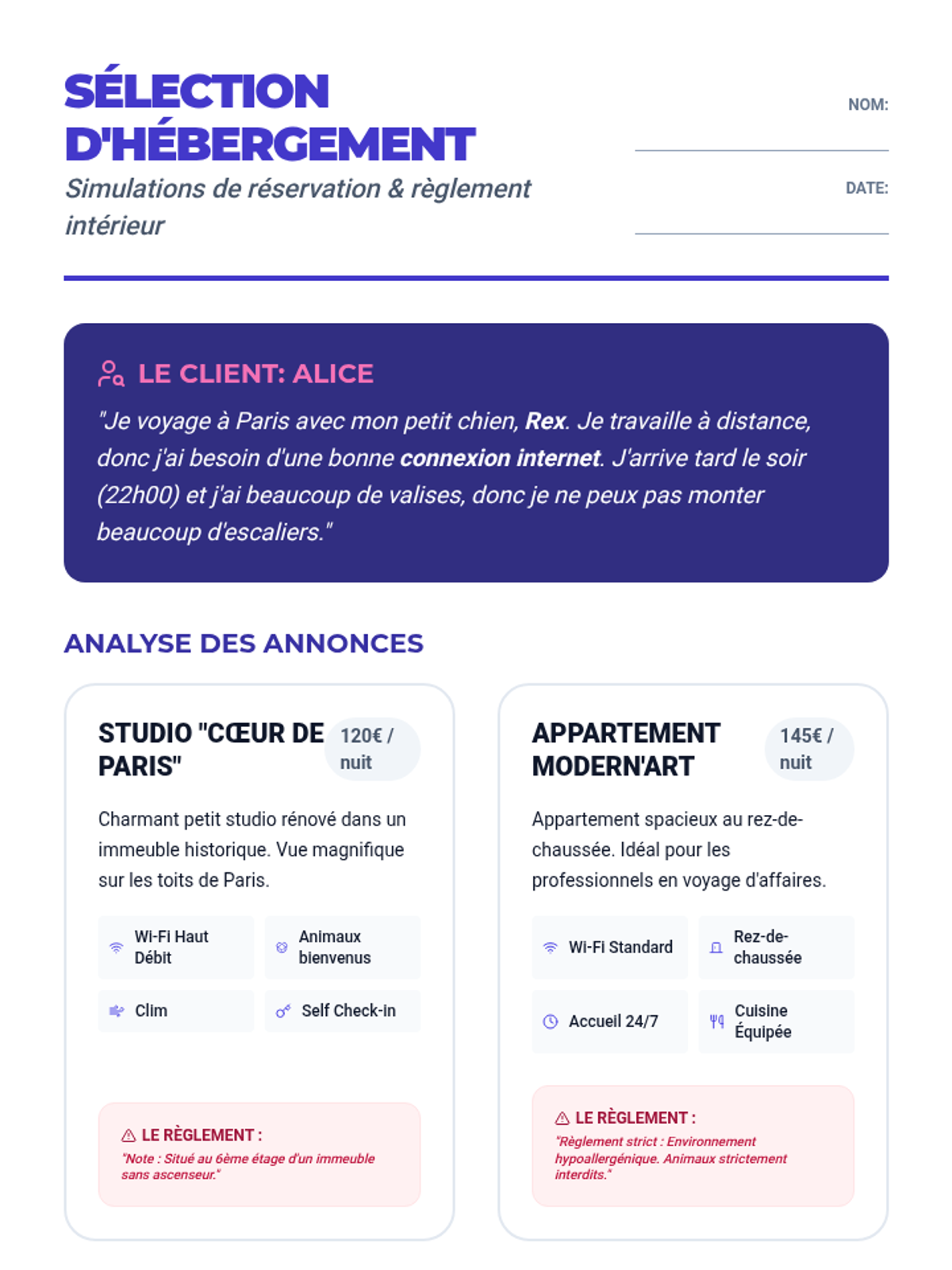
A simulation of booking accommodations by reading property descriptions and identifying specific amenities and rules.
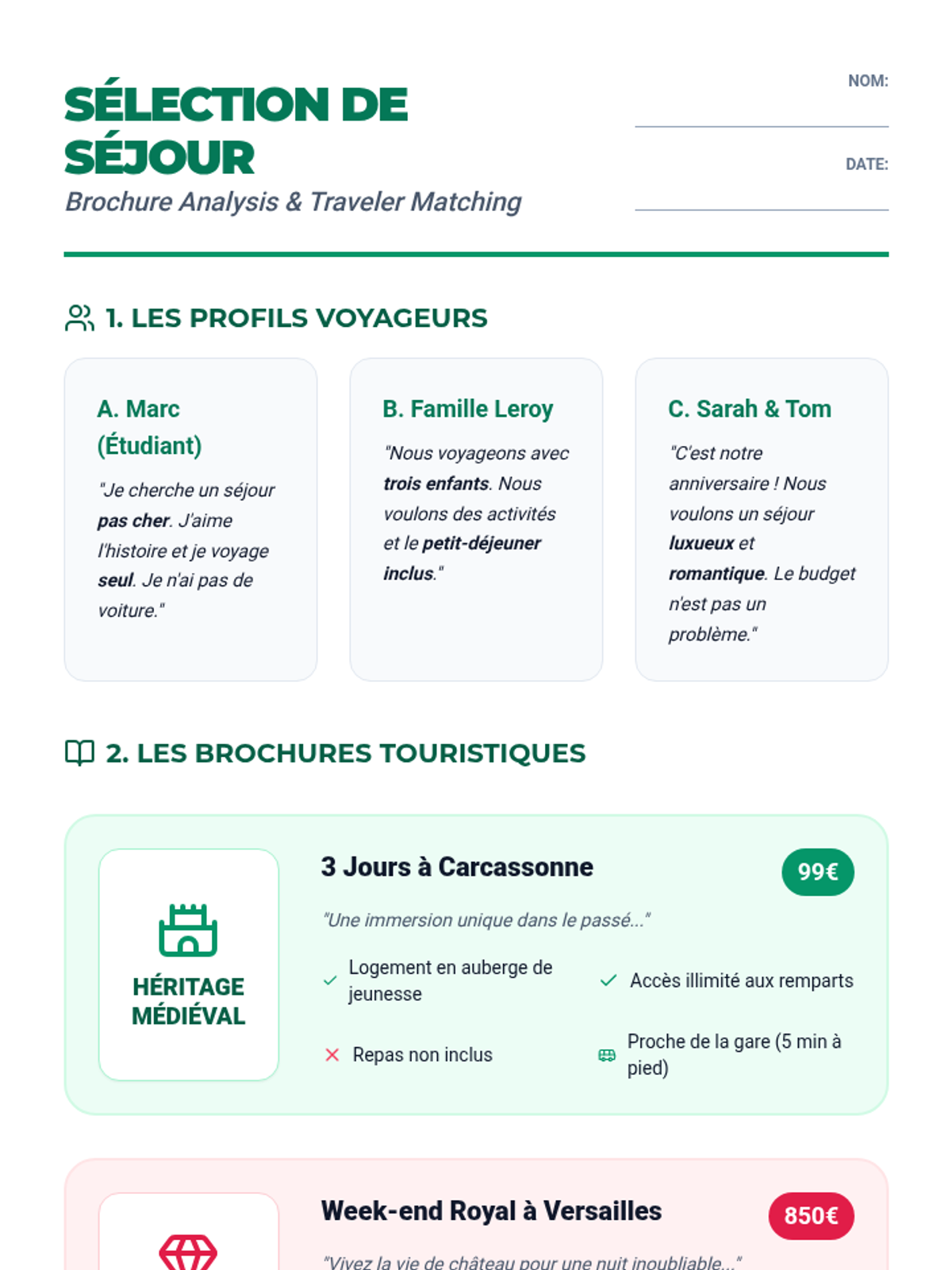
Students interpret promotional travel brochures to extract factual information about attractions and itineraries.
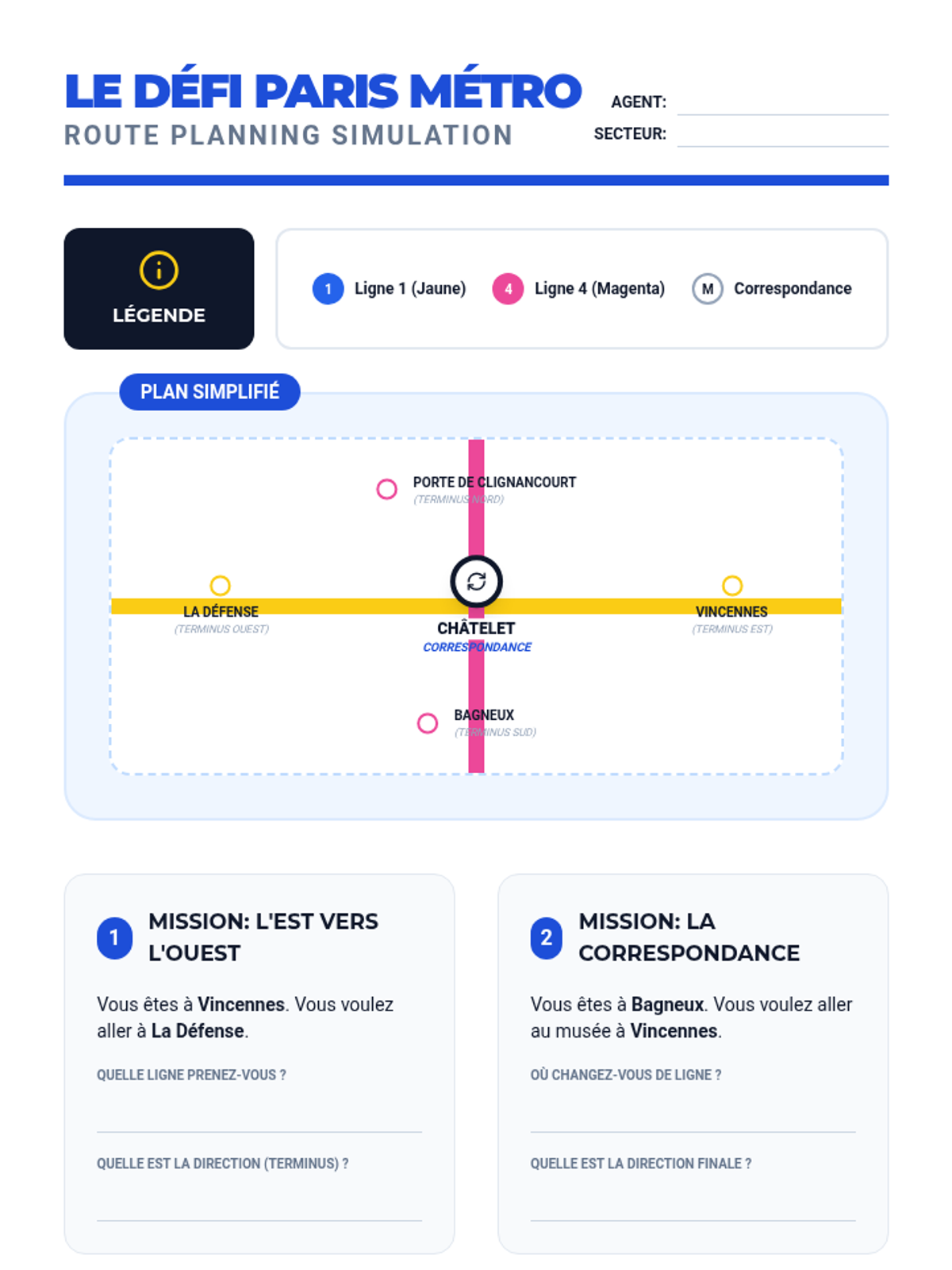
Learners analyze metro maps and schedules to plan routes and understand transit logistics in a French city.
Students learn to identify and describe the locations of landmarks using prepositions of place. The focus is on spatial reasoning through short descriptive texts.
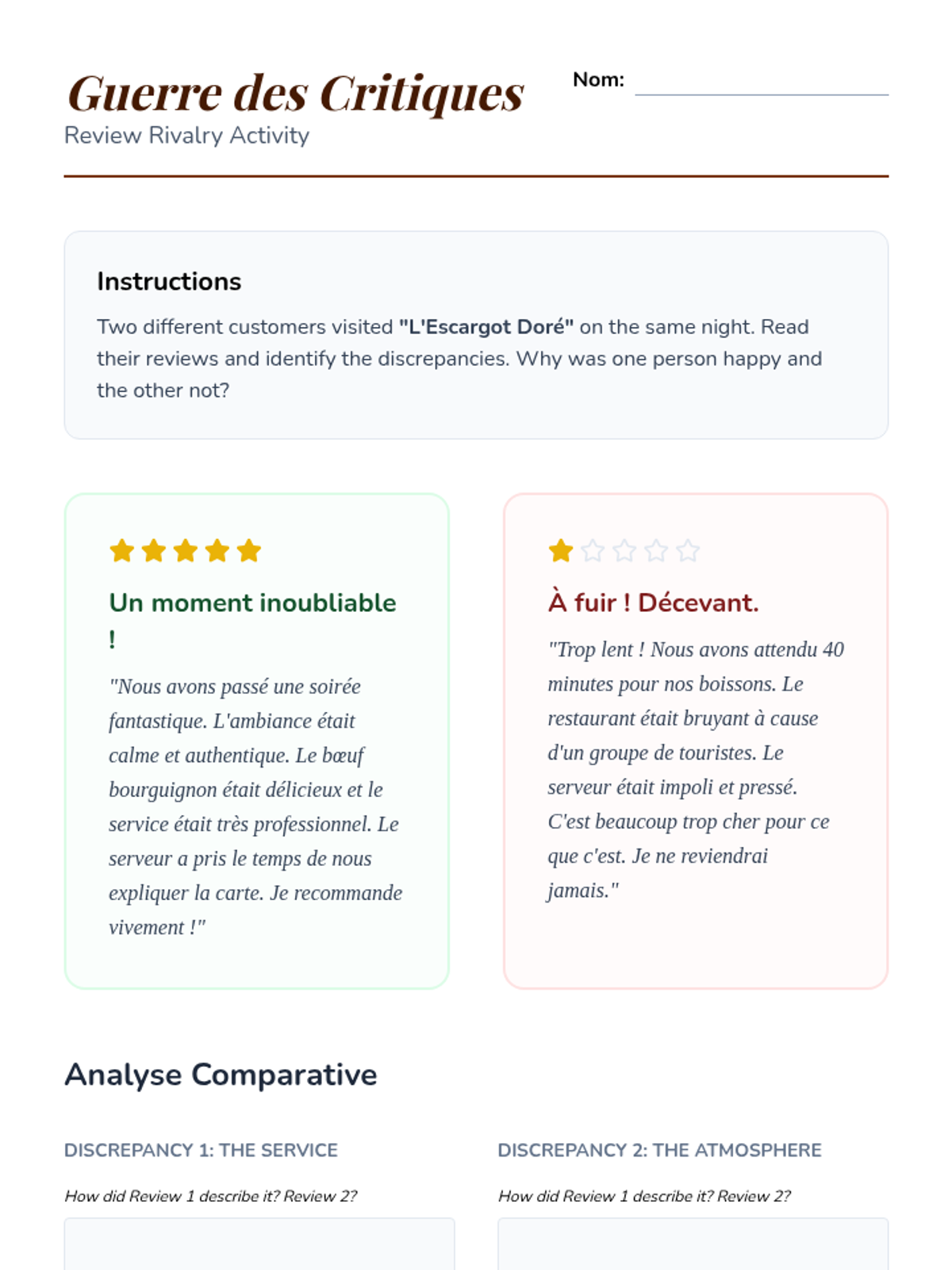
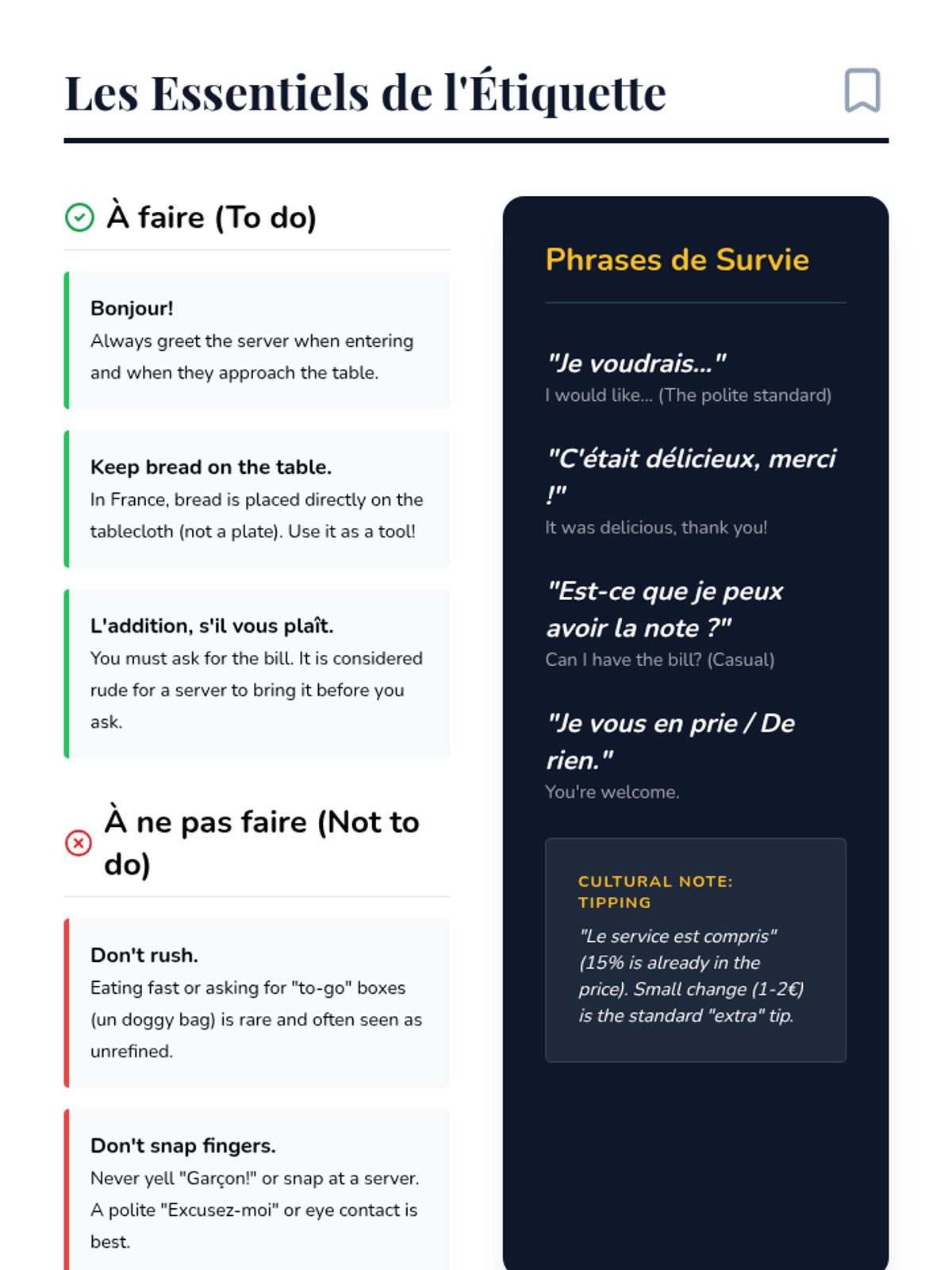
Analyzes restaurant reviews and cultural expectations regarding dining etiquette.
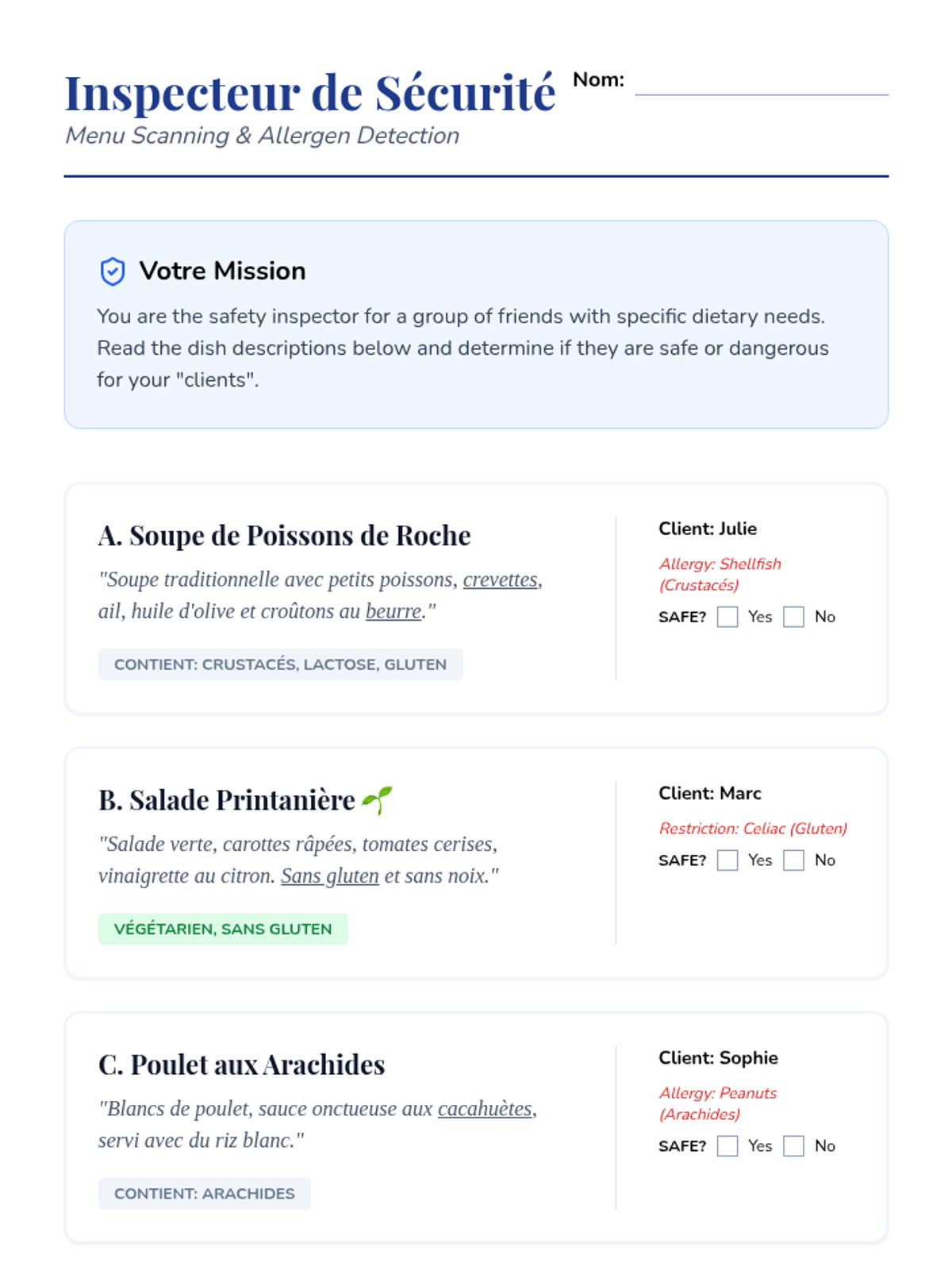
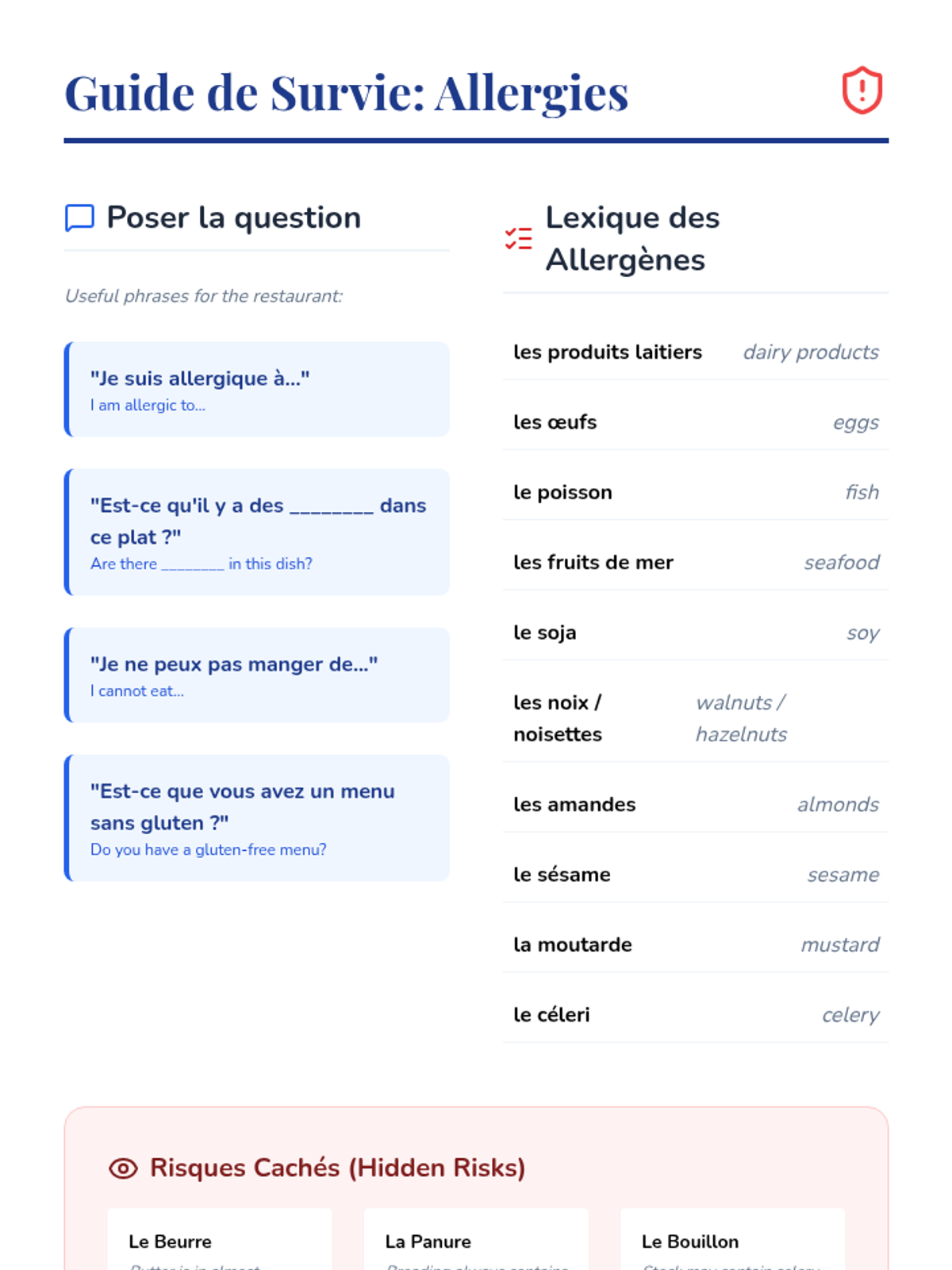
Teaches students to identify critical health information like allergens and dietary indicators in texts.
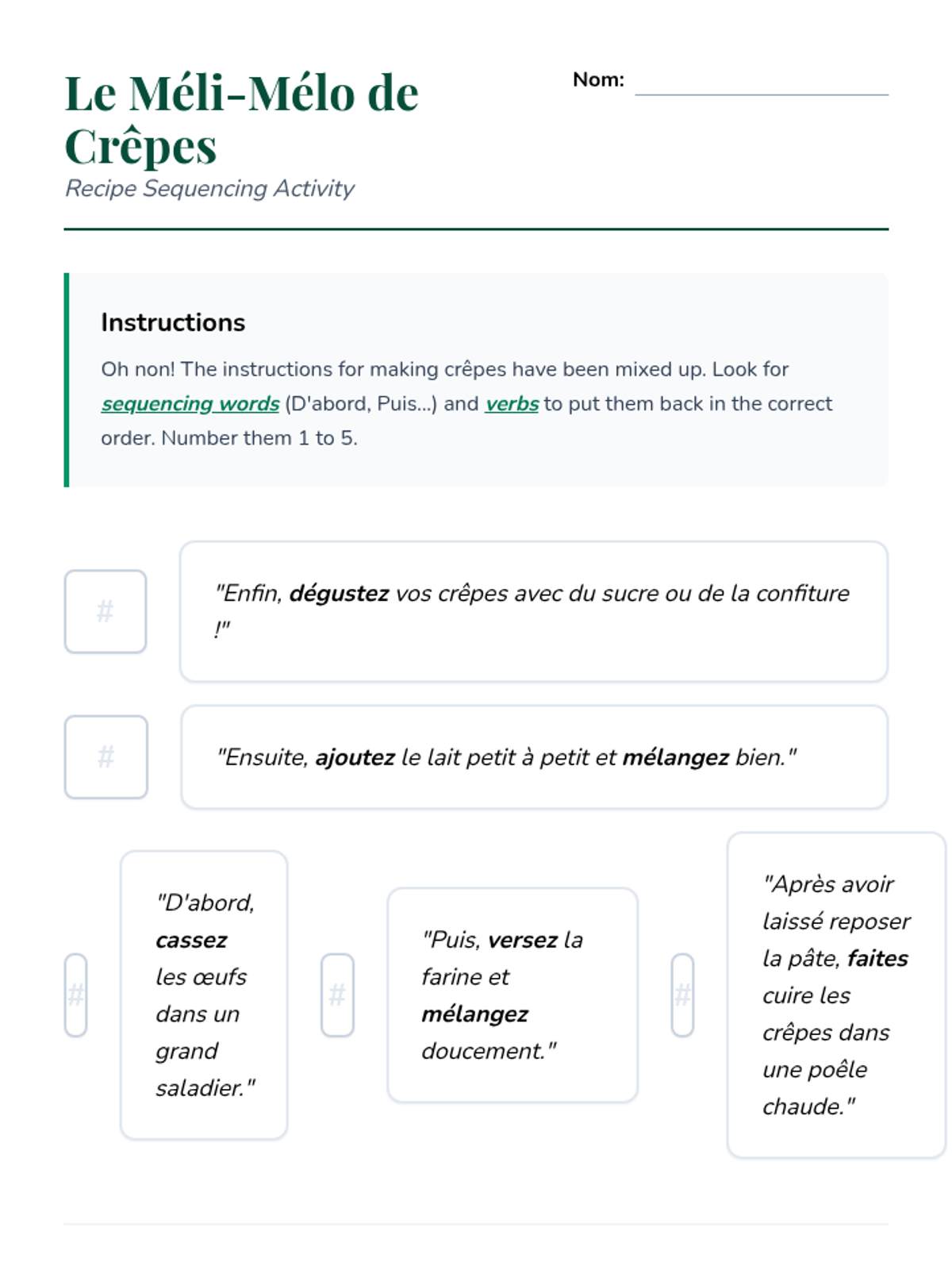
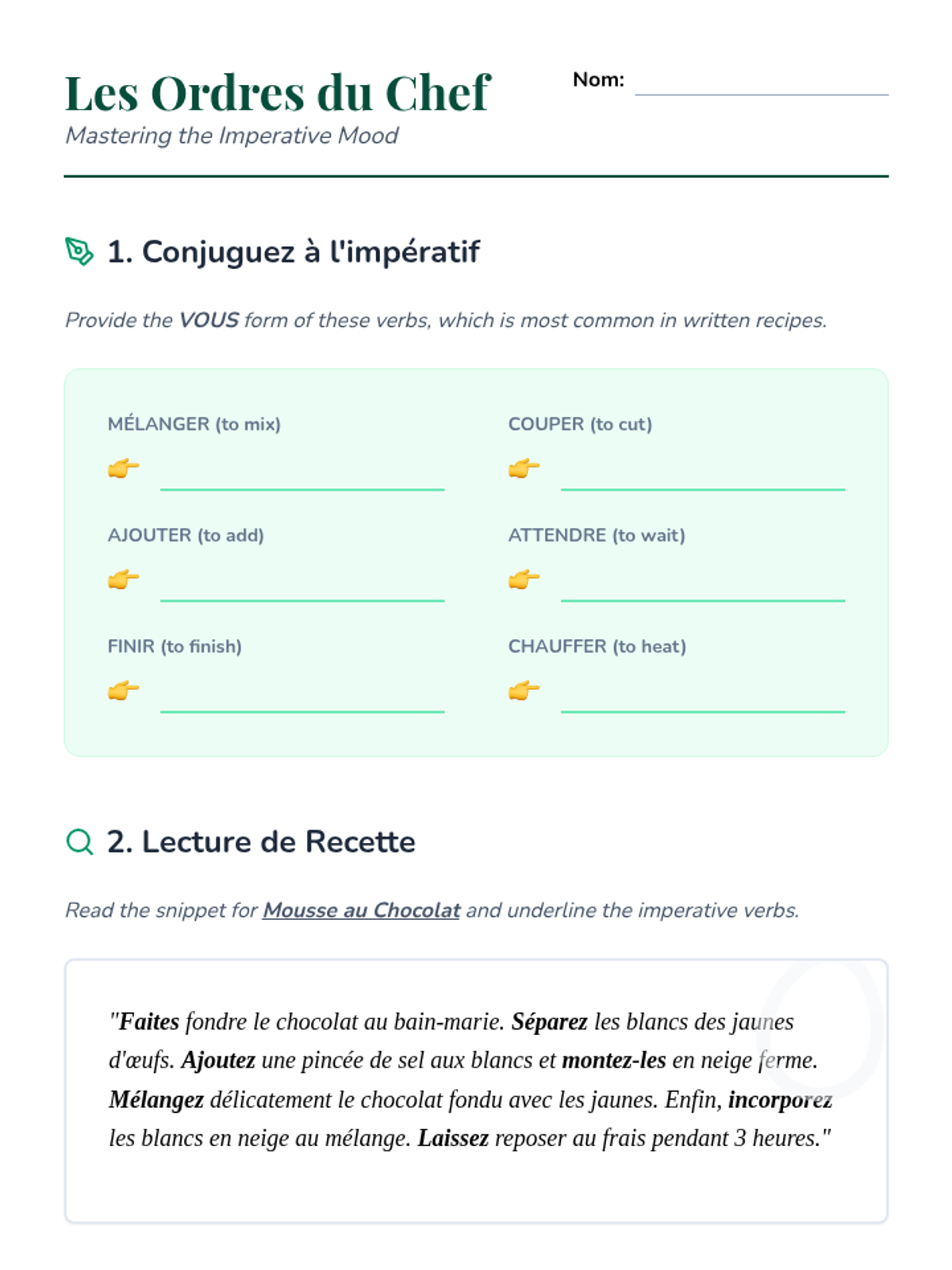
Introduces the imperative mood through simple recipes and cooking action verbs.
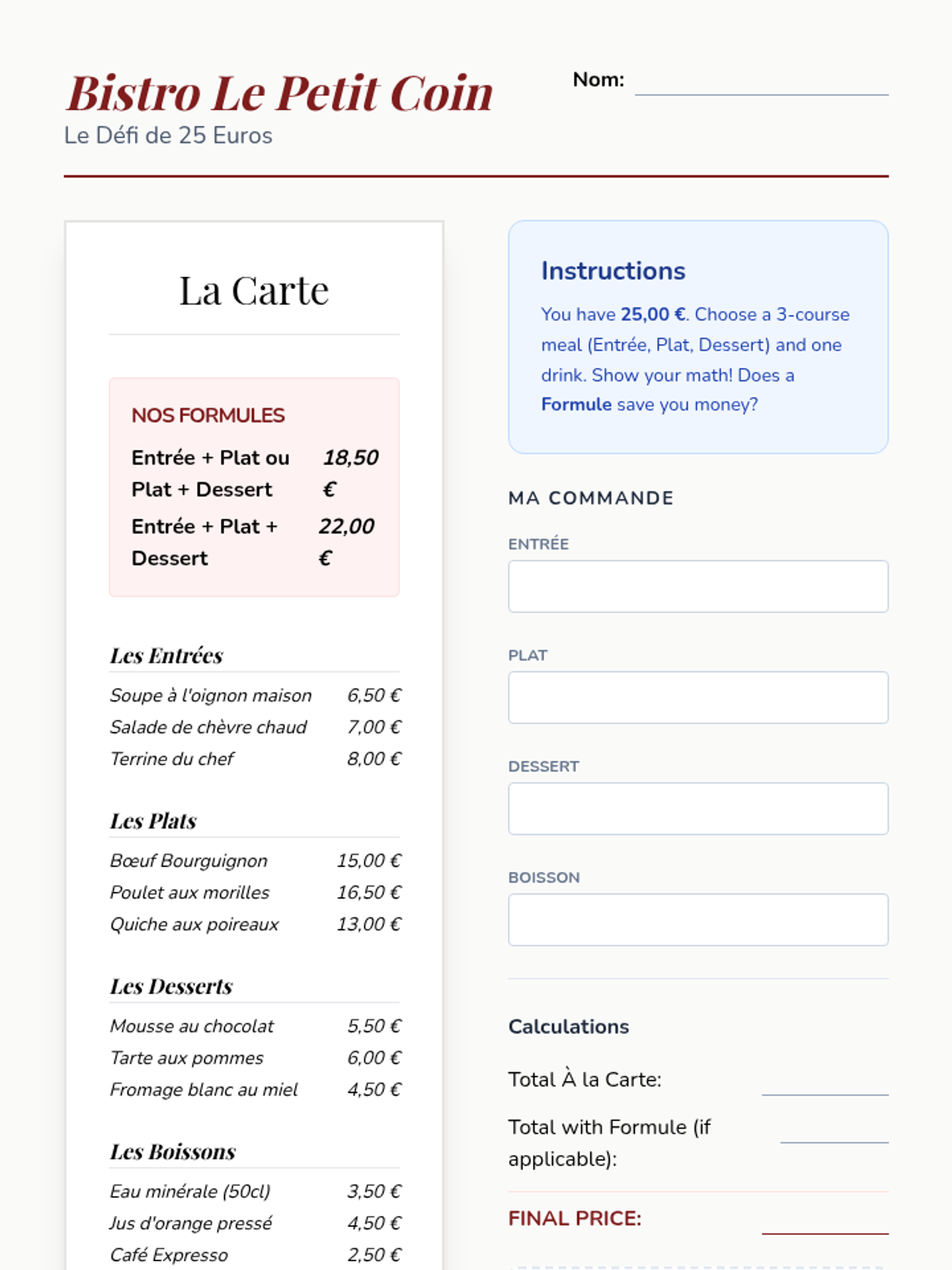
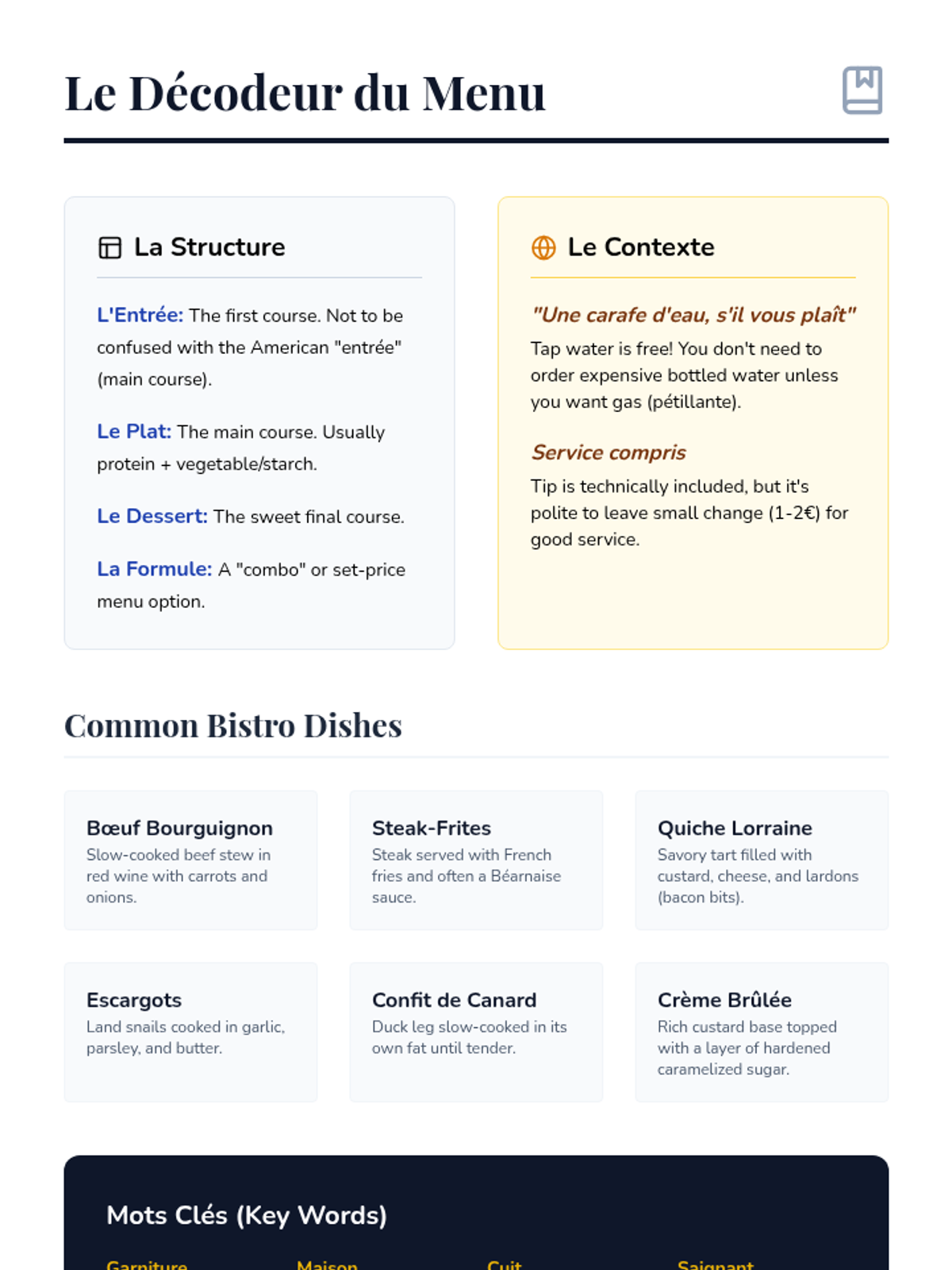
Decodes the structure of a French menu and compares 'Formule' vs 'À la carte' pricing and ordering.
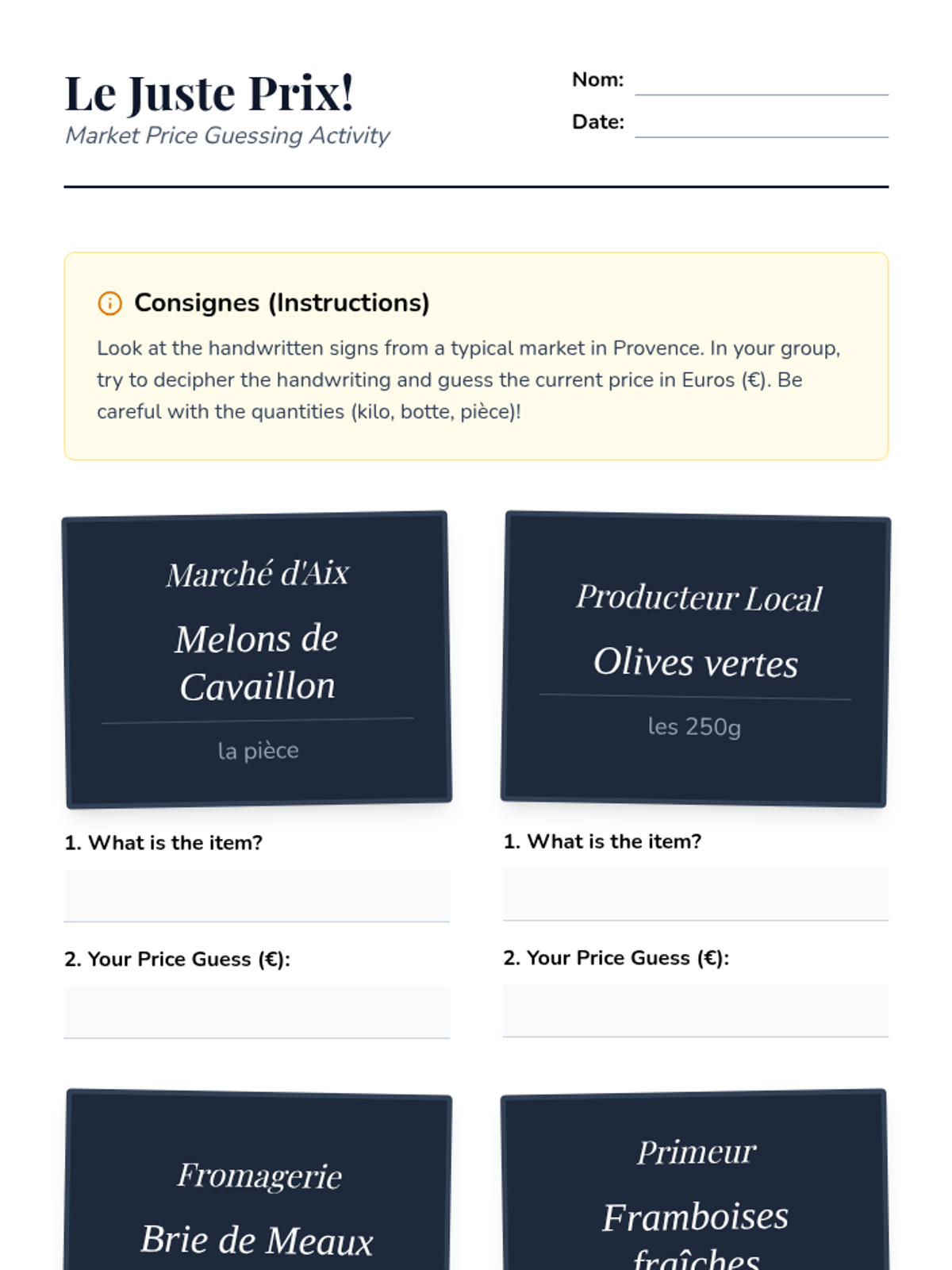
Focuses on reading handwriting on market slates and grocery lists, introducing food vocabulary and partitive articles.
Students analyze formal and informal registers in French greetings to determine social relationships.
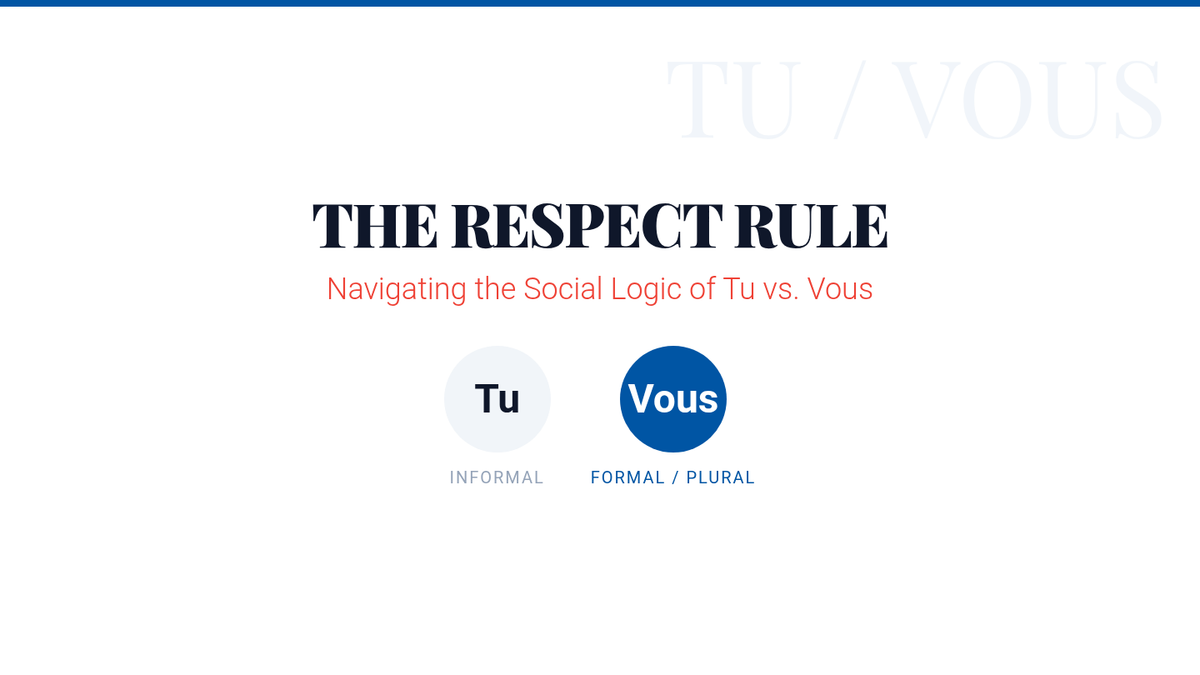
Explore the cultural logic behind 'tu' and 'vous' to navigate social hierarchies and avoid common linguistic faux pas.
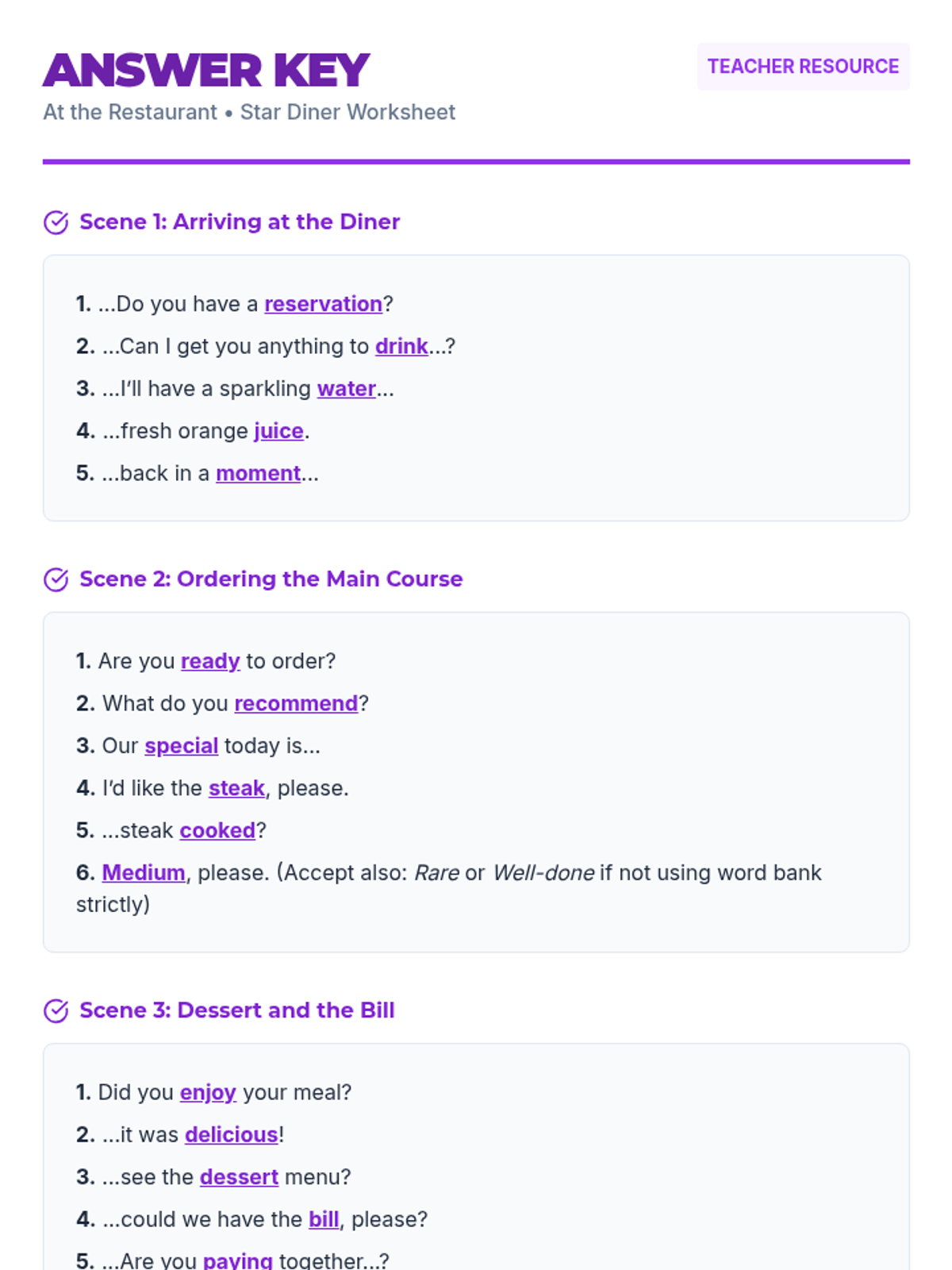
Une leçon interactive centrée sur les interactions sociales au restaurant, permettant aux élèves de maîtriser le vocabulaire de la commande, du service et du paiement.
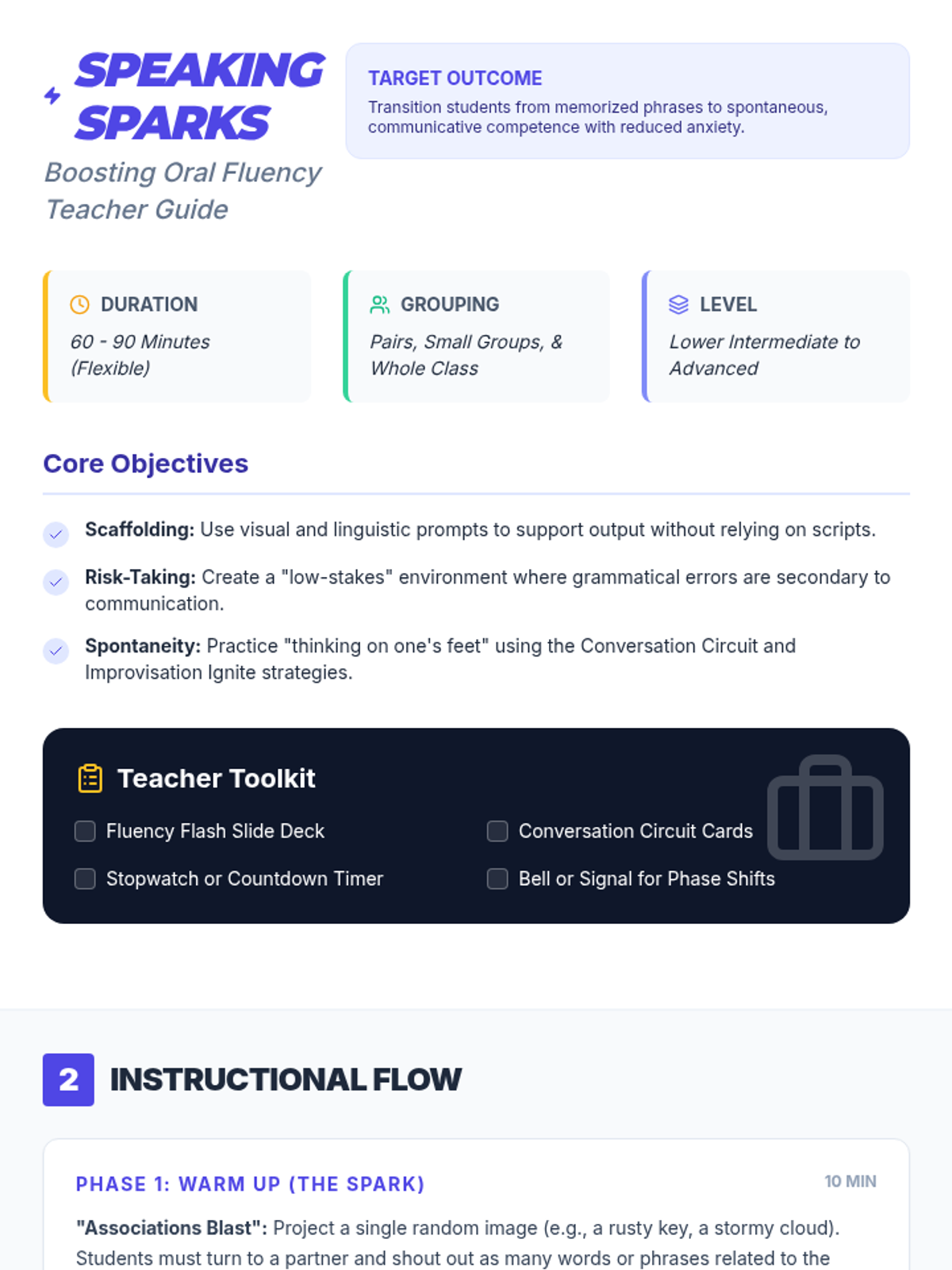
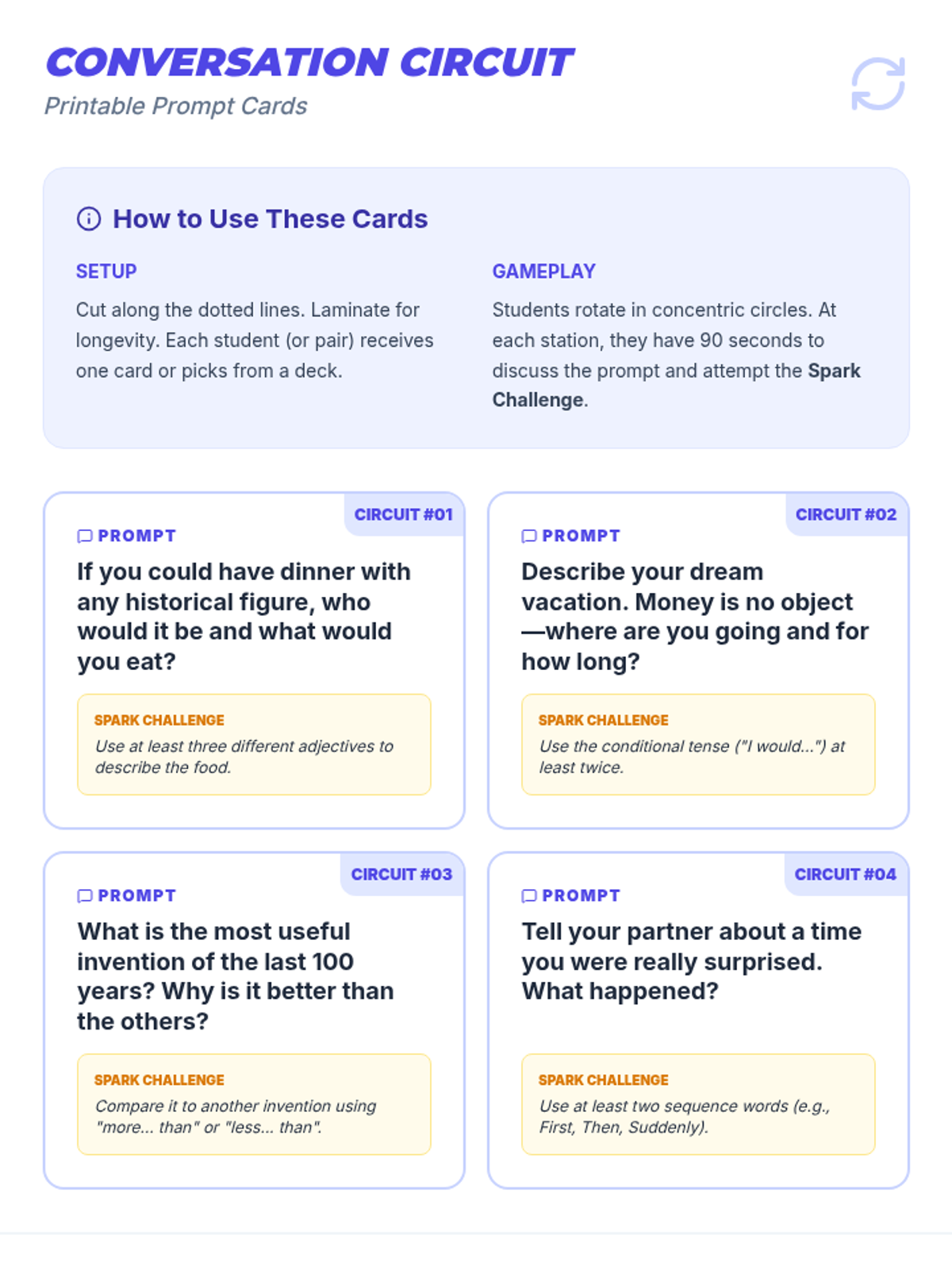
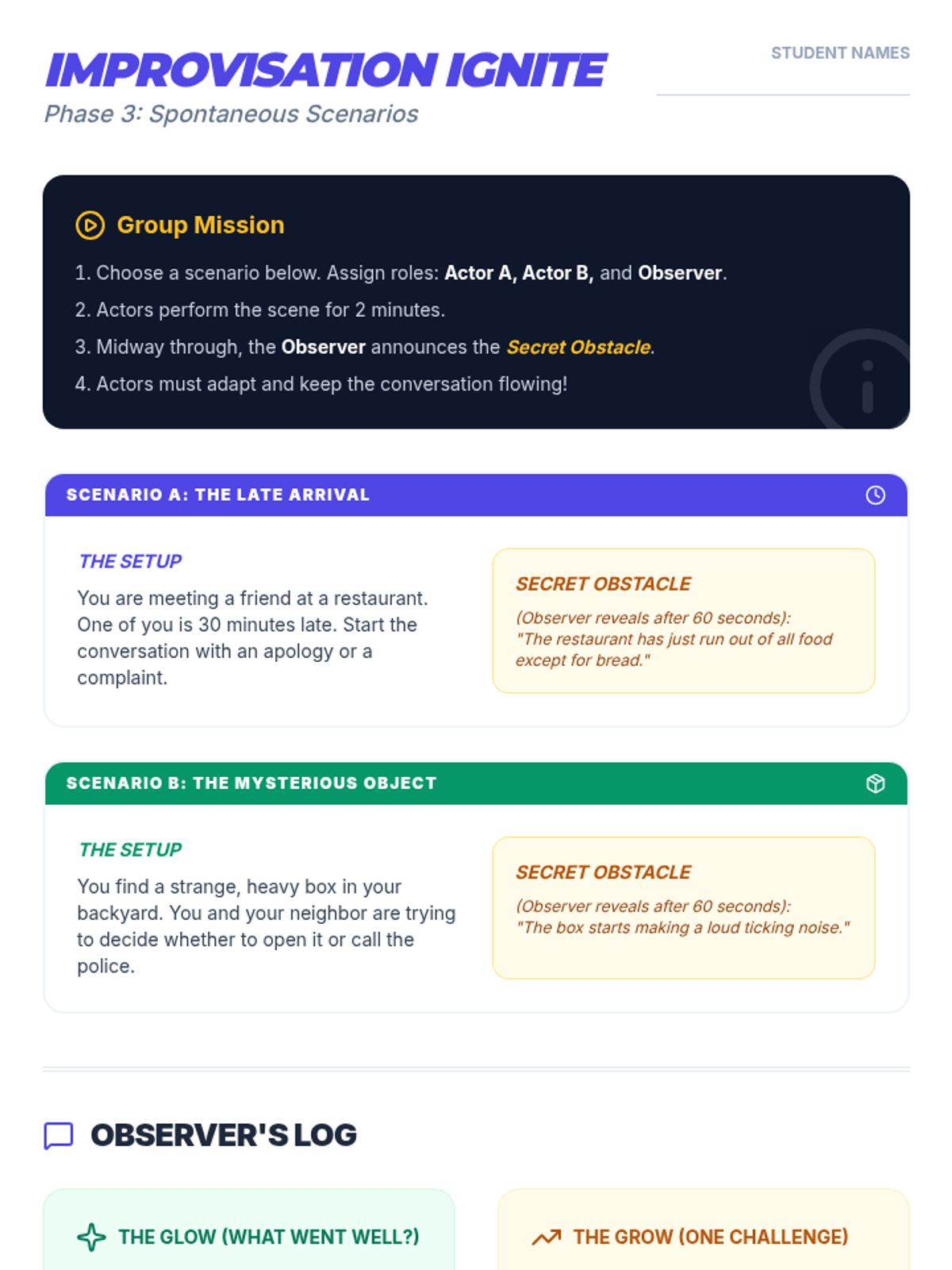
A comprehensive toolkit for foreign language teachers to bridge the gap between rote memorization and spontaneous oral communication through interactive activities and low-stakes scaffolding.
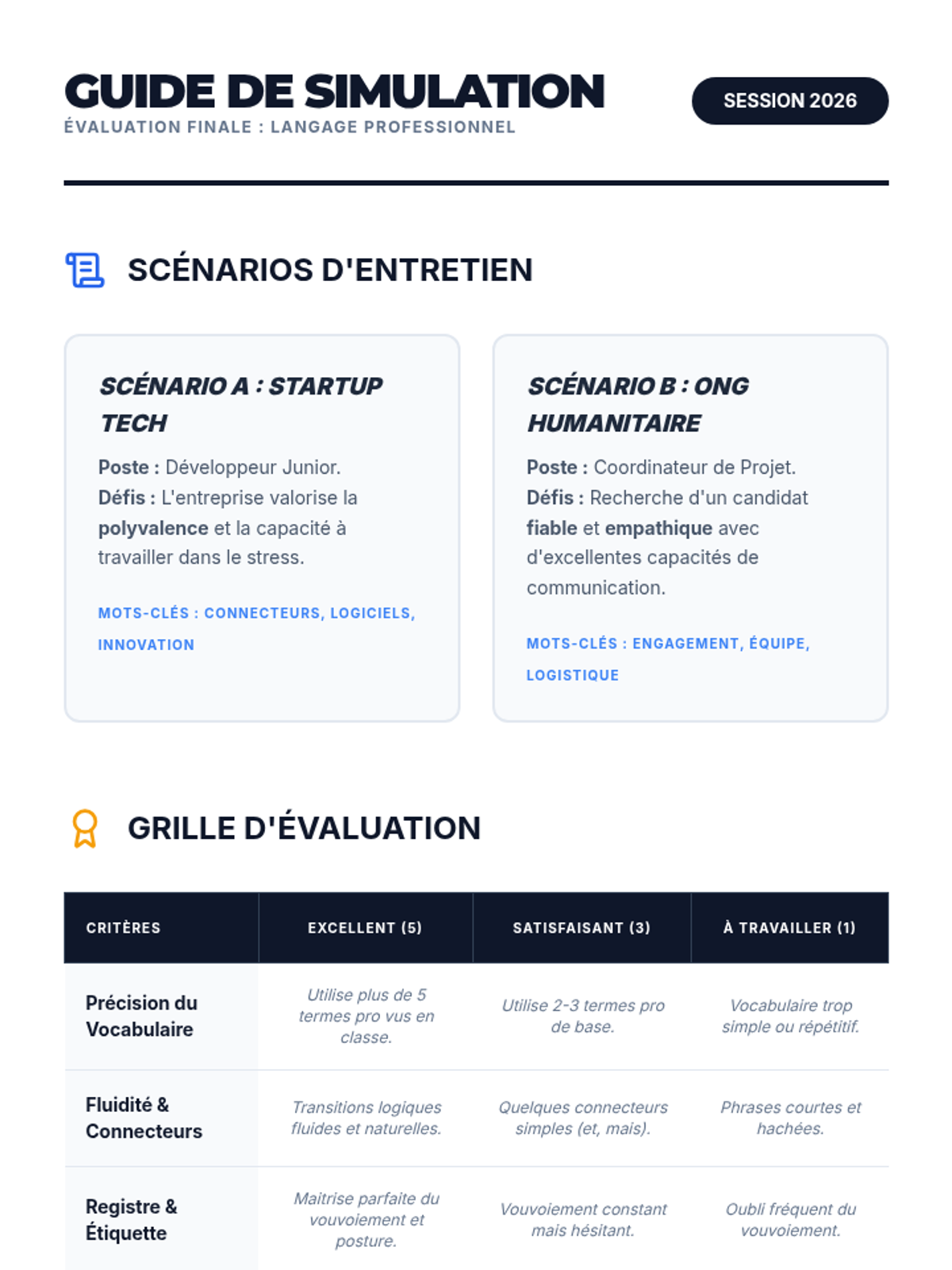
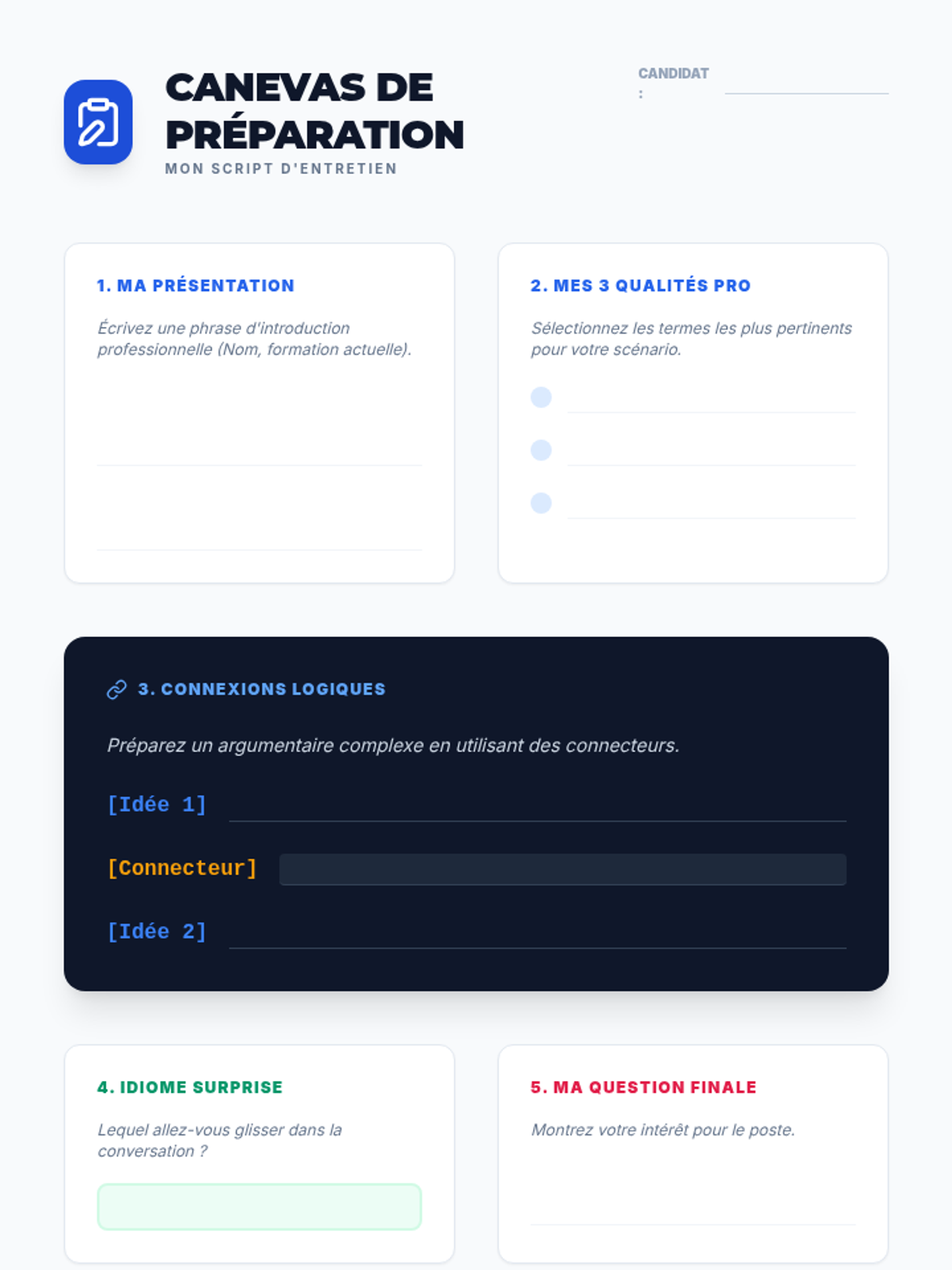
Synthesizing the unit's vocabulary, students participate in mock job interviews using the precise vocabulary, connectors, and formal register practiced.
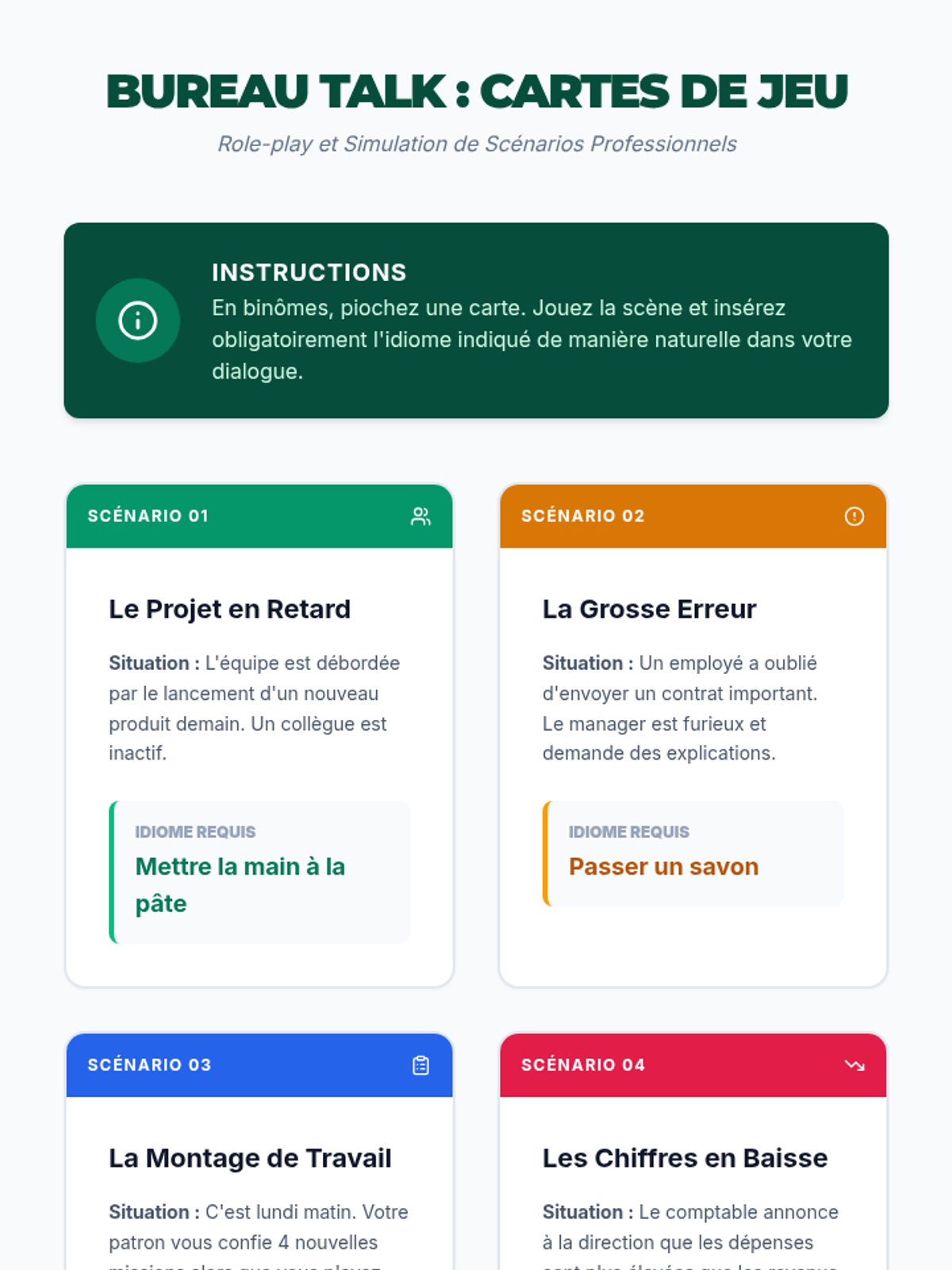
This lesson introduces high-frequency idiomatic expressions relevant to work and effort, focusing on cultural nuance and office scenarios.
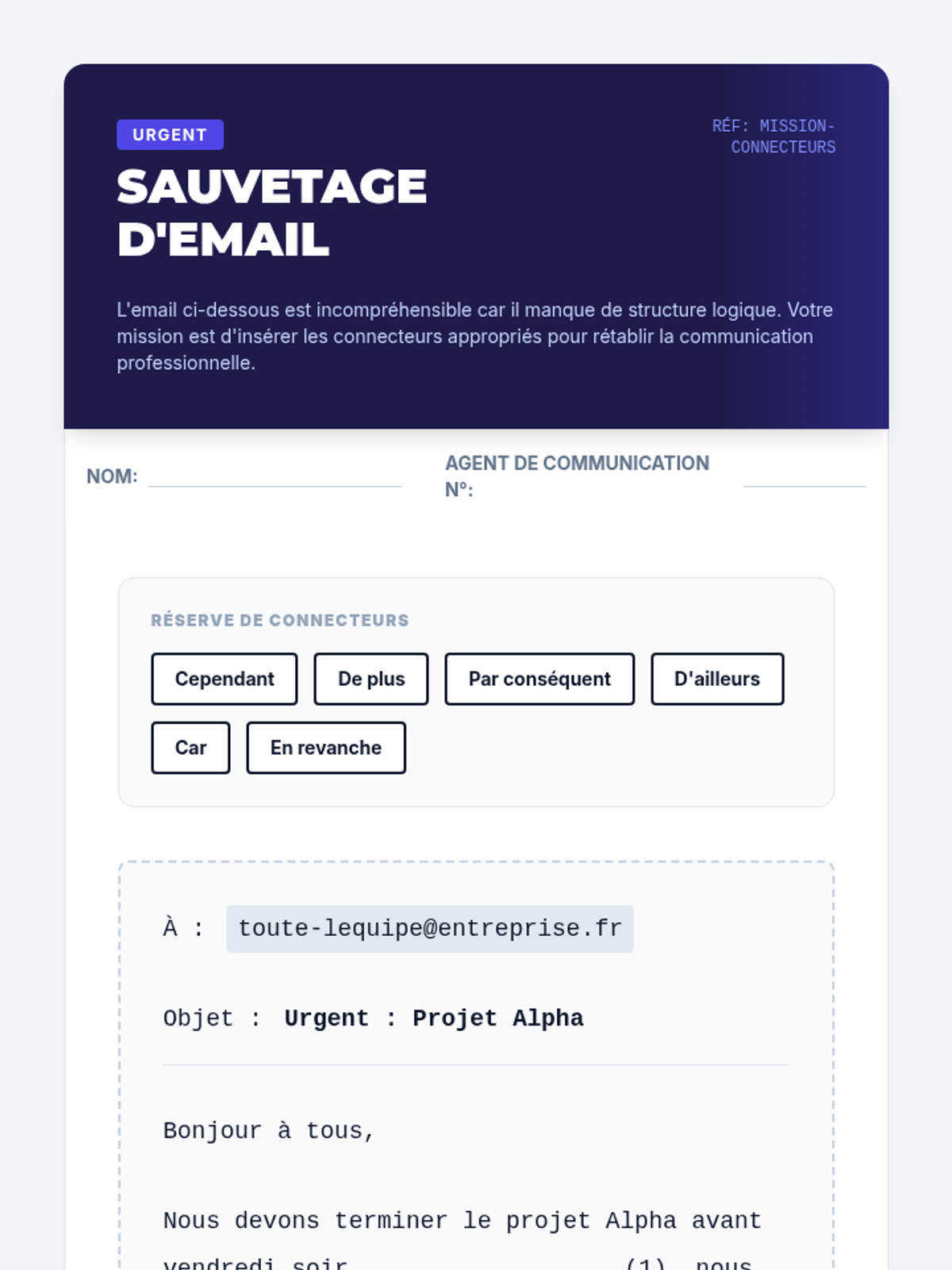
Students elevate their sentence complexity by incorporating logical connectors to transform simple sentences into cohesive, professional paragraphs.
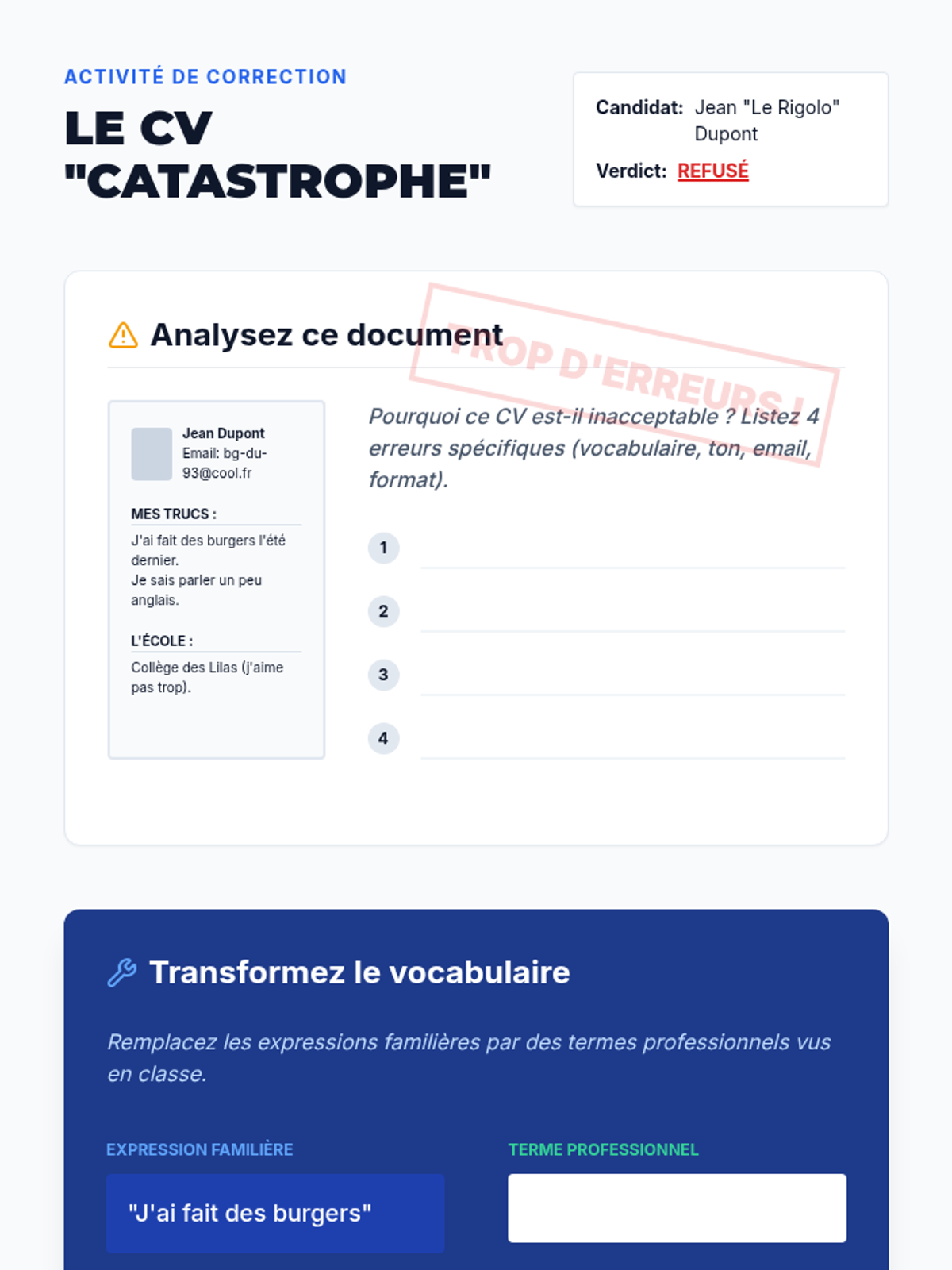
Focusing on written expression, this lesson guides students through the structure of a standard French 'CV' (Curriculum Vitae) and identifies key formatting standards.
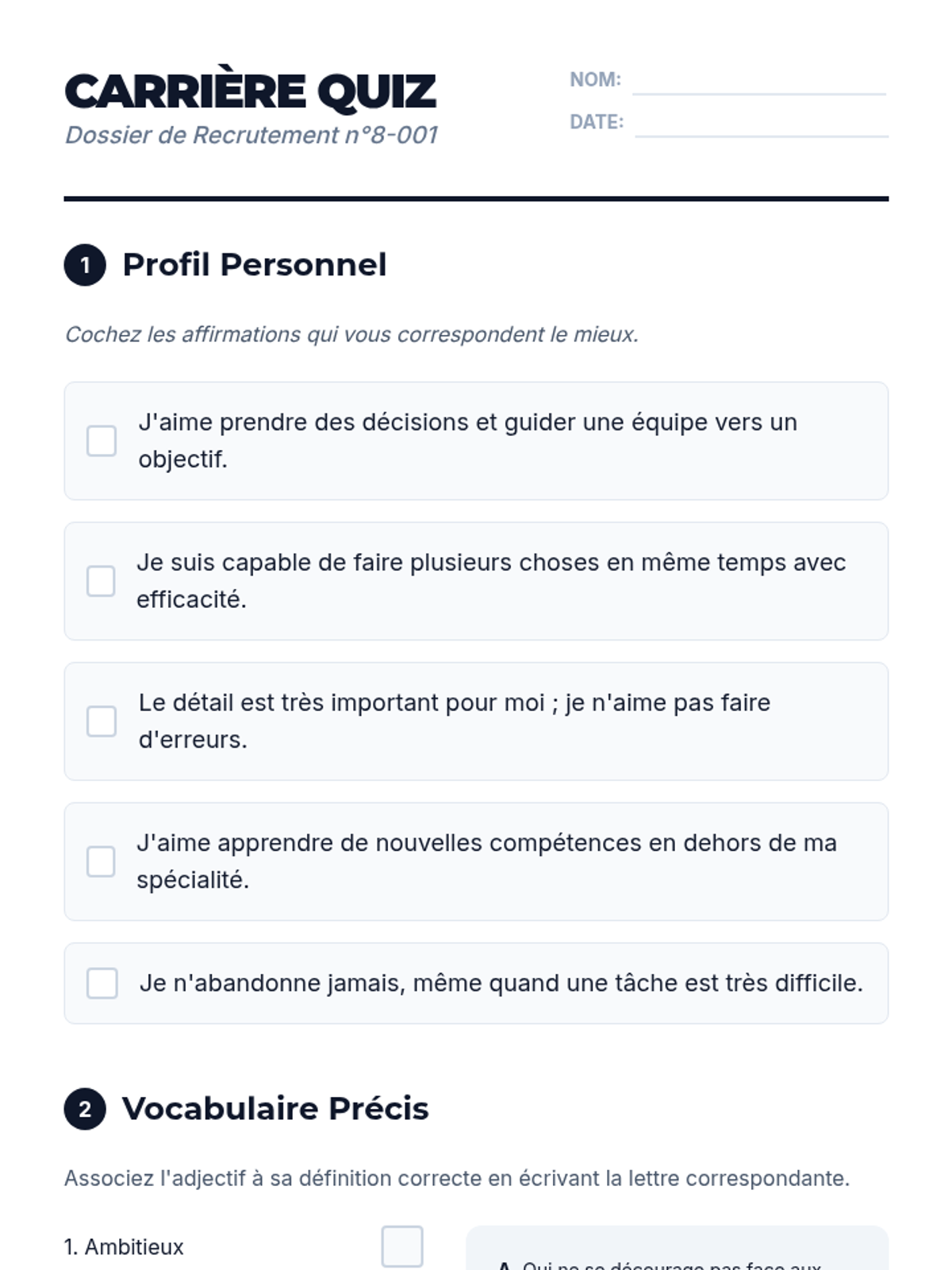
Students explore a variety of professions and the specific personality traits required for each using nuanced adjectives like 'ambitieux,' 'fiable,' and 'polyvalent.'
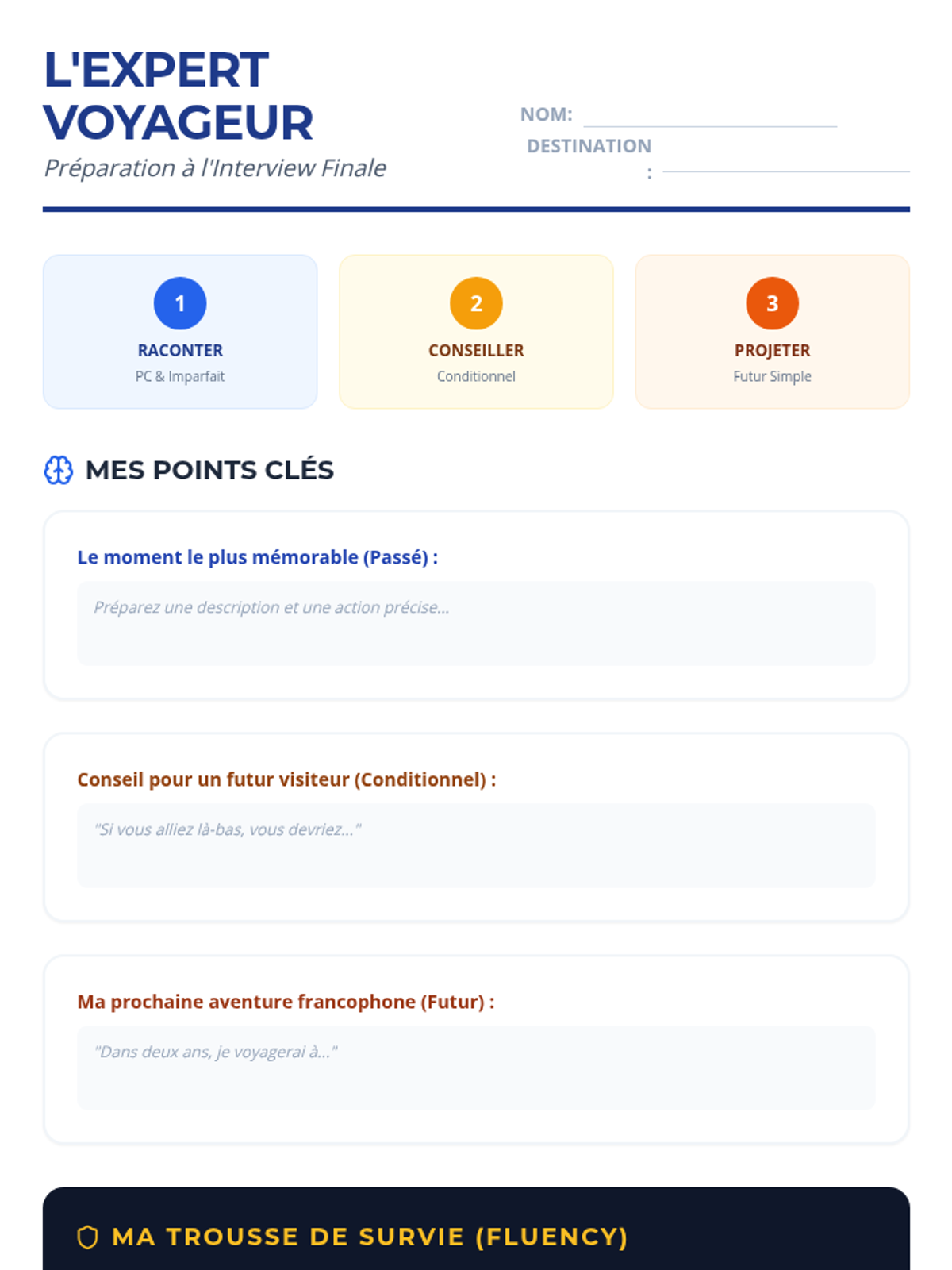
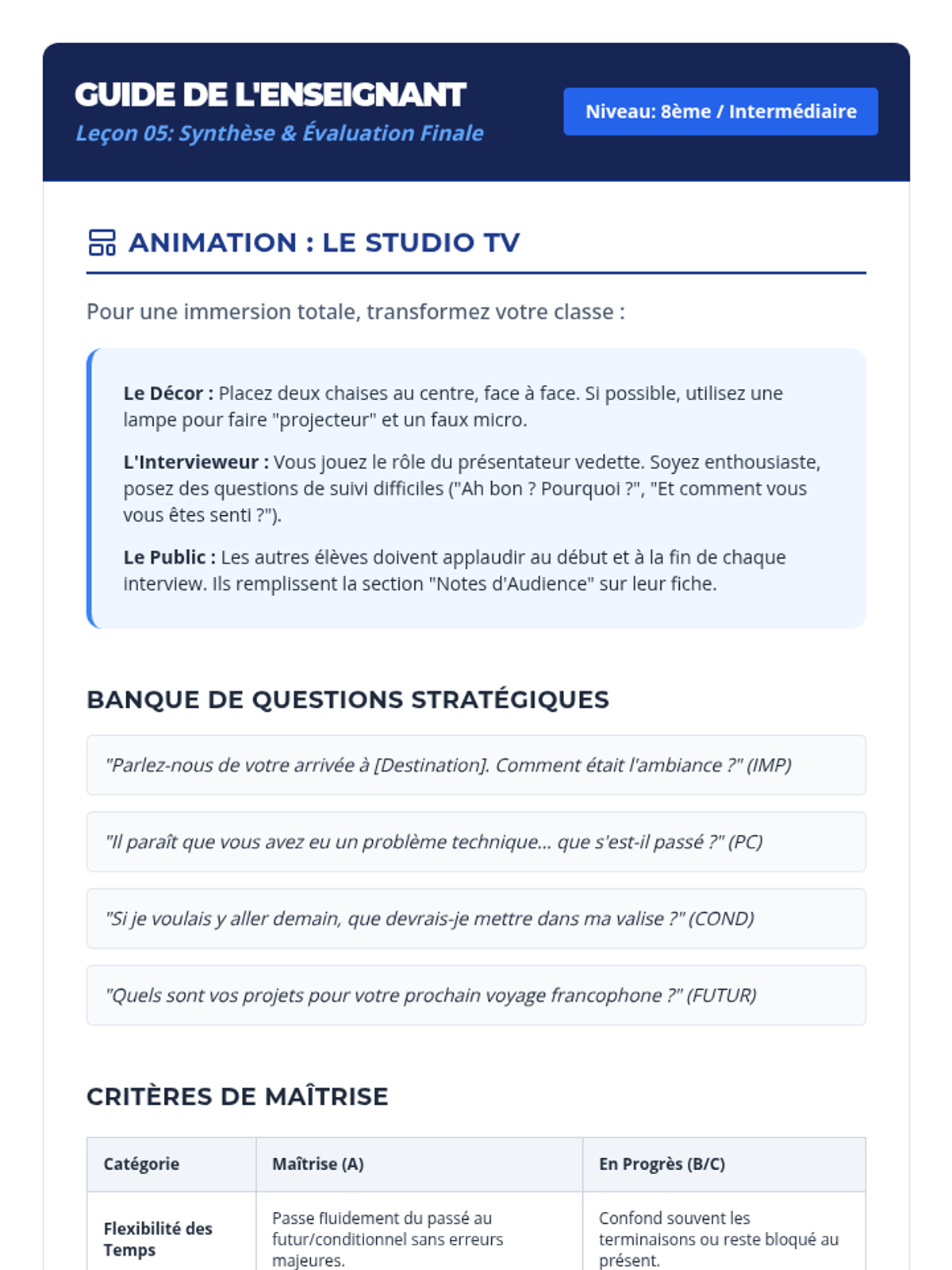
The sequence culminates in a mock TV interview where students synthesize their travel experiences, using multiple tenses and circumlocution strategies.
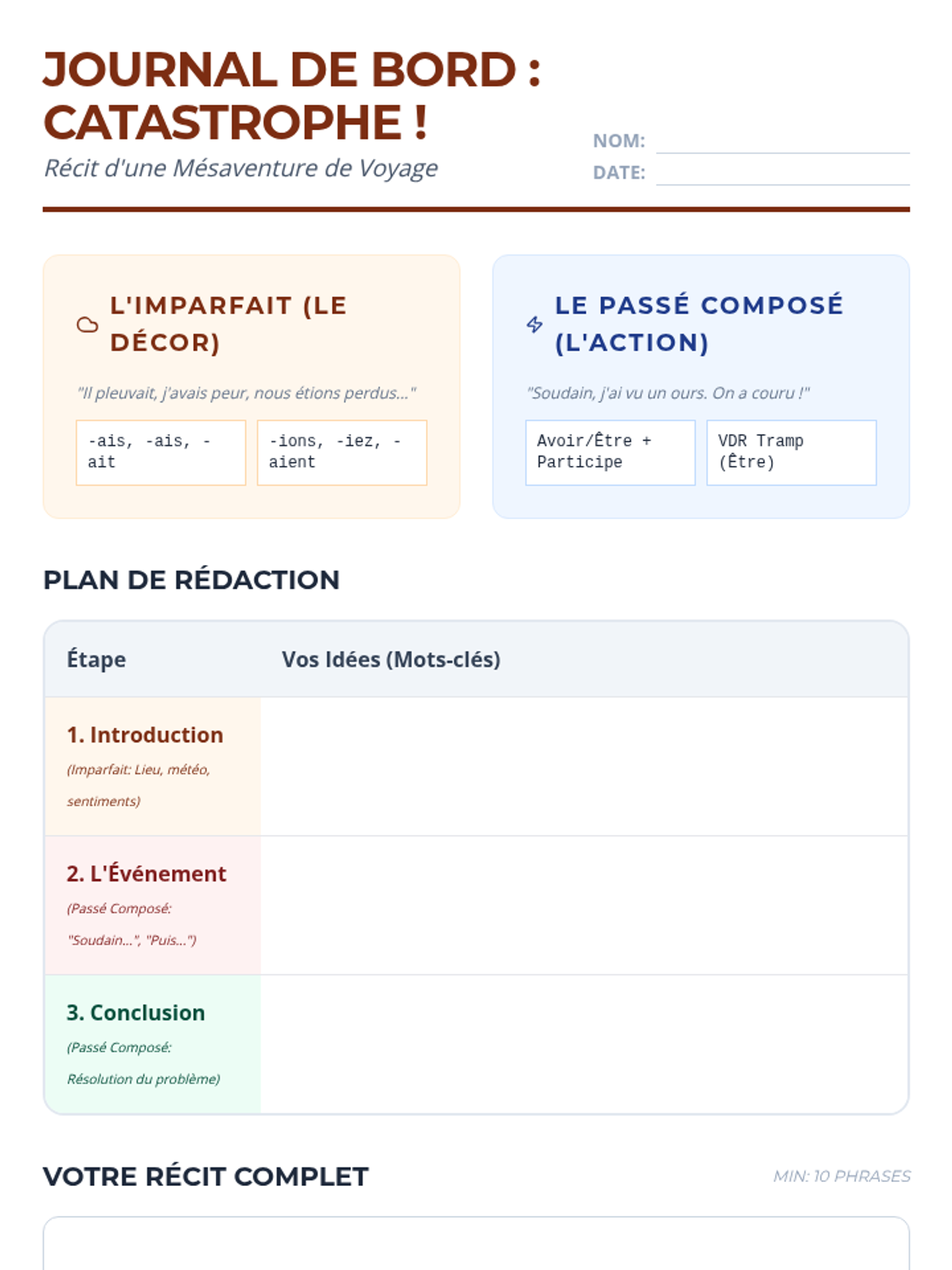
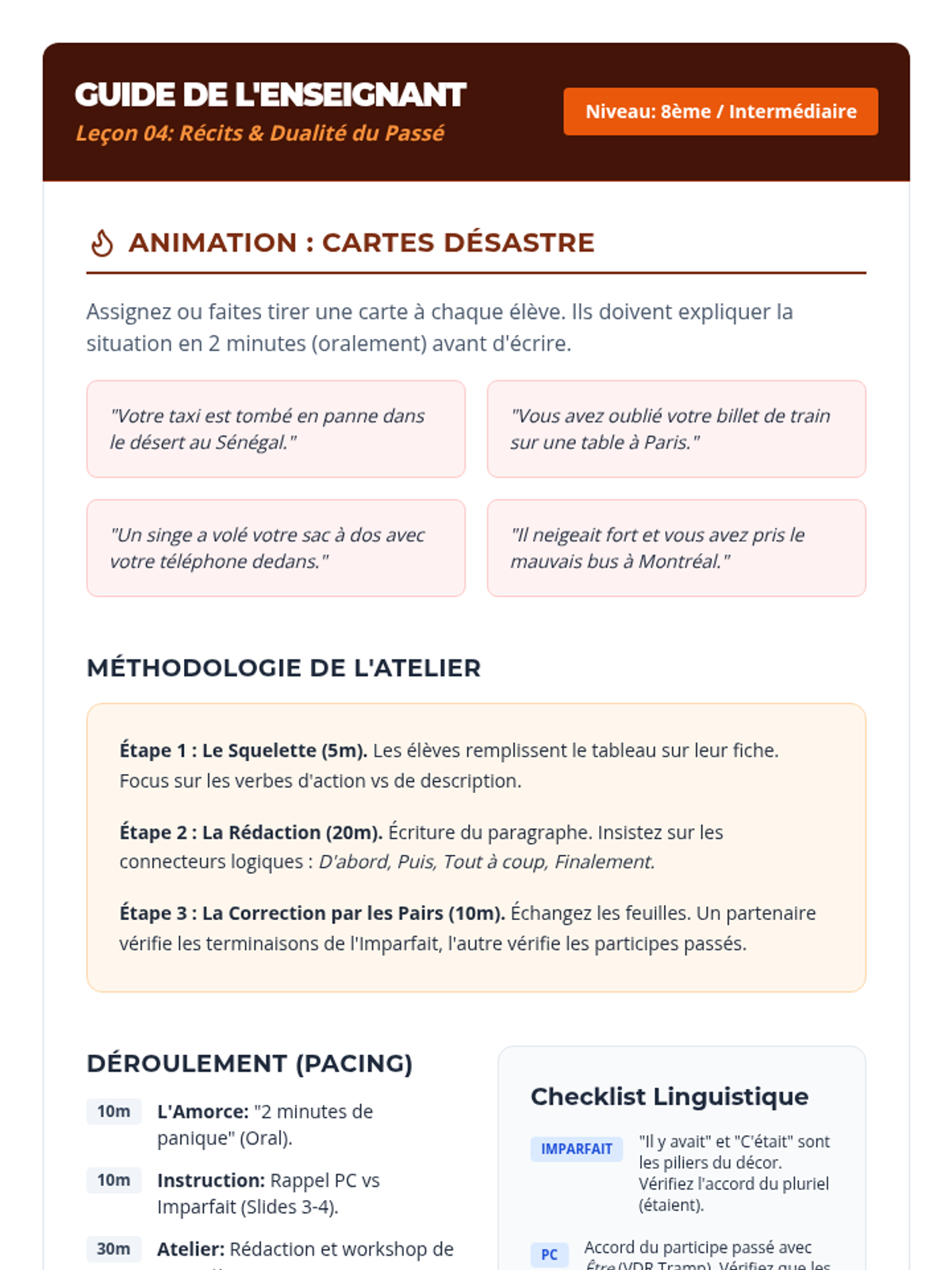
Students master the interplay between Passé Composé and Imparfait by narrating travel mishaps and setting the scene for their stories.
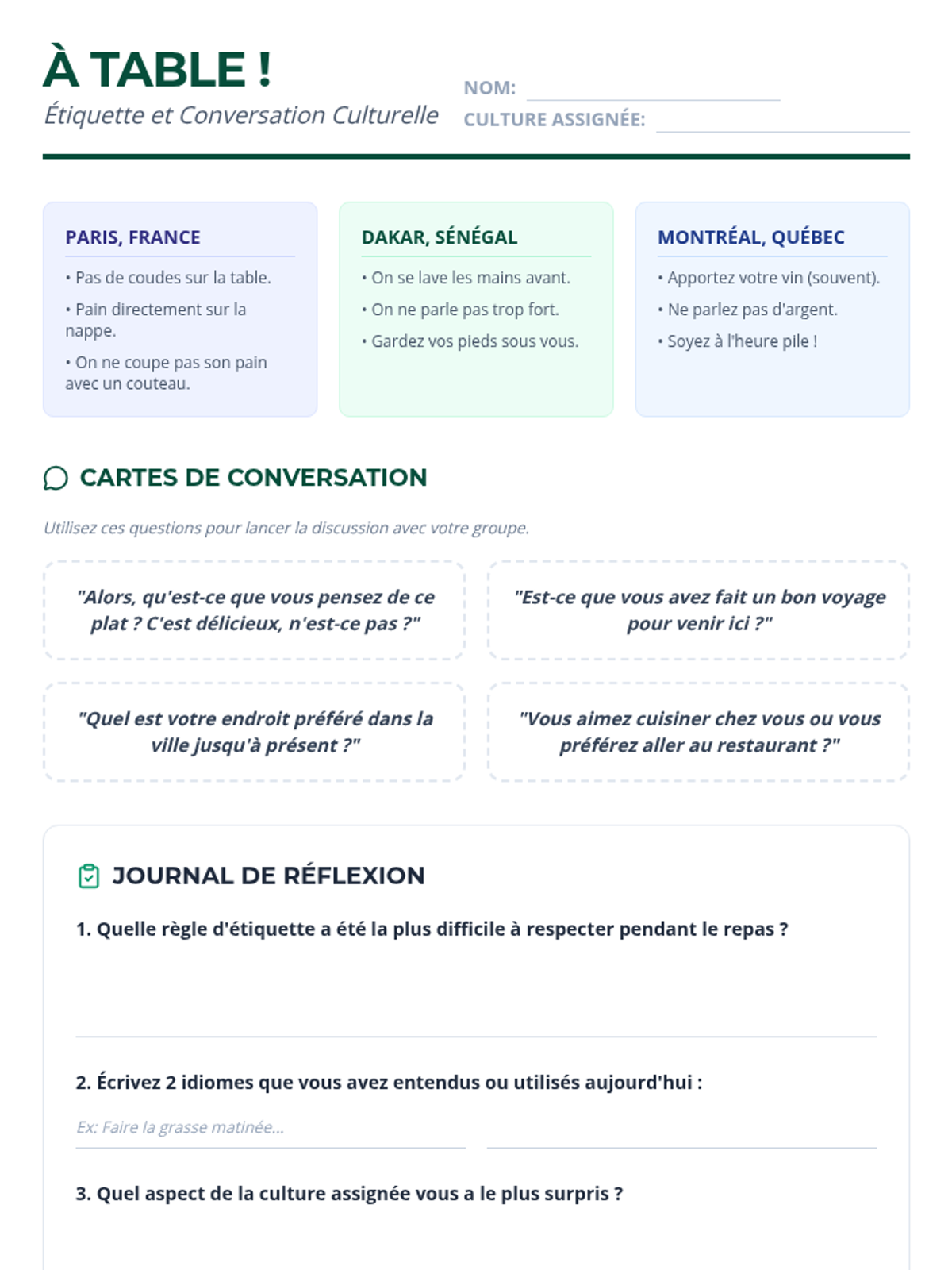
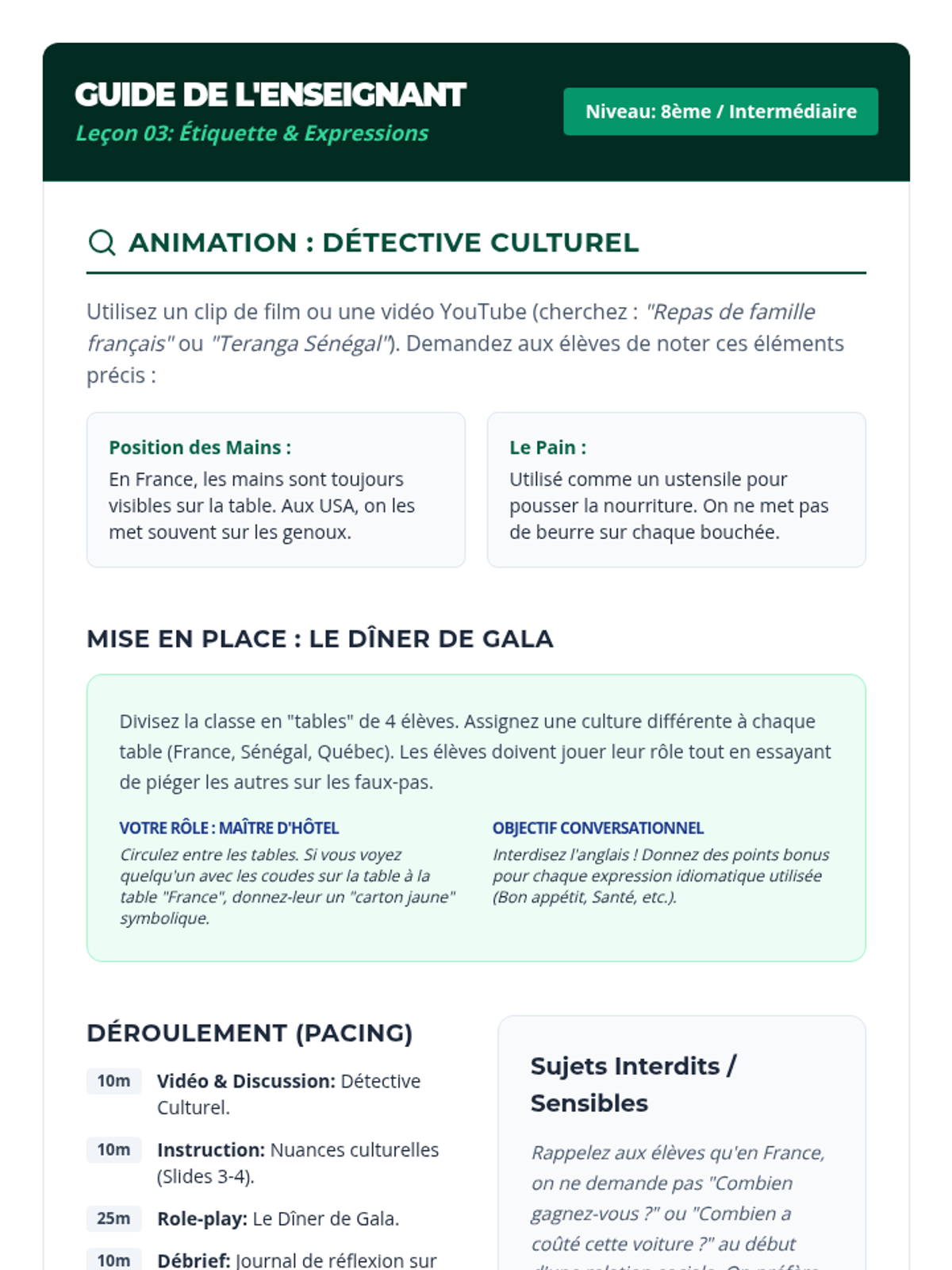
Students explore dining etiquette and social norms across the Francophone world, practicing idiomatic expressions and conversational maintenance.
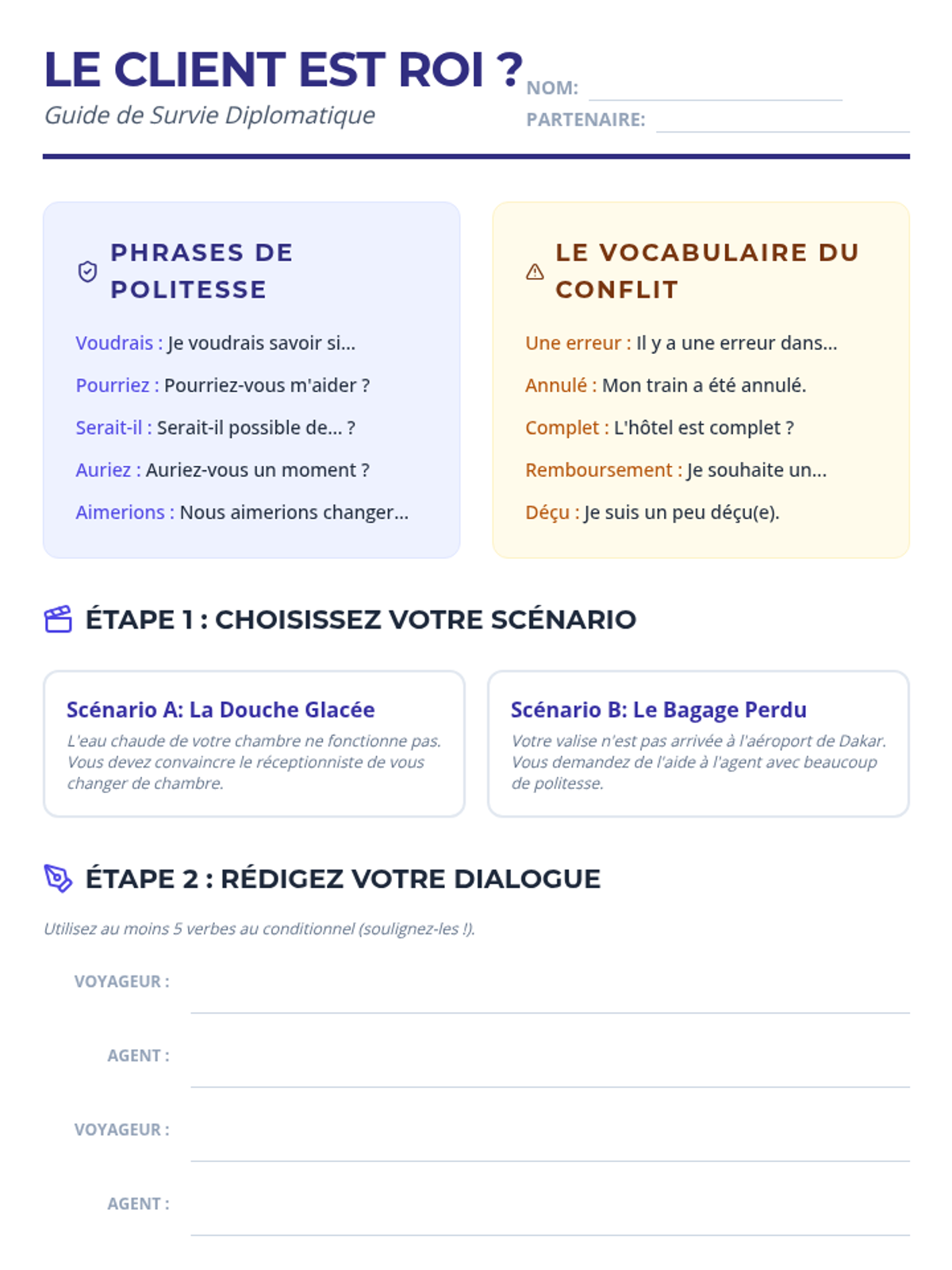
Focusing on the conditional mood, students practice polite service interactions and conflict resolution in hotels and transit hubs.
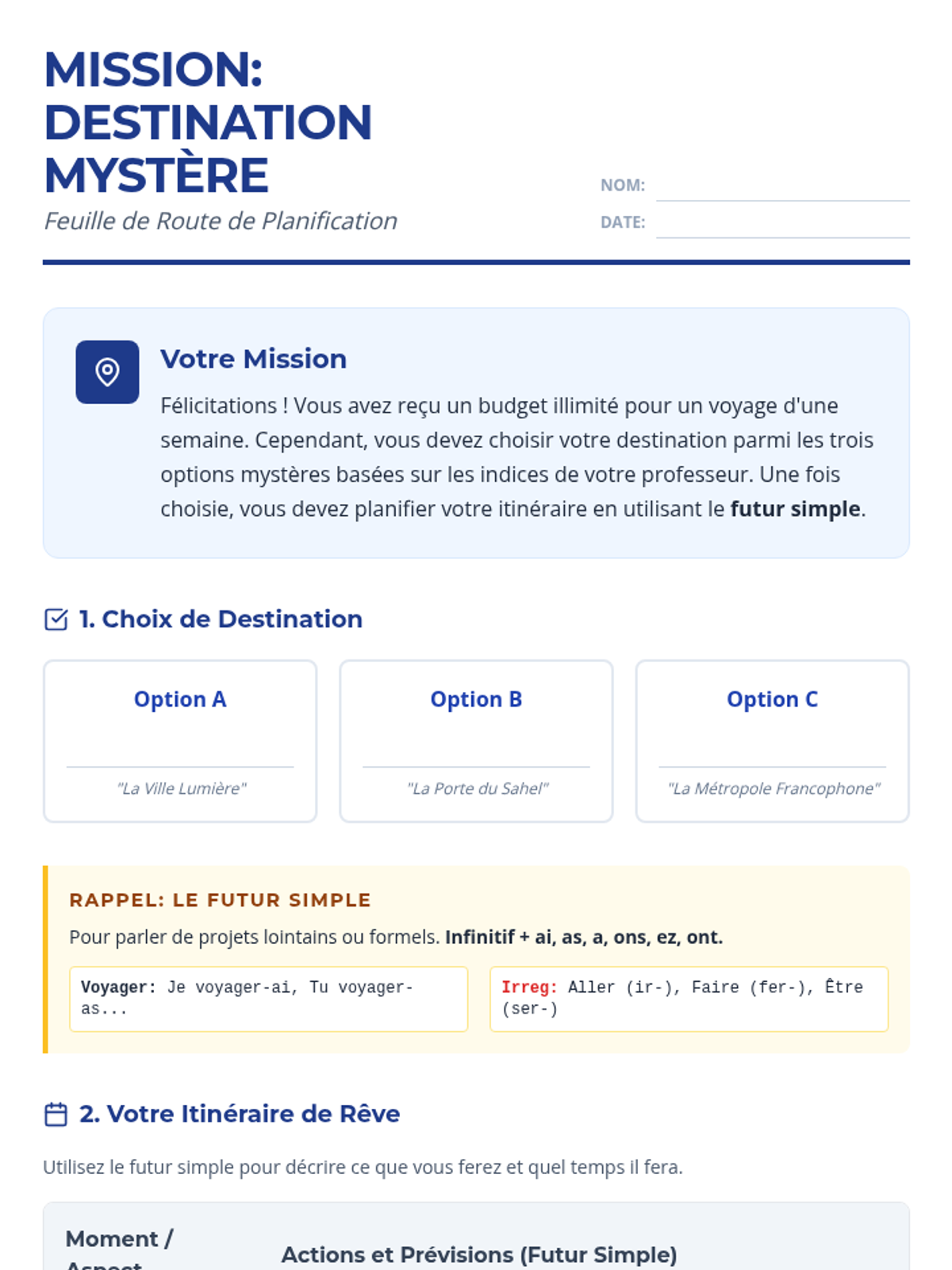
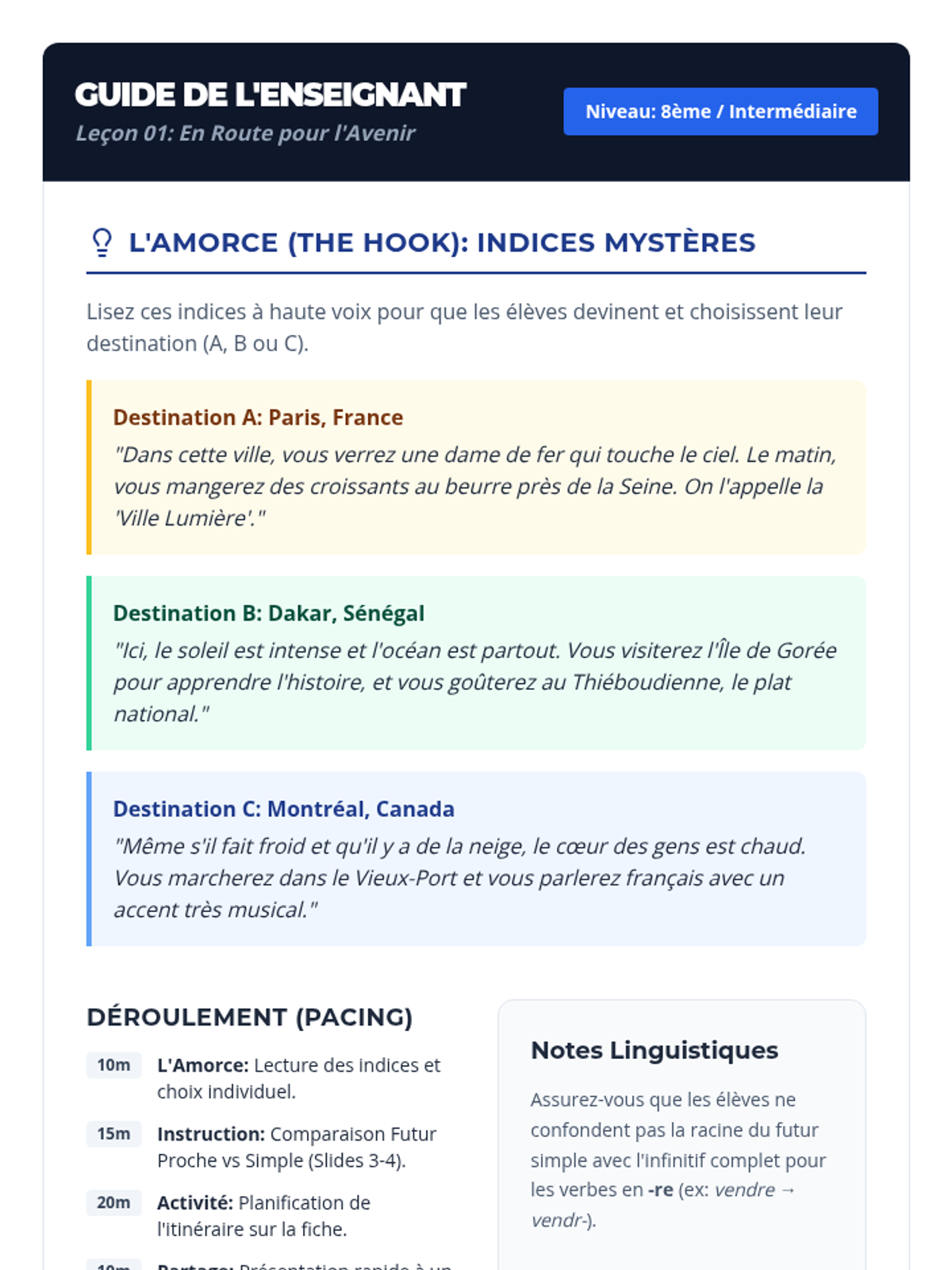
Students transition from near future to simple future to plan detailed itineraries for Dakar, Paris, or Montreal, predicting weather and scheduling logistics.
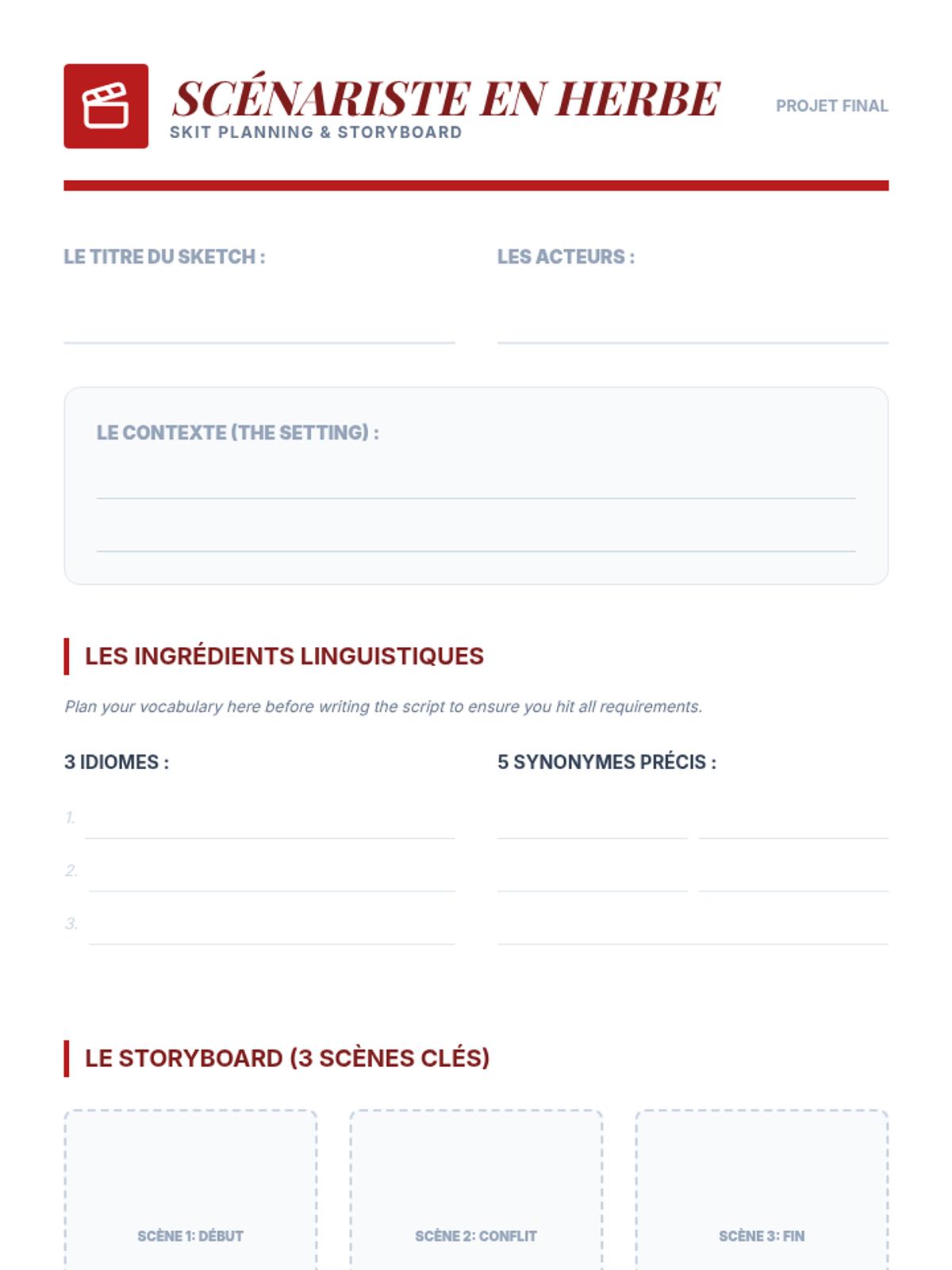
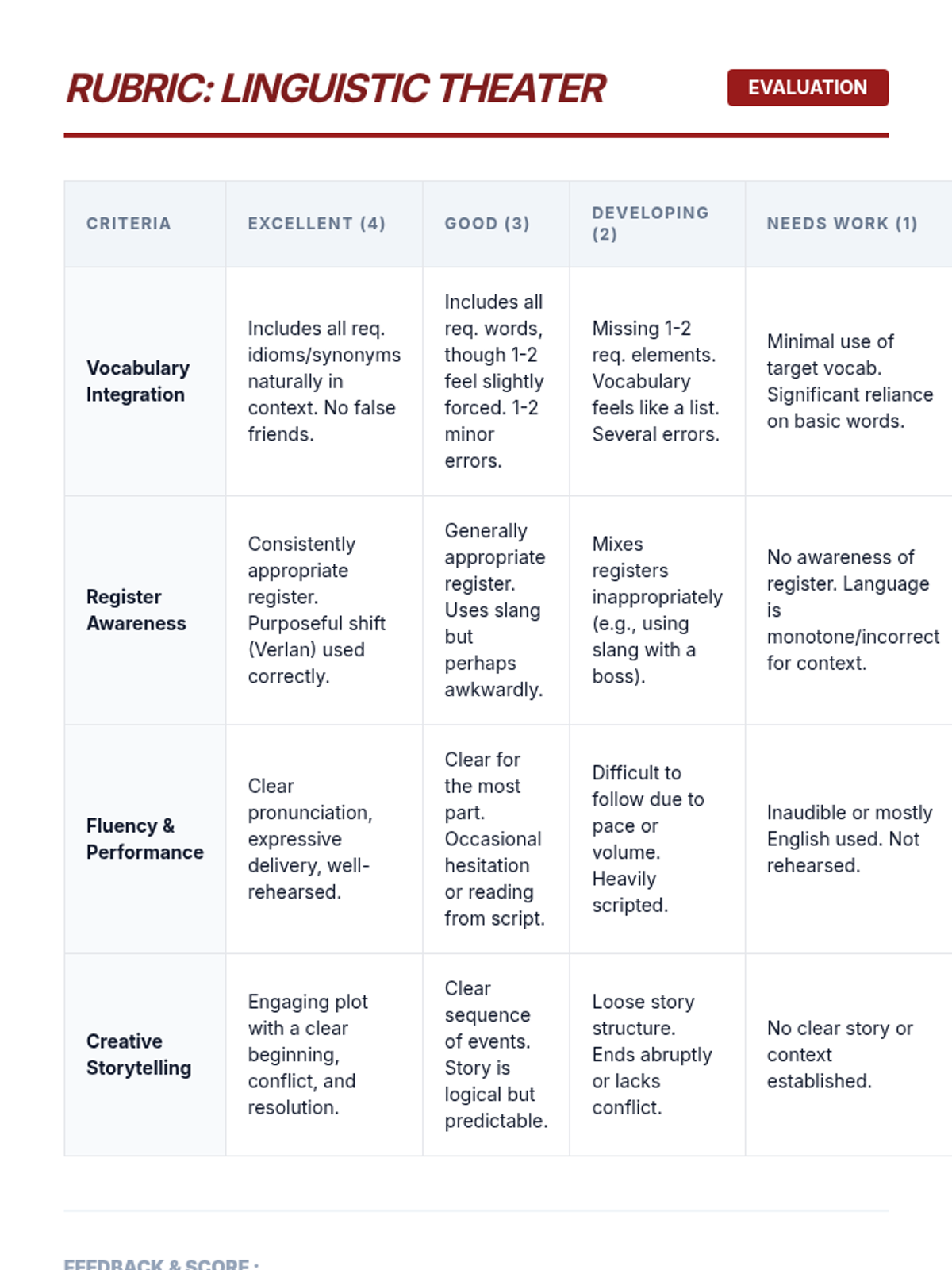
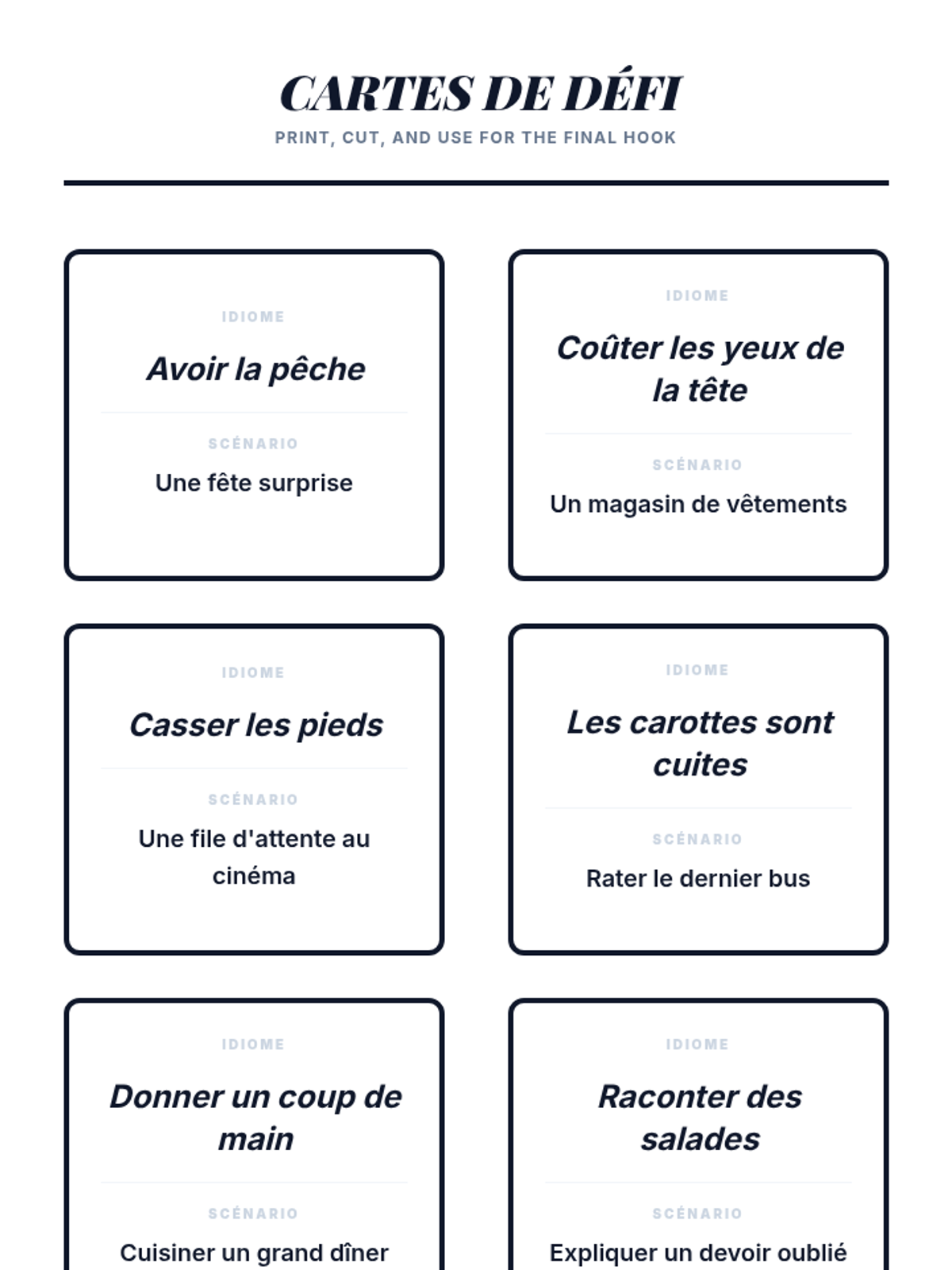
Students synthesize their learning by writing and performing a short skit or story that must include a specific number of idioms, precise synonyms, and appropriate register shifts. They focus on flow and natural expression.
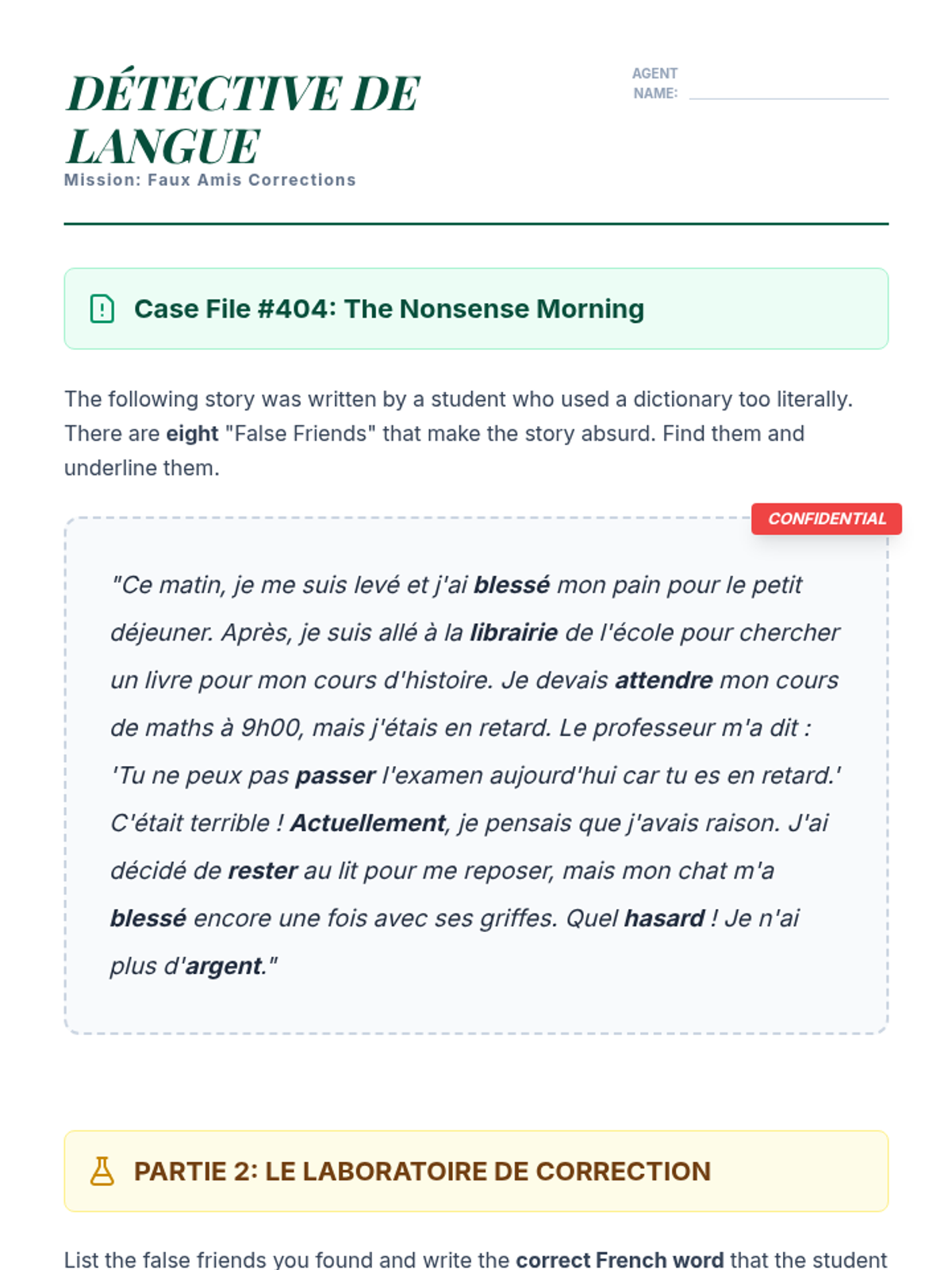
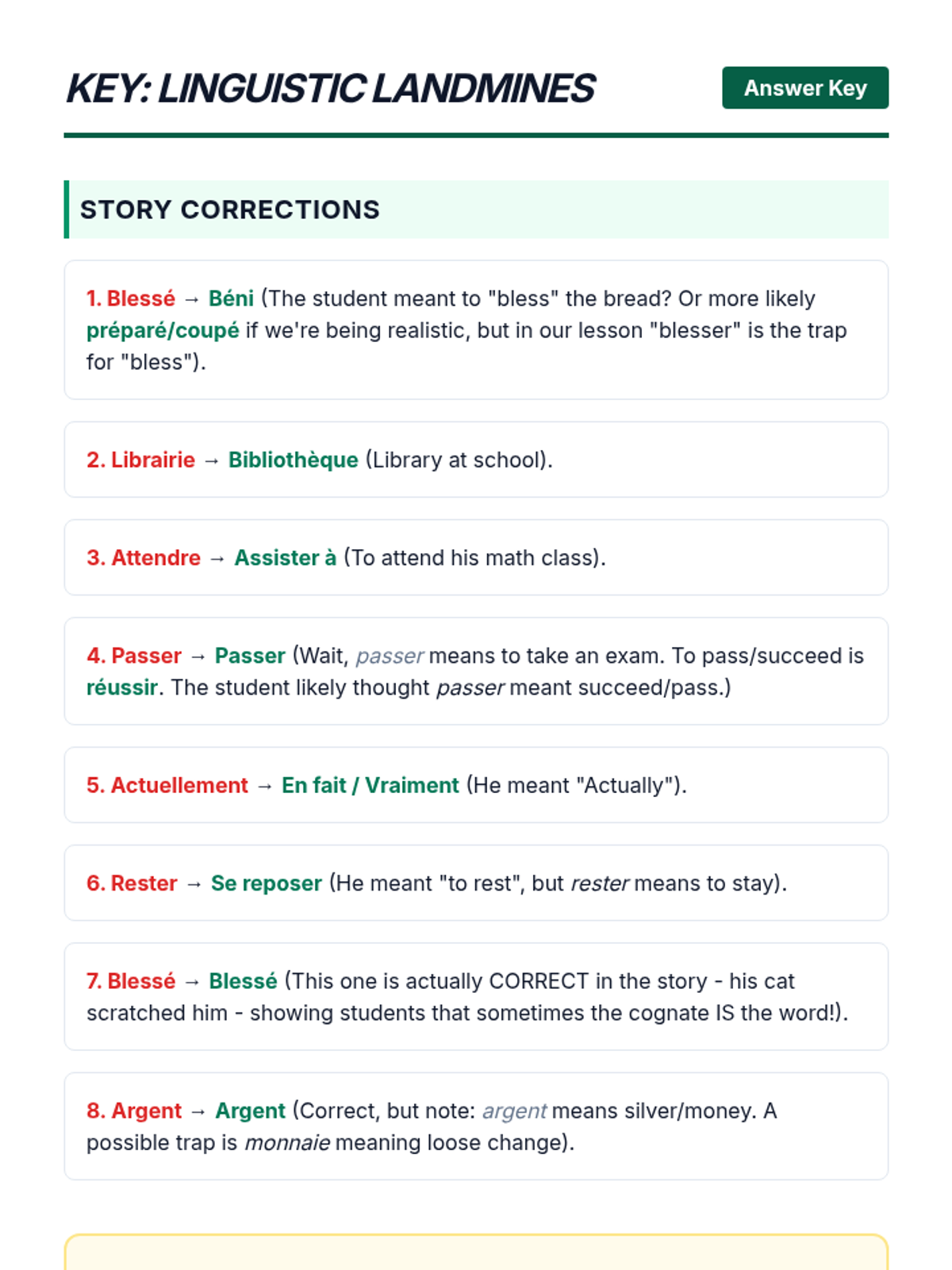
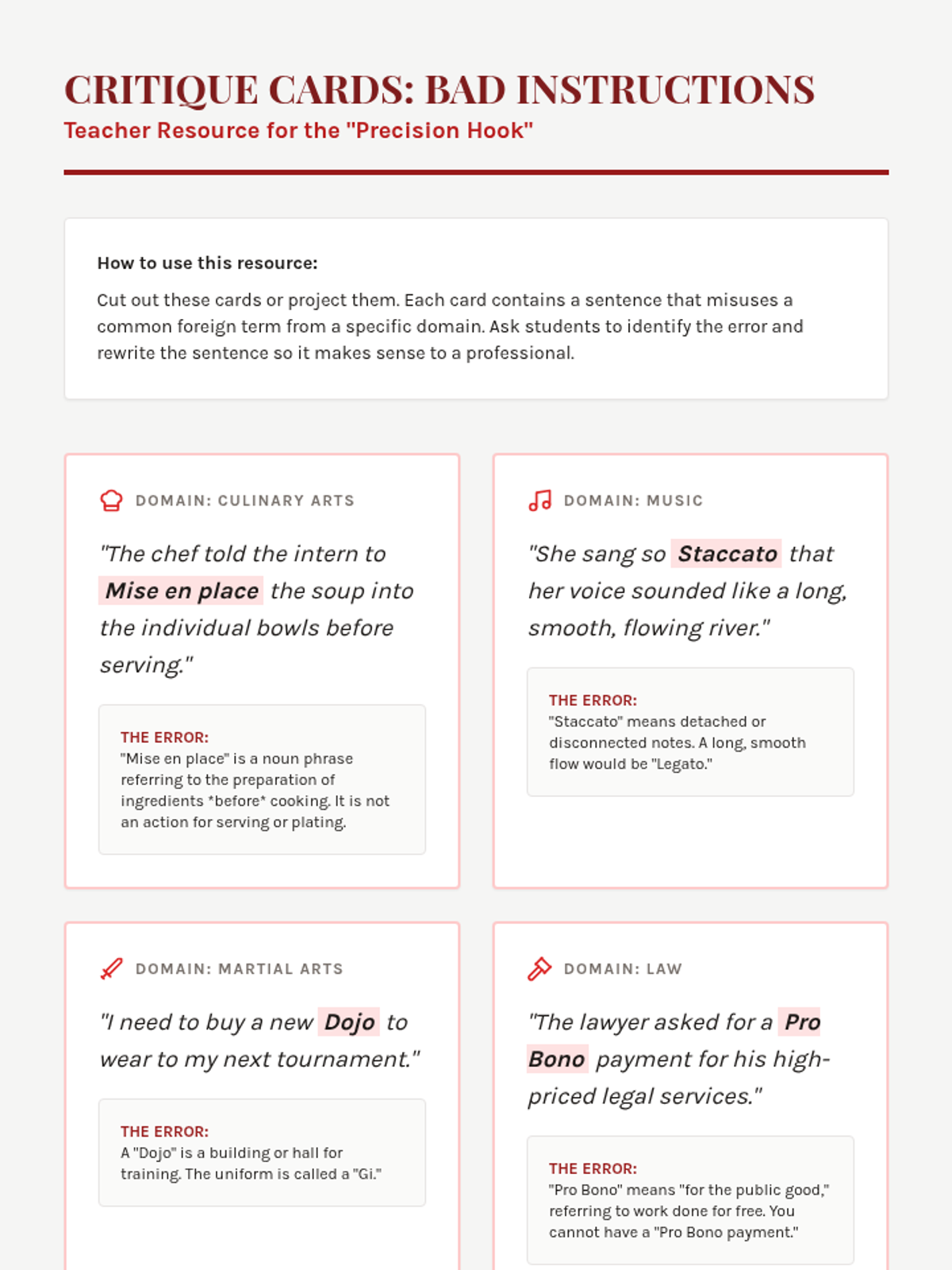
Students identify and correct common 'faux amis' (false cognates) that cause confusion. Through humorous examples and error-correction exercises, they refine their precision and avoid embarrassing misunderstandings.
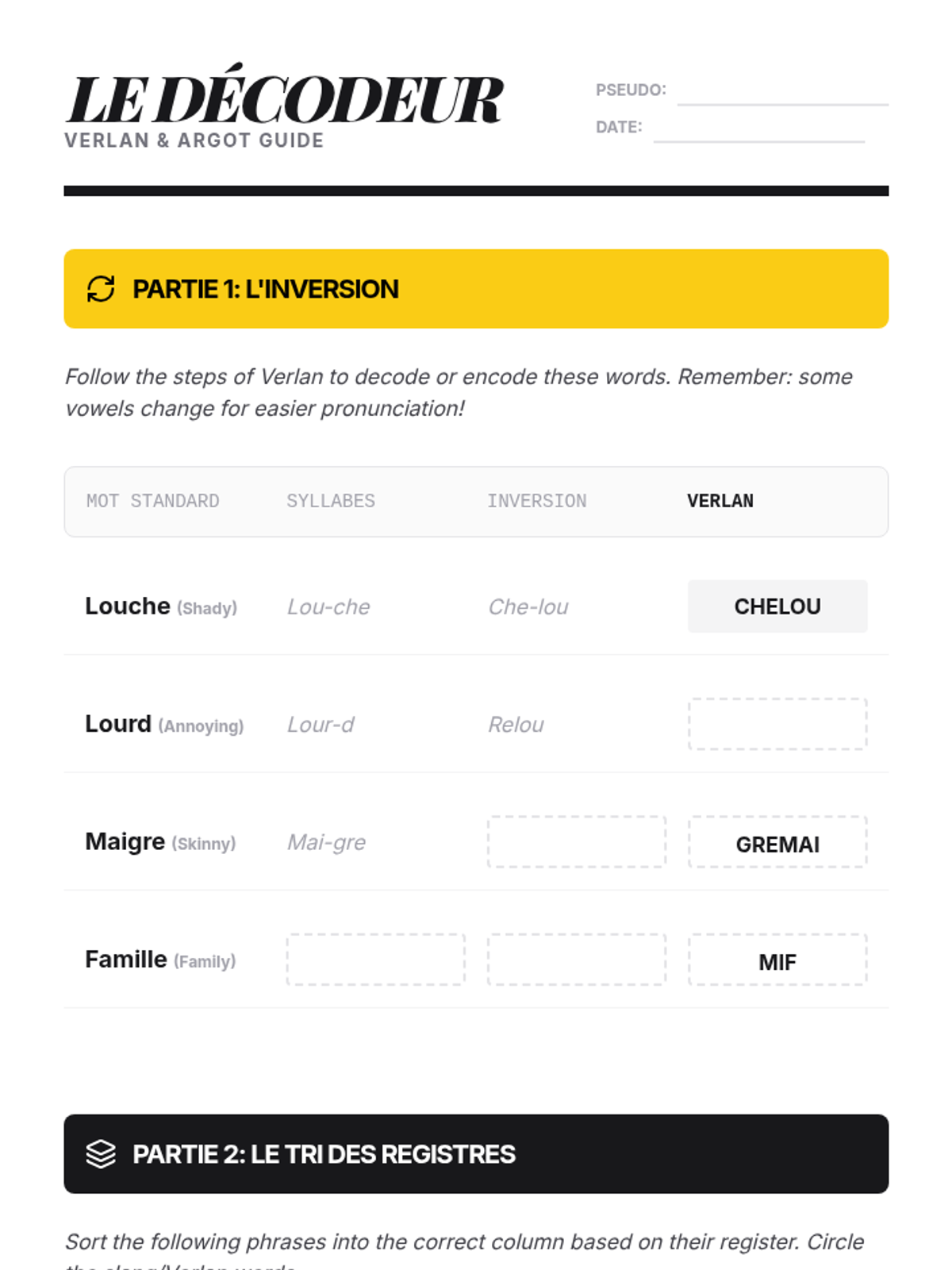
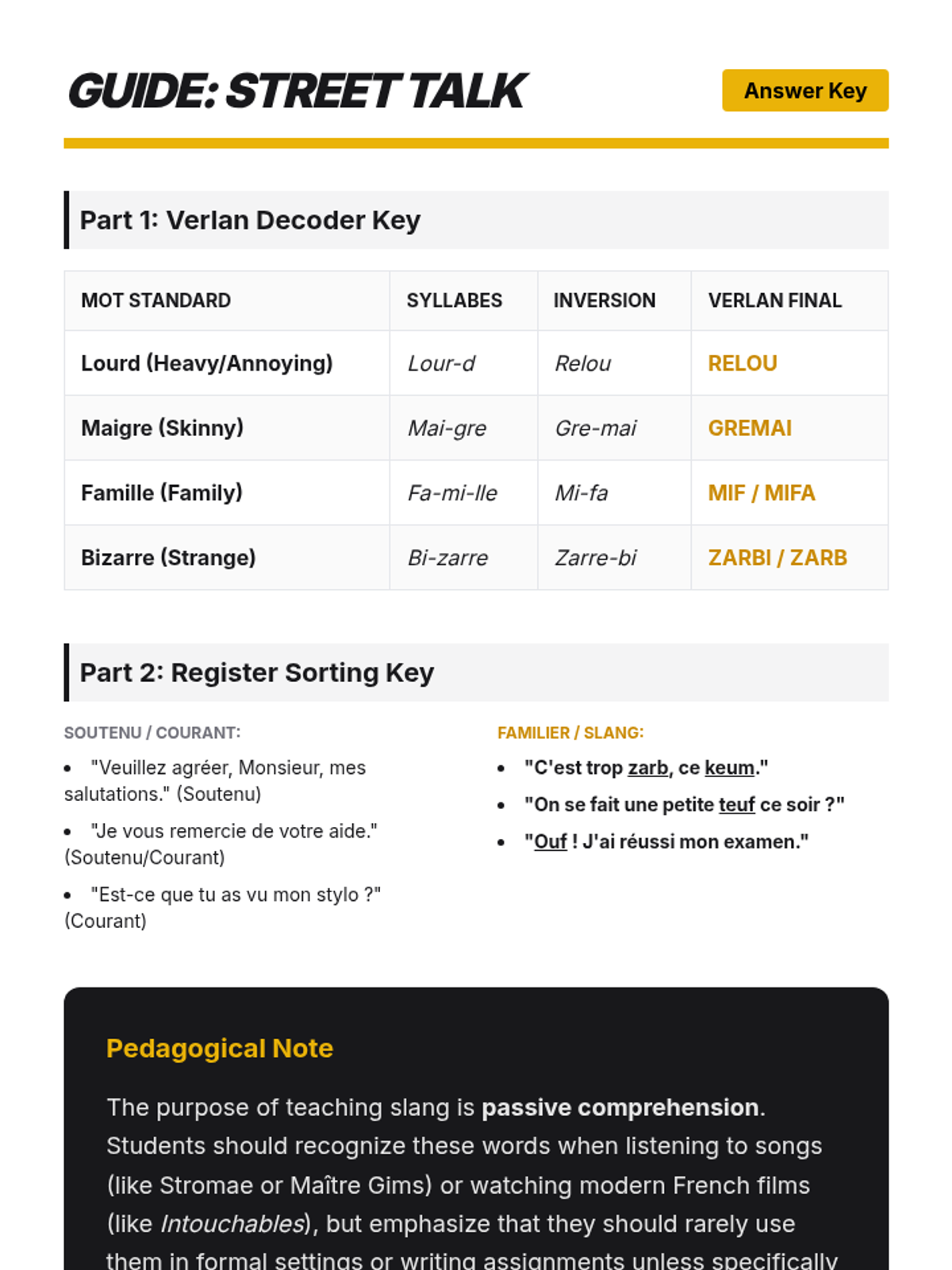
Students explore the informal side of French, including common slang and 'Verlan' used by French teenagers. They analyze when this register is appropriate and how it contrasts with standard French.
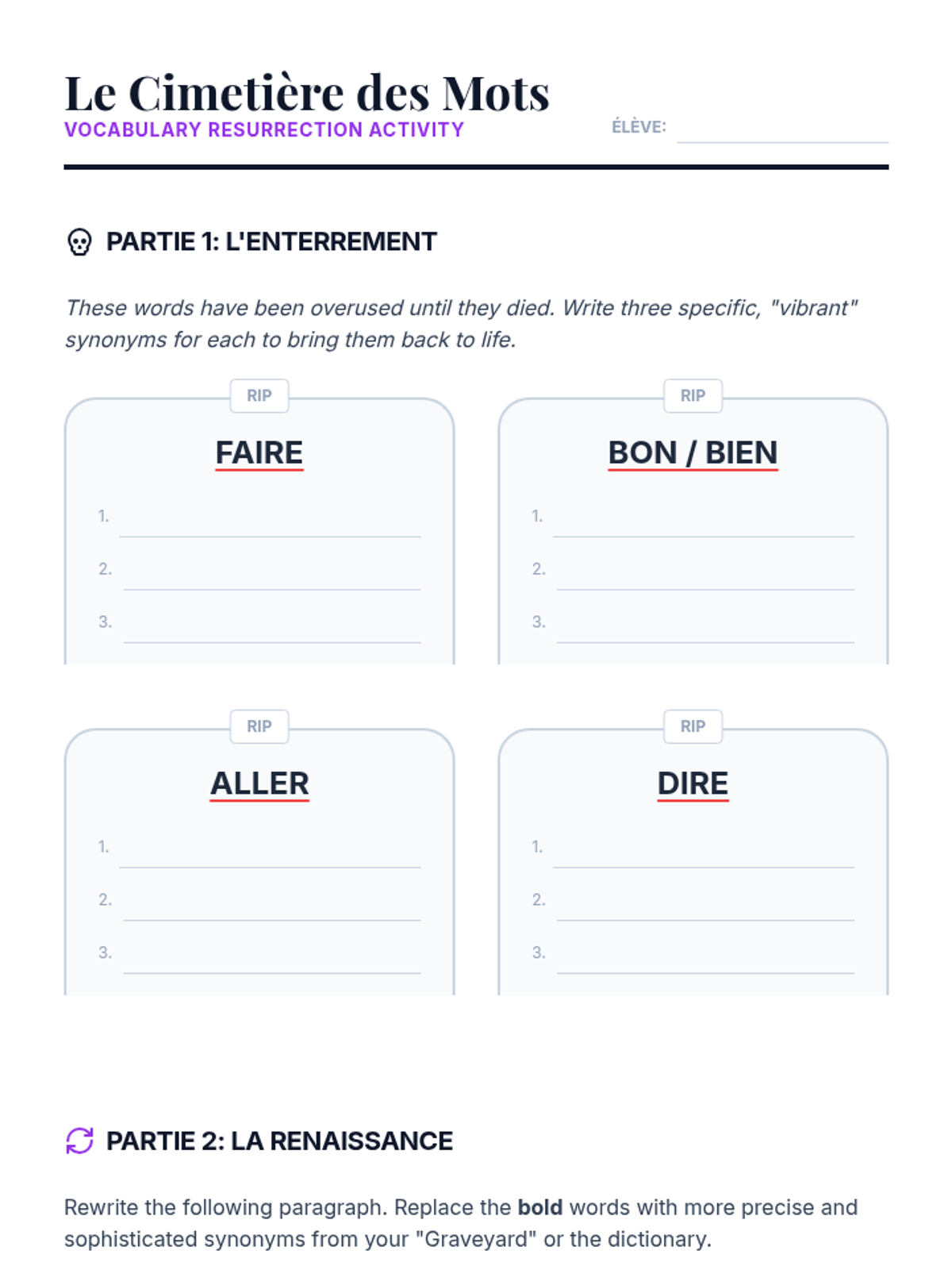
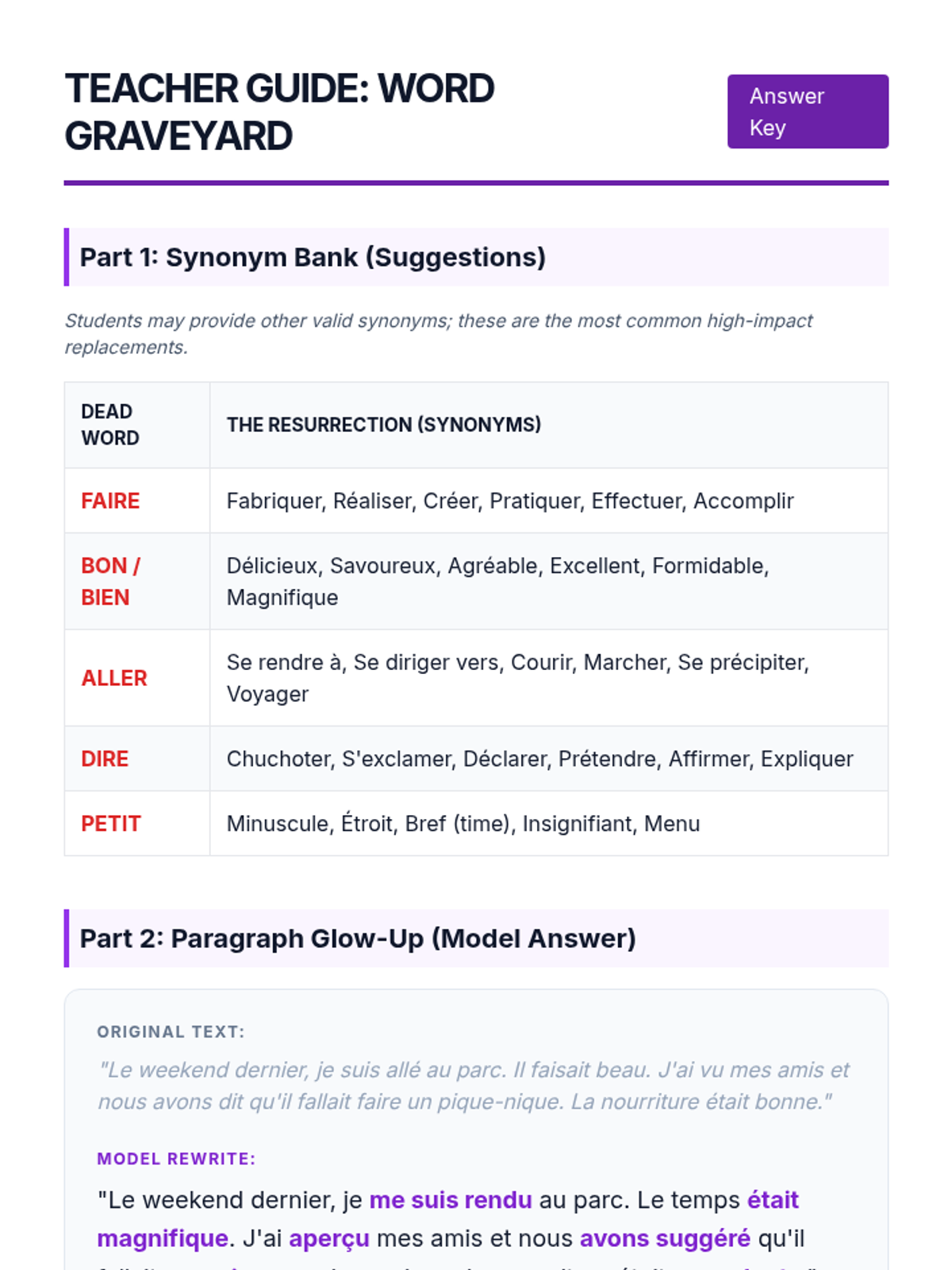
This lesson targets overused words and replaces them with more precise synonyms. Students rewrite basic texts to improve their descriptive quality and impact using a "Word Graveyard" theme.
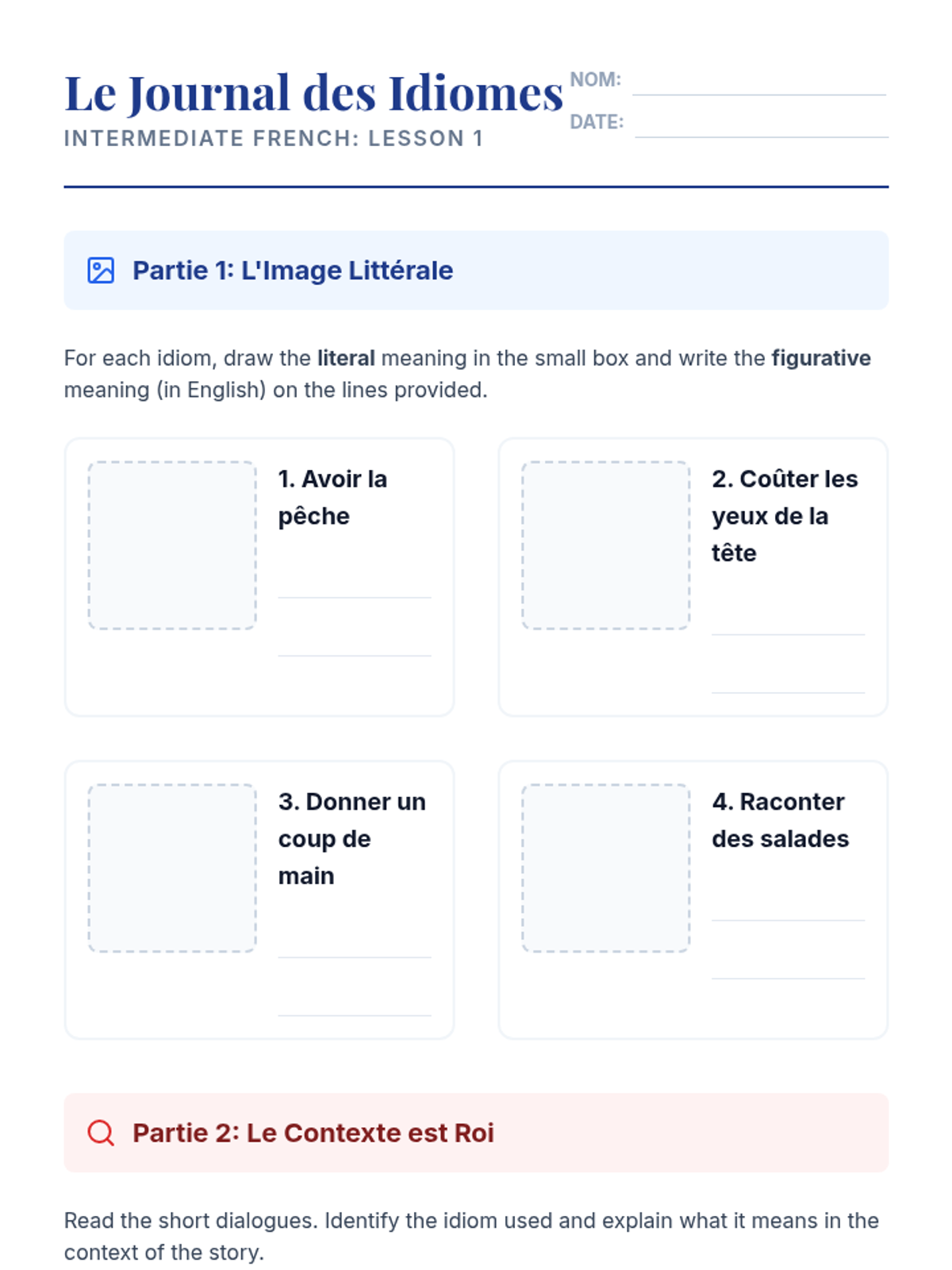
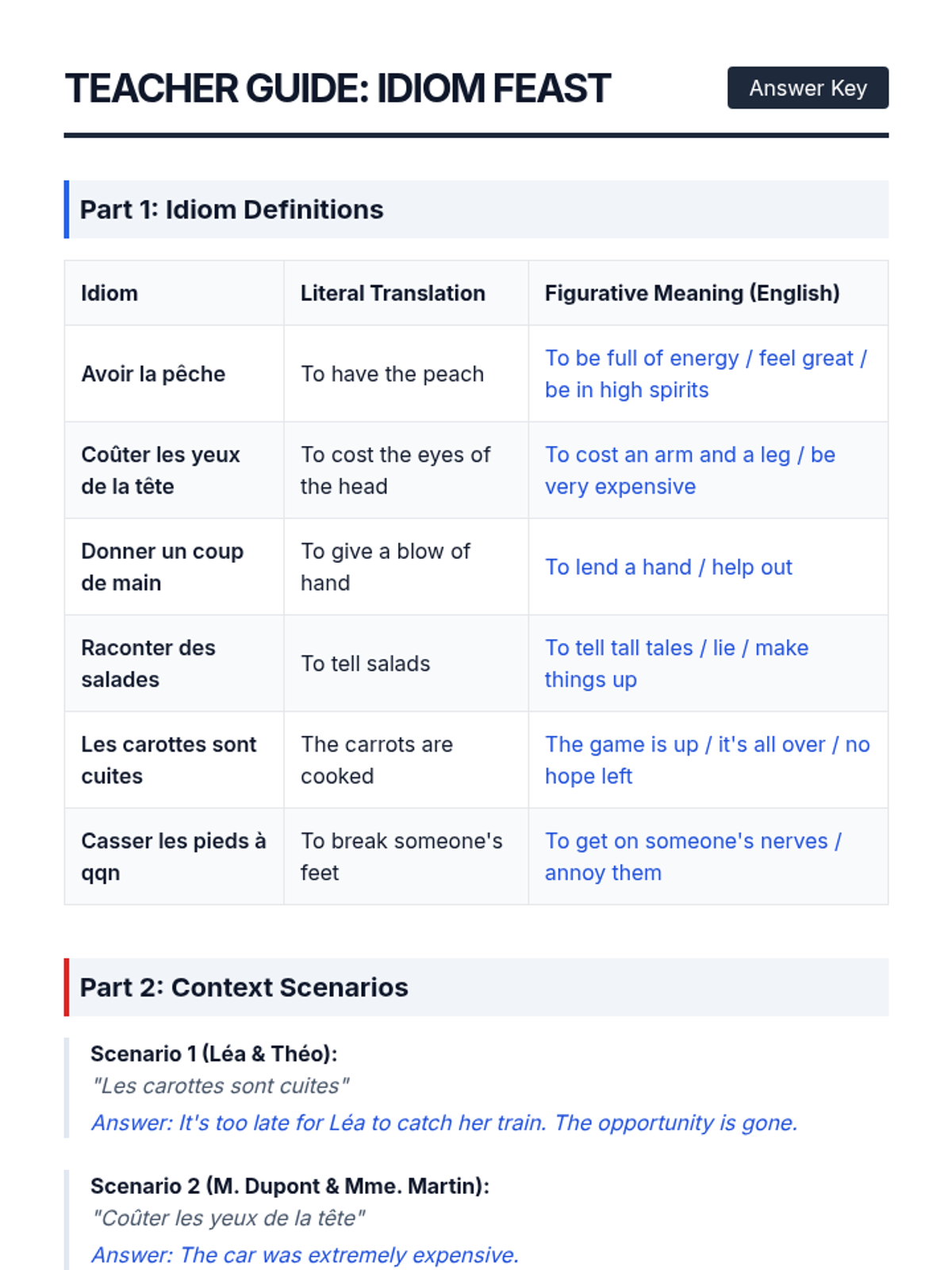
Students explore common French idiomatic expressions related to food and the body, learning to distinguish between literal and figurative meanings through context and creative visualization.
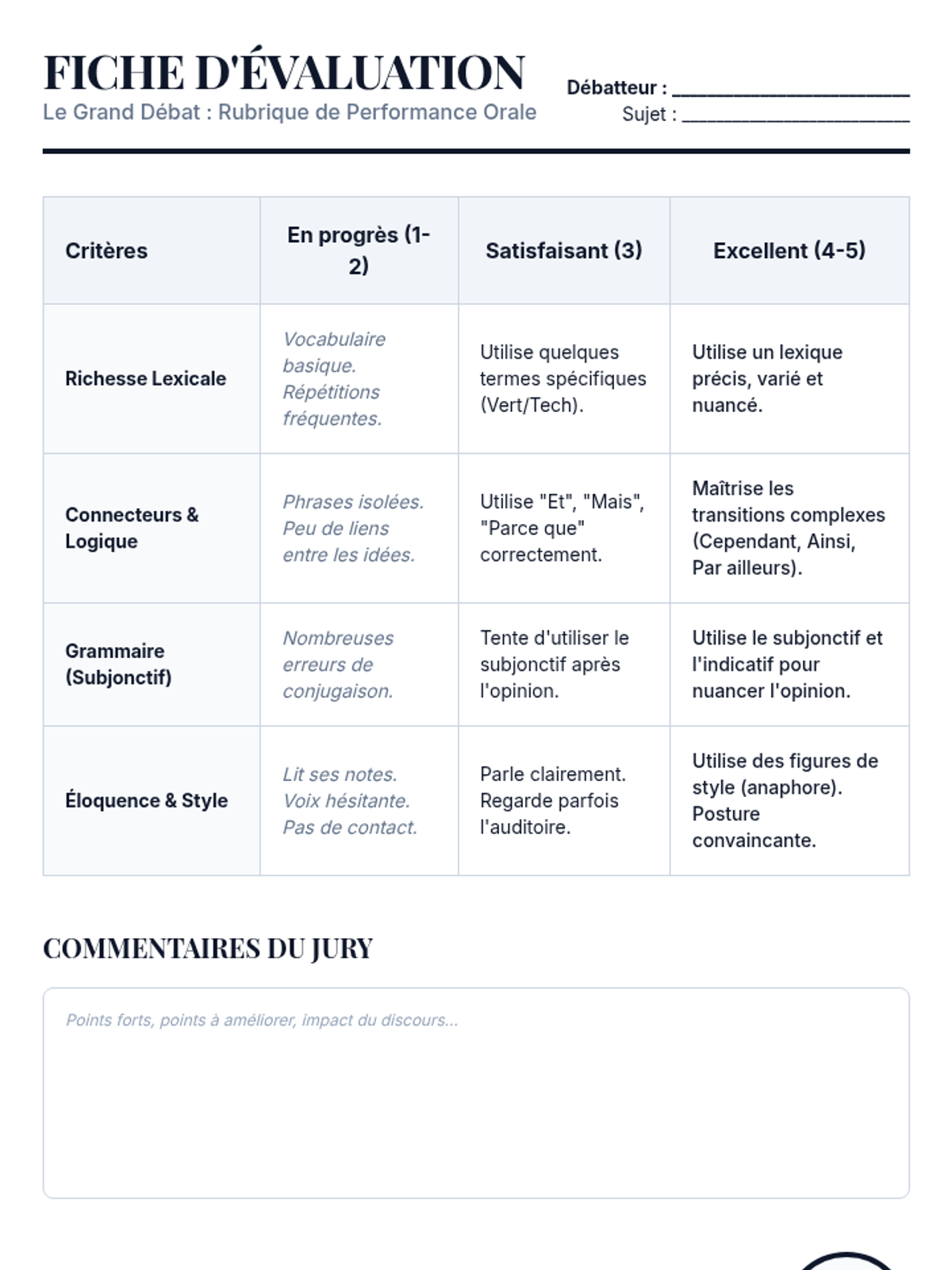
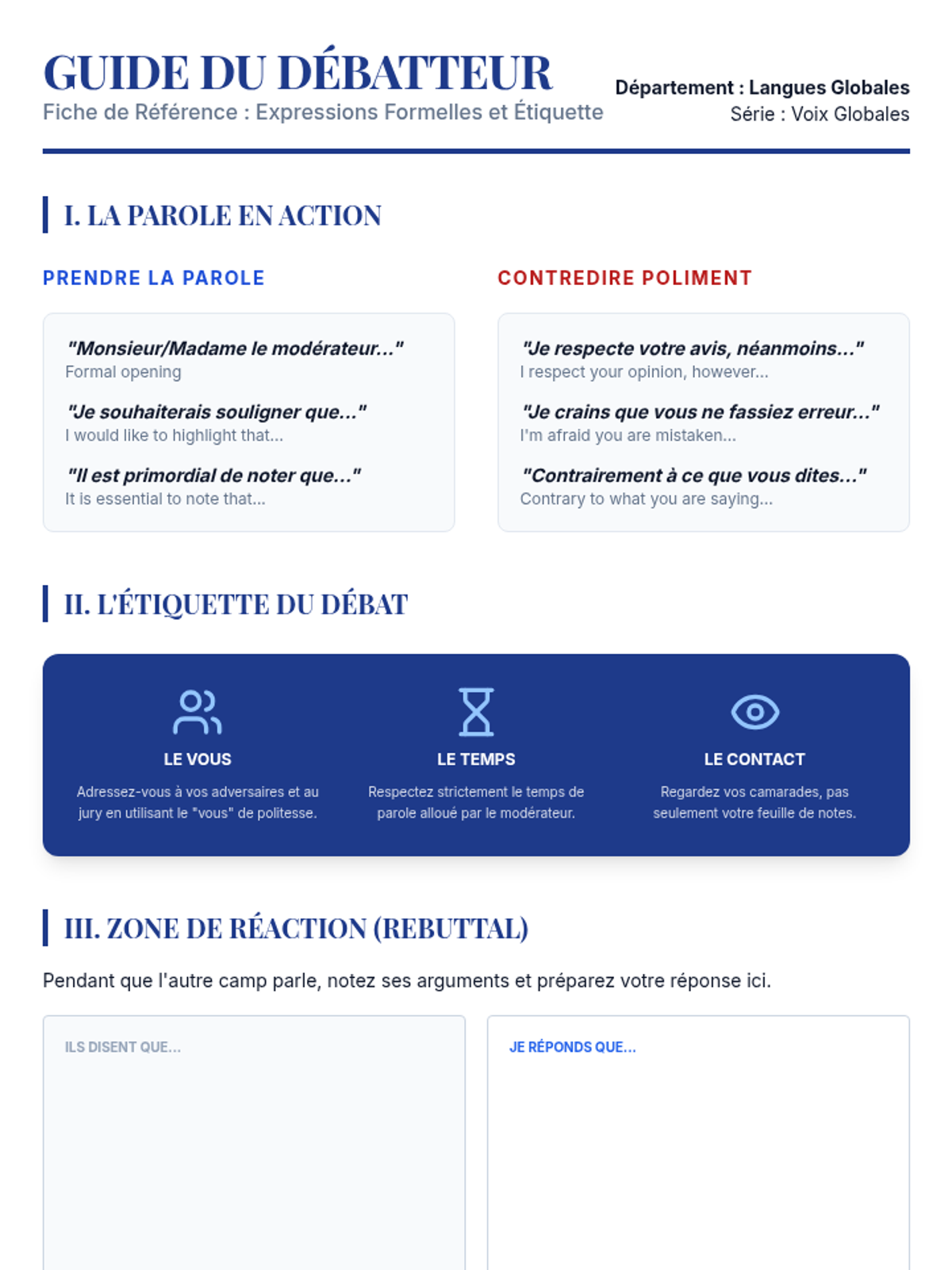
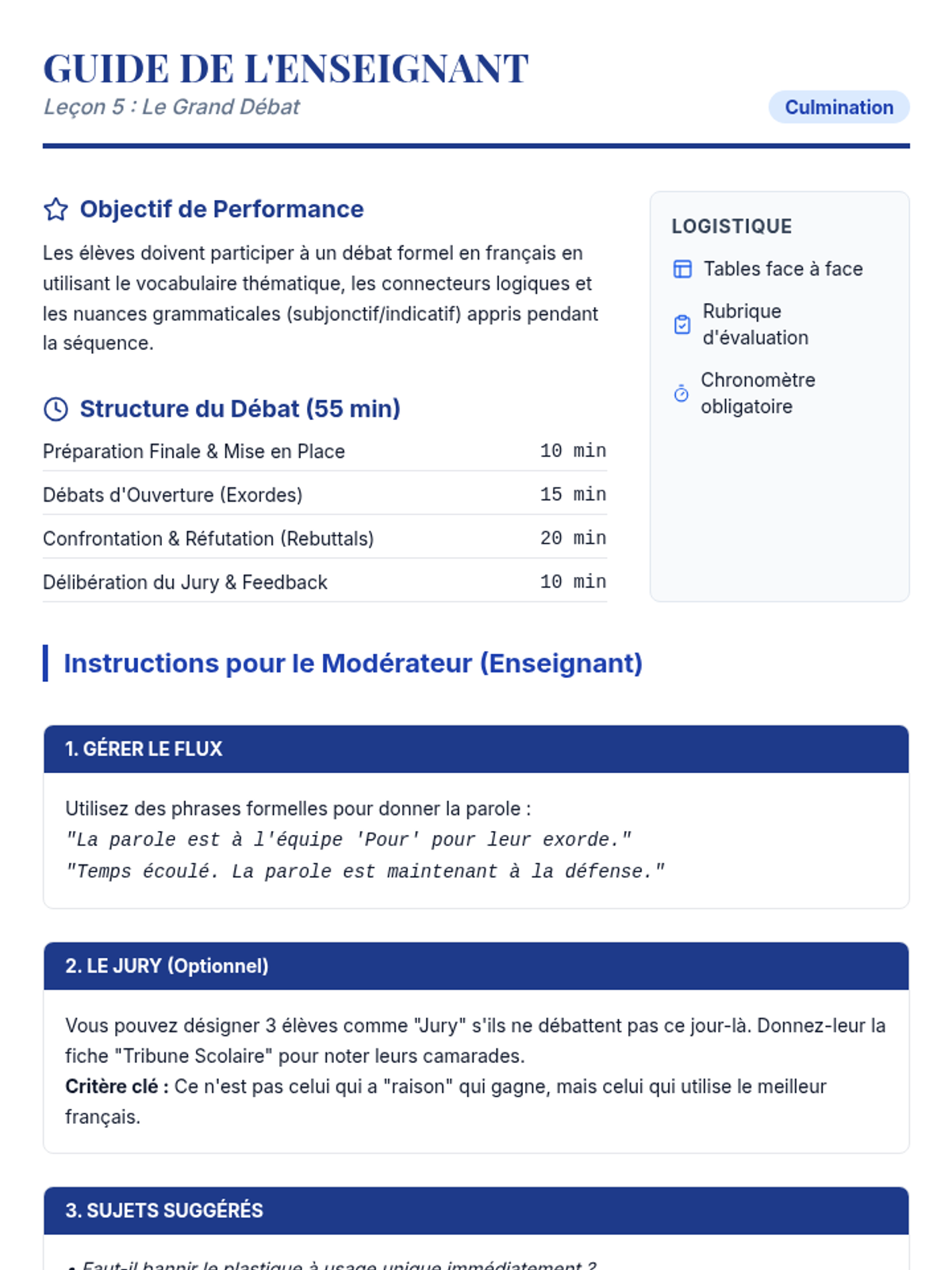
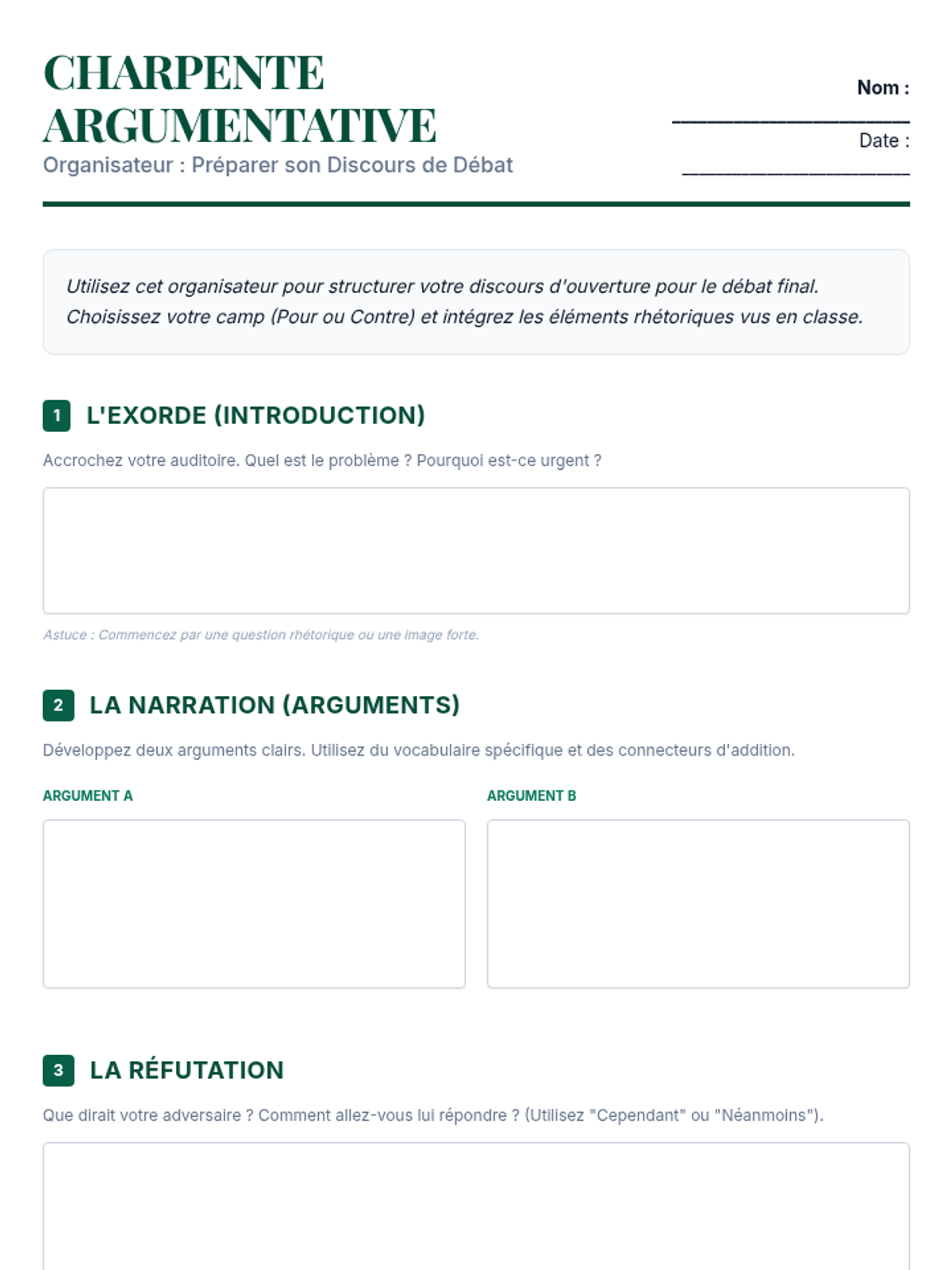
The sequence culminates in a formal classroom debate where students apply their vocabulary and rhetorical skills to argue a current global issue.
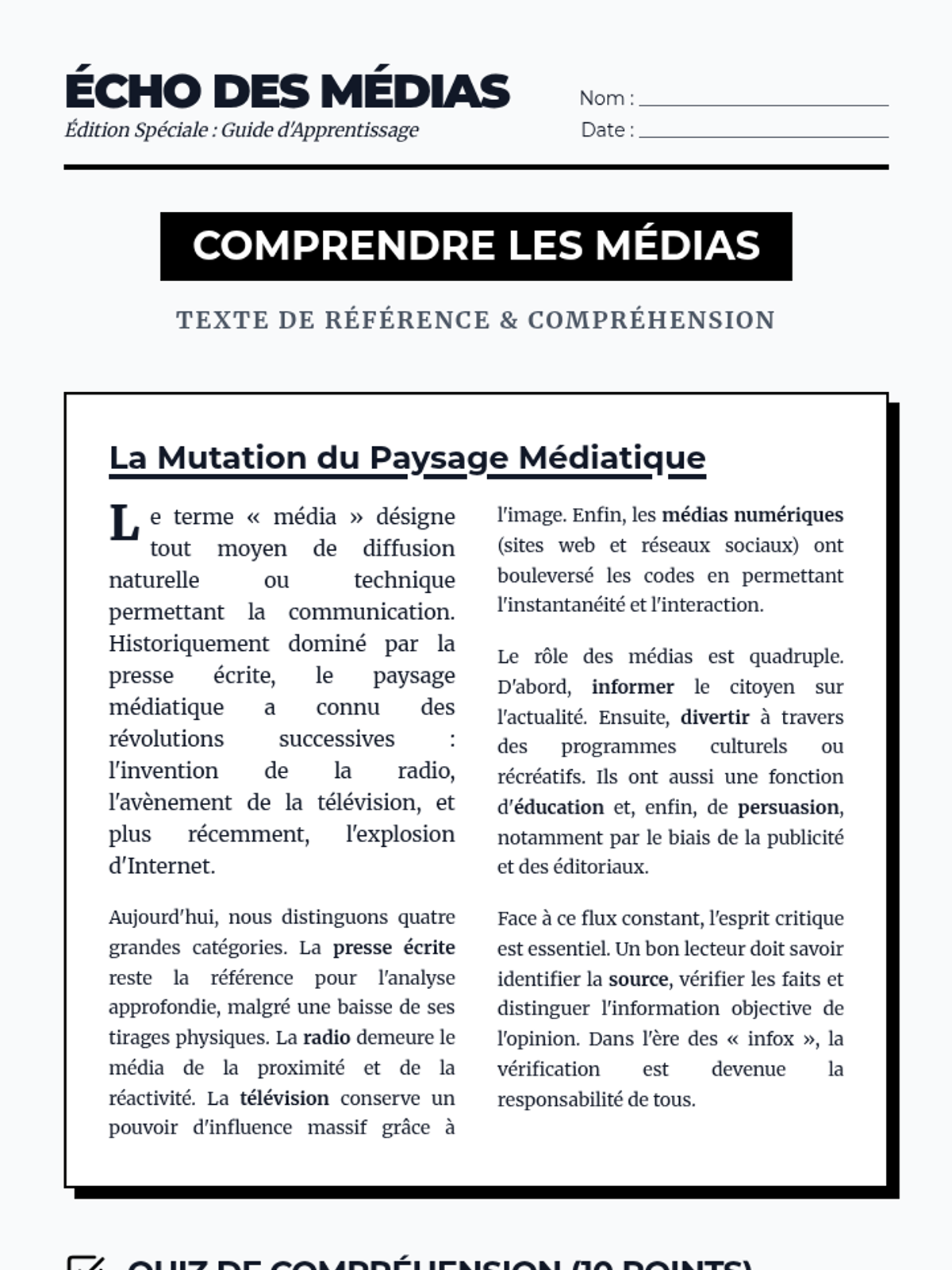
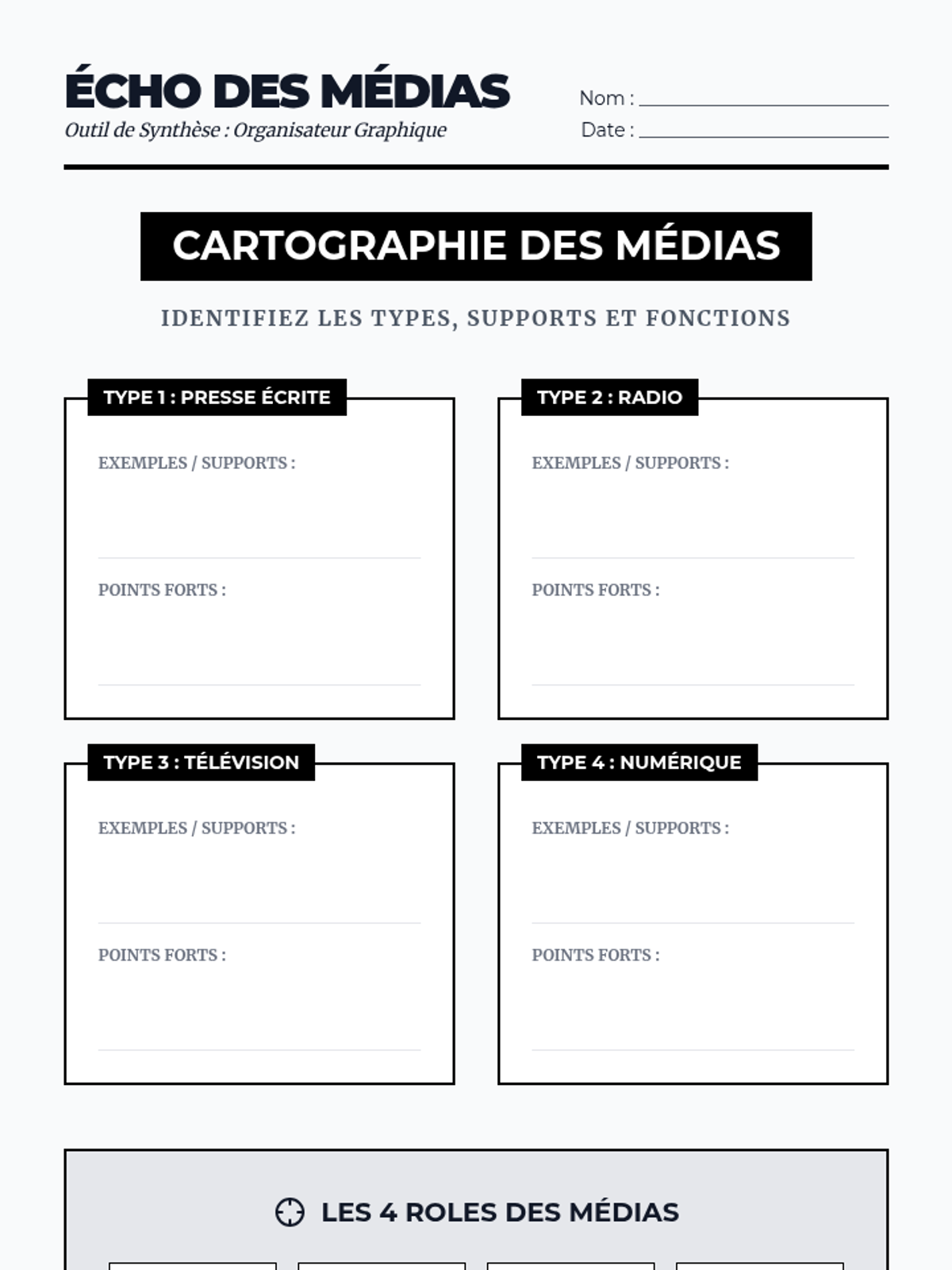
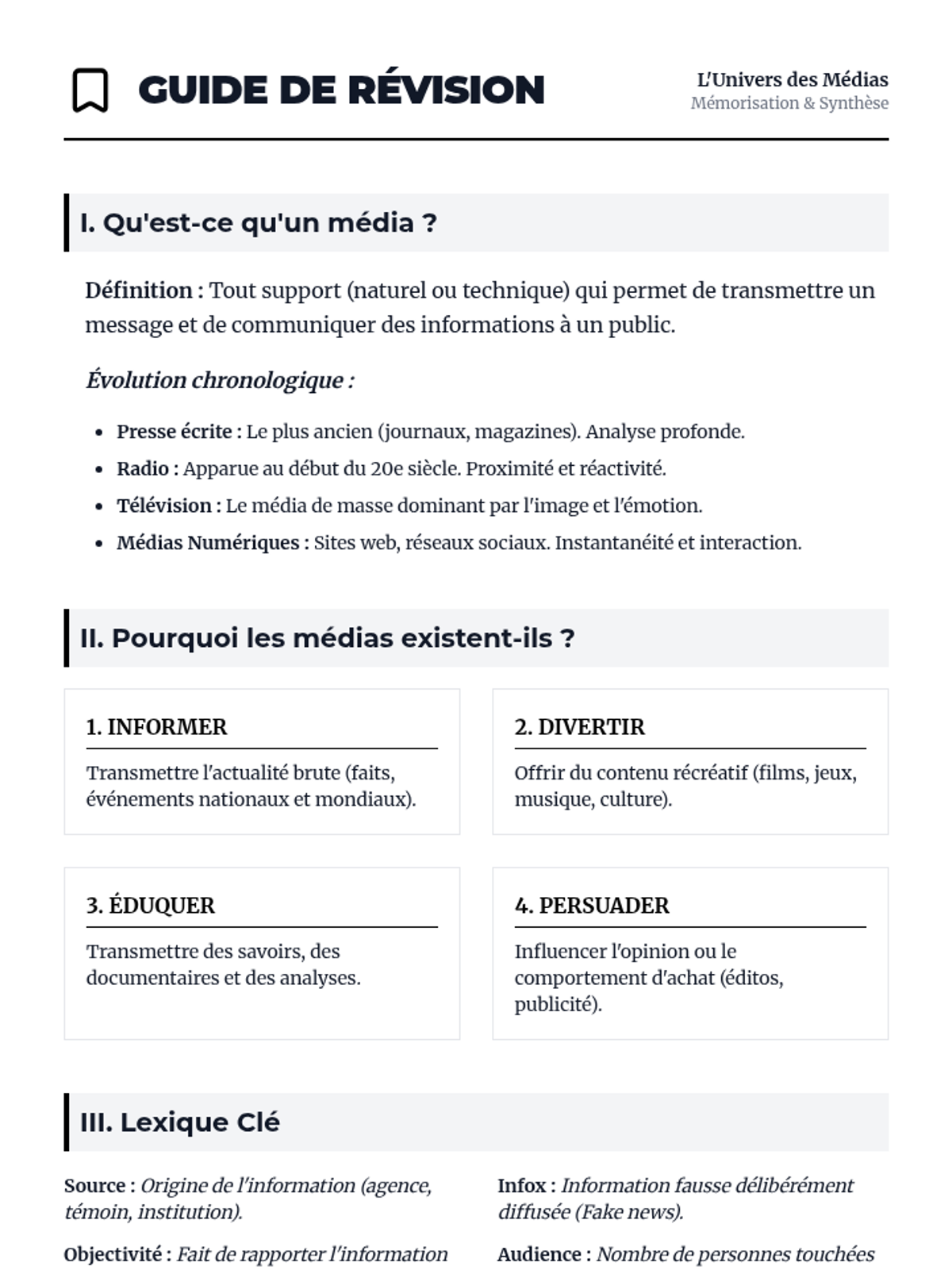
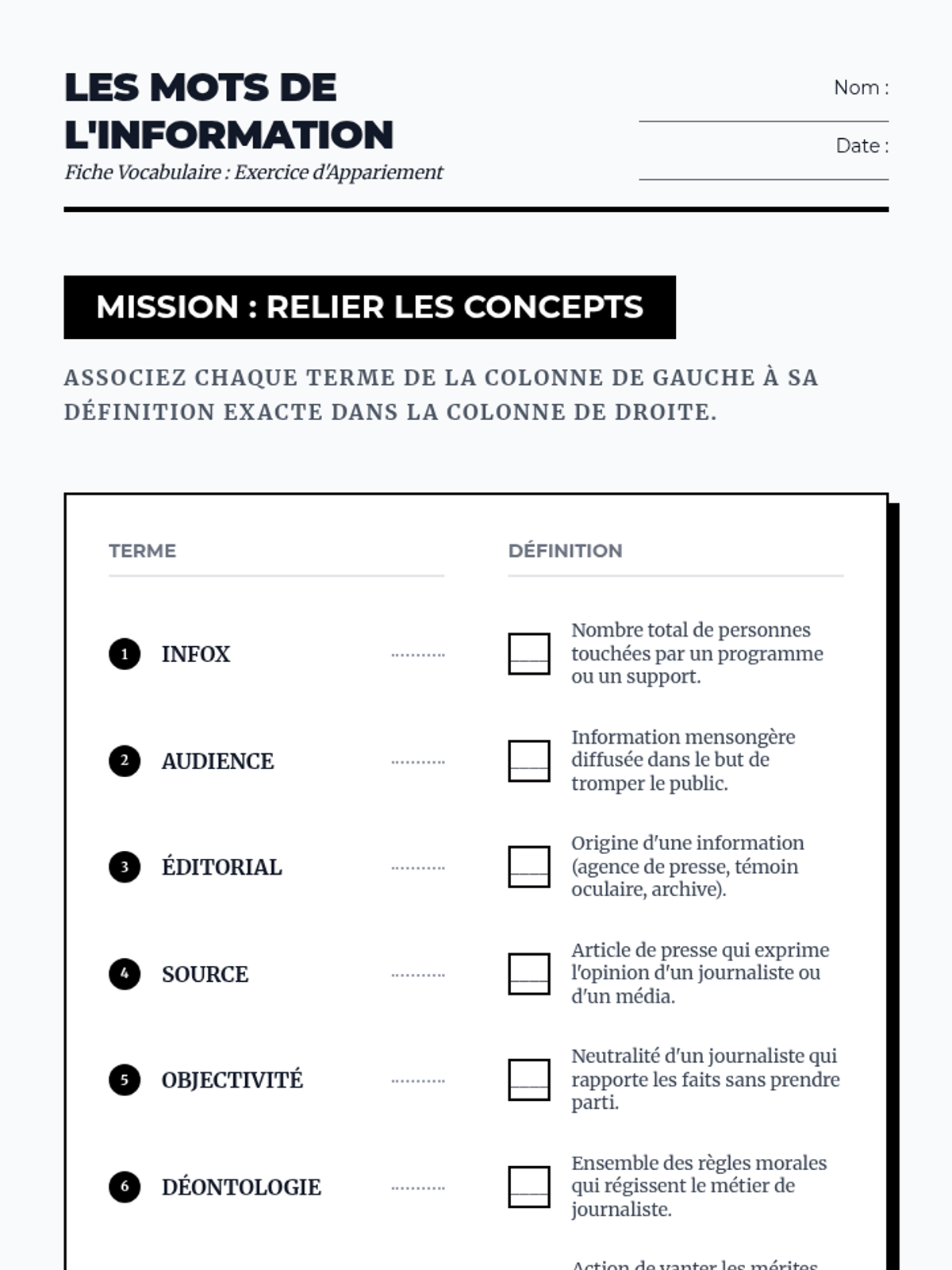
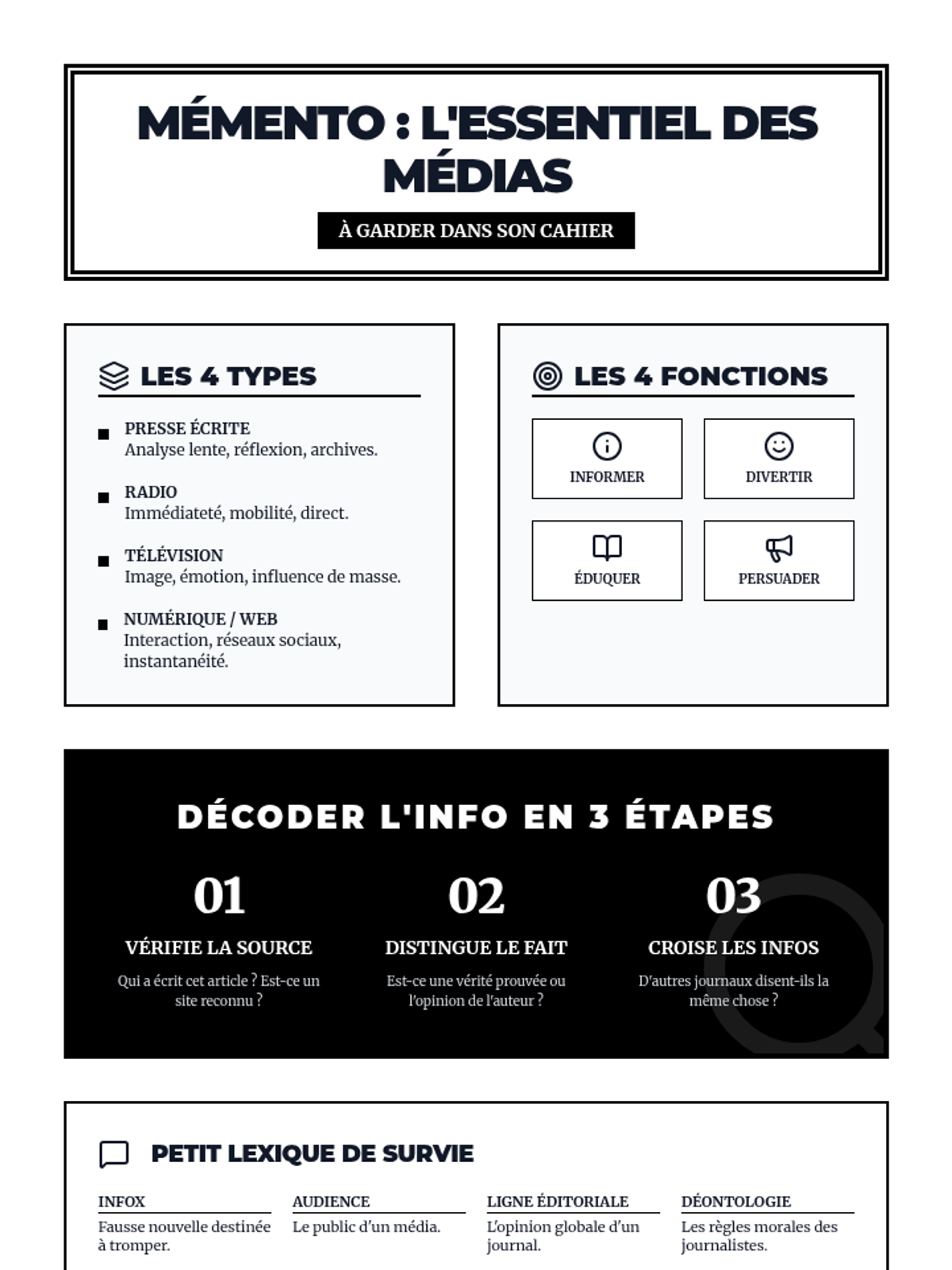
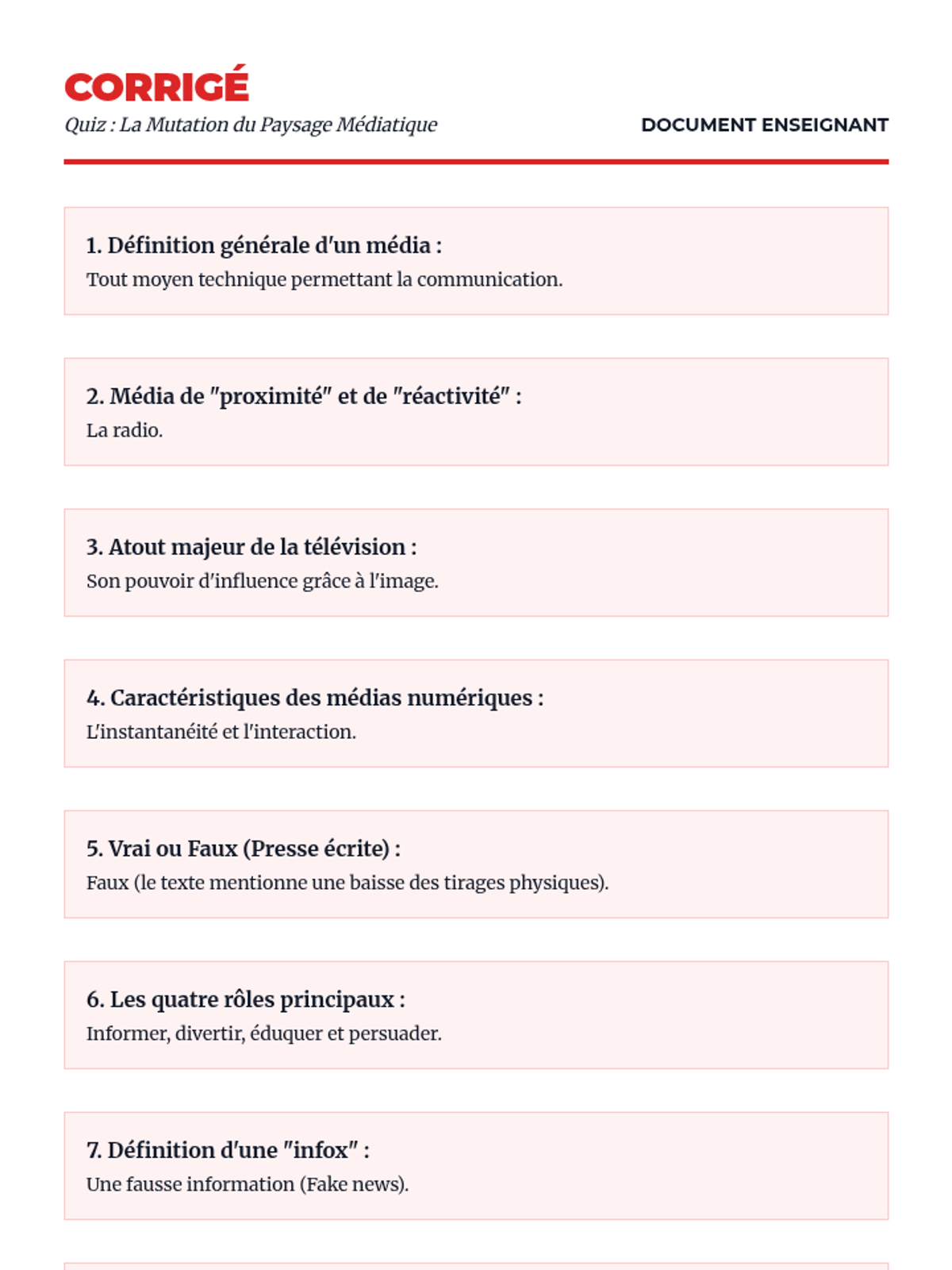
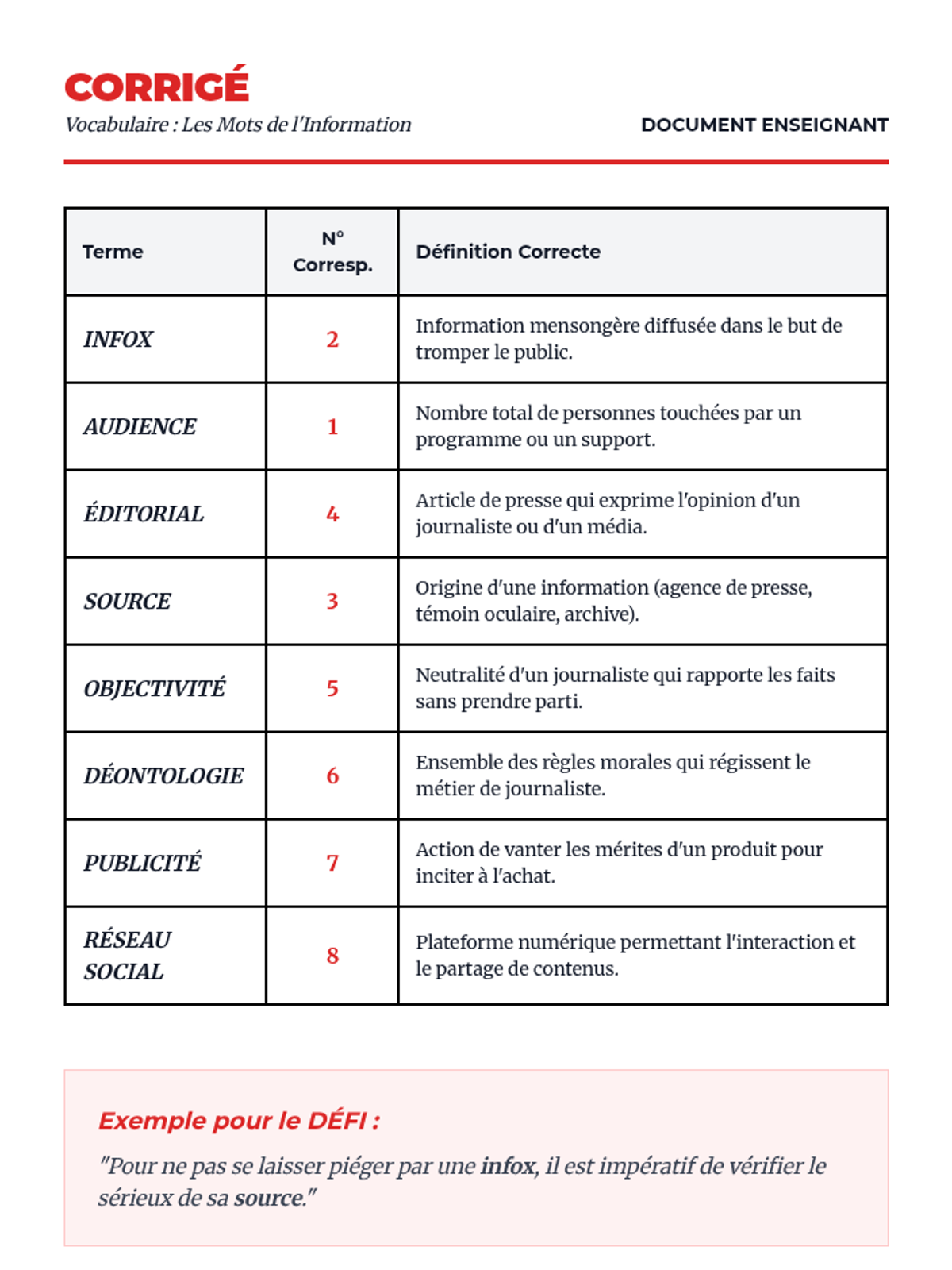
Cette leçon explore la diversité des médias modernes, de la presse écrite aux réseaux sociaux, tout en développant les compétences de lecture et de vocabulaire en français.
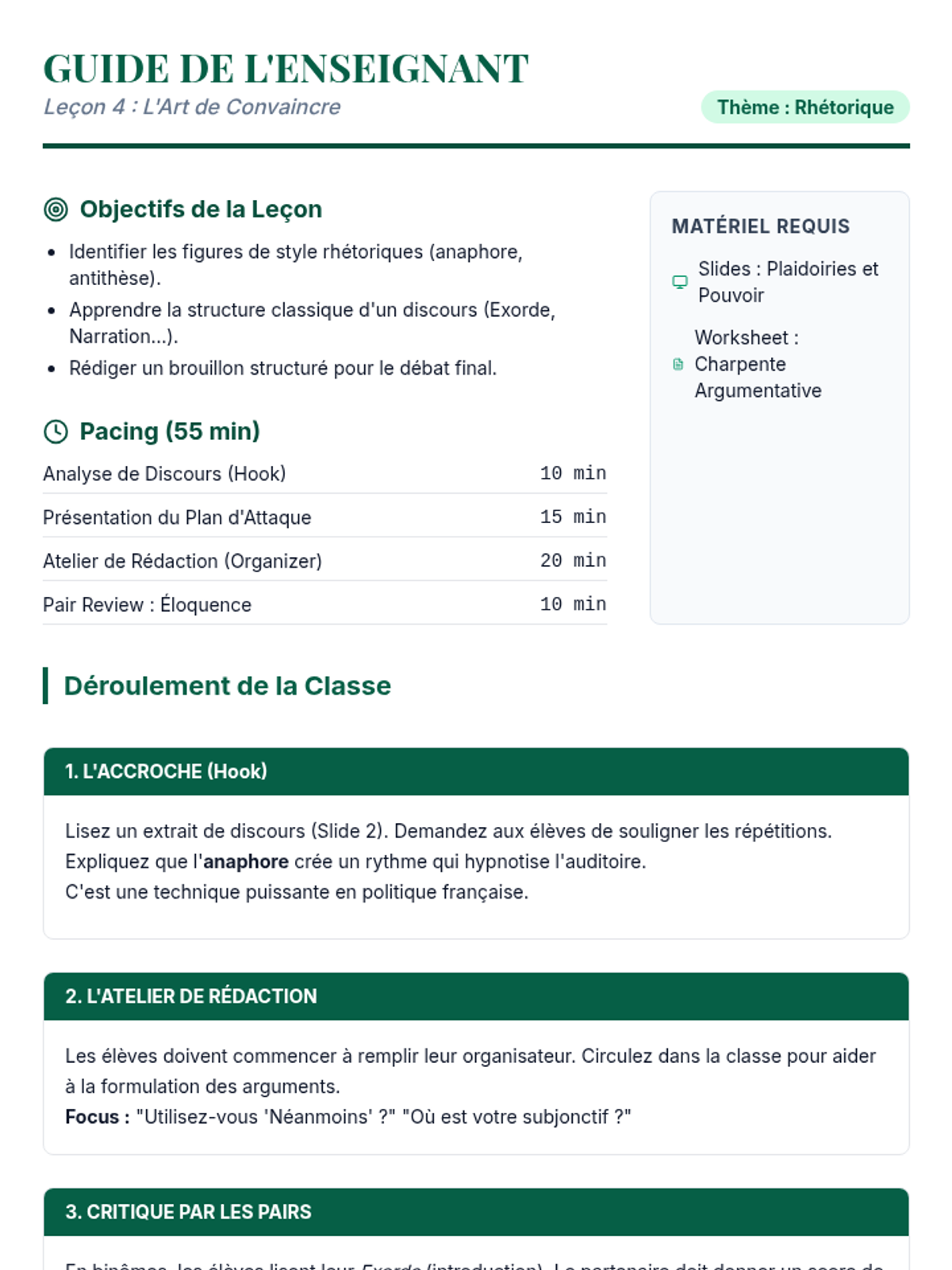
Students learn the formal structure of a debate, including opening statements and rebuttals, while analyzing rhetorical devices used by activists.
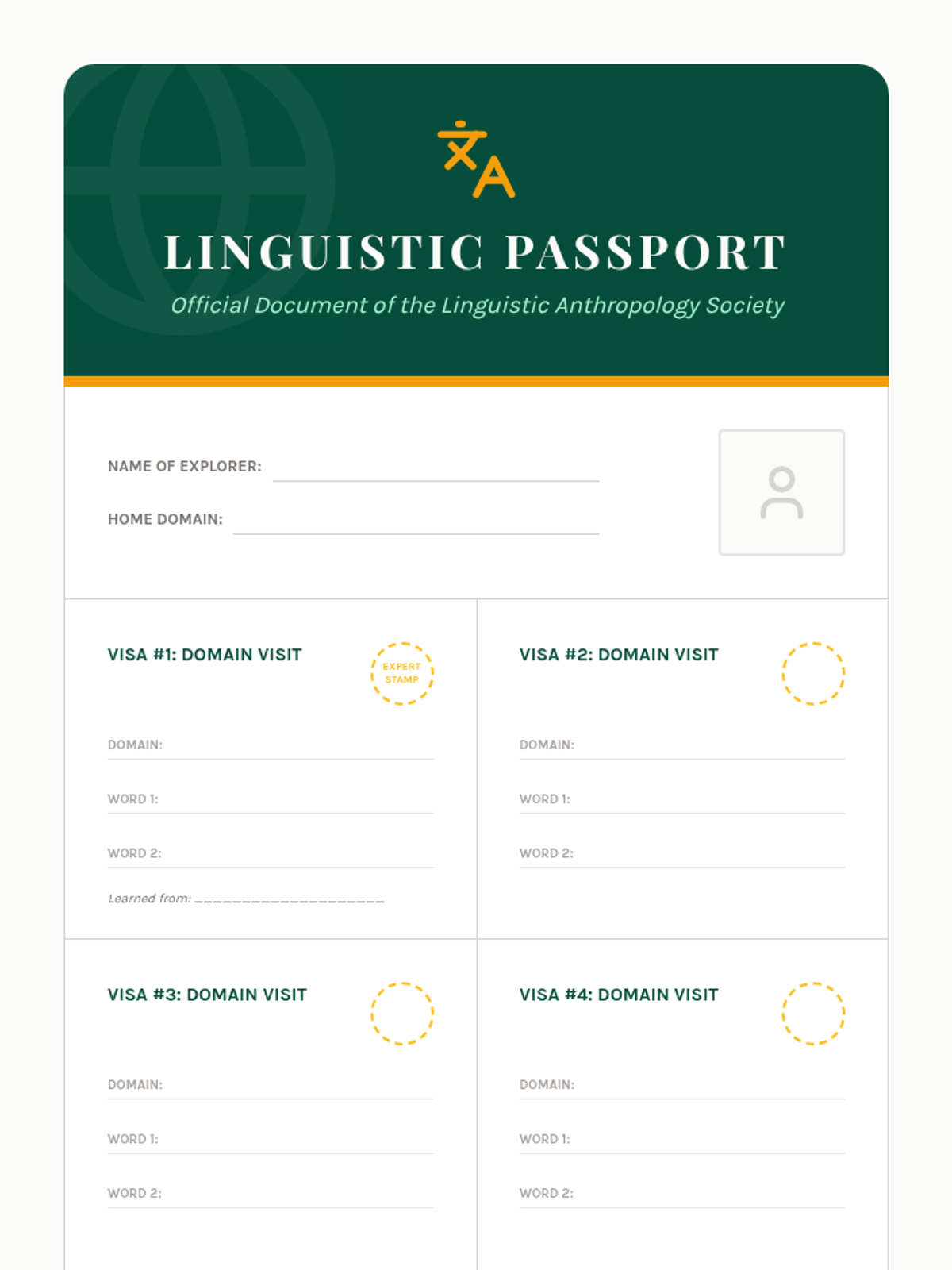
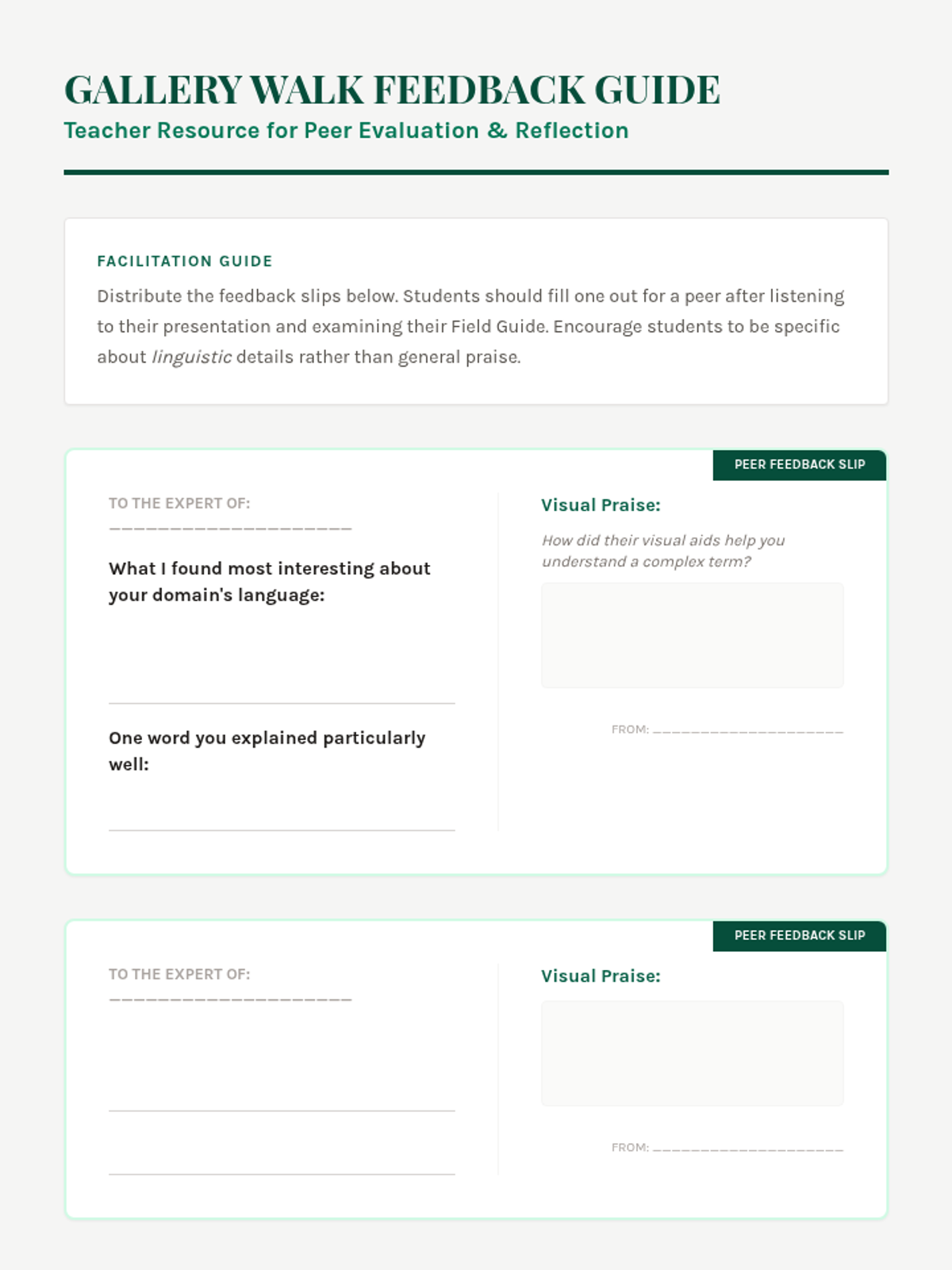
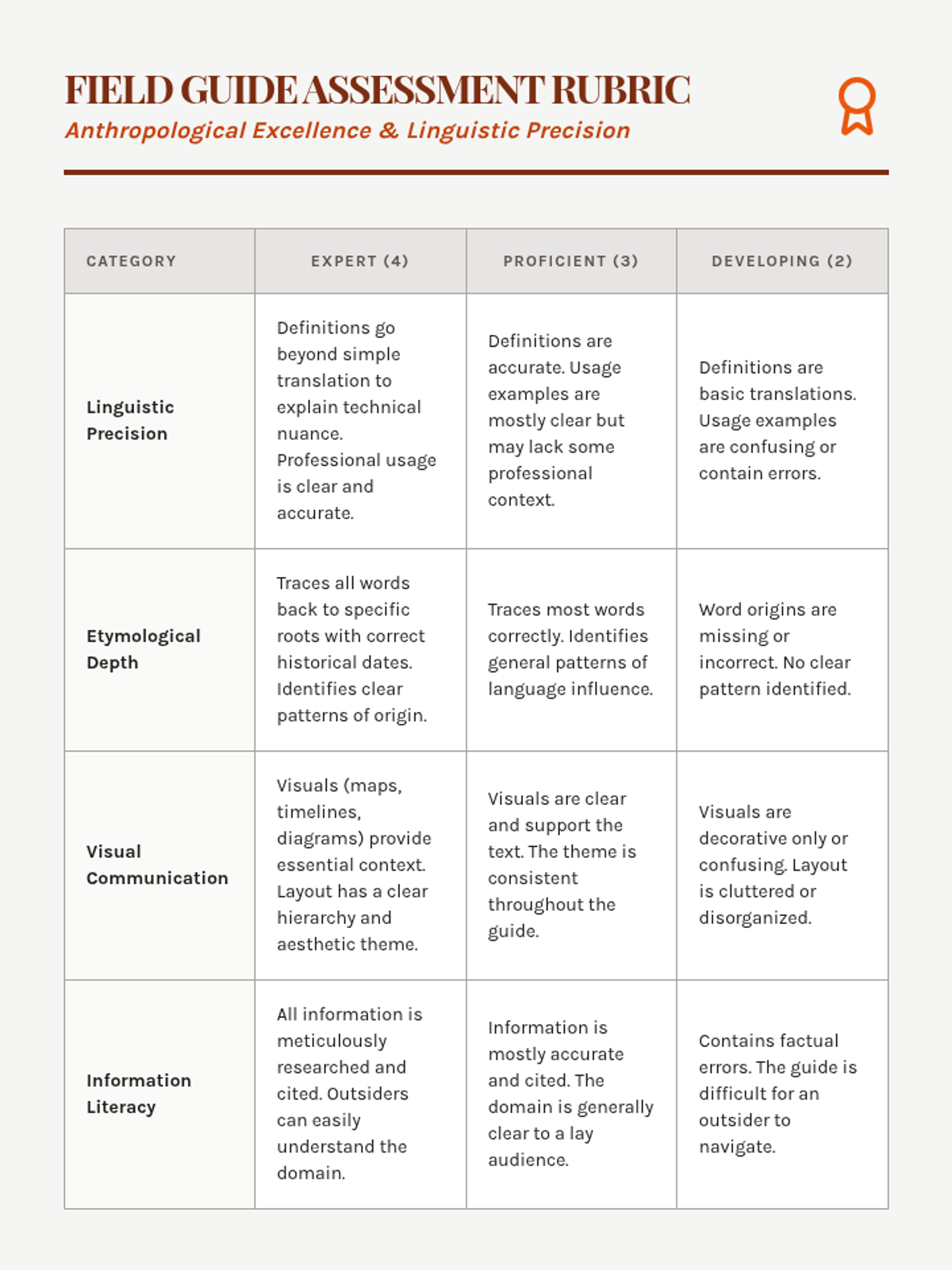
Students present their final field guides in a gallery walk format, teaching peers about the linguistic influences in their chosen domains.
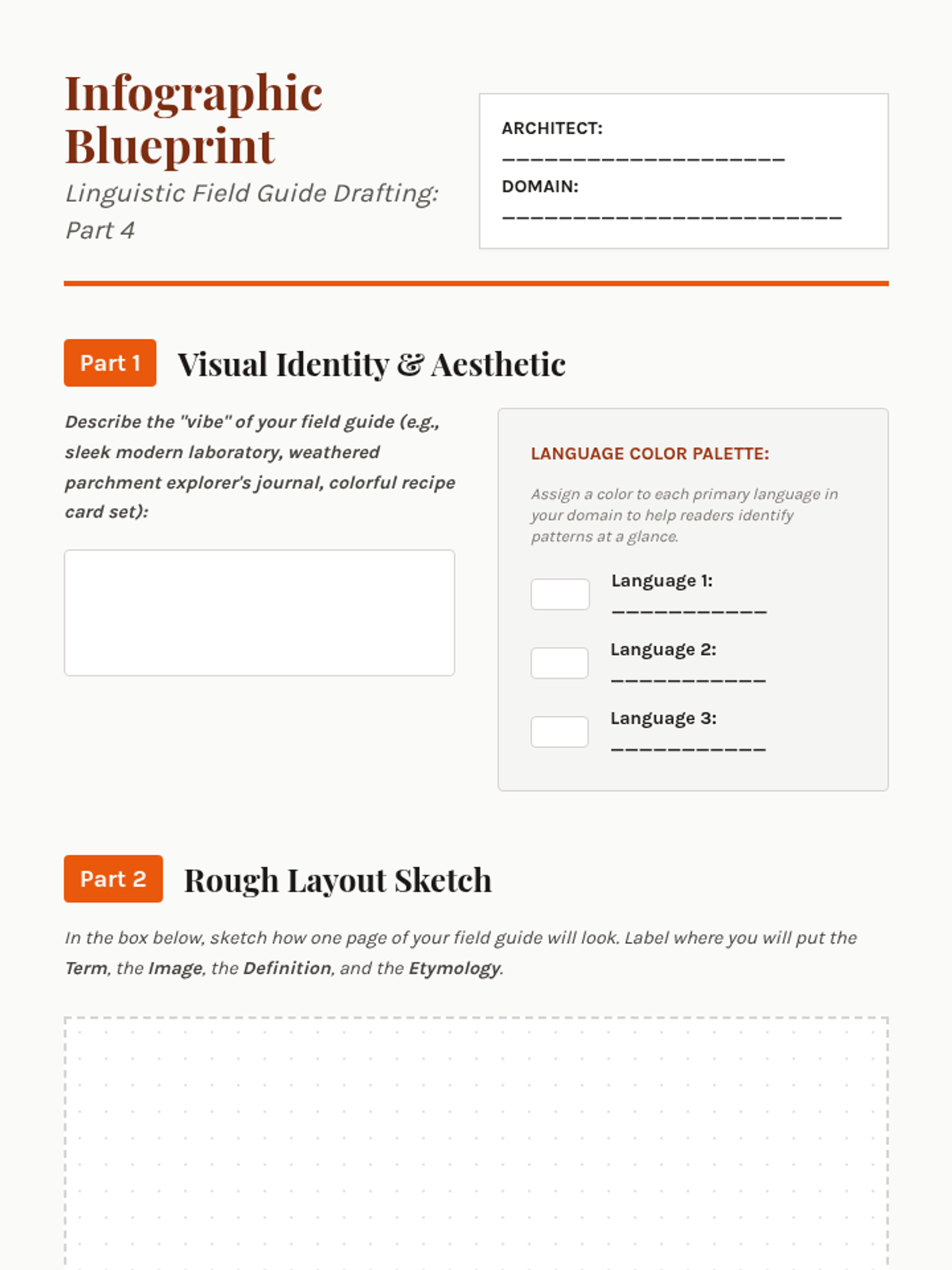
Students design visual aids and infographics to make complex foreign terminology accessible and memorable for a general audience.
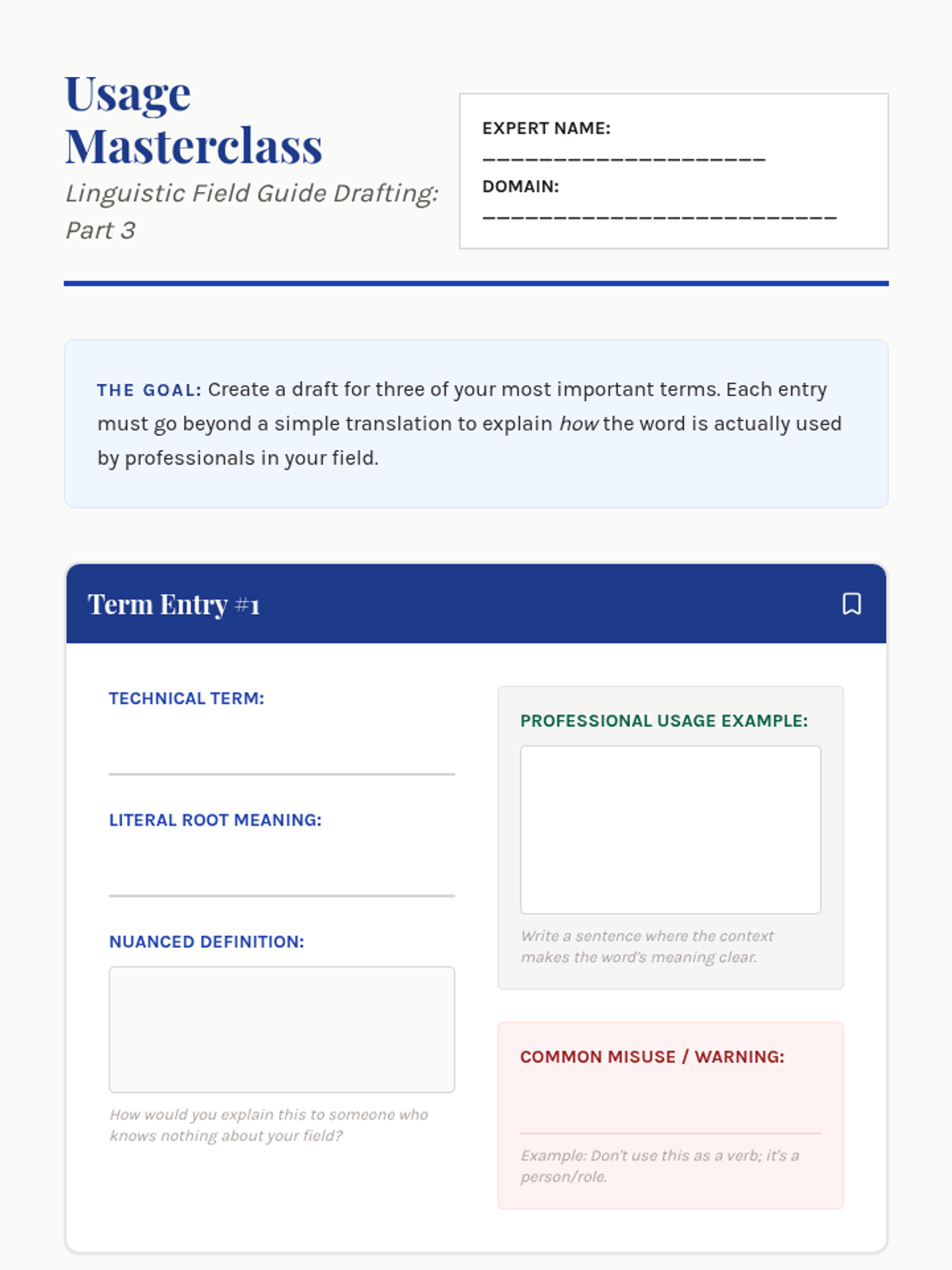
Students draft technical definitions and usage guides that explain the nuances of their chosen terms within their professional context.
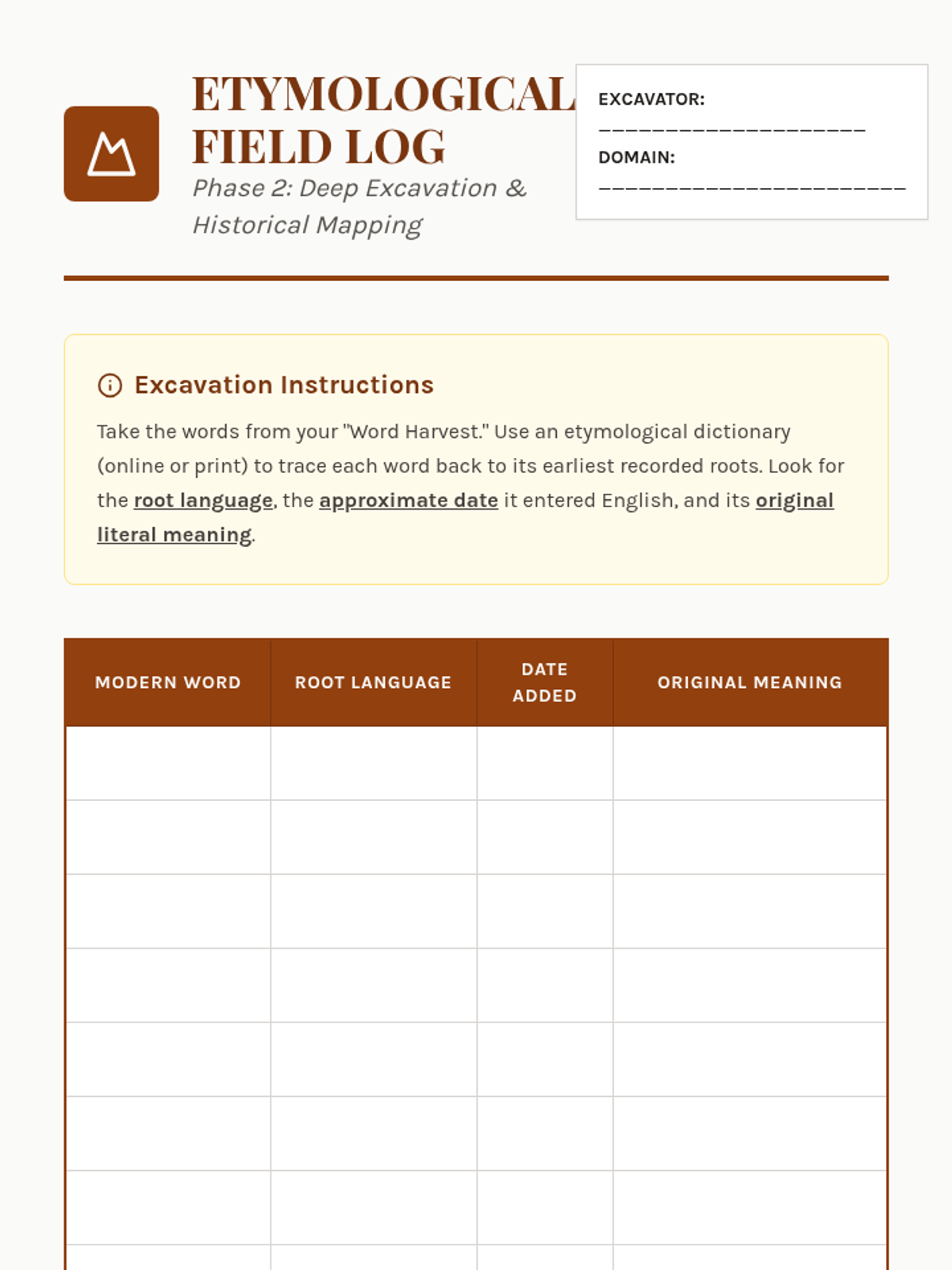
Students use etymological resources to trace the historical origins of their harvested words and identify cultural patterns in language usage.
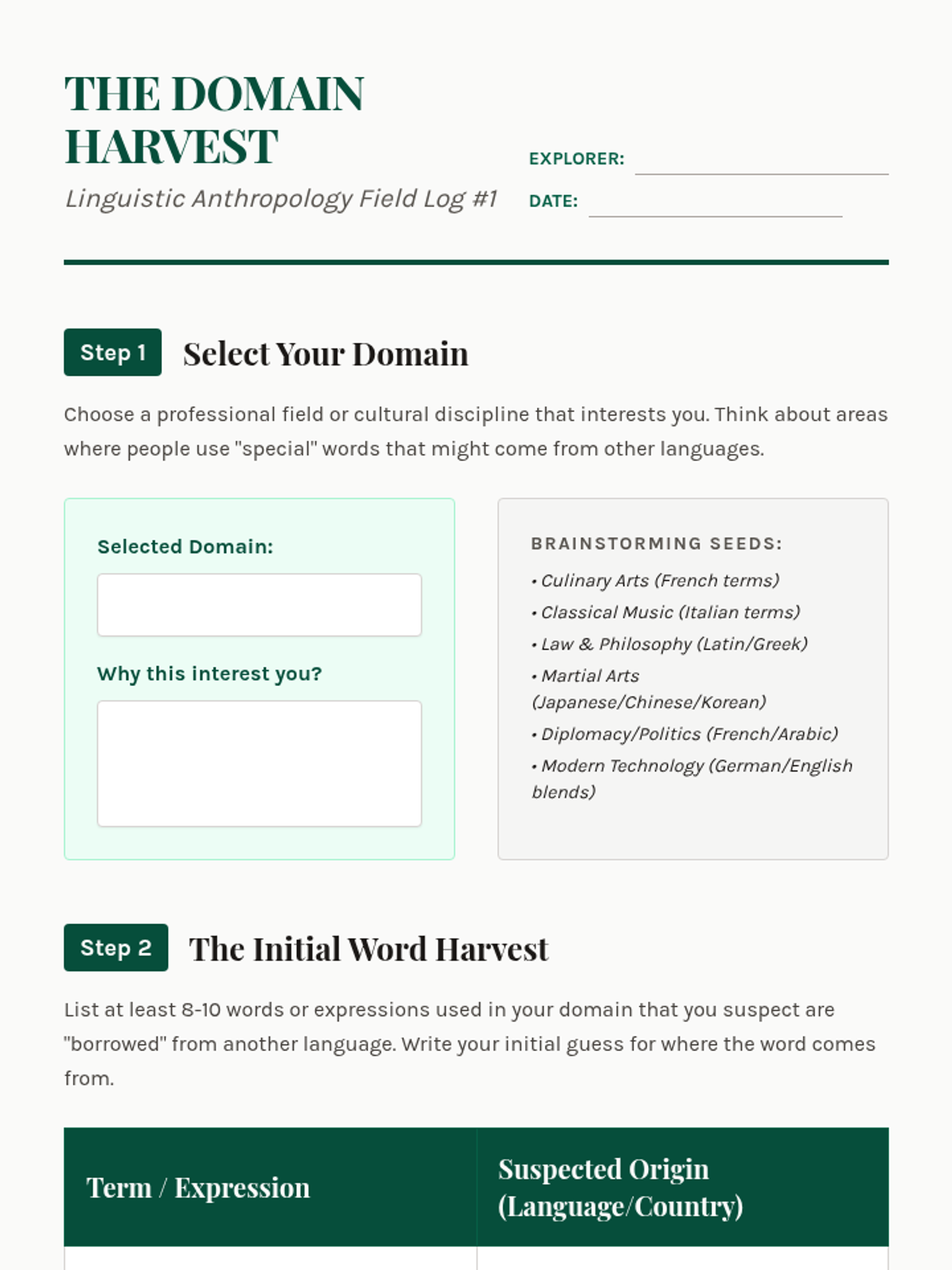
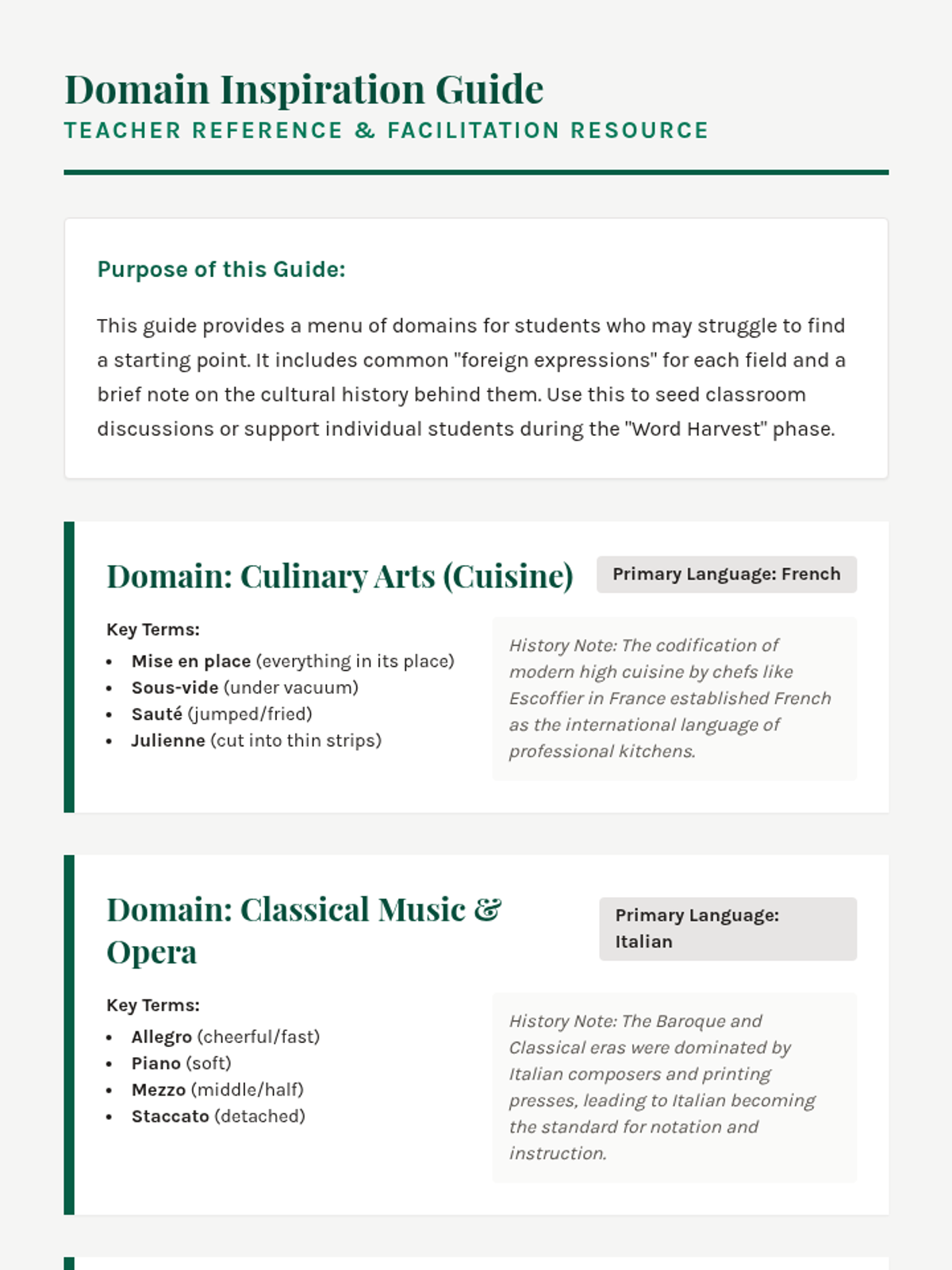
Students explore specialized vocabulary in various fields and select a domain of interest to begin their initial research into foreign terms.
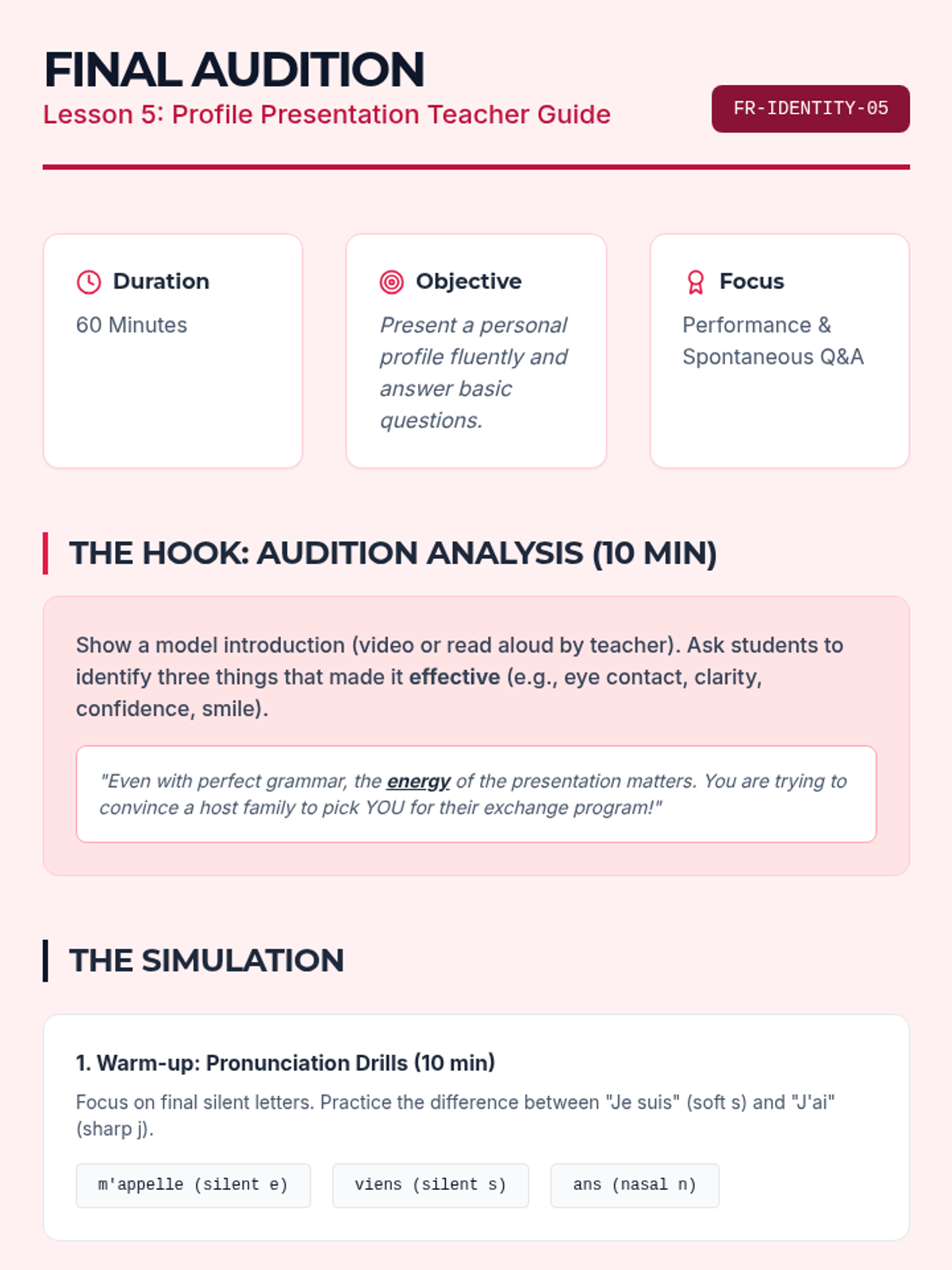
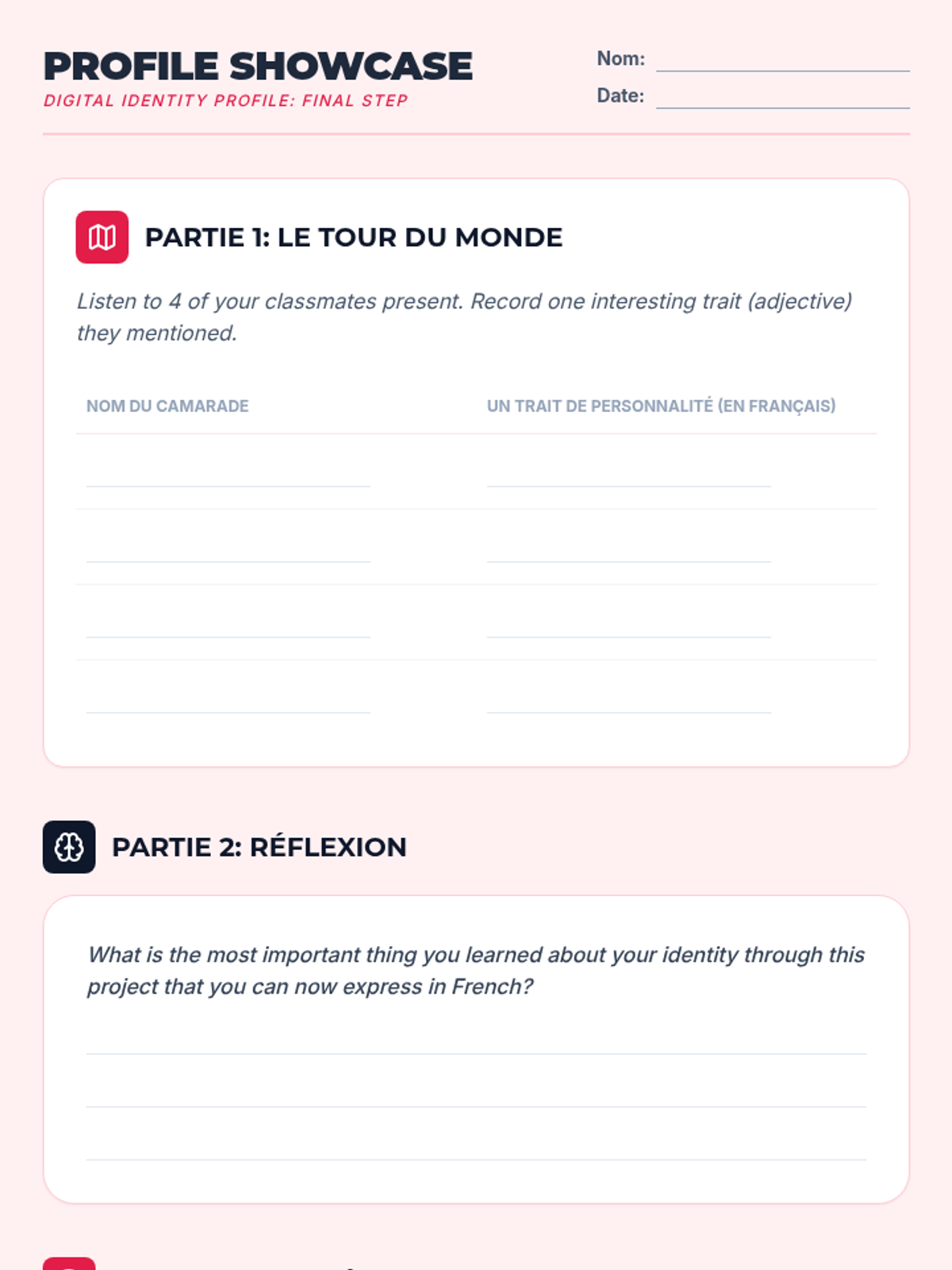
Students record or present their digital identity profiles in a simulated study abroad application. The lesson includes spontaneous Q&A and a gallery walk of student work.
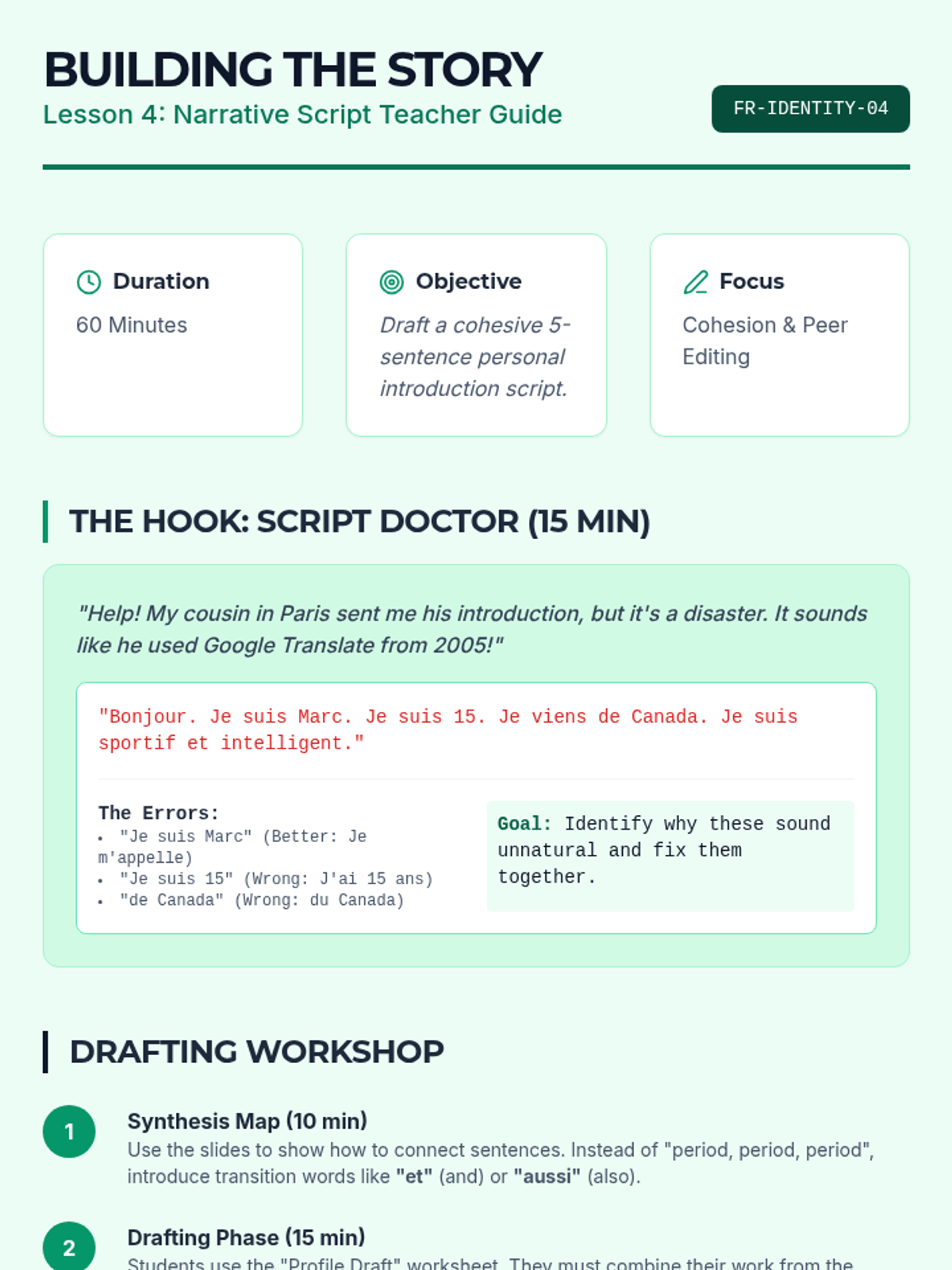
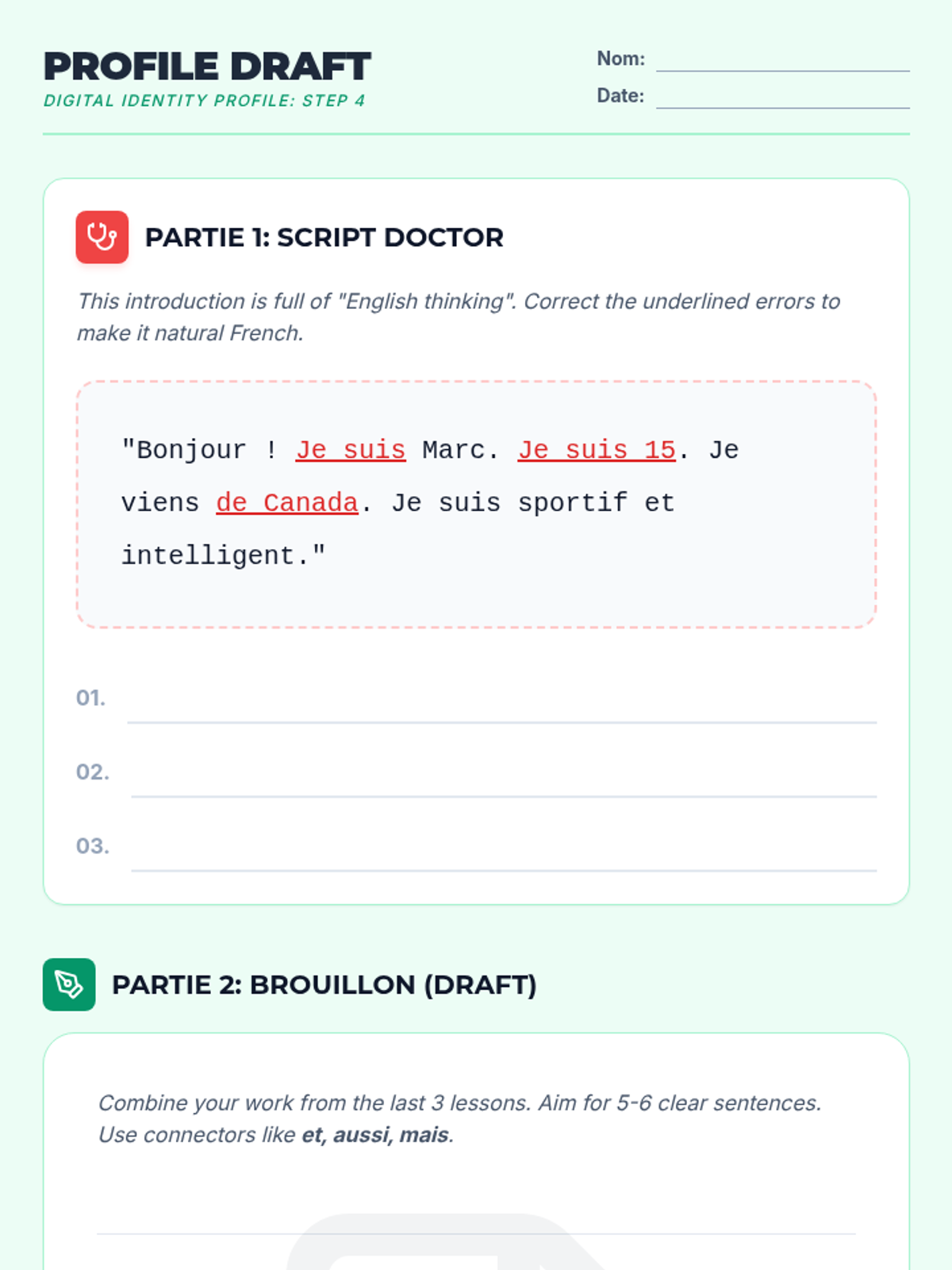
Students synthesize their learning into a coherent script. They participate in a peer-editing workshop to fix syntax errors and improve the flow of their self-introduction.
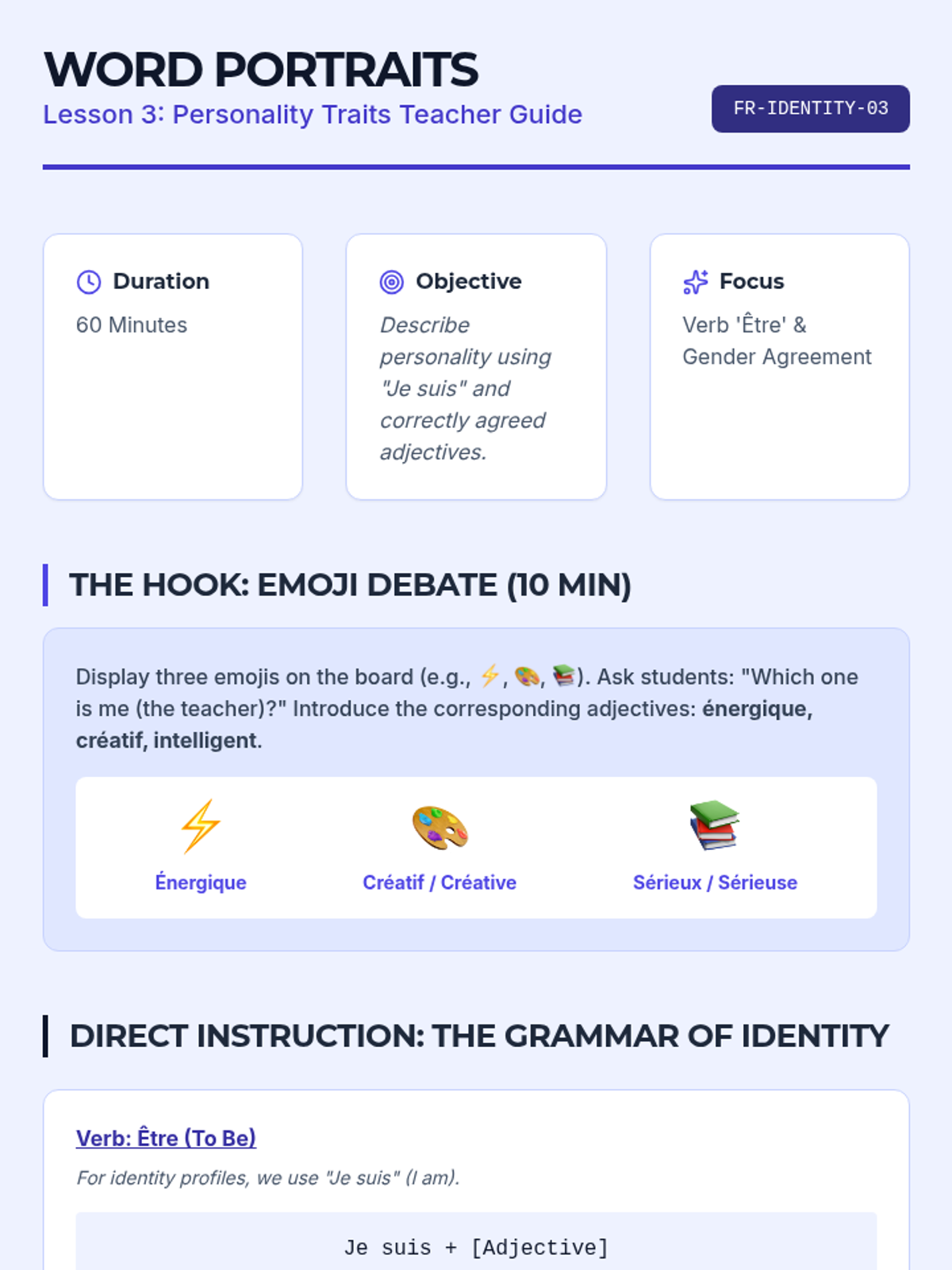
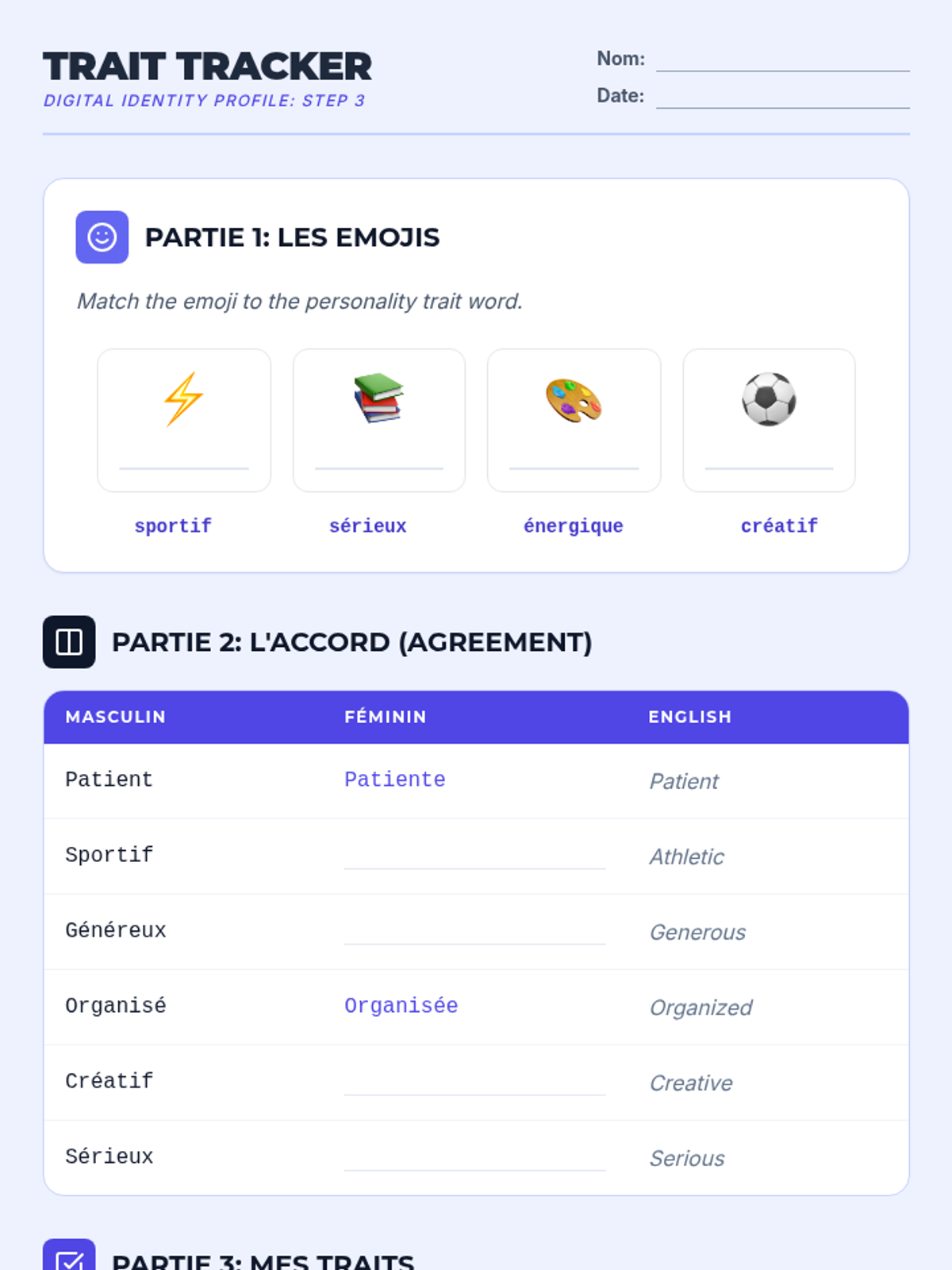
Students describe themselves using adjectives and learn gender and number agreement with the verb 'être'. They use emojis to bridge the gap between abstract traits and French vocabulary.
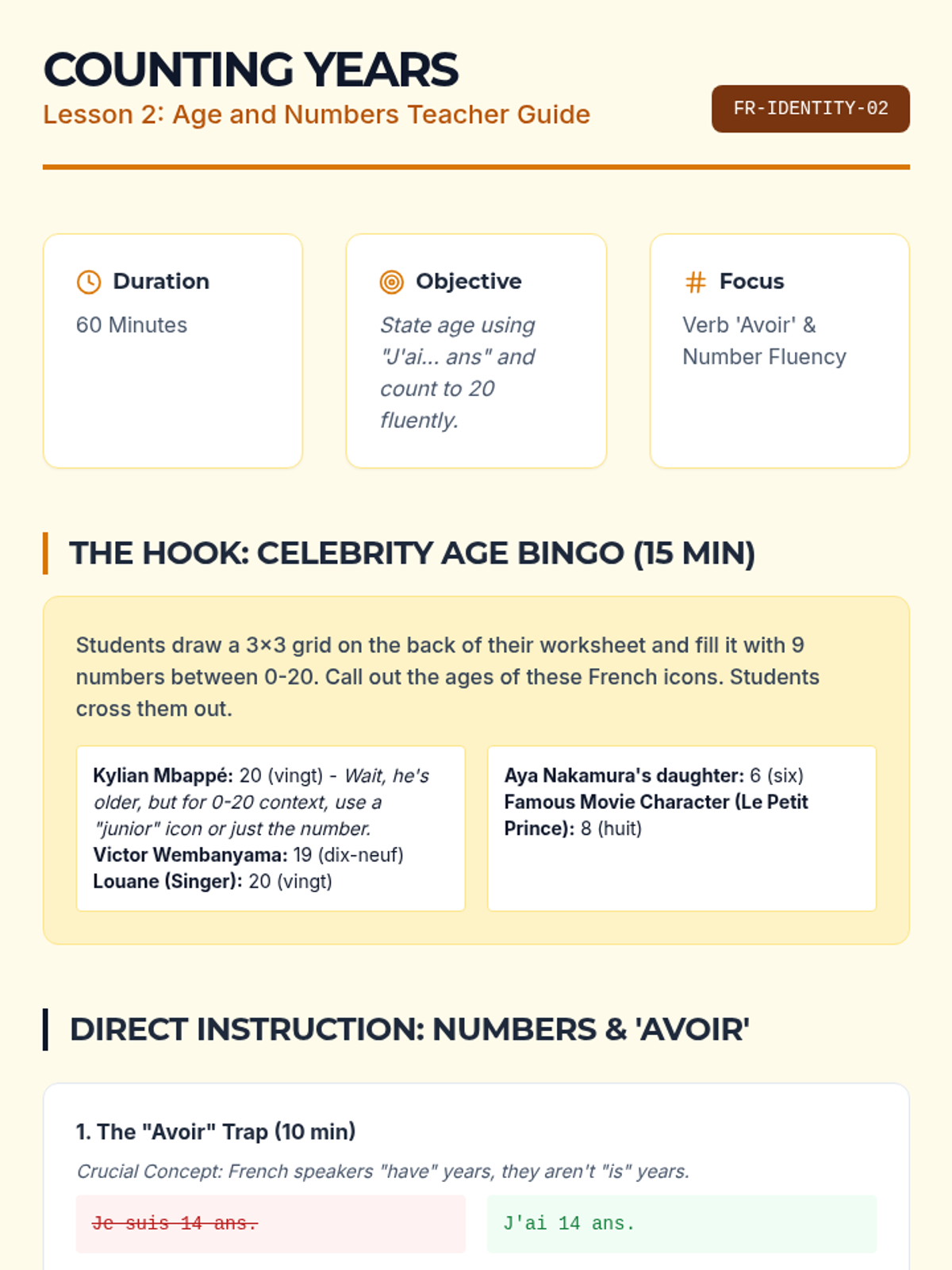
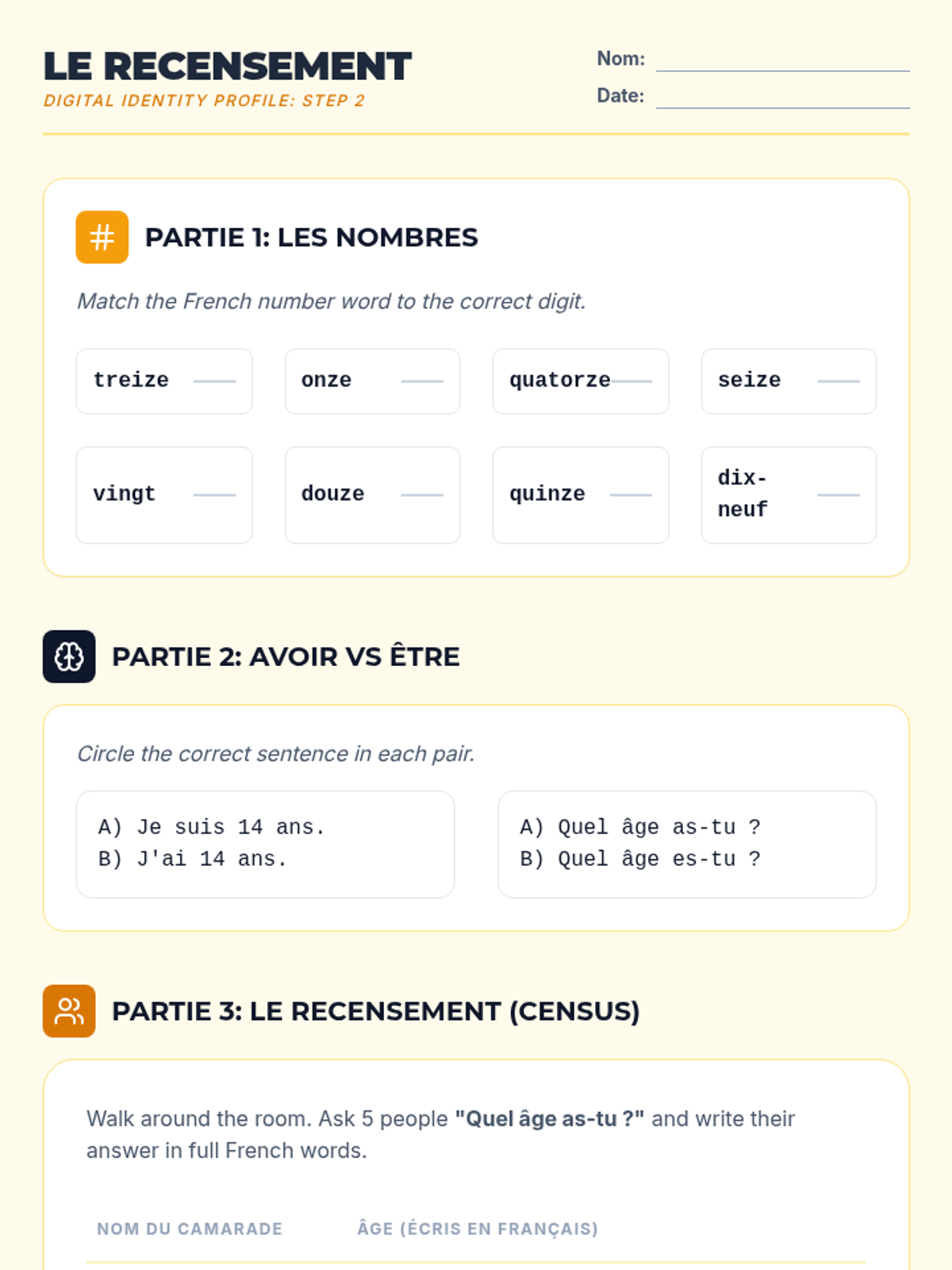
Focuses on the verb 'avoir' for age and numbers 0-20. Students engage in rhythmic counting and math games to build fluency and interview peers to collect data.
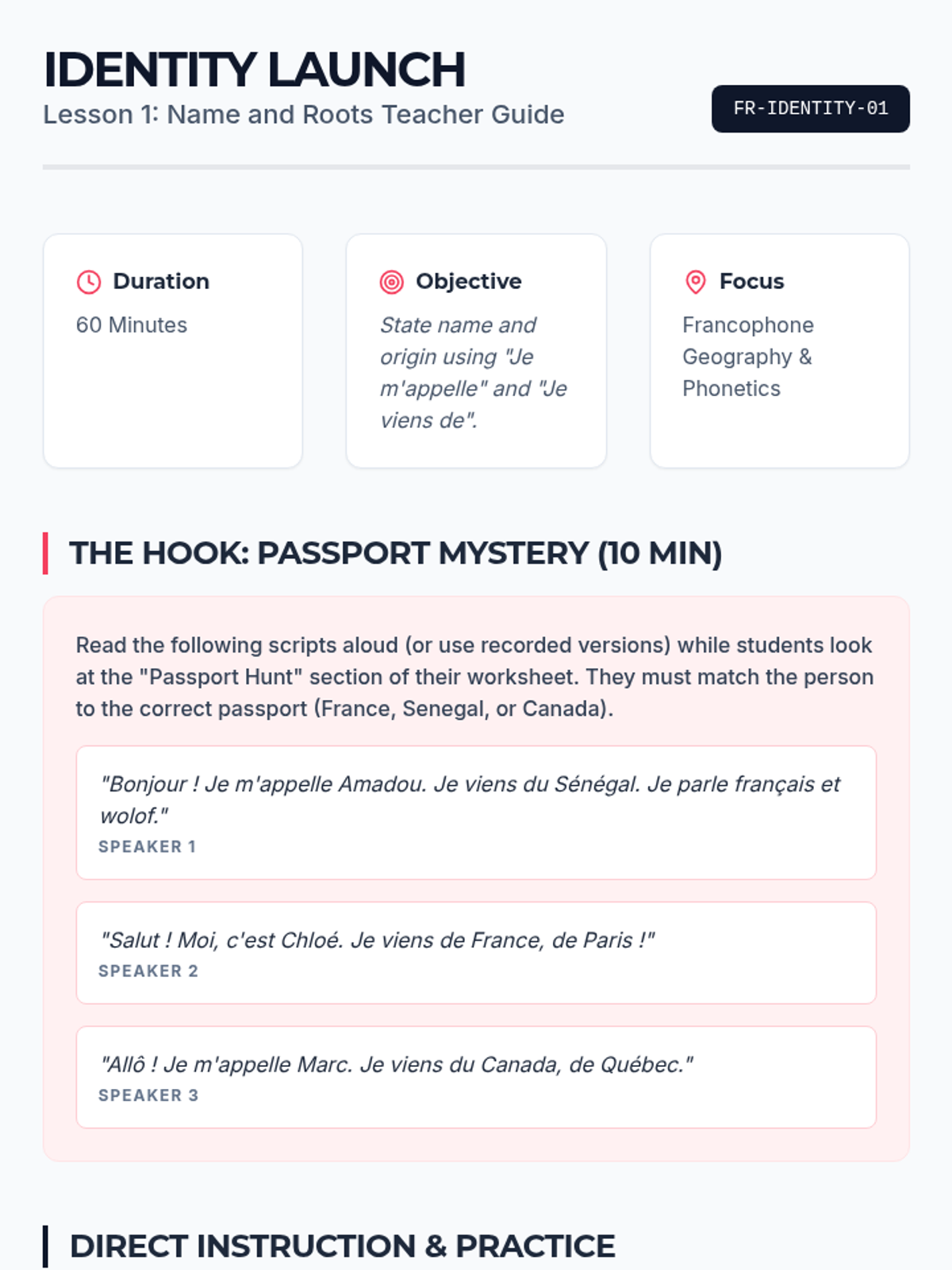
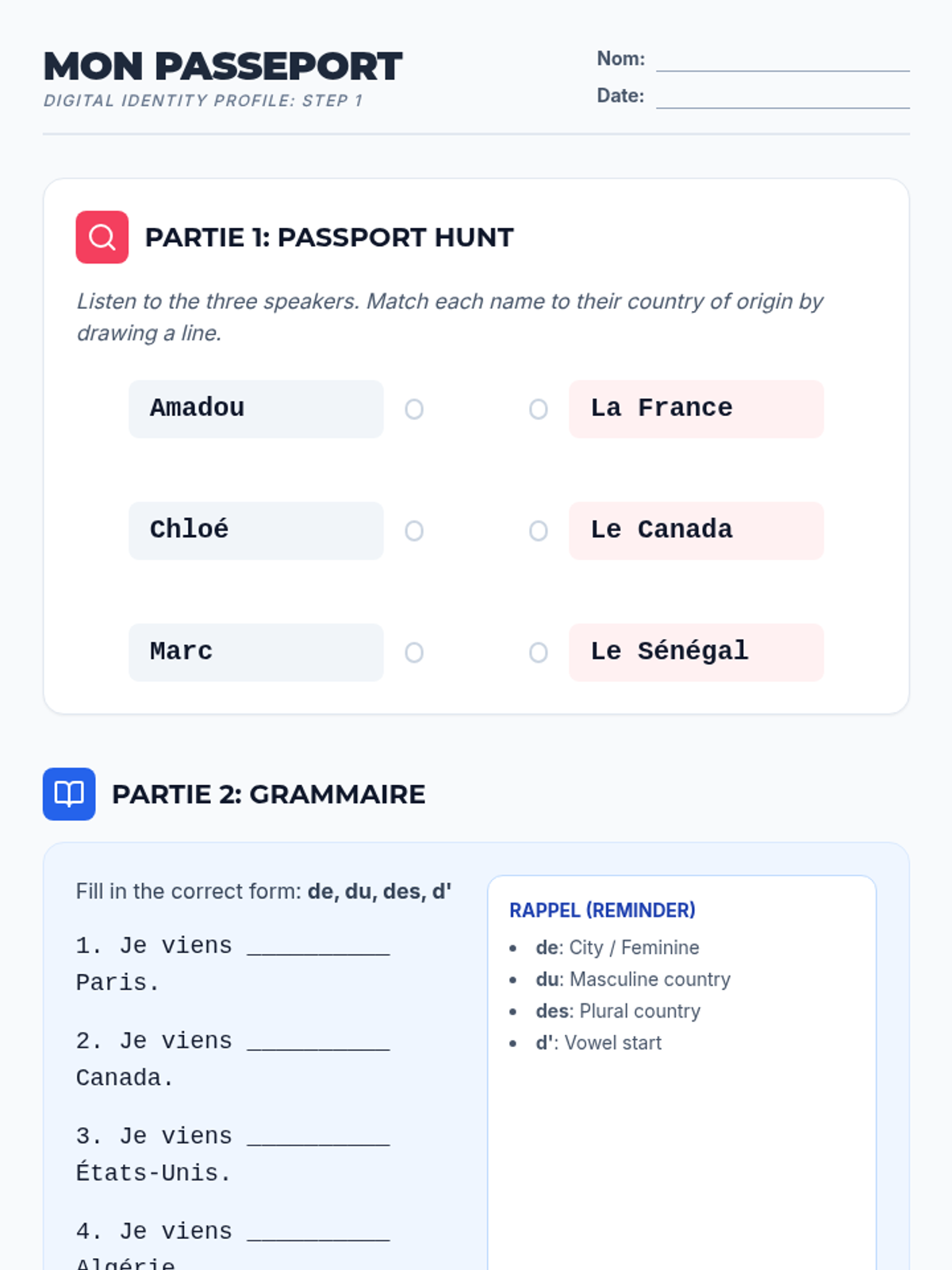
Students learn to introduce themselves using 'Je m'appelle' and state their origin using 'Je viens de'. They explore Francophone geography and practice the phonetics of personal introductions.
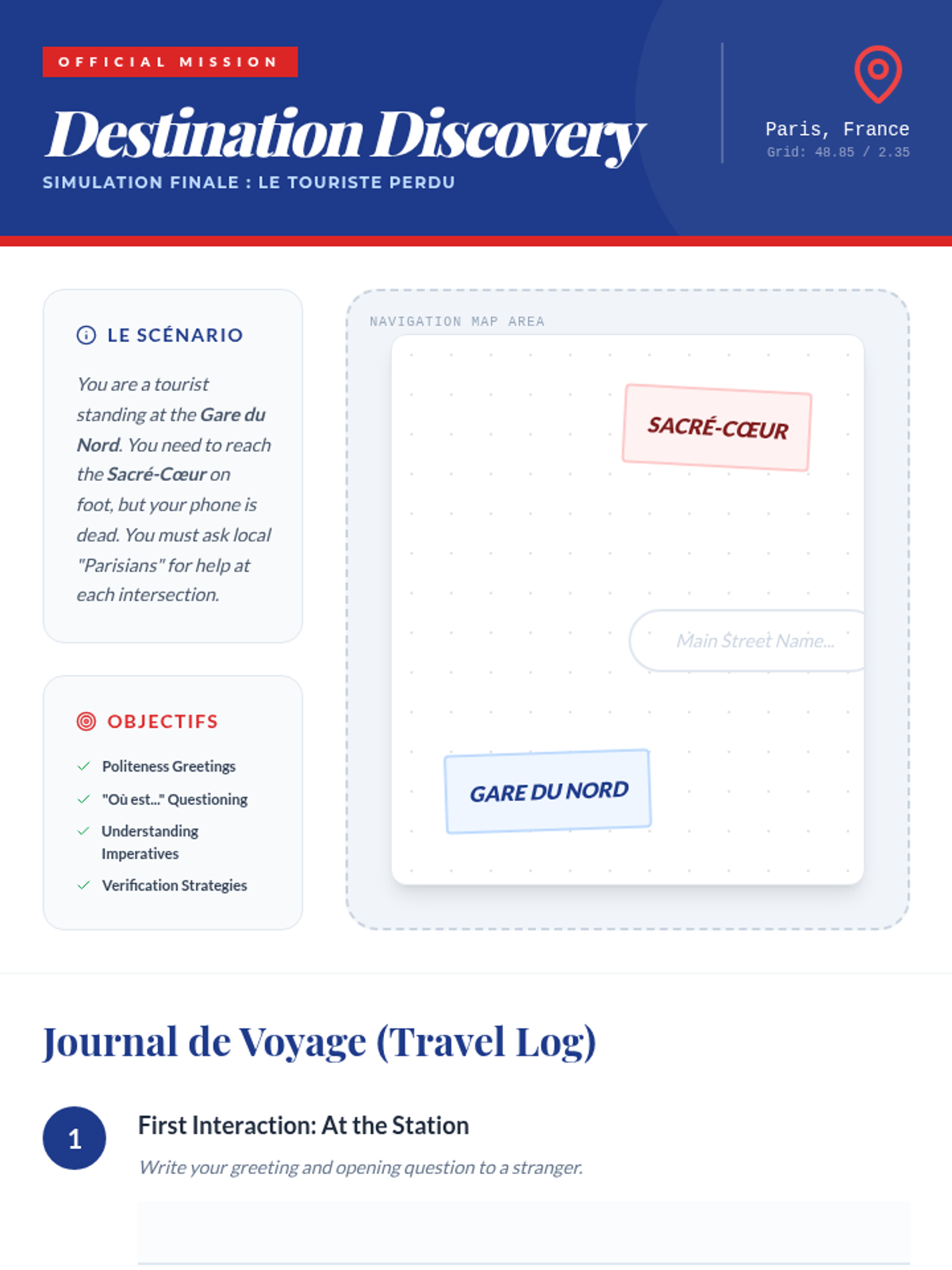
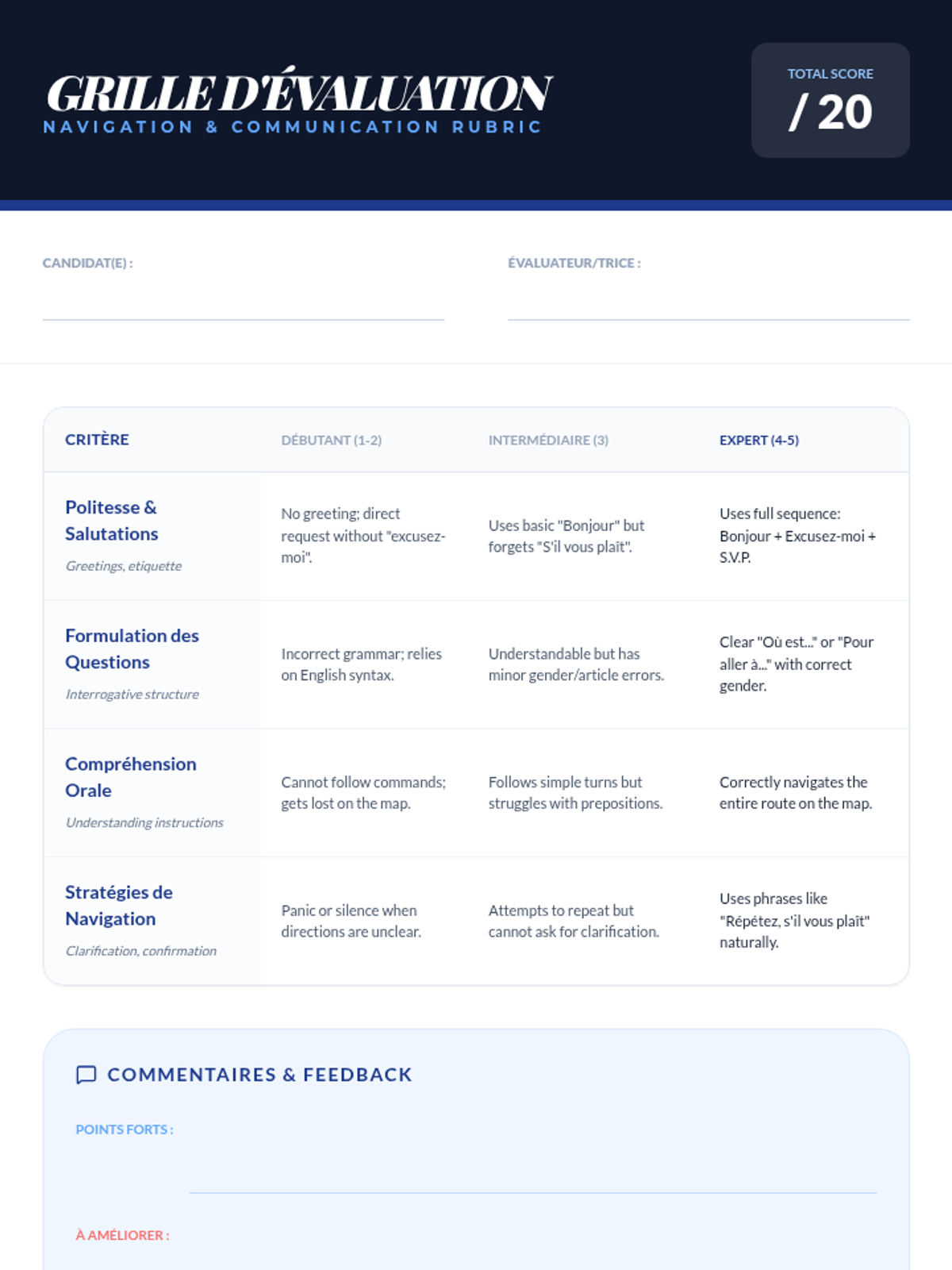
A summative simulation where students navigate a 'tourist' through a city by synthesizing questioning, listening, and giving directions. Includes a peer evaluation rubric.
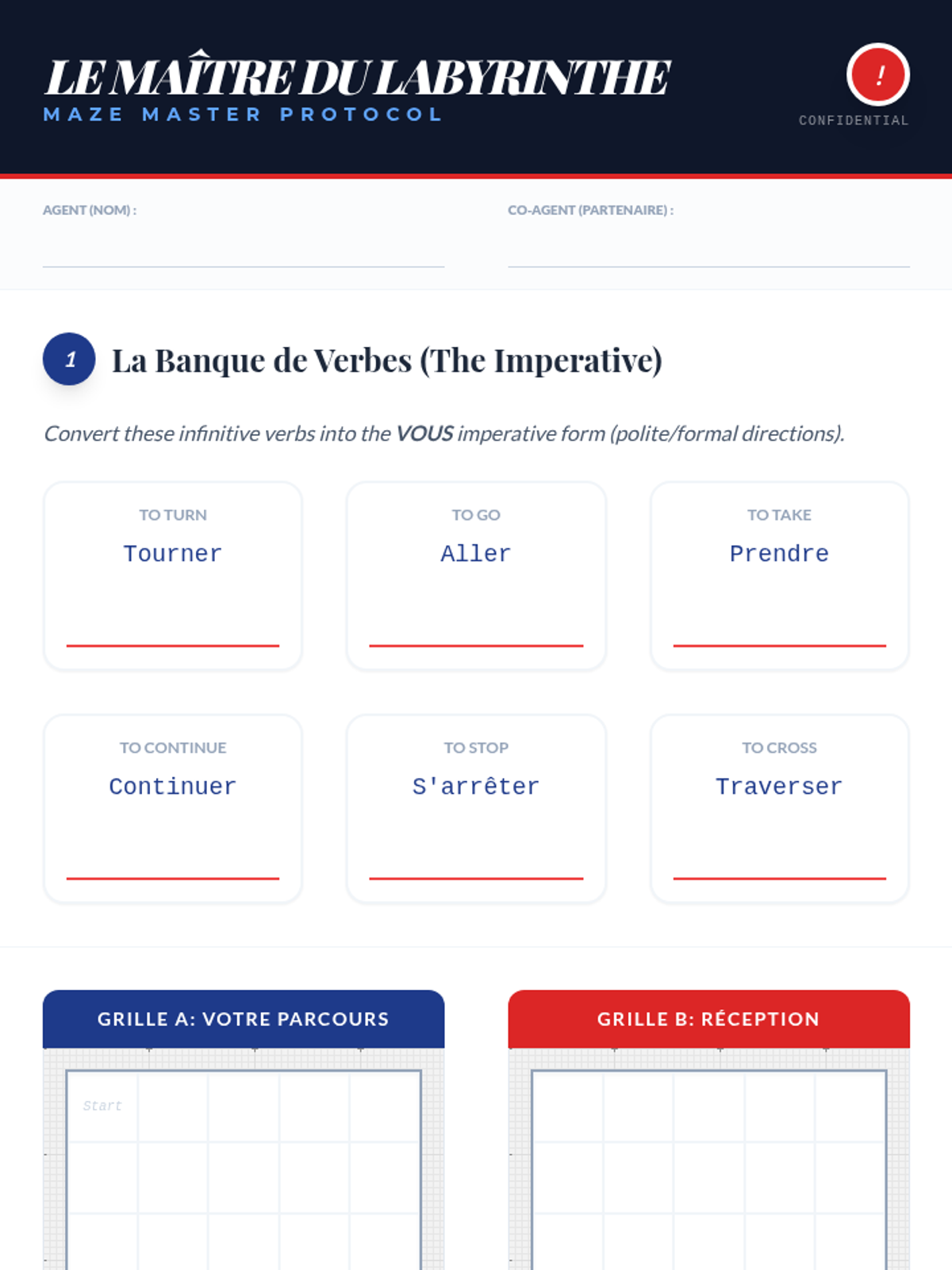
Students learn the imperative mood to give commands and directions. The lesson utilizes mazes and barrier games where students must guide each other using verbal instructions.