Comprehensive French language instruction spanning basic literacy to advanced oral and written communication. Strengthens grammar, vocabulary, and cultural understanding through targeted exercises in listening, reading, and composition.
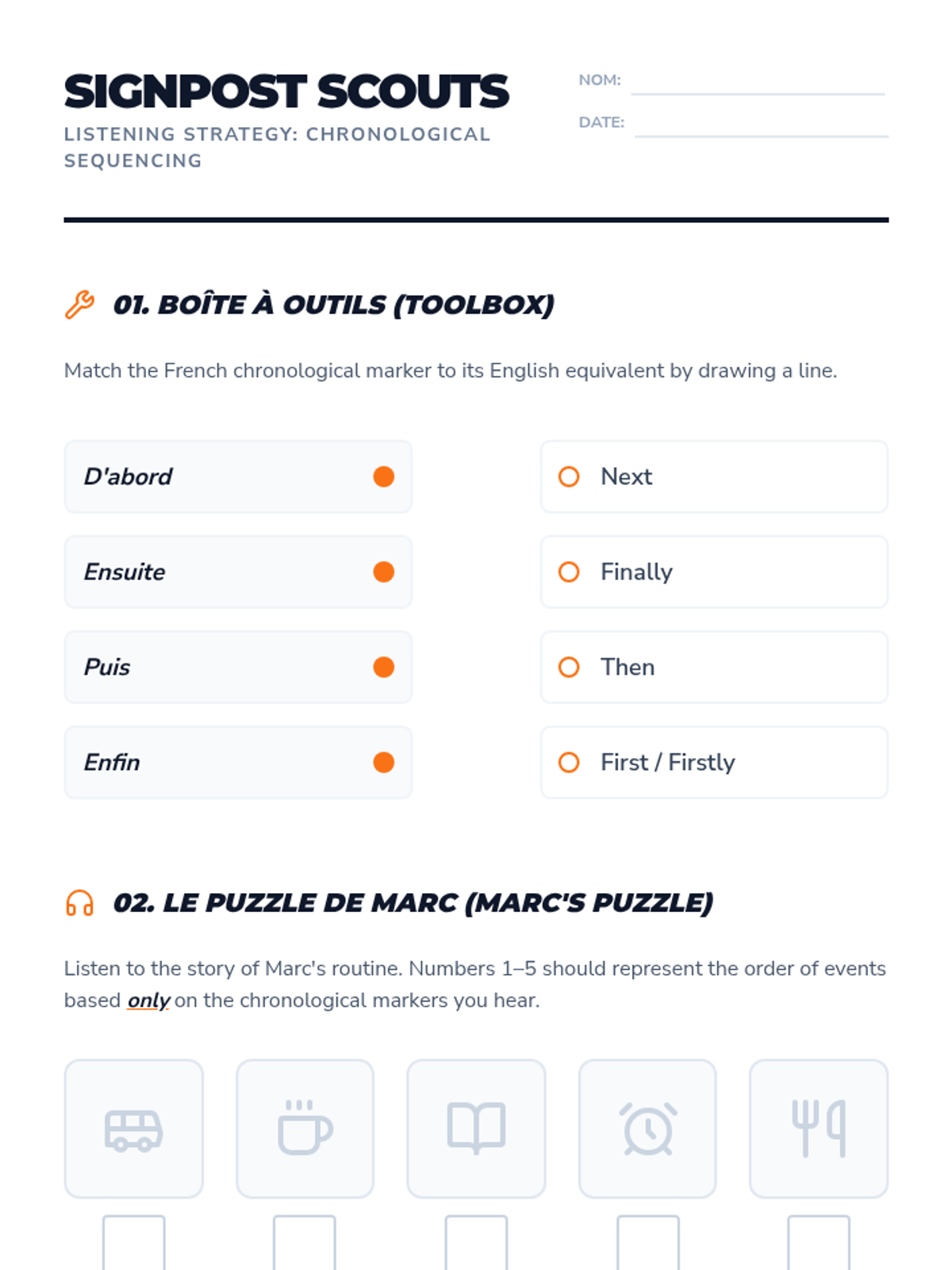
A project-based sequence for beginner French students focused on decoding media through narrative structures, logical connectors, and 'gist' listening strategies. Students move from identifying chronological signposts to analyzing news segments, street interviews, and cultural advertisements, culminating in a media analysis project.
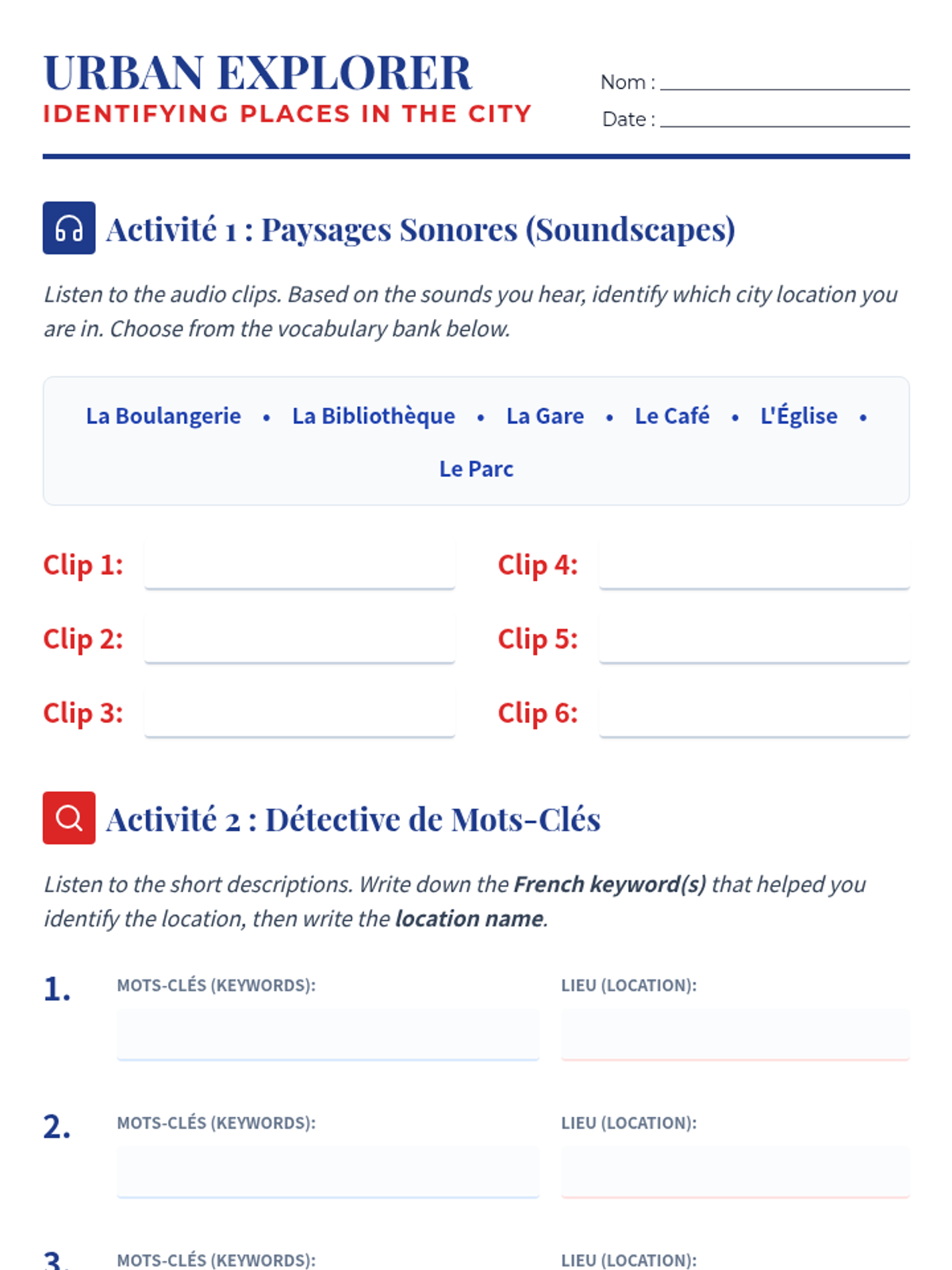
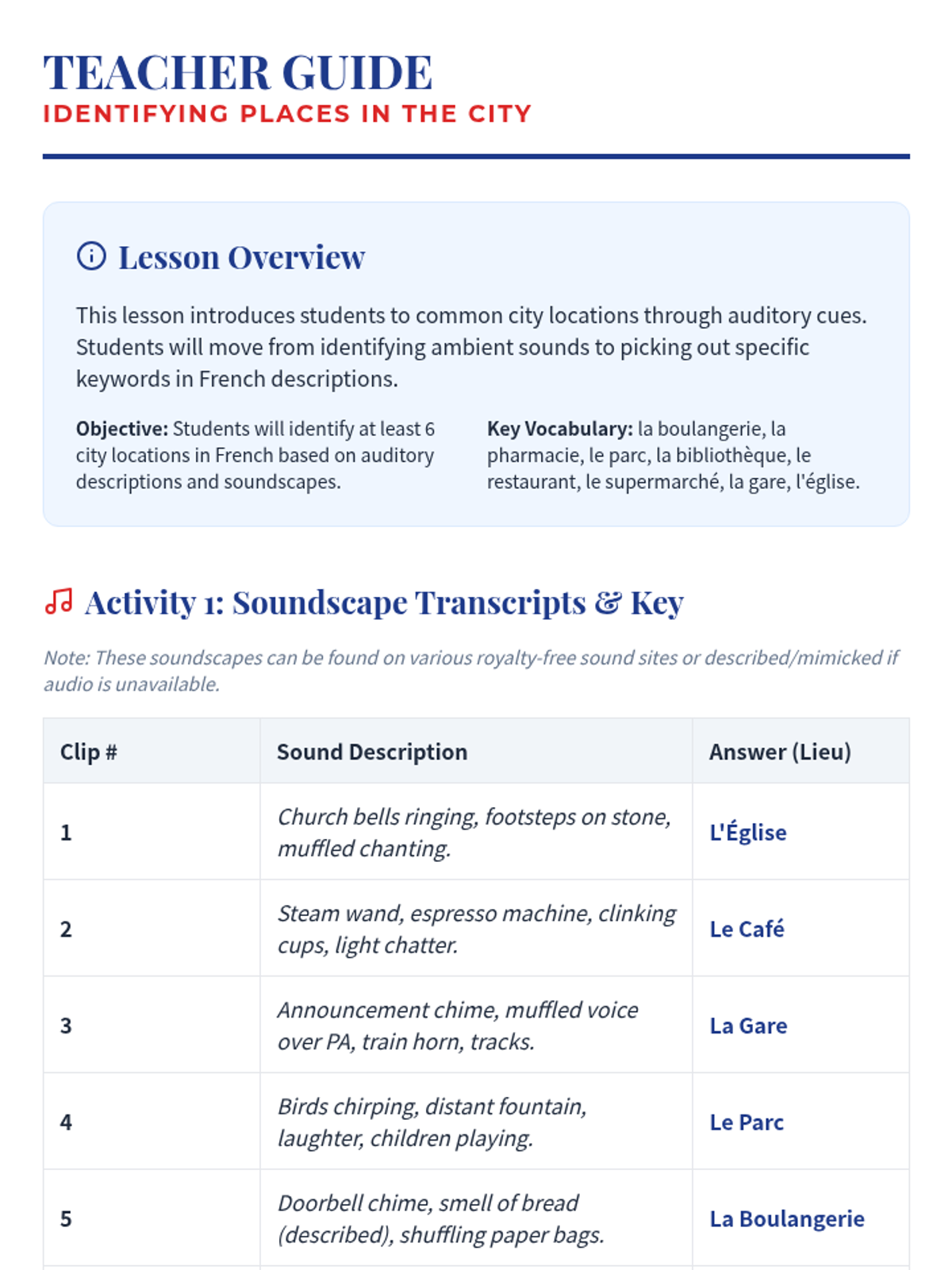
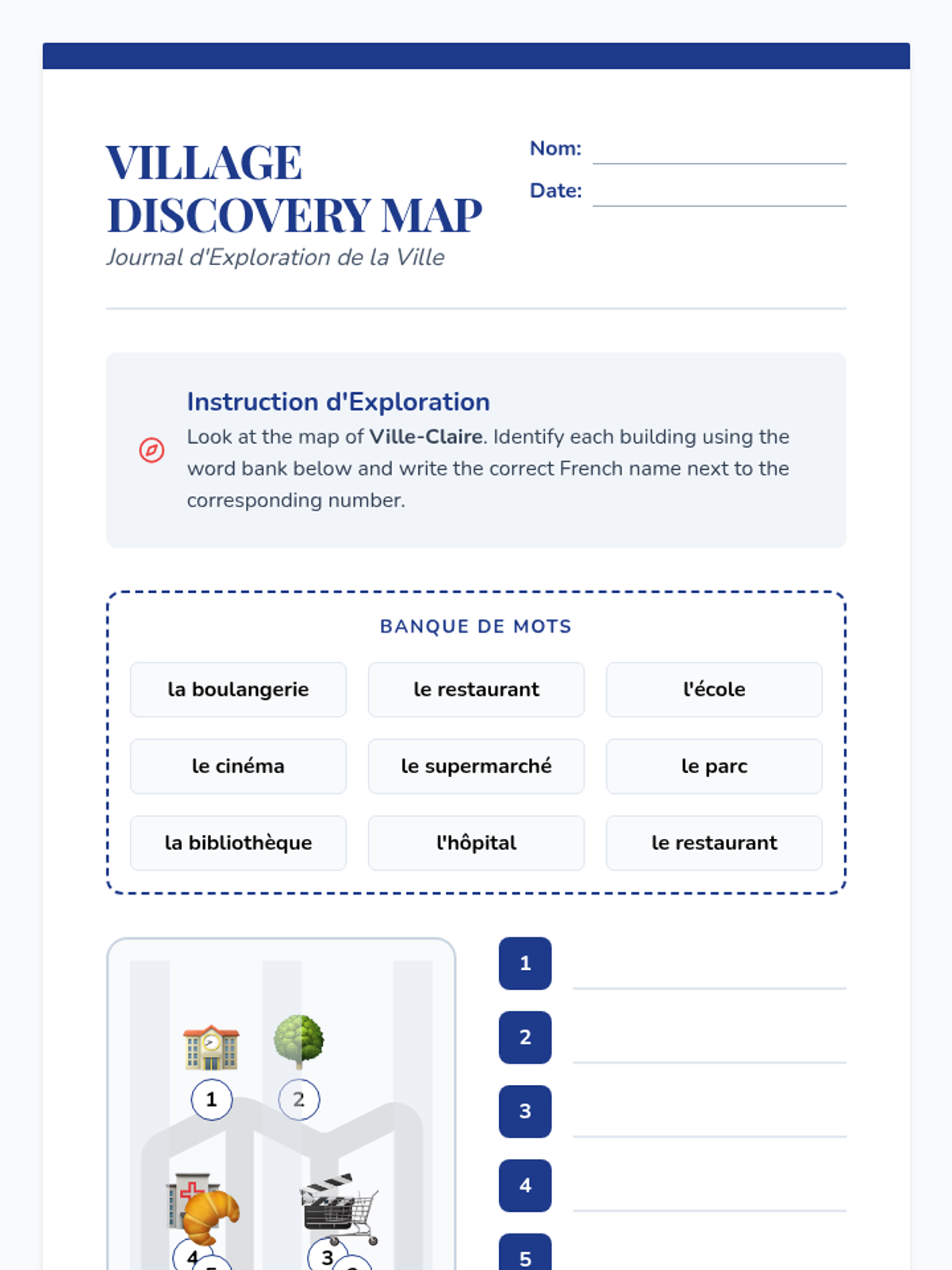
A project-based sequence for 8th-grade French students focused on listening skills for navigating a city, following directions, and conducting commercial transactions. Students progress from identifying places to synthesizing complex instructions in a final scavenger hunt.
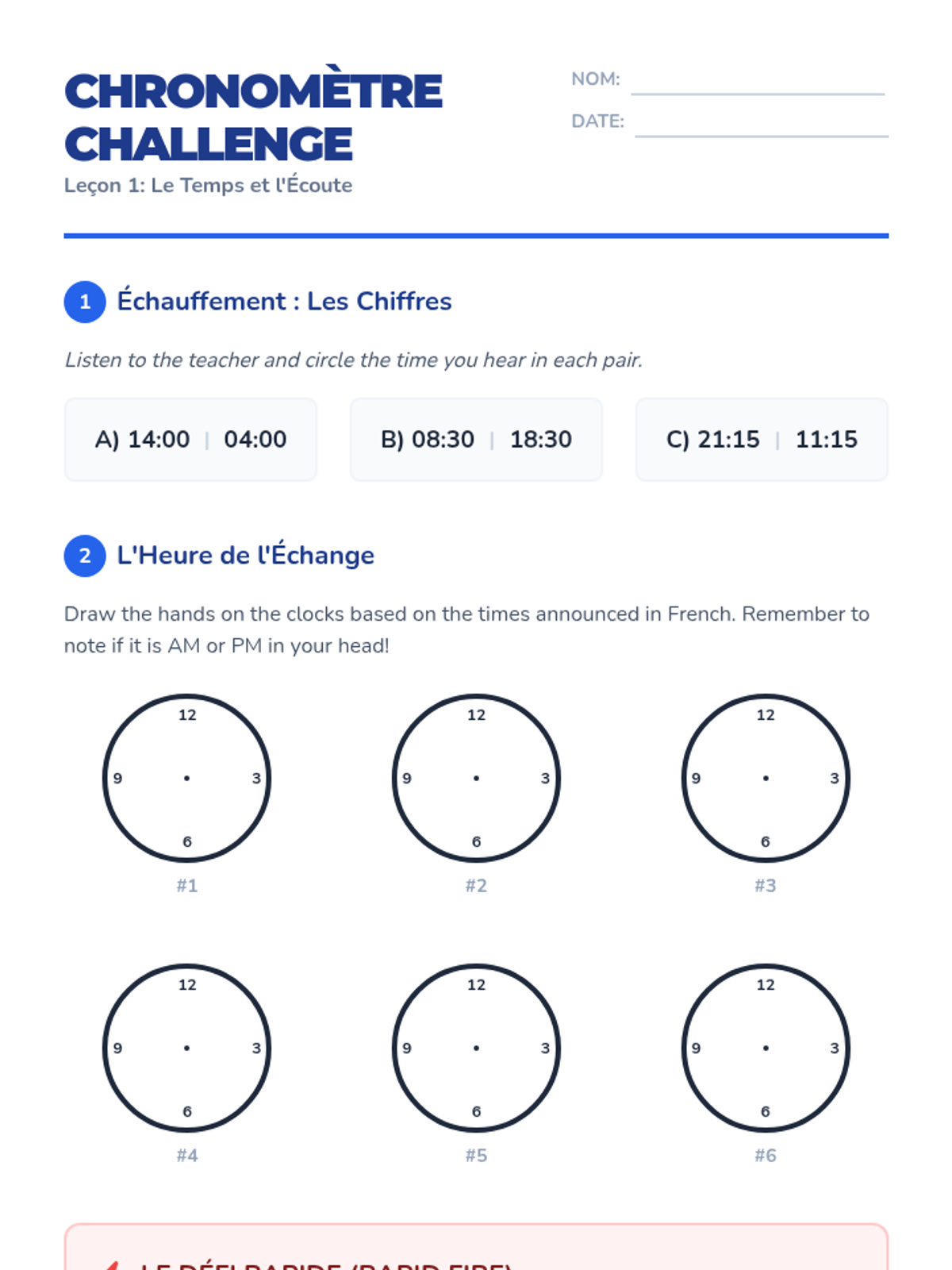
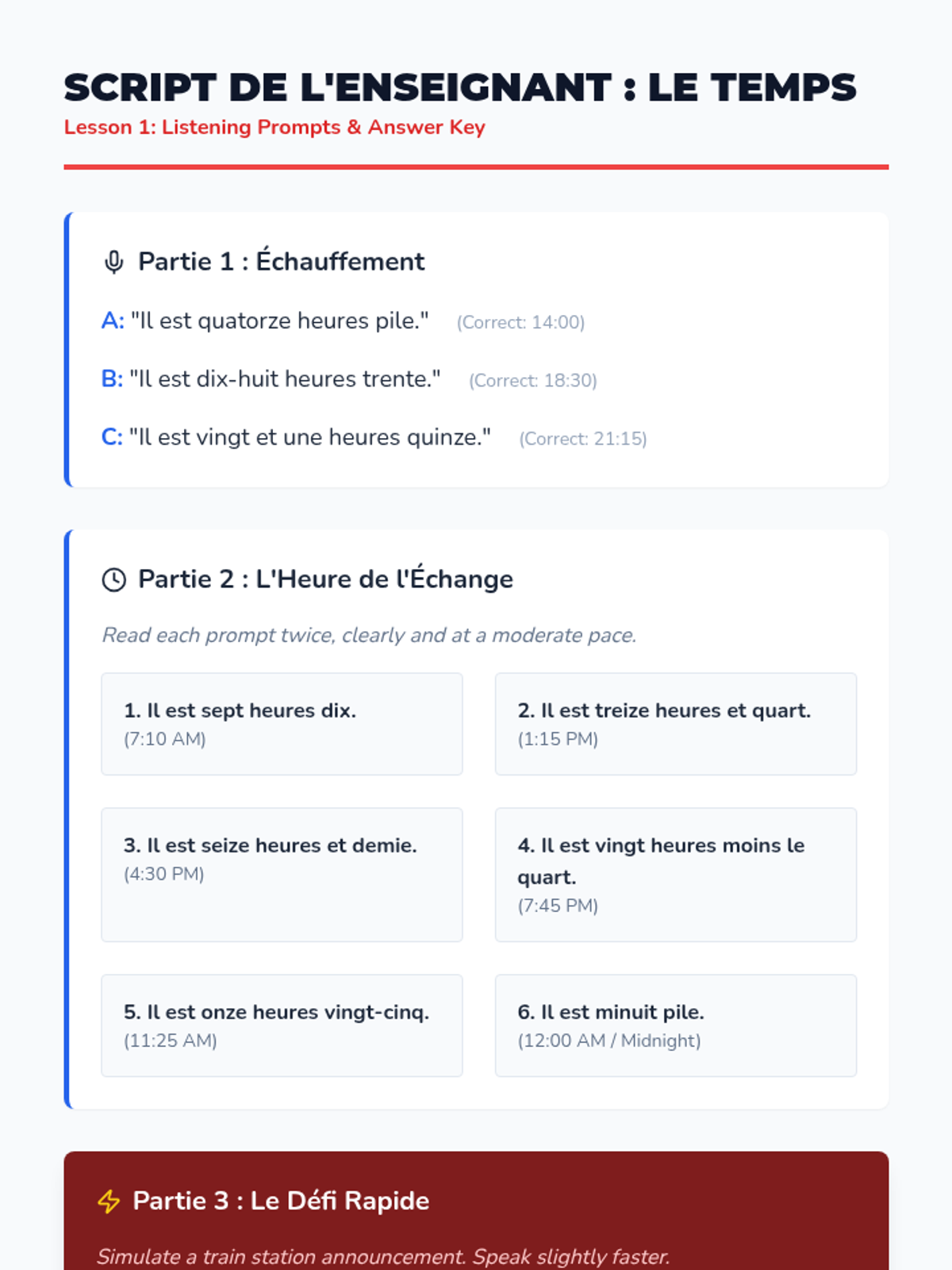
A comprehensive 8th-grade French listening sequence focused on time-telling, school schedules, and daily routines using the 24-hour clock and school-themed vocabulary.
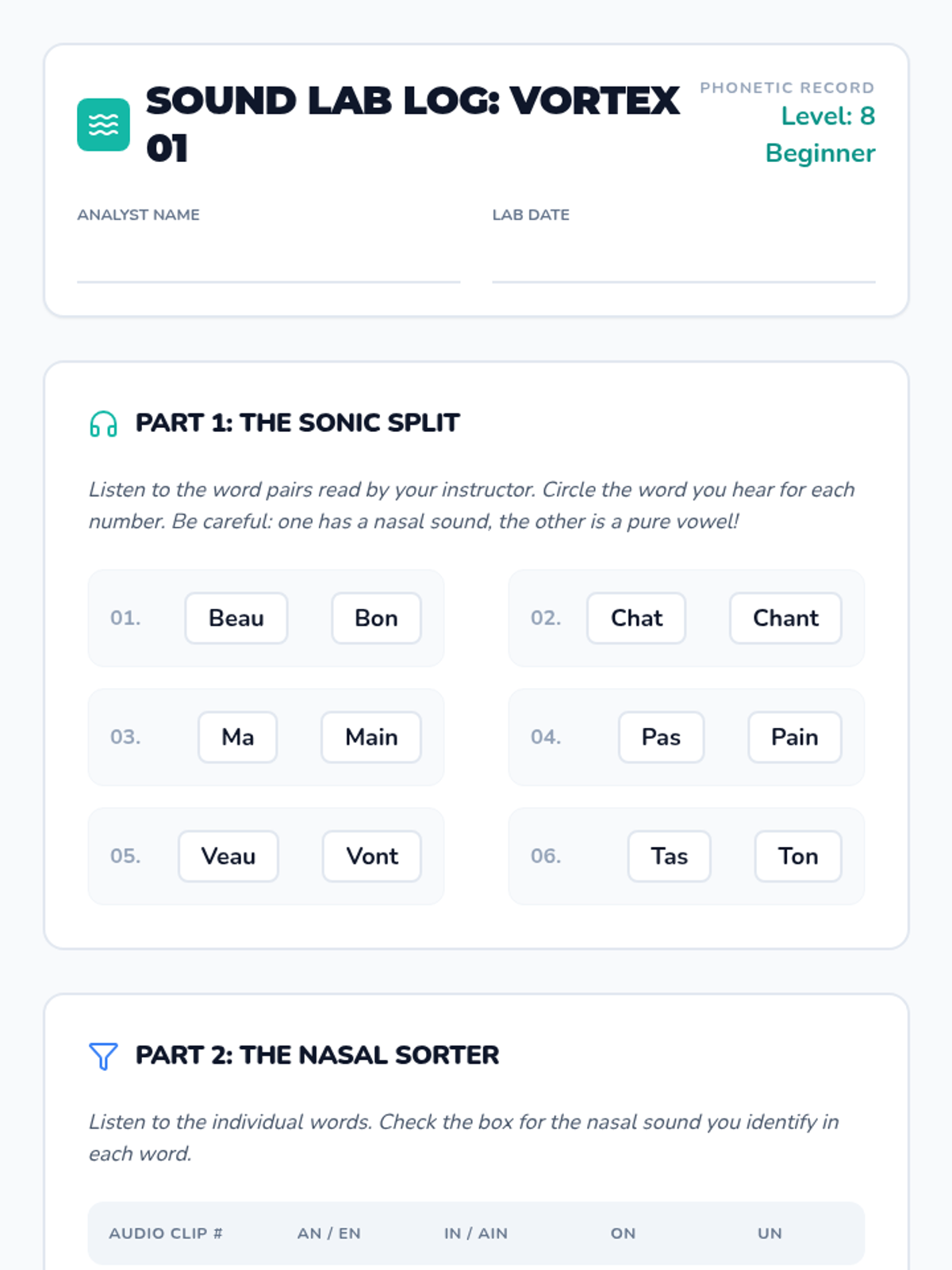
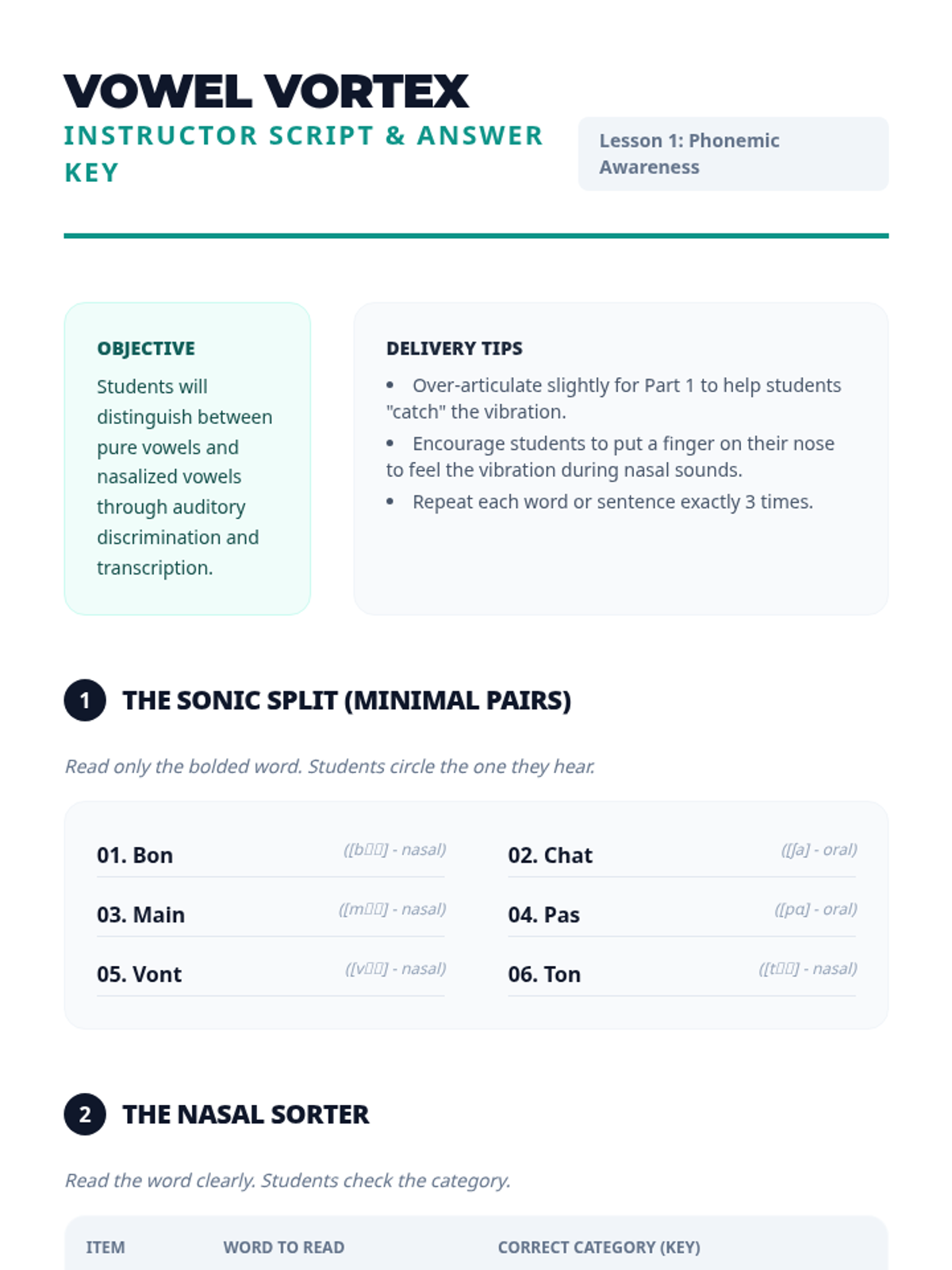
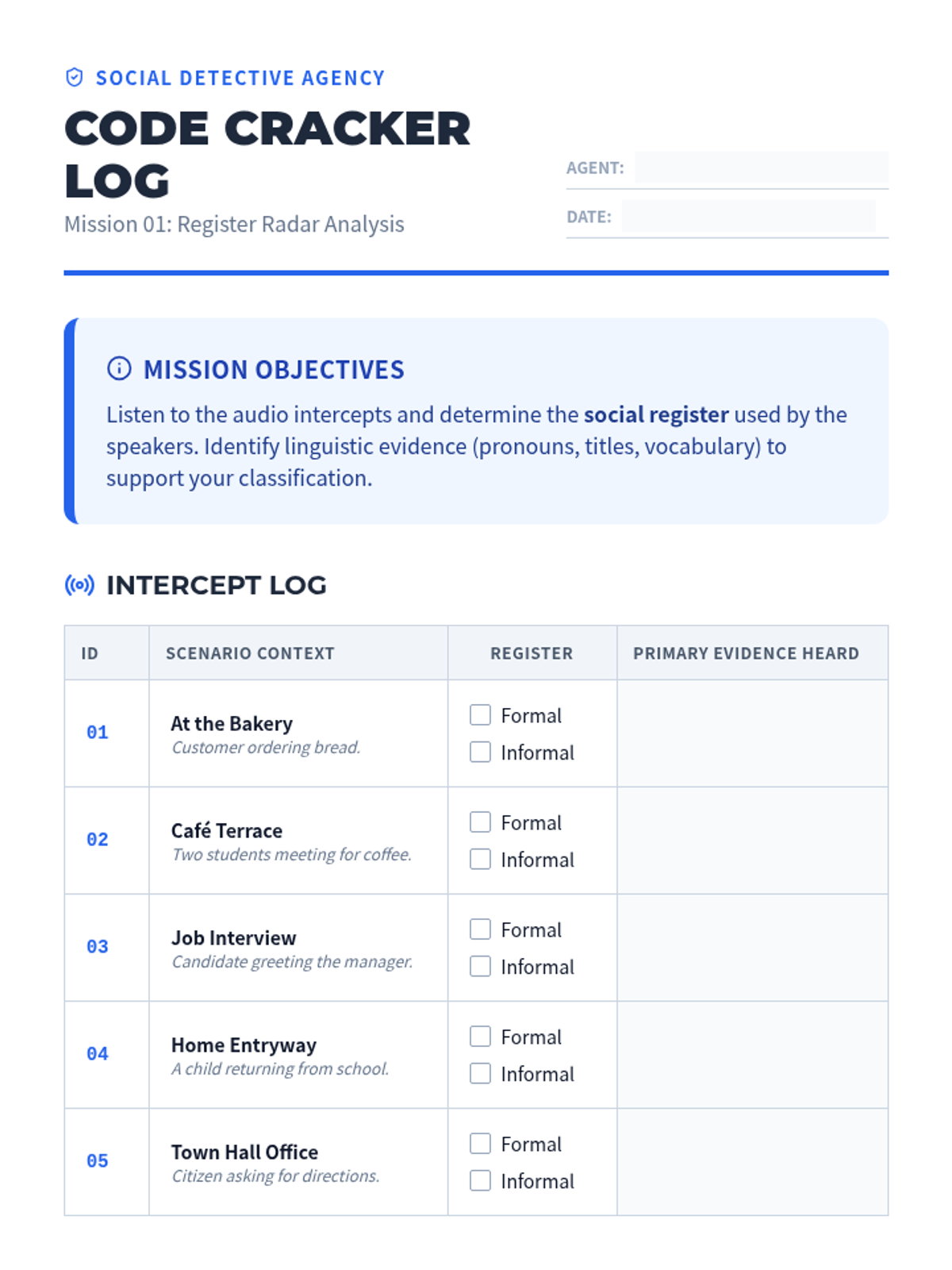
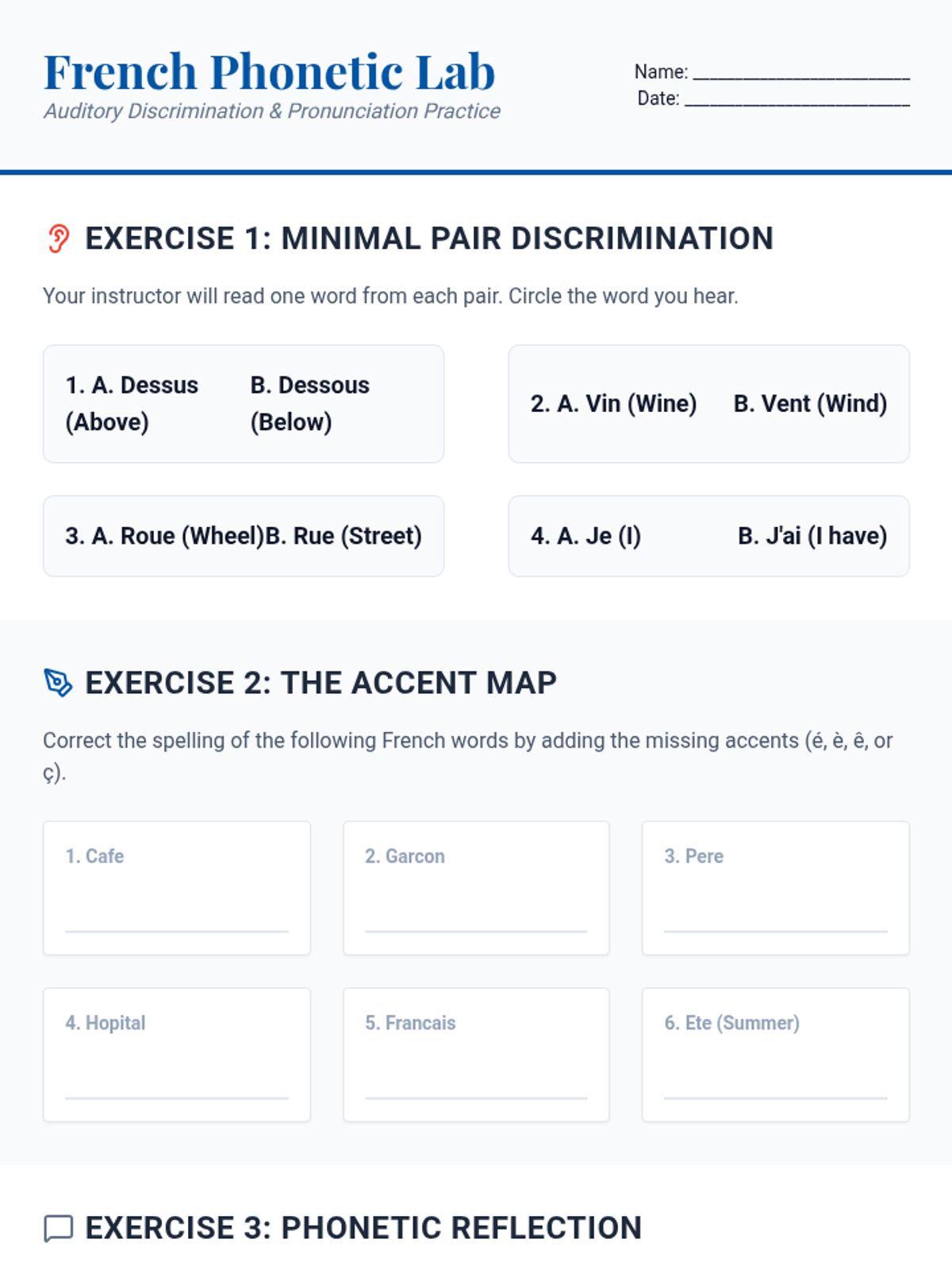
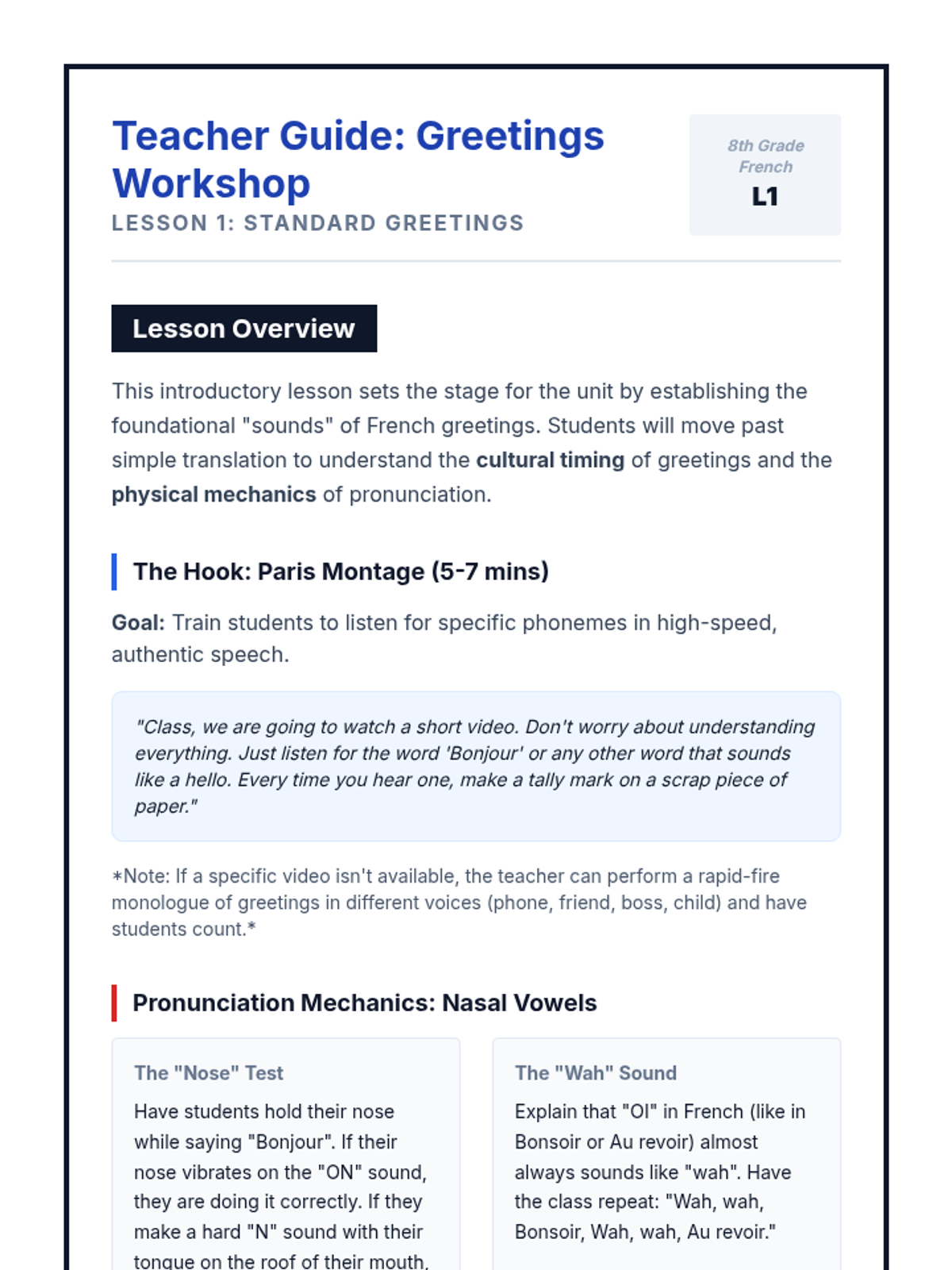
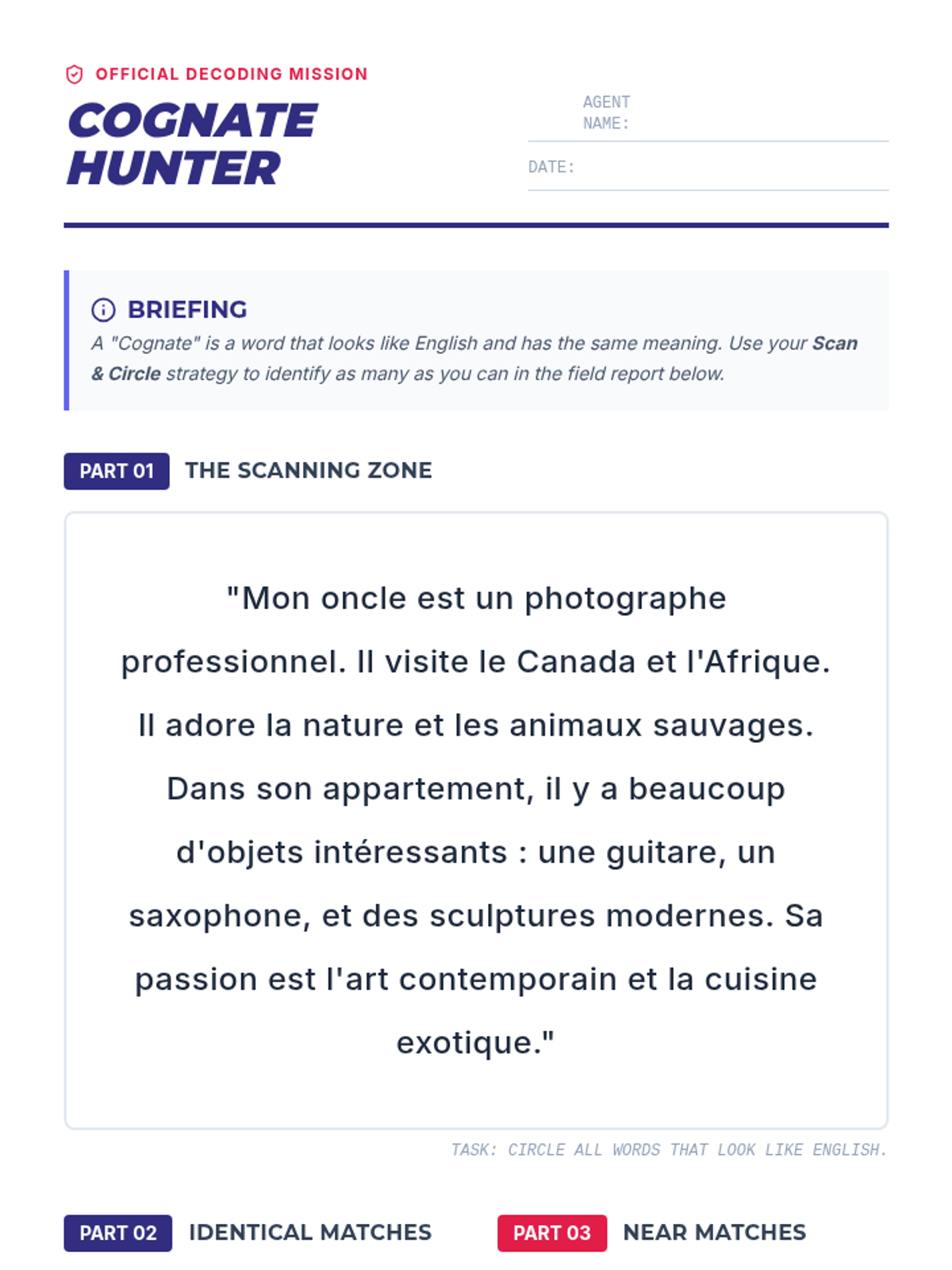
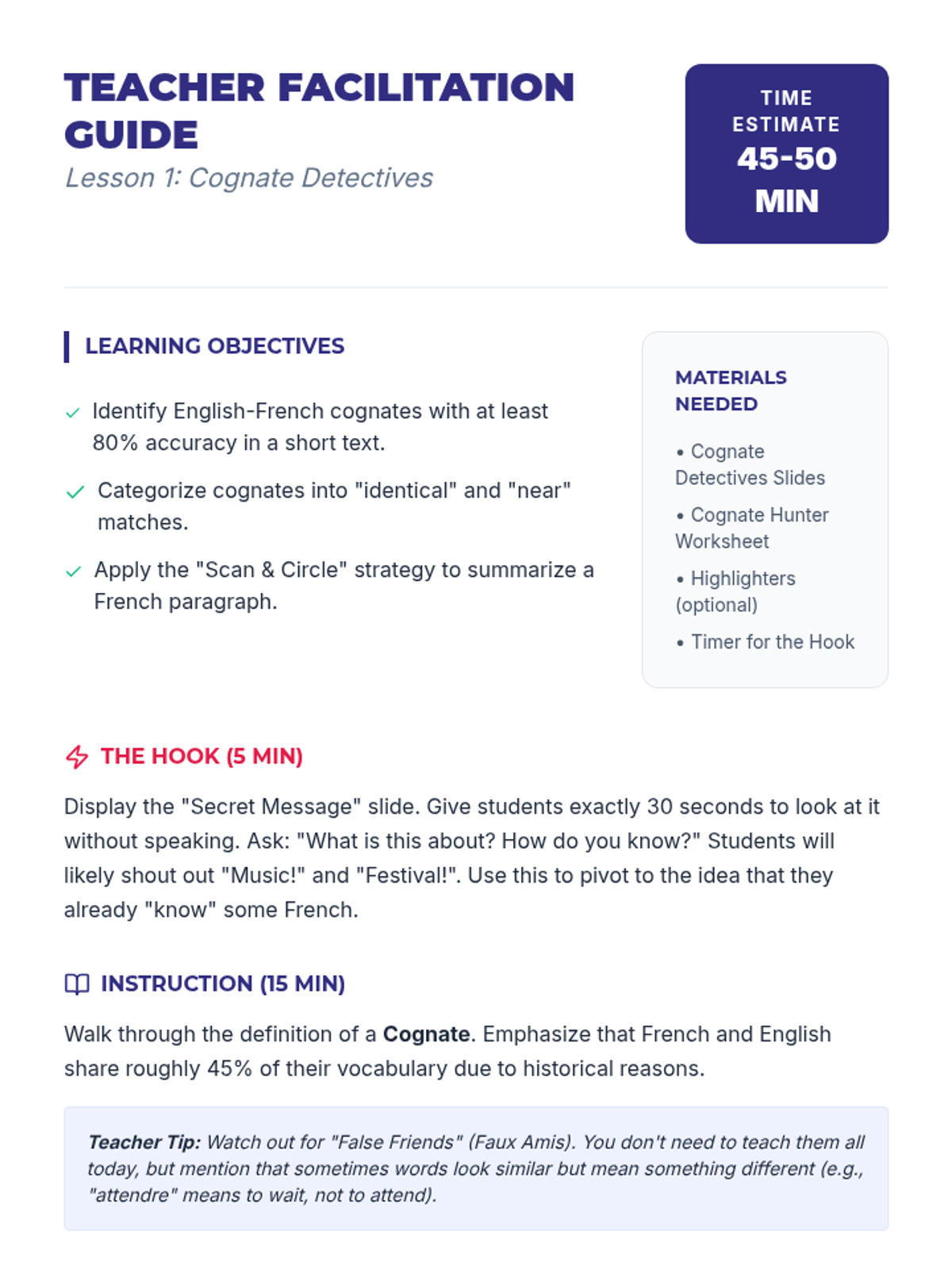
This sequence introduces 8th-grade students to the foundational auditory skills required for French proficiency. Students progress from isolating specific phonemes and nasals to recognizing cognates, distinguishing formal and informal registers, and finally comprehending full personal introductions.
A beginner French listening sequence where students act as social observers, analyzing registers, personal details, family structures, and preferences through auditory scripts.
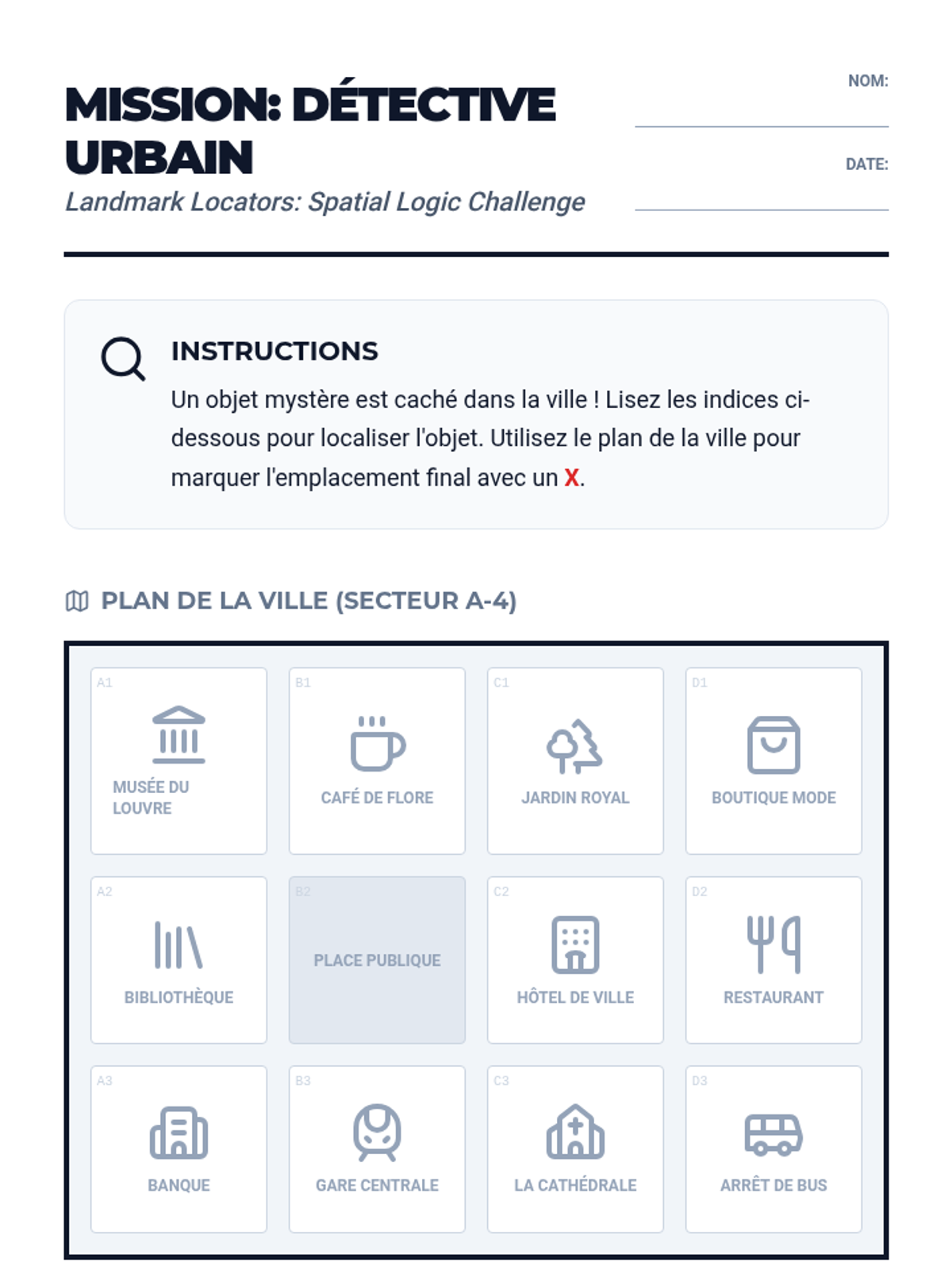
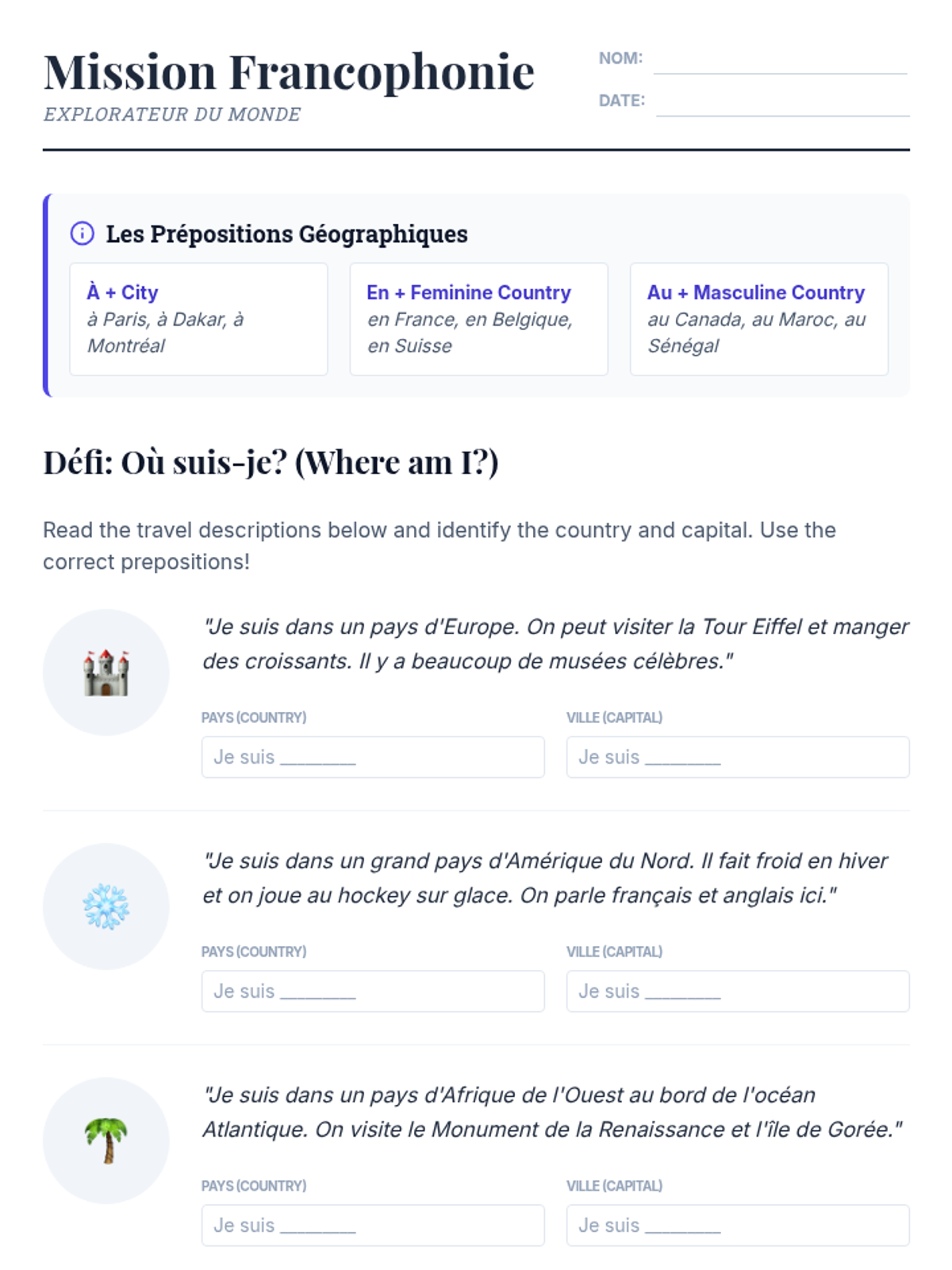
An inquiry-based exploration of French communities where students learn to identify landmarks, use spatial prepositions, and provide directions. Students develop practical communication skills while virtually navigating Francophone cities.
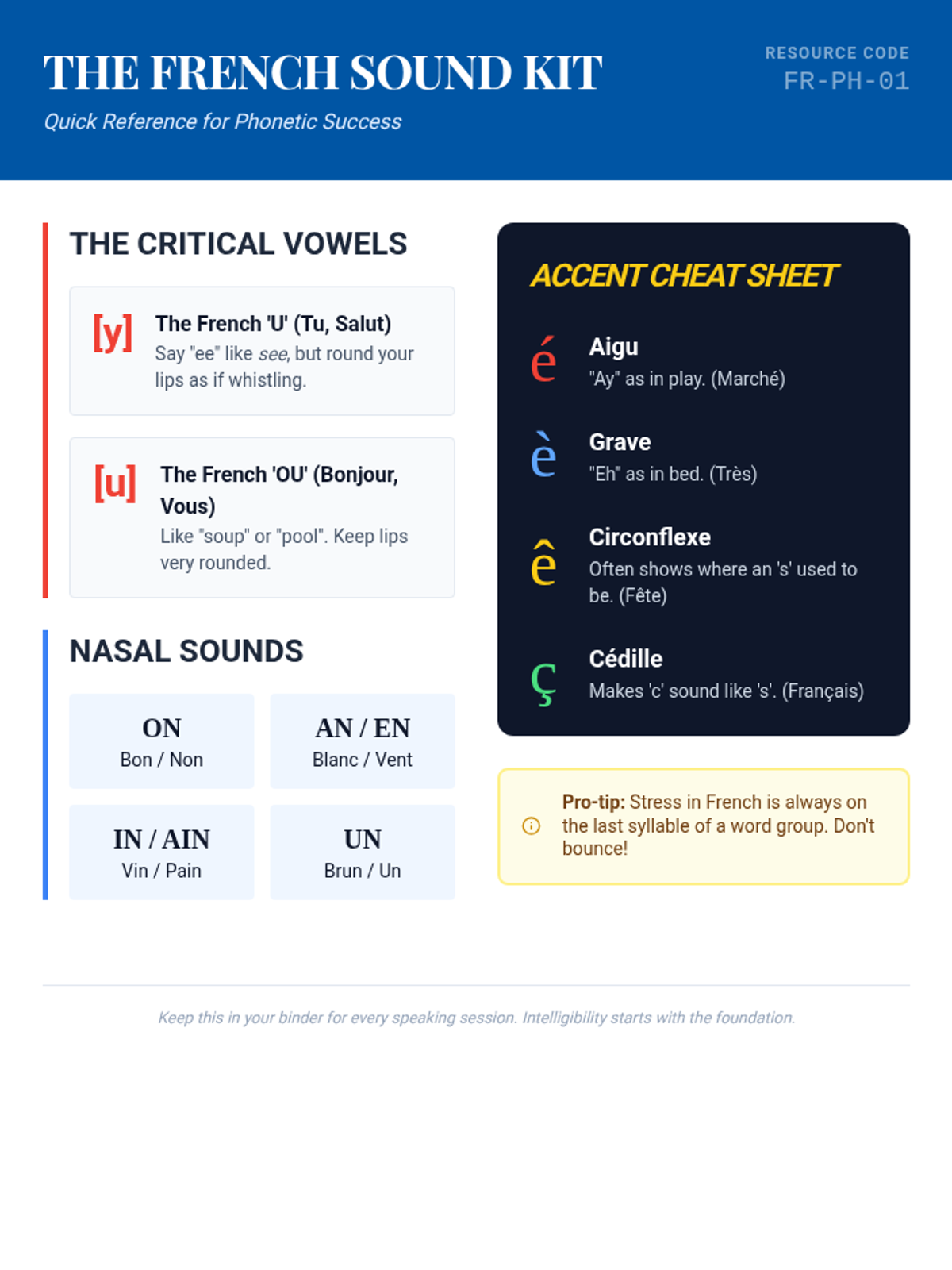
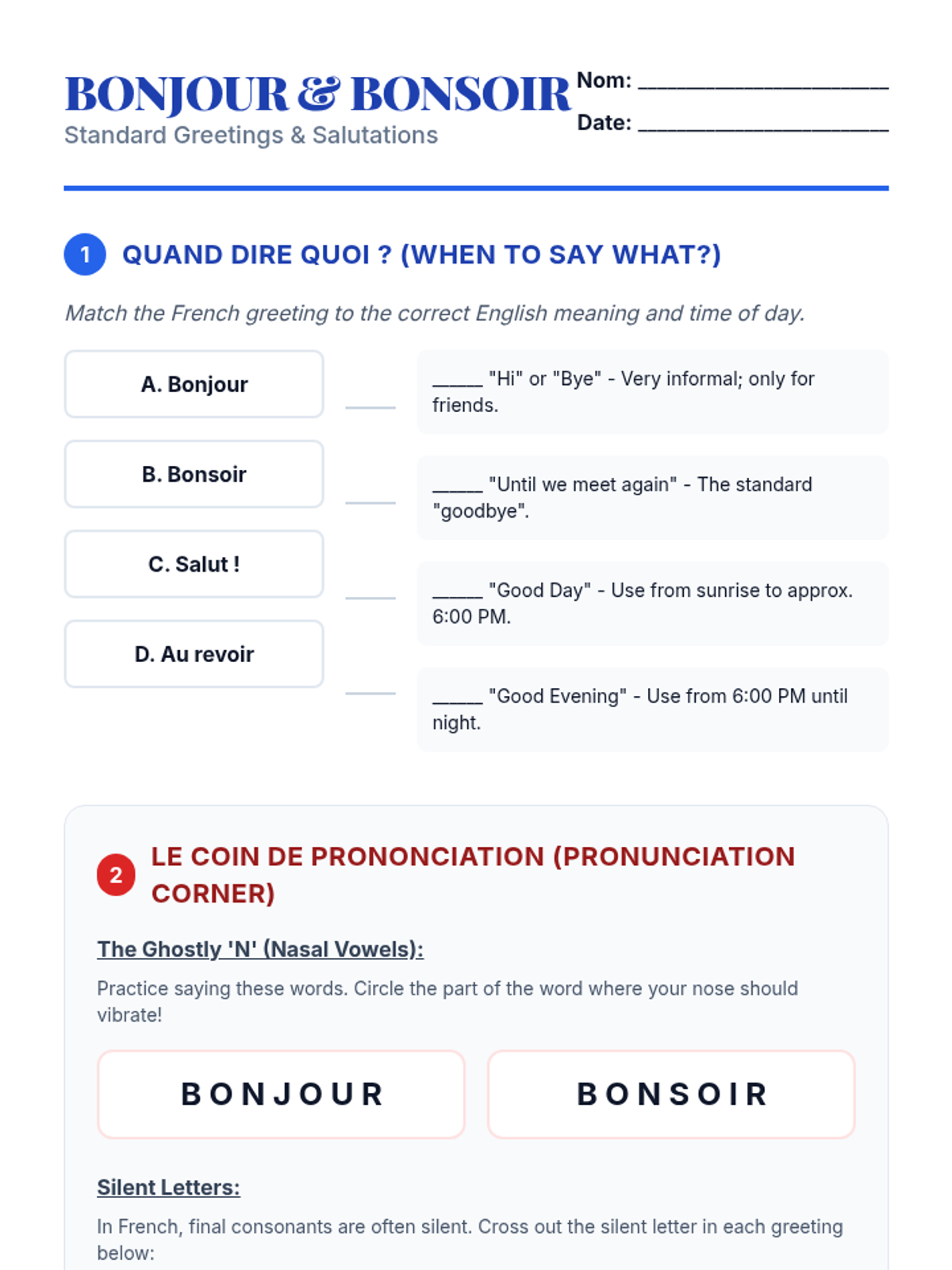
This sequence establishes the phonetic and sociolinguistic foundations for French communication. Students master pronunciation, navigate the formal/informal divide, and learn greeting protocols for professional and social settings.
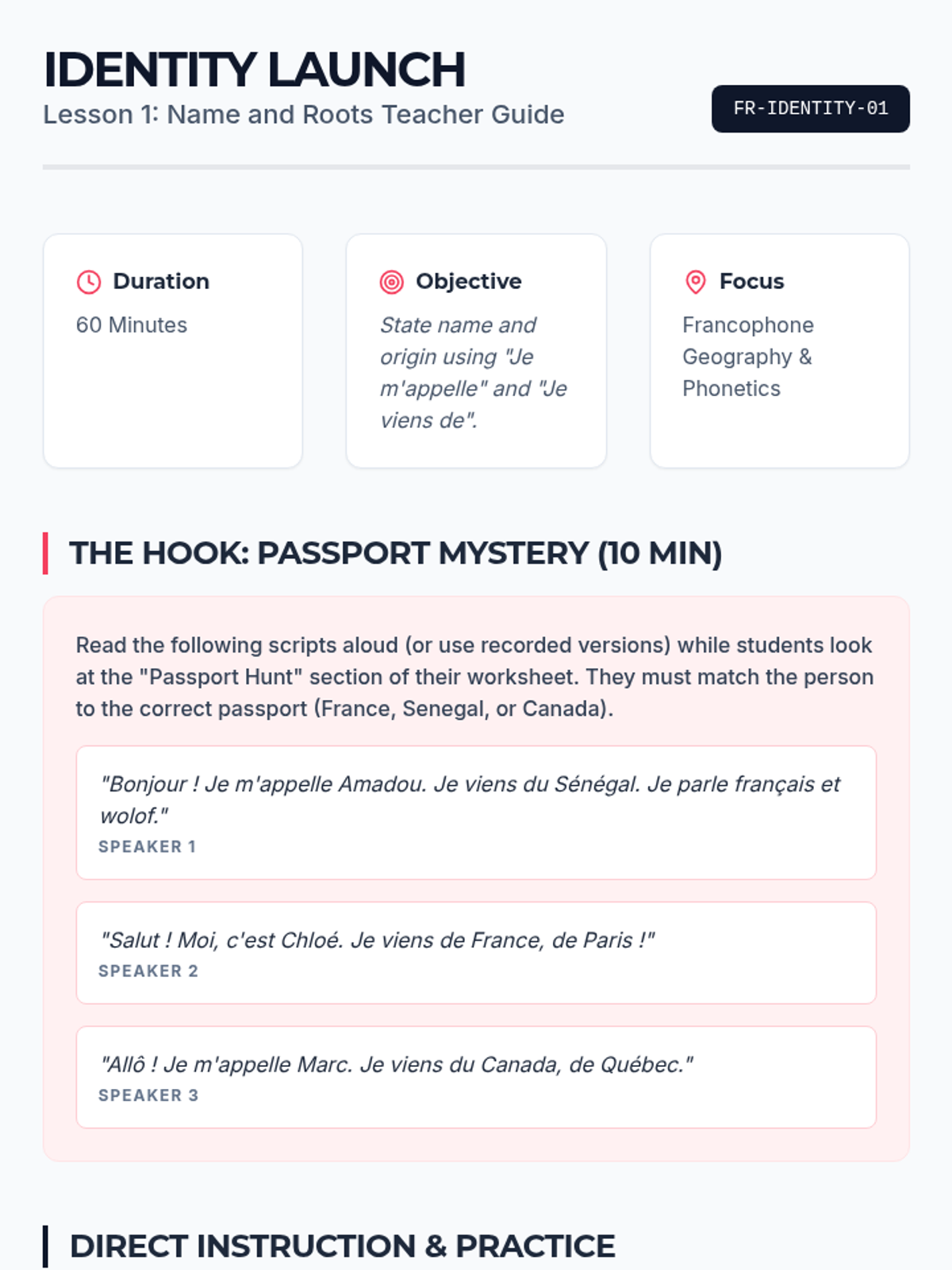
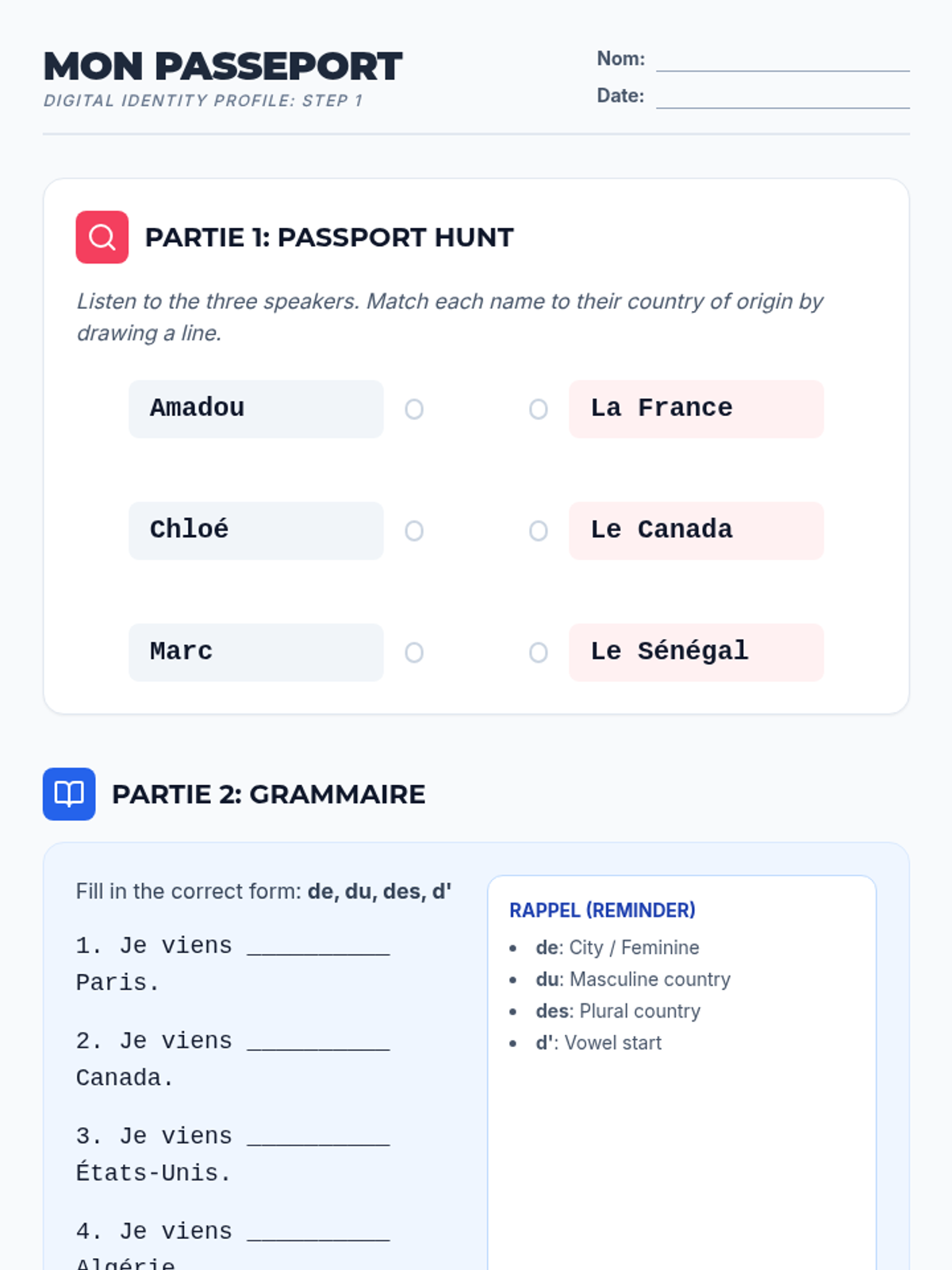
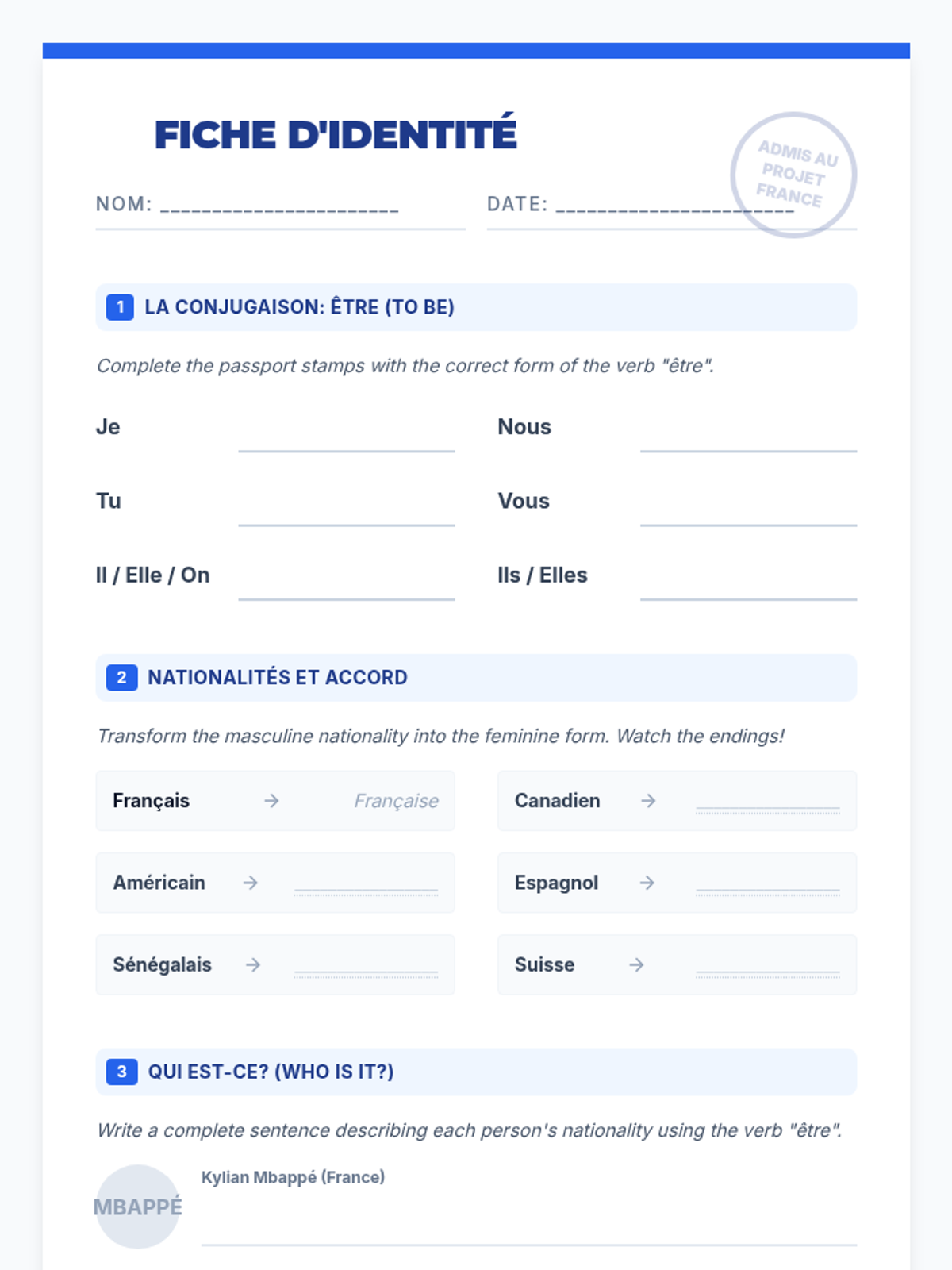
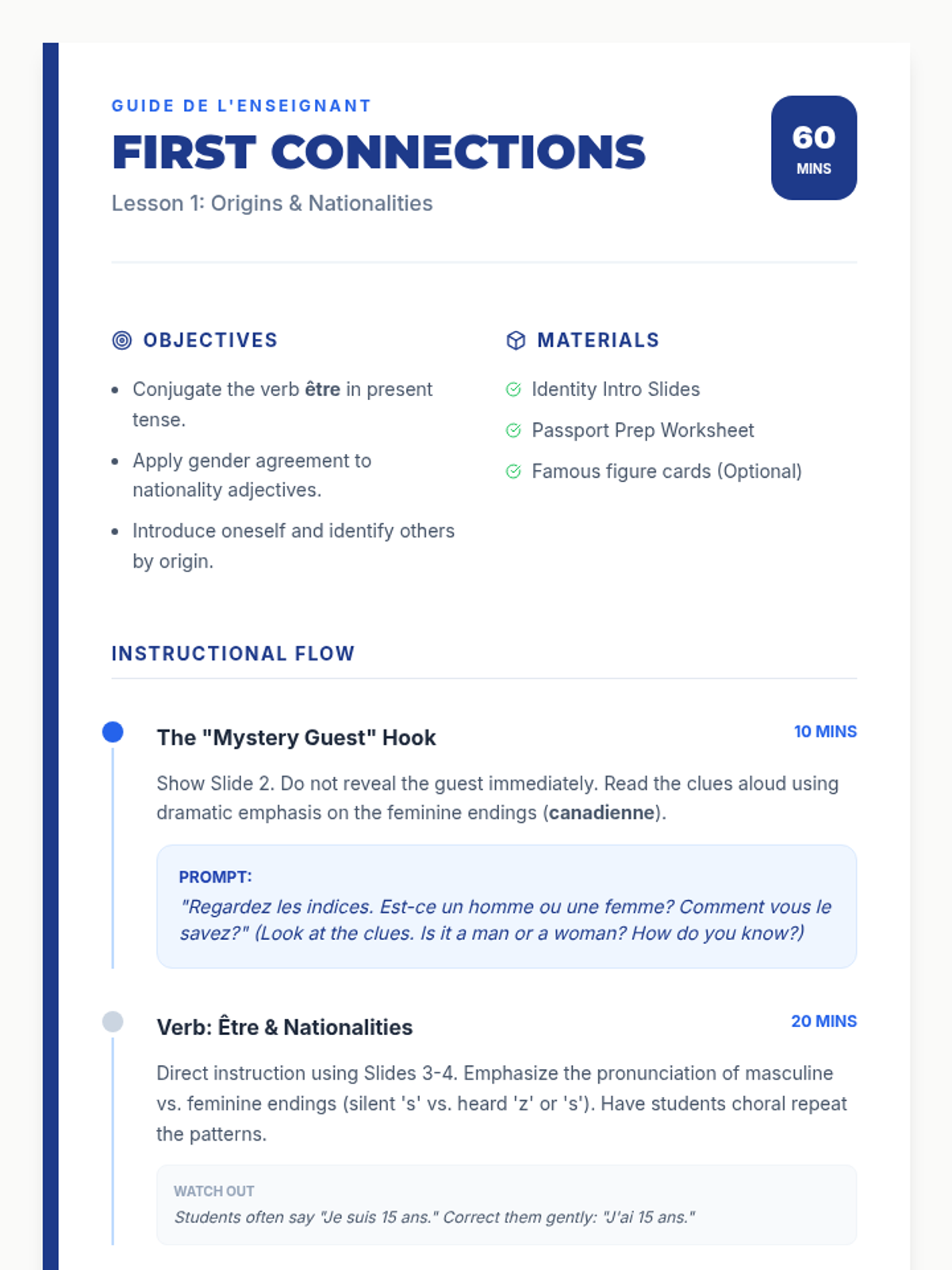
Students move from generic greetings to constructing a personal identity in French through a project-based approach. The sequence culminates in a 'Digital Identity Profile' suitable for a student exchange program, focusing on essential grammar like 'être' and 'avoir' in context.
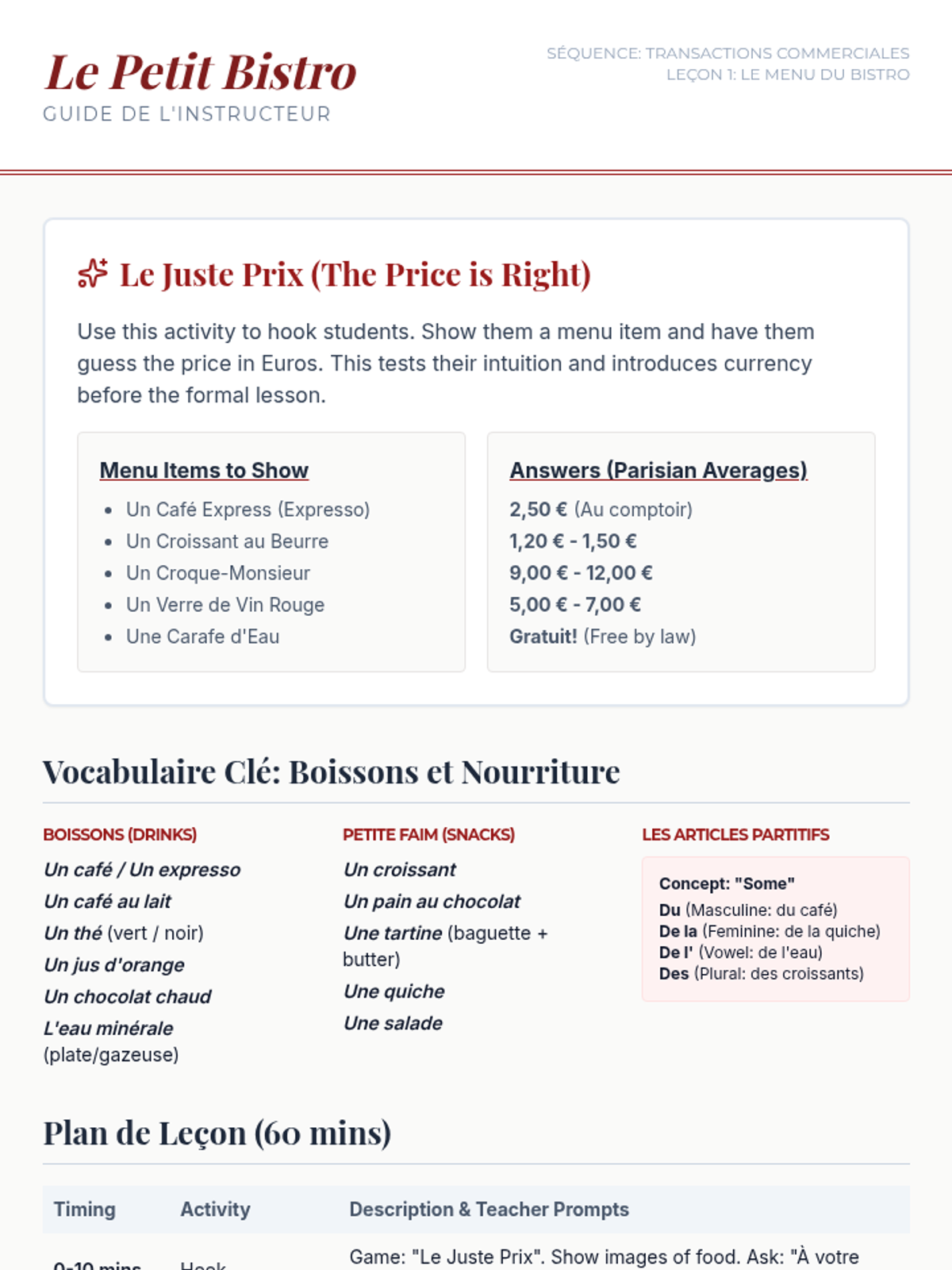
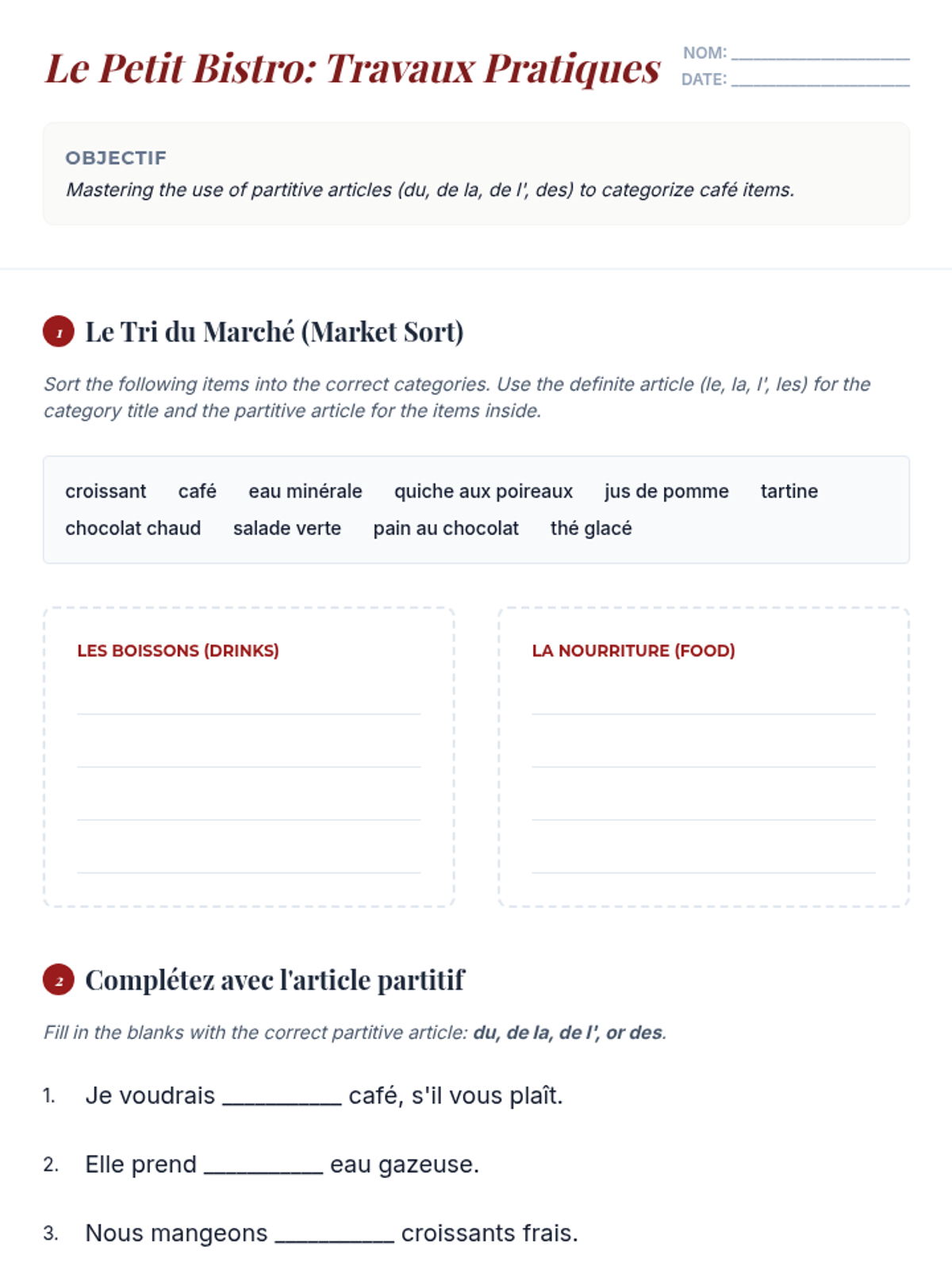
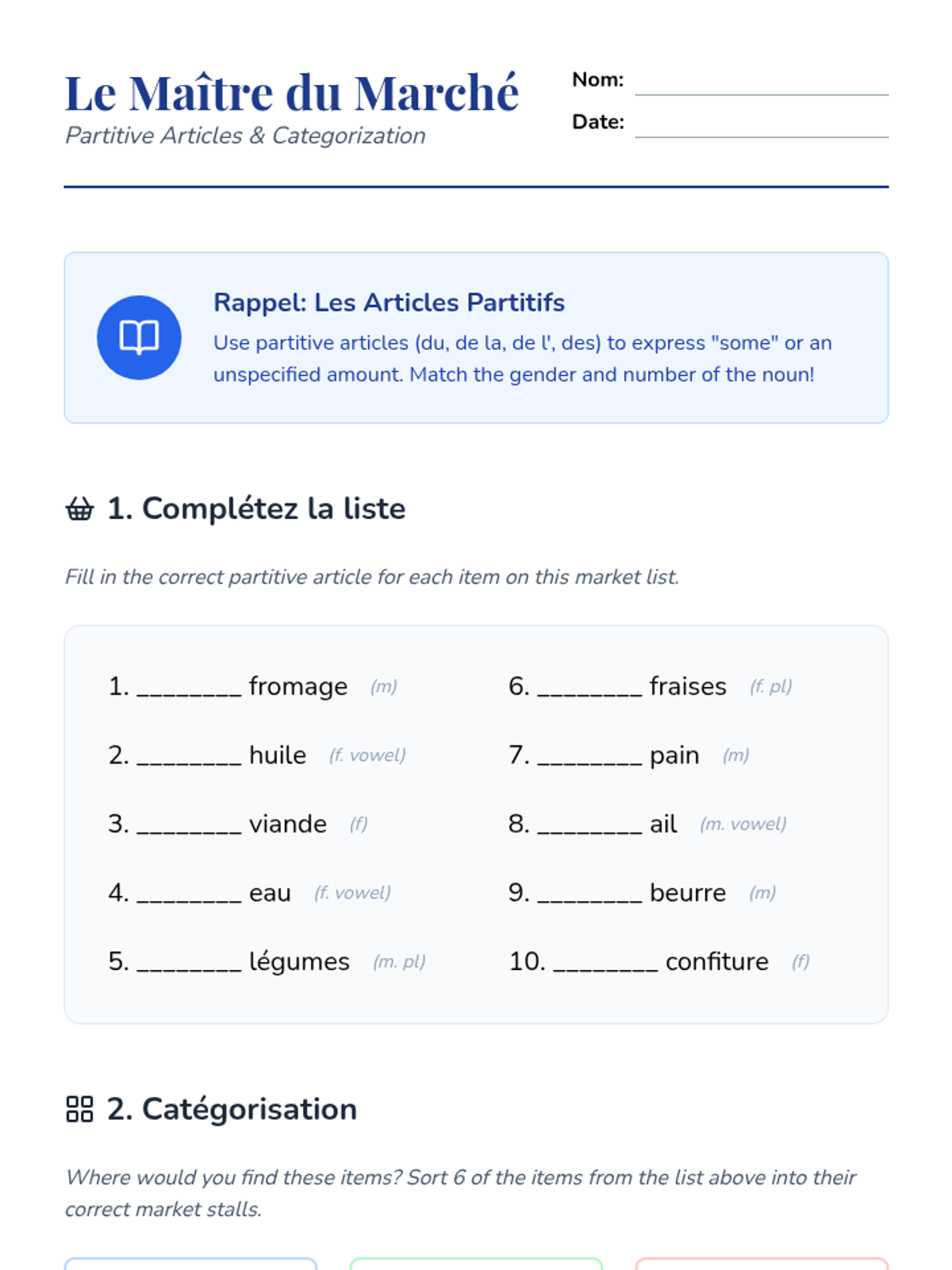
This sequence guides beginner French students through the pragmatic language of commerce, focusing on café and market interactions. Students progress from vocabulary and grammar basics to complex role-plays involving cultural politeness scripts and problem-solving.
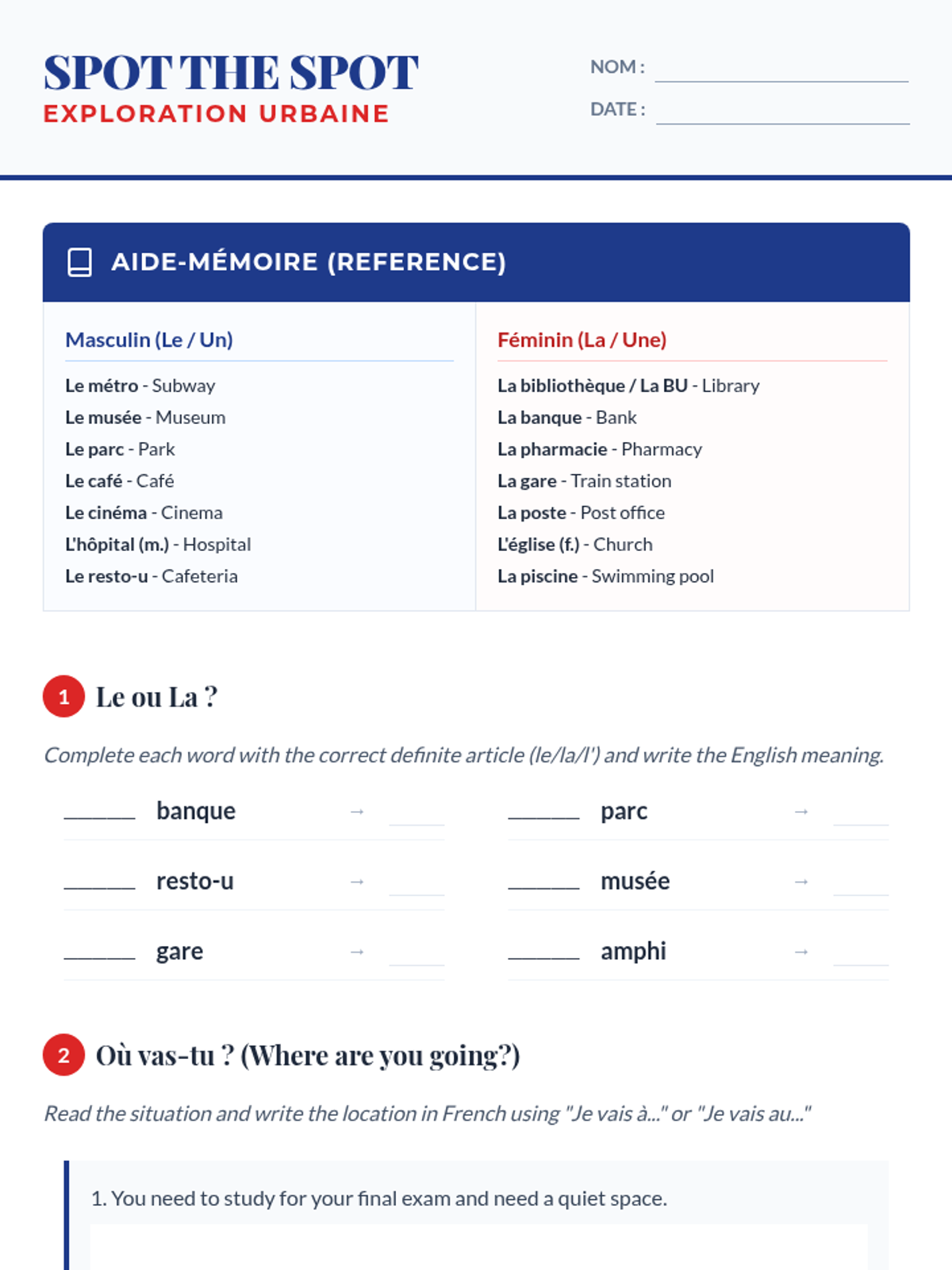
A comprehensive French speaking sequence for beginners focused on navigating urban and campus environments. Students will master vocabulary for locations, prepositions of place, interrogative forms, and the imperative mood through immersive simulations and map-based activities.
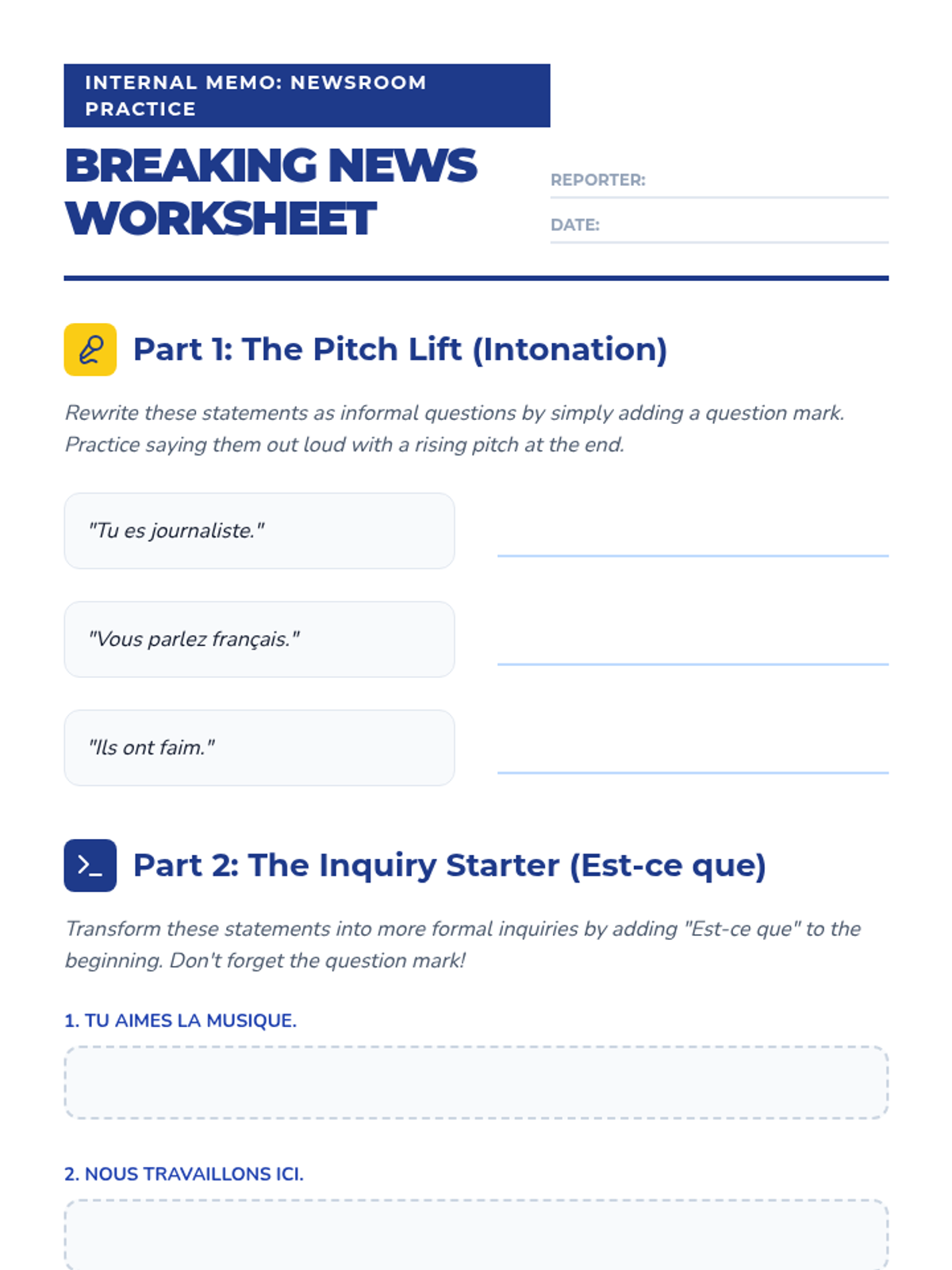
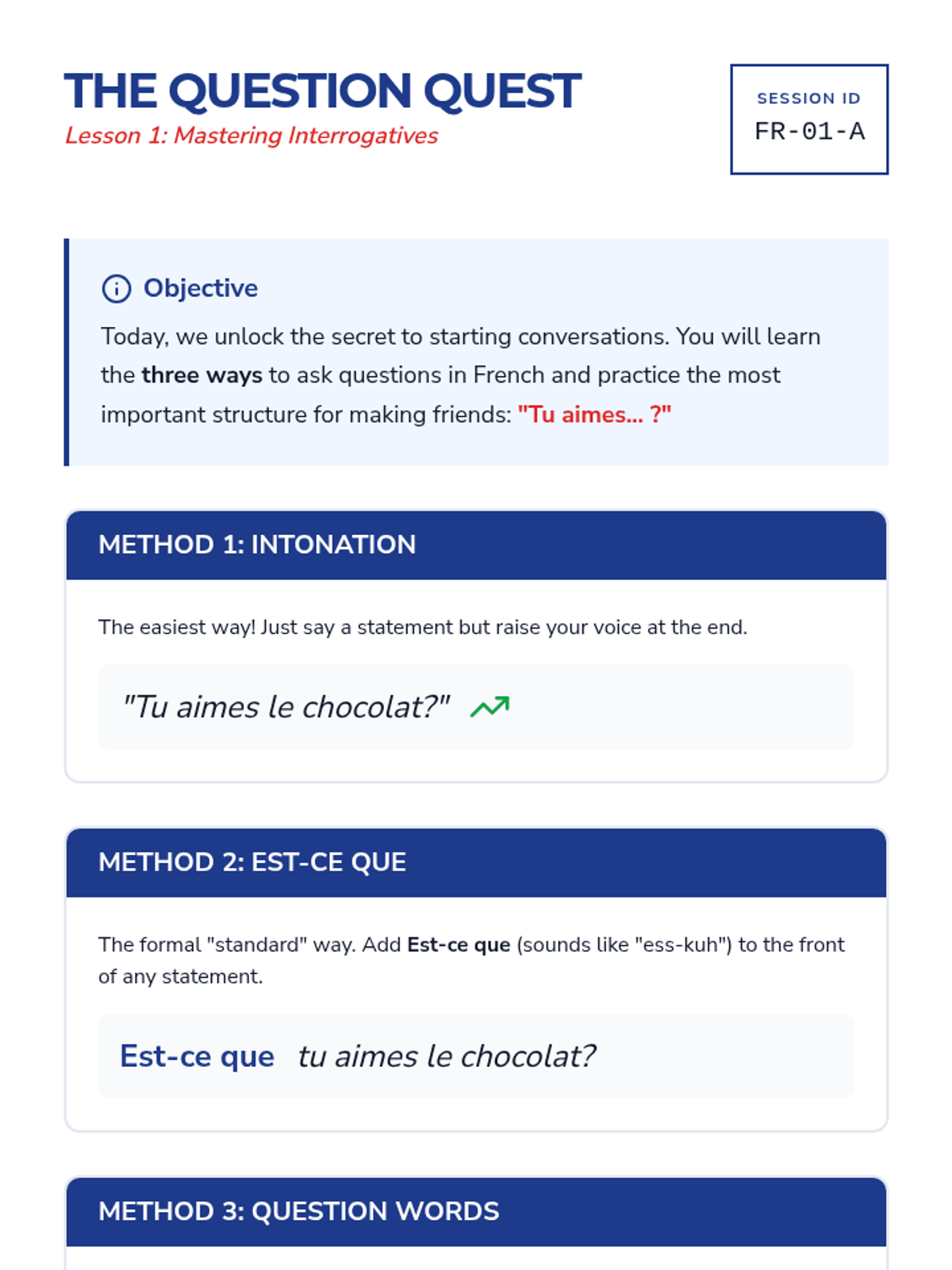
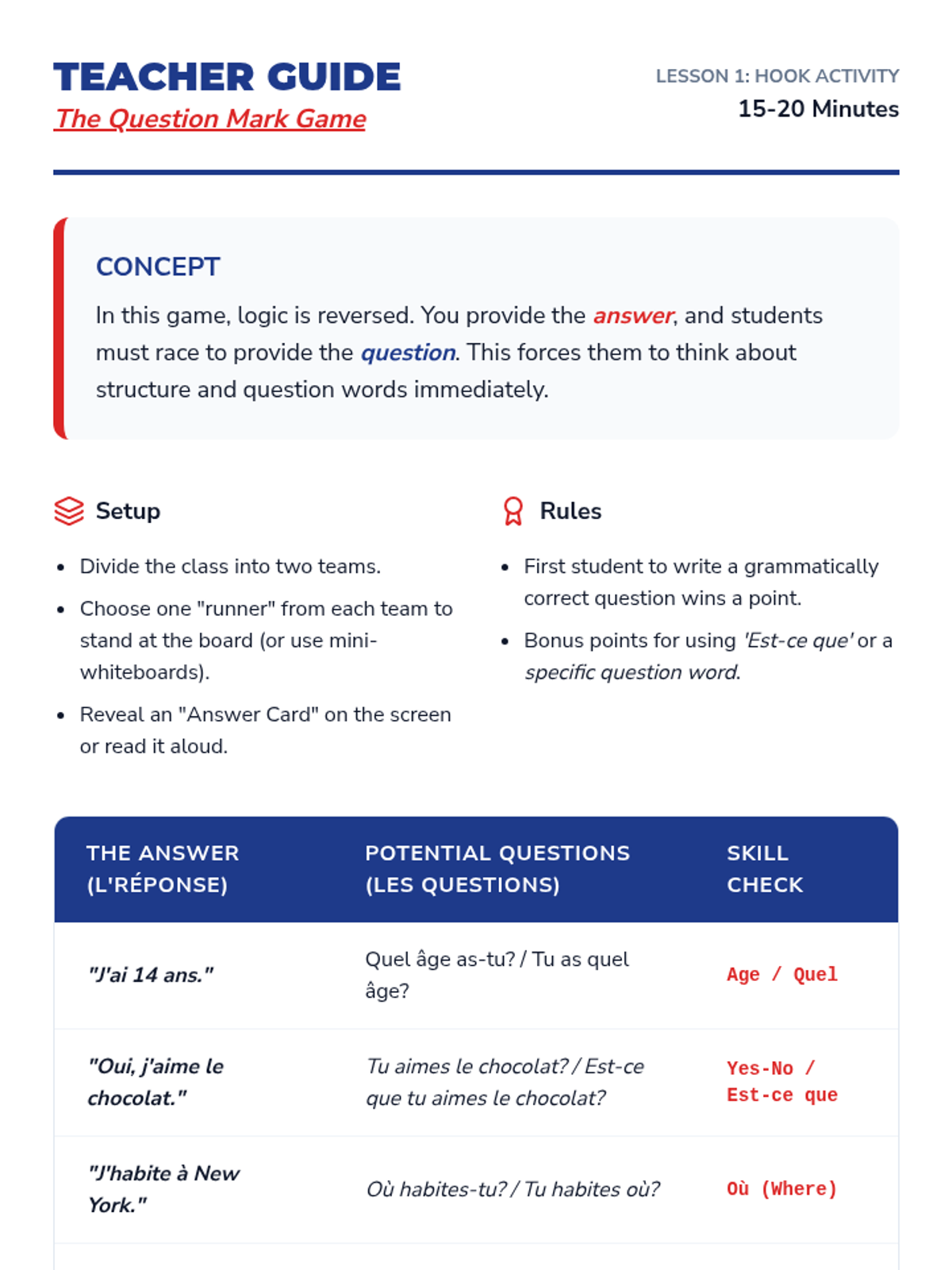
Students master the art of the French interview, progressing from simple intonation and 'est-ce que' to complex question words and formal inversion, culminating in a celebrity talk-show simulation.
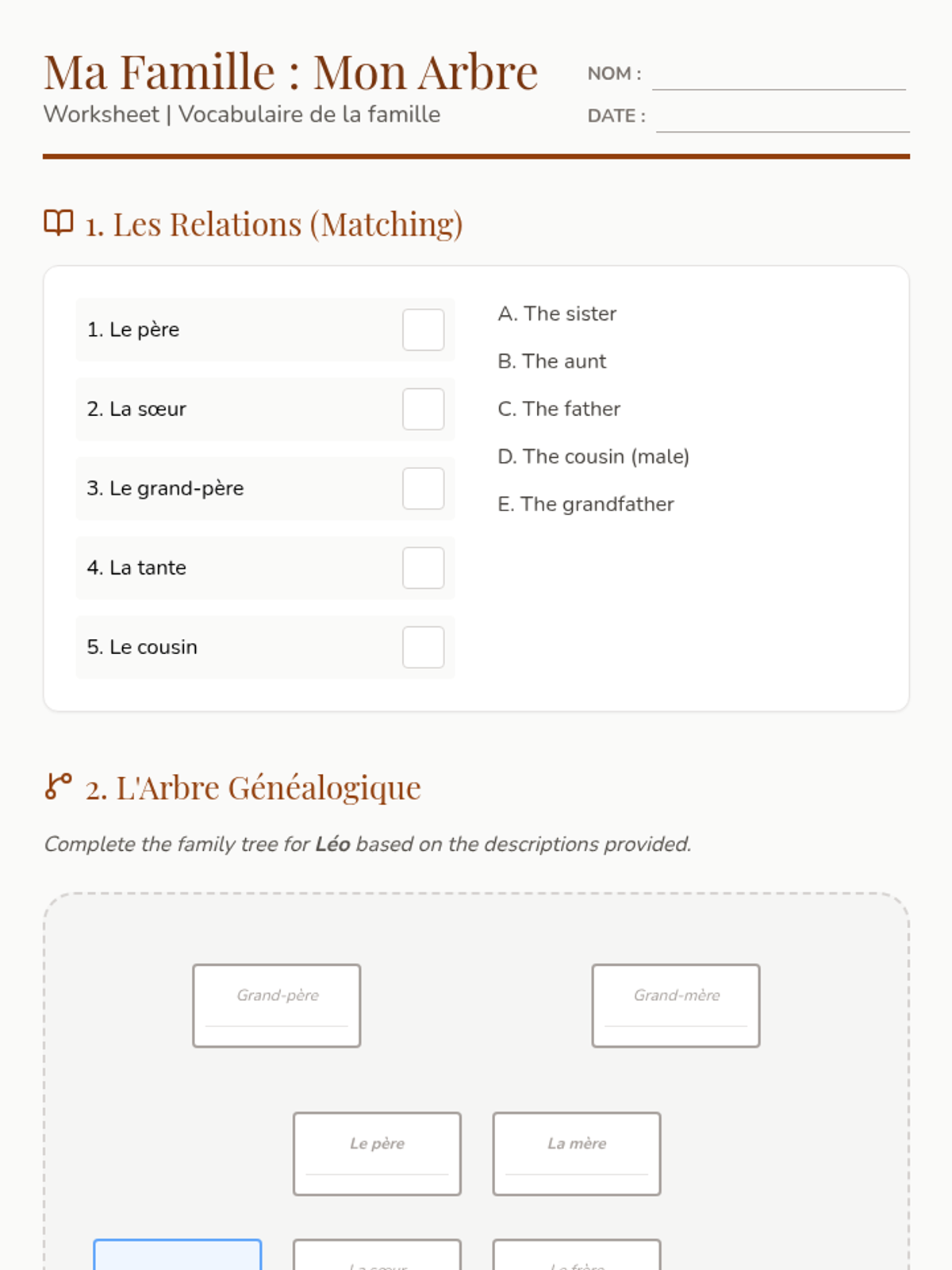
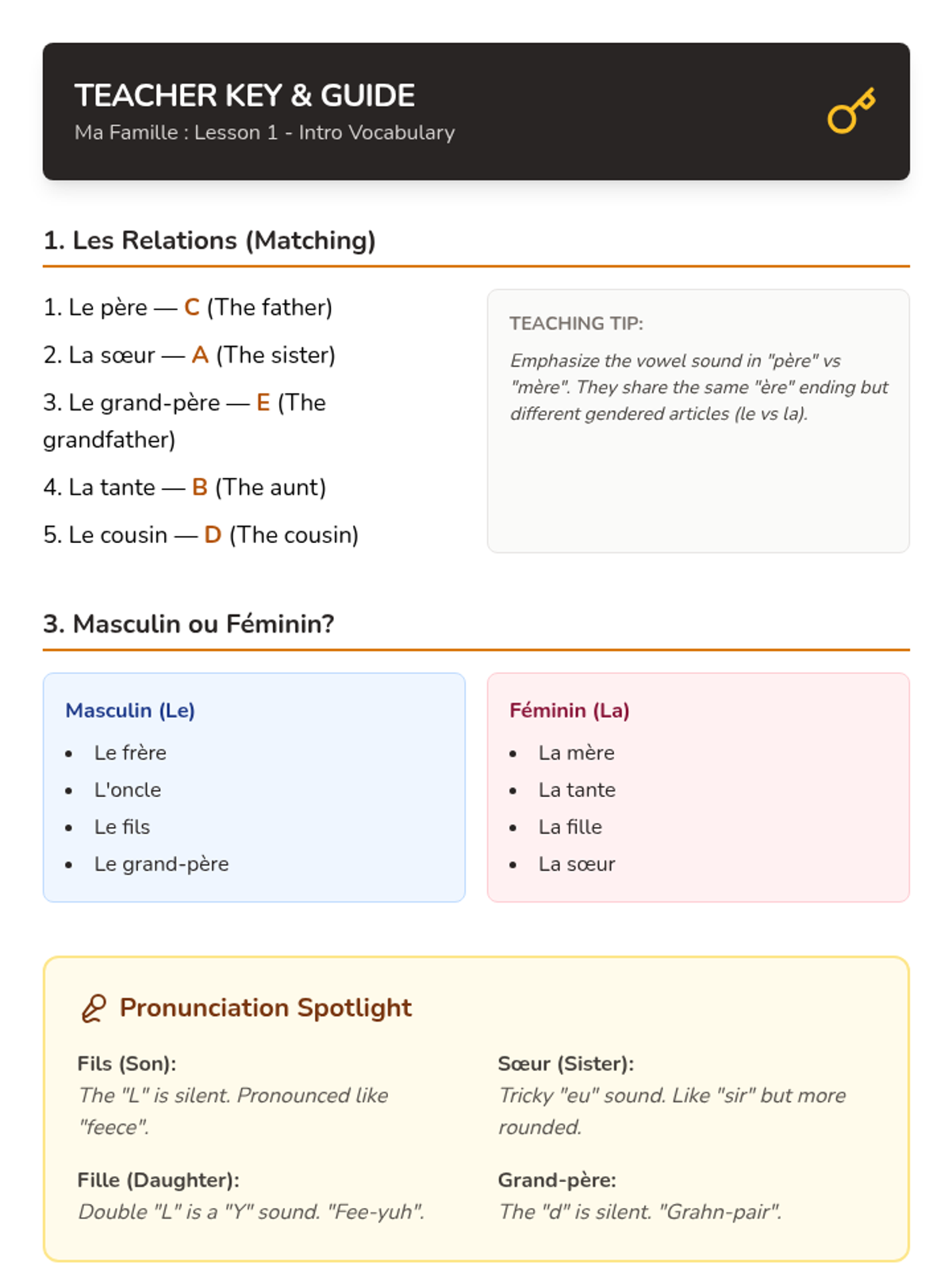
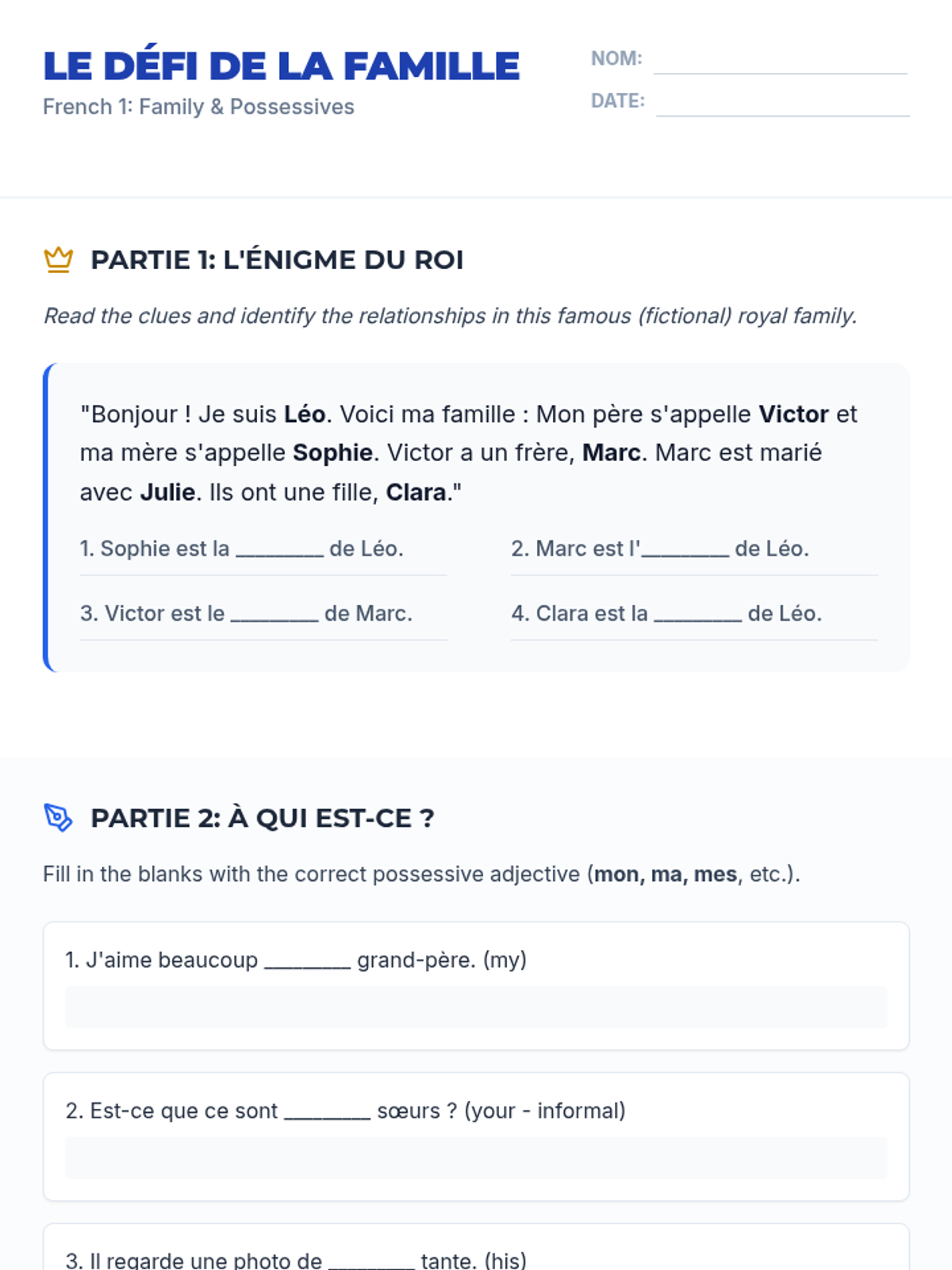
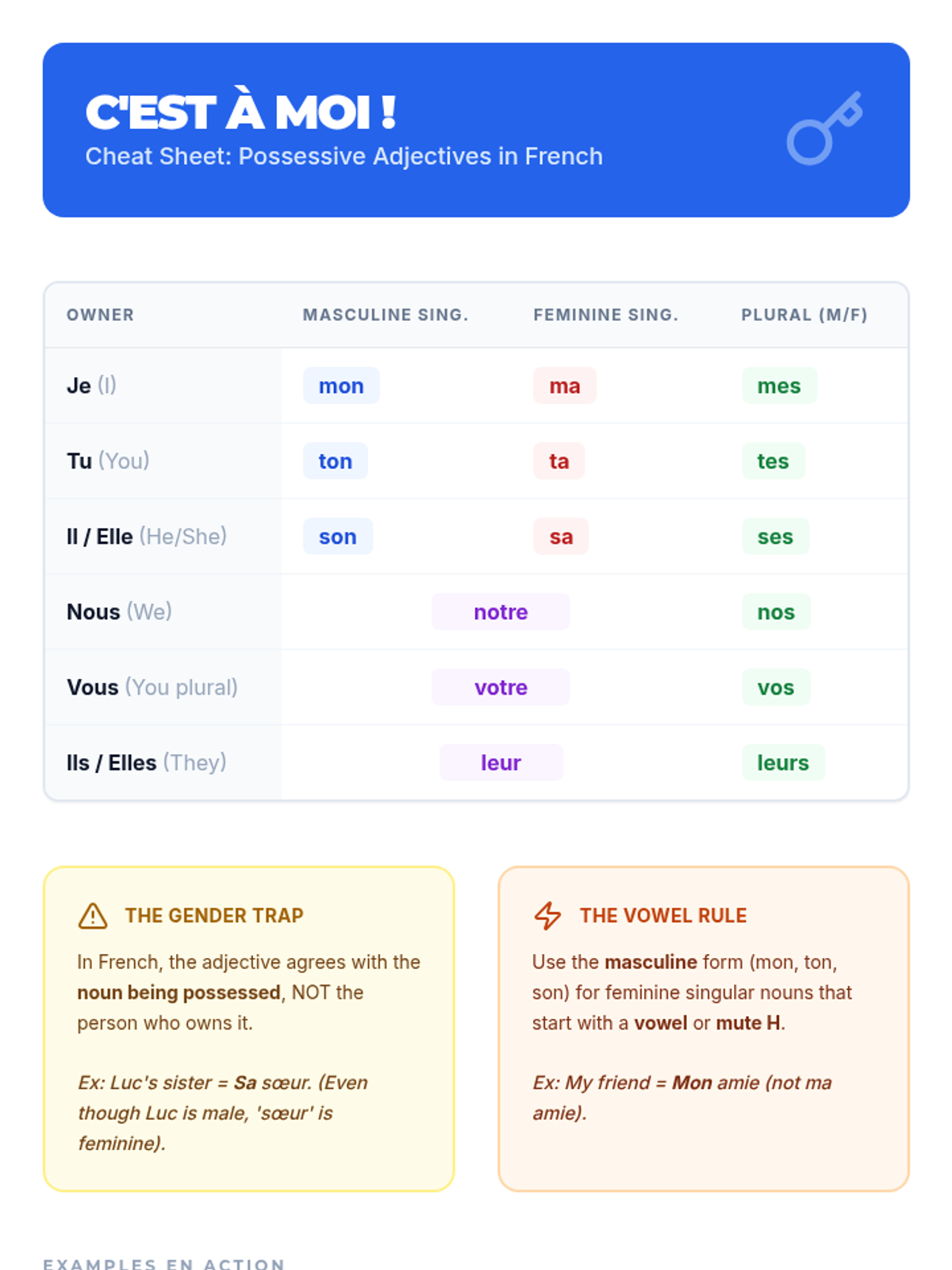
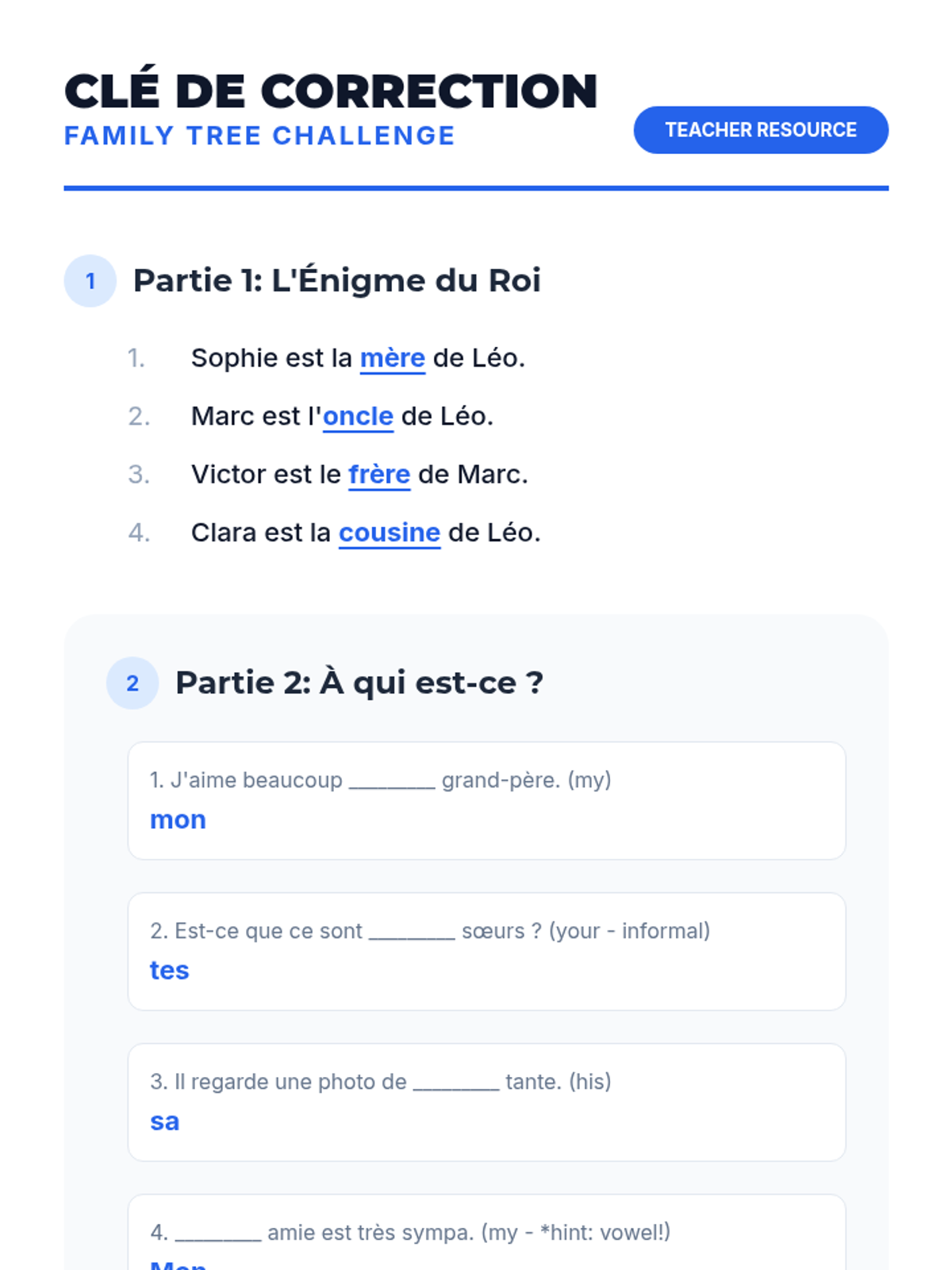
A beginner French sequence for 8th graders focusing on family vocabulary, possessive adjectives, physical descriptions, and pets. Students move from identifying individuals to creating and presenting a comprehensive family tree.
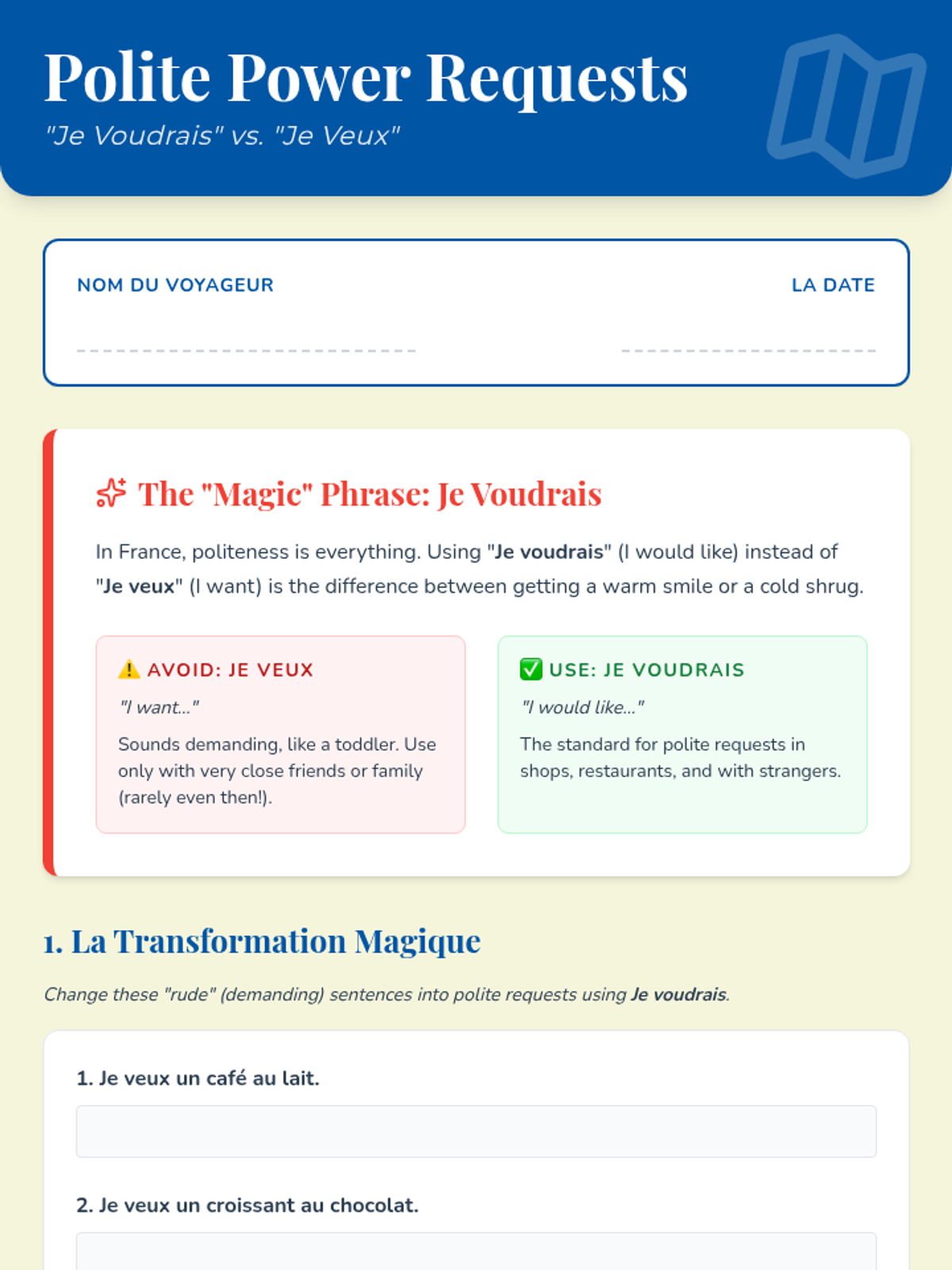
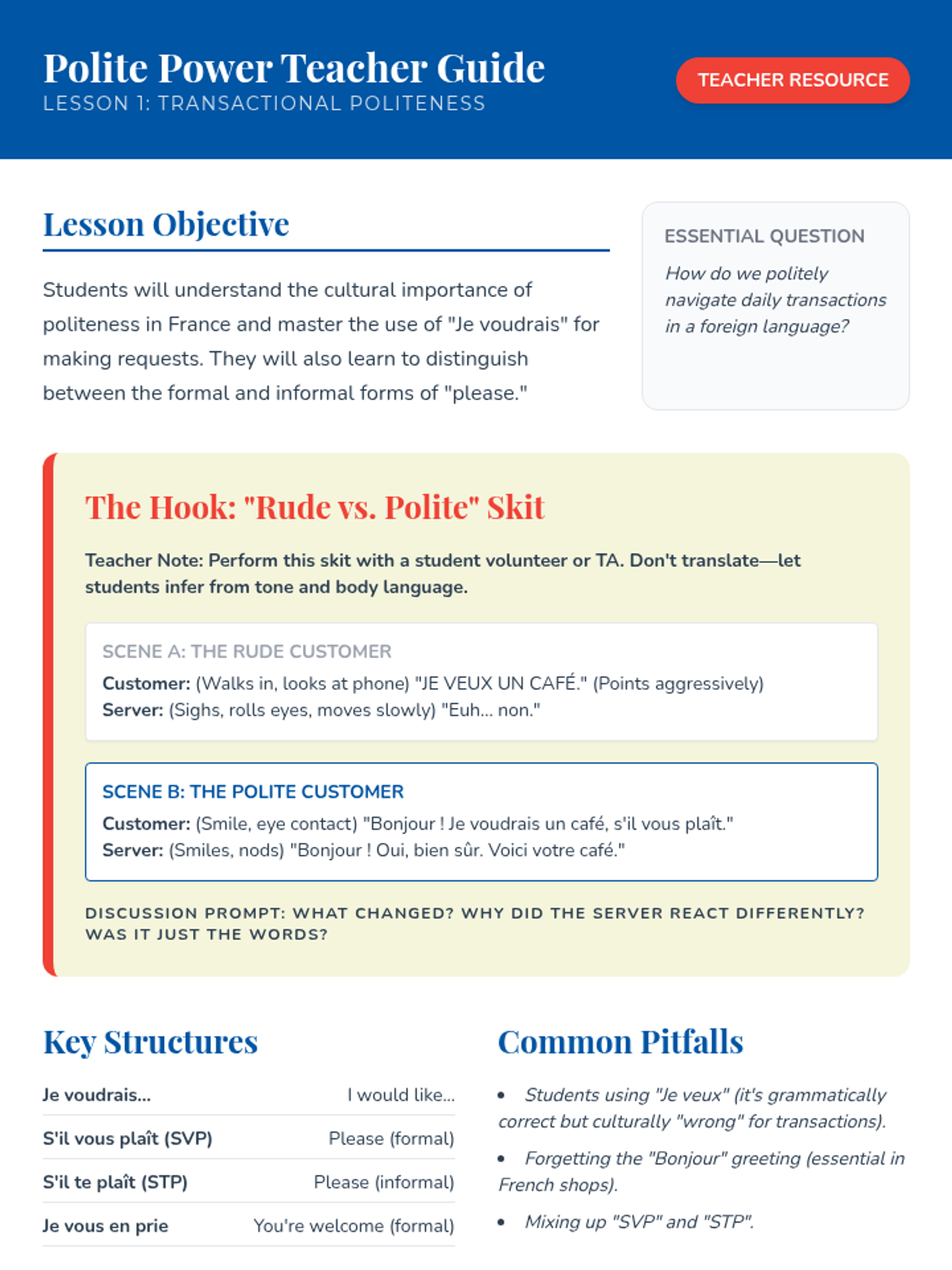
A comprehensive 5-lesson unit for 8th-grade French students focusing on 'Survival French.' Students learn to navigate transactional interactions (cafés, shops, directions) using polite structures and functional vocabulary.
This sequence transforms 8th-grade French students from passive listeners into active conversationalists by mastering question structures, preferences, and reaction phrases. Students progress from basic interrogatives to sustaining a full interview simulation, emphasizing real-world communication skills and cultural engagement.
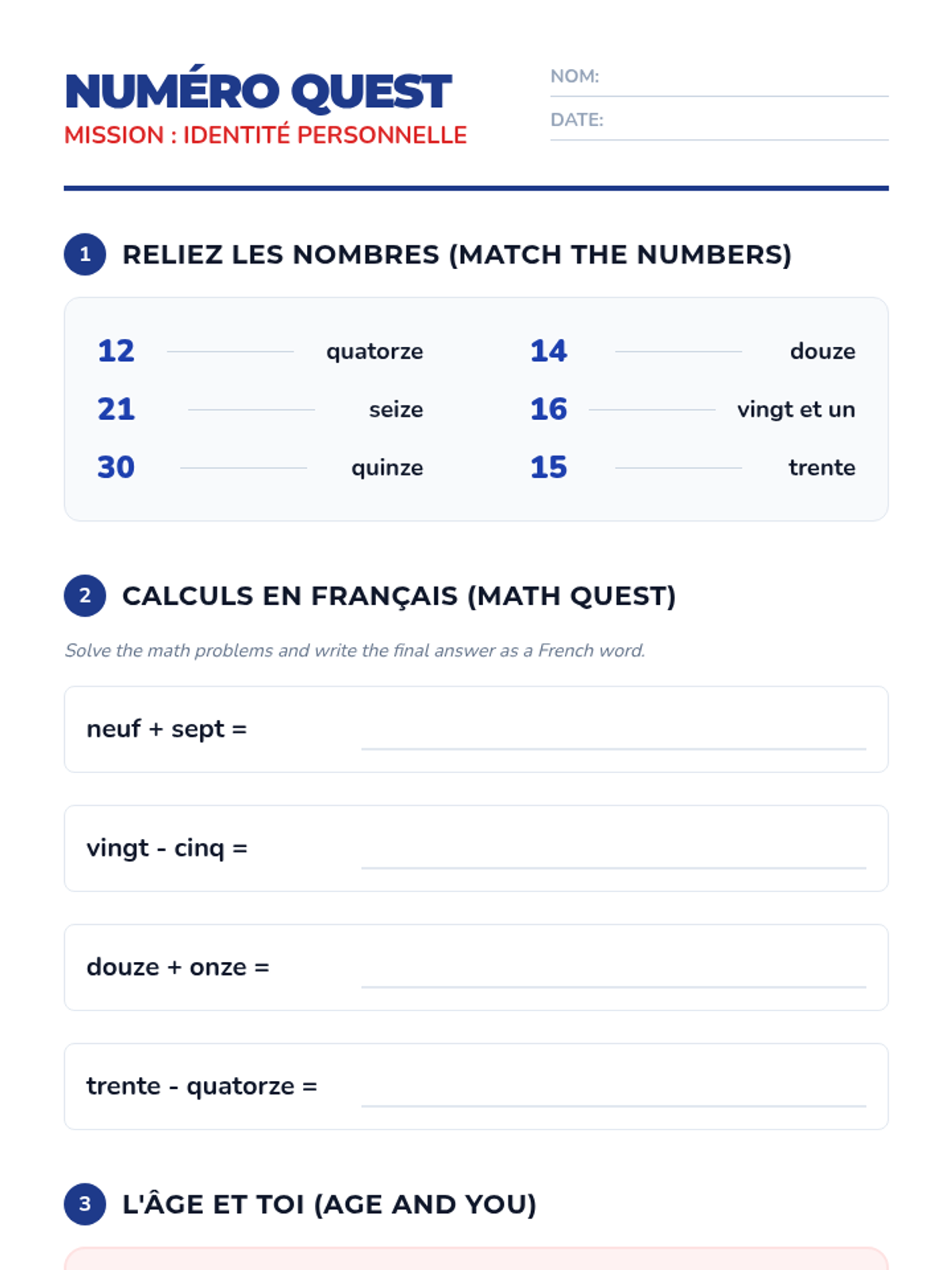
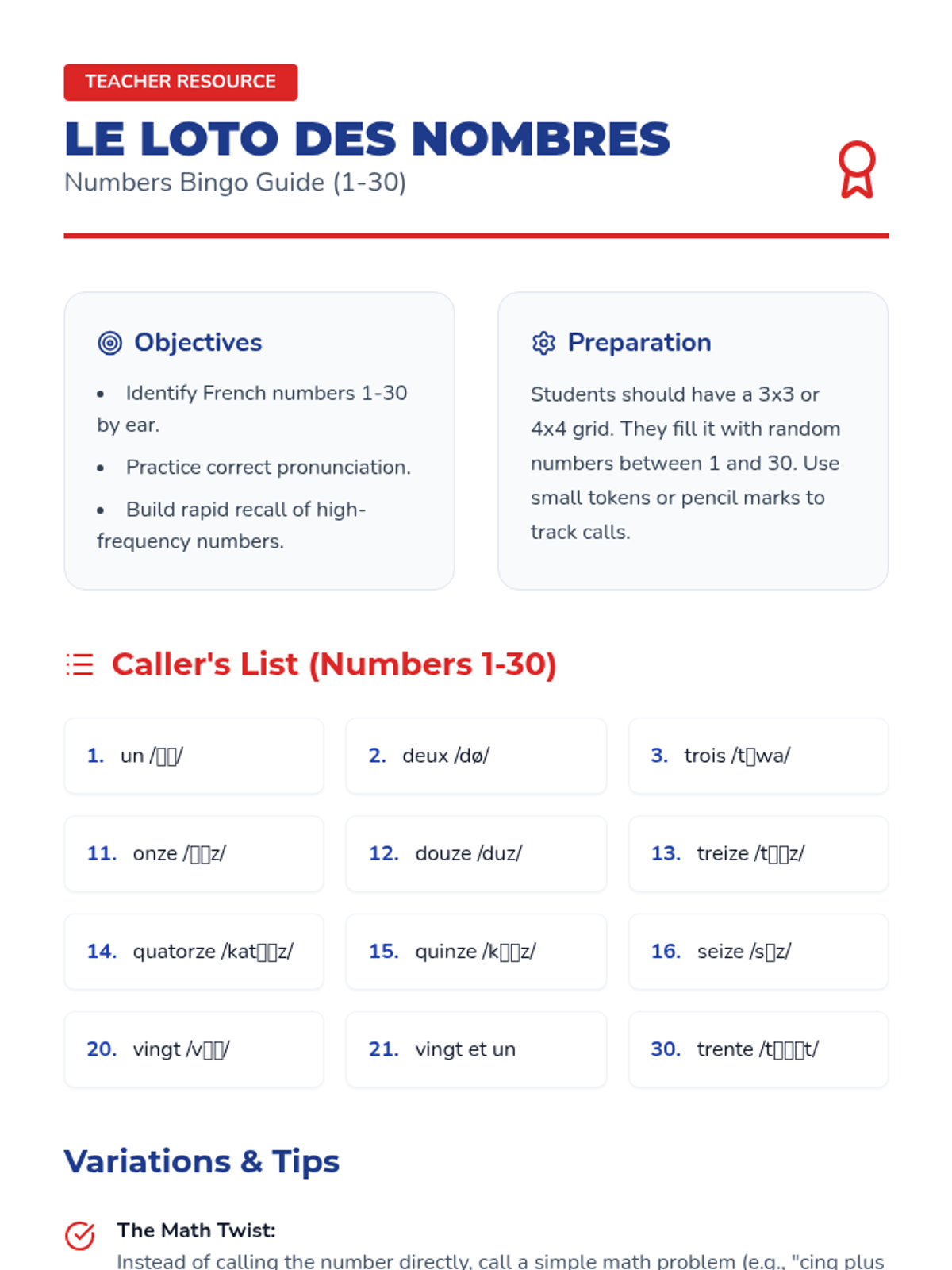
A comprehensive project-based sequence for 8th-grade French beginners focused on expressing personal identity. Students learn numbers, age, origin, nationalities, birthdays, and personality traits, culminating in a digital 'exchange student' video introduction.
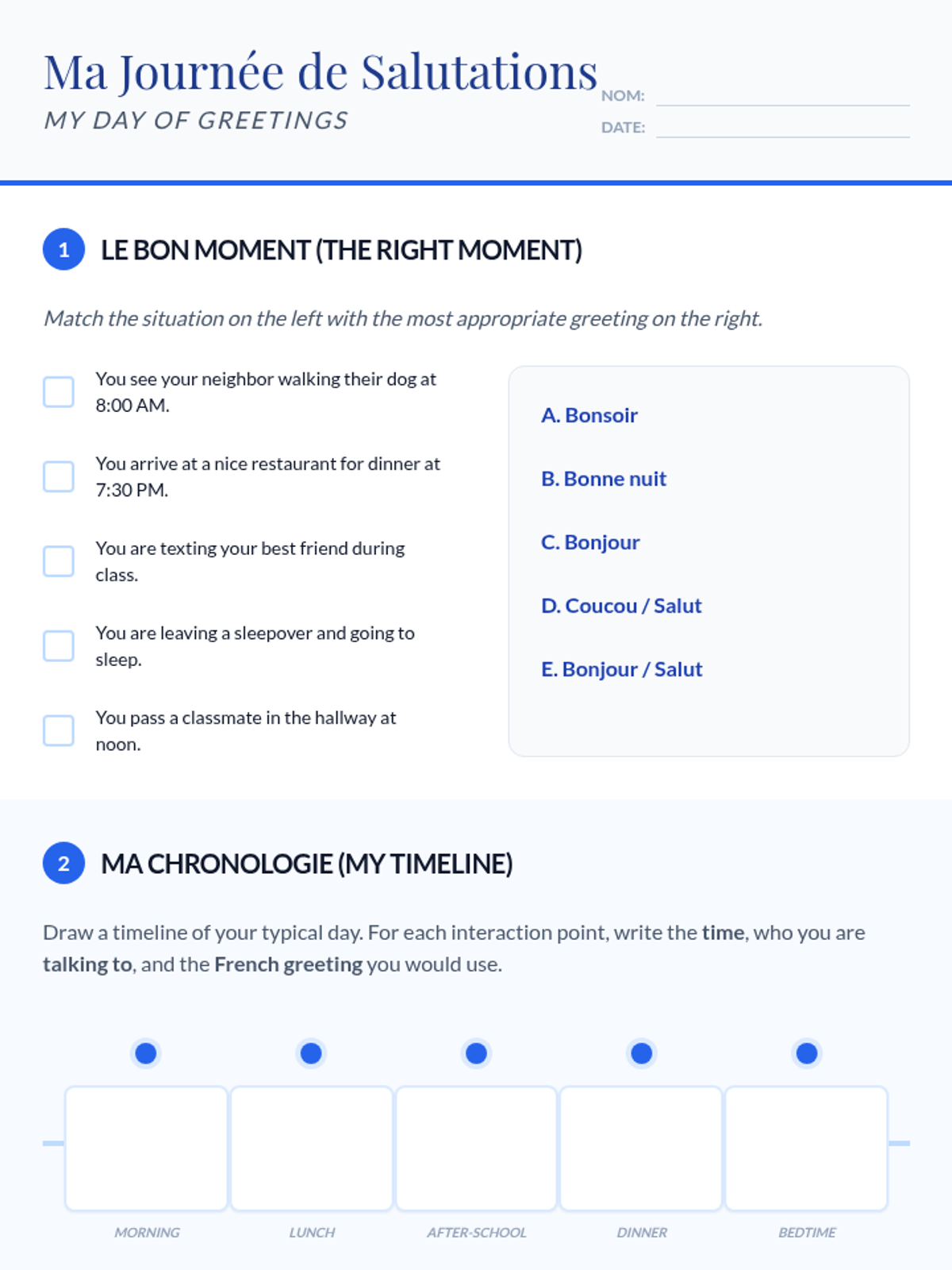
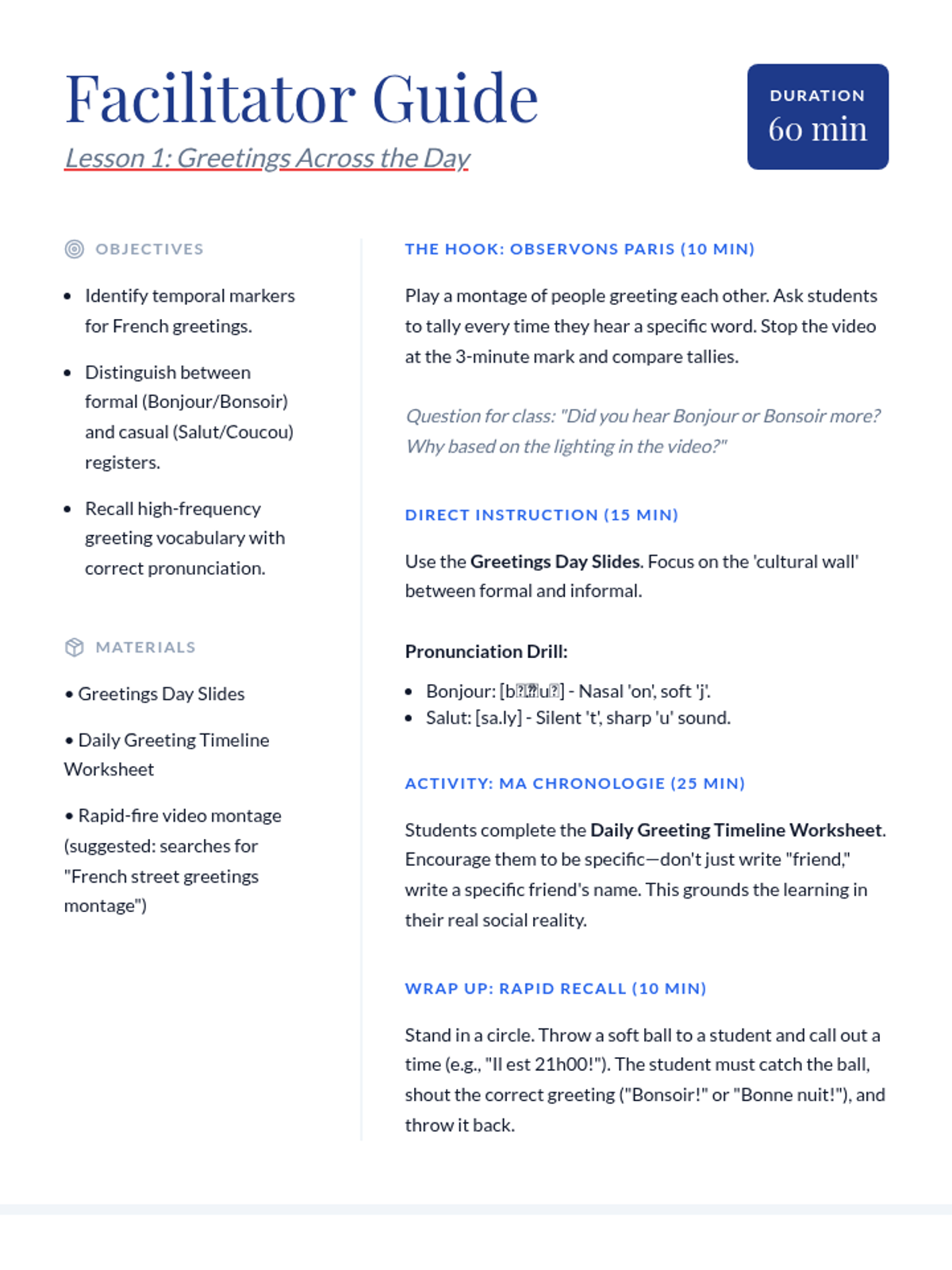
A 5-lesson unit for 8th-grade French students focusing on the nuances of formal and informal greetings, the 'tu' vs. 'vous' distinction, and non-verbal cultural rituals like 'la bise'. Students move from basic vocabulary to fluid social interactions through simulations and register analysis.
A comprehensive French unit for beginners focused on personal identity, physical traits, personality, family, and origins. Students master adjective agreement and possessive adjectives while building a 'Carnet d'Identité' that culminates in a presentational speaking project.
A project-based French sequence for beginners focused on building identity-based vocabulary, grammar, and speaking skills. Students progress from basic personal descriptors to expressing complex preferences and family structures, culminating in a synthesized video profile for a hypothetical exchange program.
This beginner French sequence guides students through the nuances of formal and informal greetings, temporal context, and the cultural practice of 'la bise'. Students will master the 'tu' vs. 'vous' distinction and build confidence in real-world introduction scenarios.
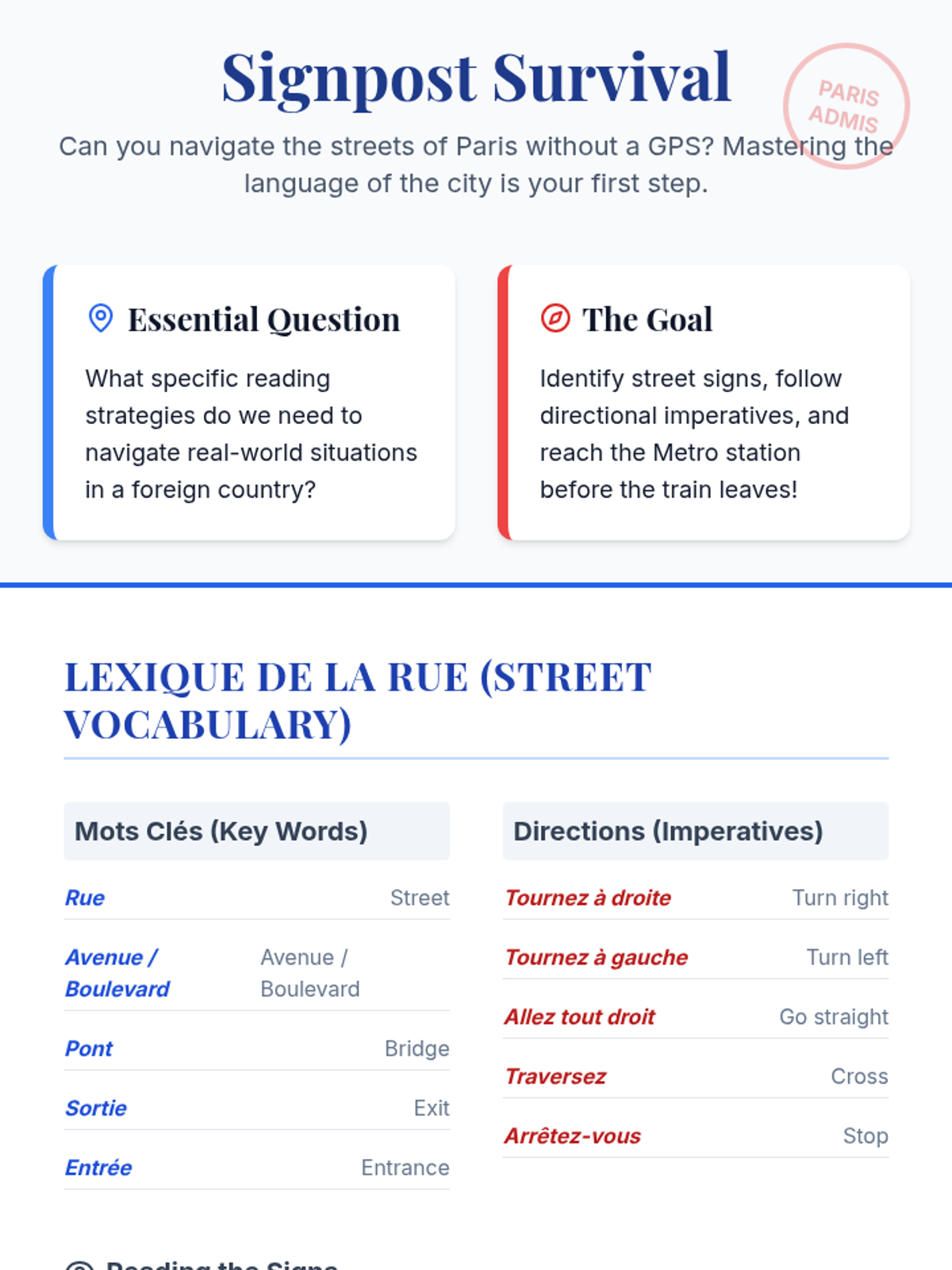
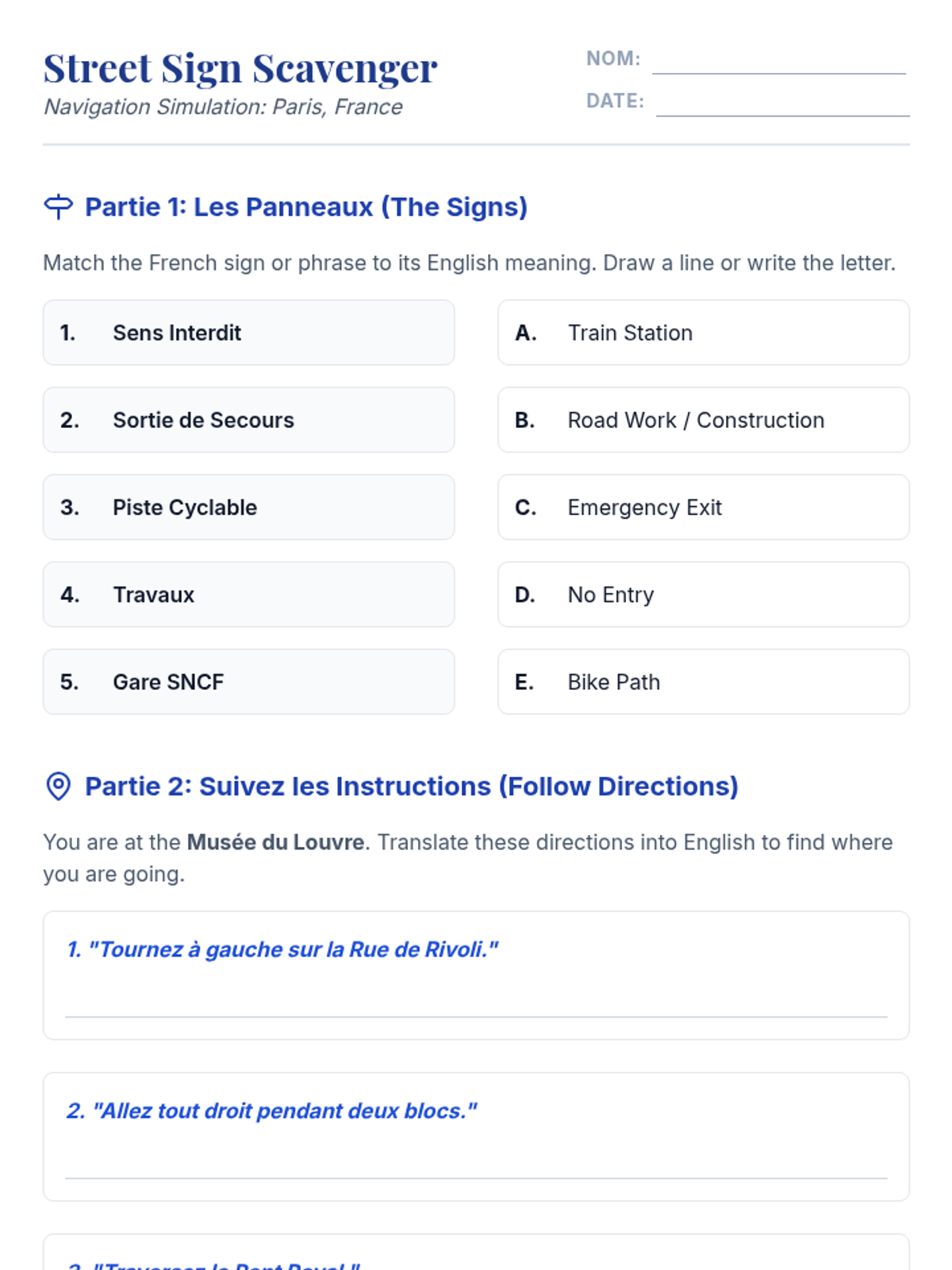
A functional French reading sequence for beginners focused on navigating a French-speaking city through authentic travel materials, maps, and schedules.
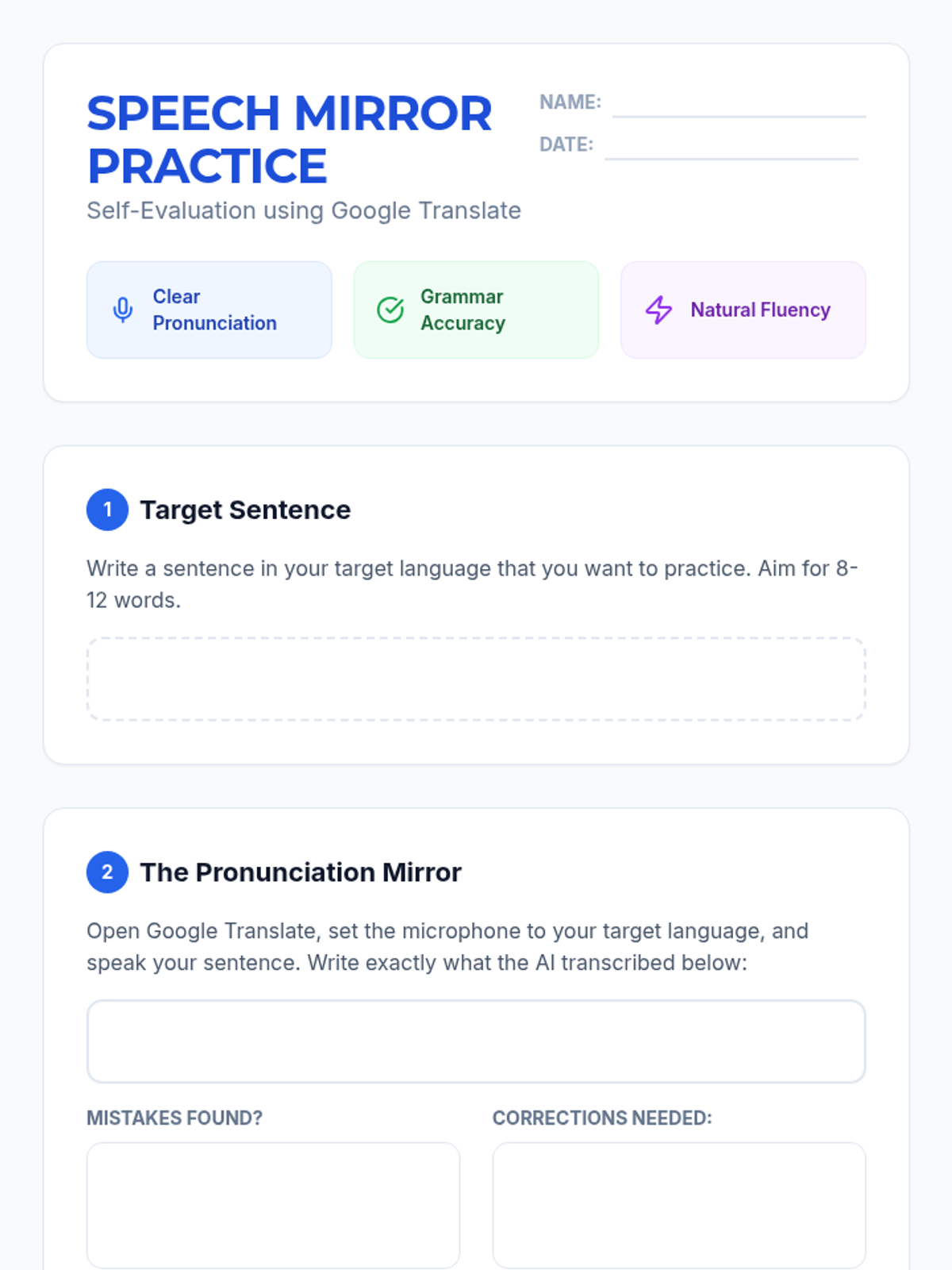
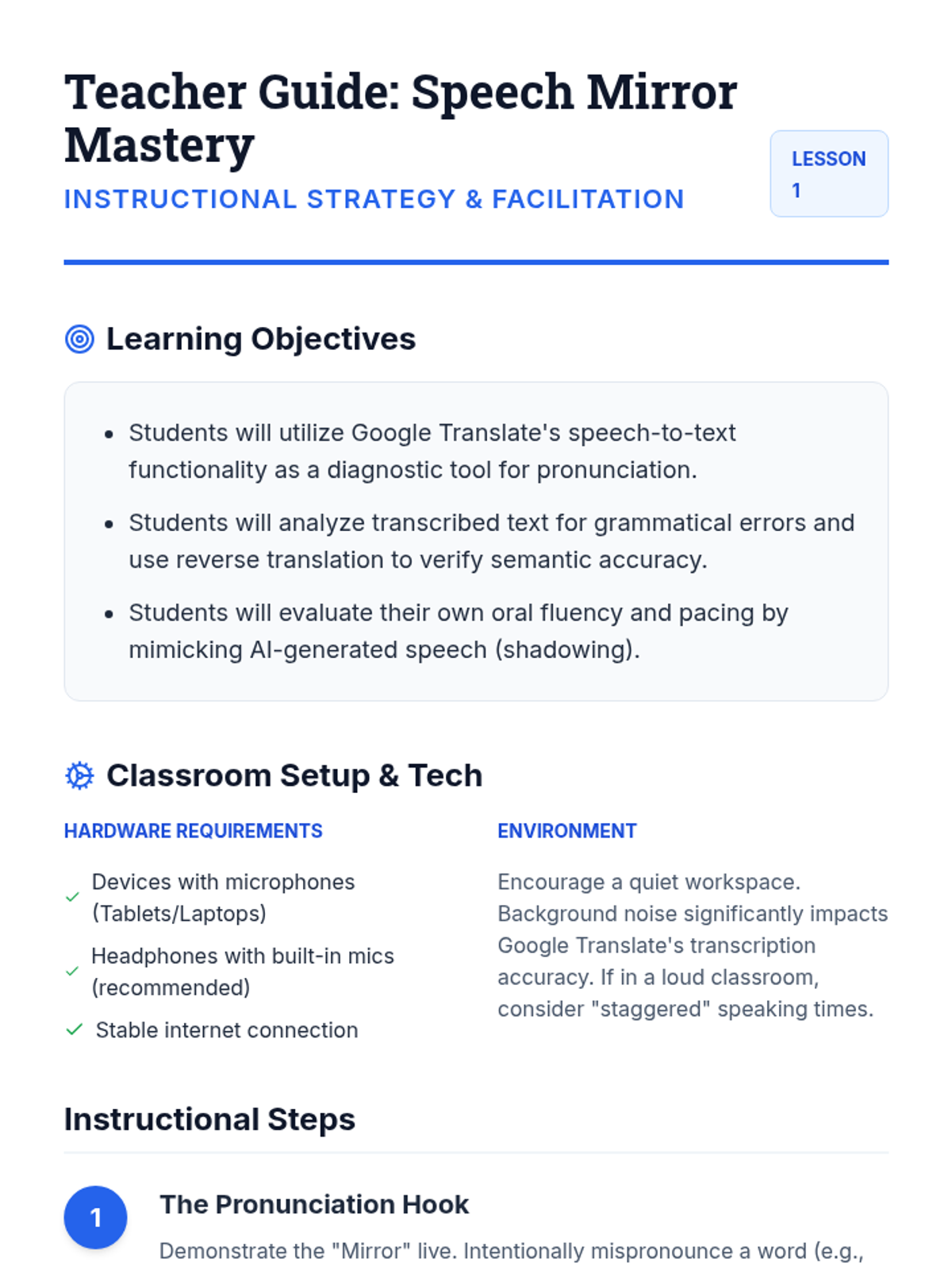
A sequence focused on leveraging digital translation tools for language self-assessment and speech improvement. Students learn to use Google Translate not just for translation, but as a 'mirror' for their own pronunciation, grammar, and fluency.
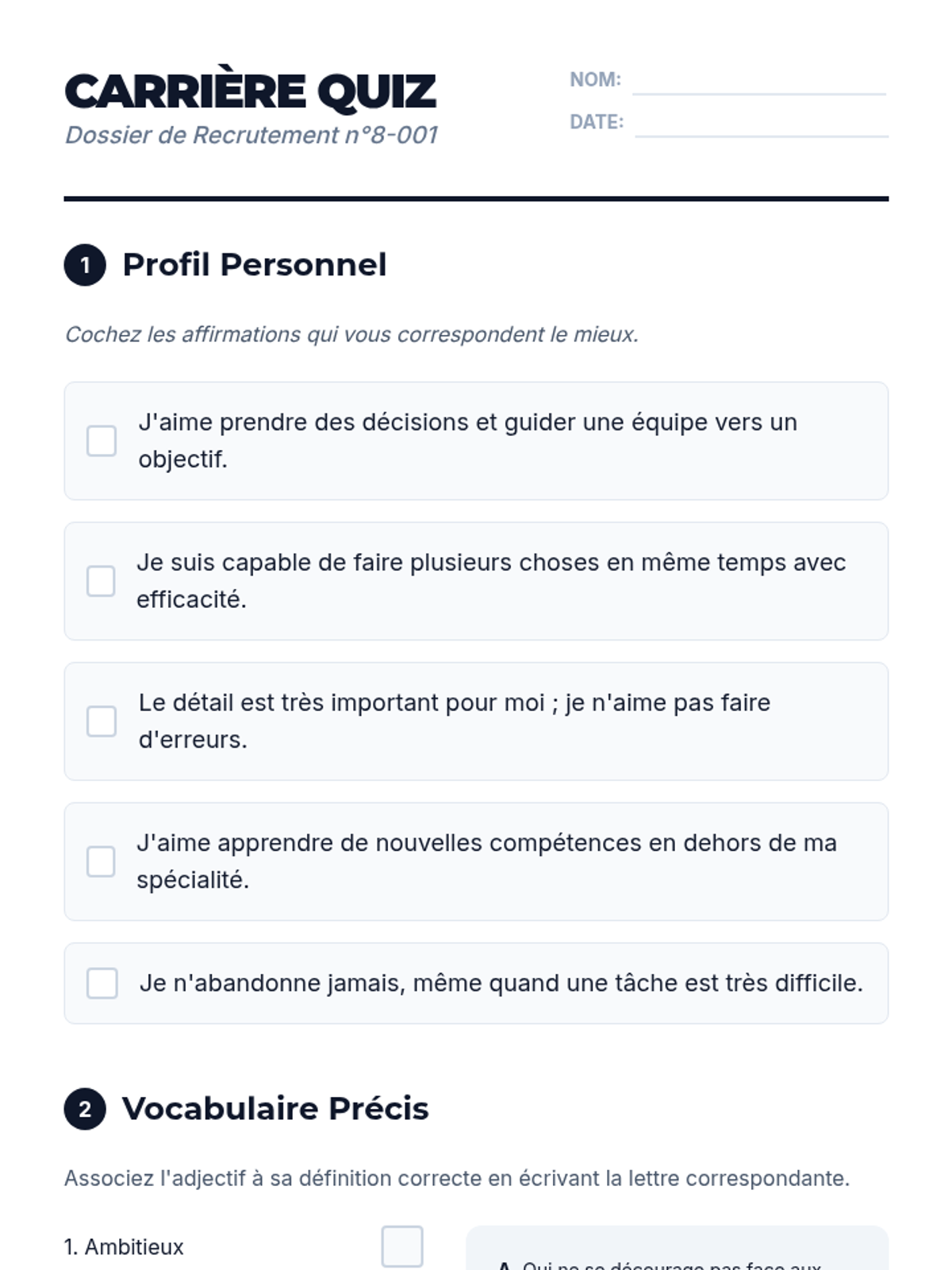
An immersive sequence where 8th-grade students master intermediate French professional vocabulary, formal communication strategies, and cultural workplace etiquette through simulated career scenarios.
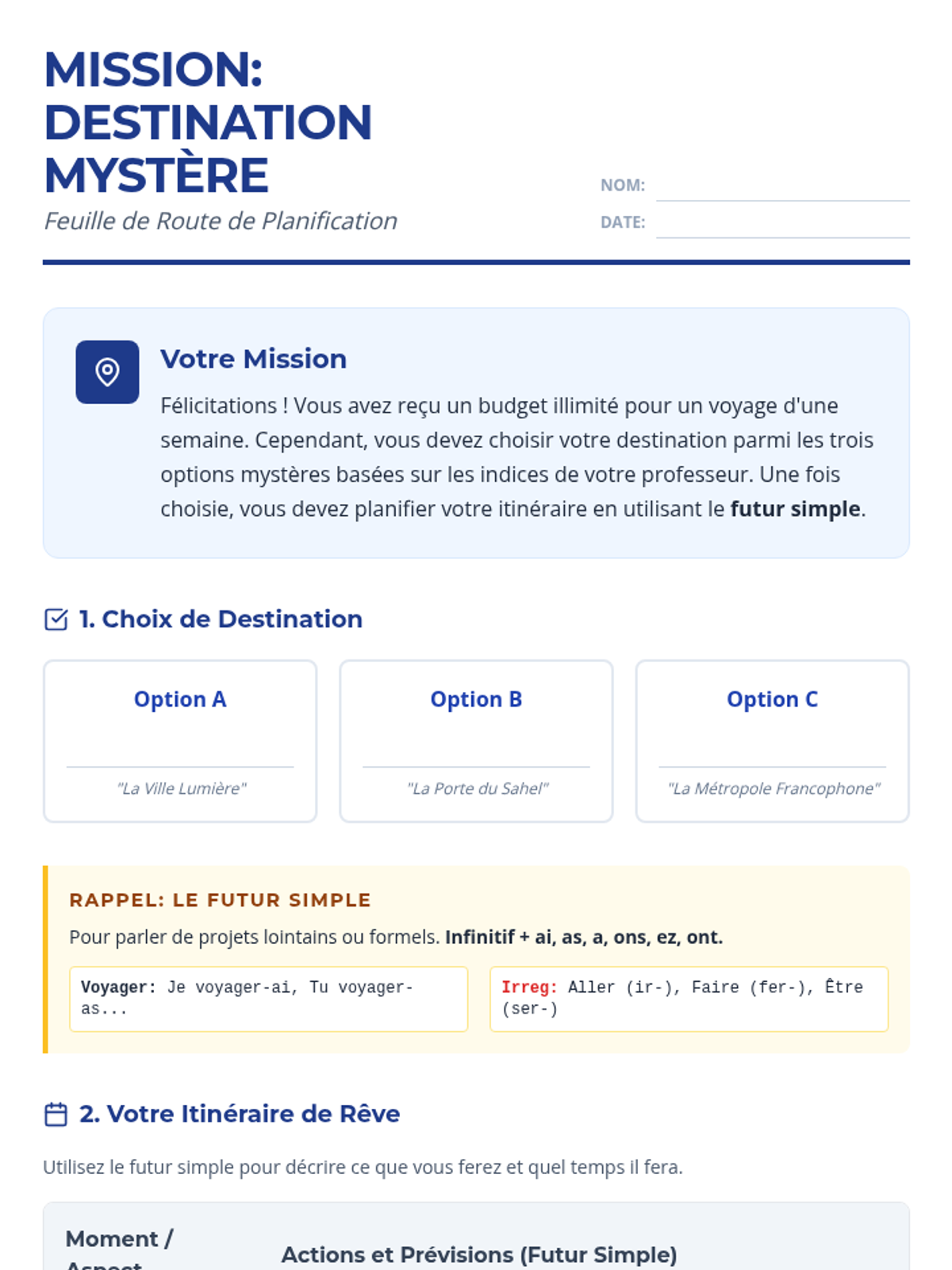
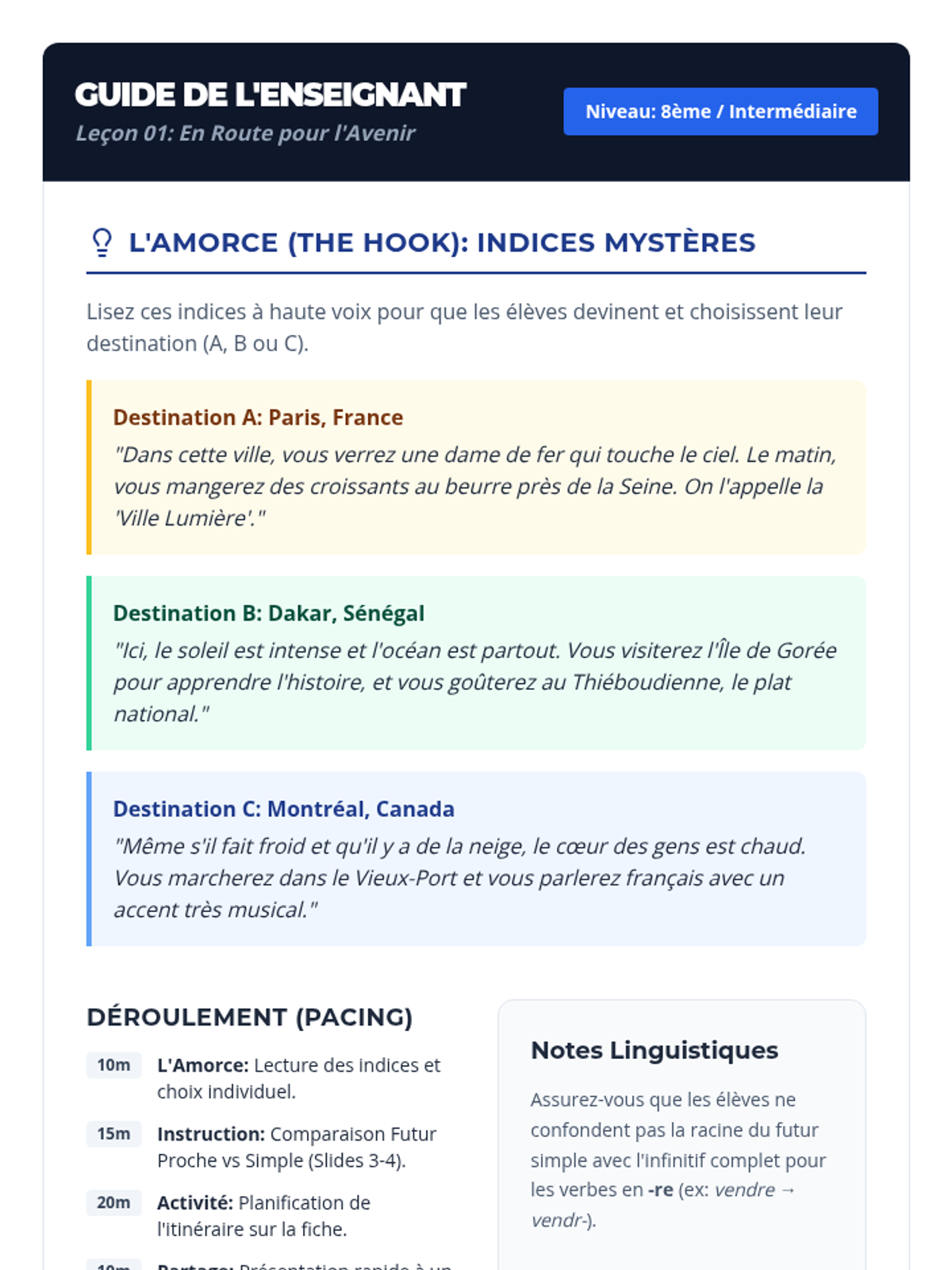
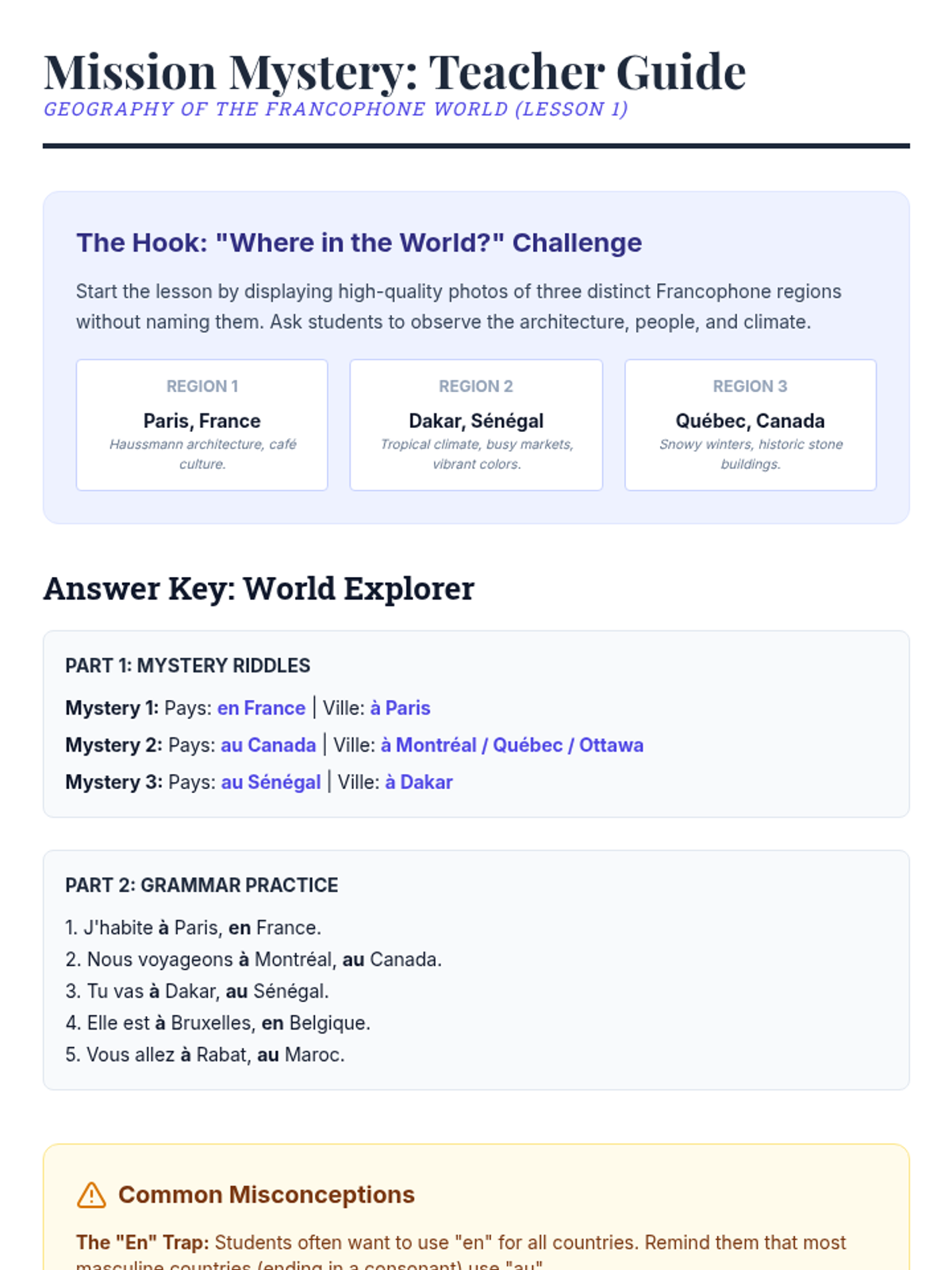
An immersive intermediate French sequence where students navigate travel scenarios in Paris, Dakar, and Montreal, mastering future, past, and conditional tenses through simulated real-world interactions.
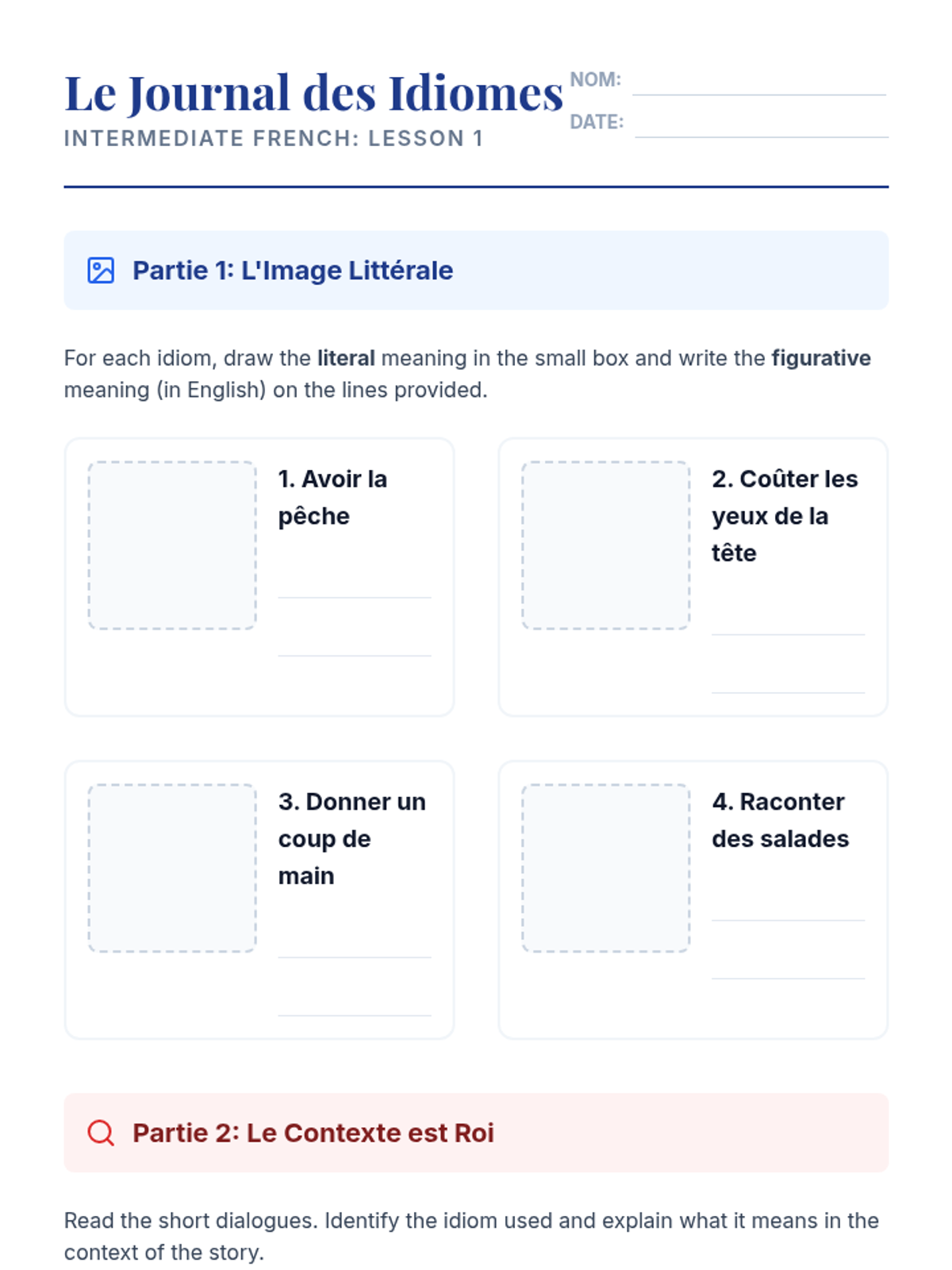
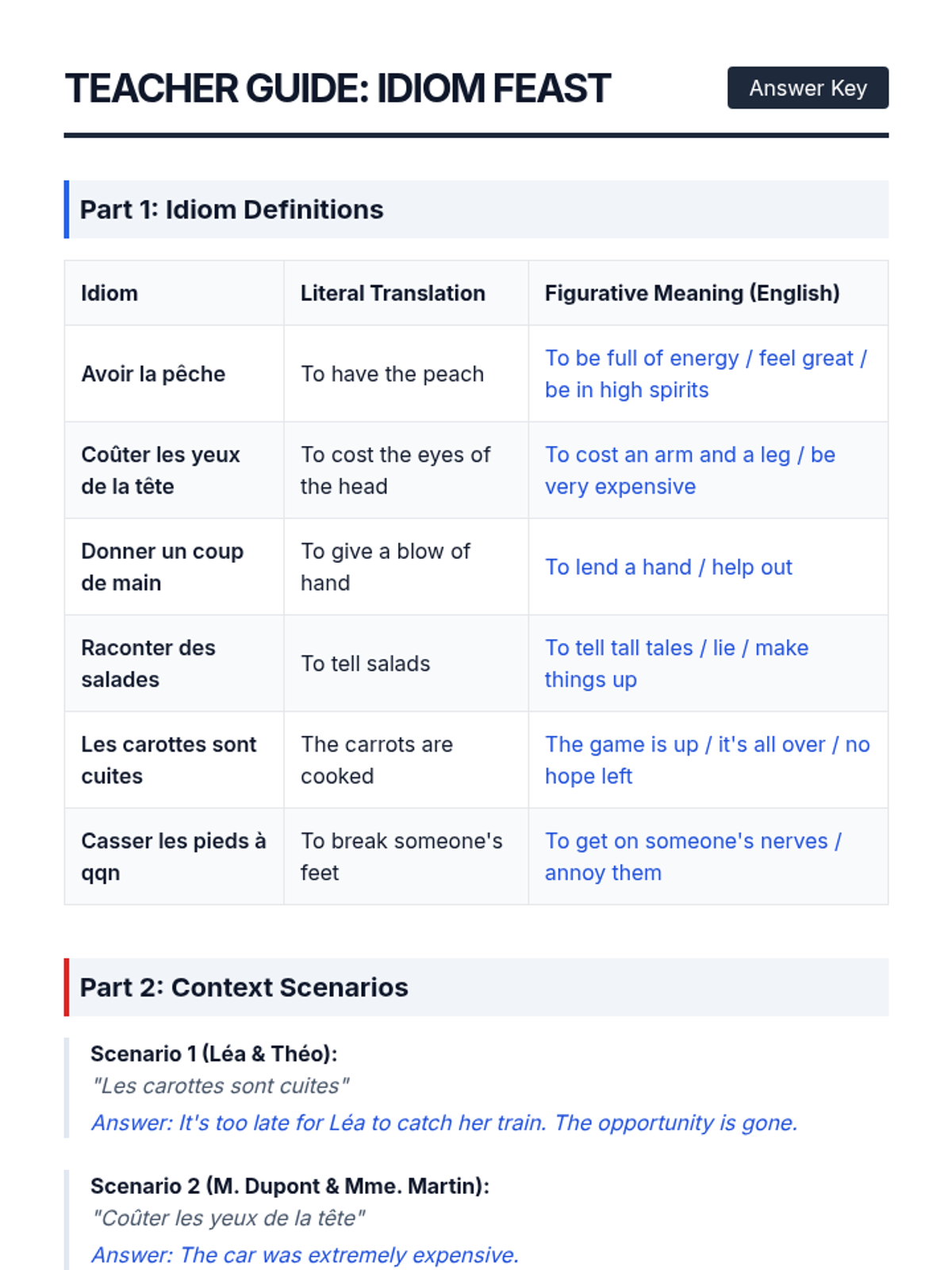
A comprehensive 5-lesson unit for 8th-grade French students focused on moving beyond literal translation. Students explore idiomatic expressions, precise synonyms, register and slang (Verlan), and common 'faux amis' to achieve a more natural and nuanced level of communication.
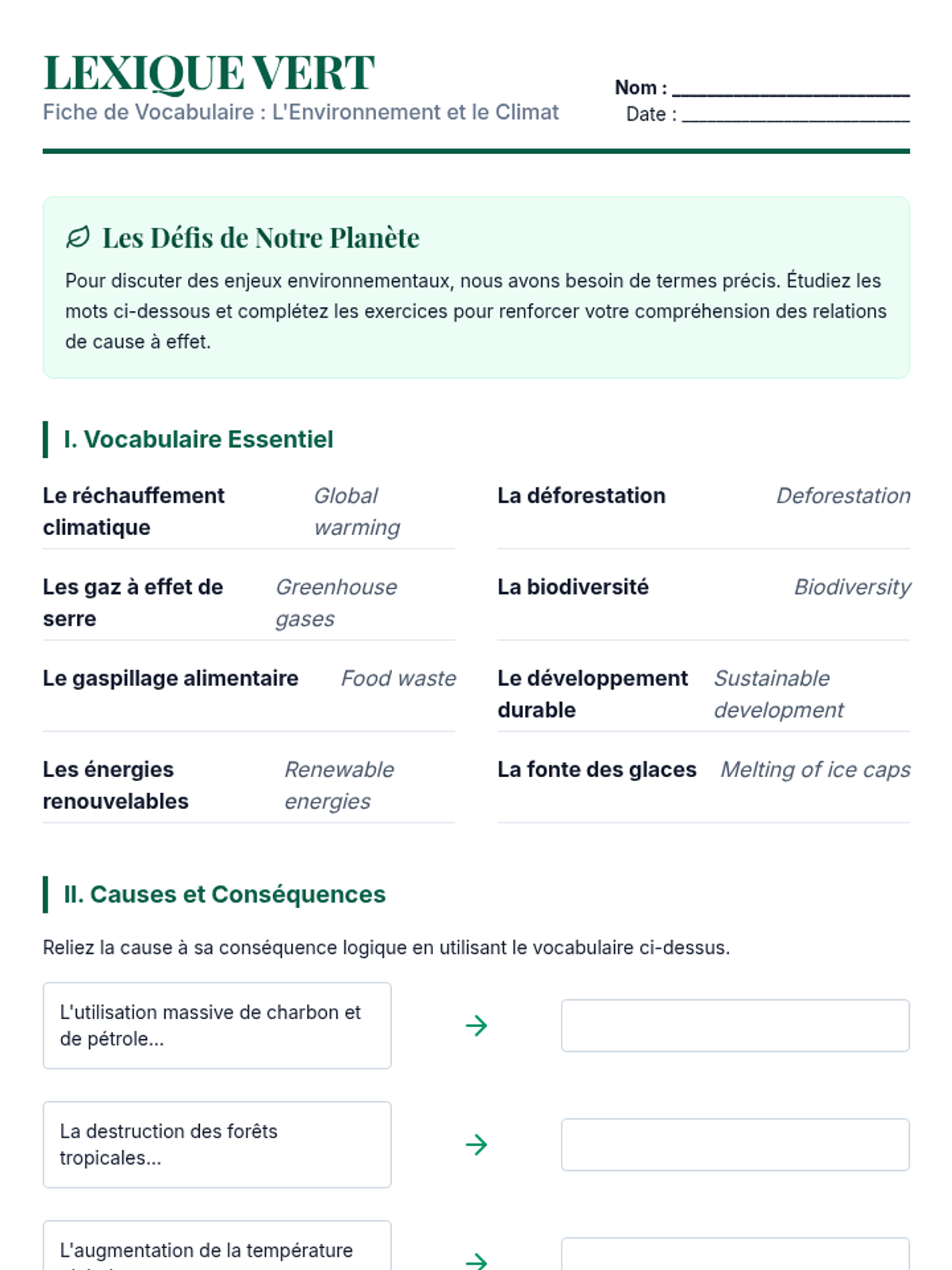
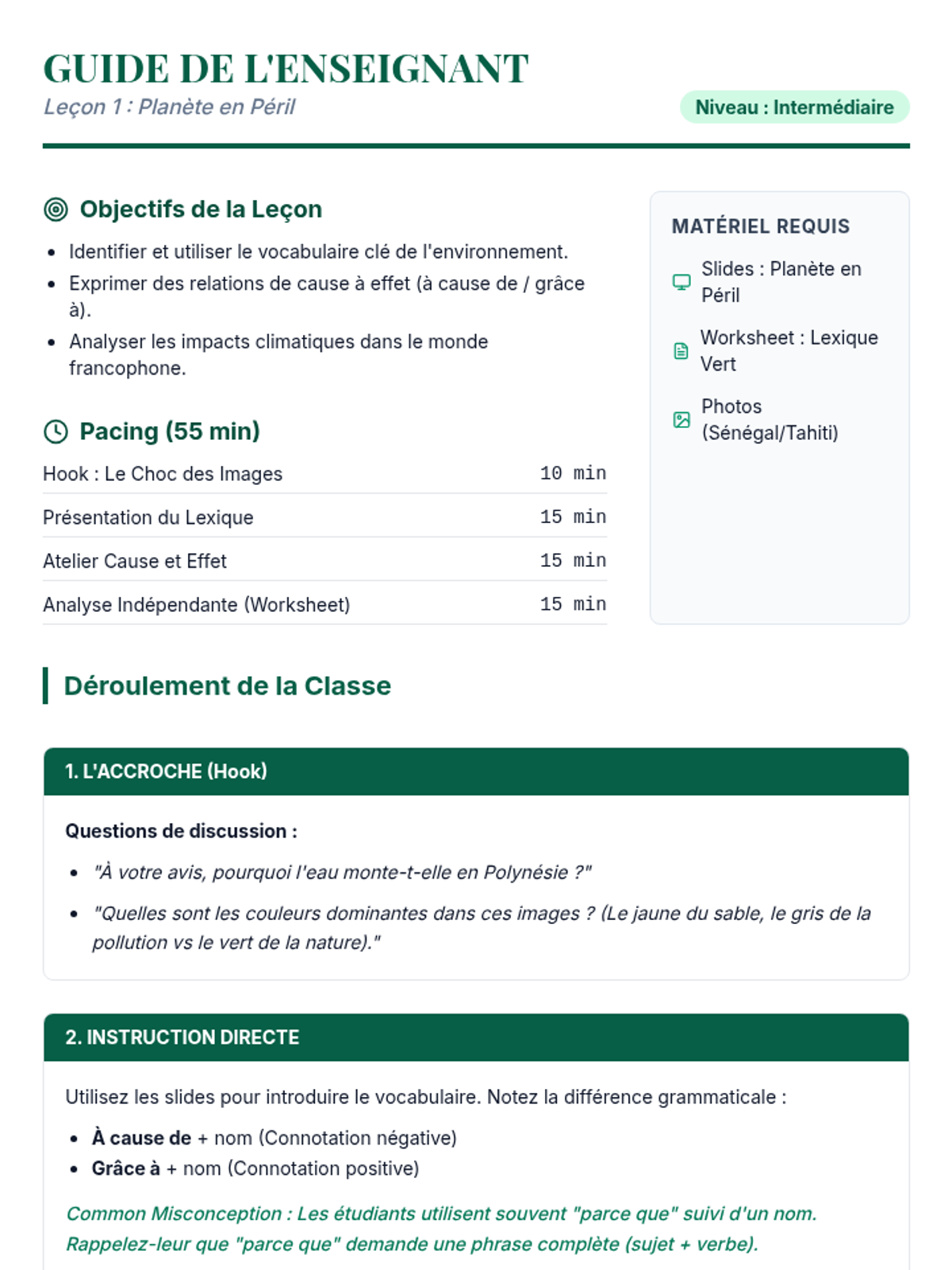
This sequence empowers 8th-grade French students to discuss complex global challenges like environment, technology, and human rights. Through thematic vocabulary, advanced logical connectors, and rhetorical structures, students build the skills necessary to participate in a formal debate on current events.
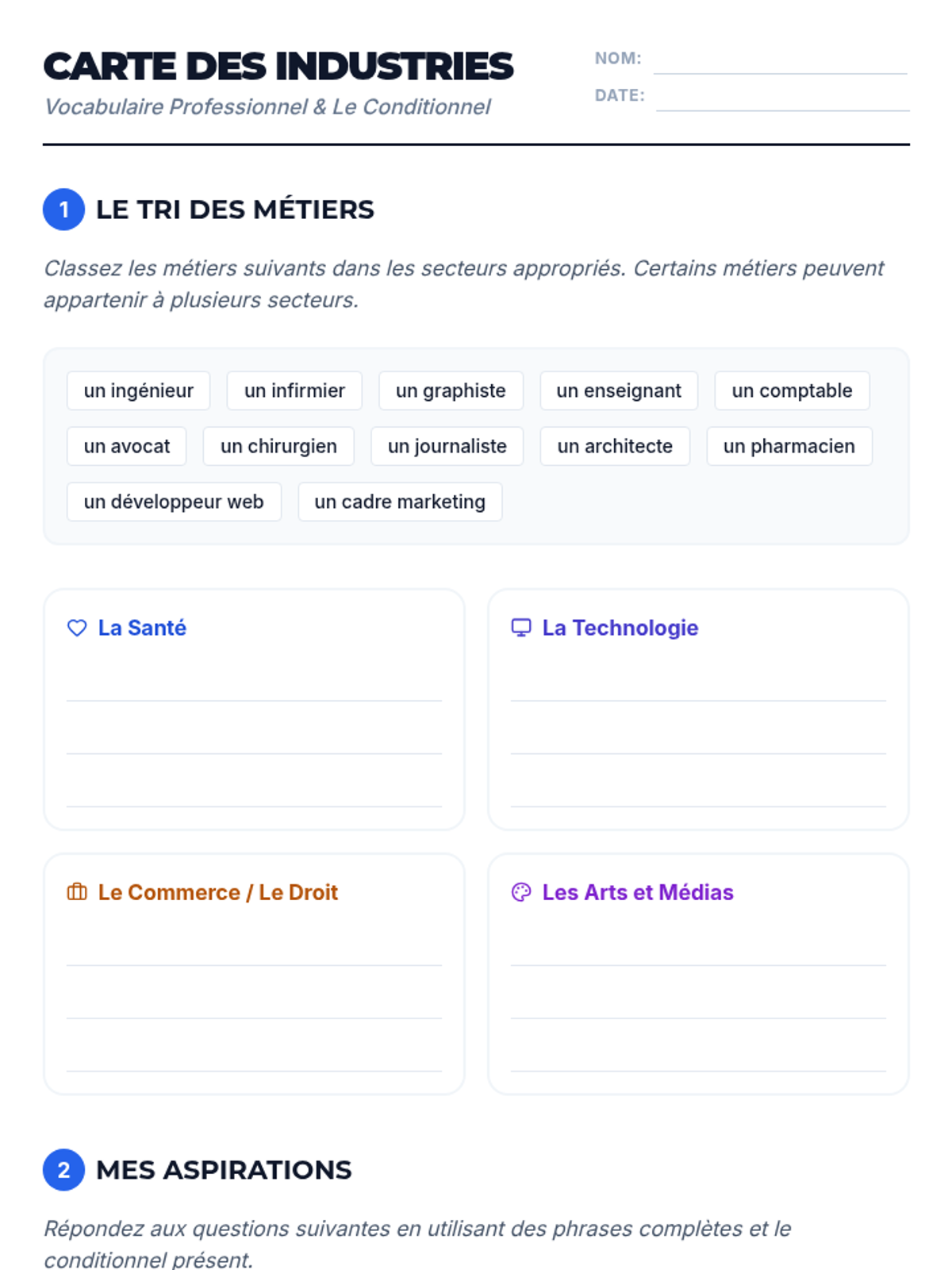
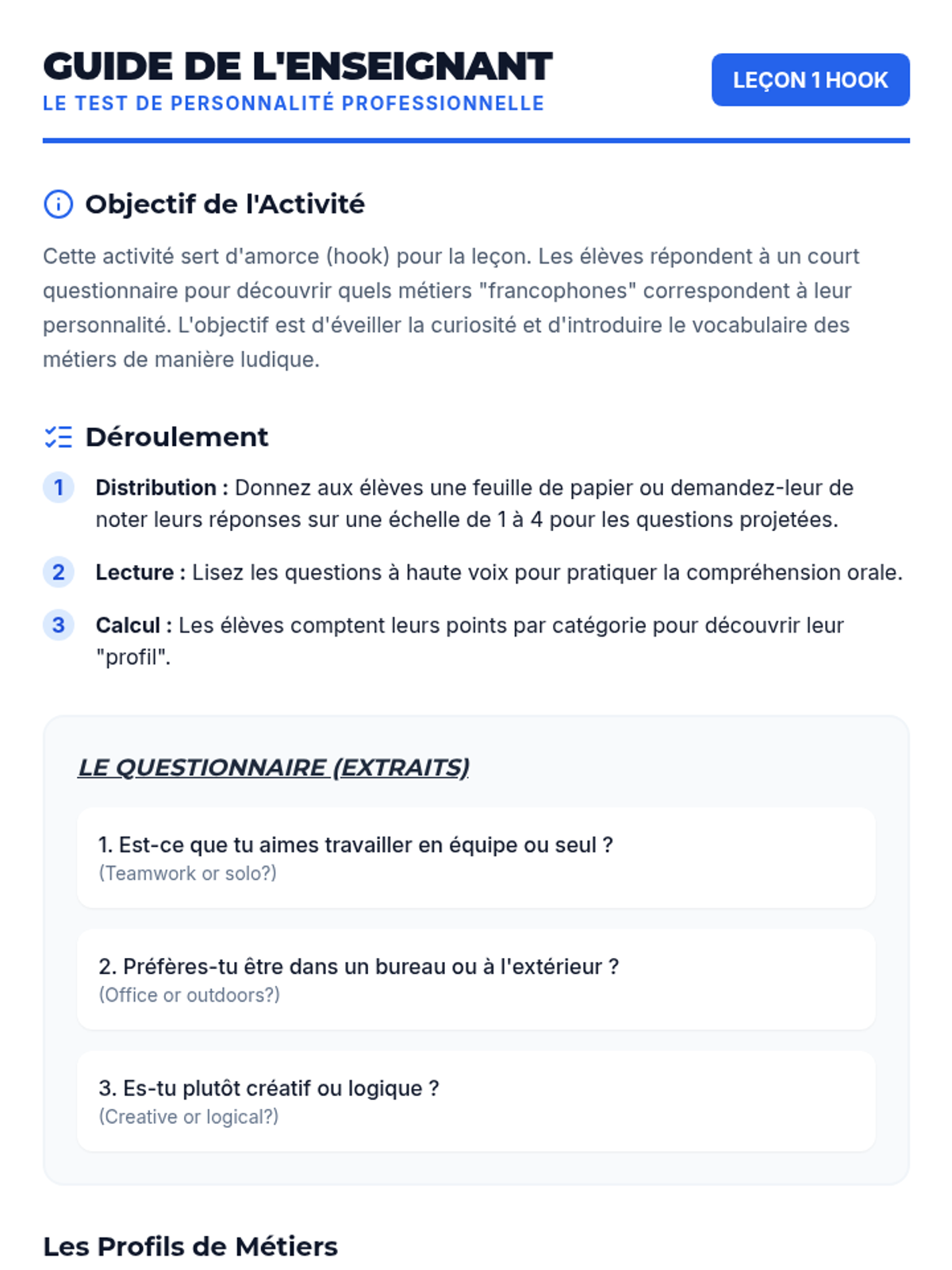
A comprehensive unit for 8th Grade French students exploring professional vocabulary, industries, and workplace etiquette in the Francophone world. Students progress from career exploration to a full-scale job interview simulation.
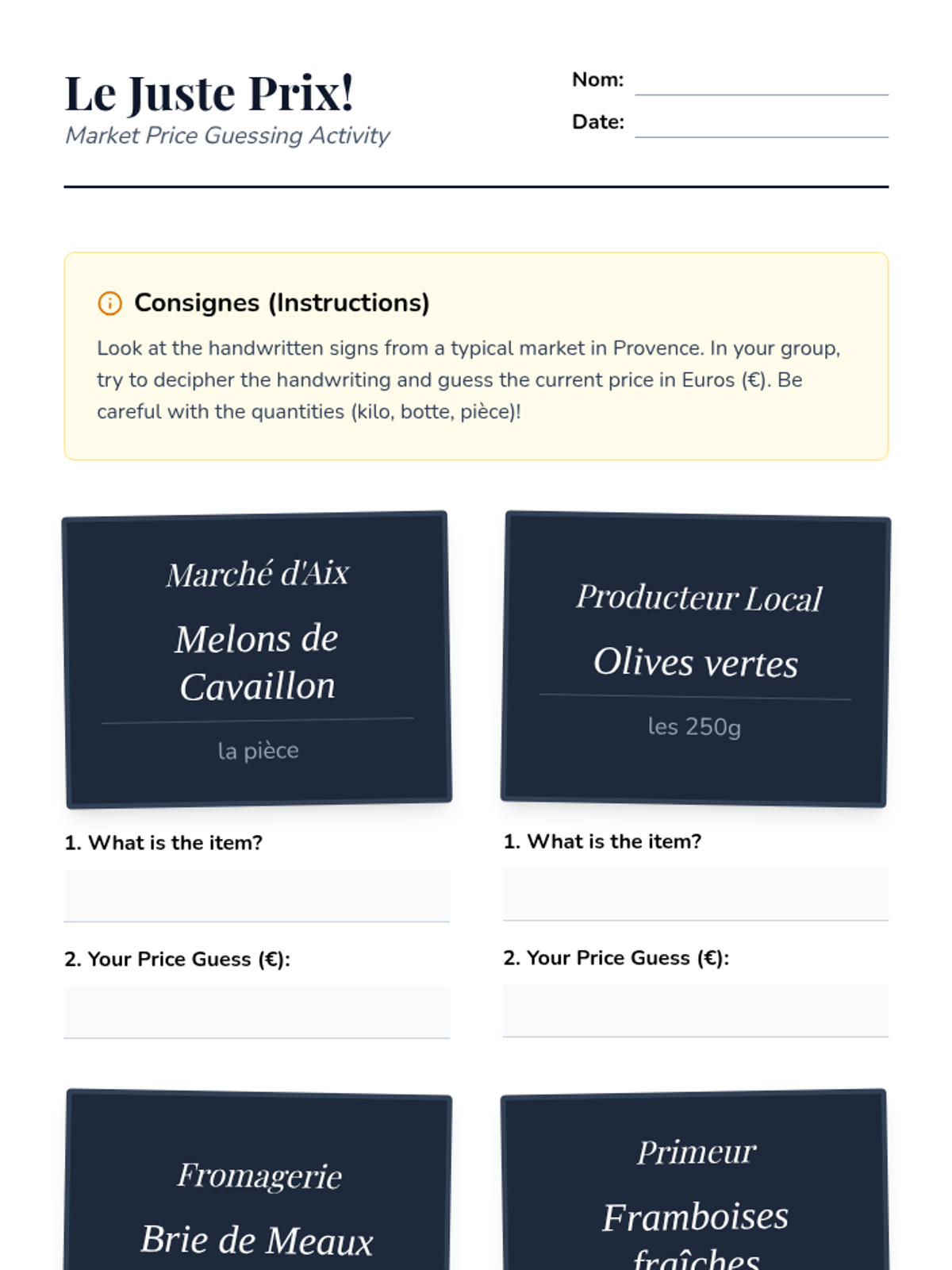
A cultural literacy sequence for beginner French students focusing on navigating the culinary world of France through text, from market lists to restaurant reviews. Students develop reading skills while exploring cultural norms around food and dining.
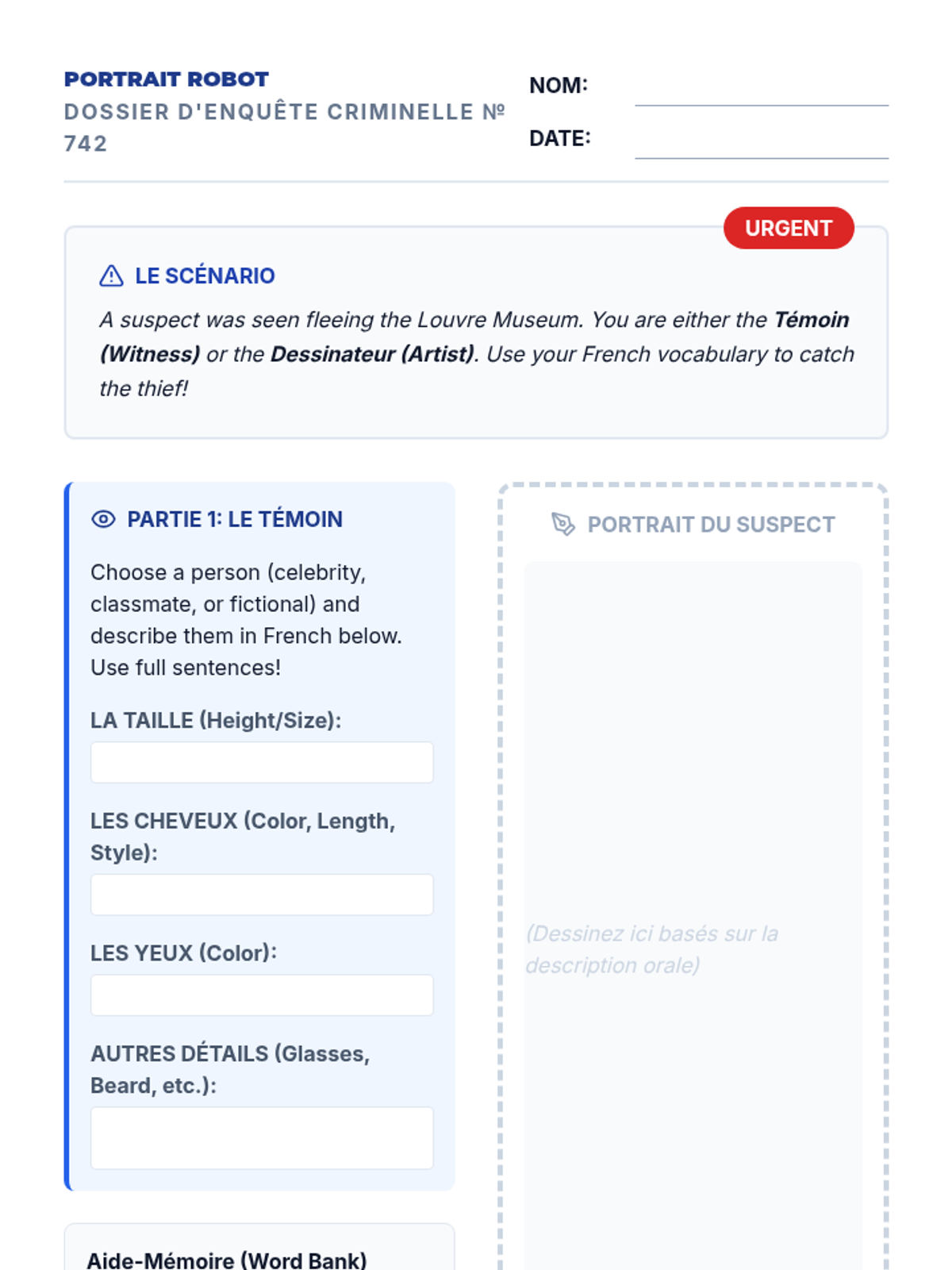
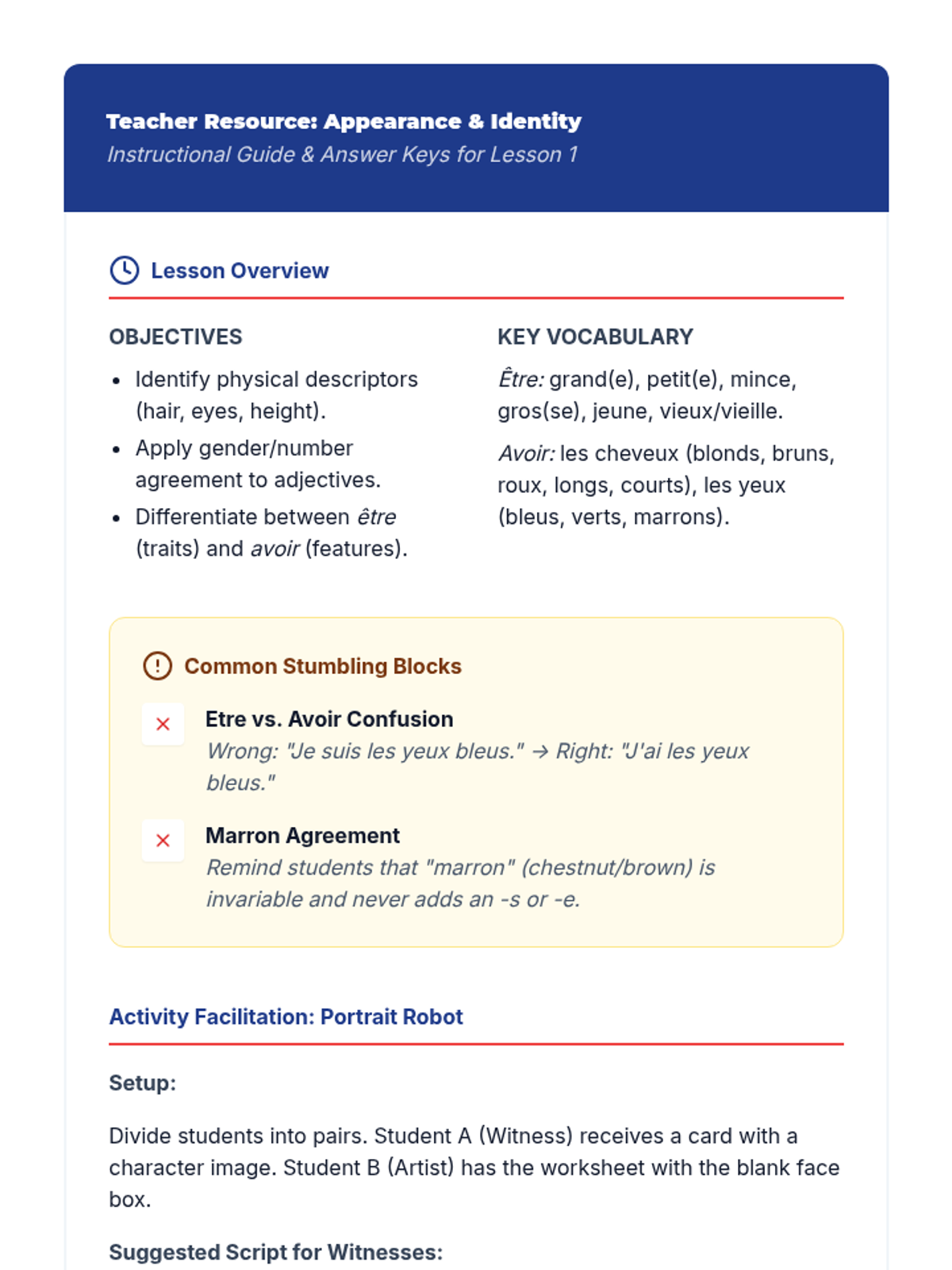
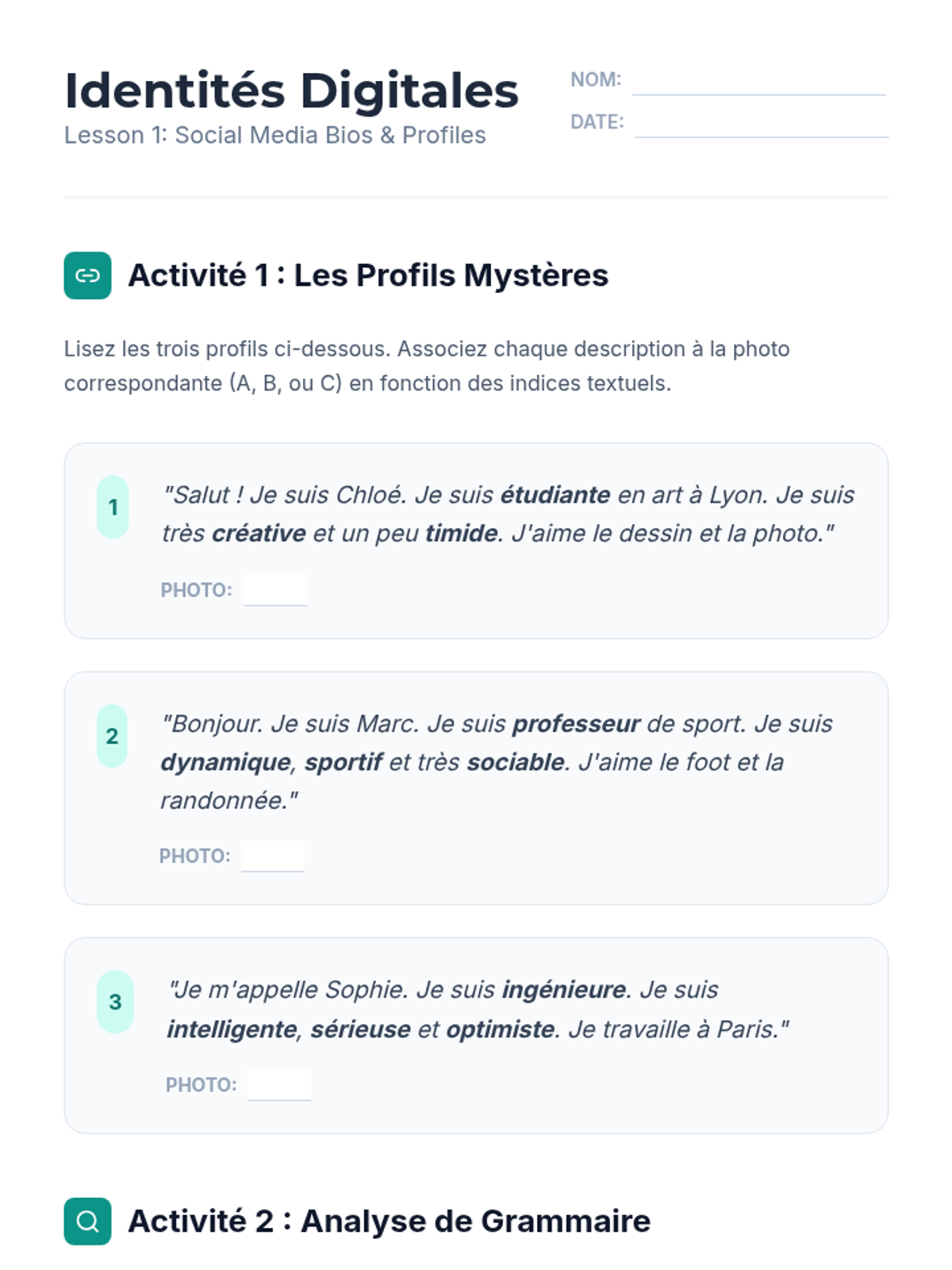
A comprehensive sequence for beginner French students focusing on identity, physical descriptions, and personality through various reading formats from social media to biographies.
A comprehensive 5-lesson unit designed to equip beginner French students with the reading and linguistic skills needed to navigate travel in the Francophone world. Students explore geography, decode transportation documents, master urban navigation, interpret weather forecasts, and ultimately design their own 3-day travel itinerary using the near future tense.
A comprehensive unit exploring French family structures, possessive adjectives, and community roles. Students progress from identifying family members to designing an ideal community, using authentic-feeling French texts and interactive simulations.
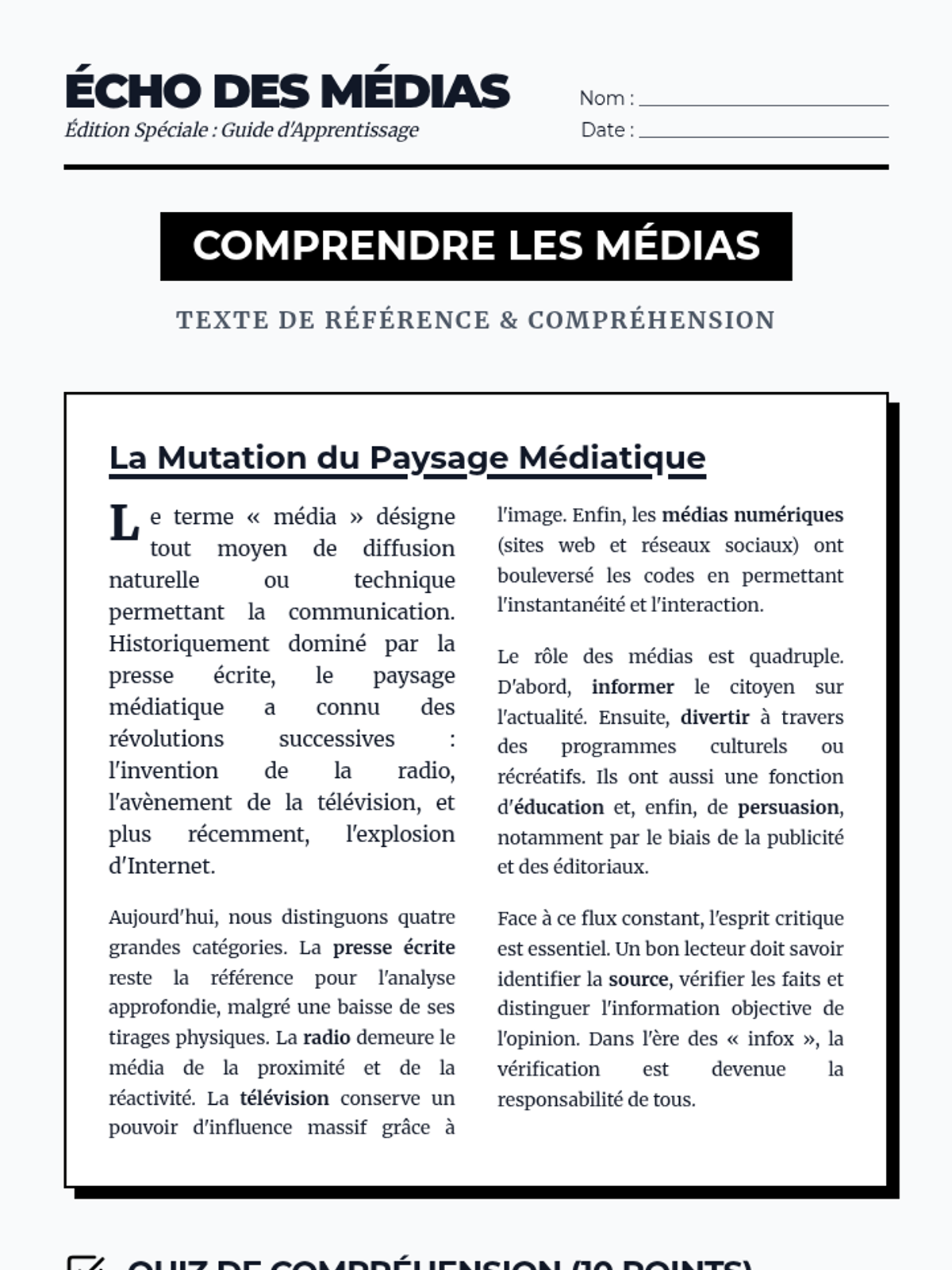
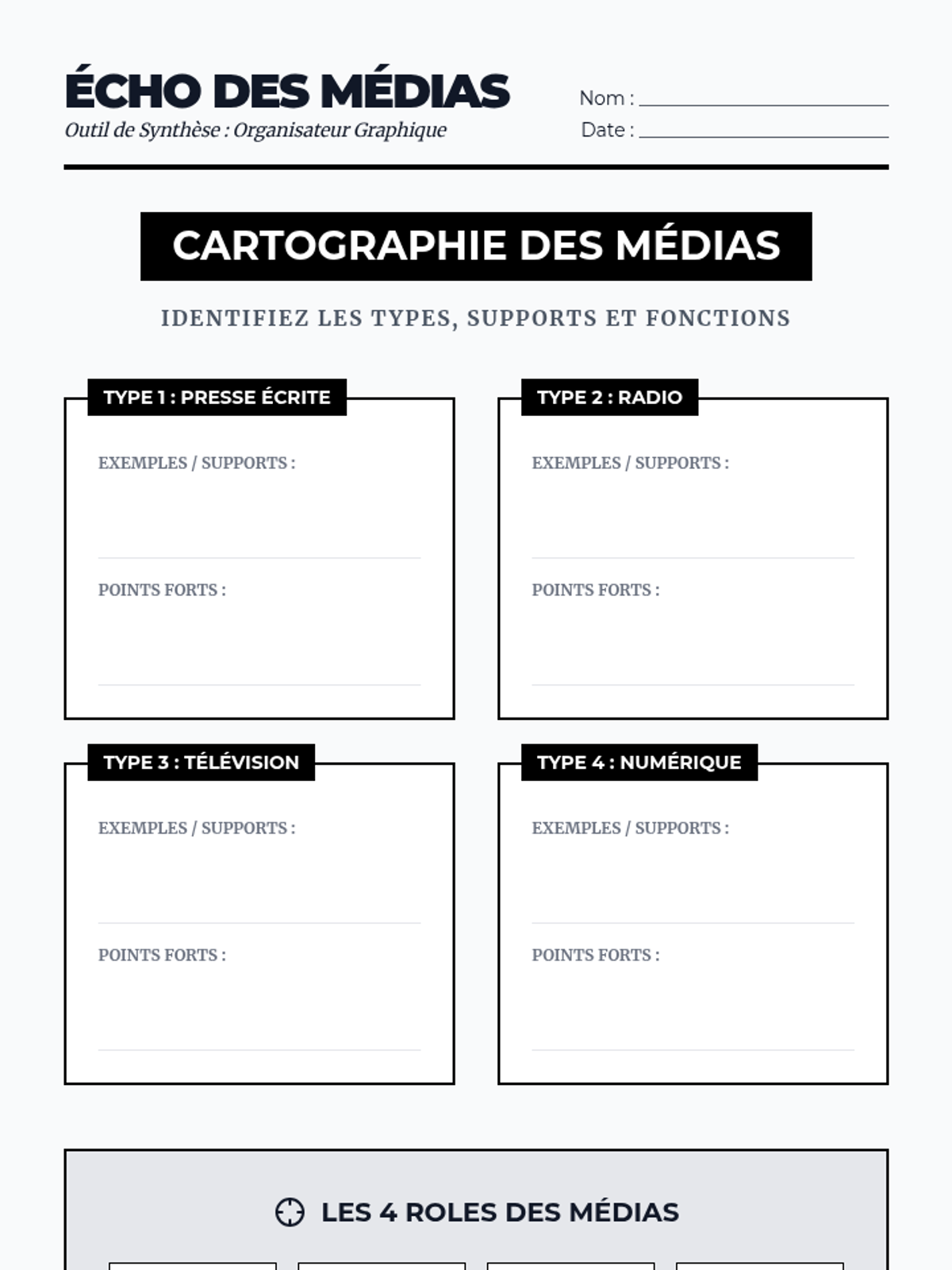
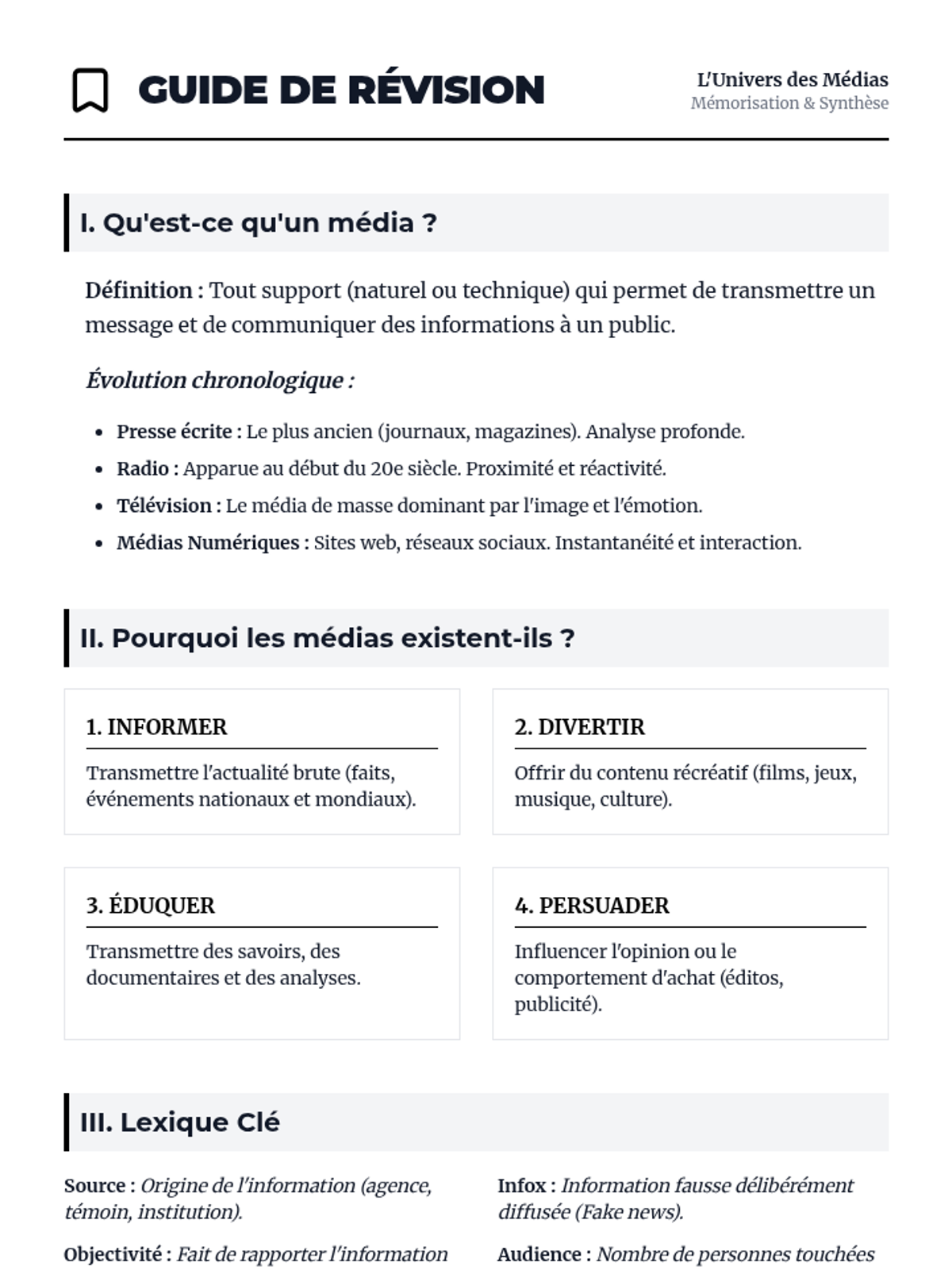
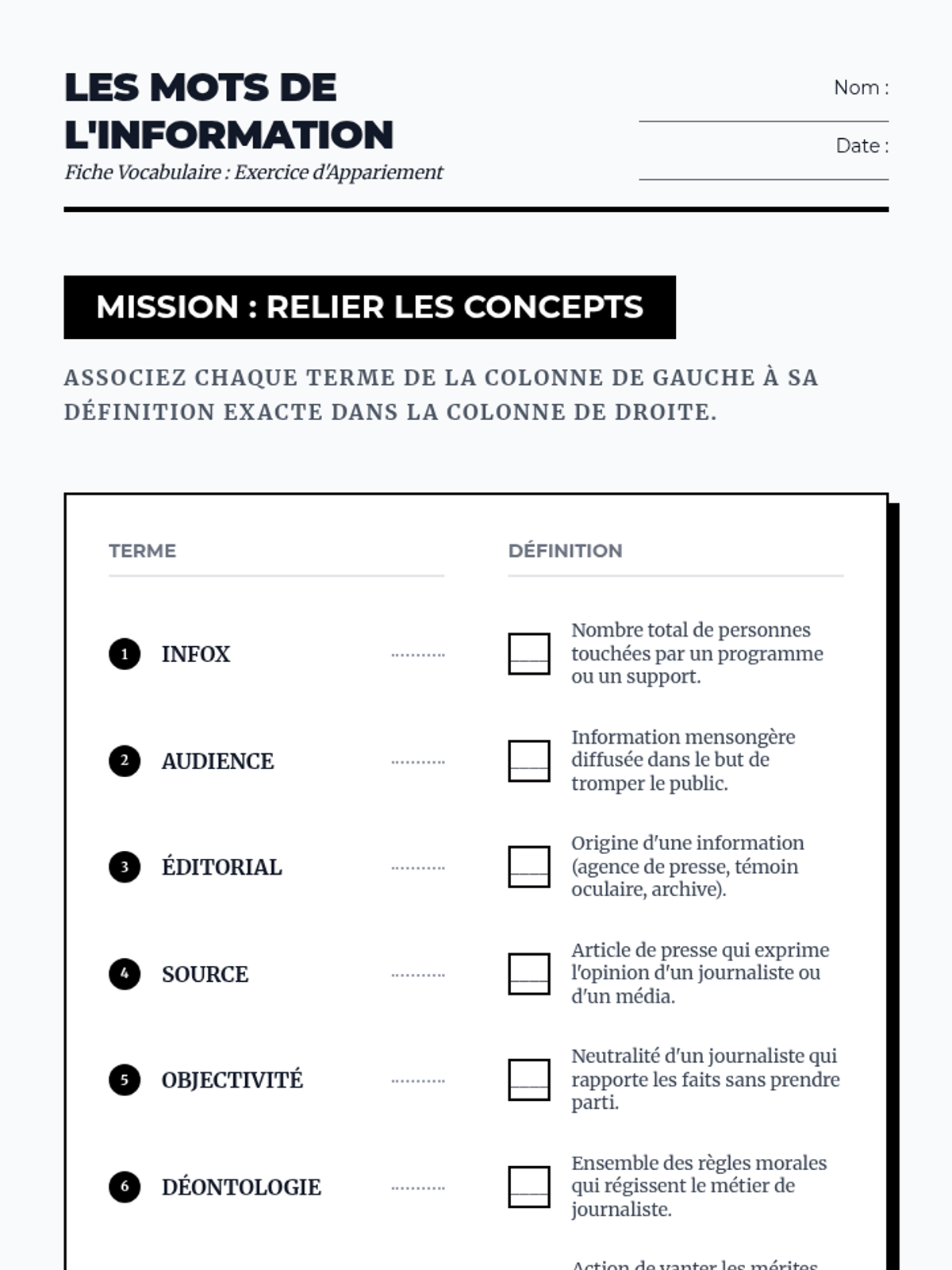
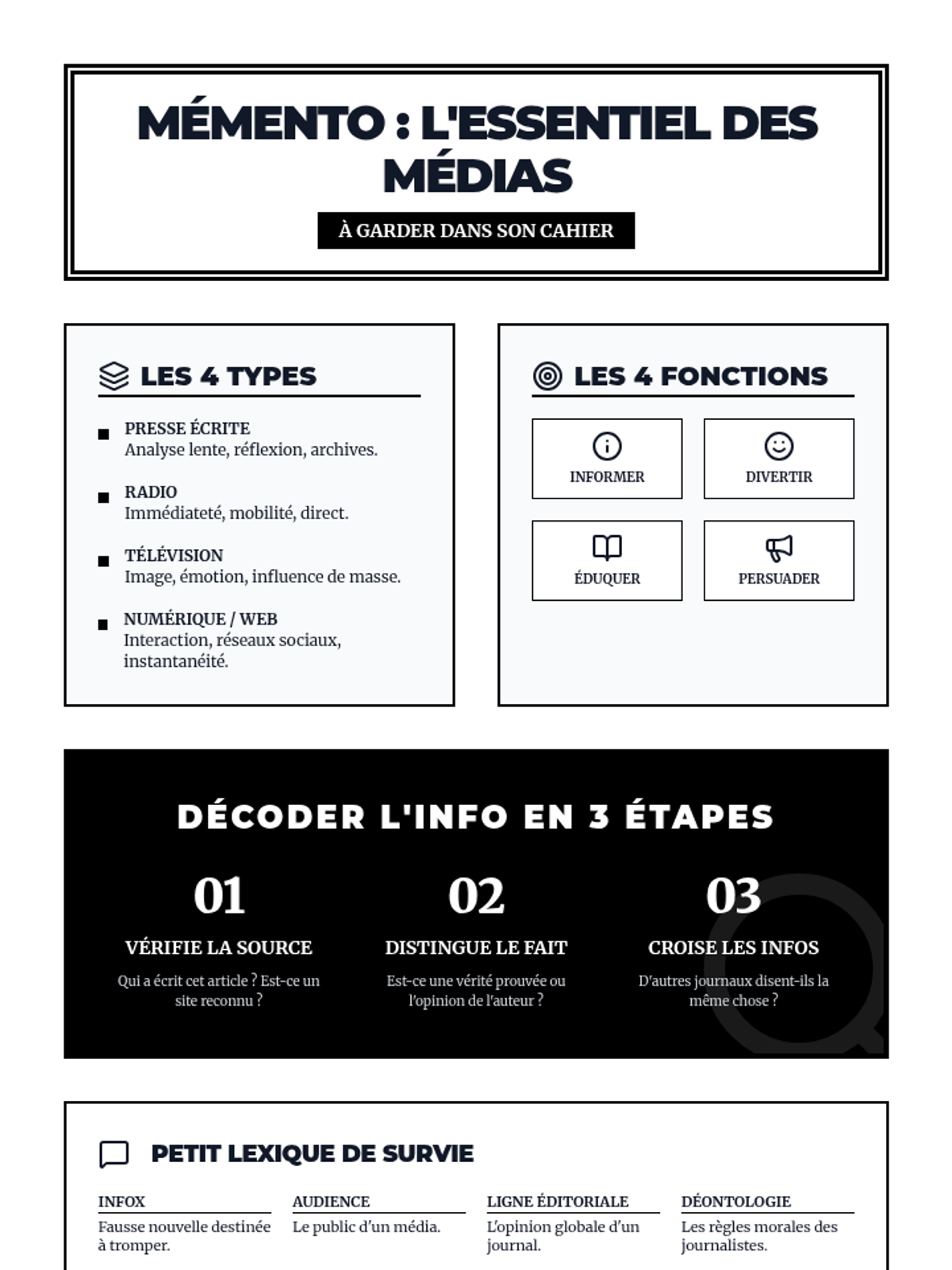
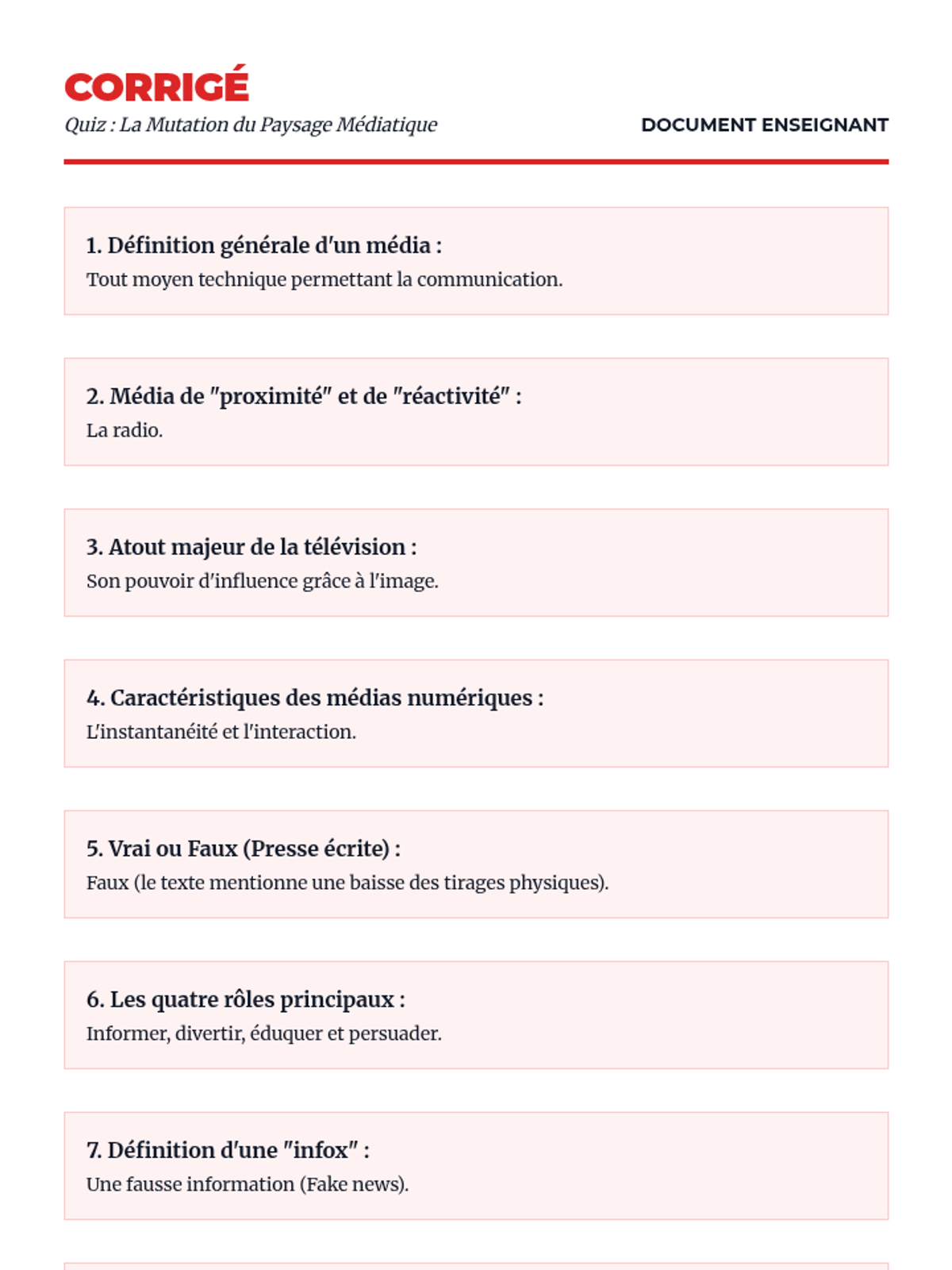
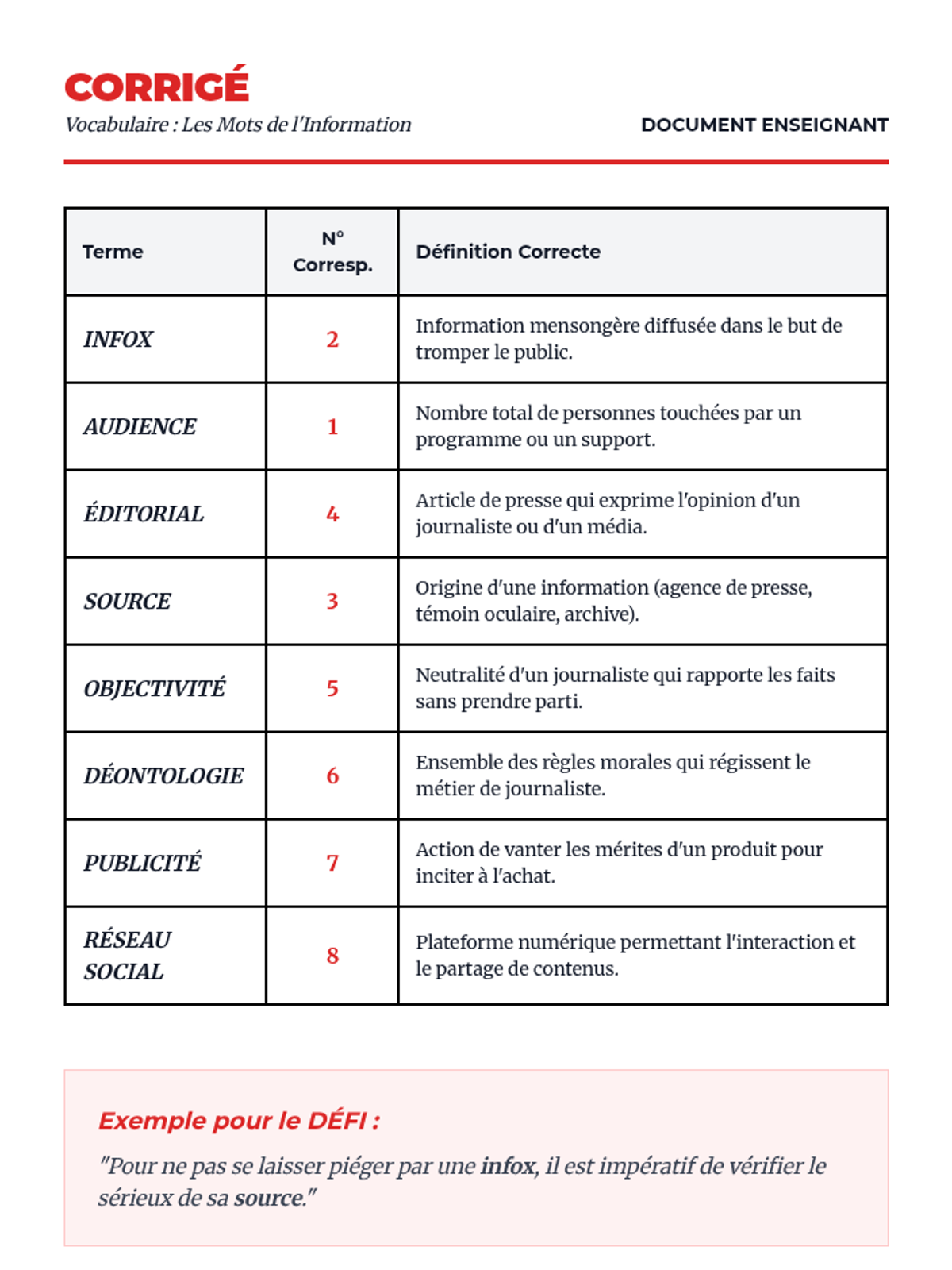
Une séquence pédagogique complète sur les différents types de médias, leurs fonctions et le vocabulaire journalistique. Elle comprend des supports visuels, des outils d'organisation et des évaluations.
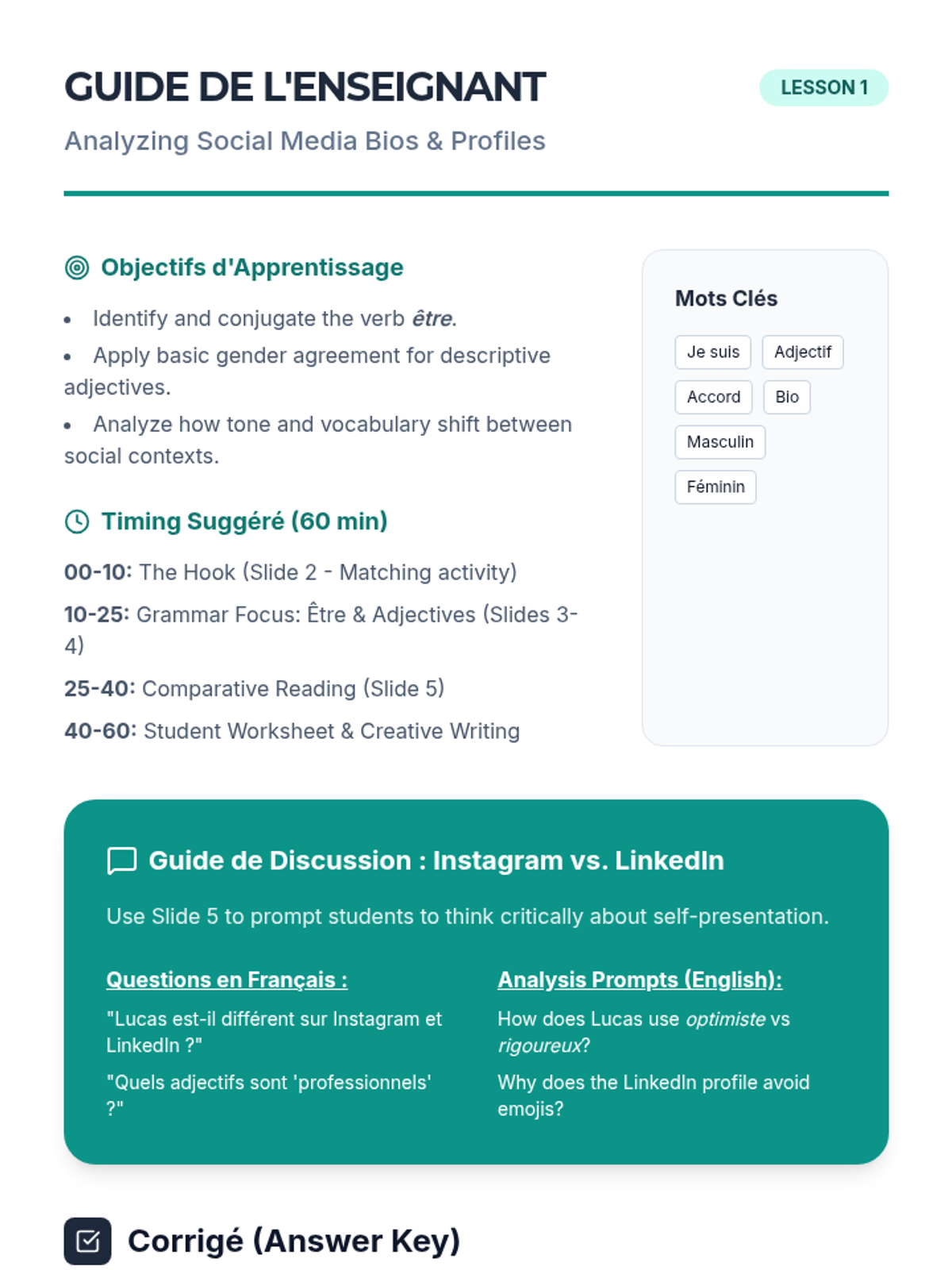
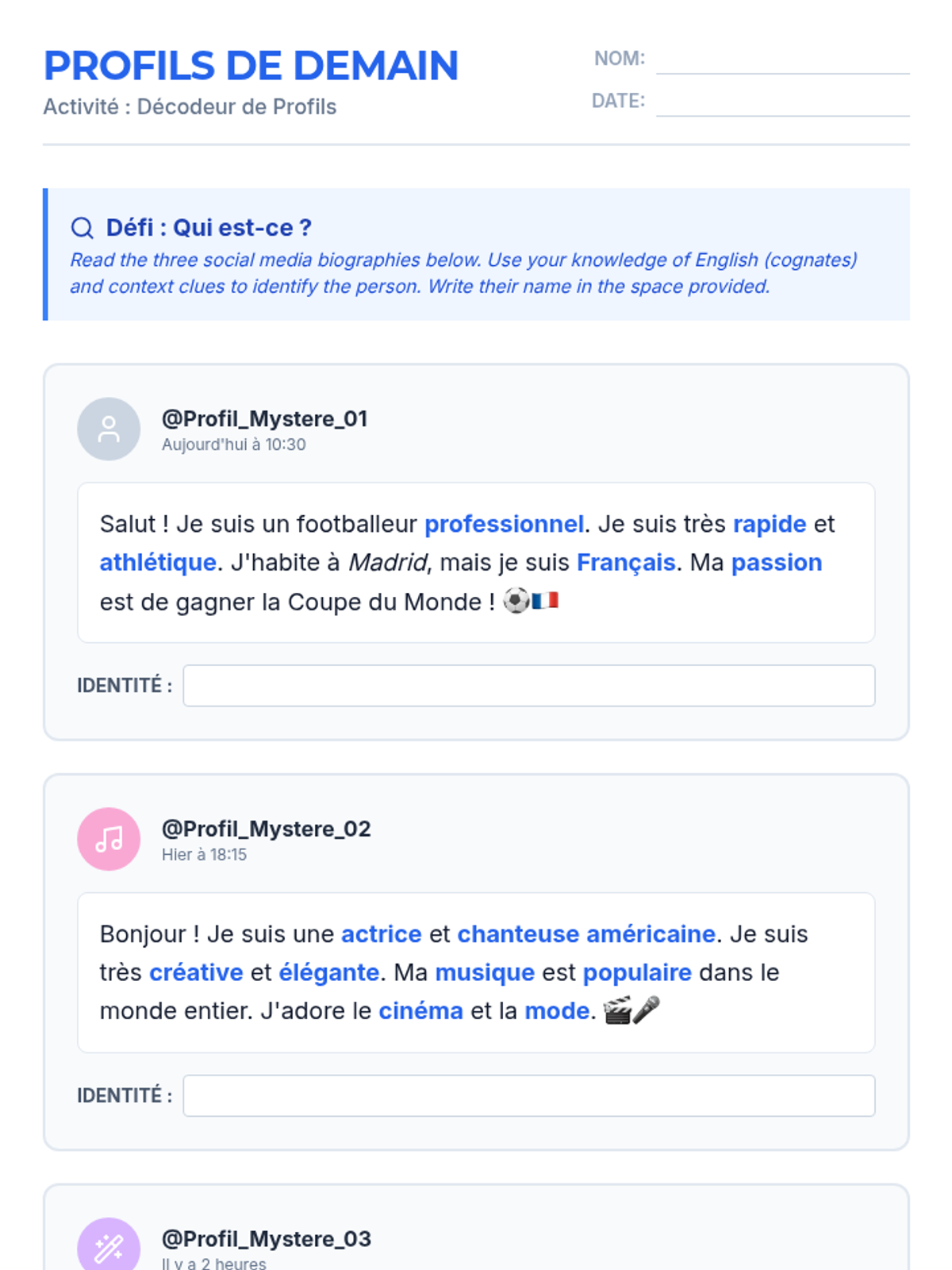
A comprehensive 5-lesson sequence for beginner French students focusing on identity and personal profiles. Students progress from identifying cognates in social media bios to writing full personal letters, mastering 'être', 'avoir', adjective agreement, and expressions of preference.
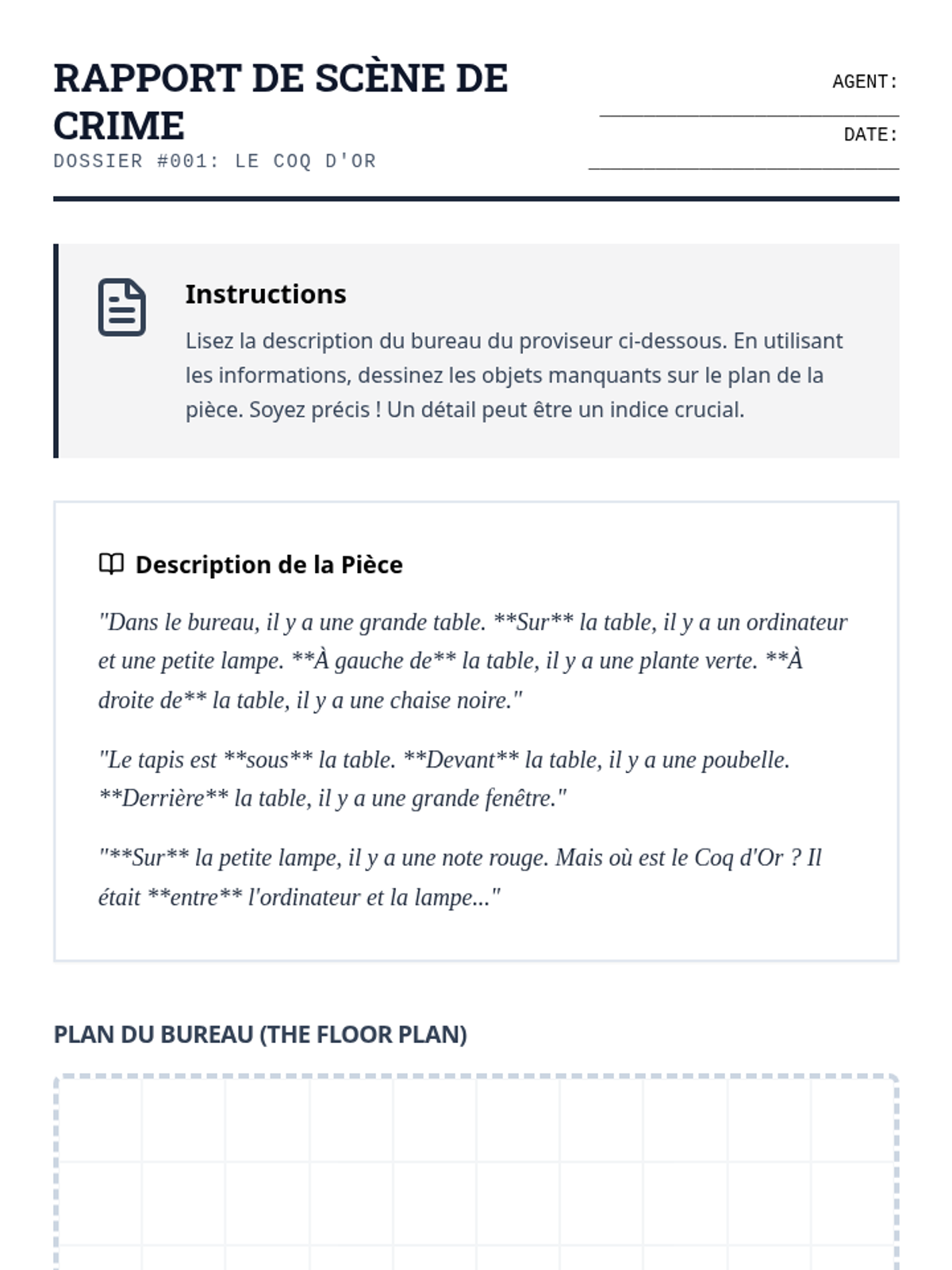
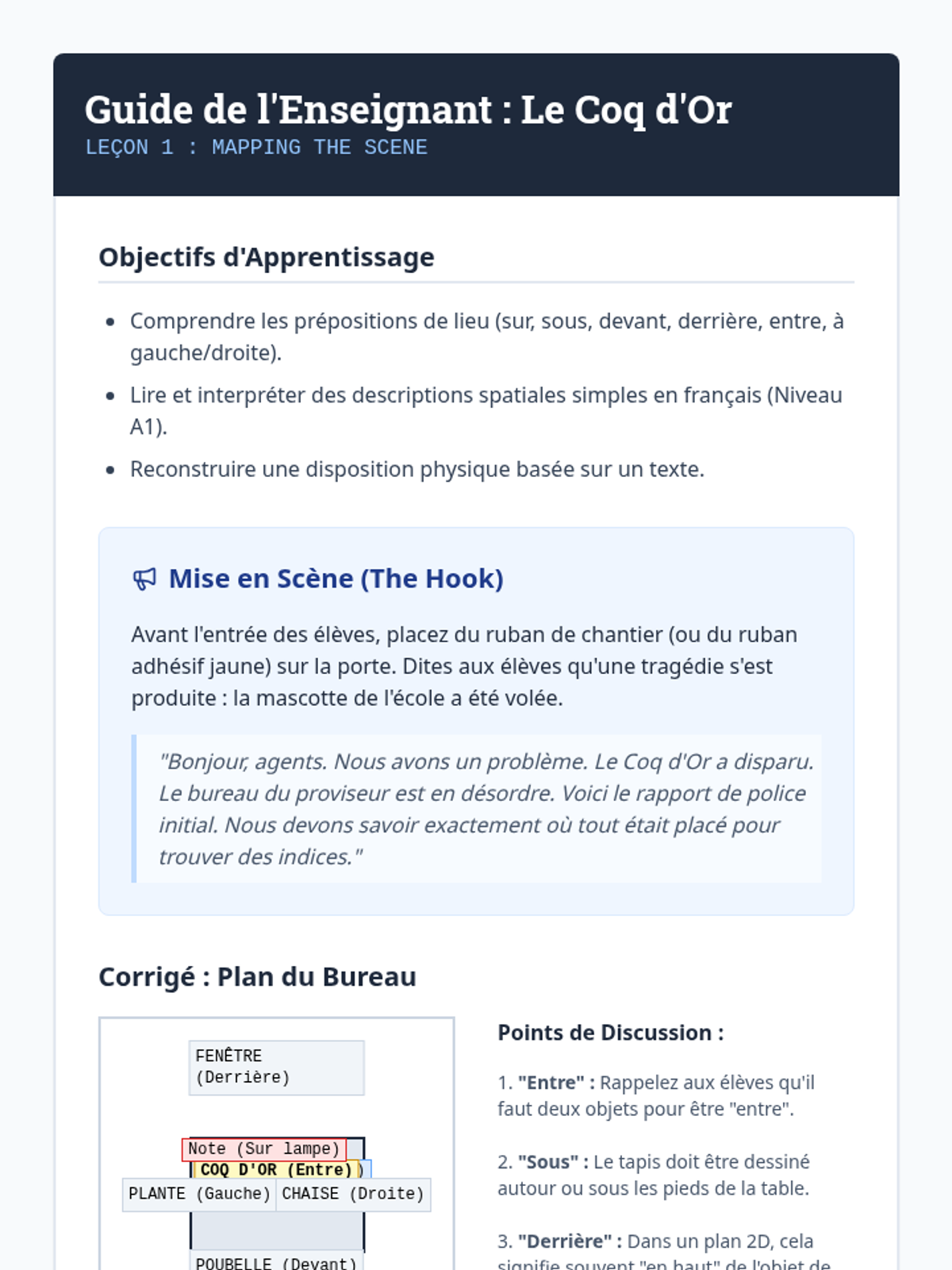
A gamified French reading unit where students act as detectives to solve the mystery of a missing school mascot. Students practice prepositions, negation, time, and logical deduction through witness statements and suspect dossiers.
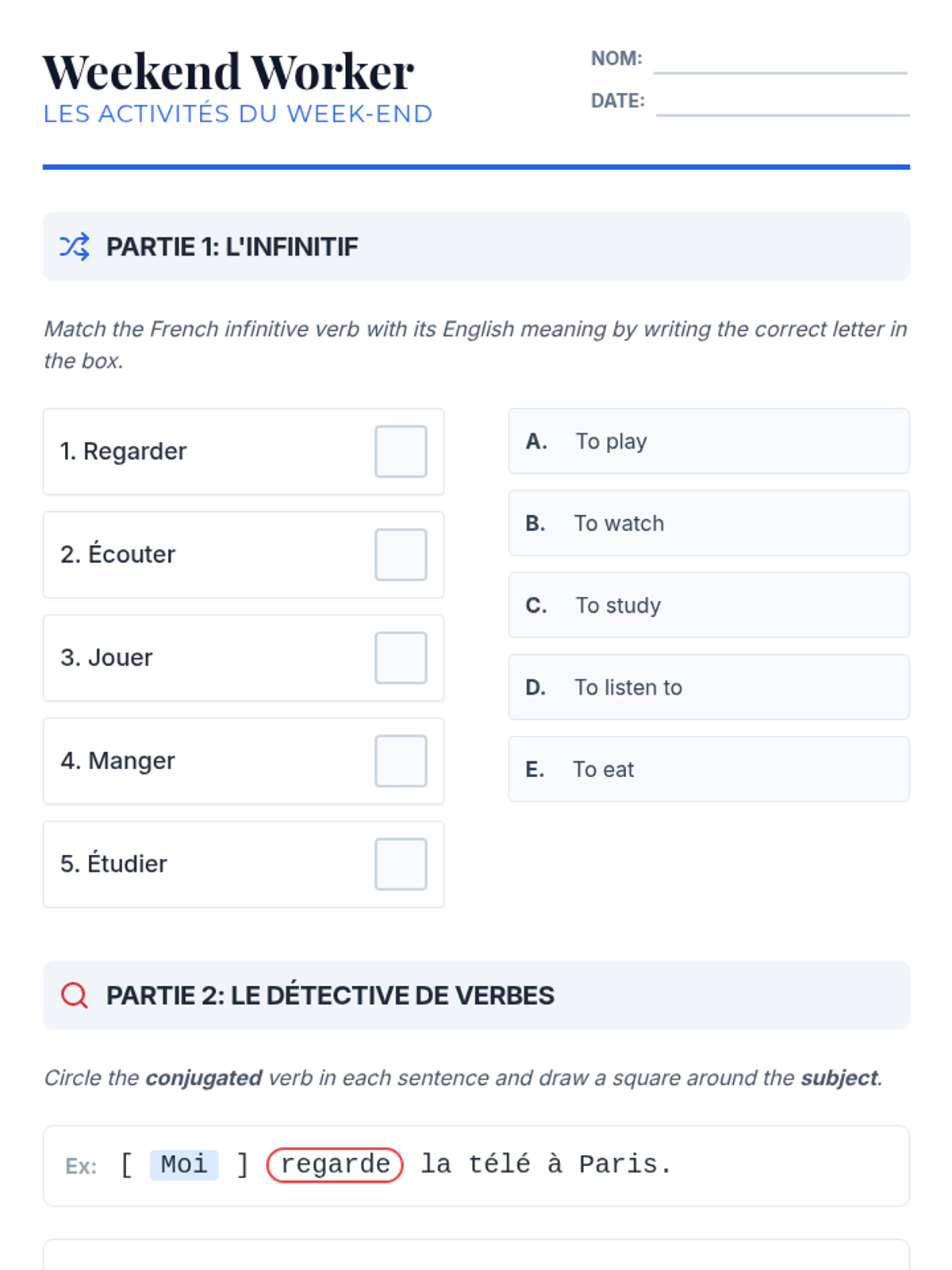
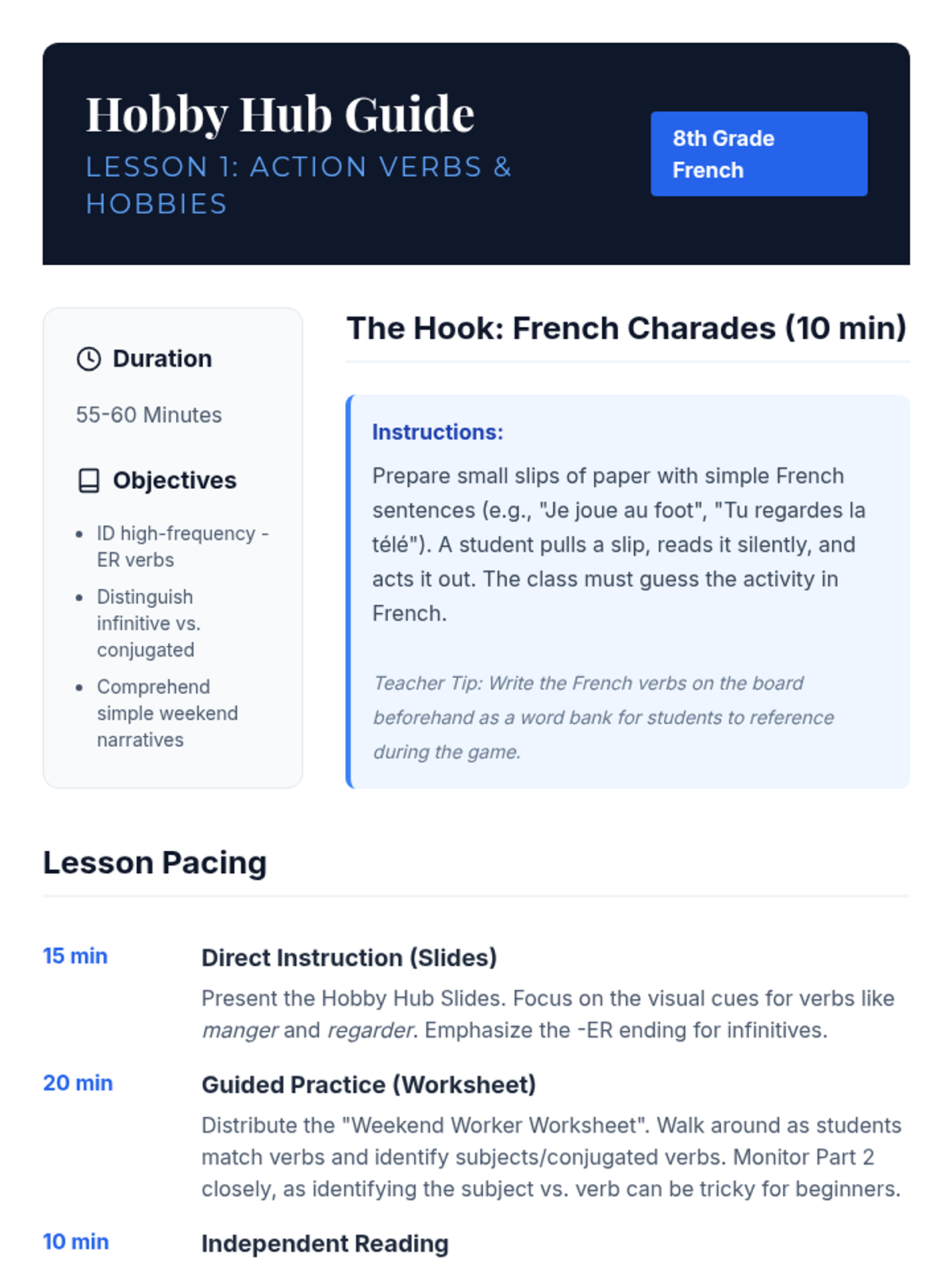
An 8th-grade French sequence focused on leisure activities, hobbies, and near-future plans. Students engage in a Paris-themed simulation, reading authentic texts like weather reports and menus to plan a weekend itinerary.
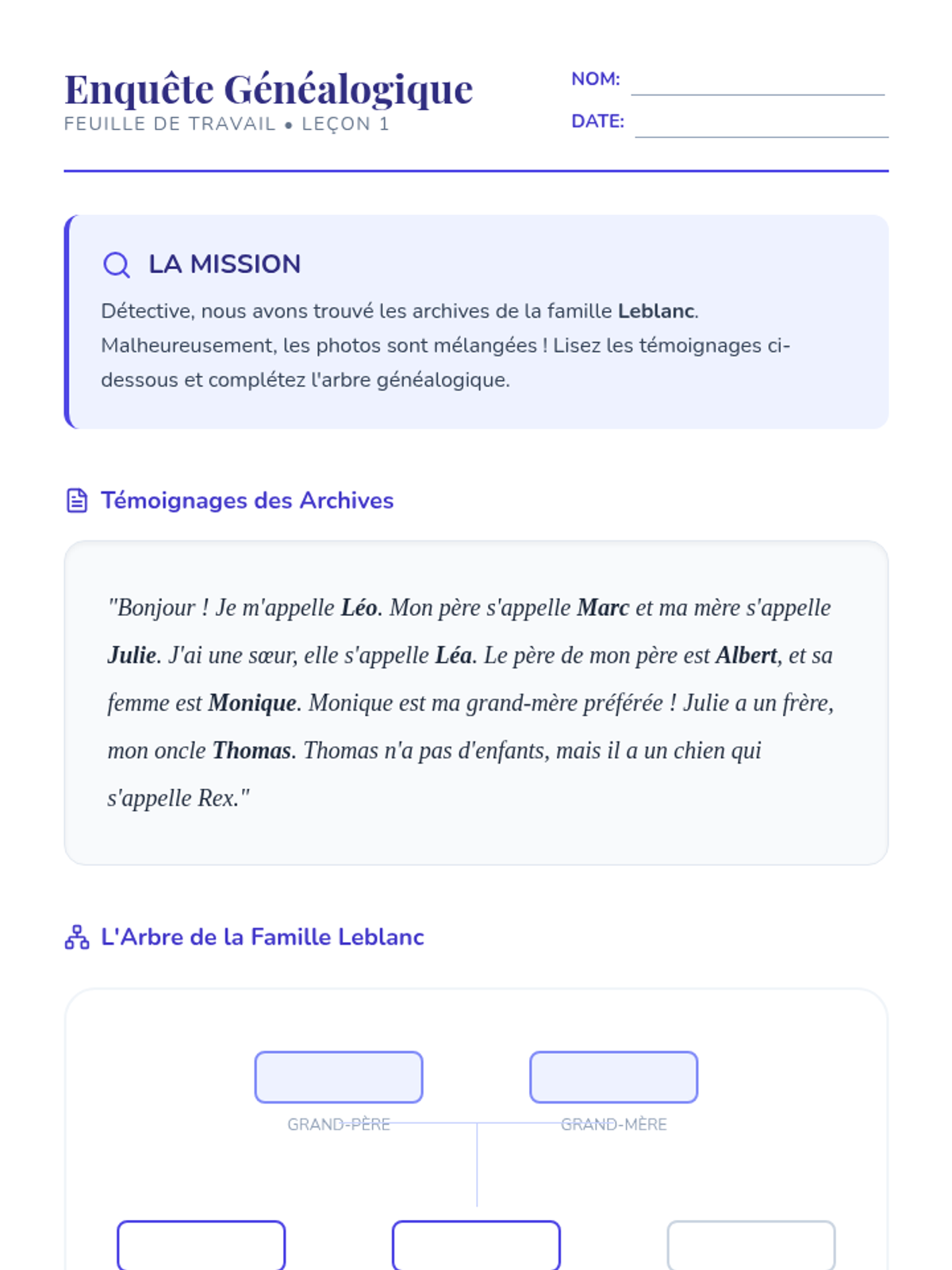
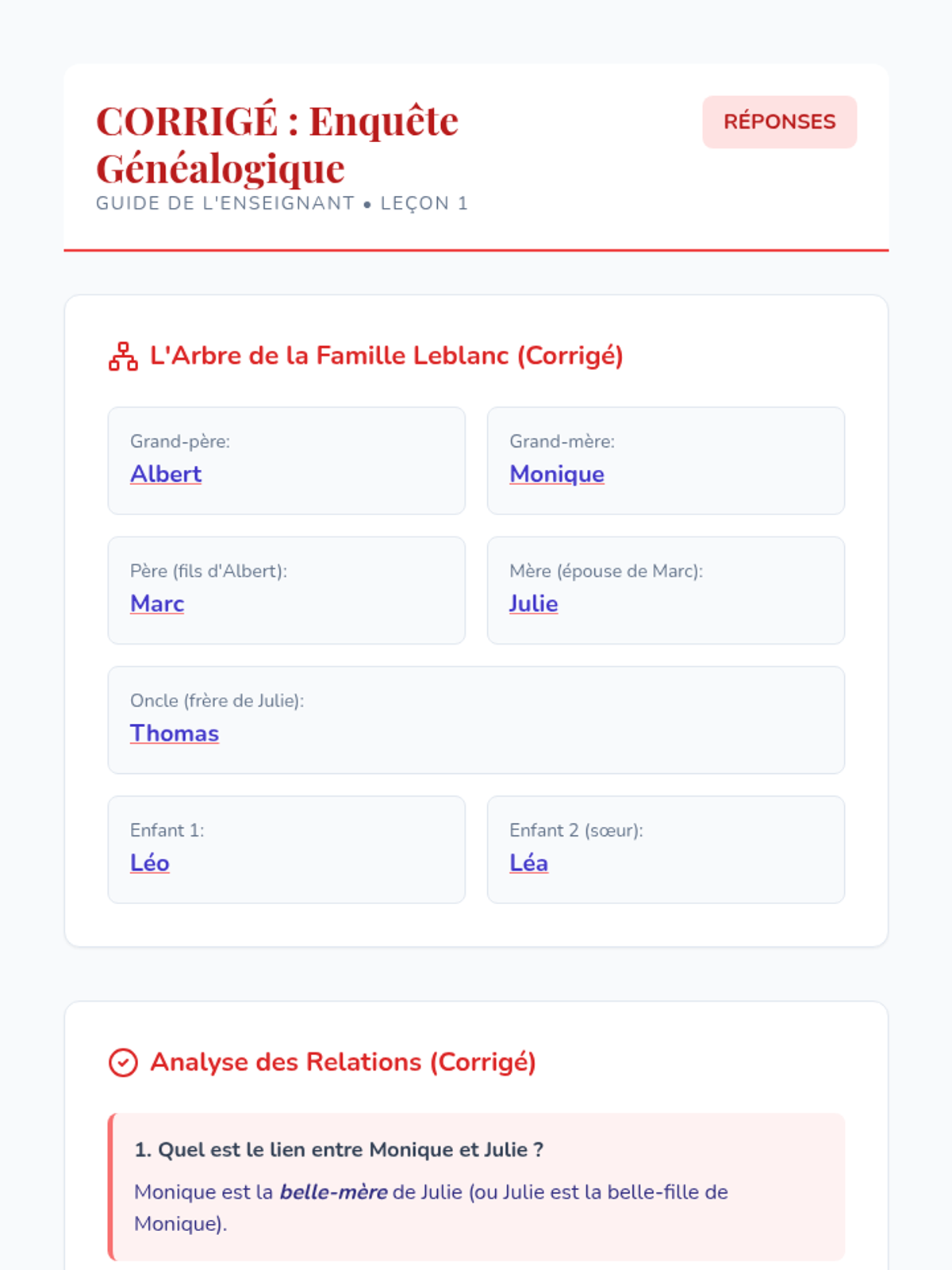
A French reading sequence for 8th graders focusing on family relationships, possessive adjectives, and descriptive narratives. Students move from basic kinship terms to complex character profiles, culminating in a family album project.
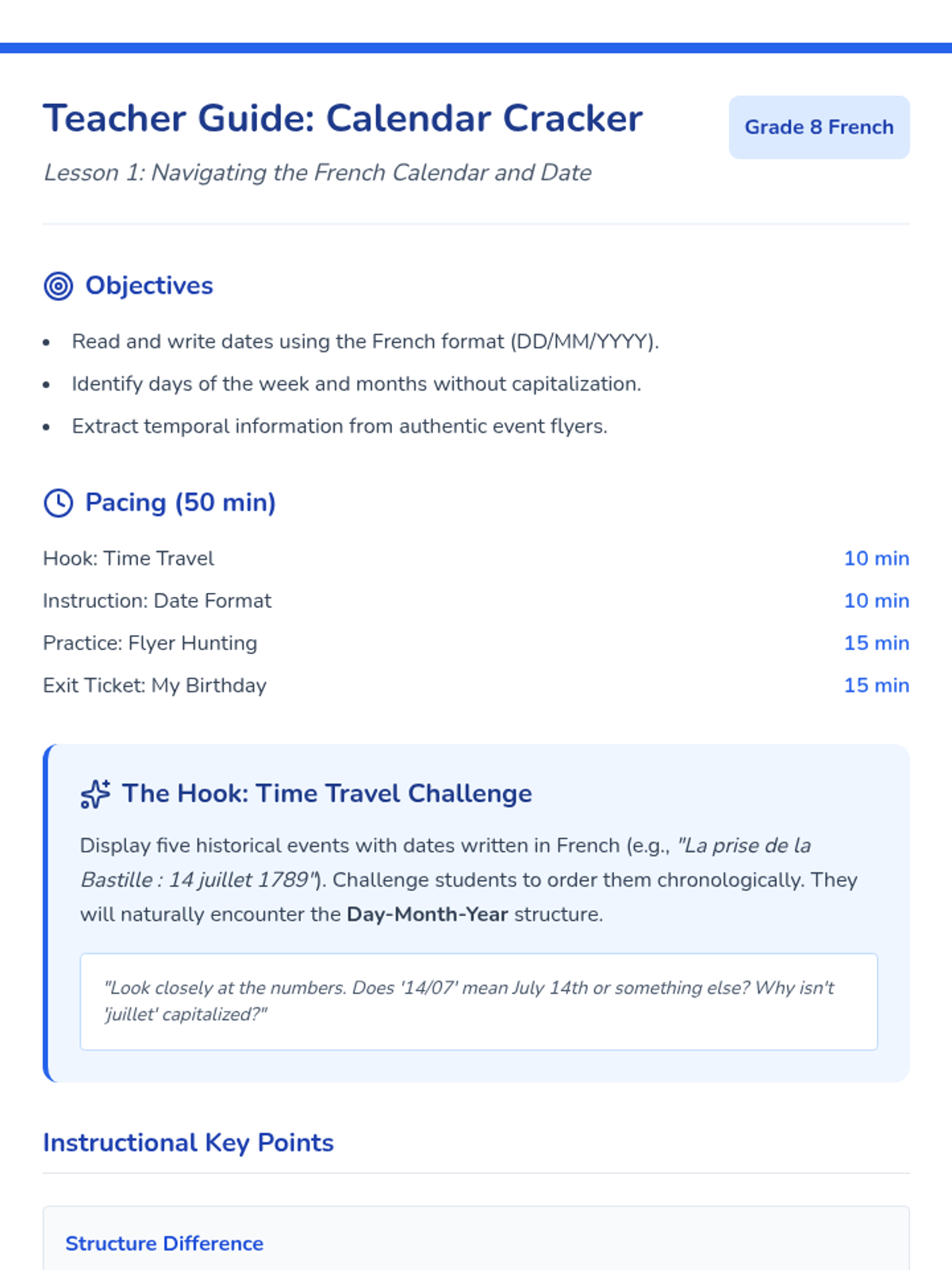
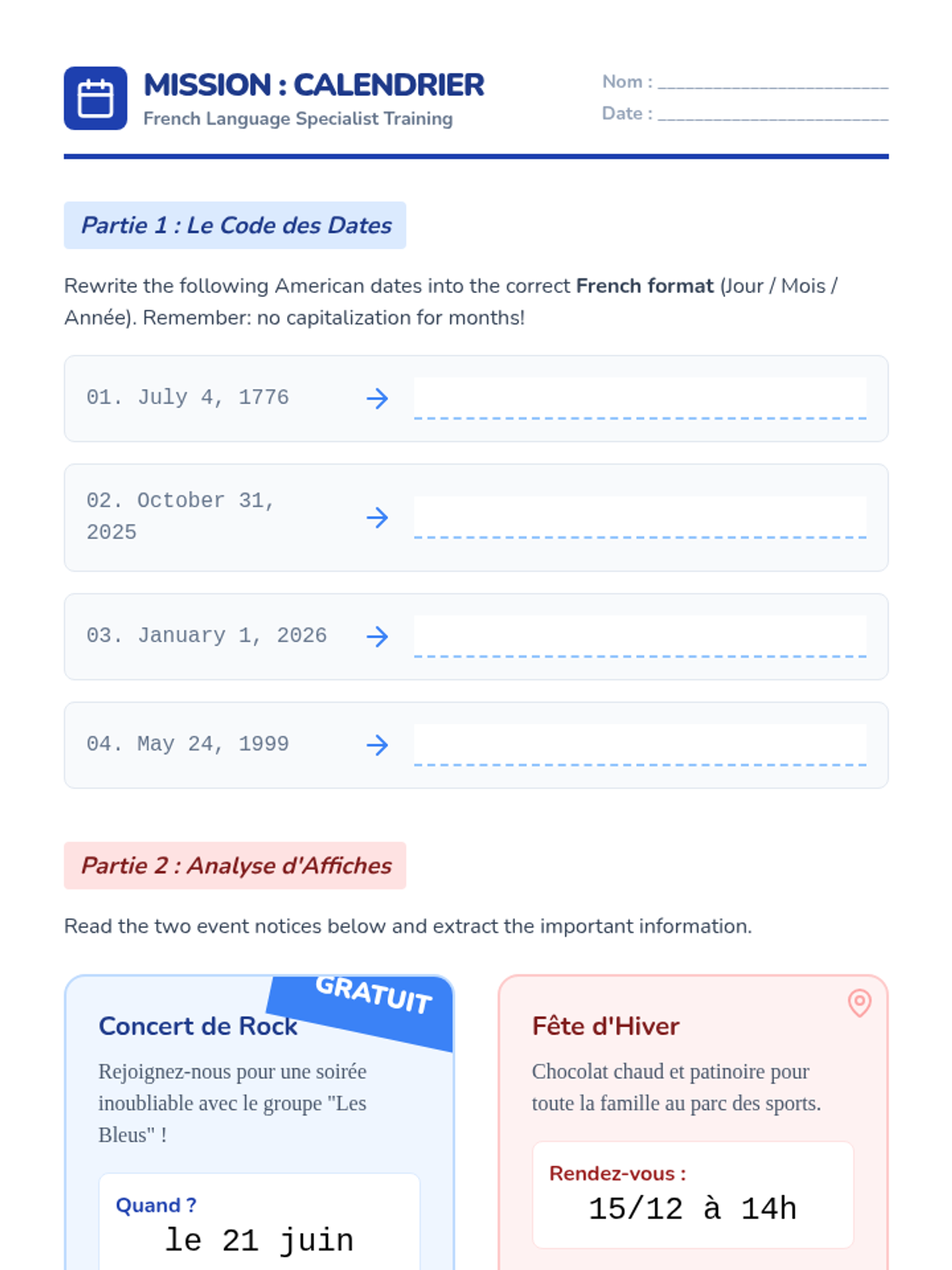
A comprehensive unit for 8th-grade French students focused on reading and interpreting authentic materials related to school life. Students compare French and American education systems through calendars, schedules, supplies, and personal opinions.
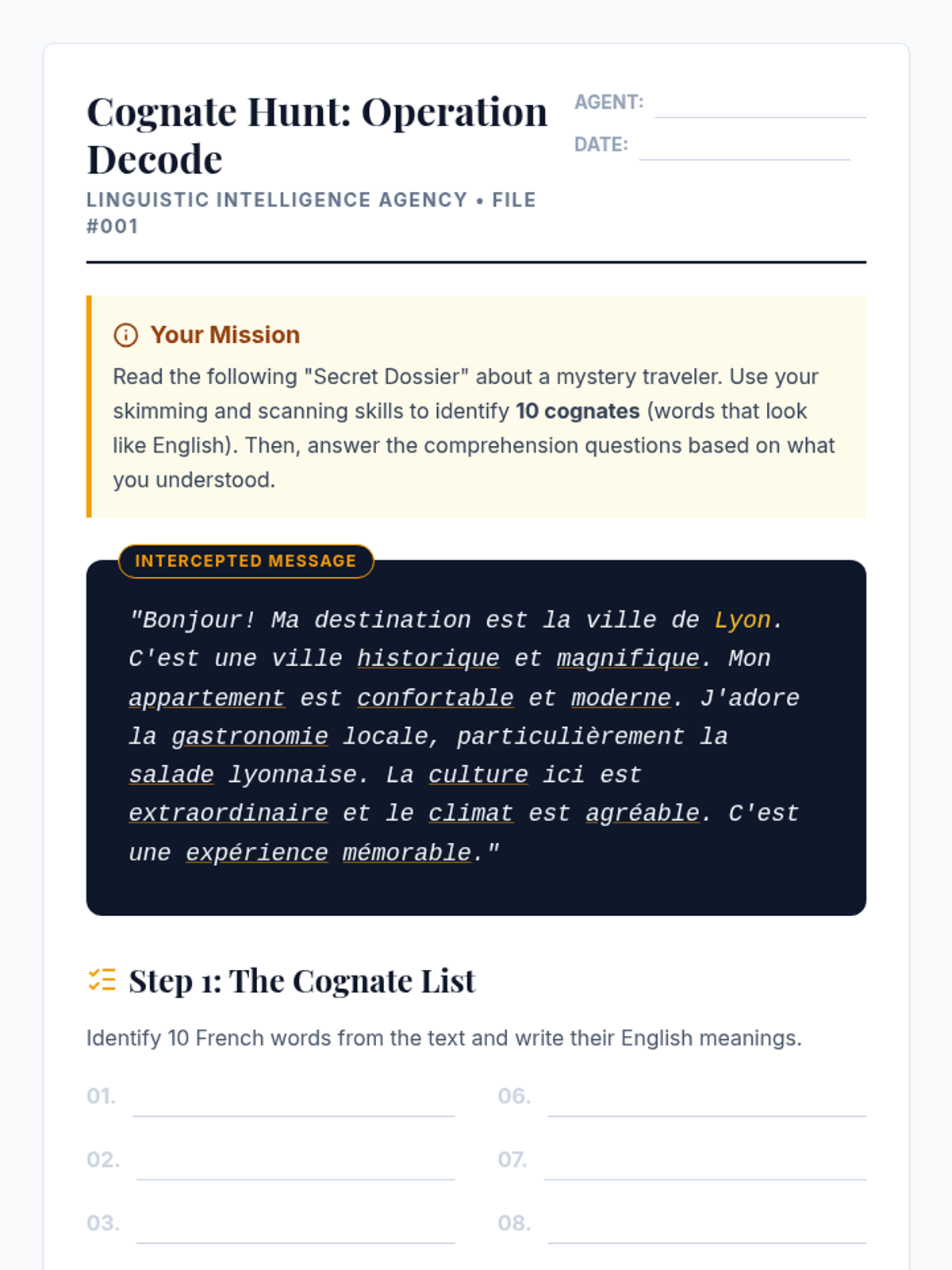
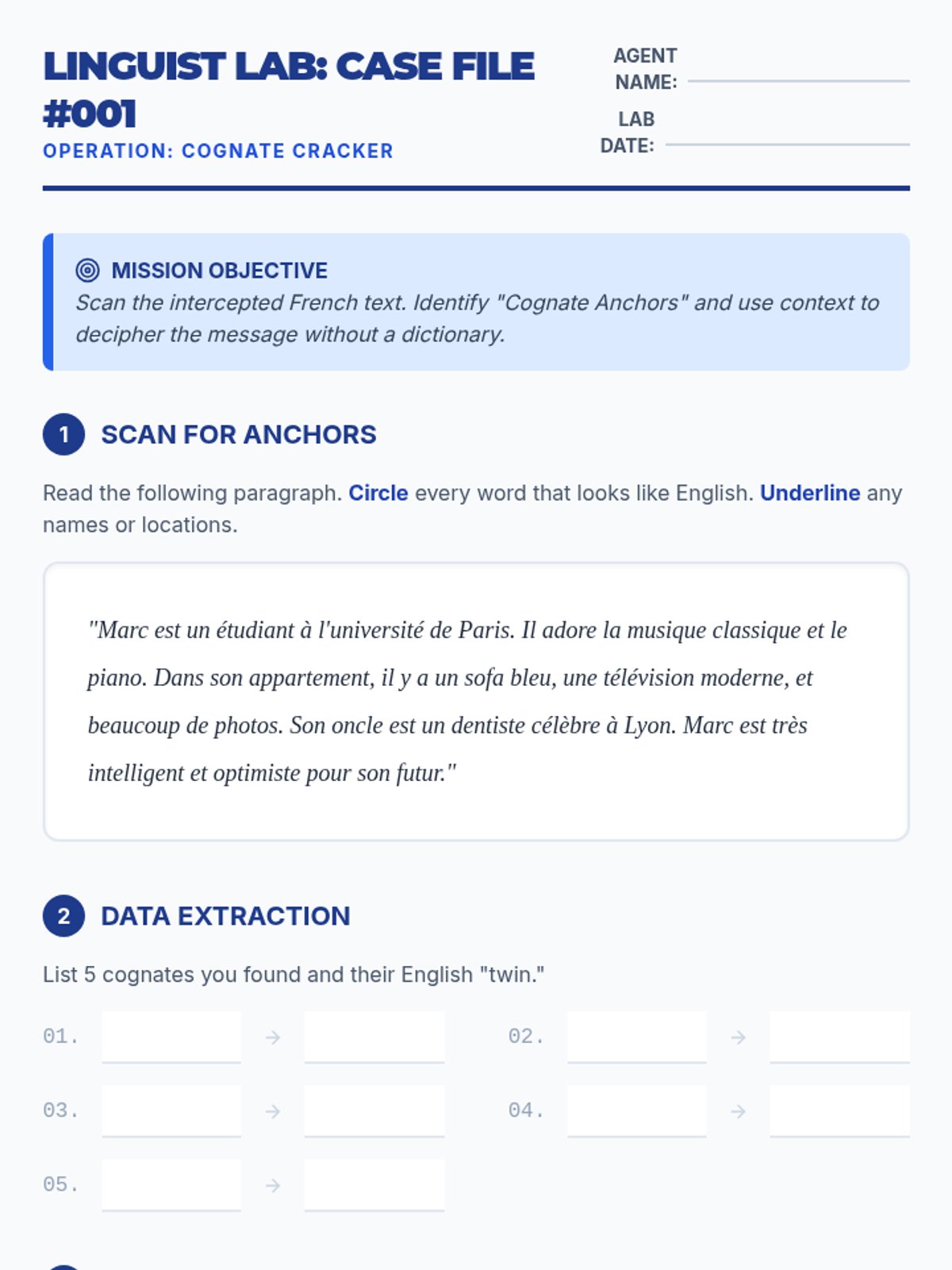
A foundational French reading sequence for 8th graders focusing on decoding identity-based texts using cognates, context clues, and basic grammar like 'être' and adjective agreement. Students progress from identifying familiar words to synthesizing full narratives about personal identity.
An immersive travel-themed sequence where students develop functional French literacy by interpreting authentic signs, menus, schedules, and brochures to navigate a francophone city.
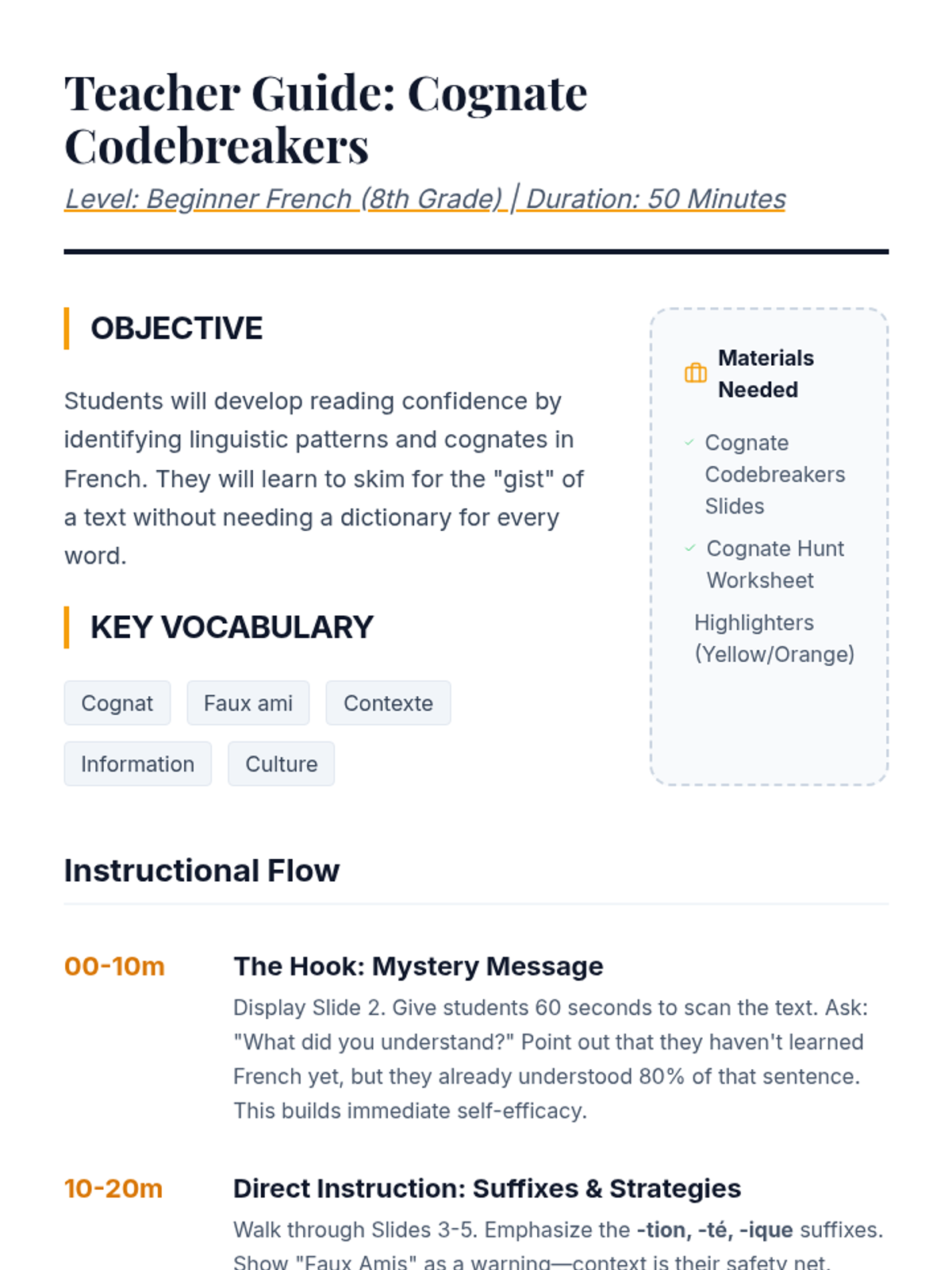
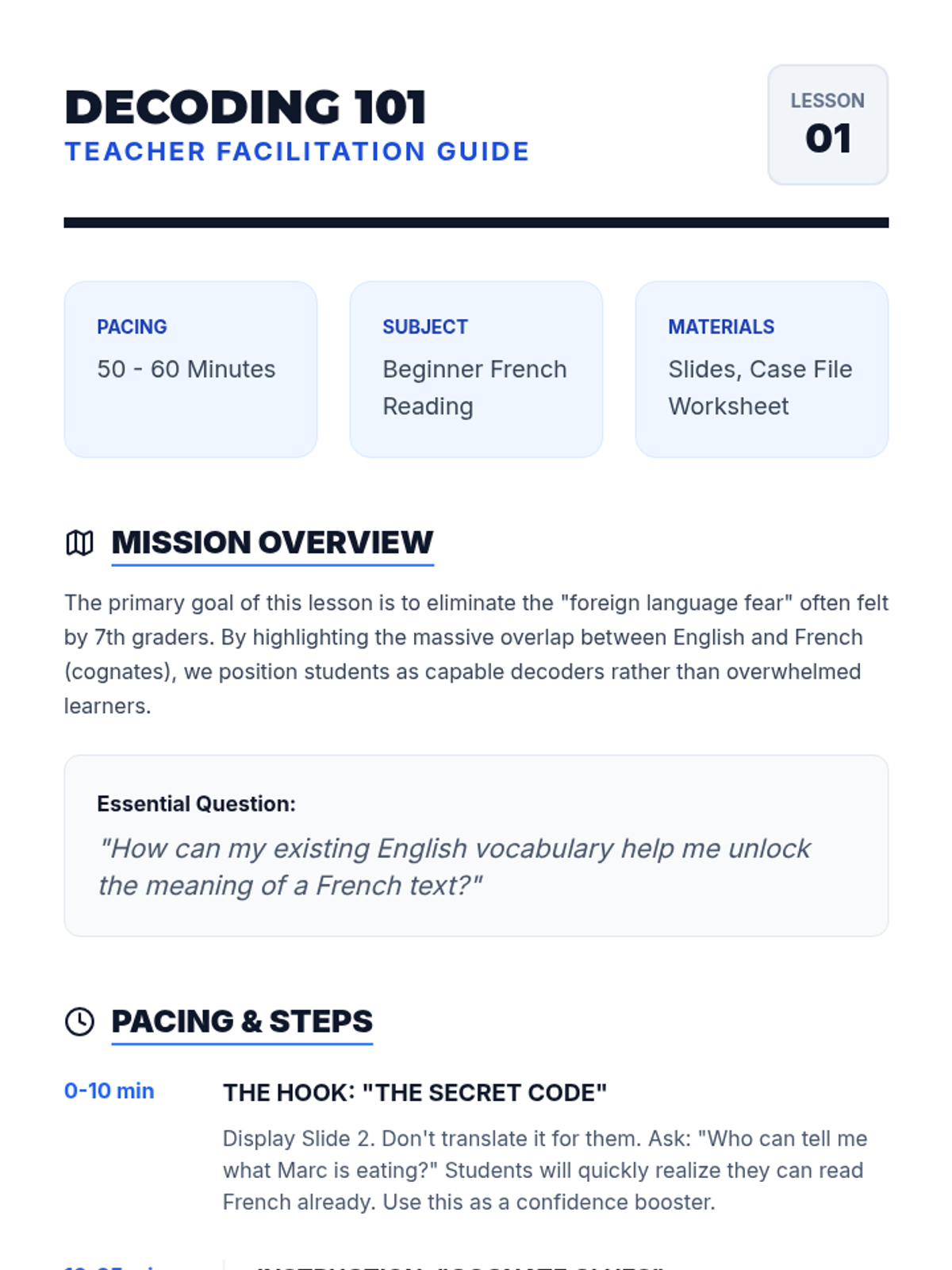
A 5-lesson unit for 7th graders that treats French reading as a code-breaking exercise, focusing on cognates, phonics, gender markers, and sentence structure.
A 5-lesson sequence for 6th-grade French students focusing on reading strategies like cognate recognition, context clues, and basic syntax to build confidence in decoding French texts.
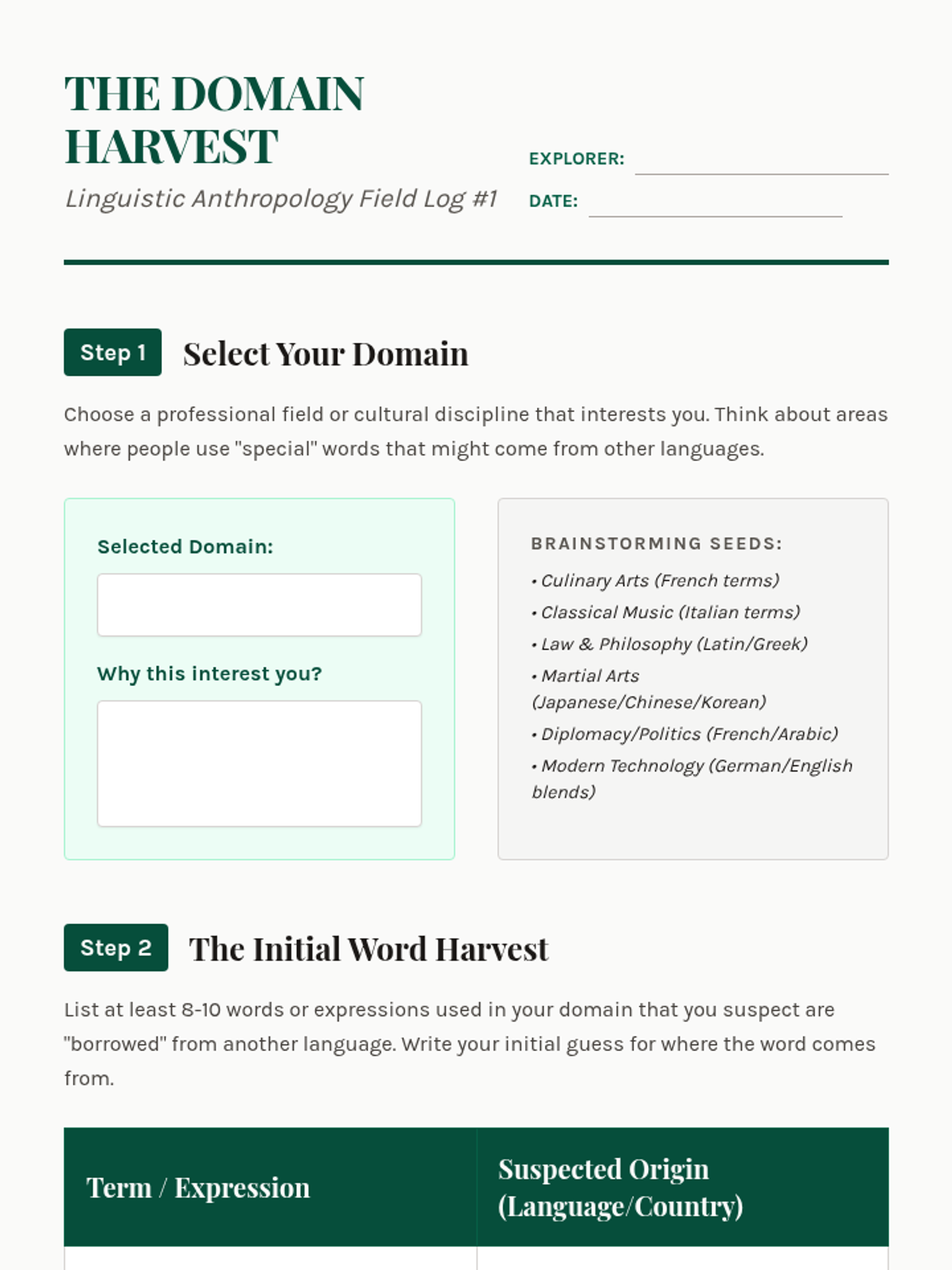
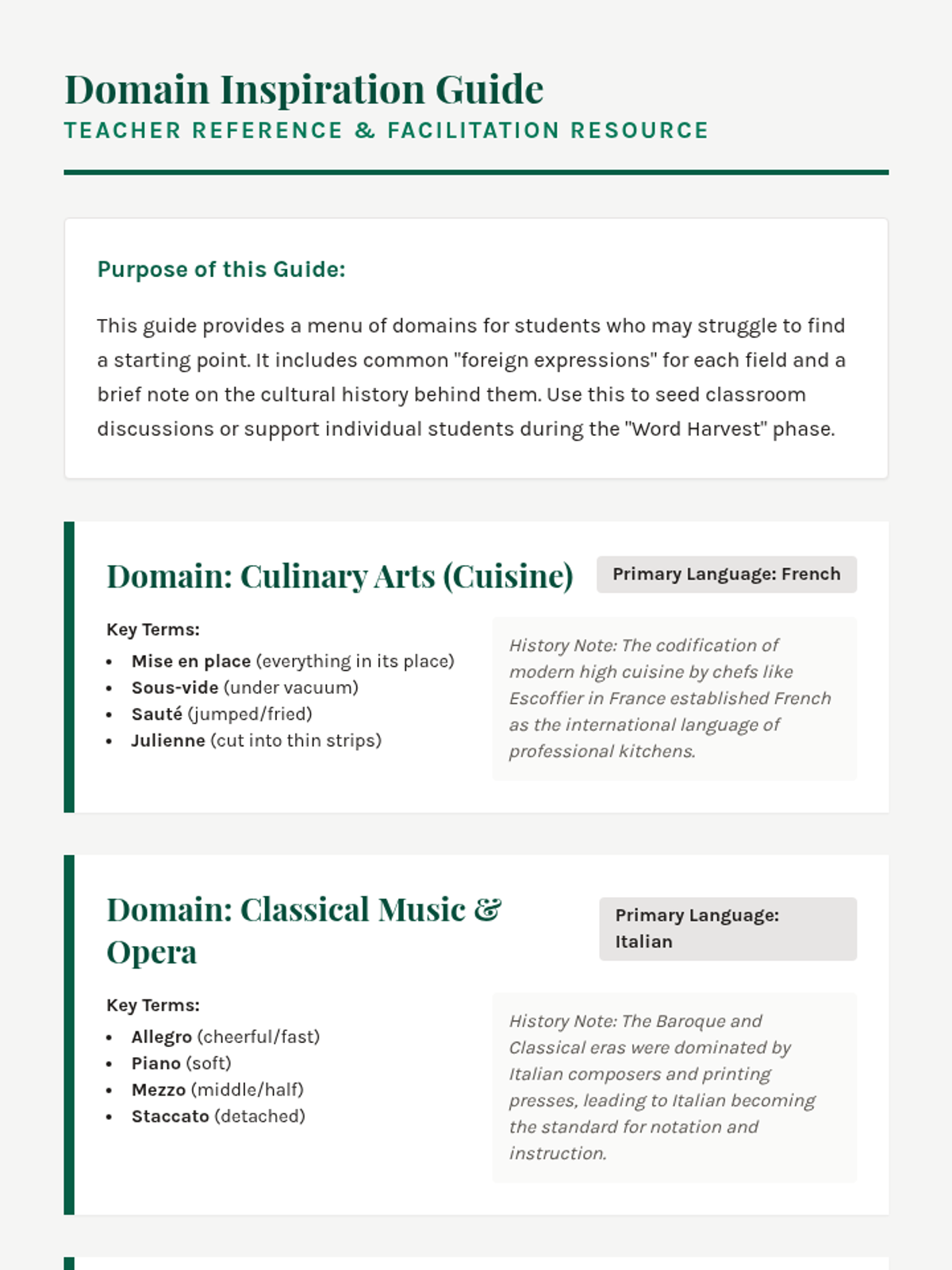
Students act as linguistic anthropologists creating a specialized 'Field Guide to Foreign Expressions' for a chosen professional or cultural domain. They investigate the etymology, usage, and visual representation of foreign terminology to explain their chosen field's linguistic history to a lay audience.