Geometric classification, measurement of area and volume, and the study of transformations and rigid motions. Builds toward complex proofs, trigonometry for general triangles, and the algebraic representation of conic sections.
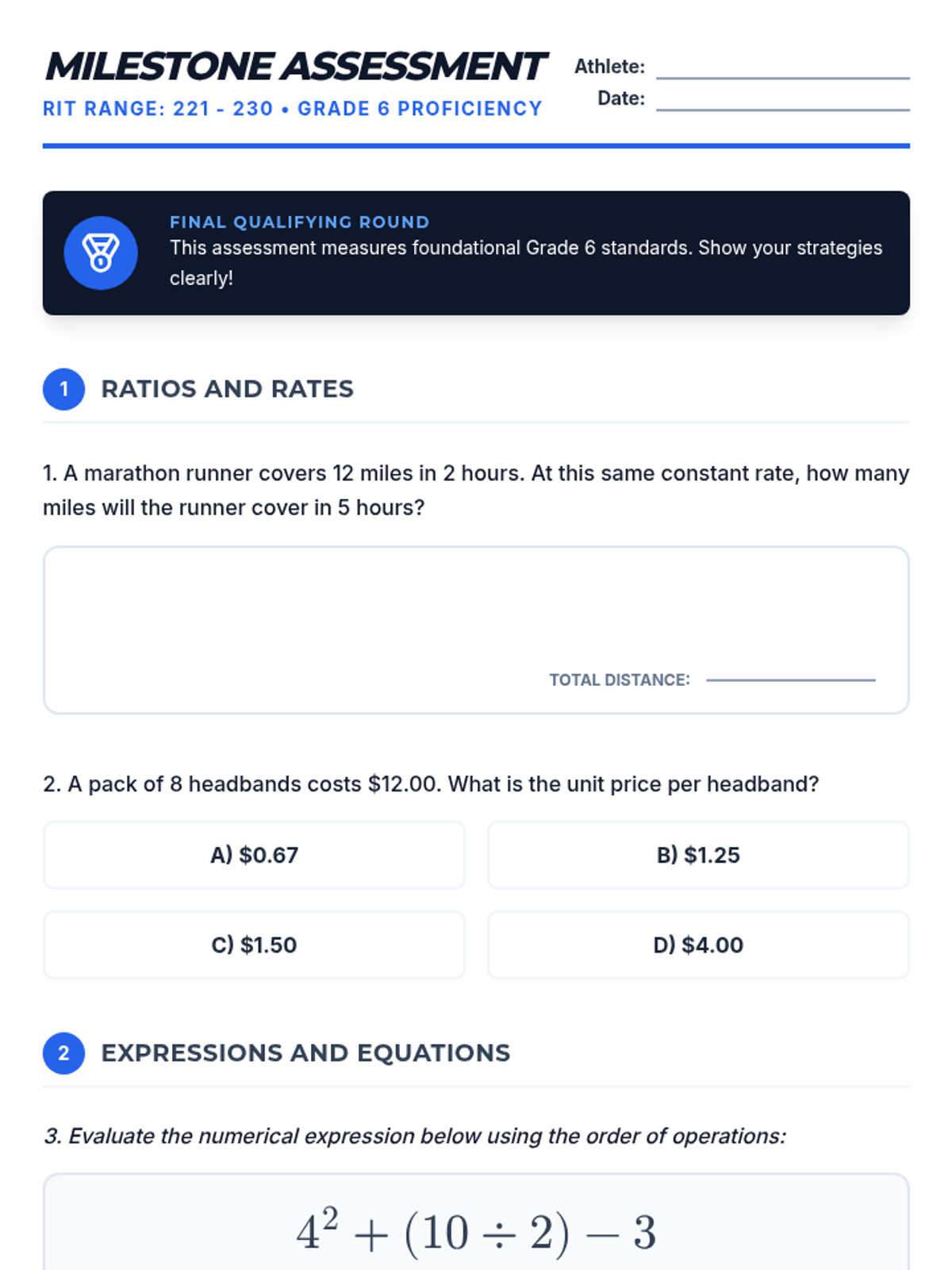
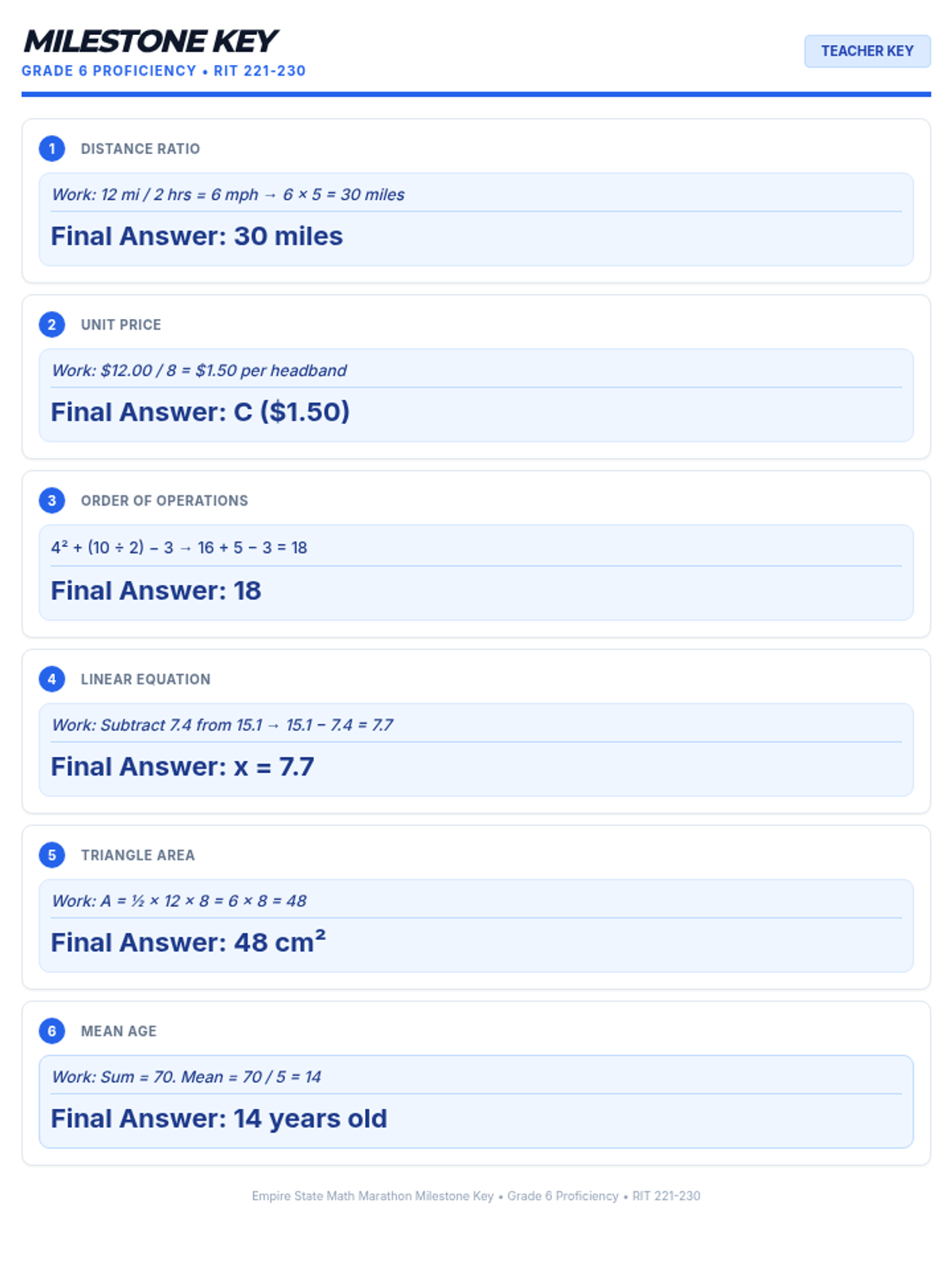
A cumulative milestone assessment designed for students at Grade 6 proficiency (RIT 221-230). This assessment checks foundational understanding of ratios, expressions, and geometry needed for 8th-grade success.
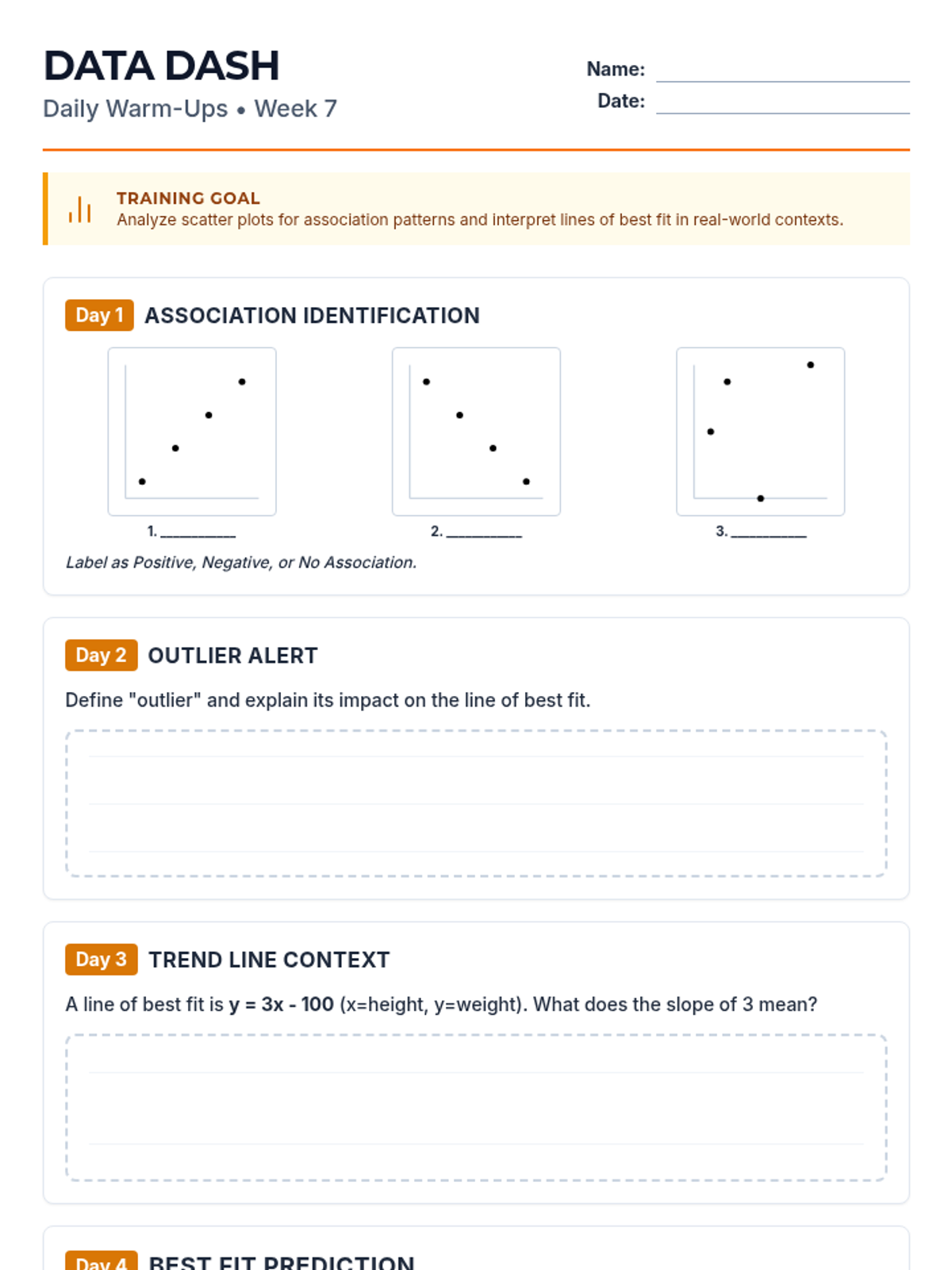
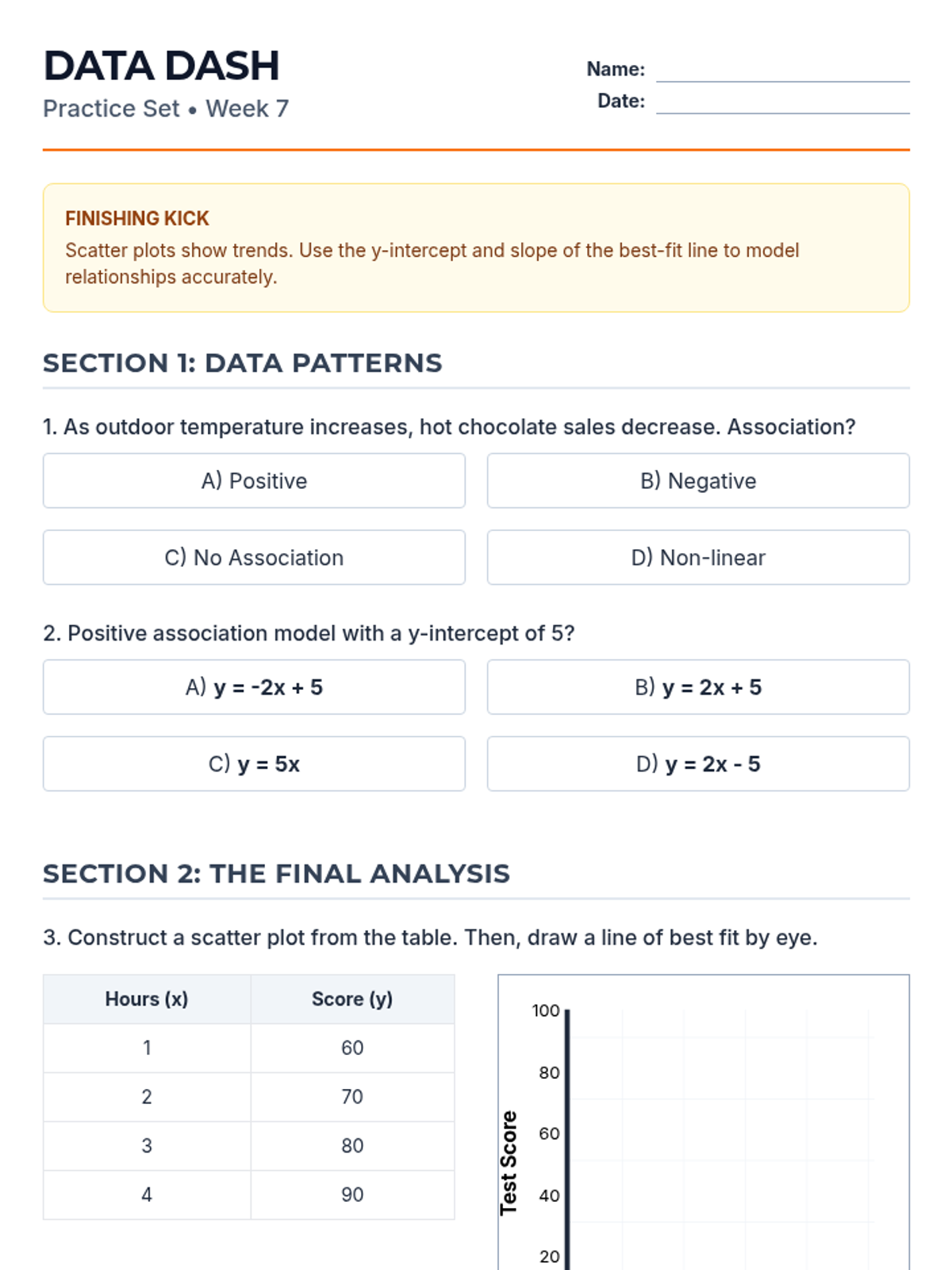
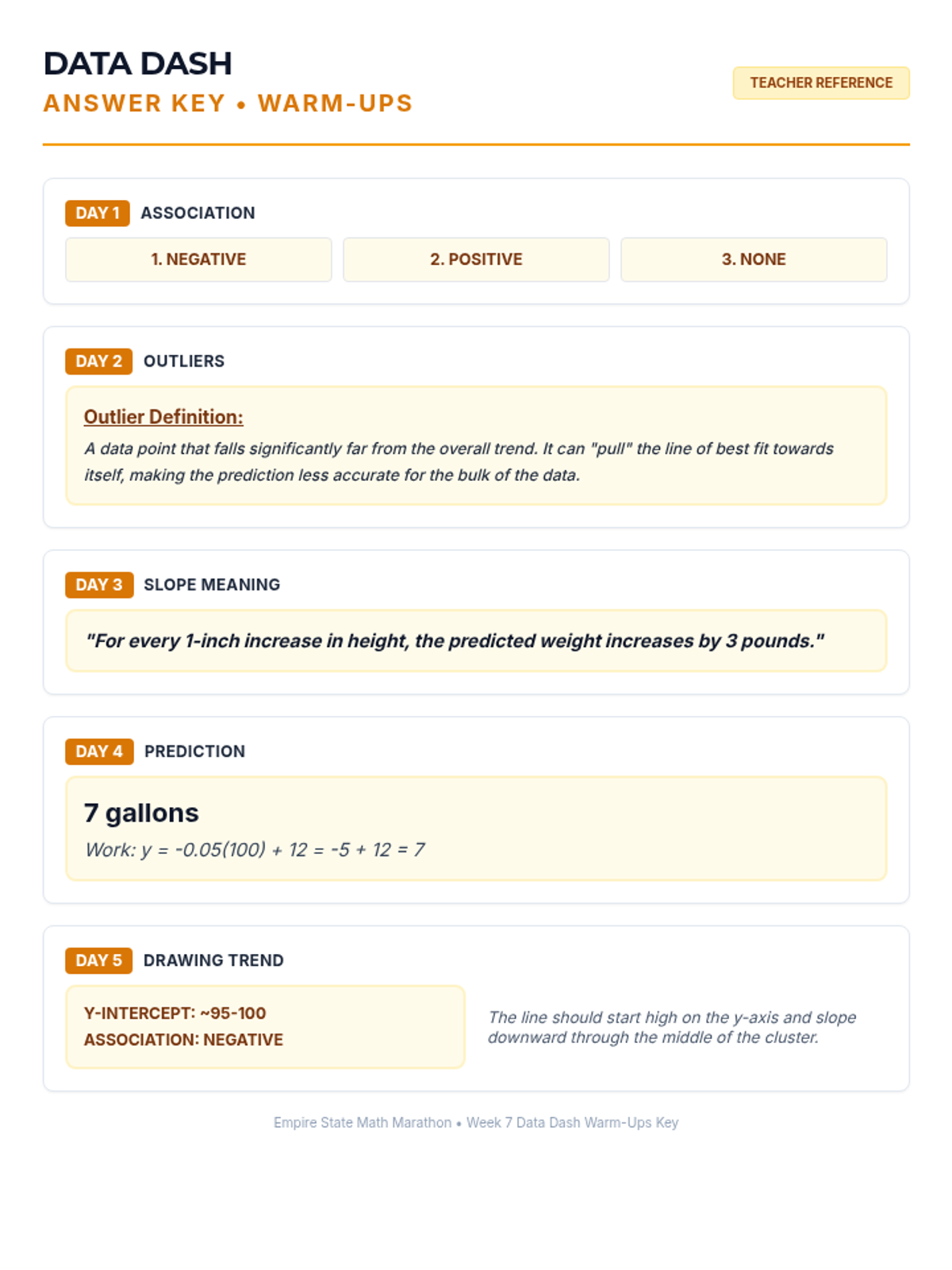
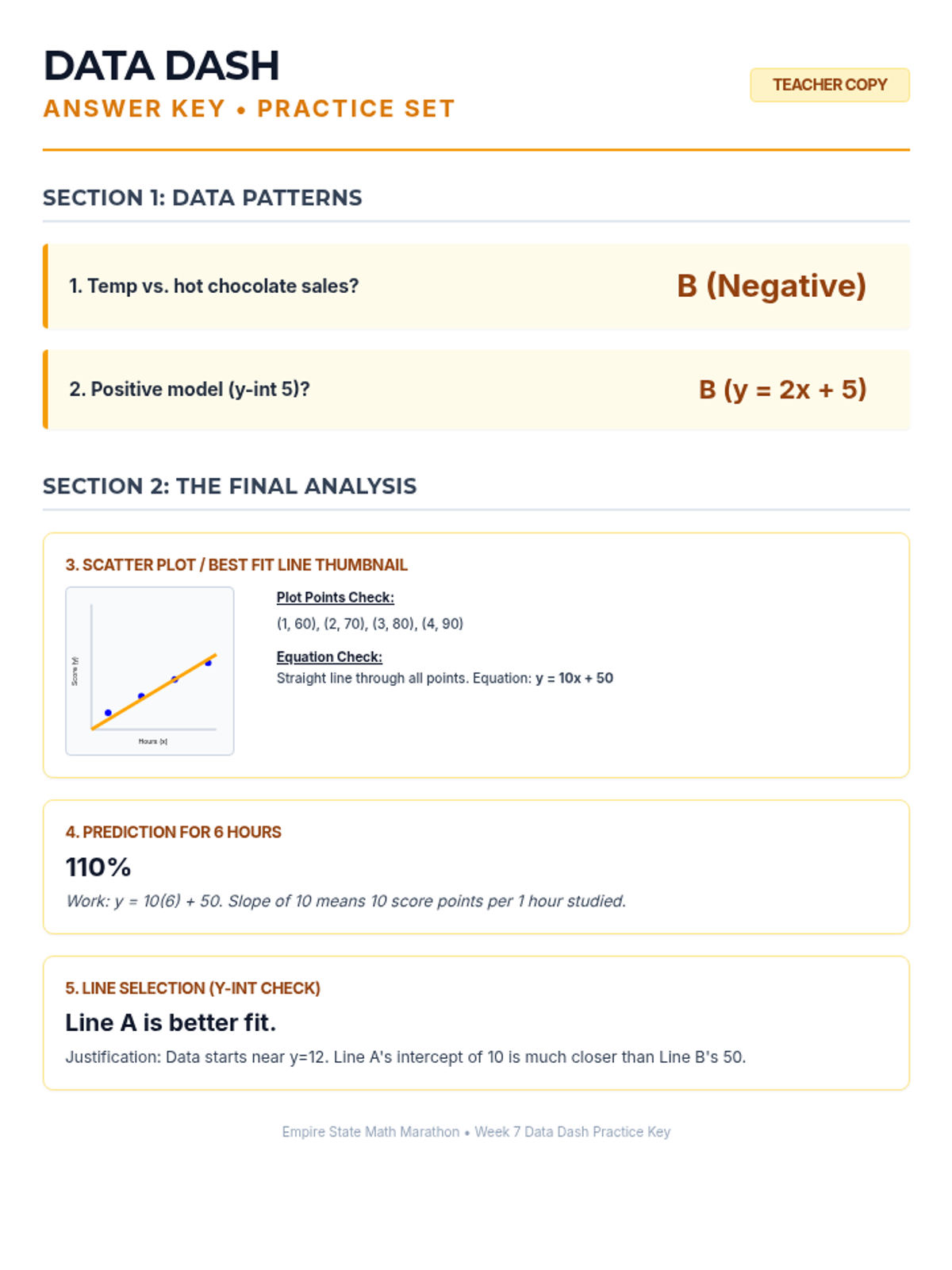
Week 7 analyzes bivariate data through scatter plots, interpreting lines of best fit, and using linear models to make predictions.
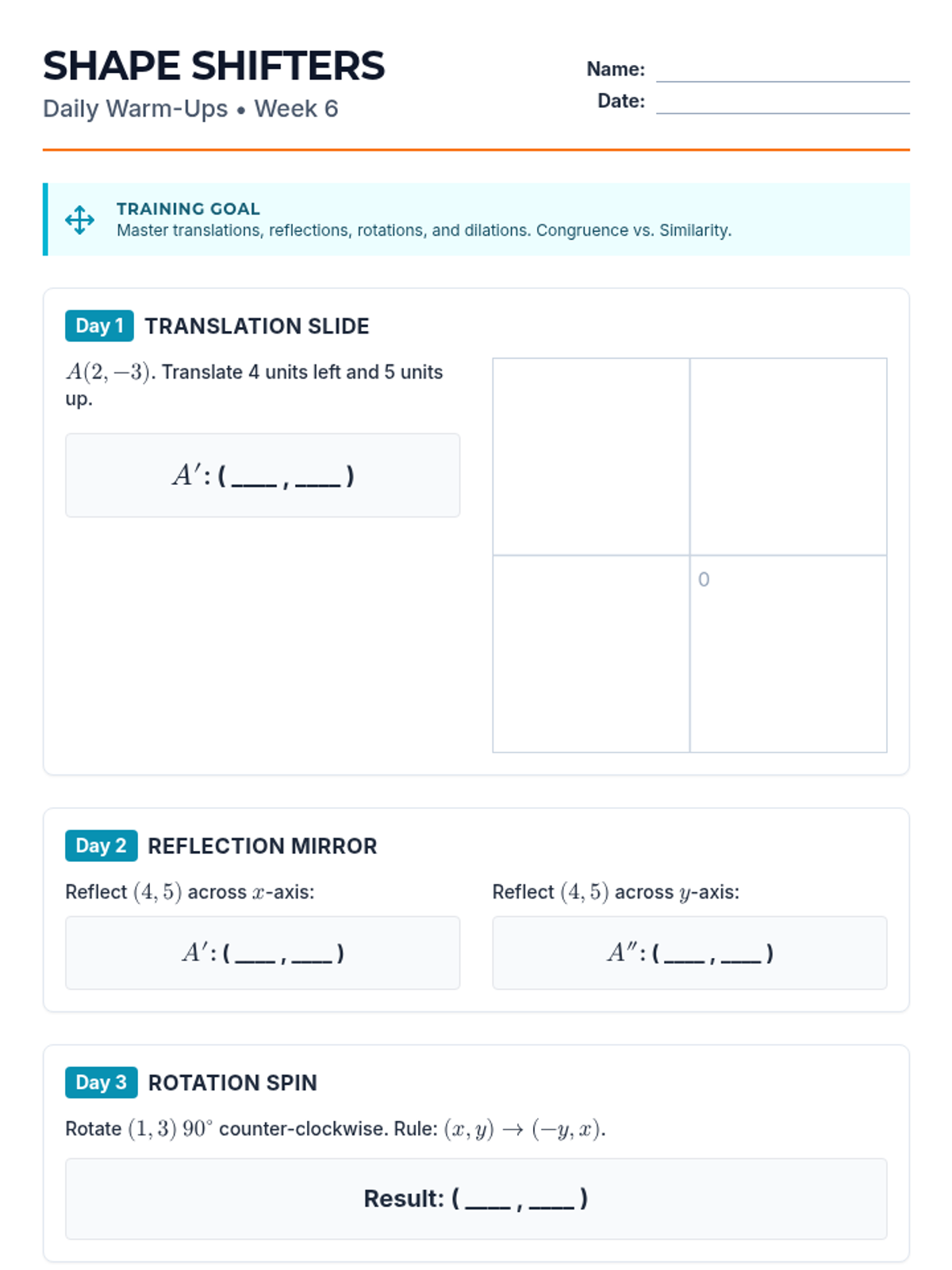
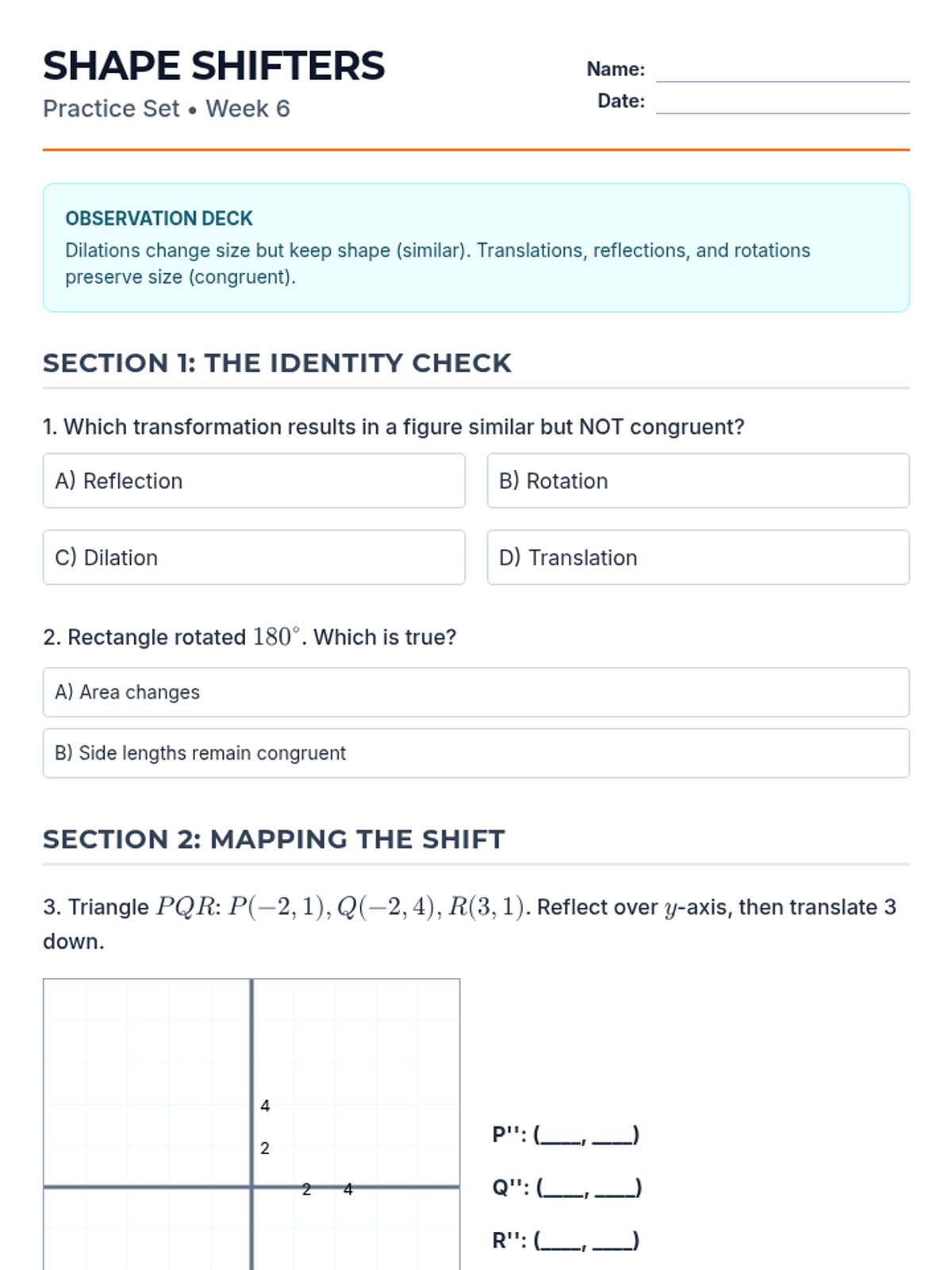
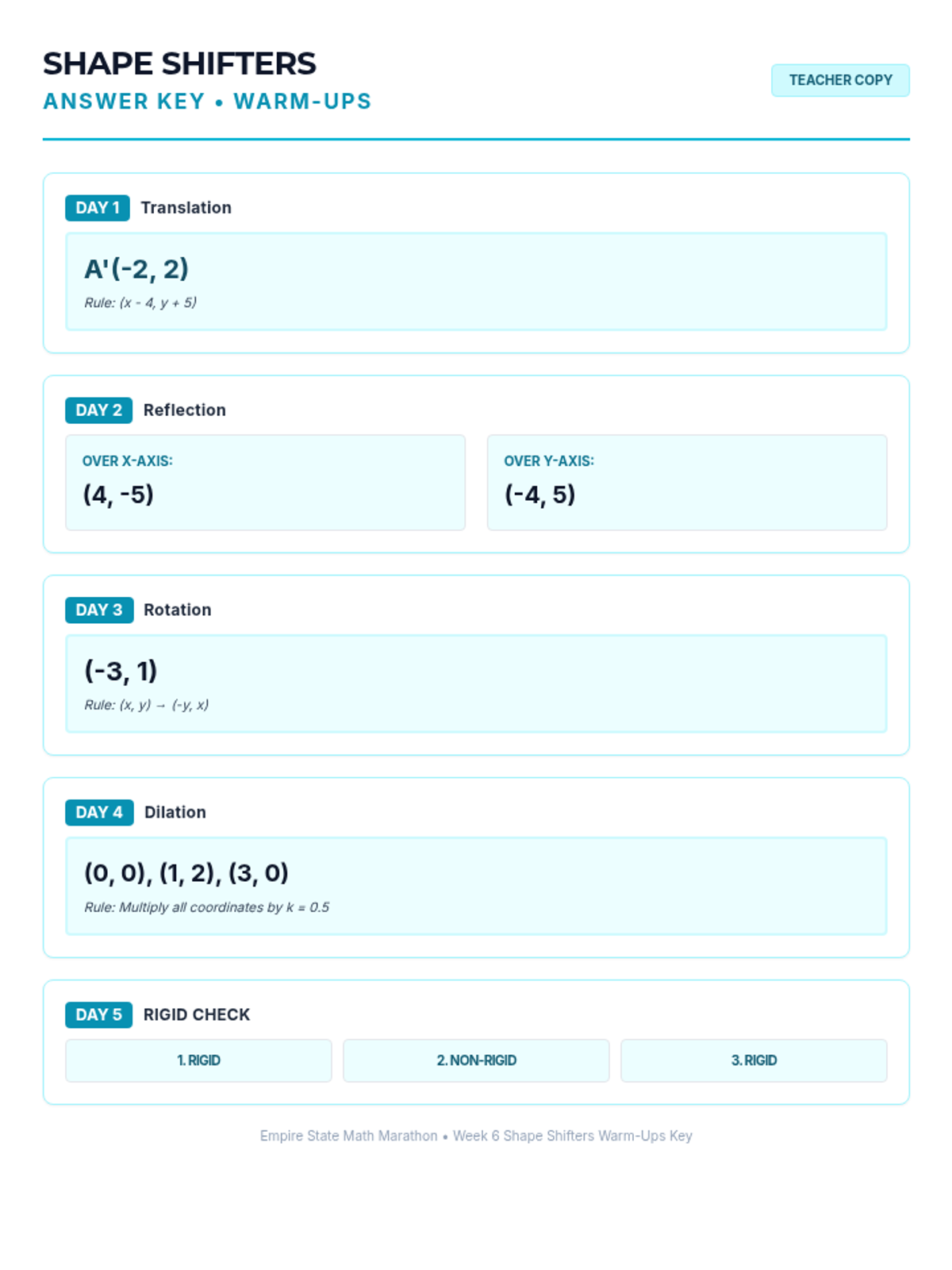
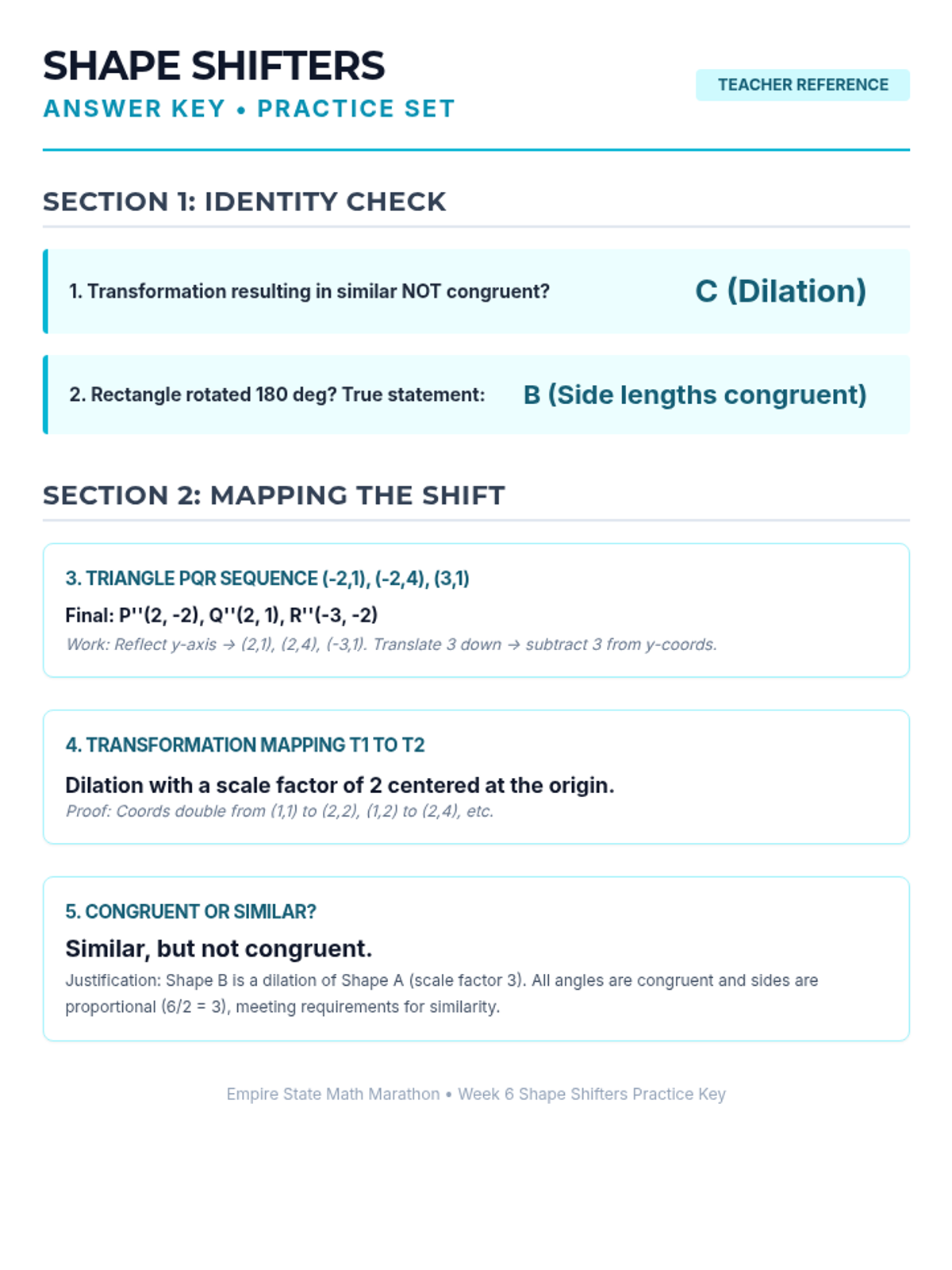
Week 6 focuses on rigid transformations (translations, reflections, rotations) and similarity transformations (dilations).
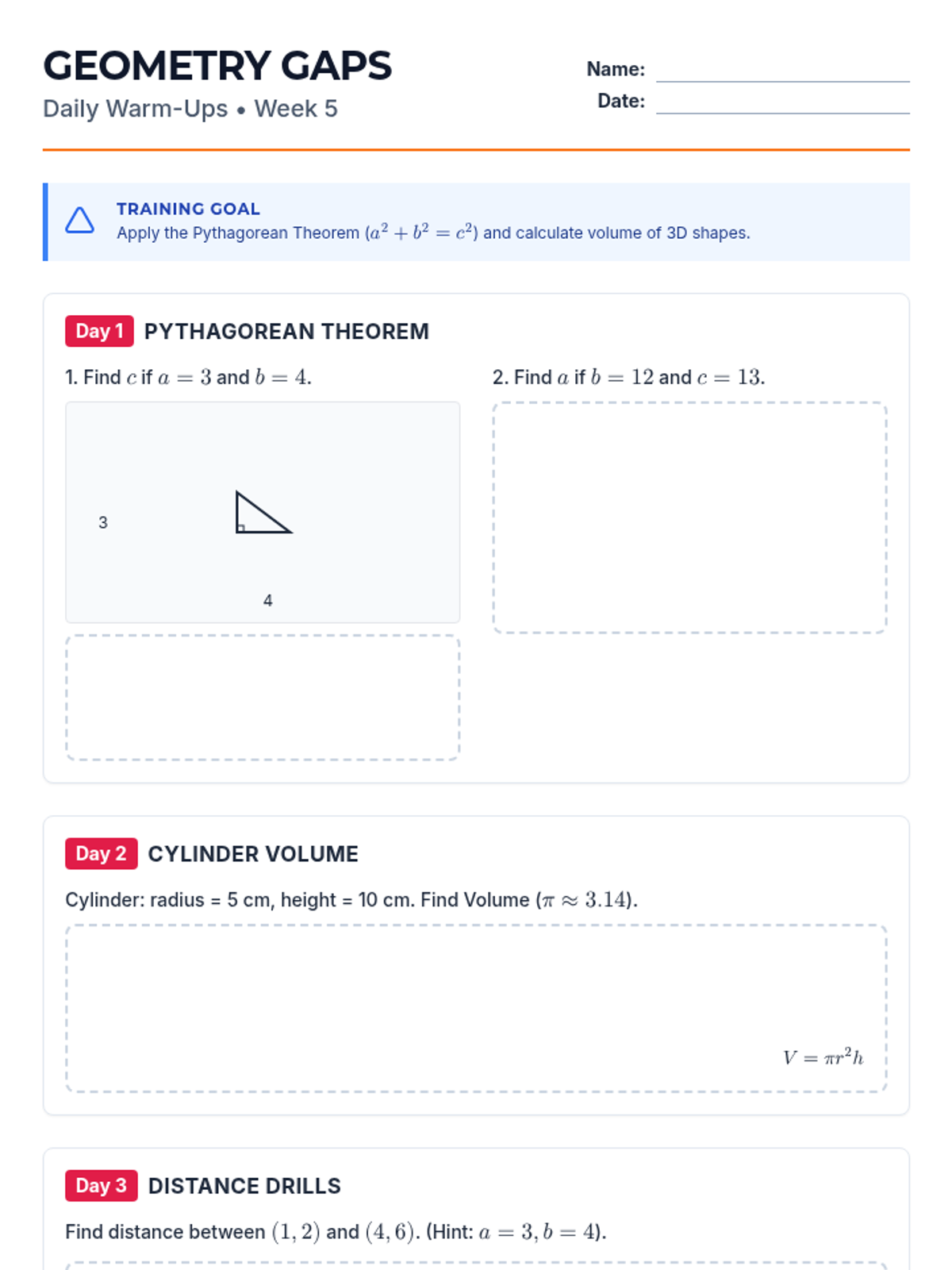
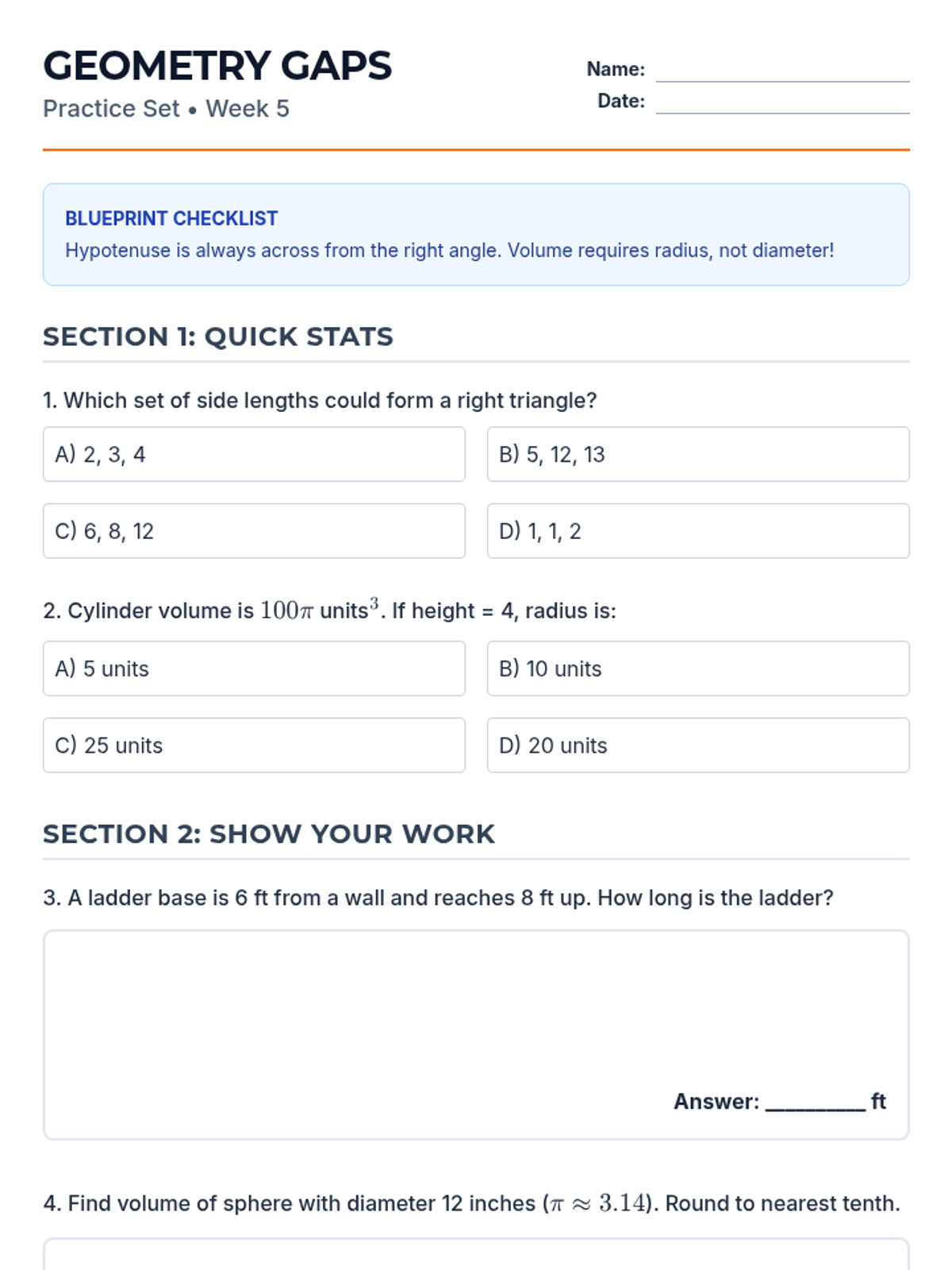
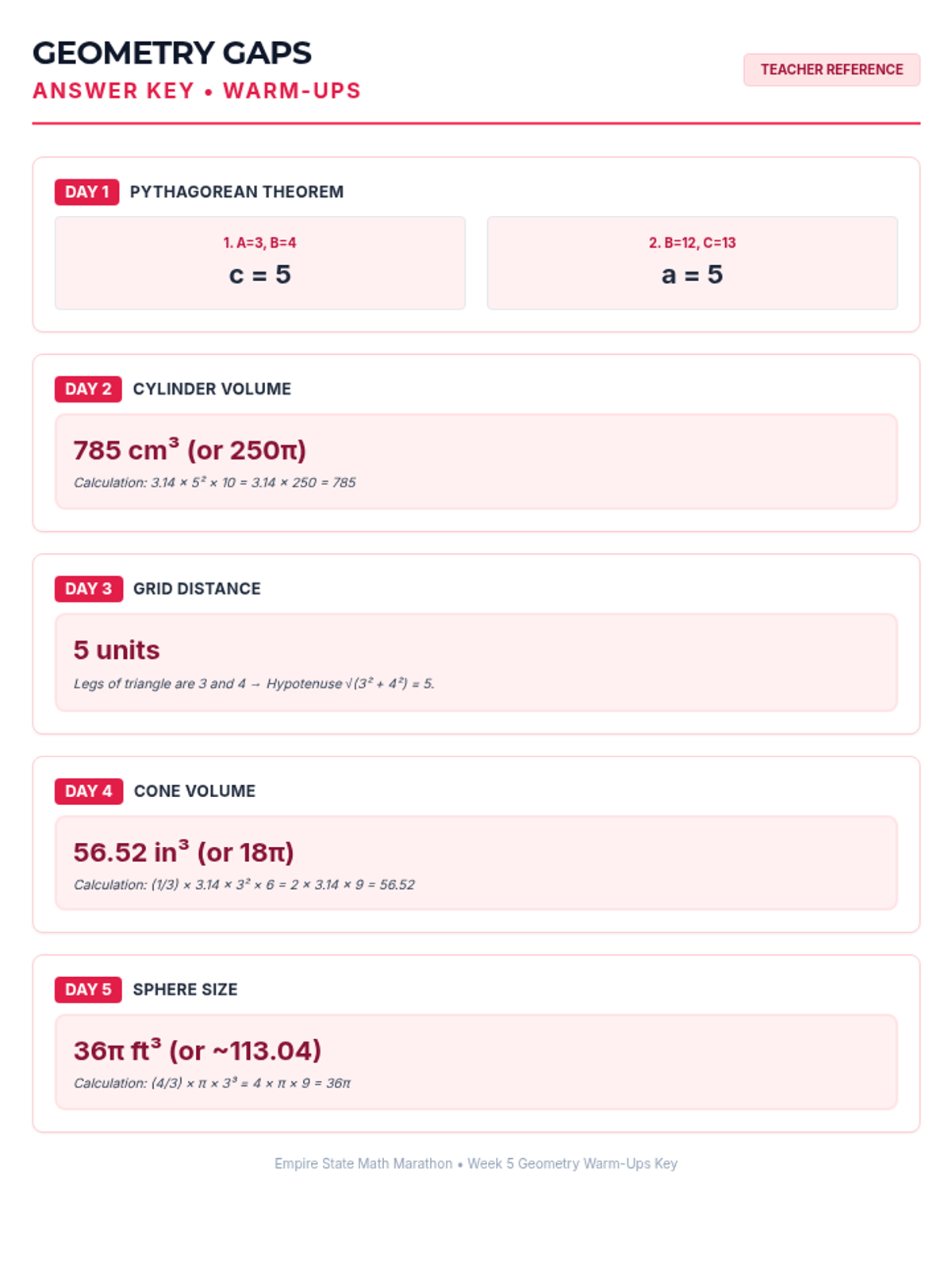
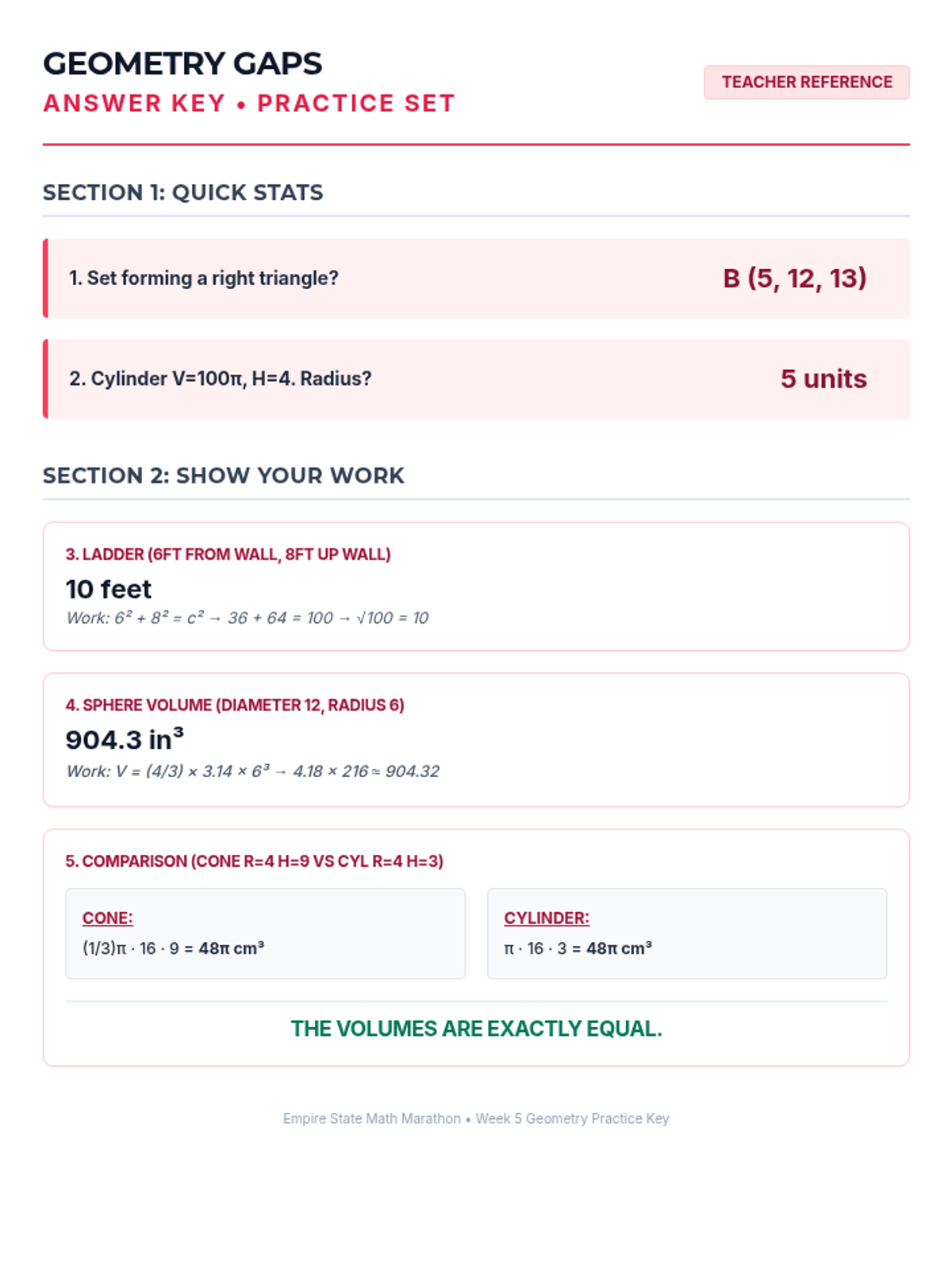
Week 5 reviews the Pythagorean Theorem and volume formulas for cylinders, cones, and spheres.
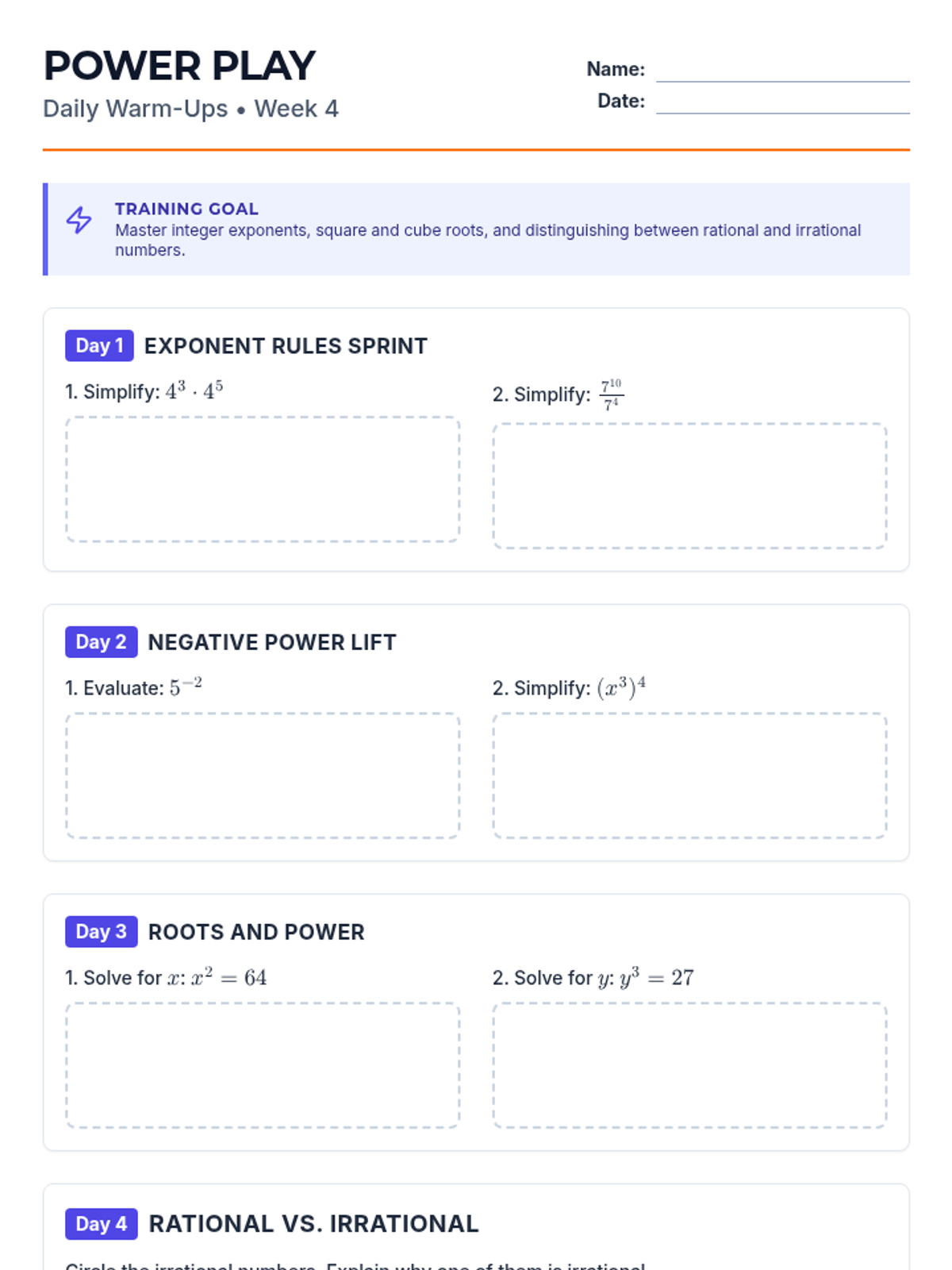
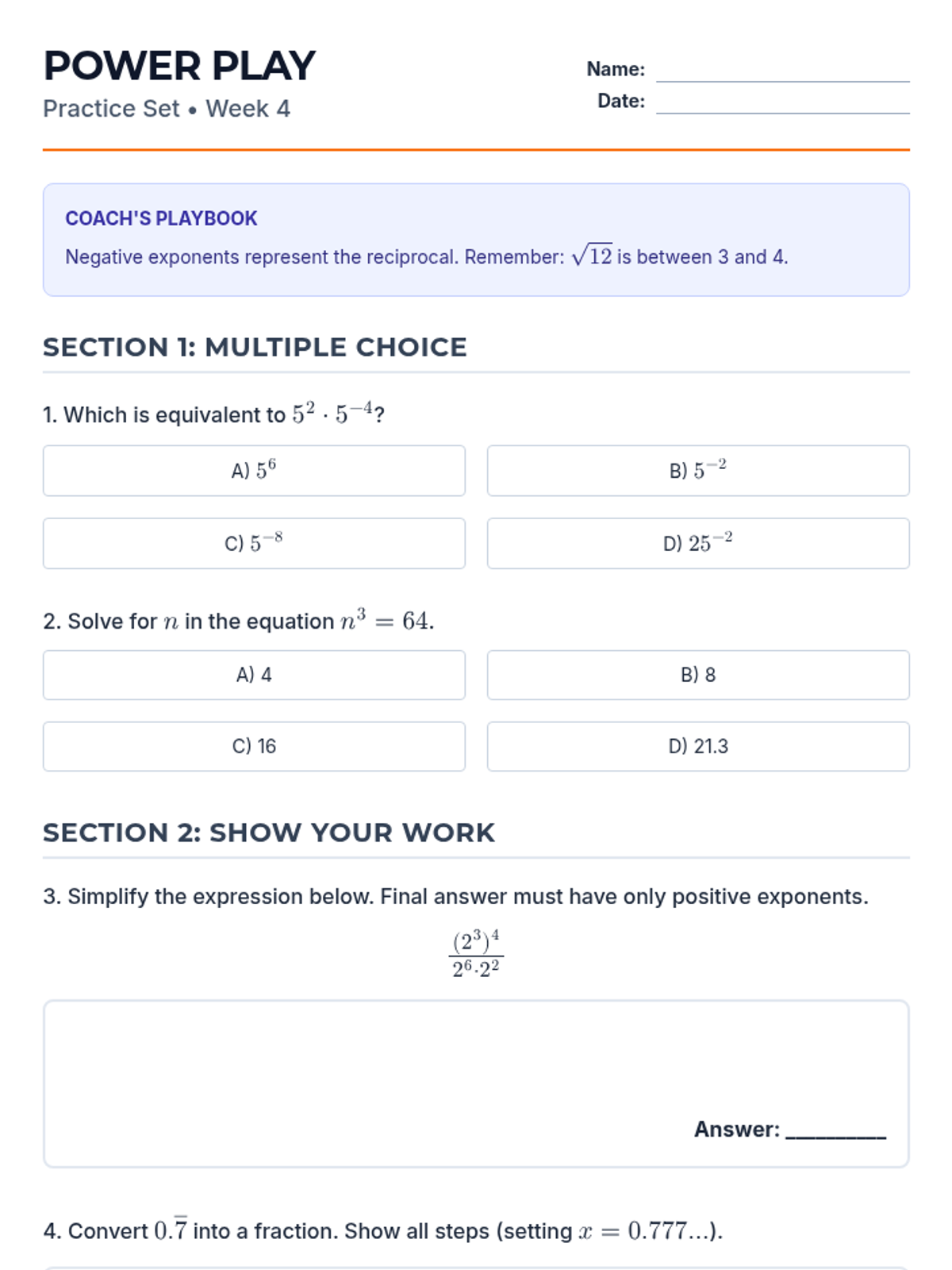
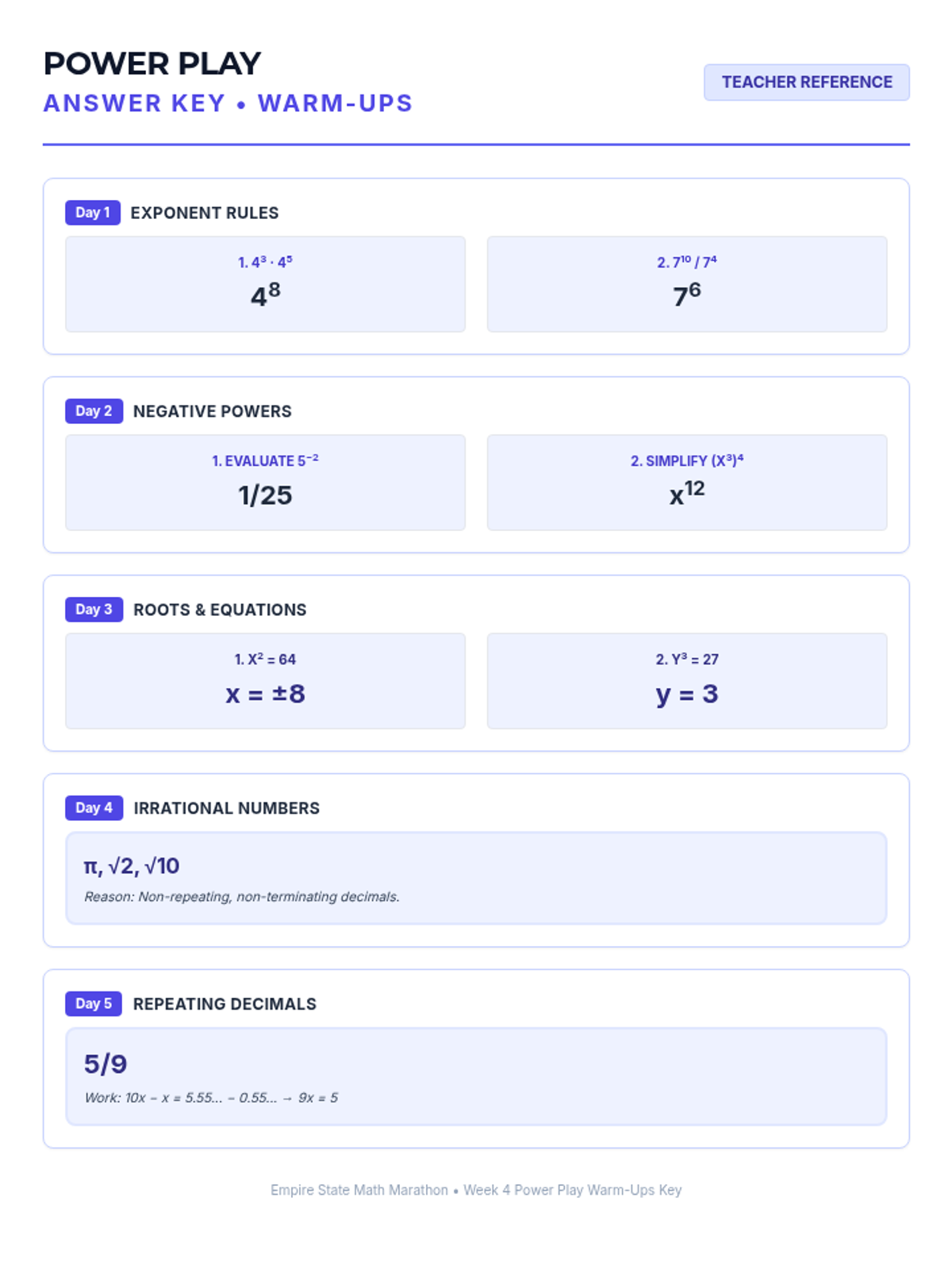
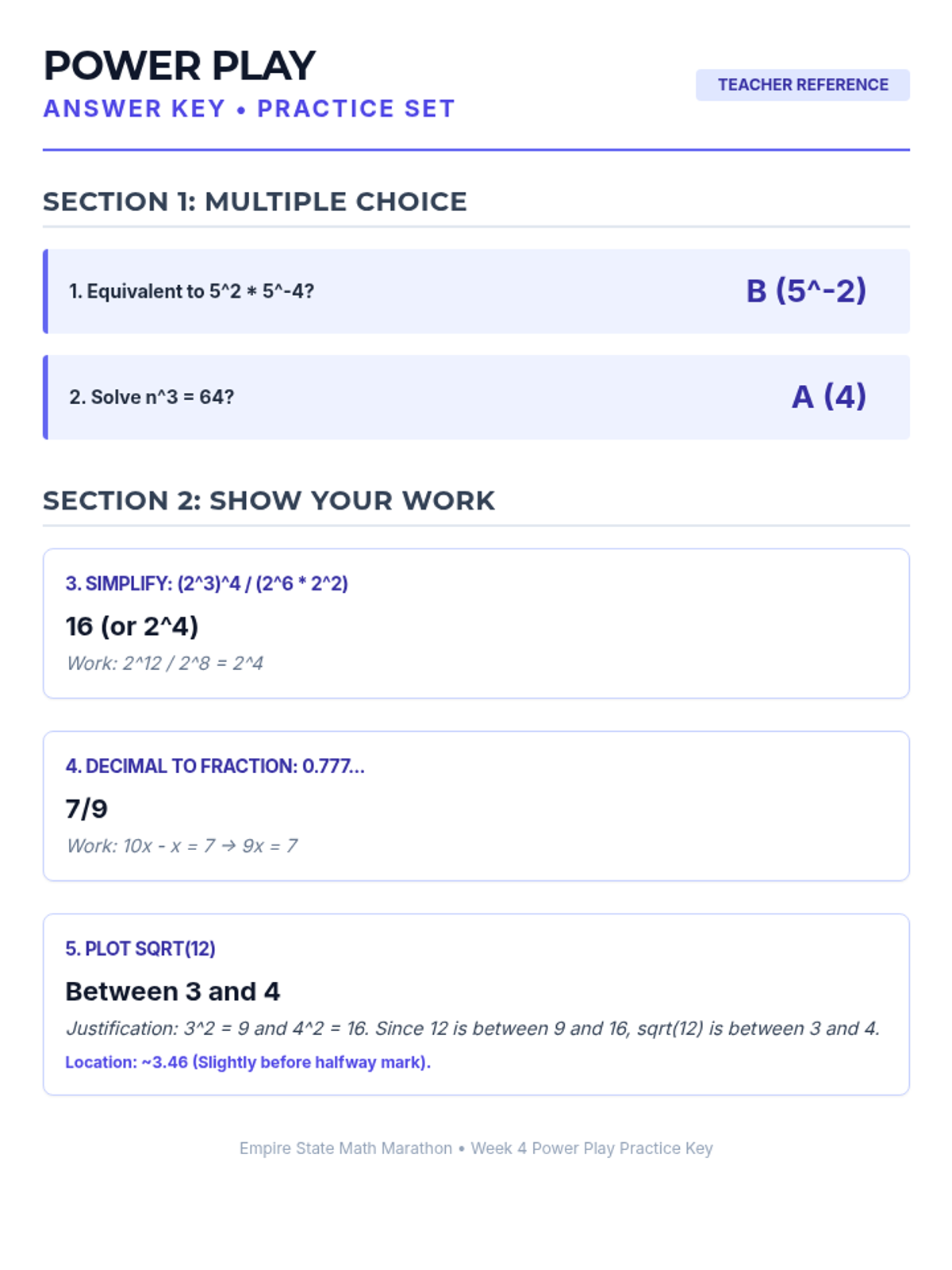
Week 4 explores integer exponent rules, perfect squares and cubes, and distinguishing between rational and irrational numbers.
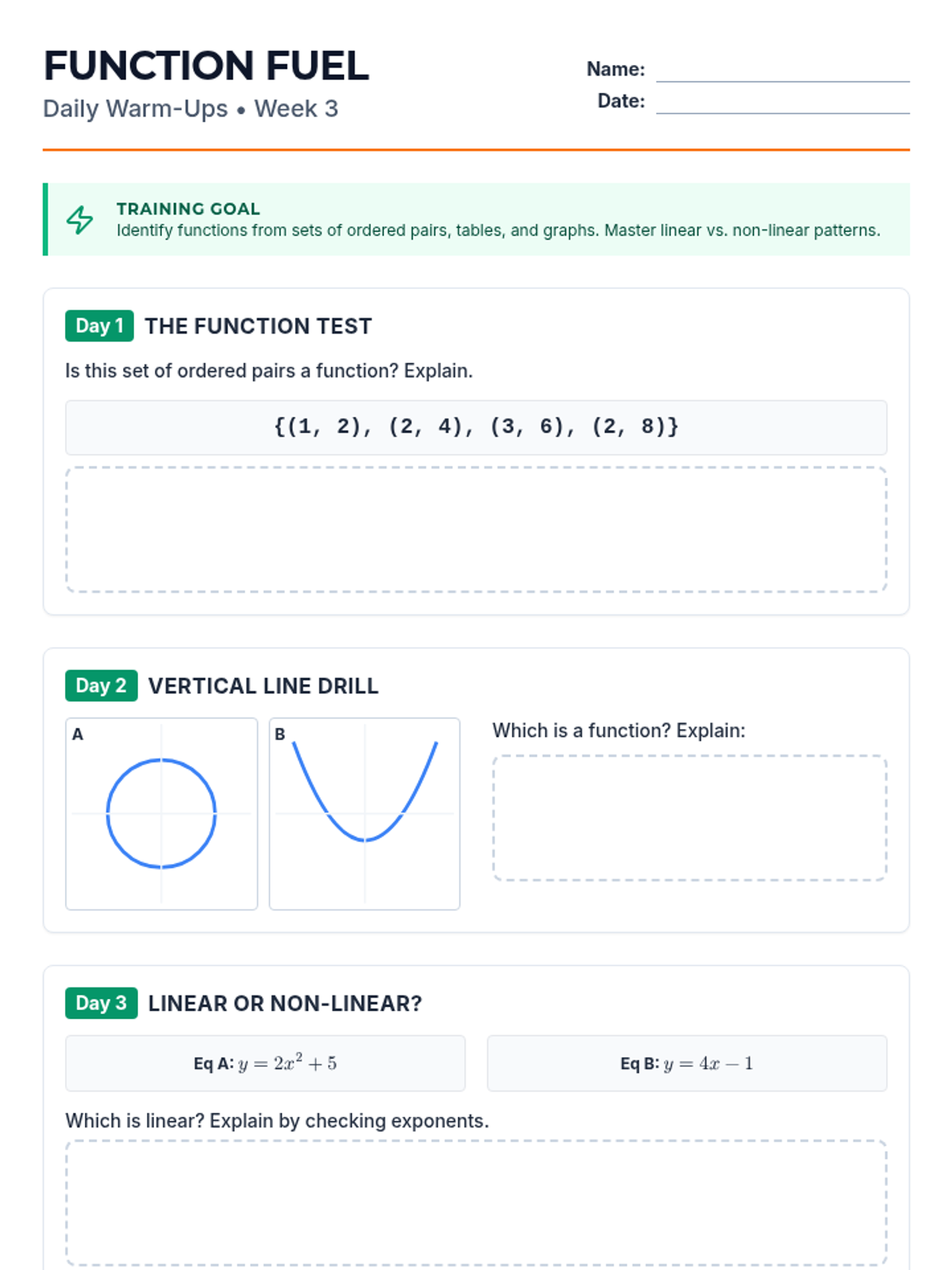
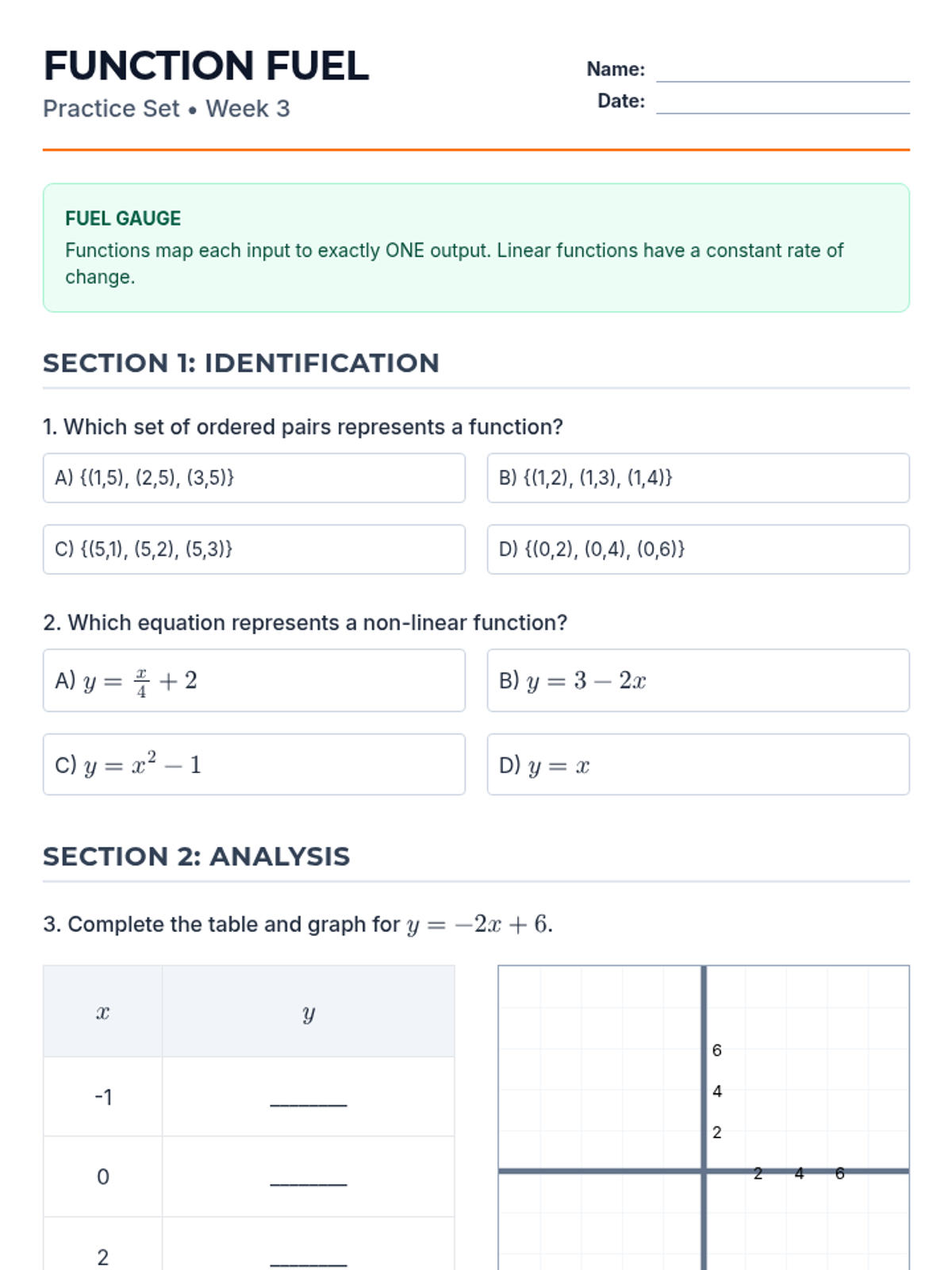
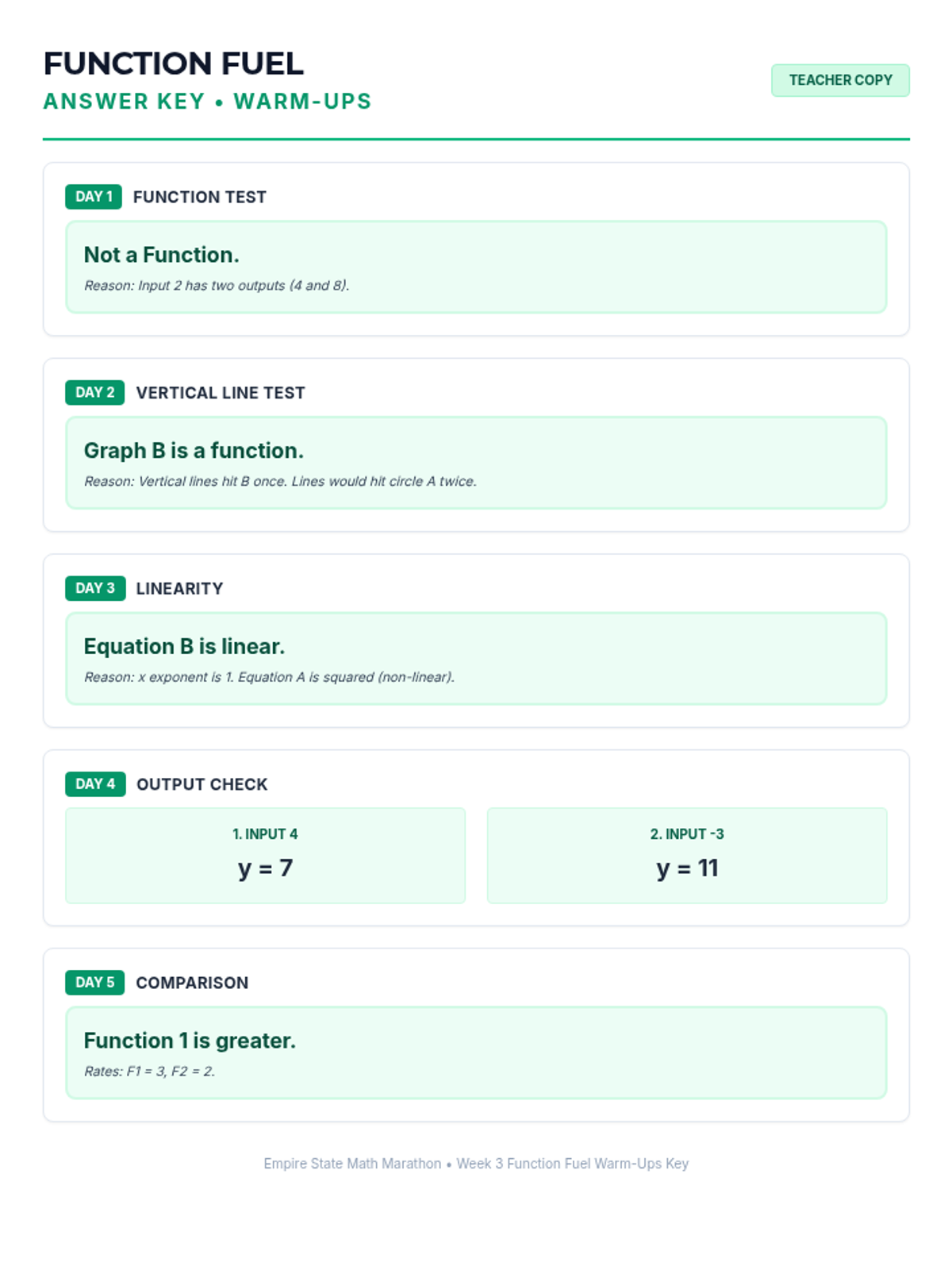
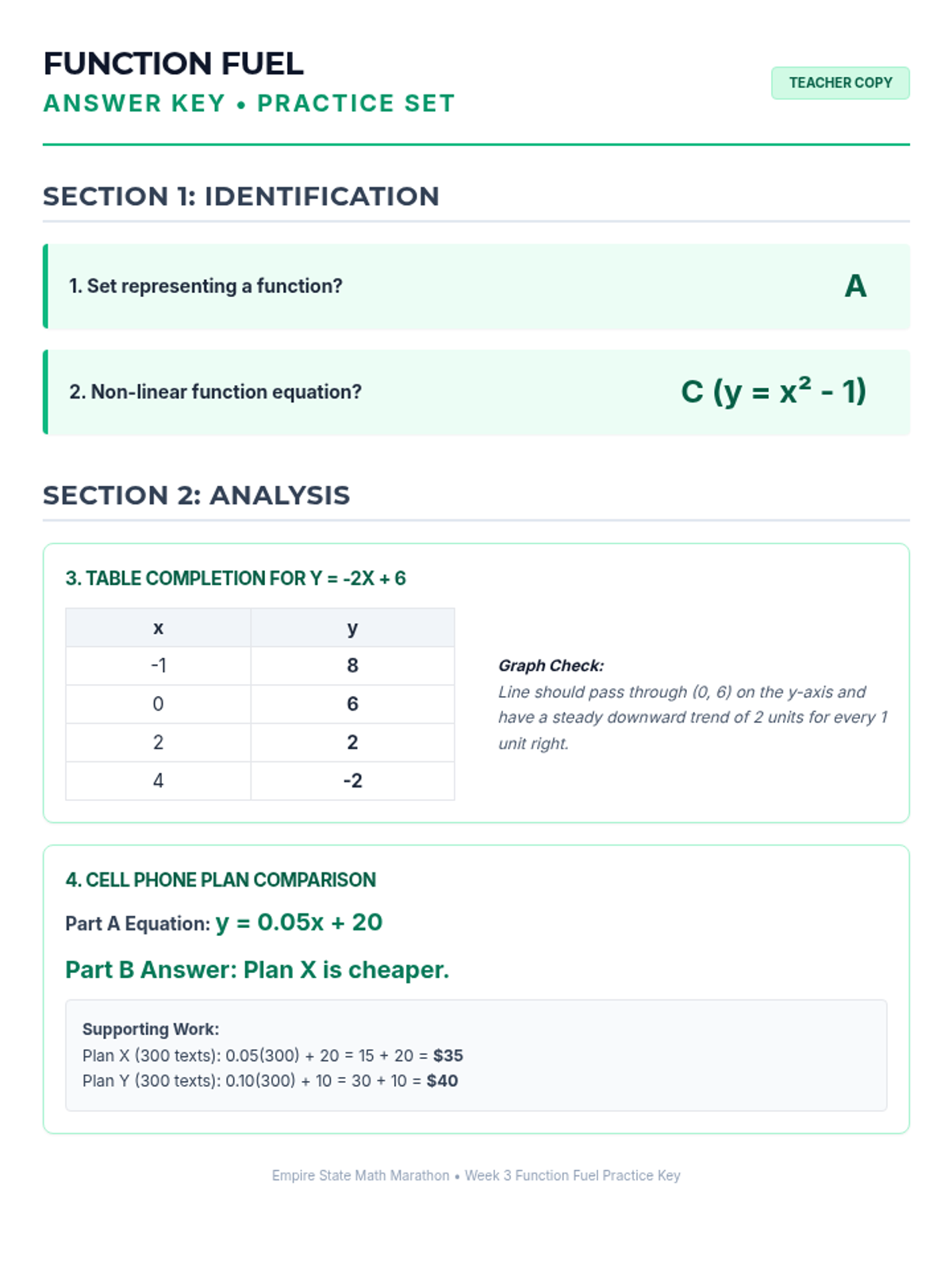
Week 3 defines, evaluates, and compares functions represented in different ways (tables, graphs, equations).
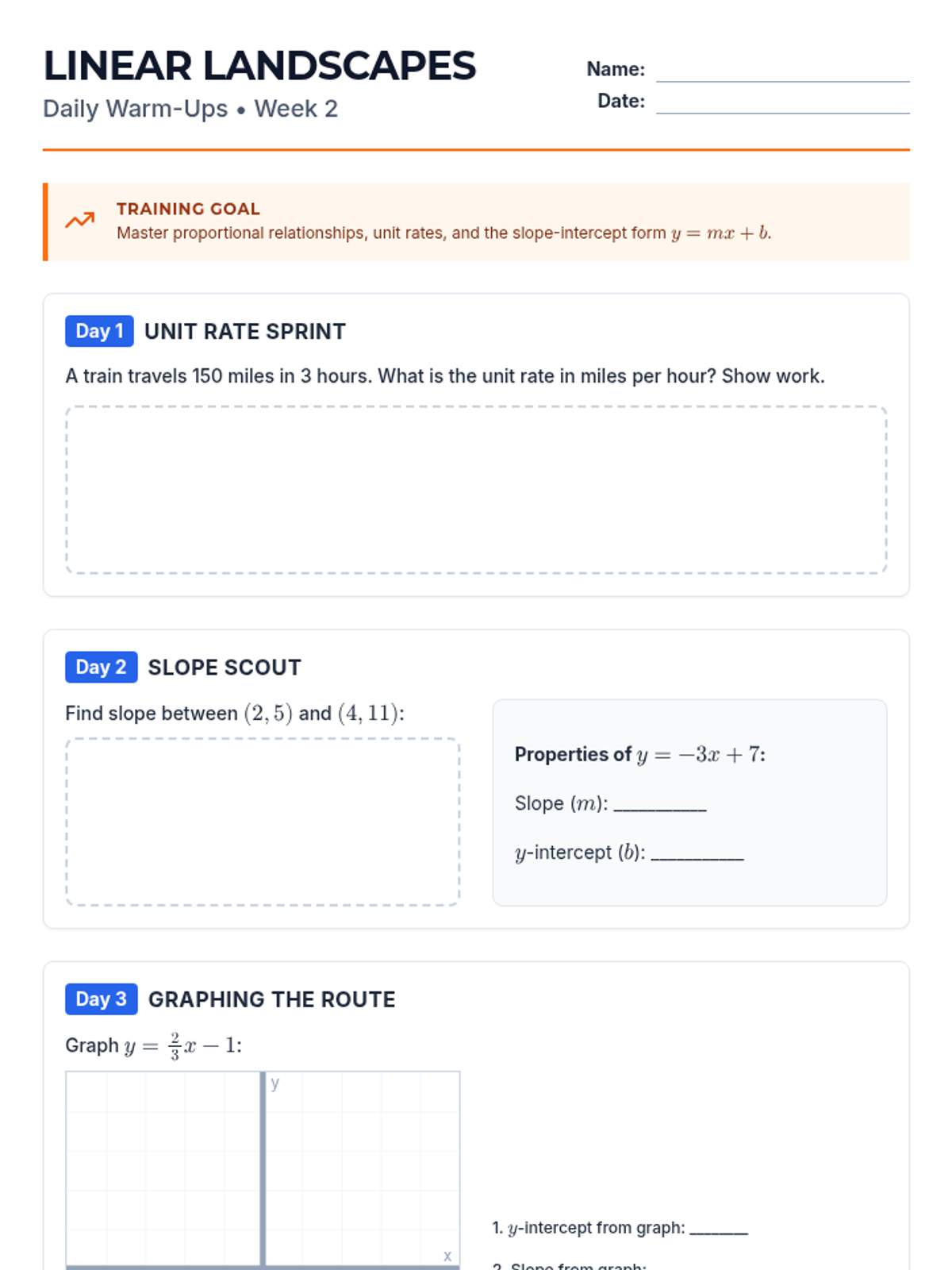
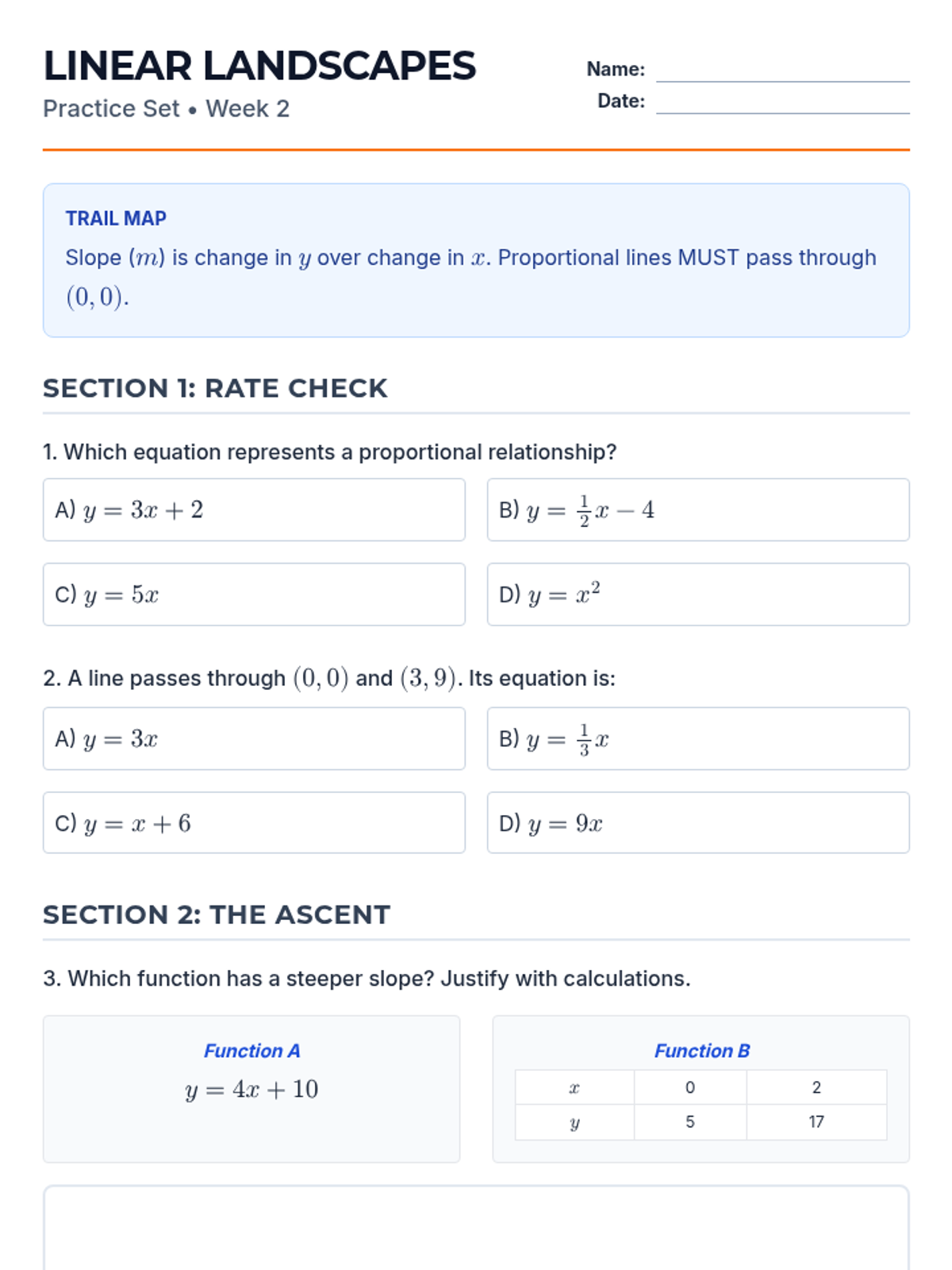
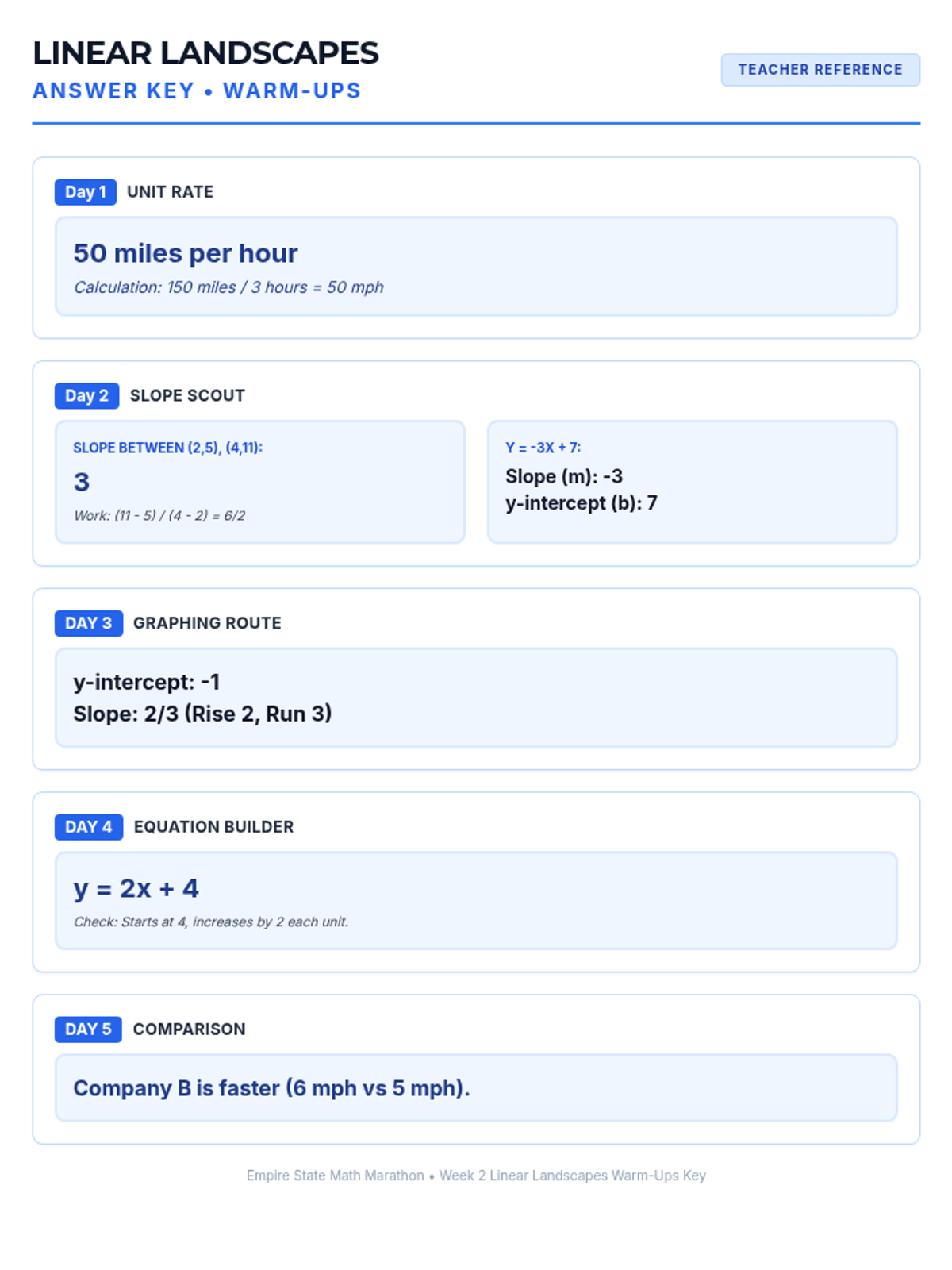
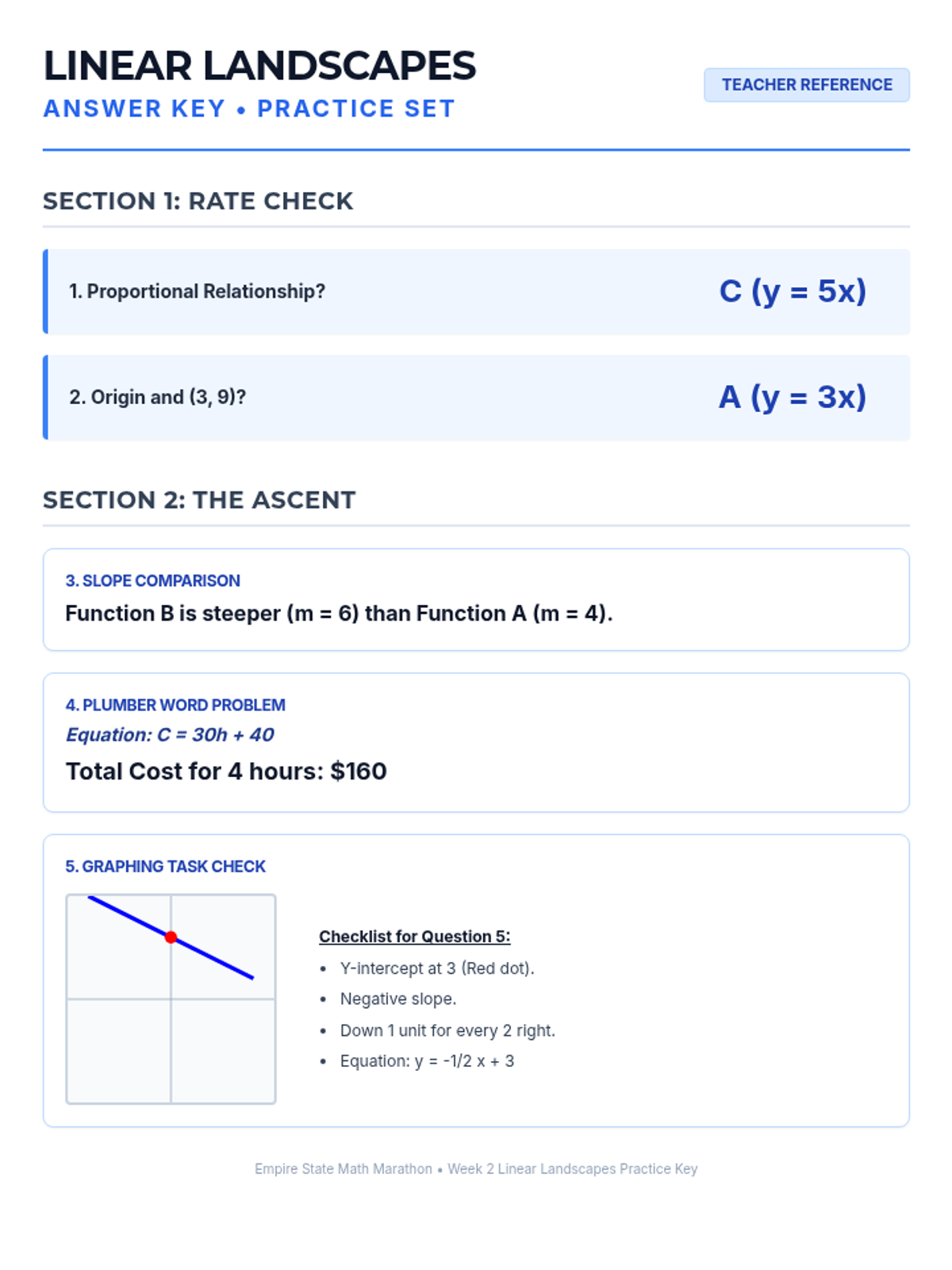
Week 2 covers proportional relationships, unit rates, and the slope-intercept form of linear equations.
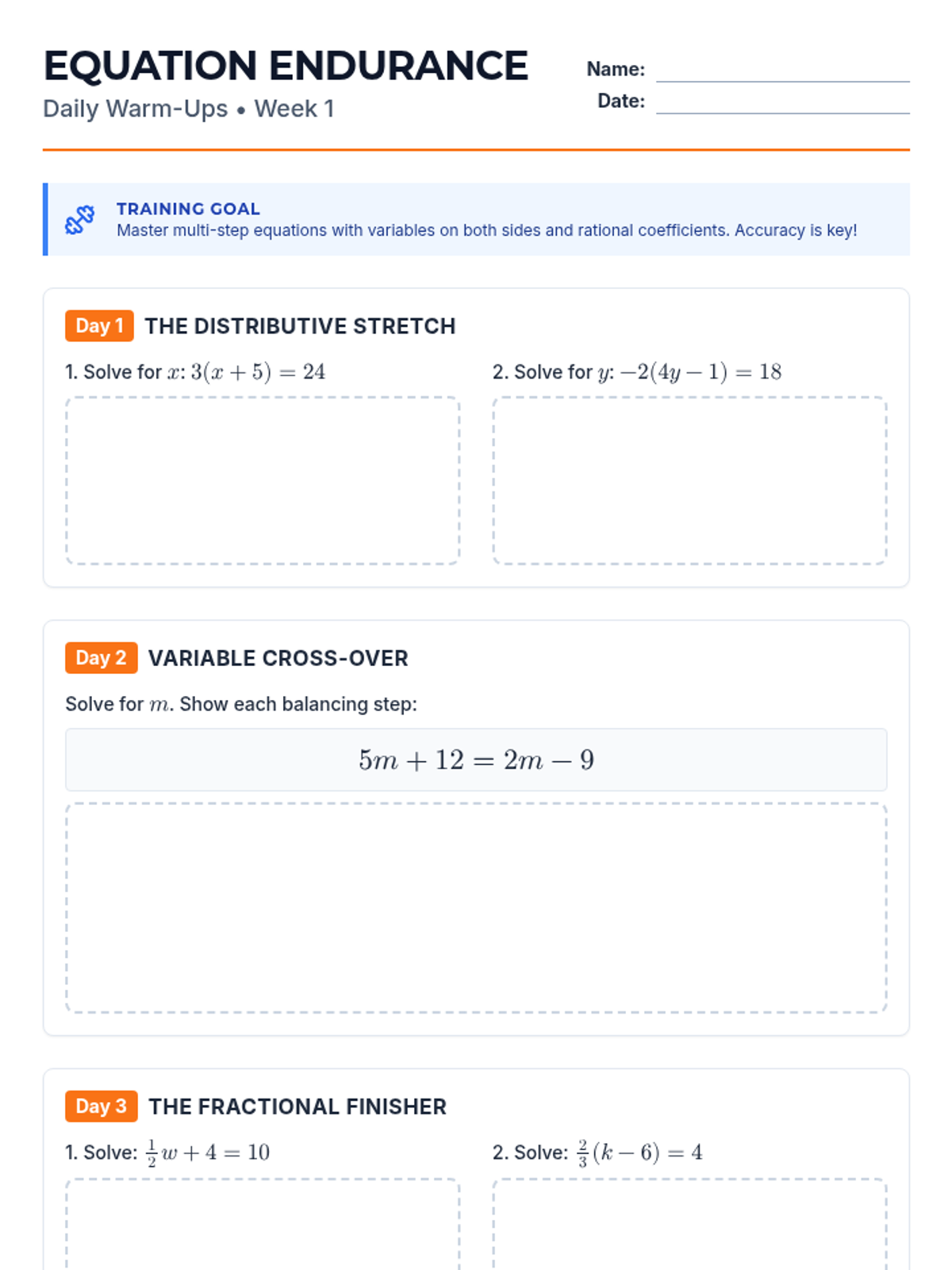
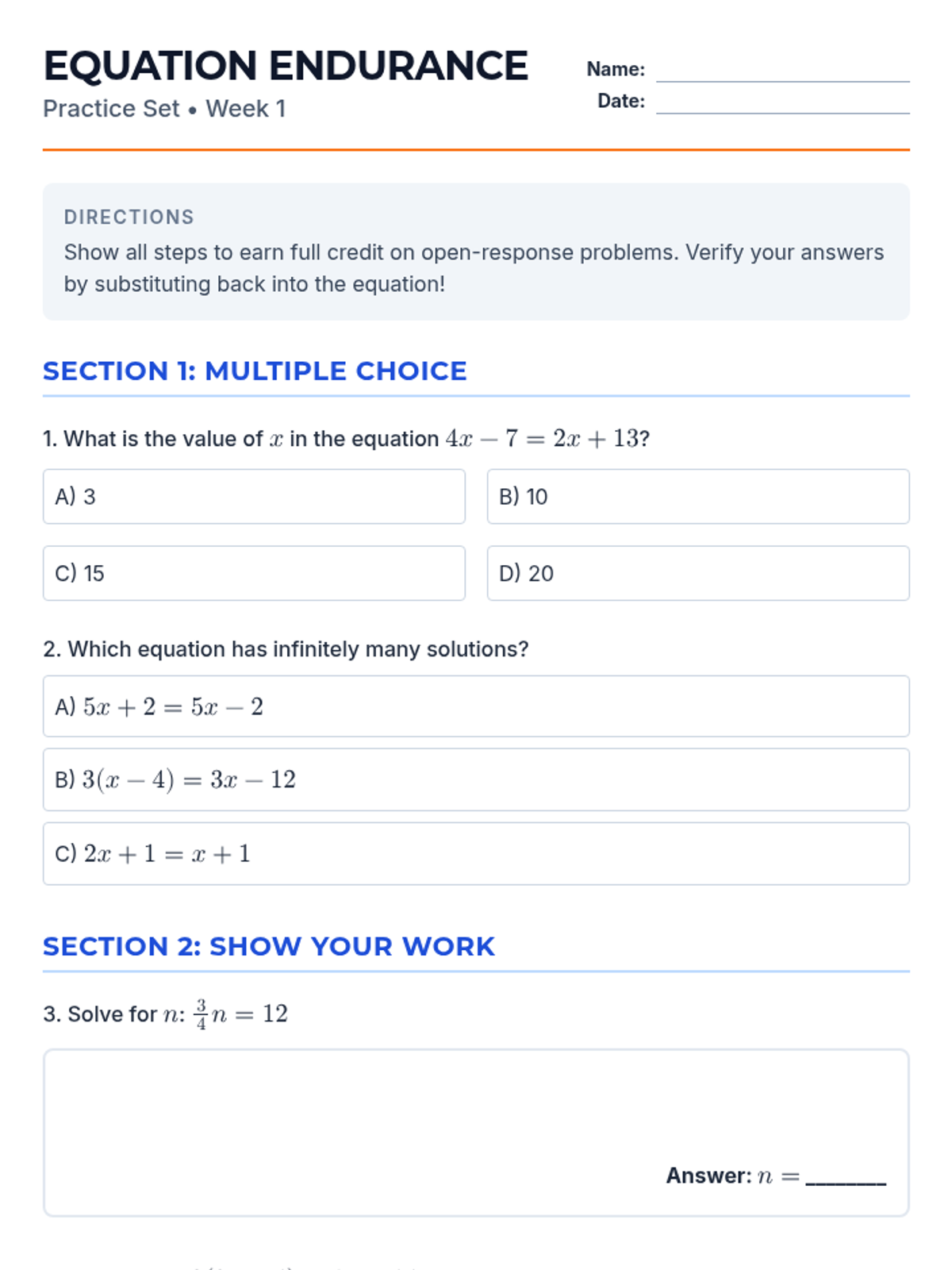
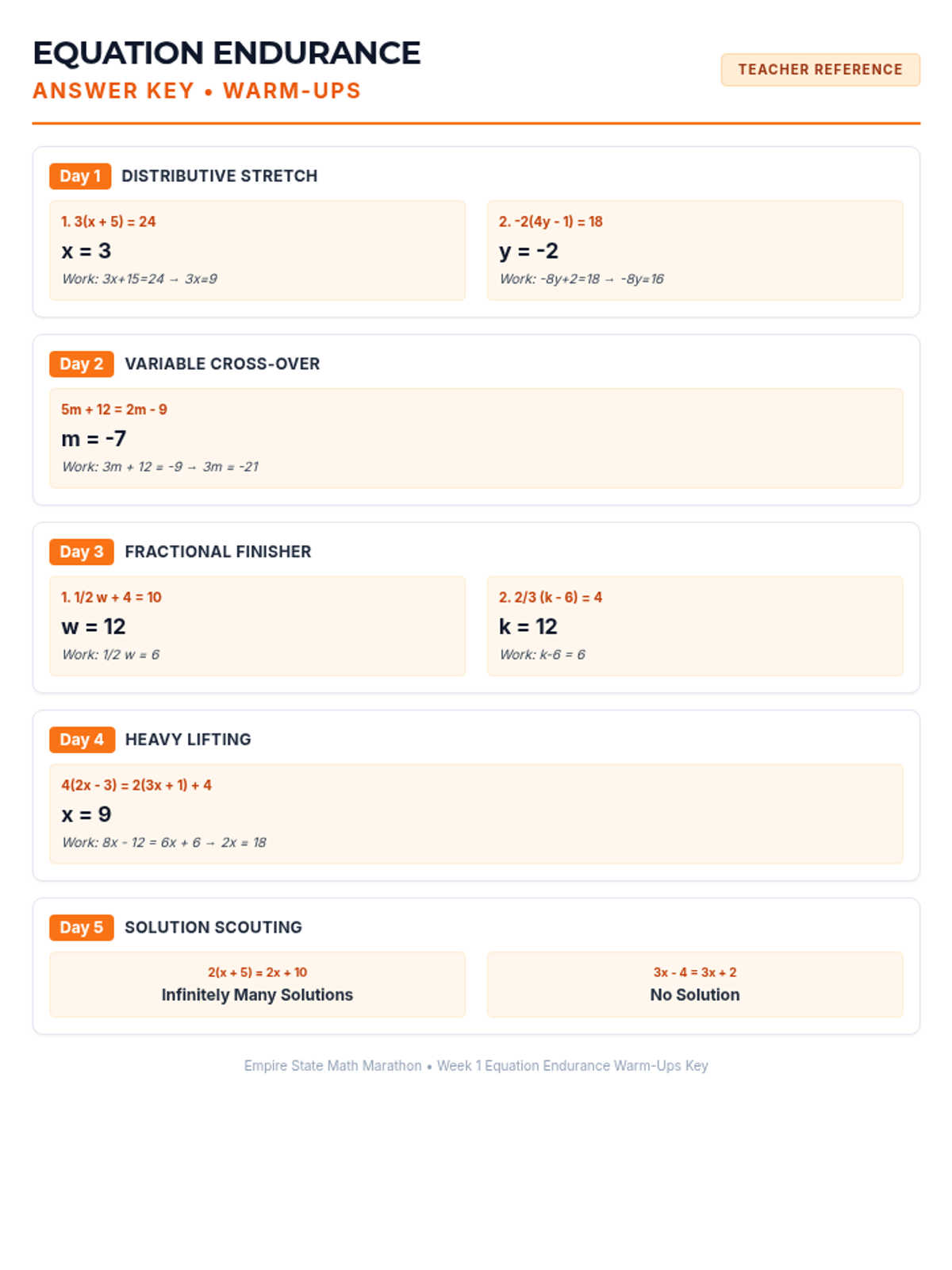
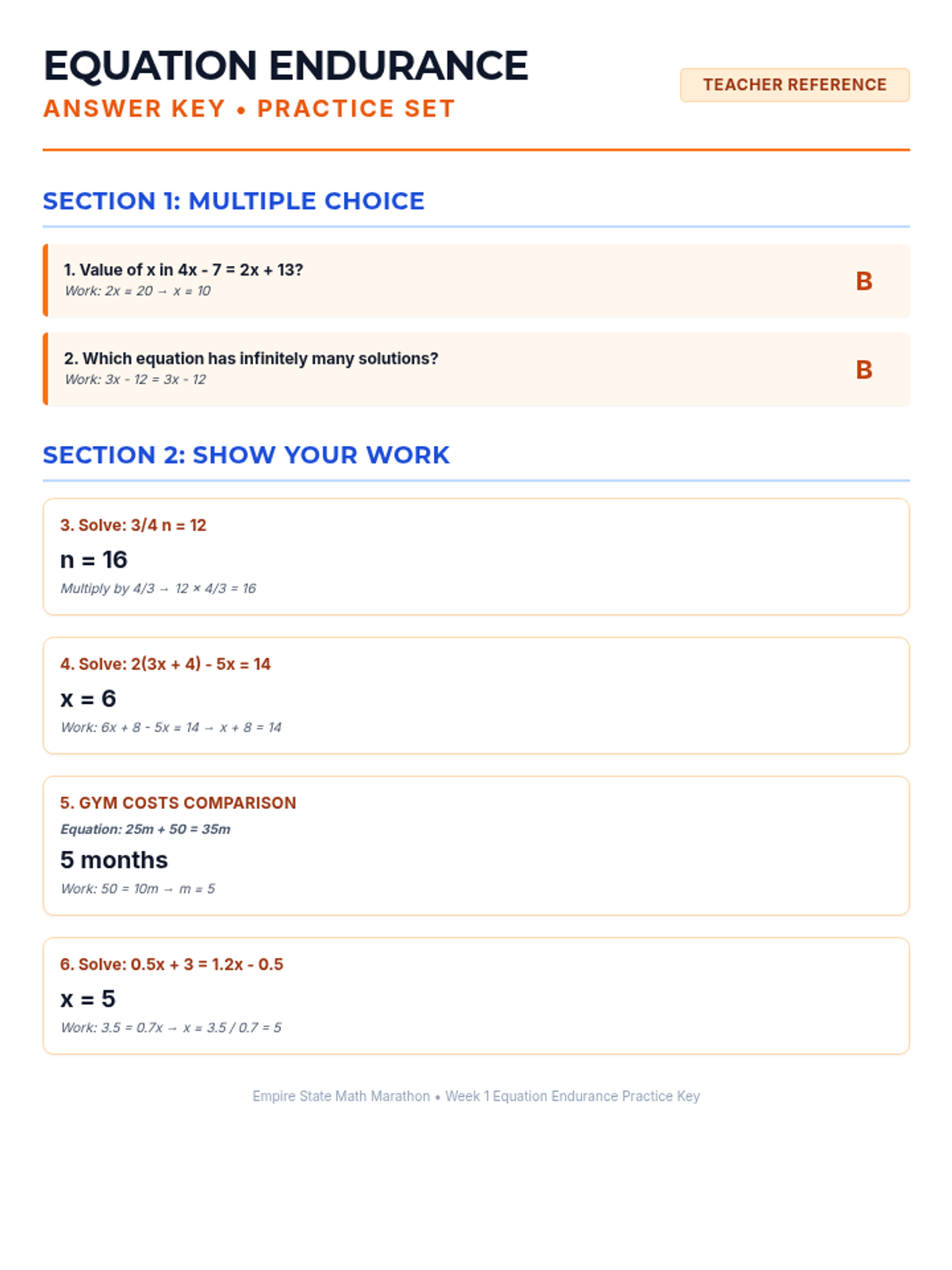
Week 1 focuses on solving multi-step equations, including those with variables on both sides, rational coefficients, and checking solutions.
An all-in-one review lesson covering the five major 6th-grade math domains. Designed for IEP support with visual scaffolds and simplified 2-option choices.
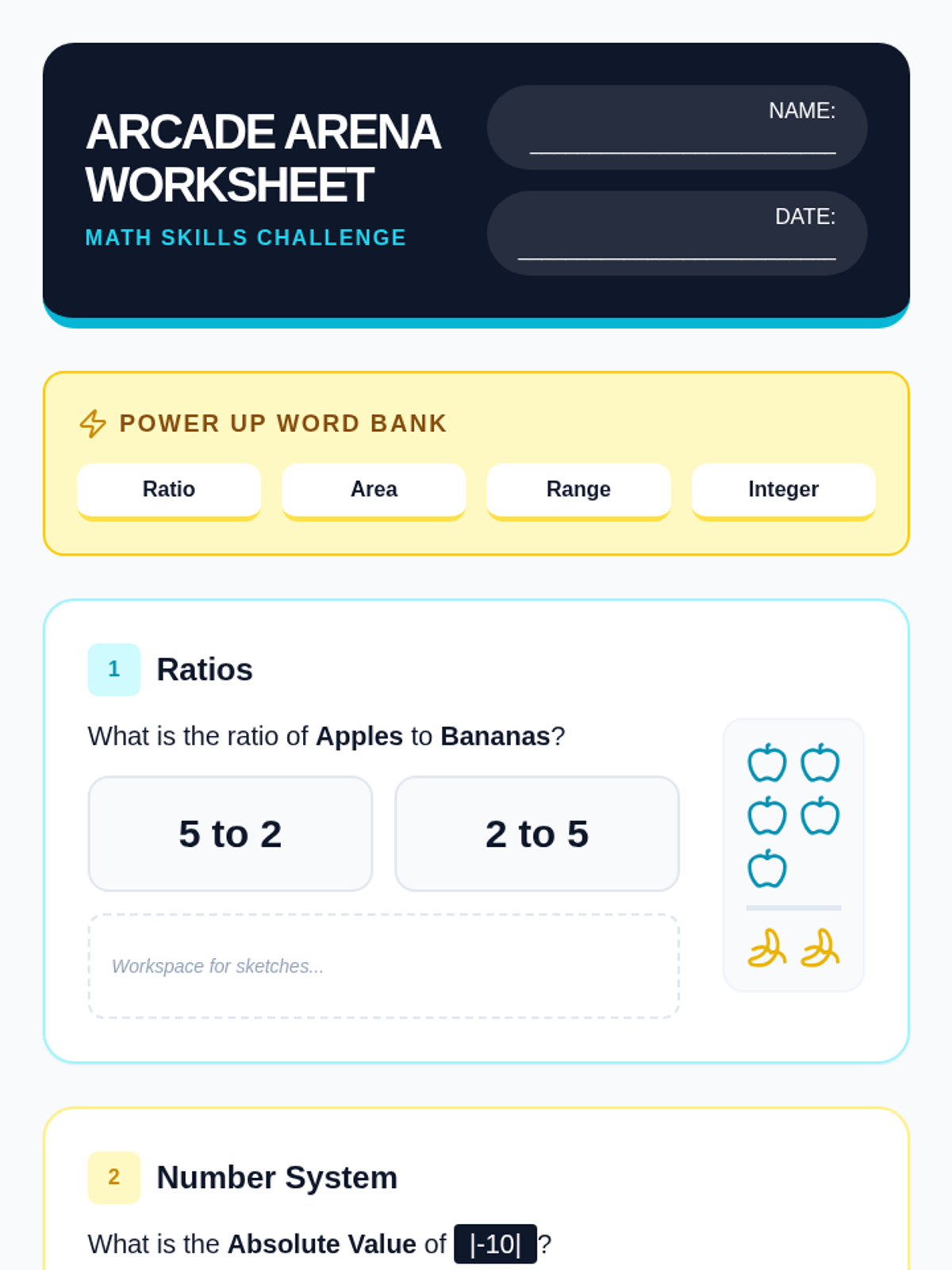
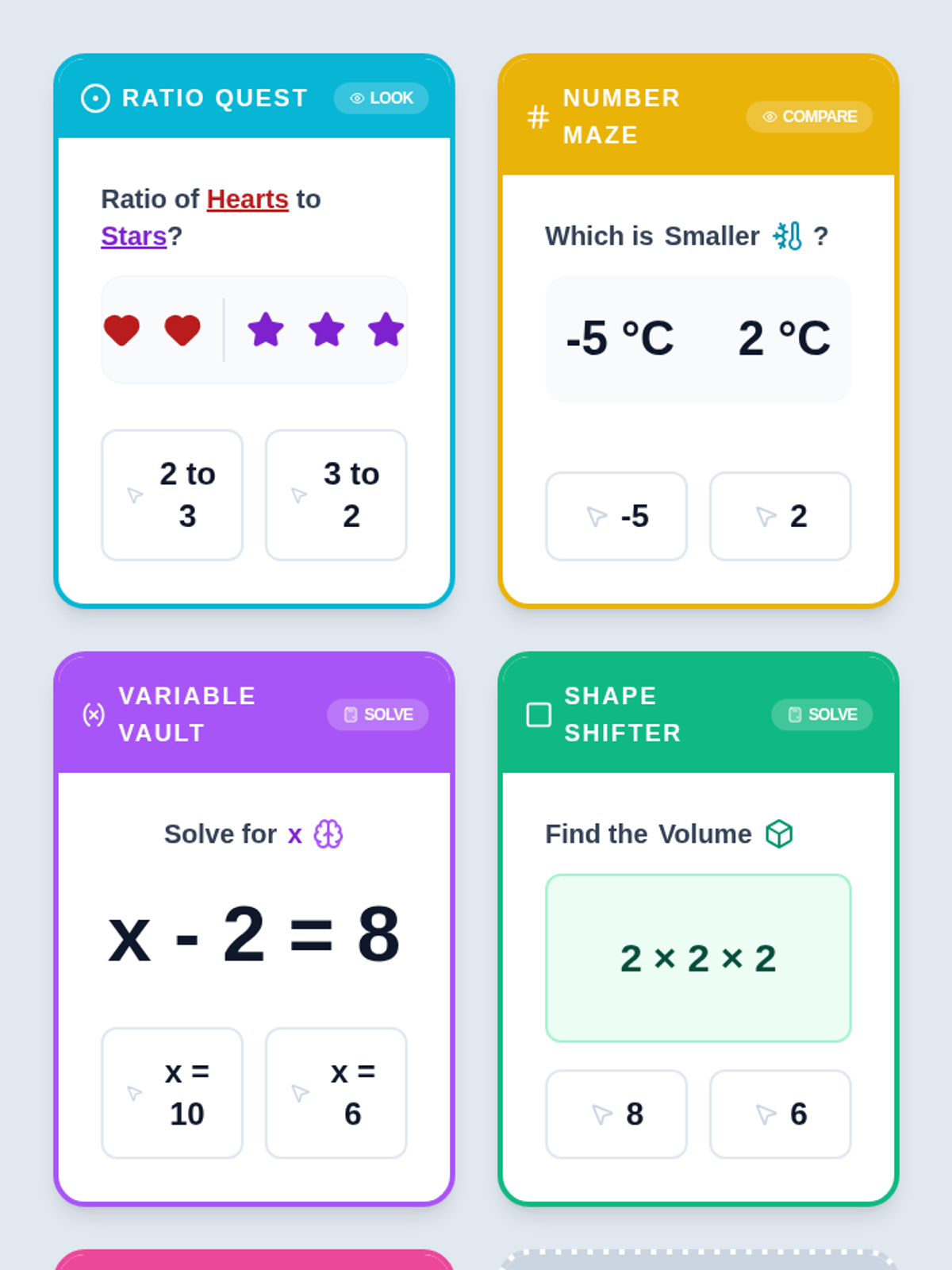
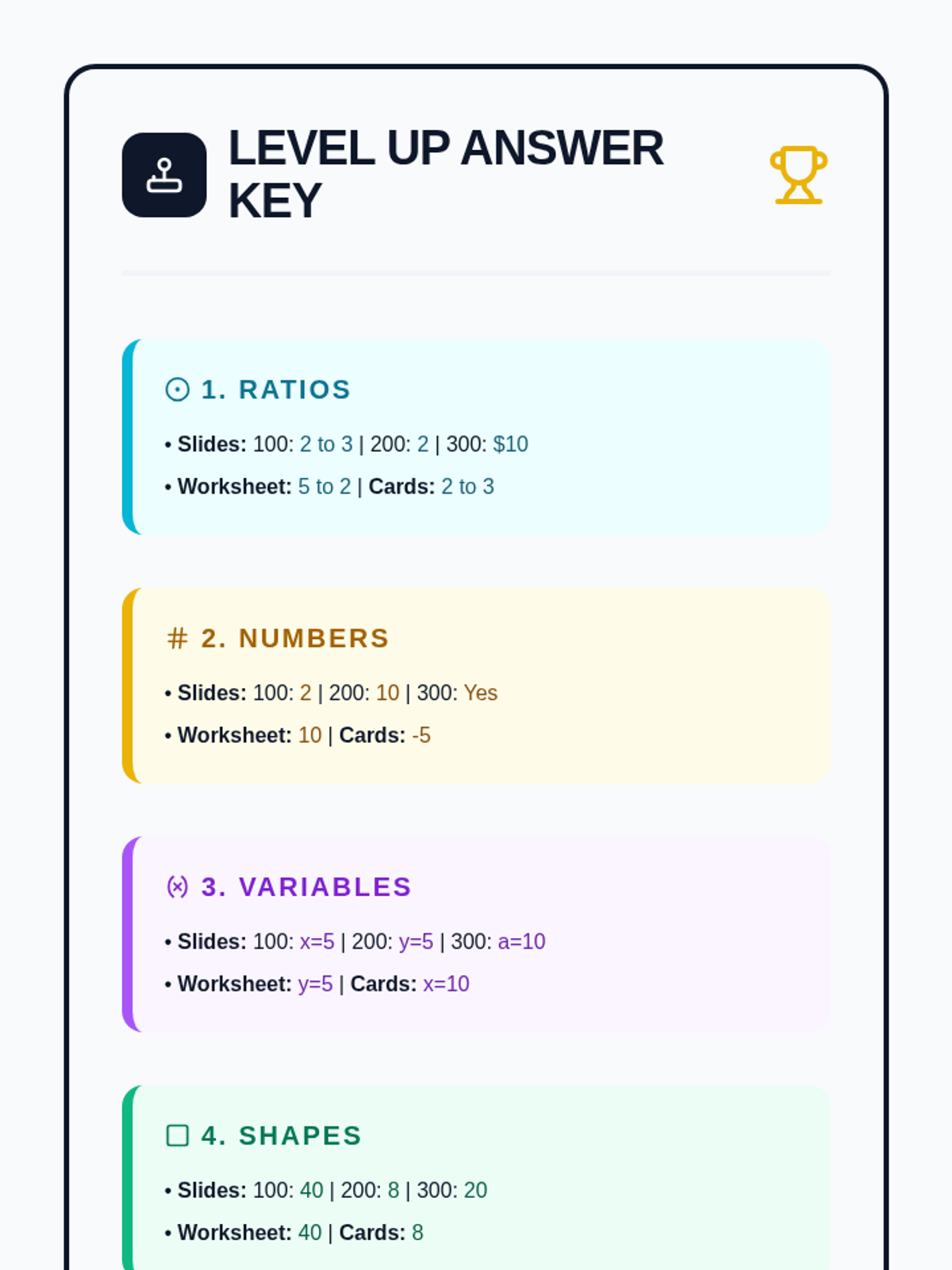
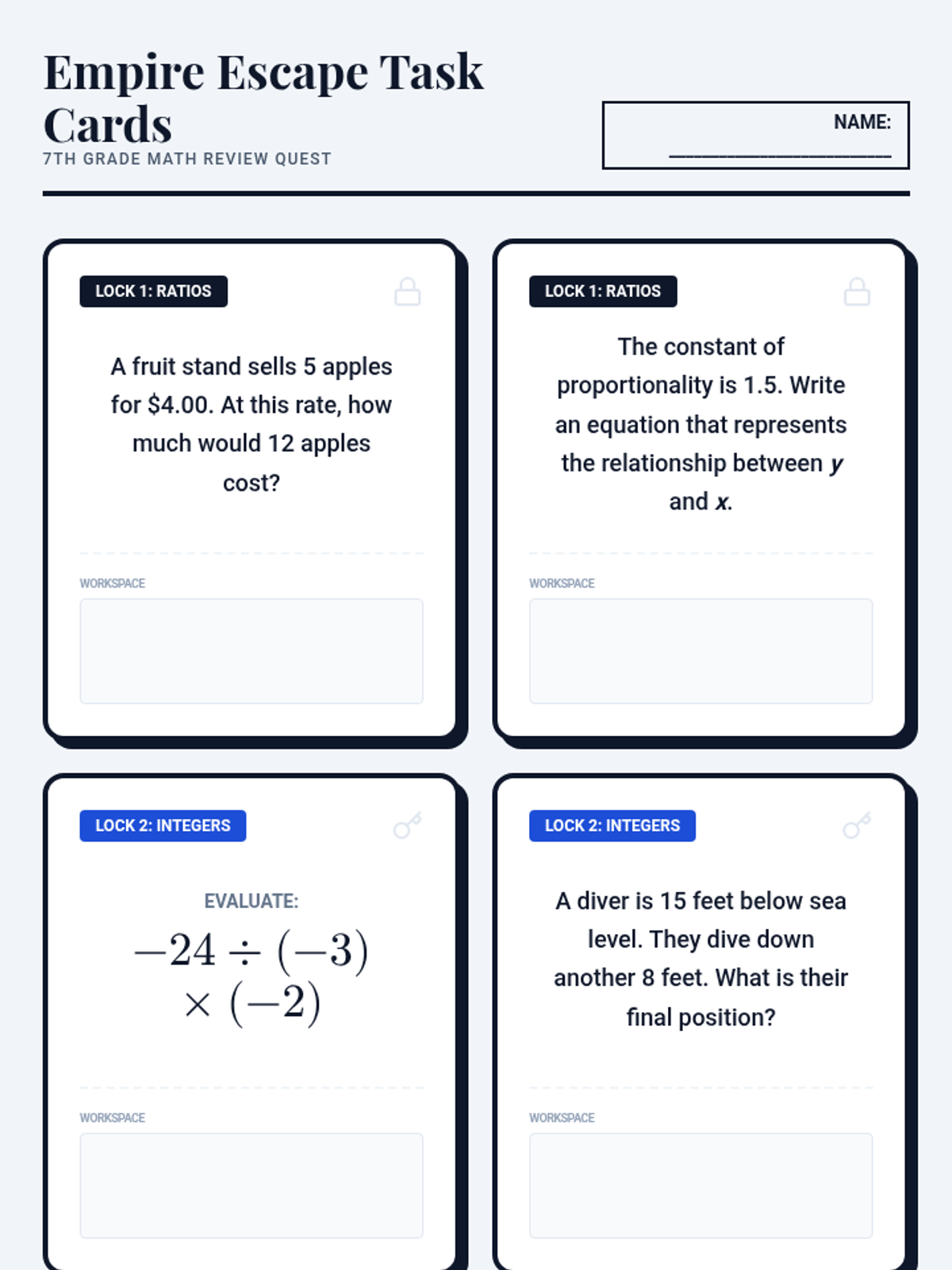
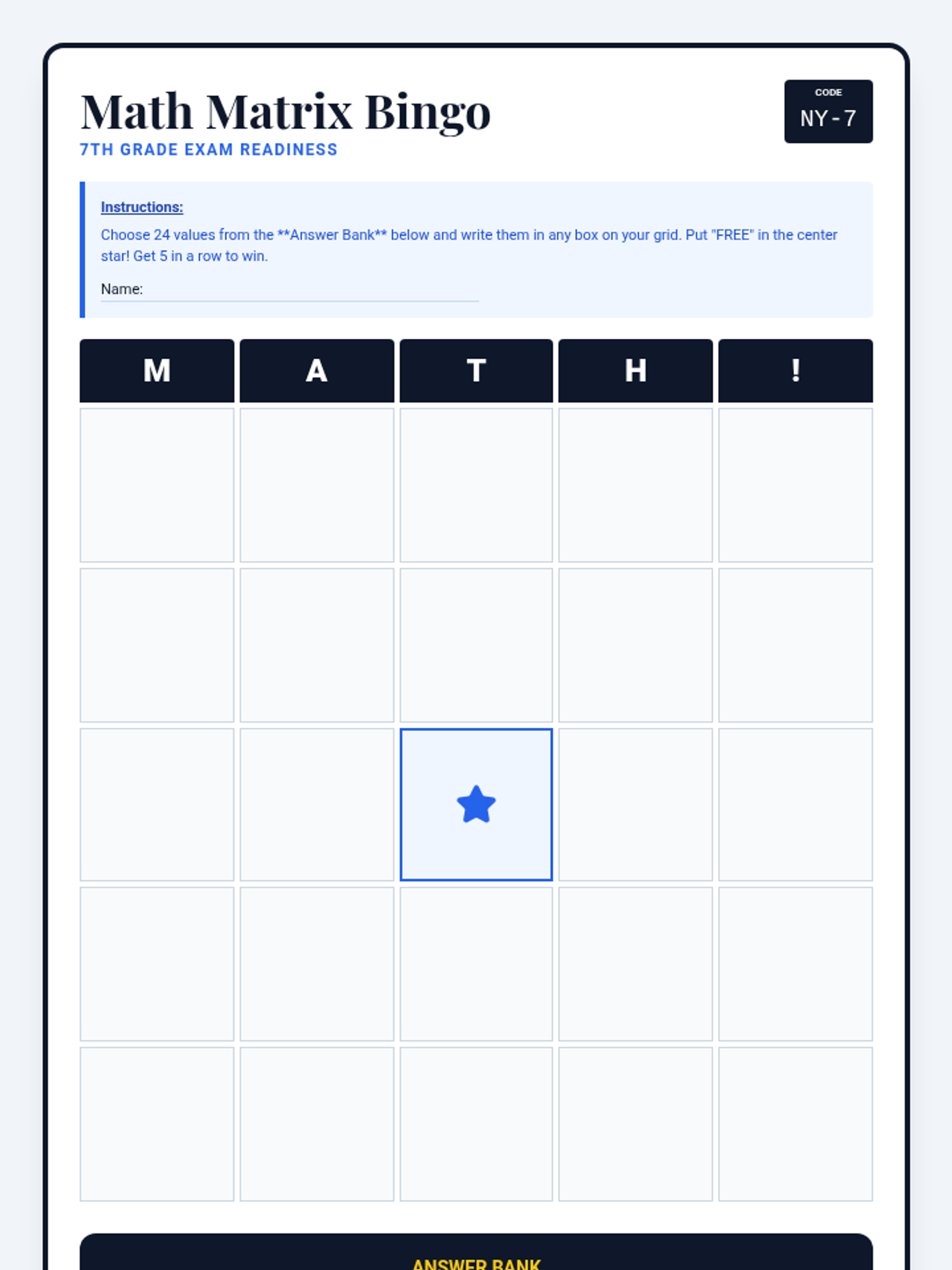
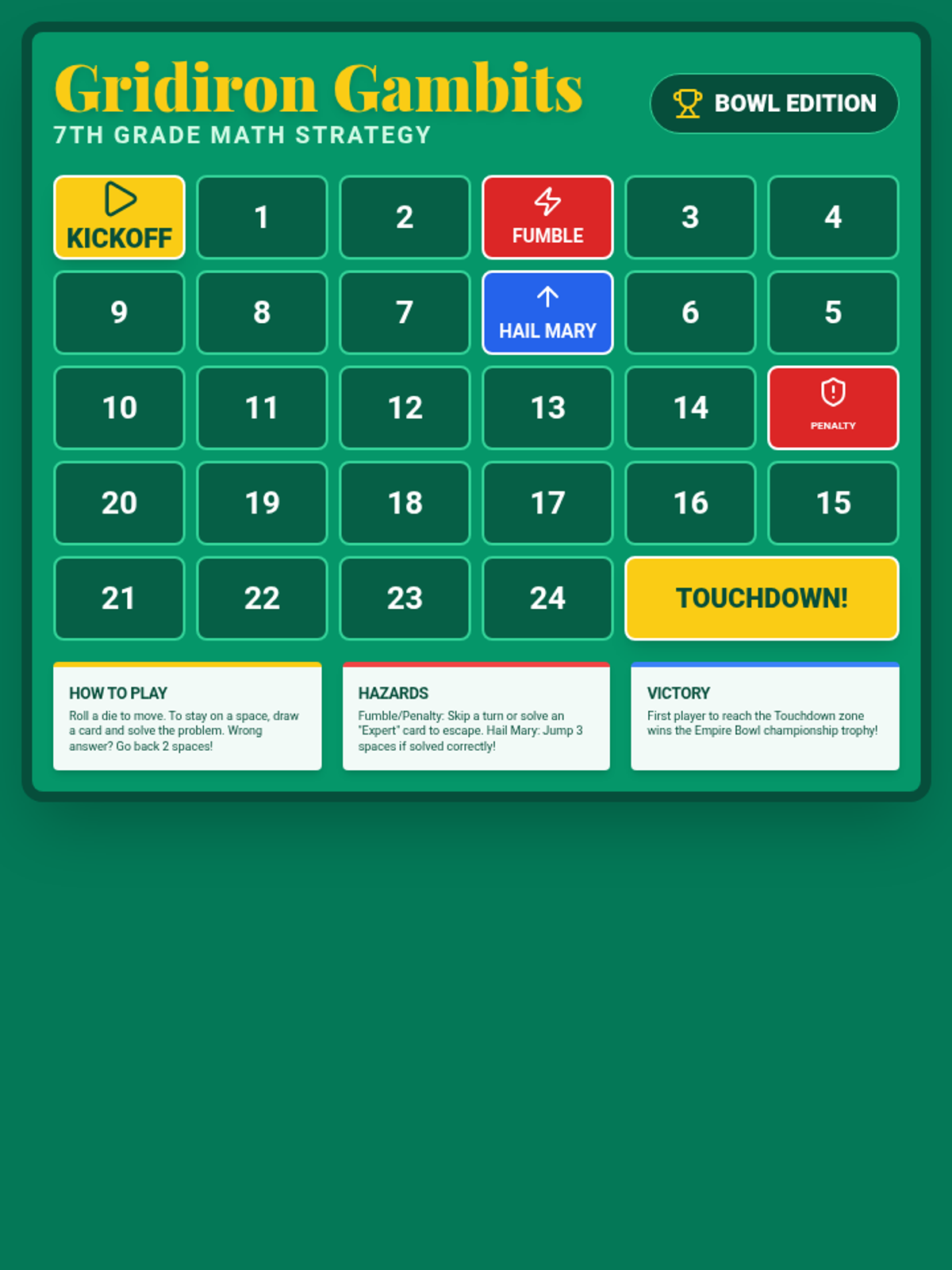
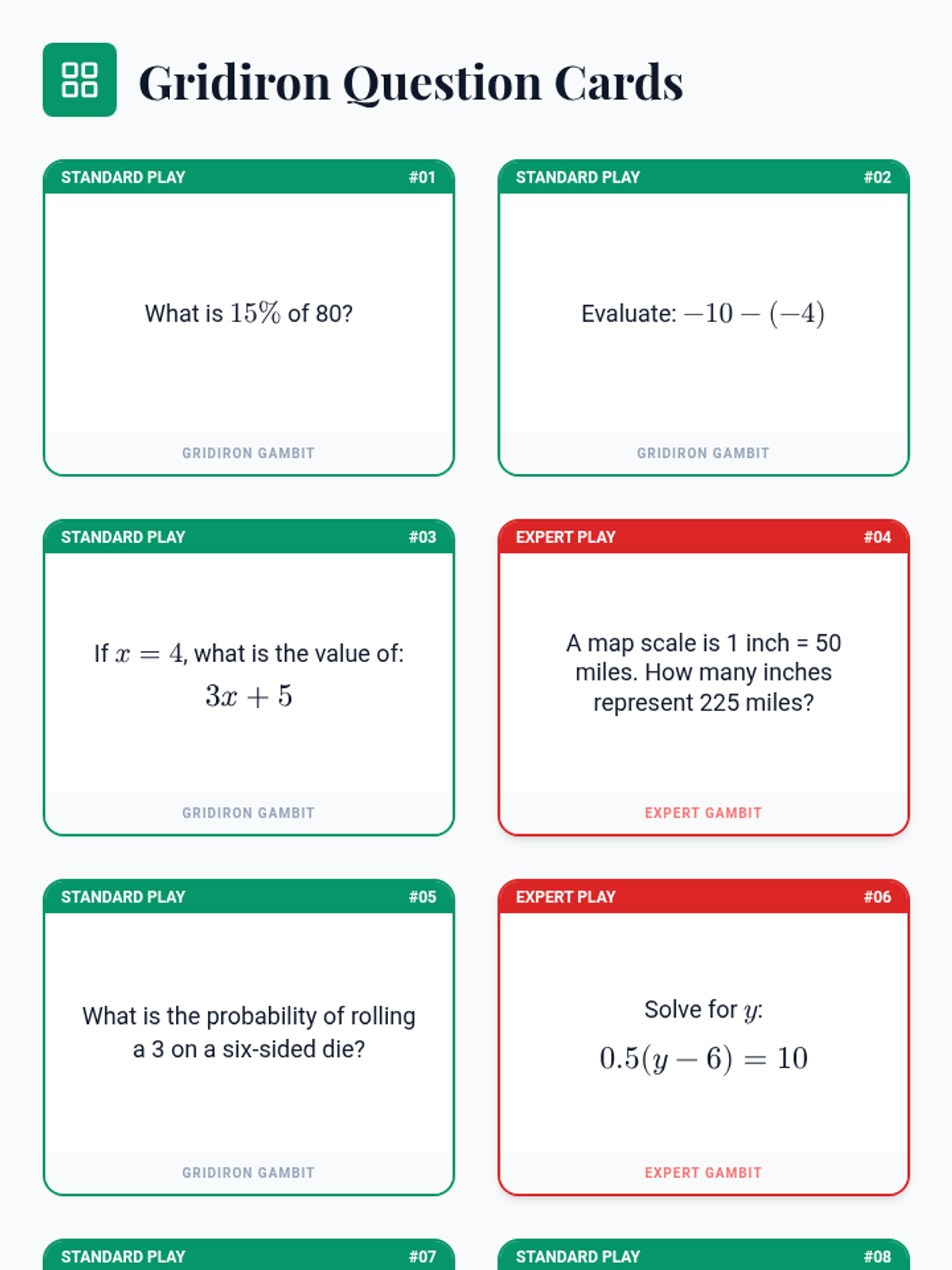
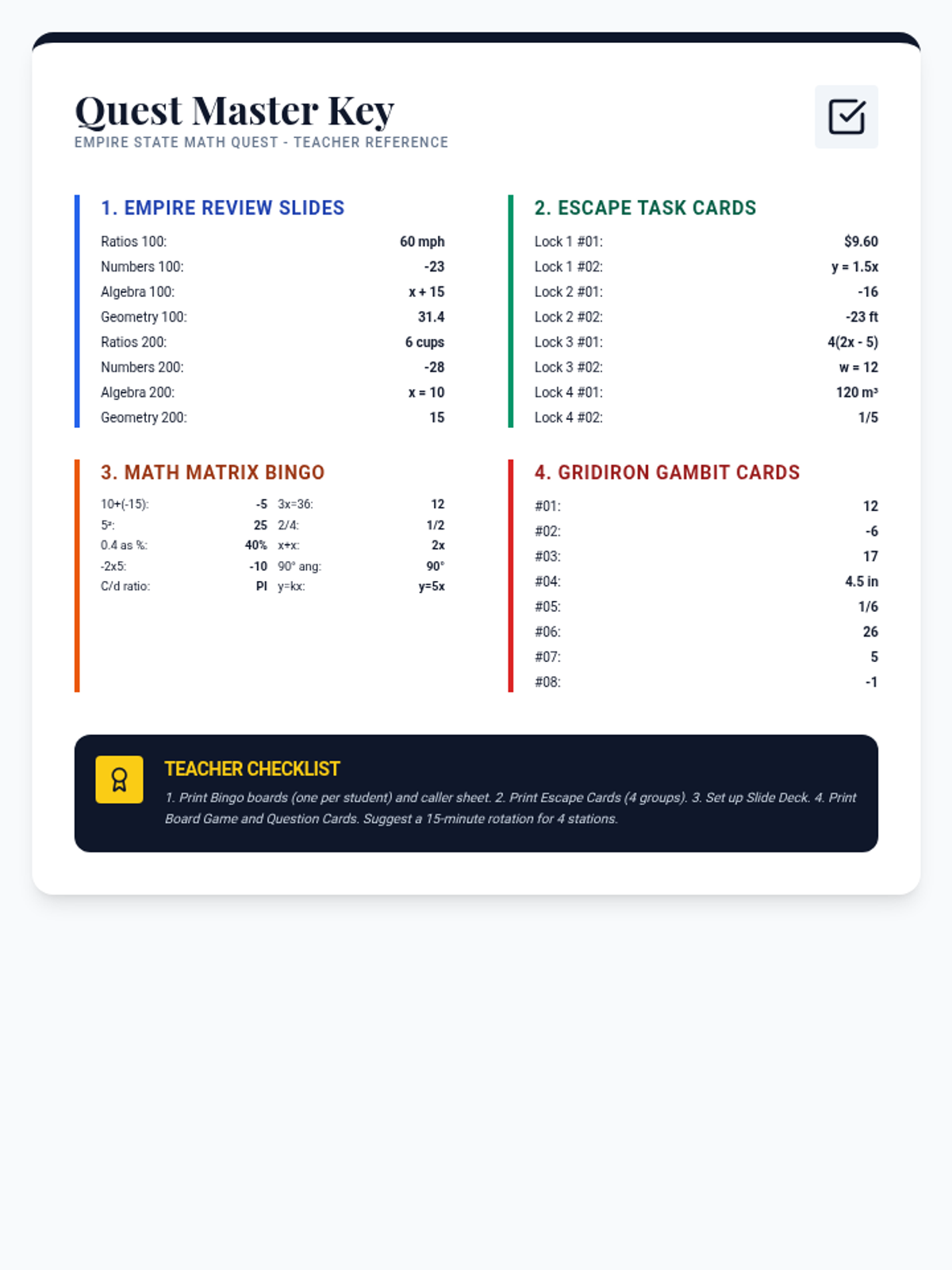
A comprehensive review session for the 7th Grade NYS Math Exam featuring four distinct games: a Jeopardy-style presentation, an escape room challenge, math bingo, and a strategic board game. Topics include Ratios & Proportional Reasoning, The Number System, Expressions & Equations, and Geometry & Statistics.
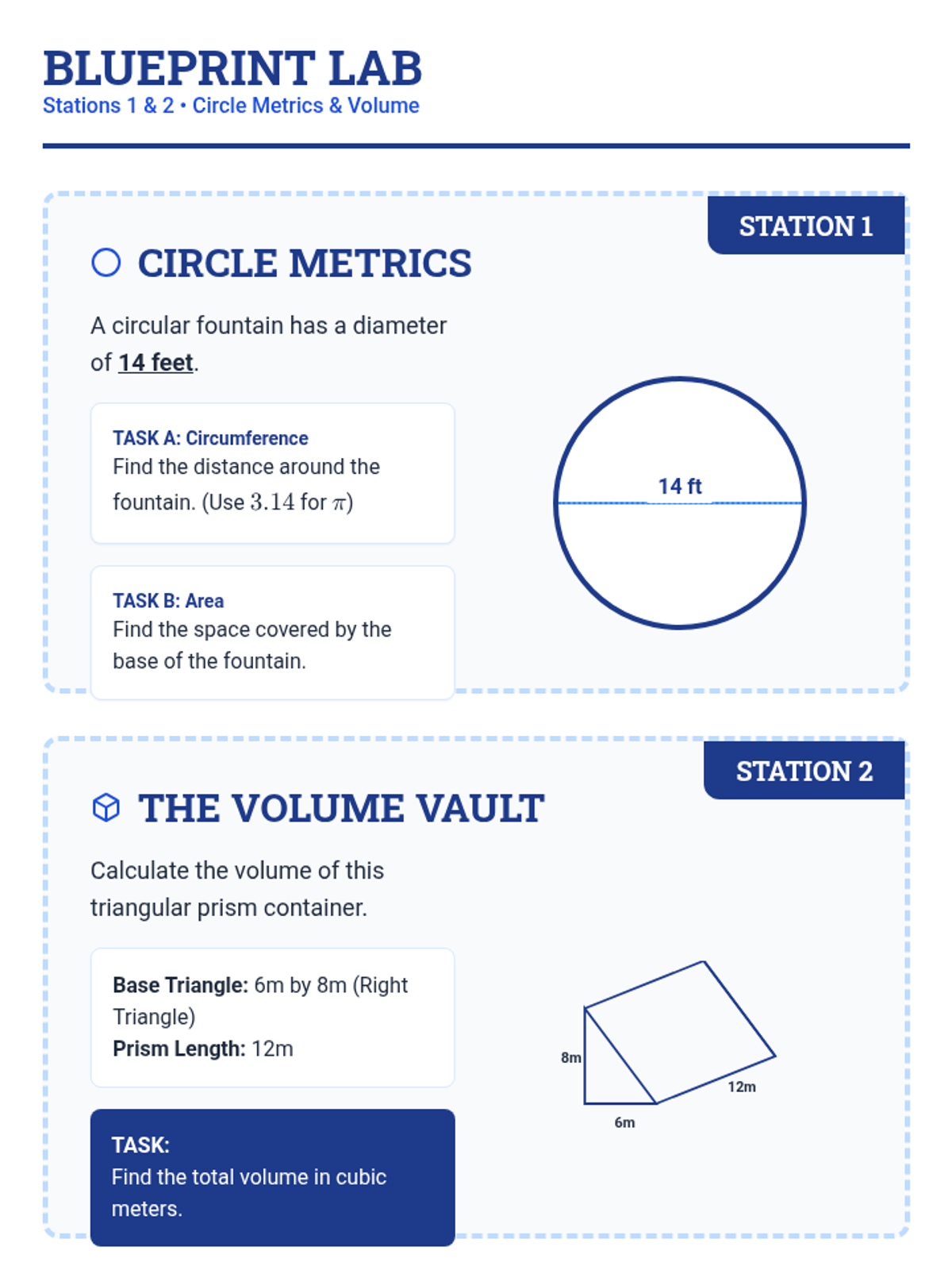
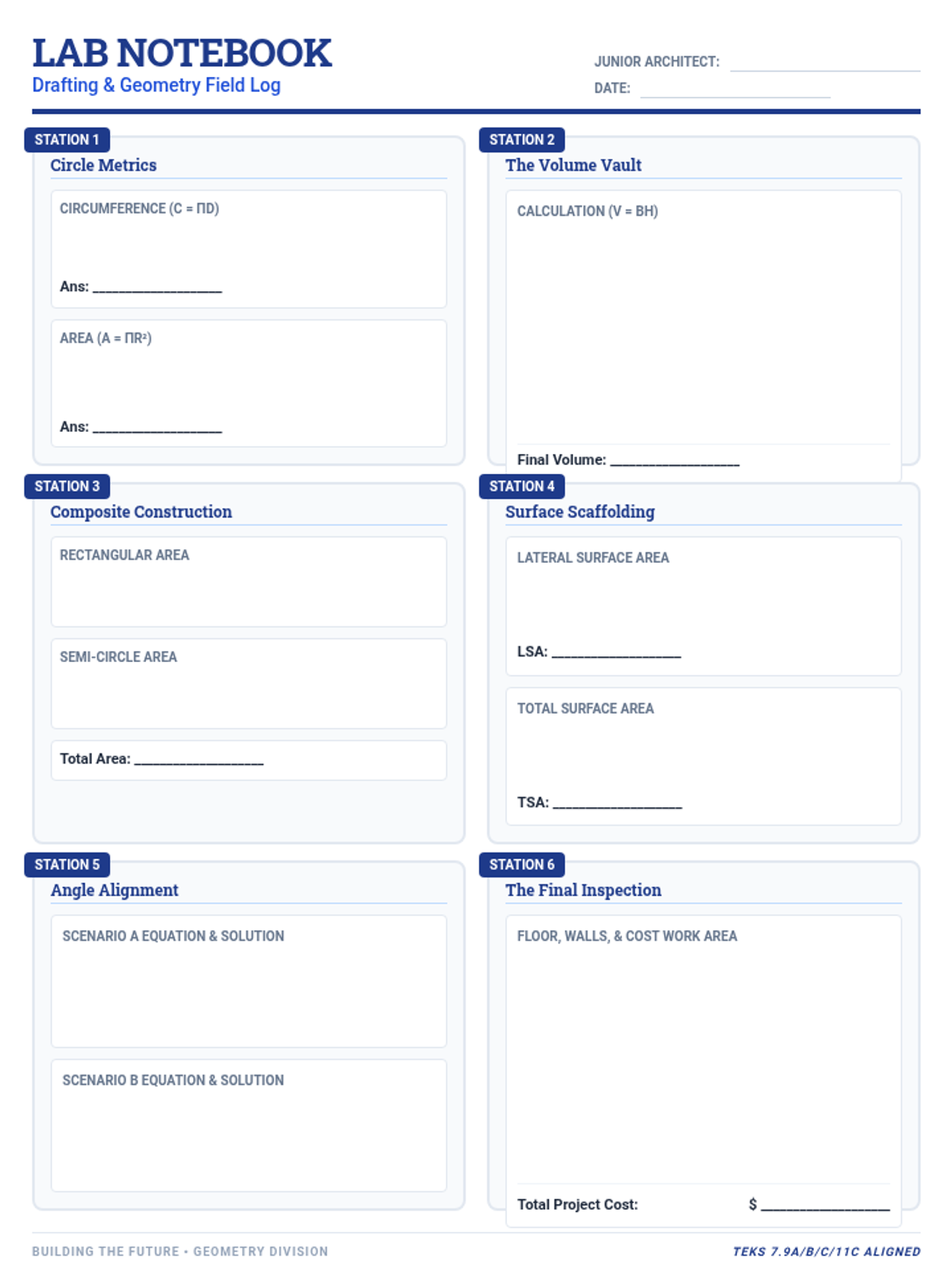
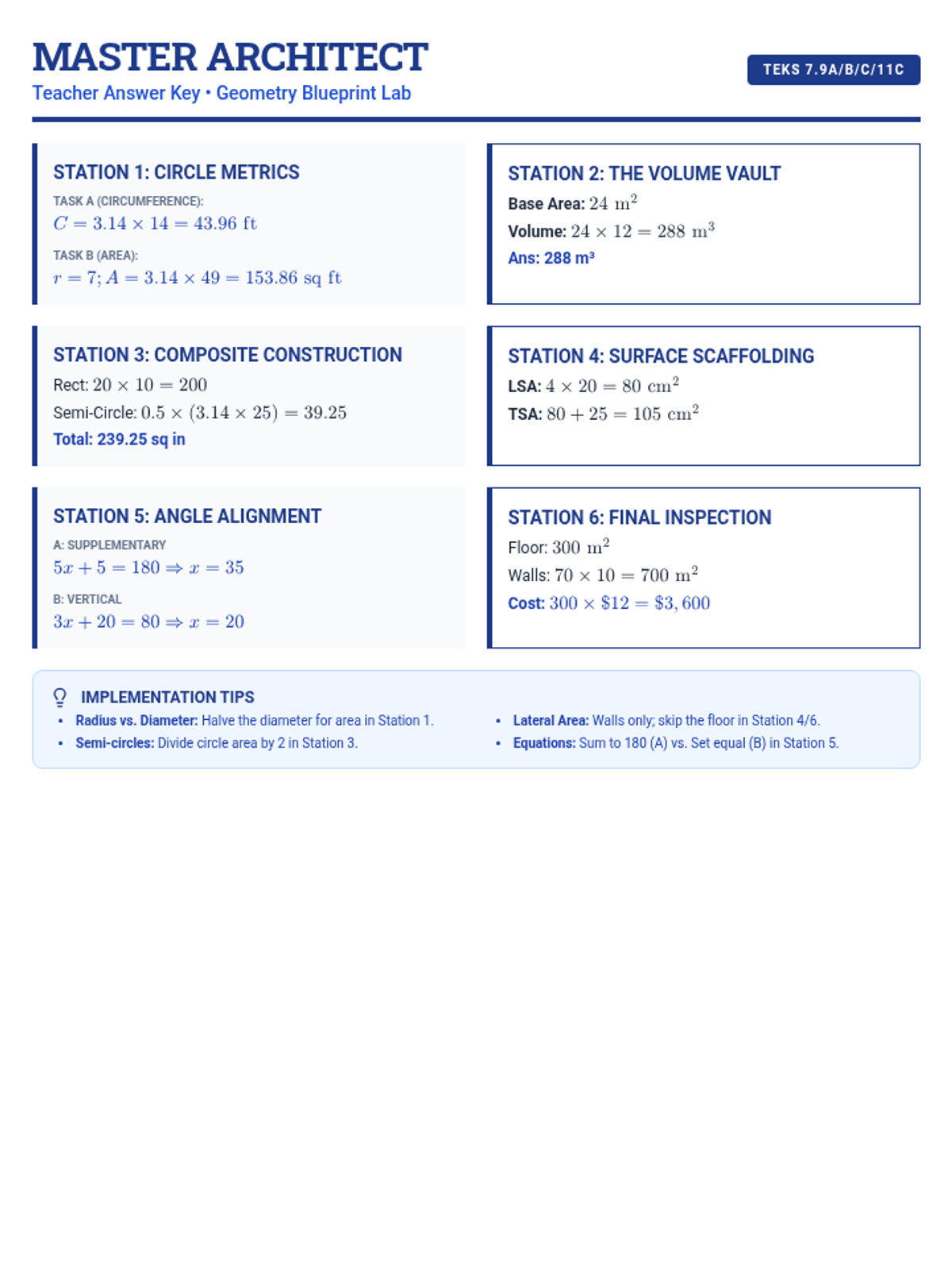
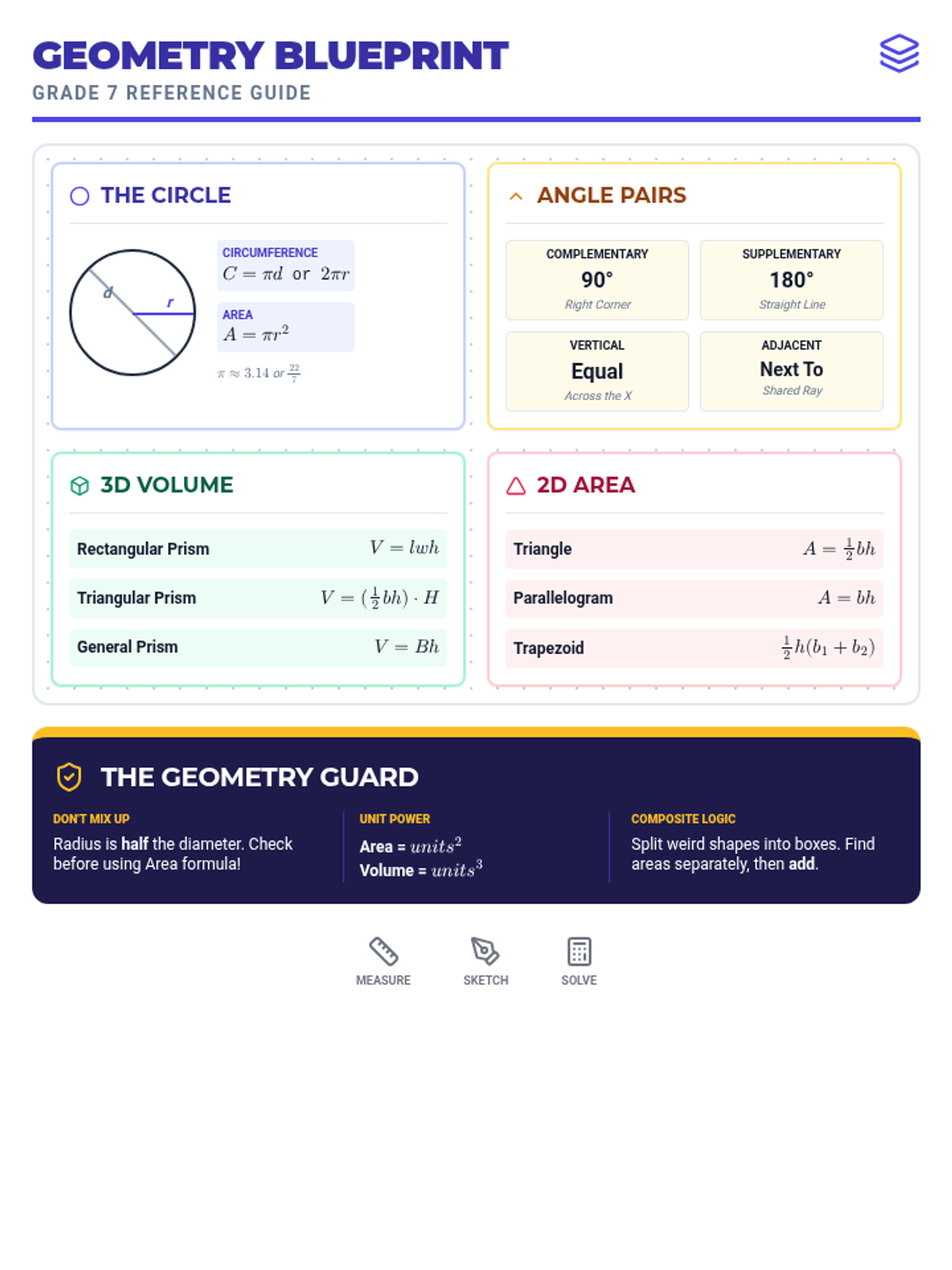
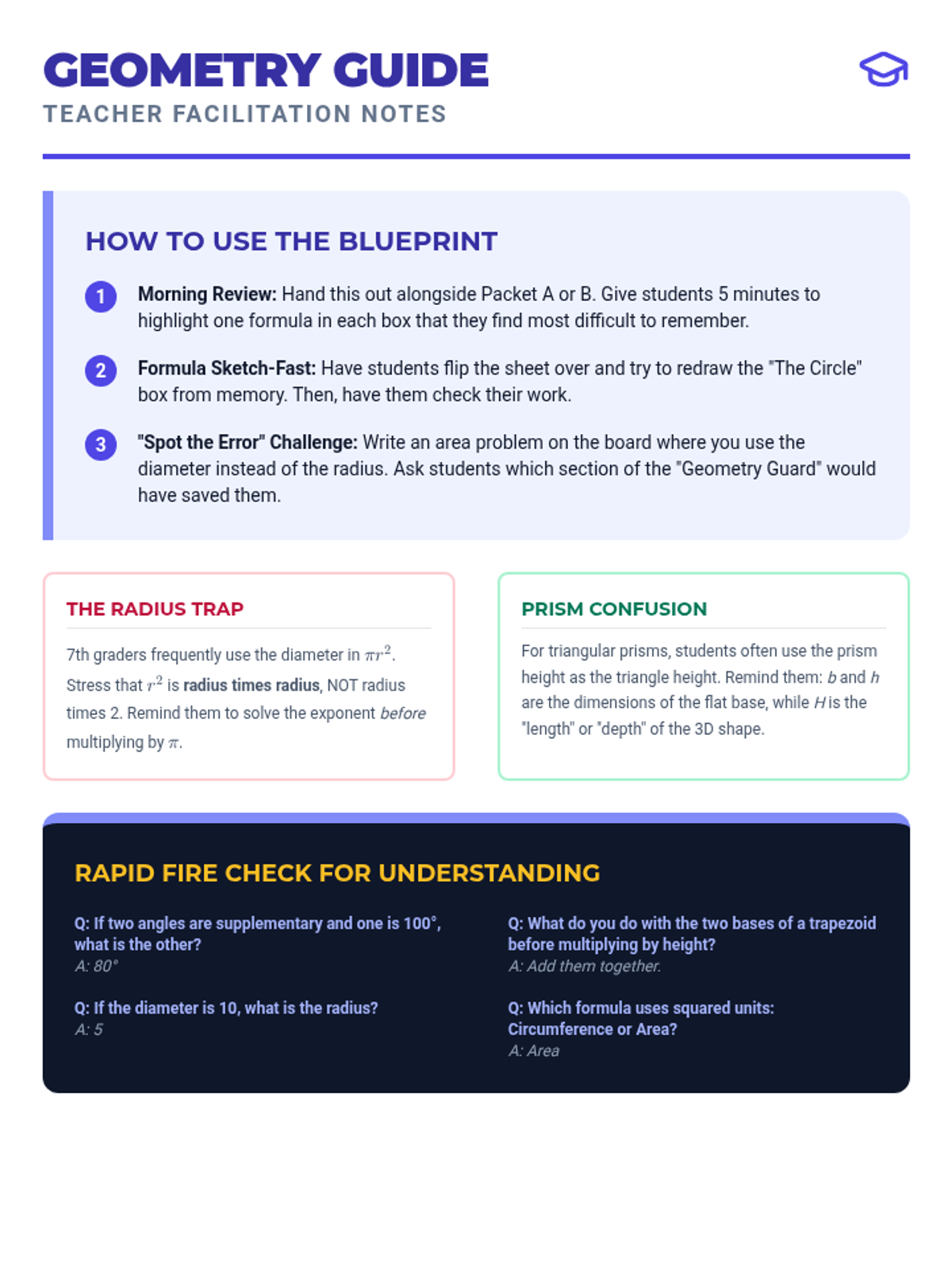
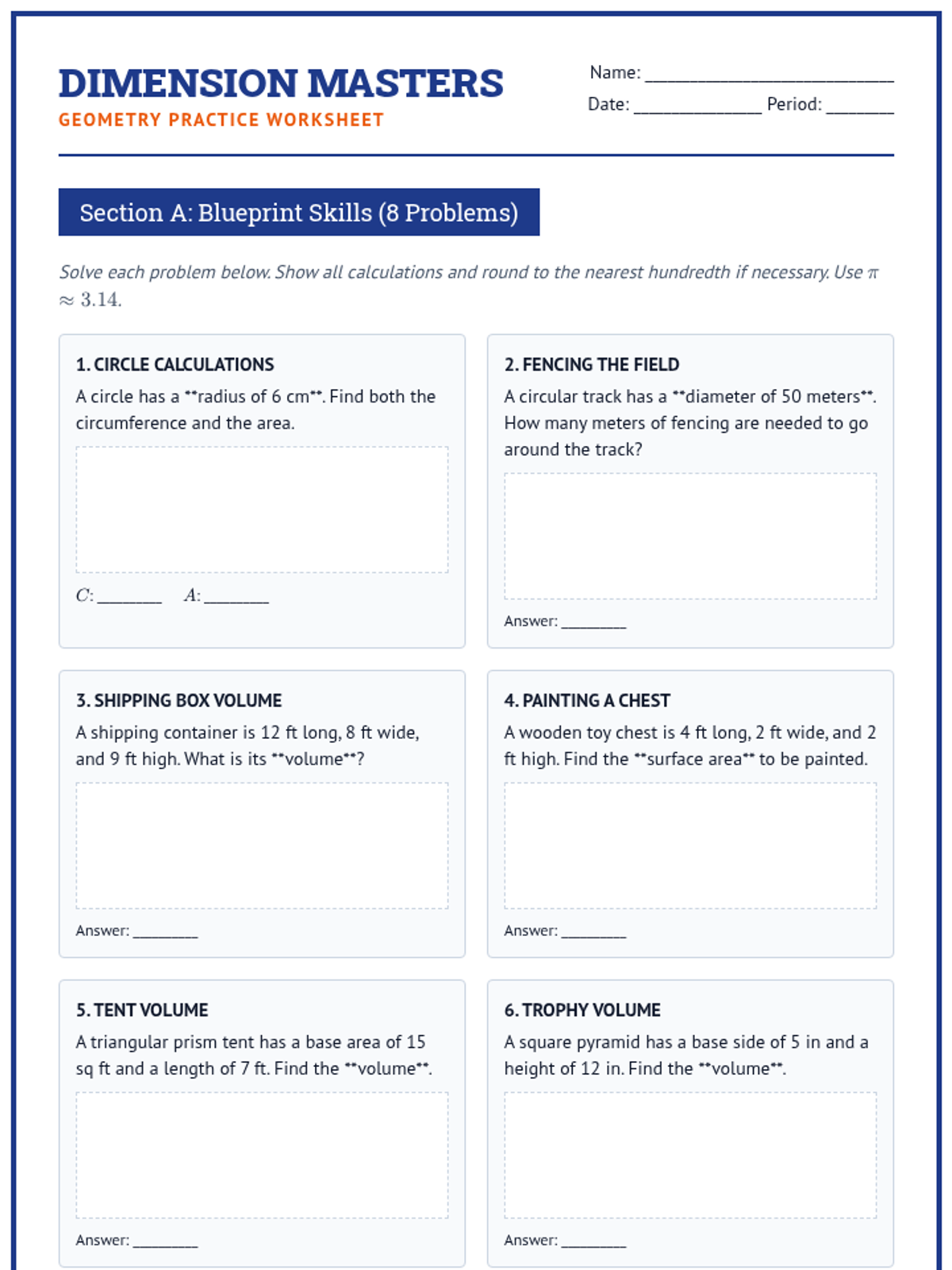
A hands-on geometry station activity focusing on circles, volume, surface area, and angle relationships using an architectural blueprint theme. Students rotate through specialized 'Lab Stations' to apply their geometric knowledge to real-world drafting scenarios.
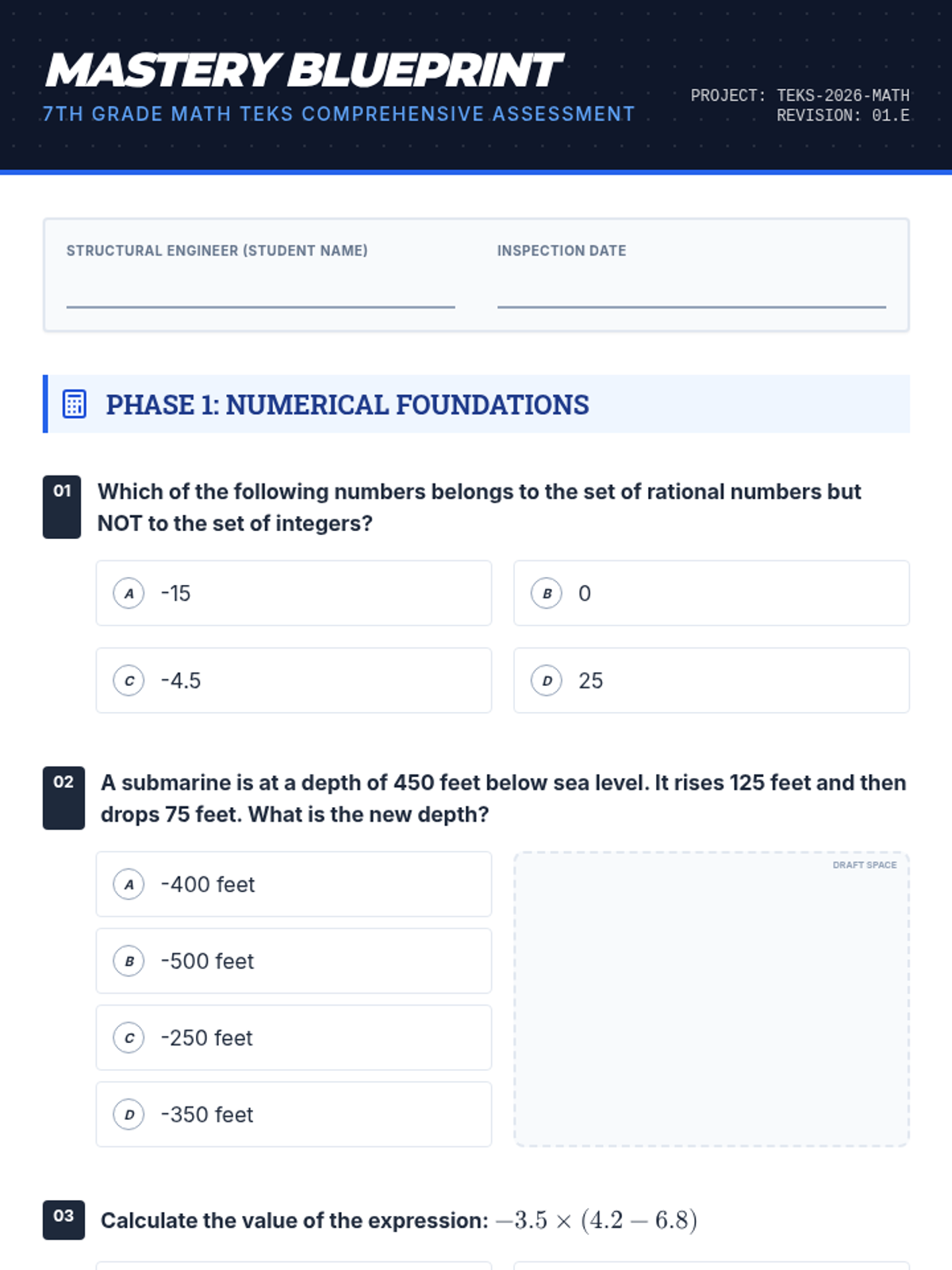
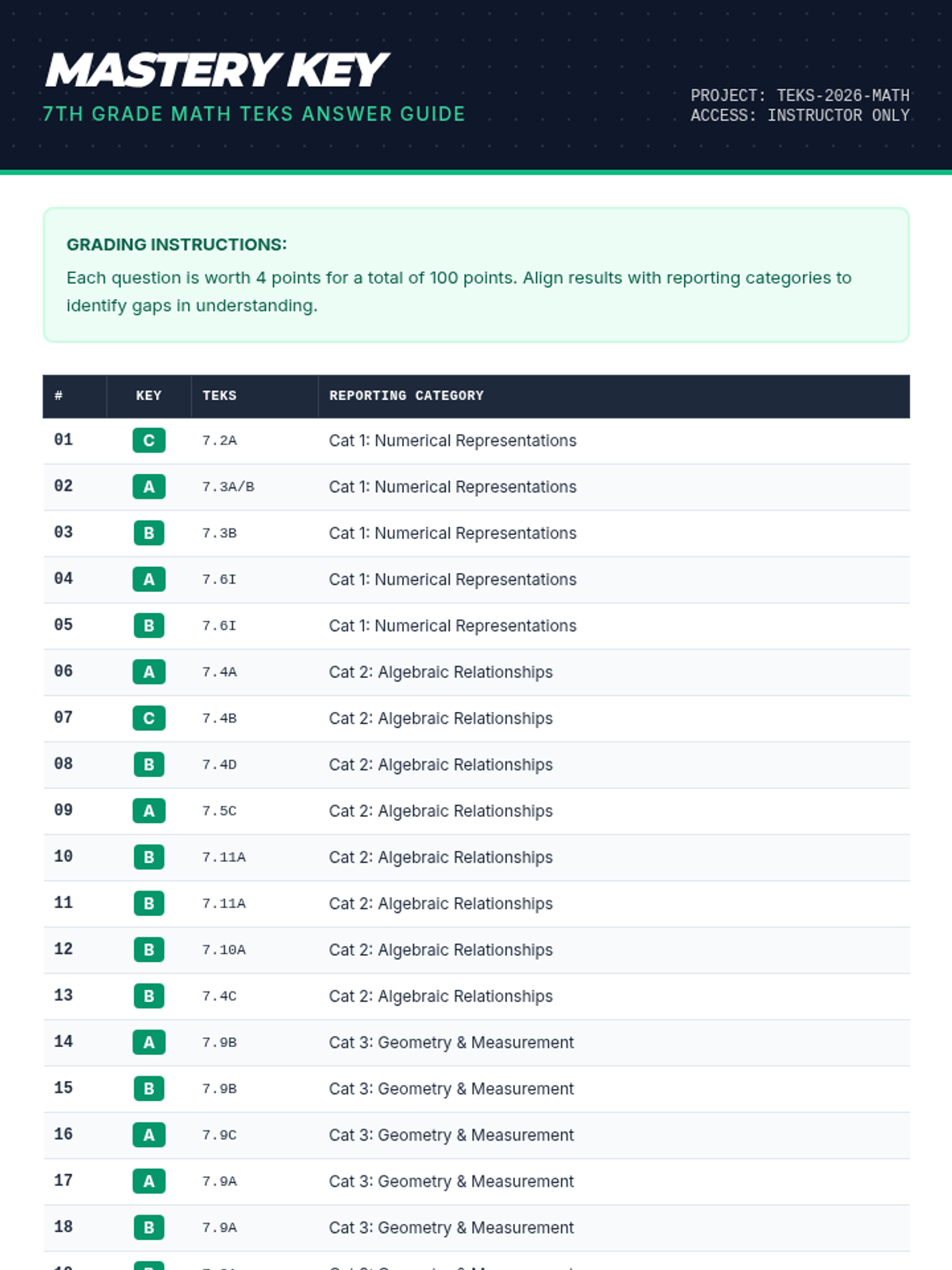
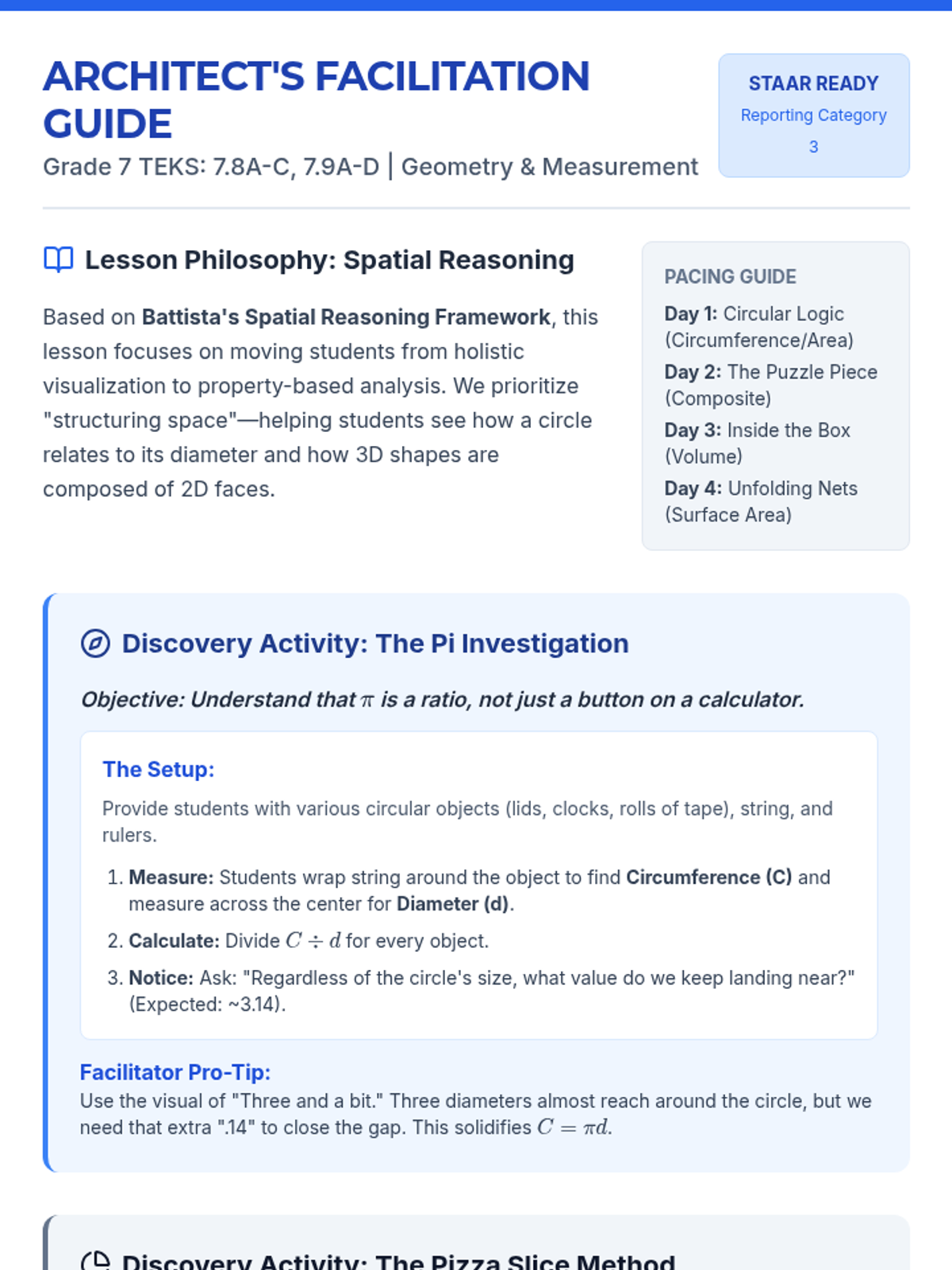
A comprehensive review of all 7th Grade Math TEKS reporting categories, featuring a 25-question cumulative assessment and detailed answer key.
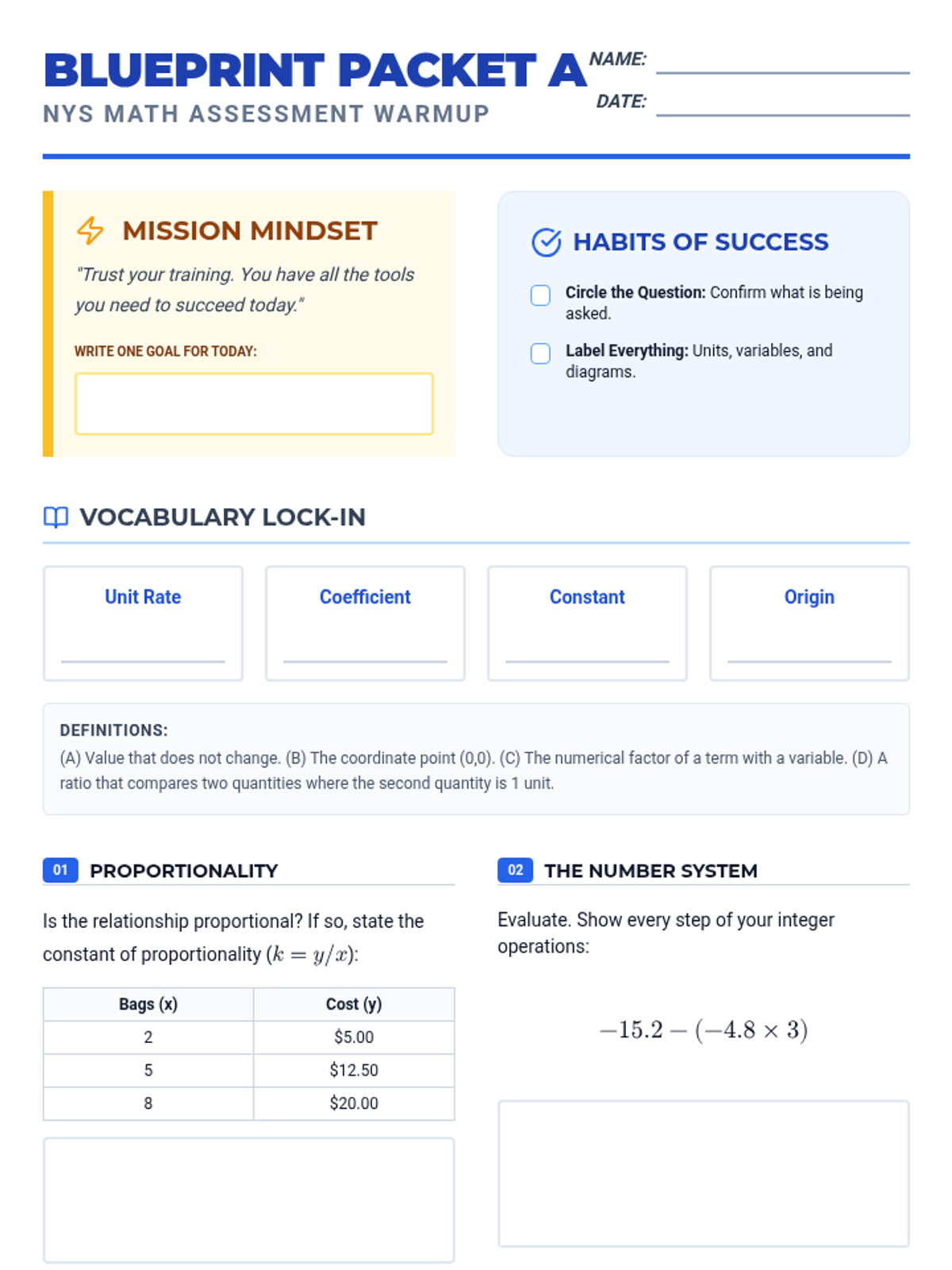
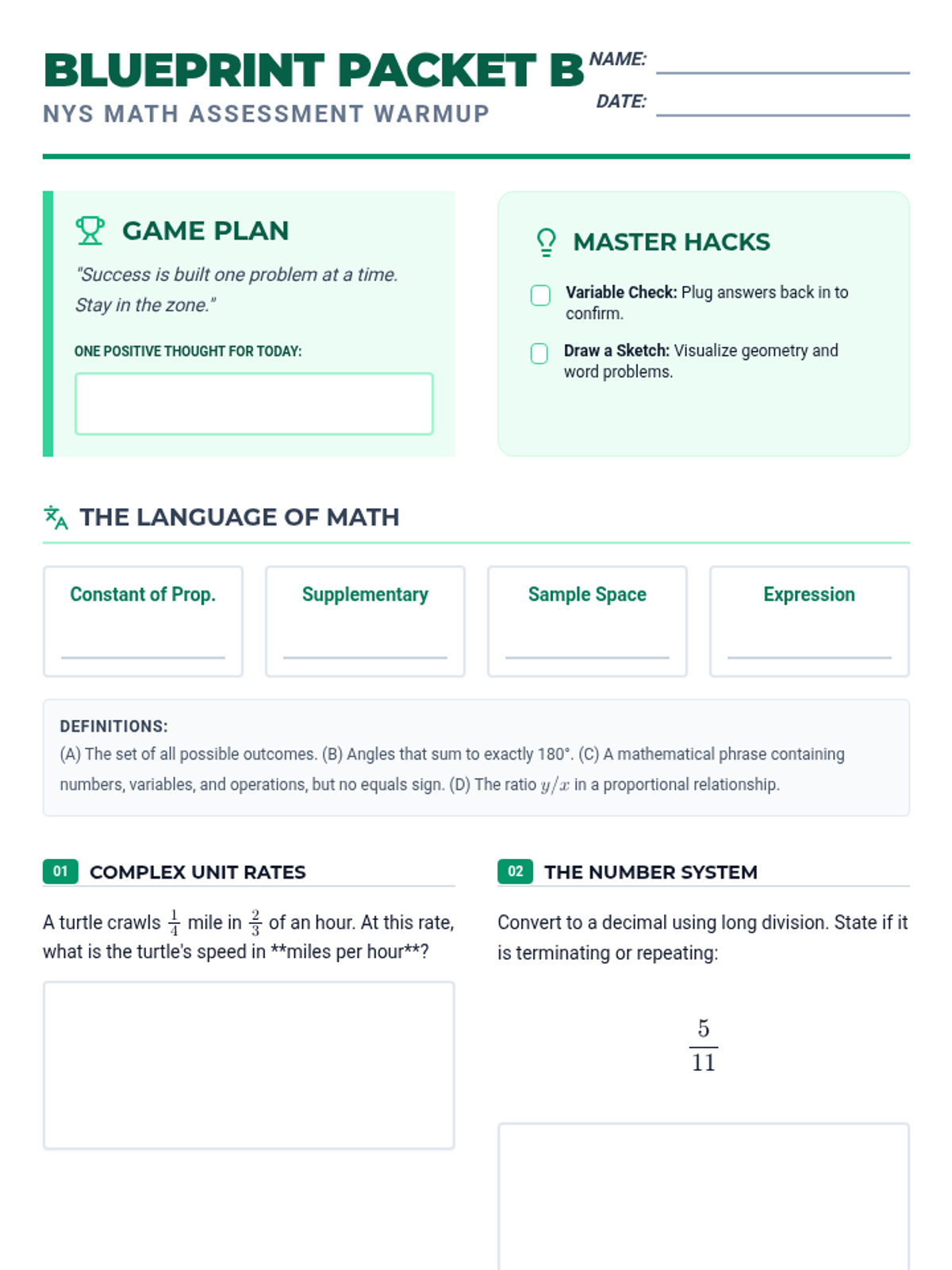
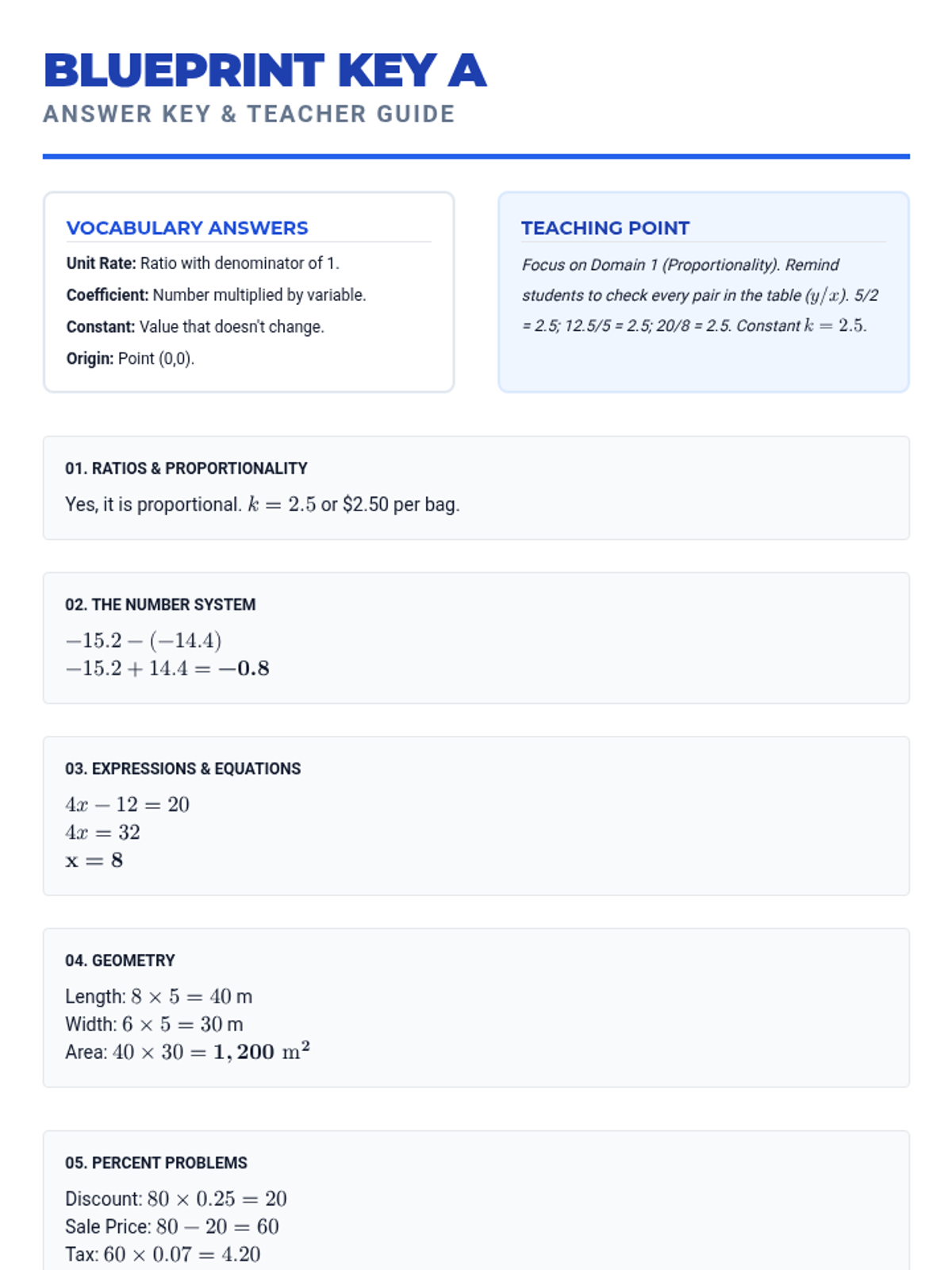
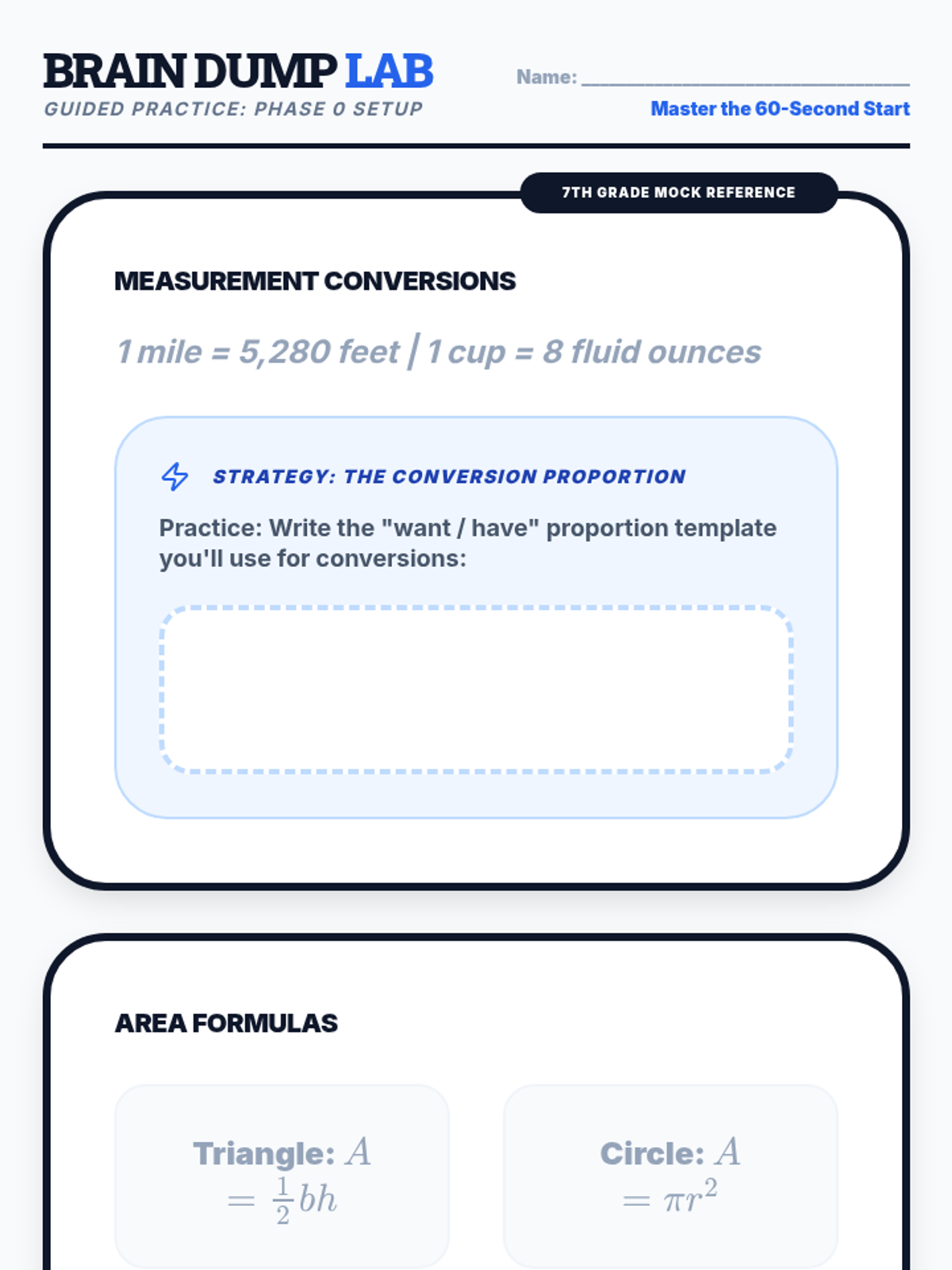
A pair of intensive, 30-minute test-prep morning work packets designed for the morning of the NYS Grade 7 Math Test, covering all major domains with a focus on confidence and strategy.
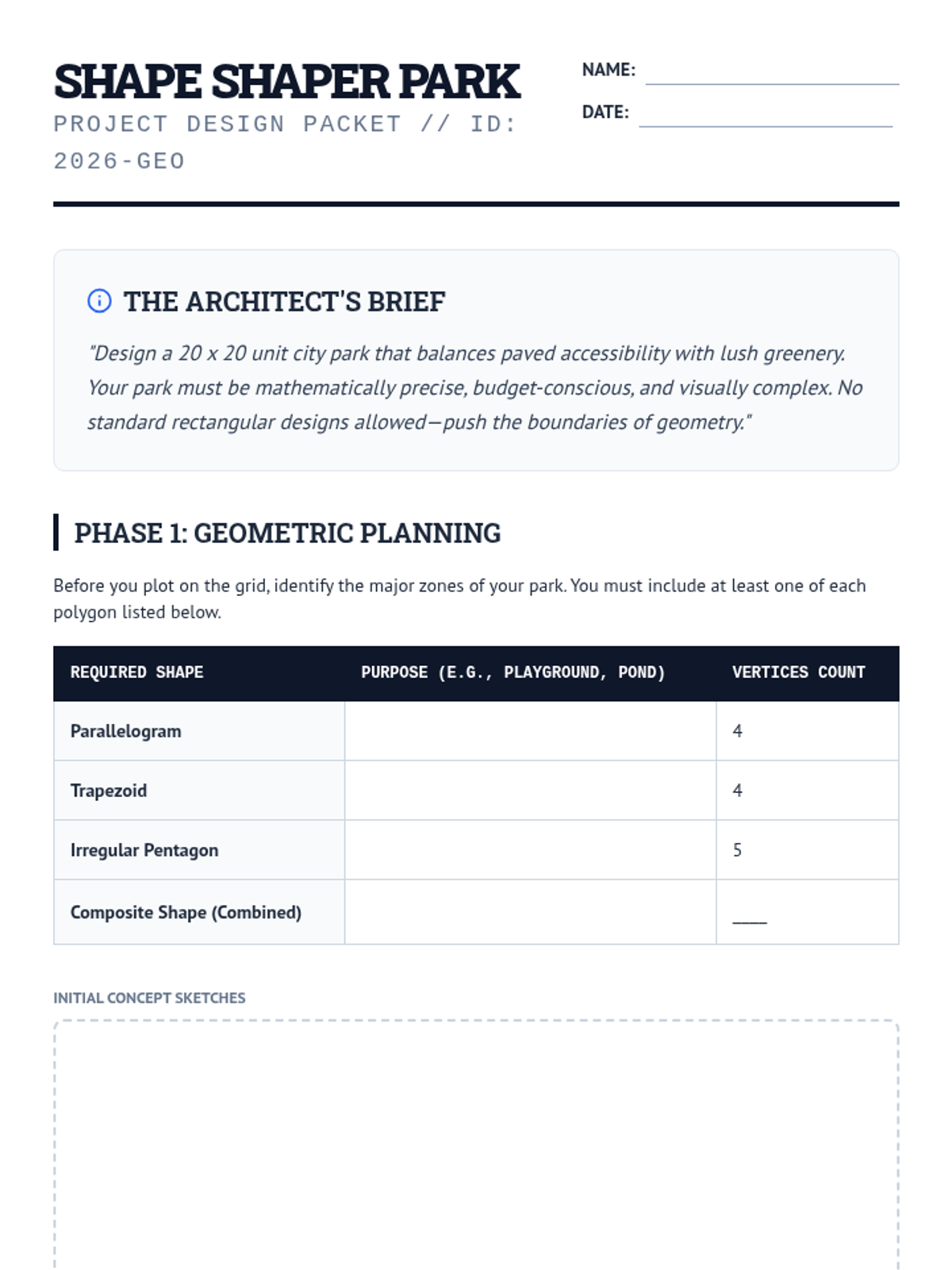
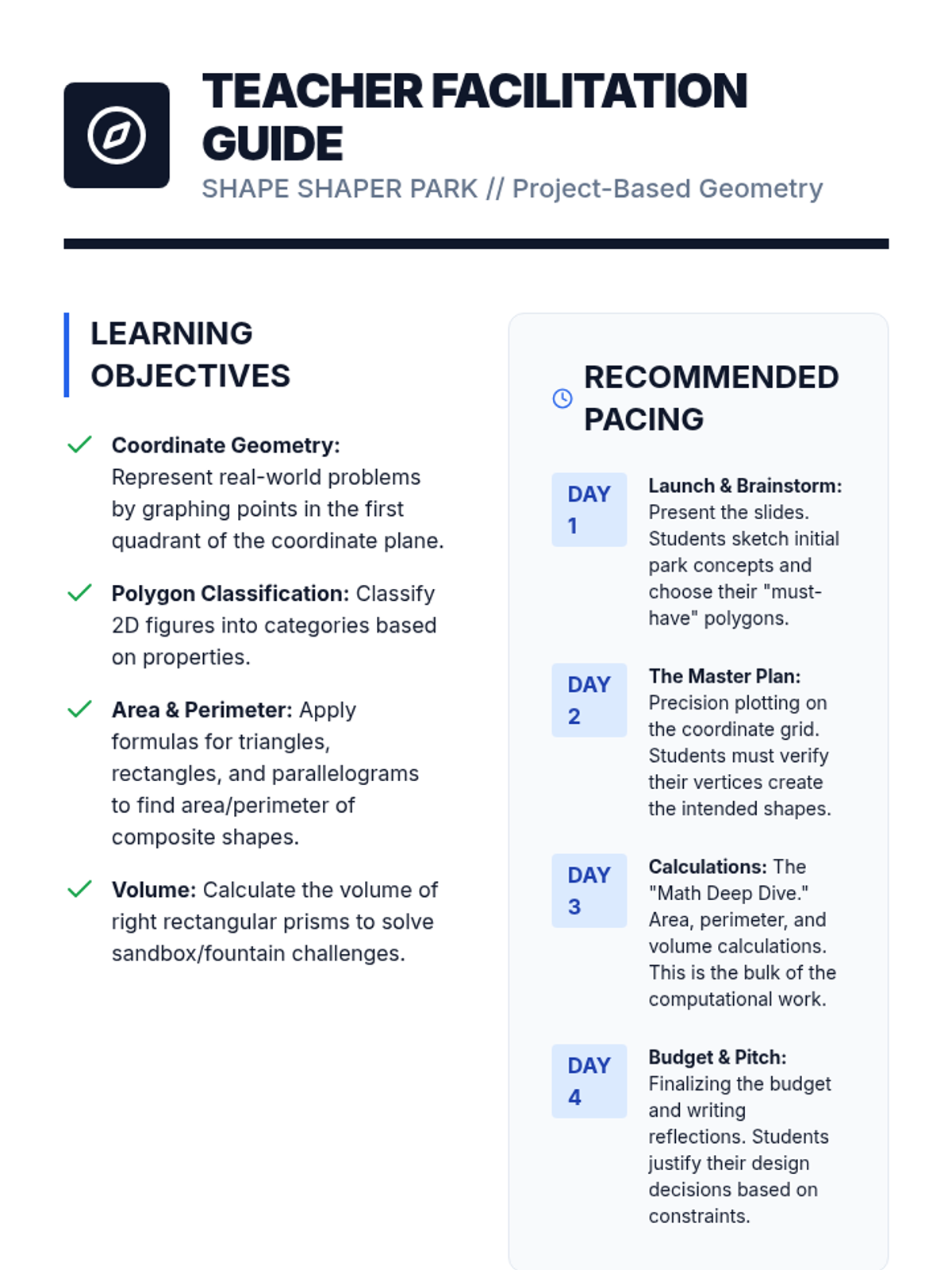
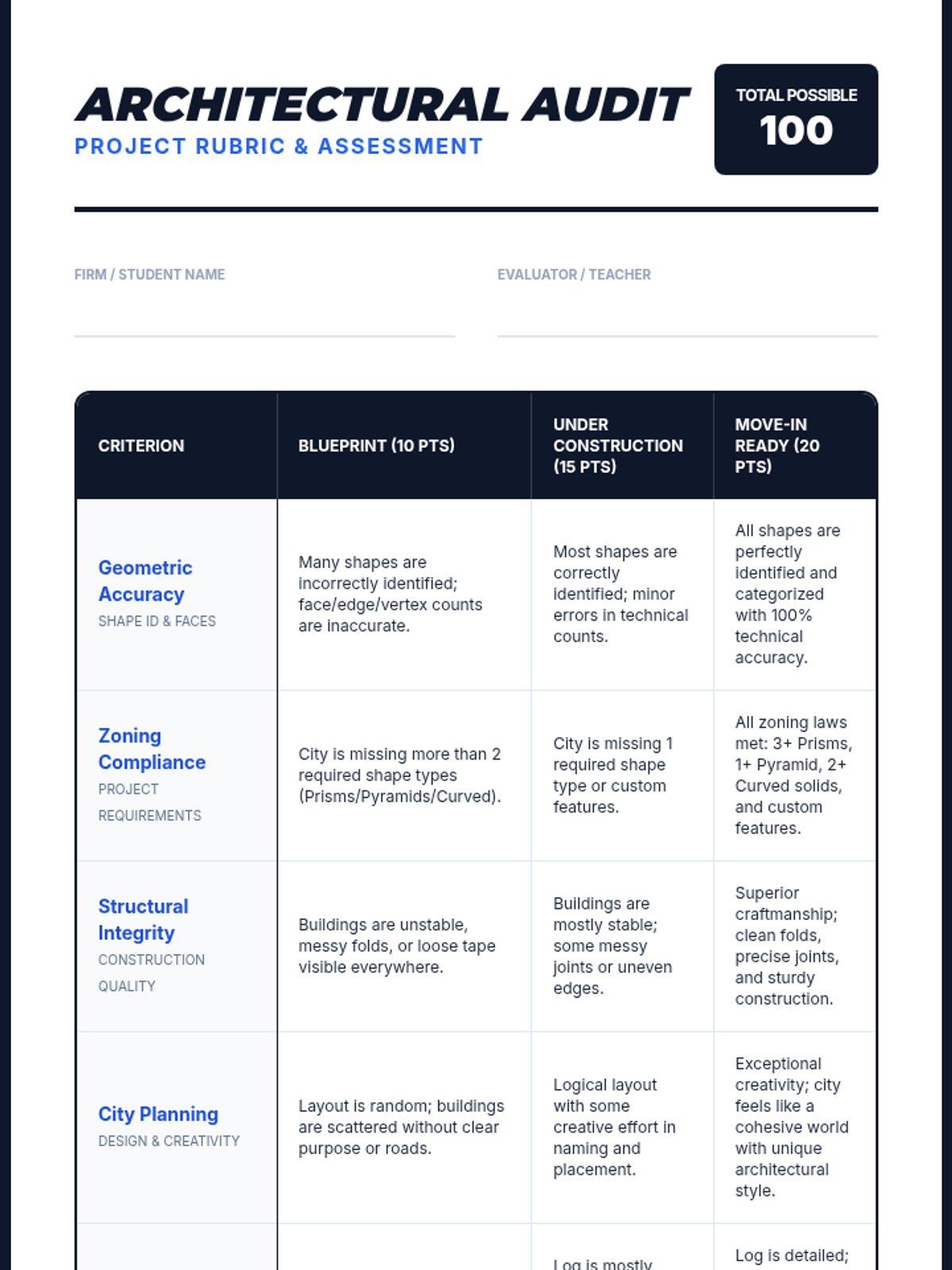
A geometry project where students design a futuristic city park using complex polygons, coordinate geometry, and volume calculations. This project-based learning investigation challenges students to balance aesthetic design with mathematical constraints and cost-efficiency.
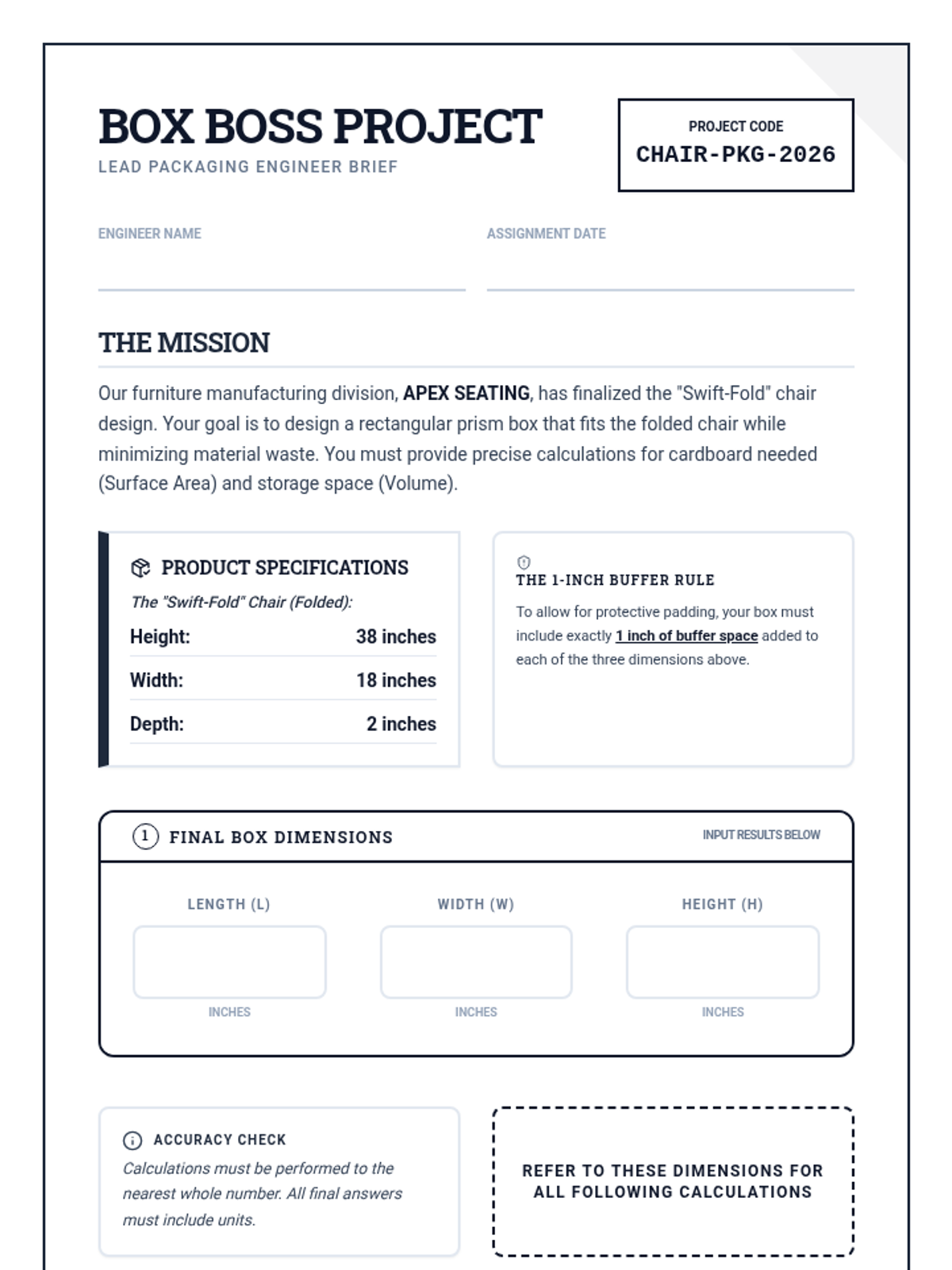
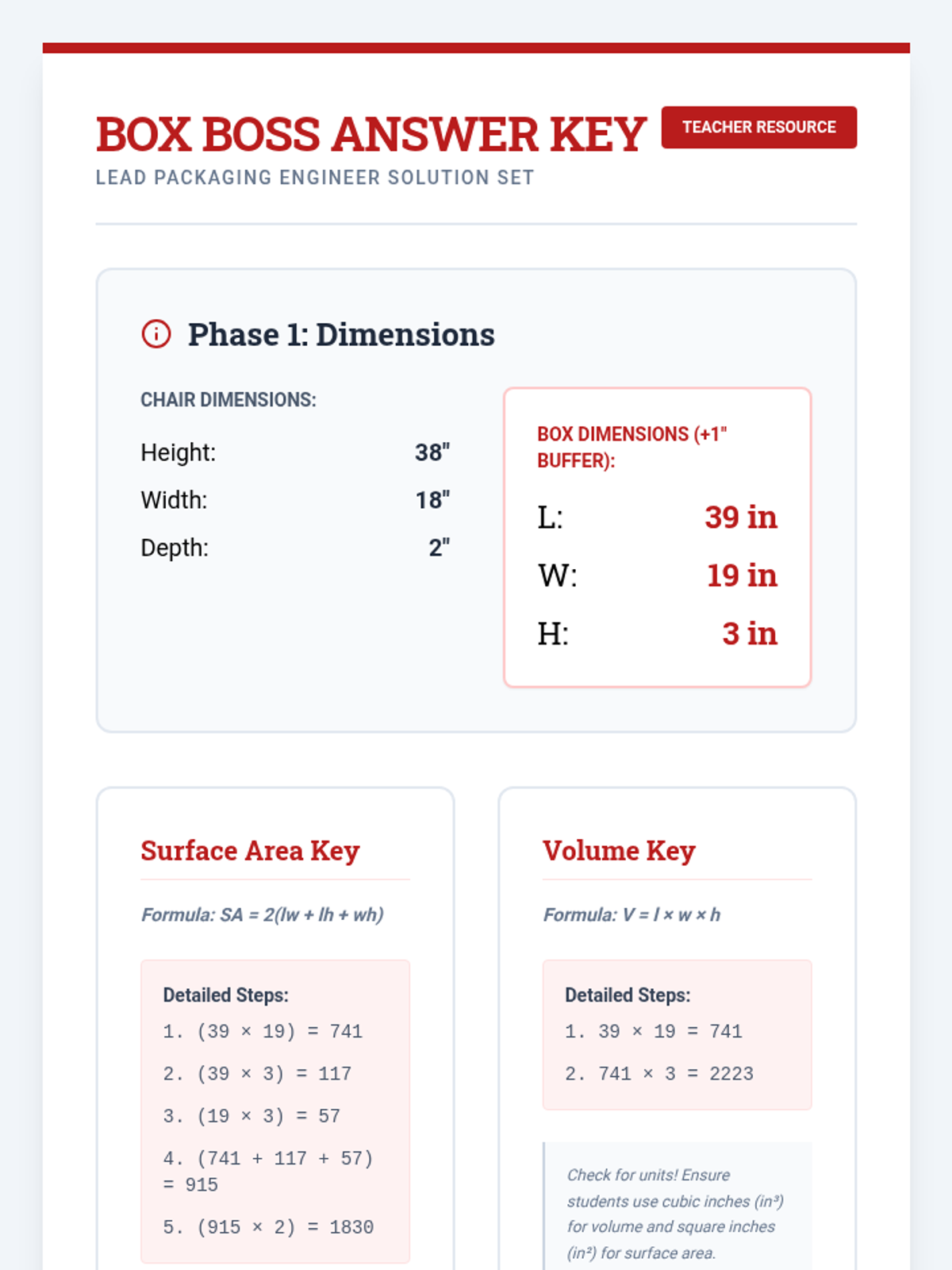
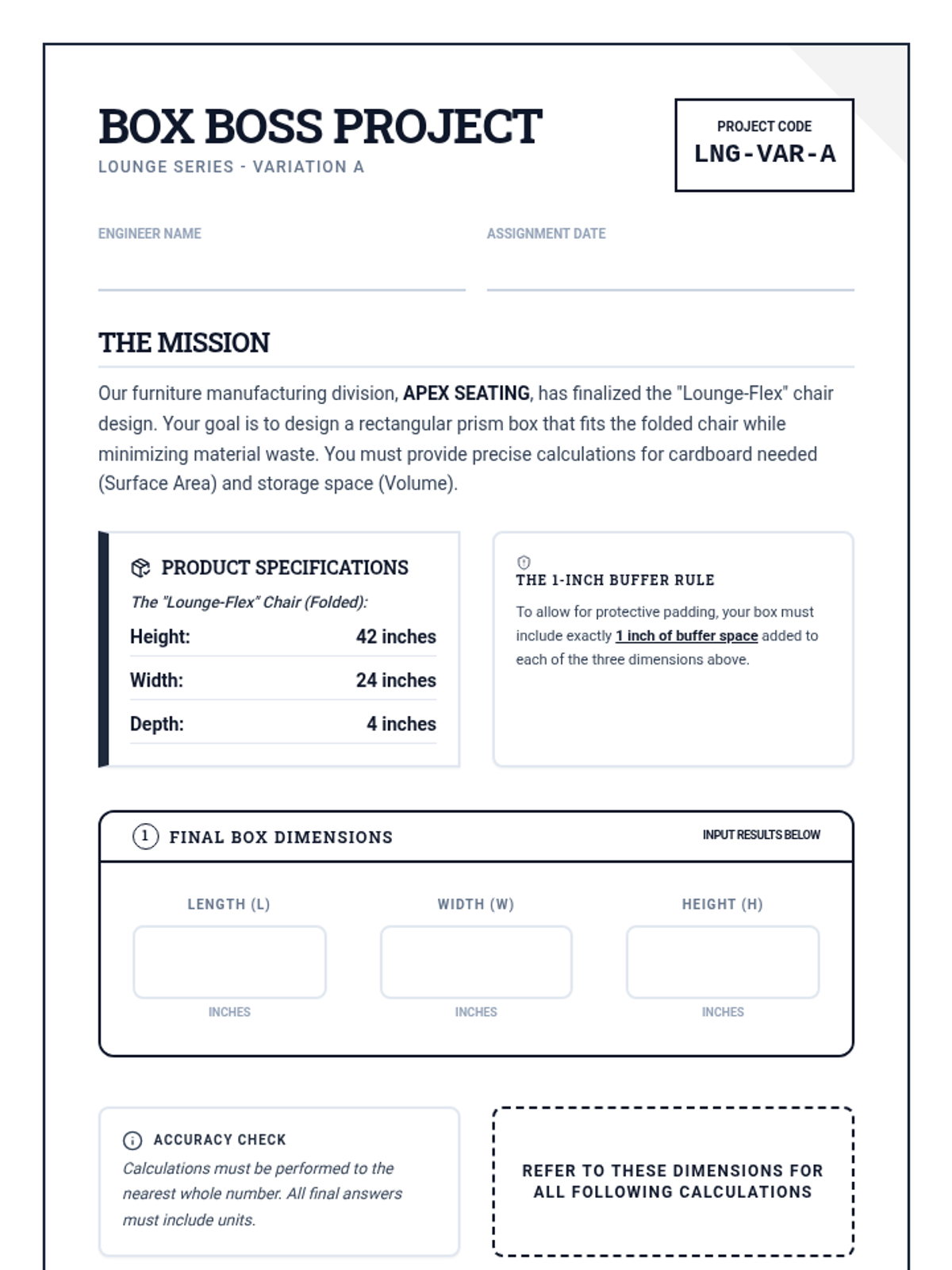
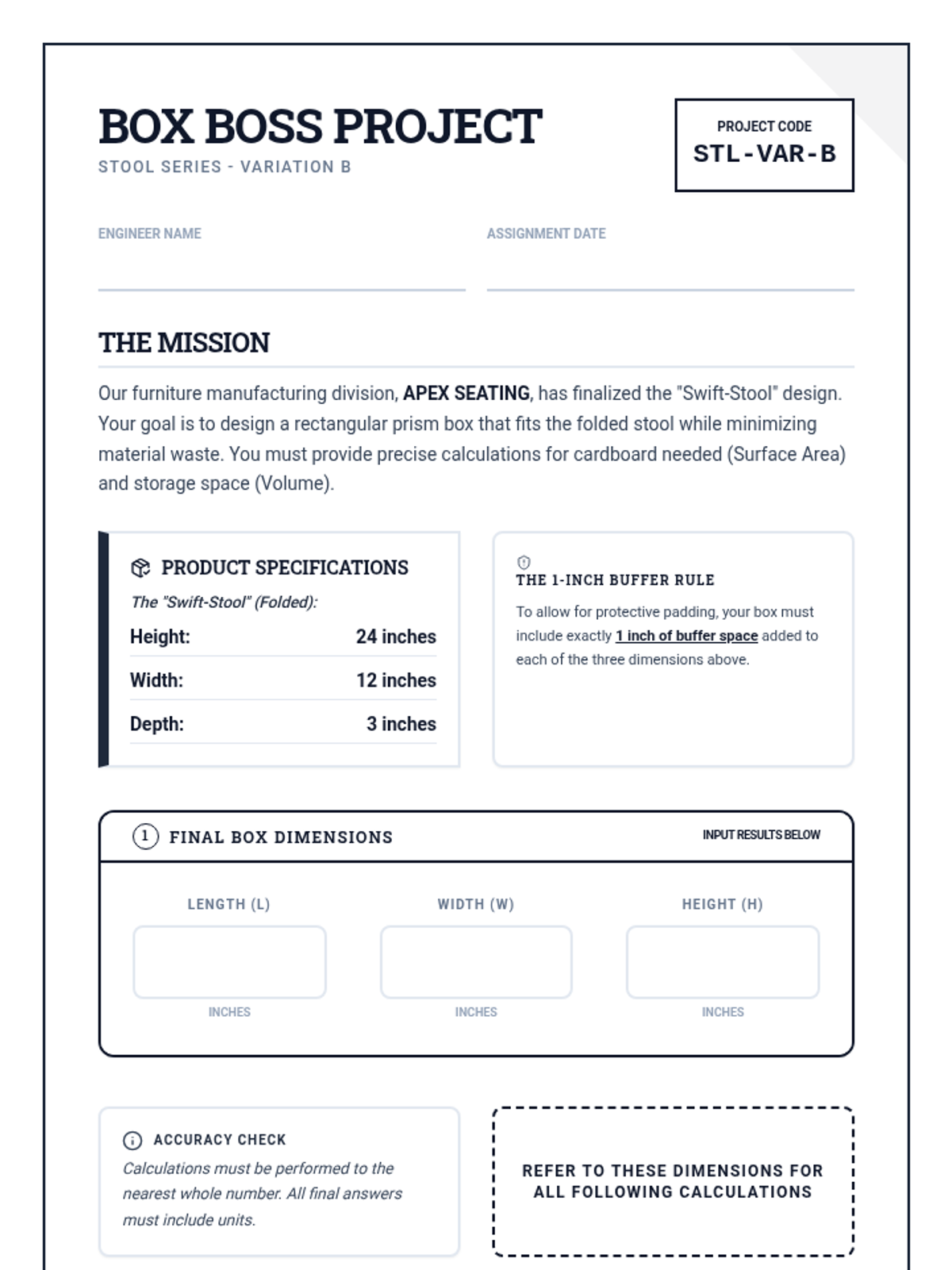
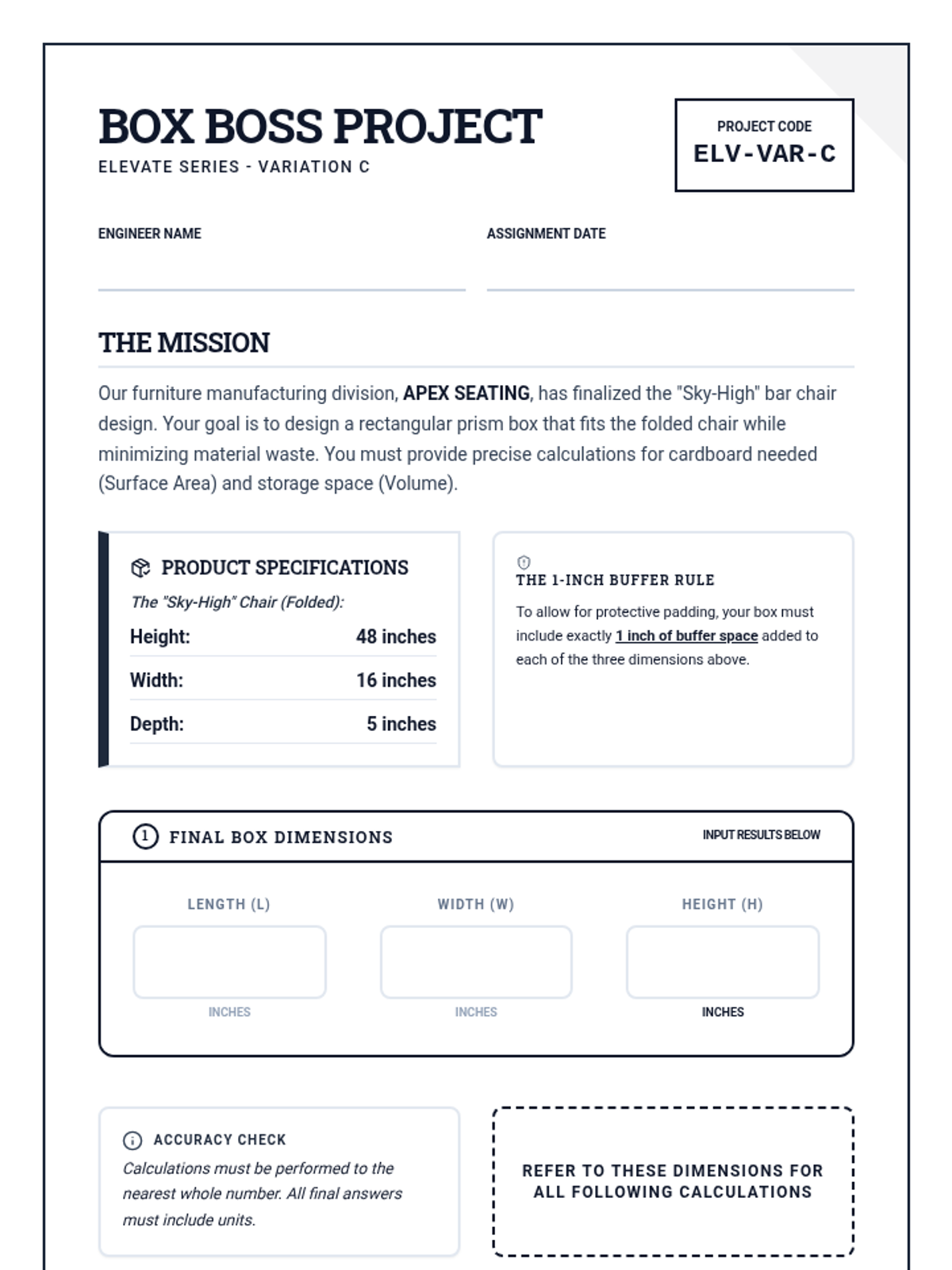
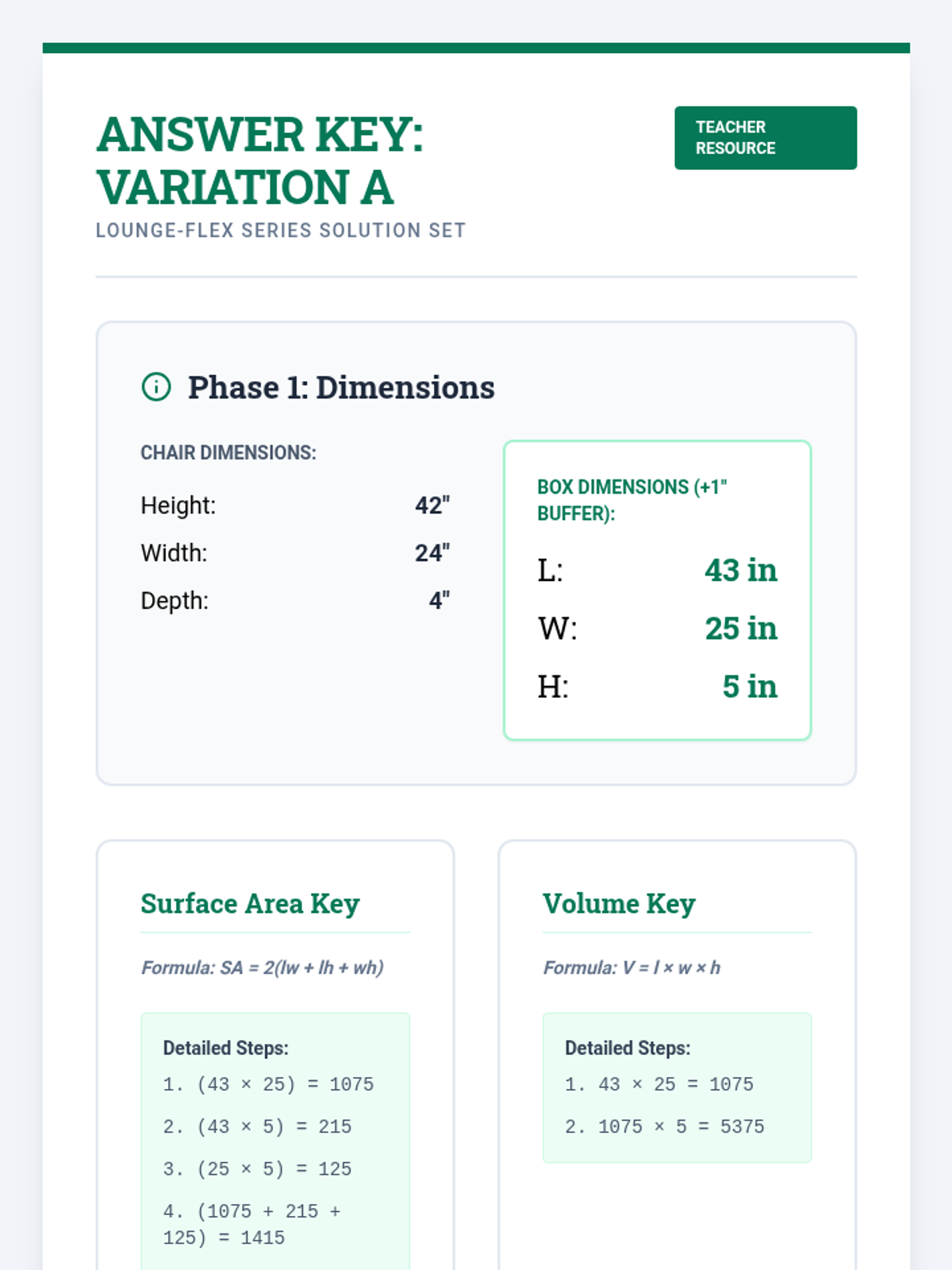
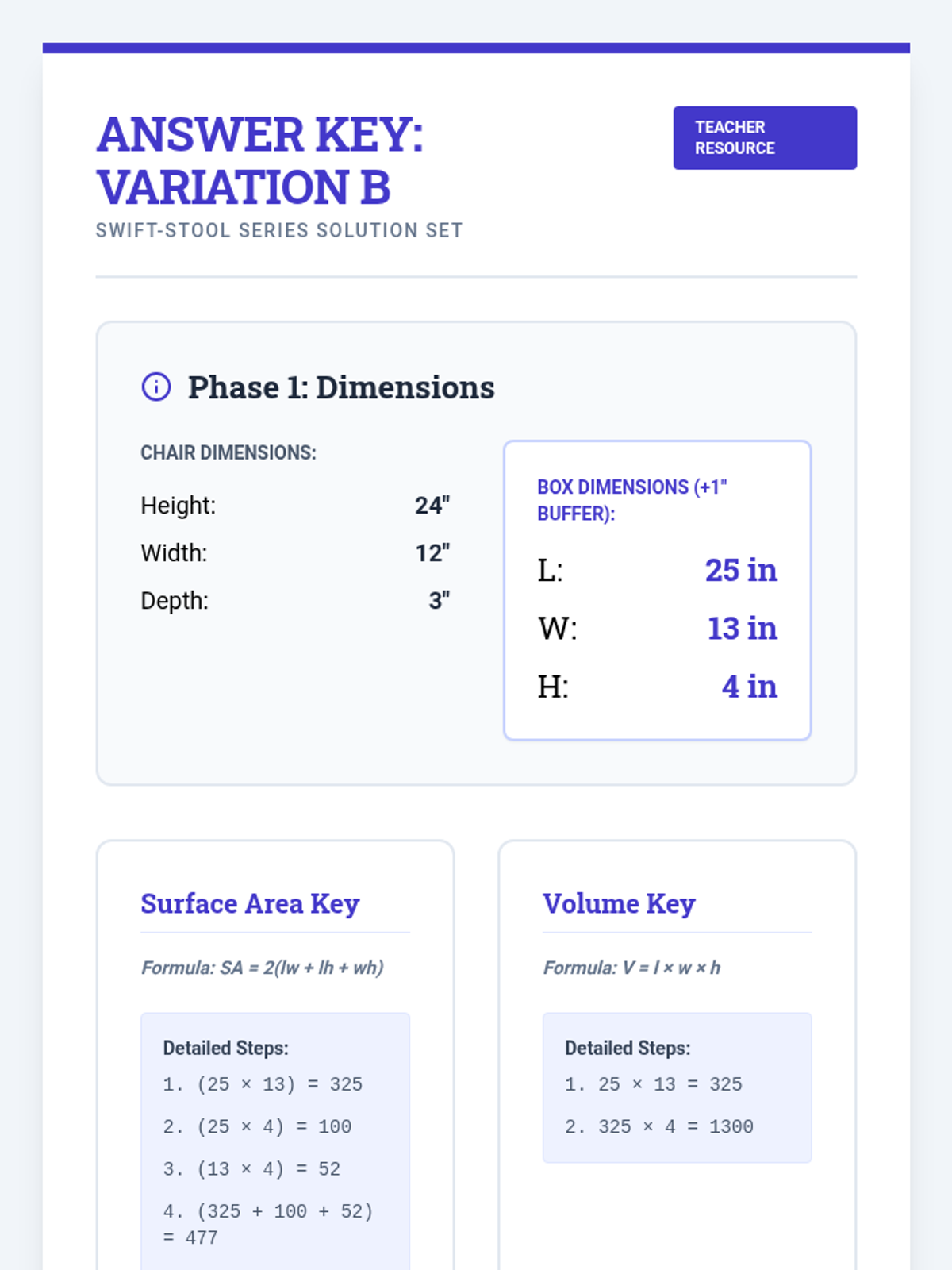
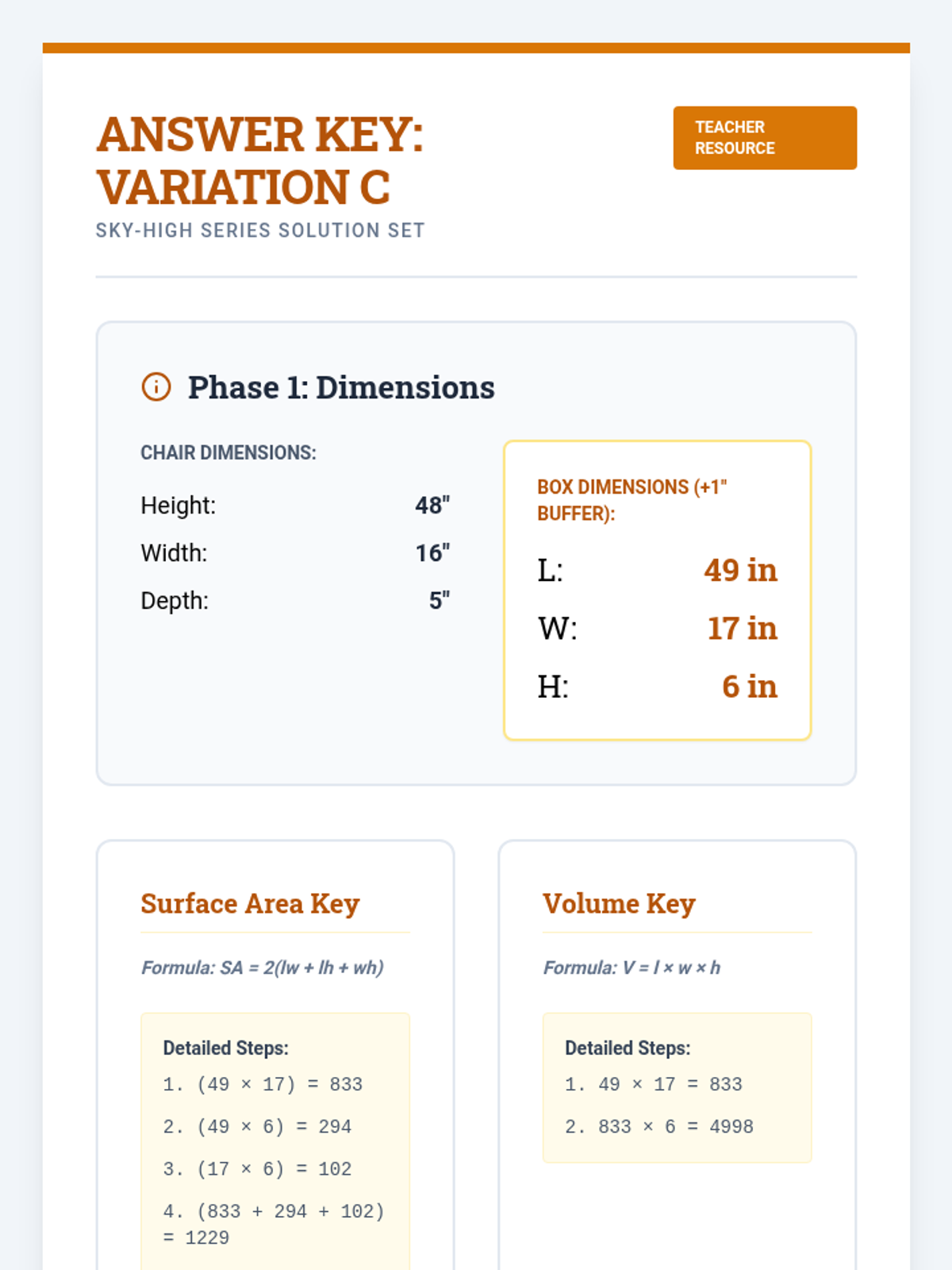
A hands-on engineering project where students design packaging for a folding chair, calculating the precise surface area and volume required for production.
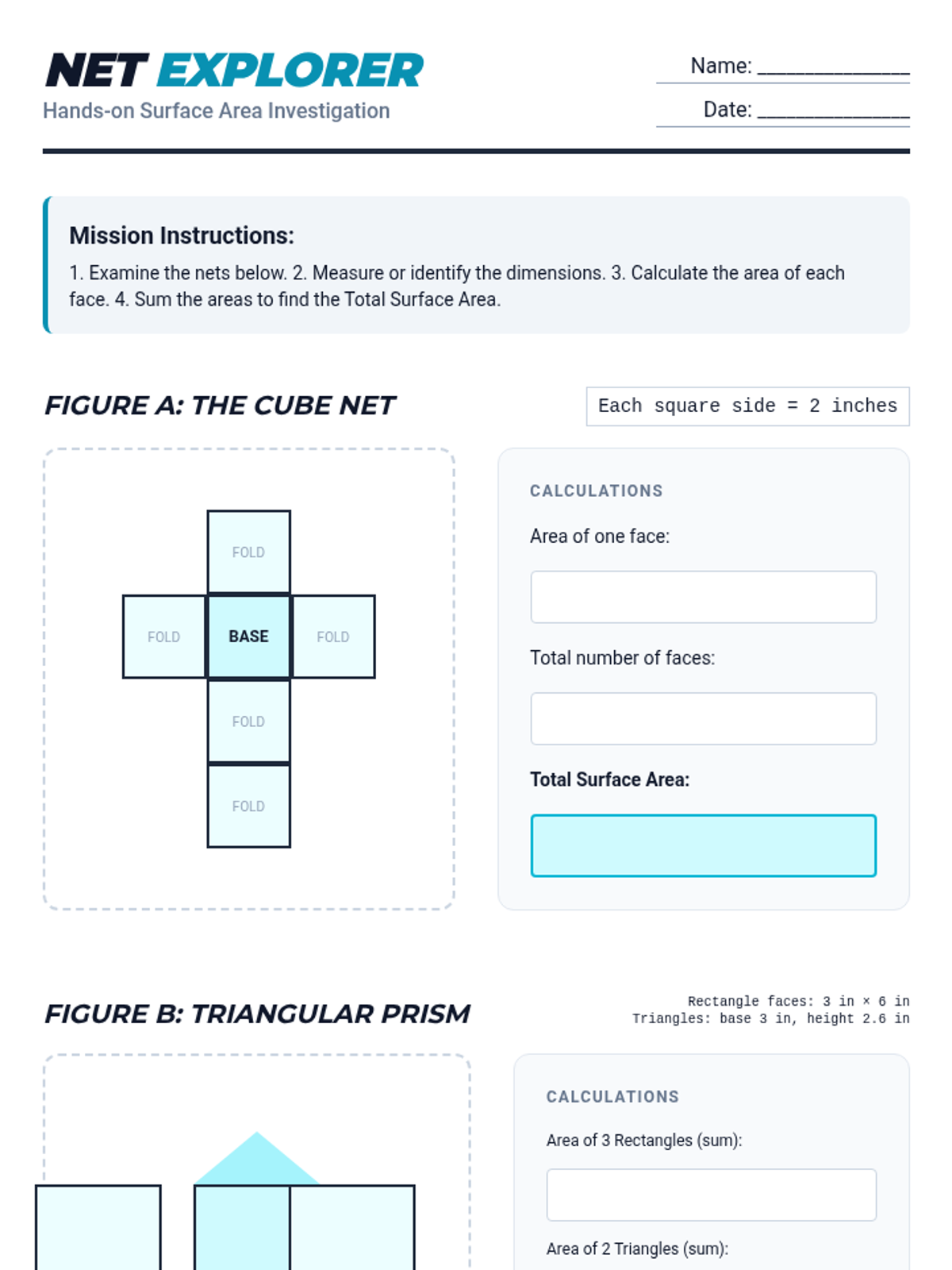
A comprehensive lesson on surface area and nets of 3D figures, focusing on prisms and pyramids through hands-on exploration and EOG-style practice.
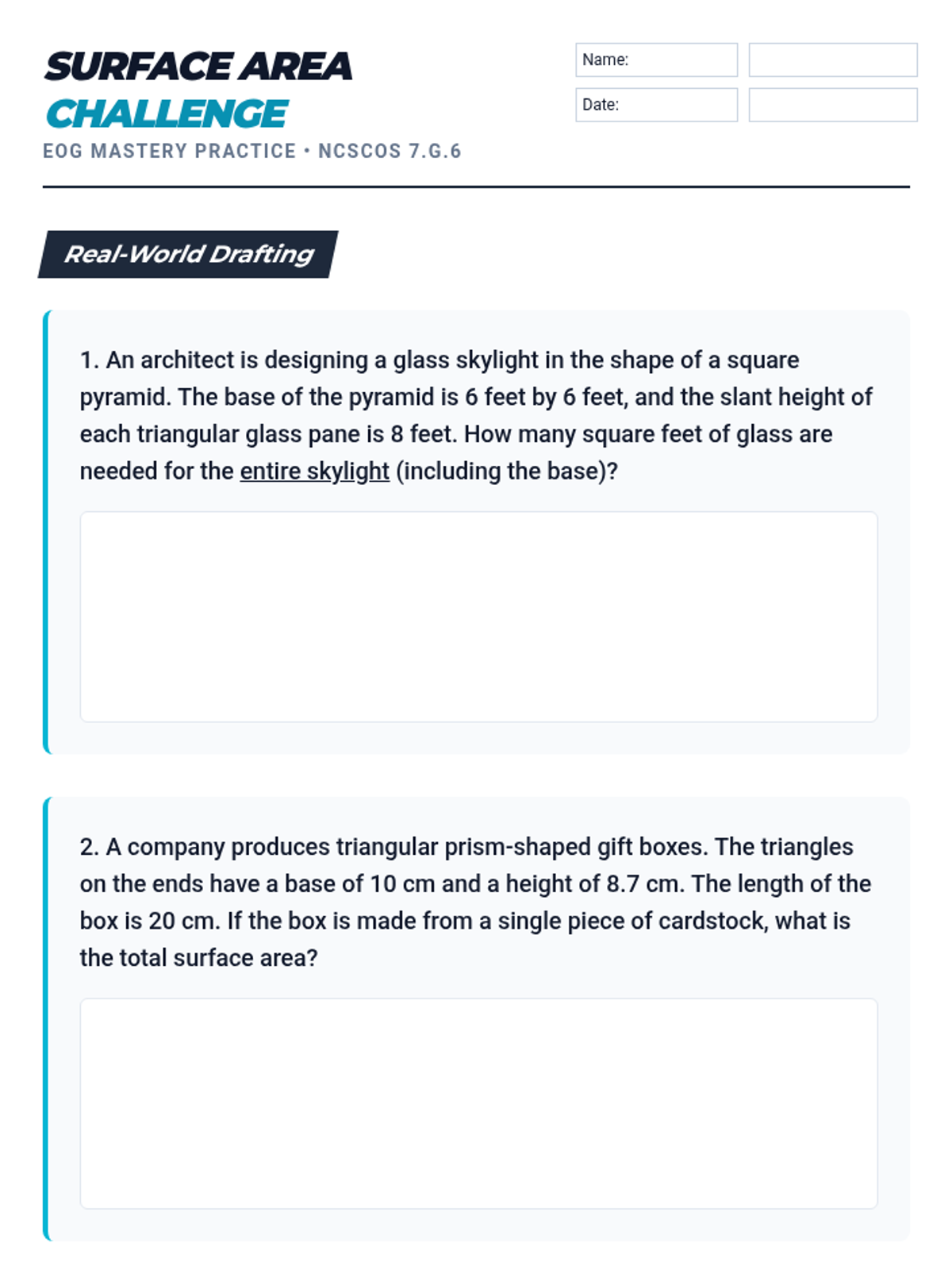
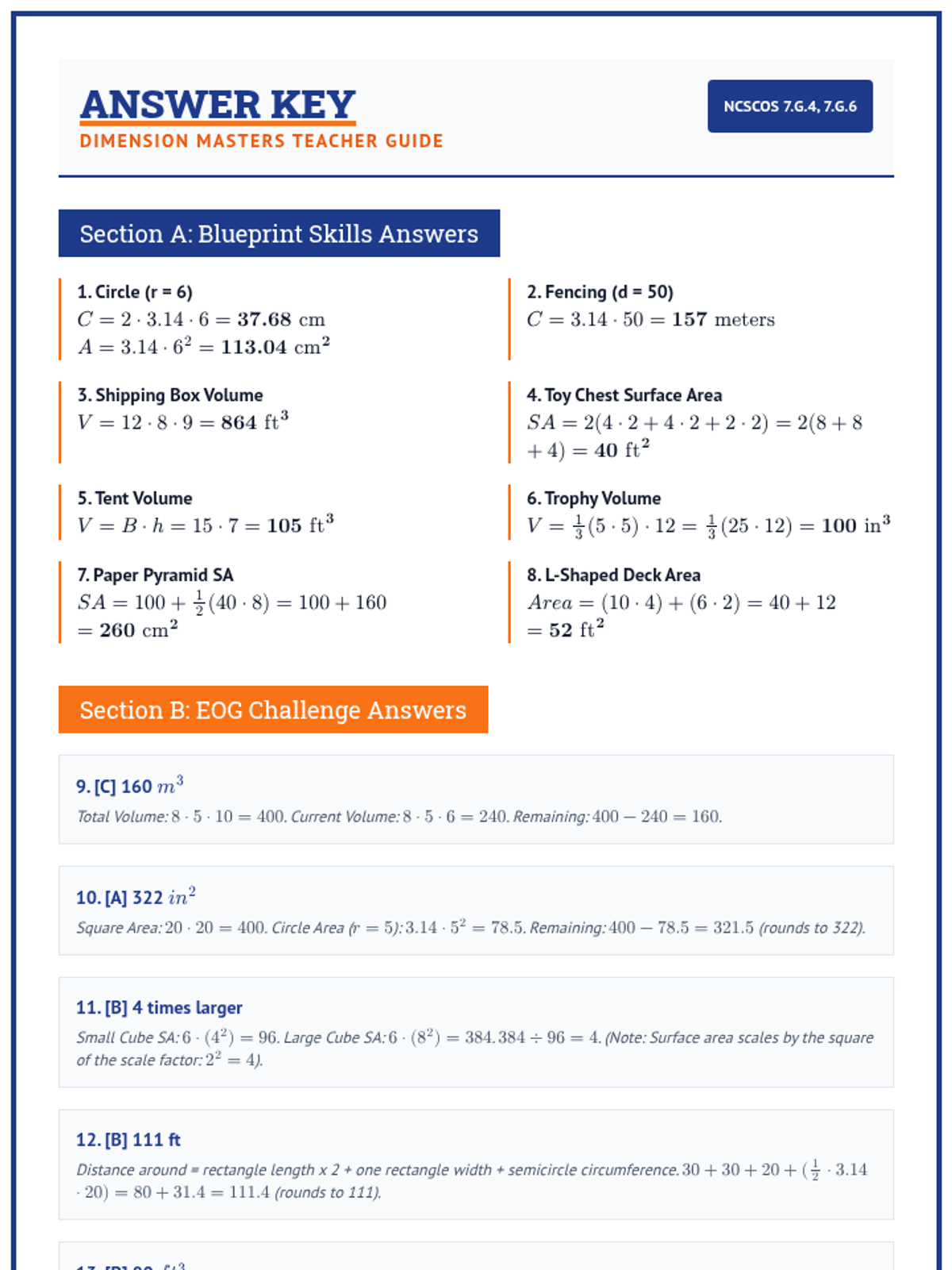
A comprehensive Grade 7 geometry lesson focusing on area, circumference, surface area, and volume through real-world architectural challenges. Aligning to NCSCOS 7.G.4 and 7.G.6, students will solve multi-step problems involving circles, prisms, and pyramids.
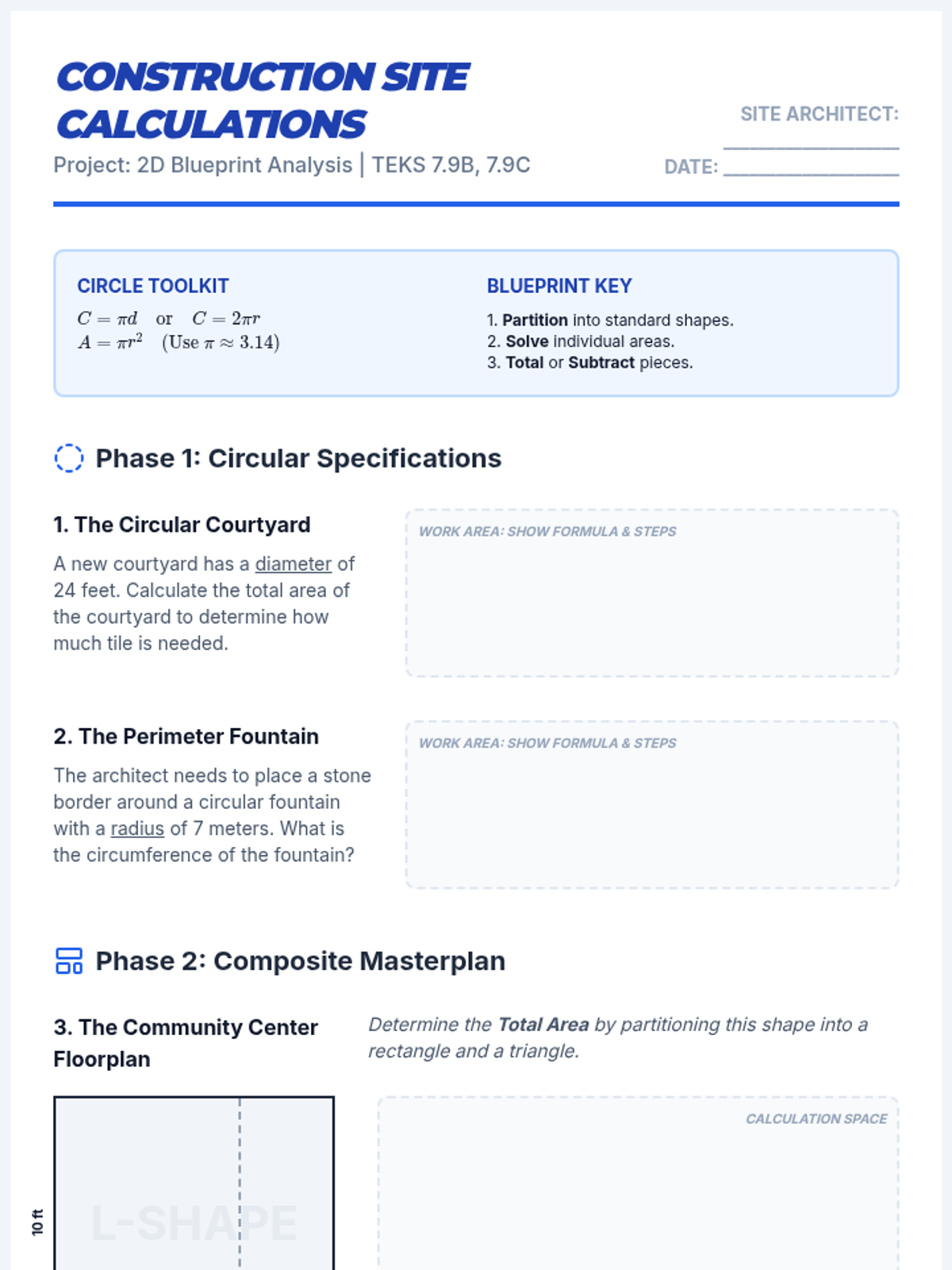
A deep dive into 2D and 3D geometry focusing on circumference, area, surface area, and volume through the lens of architectural design and spatial reasoning.
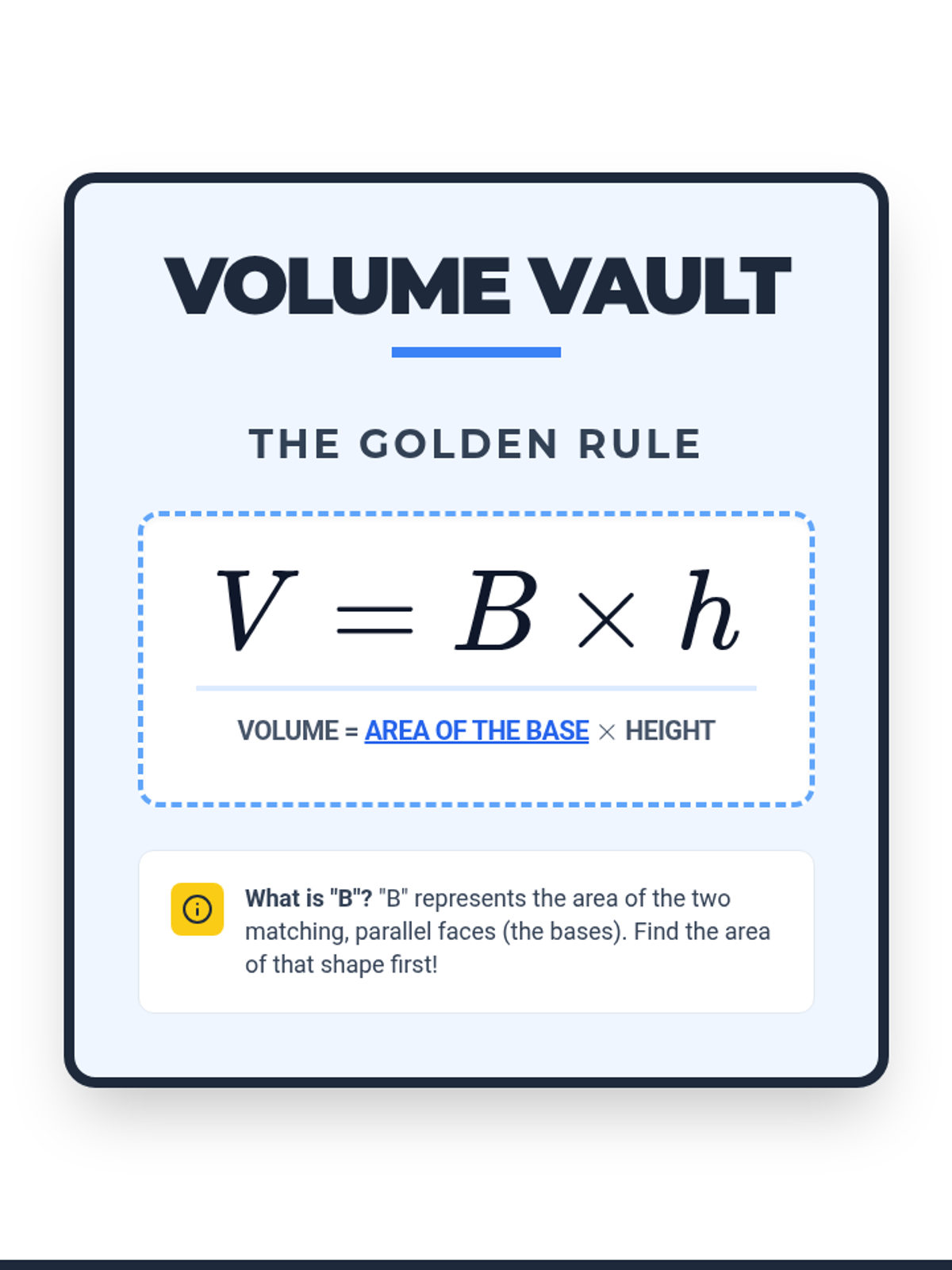
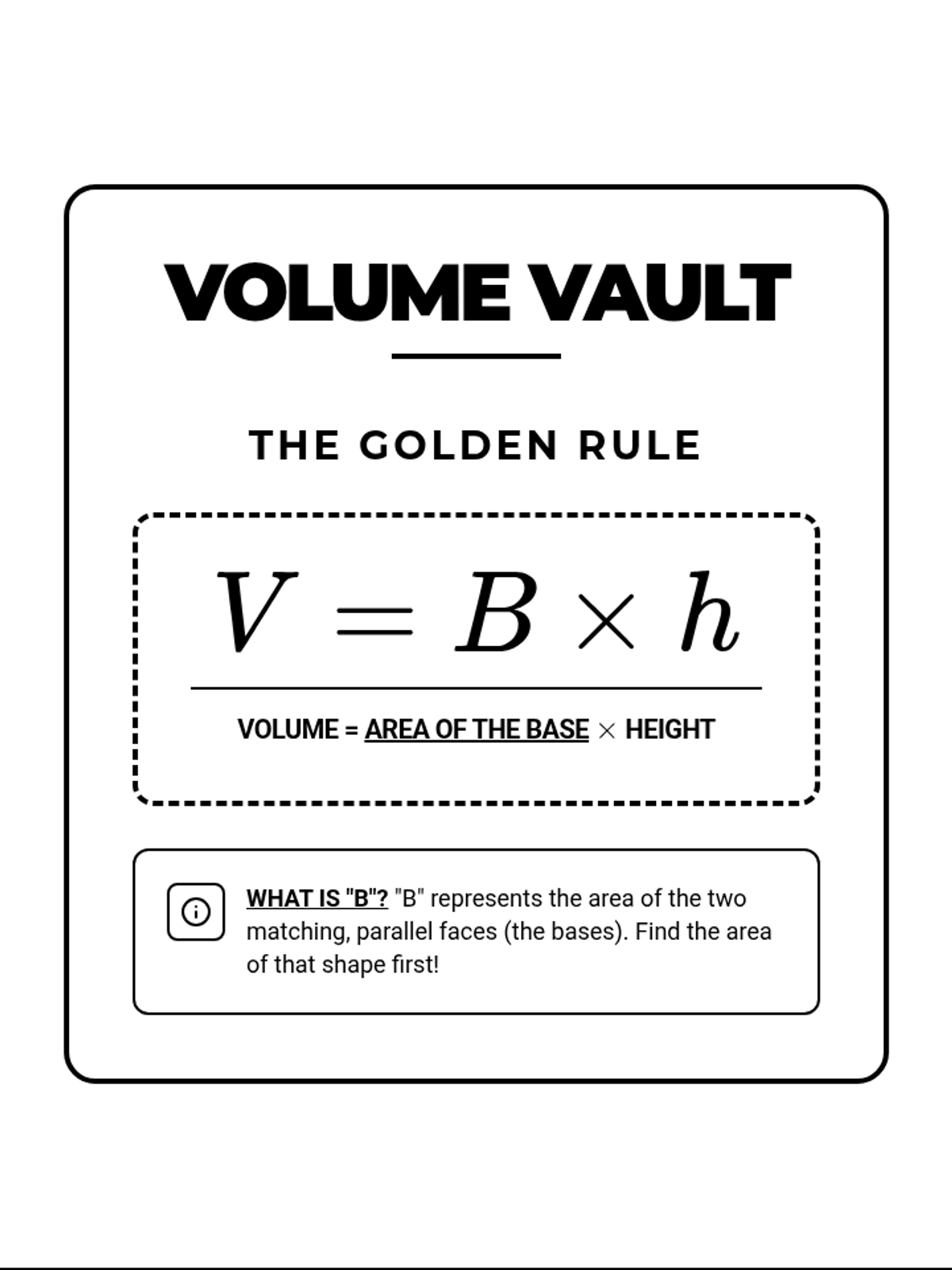
A comprehensive lesson on calculating the volume of various prisms and cylinders, featuring visual aids and practice problems to master the concept of base area multiplied by height.
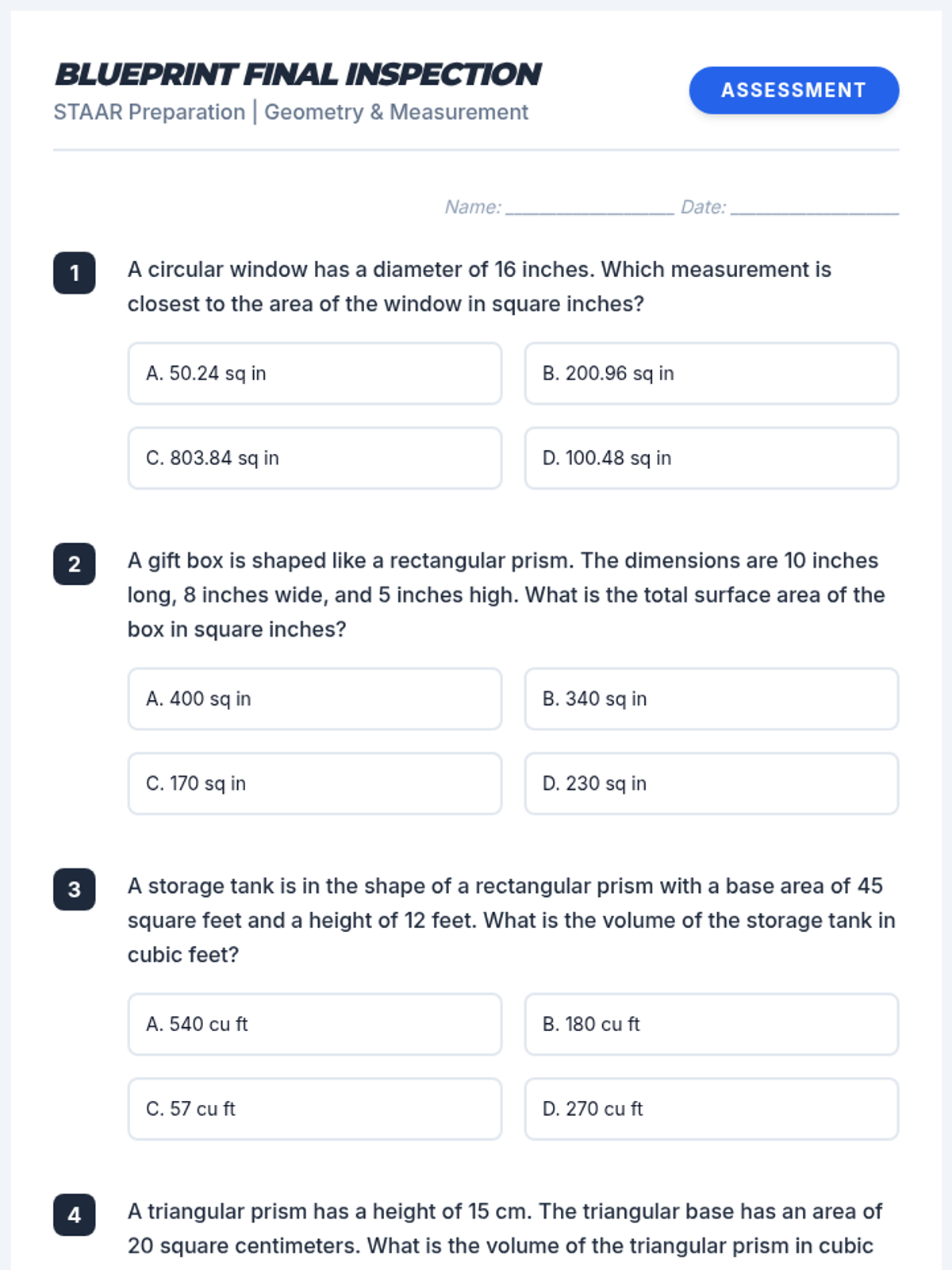
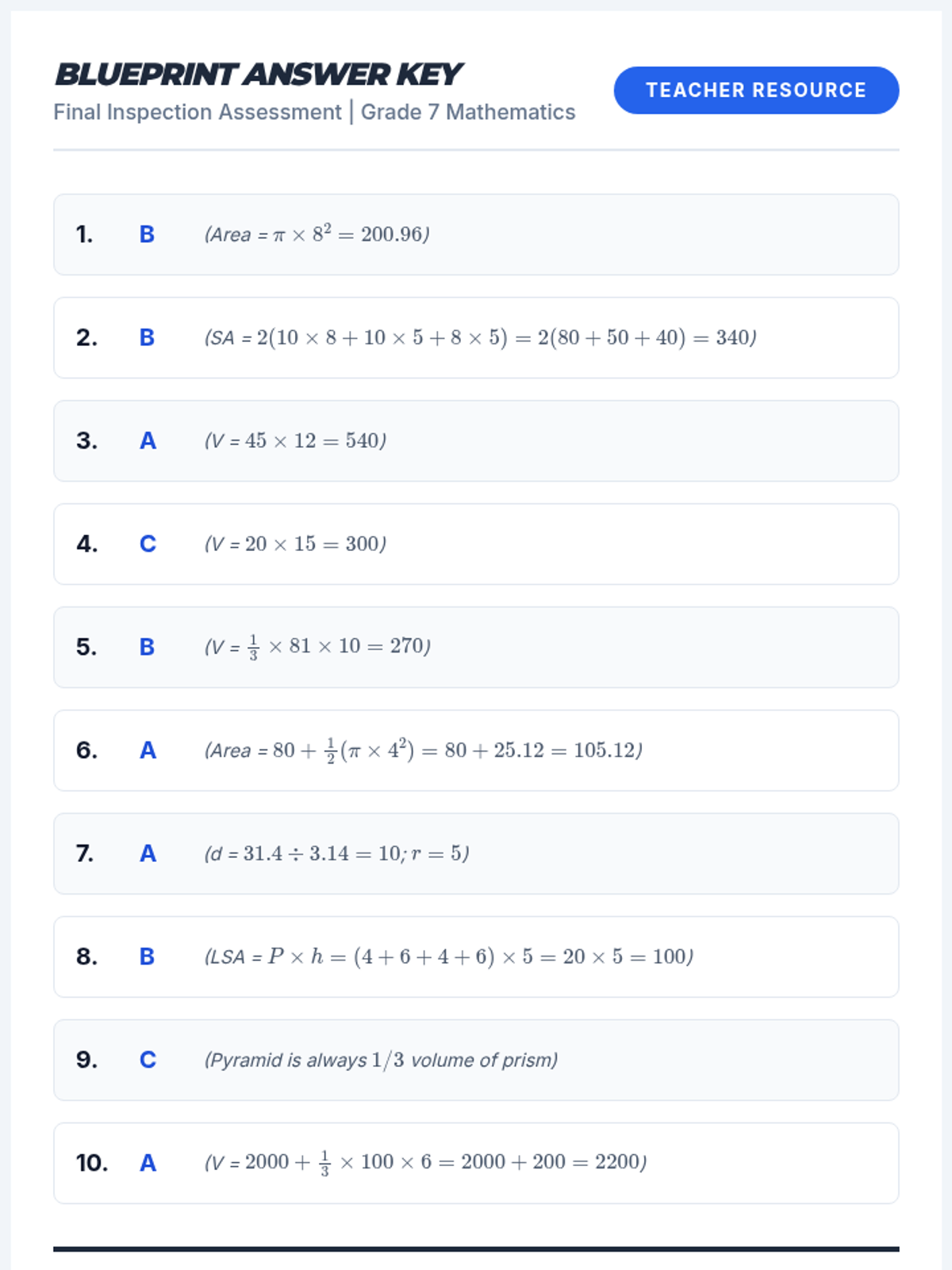
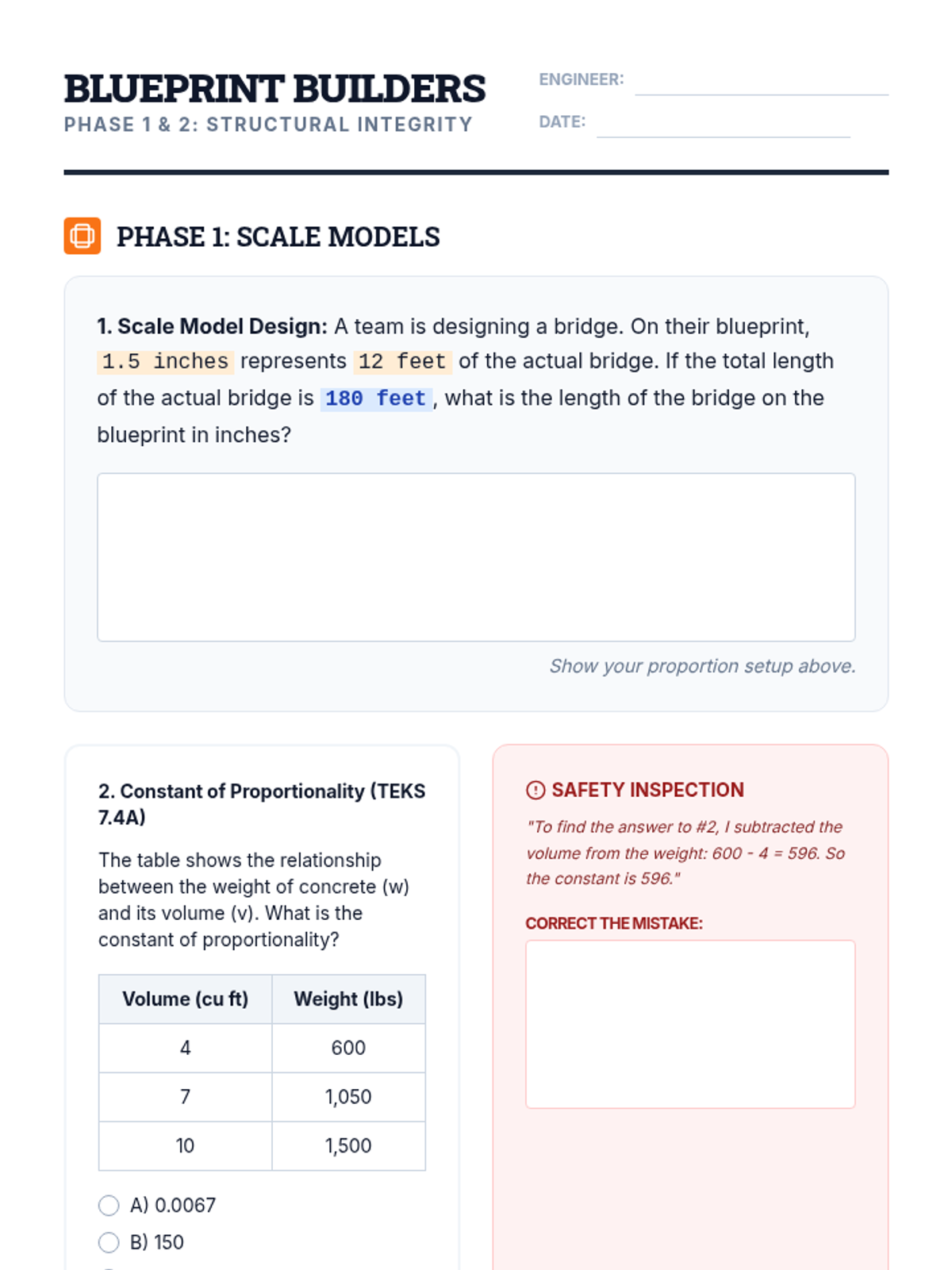
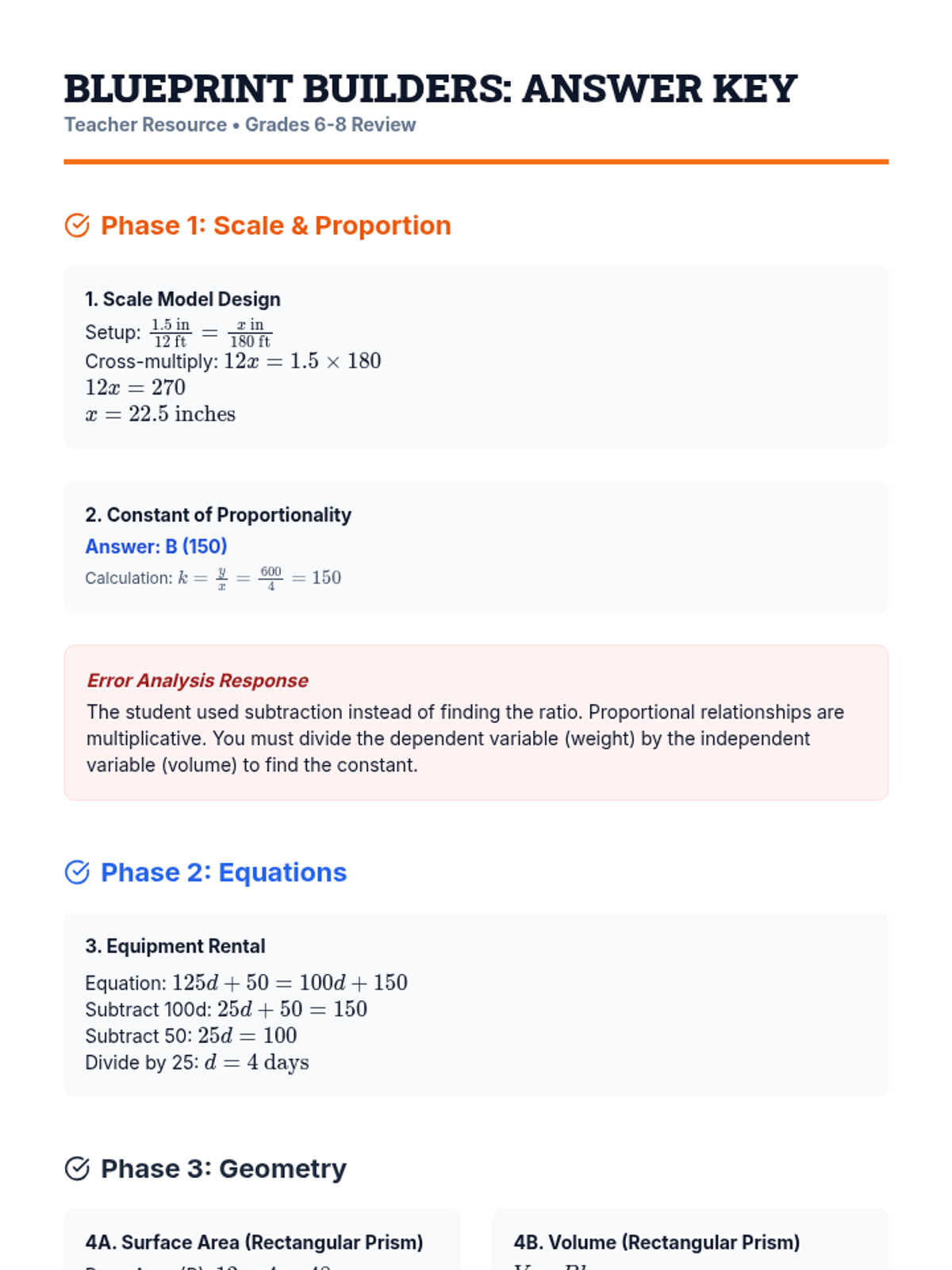
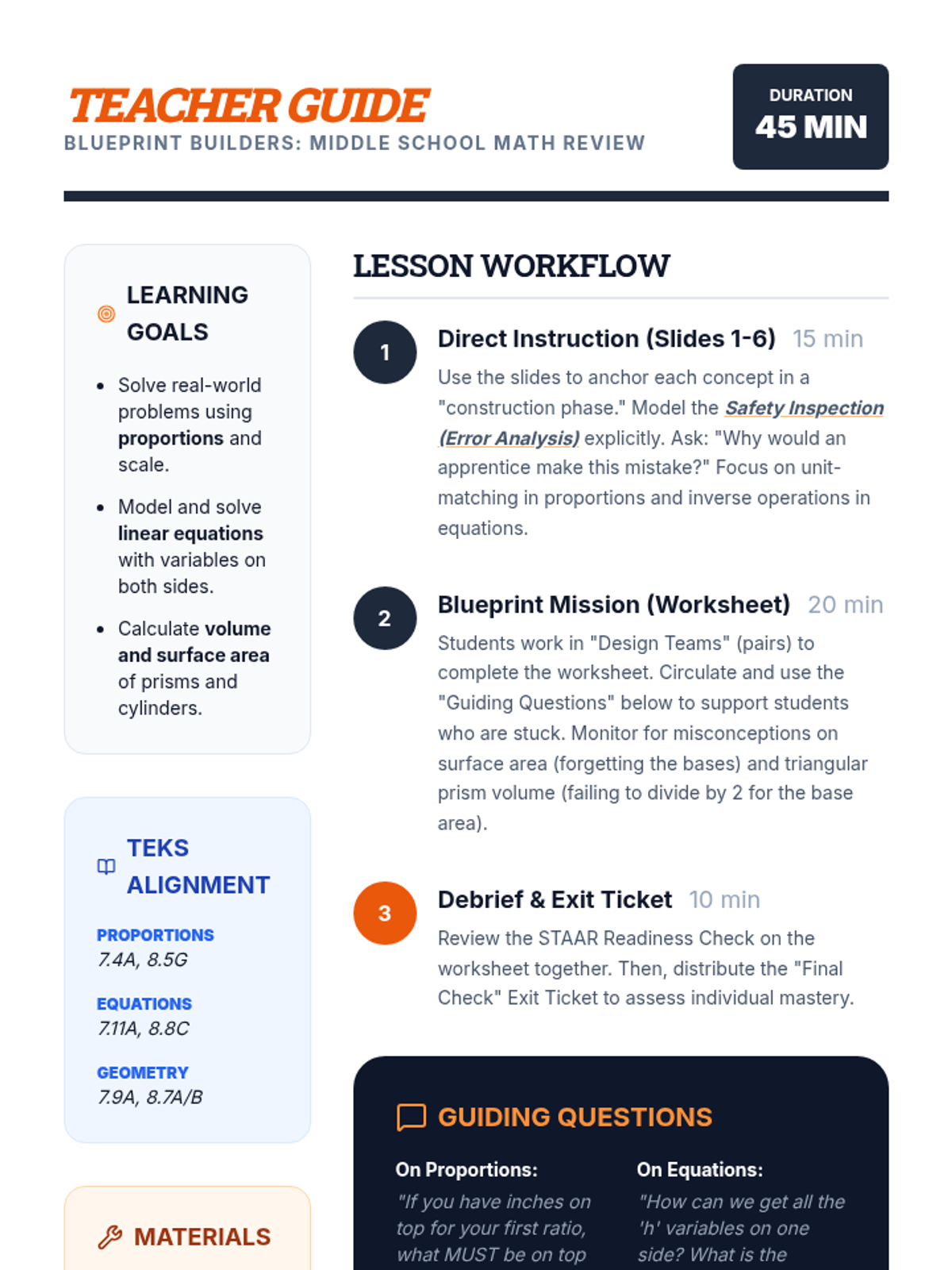
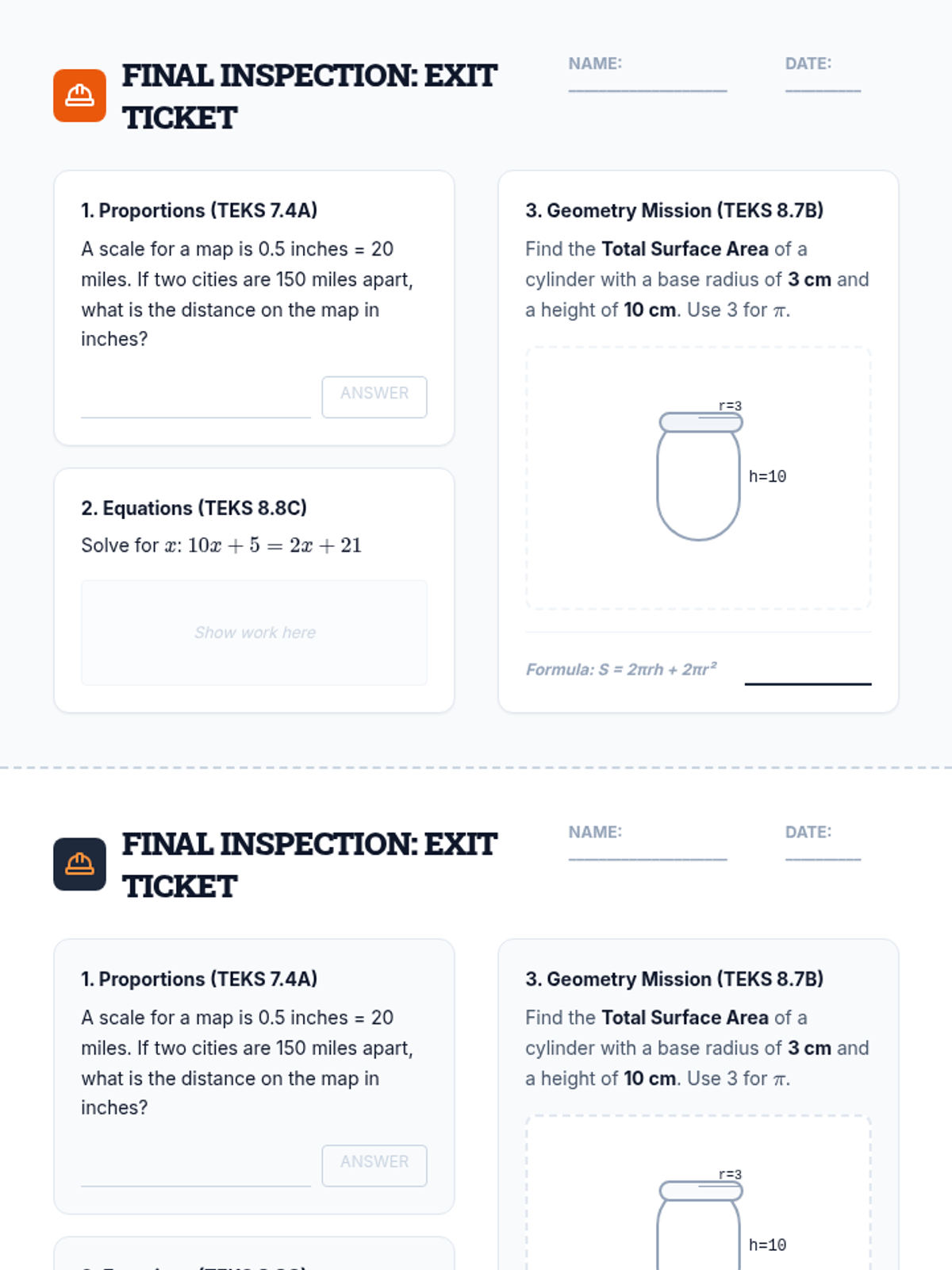
A comprehensive 45-minute TEKS-aligned review for grades 6-8 covering proportional relationships, equations, and geometry through a construction-themed 'Blueprint Builders' challenge. Includes STAAR-style items and error analysis.
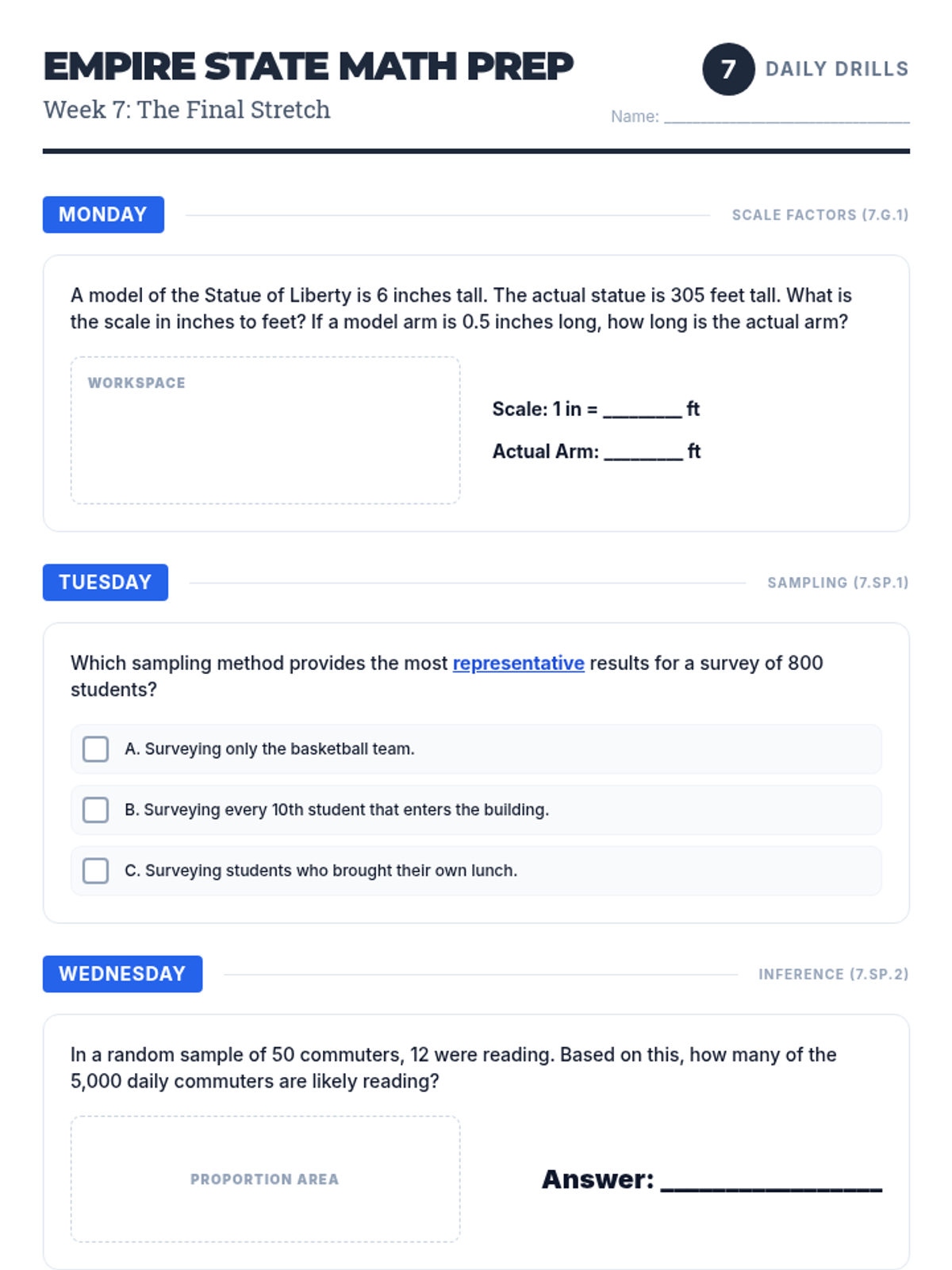
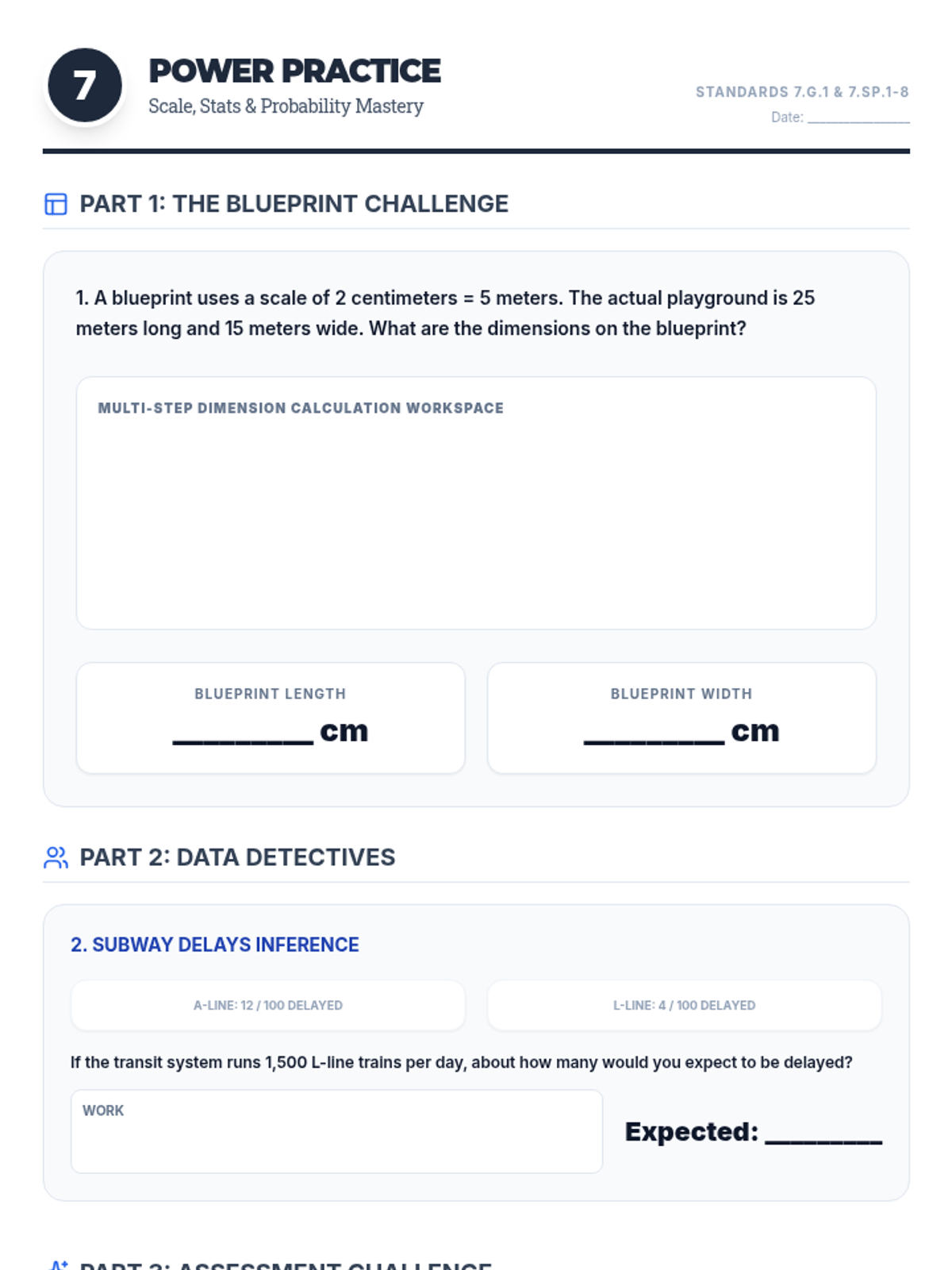
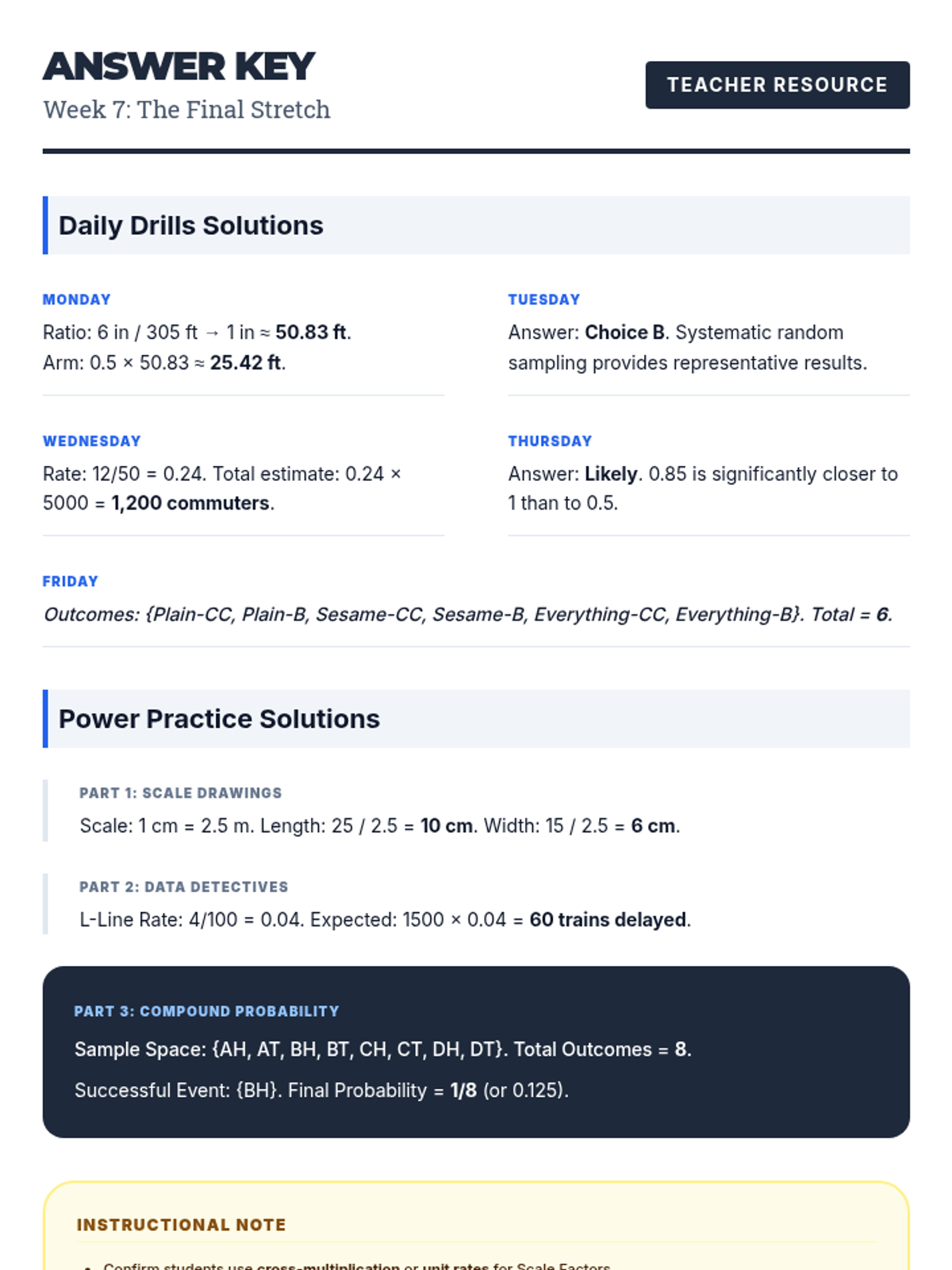
Reviewing scale drawings, statistics, and probability to round out the comprehensive NYS Assessment preparation.
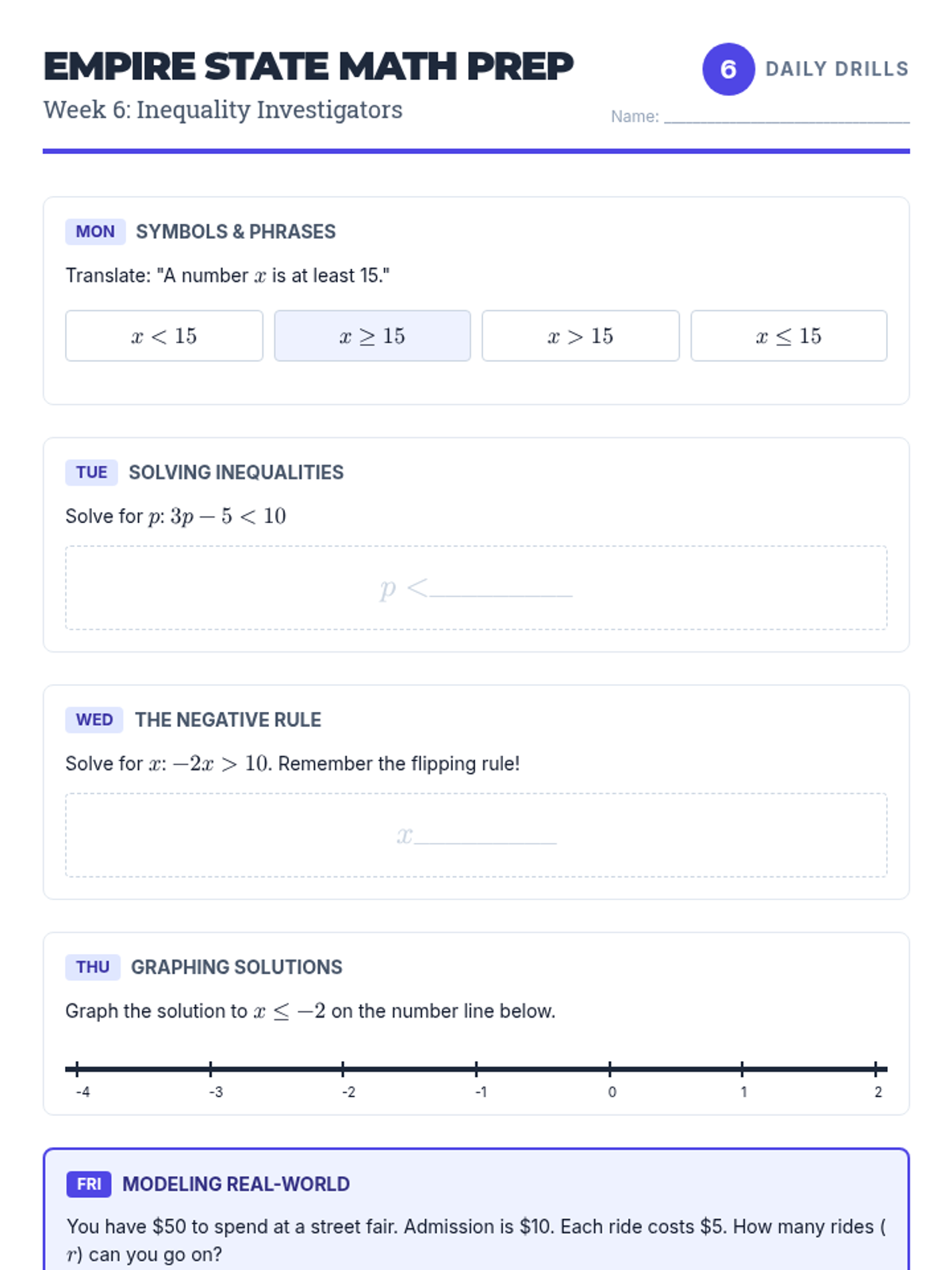
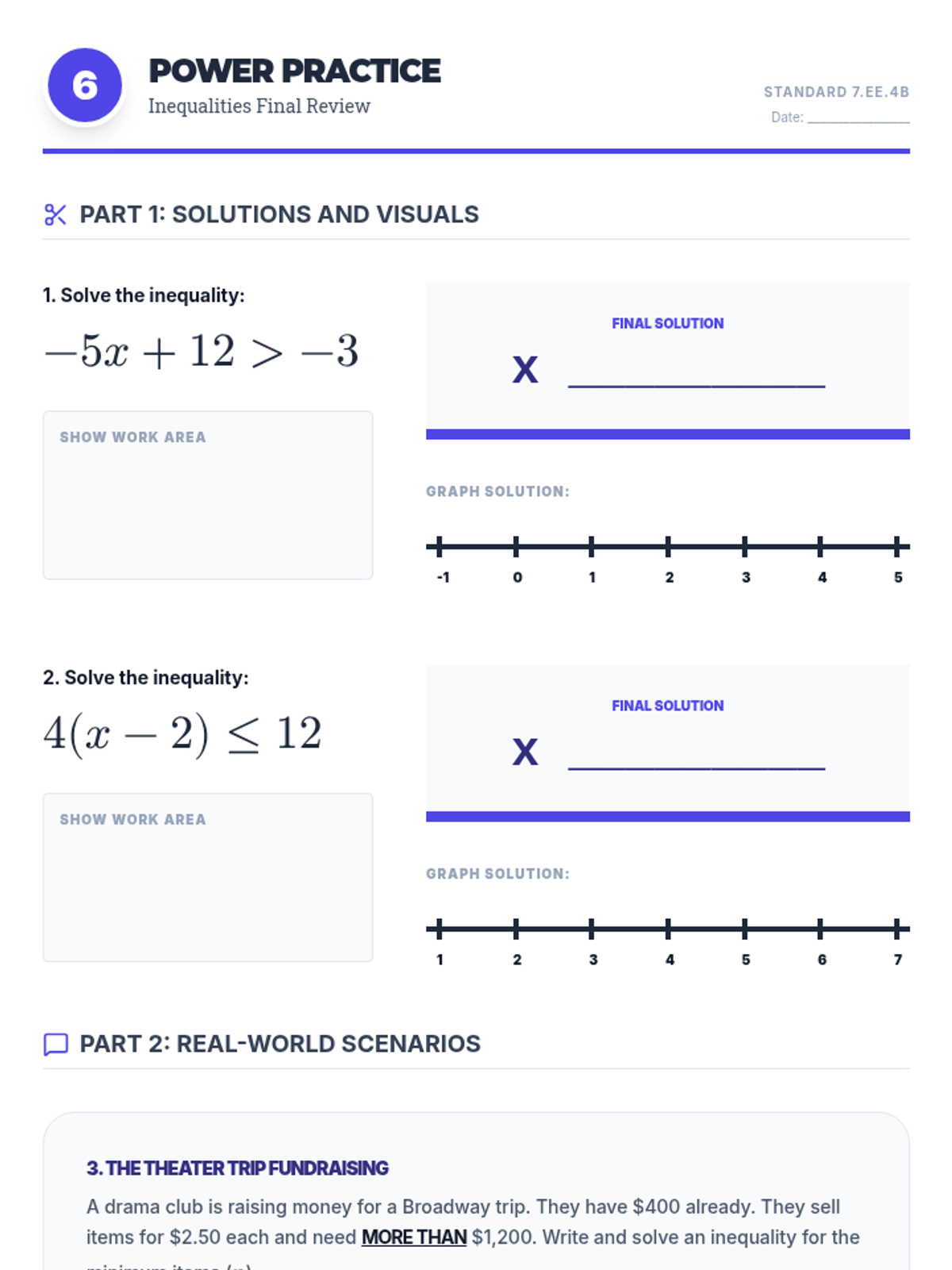
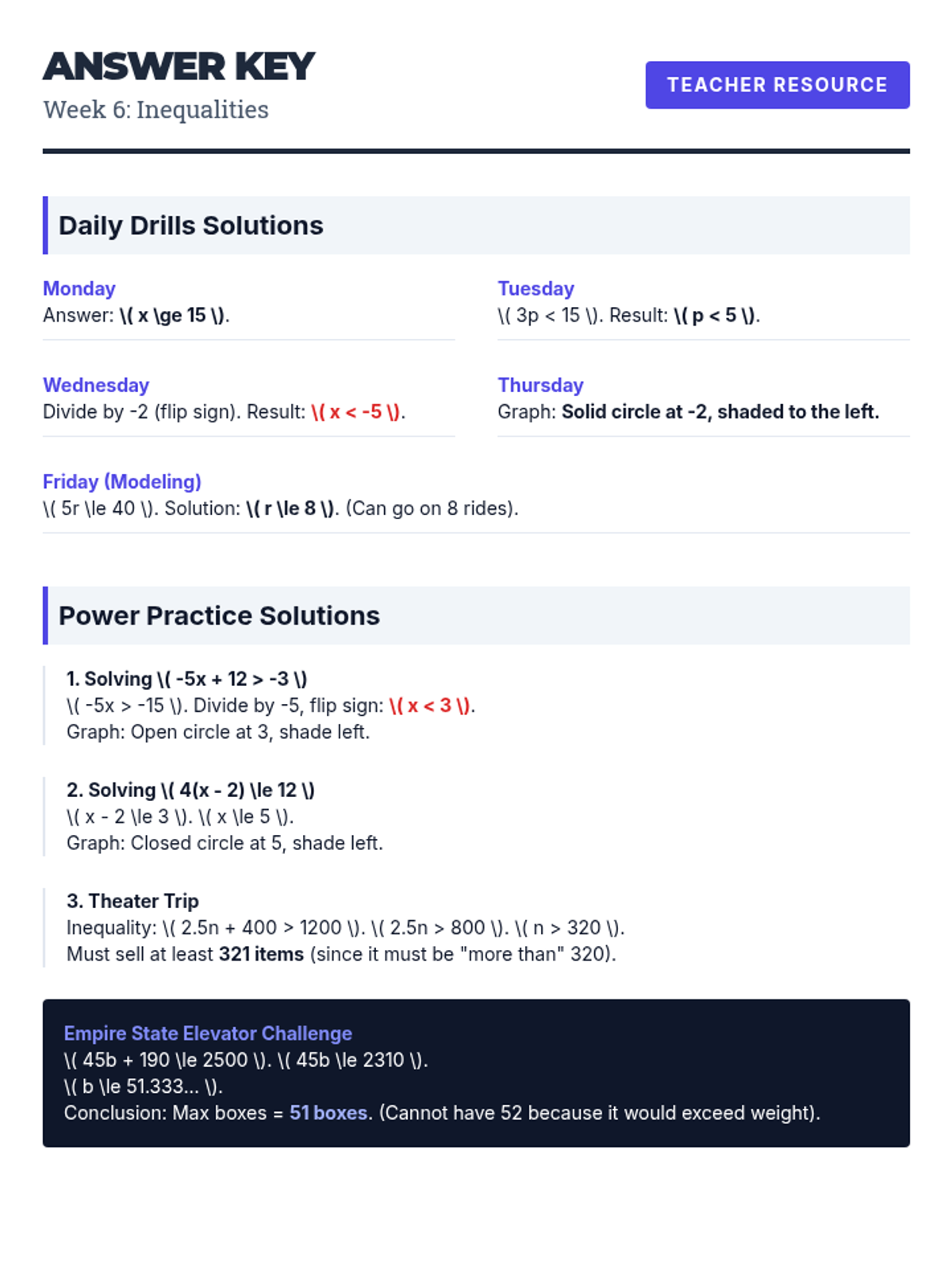
Solving and graphing linear inequalities and applying them to real-world NYS assessment scenarios.
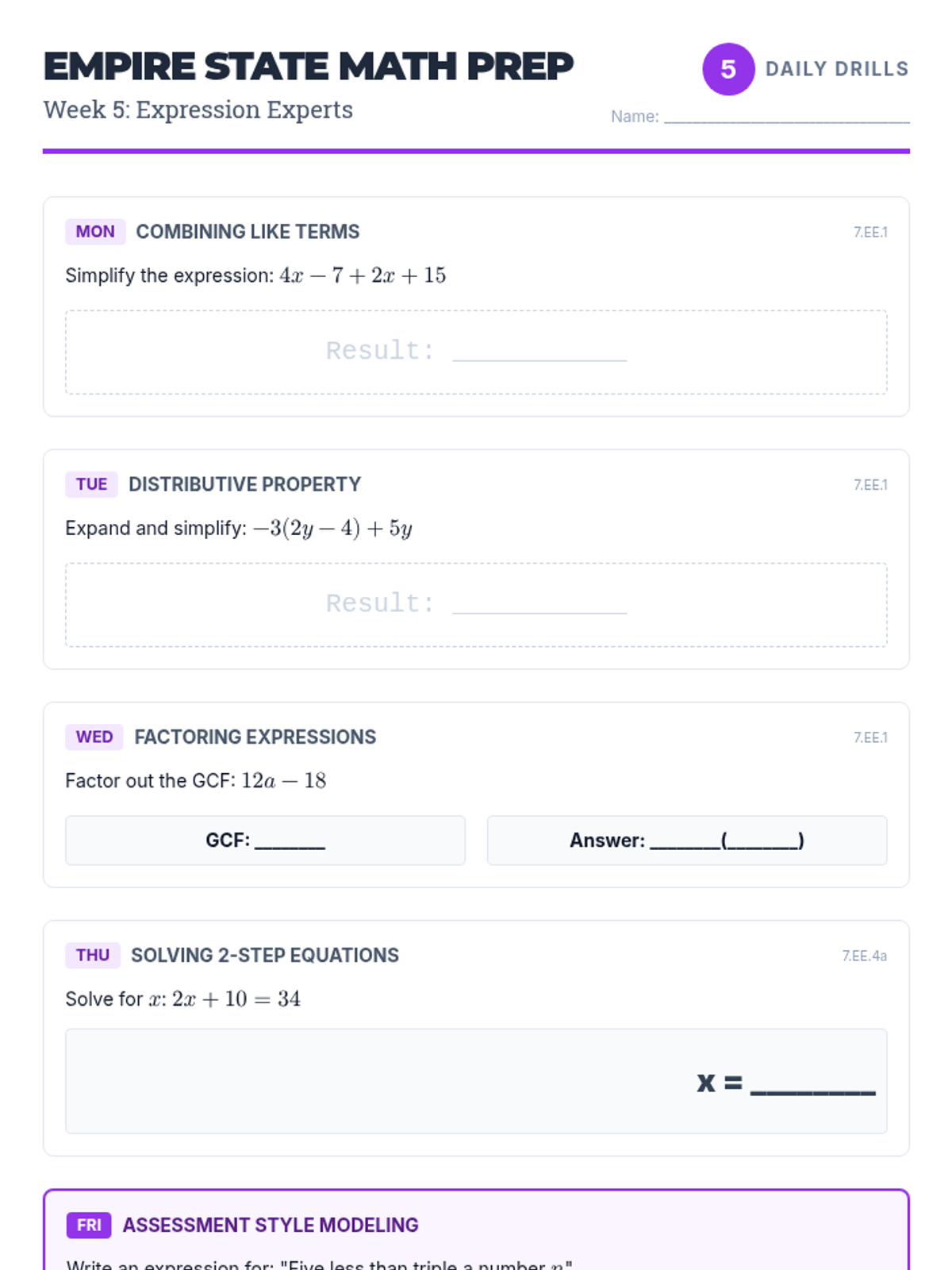
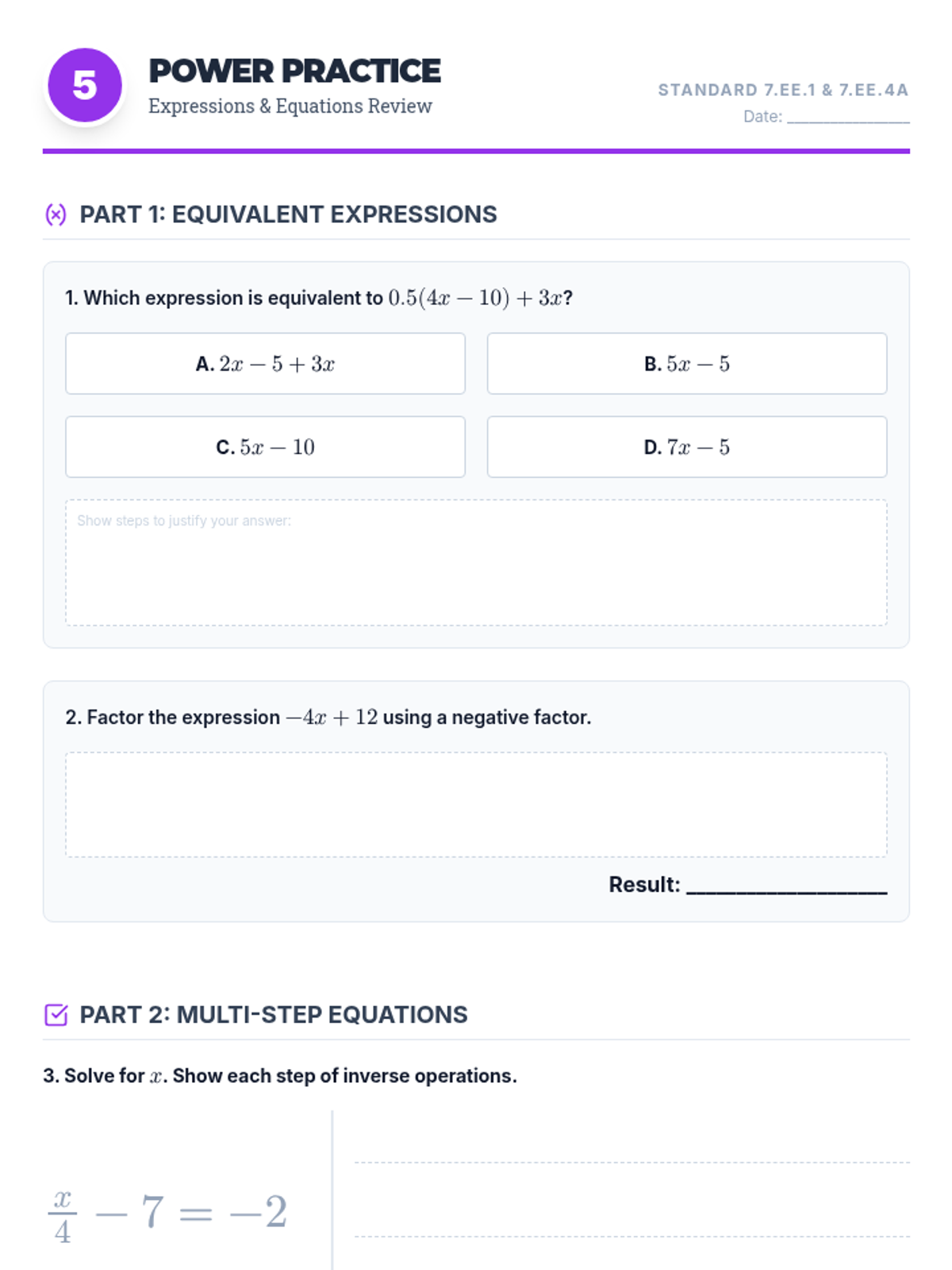
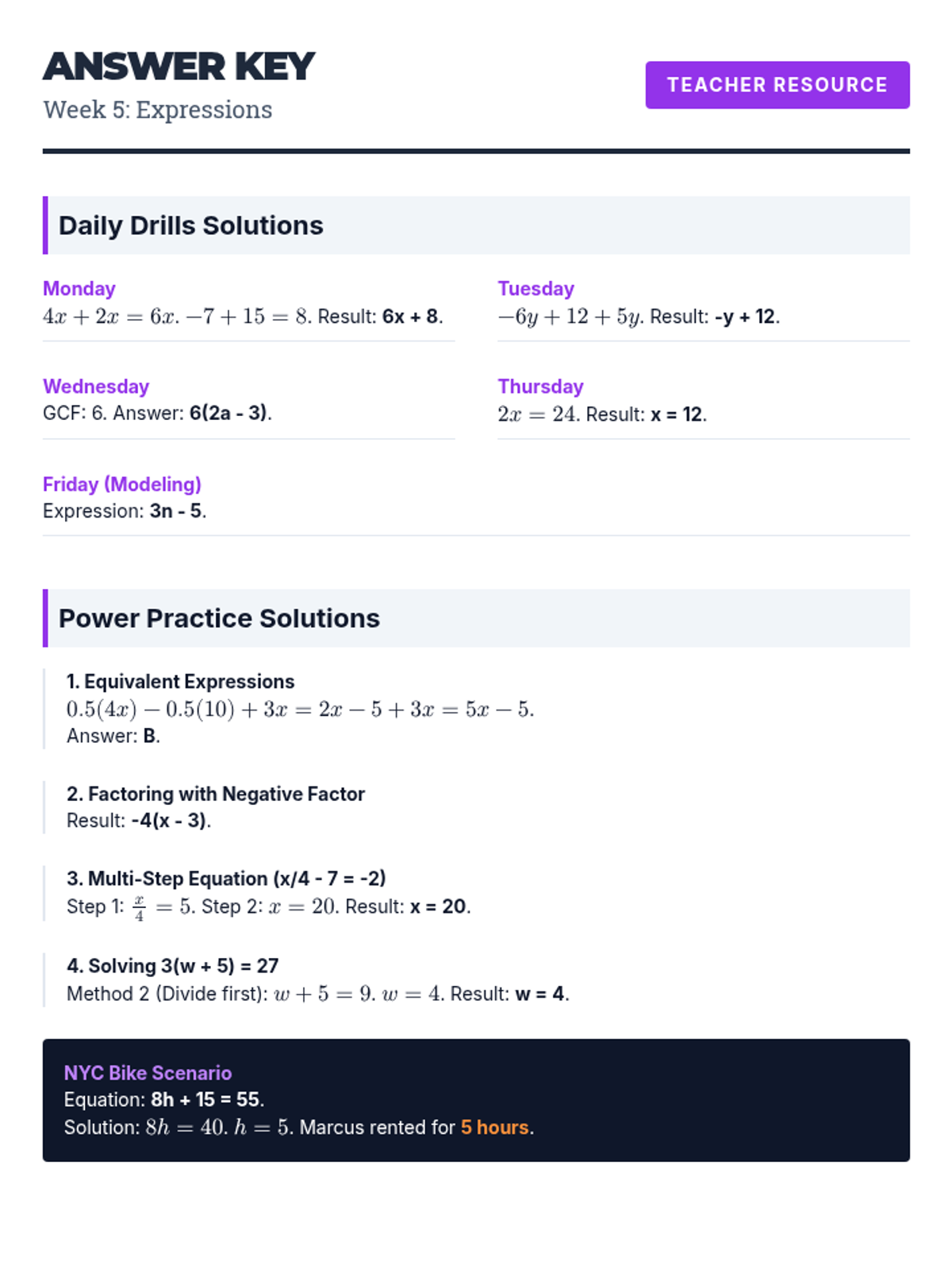
Simplifying linear expressions and solving multi-step equations using properties of operations.
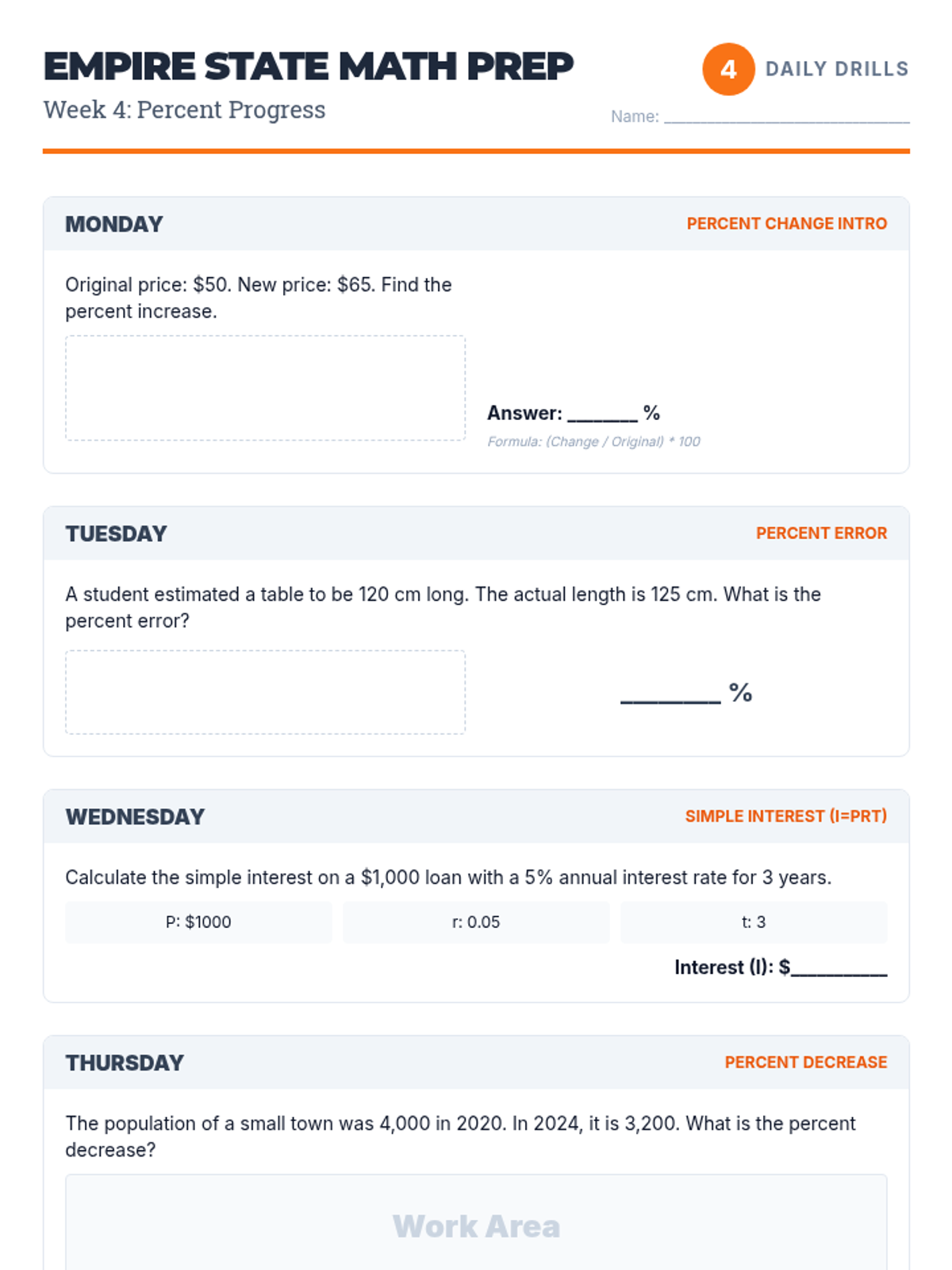
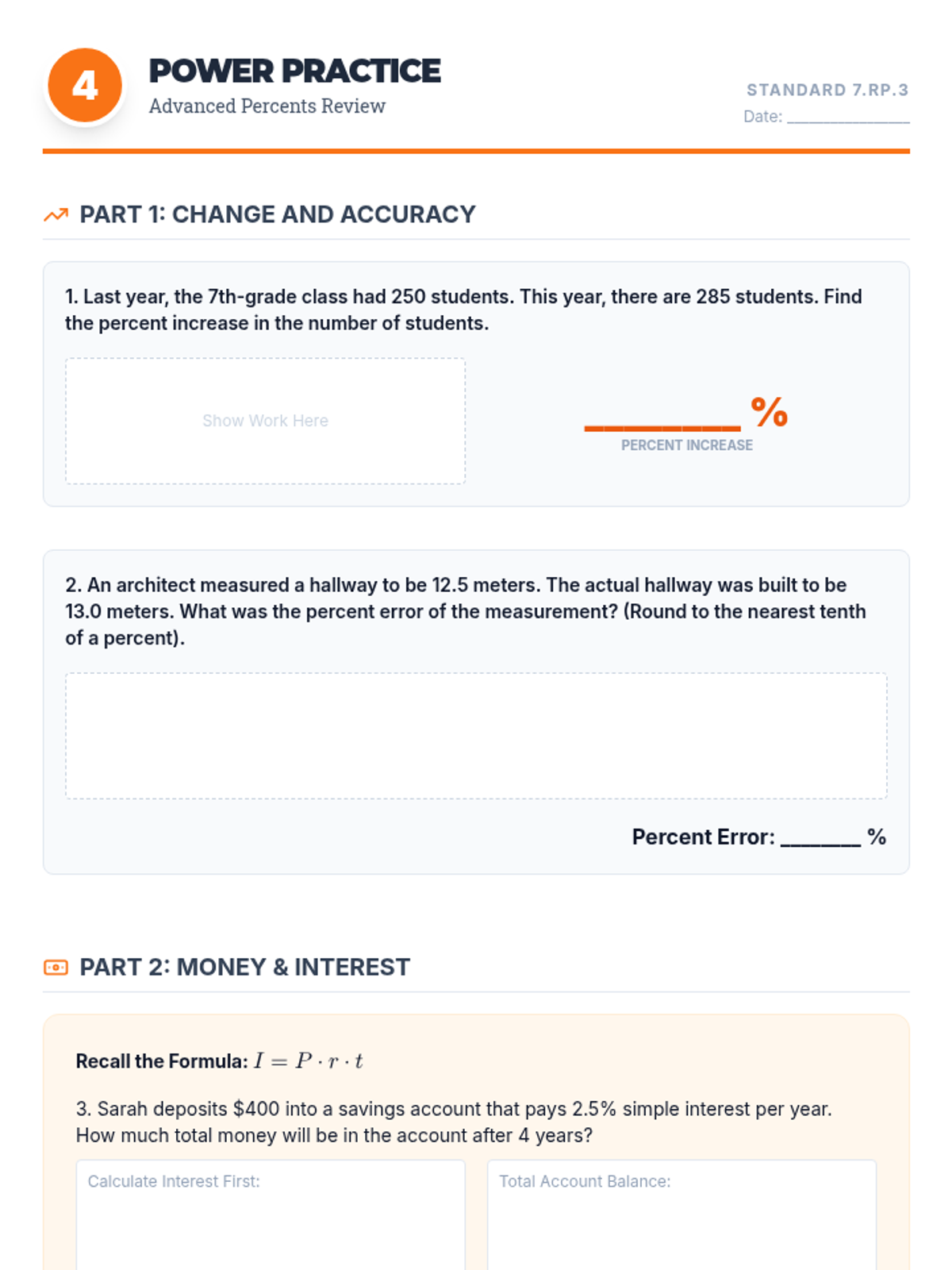
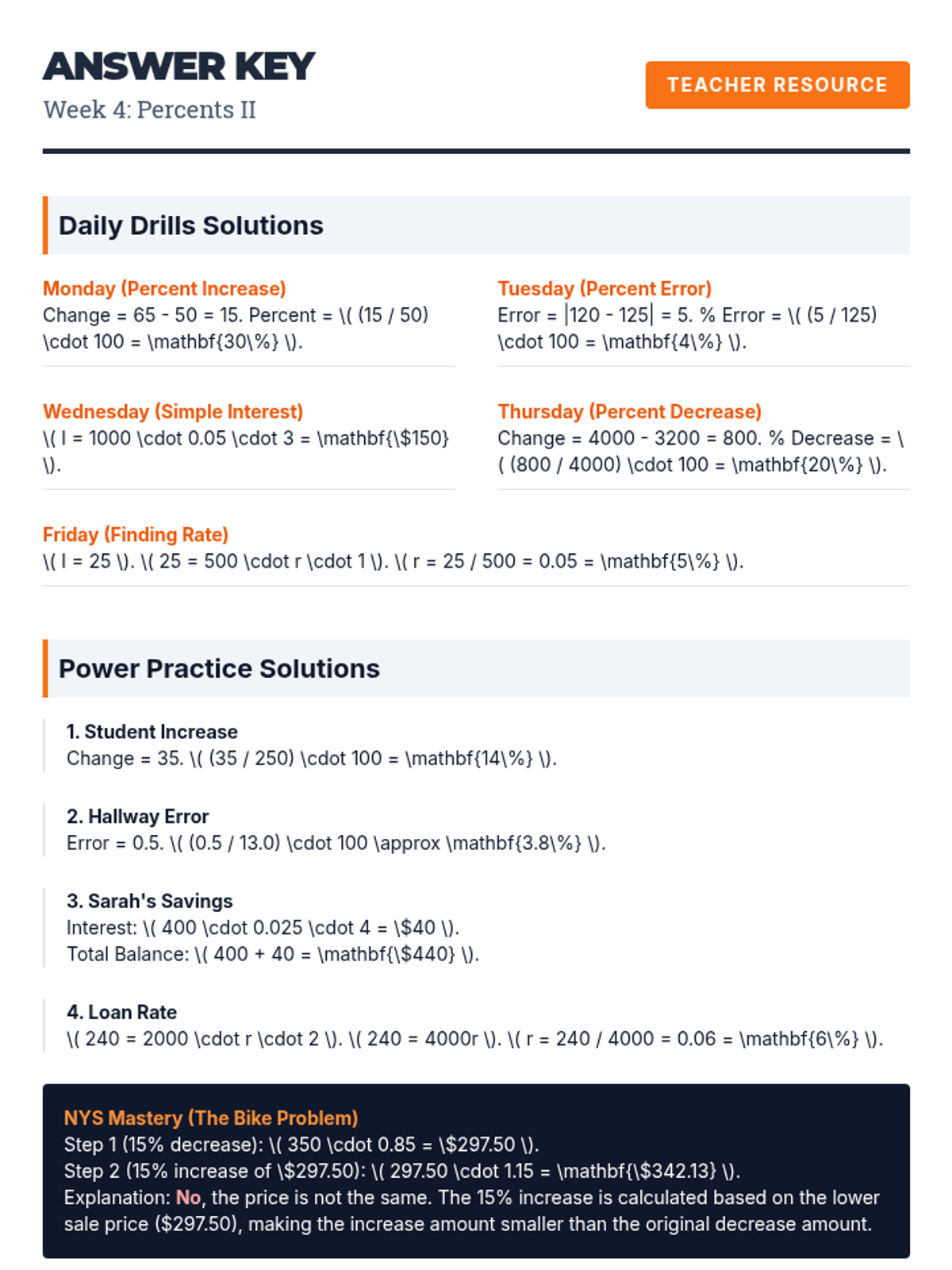
Advanced percent problems including simple interest, percent change (increase/decrease), and percent error.
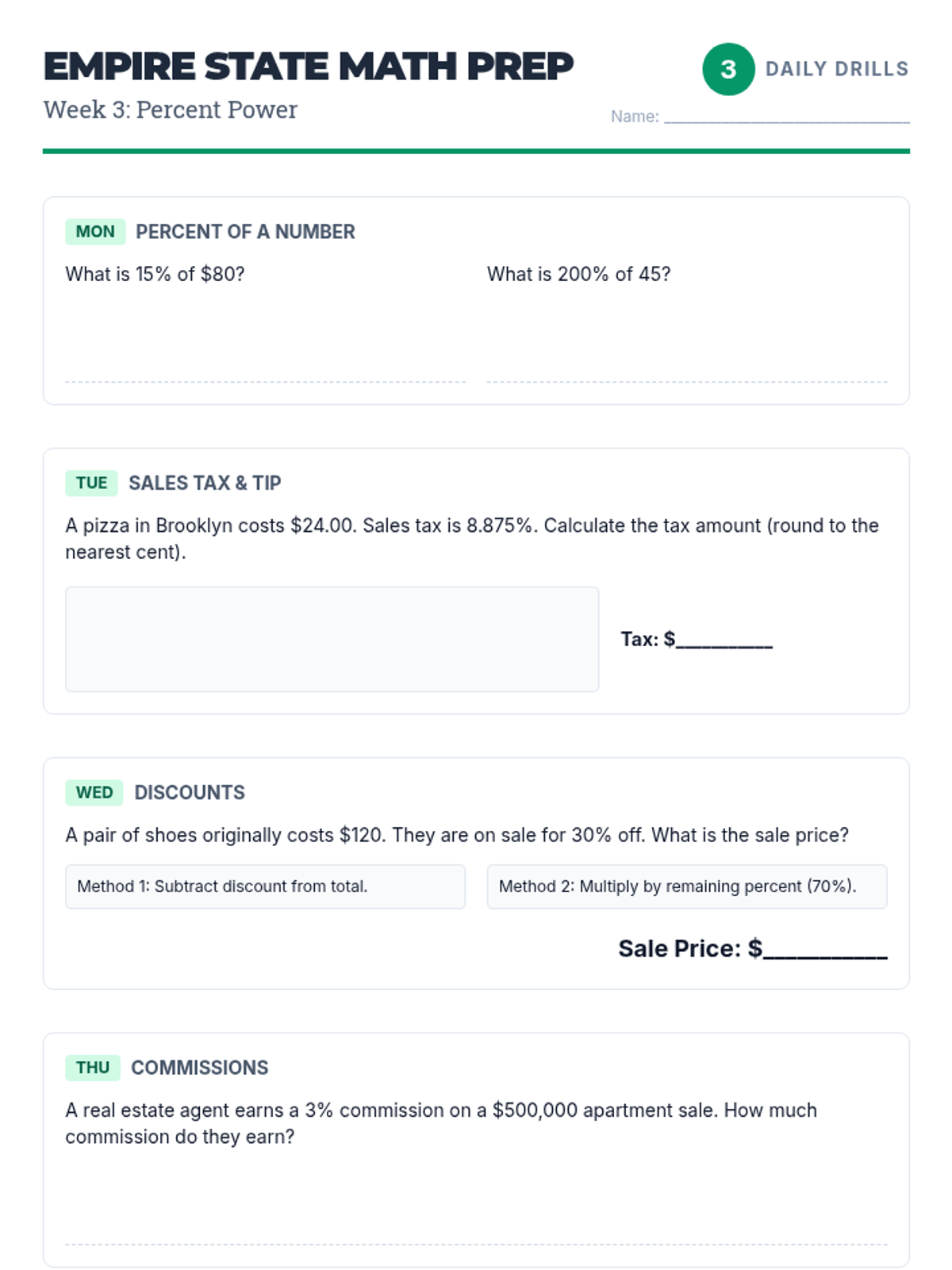
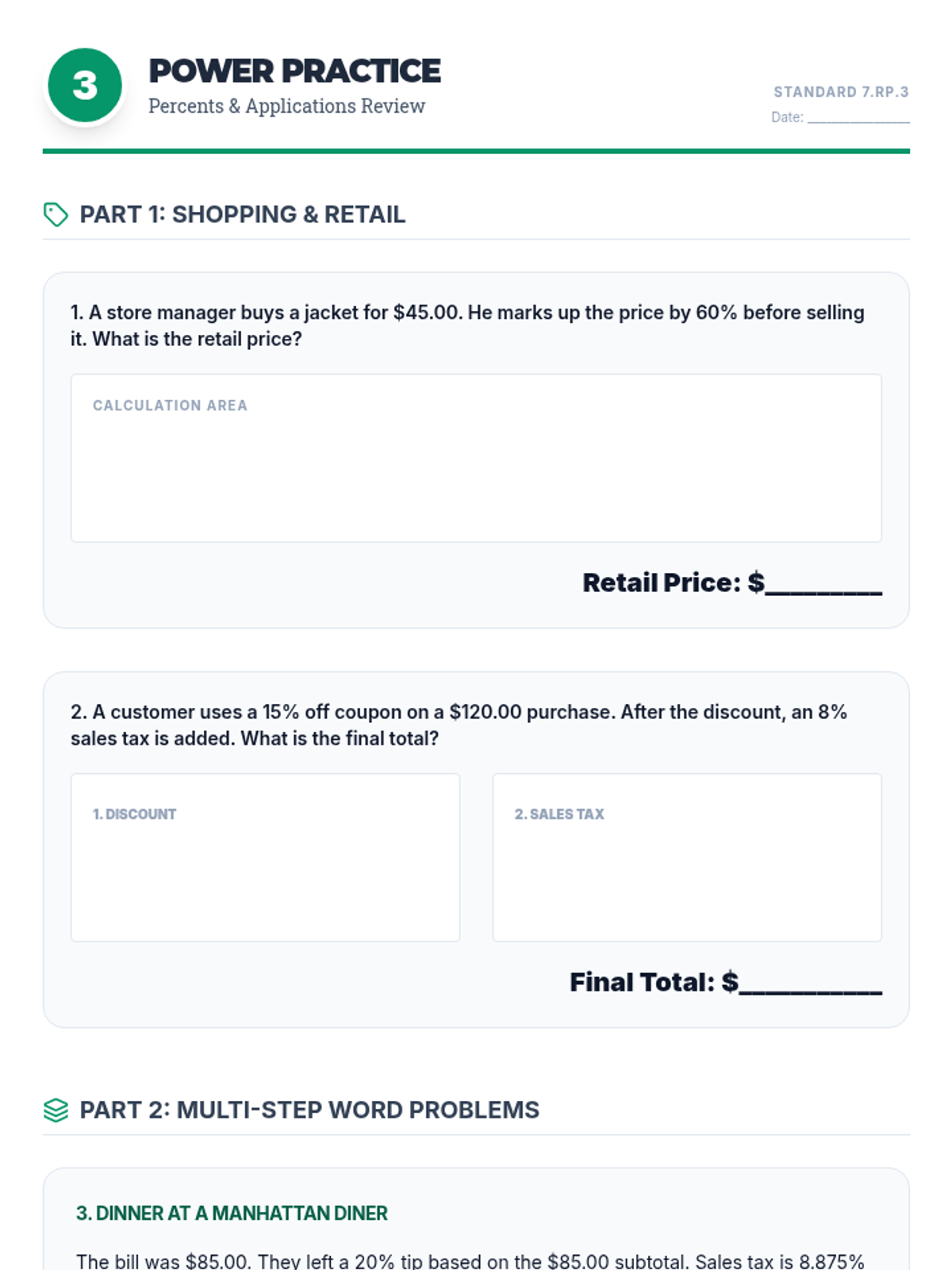
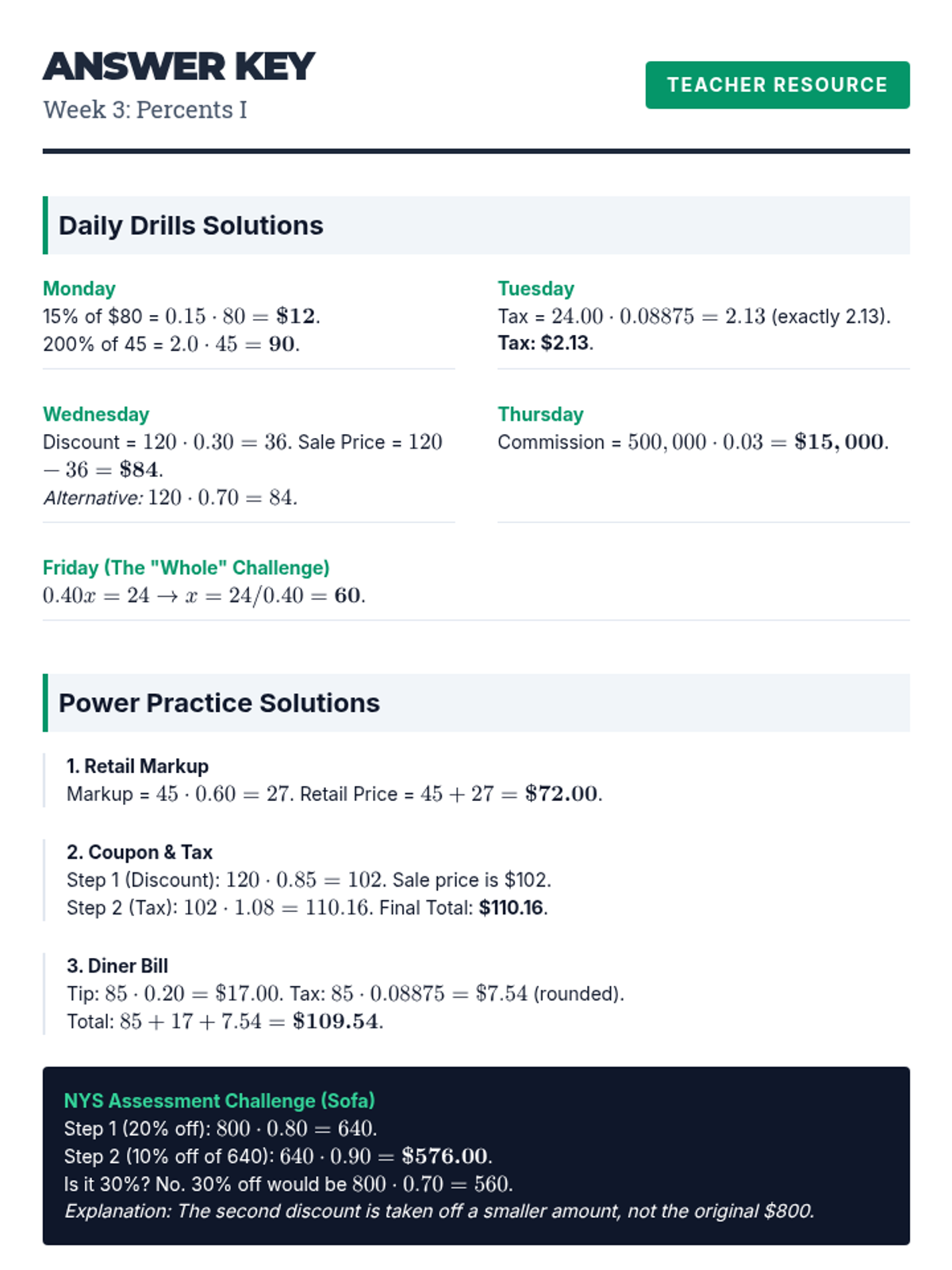
Practical applications of percents, including calculating tax, tip, commissions, discounts, and markups.
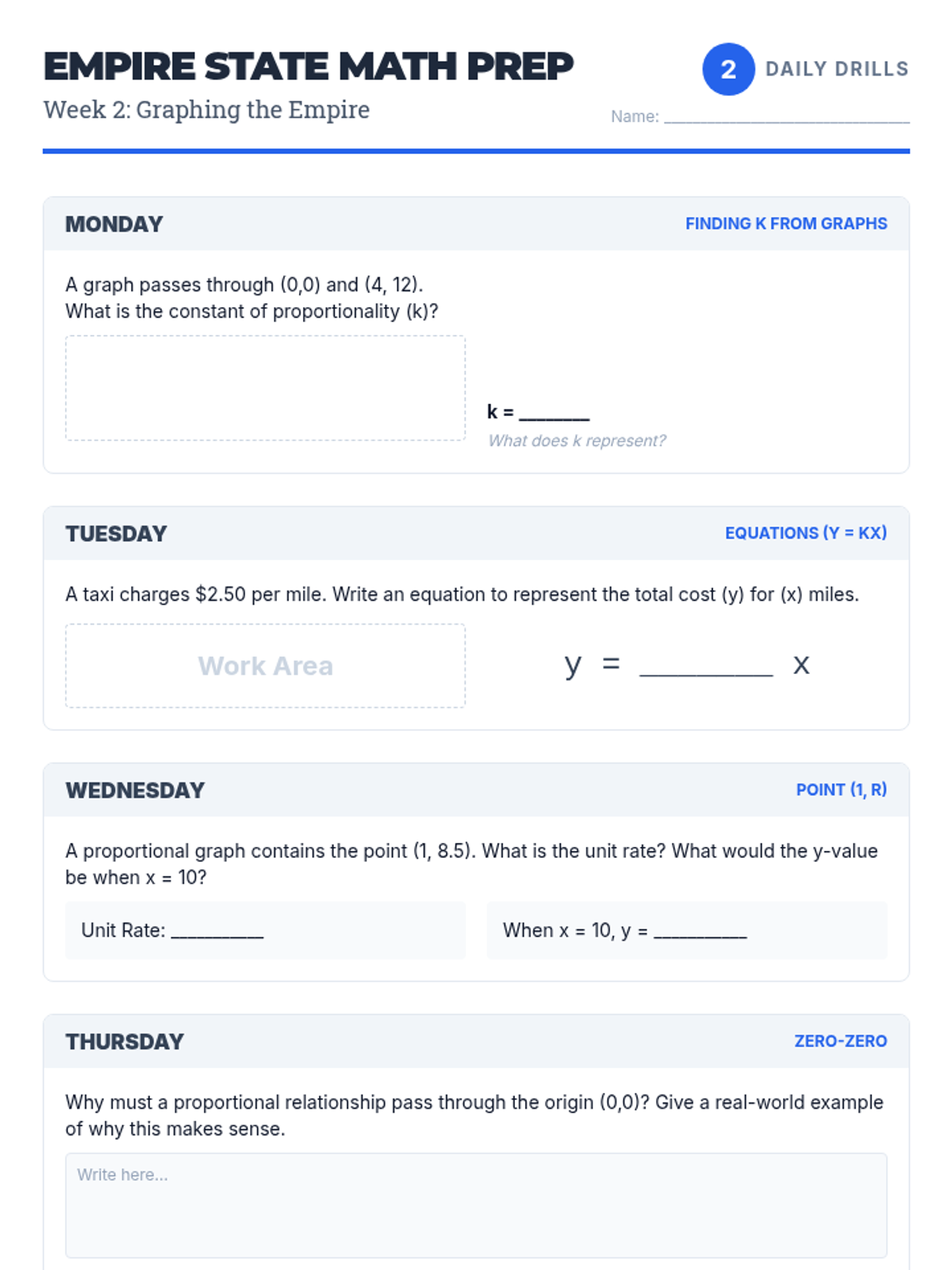
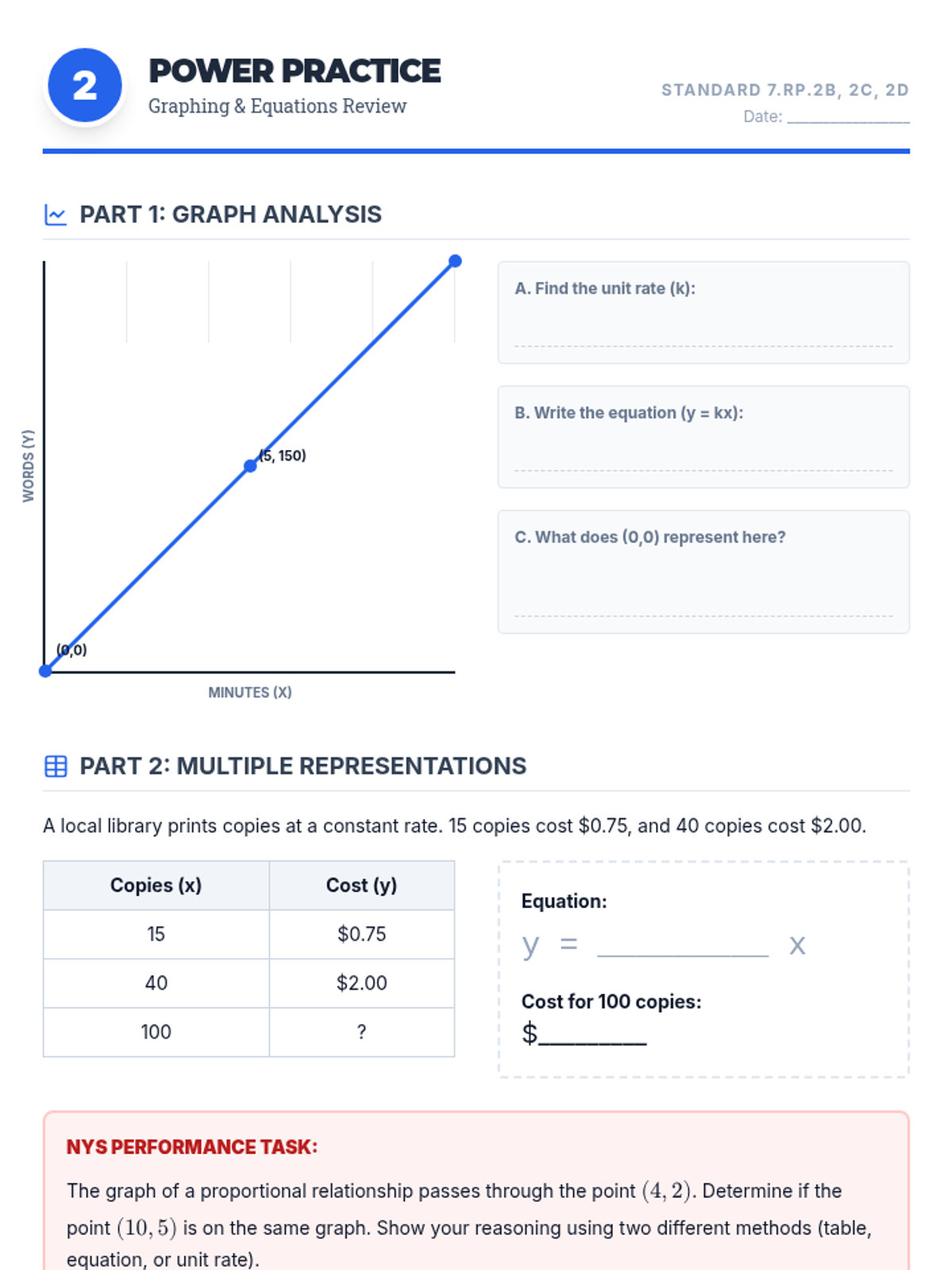
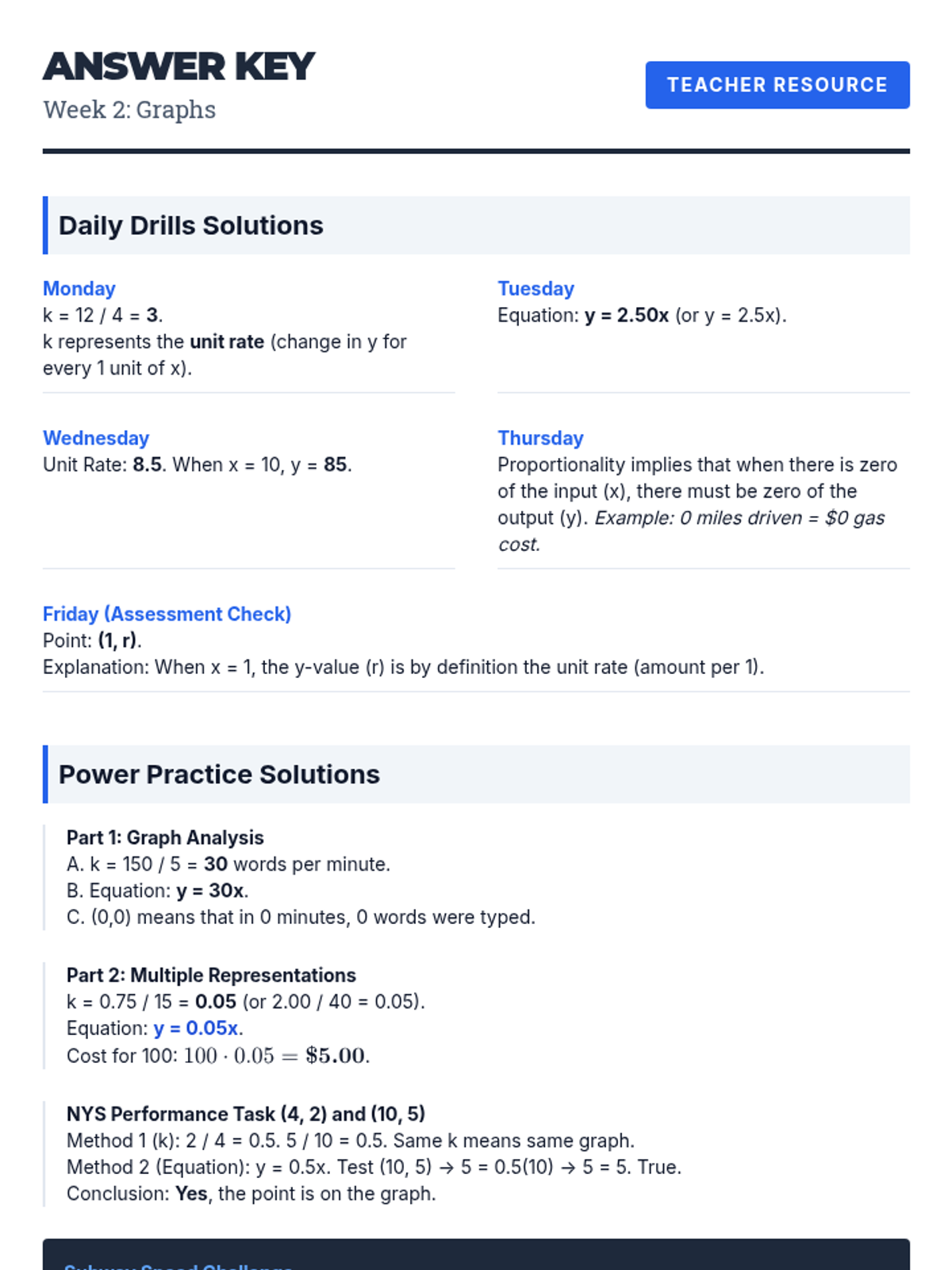
Analyzing graphs of proportional relationships, finding the constant of proportionality, and writing equations in the form y = kx.
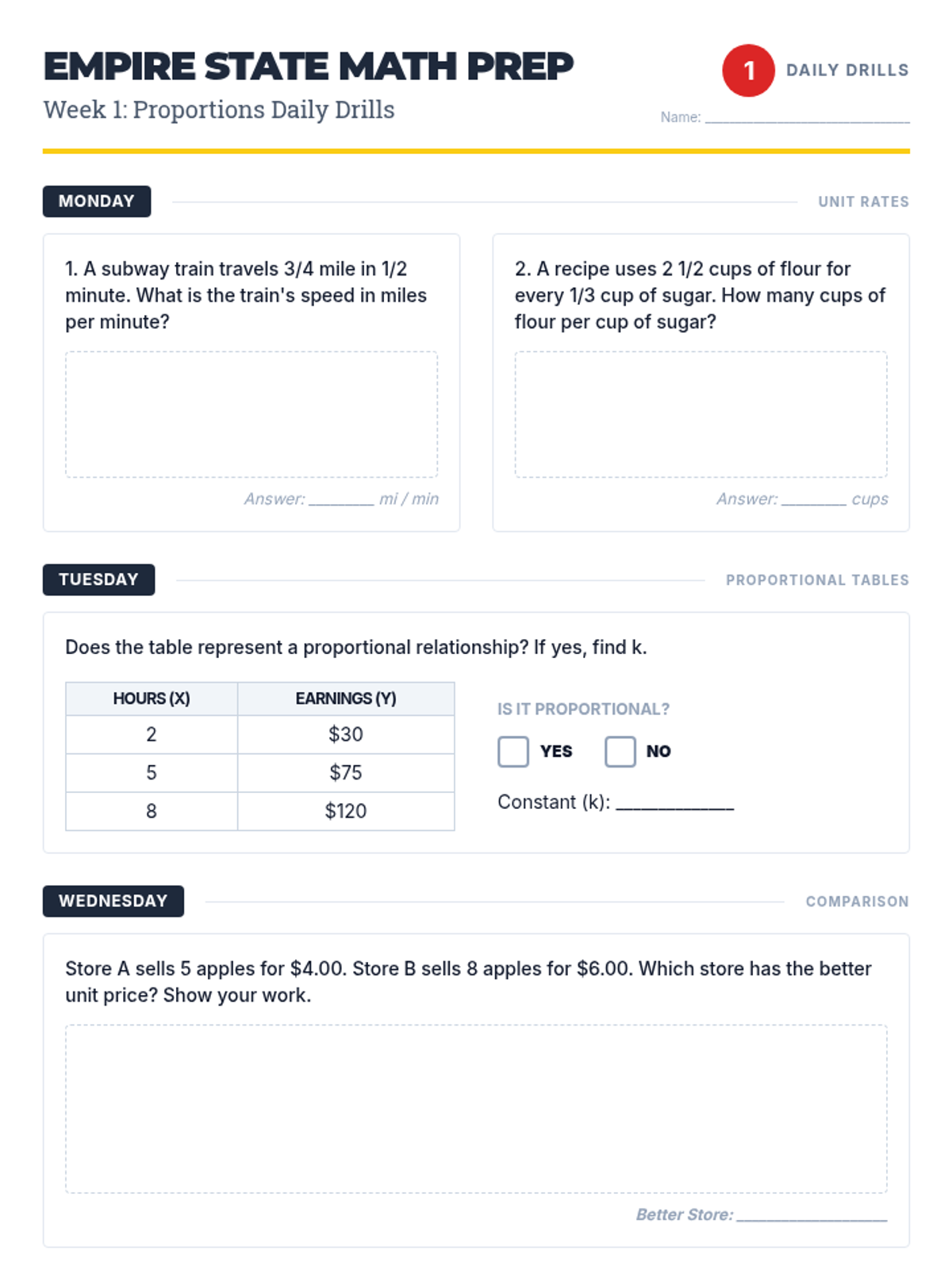
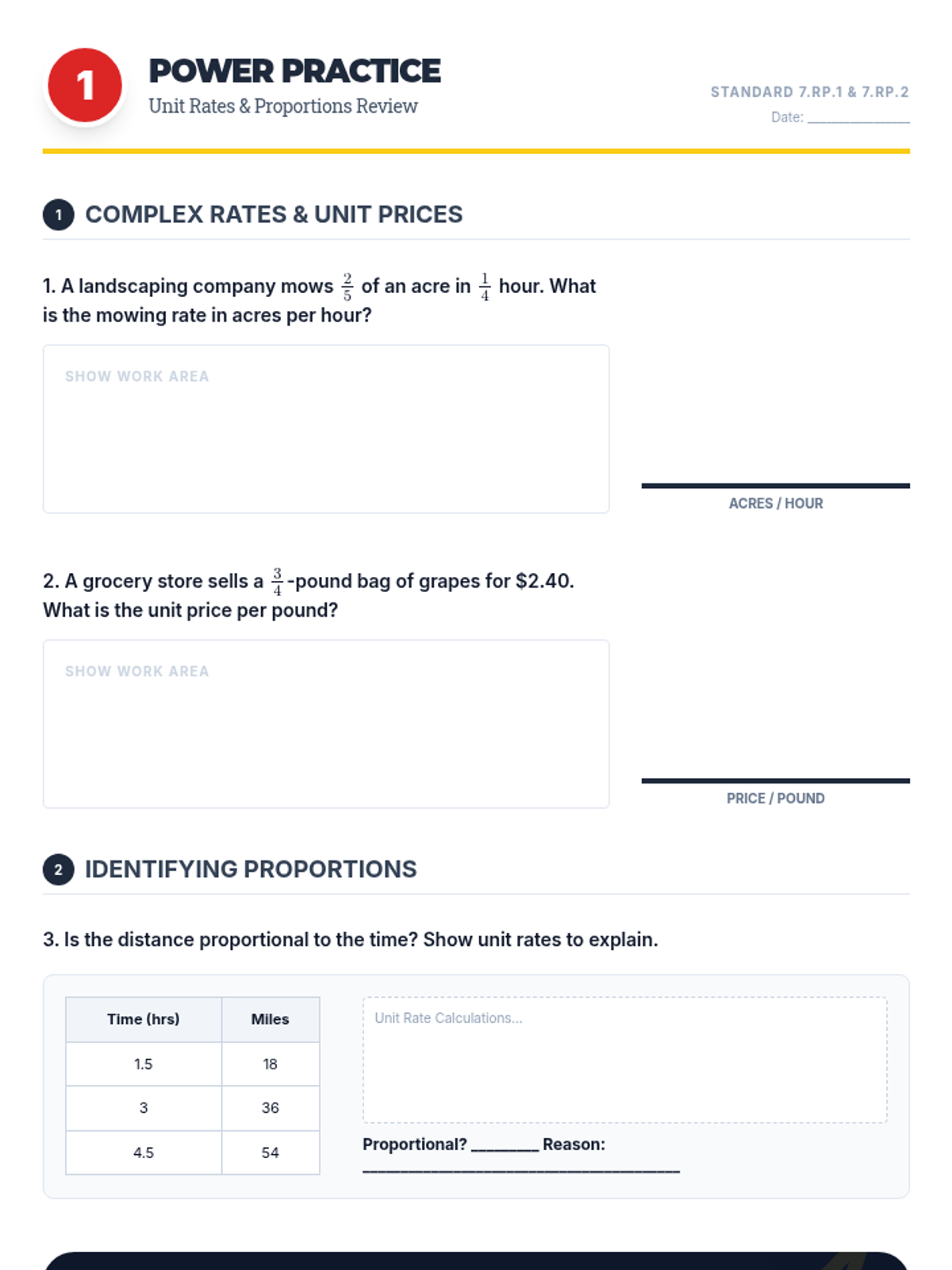
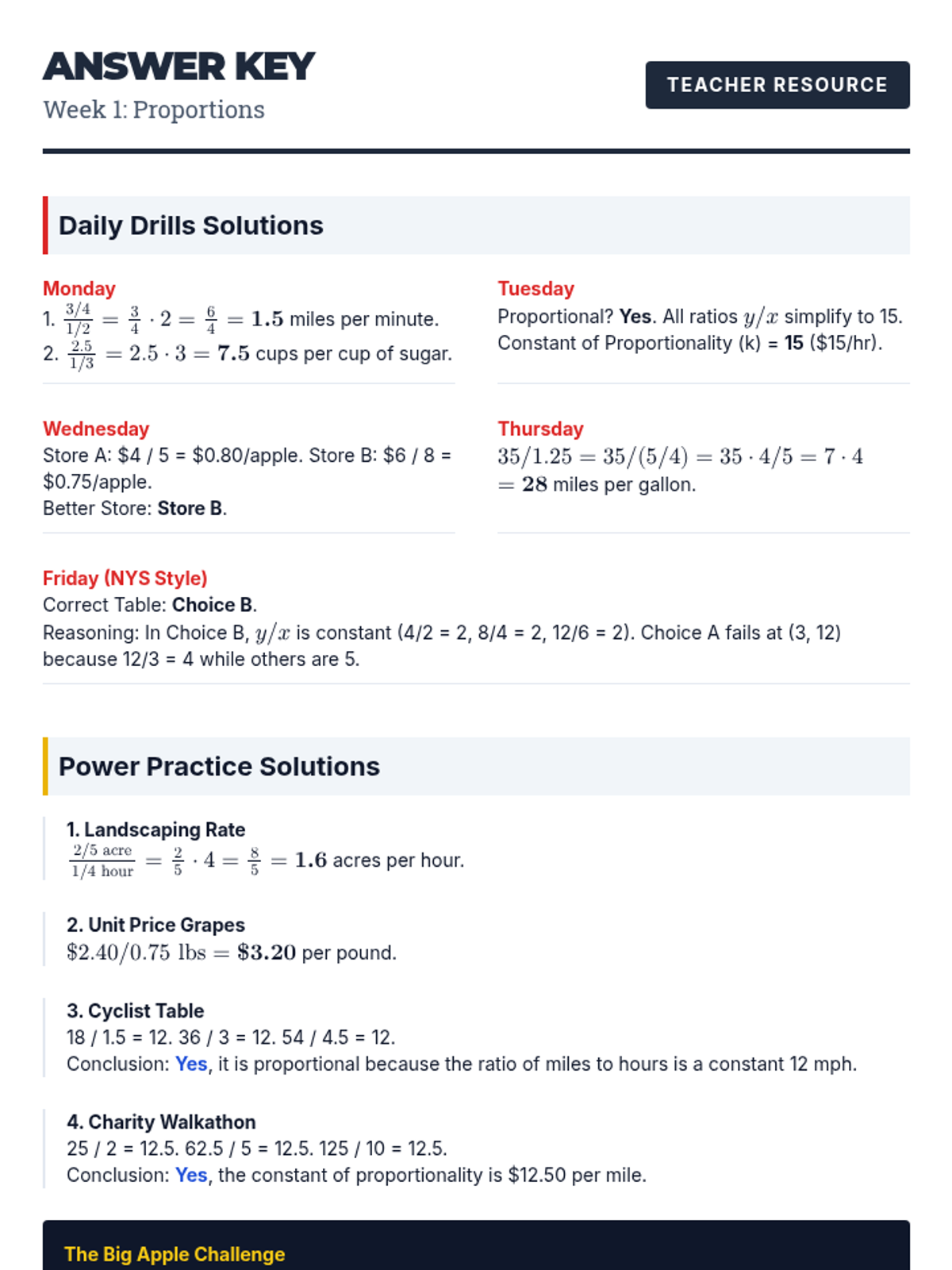
Review of ratios, unit rates with fractions, and identifying proportional relationships in tables and context.
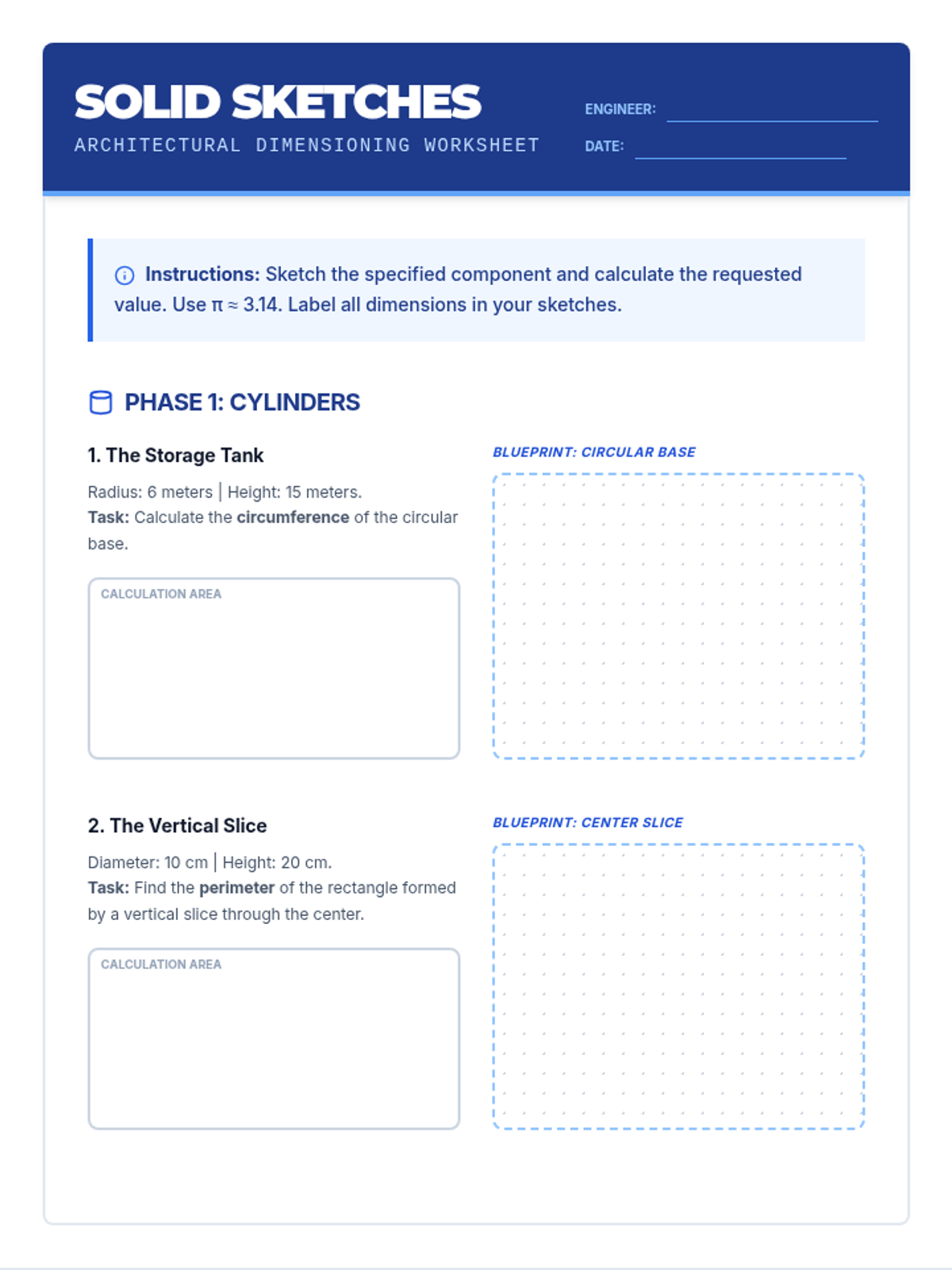
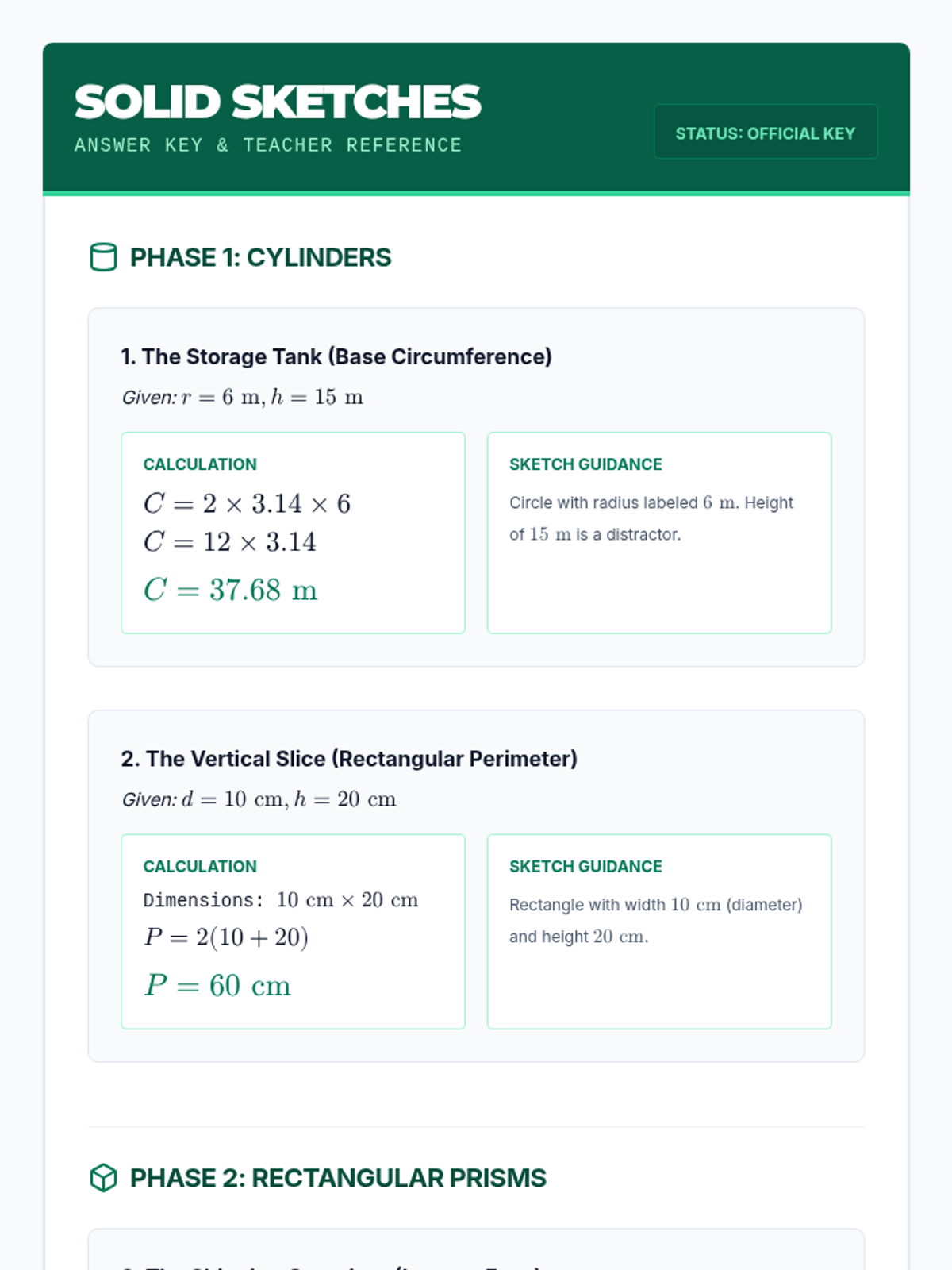
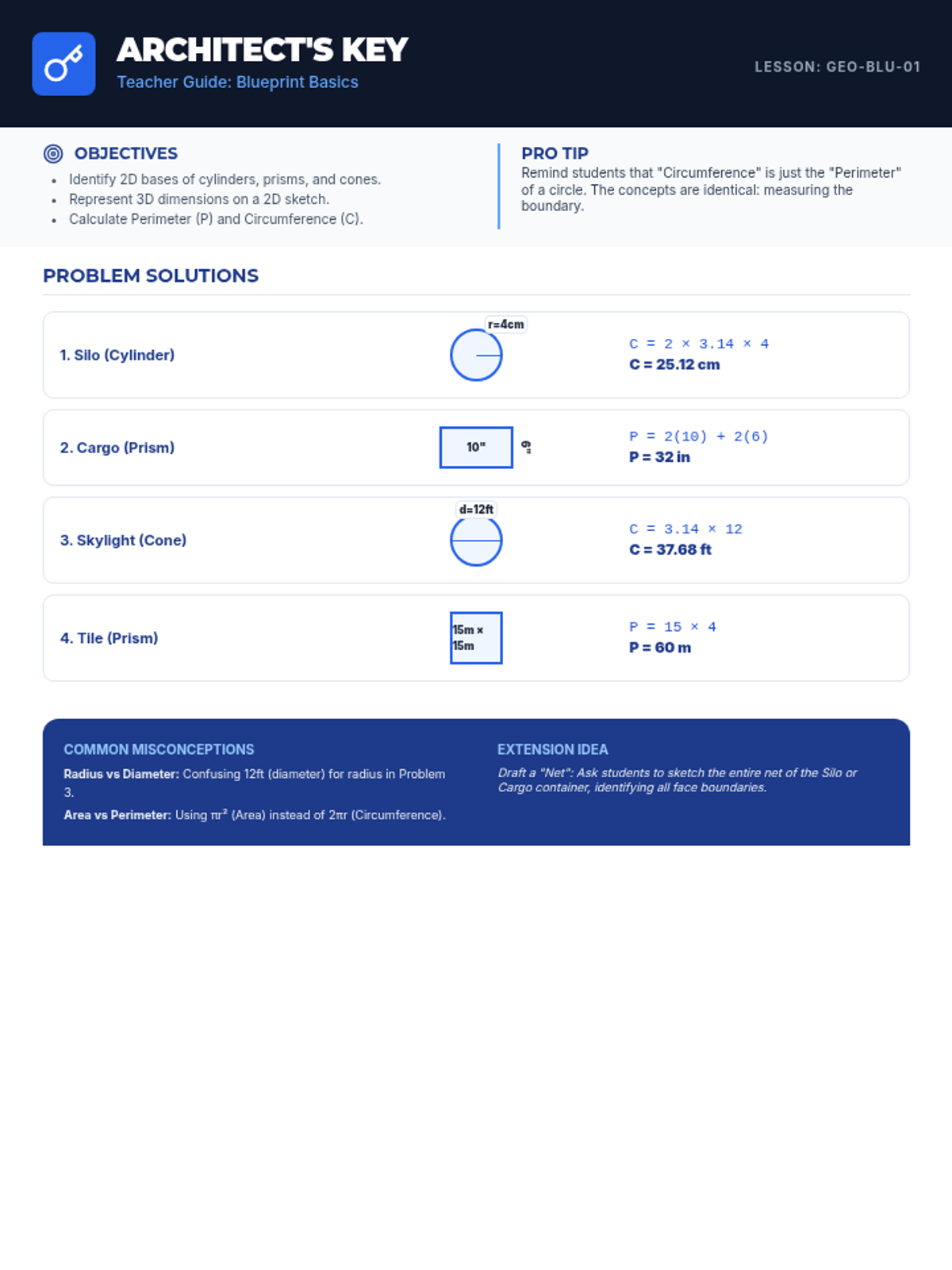
A lesson focused on identifying and calculating the perimeters and circumferences of specific components within 3D solid figures like cylinders, rectangular prisms, and cones.
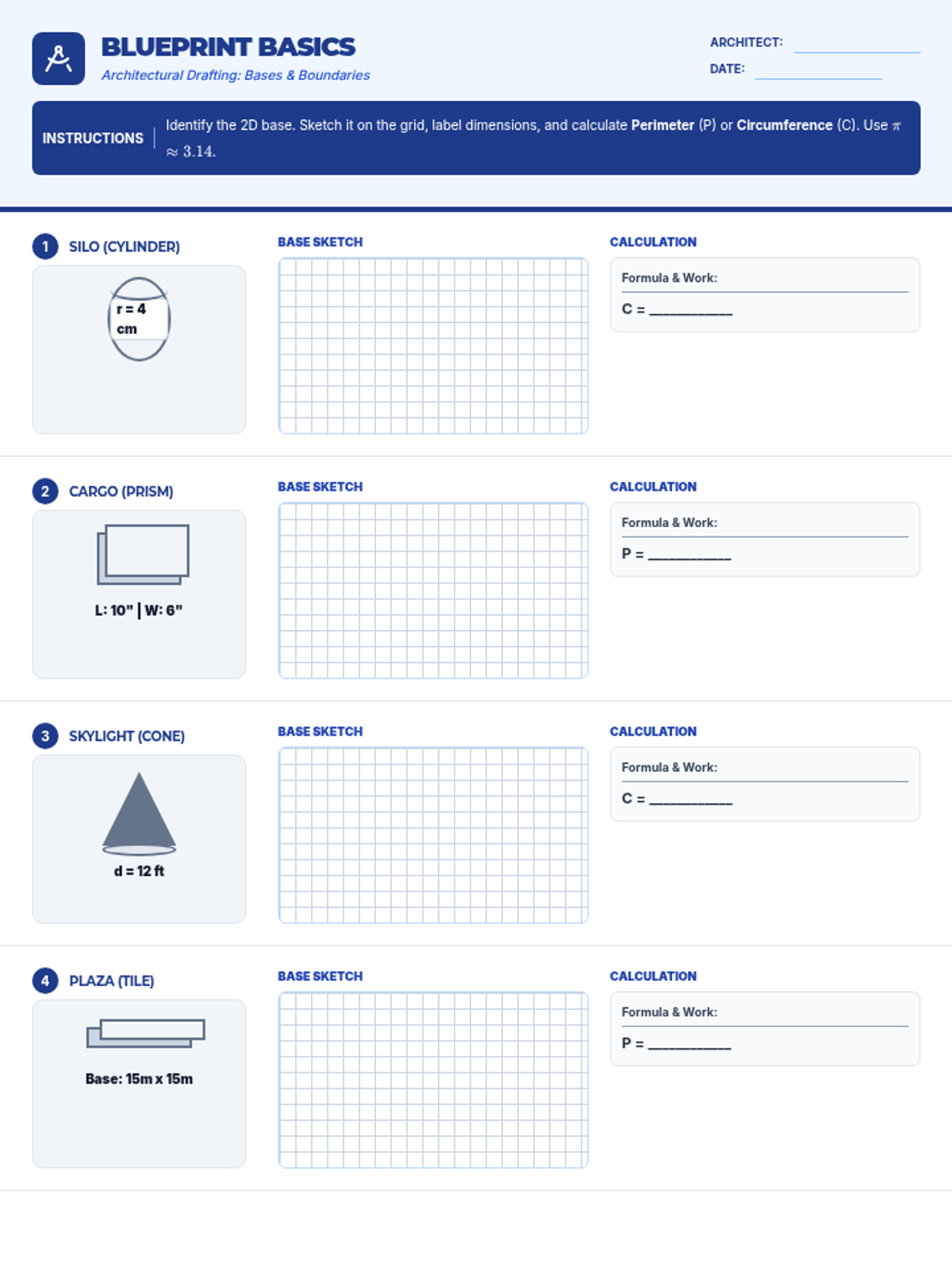
A lesson focused on identifying the 2D bases of 3D figures and calculating their perimeter or circumference. Students will practice sketching bases and applying geometry formulas in an architectural context.
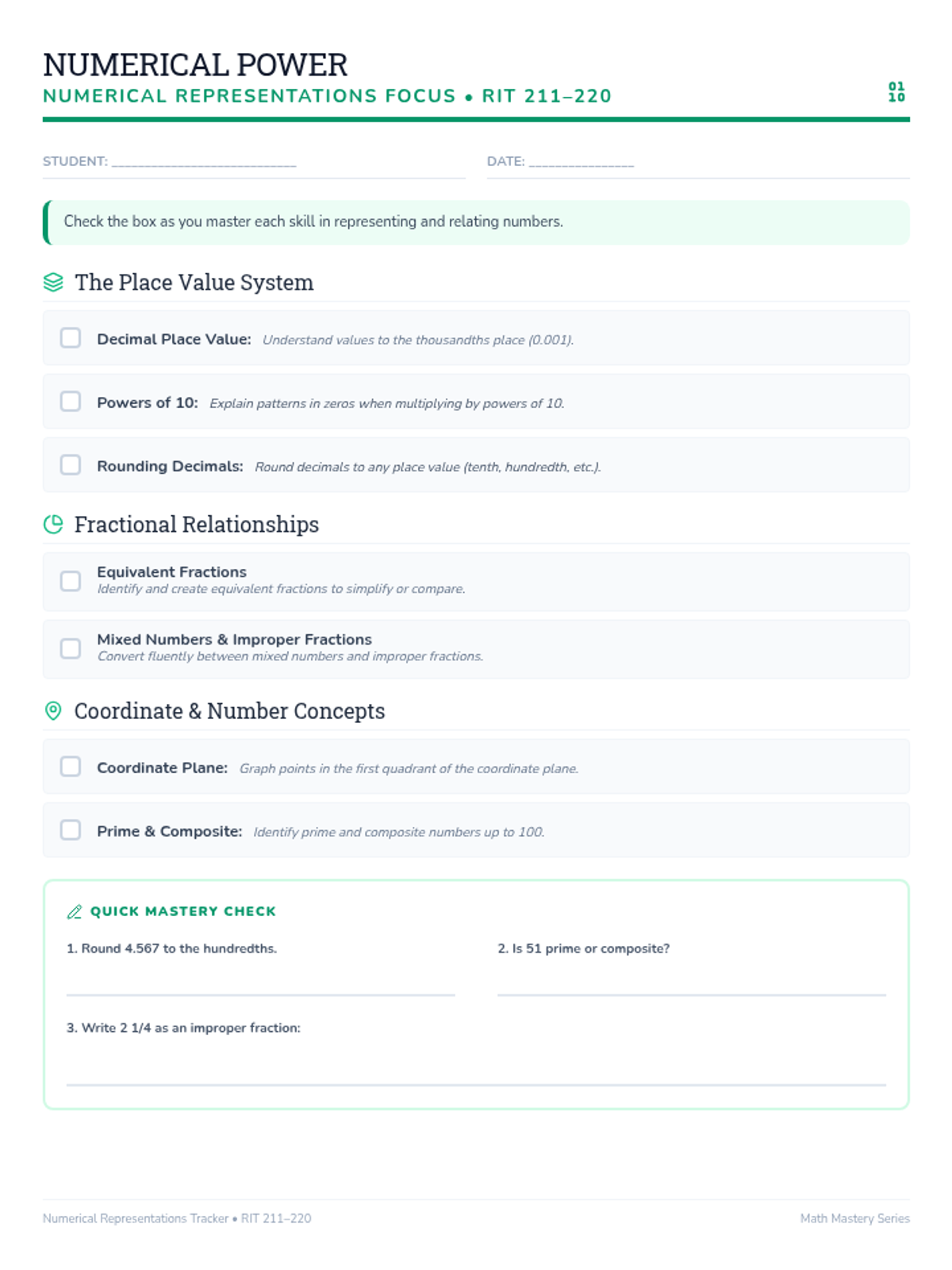
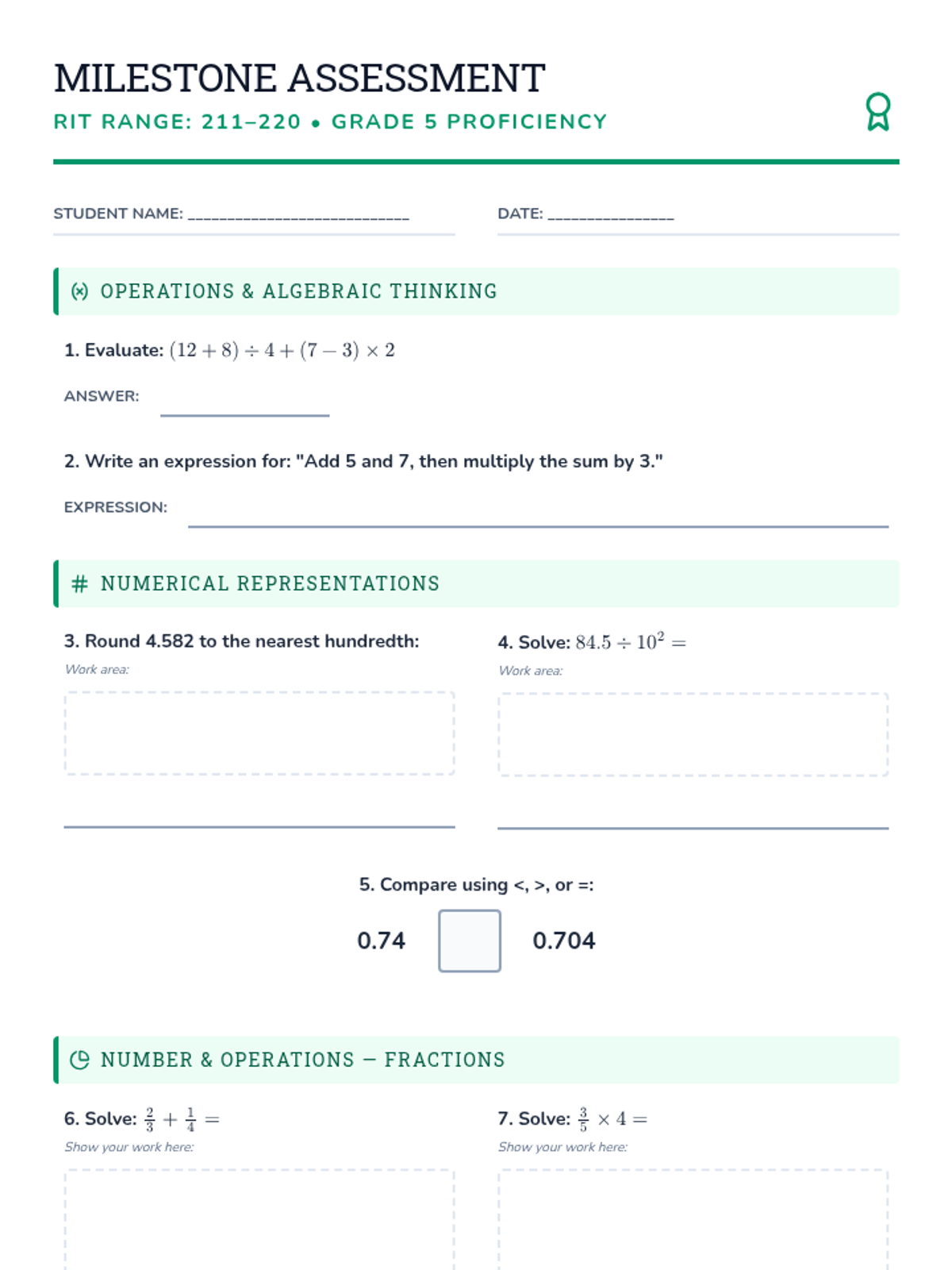
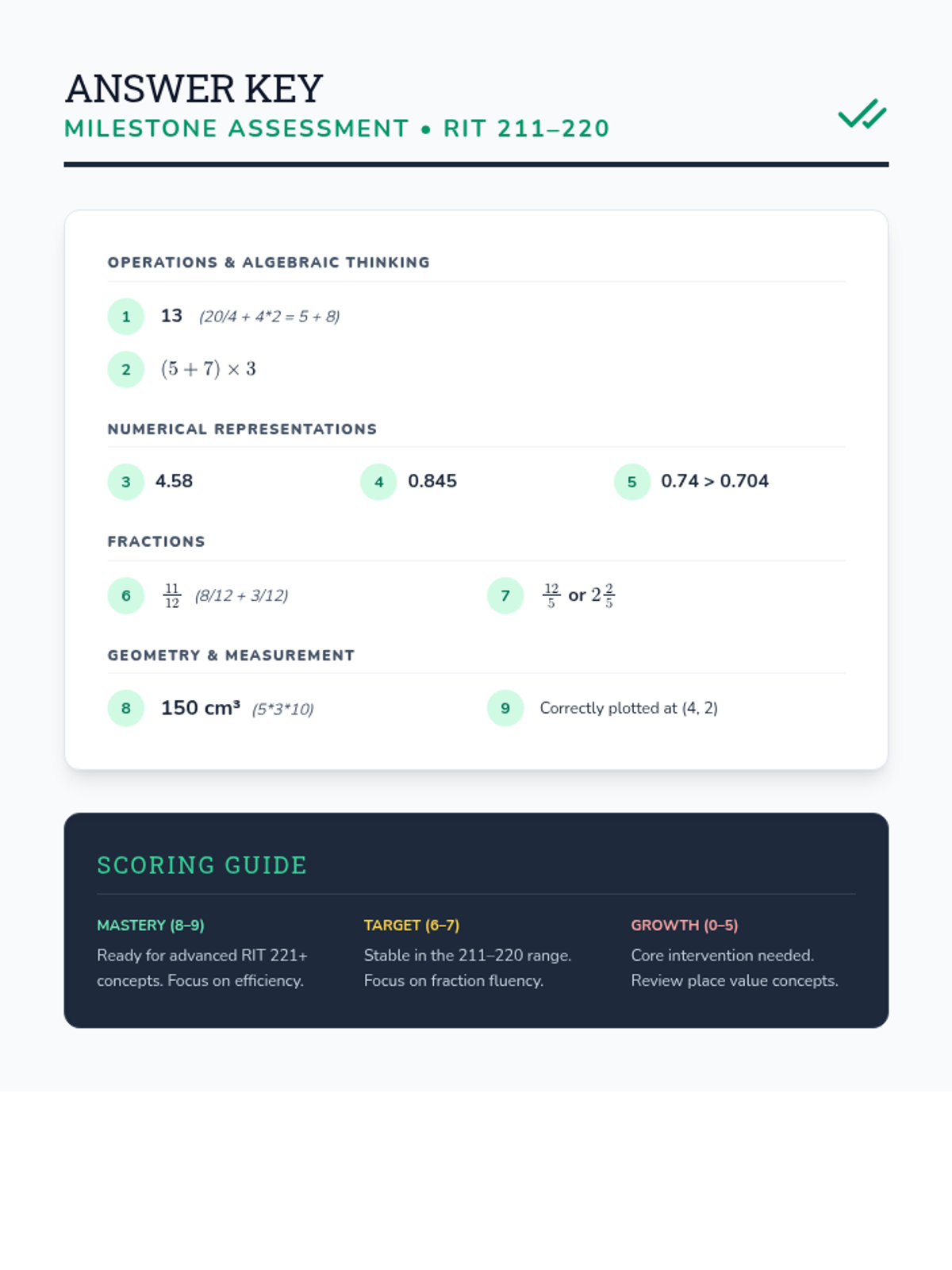
A specialized toolkit for navigating mathematical skills in the 211-220 RIT range, with a focus on foundational decimals, fractions, and place value relationships.
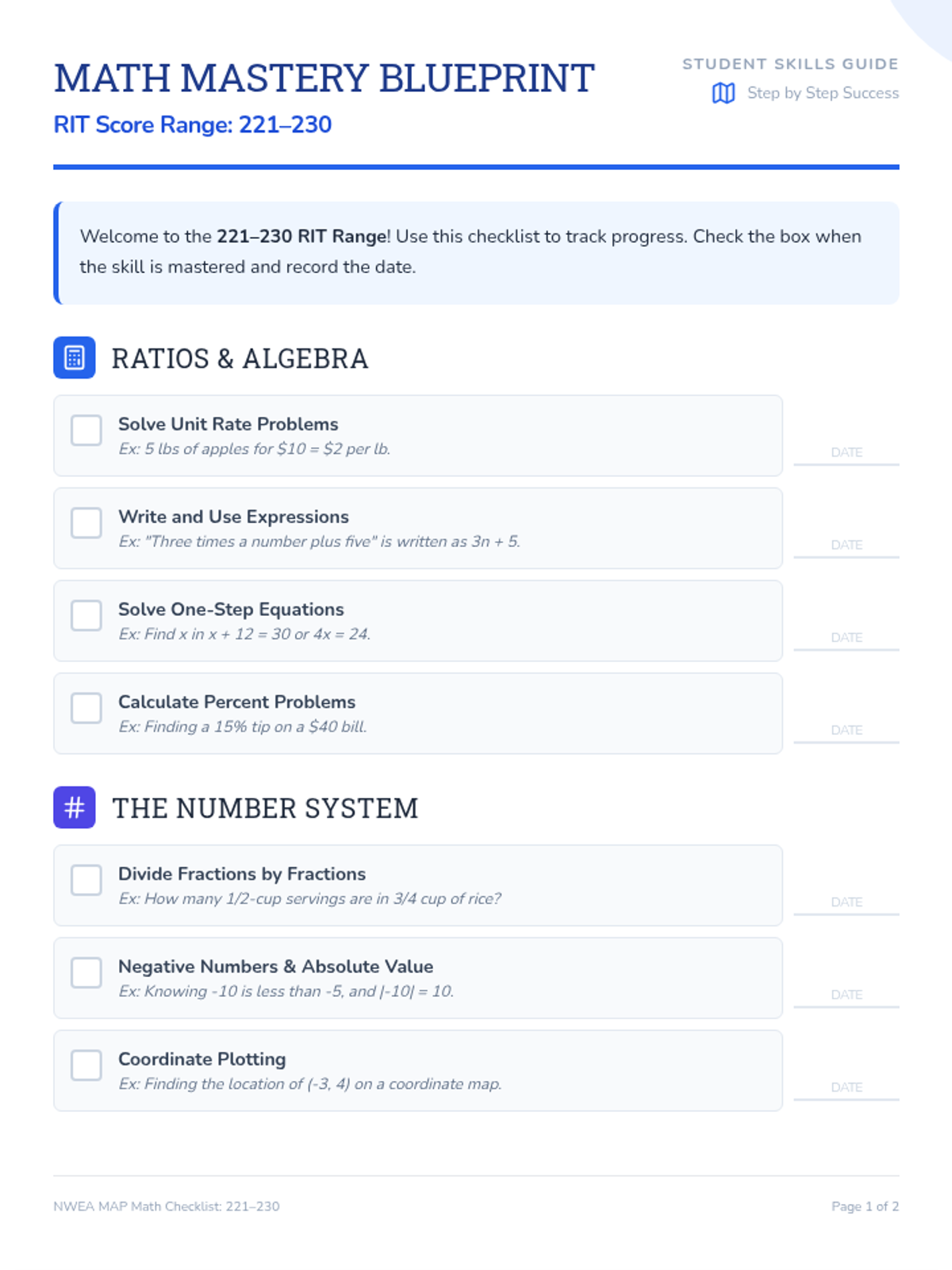
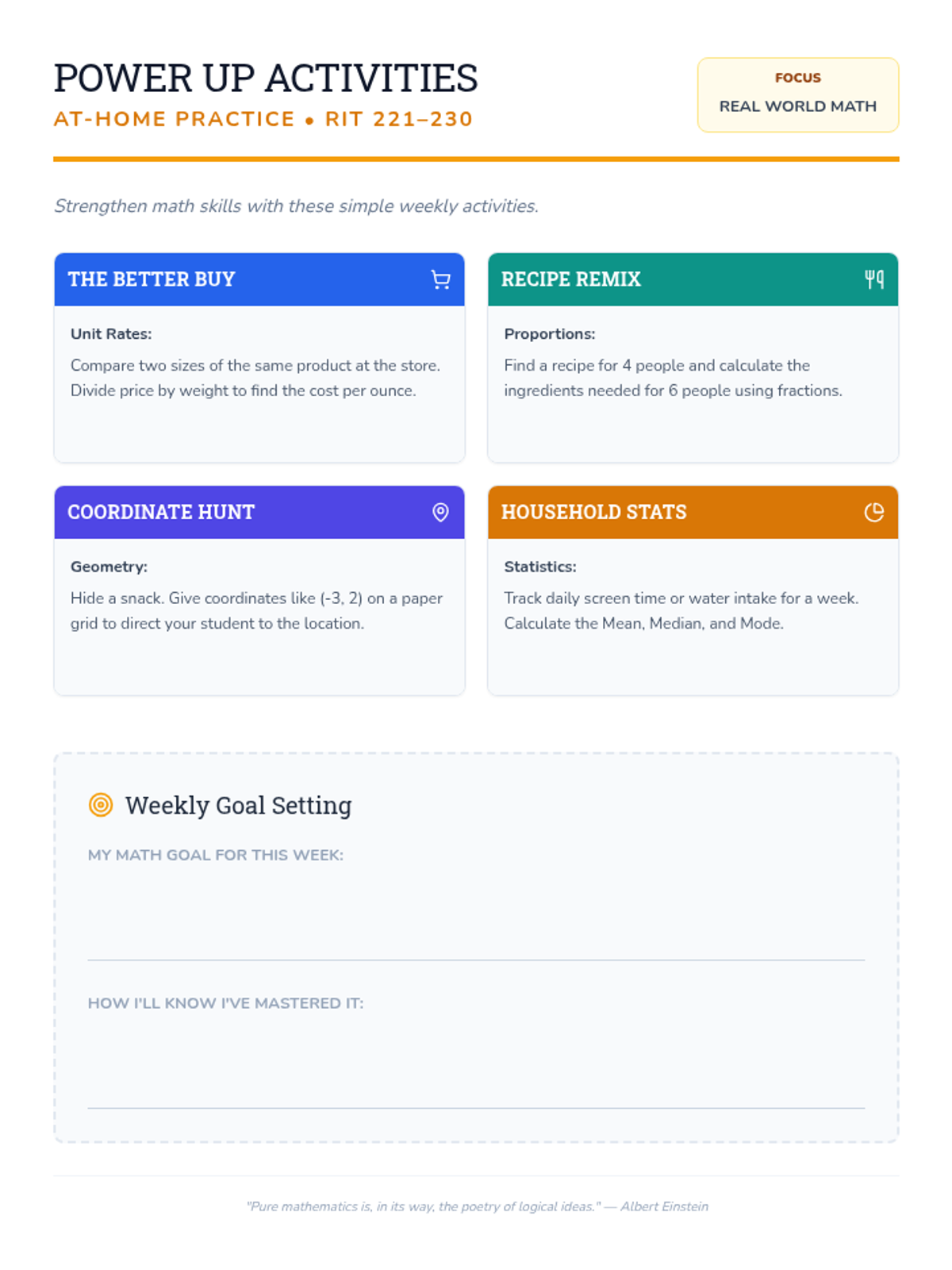
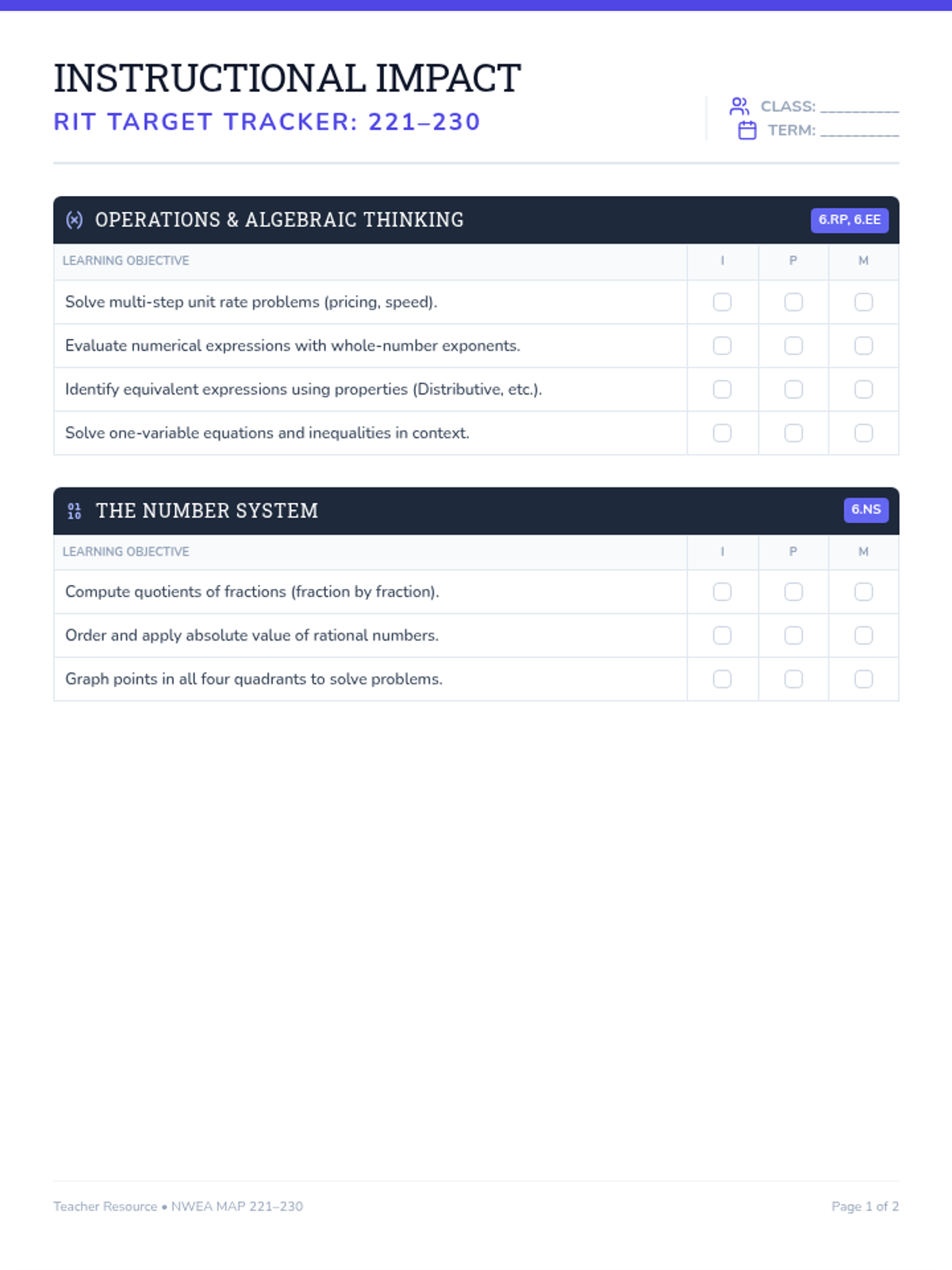
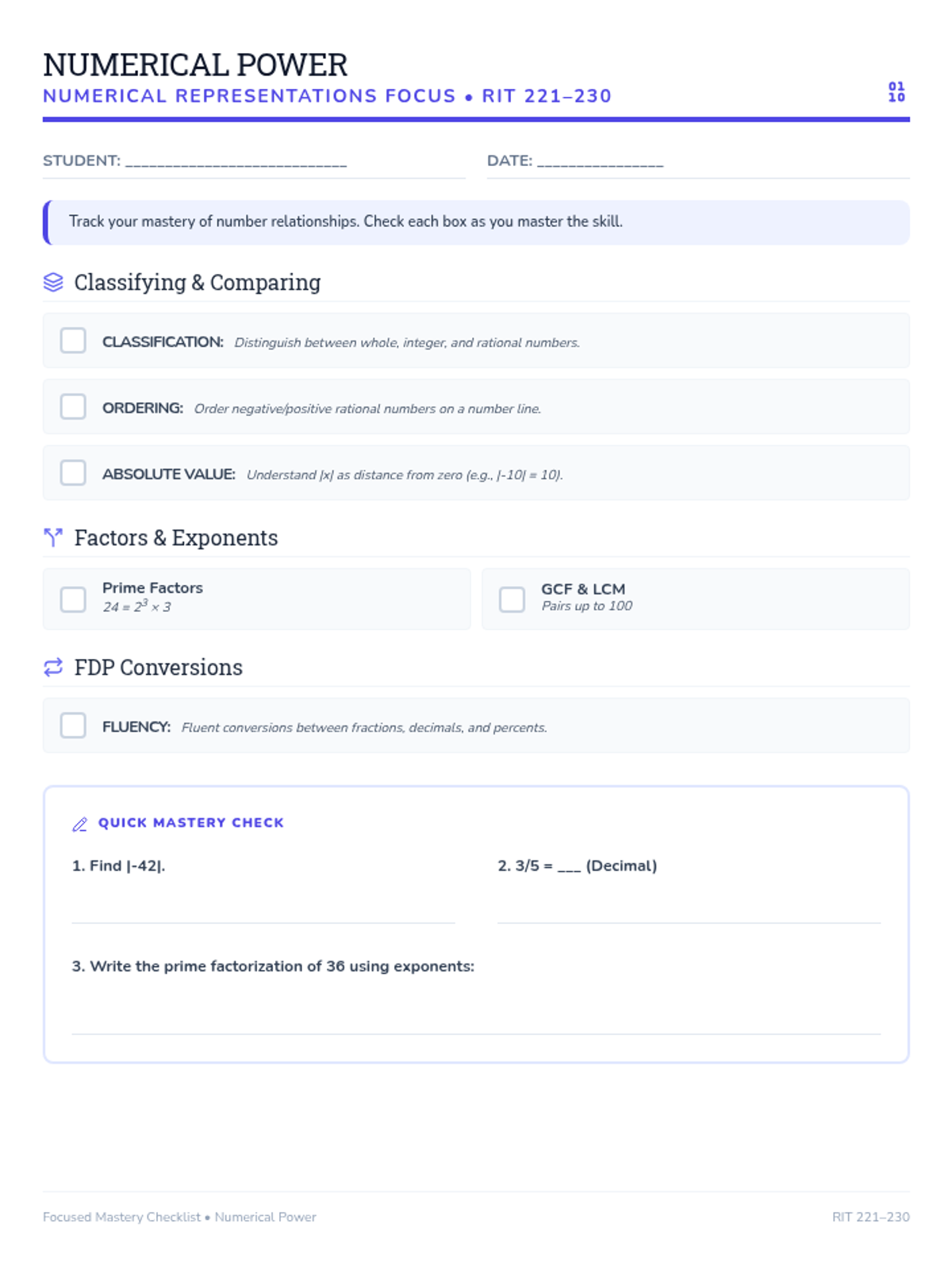
A comprehensive guide for parents and students to navigate the mathematical skills expected in the 221-230 NWEA MAP RIT range, featuring actionable checklists and home-based practice ideas.
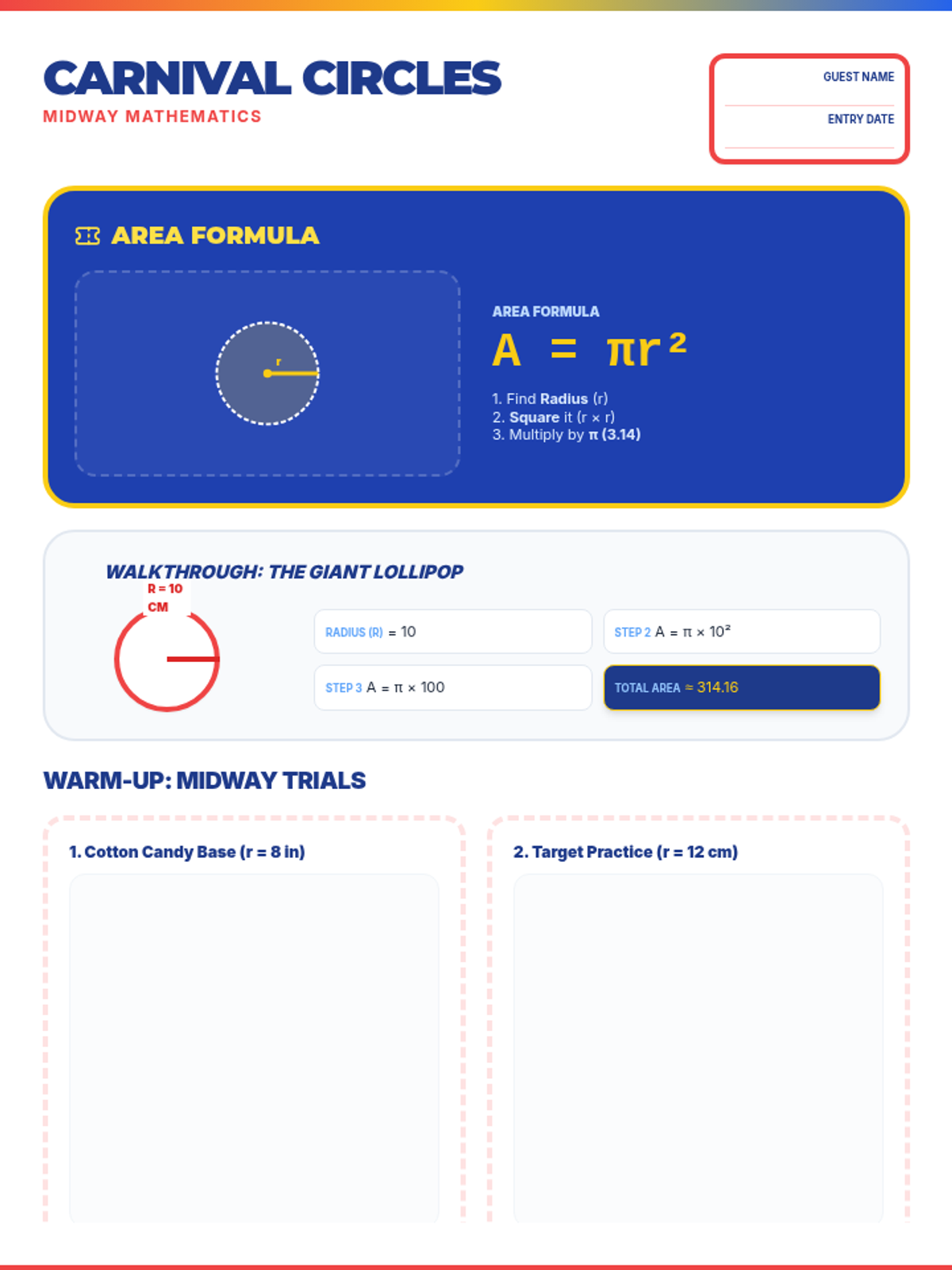
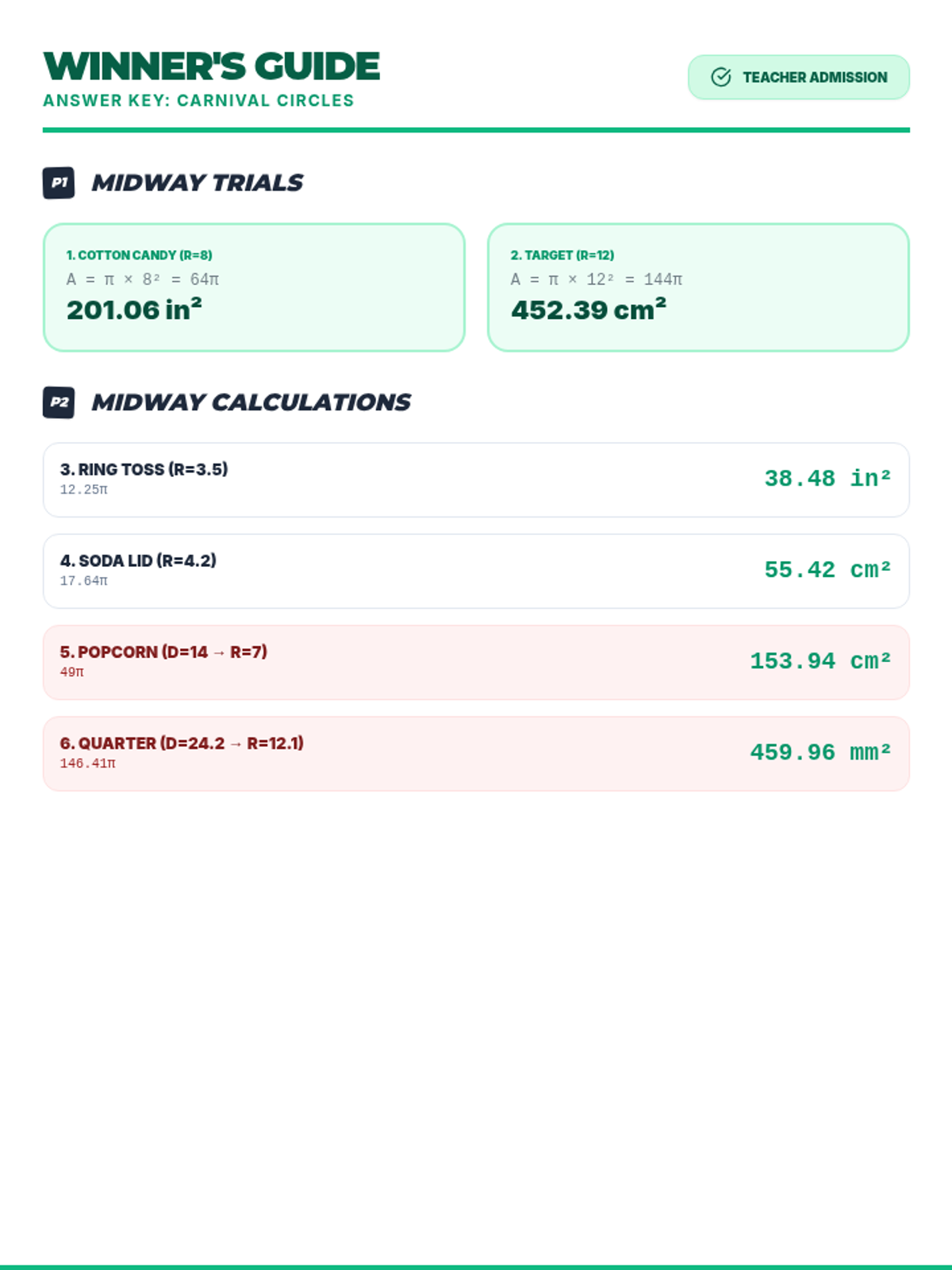
A high-energy, amusement park-themed packet for calculating the area of a circle. Students explore the Midway and Thrill Rides while solving radius and diameter problems using visual aids and calculators.
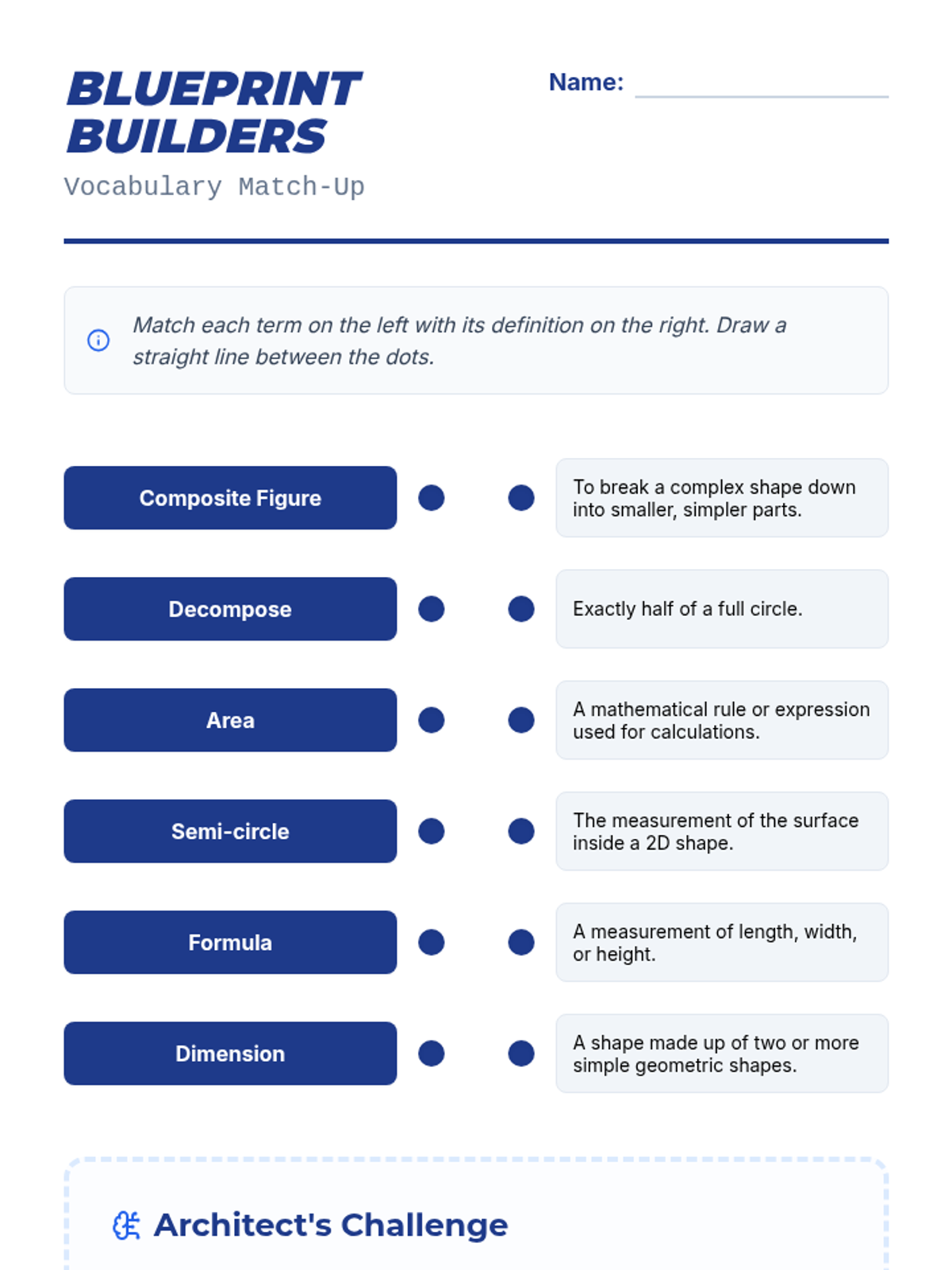
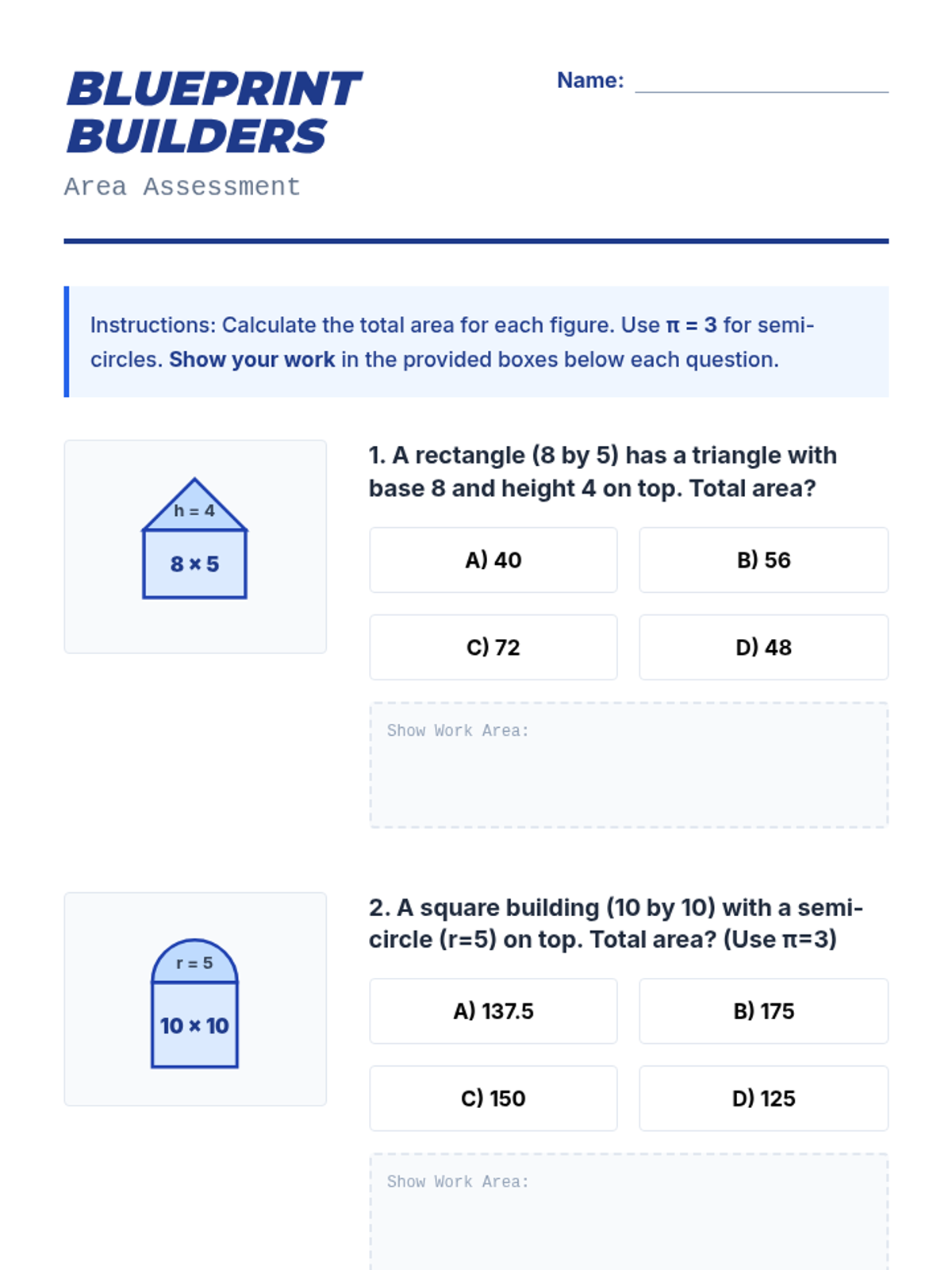
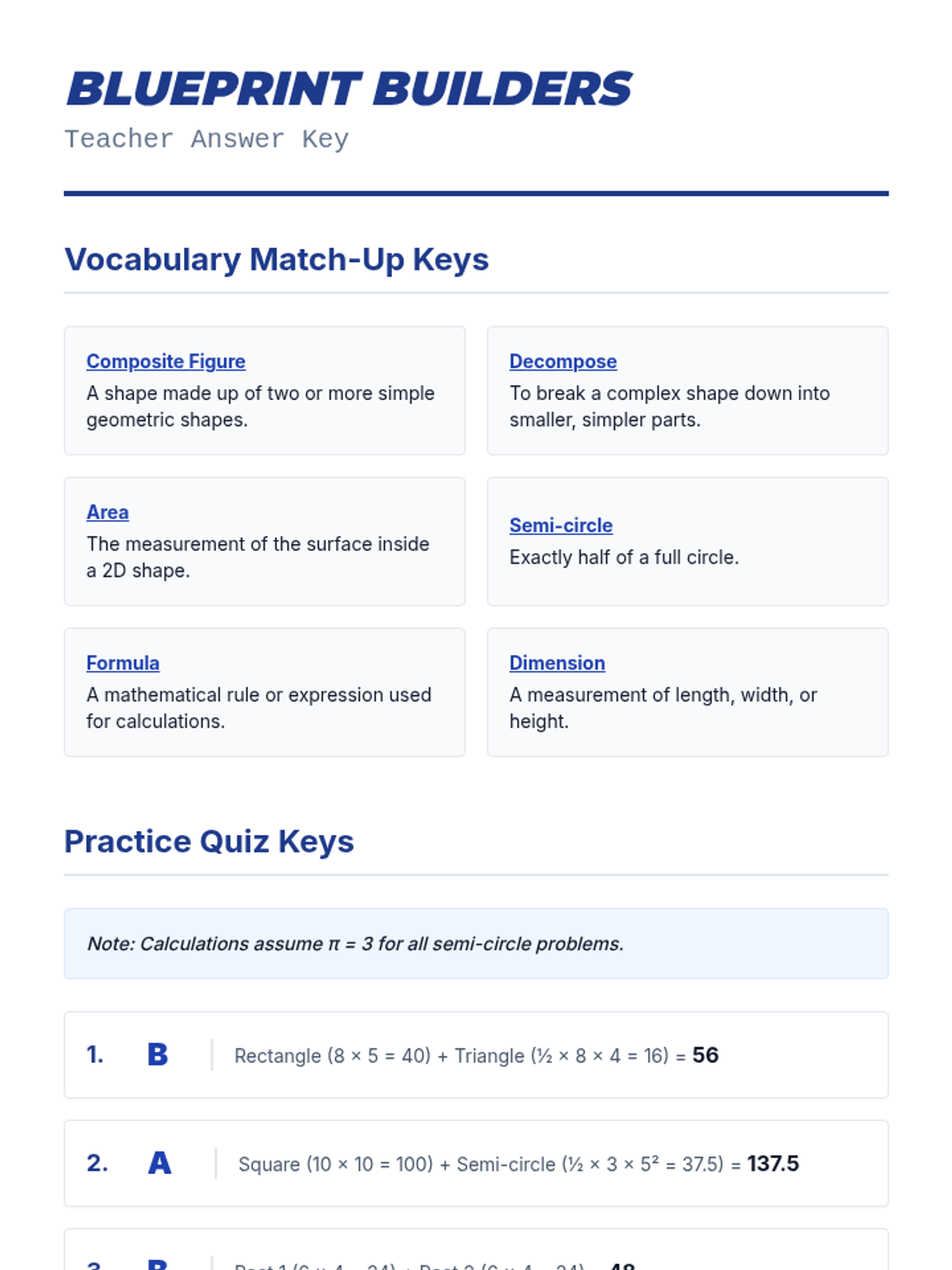
A comprehensive lesson on calculating the area of composite figures by decomposing them into simpler shapes like rectangles, triangles, and semi-circles using integer-based measurements.
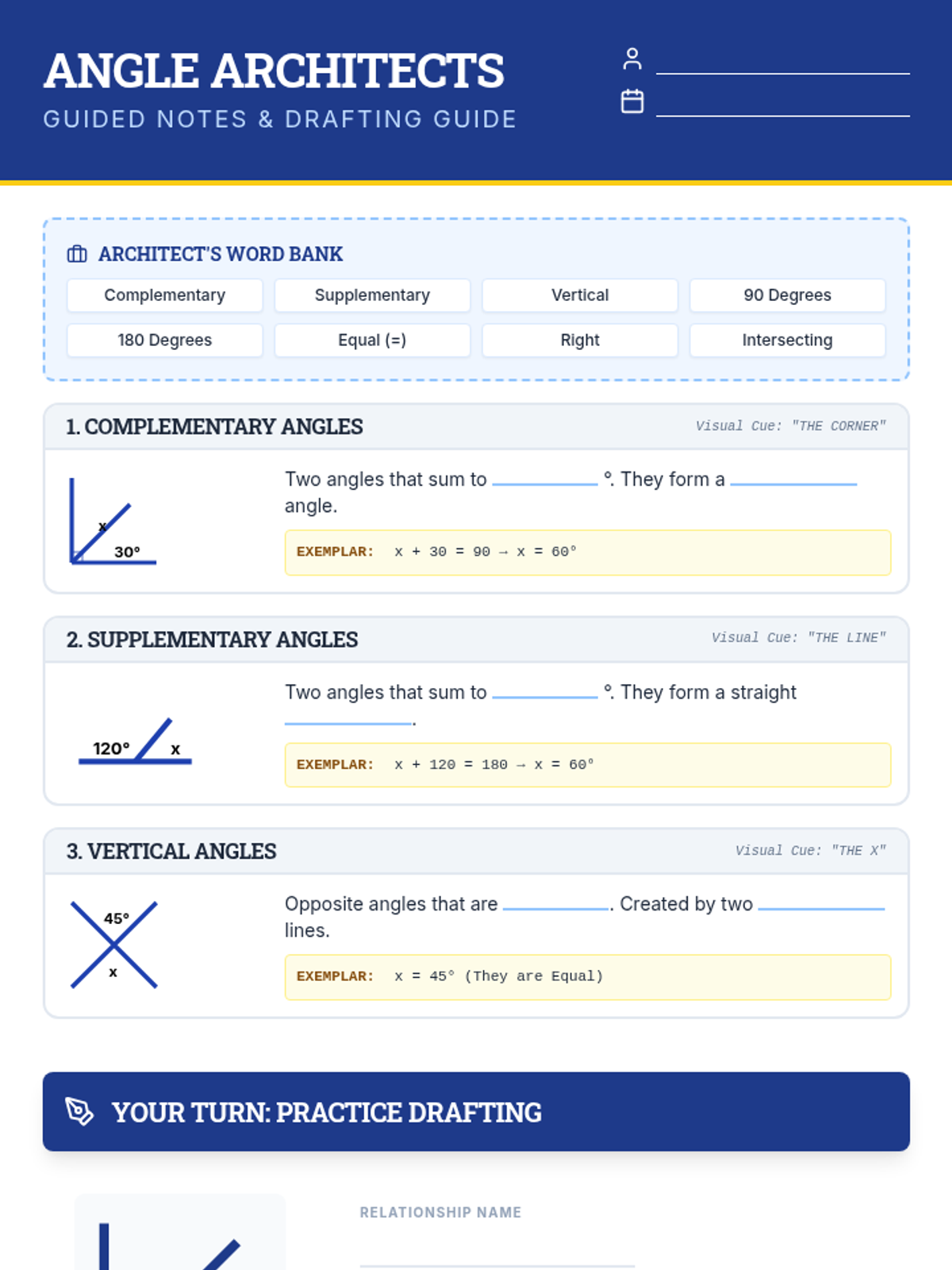
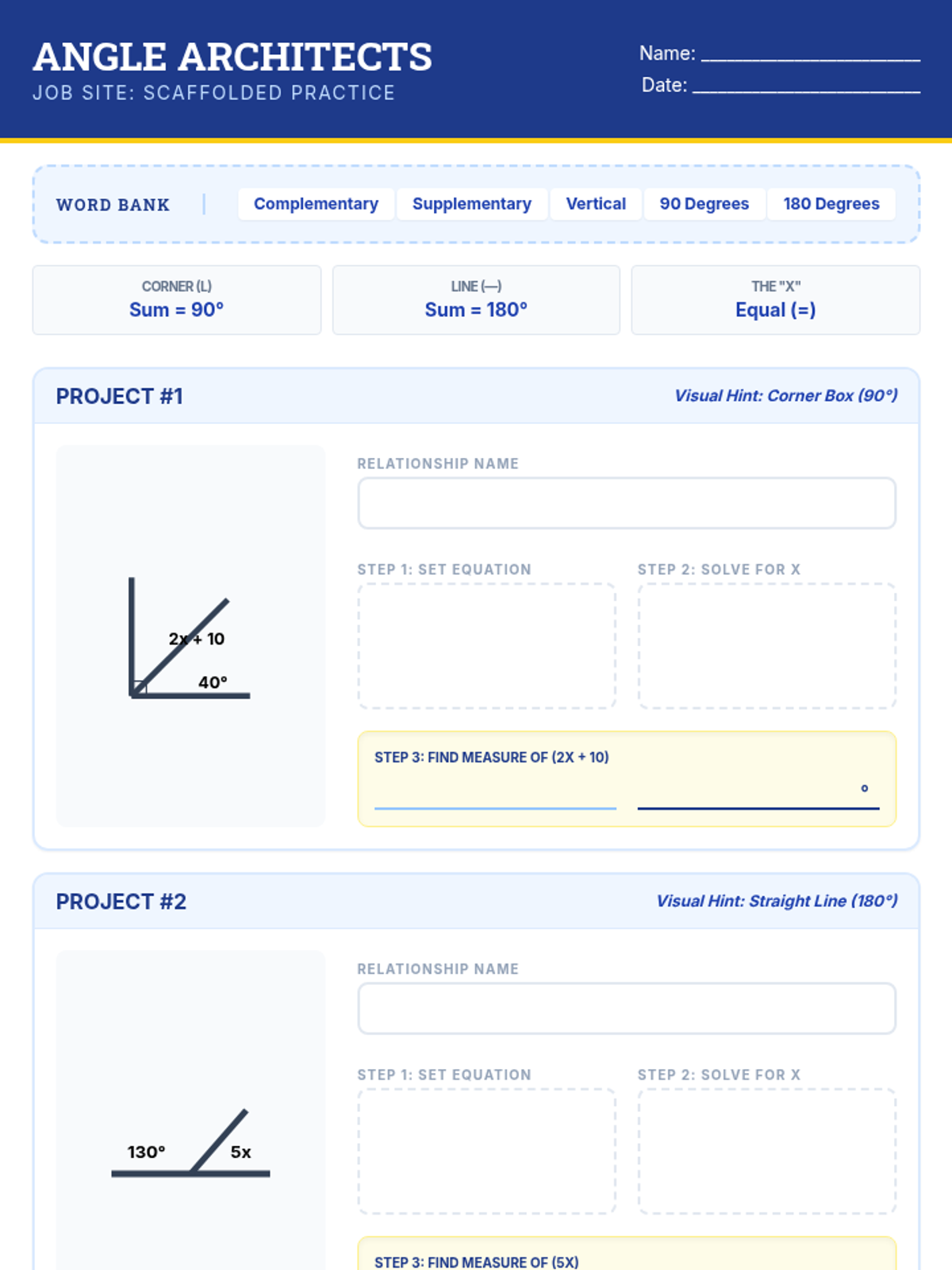
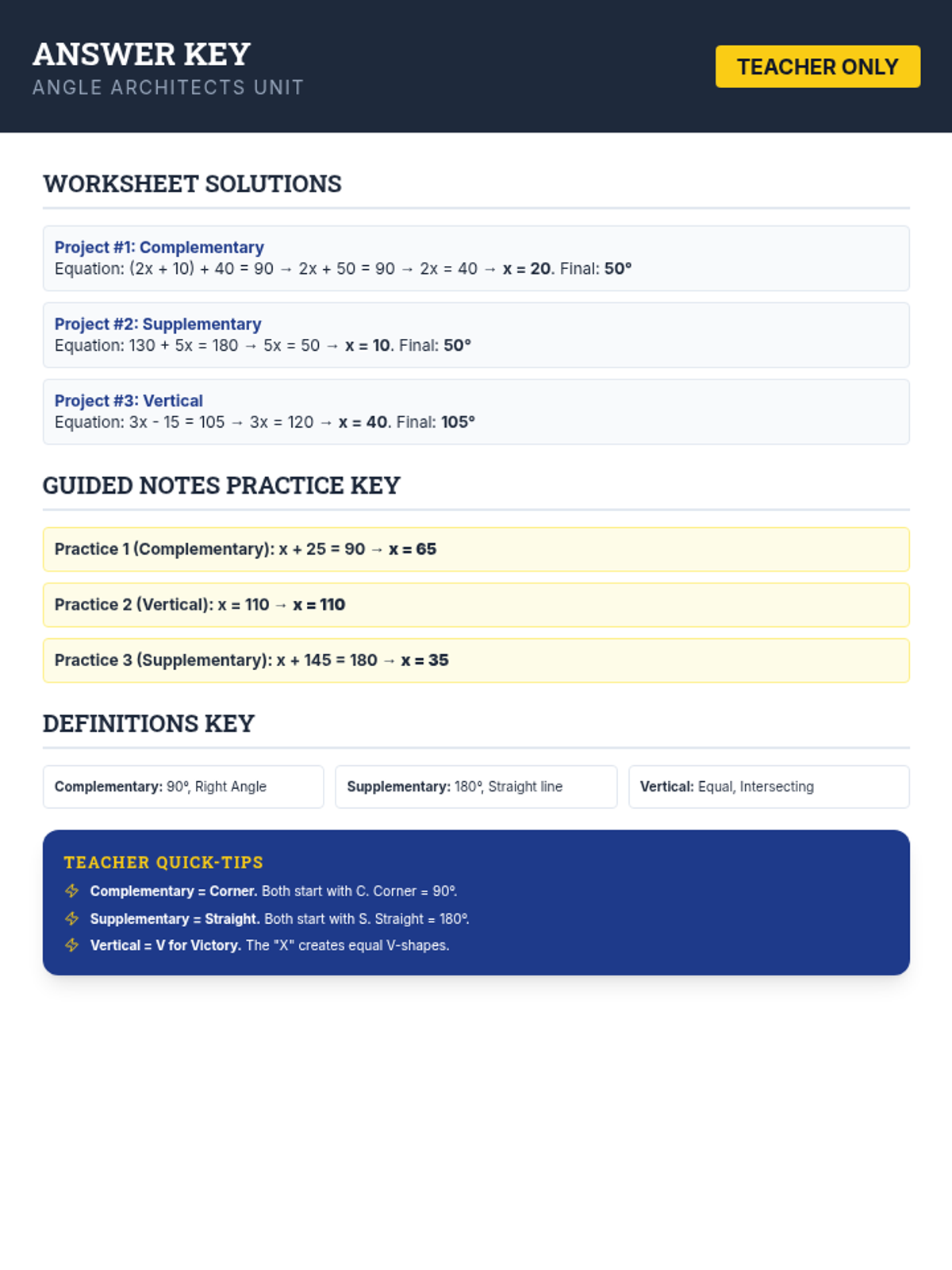
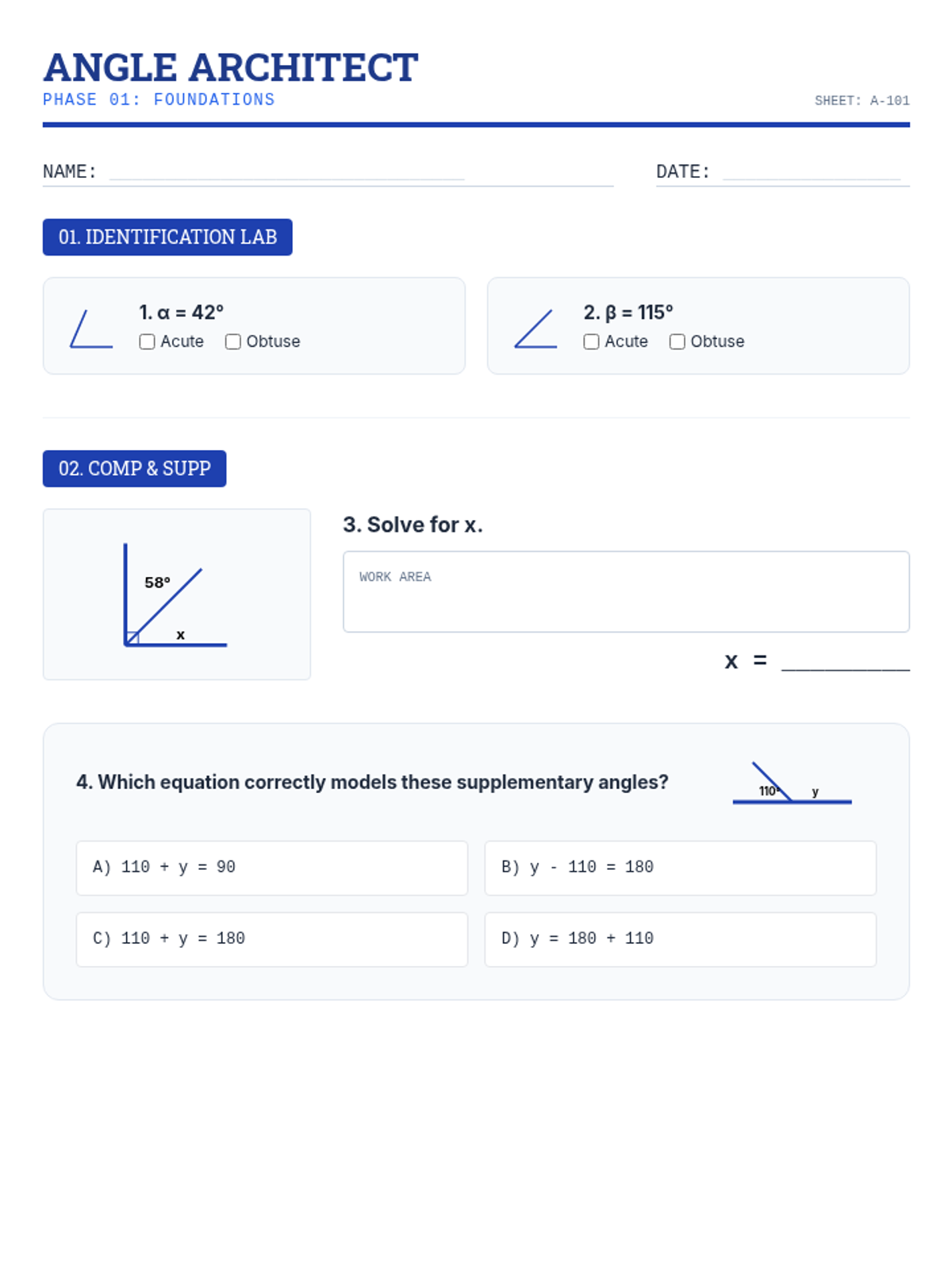
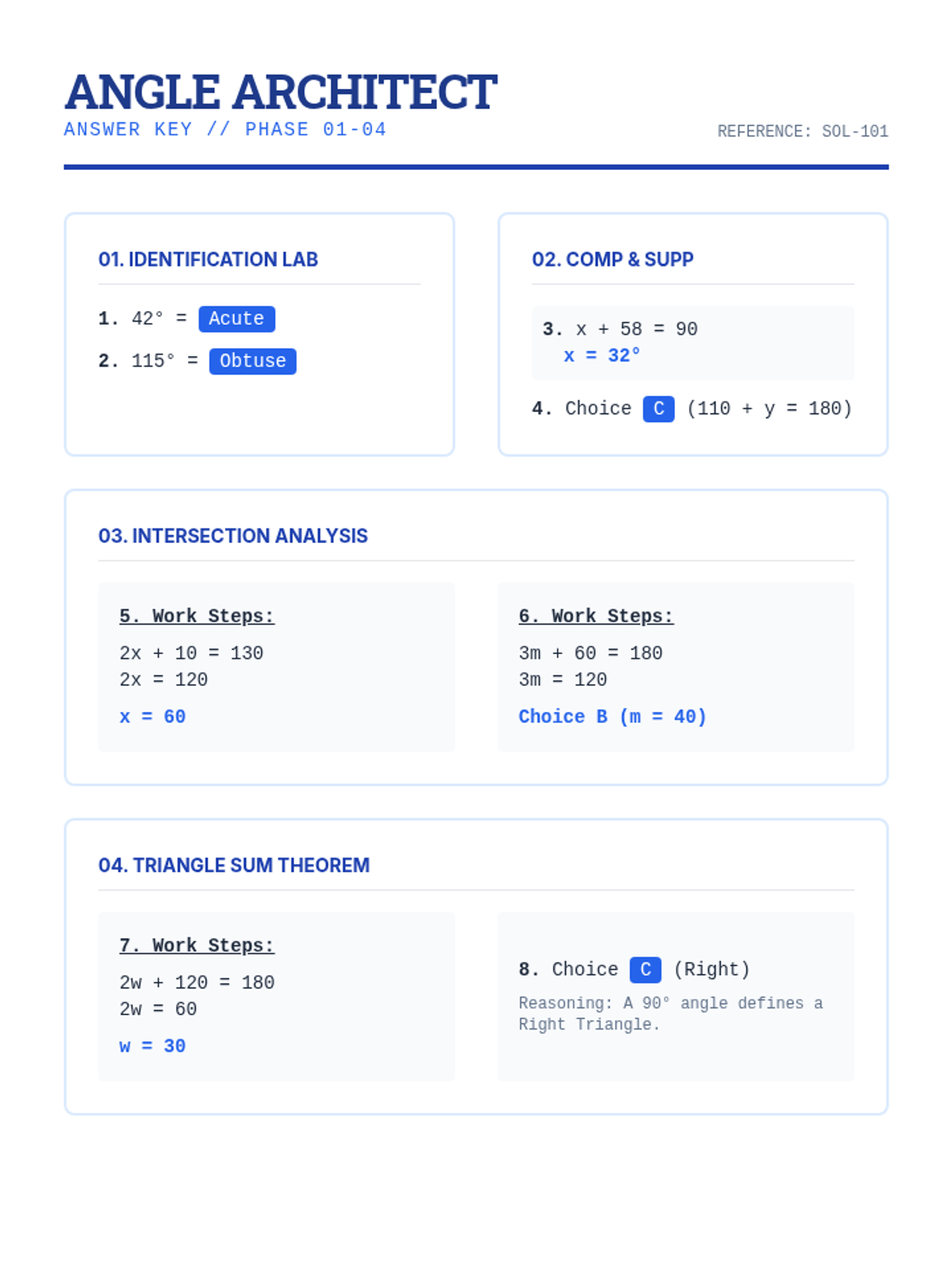
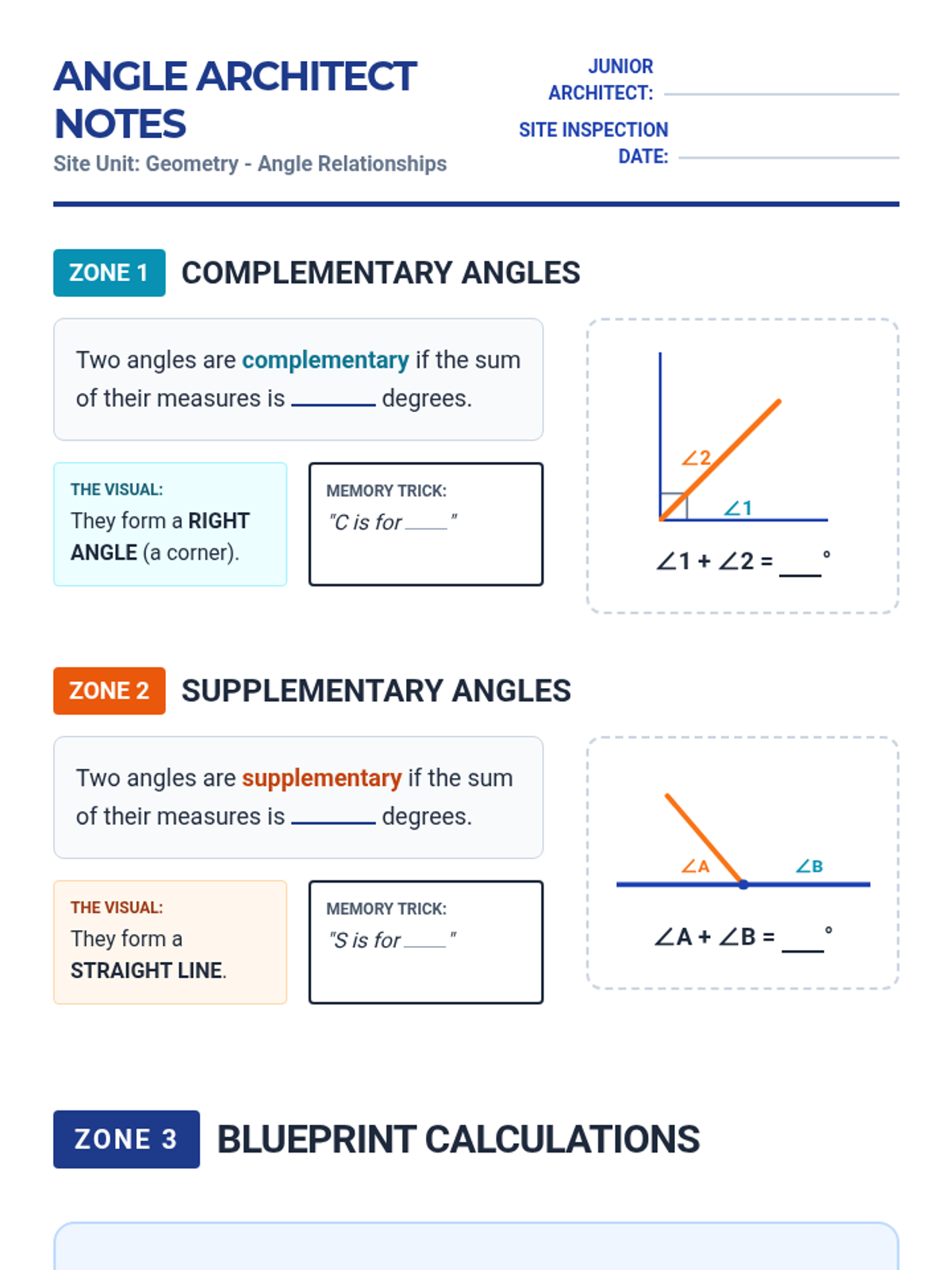
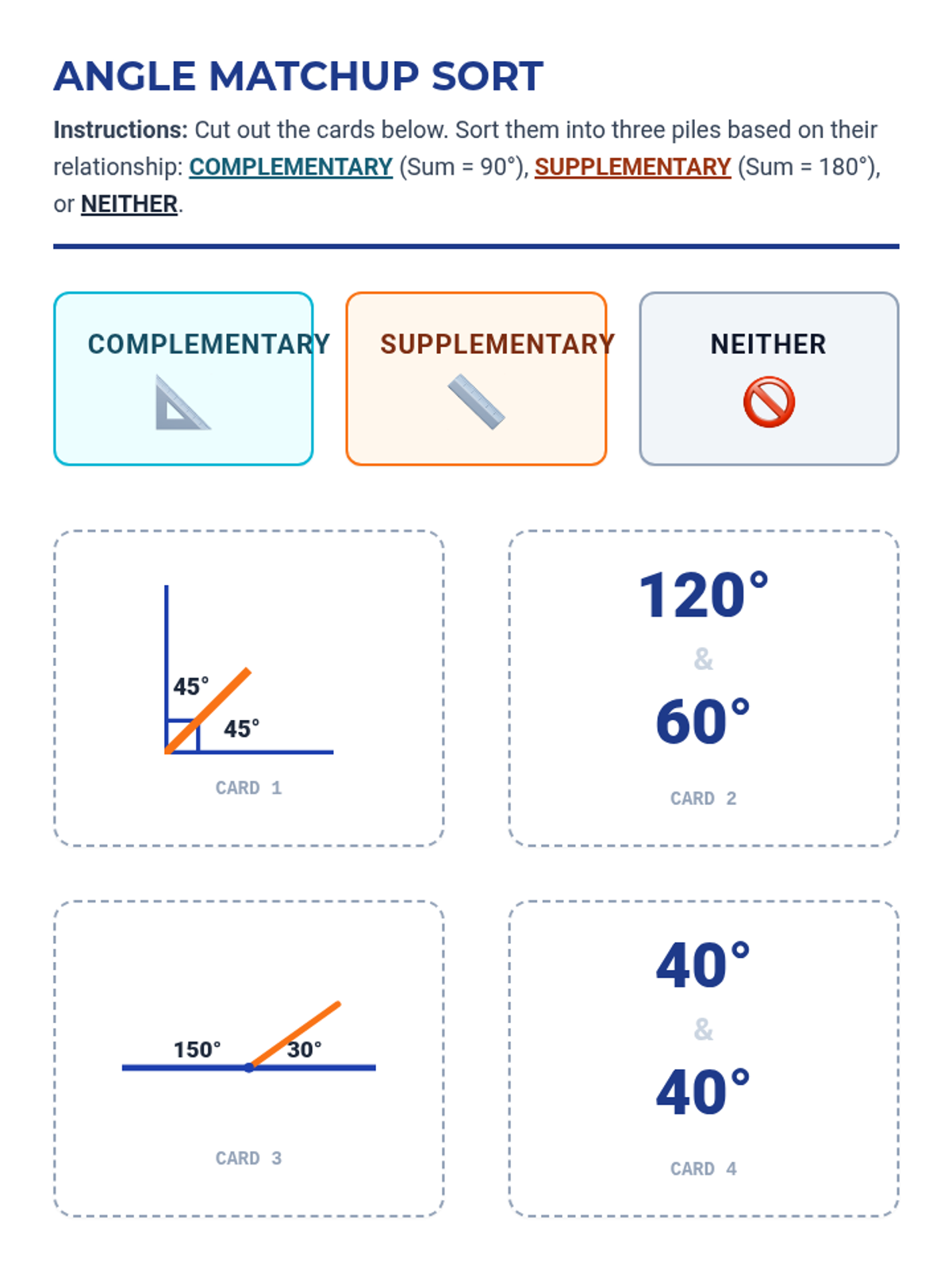
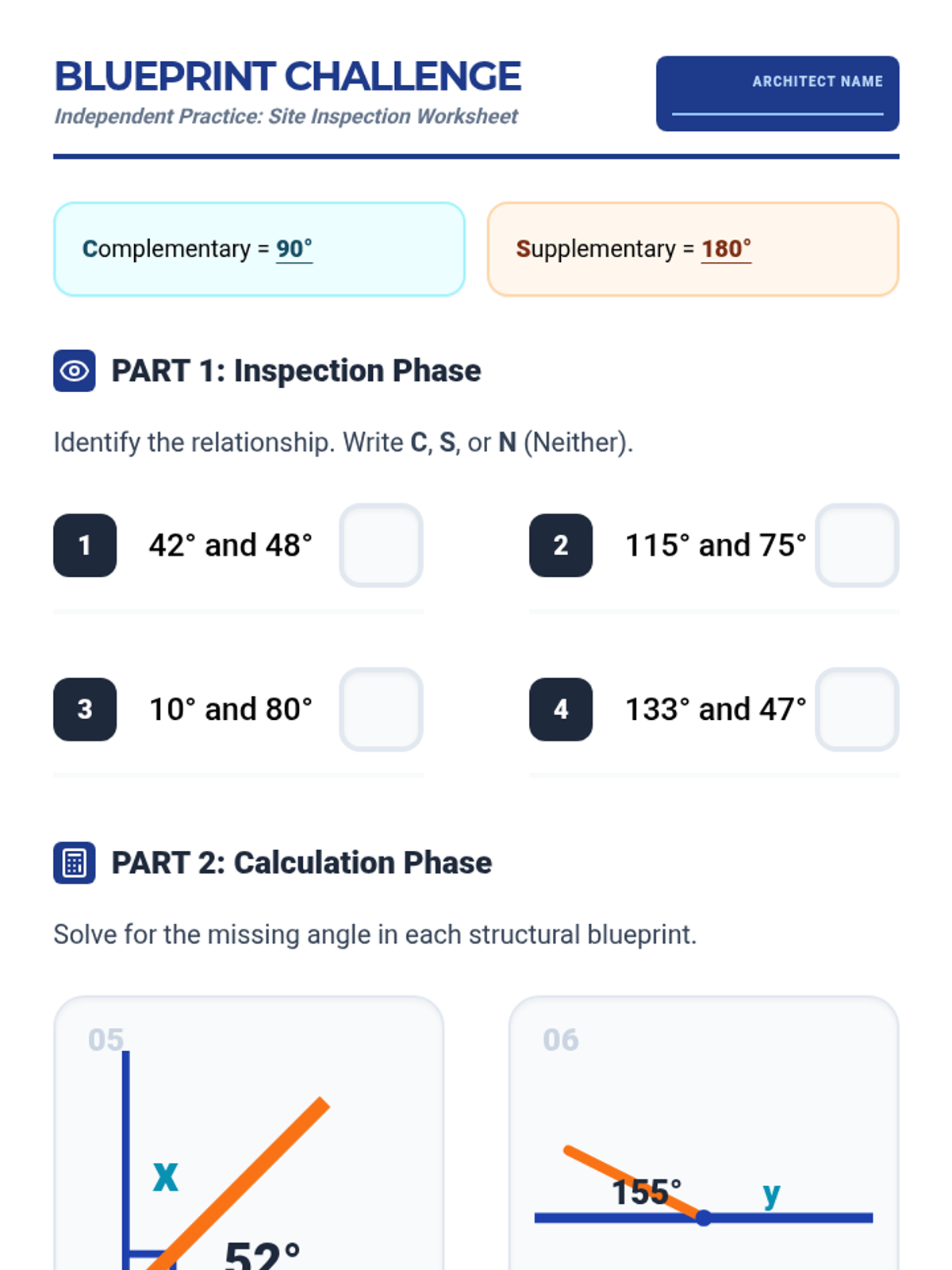
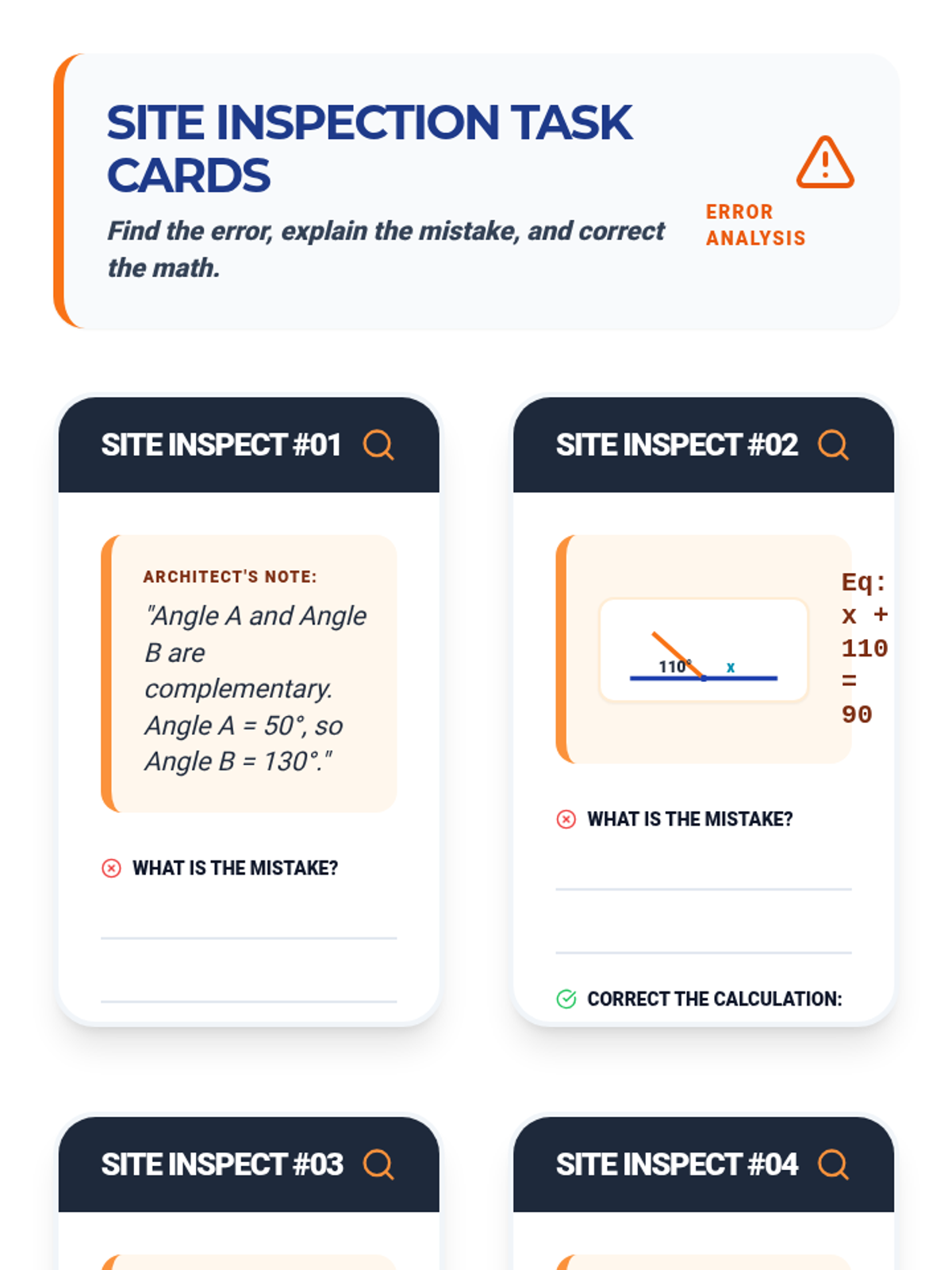
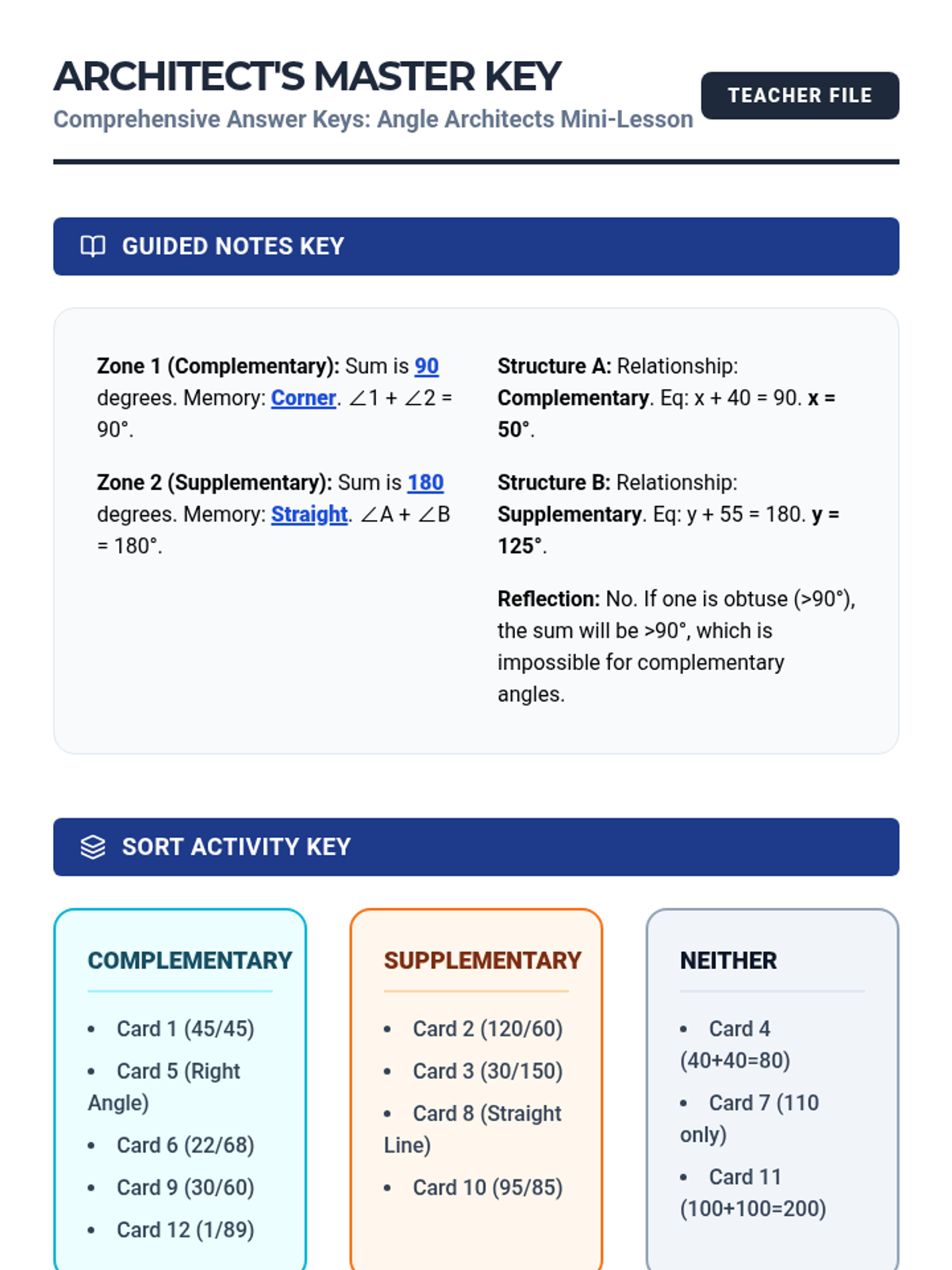
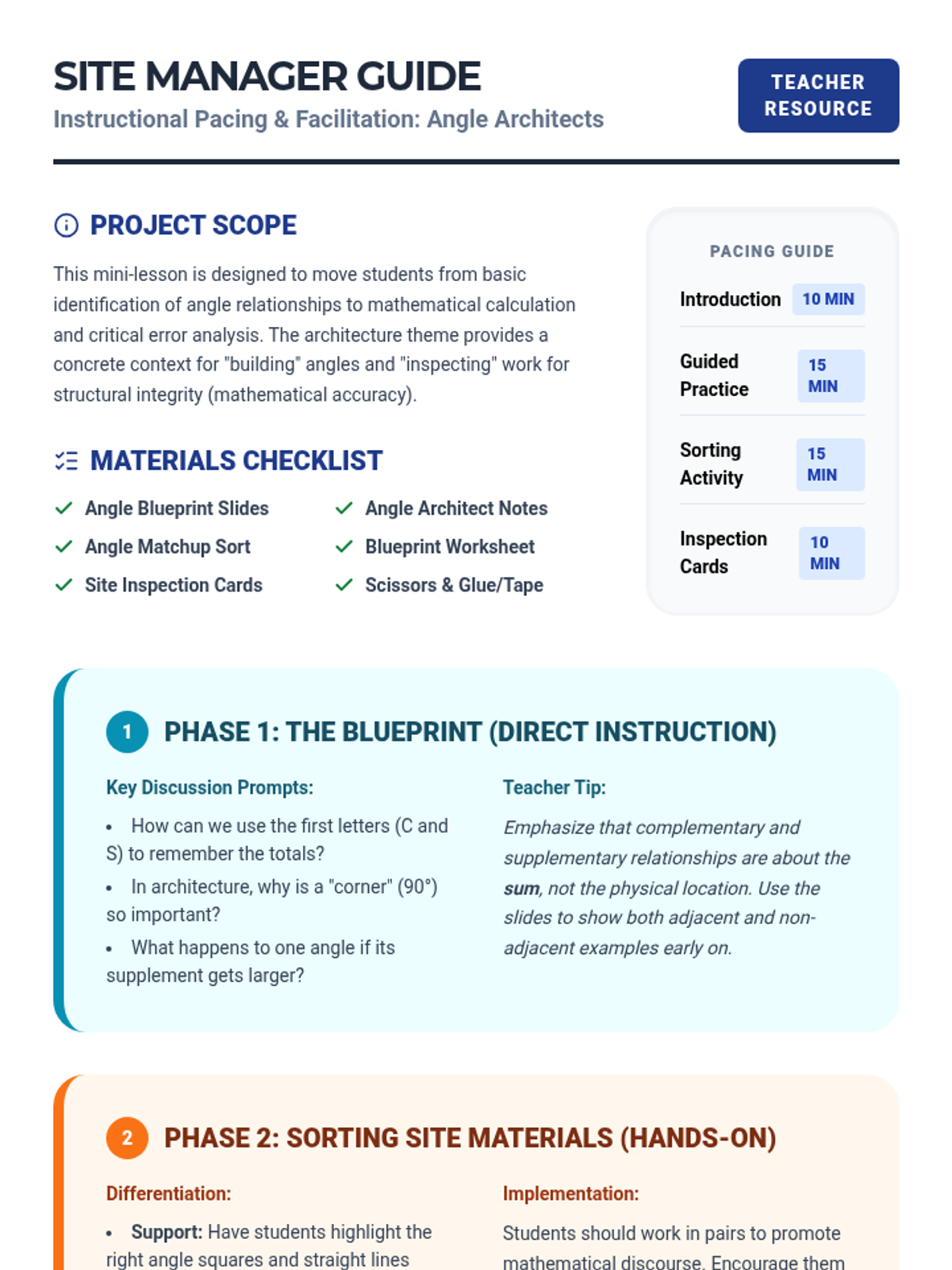
A highly scaffolded lesson on angle relationships (vertical, complementary, and supplementary) featuring an architectural blueprint theme. Includes guided notes with exemplars and step-by-step practice materials.
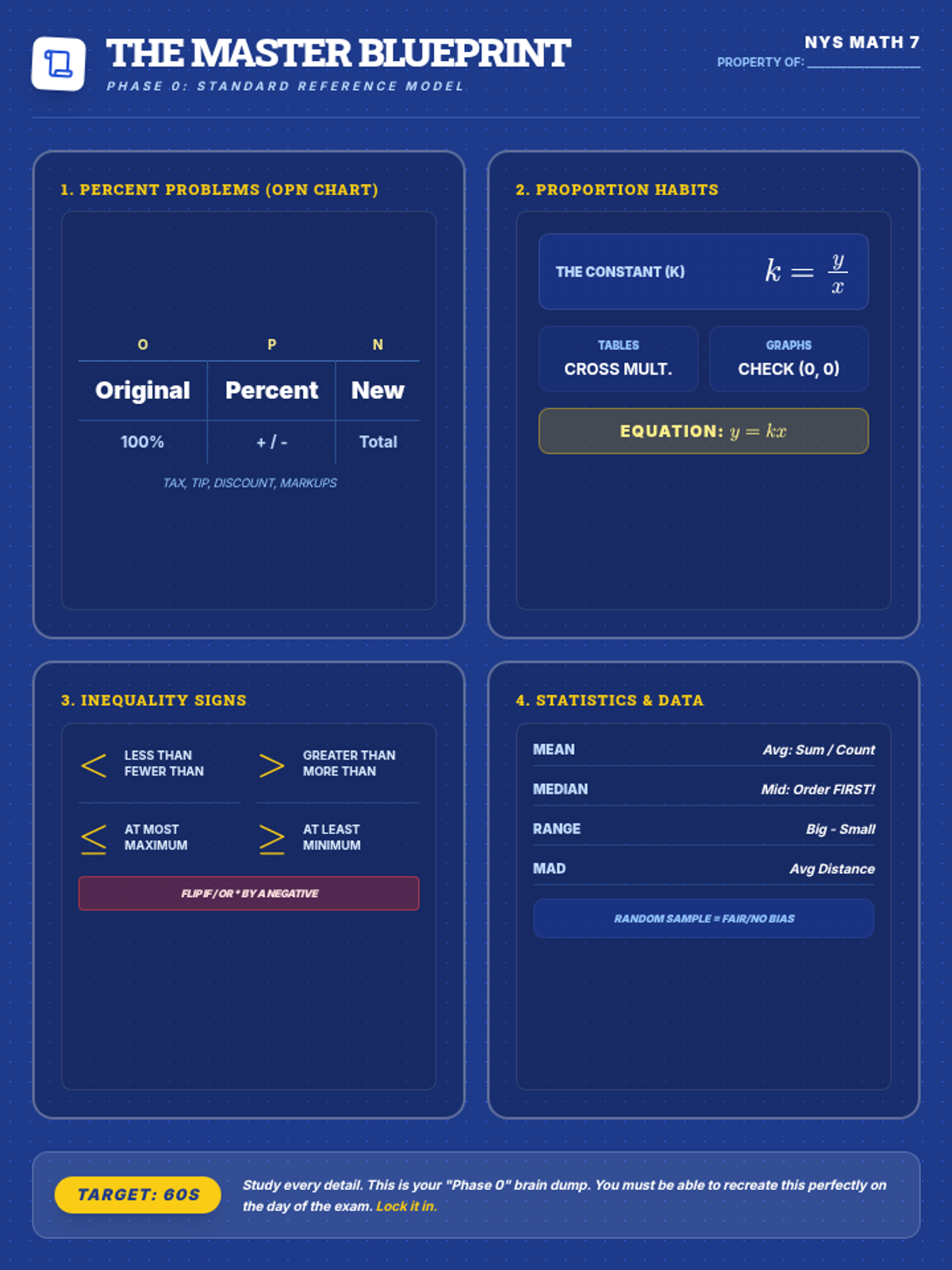
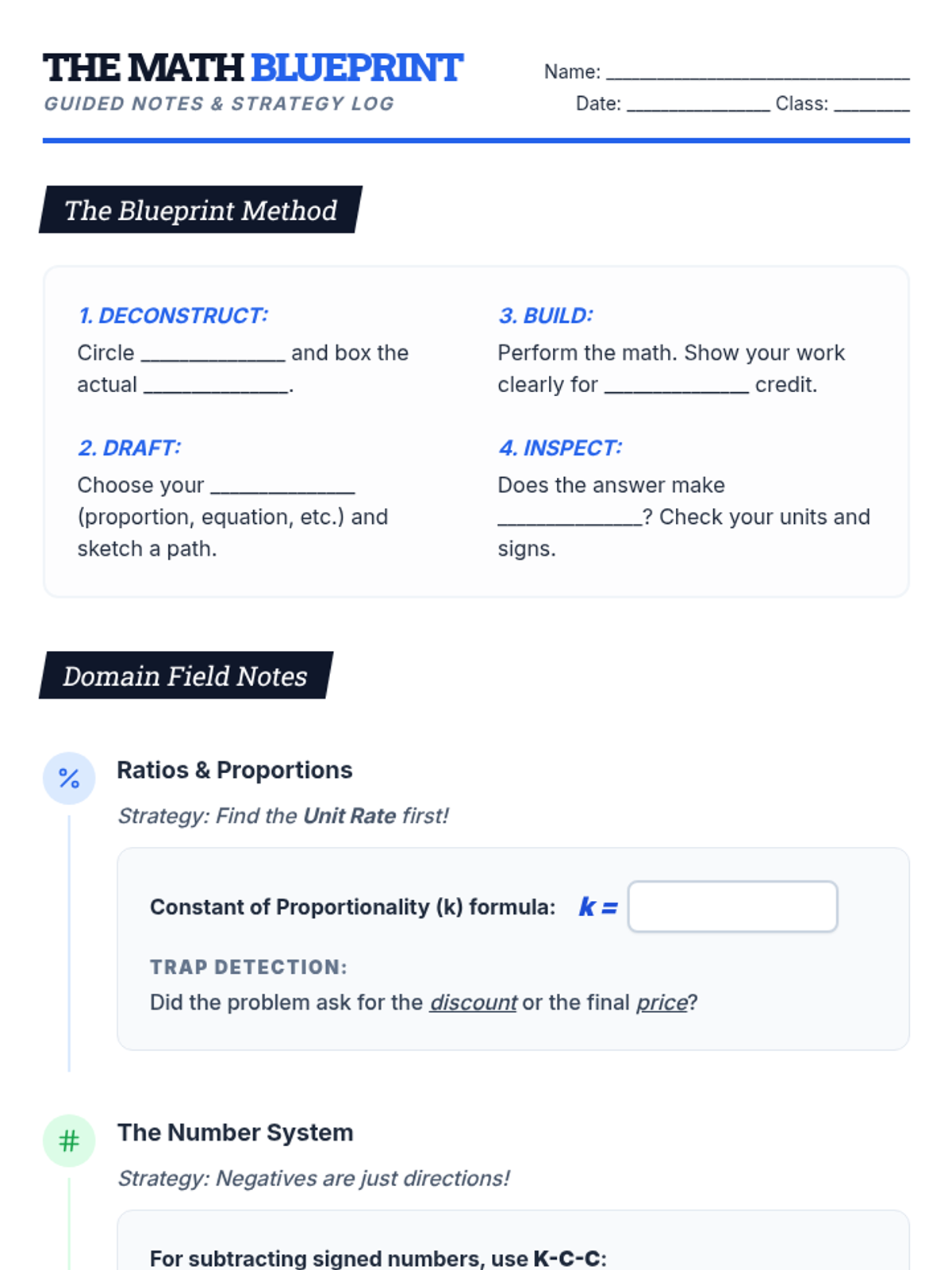
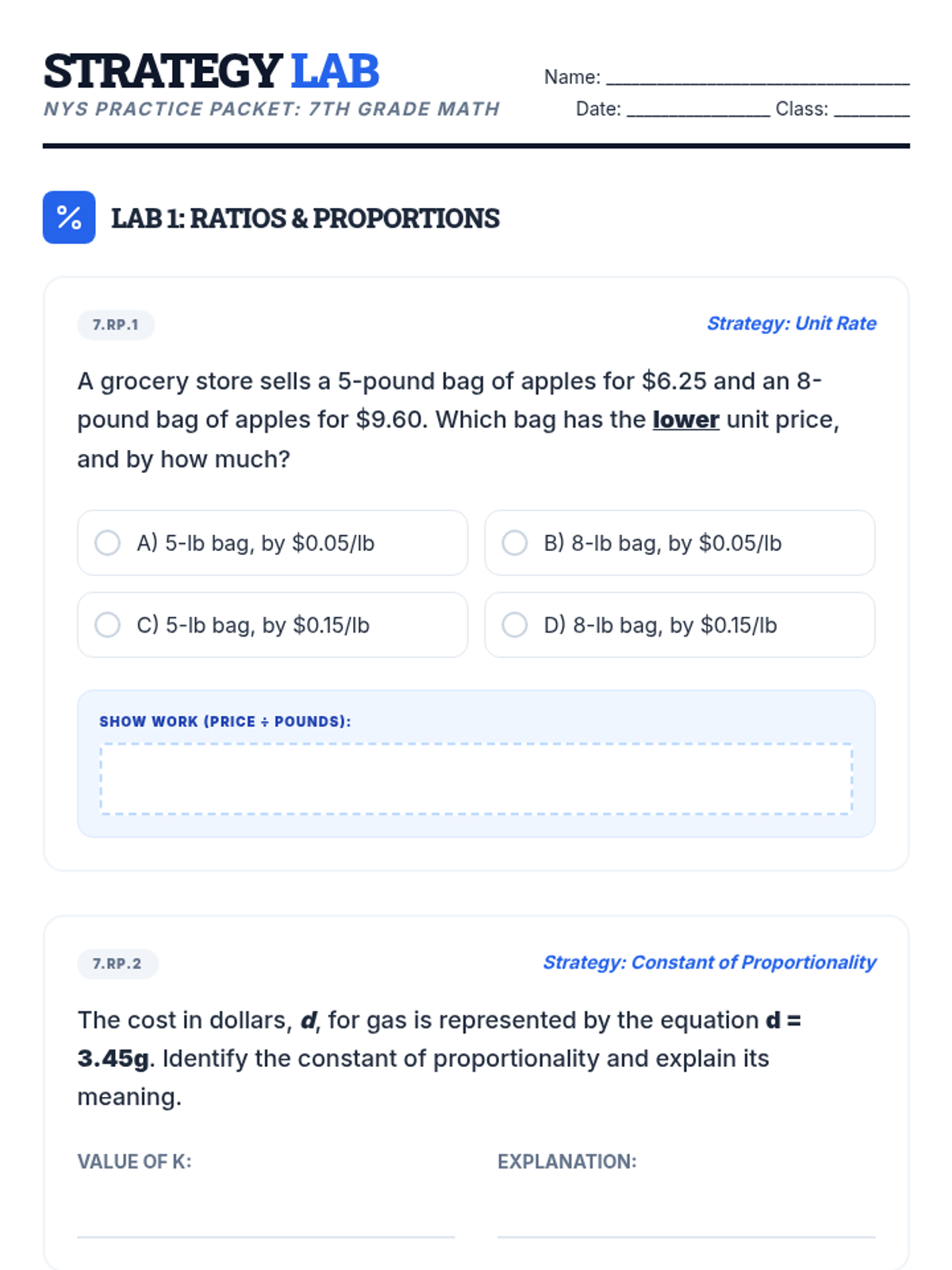
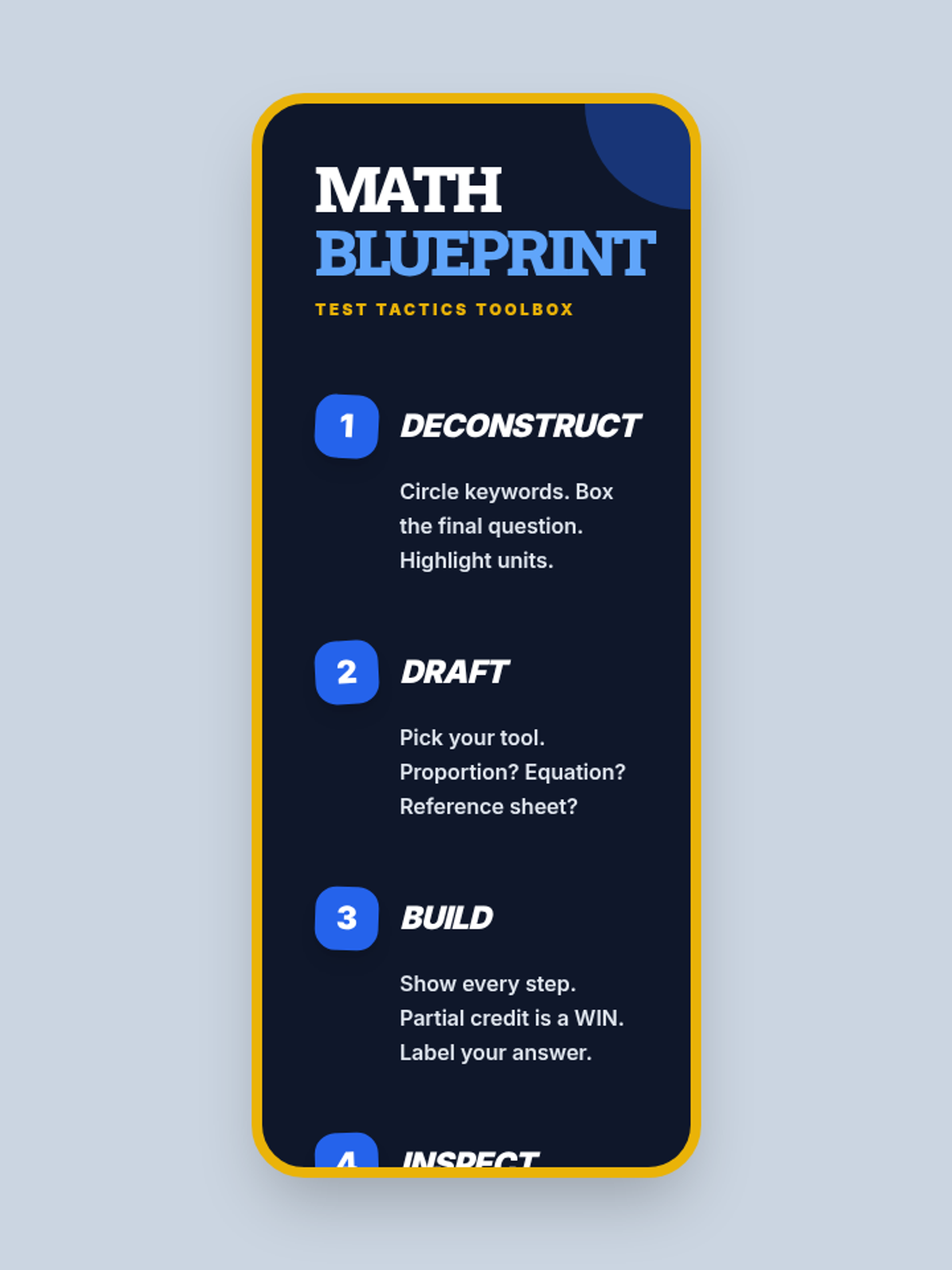
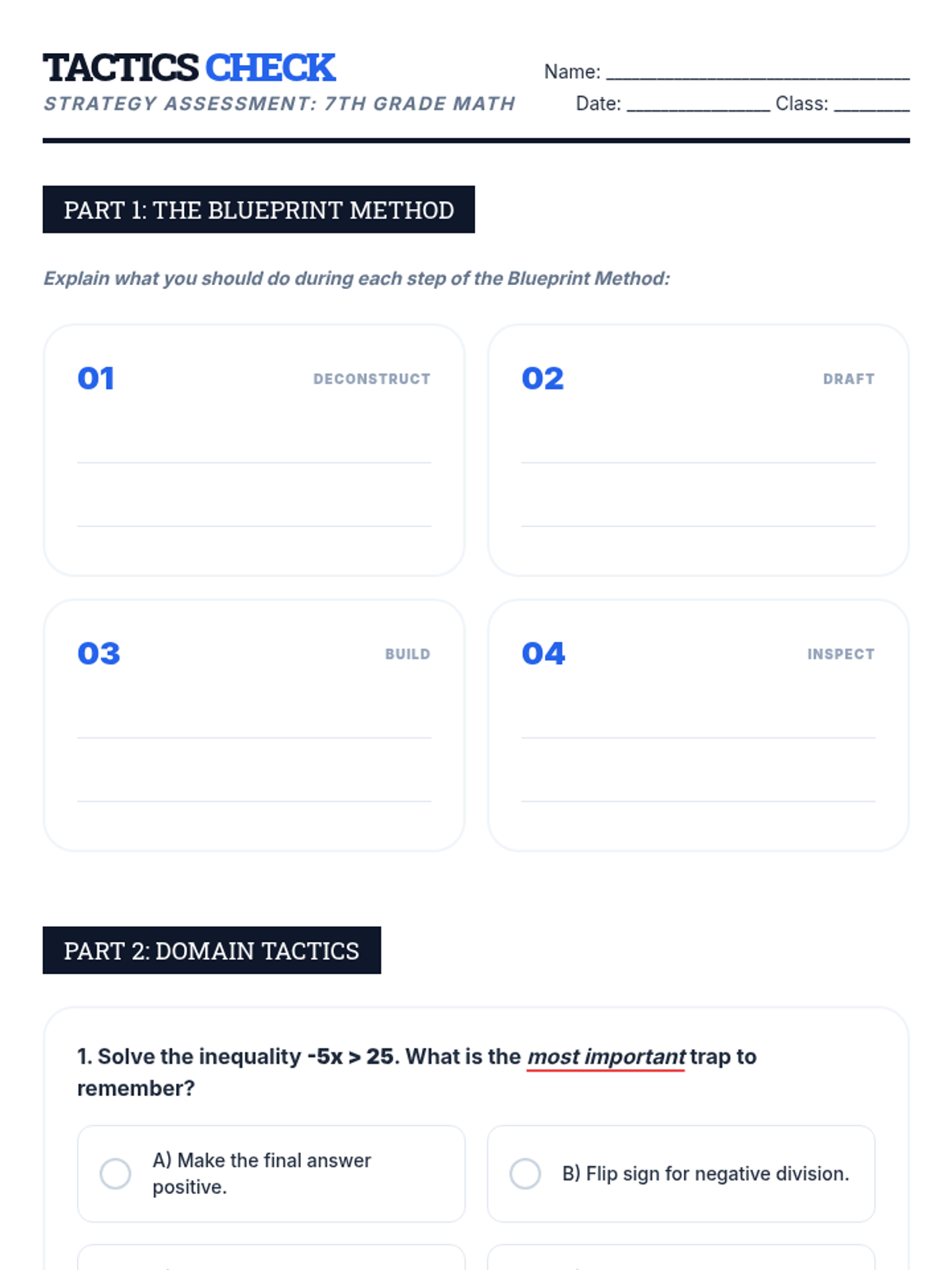
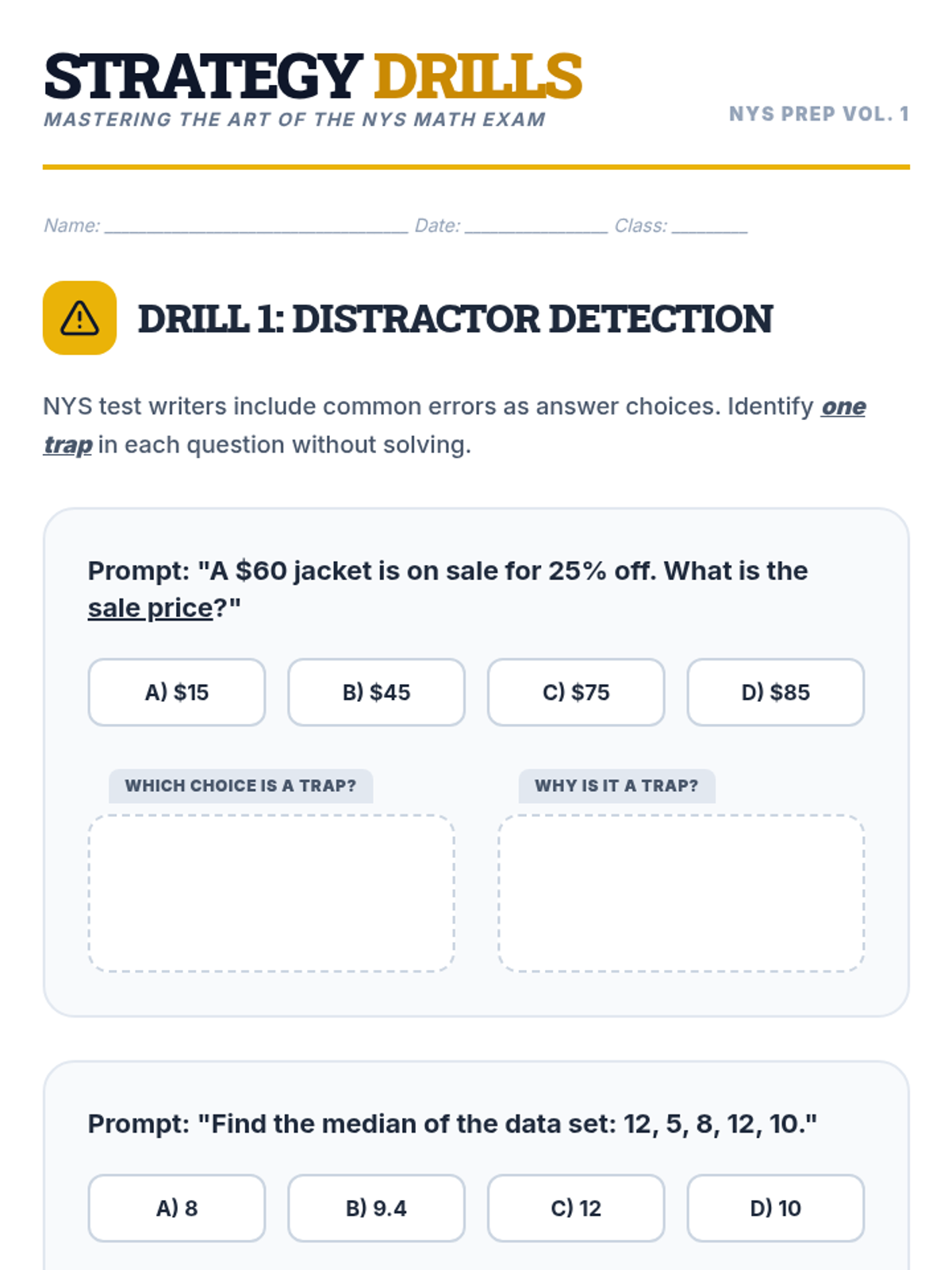
A comprehensive 7th-grade math lesson focused on test-taking strategies for the NYS exam, covering Ratios, Number Systems, Expressions, Geometry, and Statistics. Students learn the 'Blueprint Method' for deconstructing complex problems and apply specific tactics to standard-aligned questions.
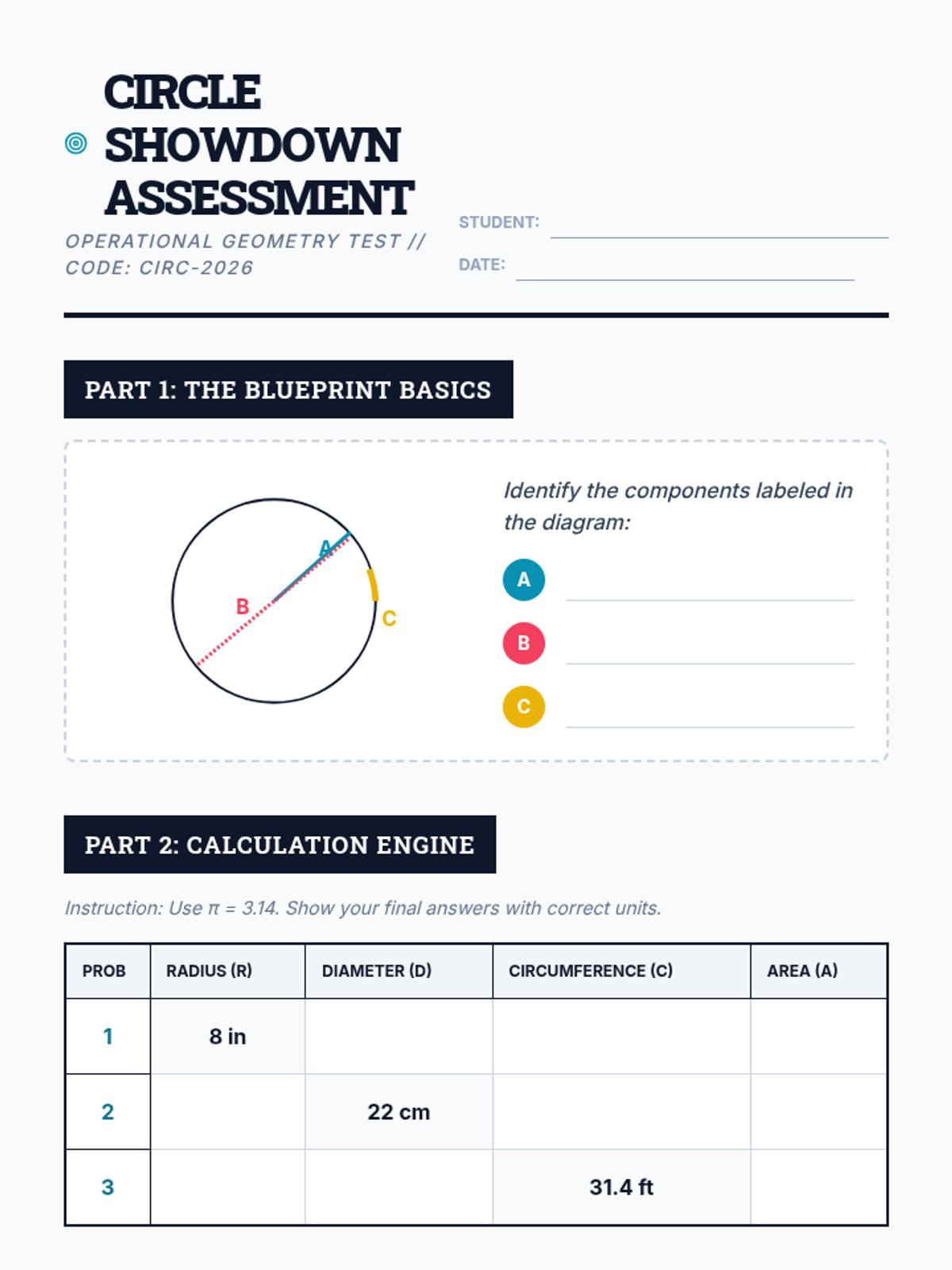
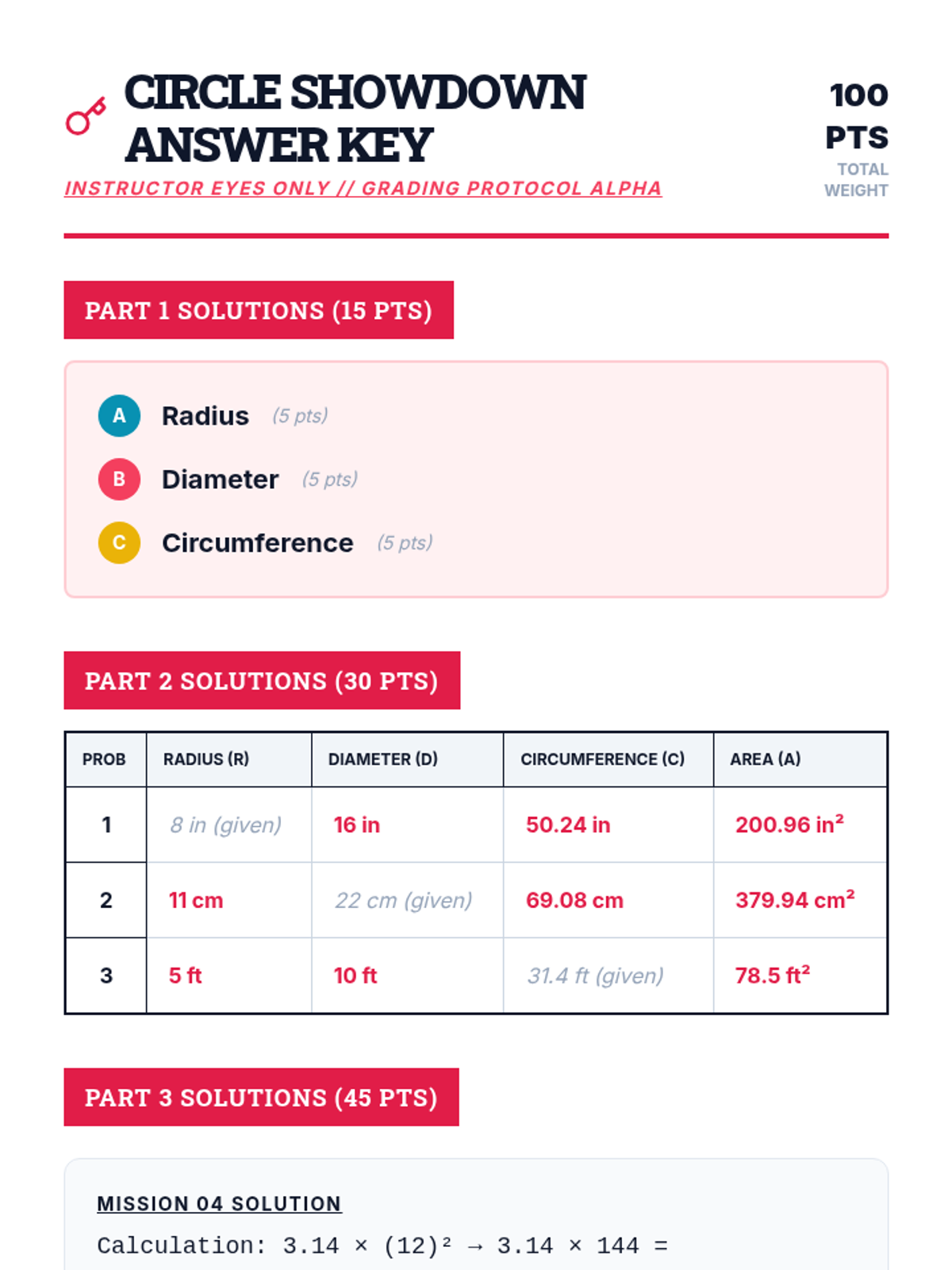
A comprehensive lesson on circles covering radius, diameter, circumference, and area through a visual slide deck and a summative assessment.
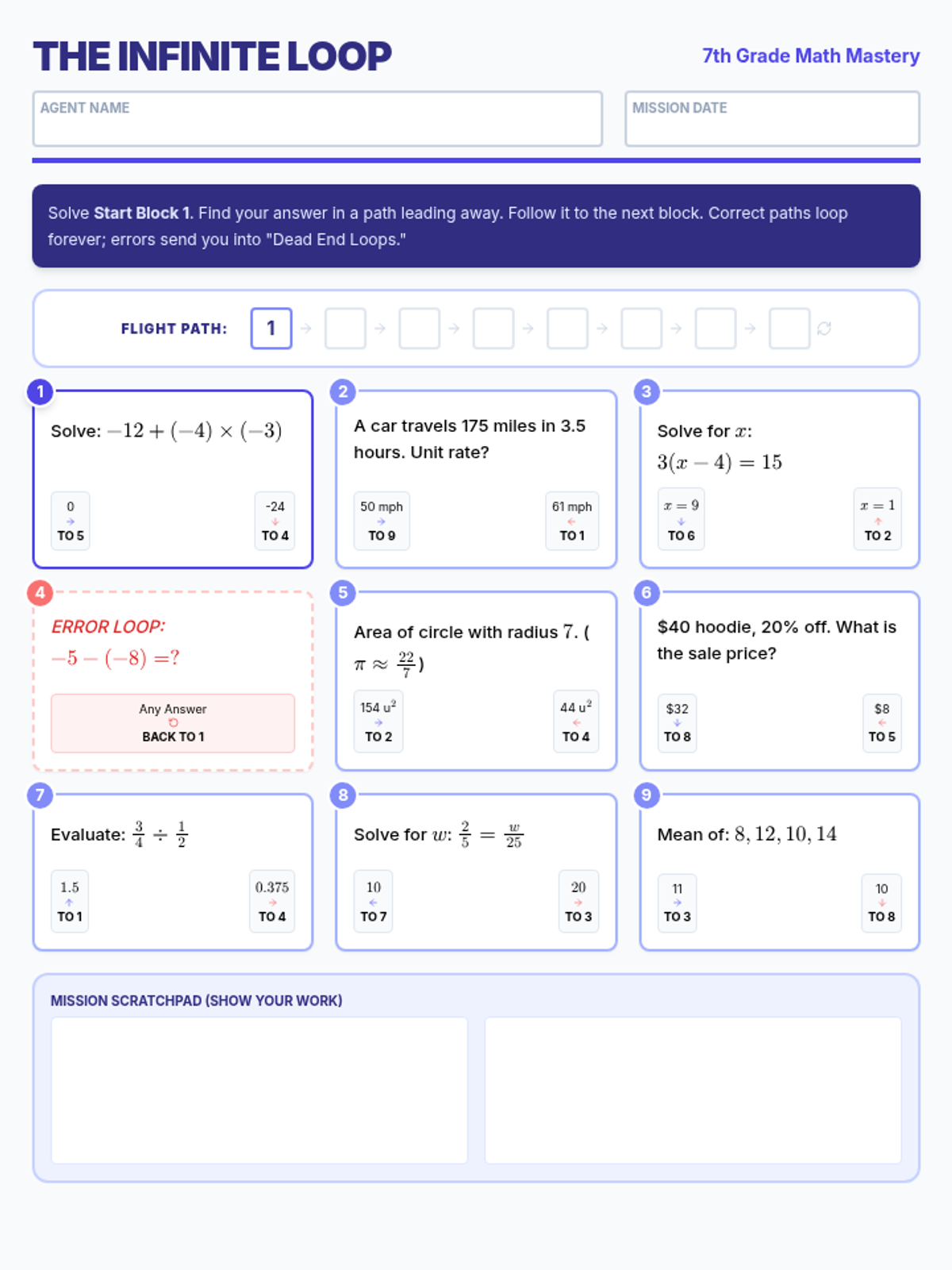
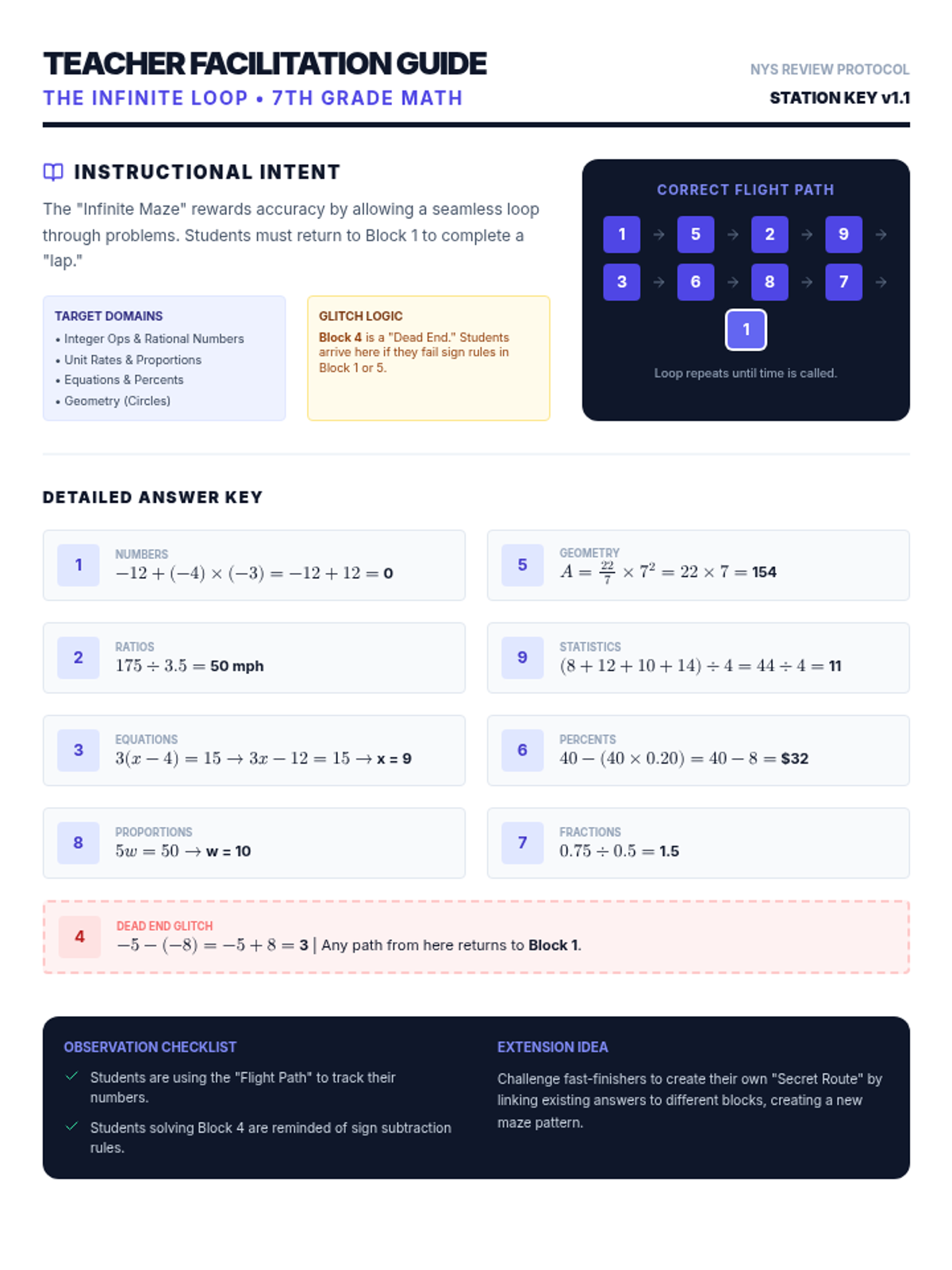
A comprehensive 7th Grade Math review session using an "Infinity Maze" format. Students navigate a series of interconnected problems across Ratios, Number Systems, Equations, and Geometry, designed to loop back and provide continuous practice.
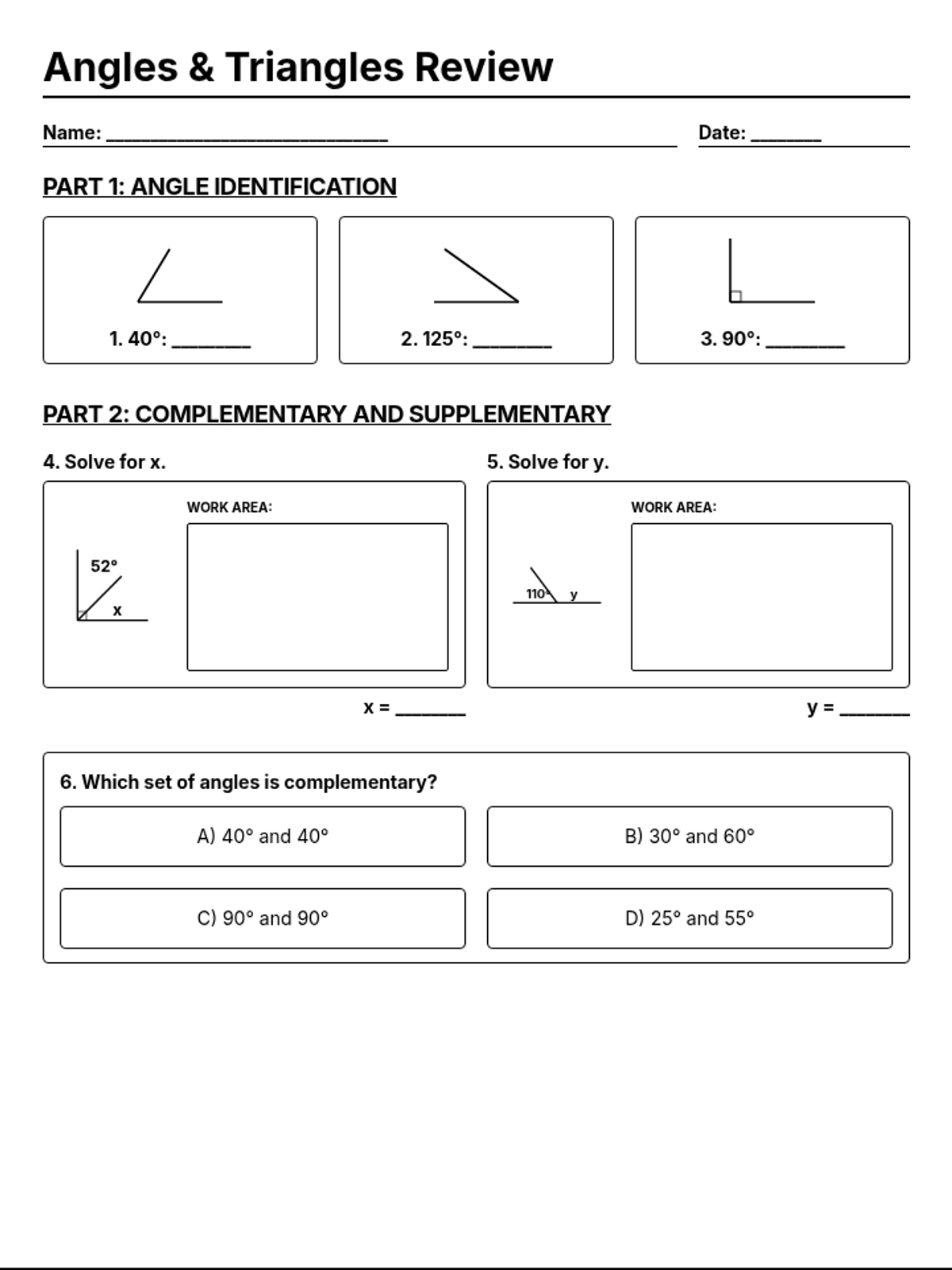
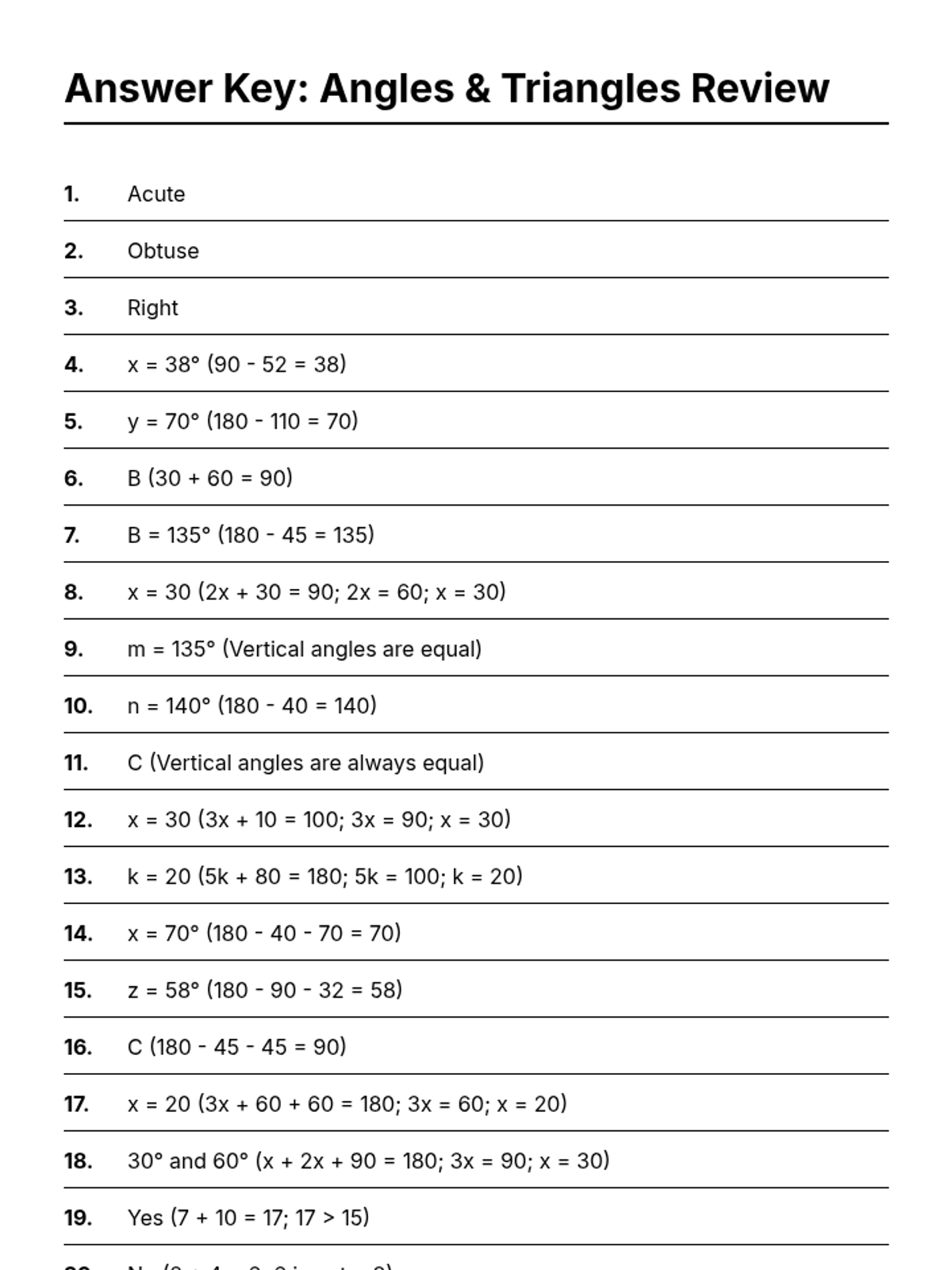
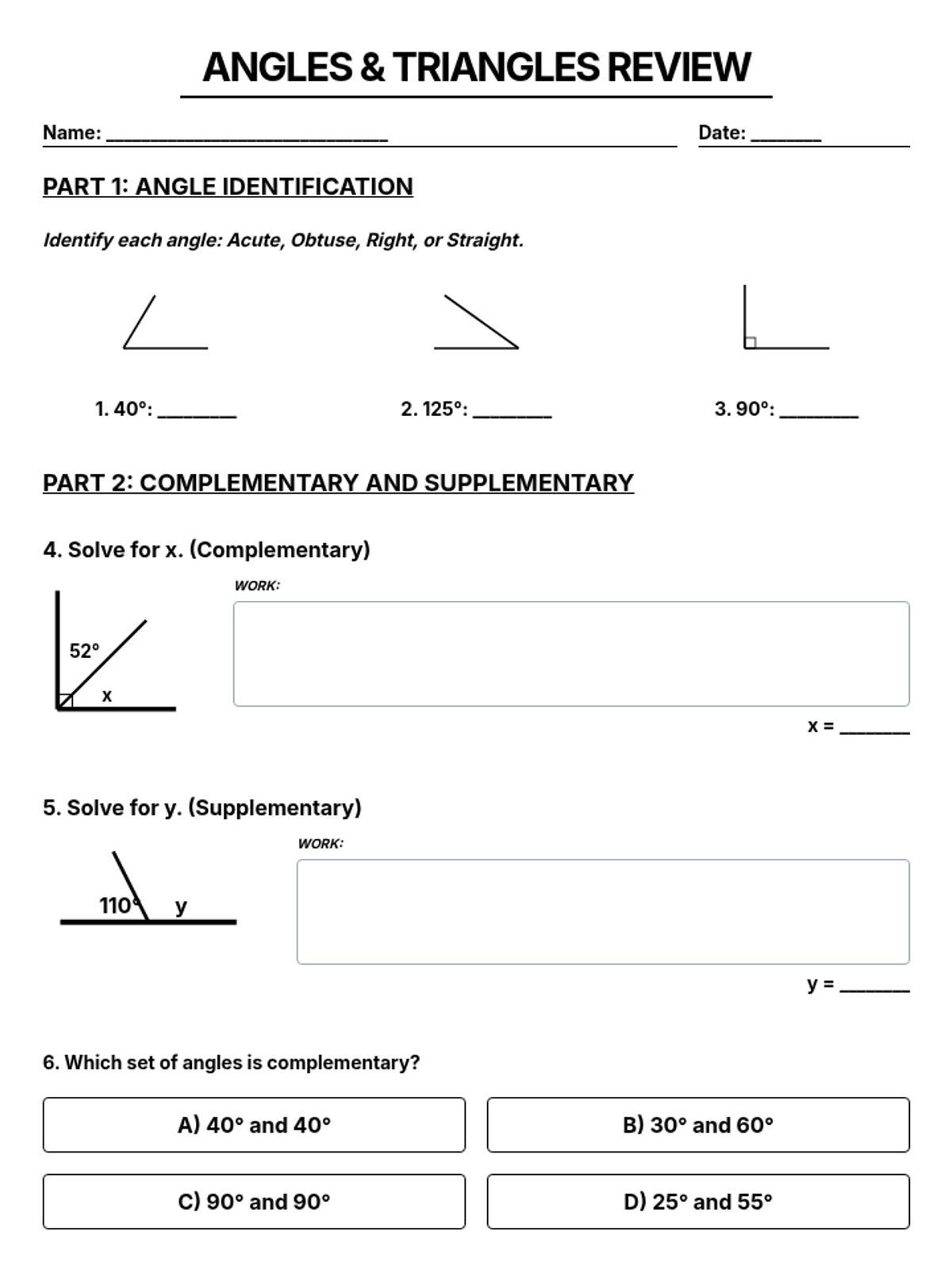
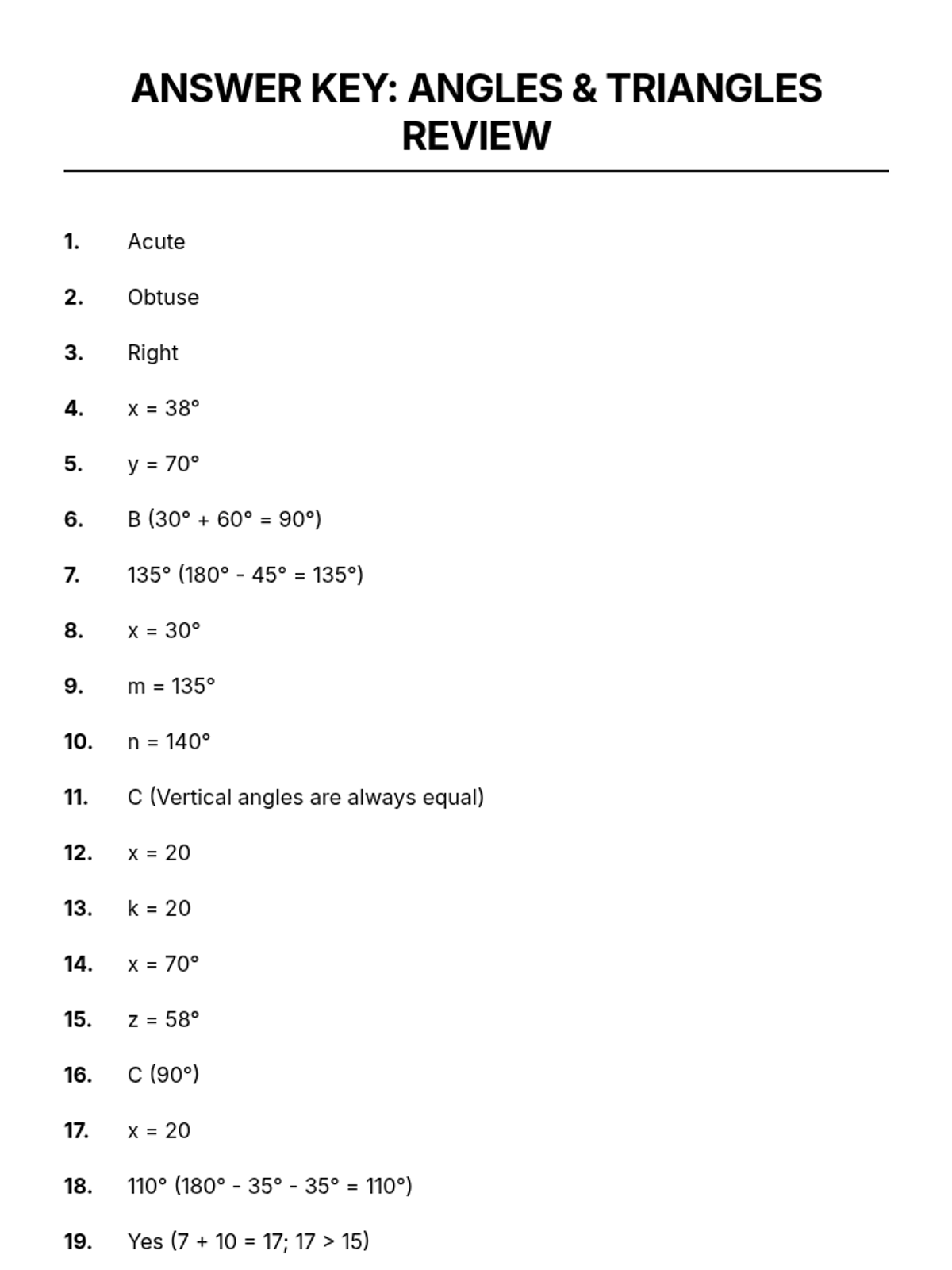
A comprehensive review of angle relationships and triangle properties, featuring guided scaffolds and visual equation solving. Students will master identifying angles, solving for unknowns, and applying triangle theorems.
A focused mini-lesson on identifying, calculating, and analyzing complementary and supplementary angles using color-coded visual supports and real-world architect-themed scenarios.
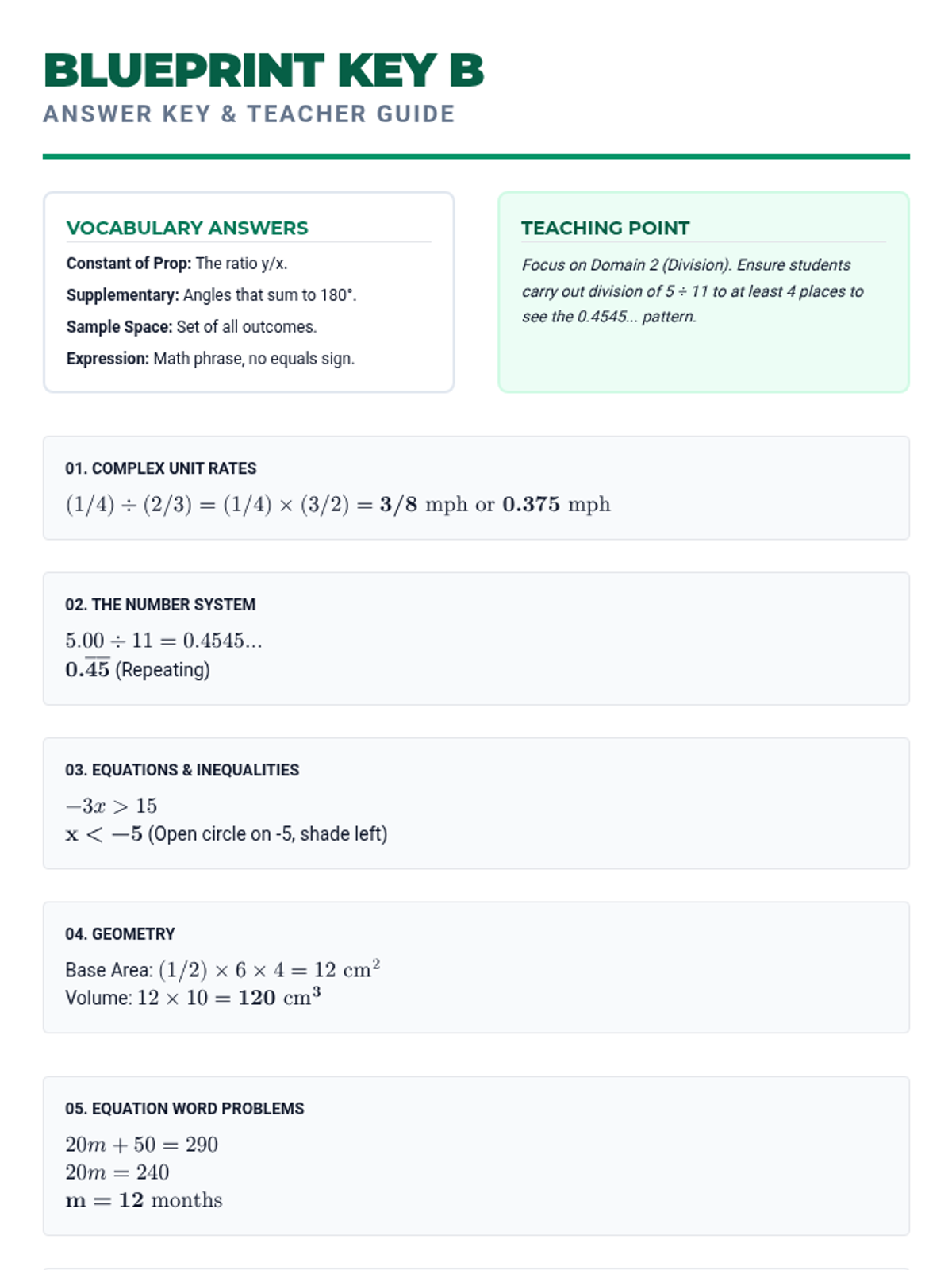
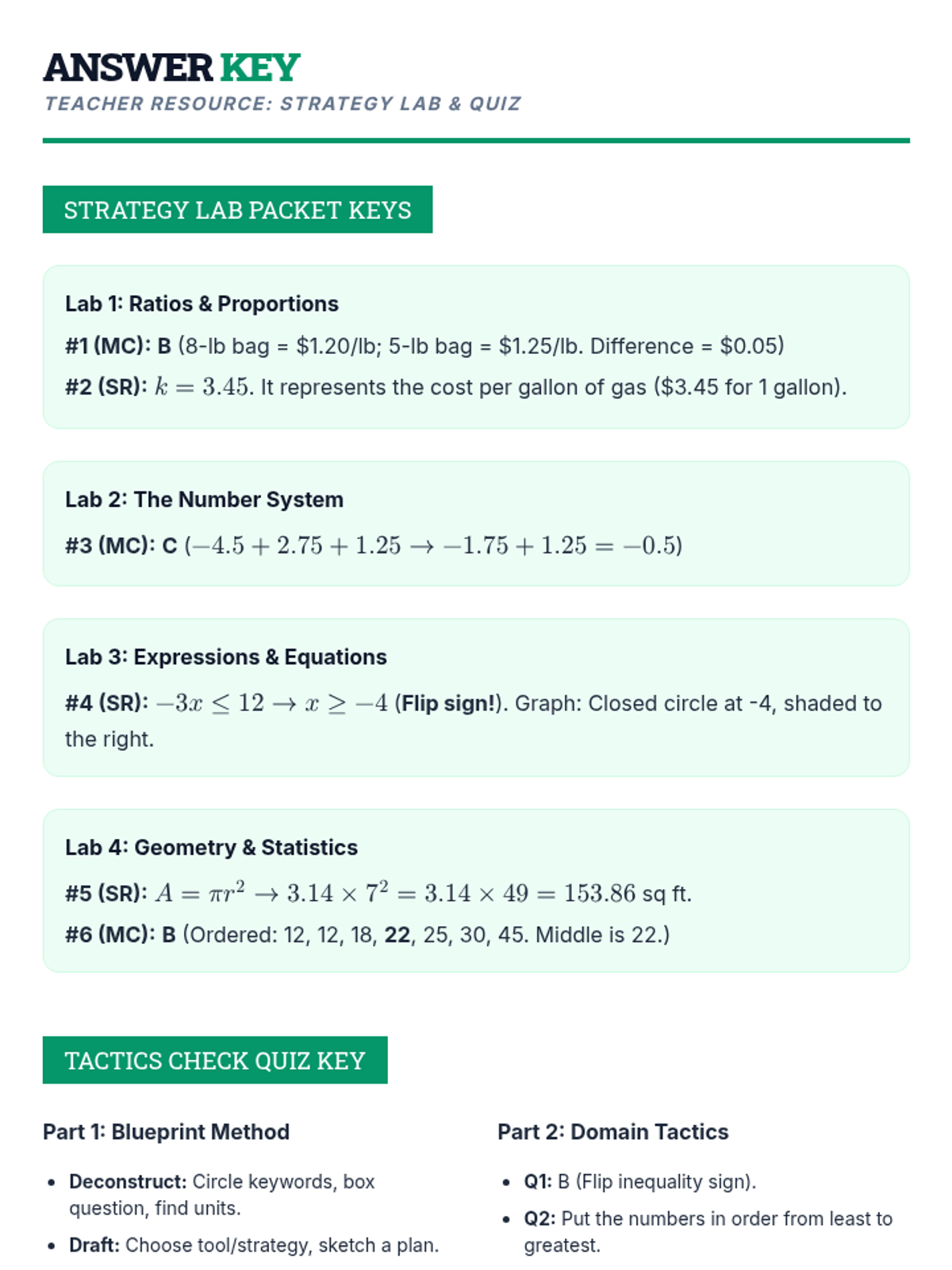
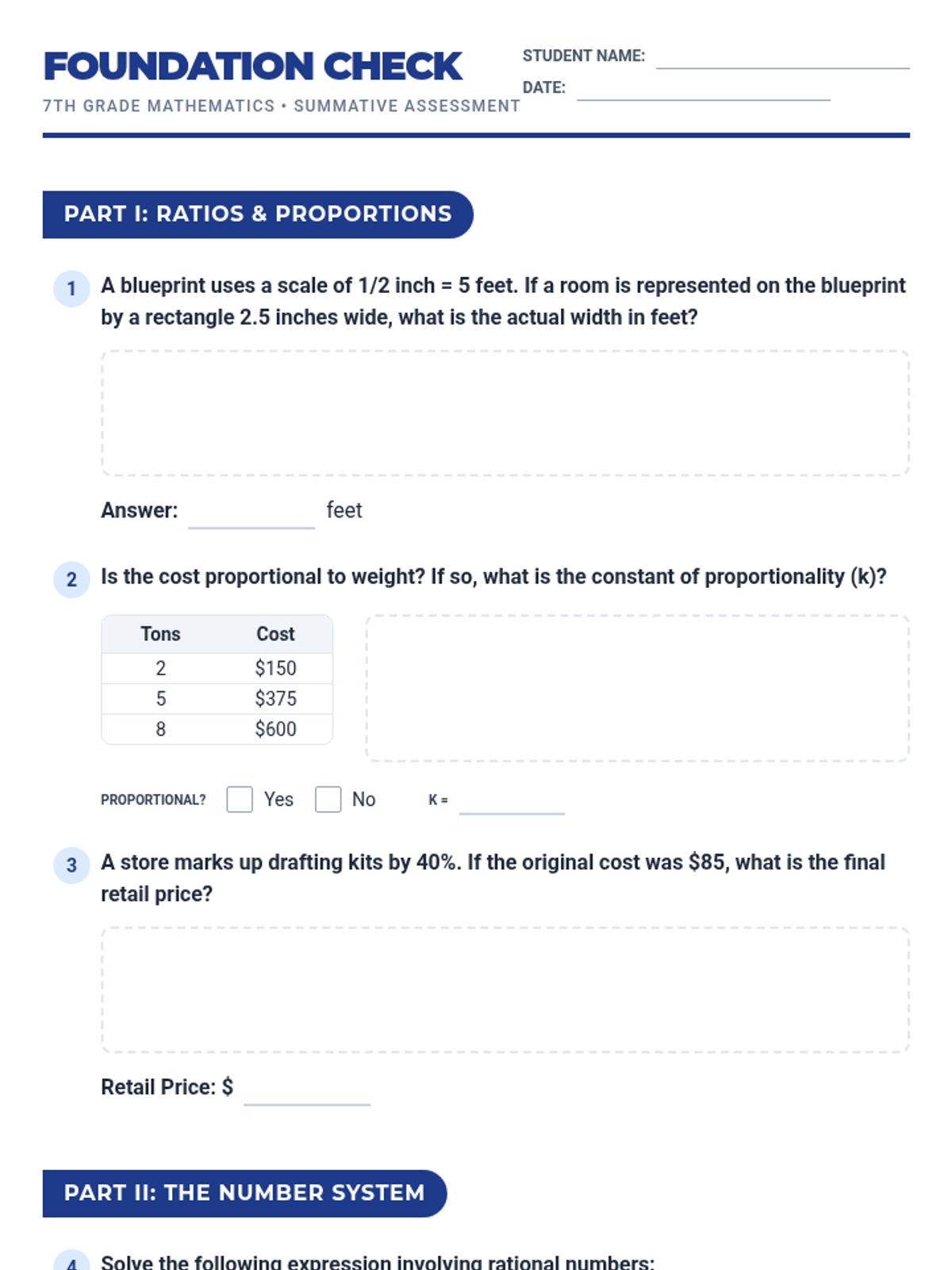
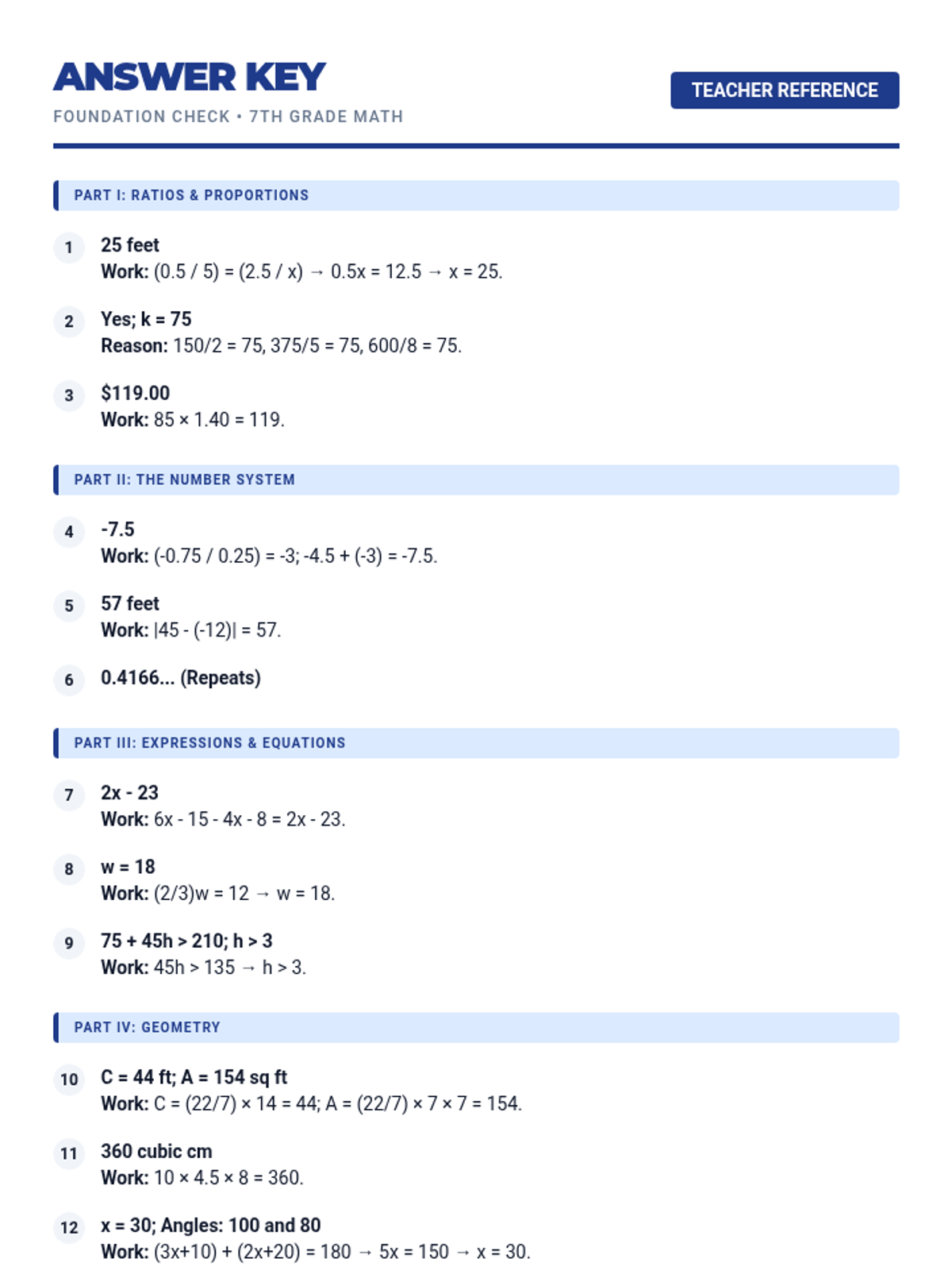
A comprehensive end-of-year assessment for 7th-grade math, covering ratios, the number system, expressions, geometry, and statistics. Includes a student test, a teacher answer key, and introductory review slides.
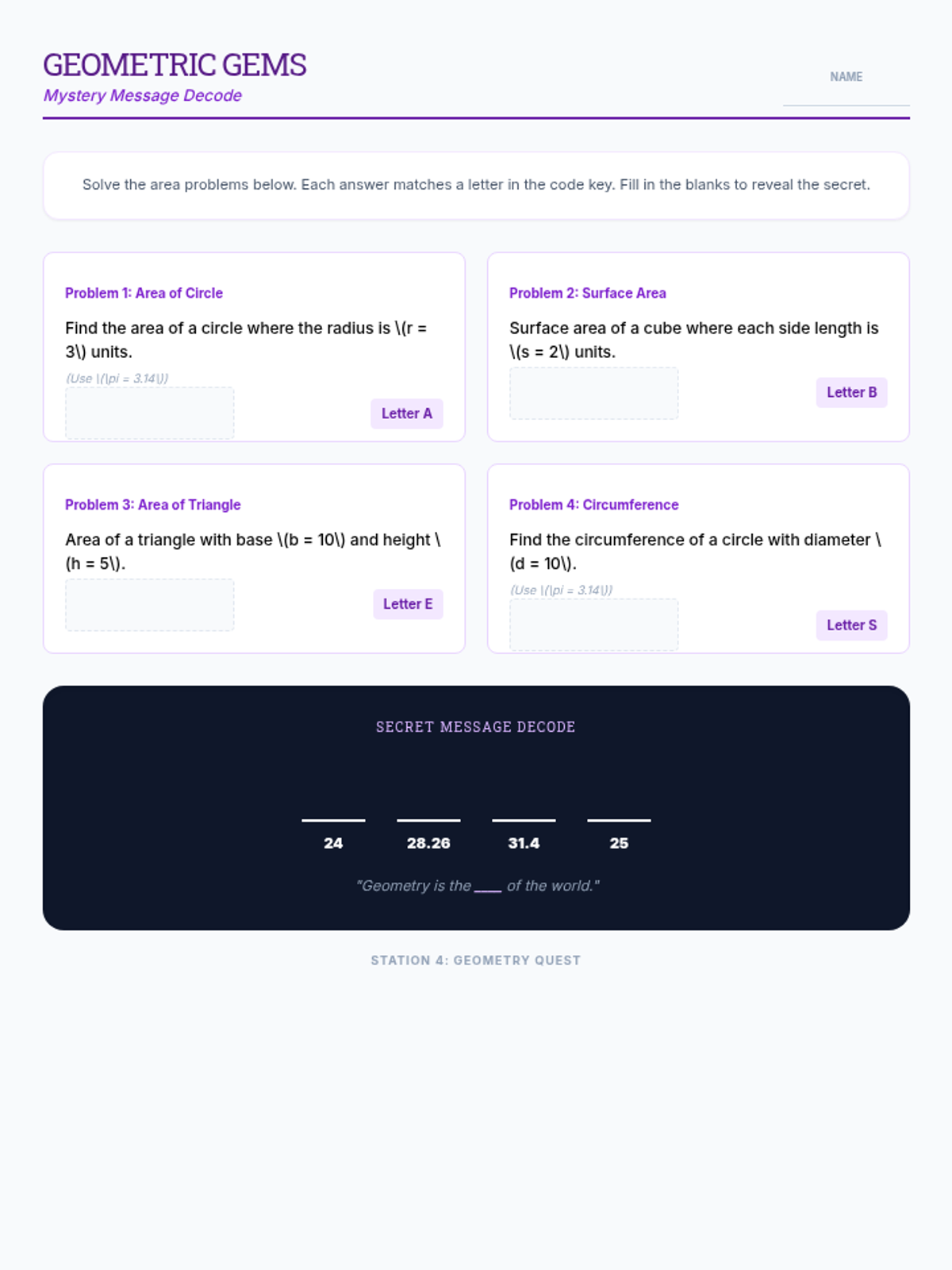
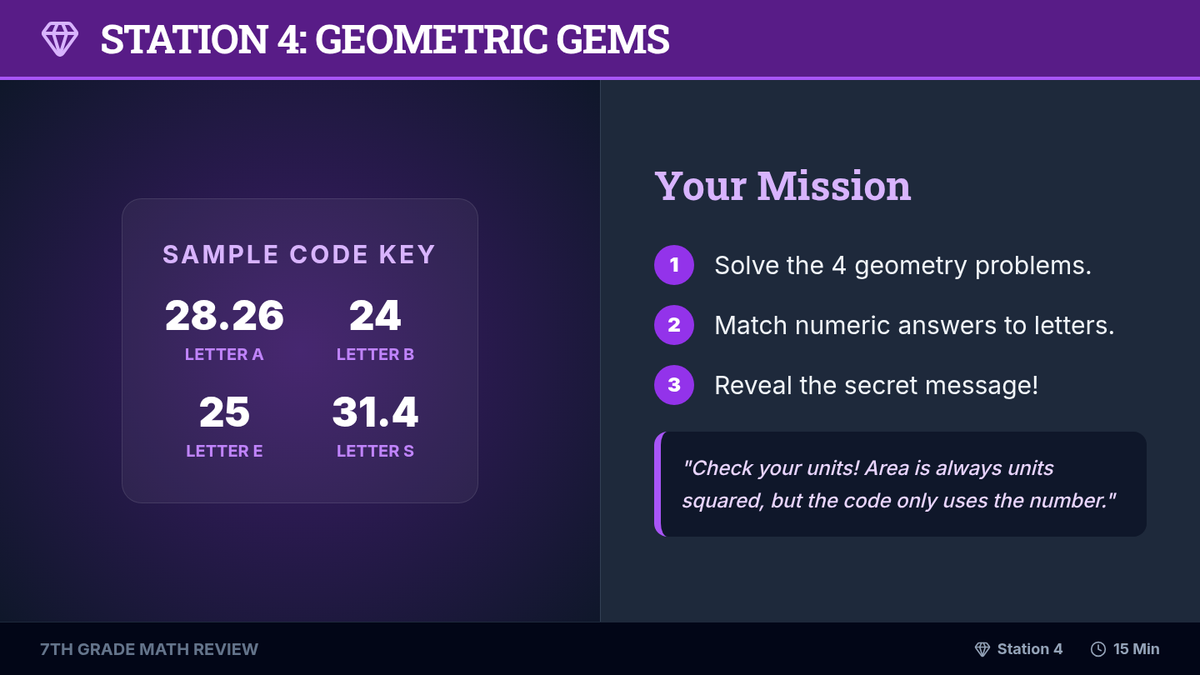
A mystery reveal coloring activity where students calculate area and surface area to decode a hidden geometric message.
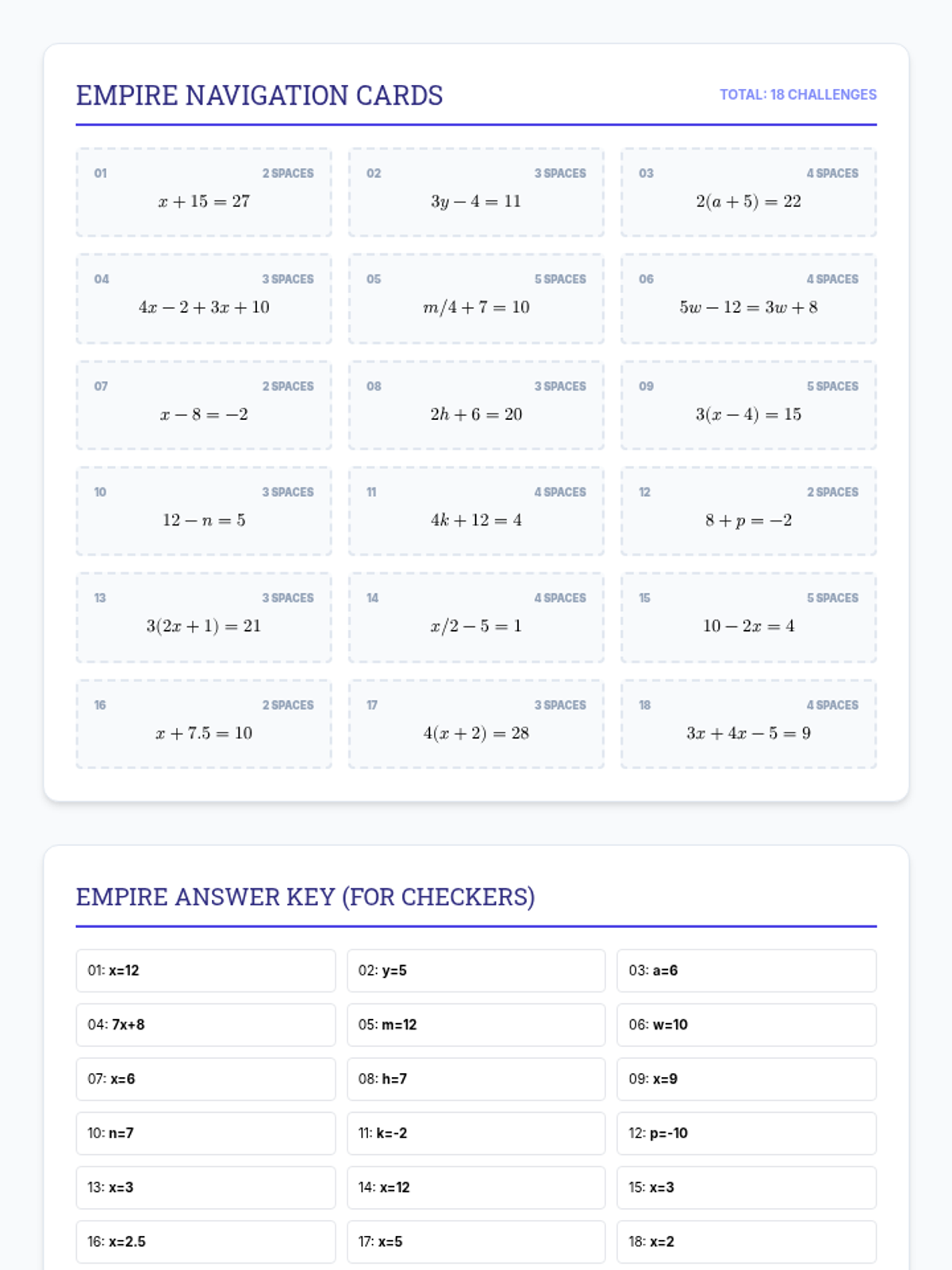
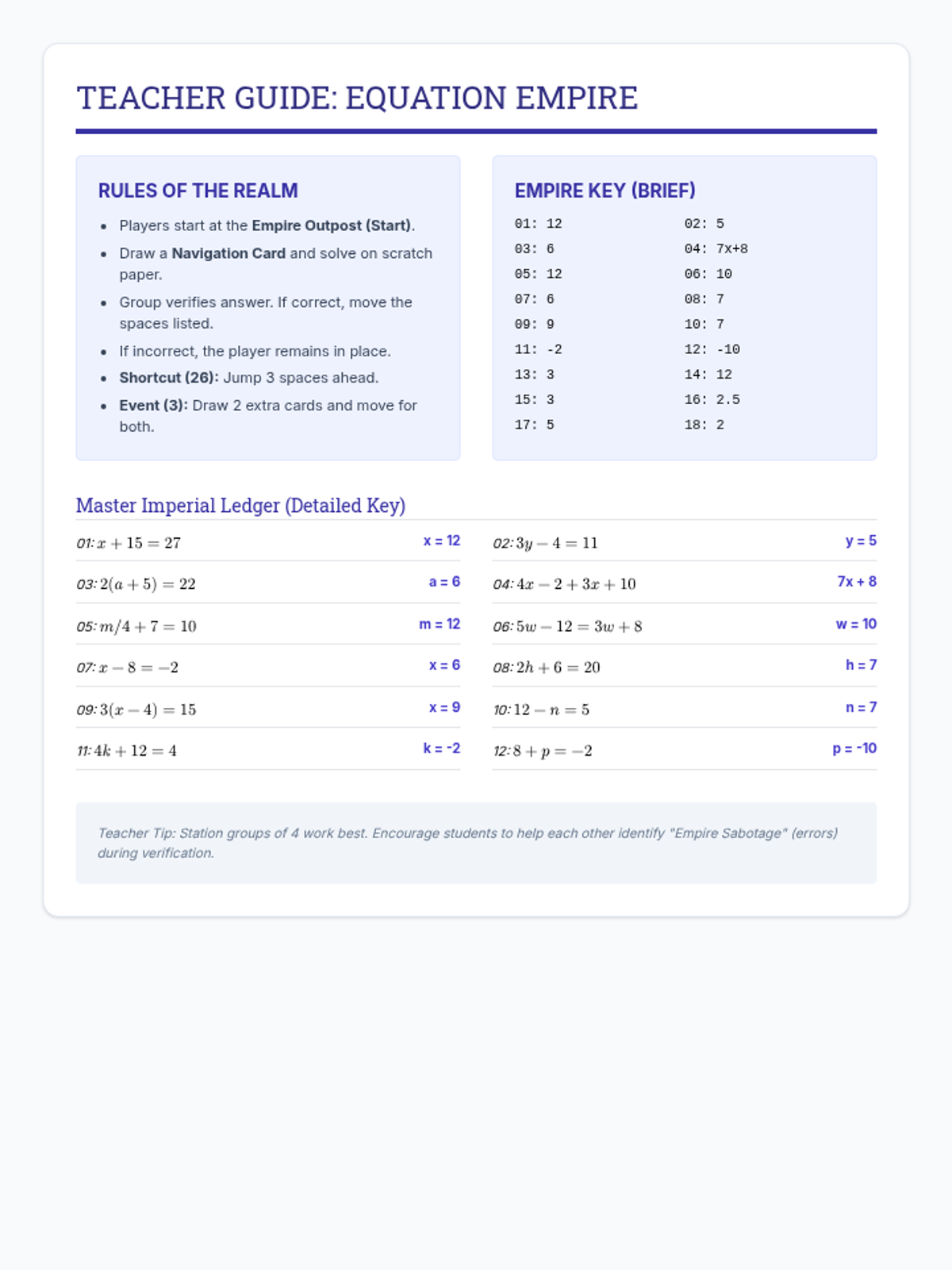
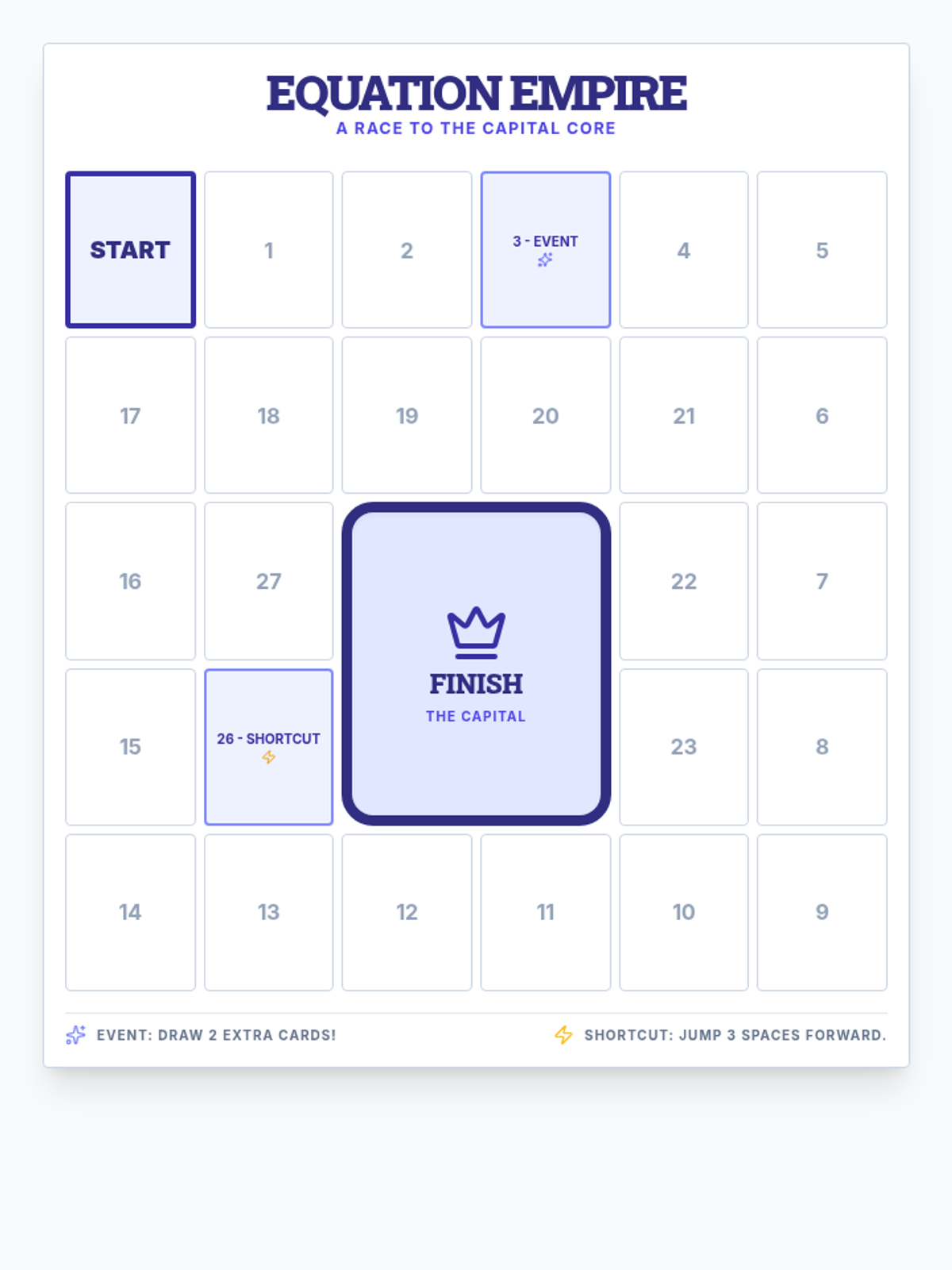
A competitive board game where students navigate a map by solving linear expressions and two-step equations to reach the empire's center.
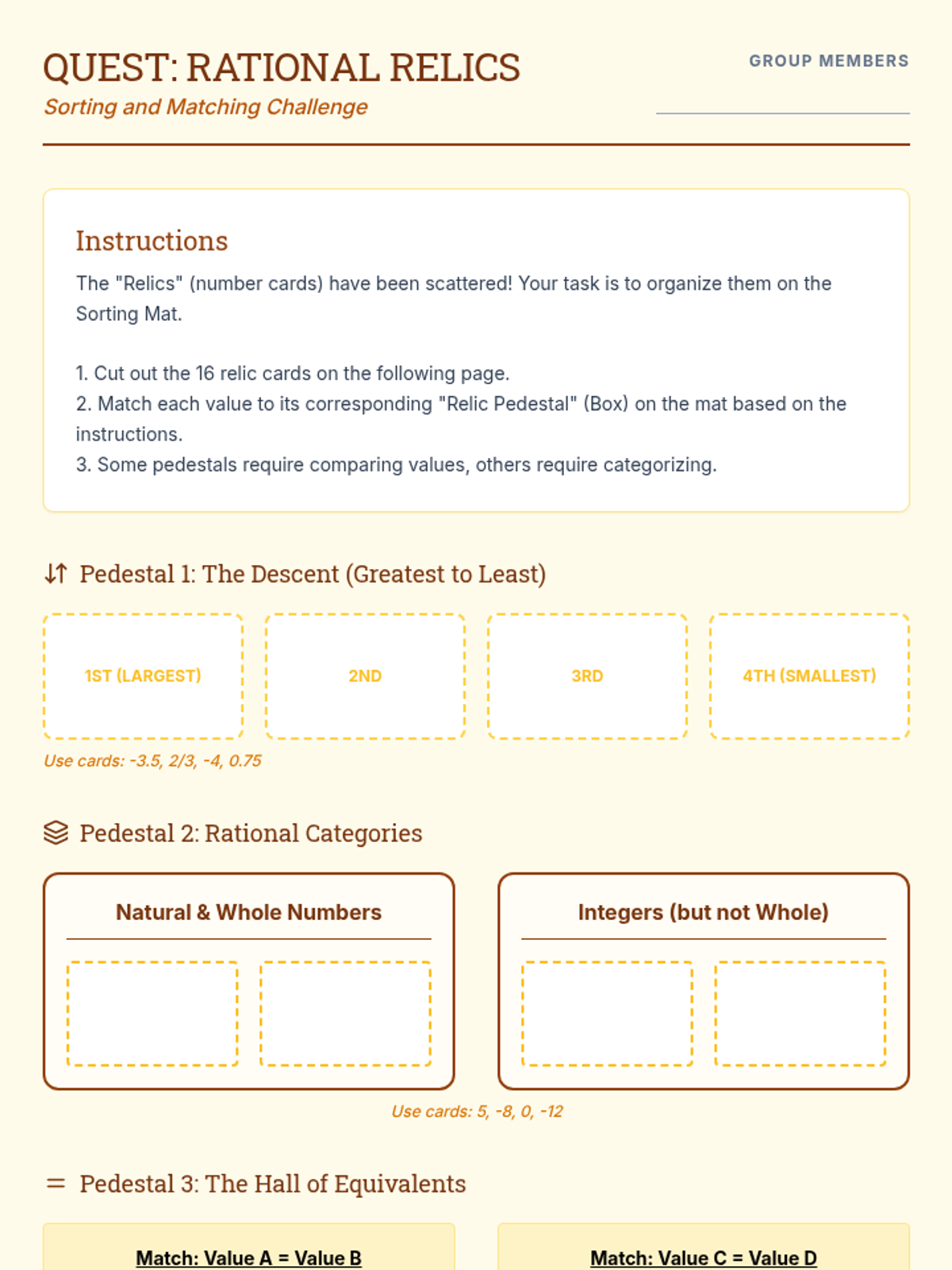
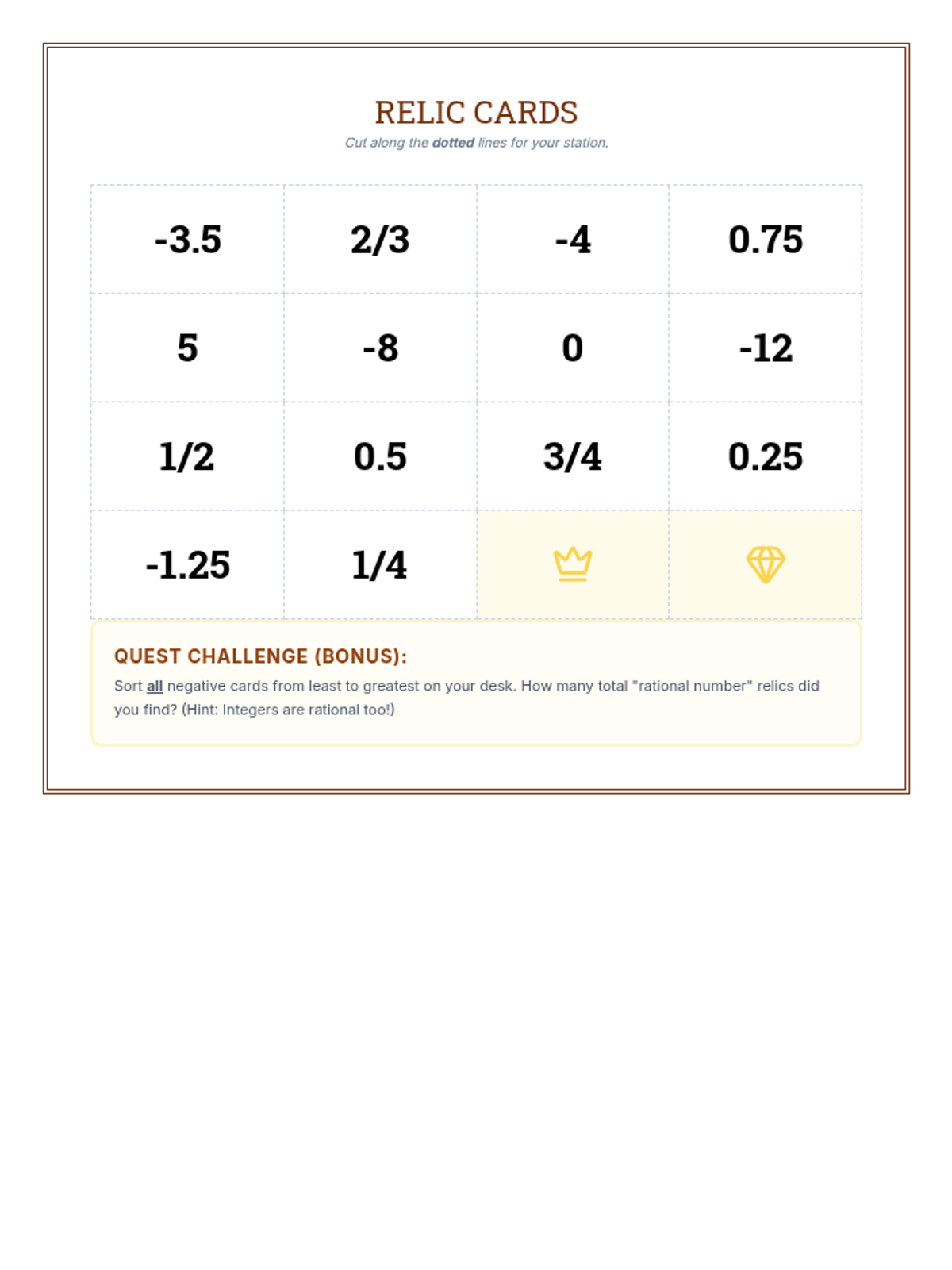
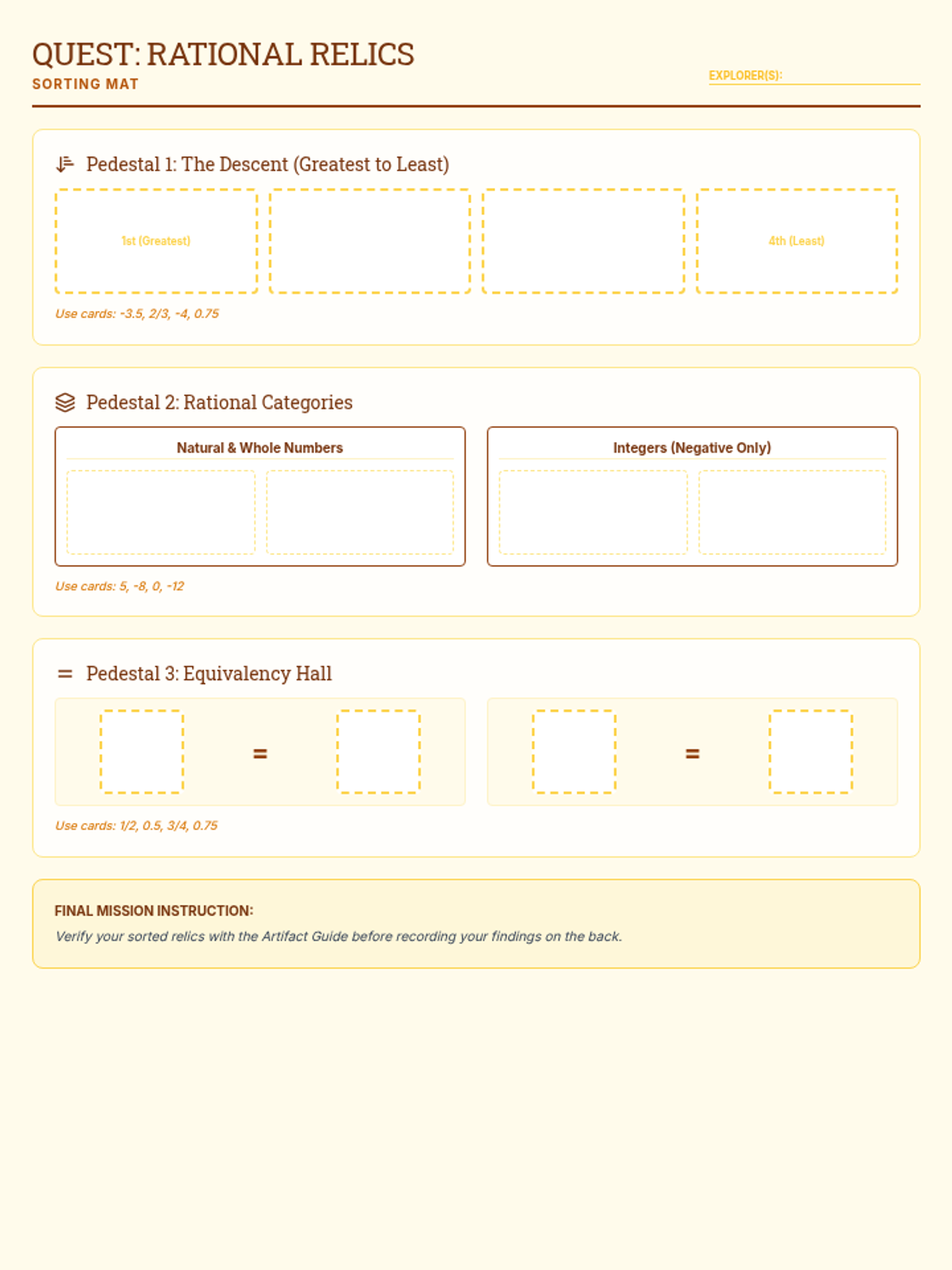
A hands-on sorting and matching activity where students categorize and order integers and rational numbers across different formats like fractions and decimals.
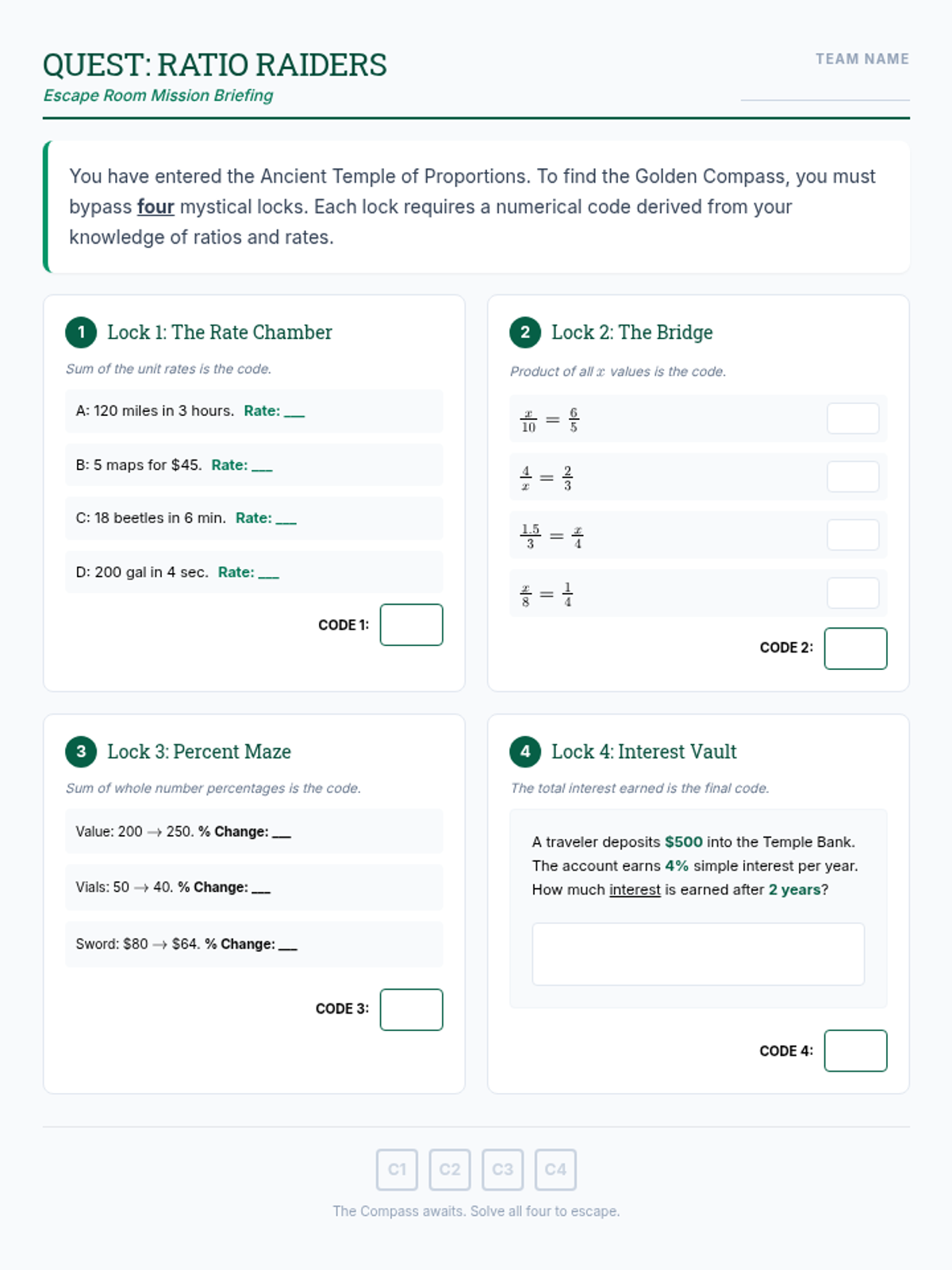
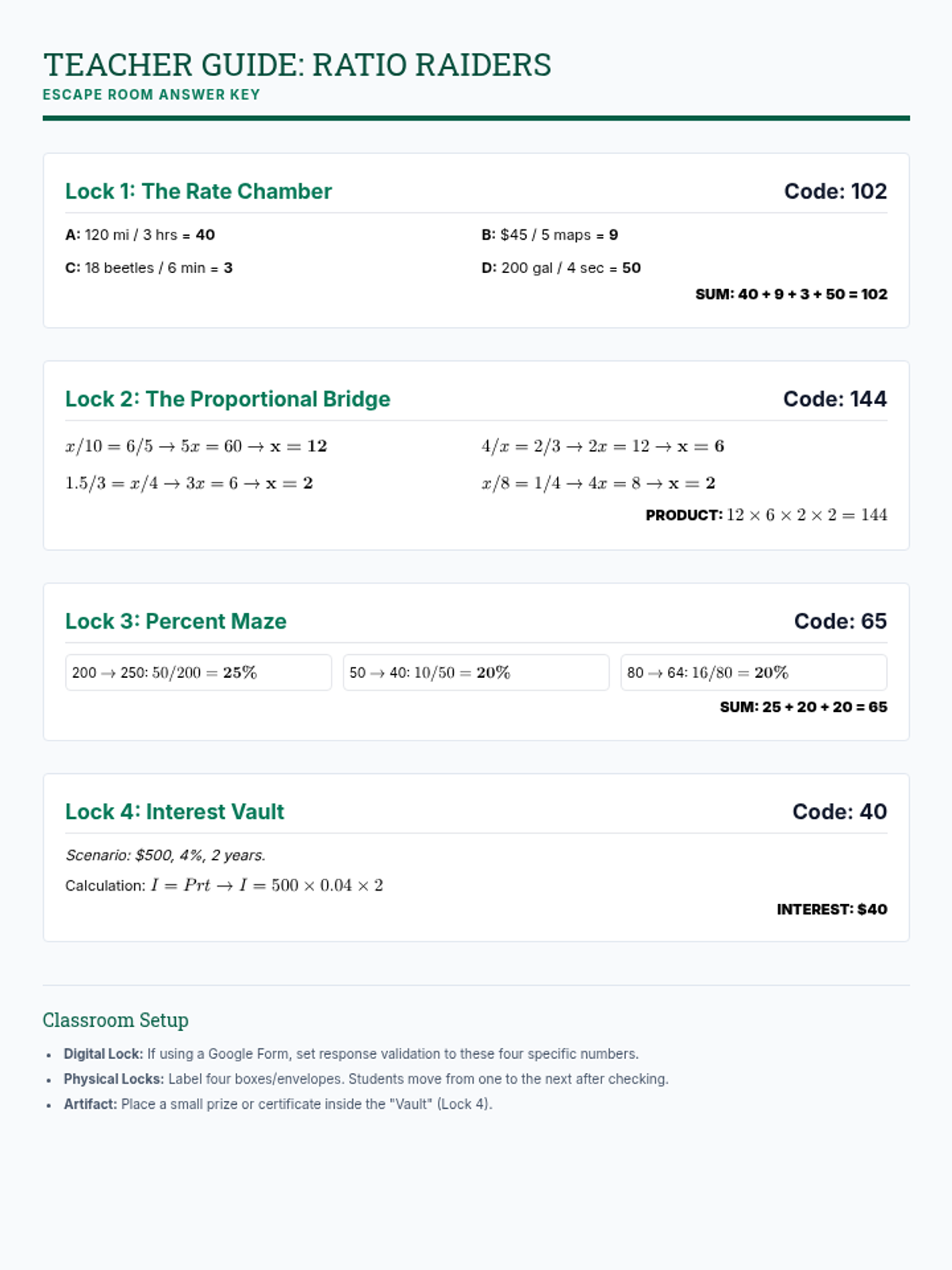
A collaborative escape room activity where students solve ratios, unit rates, and proportions to 'unlock' digital or physical locks and recover a lost artifact.
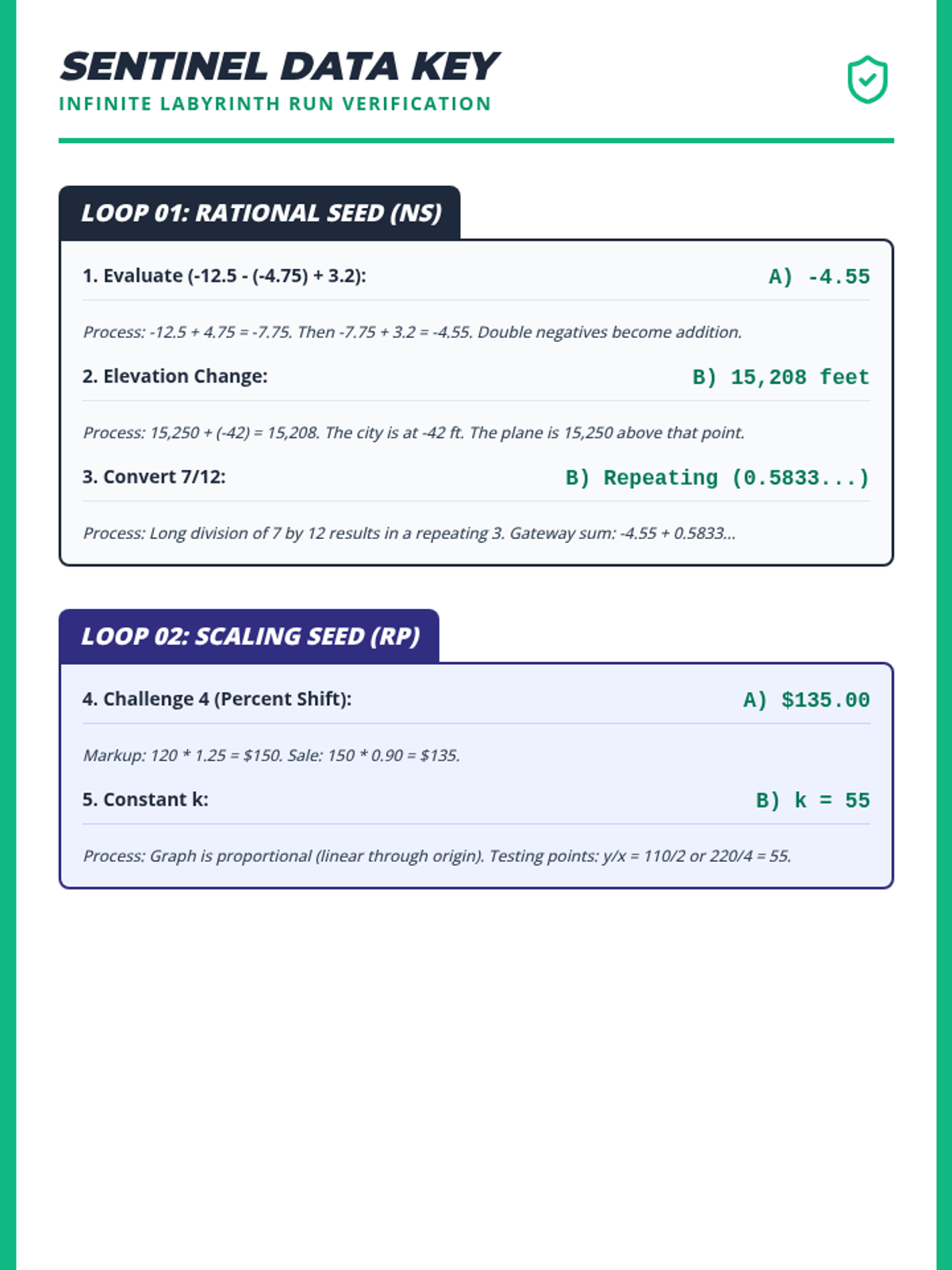
A comprehensive multi-page review packet for 7th grade NYS Math standards, themed as an 'Infinite Labyrinth' where students solve problems to navigate their way through different mathematical domains.
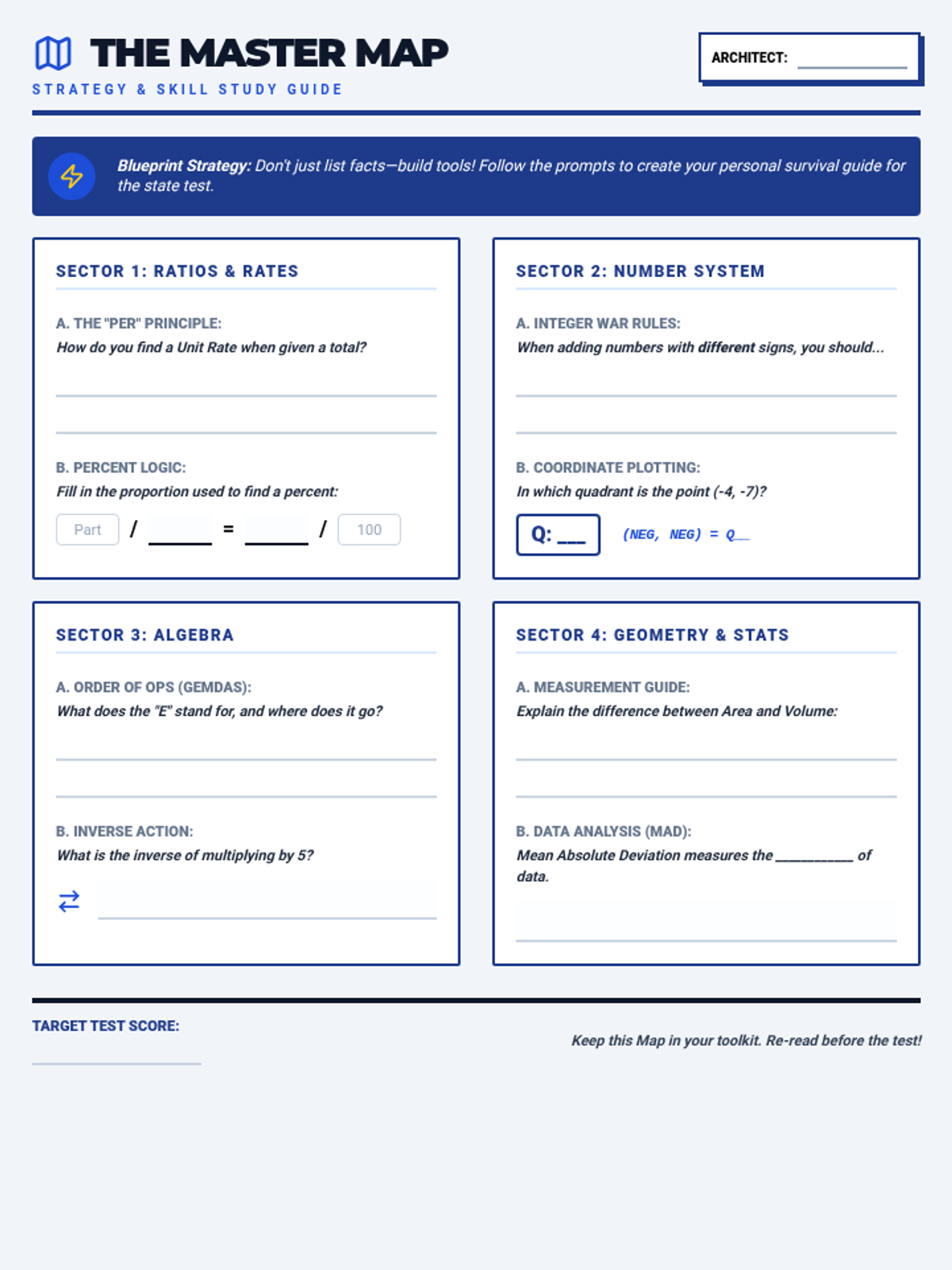
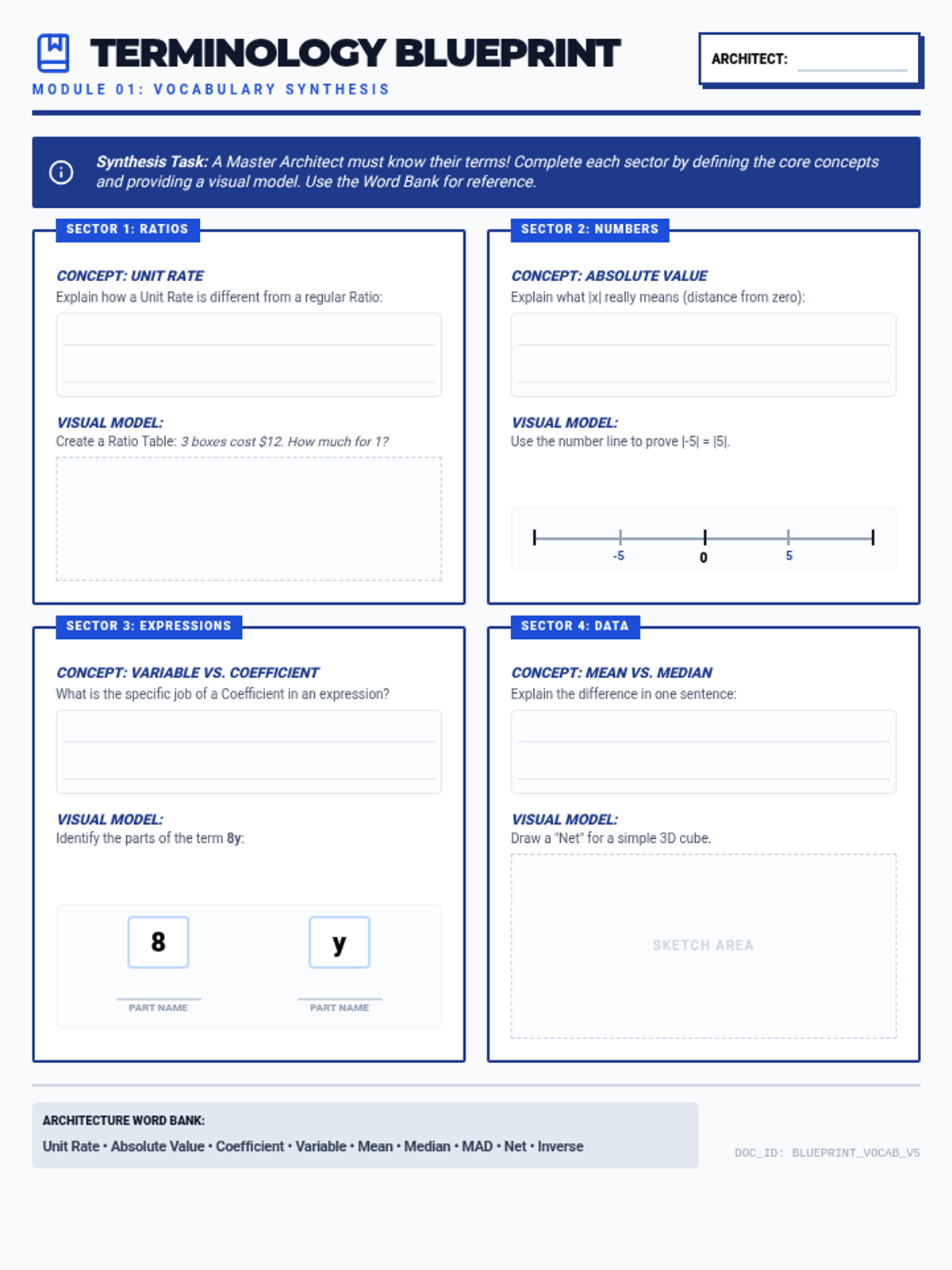
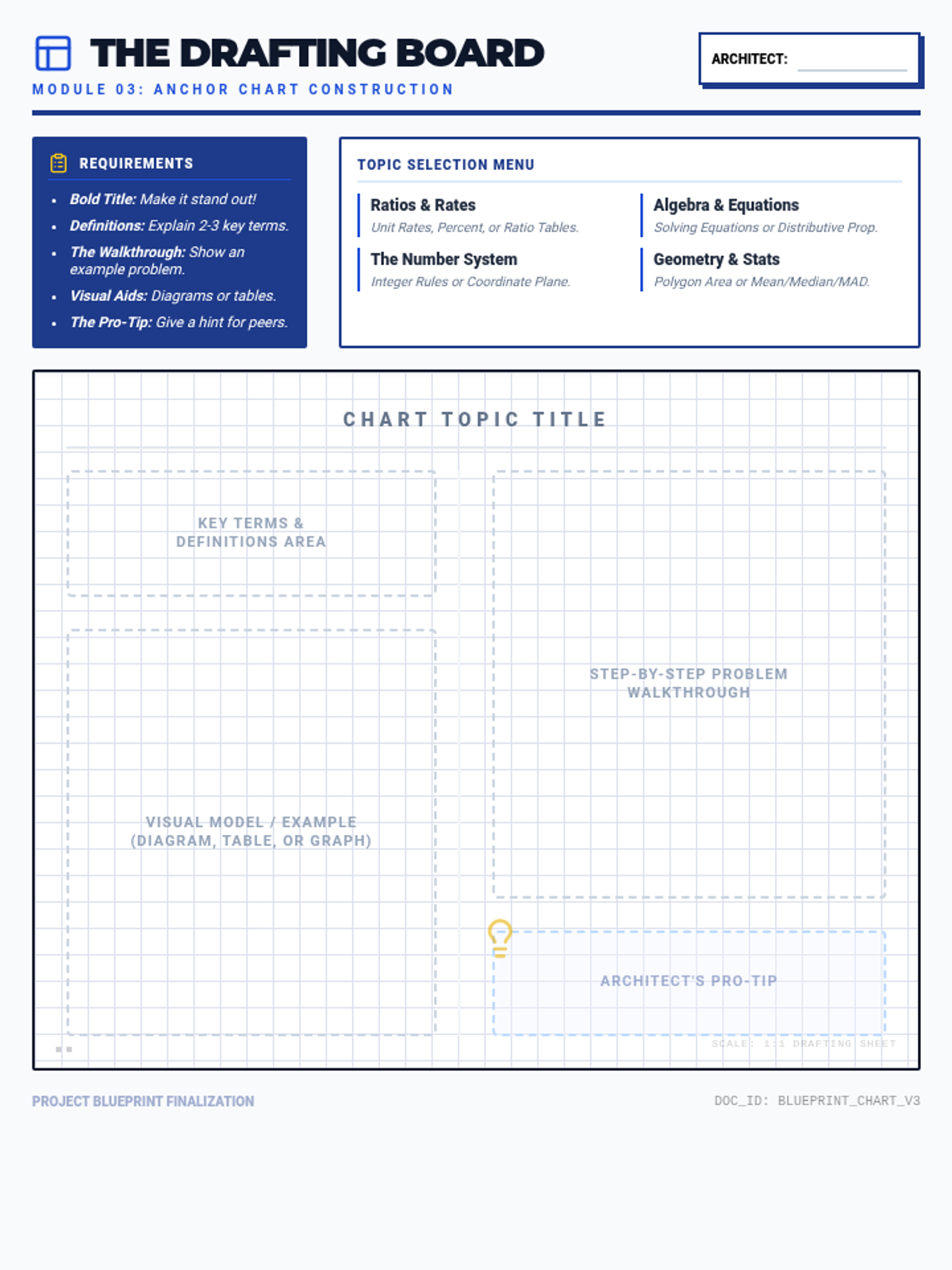
A set of interactive study resources designed to help students review key domains for the NYS Math Test through active creation and synthesis of information.
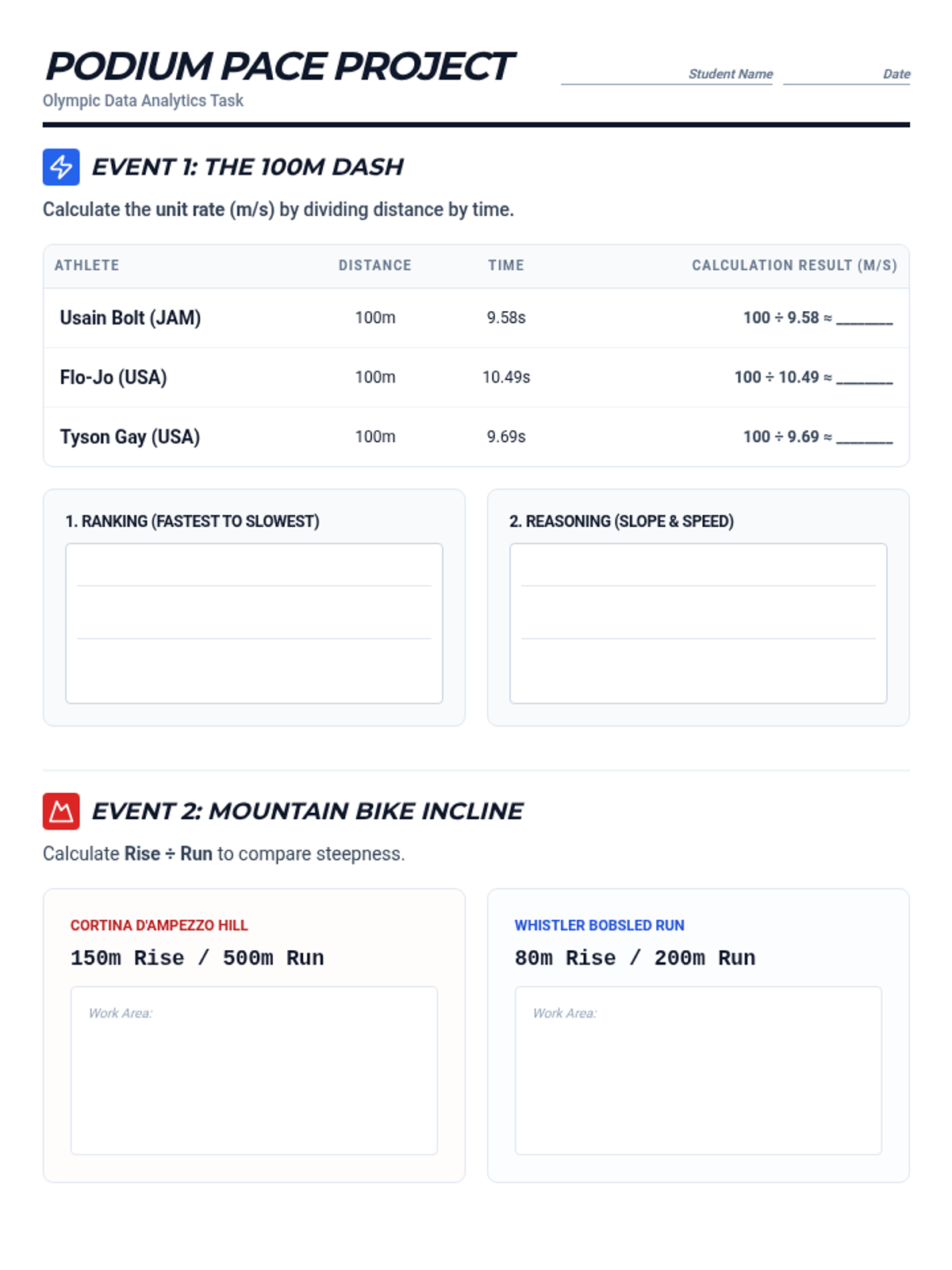
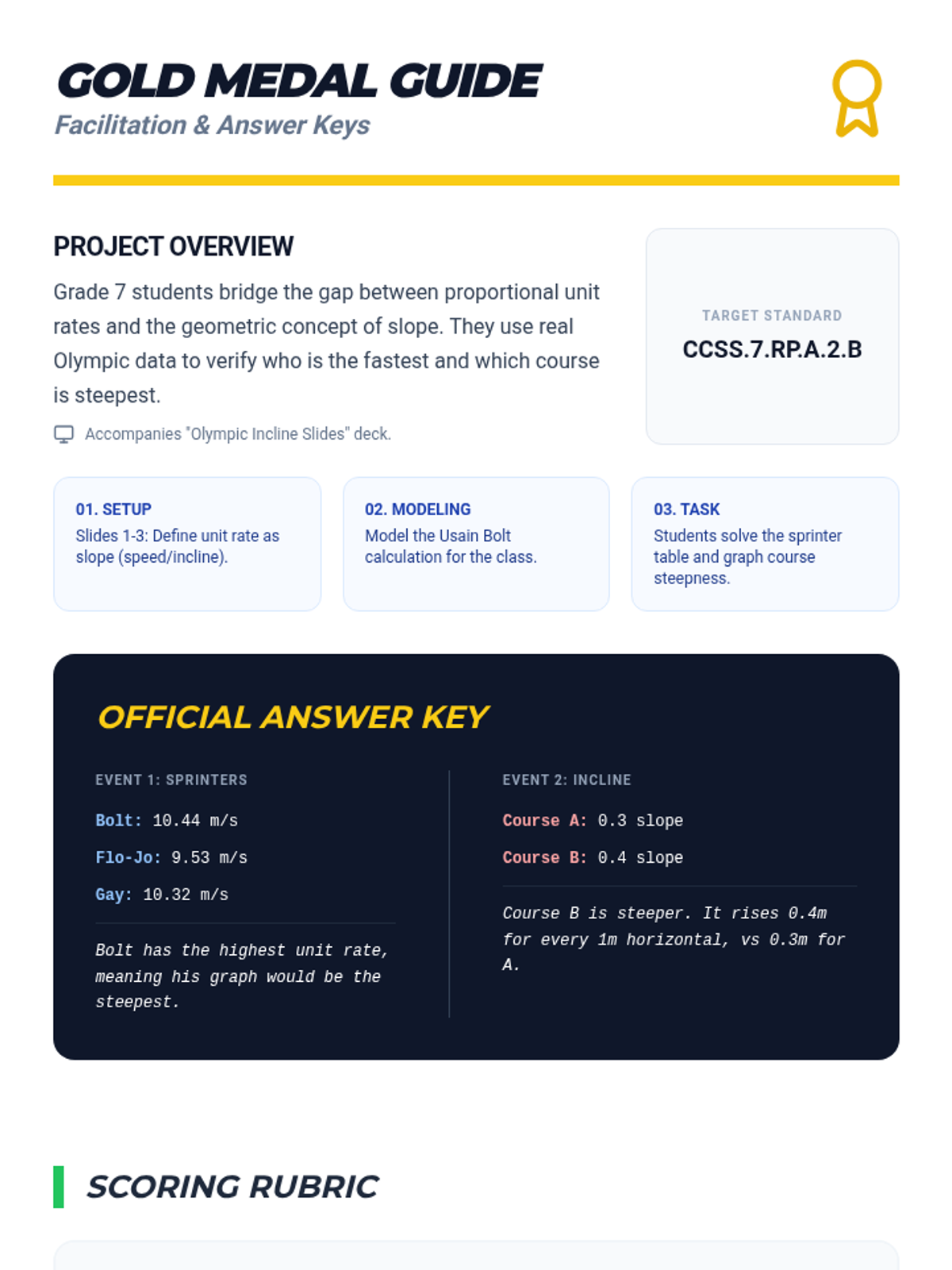
A math project where students analyze Olympic athlete performance and track difficulty using unit rates and slope concepts to determine who is the fastest and which courses are the steepest.
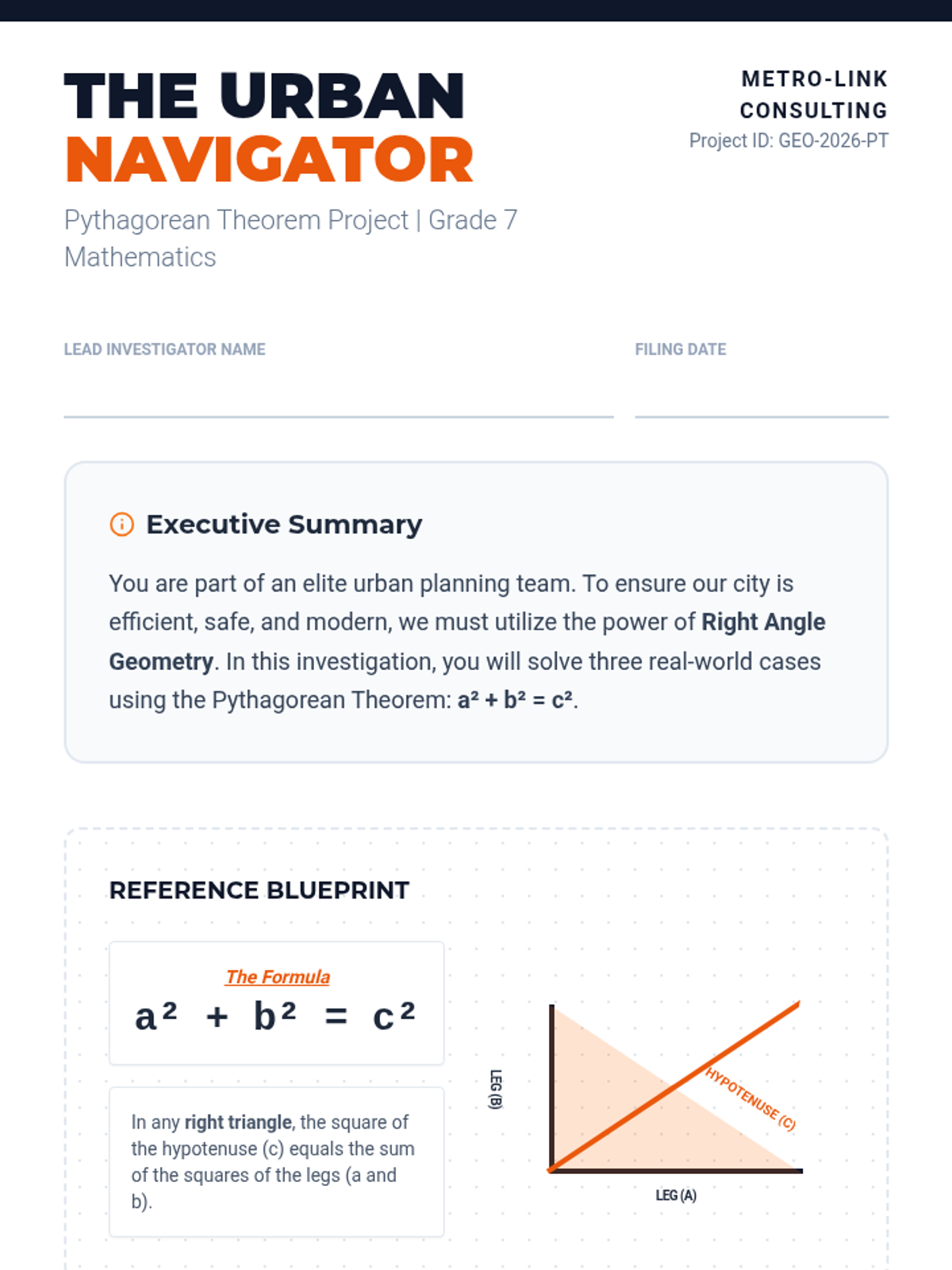
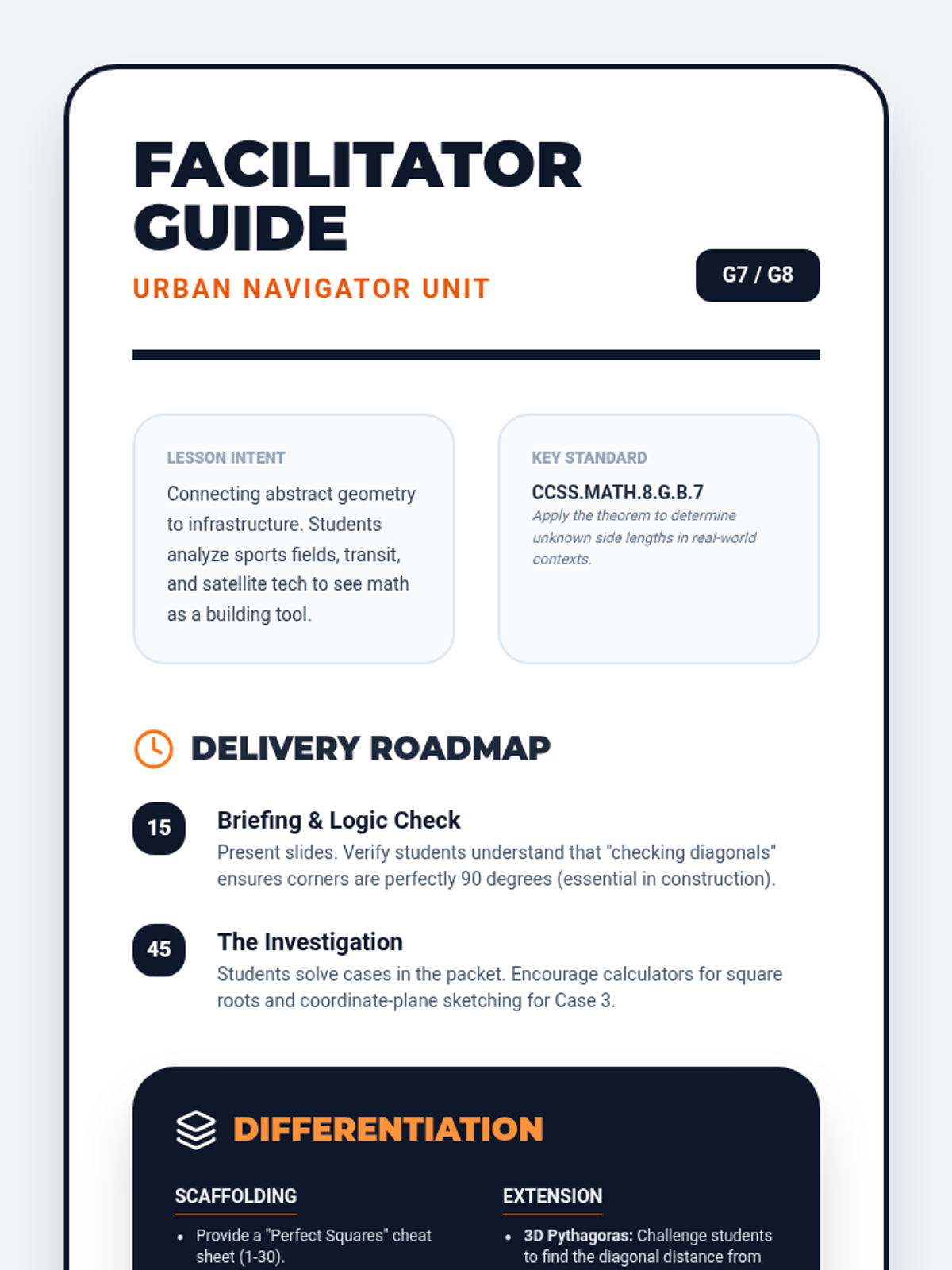
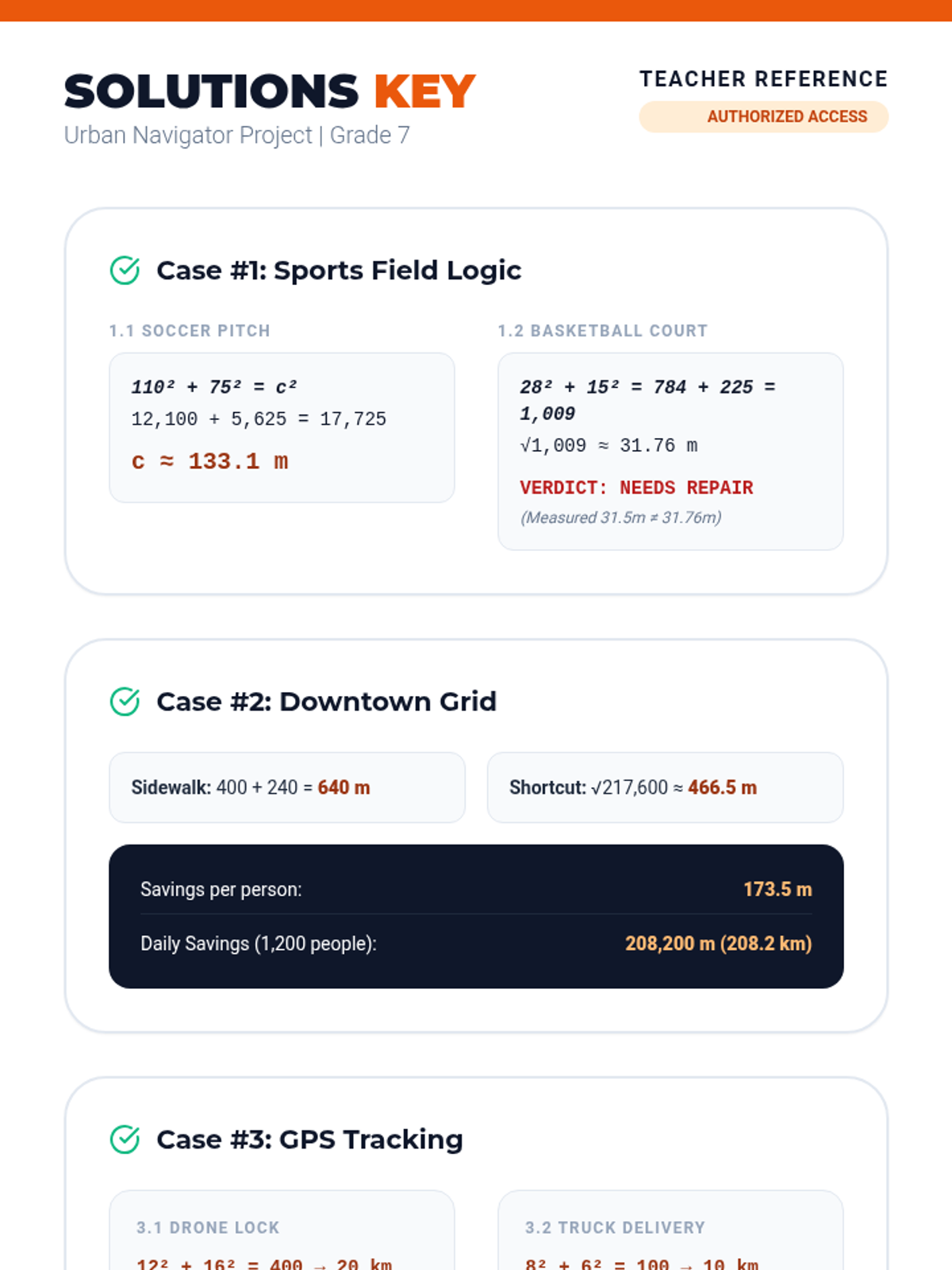
A real-world project-based learning unit where students apply the Pythagorean Theorem to urban planning, sports field design, and GPS navigation. Students act as urban developers and navigators to solve practical distance problems.
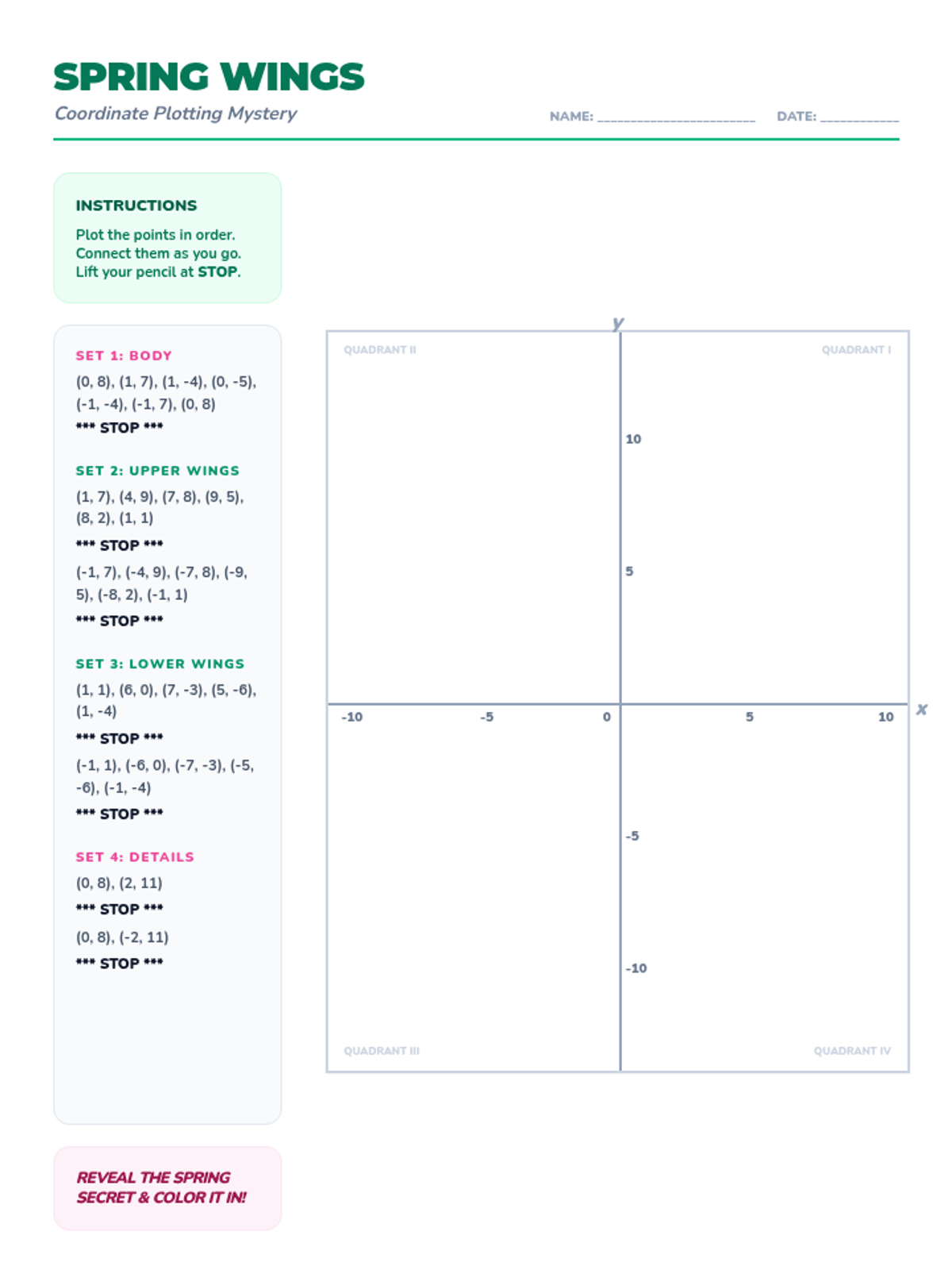
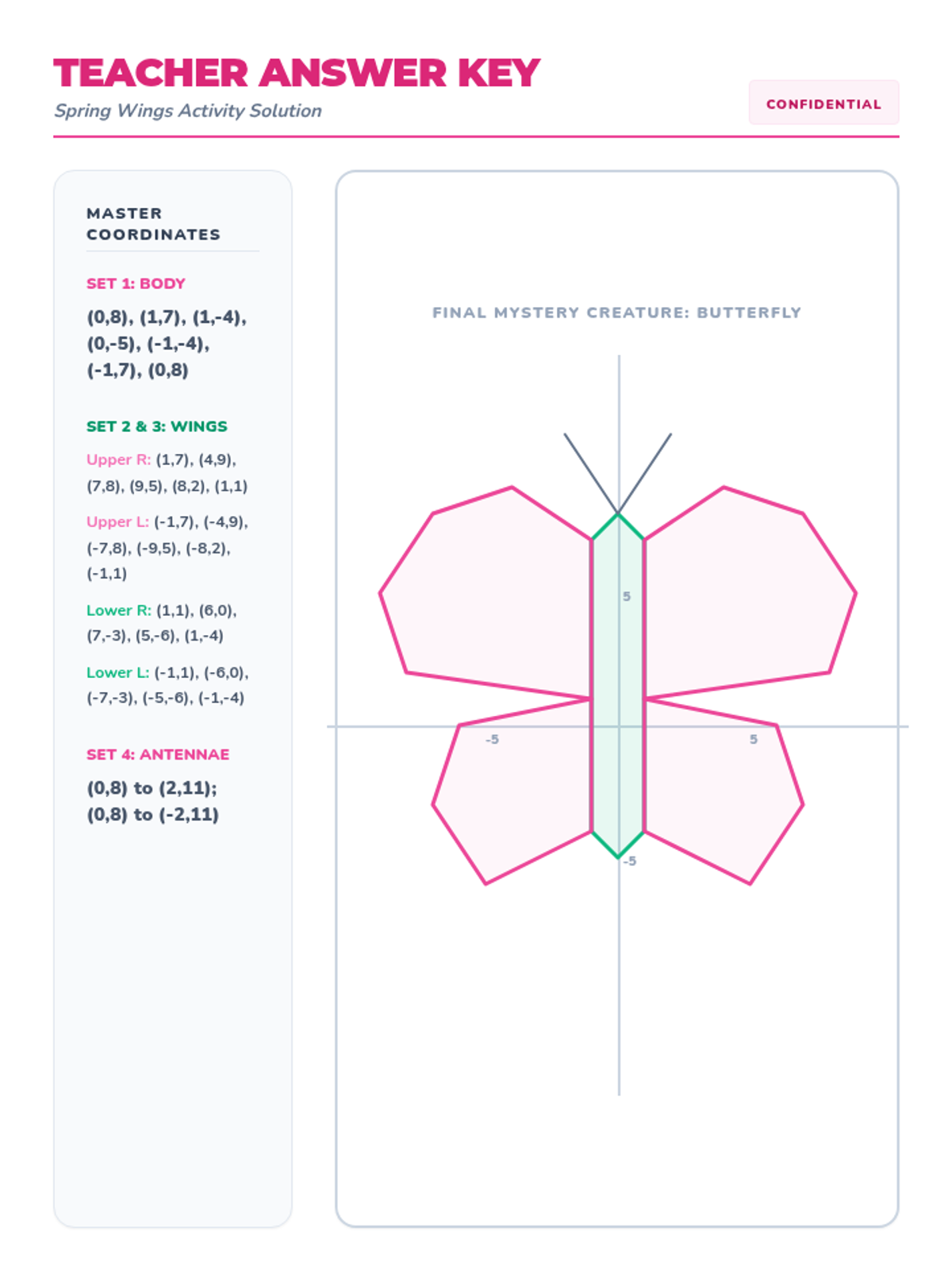
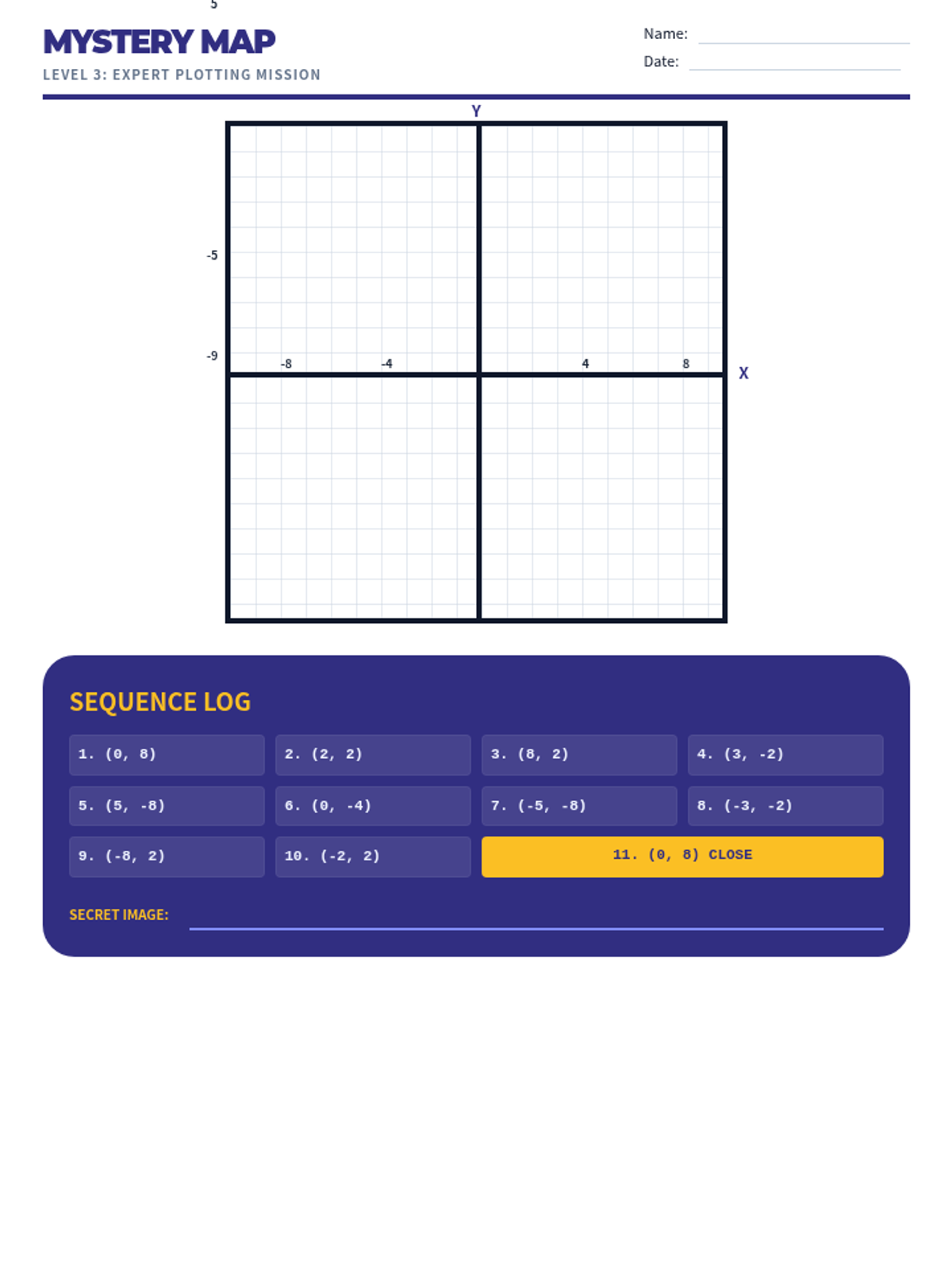
A coordinate plane lesson where students plot integer coordinates in four quadrants to reveal a butterfly. The activity combines math precision with creative coloring for a spring-themed classroom experience.
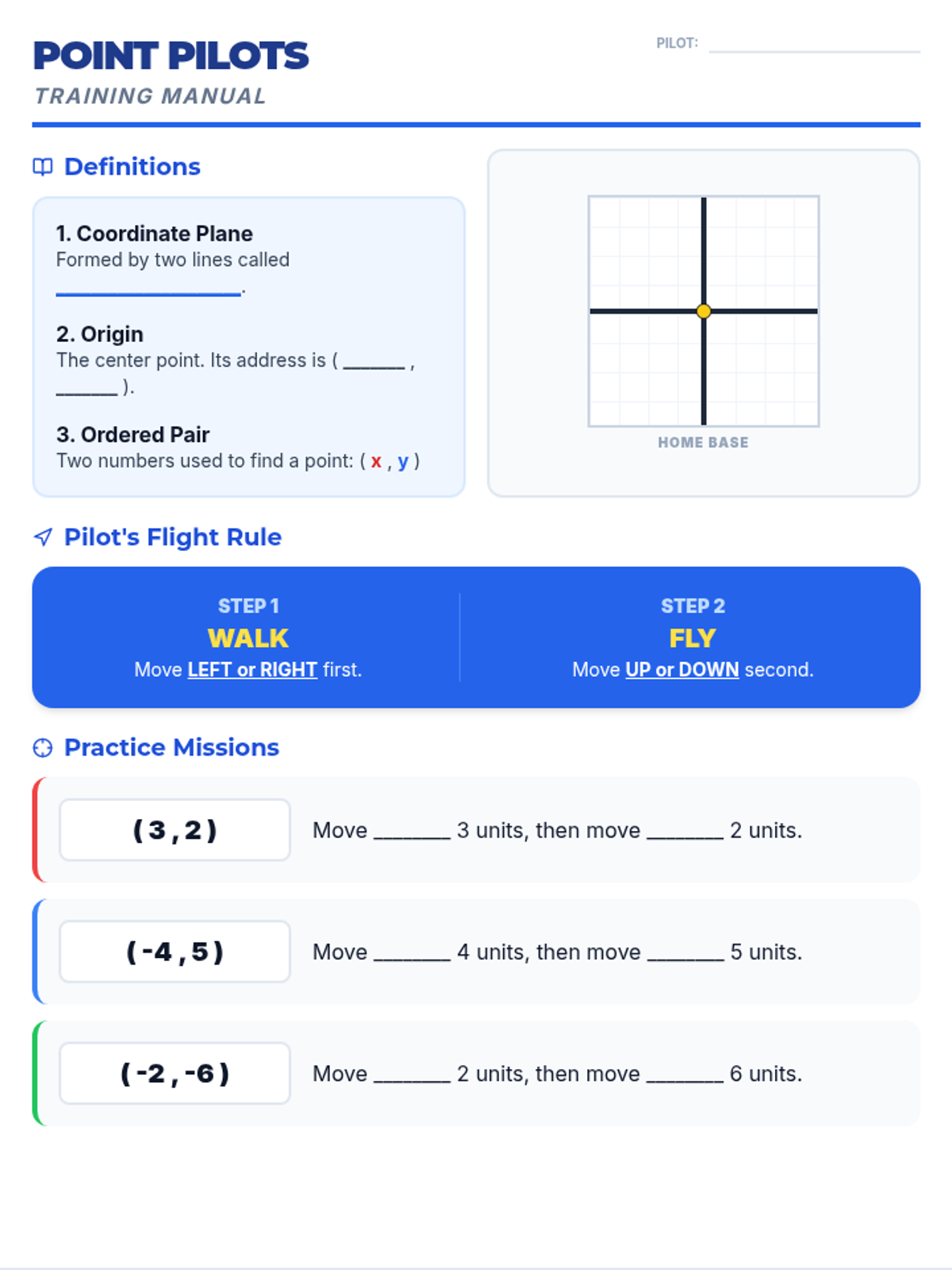
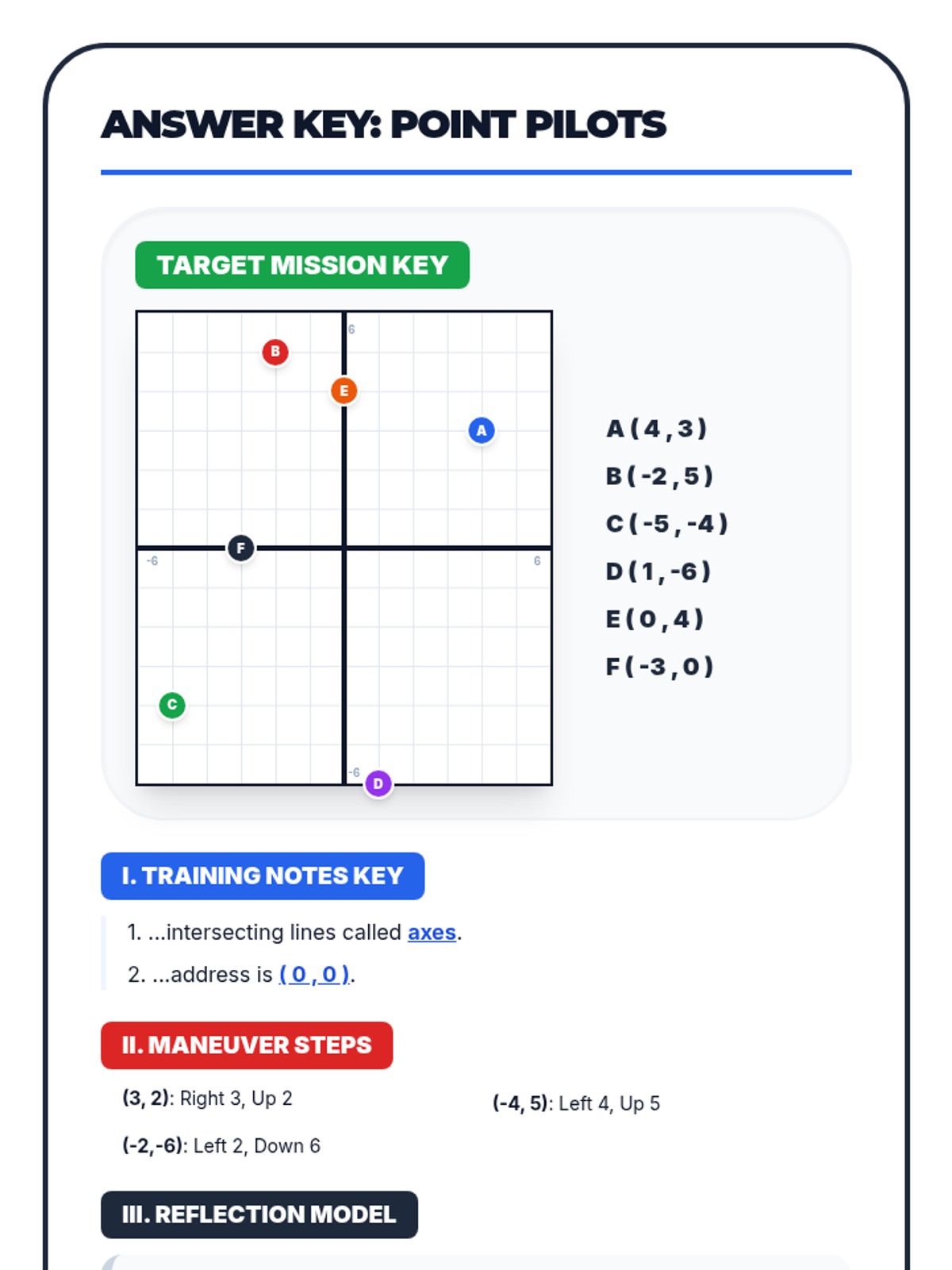
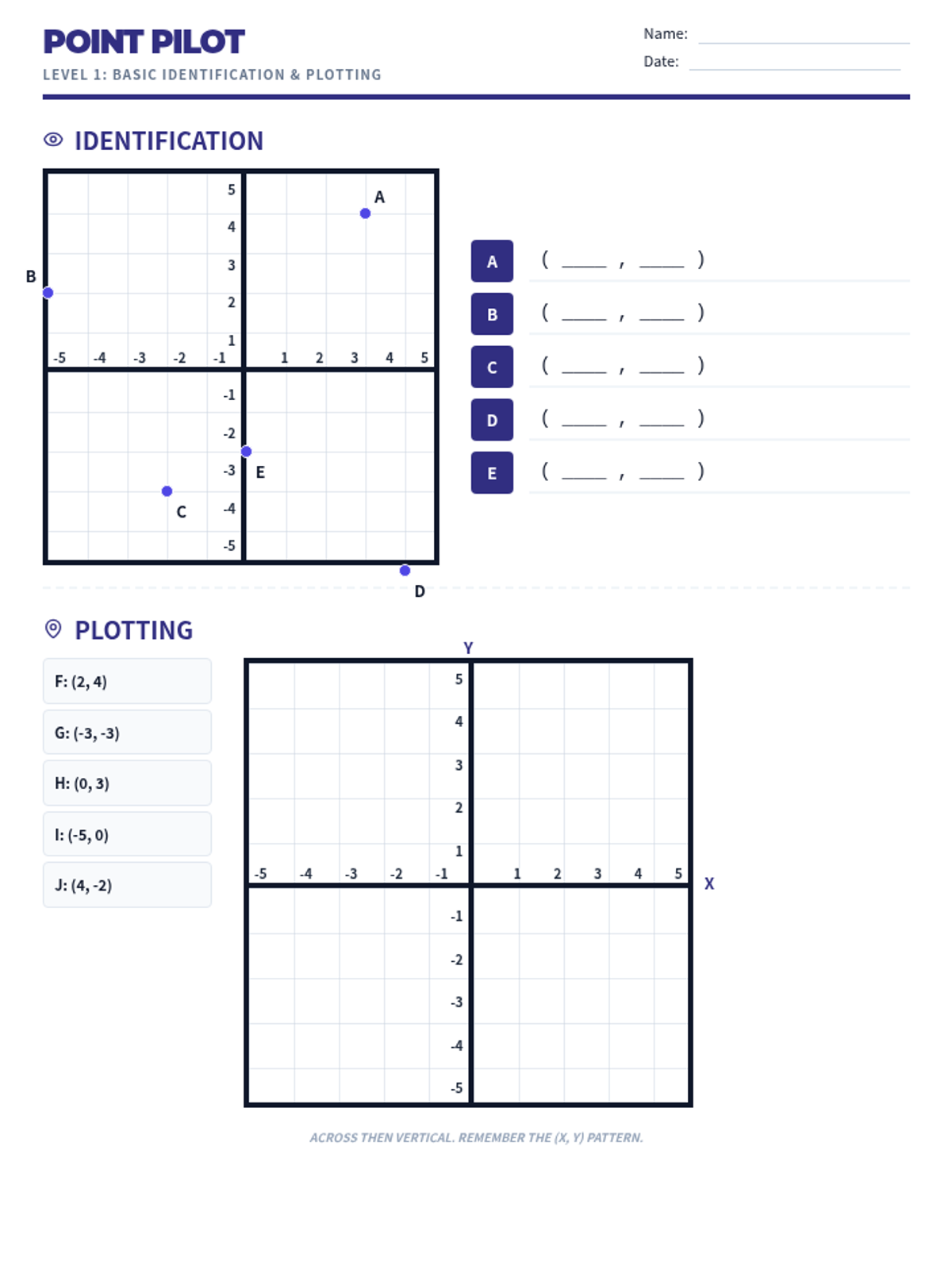
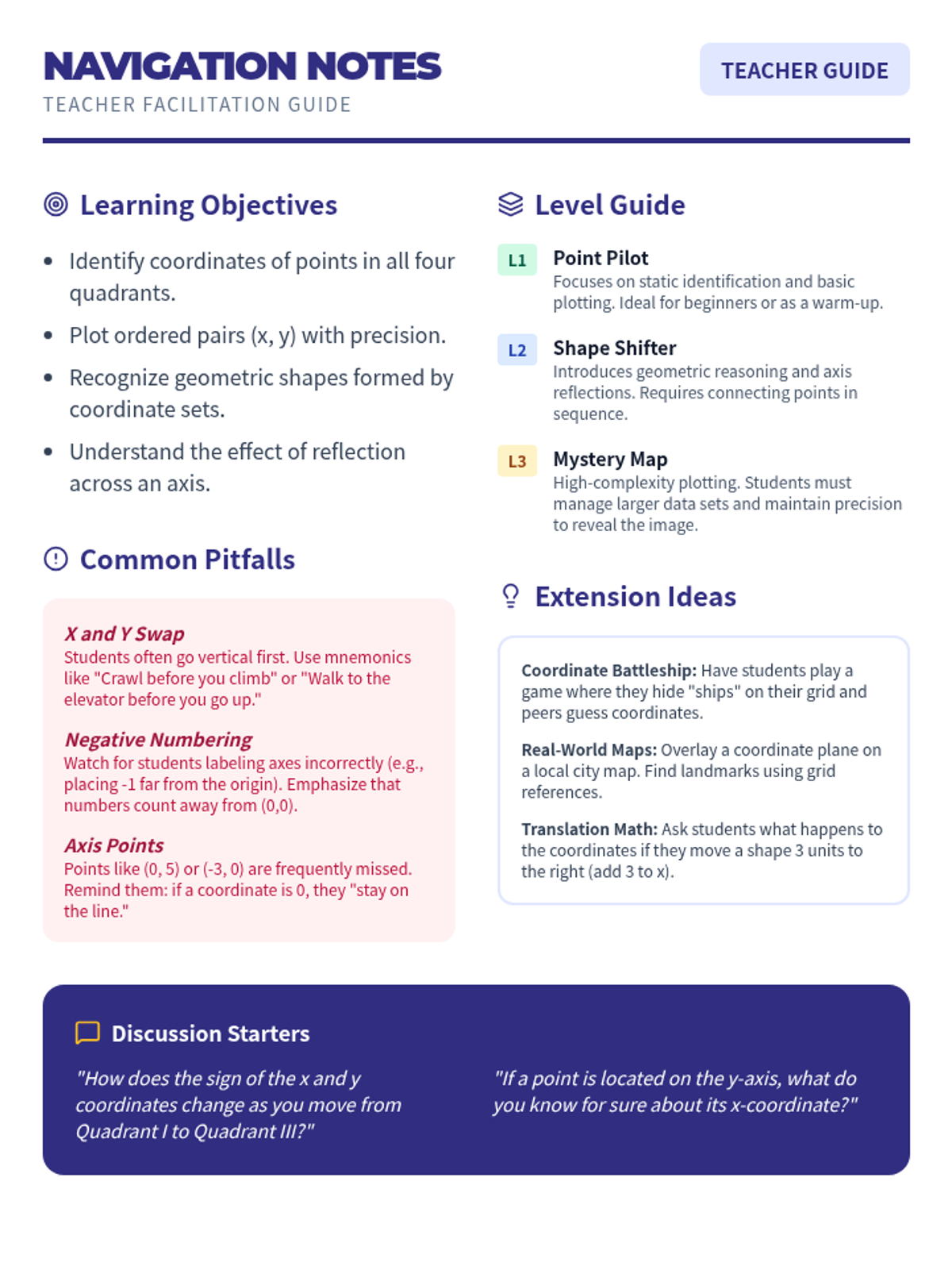
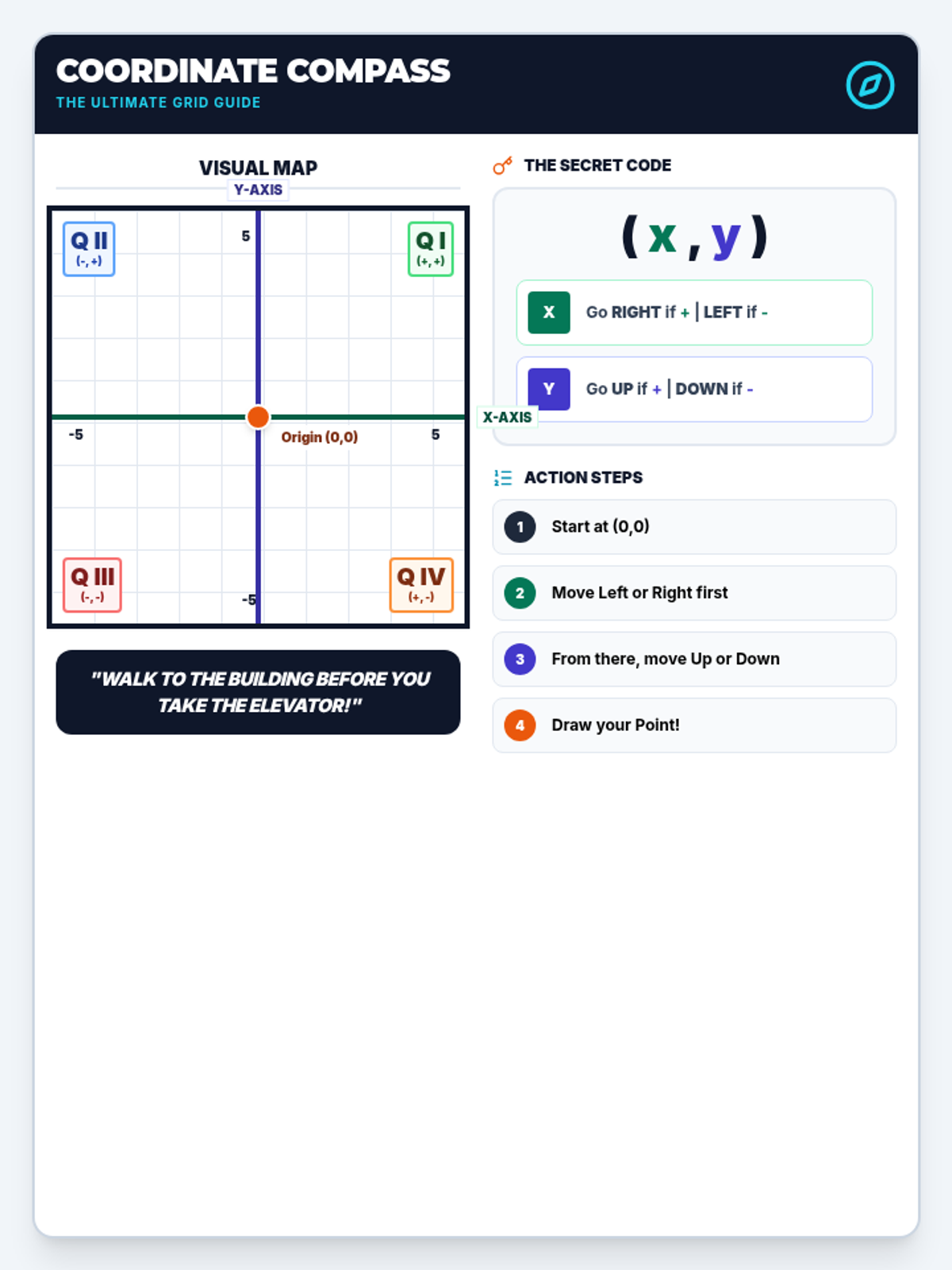
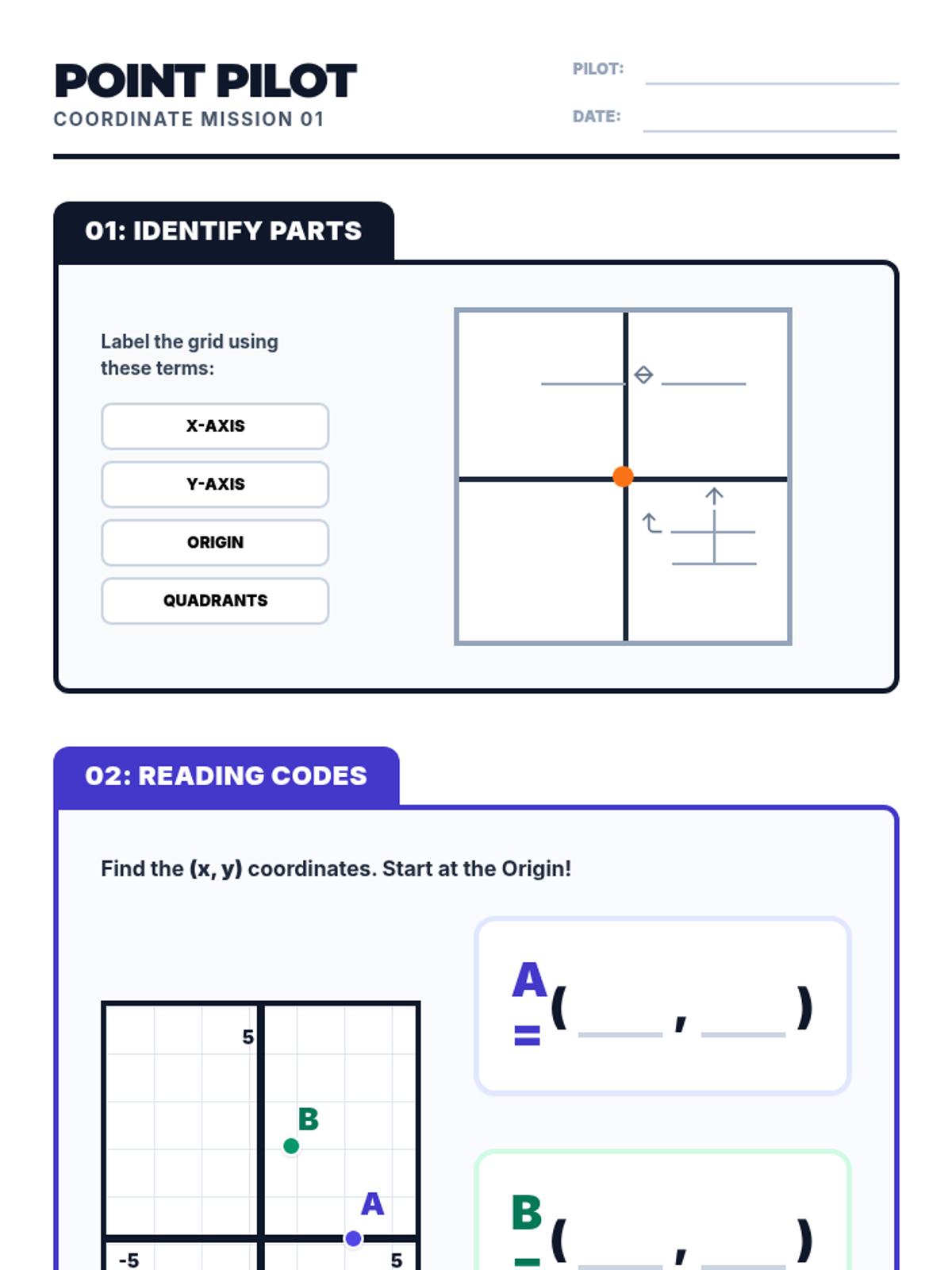
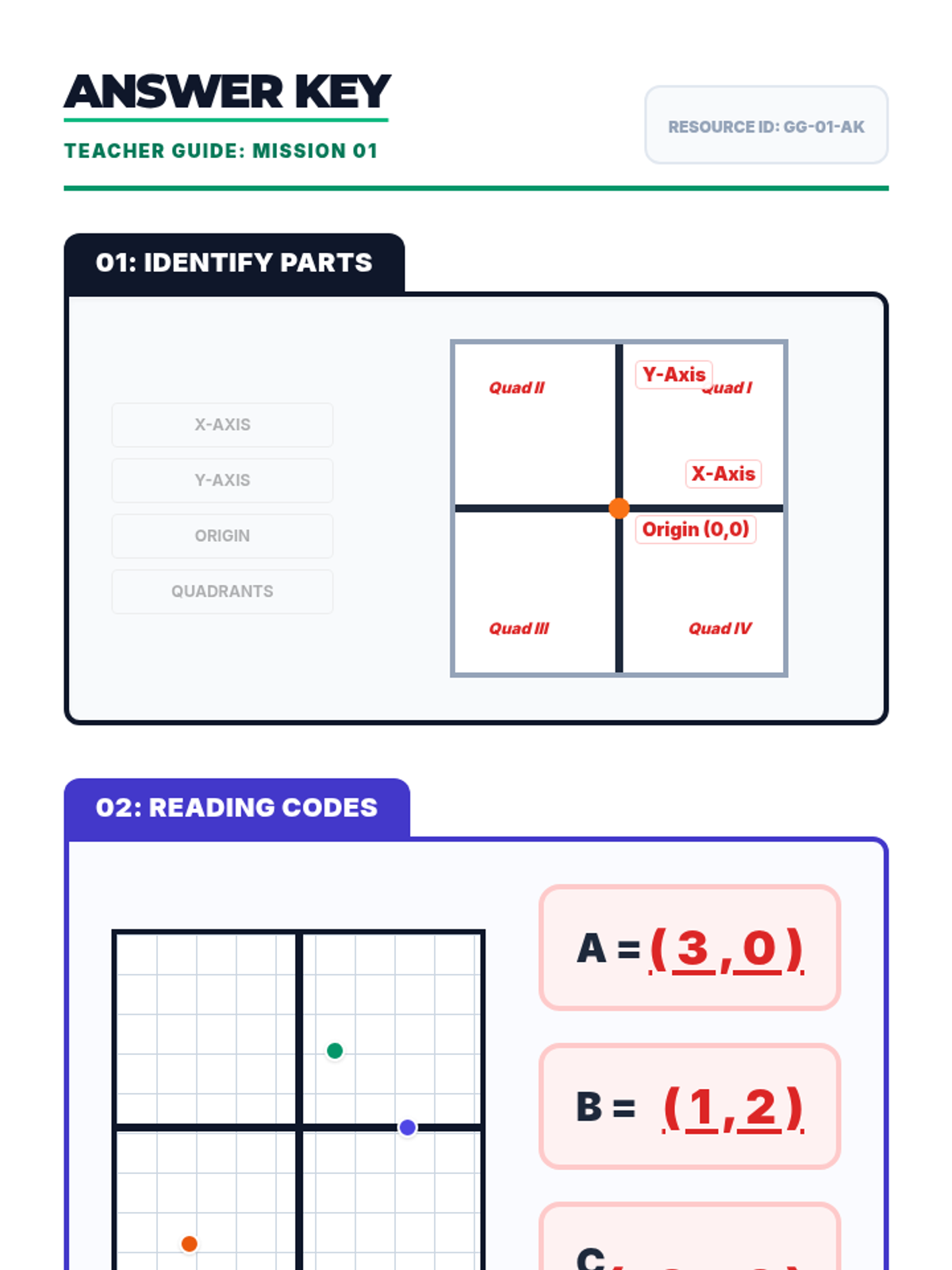
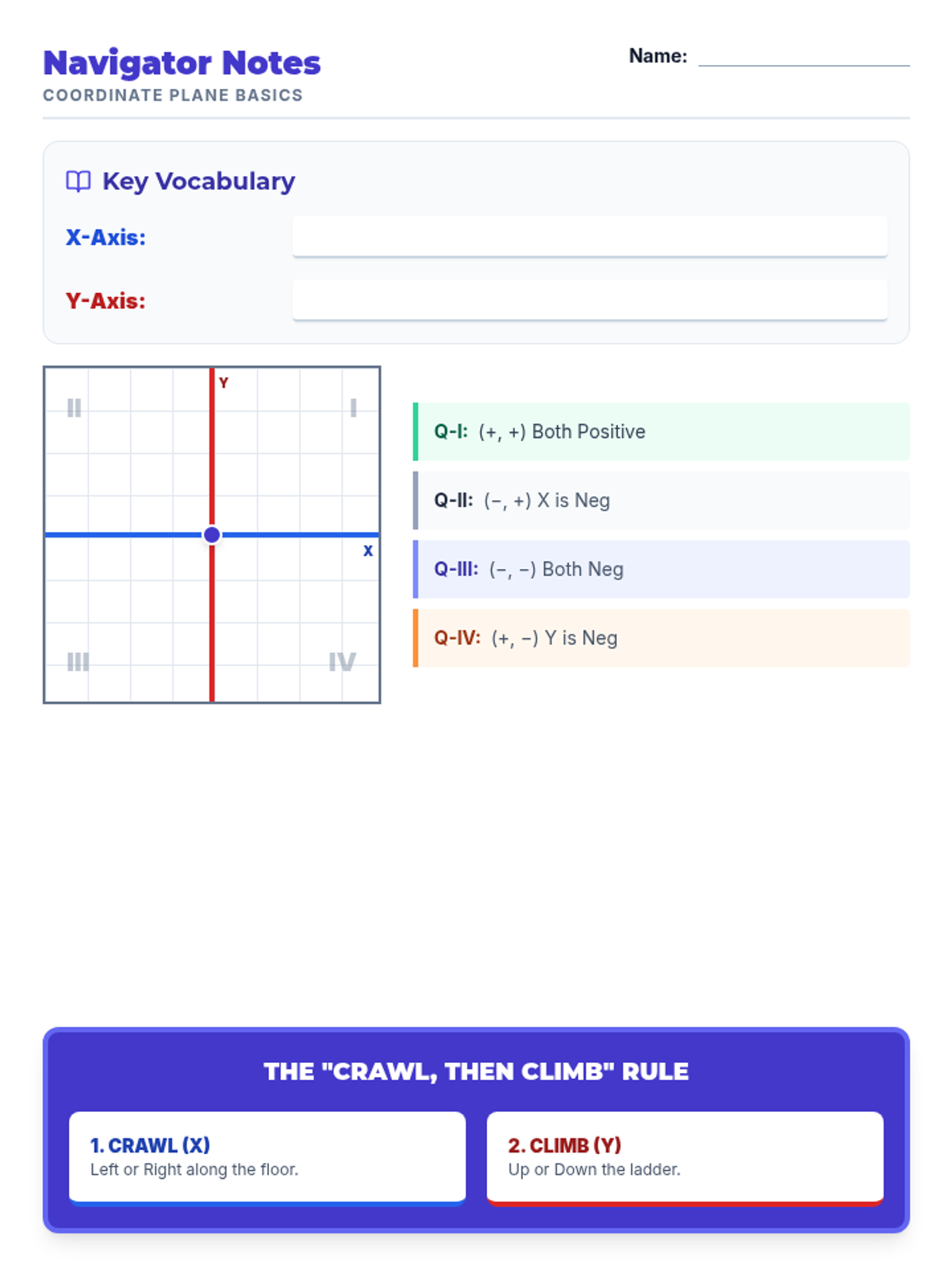
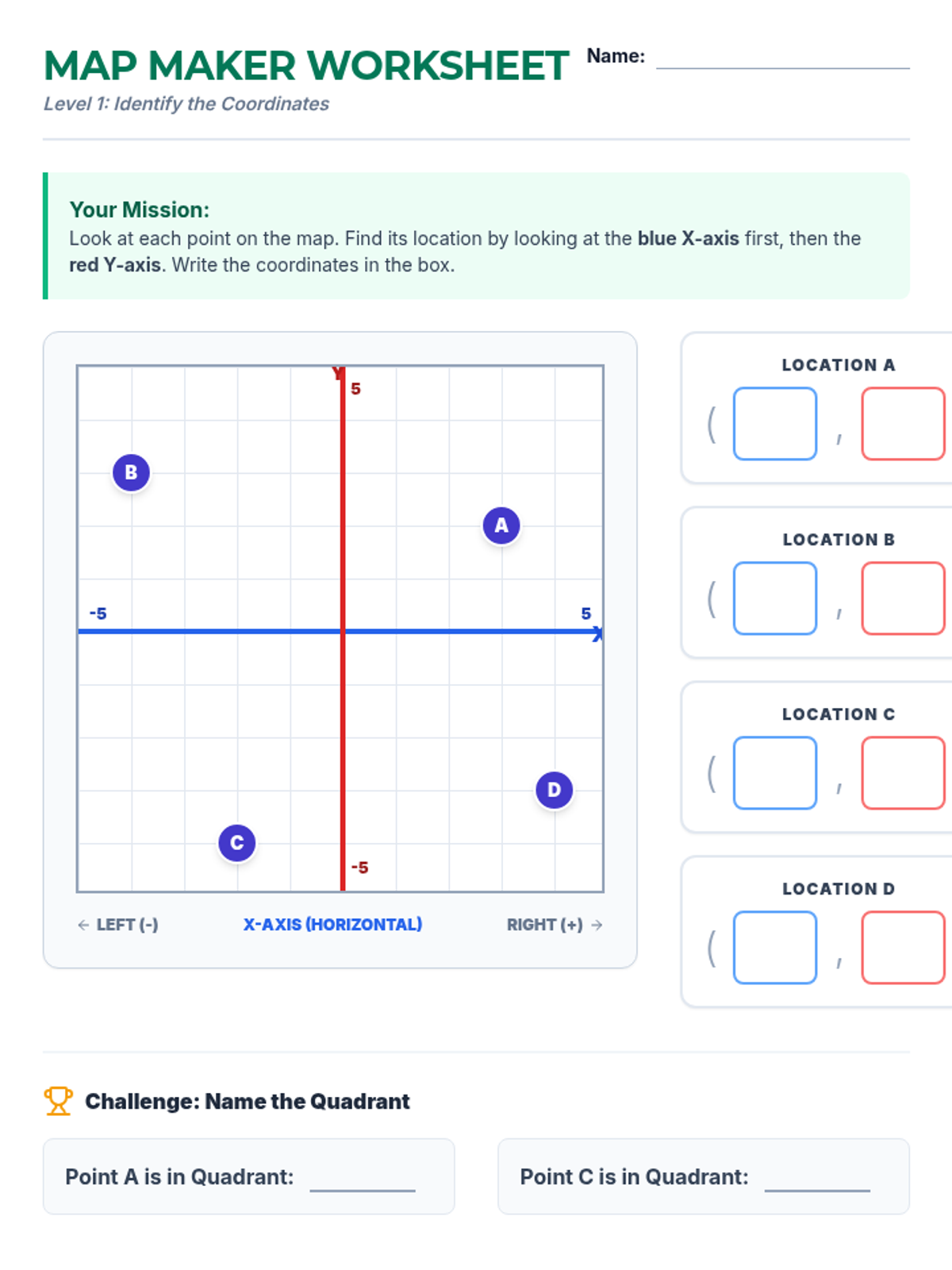
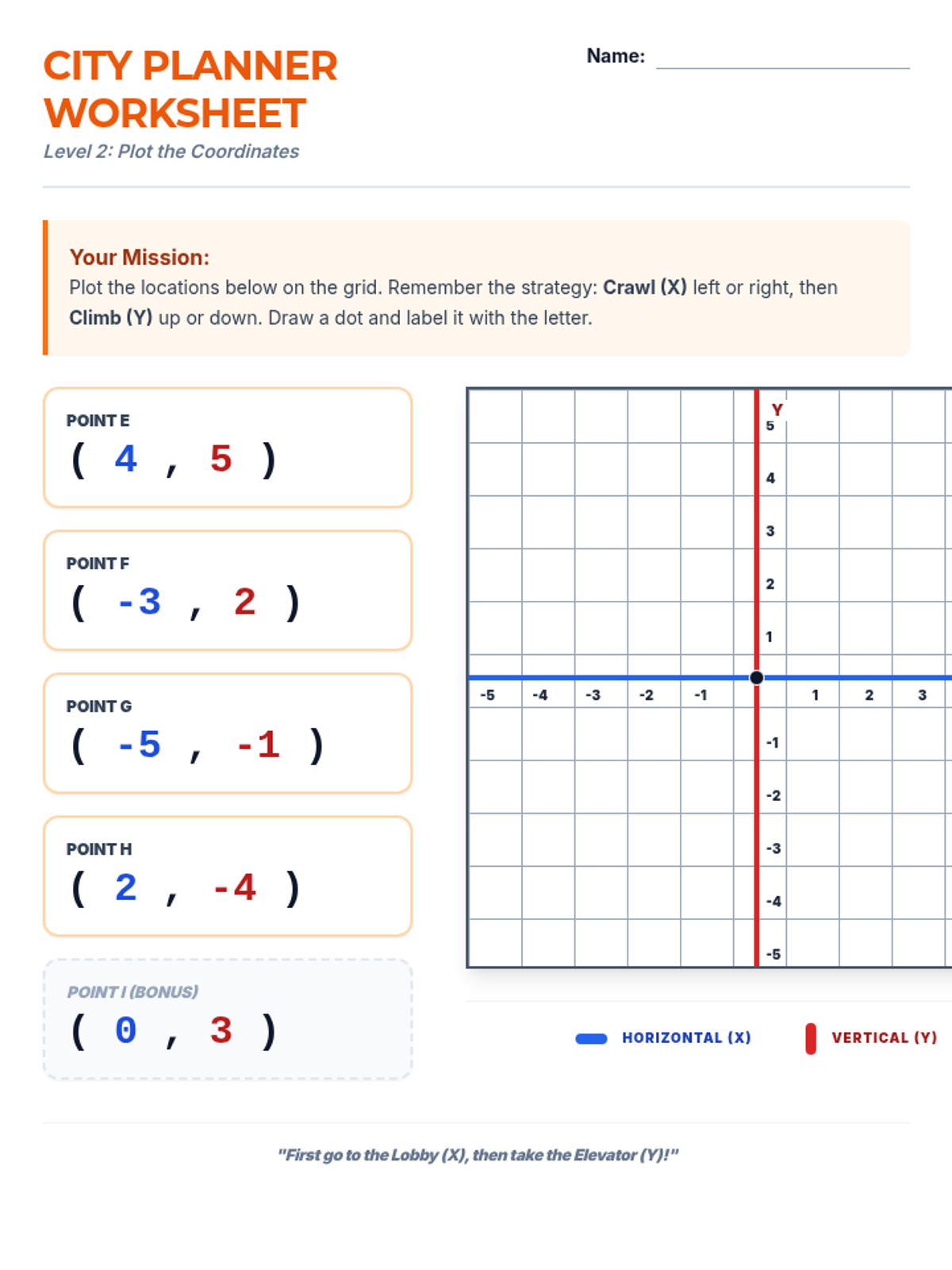
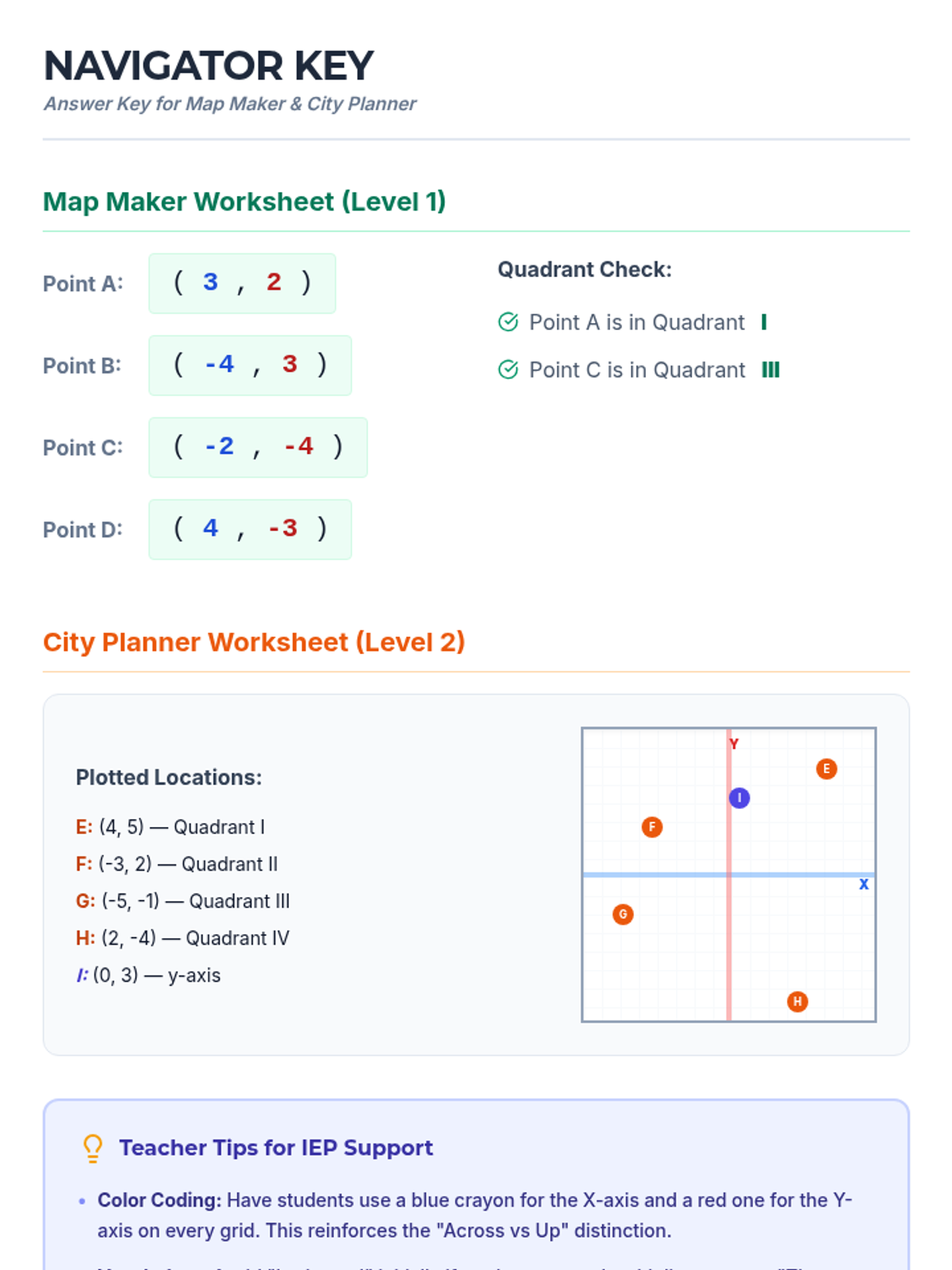
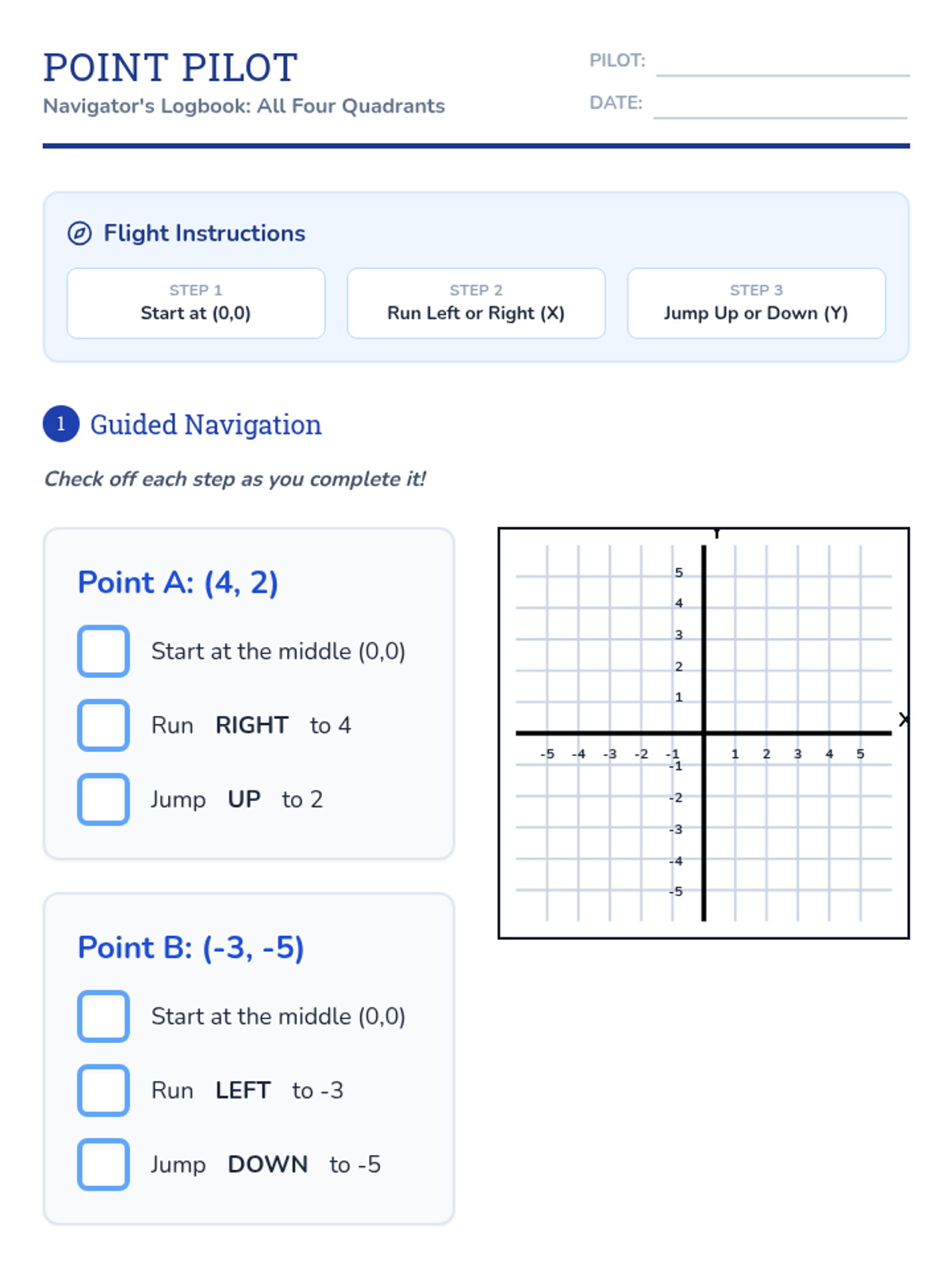
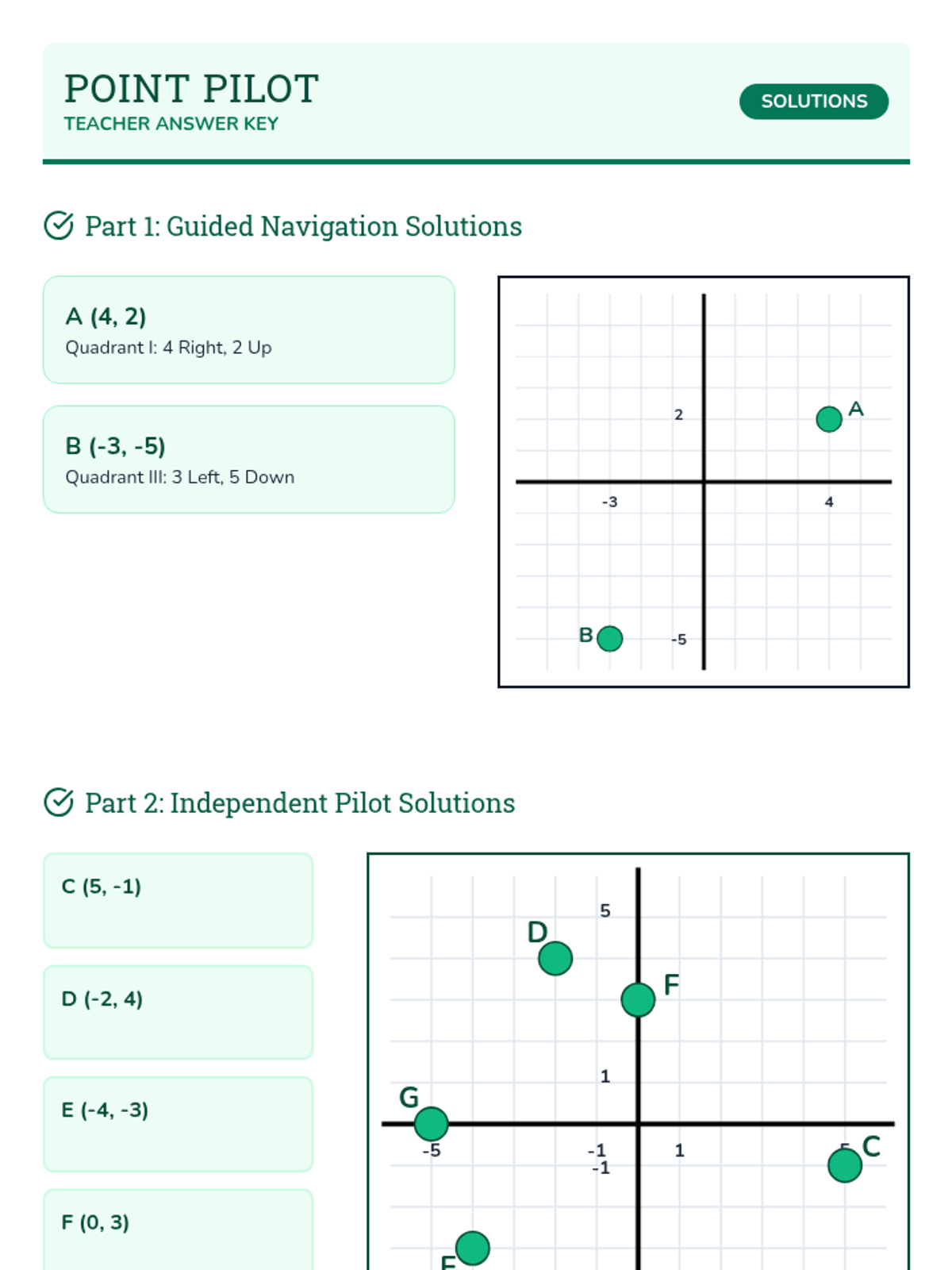
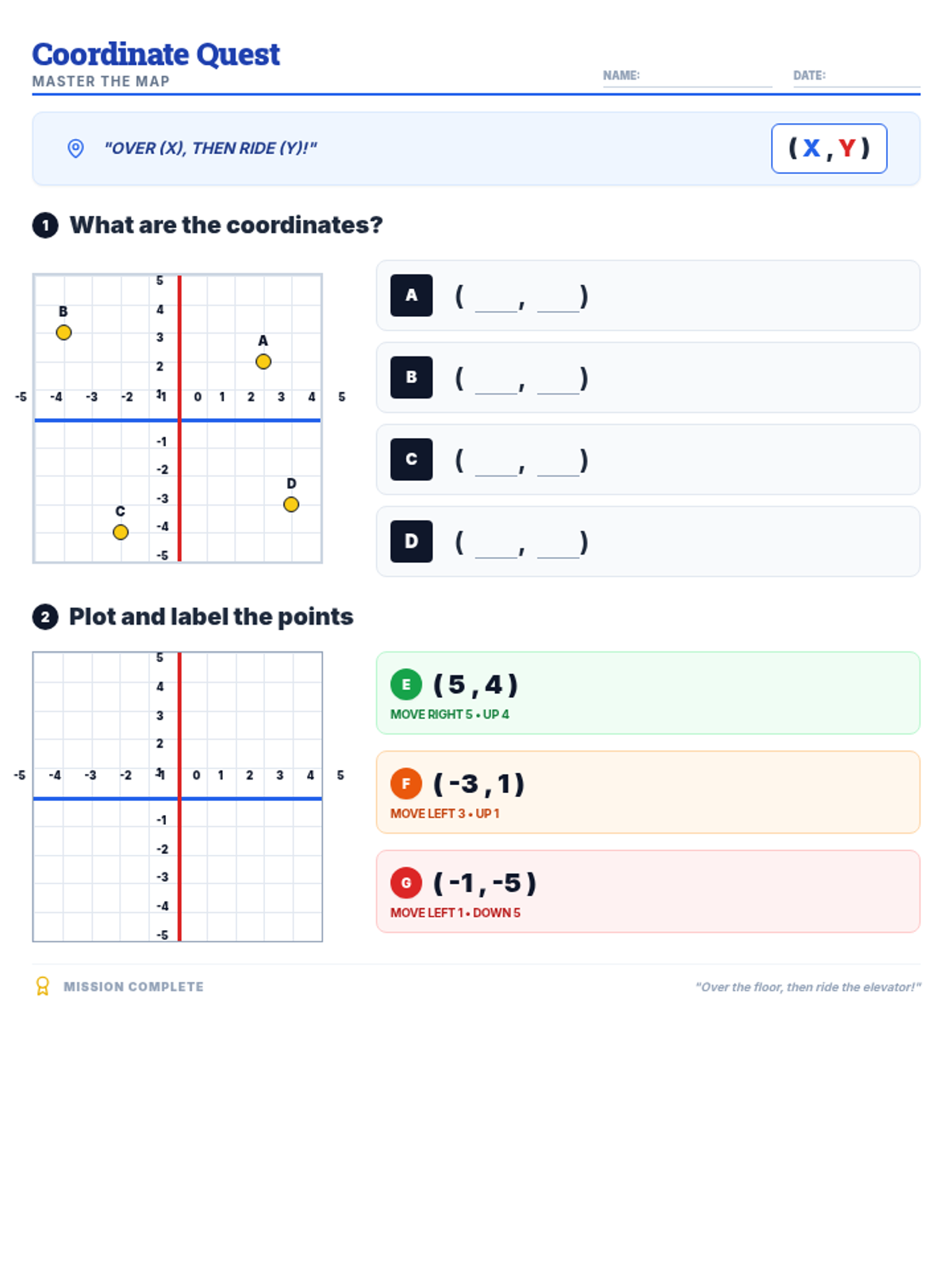
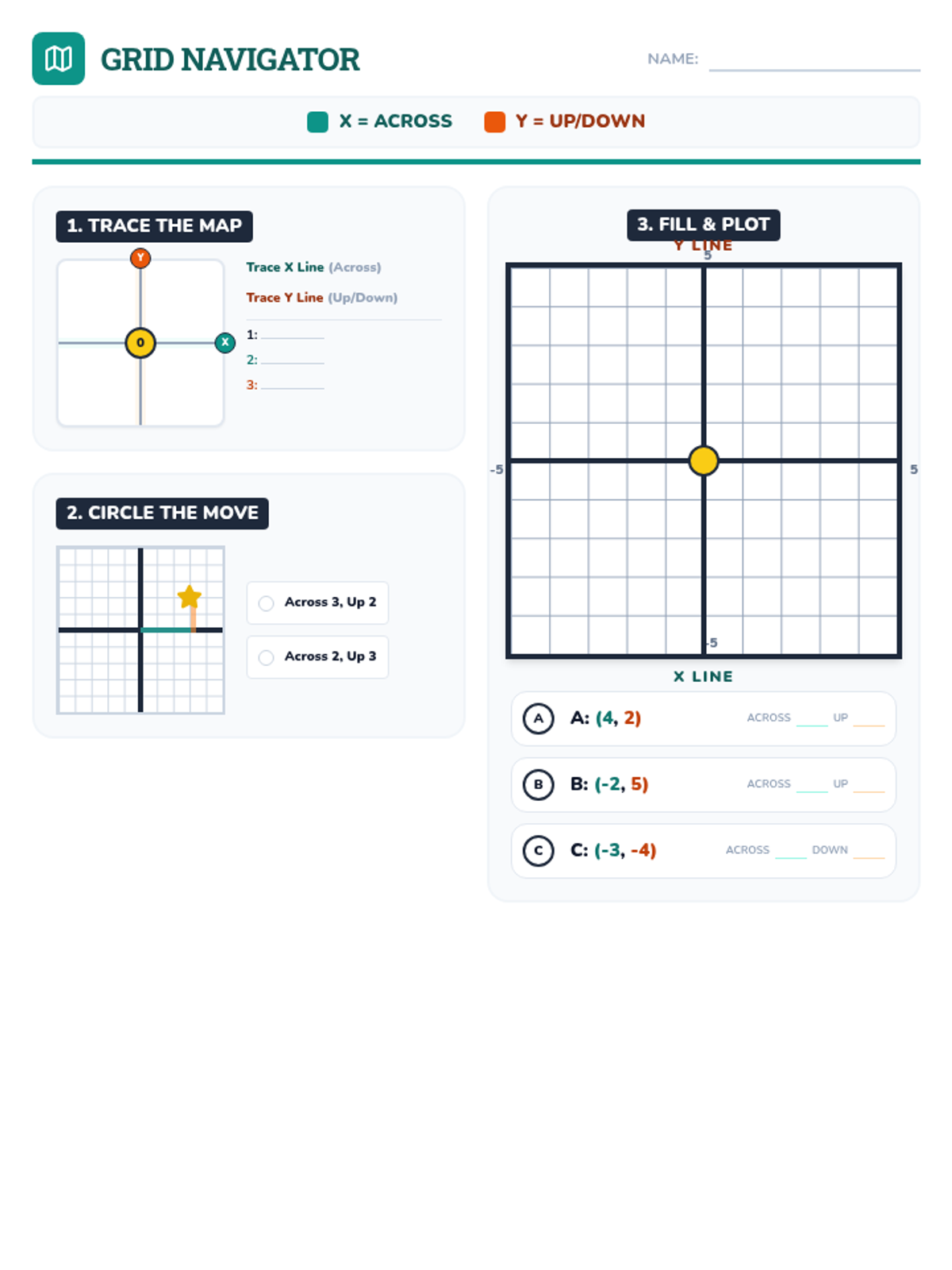
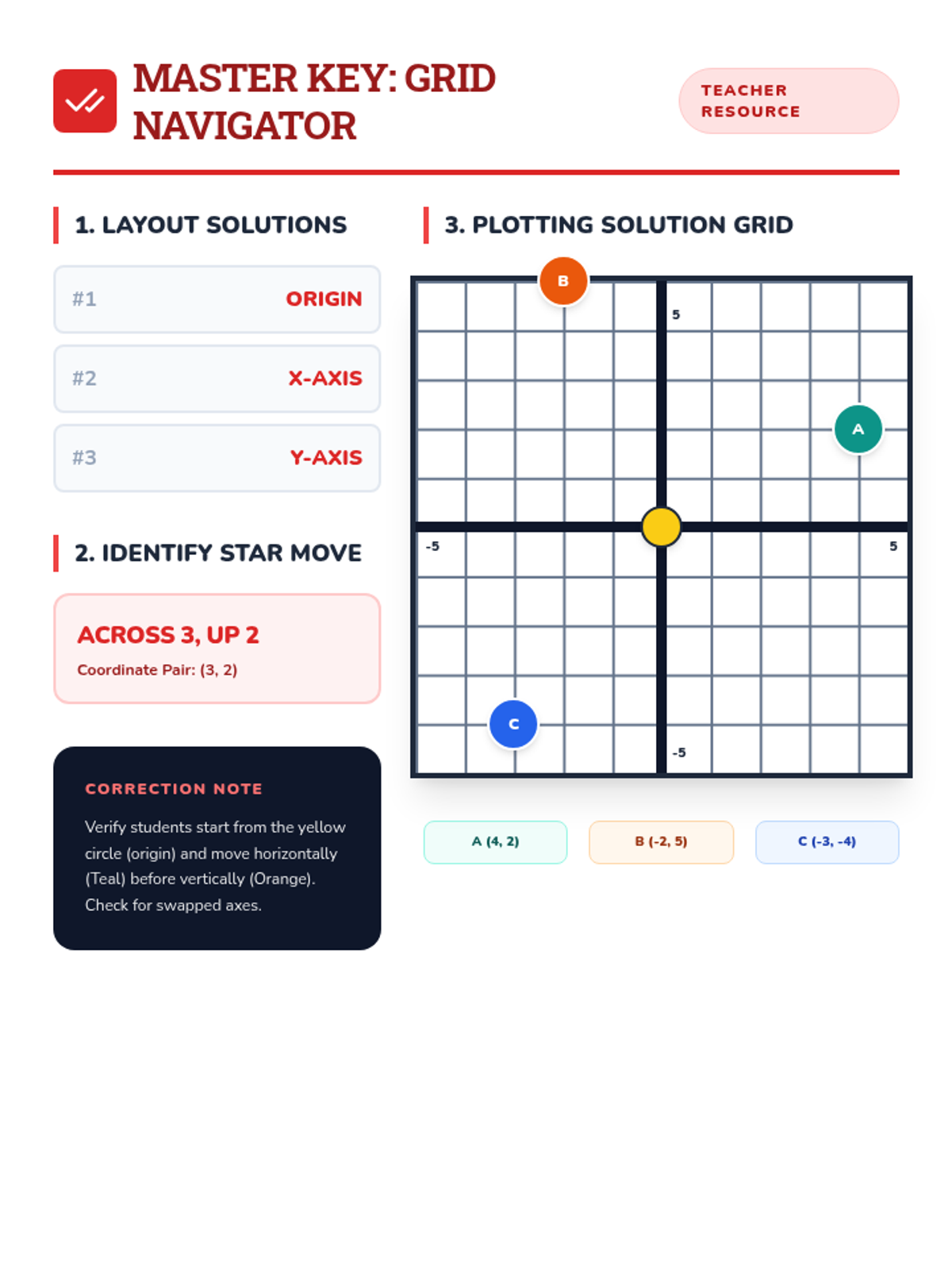
A scaffolded introduction to the four-quadrant coordinate plane, using a navigation theme to help students master plotting points with visual aids and step-by-step guides.
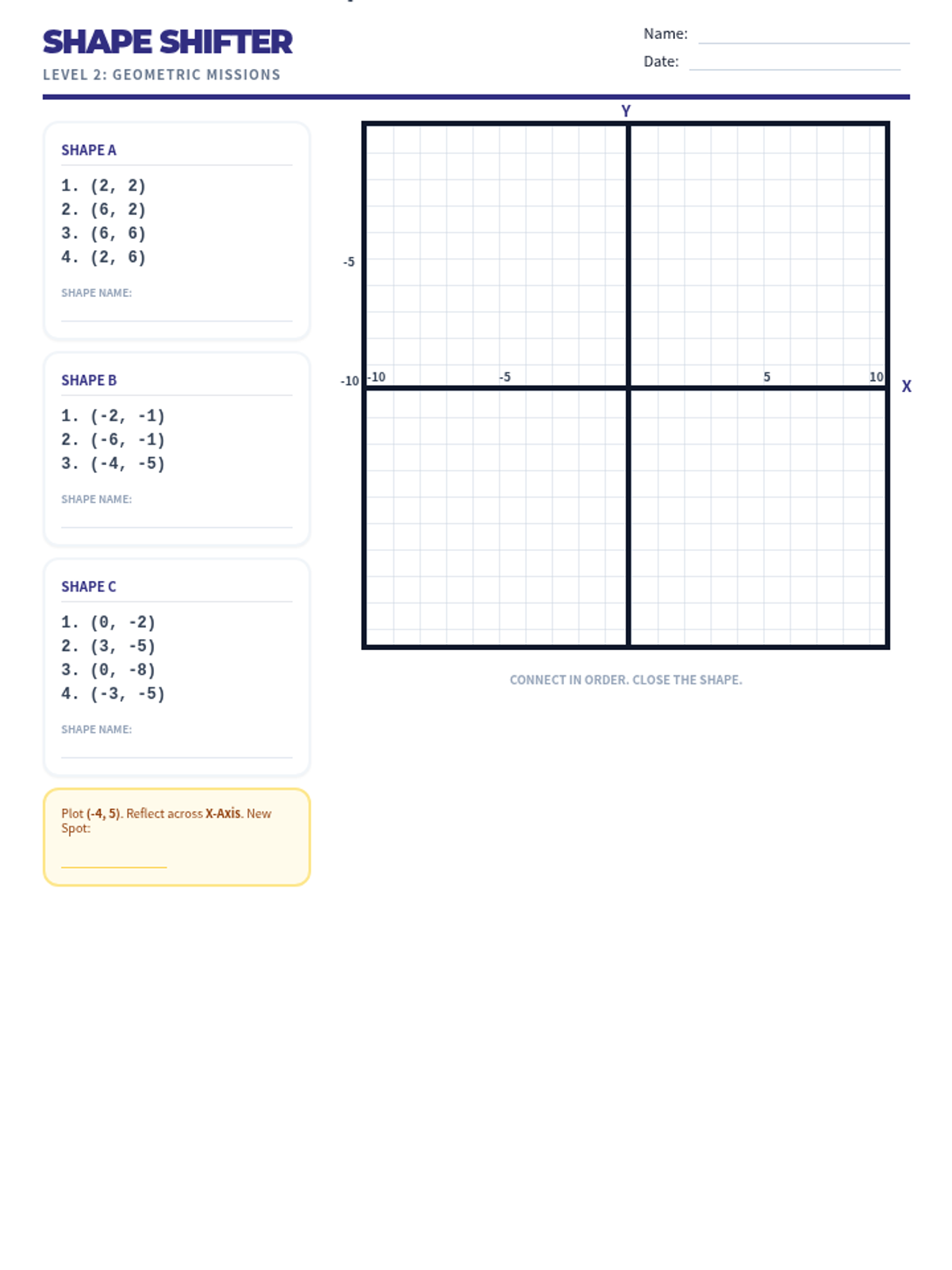
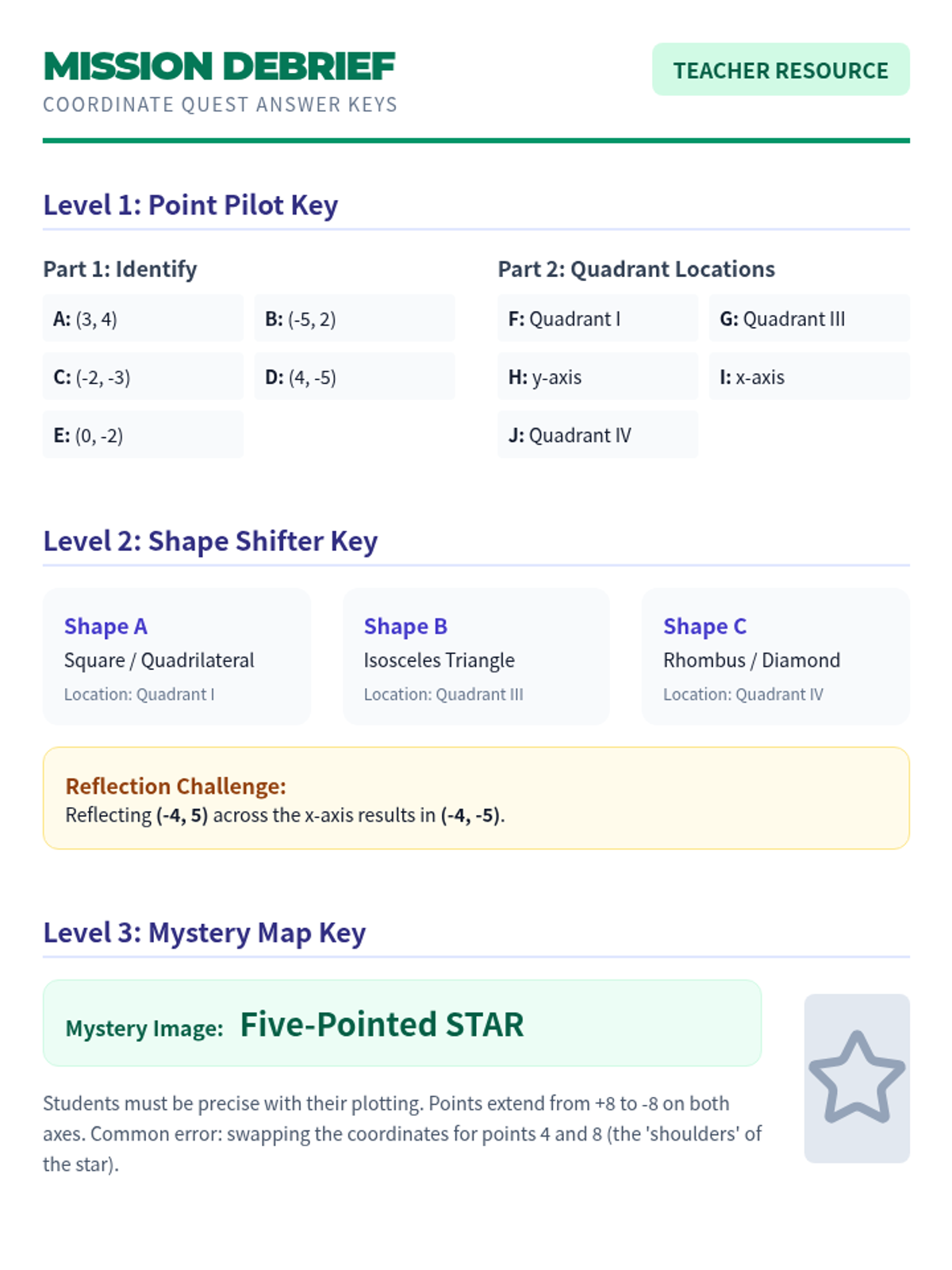
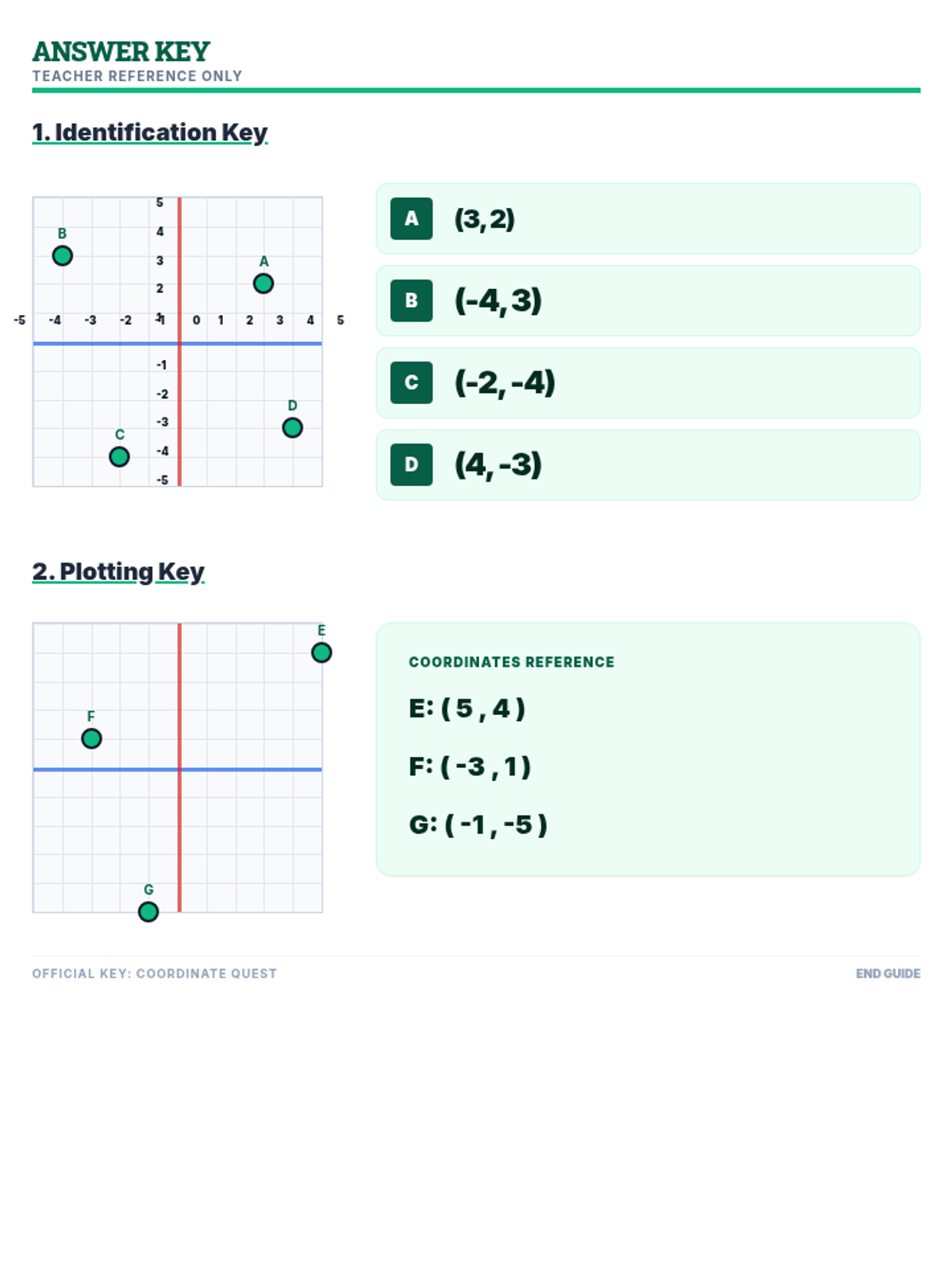
A comprehensive lesson on plotting points across all four quadrants of the coordinate plane, progressing from basic identification to complex shape creation.
A scaffolded introduction to the four-quadrant coordinate plane, designed for students needing extra support. It covers identifying the axes and origin, understanding quadrants, and step-by-step plotting of points.
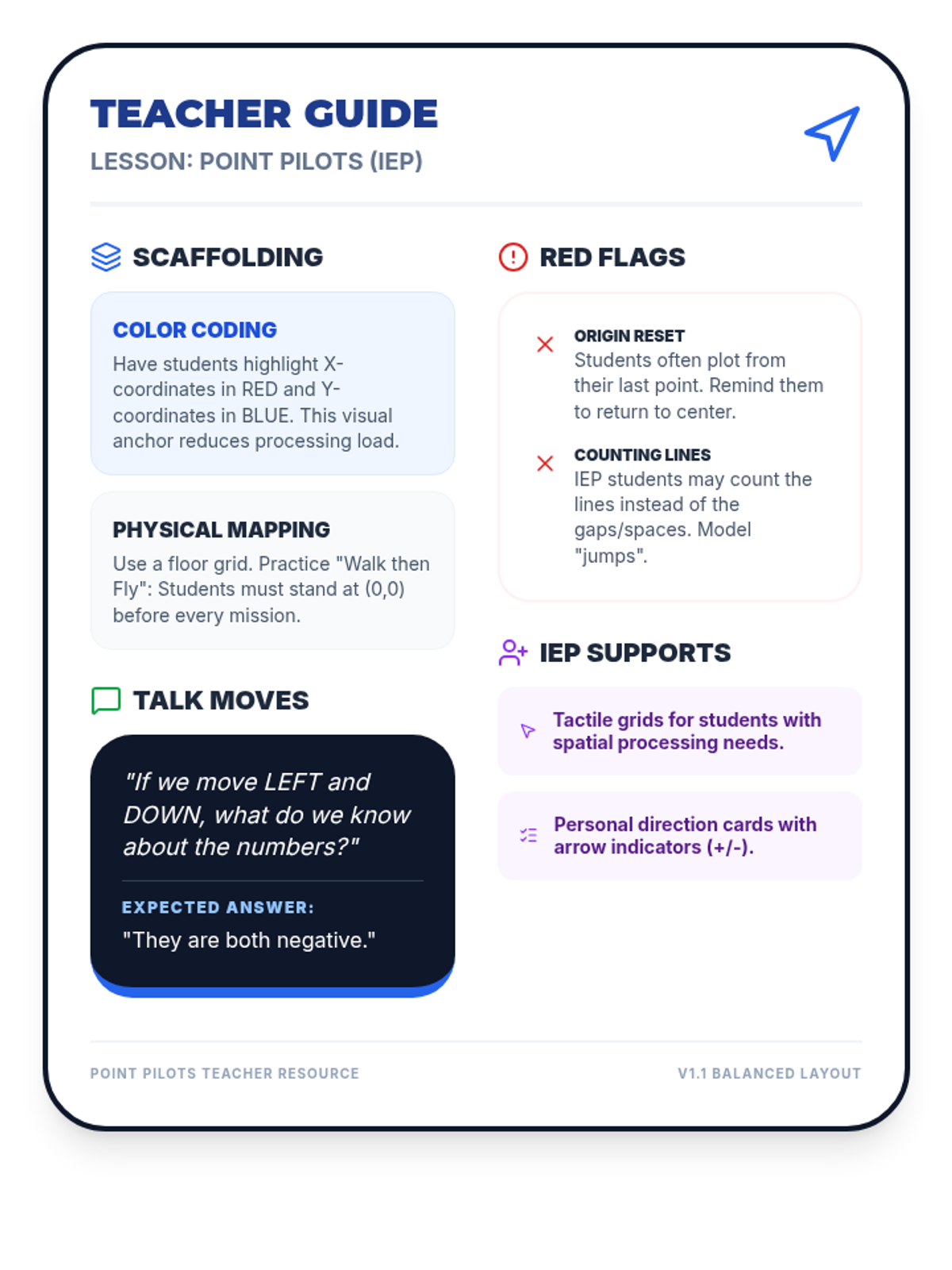
A foundational lesson on the 4-quadrant coordinate plane, specifically designed for students with IEPs. Includes visual-heavy instruction on identifying and plotting ordered pairs using color-coded axes and step-by-step strategies.
A scaffolded lesson on plotting points across all four quadrants of the coordinate plane, designed specifically for students with IEPs through visual aids and step-by-step guided practice.
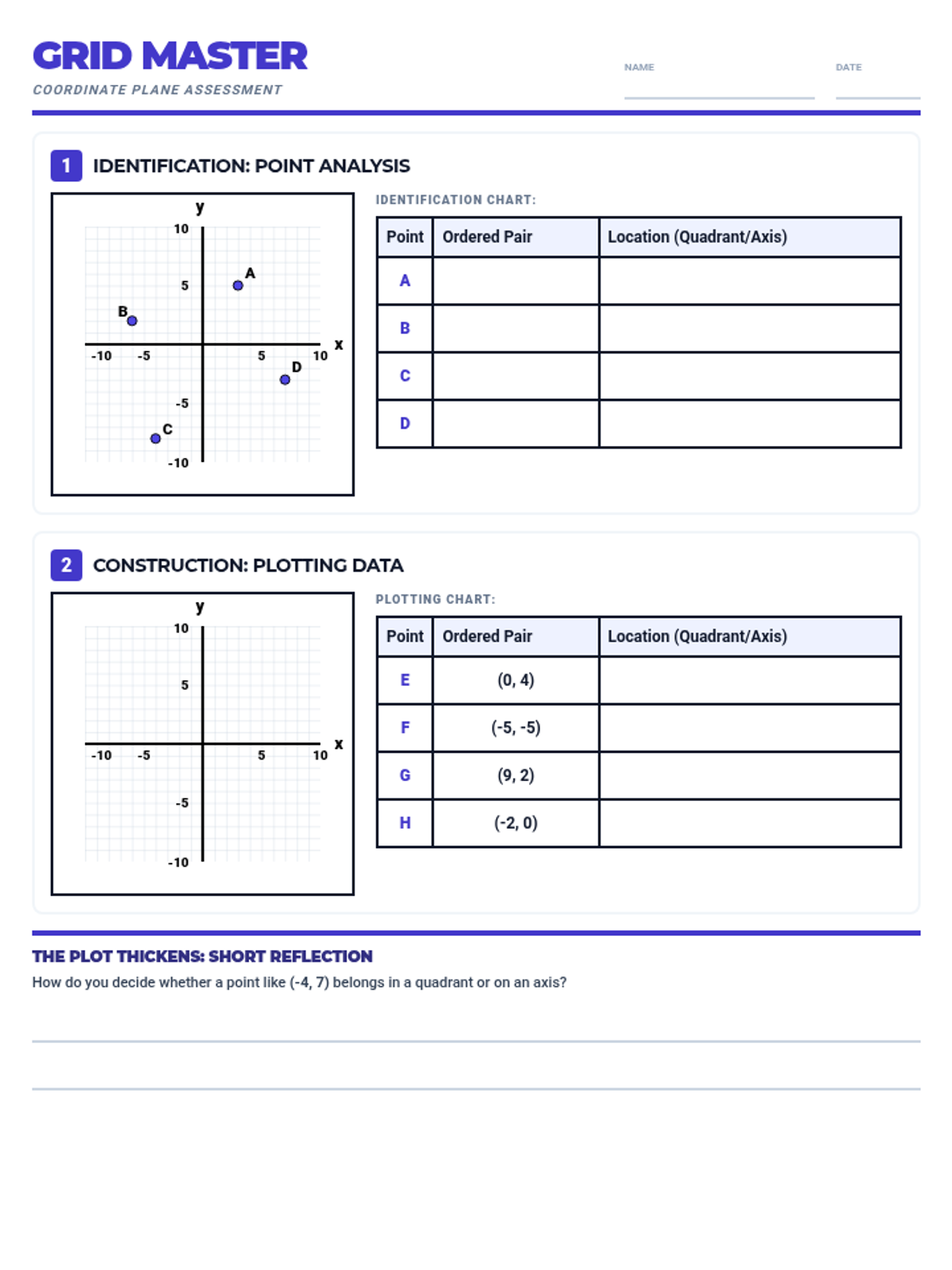
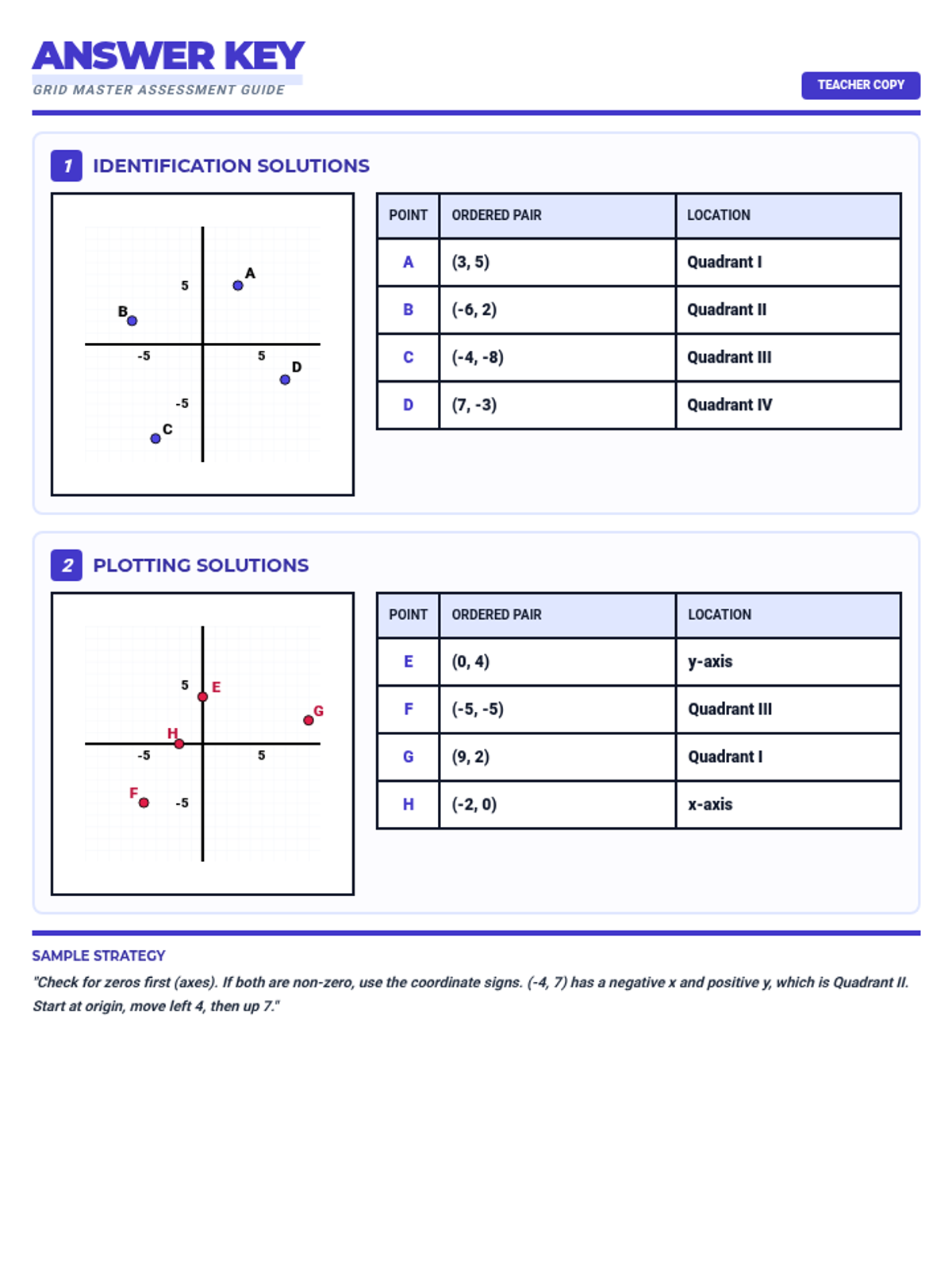
A quick assessment on identifying quadrants and plotting points on a four-quadrant coordinate plane.
A foundational lesson on navigating the four-quadrant coordinate plane, designed with visual supports for IEP students to master plotting and identifying coordinates.
A modified lesson on the coordinate plane focusing on identifying axes, the origin, and plotting points in all four quadrants with visual scaffolding.
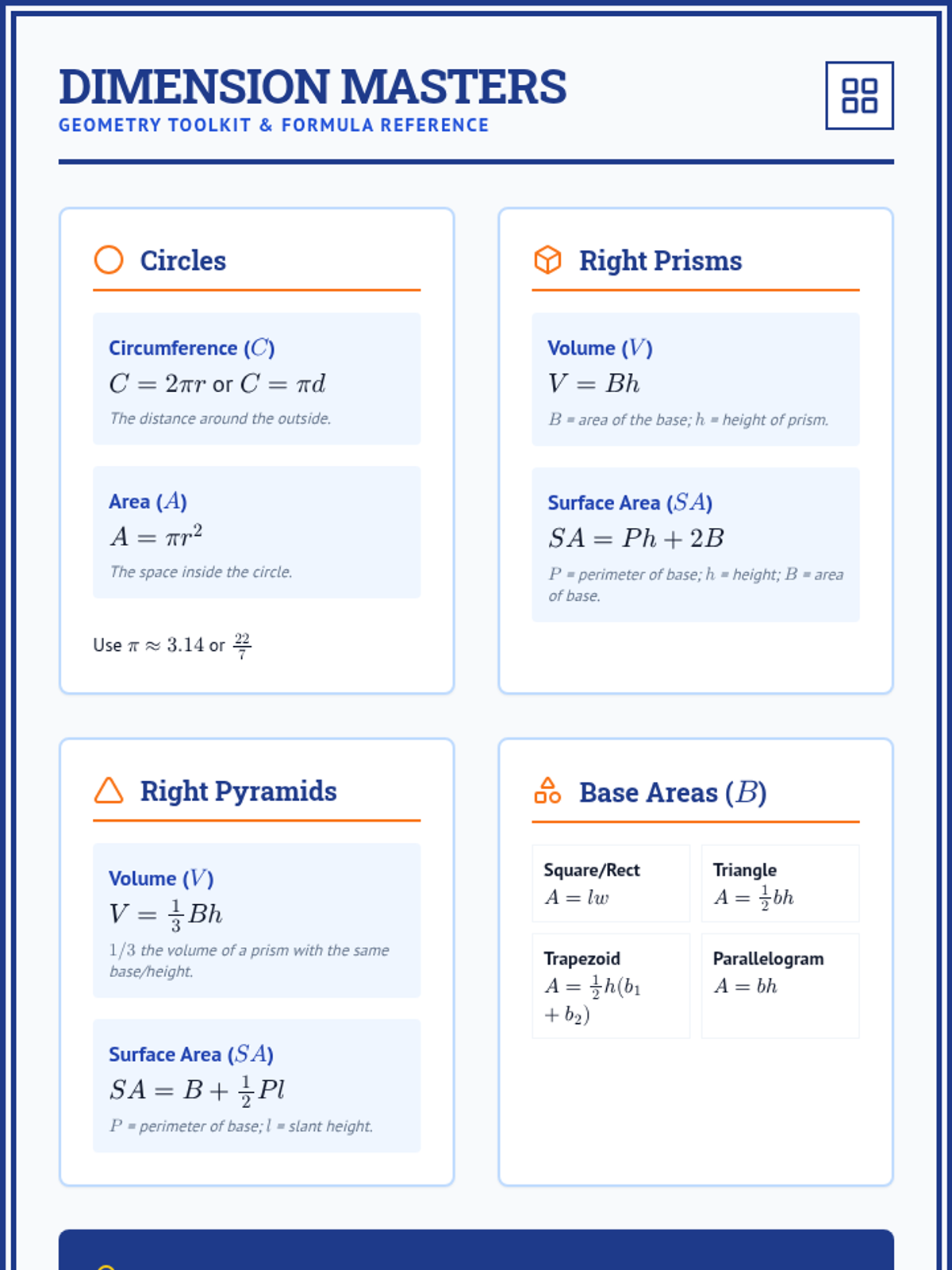
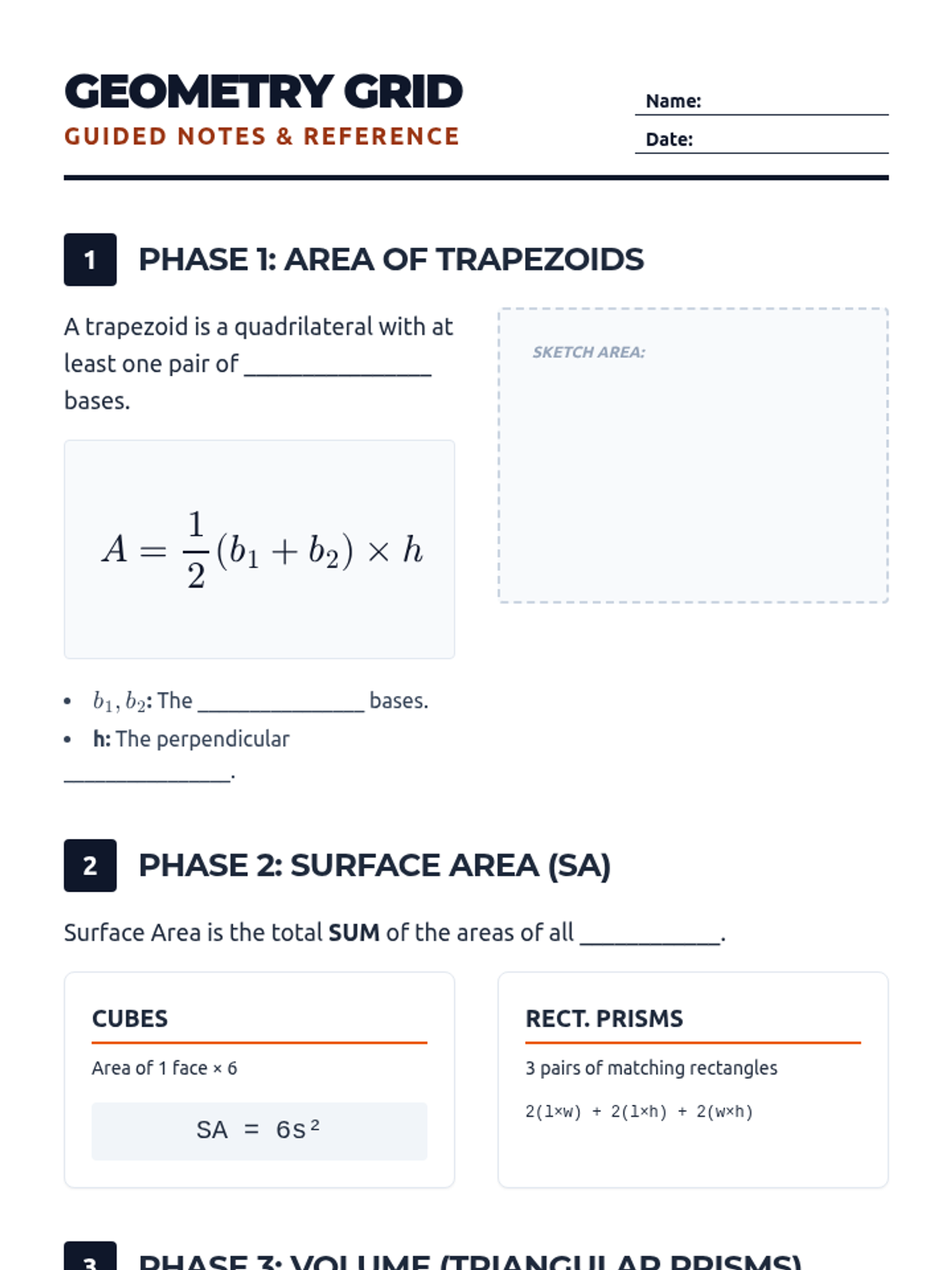
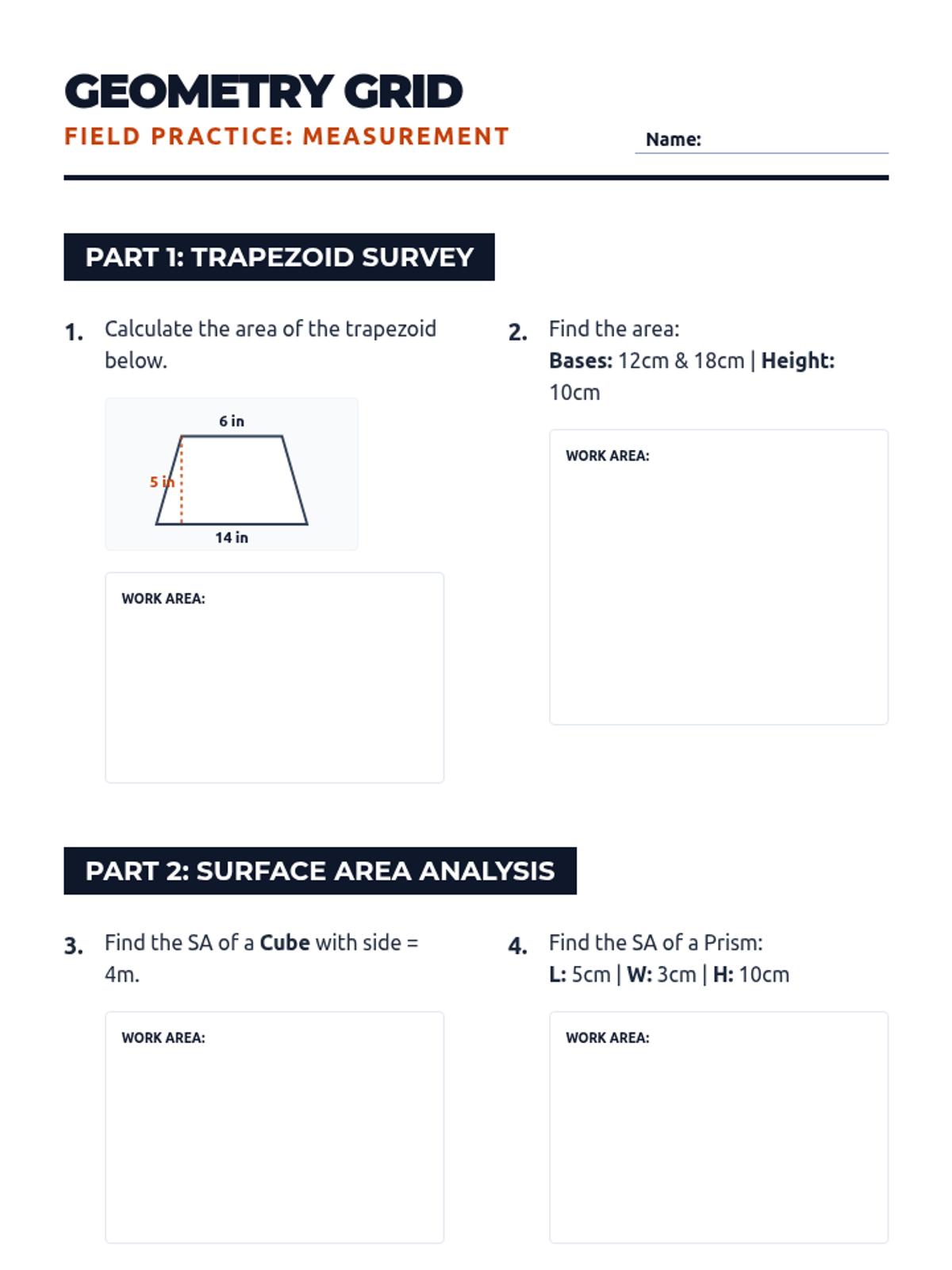
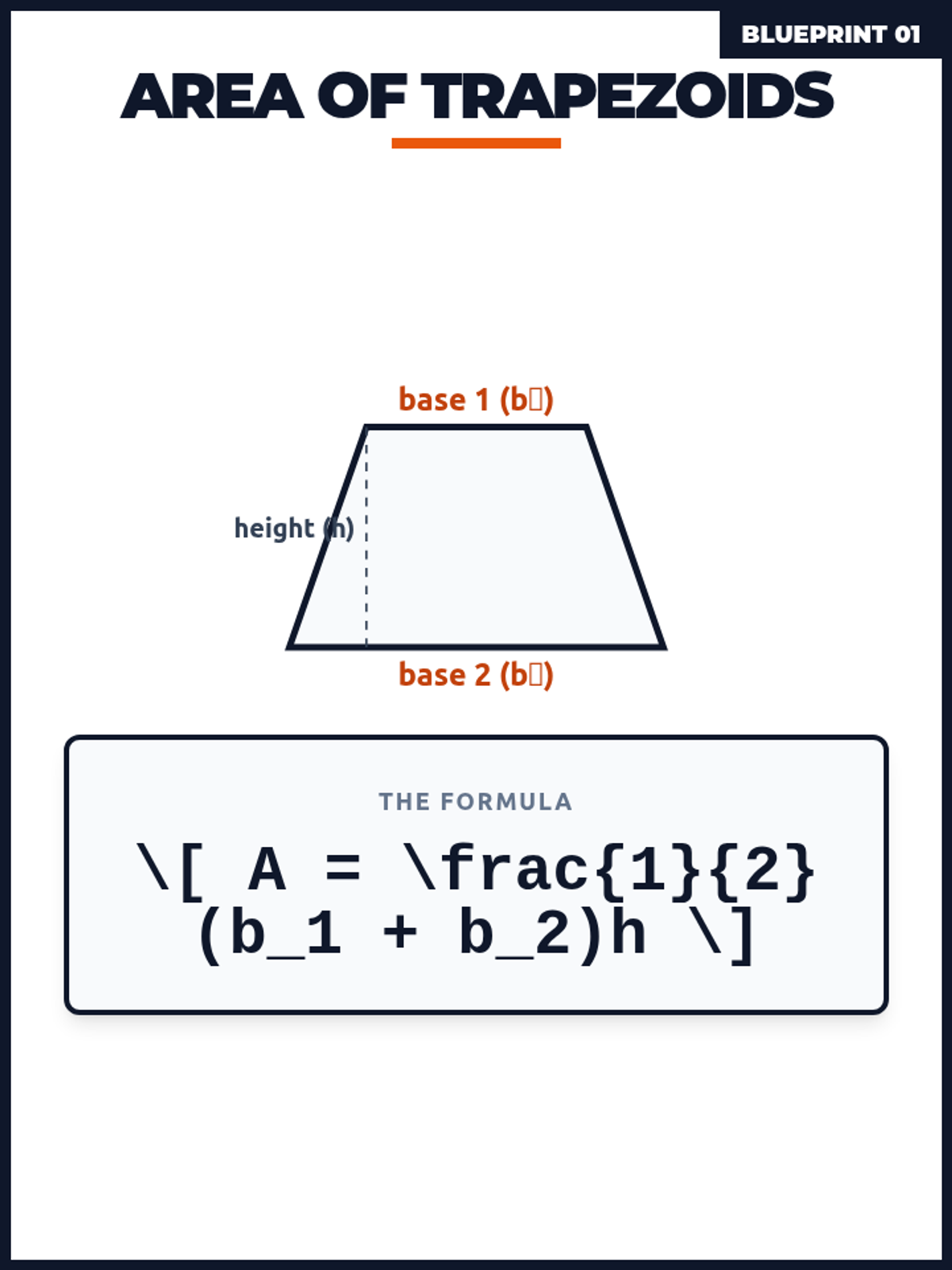
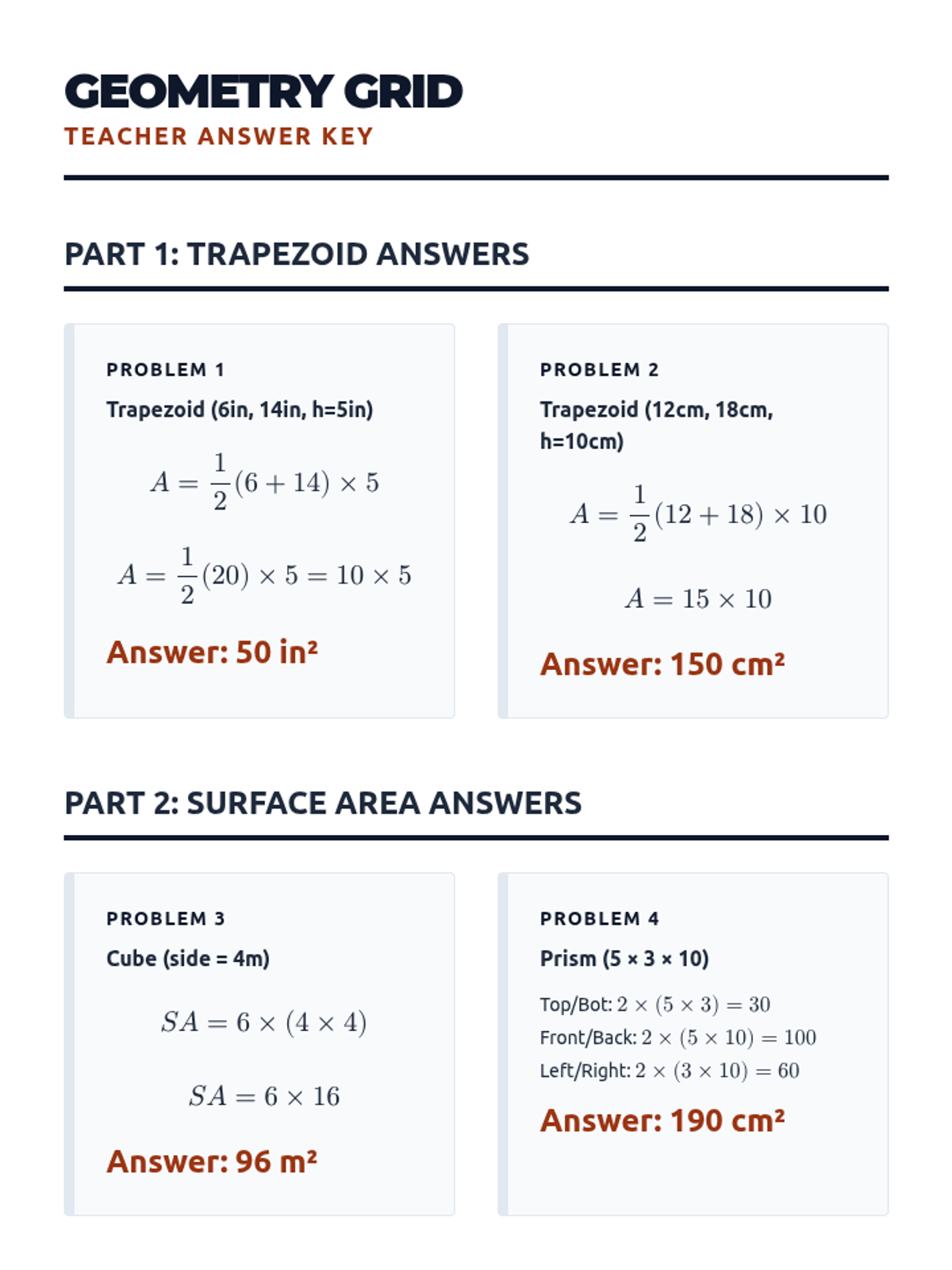
A comprehensive lesson covering the area of trapezoids, surface area of rectangular prisms and cubes, and the volume of triangular prisms using a technical blueprint aesthetic.
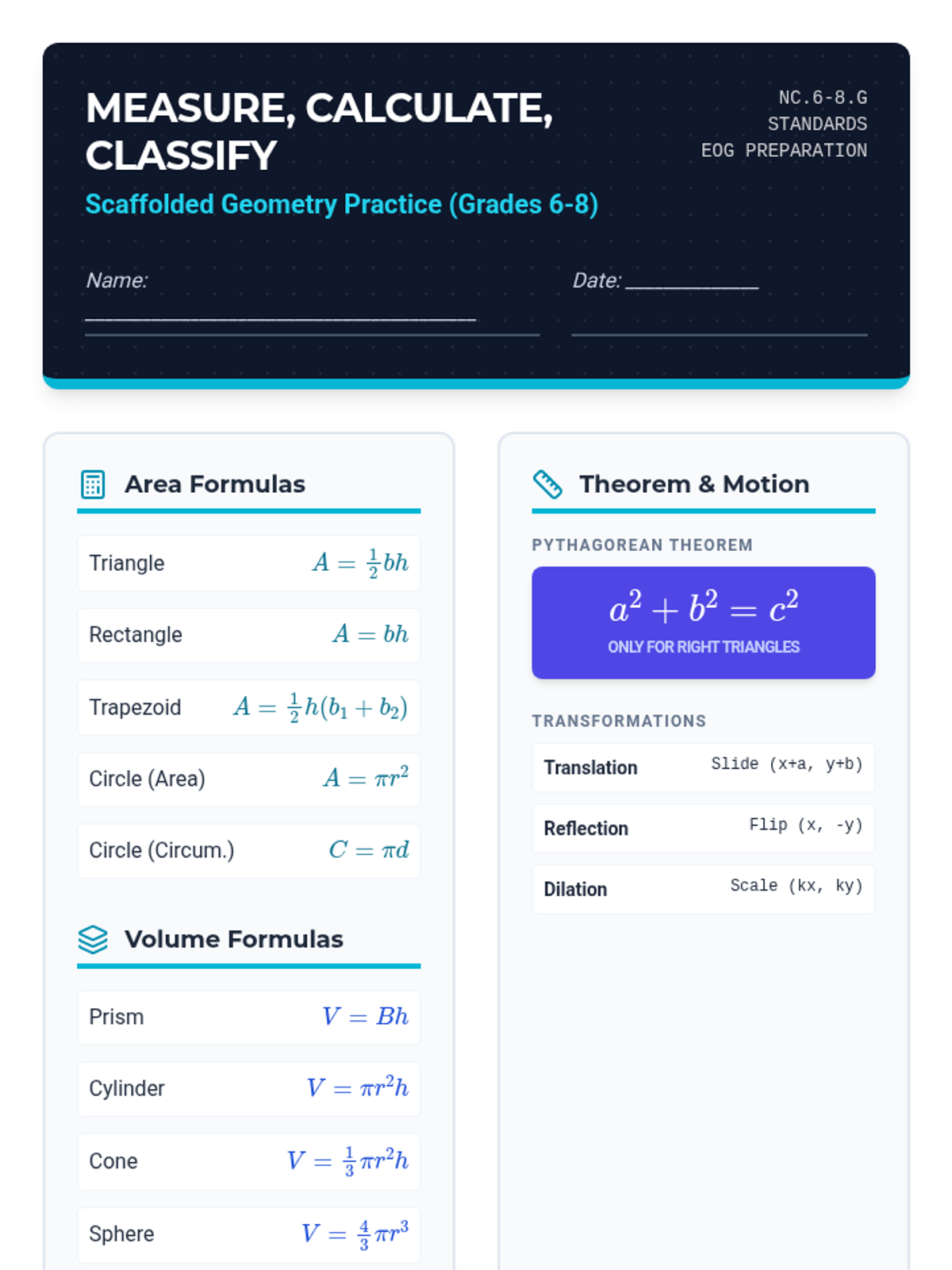
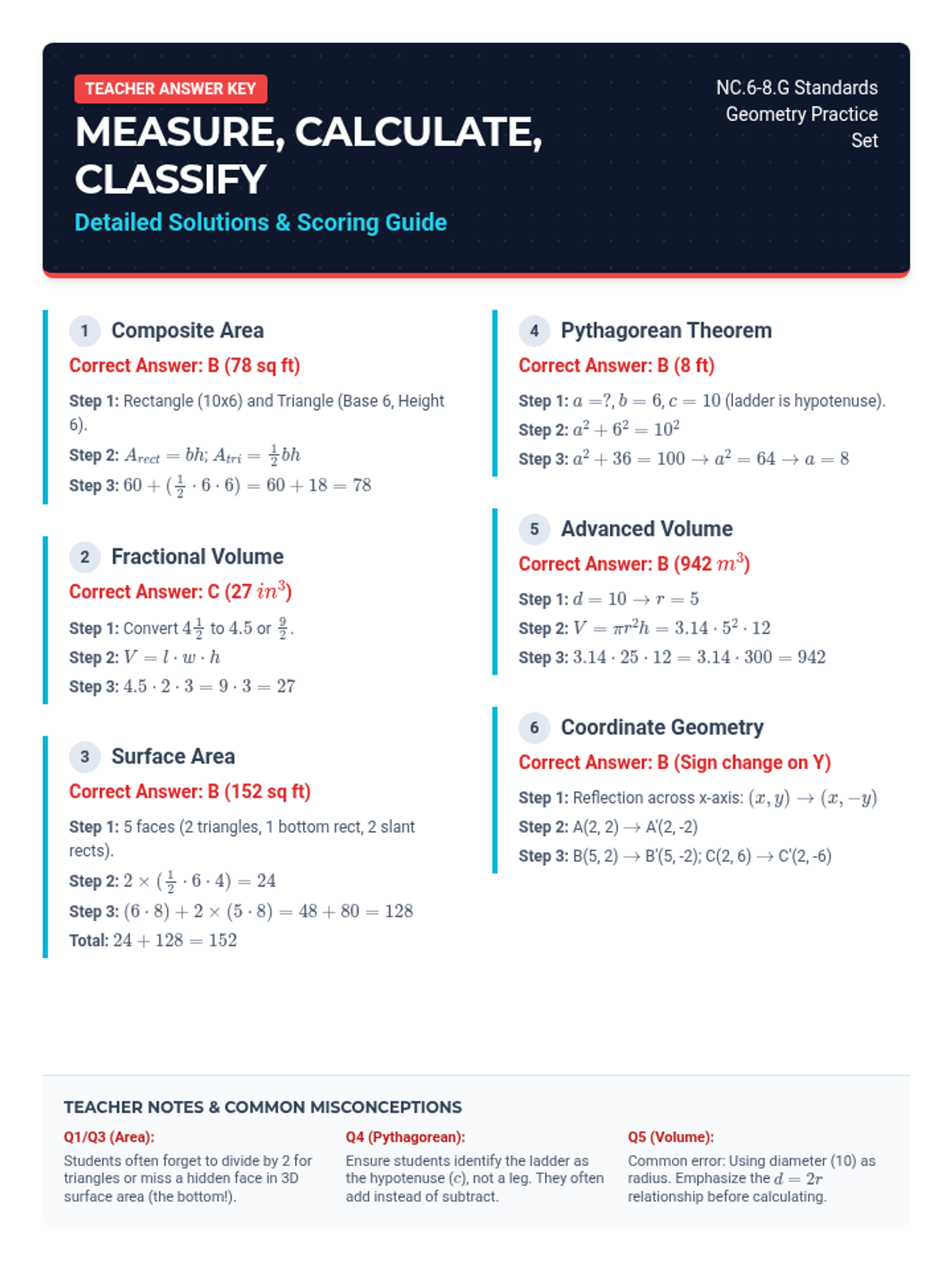
A comprehensive geometry practice set for middle school students, focusing on NC EOG standards for grades 6-8, including area, volume, and the Pythagorean theorem.
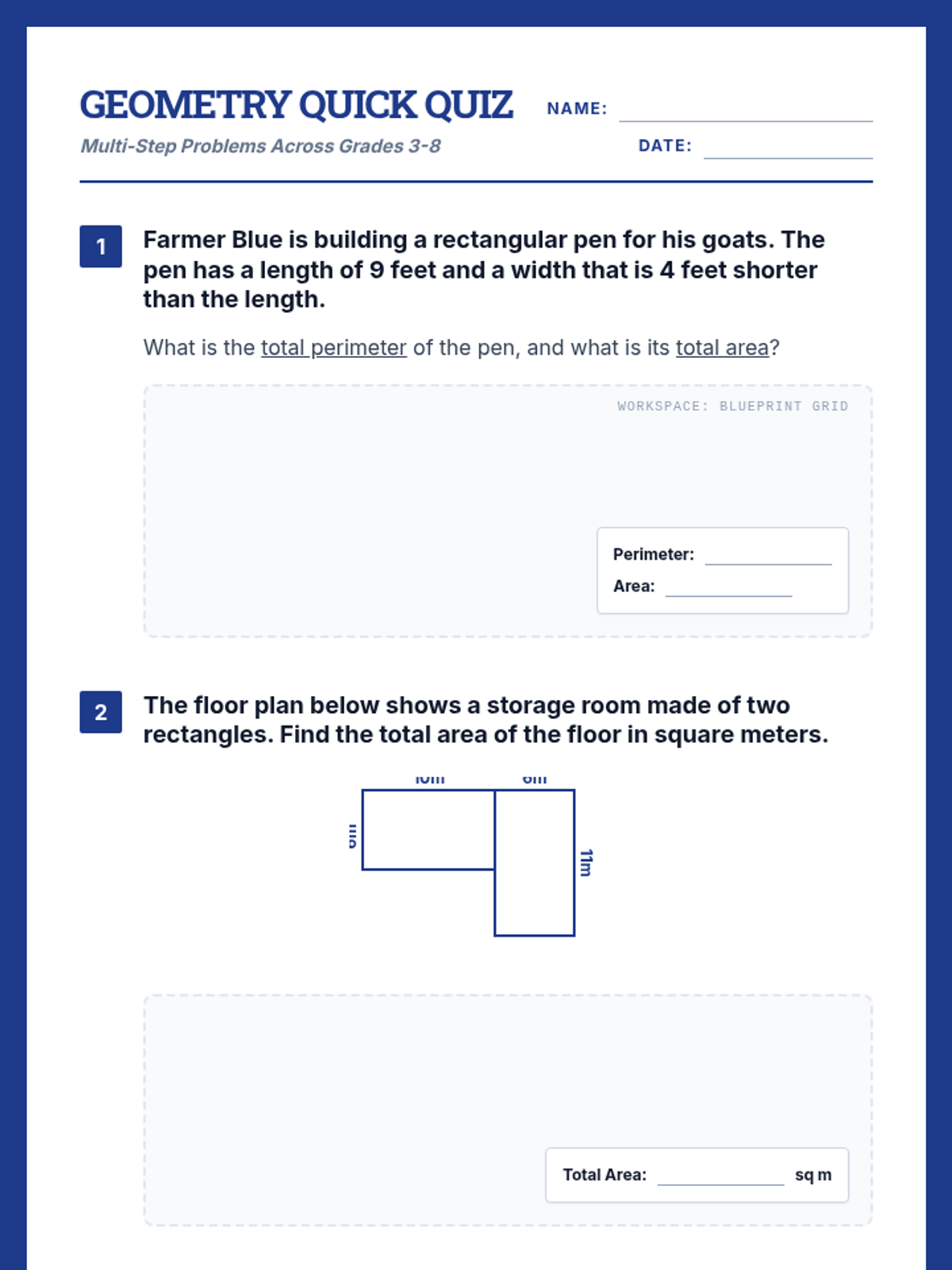
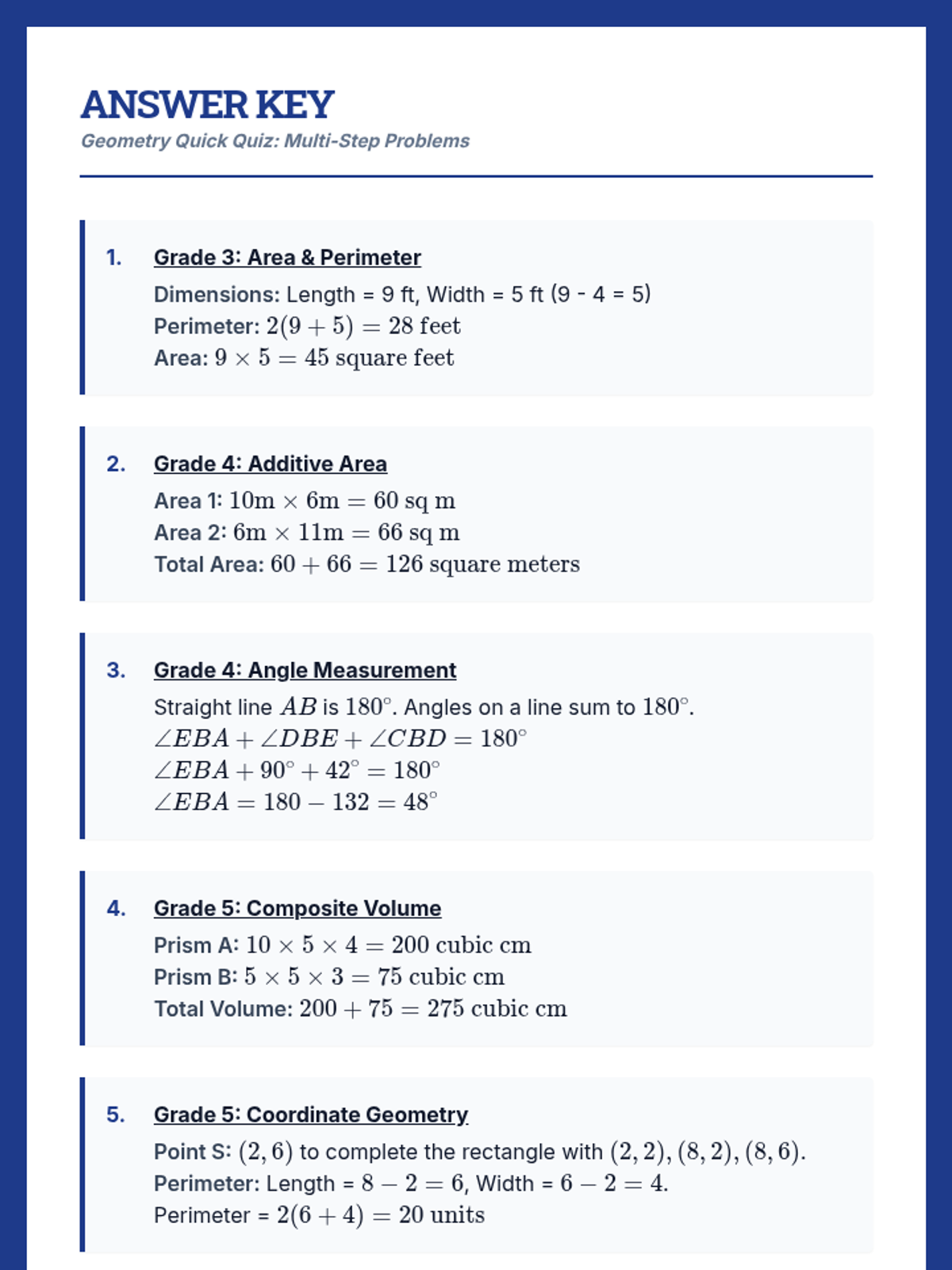
A comprehensive geometry and measurement assessment featuring multi-step problems aligned with North Carolina EOG standards for grades 3 through 8.
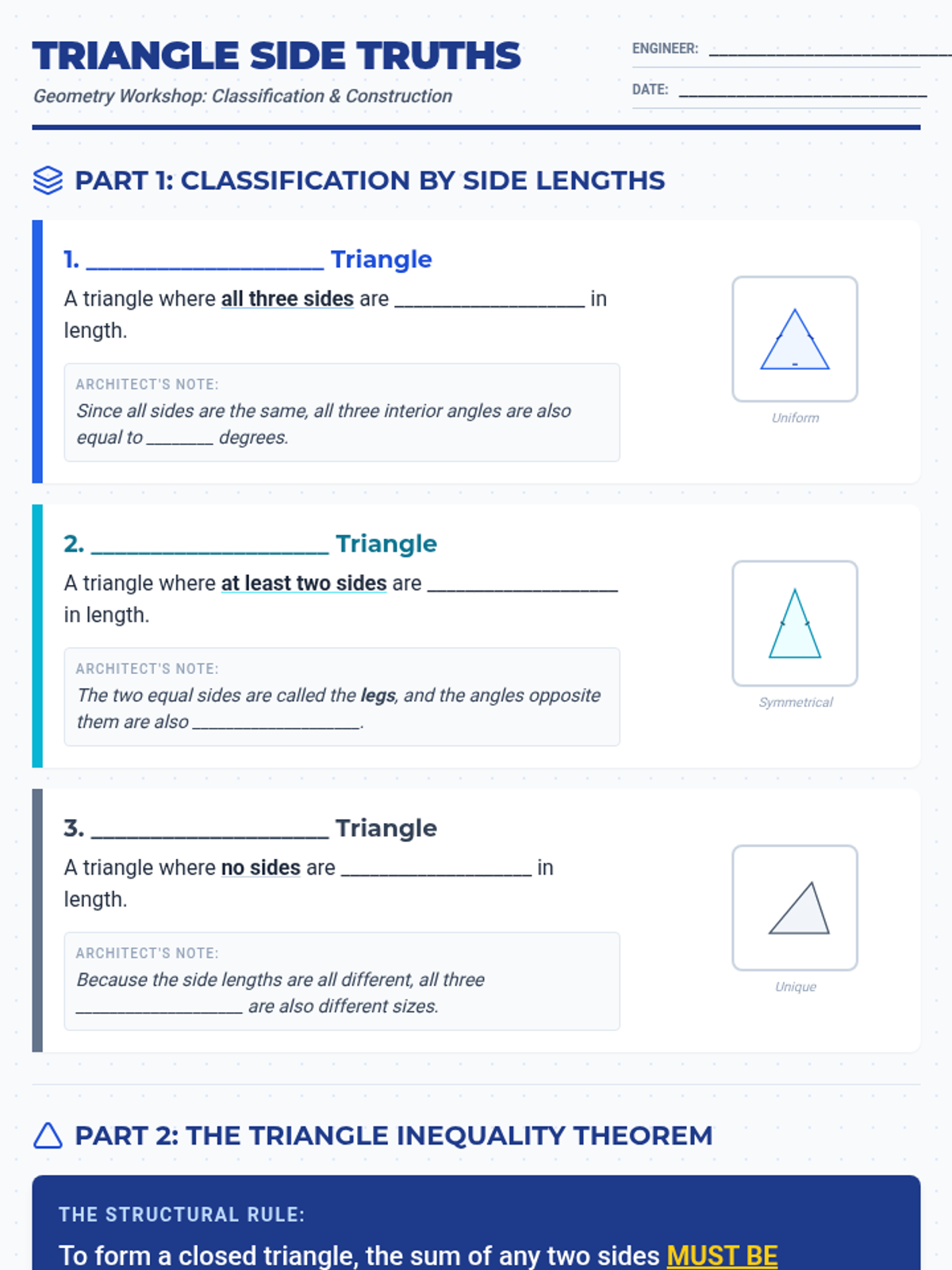
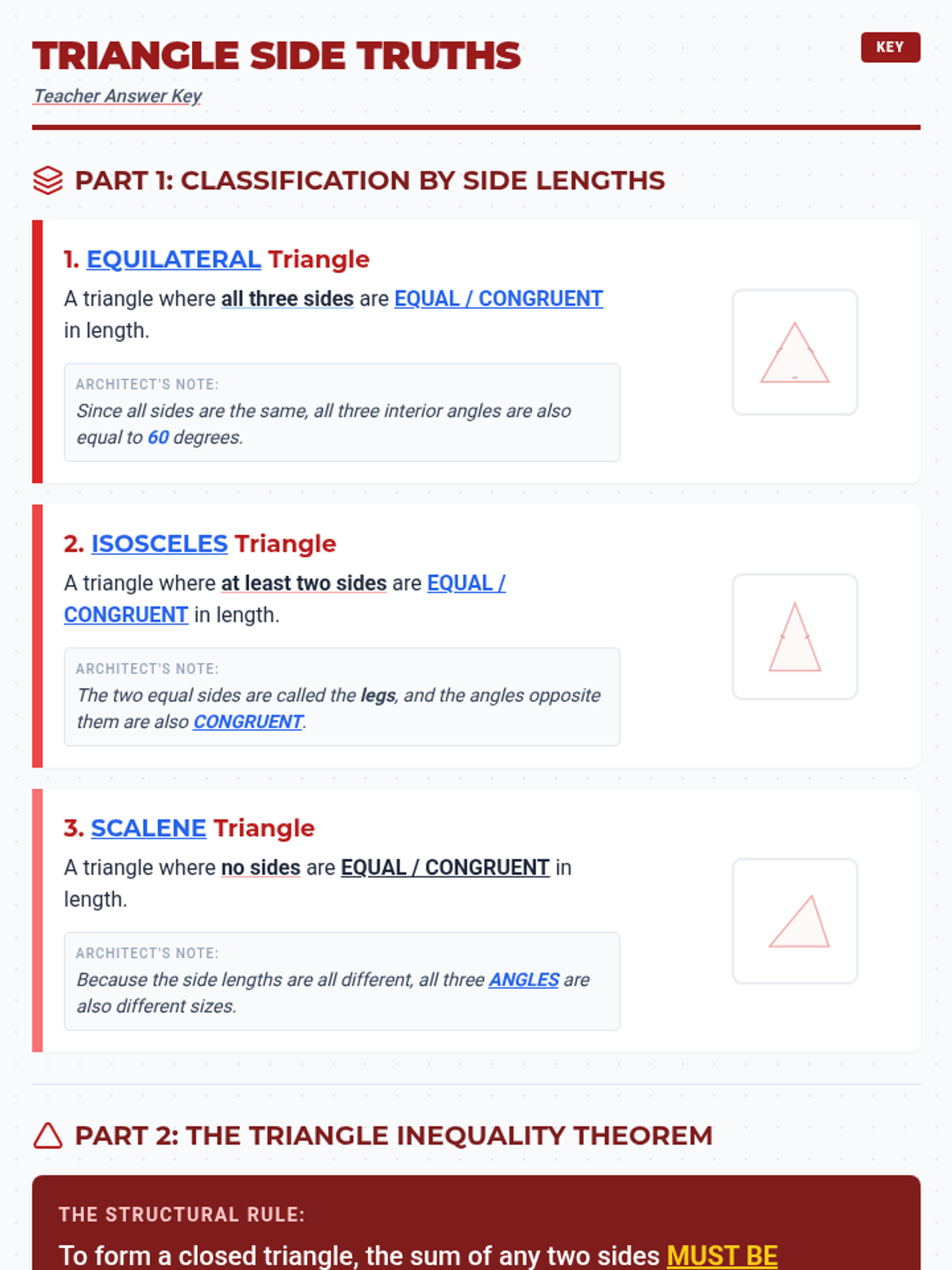
In this lesson, students explore the fundamental properties of triangles based on their side lengths. They will learn to classify triangles as equilateral, isosceles, or scalene and master the Triangle Inequality Theorem to determine if any three side lengths can actually form a closed triangle.
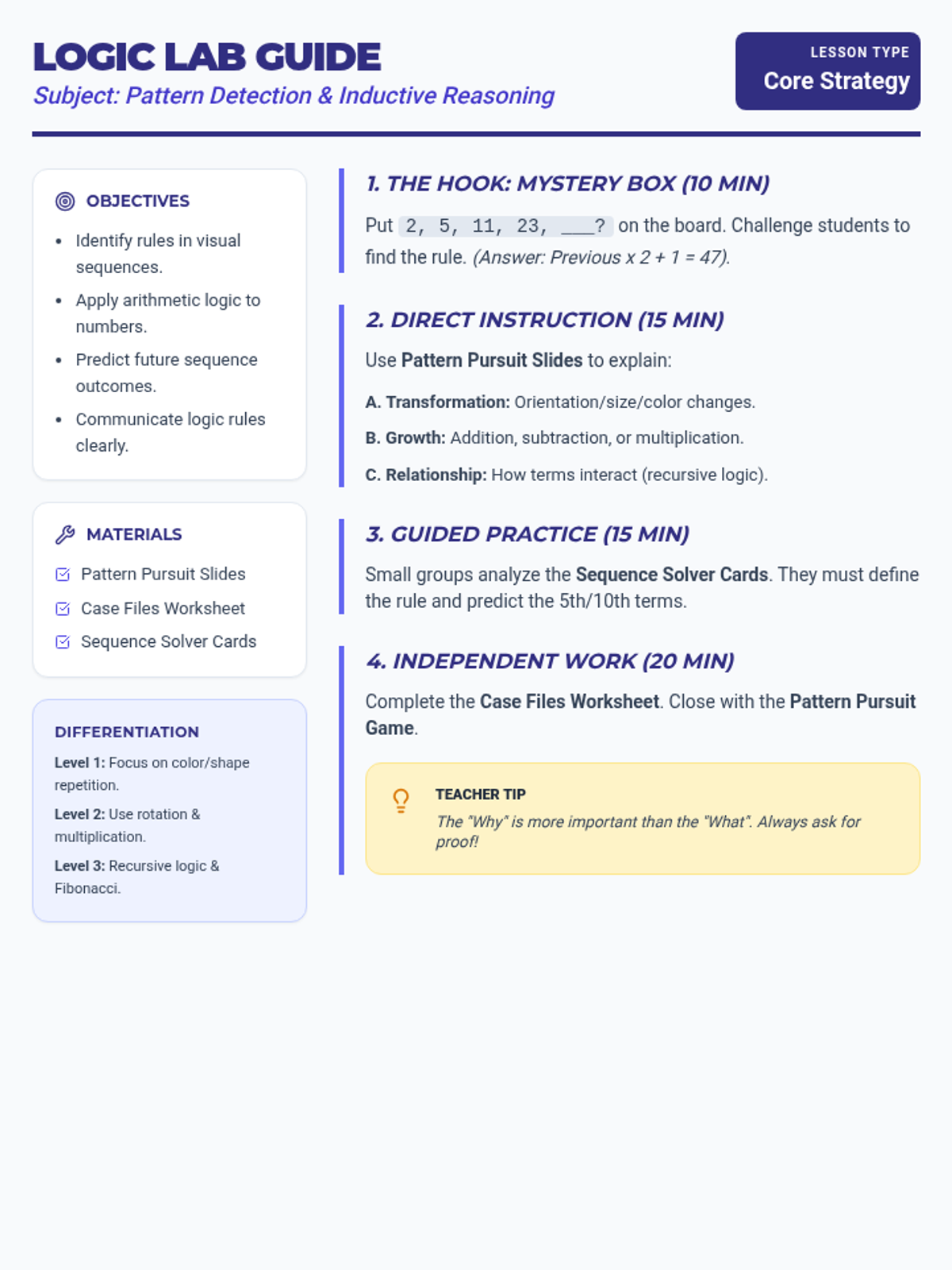
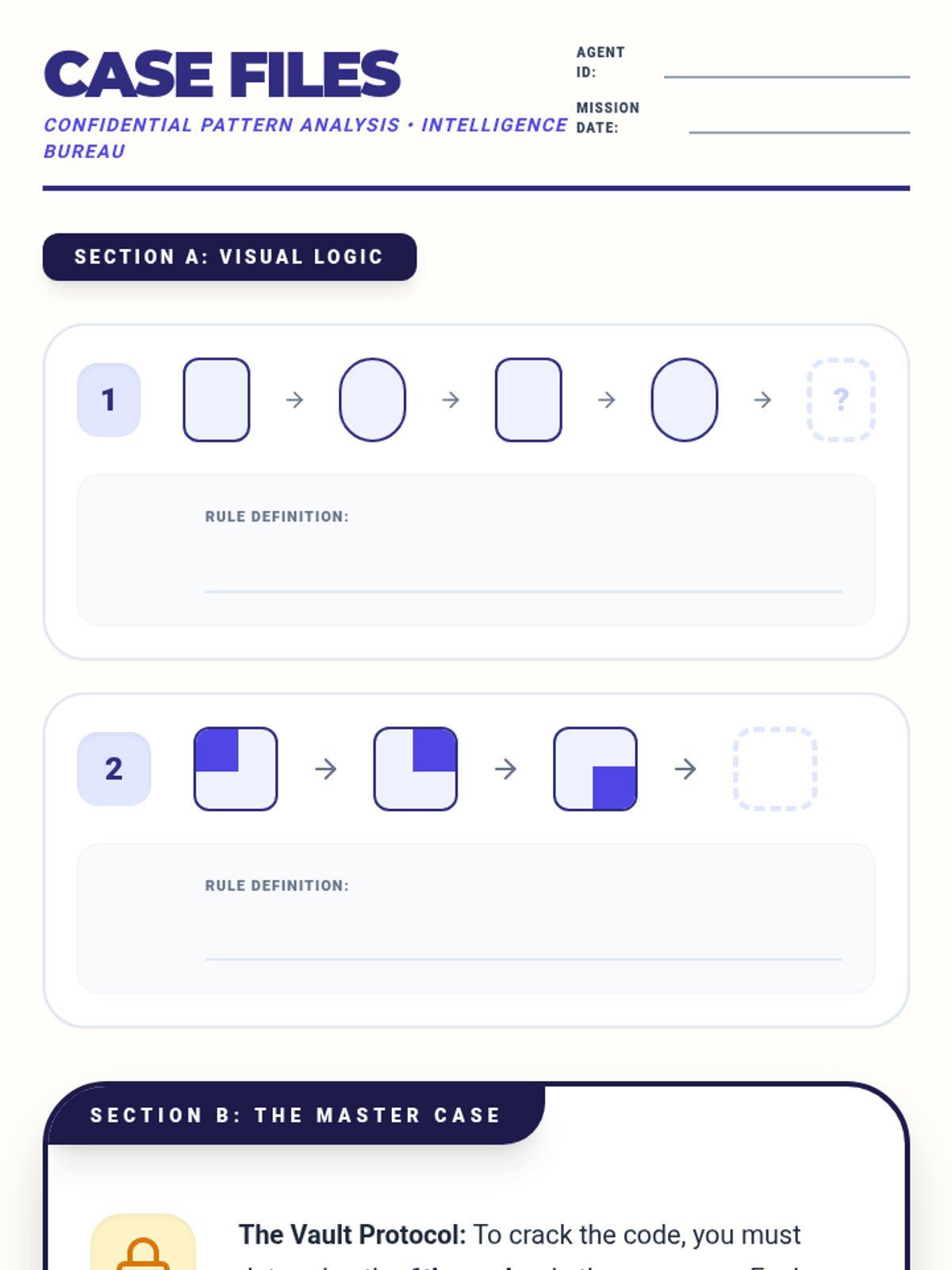
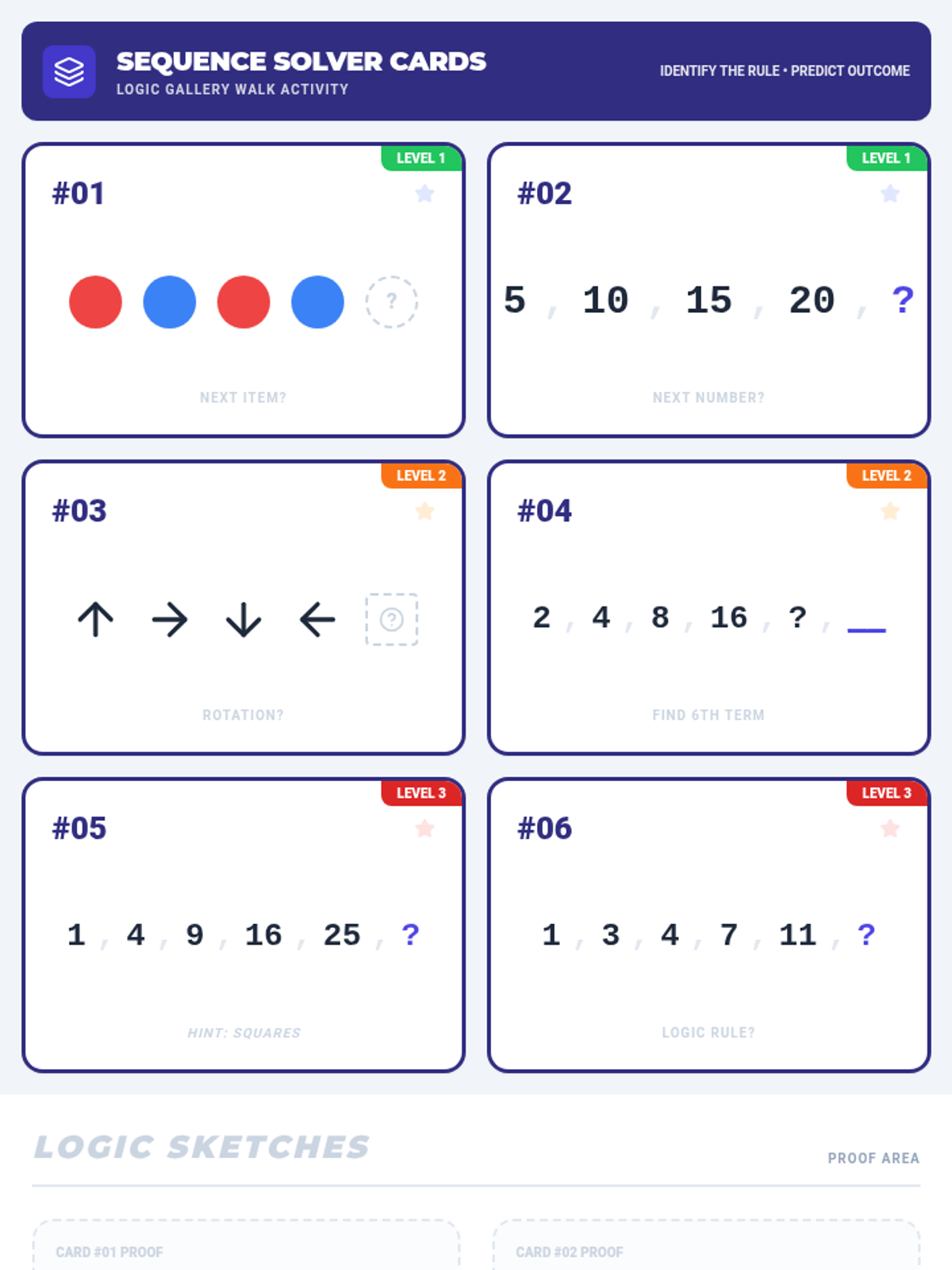
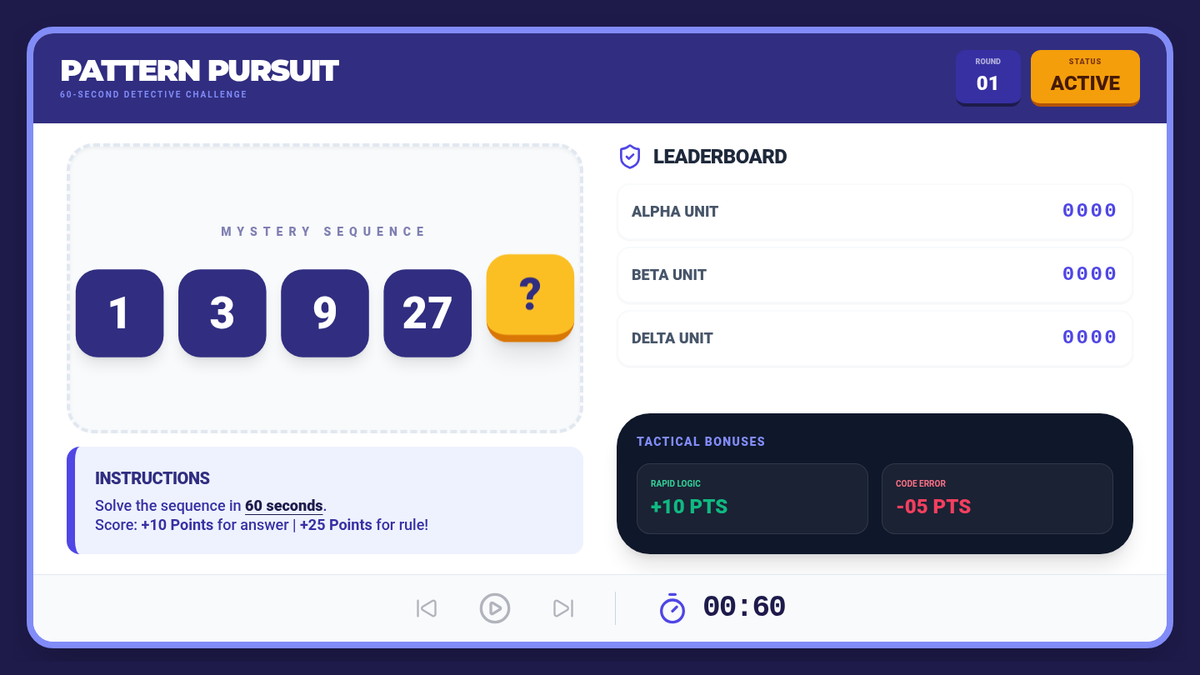
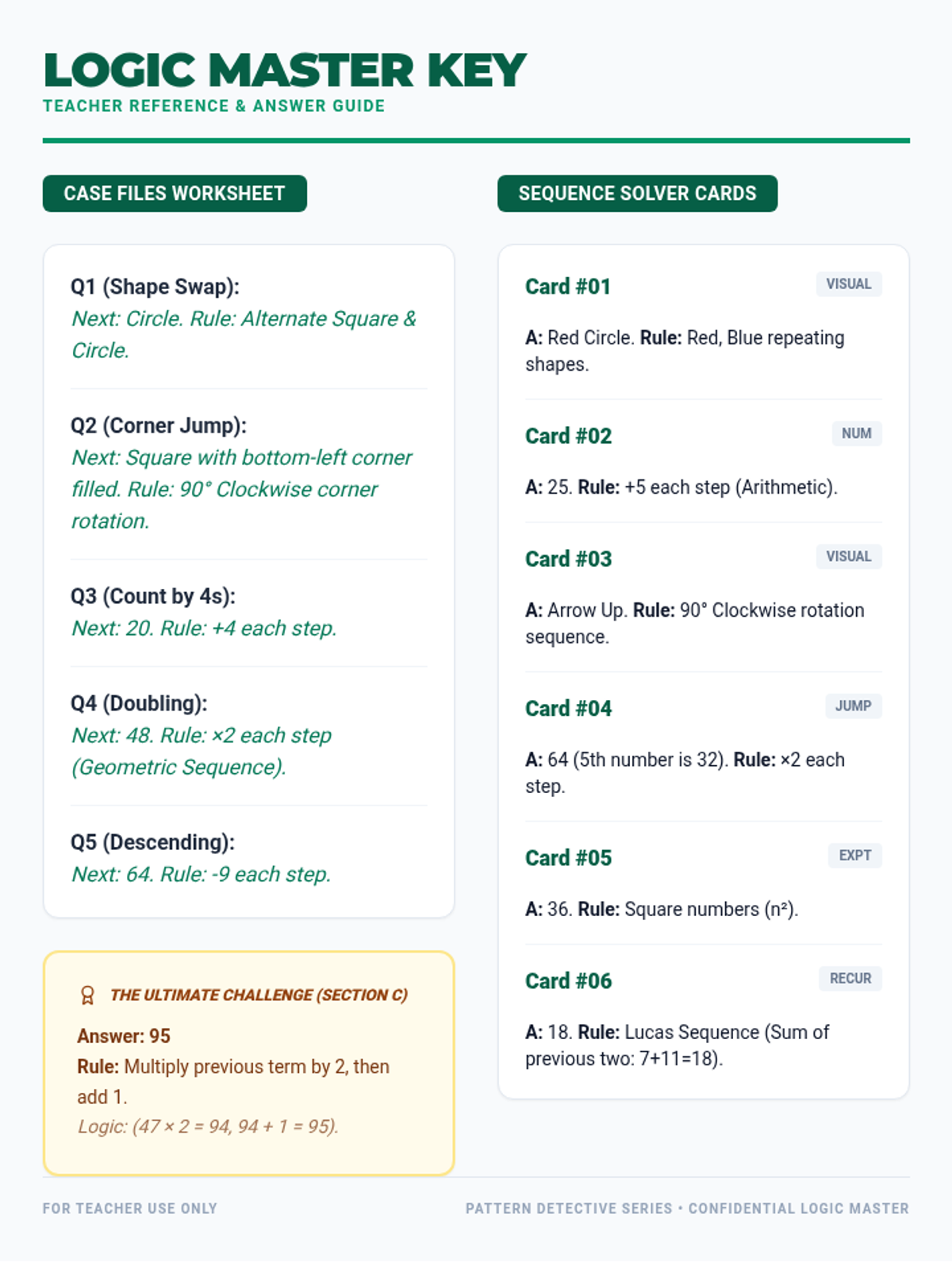
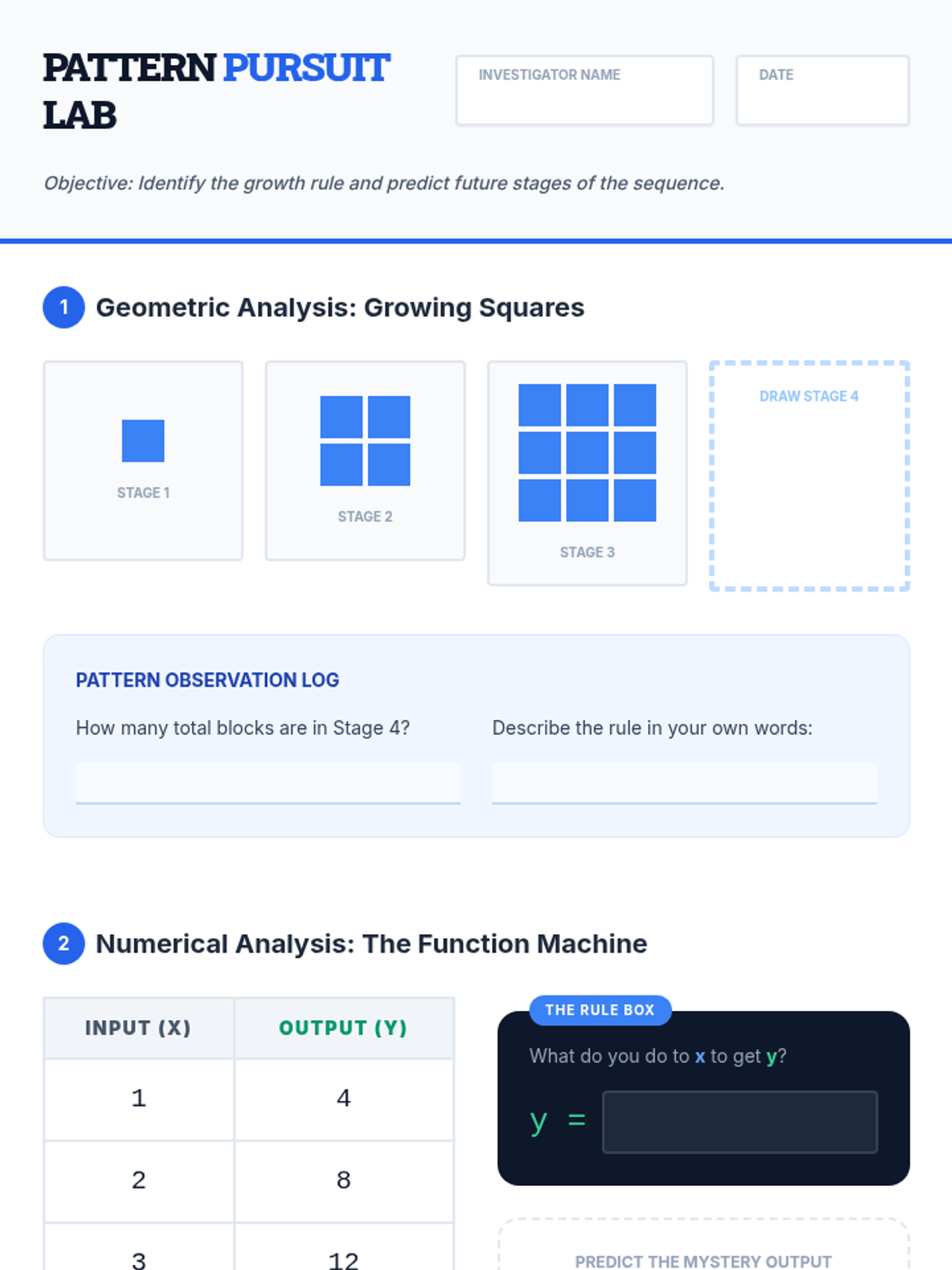
A comprehensive logic lesson where students act as detectives to identify rules in visual and numerical sequences, building inductive reasoning and prediction skills.
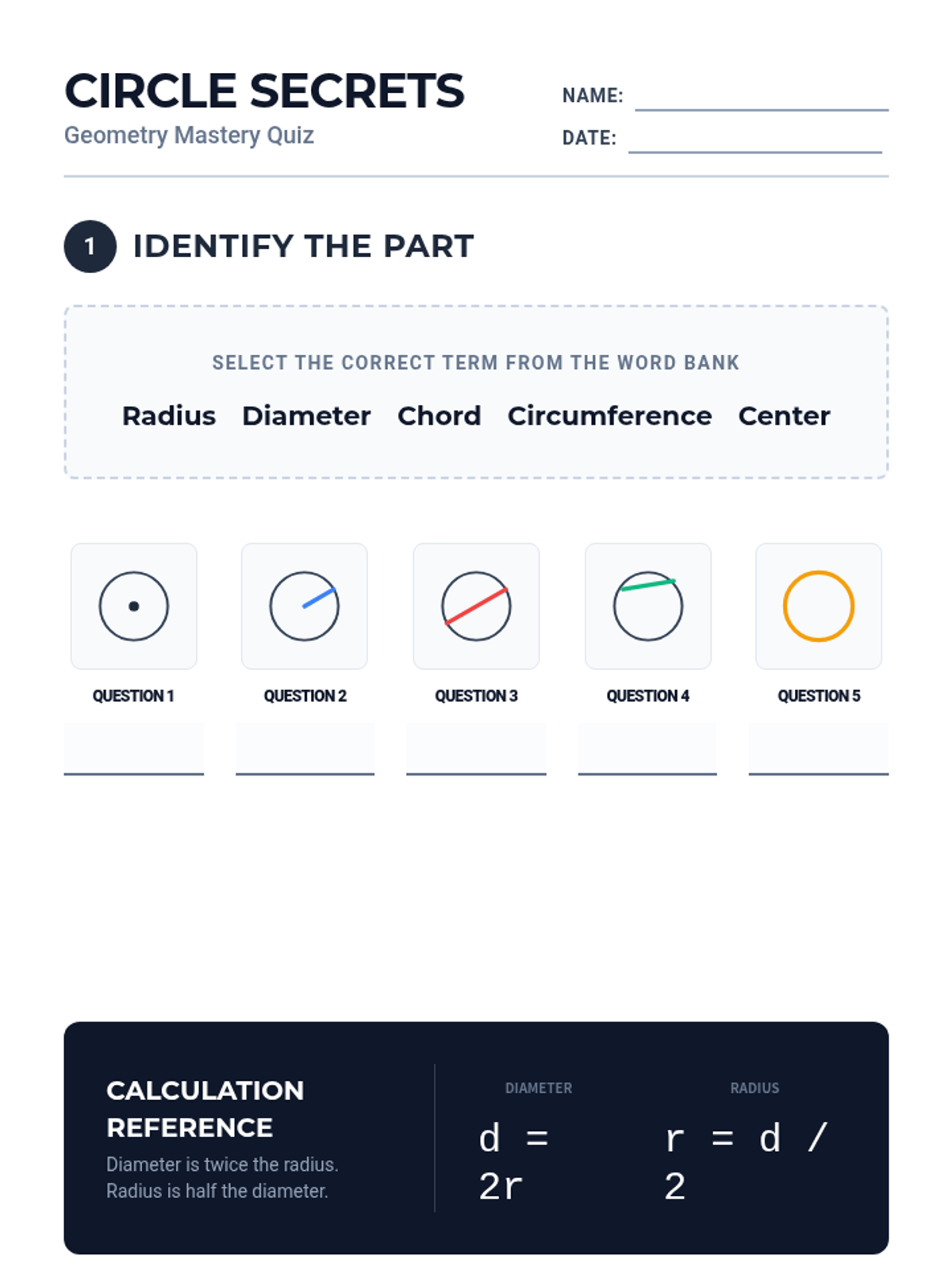
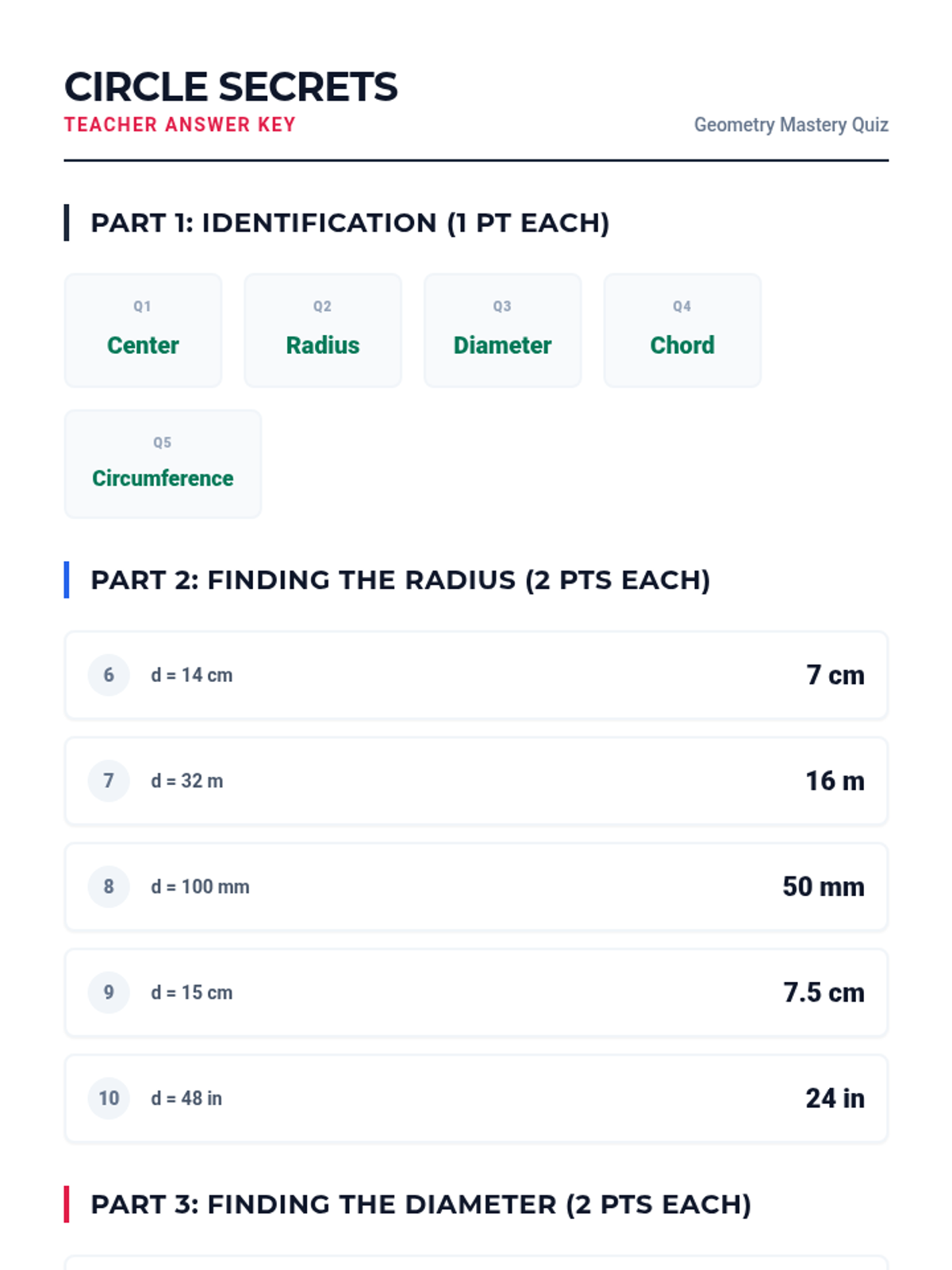
A comprehensive assessment on circle geometry, focusing on identifying key parts and calculating radius and diameter.
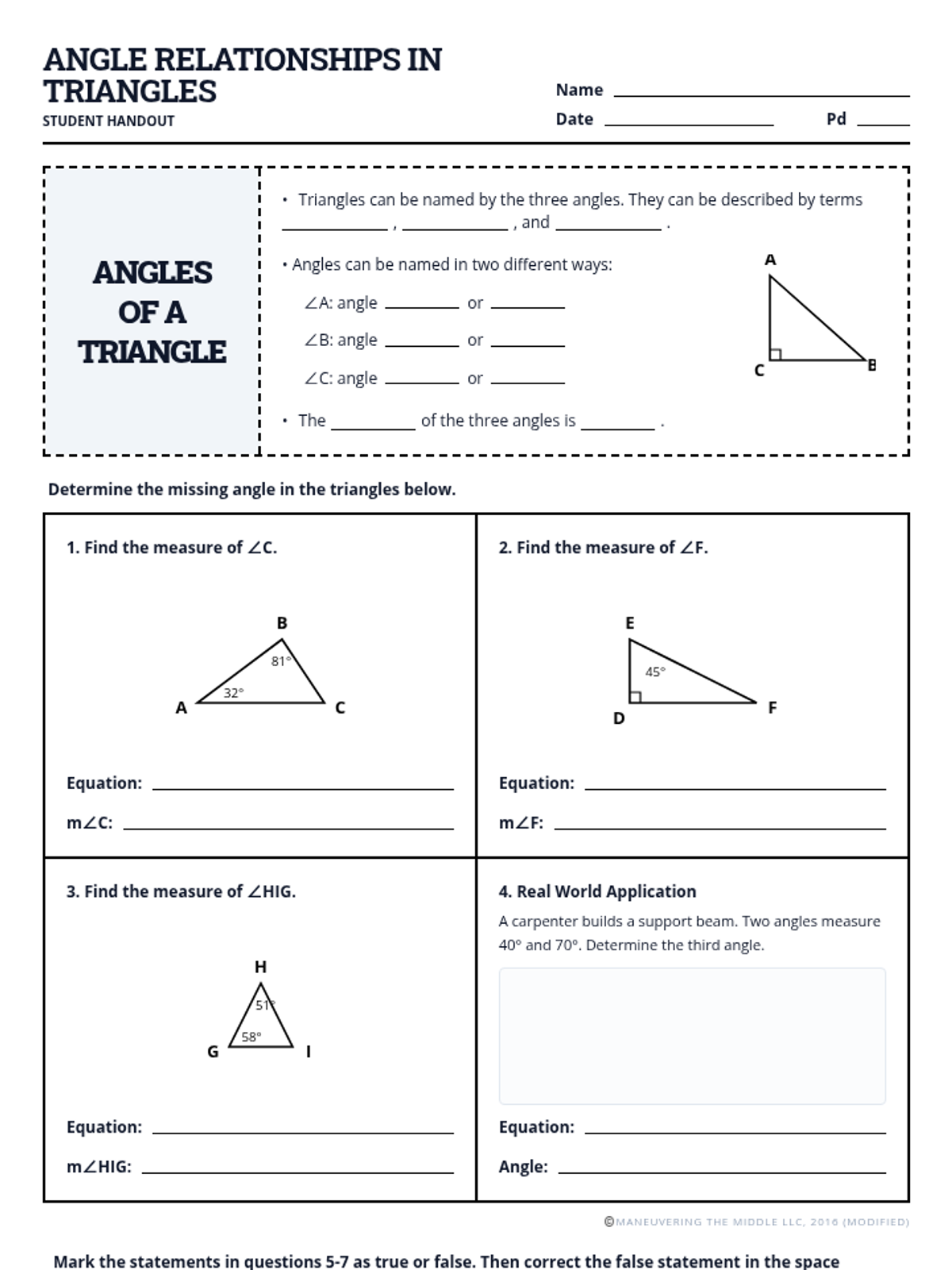
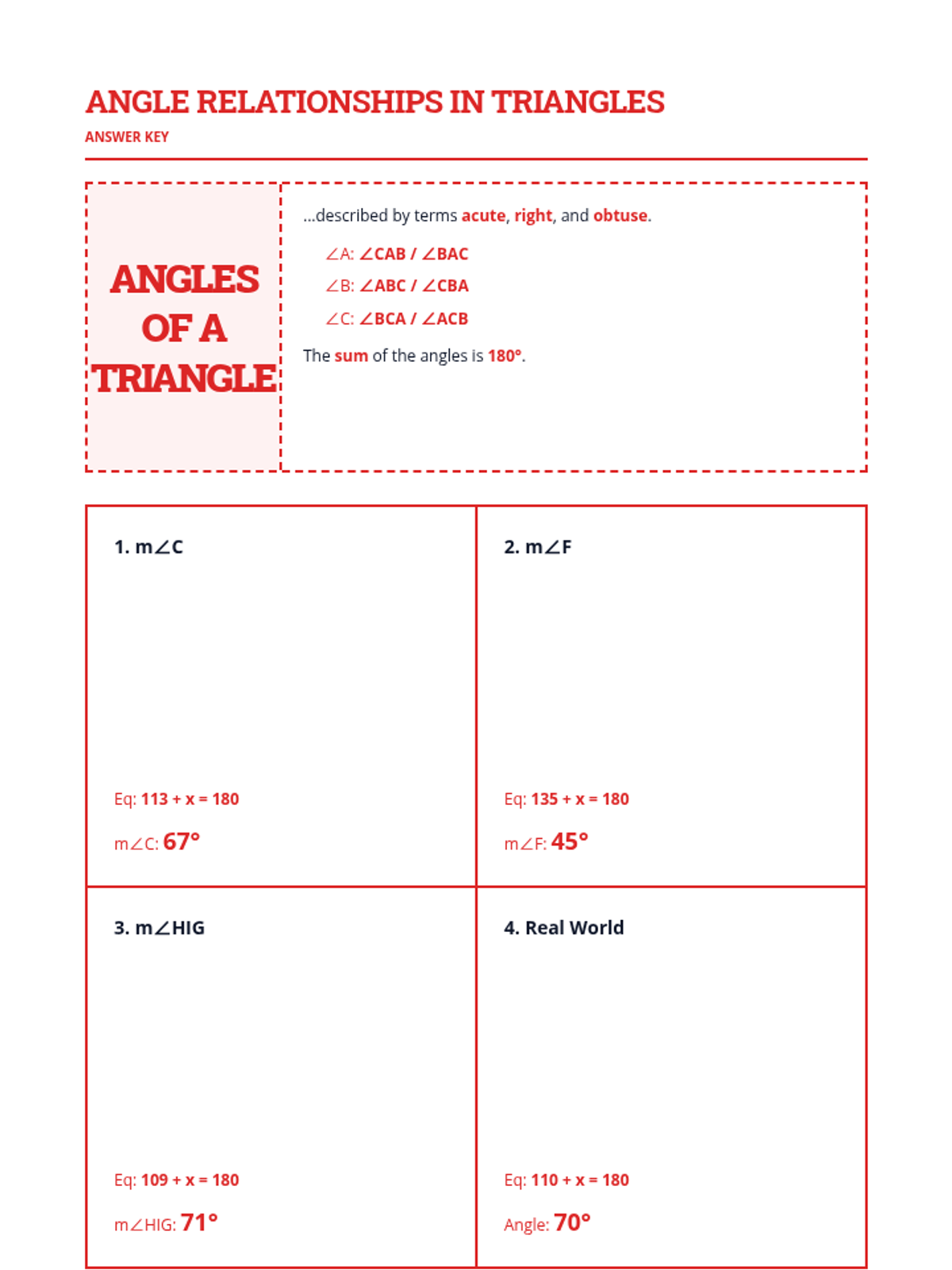
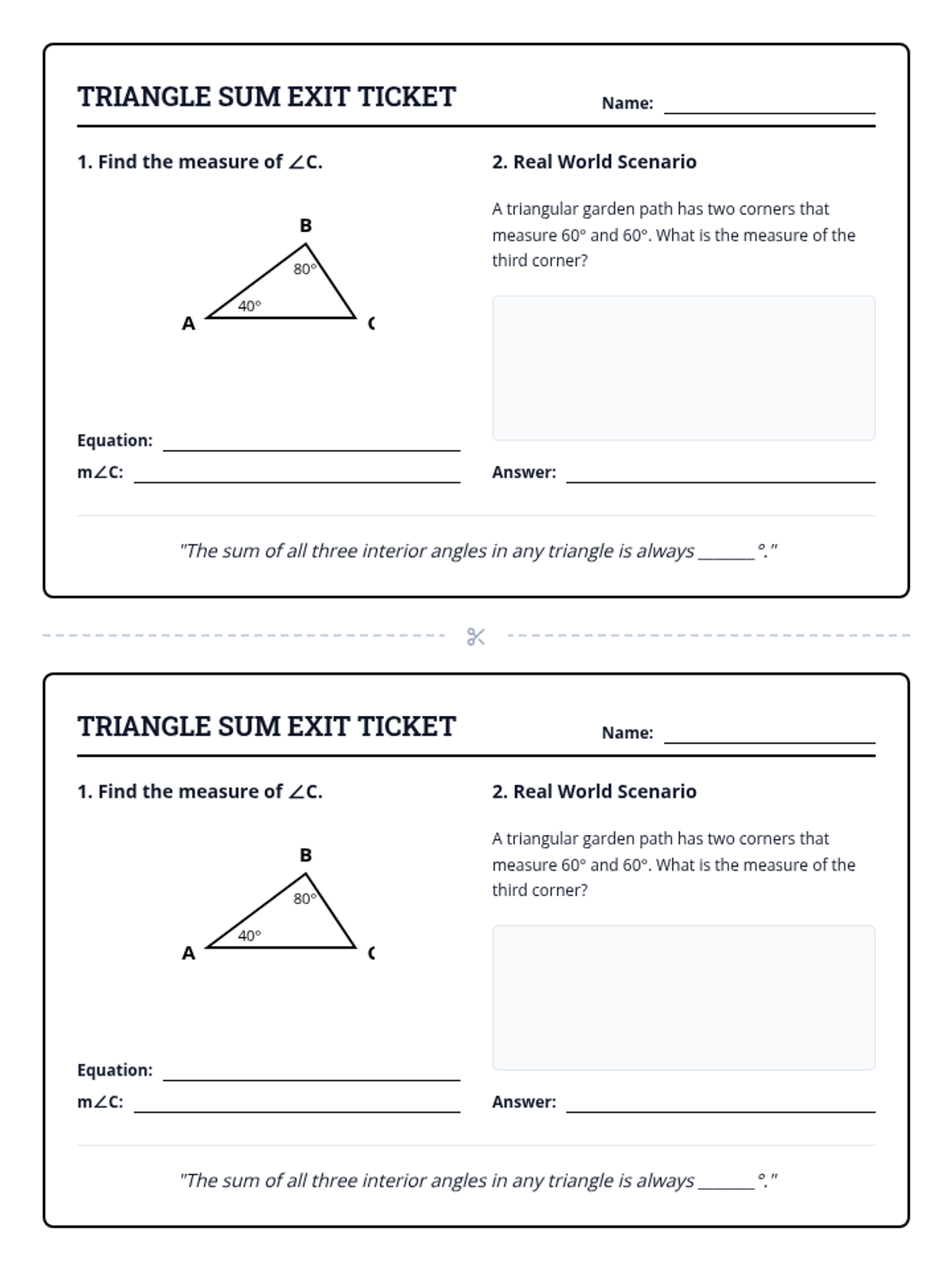
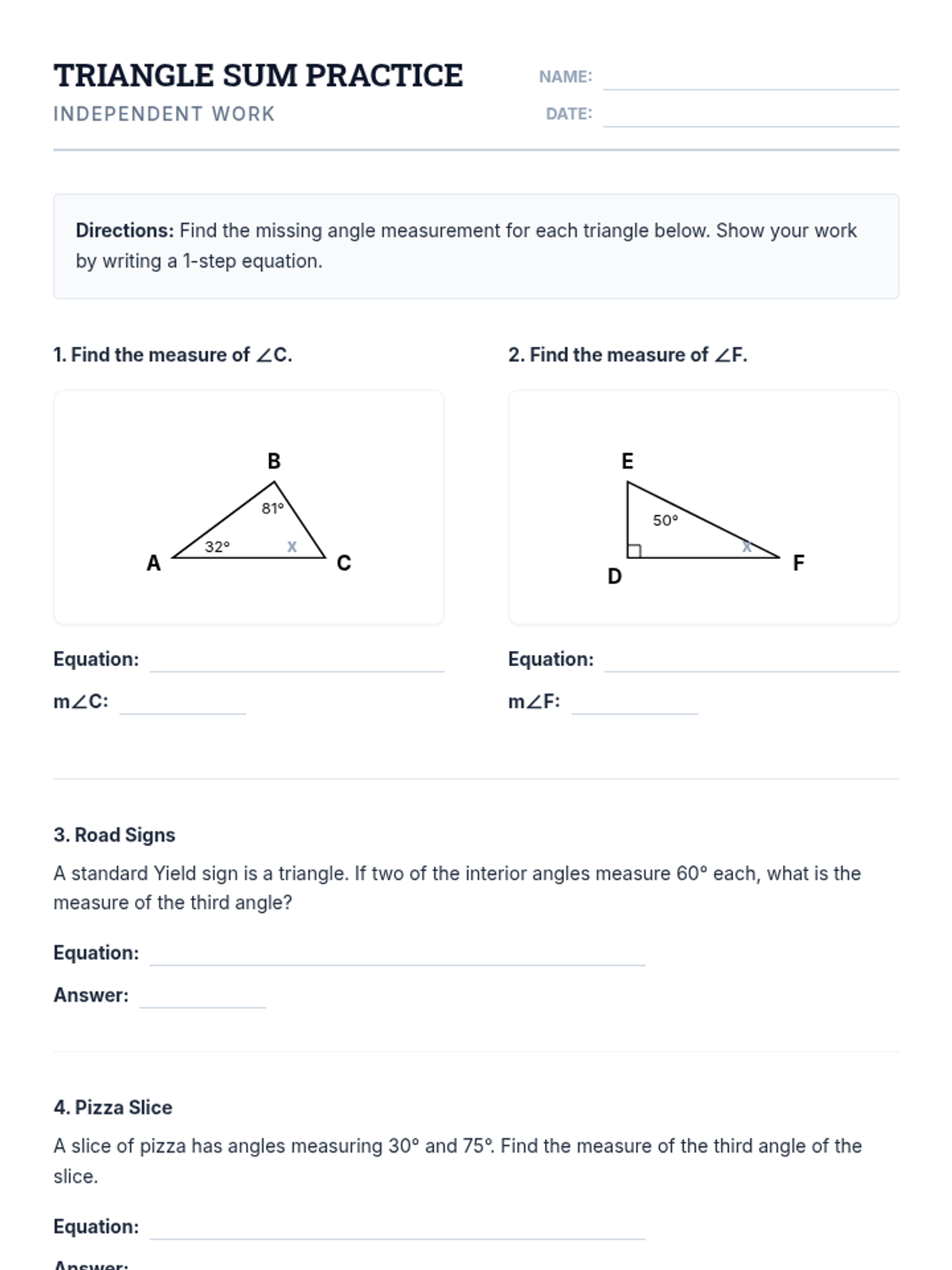
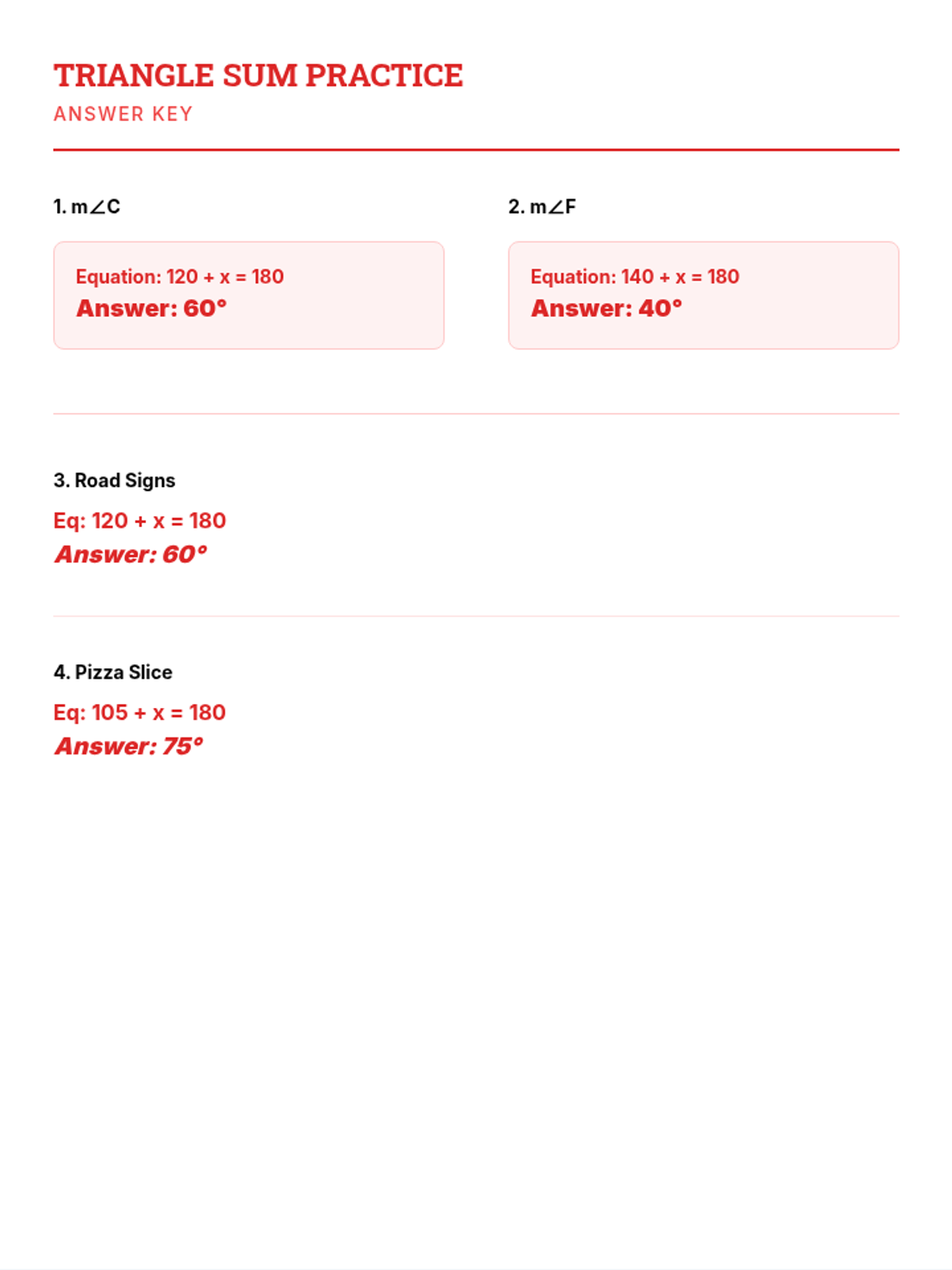
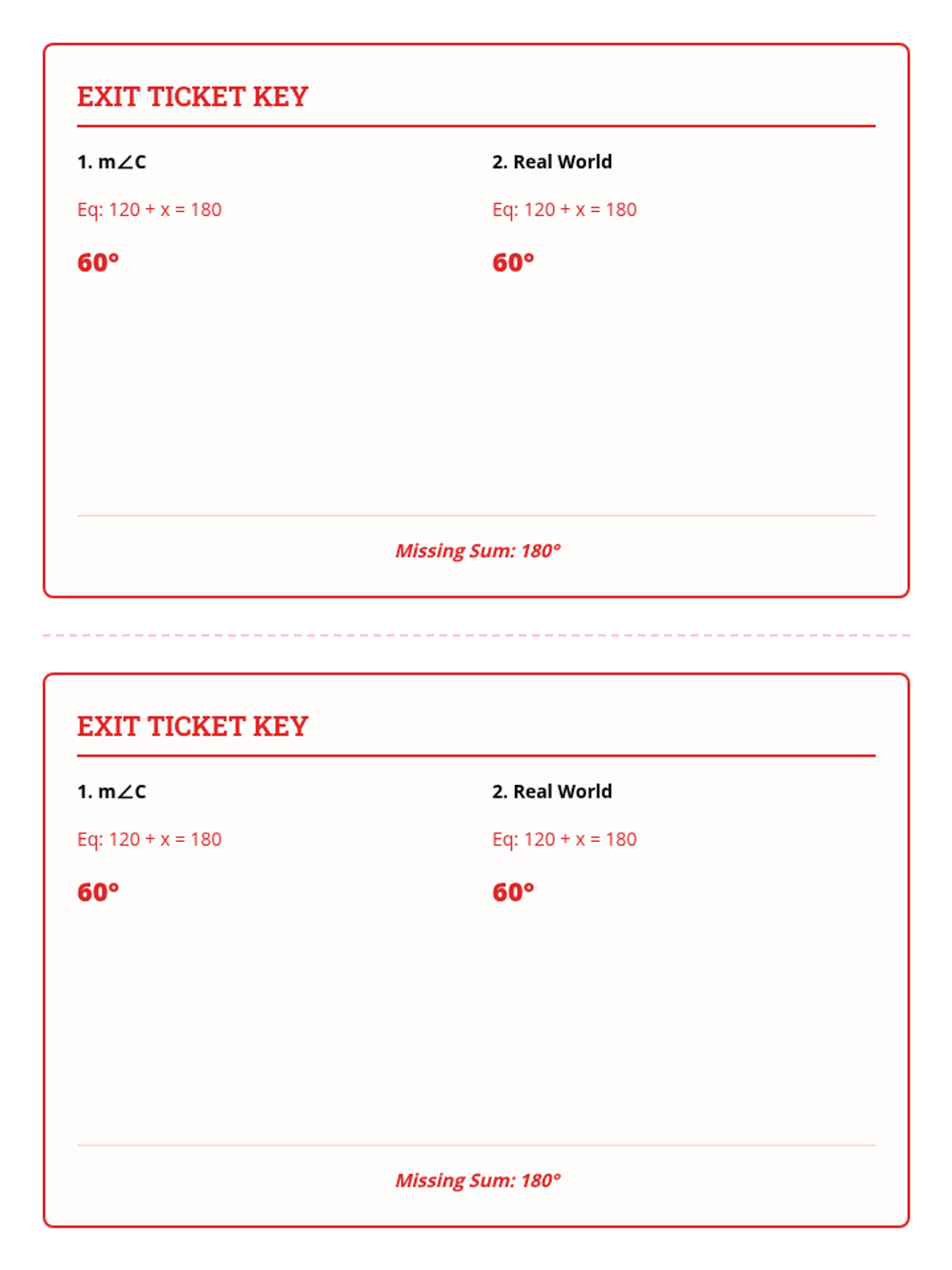
A simplified lesson on the Triangle Sum Rule, focusing on 3-letter angle naming and solving for missing angles using one-step equations with whole numbers.
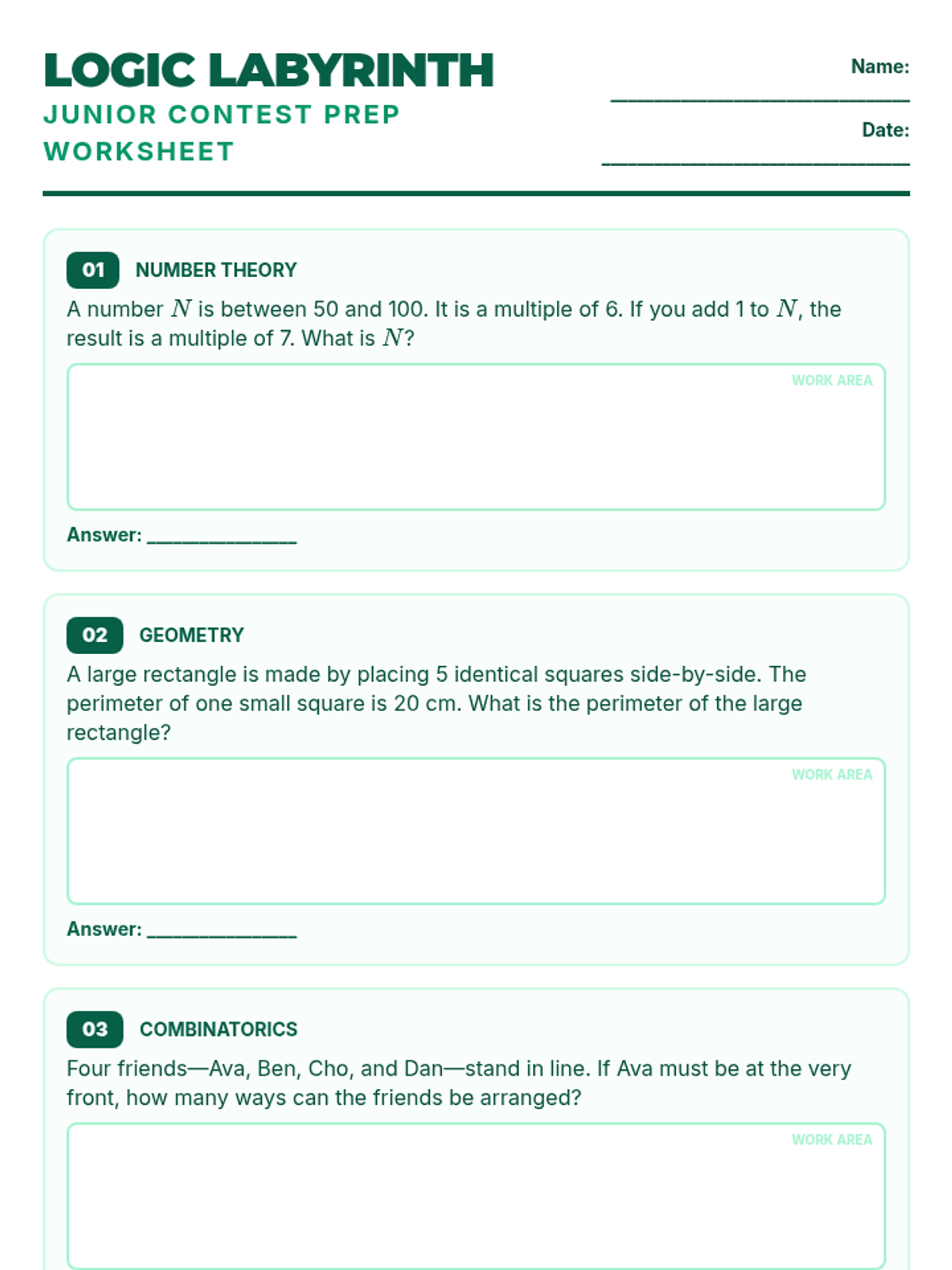
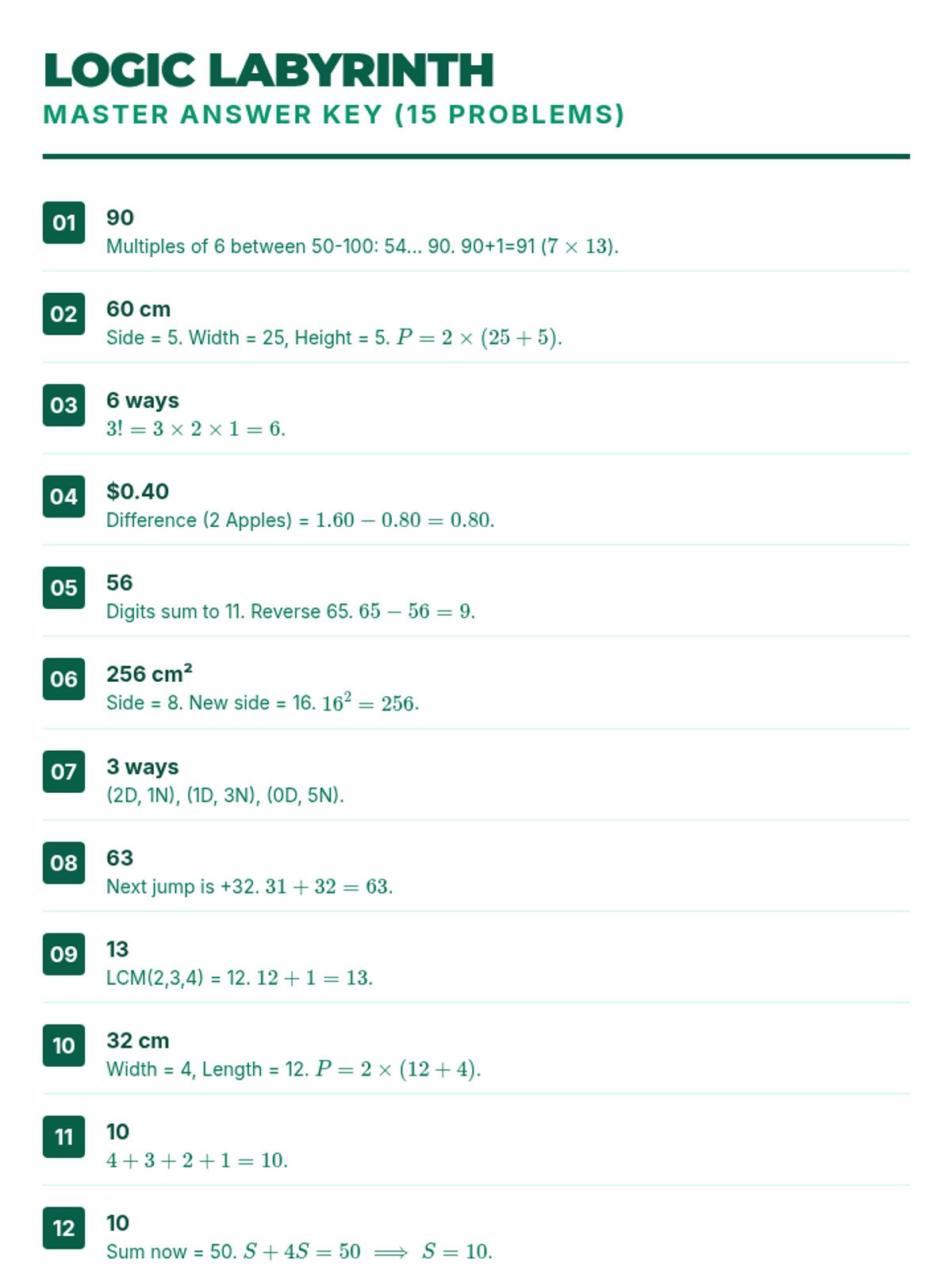
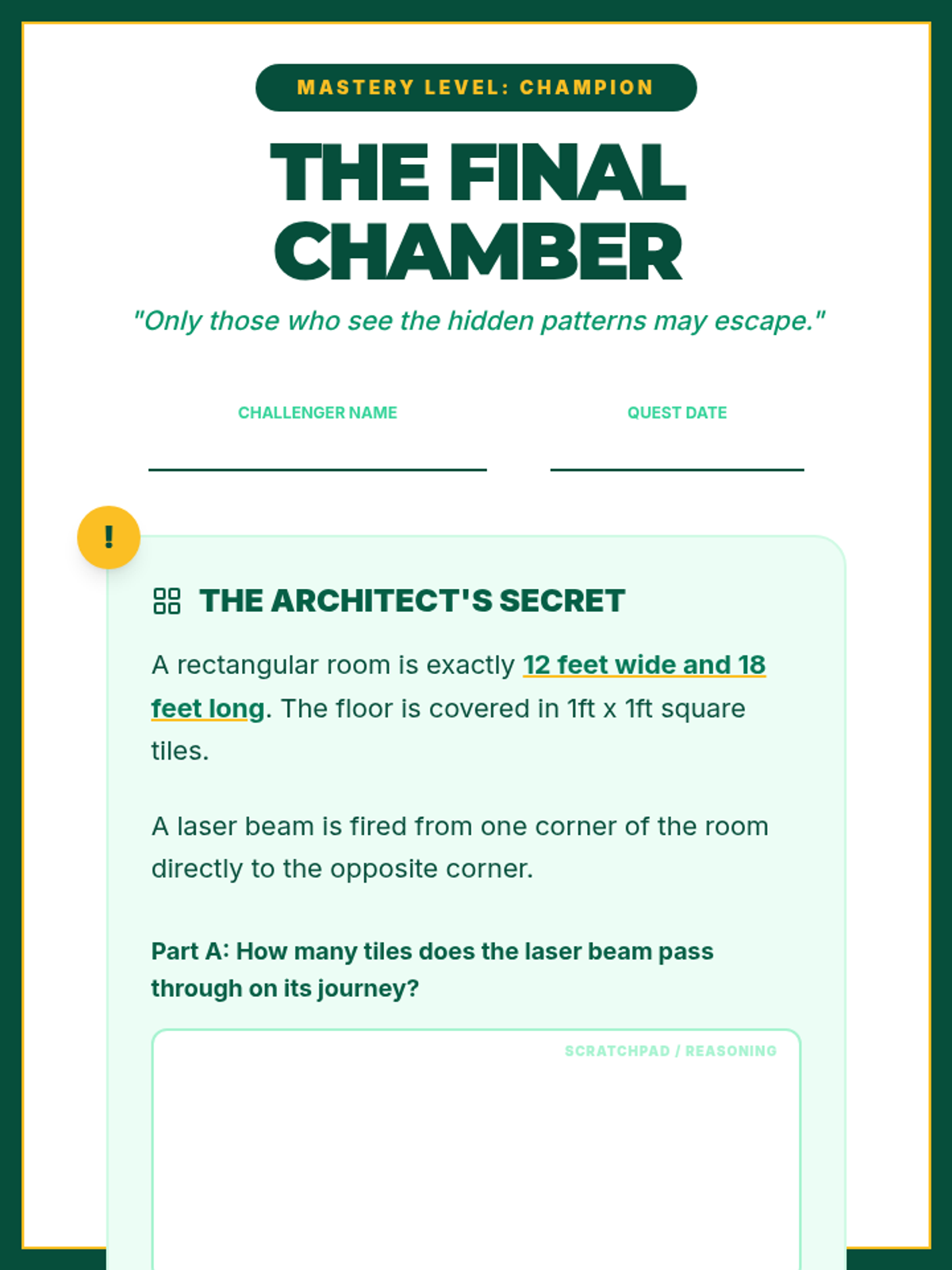
A collection of challenging math problems focusing on number theory, geometry, combinatorics, and algebra, designed for middle school students preparing for GAIM and similar math competitions.
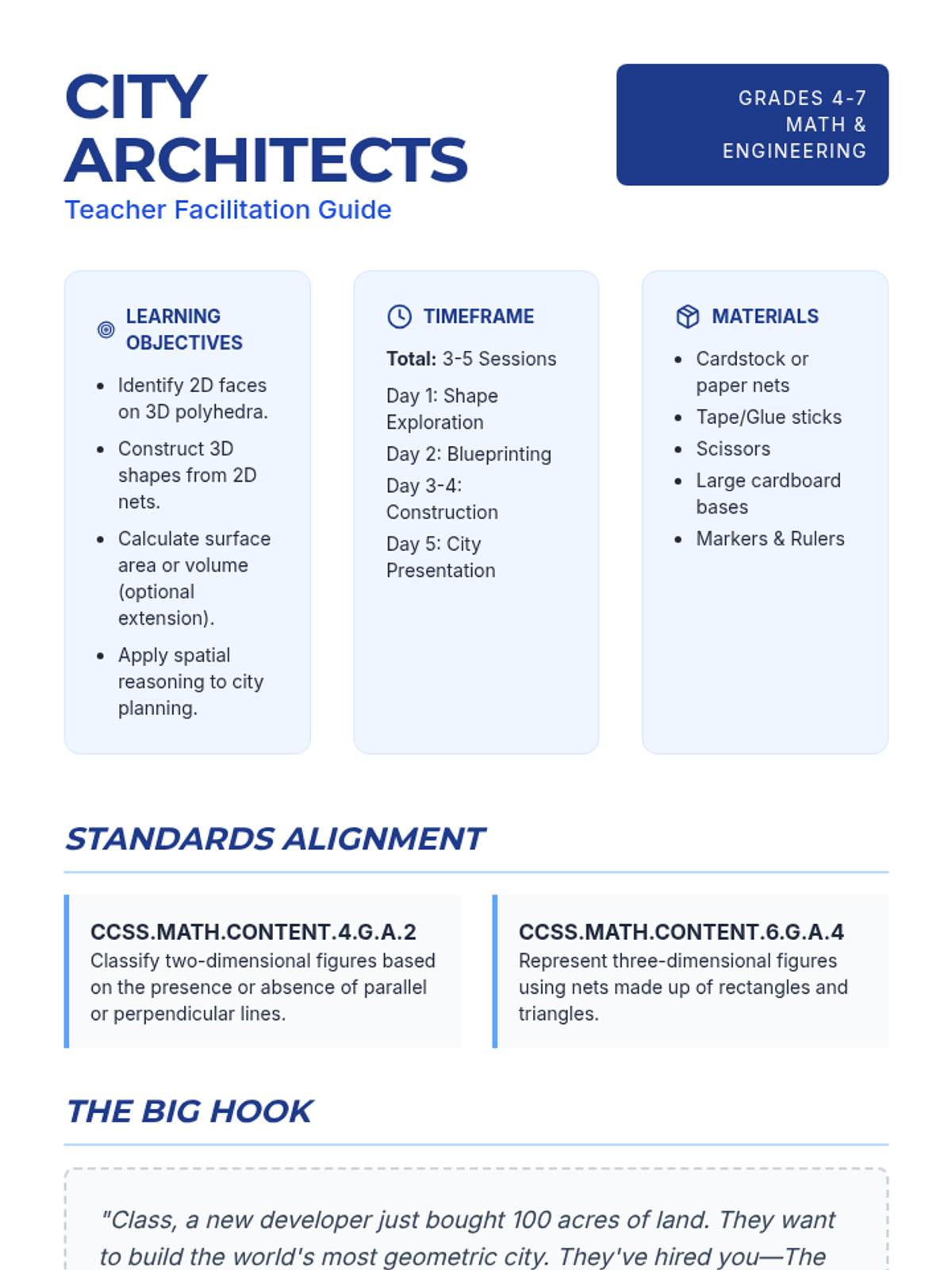
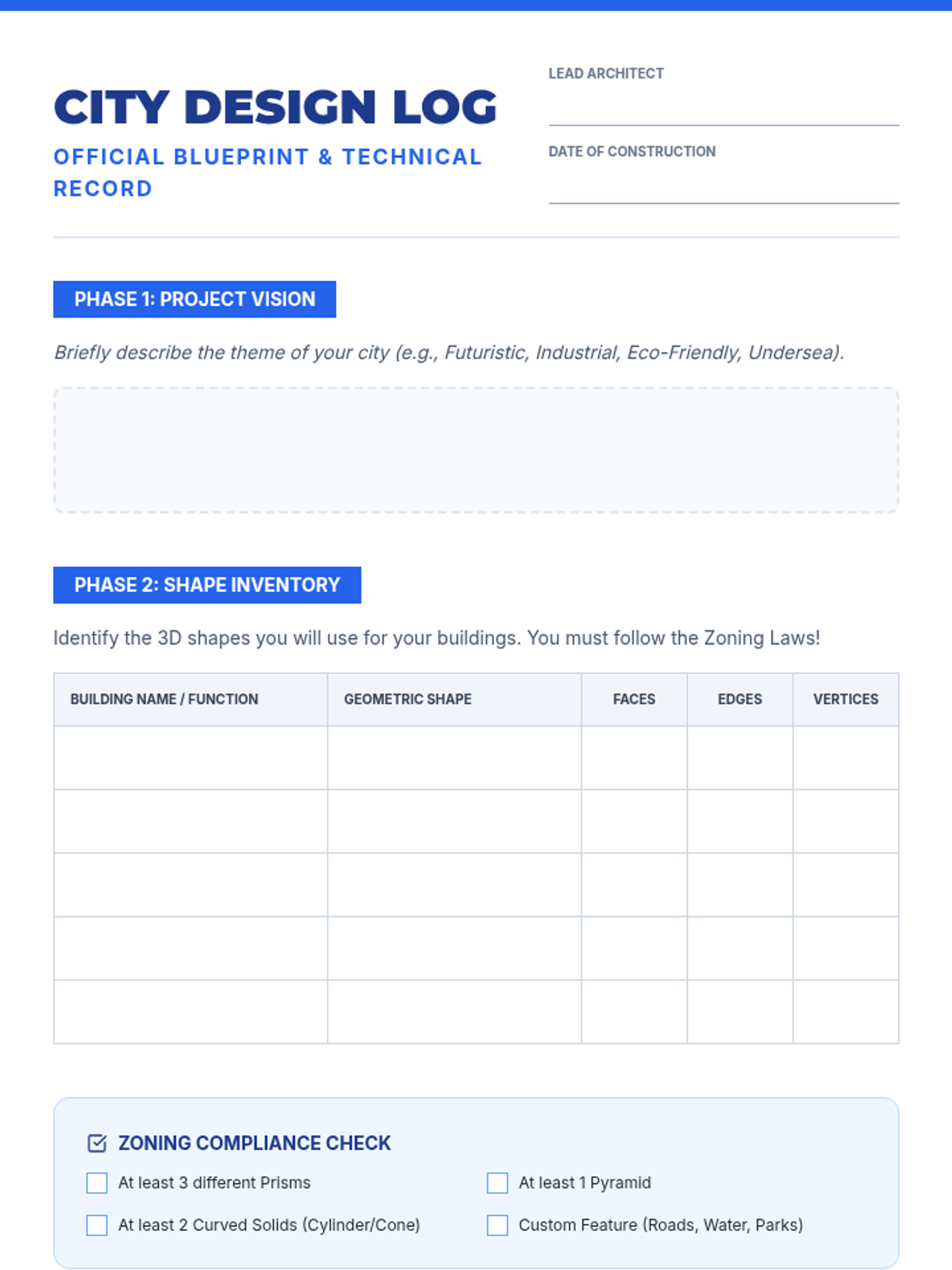
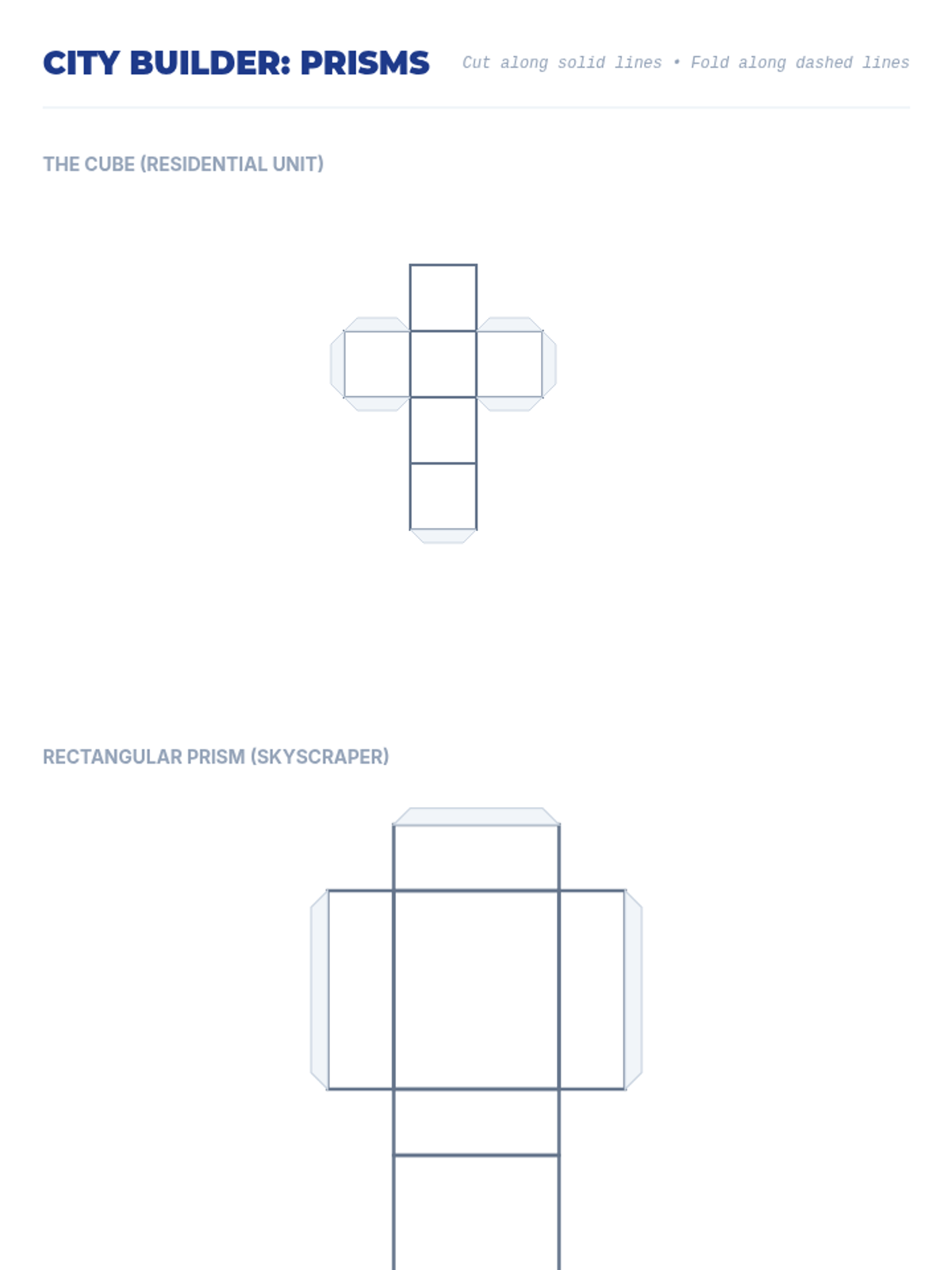
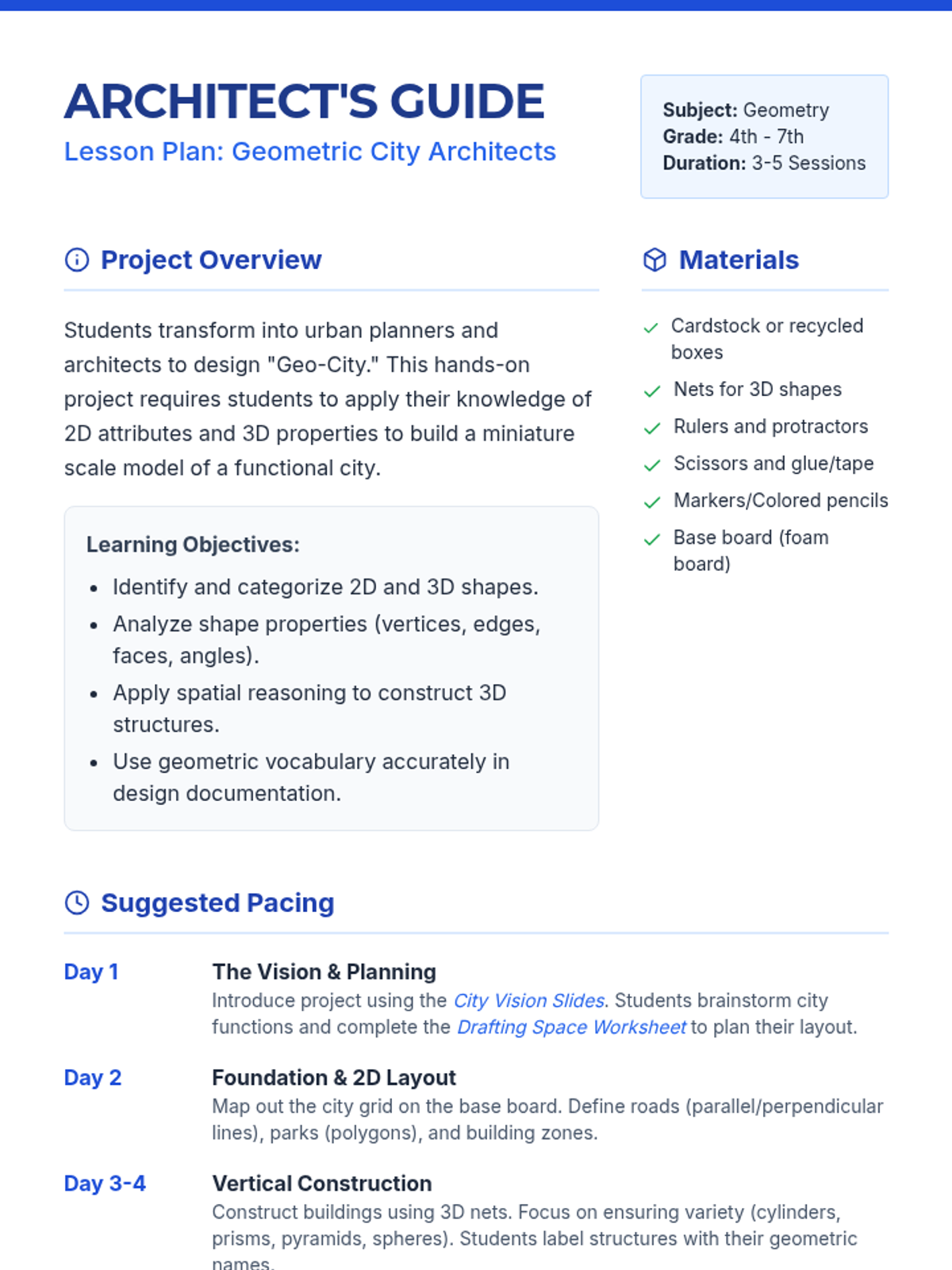
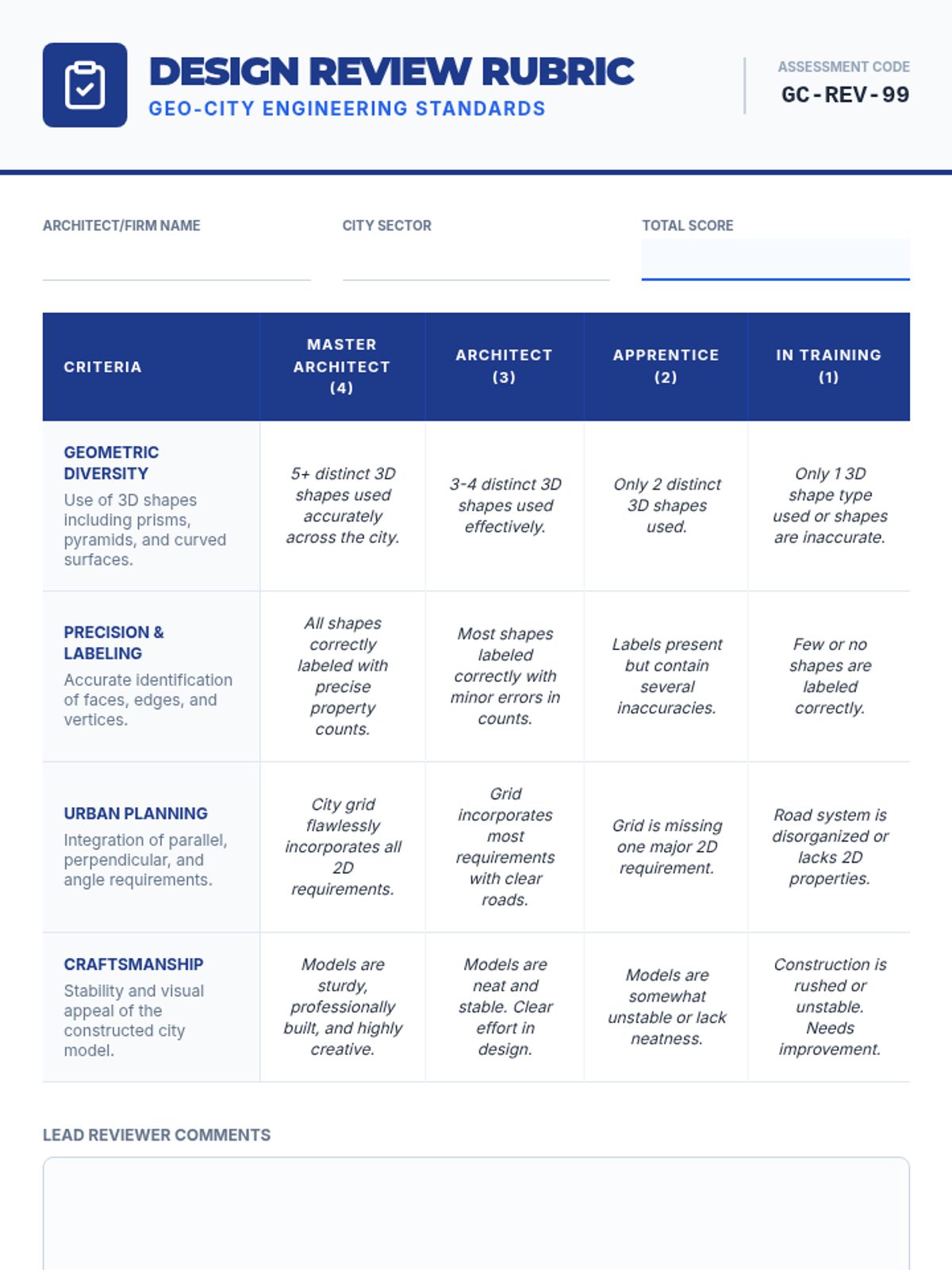
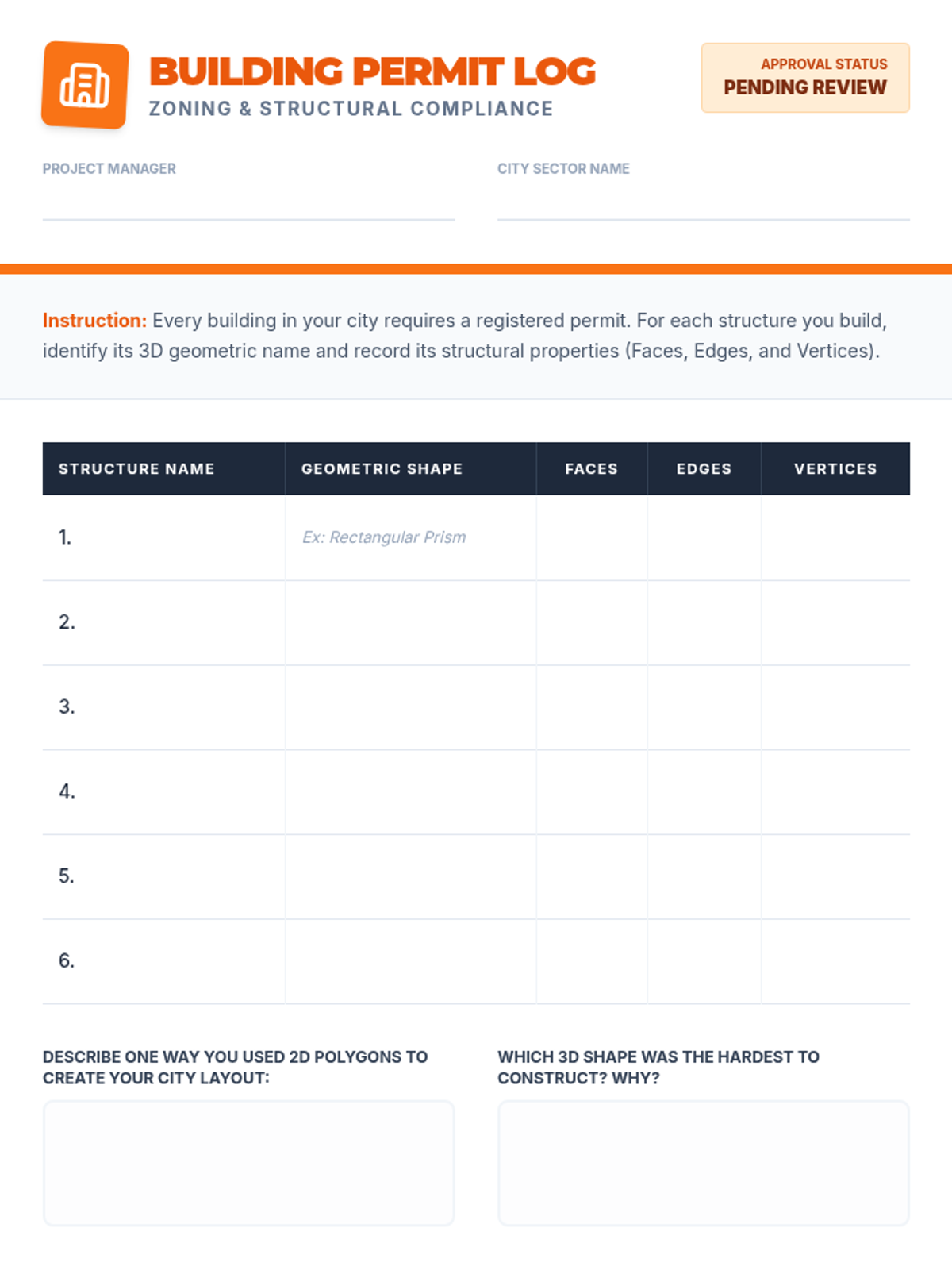
A project-based lesson where students apply geometry skills to design and build a 3D miniature city, focusing on polyhedra, volume, and spatial reasoning.
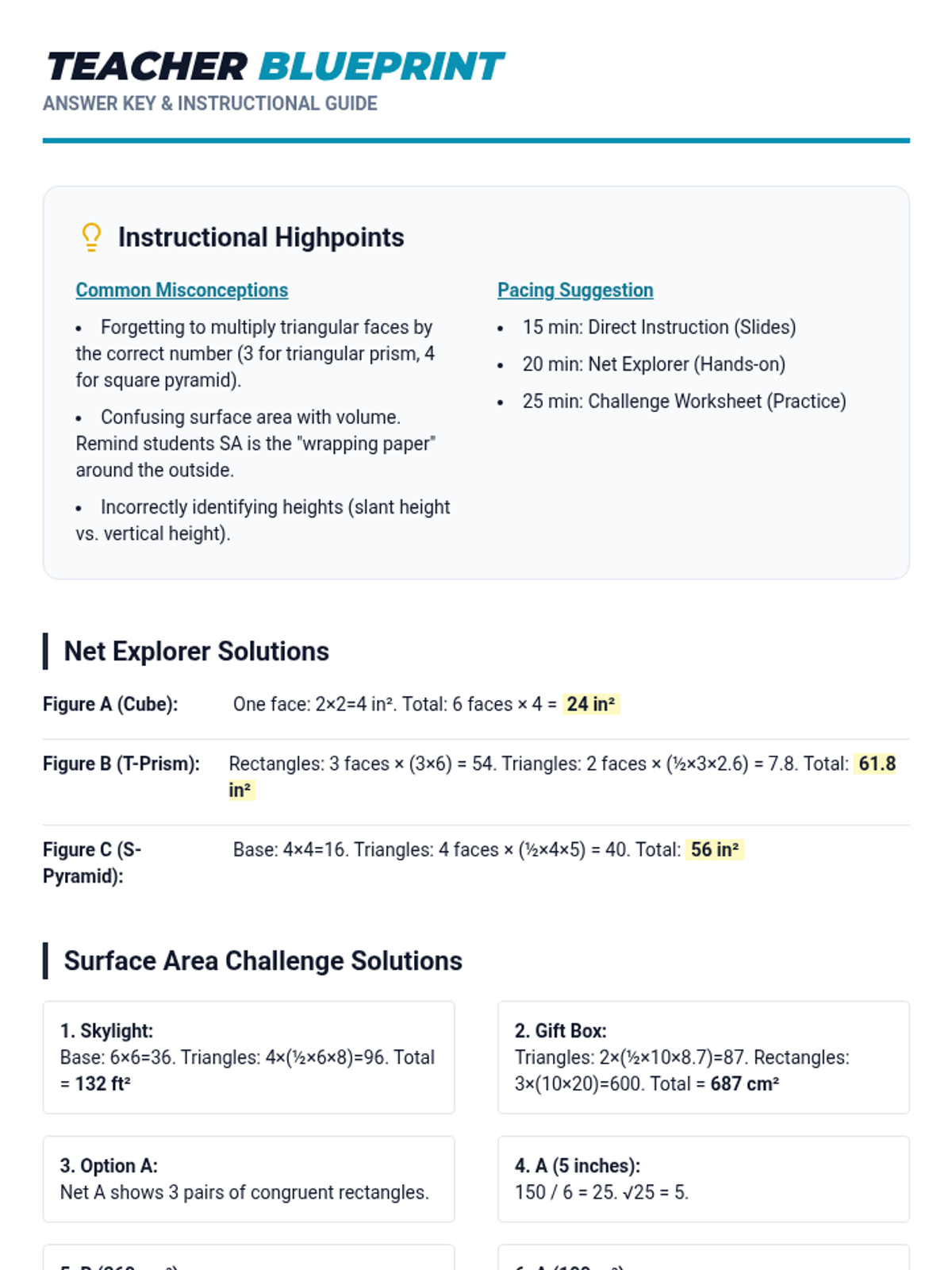
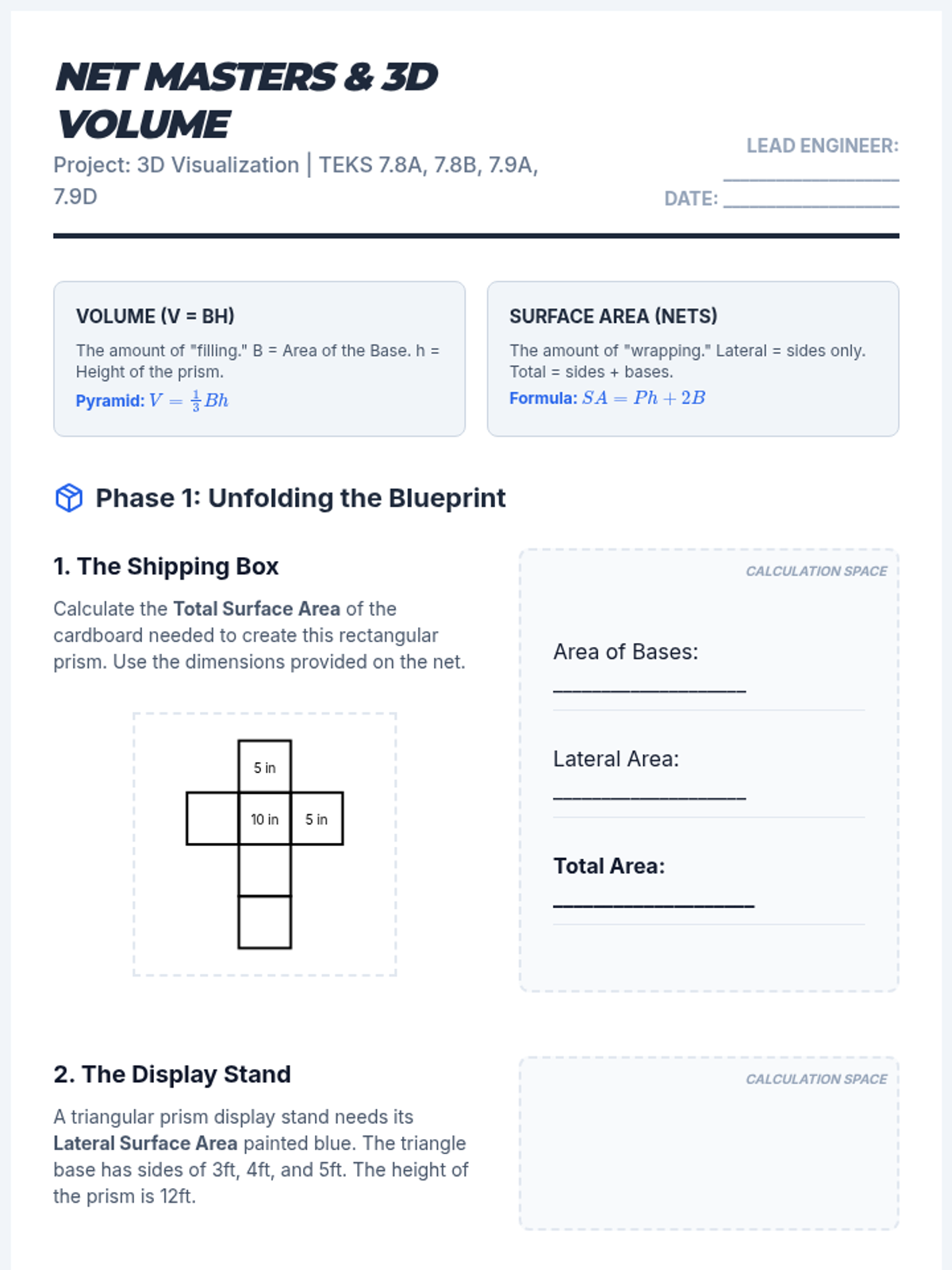
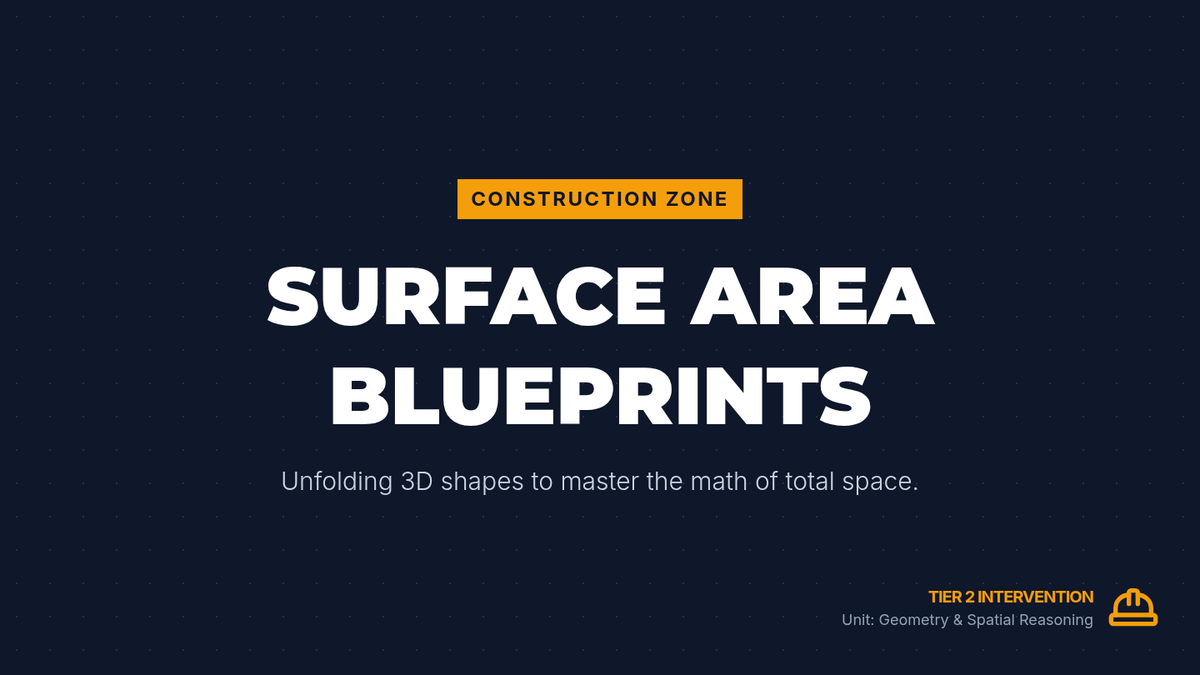
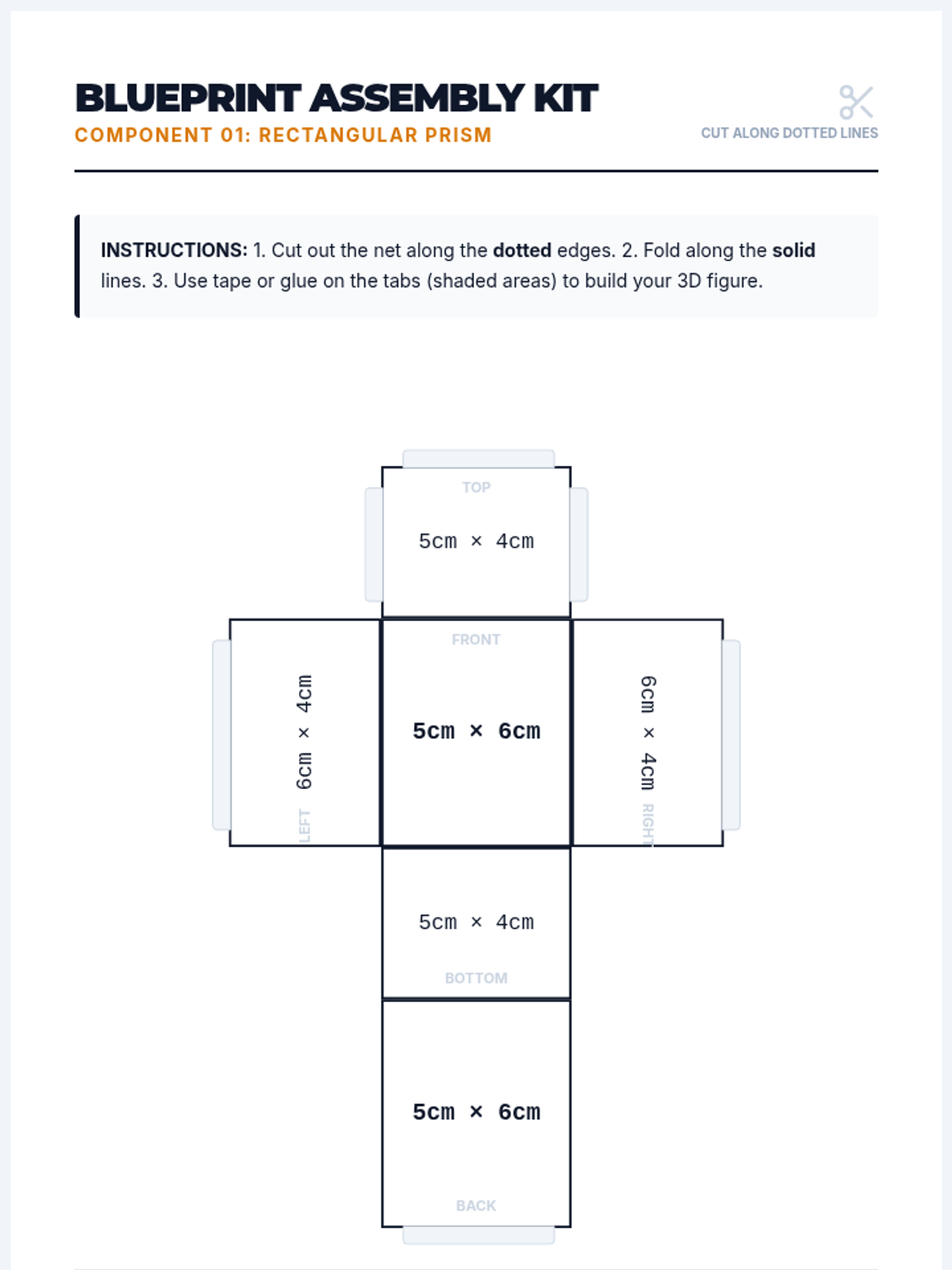
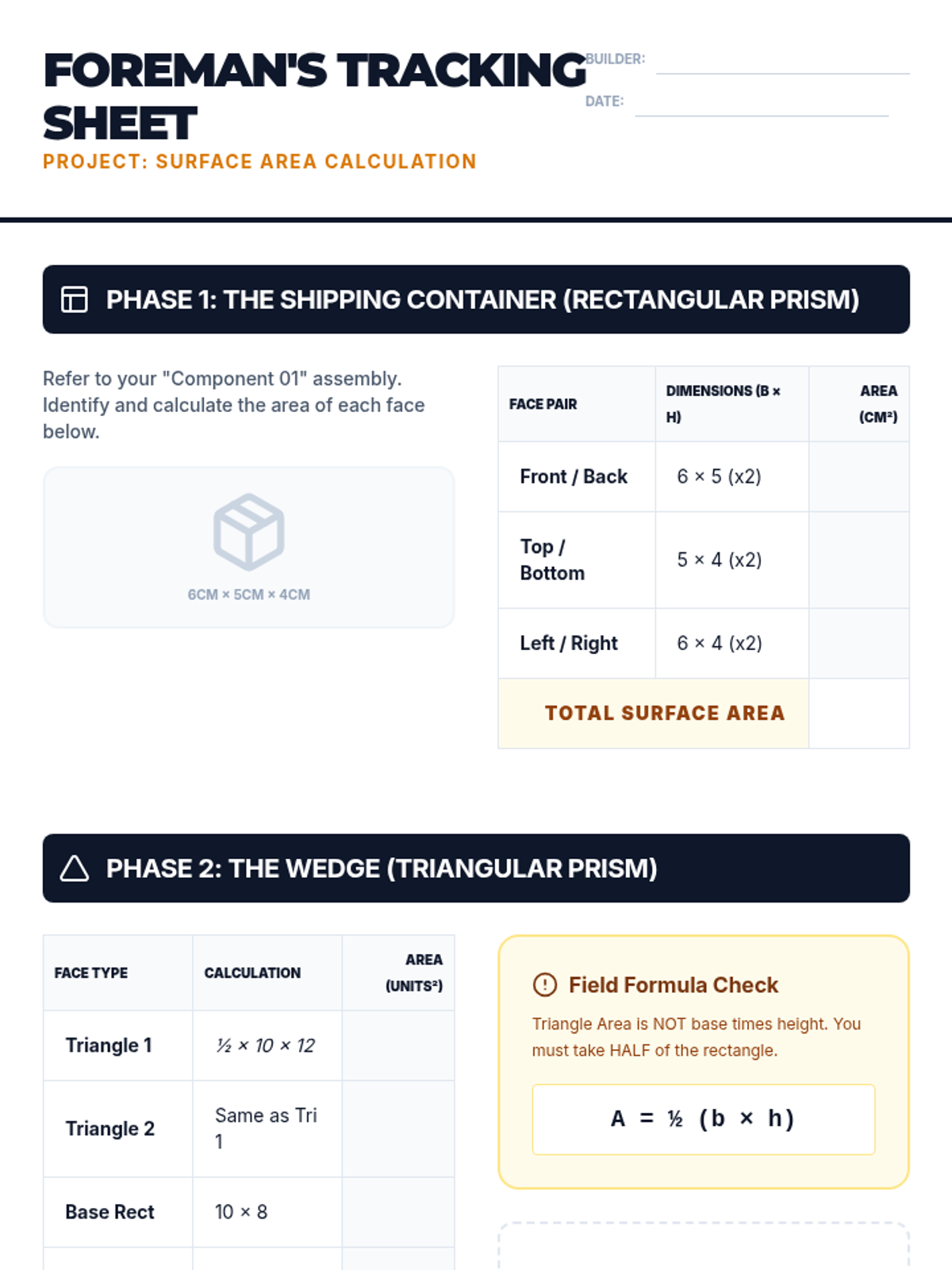
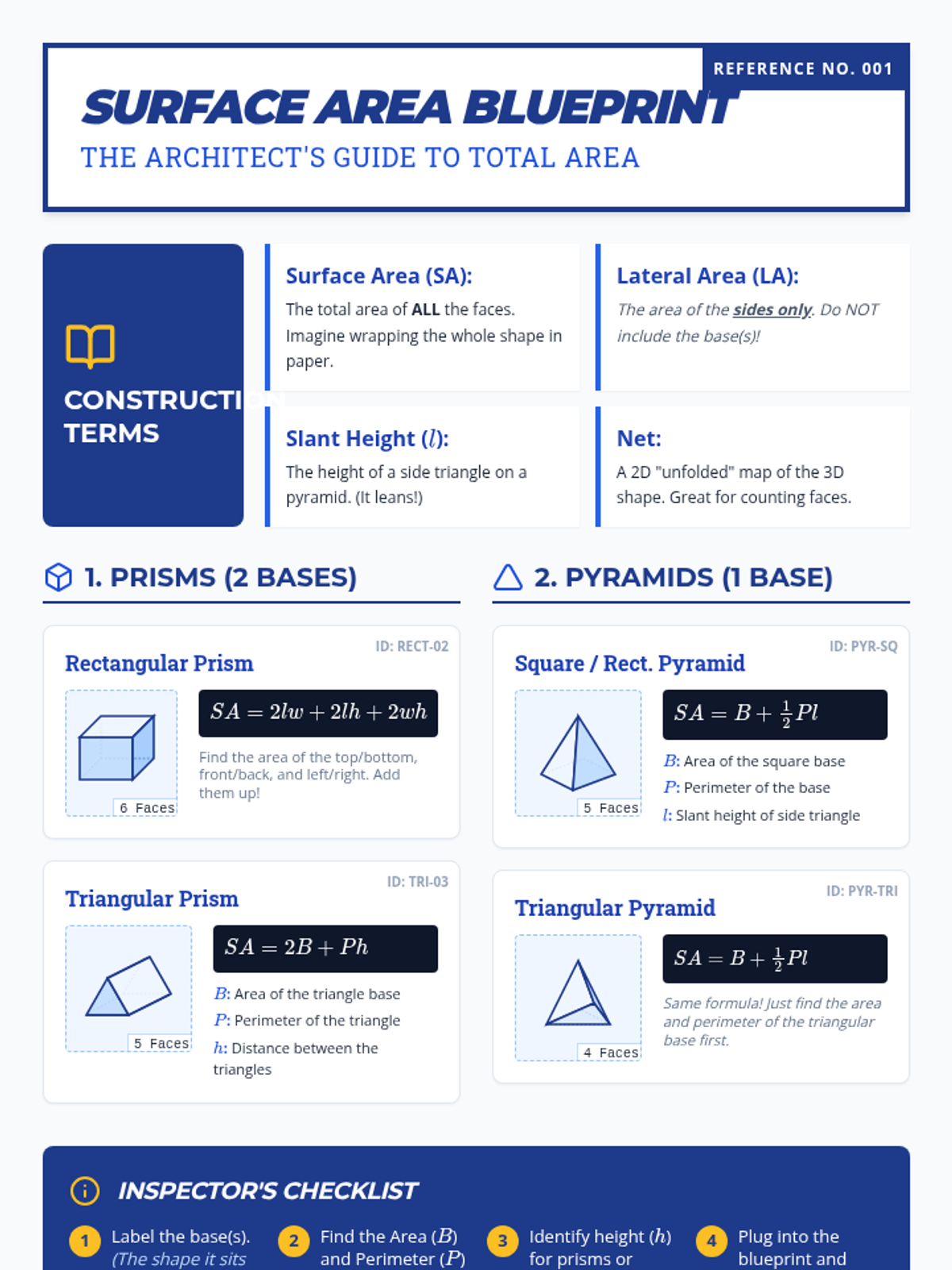
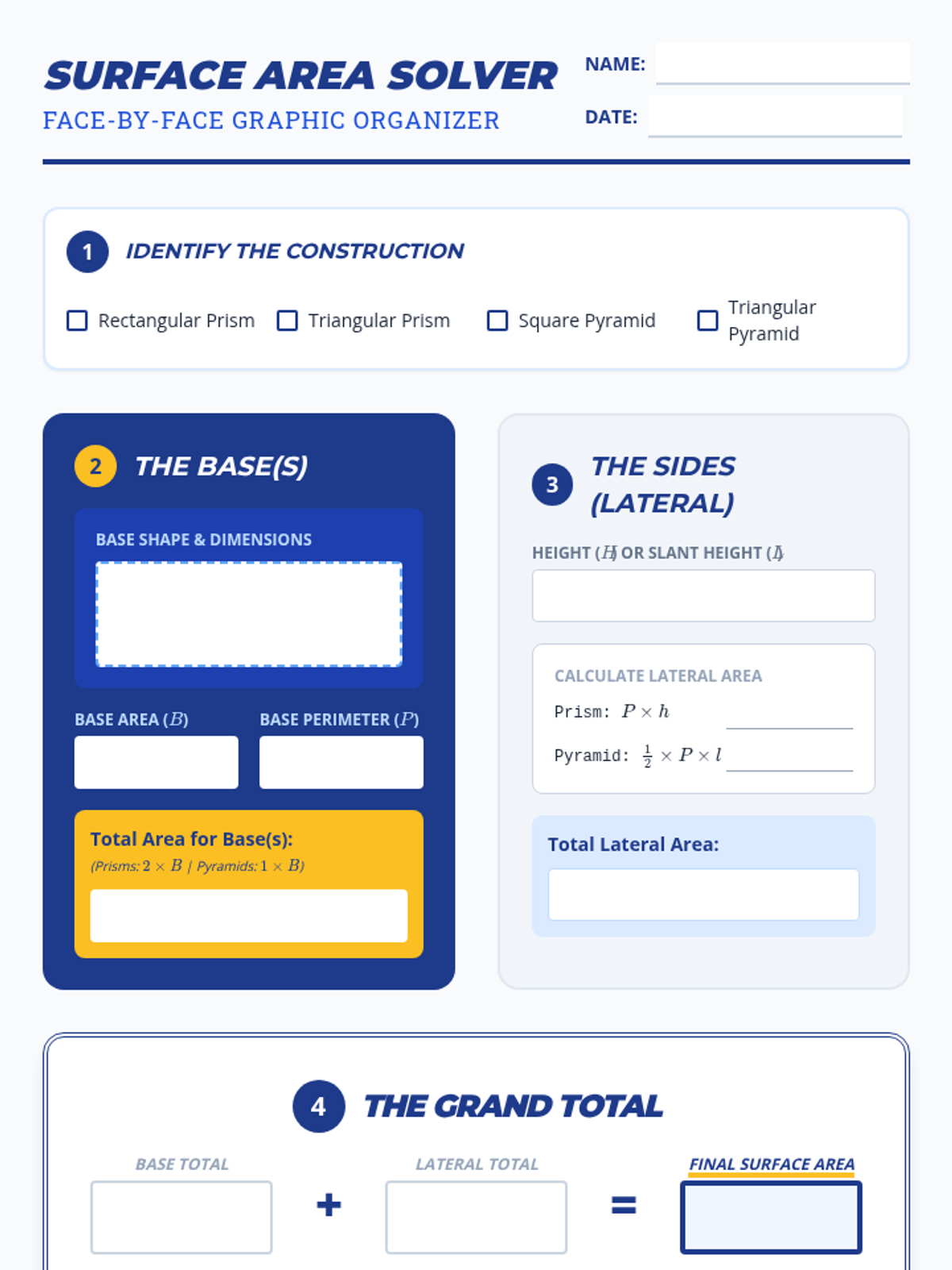
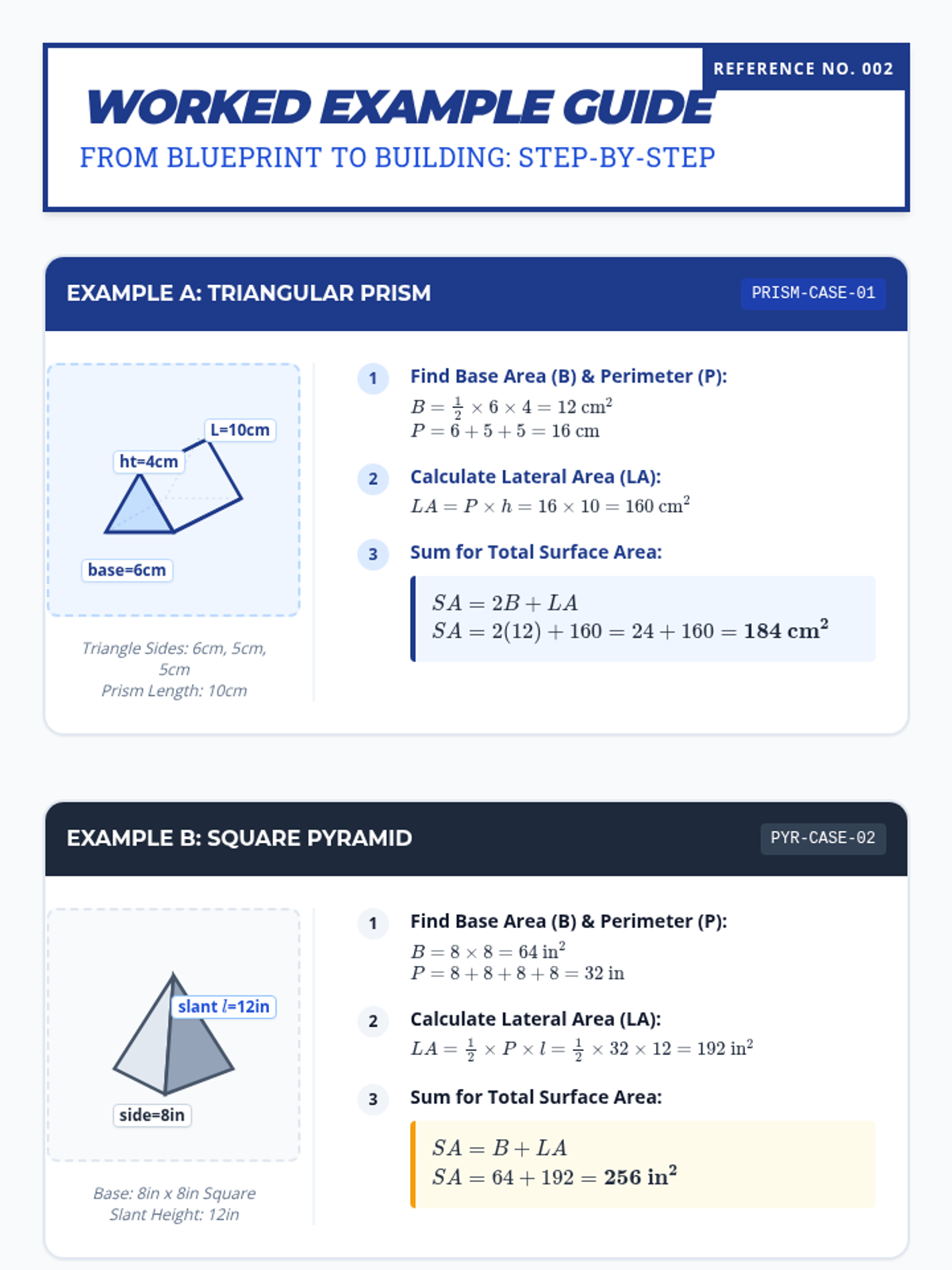
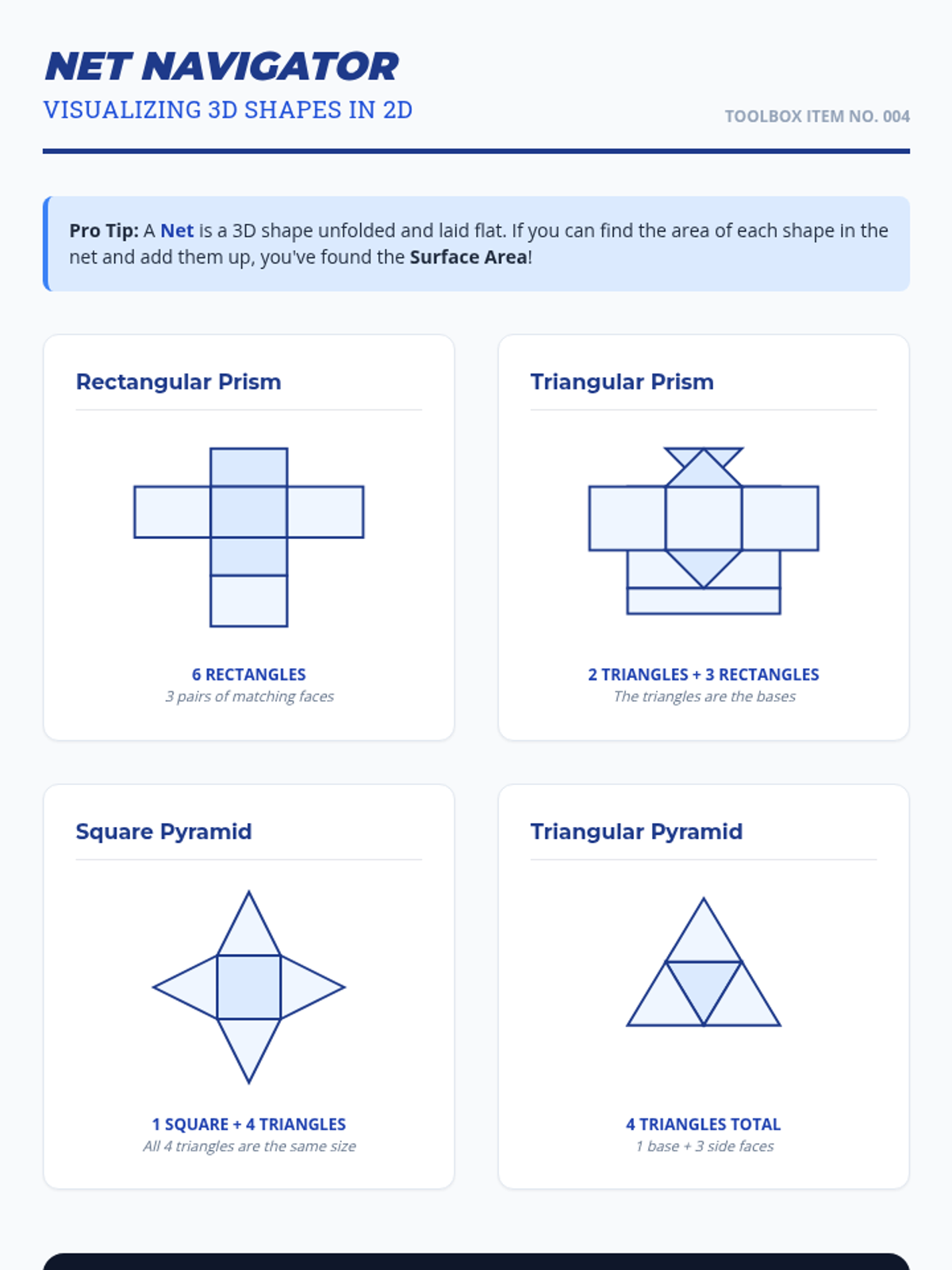
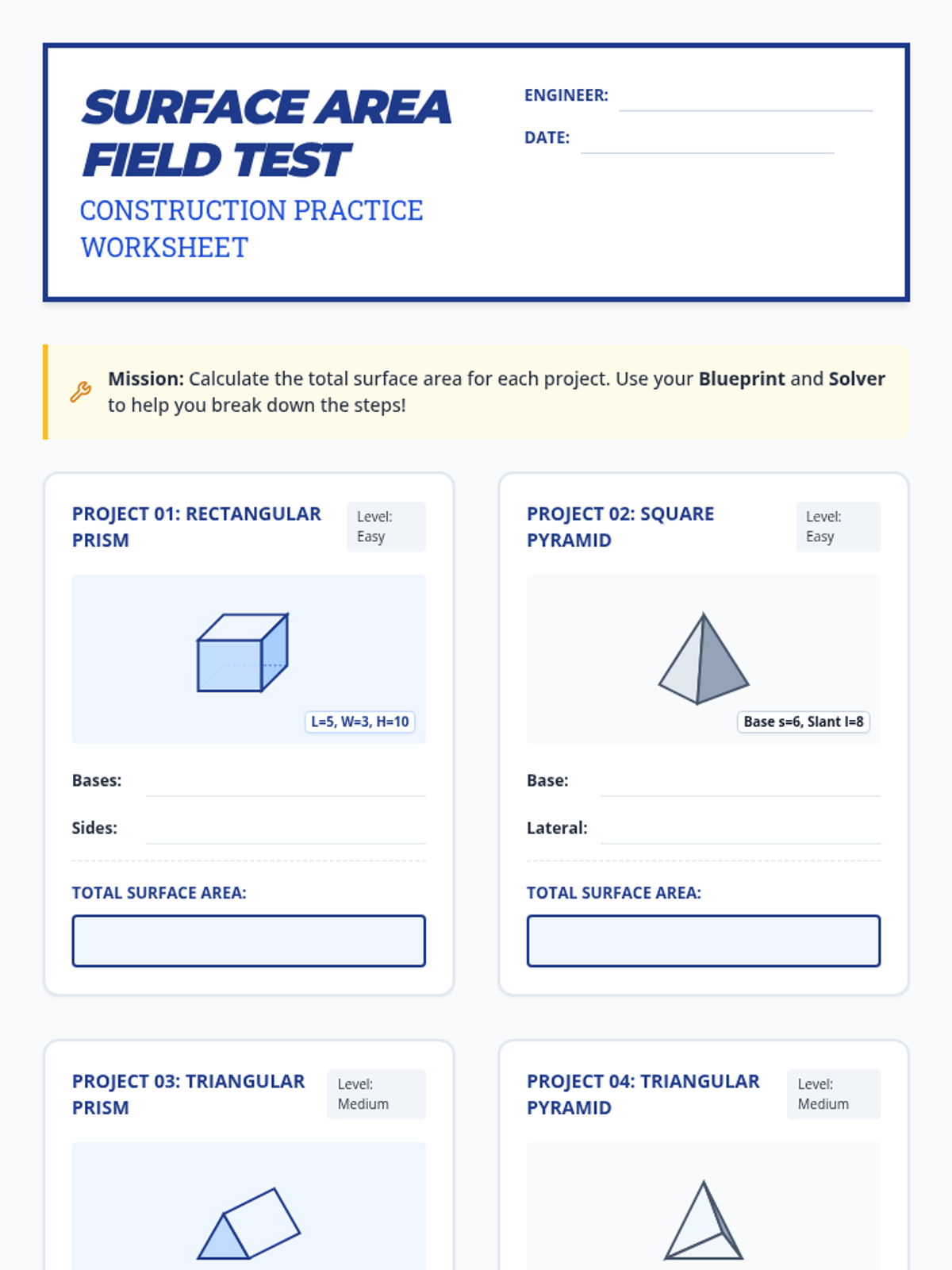
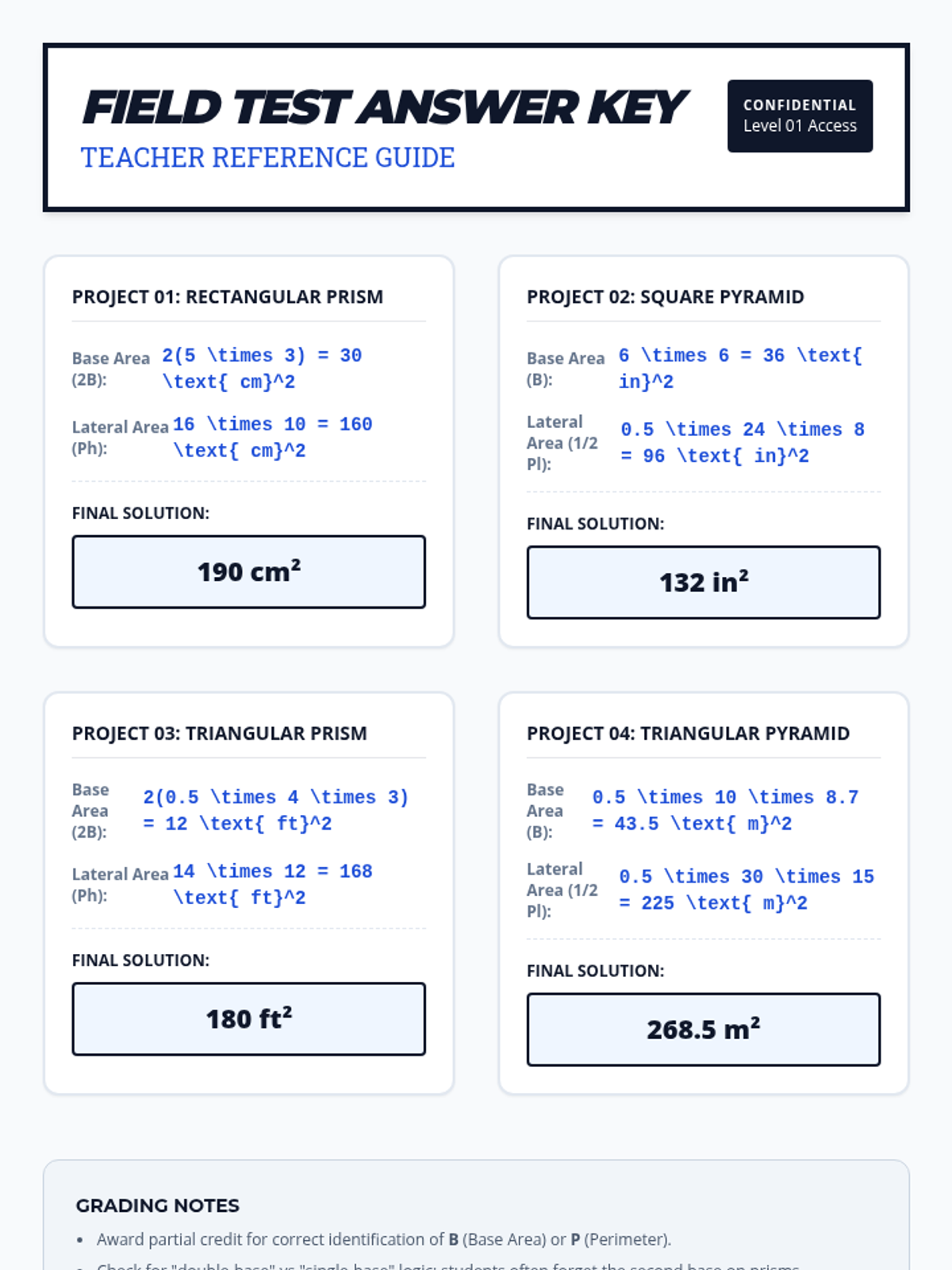
A targeted Tier 2 intervention lesson for 6th grade students on finding the surface area of prisms and pyramids by 'unfolding' them into nets. This lesson uses a construction blueprint theme to help students track and calculate the area of individual faces before summing them for the total surface area.
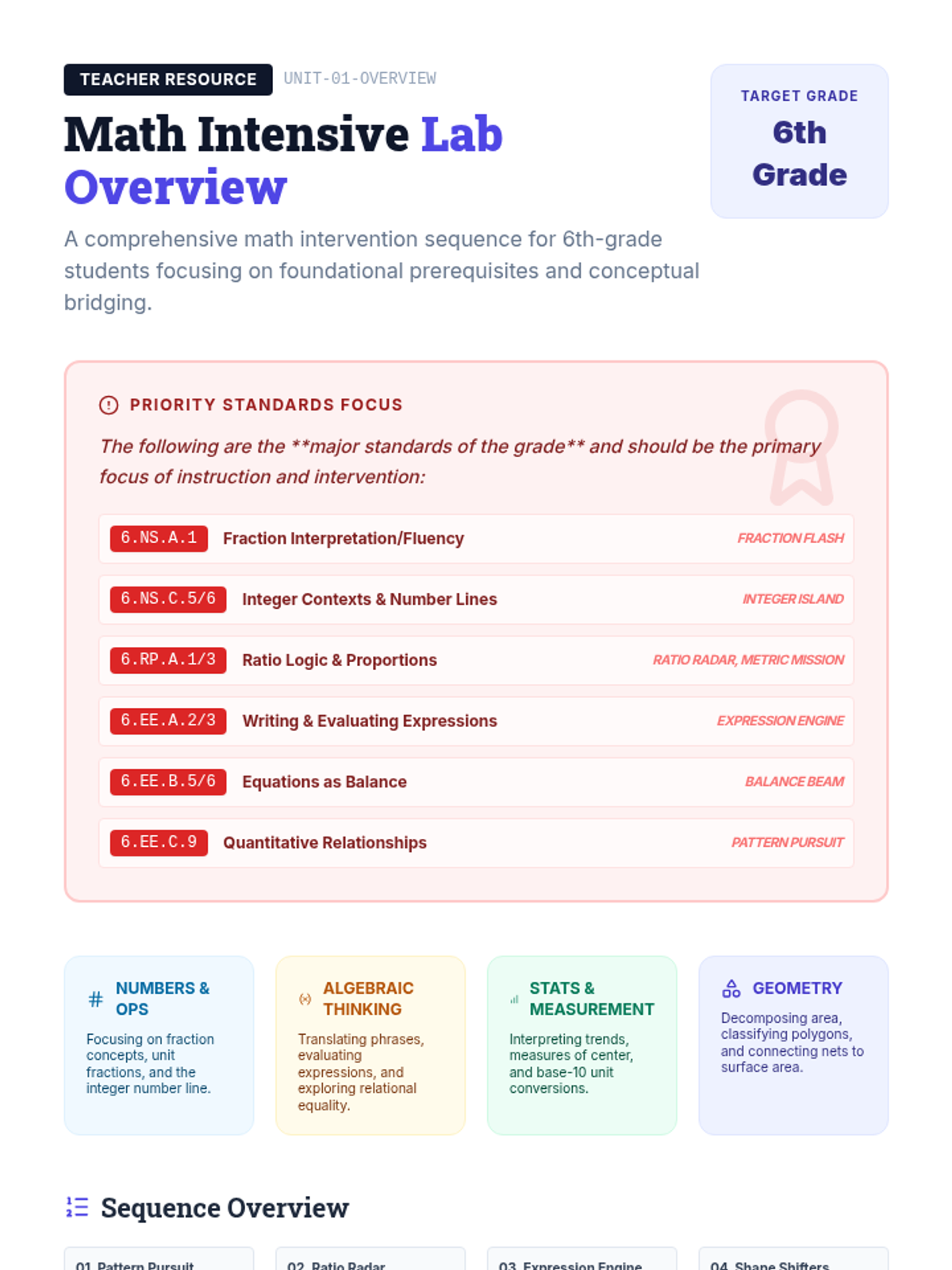
General administrative and planning resources for the Math Intensive Lab sequence, including the unit overview and sequence-wide instructional supports.
A project-based learning lesson where students design a miniature city using 2D and 3D geometric shapes to master geometry vocabulary and spatial reasoning.
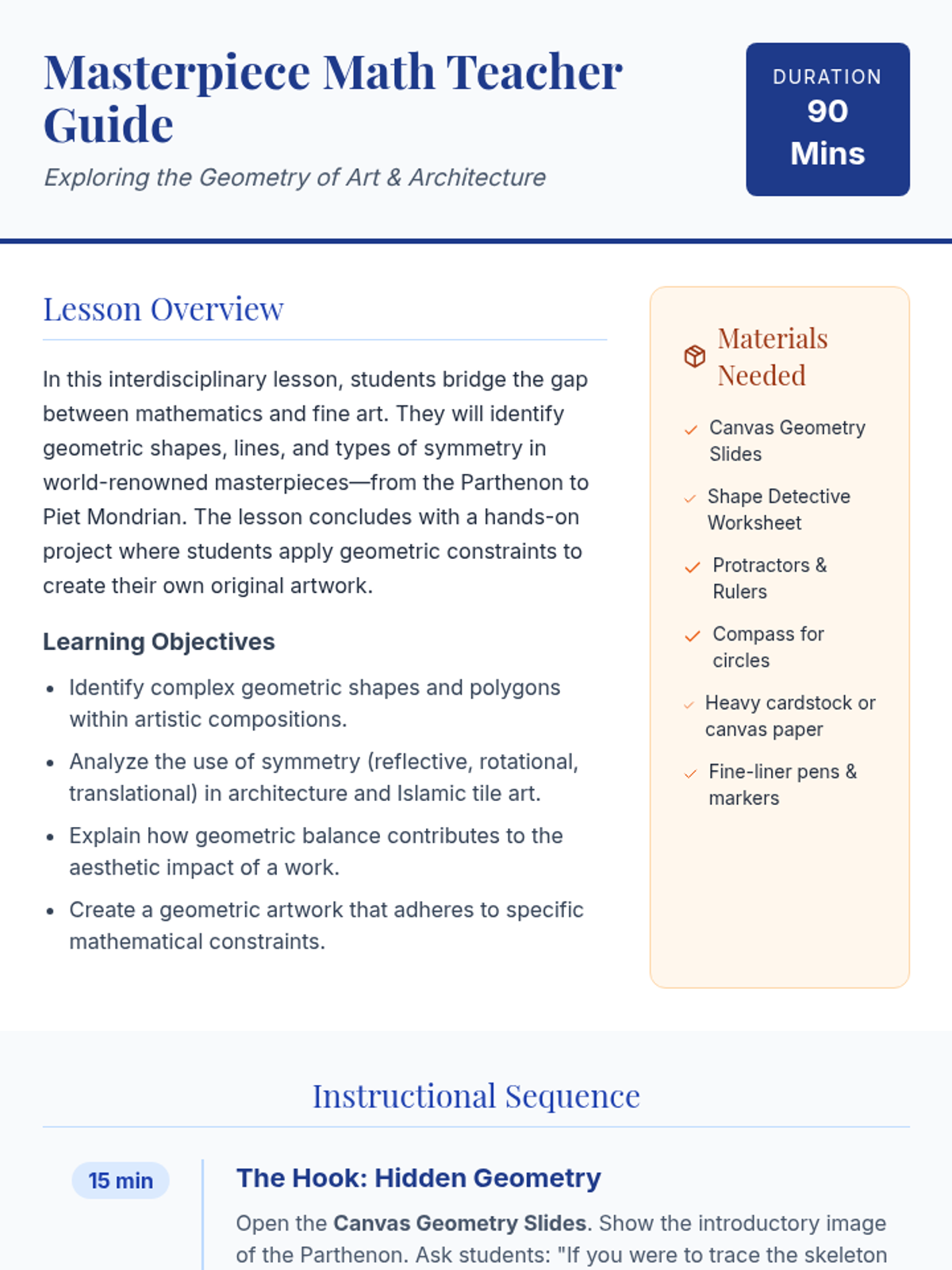
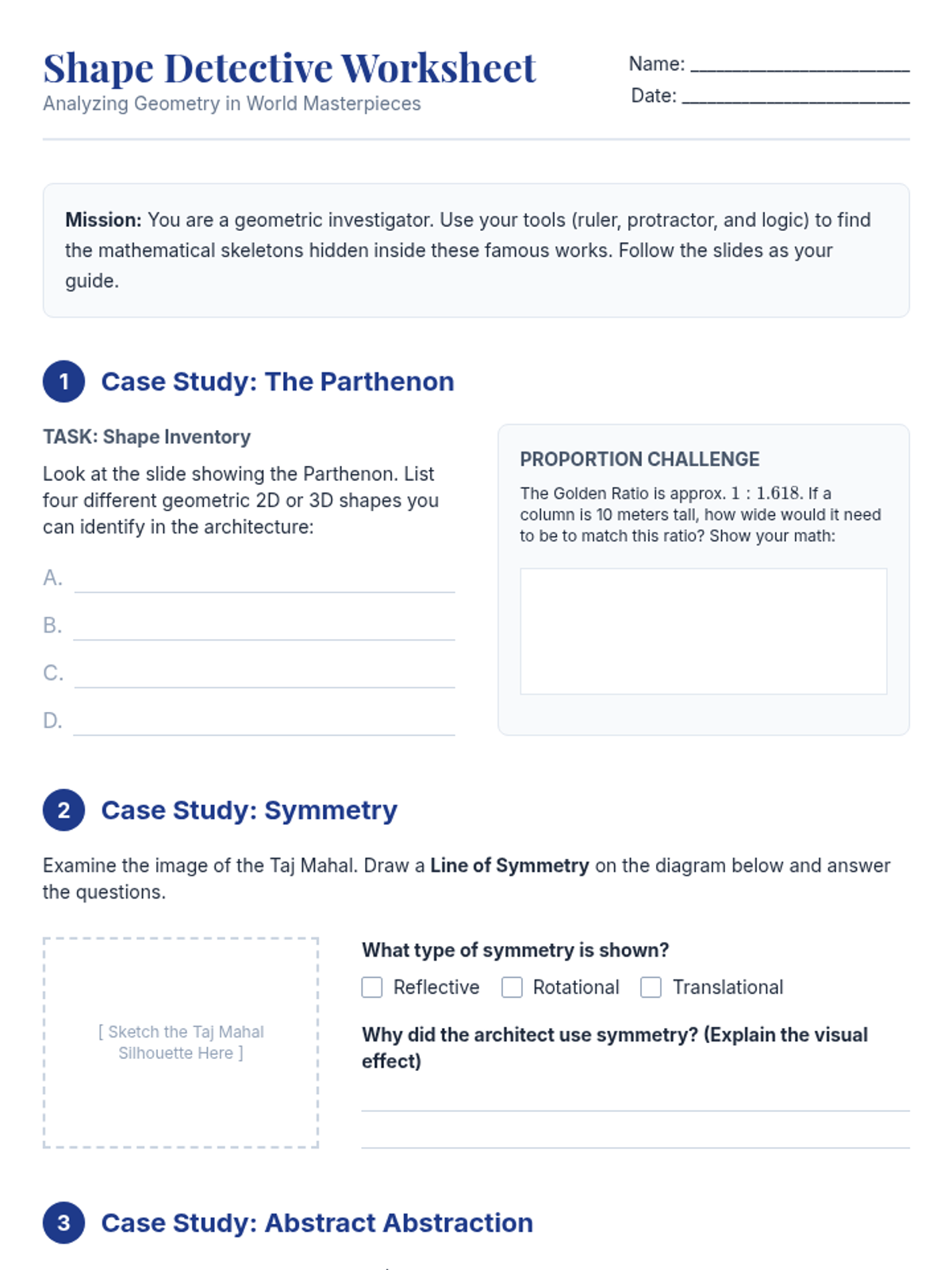
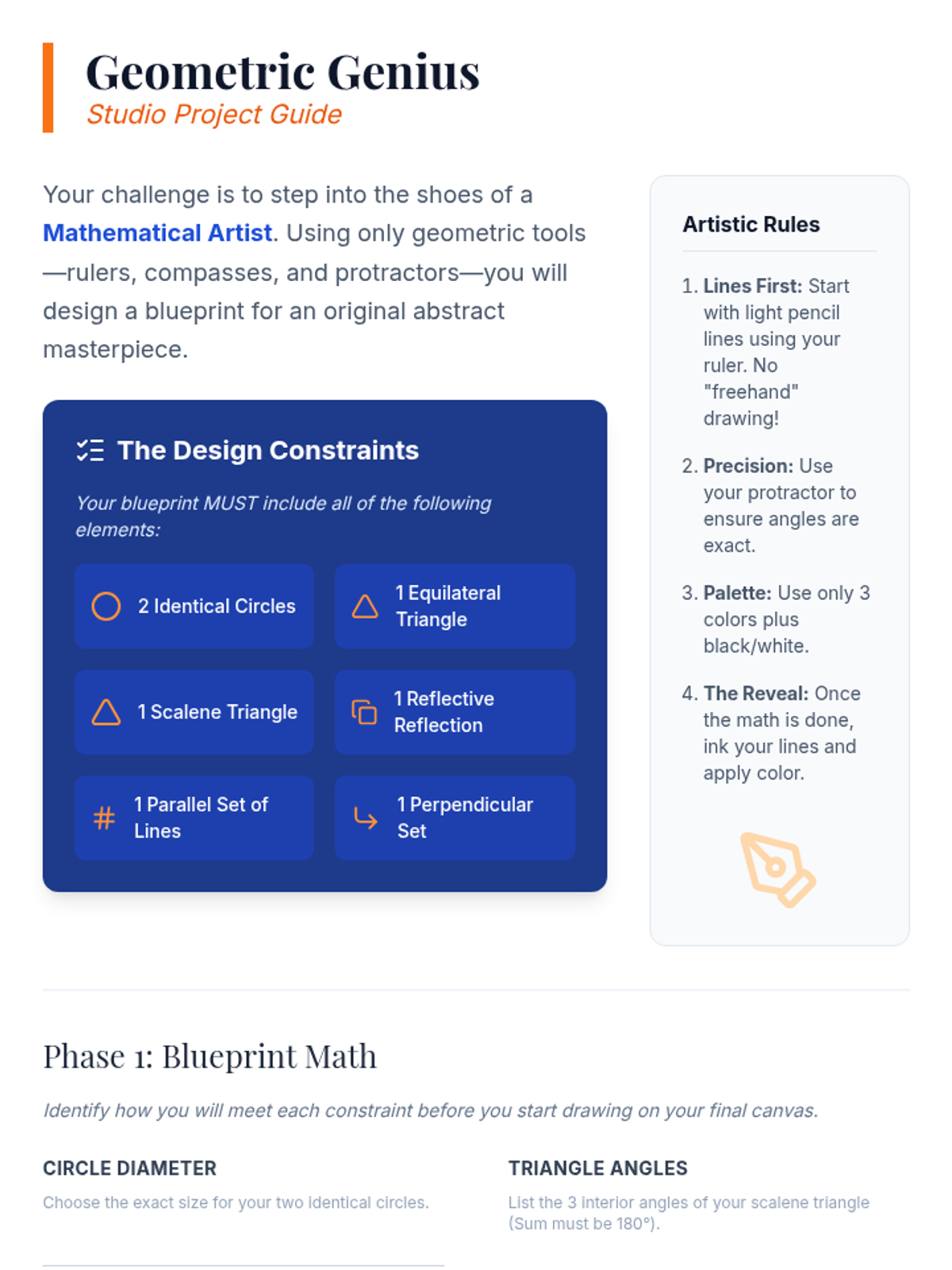
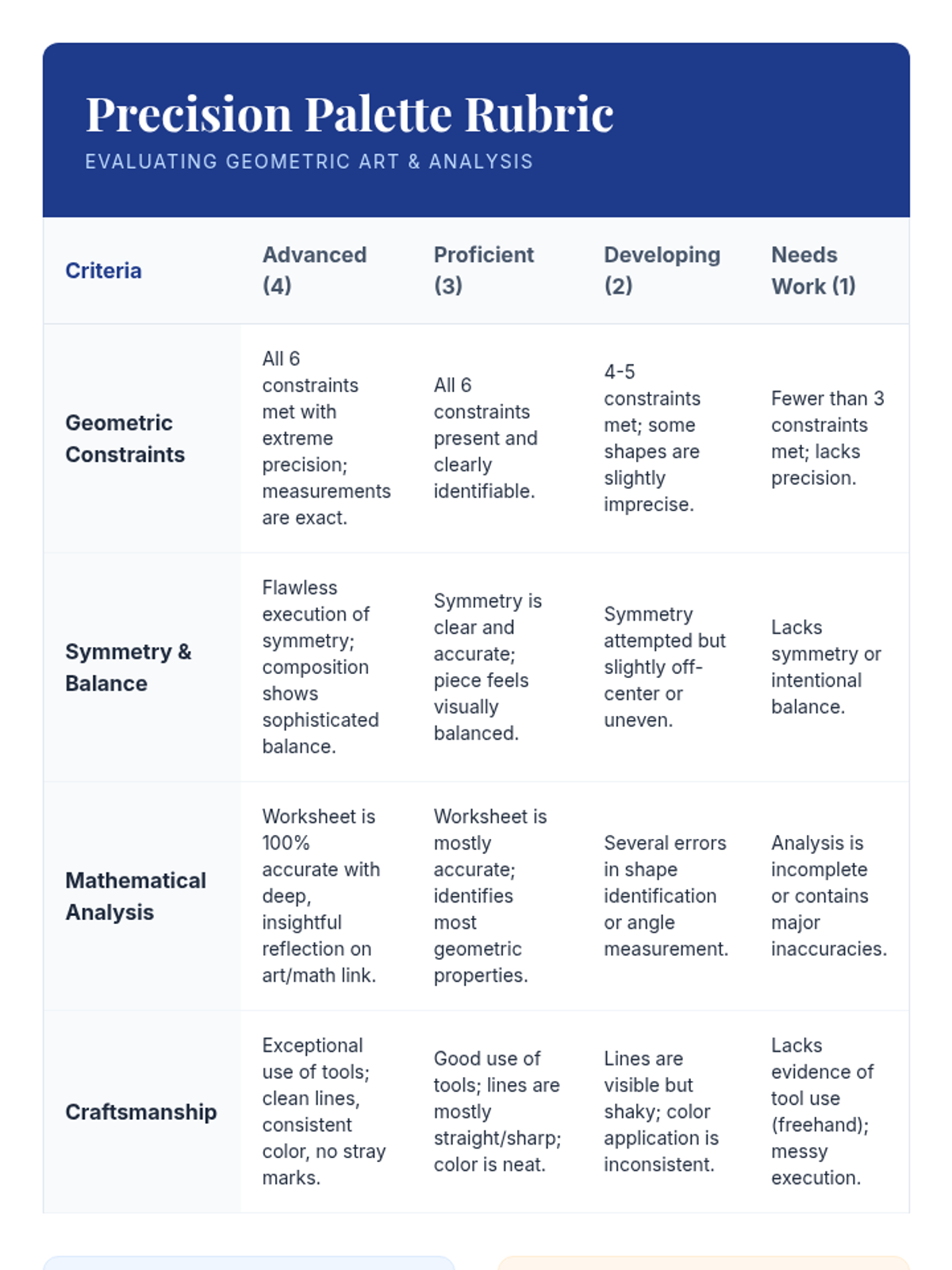
An interdisciplinary exploration of geometry in world-famous art and architecture, where students analyze symmetry and shape before creating their own geometric masterpieces.
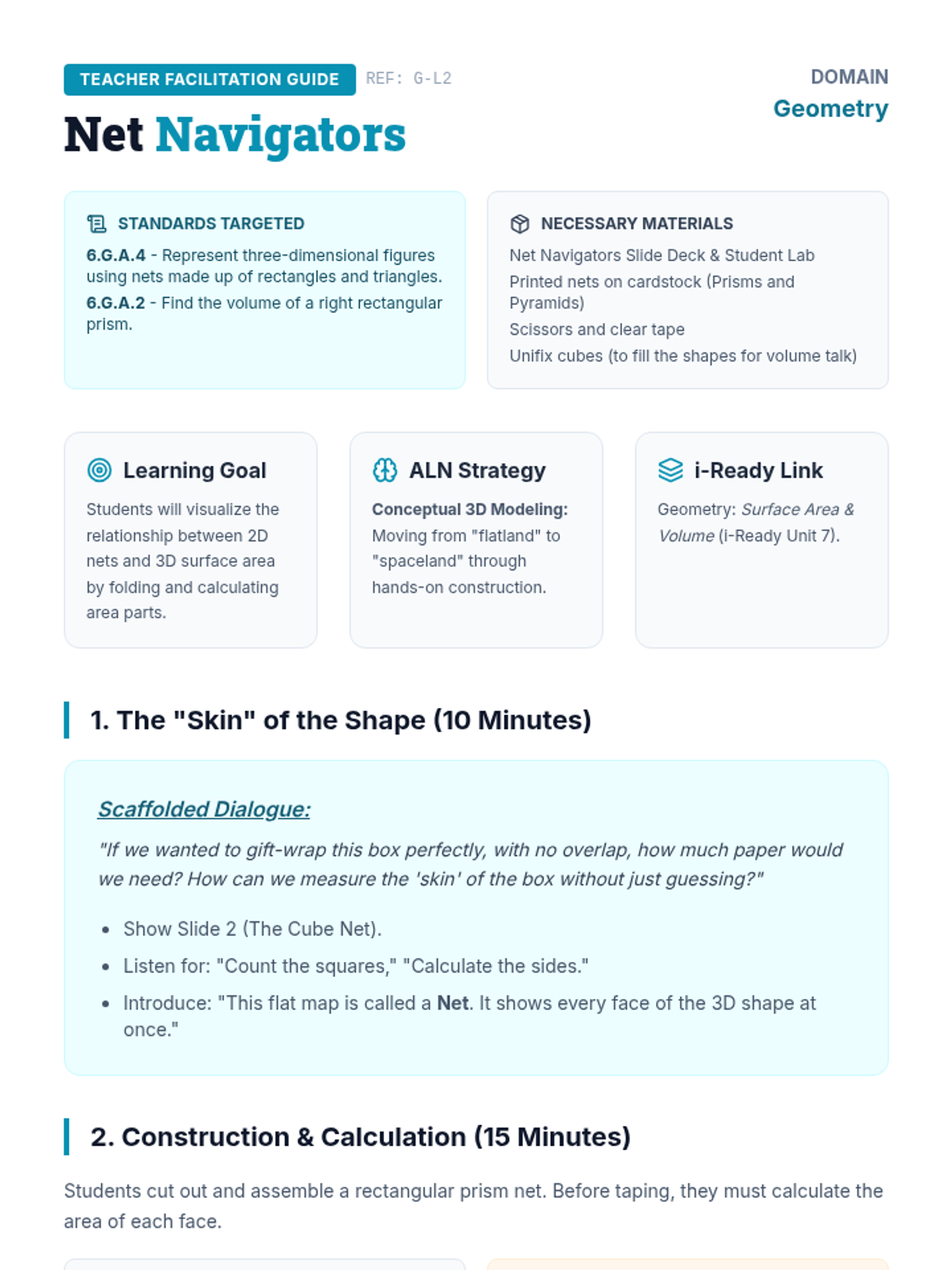
Connects 2D representations to 3D volumes by exploring nets of prisms and pyramids to calculate surface area conceptually.
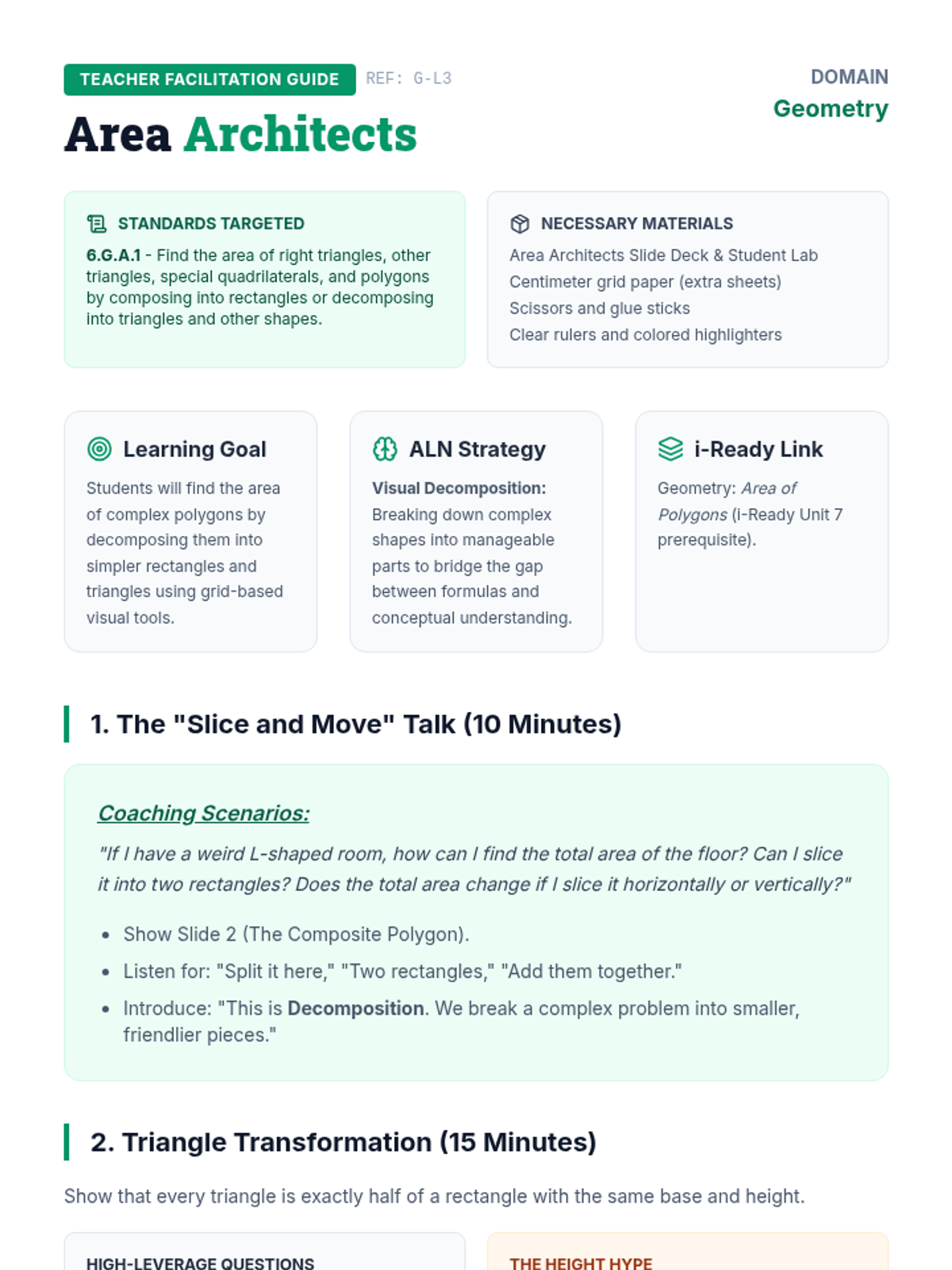
Deepens understanding of area by decomposing complex shapes into rectangles and triangles using grid-based visual tools.
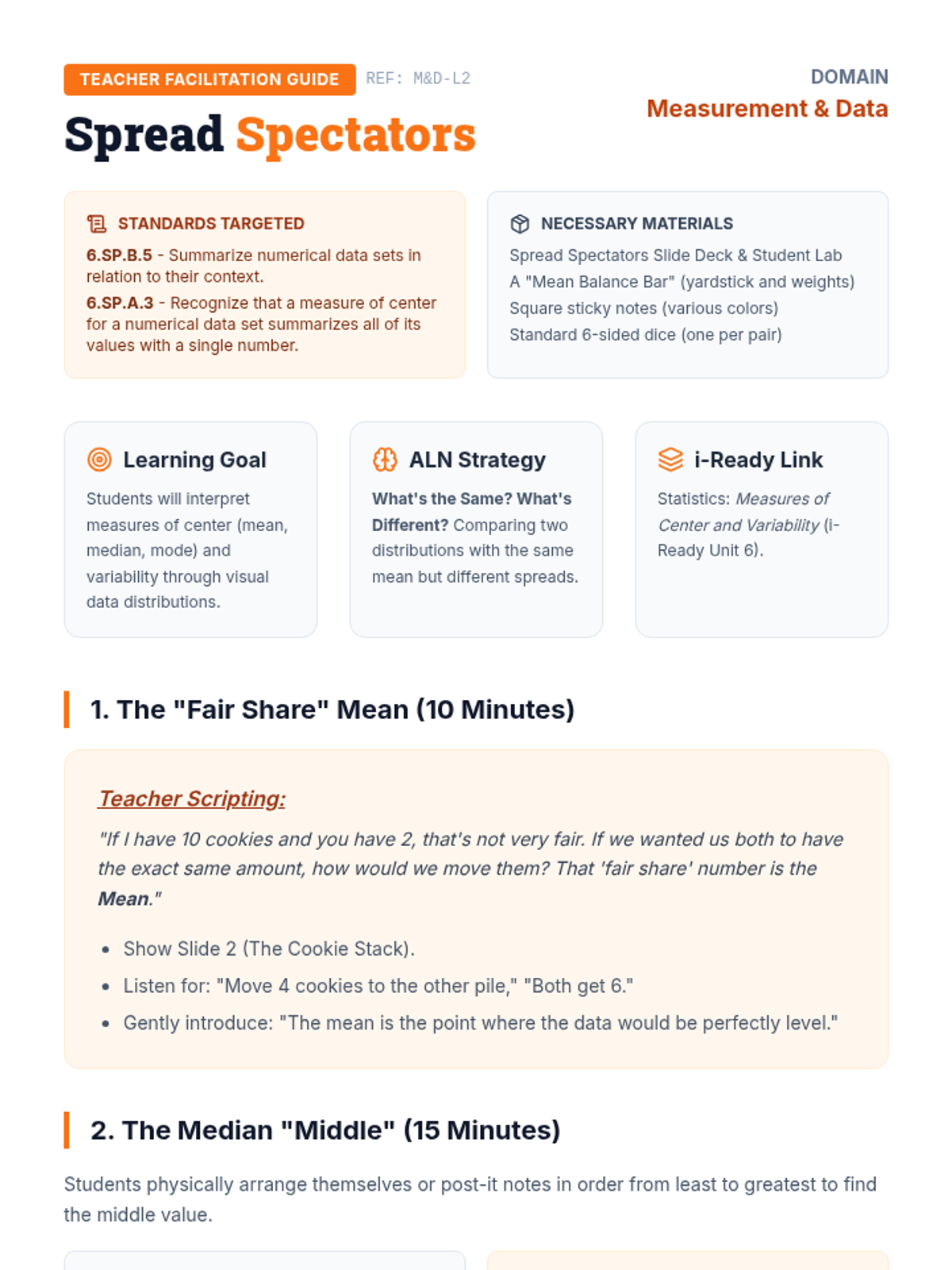
Interprets measures of center (mean, median, mode) through data visualization and 'What's the Same? What's Different?' statistical talks.
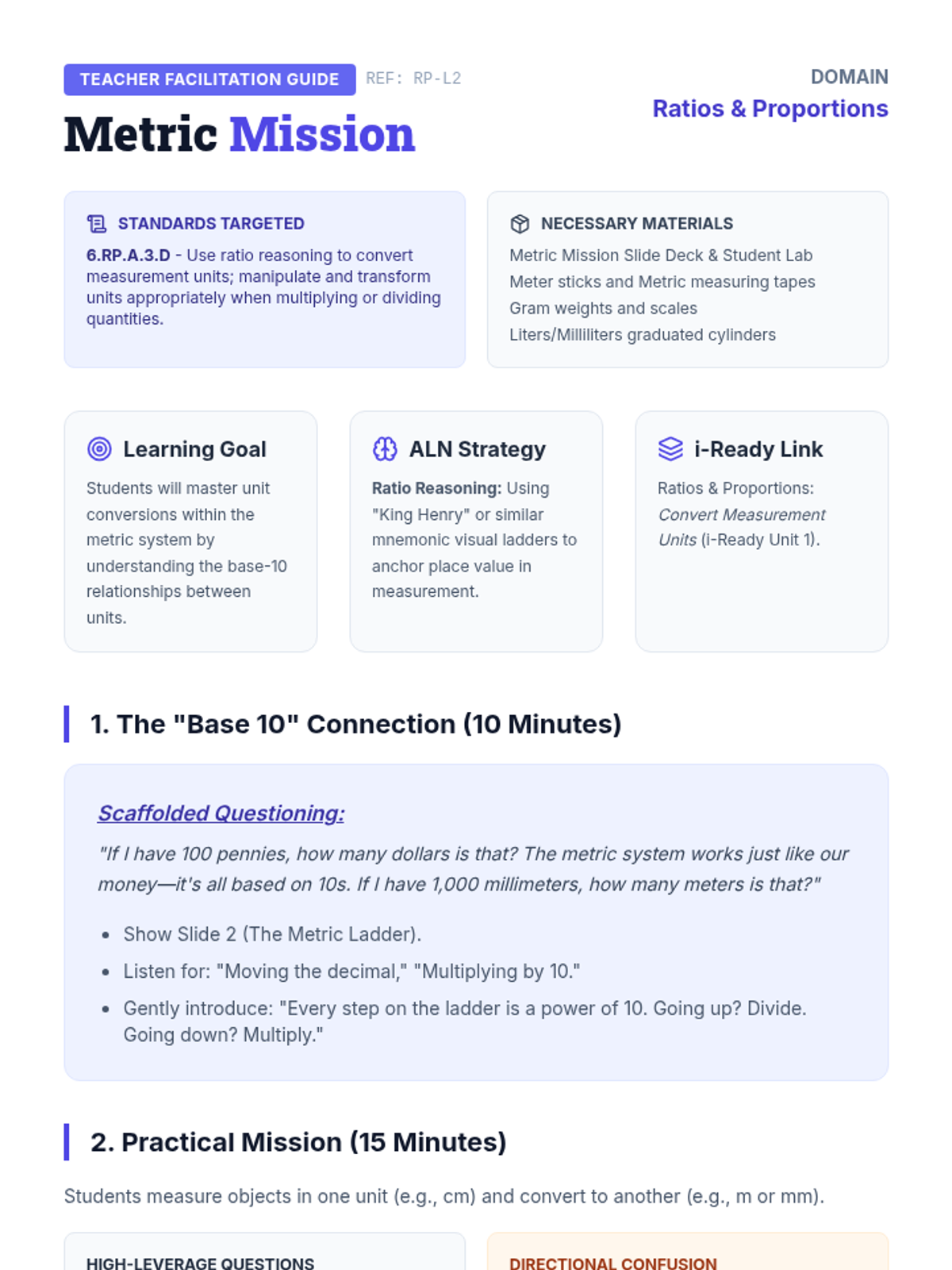
Provides hands-on challenges to master unit conversions within the same system, focusing on the relationship between larger and smaller units.
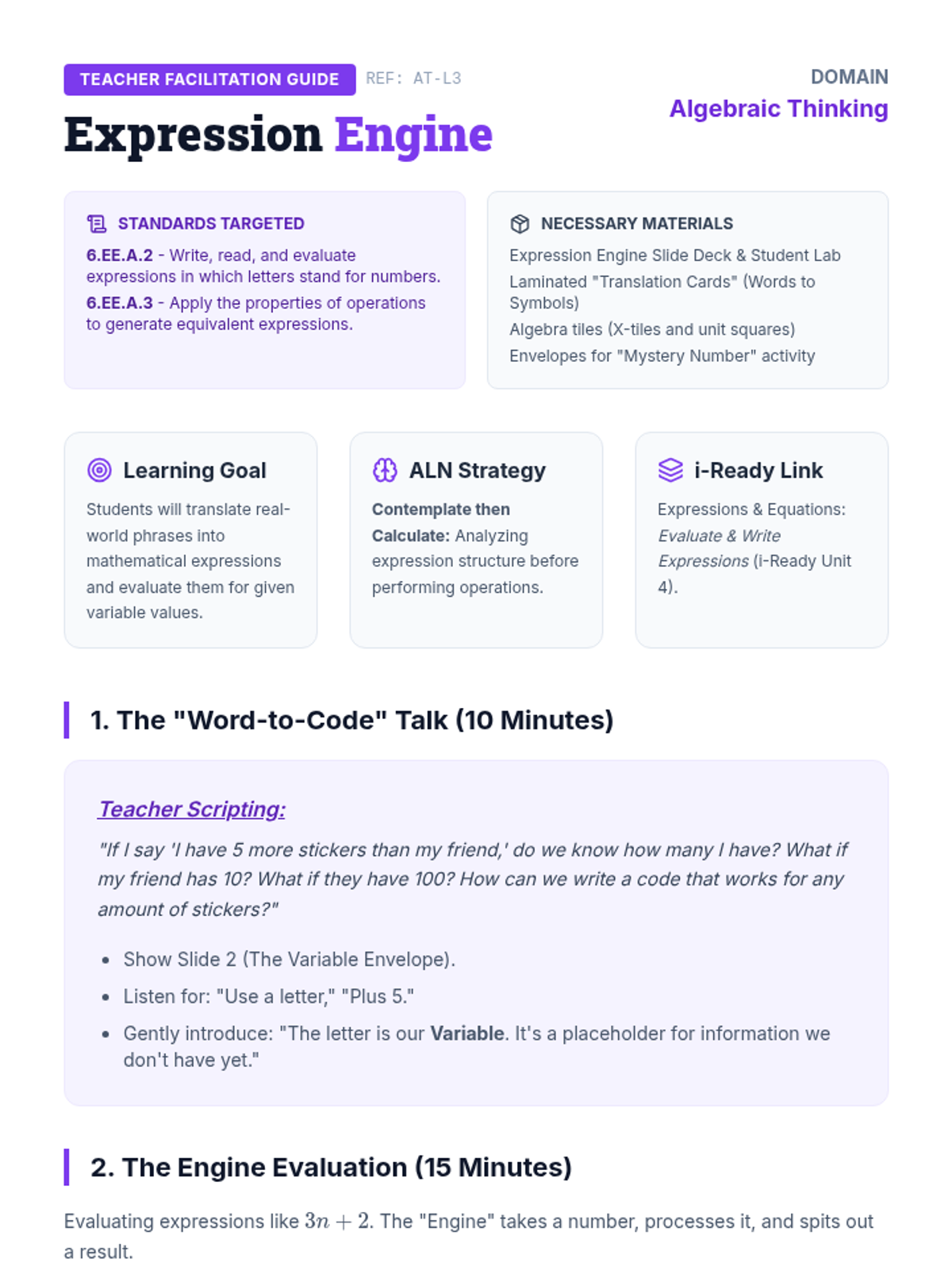
Focuses on translating real-world phrases into algebraic expressions and evaluating them using 'Contemplate then Calculate' strategies.
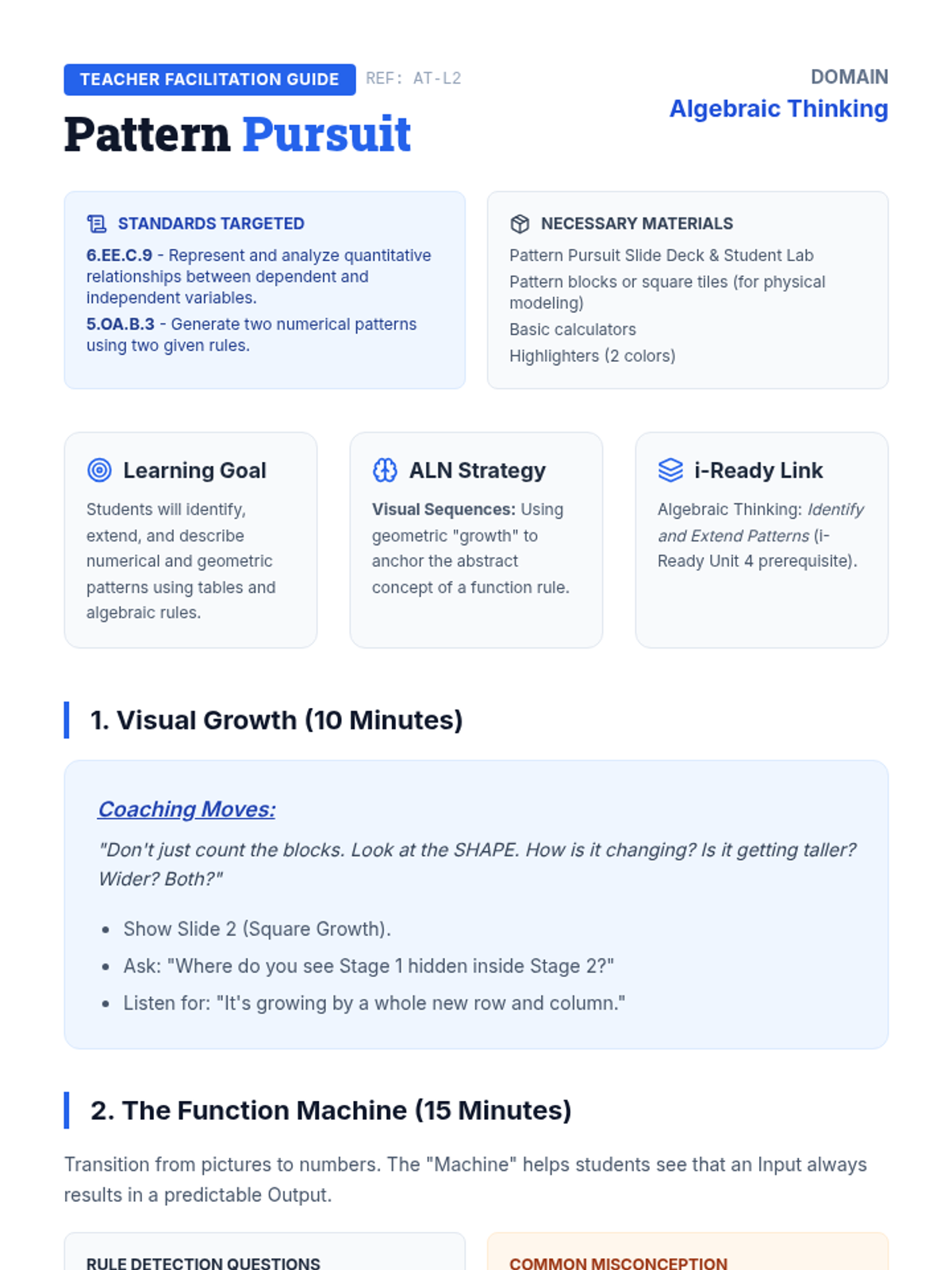
Uses visual sequences and function machines to help students identify, extend, and describe numerical patterns and rules.
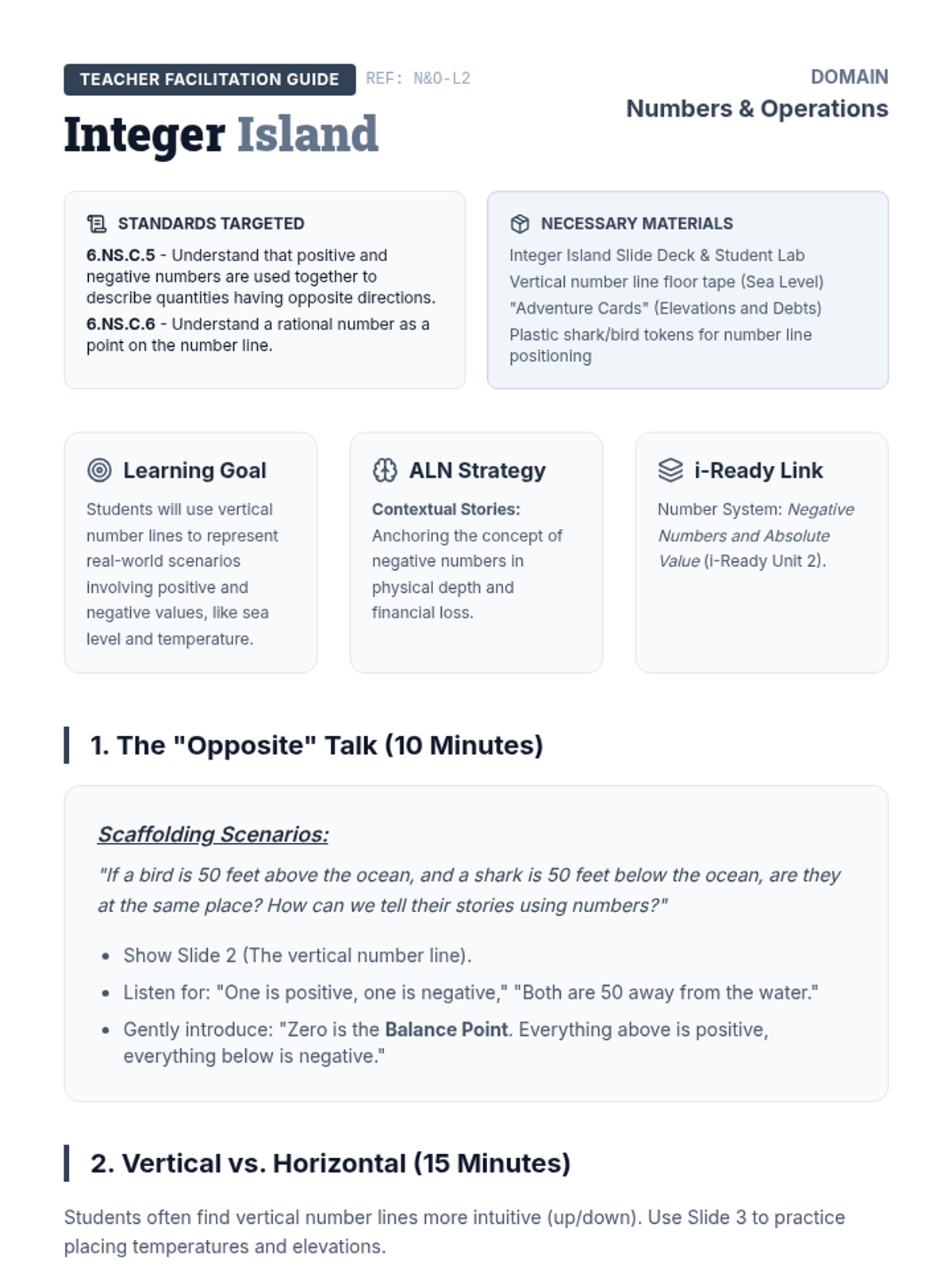
Introduces integers and absolute value using 'Contextual Stories' and vertical number lines to build a visual understanding of numbers below zero.
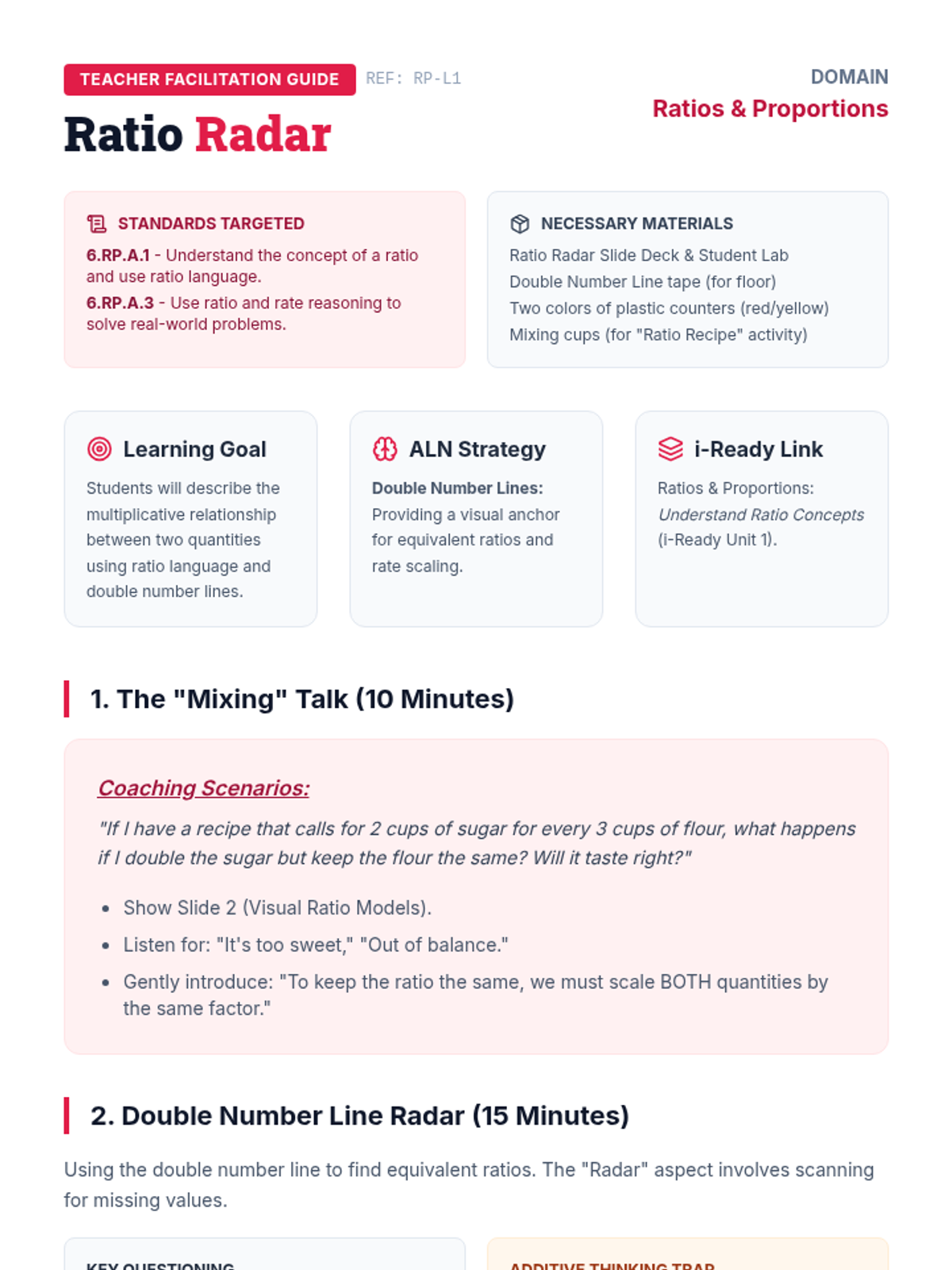
Explores the conceptual meaning of ratios and proportional relationships using 'Double Number Lines' and visual models to bridge i-Ready 6th grade gaps.
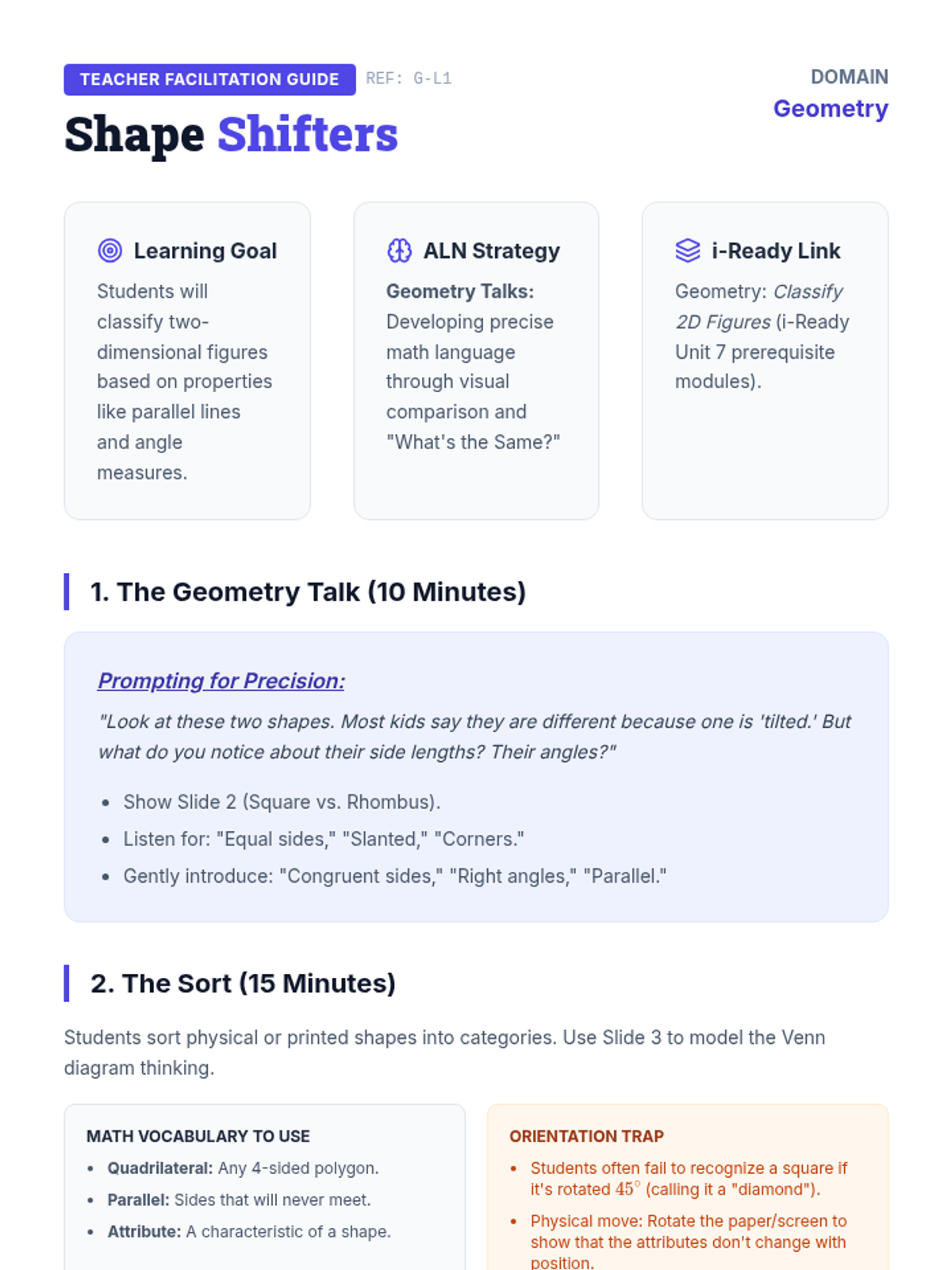
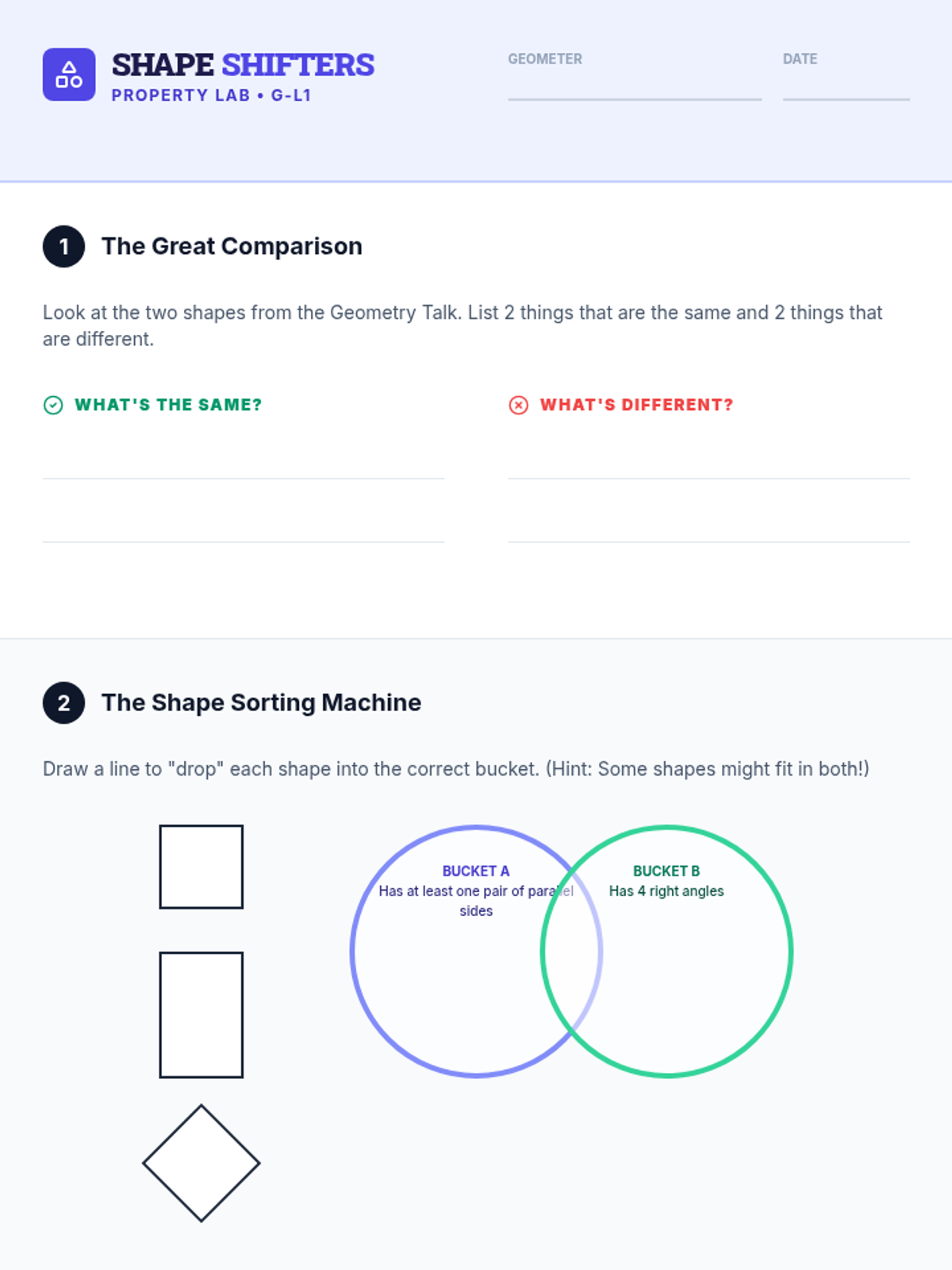
Strengthens geometric reasoning through 'Shape Sort' tasks, focusing on the properties and classification of polygons.
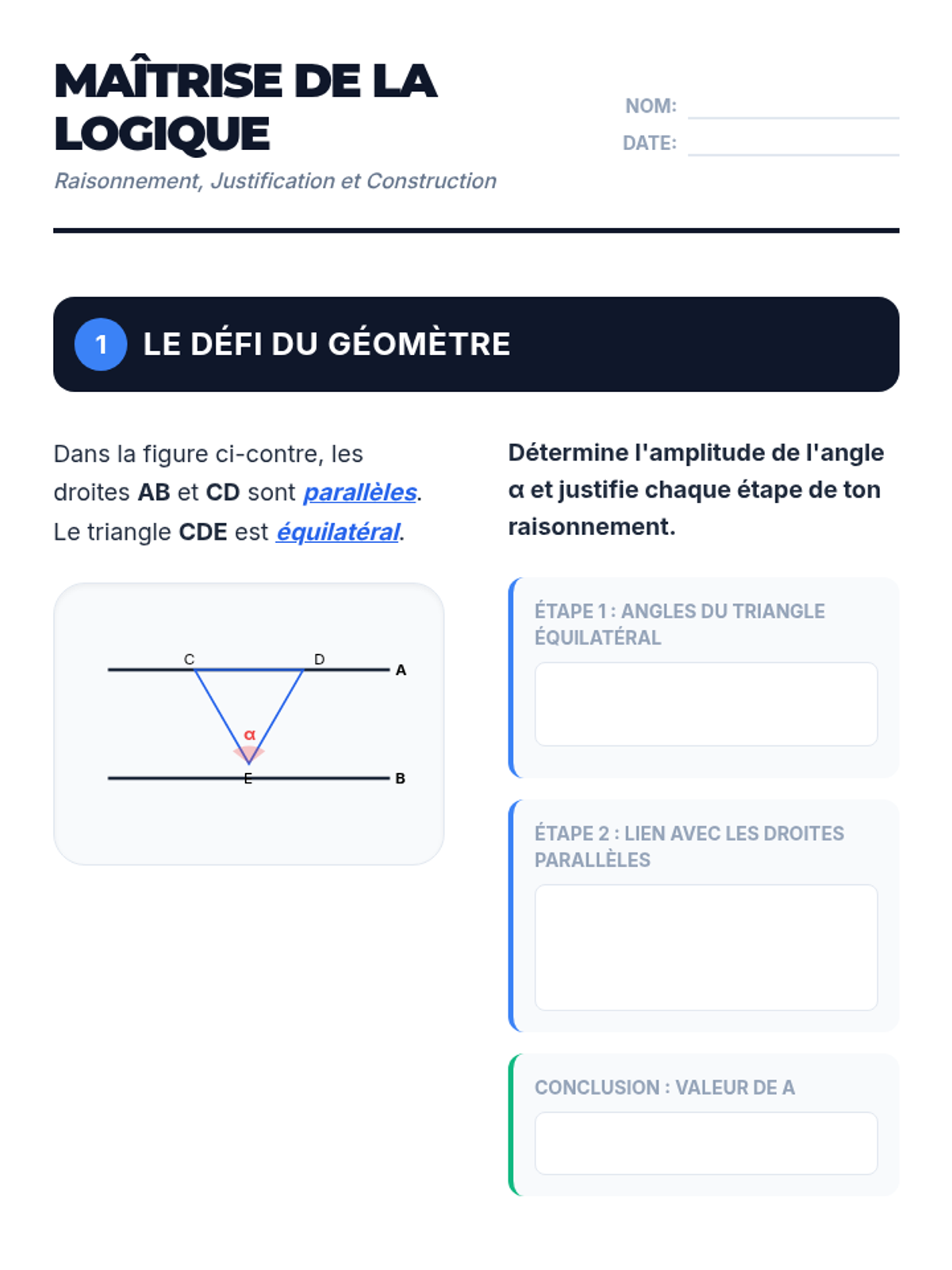
Apprendre à justifier rigoureusement chaque étape d'un calcul ou d'une construction géométrique.
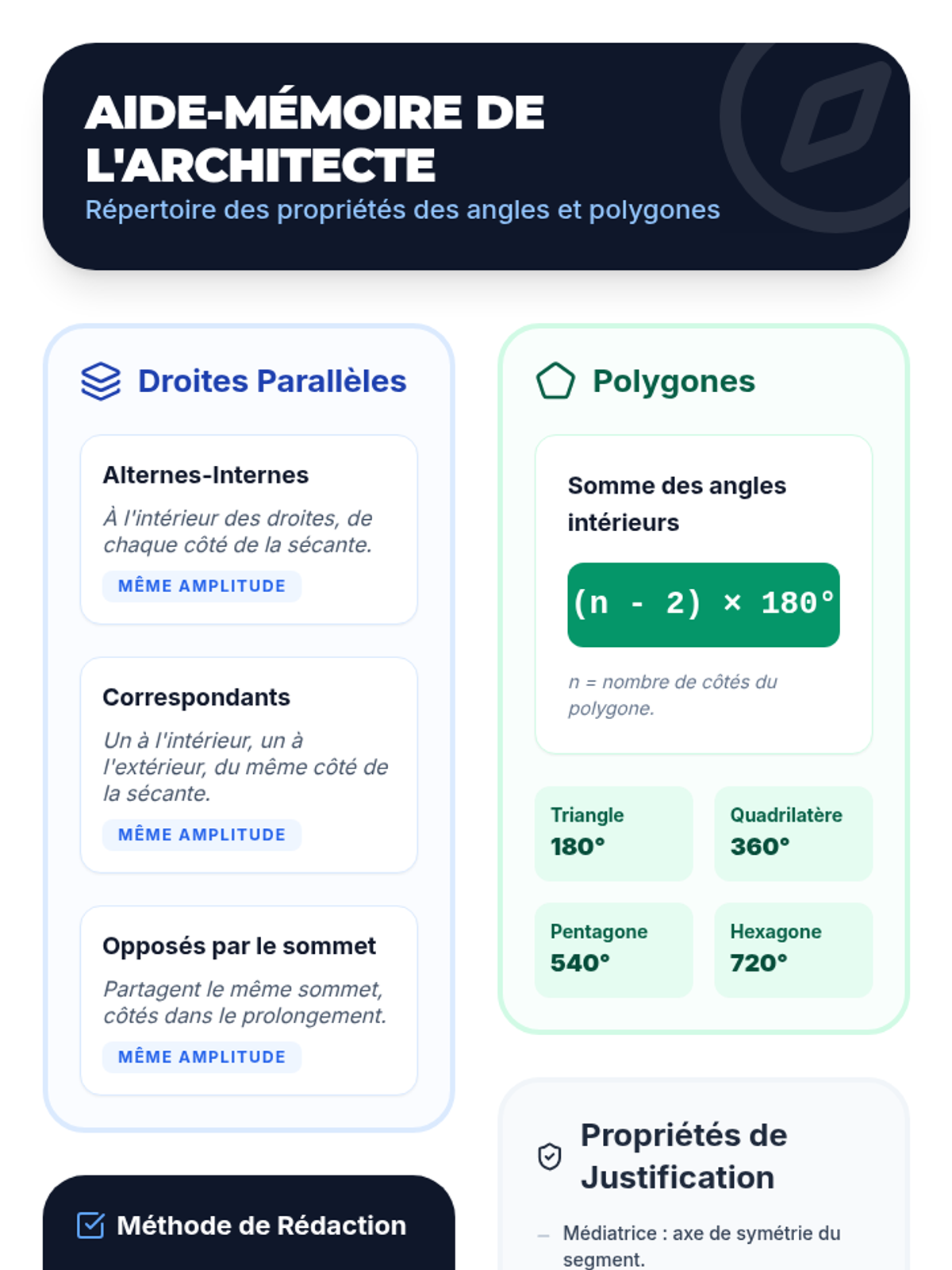
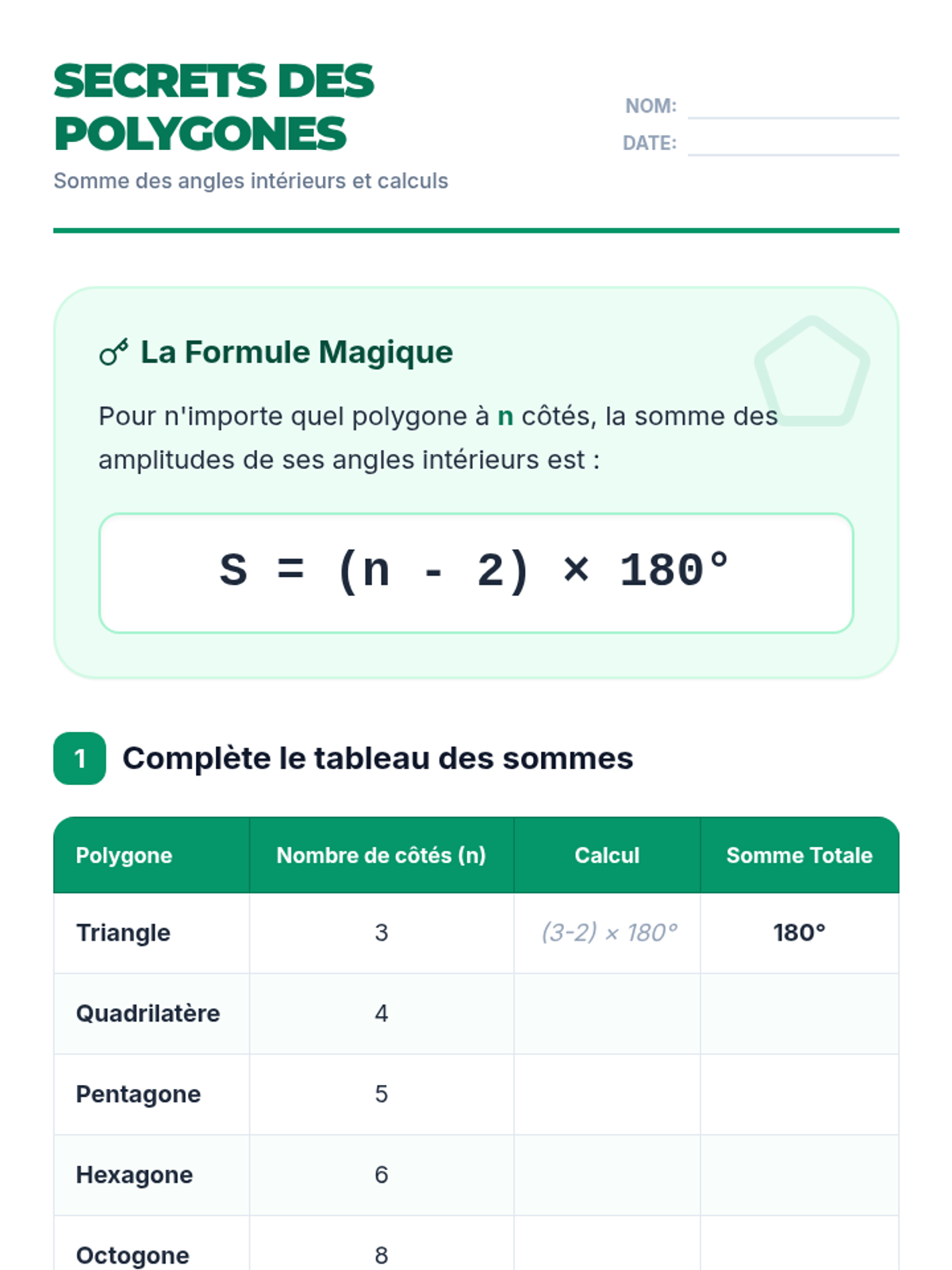
Calculer la somme des angles intérieurs des polygones et résoudre des problèmes complexes d'amplitudes d'angles.
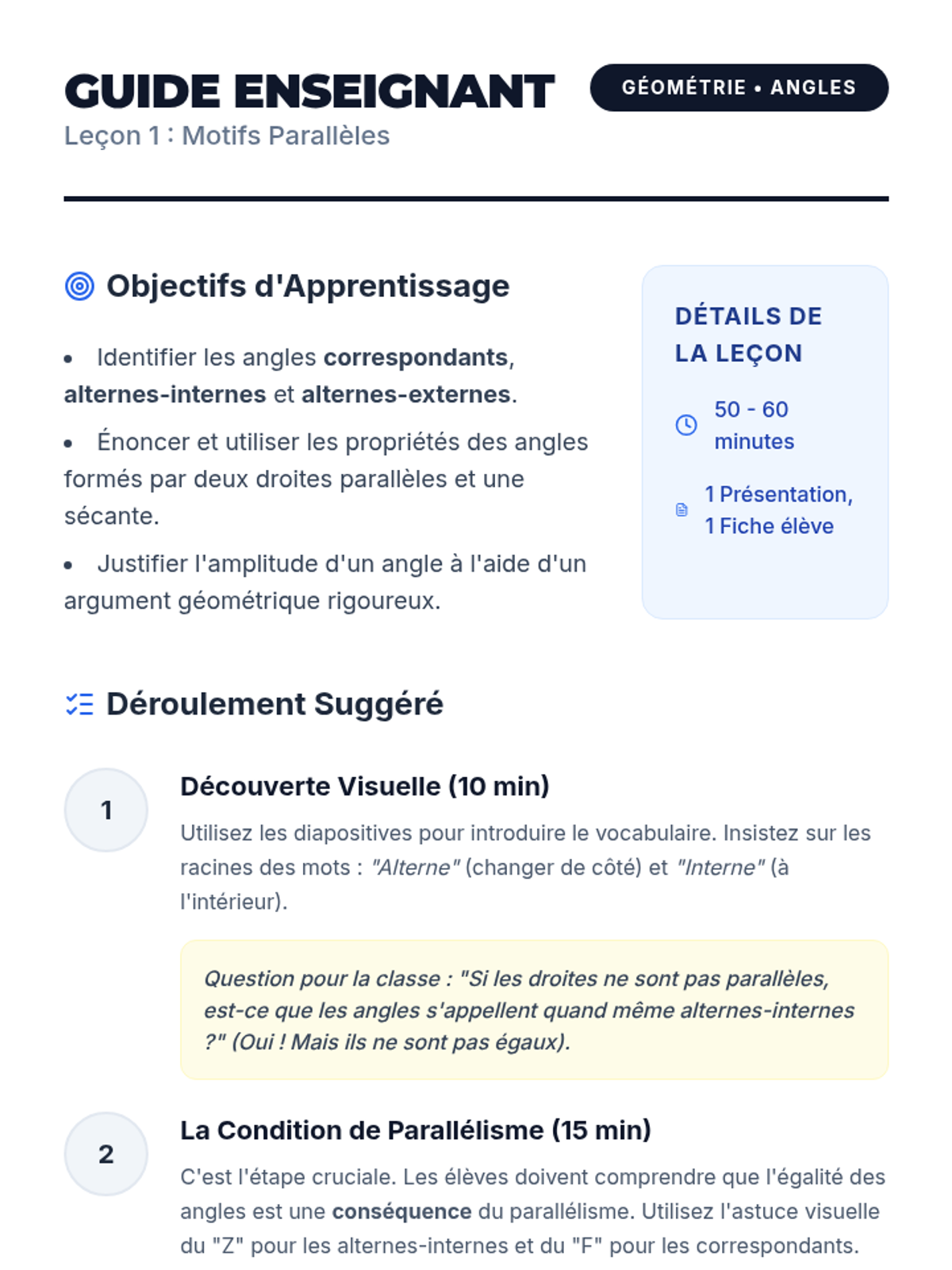
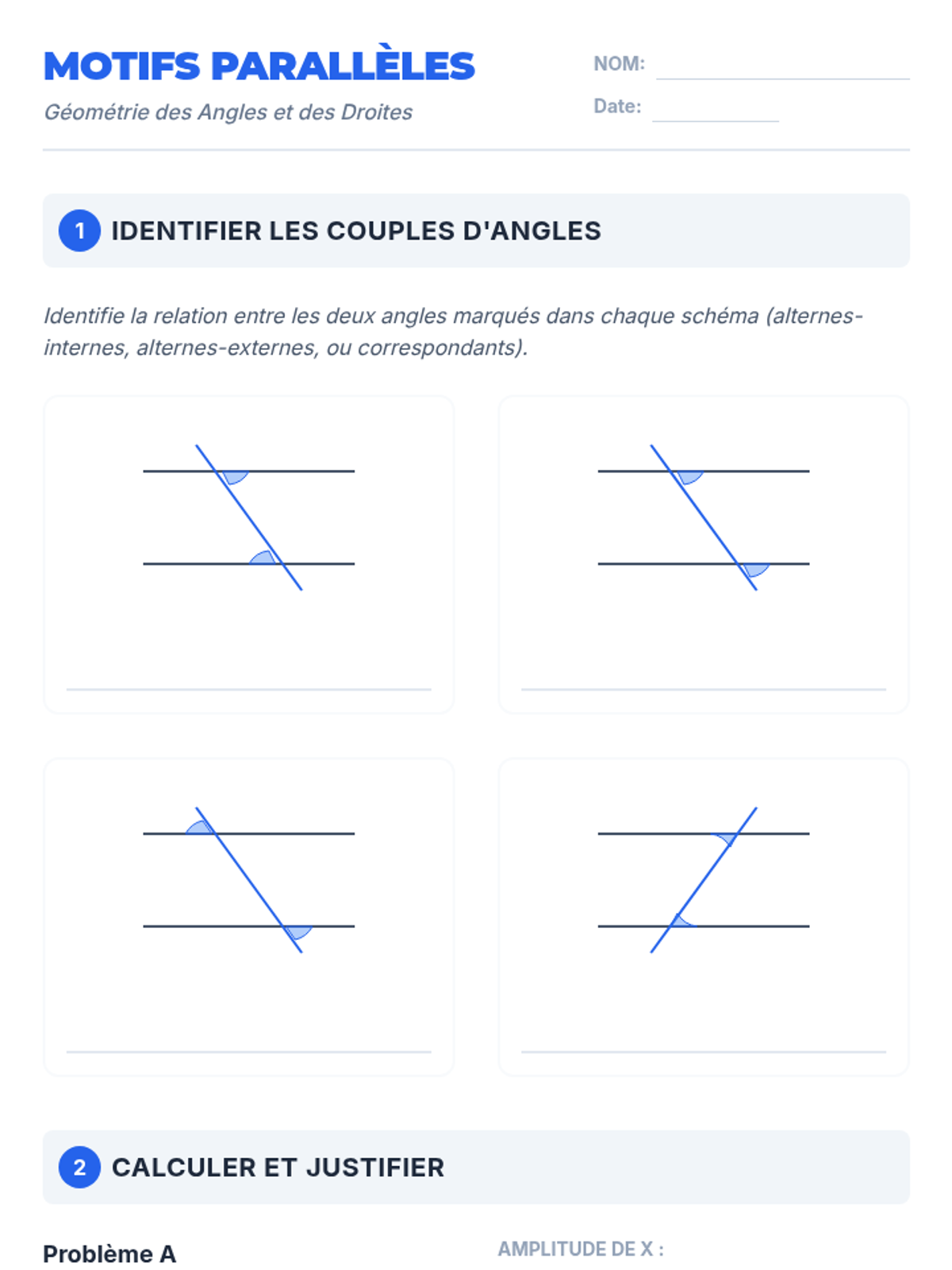
Identifier les angles correspondants, alternes-internes et alternes-externes, et découvrir les propriétés des droites parallèles coupées par une sécante.
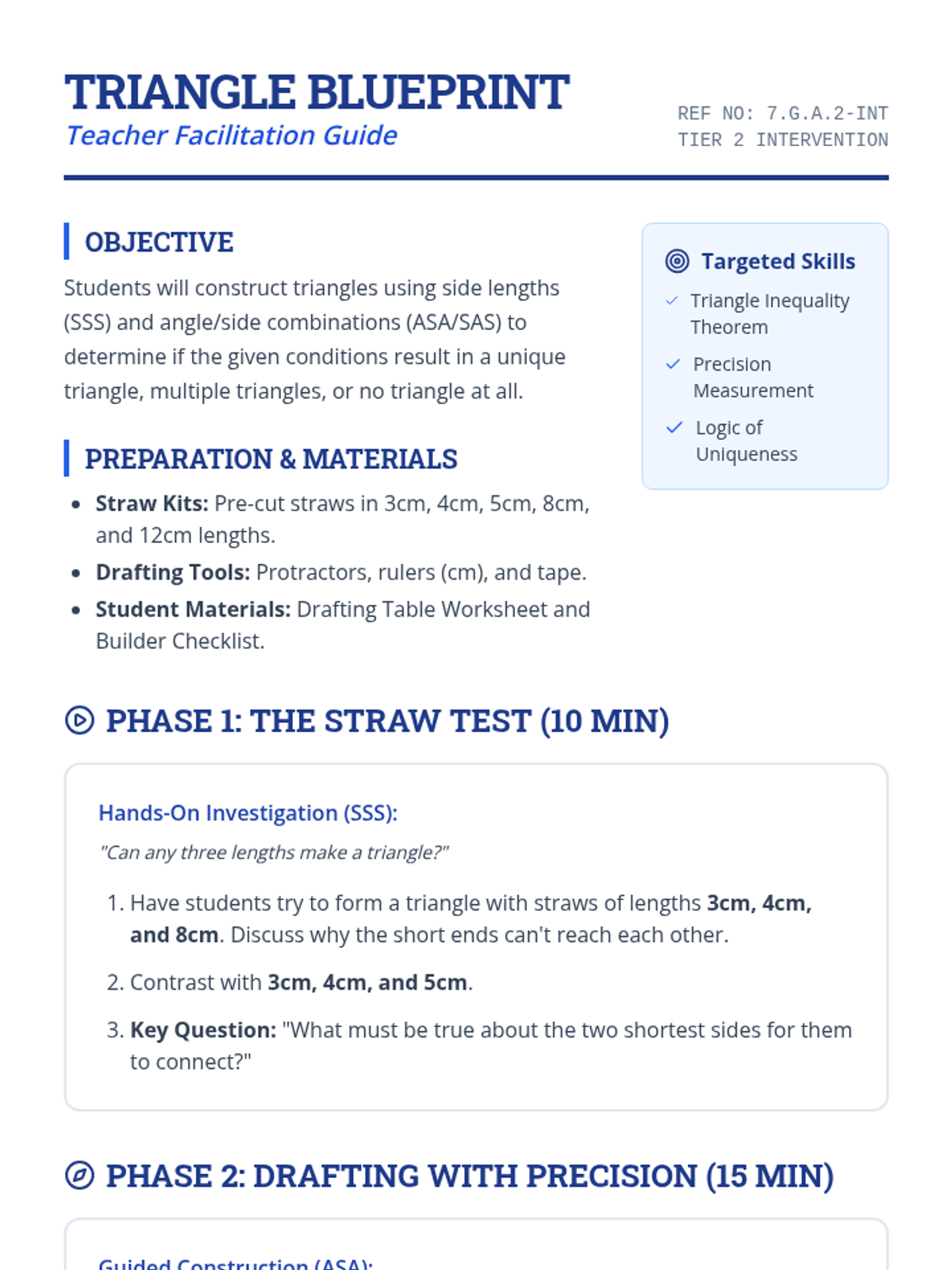
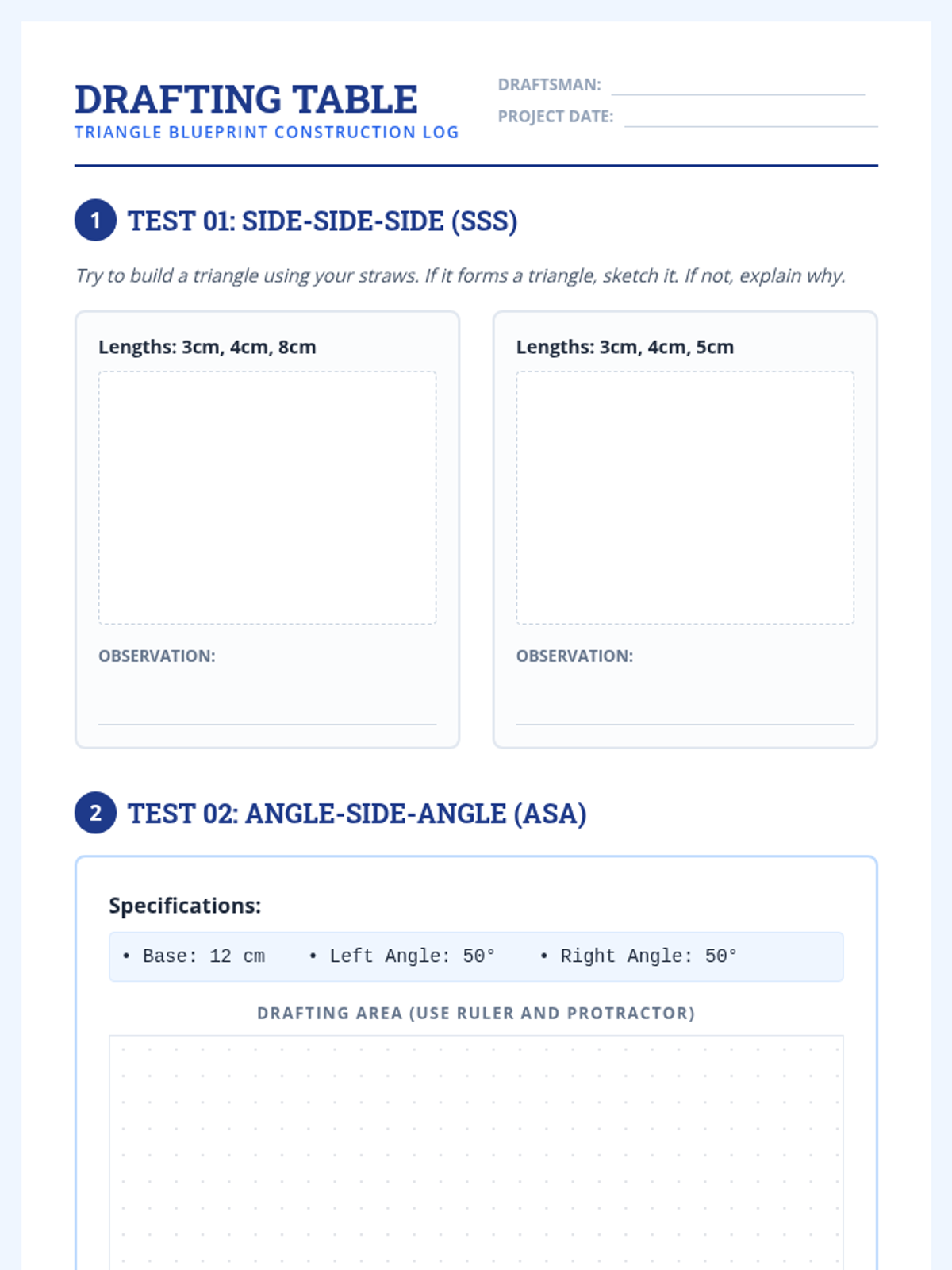
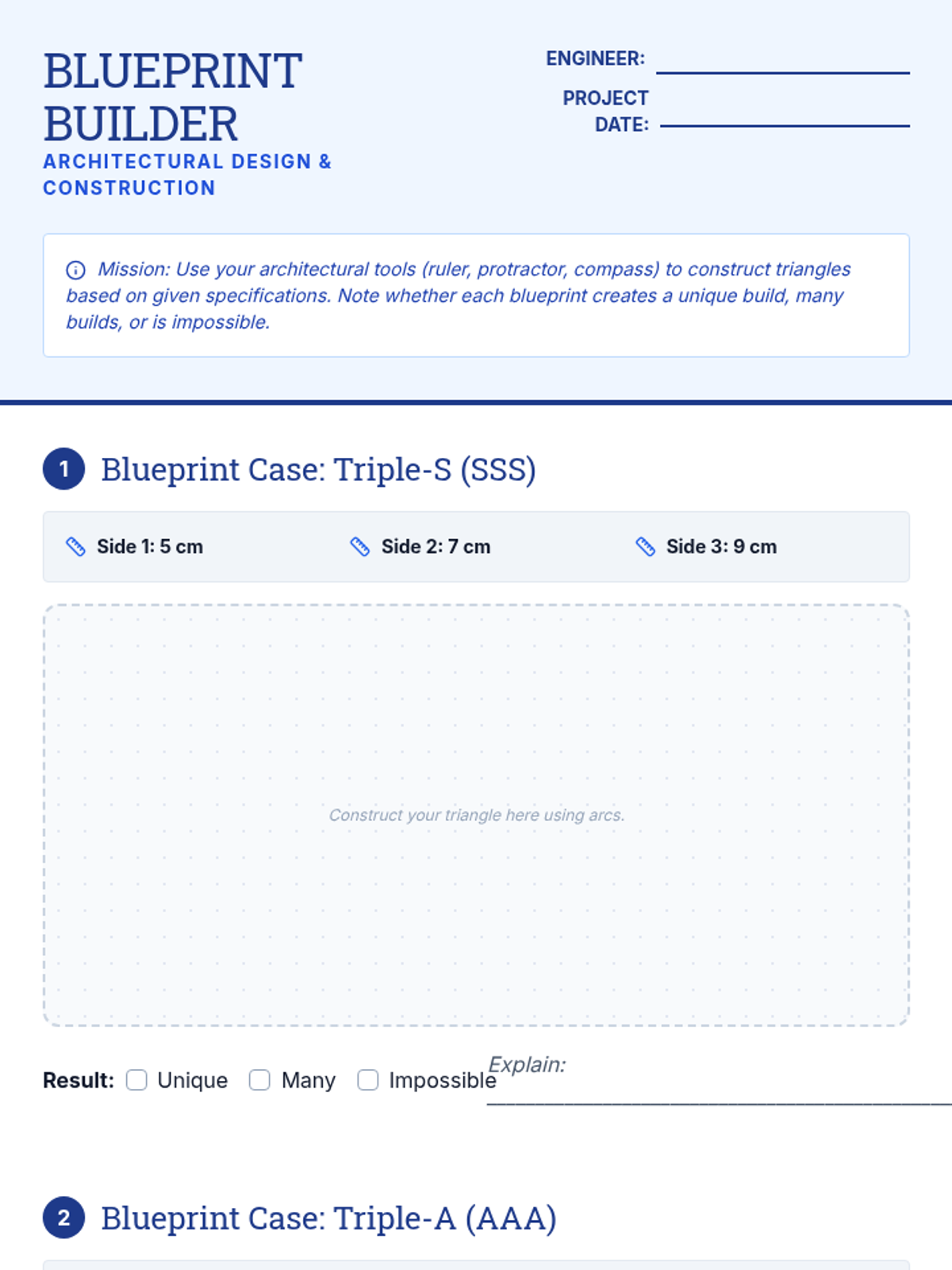
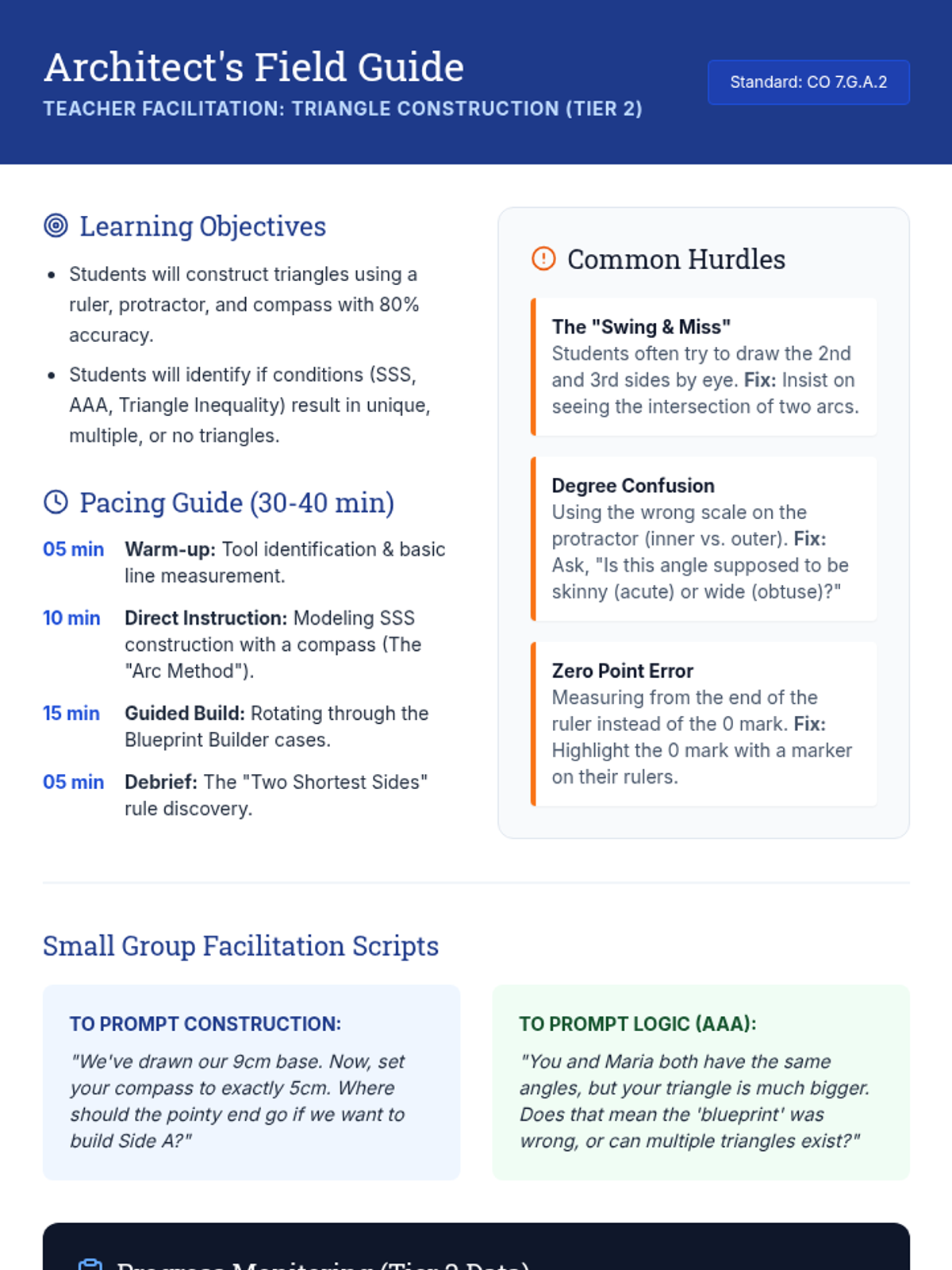
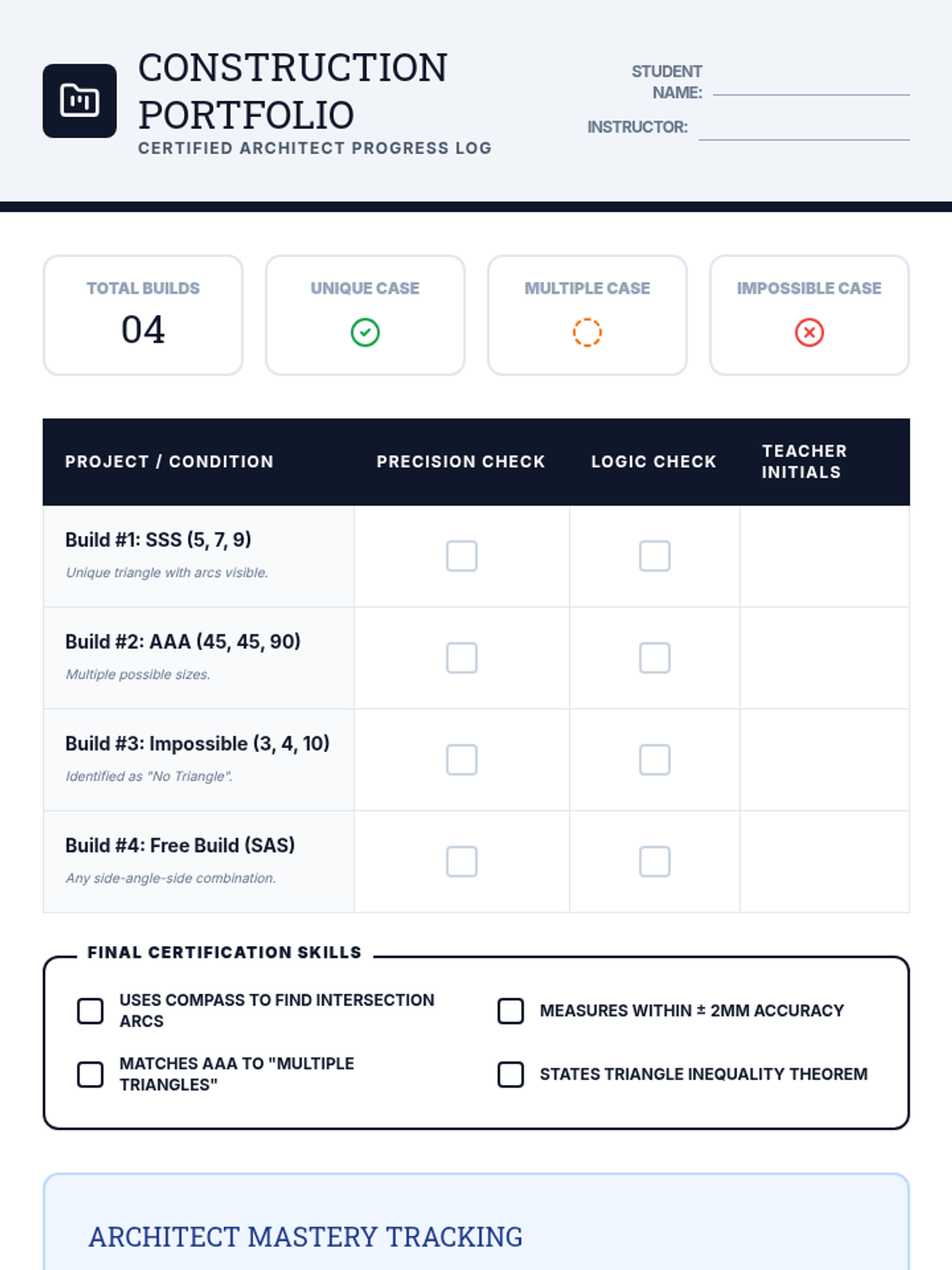
A targeted Tier 2 intervention lesson focusing on constructing triangles from side and angle measures, exploring the Triangle Inequality Theorem, and identifying unique vs. non-unique triangles through hands-on drafting.
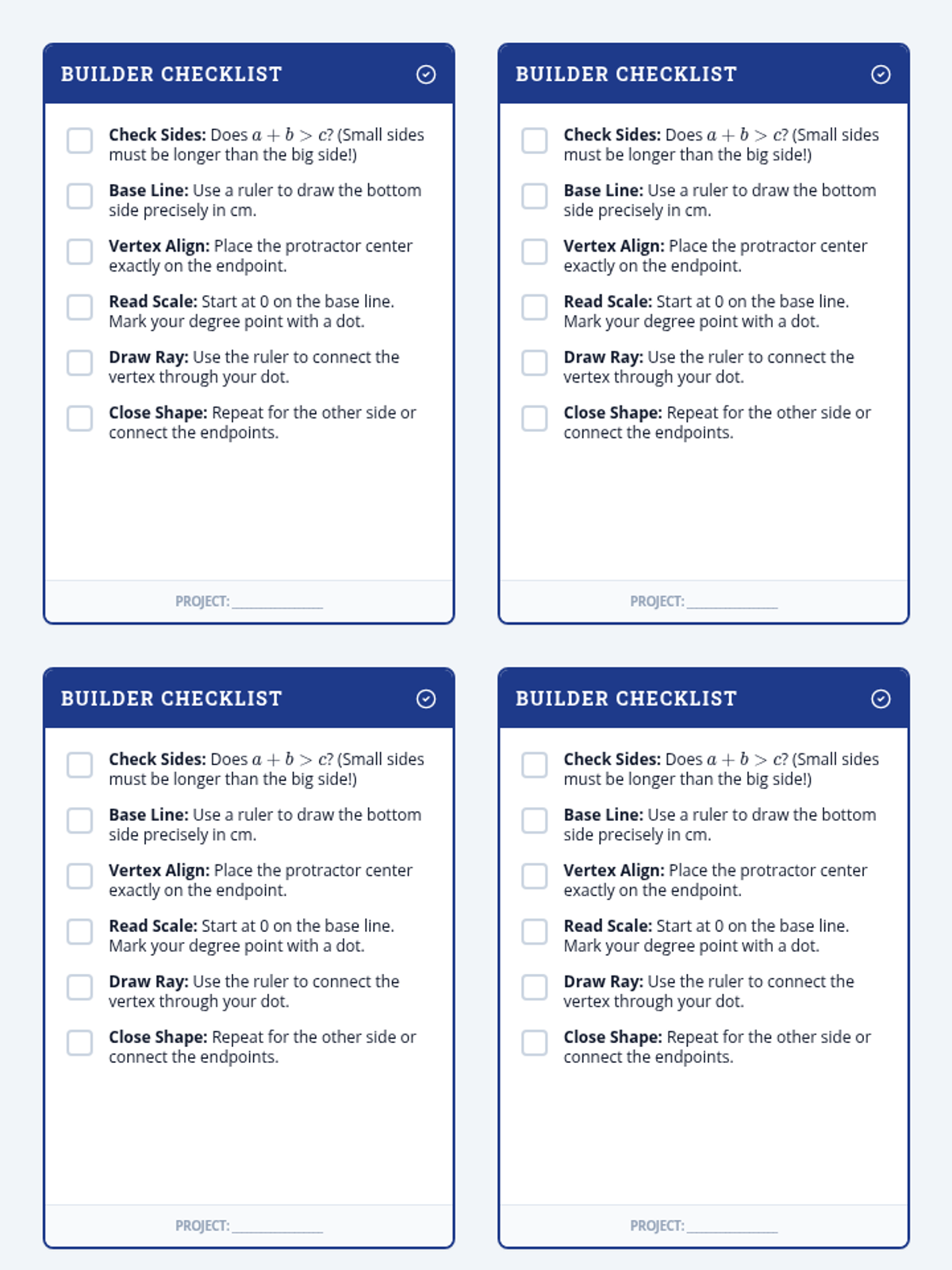
A Tier 2 intervention lesson focused on the construction of triangles using rulers and protractors. Students explore how different side and angle conditions lead to unique, multiple, or no triangles through scaffolded, hands-on architectural tasks.
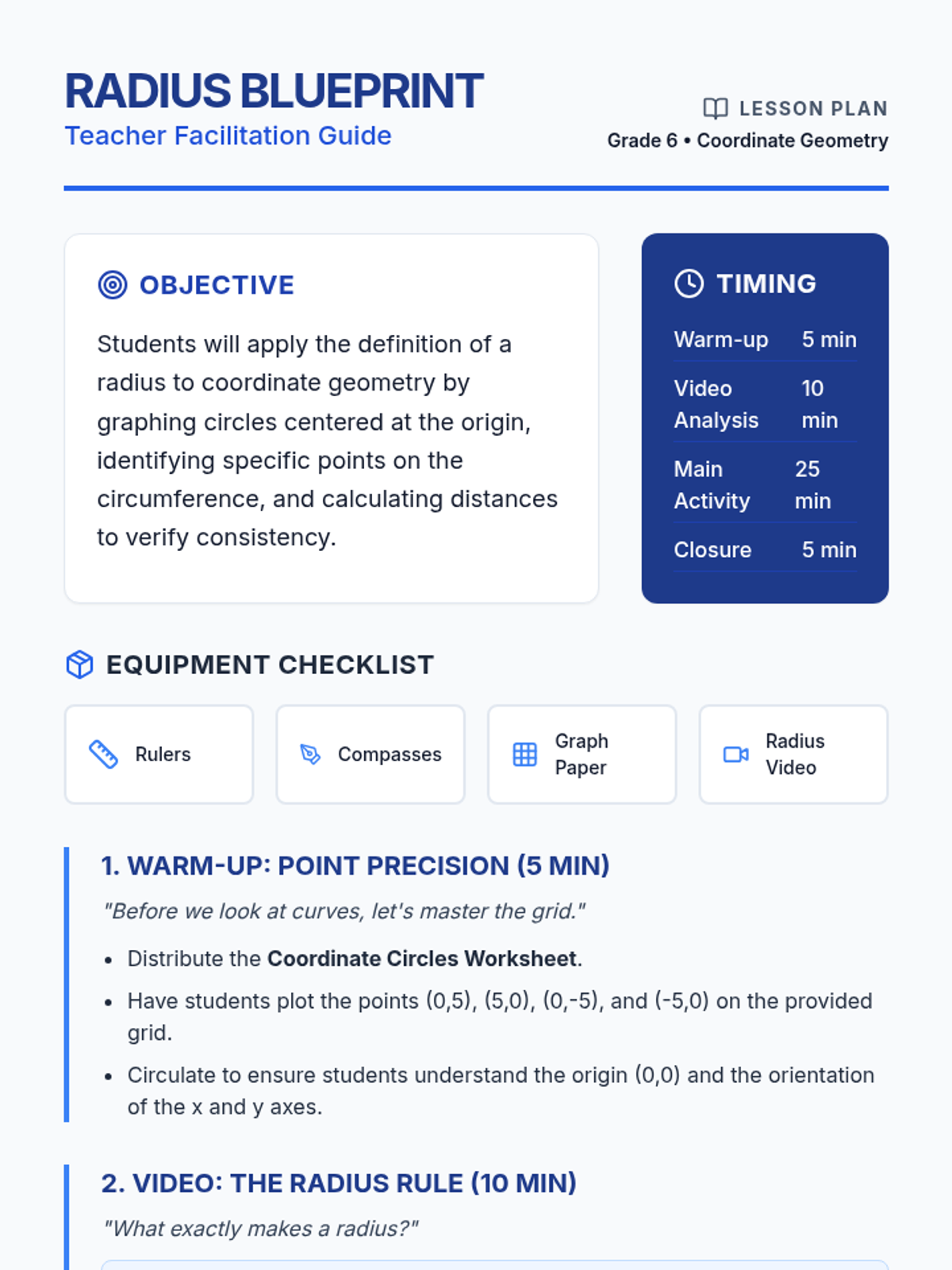
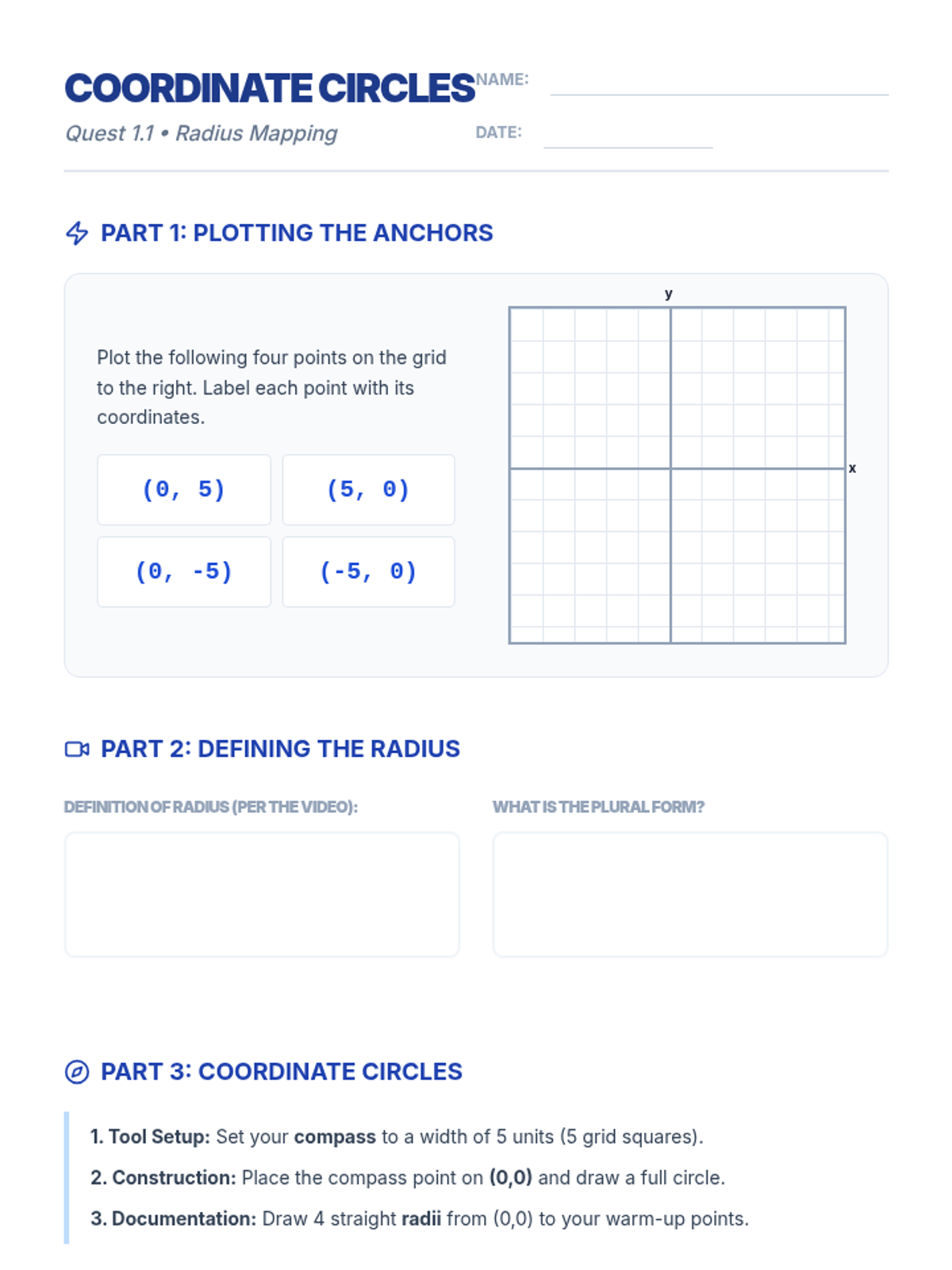
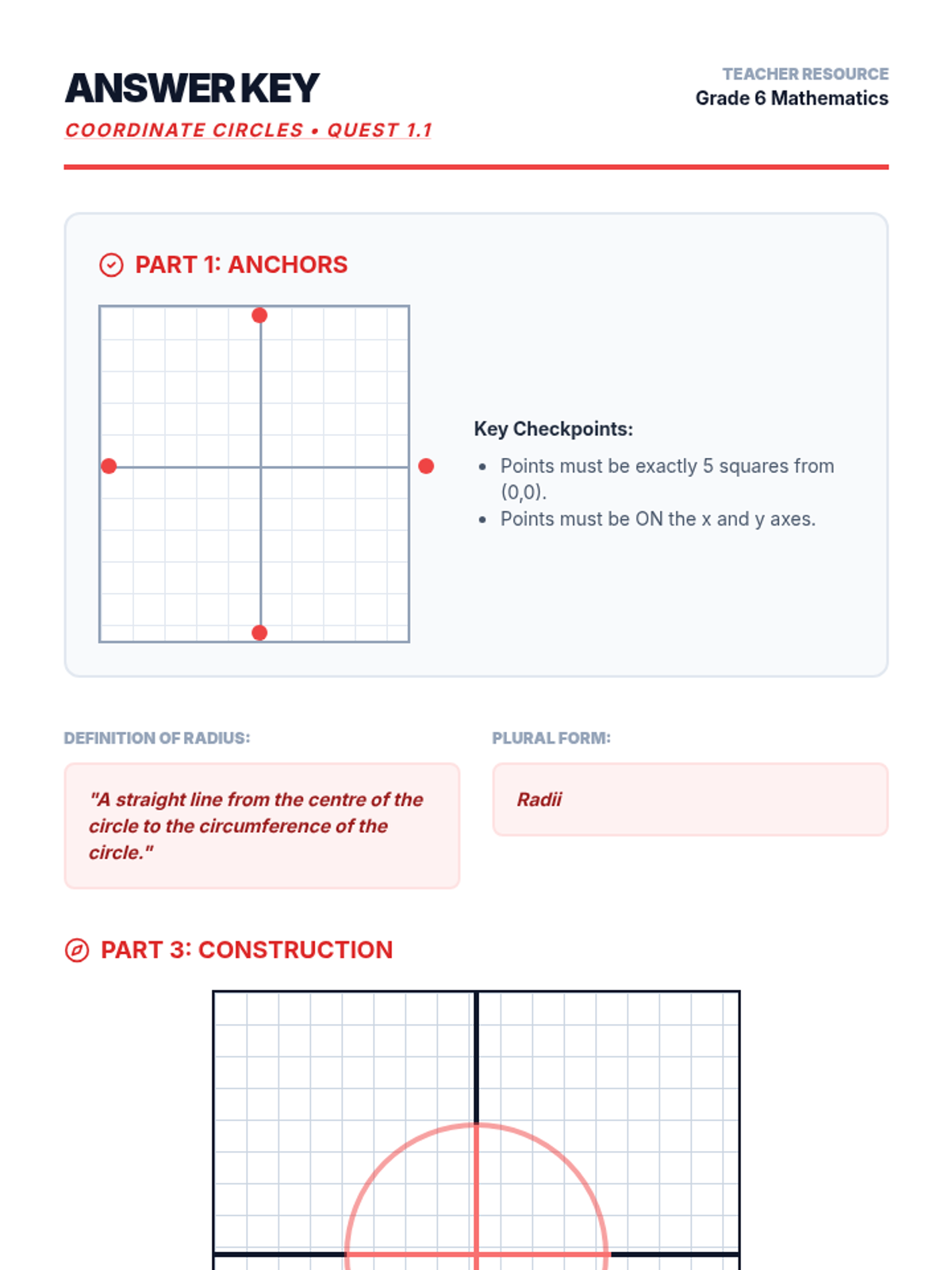
Students explore the definition of a radius by plotting circles on a coordinate plane, identifying key points, and discovering the constant distance from the center to the circumference.
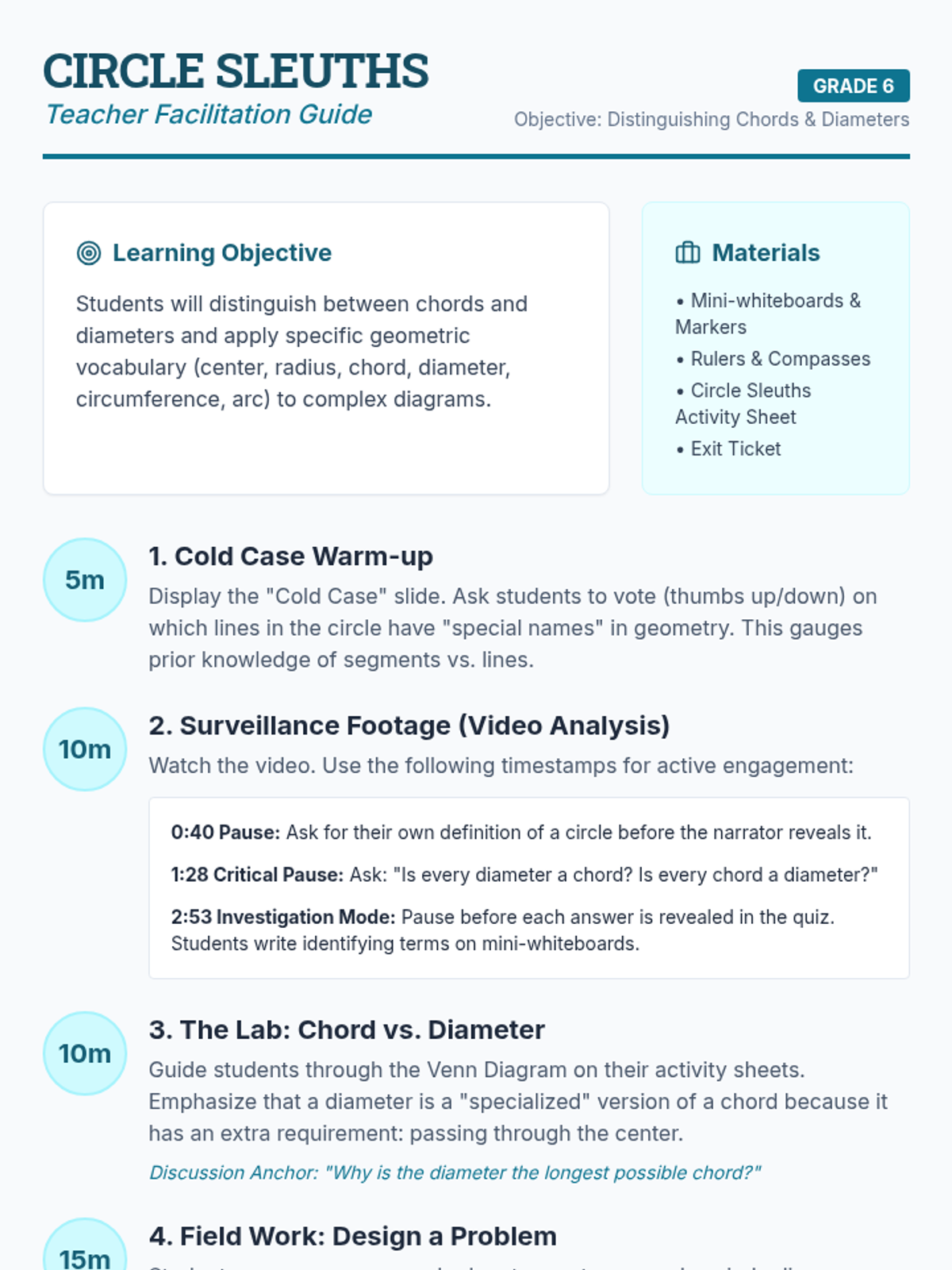
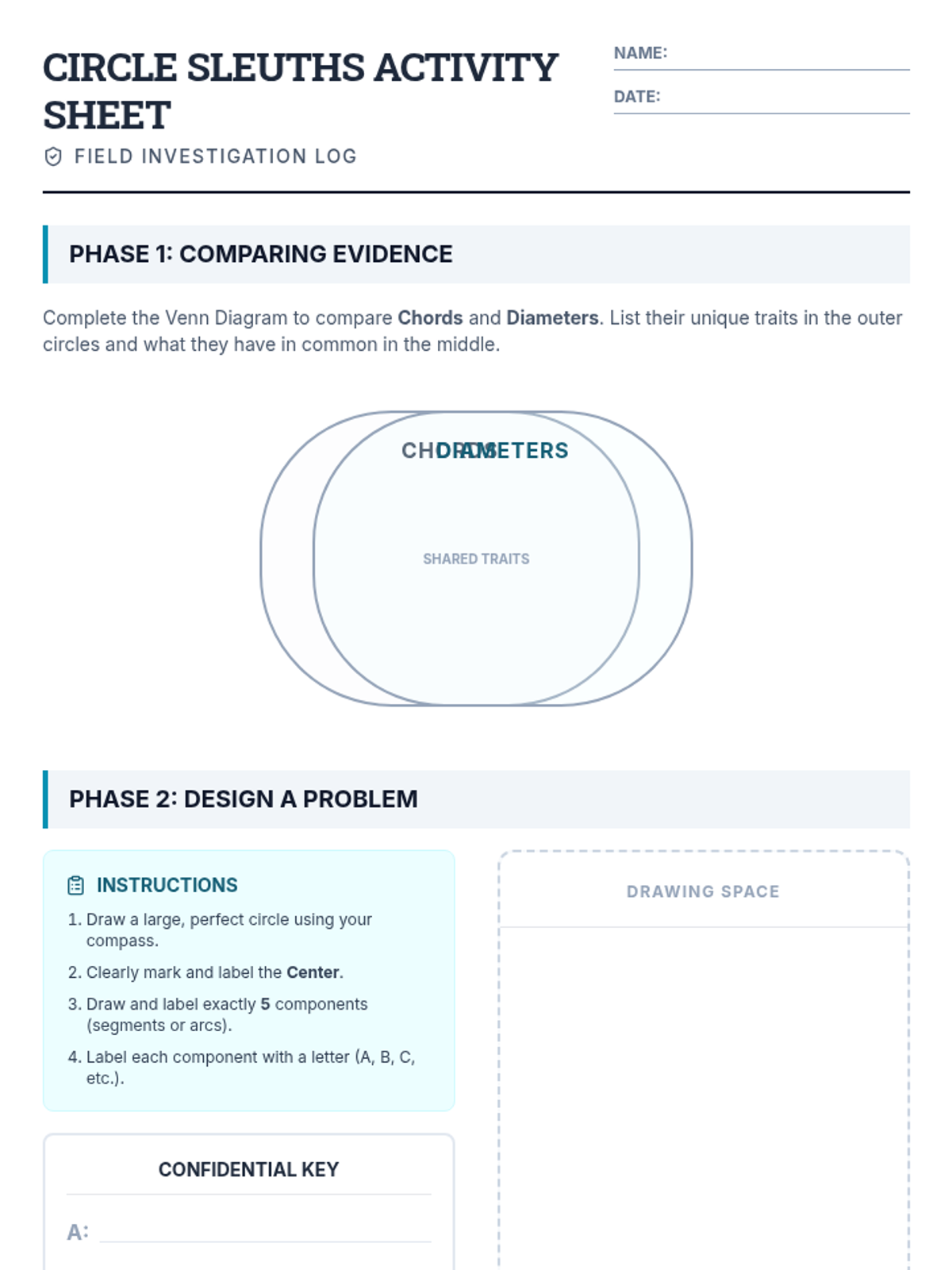
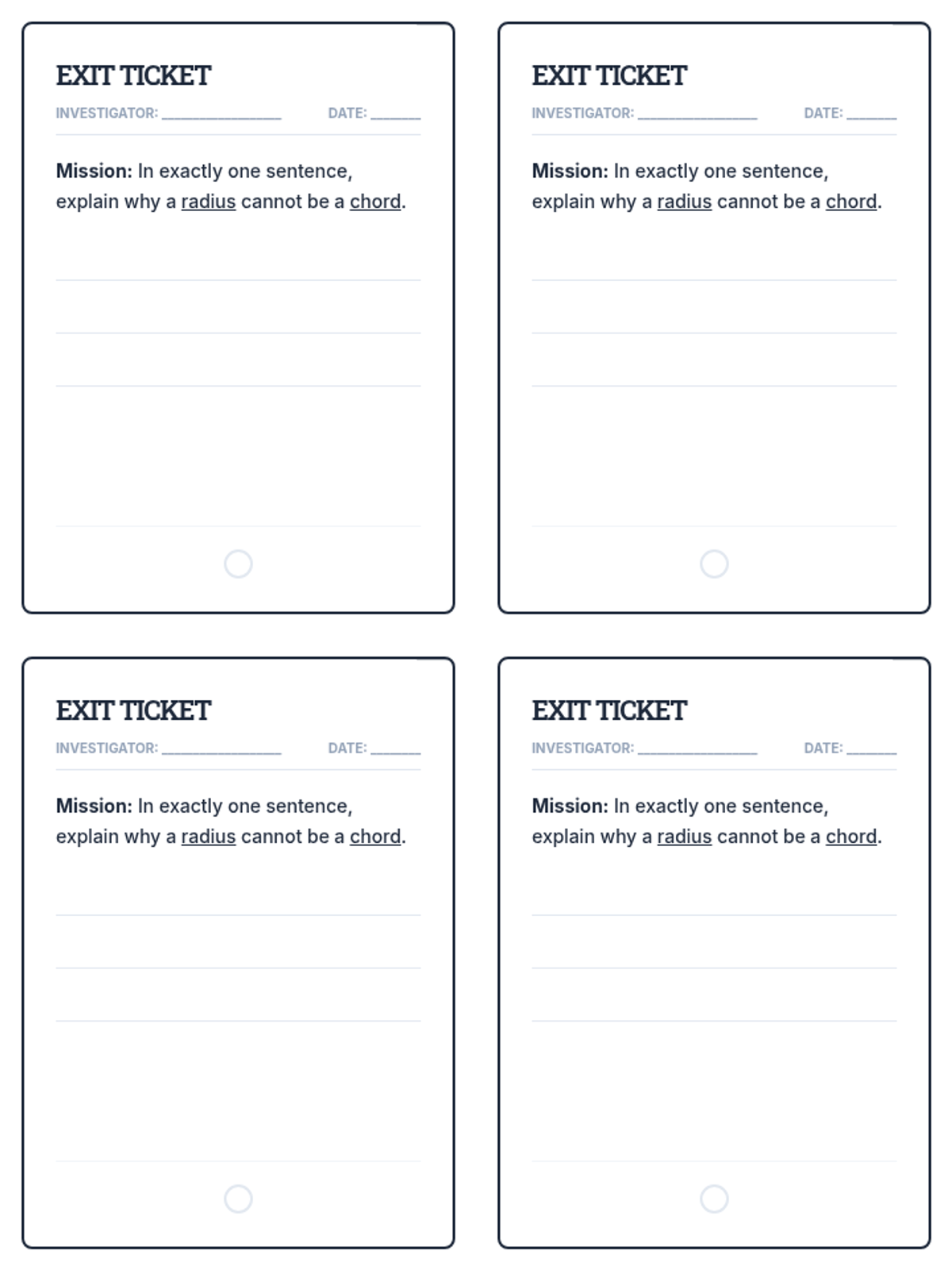
A detective-themed geometry lesson where students distinguish between chords and diameters through video analysis, Venn diagrams, and peer-to-peer problem design.
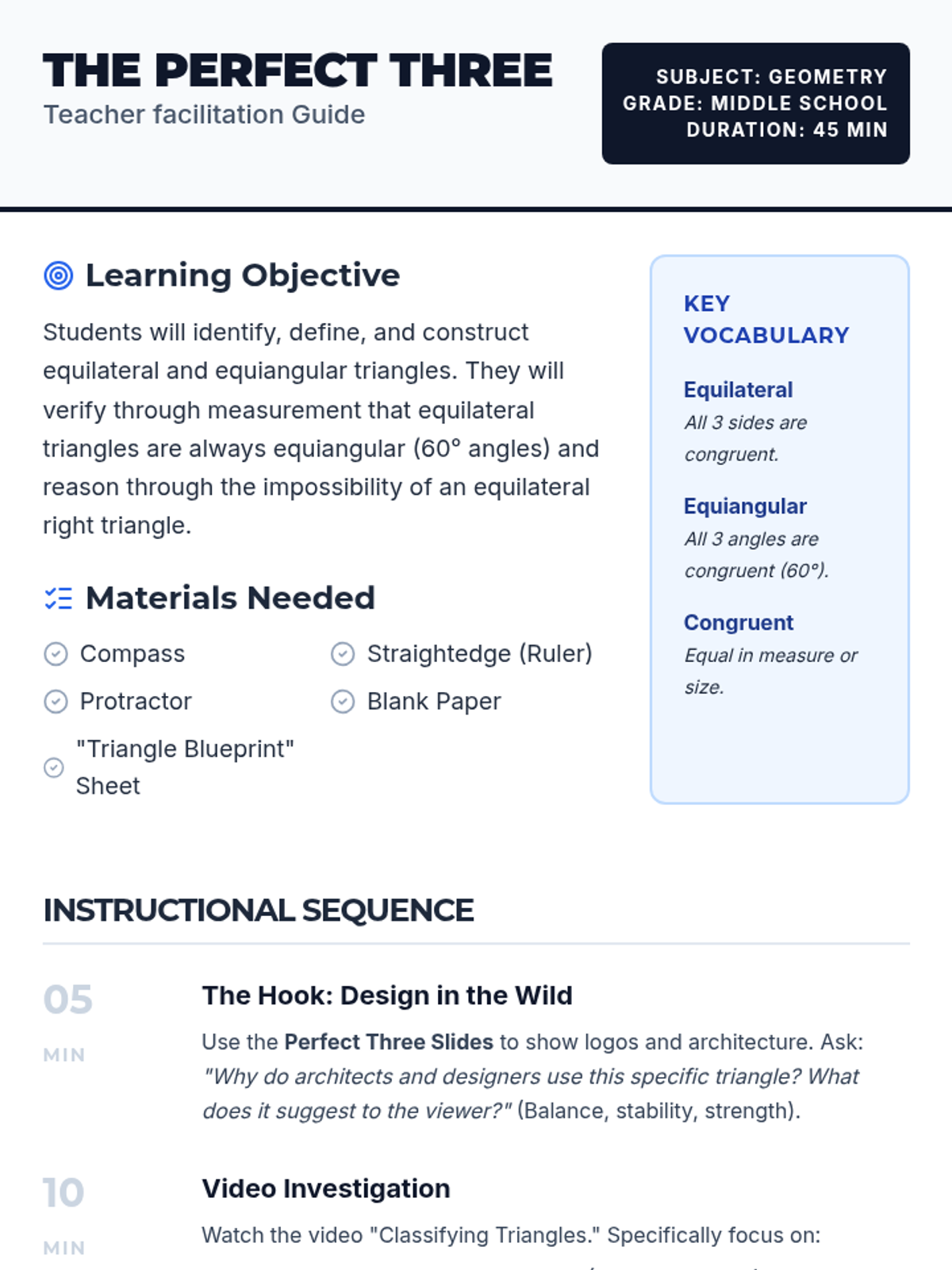
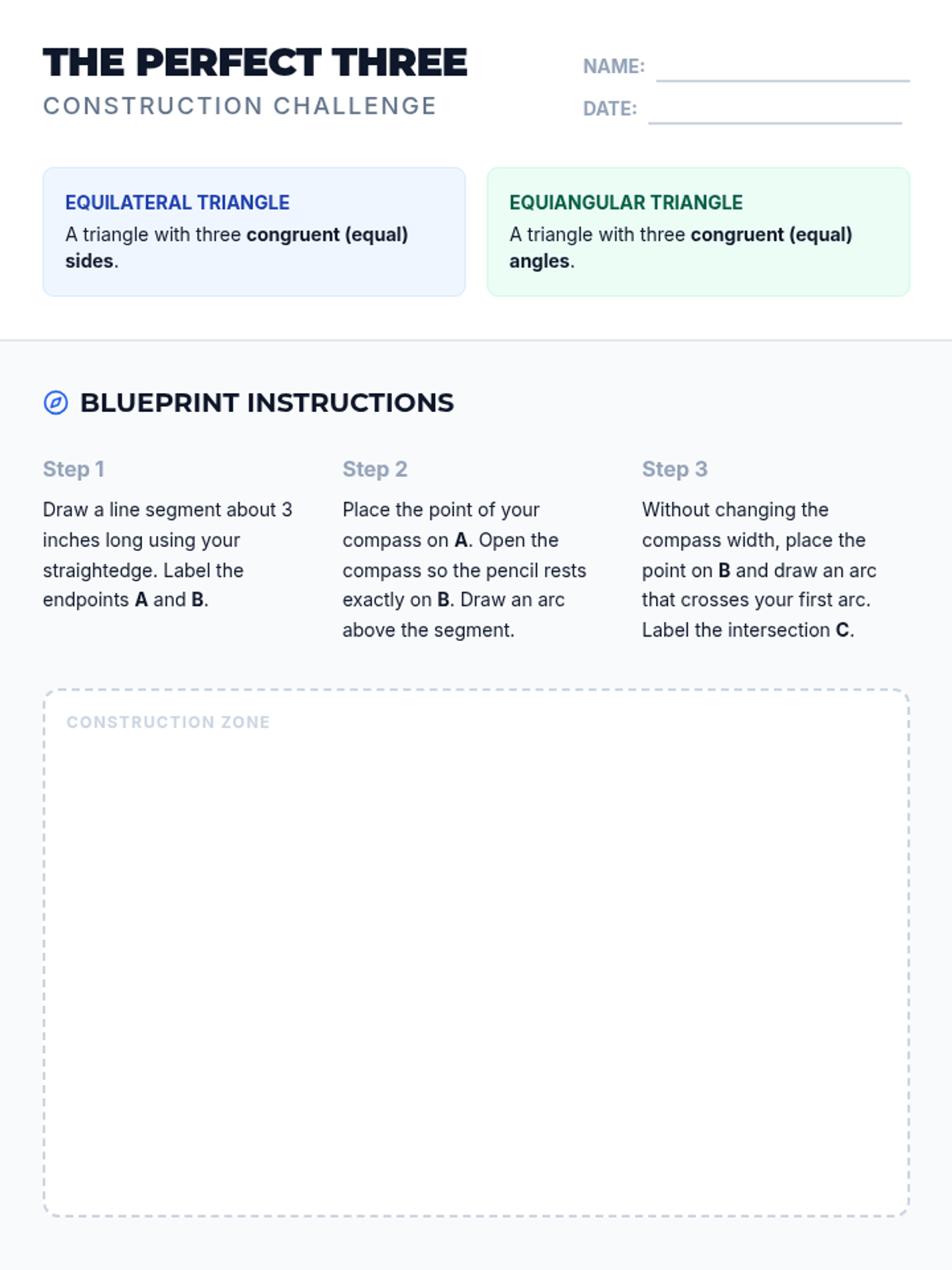
A geometry lesson for middle schoolers exploring the unique properties of equilateral and equiangular triangles through architectural observation, video analysis, and hands-on compass-and-straightedge construction.
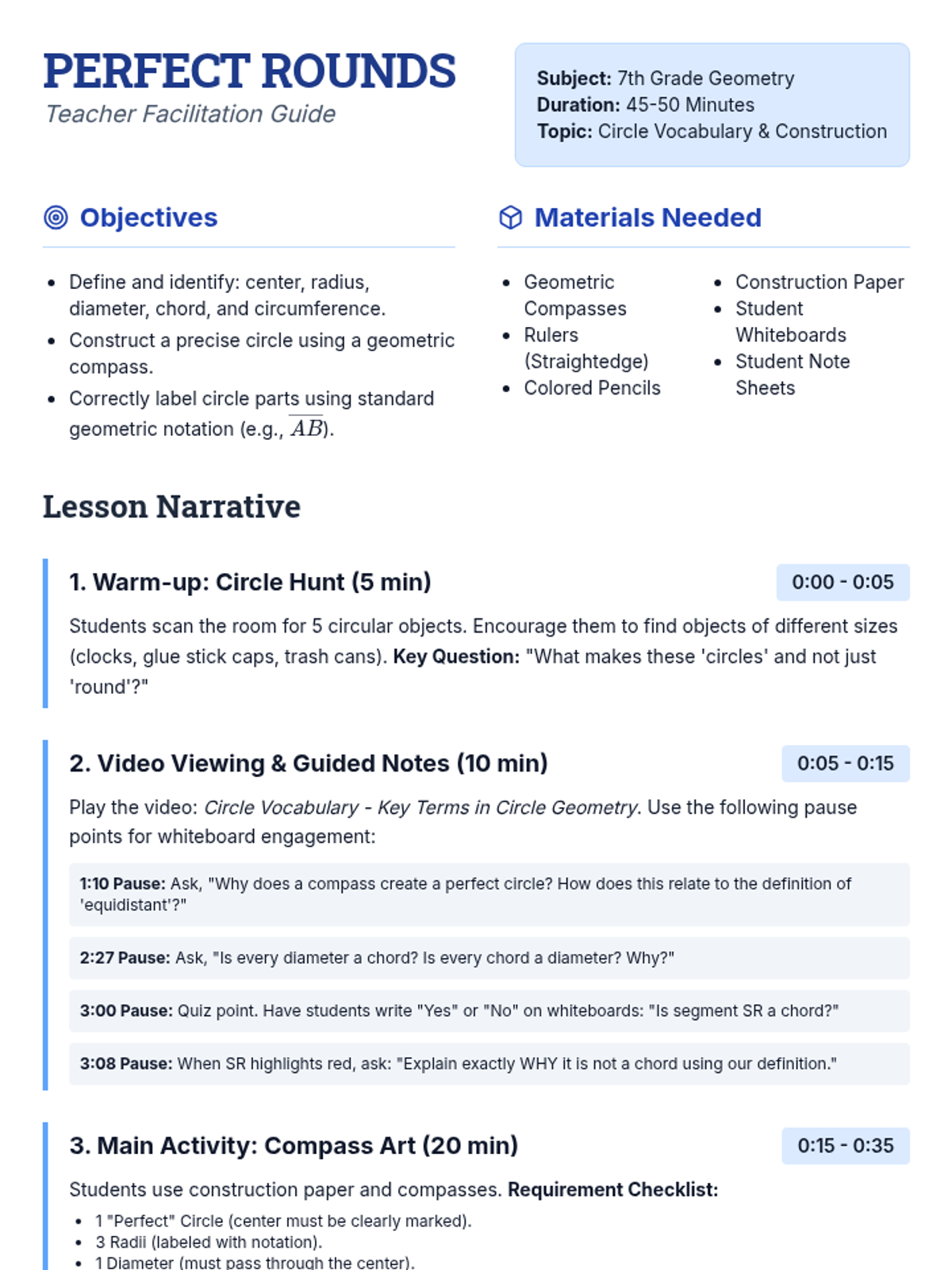
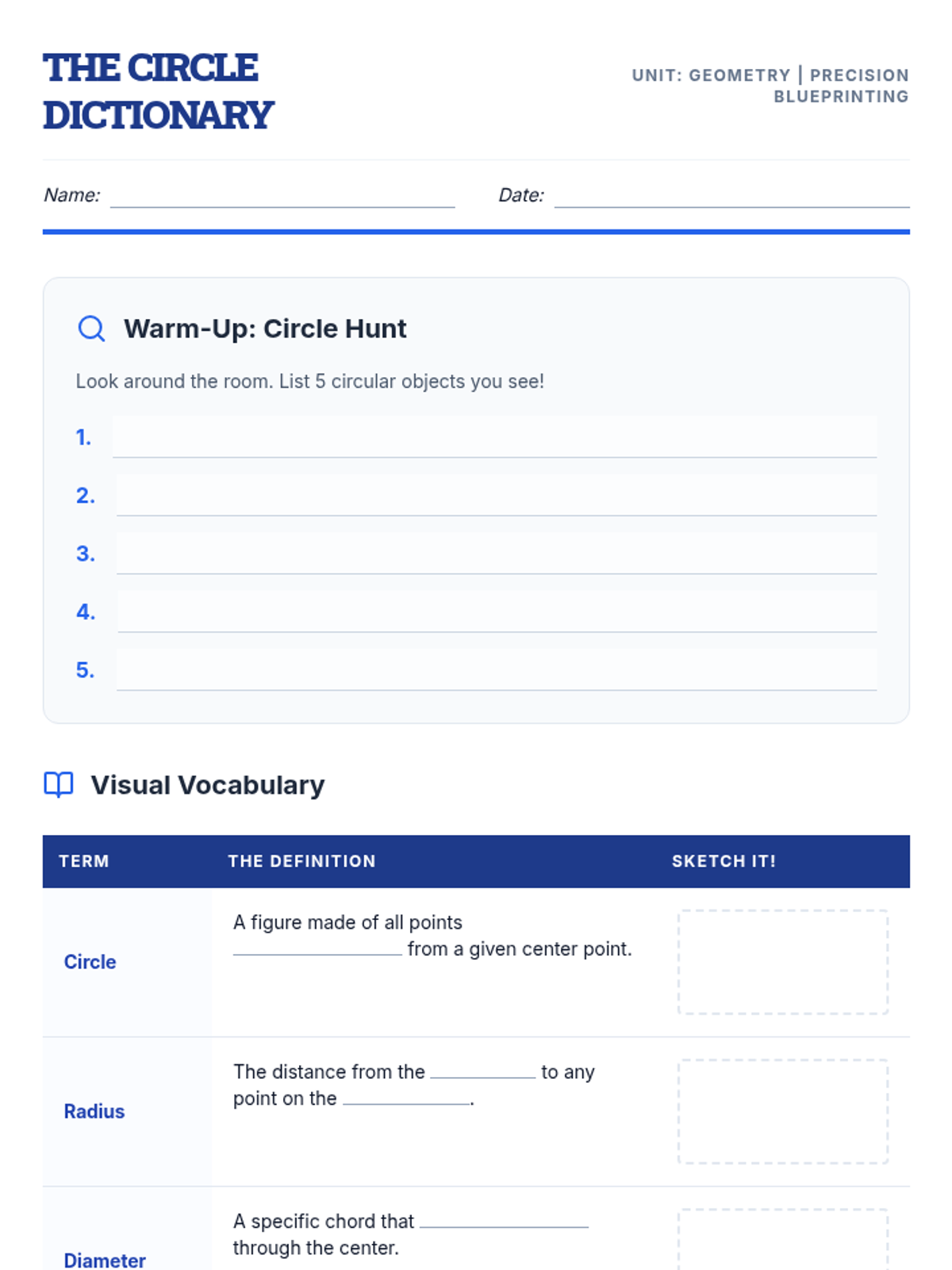
A foundational geometry lesson where students explore circle vocabulary through a video-guided hunt and precise geometric construction using compasses.
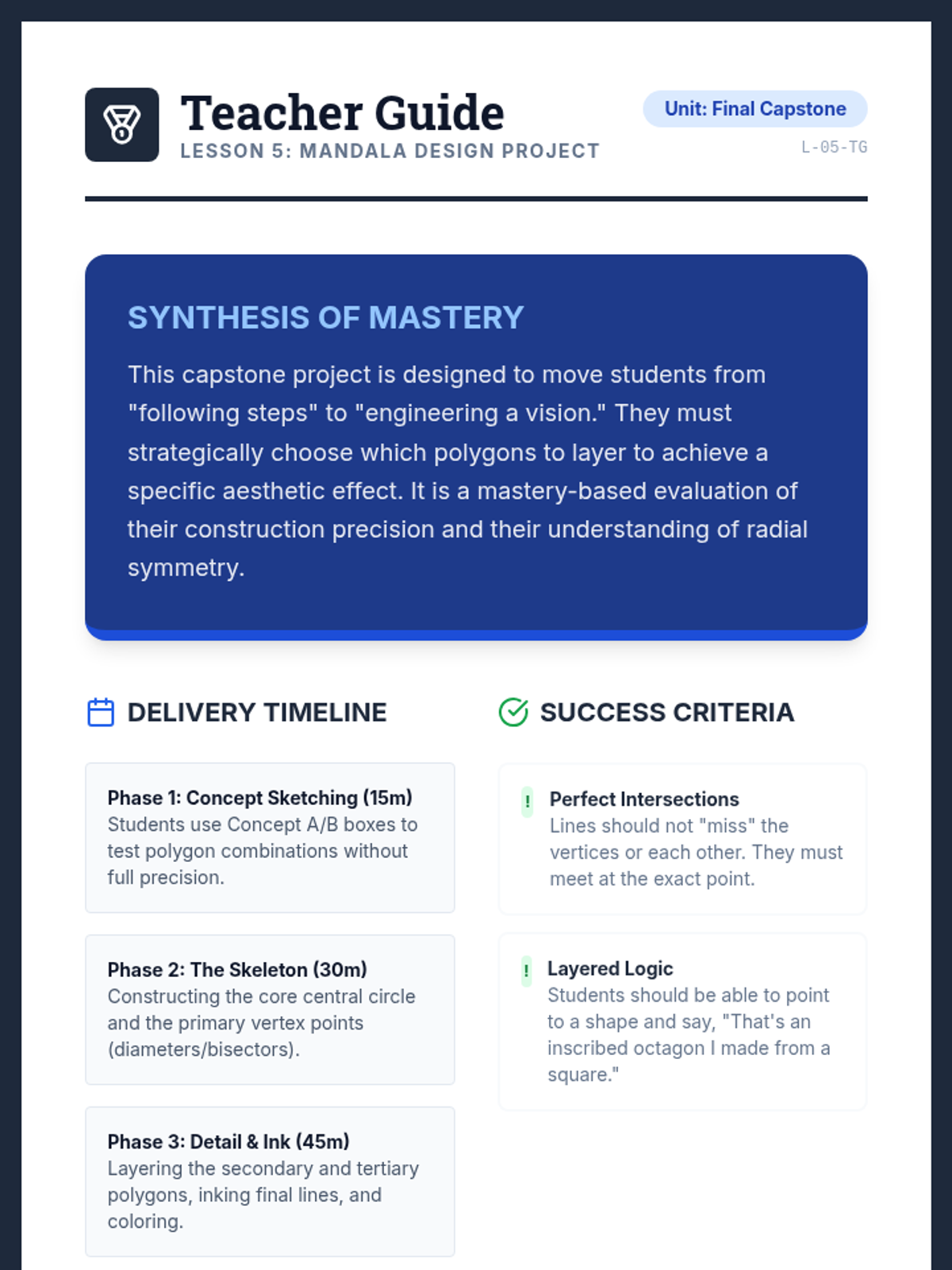
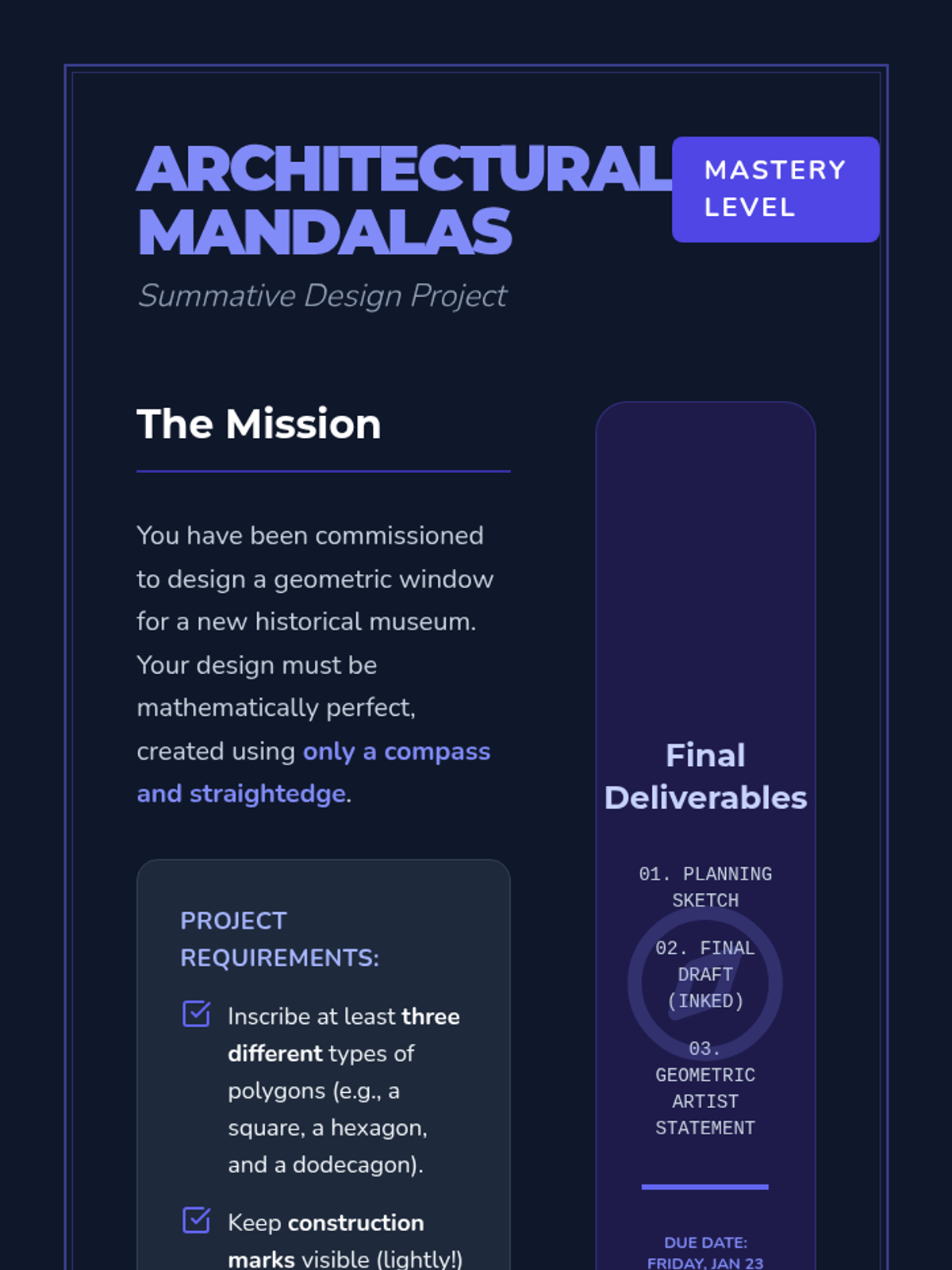
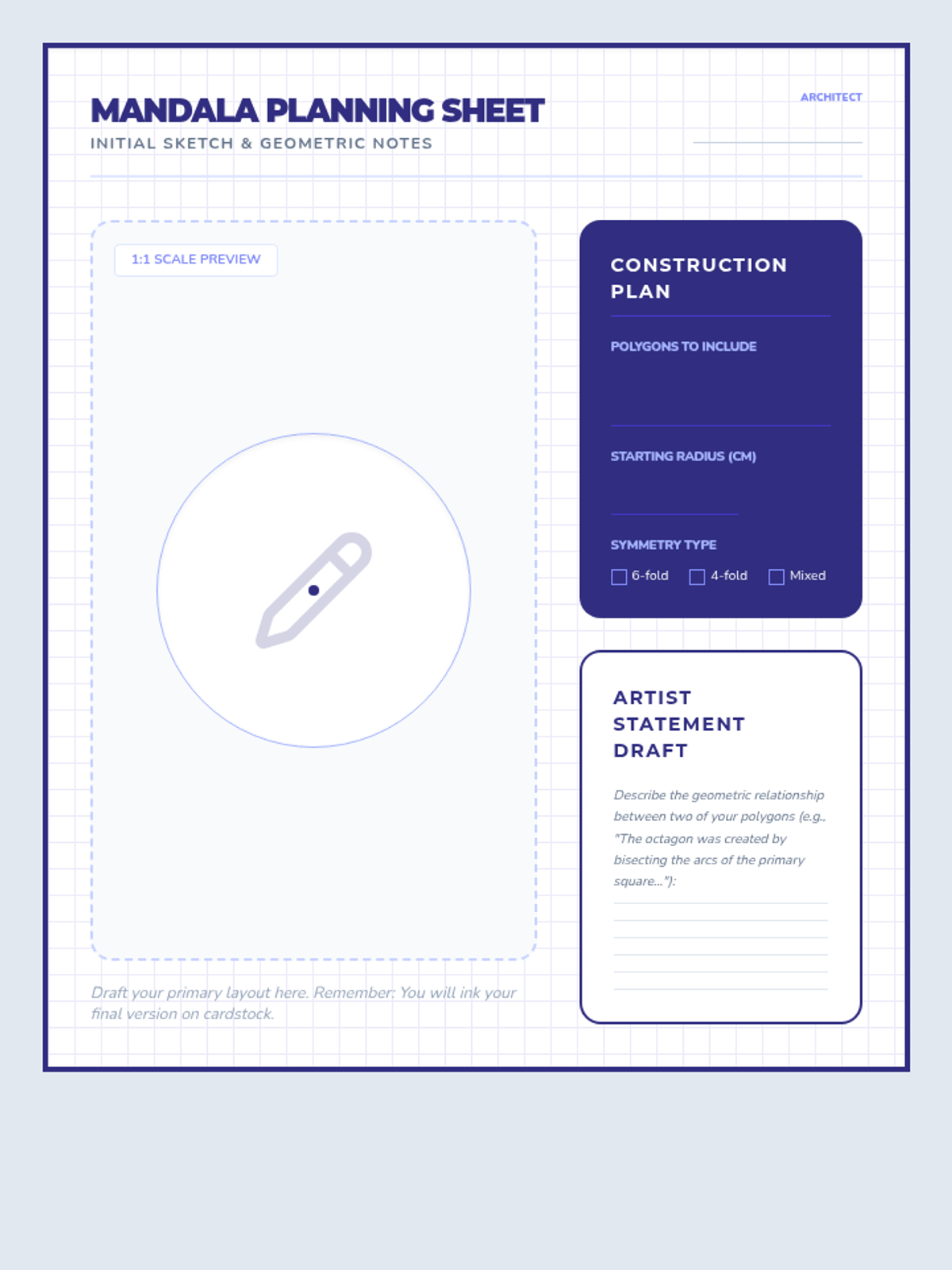
Students synthesize all polygon construction techniques to create a complex, symmetrical mandala.
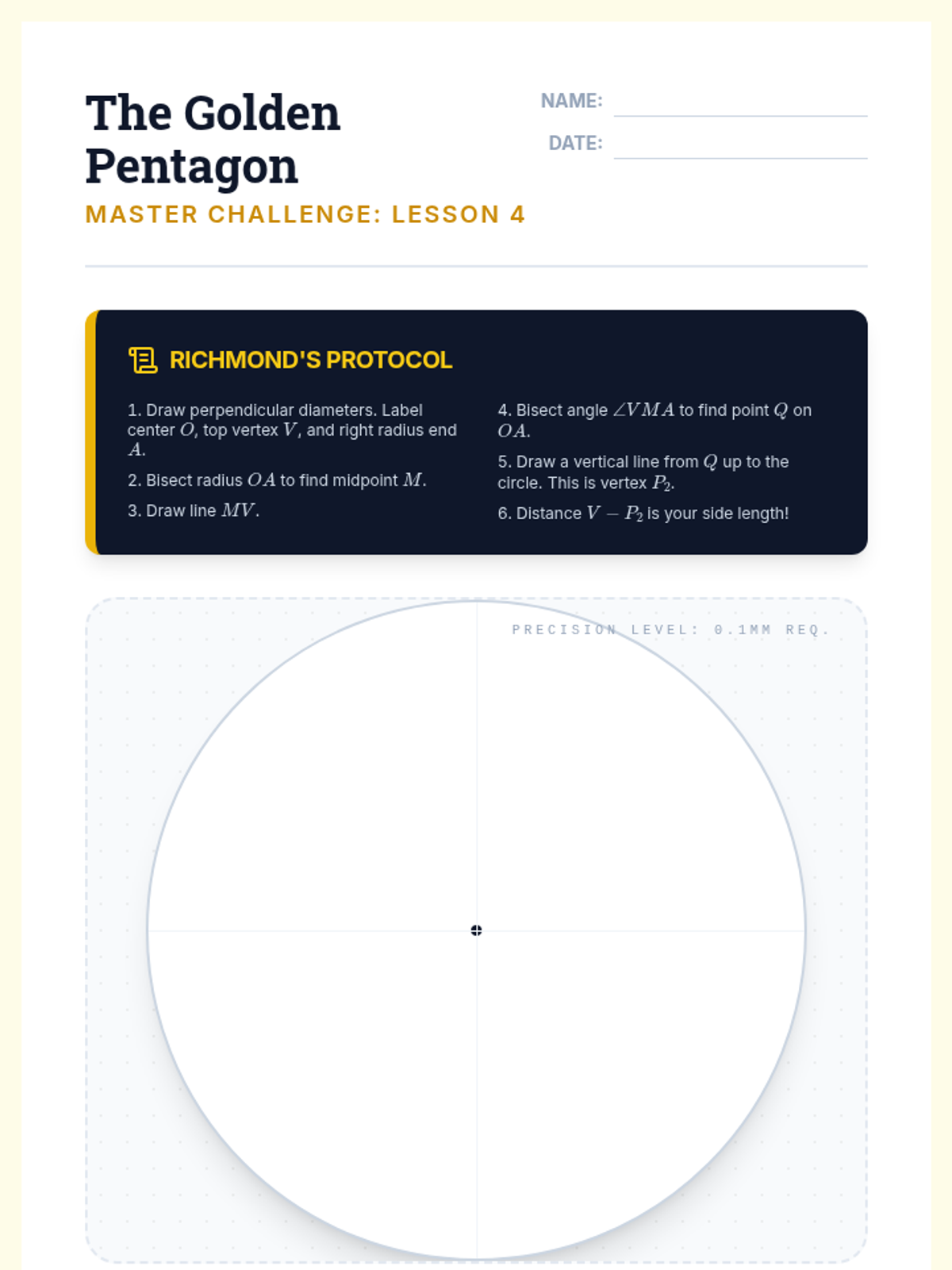
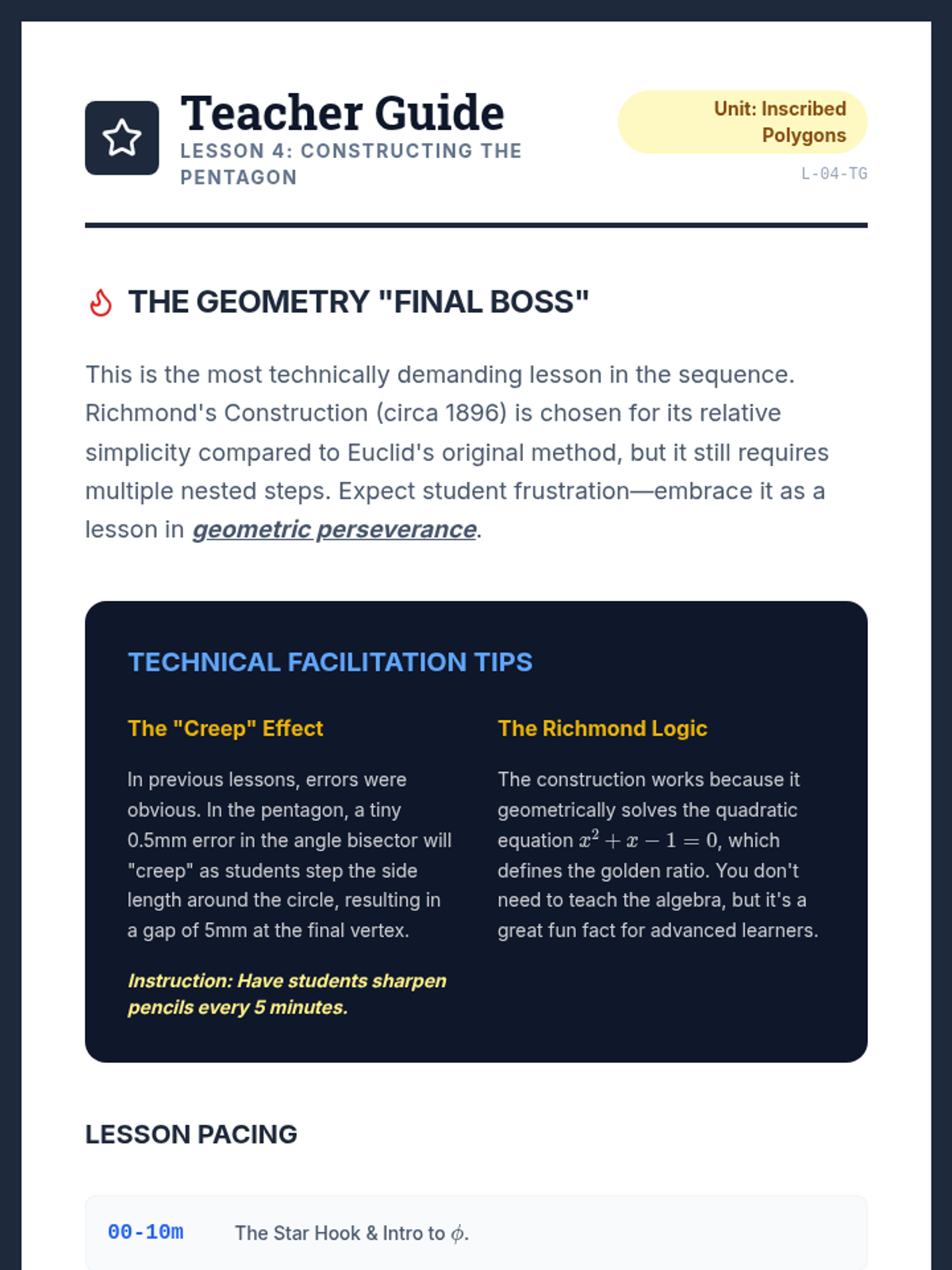
A challenge lesson exploring the complex construction of a regular pentagon and its connection to the Golden Ratio.
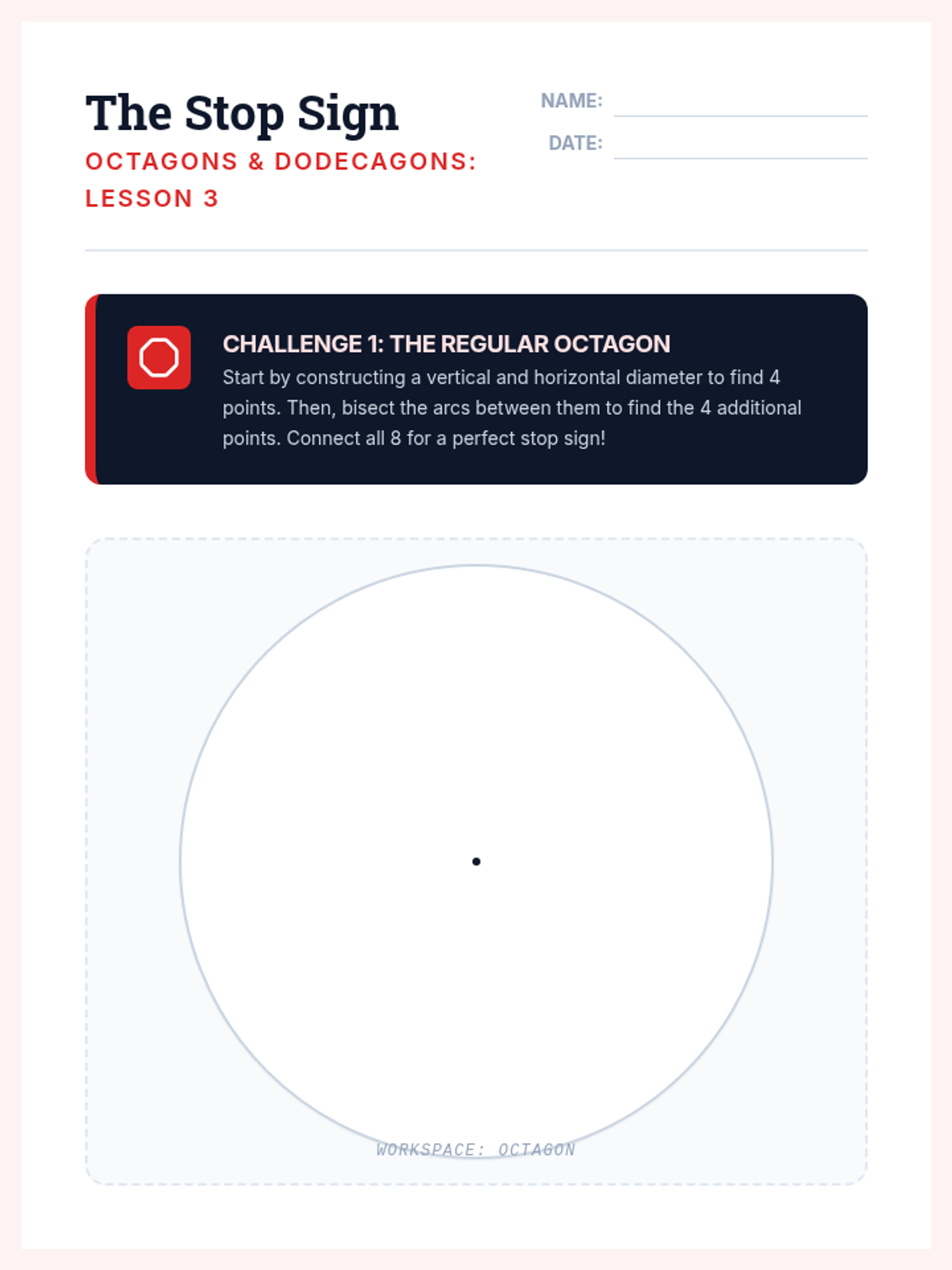
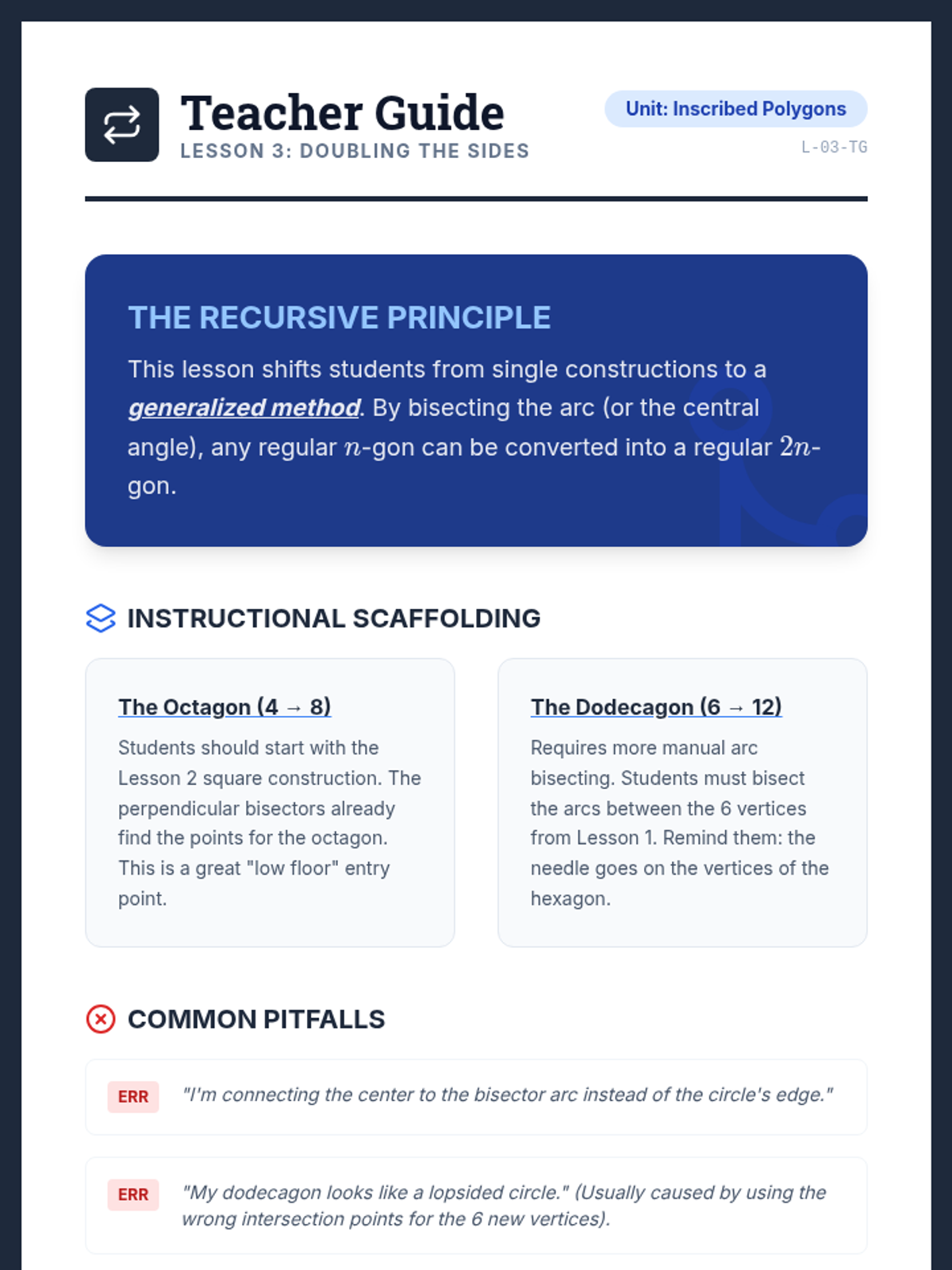
Students learn the technique of bisecting arcs to double the number of sides of a polygon.
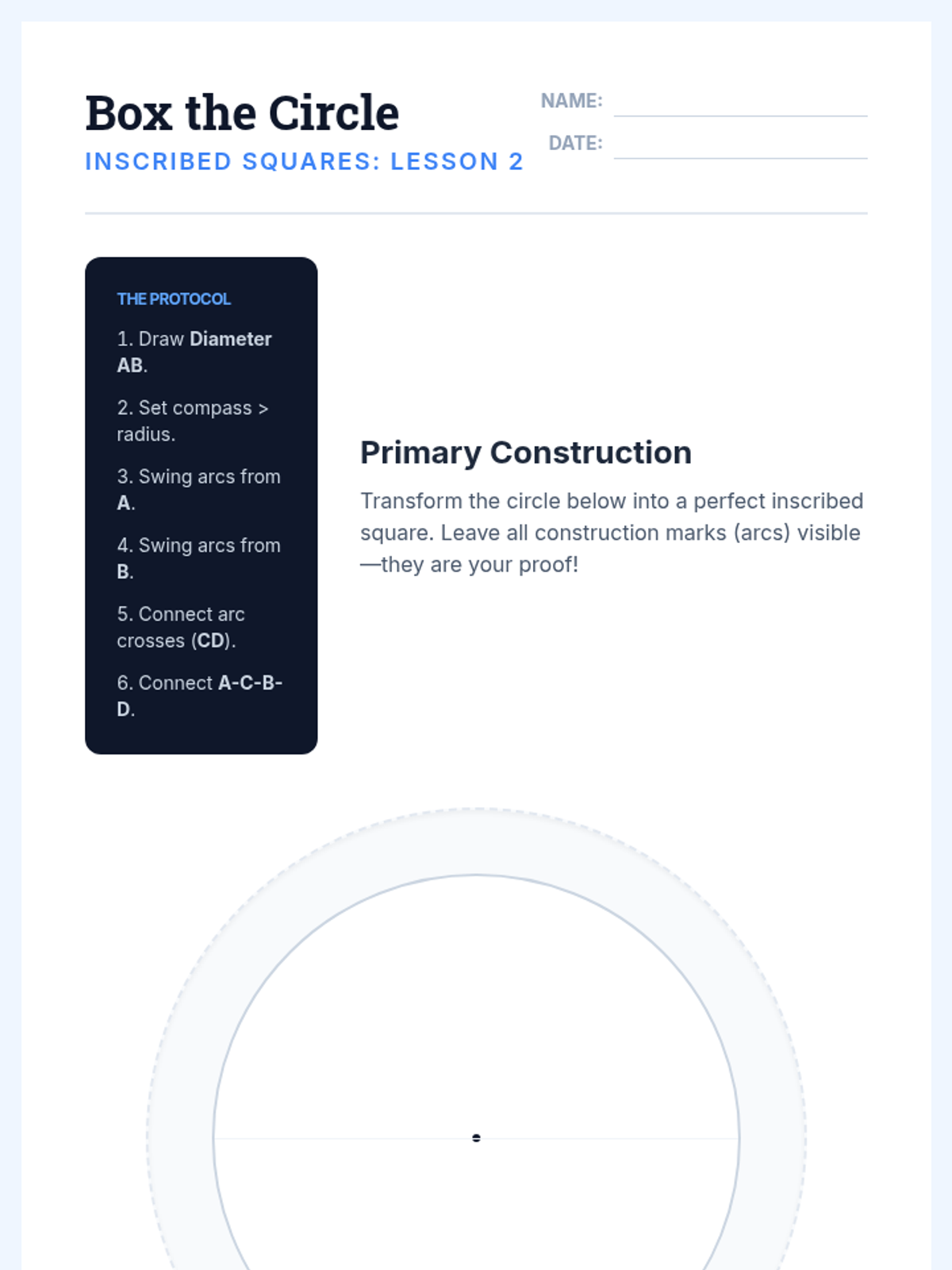
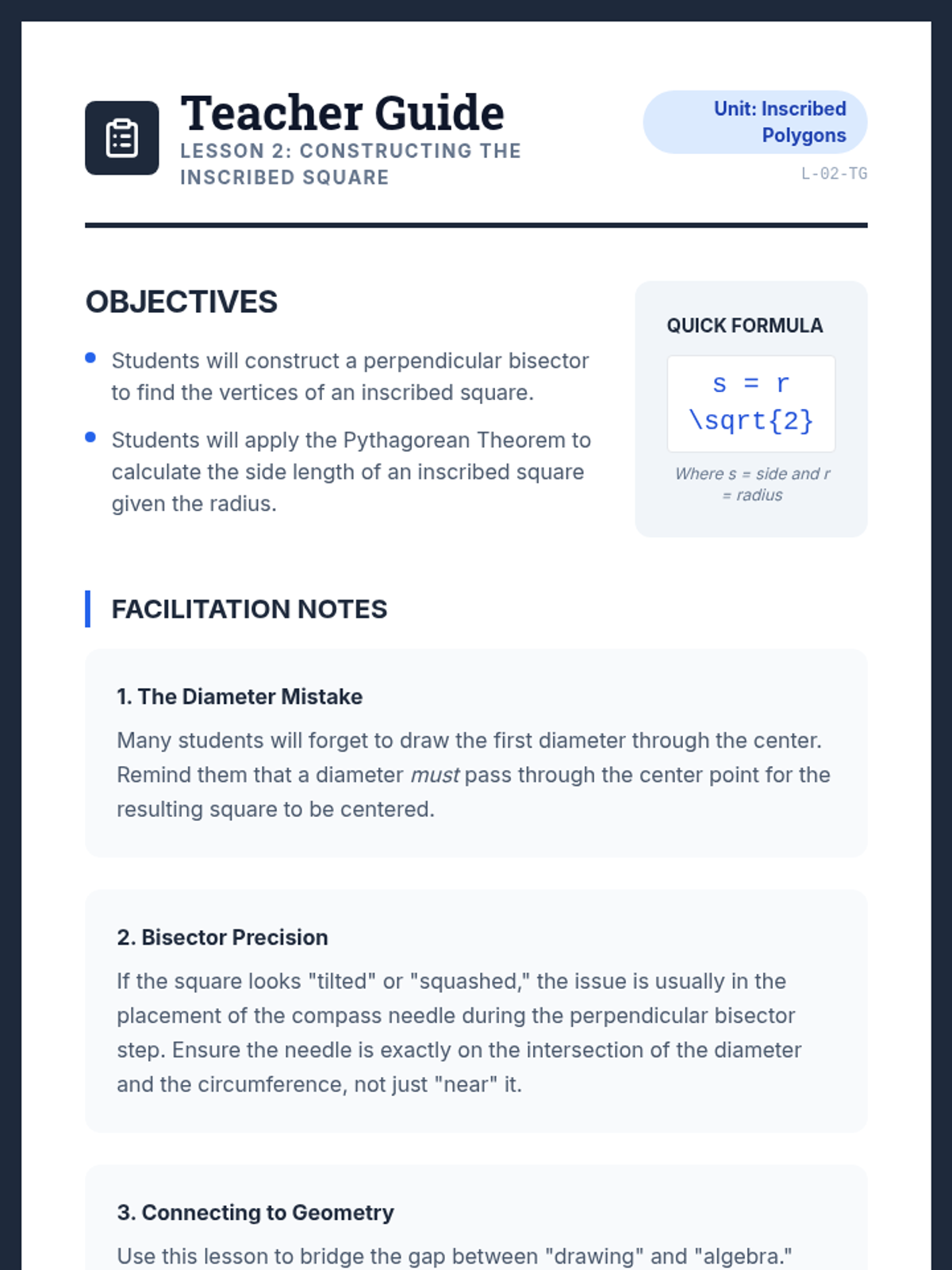
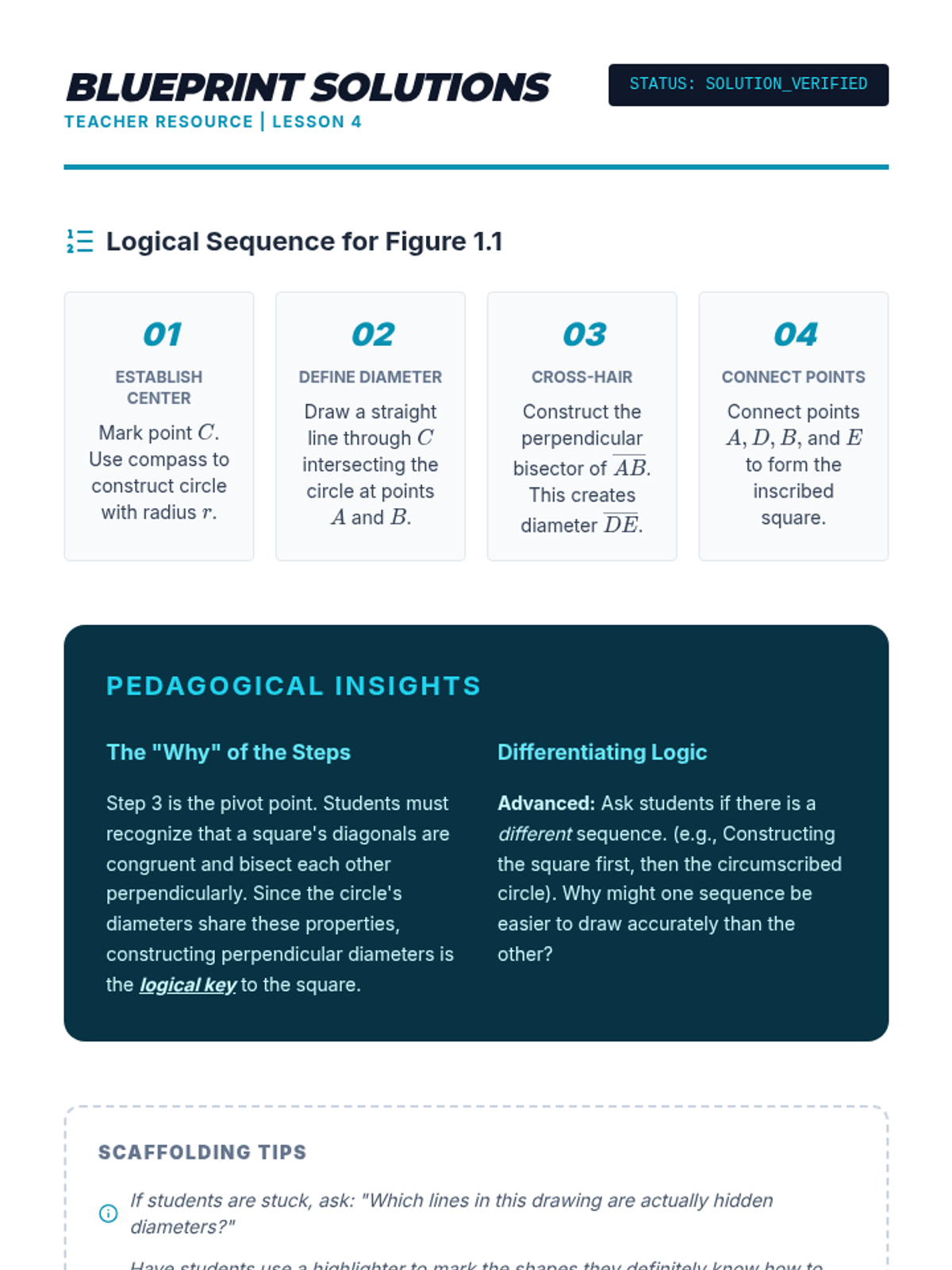
Students utilize perpendicular bisectors of the diameter to construct a perfect square inscribed in a circle.
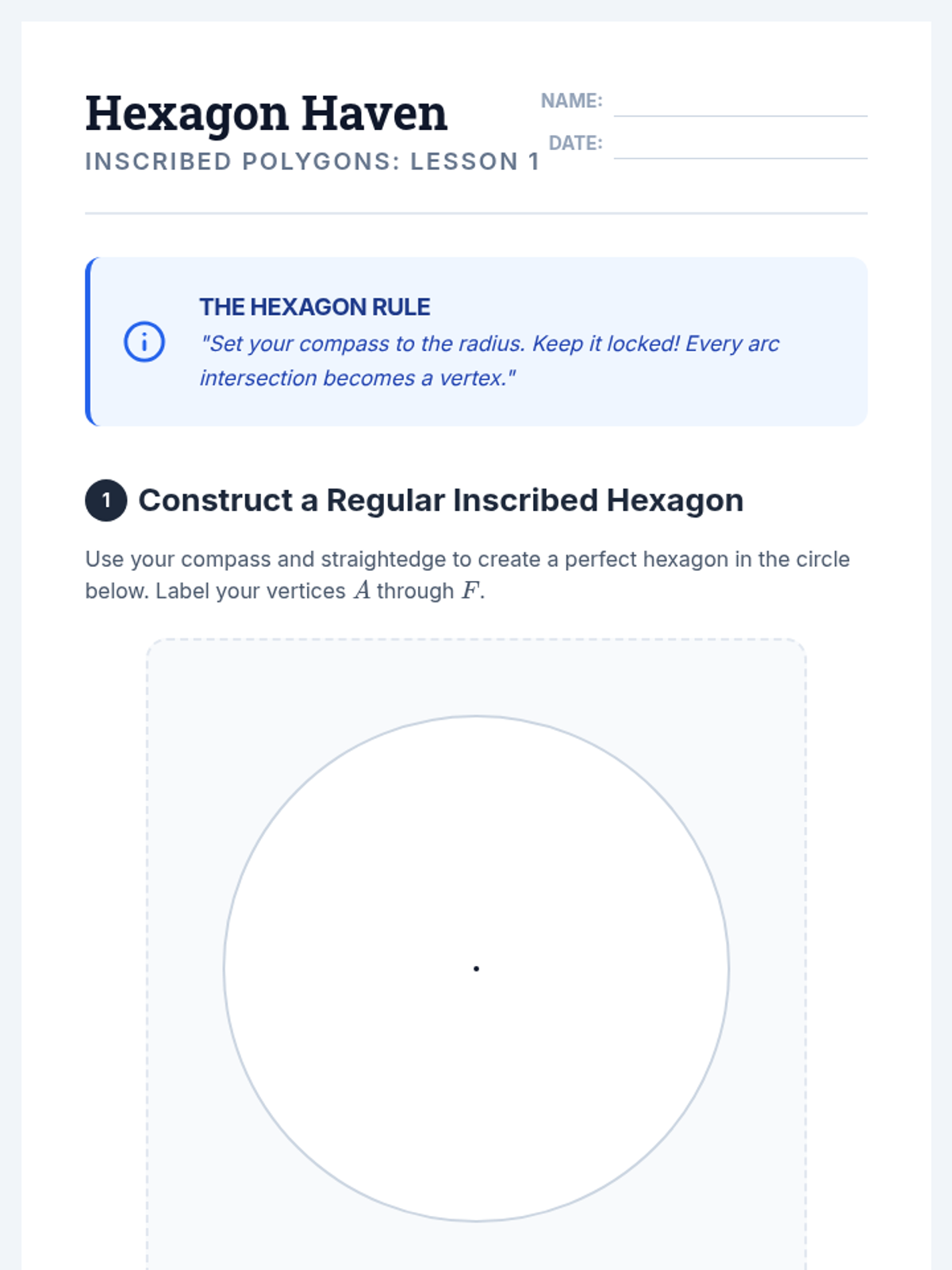
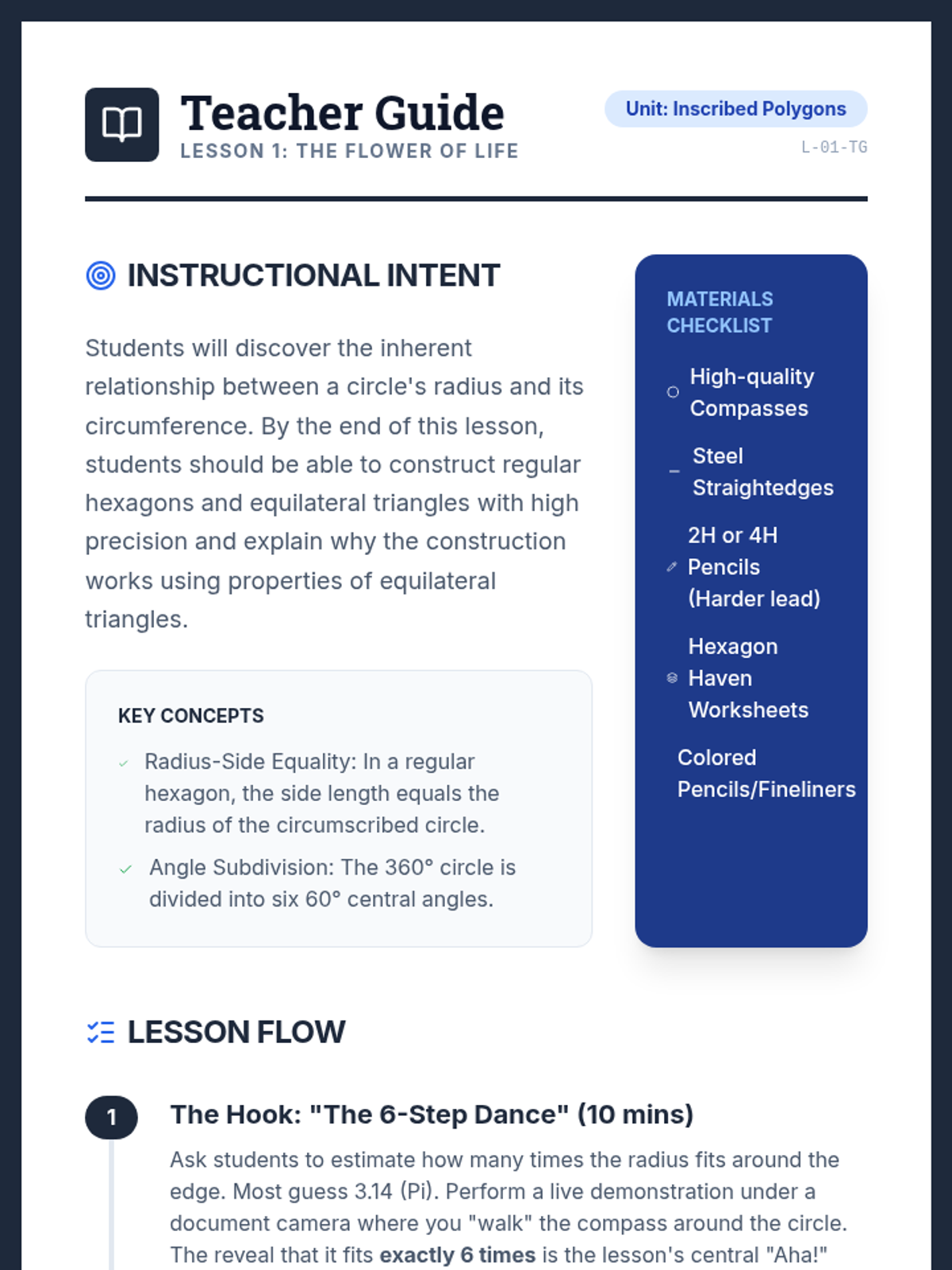
Students explore the natural six-part symmetry of a circle radius to construct inscribed regular hexagons and equilateral triangles.
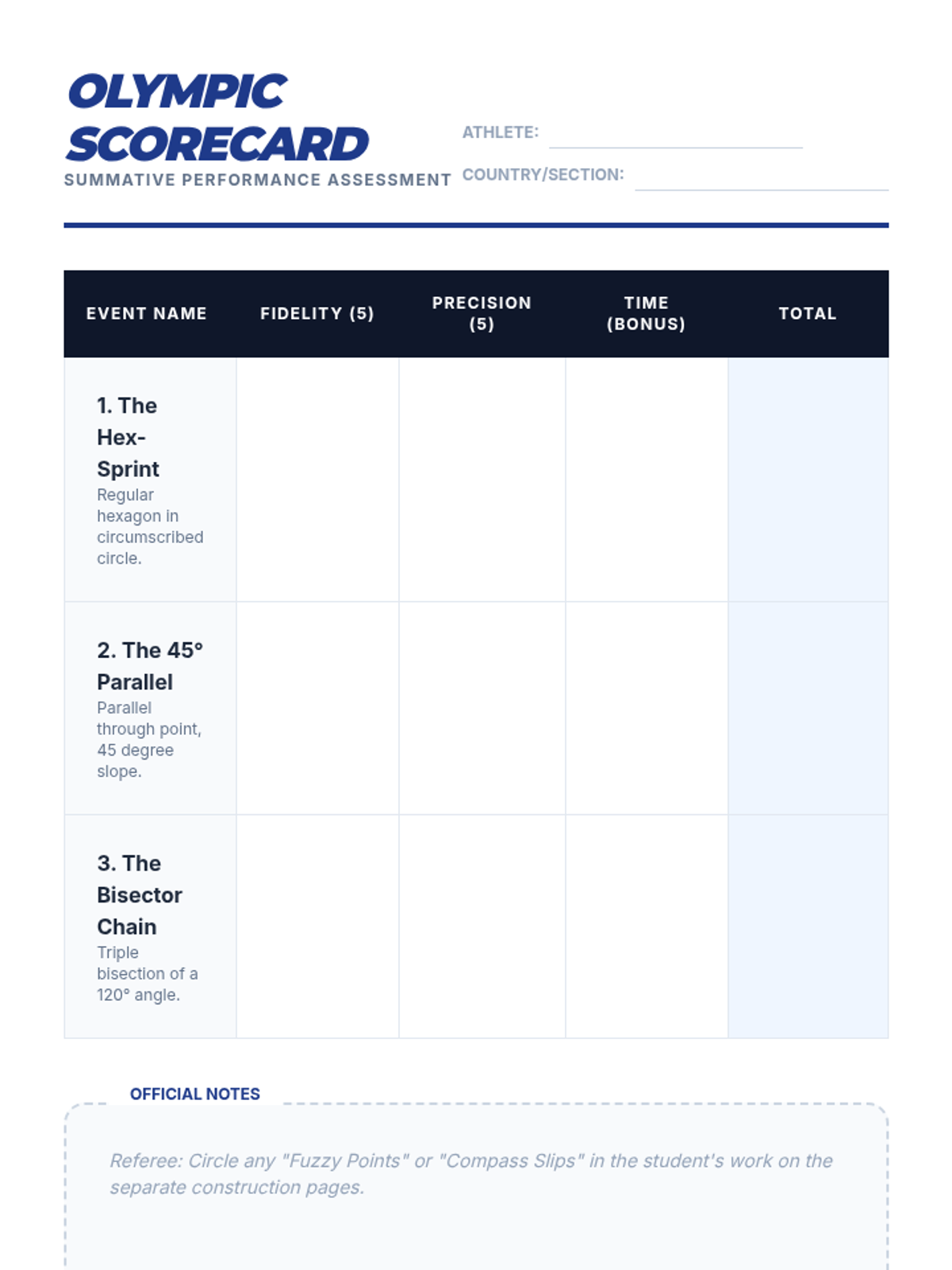
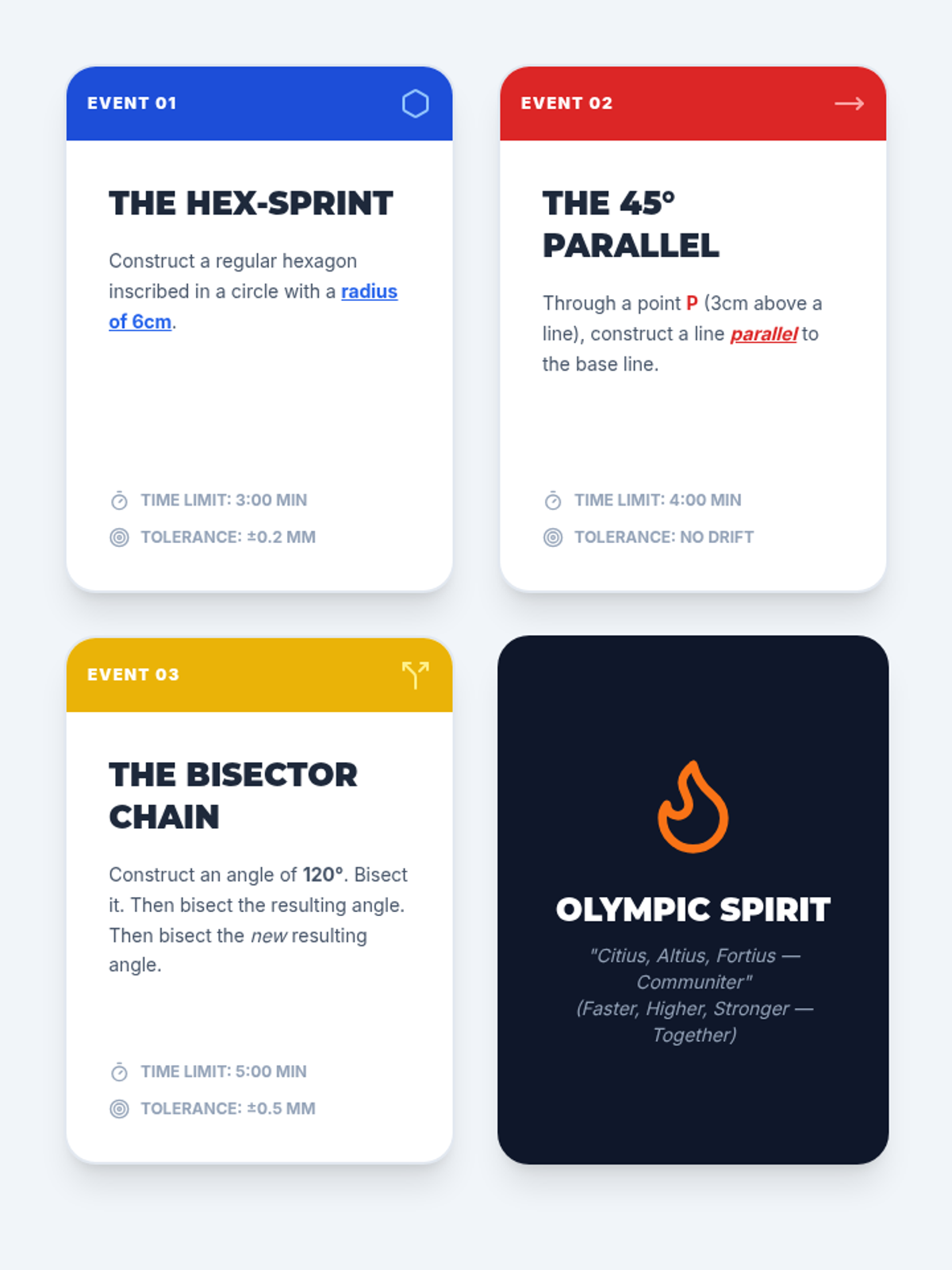
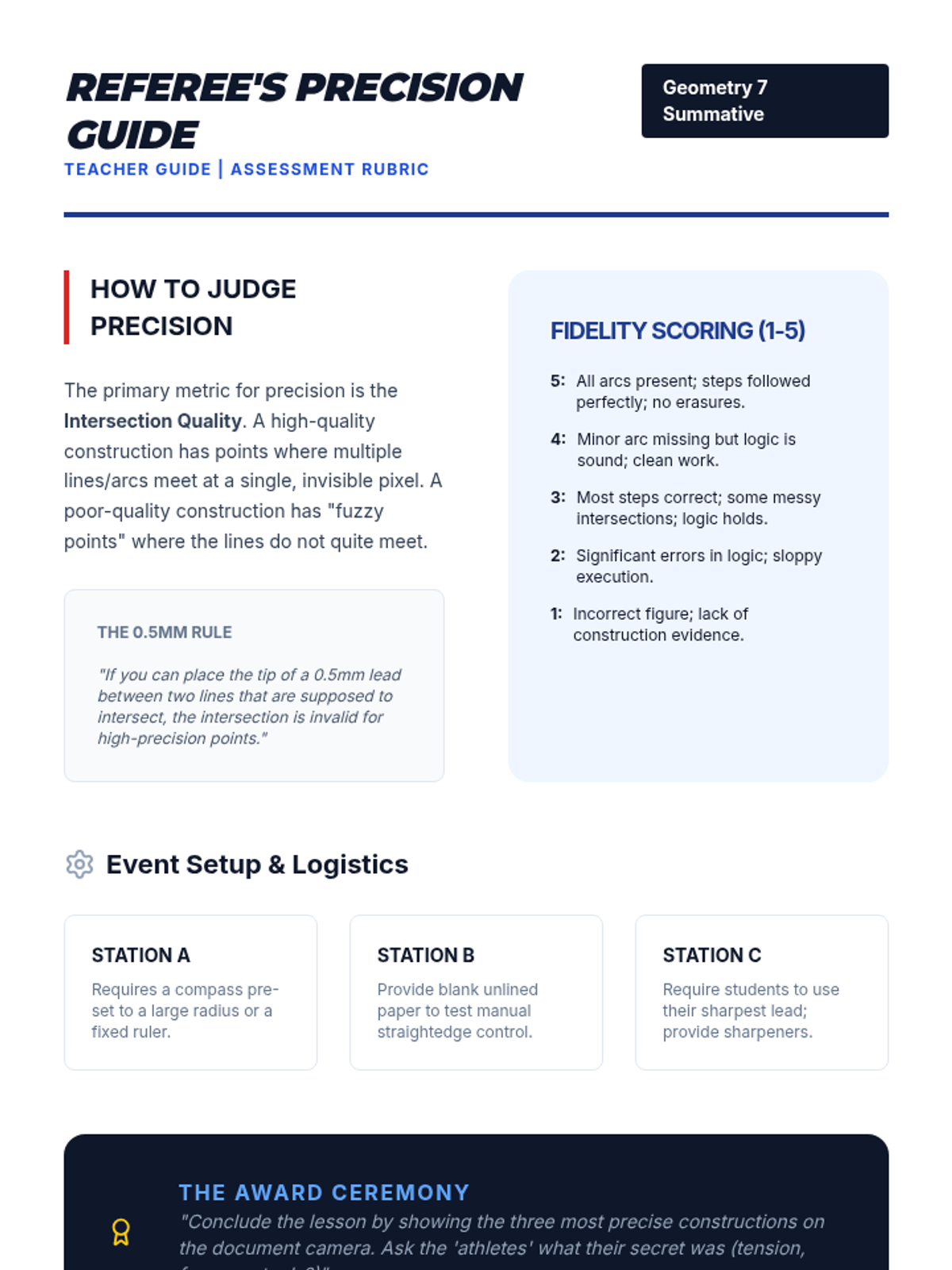
A series of timed and accuracy-based challenges where students must construct specific figures (e.g., a square inscribed in a circle with a specific radius) as accurately as possible. Points are awarded for clean intersections and lack of 'fuzzy' points. This acts as a summative assessment of skill.
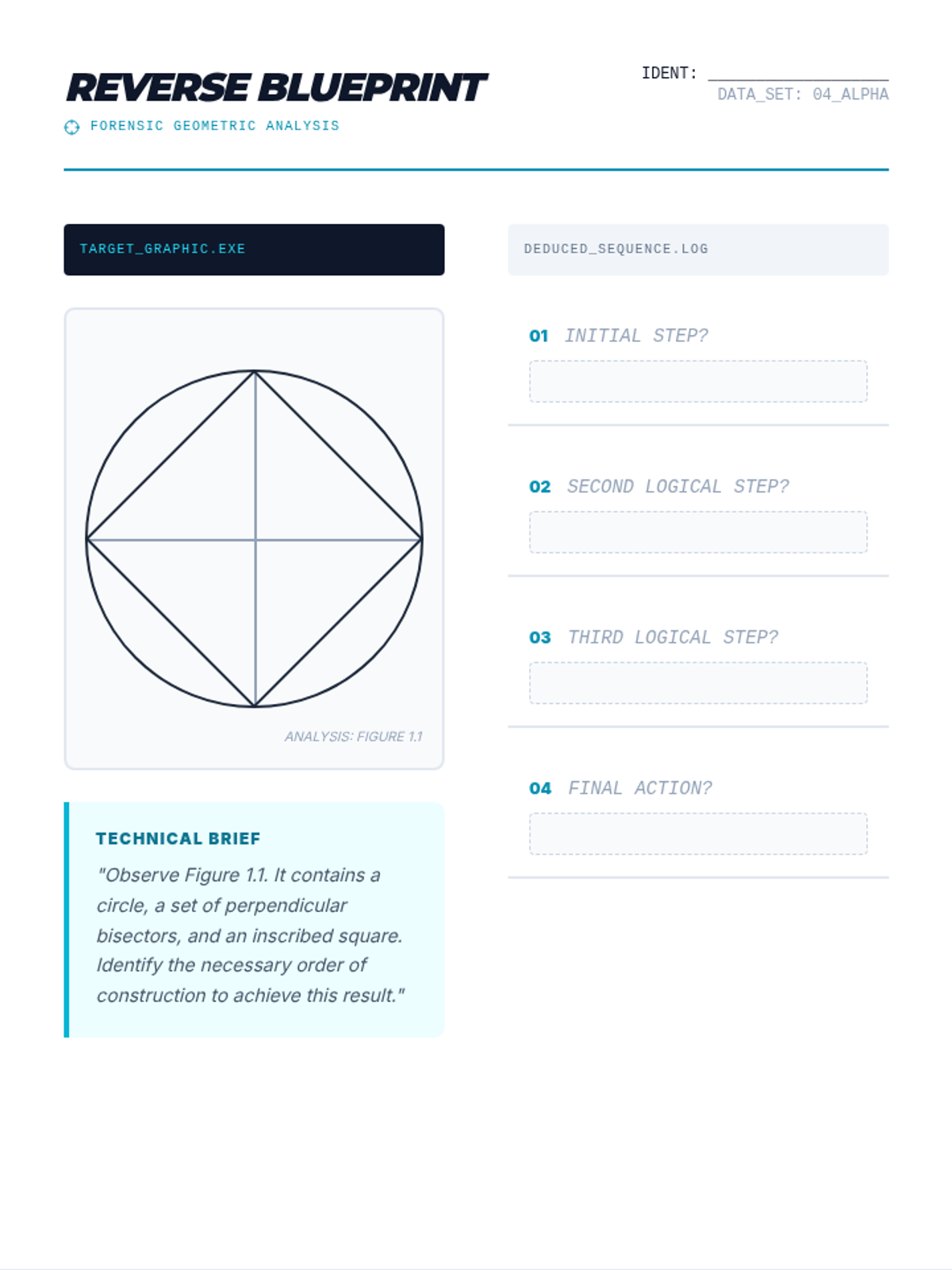
Students are given a completed geometric diagram without the construction marks and must deduce the steps taken to create it. They work backward to identify where the centers of circles must have been. They verify their hypothesis by recreating the figure.
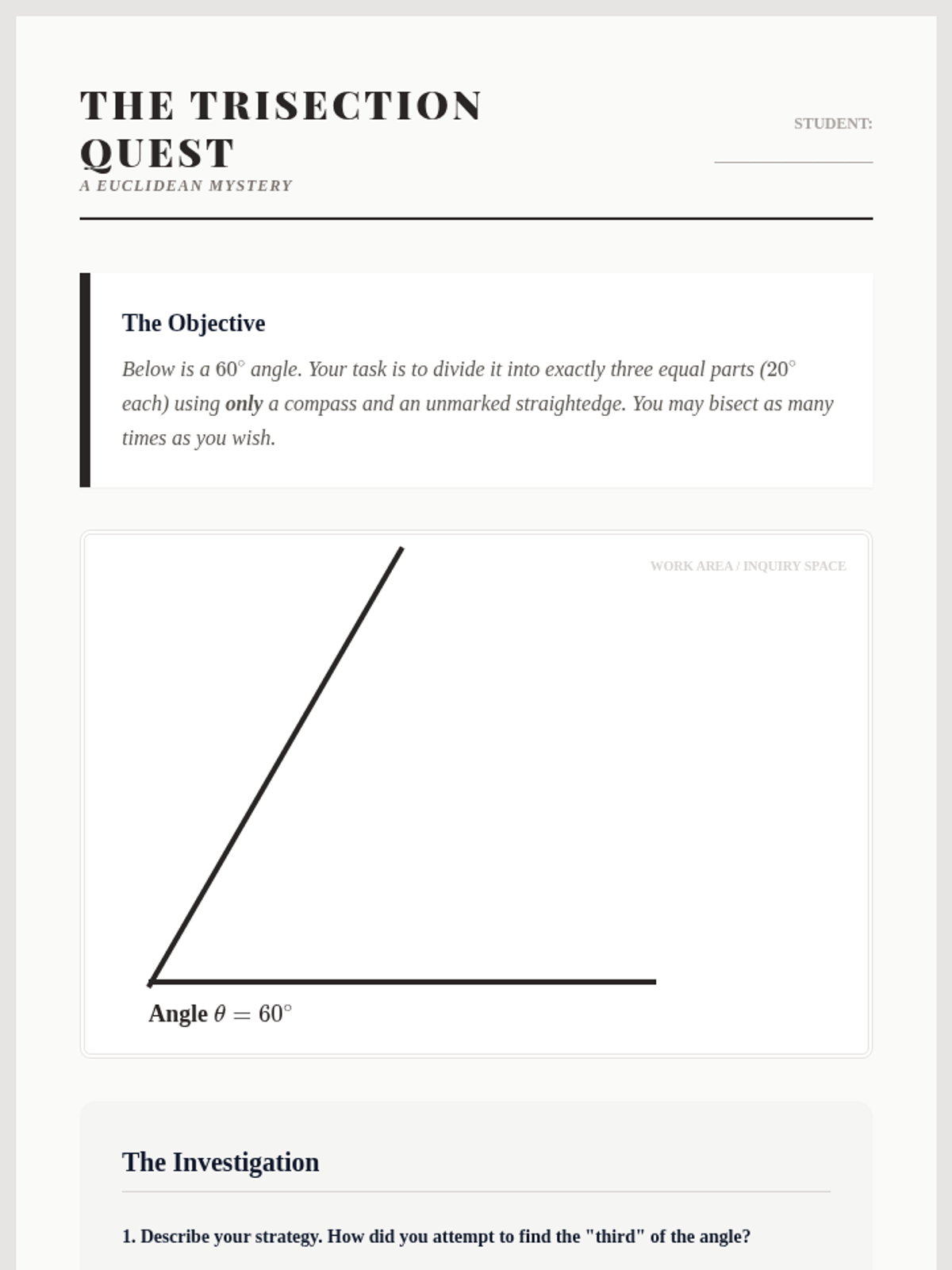
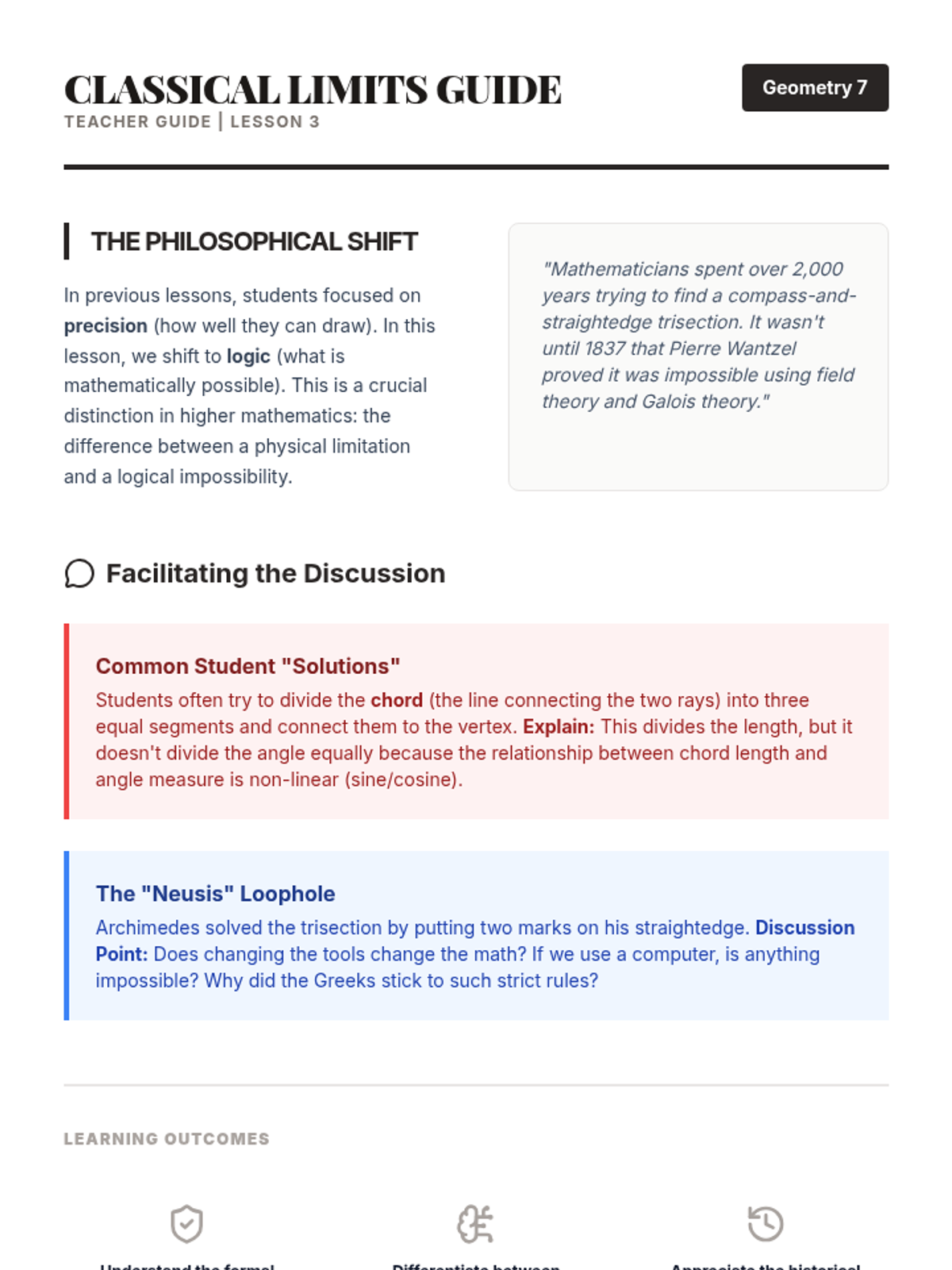
Students are introduced to the classical 'impossible' problems of antiquity, such as trisecting an angle or squaring the circle. They attempt these constructions and discuss why they cannot be done with Euclidean tools. This fosters critical thinking about the limitations of specific mathematical systems.
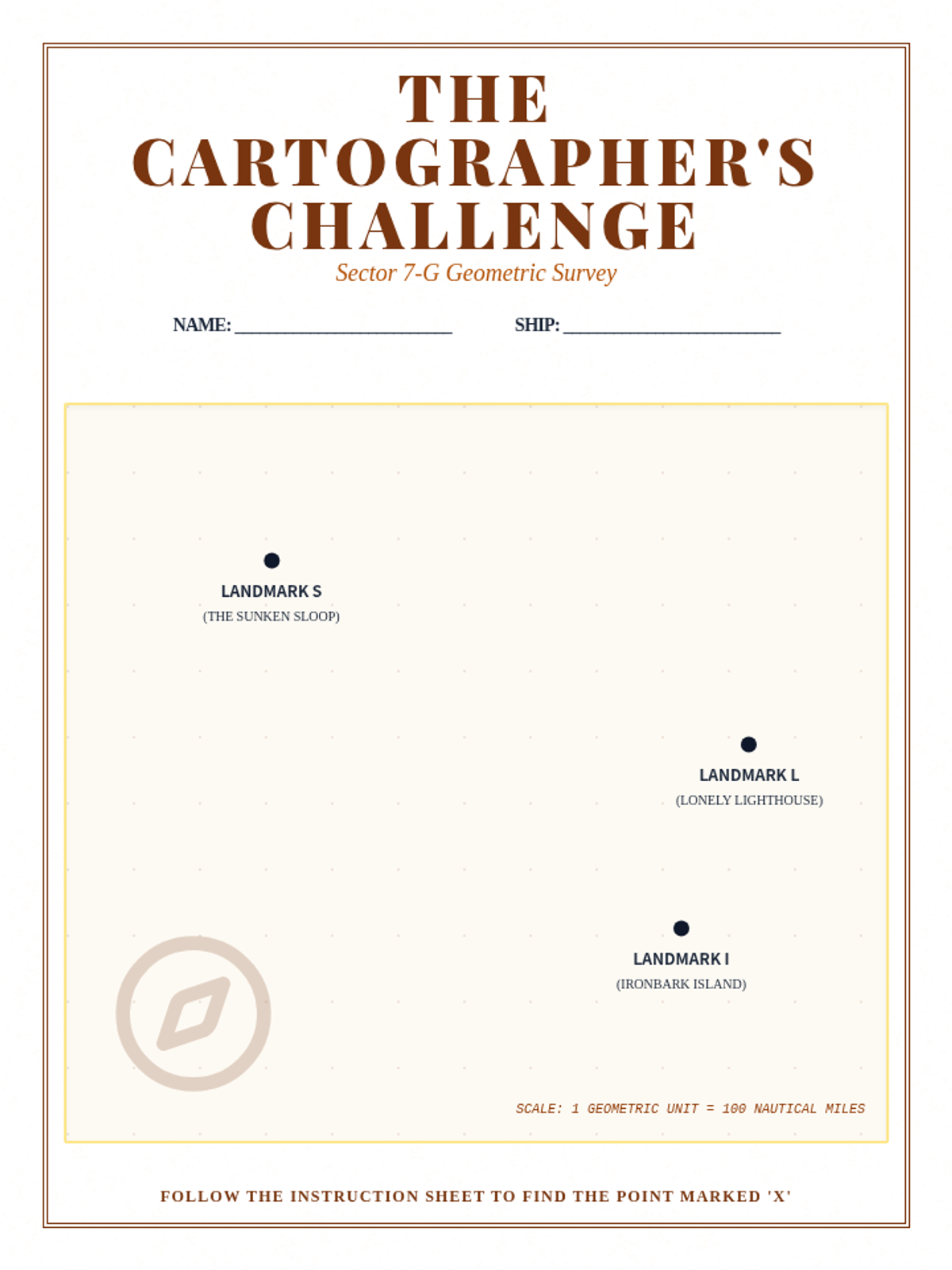
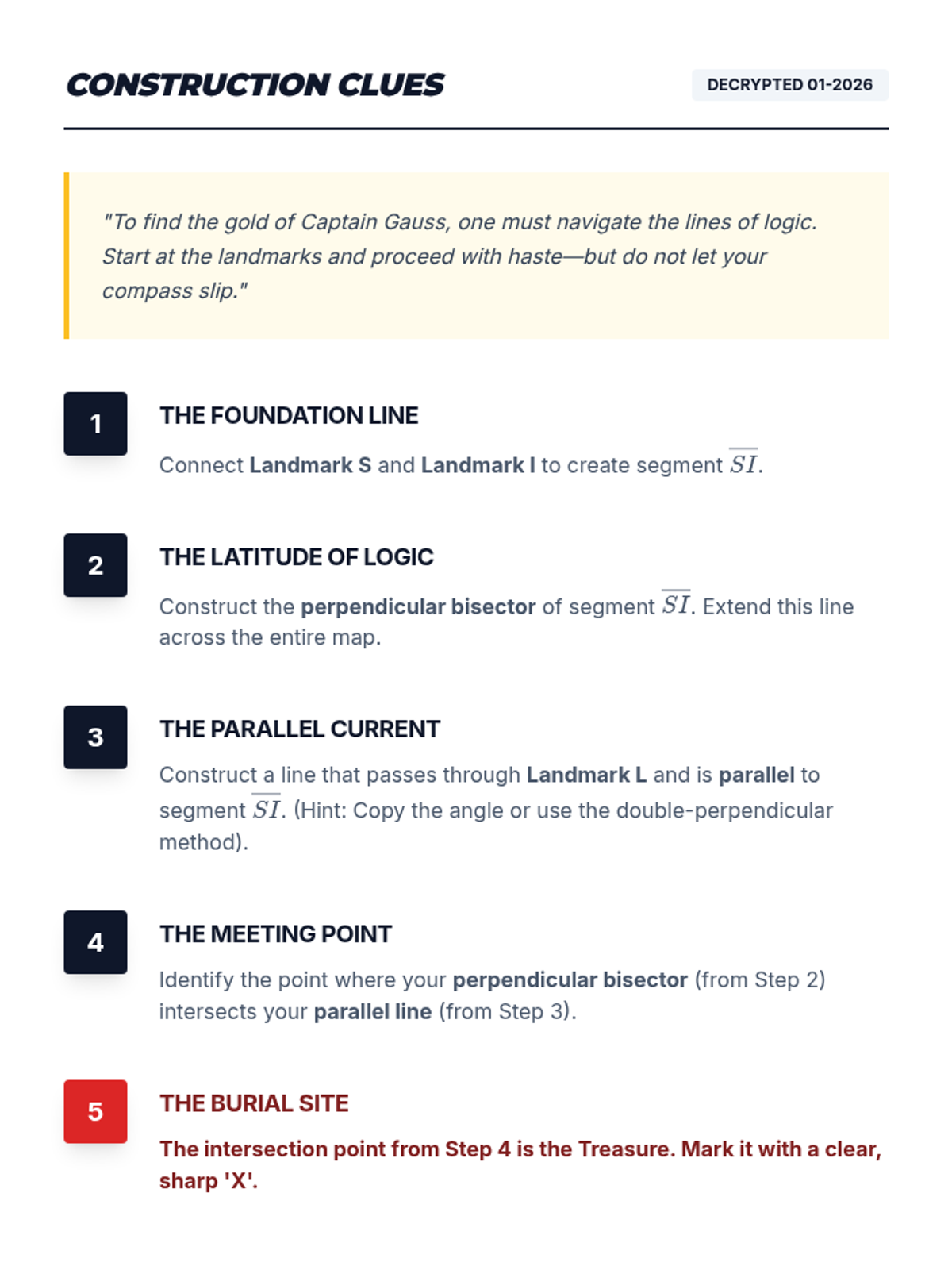
Students follow a complex set of written construction instructions to locate a specific point ('buried treasure') on a page. The instructions involve constructing parallels, perpendiculars, and bisectors relative to landmarks. Success is determined by whether their final point matches the teacher's key overlay.
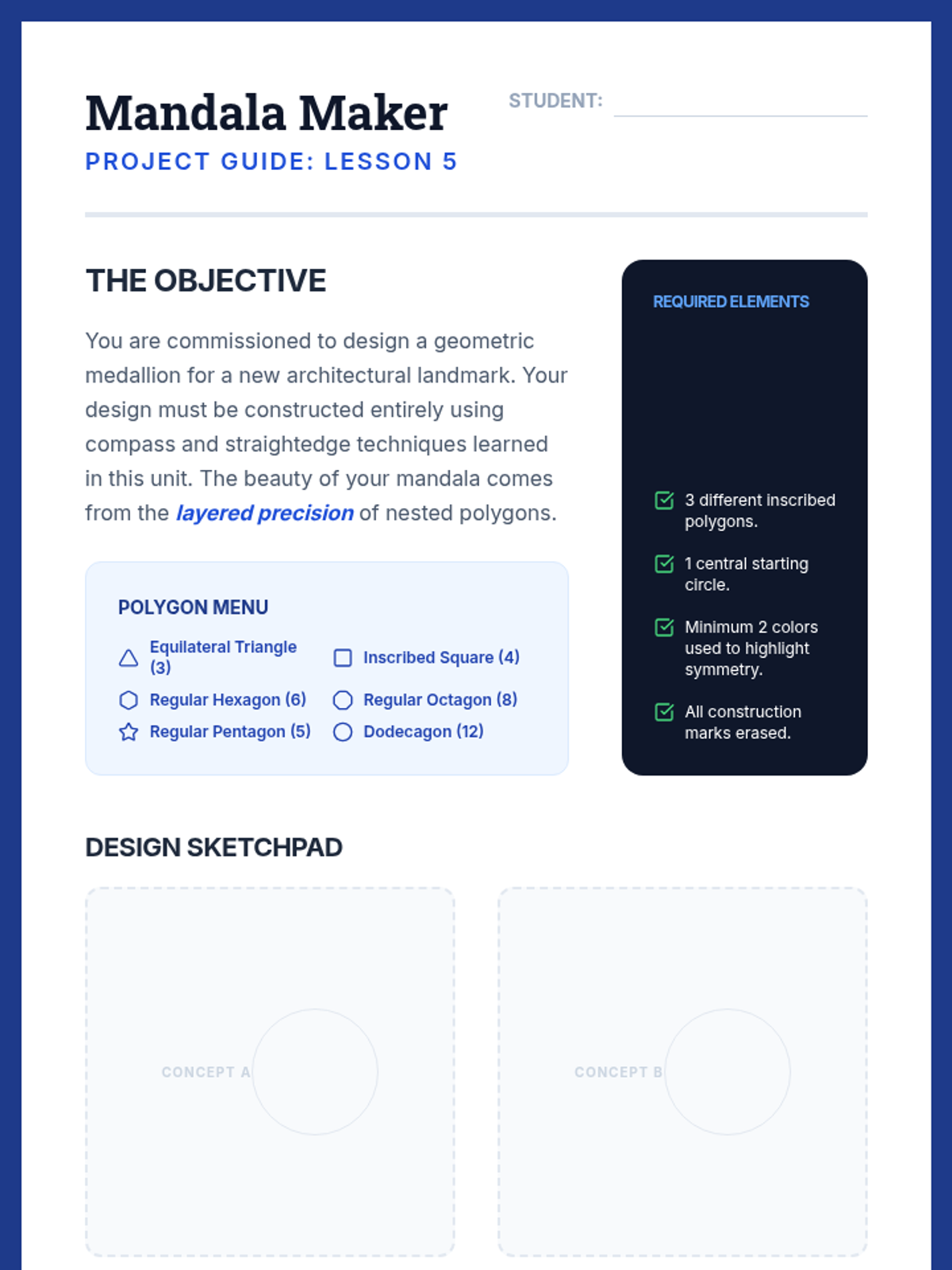
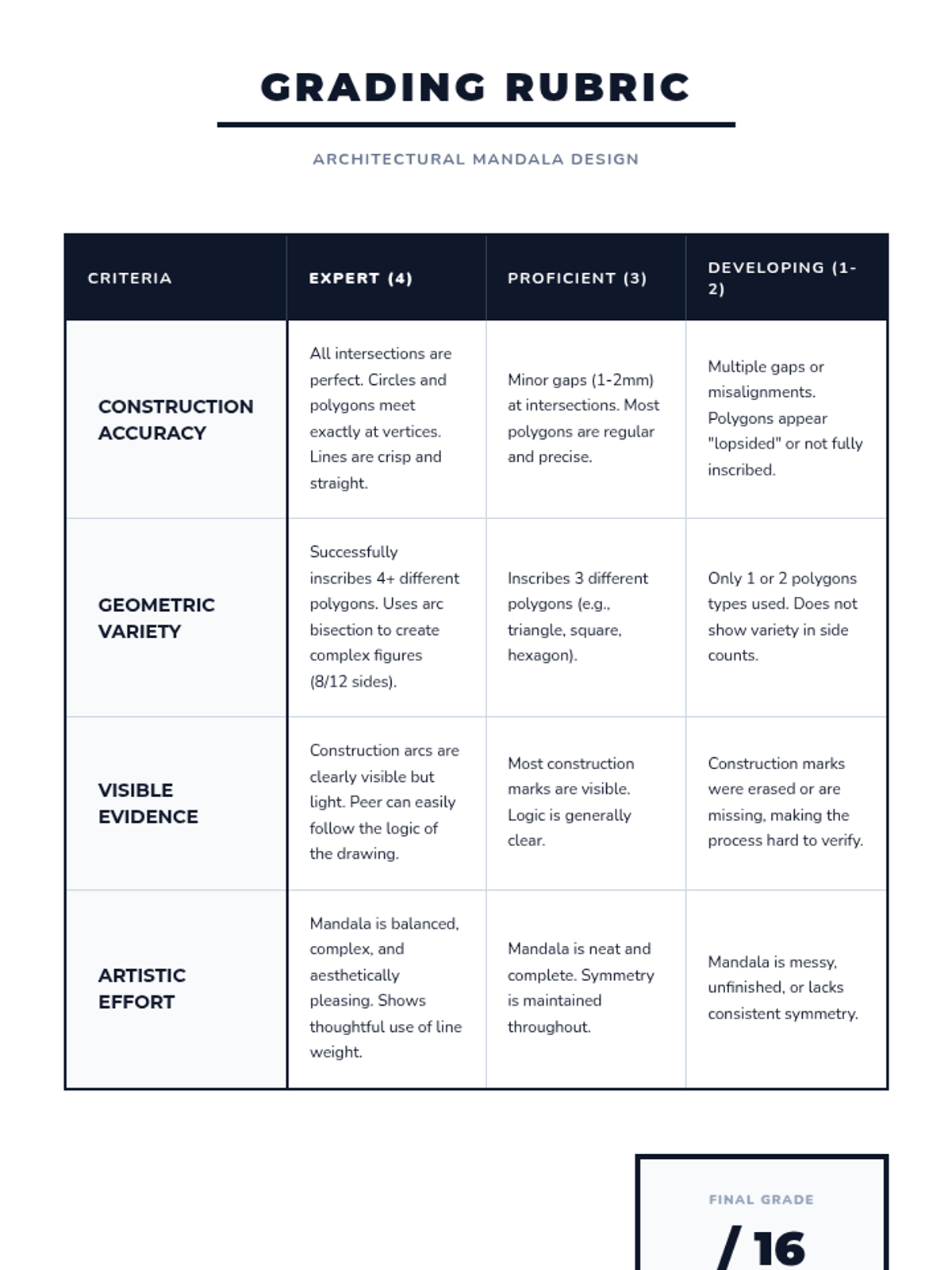
A culminating project where students design a geometric mandala using at least three different inscribed polygon constructions, maintaining visible construction marks to show their geometric proofs.
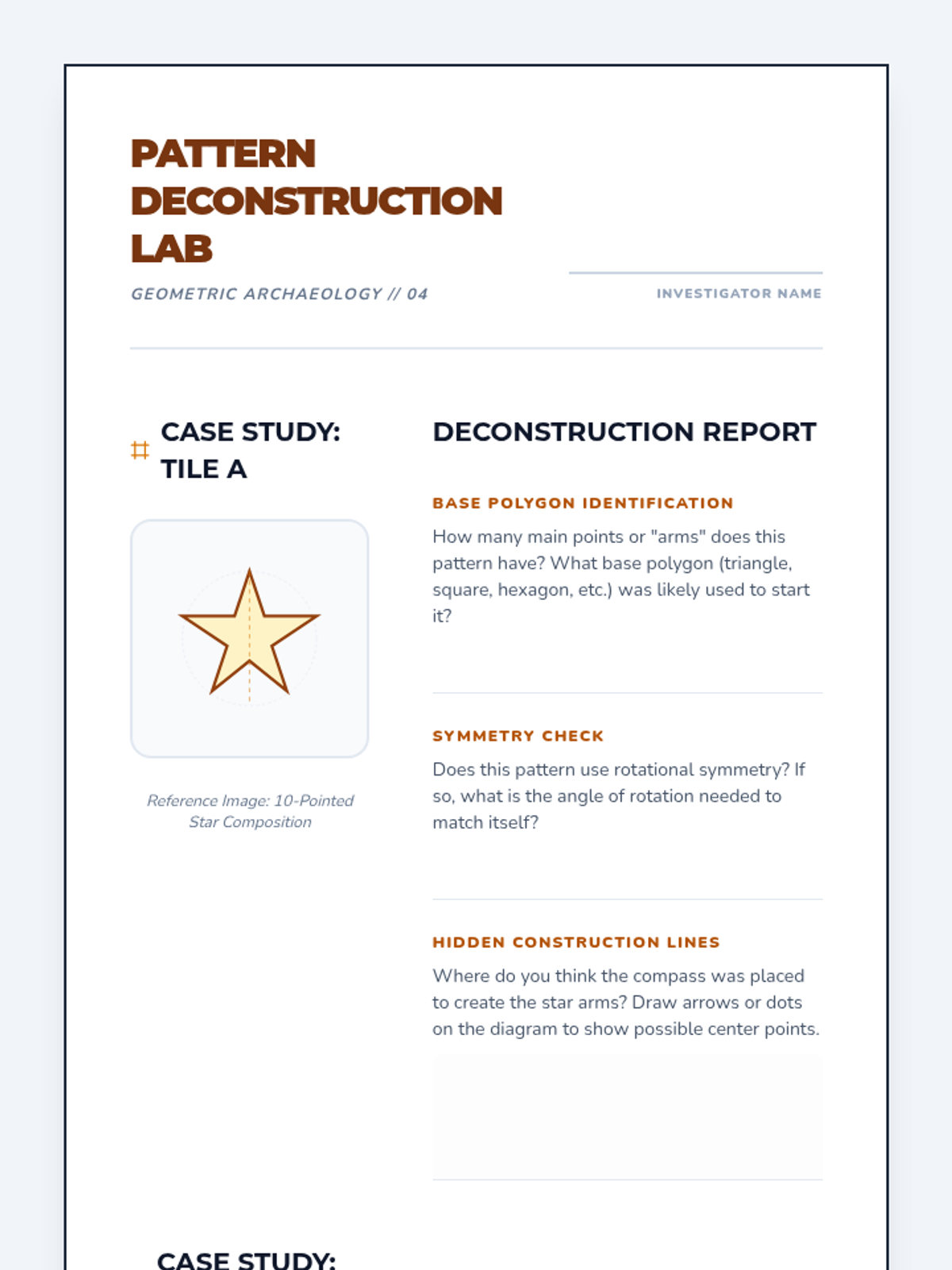
Students analyze historical examples of geometric art, such as Islamic tile work and Gothic rose windows, to deconstruct the underlying constructions and identify hidden polygons.
A foundational lesson on calculating the surface area of prisms and pyramids, specifically designed for students needing extra support through clear visuals, step-by-step formulas, and vocabulary scaffolding.
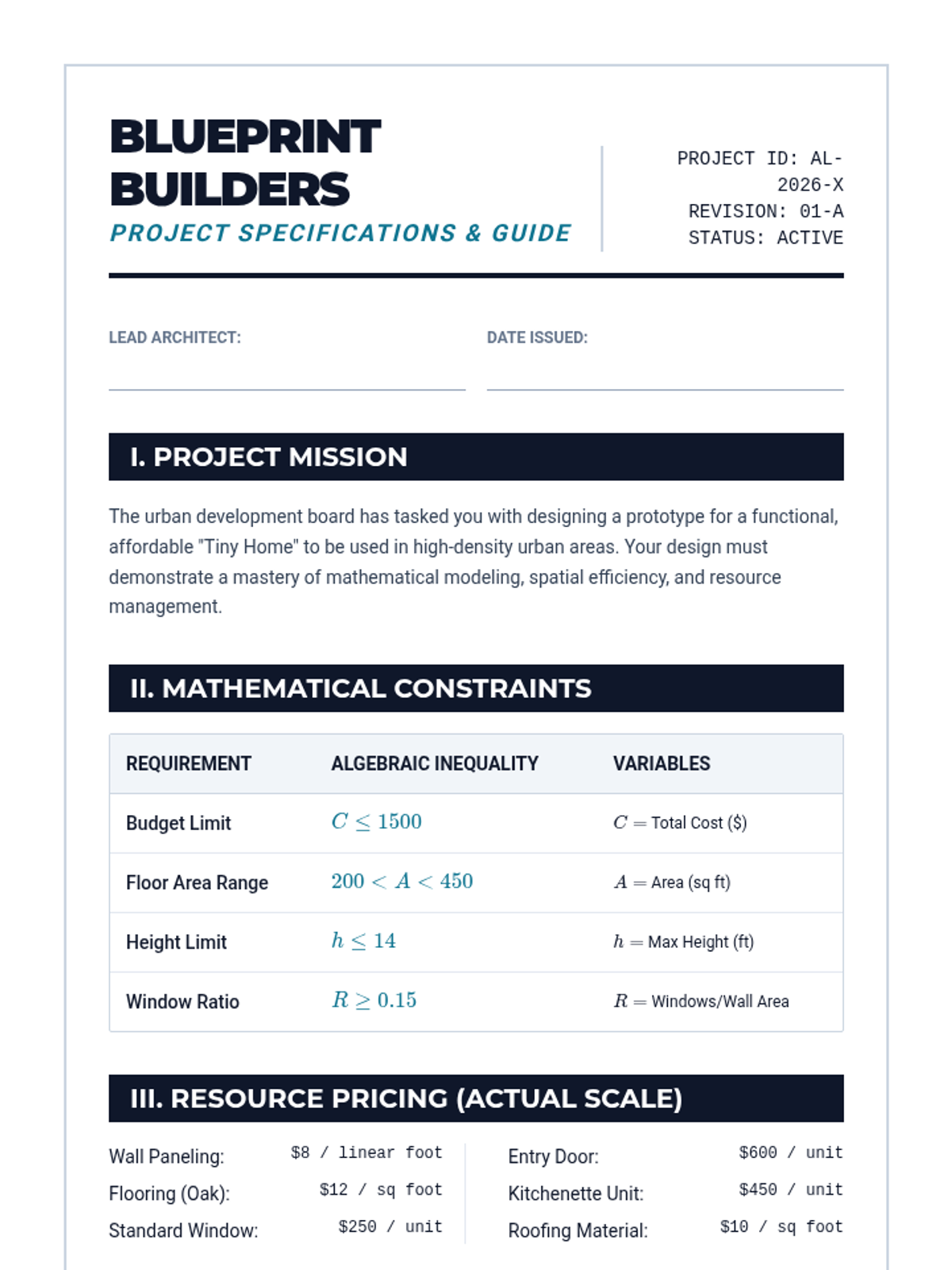
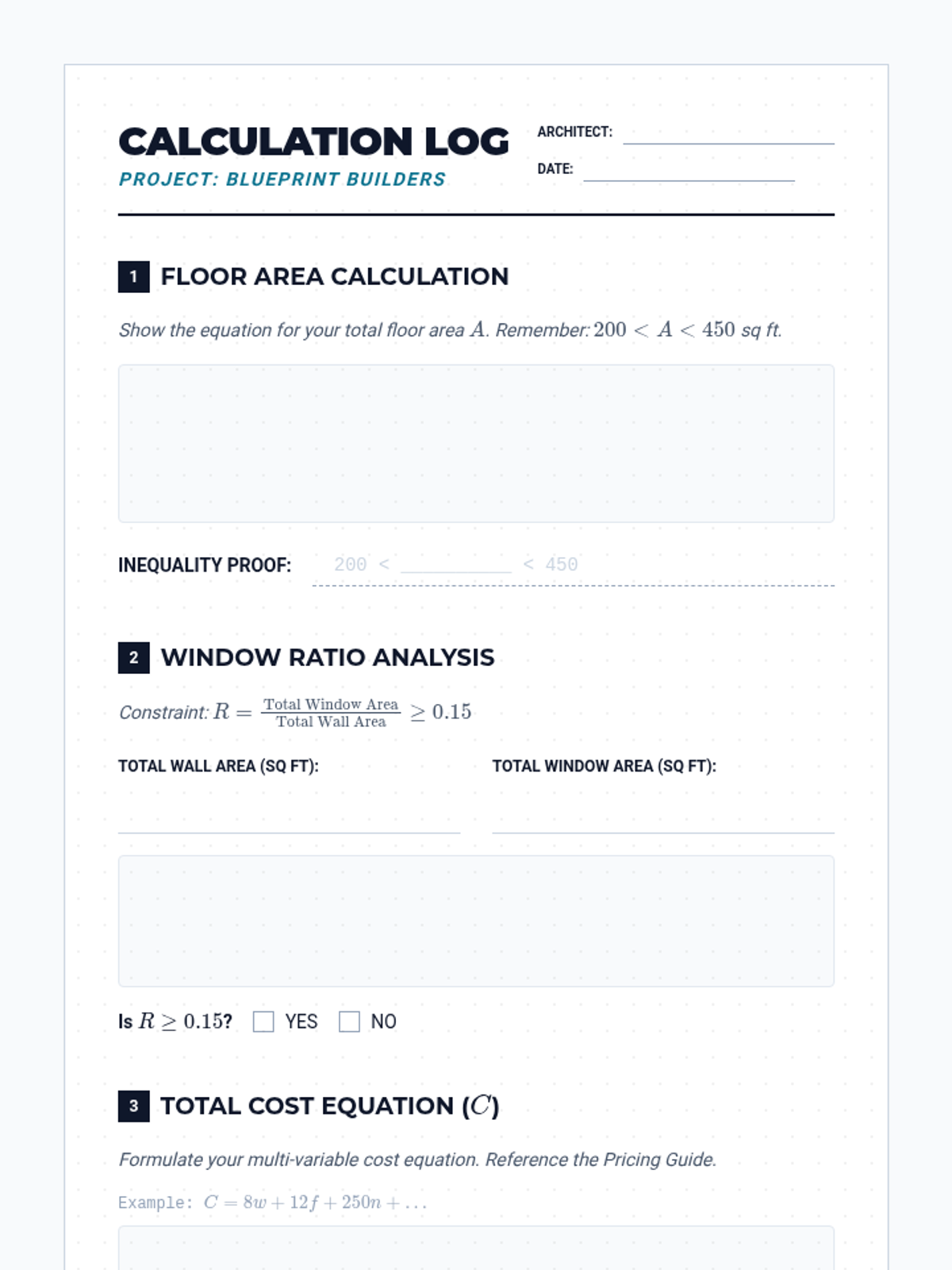
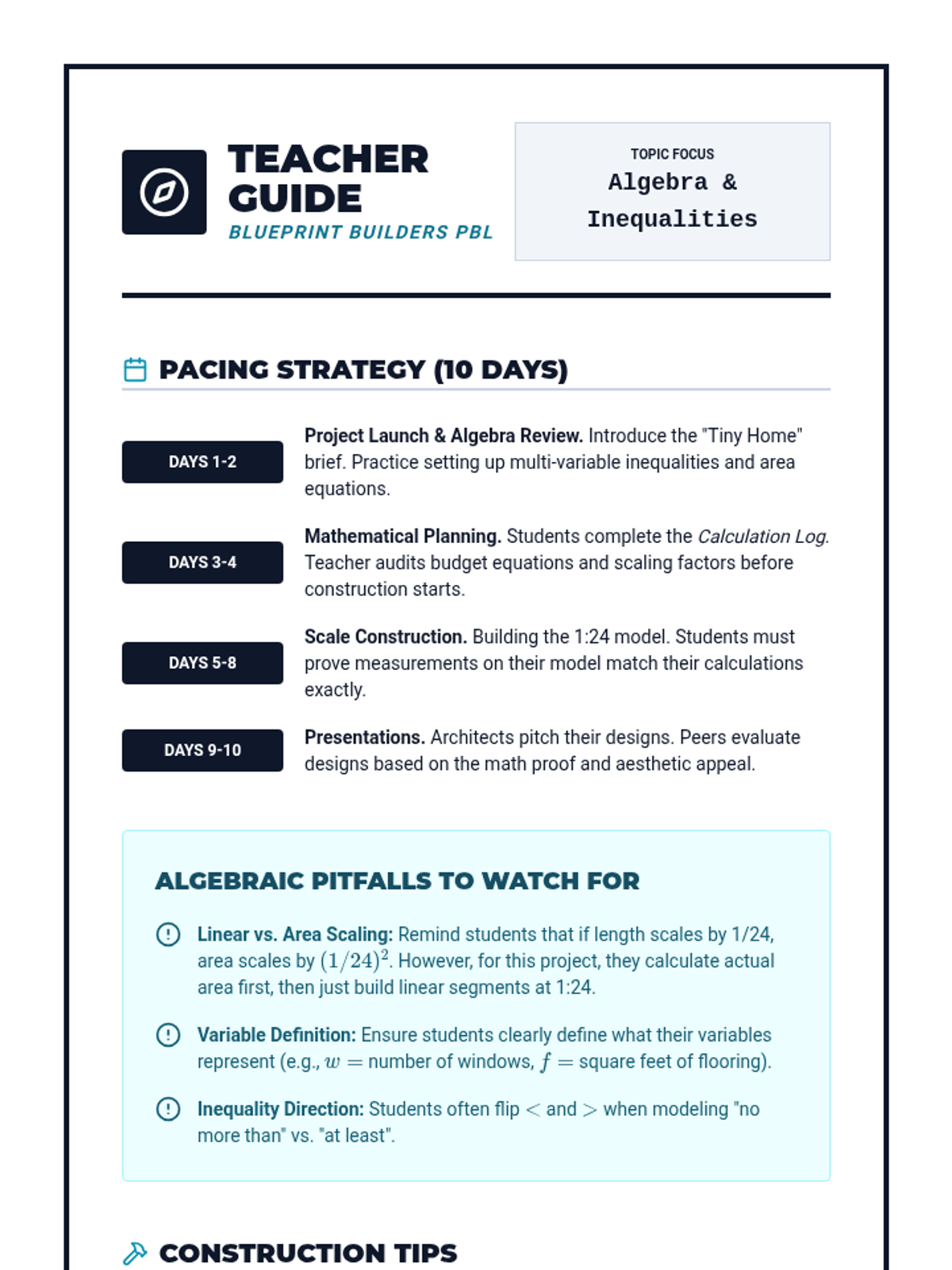
The core project lesson where students are introduced to their role as architectural planners and begin calculating the dimensions and constraints of their scale models using algebra.
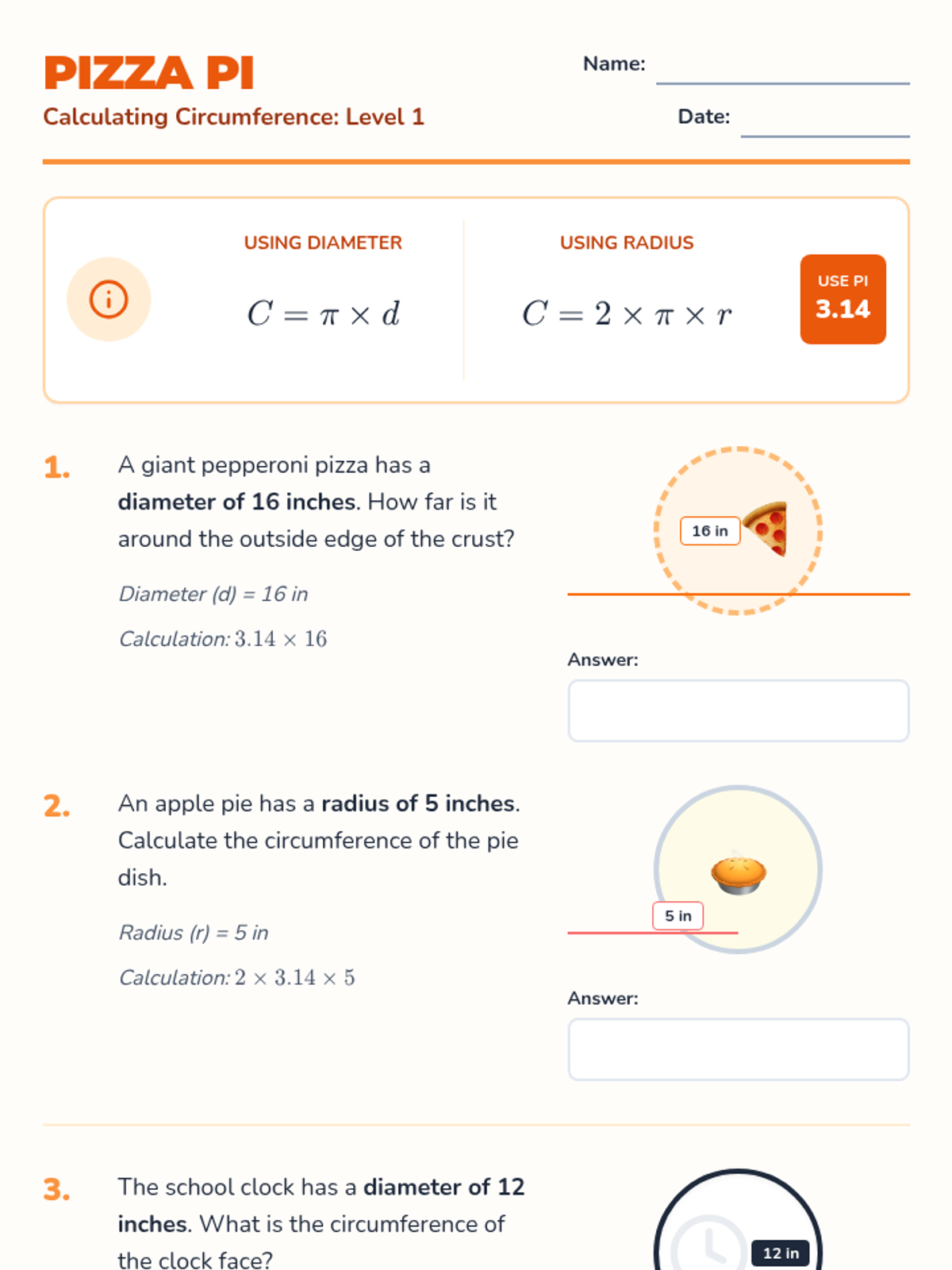
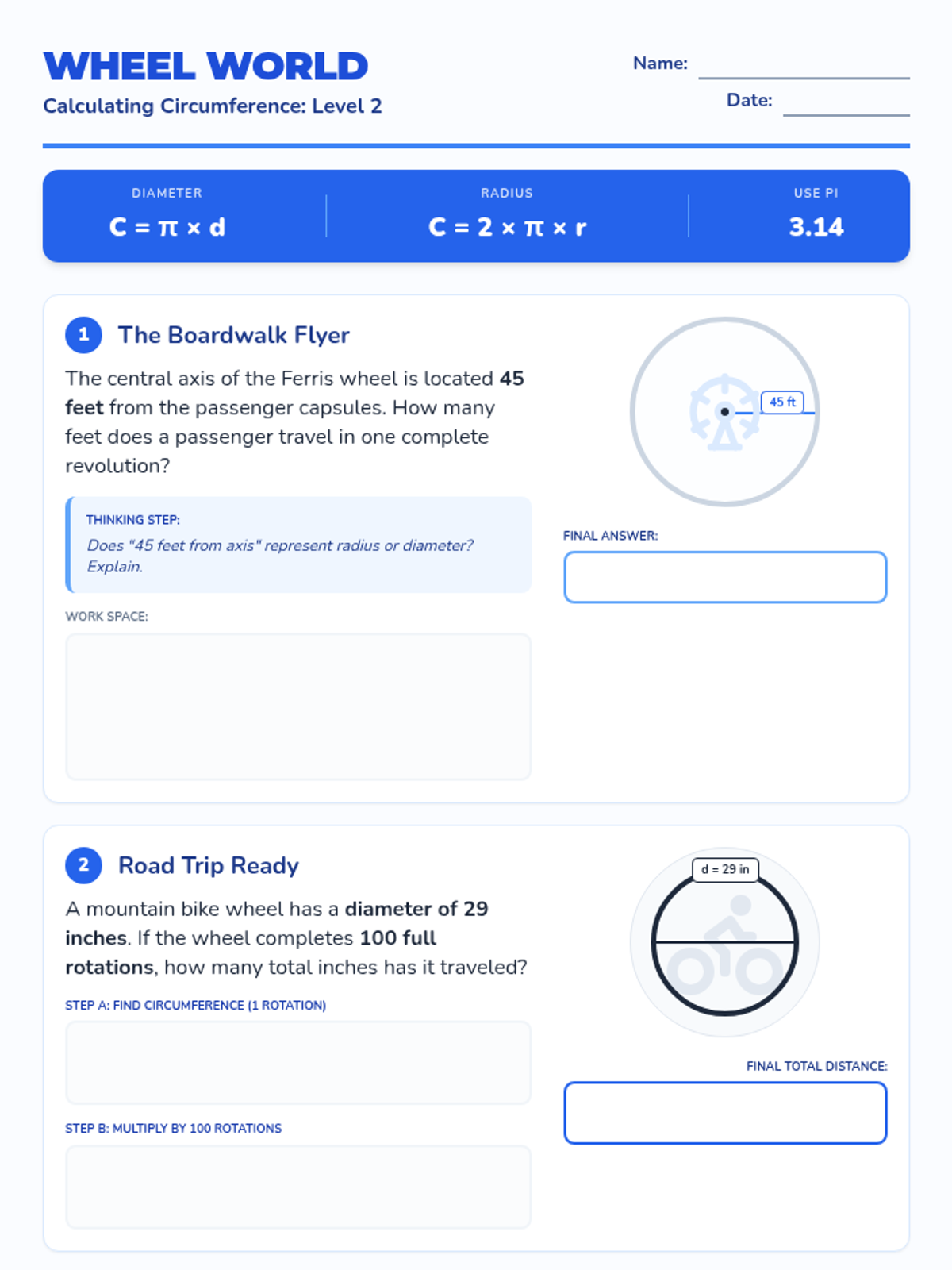
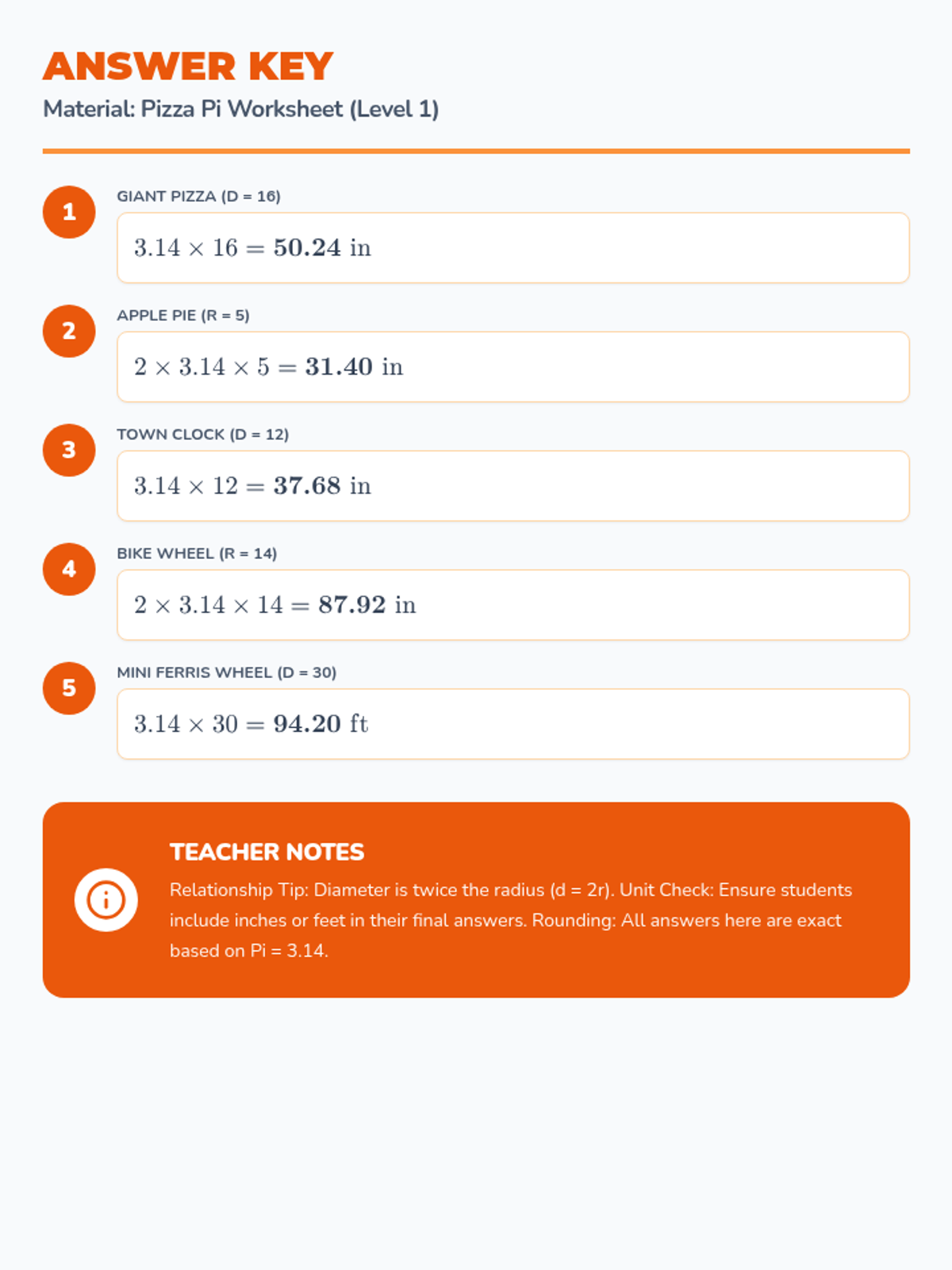
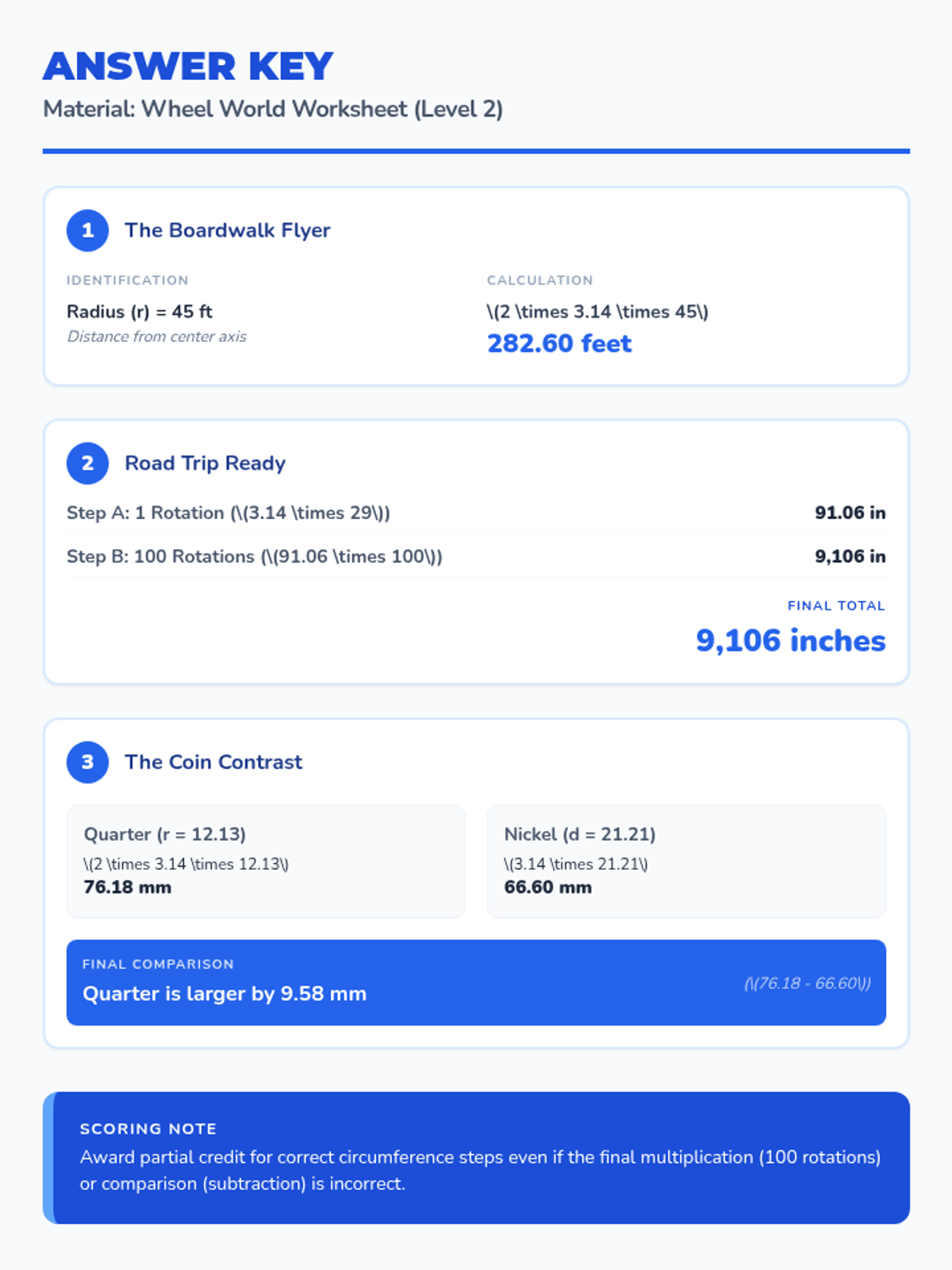
A math exploration into the world of round objects, focusing on calculating circumference using radius and diameter through real-world scenarios including food, wheels, and timepieces.
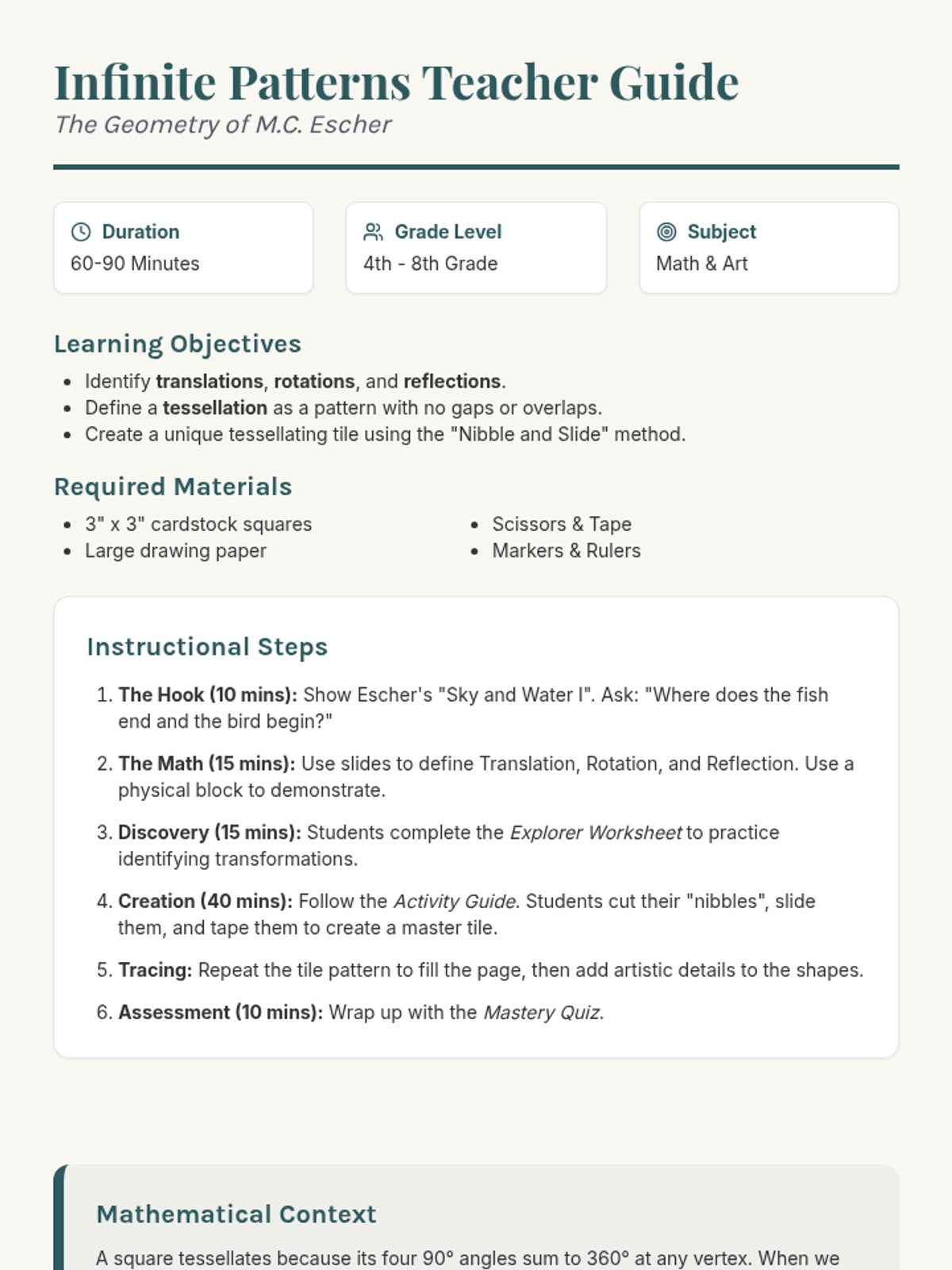
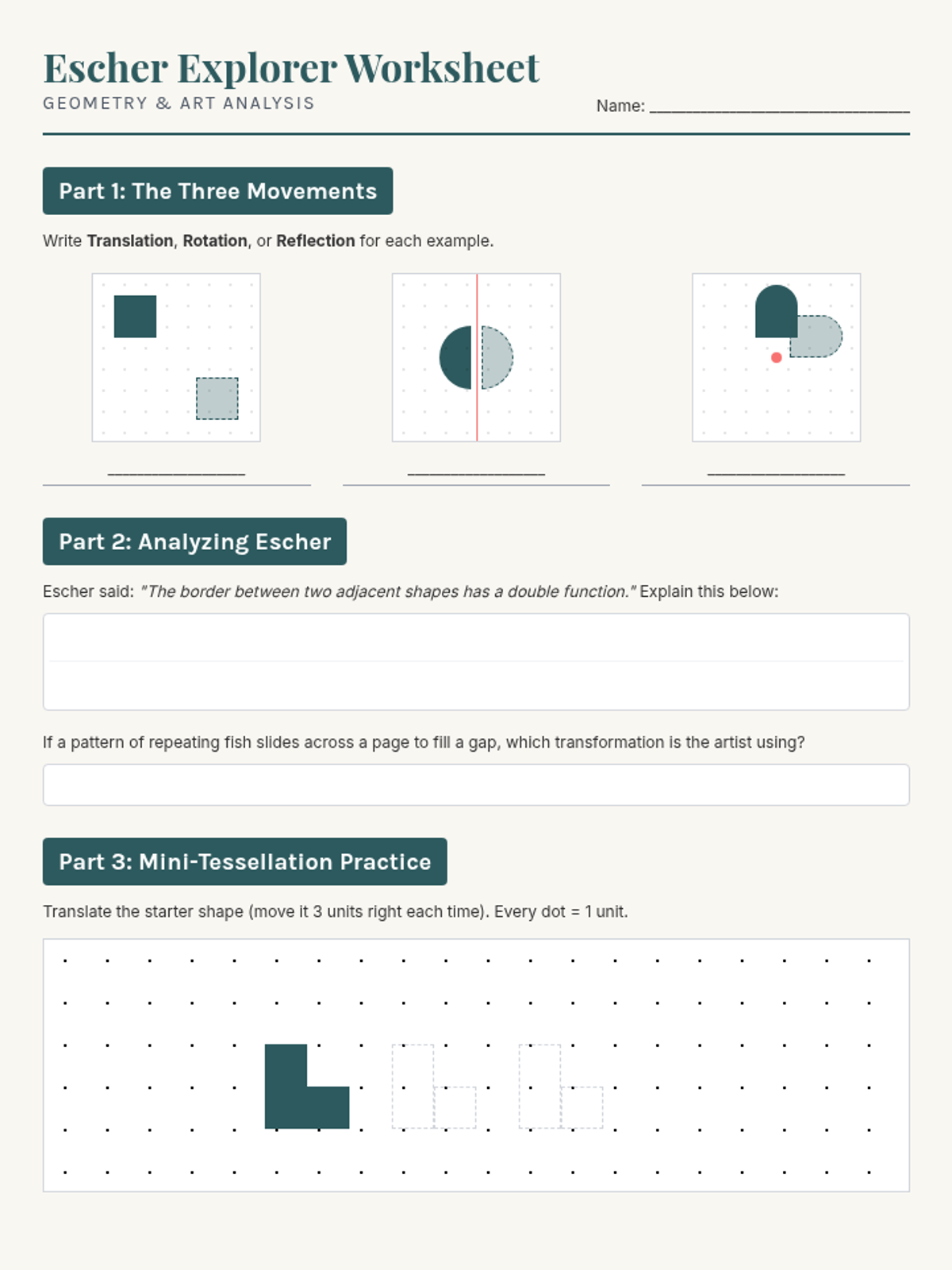
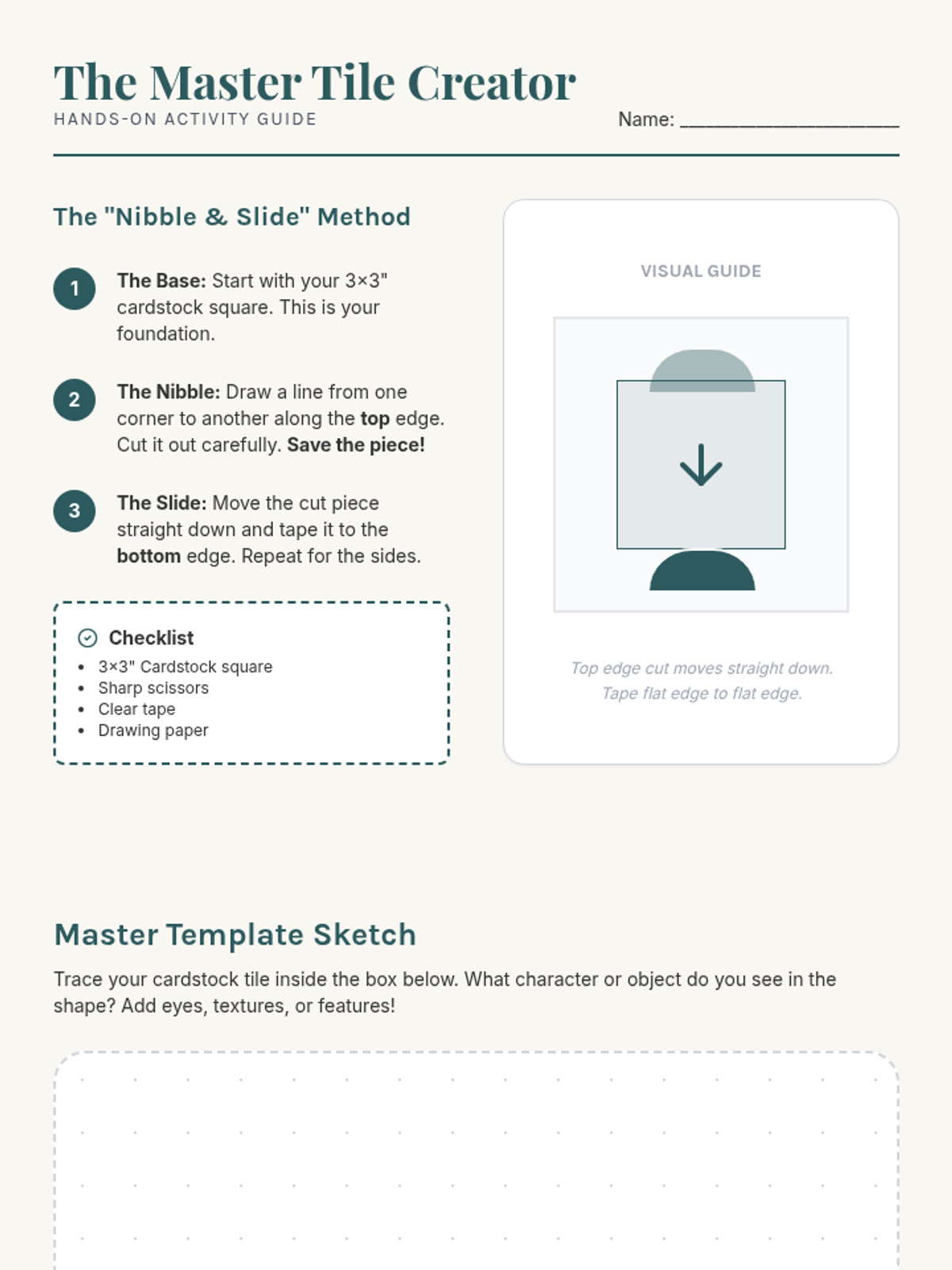
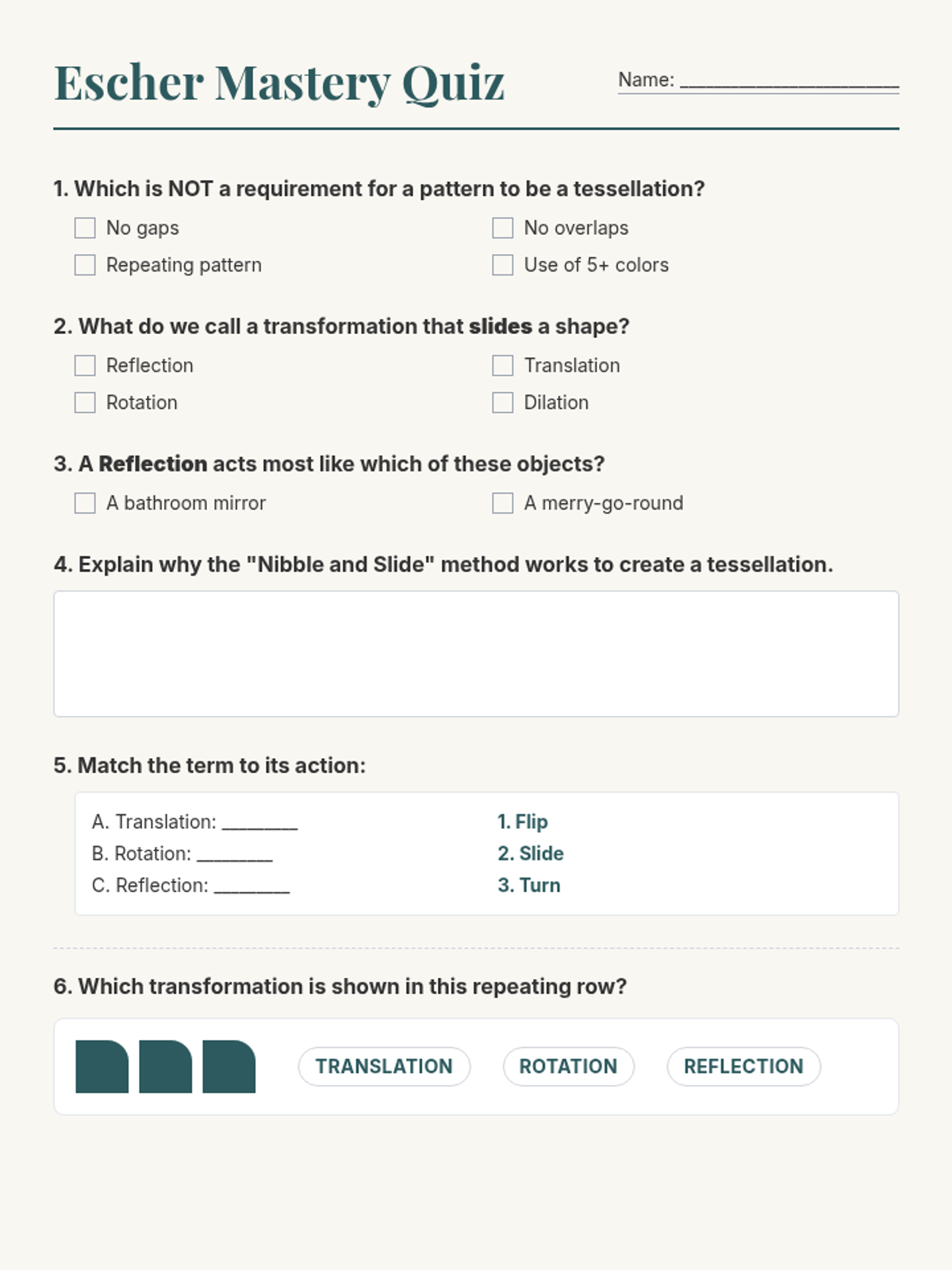
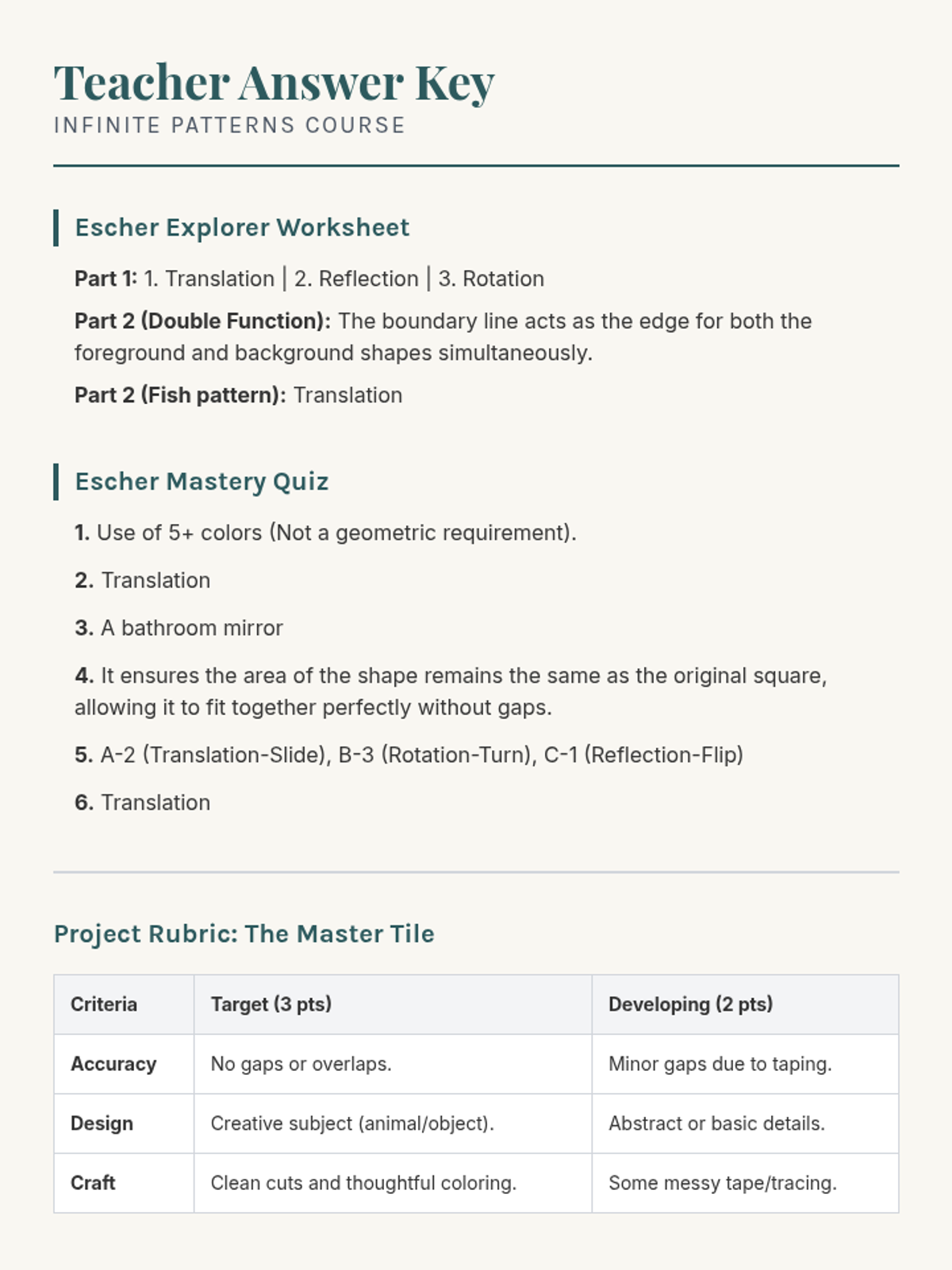
A hands-on interdisciplinary lesson blending geometry and art. Students explore M.C. Escher's work to understand and apply translations, rotations, and reflections through the creation of original tessellating patterns.