Foundational fraction equivalence, ordering, and operations across the rational number system. Addresses multi-digit computation, decimal conversions, and the distinction between rational and irrational numbers.
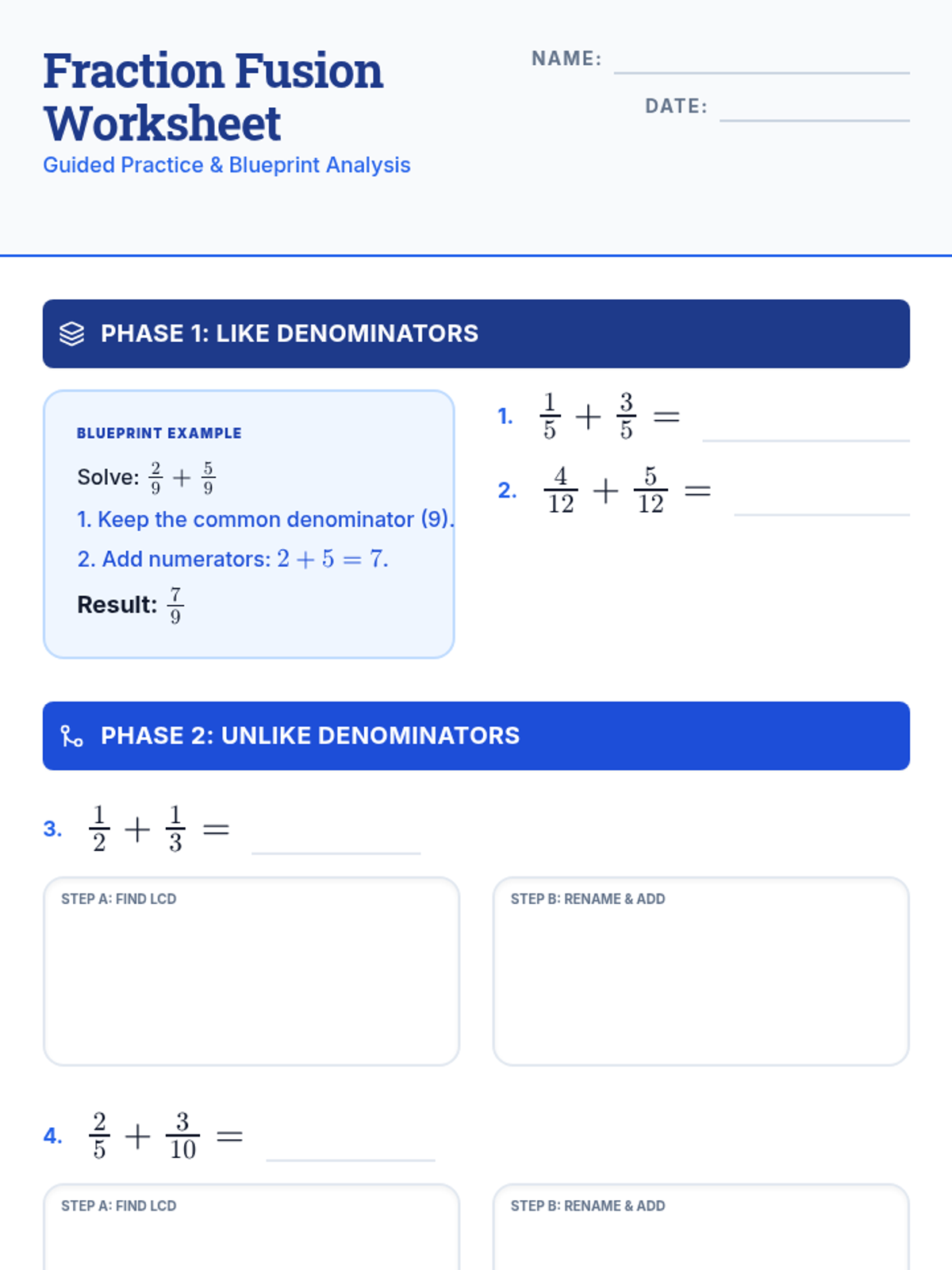
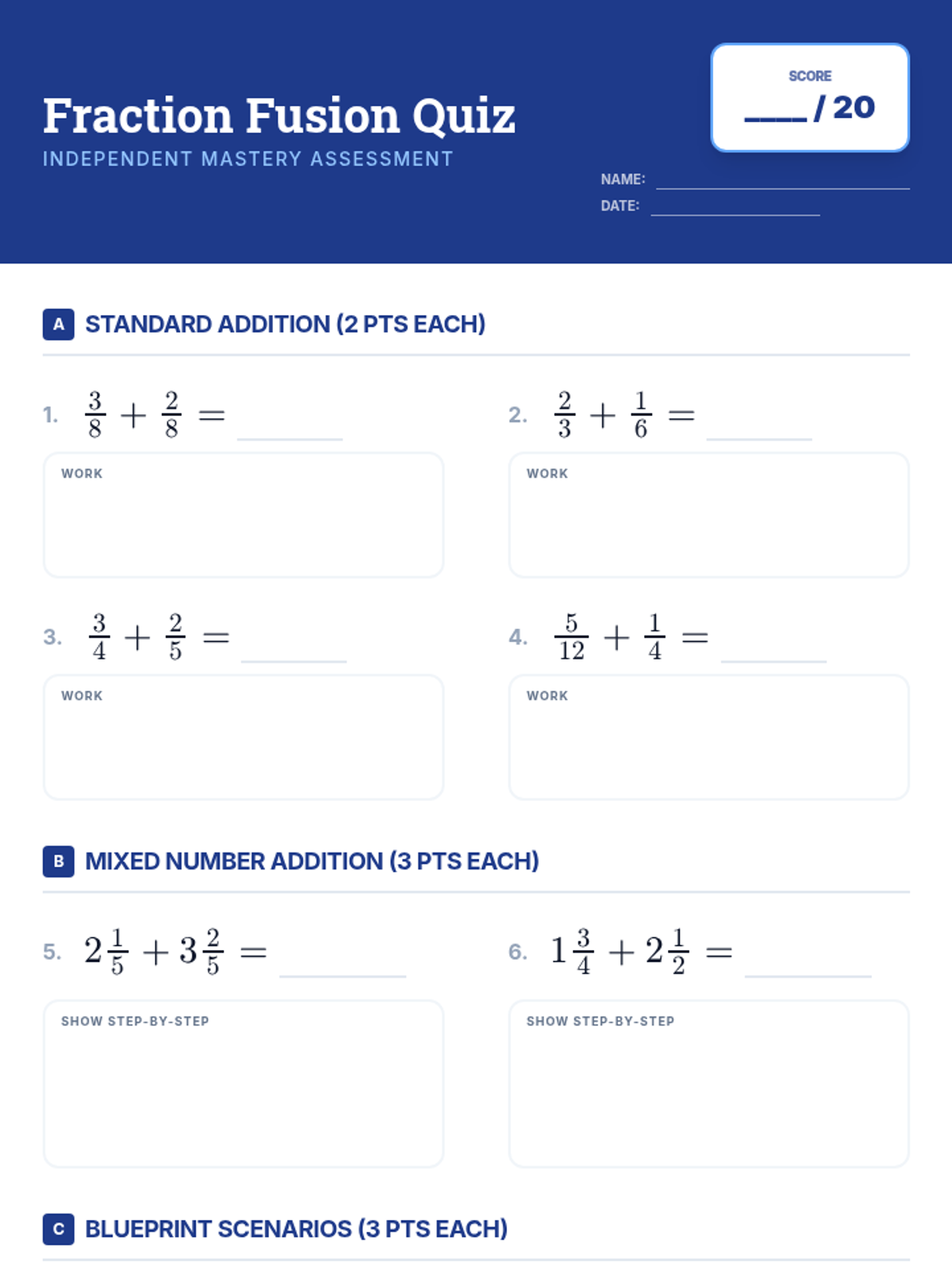
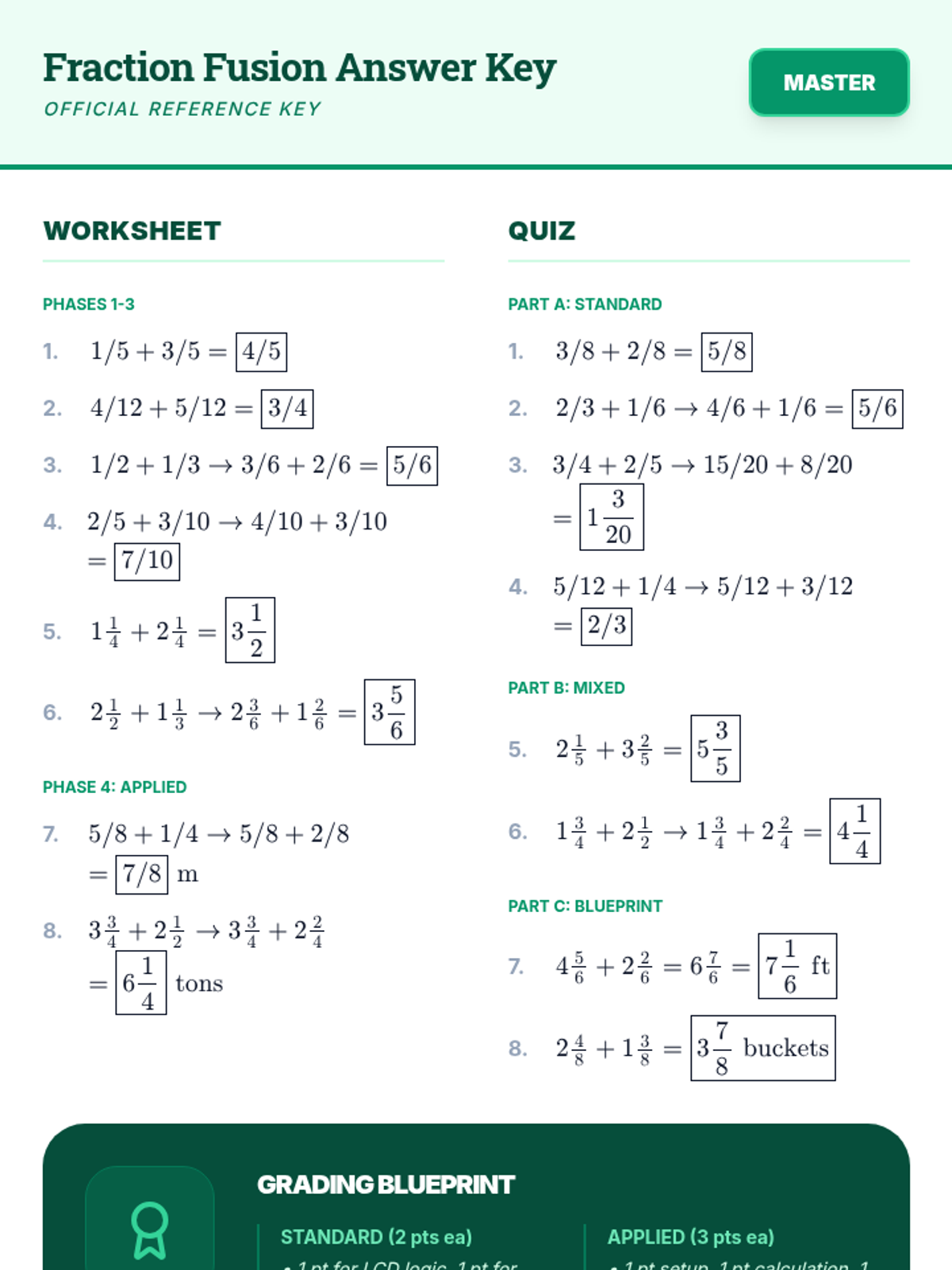
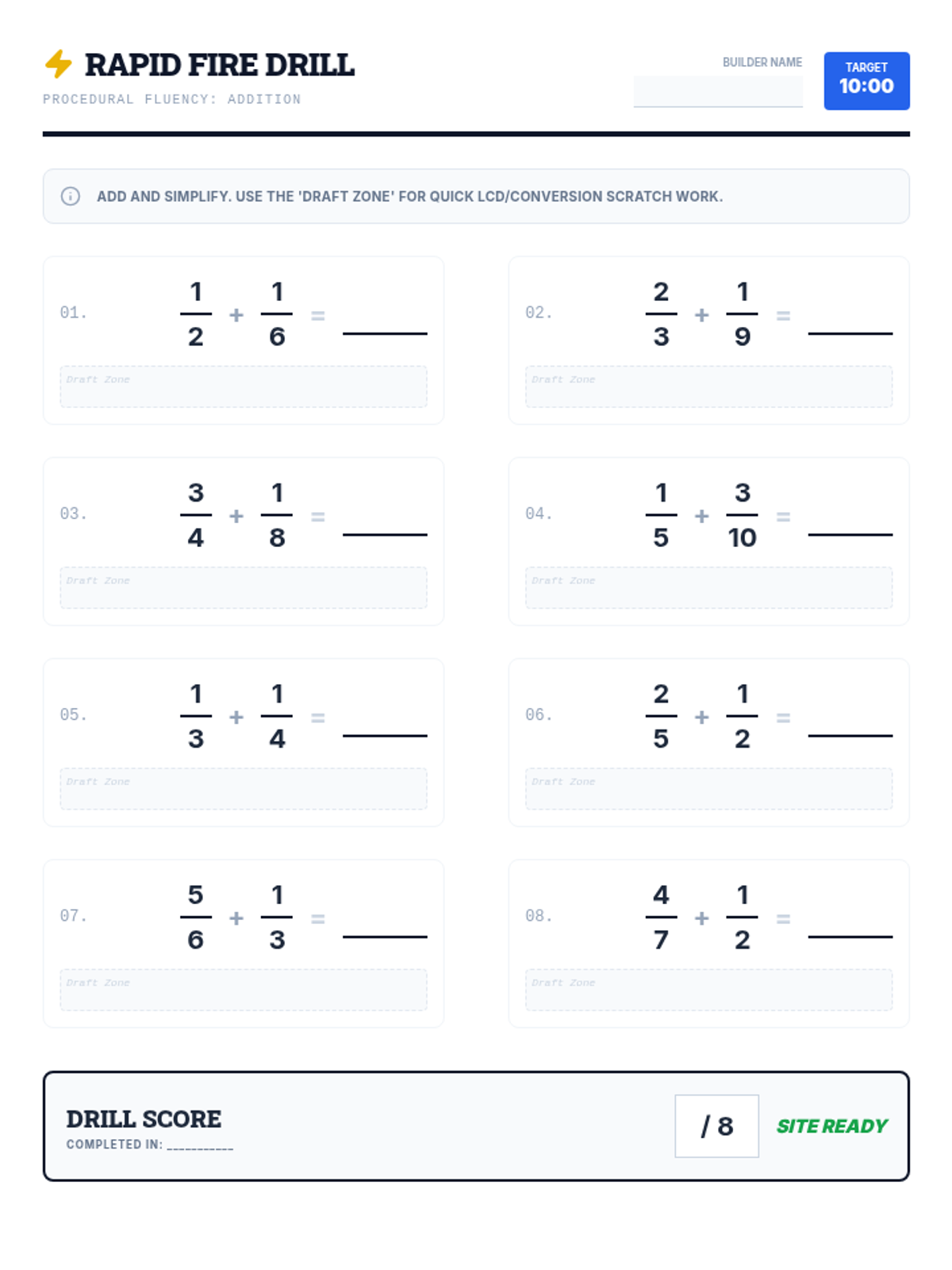
A comprehensive lesson on adding fractions with like and unlike denominators, including mixed numbers and real-world word problems. Students progress from basic addition to complex multi-step problems using a blueprint-themed approach.
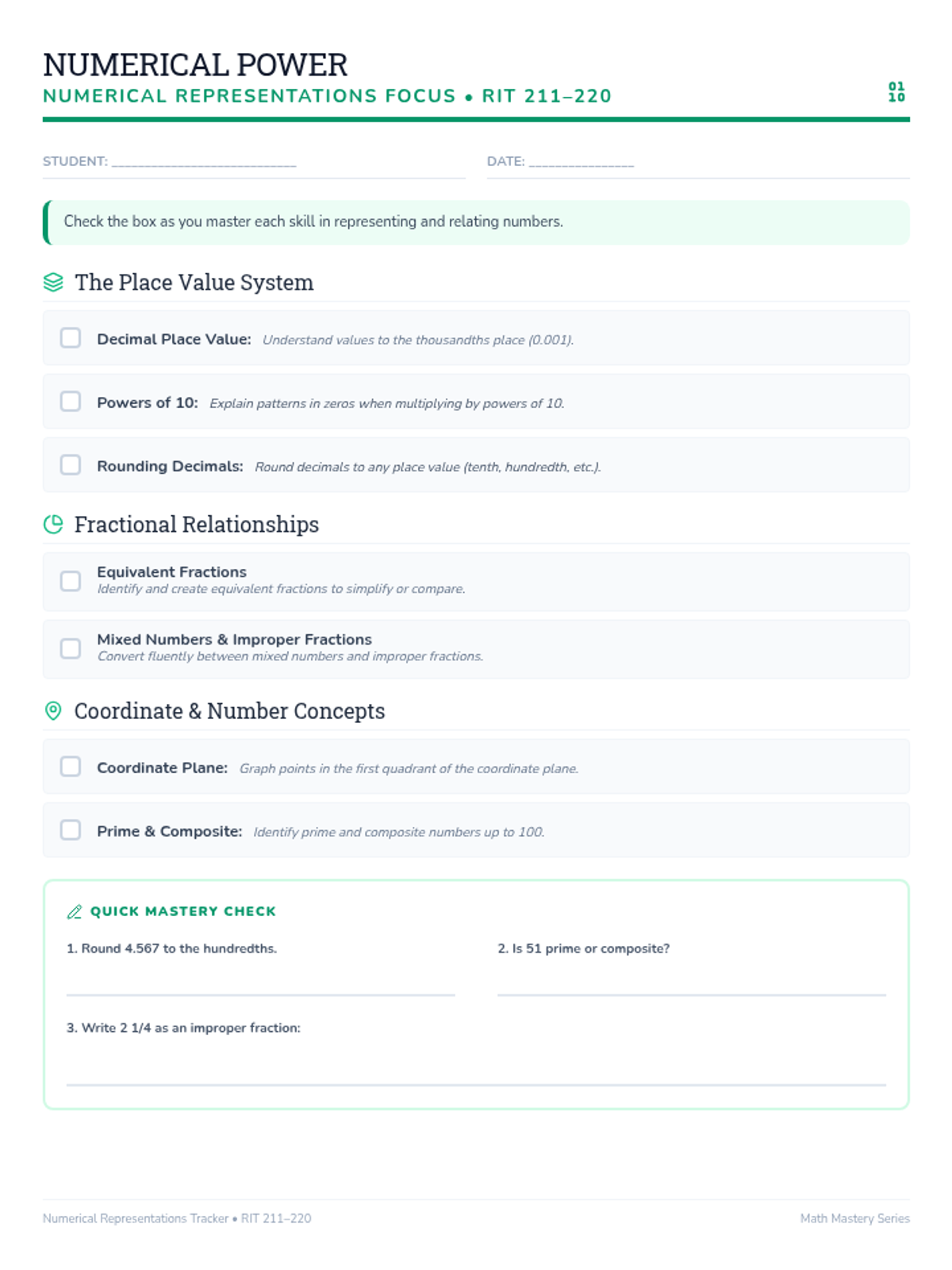
A specialized toolkit for navigating mathematical skills in the 211-220 RIT range, with a focus on foundational decimals, fractions, and place value relationships.
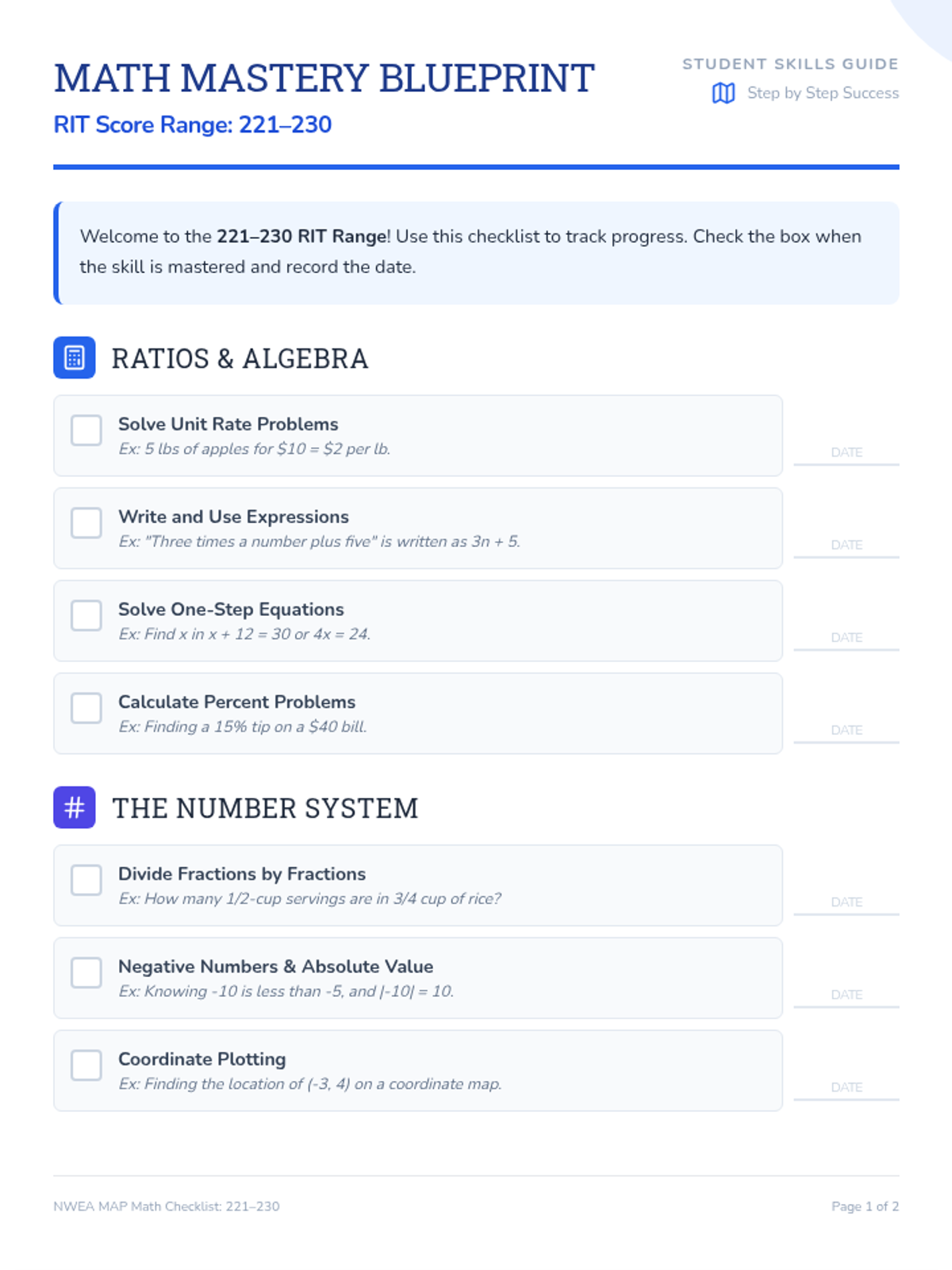
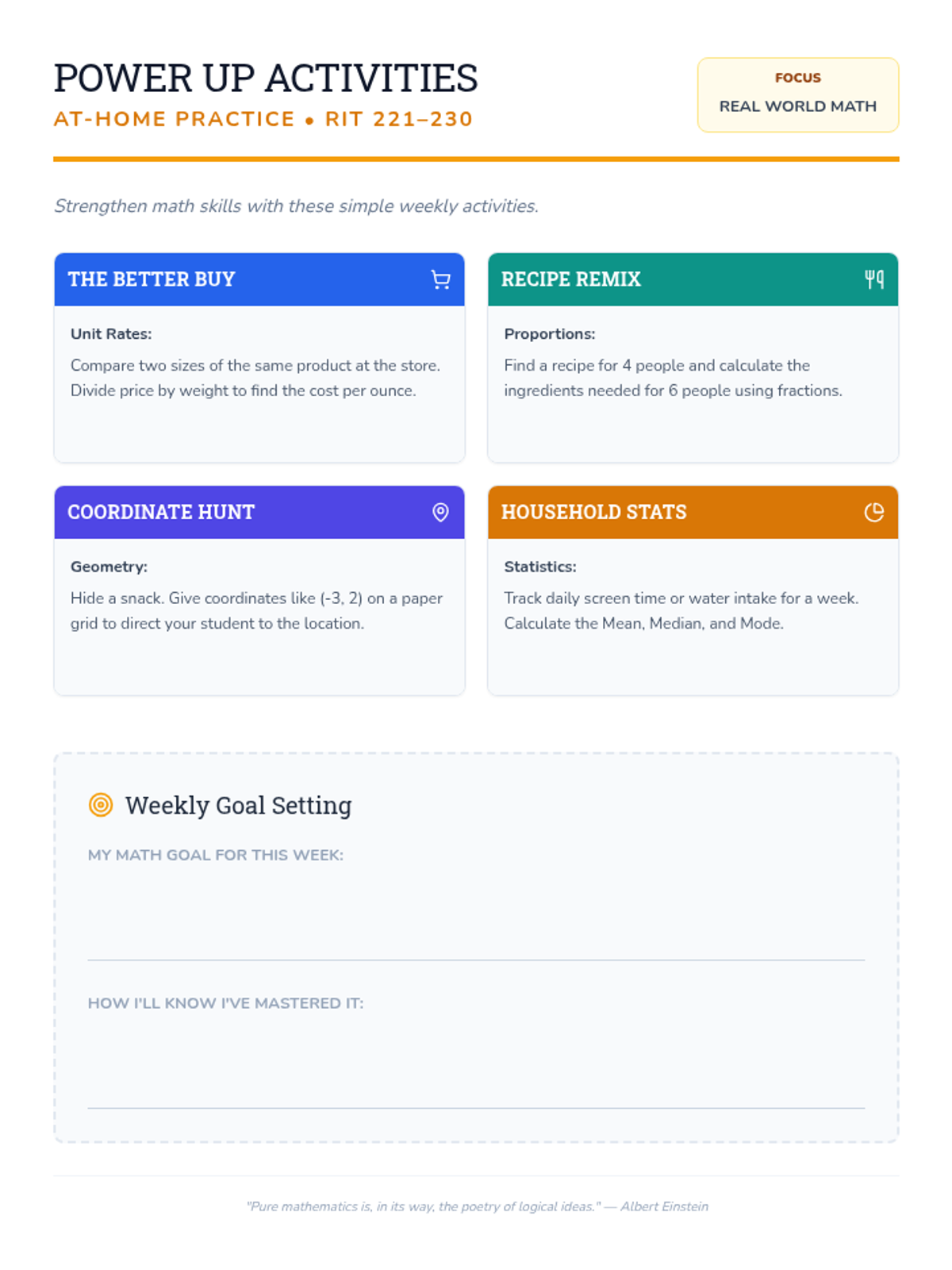
A comprehensive guide for parents and students to navigate the mathematical skills expected in the 221-230 NWEA MAP RIT range, featuring actionable checklists and home-based practice ideas.
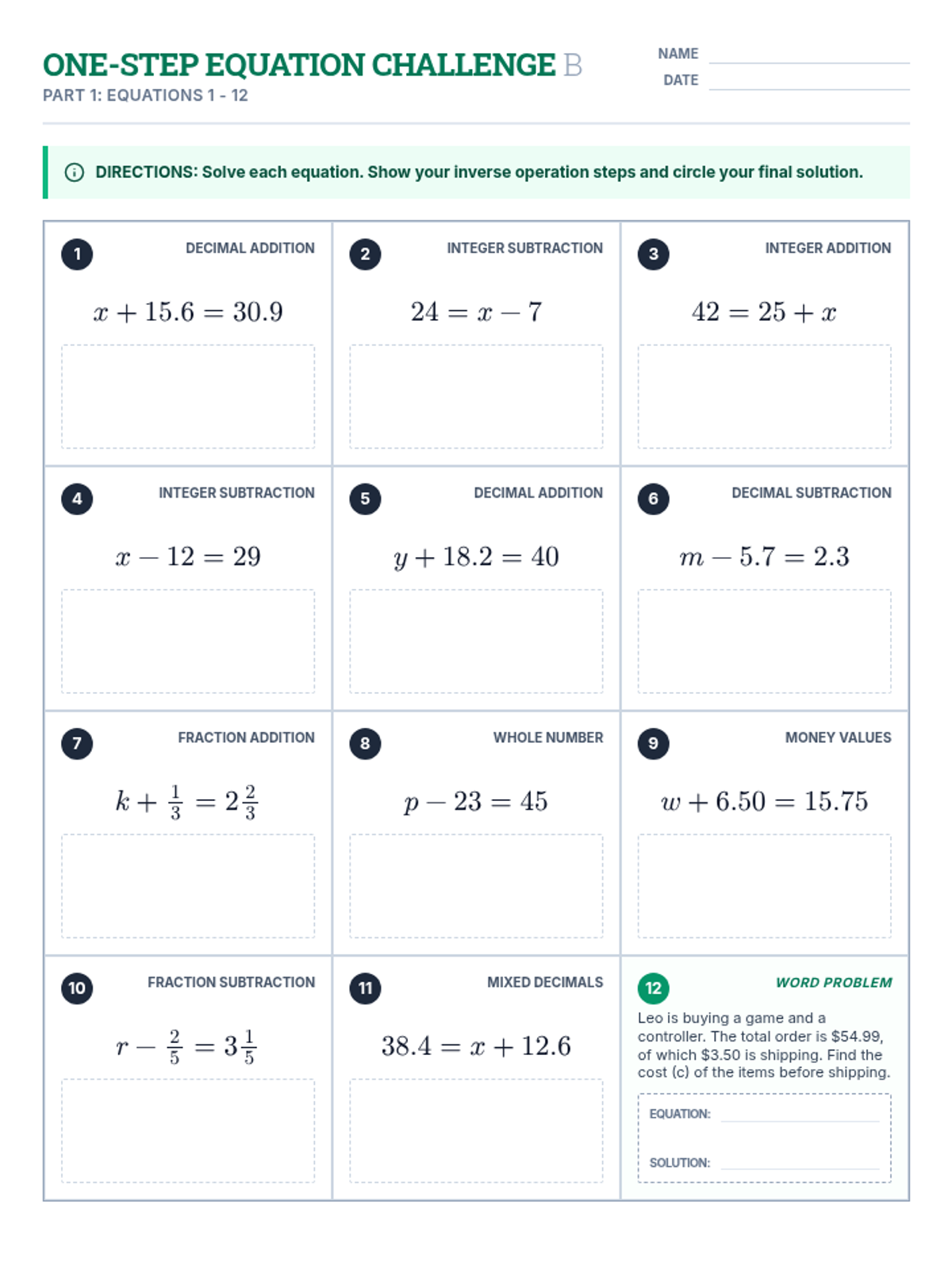
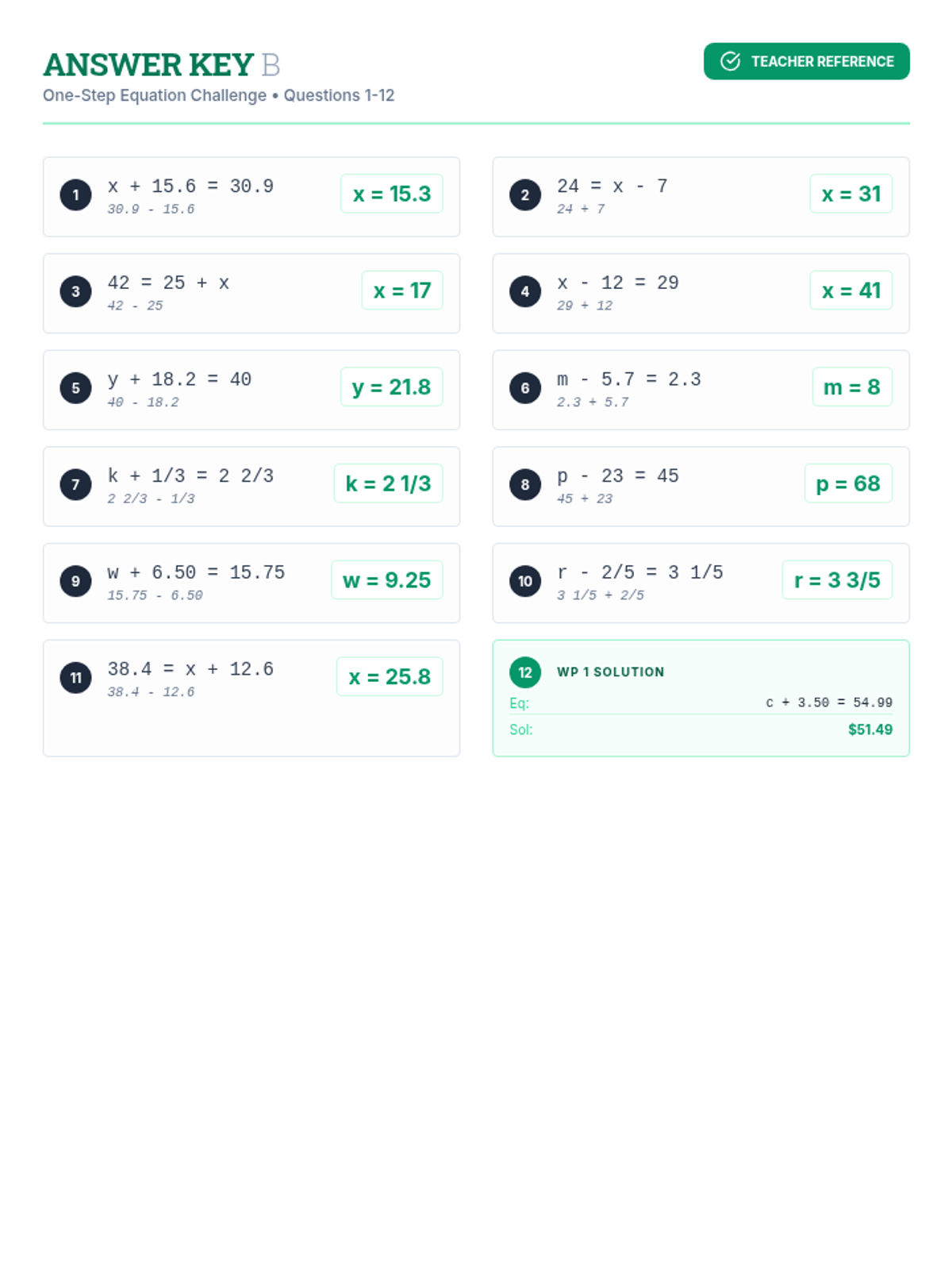
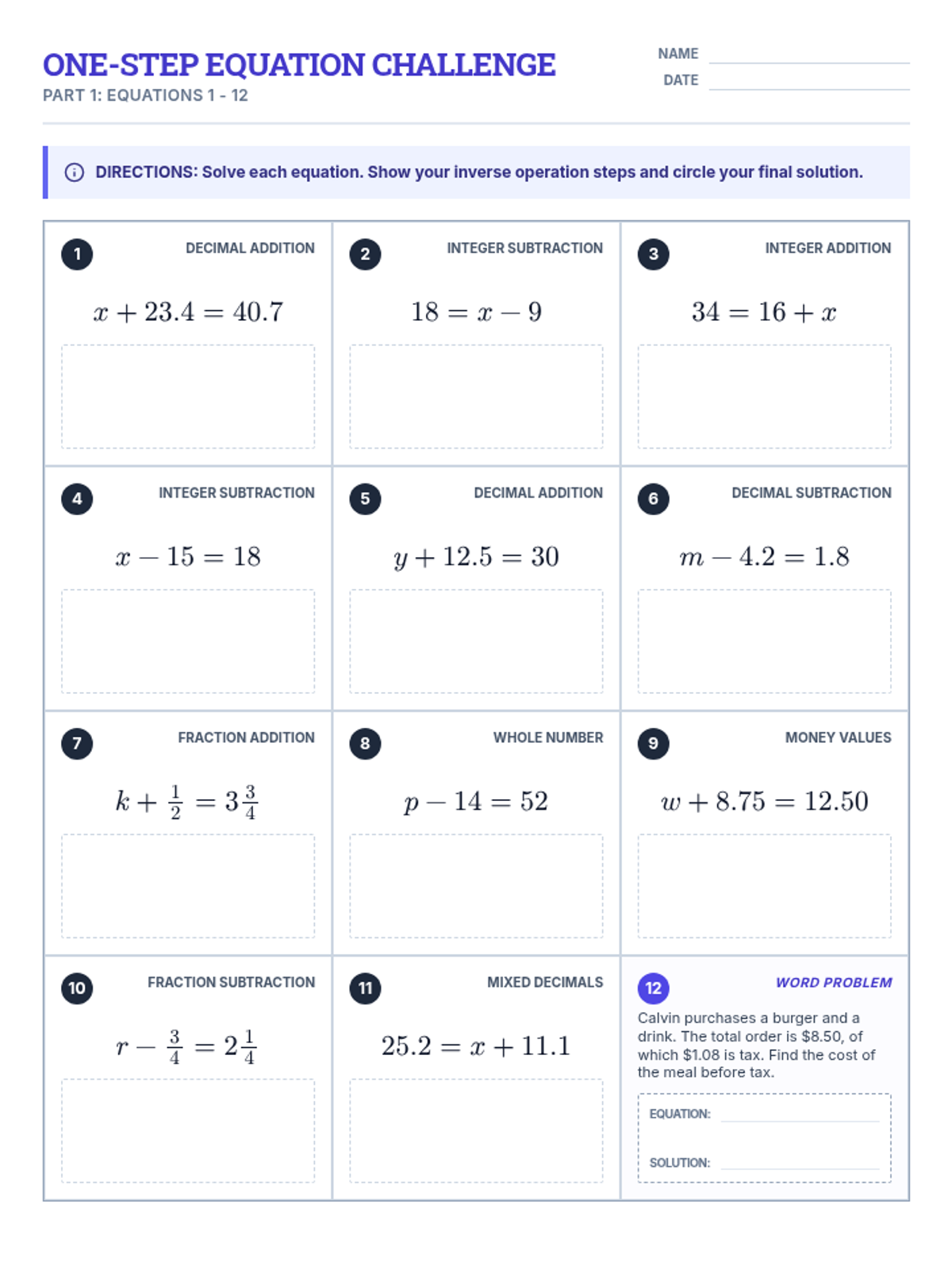
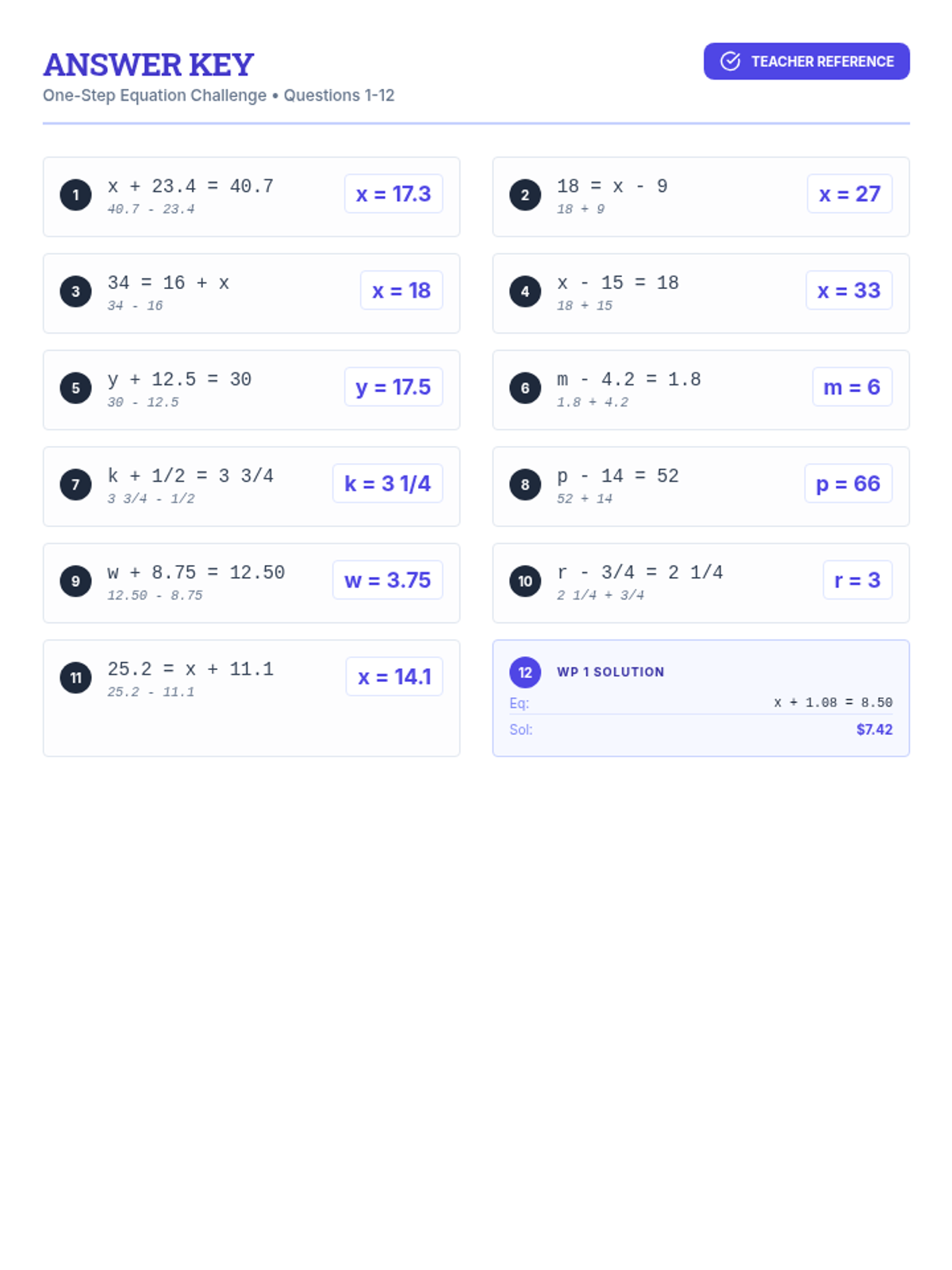
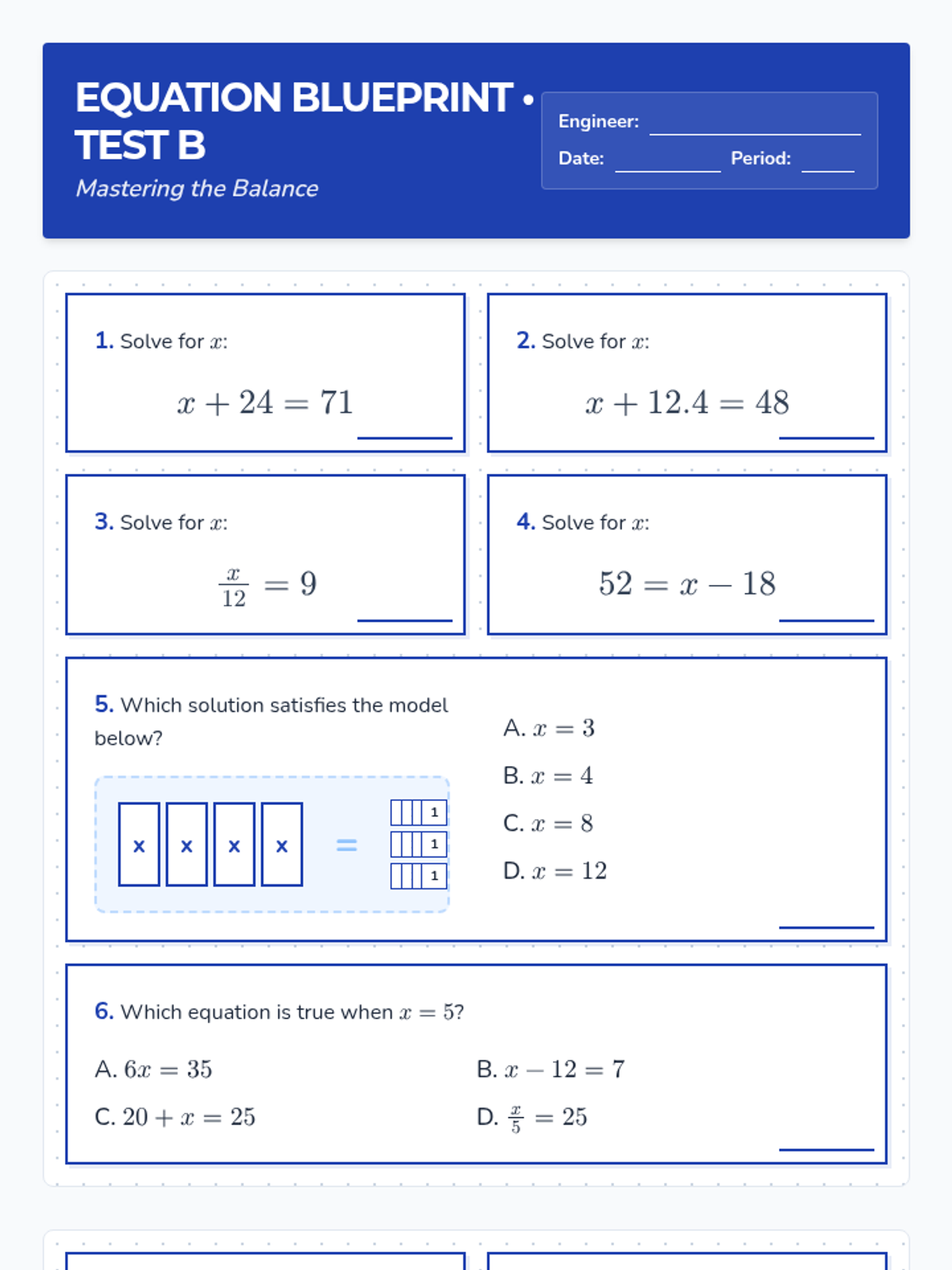
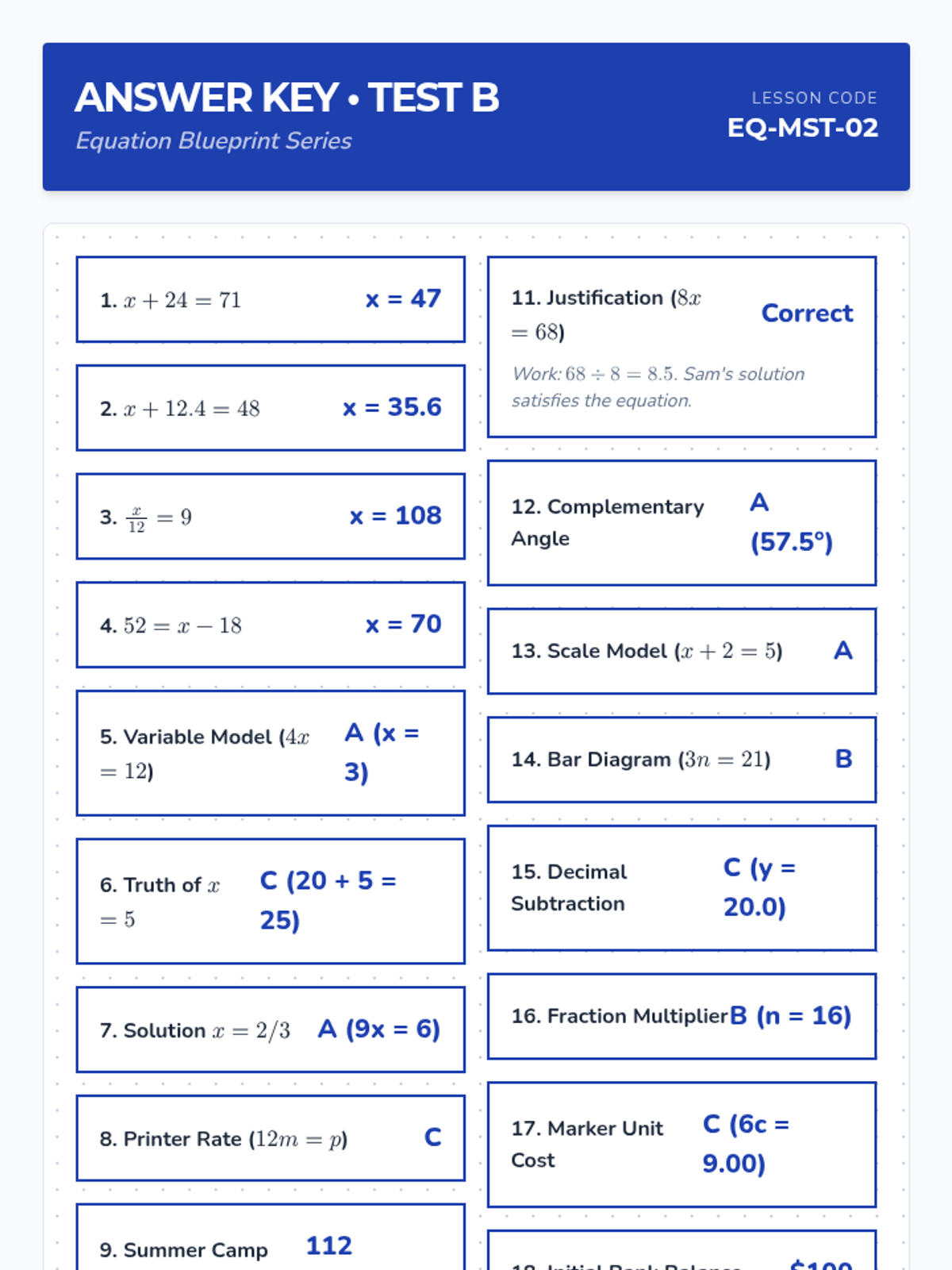
A focused lesson on solving one-step addition and subtraction equations using a variety of number types including whole numbers, decimals, and fractions.
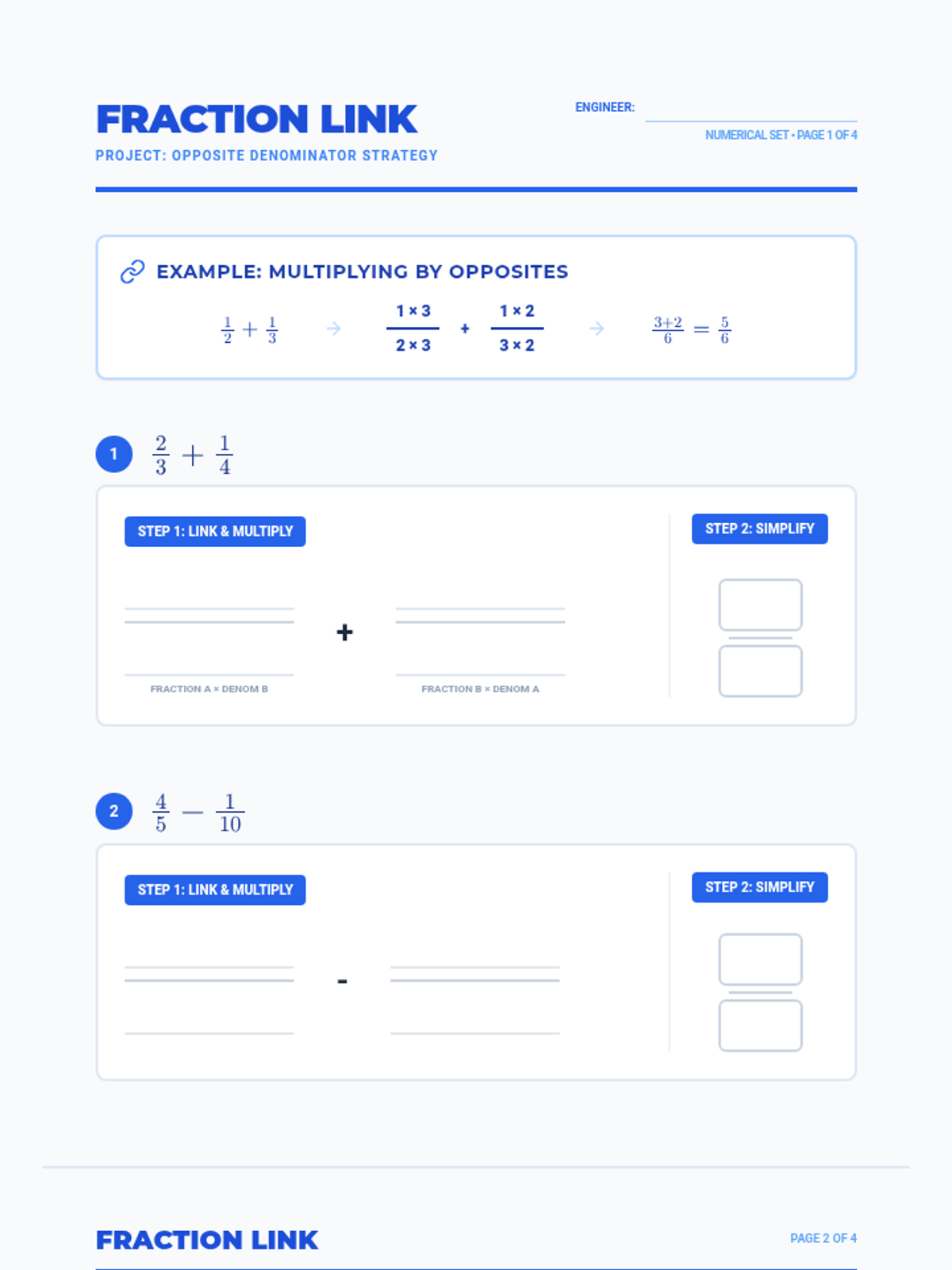
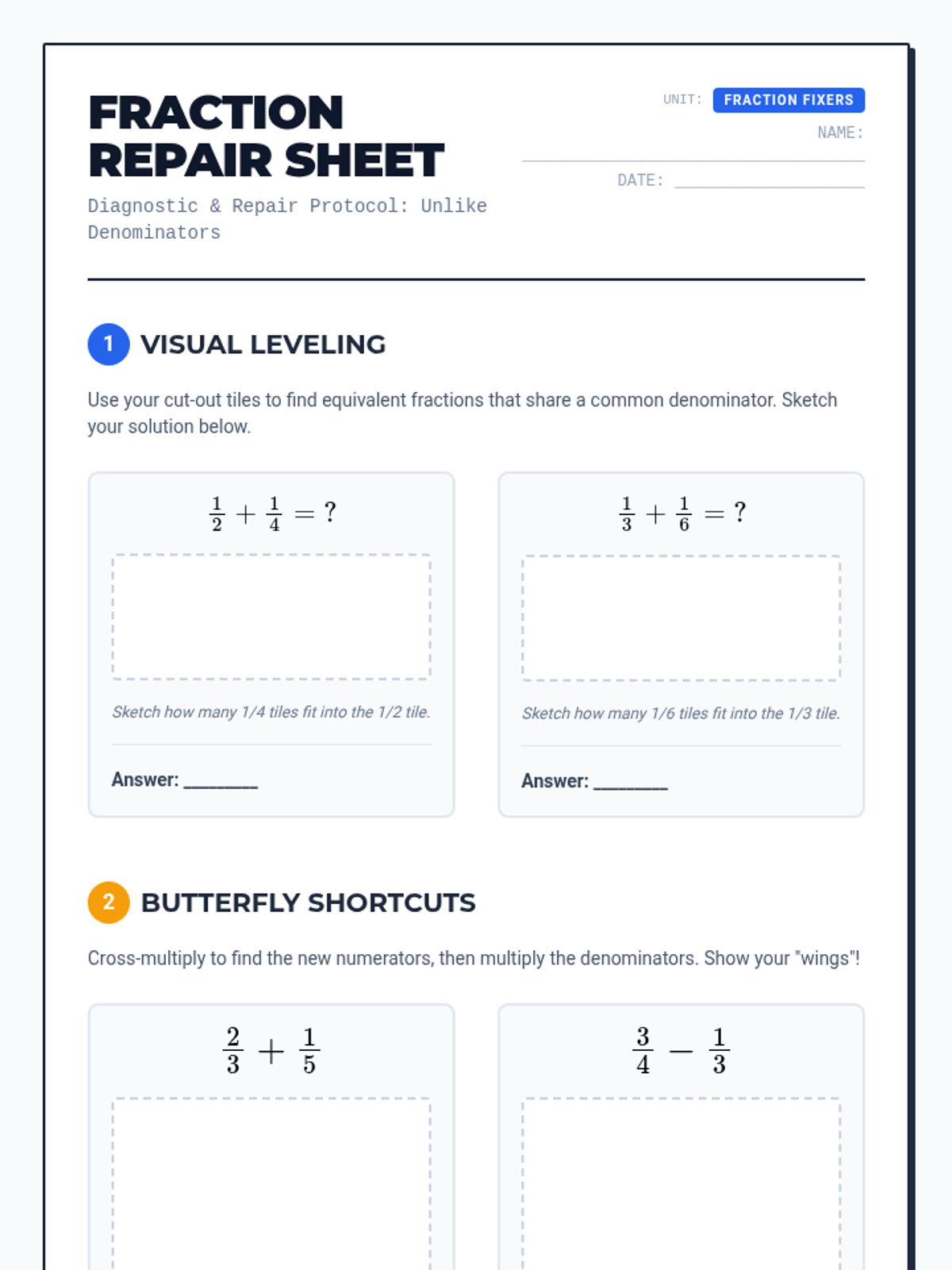
A lesson focused on mastering addition and subtraction of fractions with unlike denominators using the cross-multiplication (butterfly) method. Students use structured graphic organizers to visualize each step of the process.
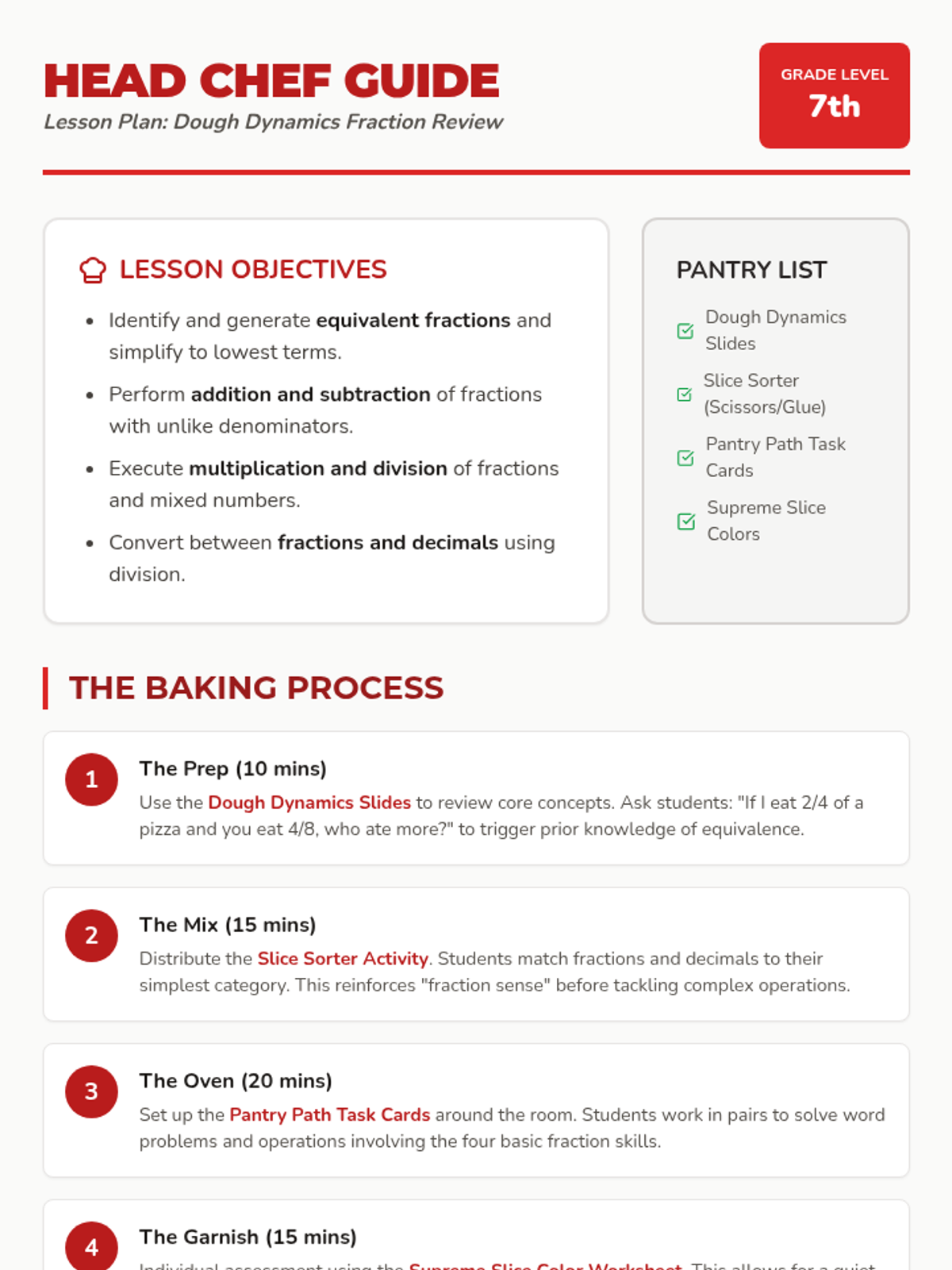
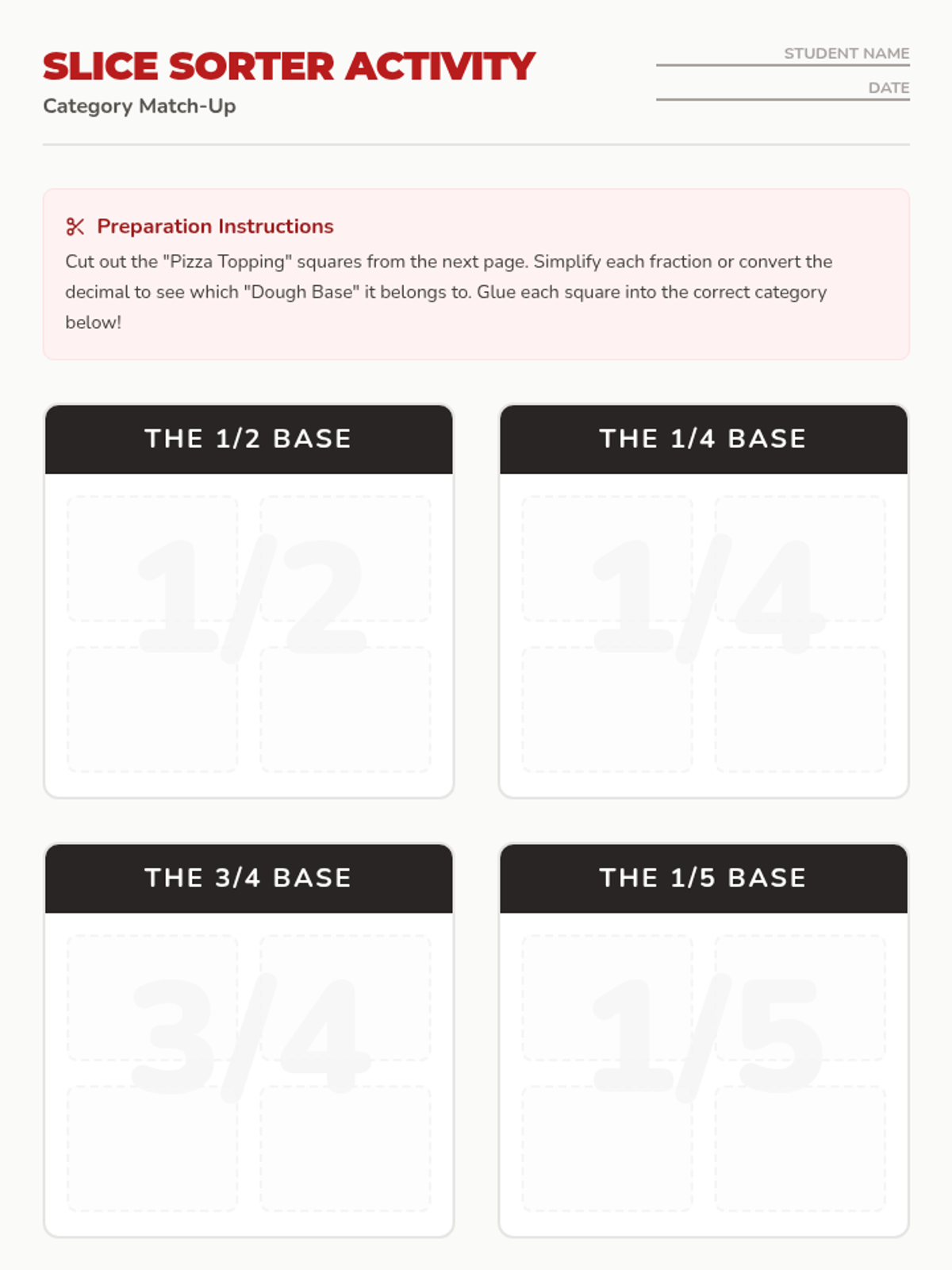
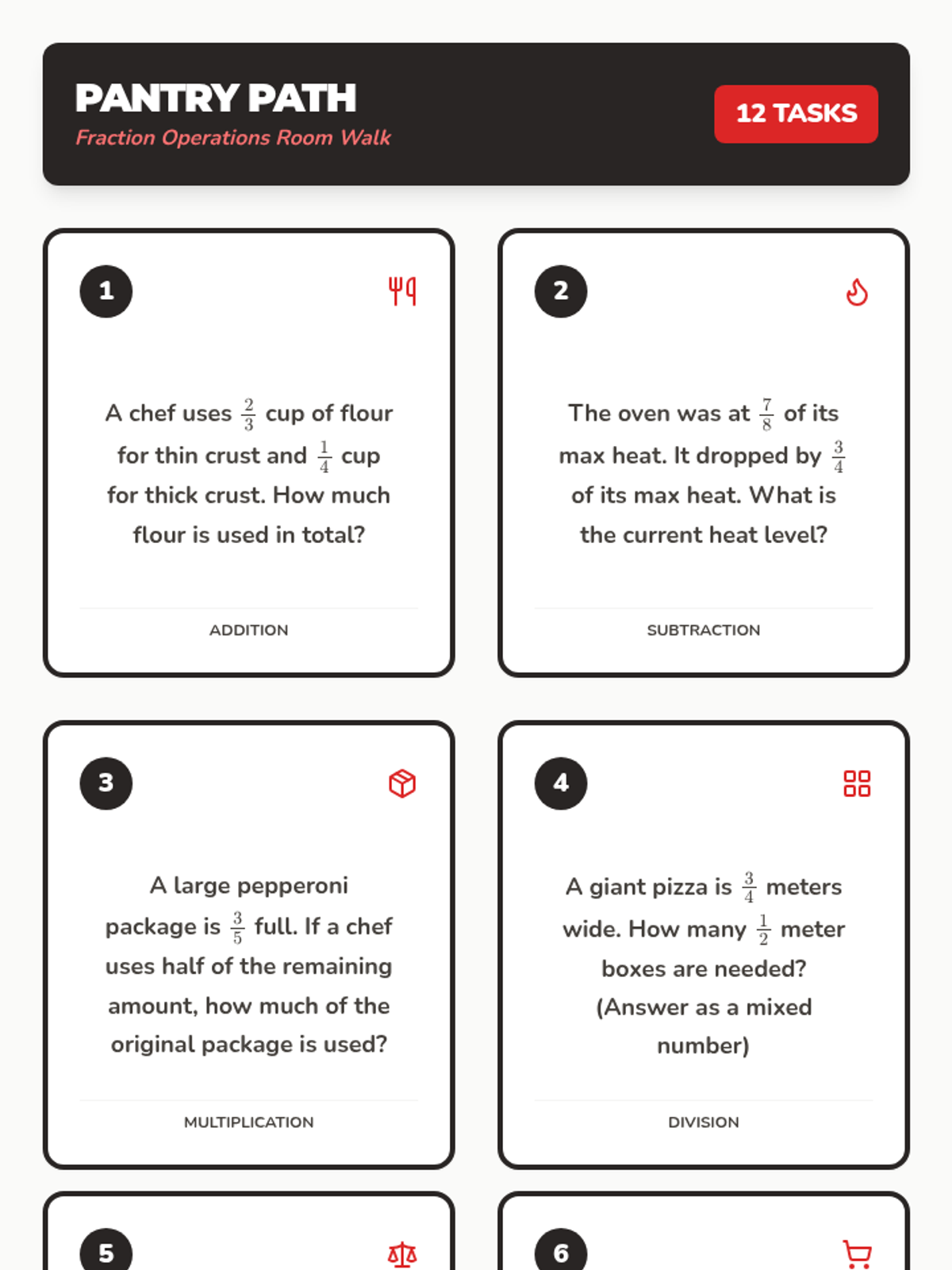
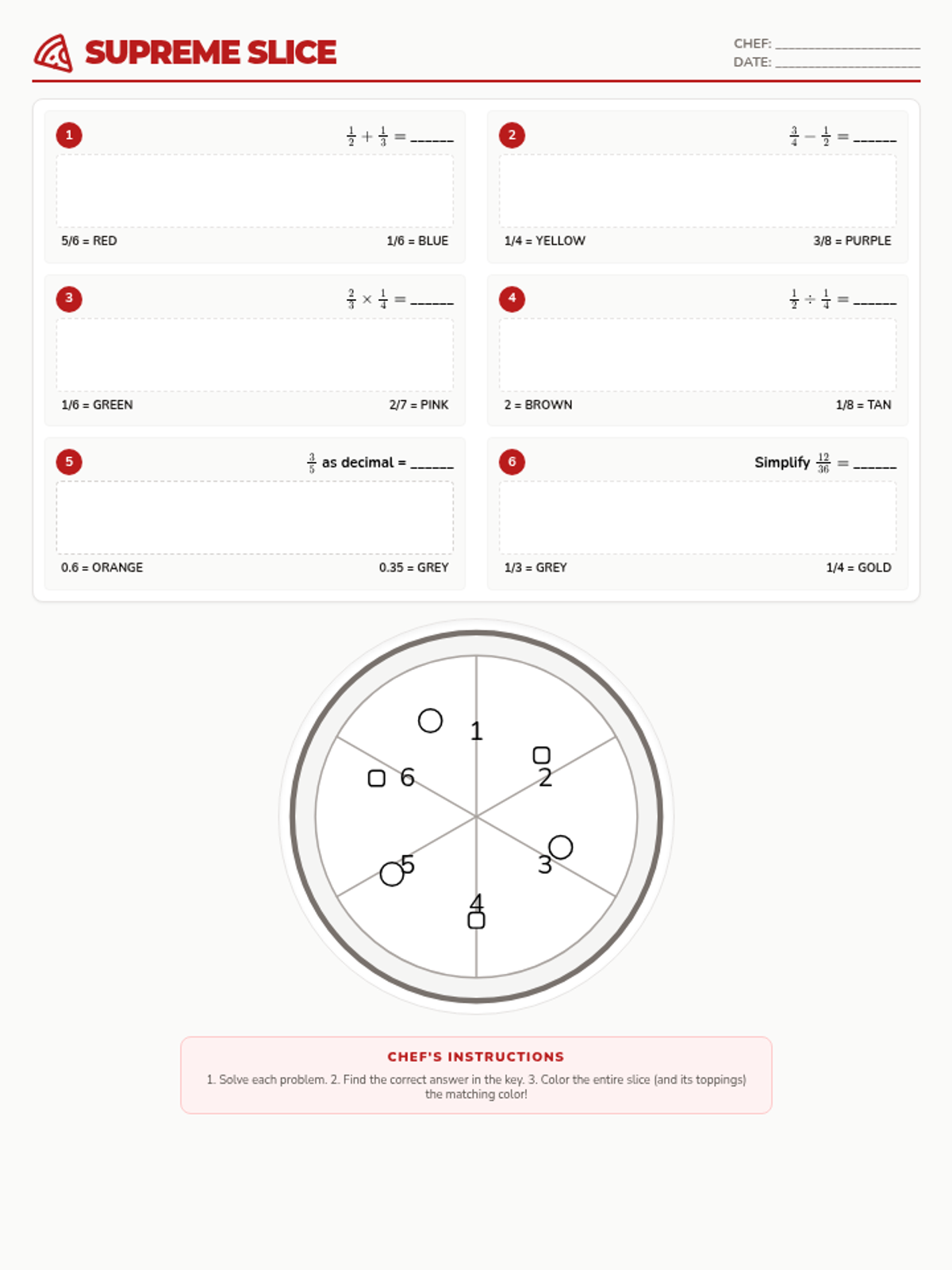
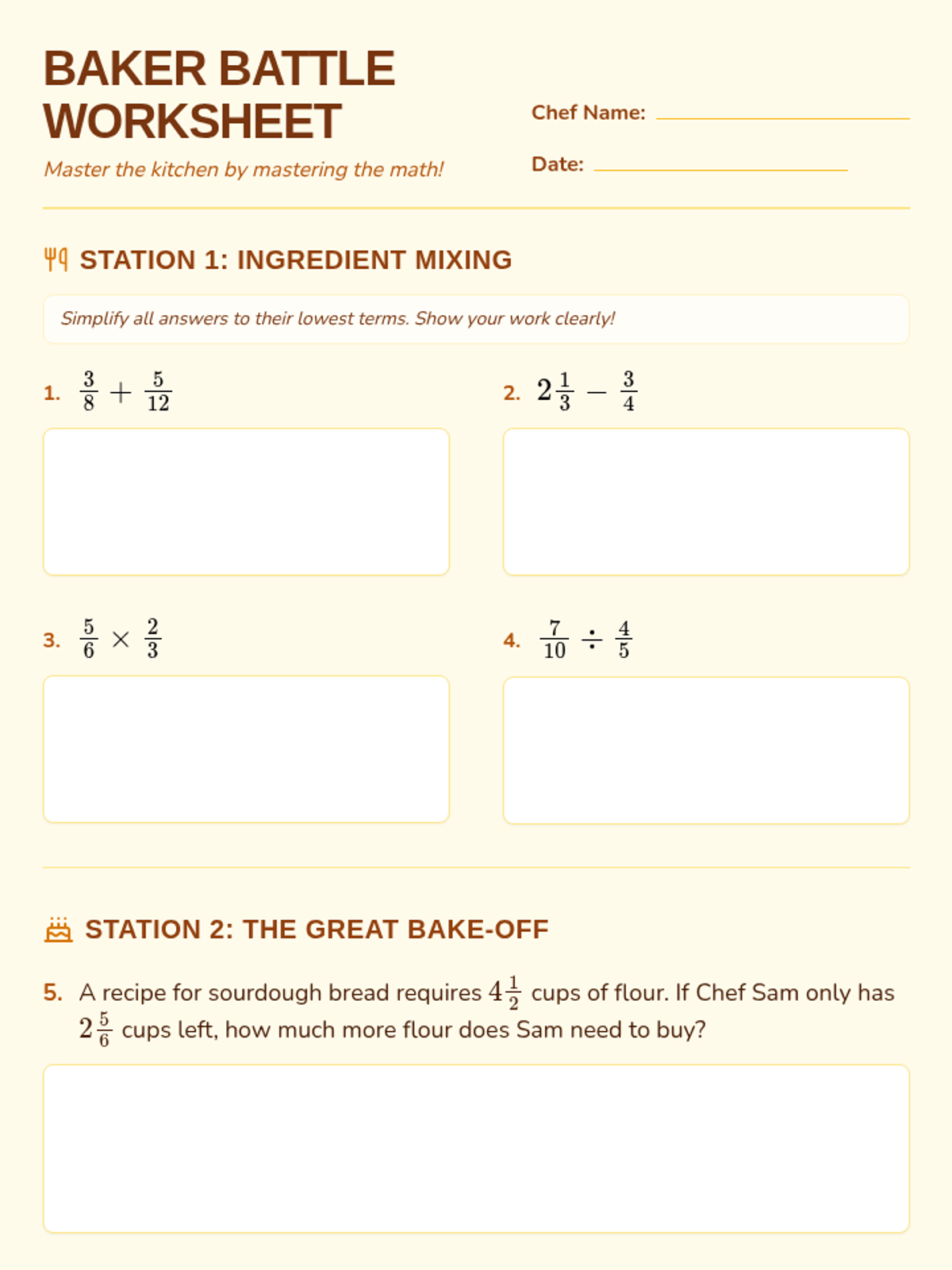
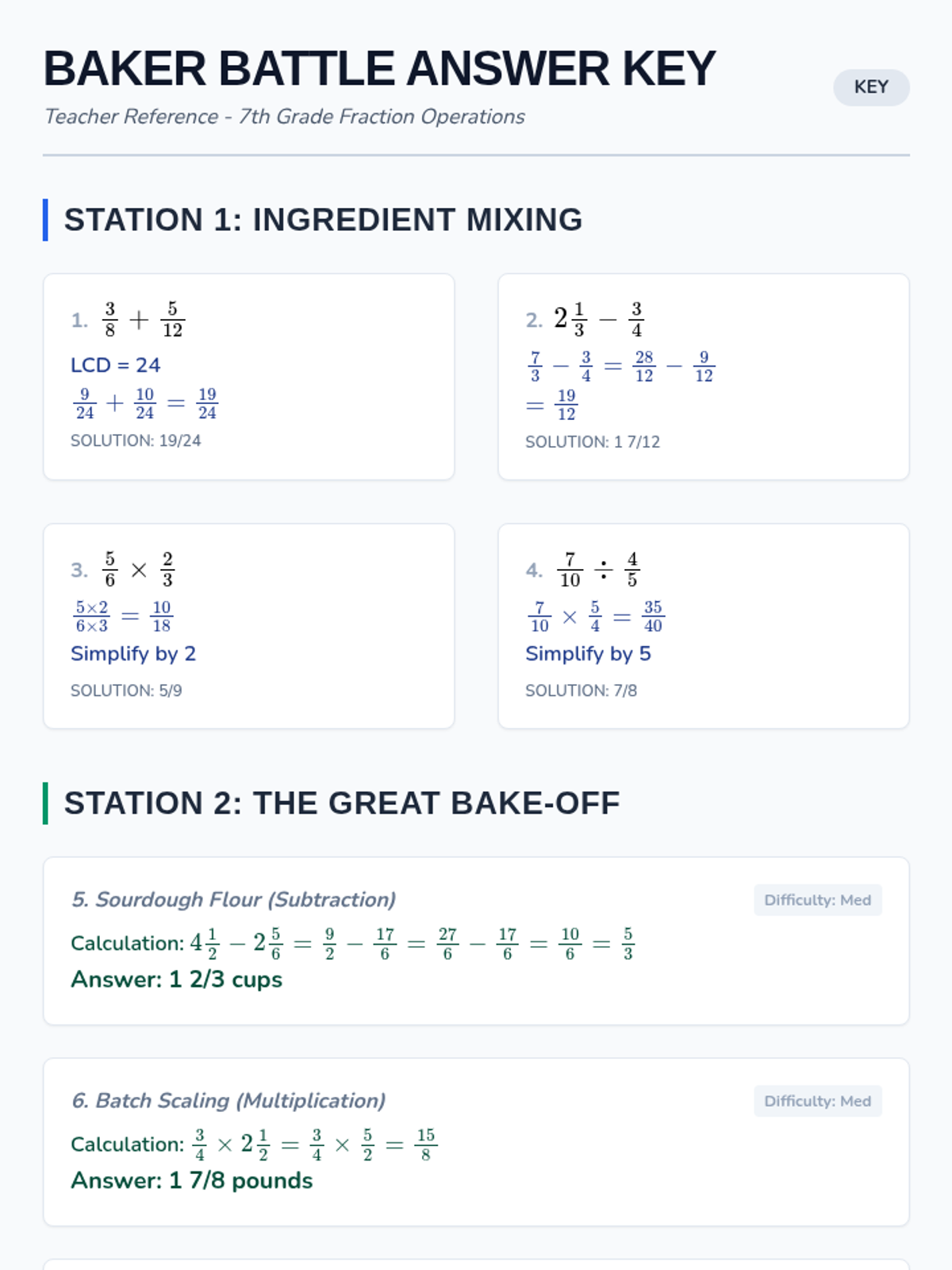
A comprehensive review of 7th-grade fraction operations, including simplifying, equivalence, basic operations, and decimal conversions, themed around a bustling pizza parlor.
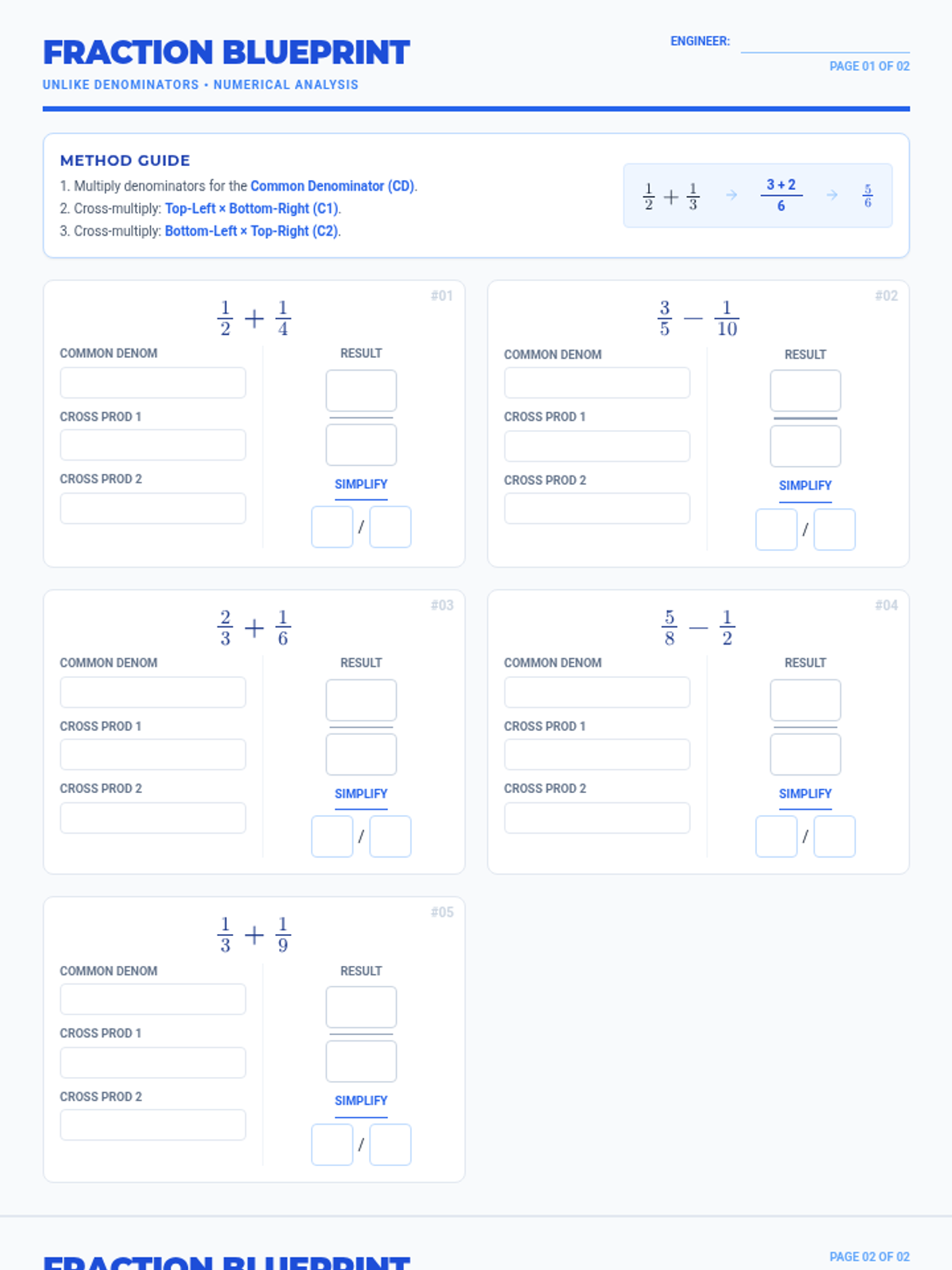
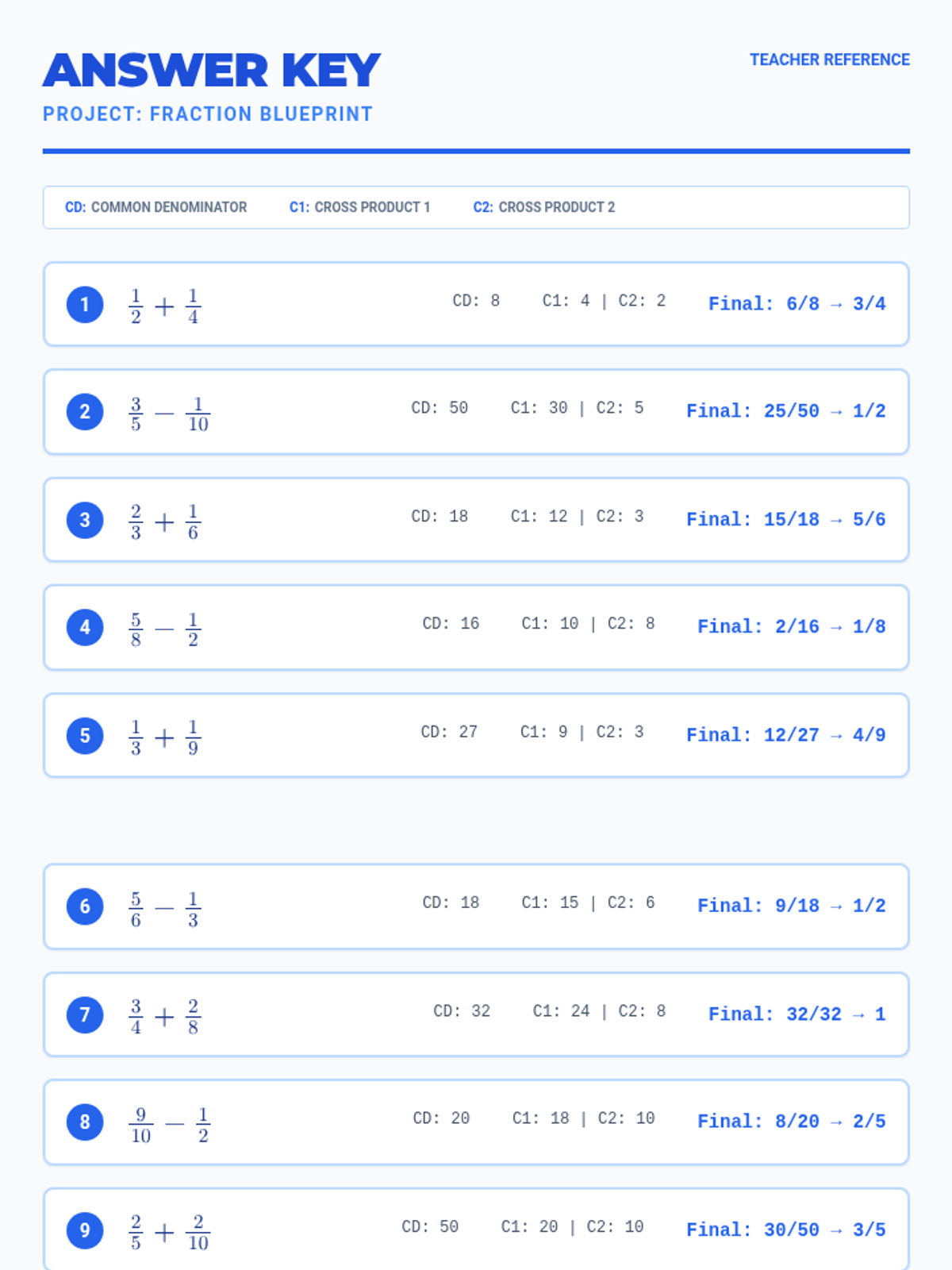
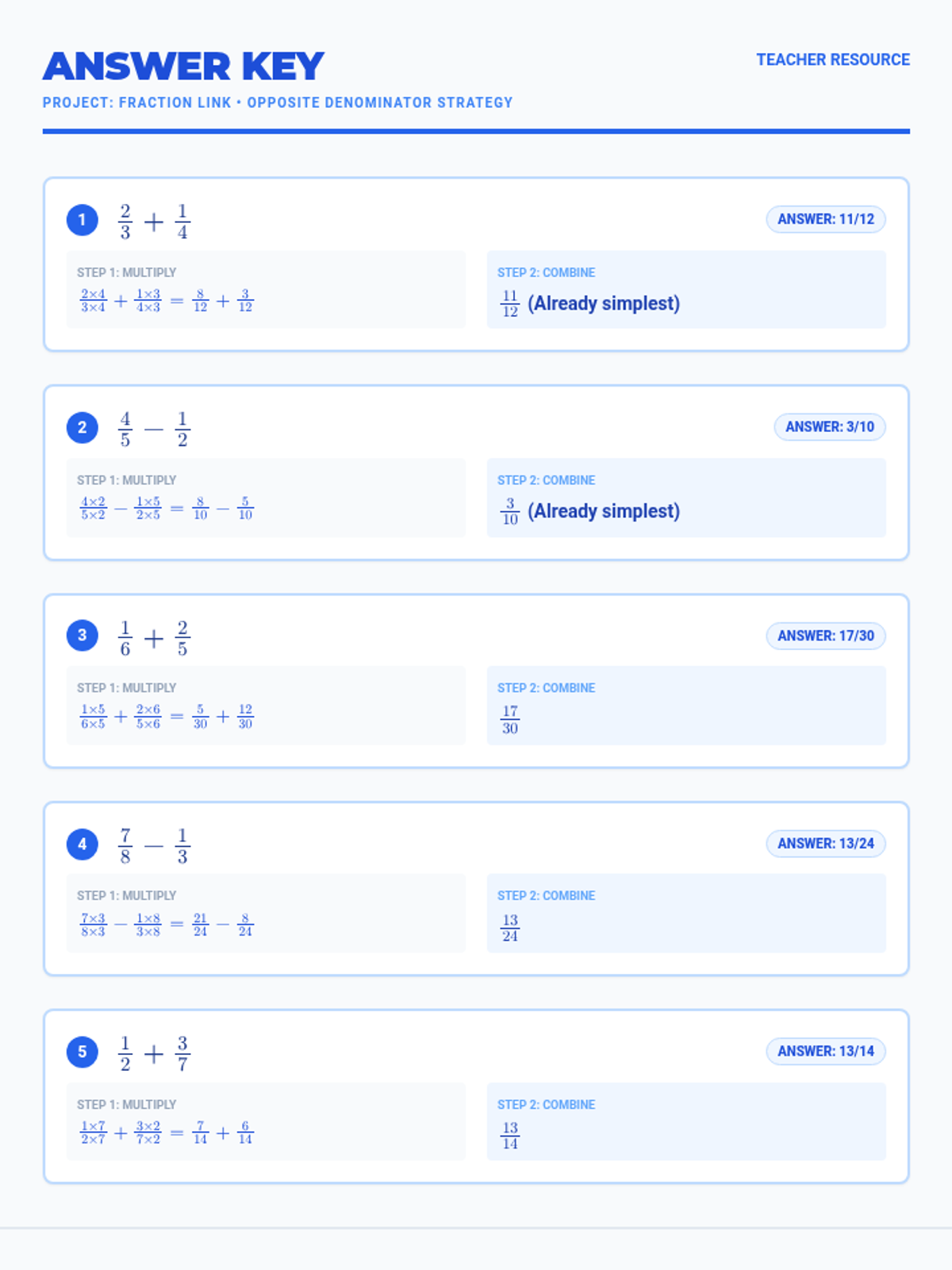
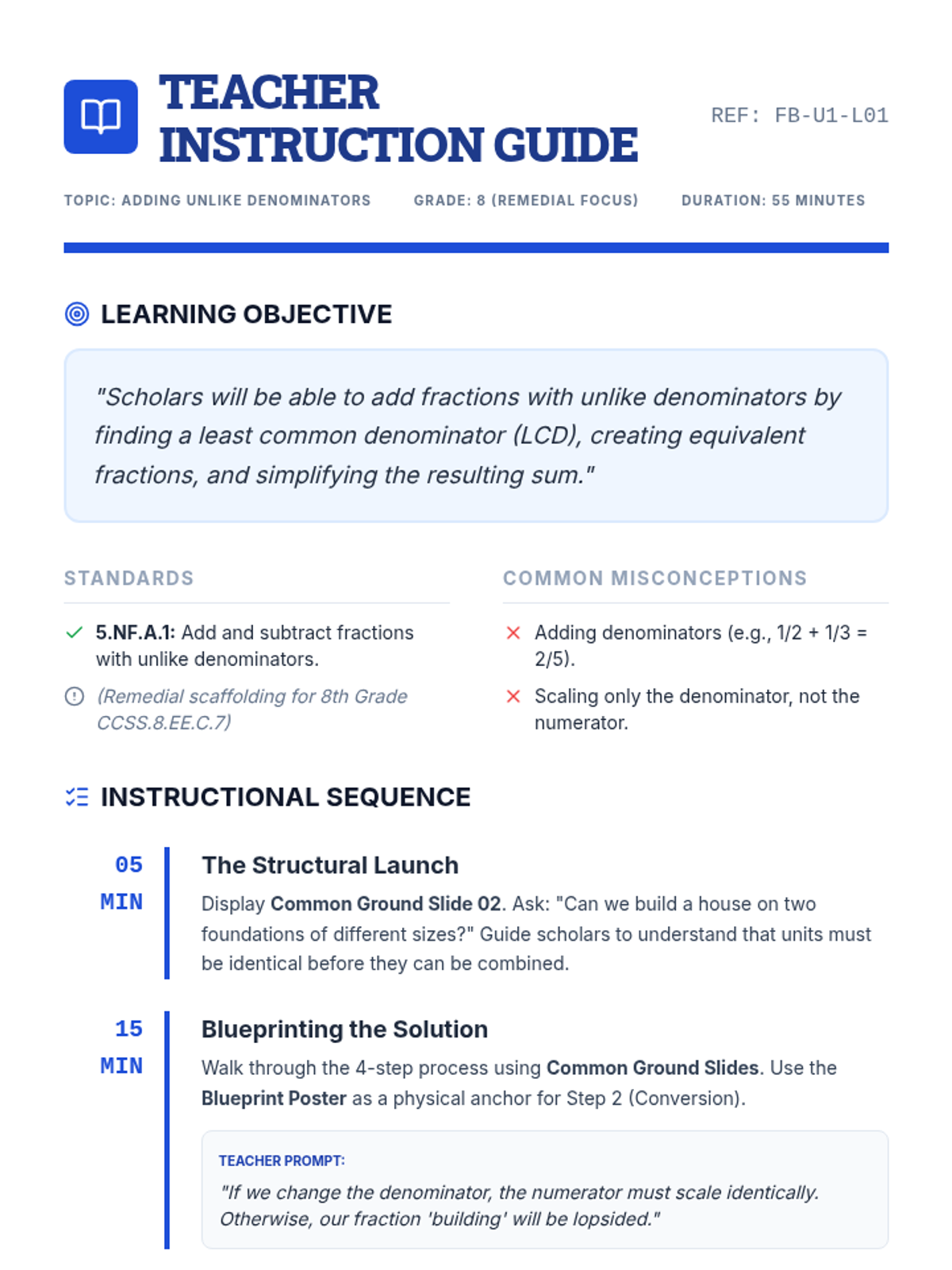
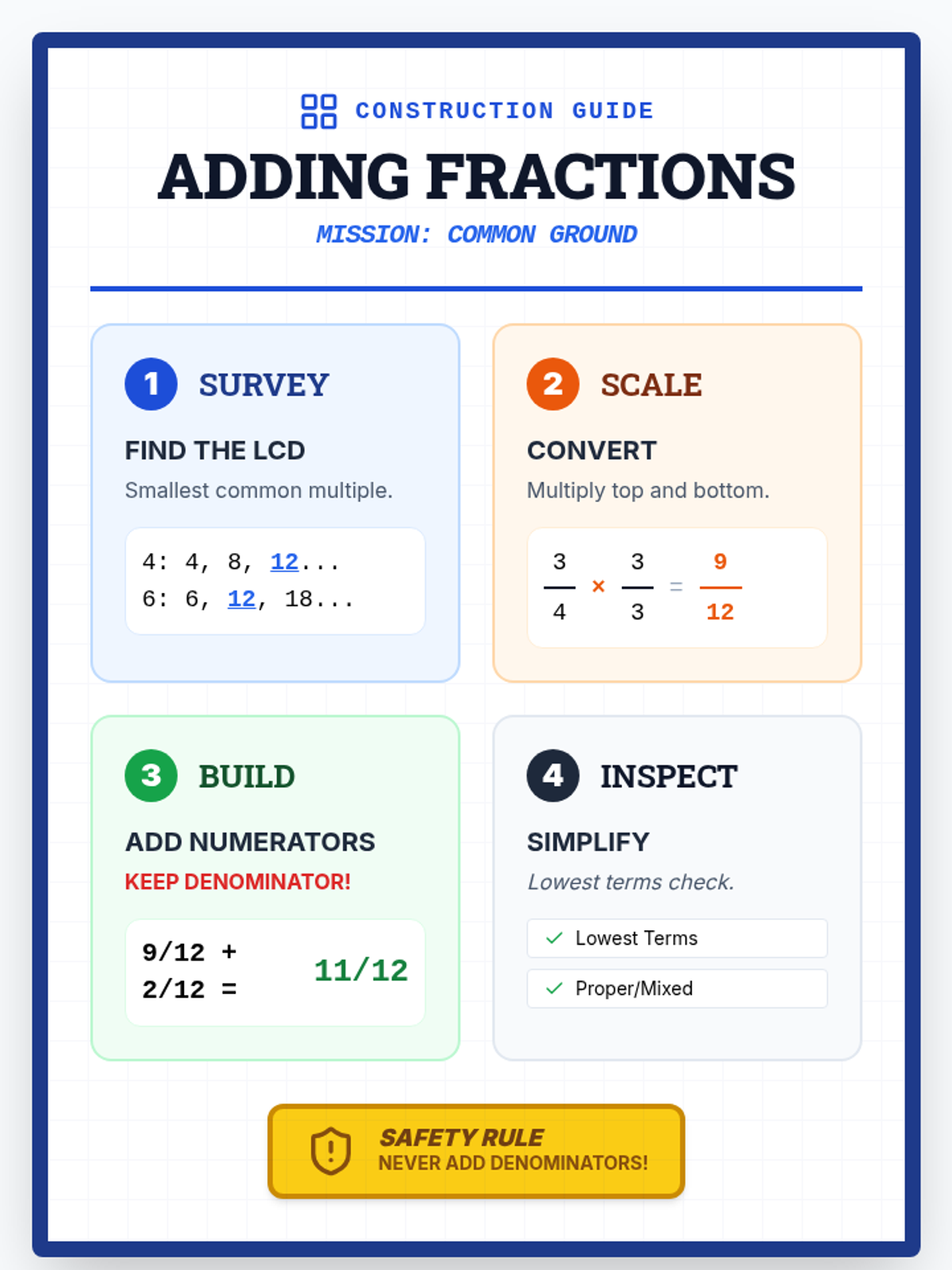
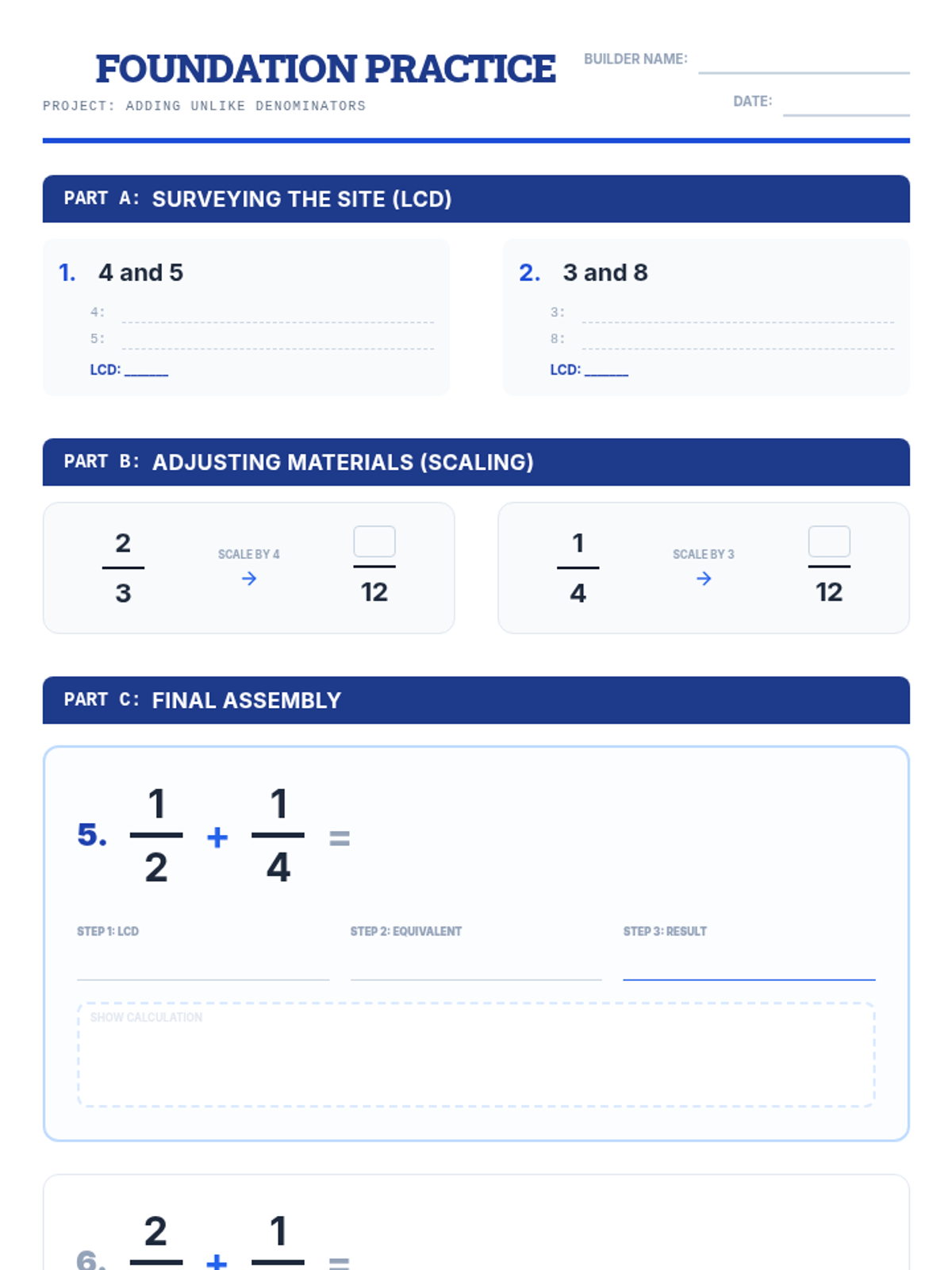
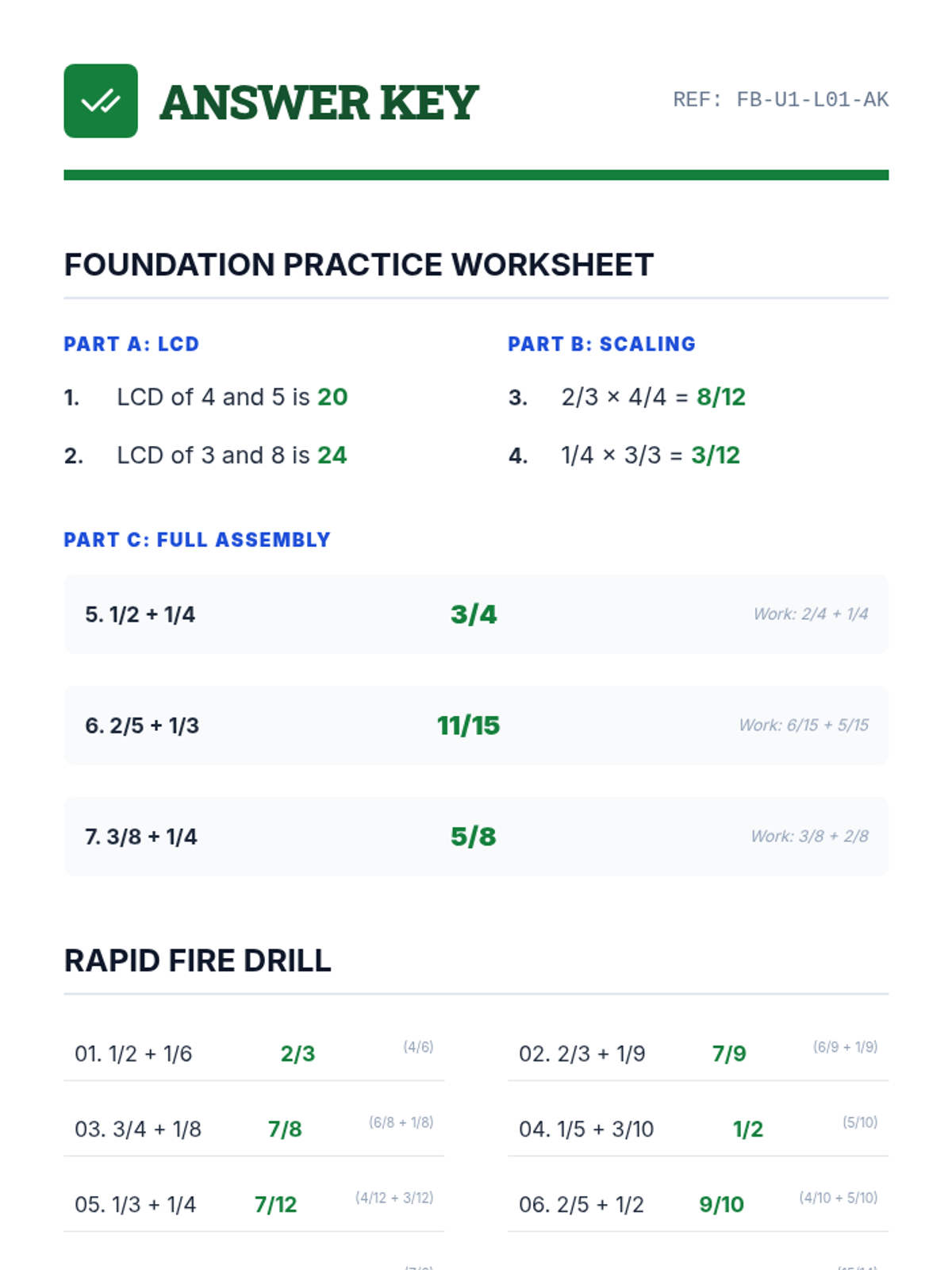
A focused lesson on adding fractions with unlike denominators using a blueprint-inspired approach to building common denominators.
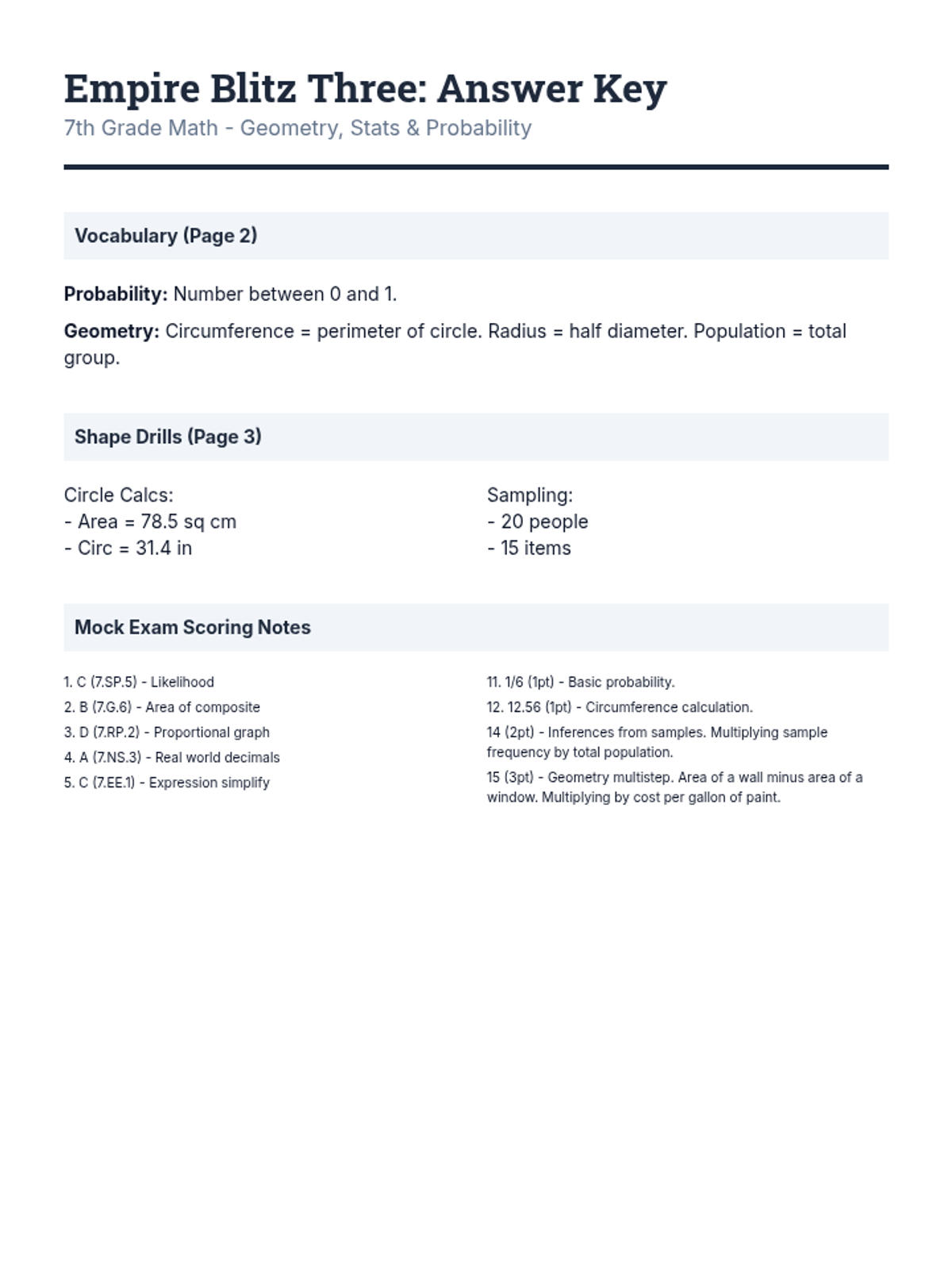
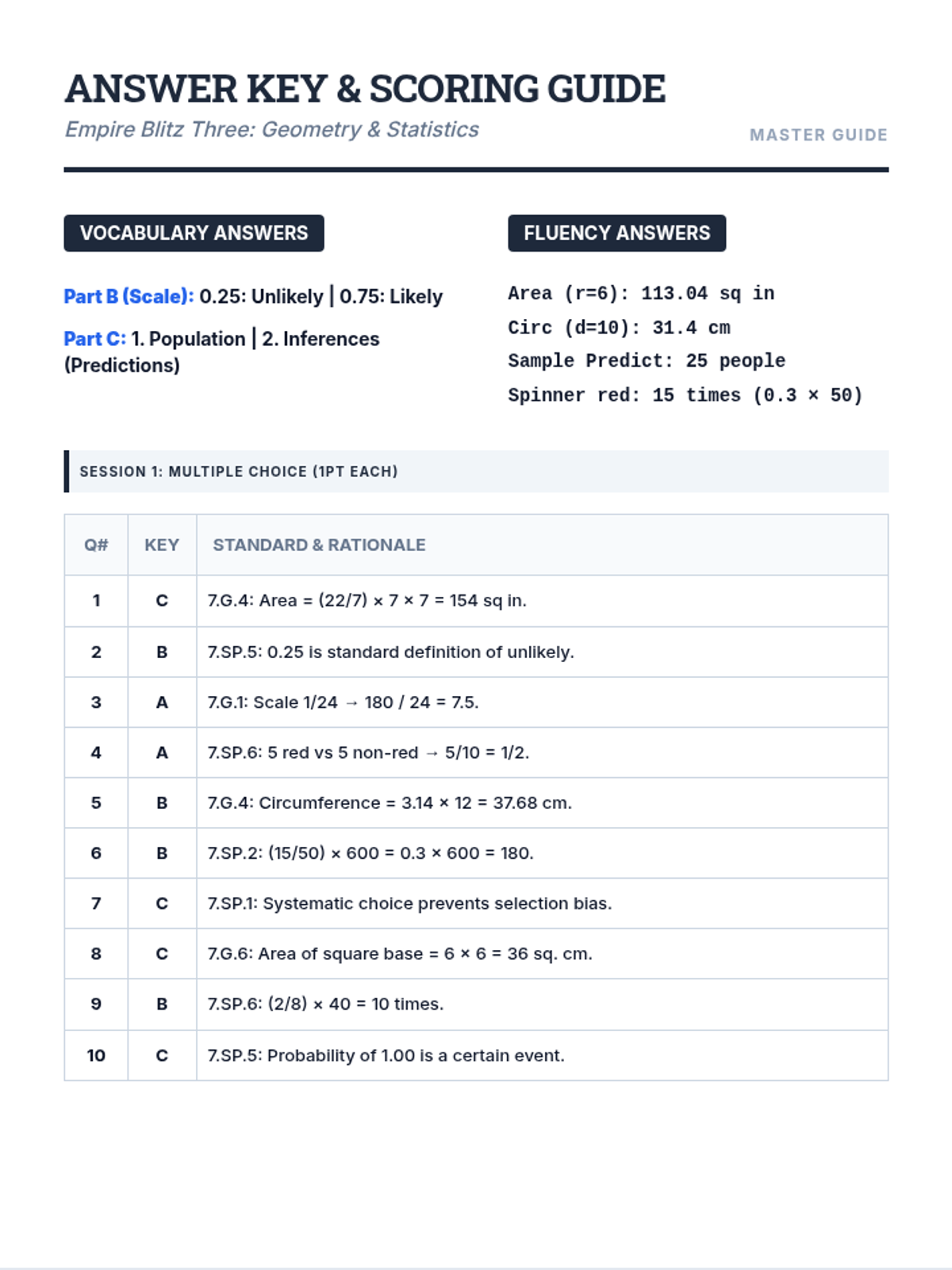
The third packet in the test prep series, highlighting Geometry and Statistics/Probability within a full-spectrum review of 7th grade math requirements.
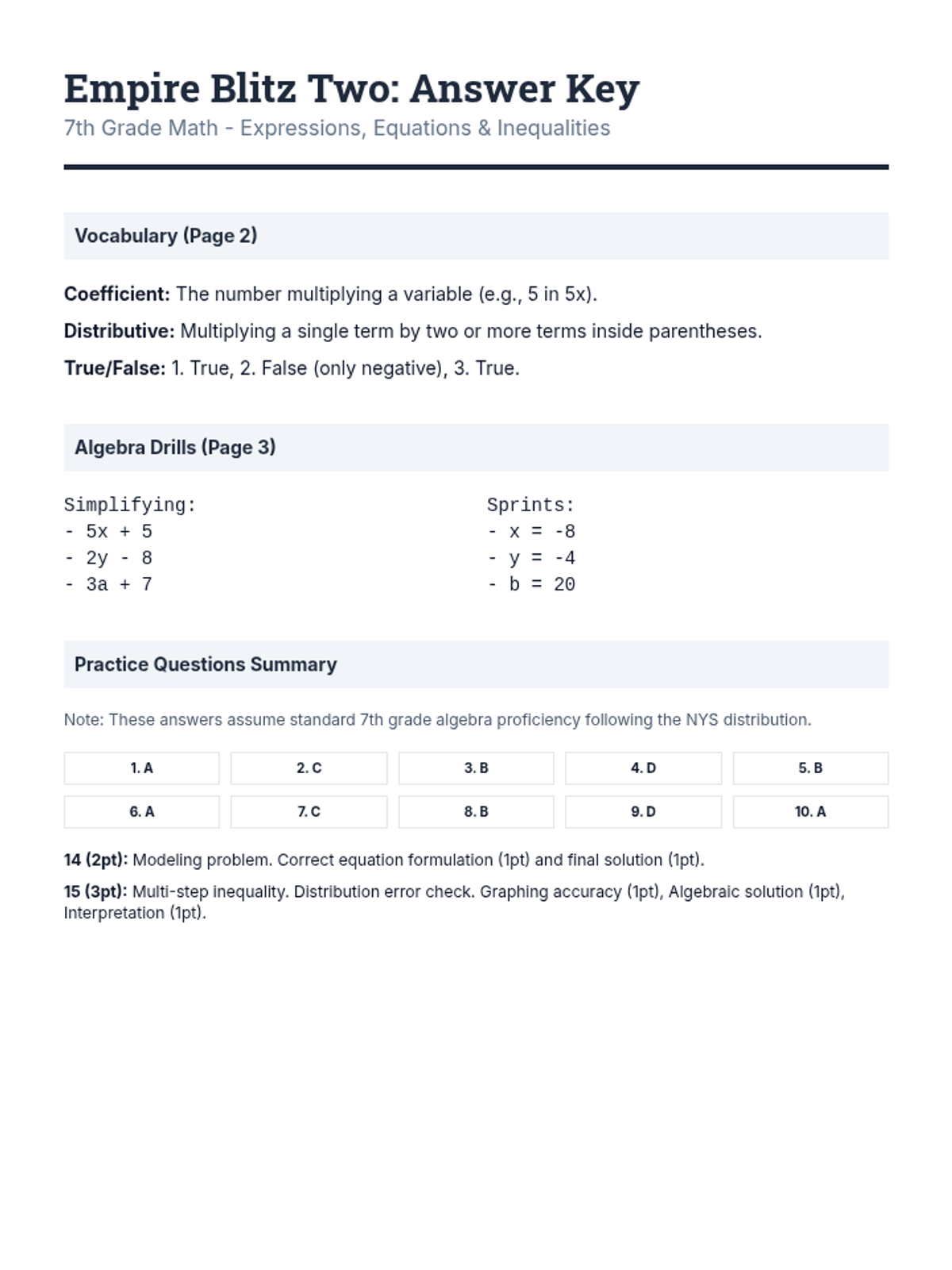
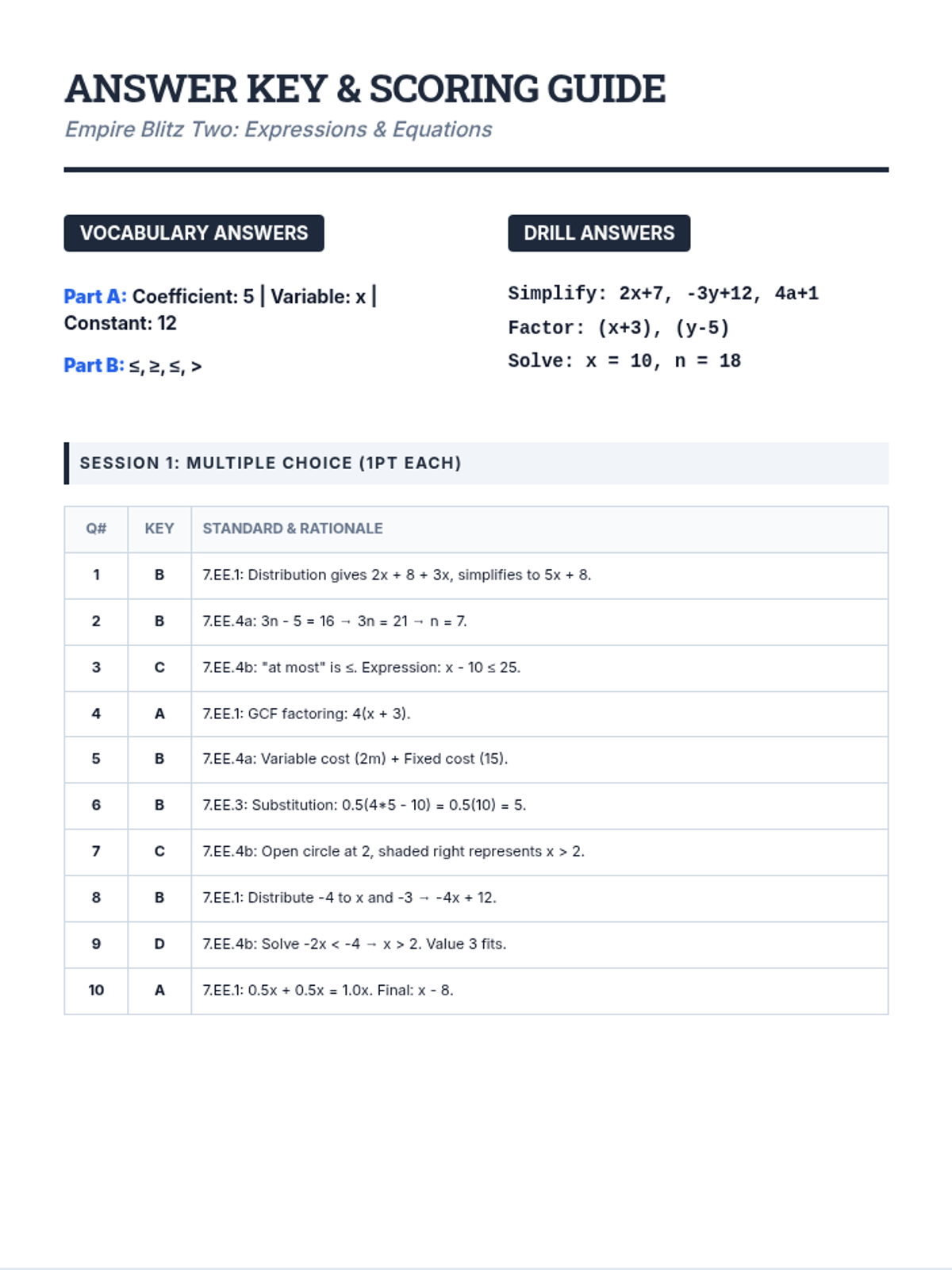
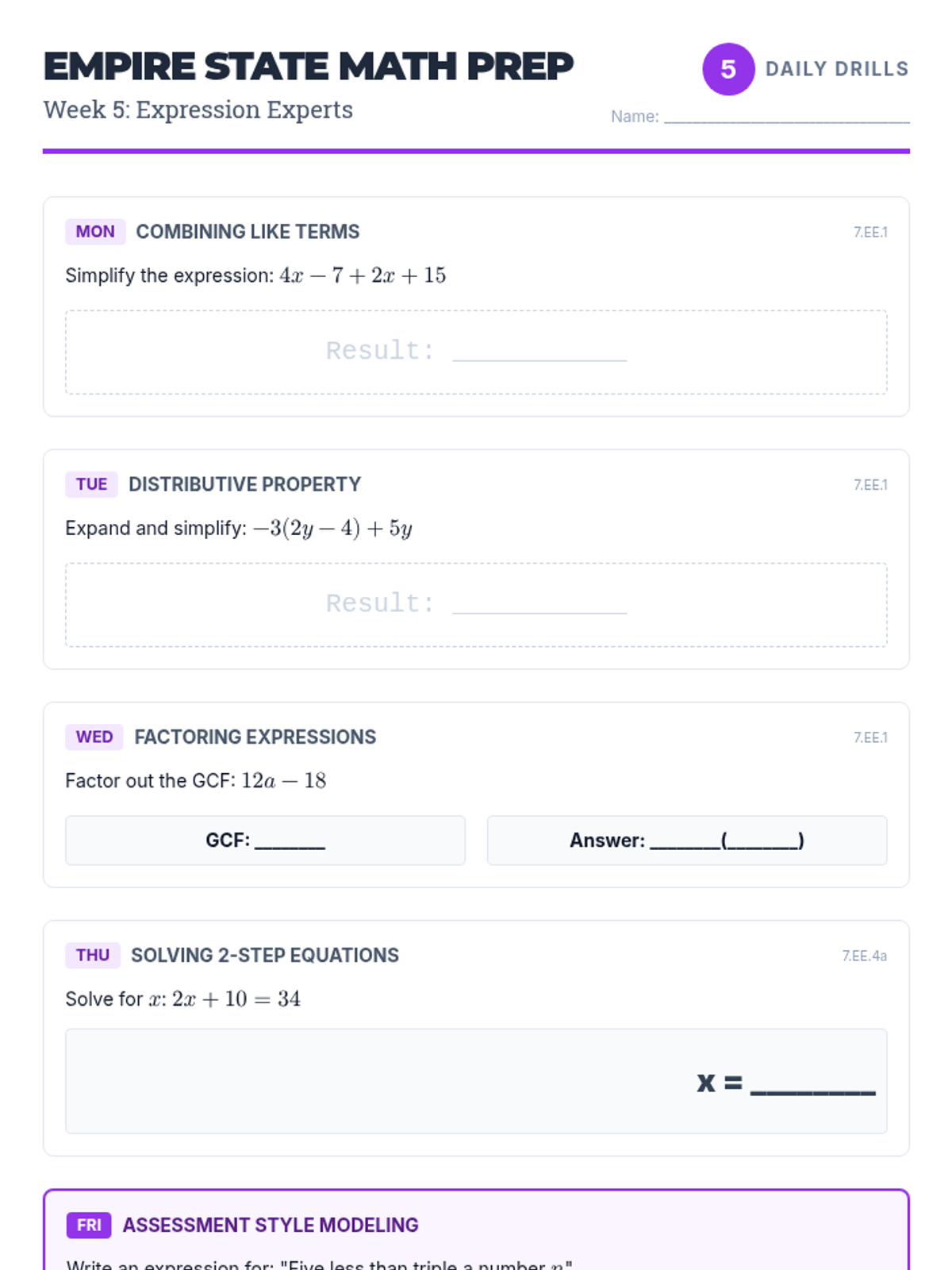
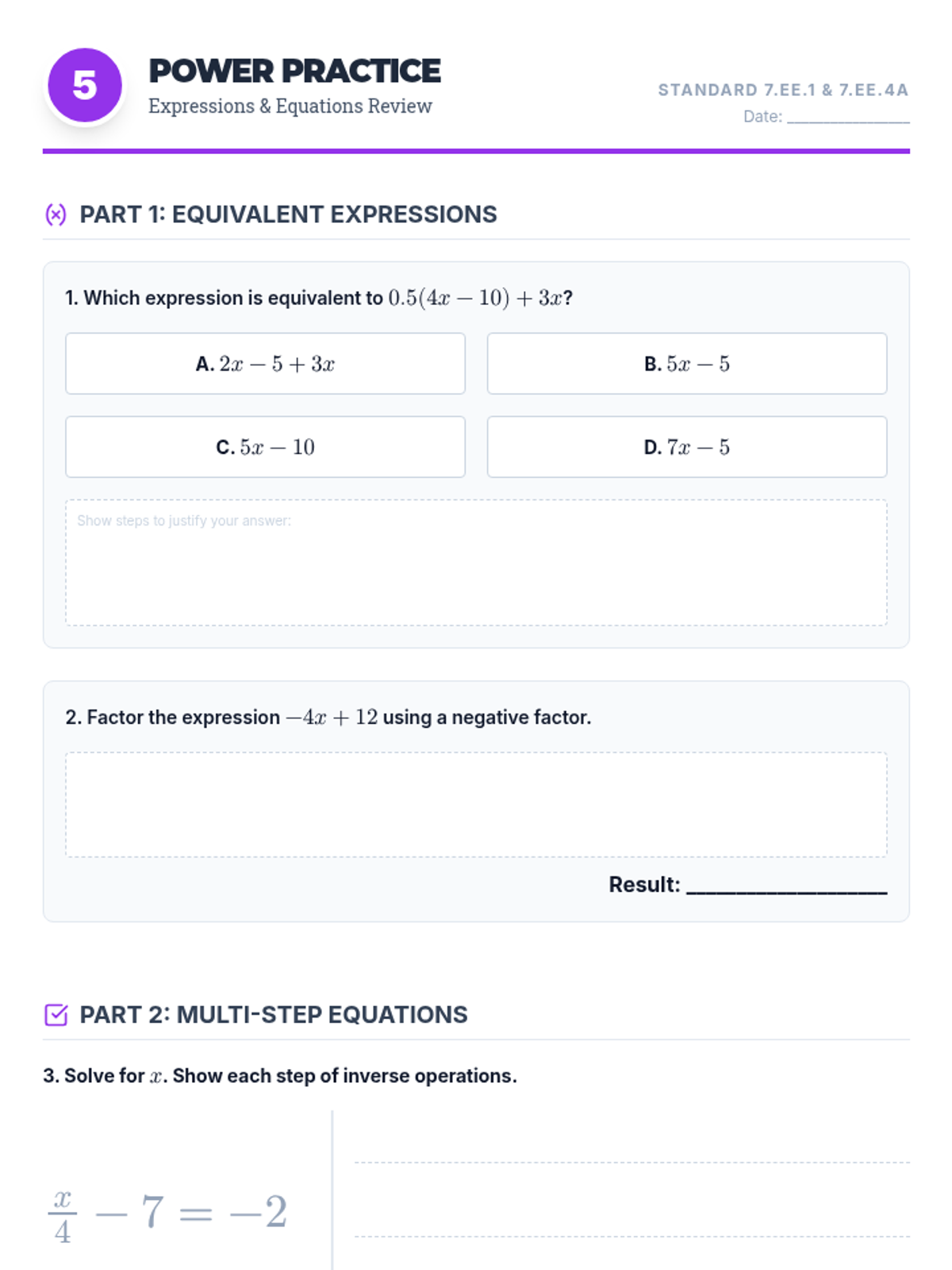
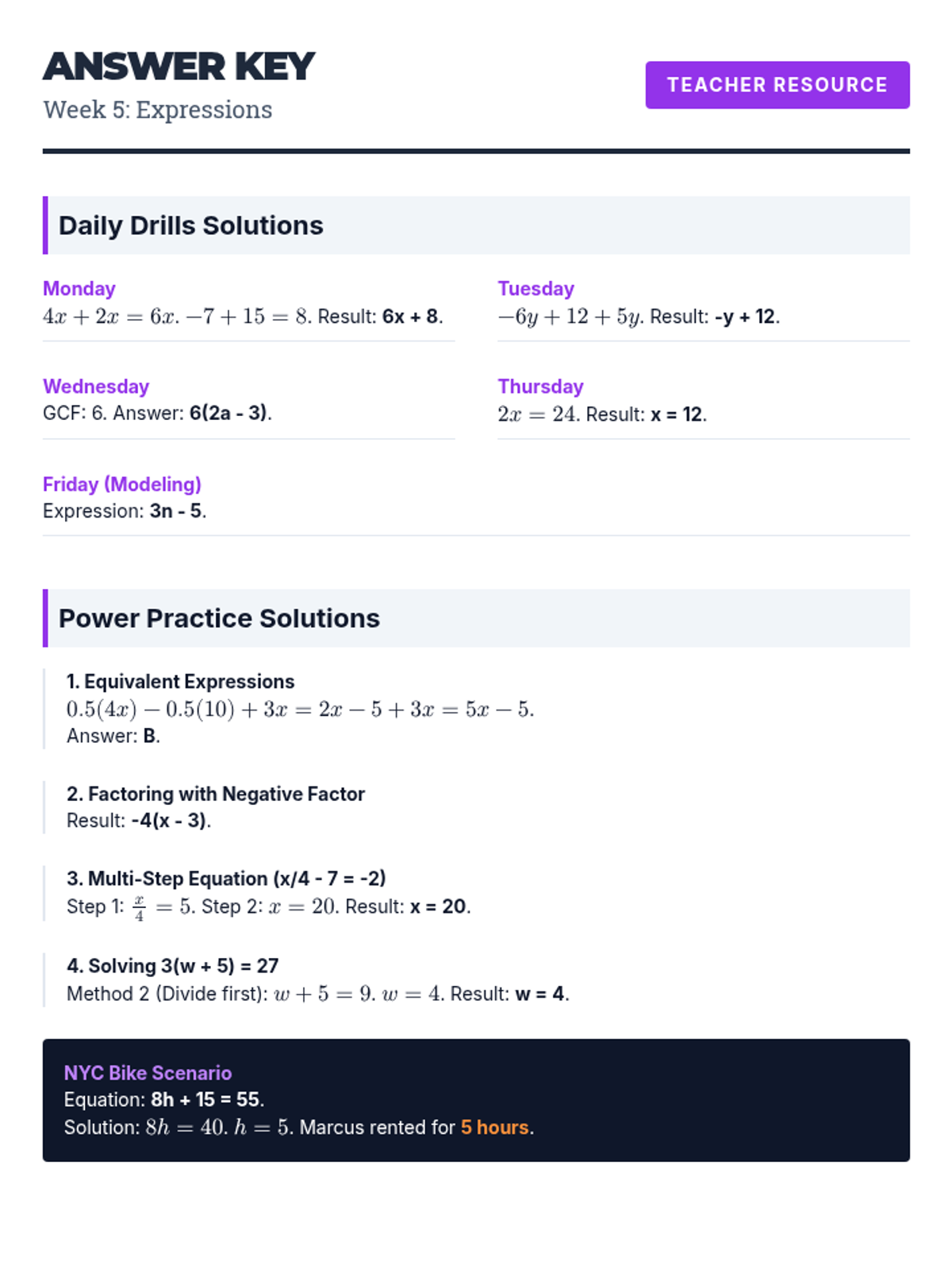
The second packet in the test prep series, with an emphasis on Expressions, Equations, and Inequalities, alongside a balanced distribution of other 7th grade standards.
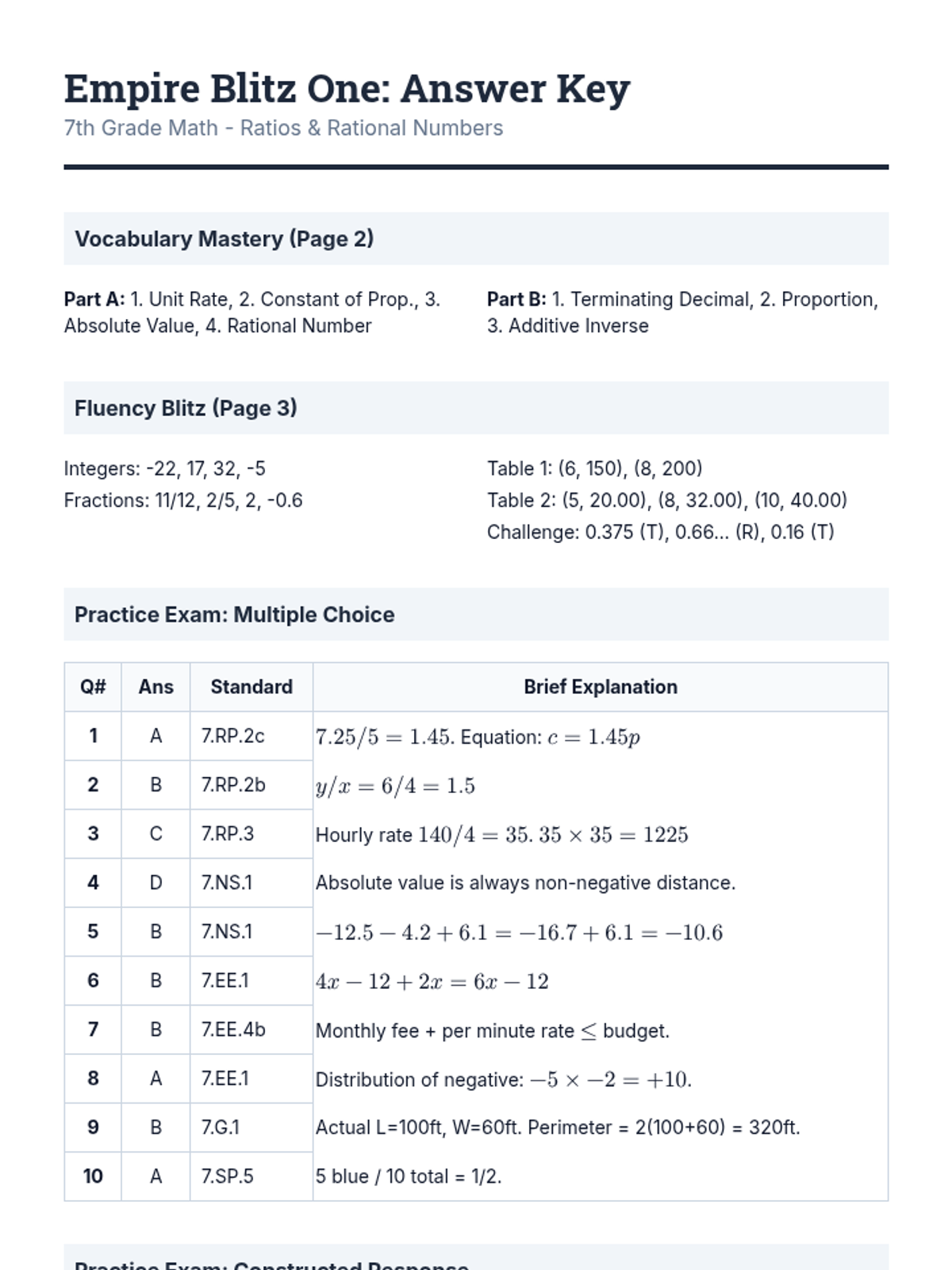
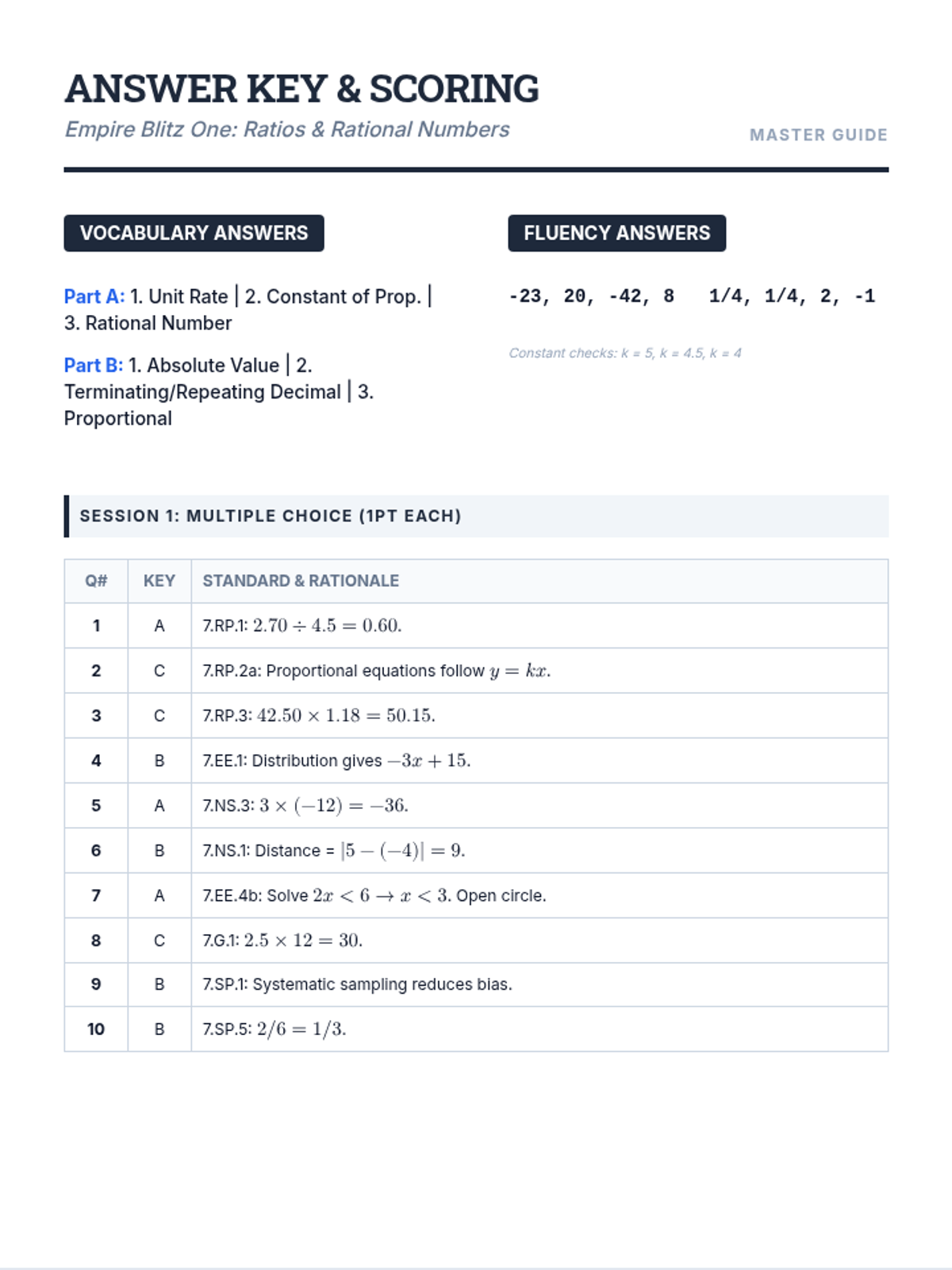
The first packet in the test prep series, focusing on Ratio and Proportional Relationships and the Number System, while maintaining a representative mix of all 7th grade domains.
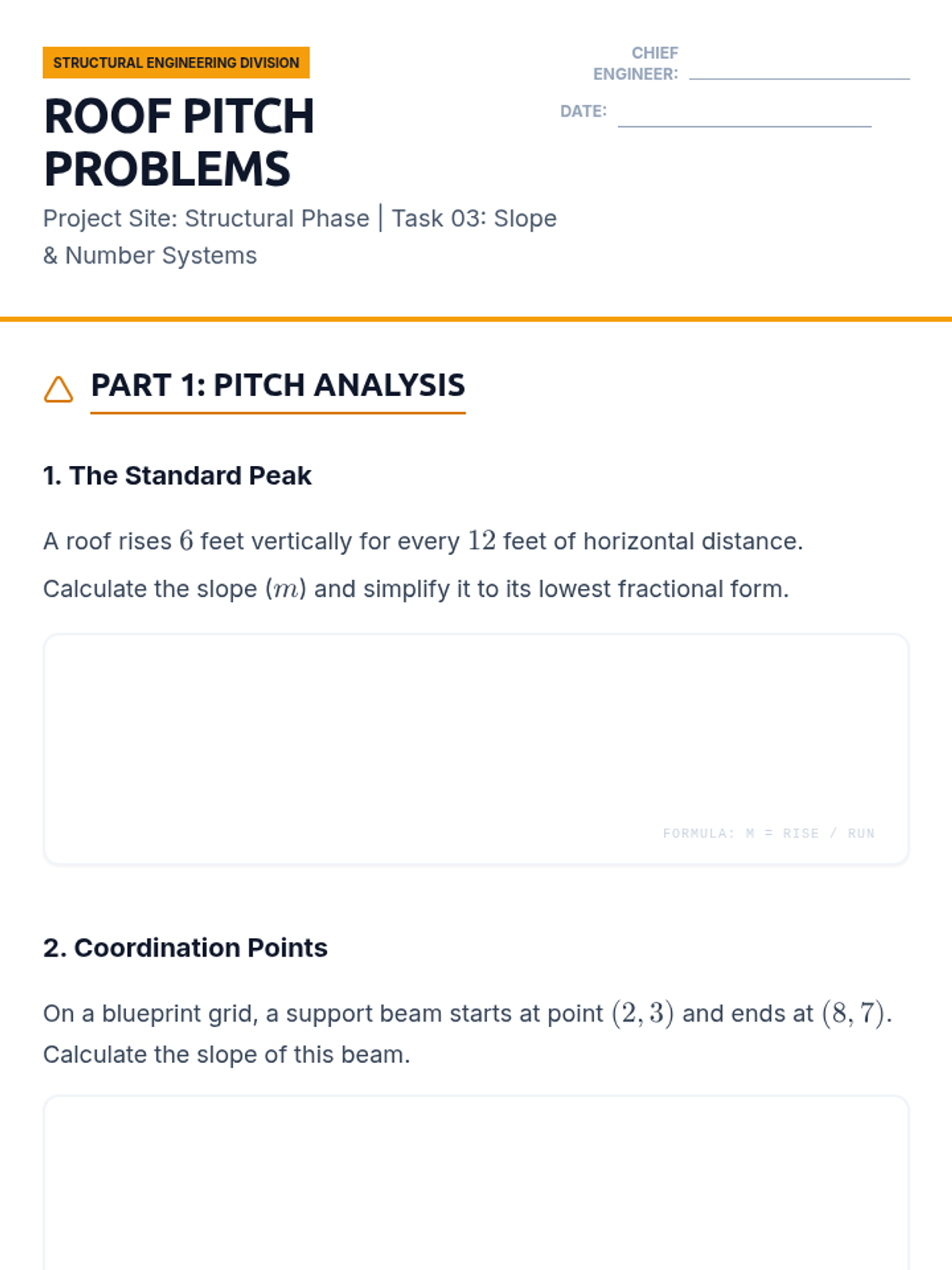
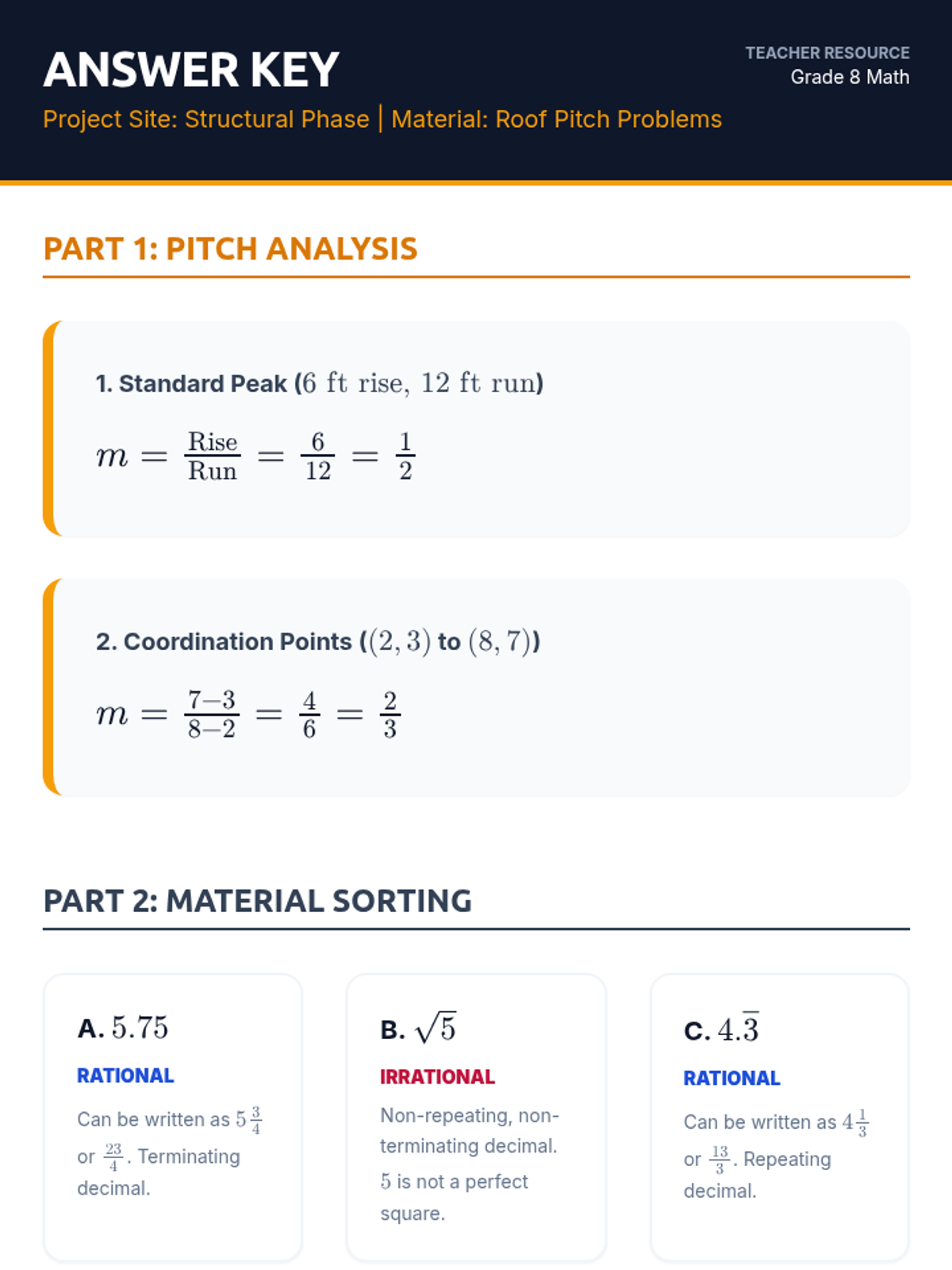
Explores 8th-grade concepts like slope as a fraction (rise over run) and identifying rational vs. irrational numbers in structural engineering.
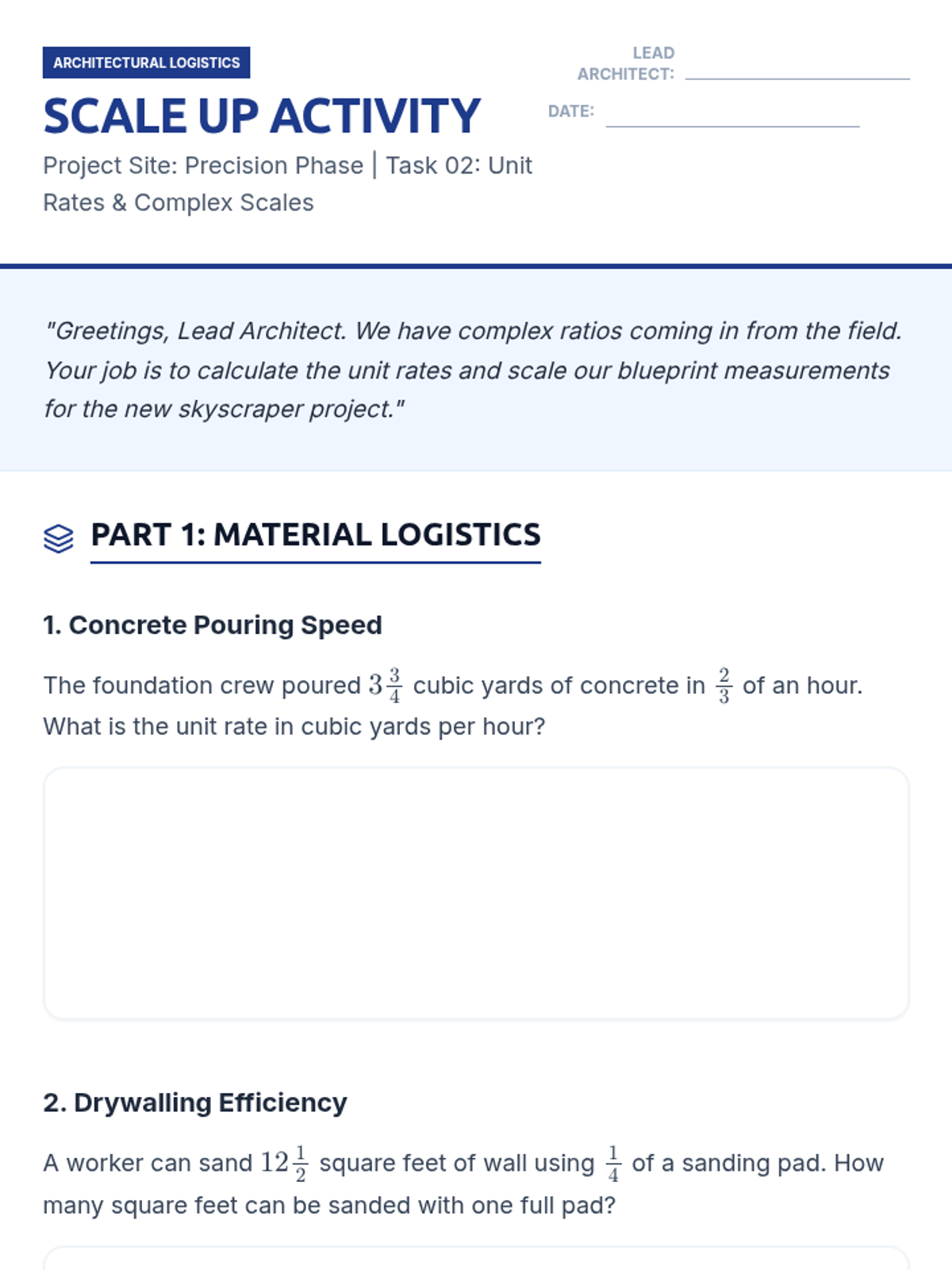
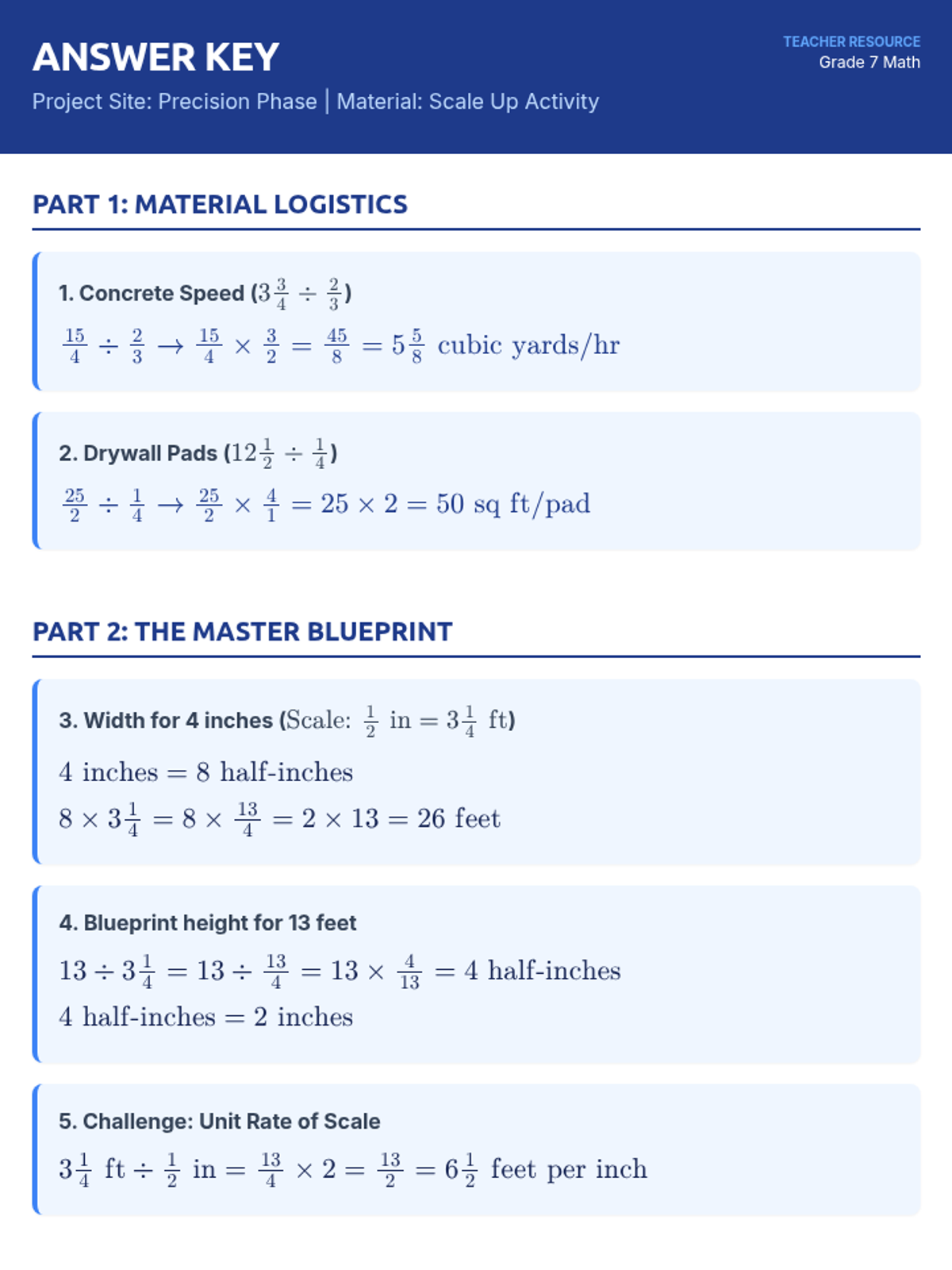
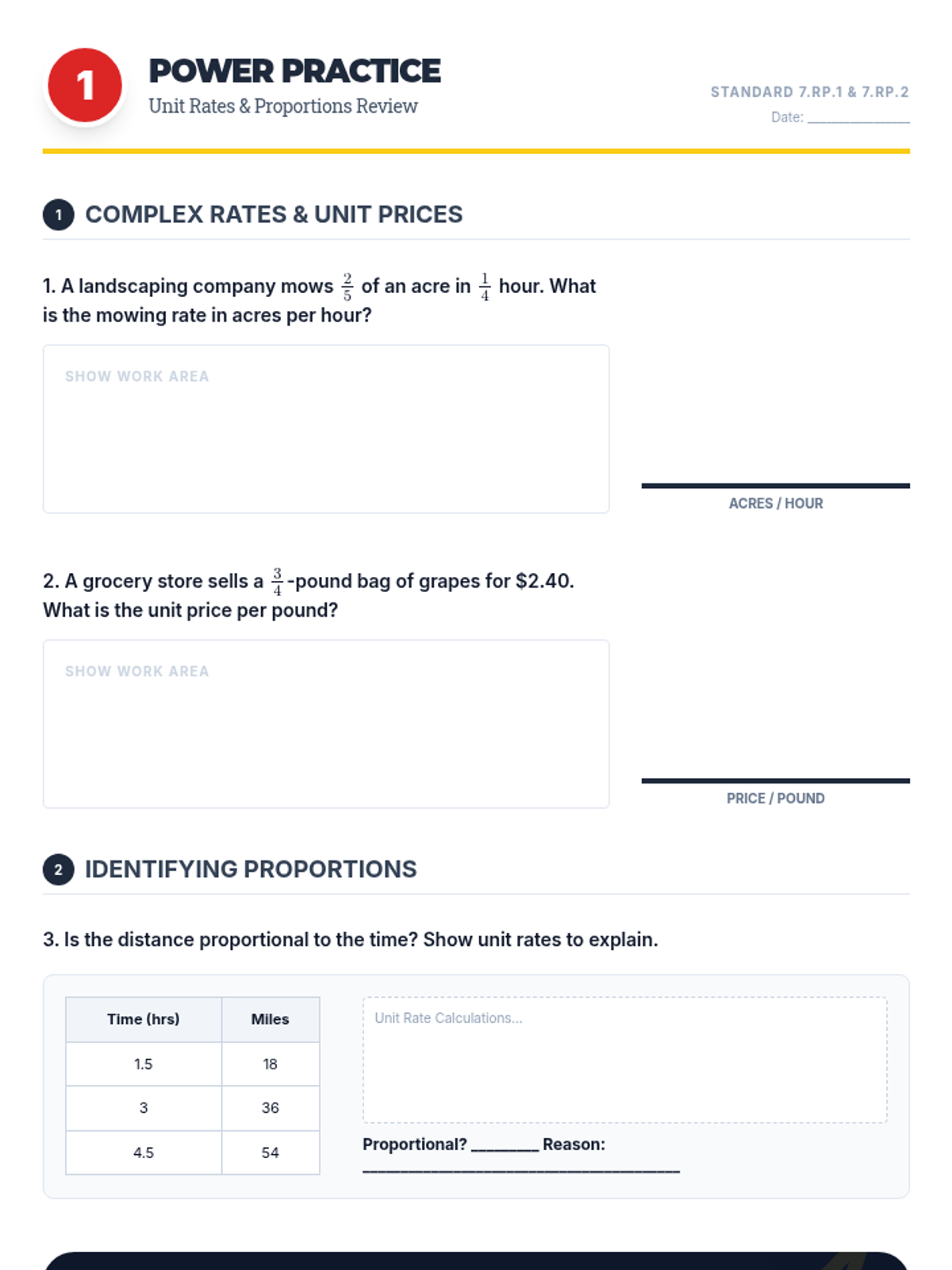
Covers 7th-grade topics including complex fractions, unit rates, and scaling designs for construction projects.
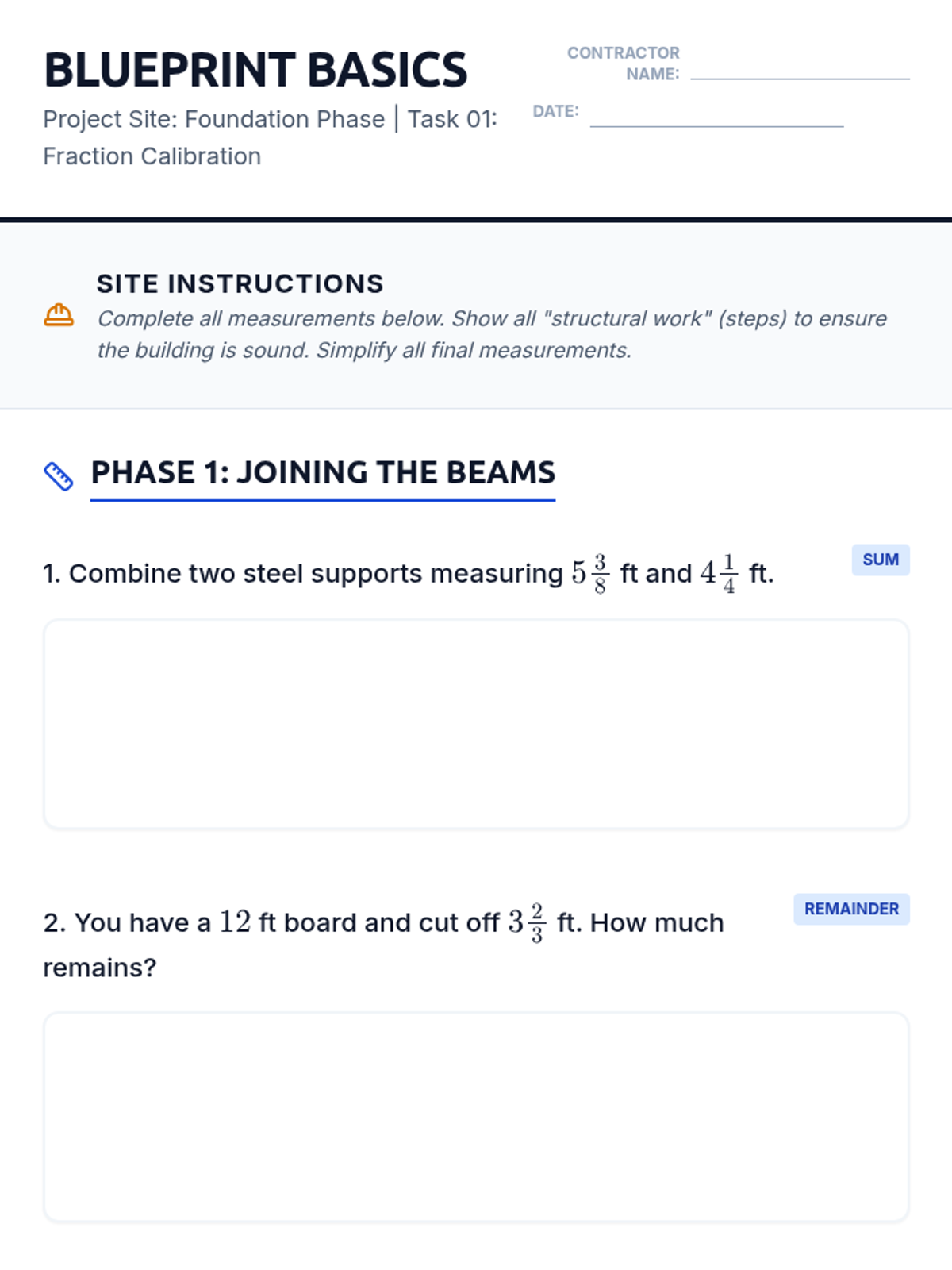
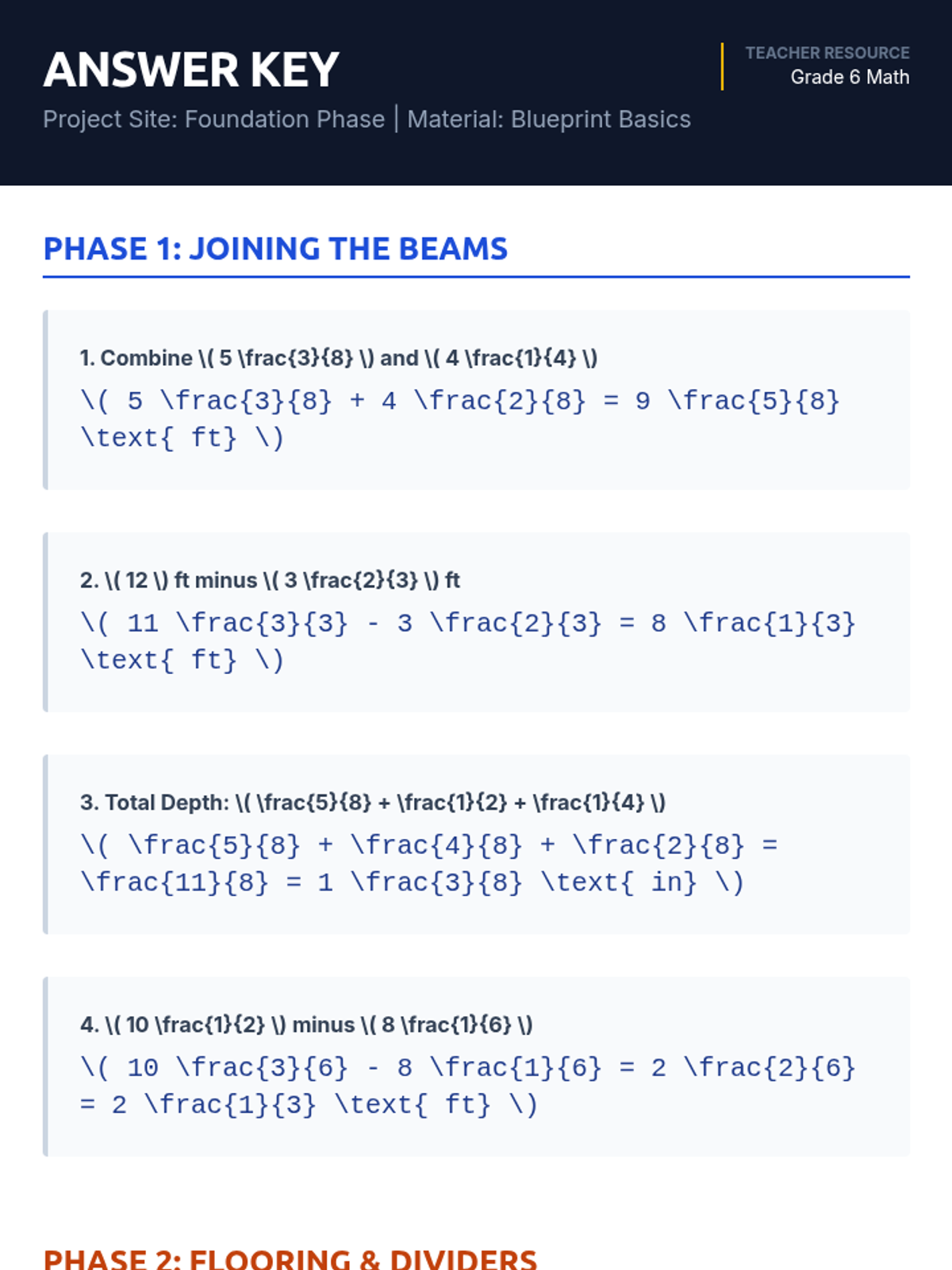
Focuses on 6th-grade fraction operations (addition, subtraction, multiplication, division) through the lens of foundational construction measurements.
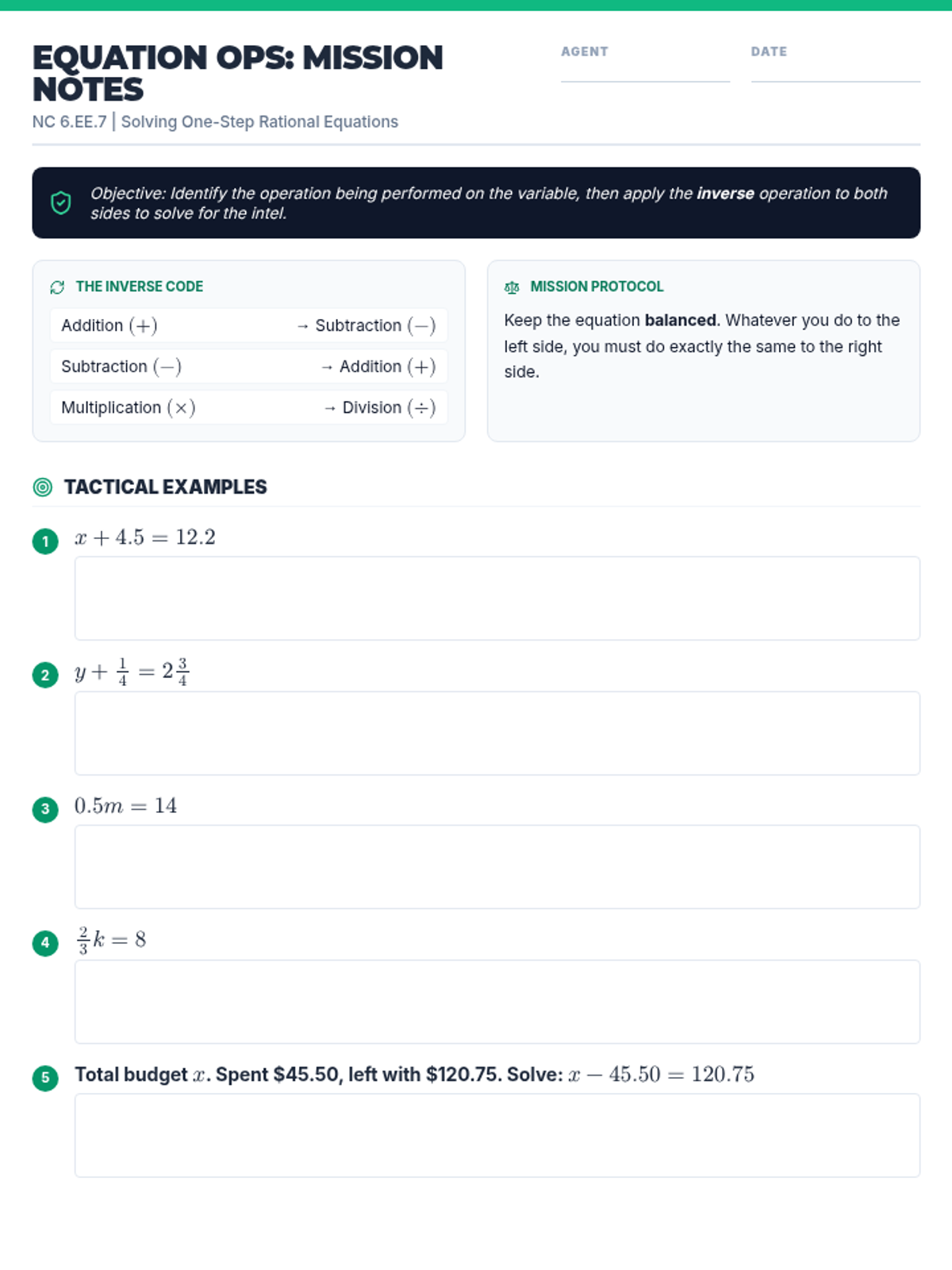
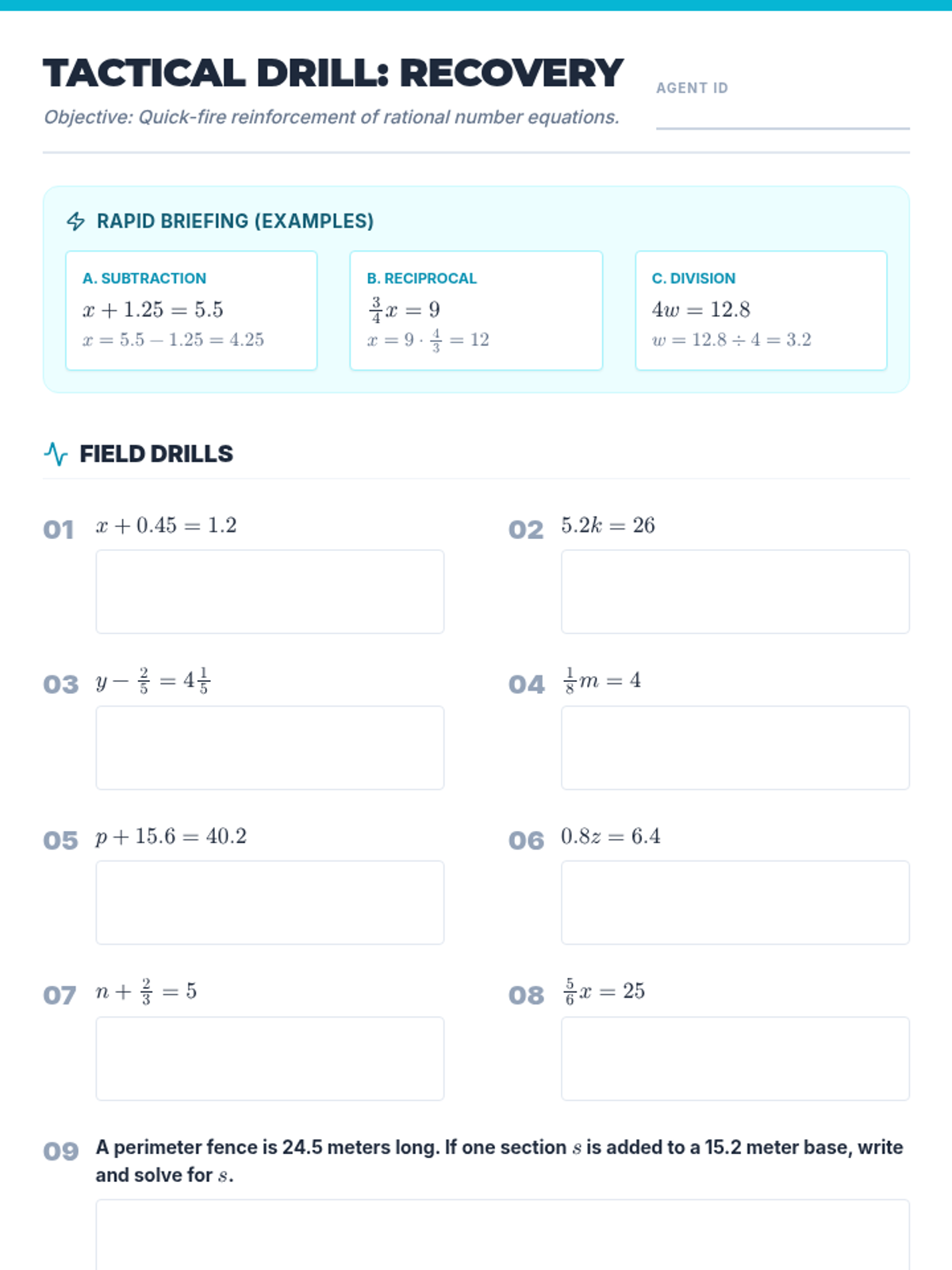
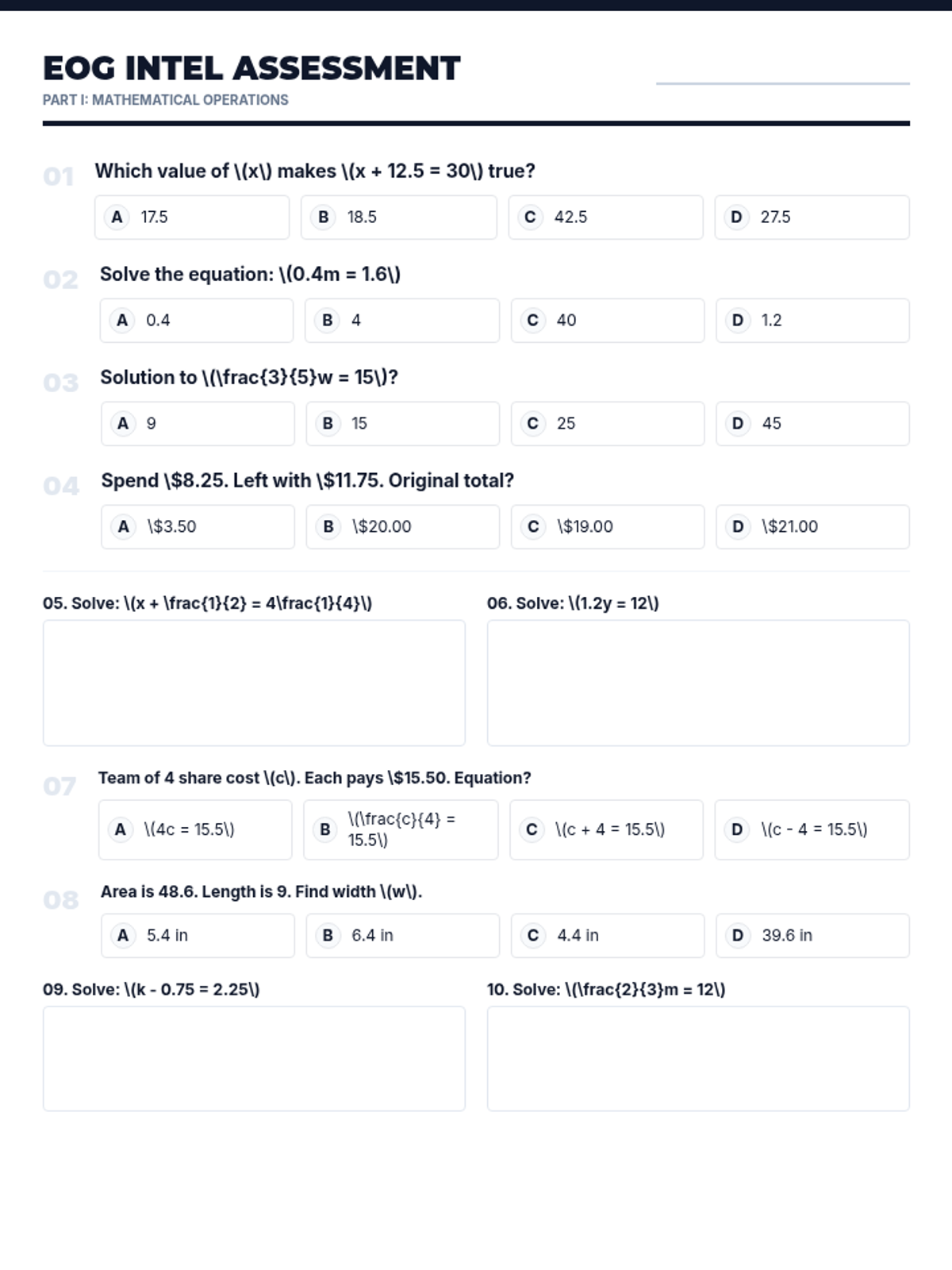
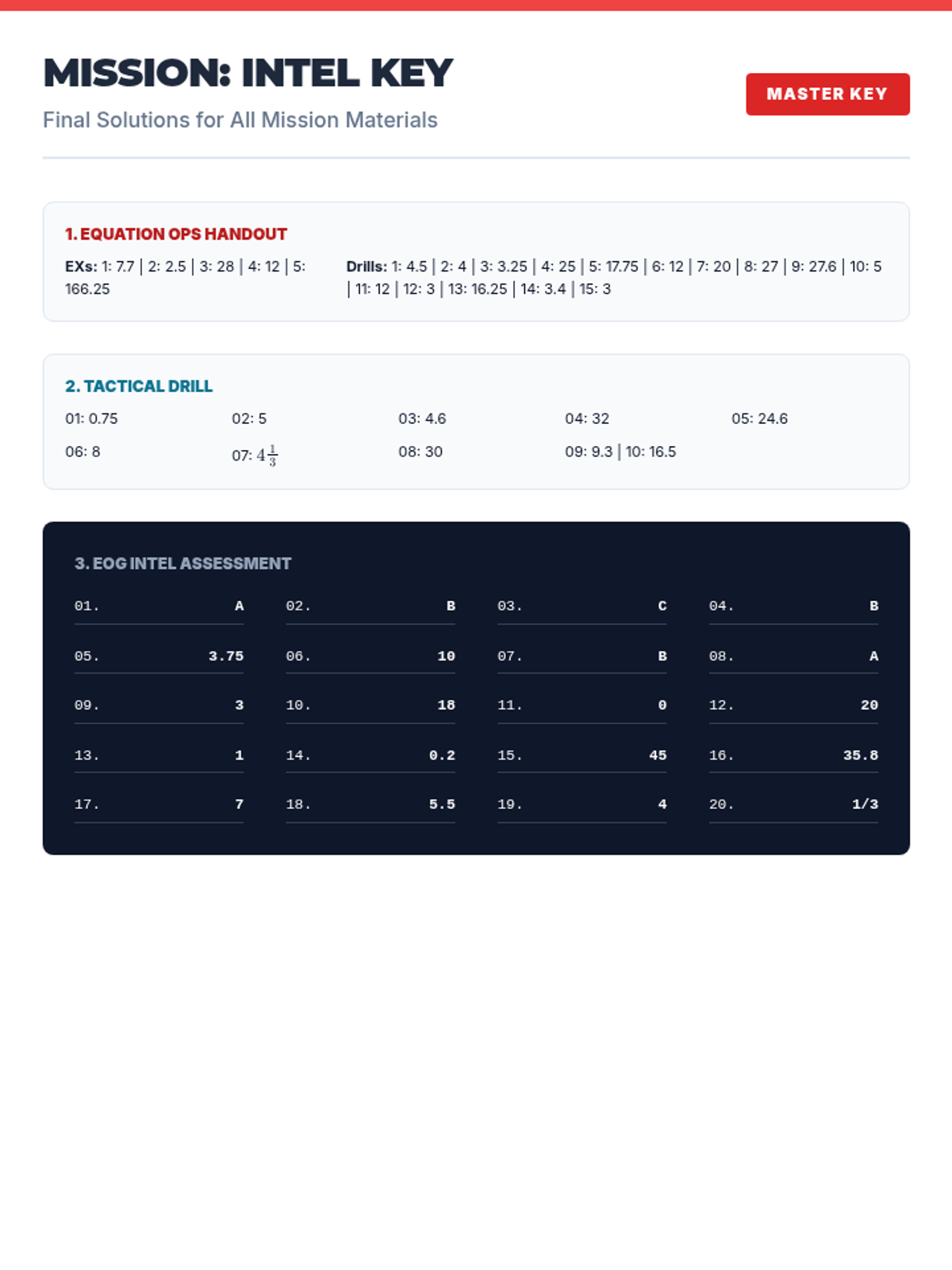
A comprehensive lesson on solving one-step equations involving non-negative rational numbers, featuring a secret agent tactical theme. Includes guided notes, extensive practice, and an EOG-style assessment.
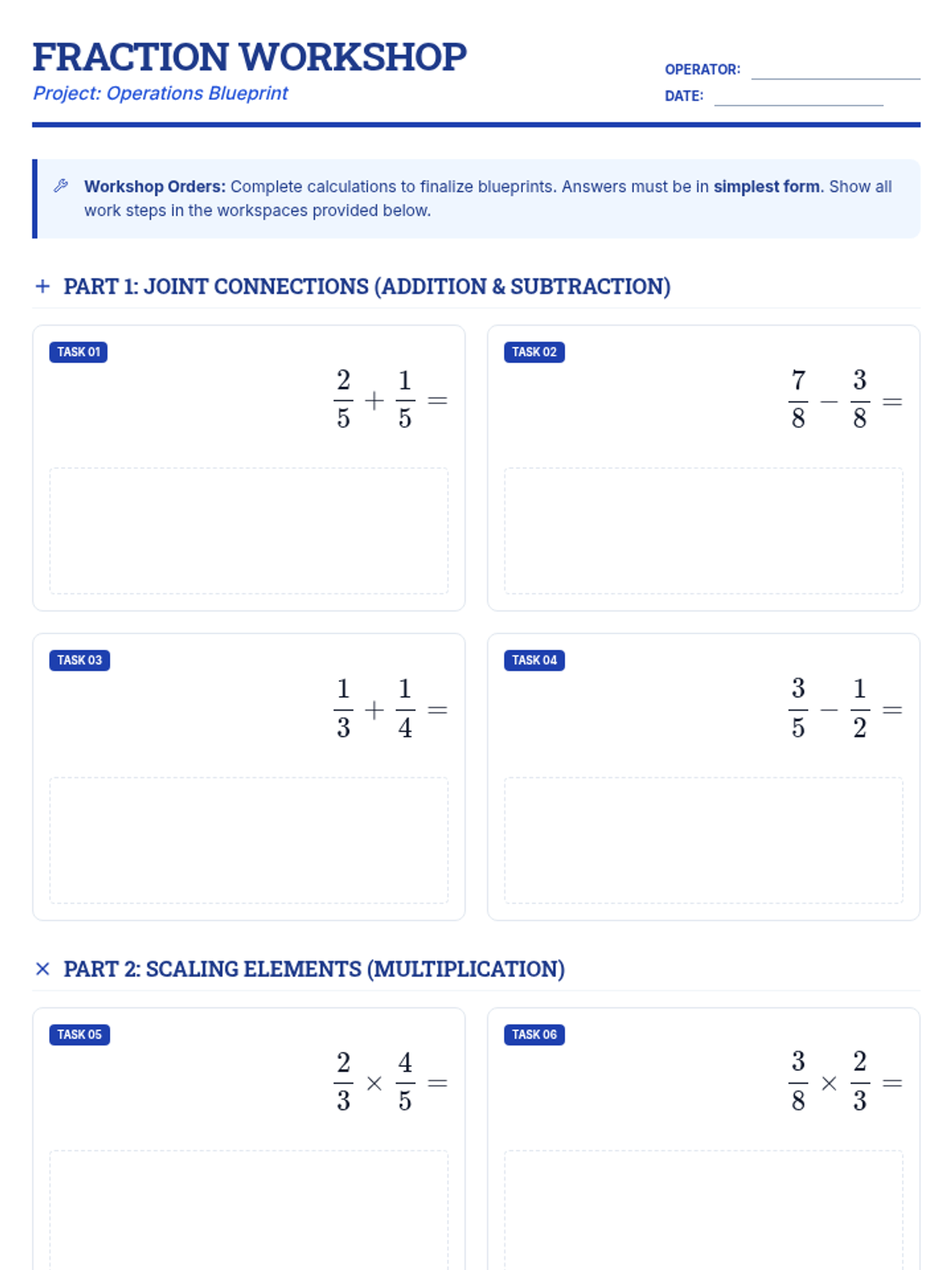
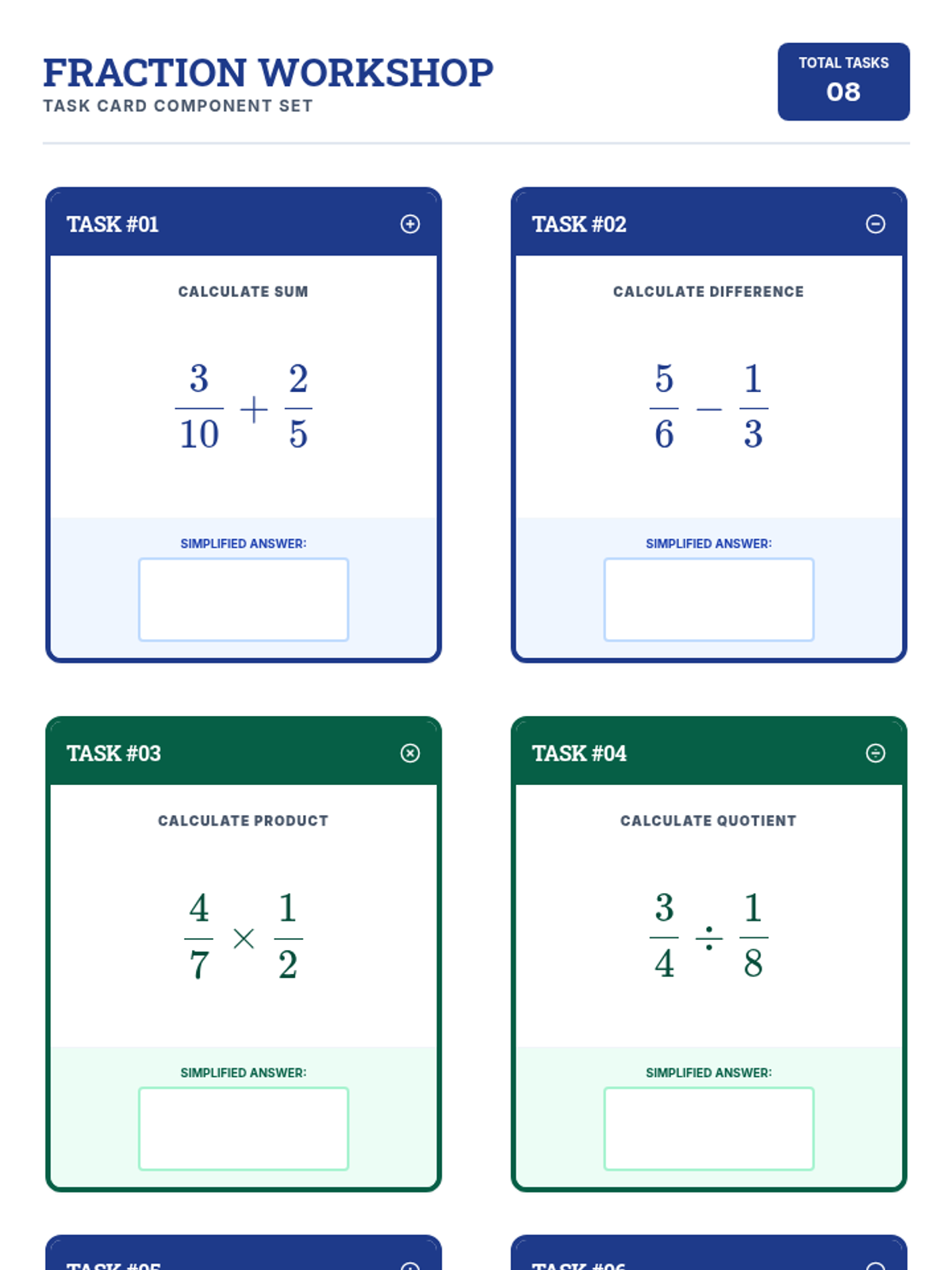
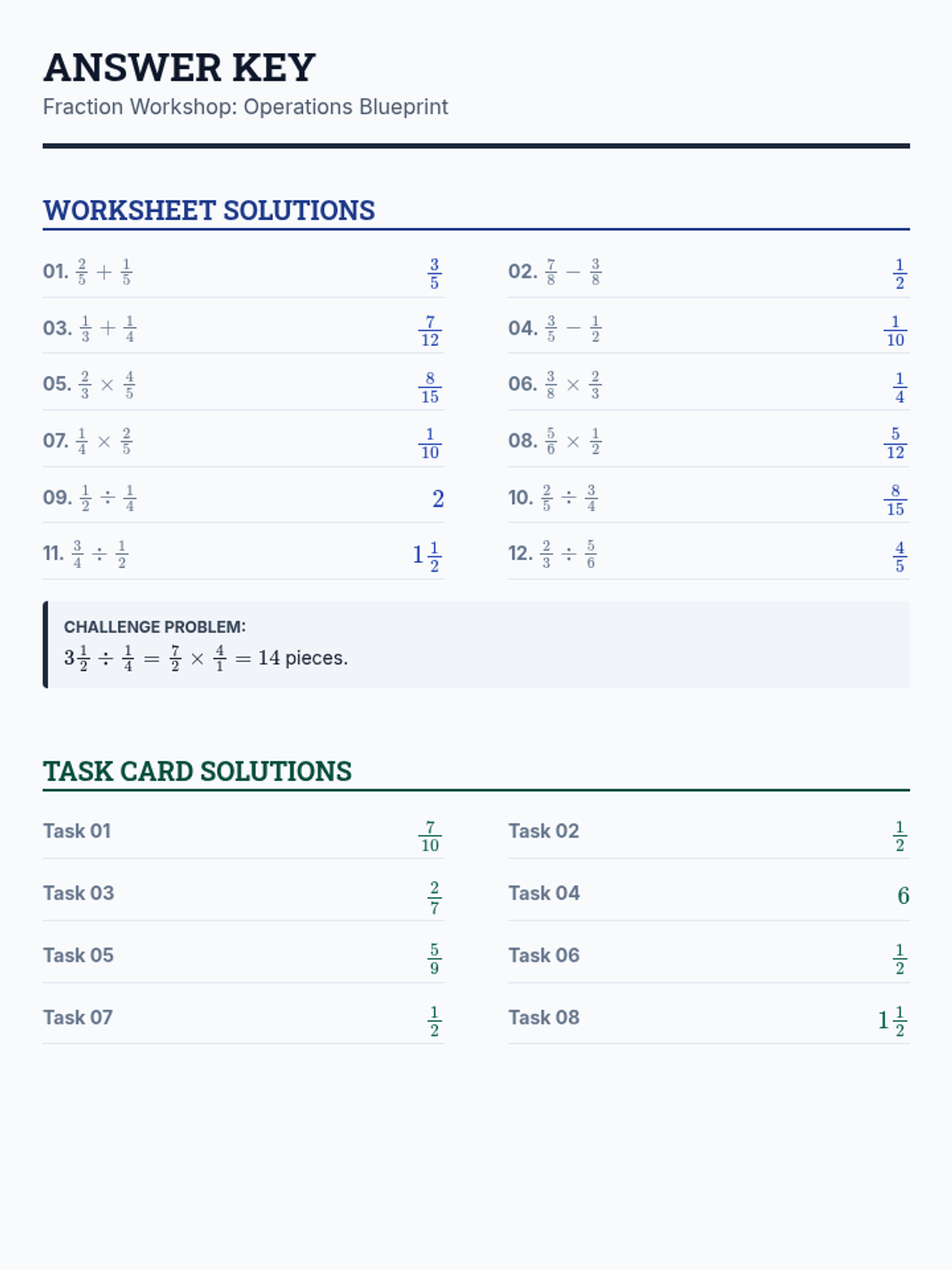
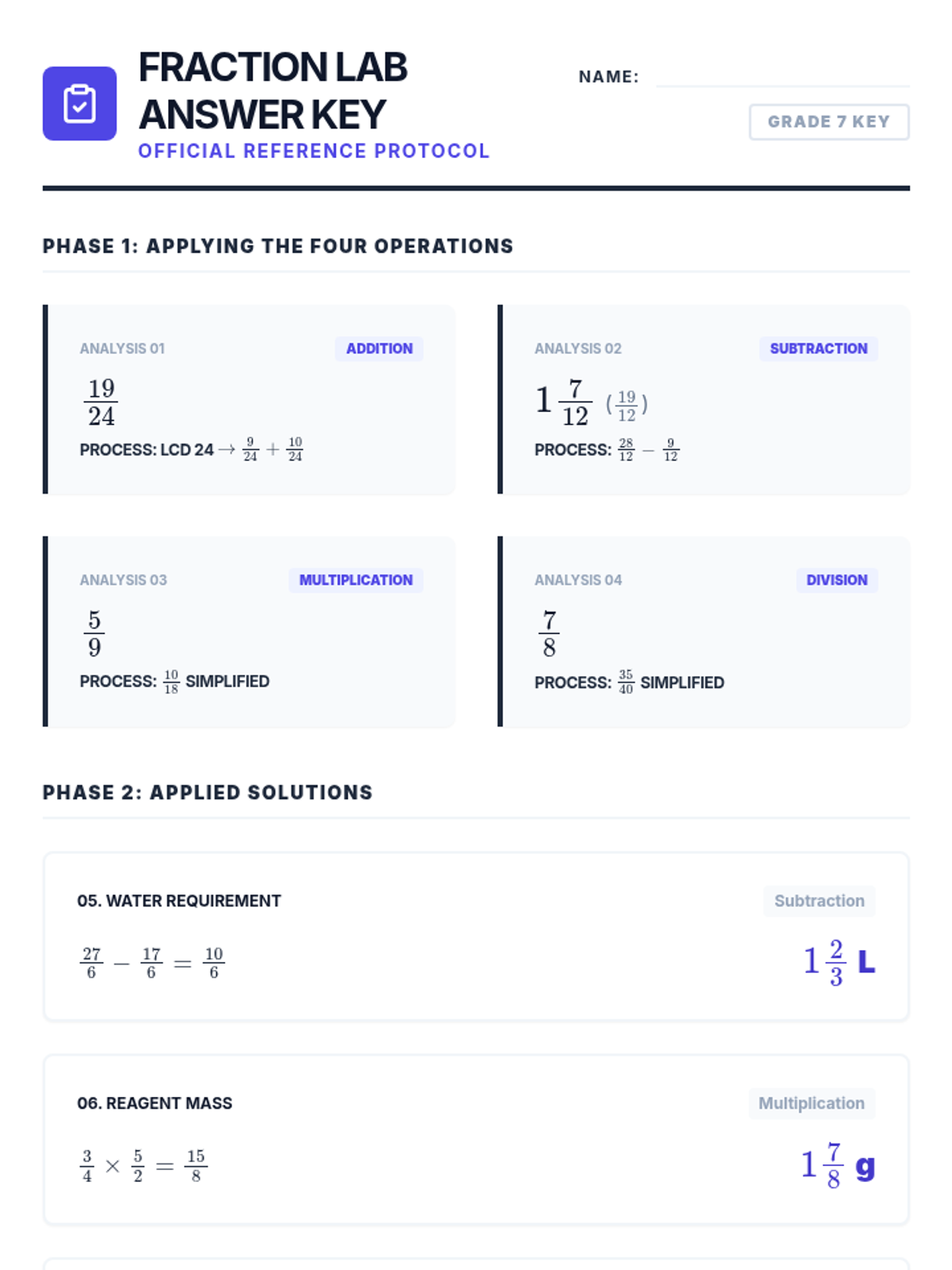
A comprehensive practice set for mastering the four basic operations with fractions, themed as an engineering workshop.
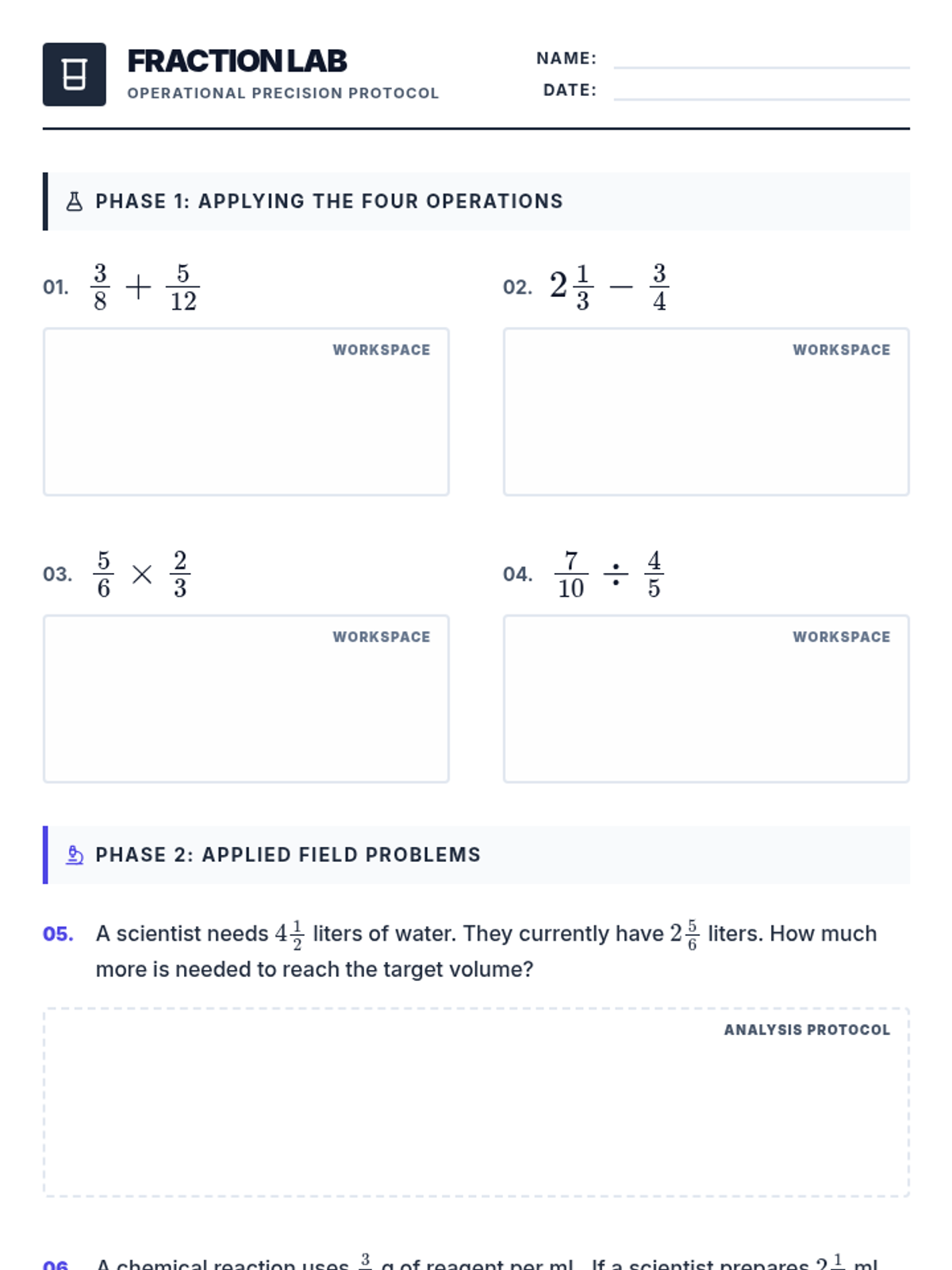
A clean, laboratory-themed lesson focused on precision and mastery of the four basic operations with fractions through systematic practice and real-world application.
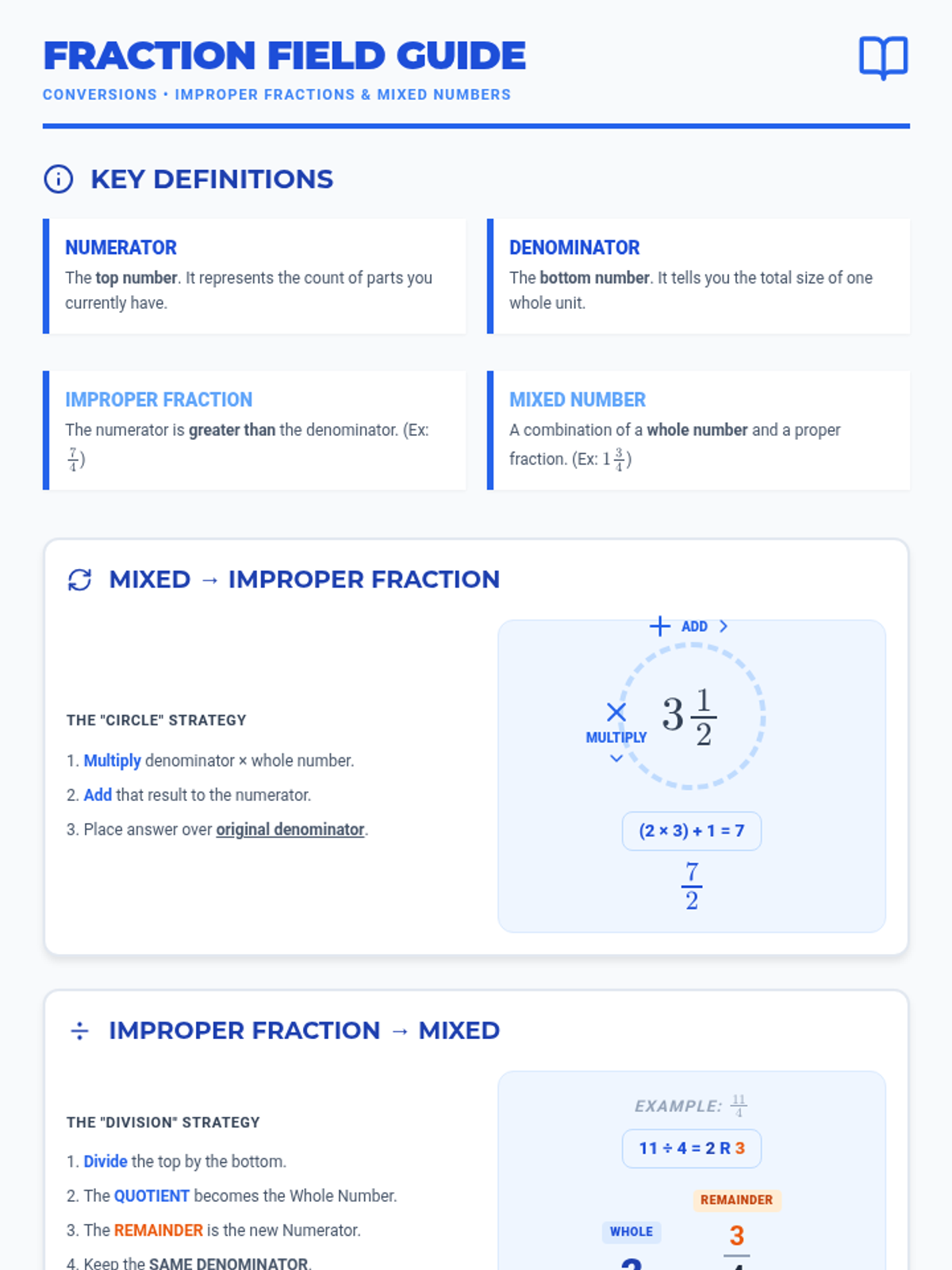
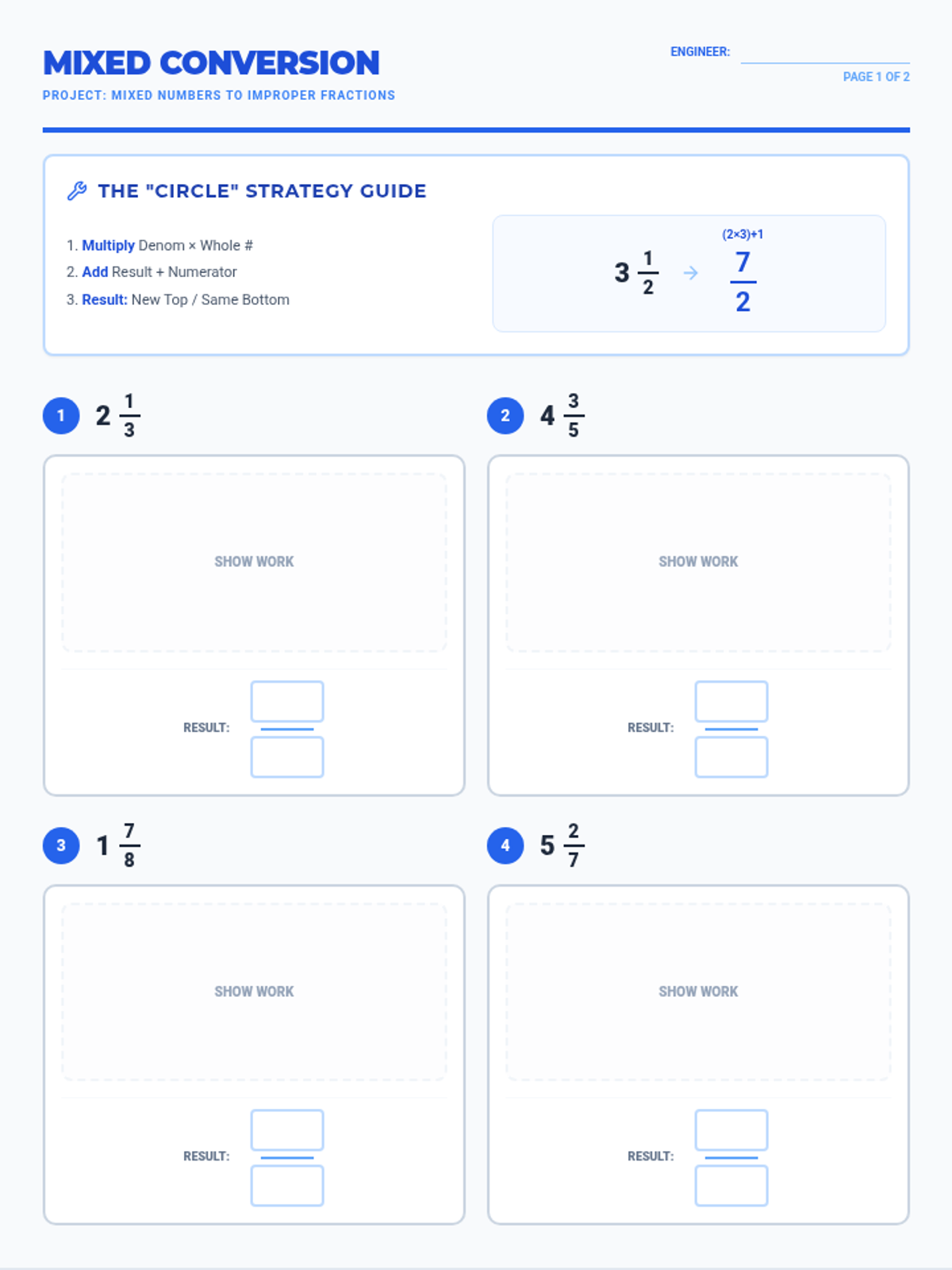
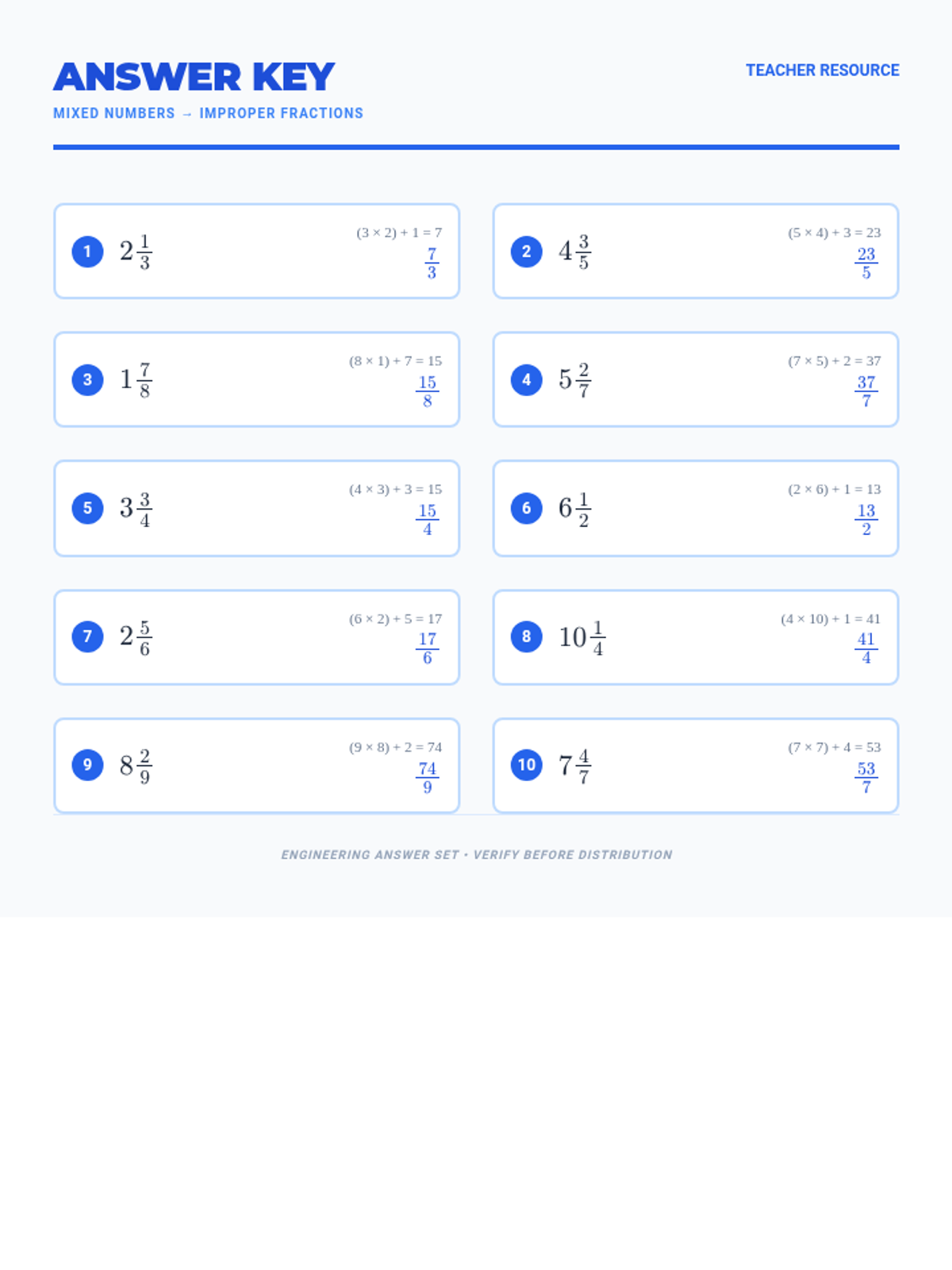
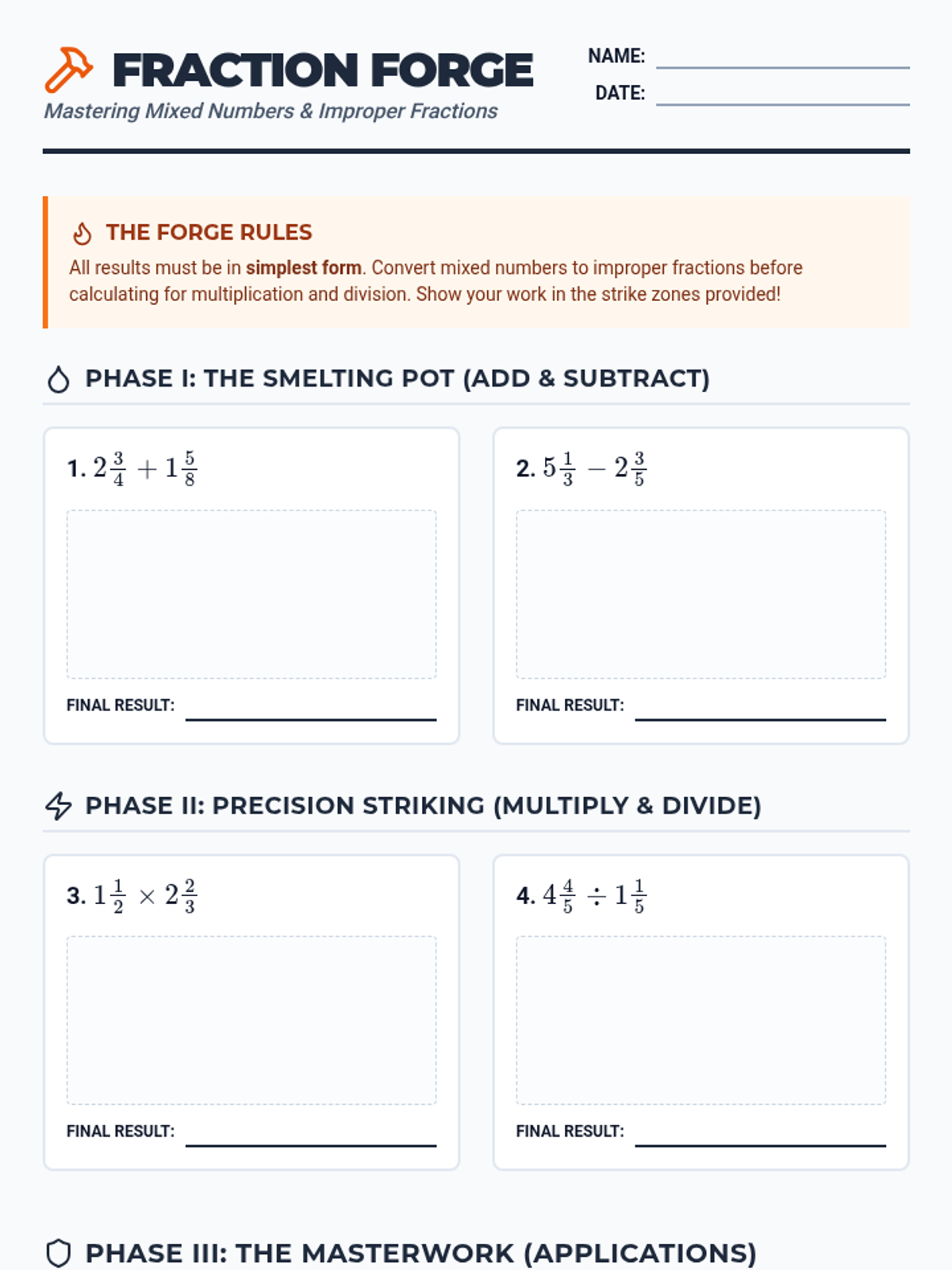
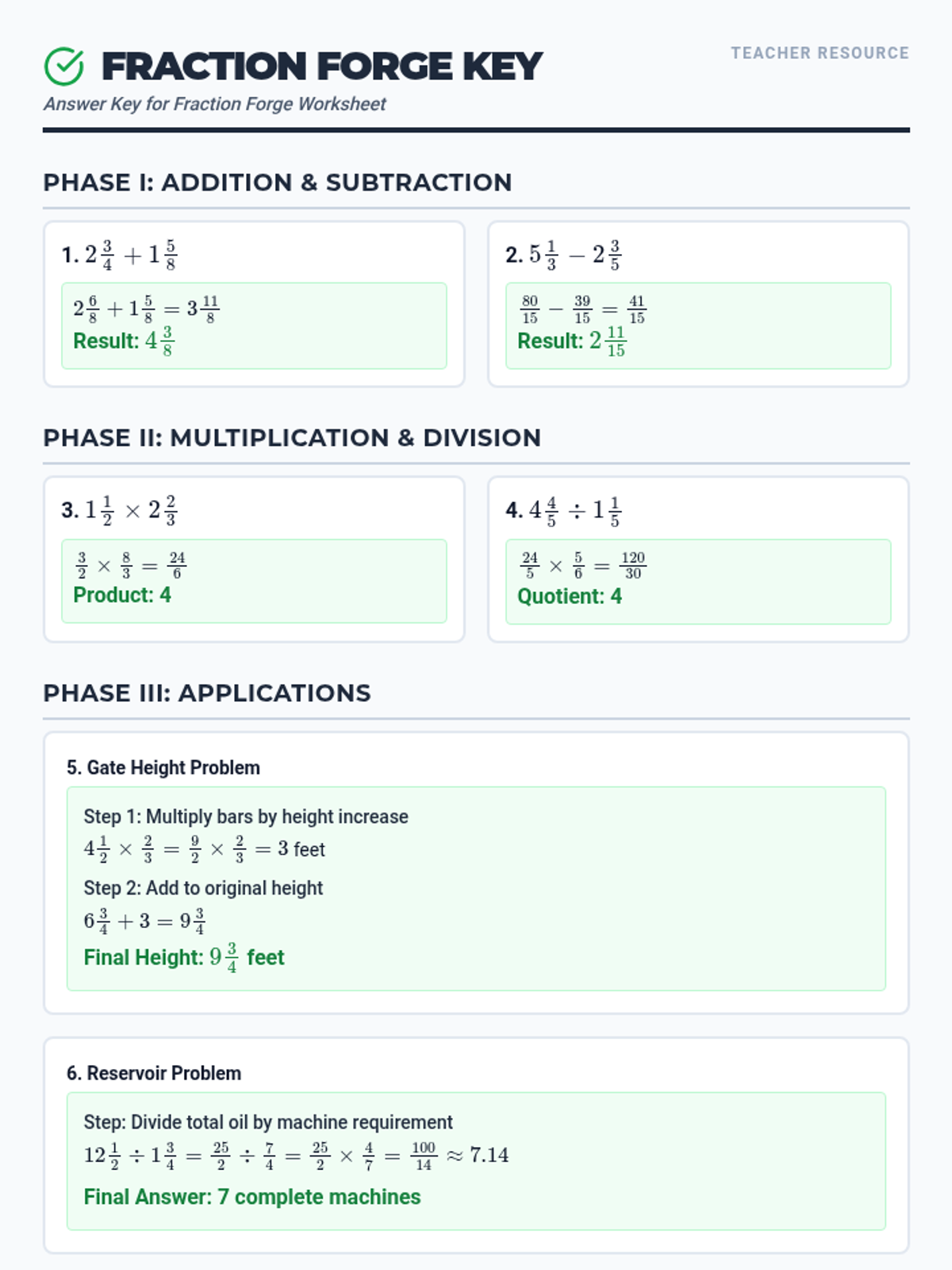
A comprehensive lesson on mastering operations with mixed numbers and improper fractions, featuring a thematic "Forge" aesthetic to engage 7th-grade students in mathematical problem-solving.
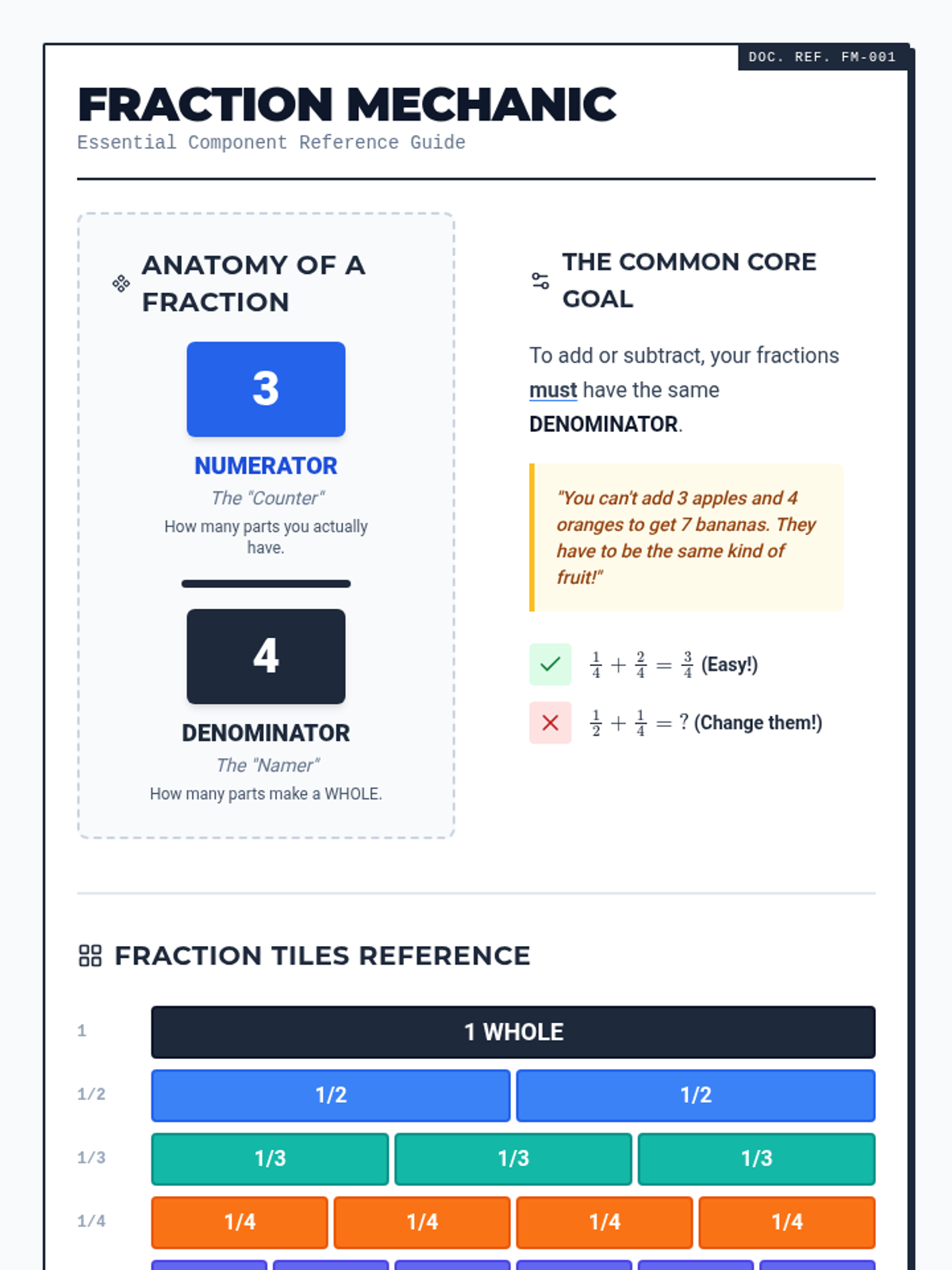
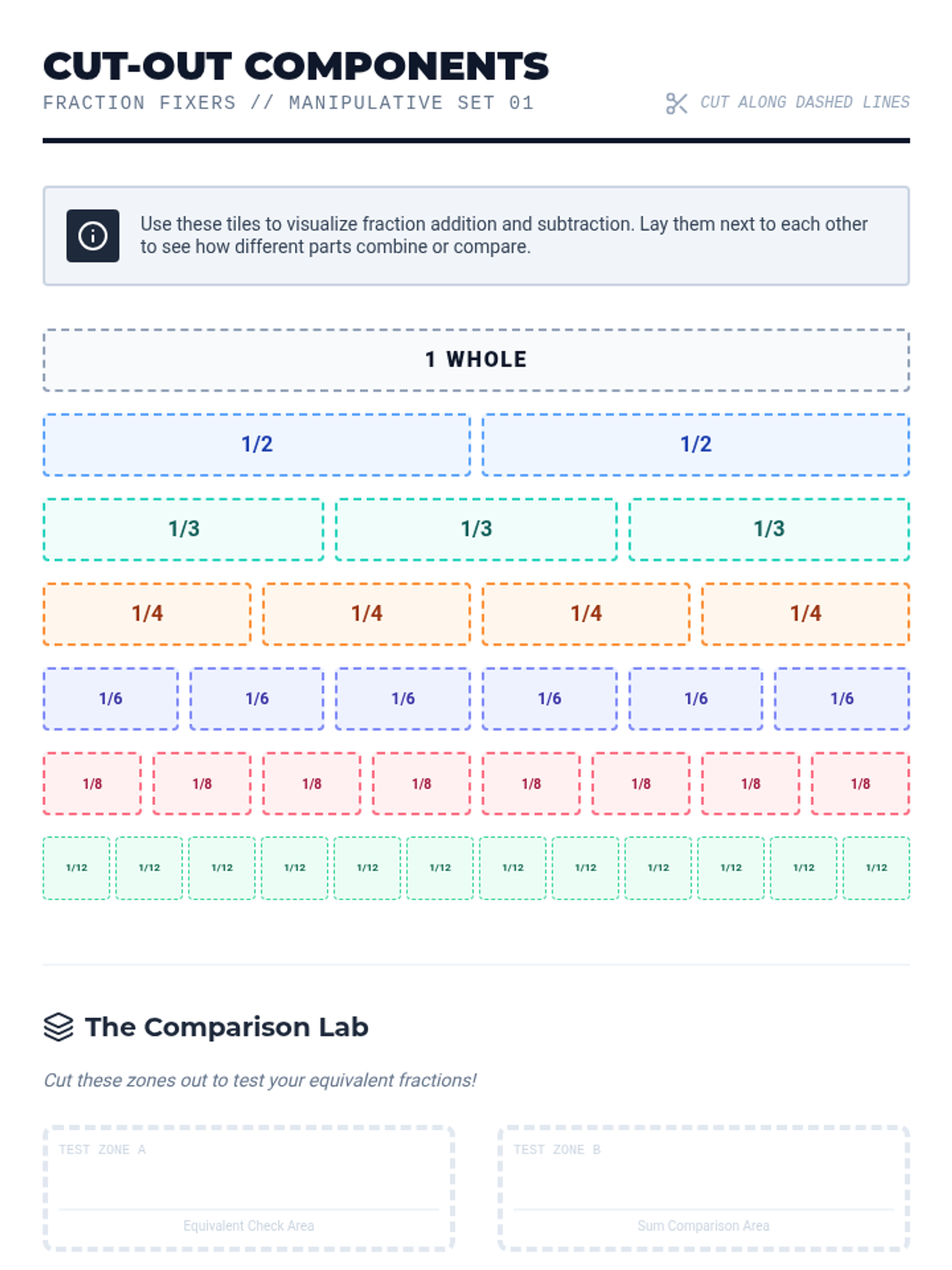
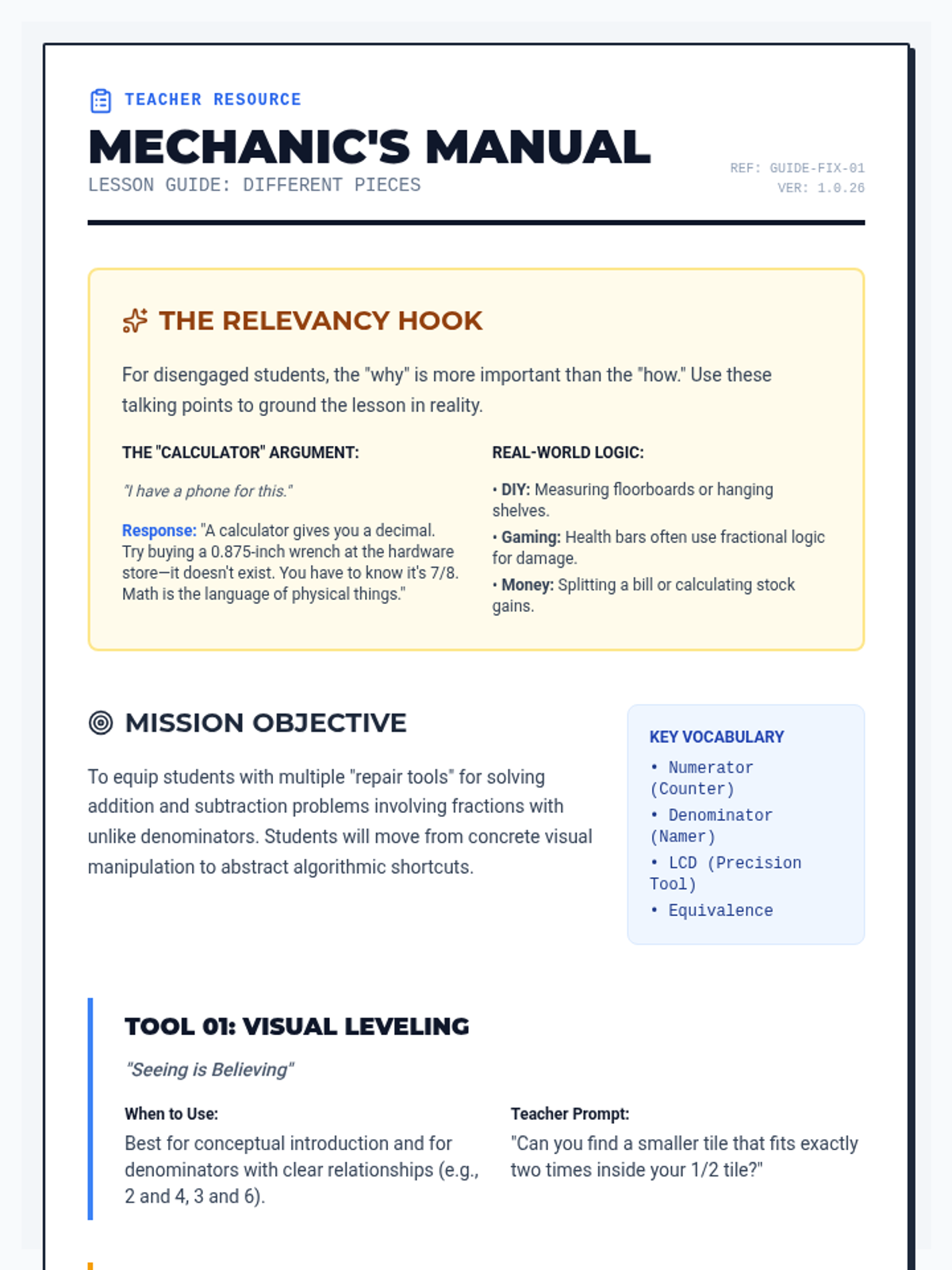
Focuses on identifying common denominators and using multiple strategies (visual, butterfly, and LCD) to add and subtract fractions with different parts.
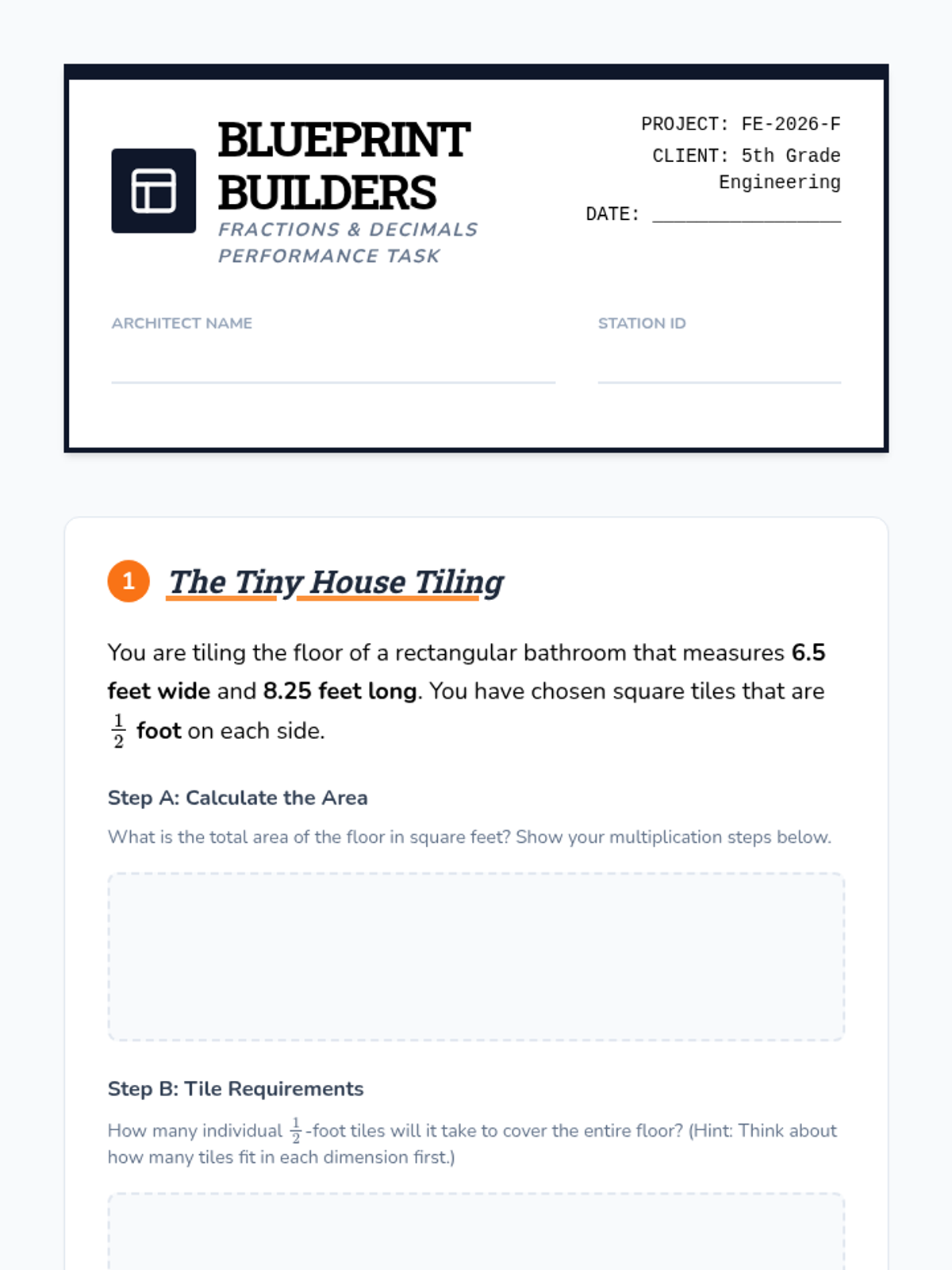
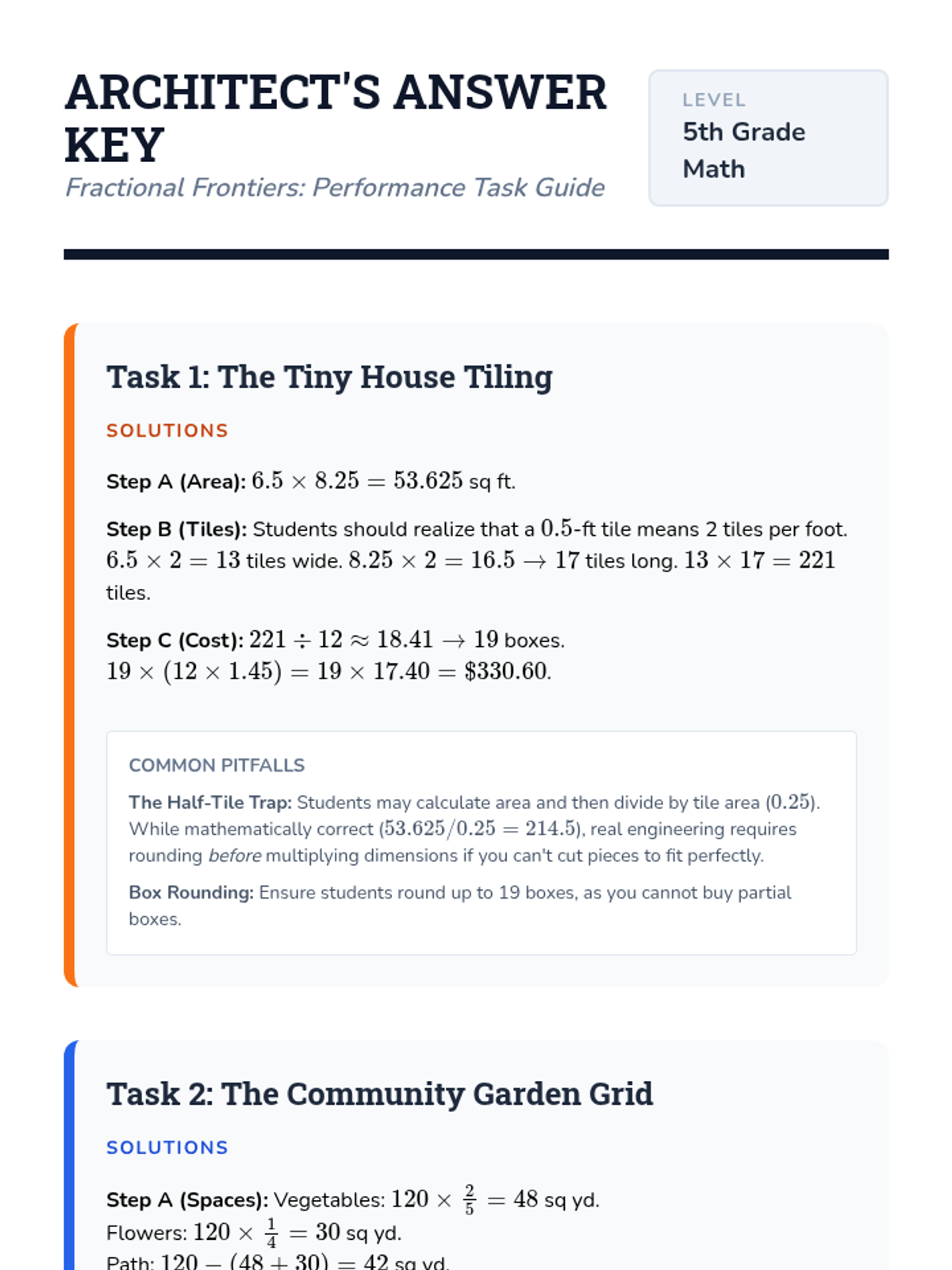
A series of high-level performance tasks where students apply fractional and decimal reasoning to real-world engineering and design challenges. Students will navigate budget constraints and spatial limitations to create blueprints and project plans.
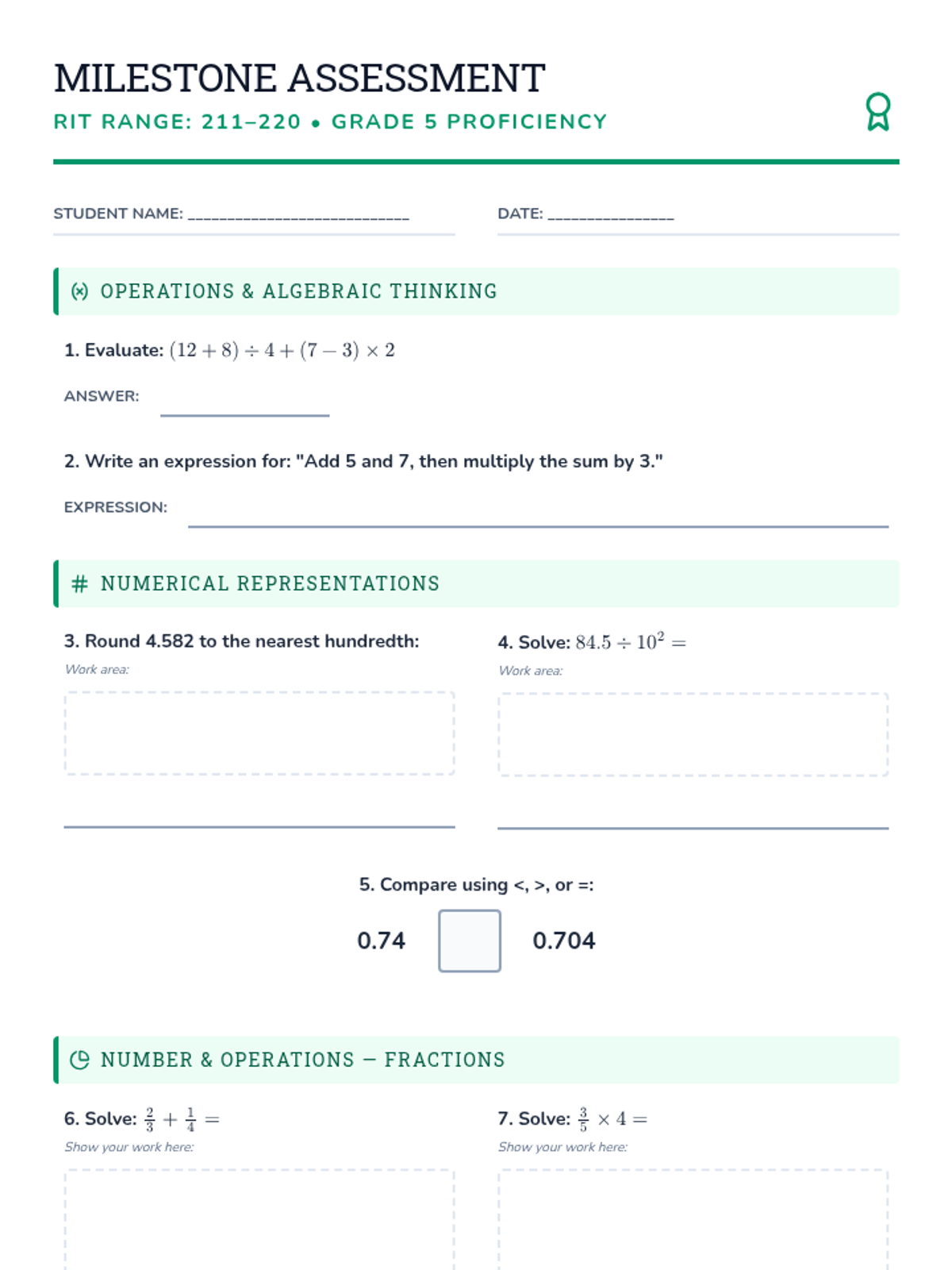
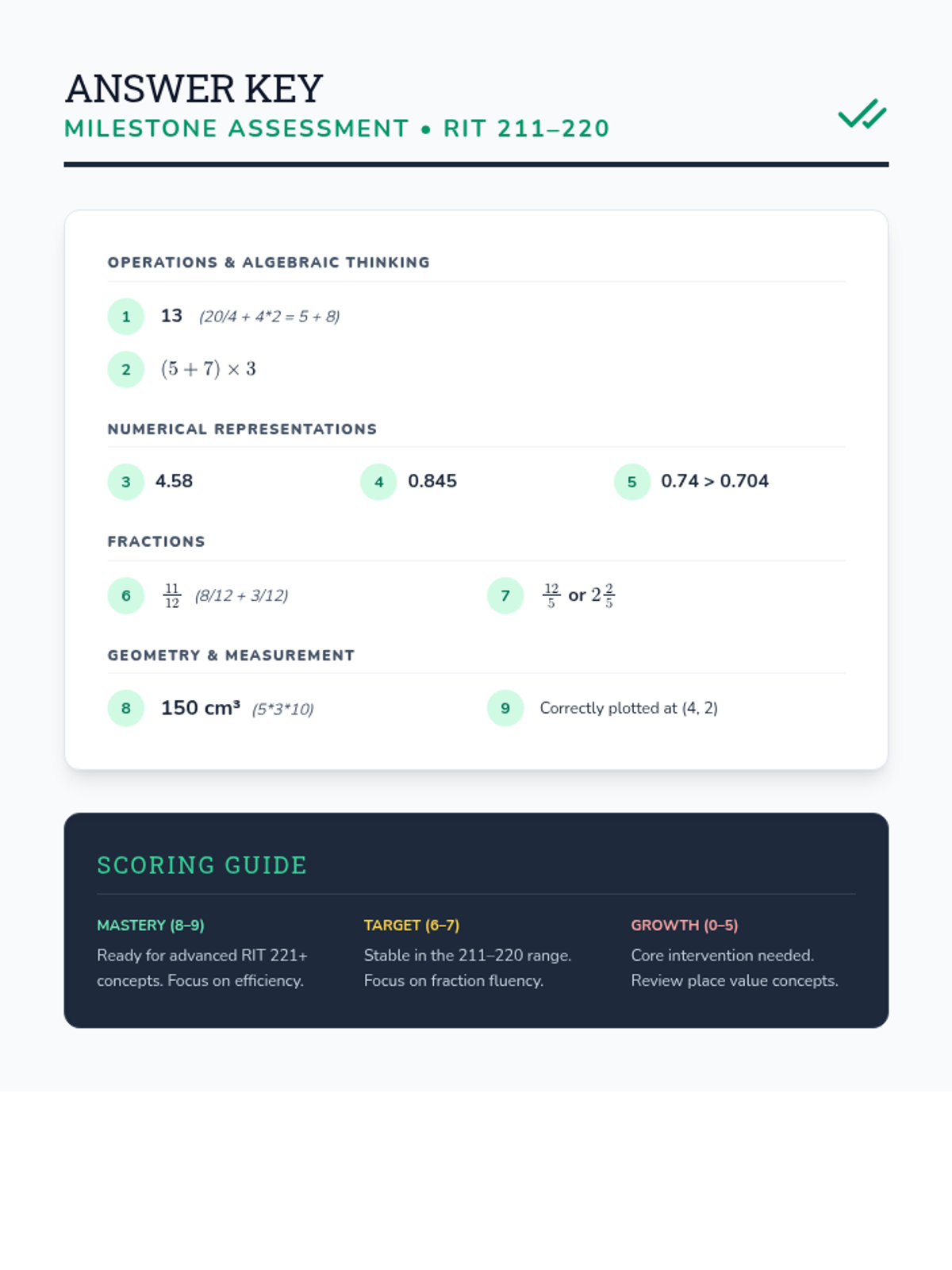
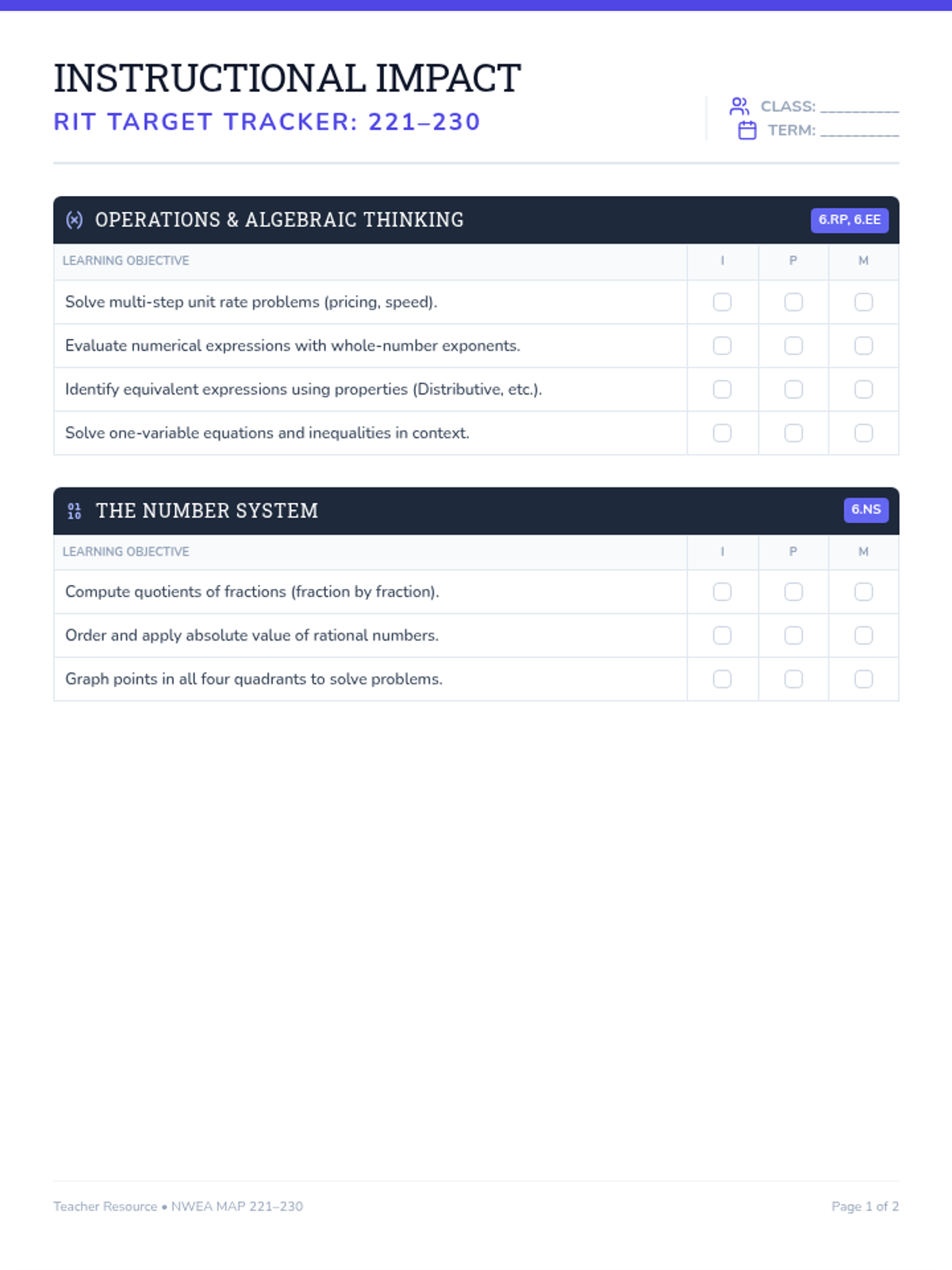
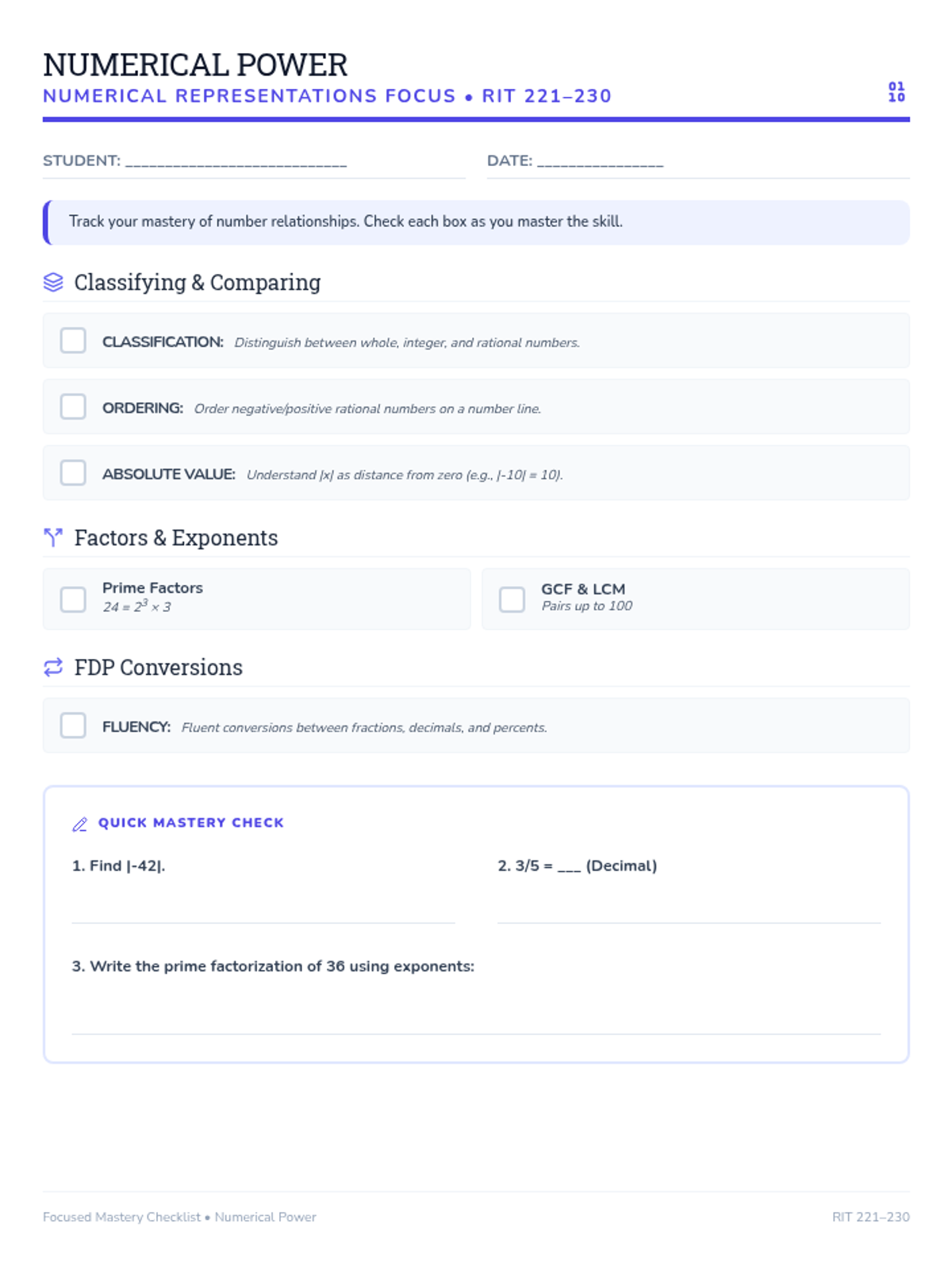
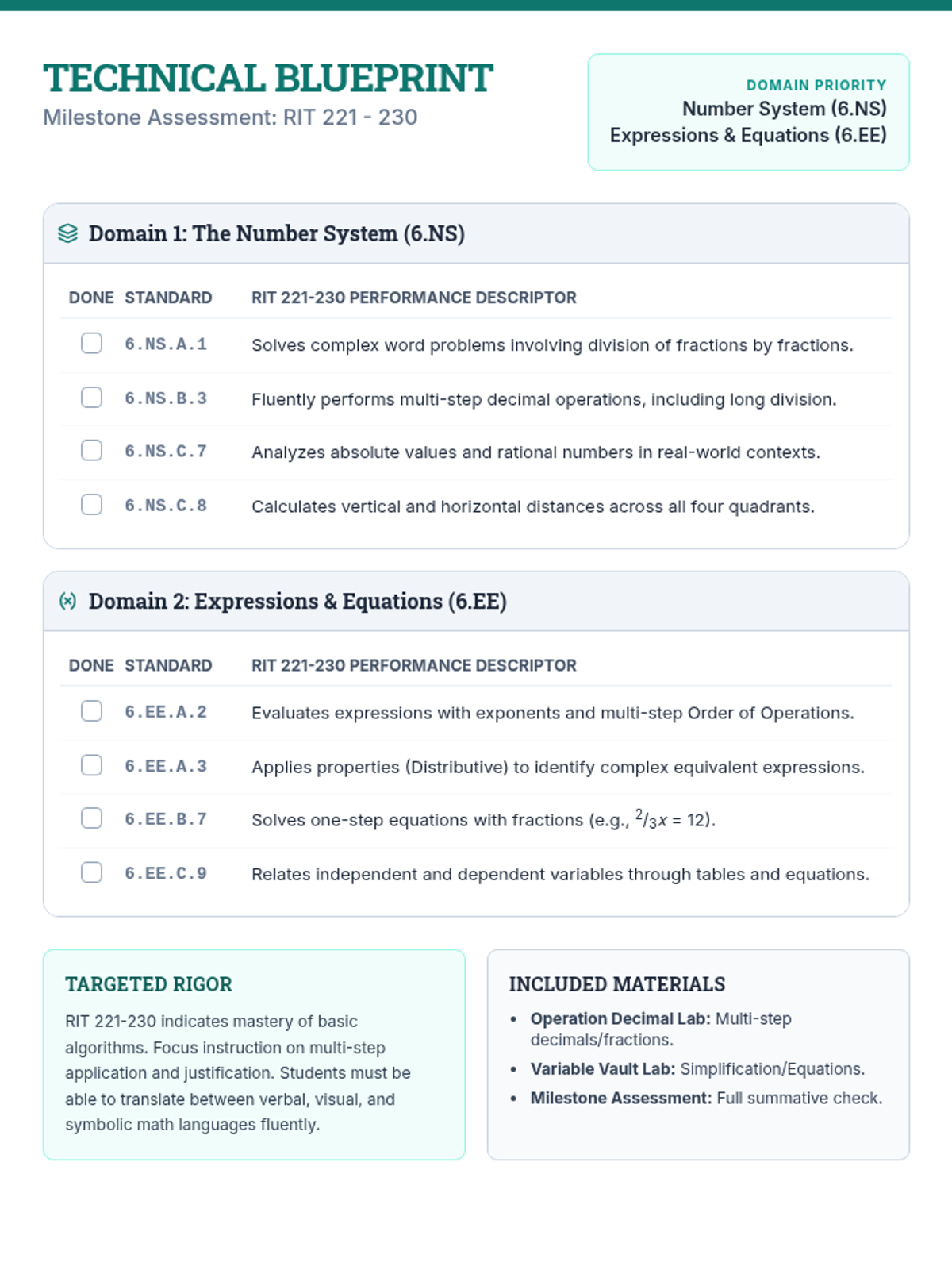
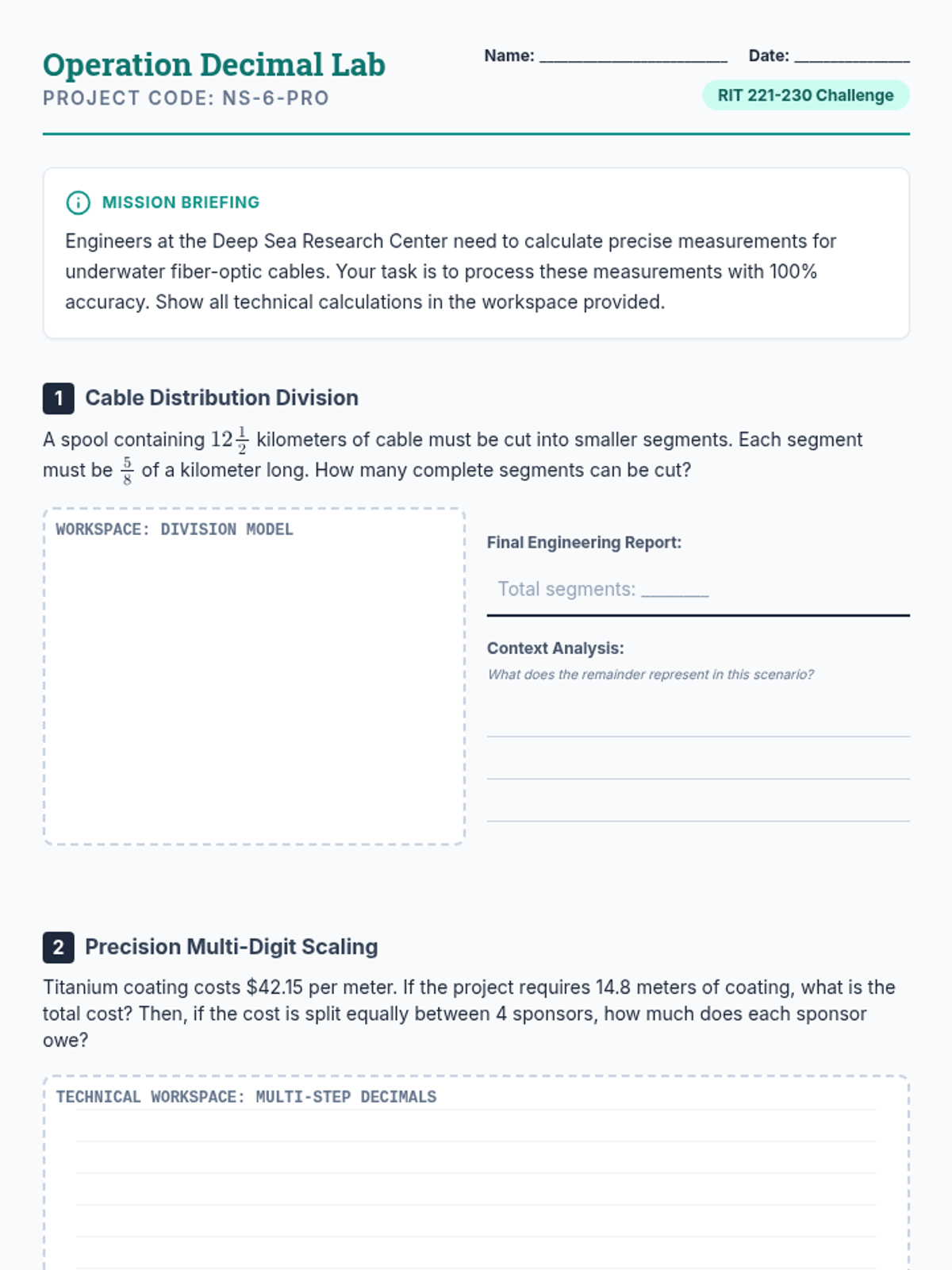
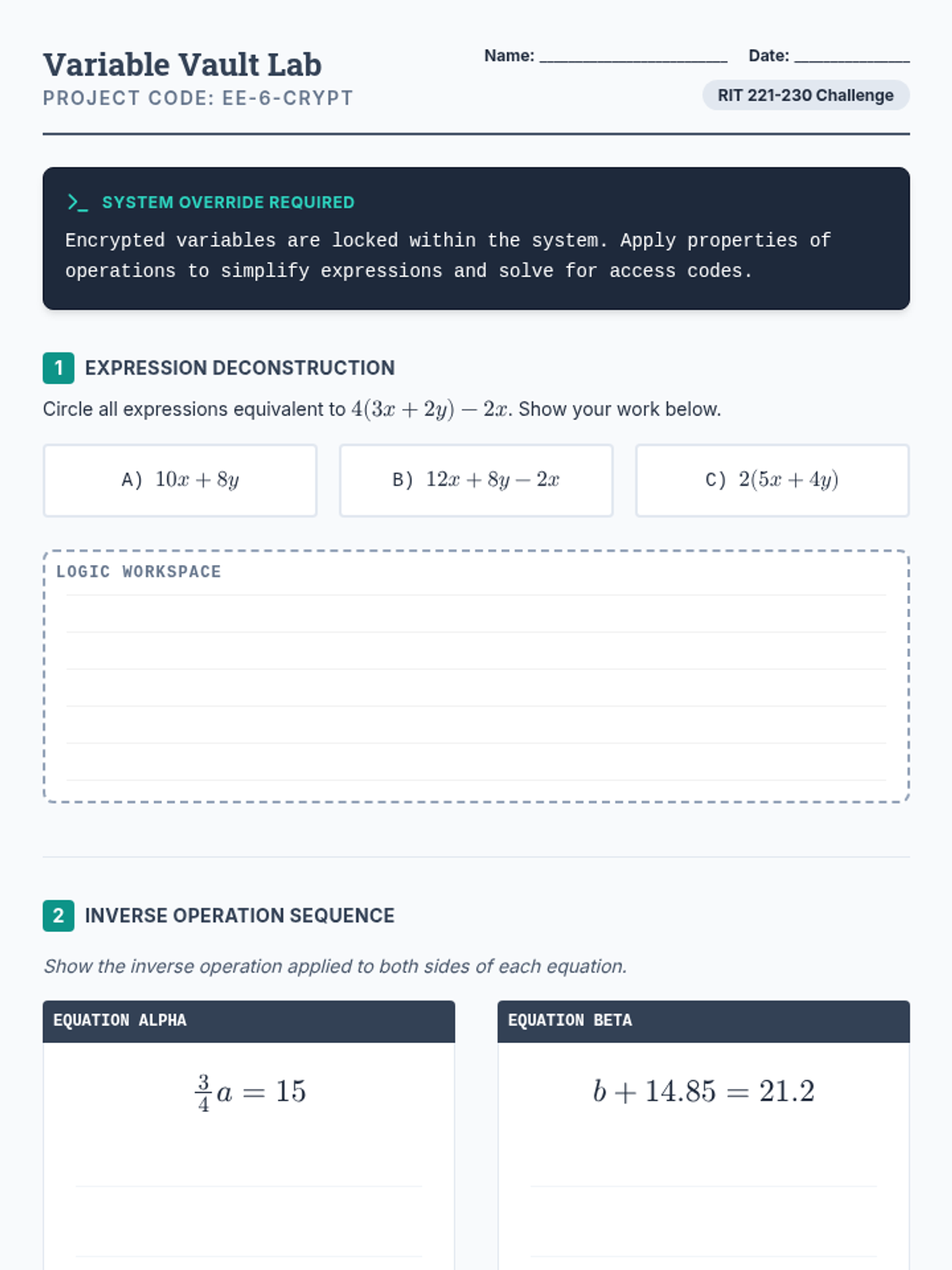
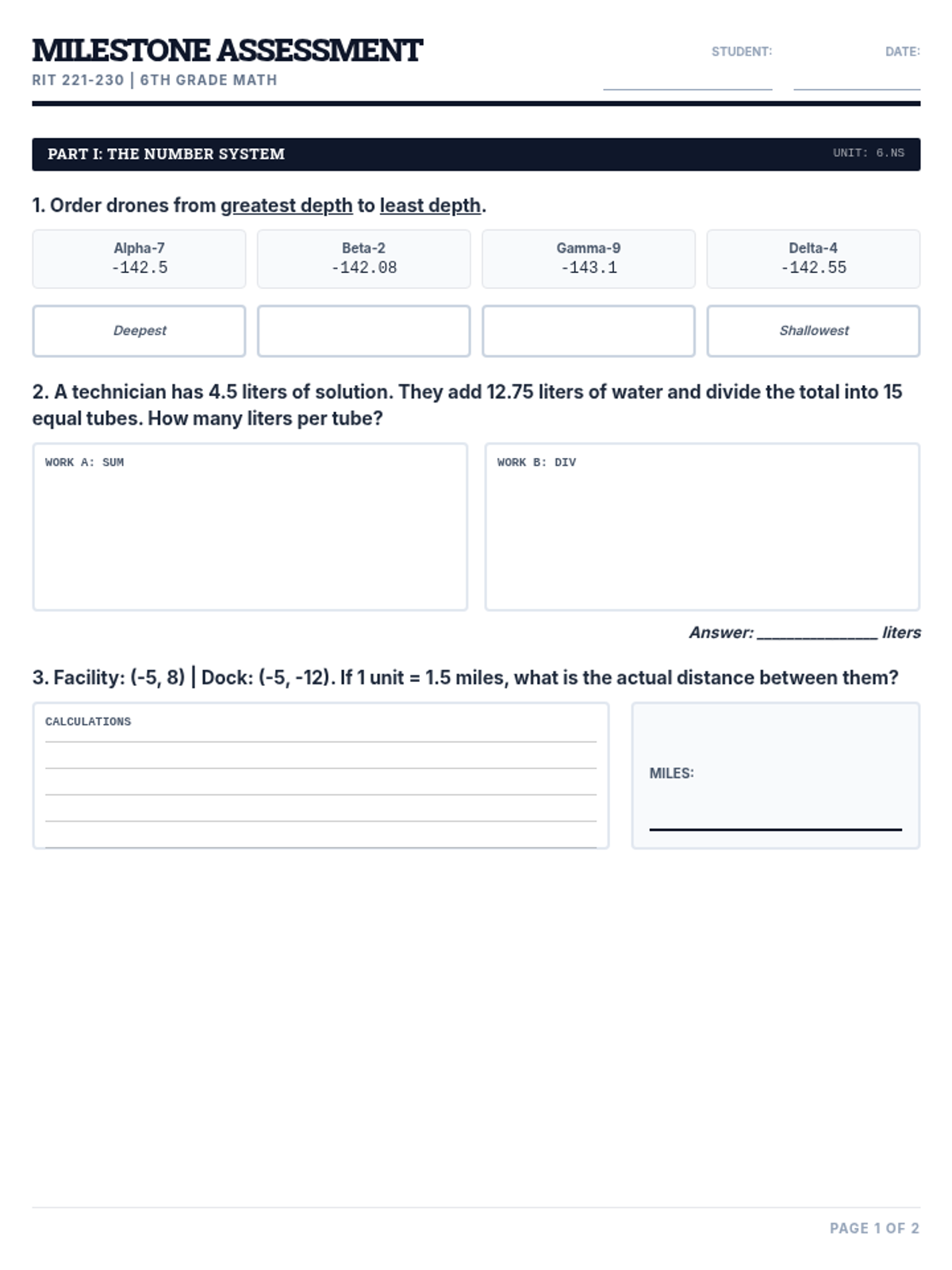
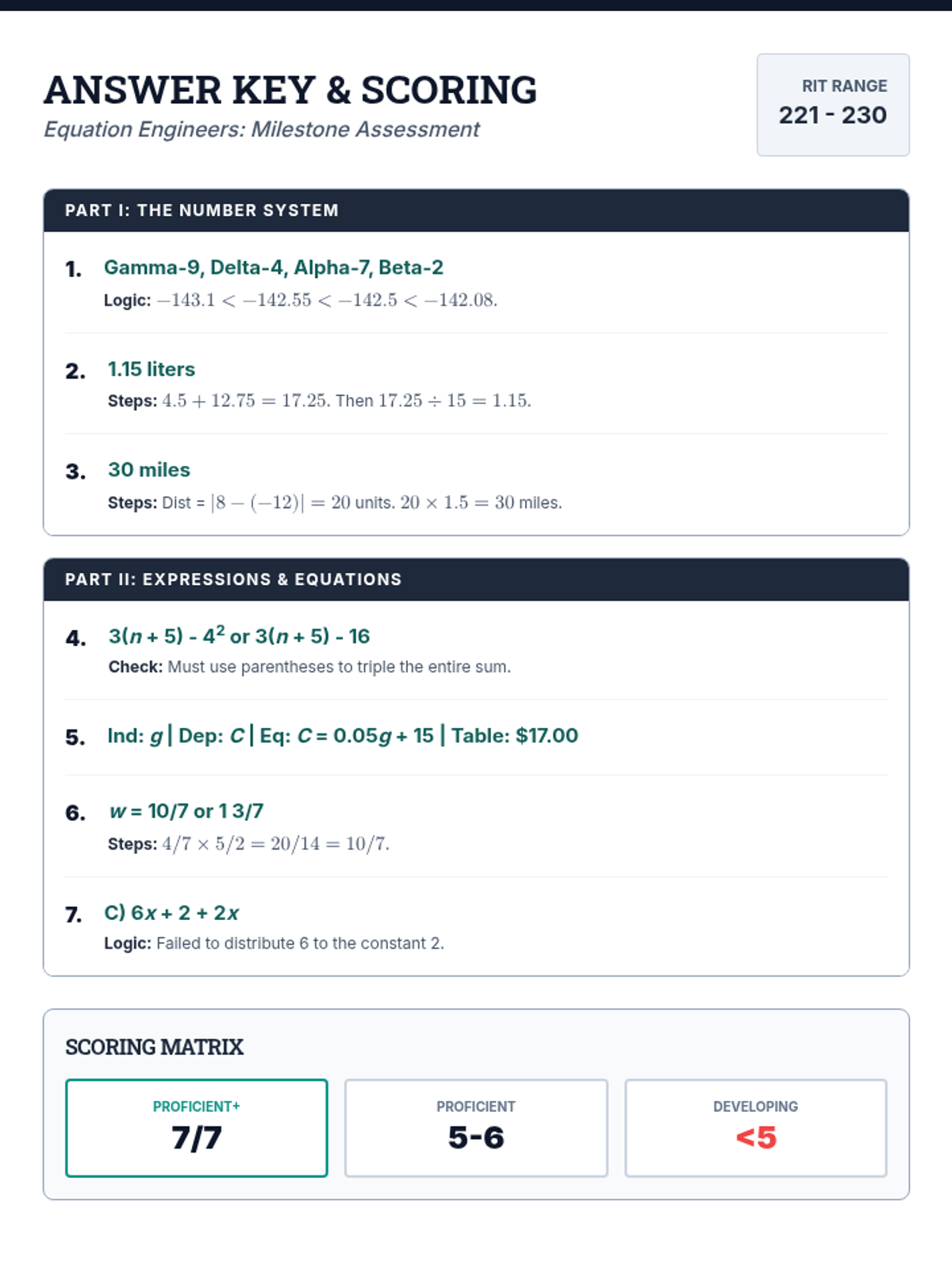
A comprehensive milestone assessment and review unit for 6th-grade students performing in the 221-230 RIT range, focusing on The Number System and Expressions & Equations. Includes a technical blueprint, skill-building lab activities, and a final proficiency assessment.
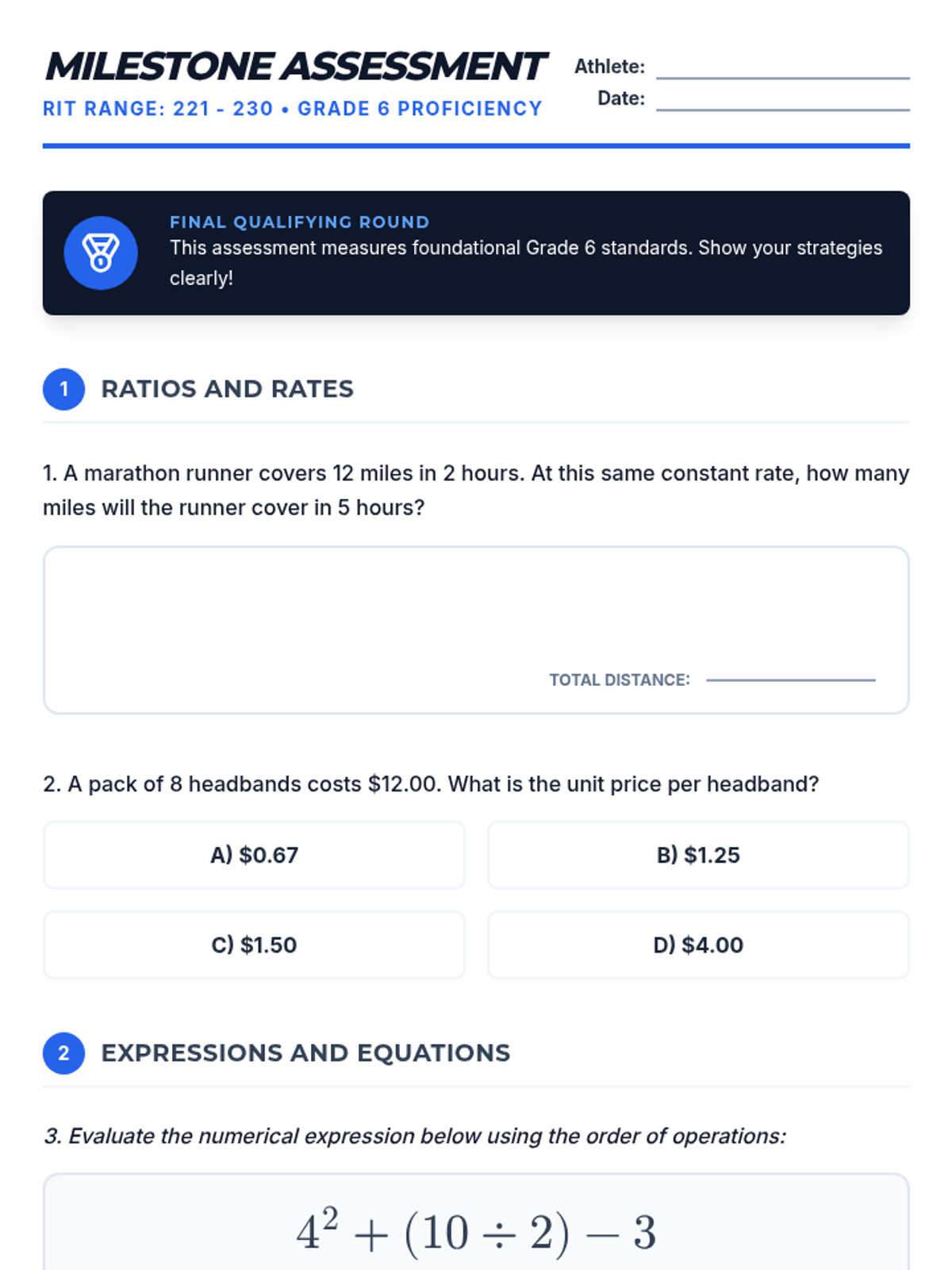
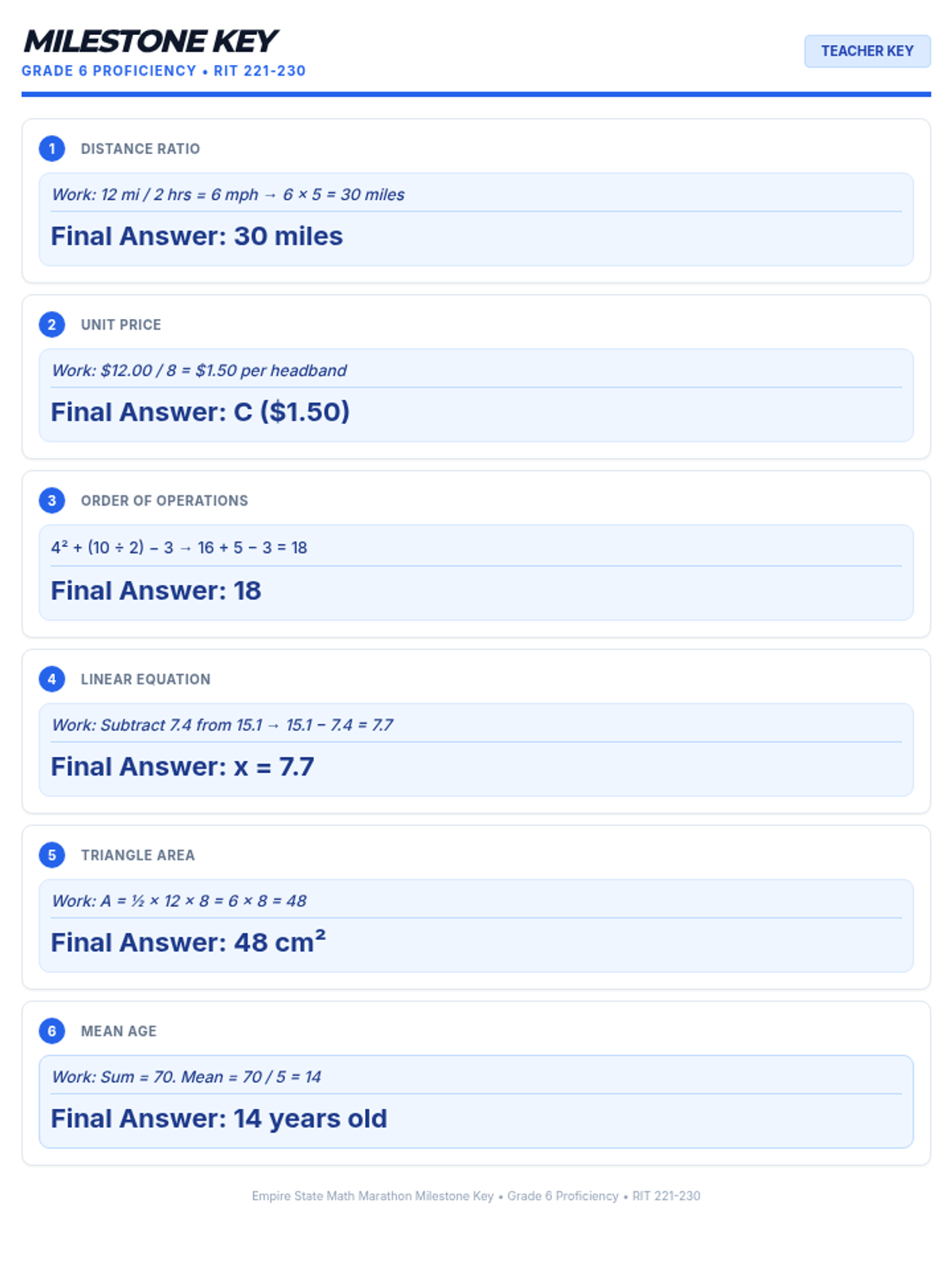
A cumulative milestone assessment designed for students at Grade 6 proficiency (RIT 221-230). This assessment checks foundational understanding of ratios, expressions, and geometry needed for 8th-grade success.
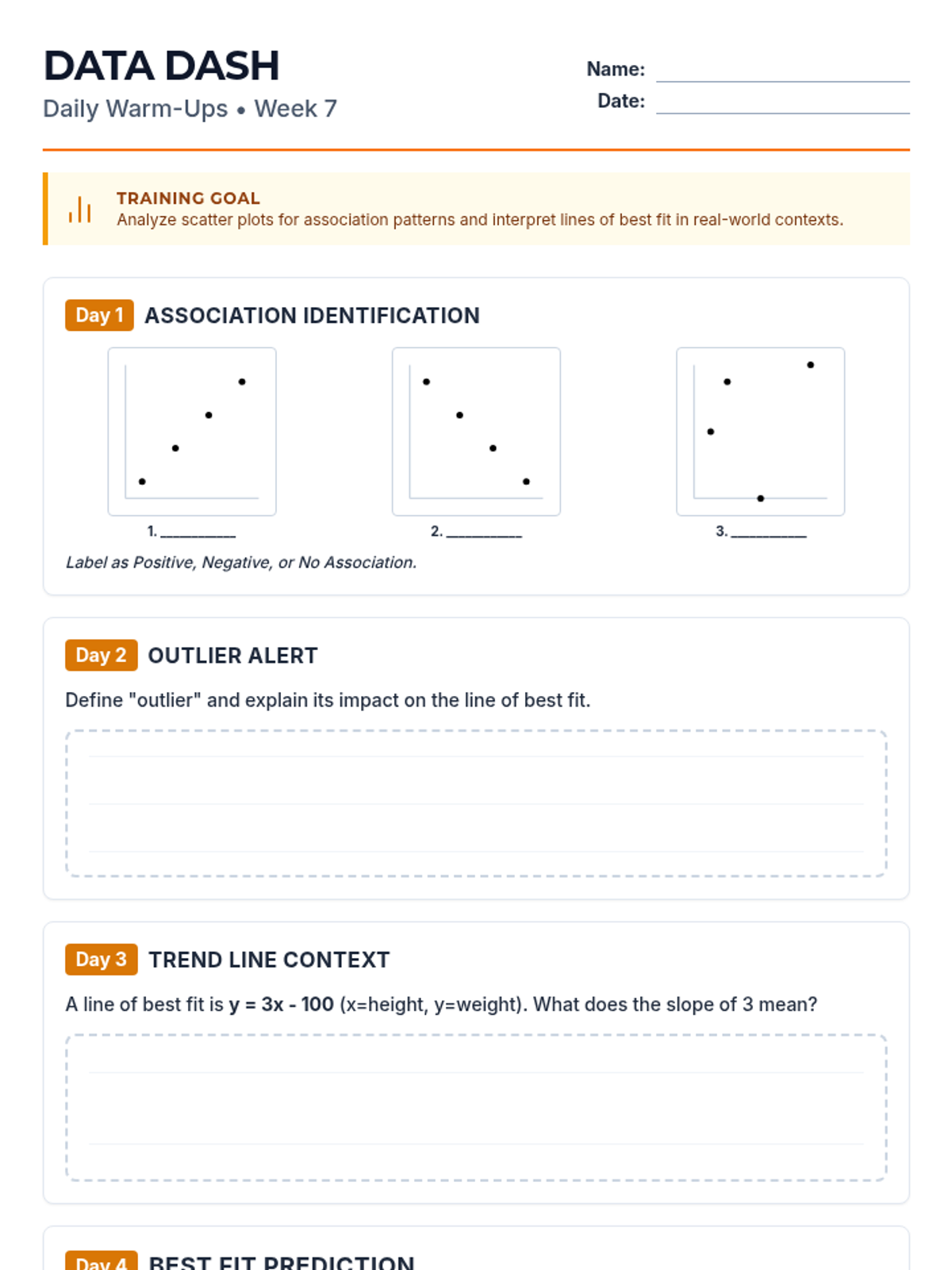
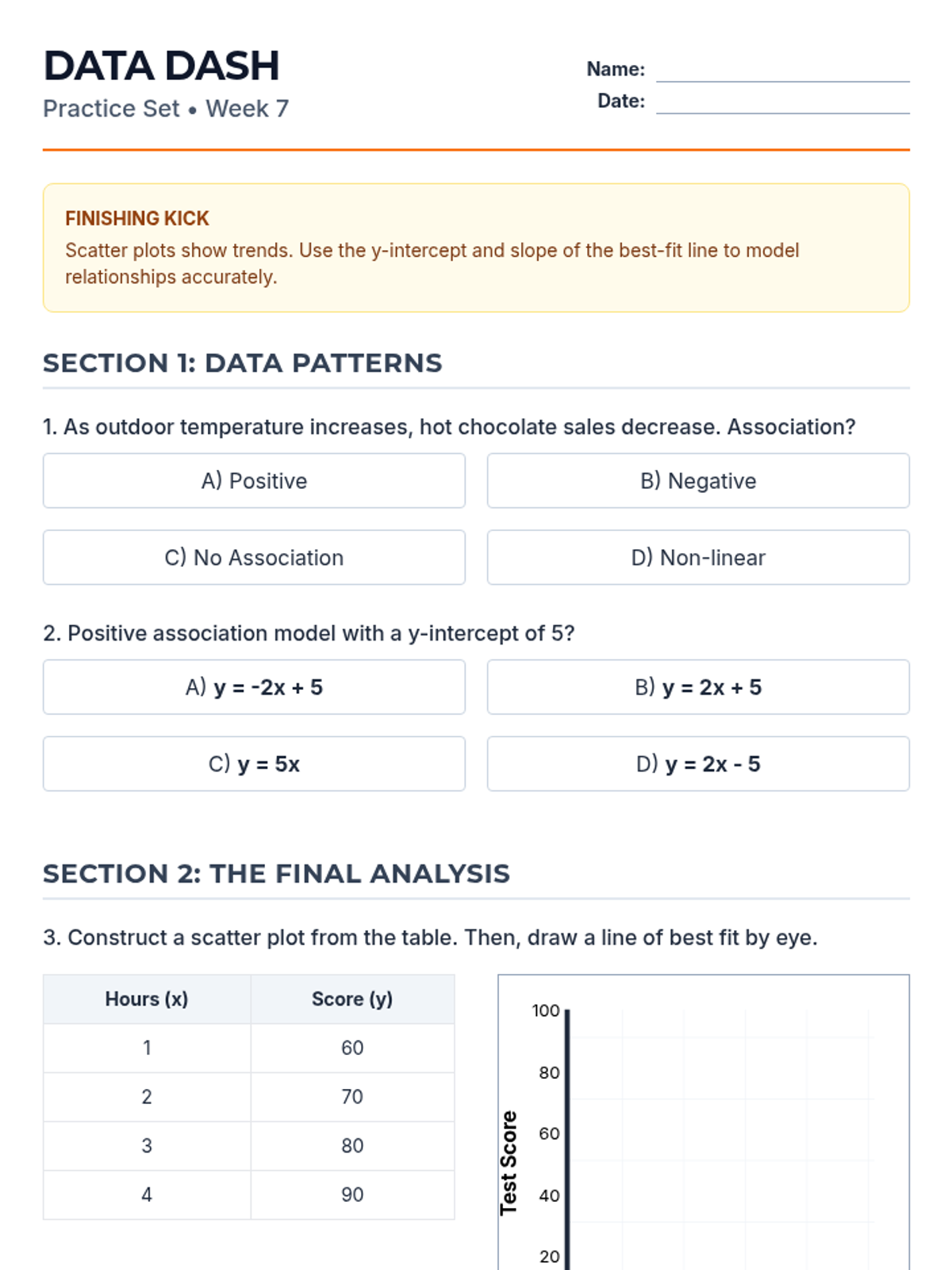
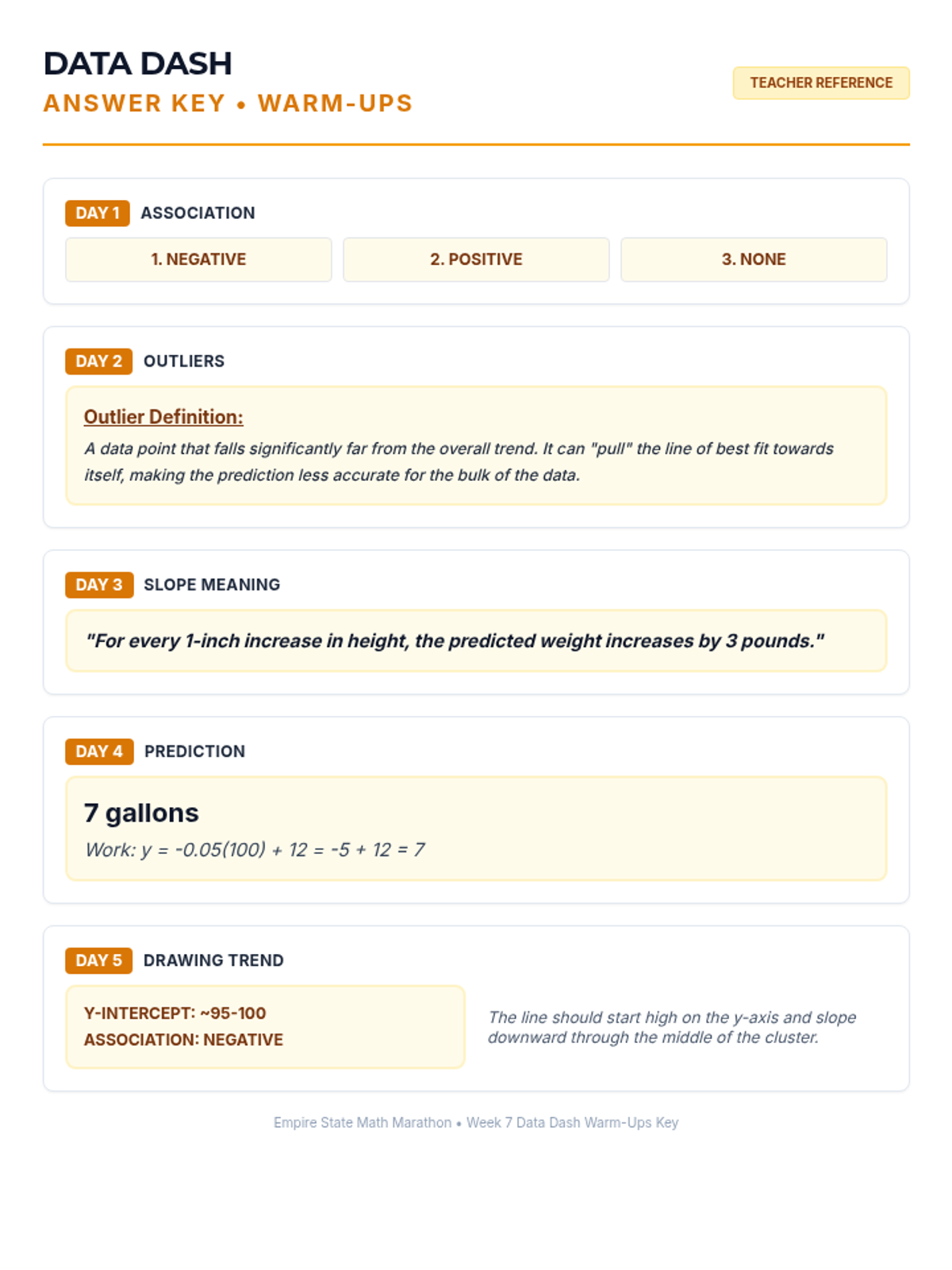
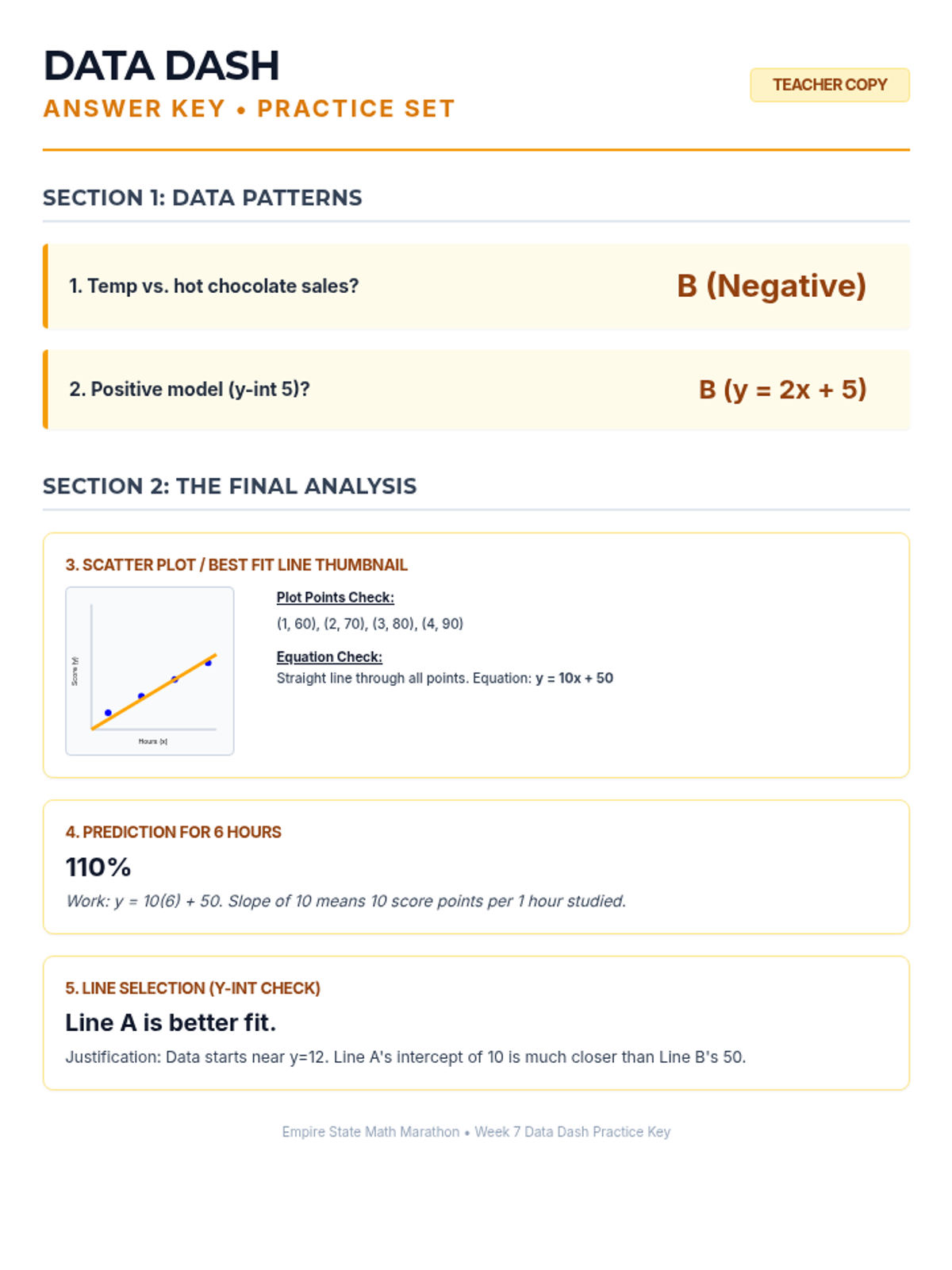
Week 7 analyzes bivariate data through scatter plots, interpreting lines of best fit, and using linear models to make predictions.
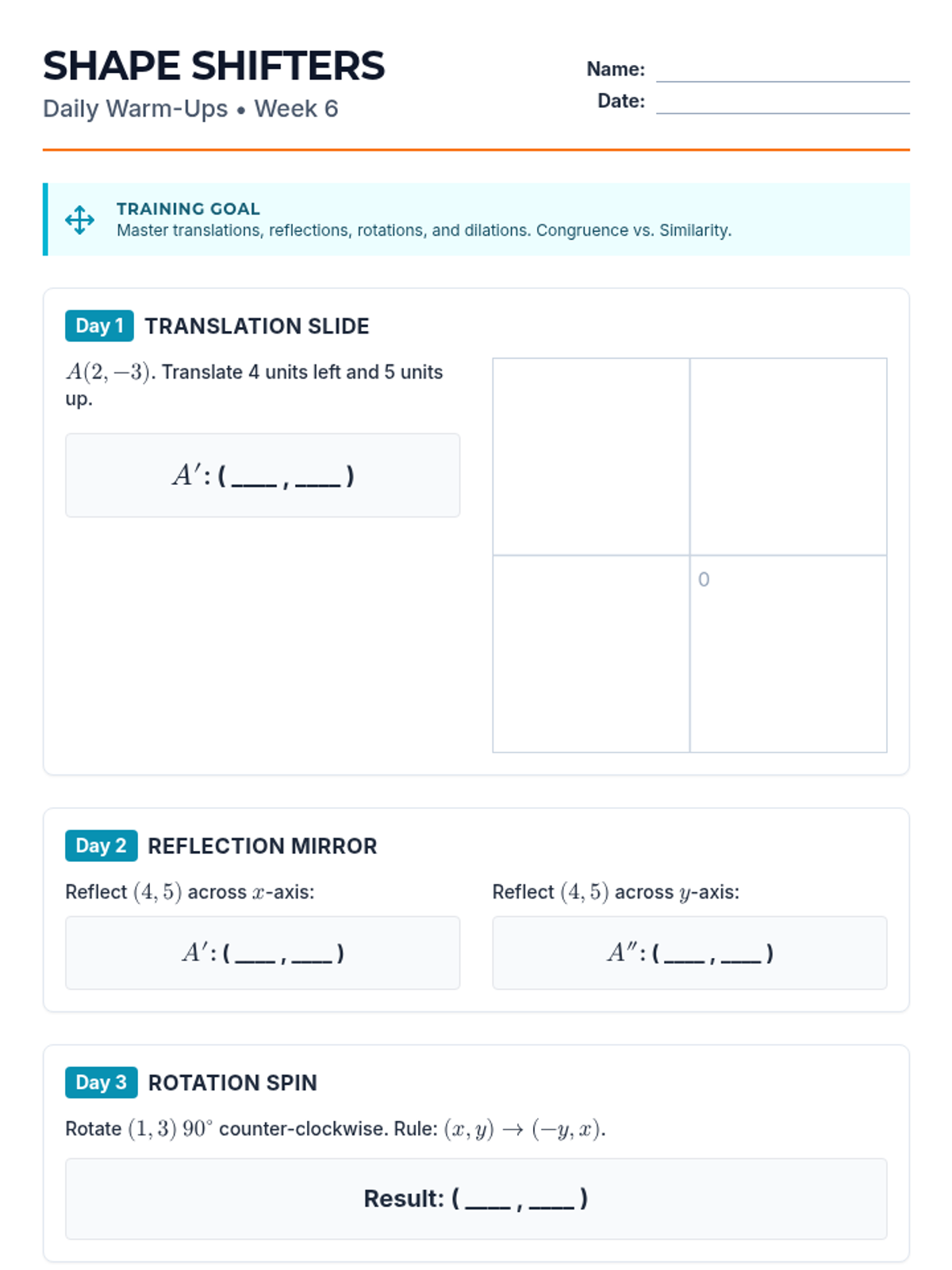
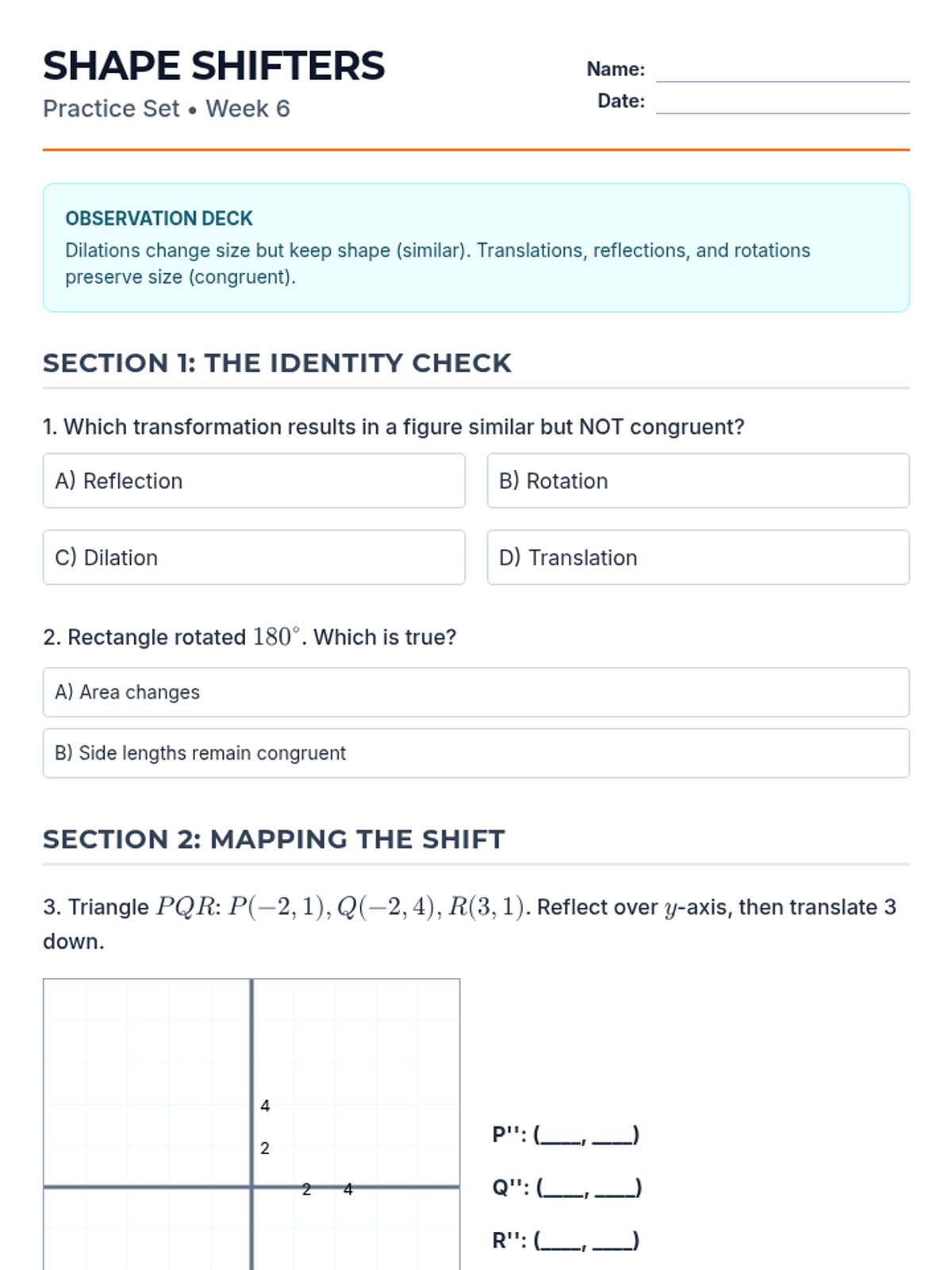
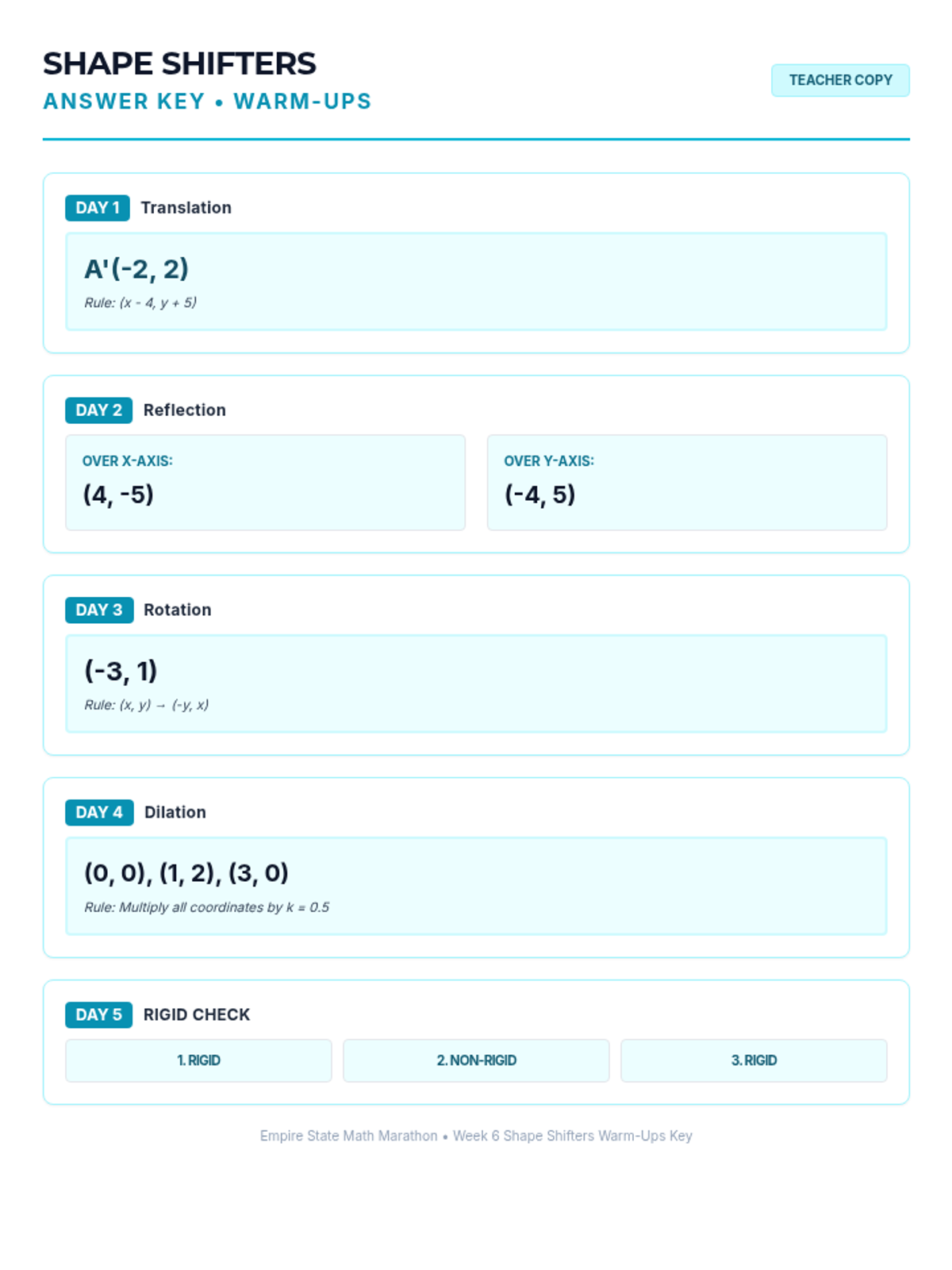
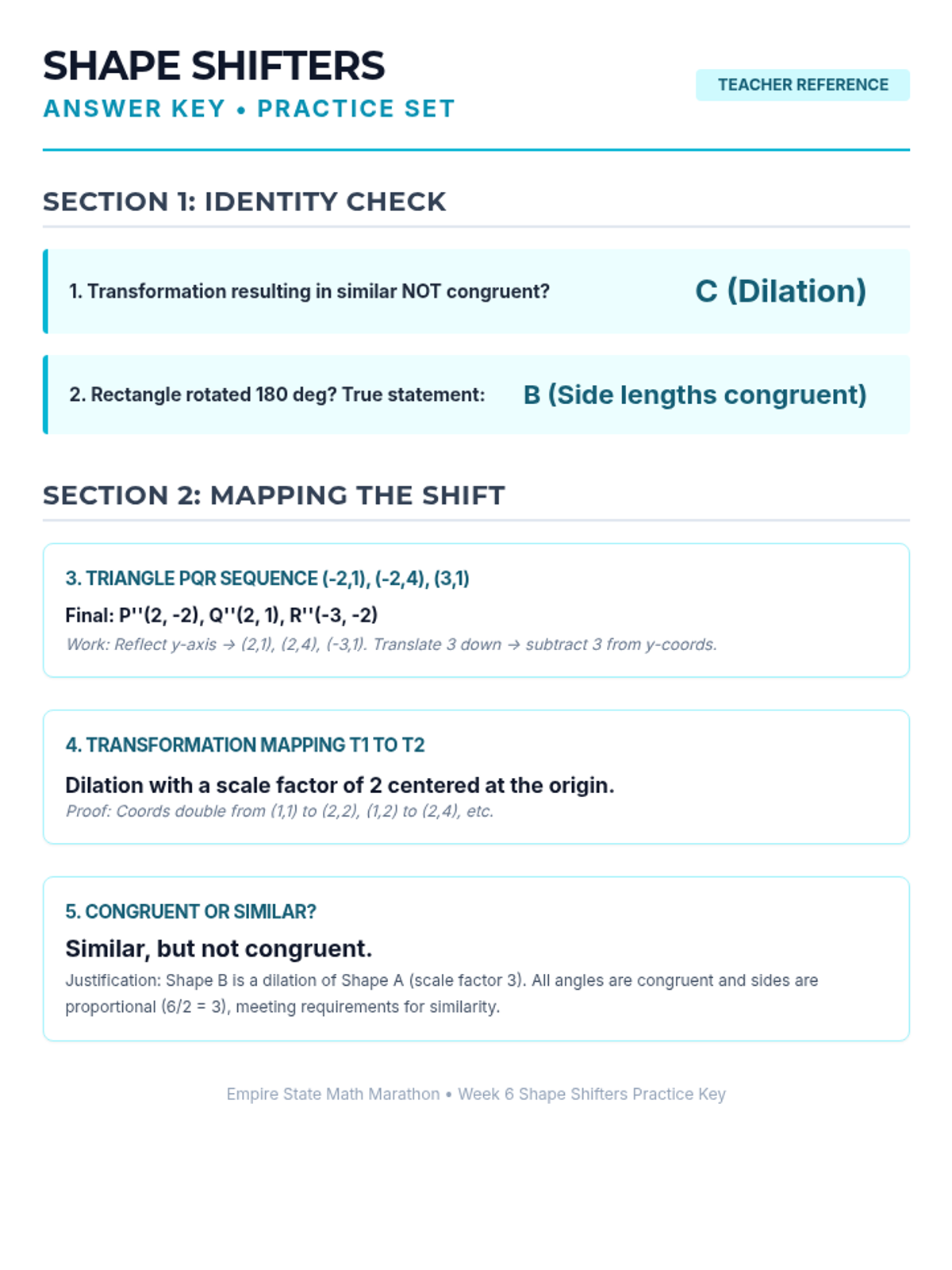
Week 6 focuses on rigid transformations (translations, reflections, rotations) and similarity transformations (dilations).
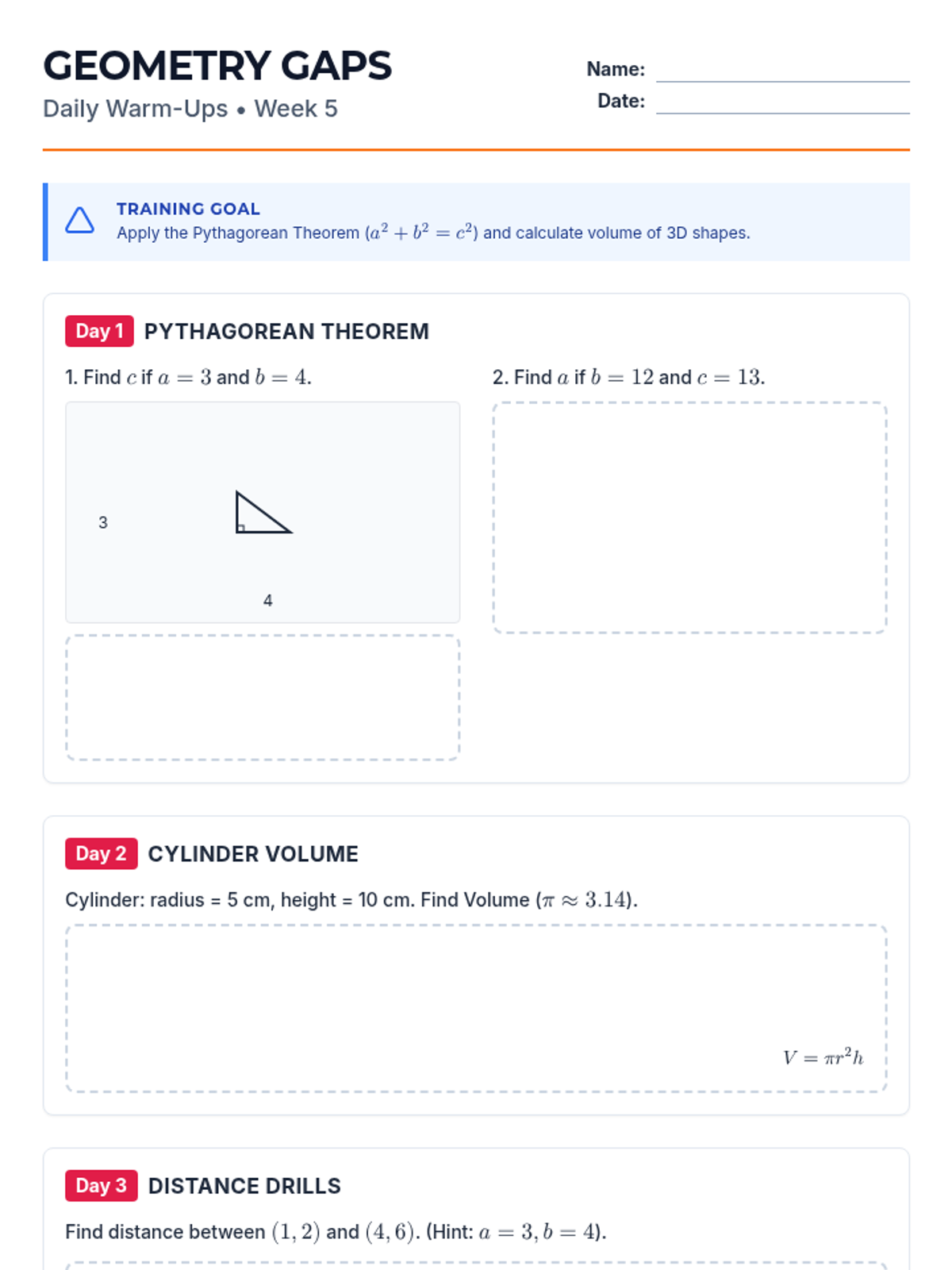
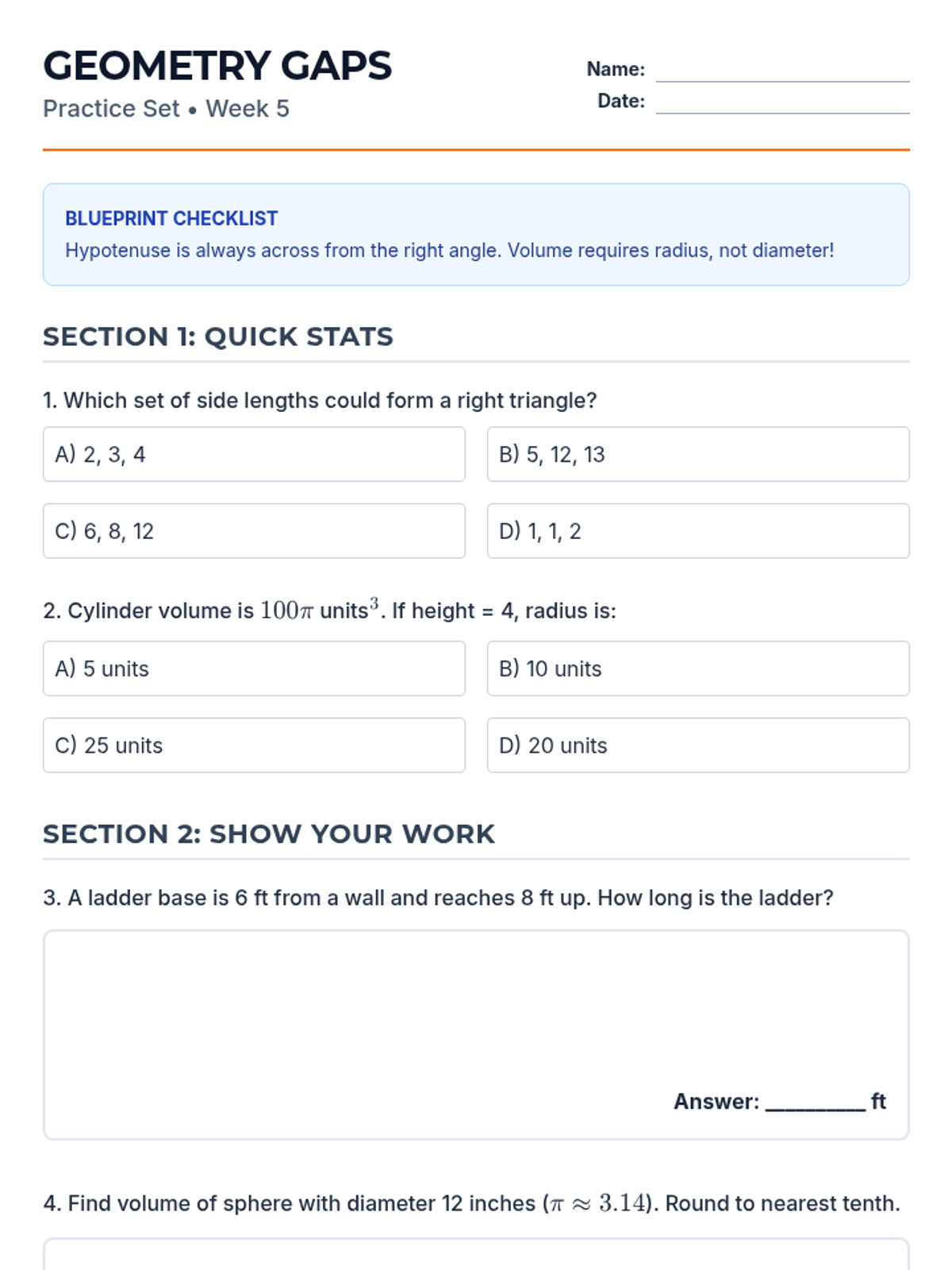
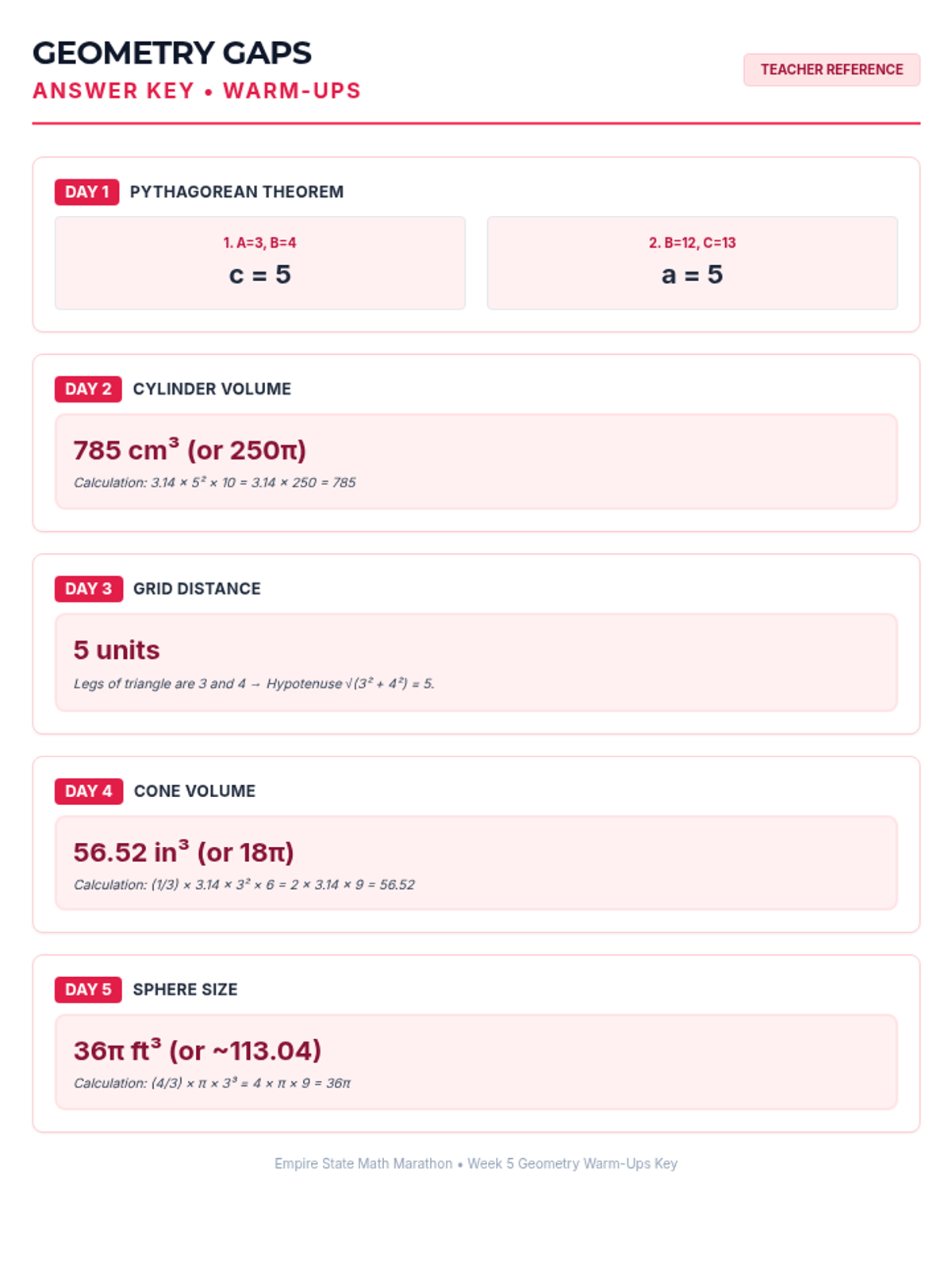
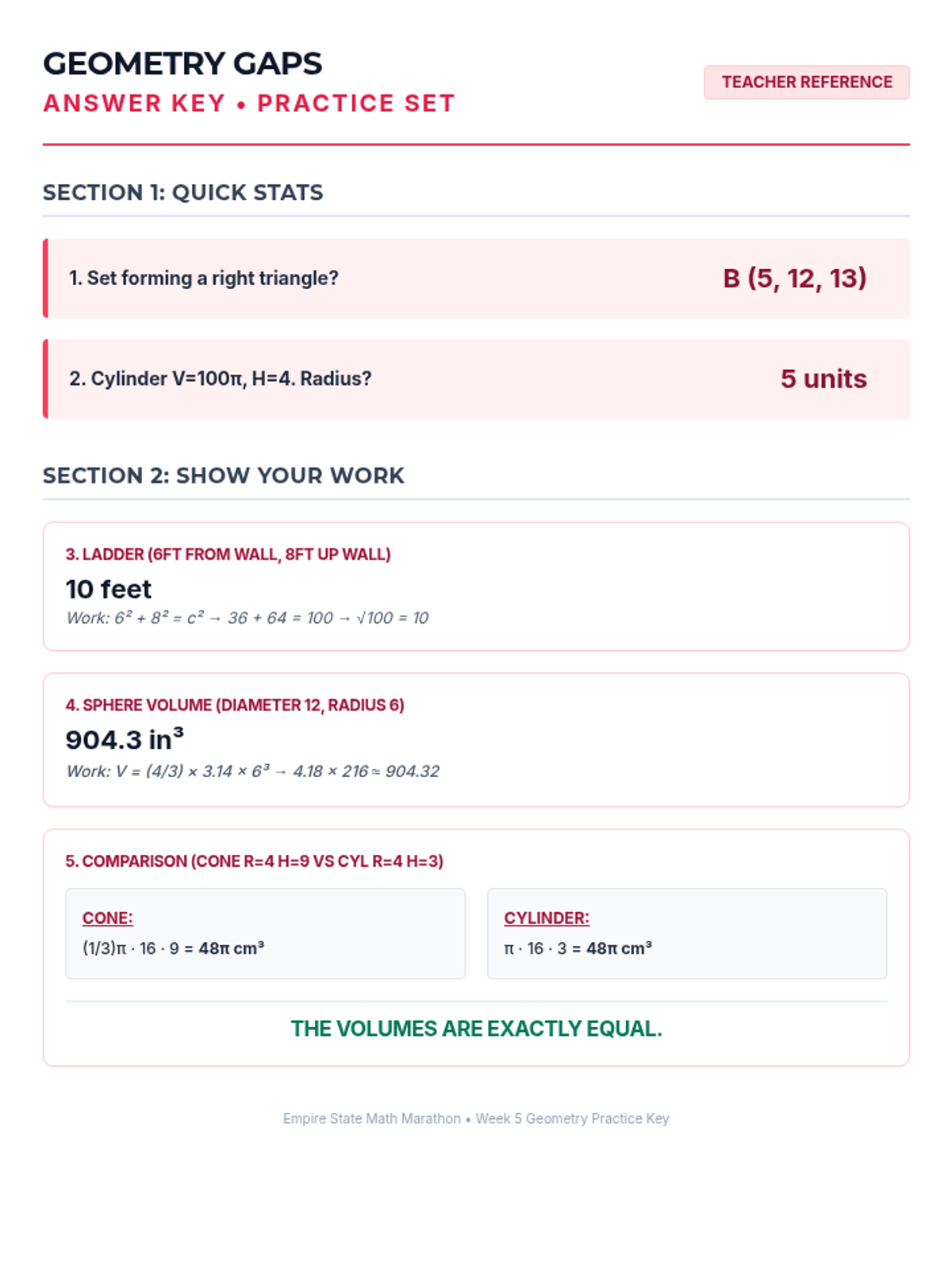
Week 5 reviews the Pythagorean Theorem and volume formulas for cylinders, cones, and spheres.
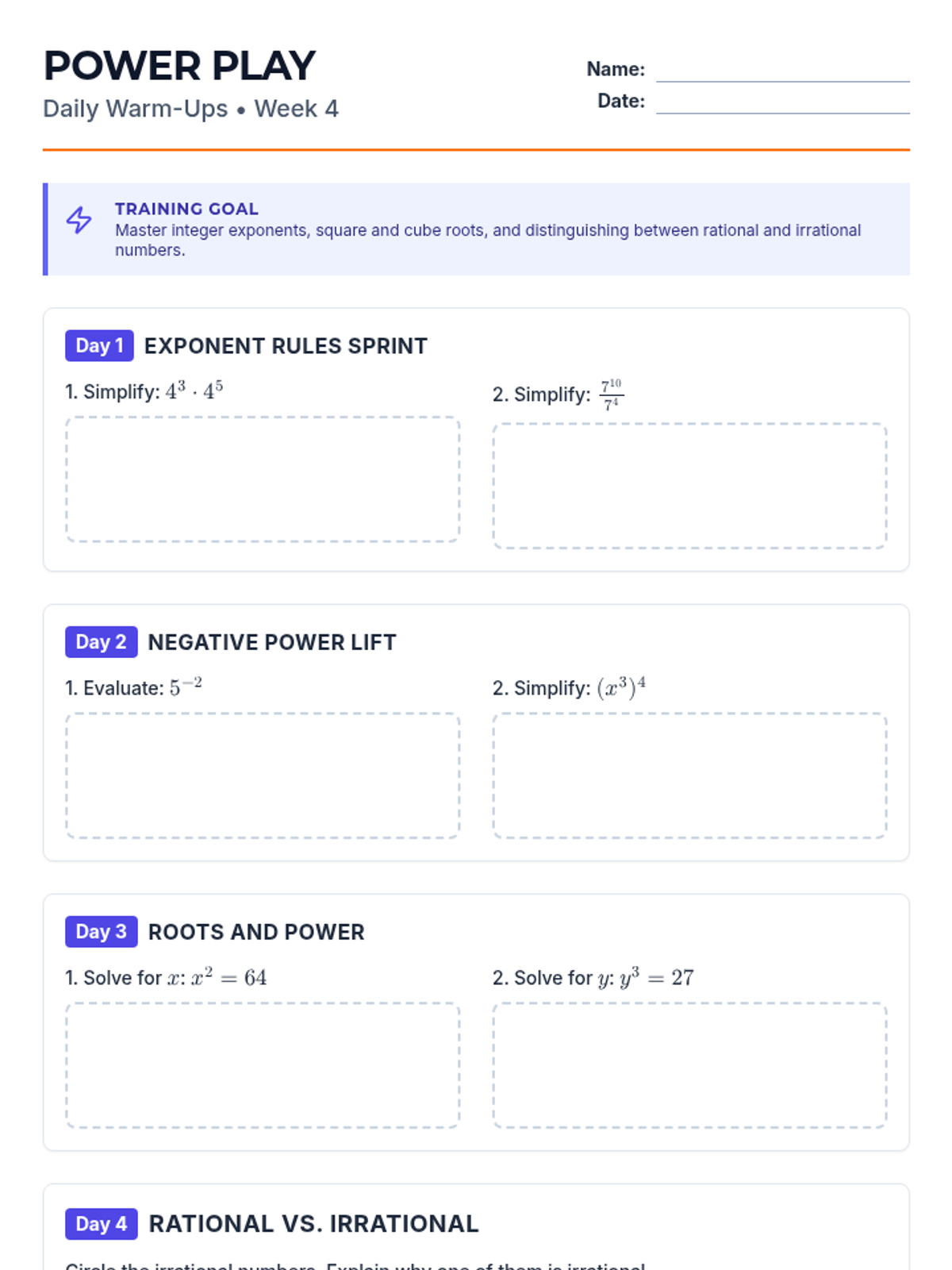
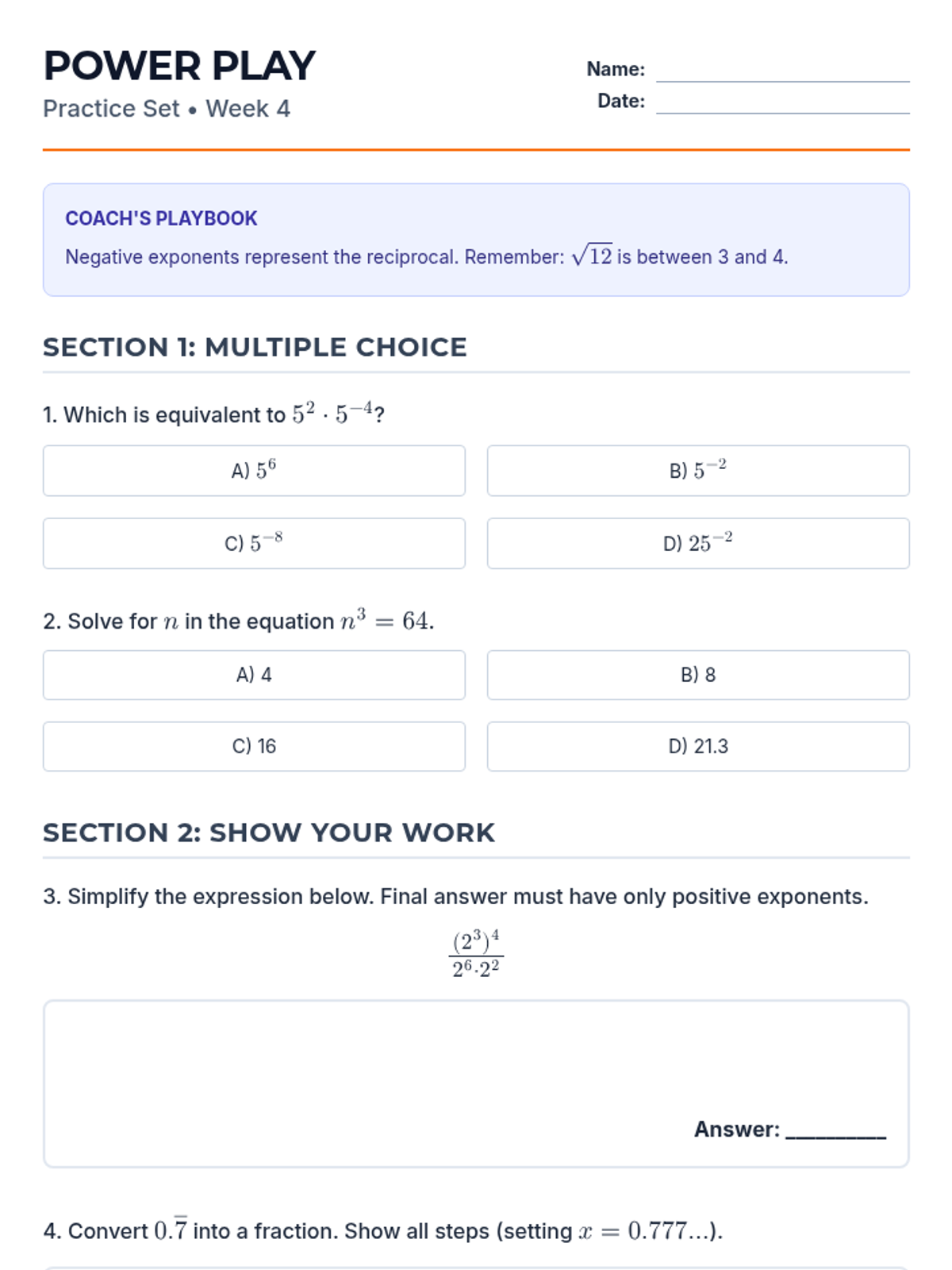
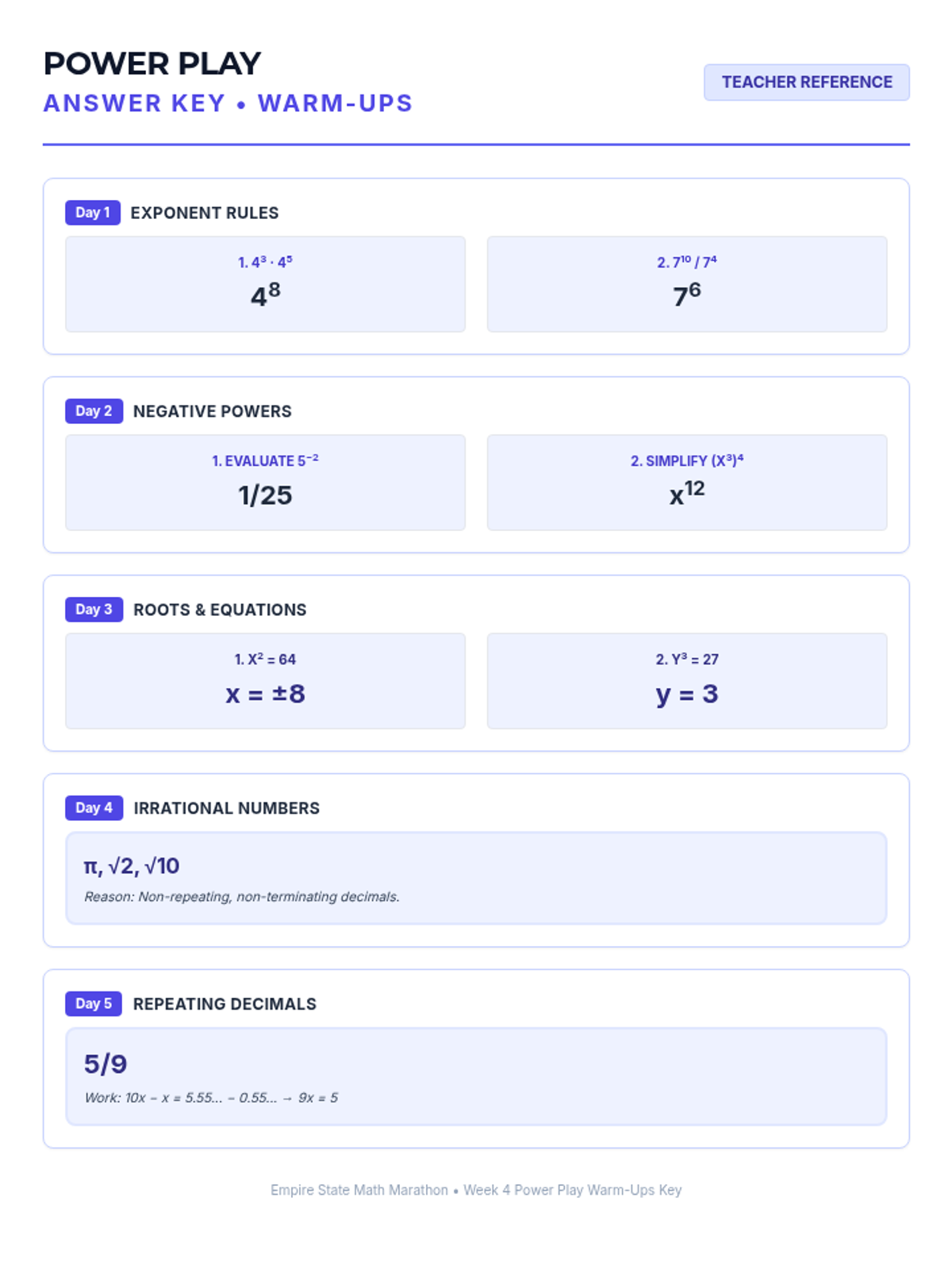
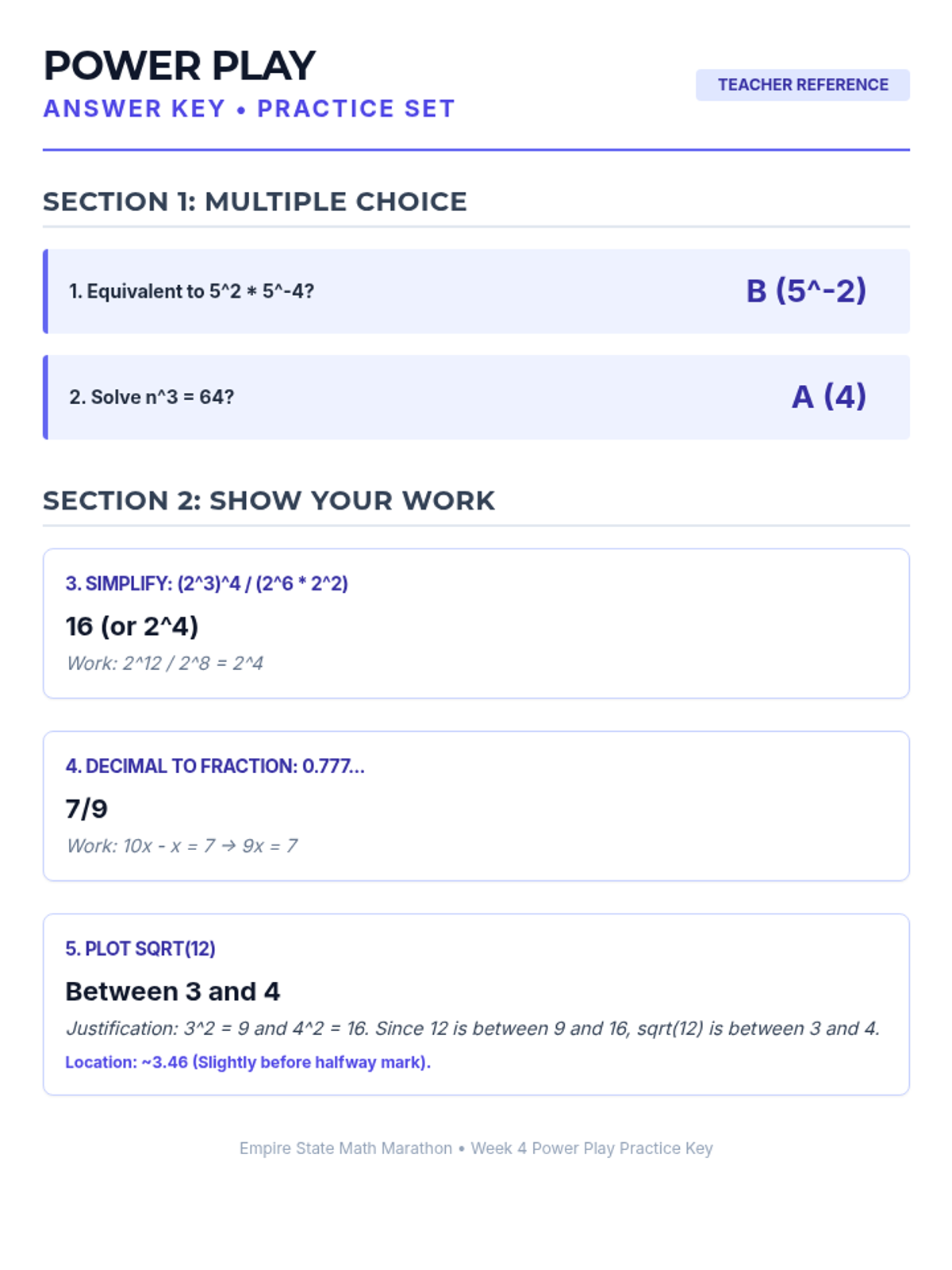
Week 4 explores integer exponent rules, perfect squares and cubes, and distinguishing between rational and irrational numbers.
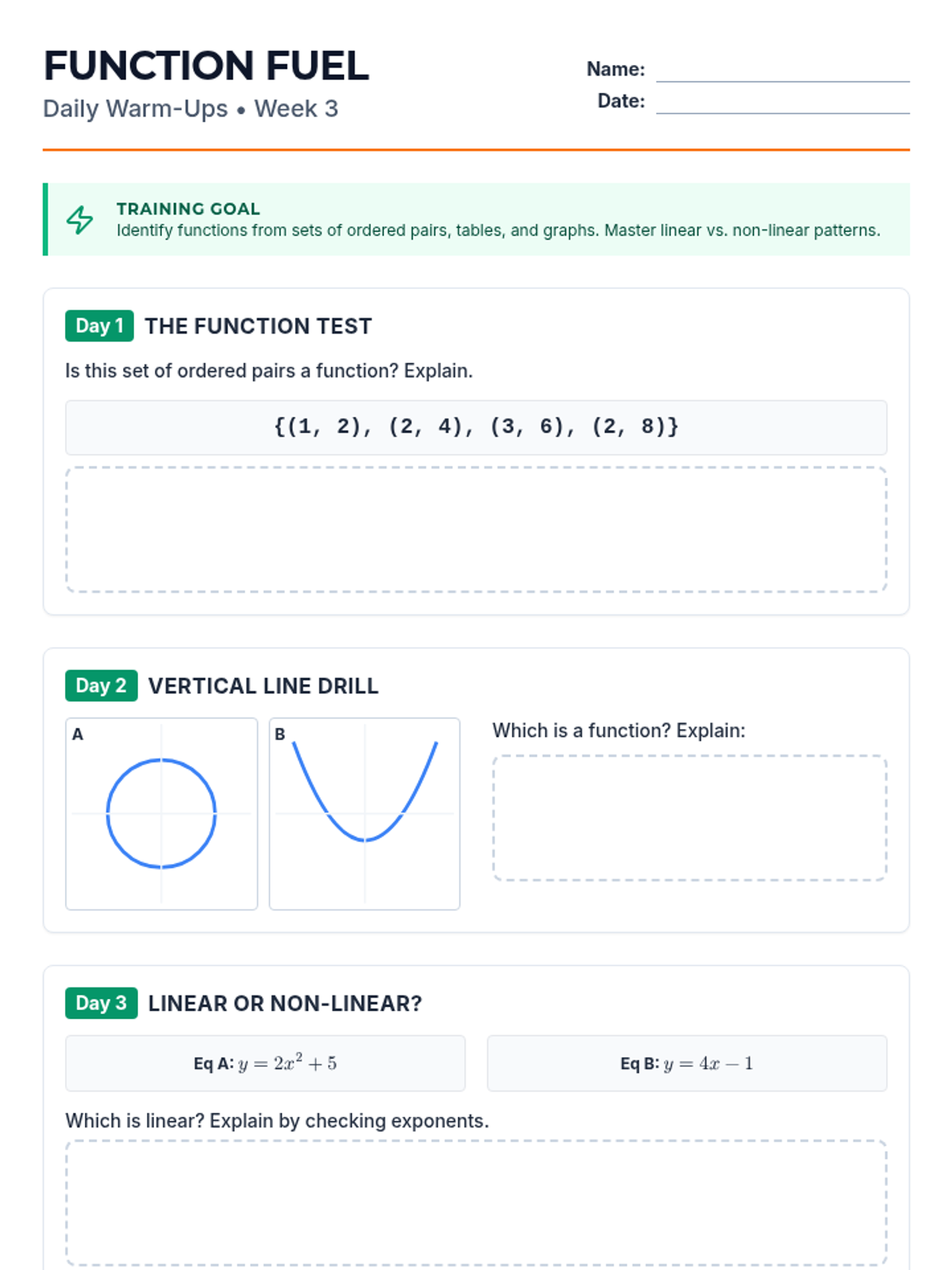
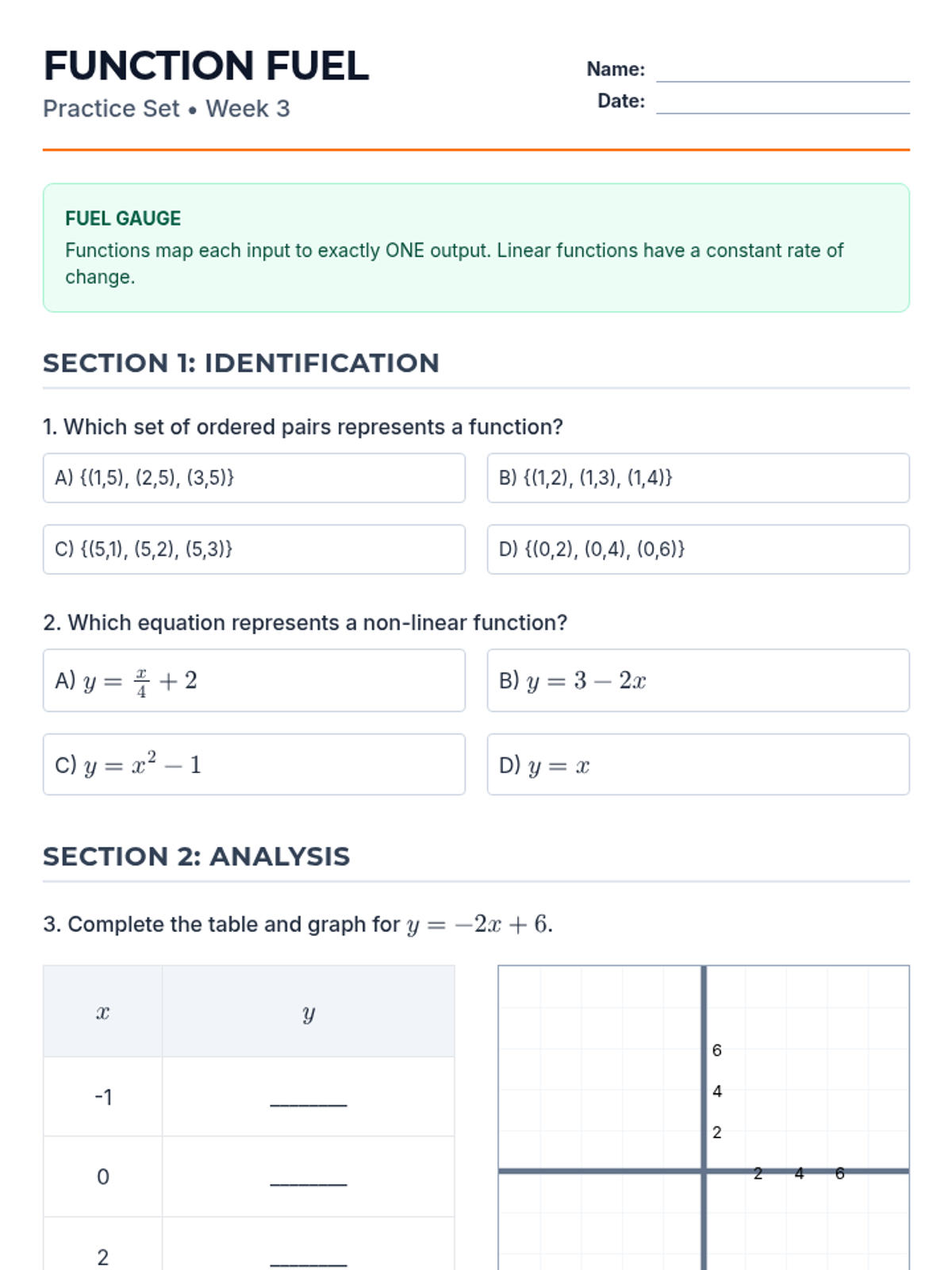
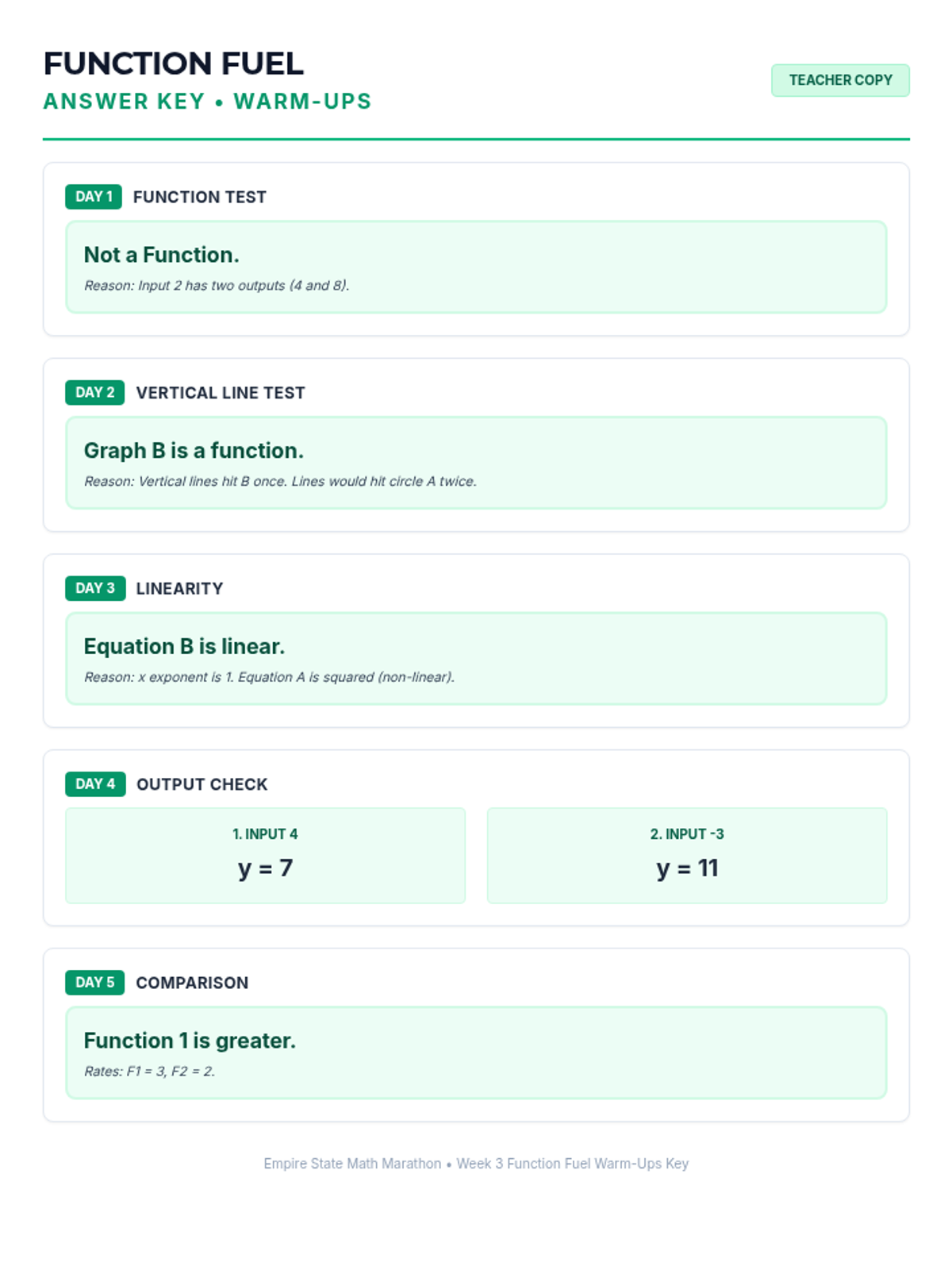
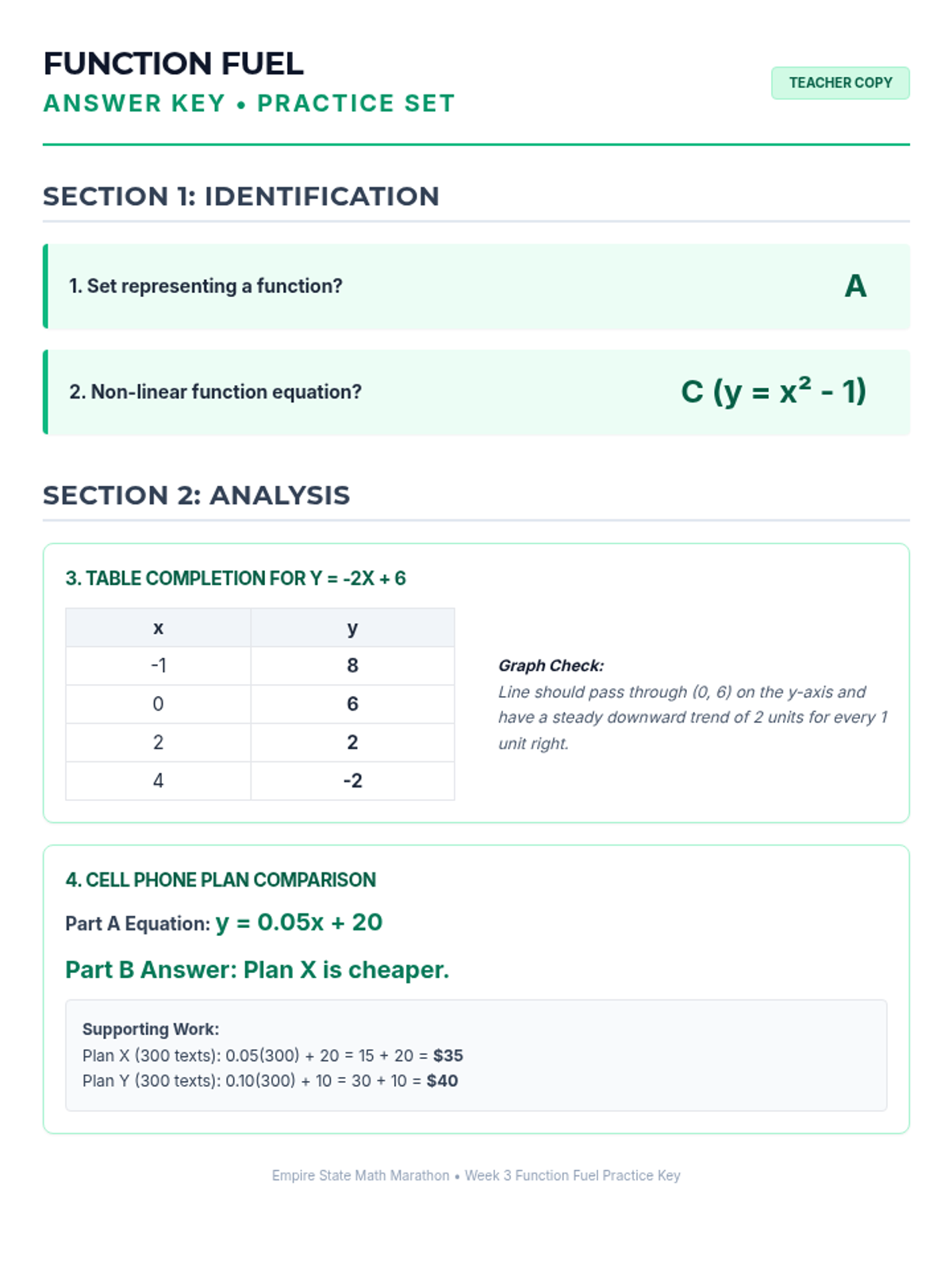
Week 3 defines, evaluates, and compares functions represented in different ways (tables, graphs, equations).
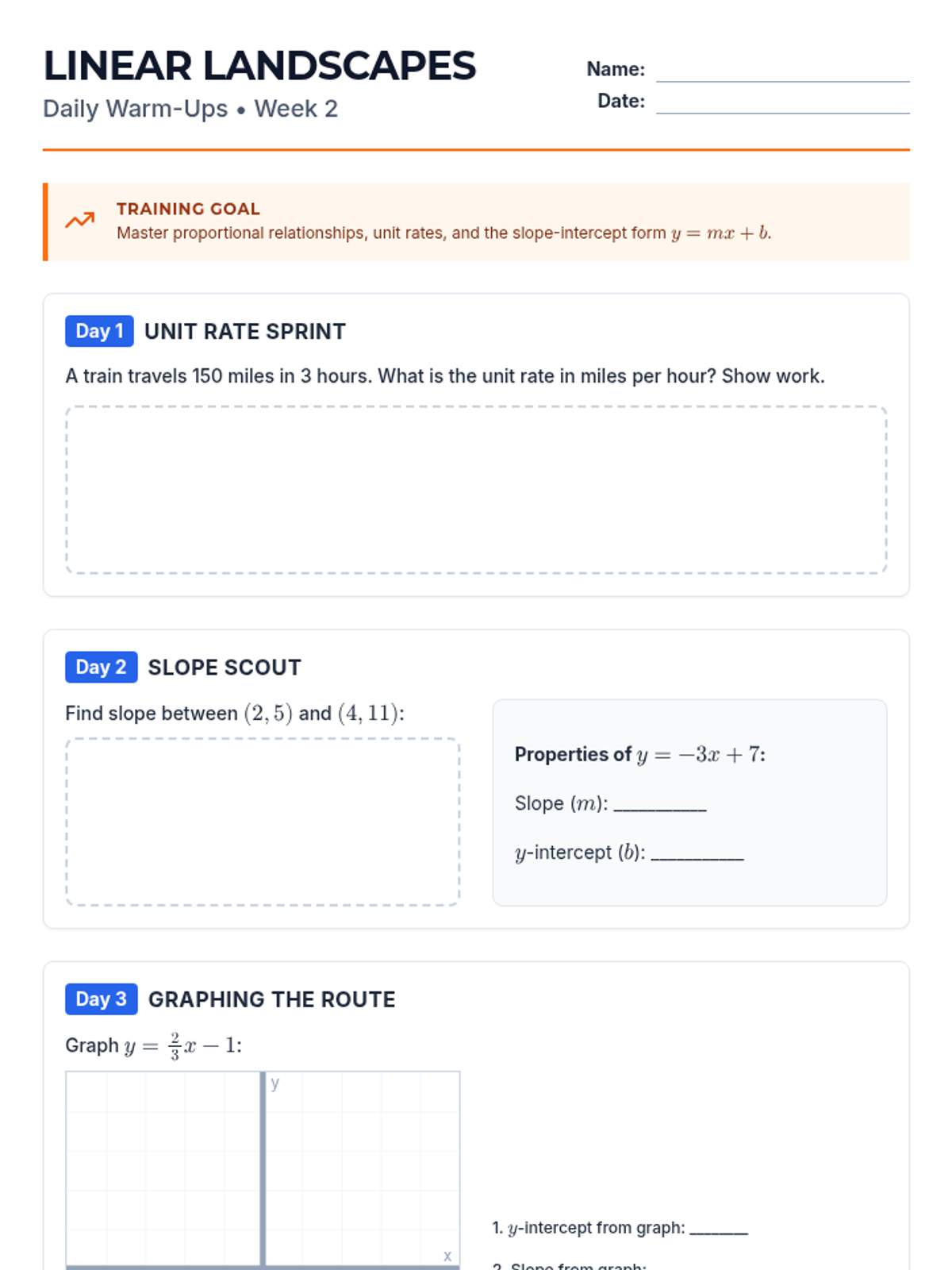
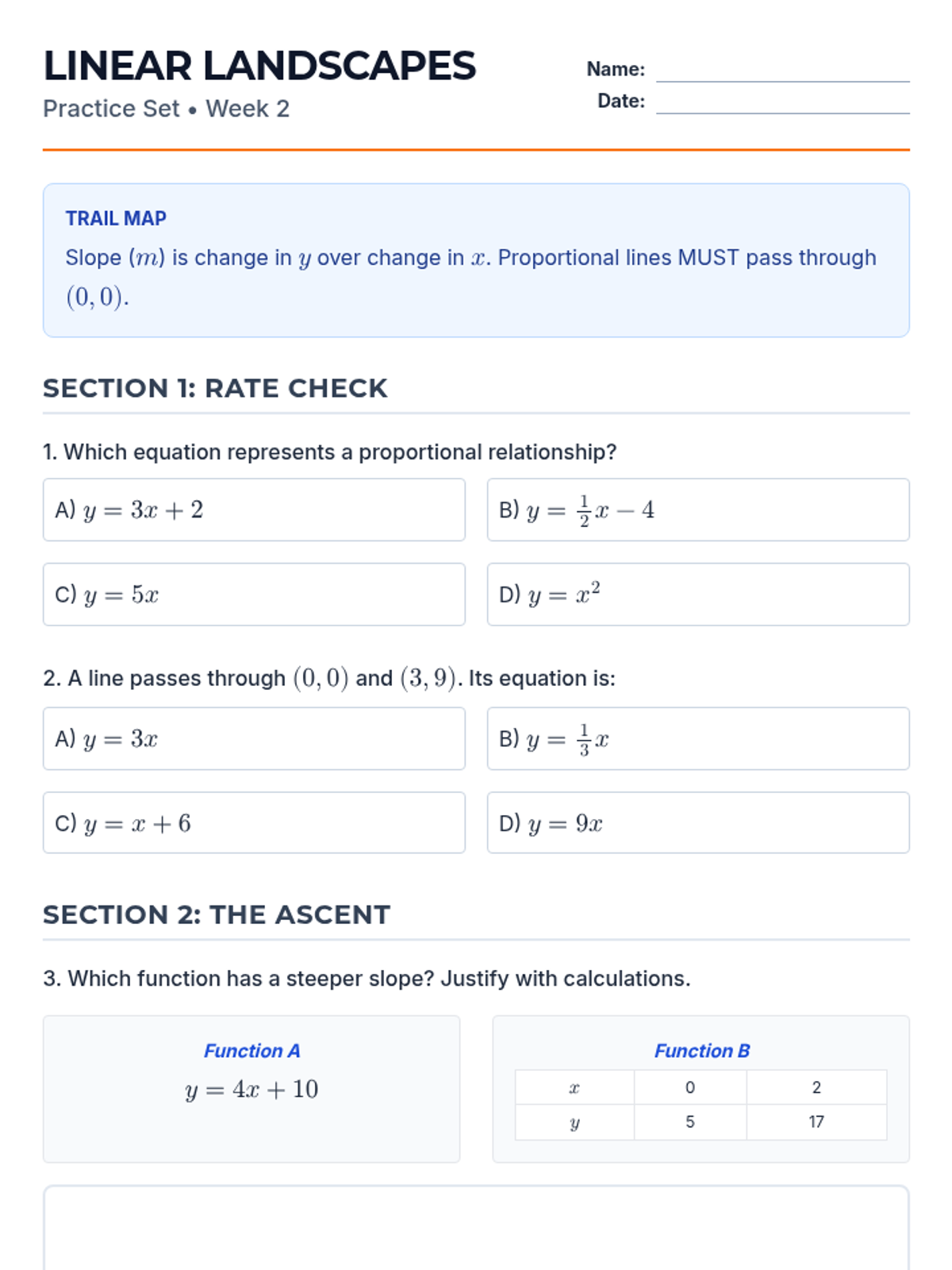
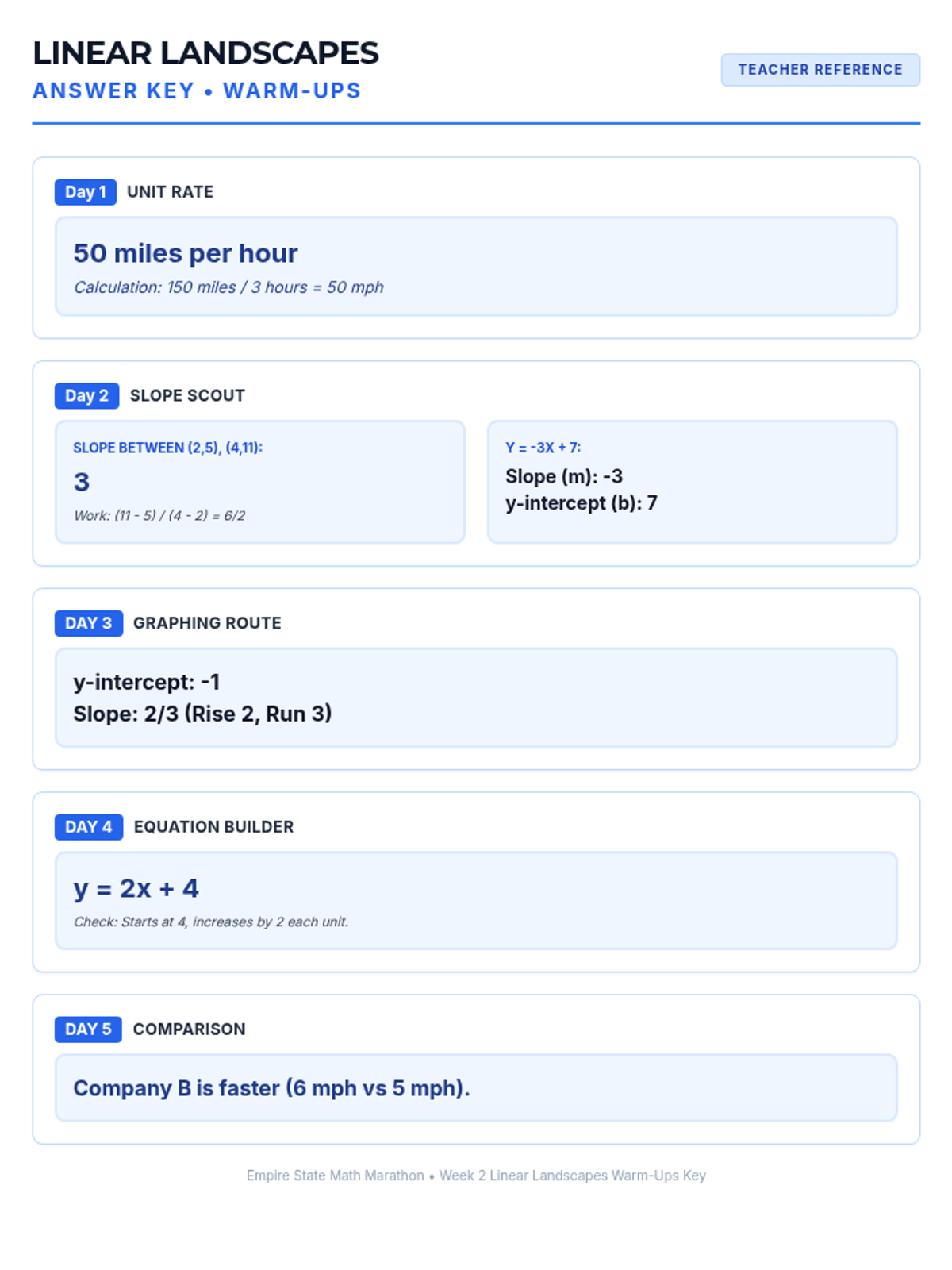
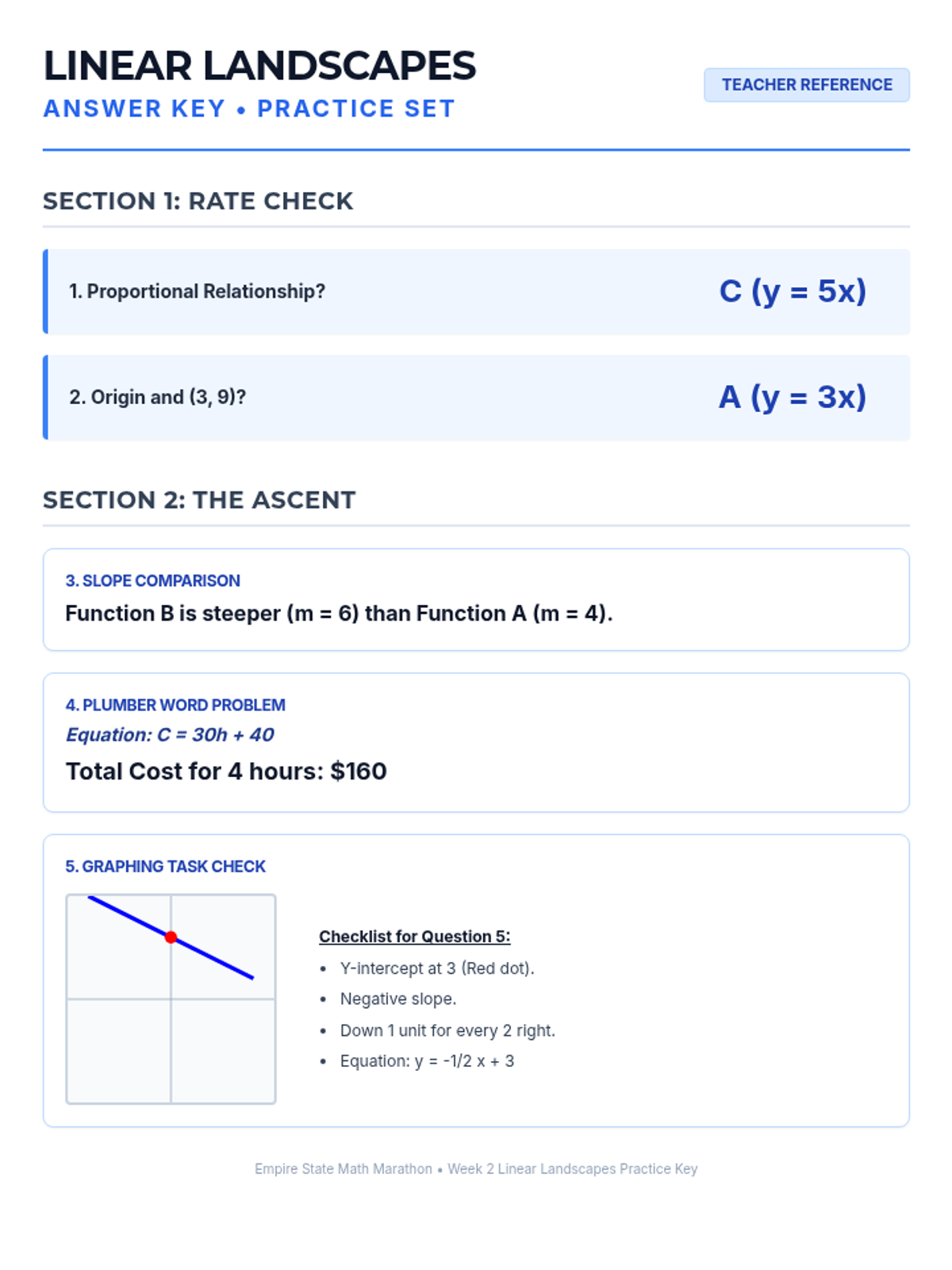
Week 2 covers proportional relationships, unit rates, and the slope-intercept form of linear equations.
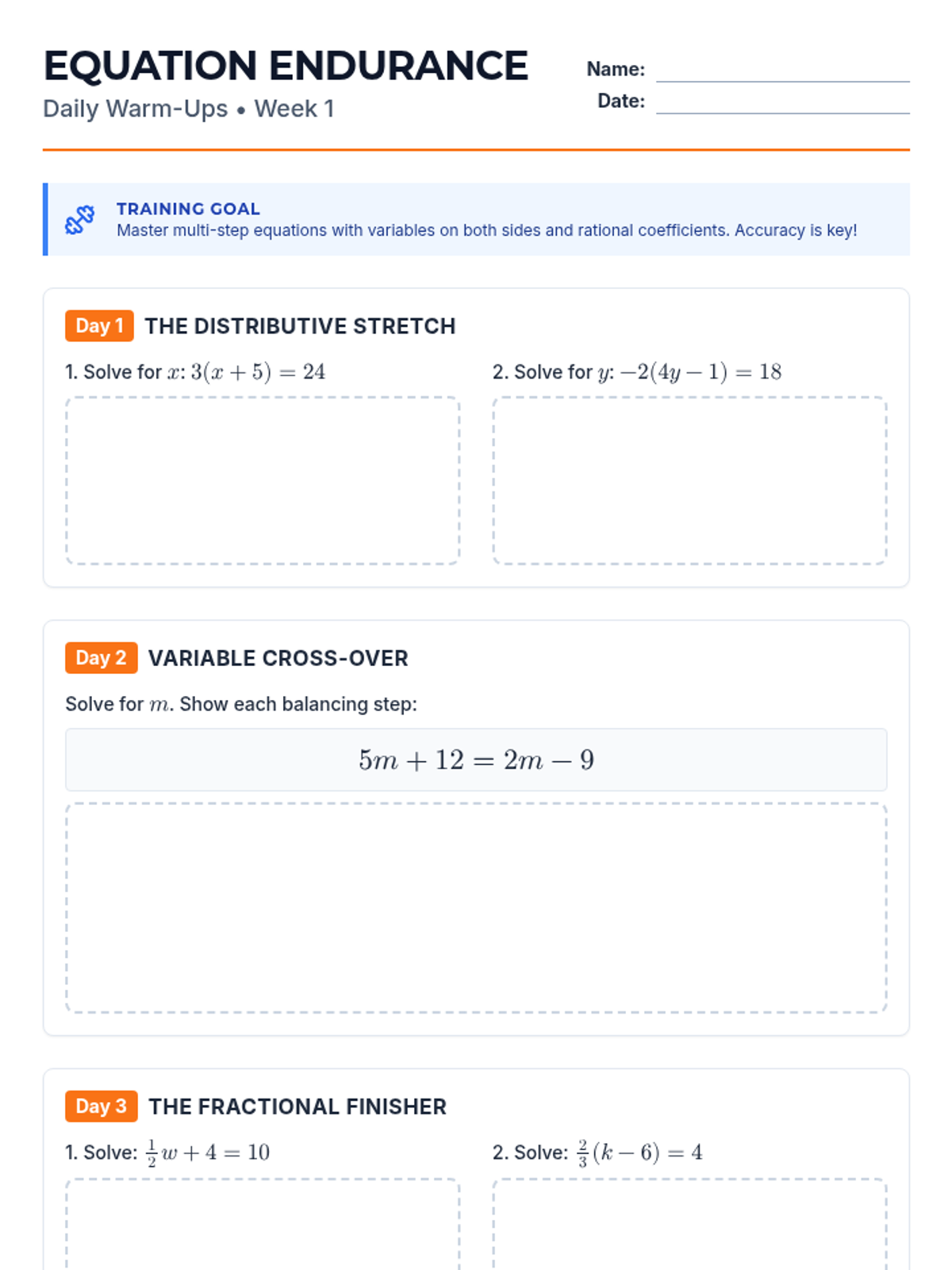
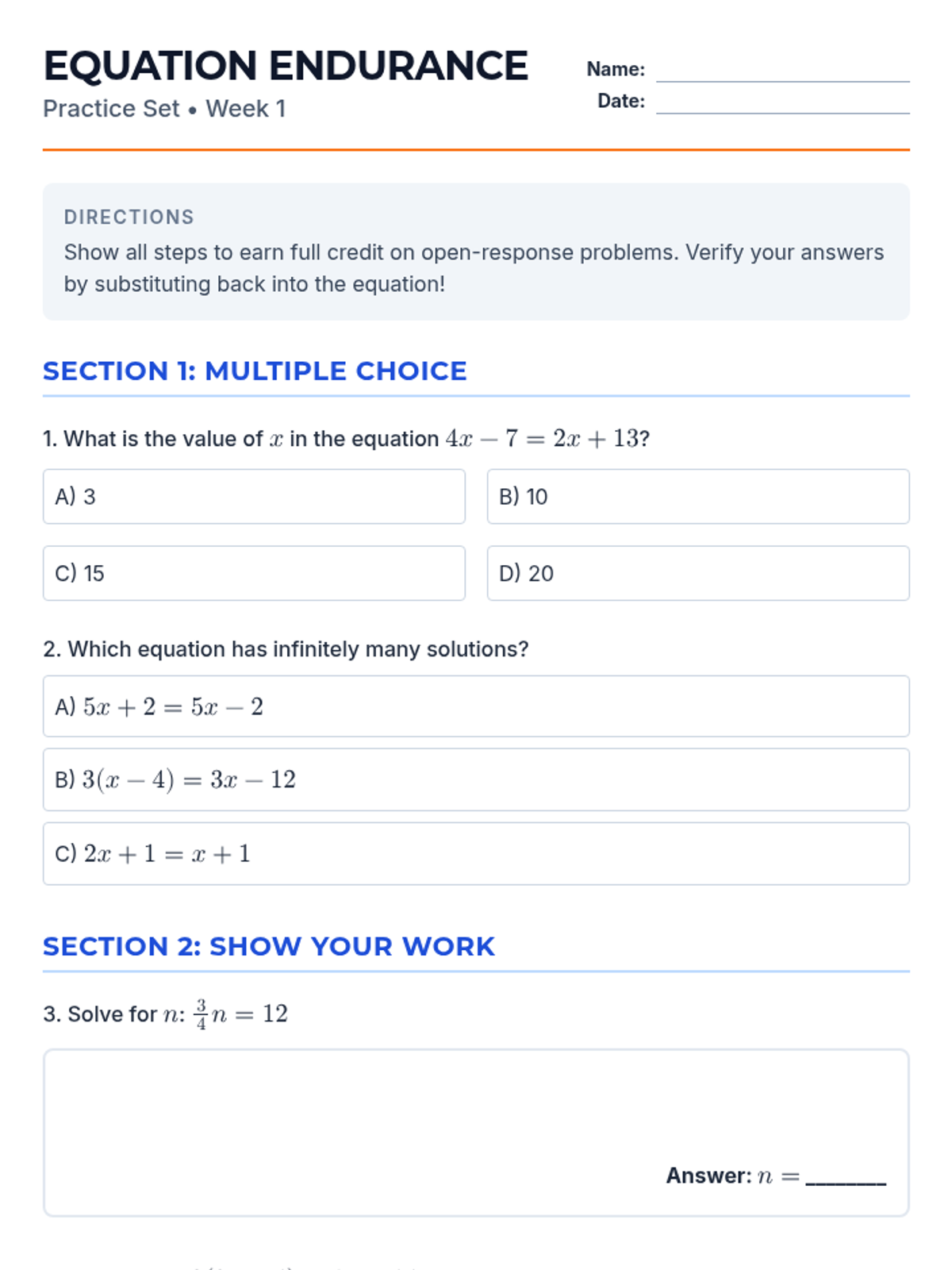
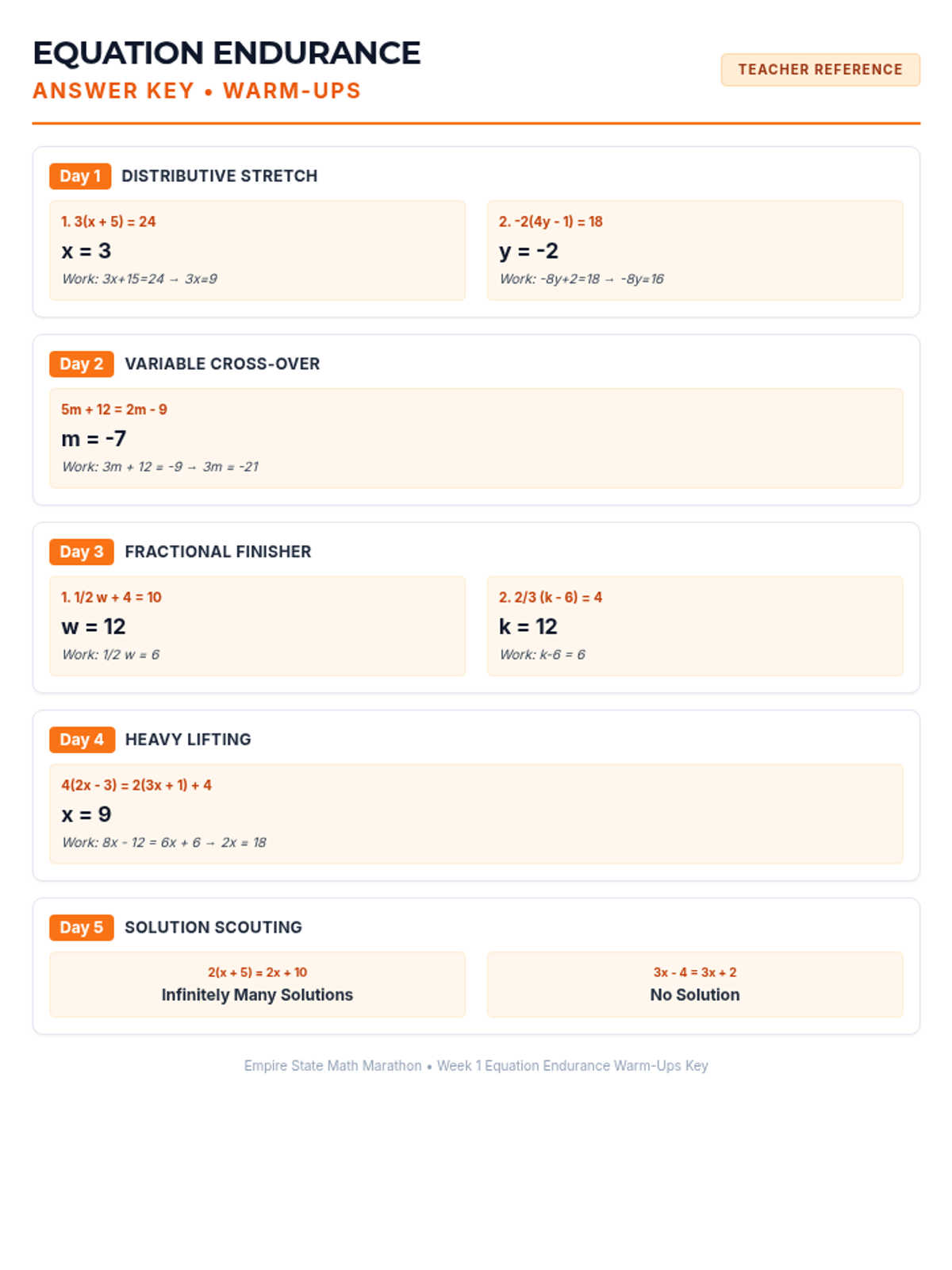
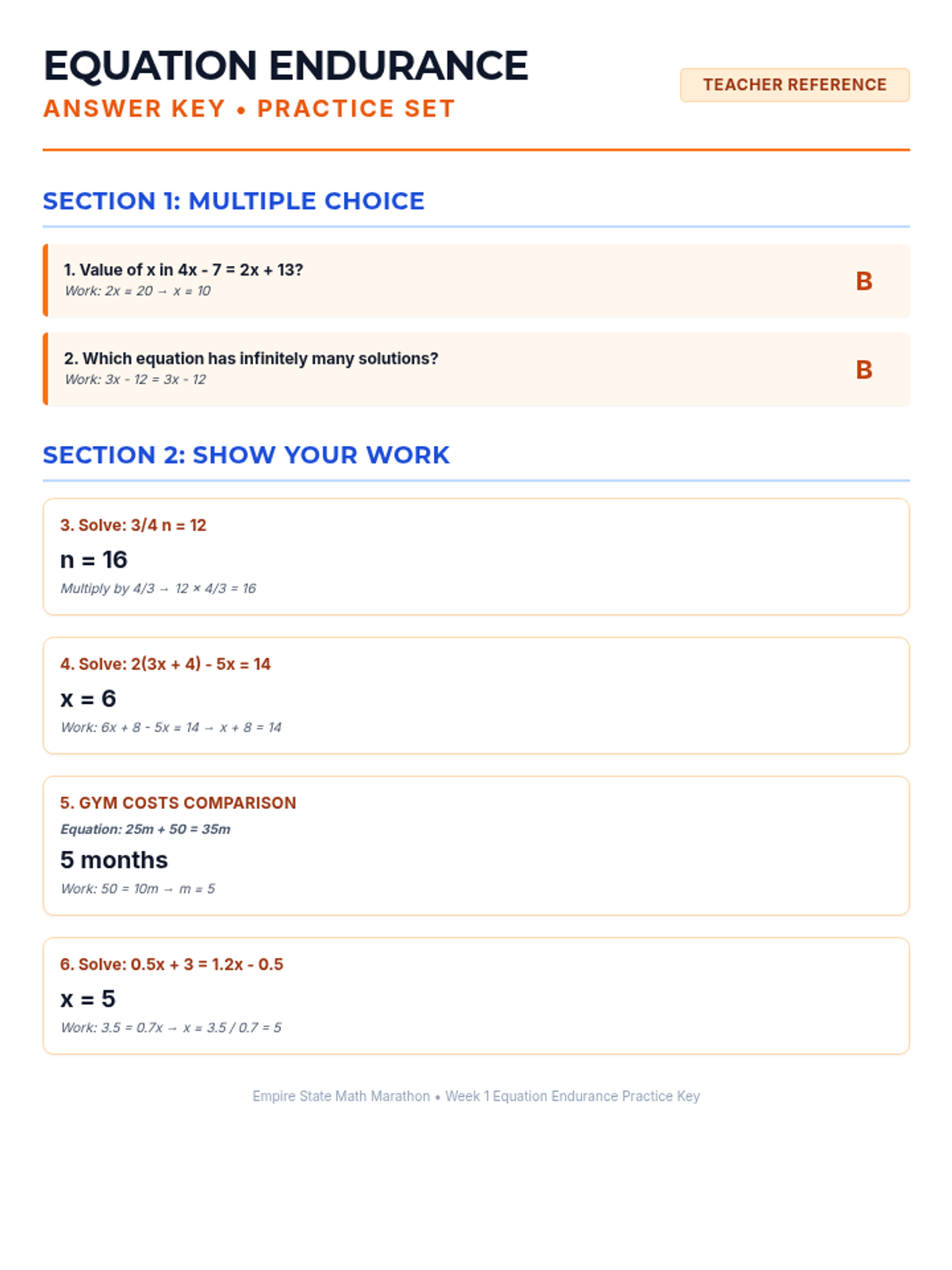
Week 1 focuses on solving multi-step equations, including those with variables on both sides, rational coefficients, and checking solutions.
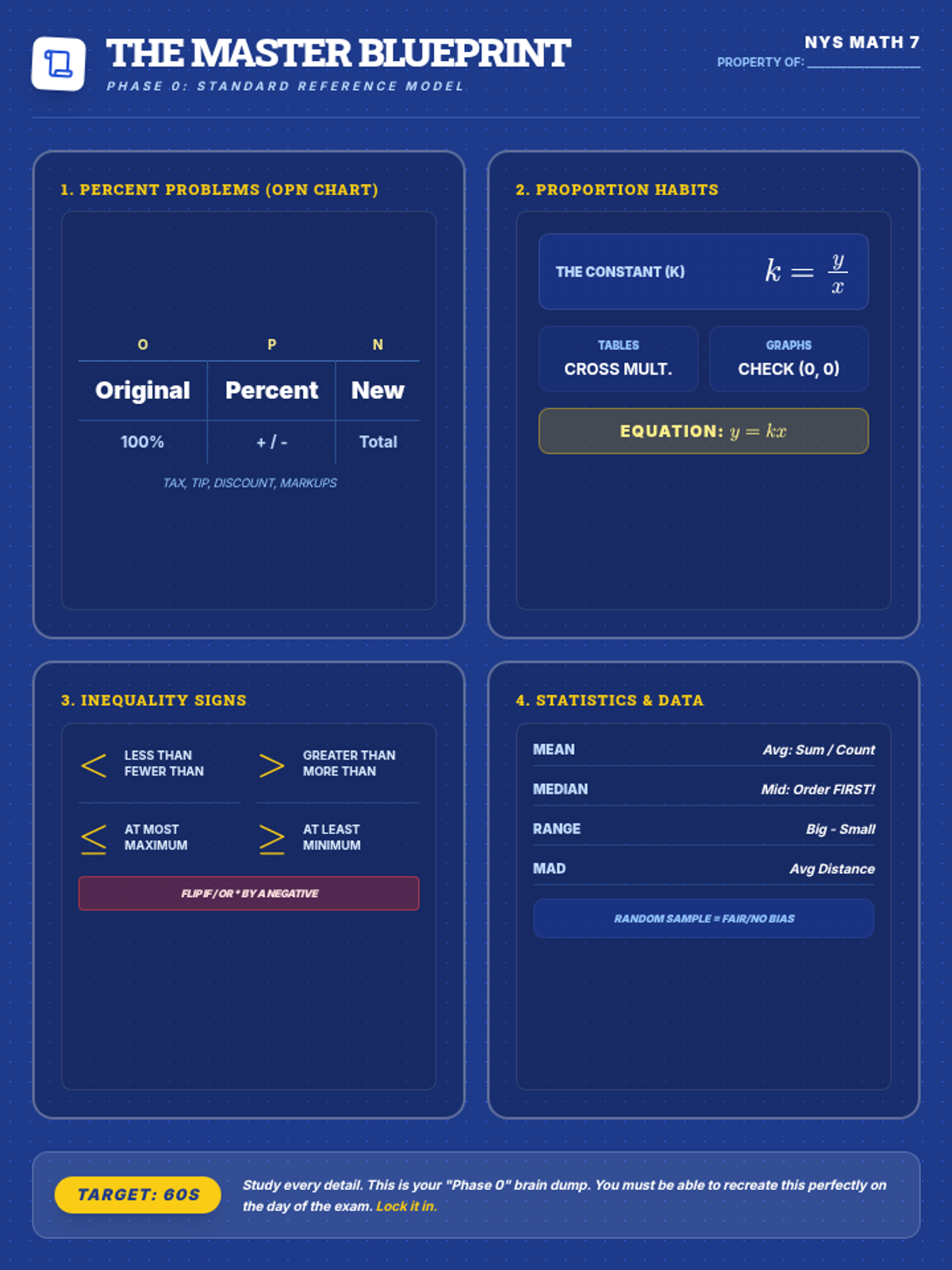
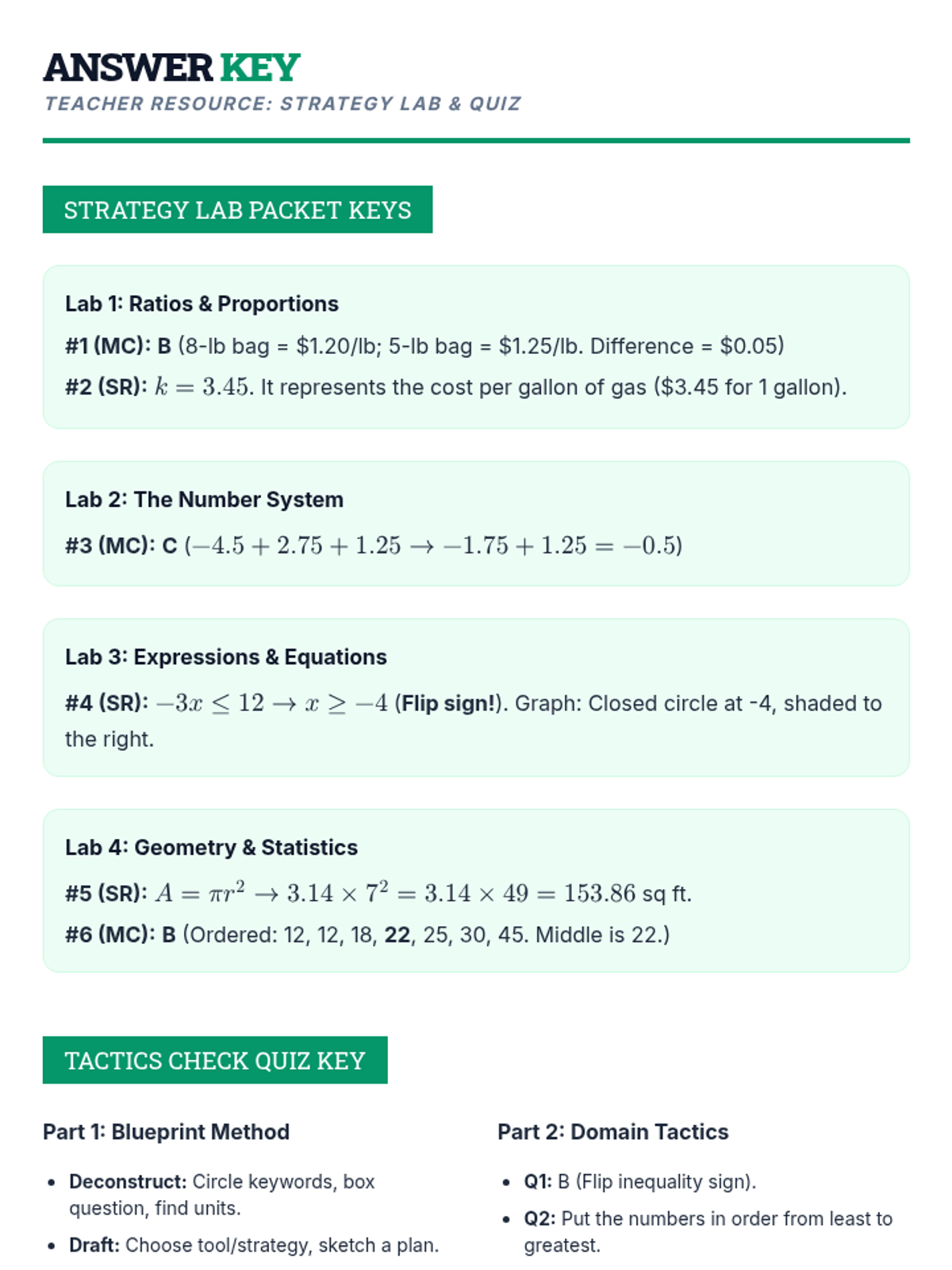
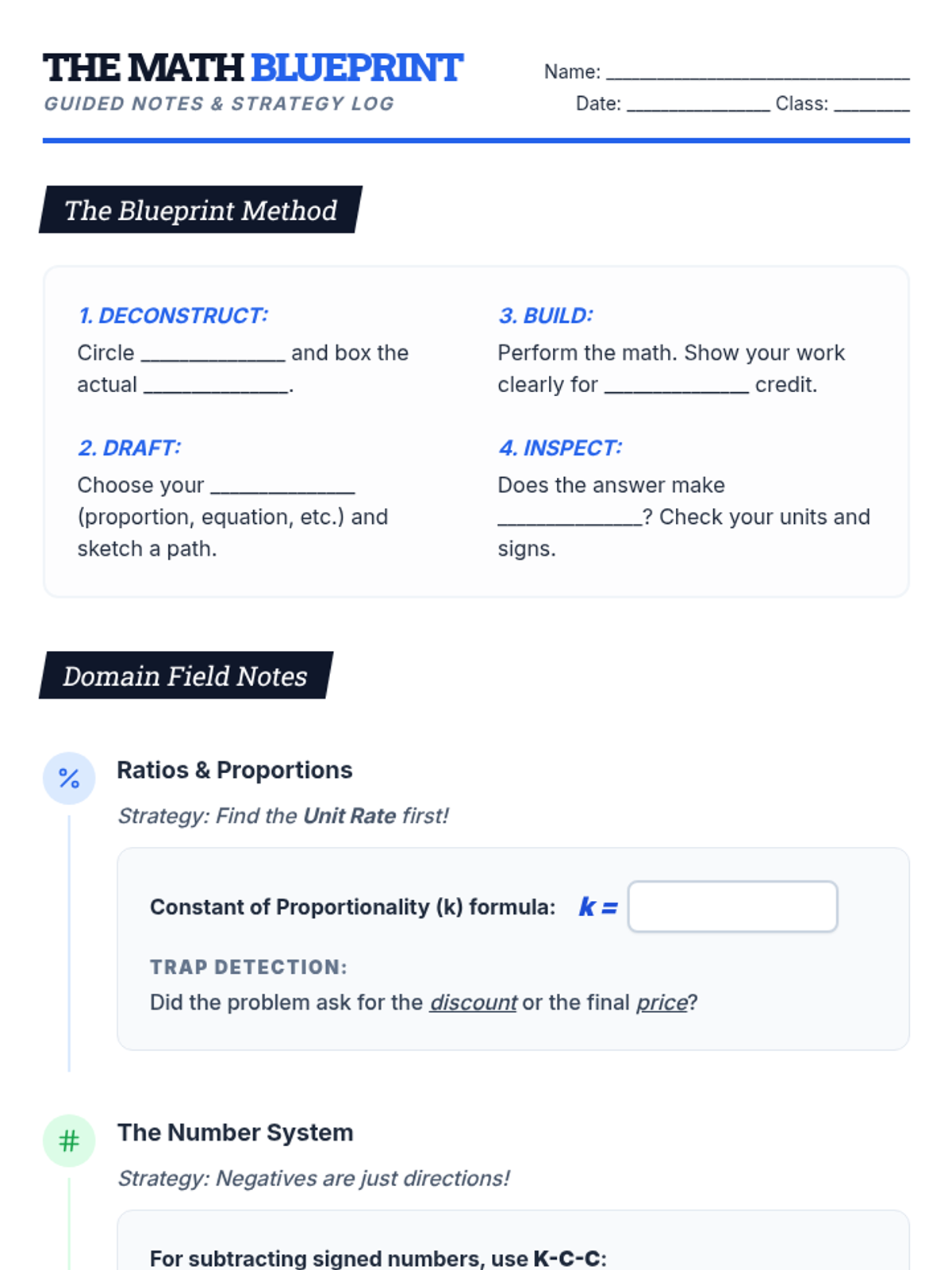
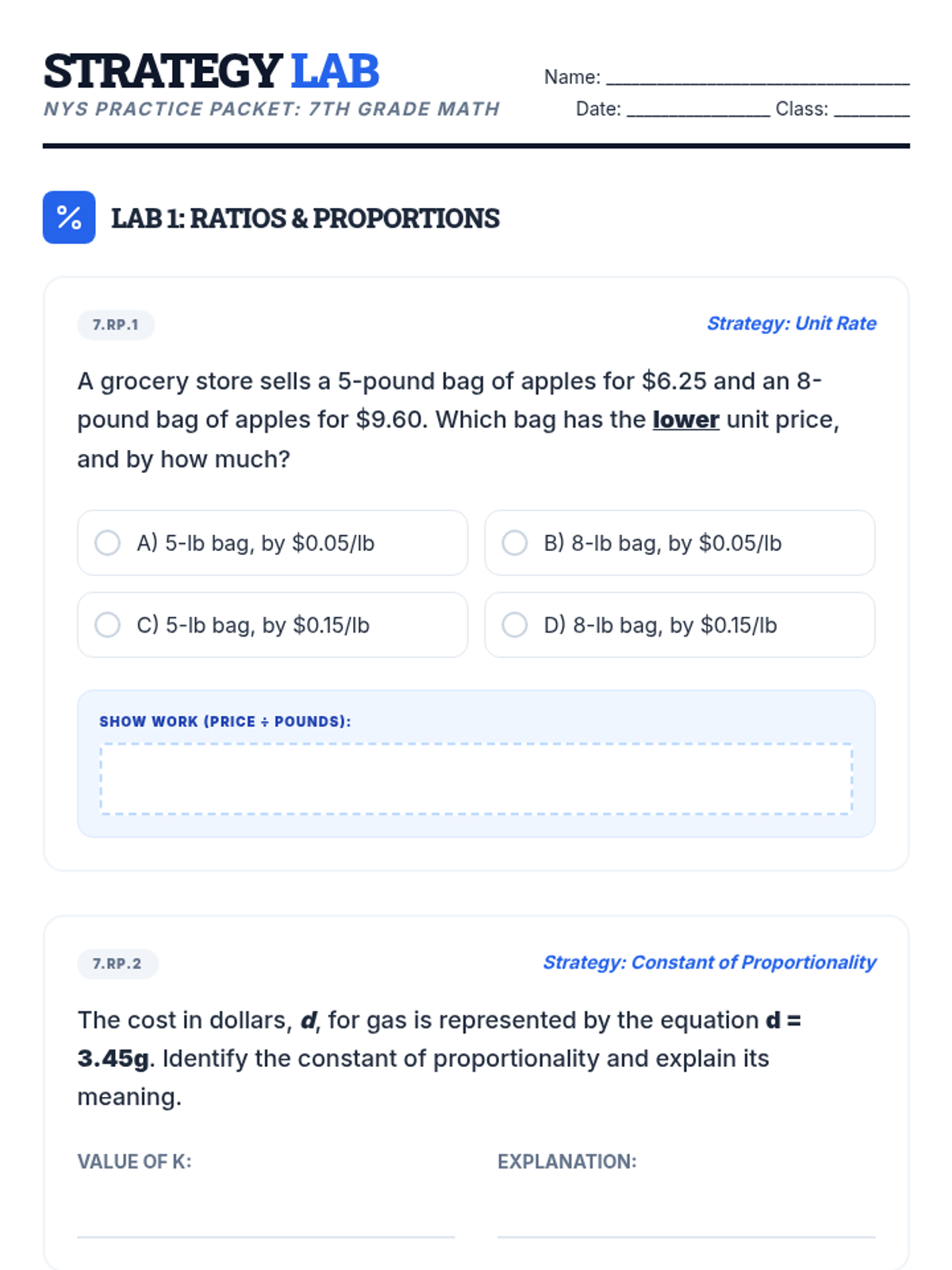
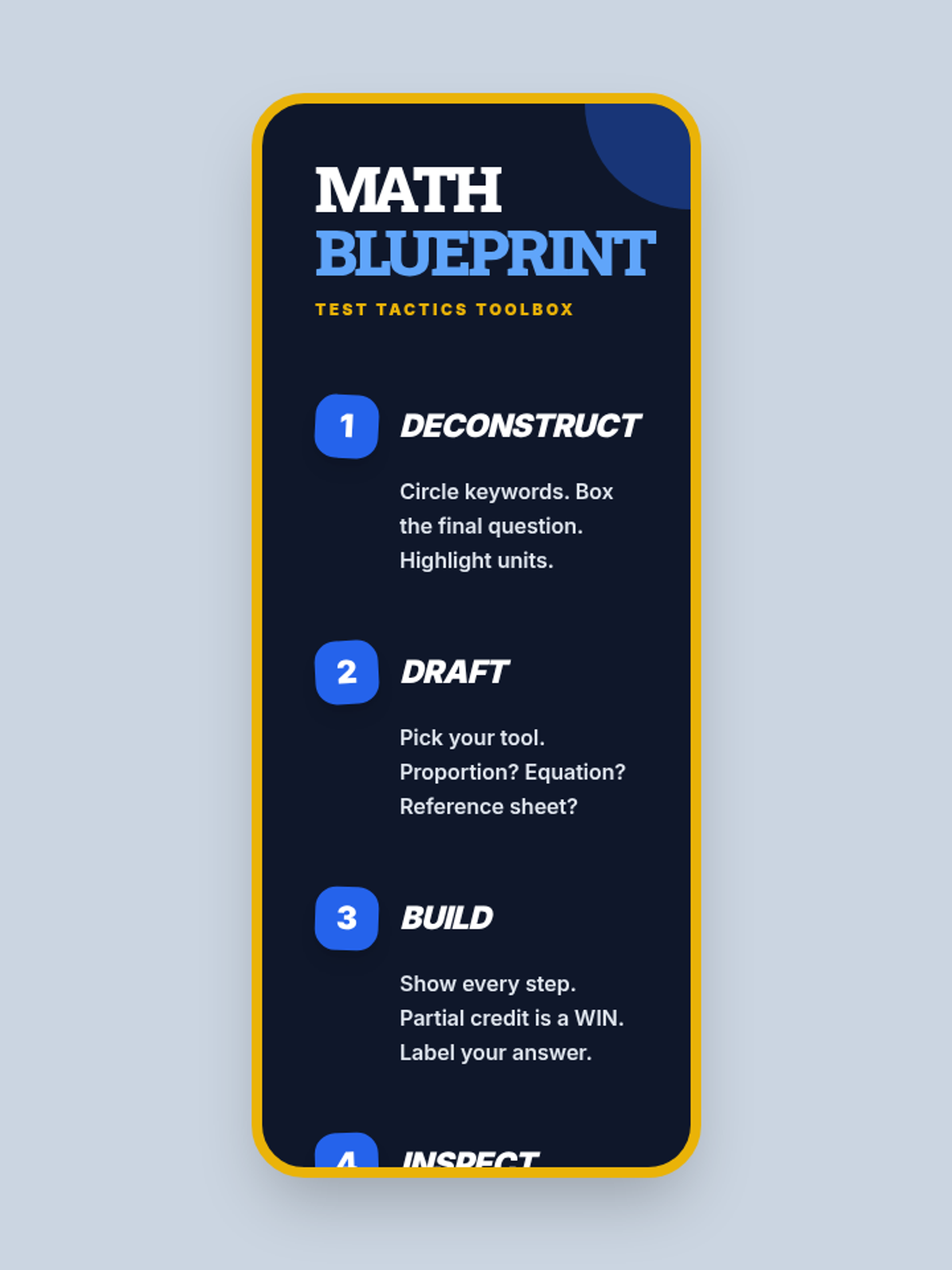
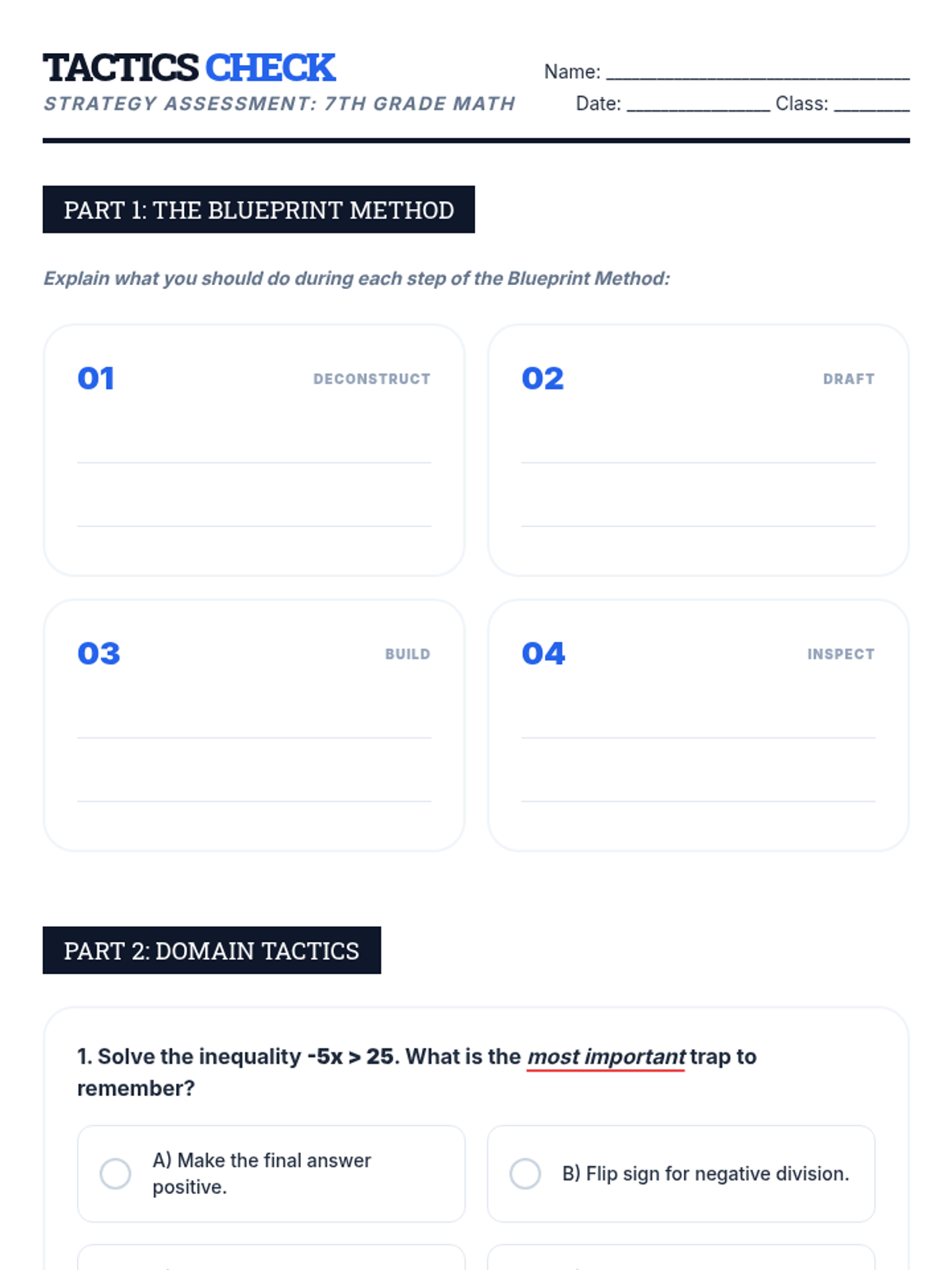
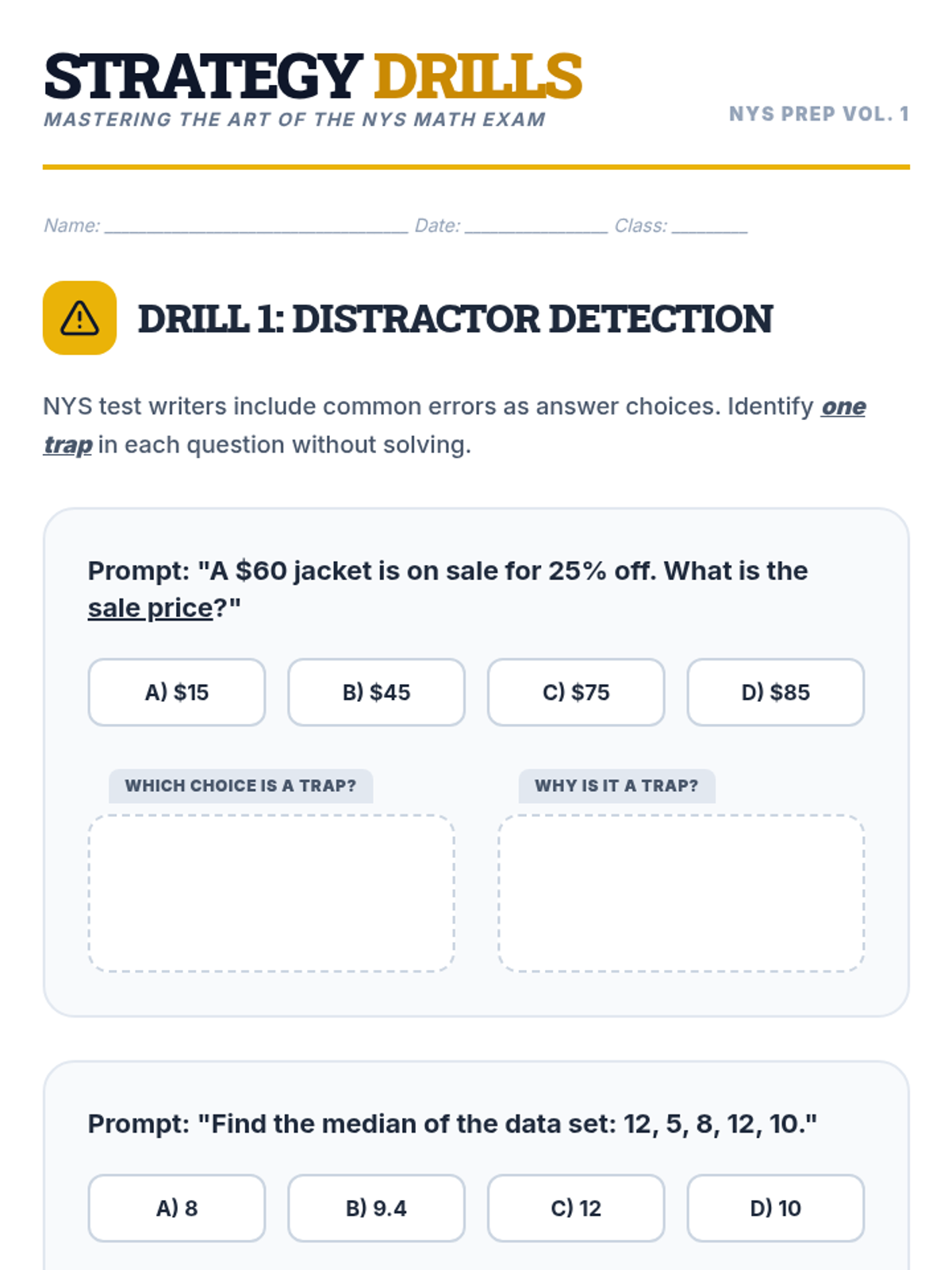
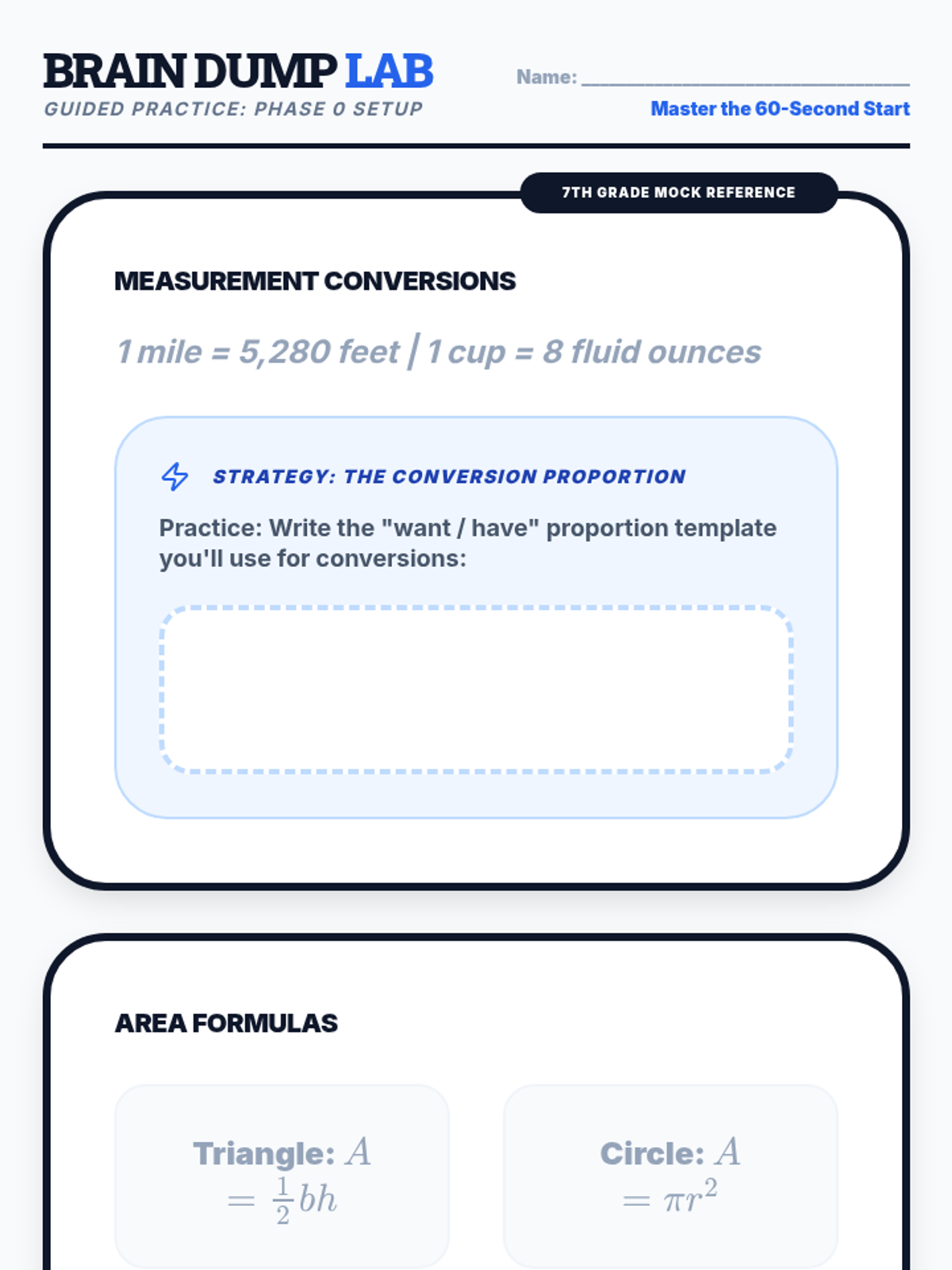
A comprehensive 7th-grade math lesson focused on test-taking strategies for the NYS exam, covering Ratios, Number Systems, Expressions, Geometry, and Statistics. Students learn the 'Blueprint Method' for deconstructing complex problems and apply specific tactics to standard-aligned questions.
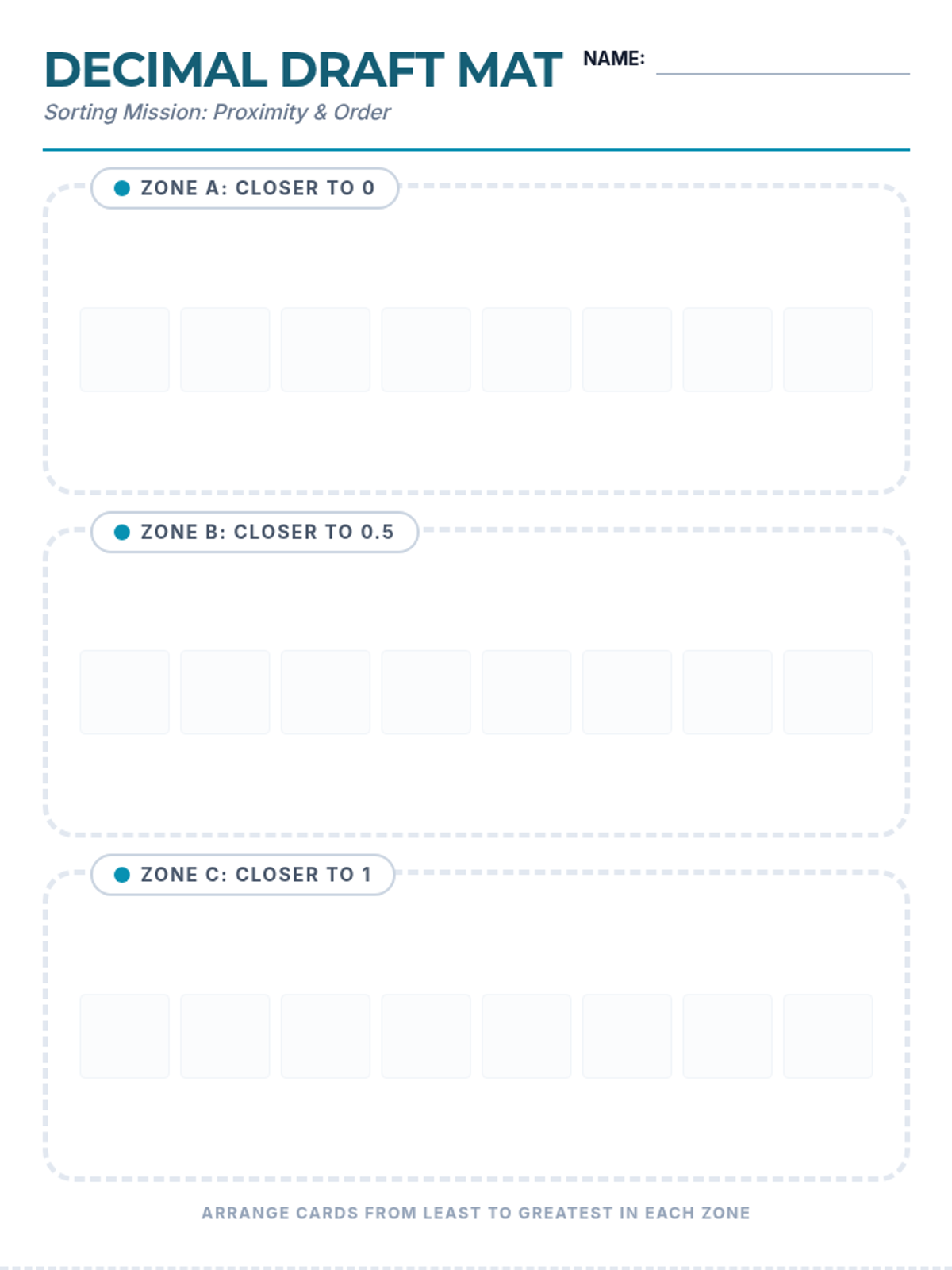
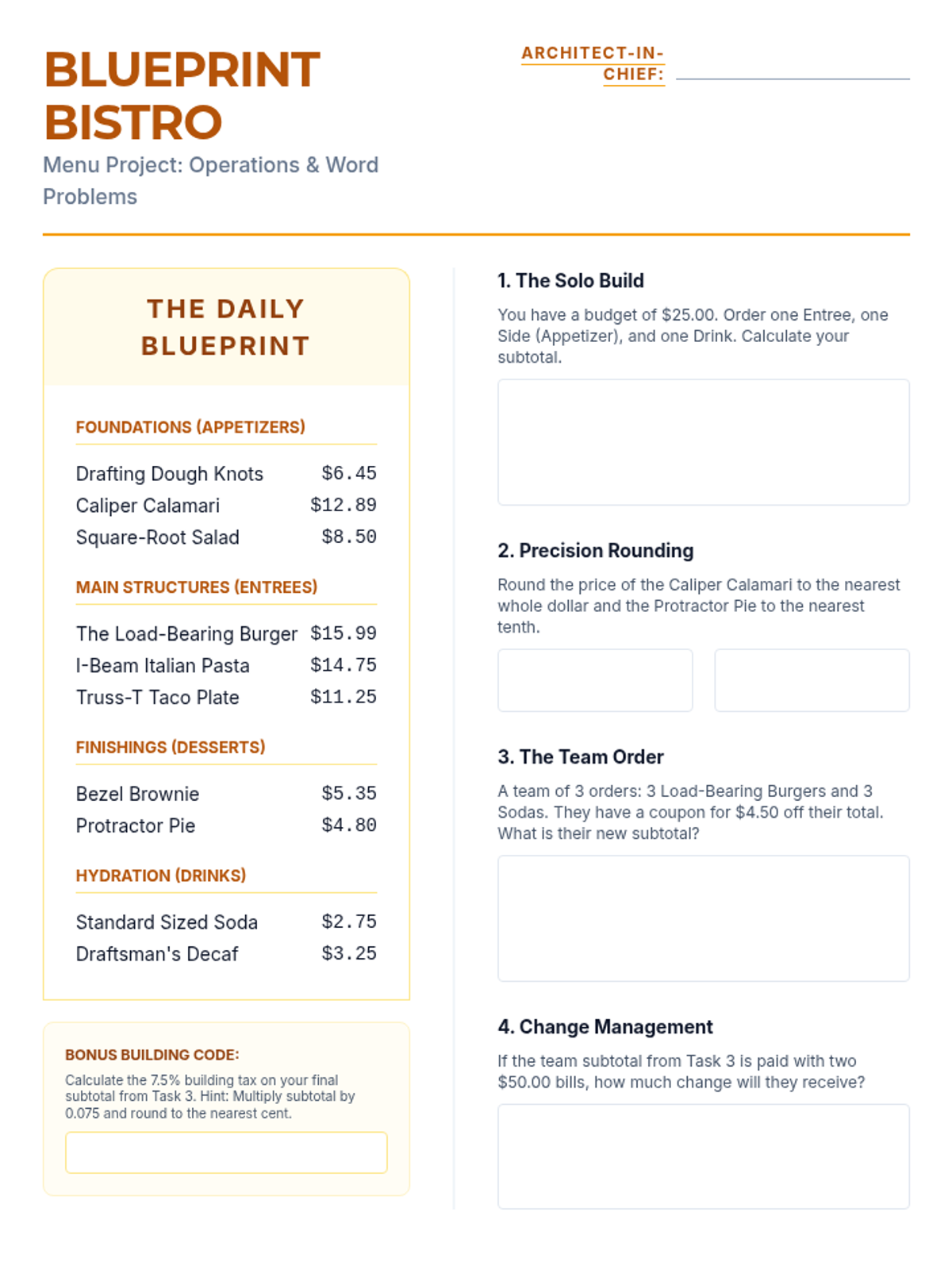
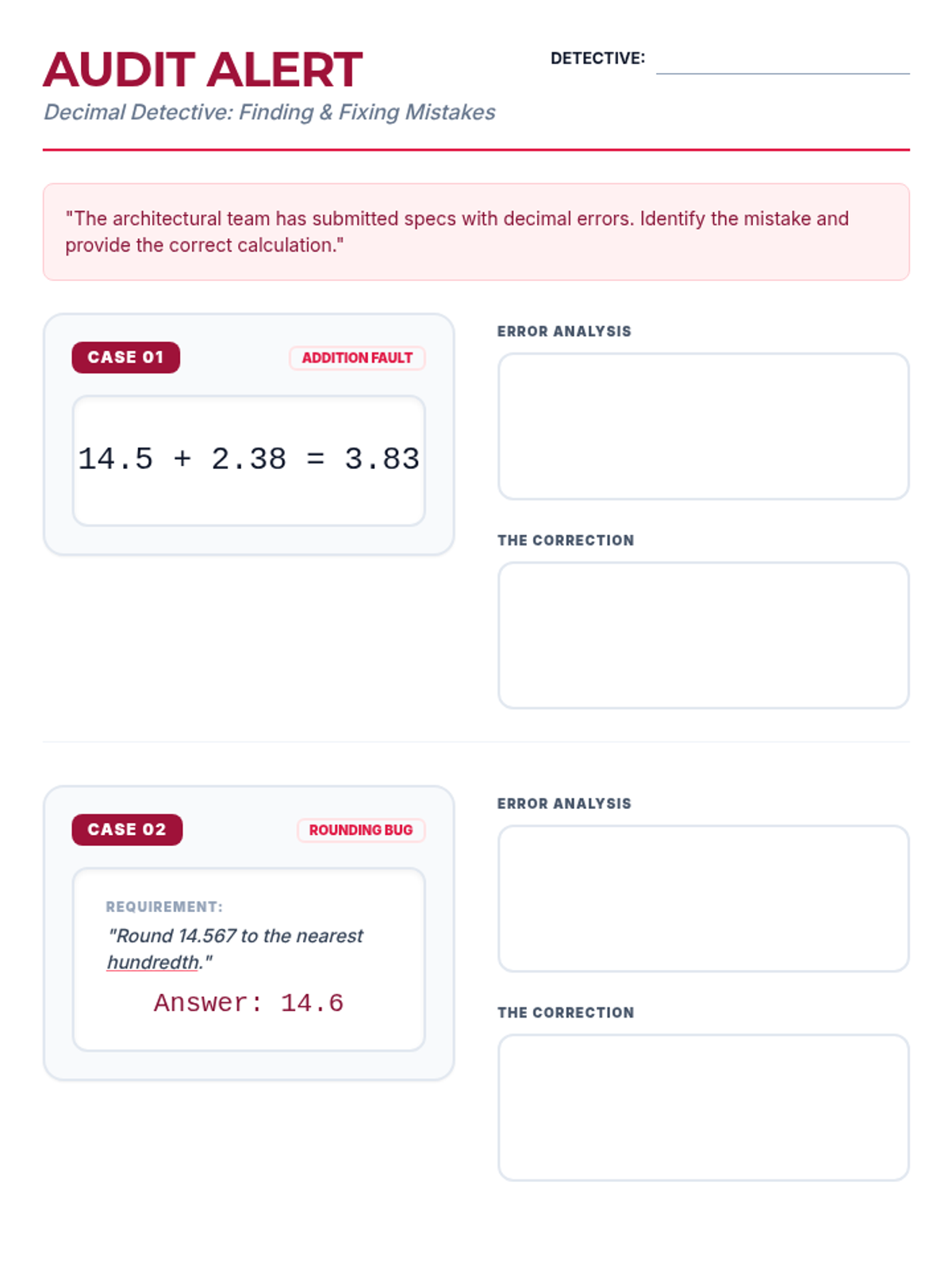
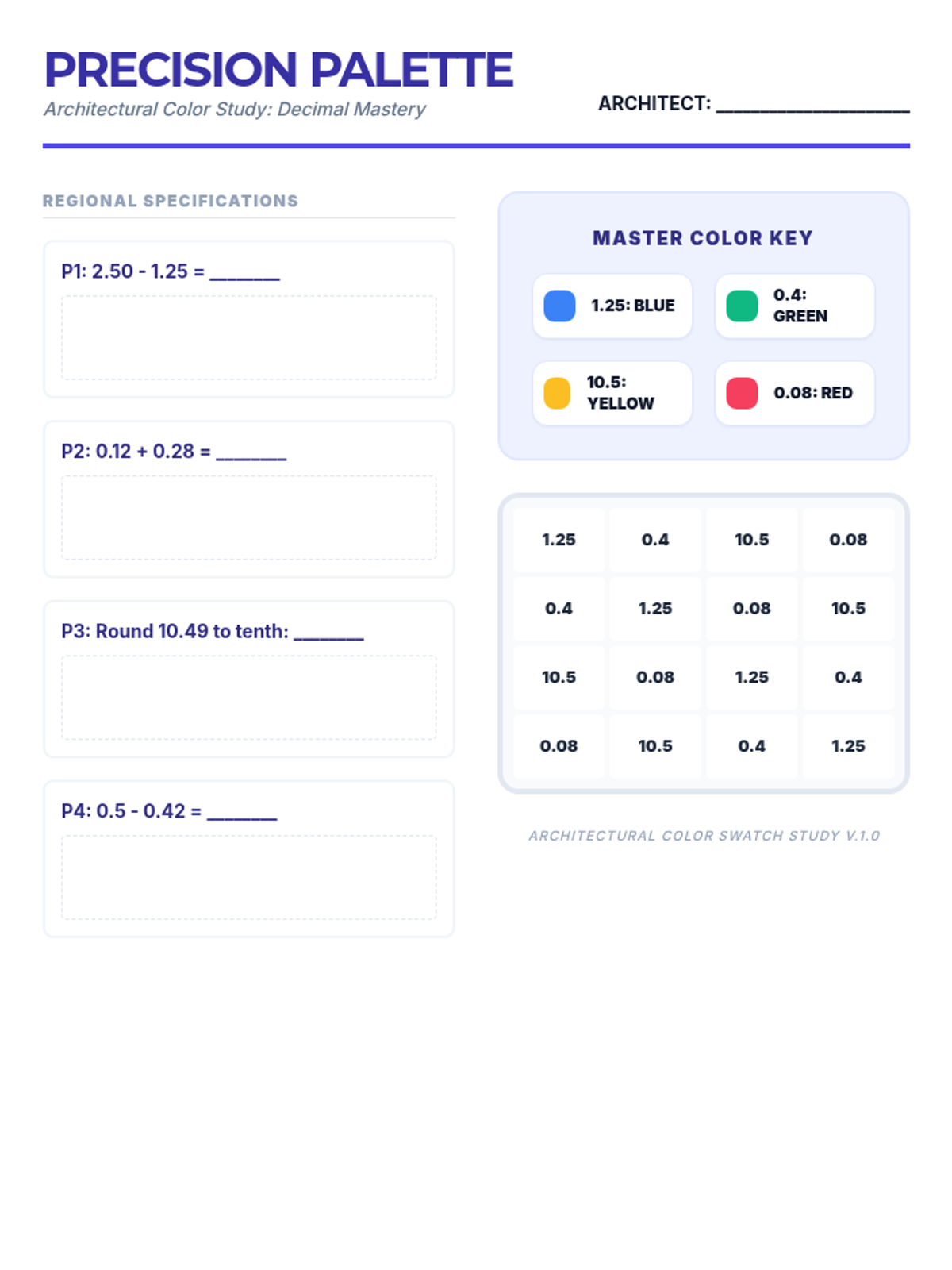
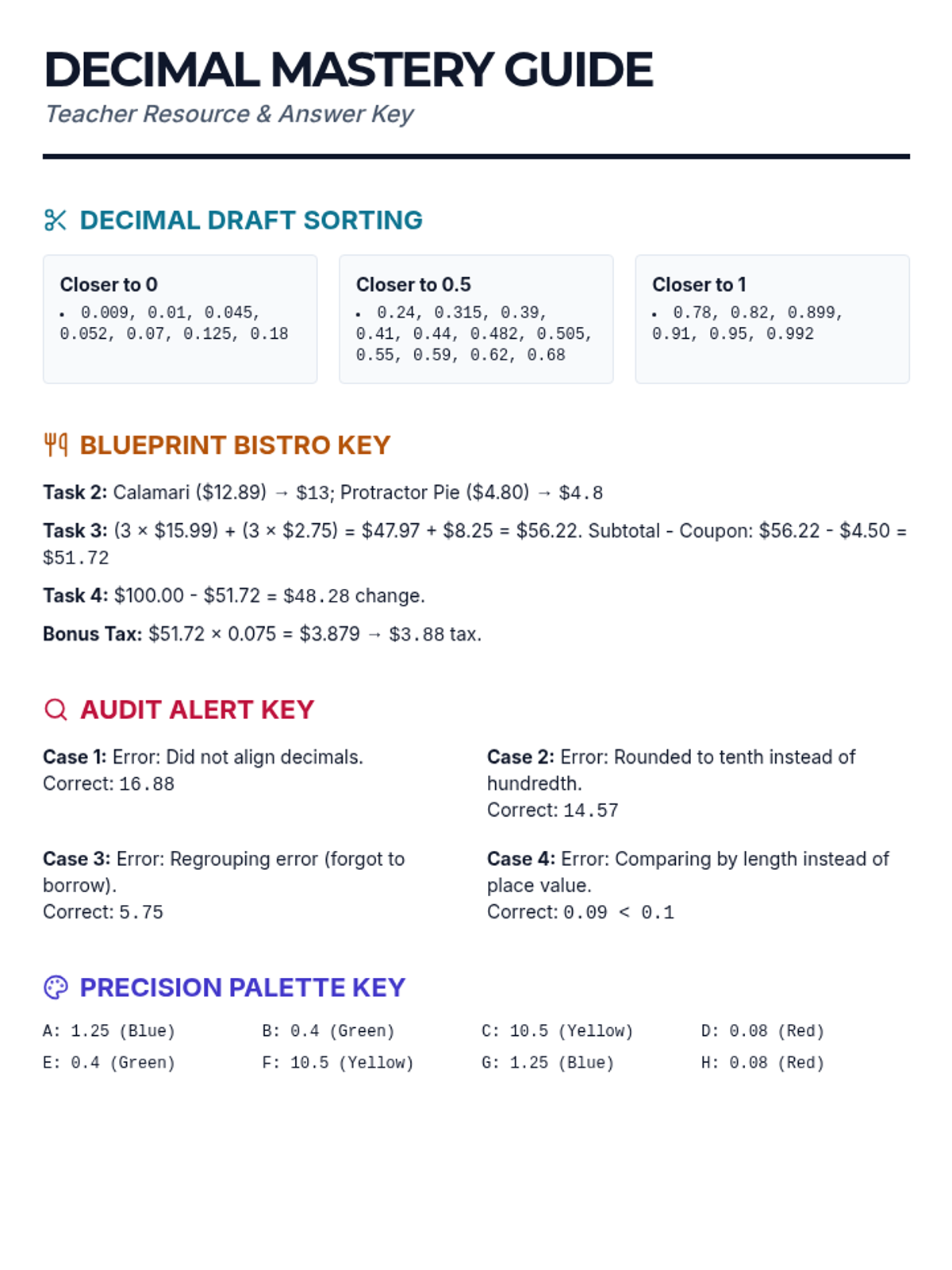
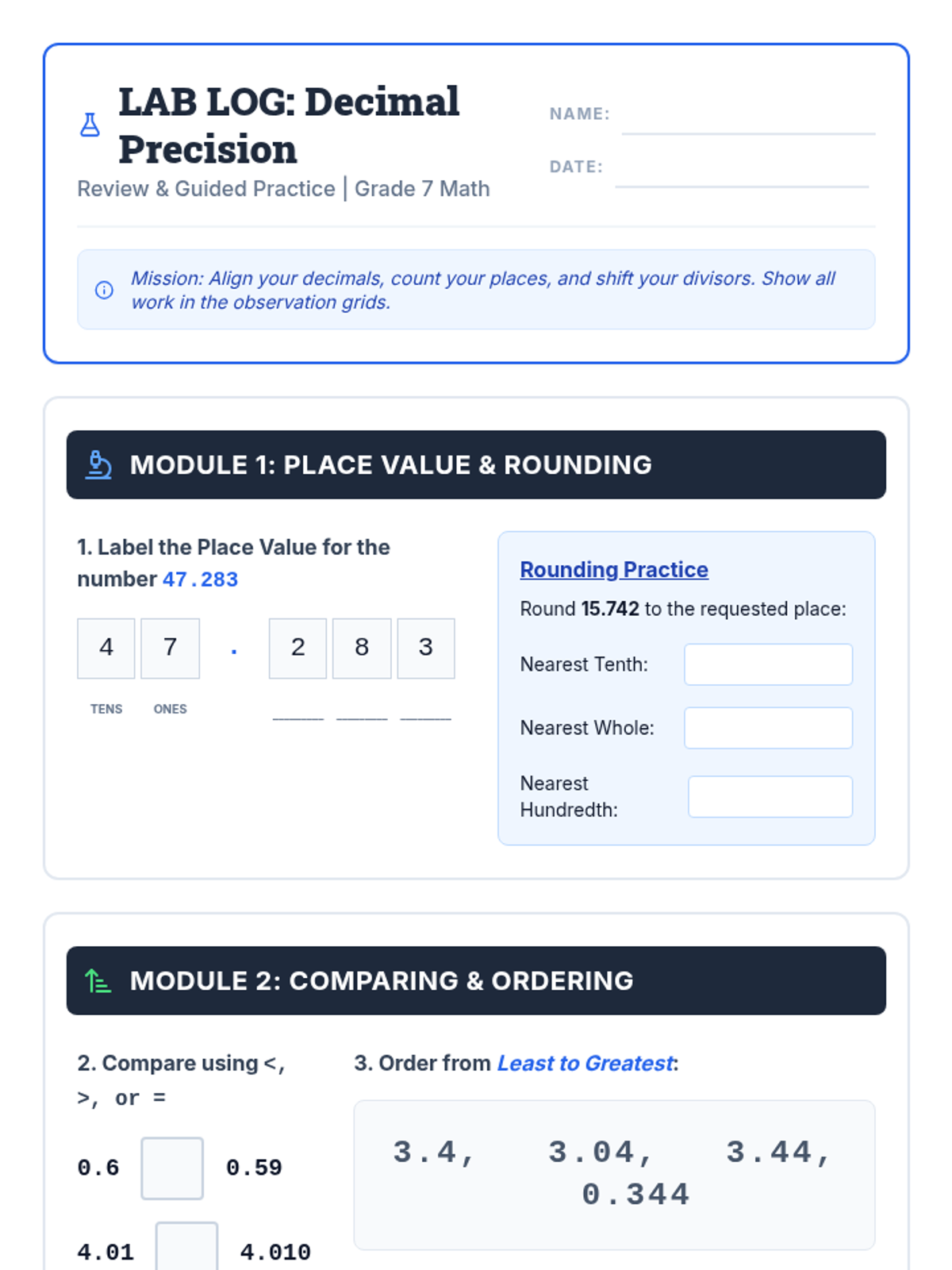
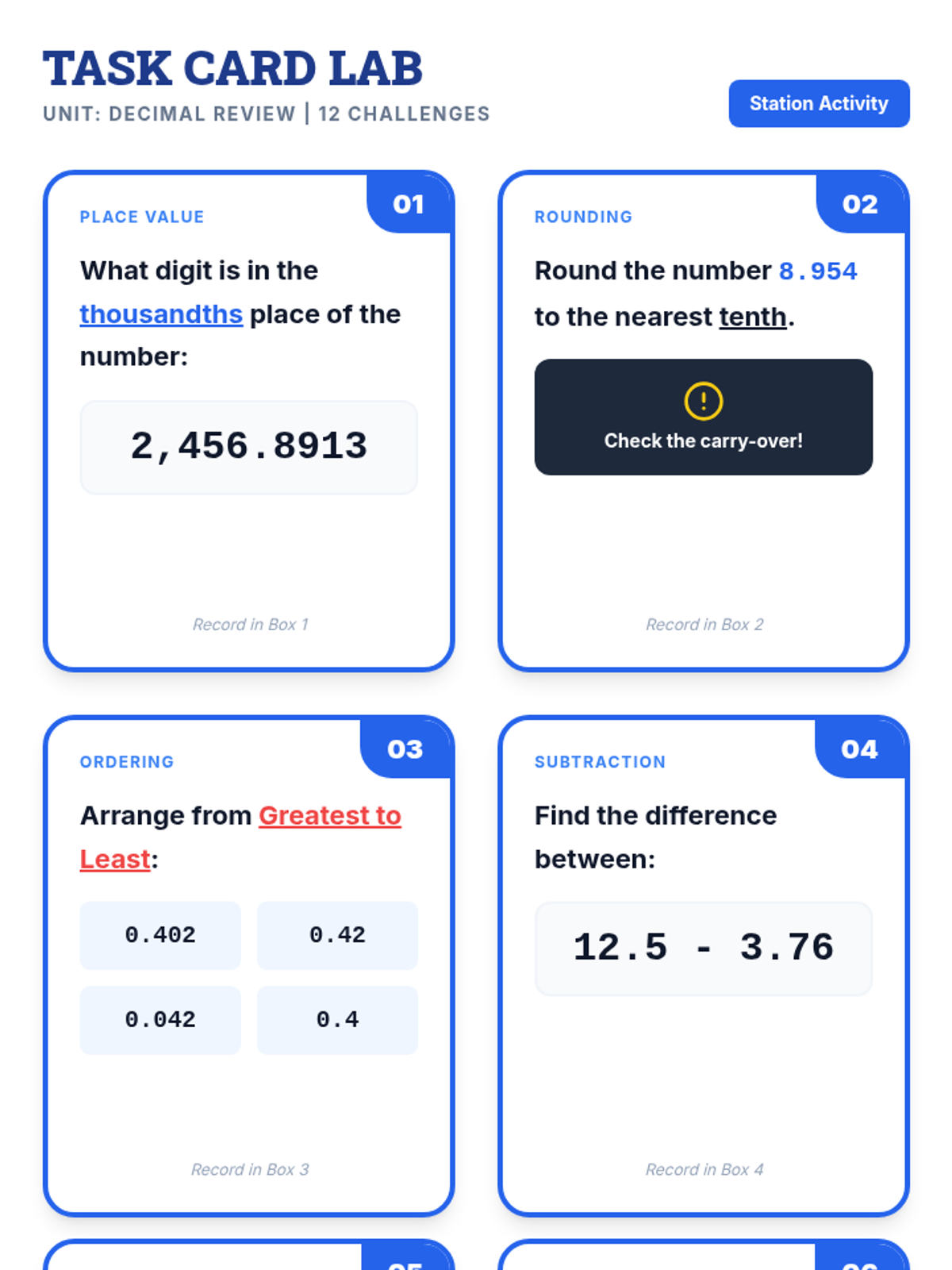
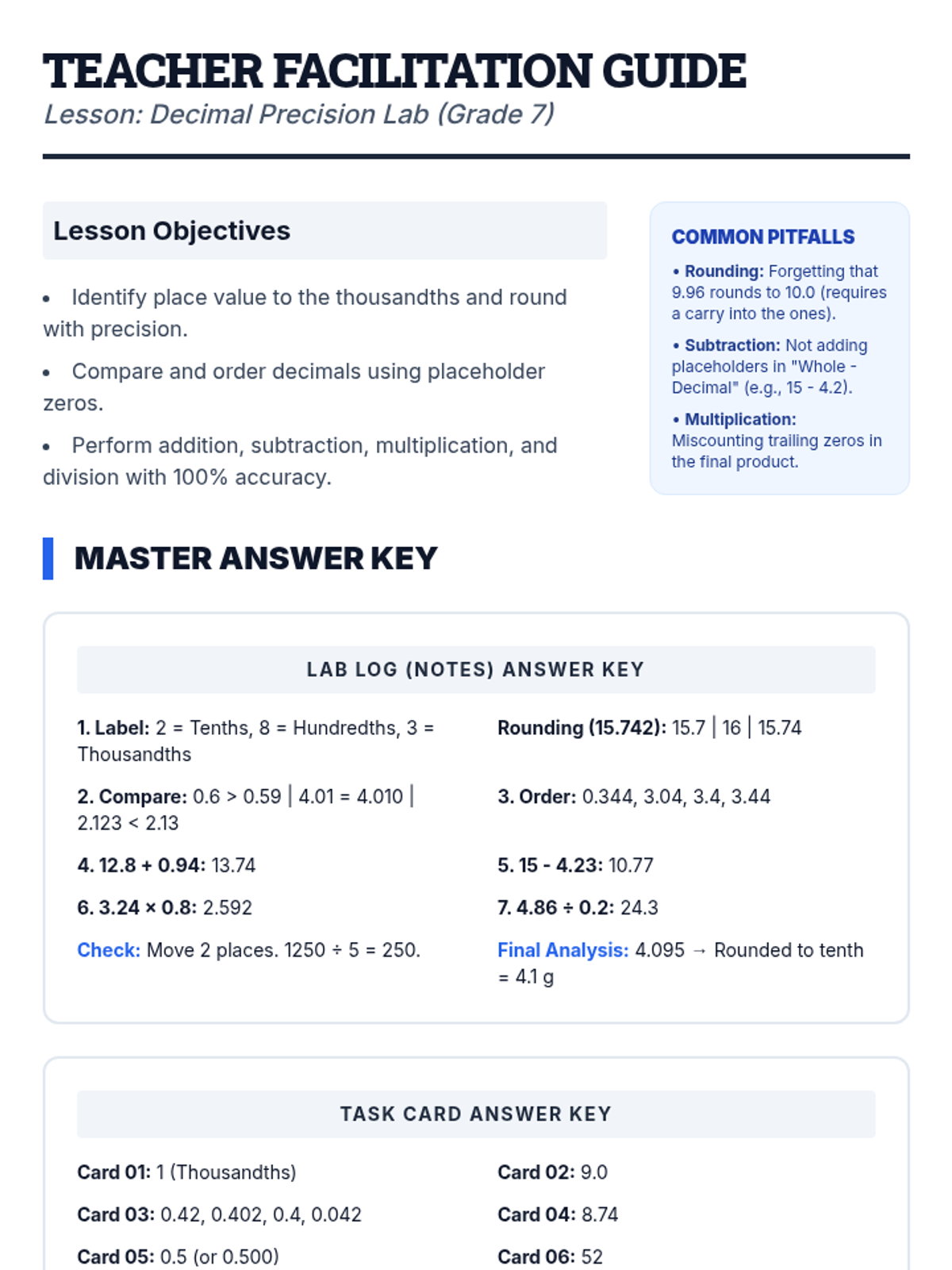
A collection of four diverse decimal practice activities covering addition, subtraction, comparison, rounding, and word problems for 7th-grade math students.
A comprehensive review of decimal operations and concepts designed for 7th-grade students, featuring a laboratory-themed precision approach to mastering place value, rounding, and arithmetic.
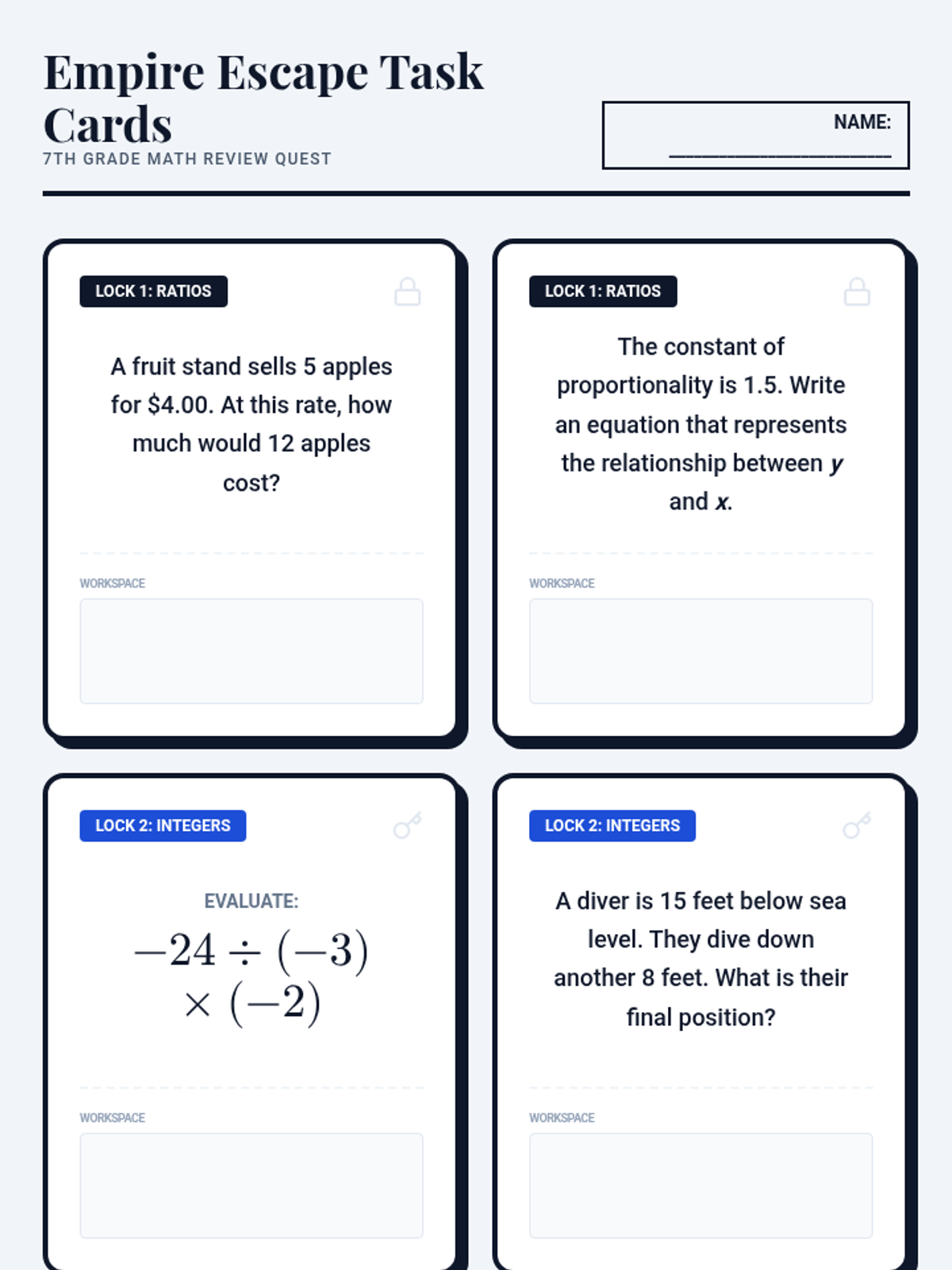
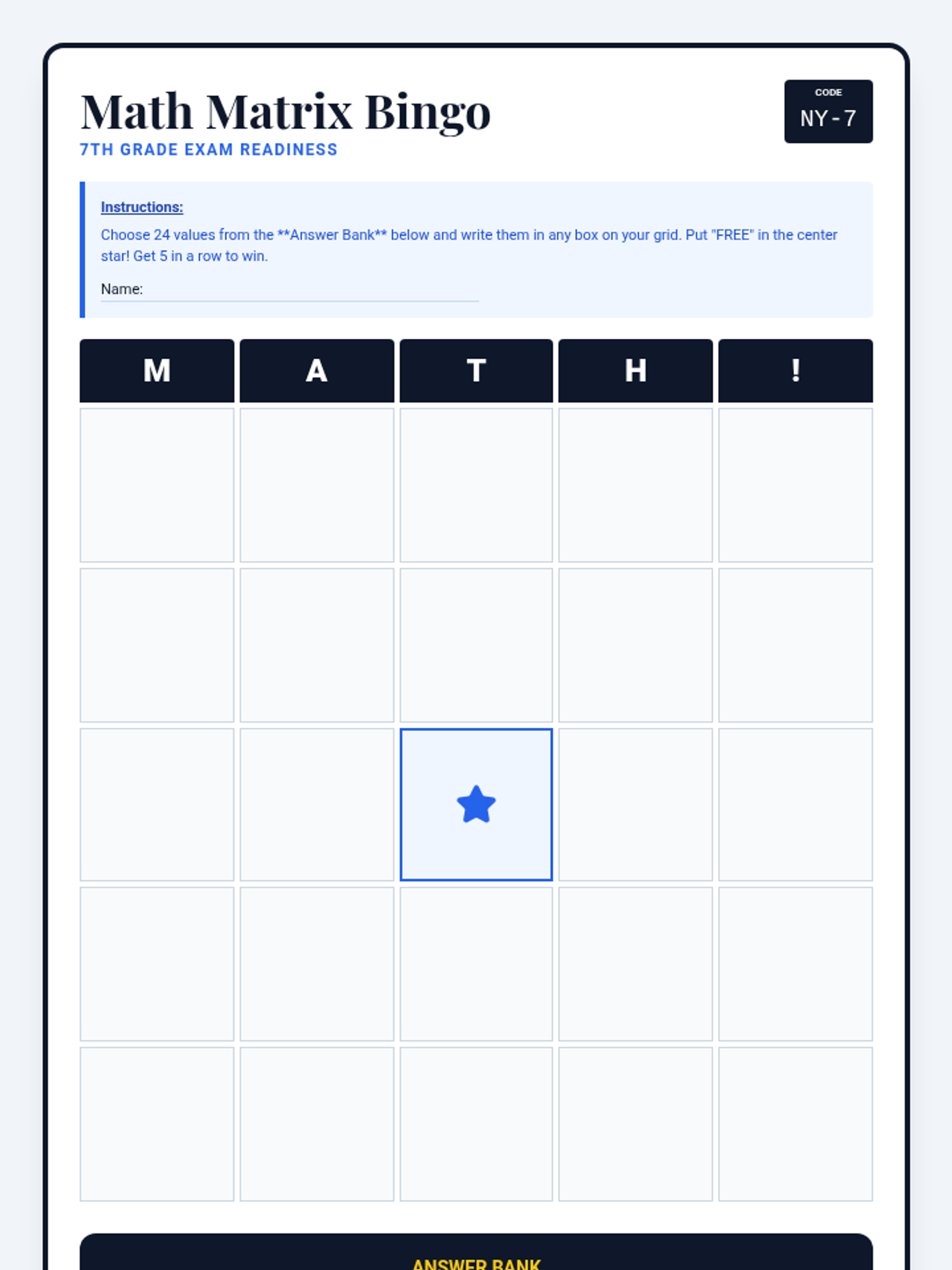
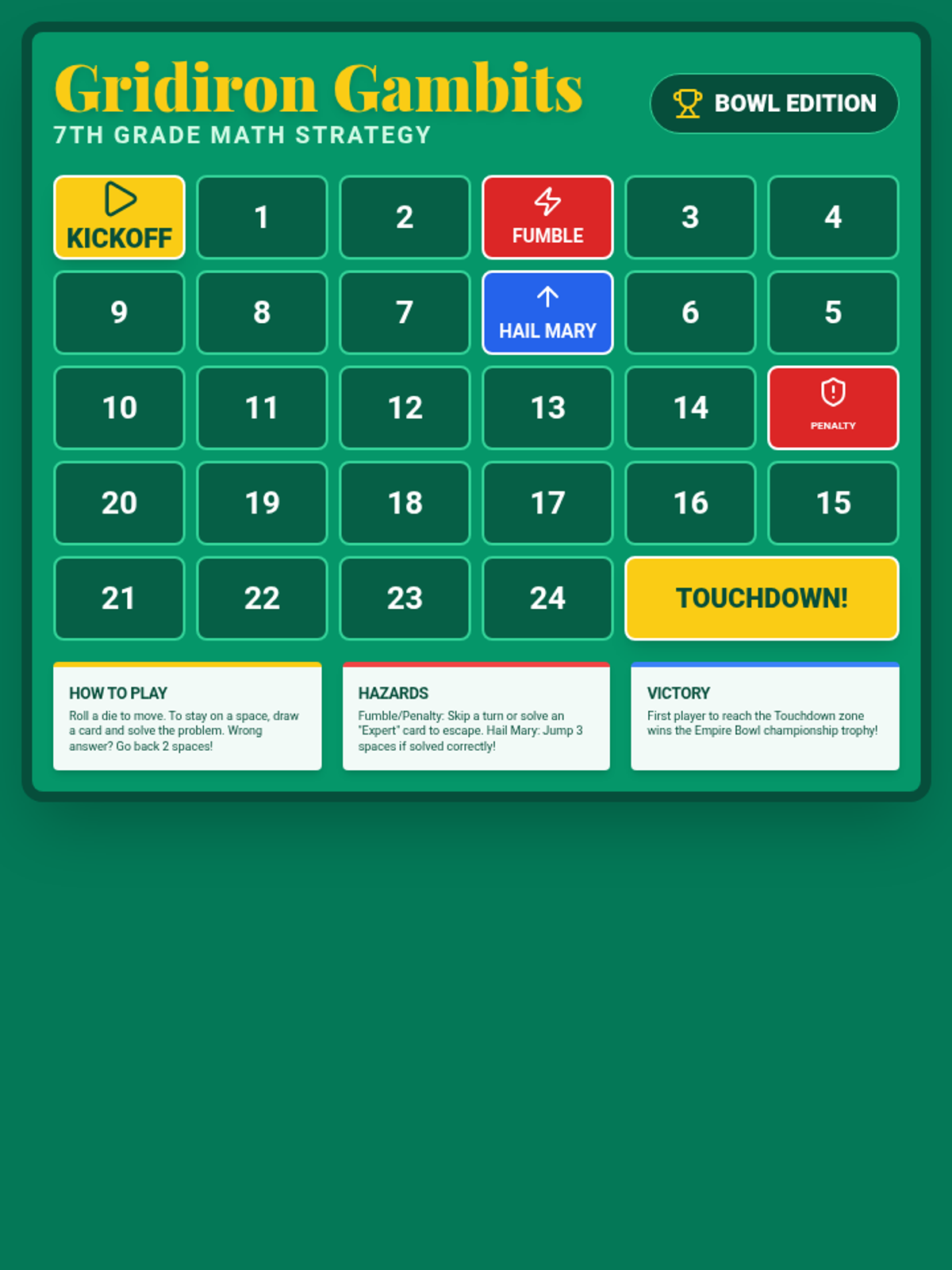
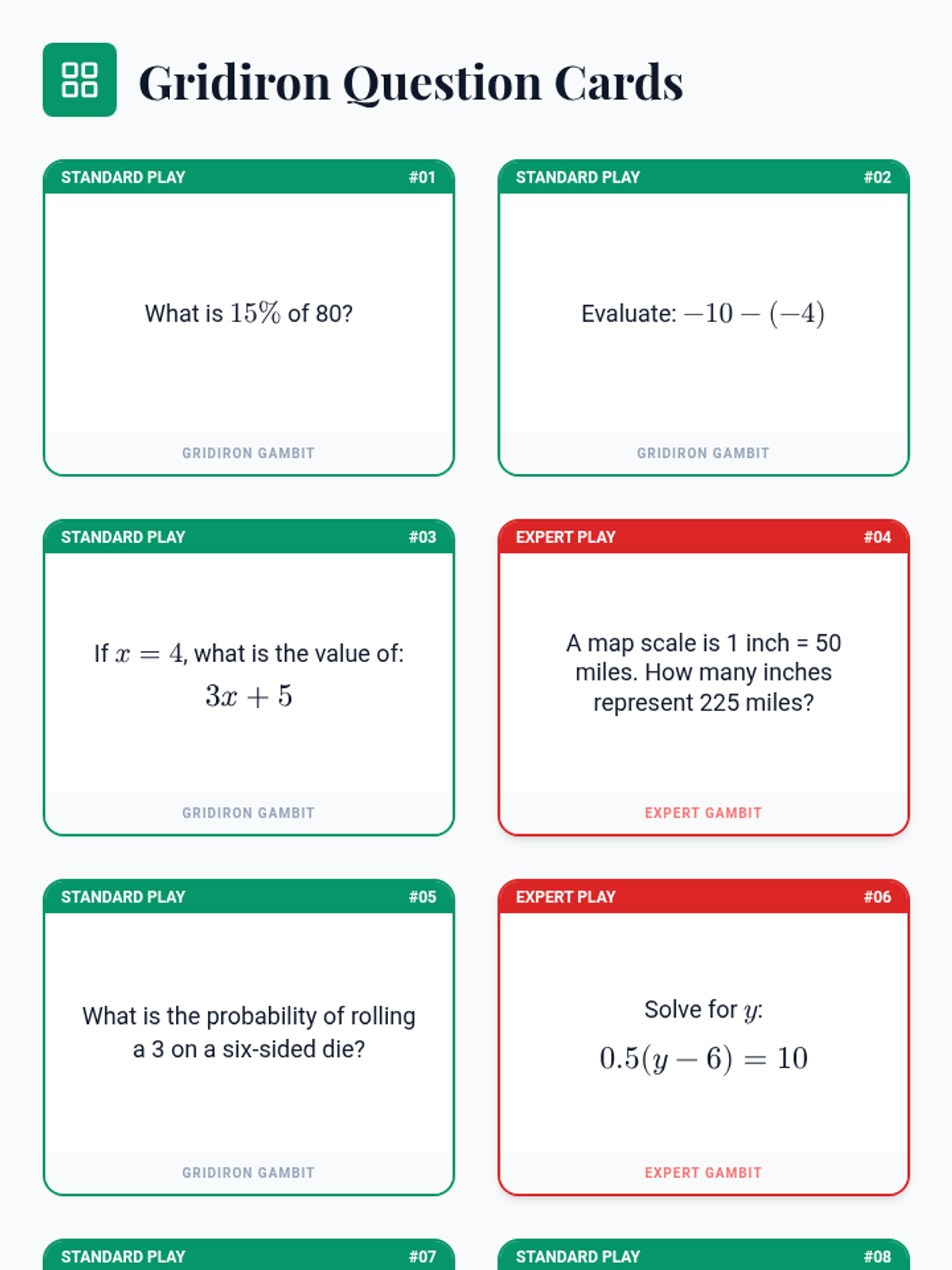
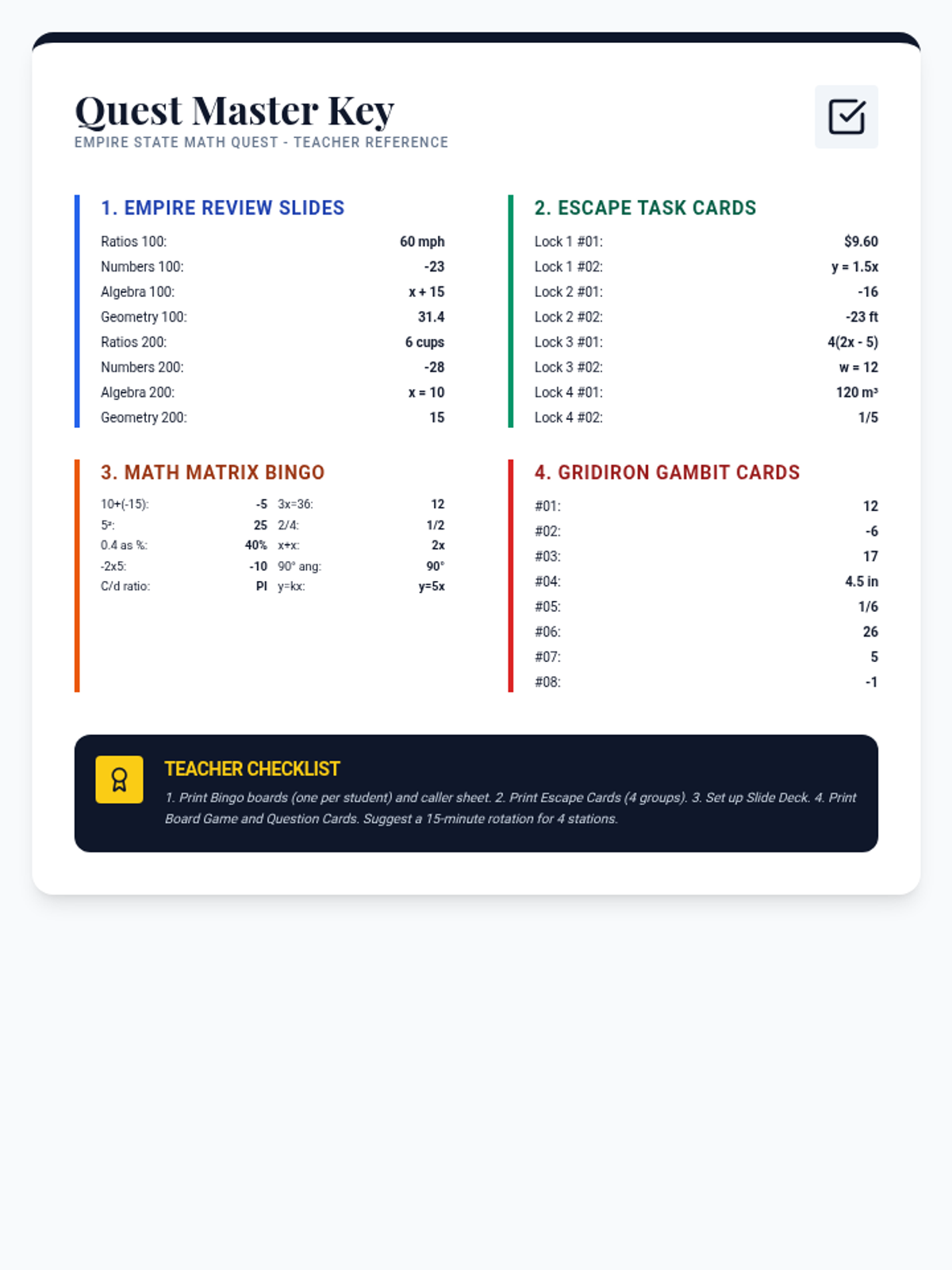
A comprehensive review session for the 7th Grade NYS Math Exam featuring four distinct games: a Jeopardy-style presentation, an escape room challenge, math bingo, and a strategic board game. Topics include Ratios & Proportional Reasoning, The Number System, Expressions & Equations, and Geometry & Statistics.
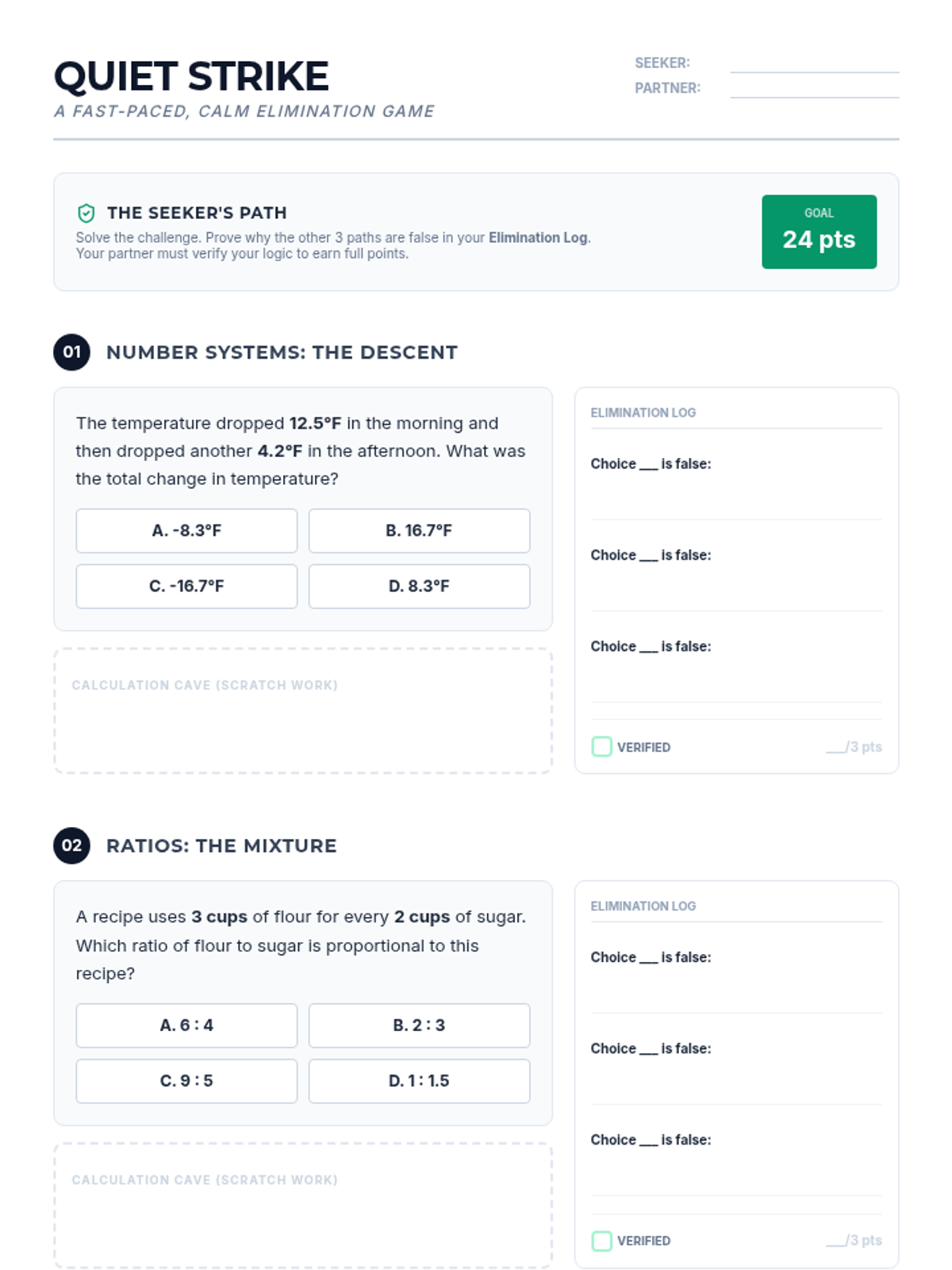
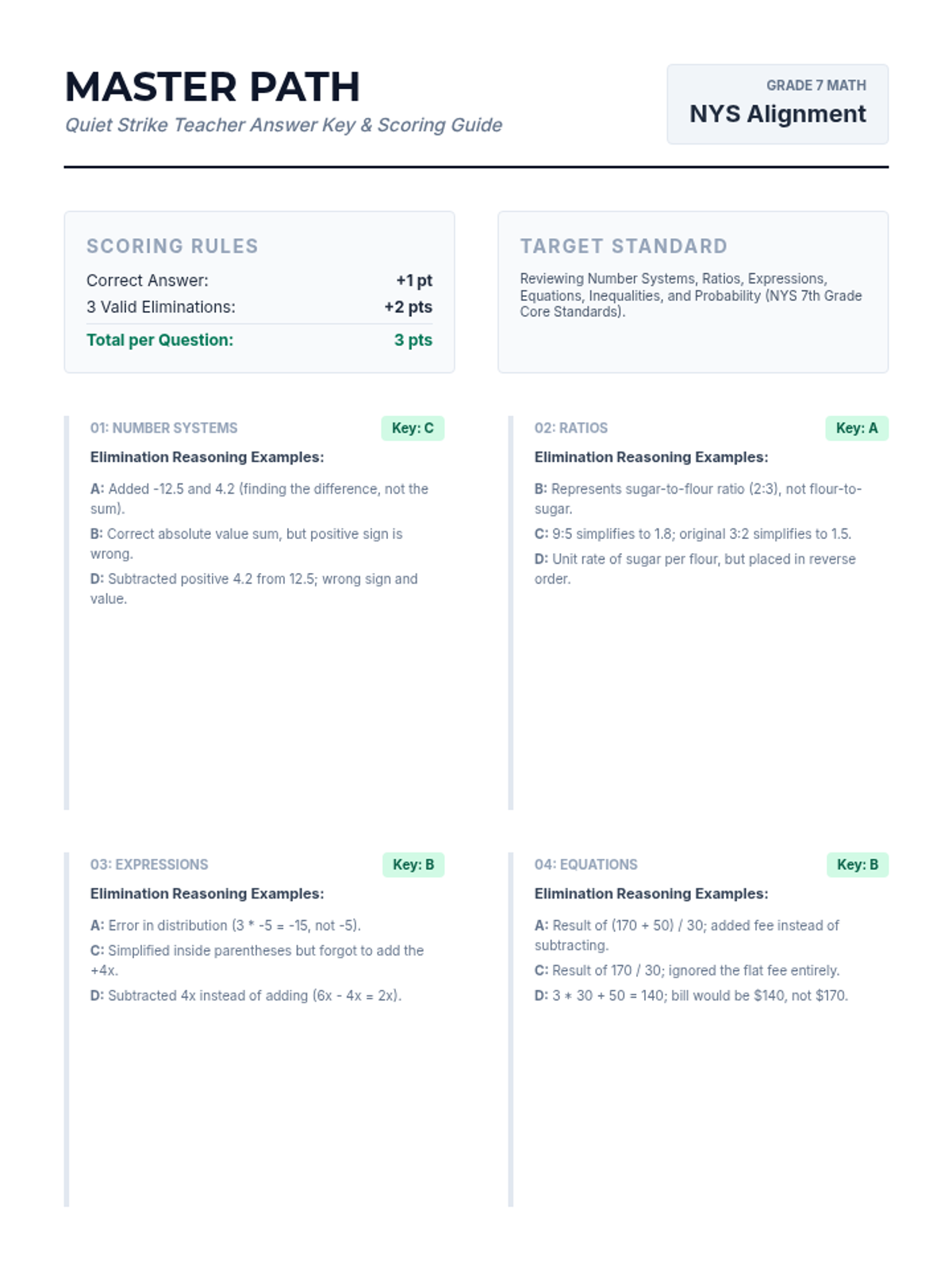
A fast-paced yet calm math elimination game focusing on 7th Grade NYS standards. Students solve multiple-choice questions, provide reasoning for eliminating wrong answers, and engage in partner verification for points.
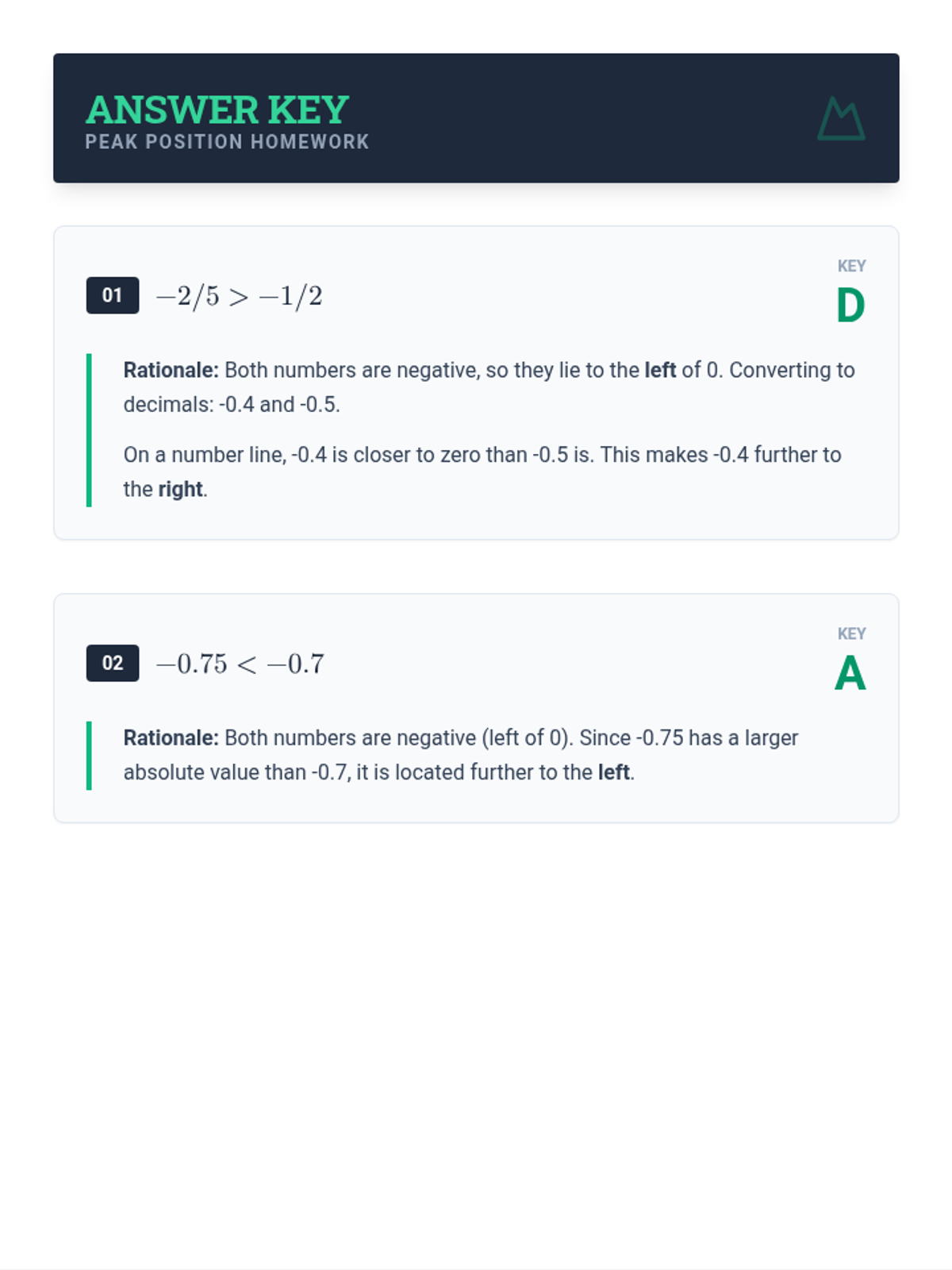
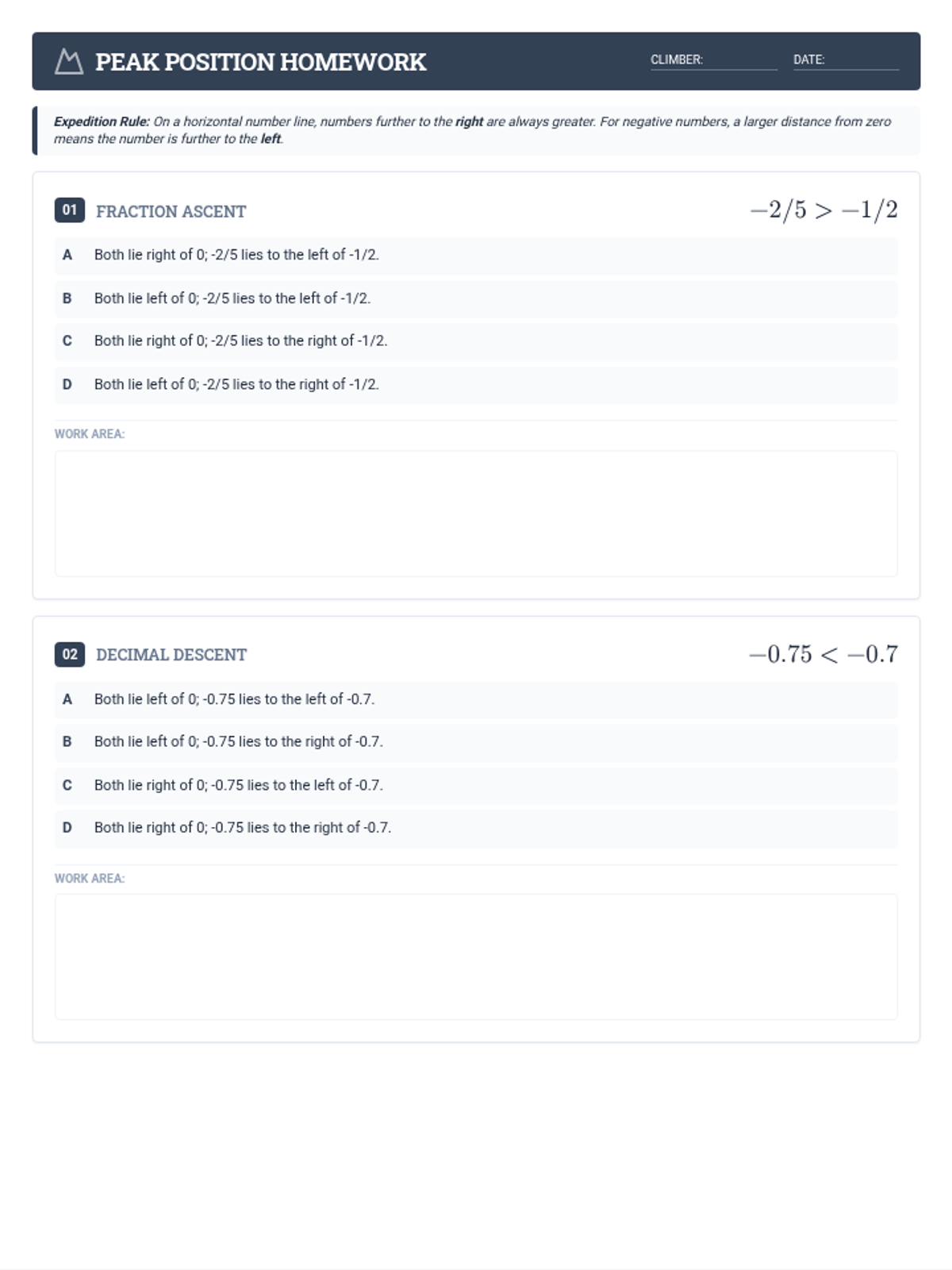
A lesson focused on comparing and ordering rational numbers on a number line, specifically focusing on negative values and their relative positions.
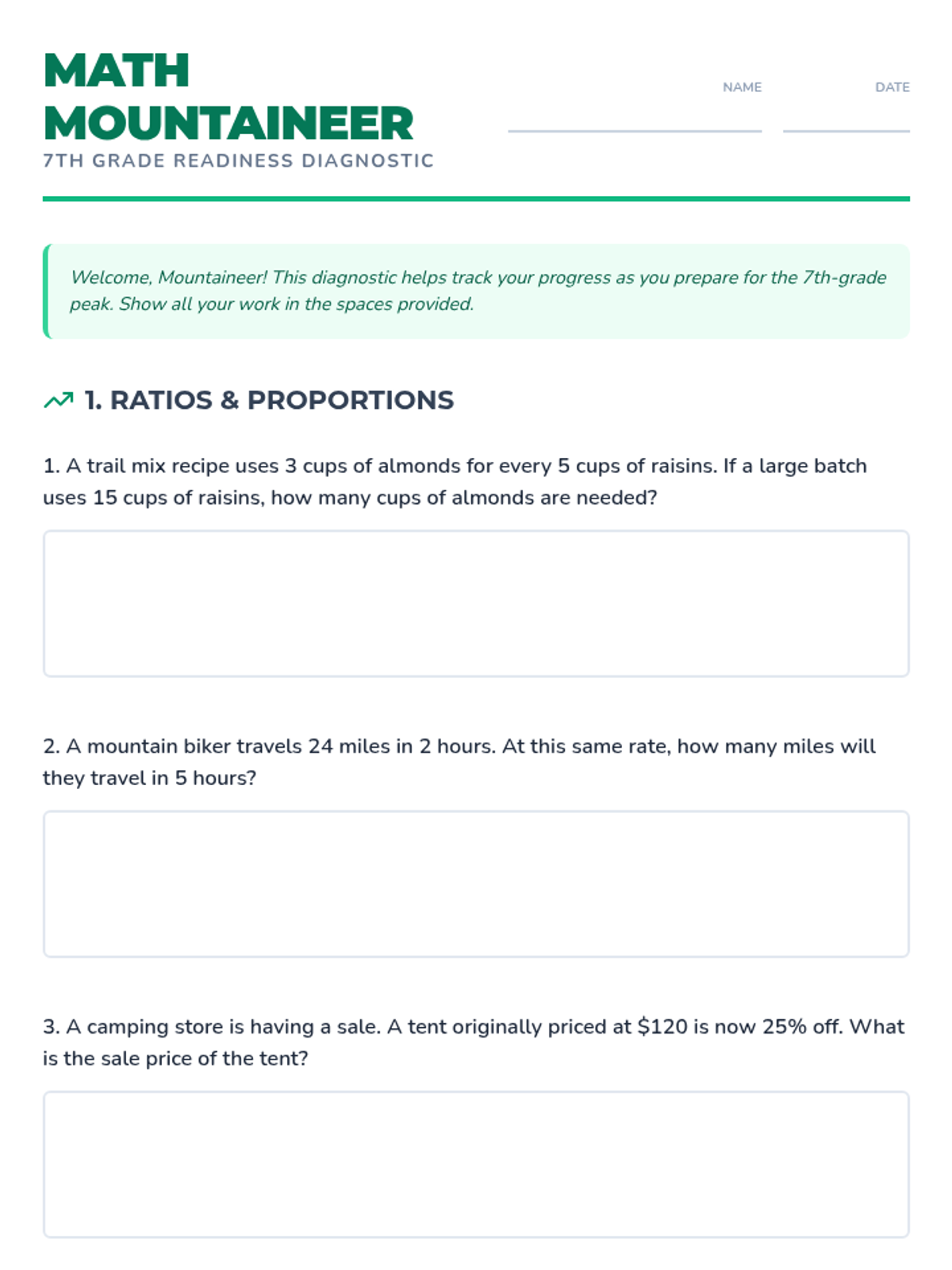
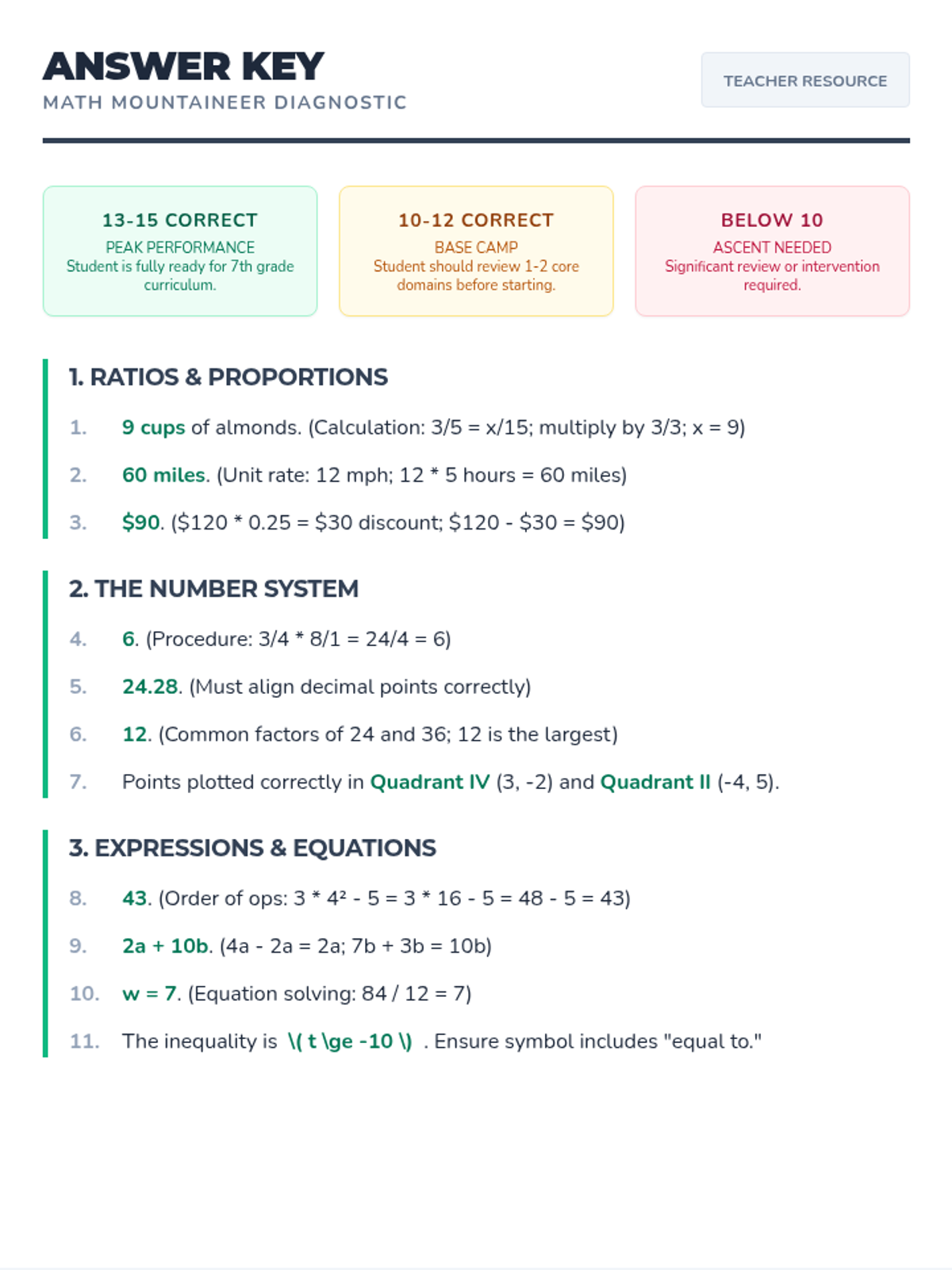
A comprehensive diagnostic assessment designed to evaluate a student's readiness for 7th-grade mathematics, covering key 6th-grade standards including ratios, the number system, expressions, and geometry.
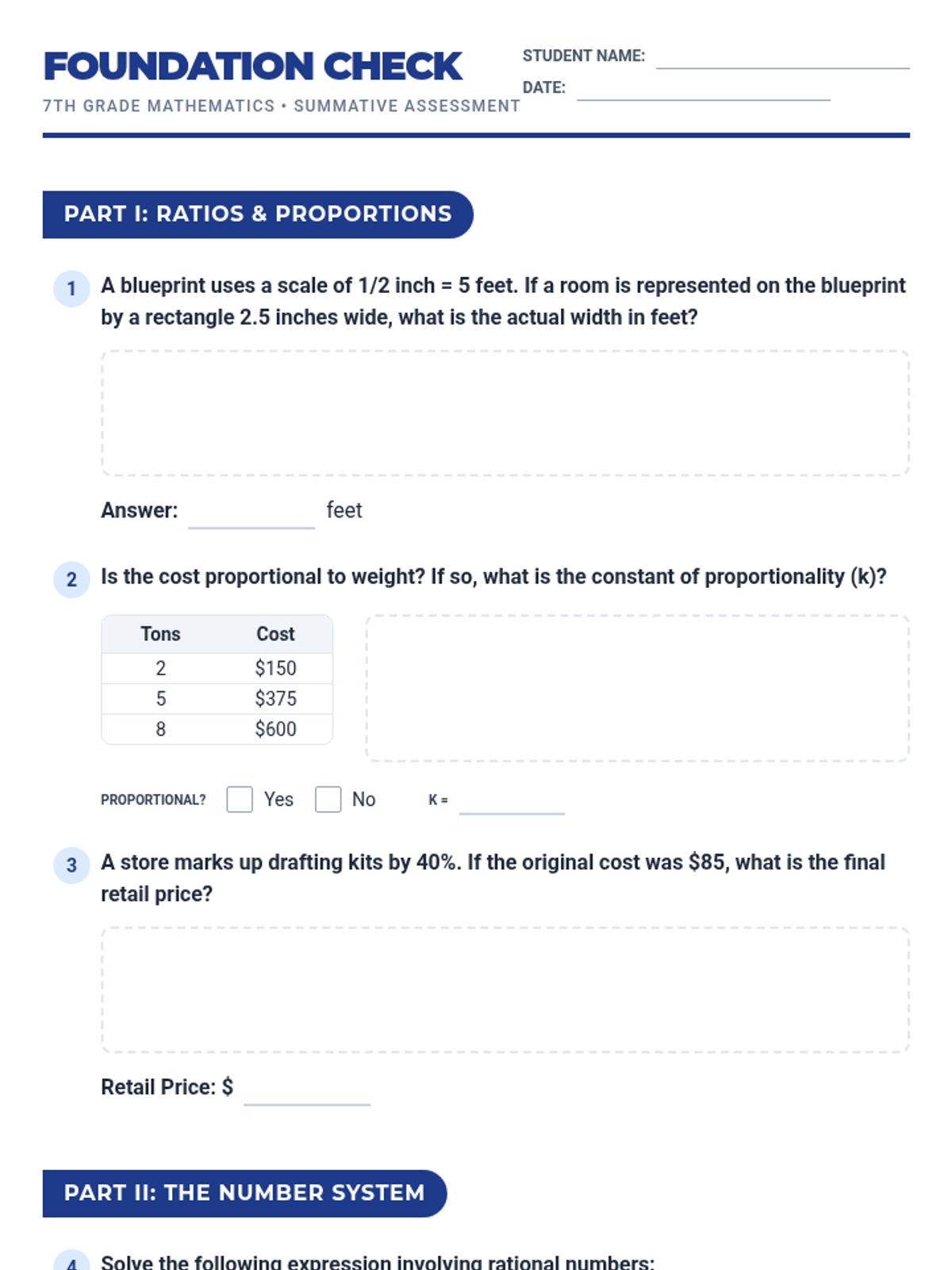
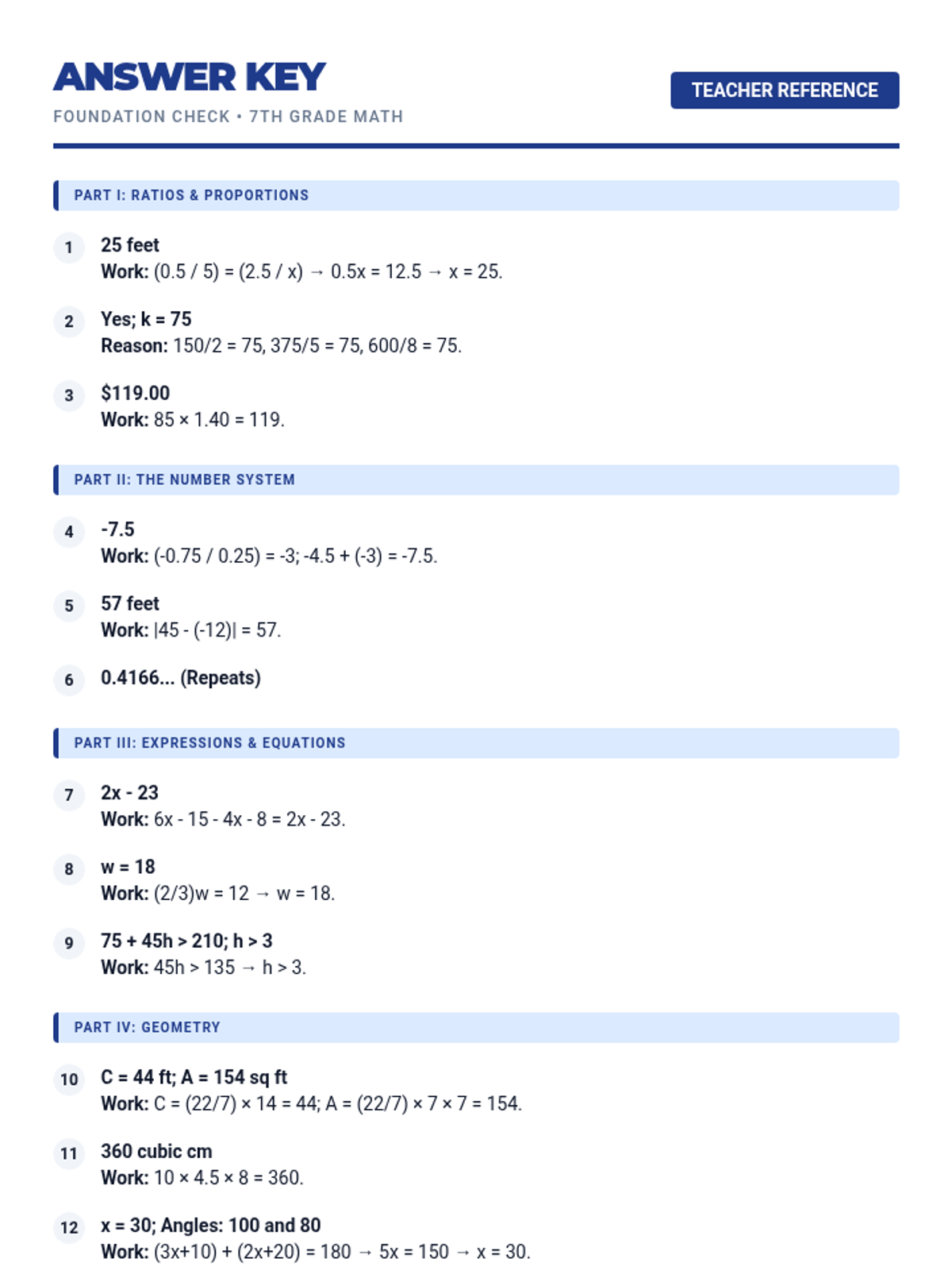
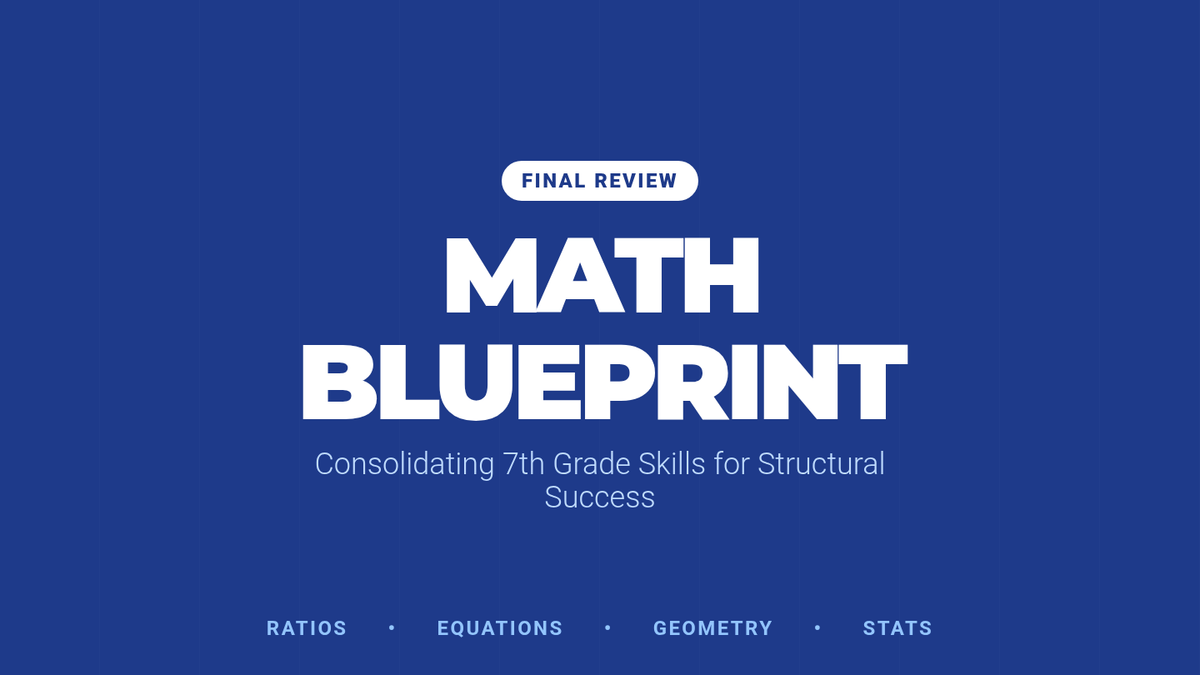
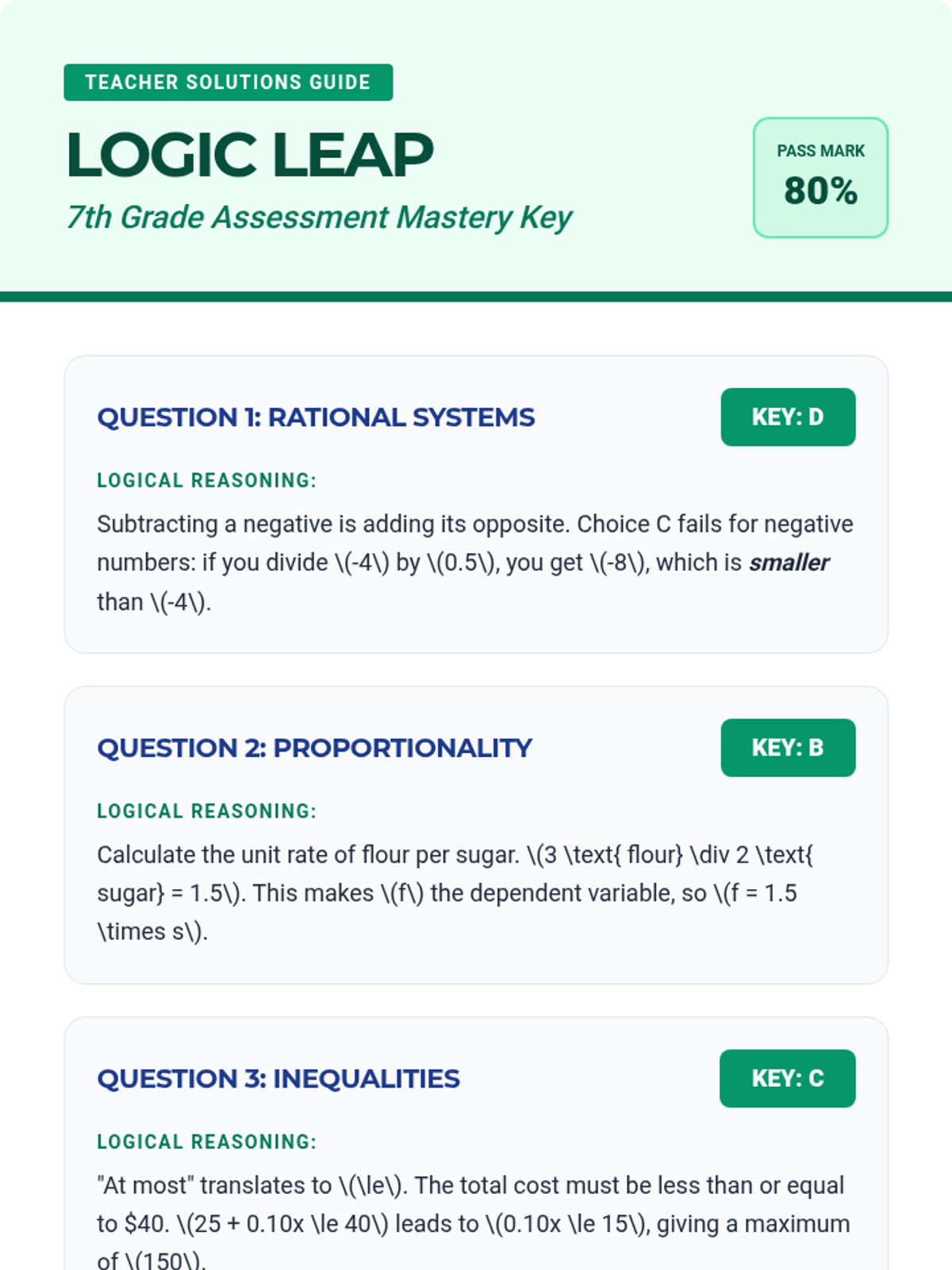
A comprehensive end-of-year assessment for 7th-grade math, covering ratios, the number system, expressions, geometry, and statistics. Includes a student test, a teacher answer key, and introductory review slides.
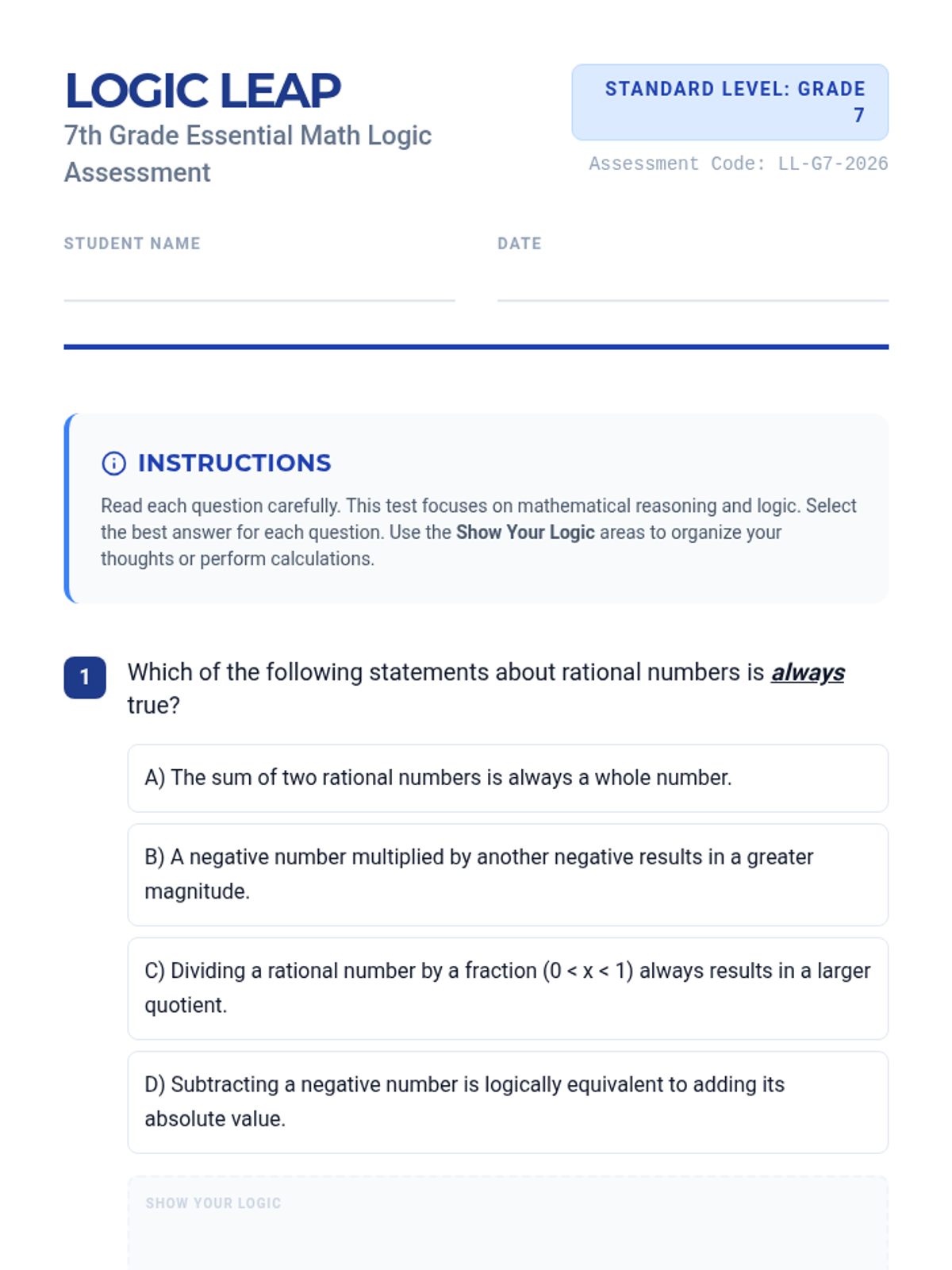
A comprehensive assessment and review lesson focusing on 7th-grade mathematical logic and reasoning across all core domains.
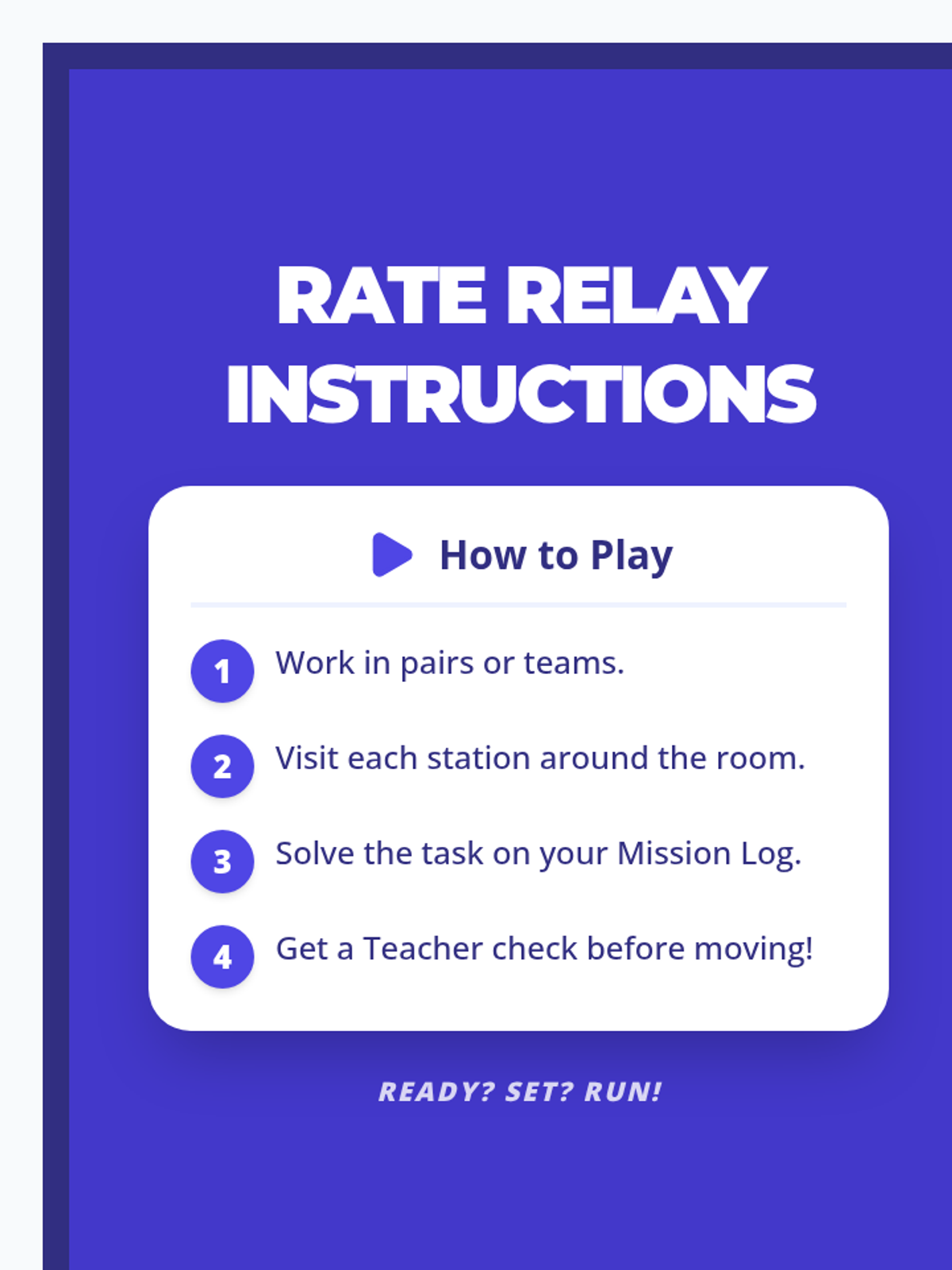
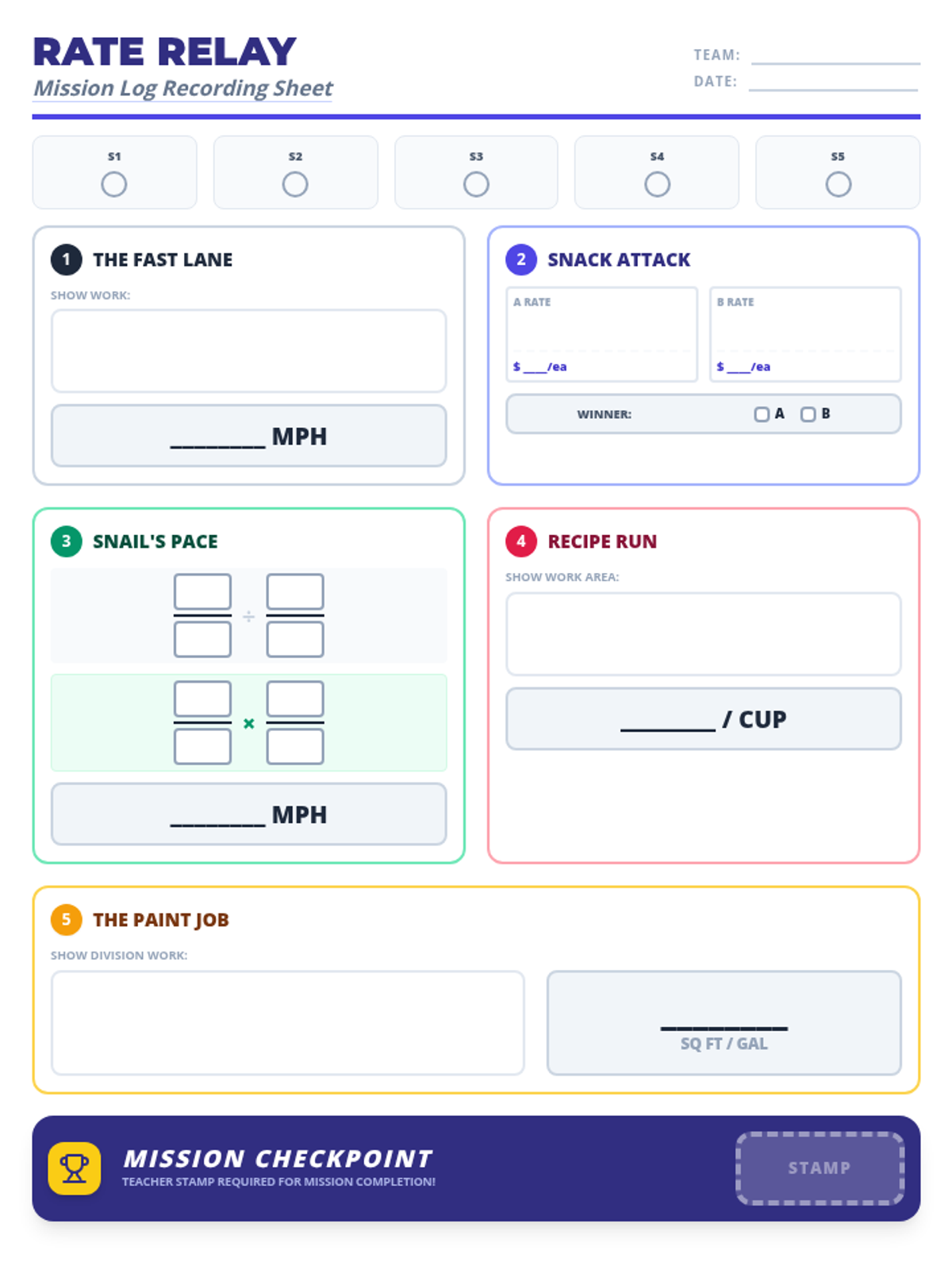
A high-energy collaborative review day. Students participate in a 'Relay Race' of unit rate tasks, moving through stations that cover whole numbers, fractions, consumer math, and measurement to reinforce skills before the final assessment.
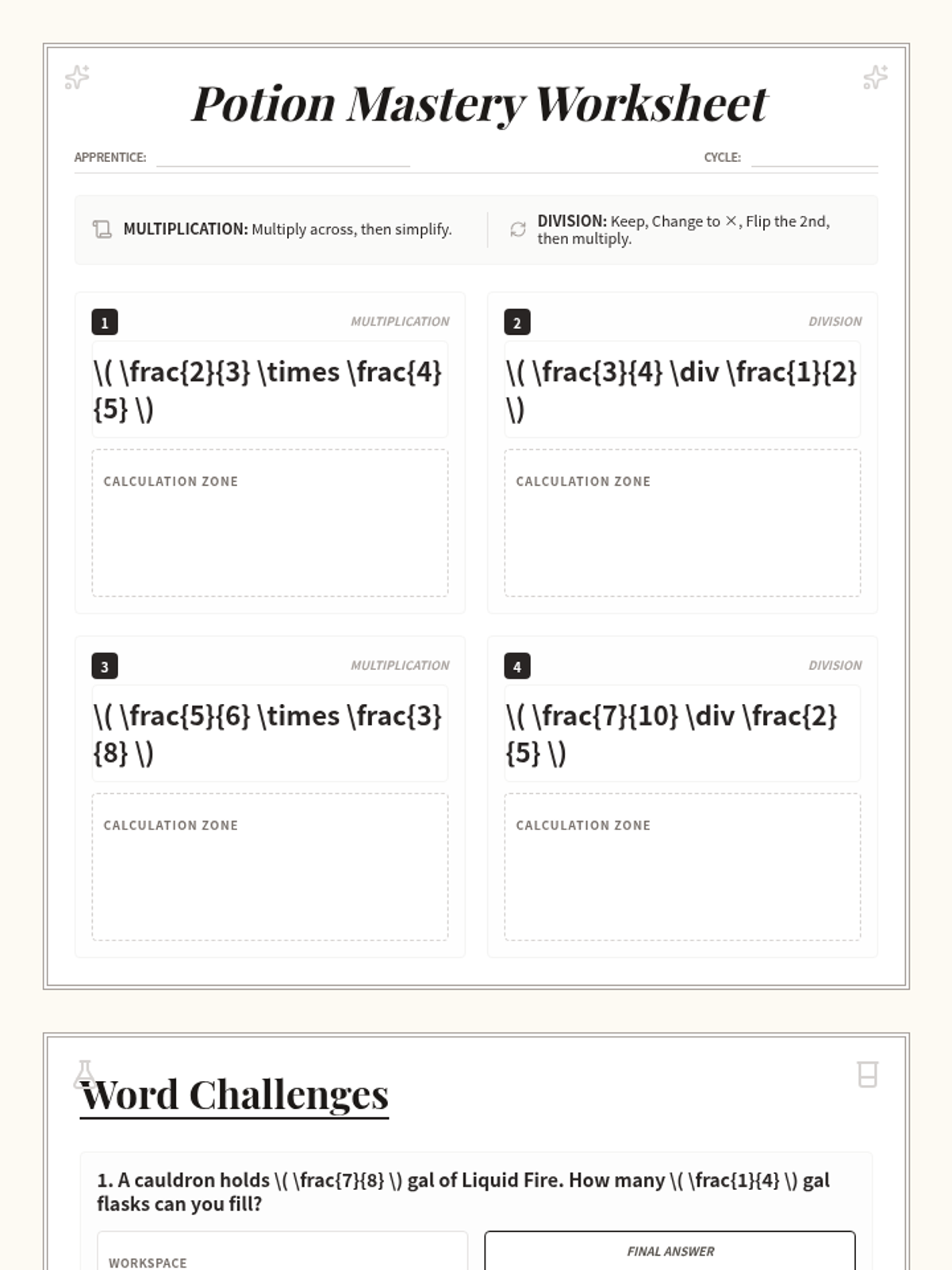
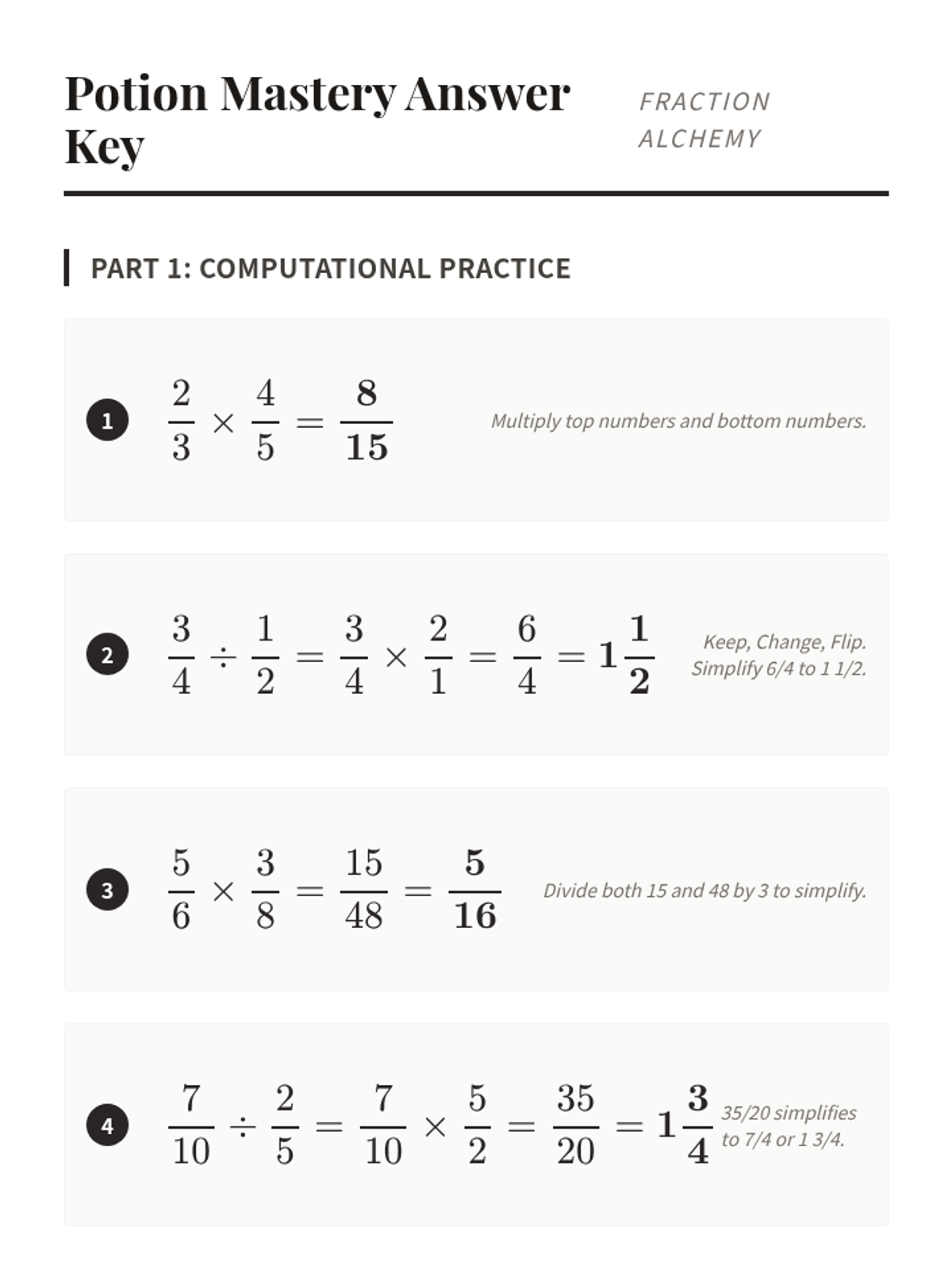
A lesson on multiplying and dividing fractions with unlike denominators, themed around an alchemy lab where students brew potions using mathematical formulas.
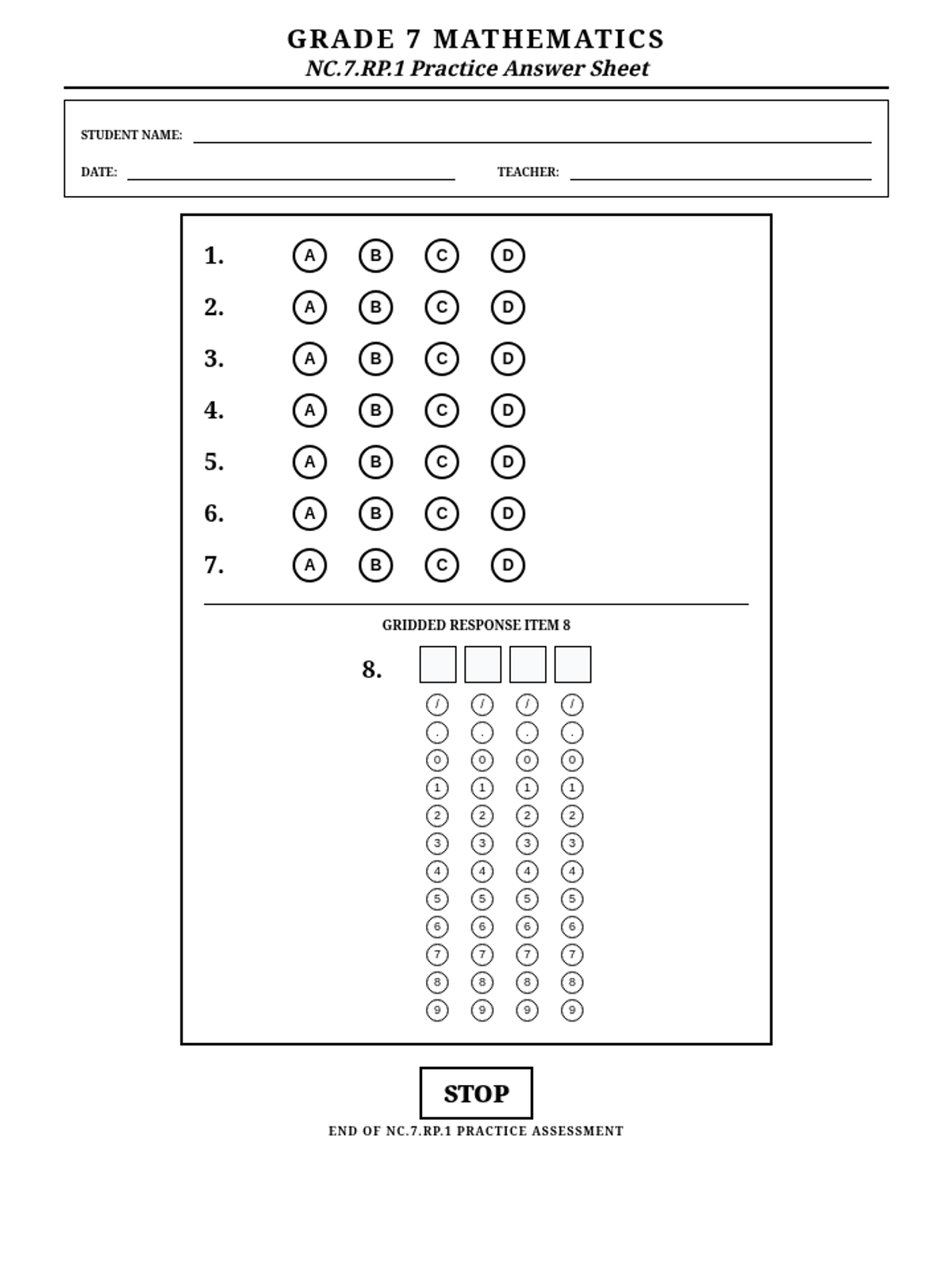
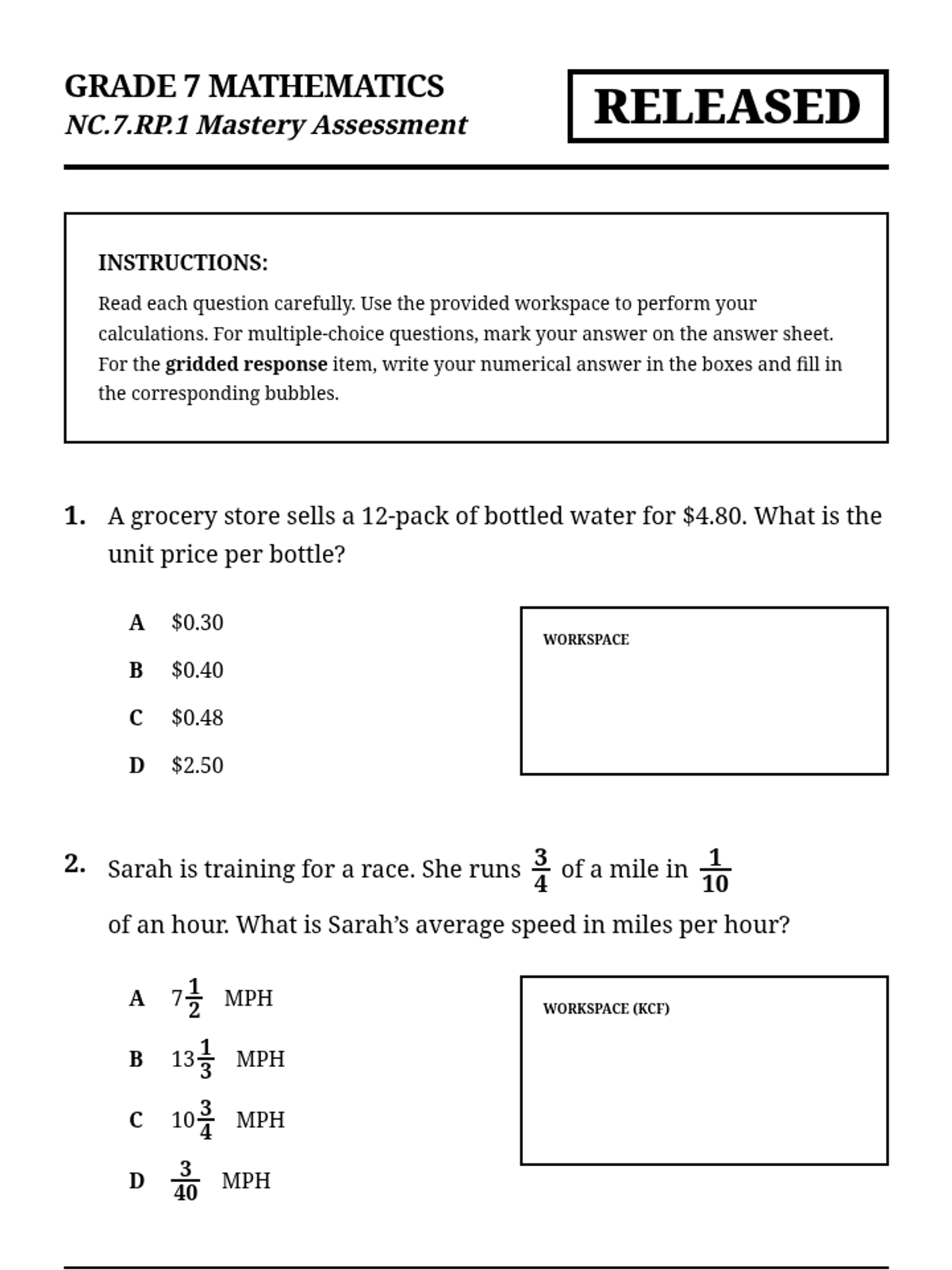
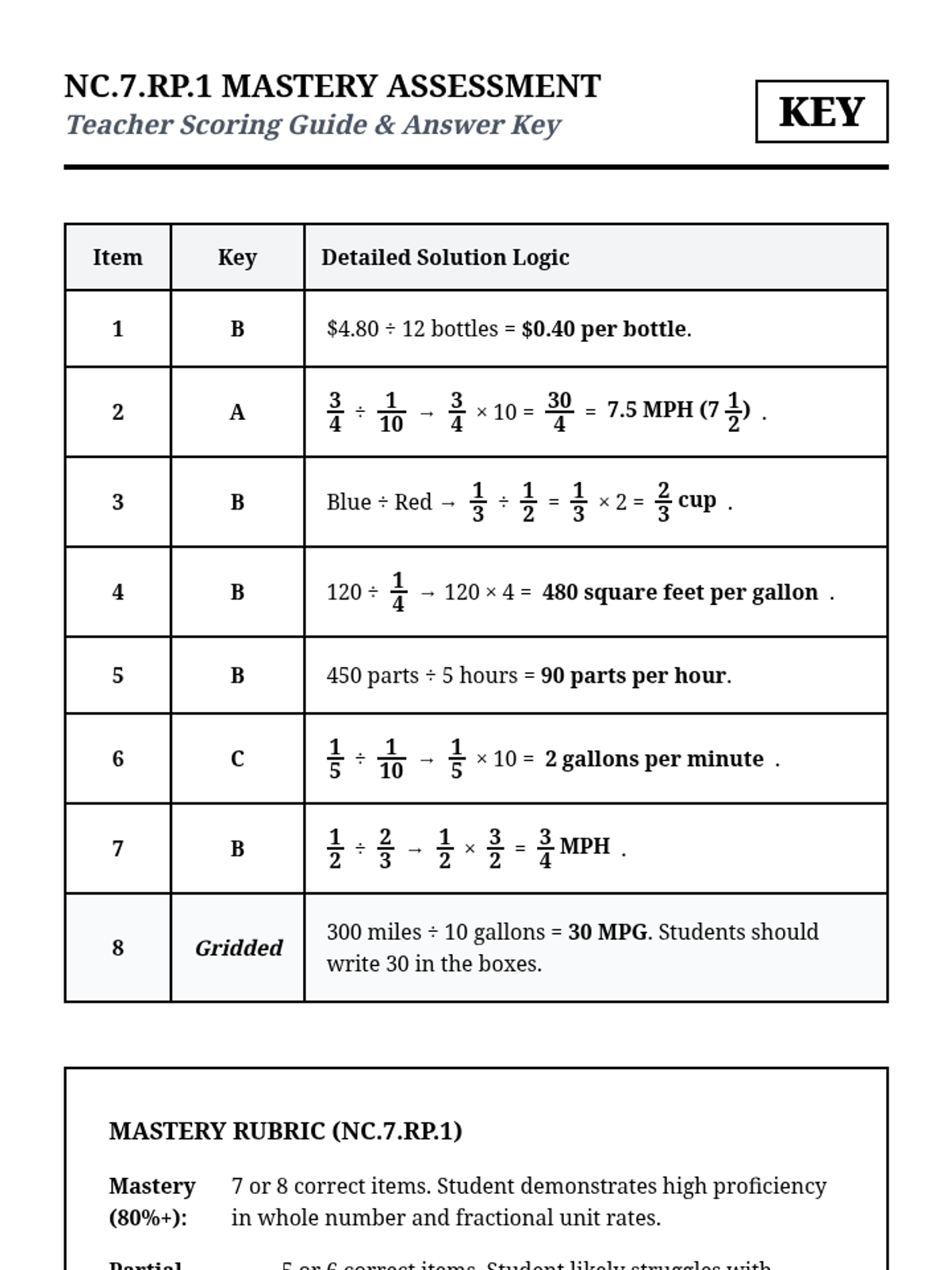
Review and assessment day. Includes a structured mock test pack designed with IEP accommodations in mind (clear spacing, reduced choice, visual cues).
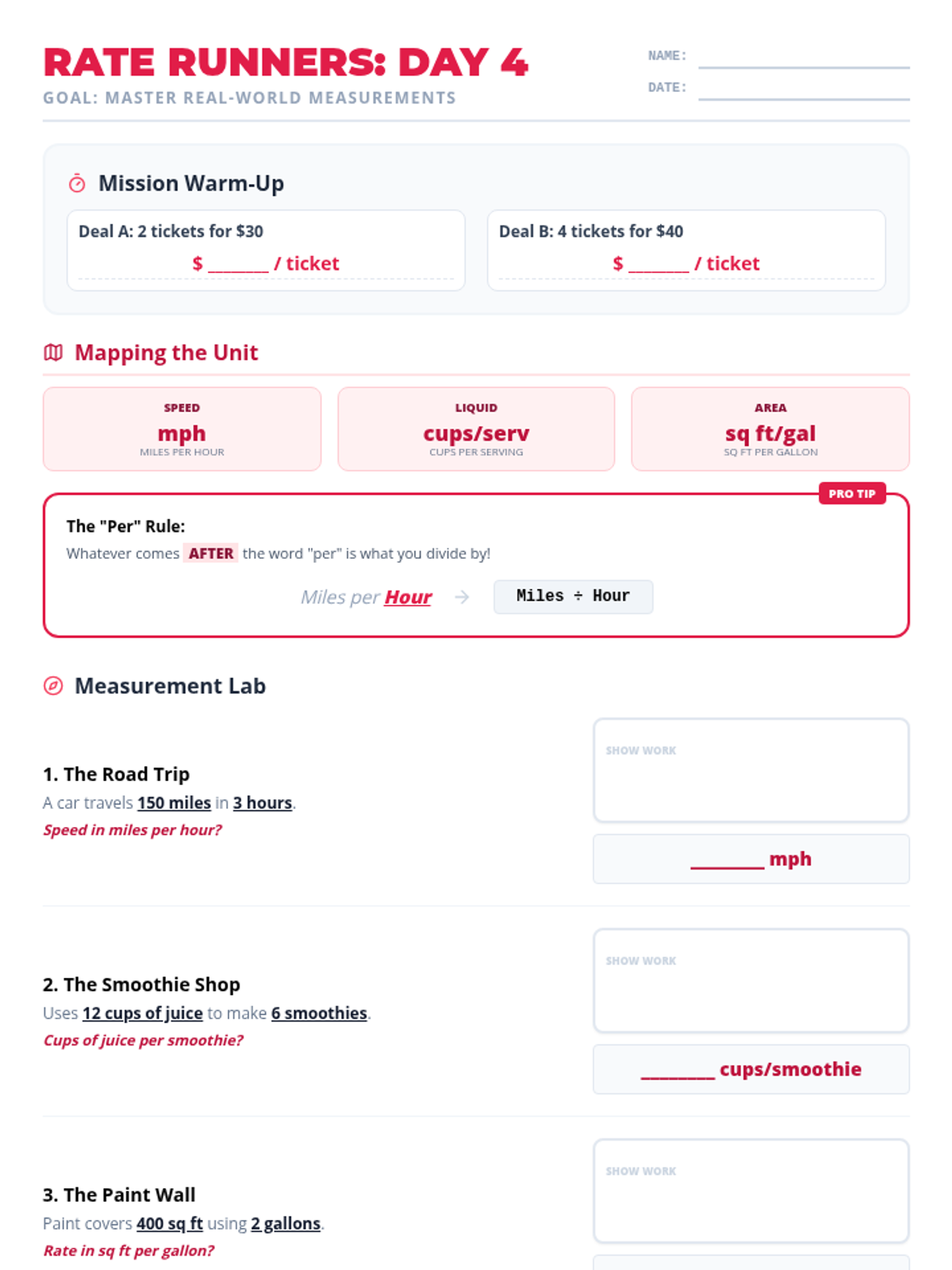
Connecting unit rates to real-world measurements including speed (mph), recipes (cups per serving), and area (square feet per gallon).
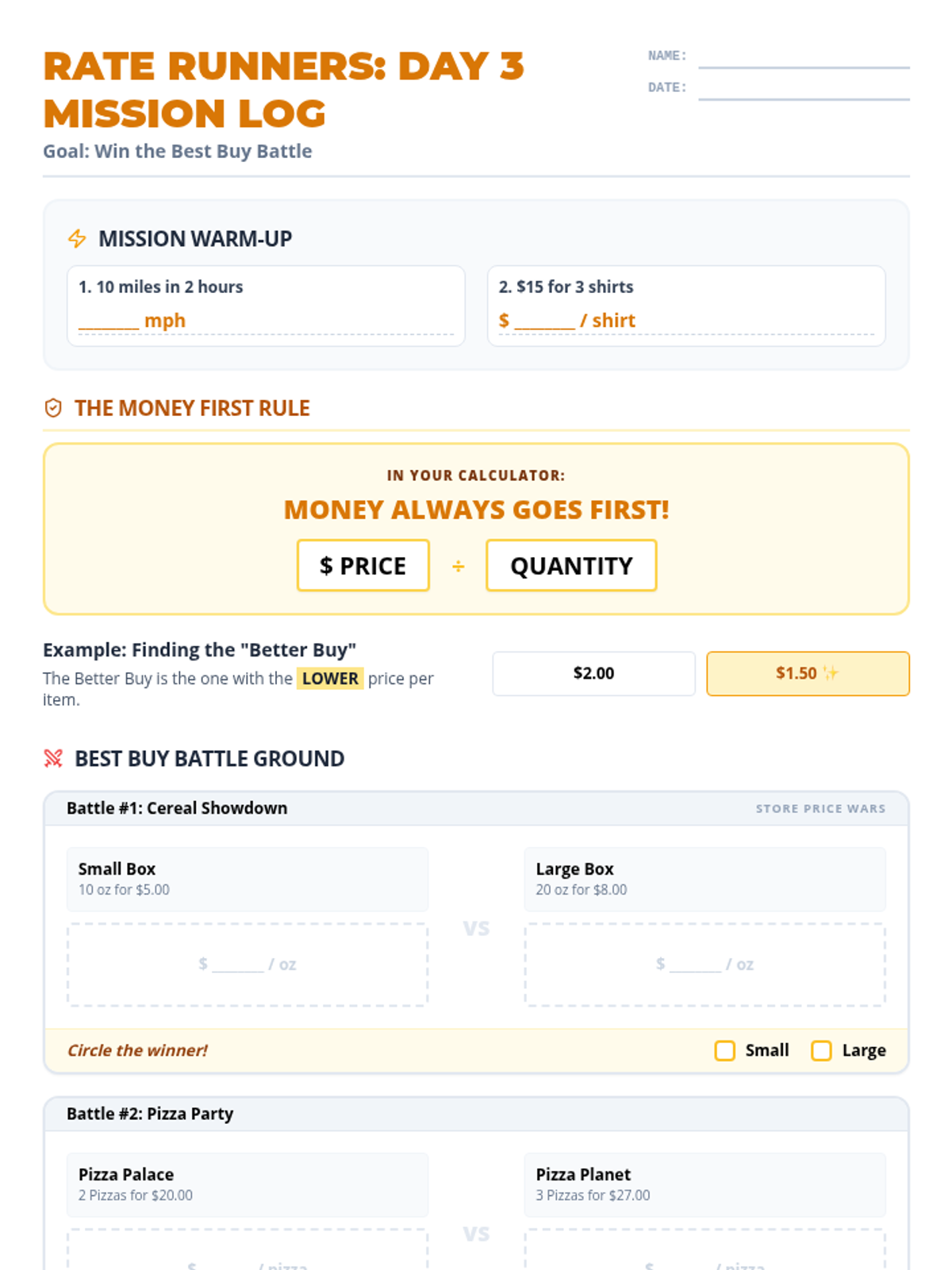
Application of unit rates to consumer math. Students compare two items to find the 'Better Buy' by calculating the price per unit for each option.
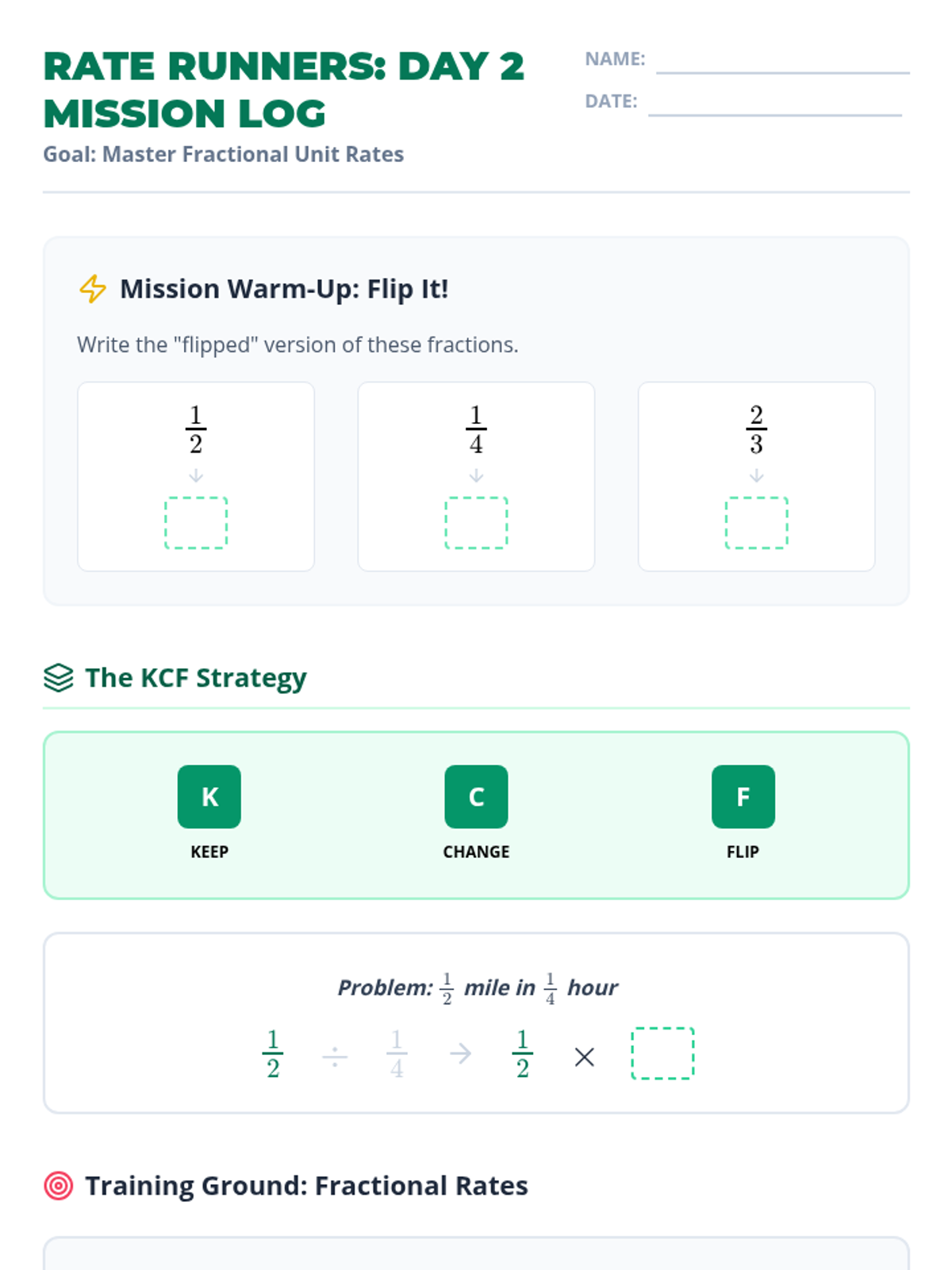
Introduction to unit rates involving simple fractions. Uses the 'Keep-Change-Flip' visual strategy and 'ratio of fractions' models to simplify complex unit rates.
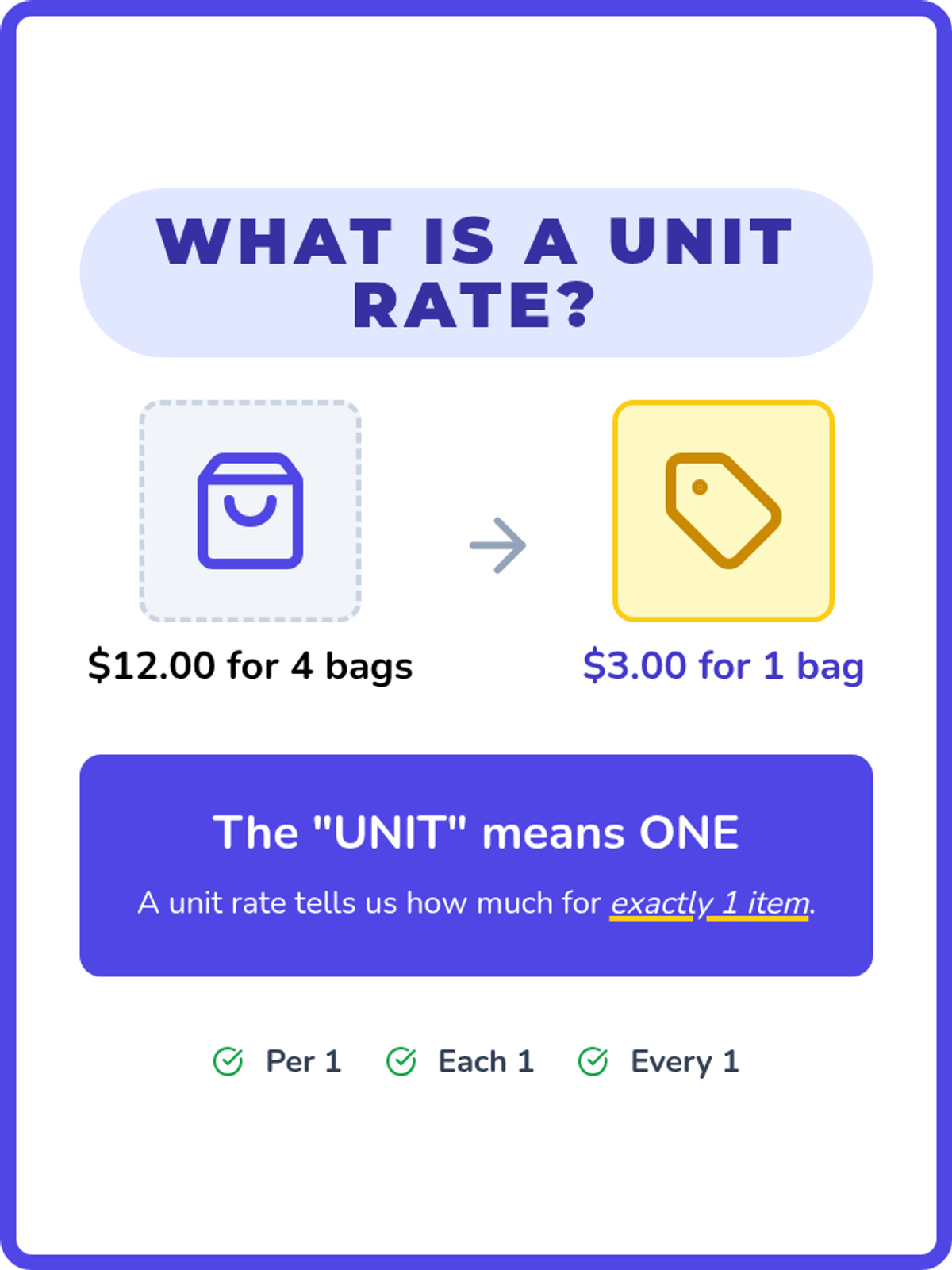
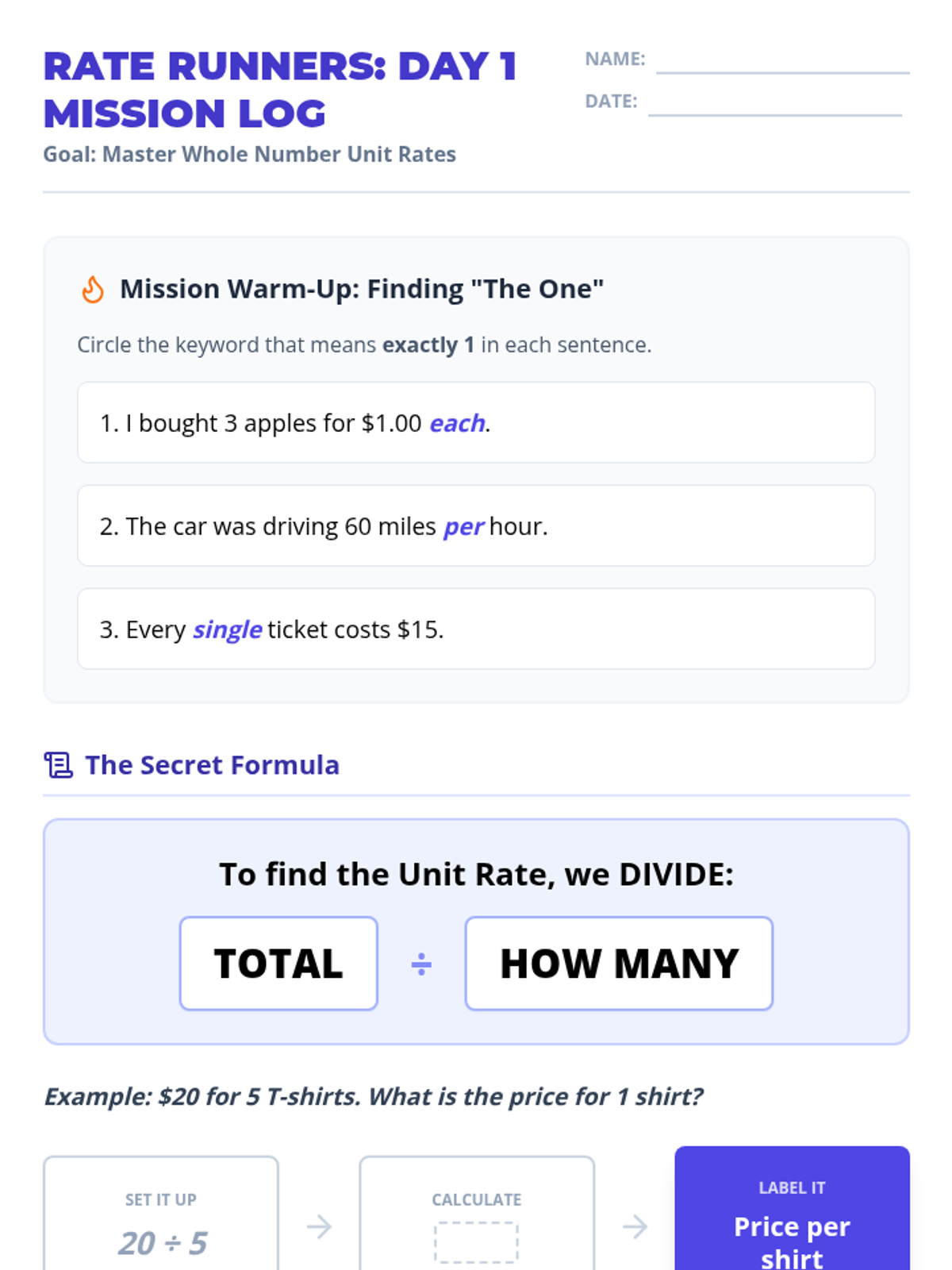
Foundational lesson on identifying ratios and calculating whole number unit rates using 'The Division Rule'. Includes guided notes on identifying 'per' and 'each' keywords.
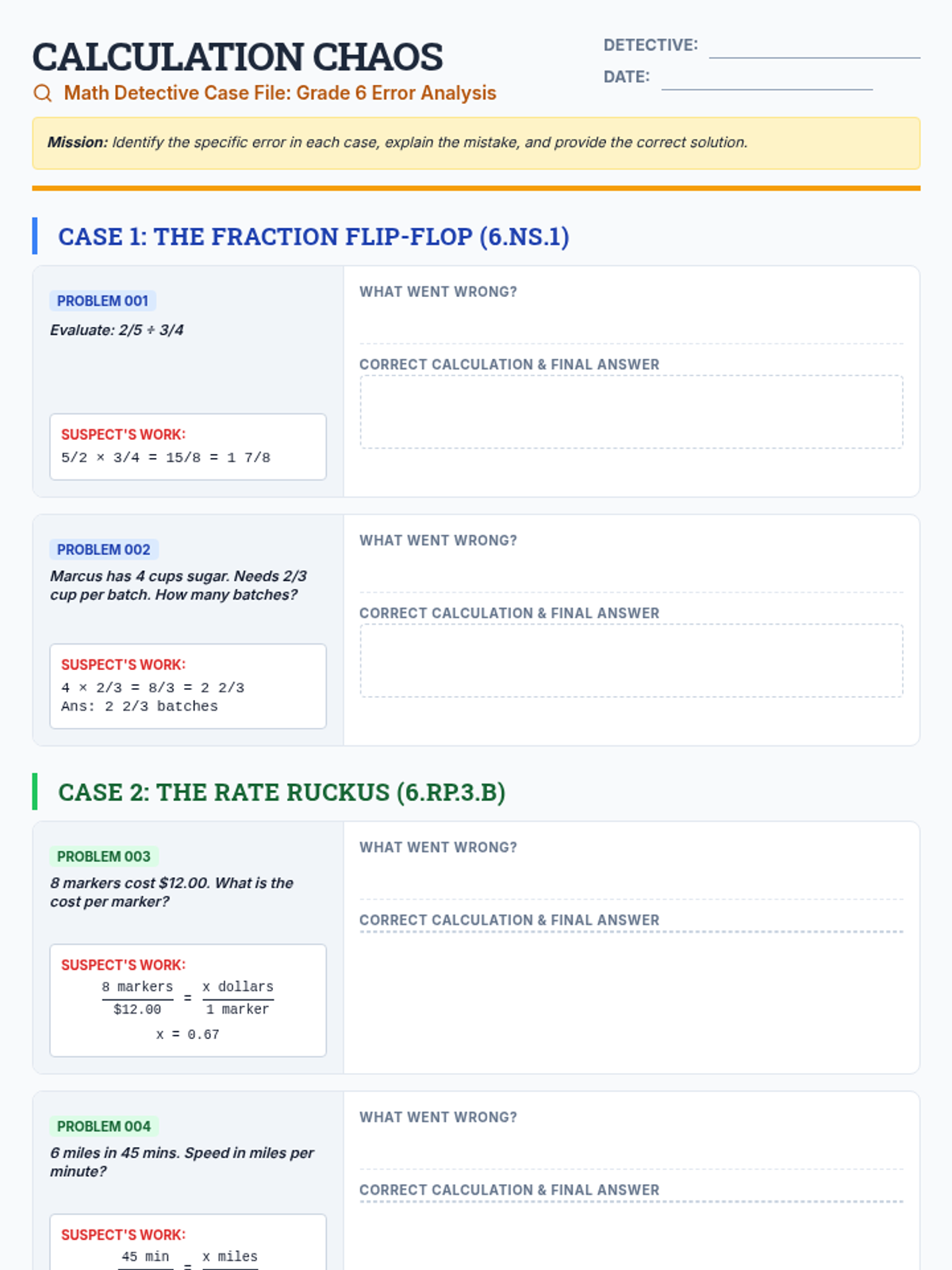
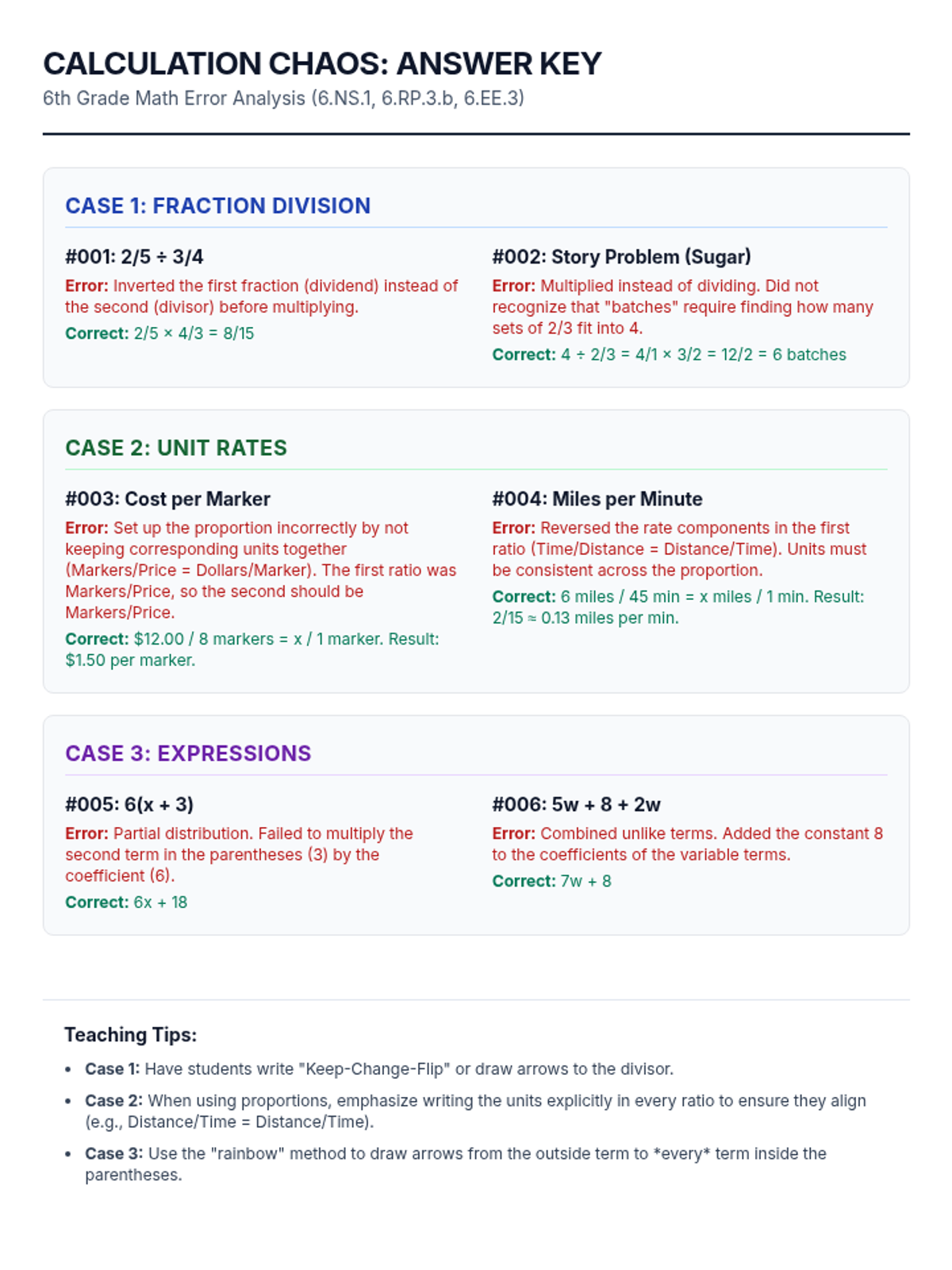
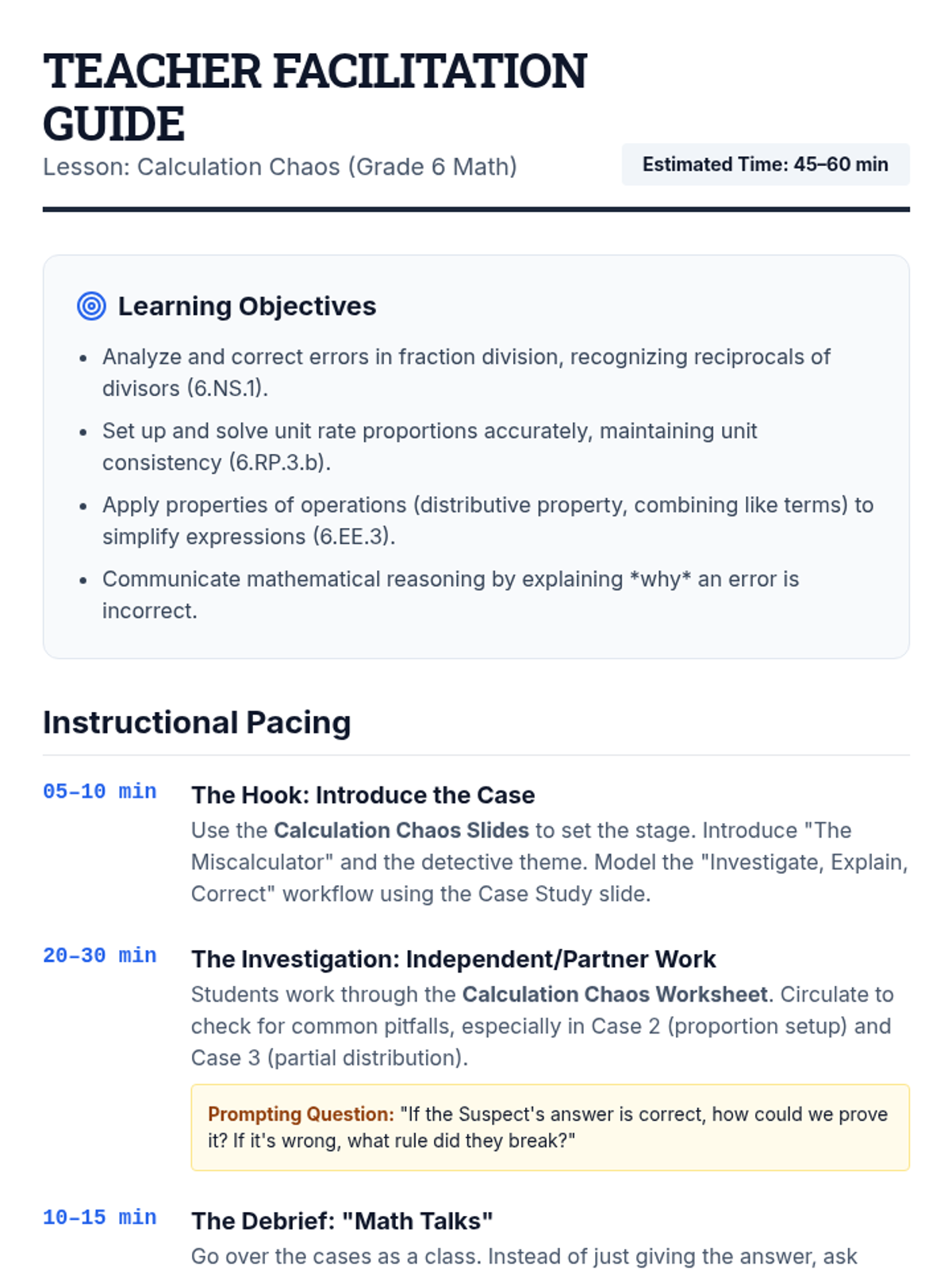
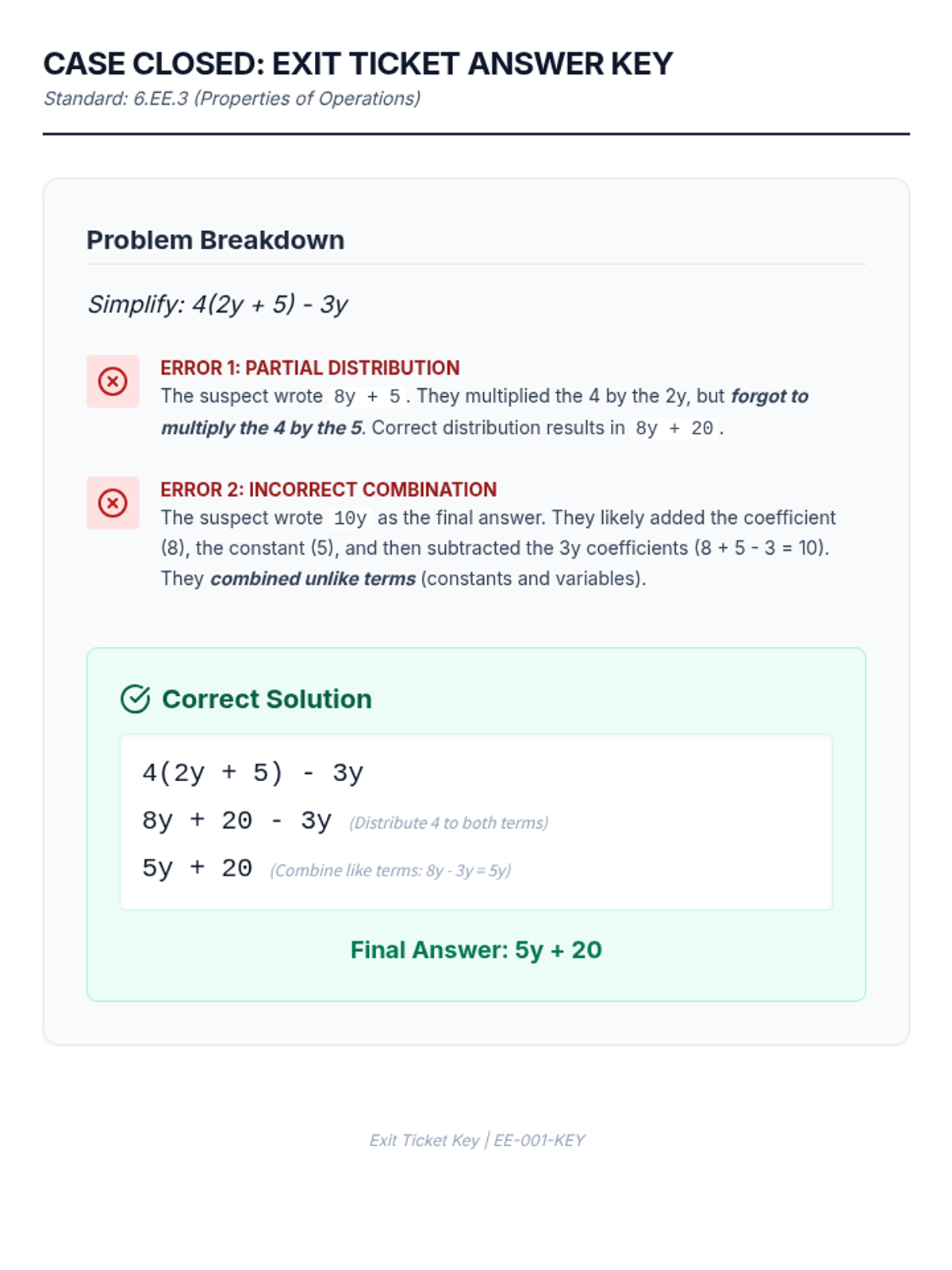
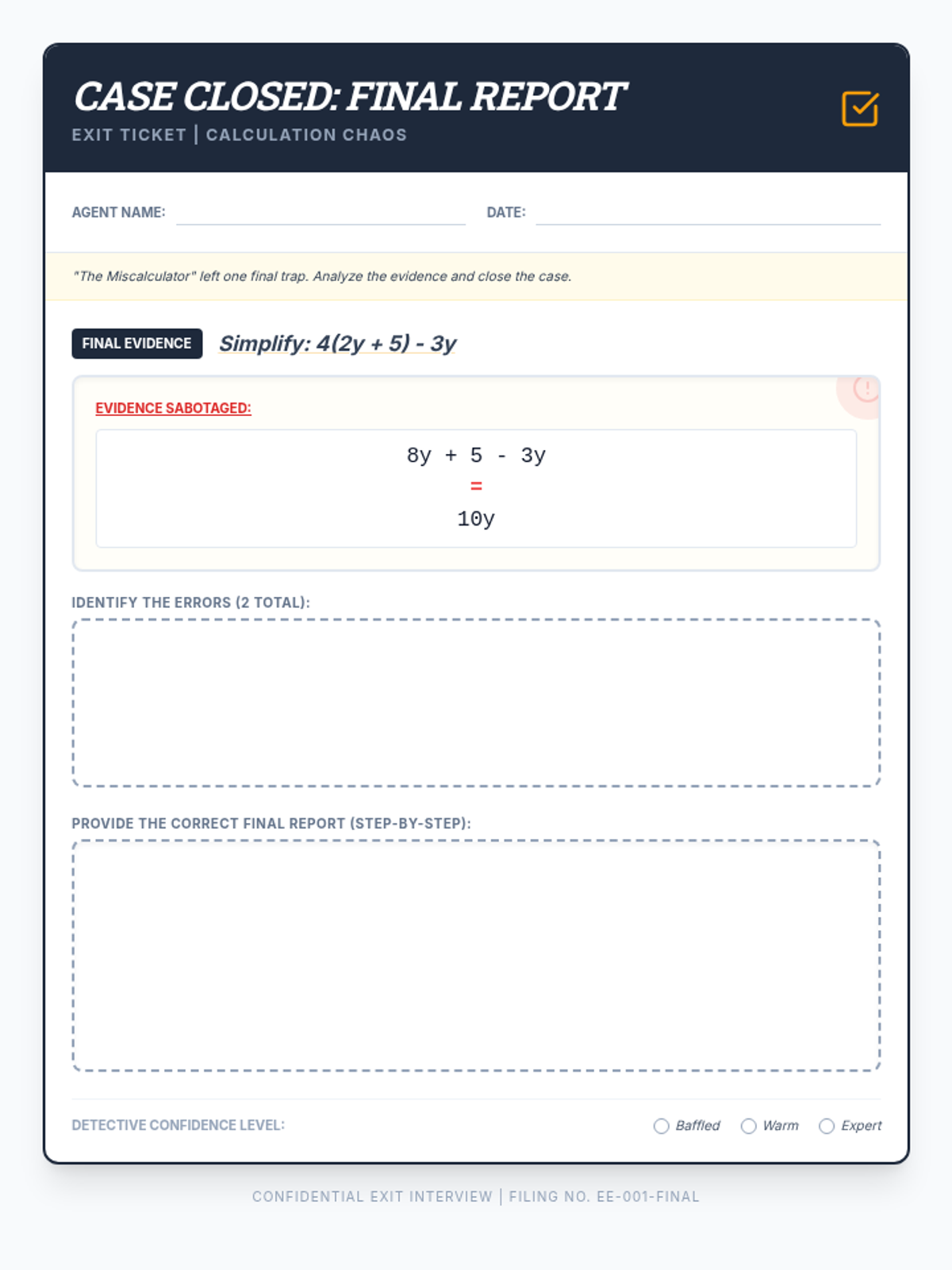
A math investigation focused on identifying, explaining, and correcting common errors in fraction division, unit rates, and algebraic expressions.
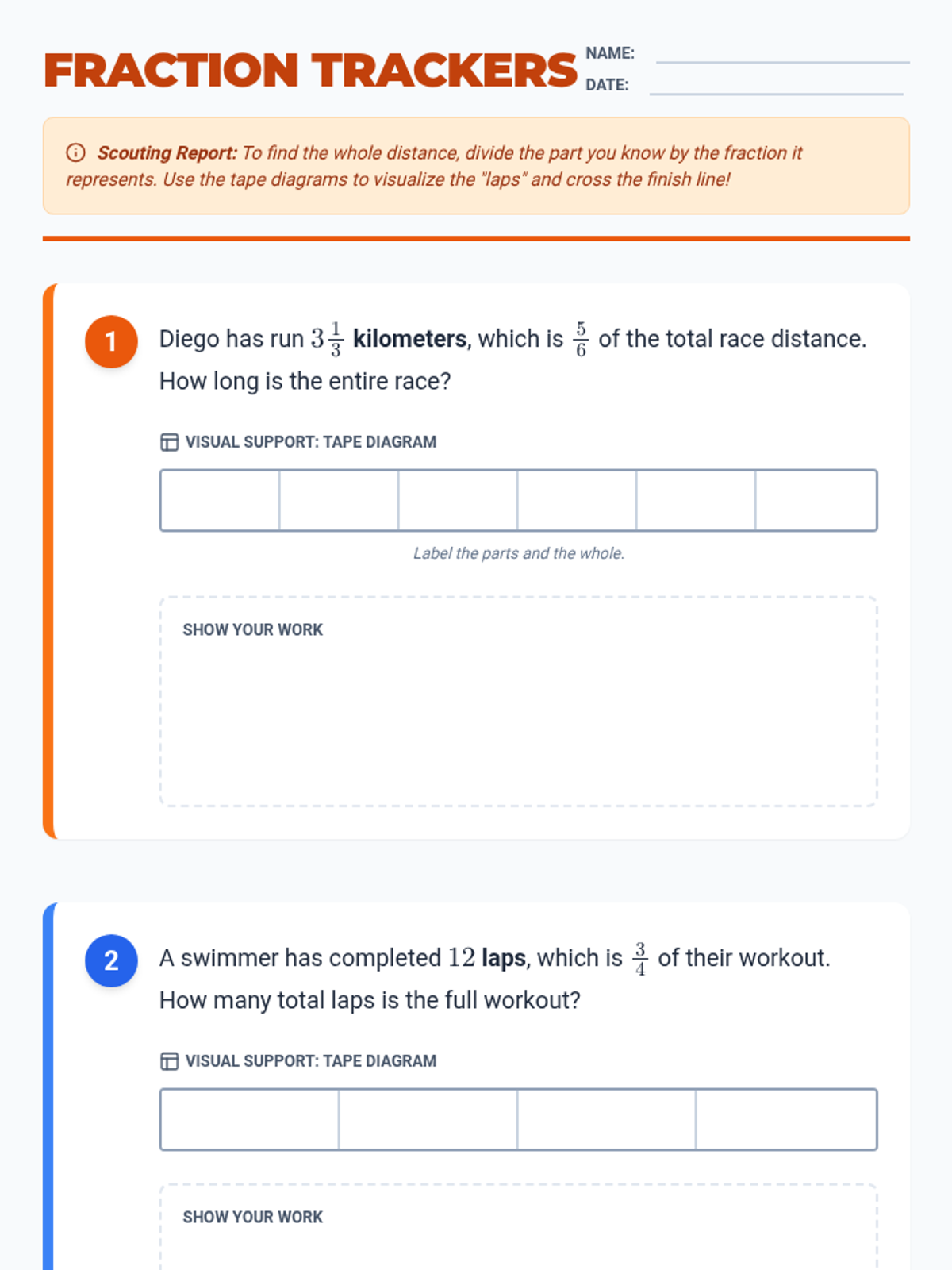
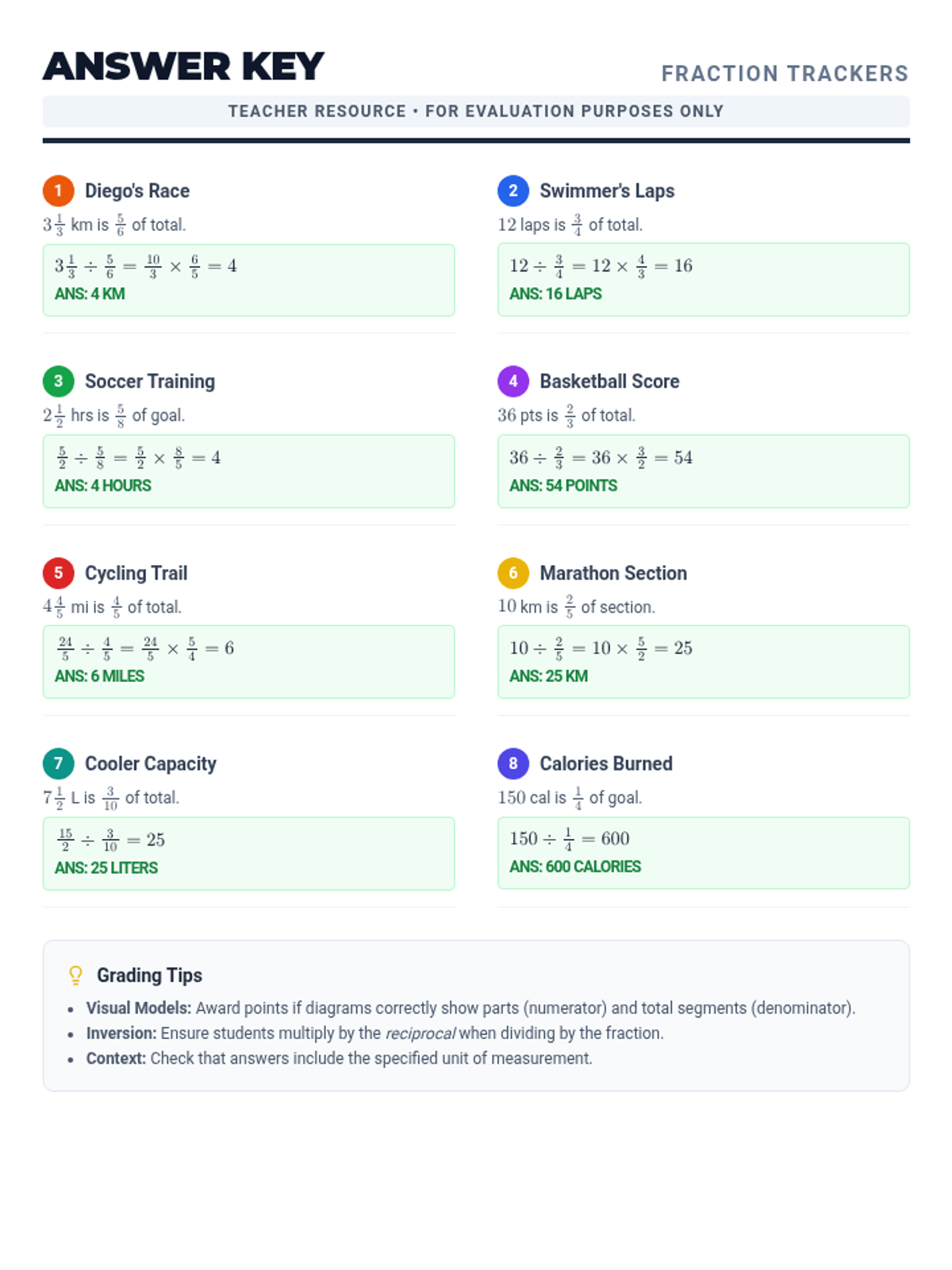
A lesson focused on solving word problems where a quantity is a fraction of an unknown whole, using visual models like tape diagrams and double number lines.
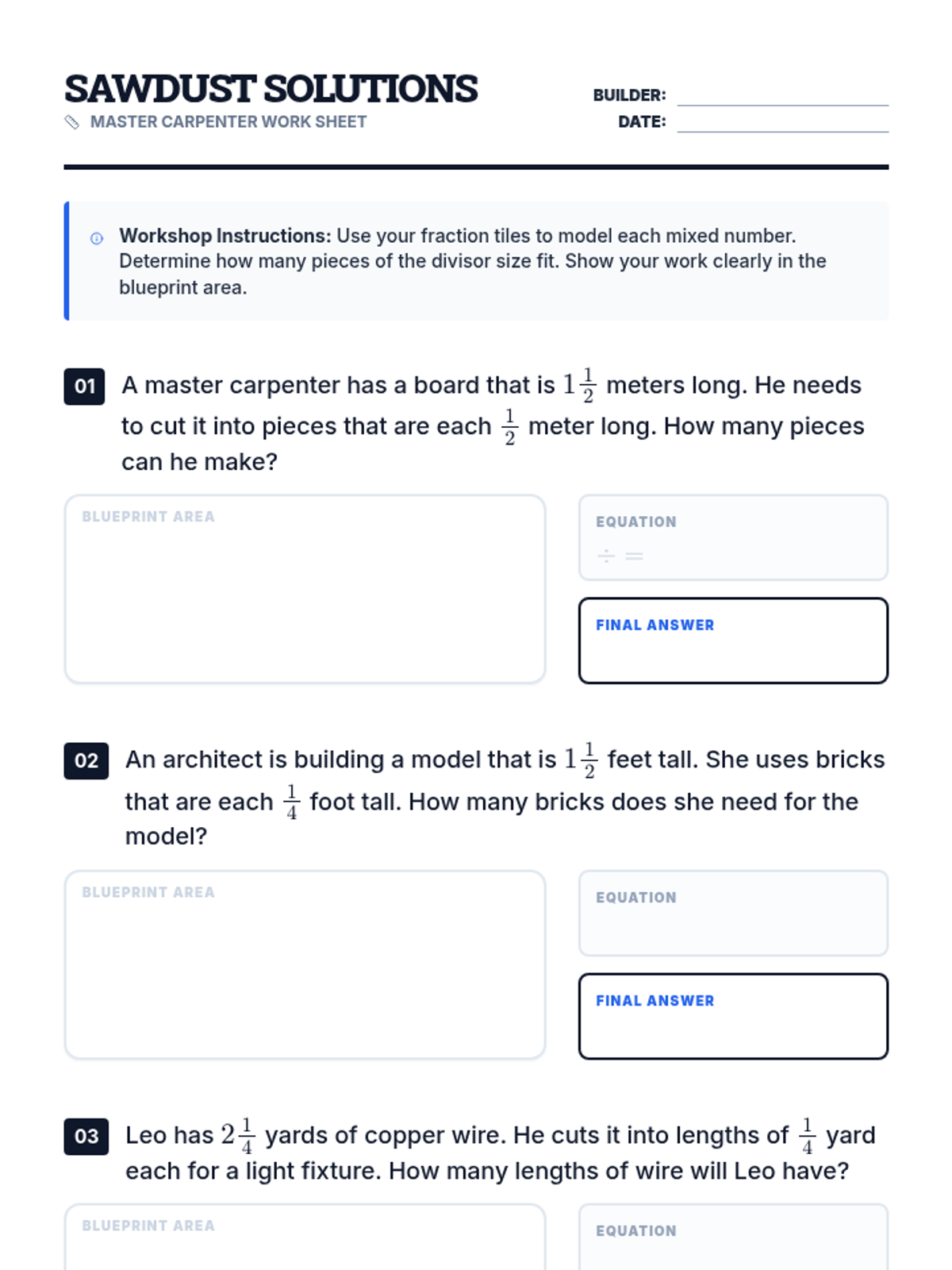
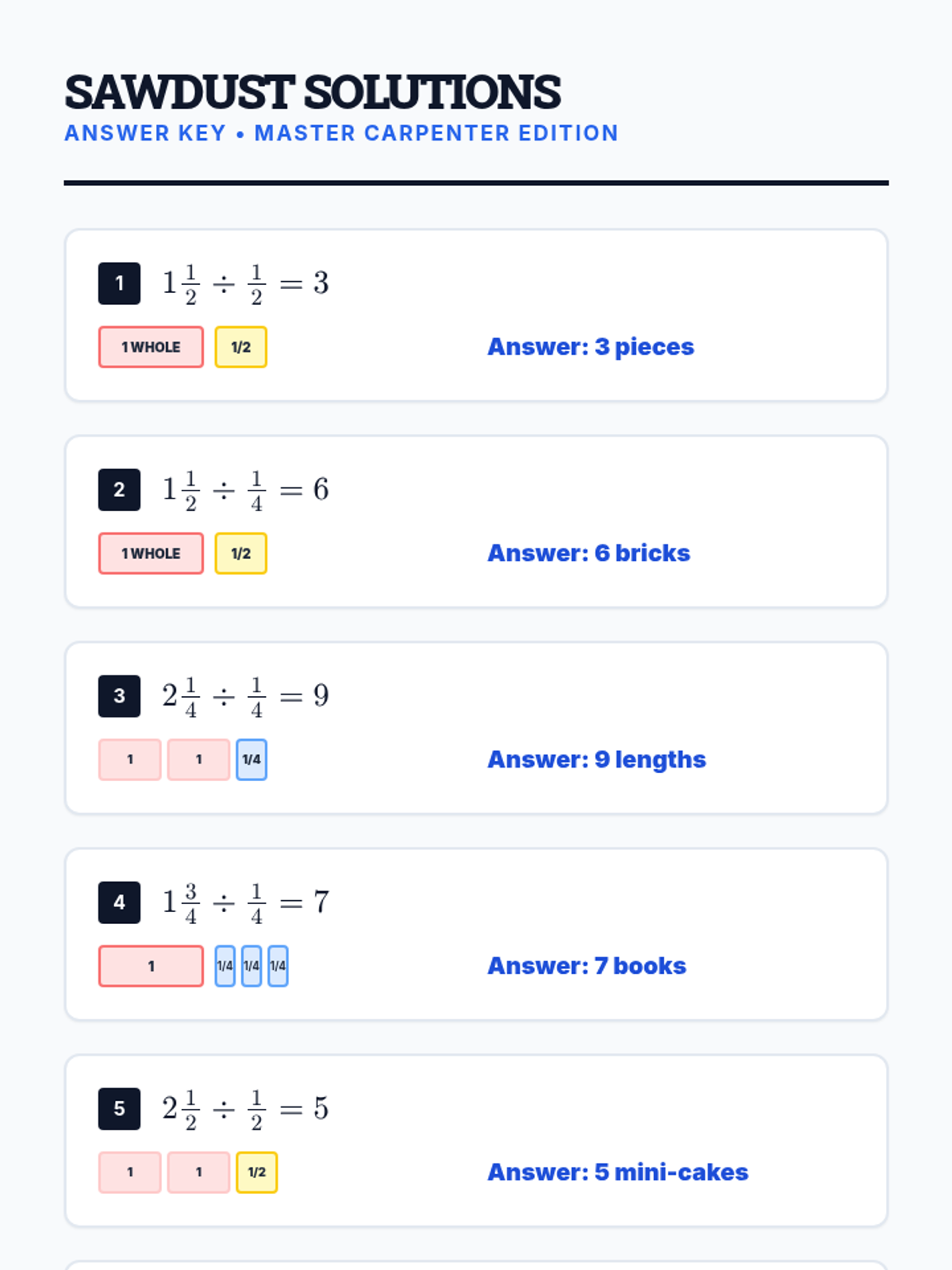
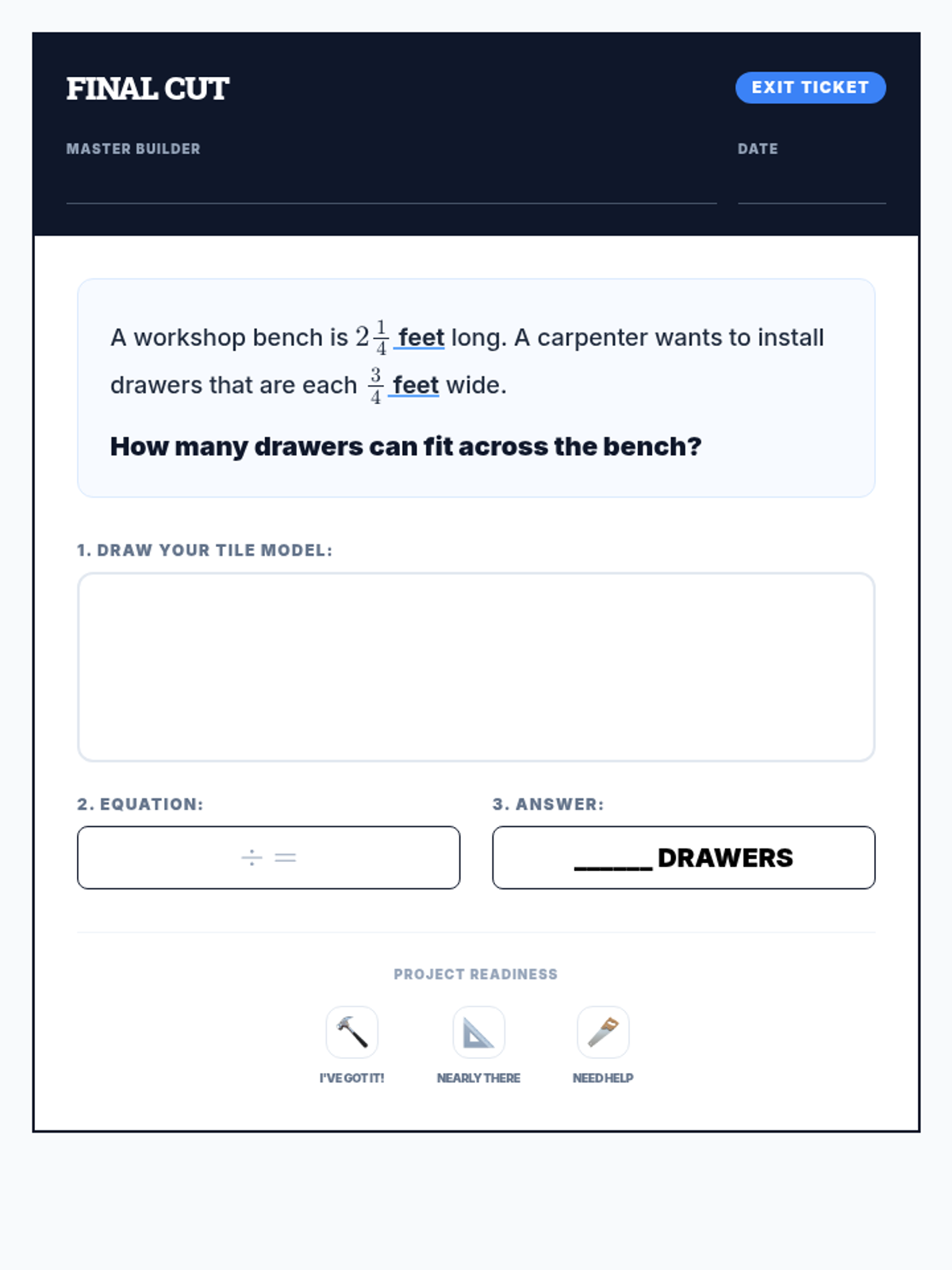
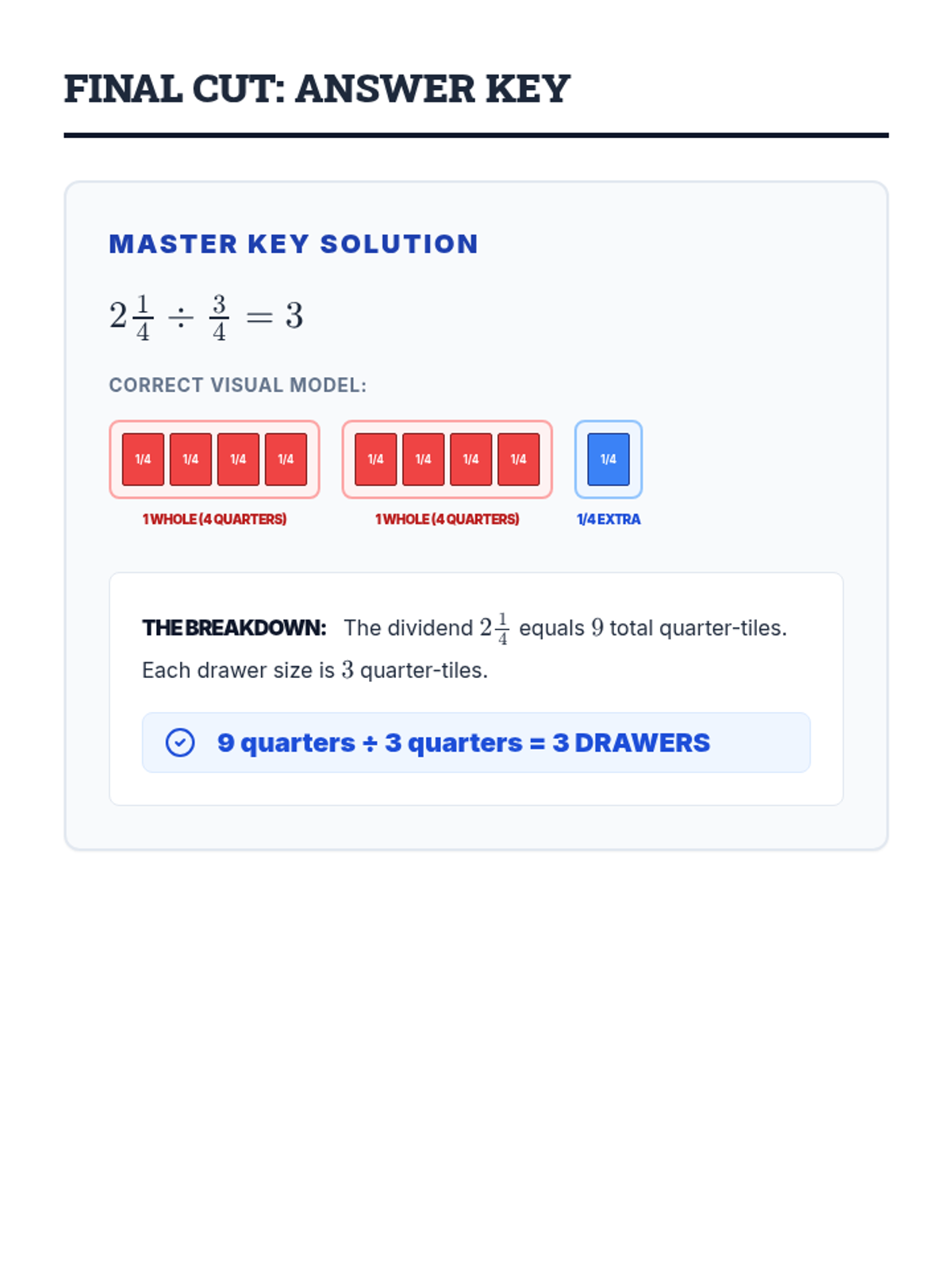
A lesson focused on using visual fraction models (tiles) to solve word problems involving mixed numbers divided by fractions. Students will learn to represent the dividend with tiles and determine how many divisor groups fit.
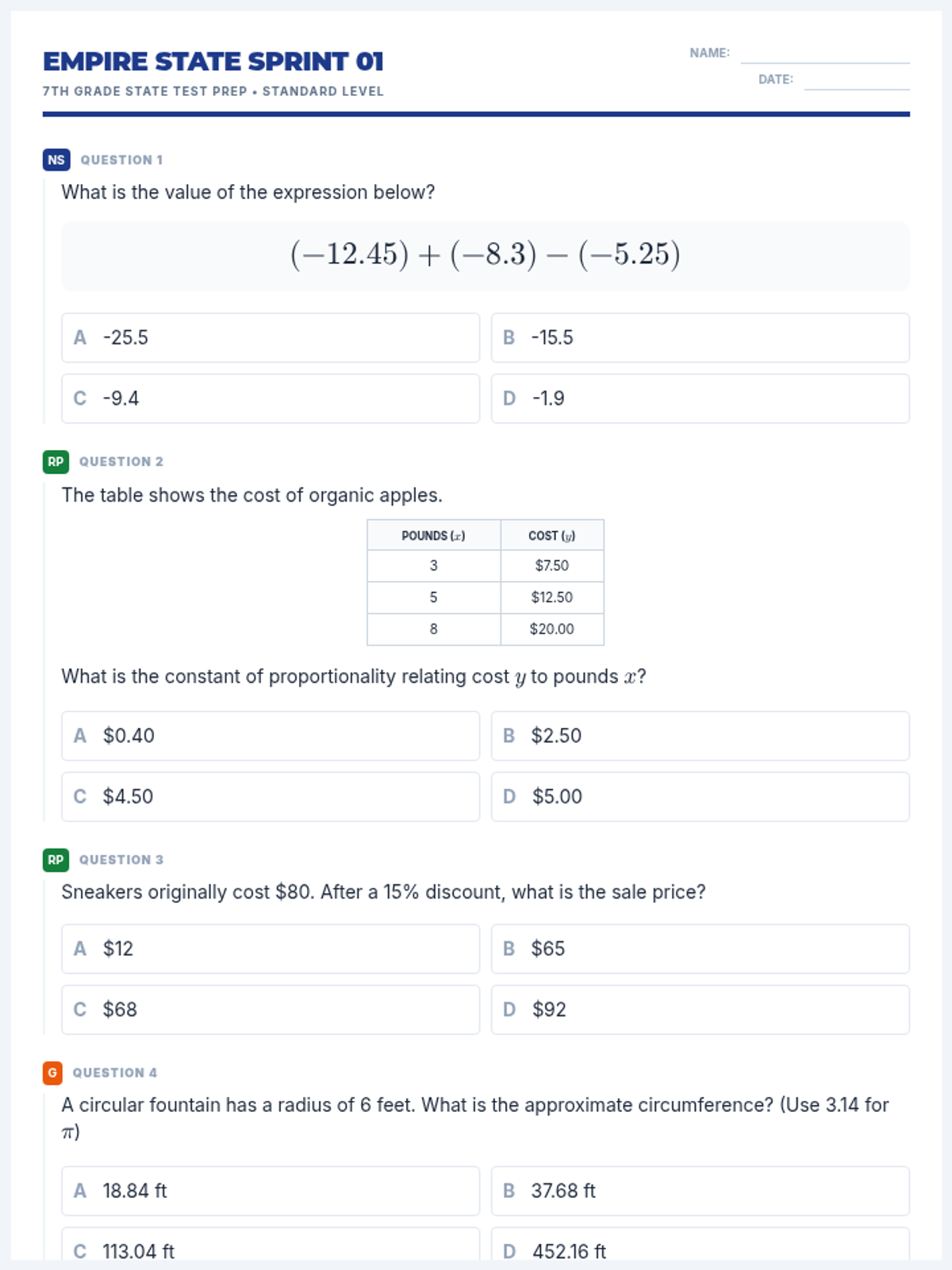
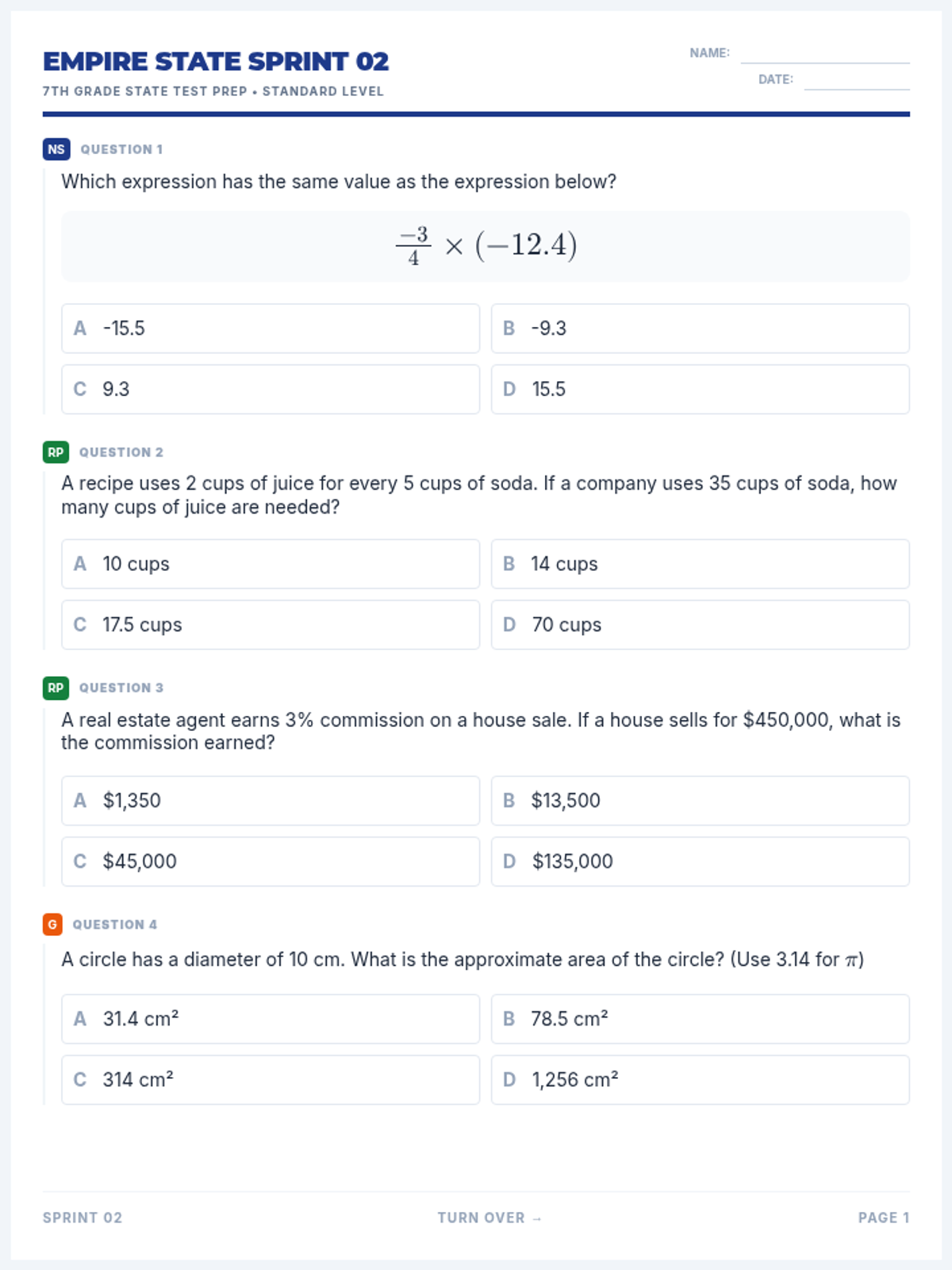
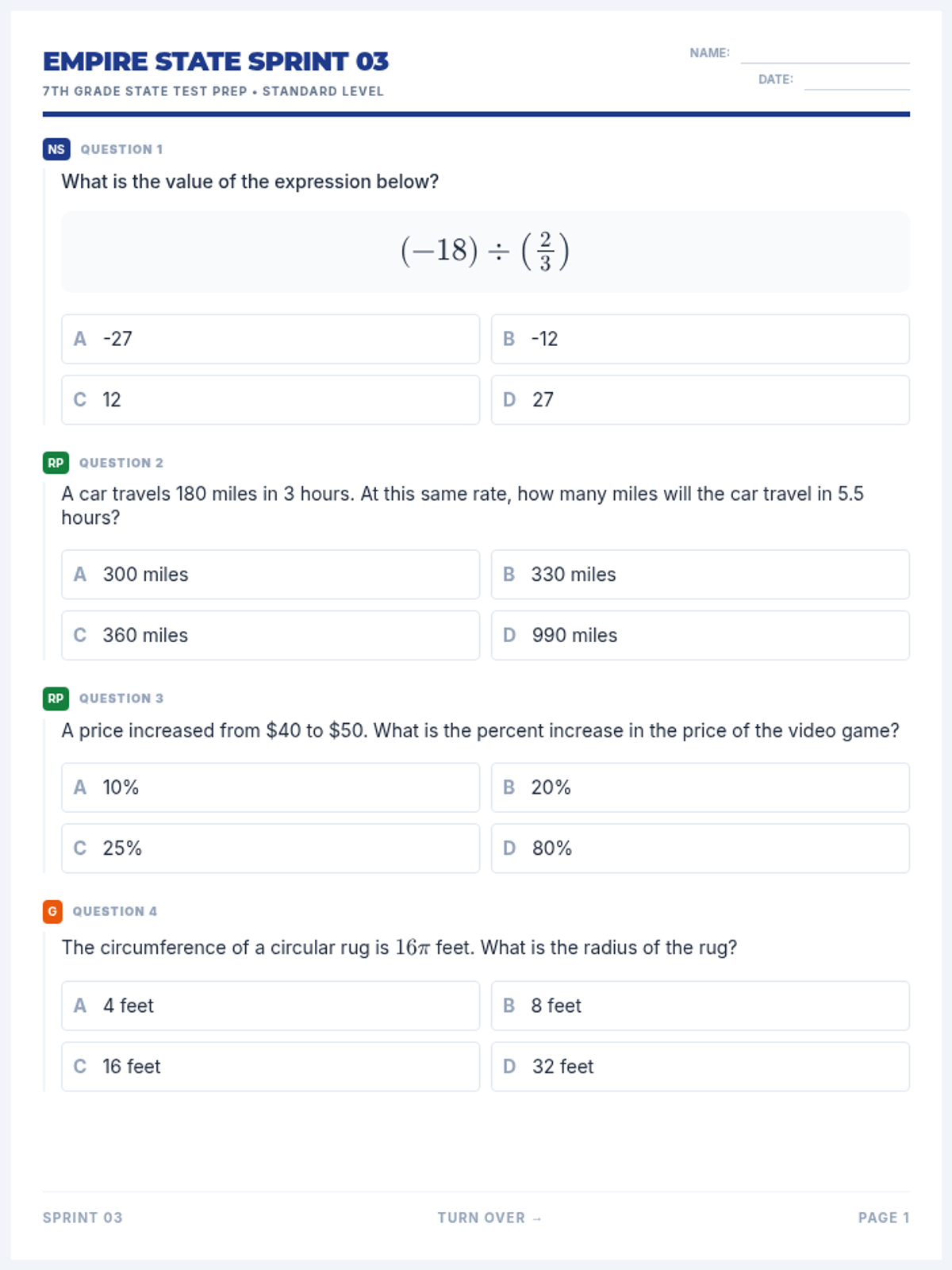
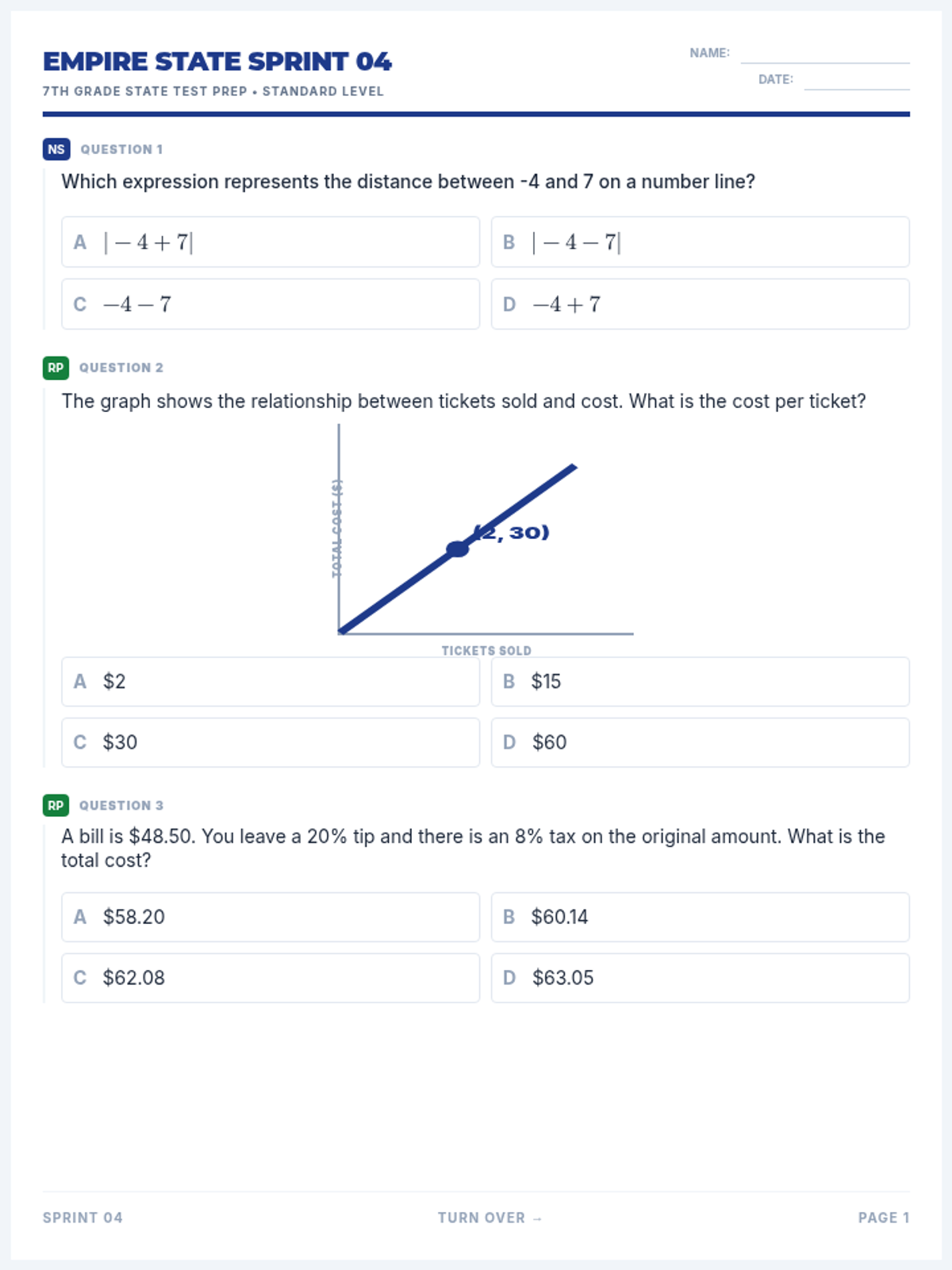
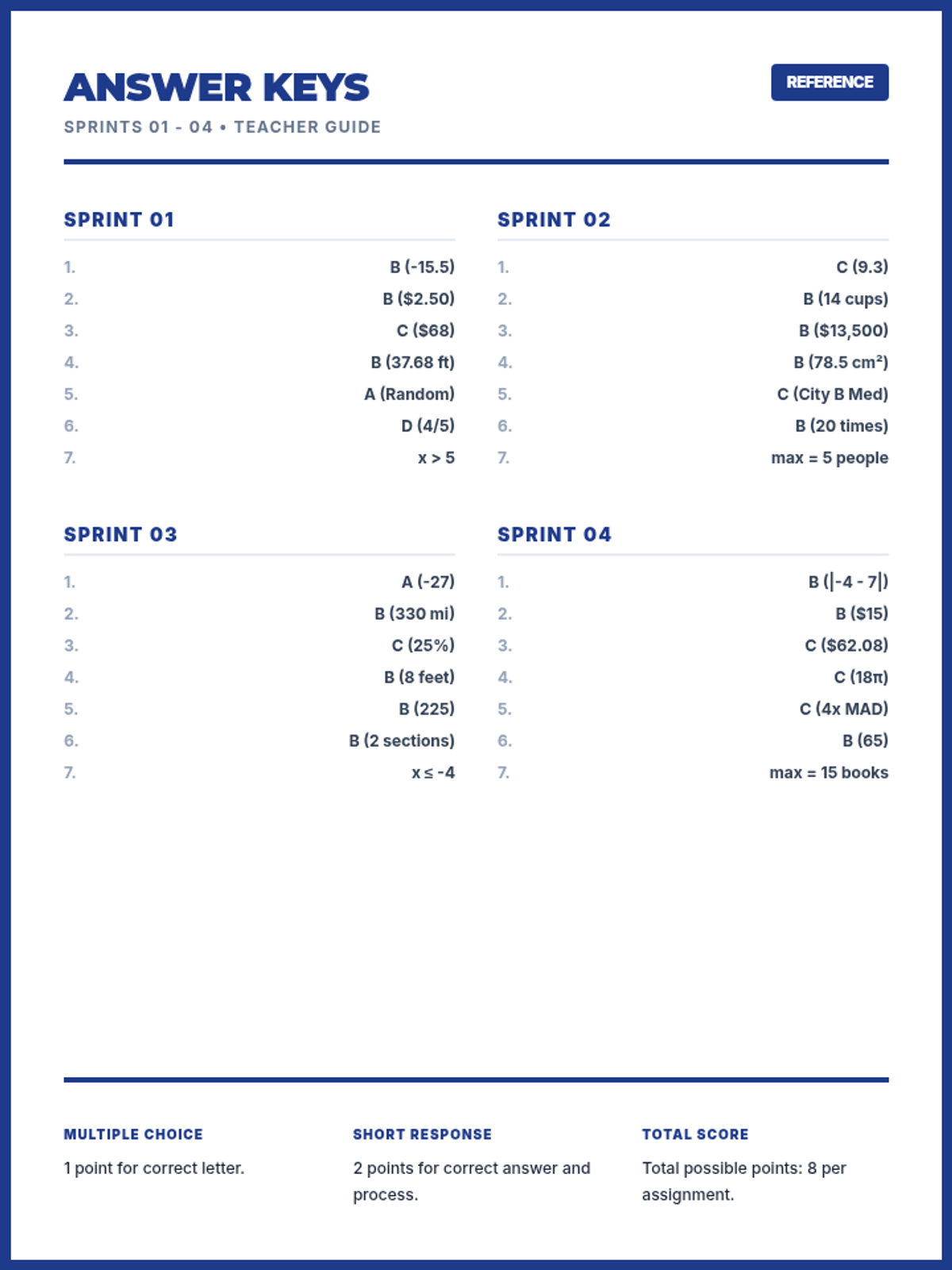
A collection of four double-sided homework assignments focusing on foundational 7th-grade math skills. Each "Sprint" contains seven standardized questions covering all major test categories to build stamina and accuracy.
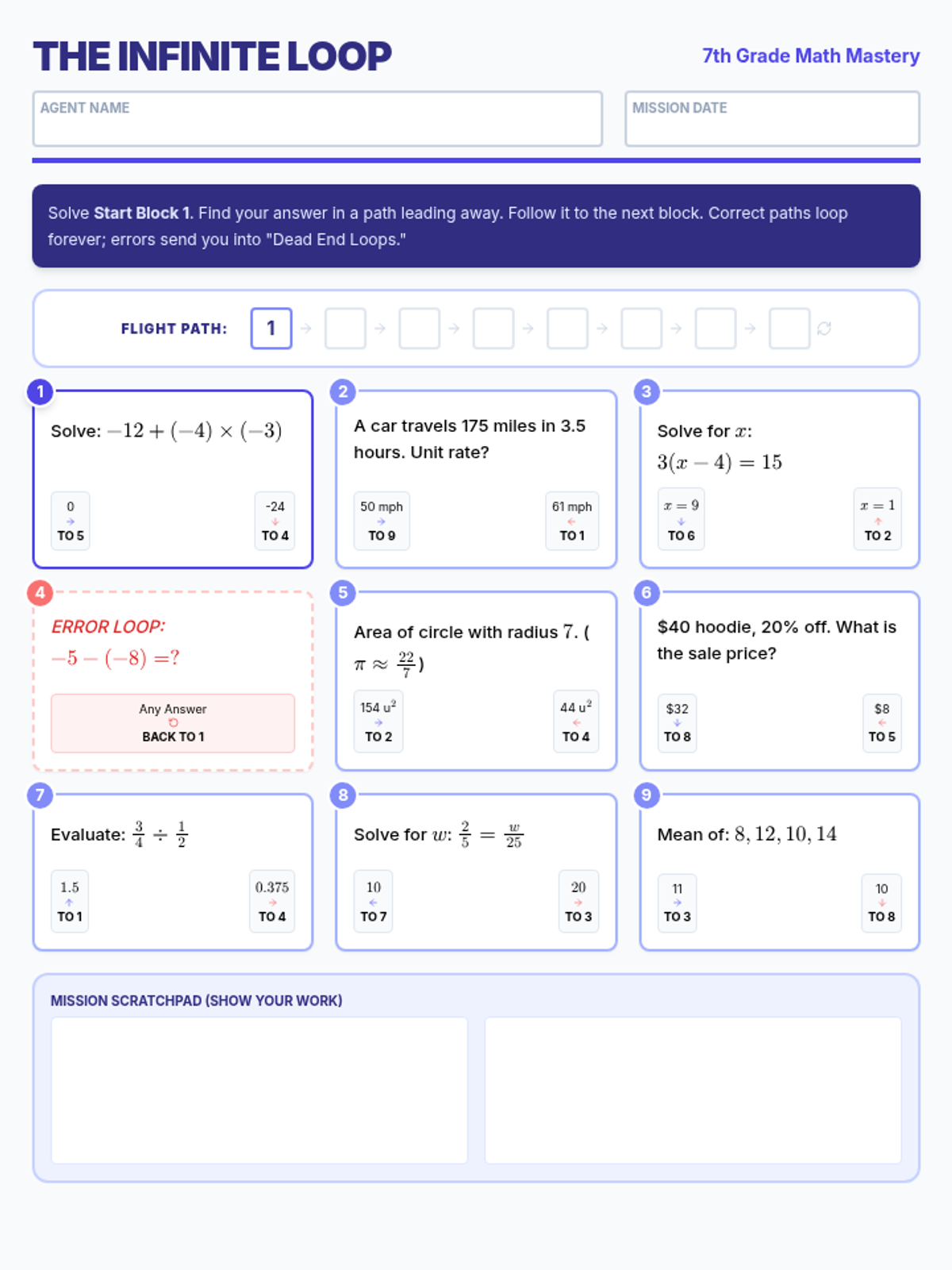
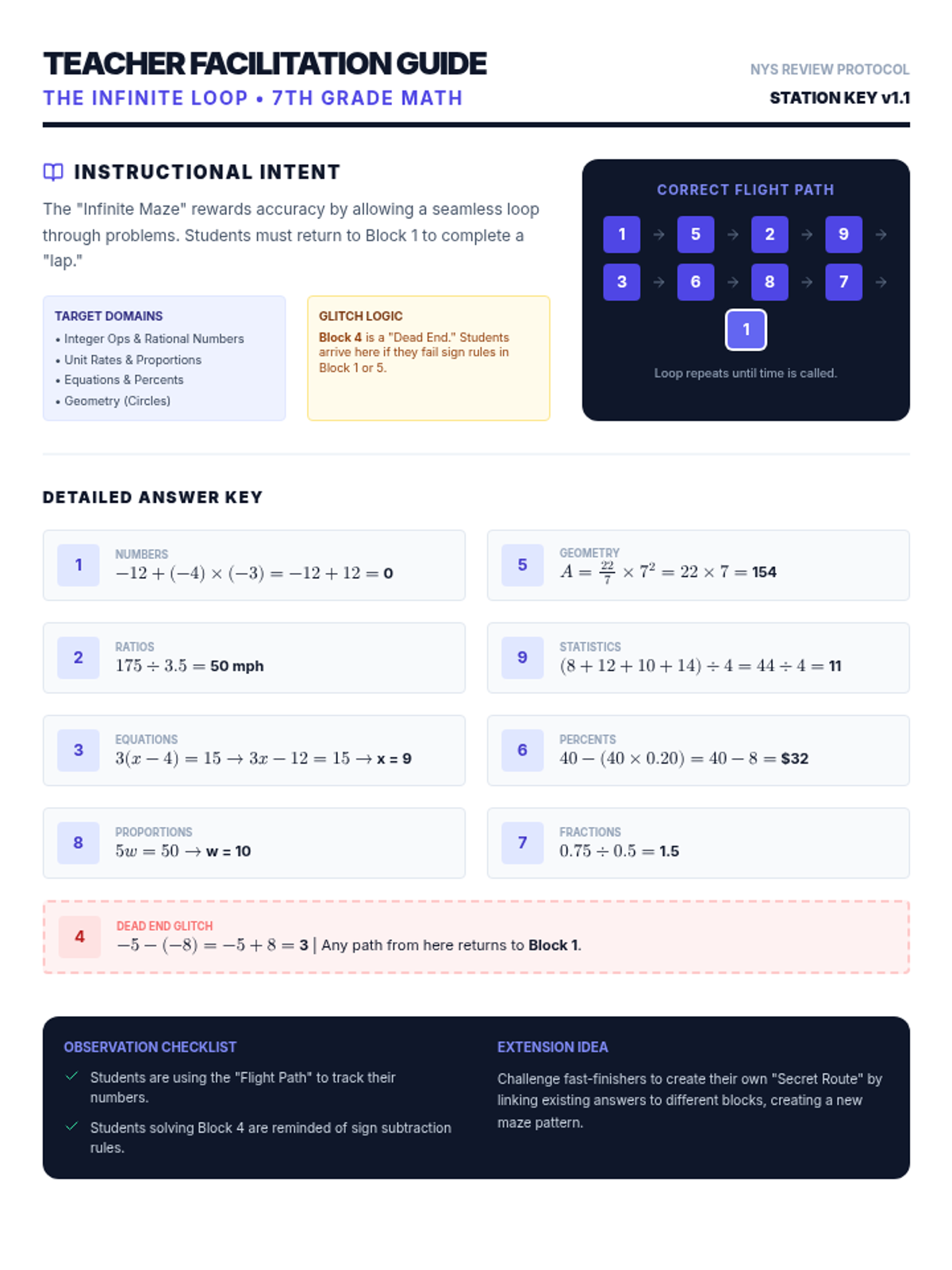
A comprehensive 7th Grade Math review session using an "Infinity Maze" format. Students navigate a series of interconnected problems across Ratios, Number Systems, Equations, and Geometry, designed to loop back and provide continuous practice.
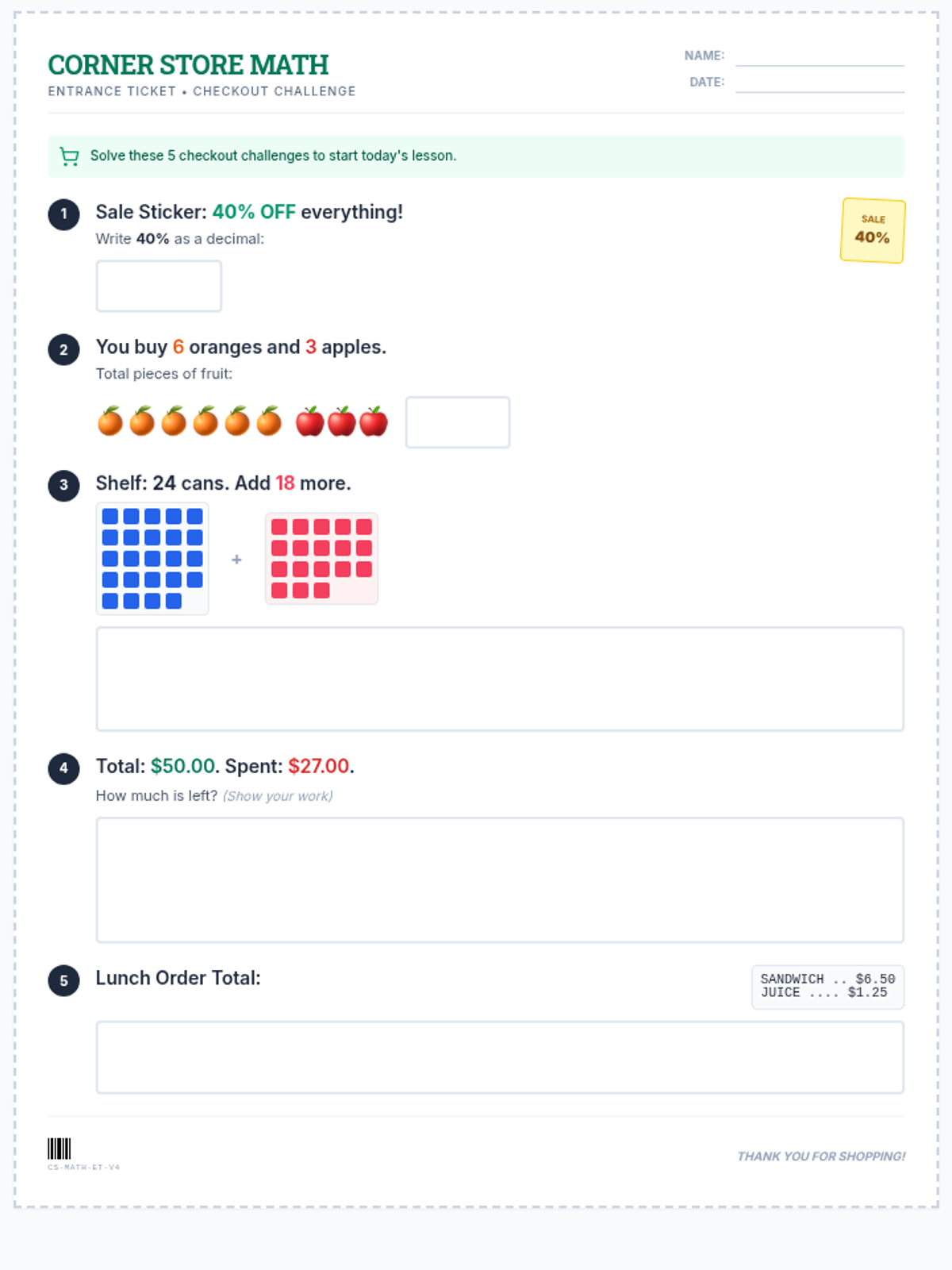
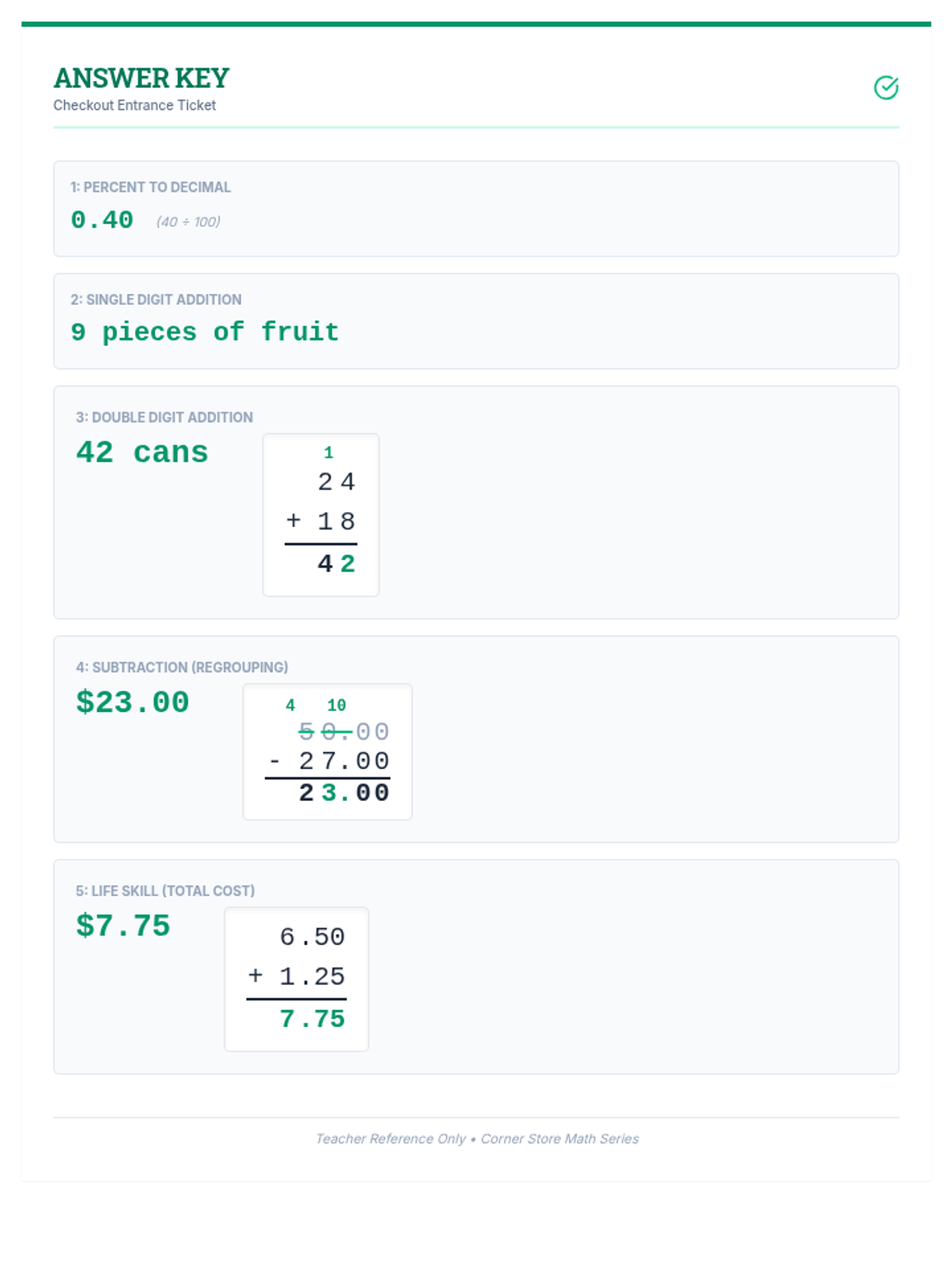
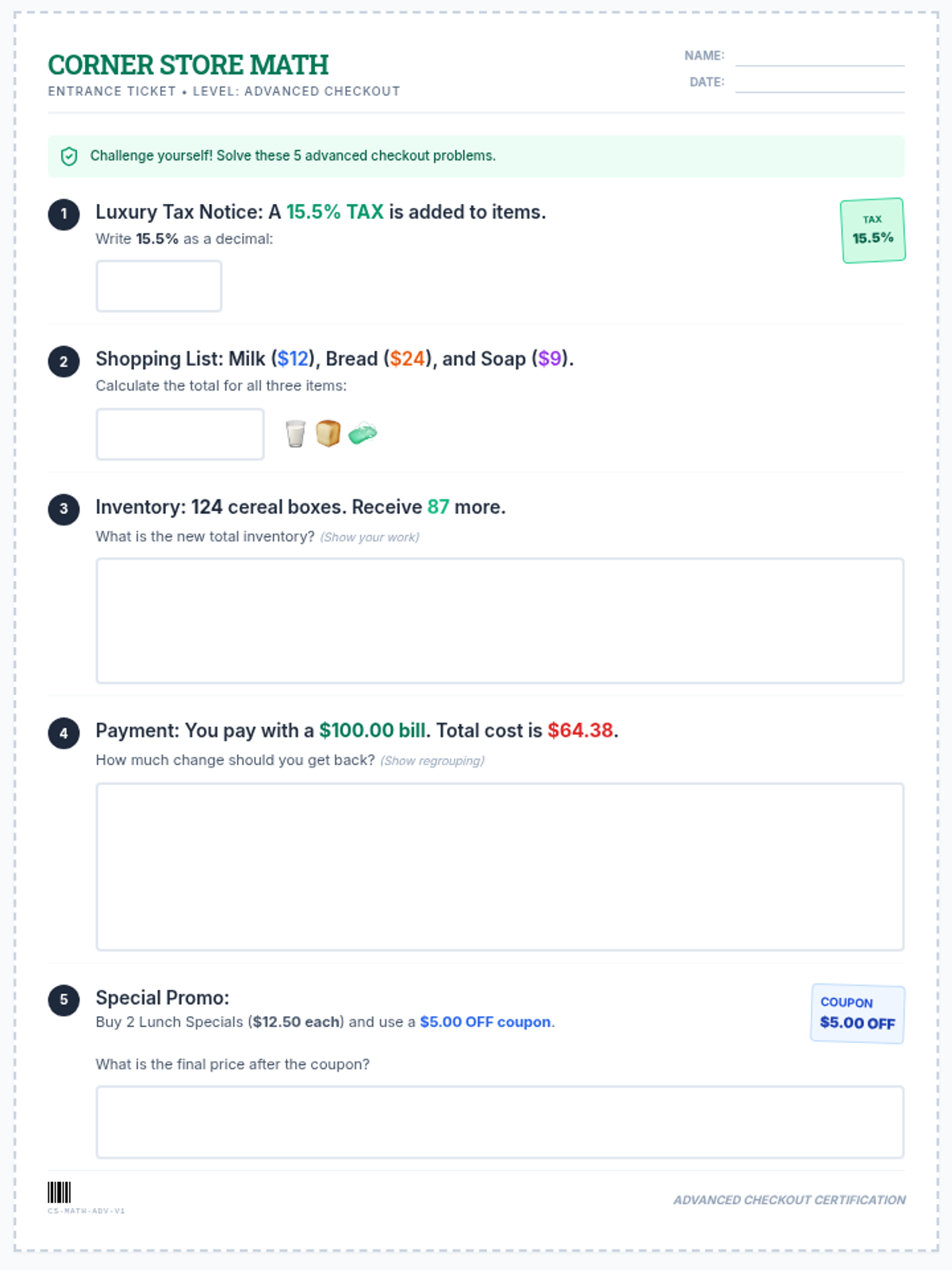
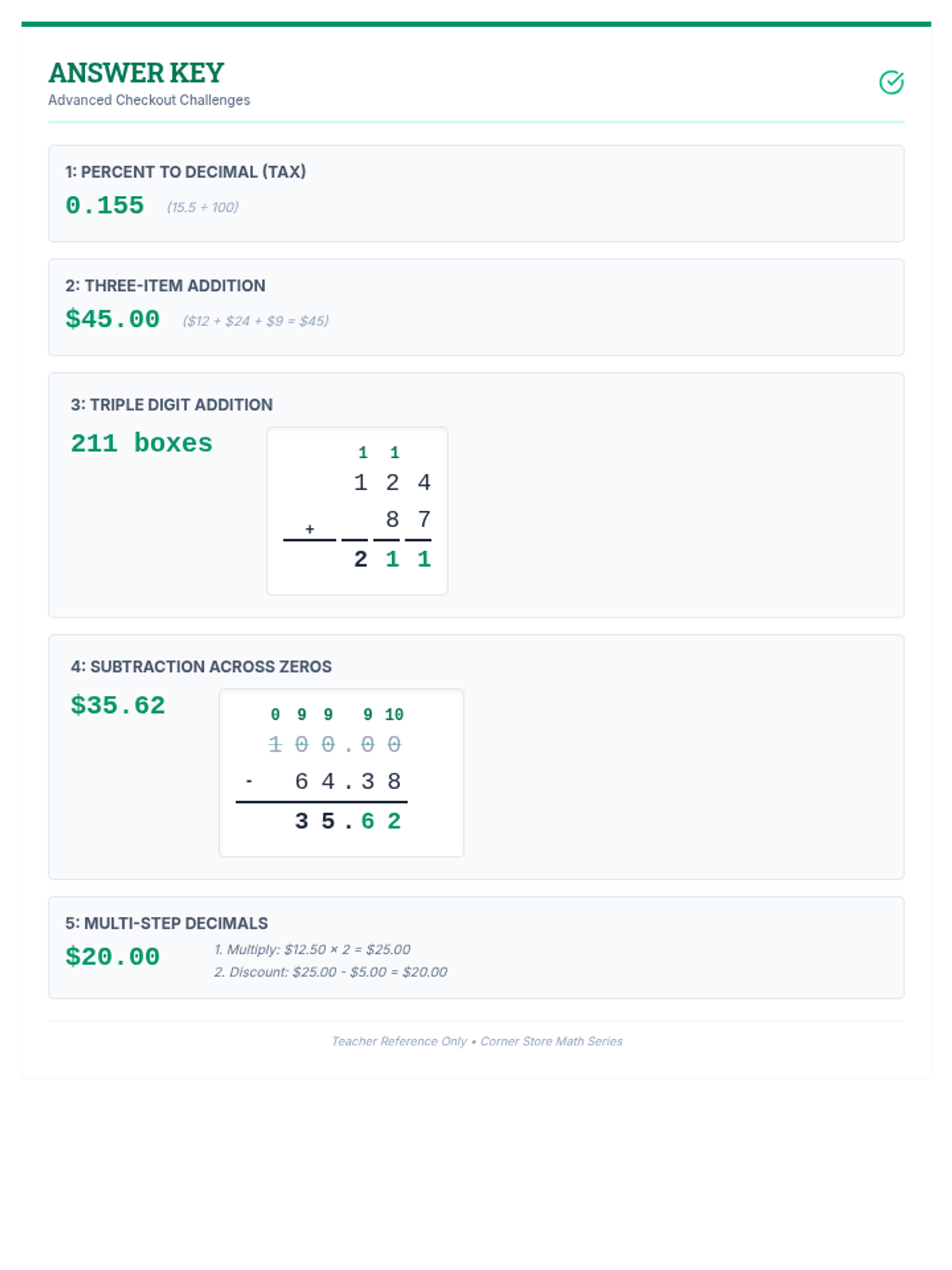
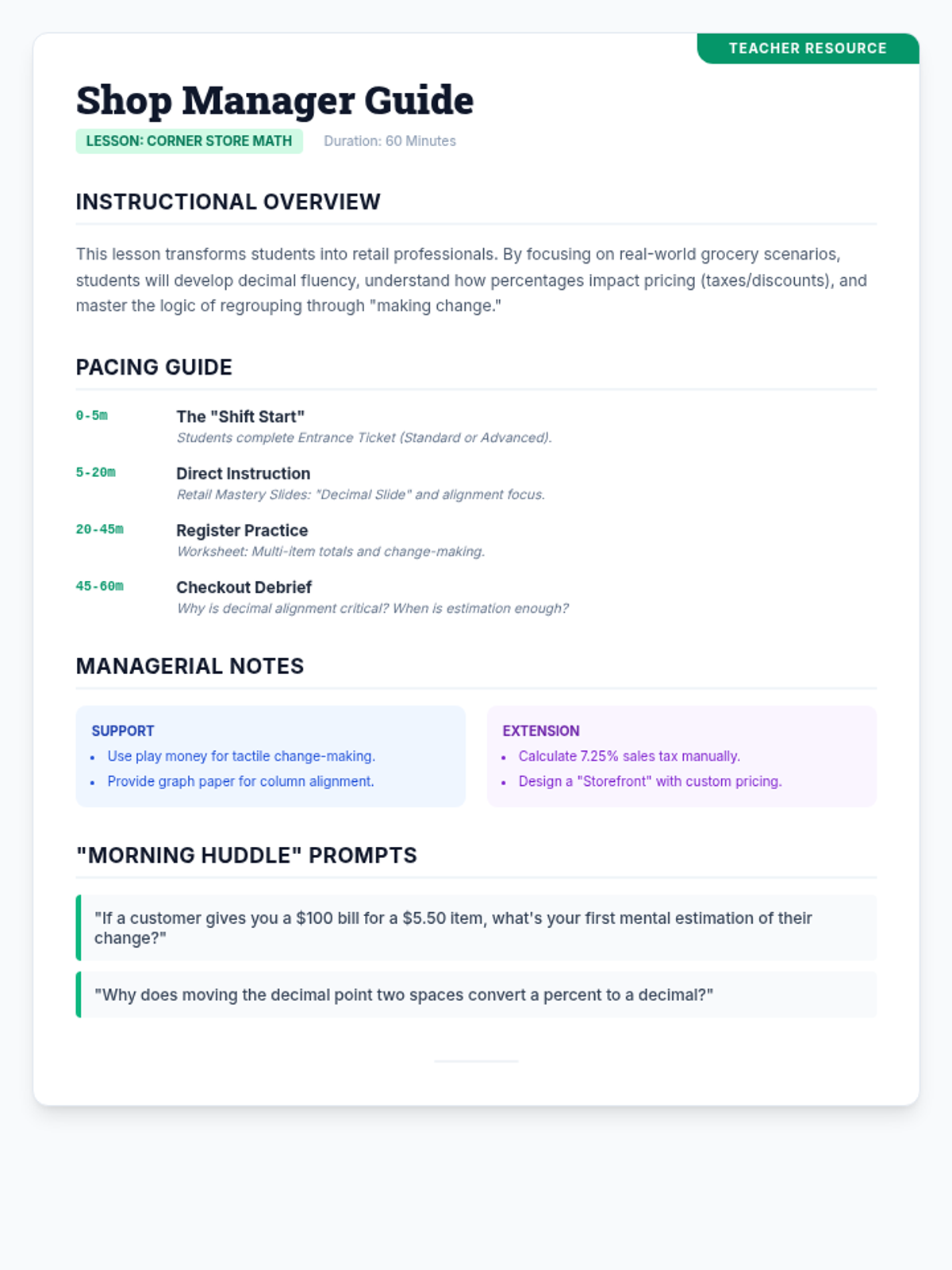
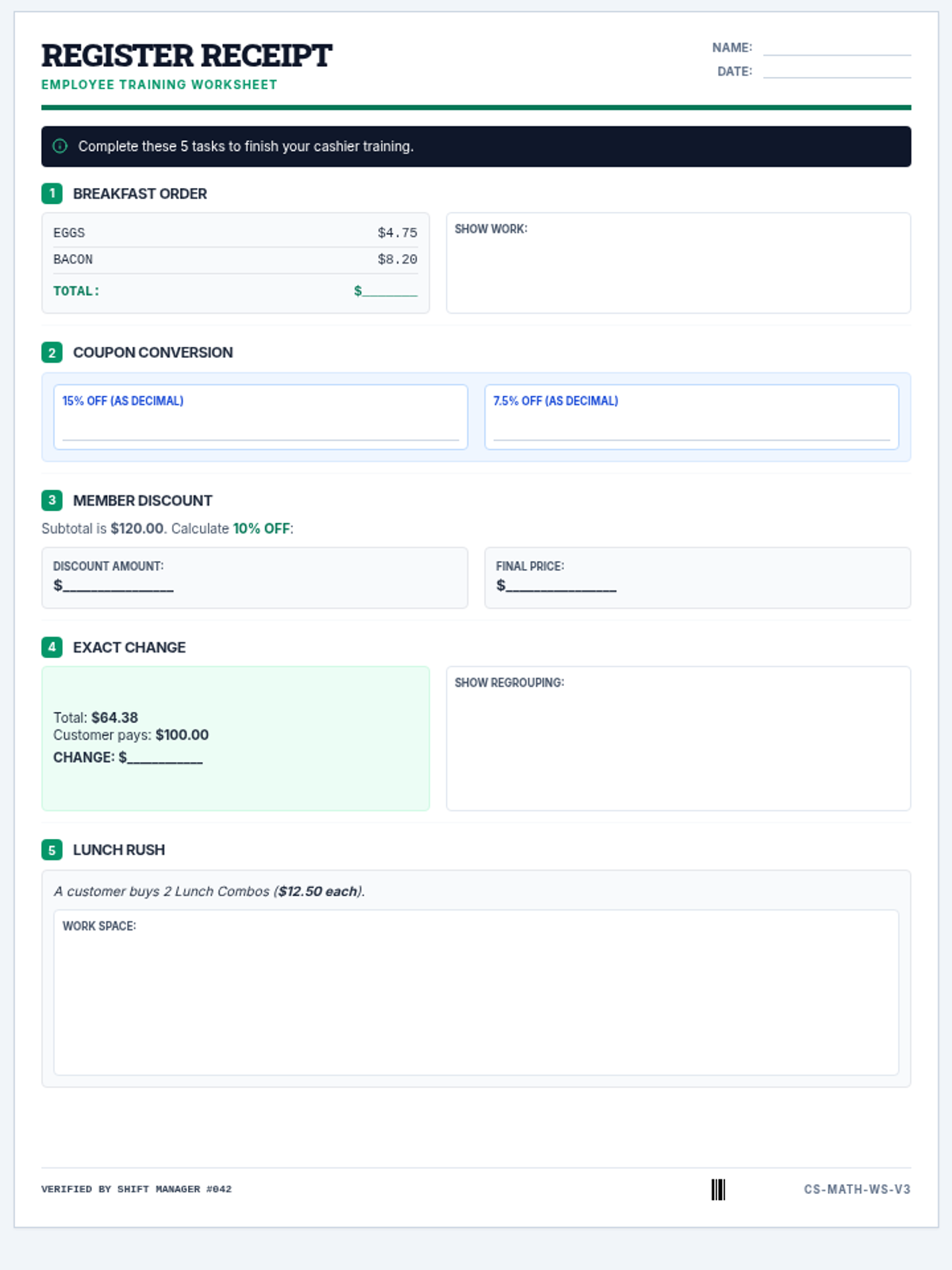
This lesson focuses on practical math applications in a retail setting, covering decimals, percentages, and basic arithmetic with a focus on money management.
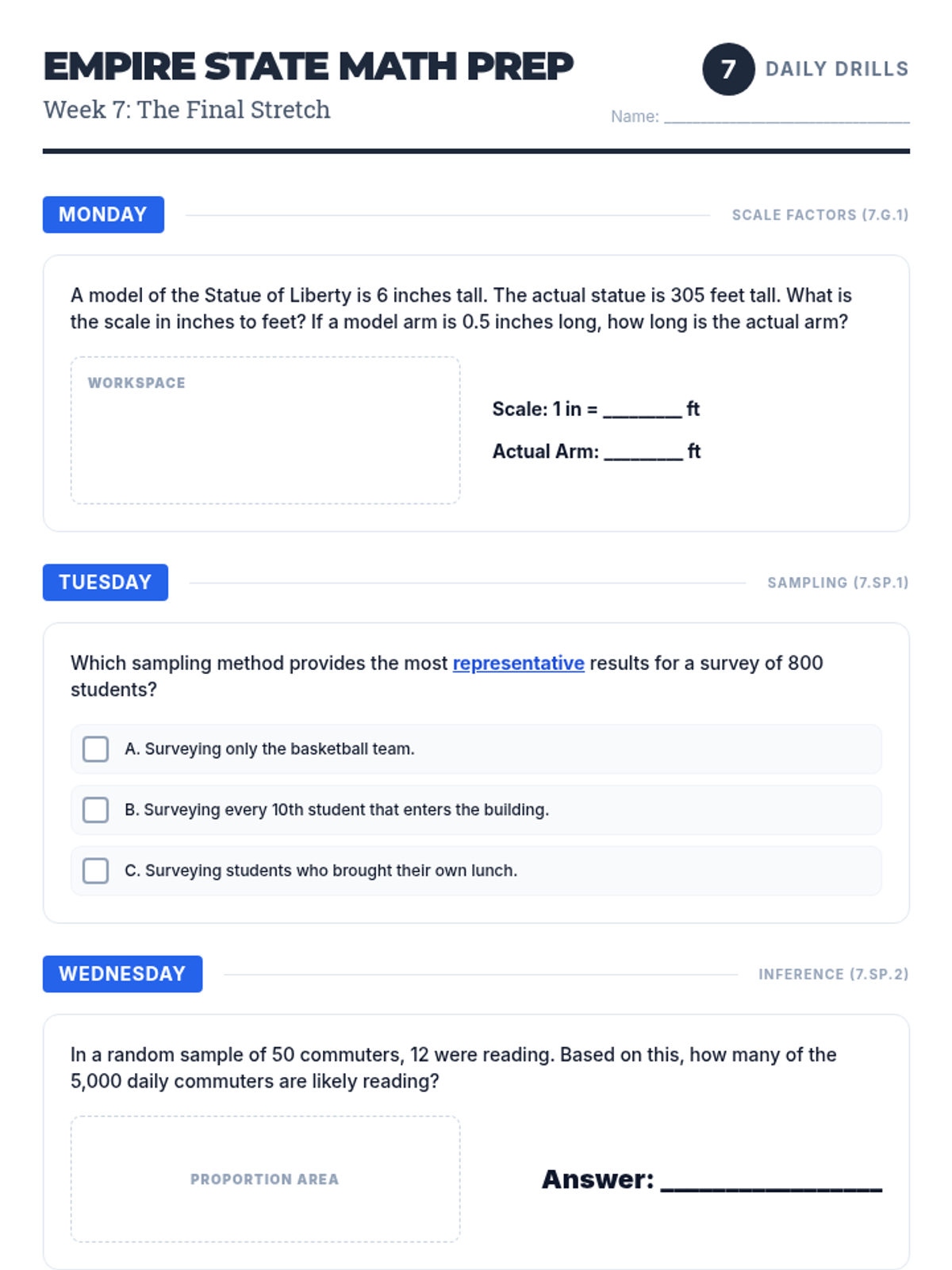
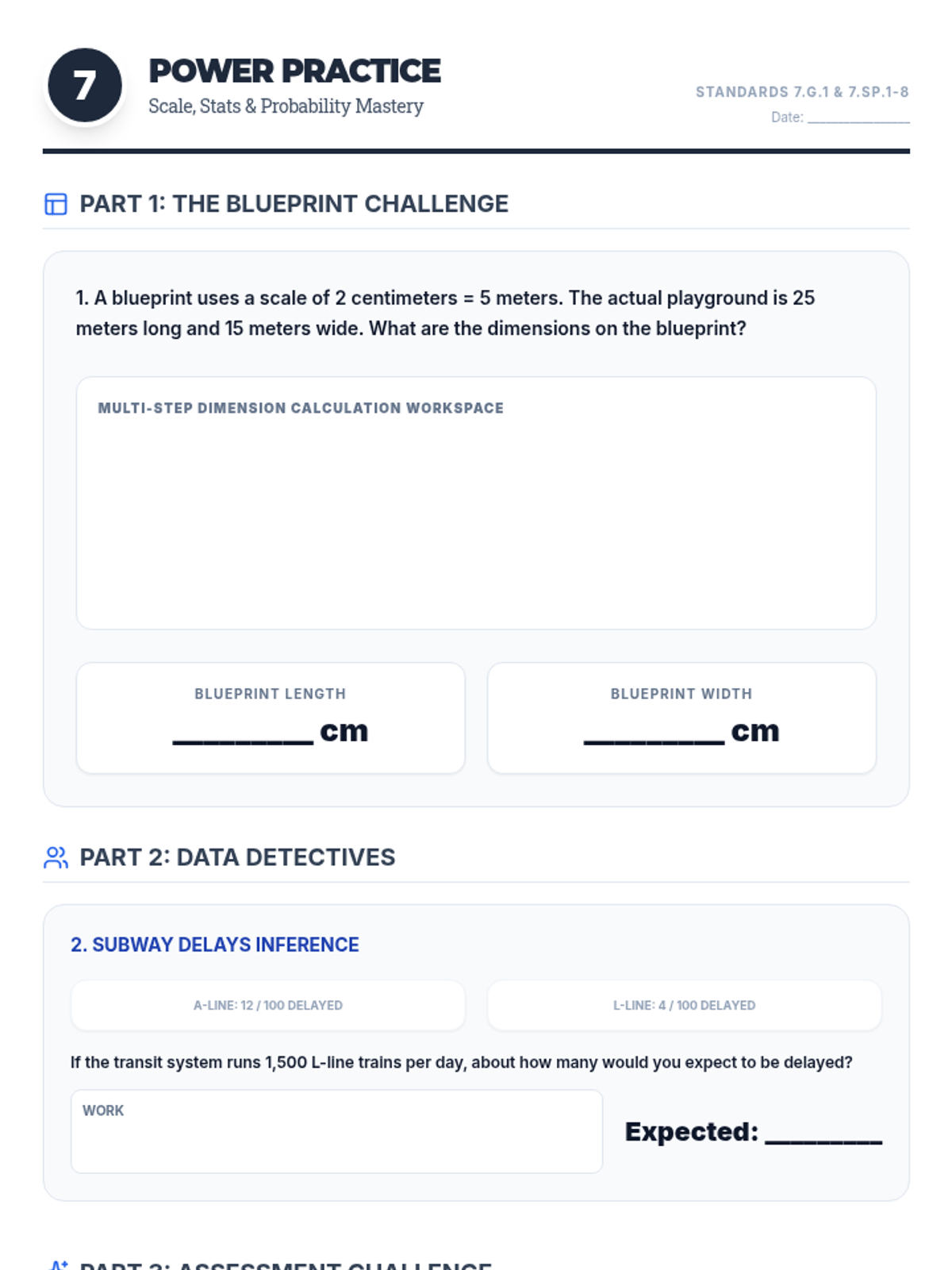
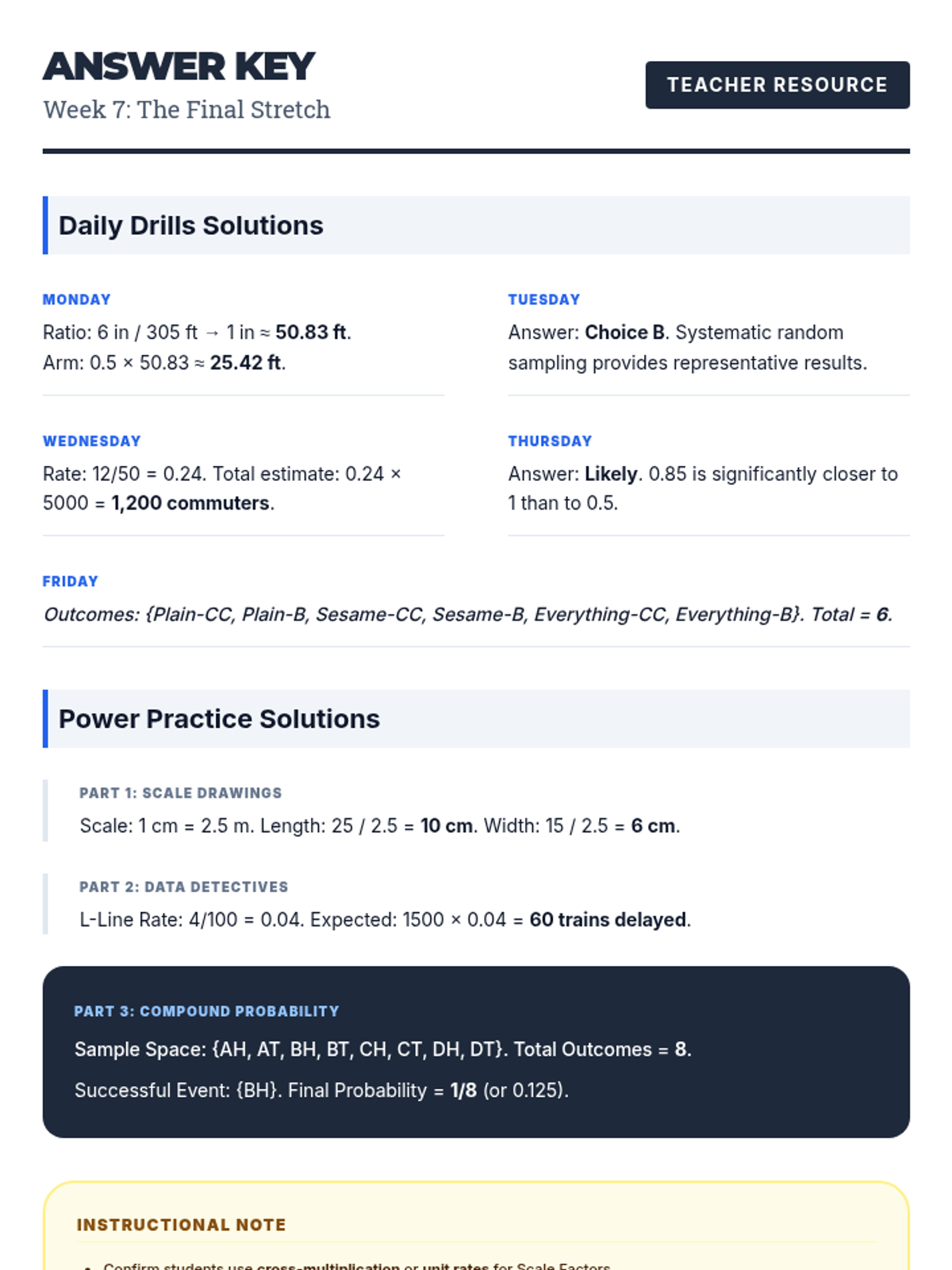
Reviewing scale drawings, statistics, and probability to round out the comprehensive NYS Assessment preparation.
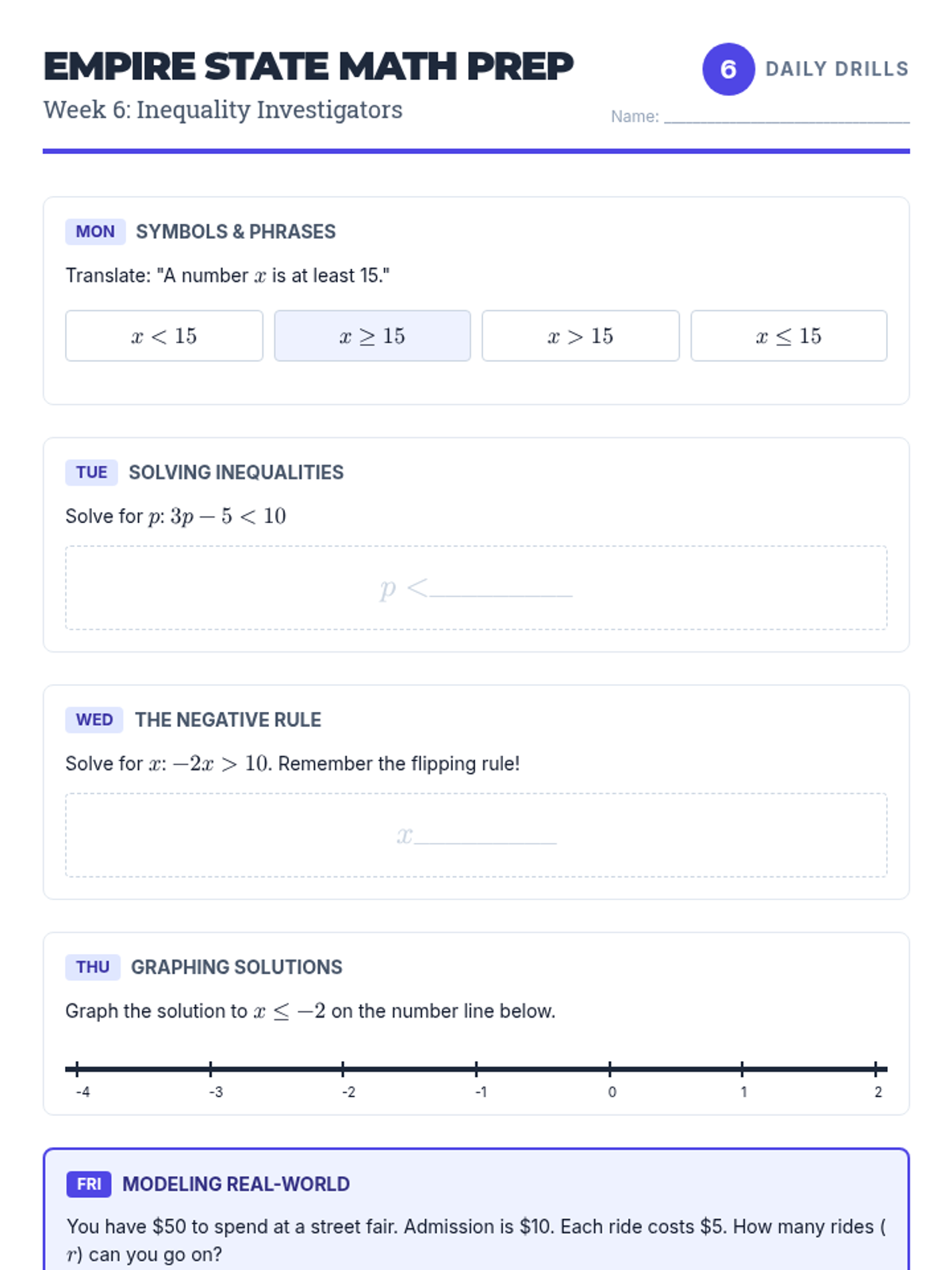
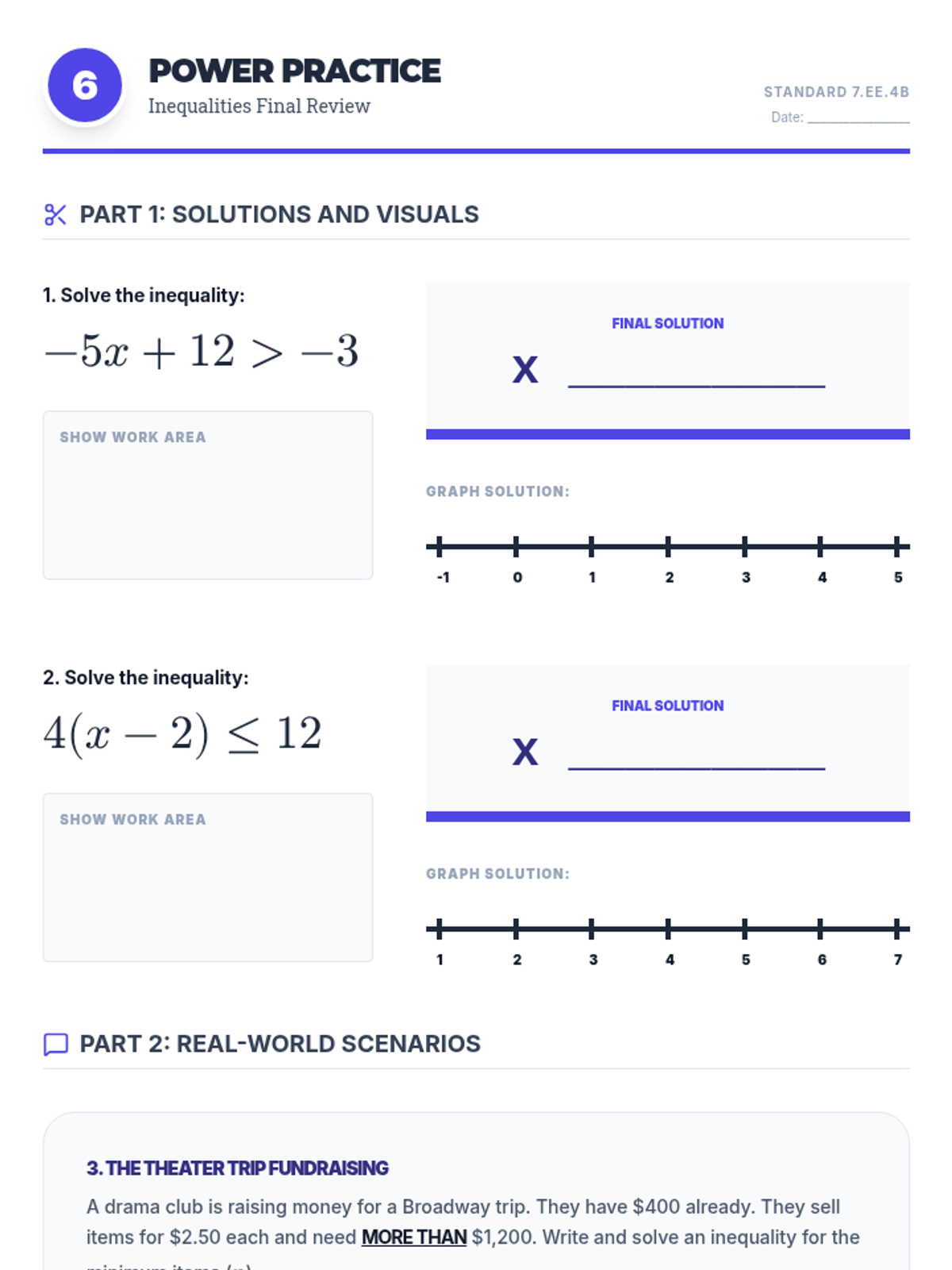
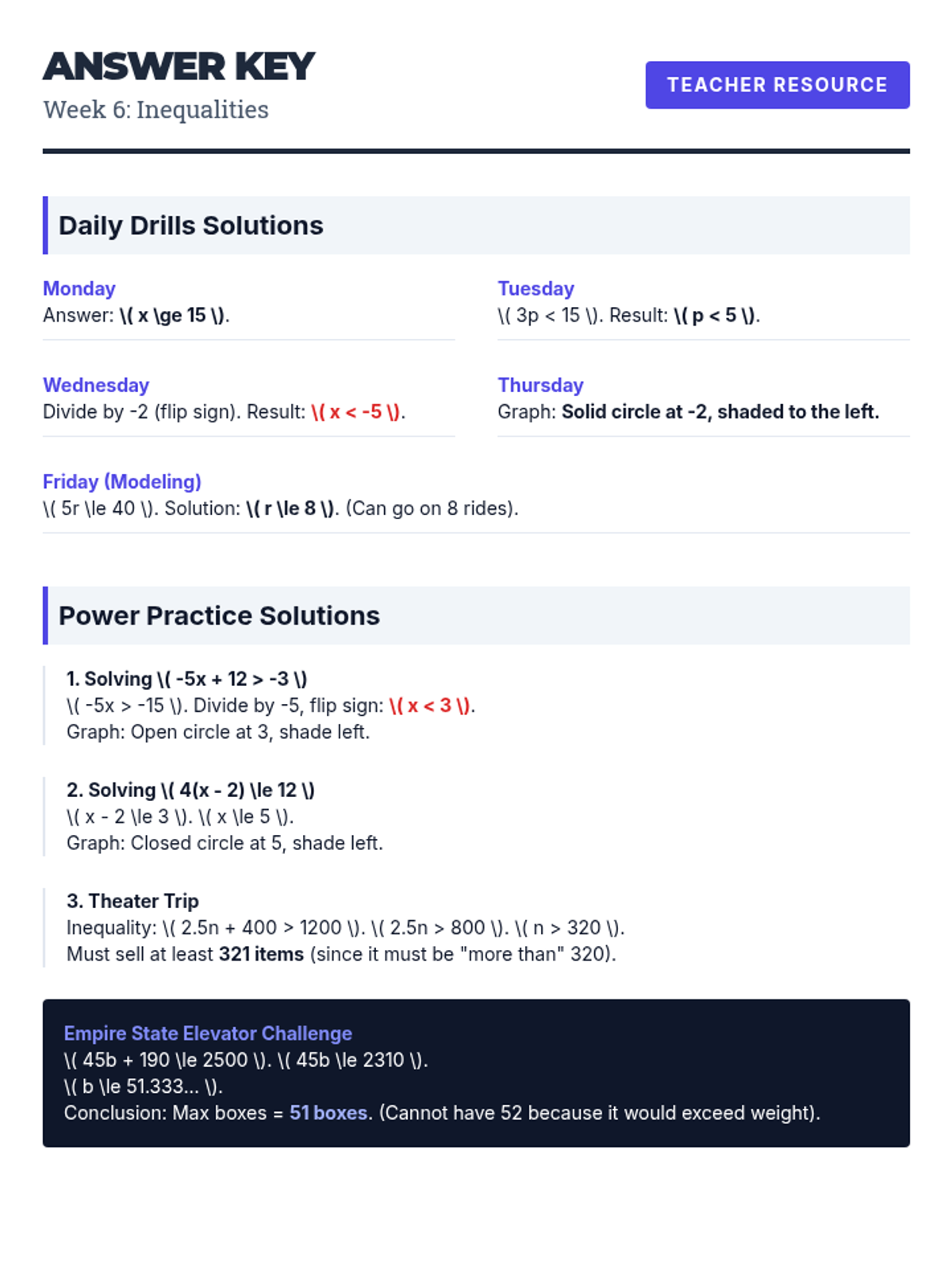
Solving and graphing linear inequalities and applying them to real-world NYS assessment scenarios.
Simplifying linear expressions and solving multi-step equations using properties of operations.
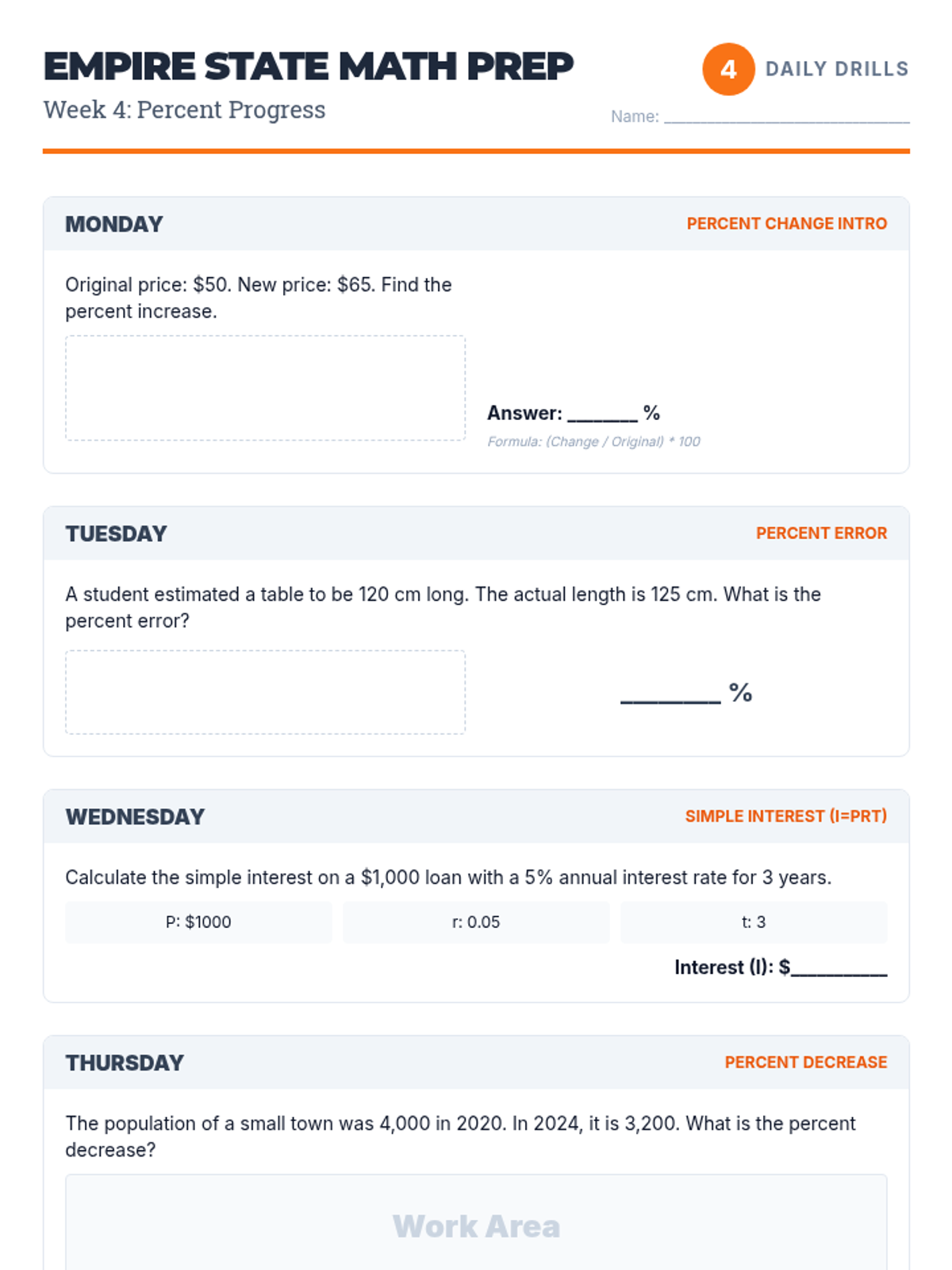
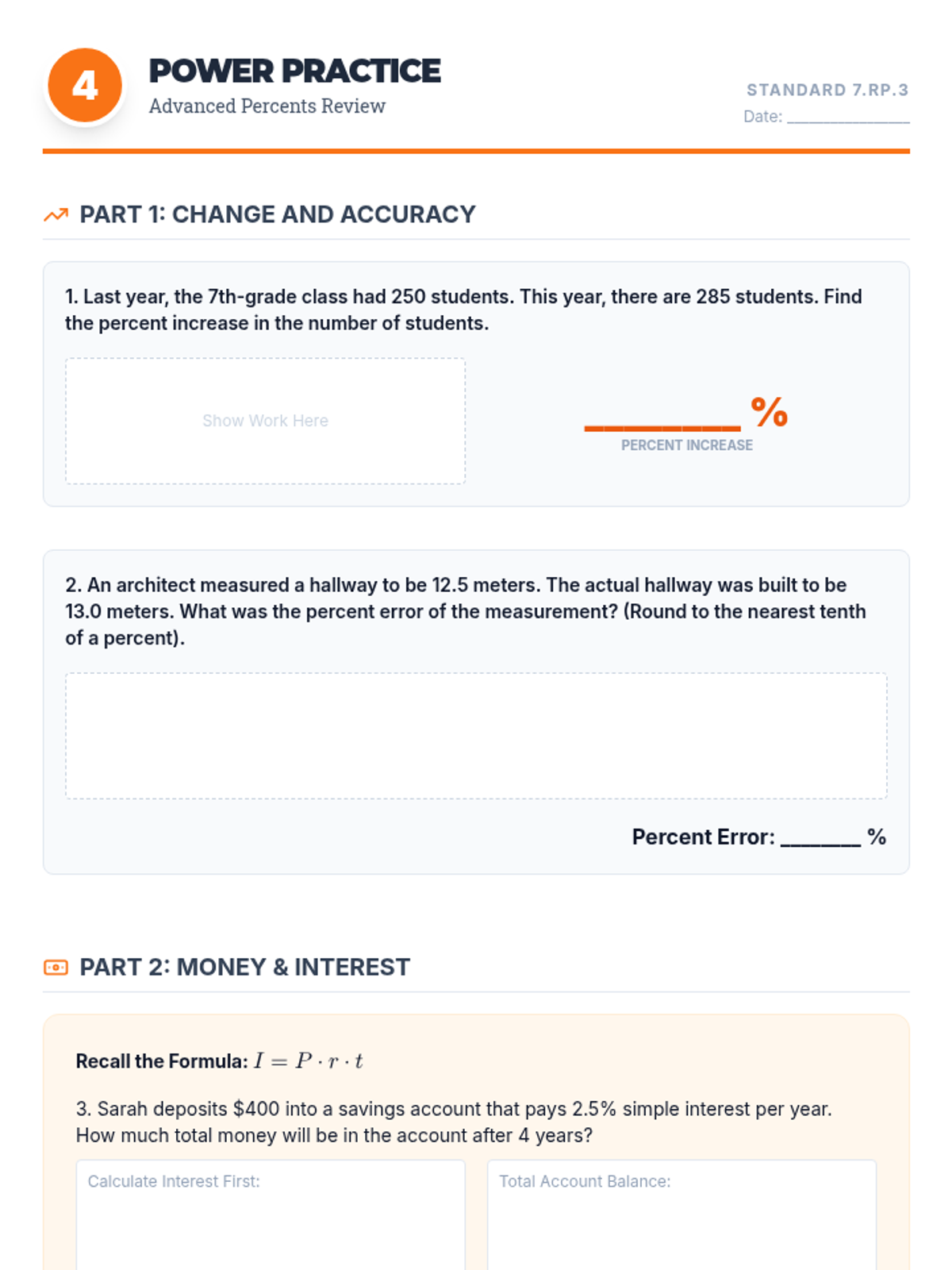
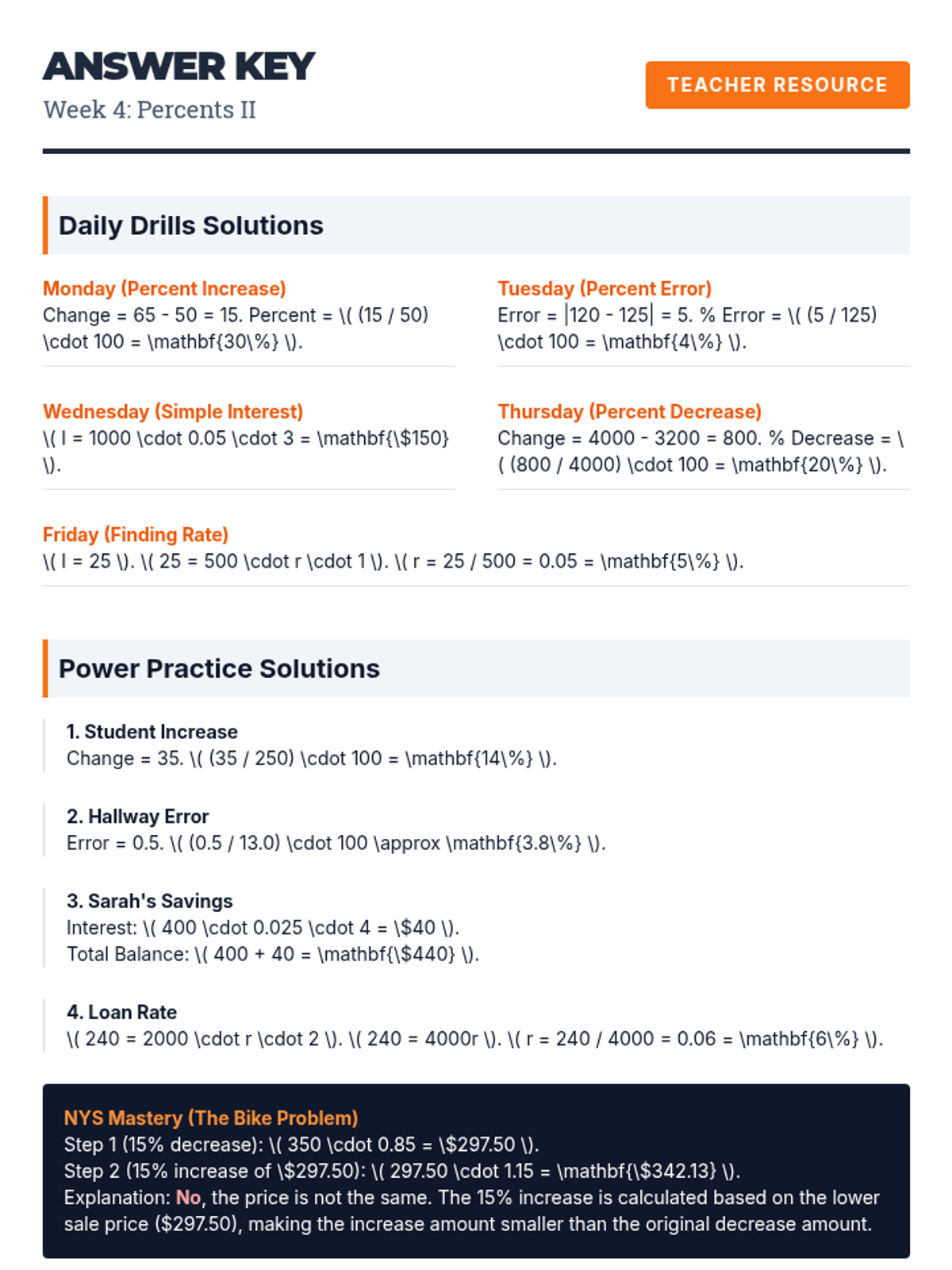
Advanced percent problems including simple interest, percent change (increase/decrease), and percent error.
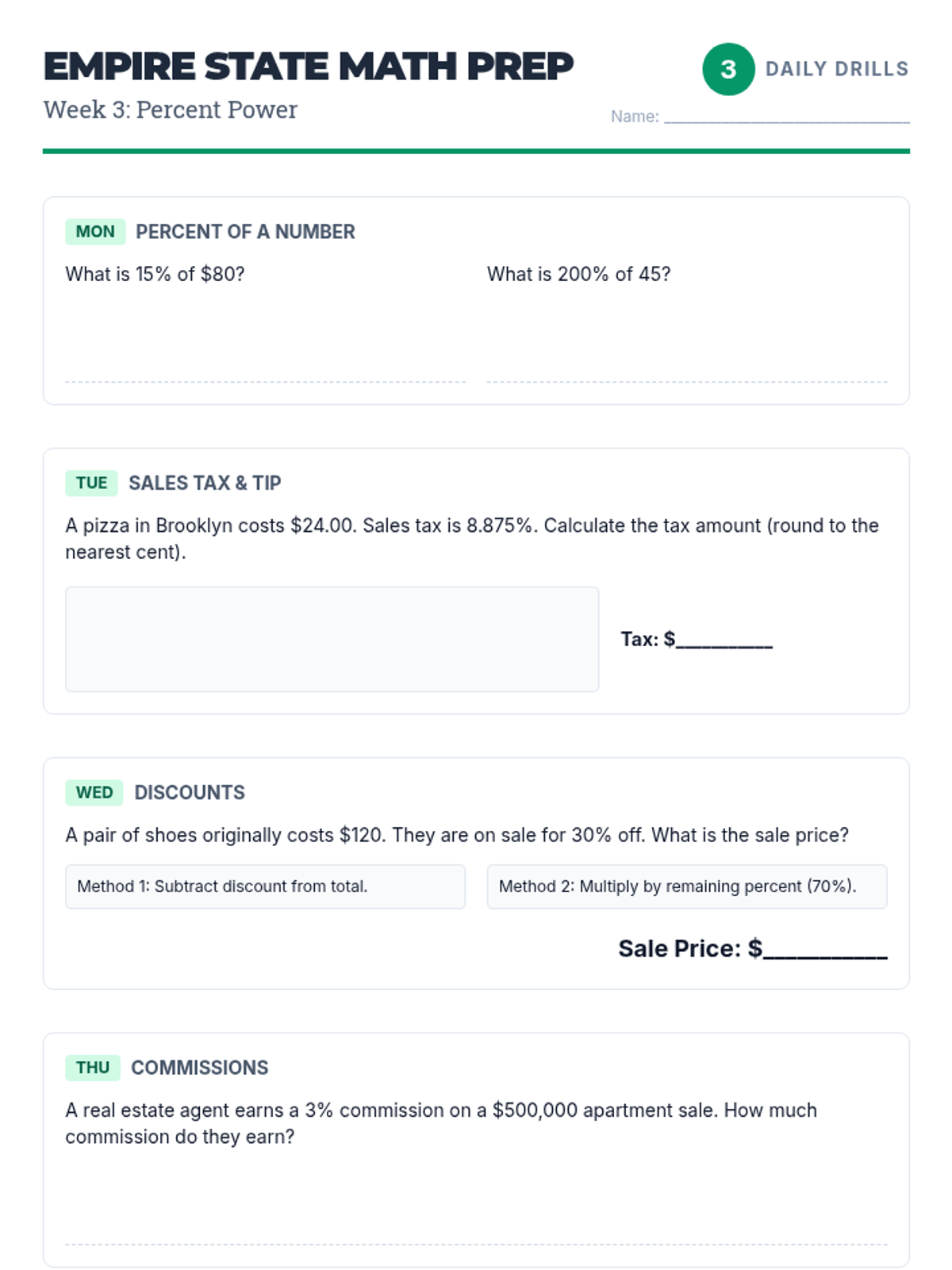
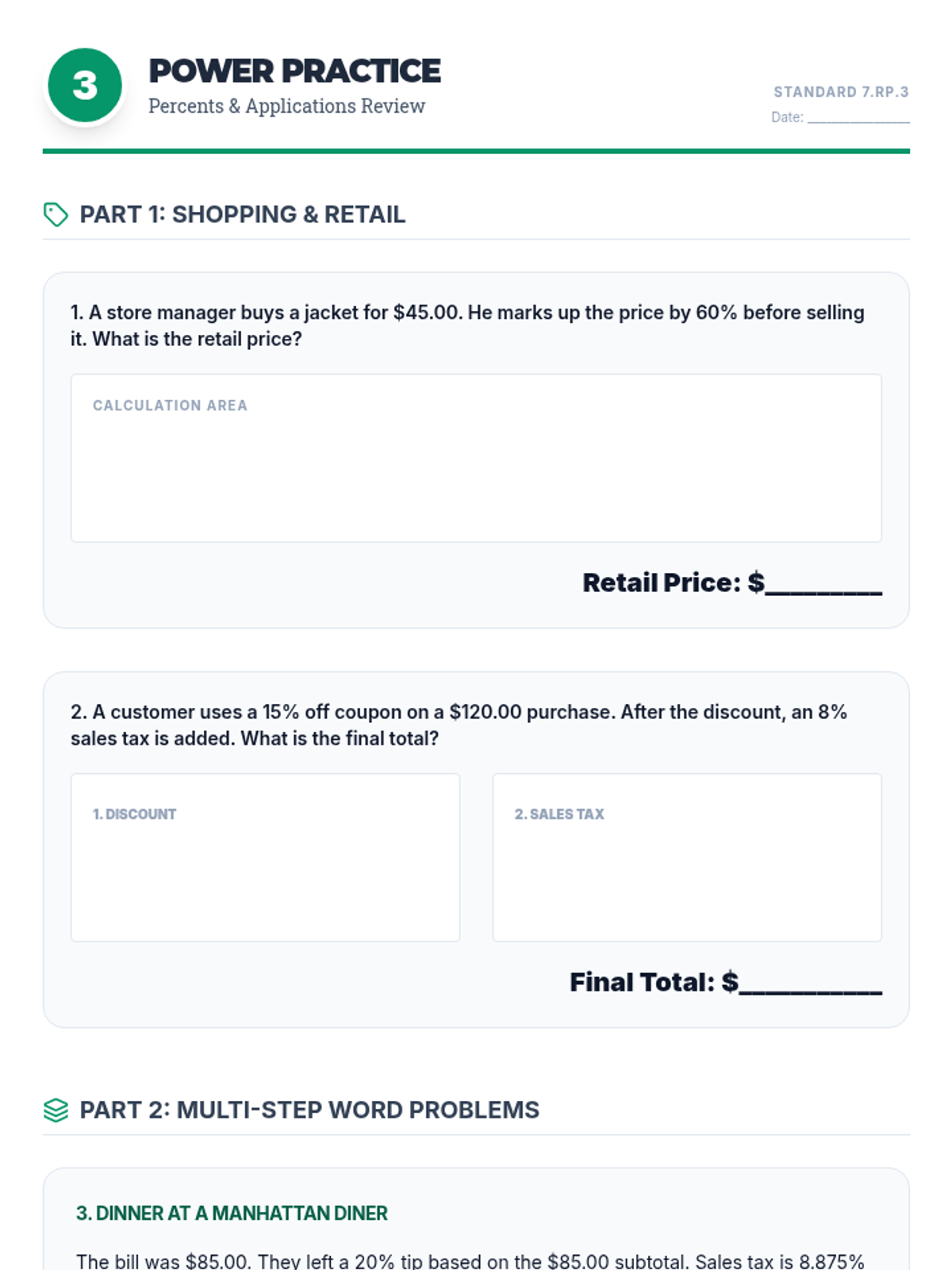
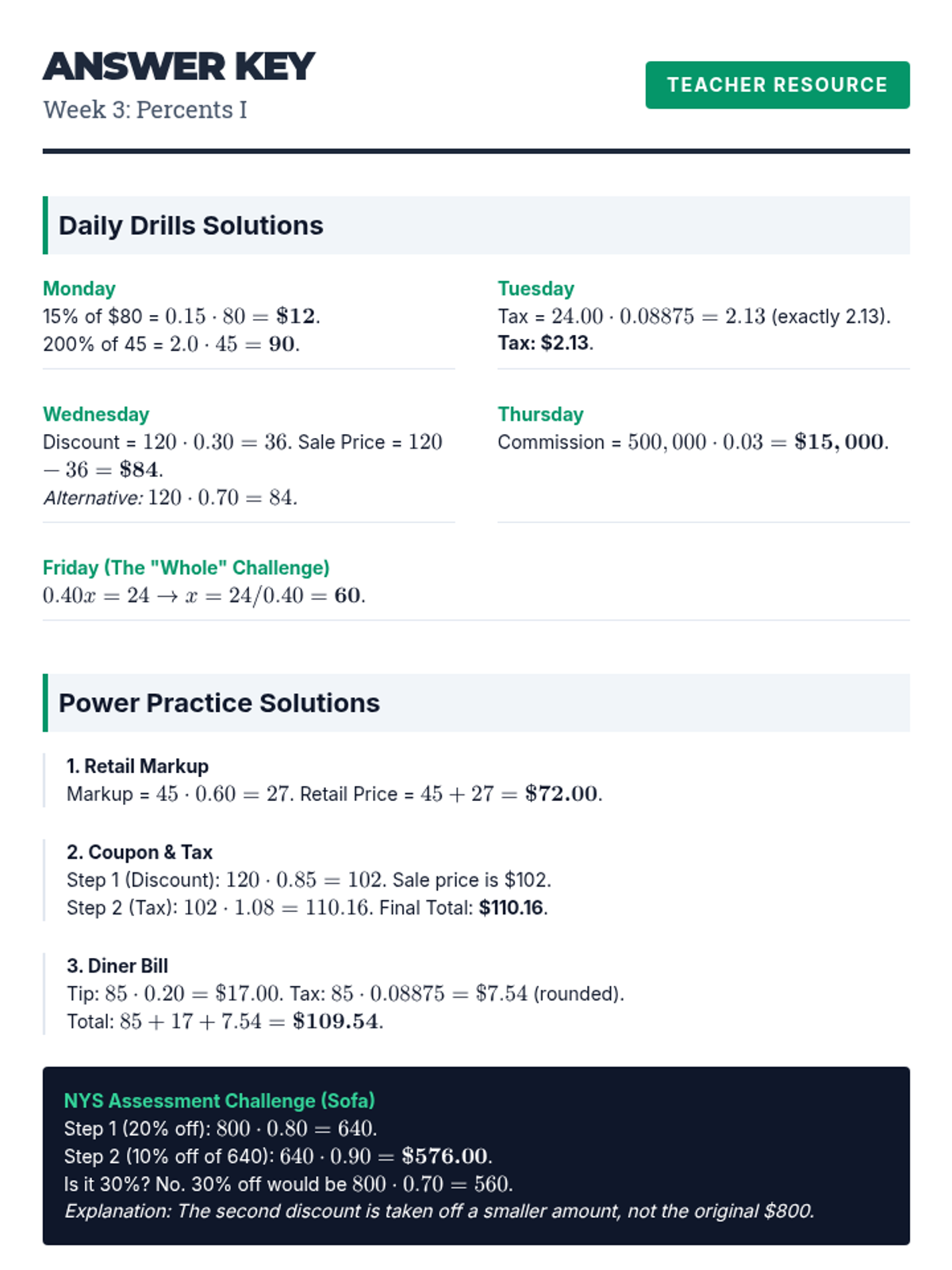
Practical applications of percents, including calculating tax, tip, commissions, discounts, and markups.
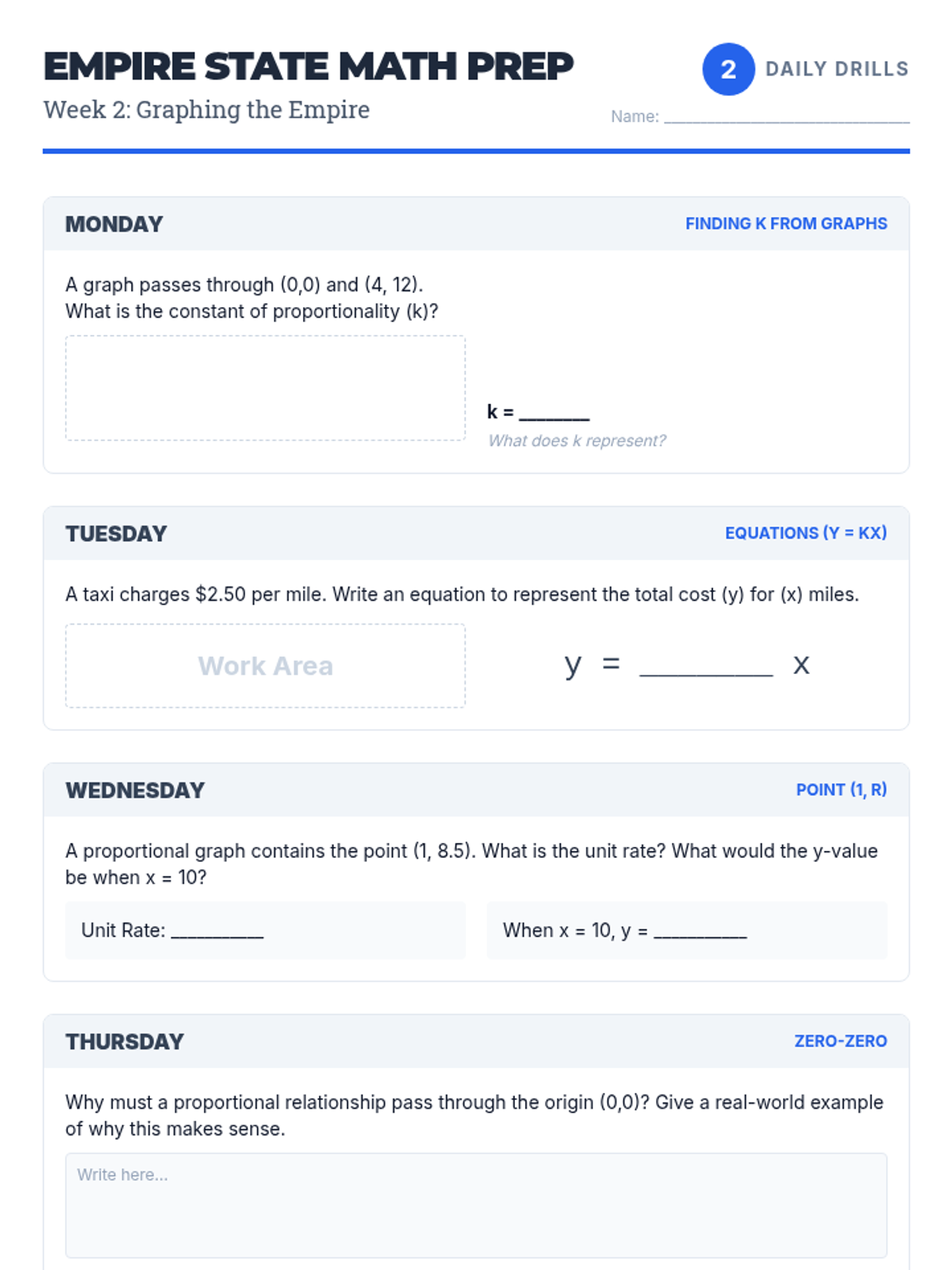
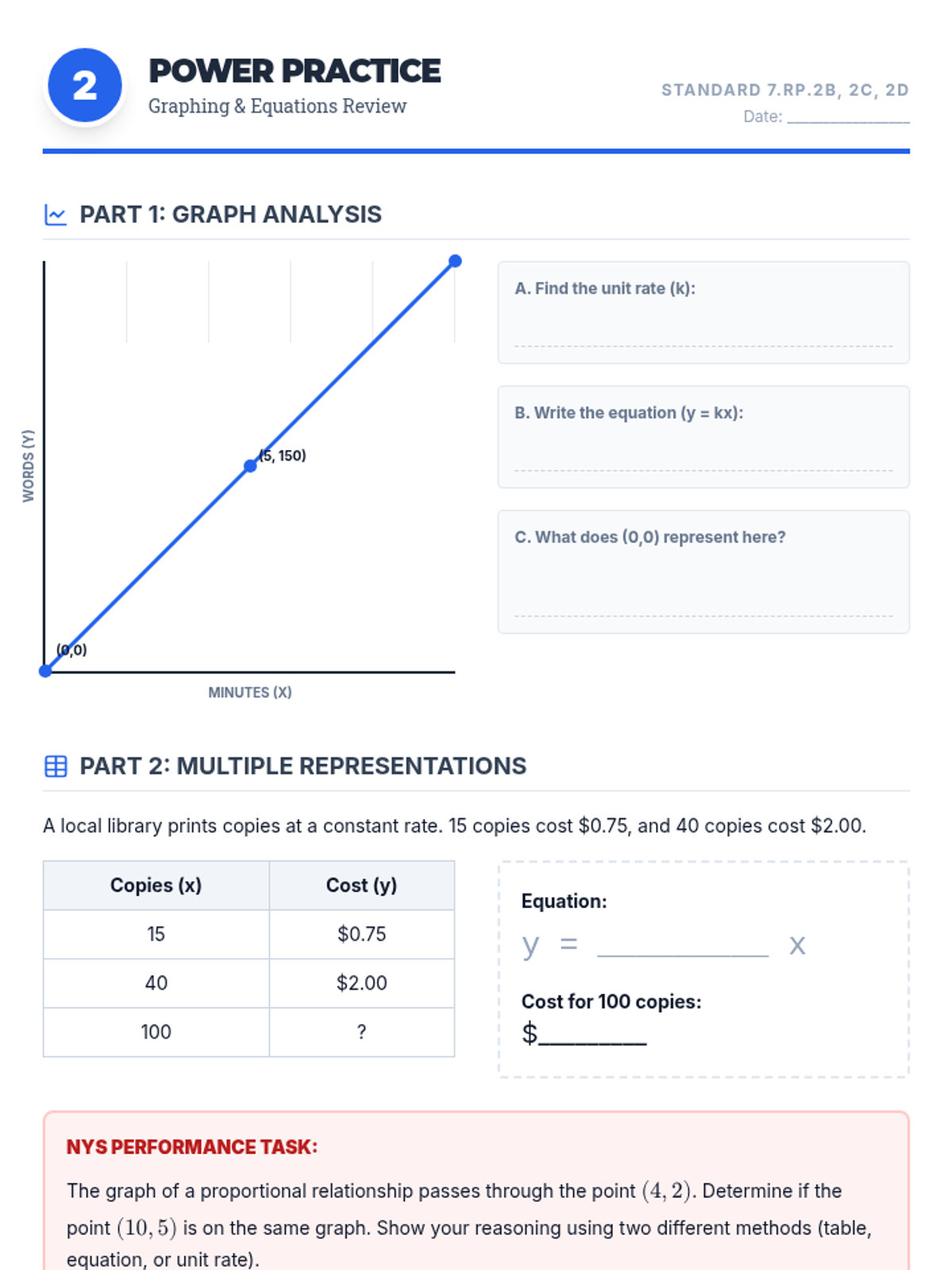
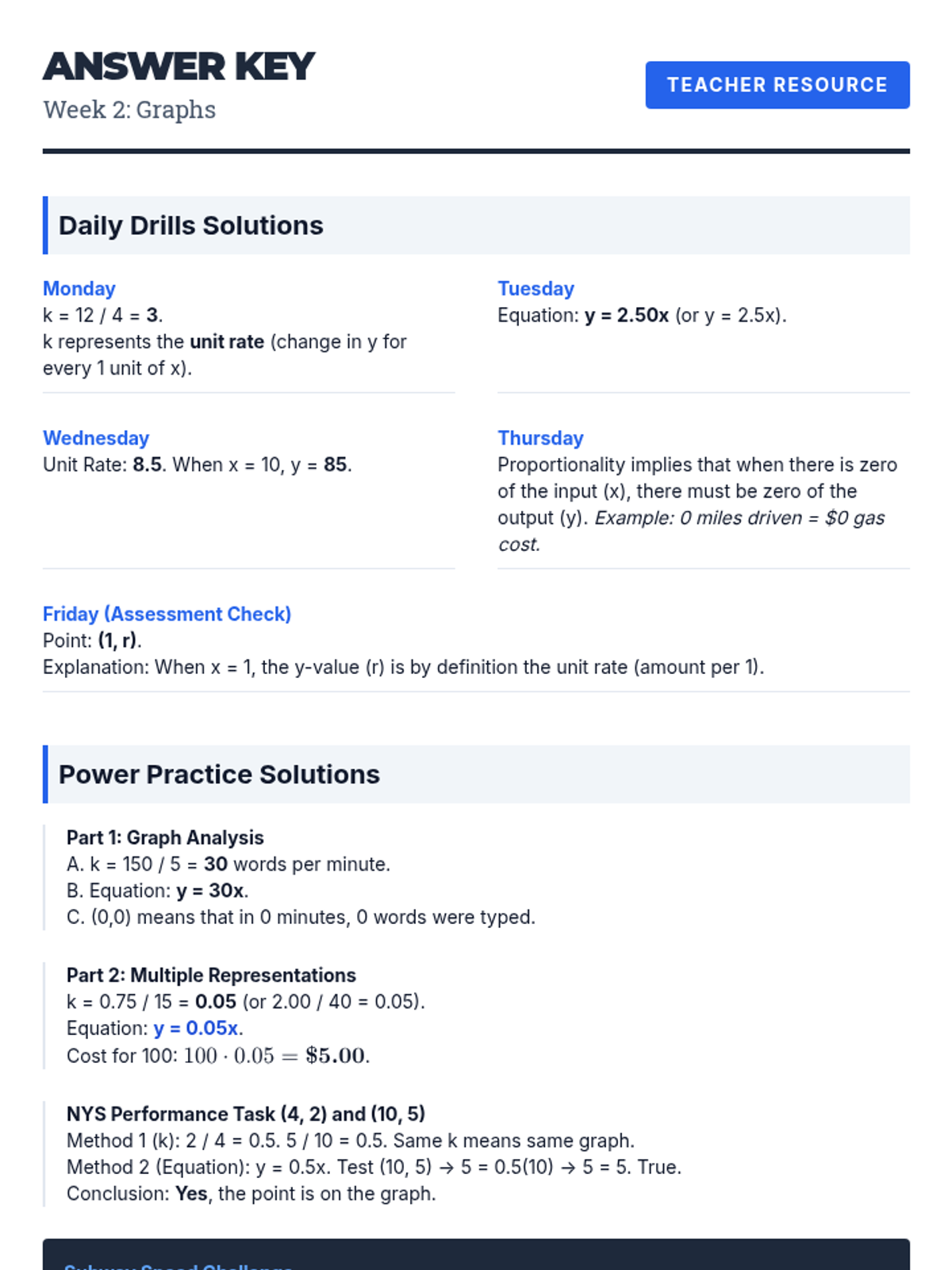
Analyzing graphs of proportional relationships, finding the constant of proportionality, and writing equations in the form y = kx.
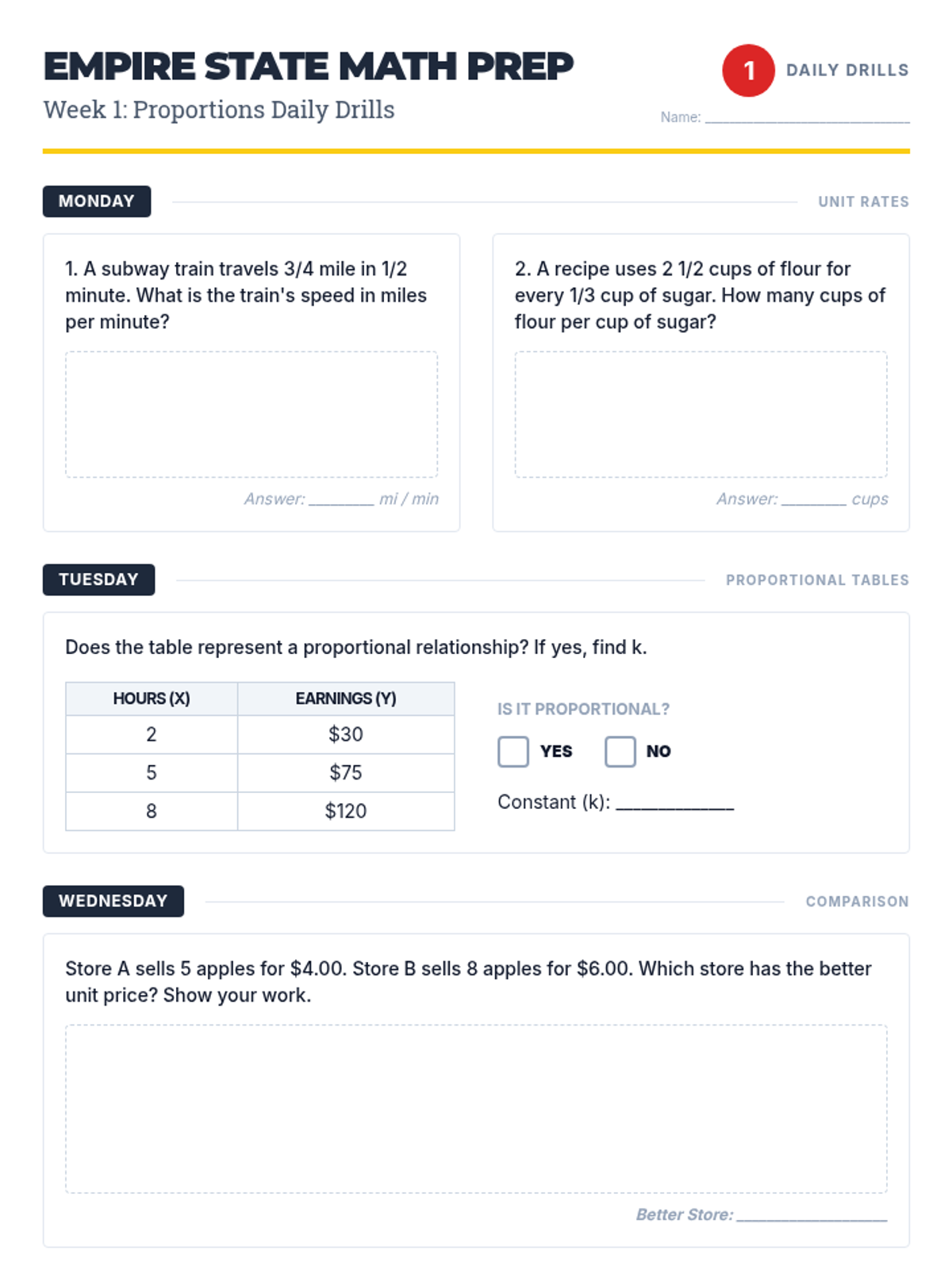
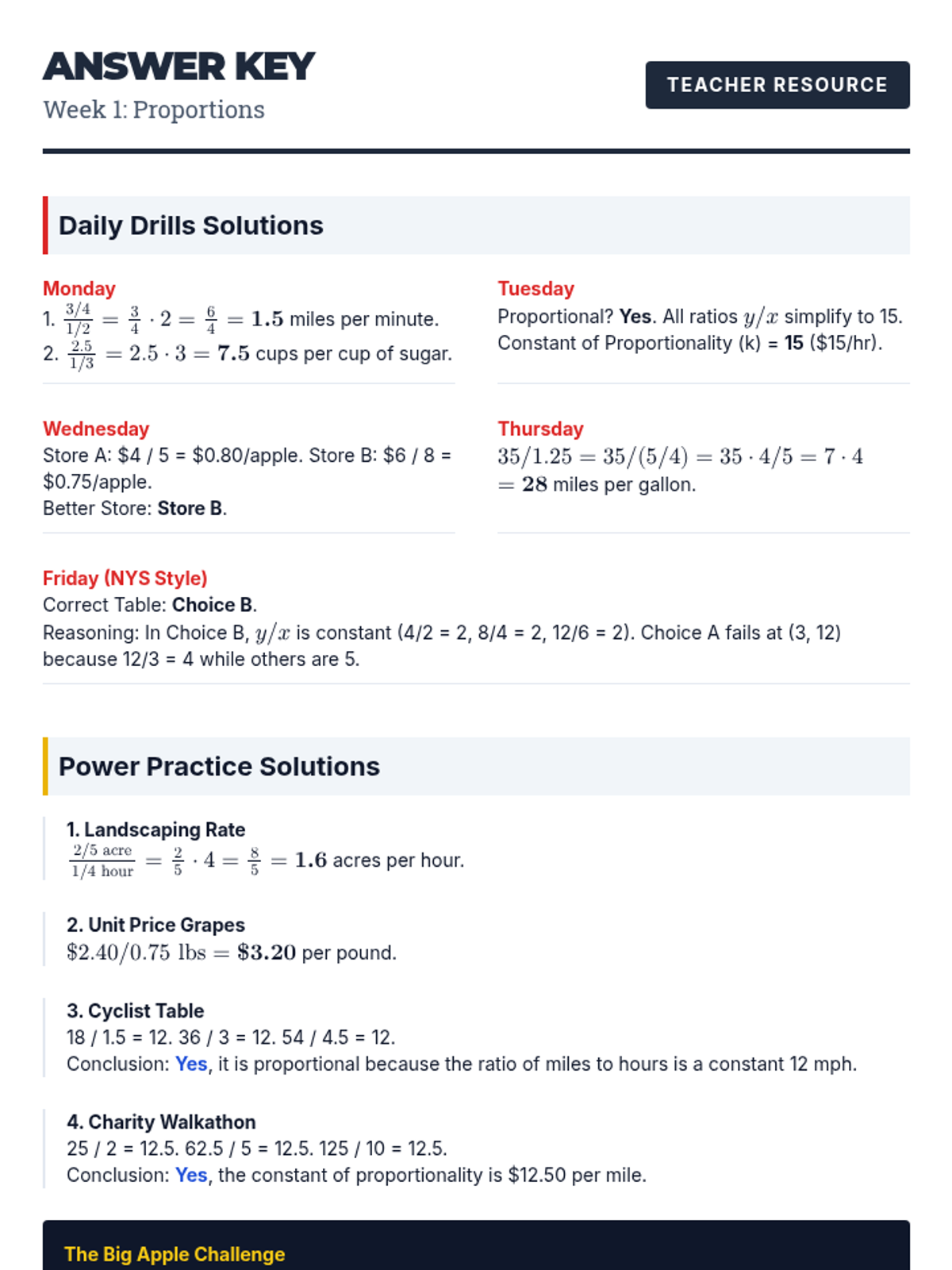
Review of ratios, unit rates with fractions, and identifying proportional relationships in tables and context.
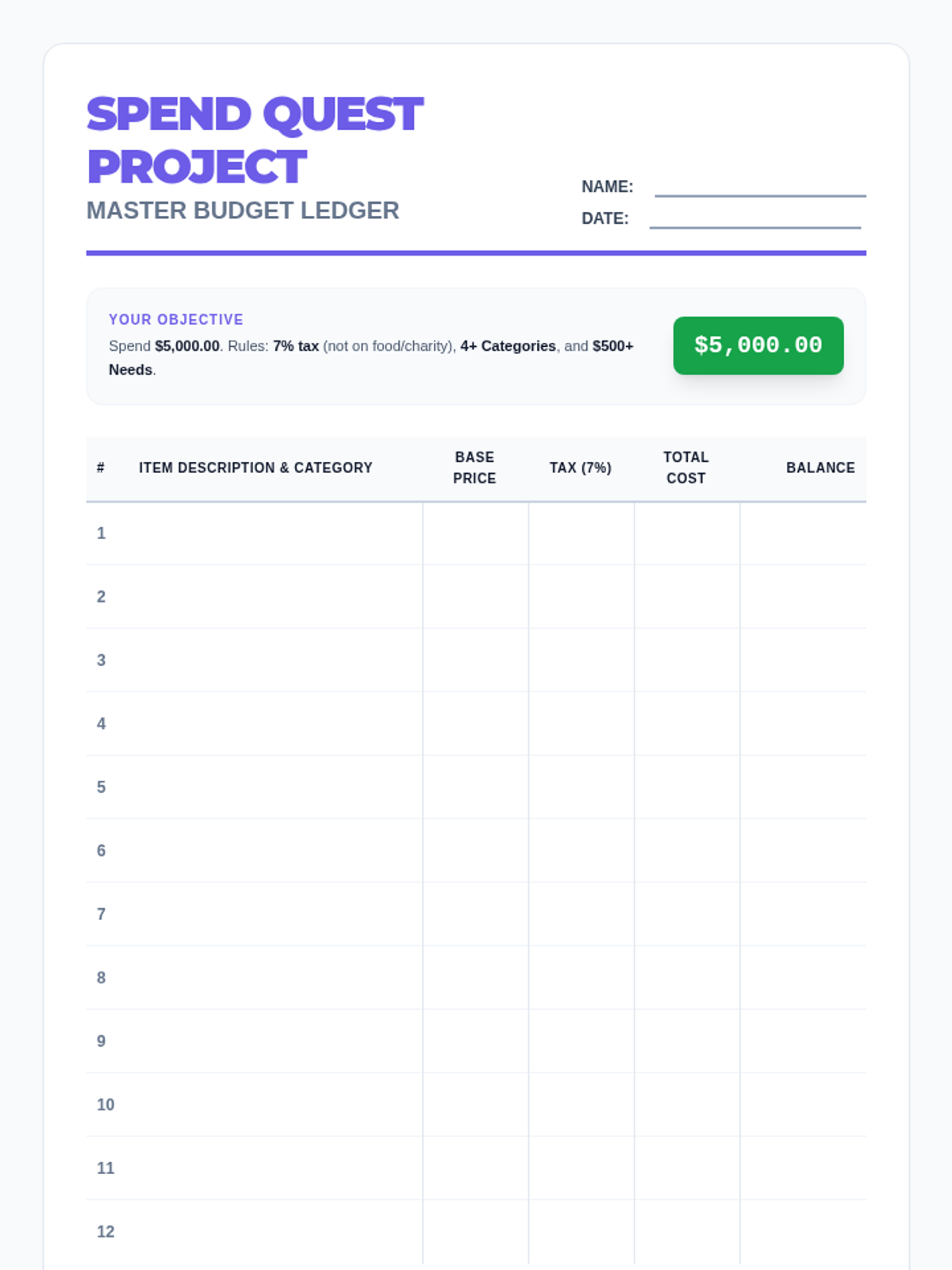
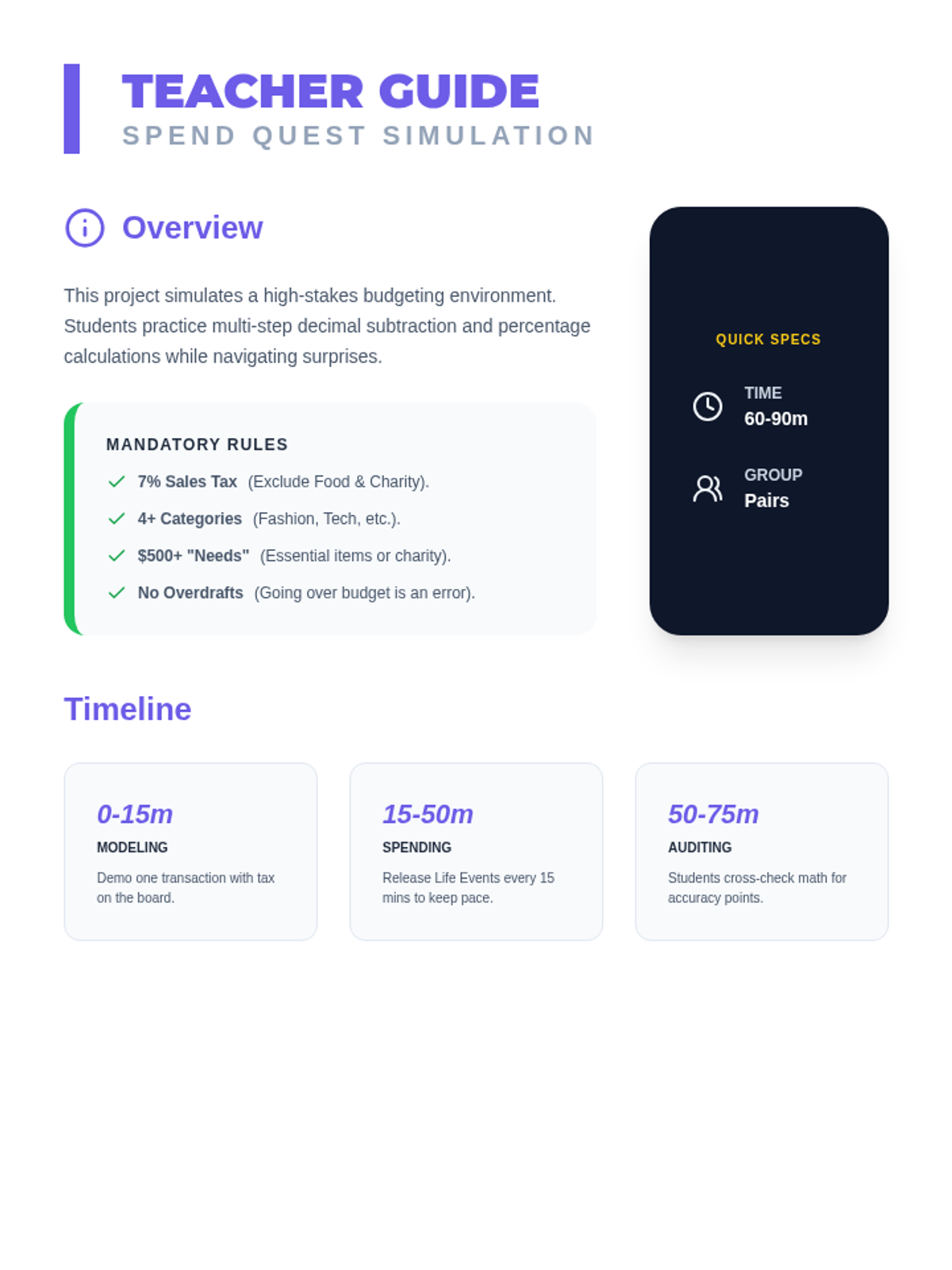
A high-energy math simulation where students manage a large budget, navigate financial constraints, and handle unexpected 'life events' while shopping for their dream items.
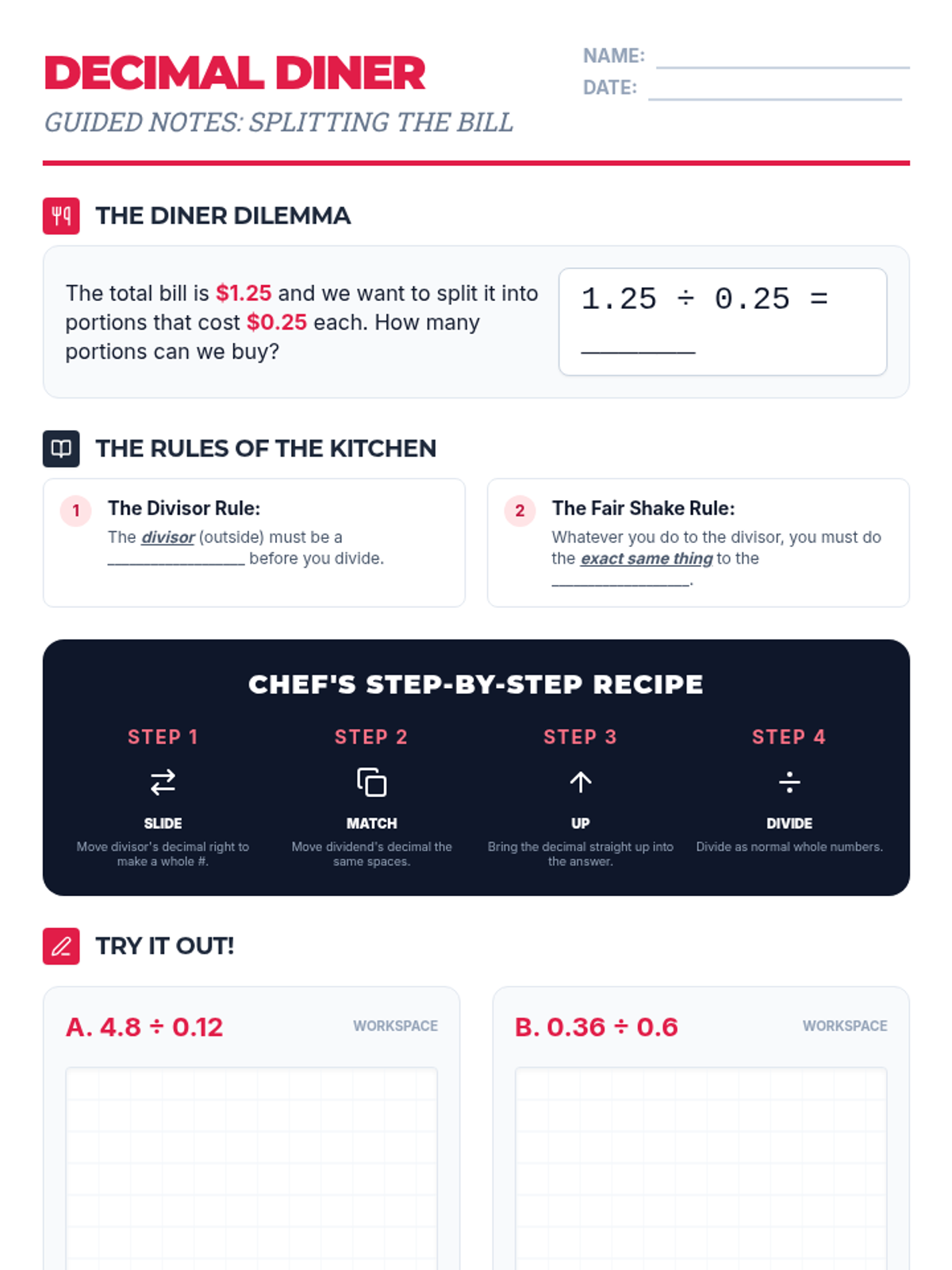
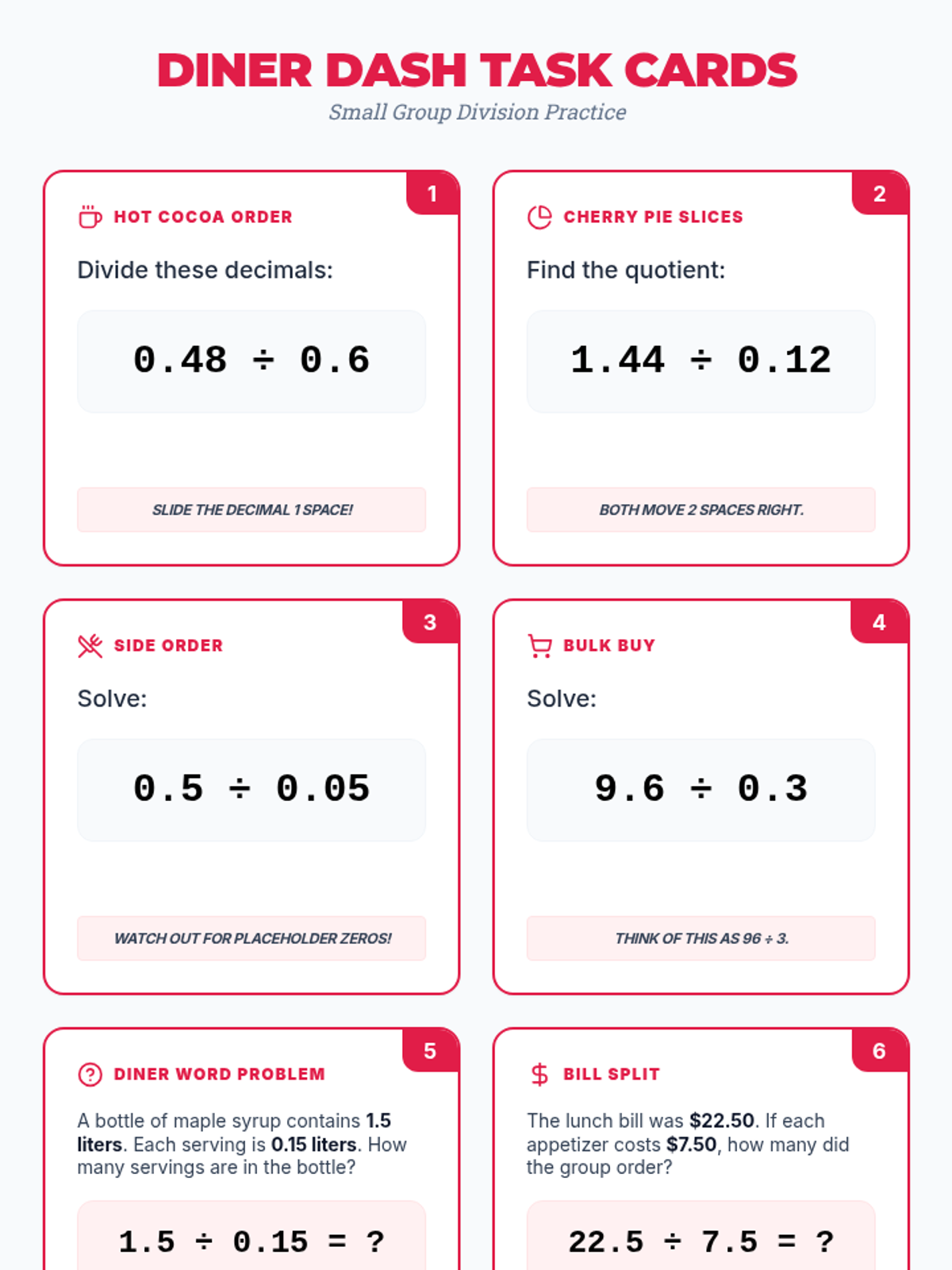
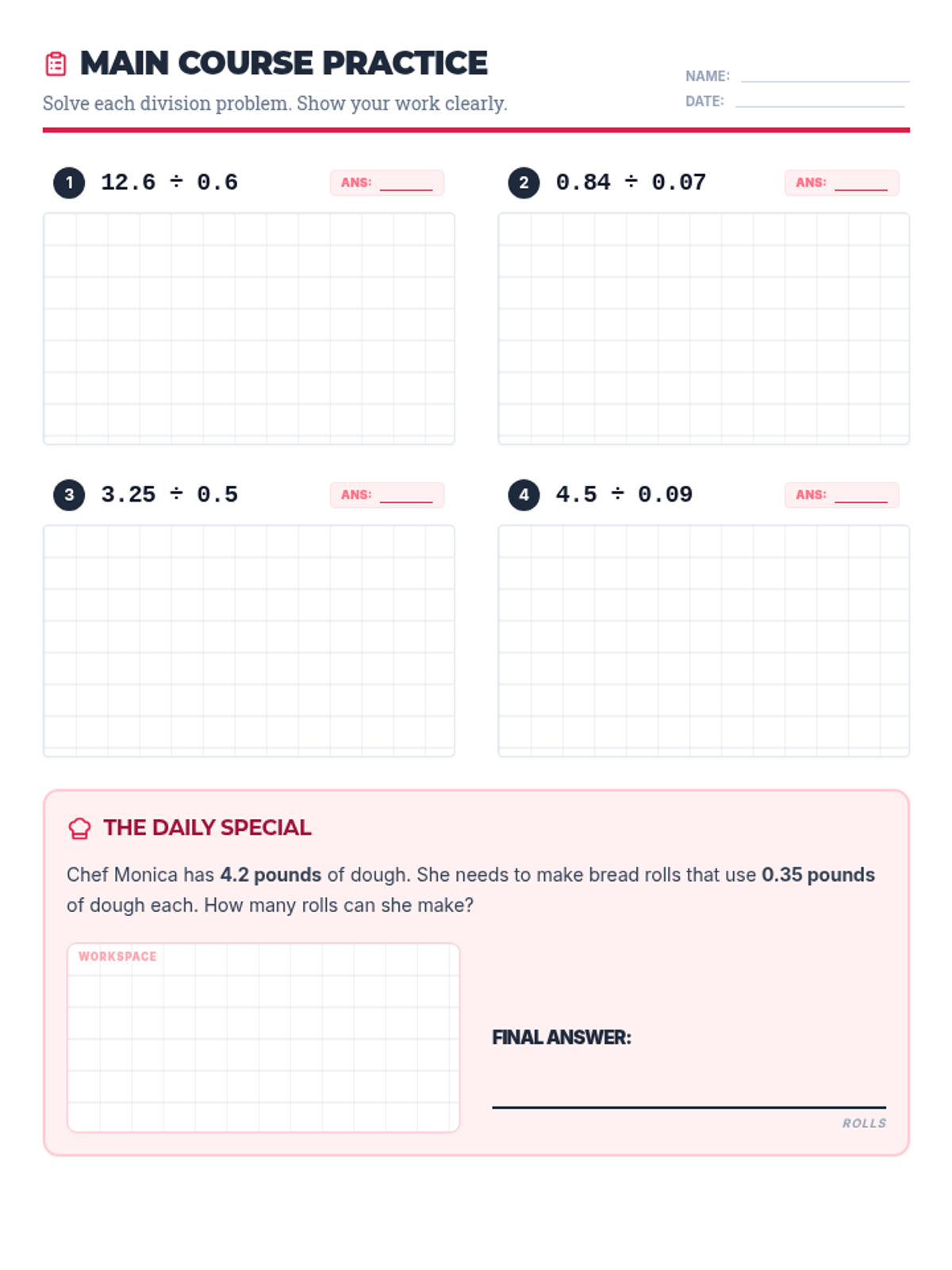
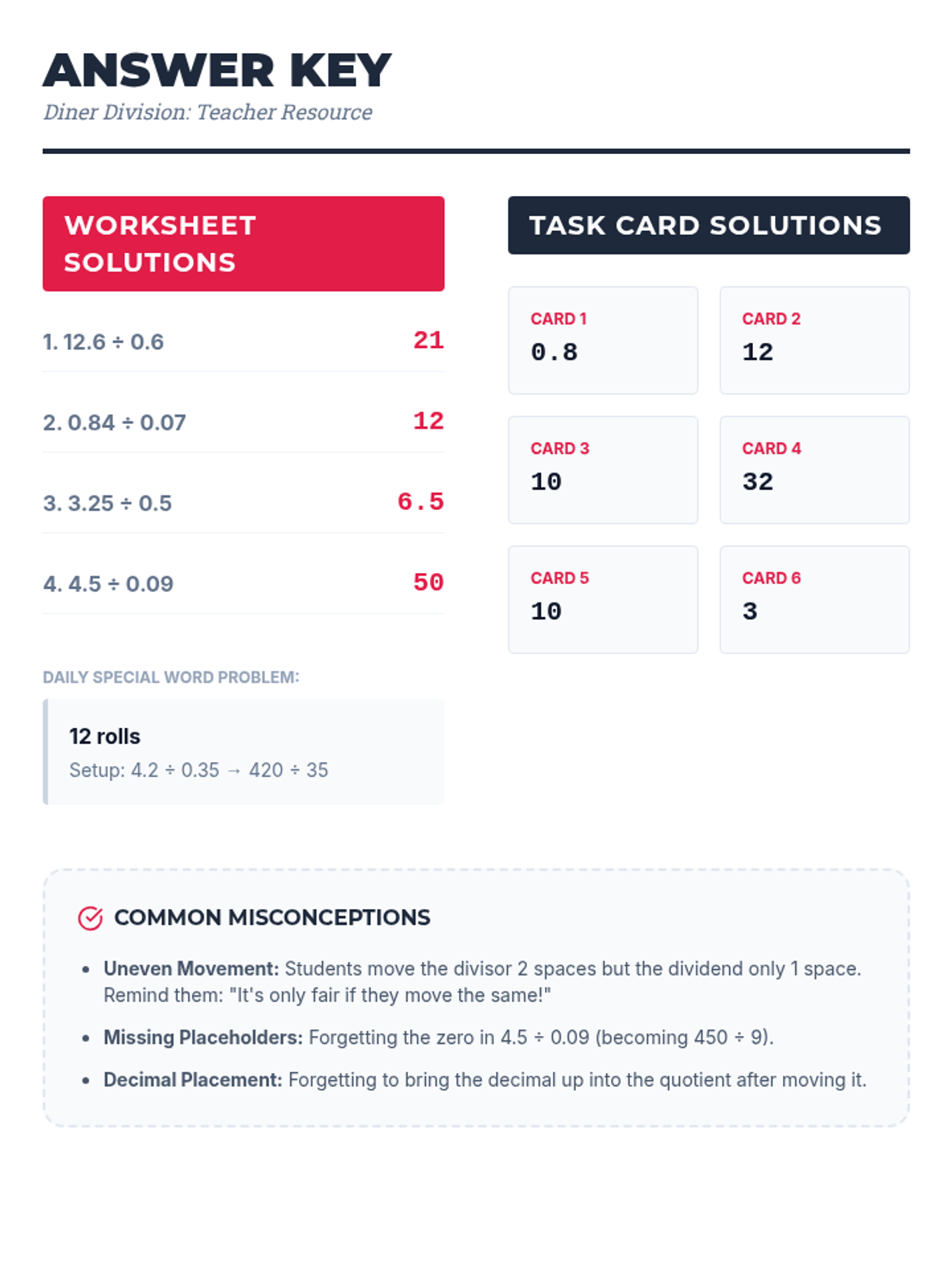
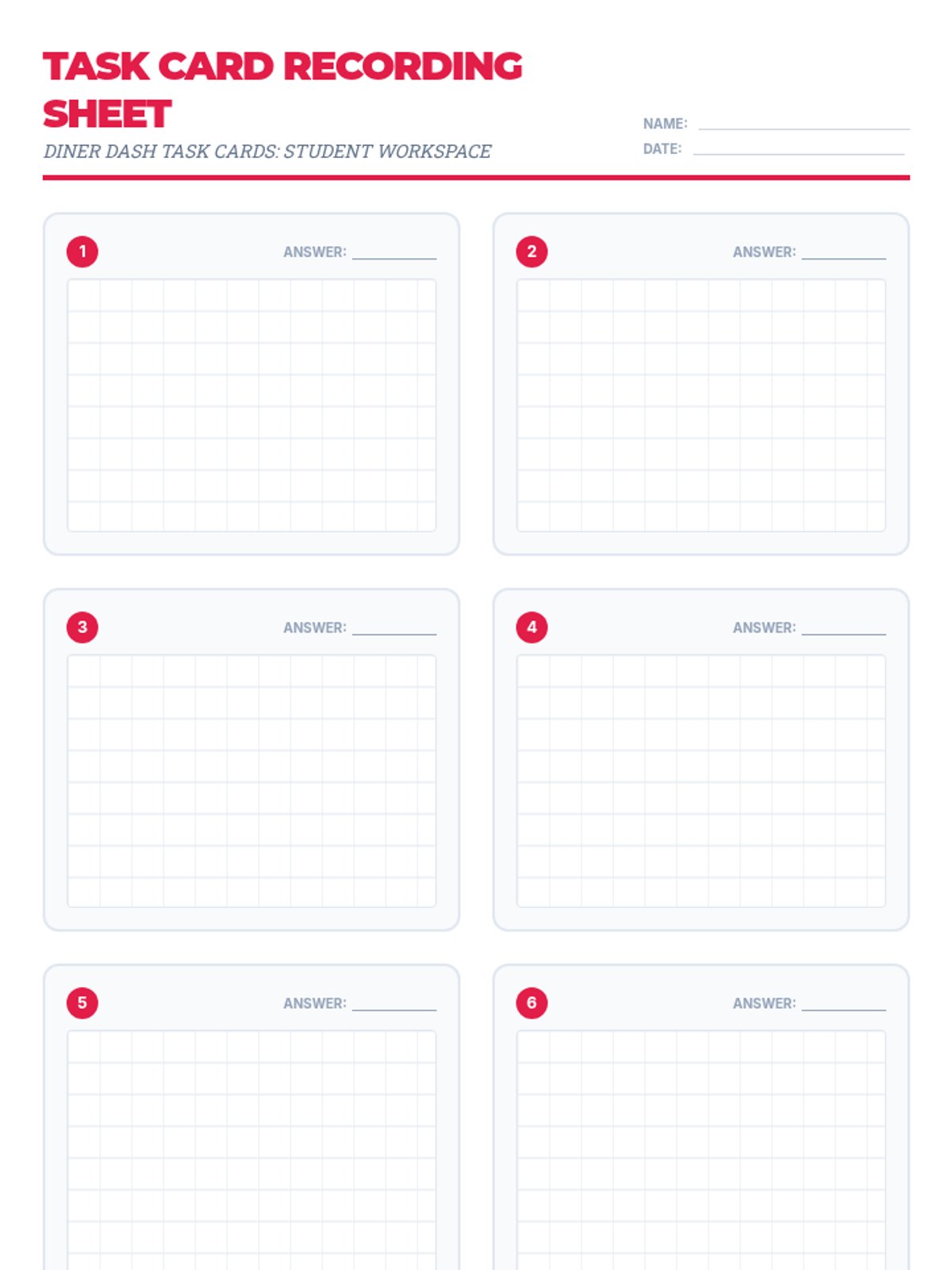
A comprehensive lesson on dividing decimals by decimals using a 'Decimal Diner' theme. Includes guided instruction, collaborative task cards, and independent practice with alignment grids.
A comprehensive lesson on solving one-step equations using addition, subtraction, multiplication, and division, featuring visual models and real-world applications.
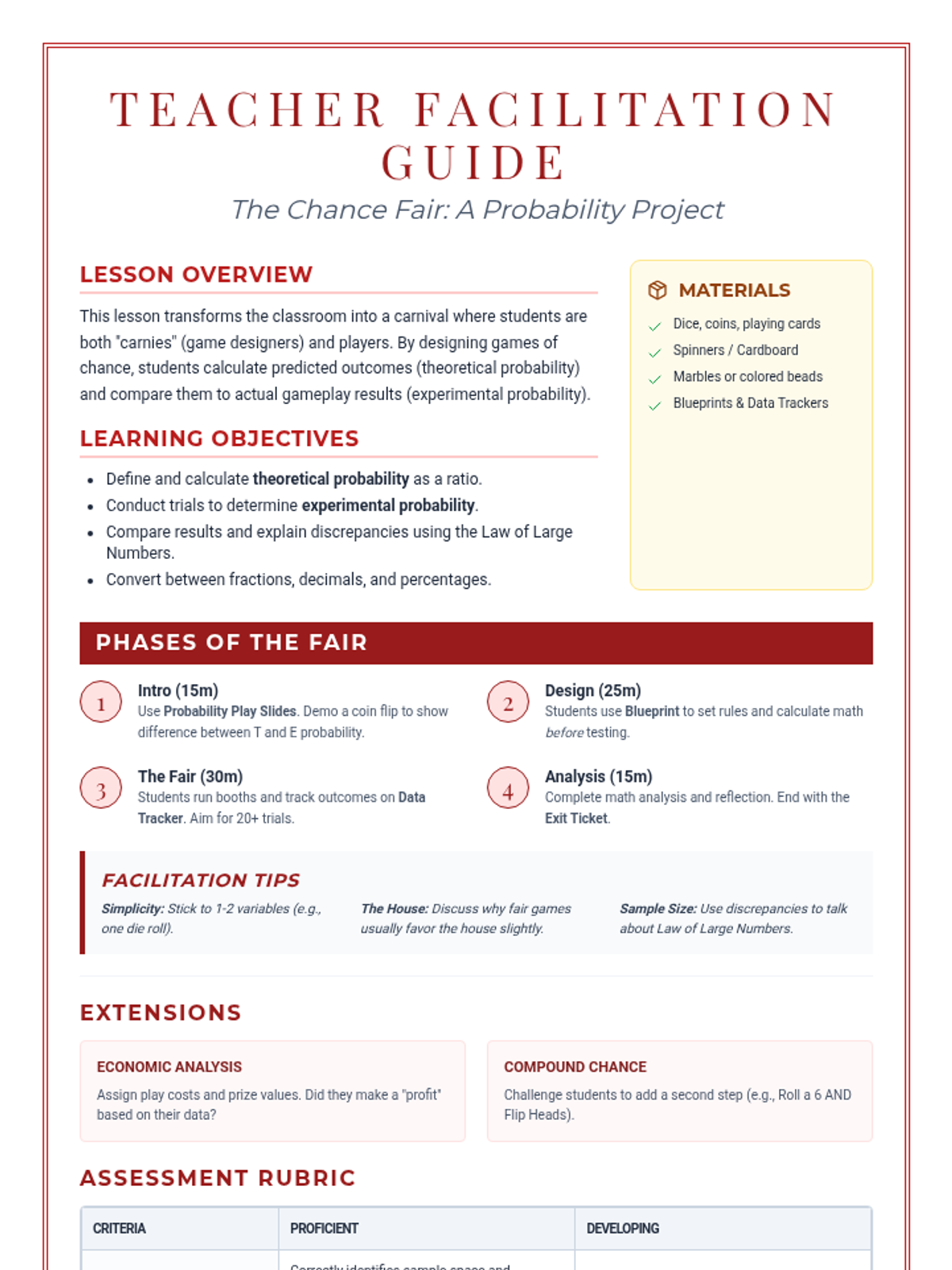
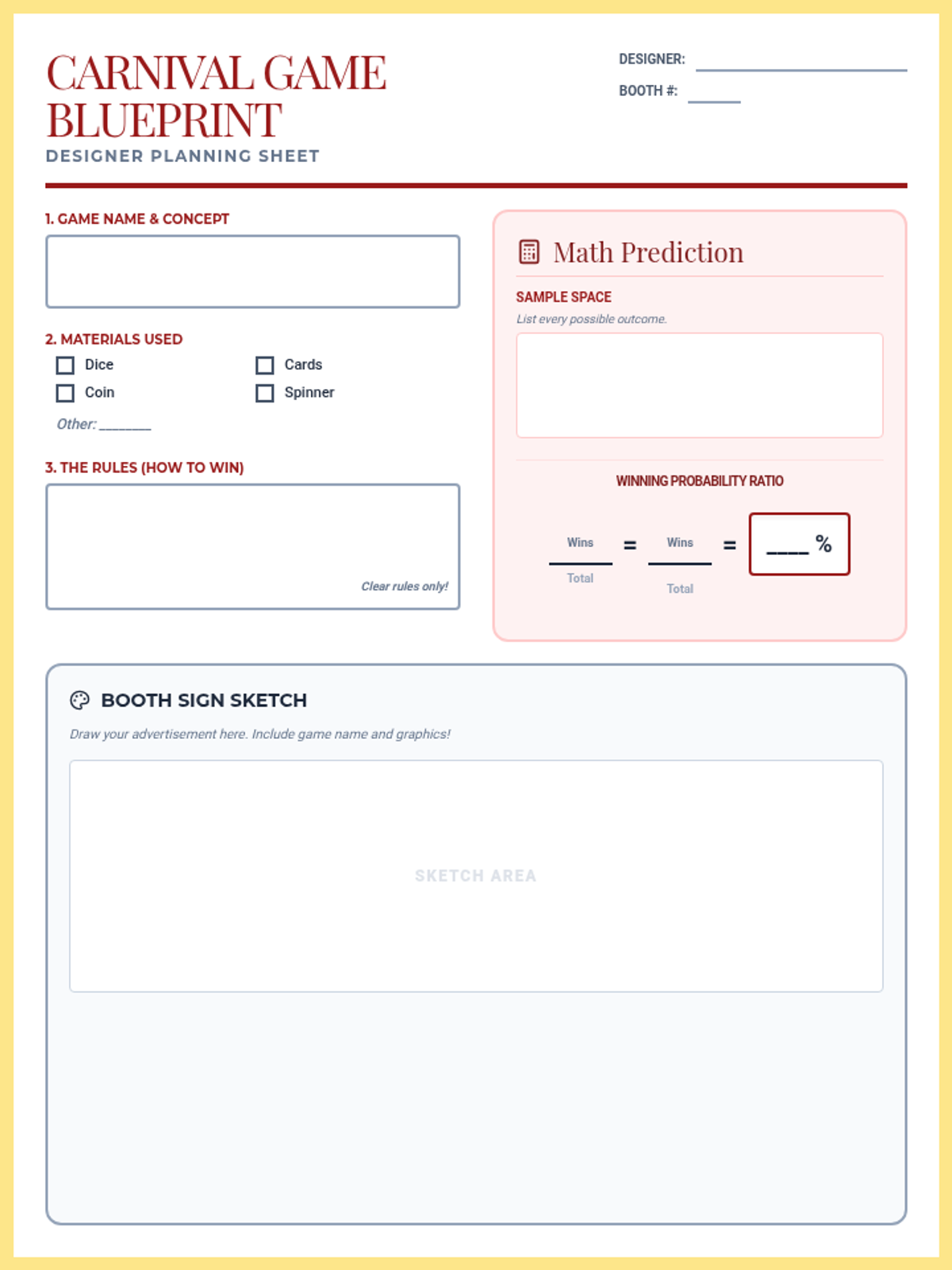
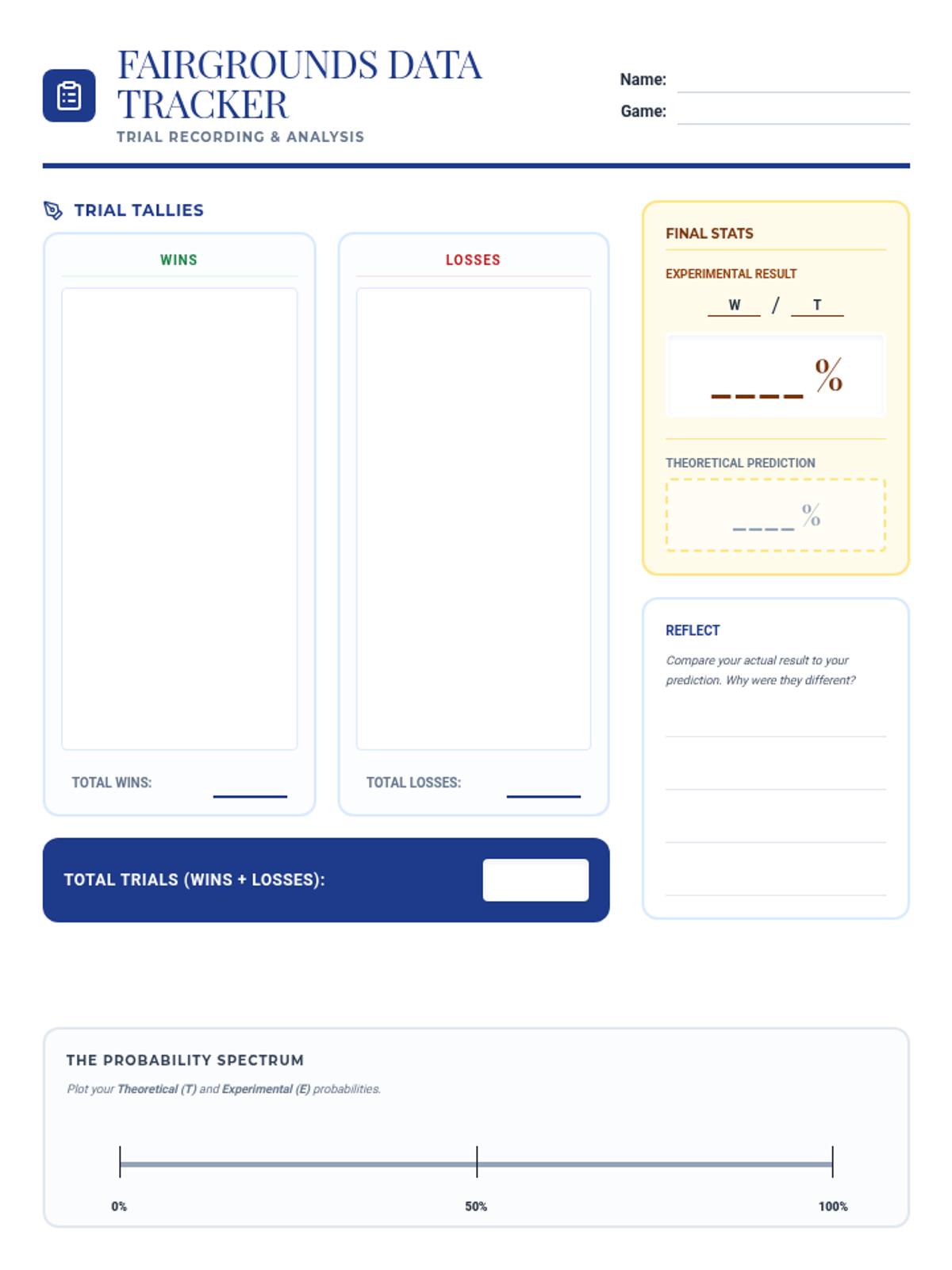
A hands-on math project where students design carnival games to explore theoretical versus experimental probability through data collection and analysis.
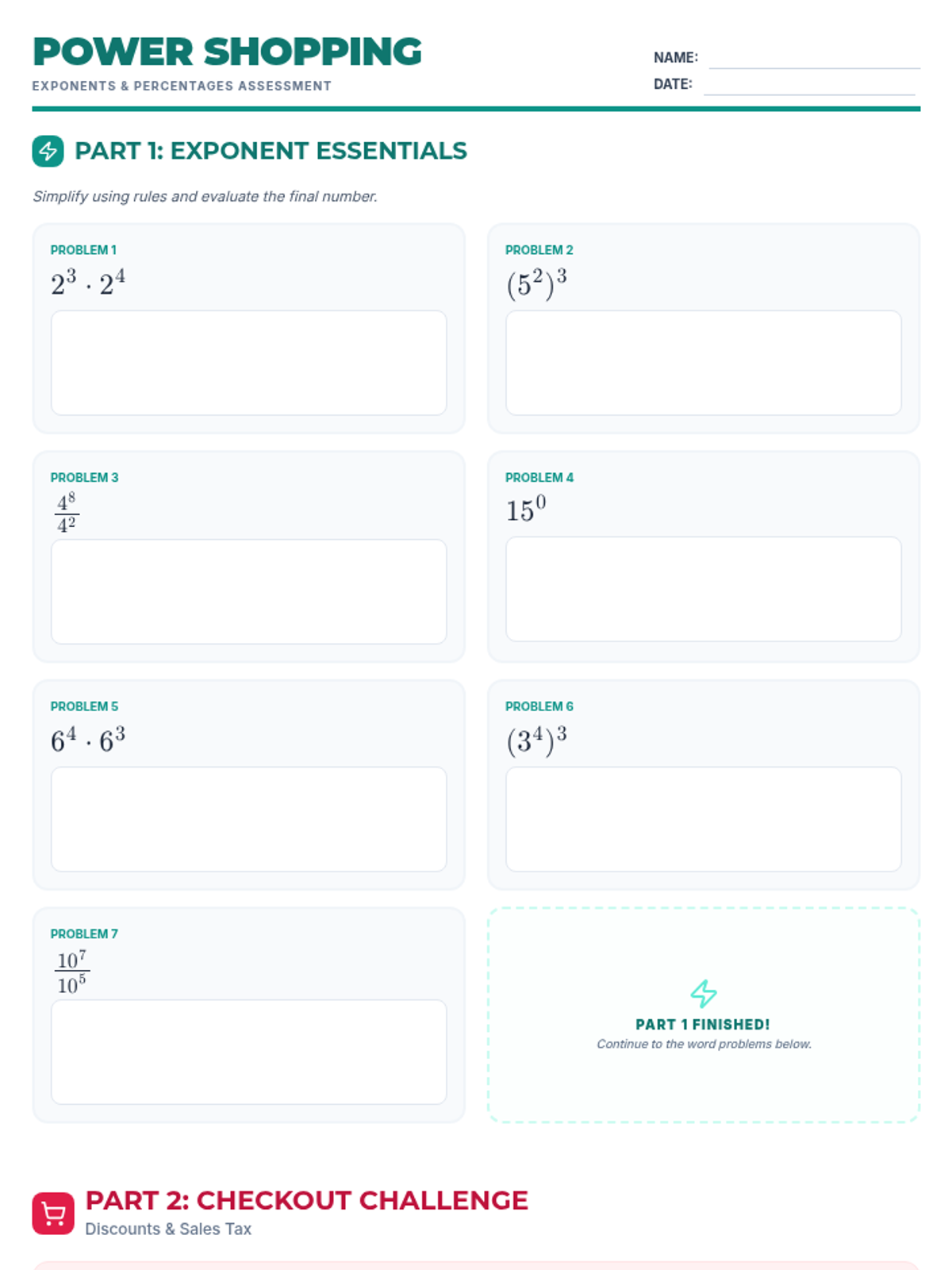
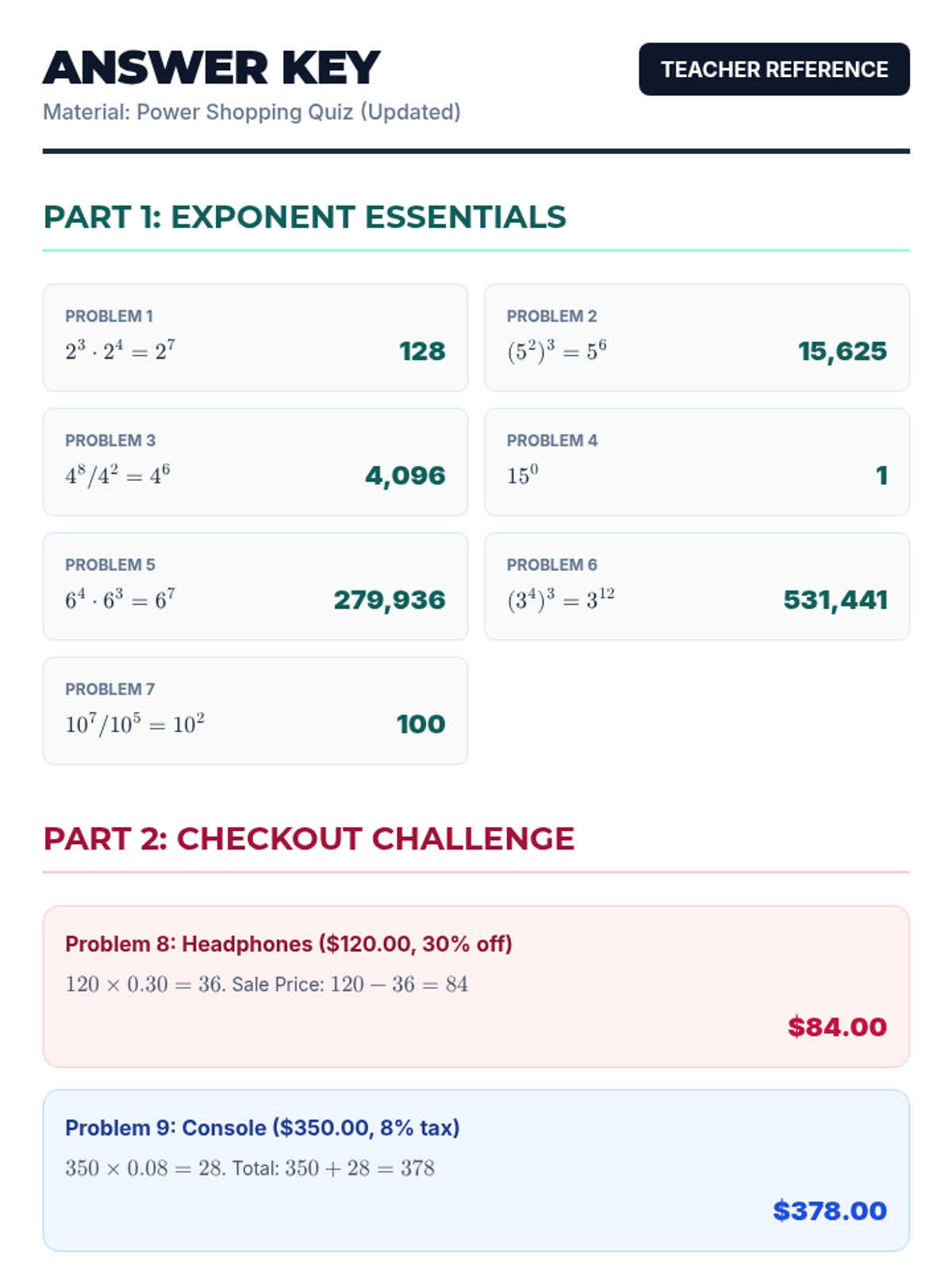
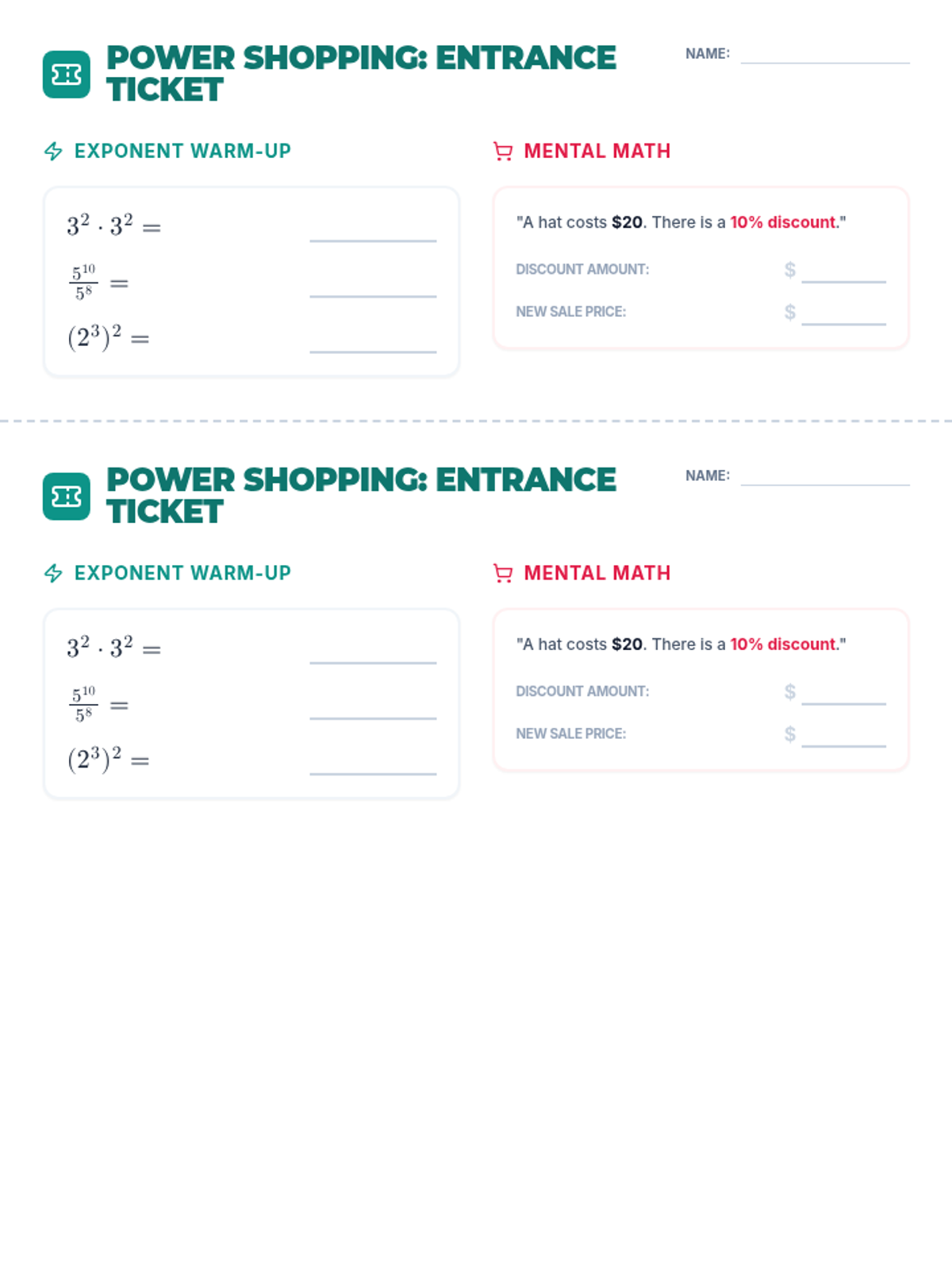
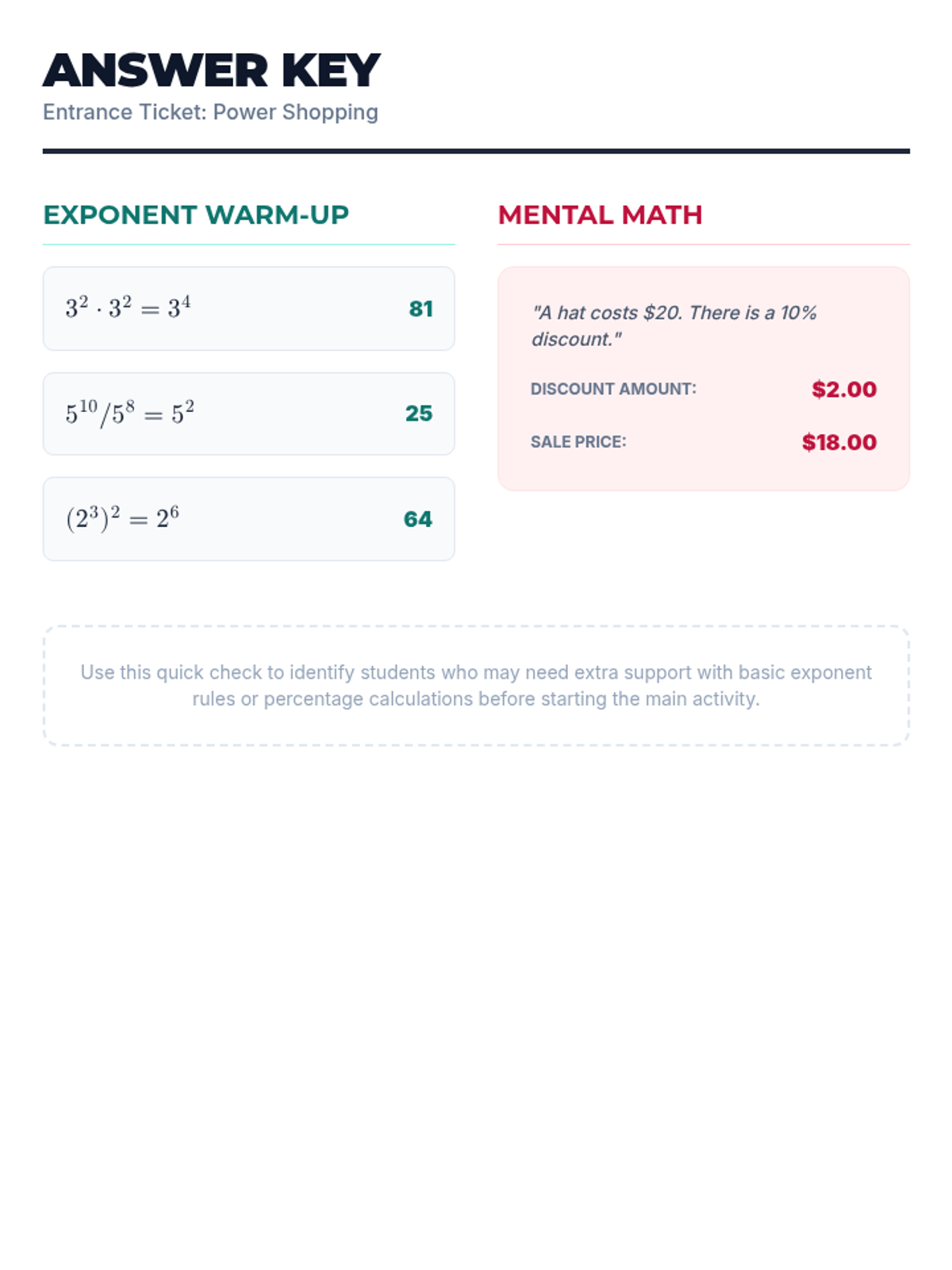
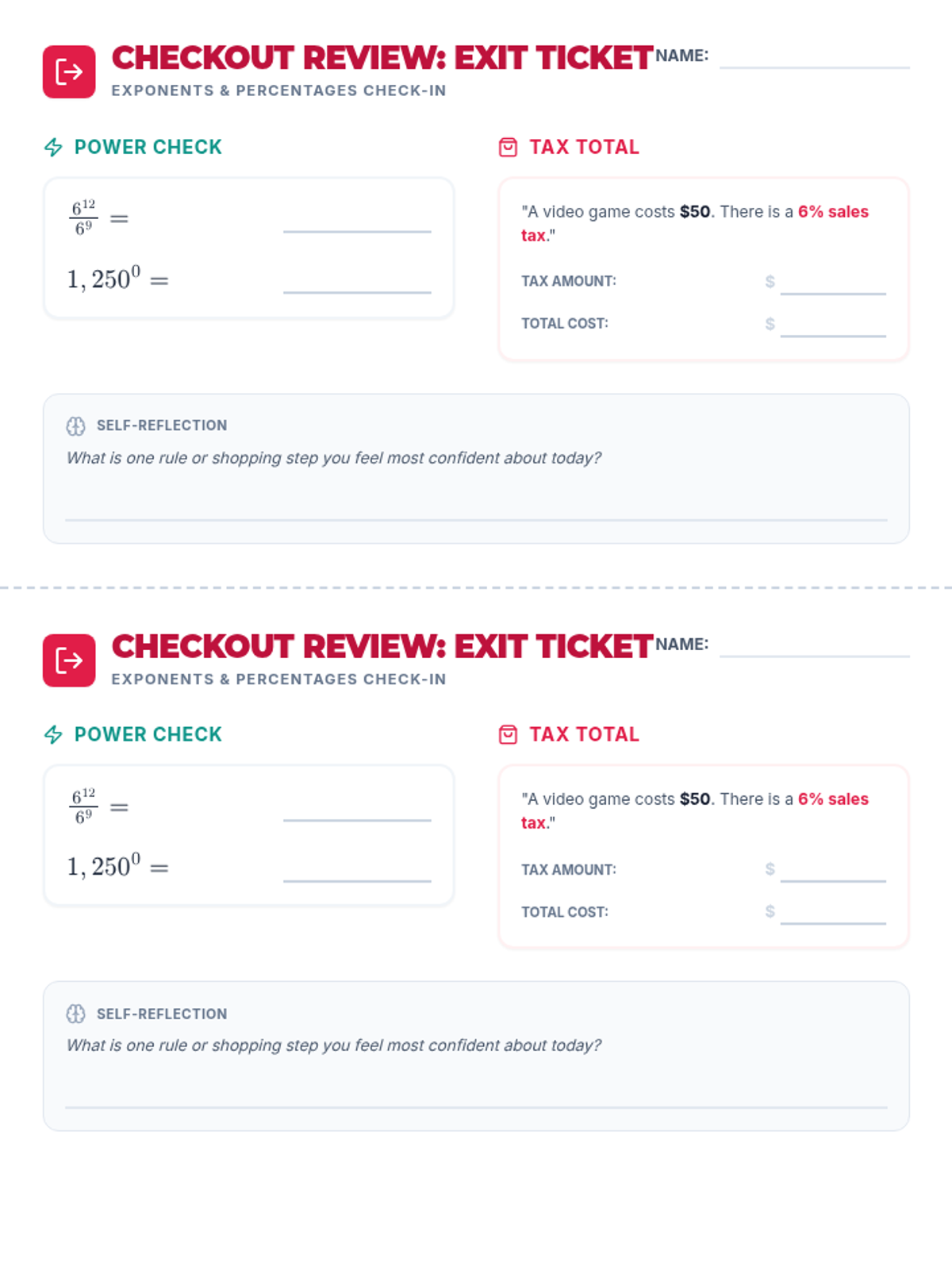
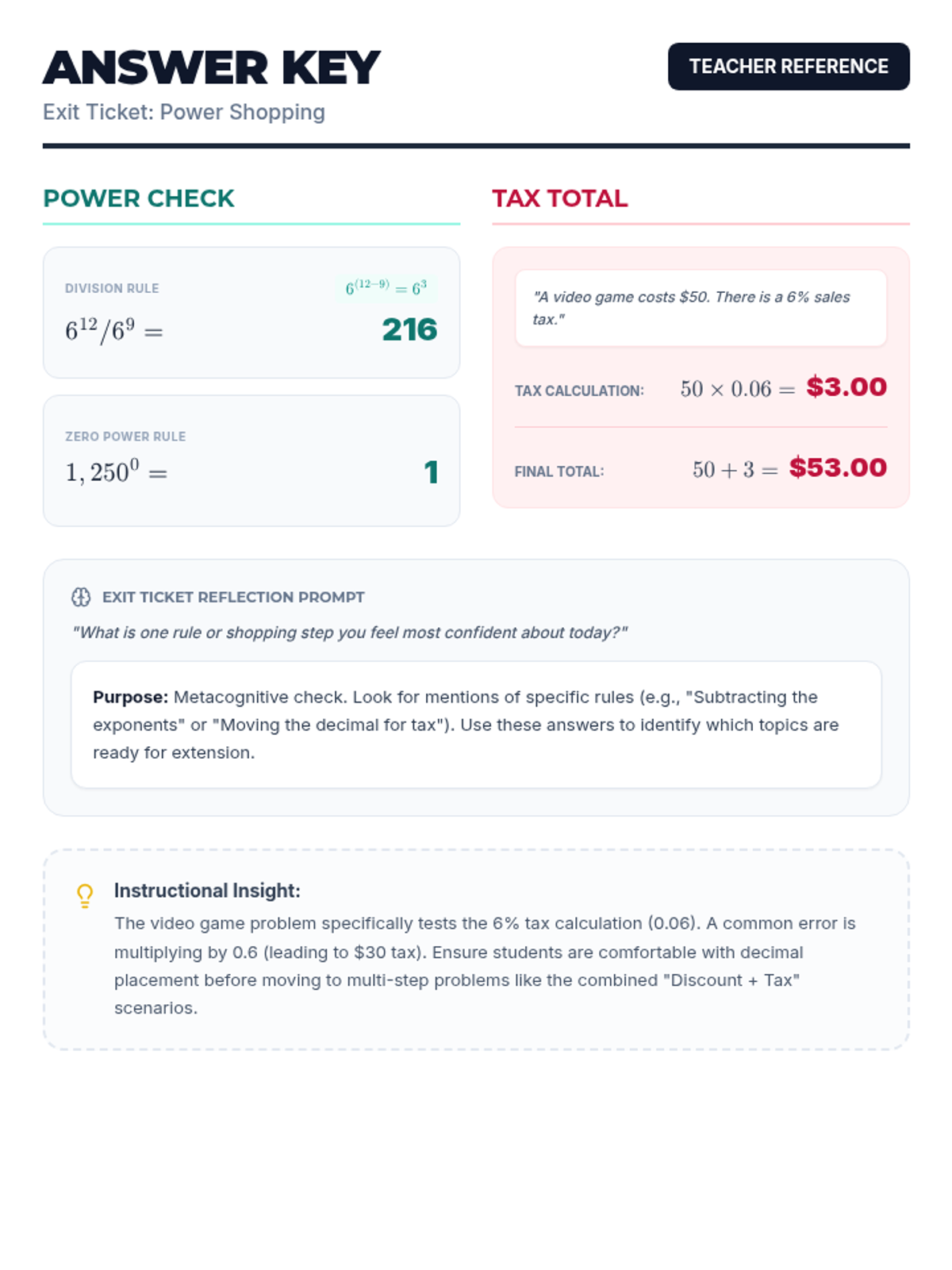
A math assessment focusing on basic exponent rules and real-world percentage applications involving sales tax and discounts.