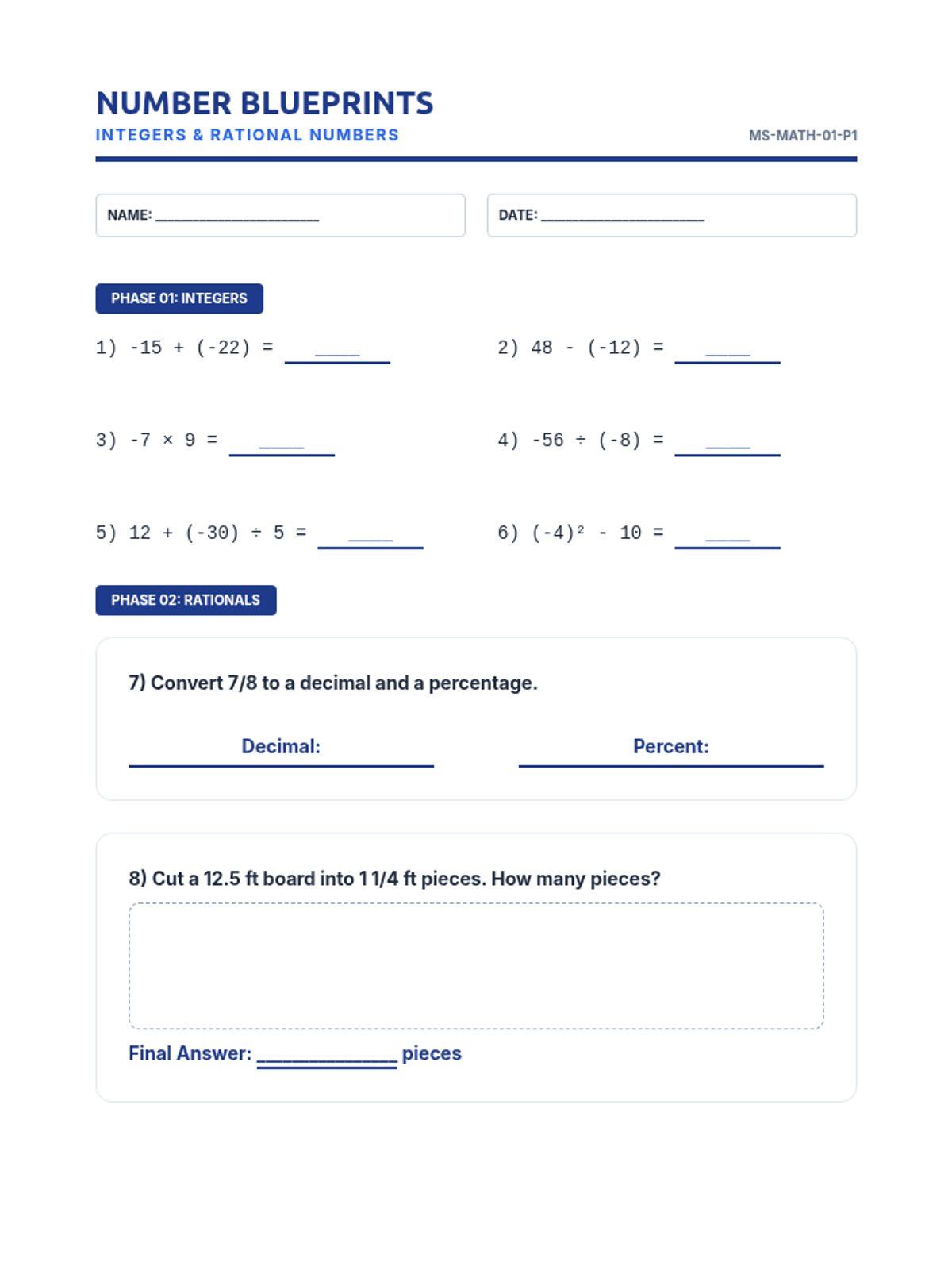
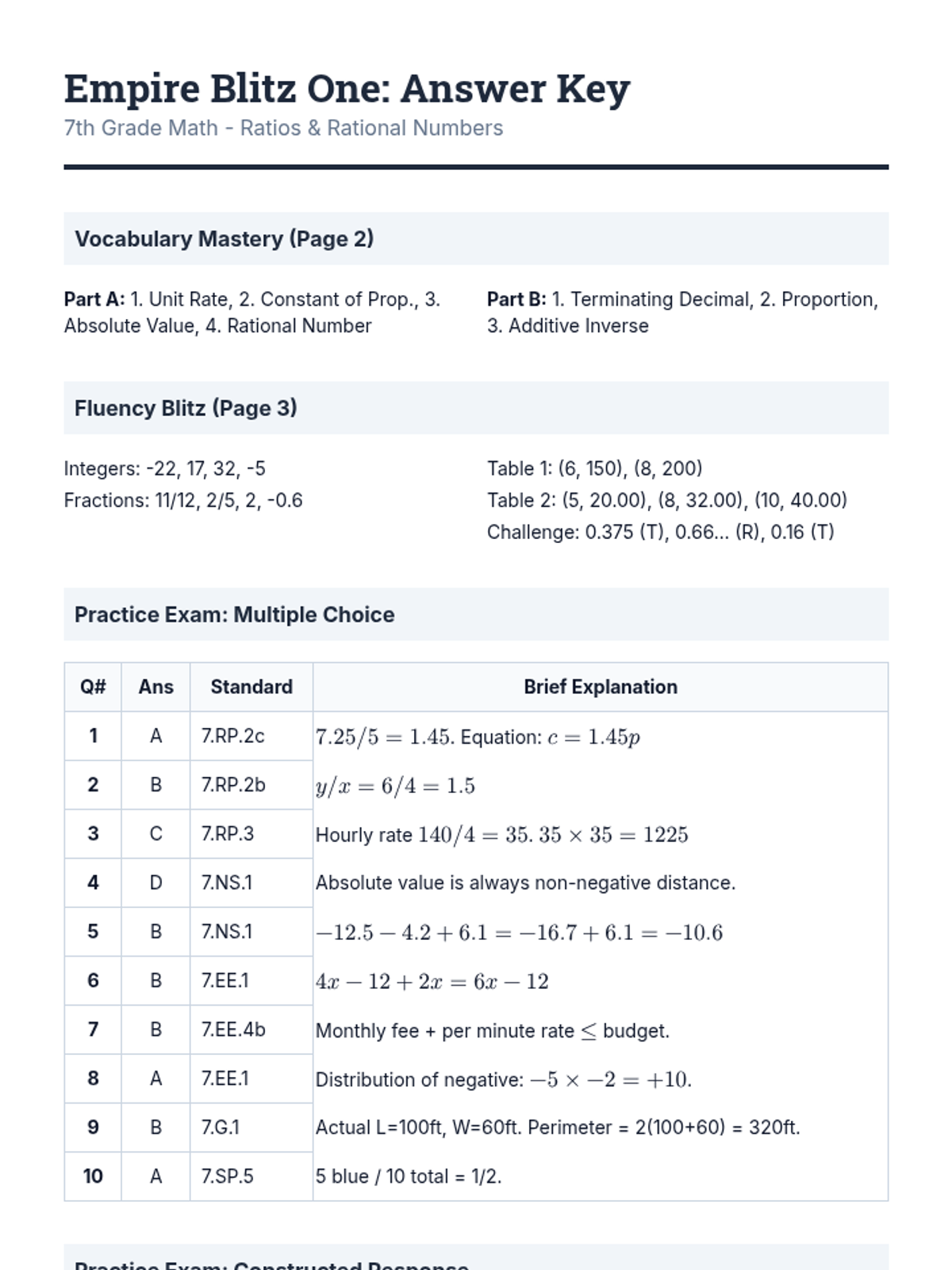
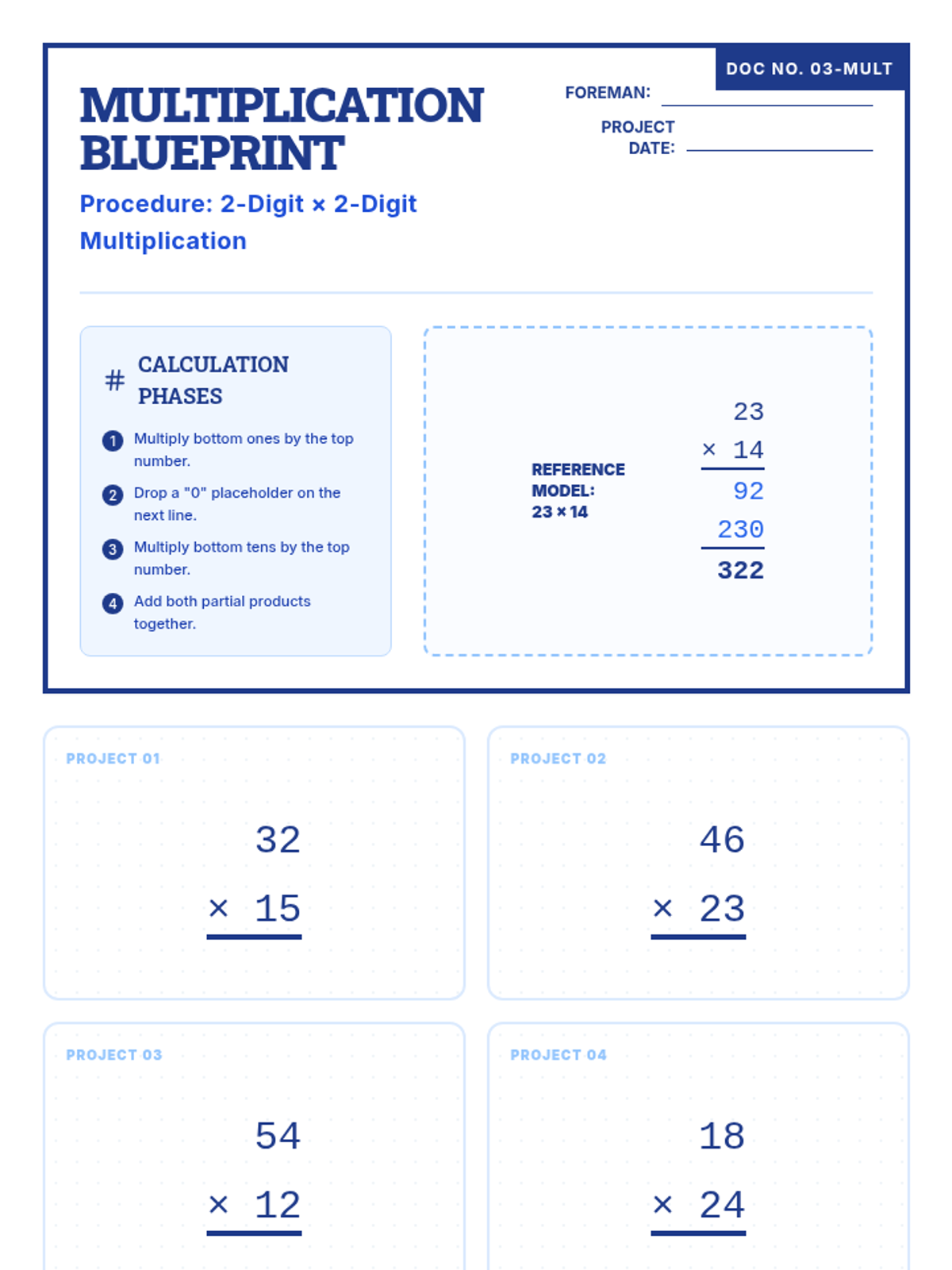
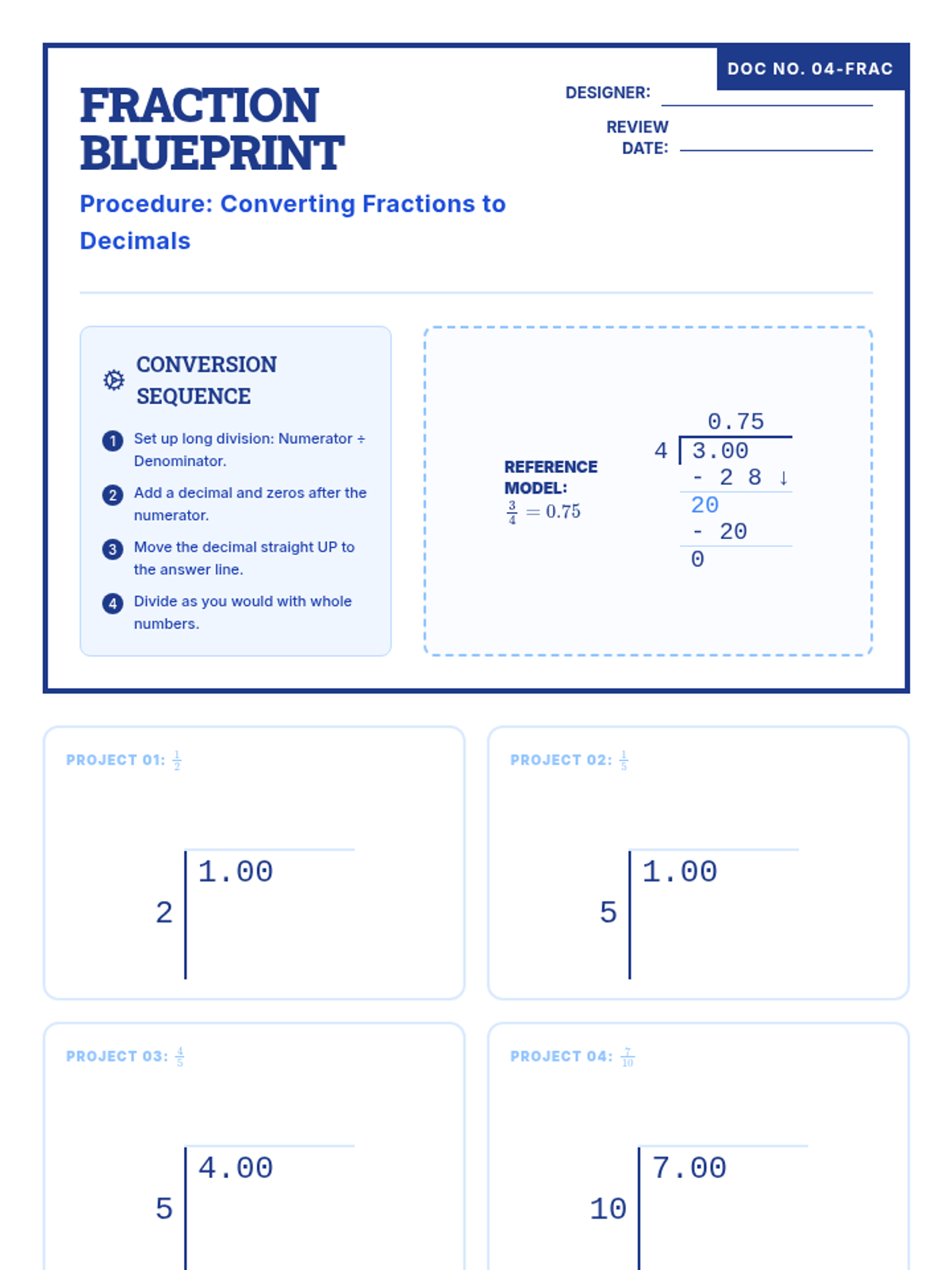
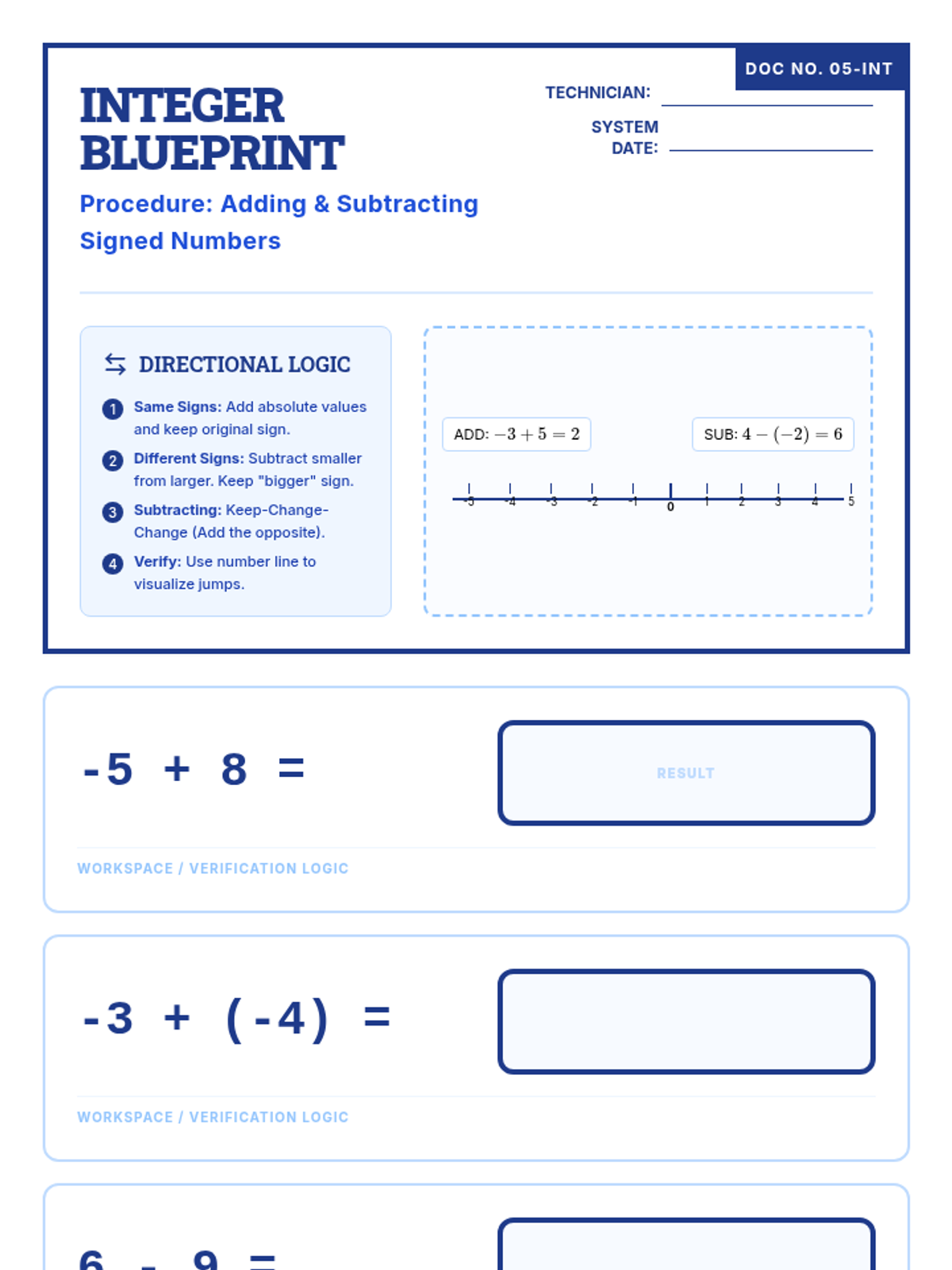
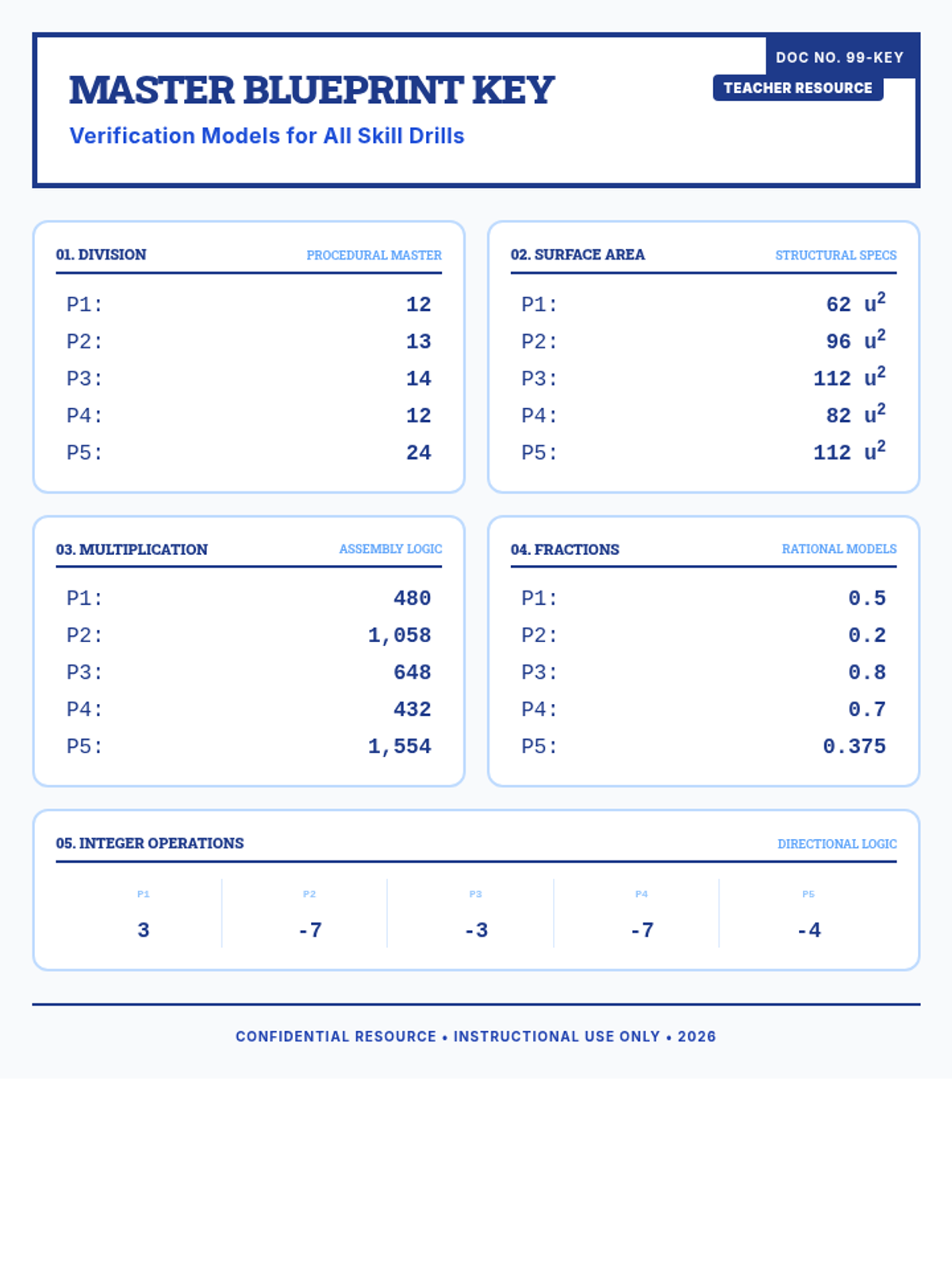
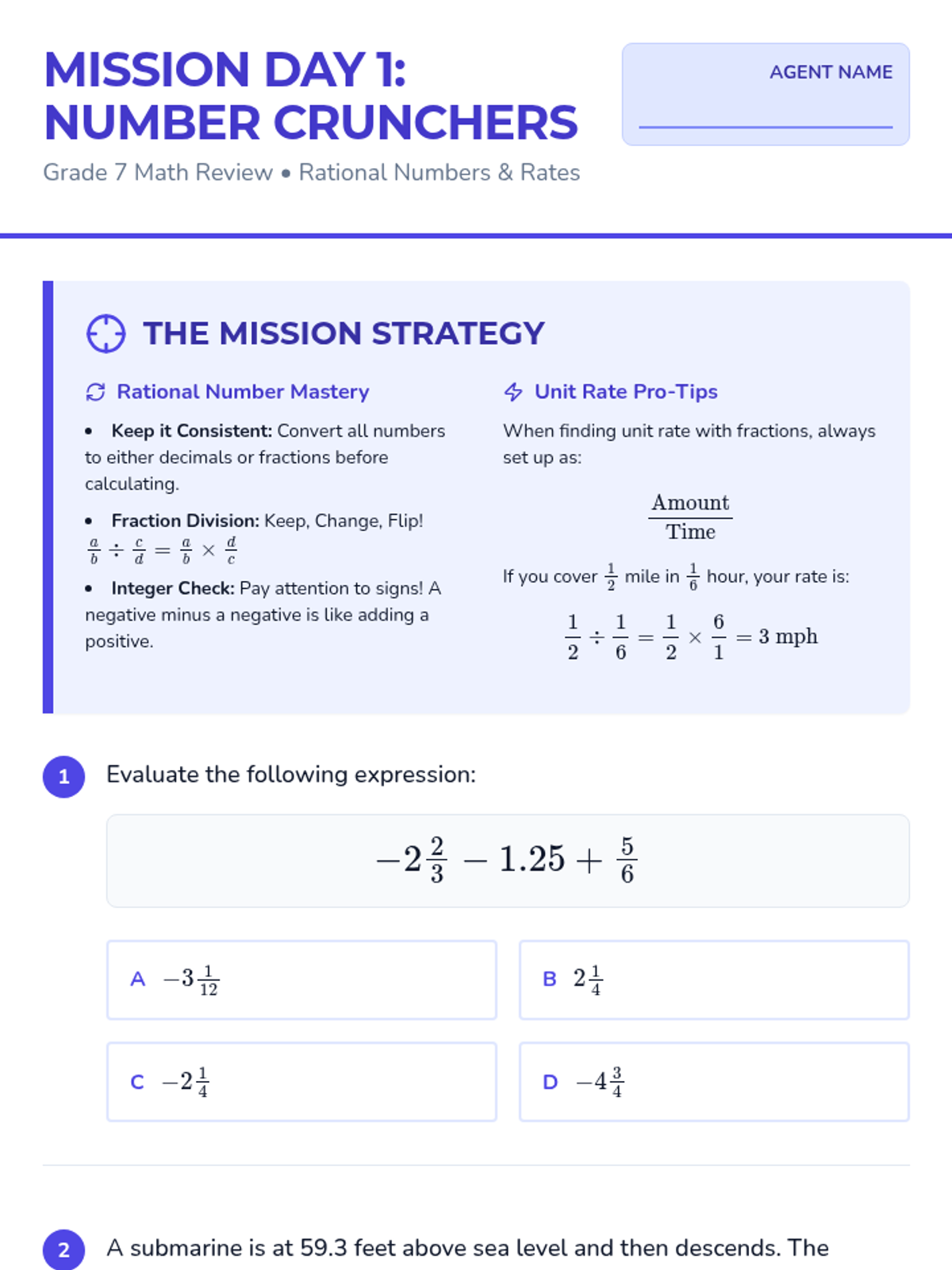
Foundational fraction equivalence, ordering, and operations across the rational number system. Addresses multi-digit computation, decimal conversions, and the distinction between rational and irrational numbers.
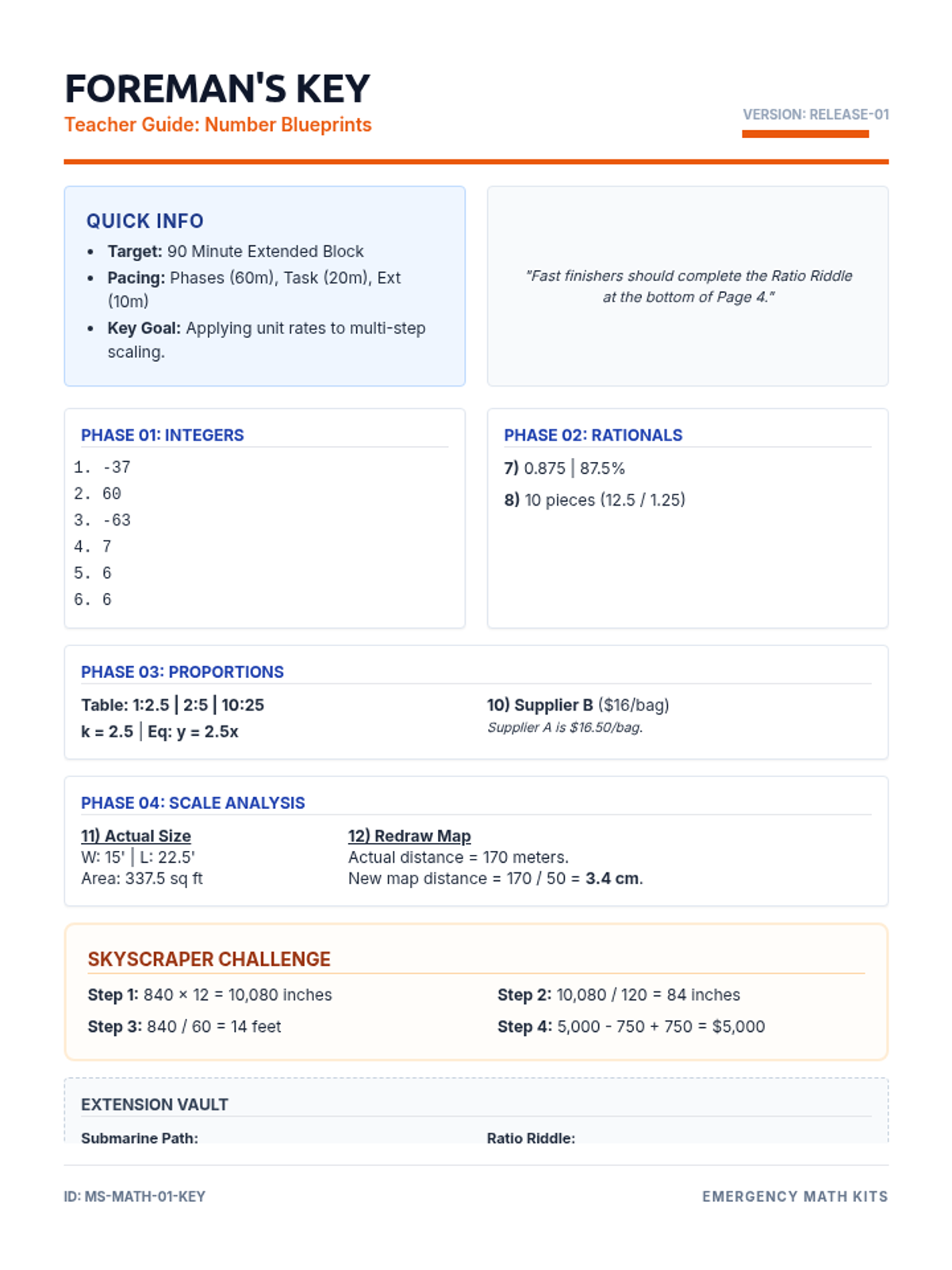
A set of two comprehensive 90-minute substitute teacher packets covering middle school math topics. Each packet includes review exercises, application problems, and extension activities designed for independent student work.
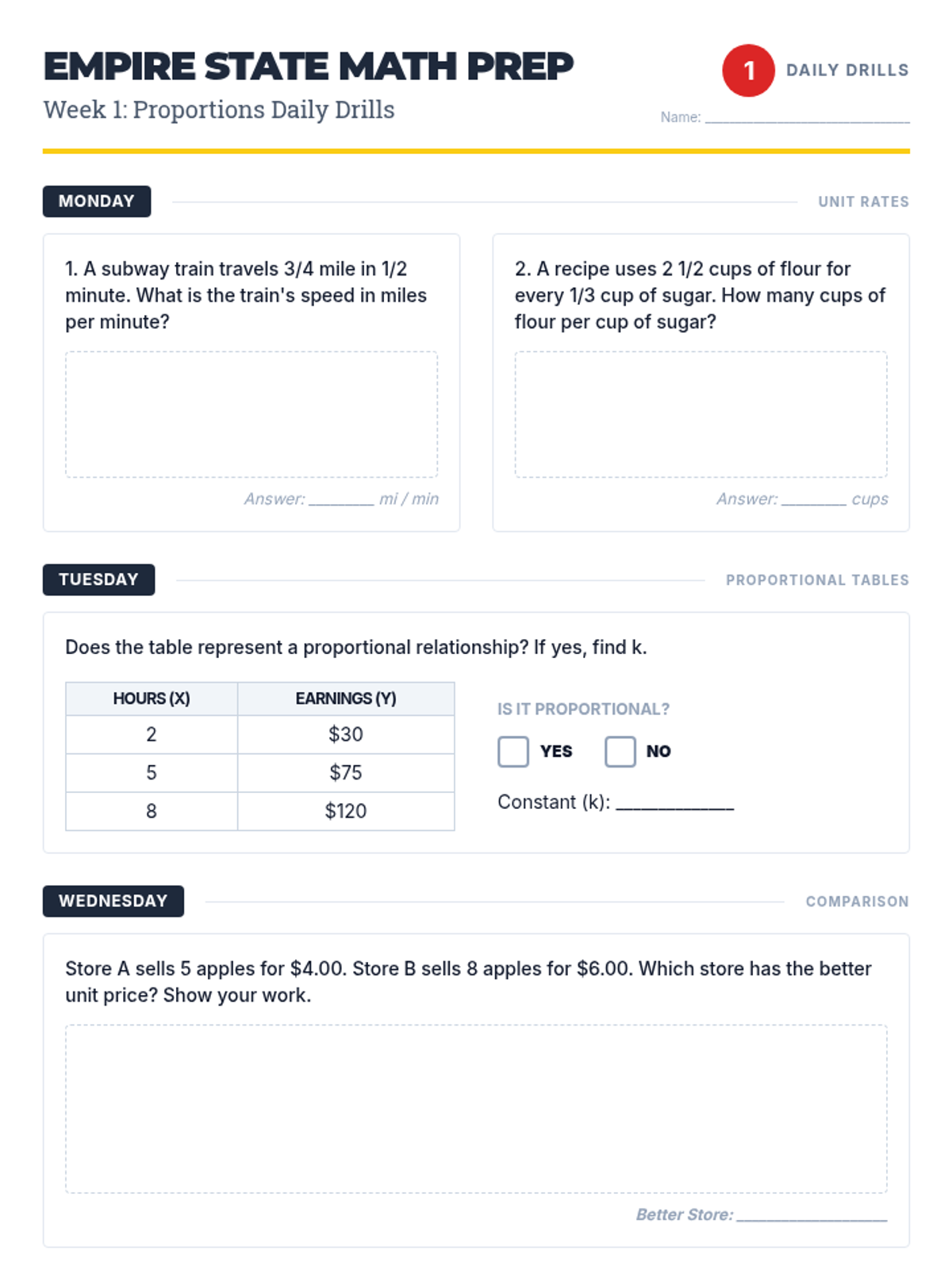
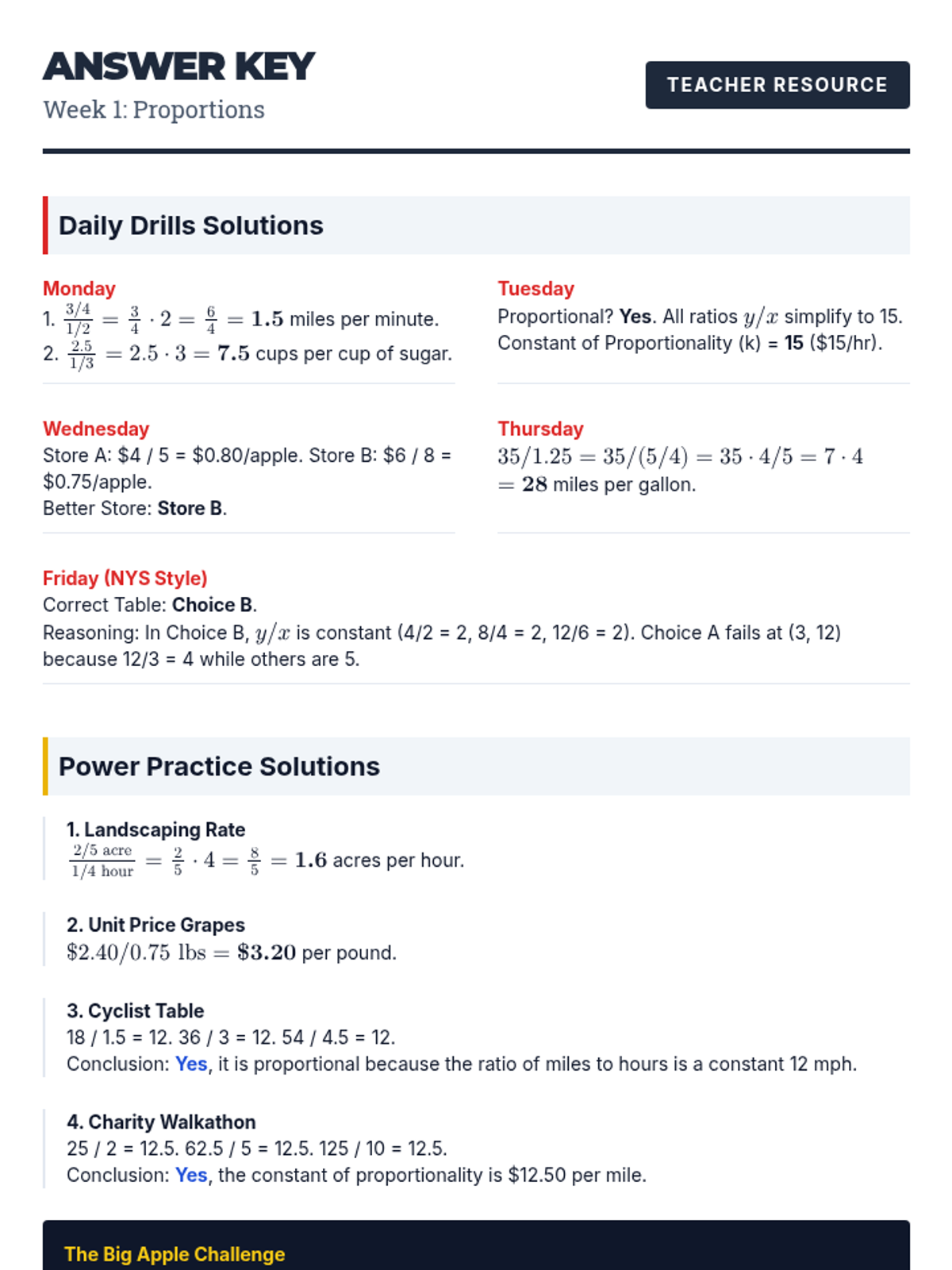
A 7-week math review sequence for 7th-grade students preparing for the NYS Math Assessment, covering proportional relationships, percents, algebraic expressions, inequalities, scale drawings, and statistics/probability.
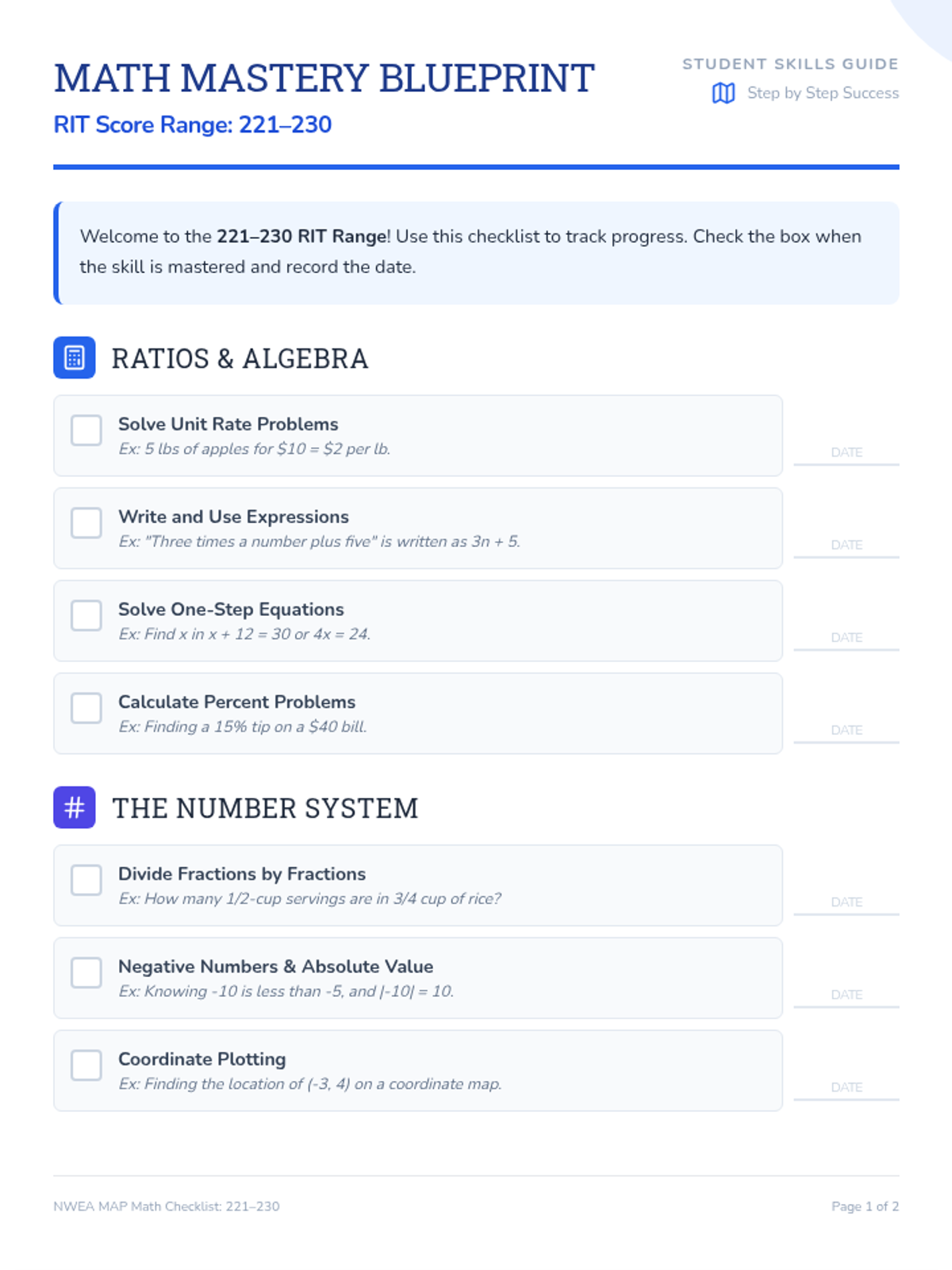
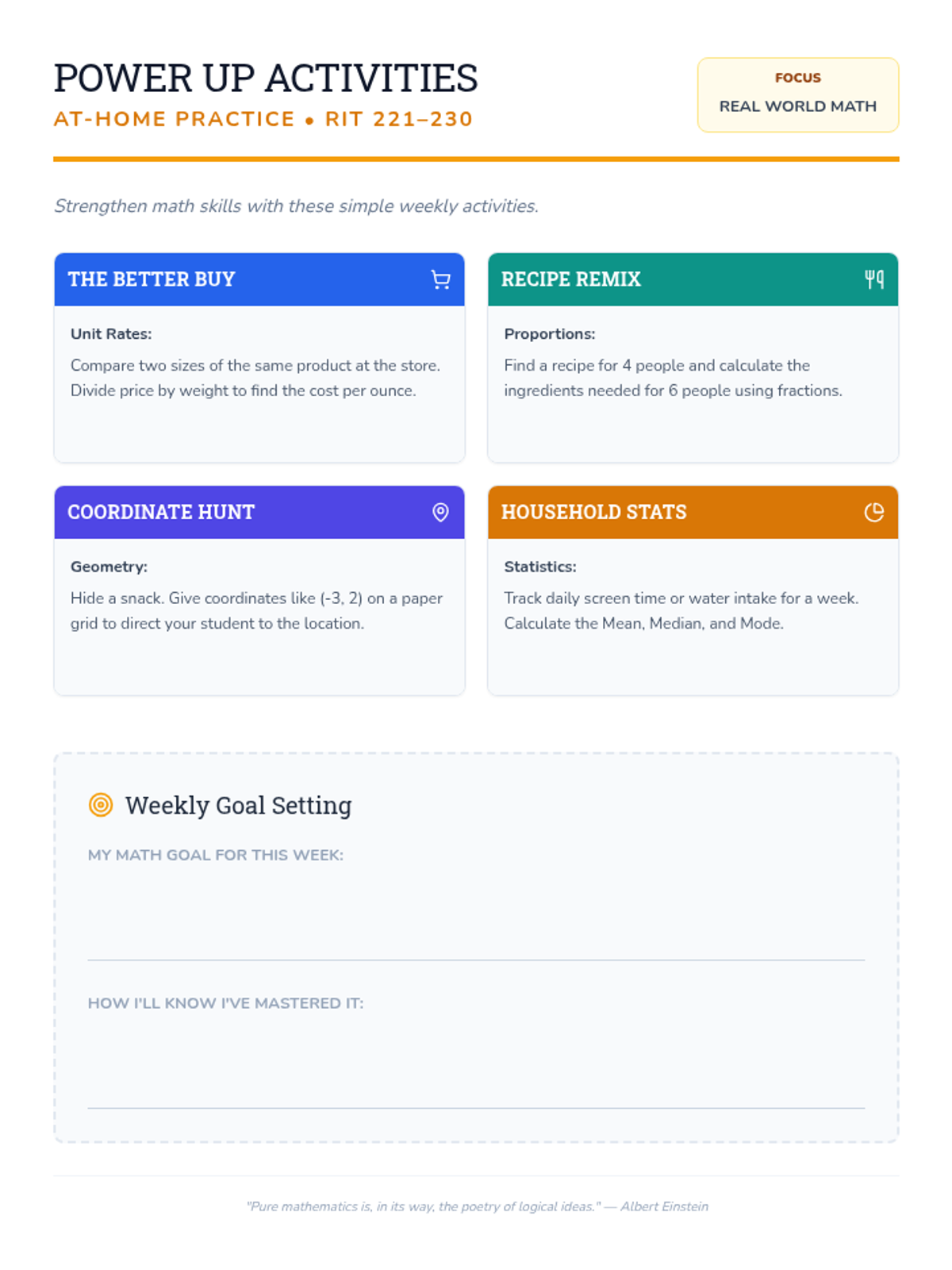
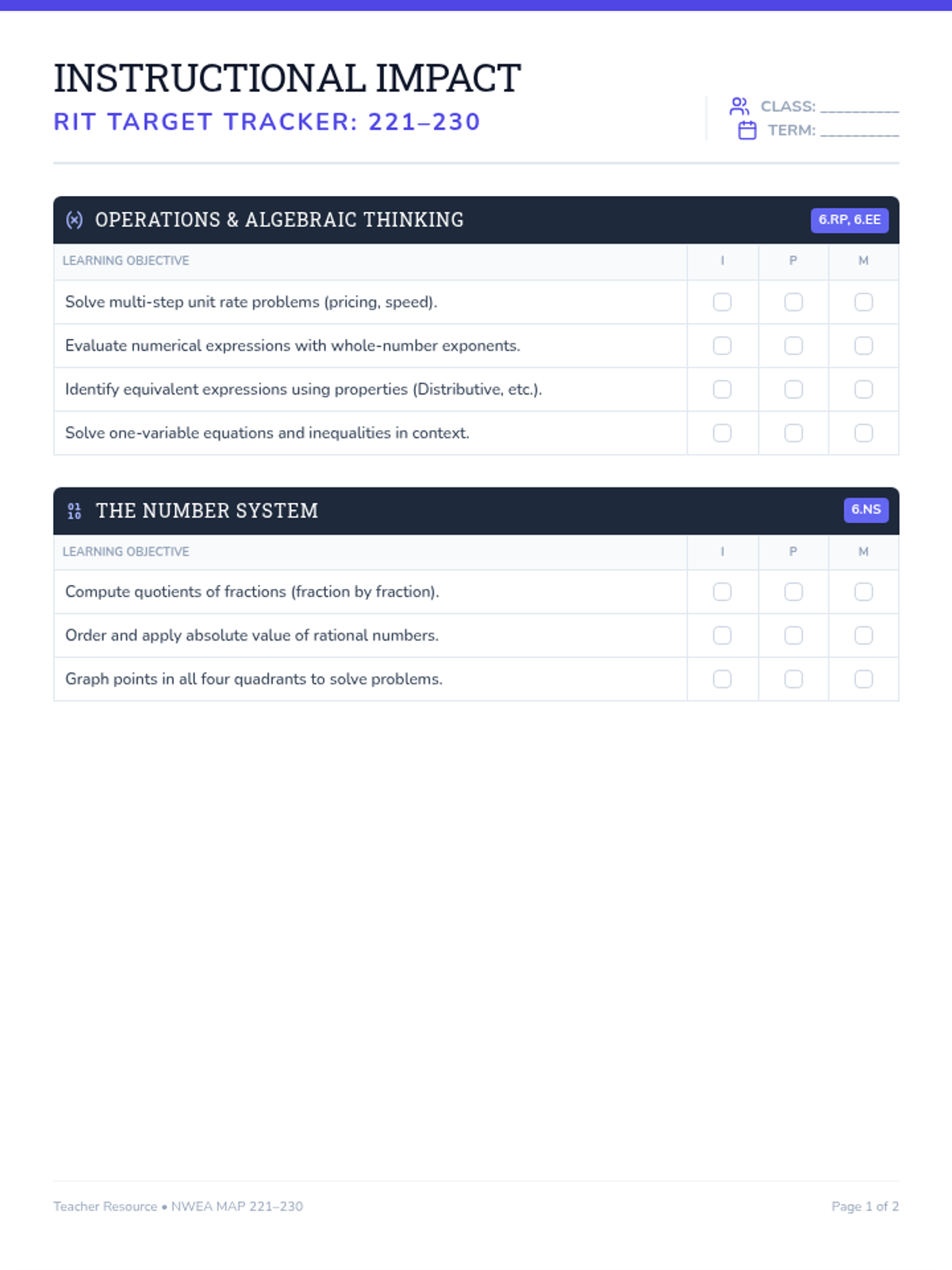
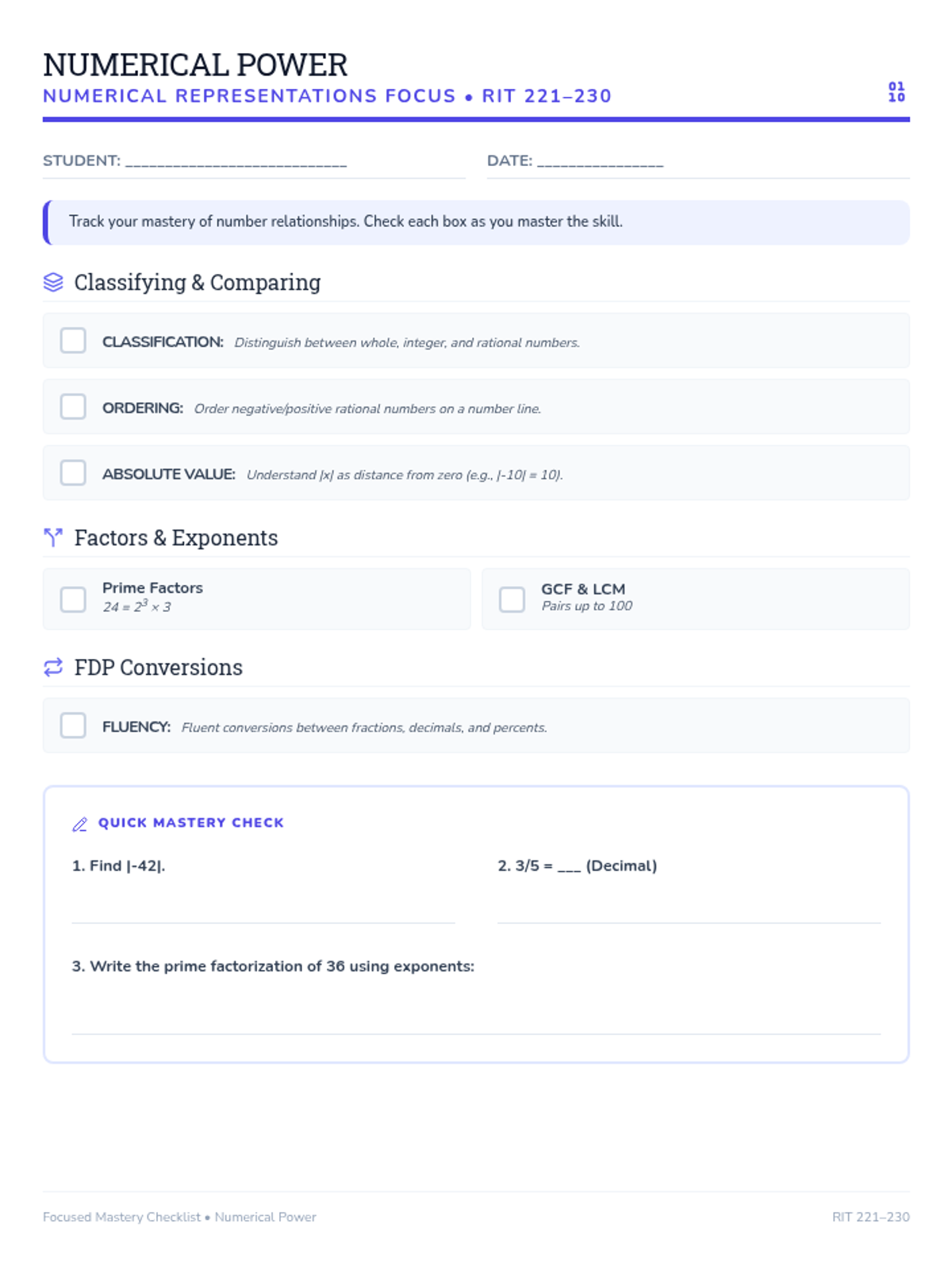
A comprehensive collection of RIT-aligned math mastery resources for student and teacher tracking across key mathematical development ranges.
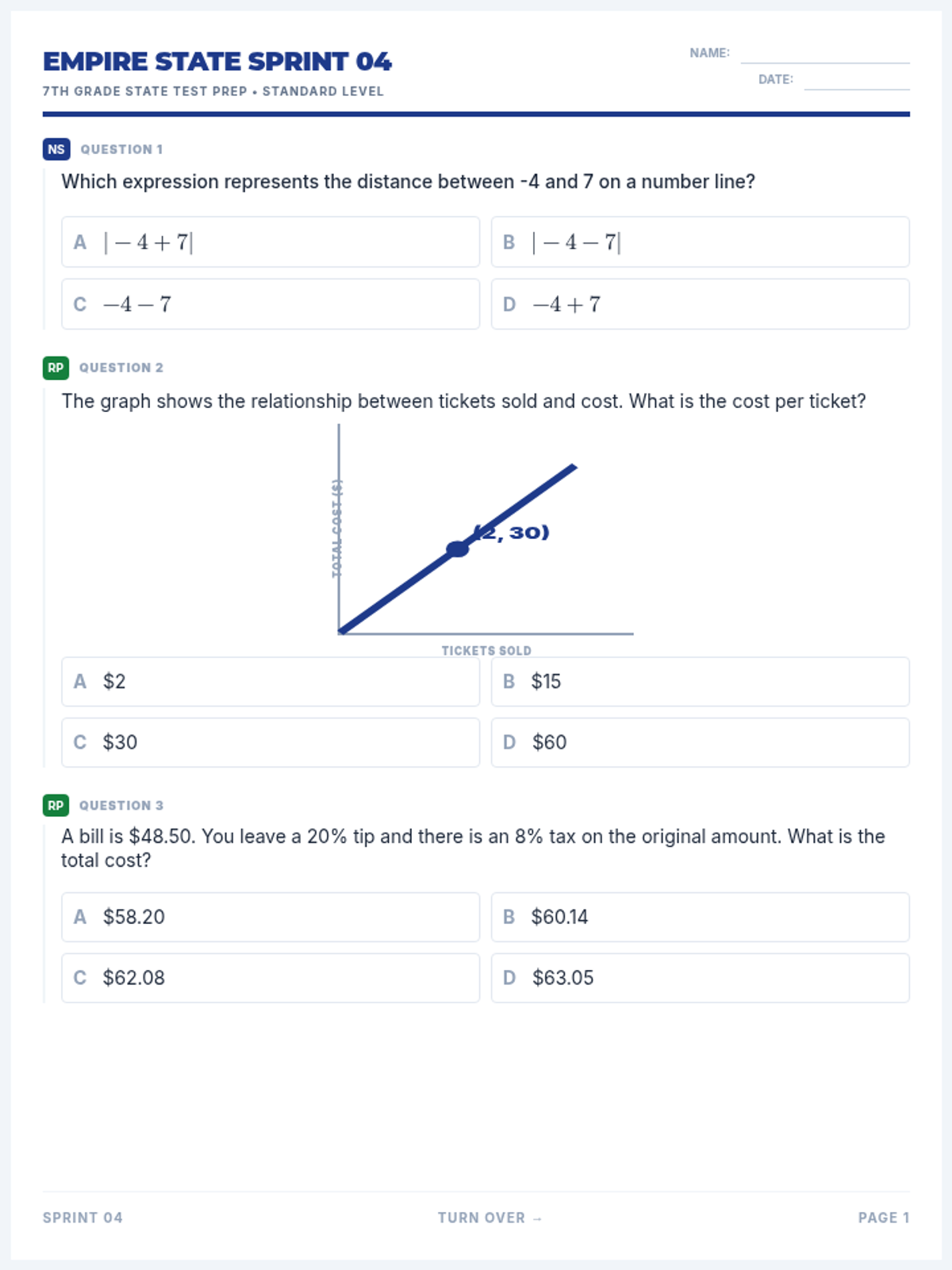
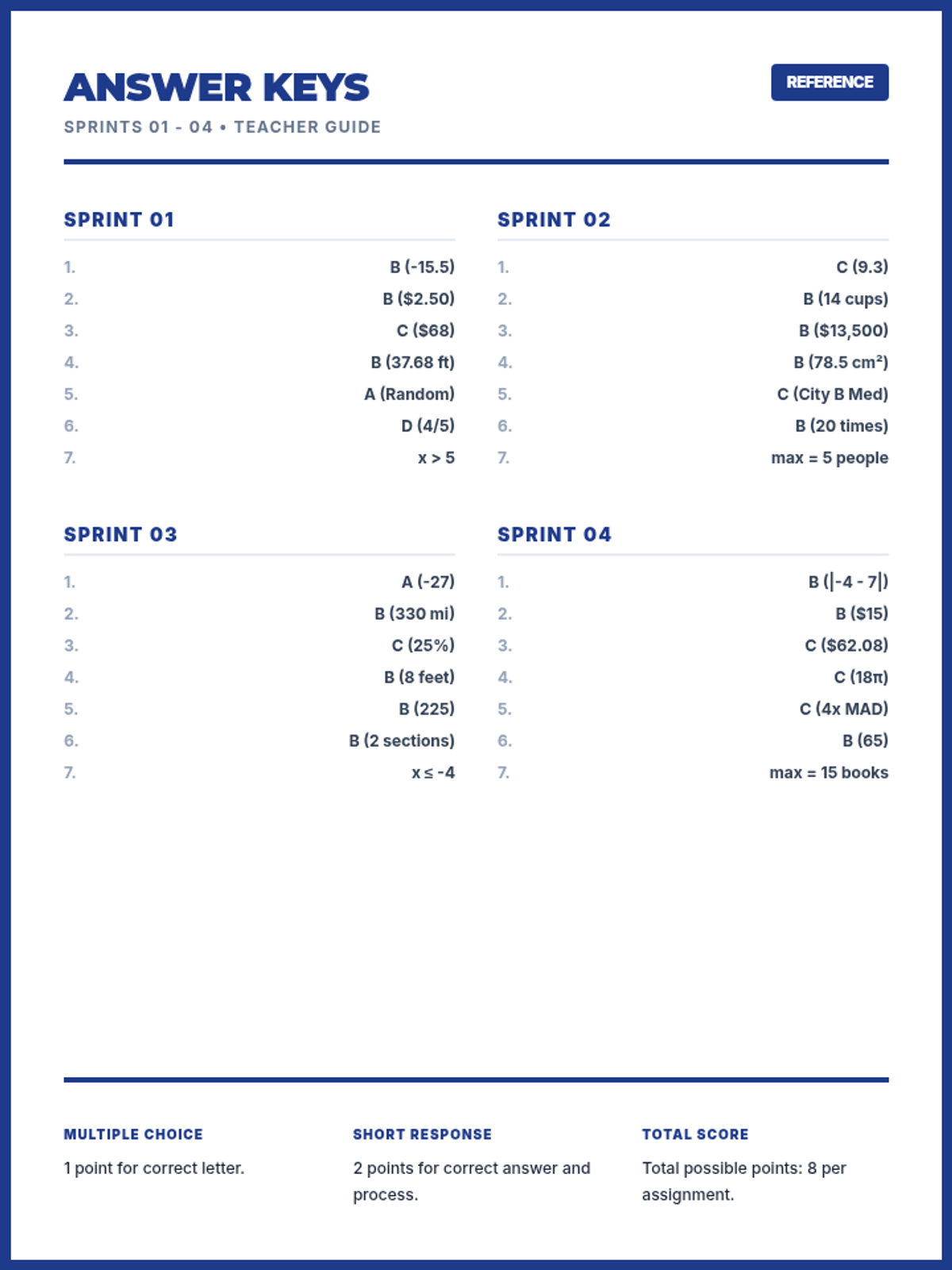
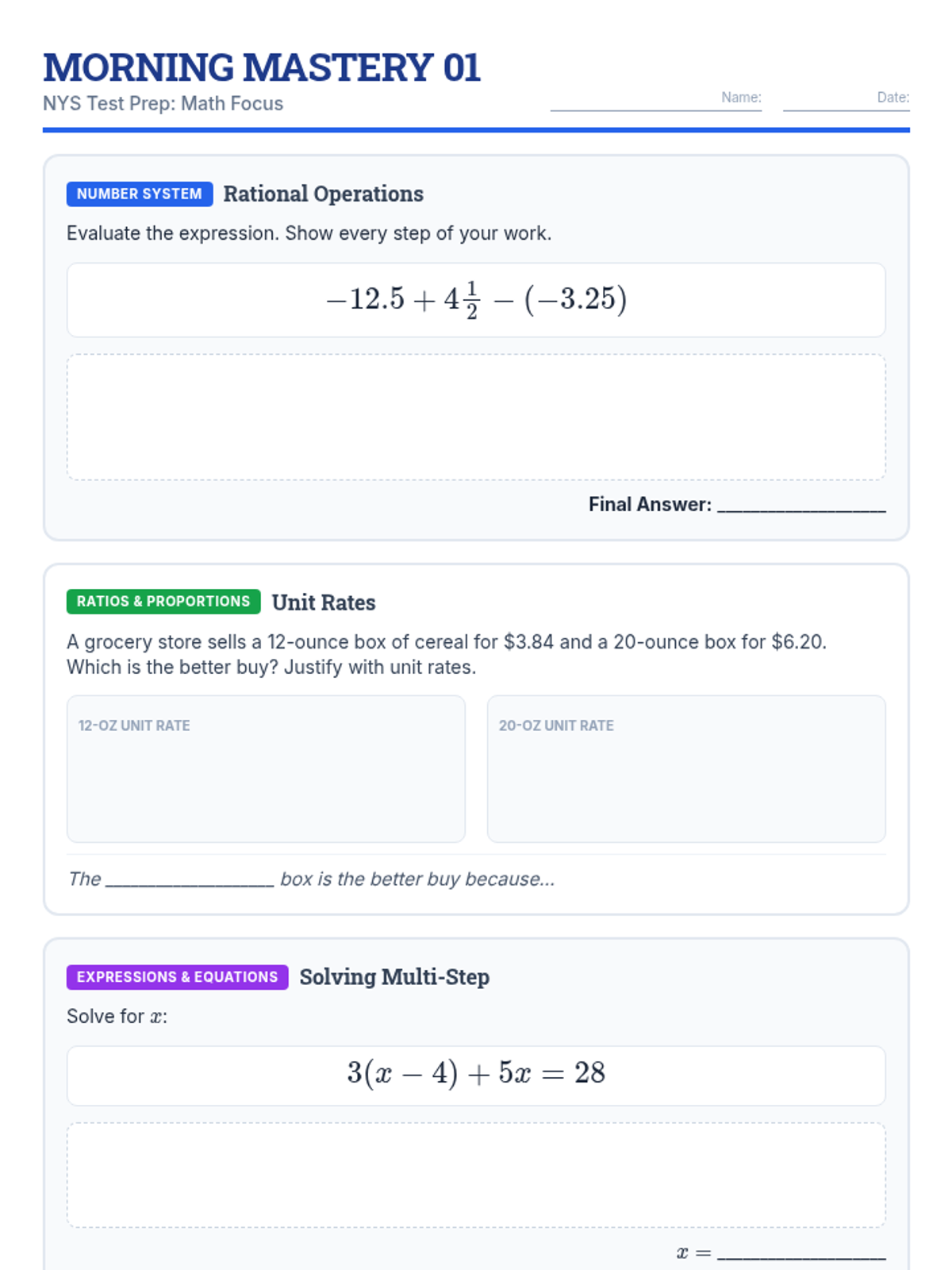
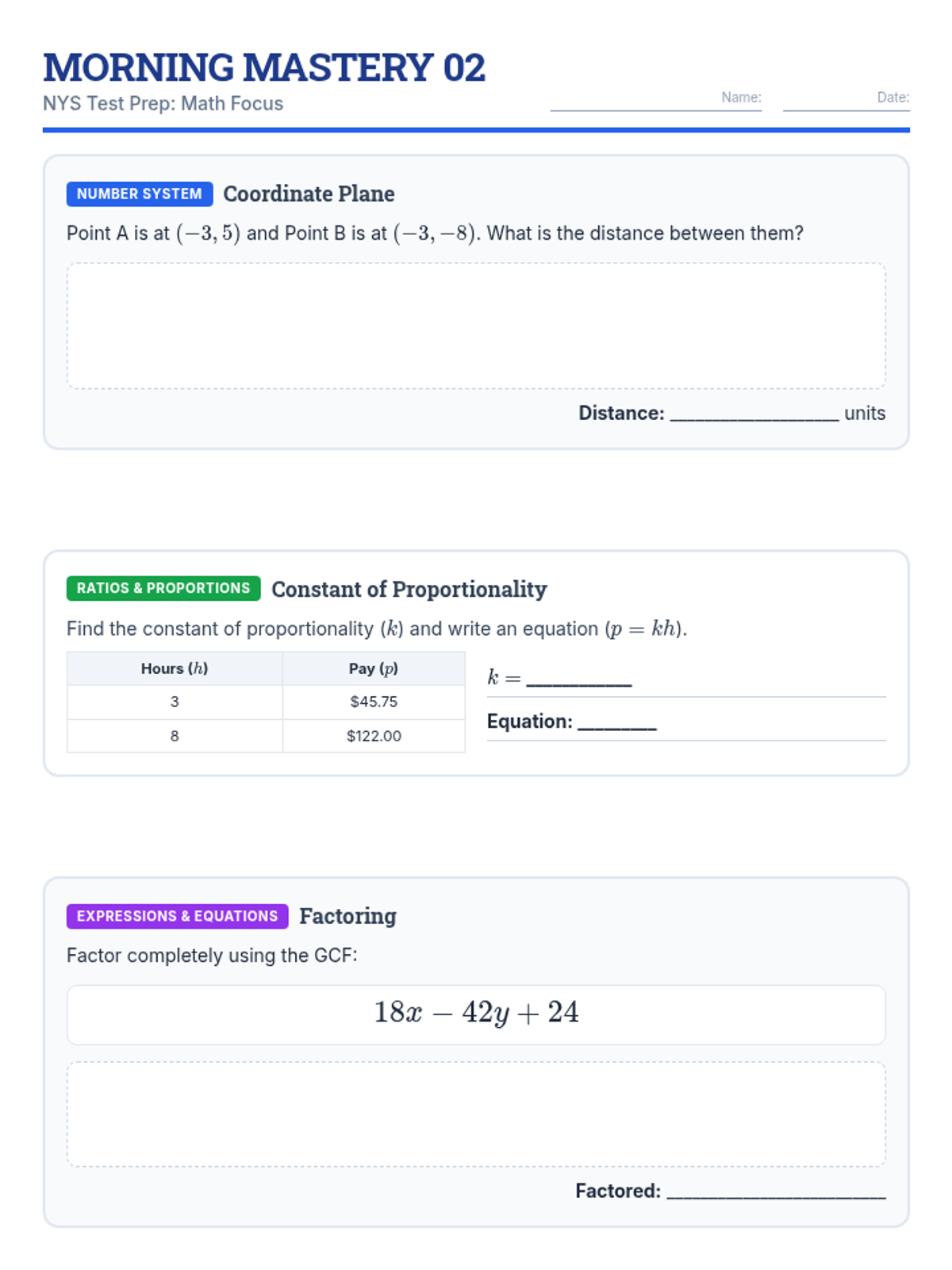
A series of four targeted homework assignments designed to prepare 7th-grade students for the New York State Mathematics Test. Each assignment covers key domains including Number Systems, Ratios and Proportions, Geometry, Statistics, and Probability in a standardized format.
A comprehensive review sequence for 7th grade math featuring themed stations covering Ratios, Rational Numbers, Algebra, and Geometry through interactive games and puzzles.
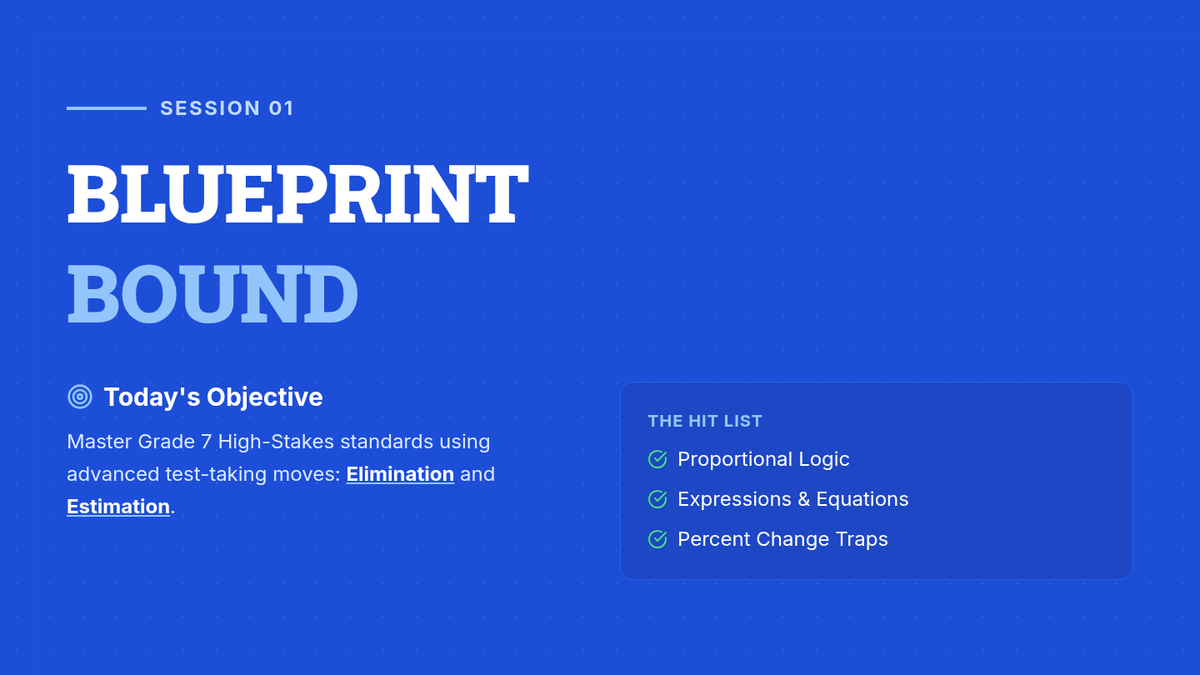
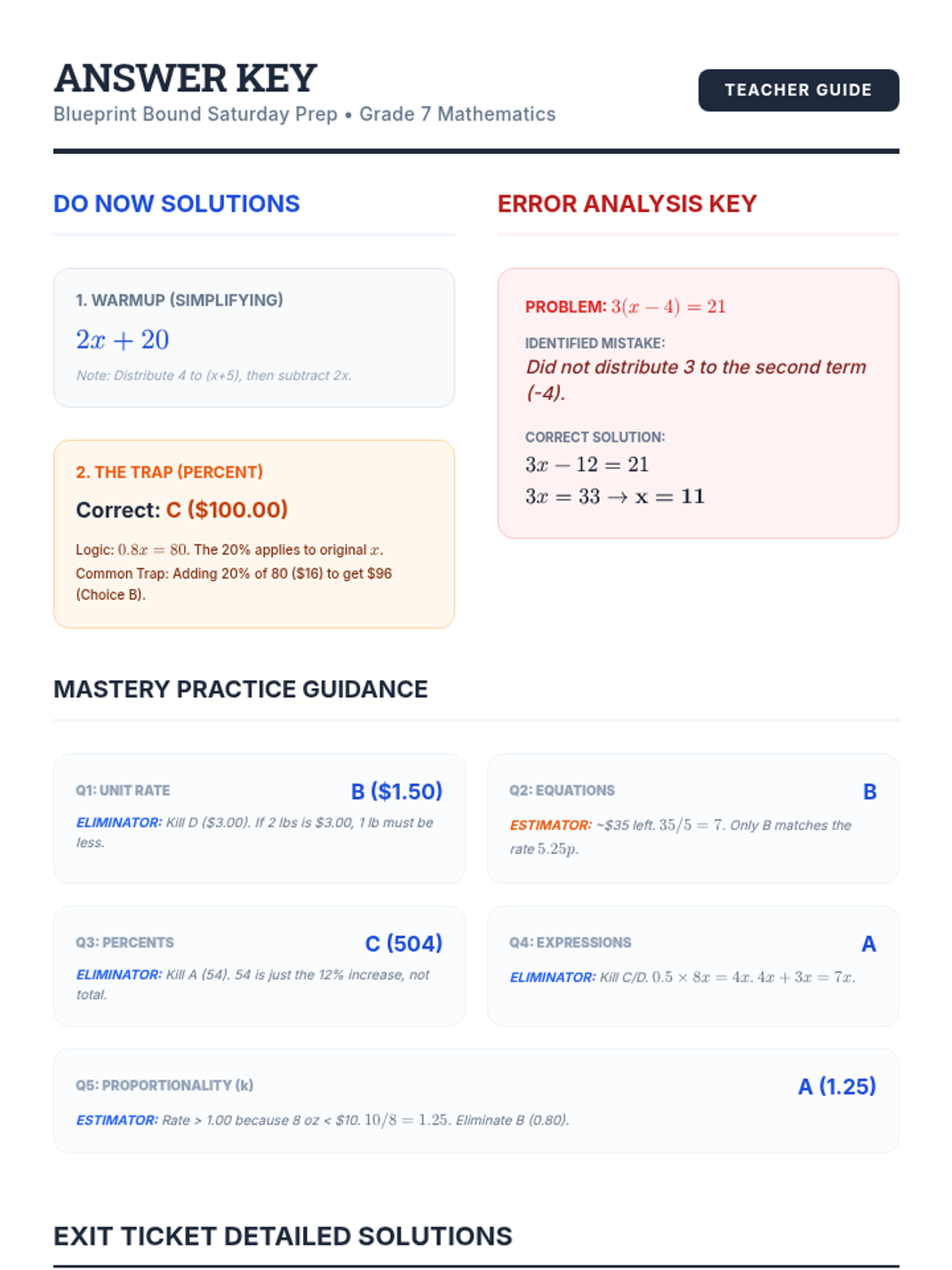
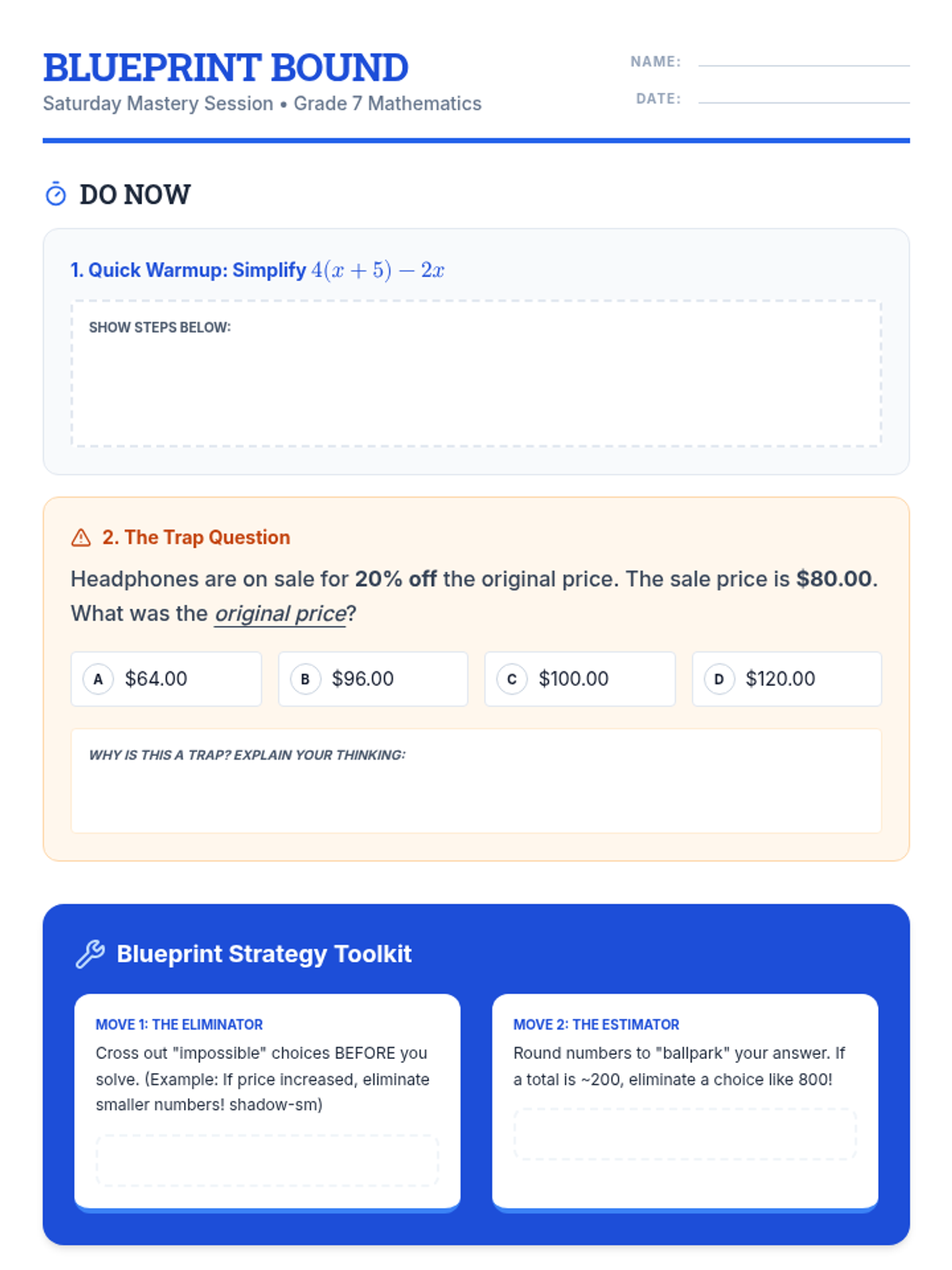
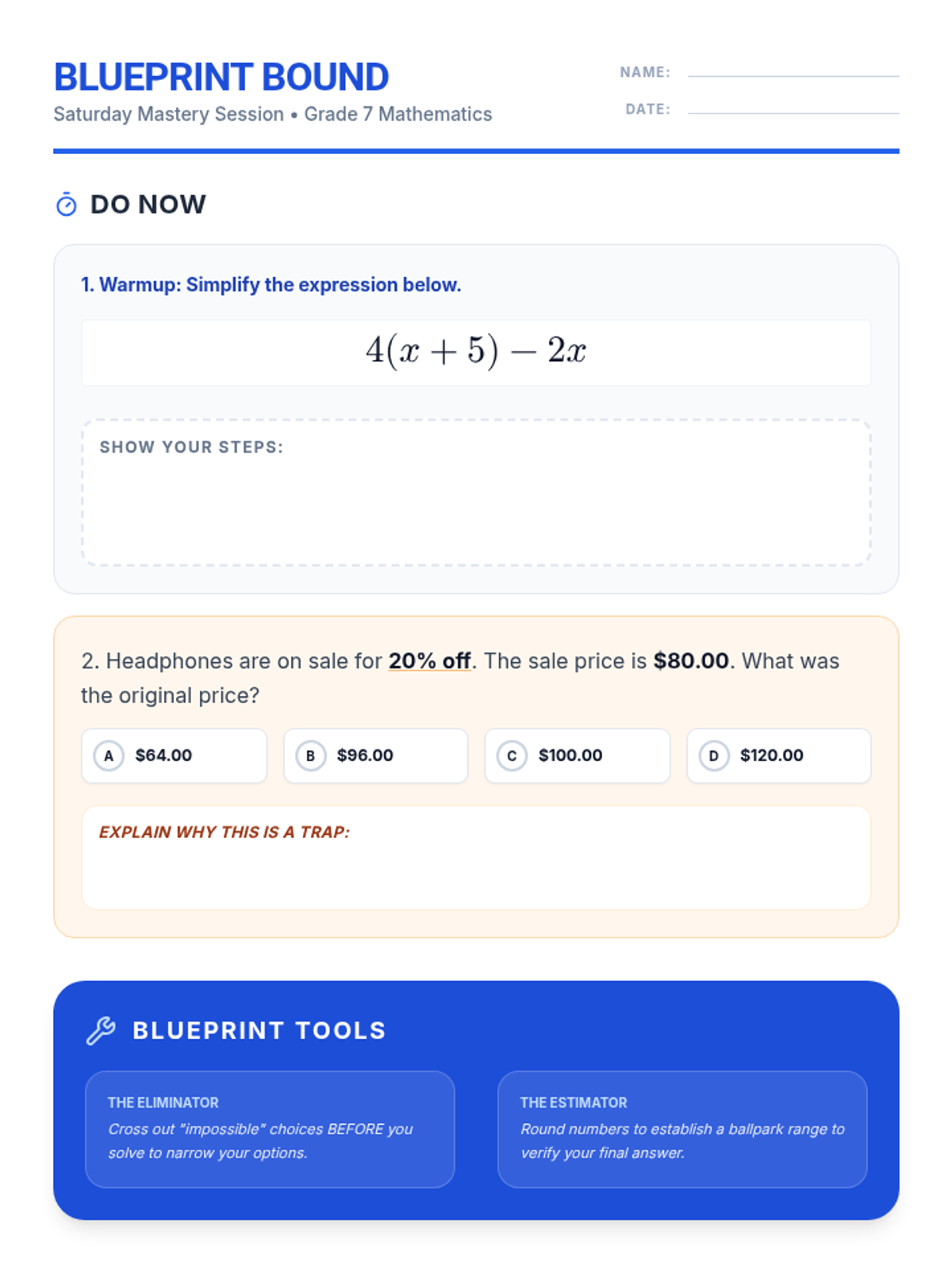
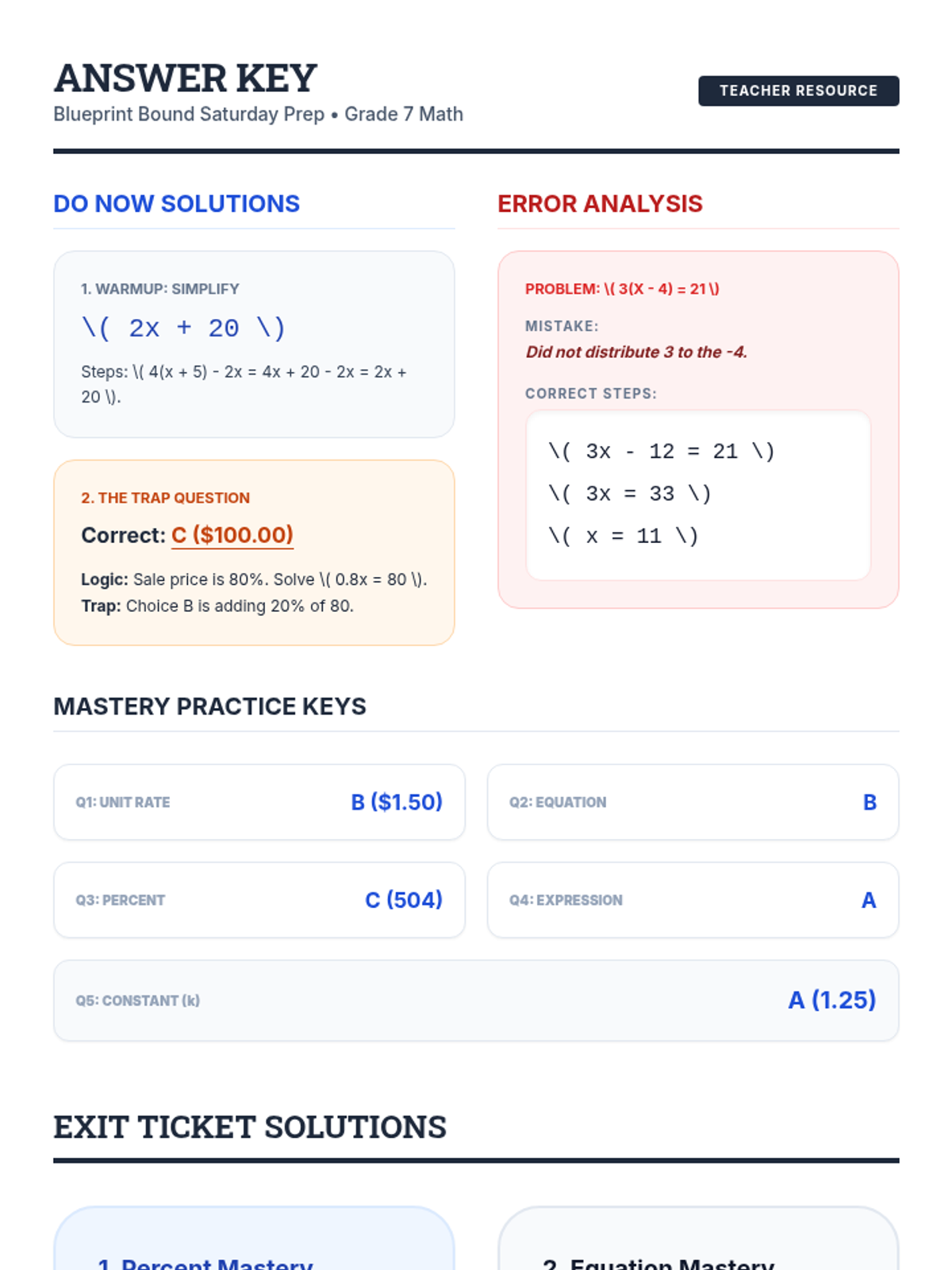
A rigorous Saturday school session focused on Grade 7 Math standards, specifically proportional relationships, expressions, and percent change, featuring high-stakes testing strategies like process of elimination and estimation.
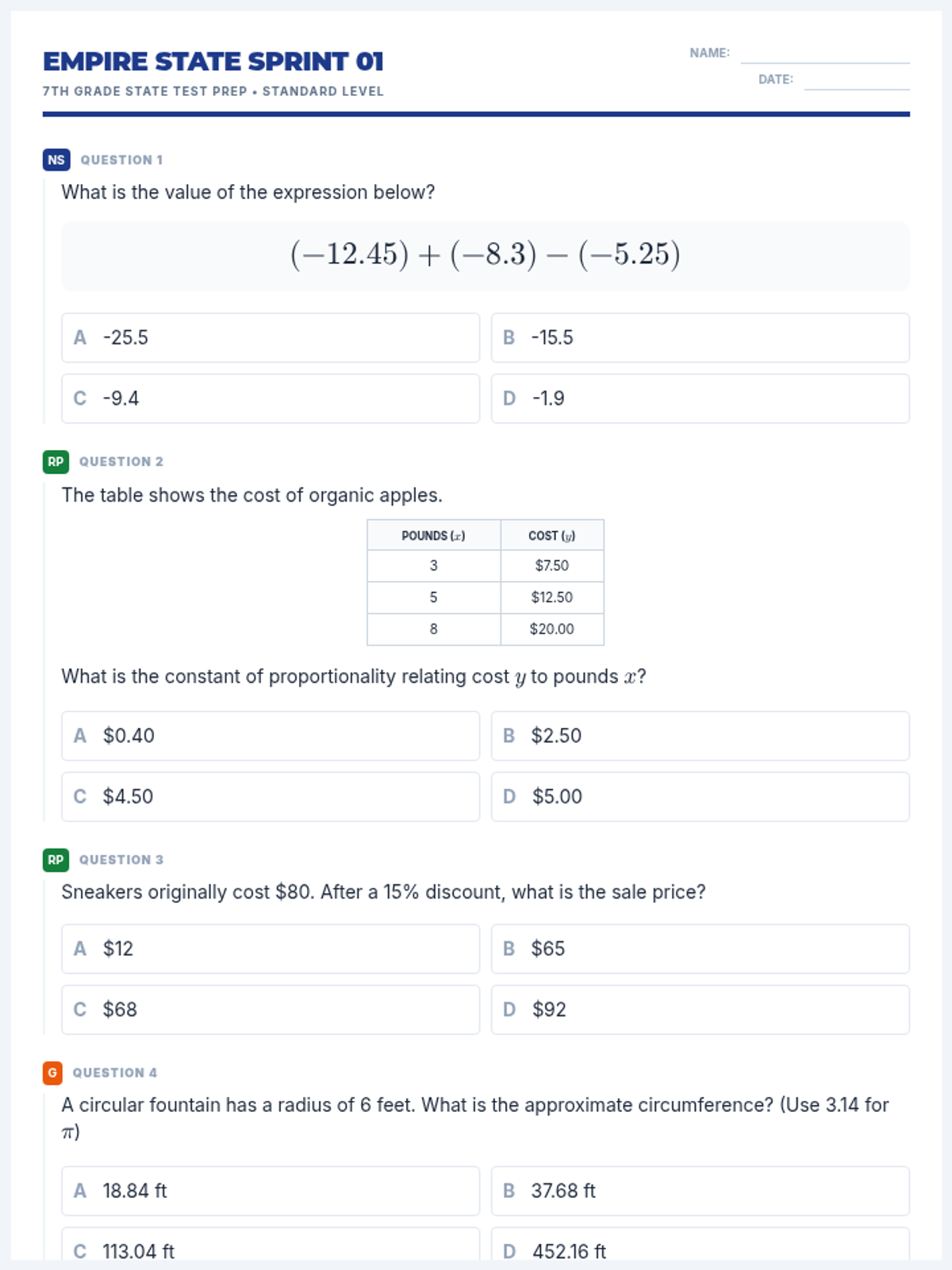
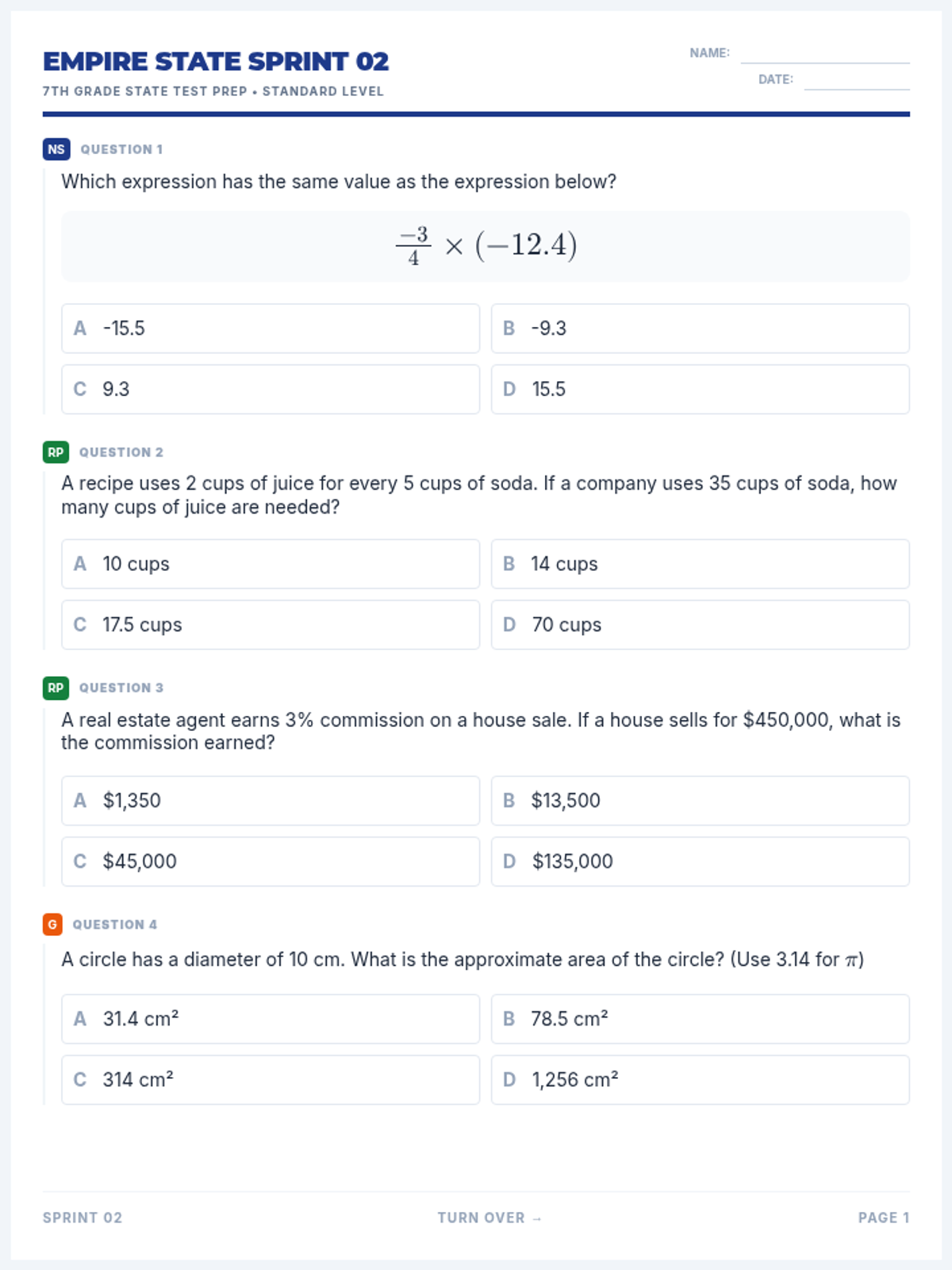
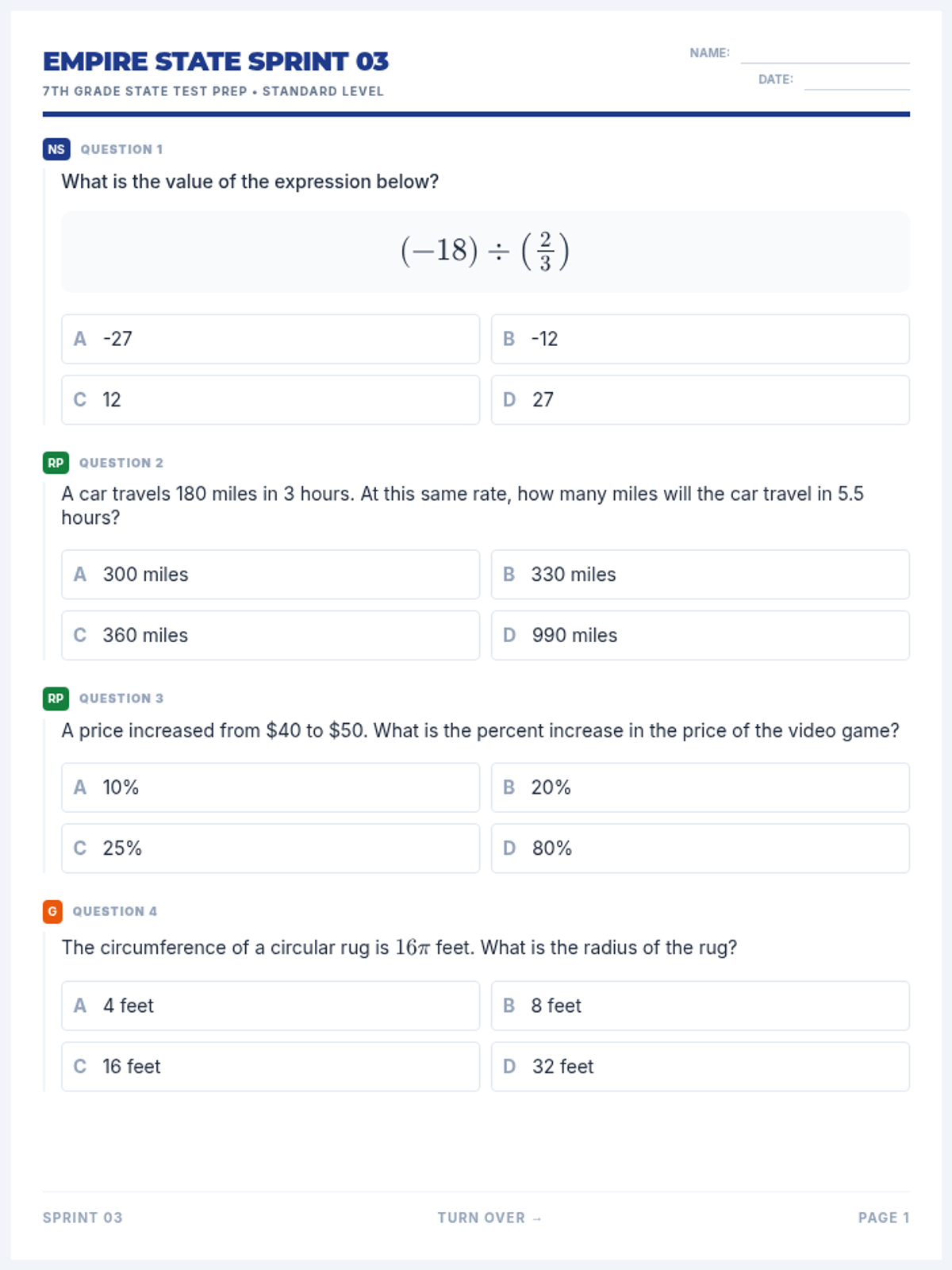
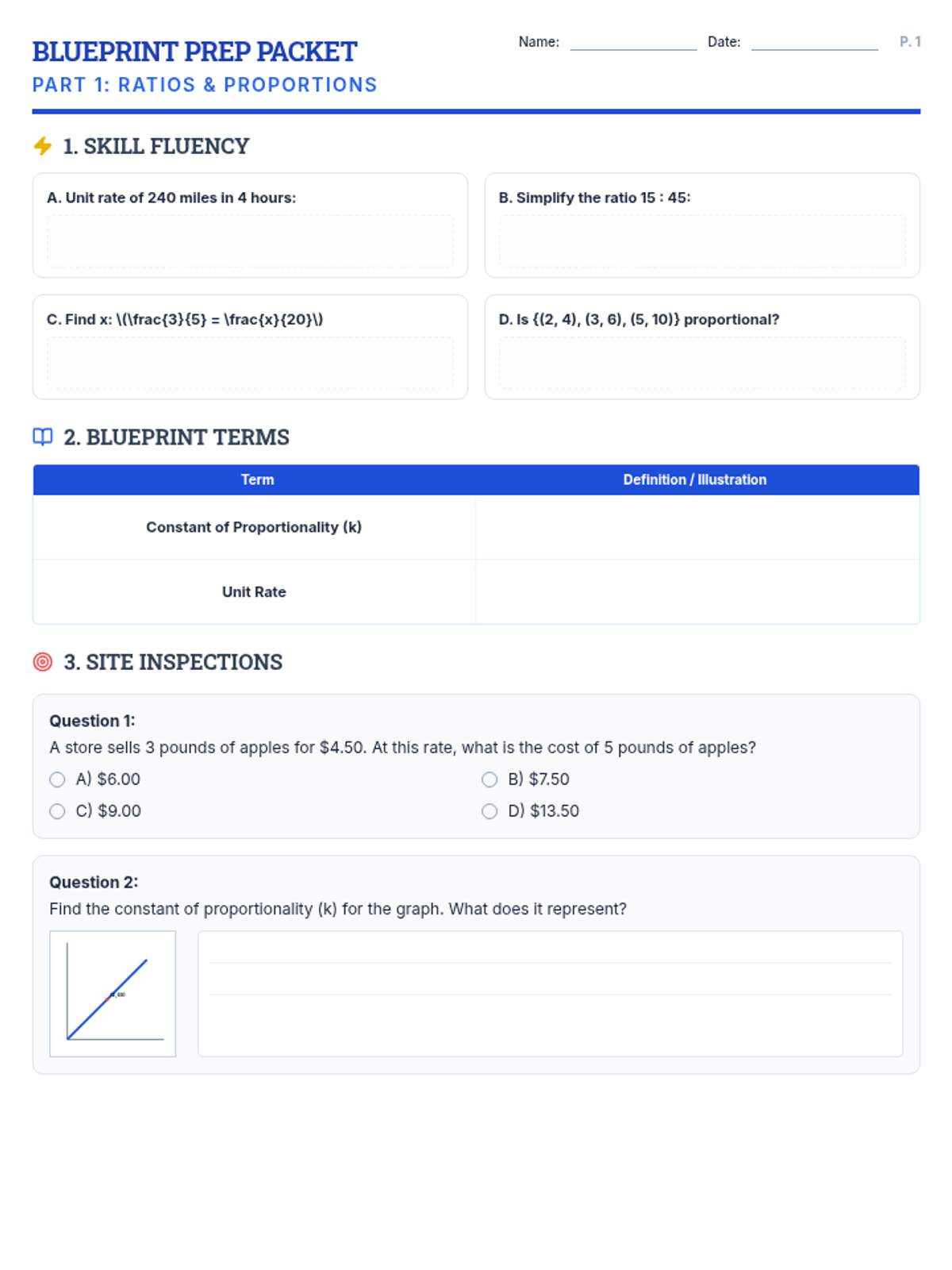
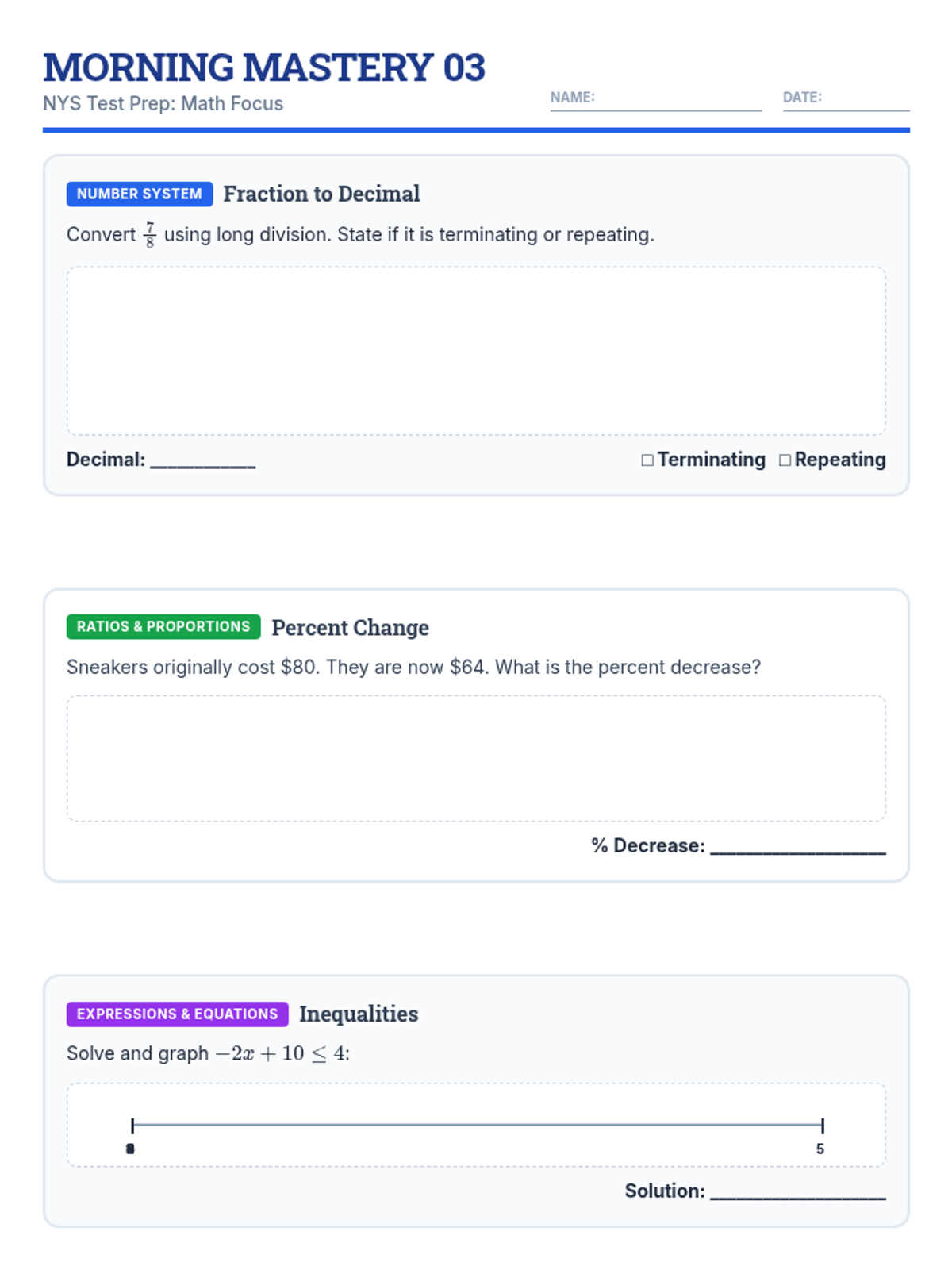
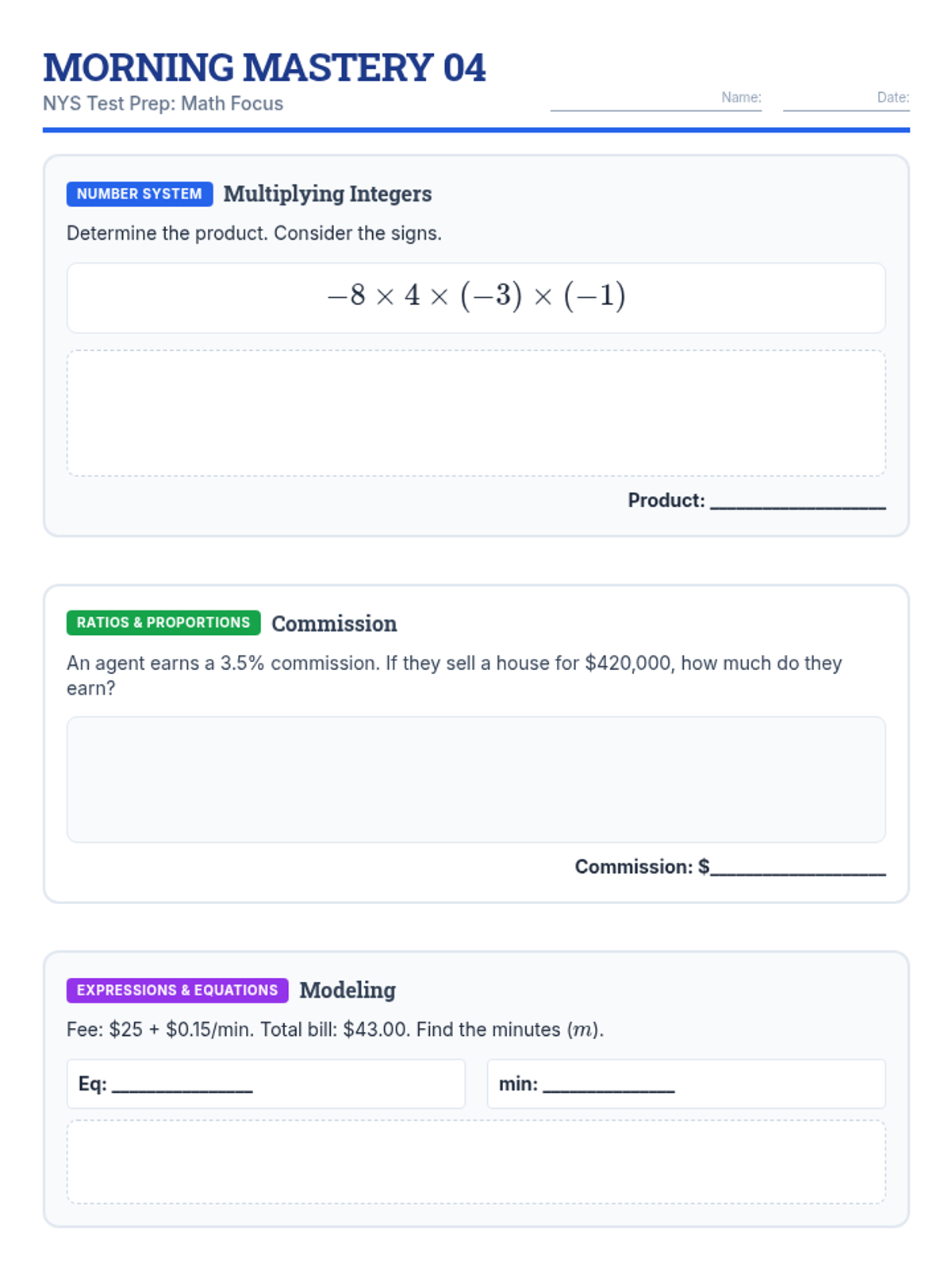
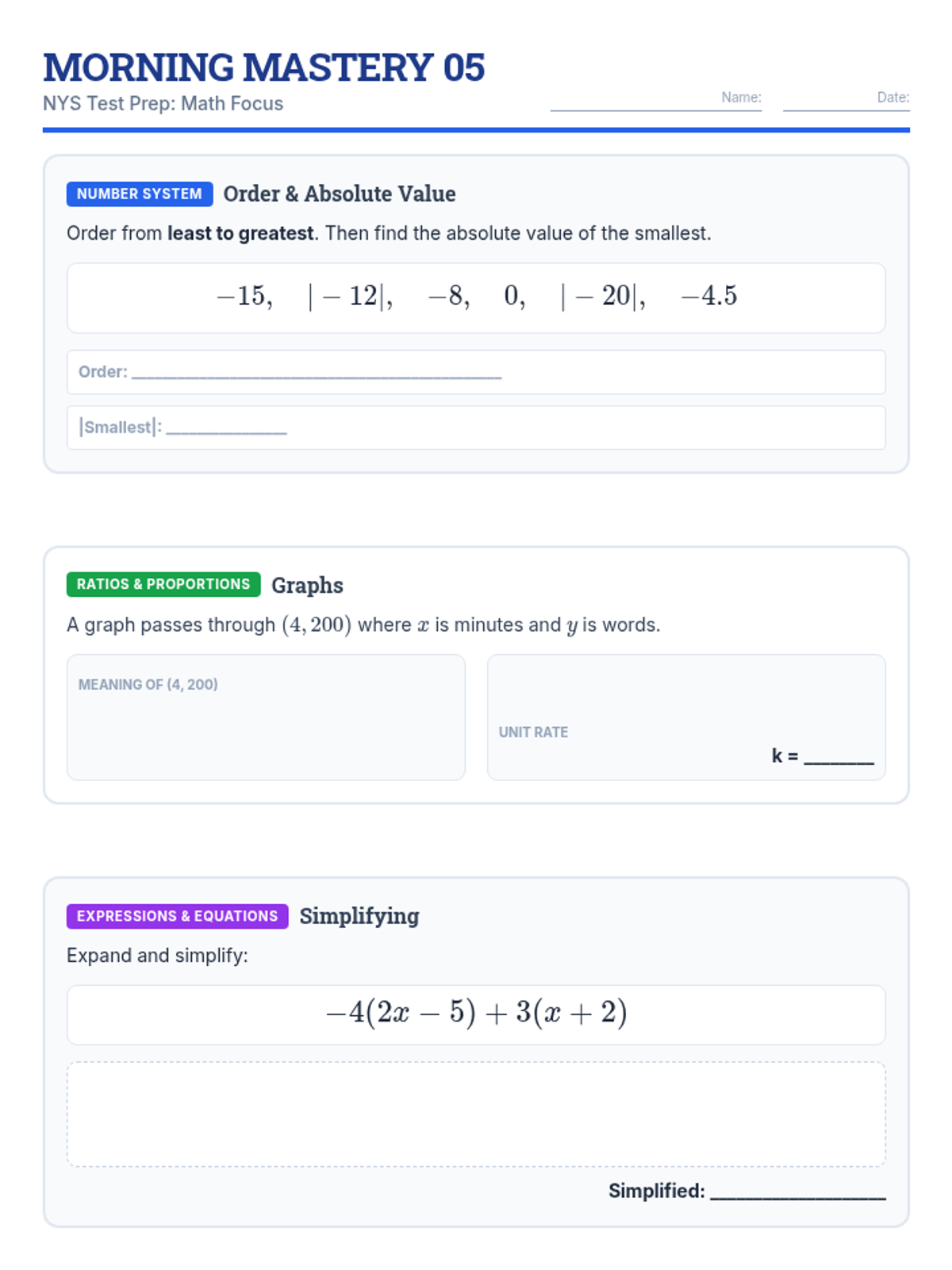
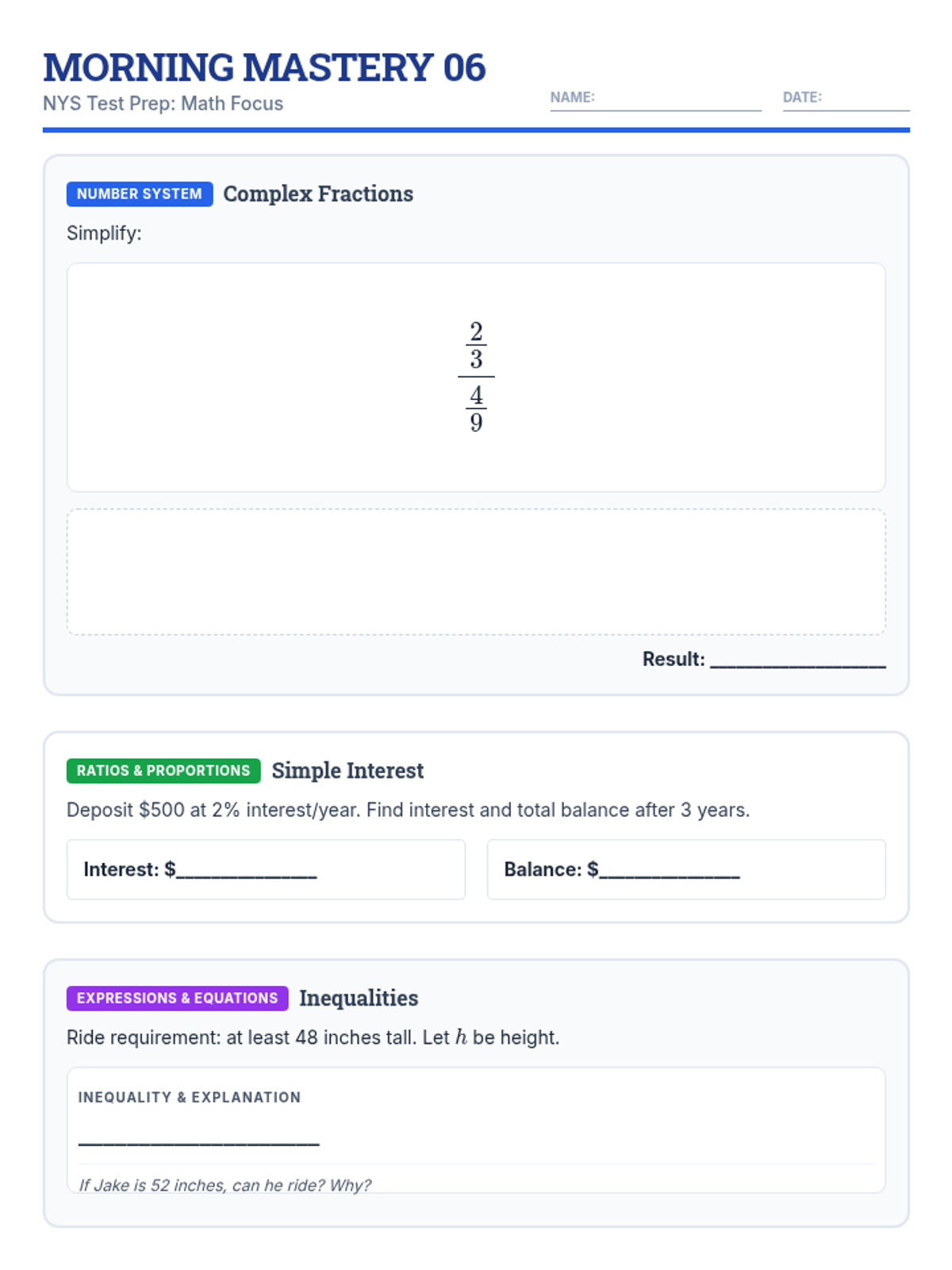
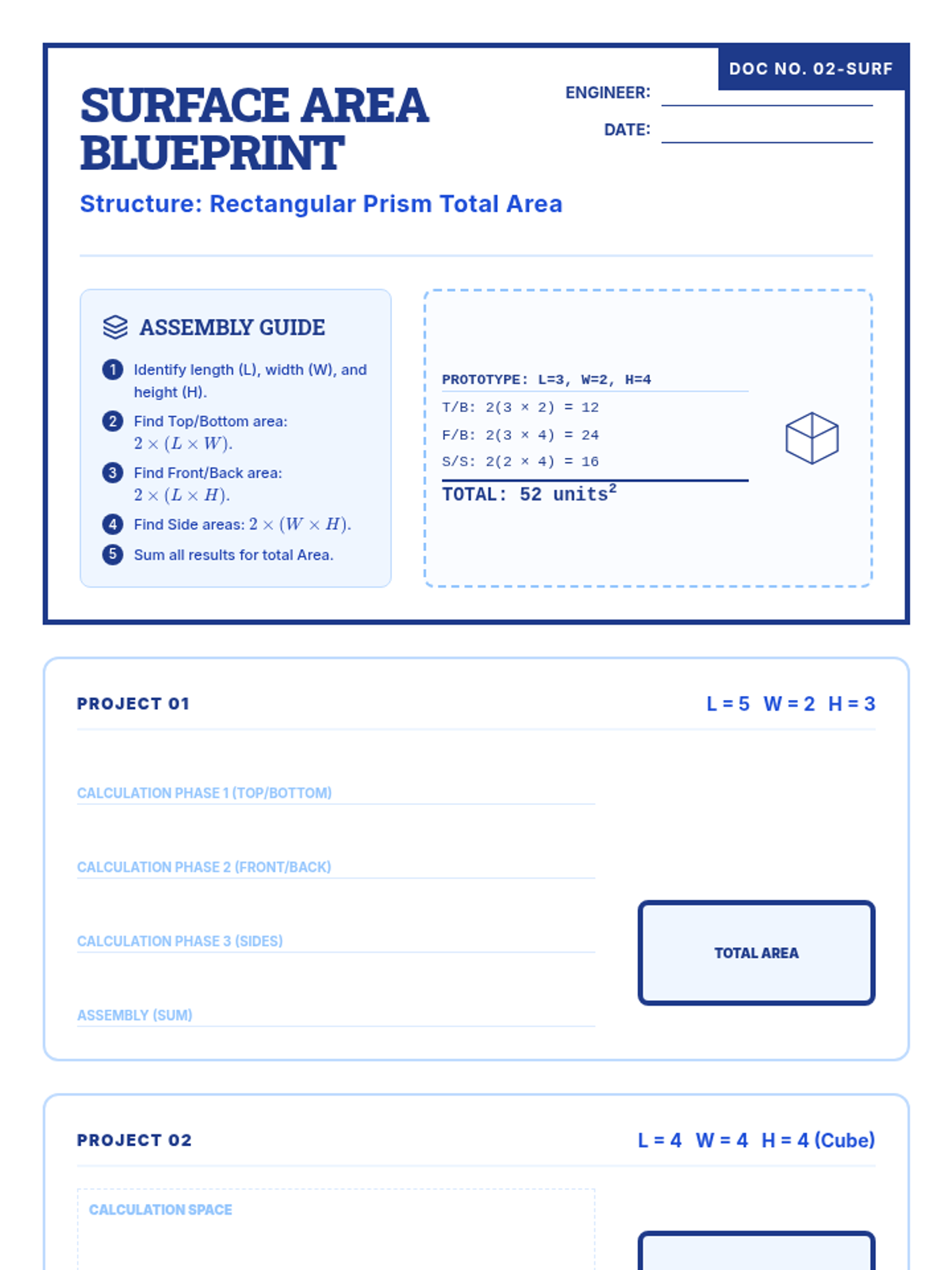
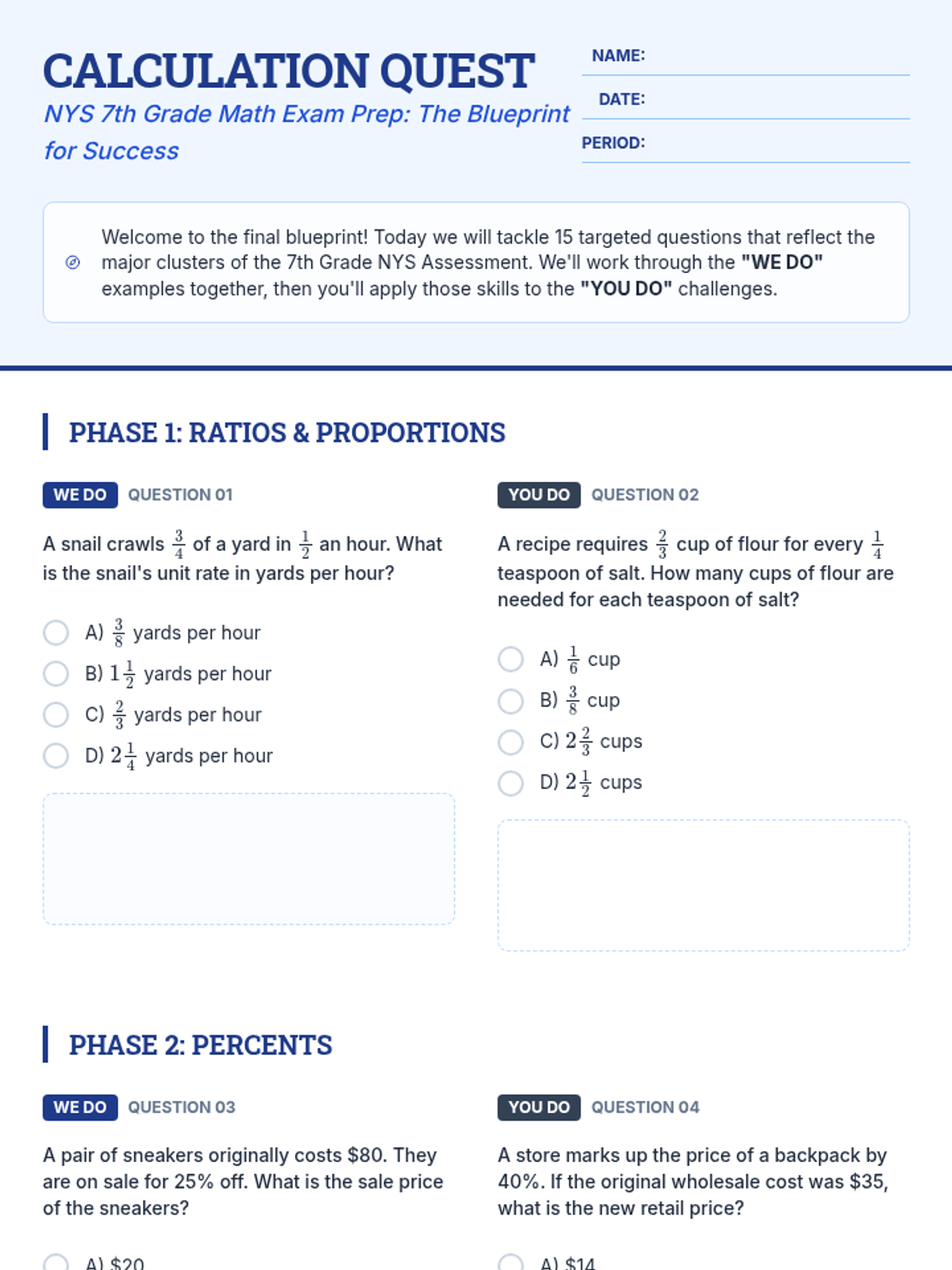
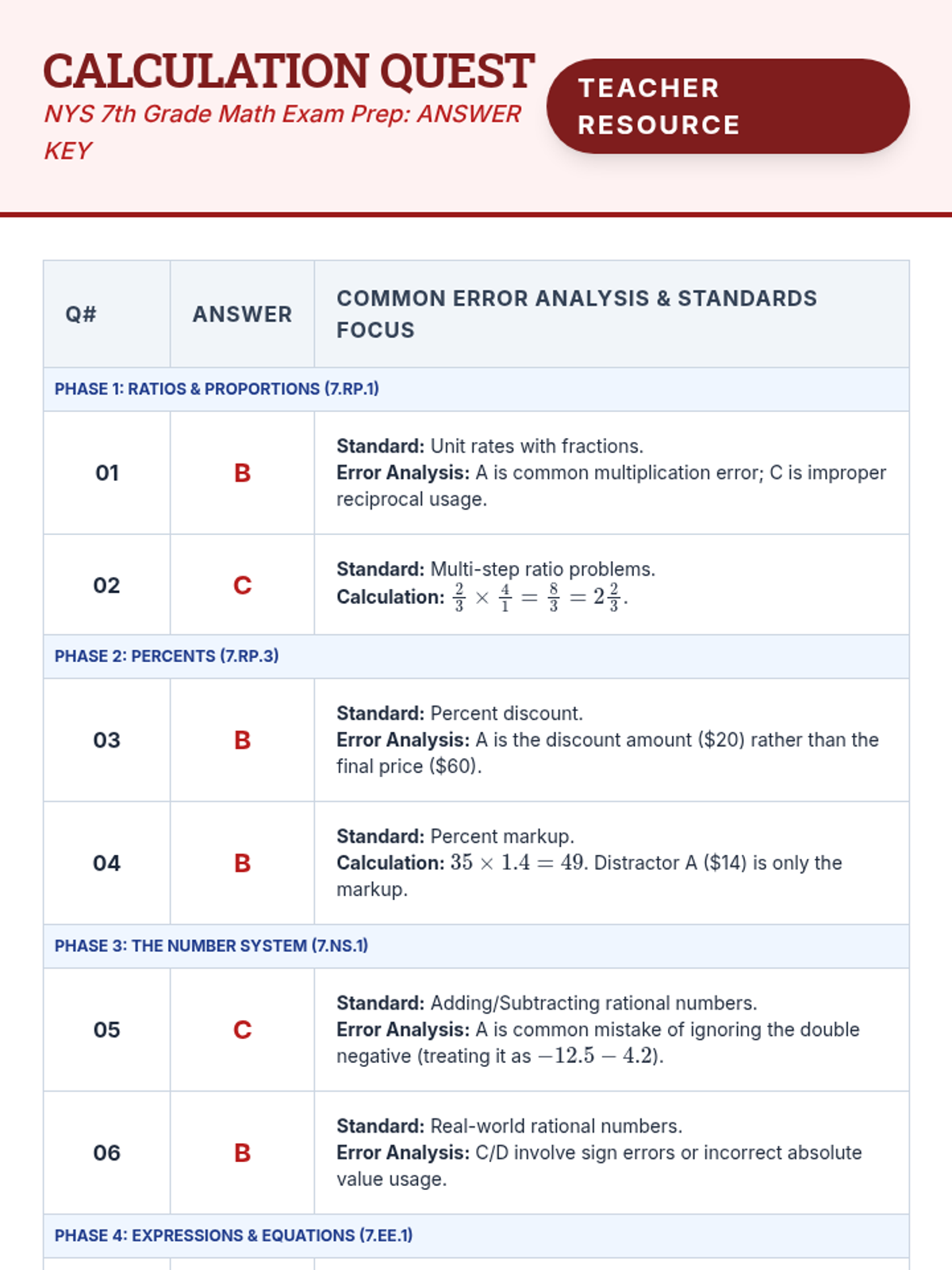
A comprehensive test preparation series focused on 7th Grade NYS Math standards, using a blueprint-inspired design to help students construct their mathematical understanding.
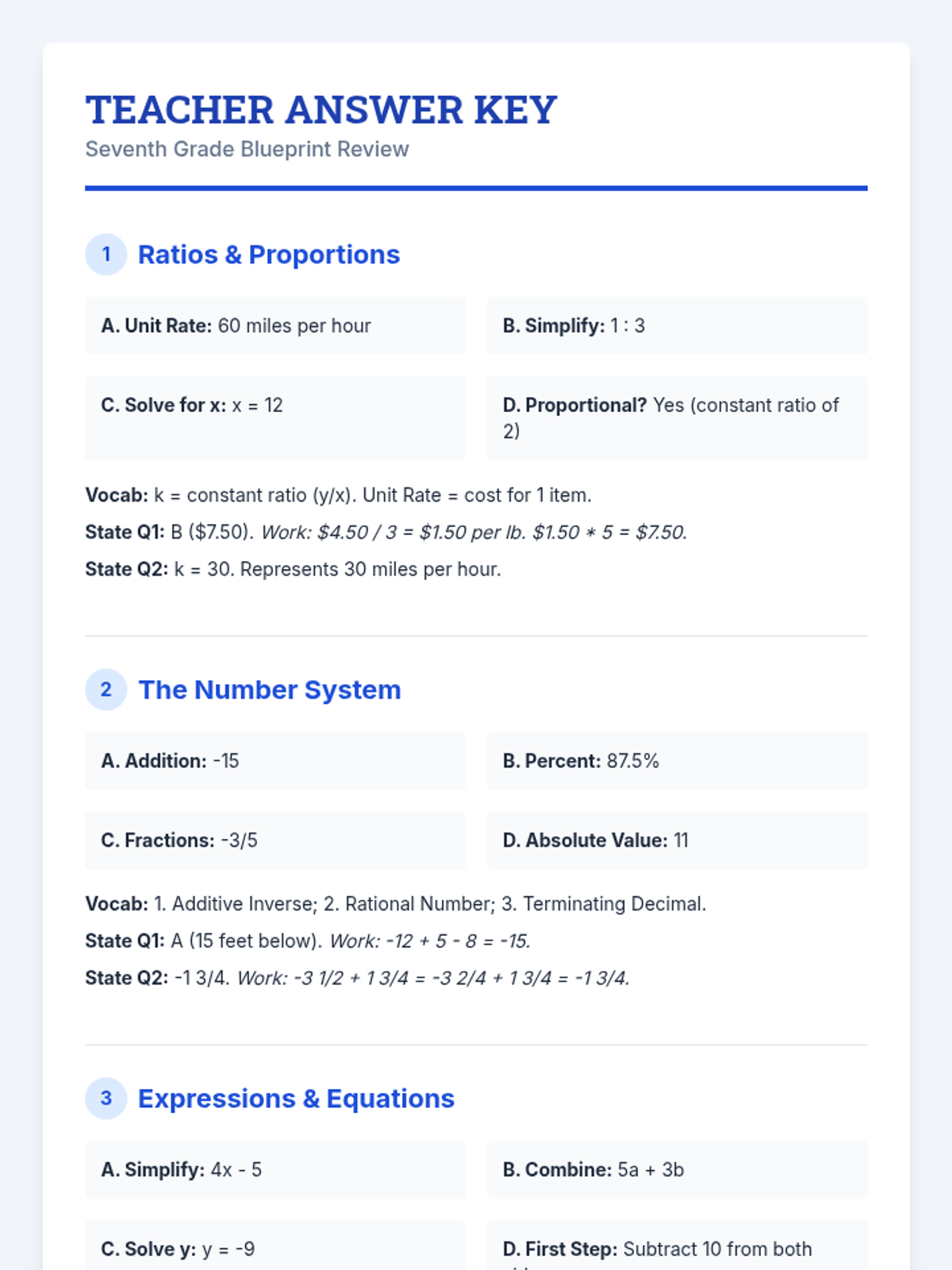
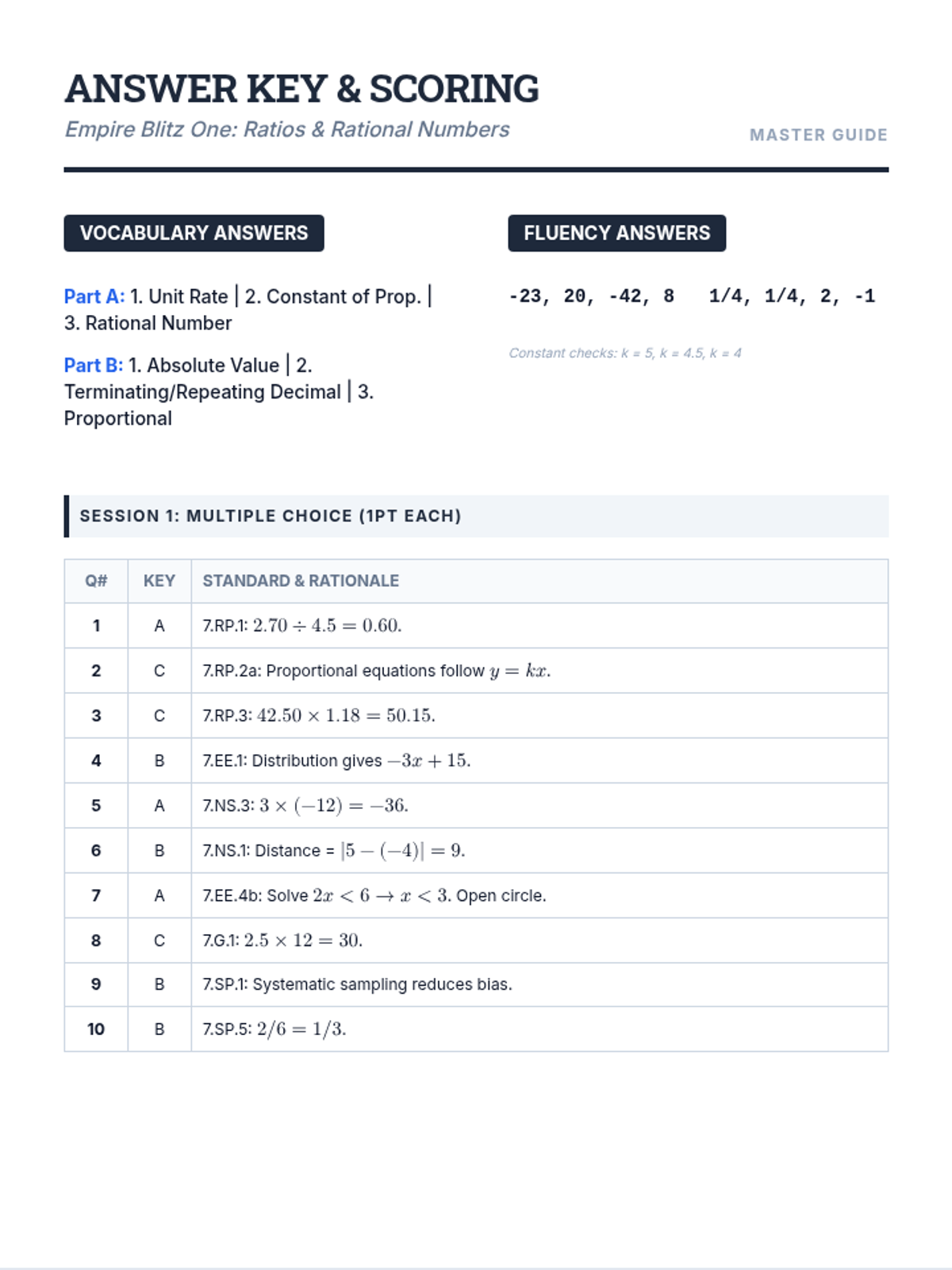
A comprehensive 3-packet New York State test prep series for 7th grade math, covering all major domains including Ratios, Number Systems, Expressions, Equations, Geometry, and Statistics. Each packet includes vocabulary, fluency, guided practice, and a 15-question mock exam.
A middle school math sequence centered on fractions, using an architectural and construction theme. It progresses from 6th-grade foundations to 8th-grade applications of slope and rational numbers.
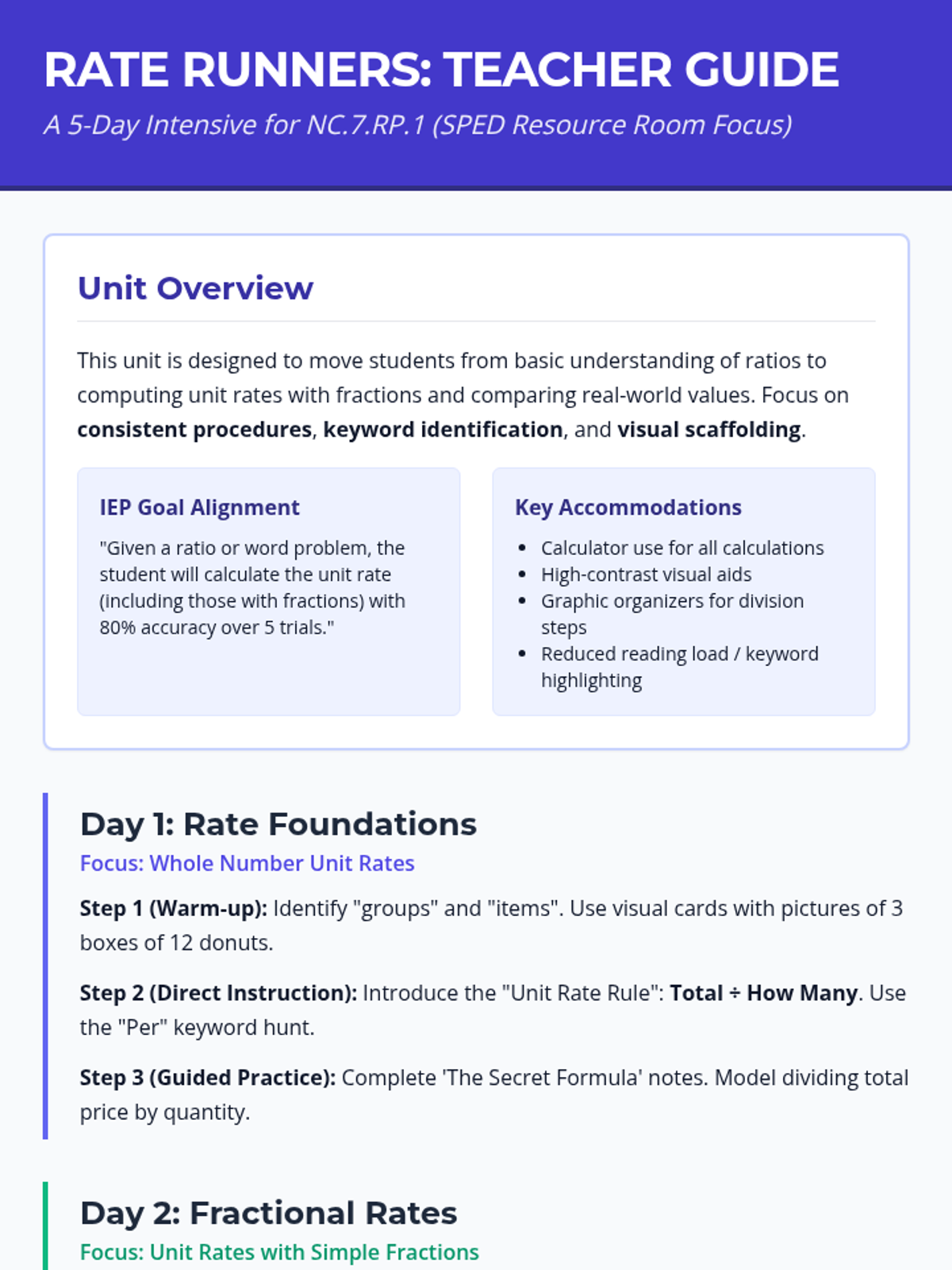
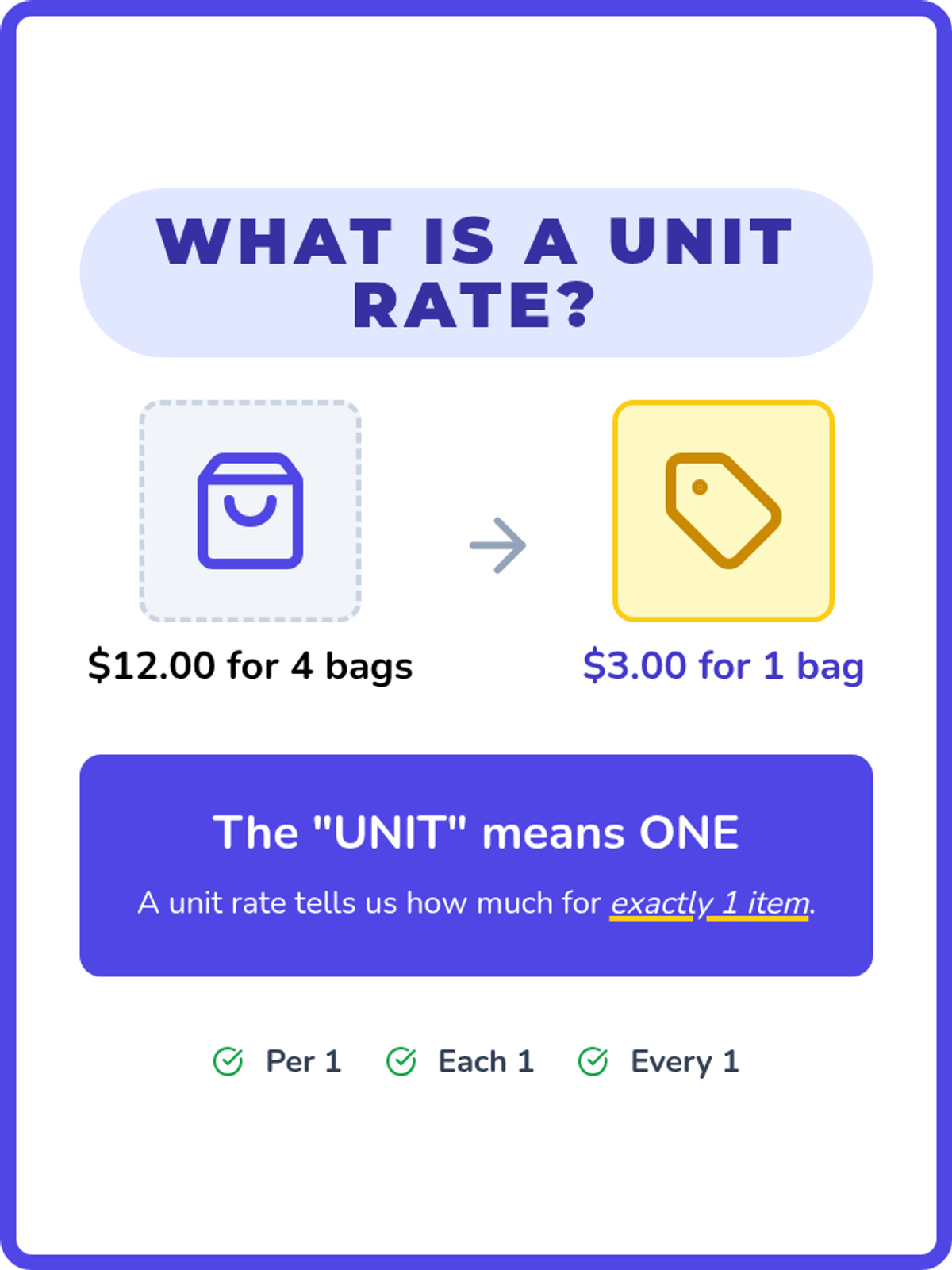
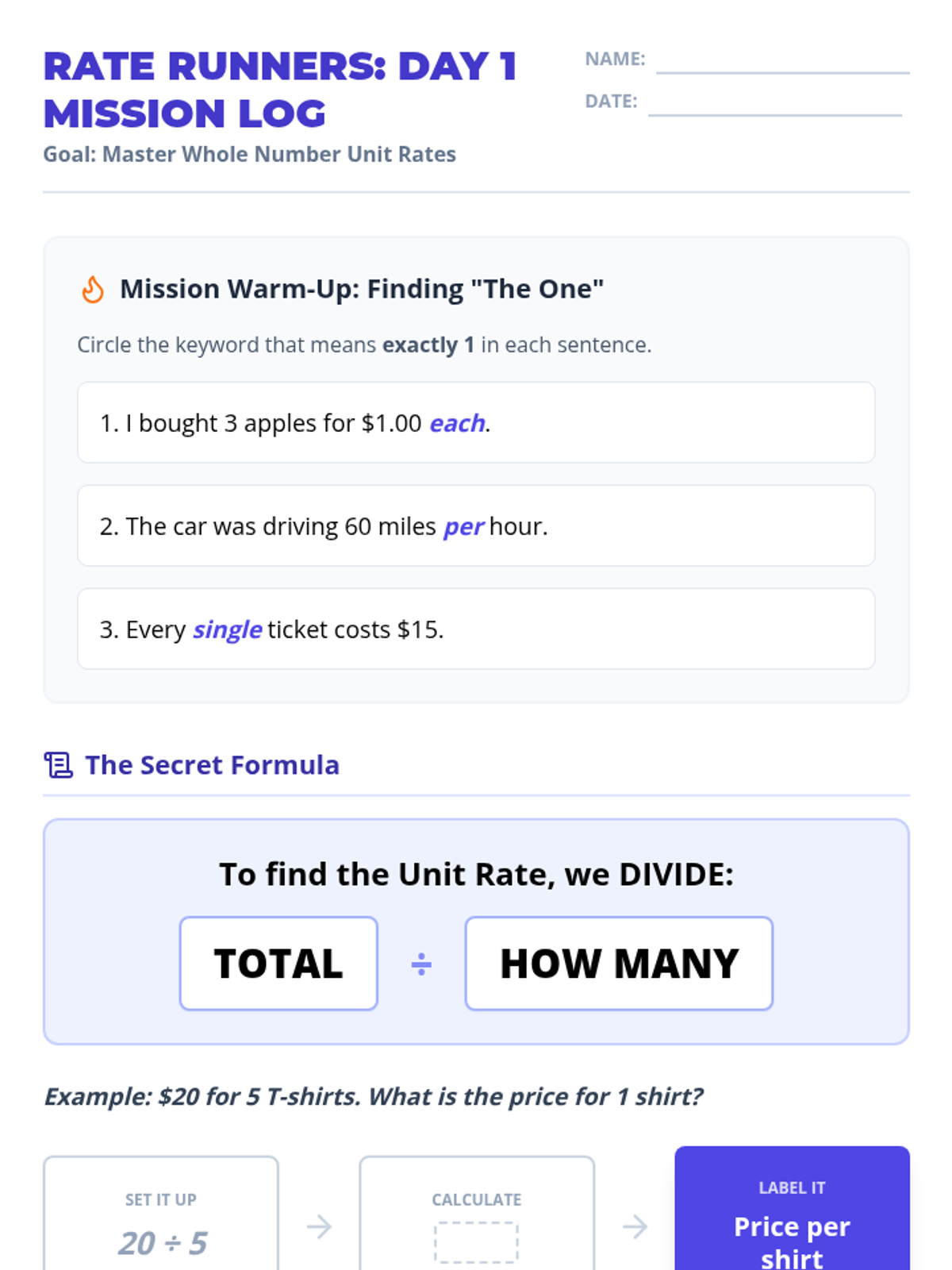
A 6-day intensive test prep unit for NC.7.RP.1 focused on unit rates. Designed specifically for special education resource rooms with heavy scaffolding, visual aids, and real-world shopping and measurement applications. Includes 4 days of instruction, a collaborative review relay, and a final assessment.
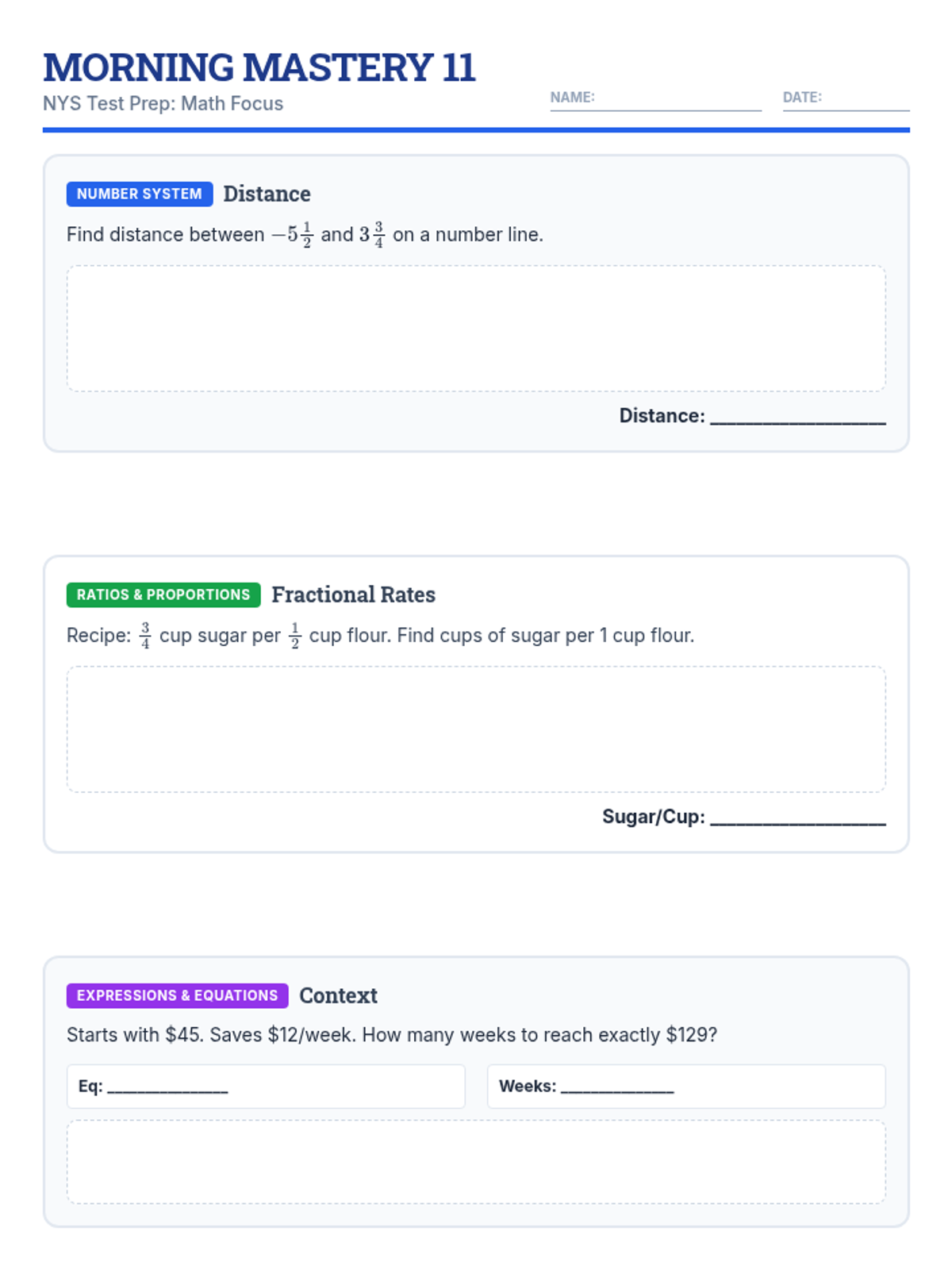
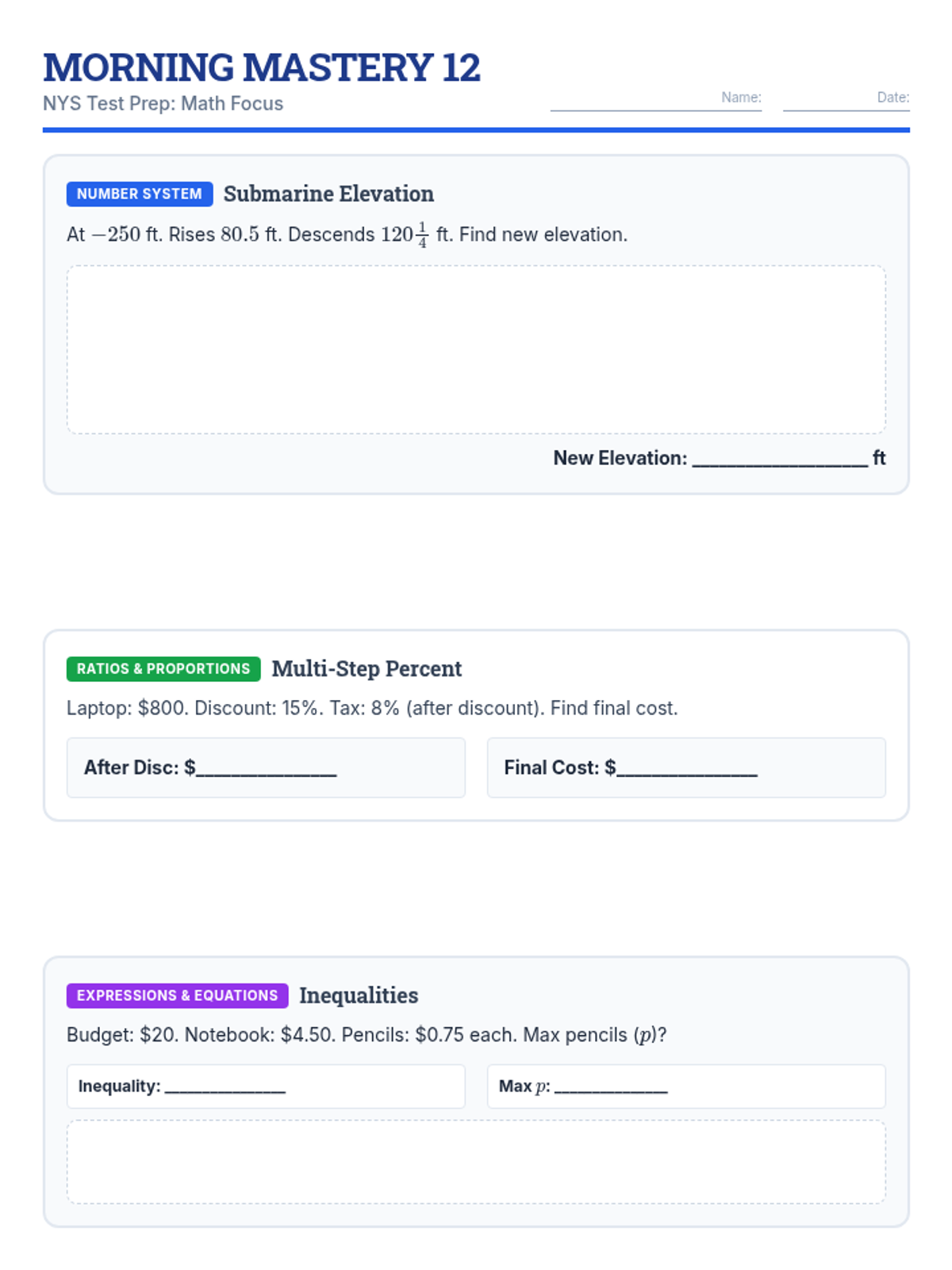
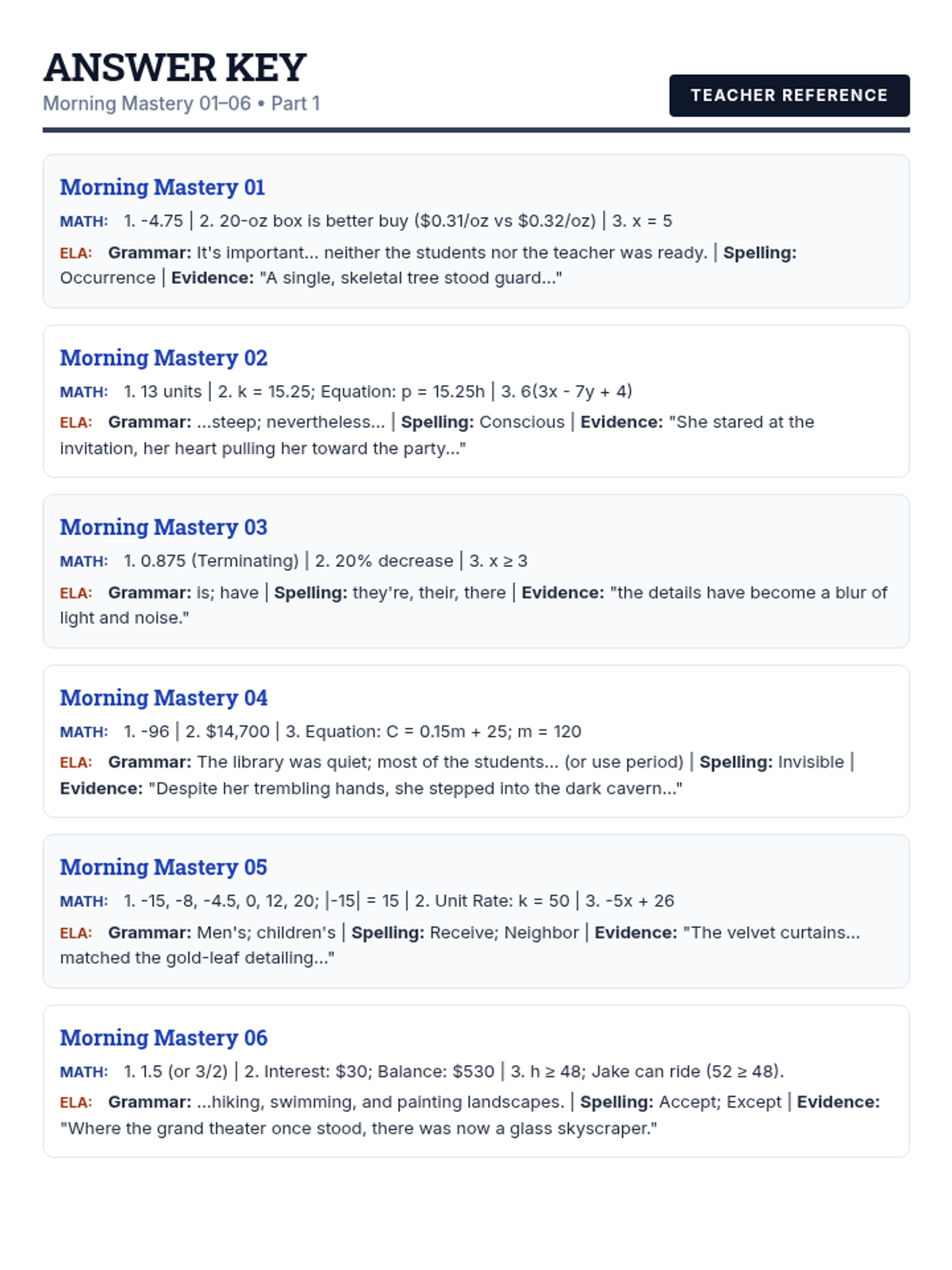
A comprehensive 12-day test prep series for 7th graders preparing for the New York State (NYS) ELA and Math exams. Each day features targeted practice in key math domains (Number System, Ratios, Expressions) and ELA skills (Grammar, Evidence, Argumentation).
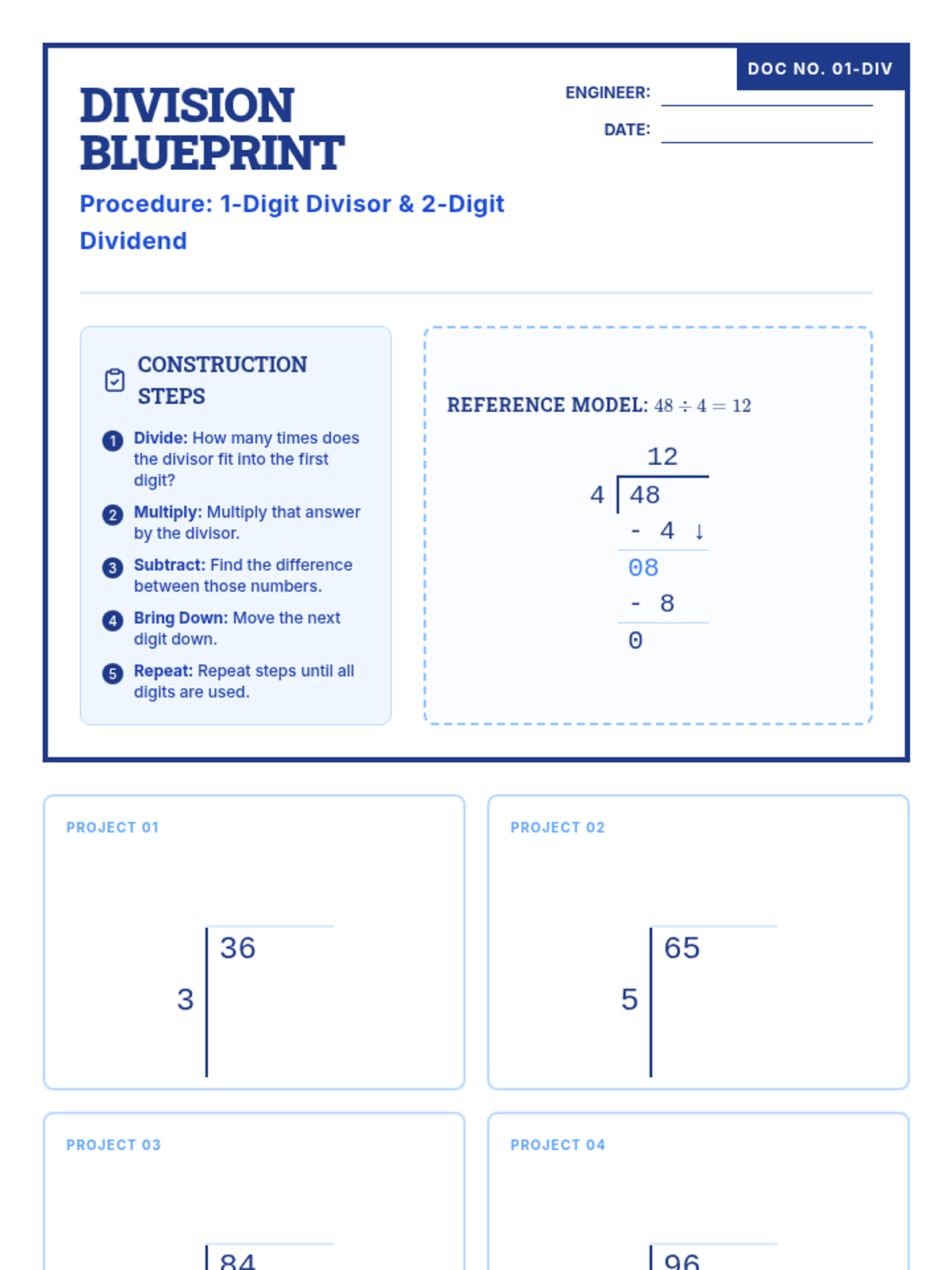
A set of targeted skill-building worksheets designed to guide students through common procedural math errors using step-by-step checklists and worked examples in a blueprint-inspired layout.
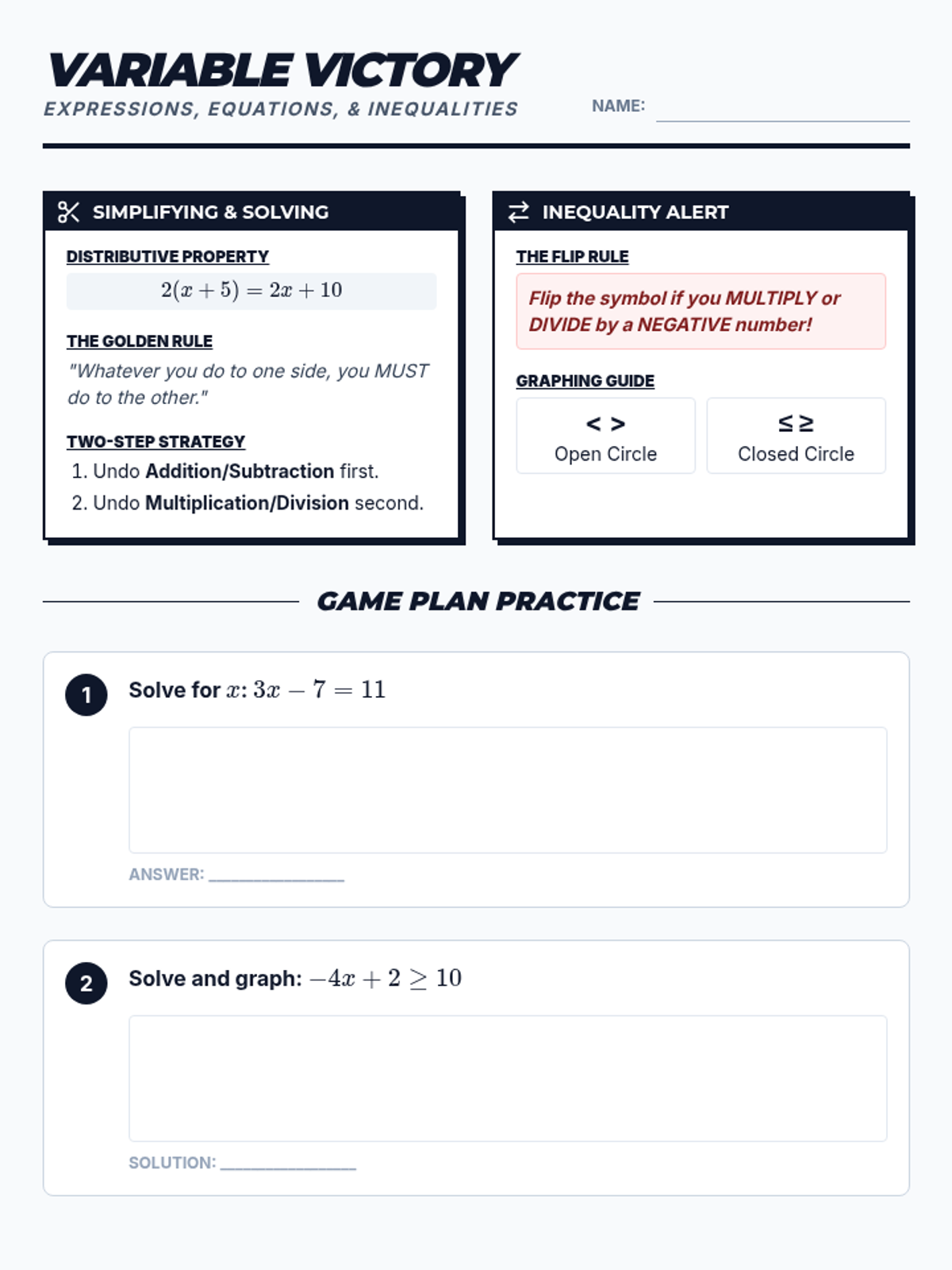
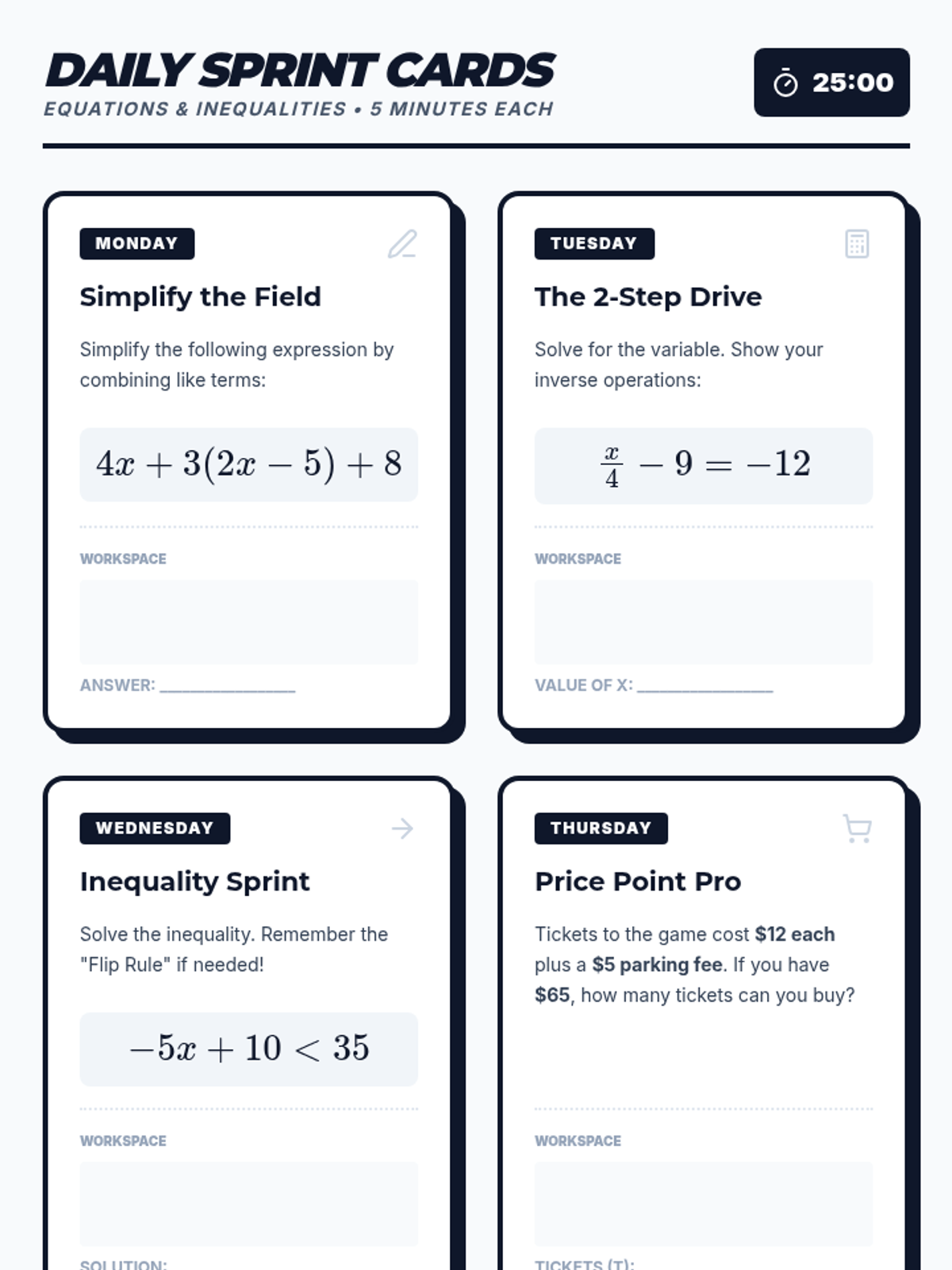
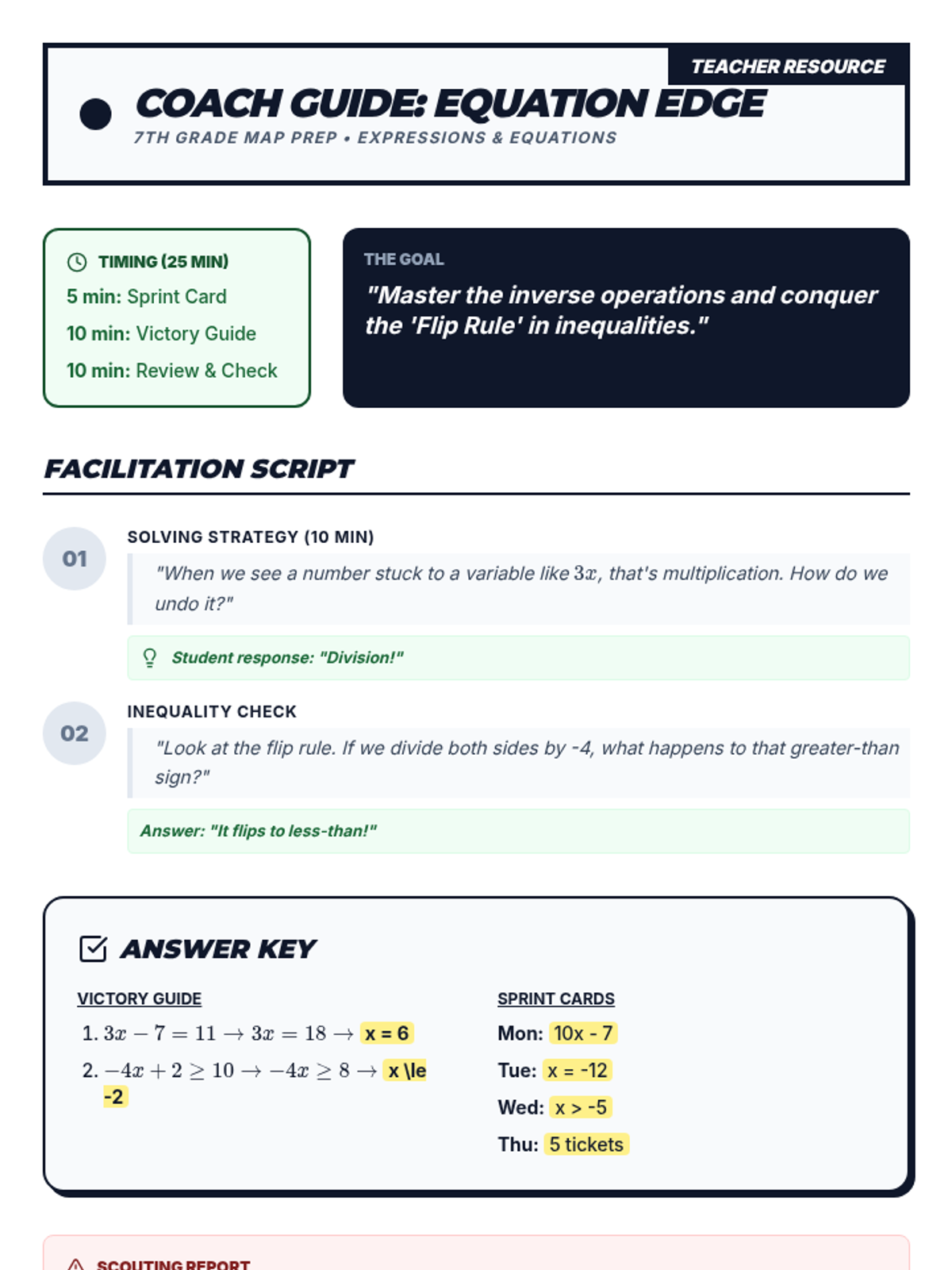
A series of intensive, 25-minute math intervention sessions designed for Missouri Assessment Program (MAP) preparation, specifically for 7th grade students.
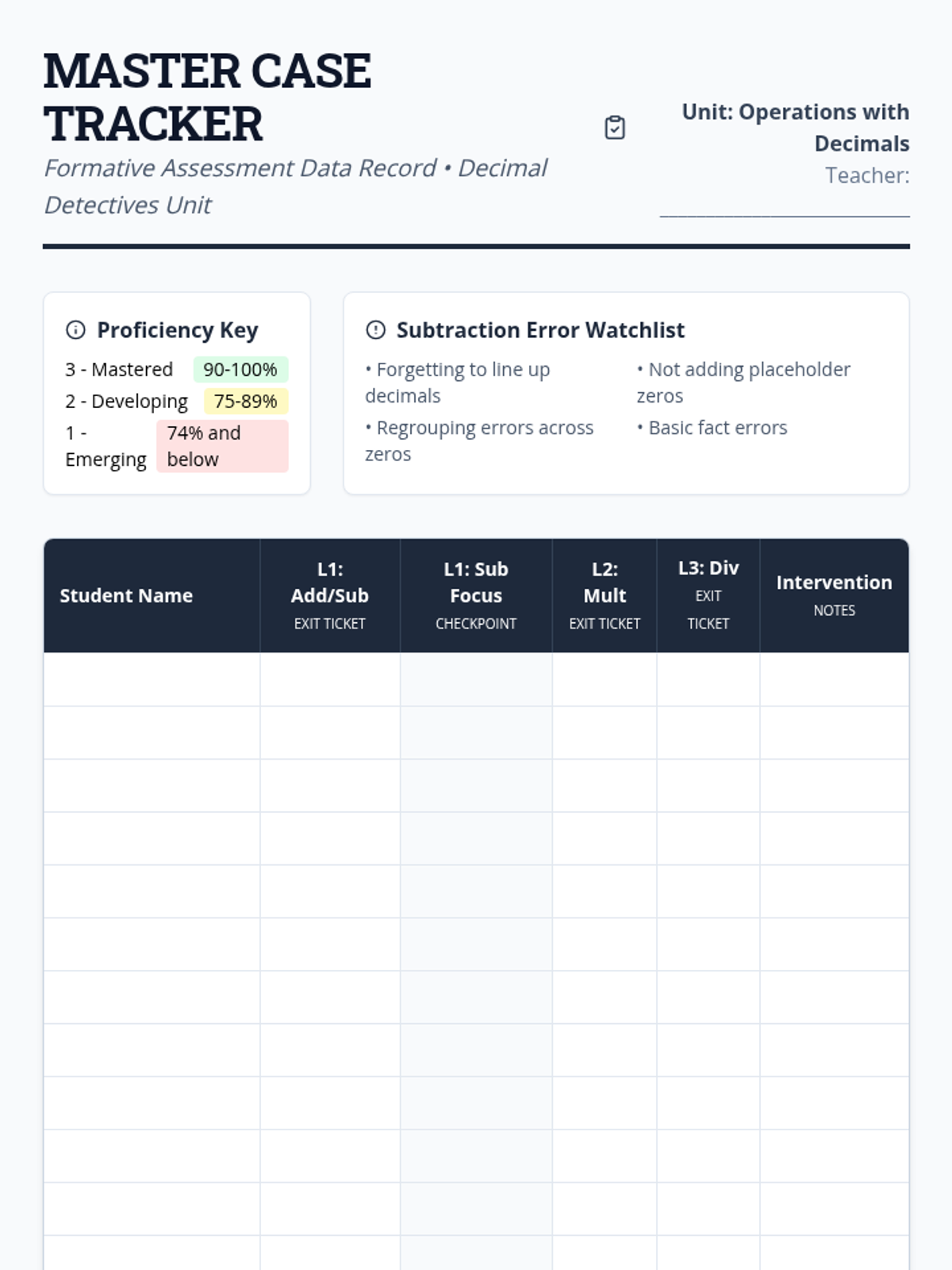
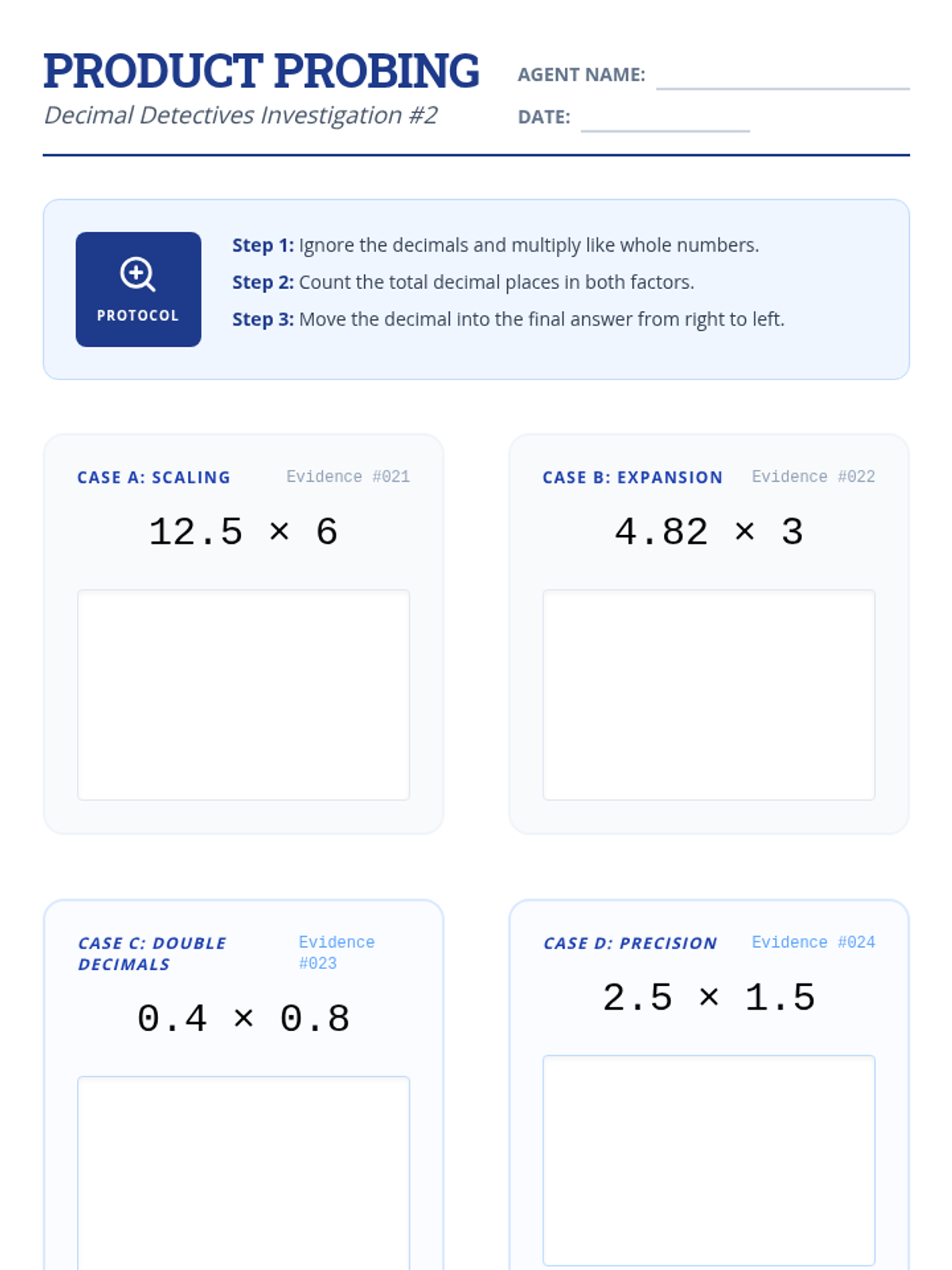
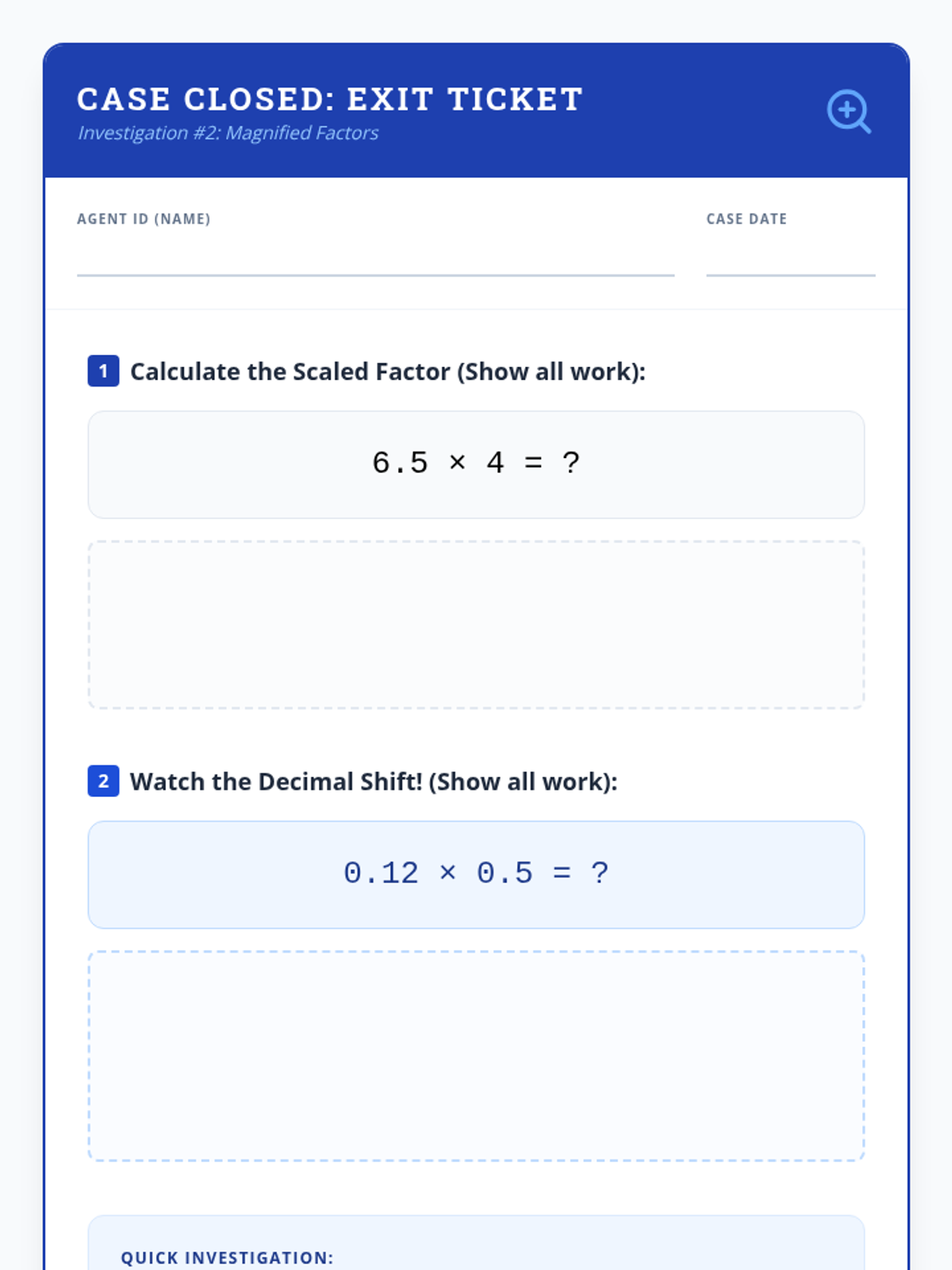
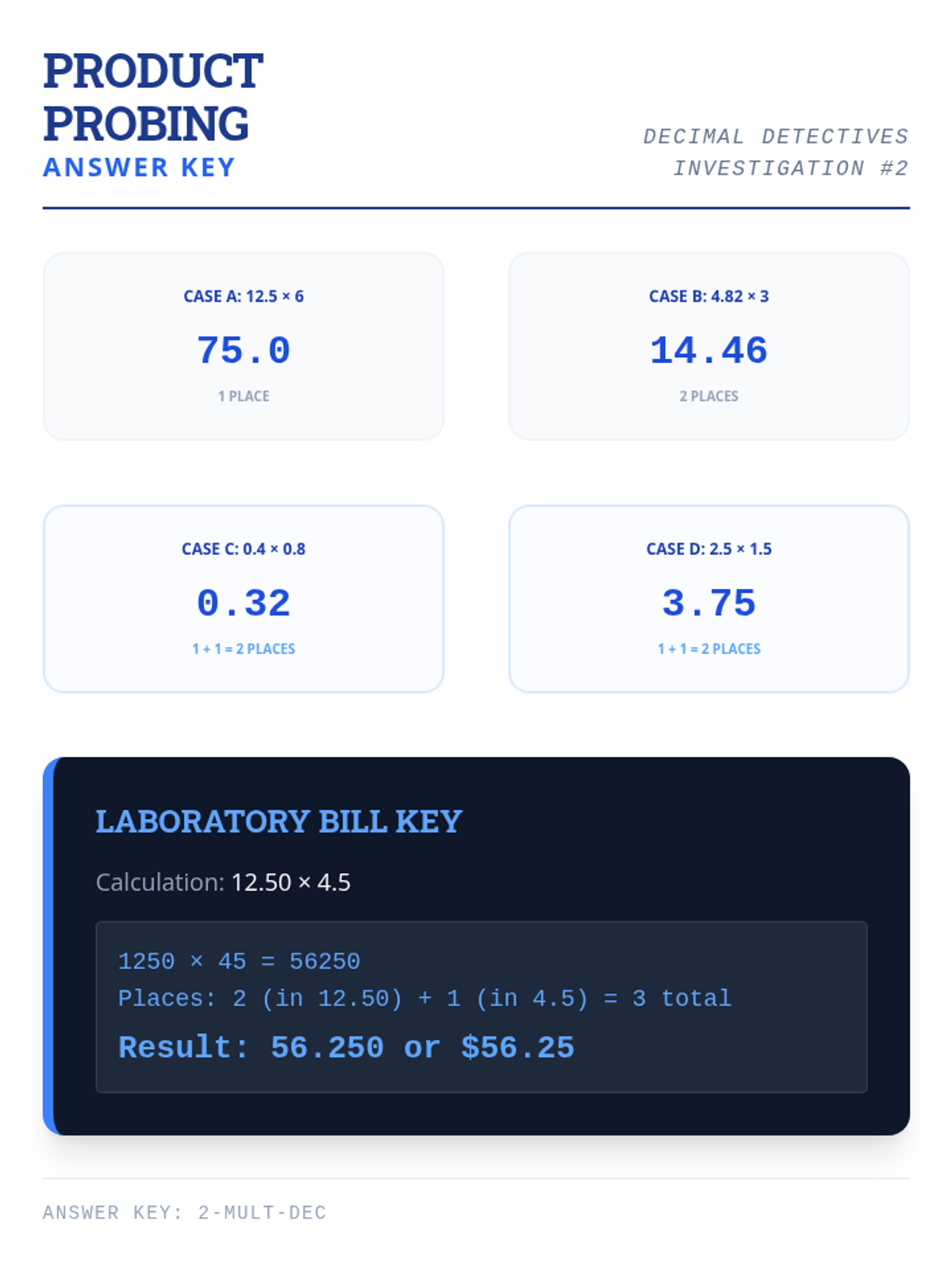
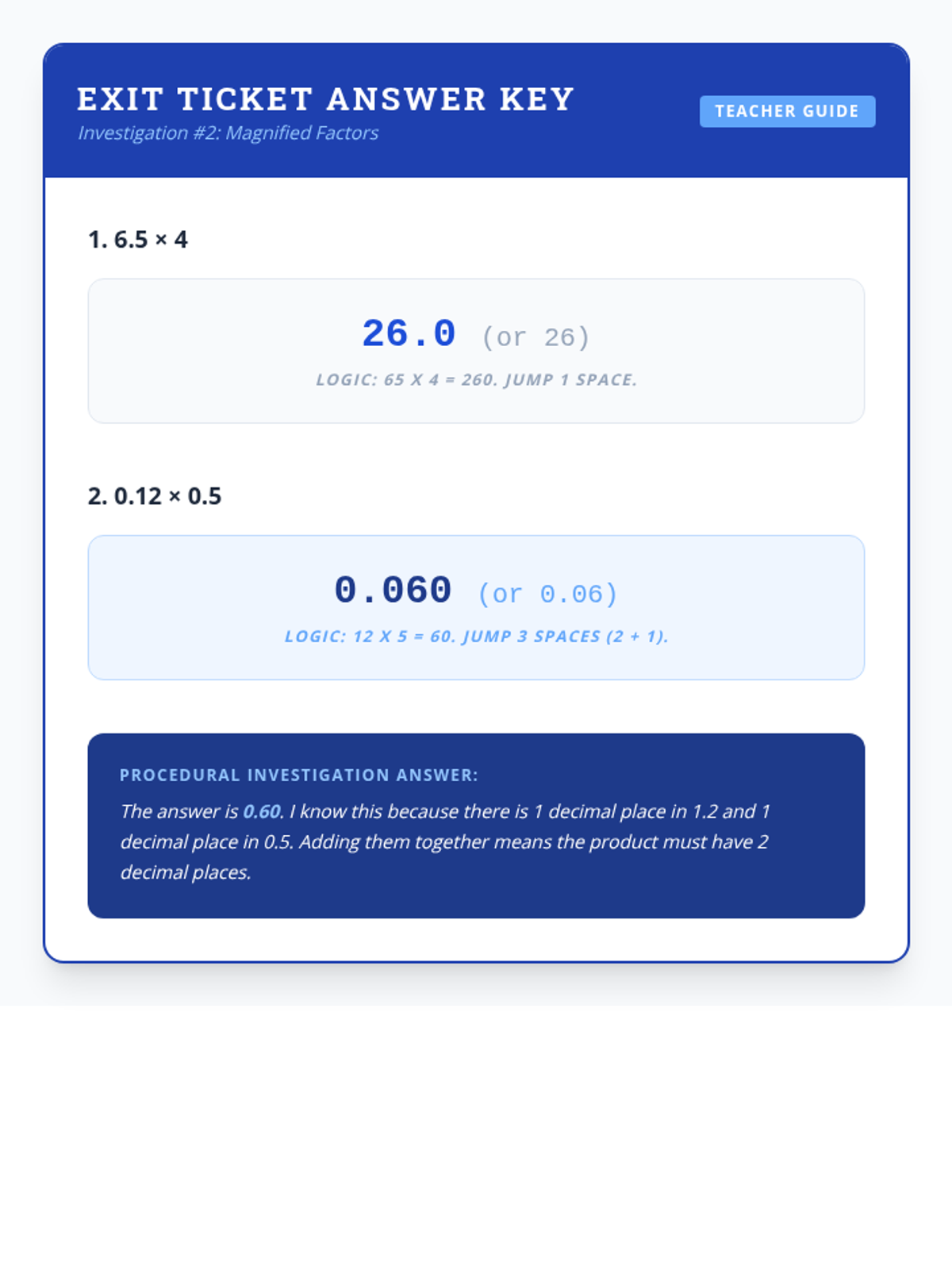
A comprehensive unit on performing the four operations with decimals, using a detective-themed approach to engage students in precision and problem-solving.
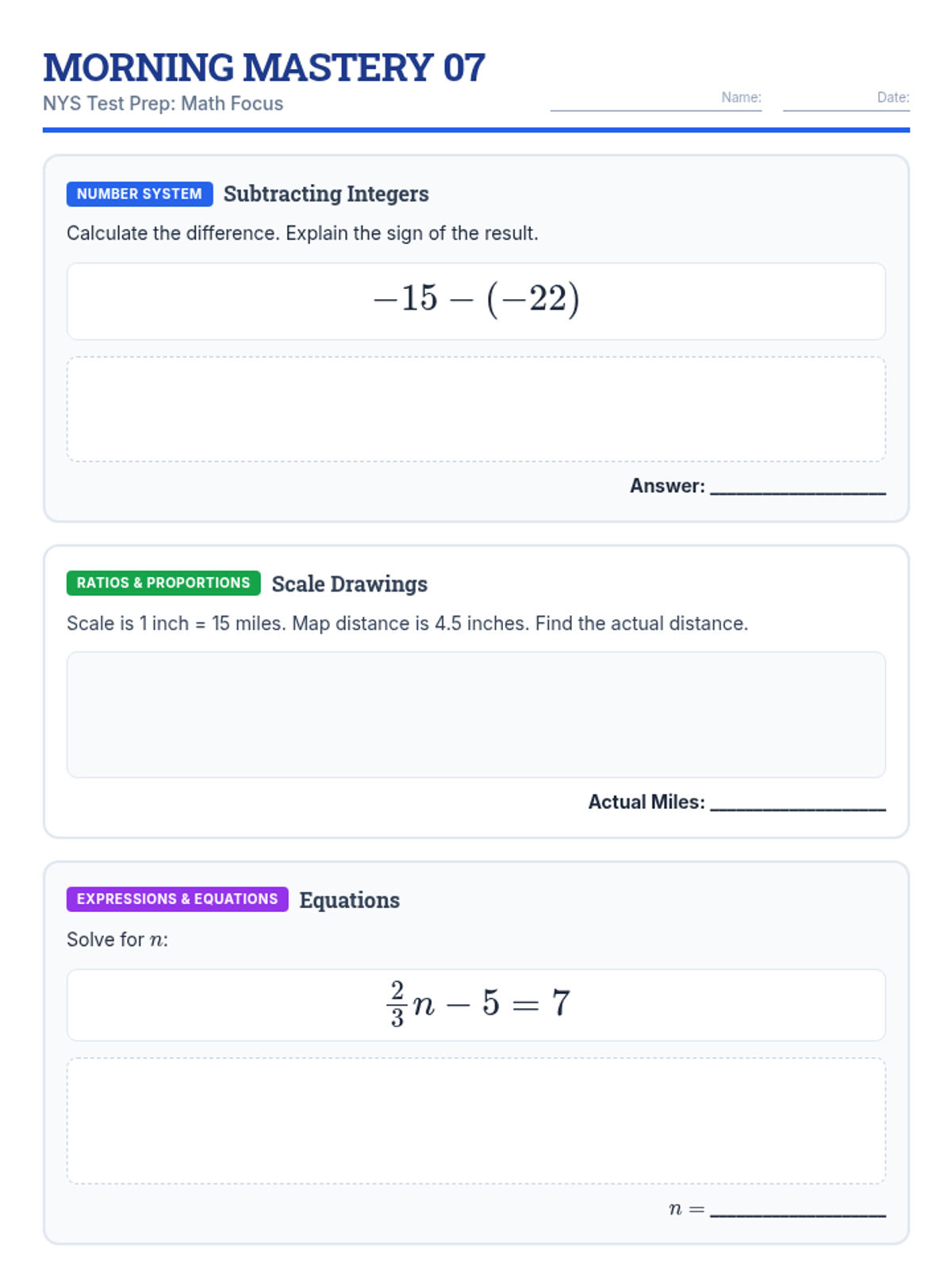
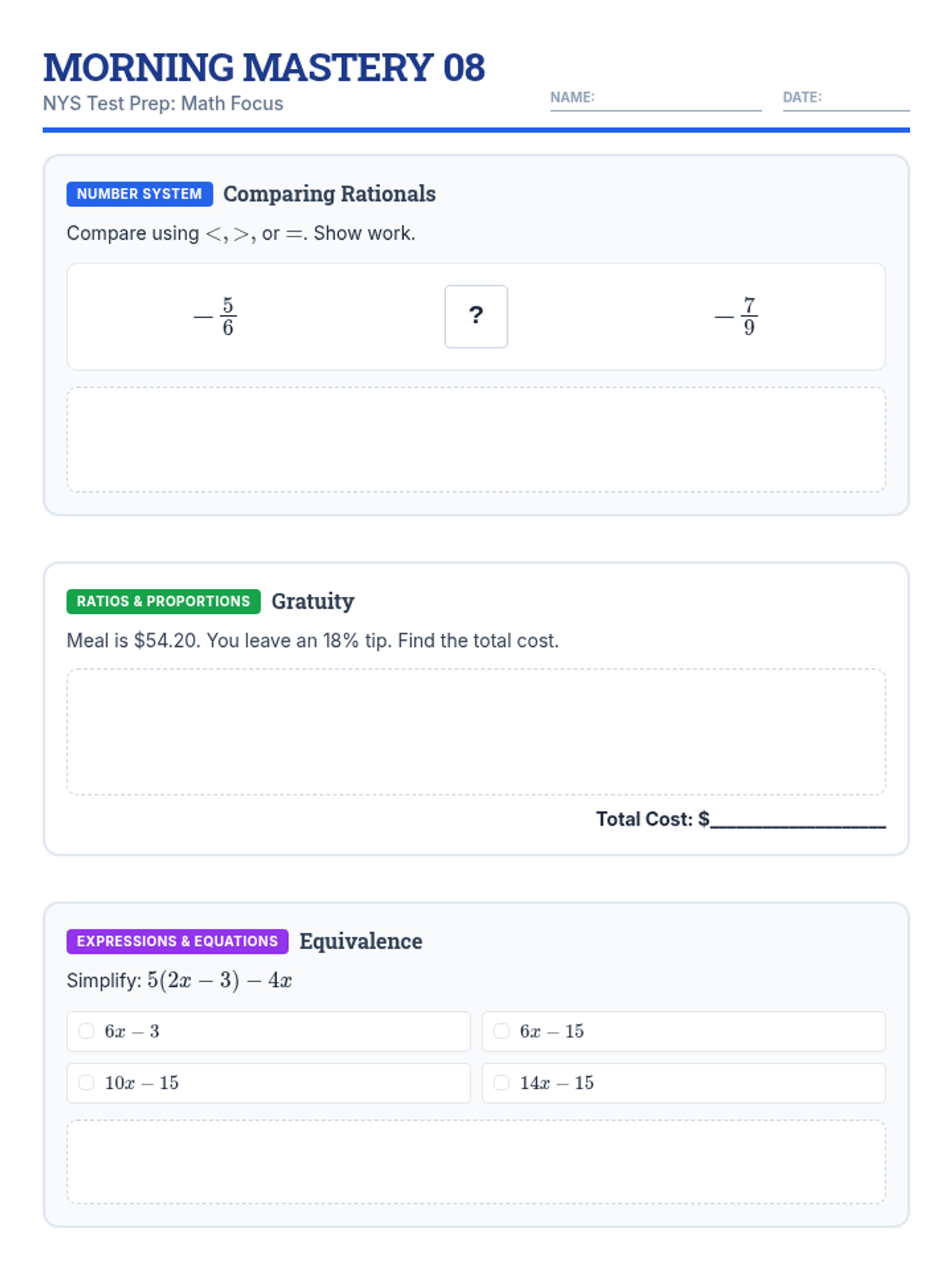
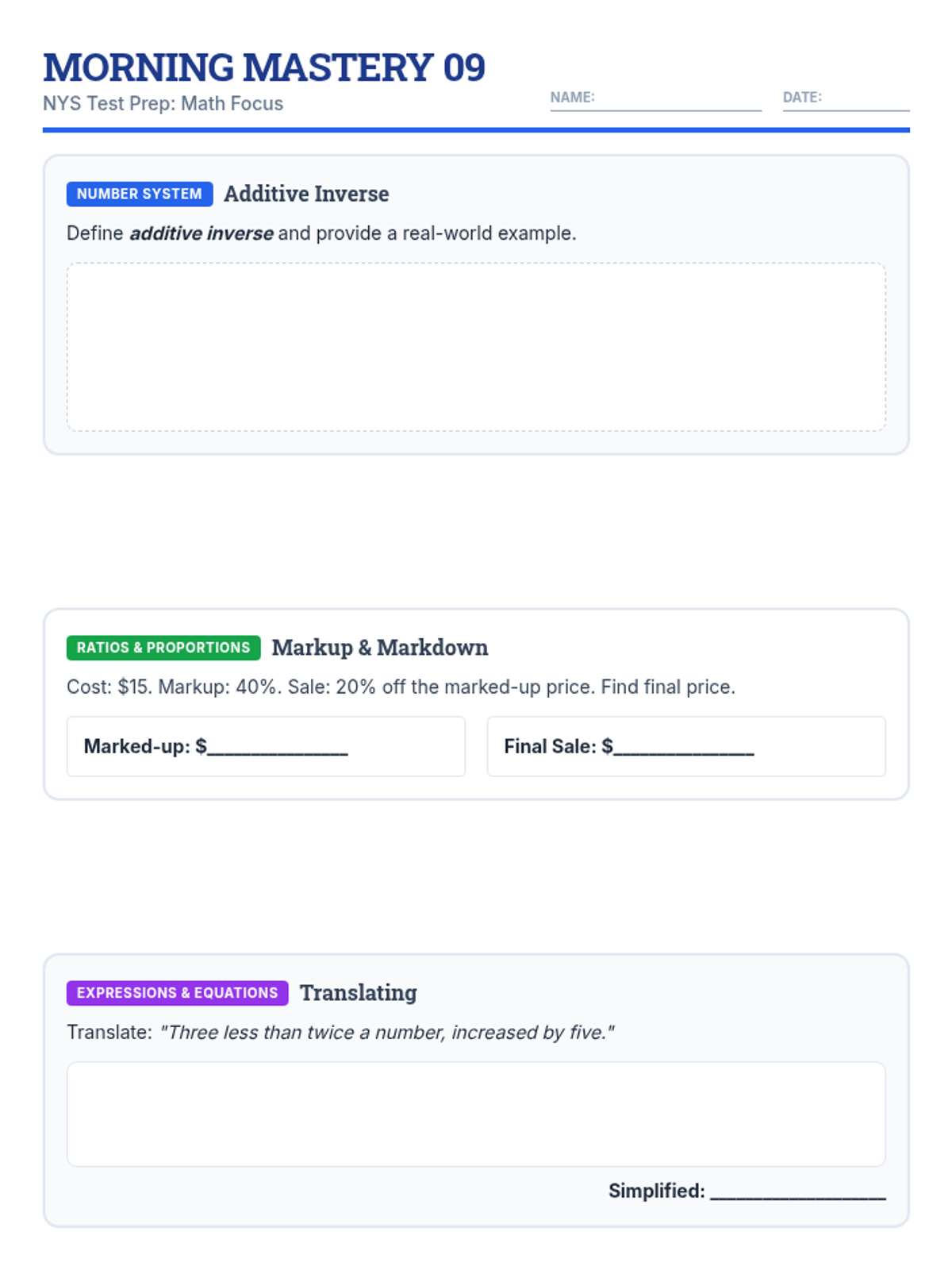
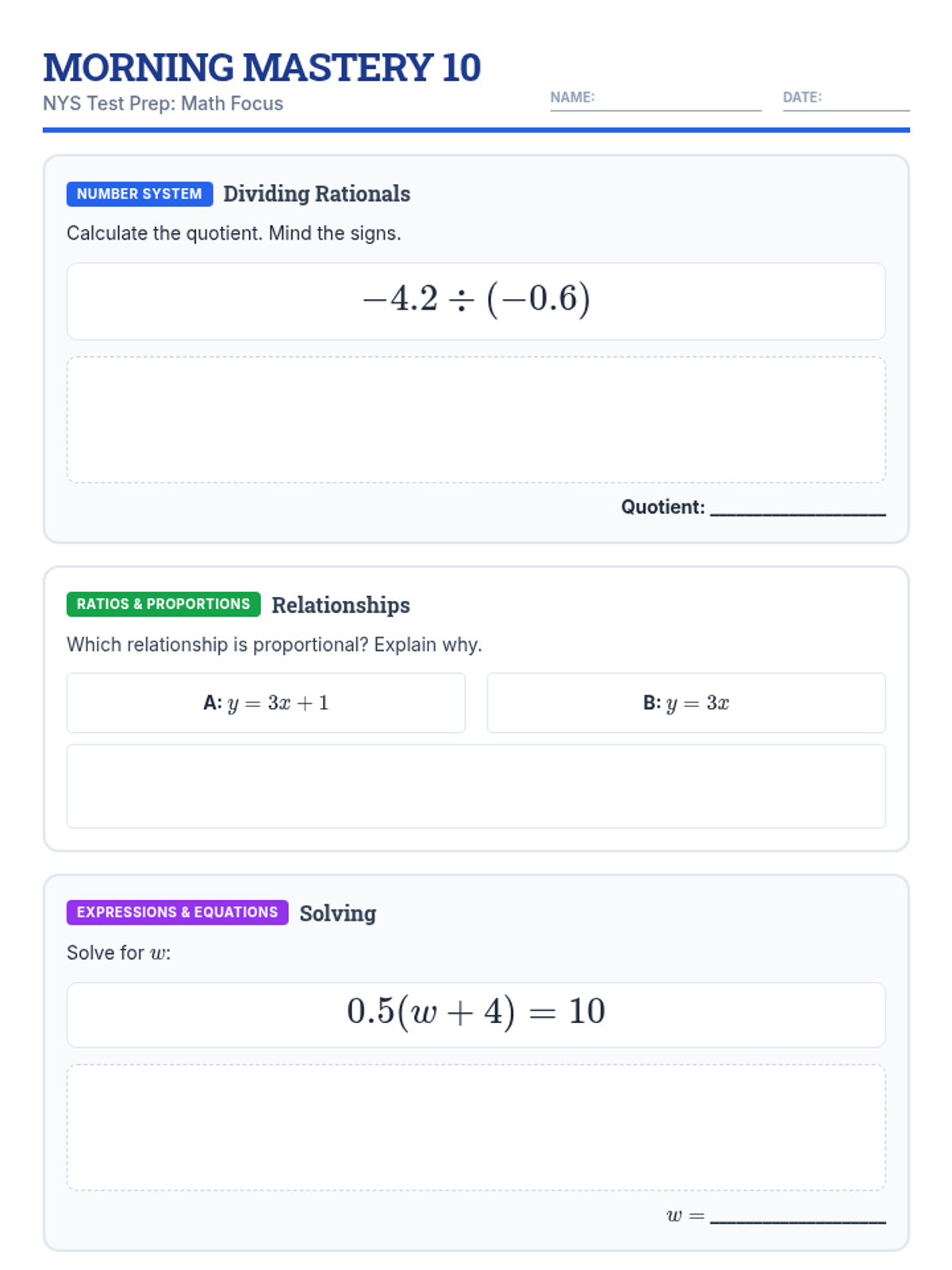
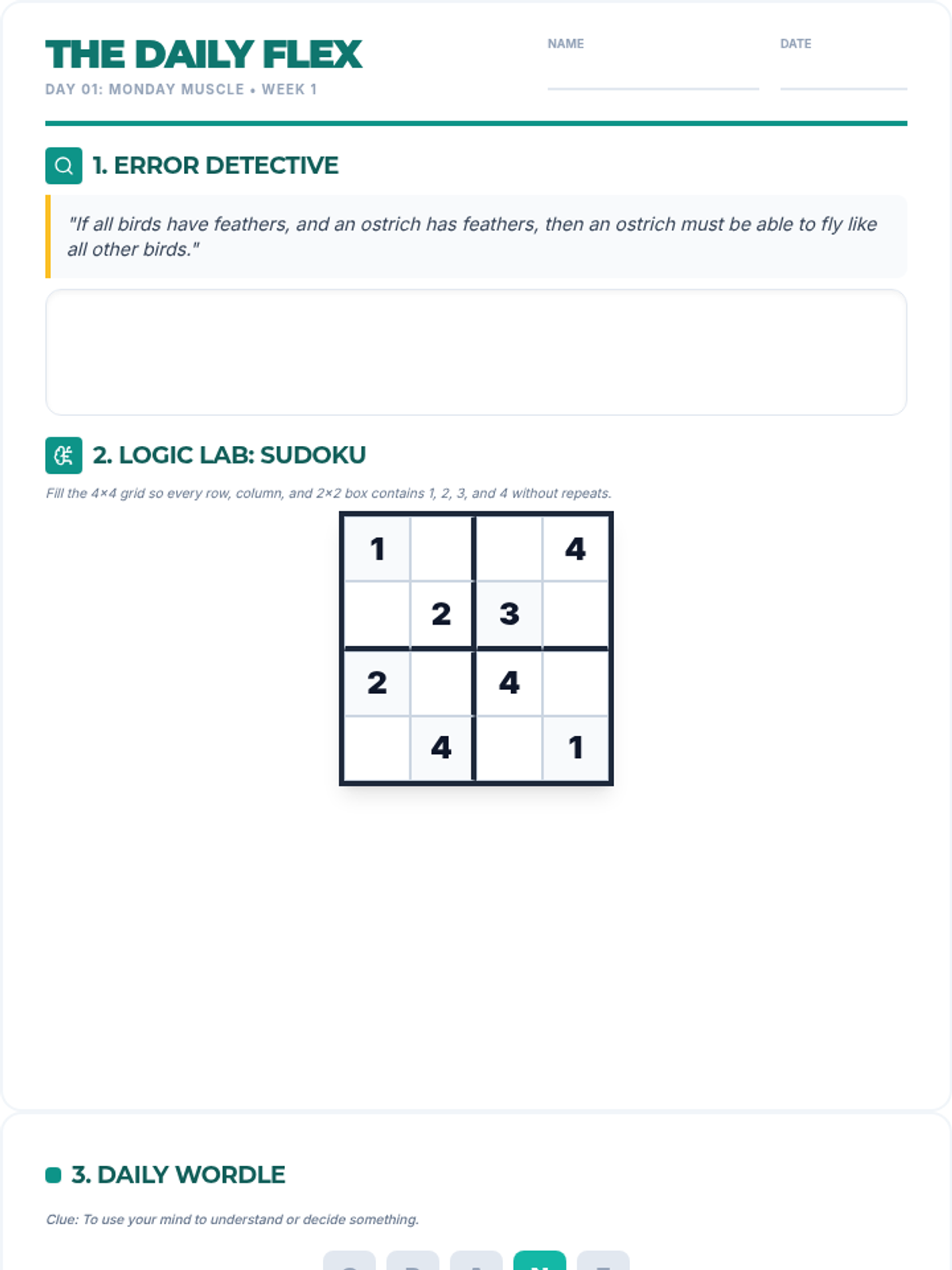
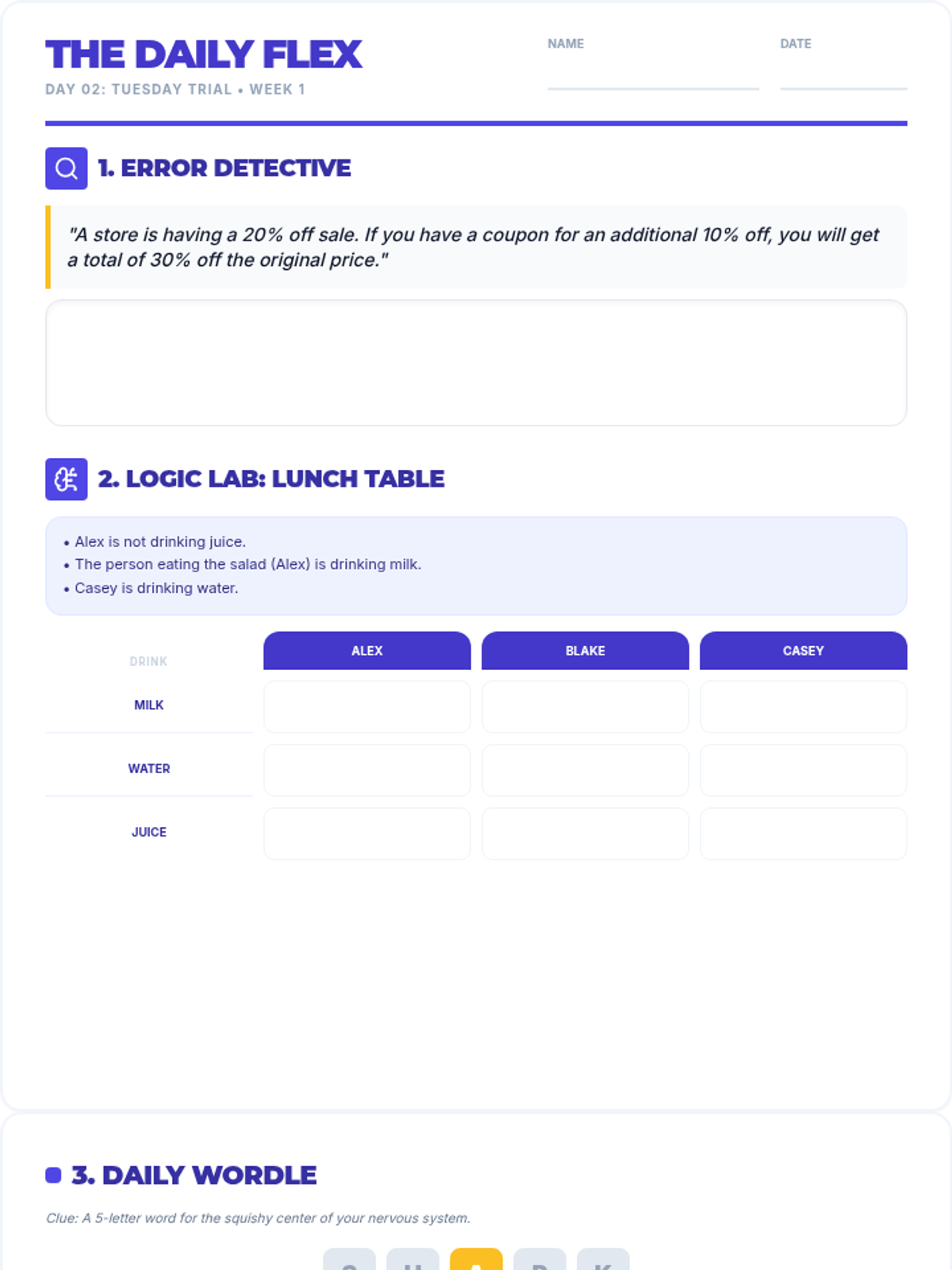
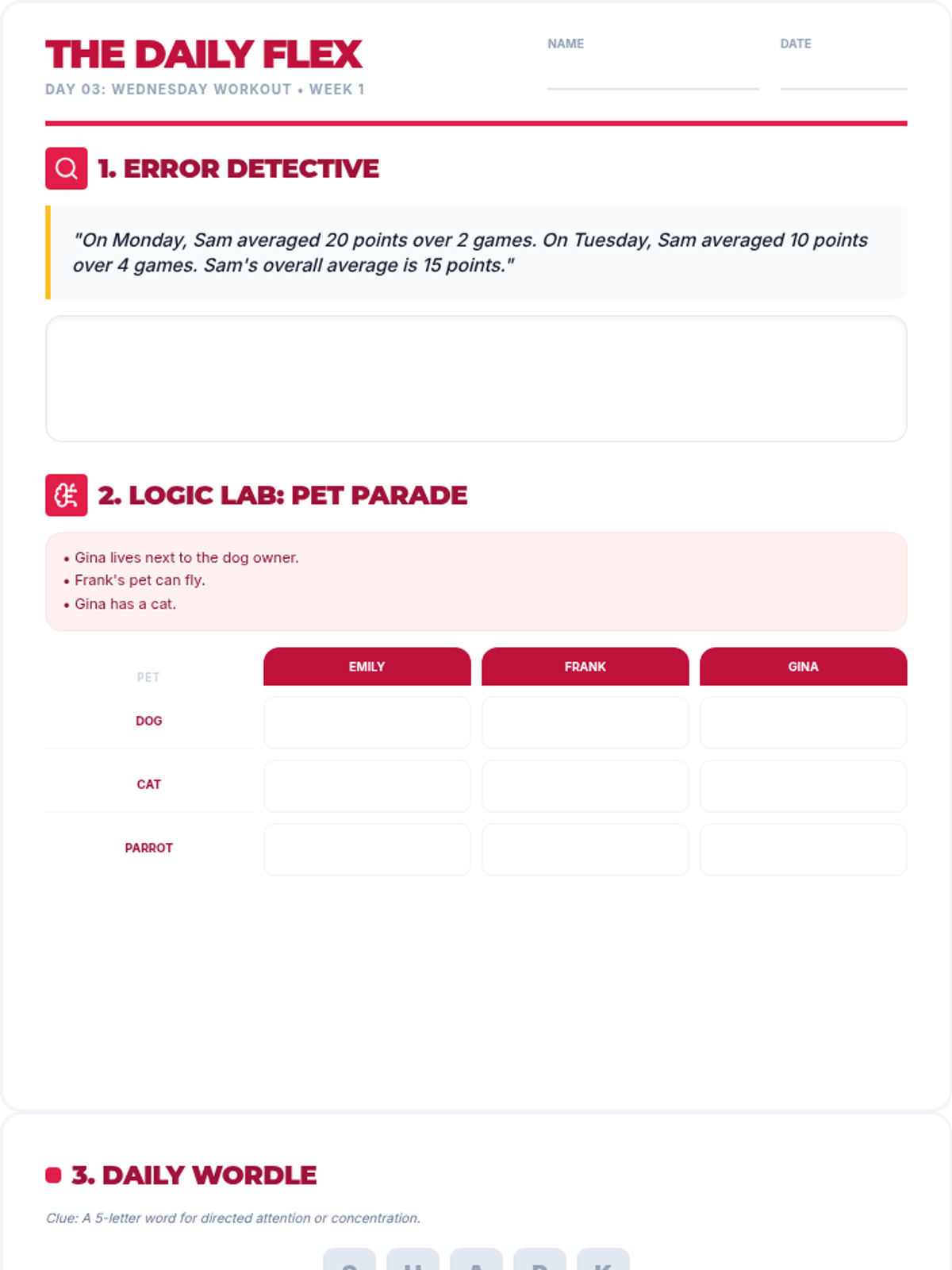
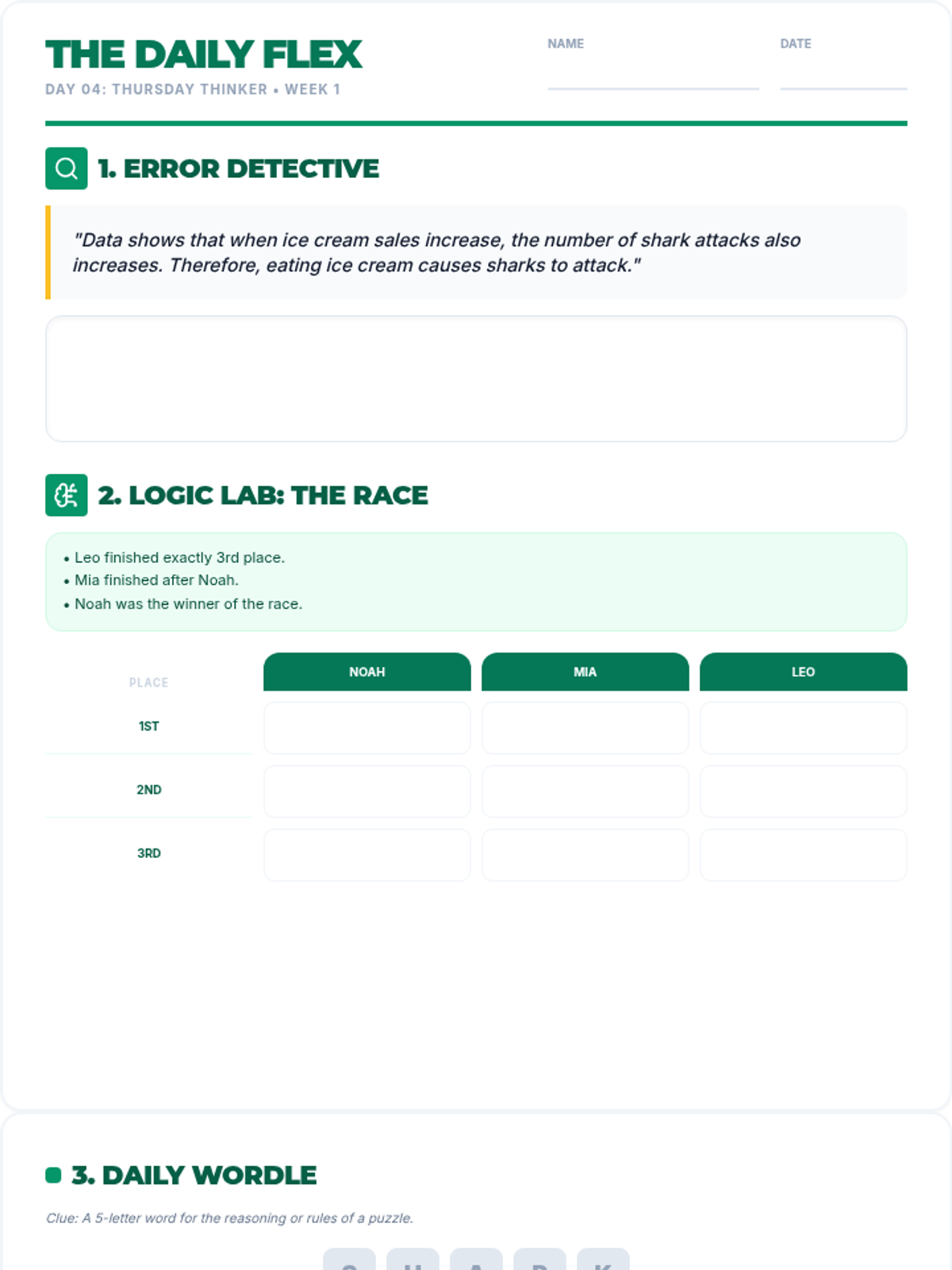
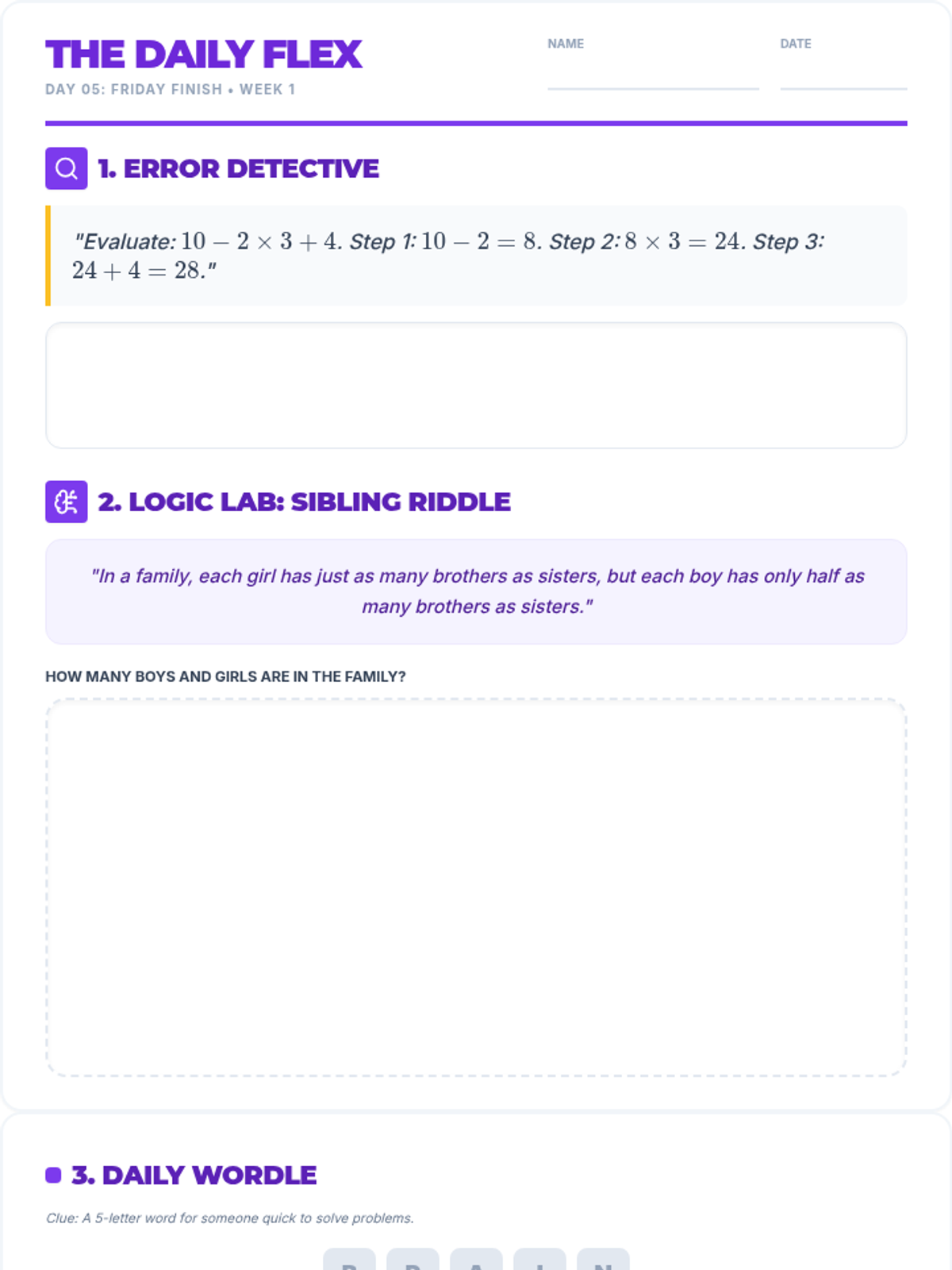
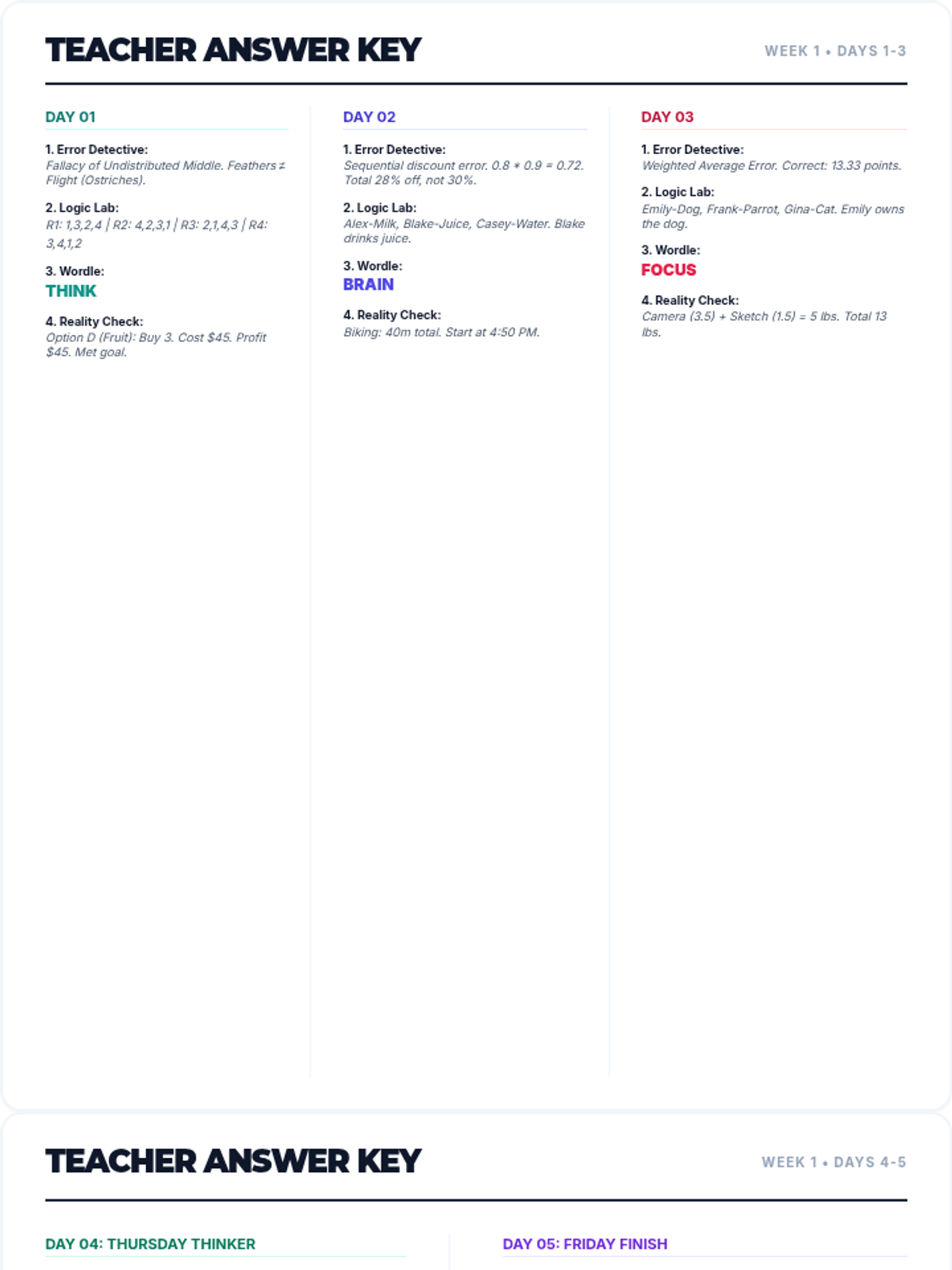
A 5-day series of morning work activities for 7th graders designed to sharpen critical thinking through error analysis, logic puzzles, open-ended problems, and real-world tasks.
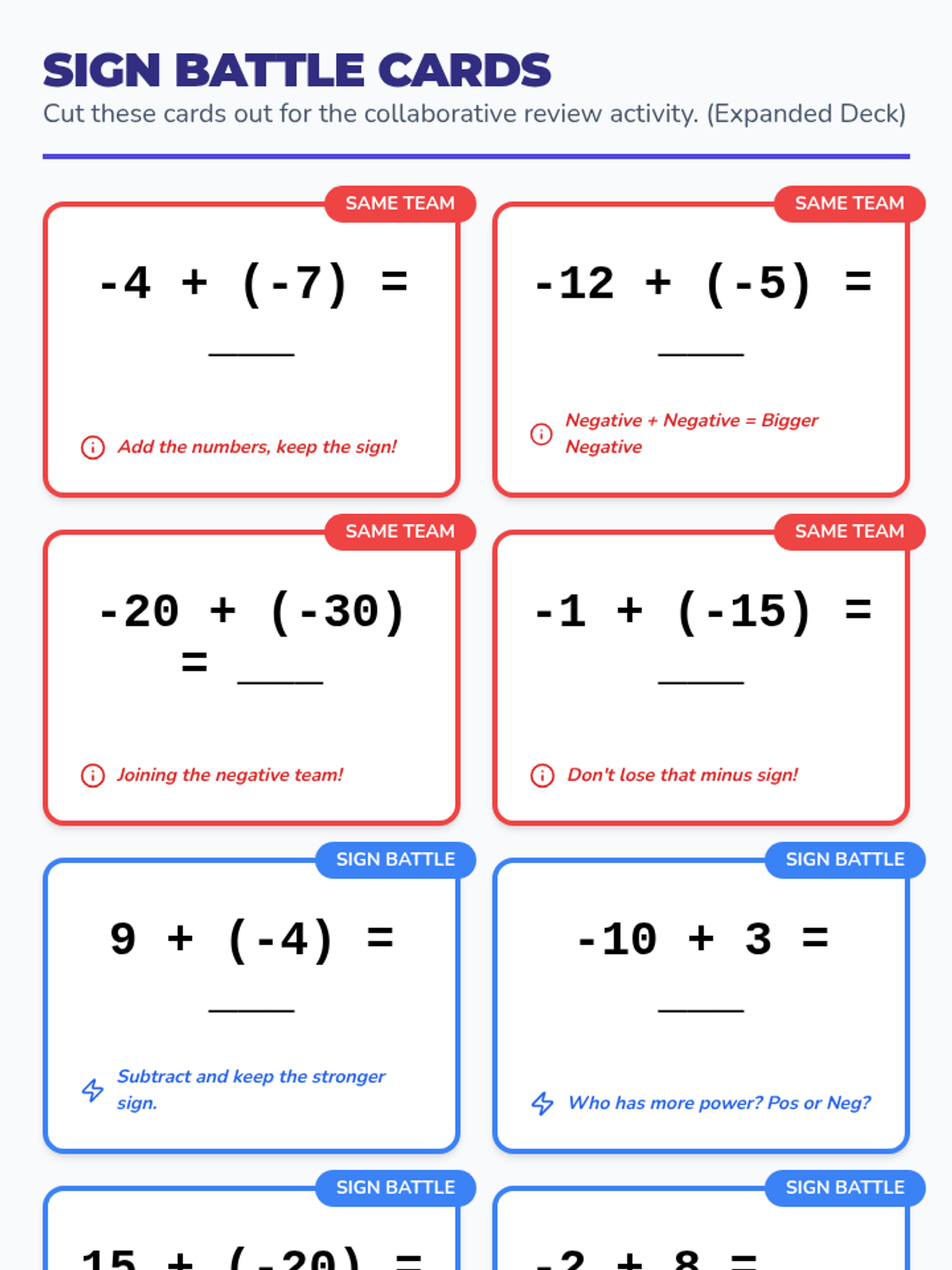
A comprehensive unit on adding and subtracting integers for grades 5-7, focusing on visual supports, mnemonic rules, and scaffolded practice for students with diverse learning needs.
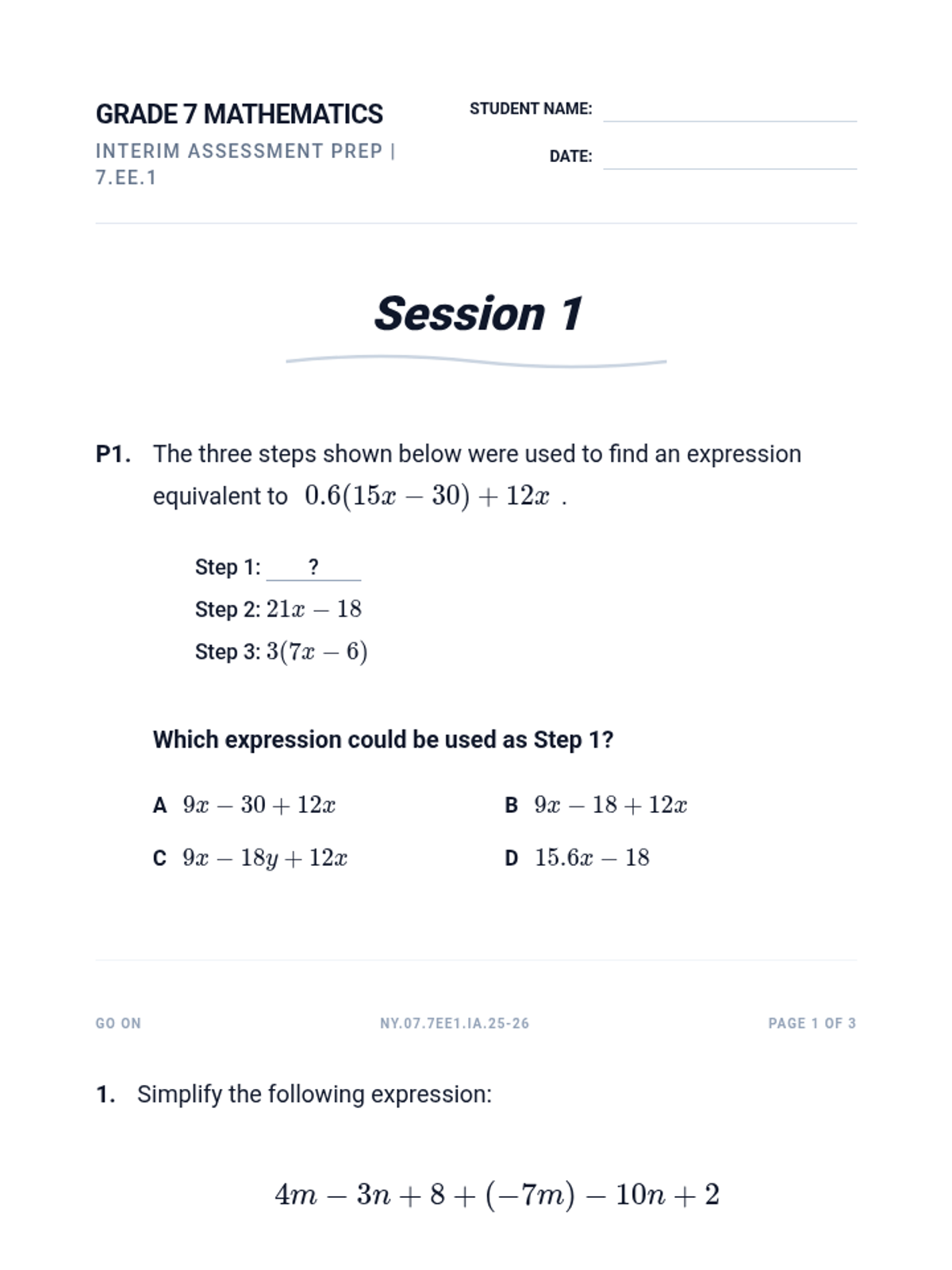
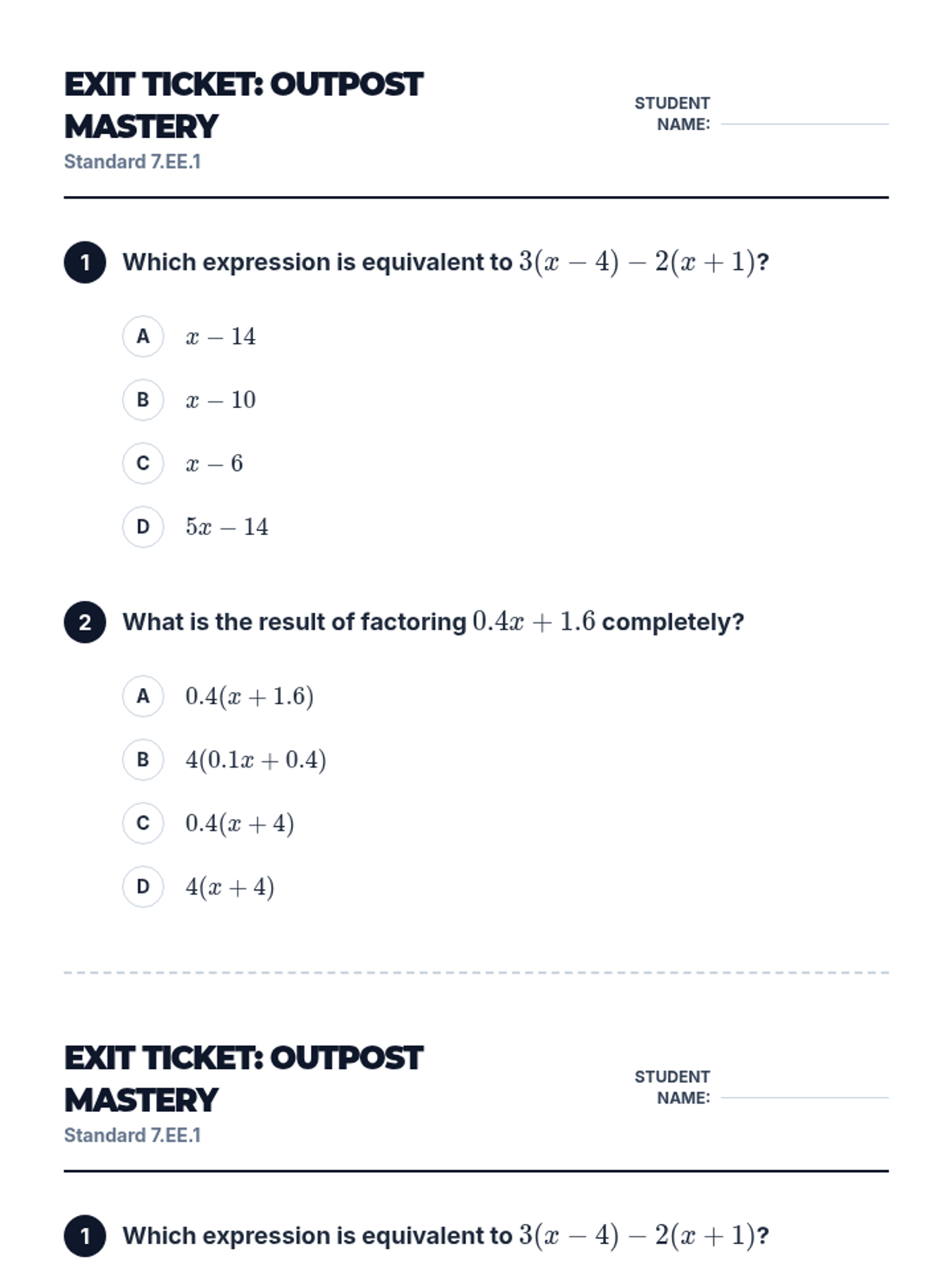
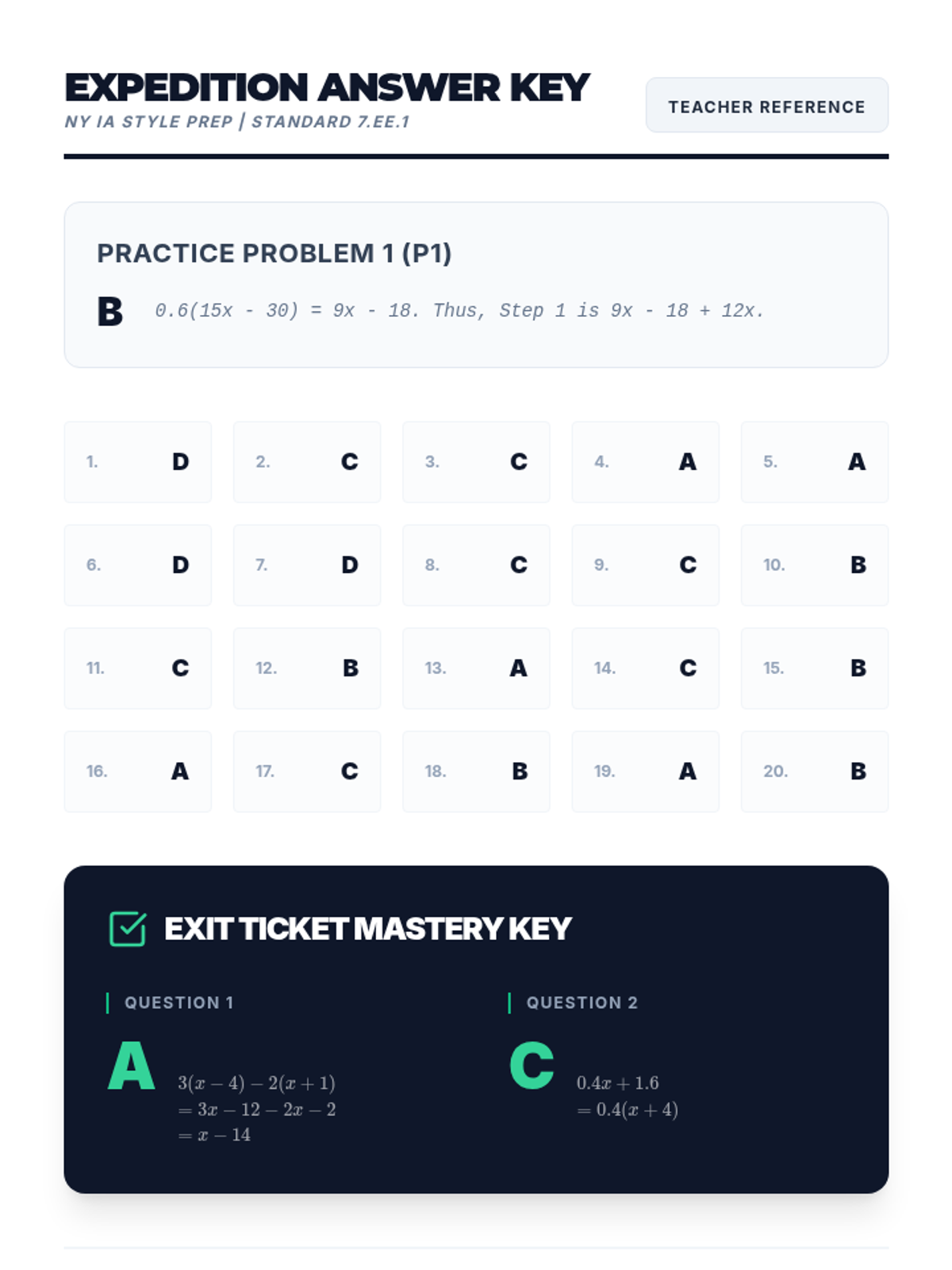
A comprehensive lesson focused on applying properties of operations to add, subtract, factor, and expand linear expressions with rational coefficients, covering CCSS 7.EE.1 through a jungle exploration theme.
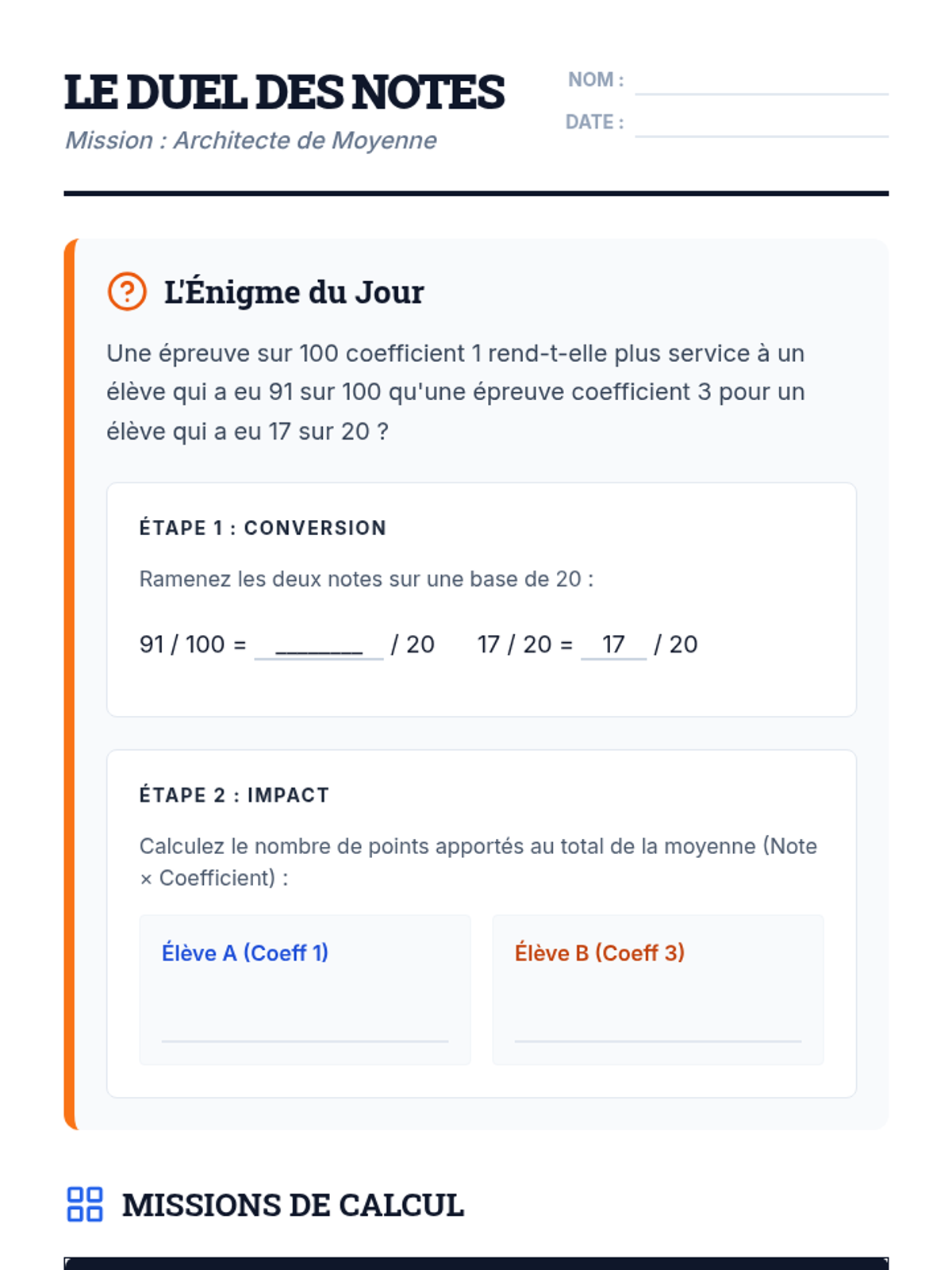
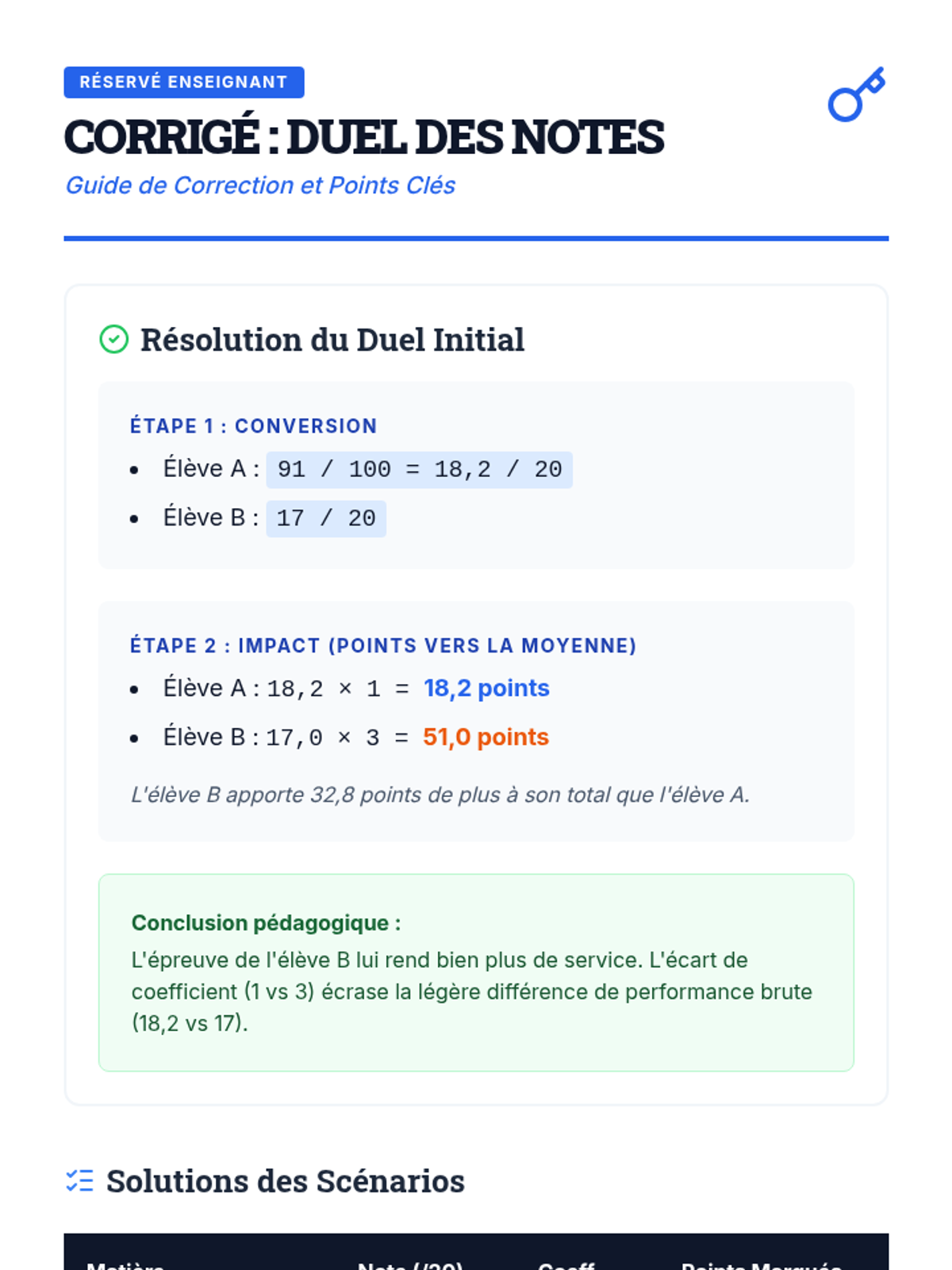
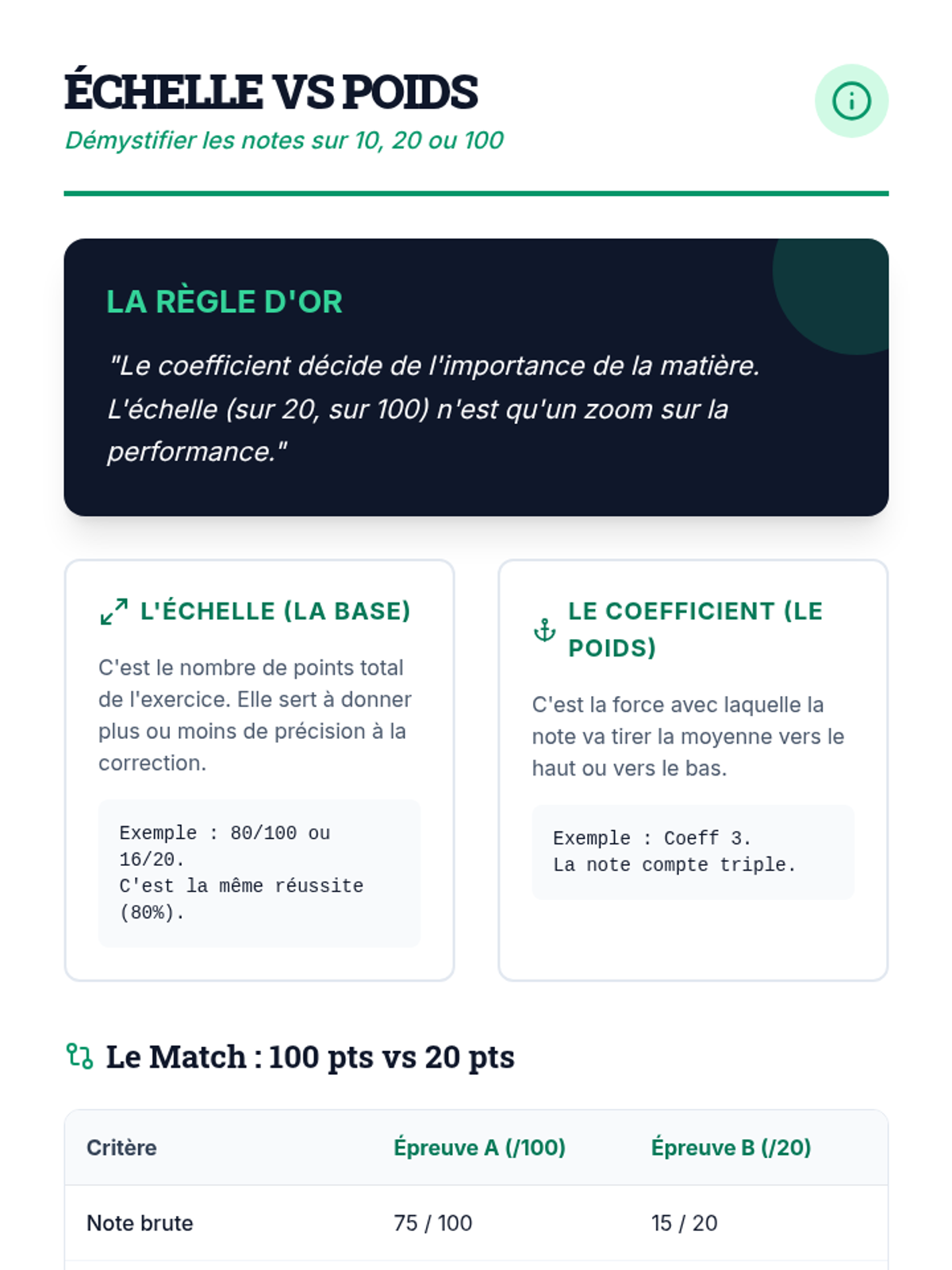
Une exploration mathématique de l'impact des coefficients sur les moyennes, utilisant des cas pratiques concrets pour comprendre la pondération et les moyennes pondérées.
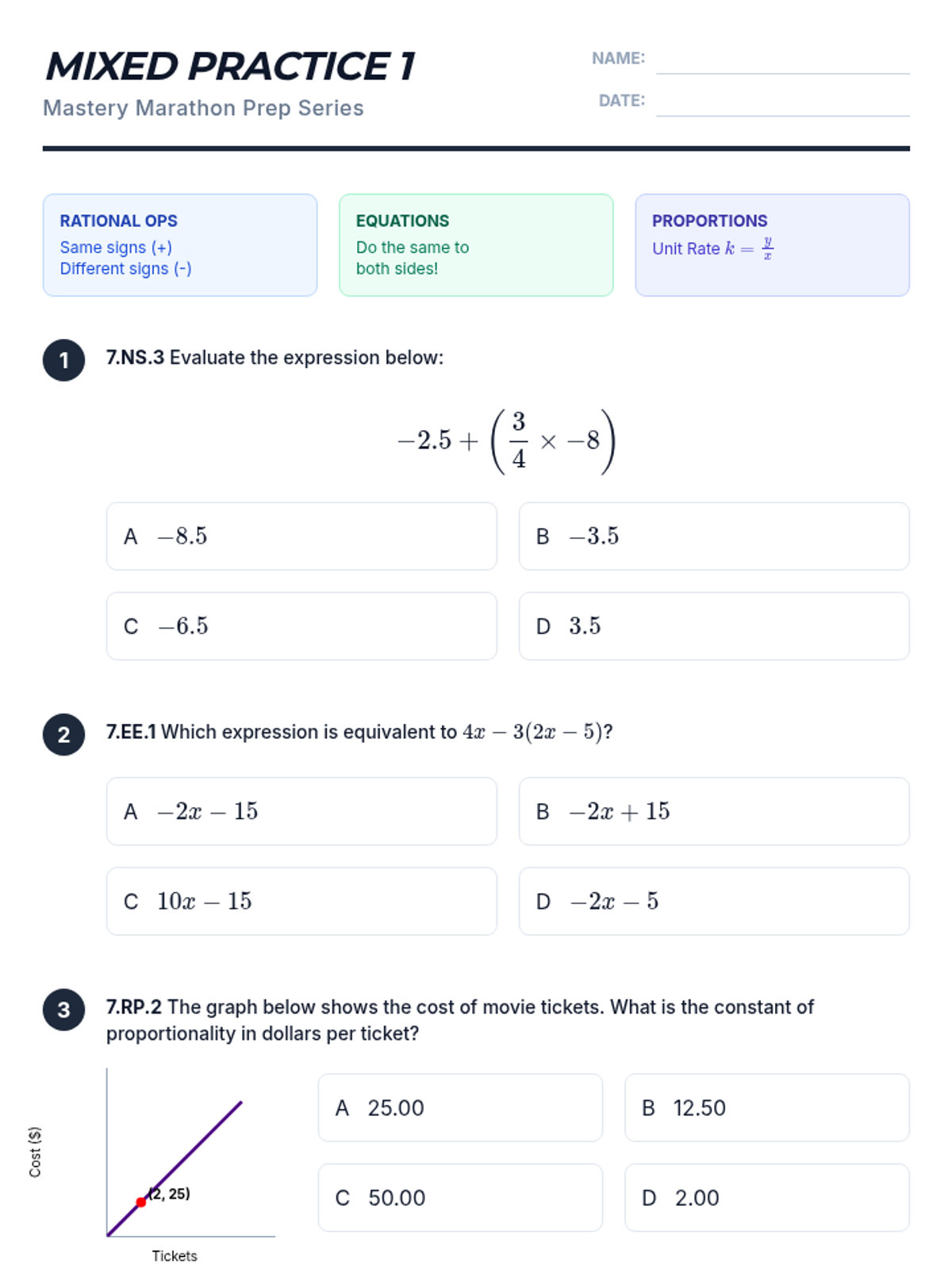
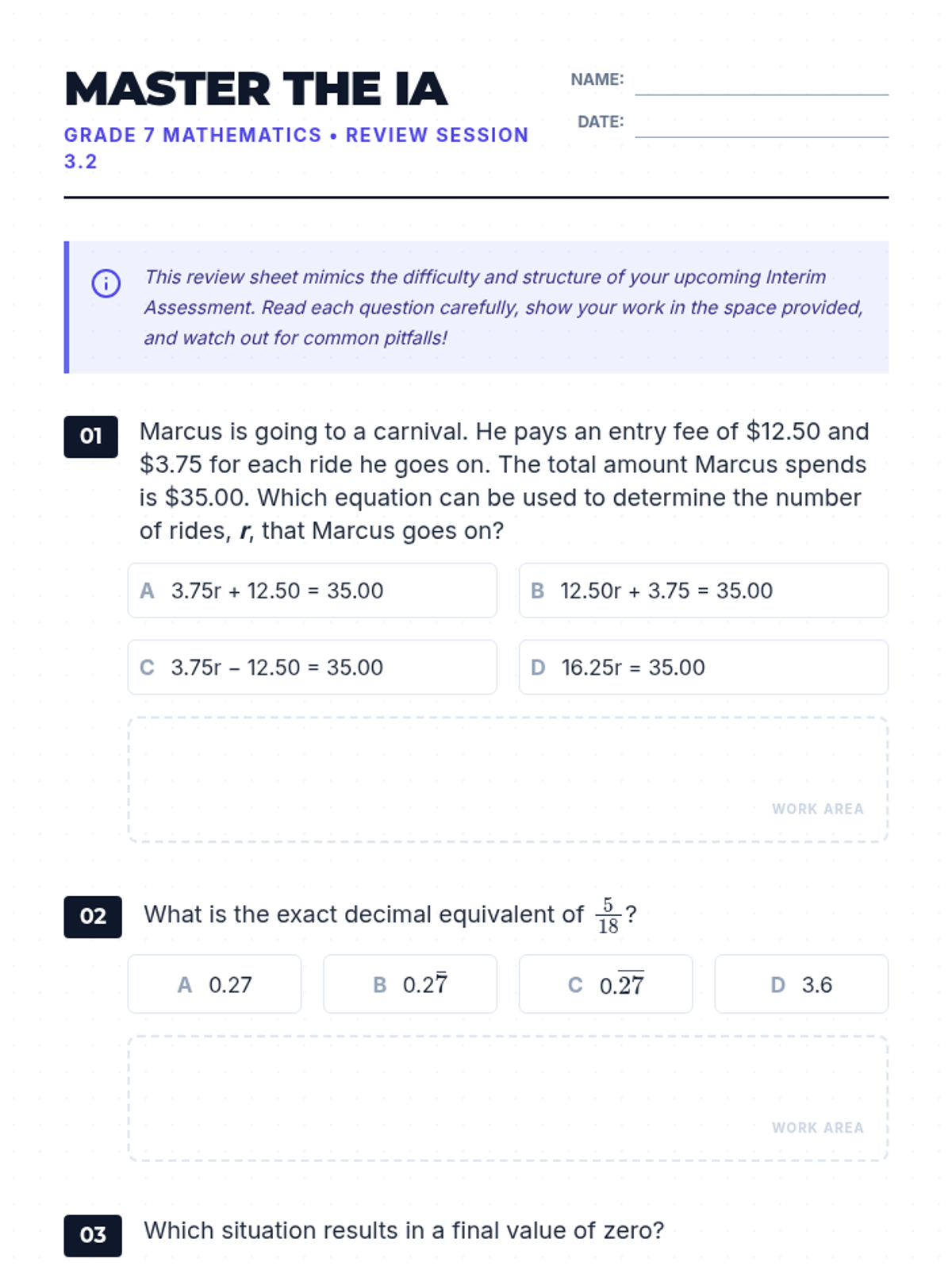
A comprehensive 6-part homework series designed to prepare 7th-grade students for their math interim assessments. Each sheet covers specific standards from Expressions and Equations, Ratios and Proportional Relationships, and Rational Number operations, mirroring the format and rigor of the assessment.
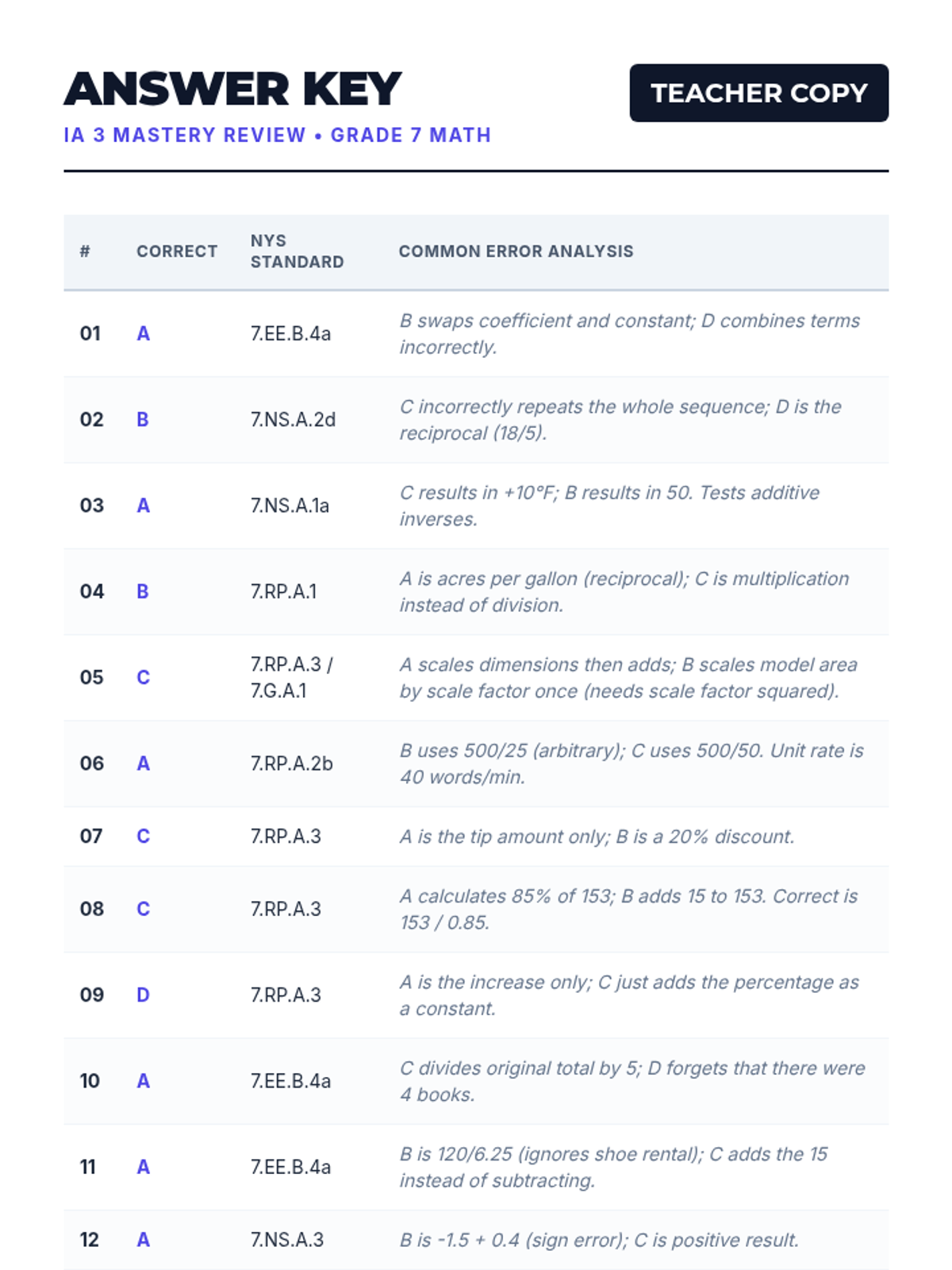
A comprehensive 5-day review program designed to prepare students for the Grade 7 Math Interim Assessment 3. Each day covers a key domain through targeted explanations, pro-tips, and practice problems focusing on rational numbers, expressions, equations, proportions, percents, and circles.
A series of targeted review lessons designed to prepare 7th-grade students for state assessments in mathematics, covering all major clusters including Ratios, Number Systems, and Geometry.
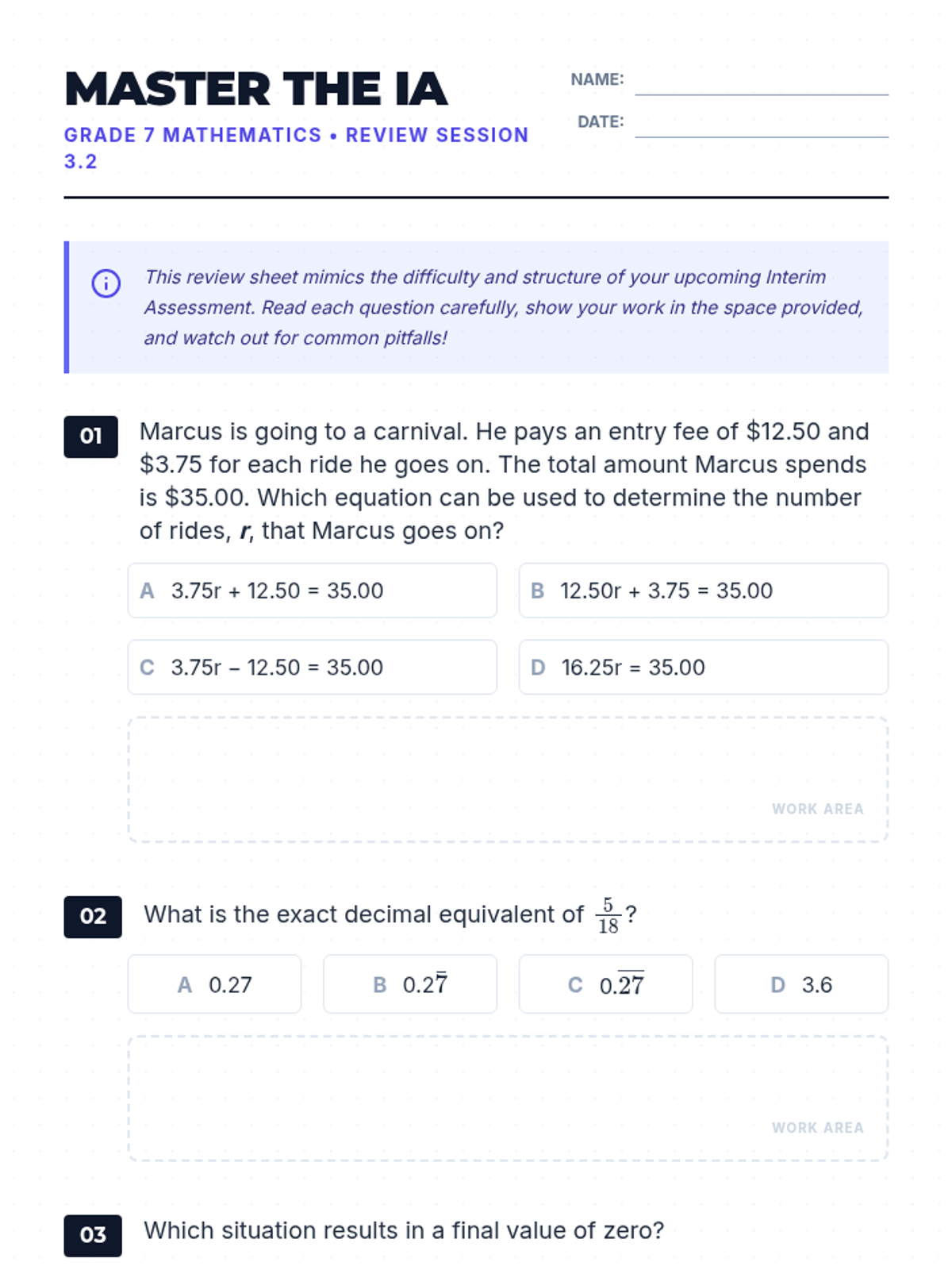
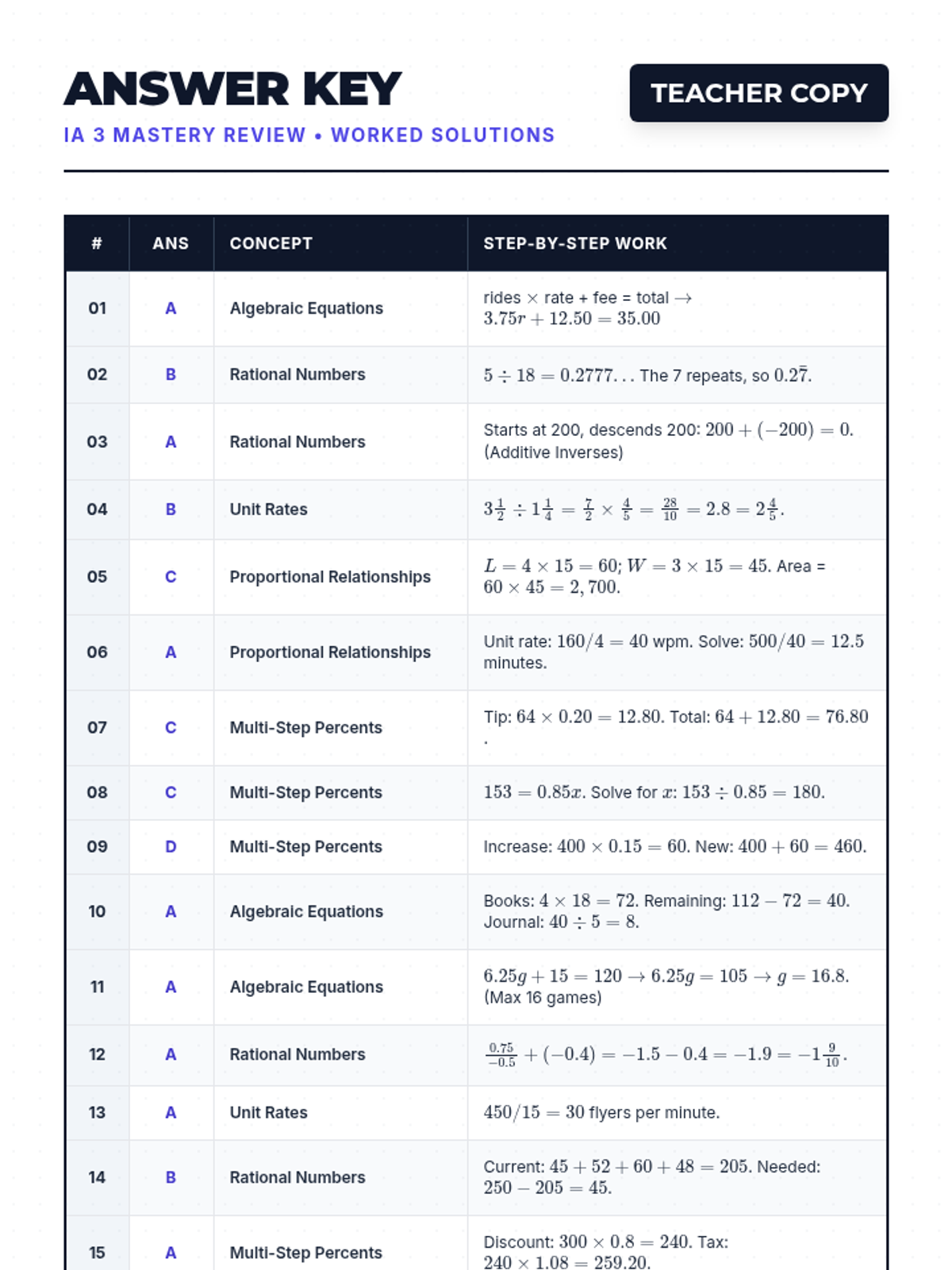
A comprehensive review for the Grade 7 Math Interim Assessment 3, covering algebraic equations, proportional relationships, rational numbers, and multi-step percent problems.
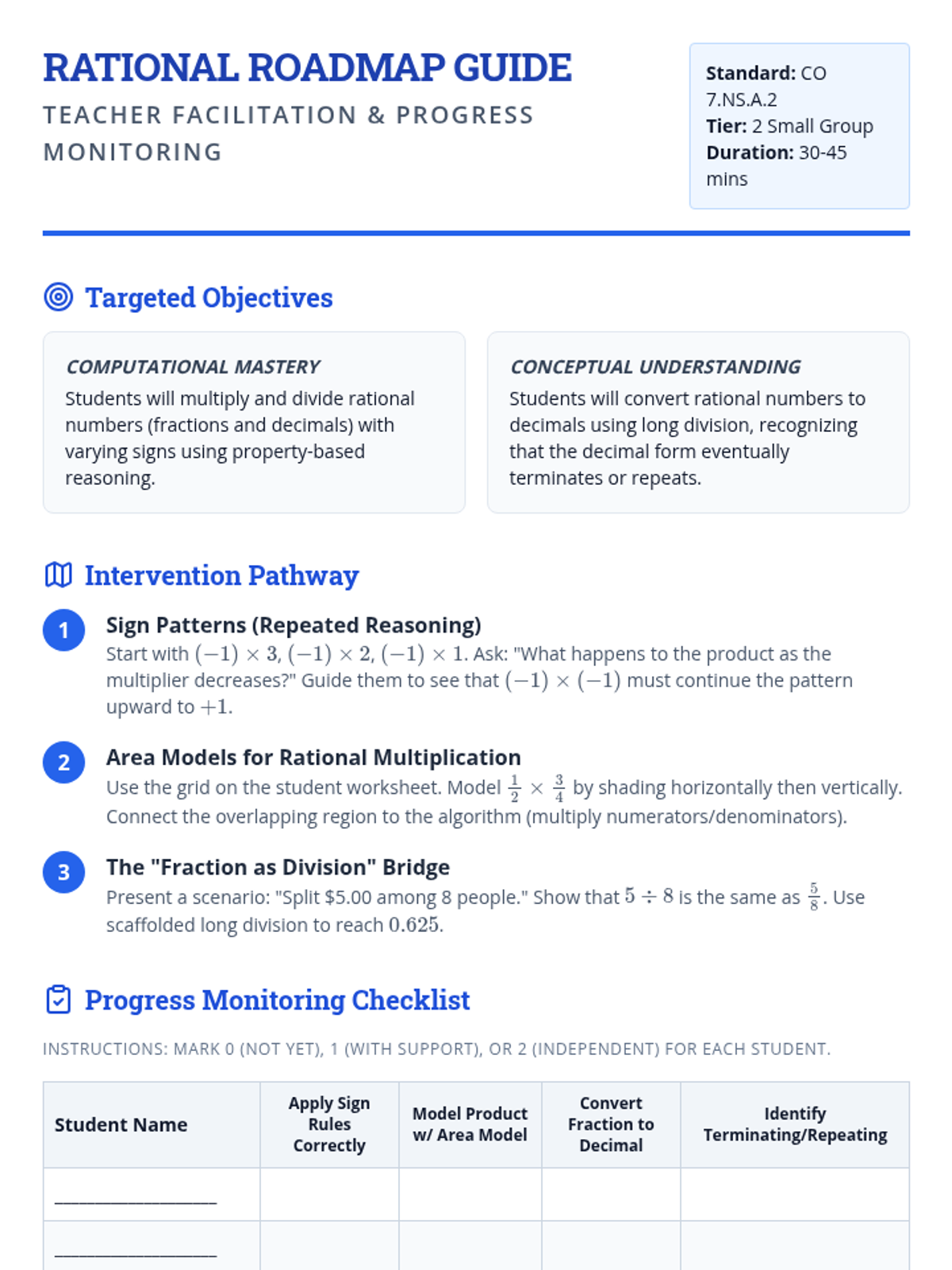
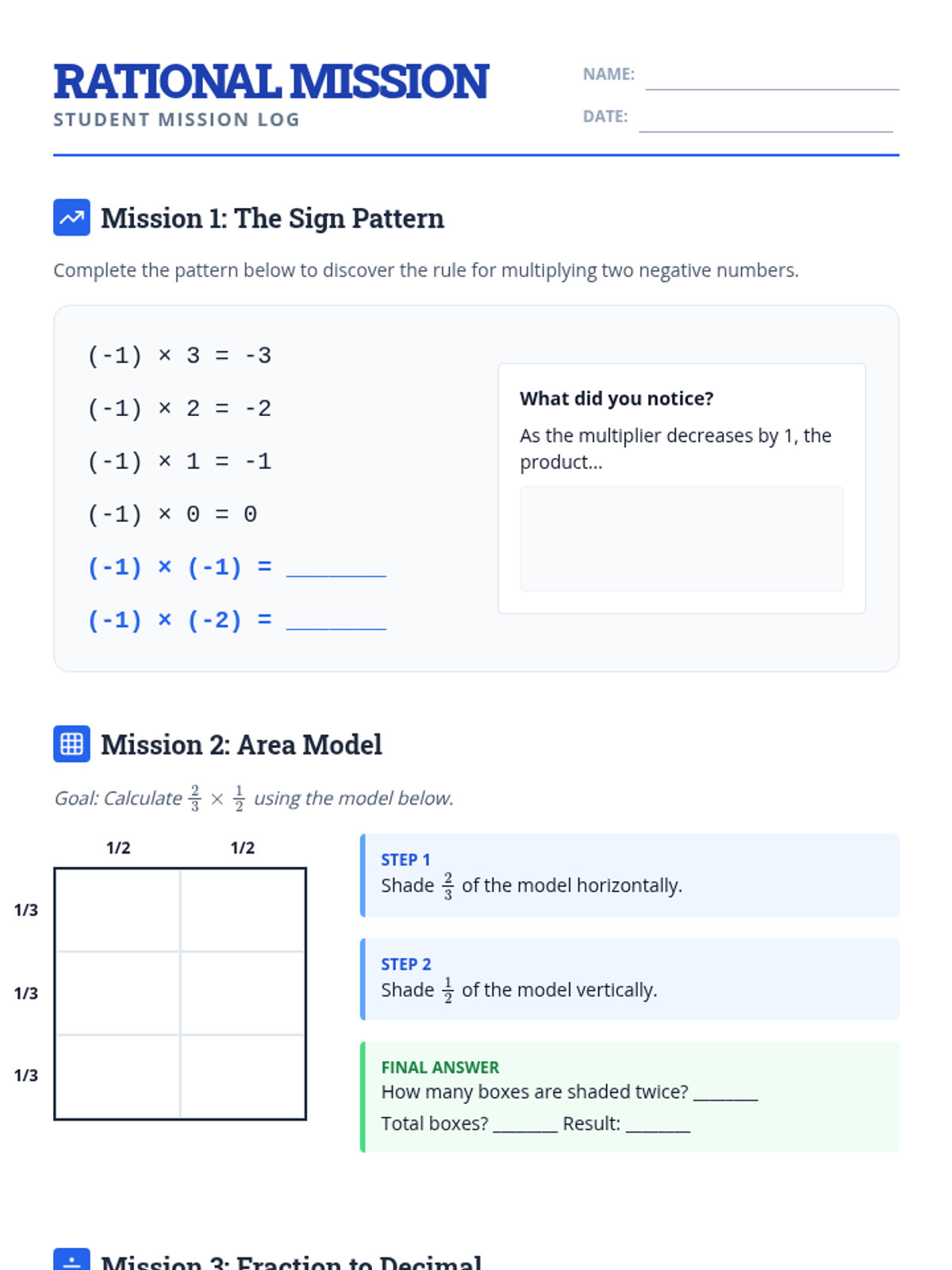
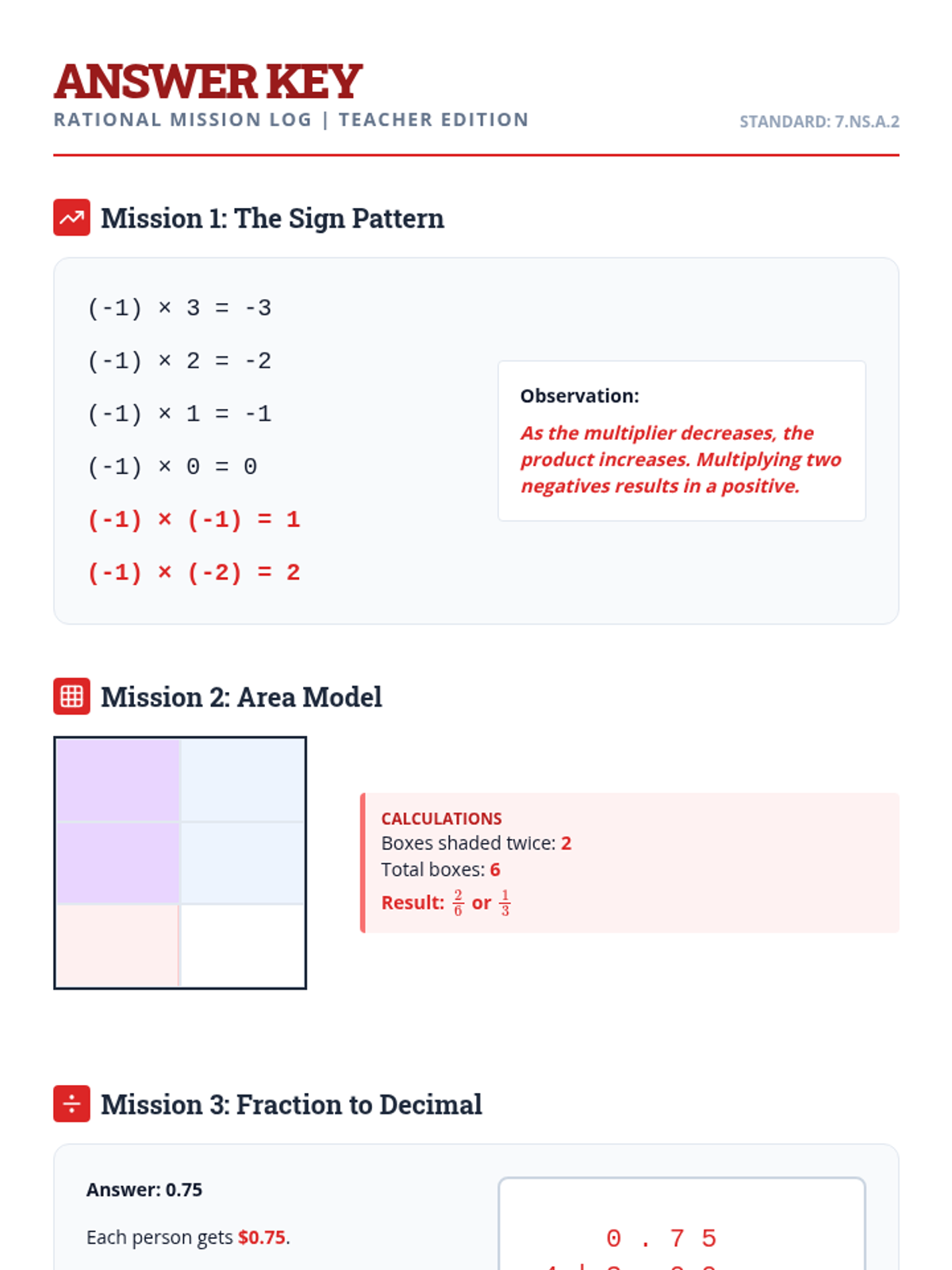
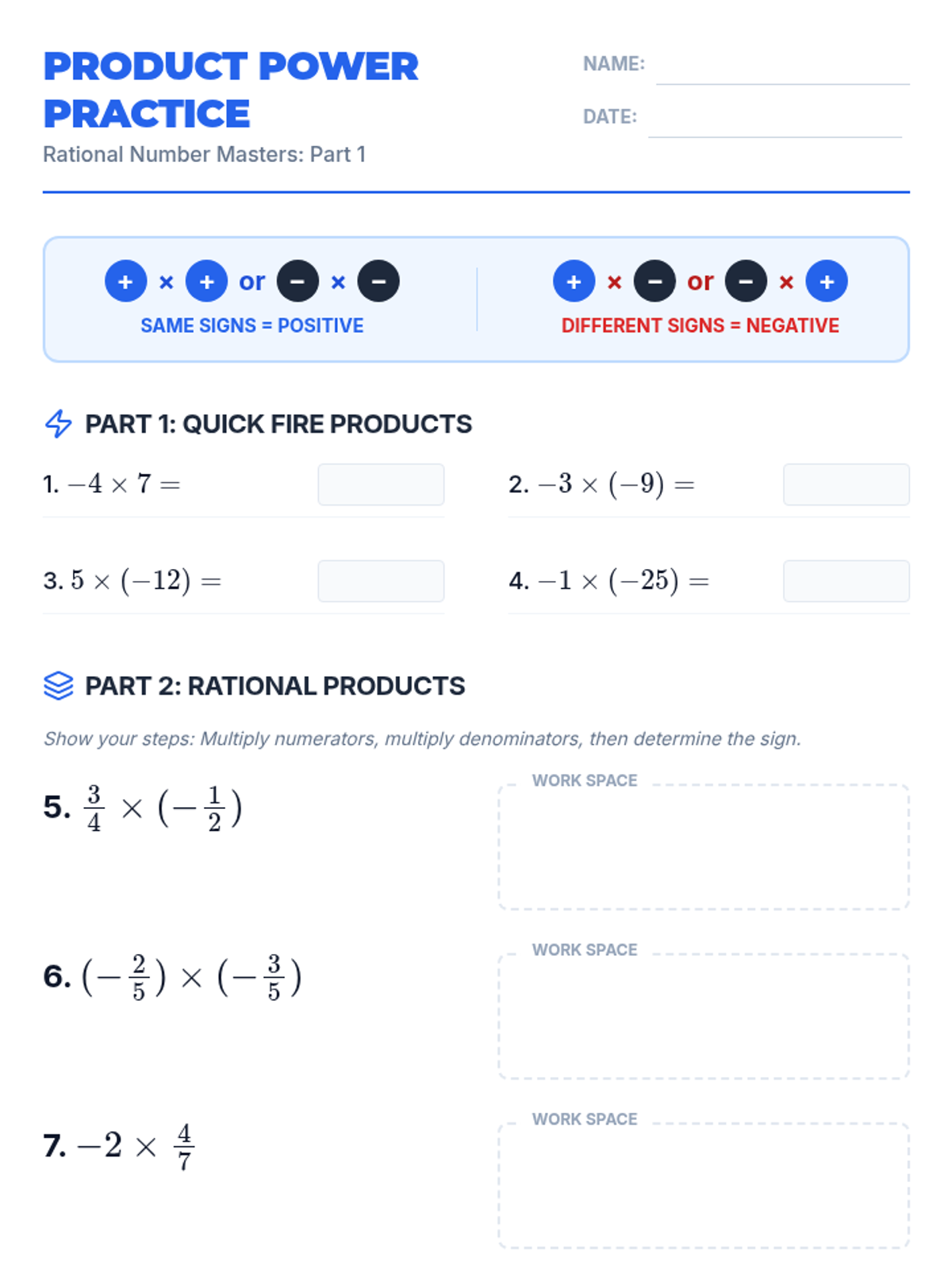
A specialized intervention sequence for 7th grade students focusing on multiplying and dividing rational numbers. This sequence emphasizes visual models, sign rules, and real-world application of decimal conversion.
A comprehensive Tier 2 intervention sequence focused on multiplying and dividing rational numbers. Students move from concrete modeling with fraction tiles to abstract long division and fluency practice.
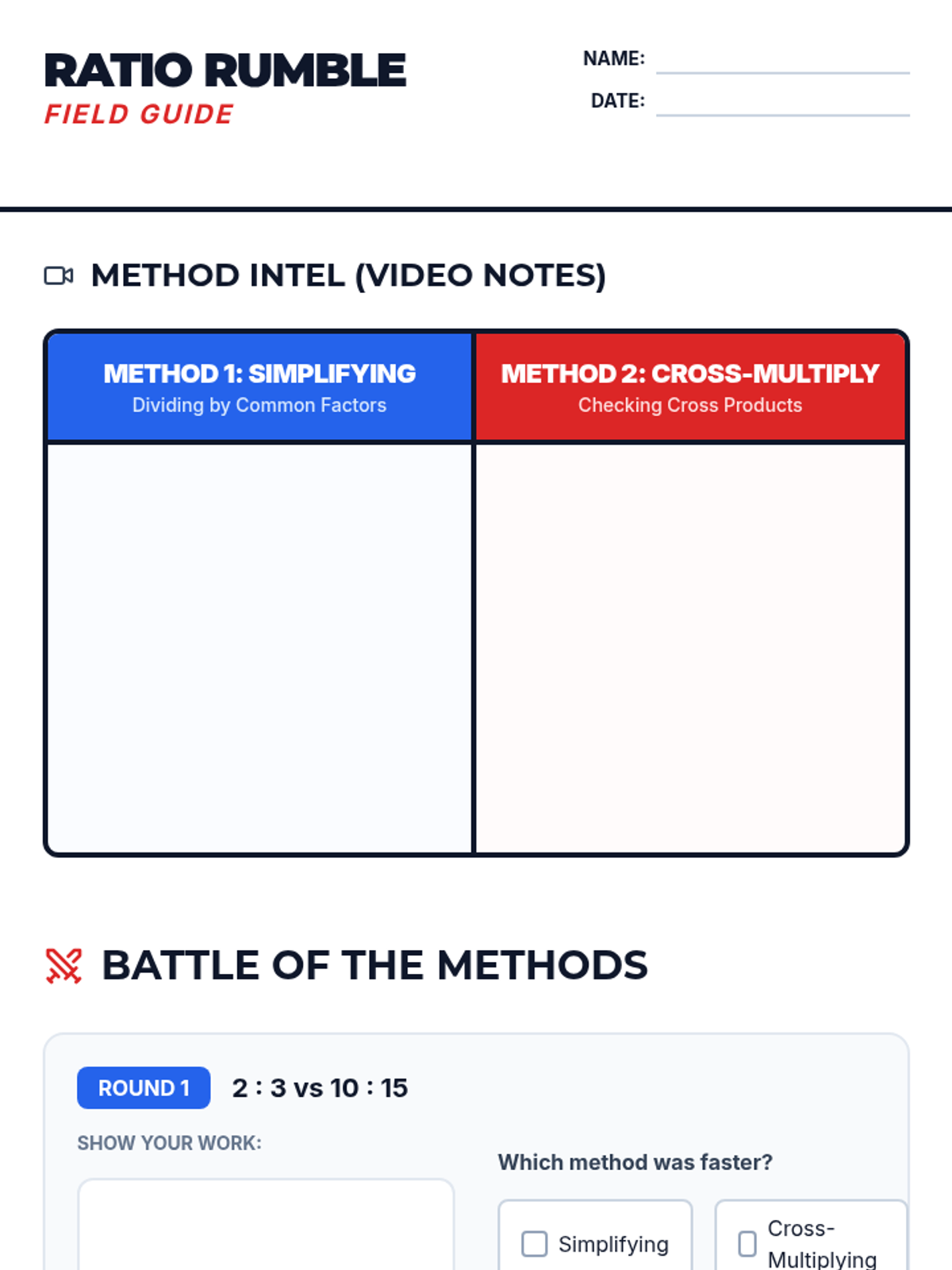
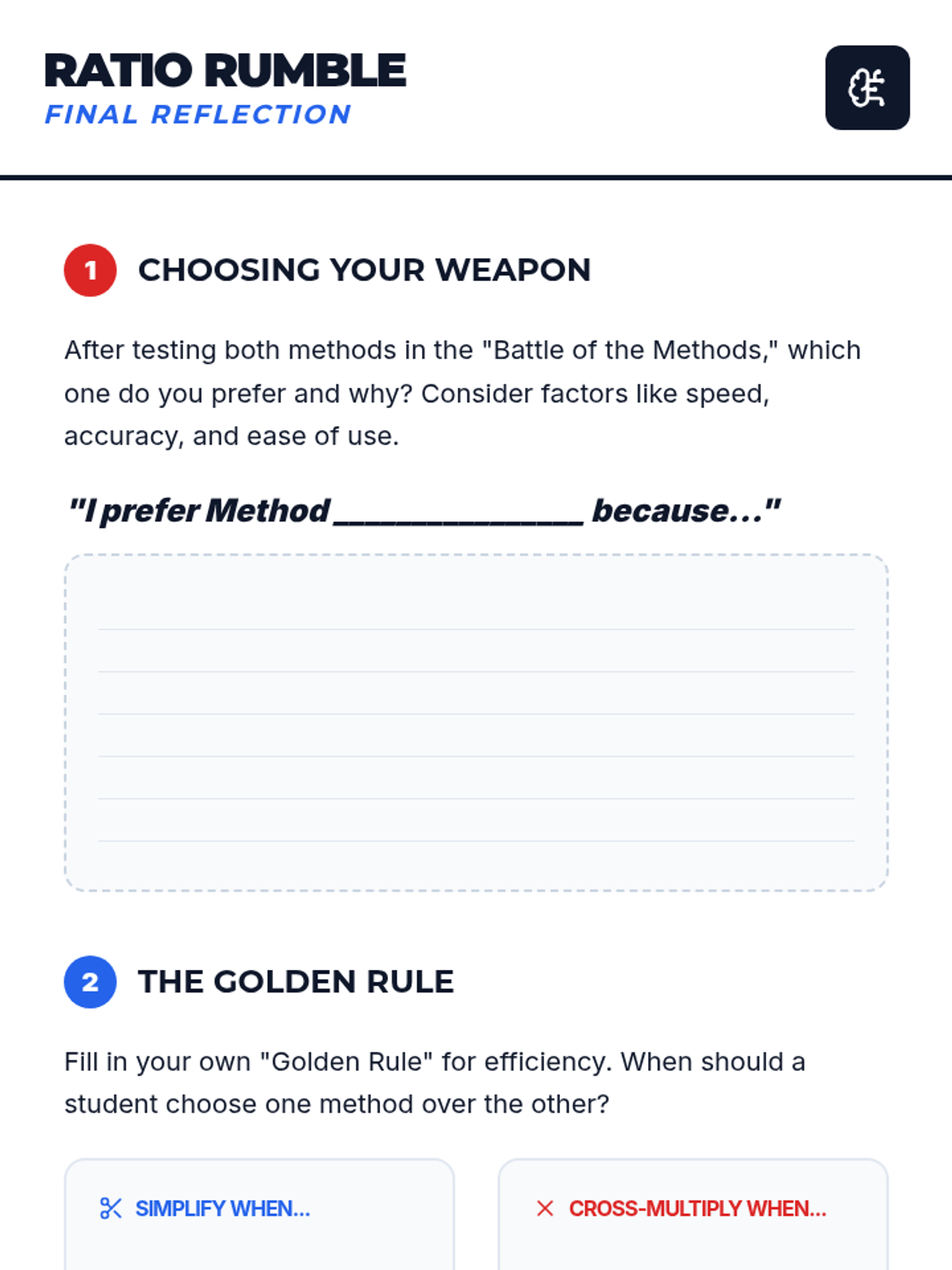
A math unit focused on understanding and applying ratios and proportions through visual methods, mental math strategies, and algorithmic problem-solving.
A series of lessons focused on mastering algebraic and numerical fractions through visual strategies and structural simplification.
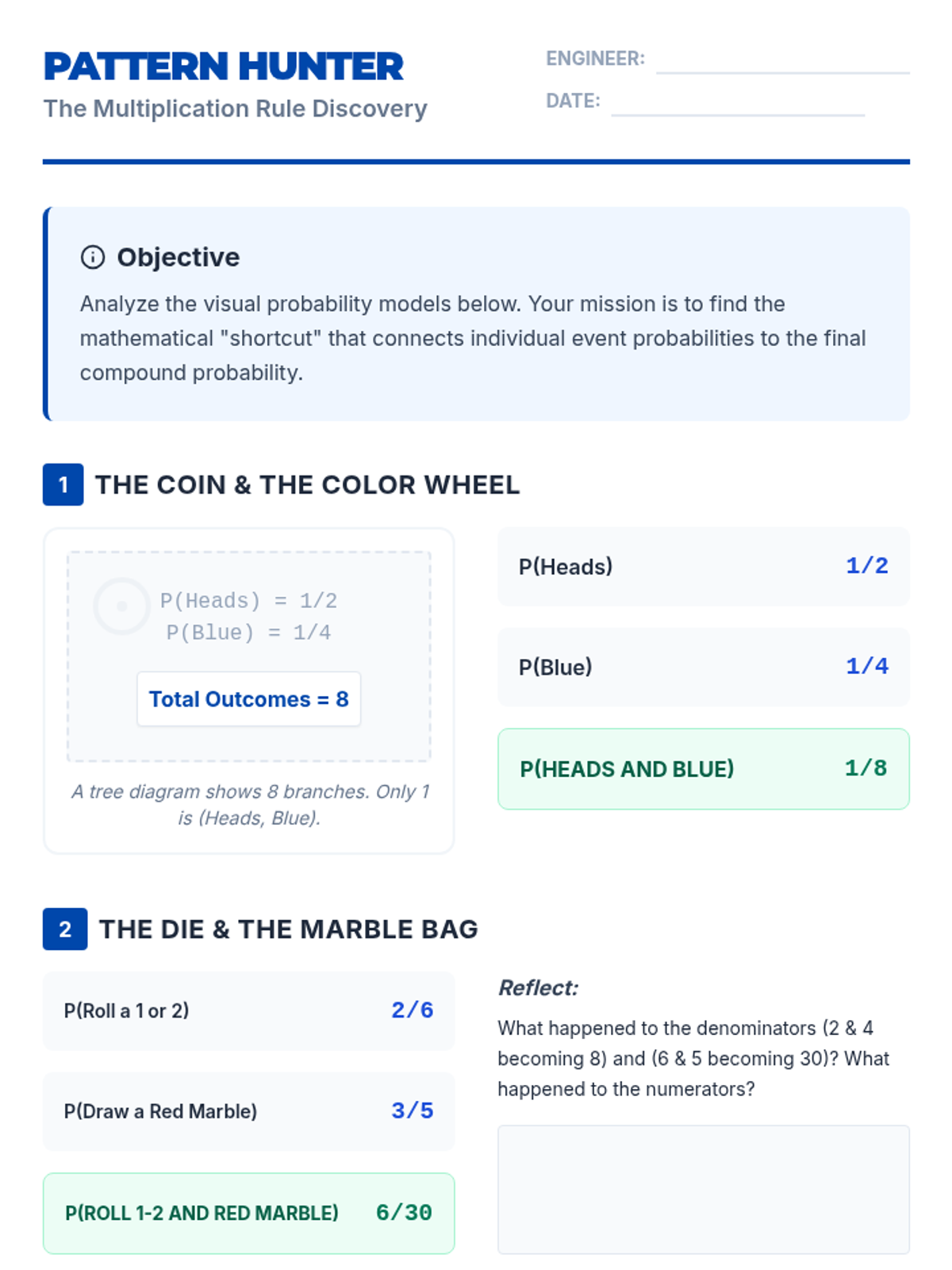
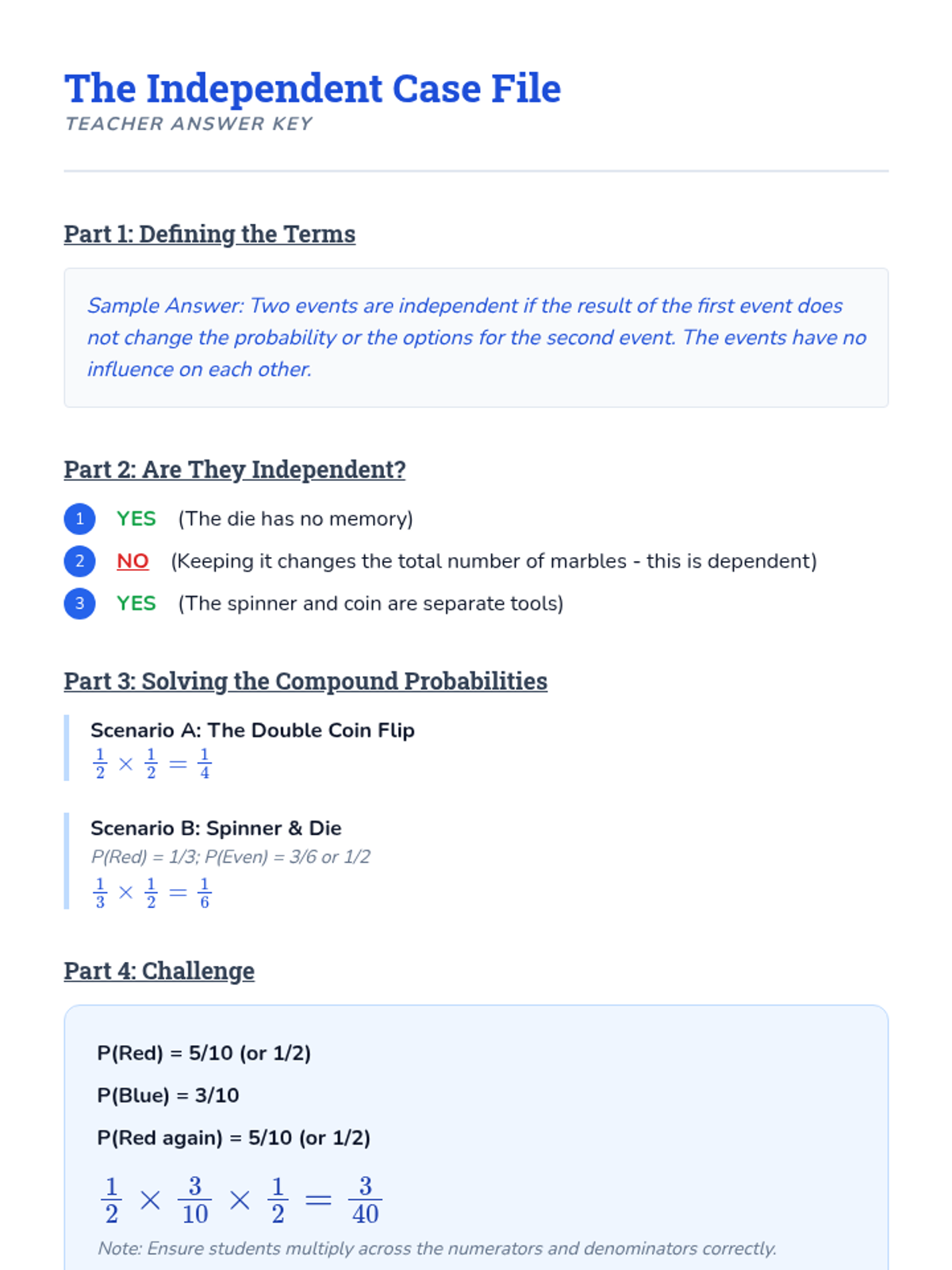
This mastery-based sequence focuses on the algebraic side of probability, specifically utilizing the multiplication rule for complex problems. Students progress from visual models to abstract formulas, covering independent and dependent events, 'at least one' scenarios using complements, and mixed strategy application.
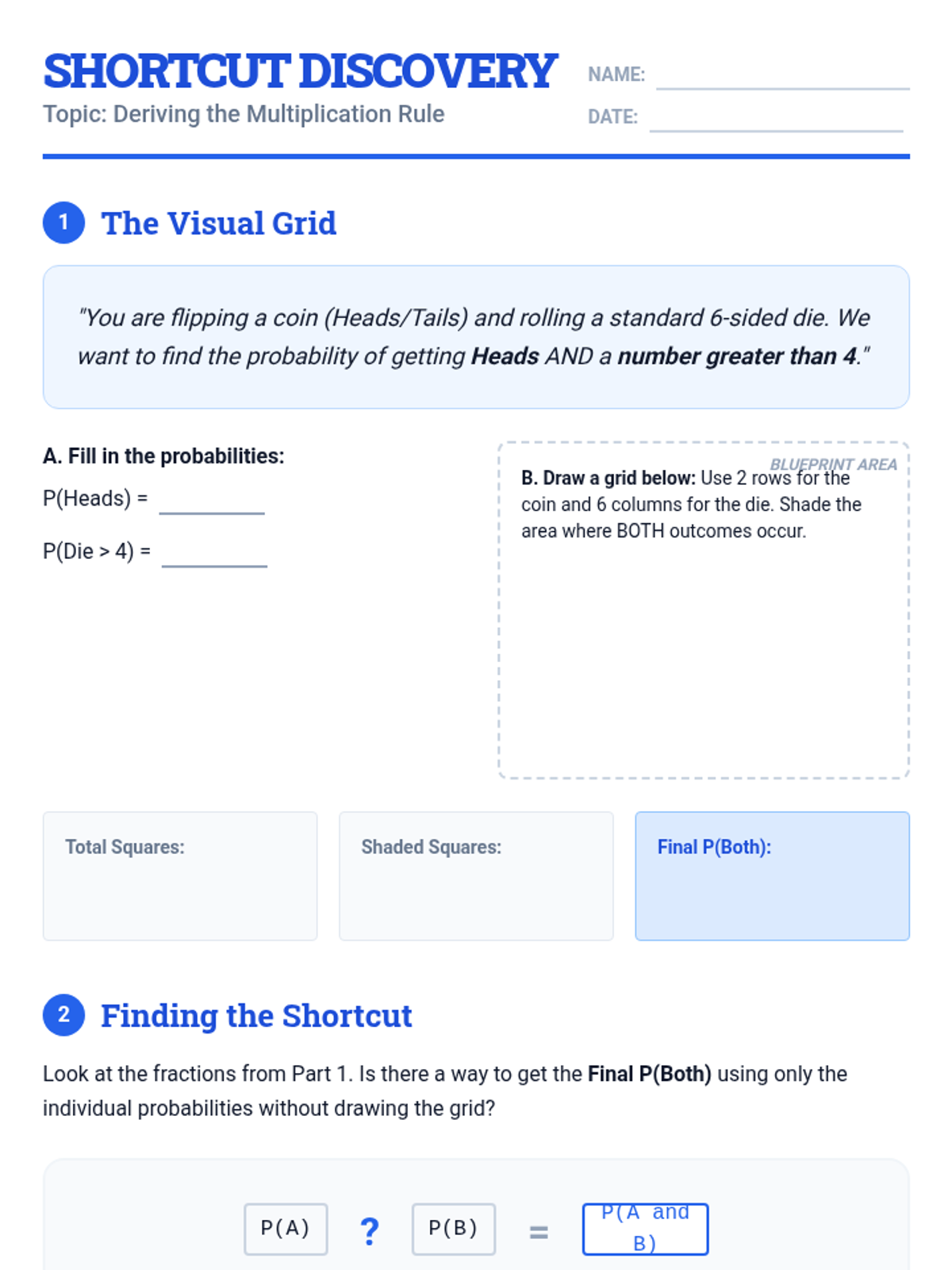
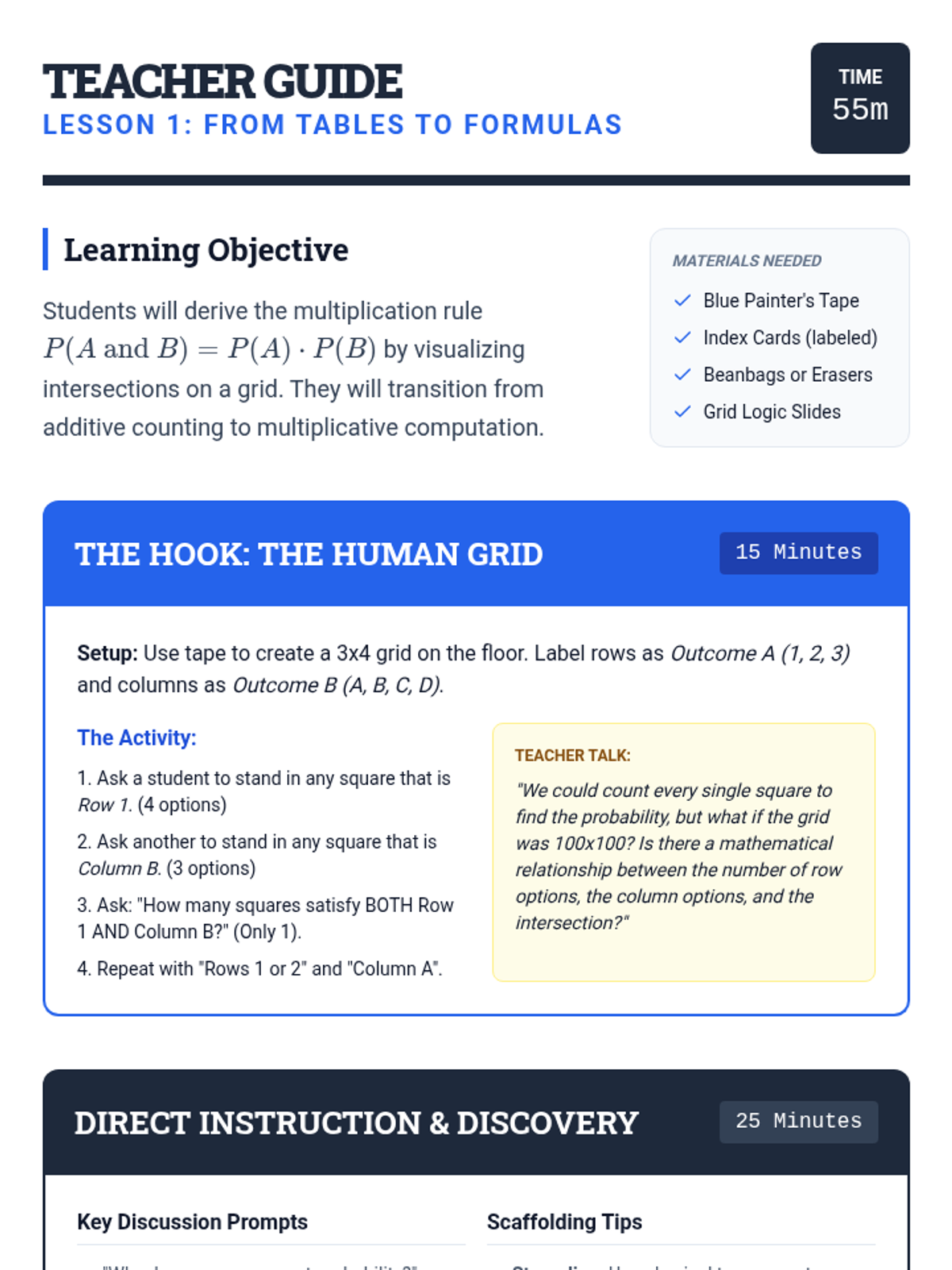
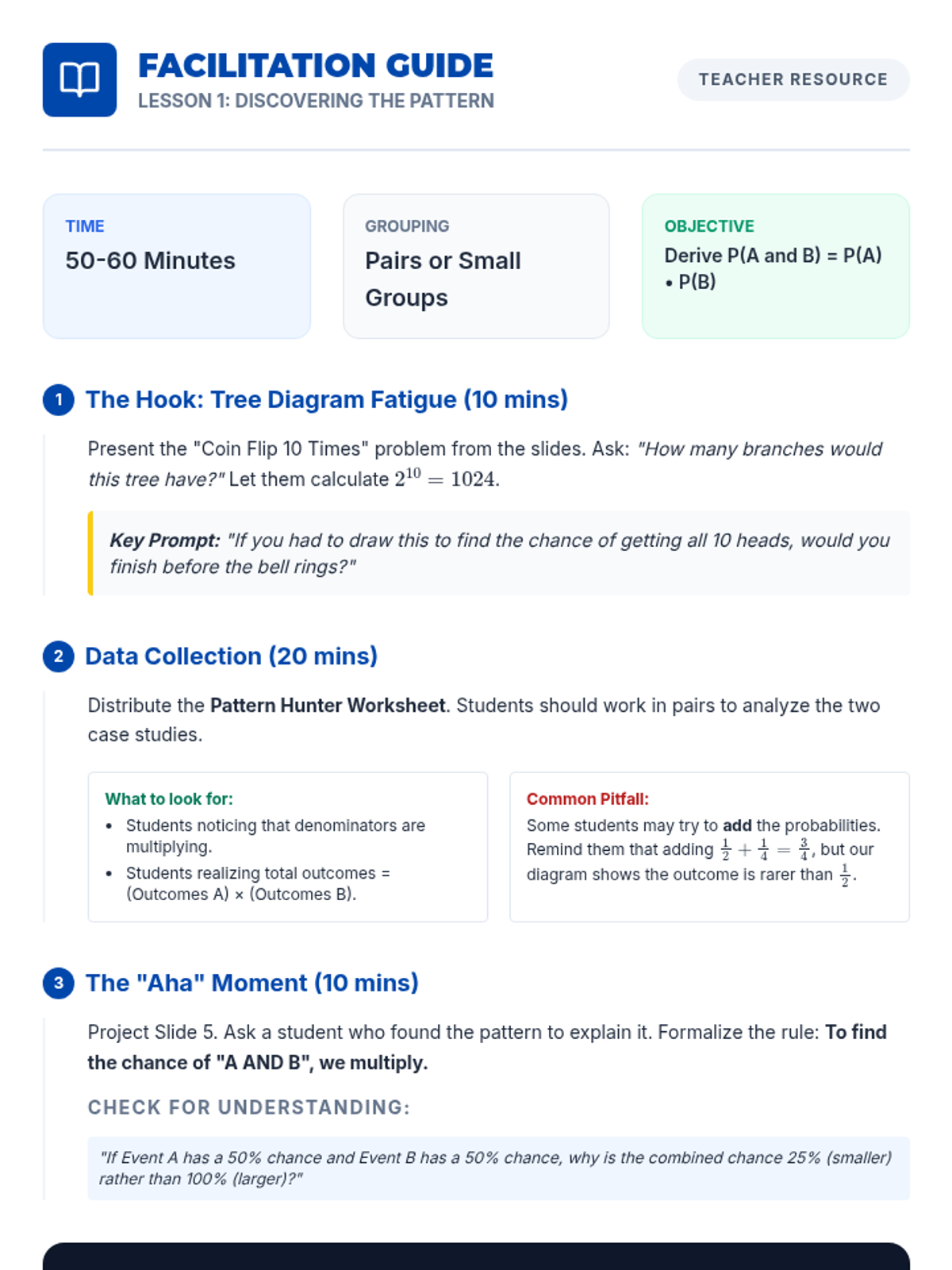
This sequence guides 7th-grade students from visual probability models (tree diagrams, area models) to the abstract Multiplication Rule for independent and dependent events. Students will discover the rule through inquiry, apply it to increasingly complex multi-stage scenarios, and master the distinction between replacement and non-replacement contexts.
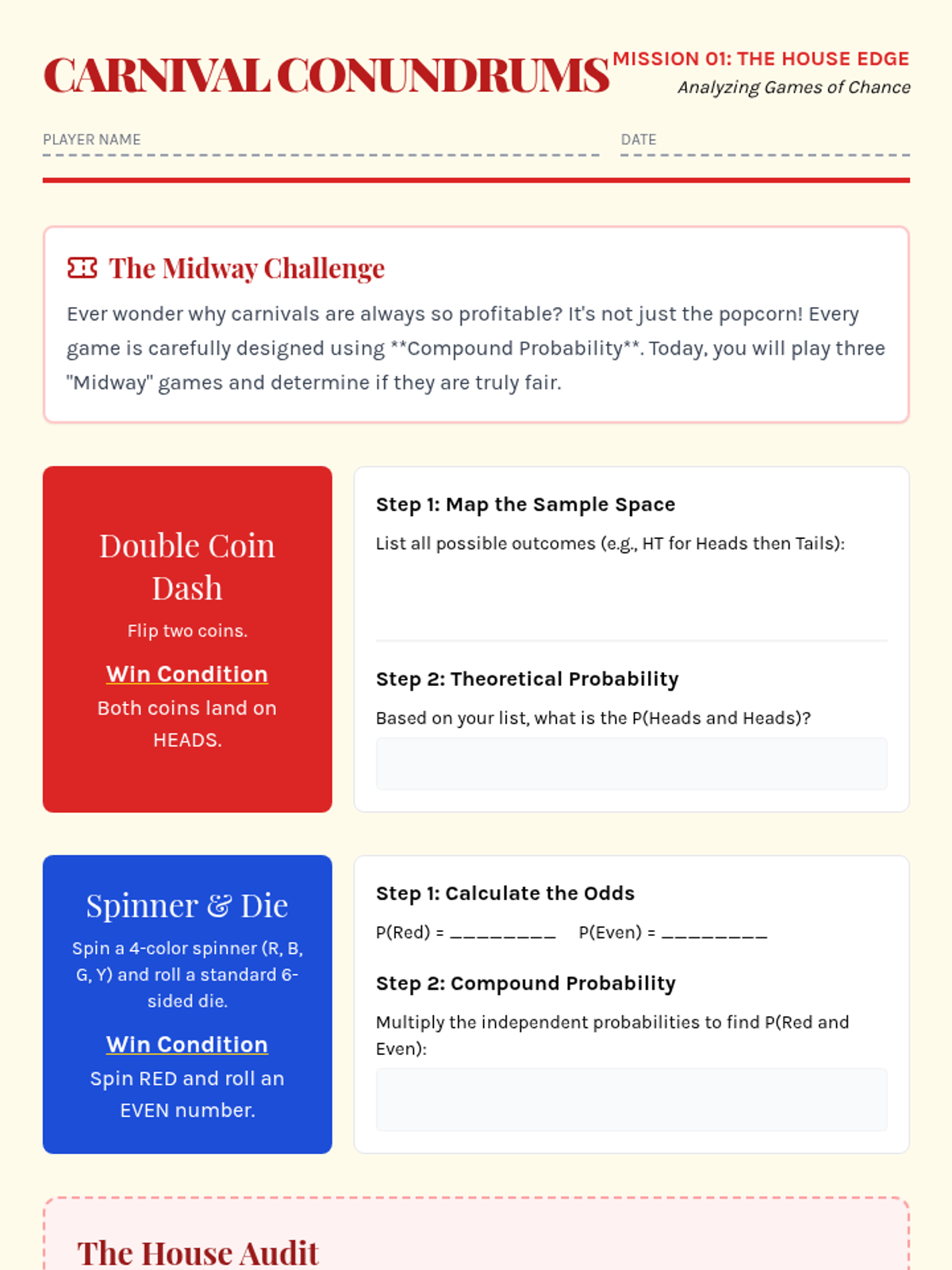
A project-based unit where 7th-grade students analyze, design, and audit games of chance using compound probability. Students move from playing carnival games to calculating theoretical win rates and testing them against experimental data.
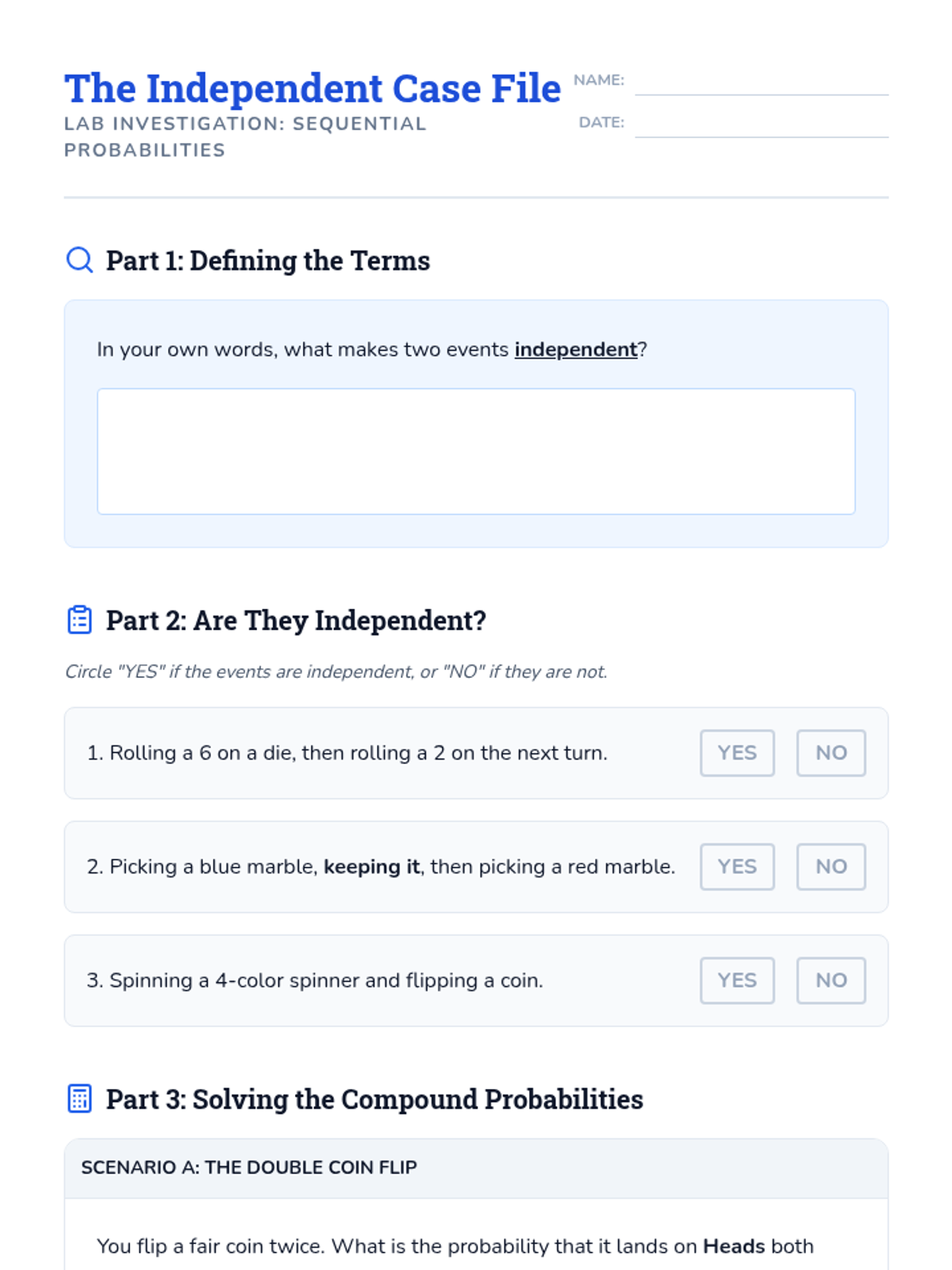
This sequence explores the differences between independent and dependent events through hands-on simulations, comparative analysis, and multi-step calculations. Students learn to adjust sample spaces and numerators based on whether items are replaced, building a strong foundation for compound probability.
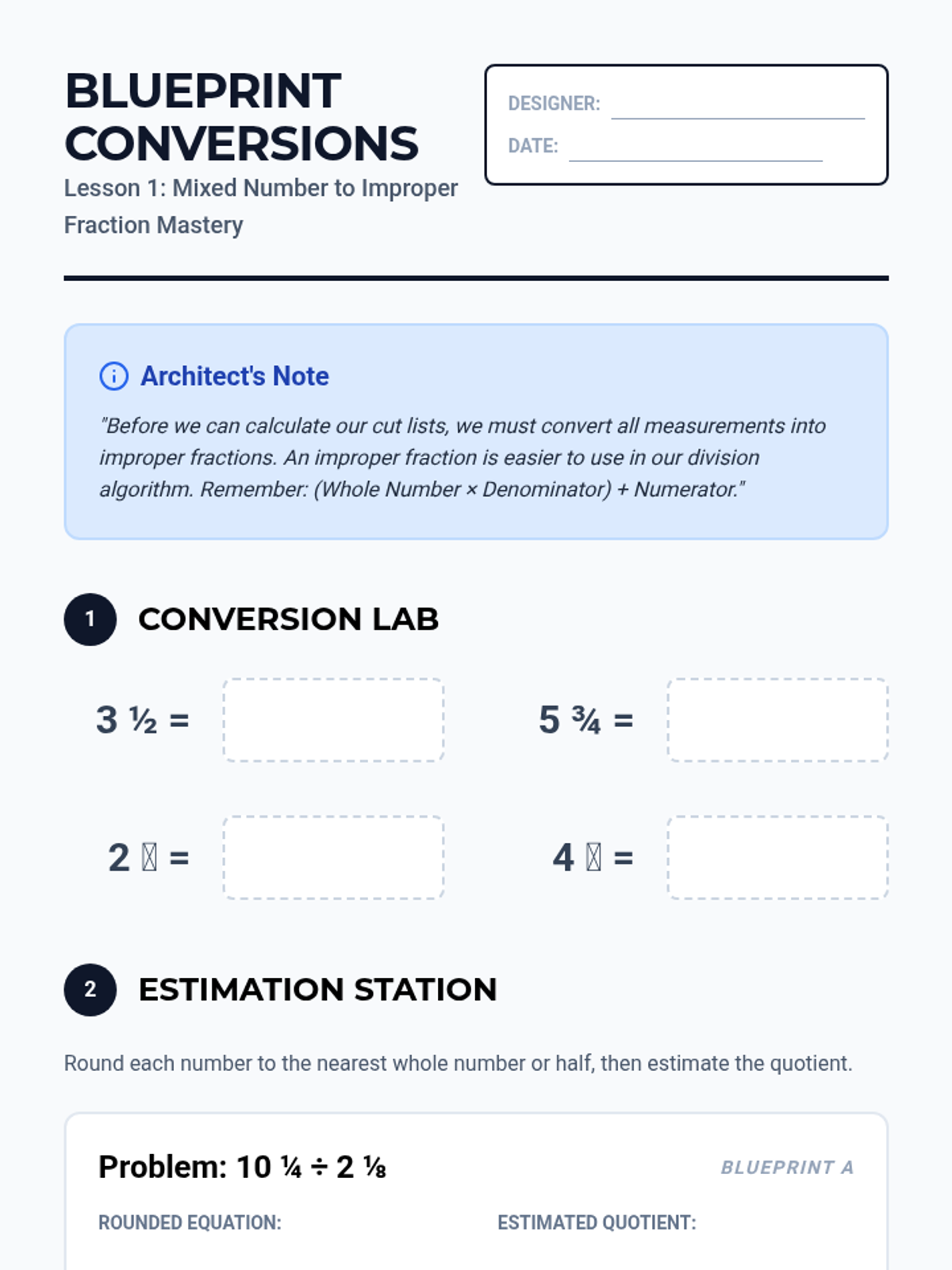
A project-based math sequence where students apply mixed number division to design a Tiny House, focusing on conversion, algorithms, and real-world interpretation of remainders.
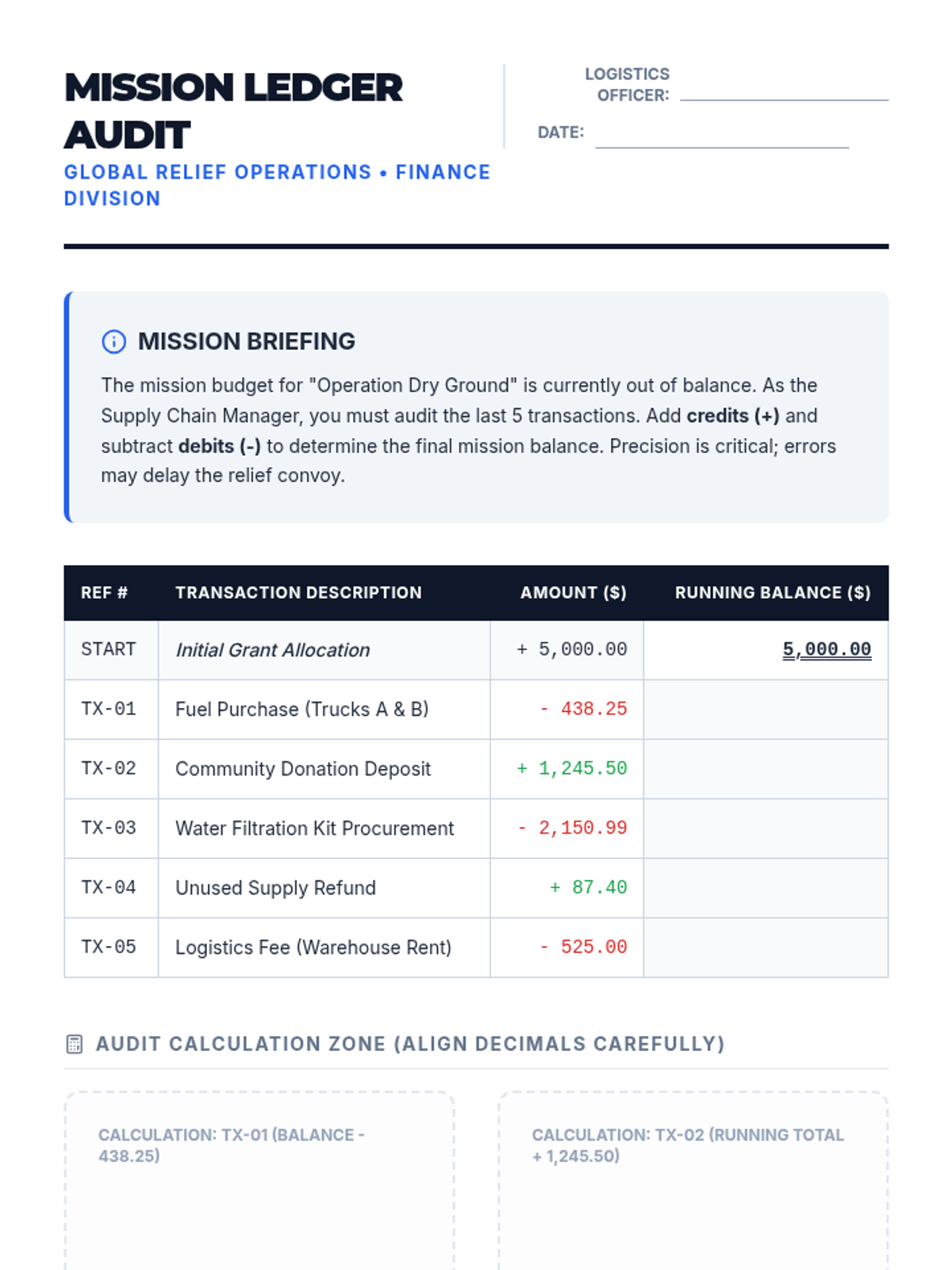
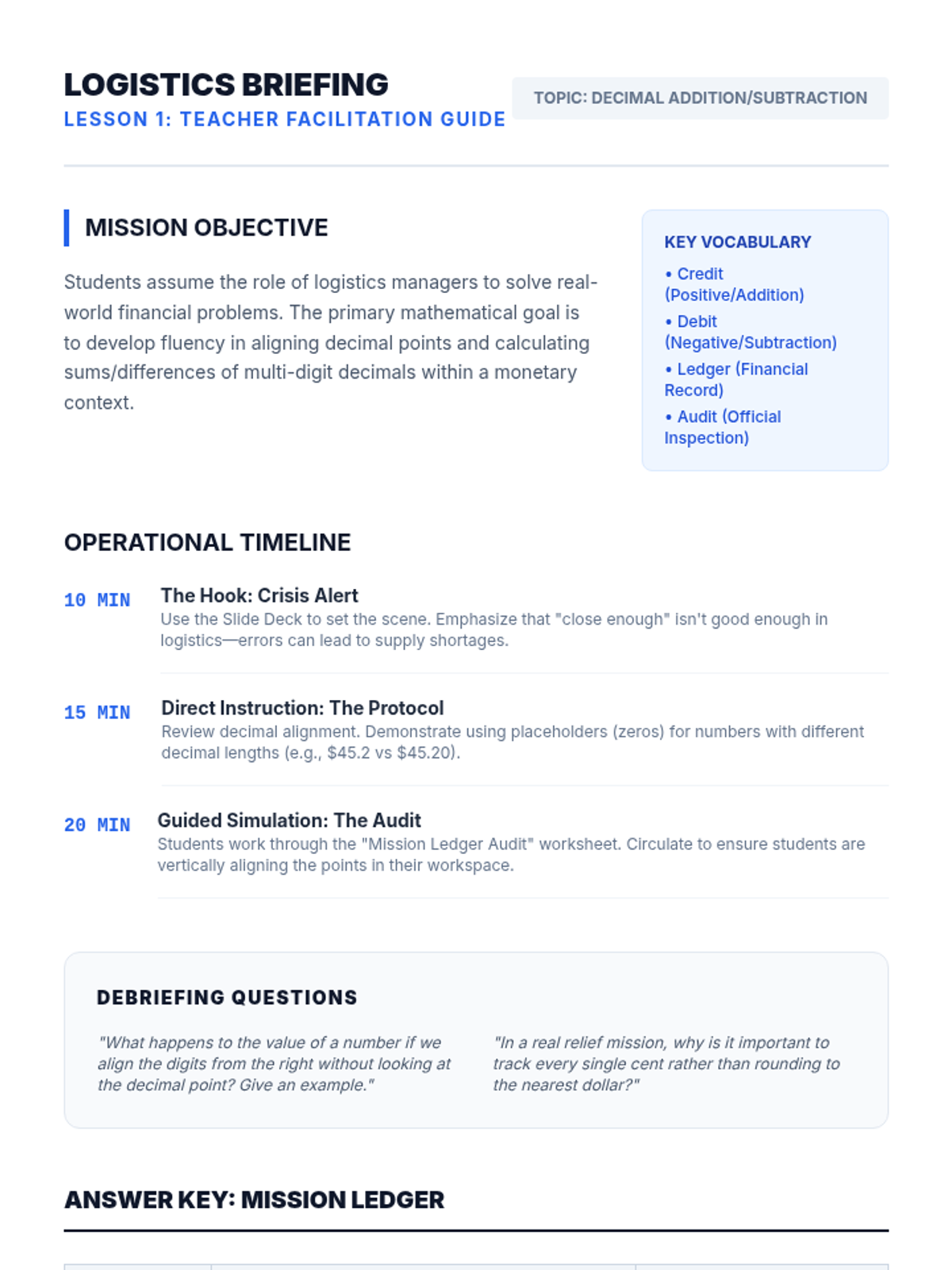
Students act as supply chain managers for an international relief organization, using decimal and fraction arithmetic to manage budgets, logistics, and resource distribution in real-world scenarios.
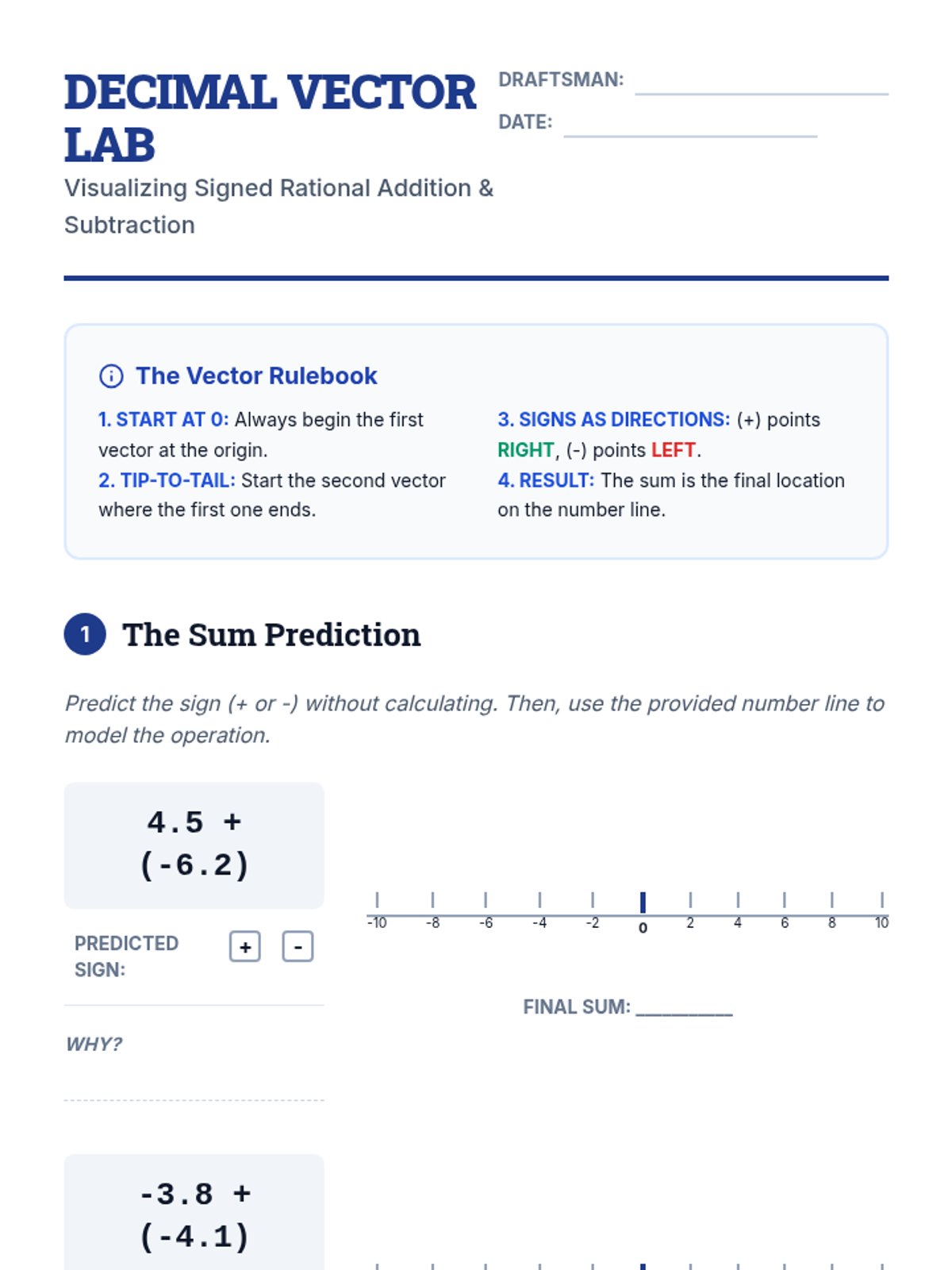
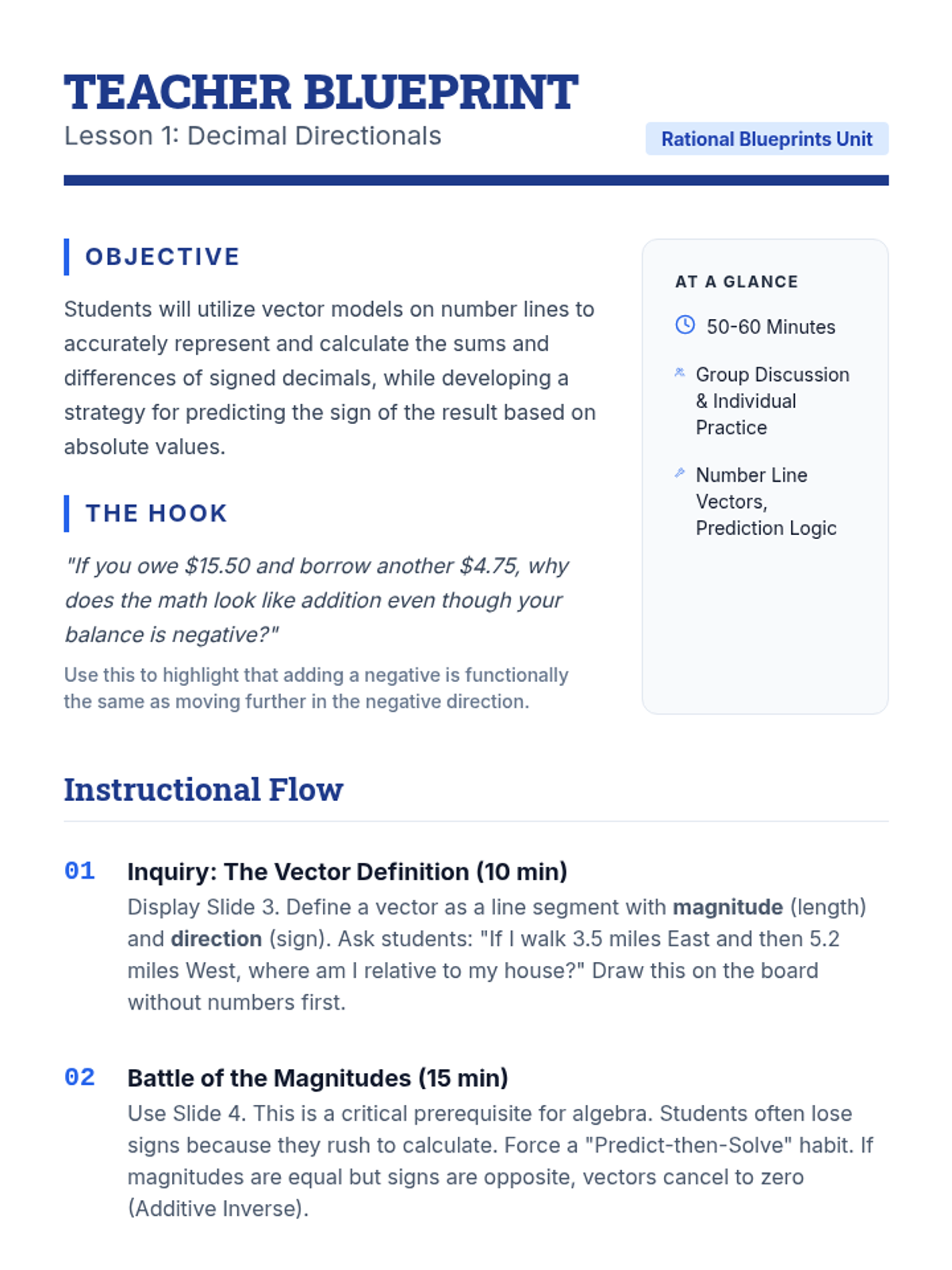
A comprehensive 9th-grade unit on mastering arithmetic operations with signed rational numbers (fractions and decimals). The sequence moves from visual number line models to abstract algorithms and complex order of operations, emphasizing the 'why' behind sign rules.
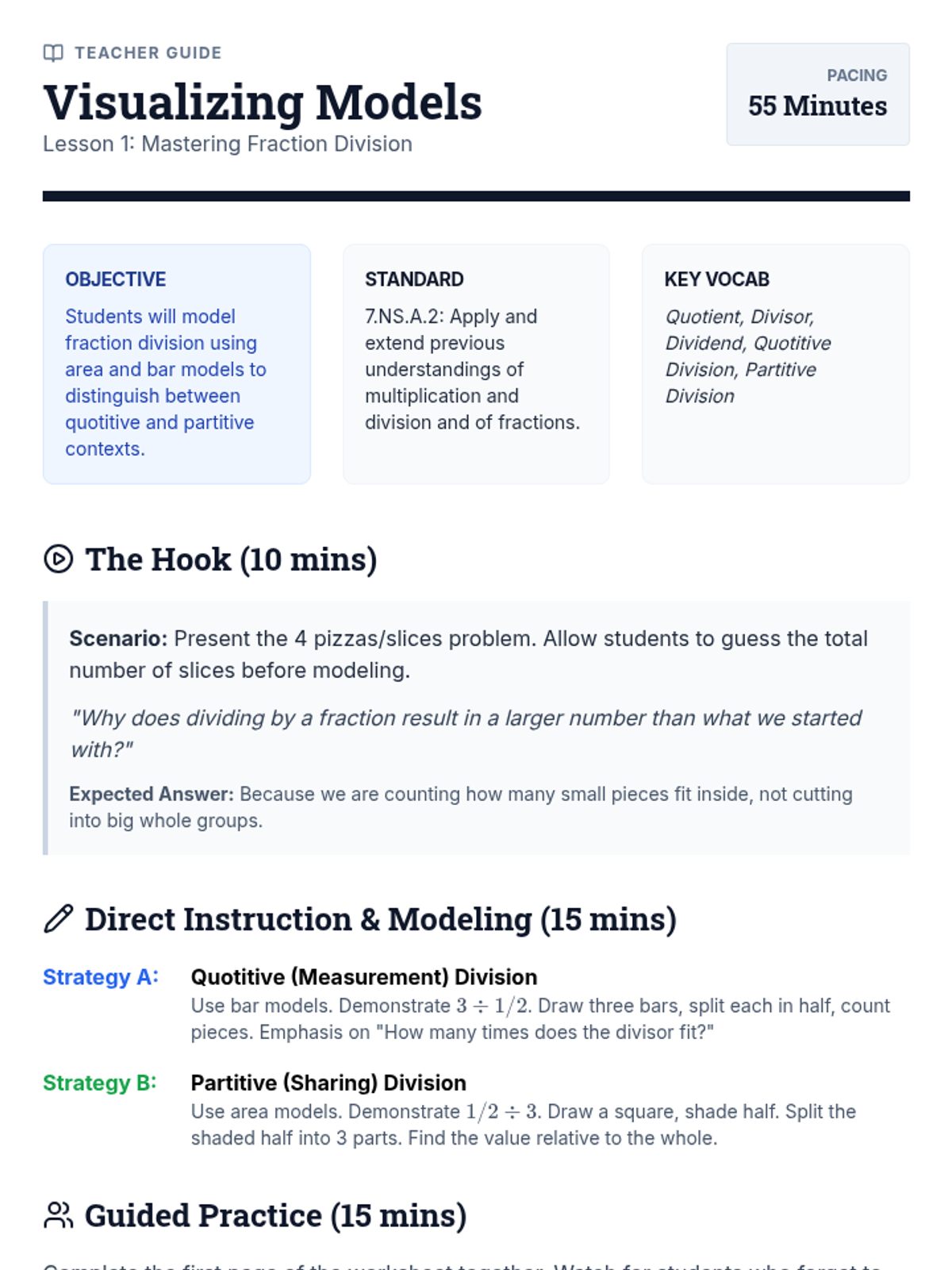
A comprehensive 7th-grade unit that builds a deep conceptual understanding of fraction division, moving from visual modeling to the standard algorithm and real-world application. Students investigate reciprocals, handle mixed numbers, and solve complex multi-step problems.
A series of lessons designed to rebuild fundamental fraction skills for middle schoolers, focusing on conceptual understanding and procedural fluency.
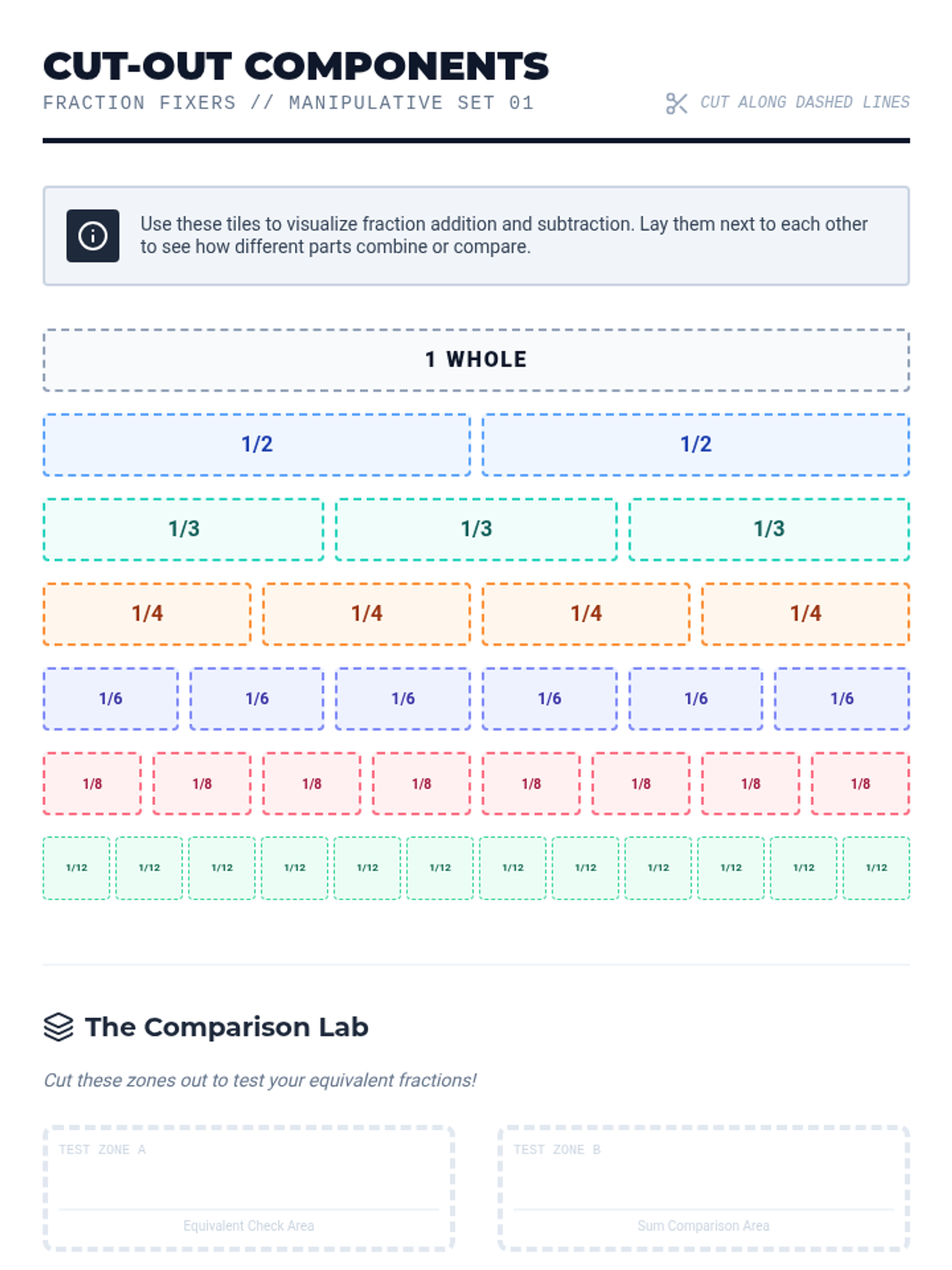
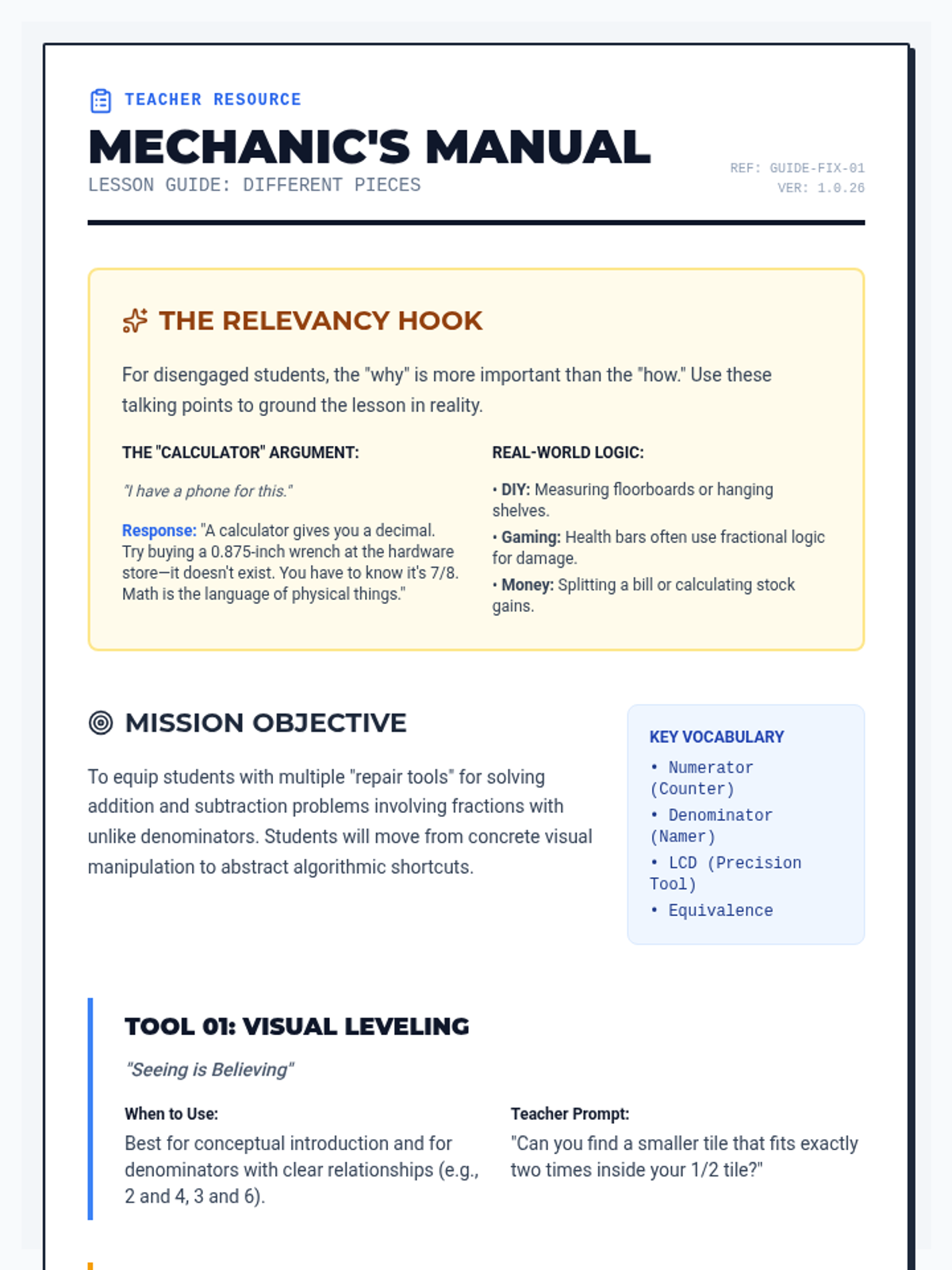
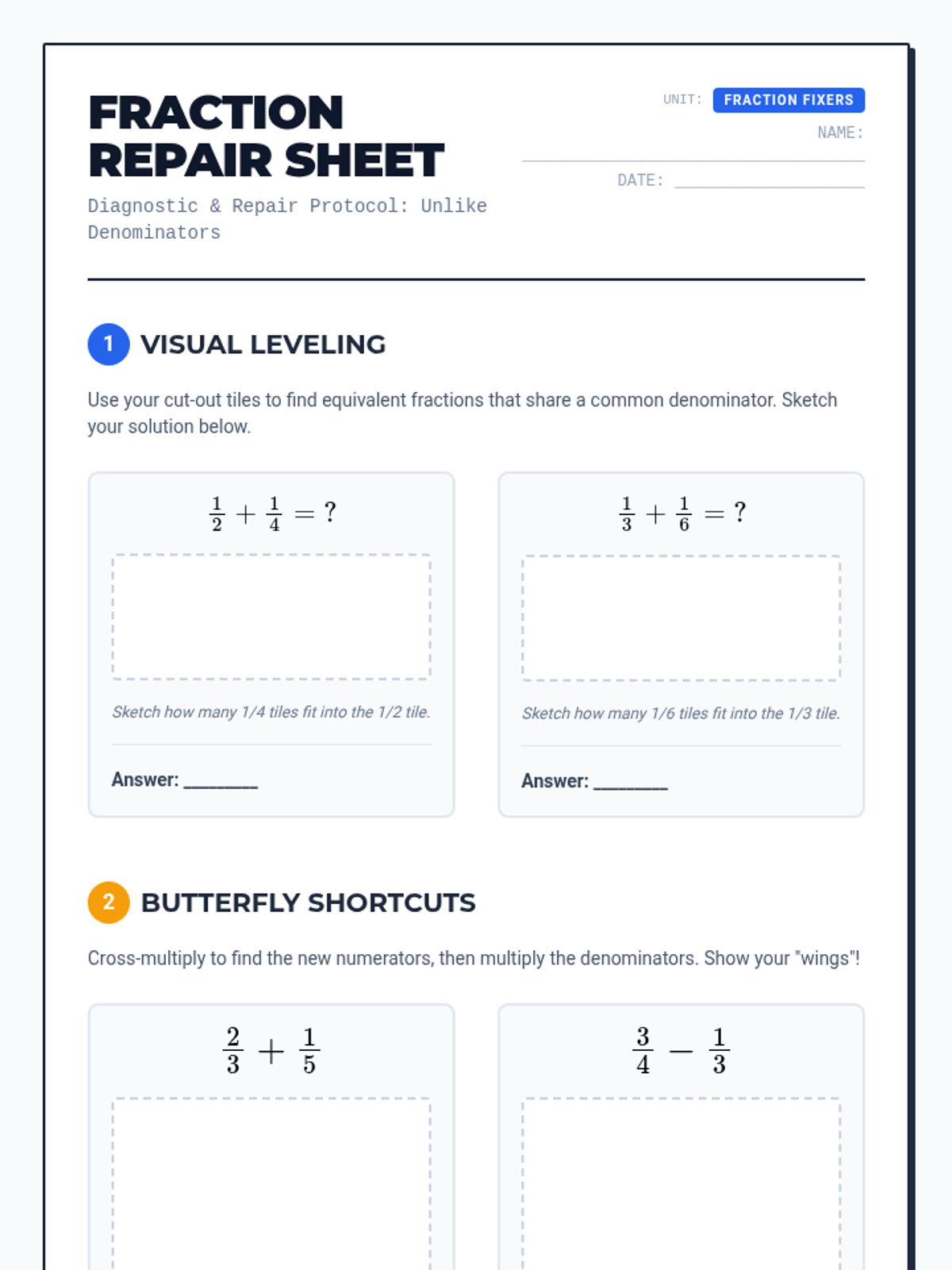
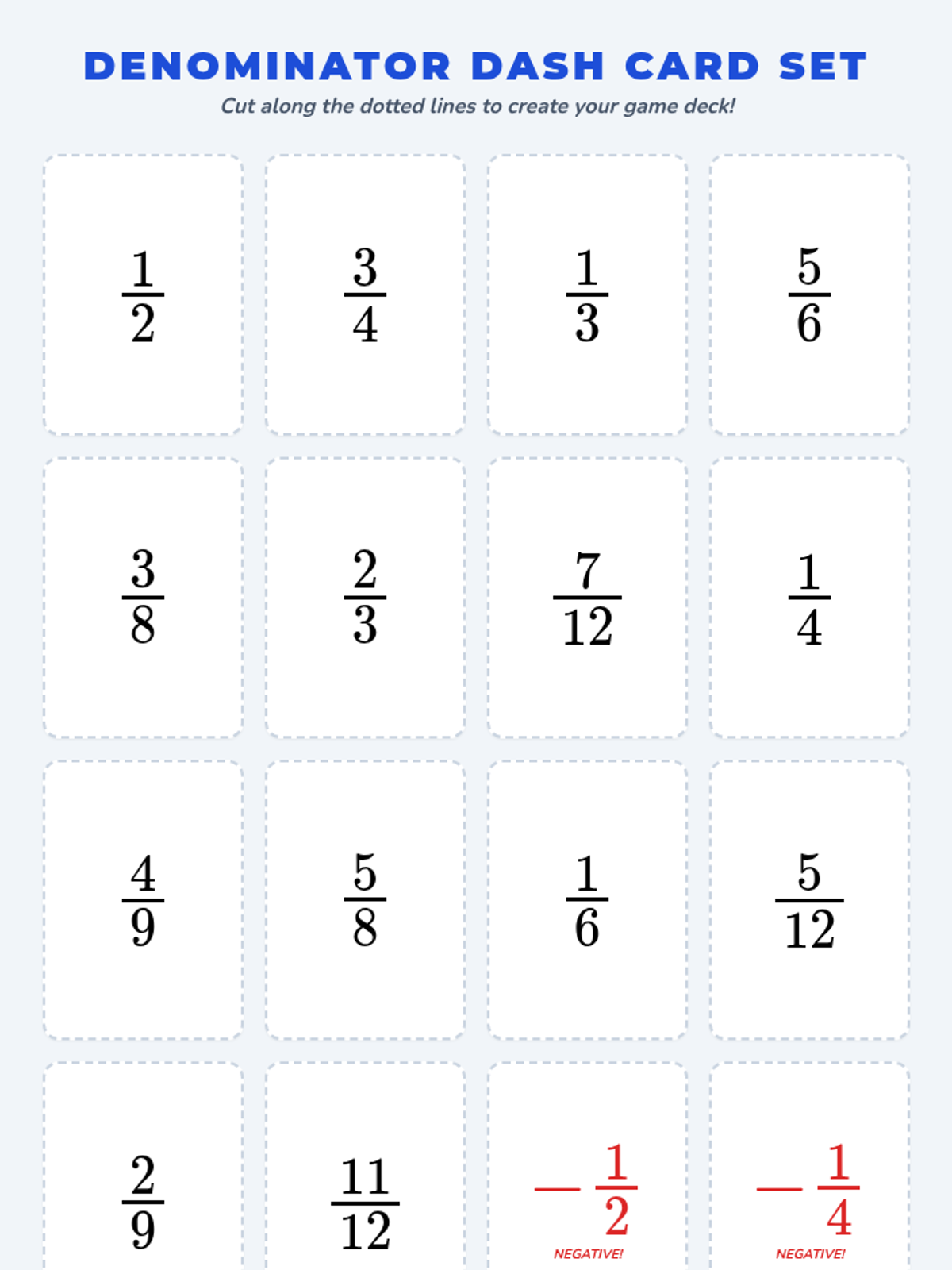
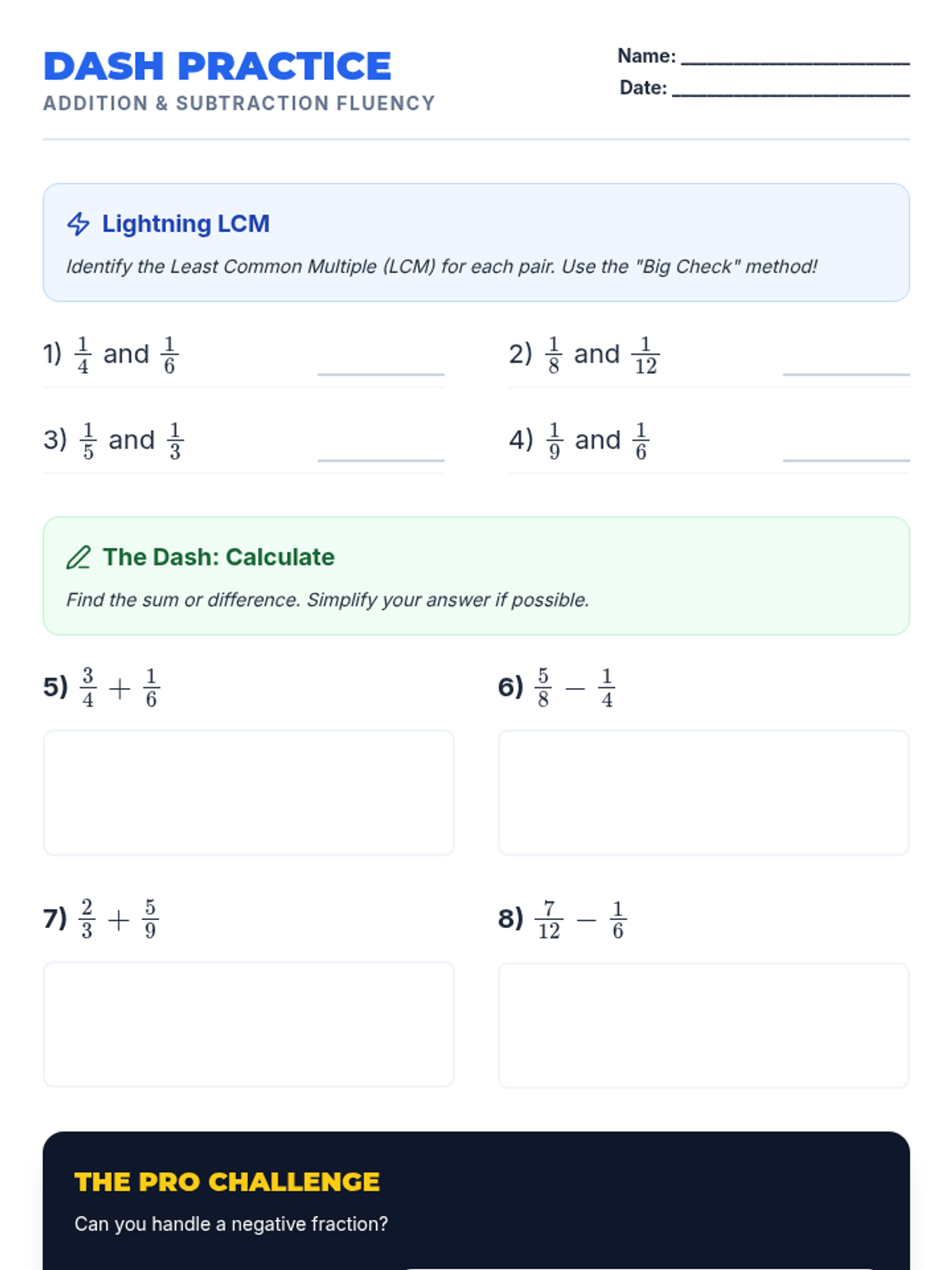
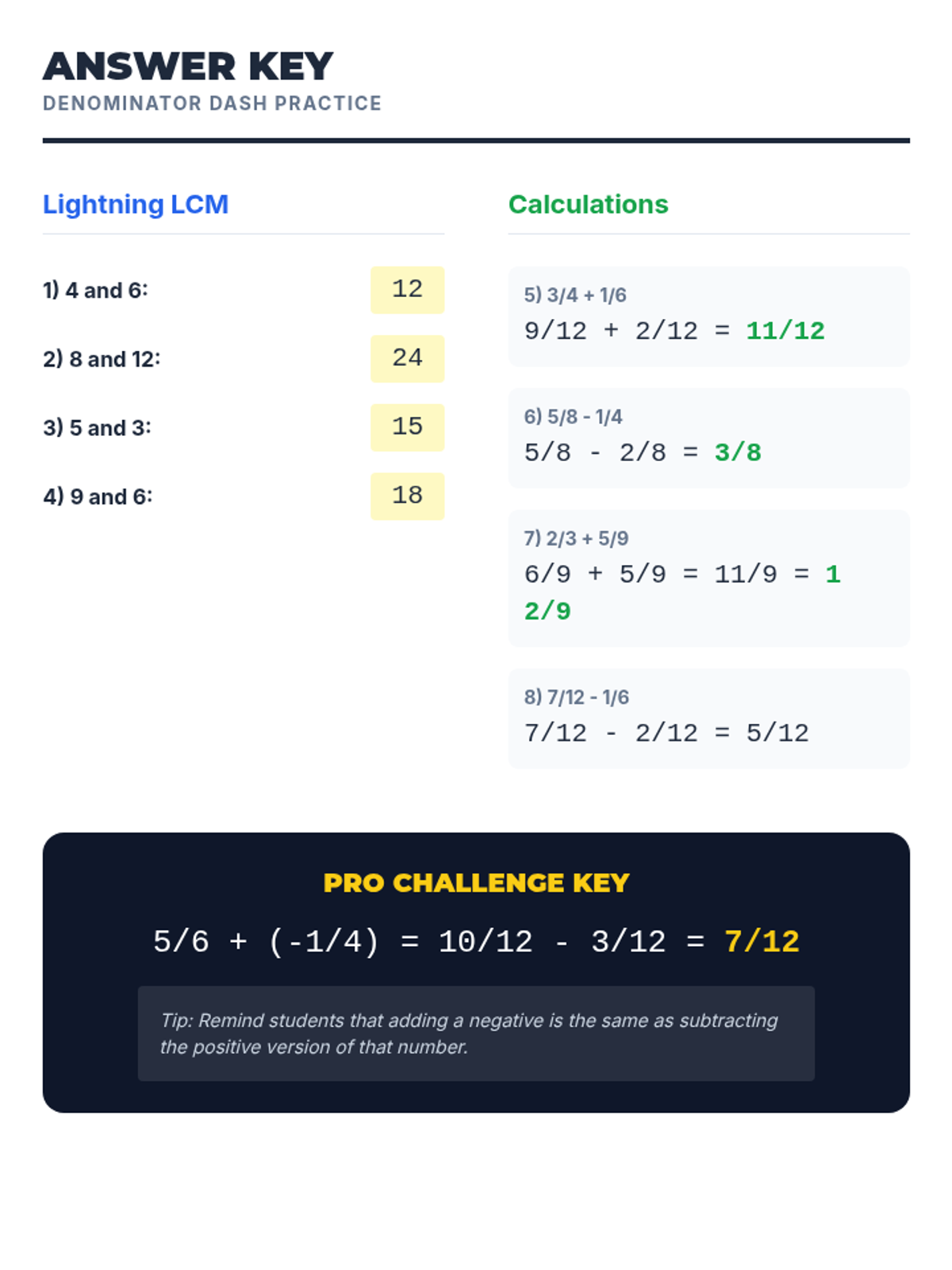
A comprehensive intervention sequence for middle school students struggling with adding and subtracting fractions with unlike denominators, focusing on multiple visual and algorithmic strategies.
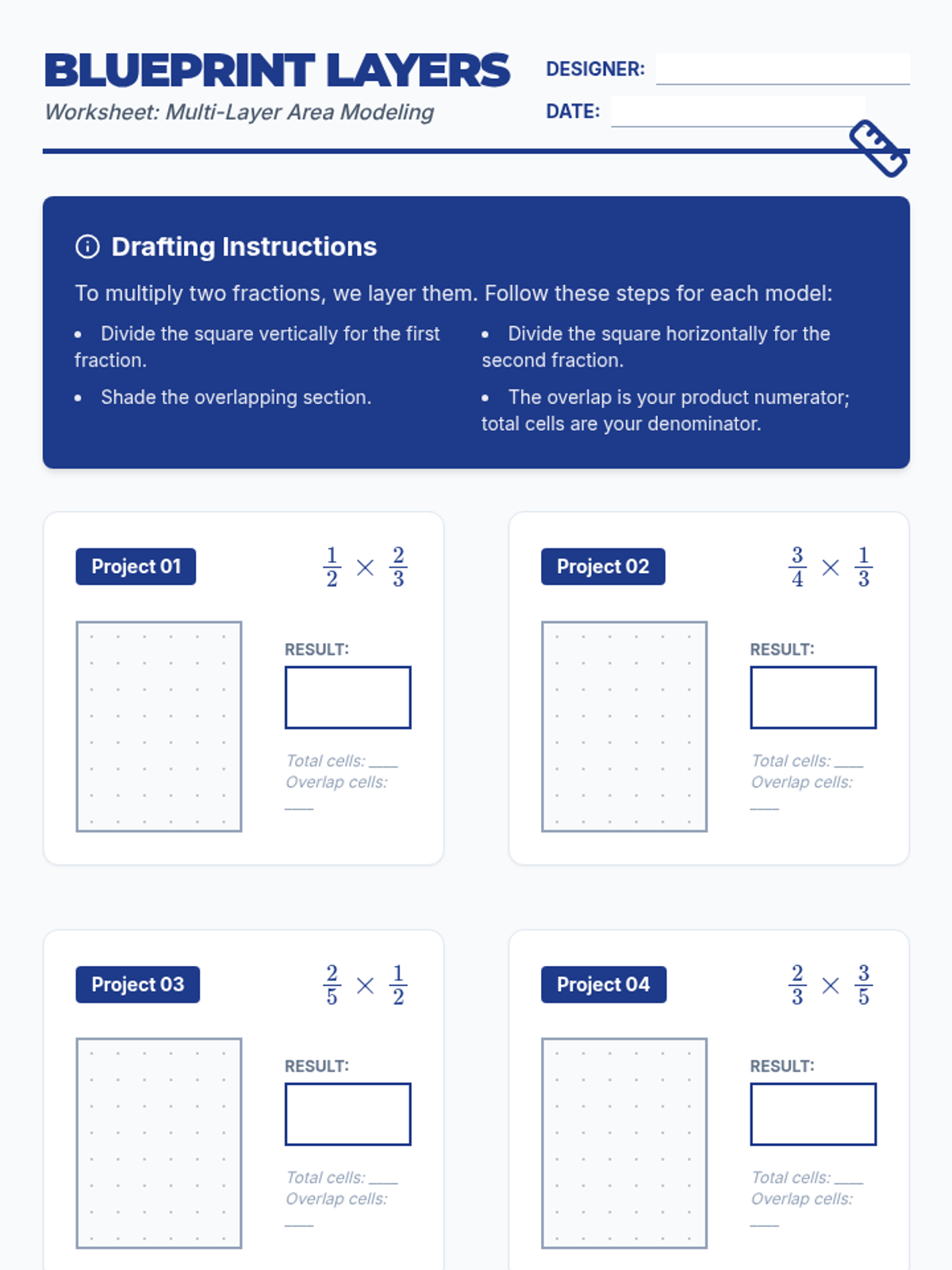
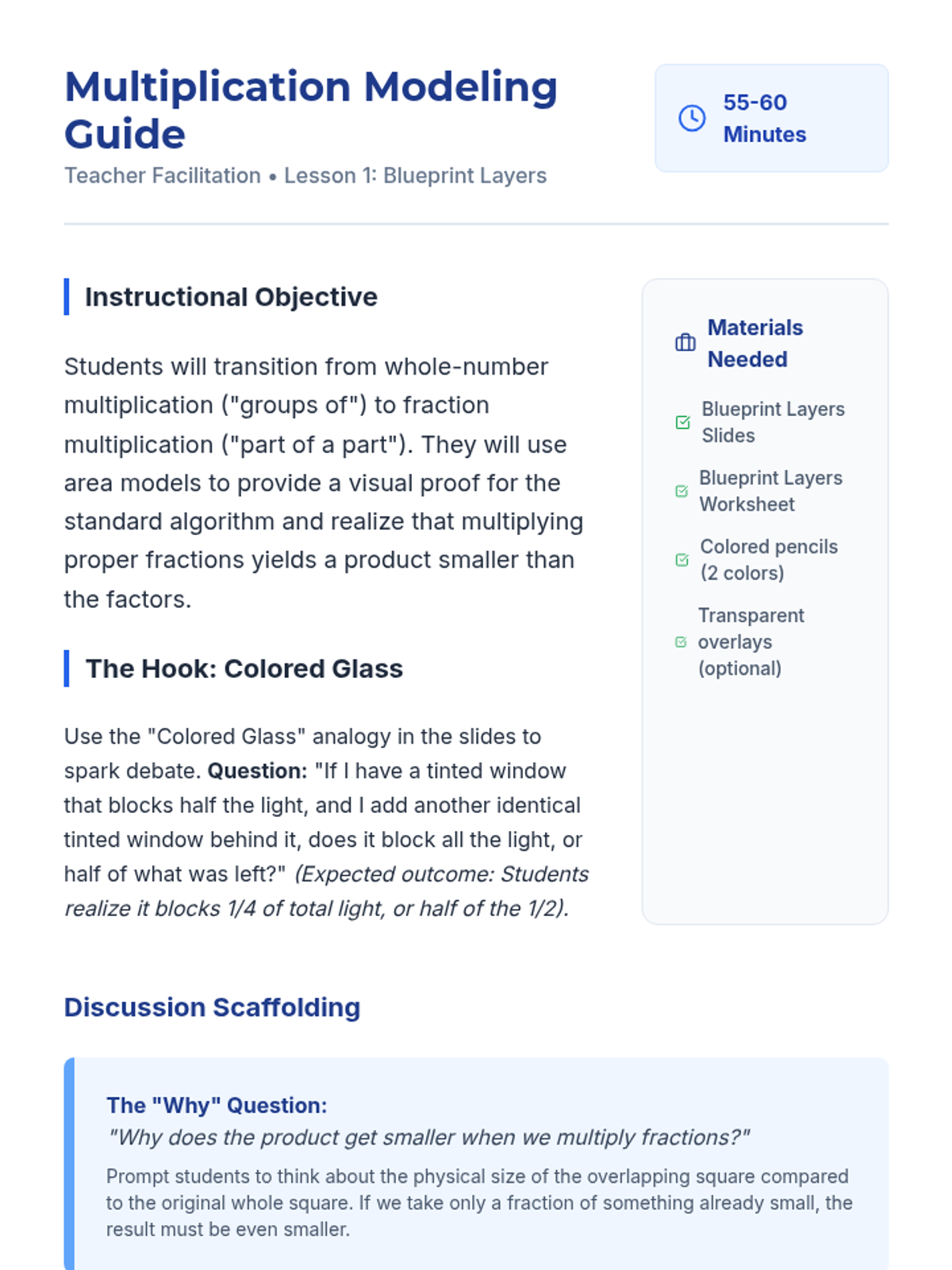
A comprehensive unit bridging concrete area models and abstract algorithms for multiplying and dividing fractions. Students move from 'taking a part of a part' to mastering reciprocals and mixed number operations in real-world contexts.
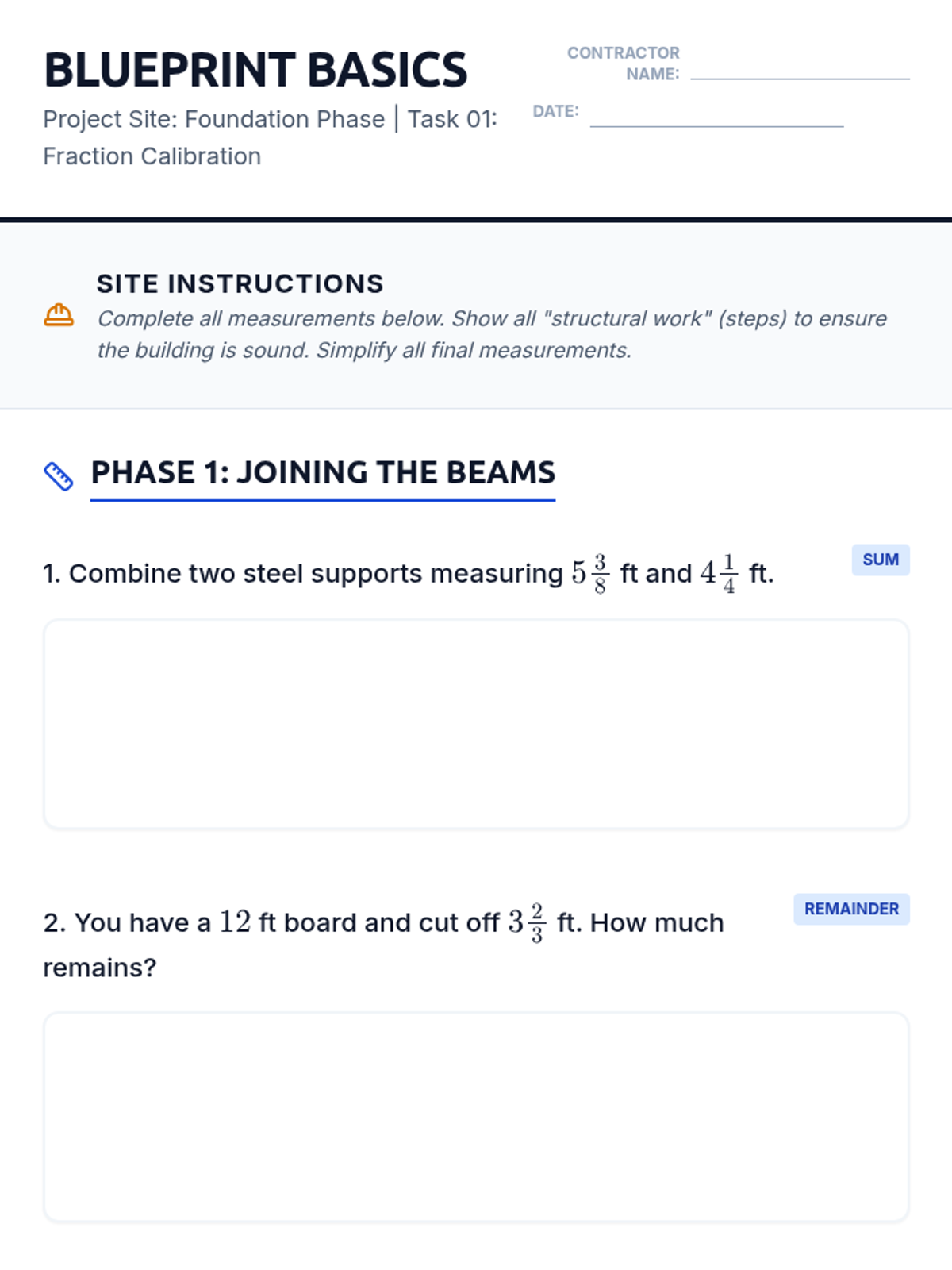
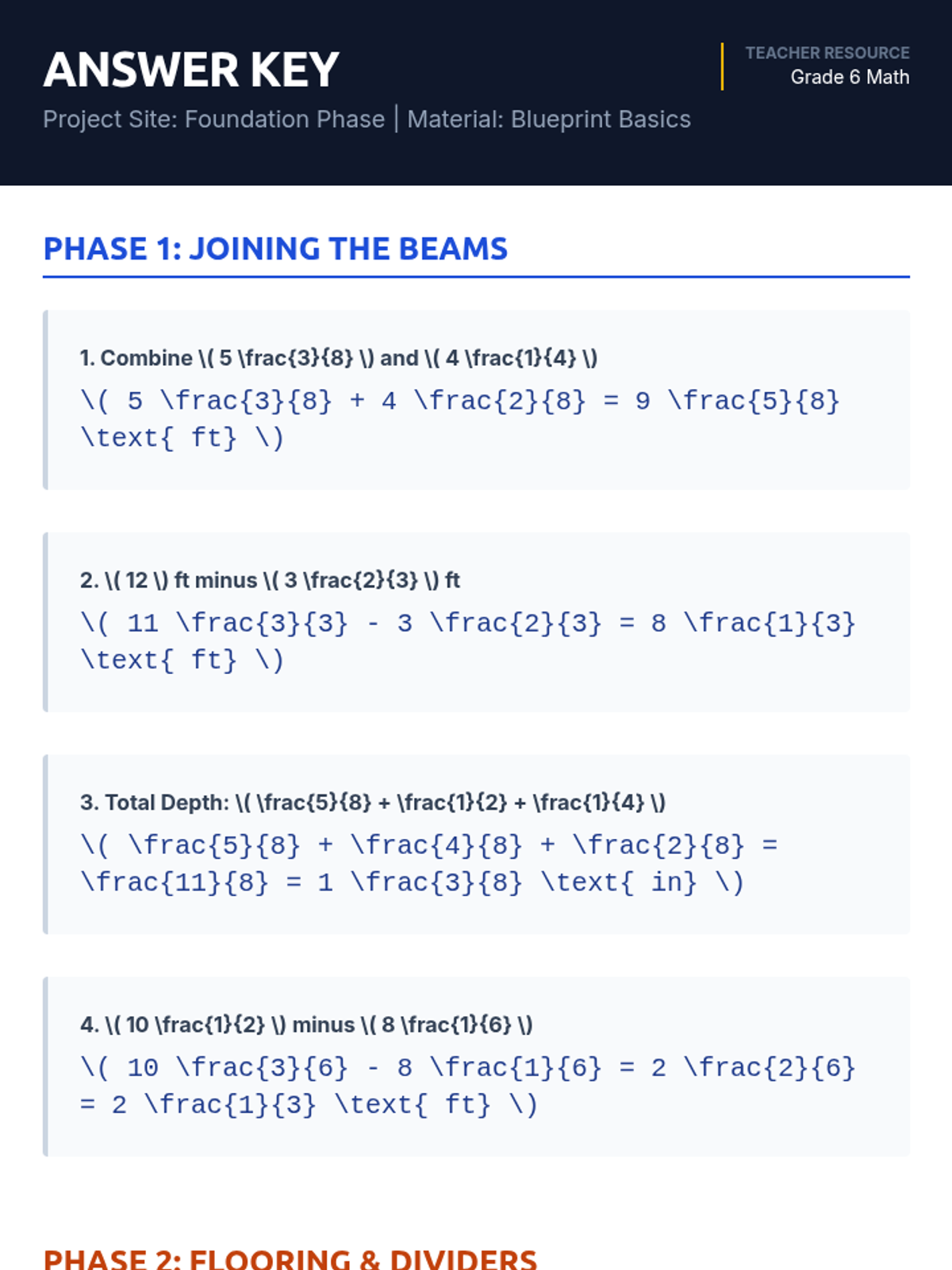
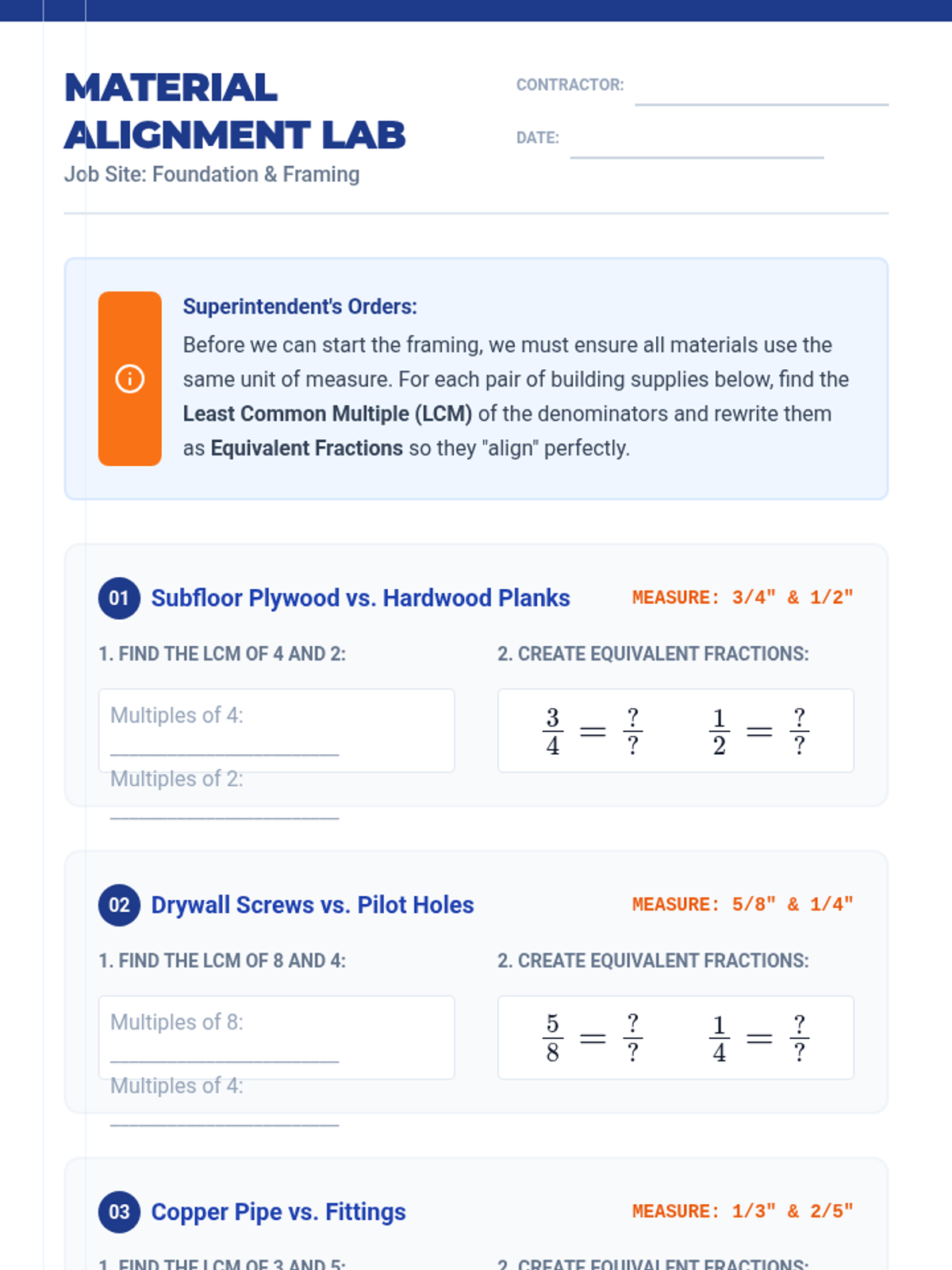
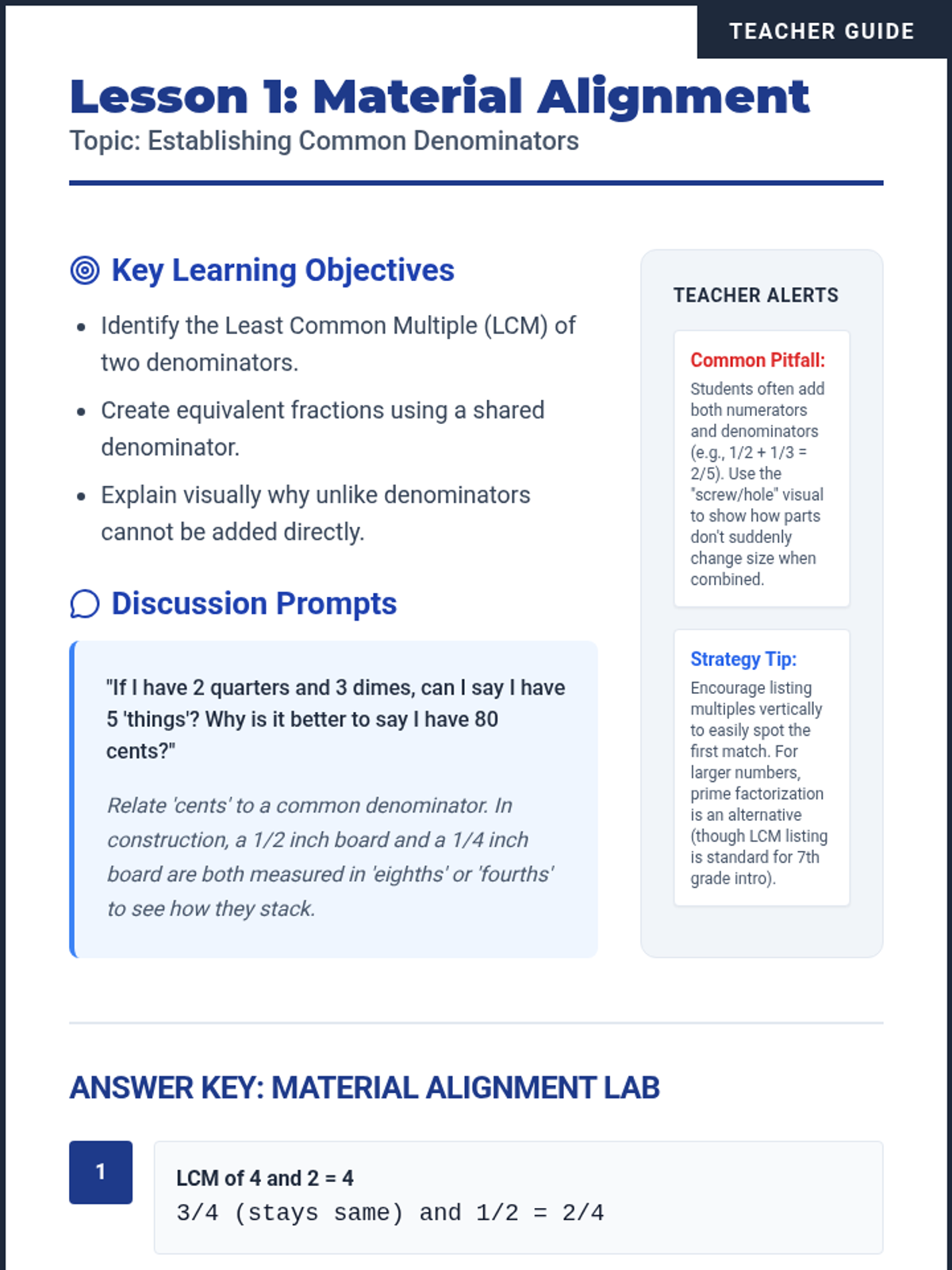
A 7th-grade math unit where students act as contractors to master adding and subtracting fractions and mixed numbers through the lens of home renovation and construction projects.
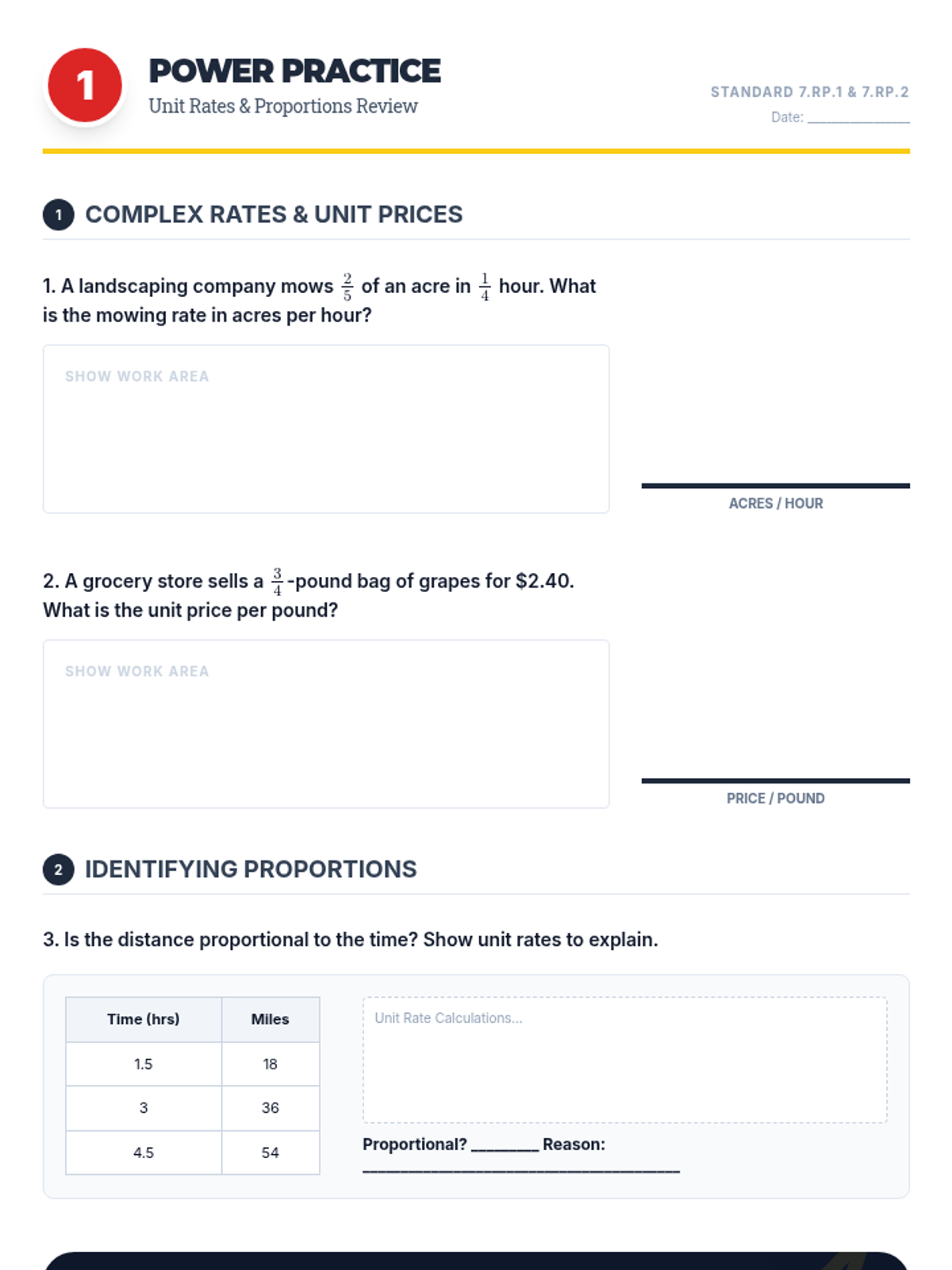
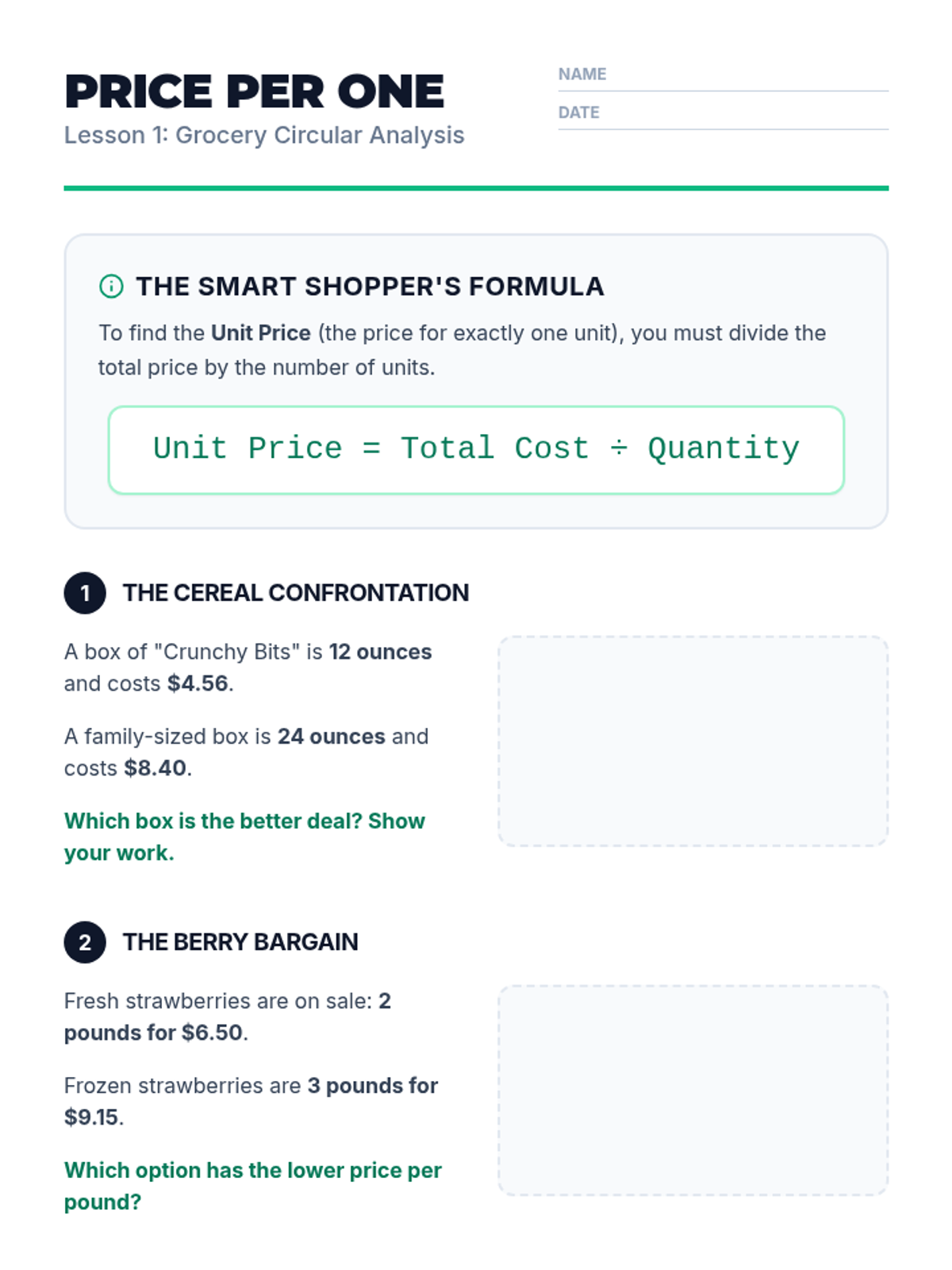
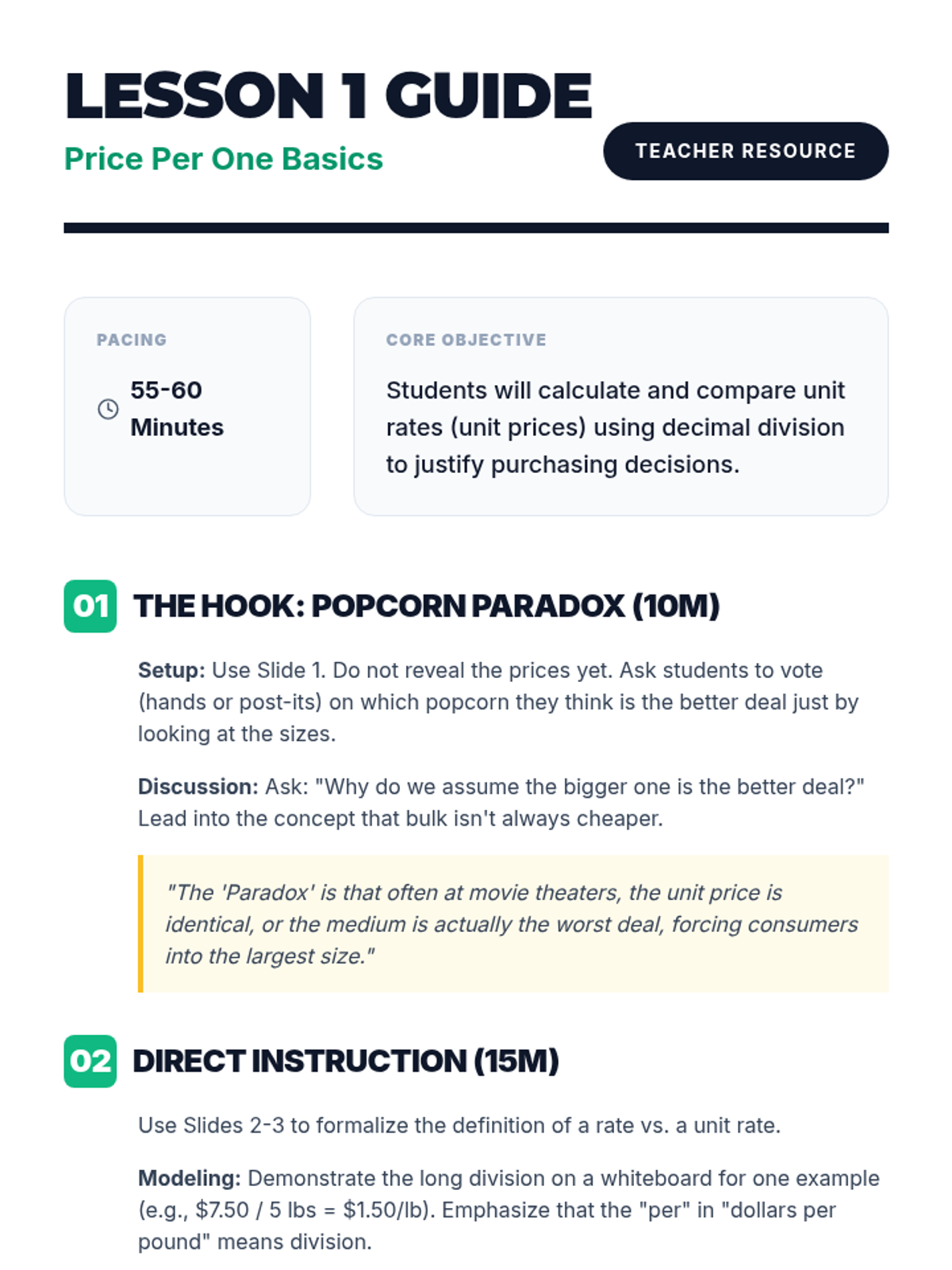
This project-based sequence guides students through the practical application of unit rates in financial and physical contexts. Students calculate basic unit prices, solve complex fraction rates, and analyze constant speed through graphing, culminating in a consumer analysis project.
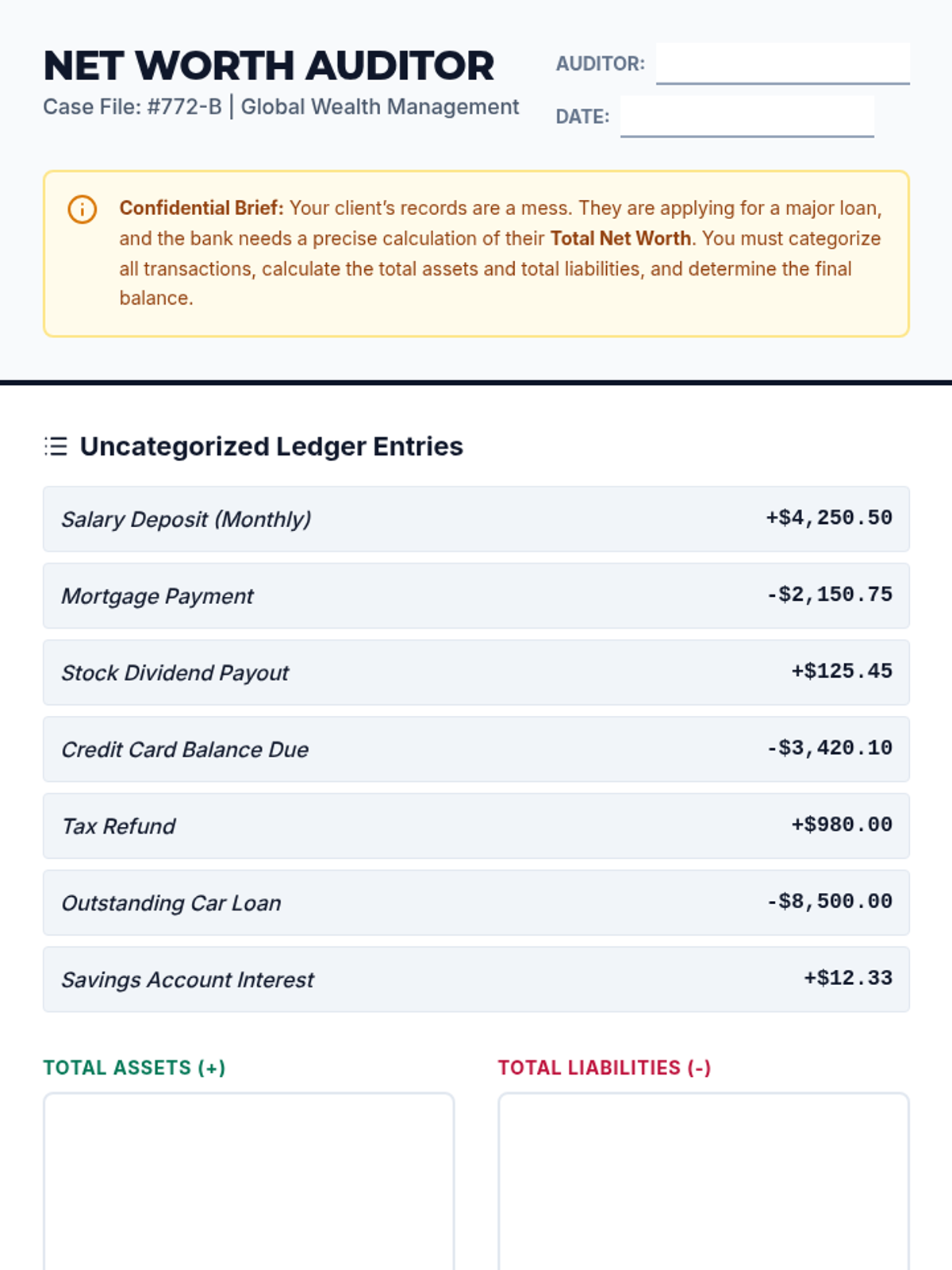
A high-stakes financial modeling unit where students apply rational number arithmetic to track net worth, allocate assets, and forecast long-term growth. Students take on the role of financial planners using signed decimals and fractions to navigate market volatility and interest rates.
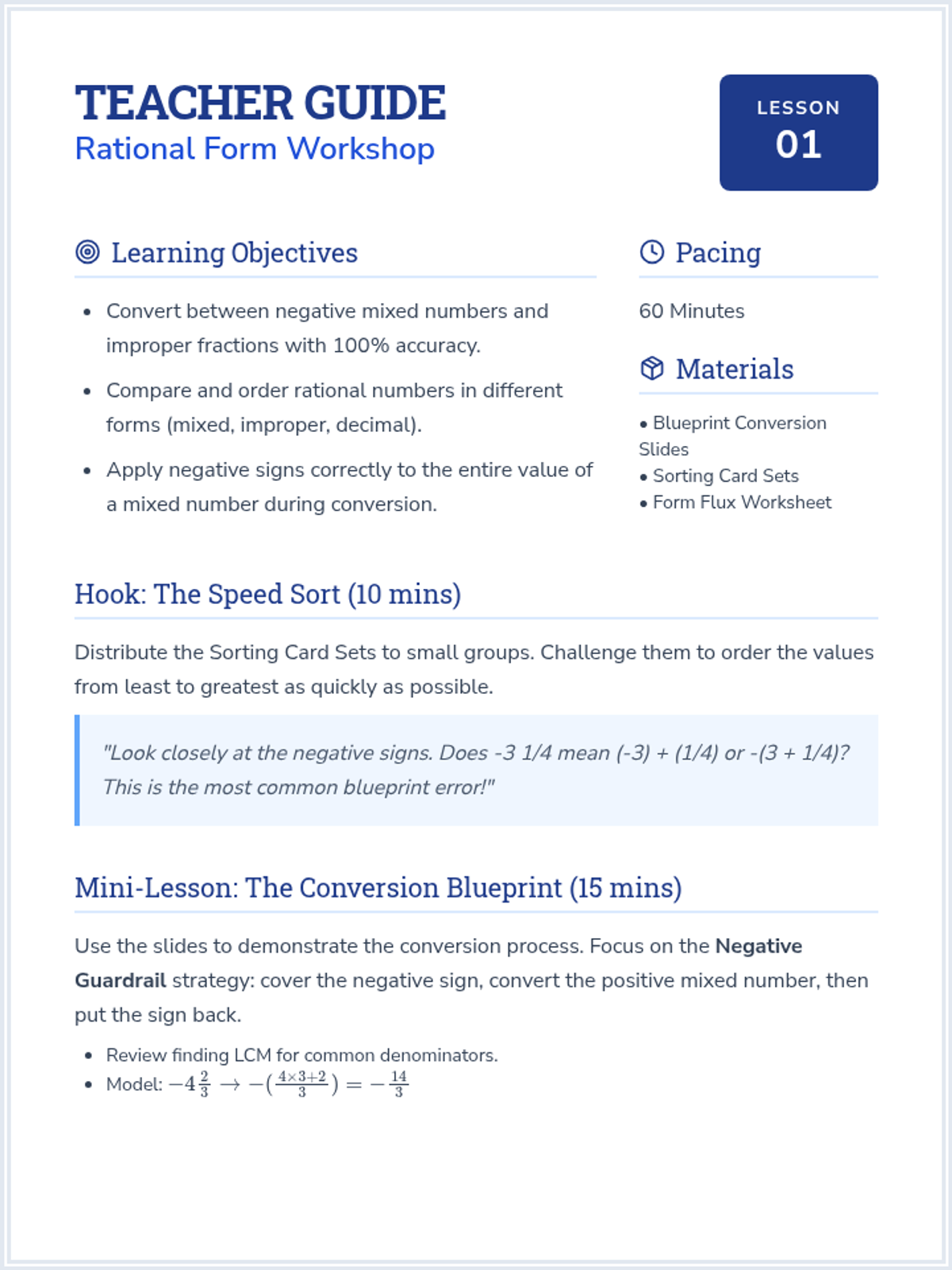
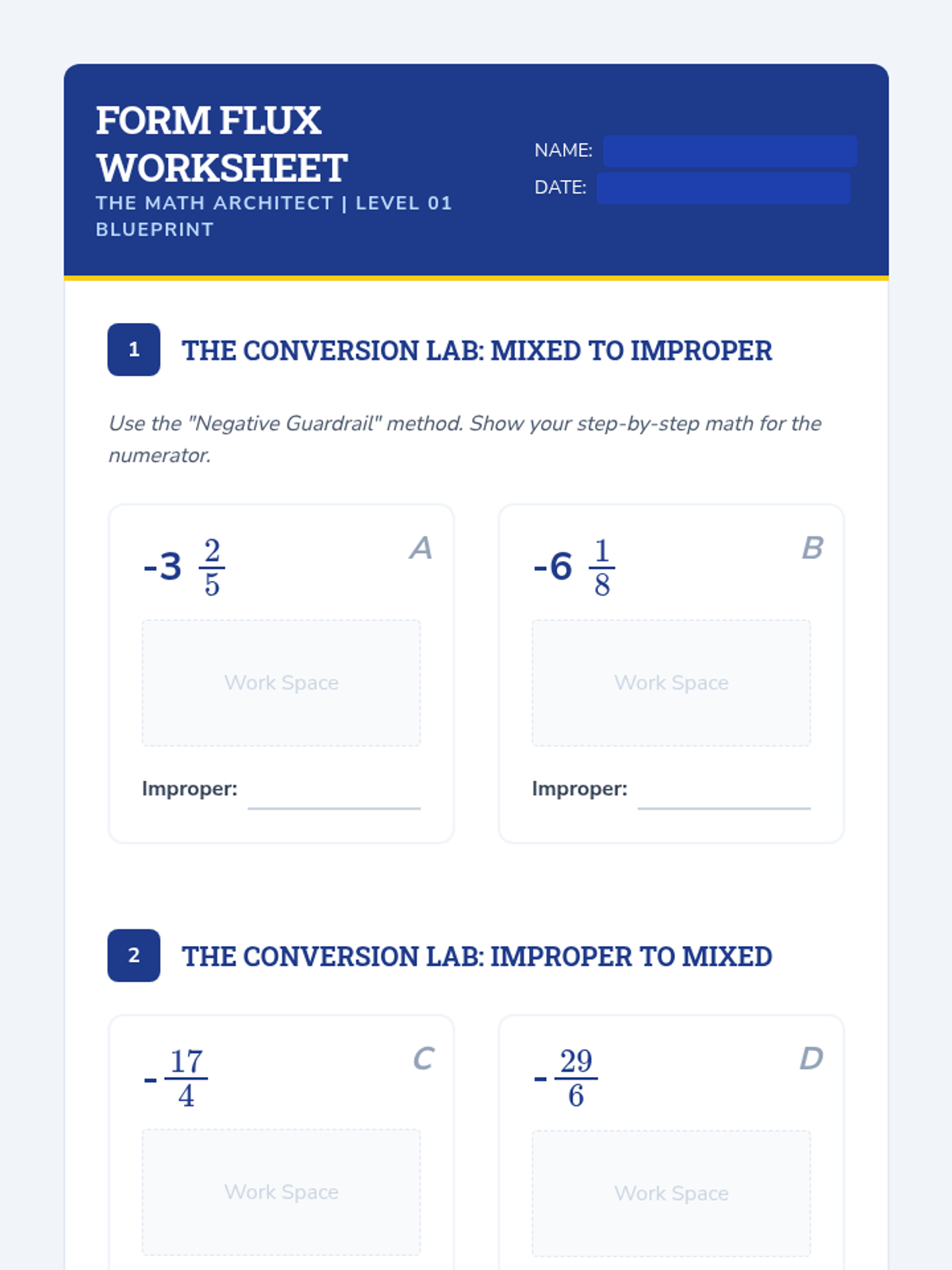
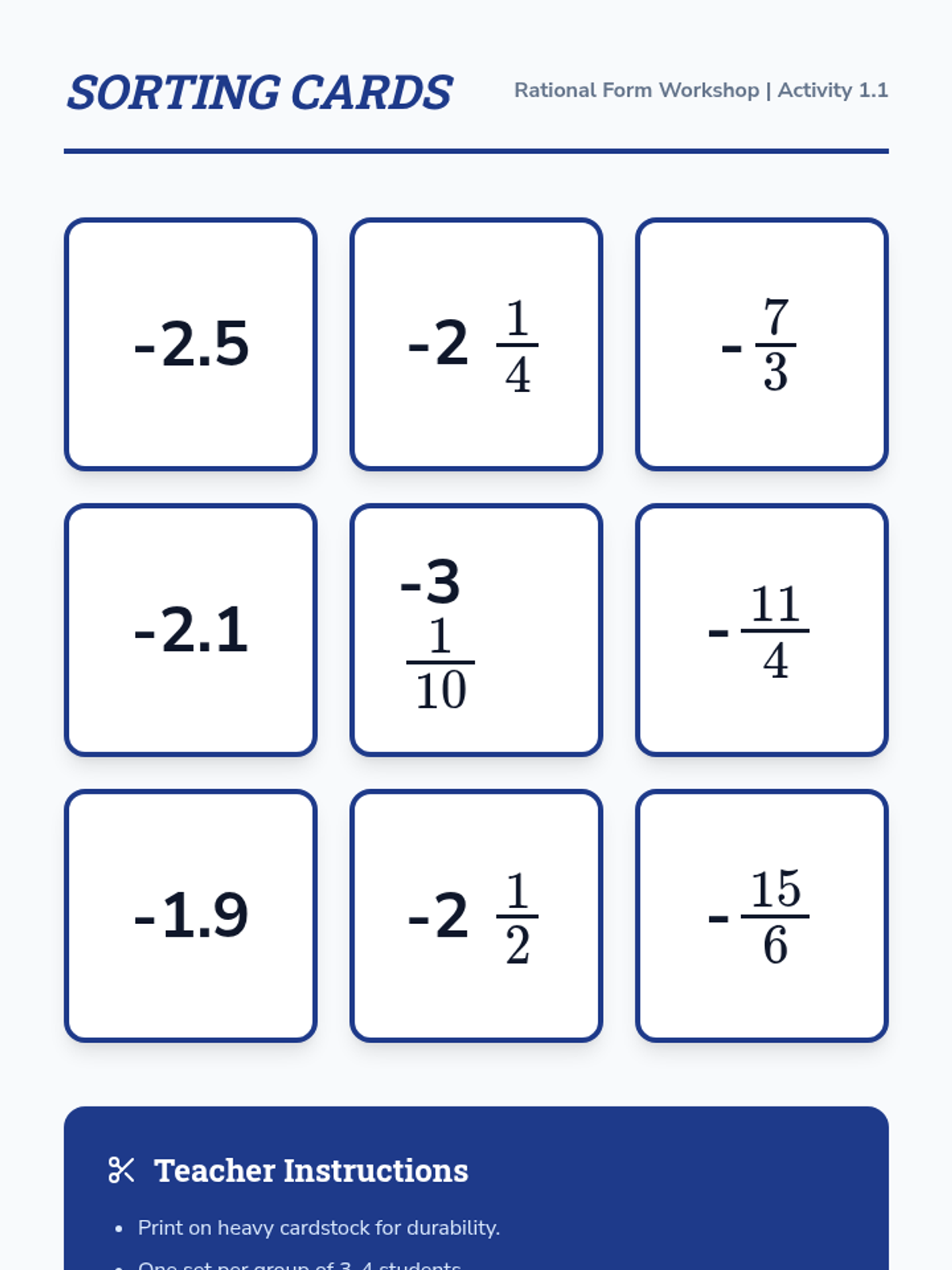
A comprehensive sequence for 7th-grade students focused on building procedural fluency with mixed numbers and improper fractions, including negative values. Students will learn to navigate between forms, apply regrouping strategies, and choose the most efficient methods for multi-step rational number operations.
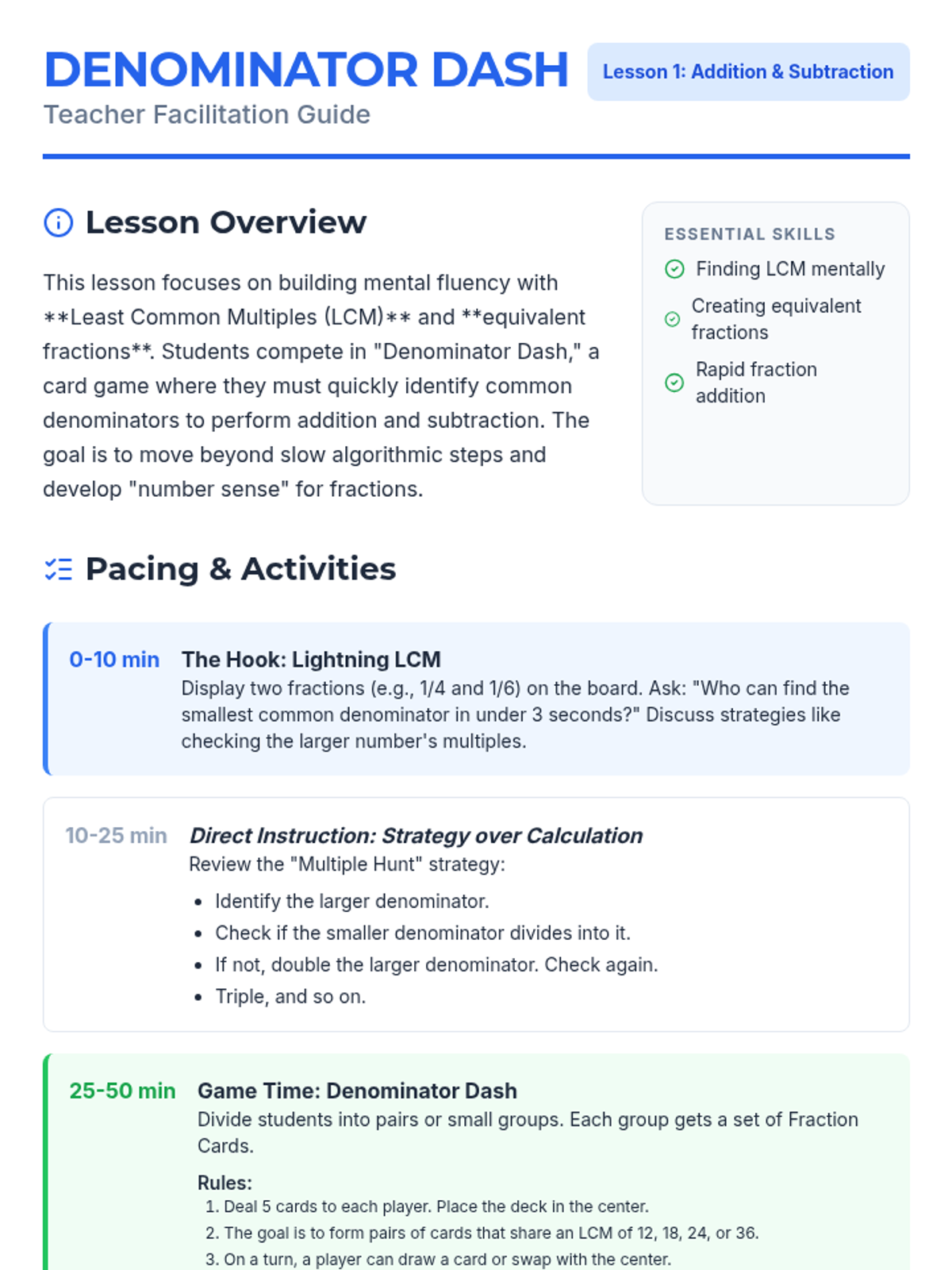
A high-energy series of 7th-grade math lessons focusing on fluency with rational fraction operations through games, puzzles, and competitive challenges. Students master addition, subtraction, multiplication, and division of signed fractions and mixed numbers.
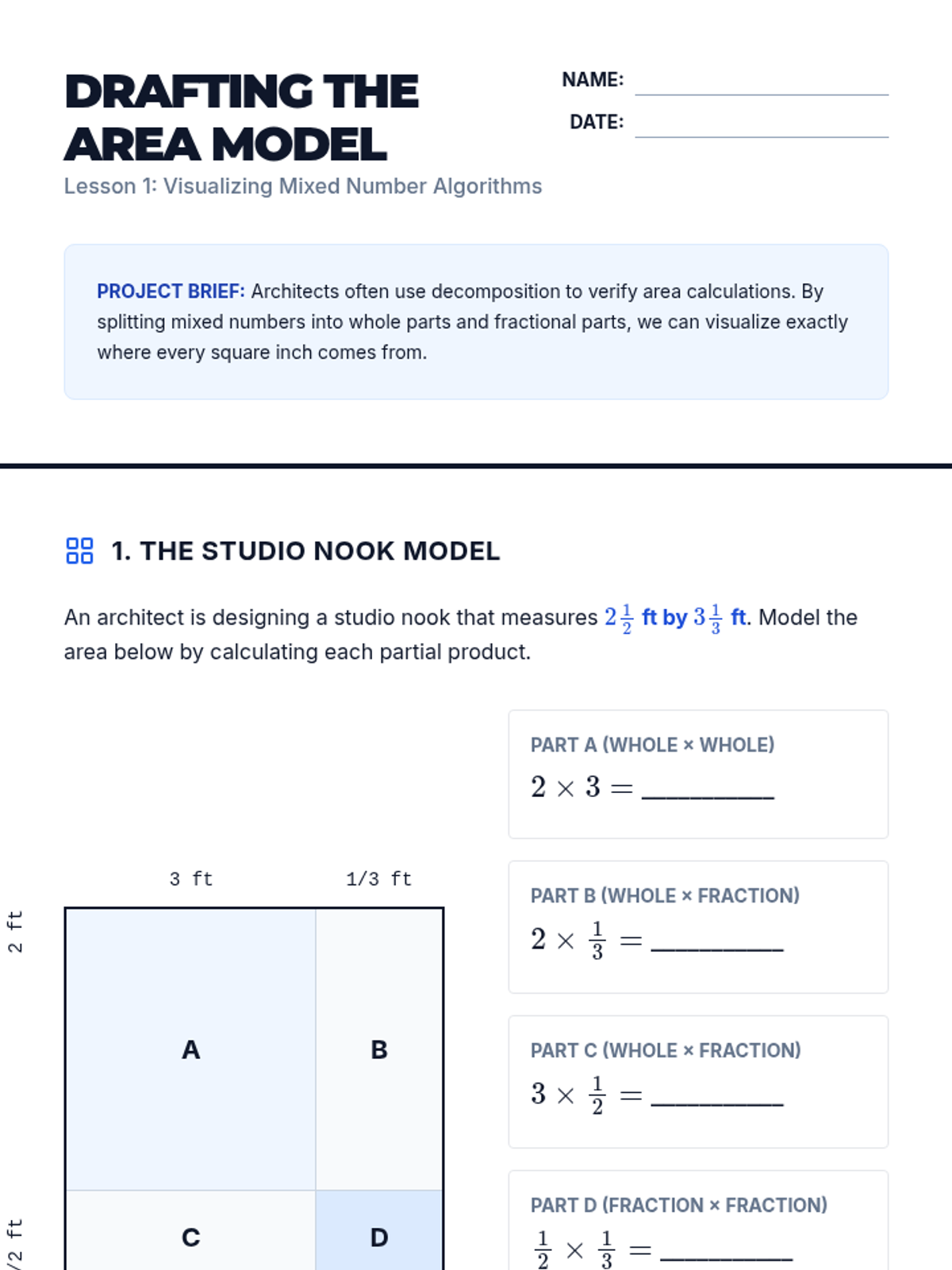
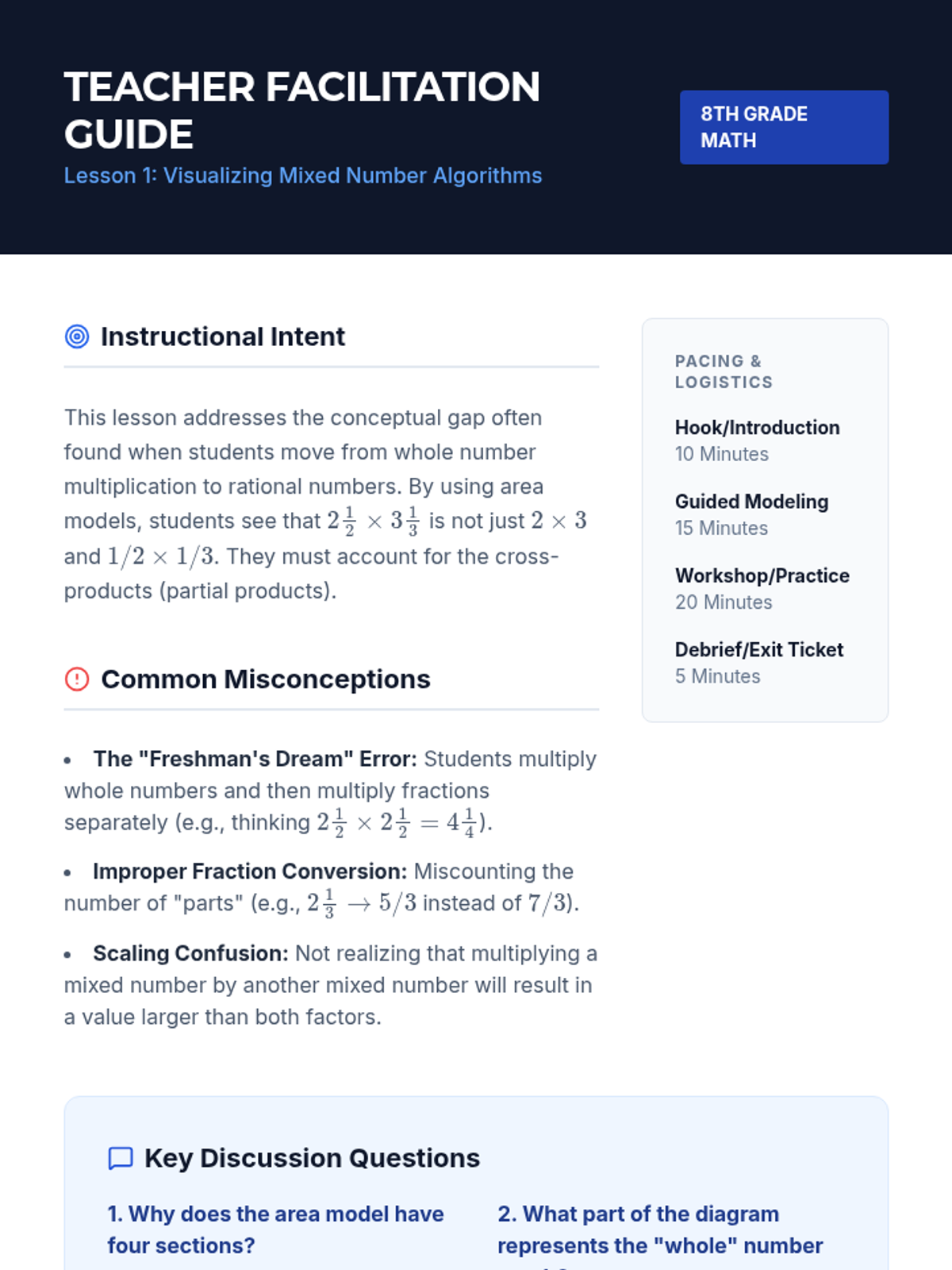
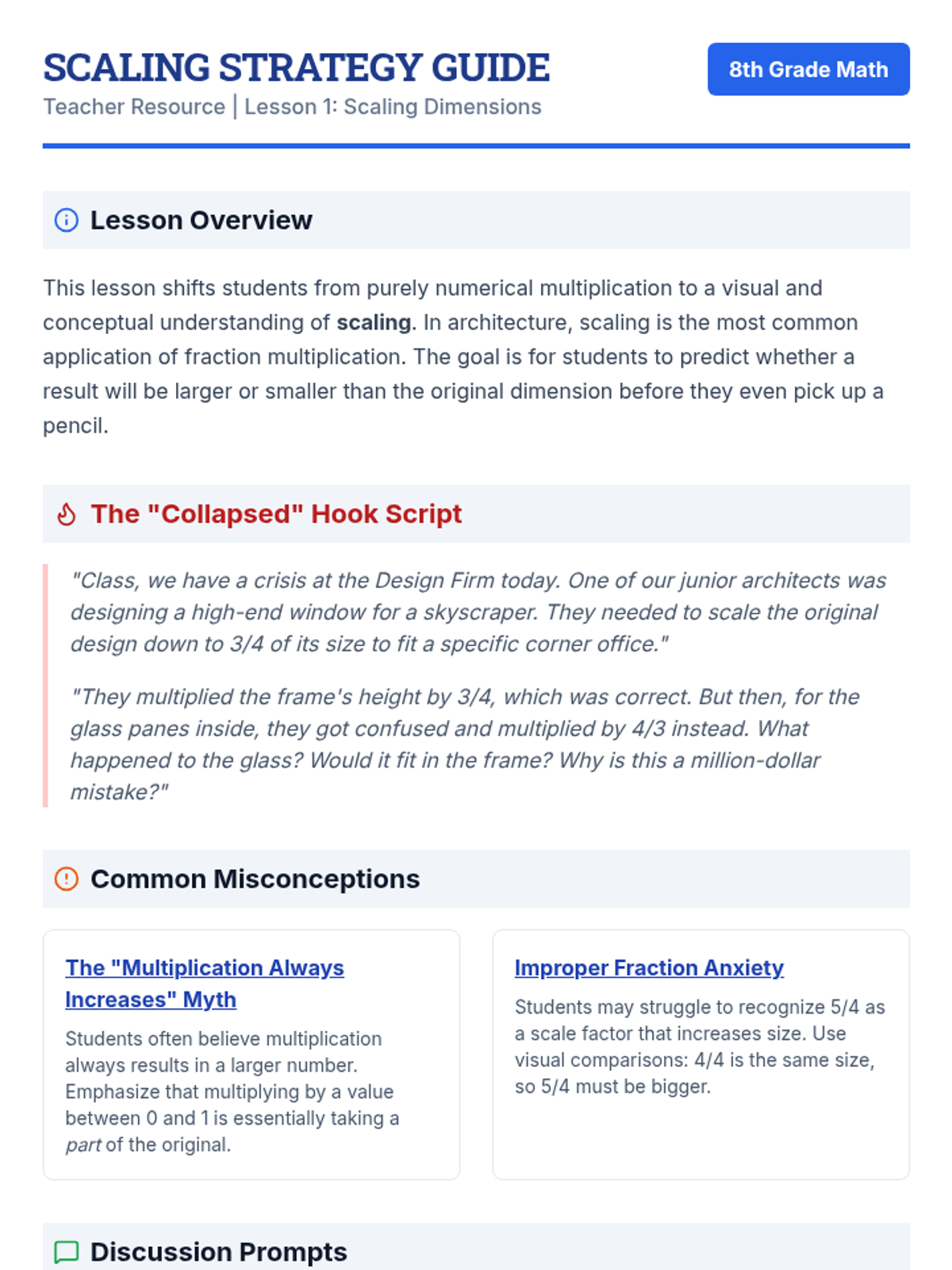
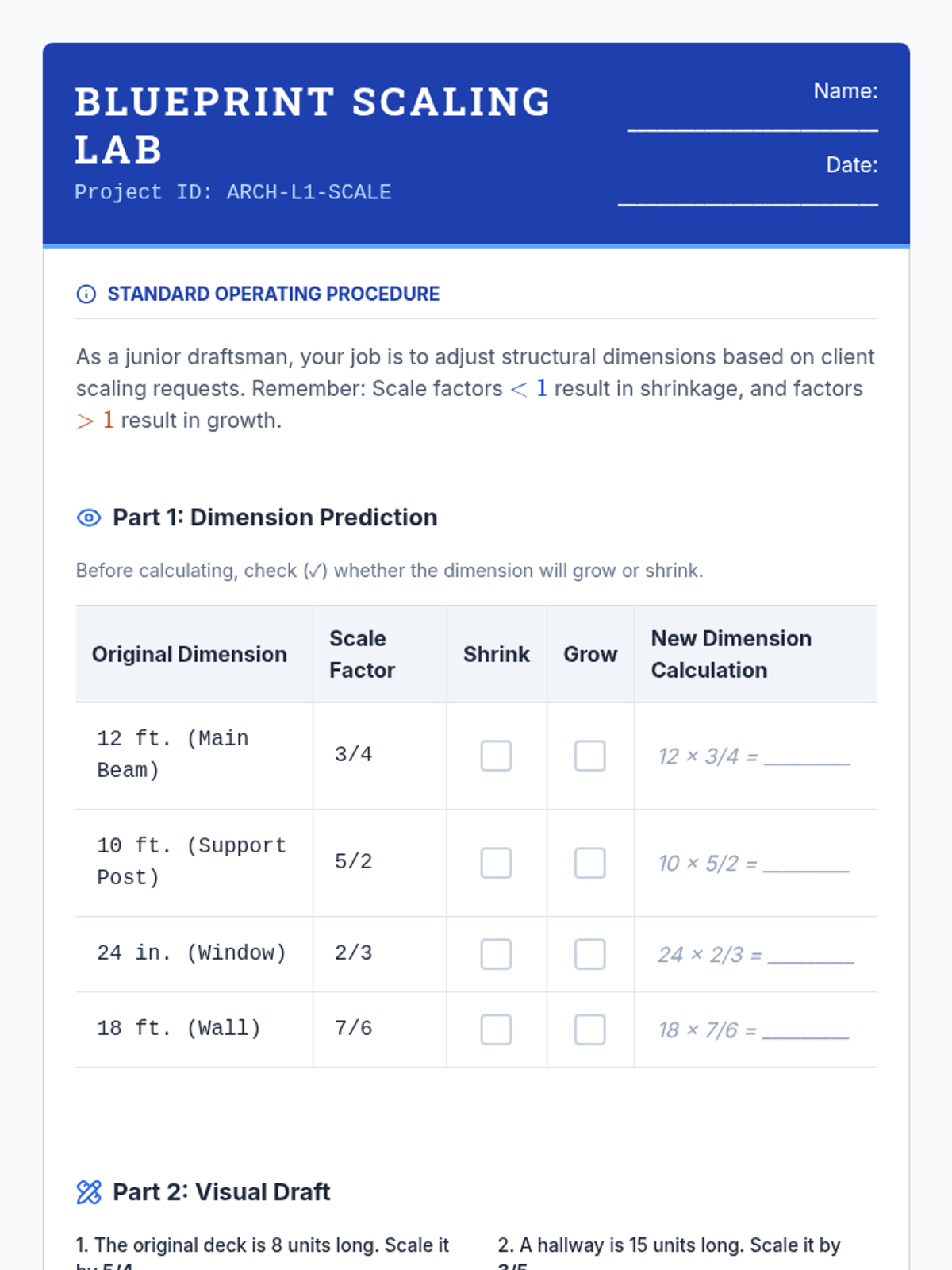
This sequence applies fraction multiplication and division to architectural design and spatial planning, moving from visual area models to complex multi-step scaling and design challenges. Students master operations with rational numbers through the lens of a professional architect.
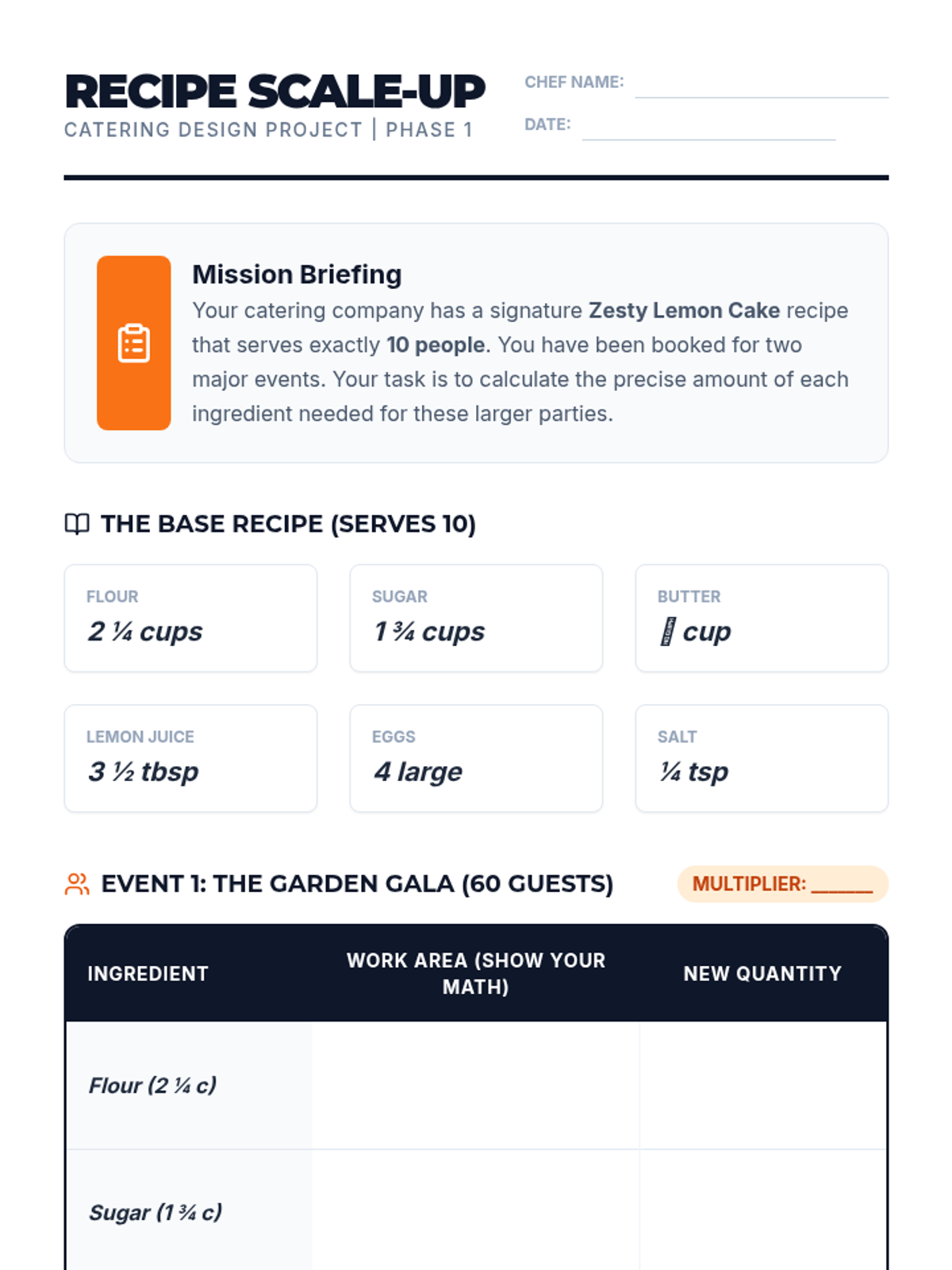
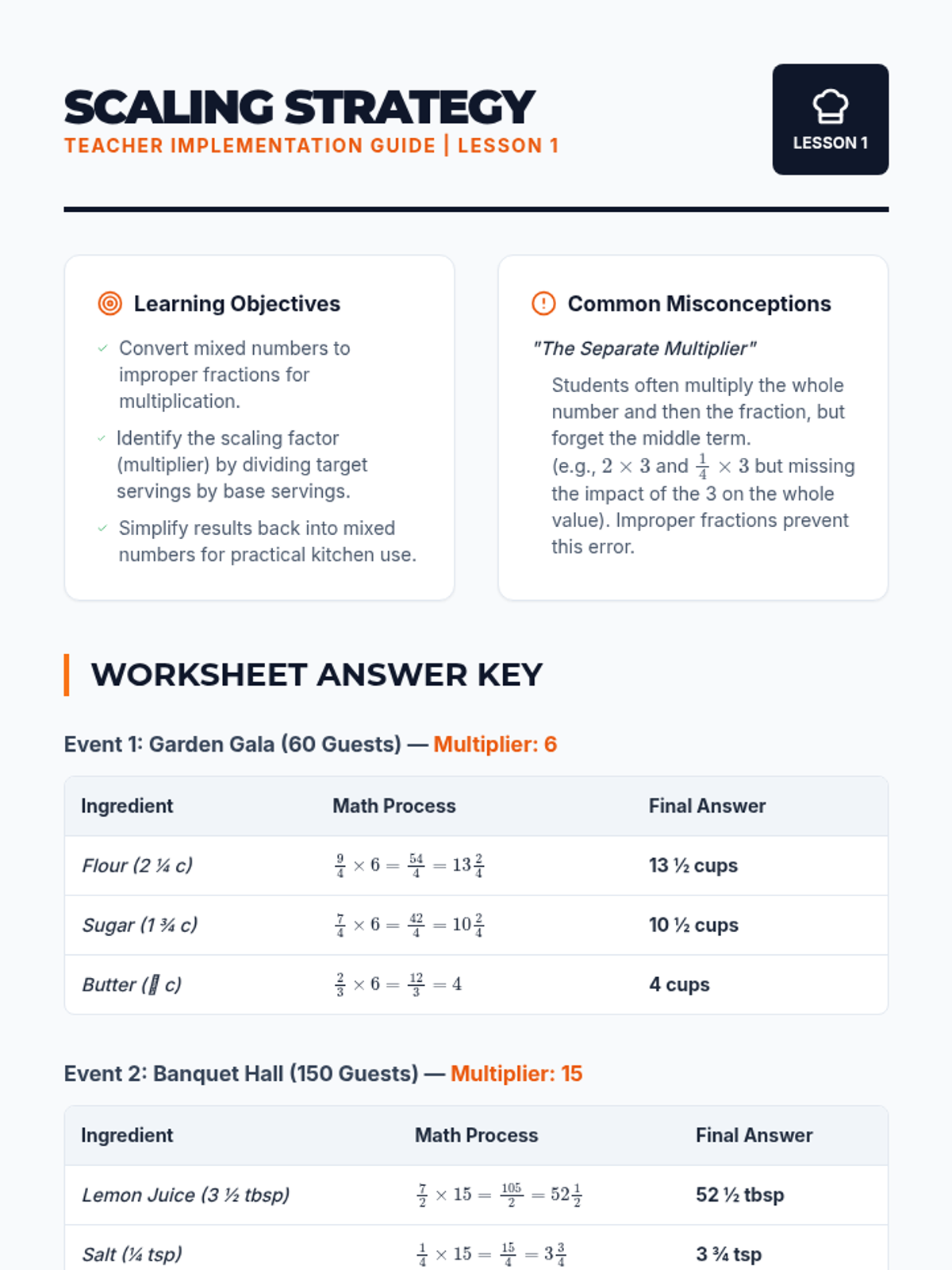
A 7th-grade math project-based sequence where students apply fraction multiplication and division to manage a catering business, from scaling recipes to cost analysis and final event bidding.
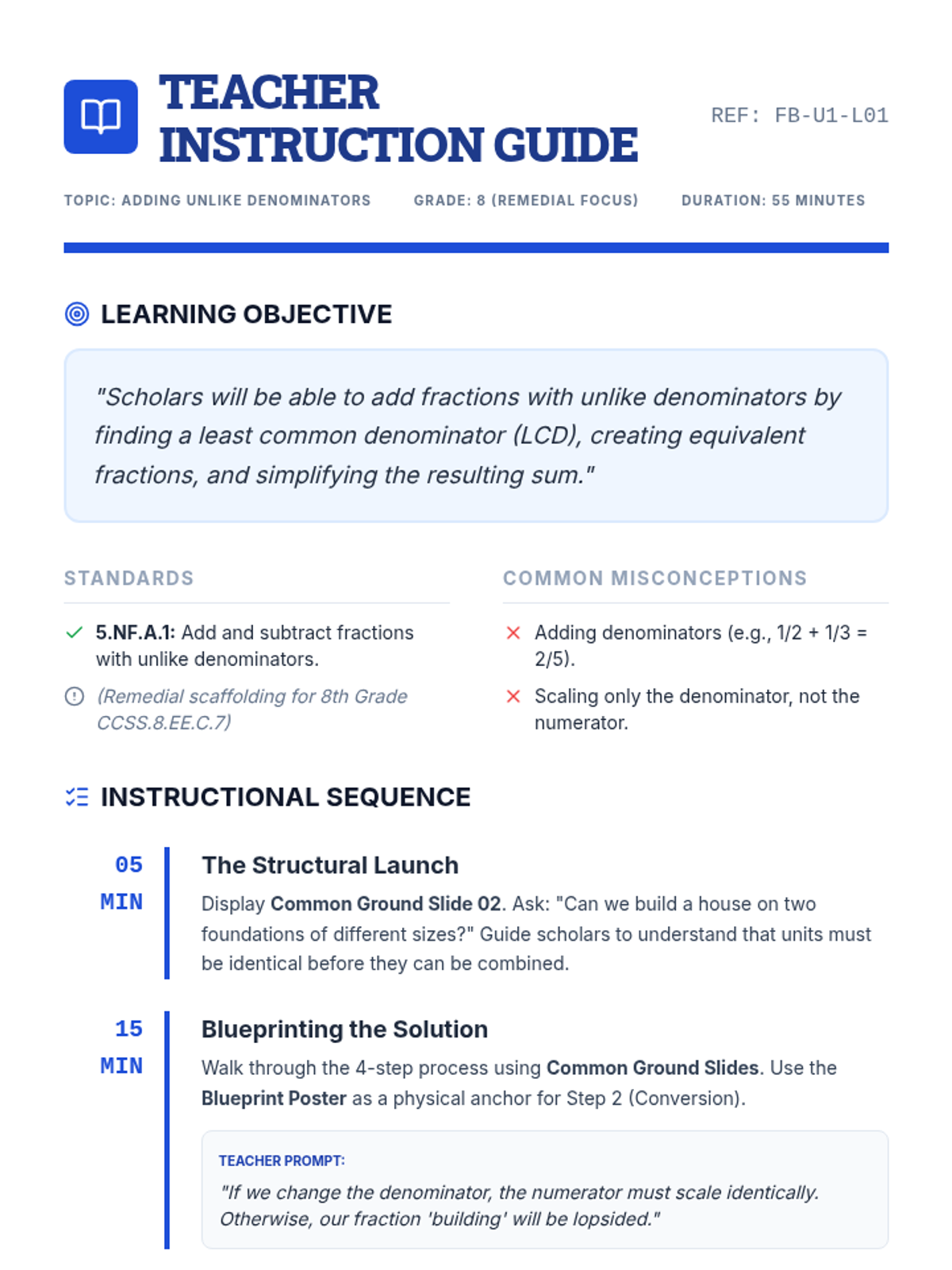
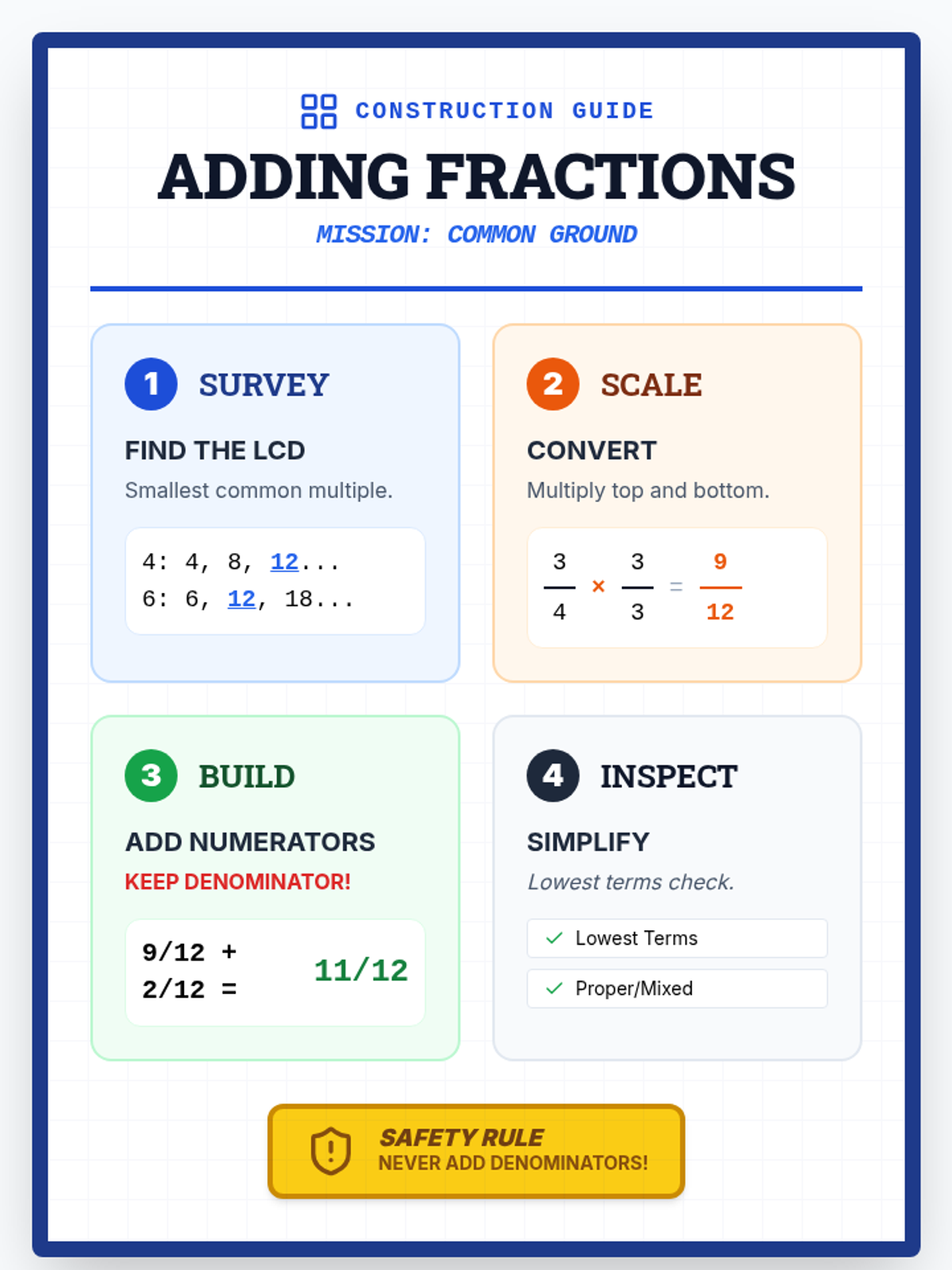
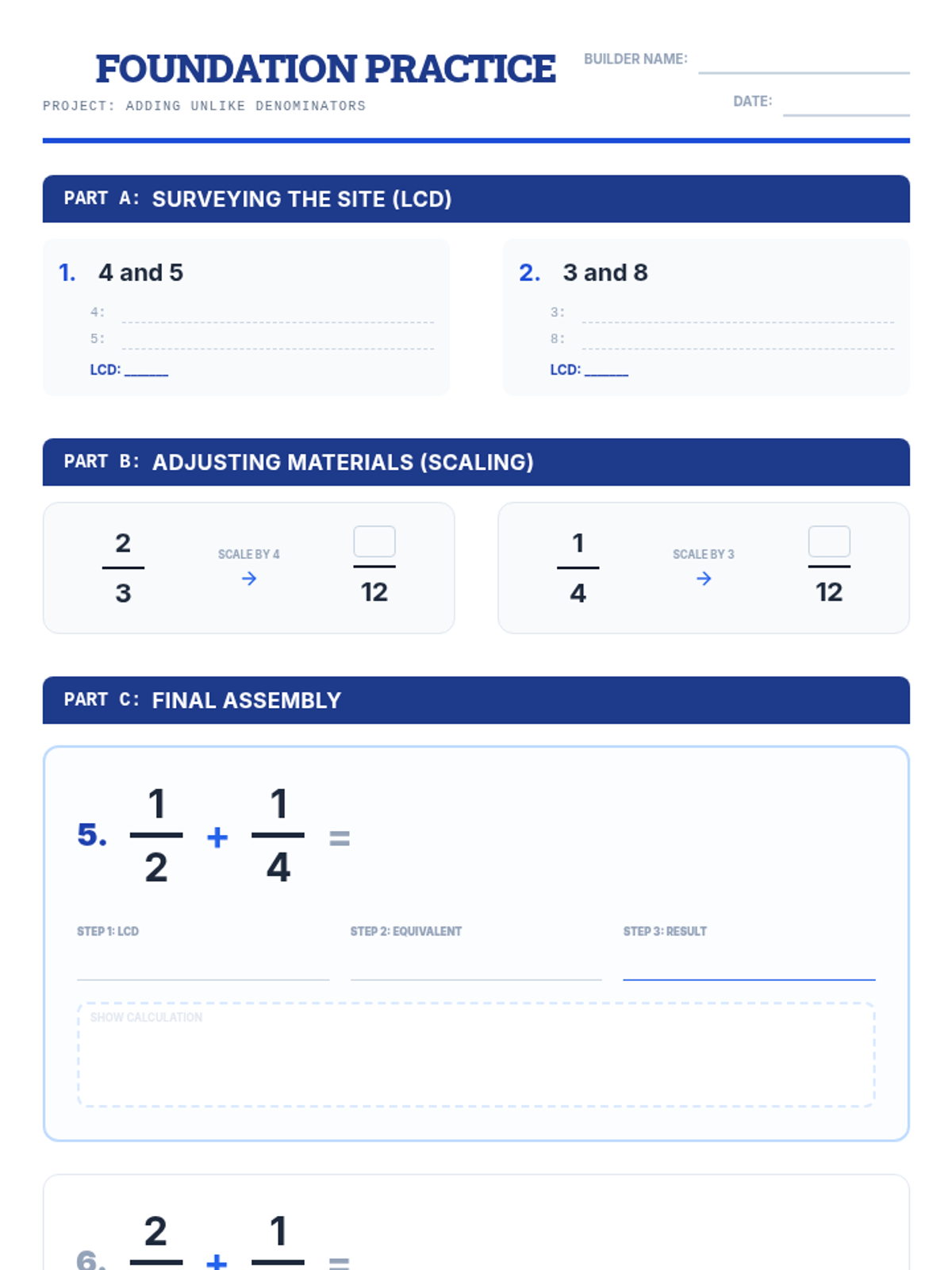
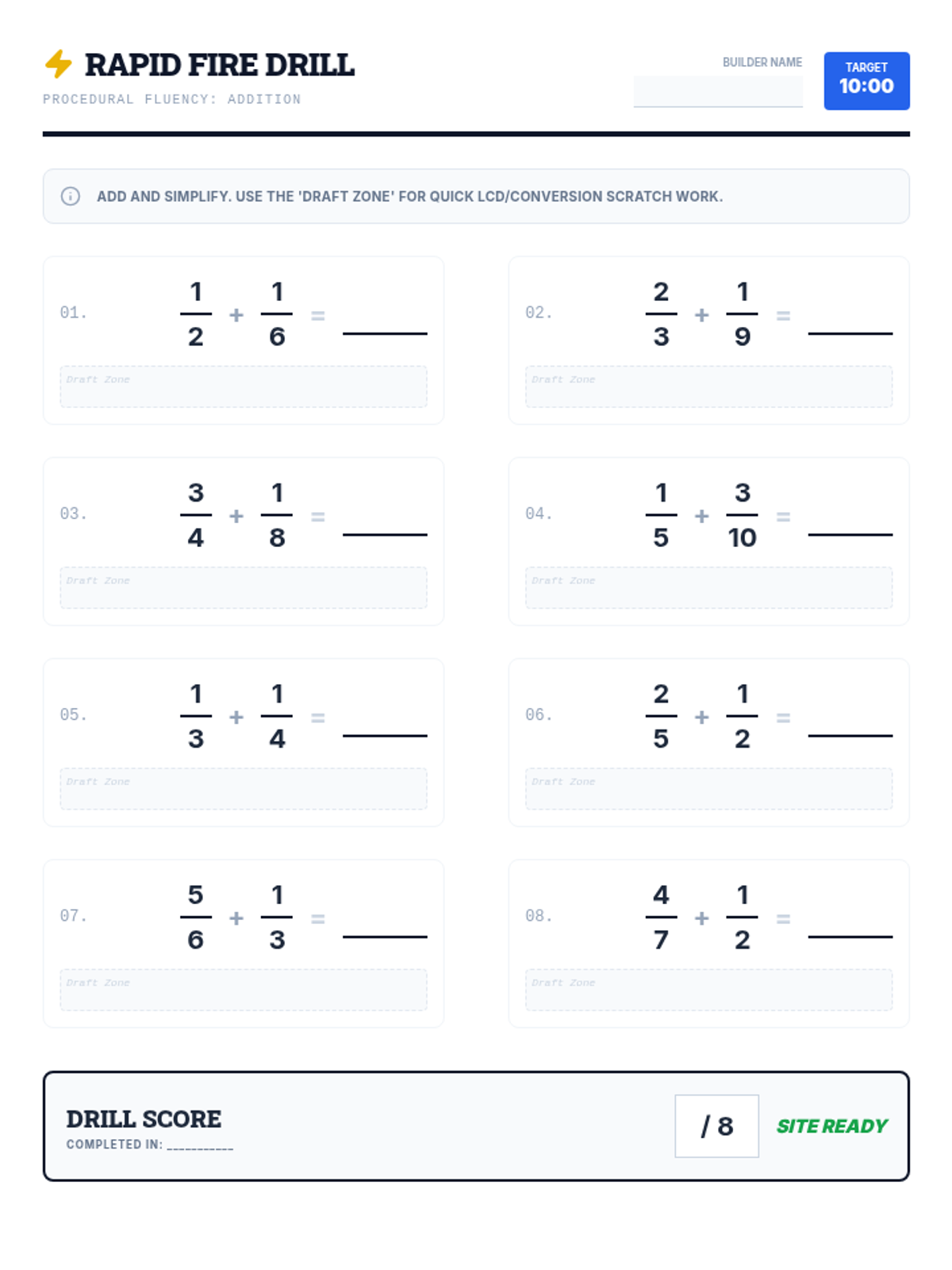
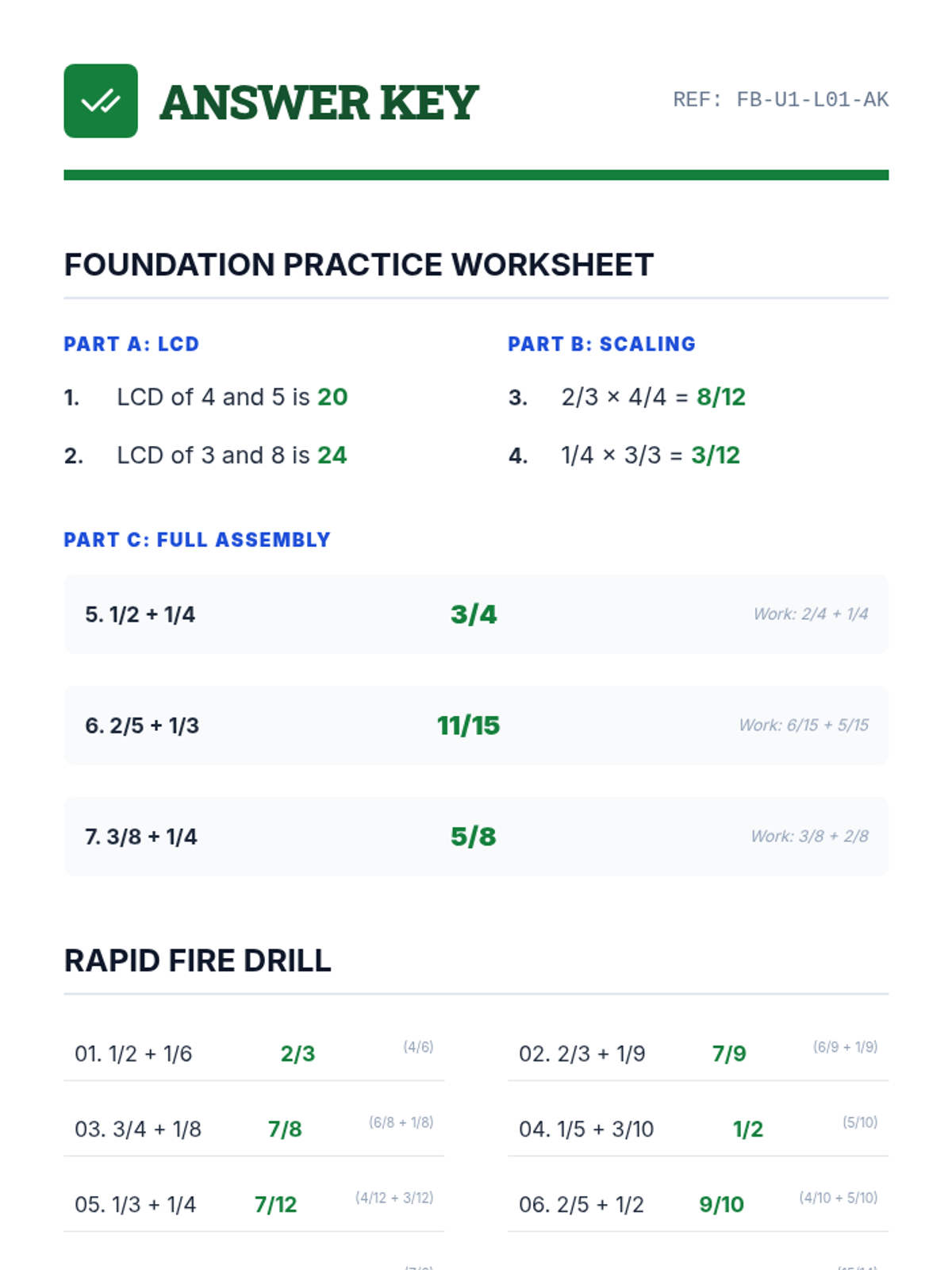
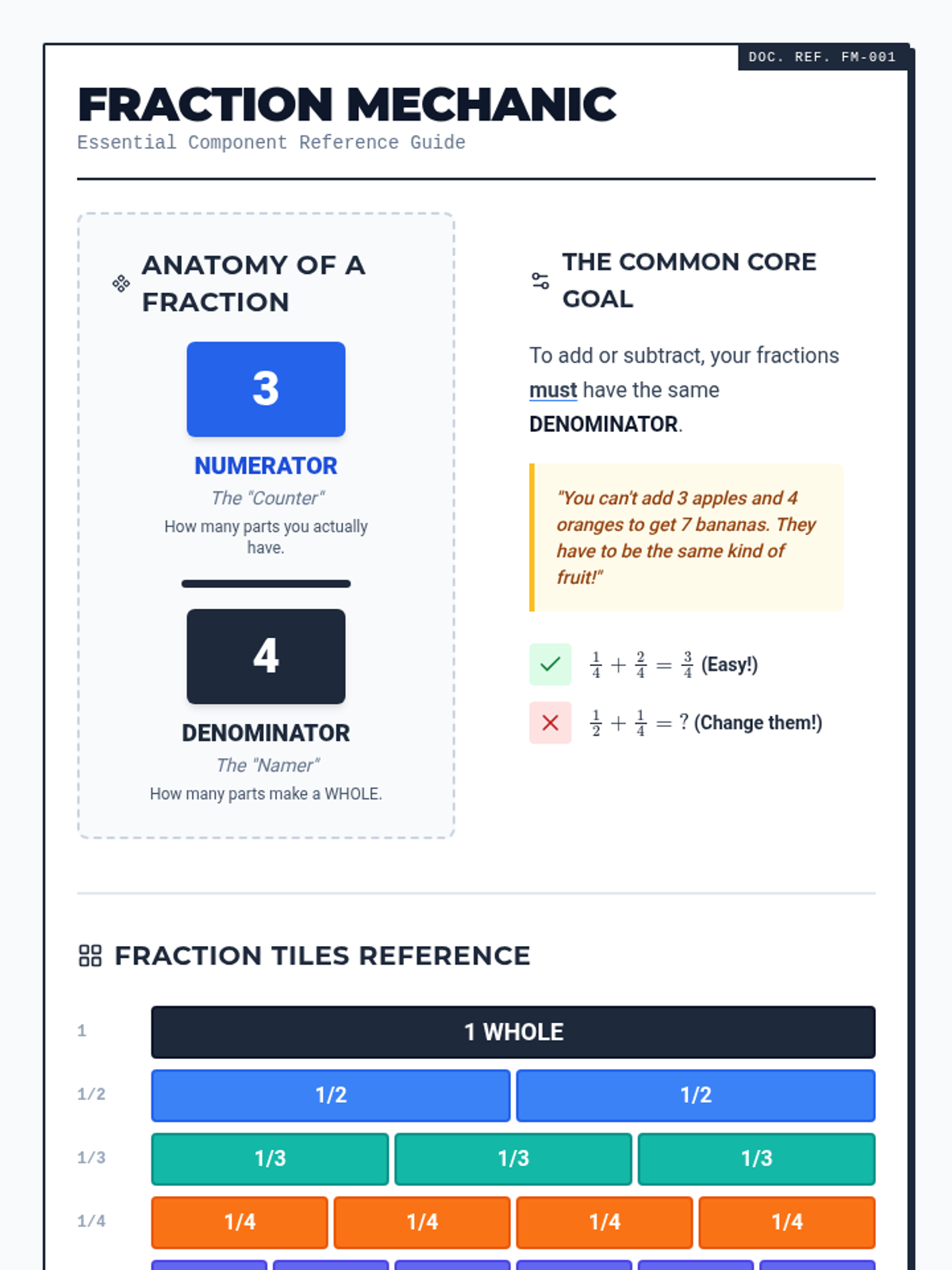
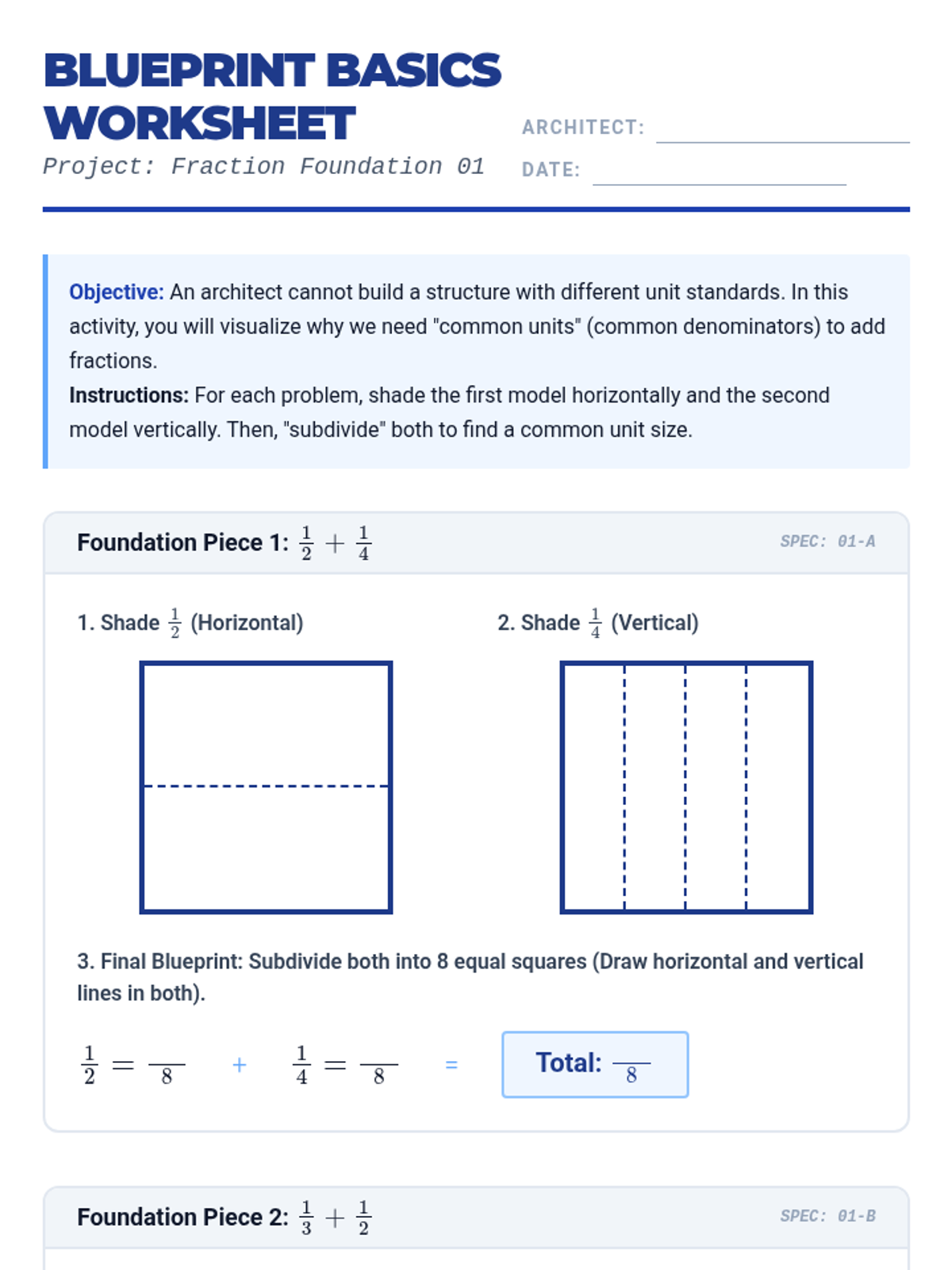
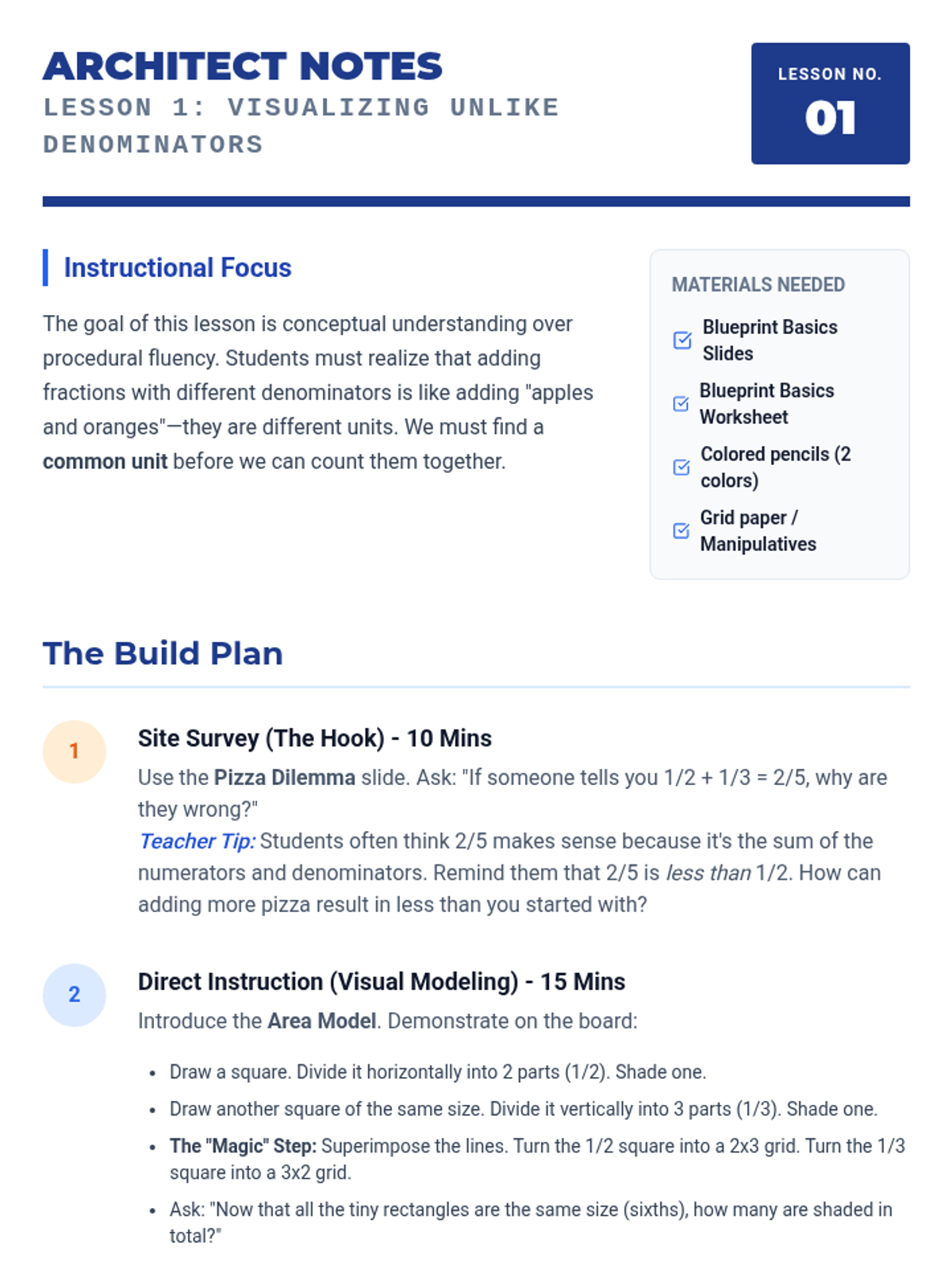
A comprehensive 6th-grade math sequence exploring the conceptual and procedural foundations of adding and subtracting fractions with unlike denominators through a 'Blueprint Architects' theme. Students progress from visual modeling to mastery of the standard algorithm and simplification.
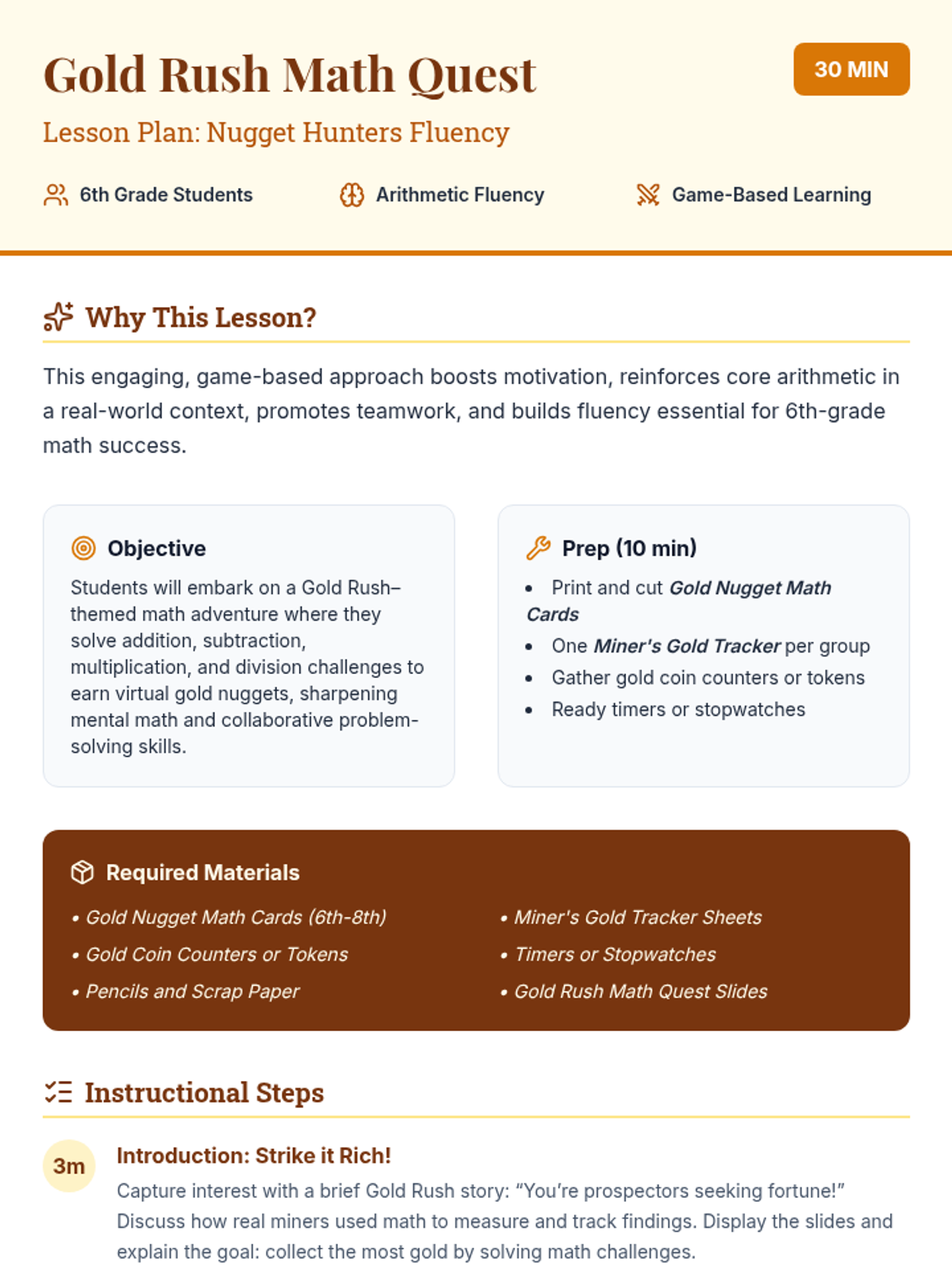
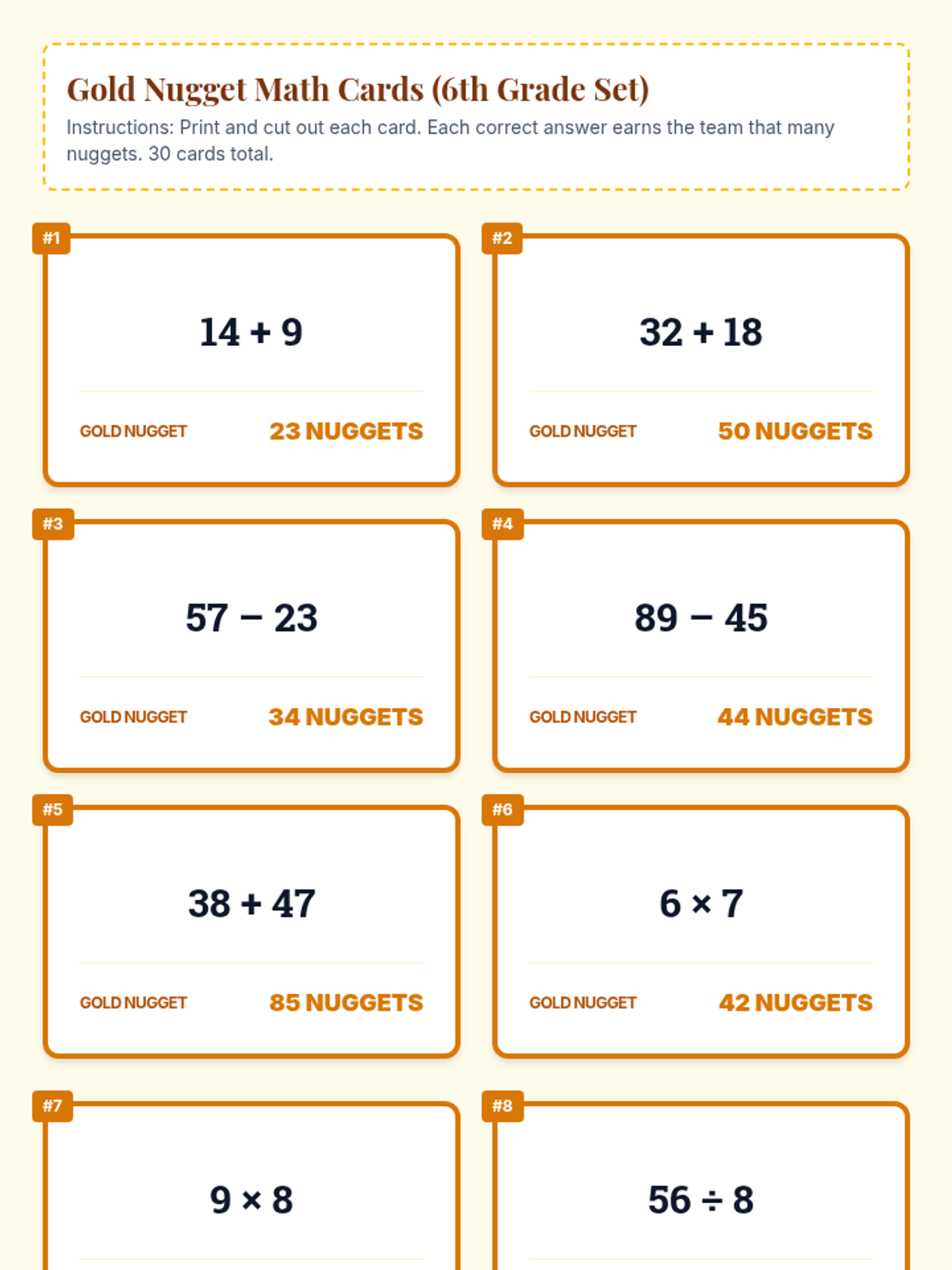
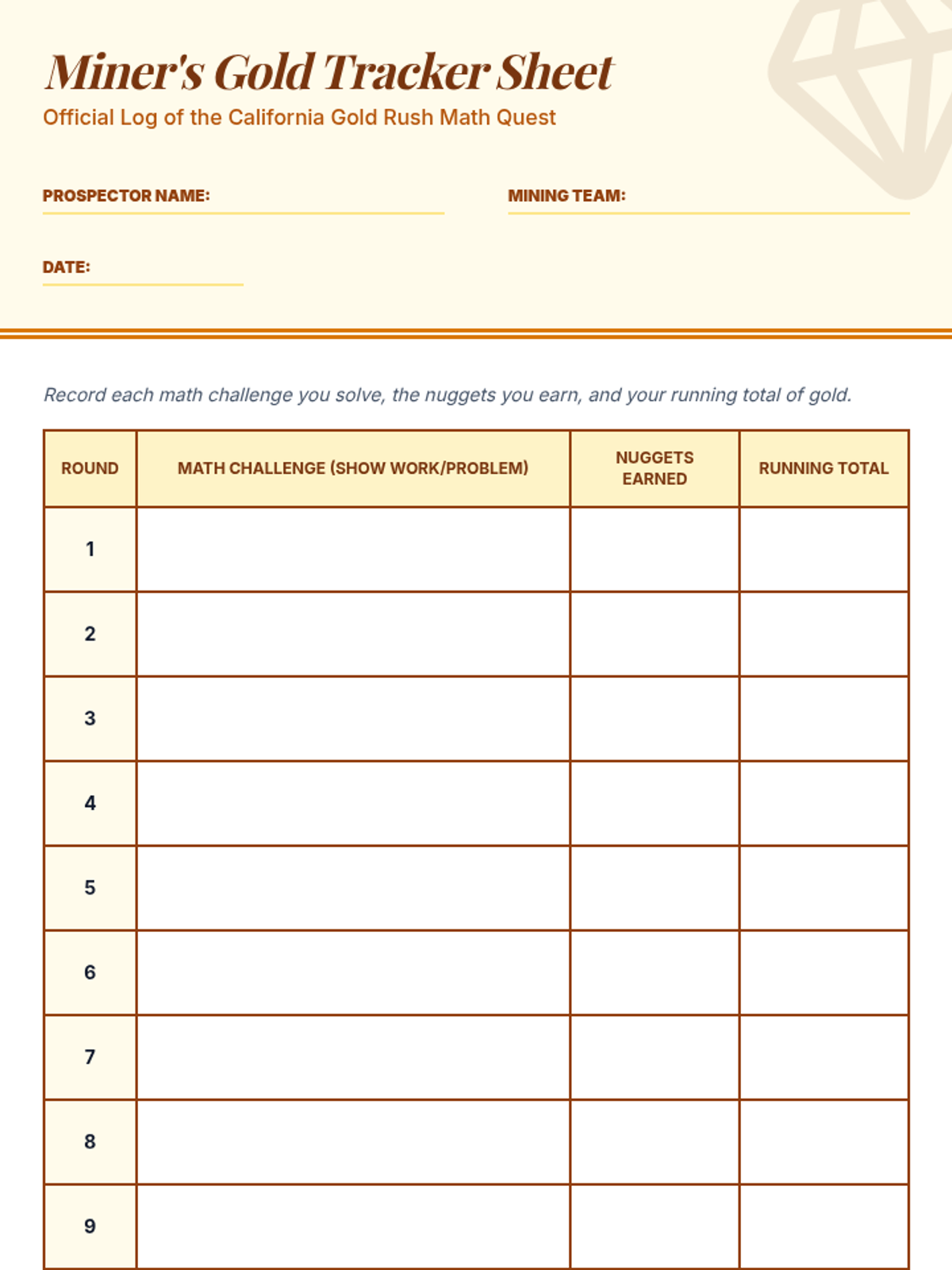
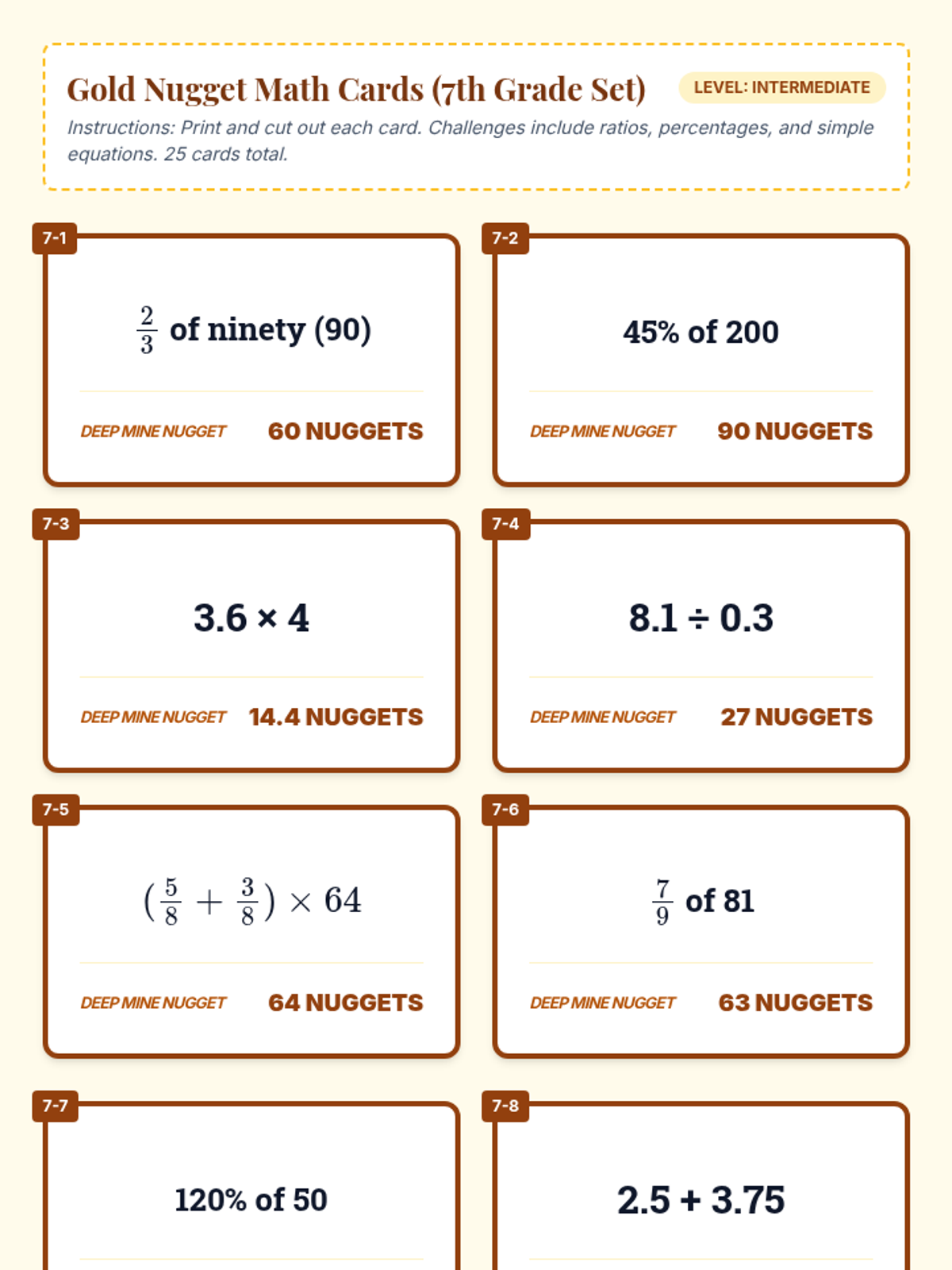
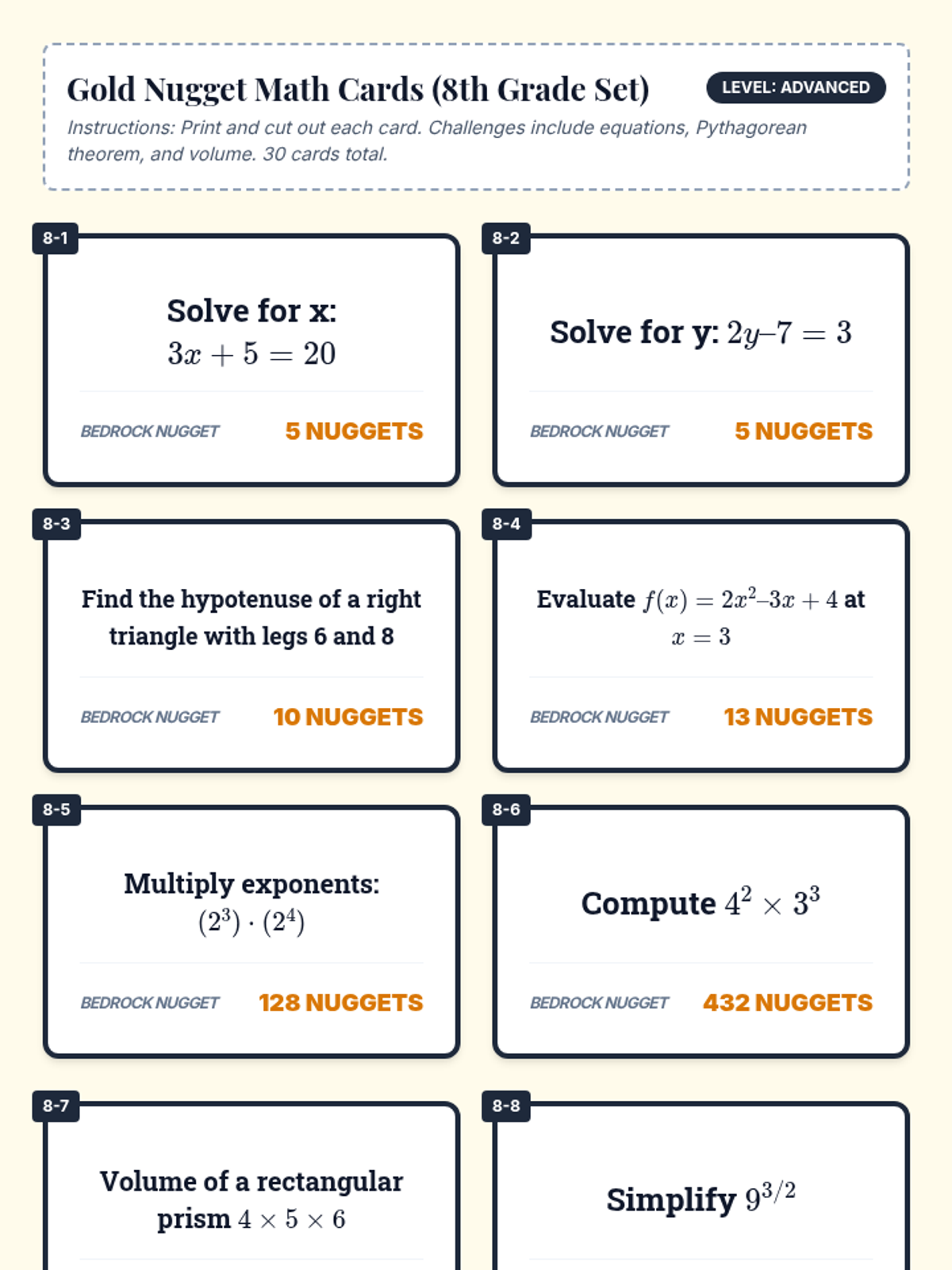
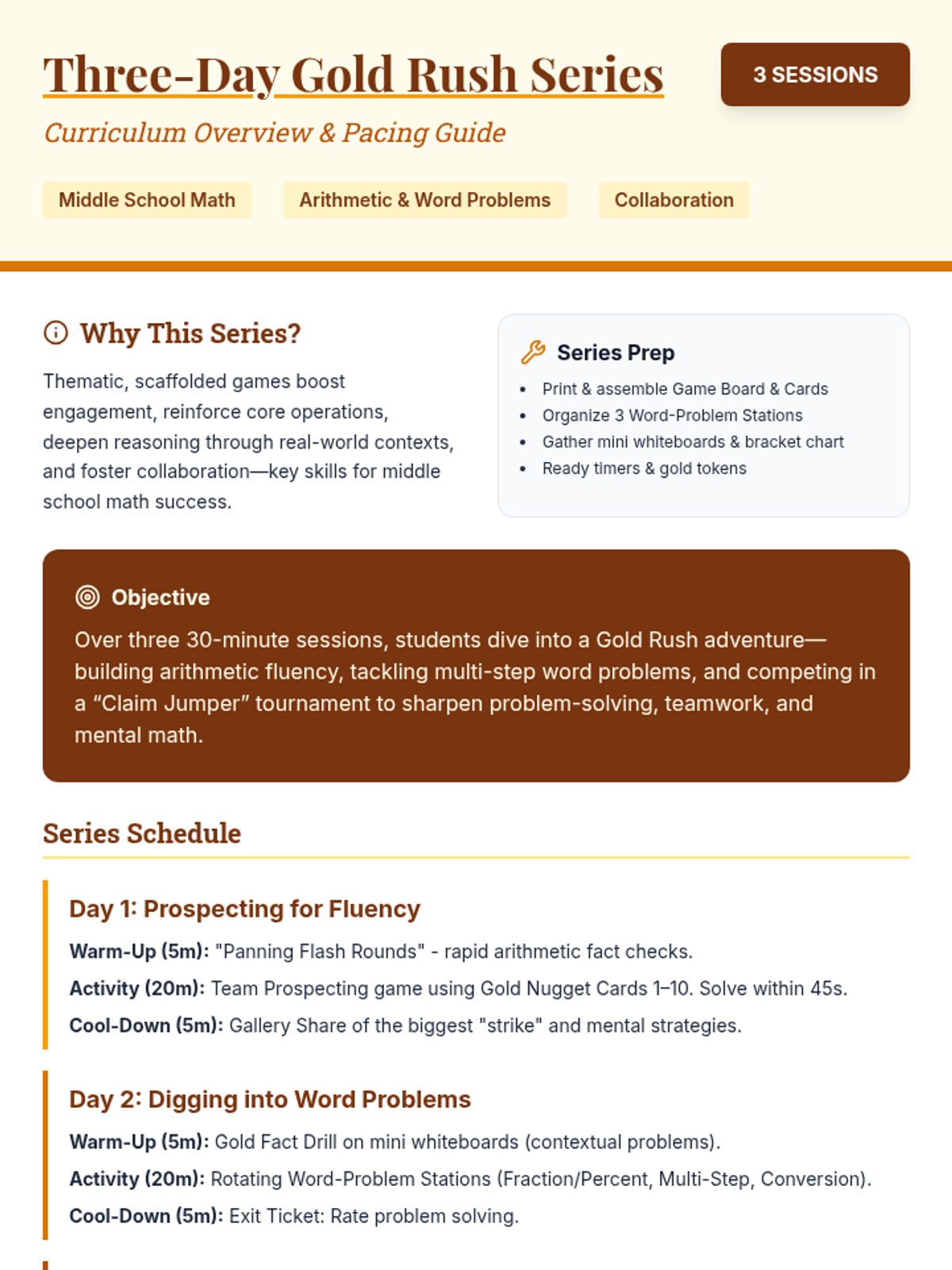
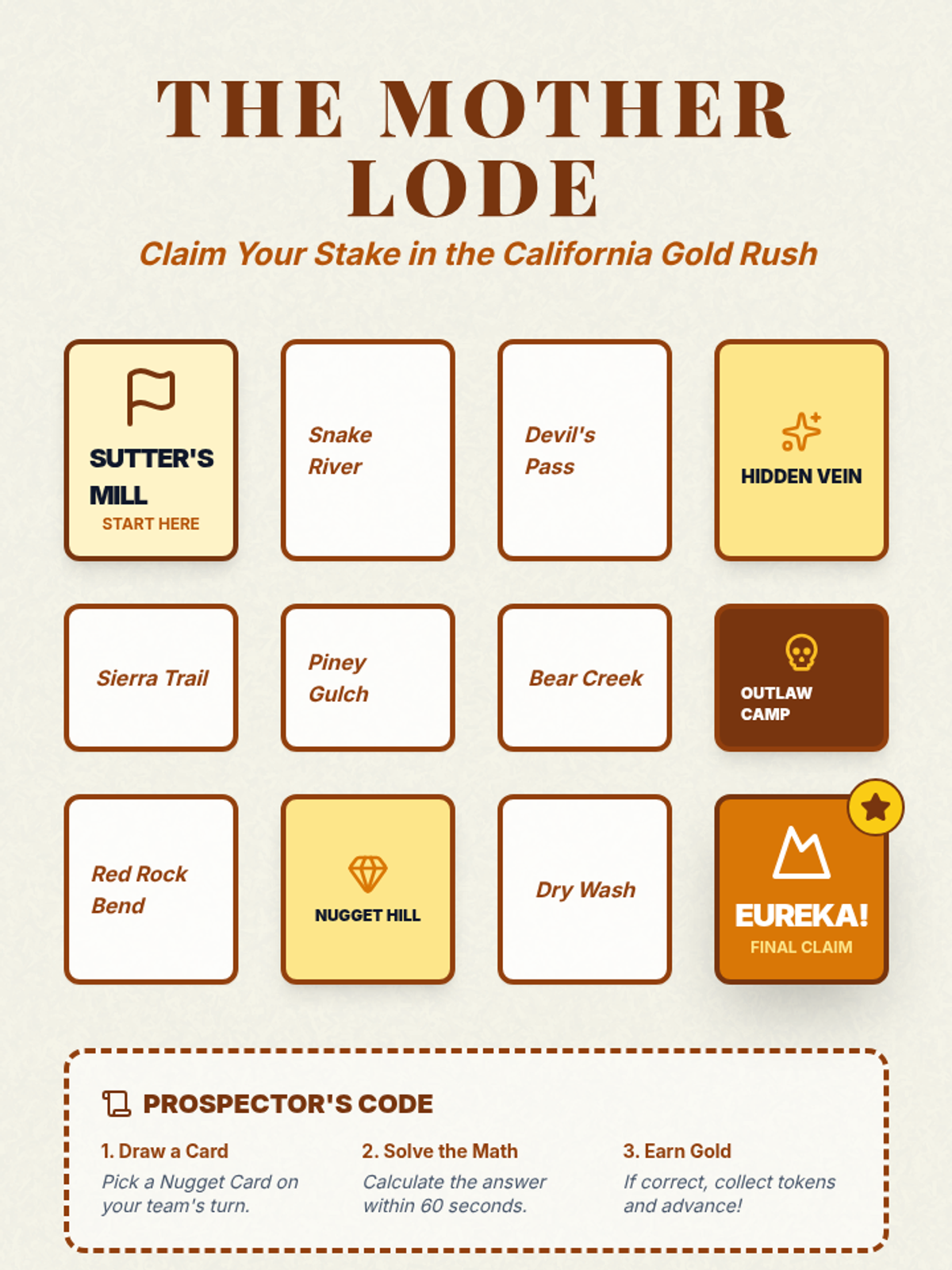
A comprehensive math sequence where students become prospectors to master arithmetic, word problems, geometry, and probability through engaging, game-based challenges.
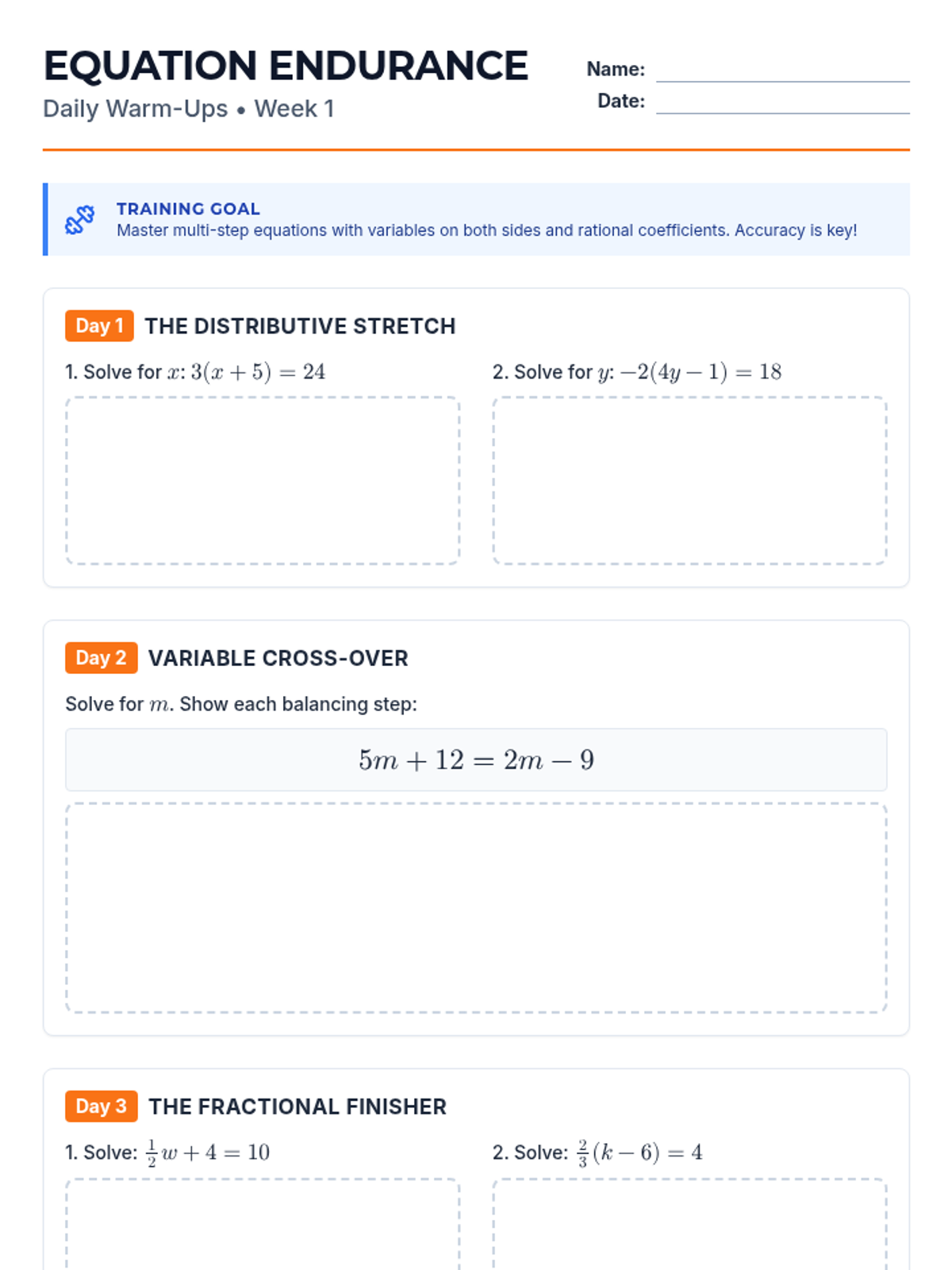
A comprehensive 7-week NYS Math Assessment preparation sequence for 8th grade, covering major clusters including algebra, functions, geometry, and statistics.
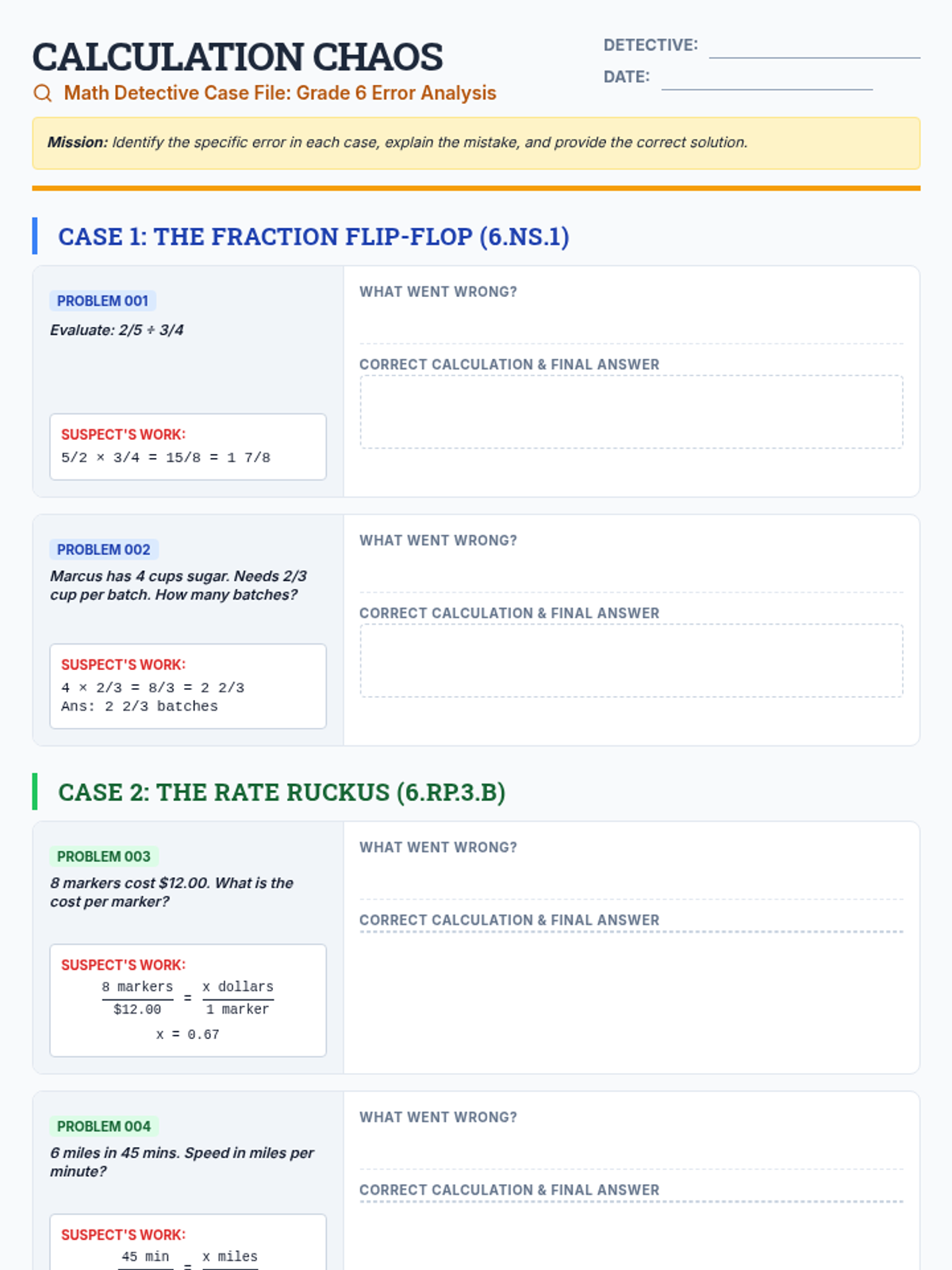
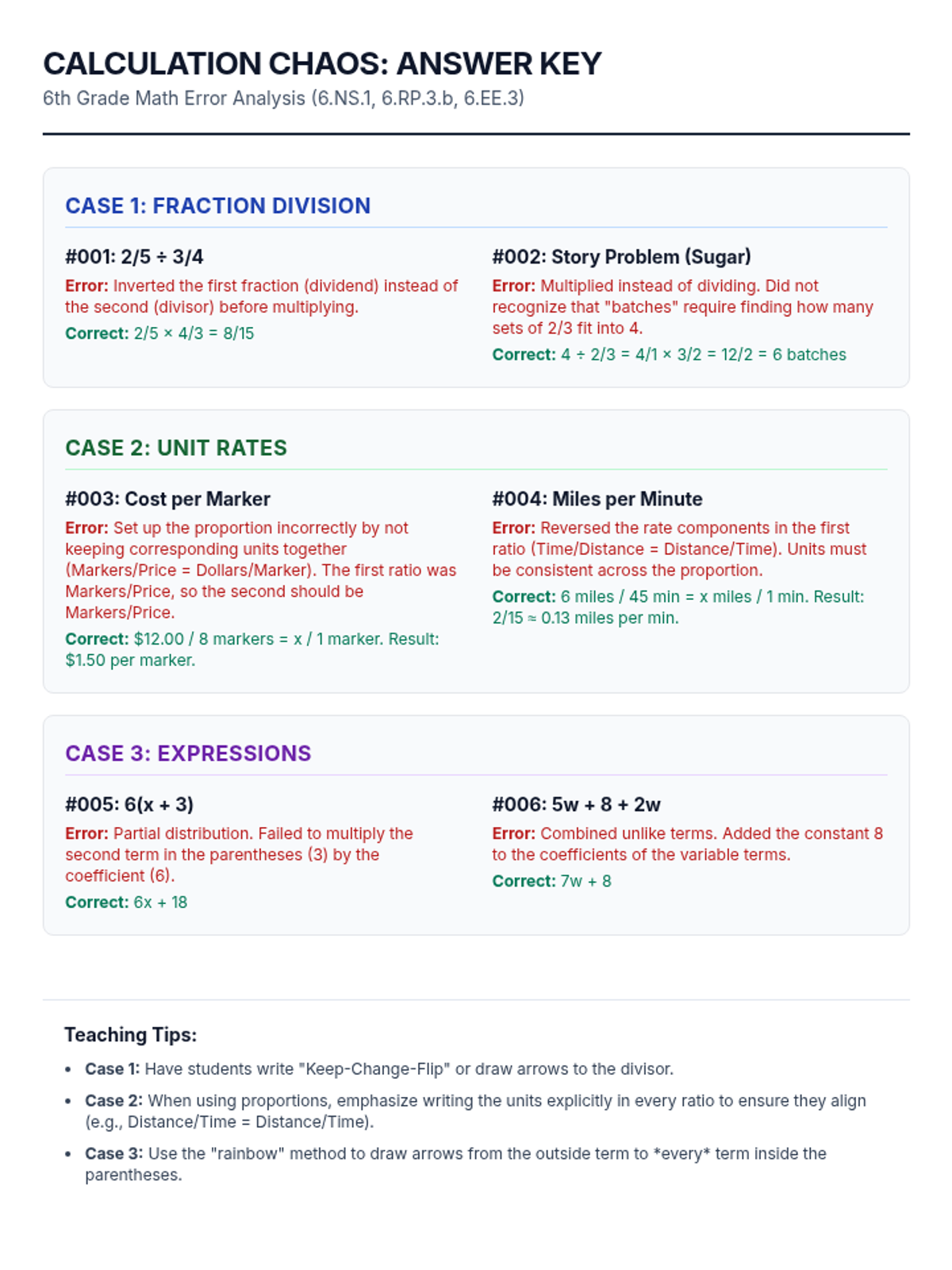
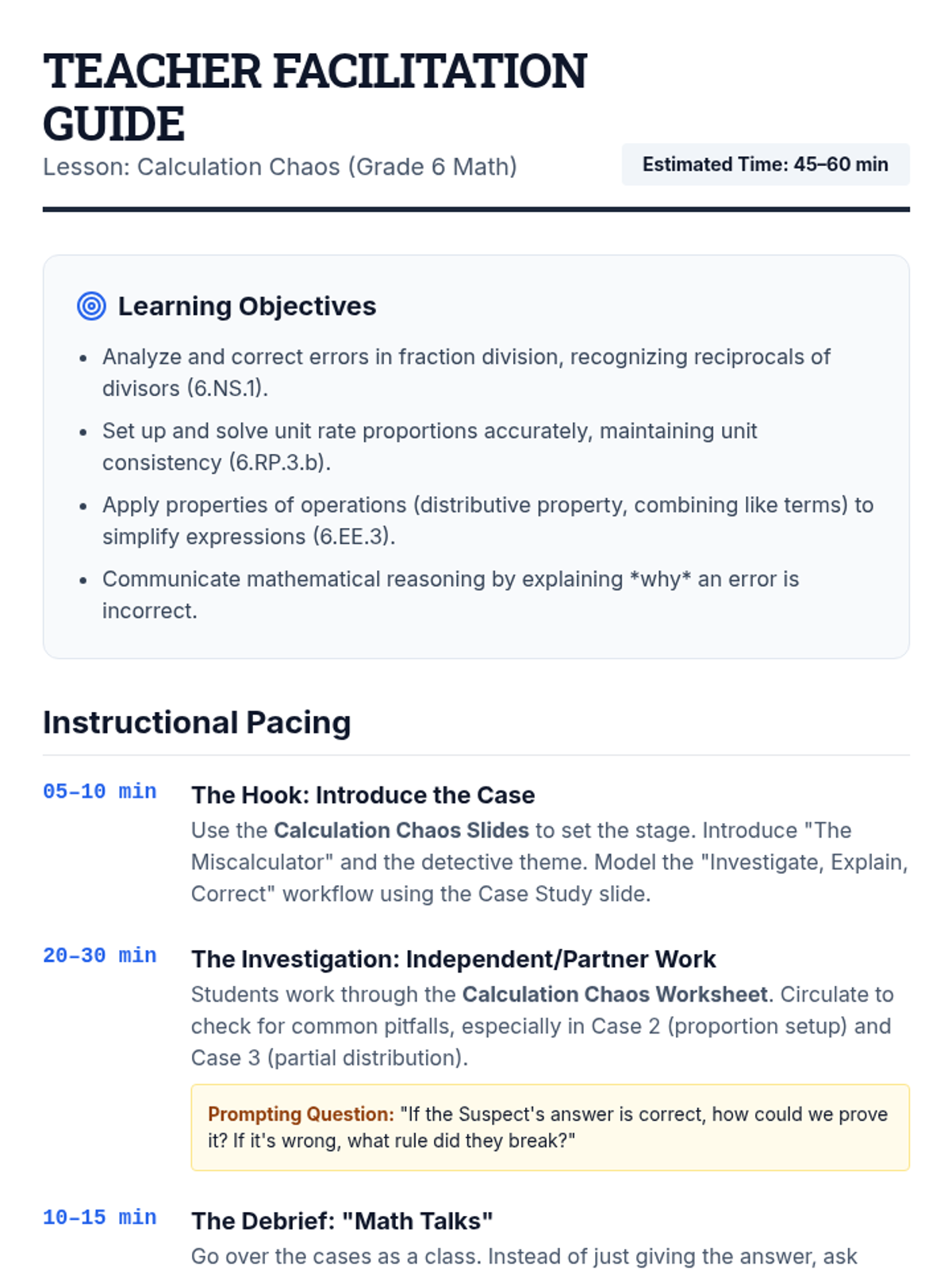
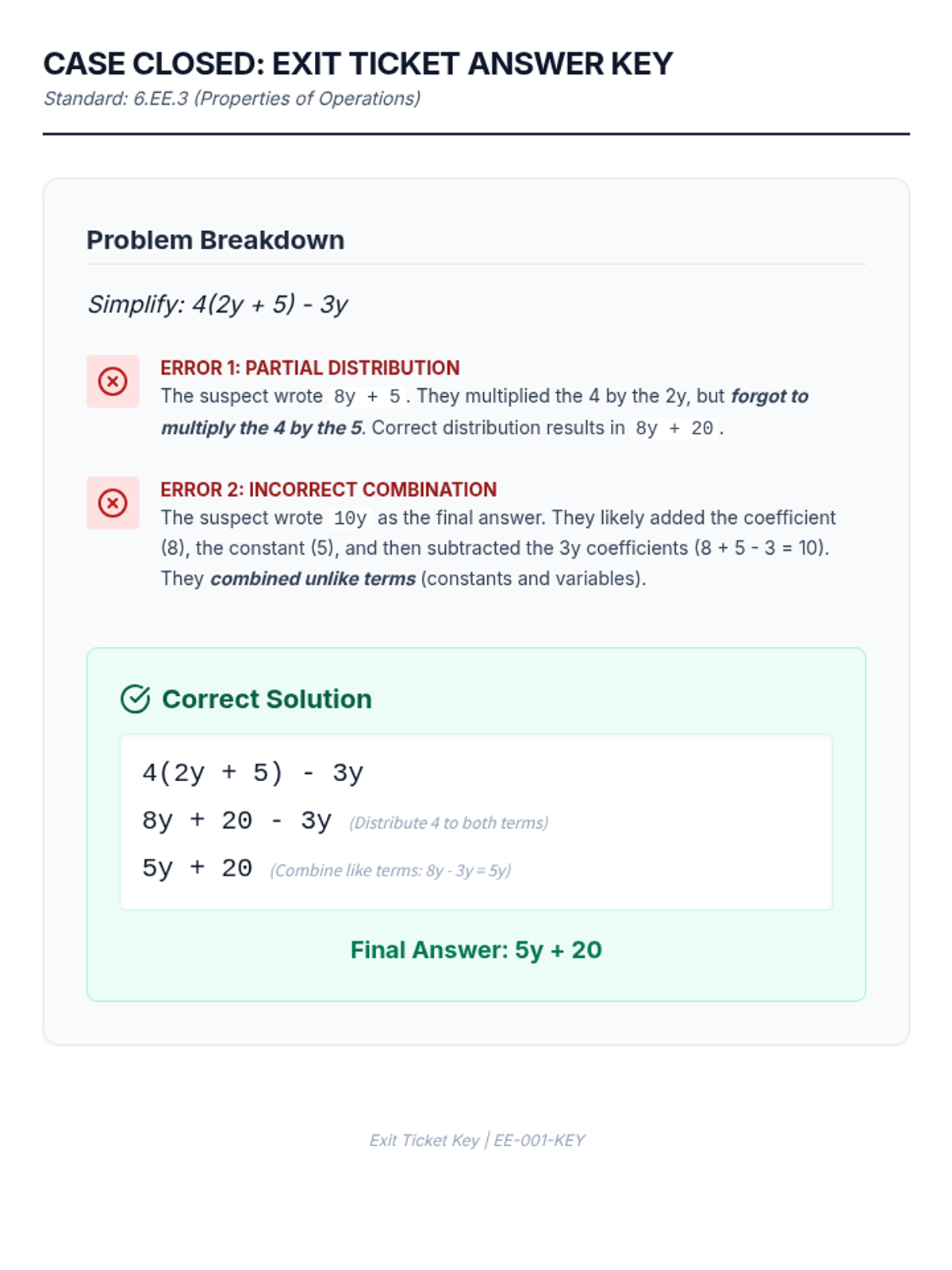
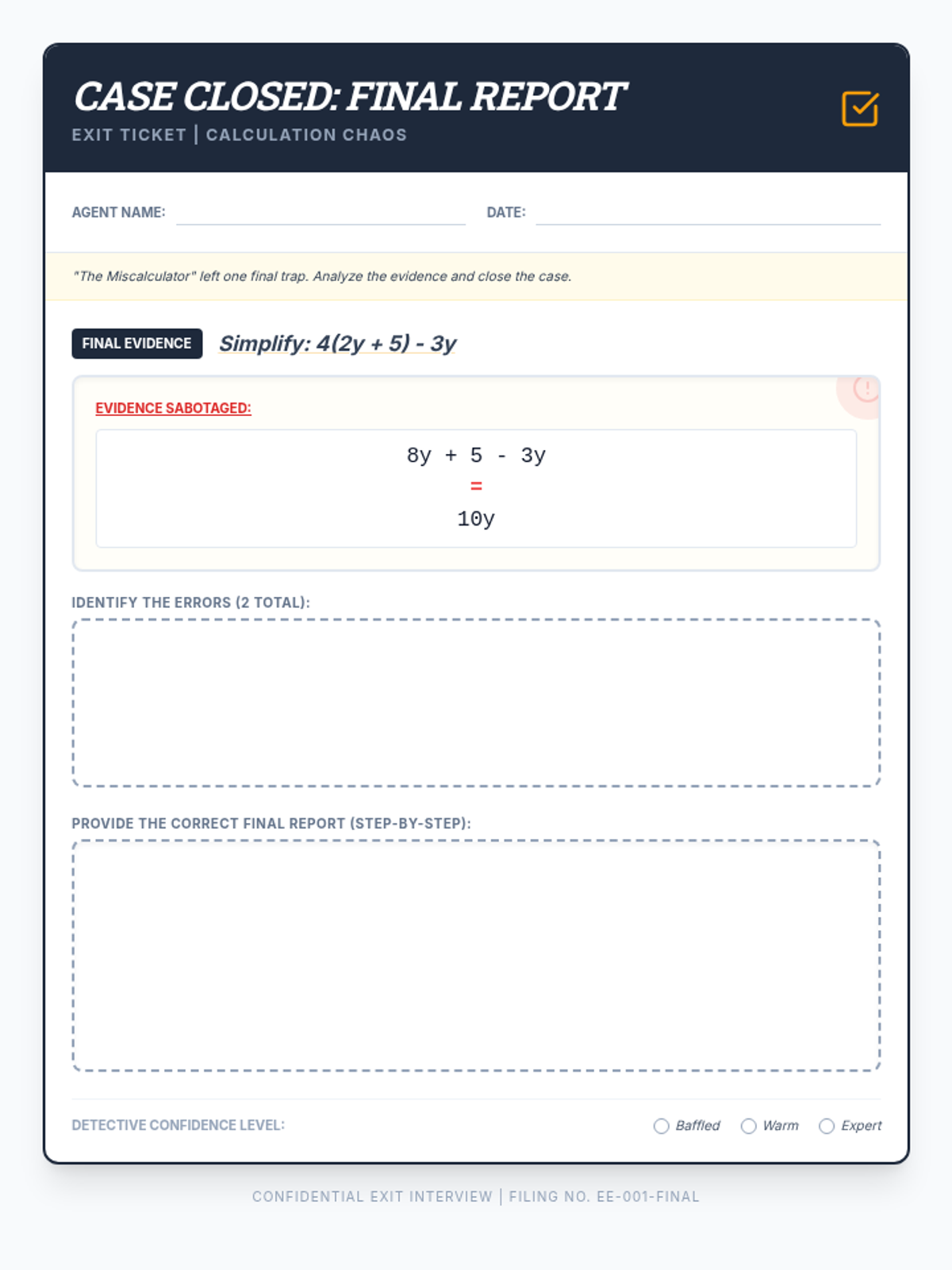
A comprehensive math investigation series where students act as detectives to solve mathematical 'crimes' by identifying and correcting common misconceptions in 6th grade math standards.
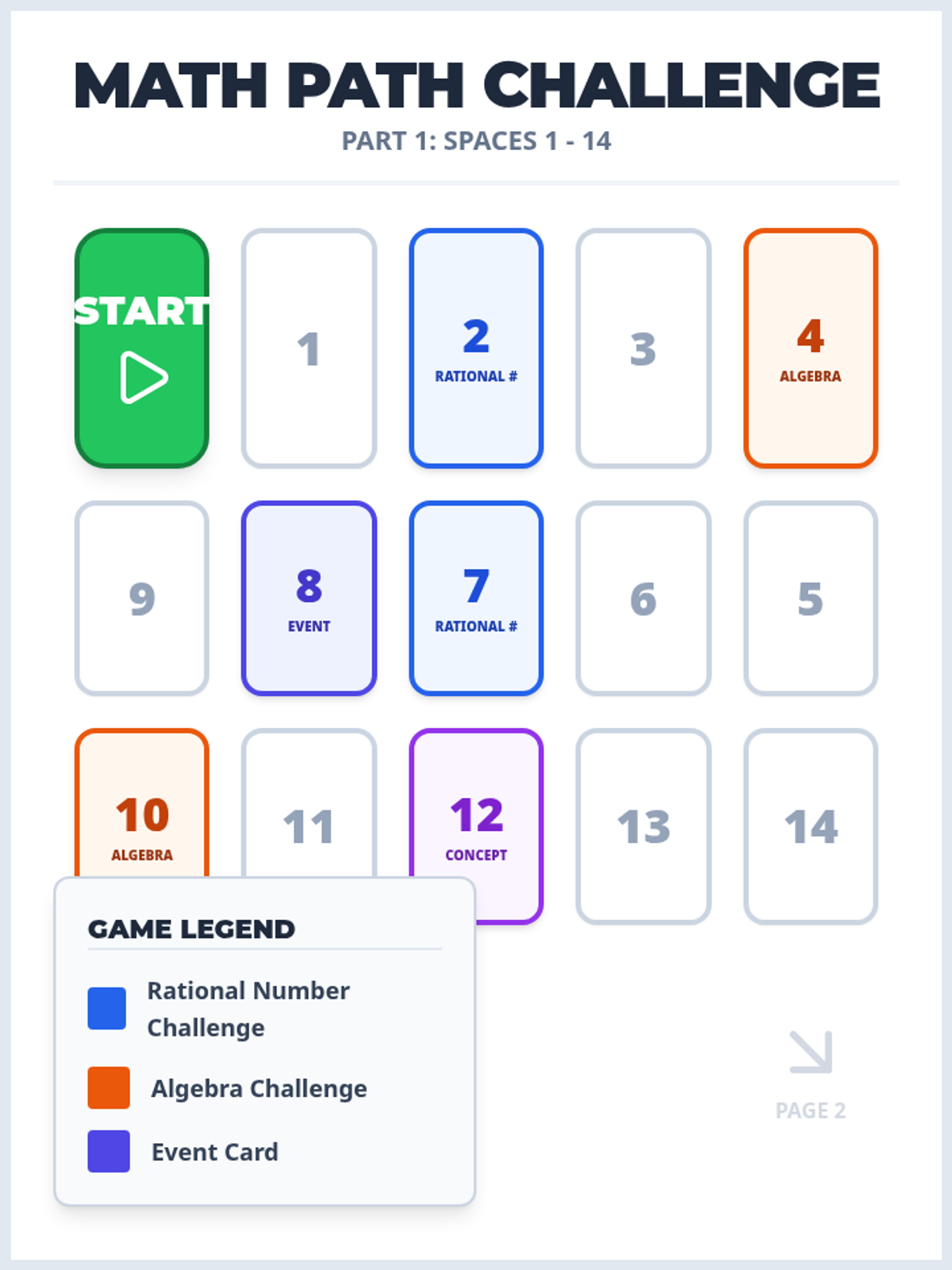
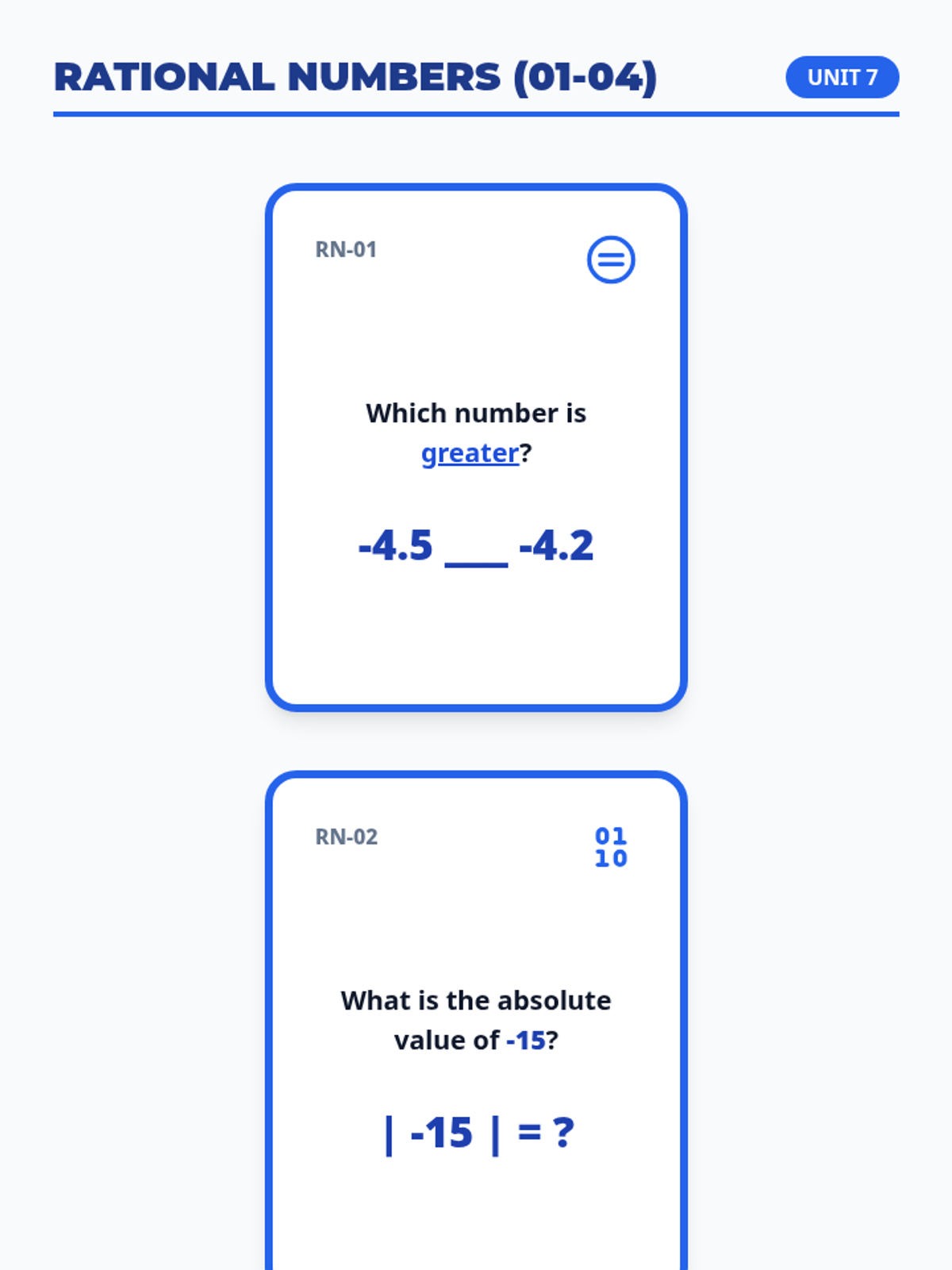
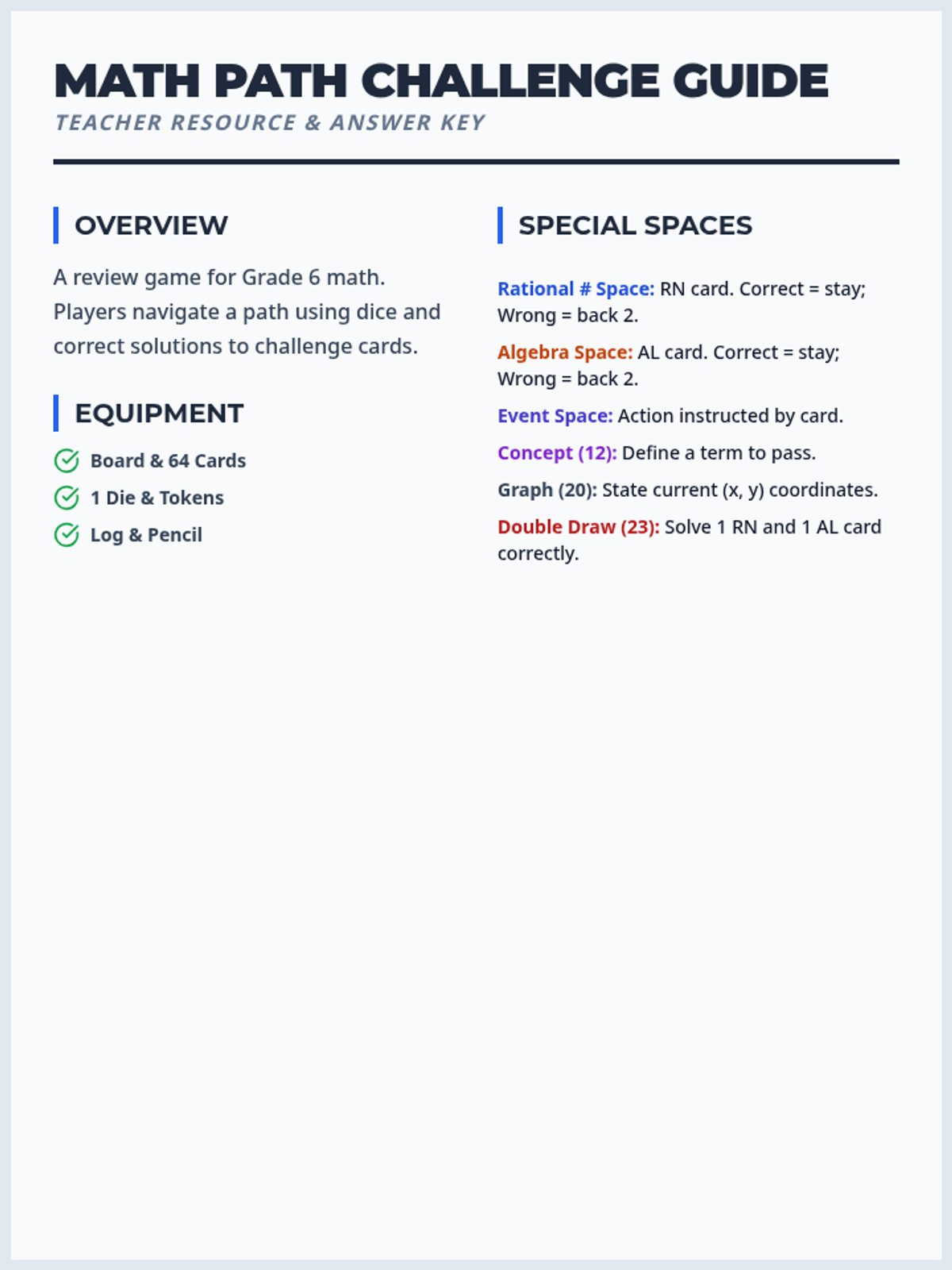
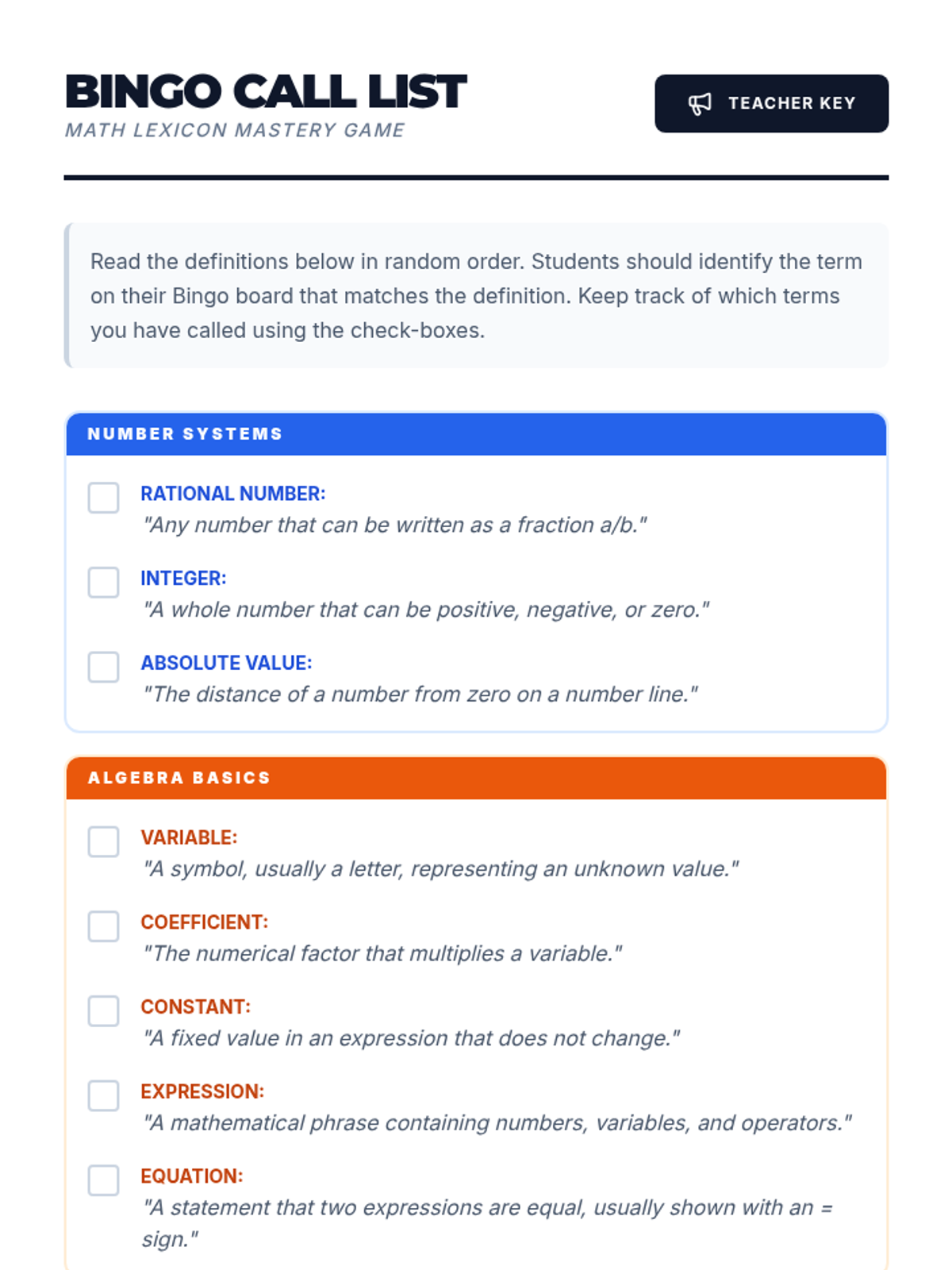
A comprehensive math review unit focused on mastering rational numbers, absolute value, and algebraic expressions through structured gameplay and practice.
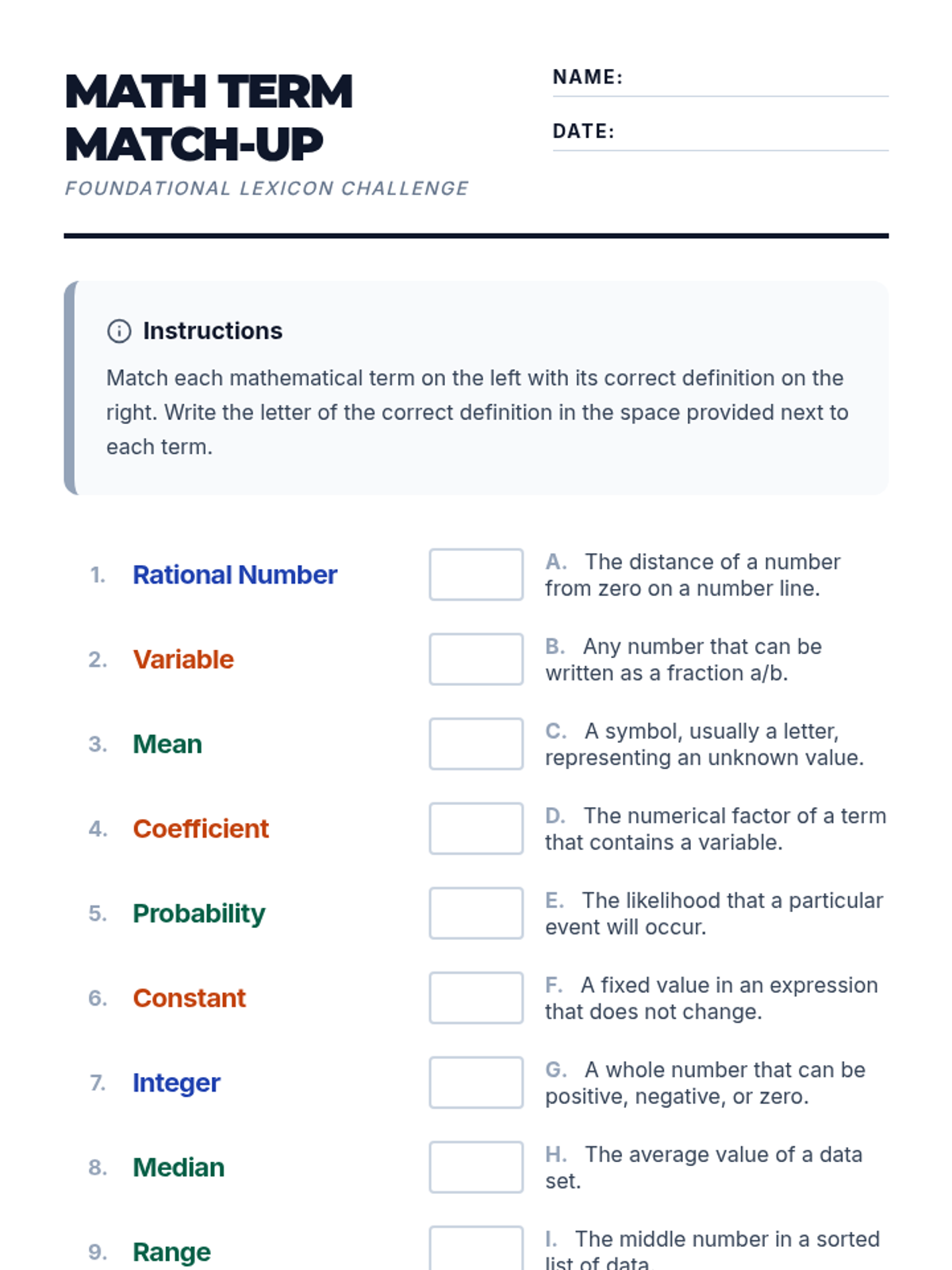
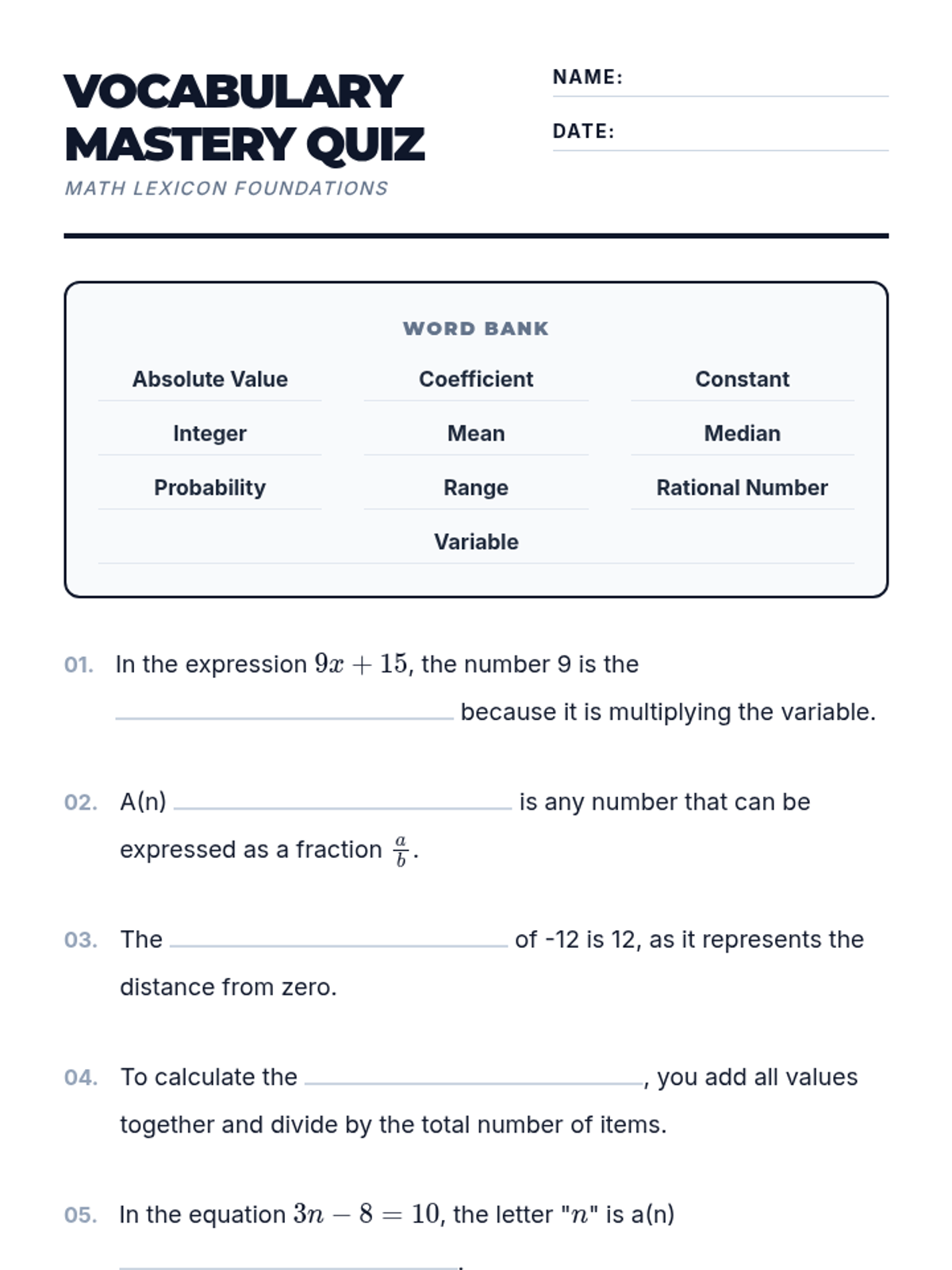
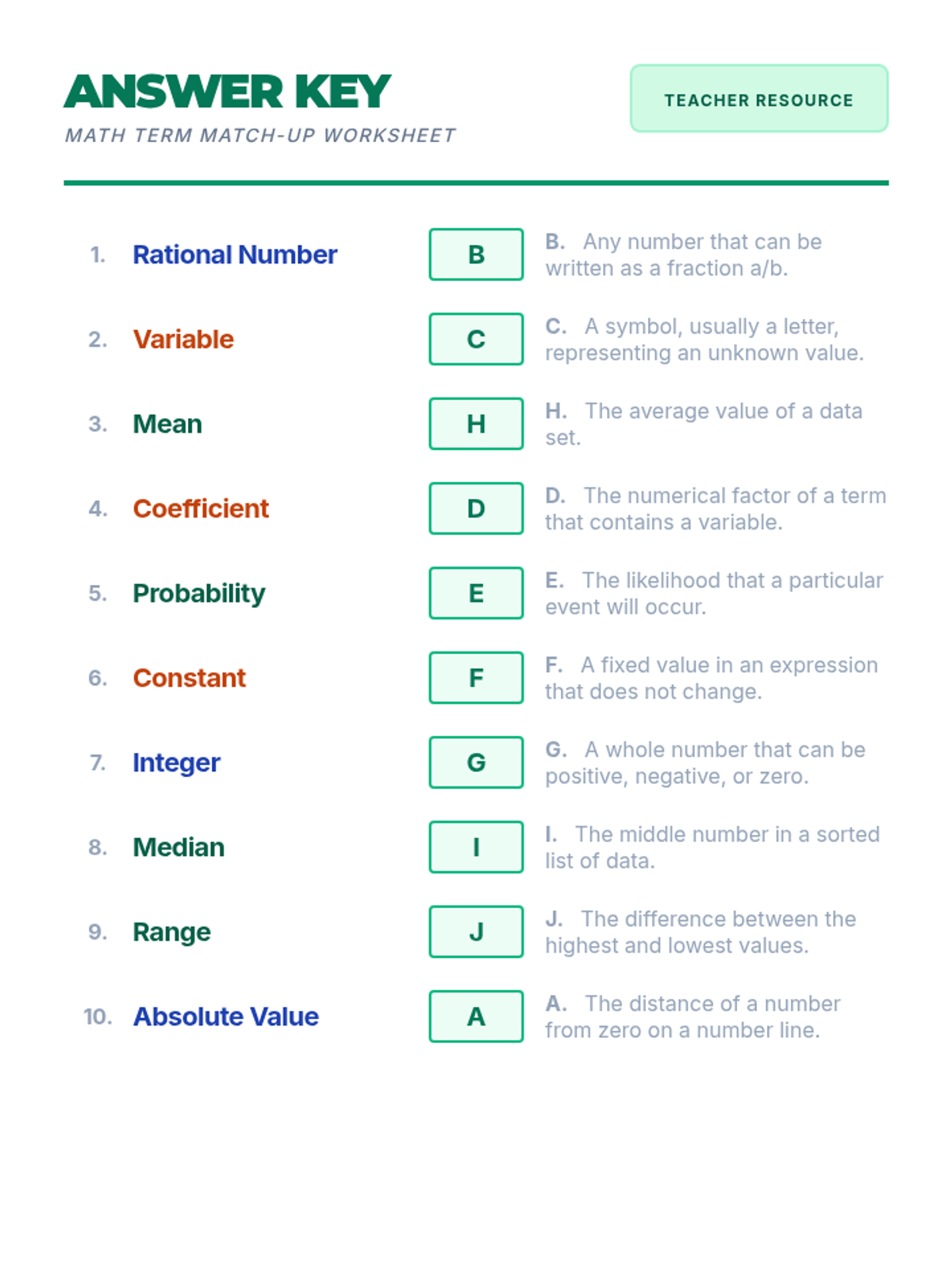
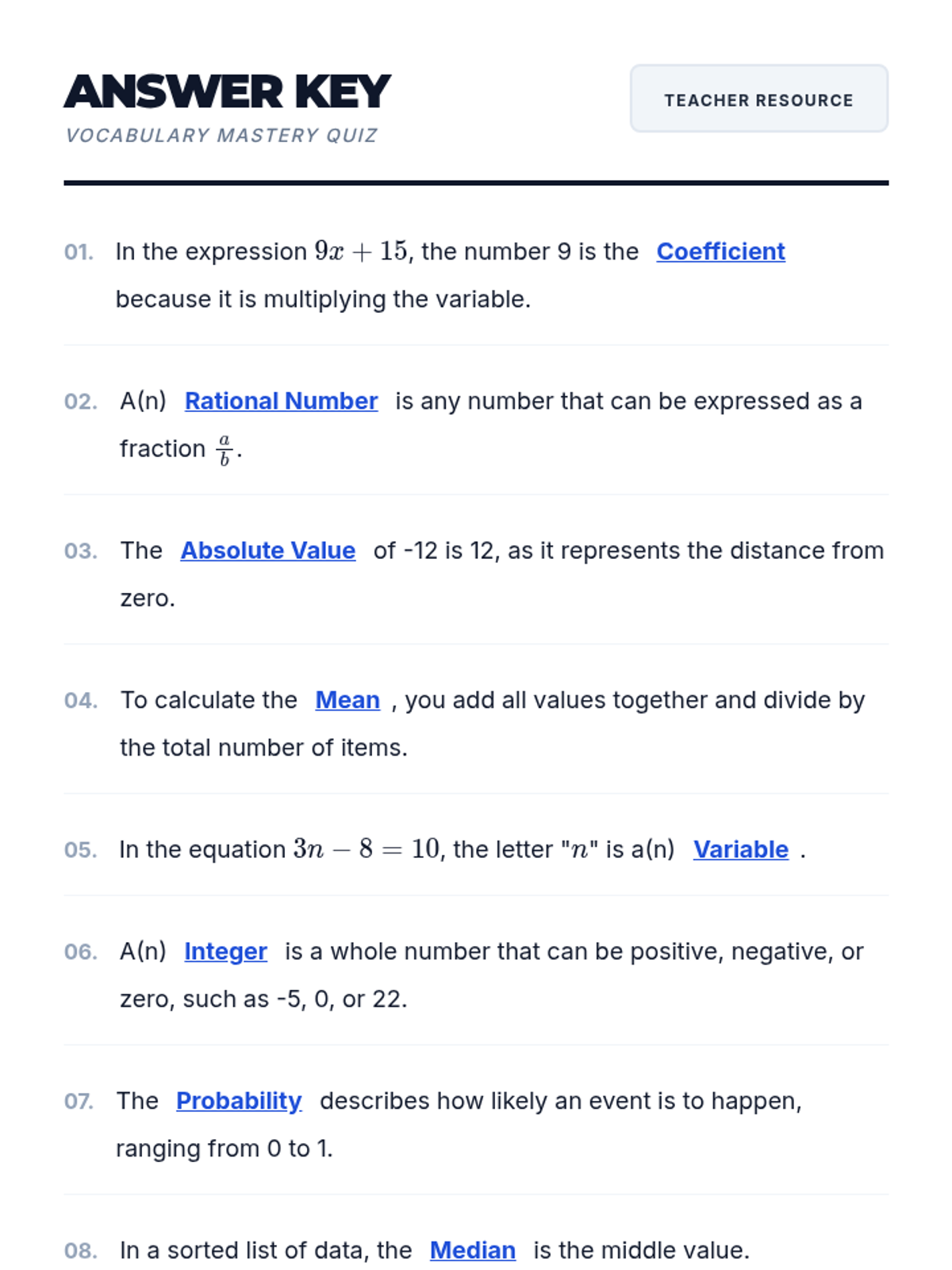
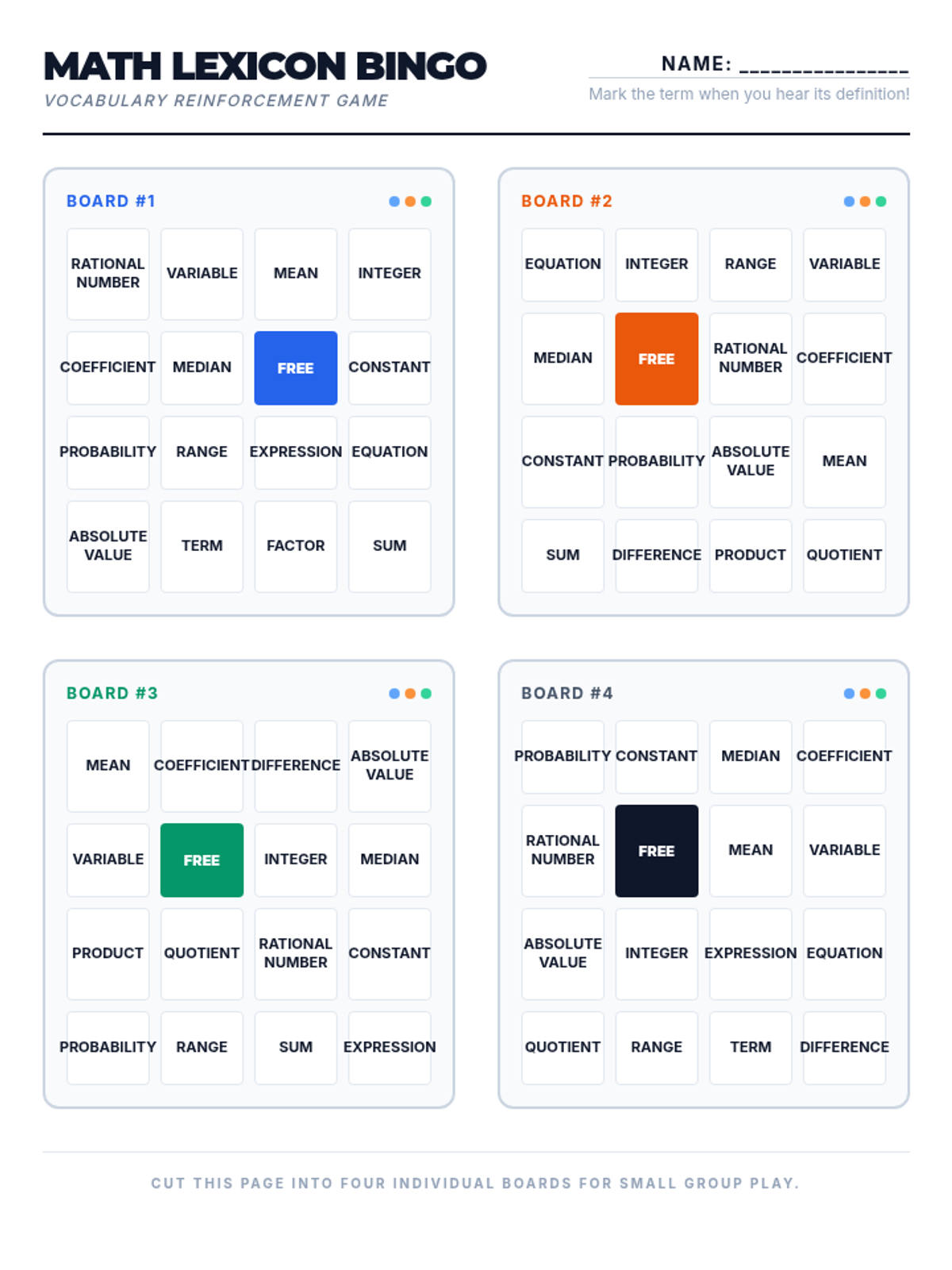
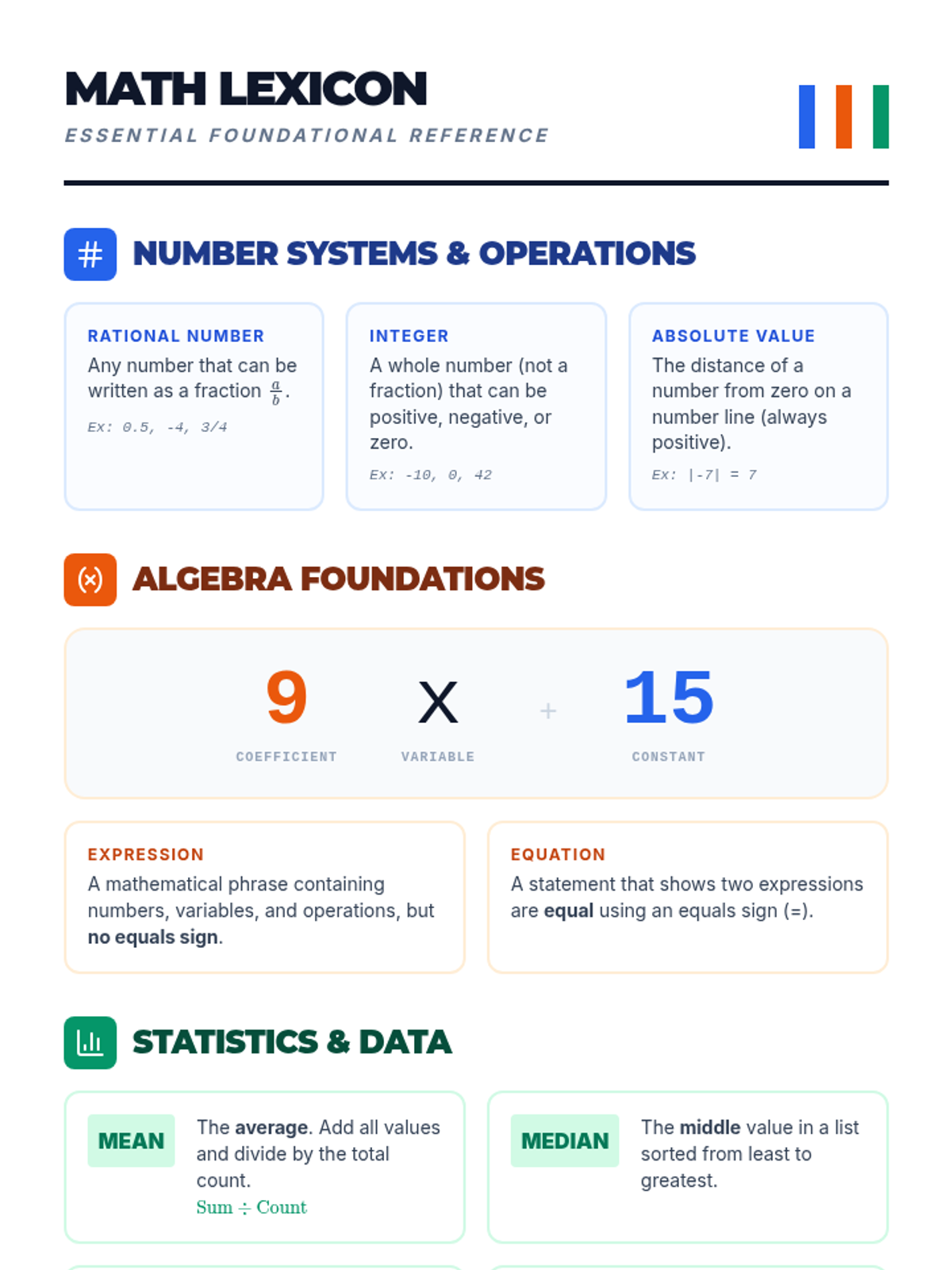
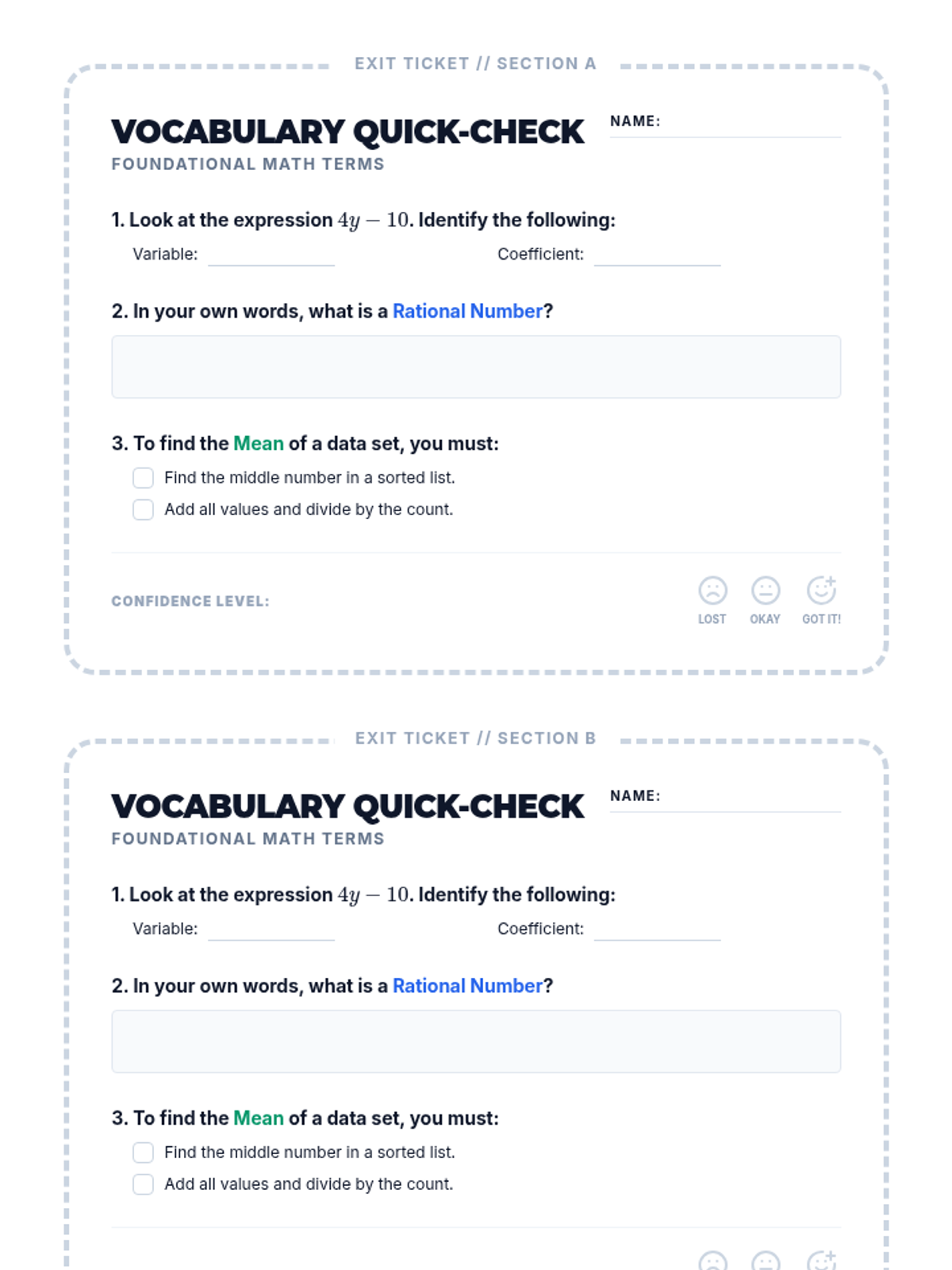
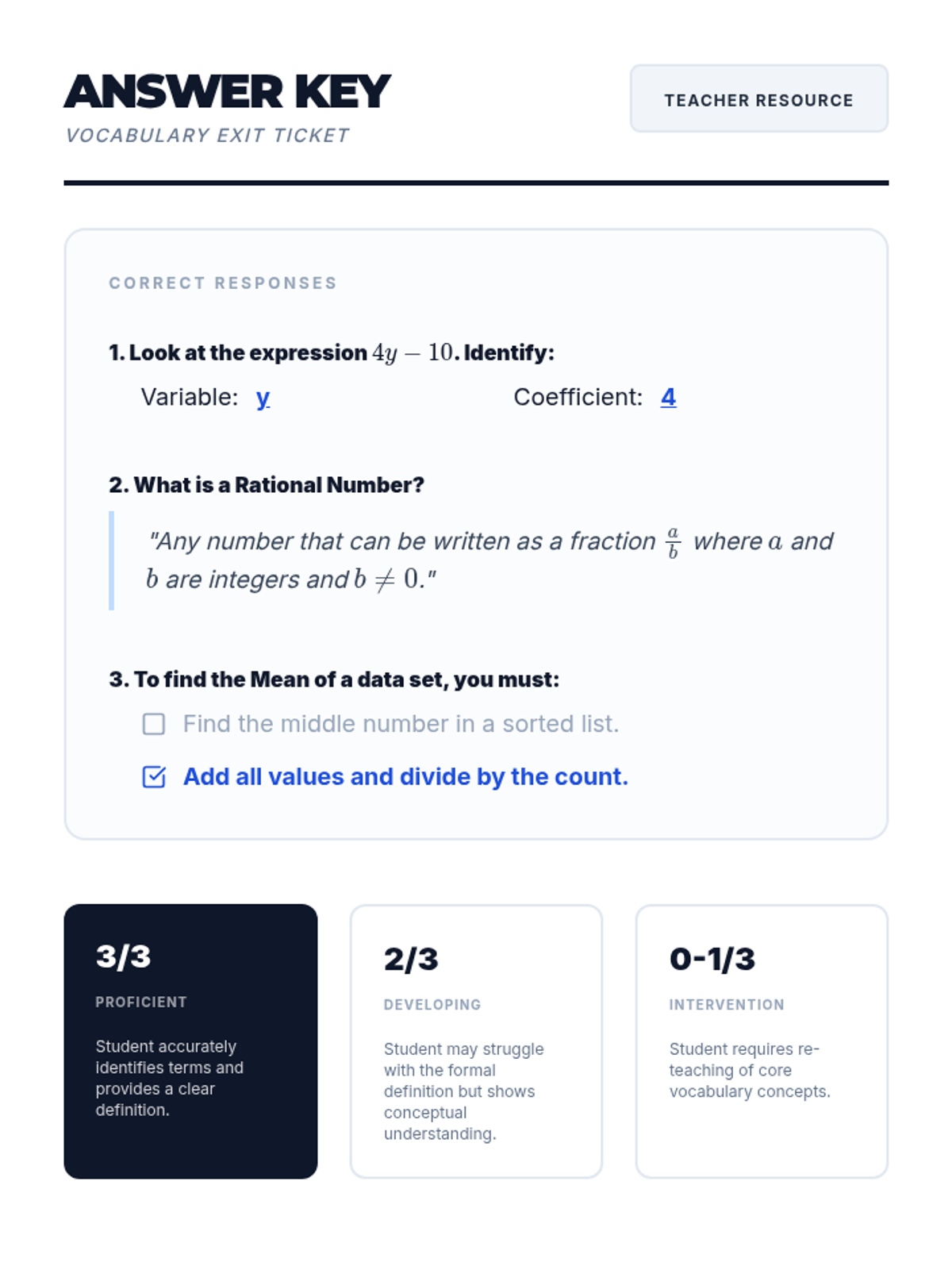
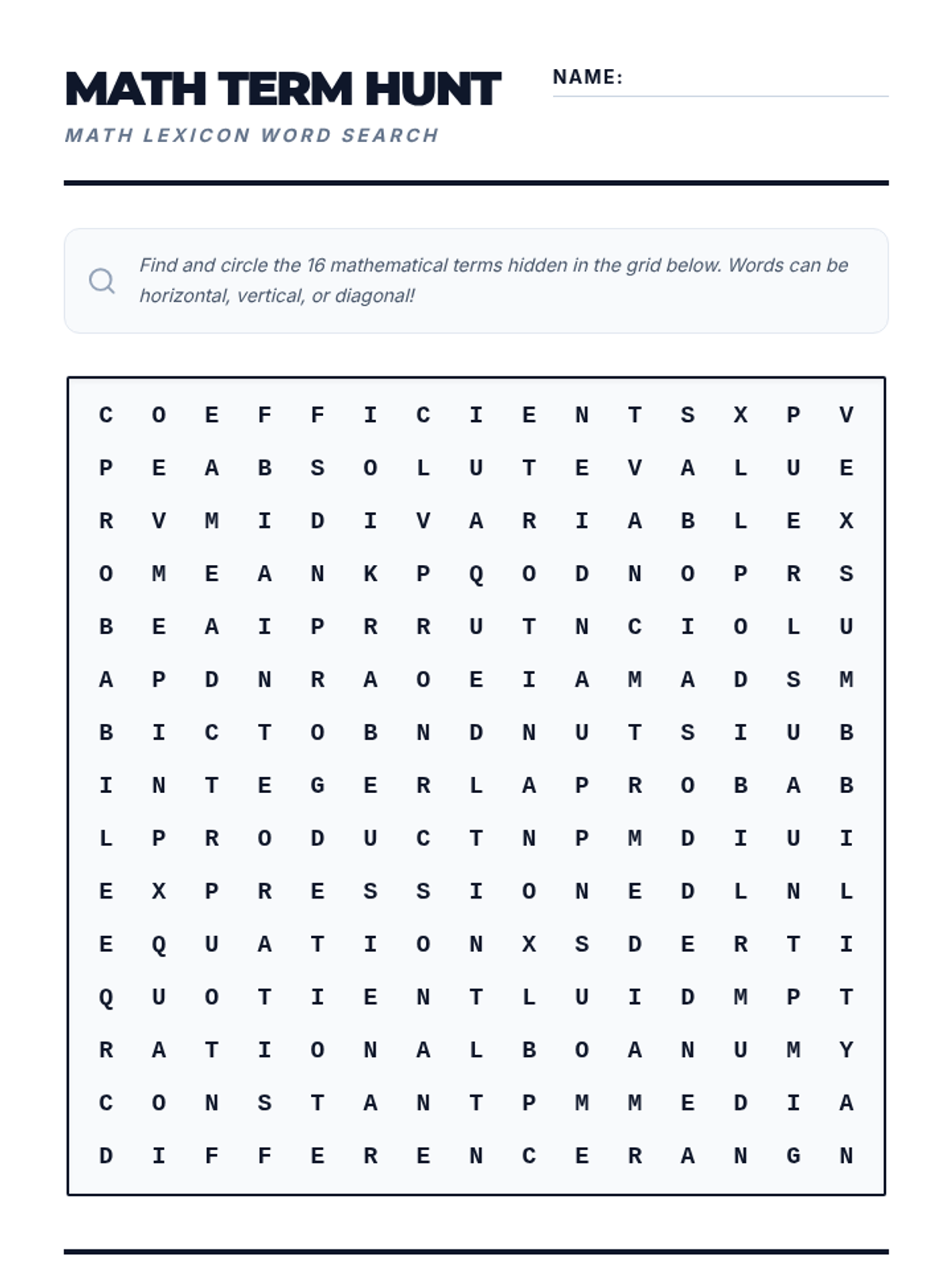
A comprehensive collection of mathematical vocabulary resources covering number systems, algebraic expressions, and statistical analysis. This unit focuses on building precise mathematical language for foundational concepts.
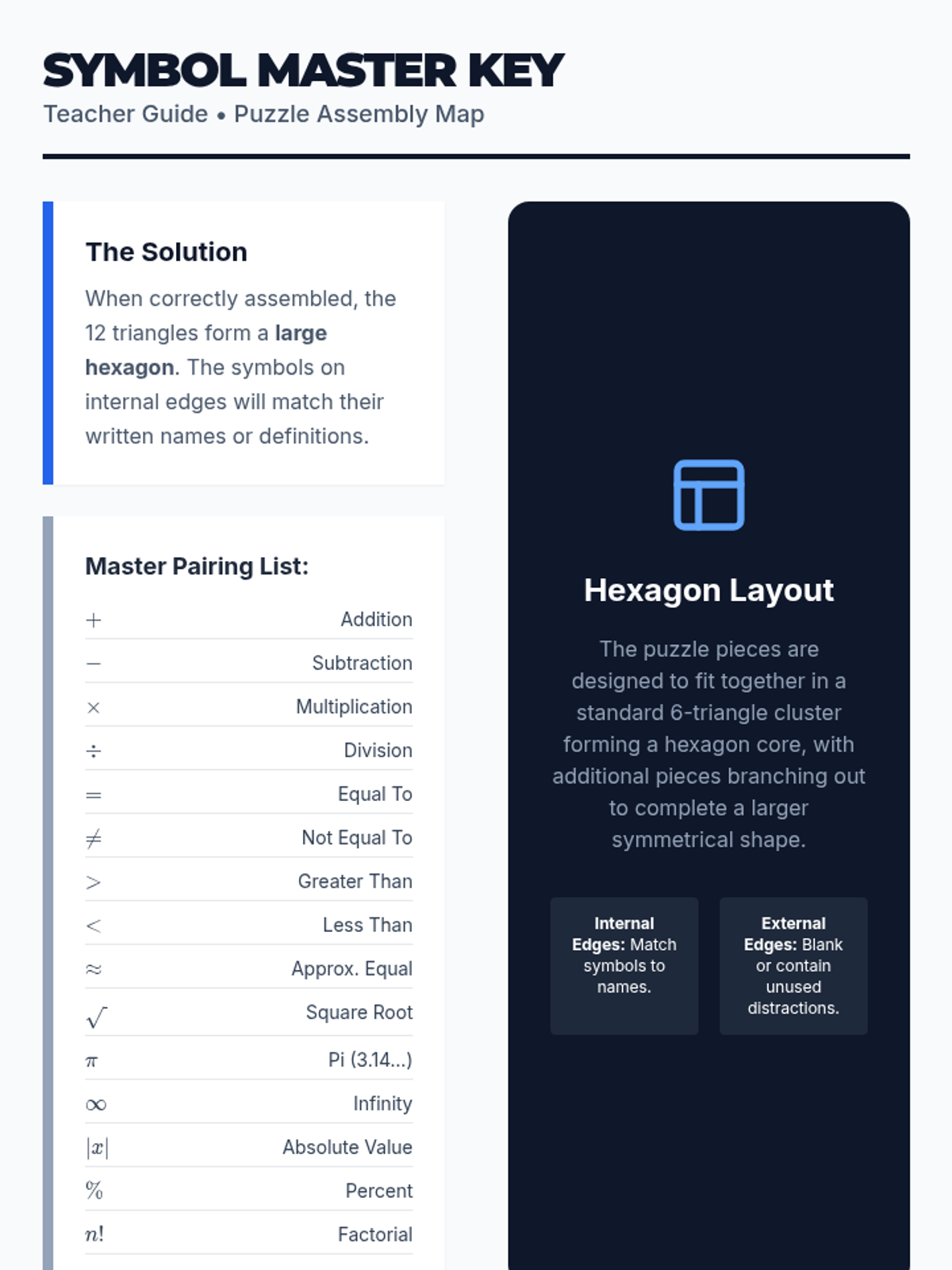
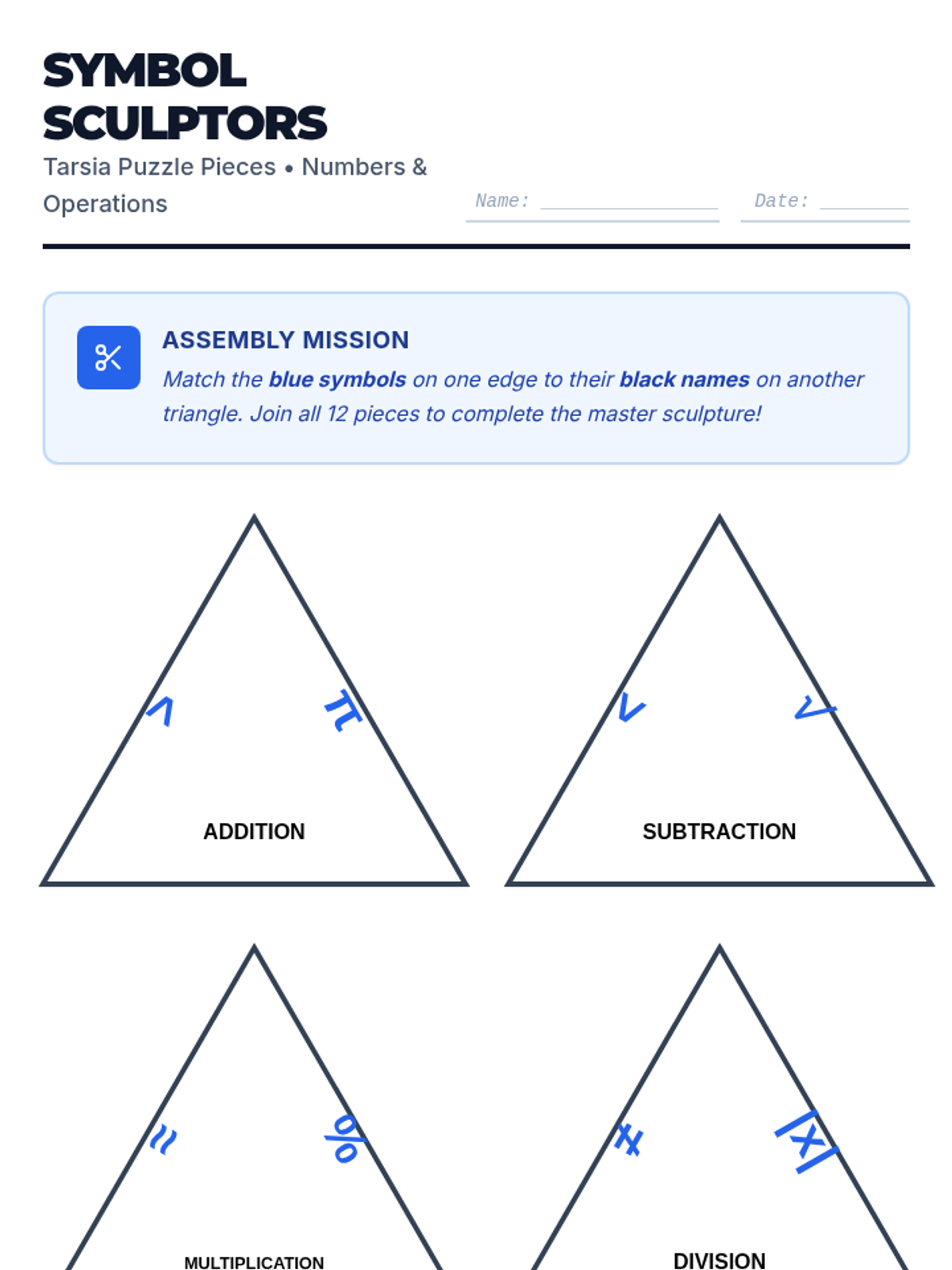
A series of lessons designed to build fluency in mathematical notation and operations through visual and tactile learning.
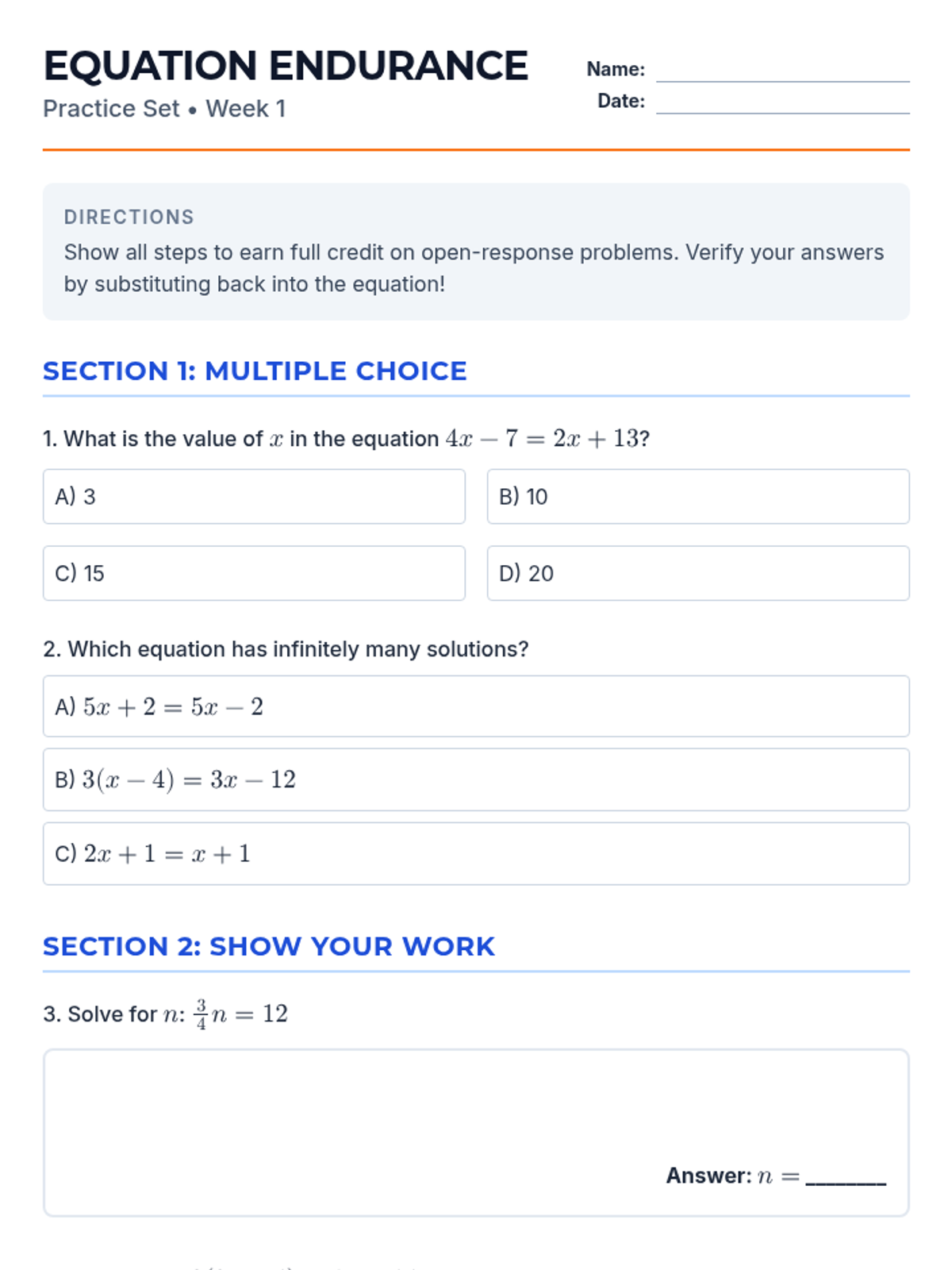
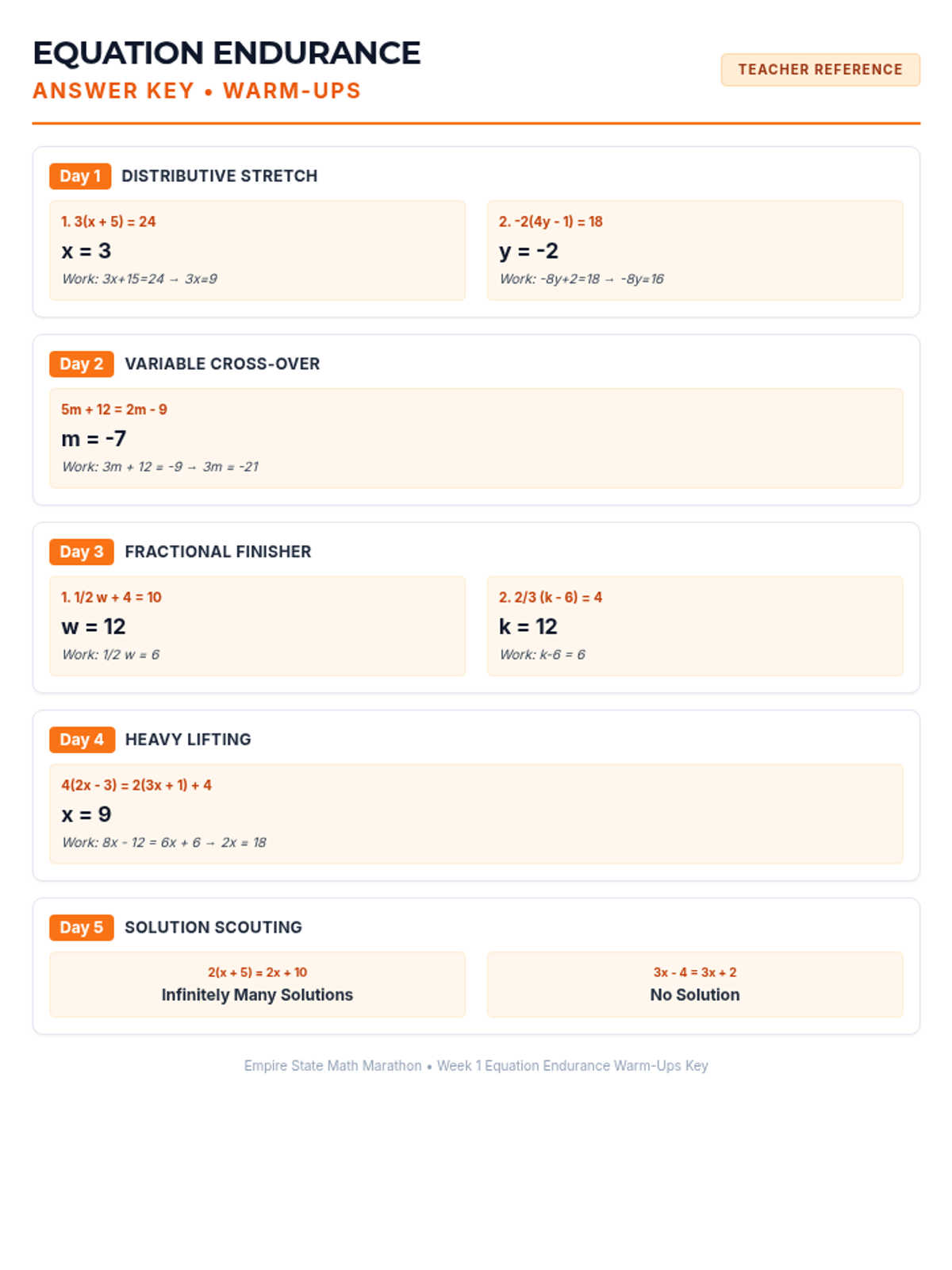
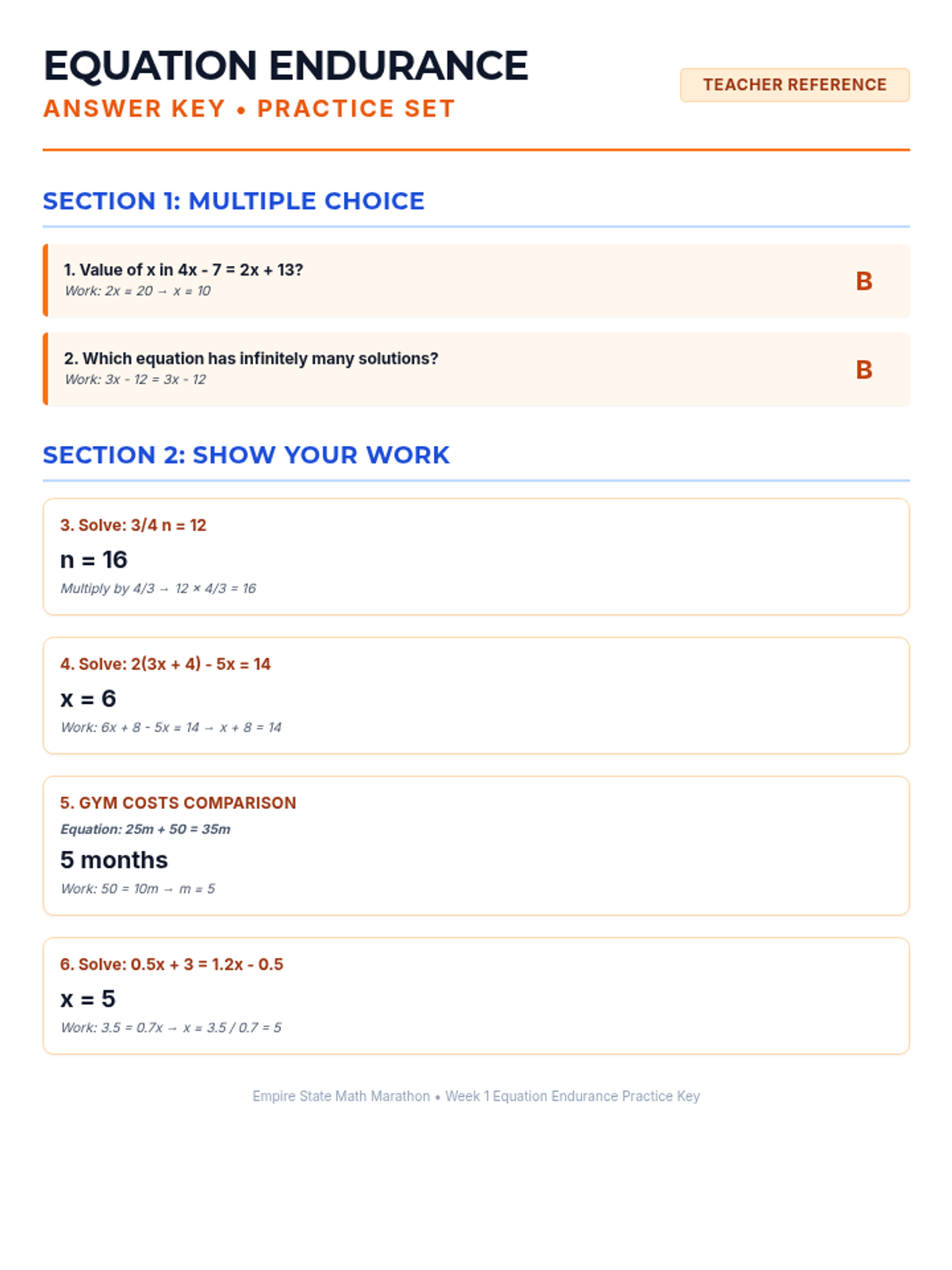
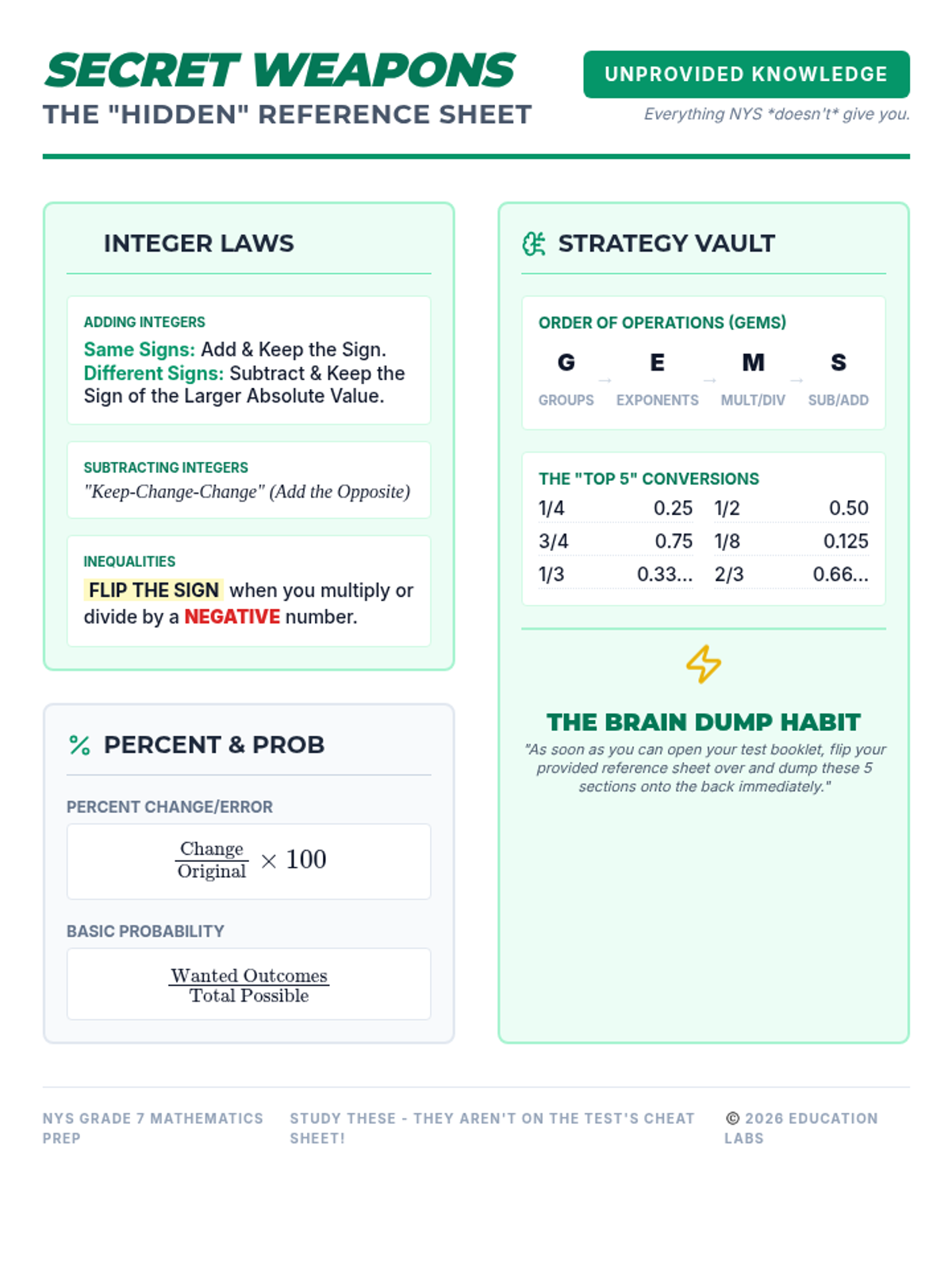
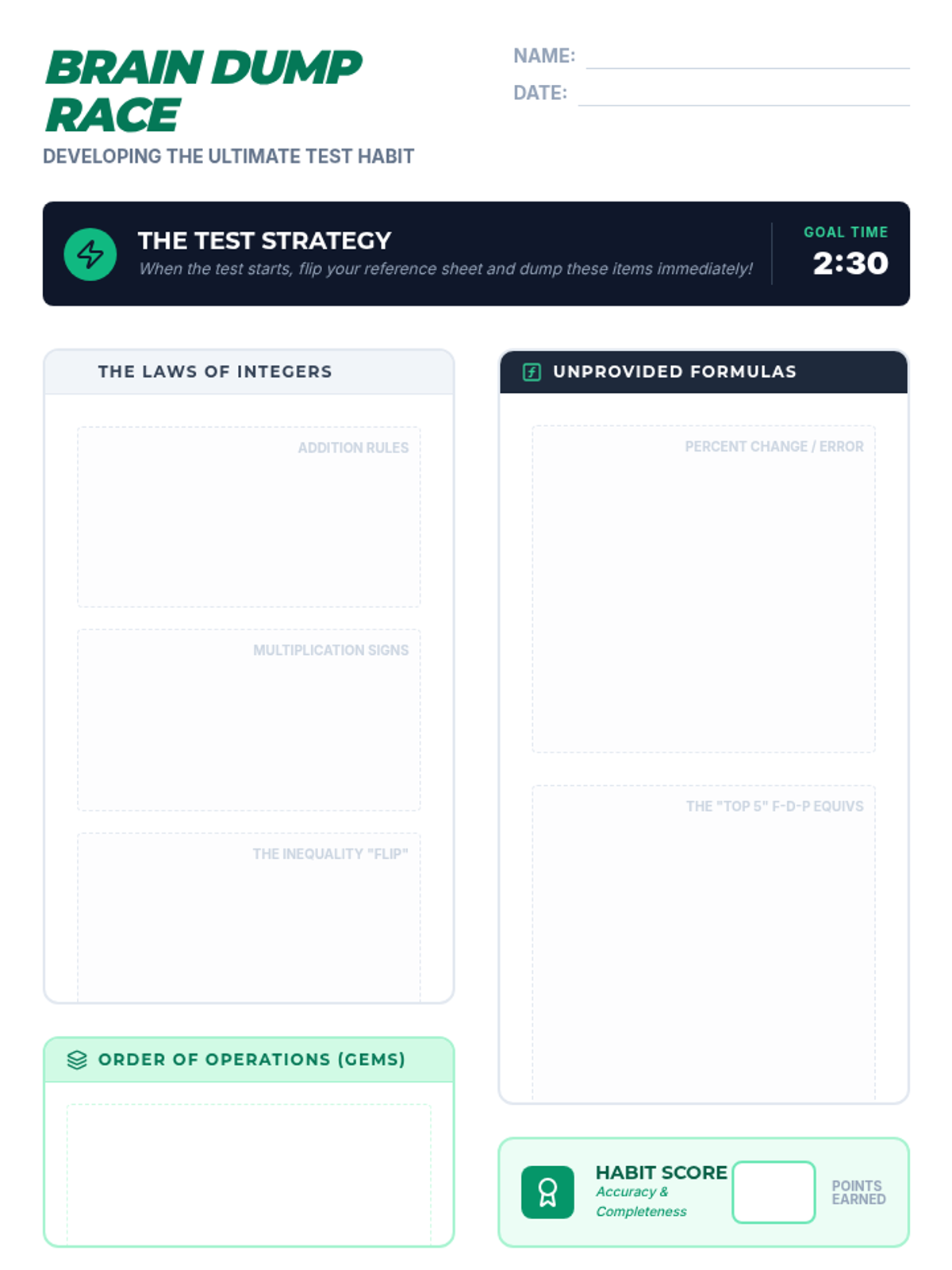
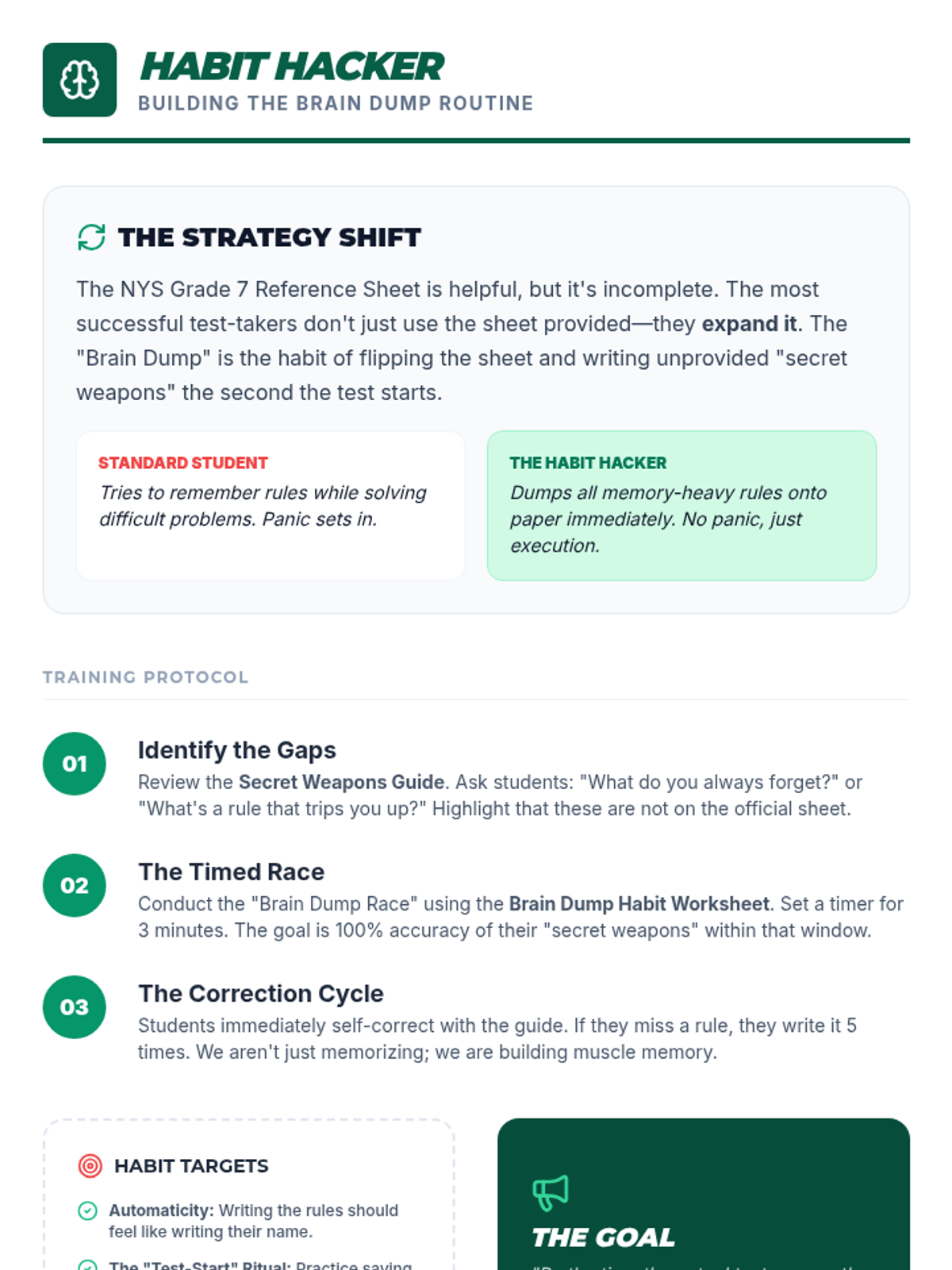
A series of focused prep sessions designed to equip 7th-grade students with the tools and strategies needed for the New York State Math Assessment. This sequence emphasizes reference sheet familiarity, test-taking endurance, and conceptual review.
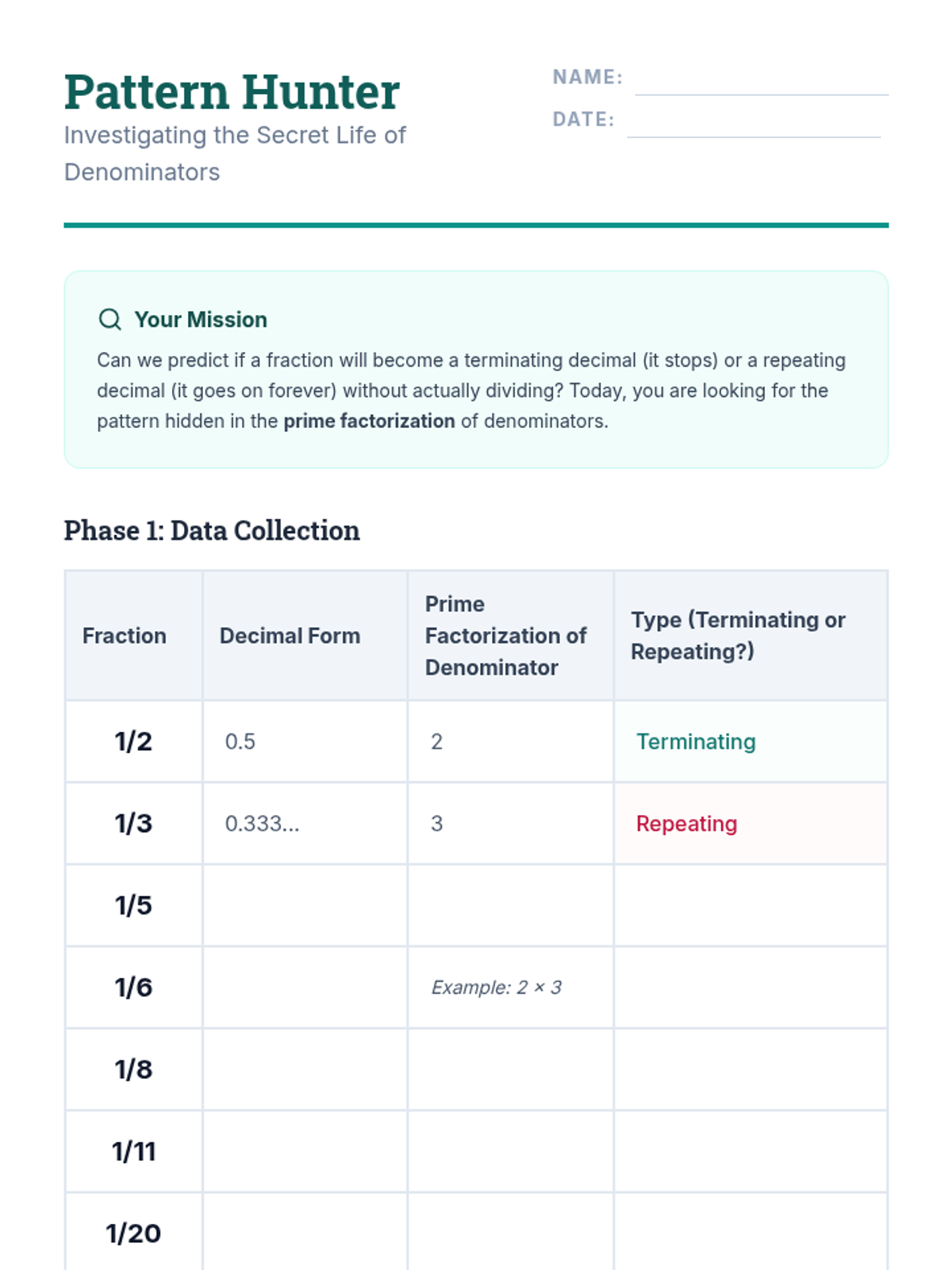
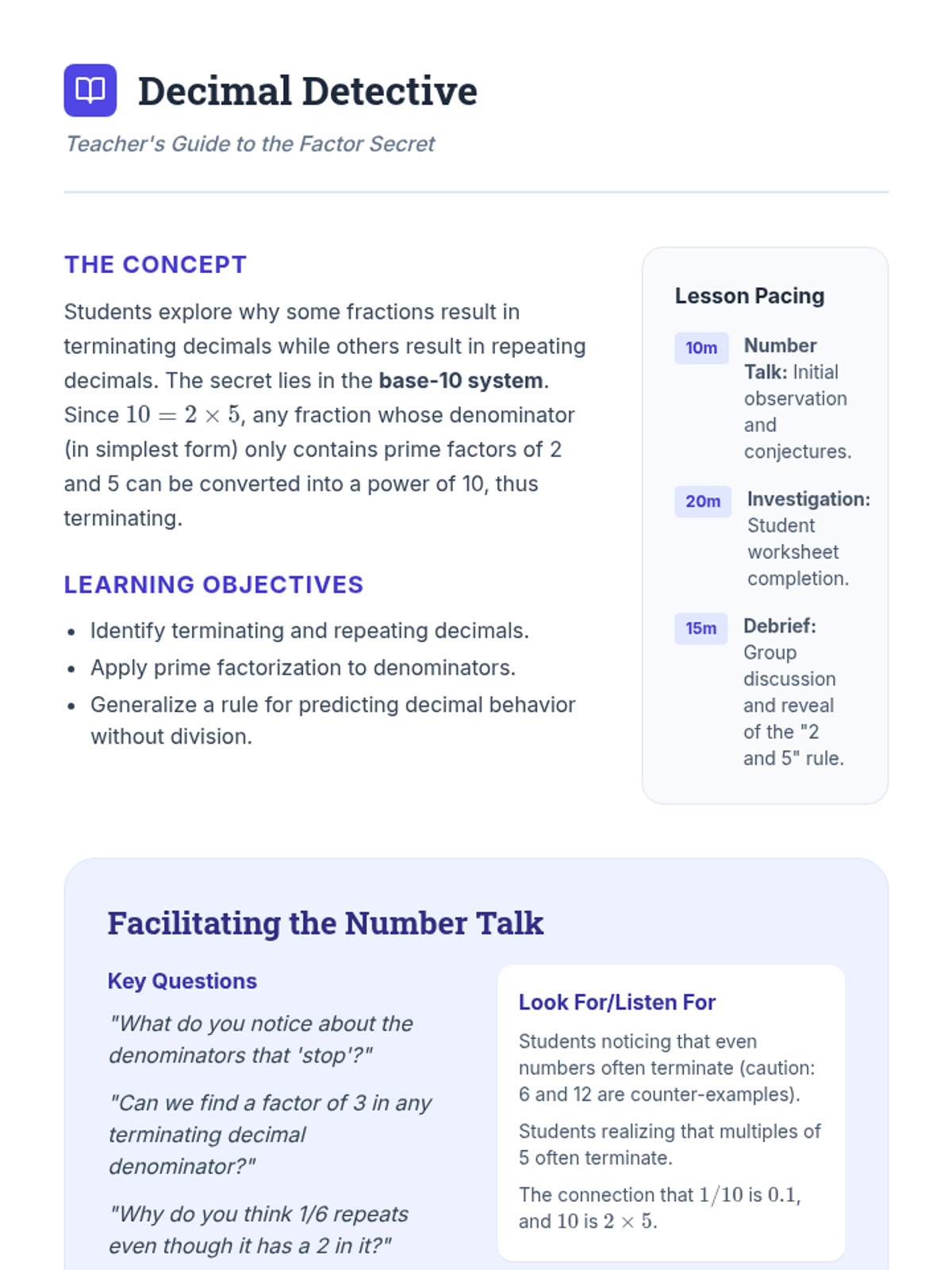
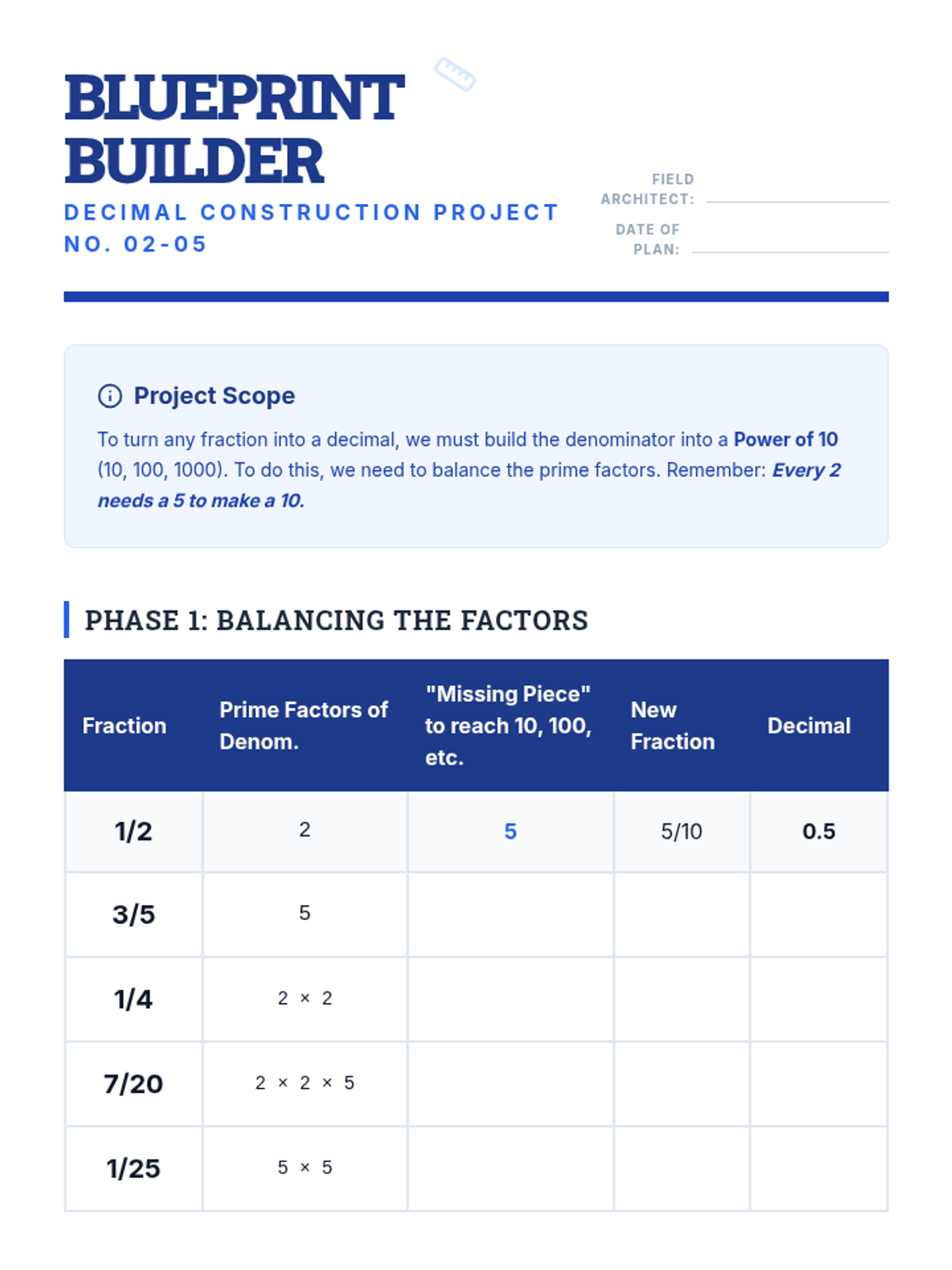
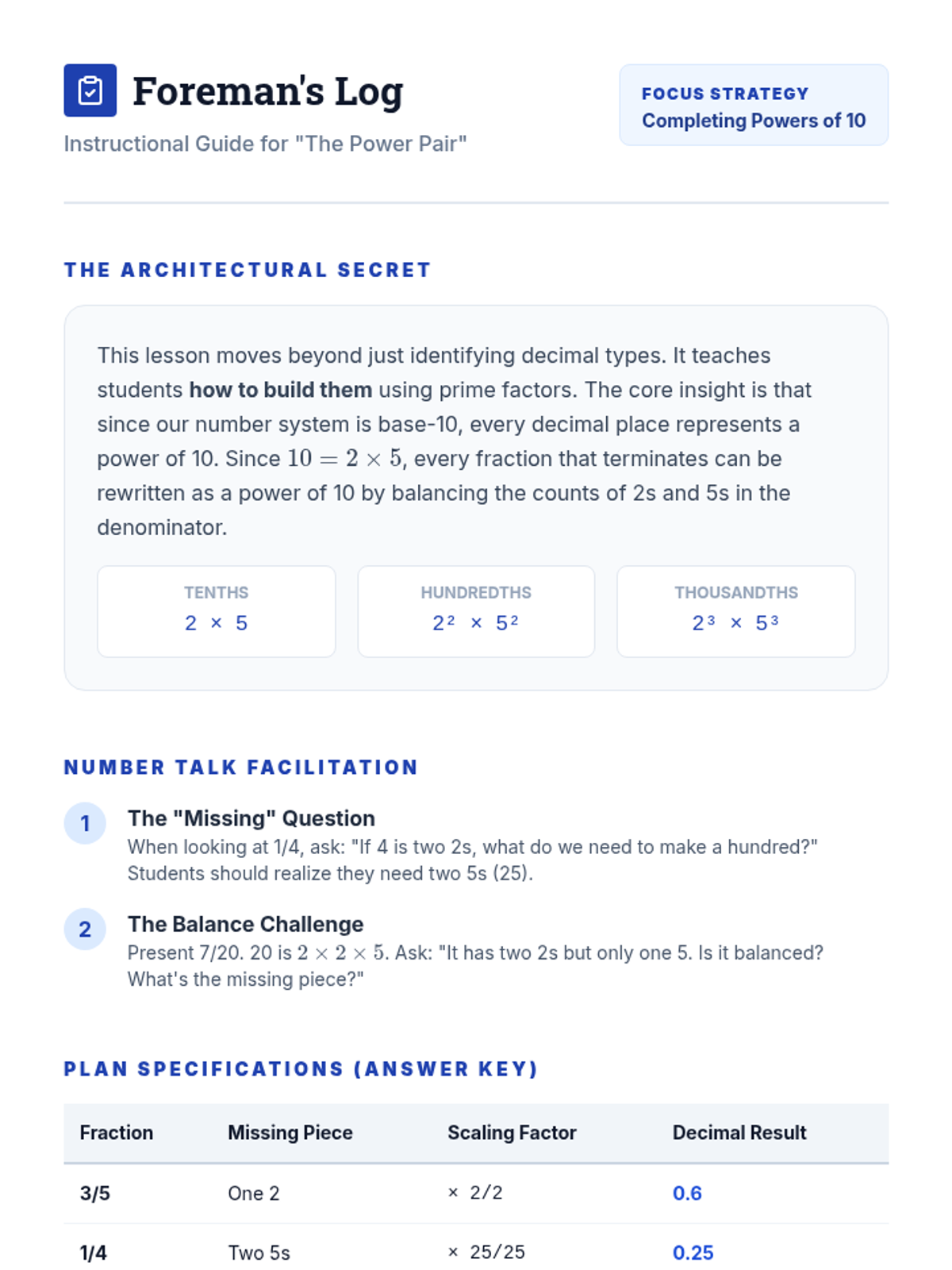
A series of inquiry-based lessons exploring the deep connection between prime factorization and decimal representations. Students move from predicting decimal types to mental conversion strategies and advanced simplification.
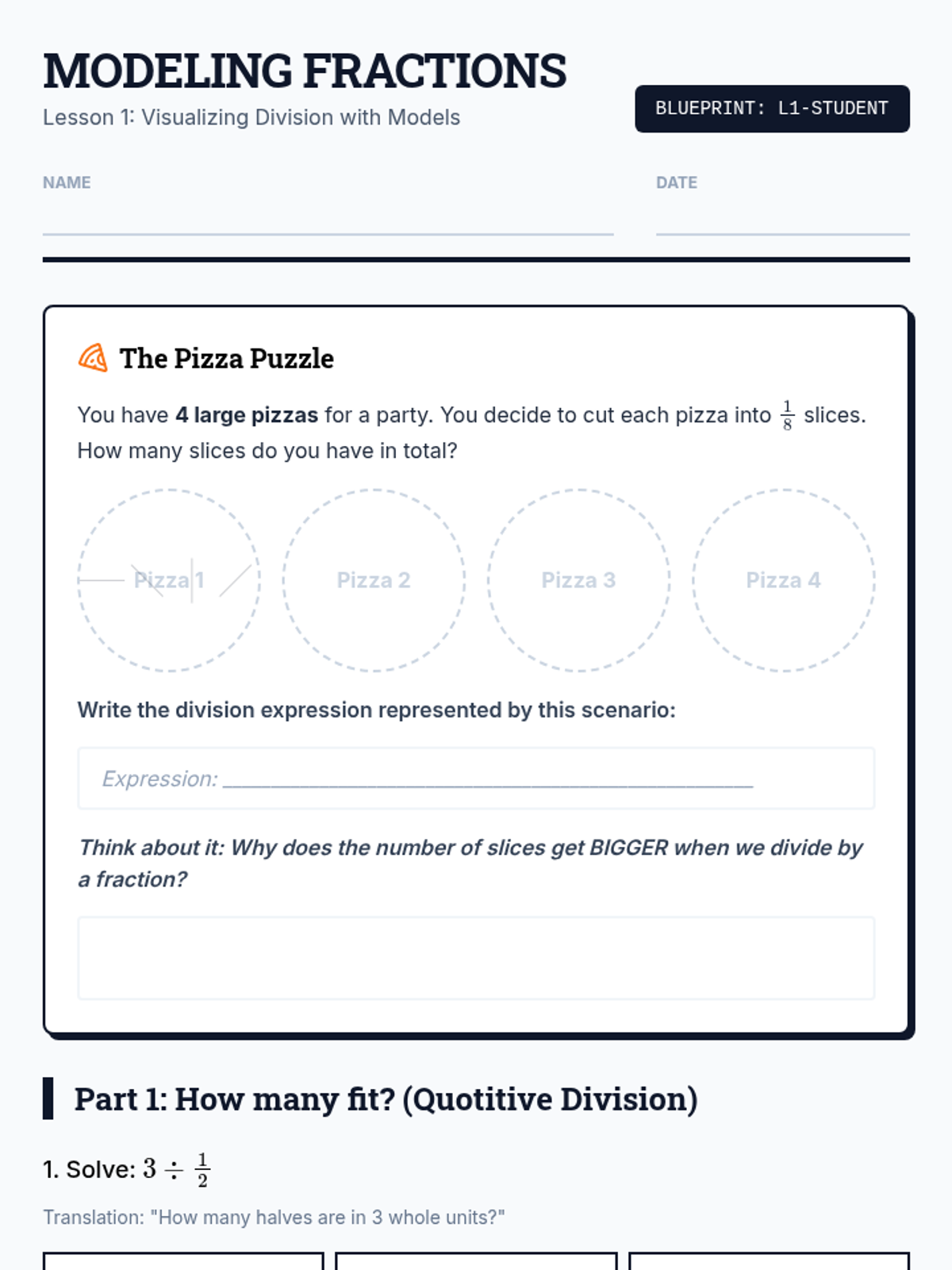
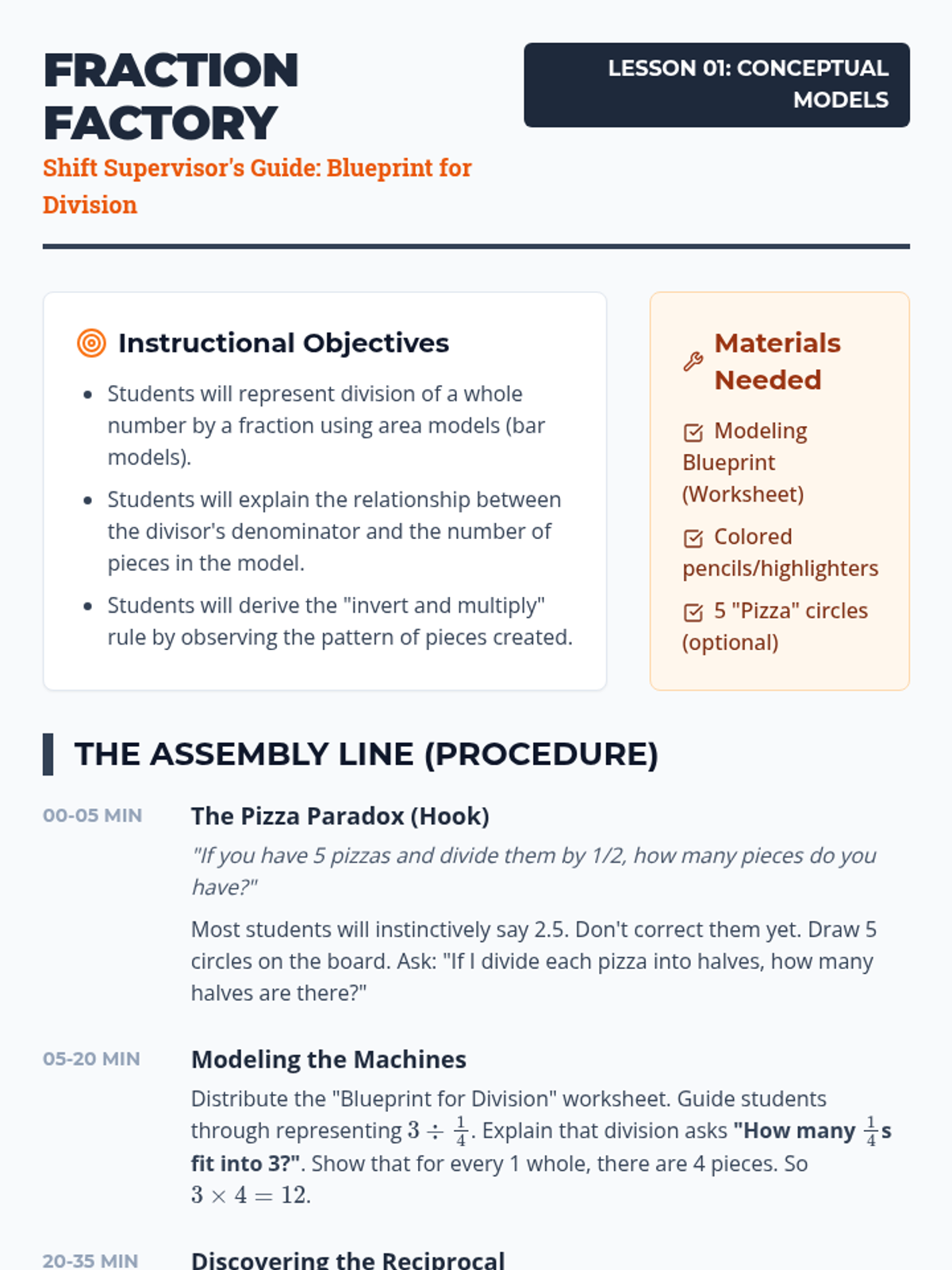
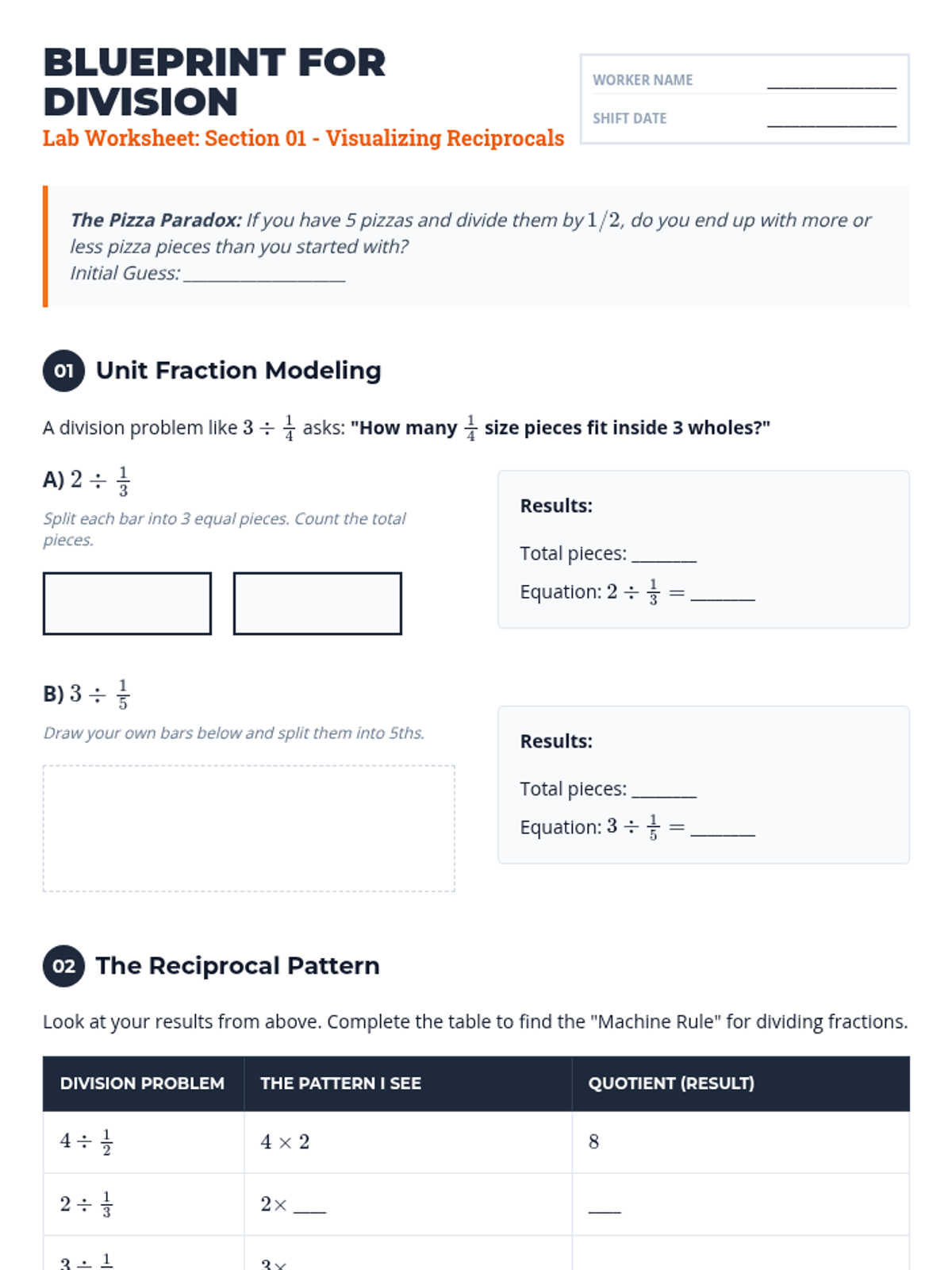
A sequence focused on conceptualizing fraction division through visual area models, progressing from whole numbers to fraction-by-fraction division for 6th-grade students needing academic support.
This sequence guides students from conceptual modeling of fraction division to applying the standard algorithm with mixed numbers in complex geometric and real-world contexts. Students will explore the 'why' behind the reciprocal before mastering the 'how' and applying it to find missing dimensions and unit rates.
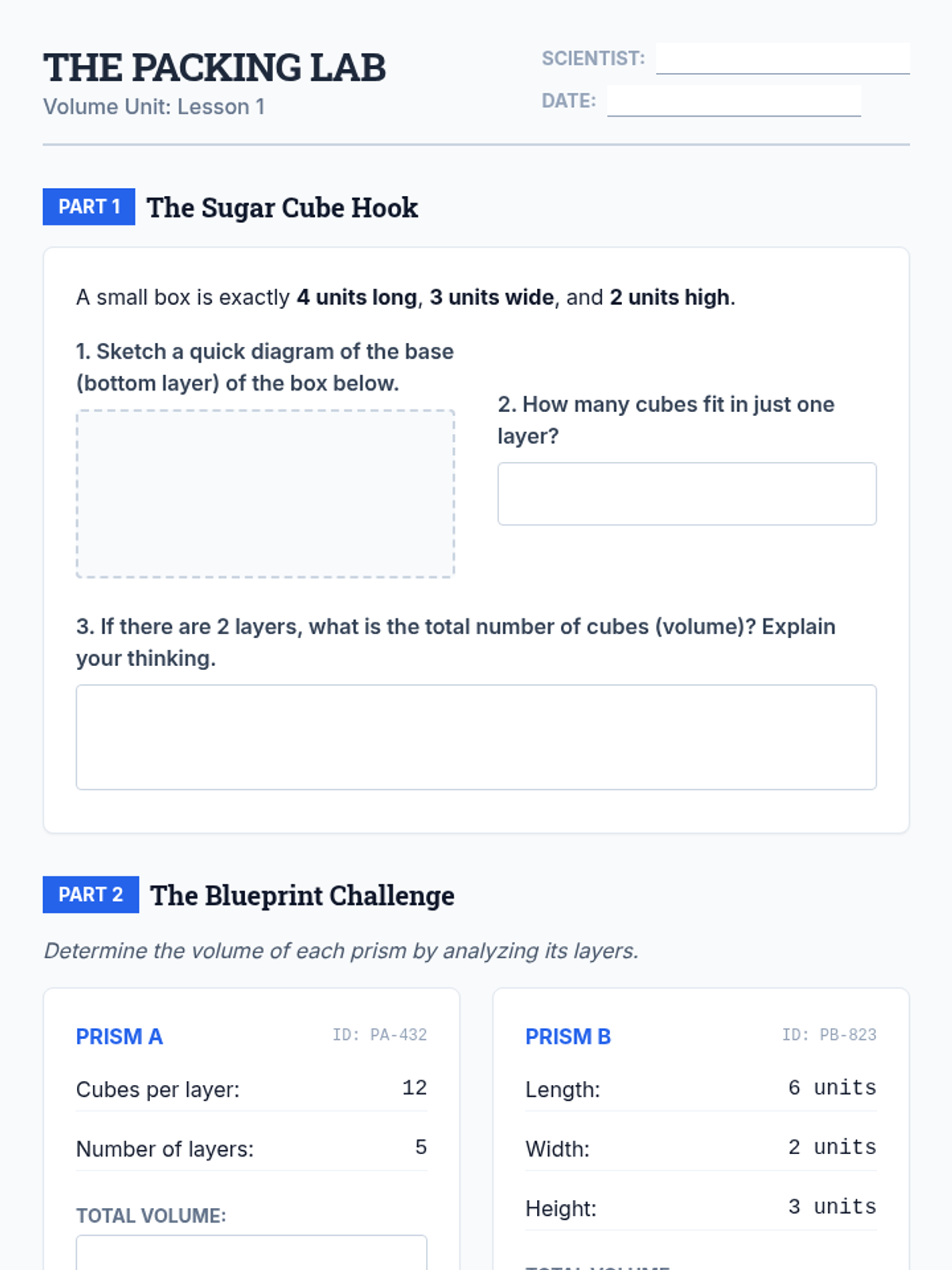
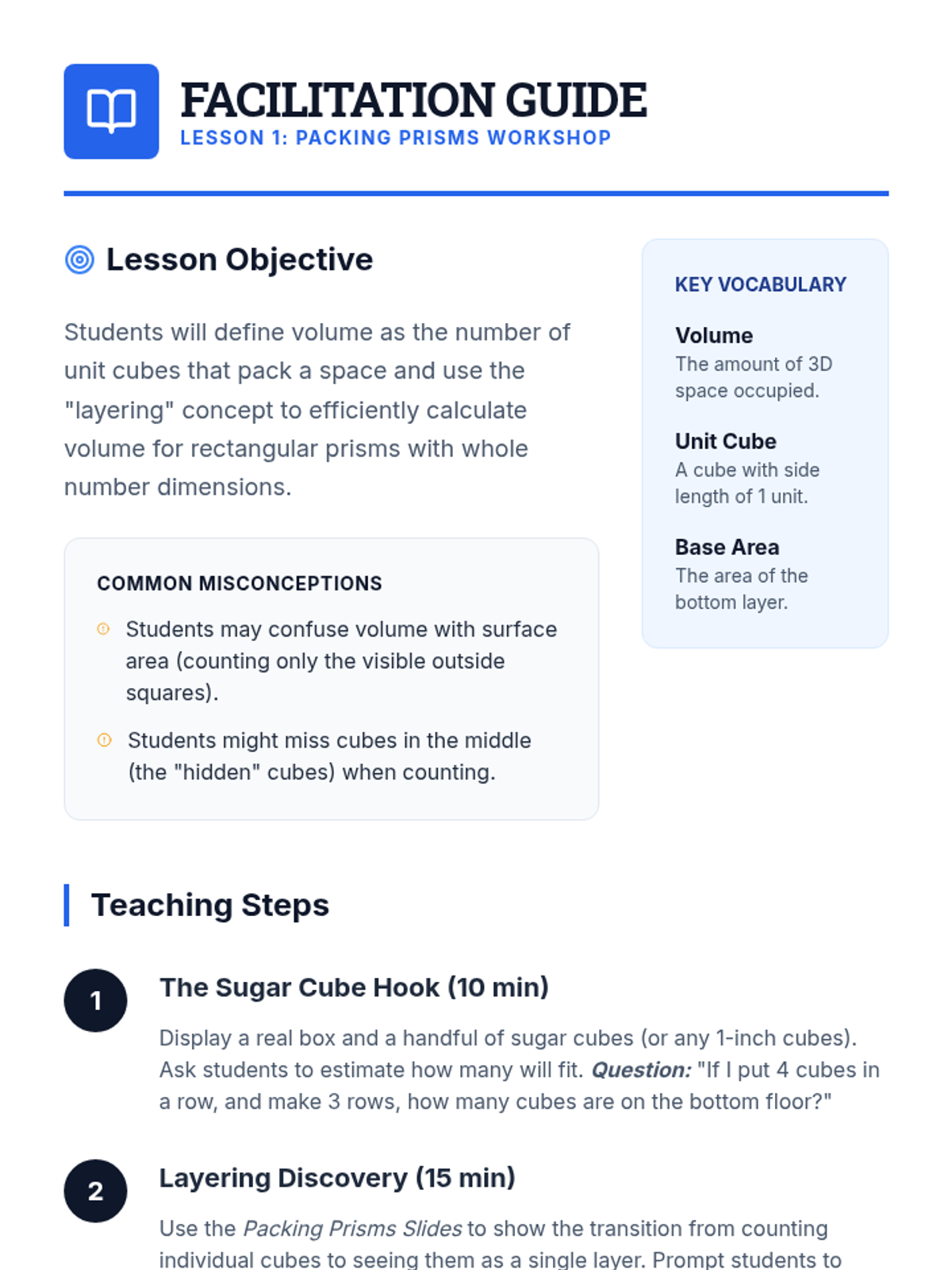
Students transition from concrete unit cube packing to abstract volume formulas (V=lwh, V=Bh) with a specific focus on rectangular prisms with fractional edge lengths. The sequence culminates in real-world application through shipping logistics and a design challenge.
Students transition from rote arithmetic to applying fraction operations within the context of architectural design and resource management, culminating in a blueprint design project.