Geometric classification, measurement of area and volume, and the study of transformations and rigid motions. Builds toward complex proofs, trigonometry for general triangles, and the algebraic representation of conic sections.
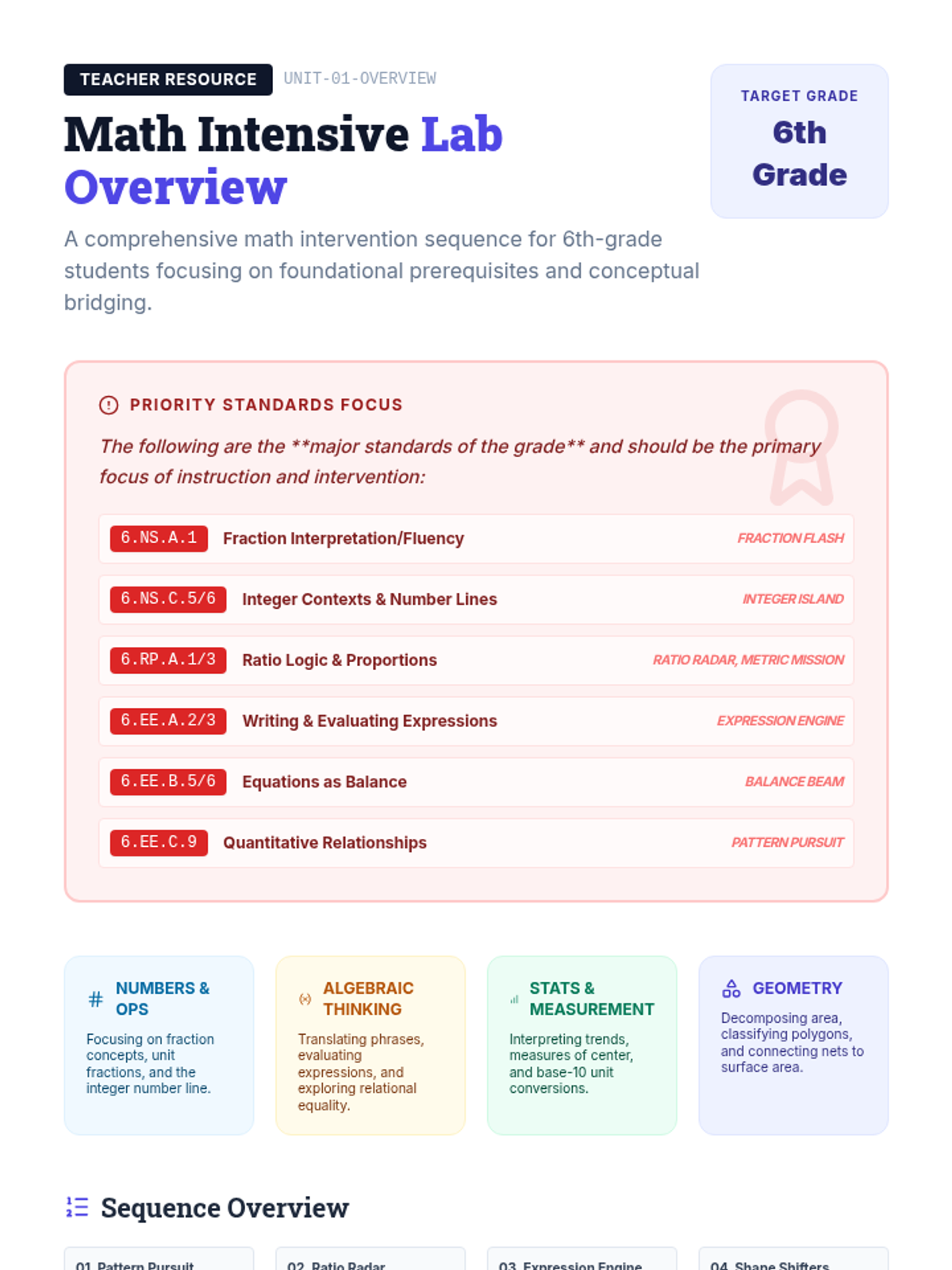
A comprehensive math intervention sequence for 6th-grade students, focusing on four key domains: Numbers & Operations, Algebraic Thinking, Measurement & Data, and Geometry. This sequence uses high-leverage strategies from the All Learners Network (ALN) and aligns with i-Ready prerequisite modules to bridge conceptual gaps.
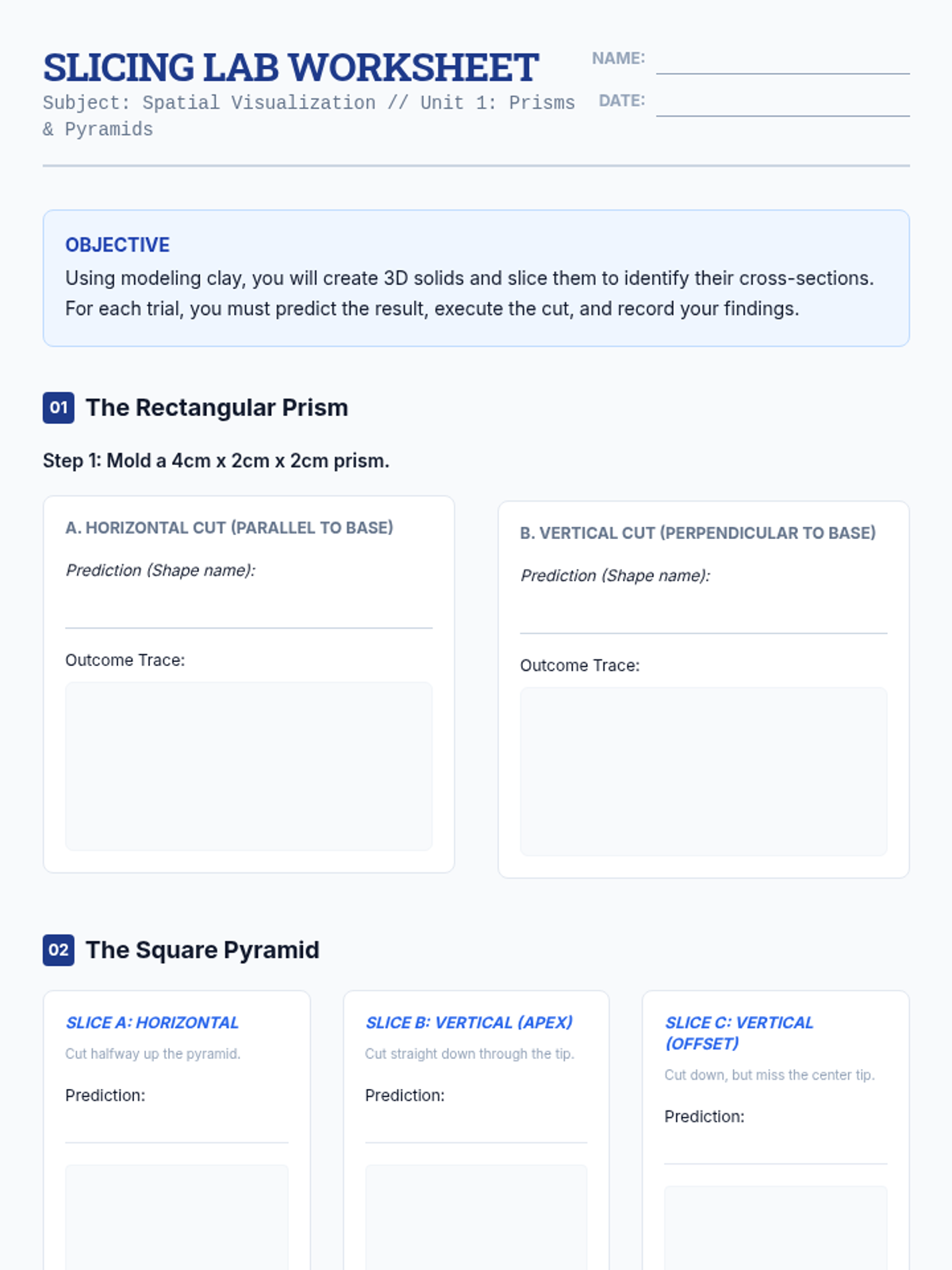
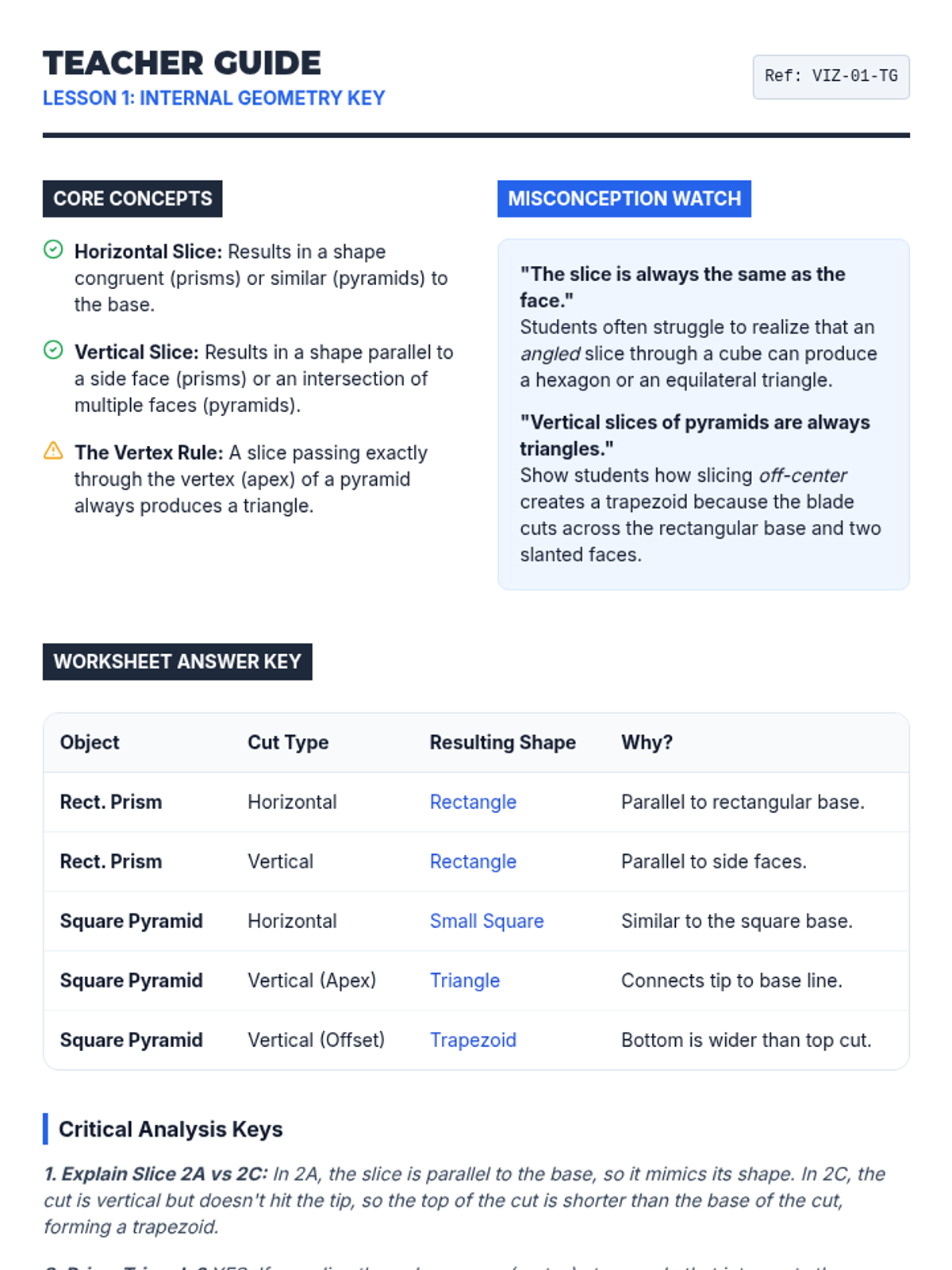
This hands-on sequence focuses on spatial visualization, specifically the relationship between three-dimensional solids and two-dimensional figures. Students explore how slicing 3D objects creates 2D cross-sections, progressing from basic classification to complex angled cuts and orthographic projections.
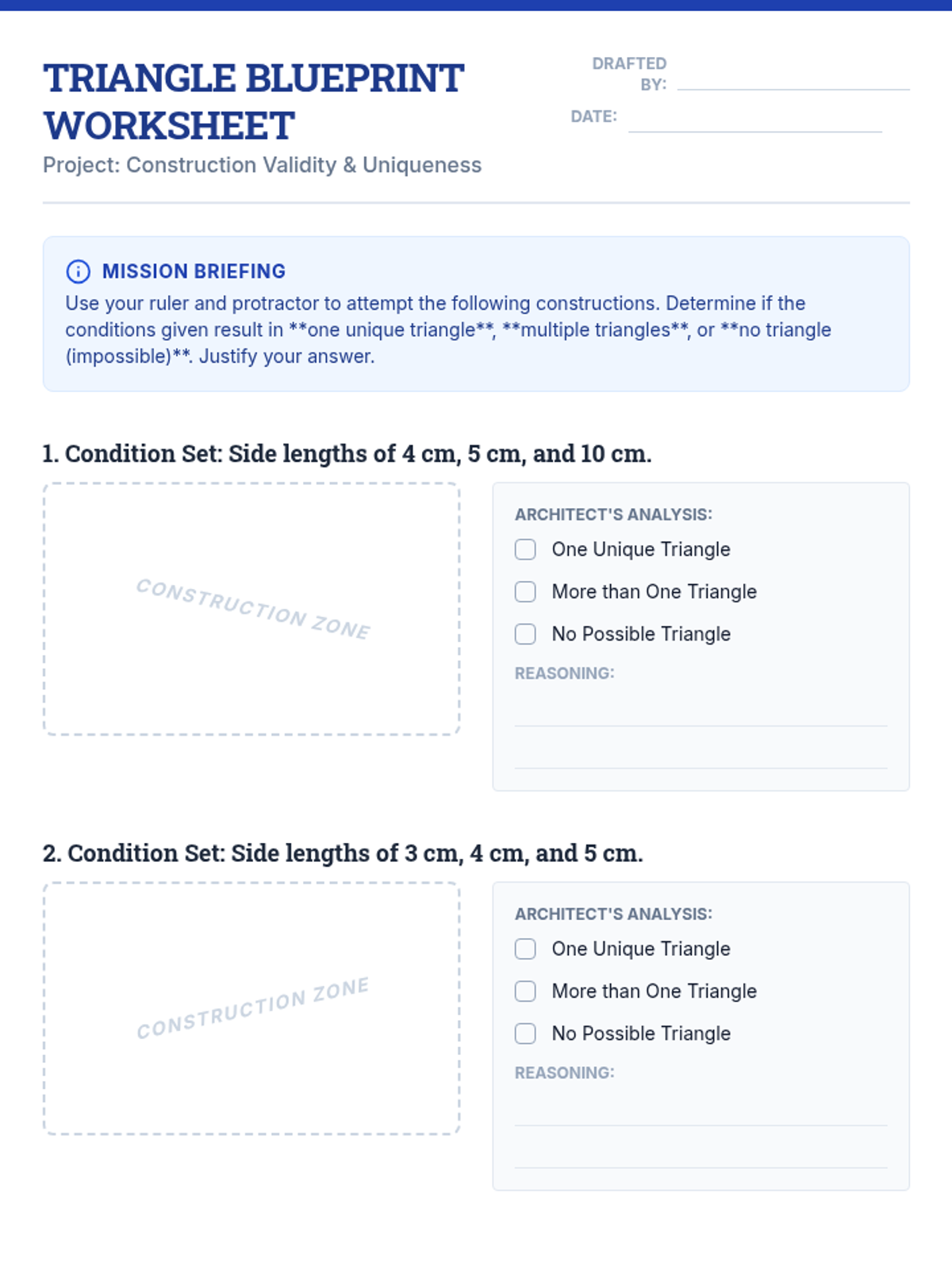
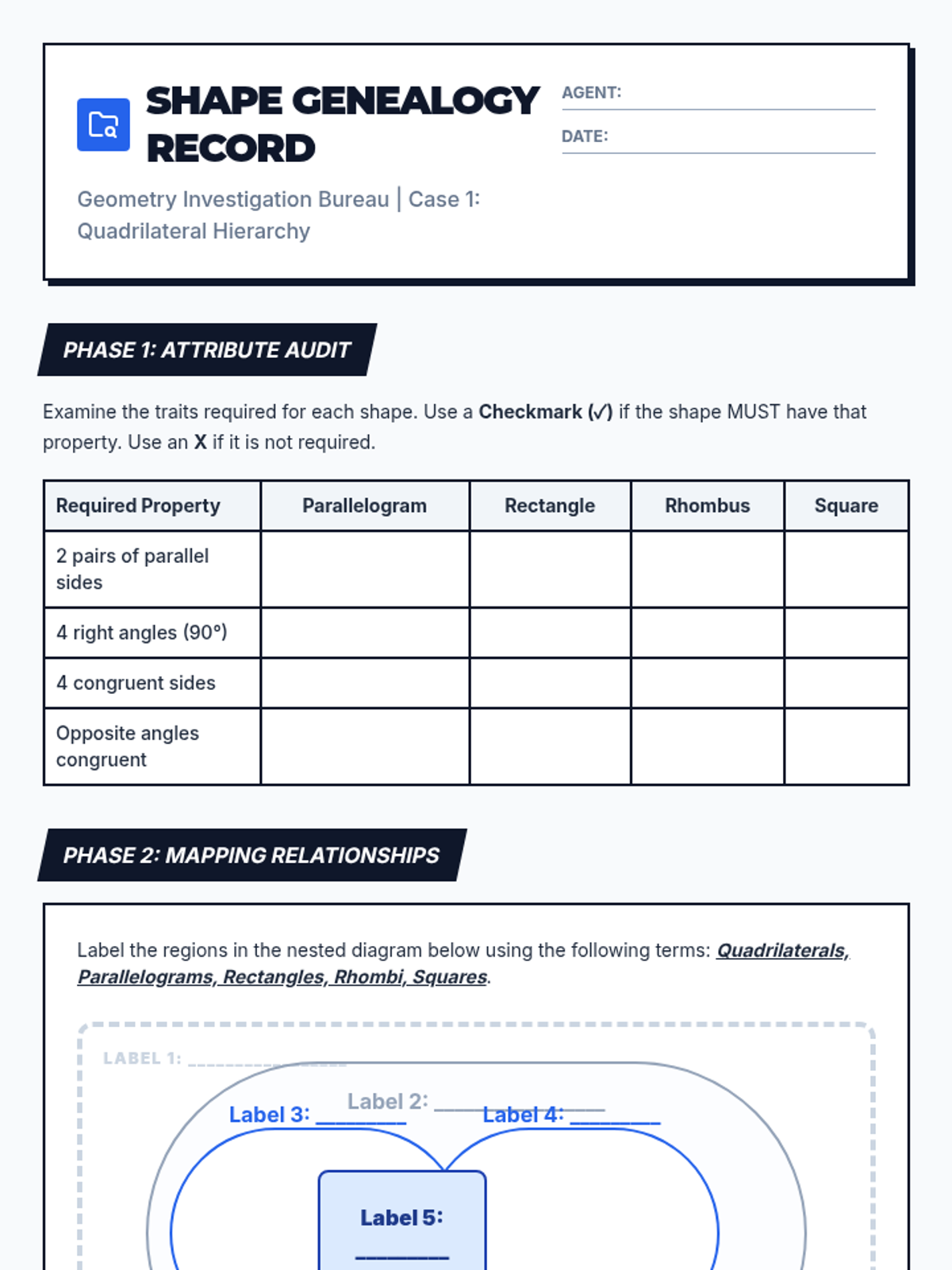
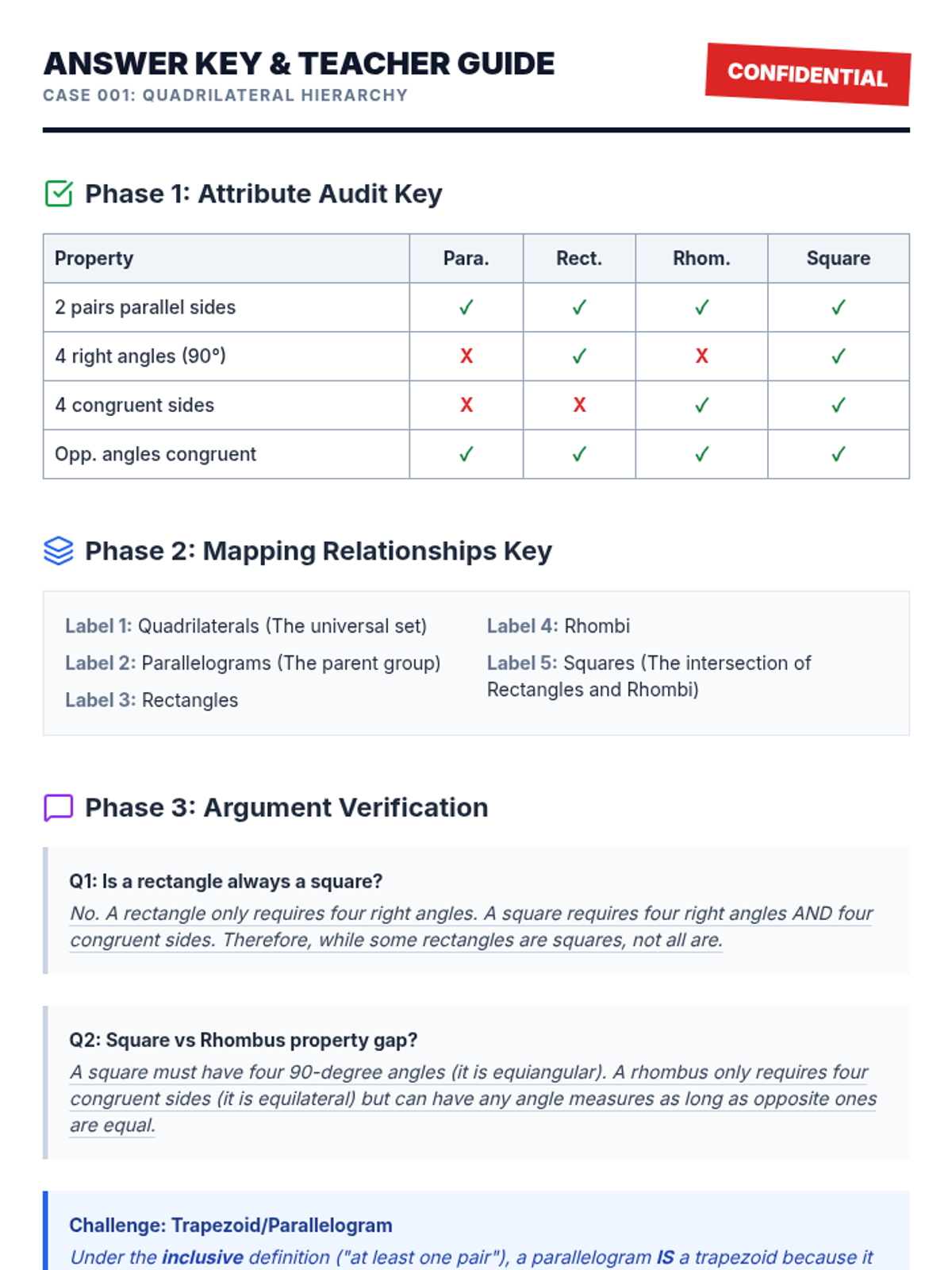
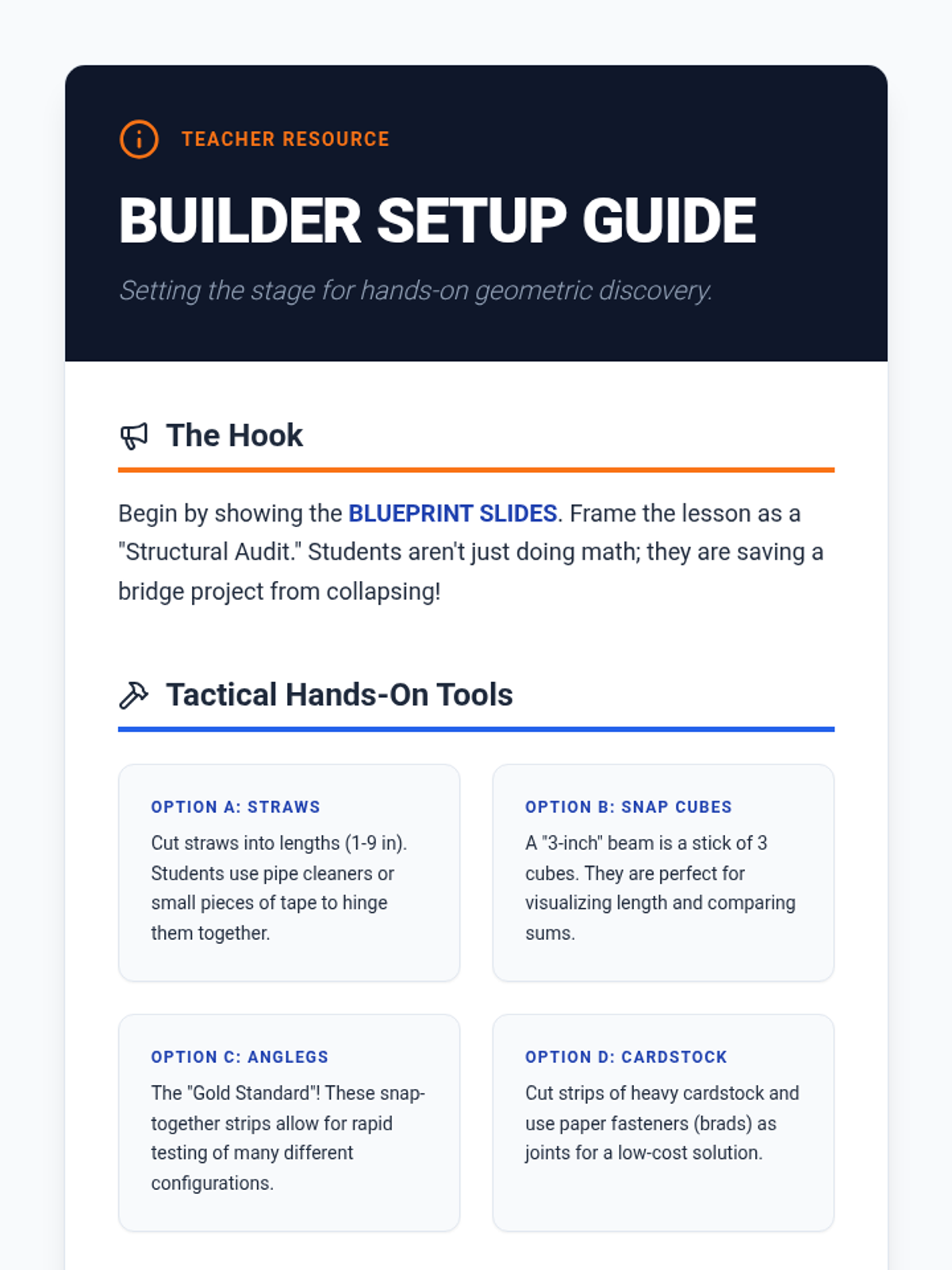
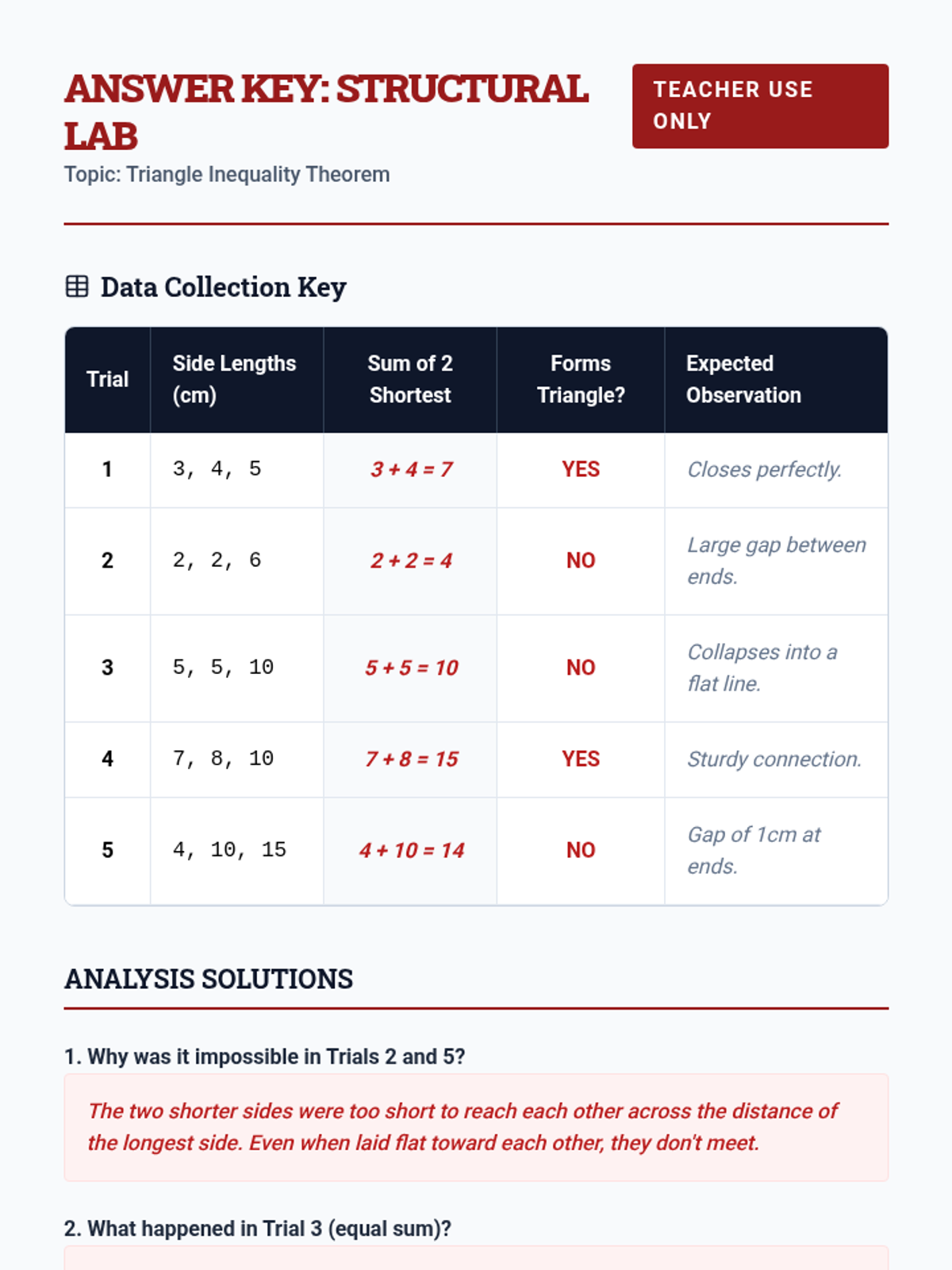
A comprehensive geometry sequence for 7th grade focusing on the mathematical rules of shape existence, including the Triangle Inequality Theorem, angle sums, unique vs. ambiguous constructions, and quadrilateral hierarchies. Students act as geometric architects, analyzing constraints to determine if shapes can exist and if they are unique.
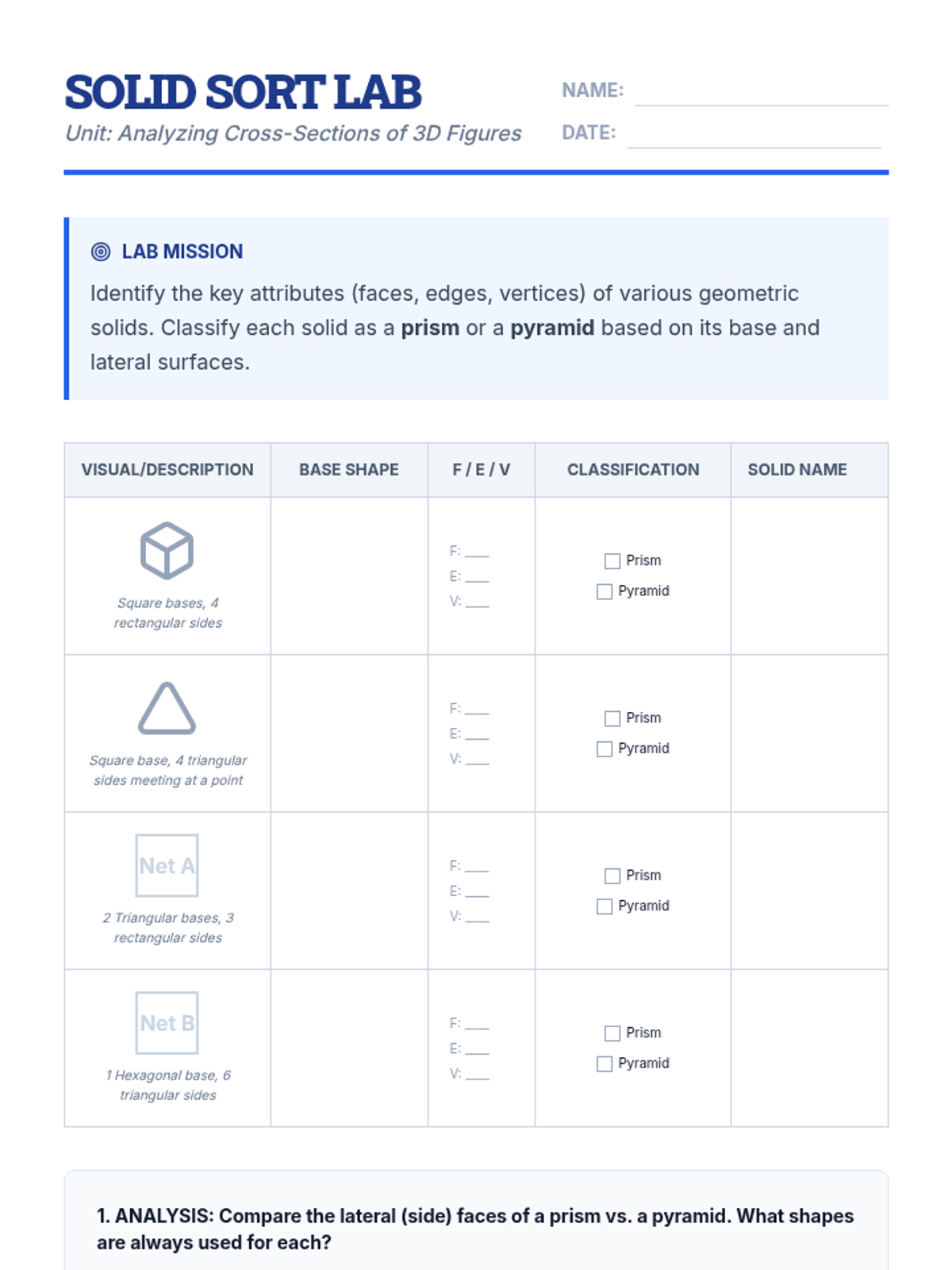
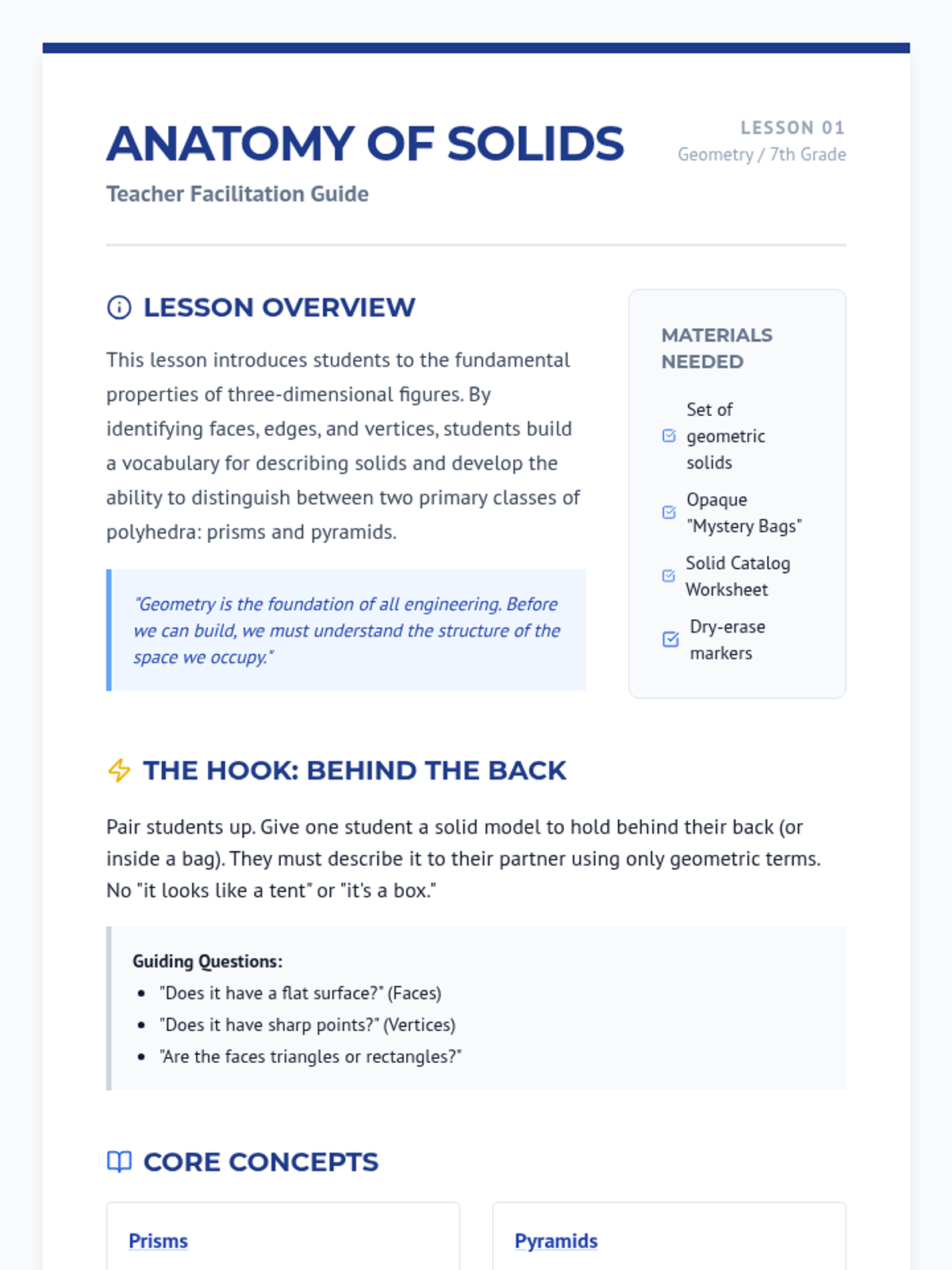
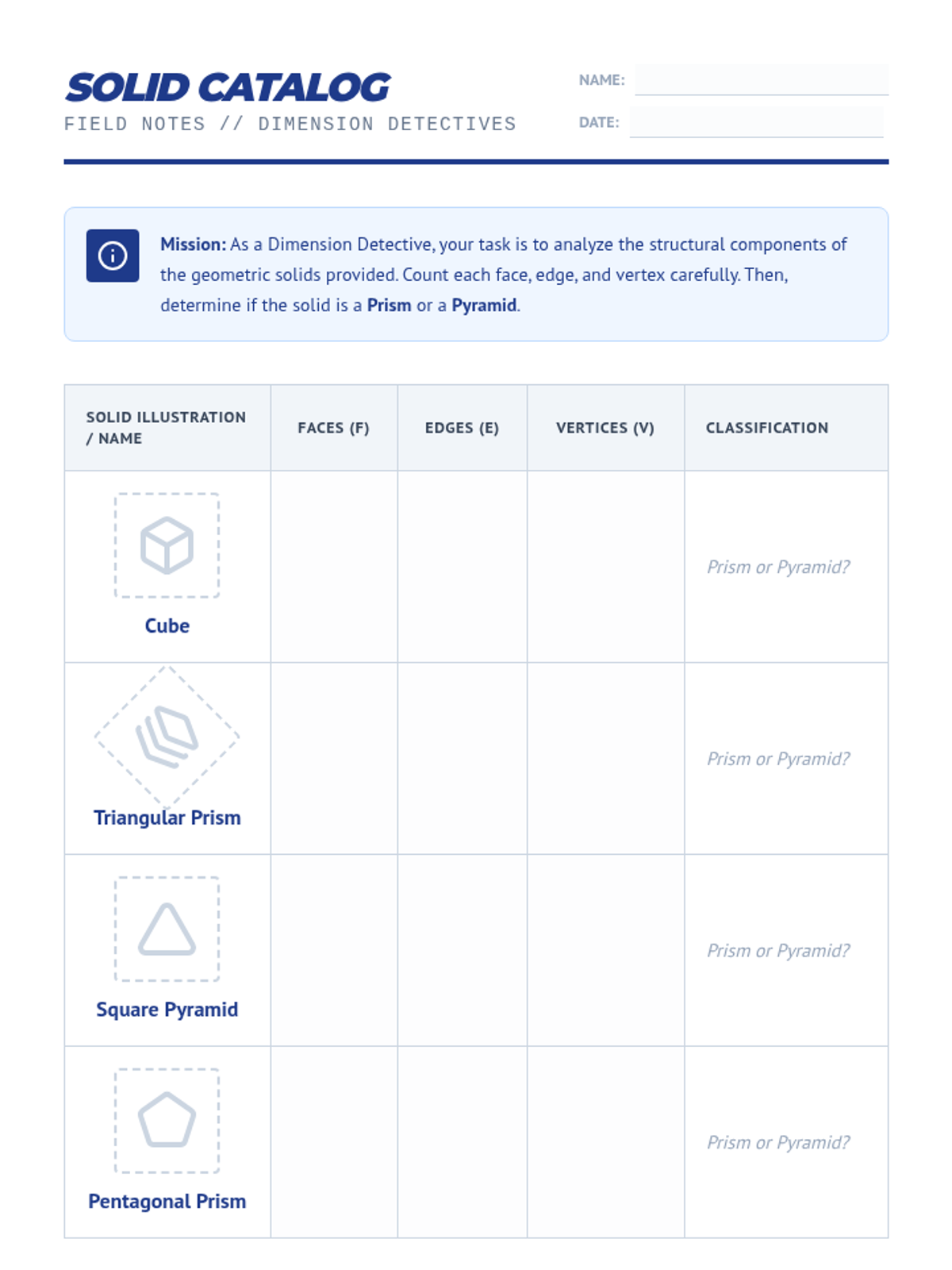
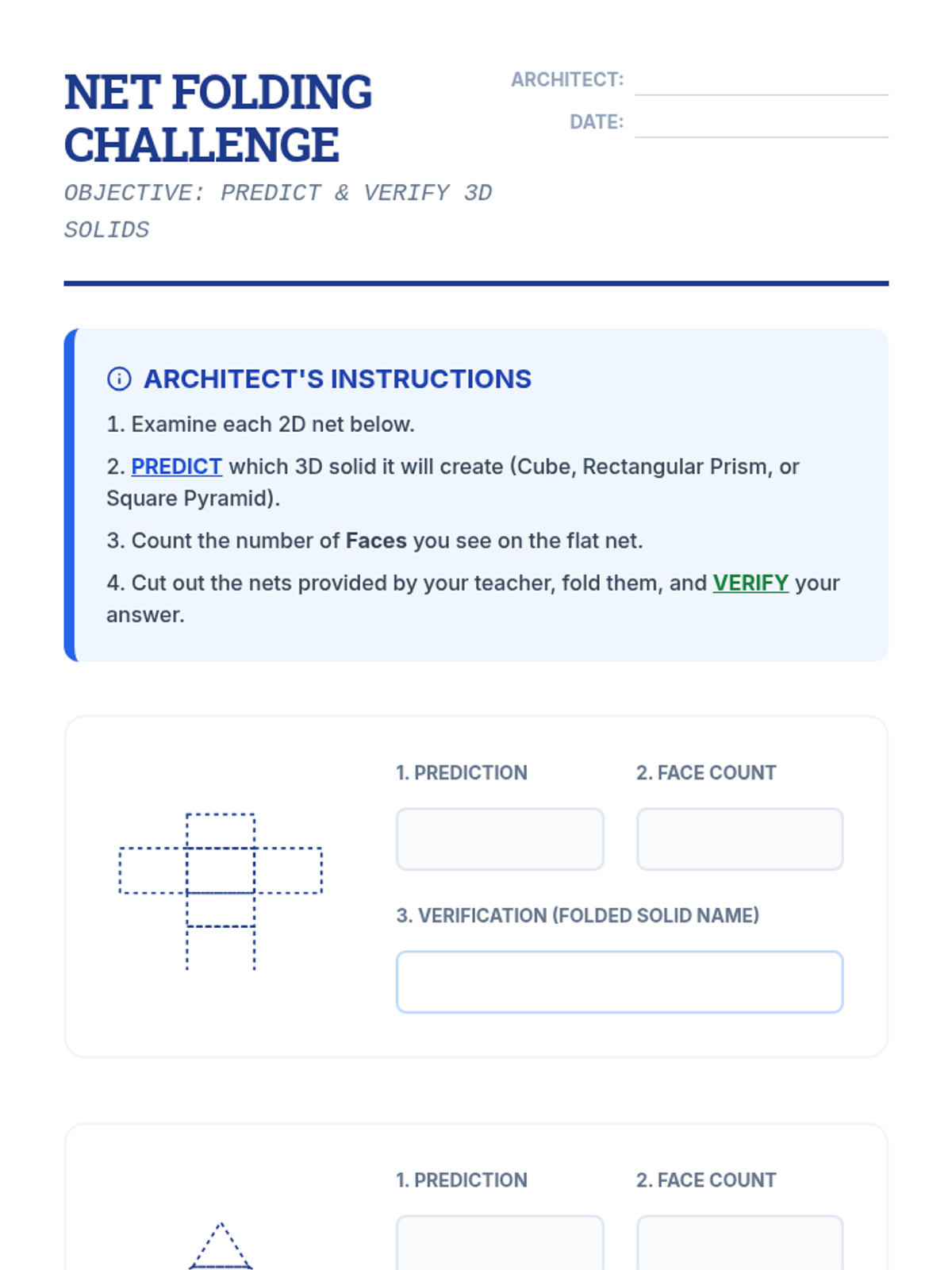
A comprehensive geometry sequence for 7th-grade students focused on the properties, slicing, and visualization of 3D figures. Students progress from identifying basic attributes to complex spatial reasoning tasks involving cross-sections, nets, and orthographic projections.
A comprehensive geometry unit for 7th grade focusing on the rigorous analysis of 2D and 3D shape attributes, hierarchical classification of quadrilaterals, and the visualization of cross-sections. Students progress from basic construction to complex logical reasoning about geometric relationships.
A rigorous exploration of geometric classification, focusing on logical hierarchies of quadrilaterals, properties of diagonals, 3D polyhedra attributes via Euler's Formula, and the visualization of cross-sections. Students move from visual identification to formal geometric reasoning and proof construction.
This sequence explores the relationship between 2D shapes and 3D solids through hands-on construction, analysis of attributes, and cross-sectional investigations. Students apply their knowledge in a culminating engineering challenge to build stable structures using geometric properties.
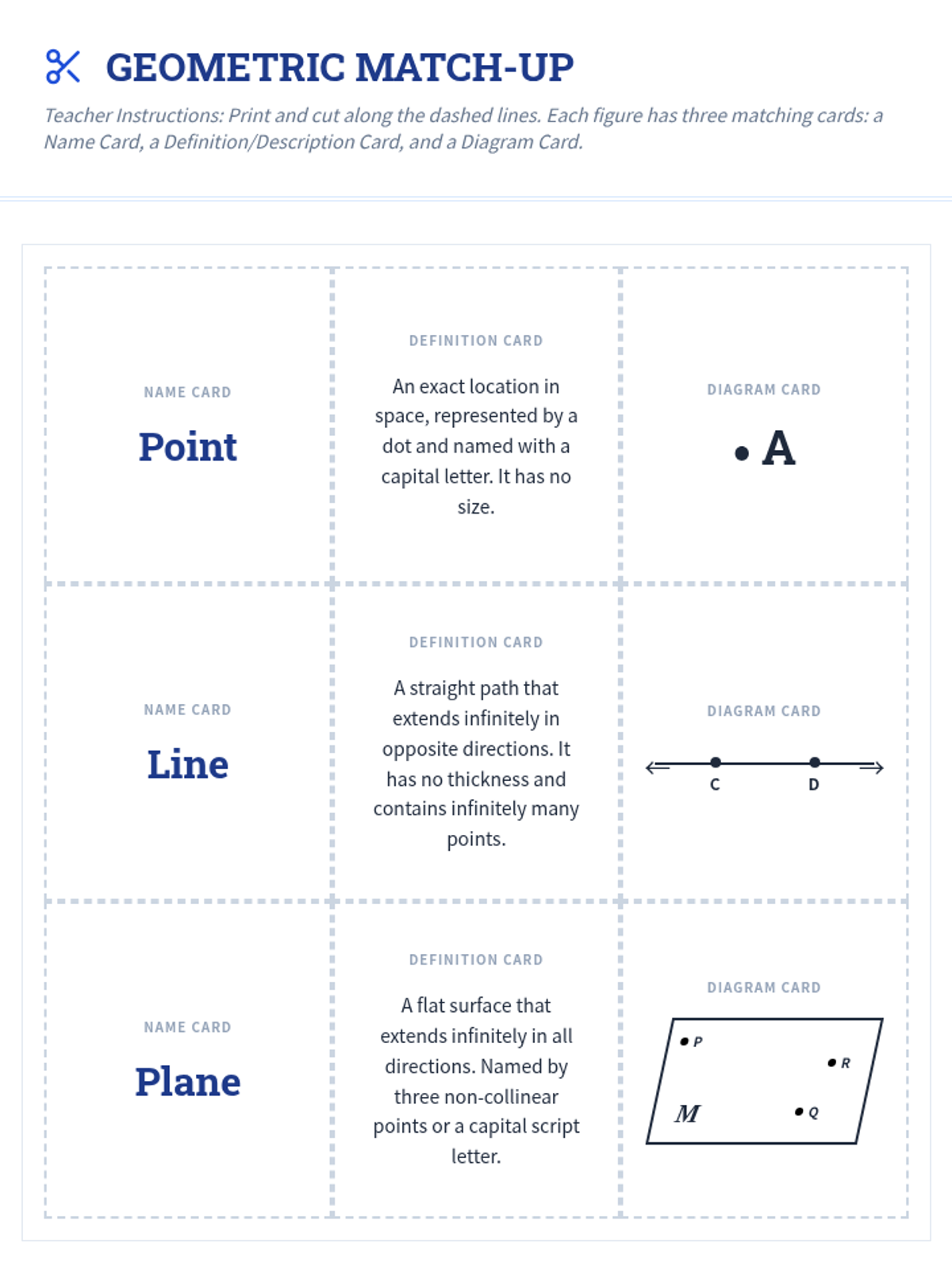
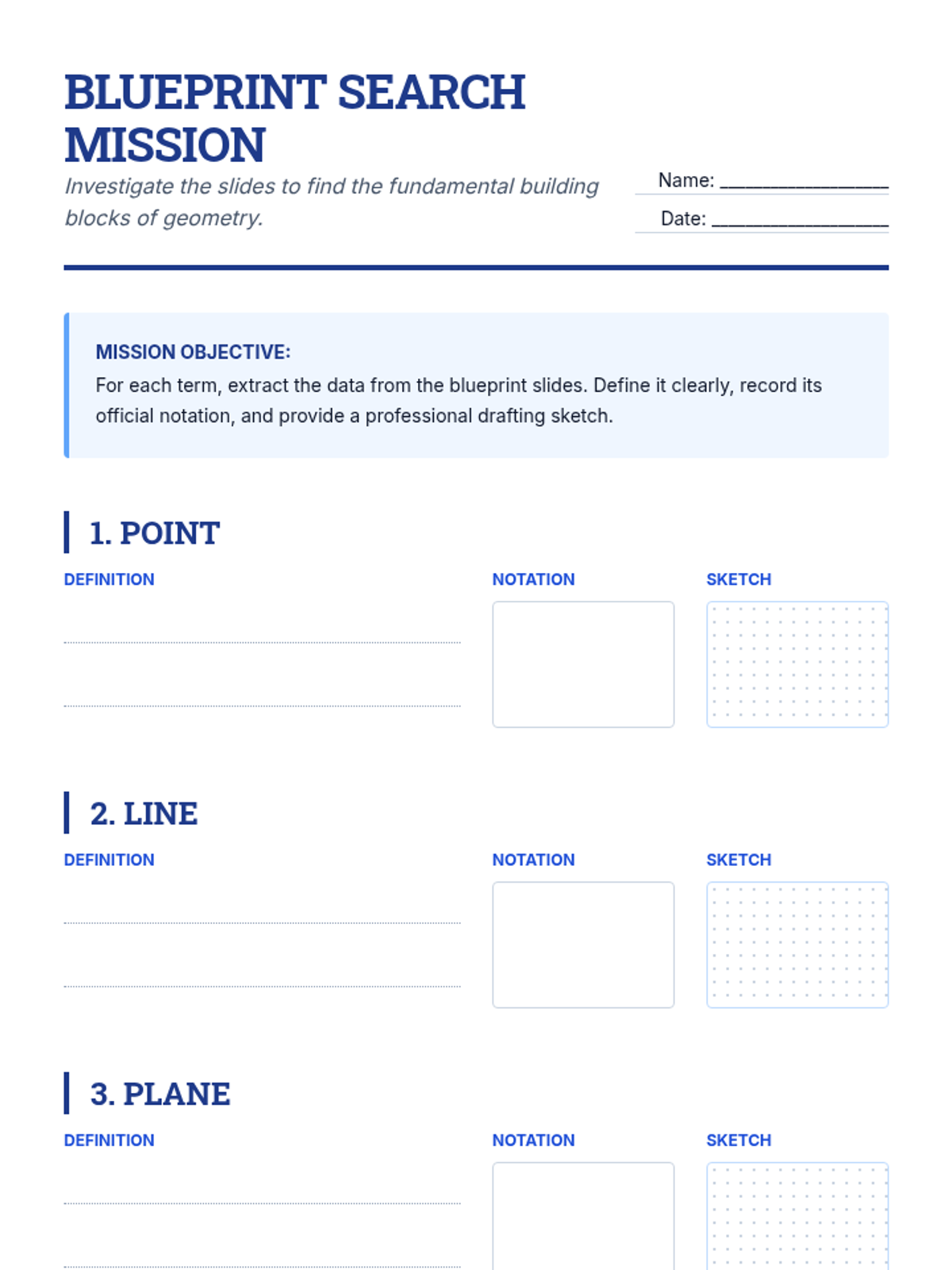
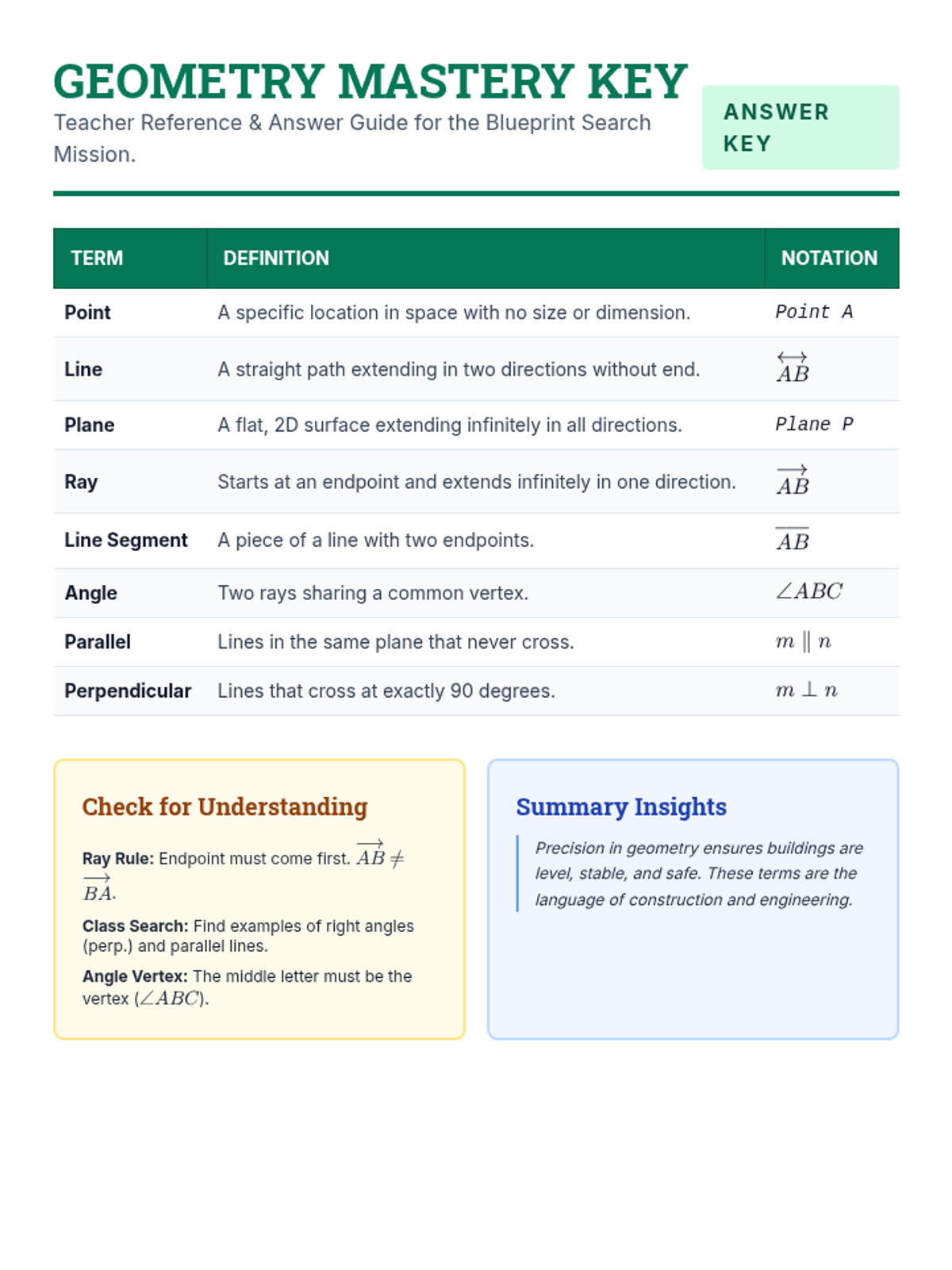
A series of lessons focused on the fundamental elements of geometry, starting with points, lines, and planes and progressing to more complex spatial relationships.
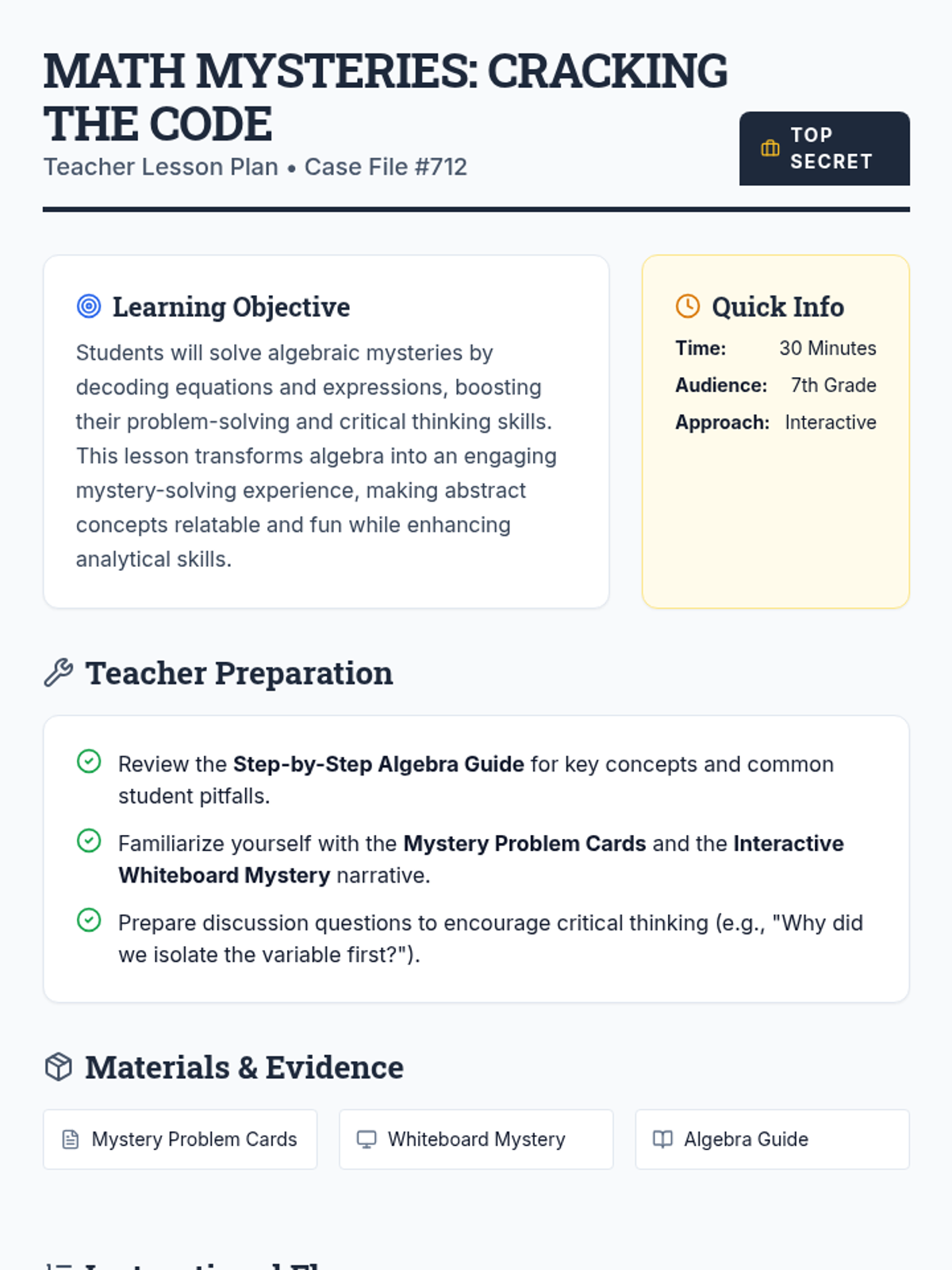
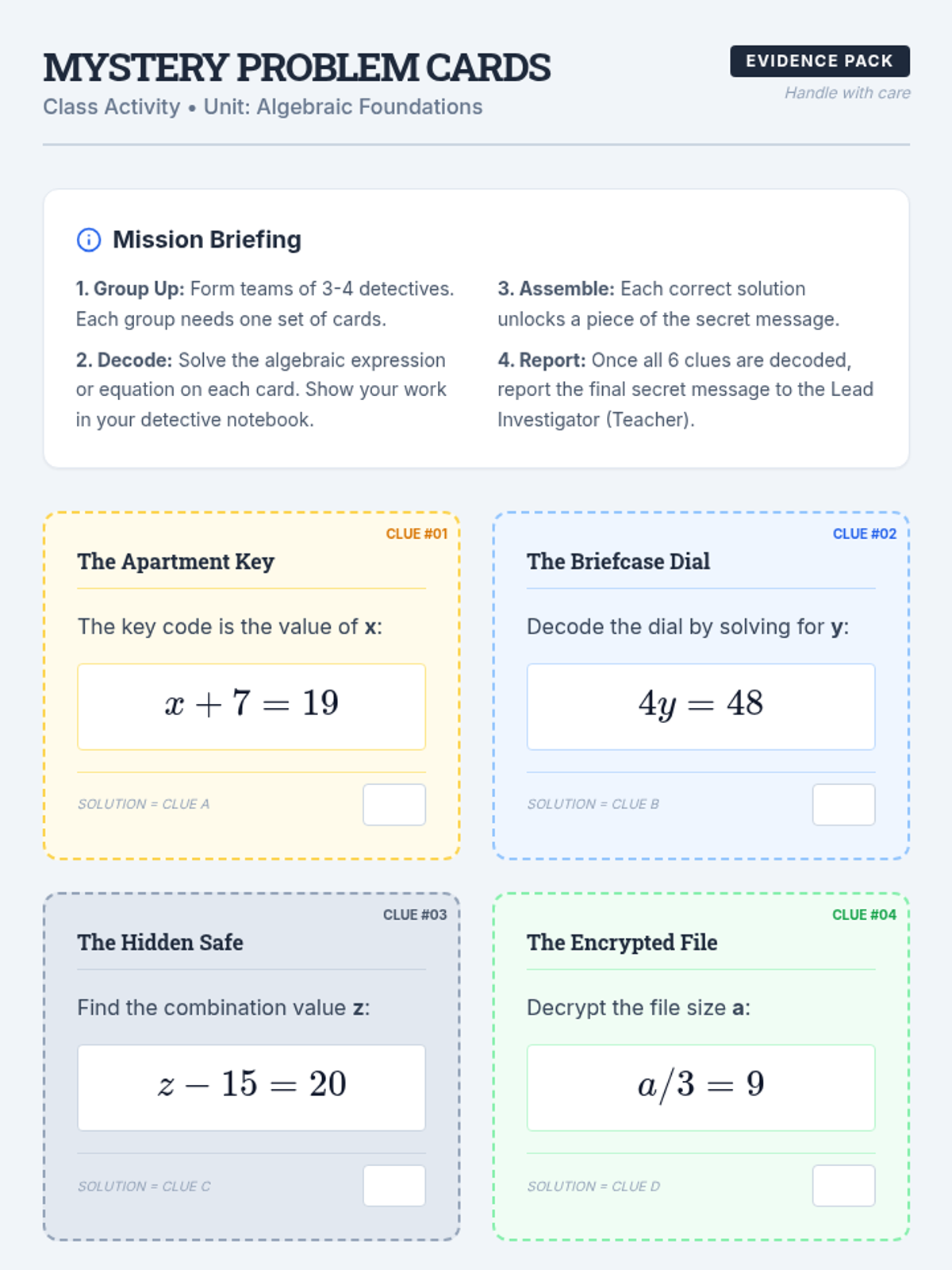
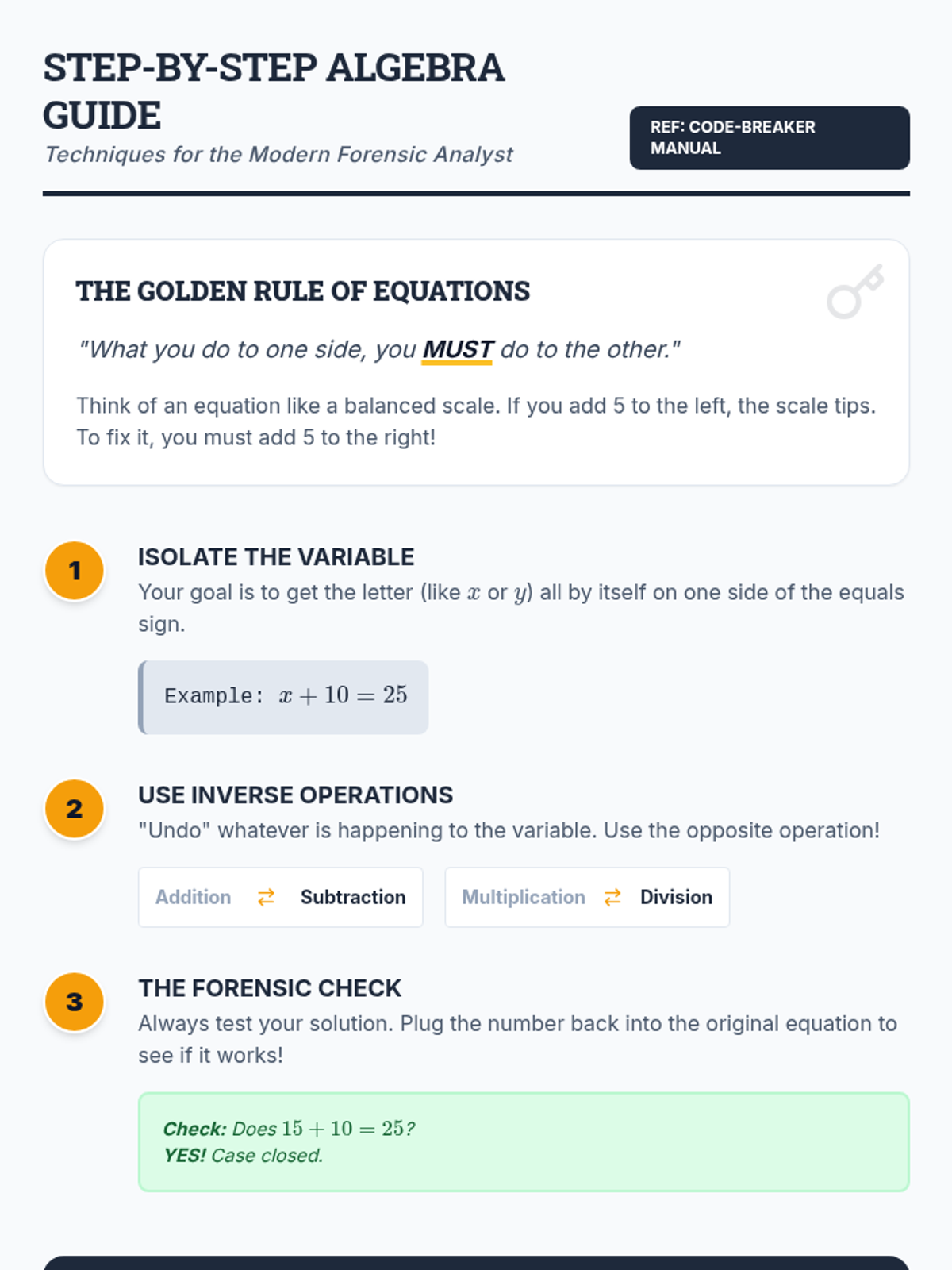
A comprehensive math sequence that bridges foundational geometry for young learners with introductory algebra for middle schoolers through an engaging detective and explorer theme. Students will solve 'mysteries' and embark on 'adventures' to master shapes, patterns, and algebraic equations.
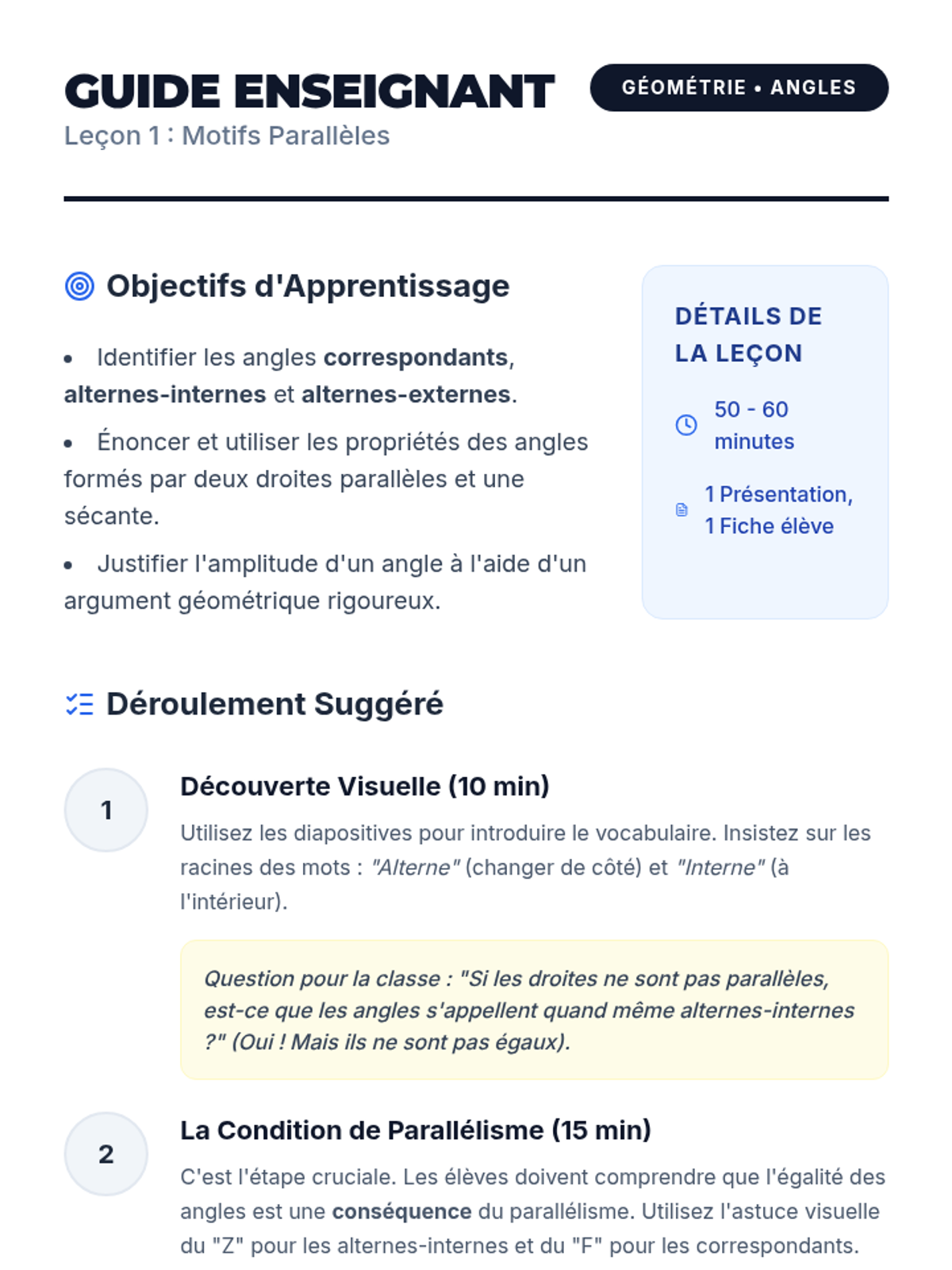
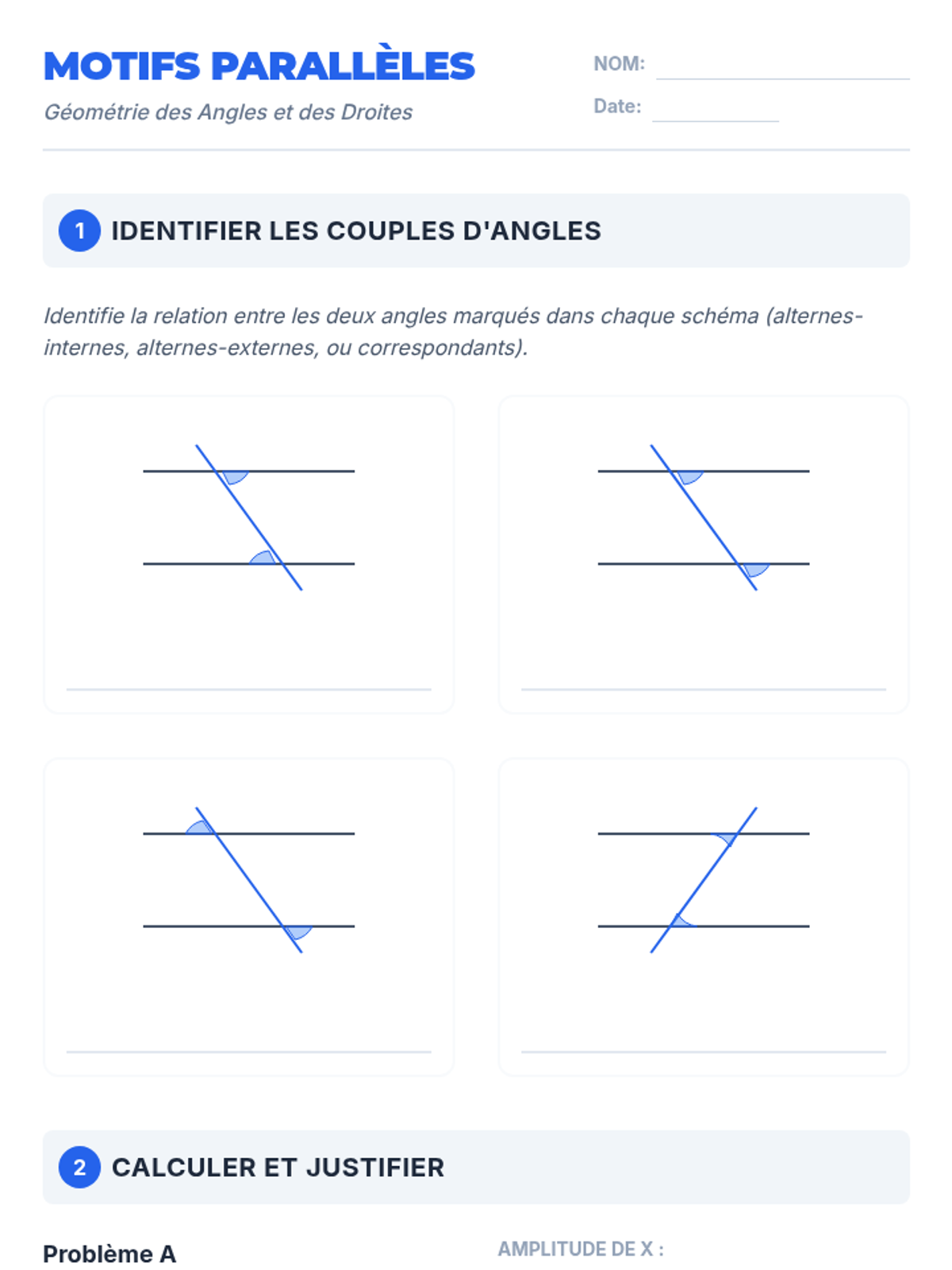
Un parcours complet sur les angles, les droites parallèles et les polygones, mettant l'accent sur l'identification, le calcul et la justification géométrique.
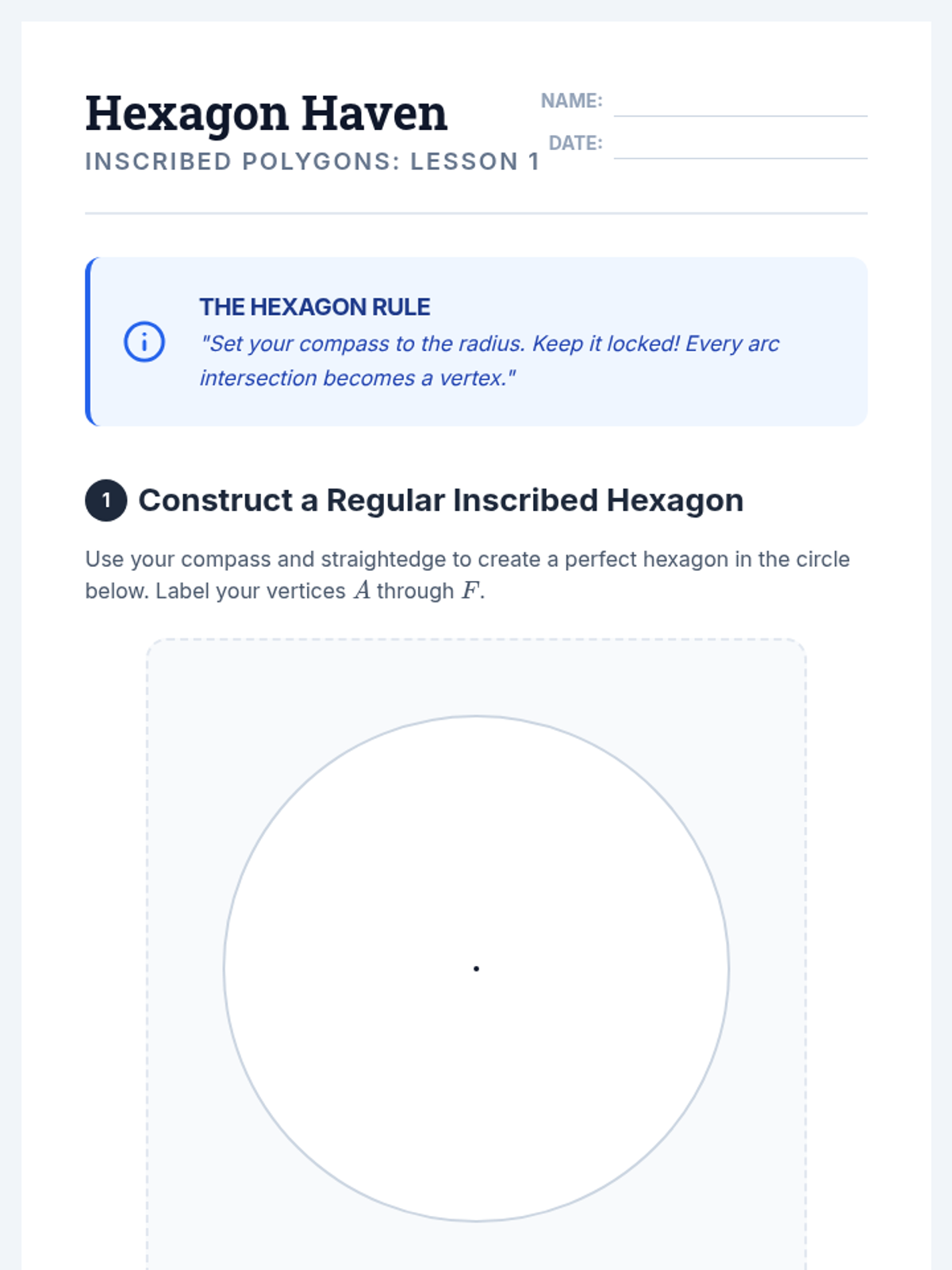
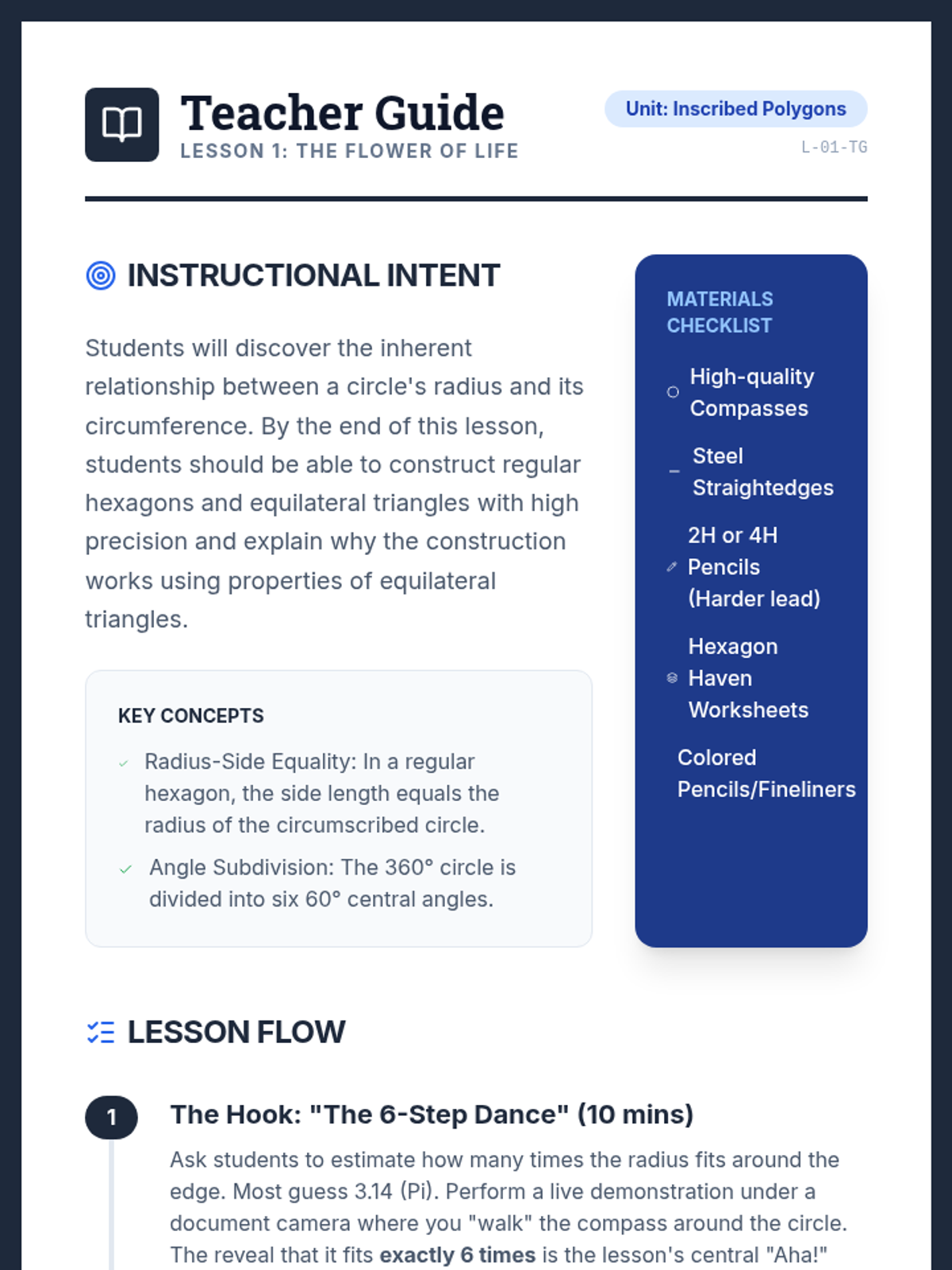
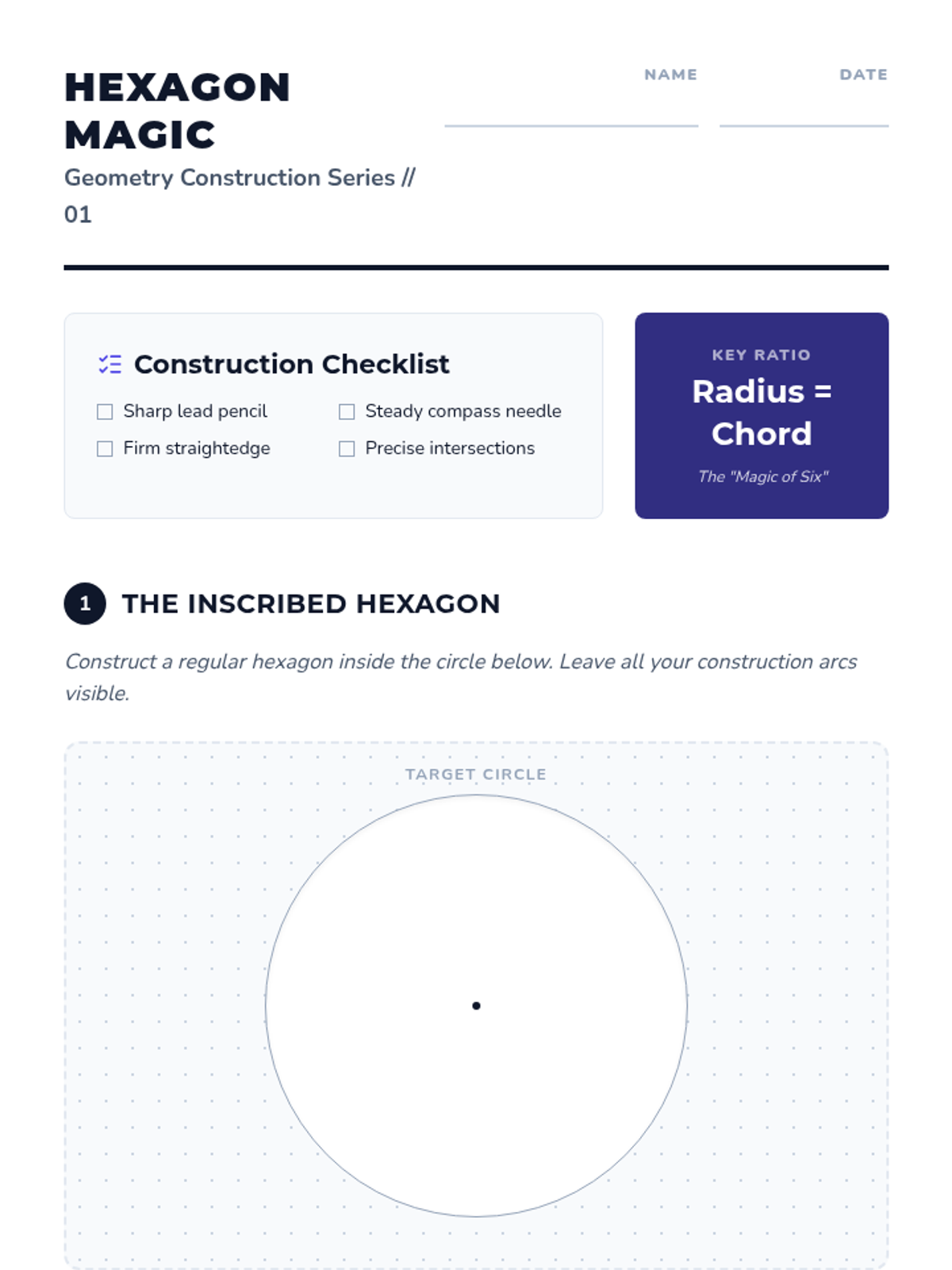
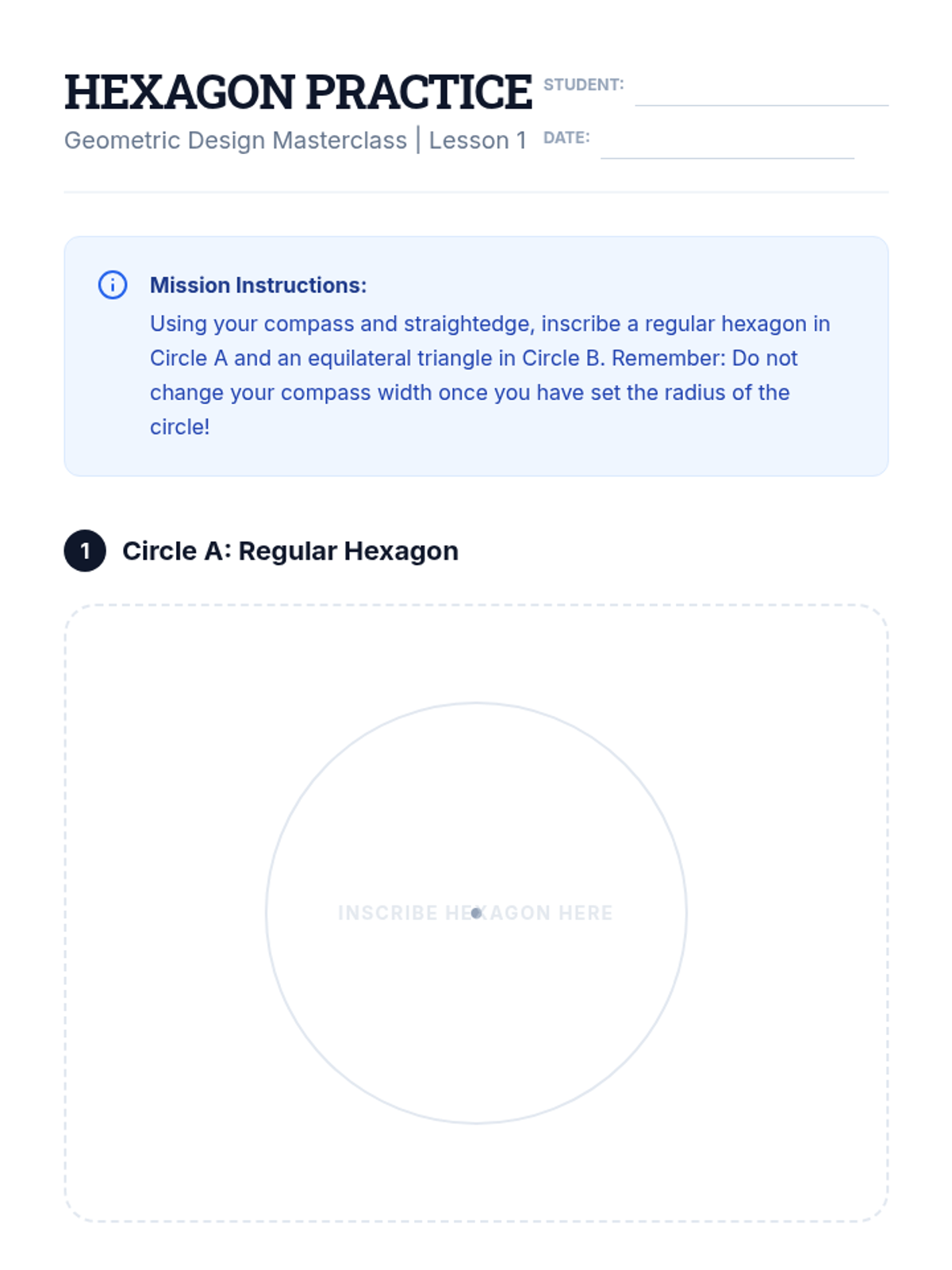
This sequence explores the intersection of art and geometry through inscribed regular polygons. Students use compass and straightedge techniques to construct triangles, hexagons, squares, and pentagons, culminating in a geometric mandala project.
A 7th-grade geometry unit that blends mathematical precision with artistic exploration. Students learn to inscribe regular polygons within circles using a compass and straightedge, progressing from hexagons to squares and complex multi-sided figures, culminating in a historical pattern analysis and a creative mandala project.
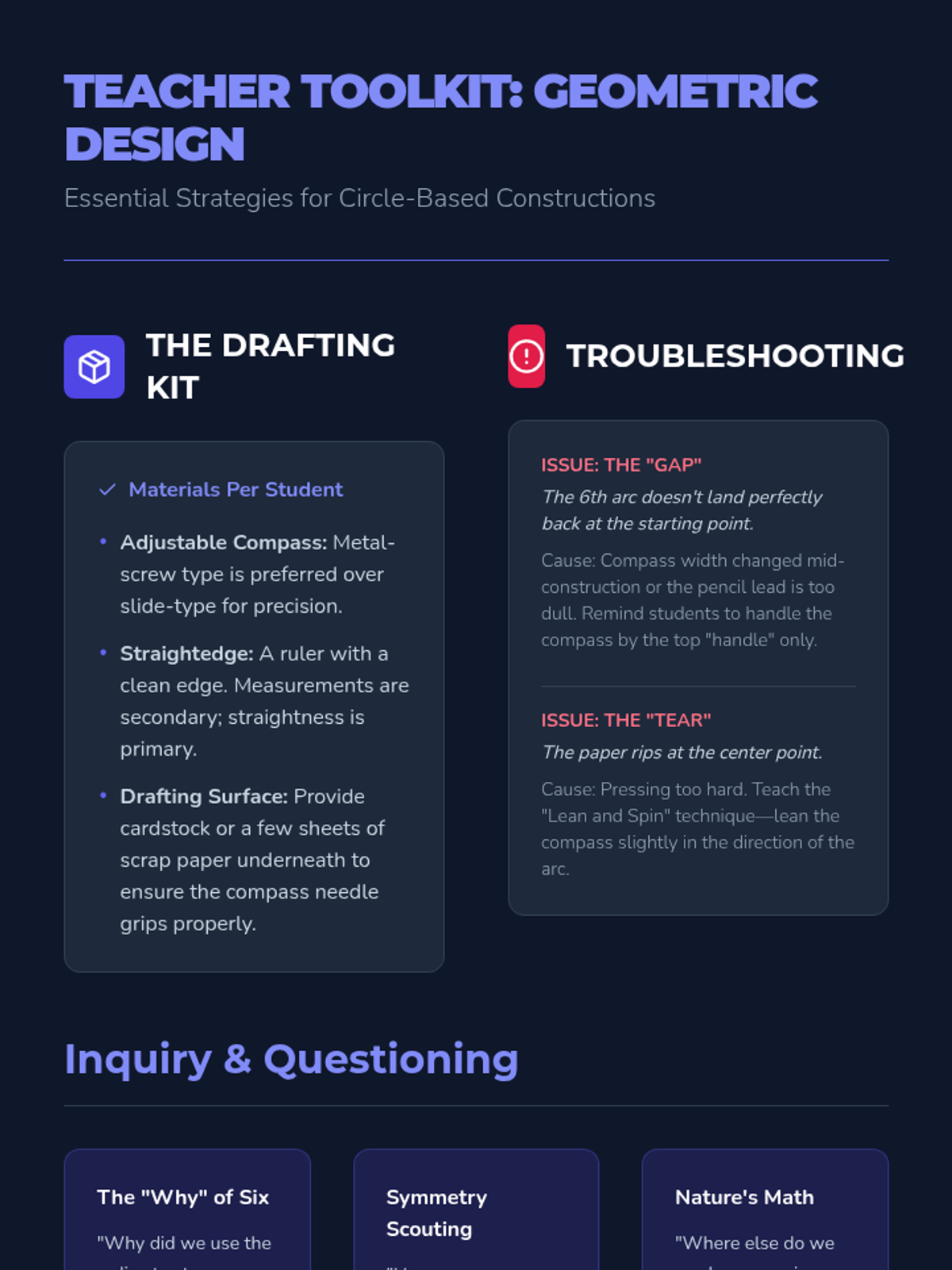
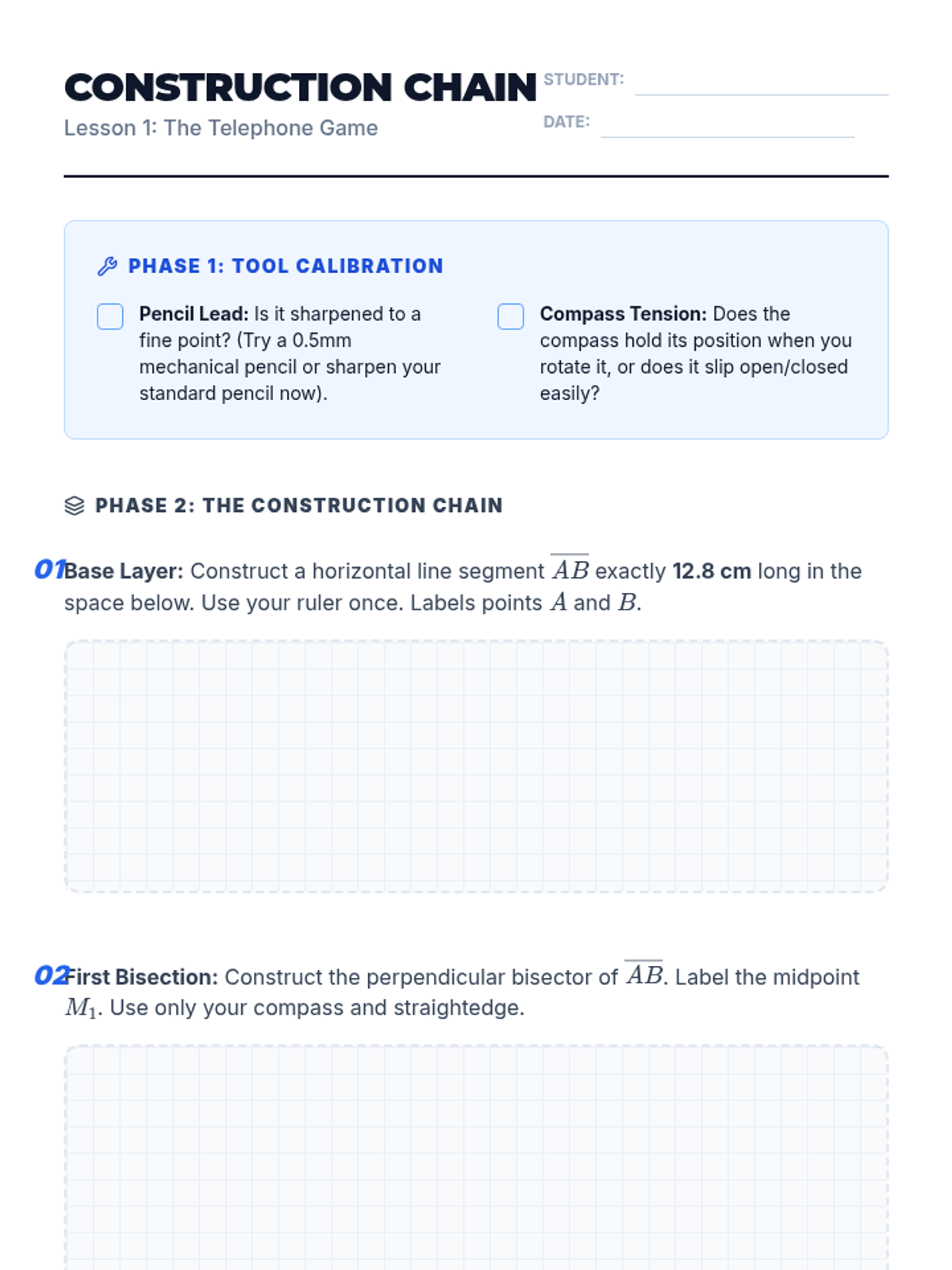
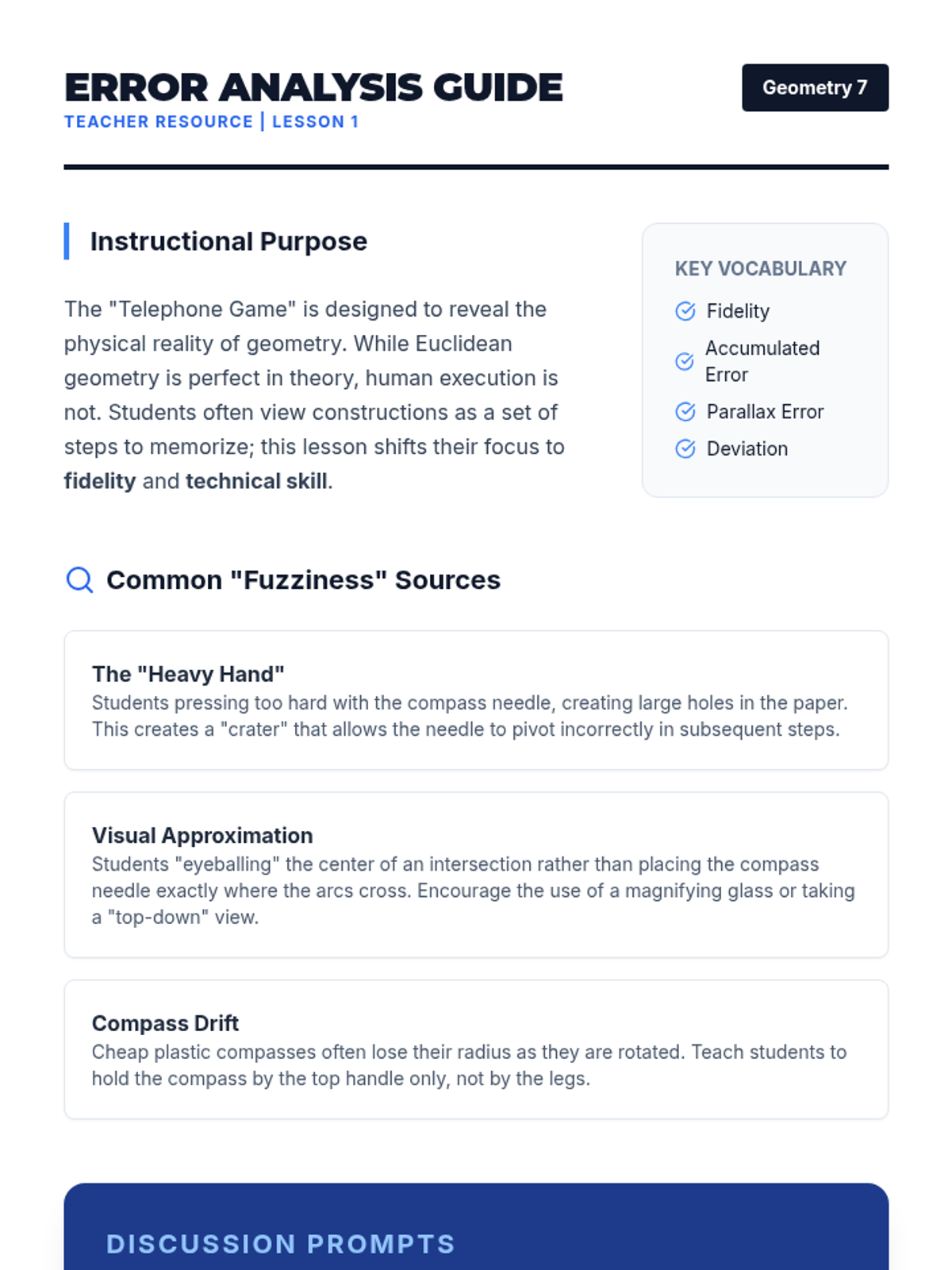
A 7th-grade geometry sequence focusing on the precision, logic, and limitations of geometric constructions through gamified challenges and error analysis. Students explore the 'why' behind compass and straightedge techniques while honing their technical skills.
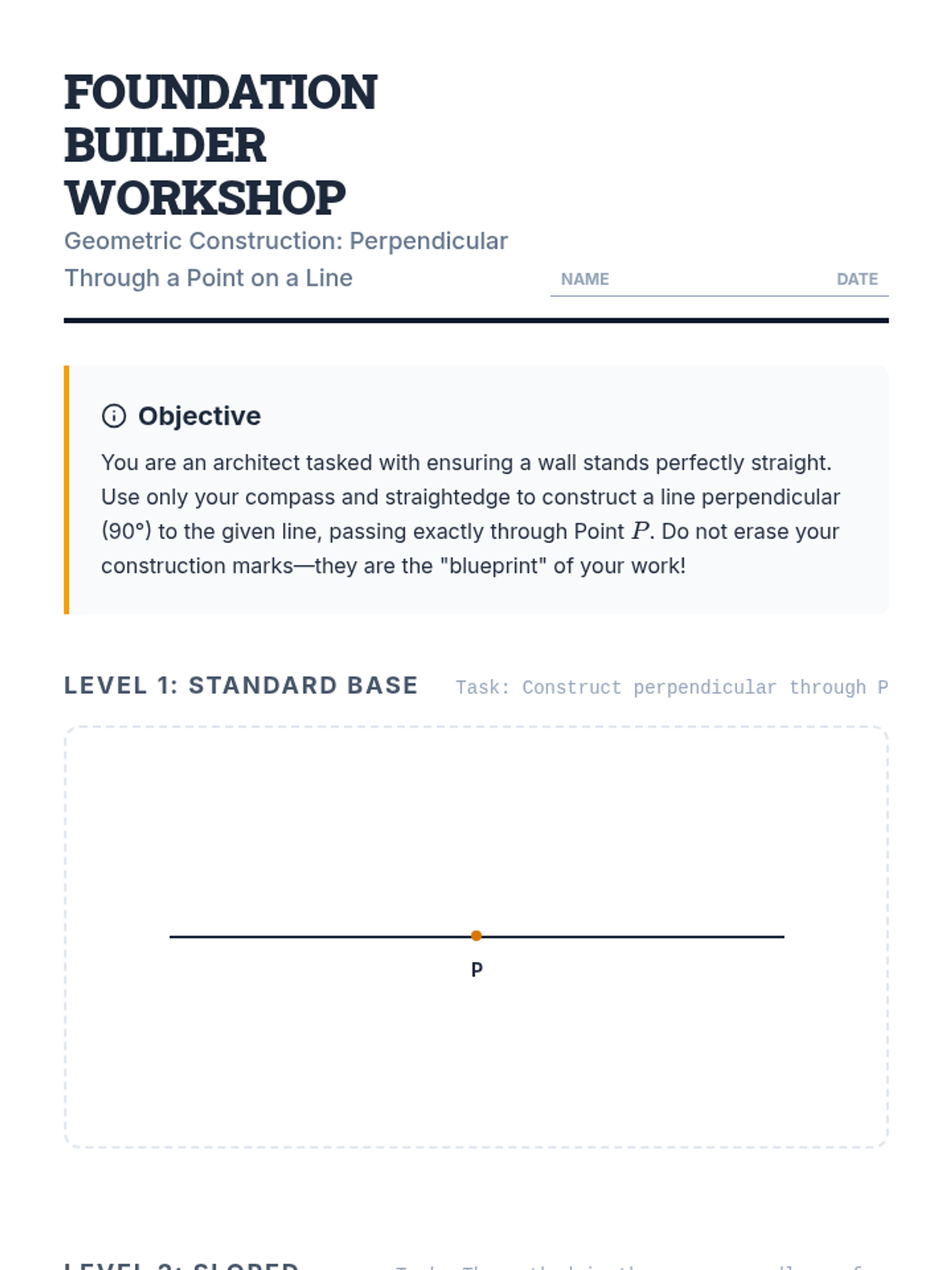
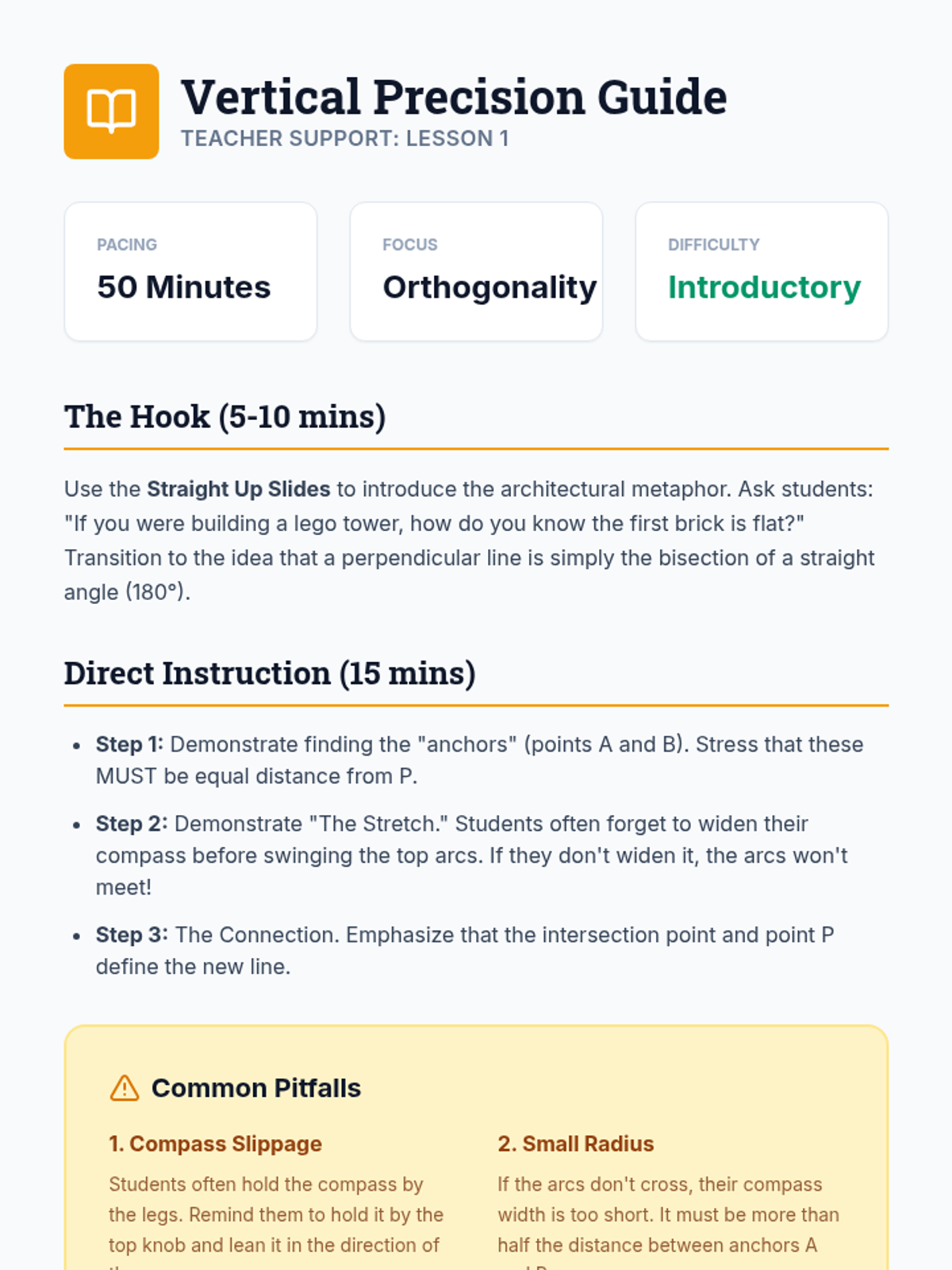
A comprehensive geometry sequence for 7th graders focusing on the construction of parallel and perpendicular lines using only a compass and straightedge. Students progress from basic perpendiculars to complex grid systems using inquiry-based and skill-building techniques.
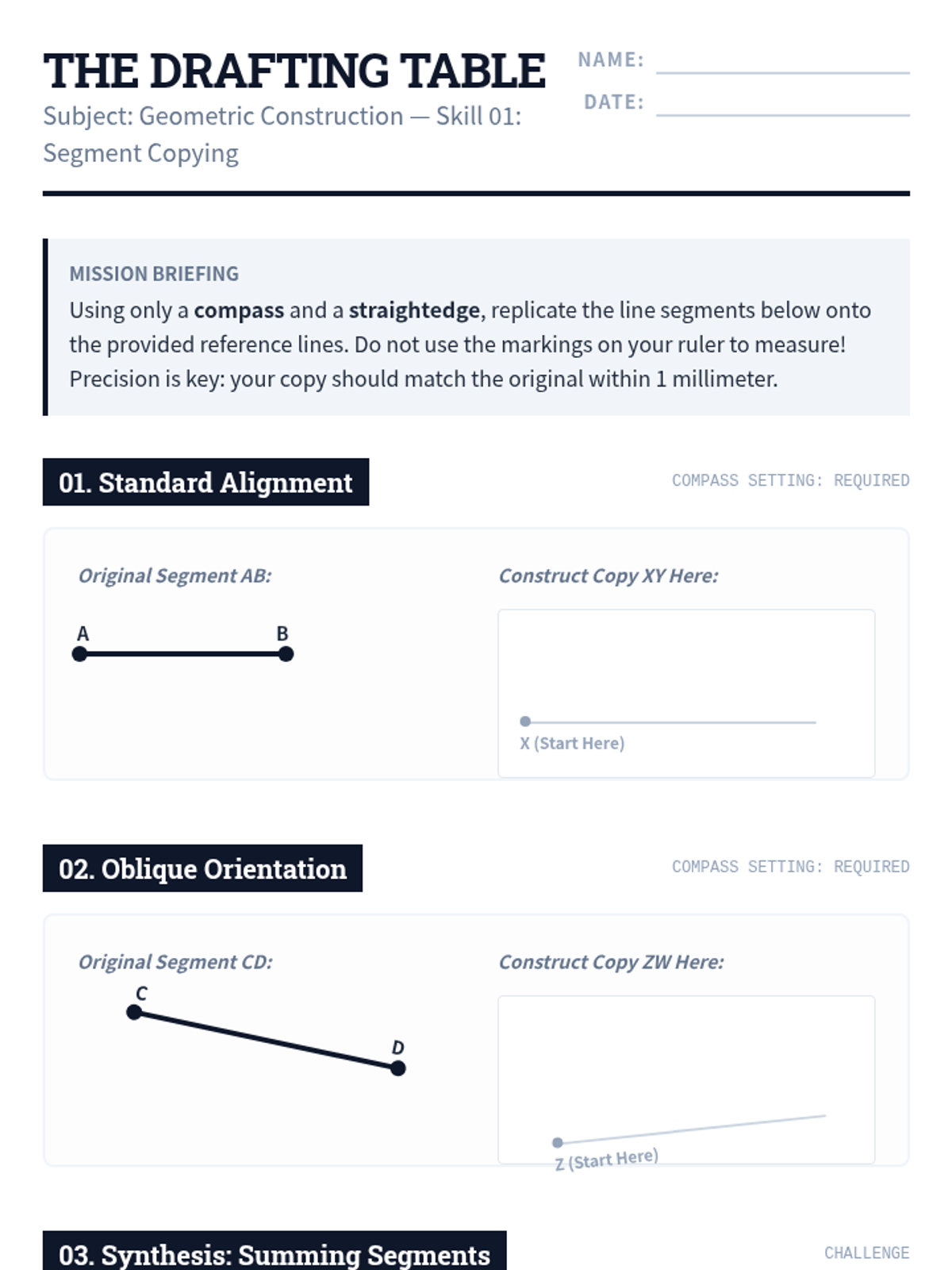
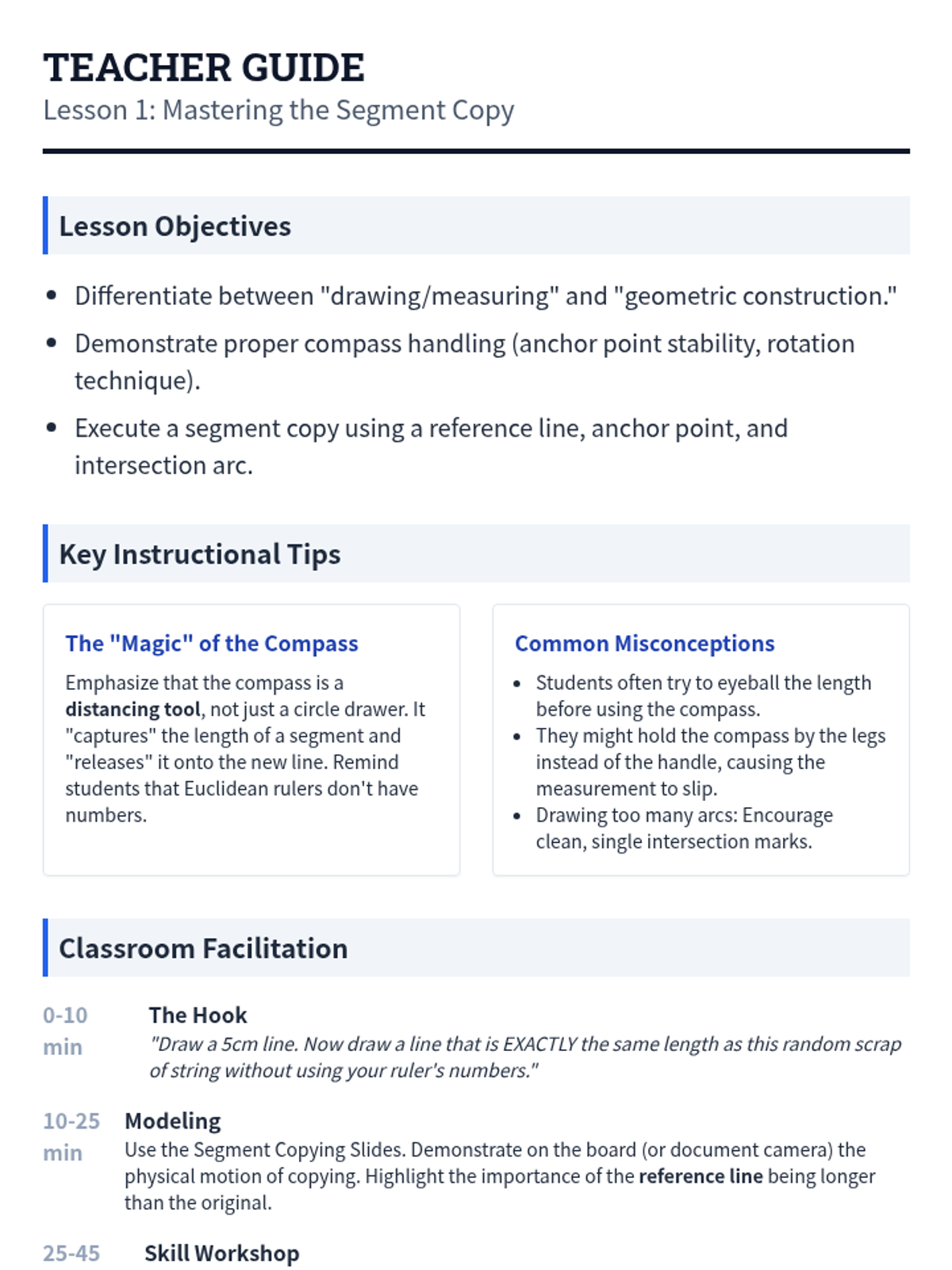
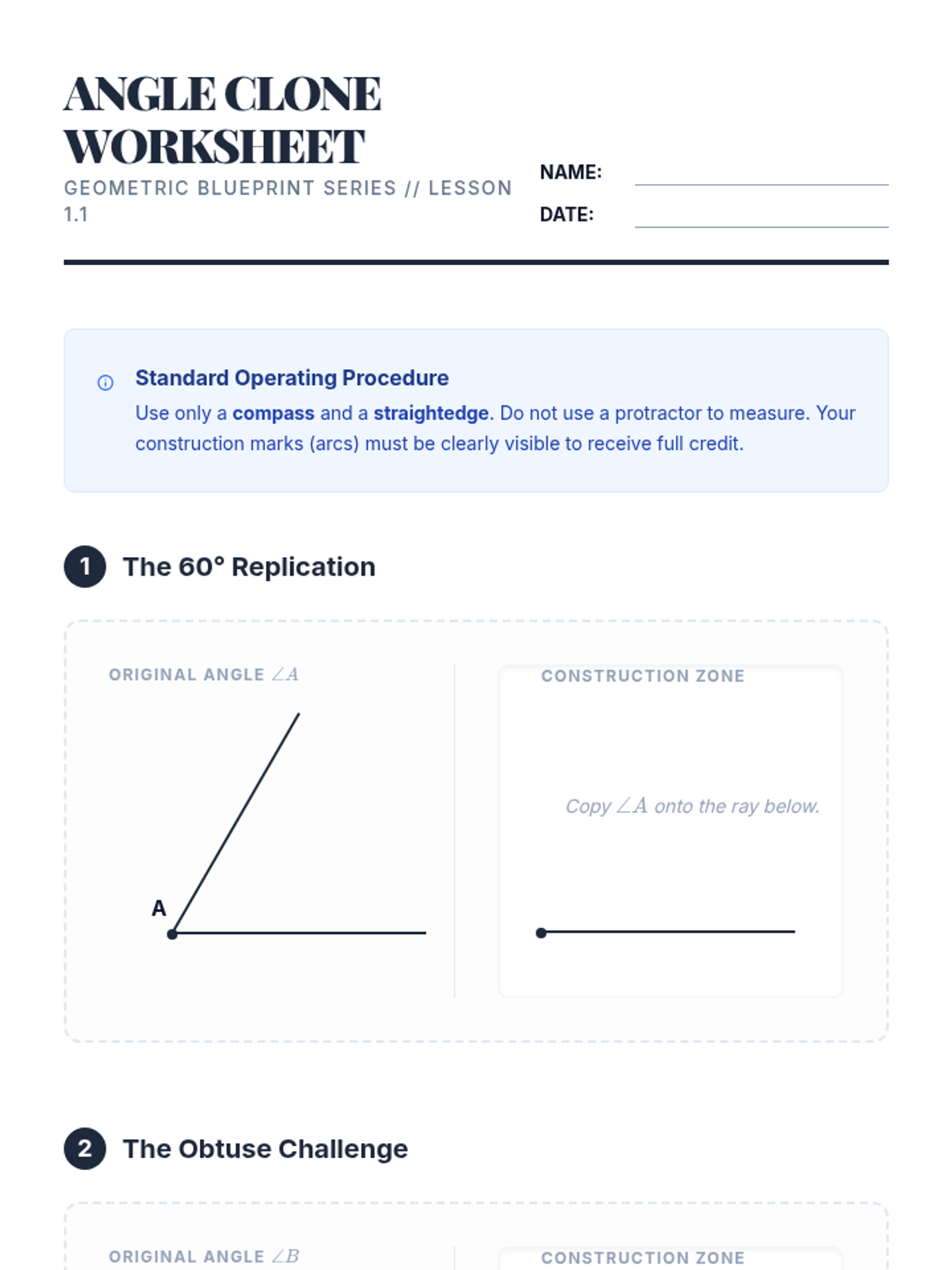
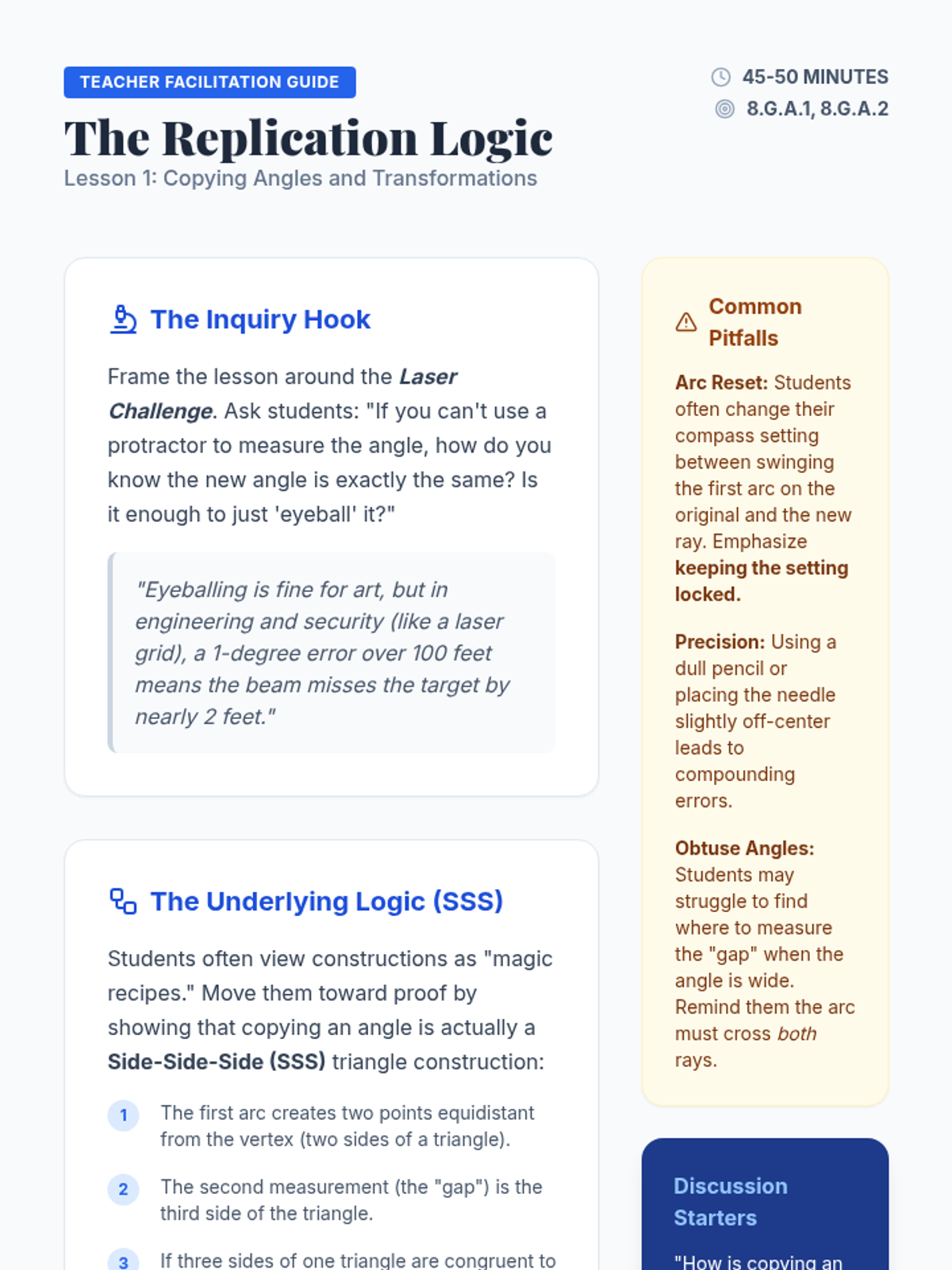
A foundational geometry sequence for 7th-grade students focusing on the art and logic of compass and straightedge constructions. Students master the skills of copying segments and angles, and constructing perpendicular and angle bisectors to solve geometric puzzles.
A project-based journey through geometry and art, focusing on inscribing regular polygons within circles to create complex patterns and architectural motifs. Students move from basic constructions to analyzing historical art and designing their own geometric logos.
This inquiry-based sequence focuses on the geometric properties surrounding parallel lines and the logic required to construct them. Students move beyond simple bisections to understanding how copying angles is the key to creating parallel lines, effectively applying the Converse of the Corresponding Angles Postulate.
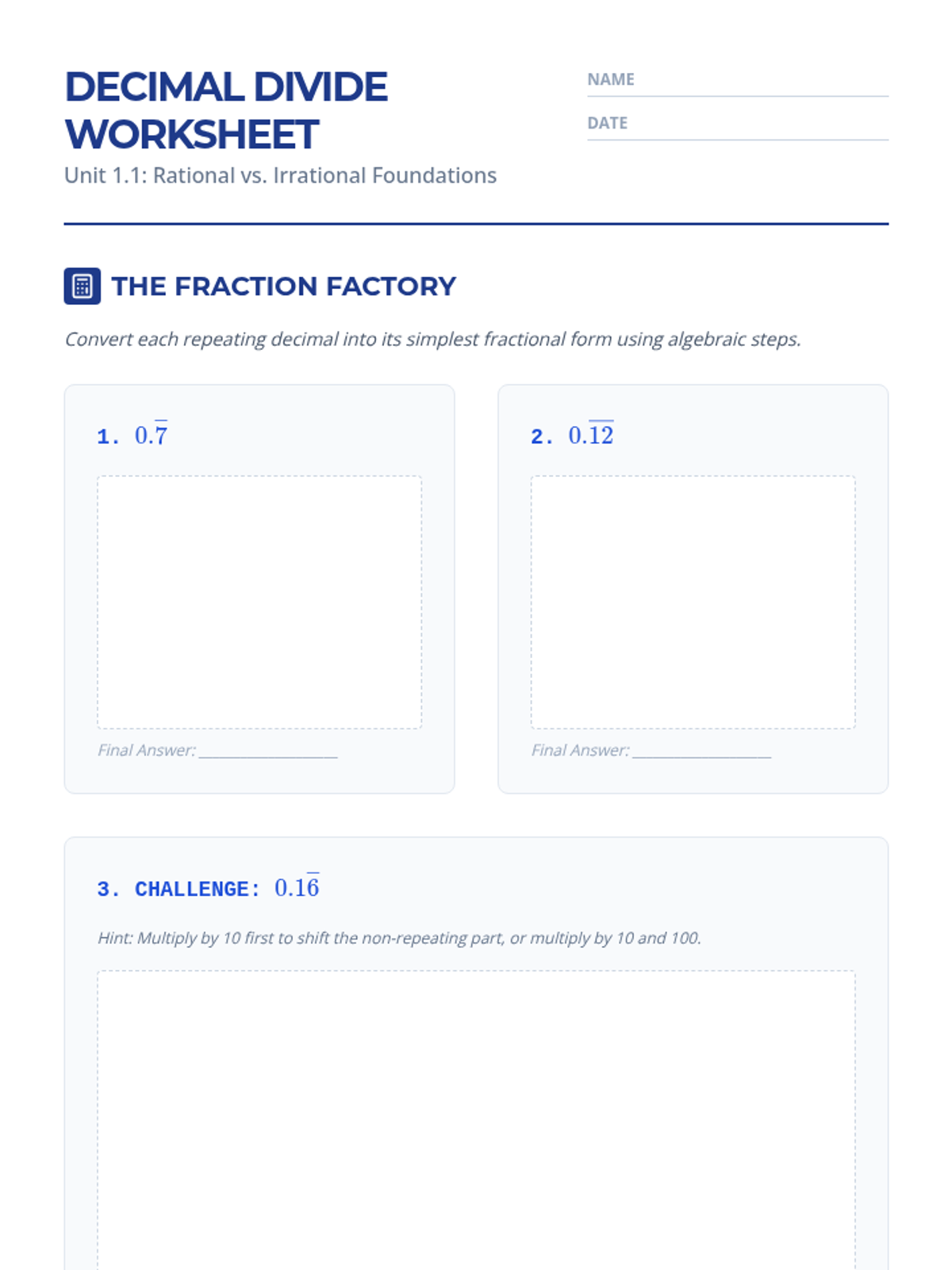
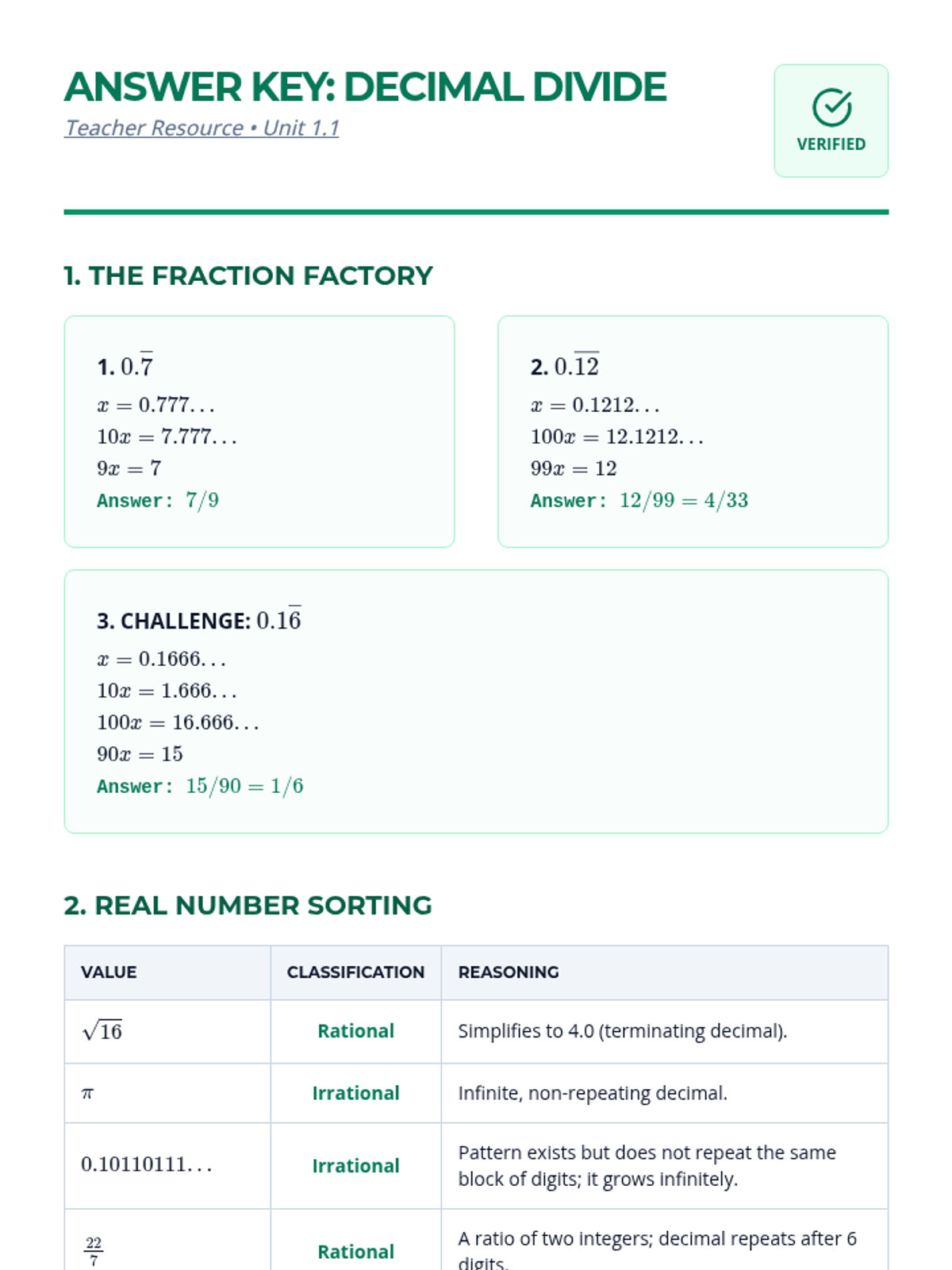
This sequence bridges the conceptual gap between basic arithmetic definitions and rigorous algebraic understanding of the real number system. Students move from decimal expansion to formal proofs by contradiction, geometric construction, and iterative approximation algorithms.
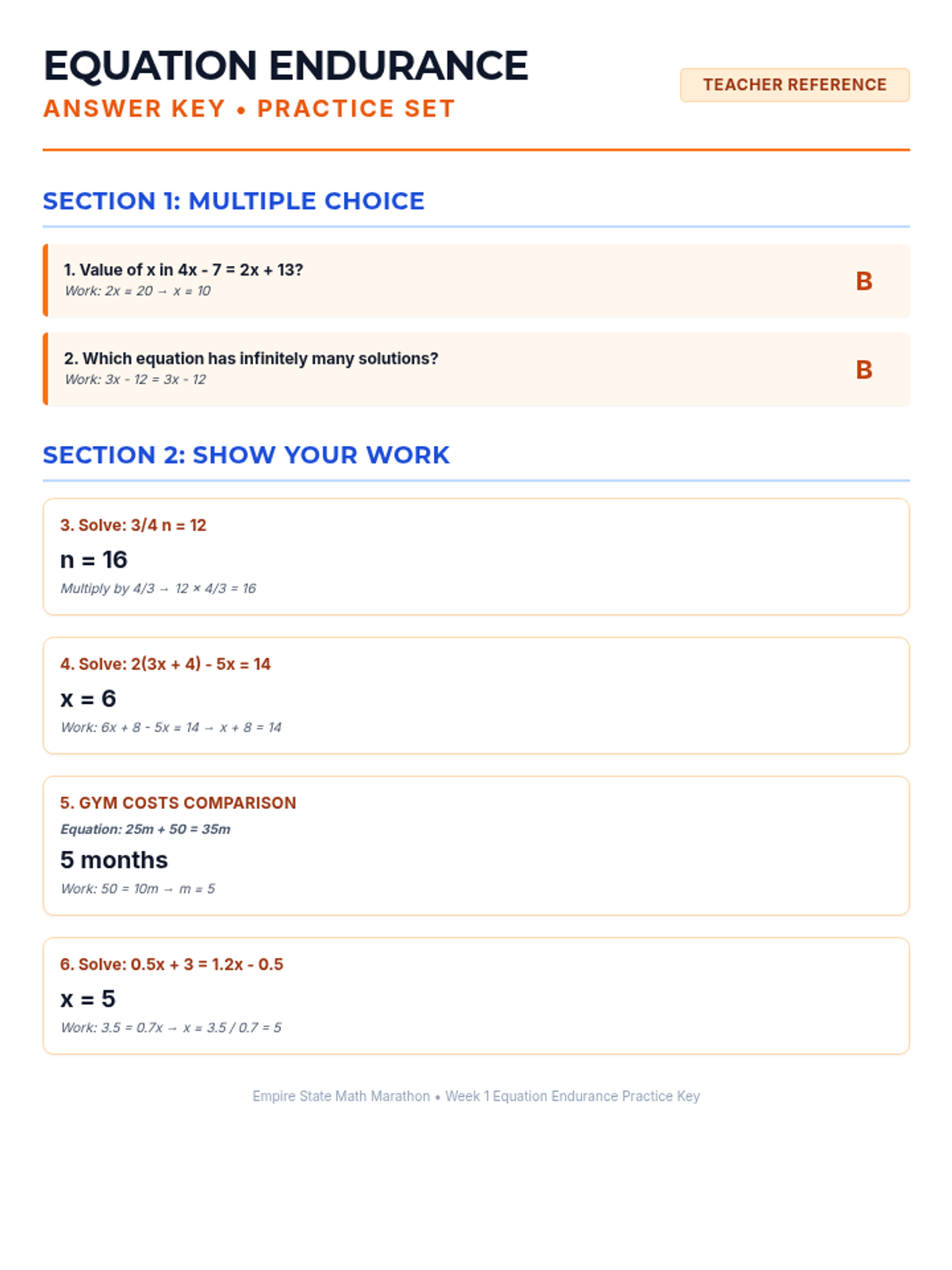
A comprehensive 7-week NYS Math Assessment preparation sequence for 8th grade, covering major clusters including algebra, functions, geometry, and statistics.
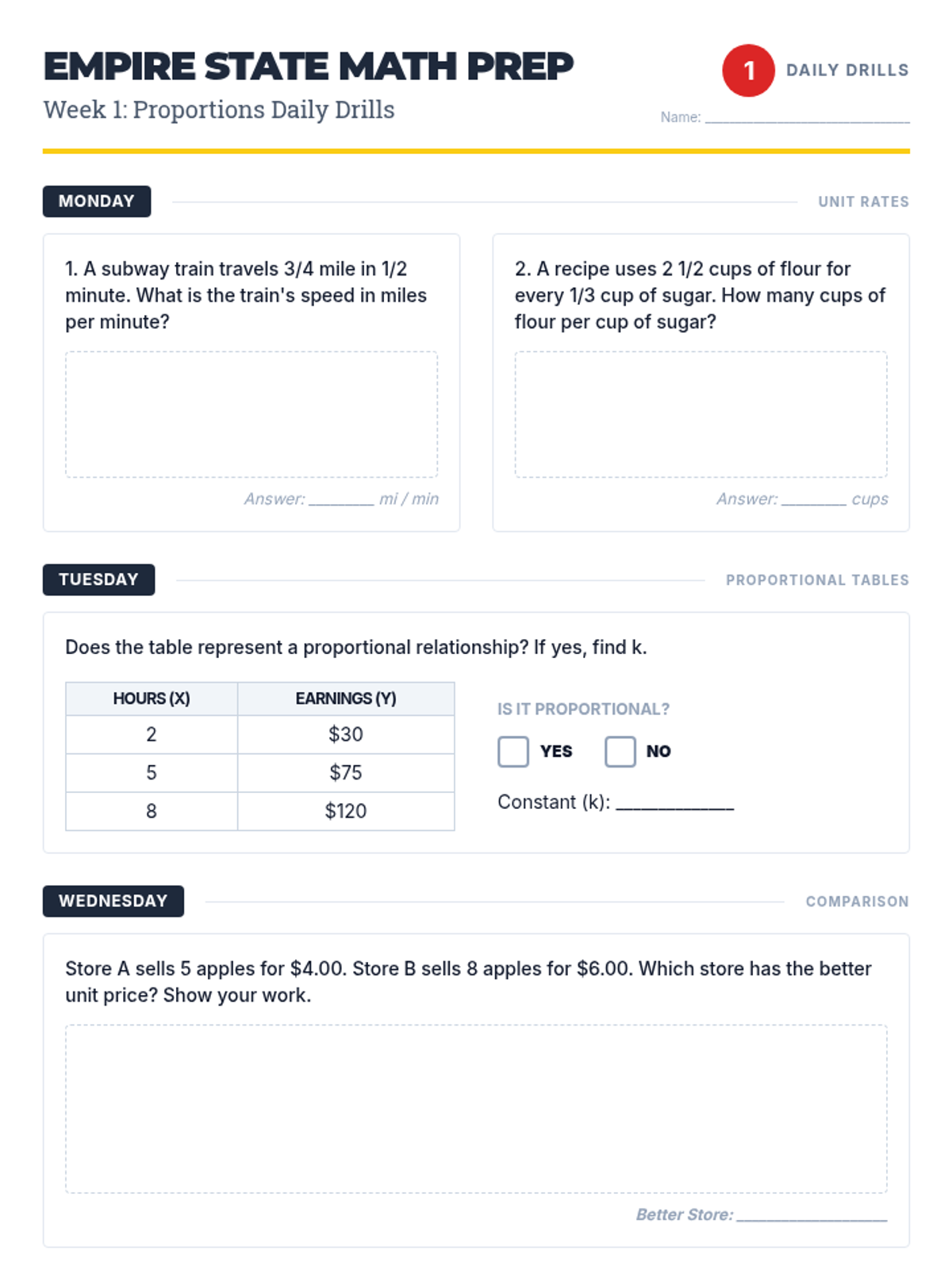
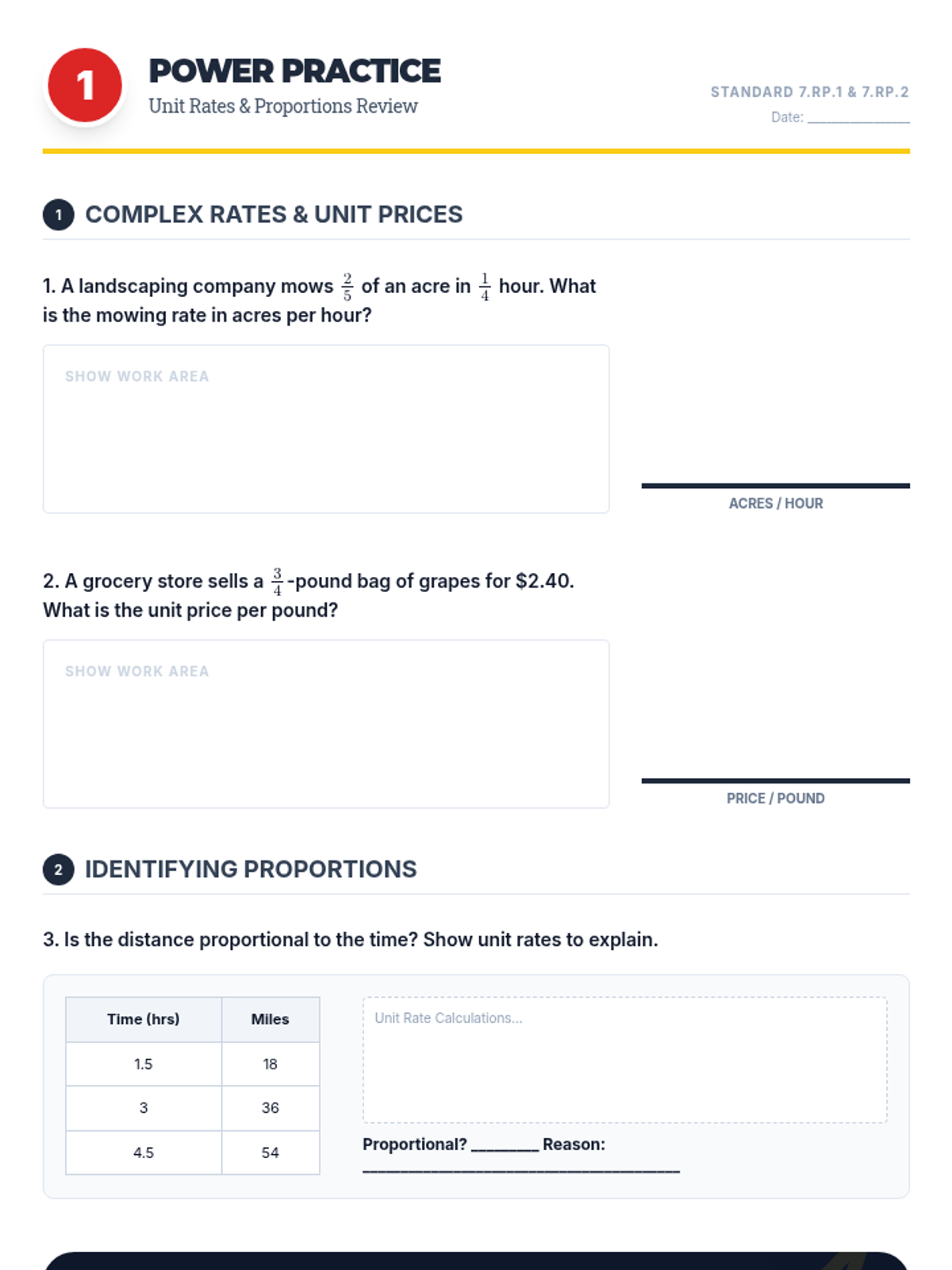
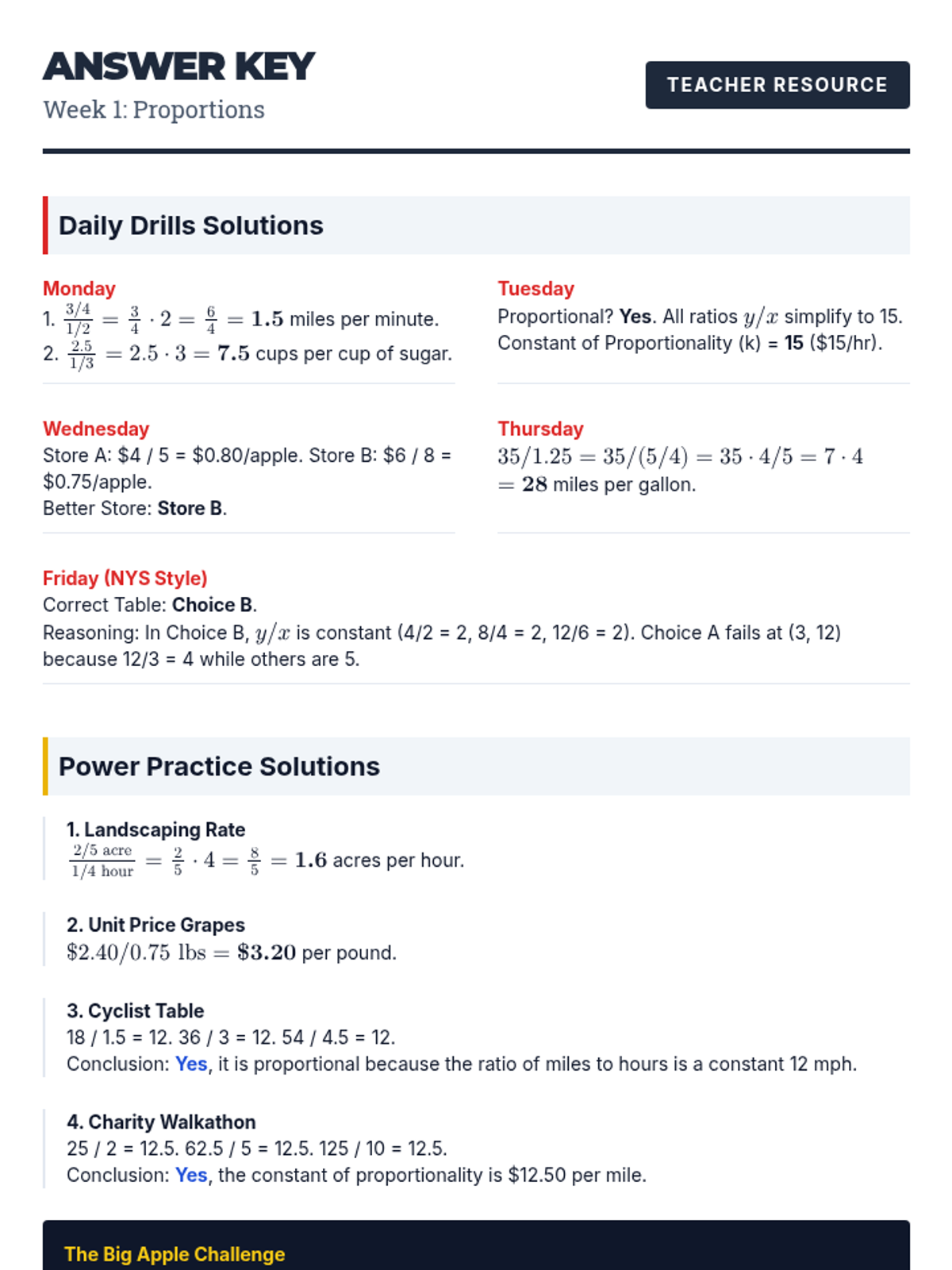
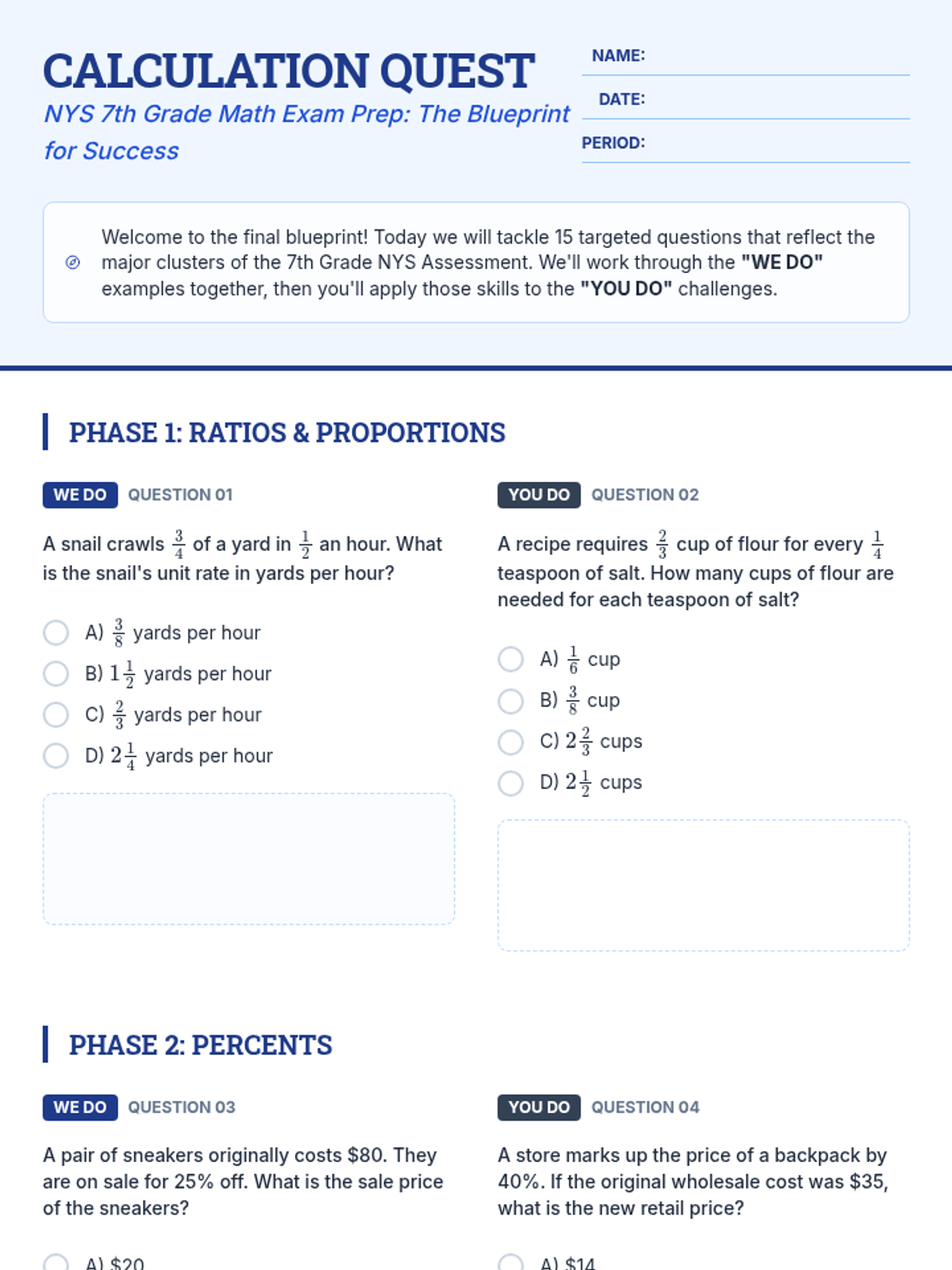
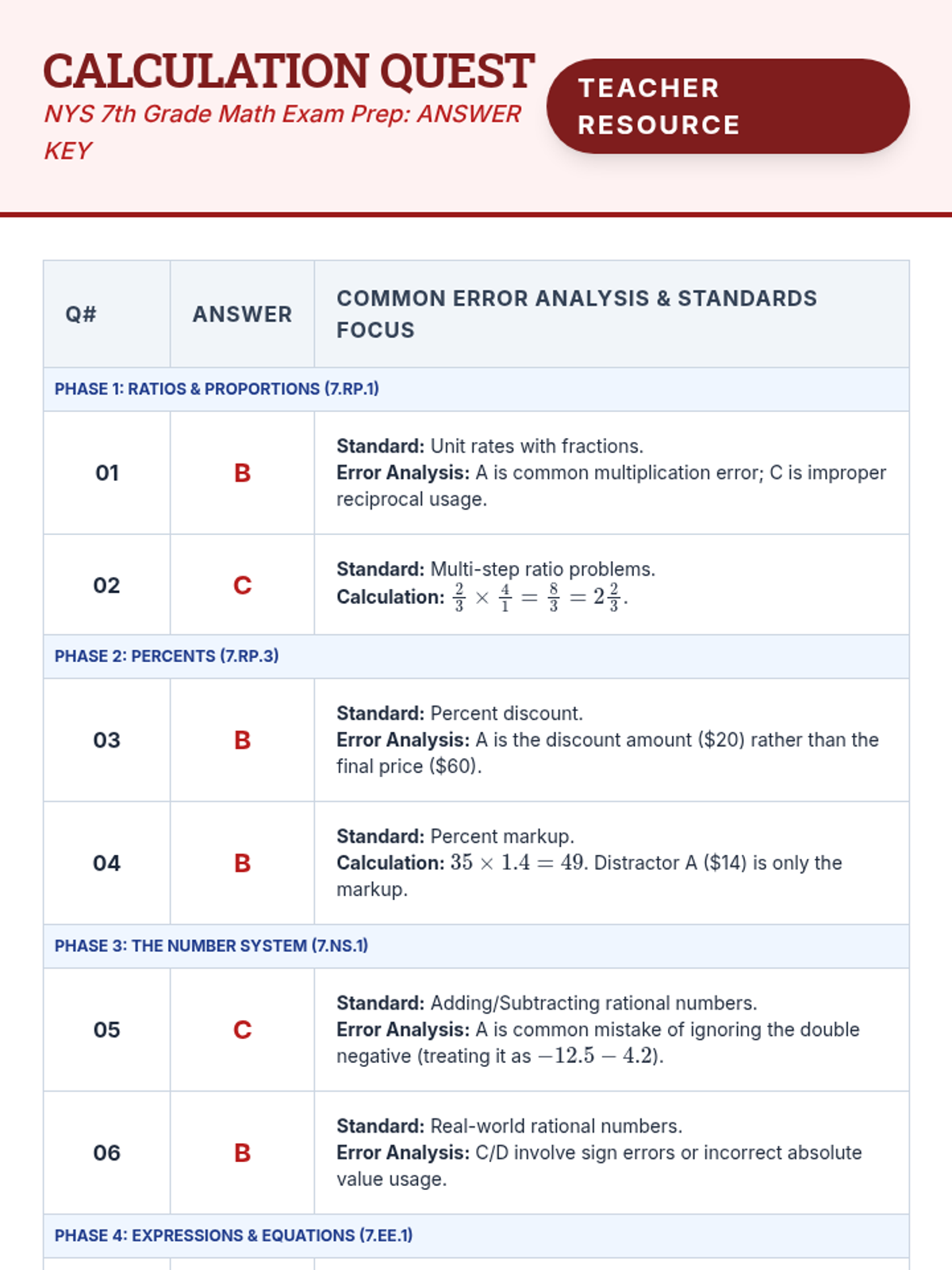
A 7-week math review sequence for 7th-grade students preparing for the NYS Math Assessment, covering proportional relationships, percents, algebraic expressions, inequalities, scale drawings, and statistics/probability.
A comprehensive unit on foundational geometry concepts, focusing on visualization, notation, and the vocabulary used to describe the spatial world.
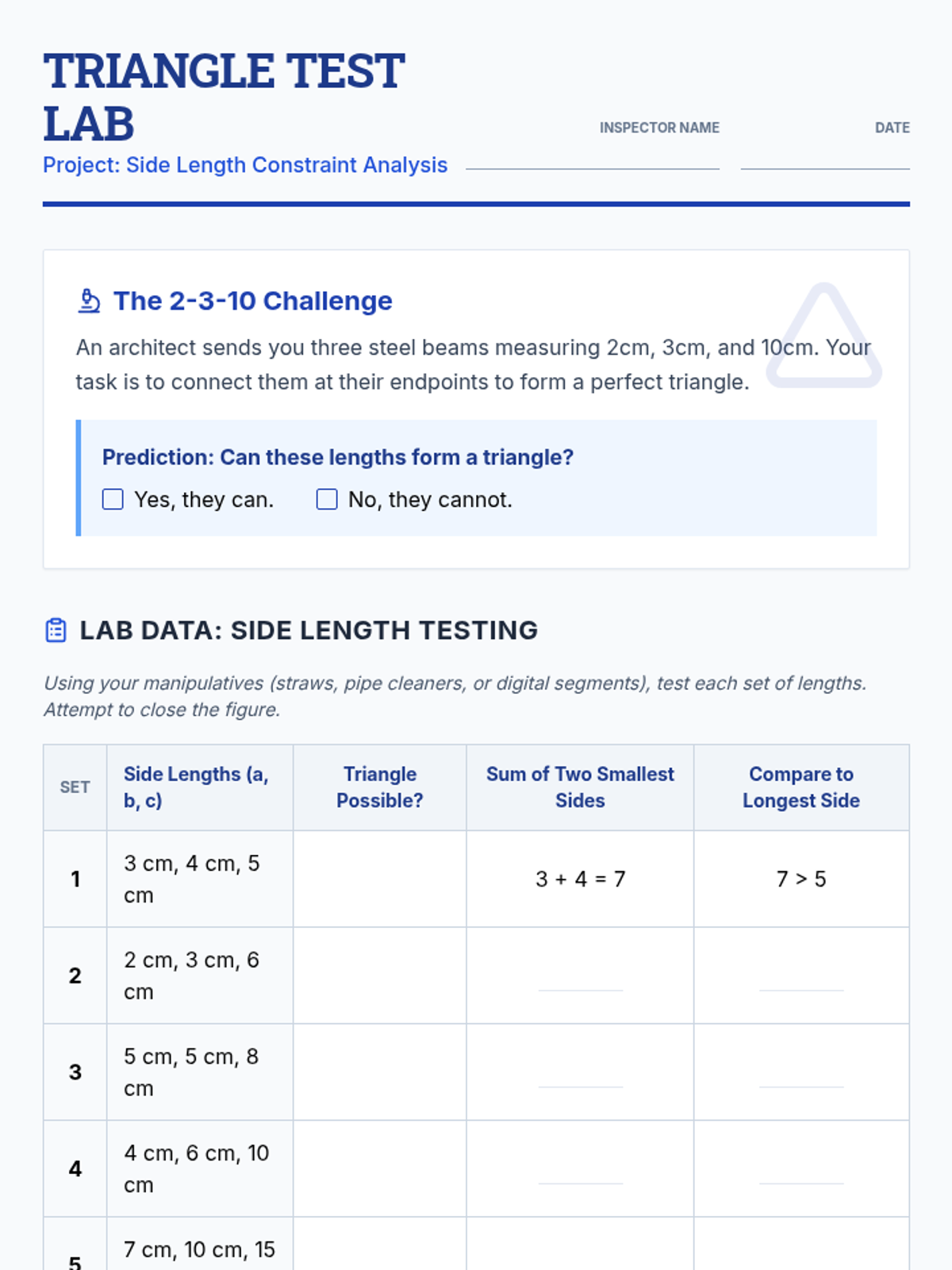
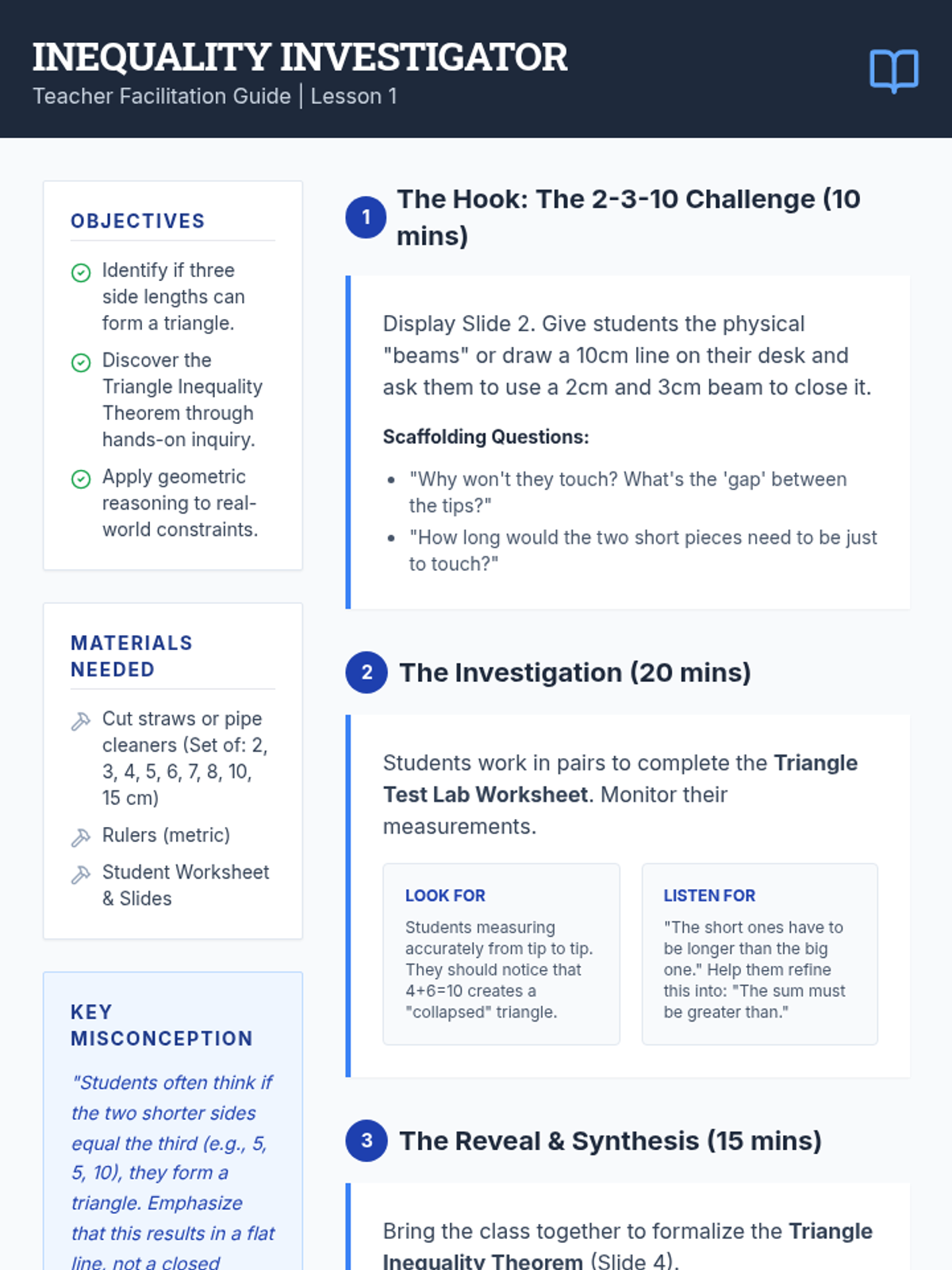
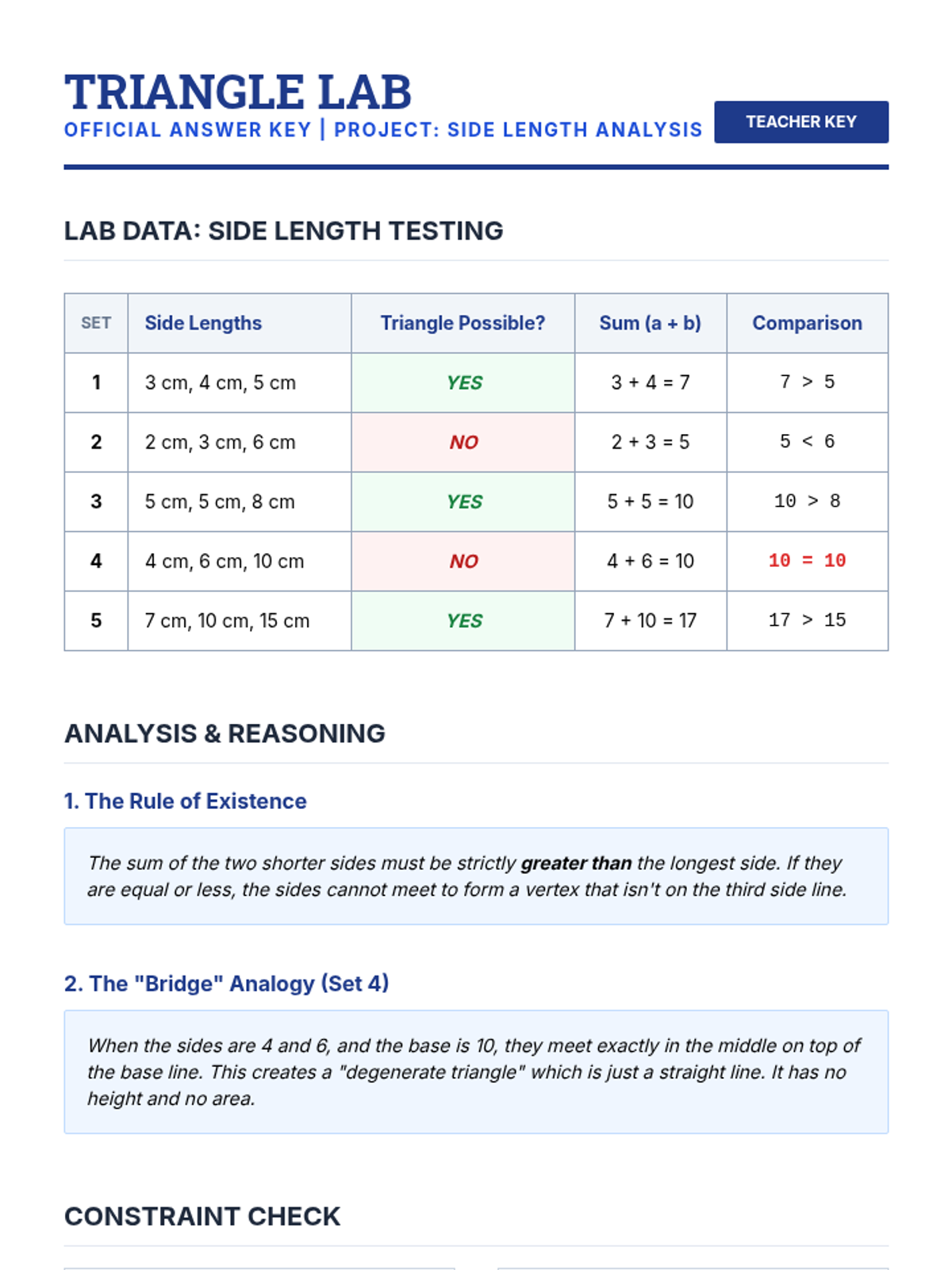
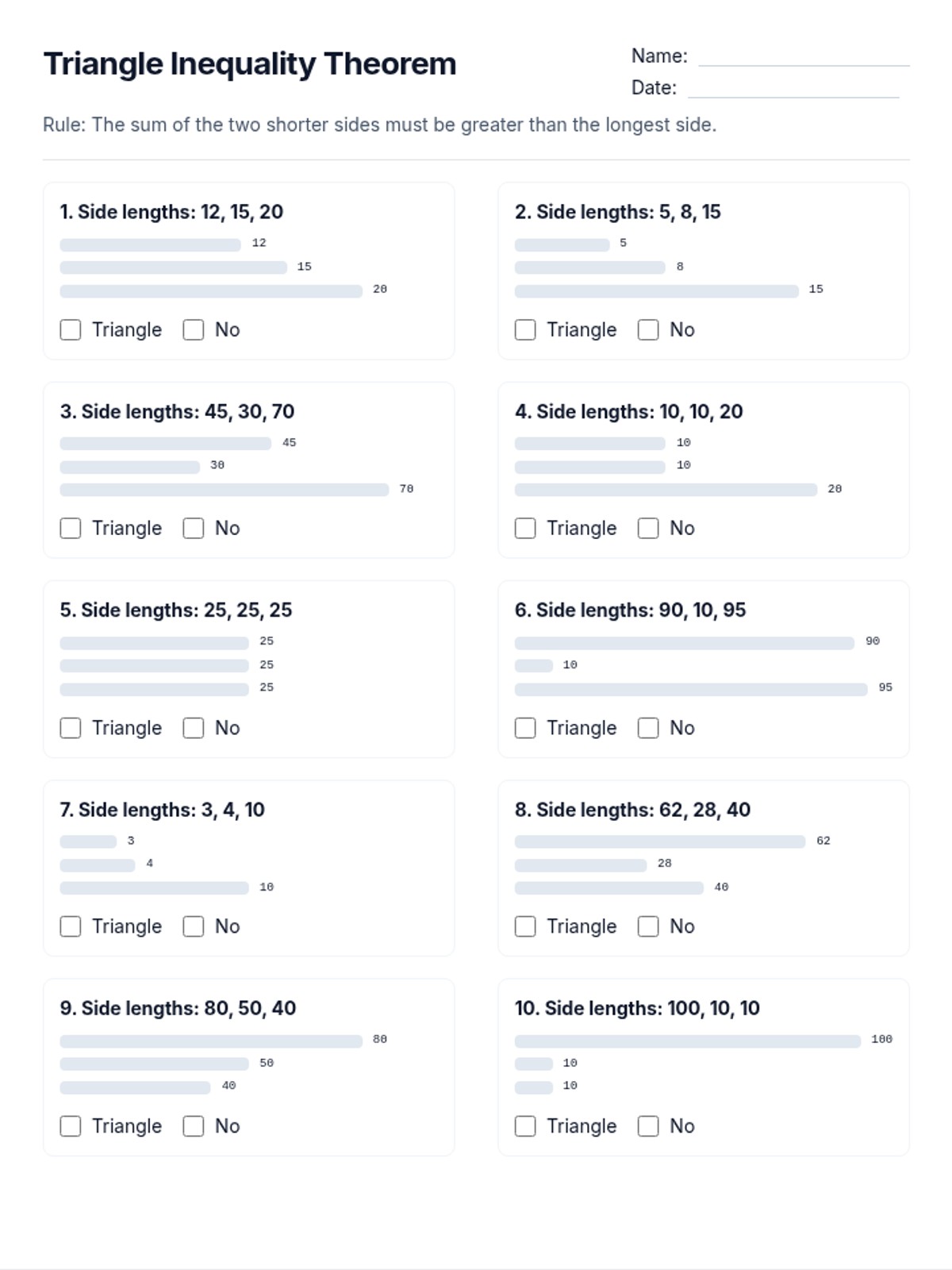
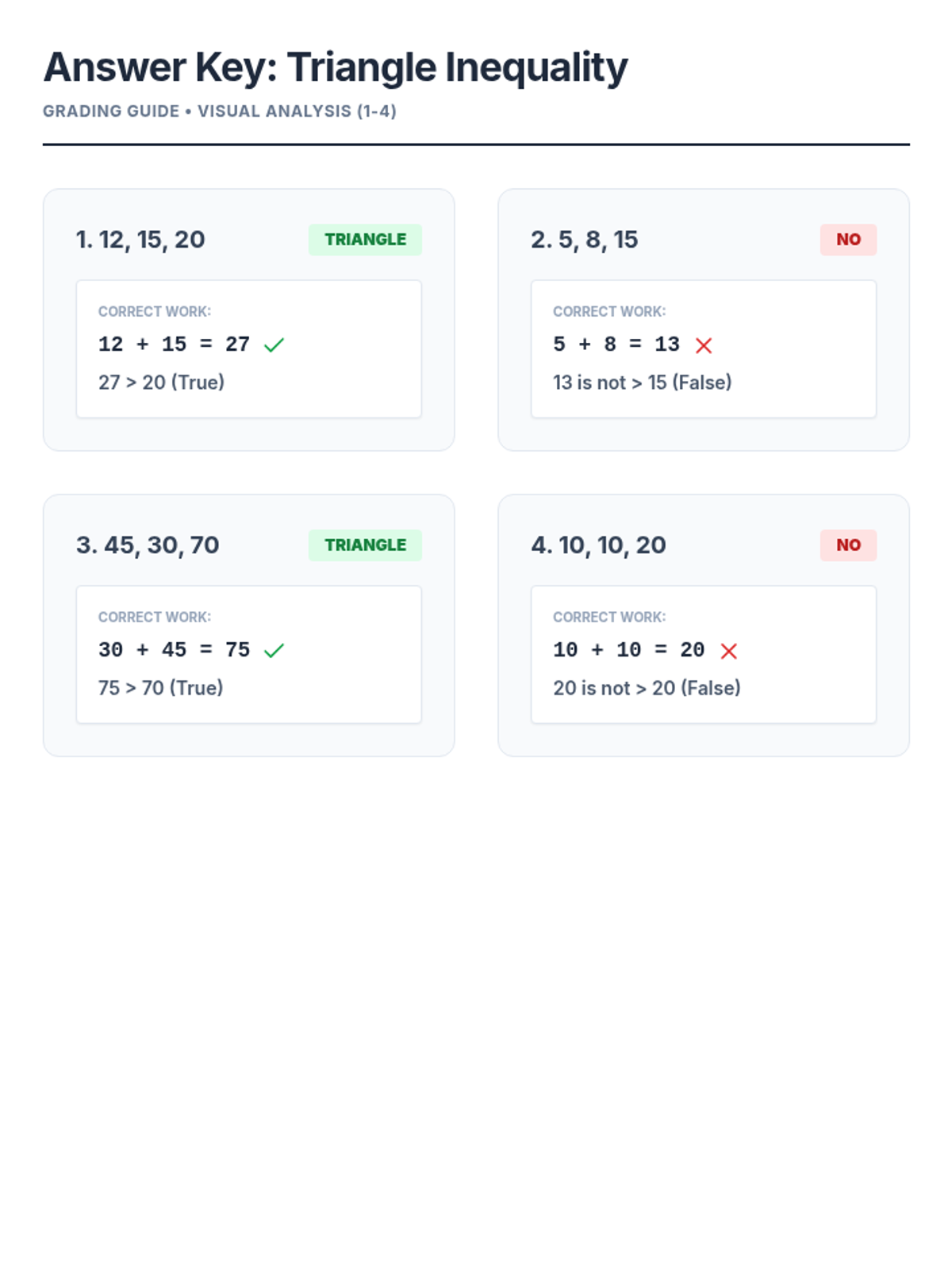
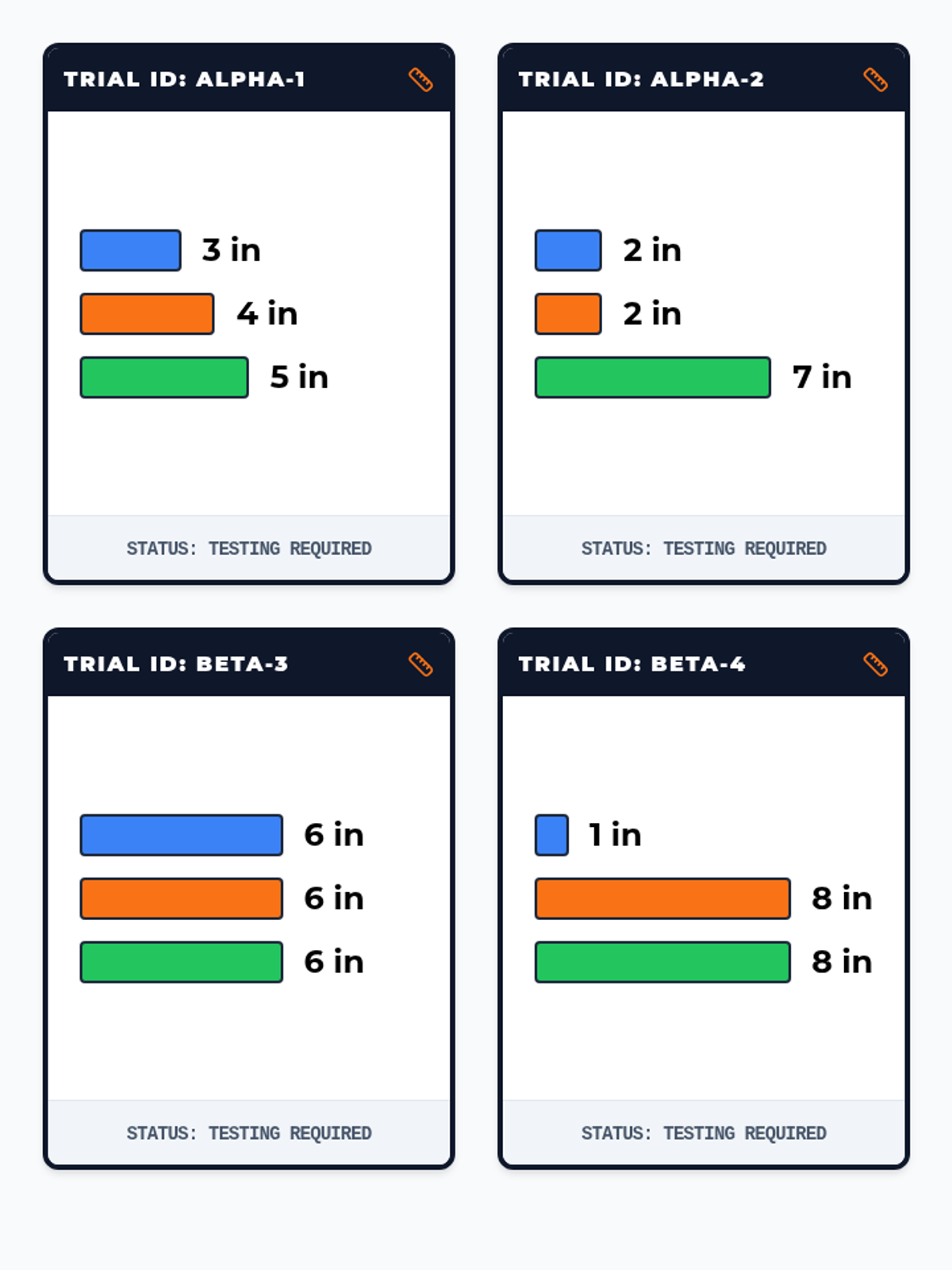
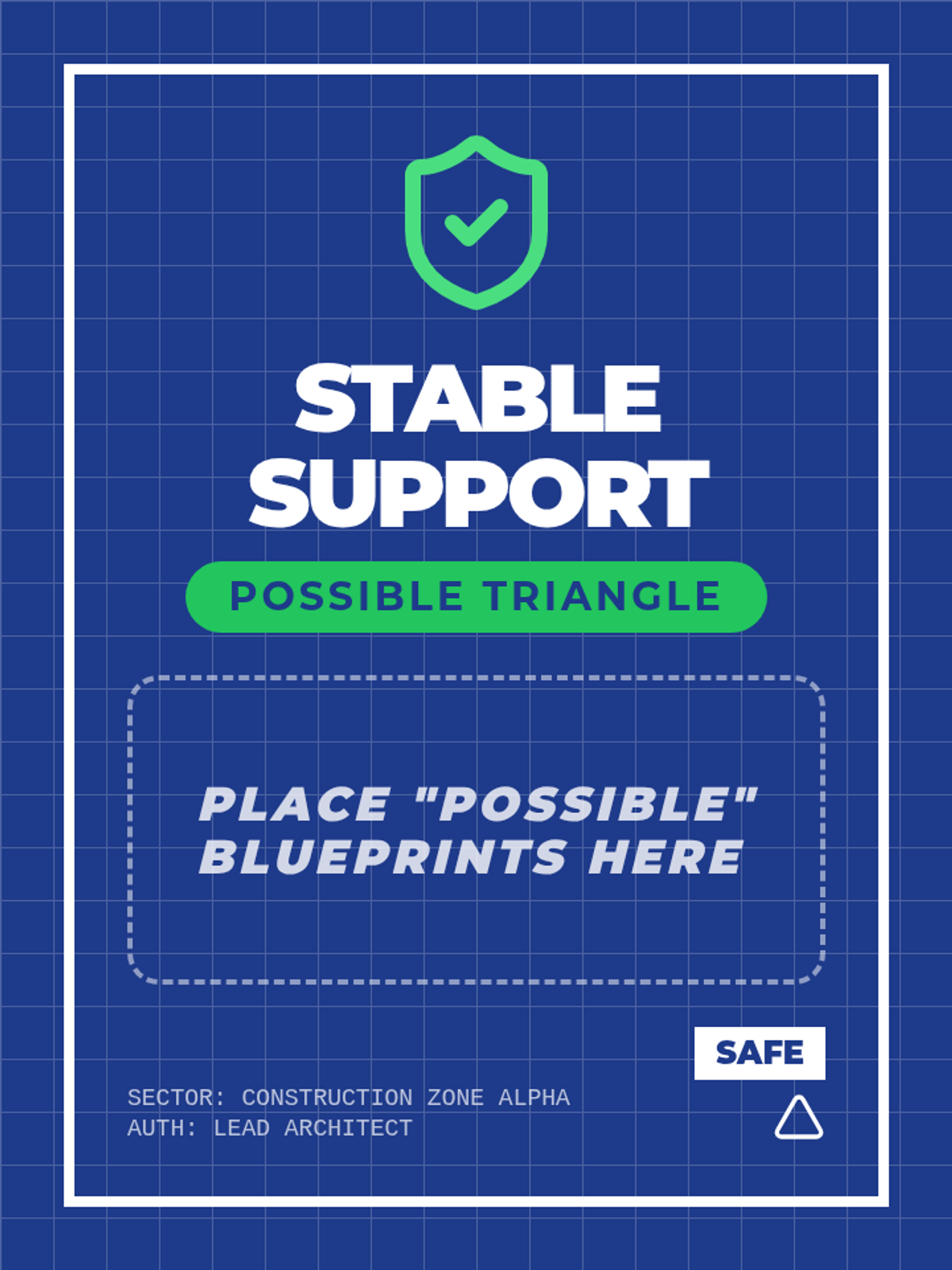
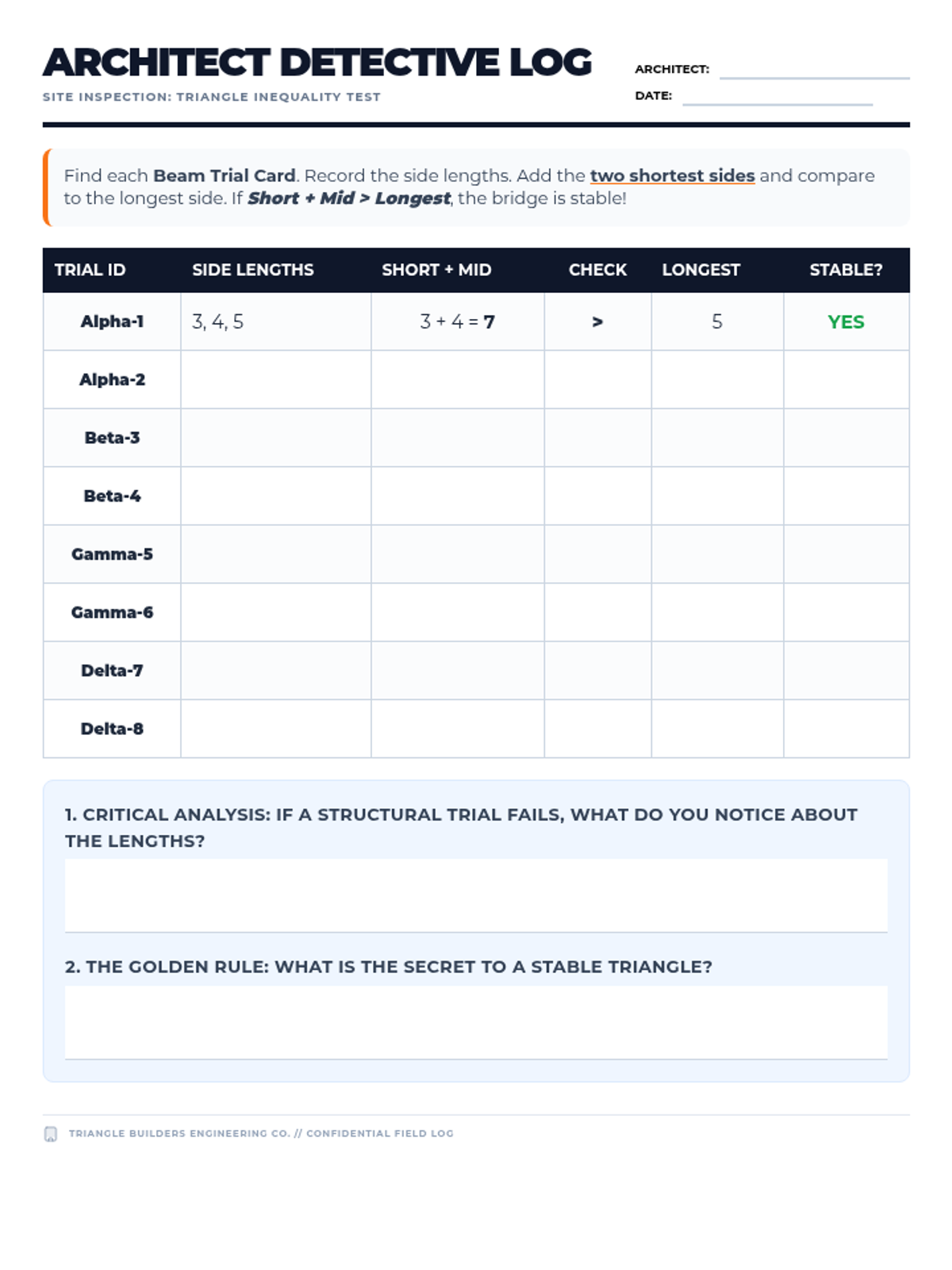
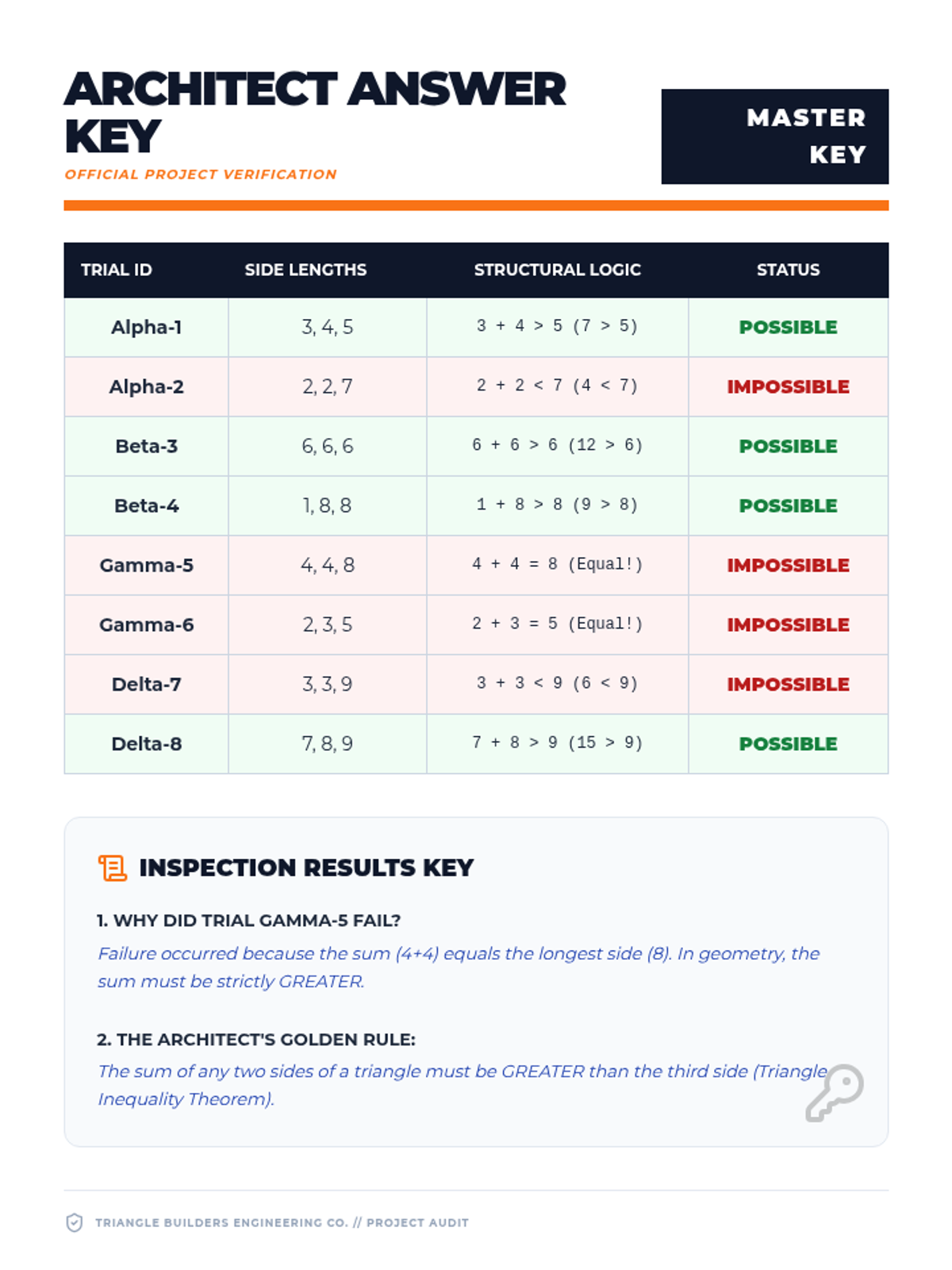
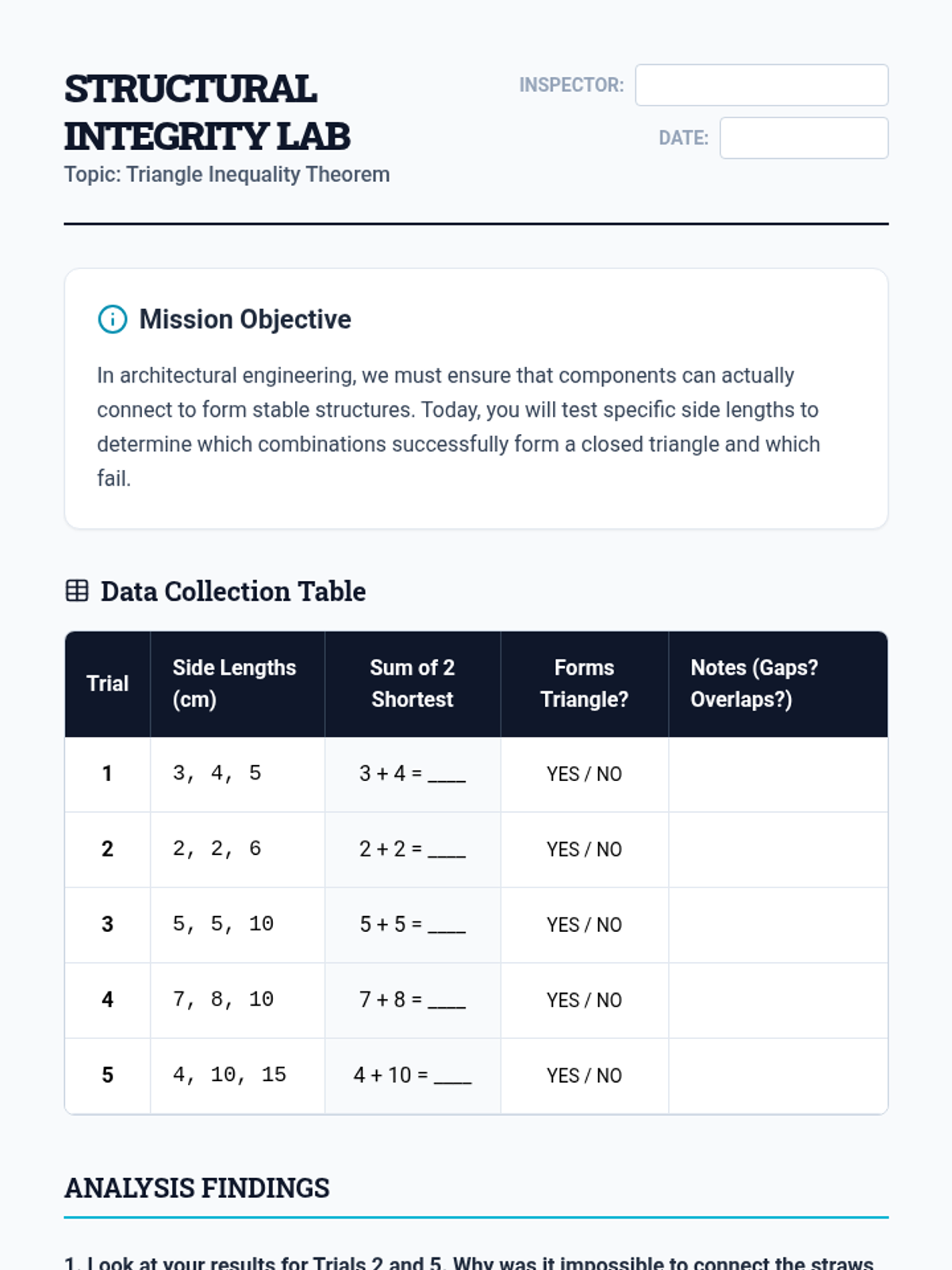
A unit on the properties of triangles, specifically focusing on the Triangle Inequality Theorem and how side lengths determine the possibility of forming a triangle.
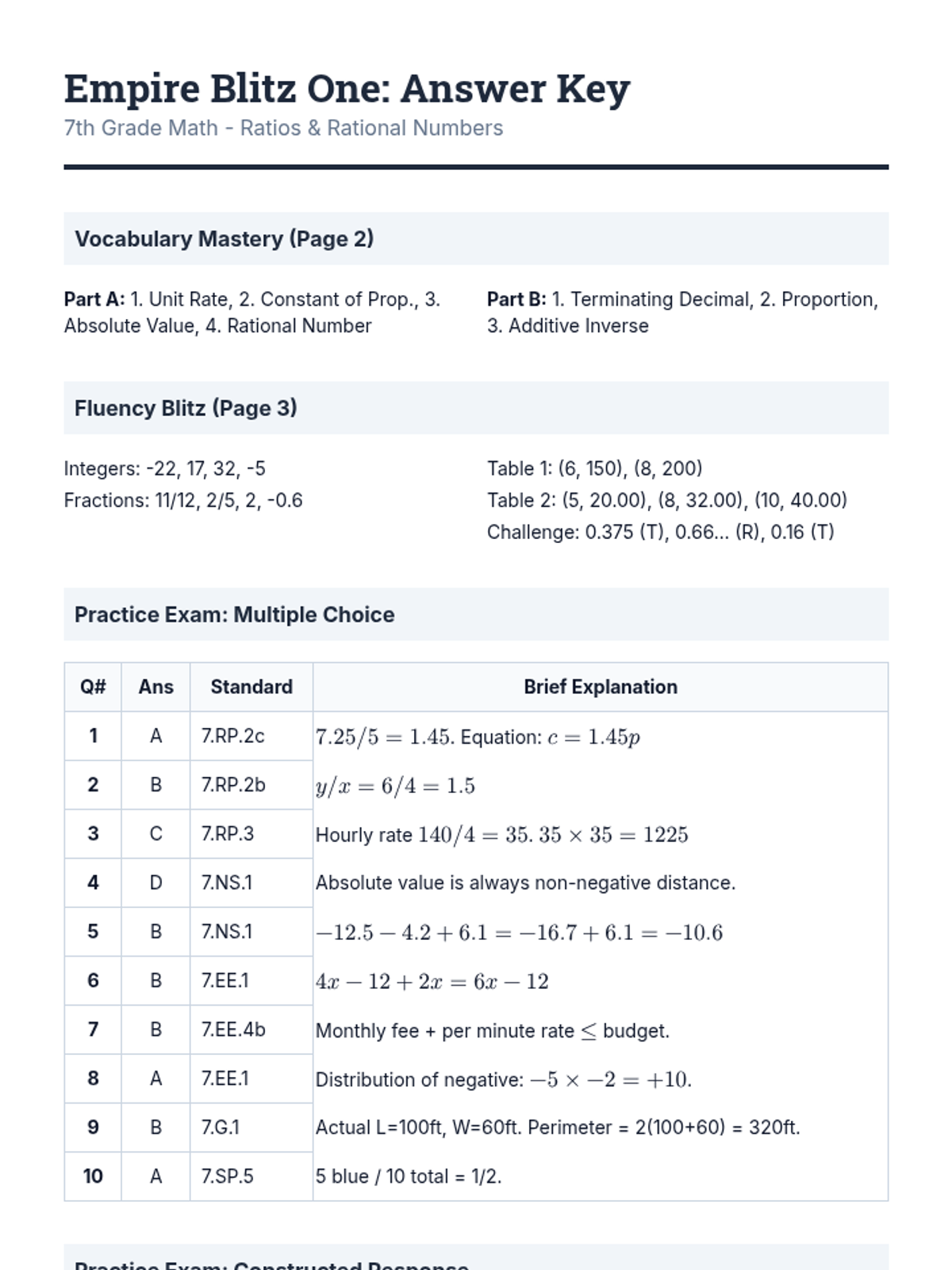
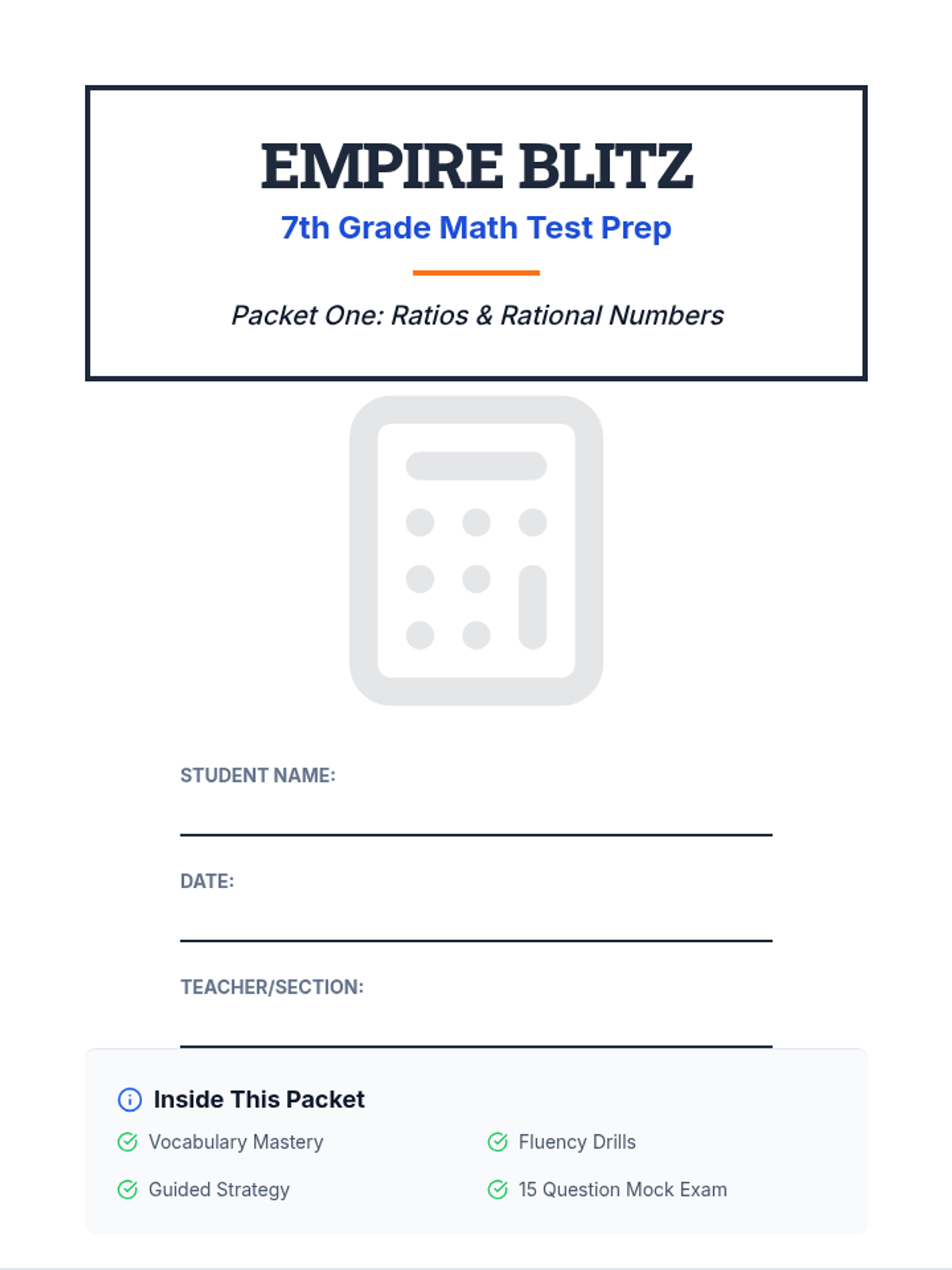
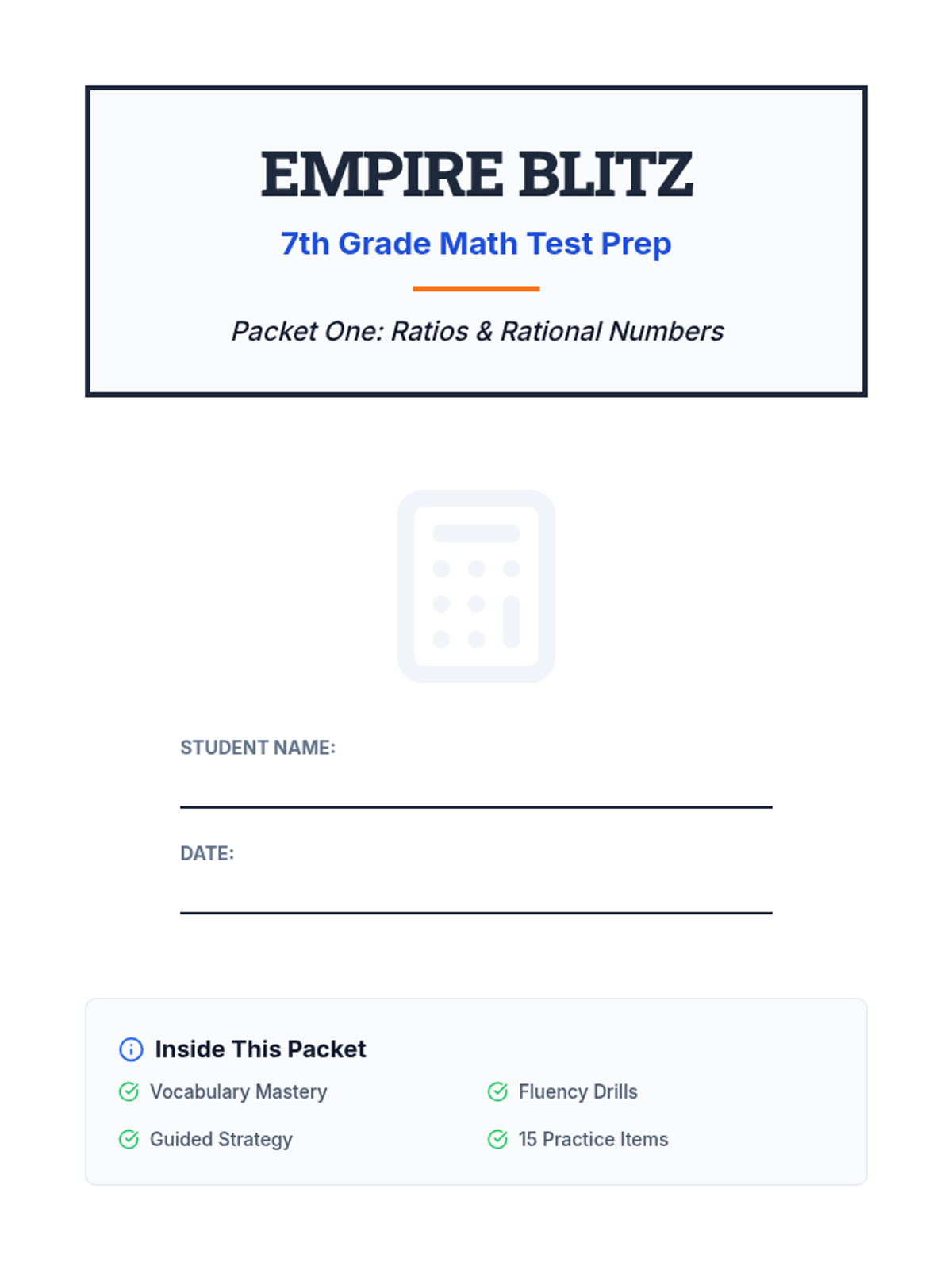
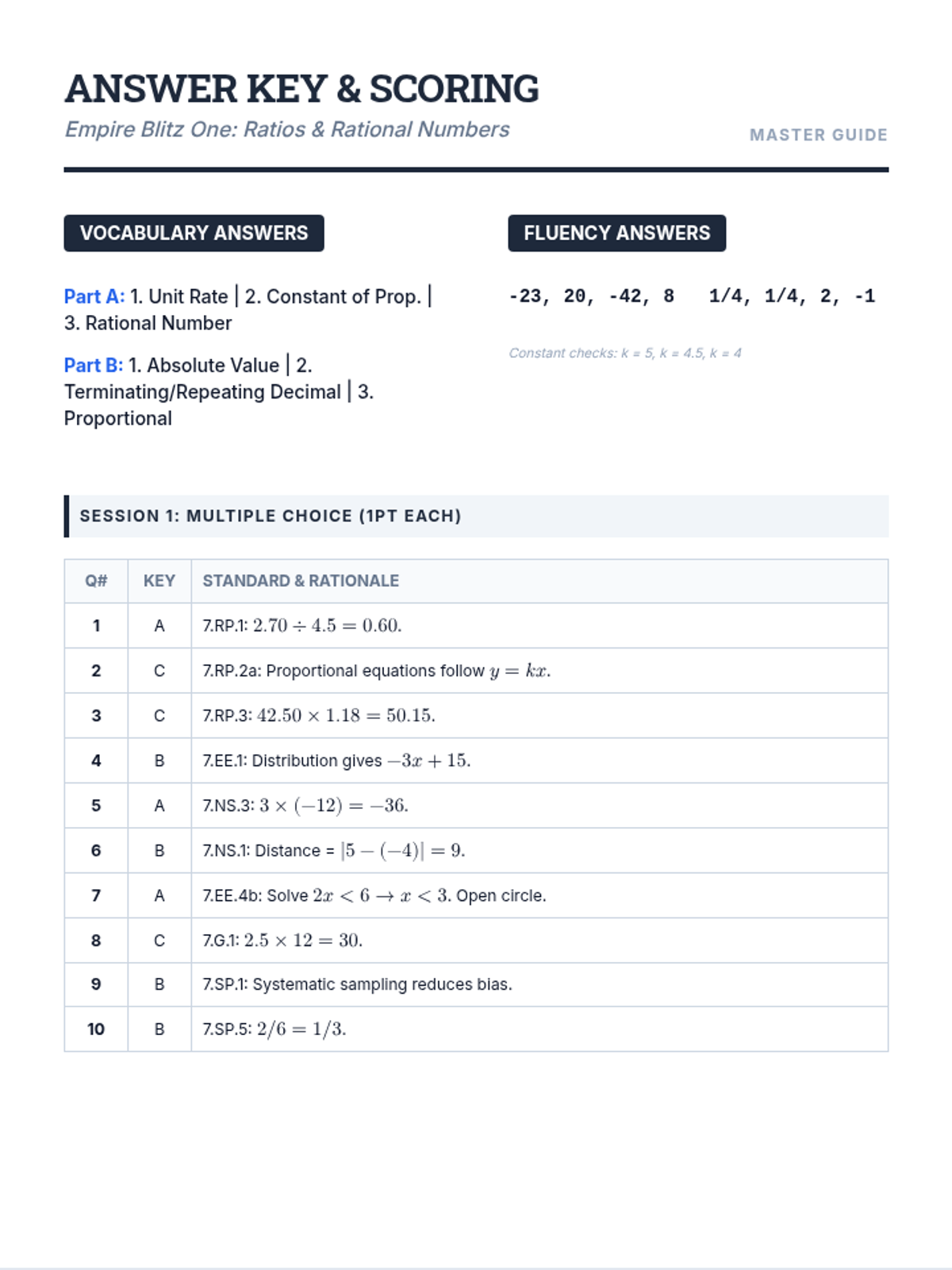
A comprehensive 3-packet New York State test prep series for 7th grade math, covering all major domains including Ratios, Number Systems, Expressions, Equations, Geometry, and Statistics. Each packet includes vocabulary, fluency, guided practice, and a 15-question mock exam.
A series of lessons focused on fundamental geometric properties and spatial reasoning through hands-on construction and architectural themes.
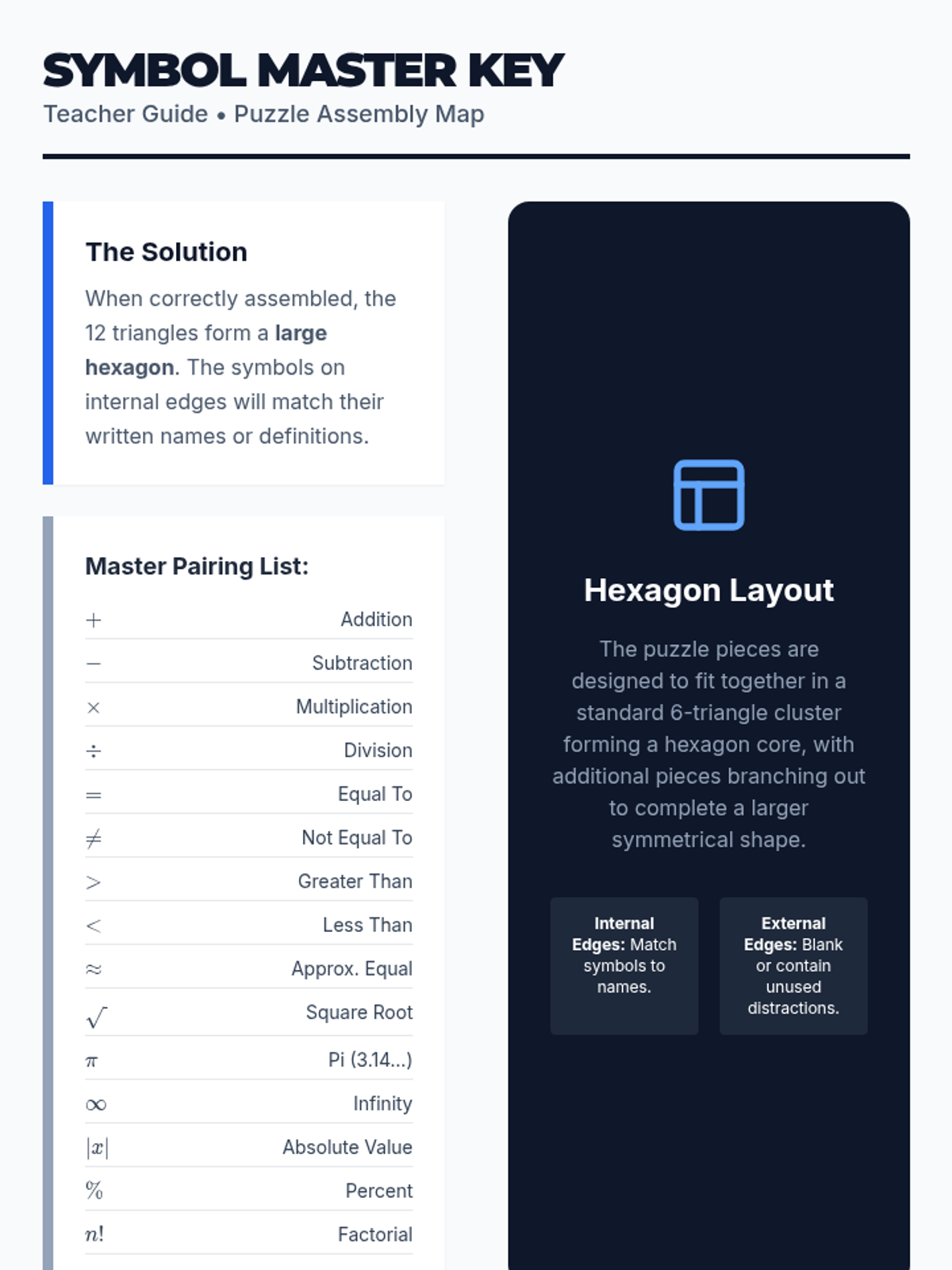
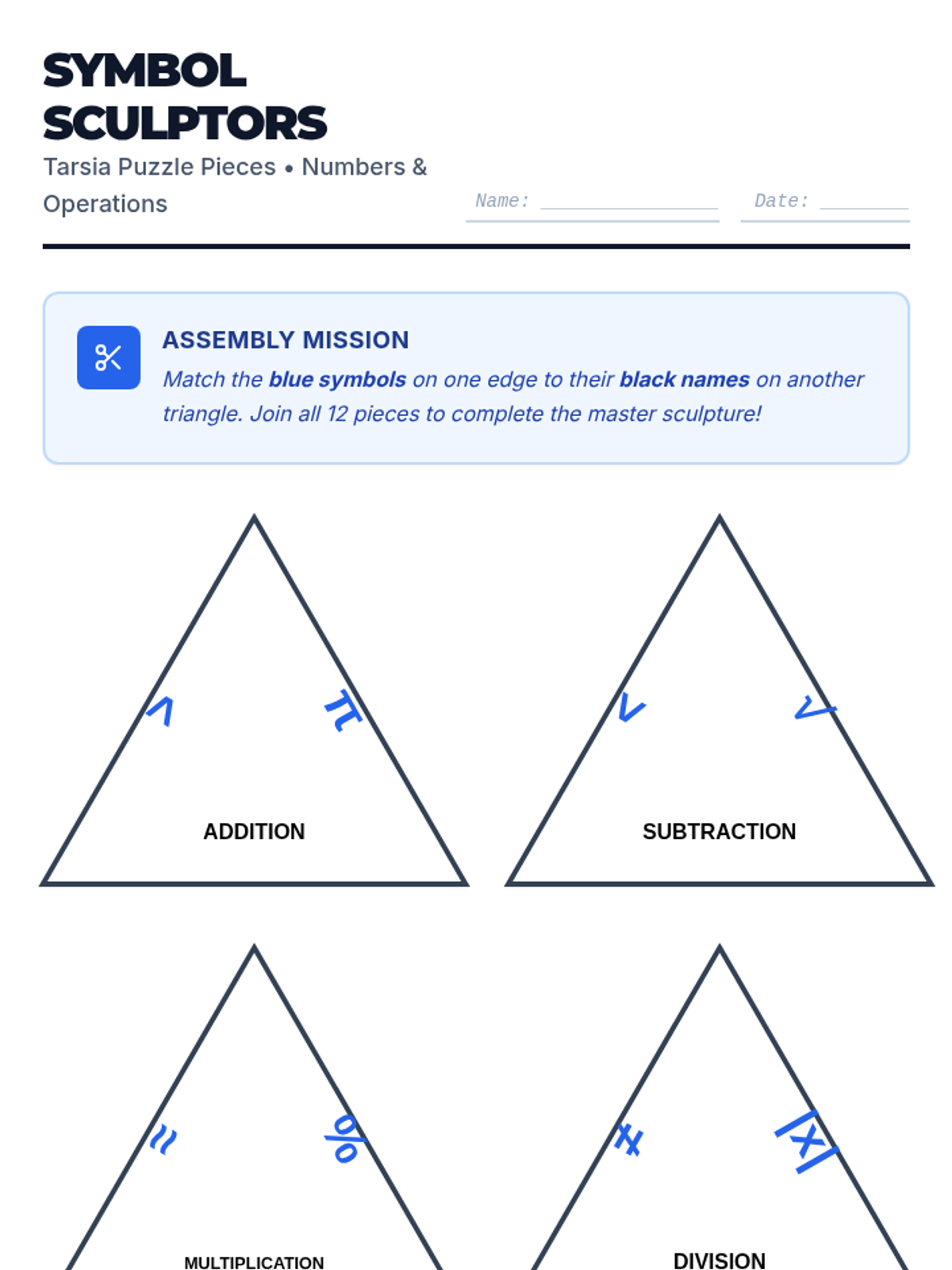
A series of lessons designed to build fluency in mathematical notation and operations through visual and tactile learning.
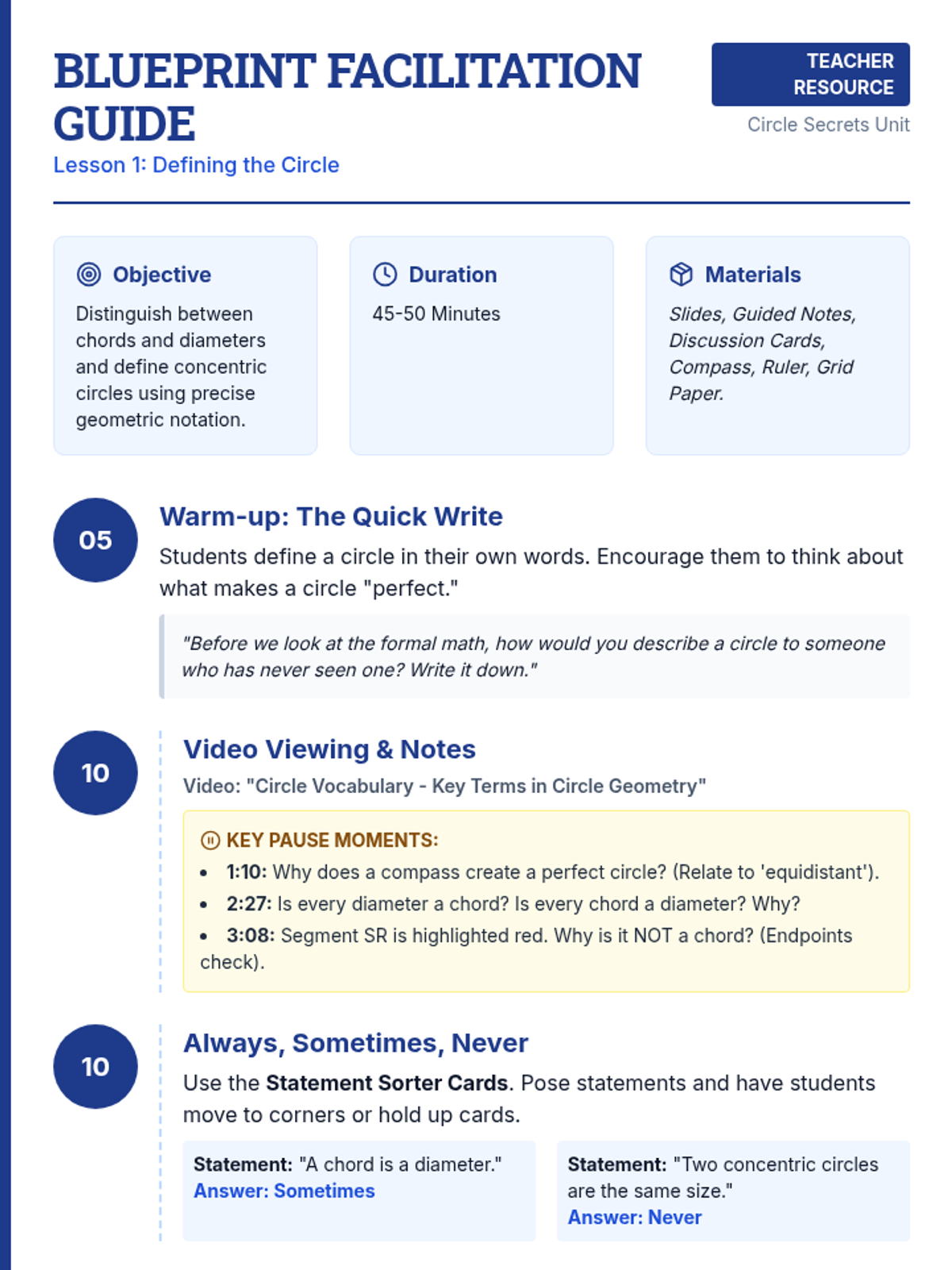
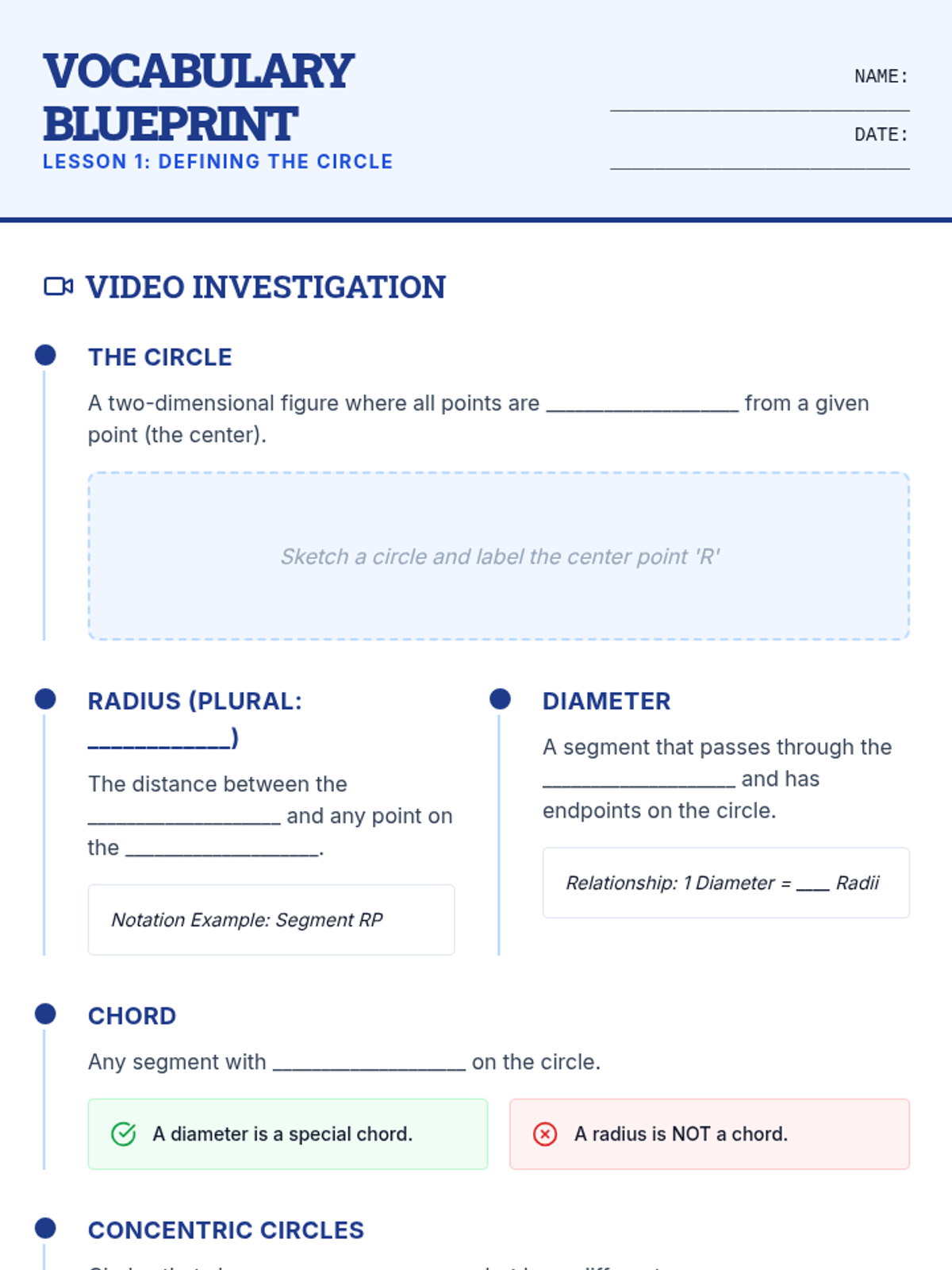
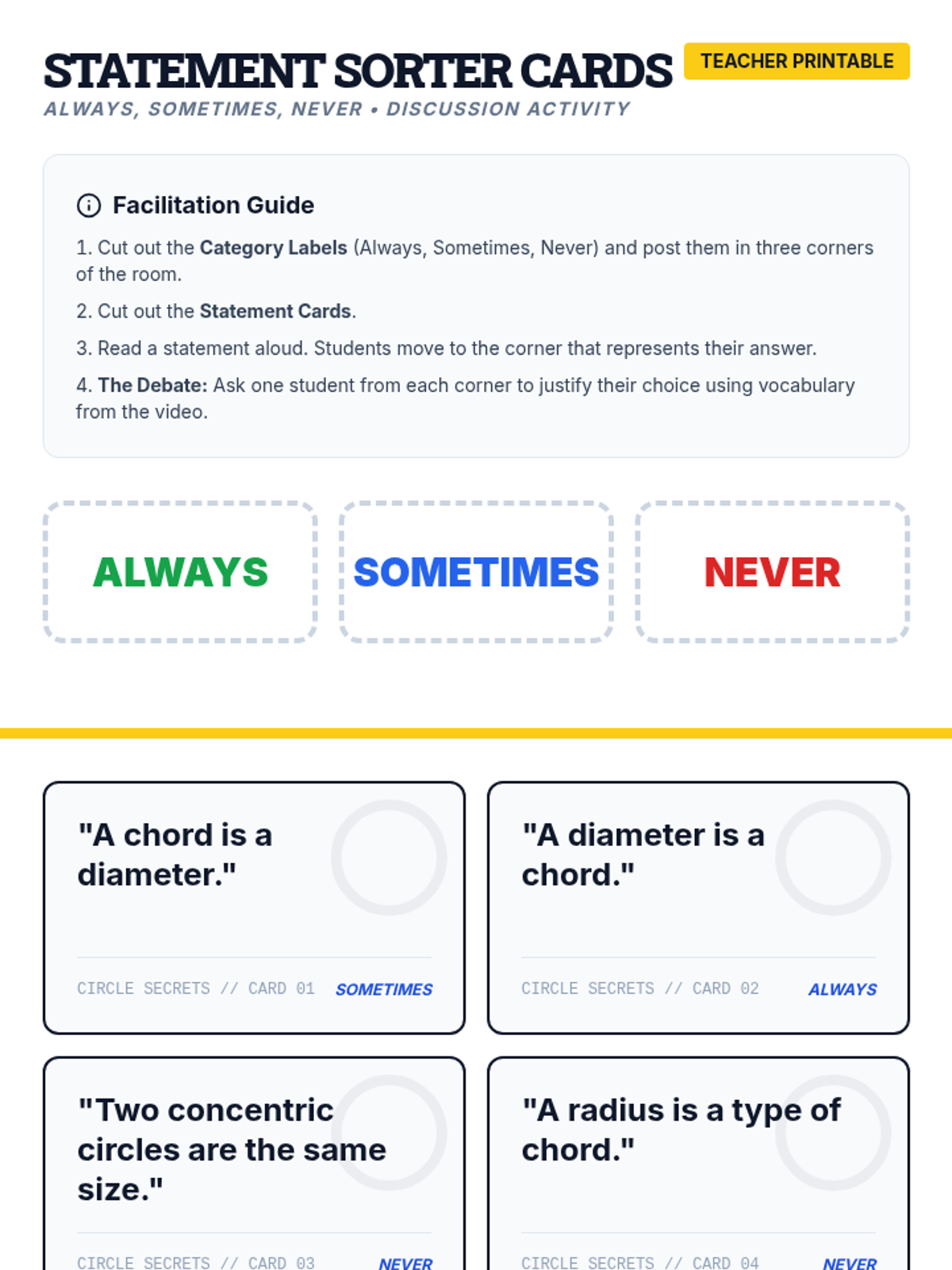
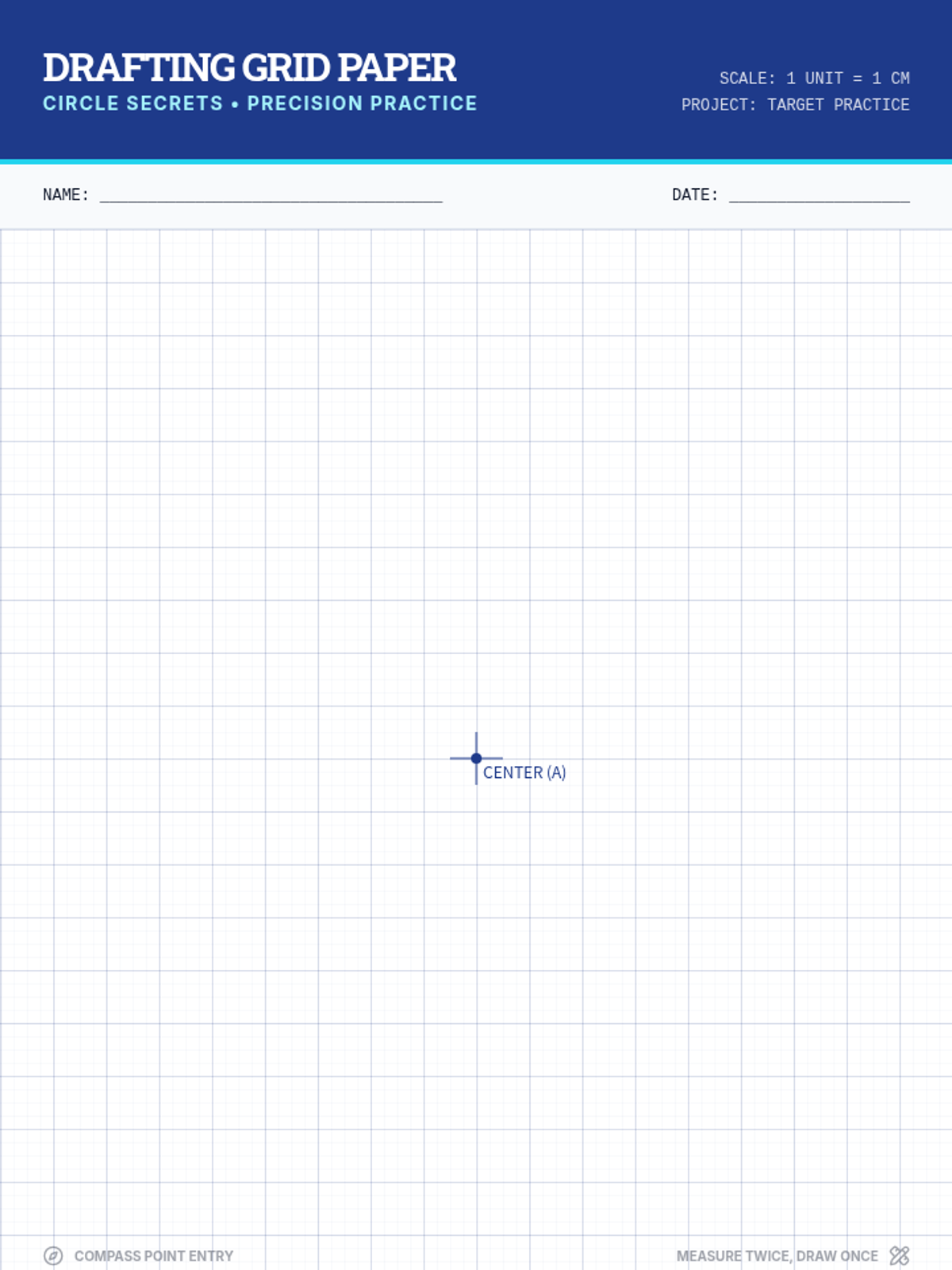
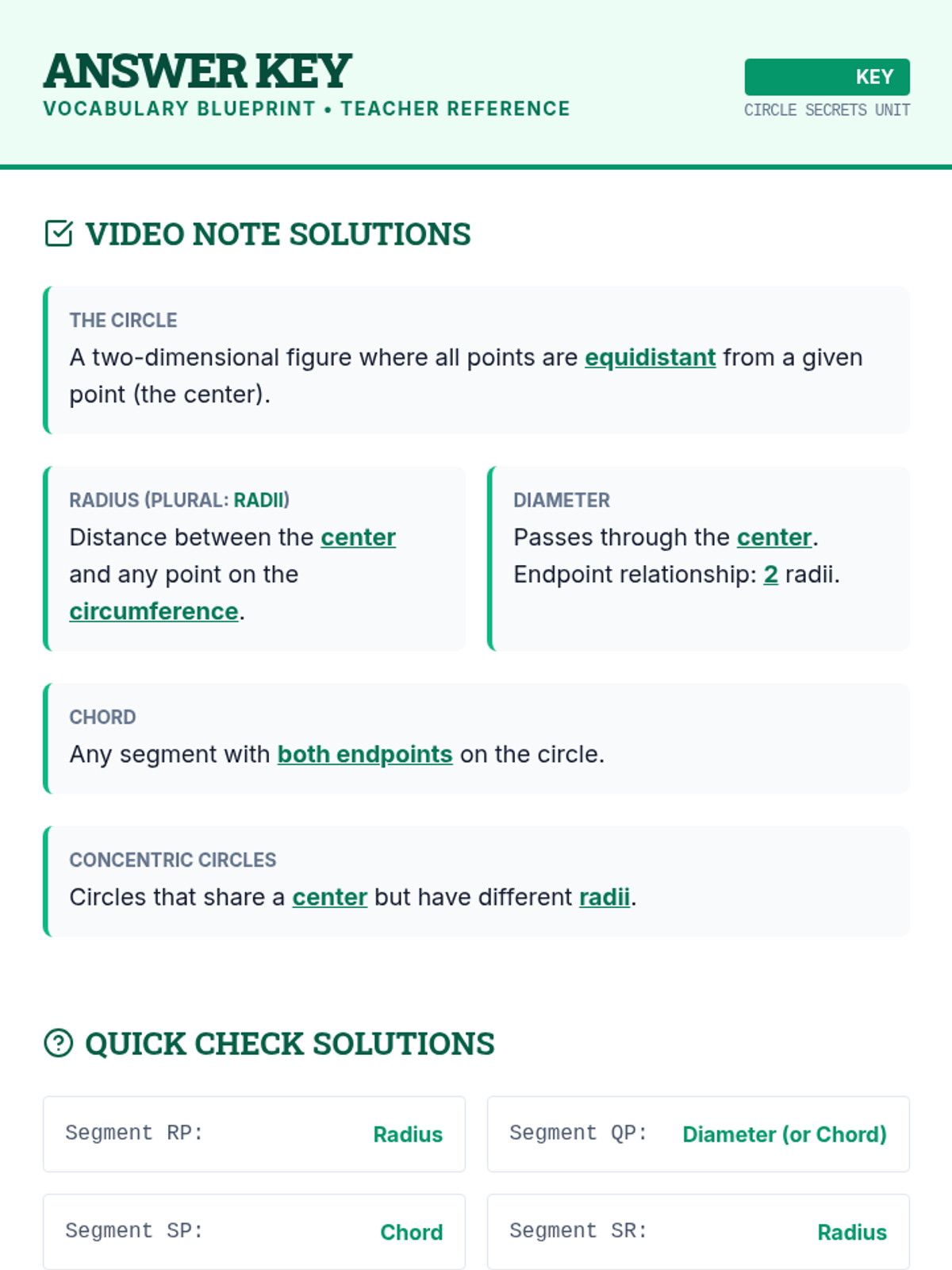
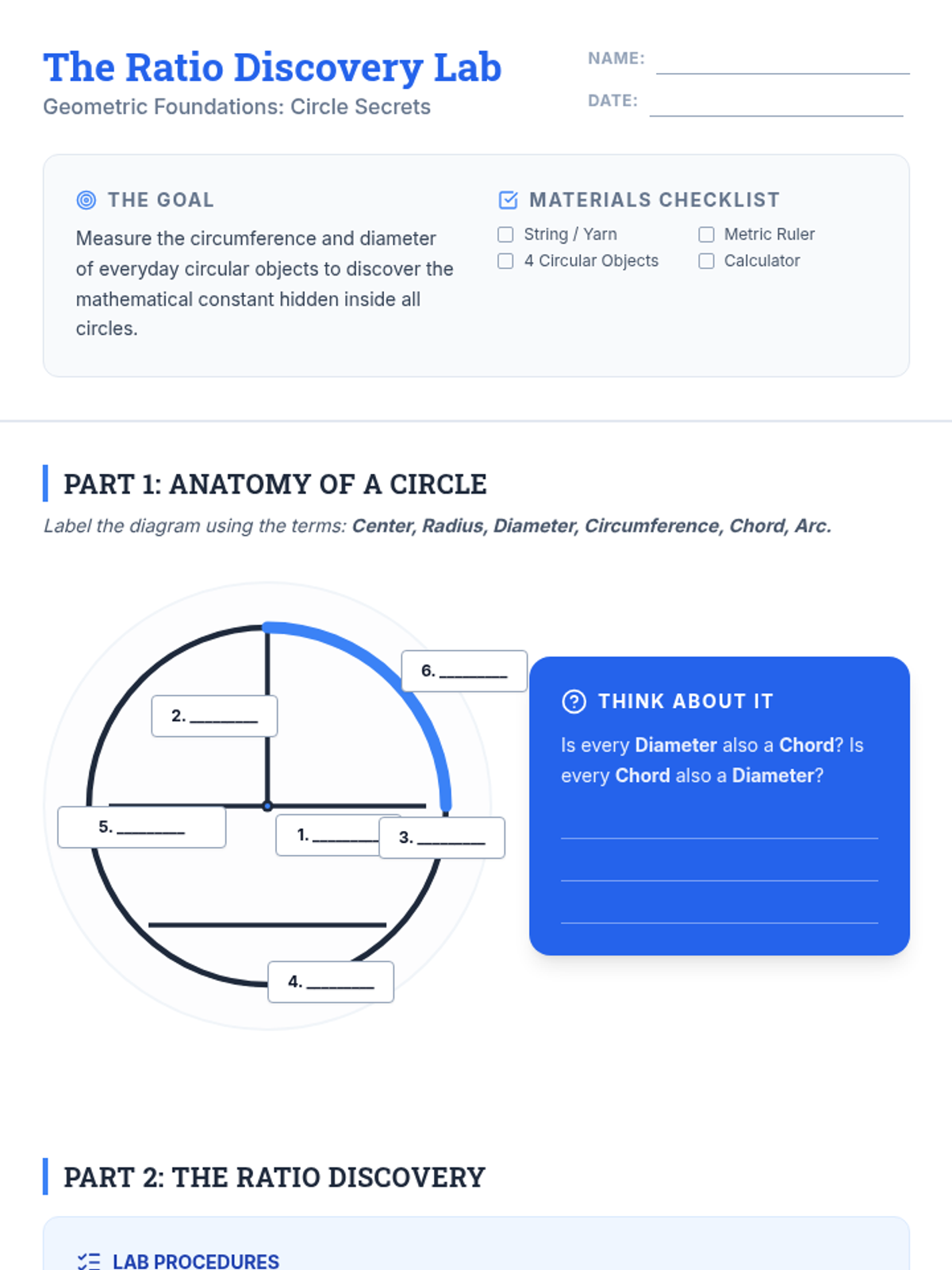
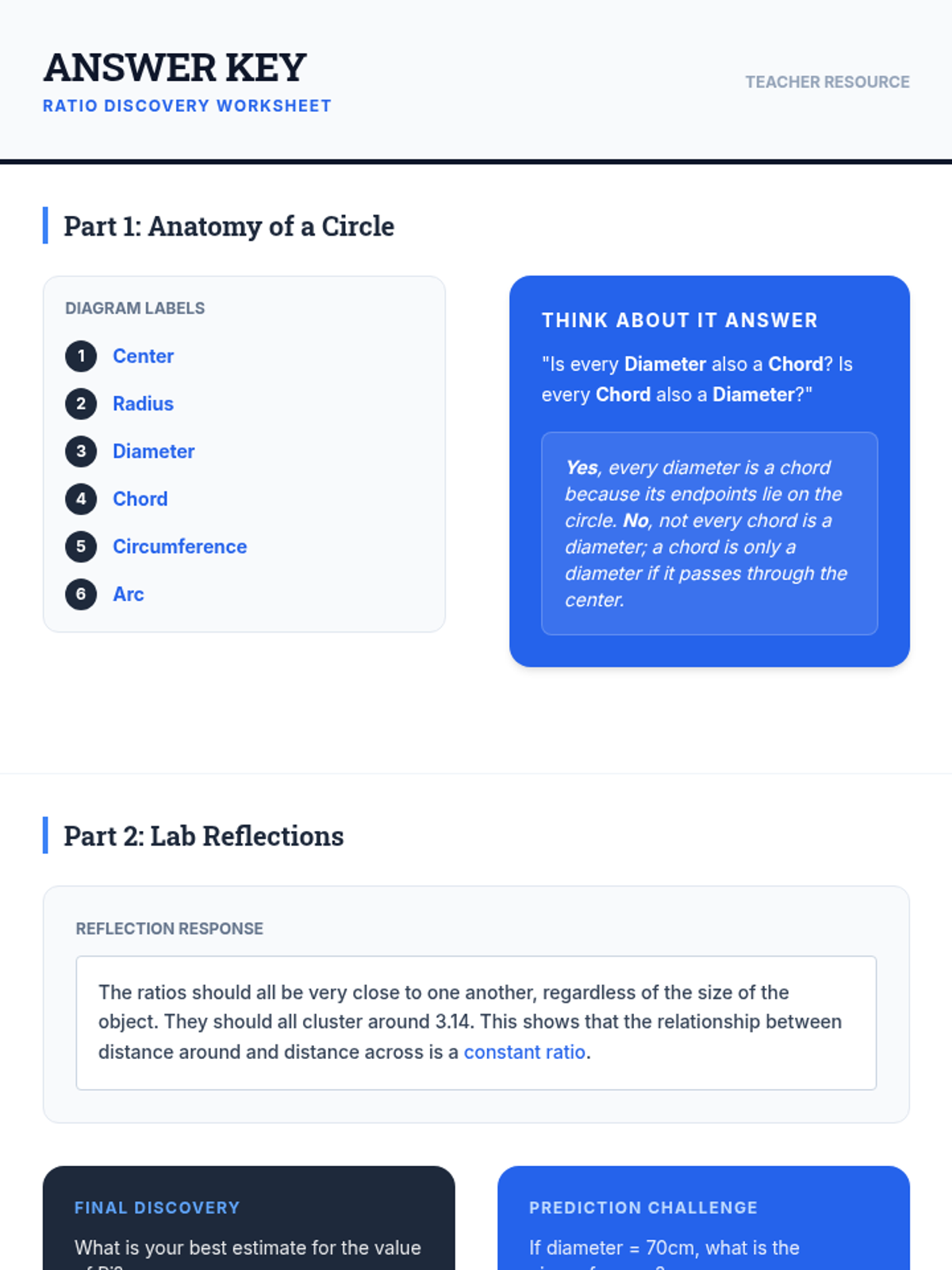
A comprehensive unit exploring circle geometry, vocabulary, arcs, angles, and properties through visual and hands-on investigation.
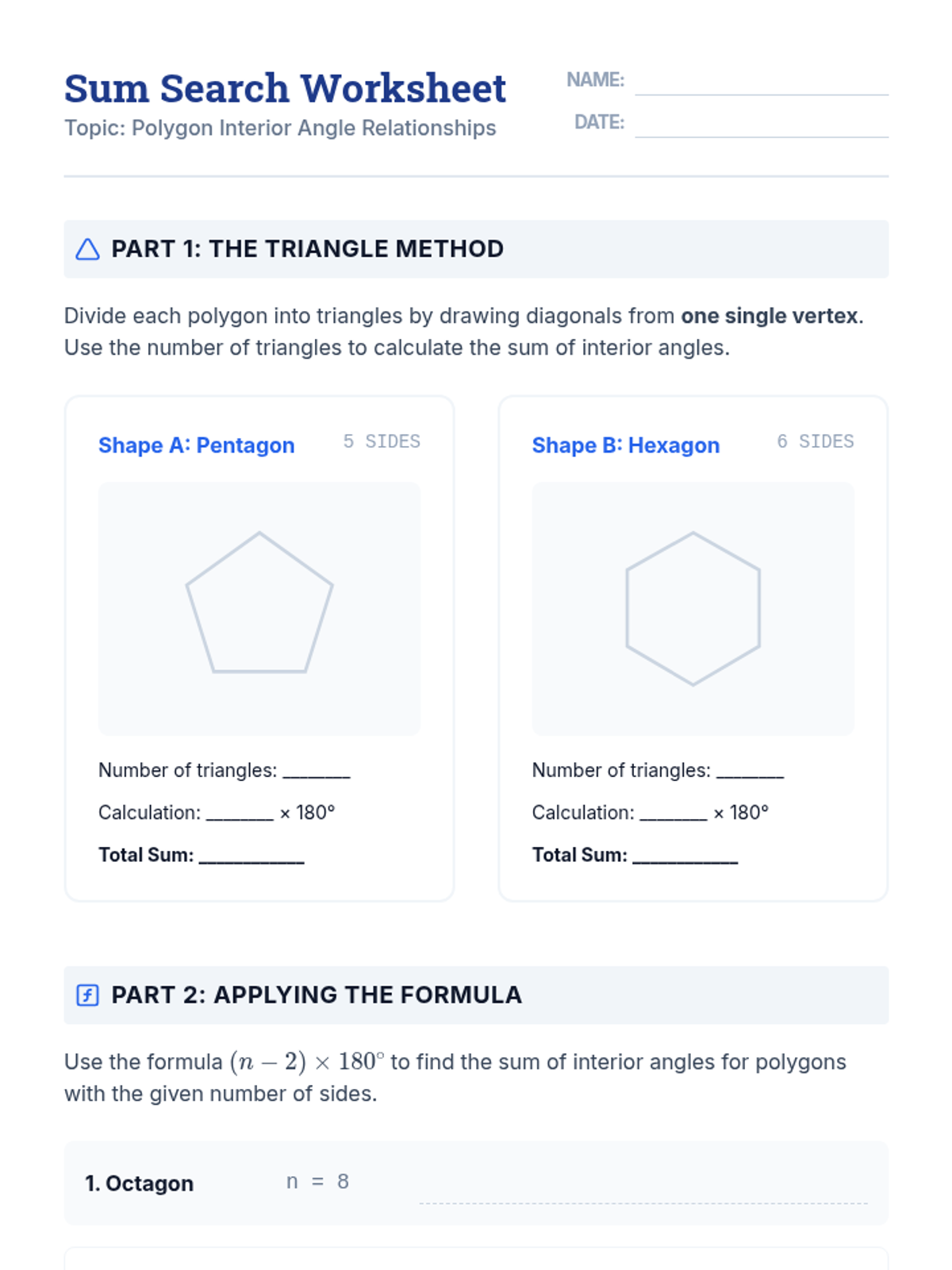
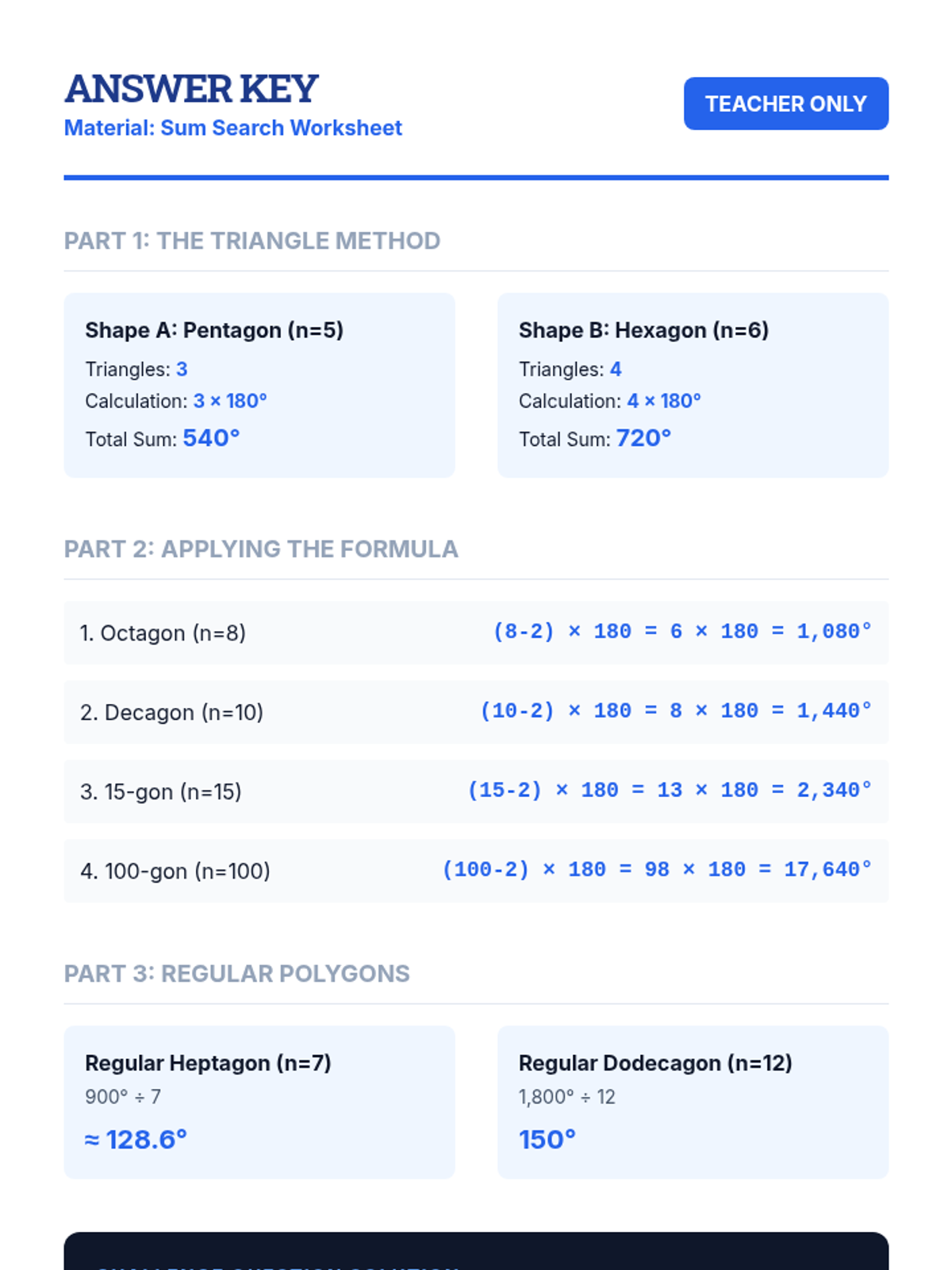
This sequence explores the geometric logic of polygons, focusing on the relationship between sides and angles. Students will derive formulas for interior and exterior angles and apply this knowledge to determine which shapes can tessellate a plane, culminating in the creation of original geometric art.
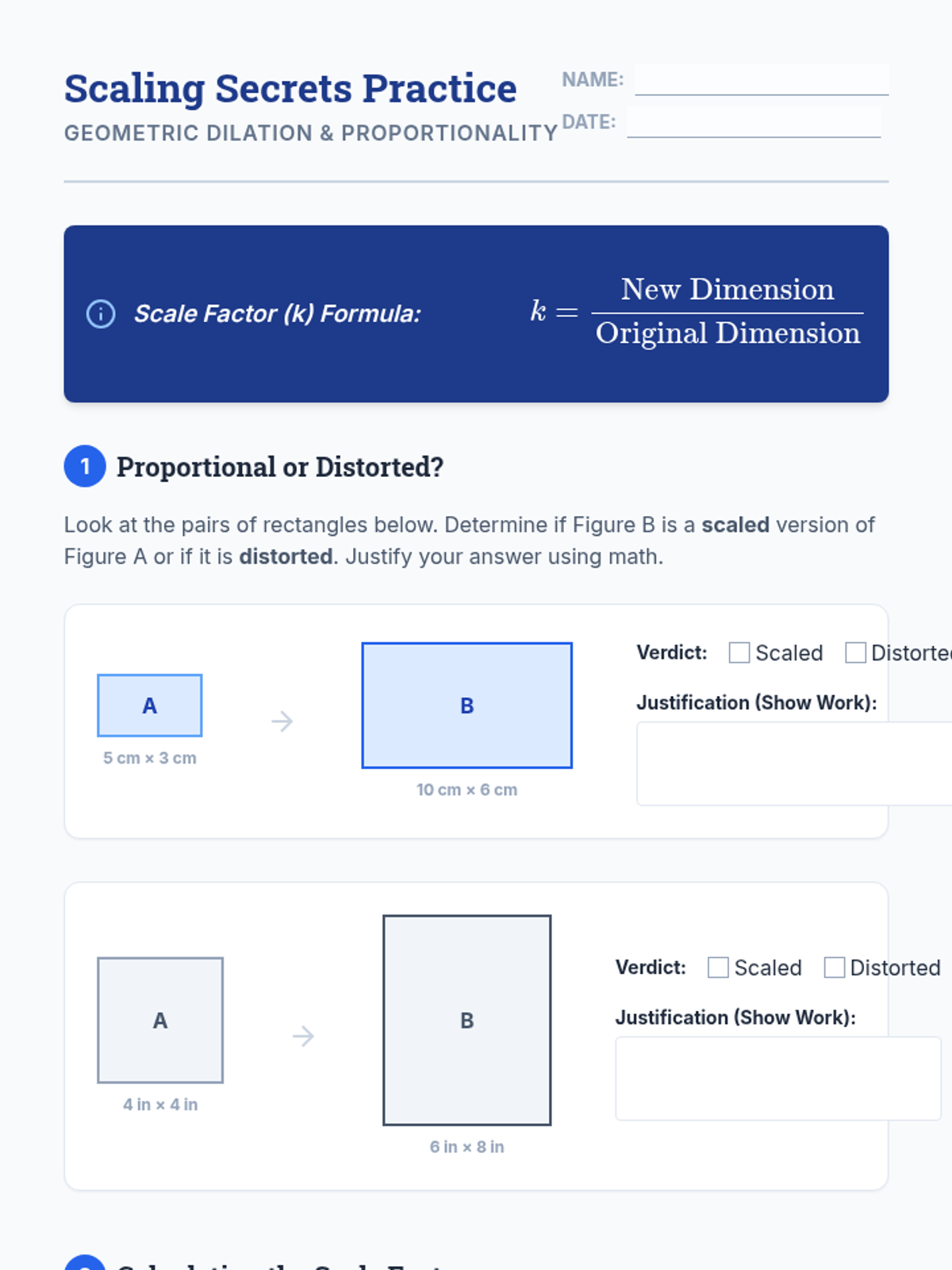
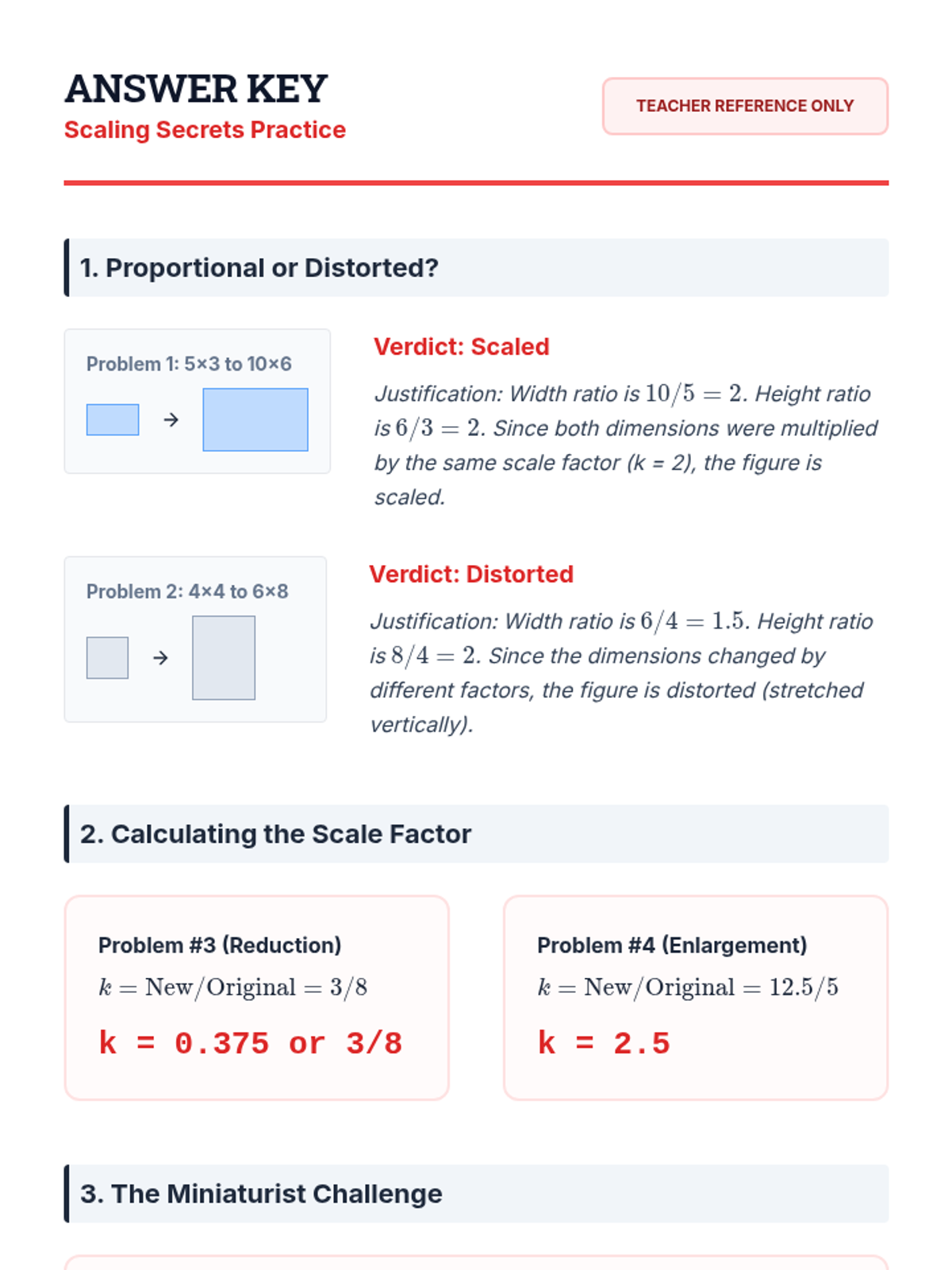
A 7th-grade project-based sequence exploring scale drawings, proportional reasoning, and the geometric properties of dilation. Students progress from basic scale factors to designing a professional tiny house blueprint.
A 7th-grade geometry sequence exploring the mathematical constraints of triangles, from side length inequalities to angle sums and uniqueness conditions. Students progress from hands-on experimentation to formalizing geometric rules and applying them to engineering scenarios.
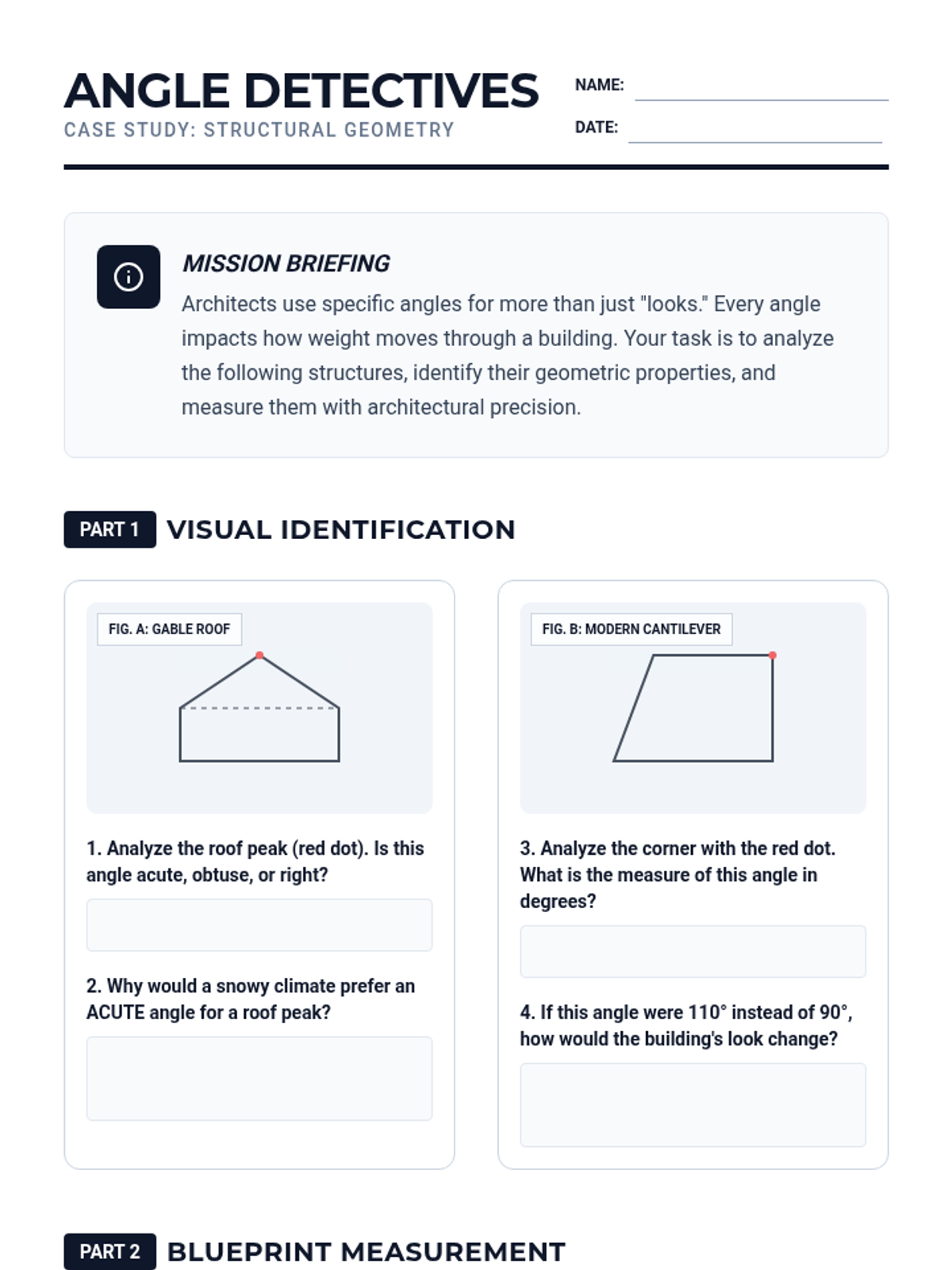
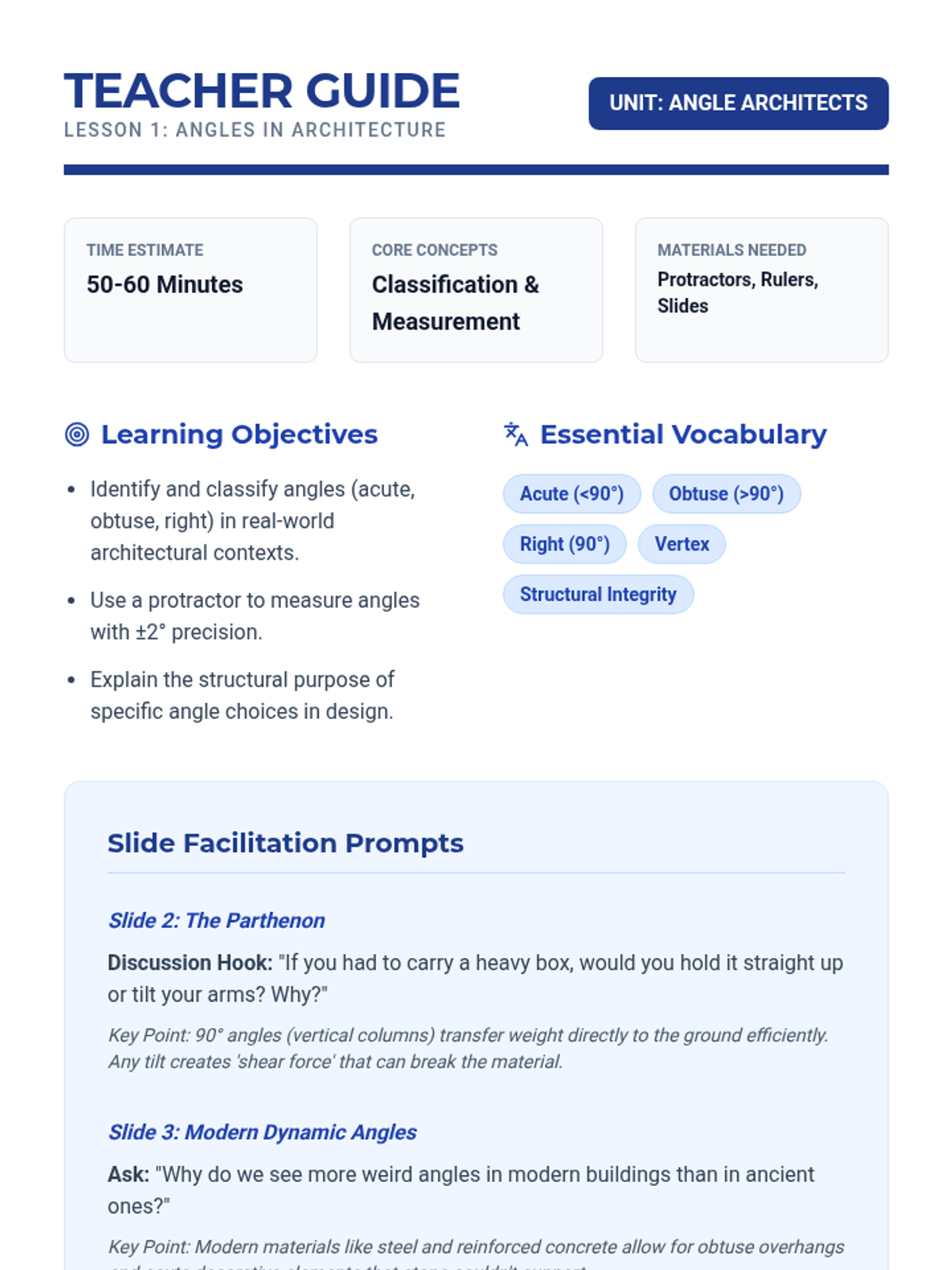
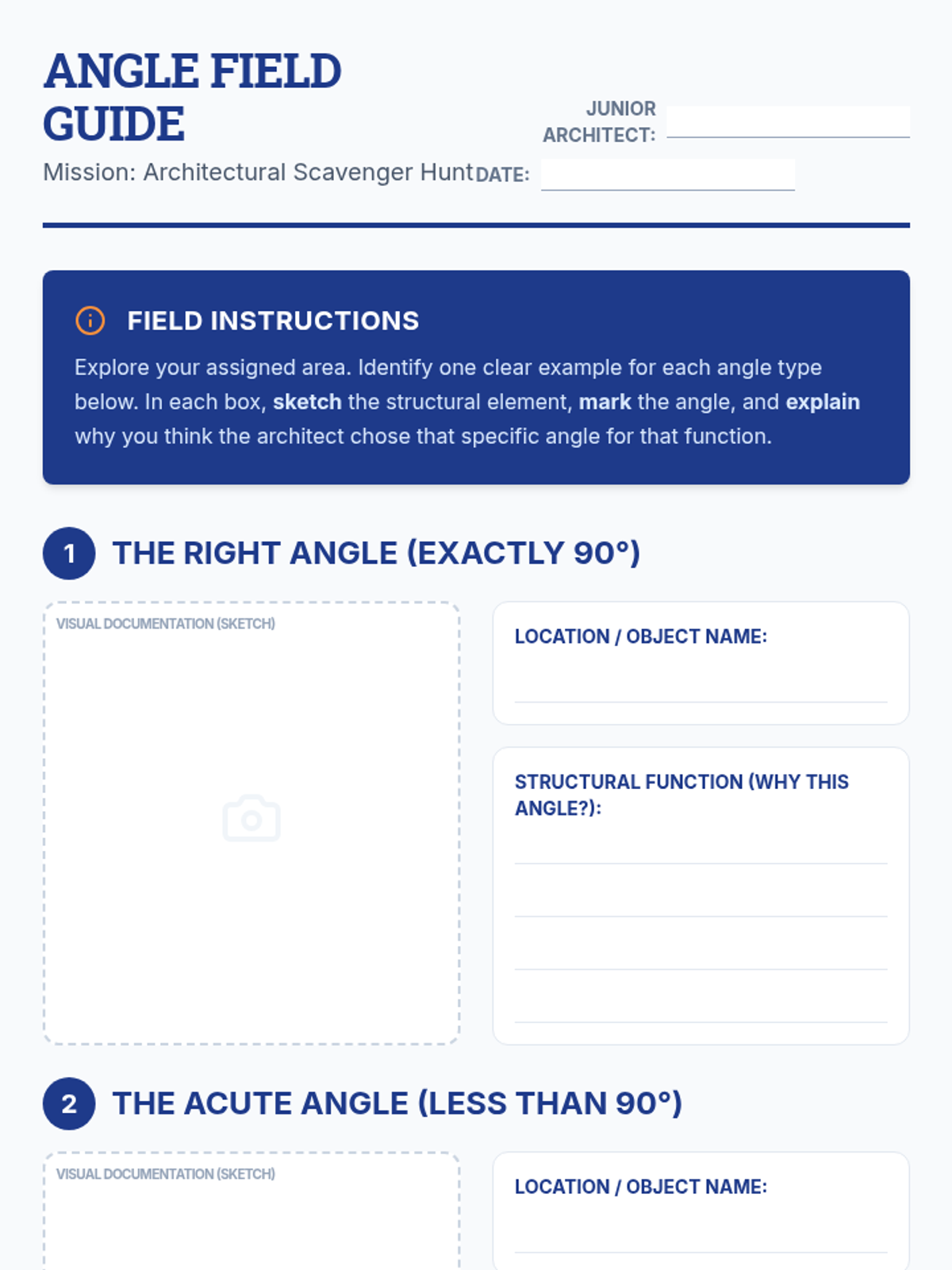
A project-based unit where 7th-grade students apply angle concepts to architecture and engineering, culminating in the creation of a precise geometric blueprint for a structure.
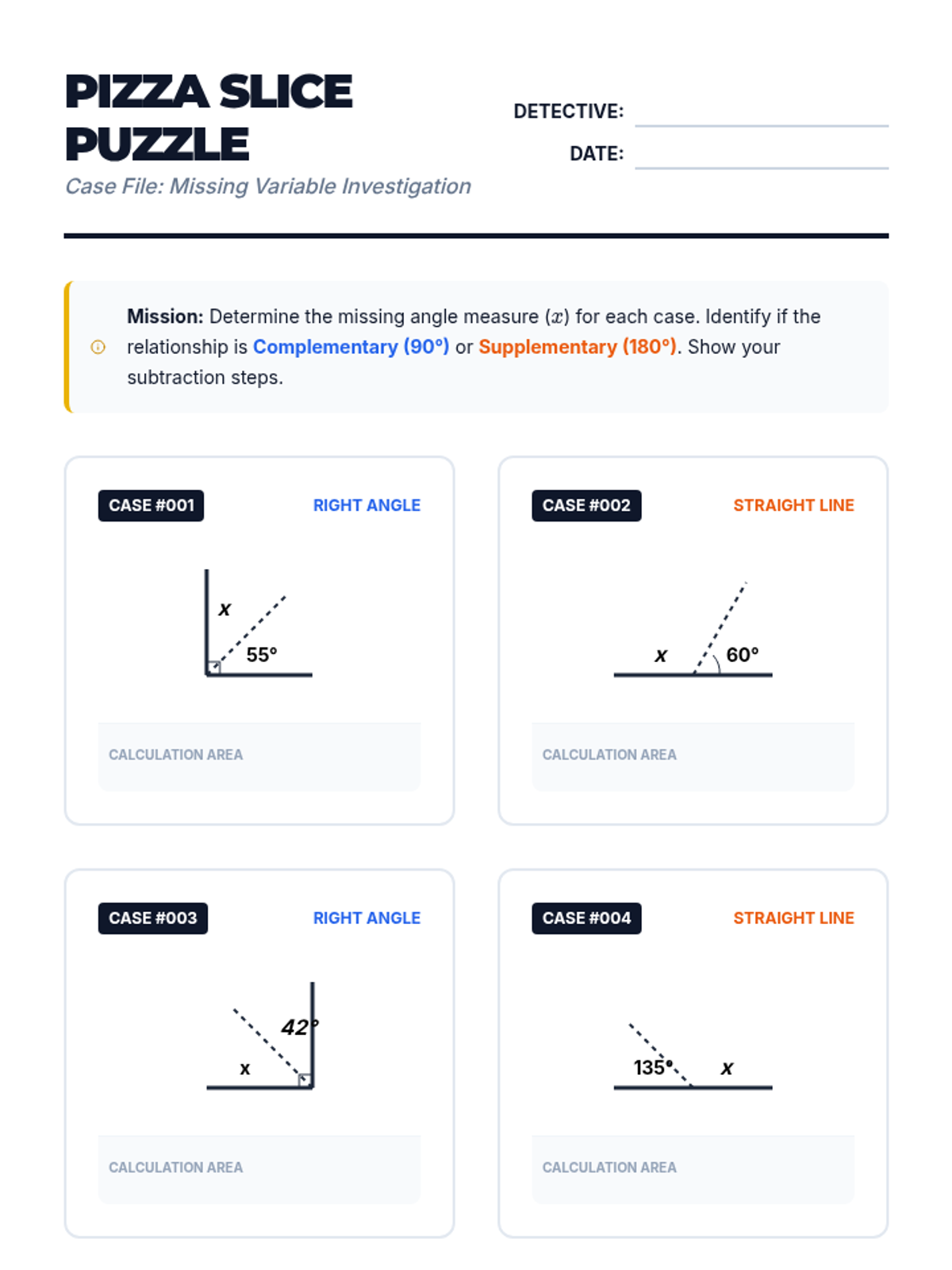
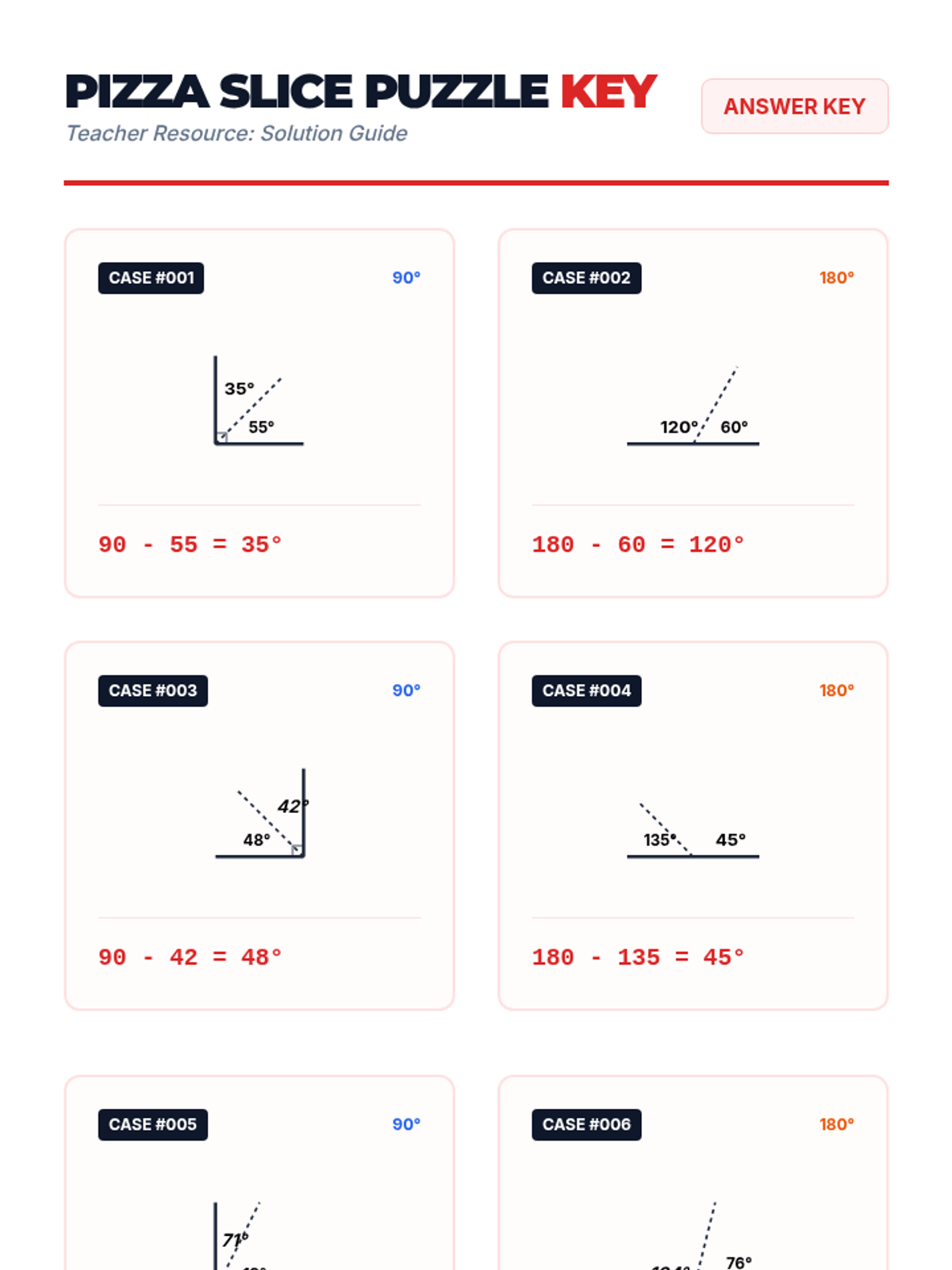
A 5-lesson unit for 6th-grade students transitioning from basic angle measurement to algebraic reasoning. Students use deductive logic and geometric rules (complementary, supplementary, vertical) to solve 'case files' and 'puzzles', preparing them for advanced geometry.
A 5-lesson math sequence where students explore angle relationships through the lens of architectural design, moving from identifying angles in the environment to drafting their own structural blueprints.
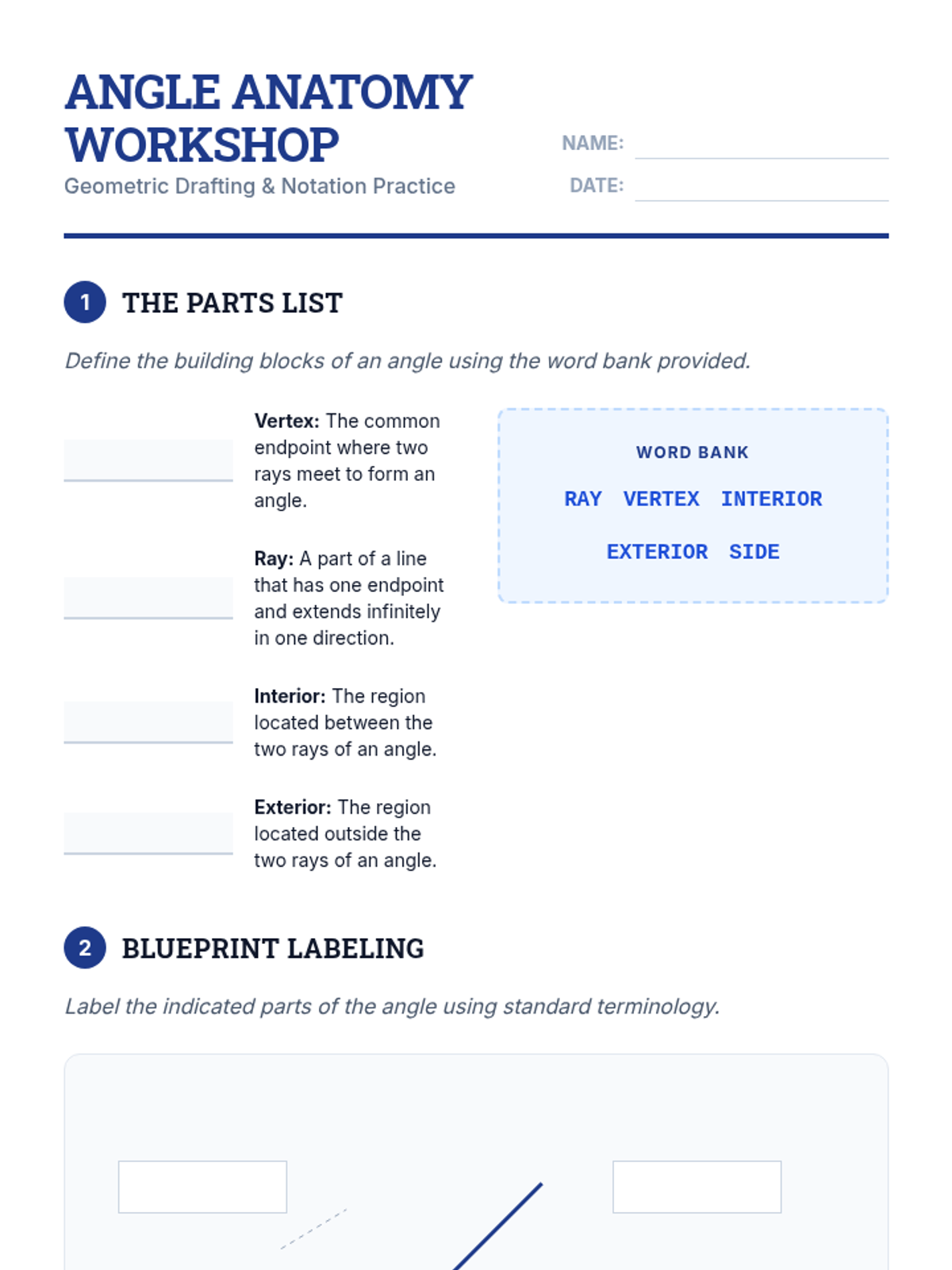
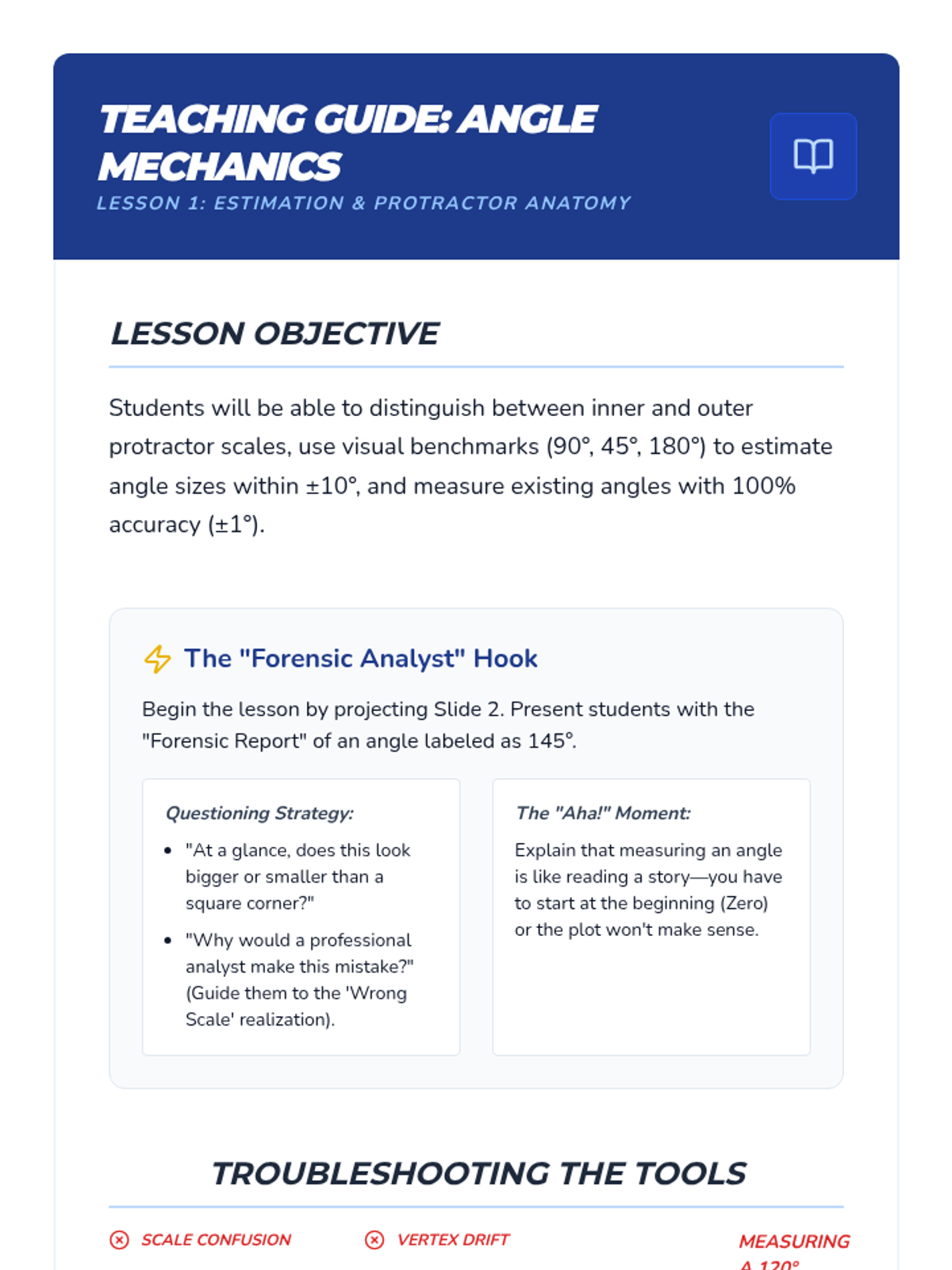
This sequence guides 6th-grade students through the mechanics of geometry, focusing on identifying, measuring, classifying, and constructing angles with precision. Students move from basic anatomy to mastery of the protractor and error analysis.
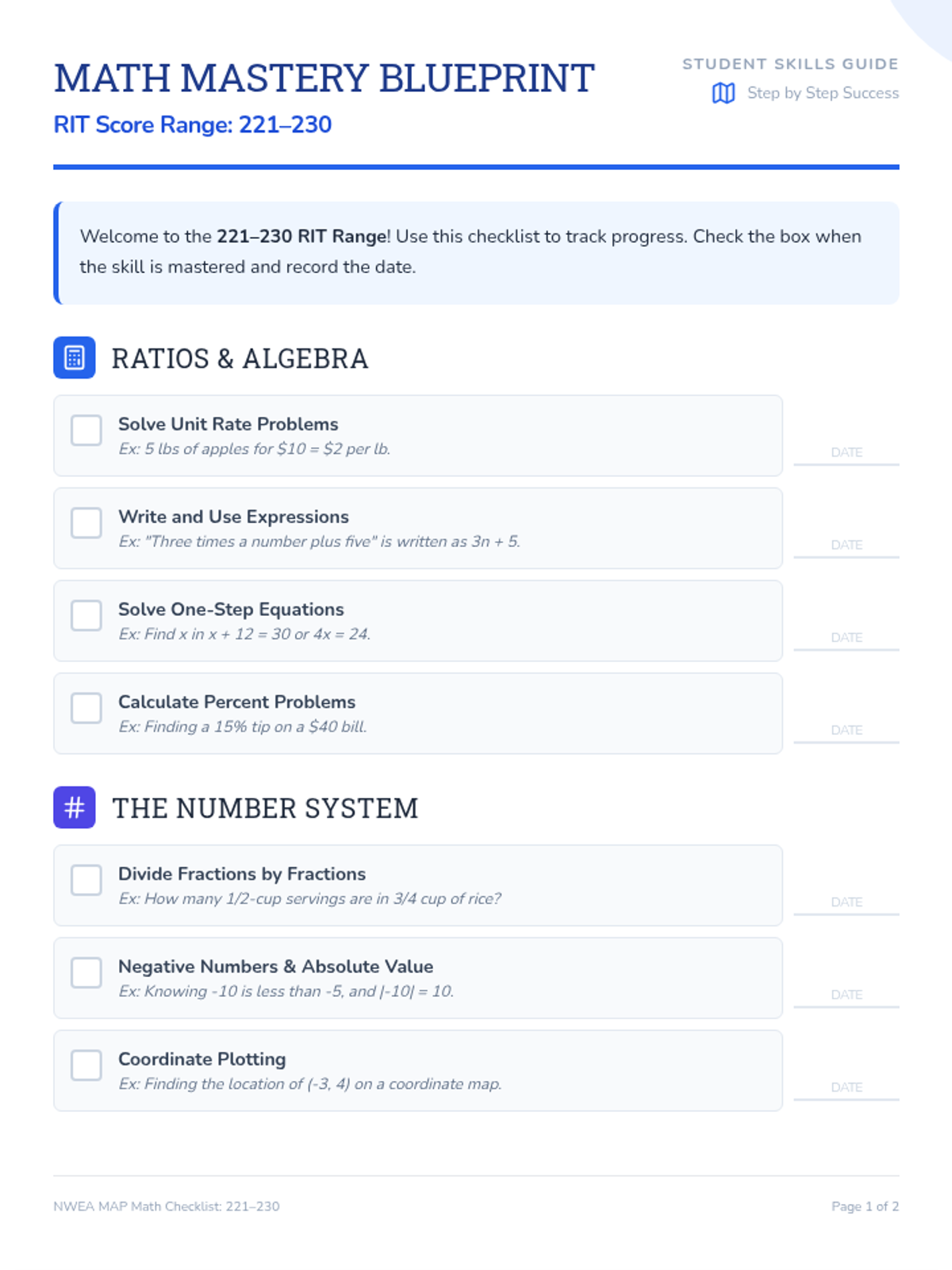
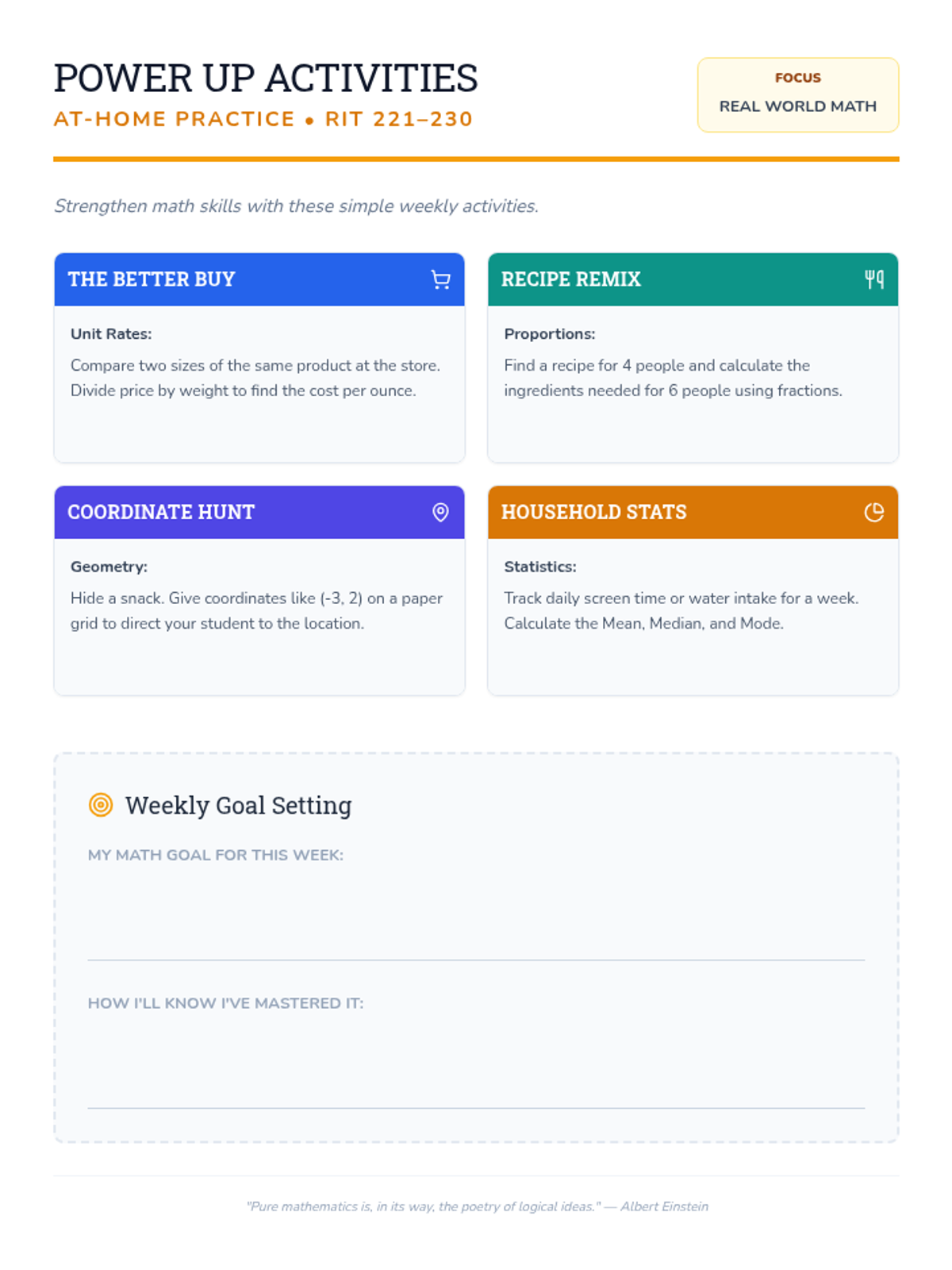
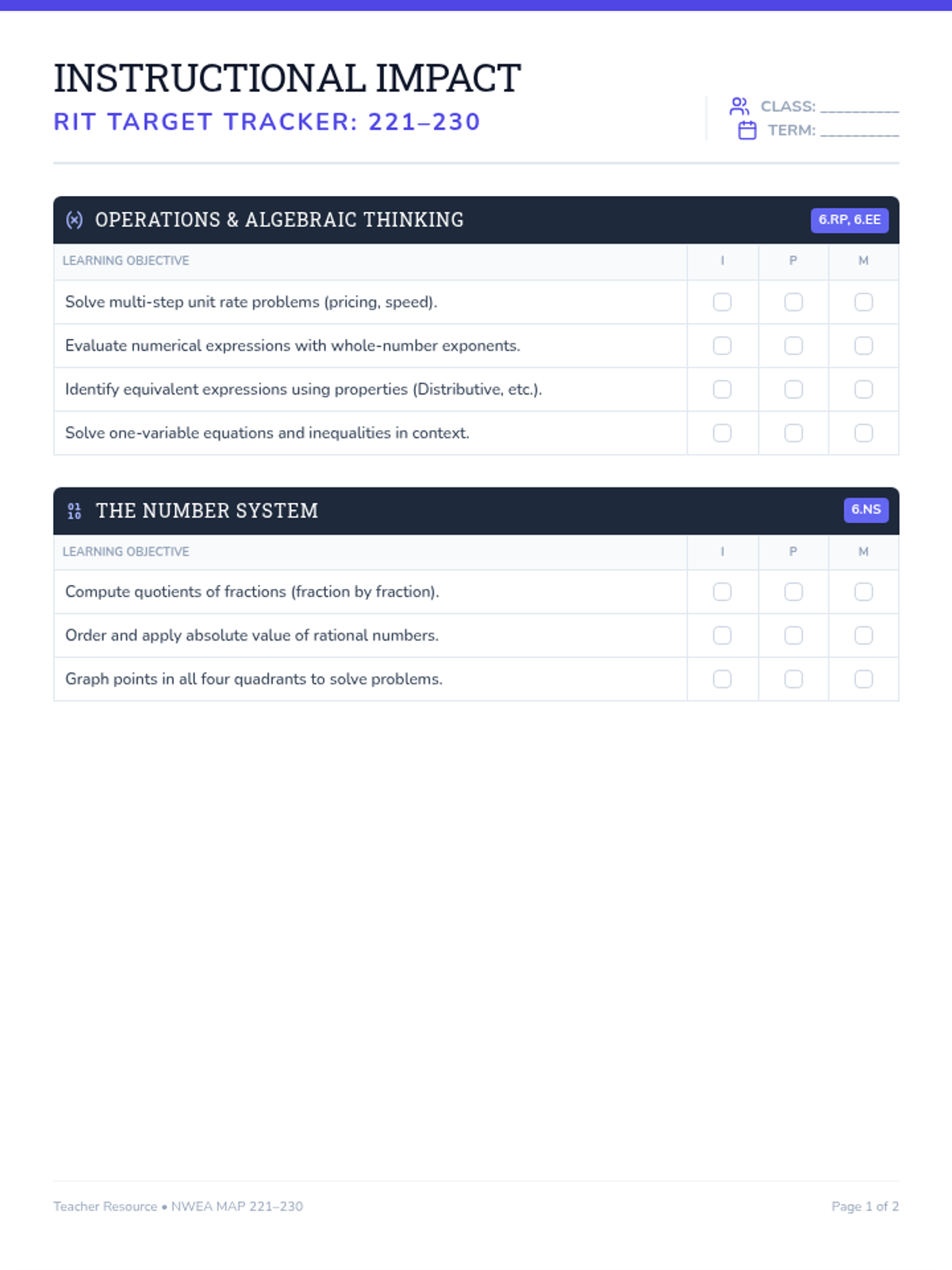
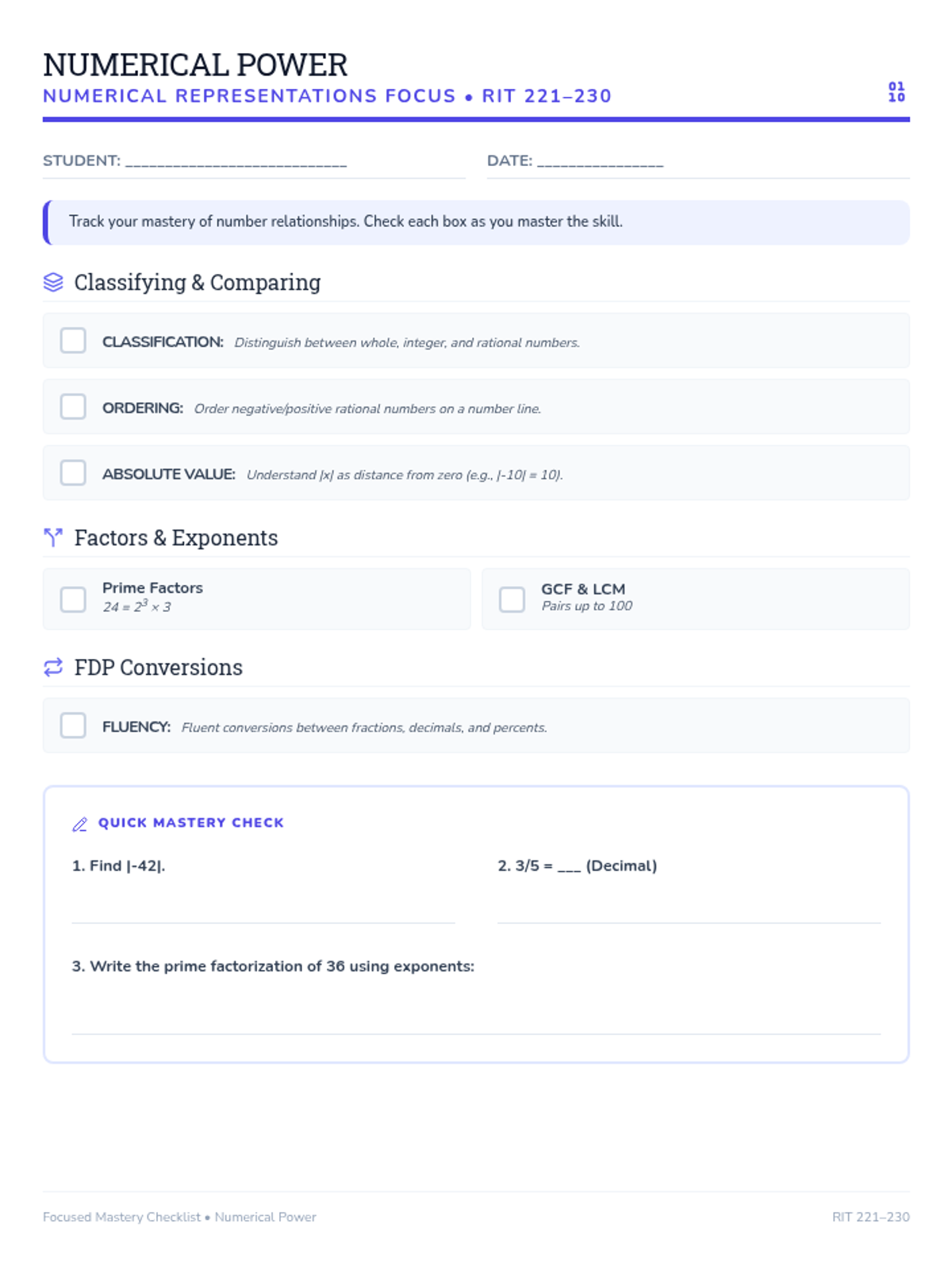
A comprehensive collection of RIT-aligned math mastery resources for student and teacher tracking across key mathematical development ranges.
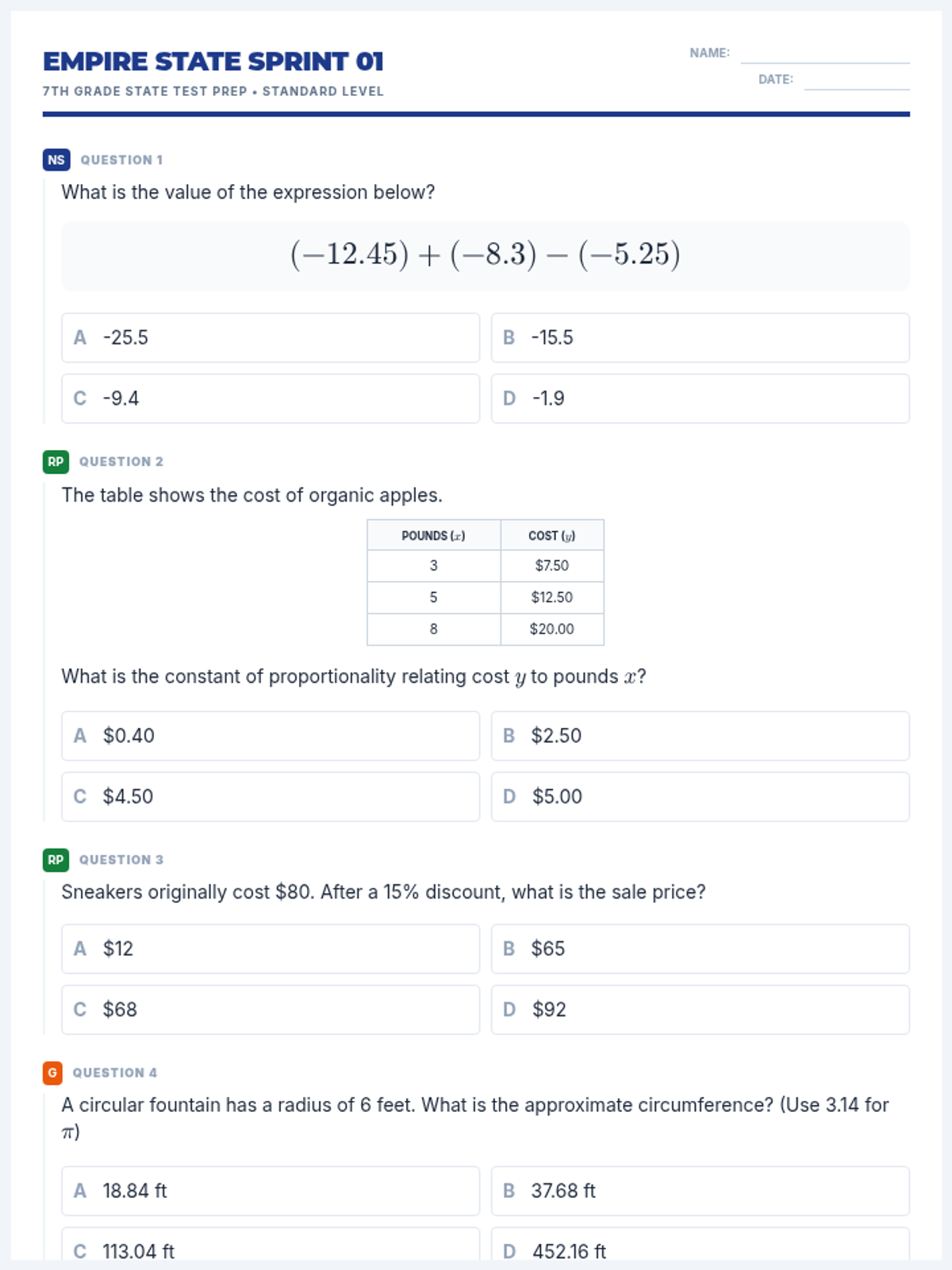
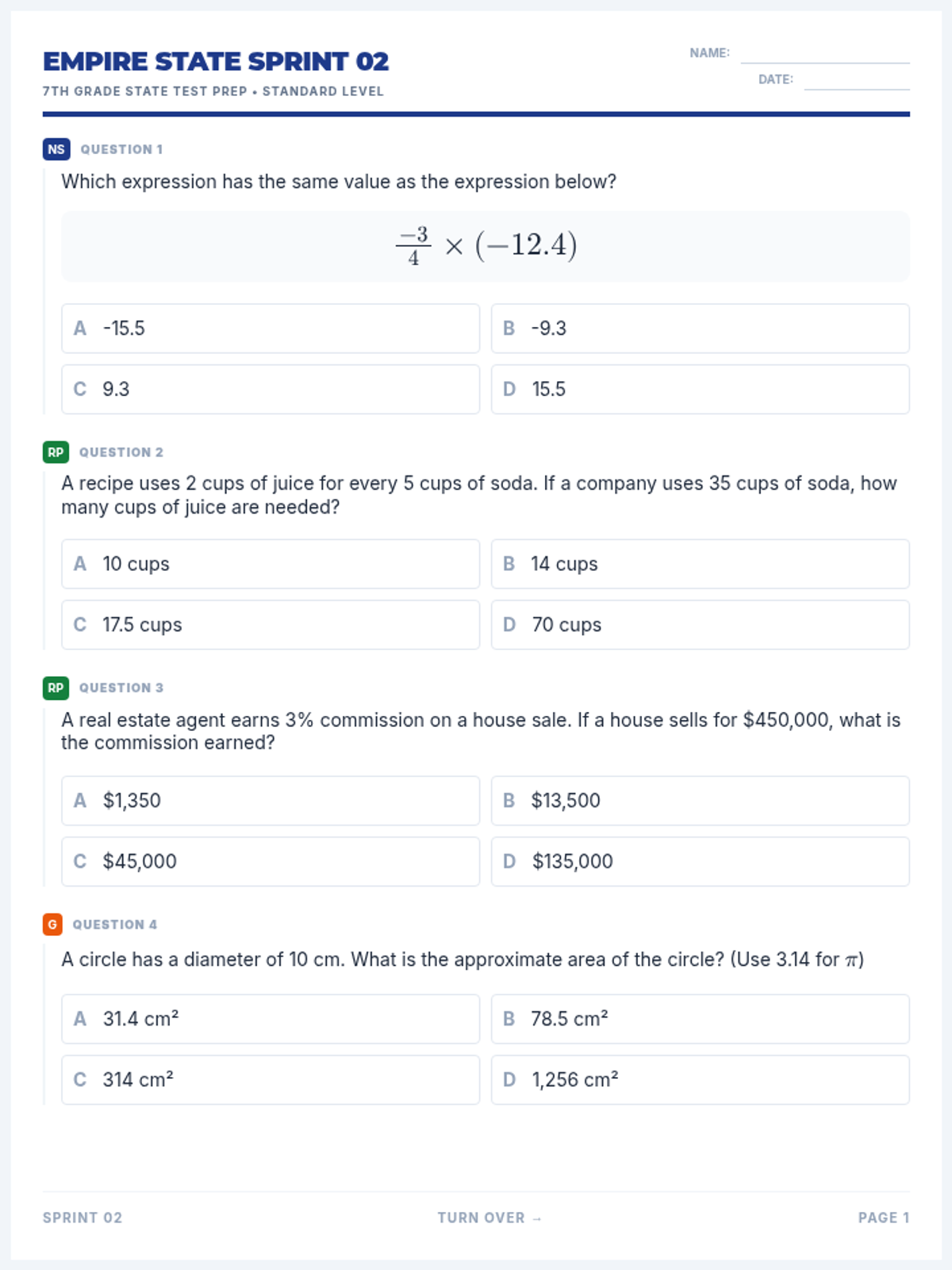
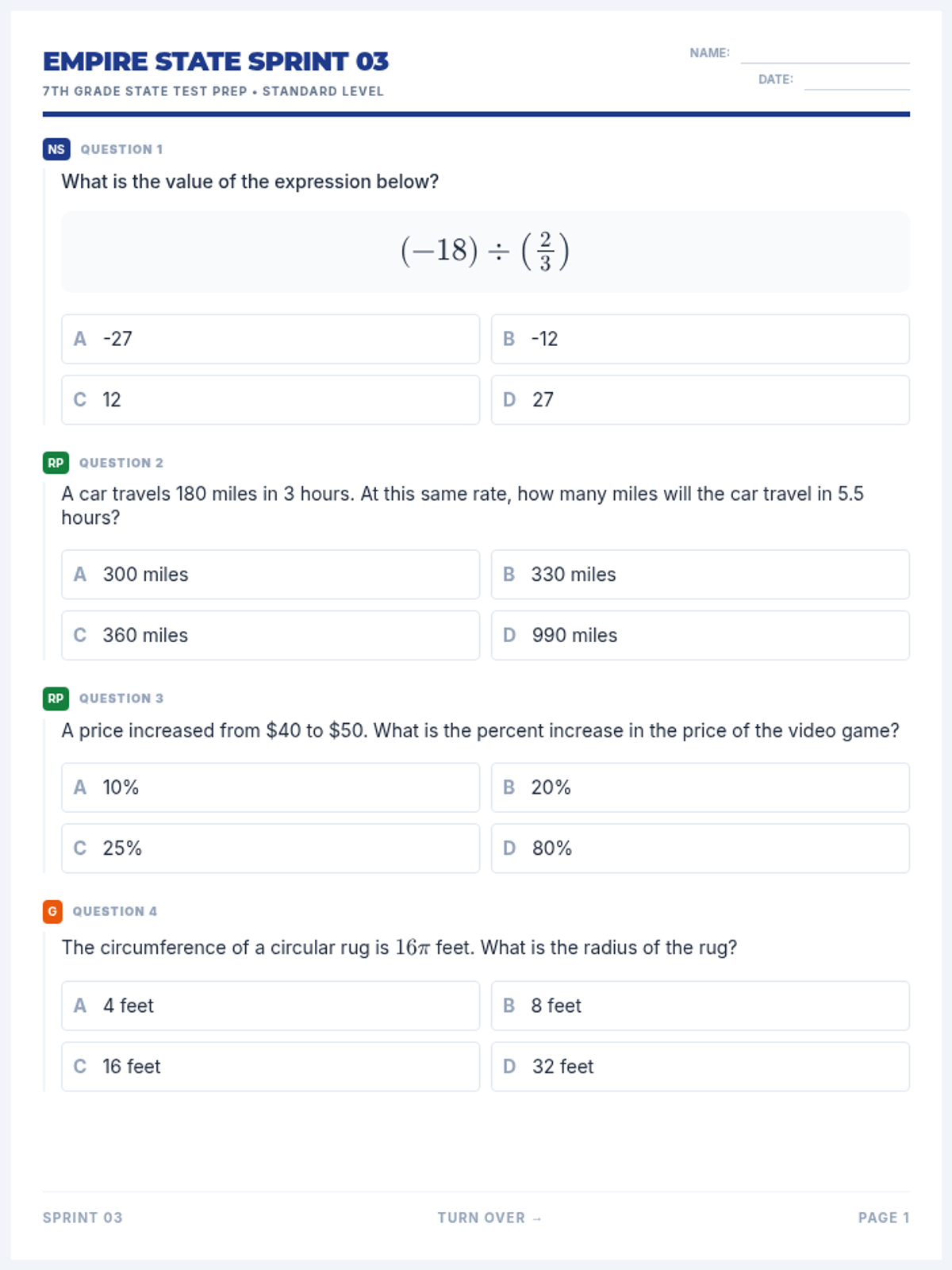
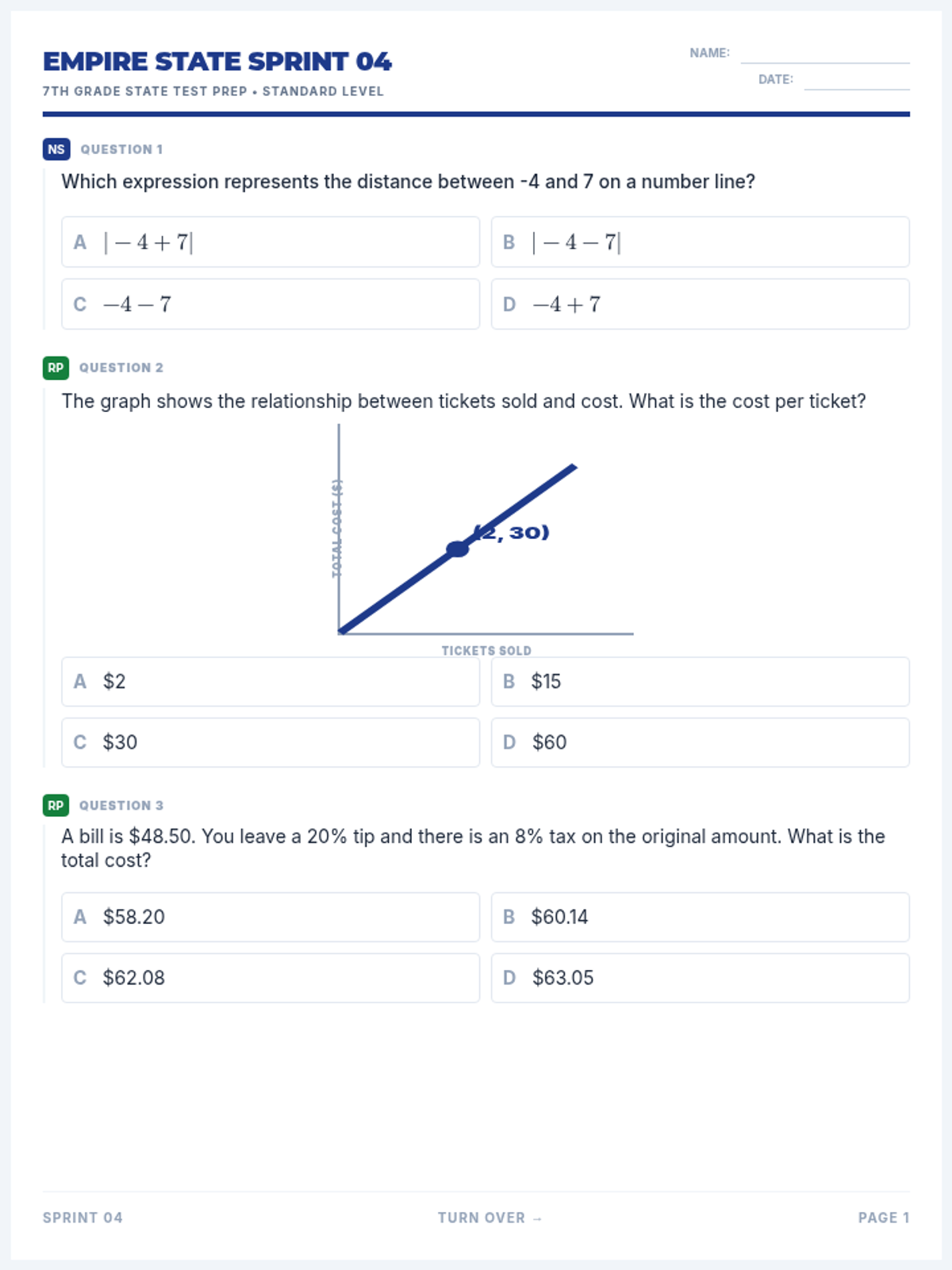
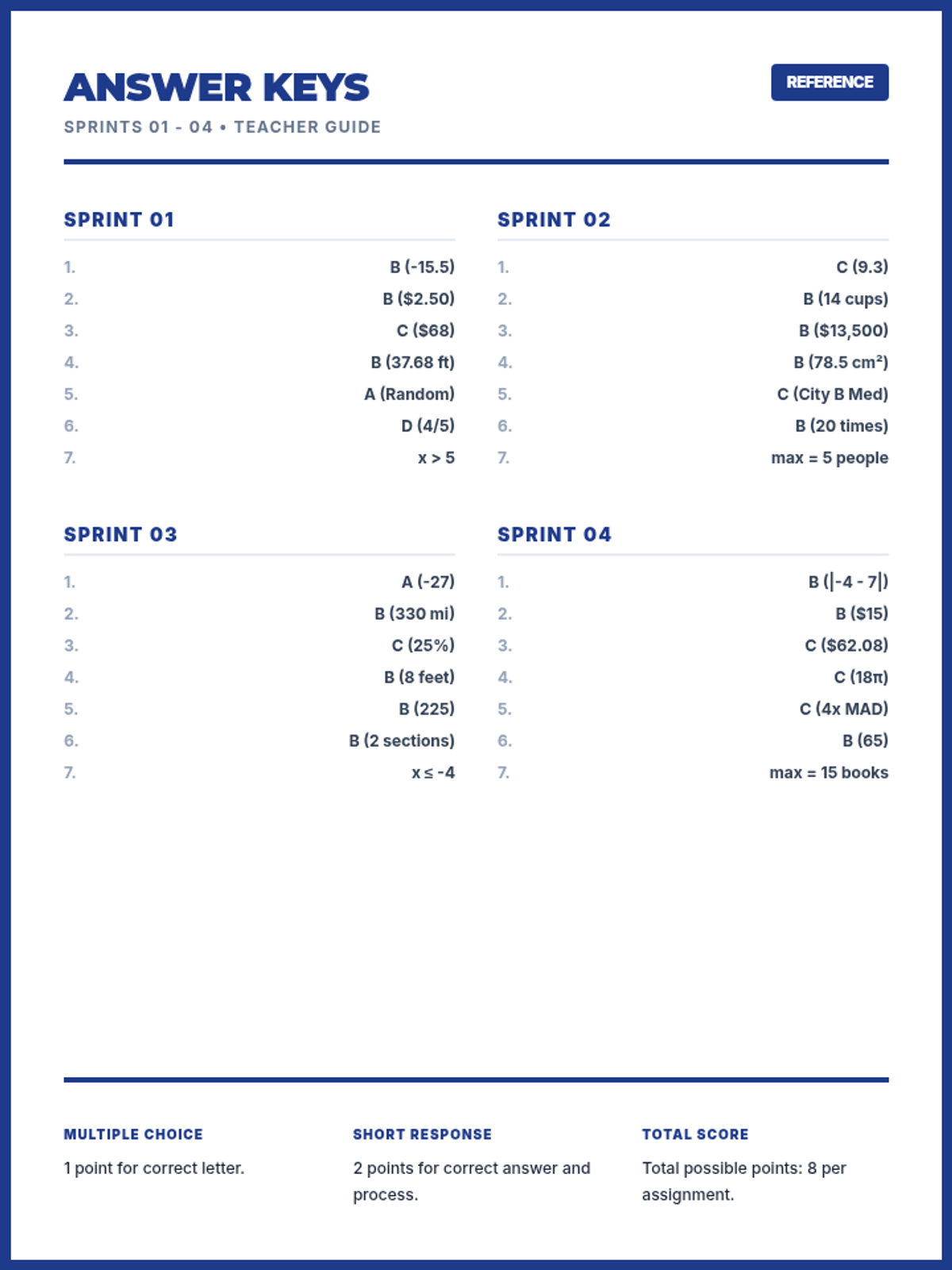
A series of four targeted homework assignments designed to prepare 7th-grade students for the New York State Mathematics Test. Each assignment covers key domains including Number Systems, Ratios and Proportions, Geometry, Statistics, and Probability in a standardized format.
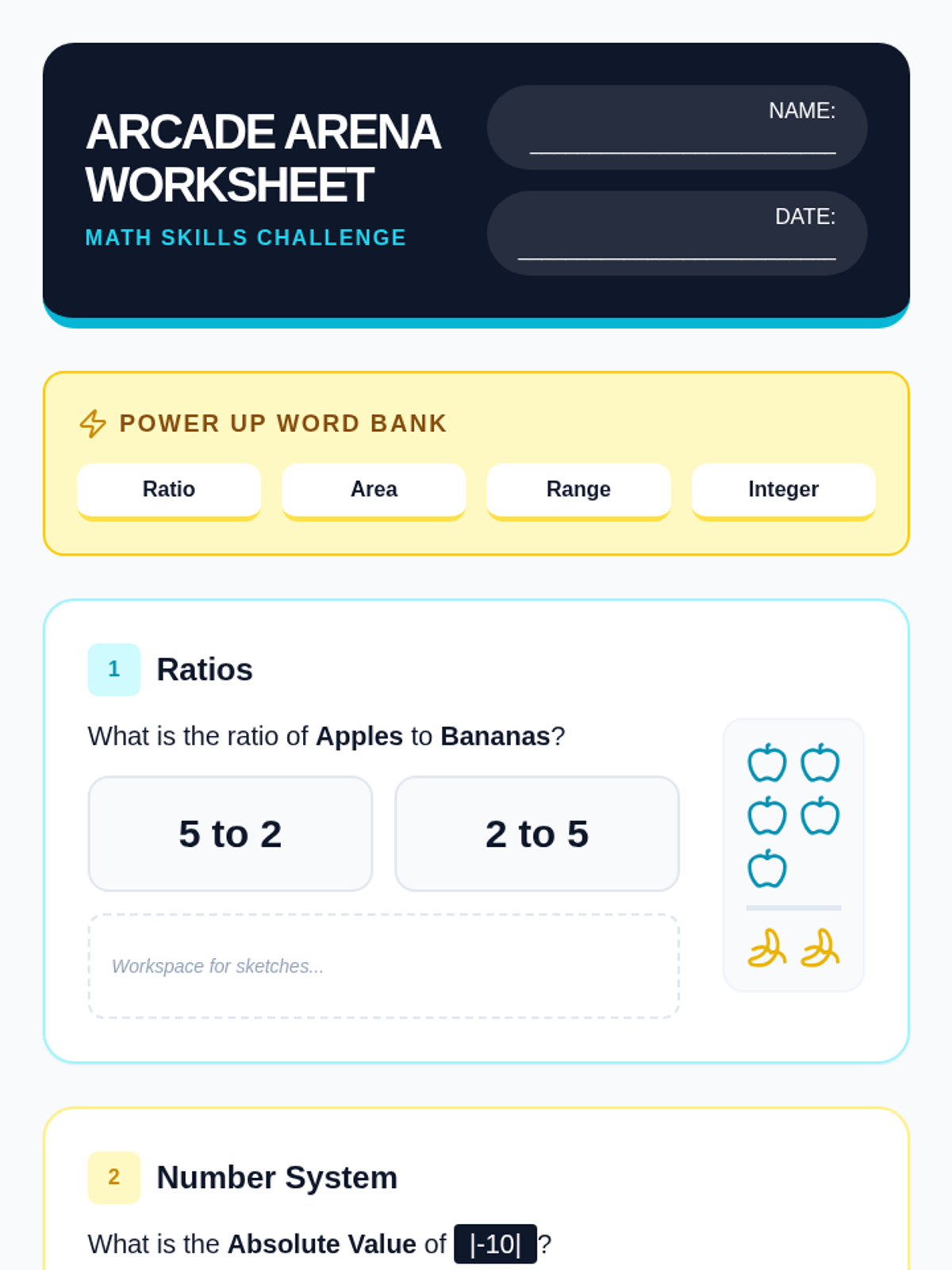
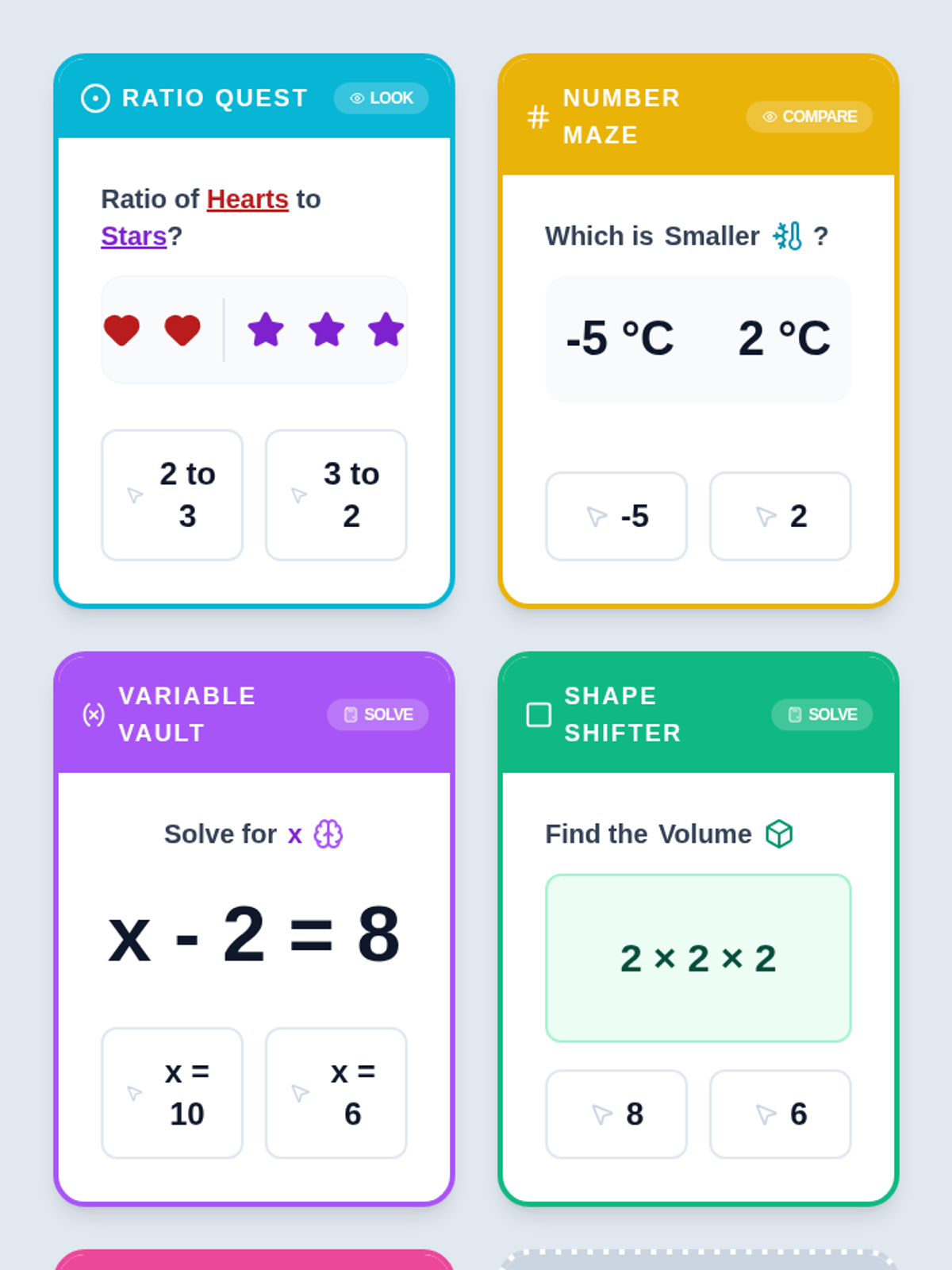
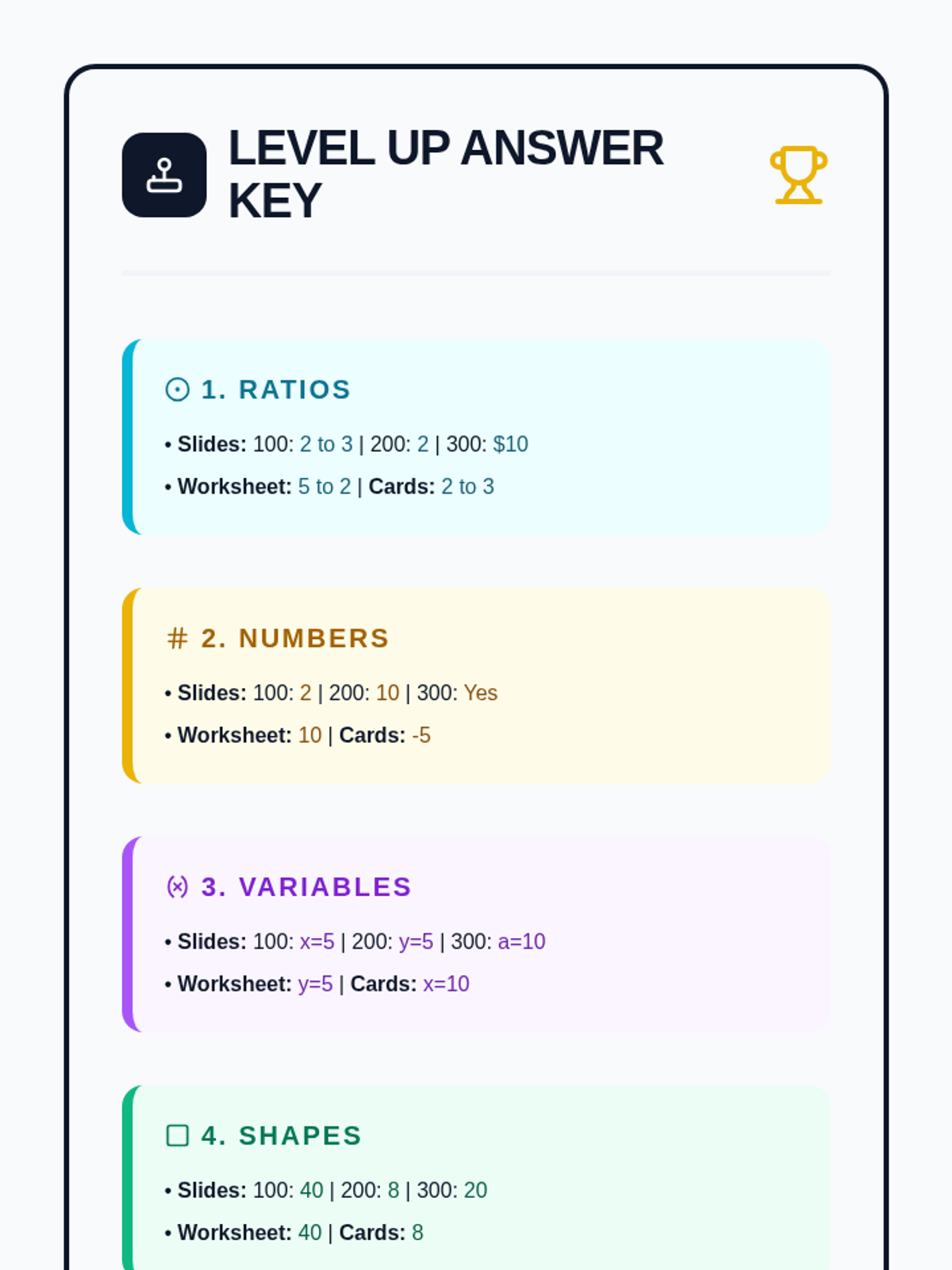
A comprehensive math review sequence designed for students with IEPs, featuring simplified numbers, visual aids, and a gamified arcade theme. Covers Ratios, The Number System, Expressions, Geometry, and Statistics through interactive slides and printable activities.
A comprehensive review sequence for 7th grade math featuring themed stations covering Ratios, Rational Numbers, Algebra, and Geometry through interactive games and puzzles.
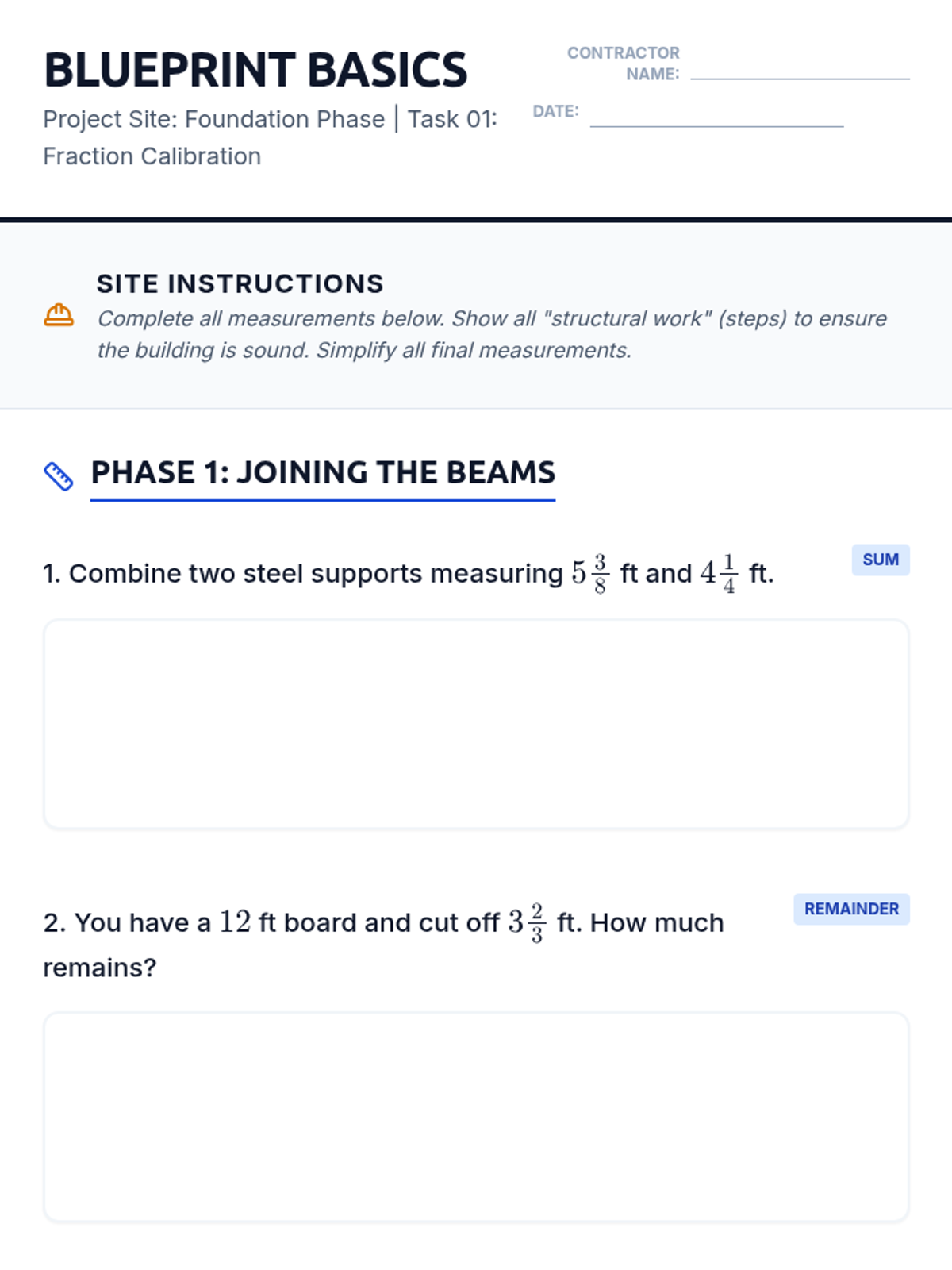
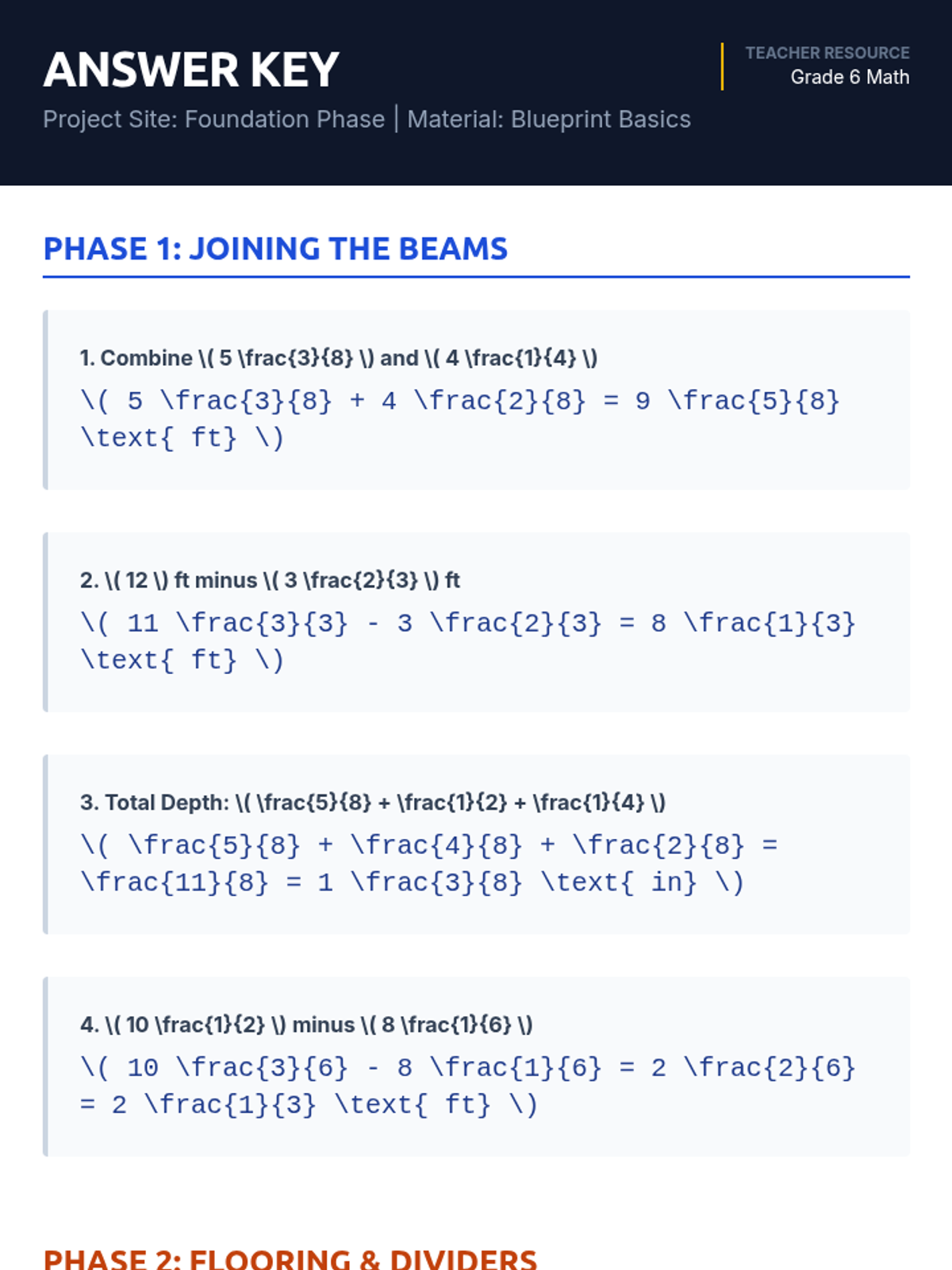
A middle school math sequence centered on fractions, using an architectural and construction theme. It progresses from 6th-grade foundations to 8th-grade applications of slope and rational numbers.
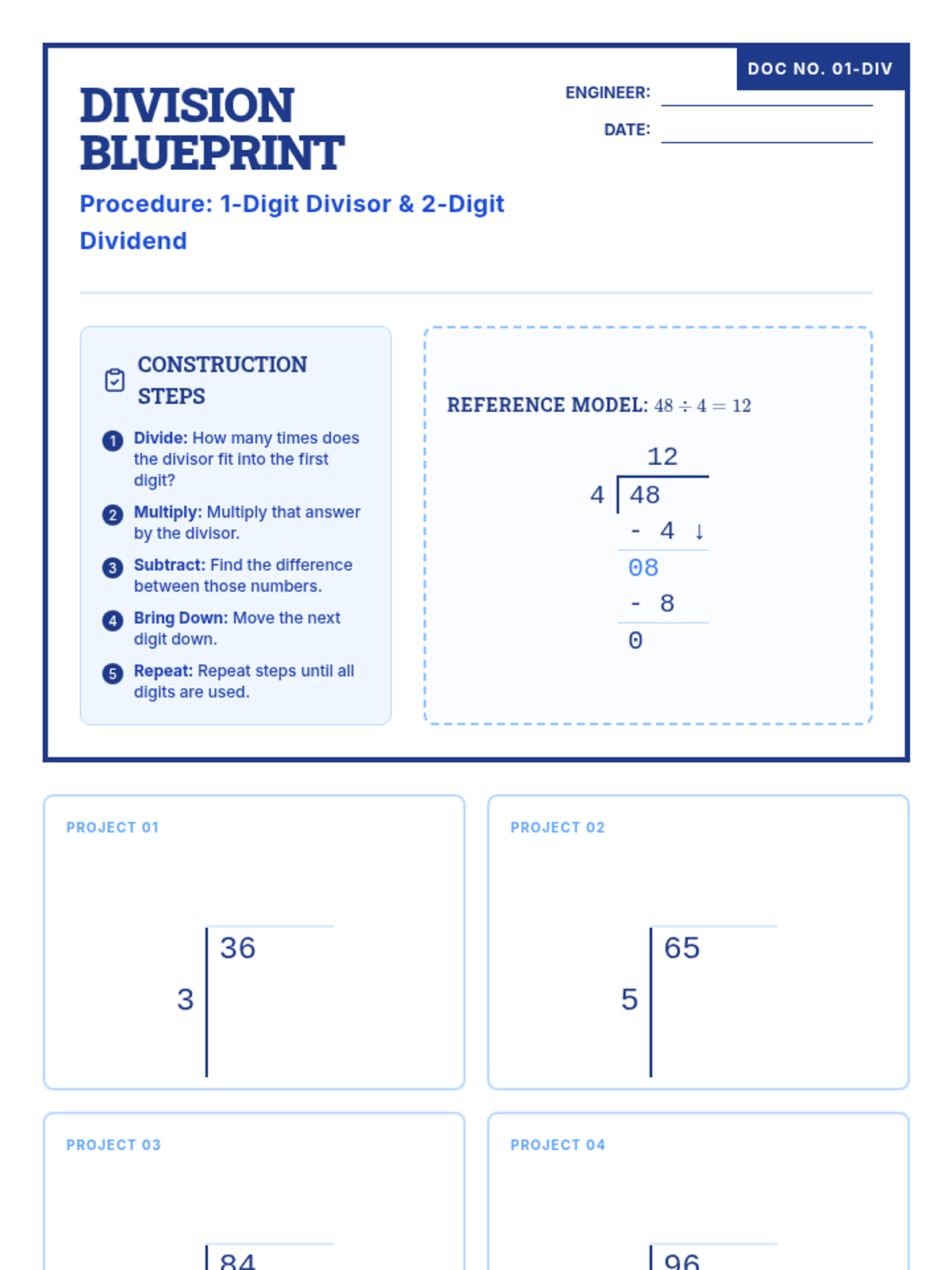
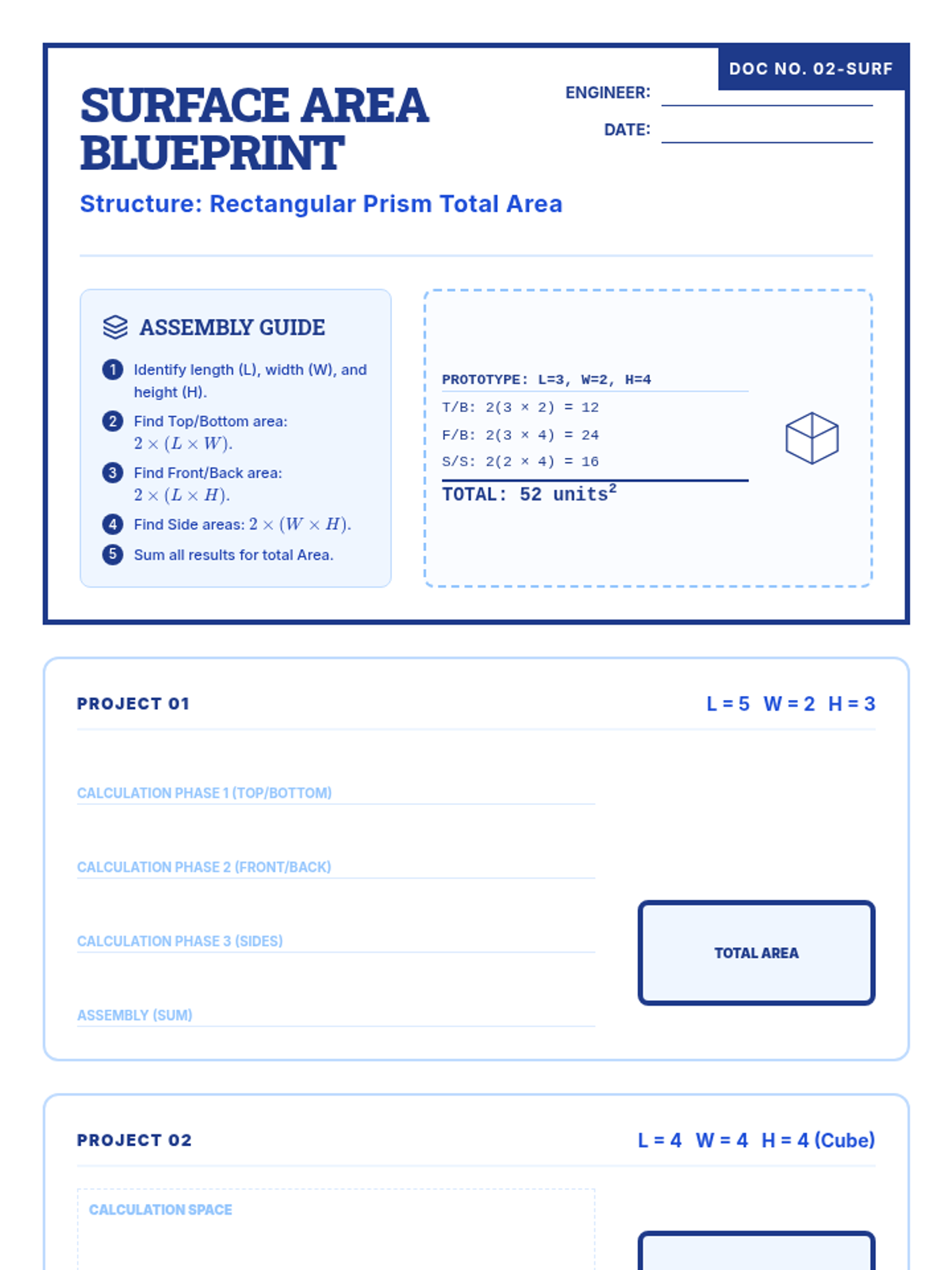
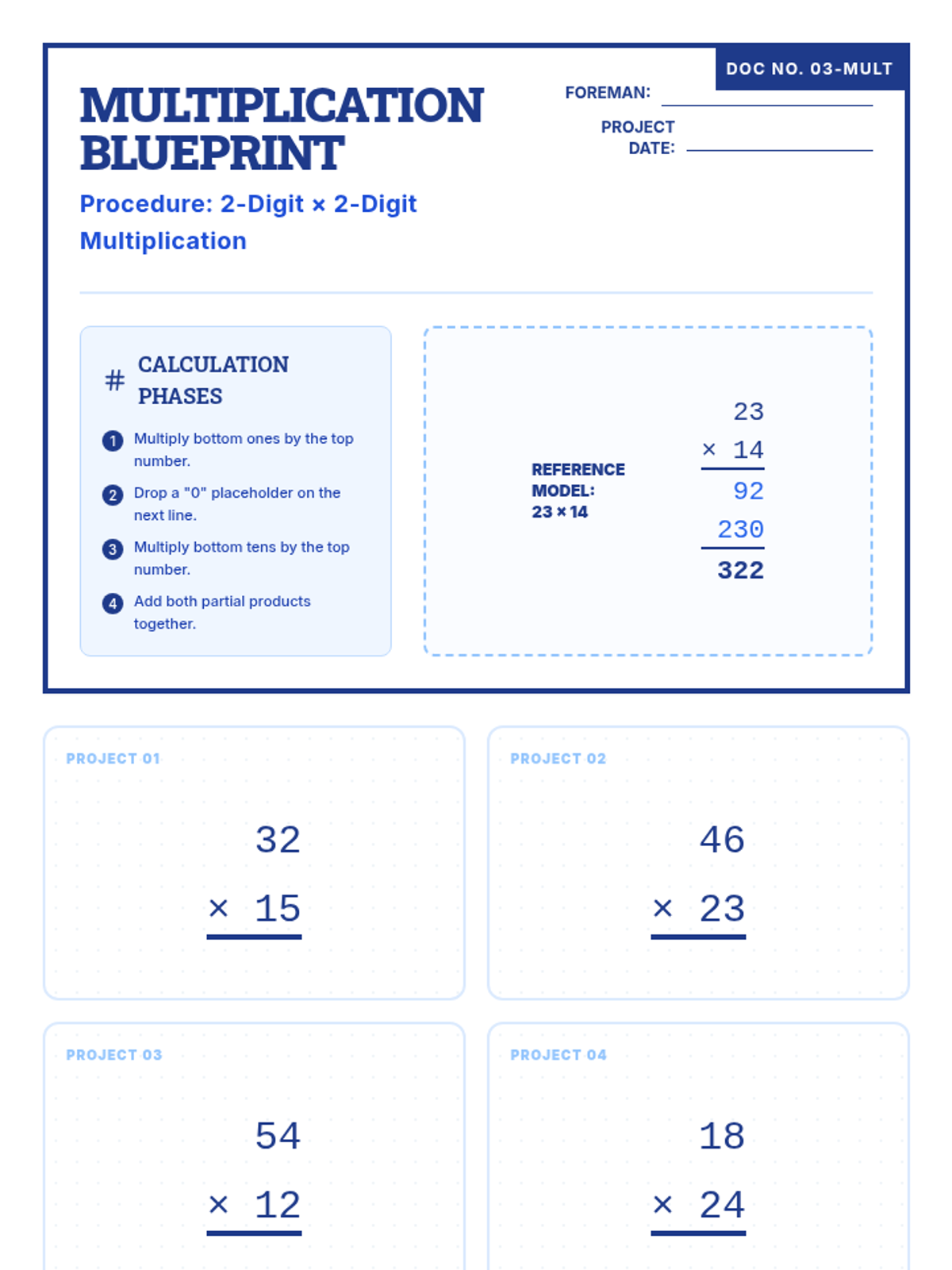
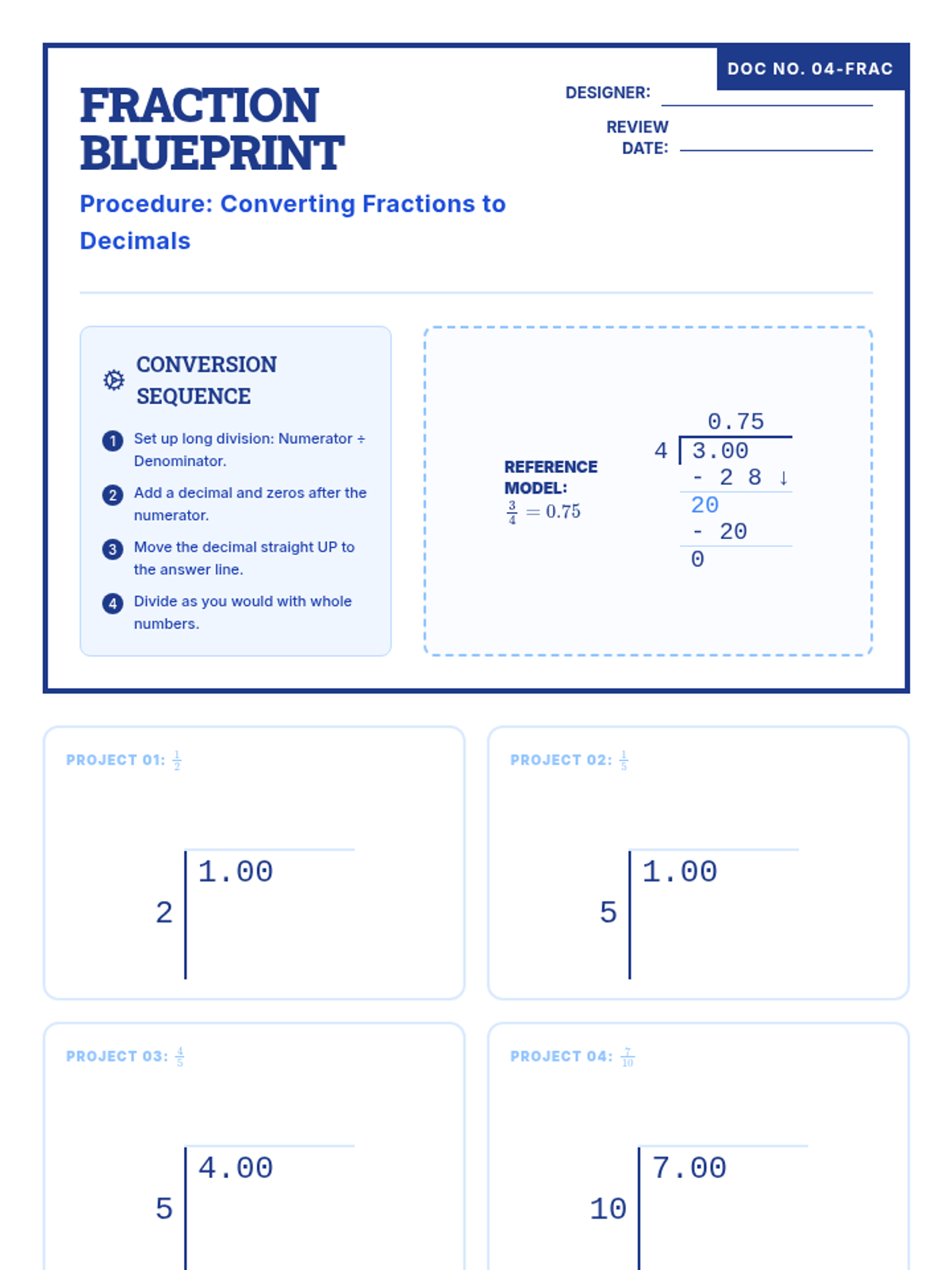
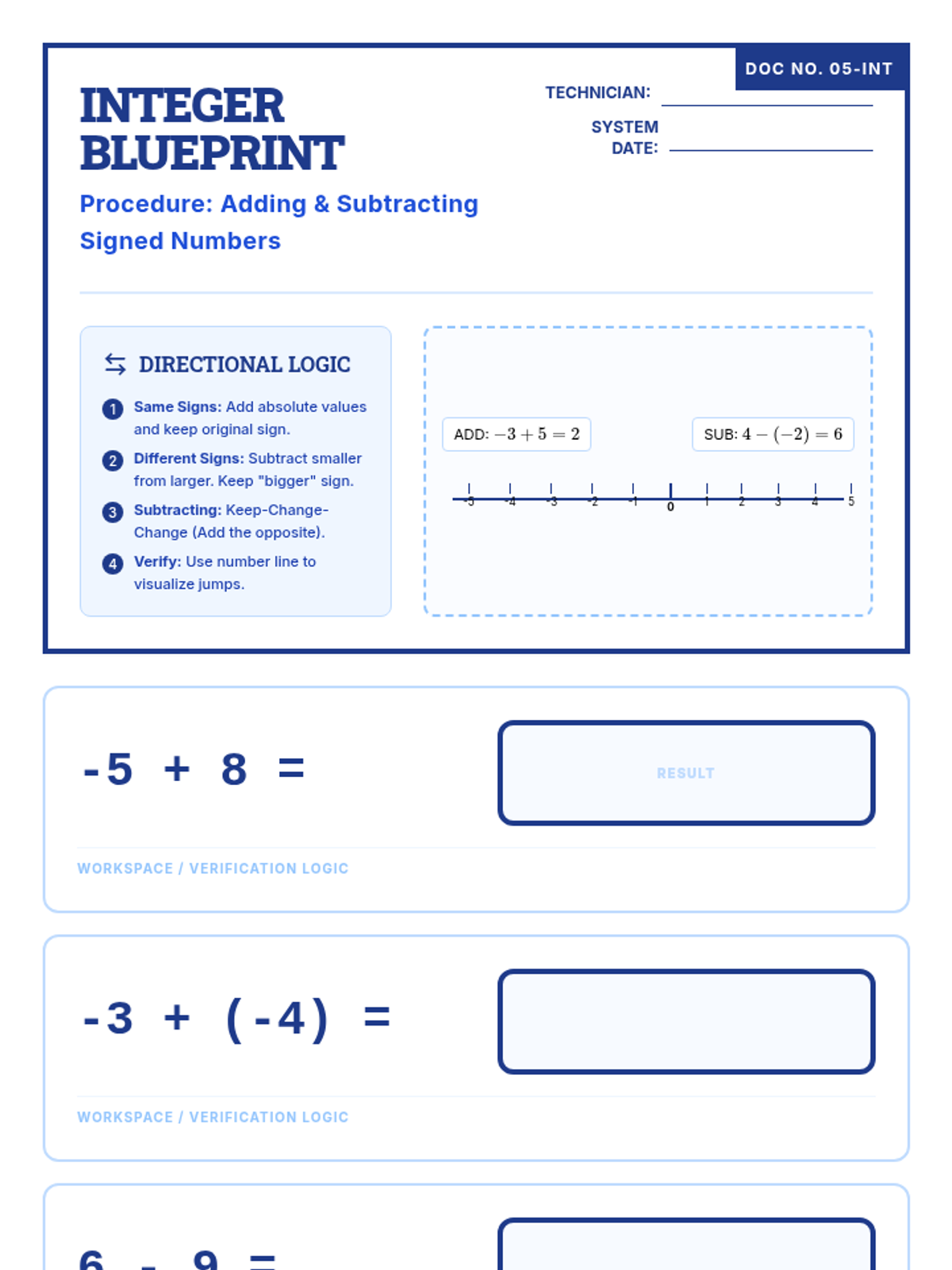
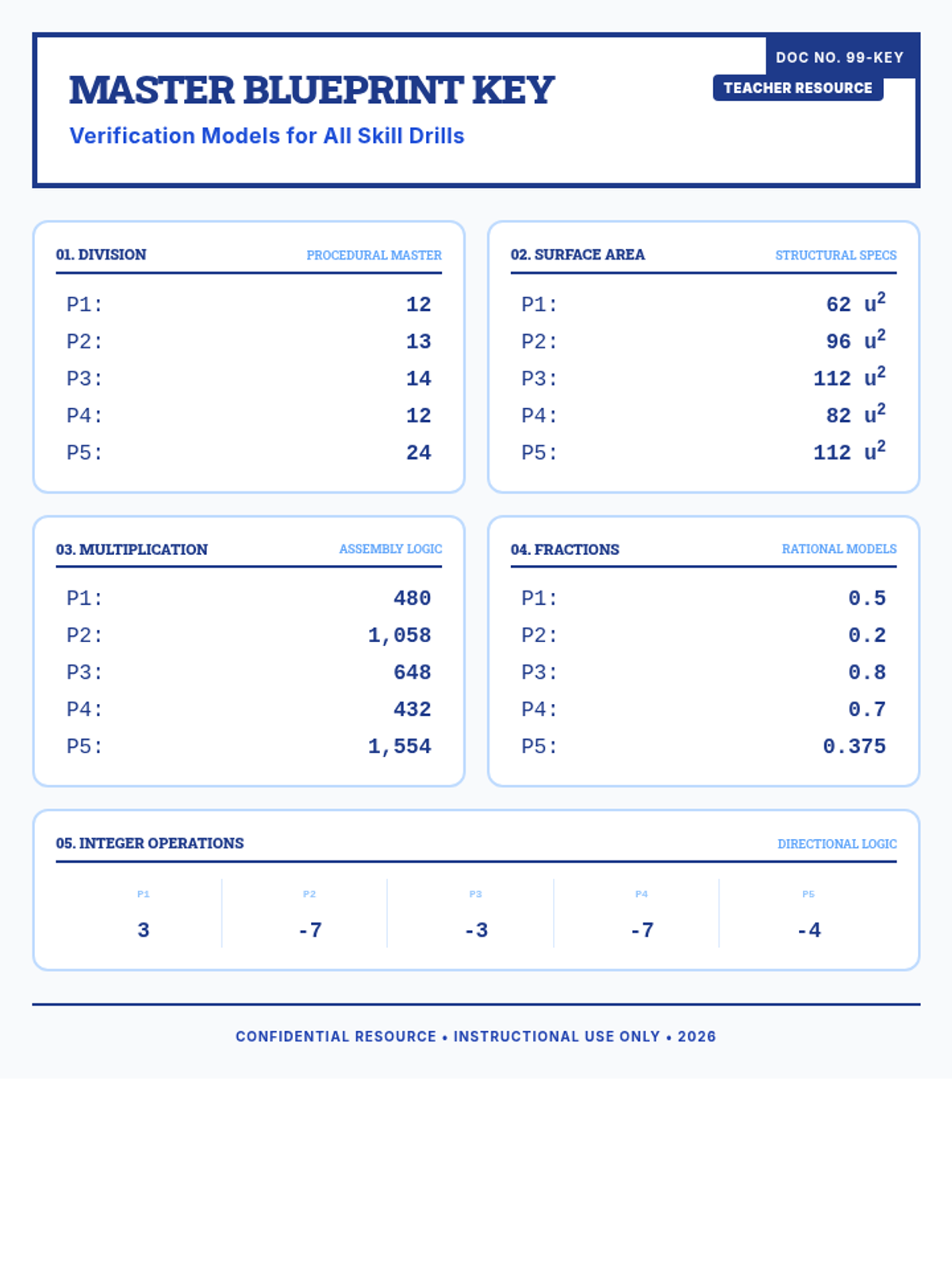
A set of targeted skill-building worksheets designed to guide students through common procedural math errors using step-by-step checklists and worked examples in a blueprint-inspired layout.
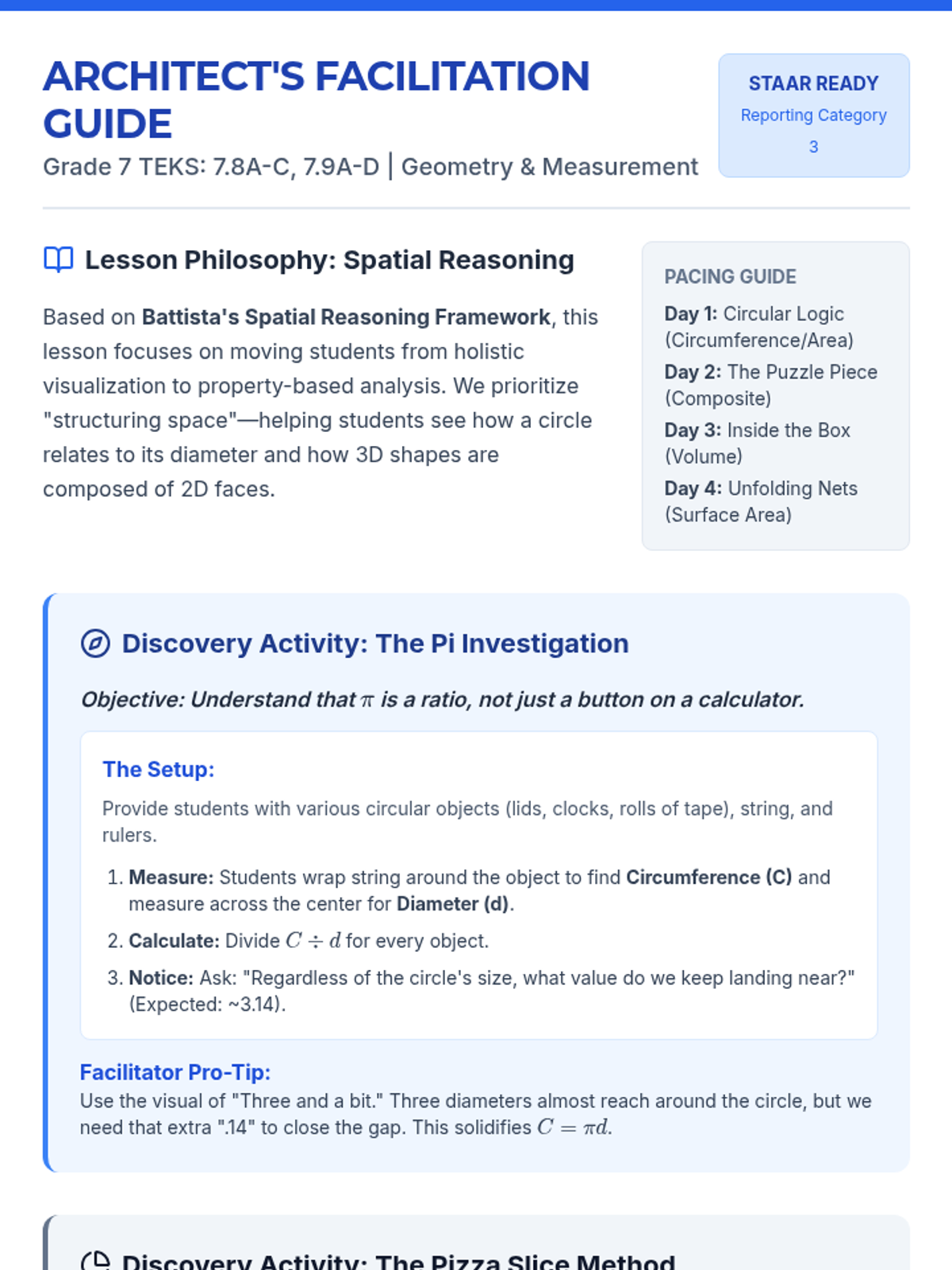
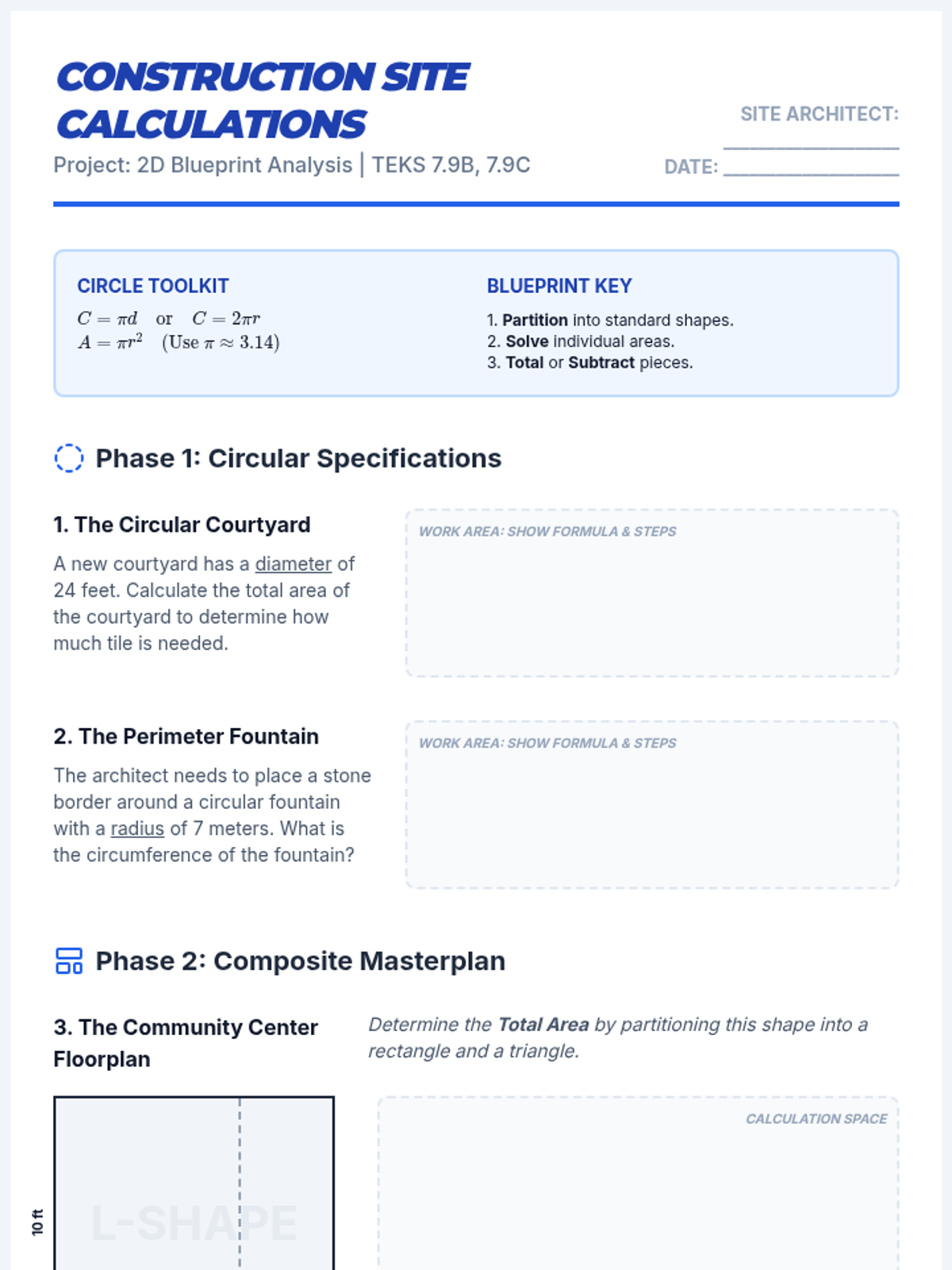
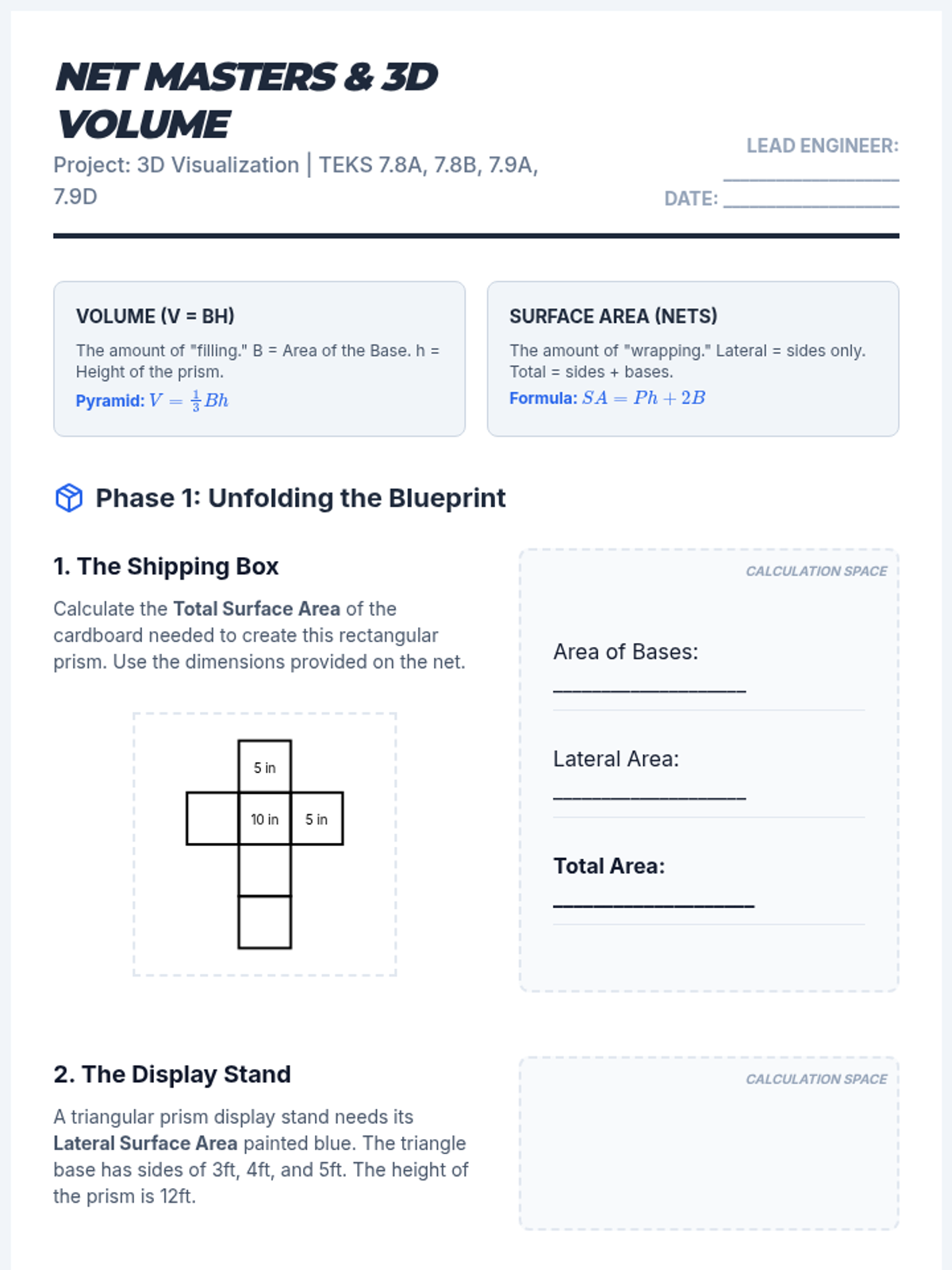
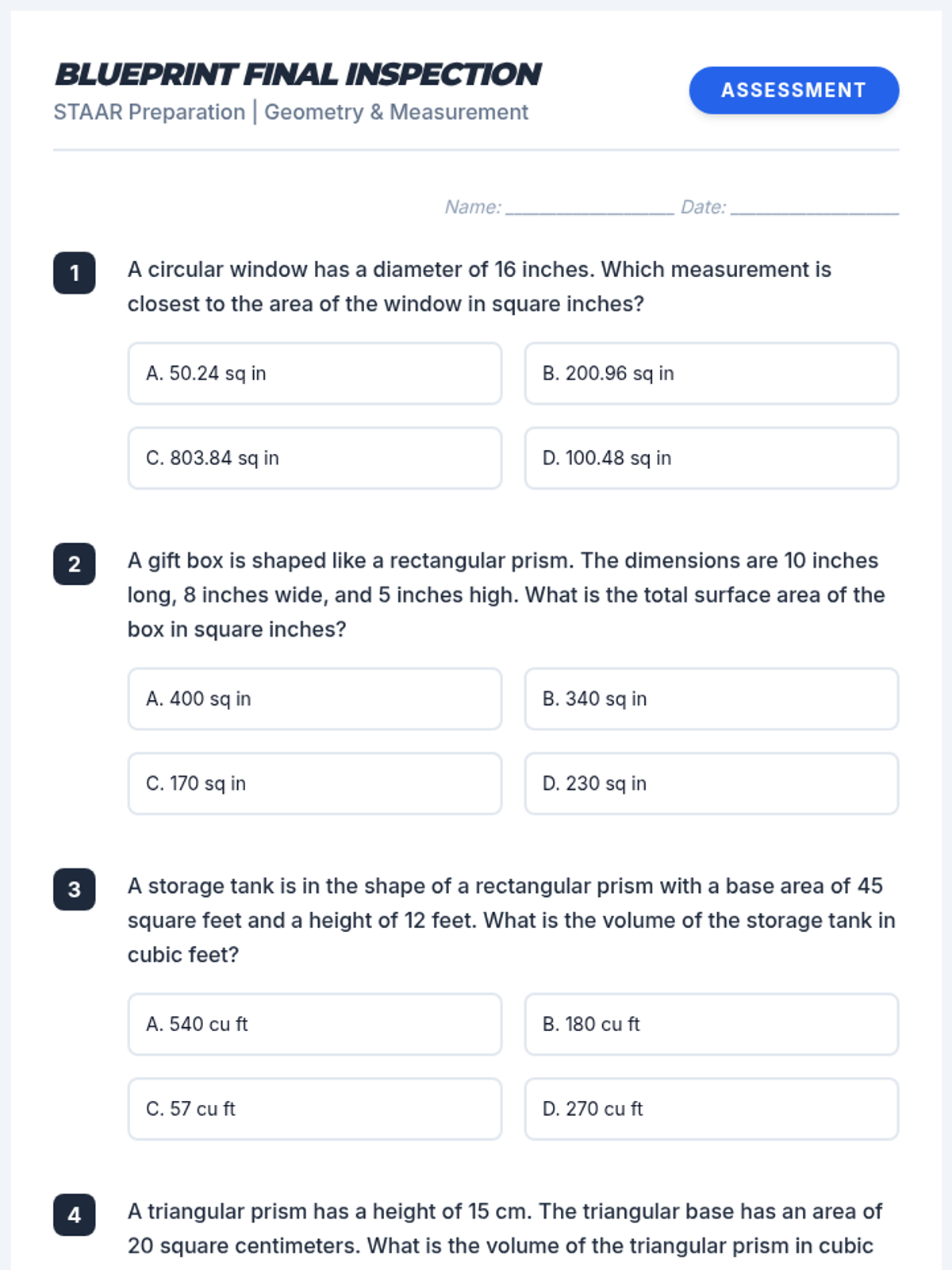
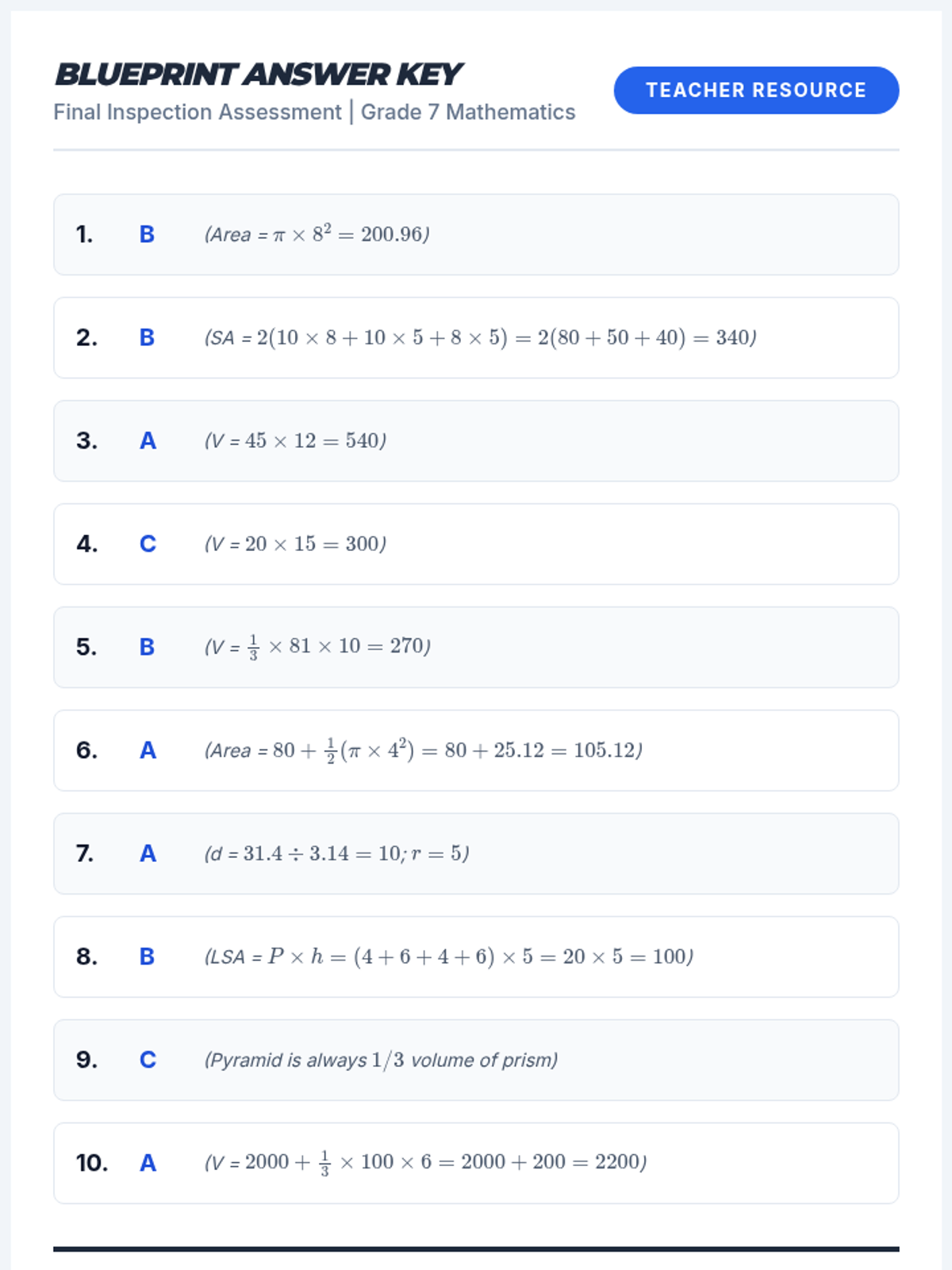
A comprehensive Grade 7 Mathematics unit focused on TEKS Reporting Category 3: Geometry and Measurement, covering circles, composite figures, and 3D measurement with a focus on spatial reasoning.
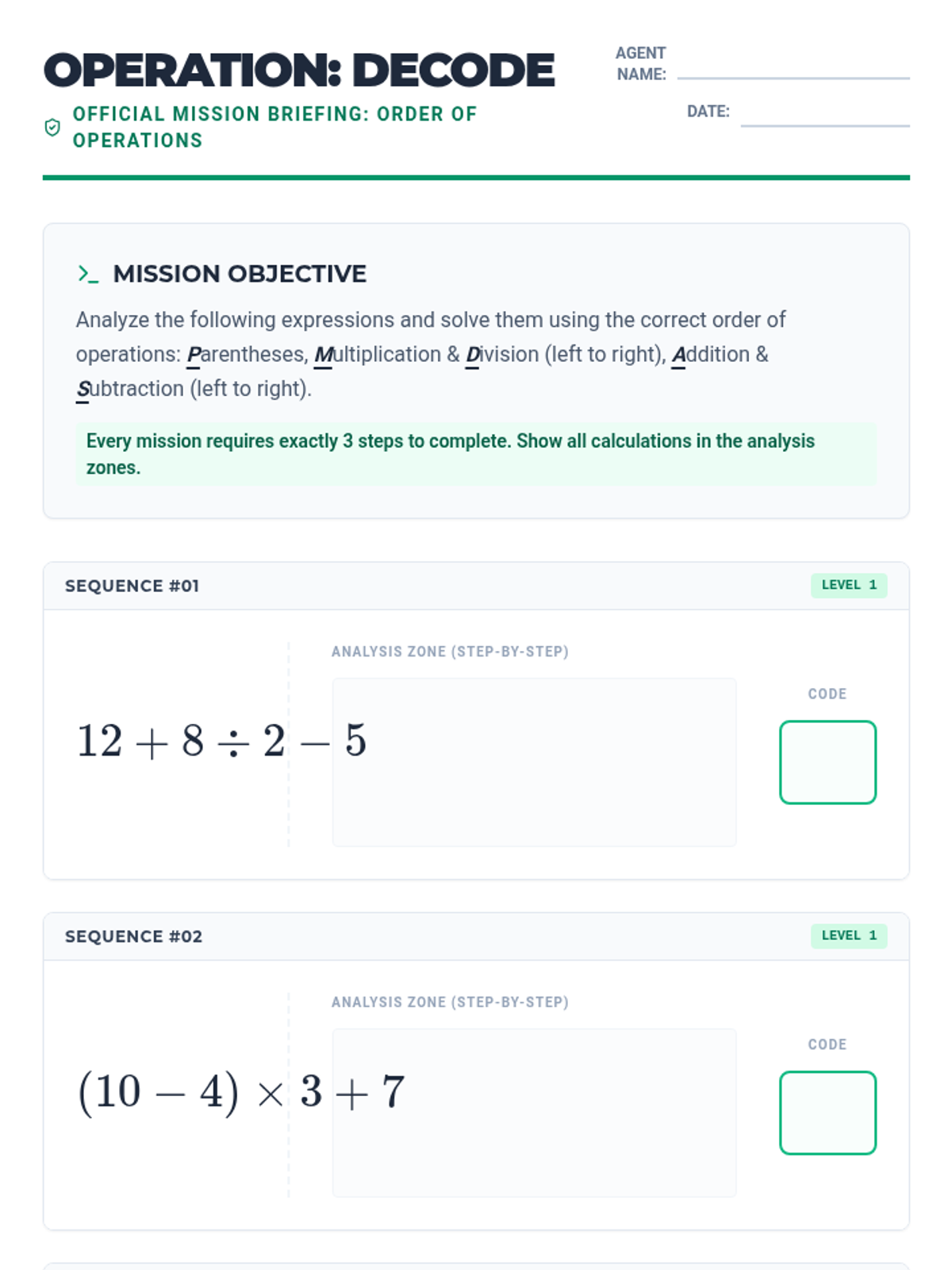
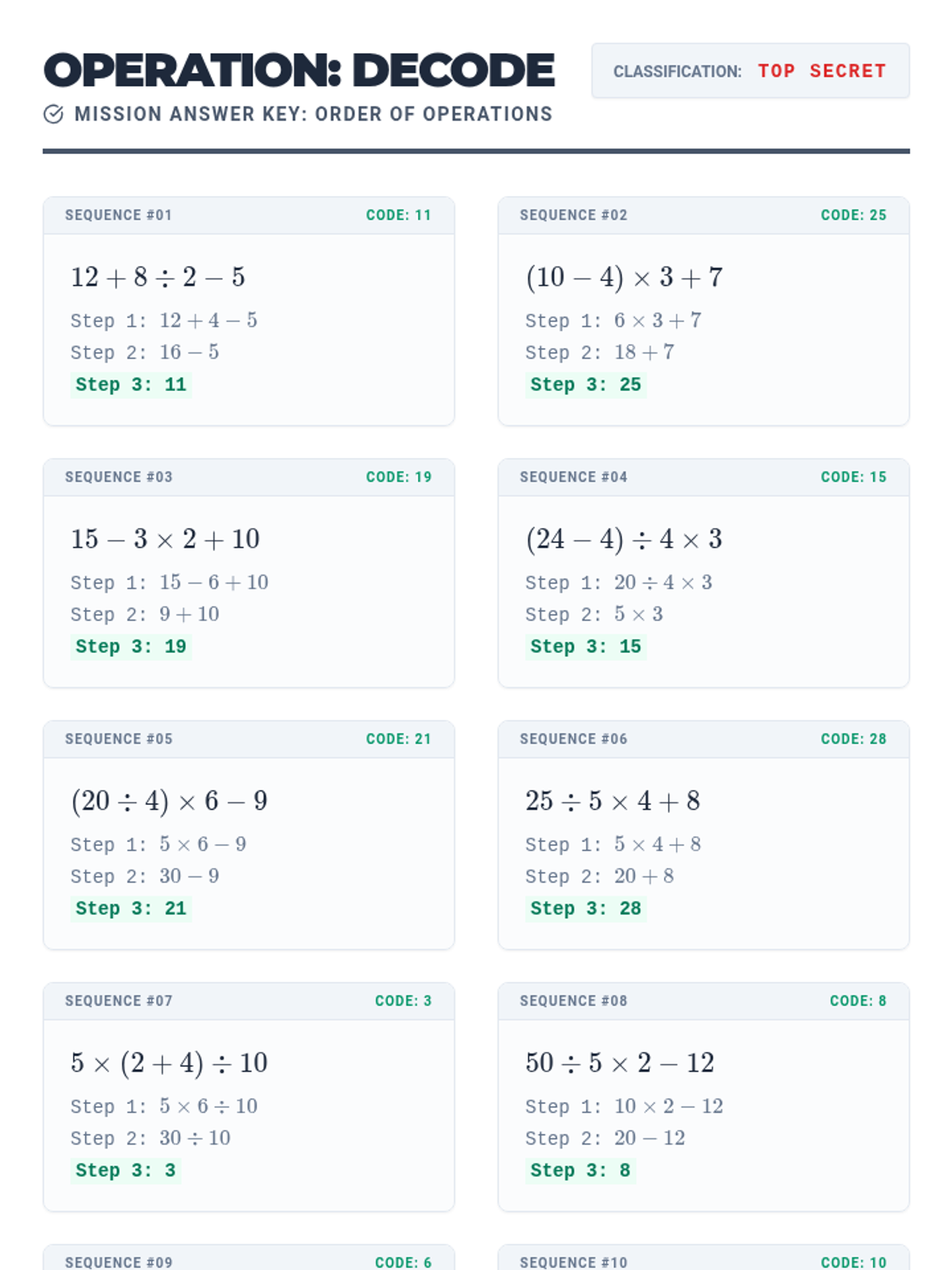
A collection of math challenges focused on operational fluency and geometric measurement.
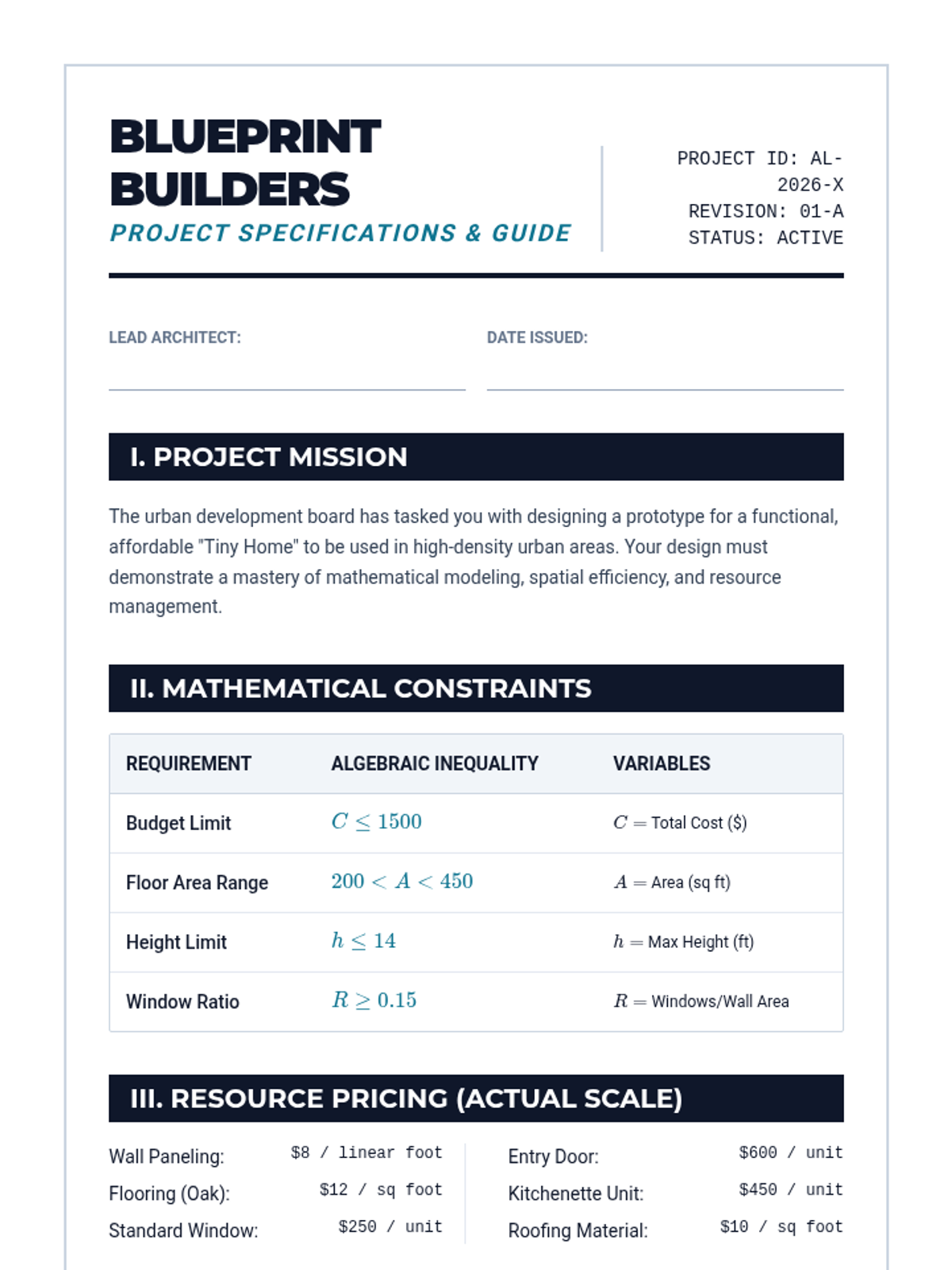
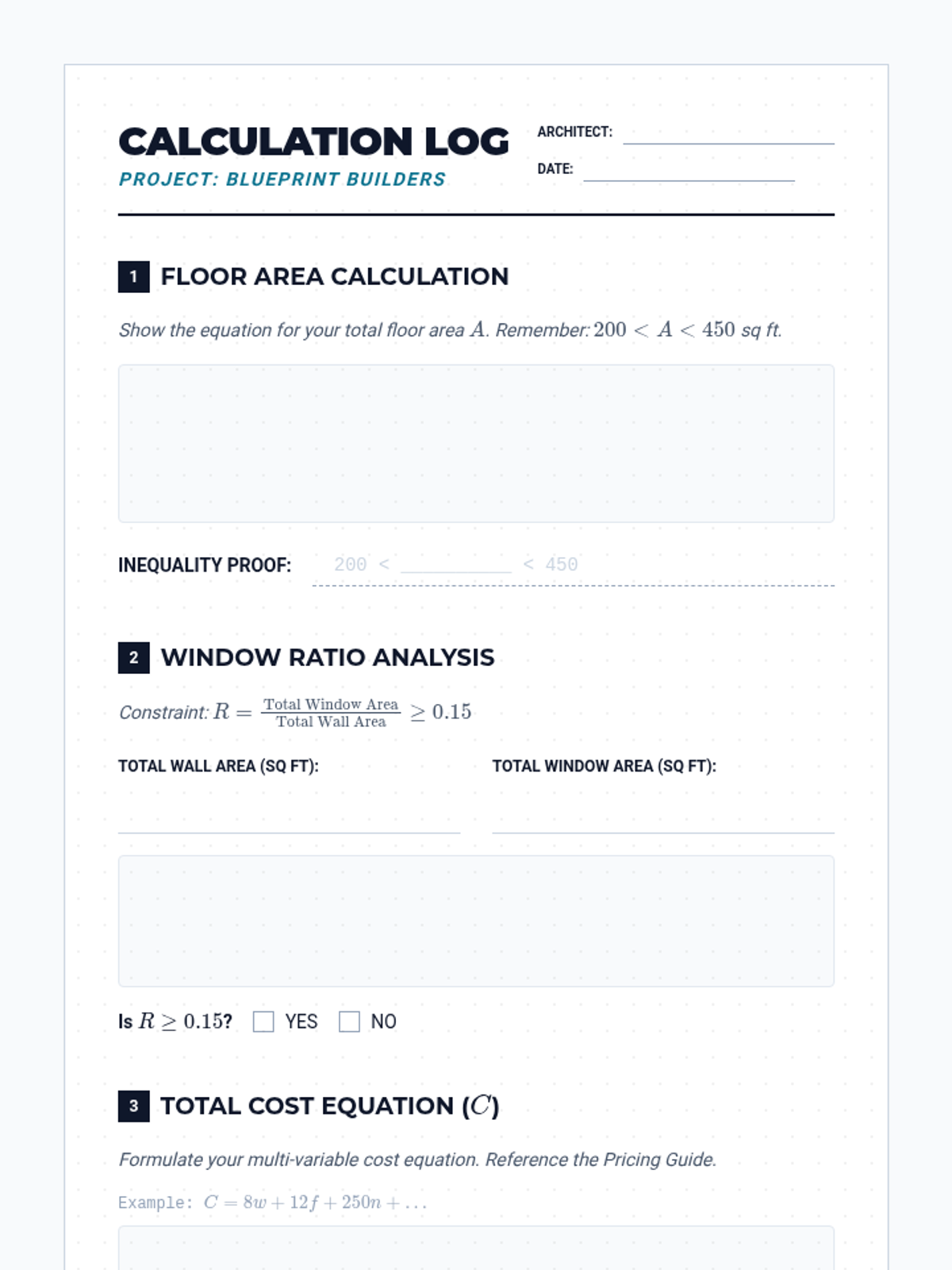
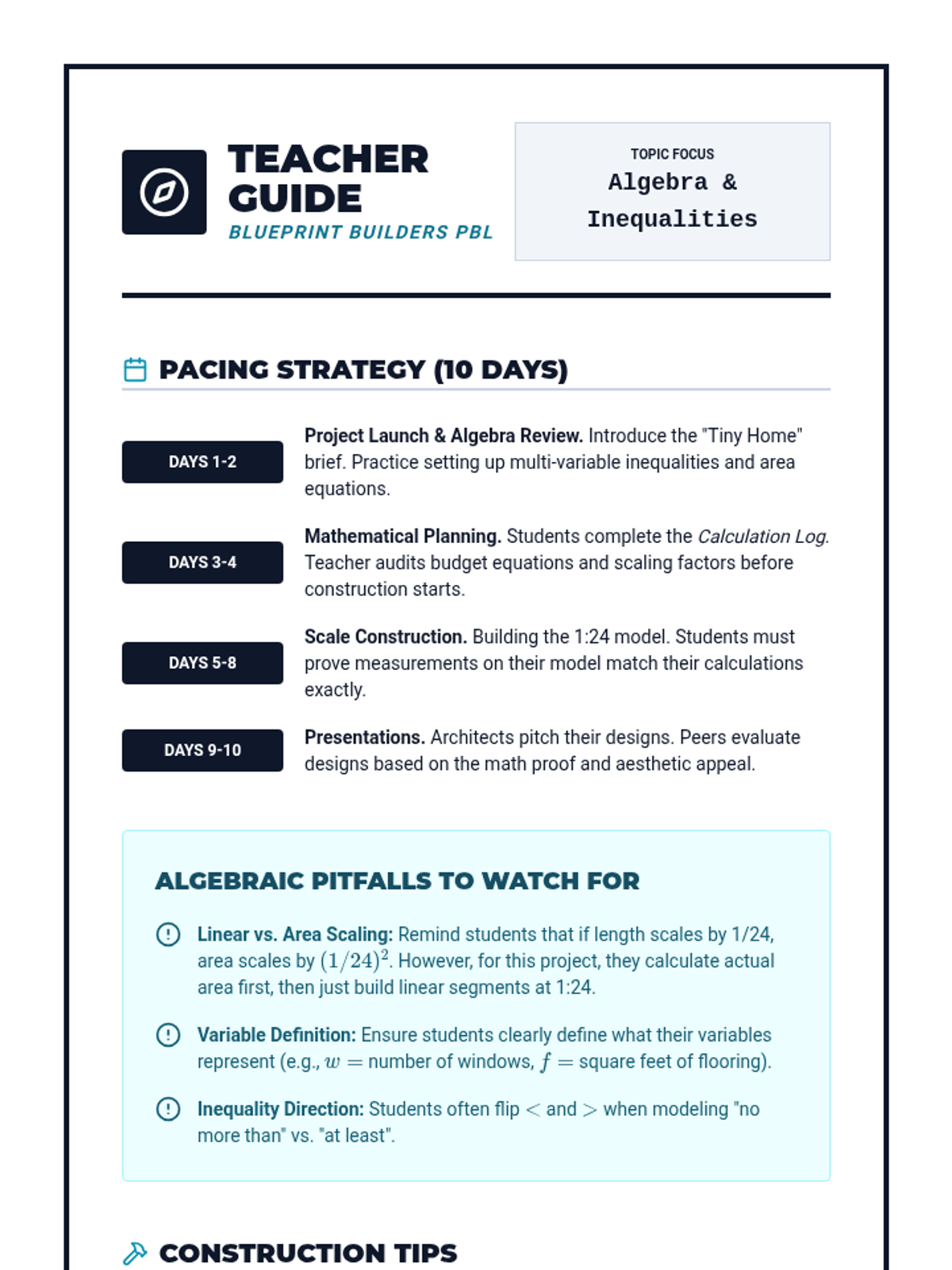
A project-based learning unit where students apply algebraic equations and inequalities to design and build a scale model of a functional living space. Students must manage budgets, spatial constraints, and material requirements using mathematical modeling.
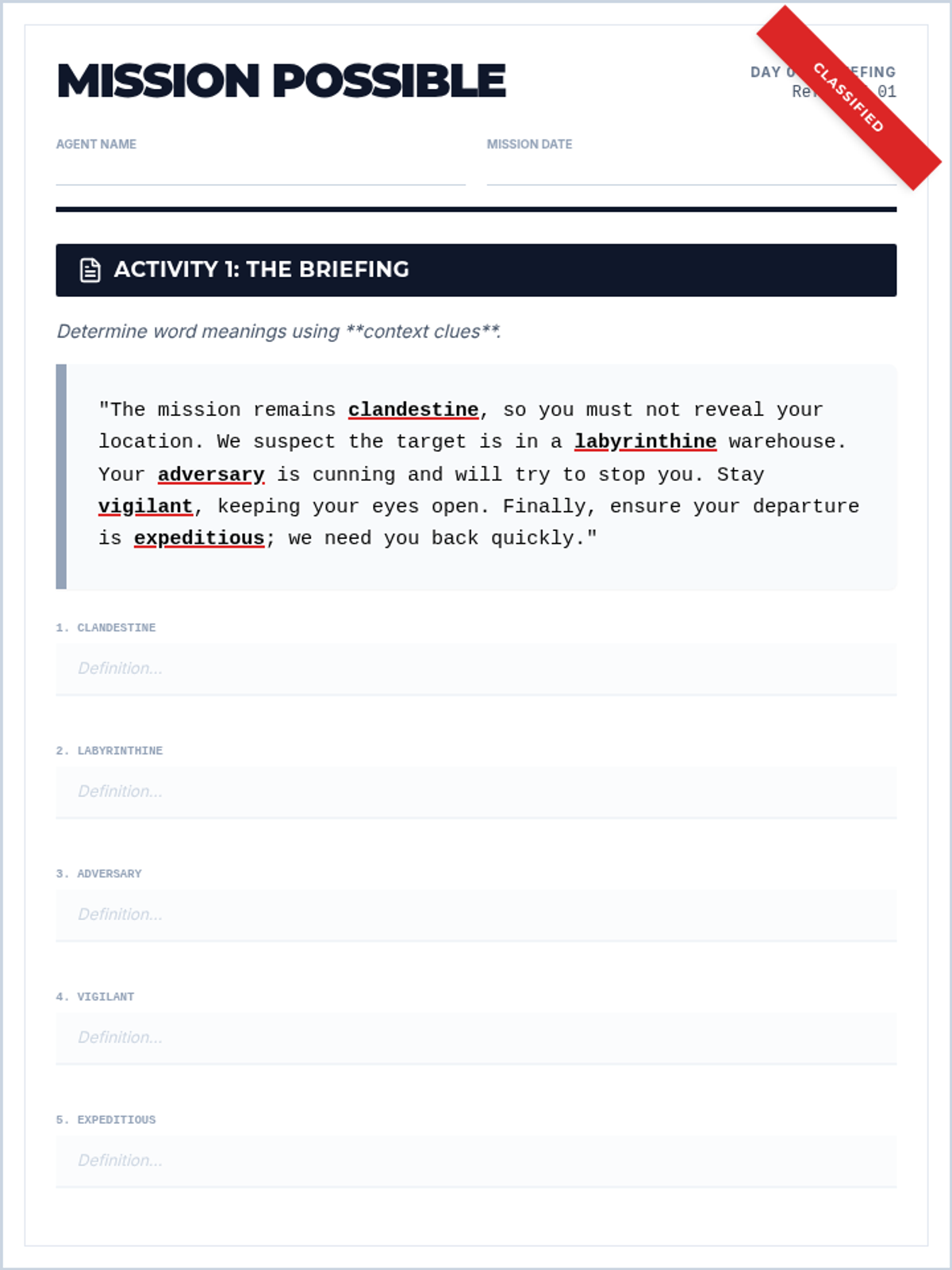
A four-day series of post-testing cooldown activities for 7th graders, featuring math, ELA, logic, and creative tasks with a 'Mission Possible' spy theme.
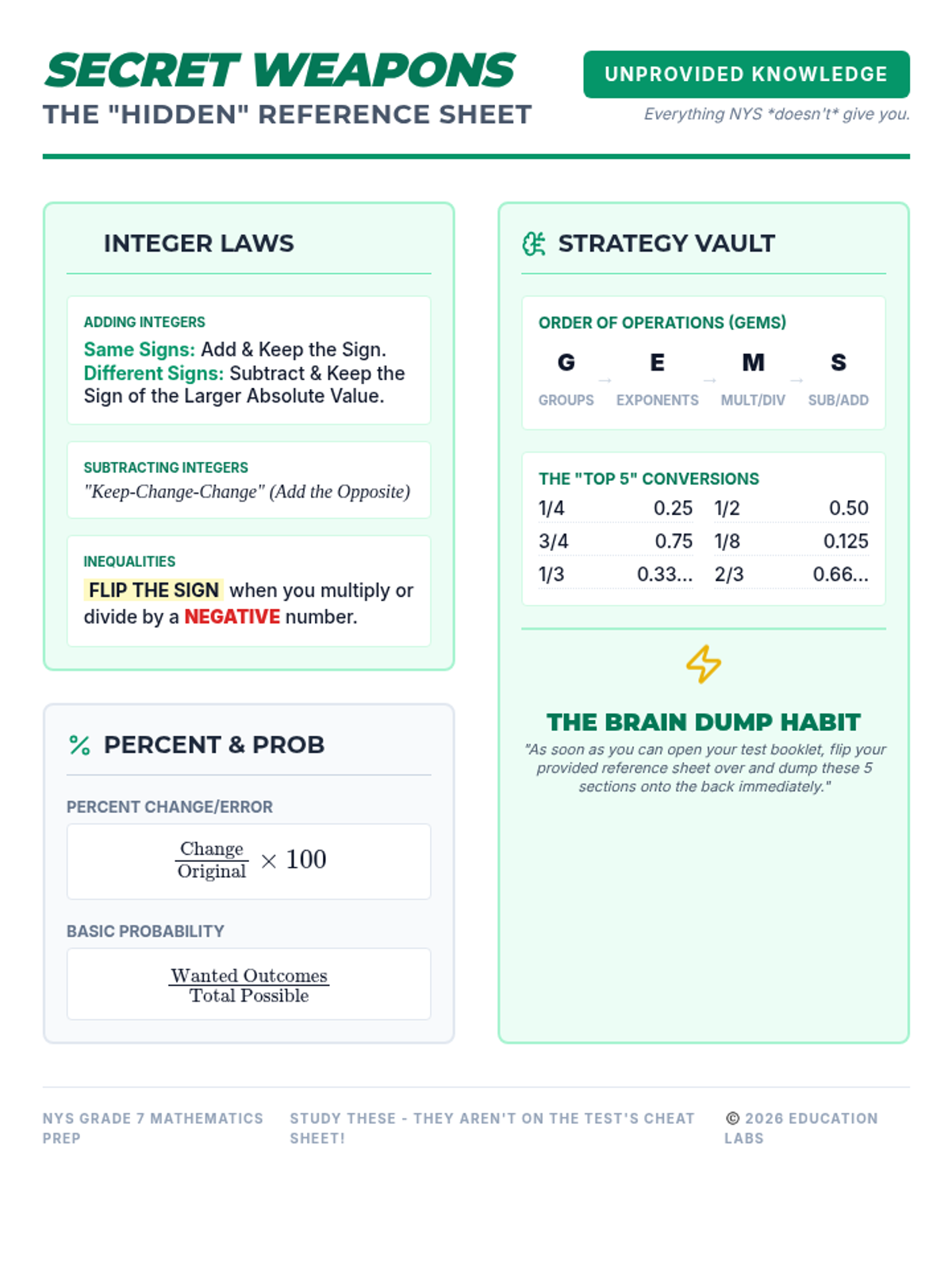
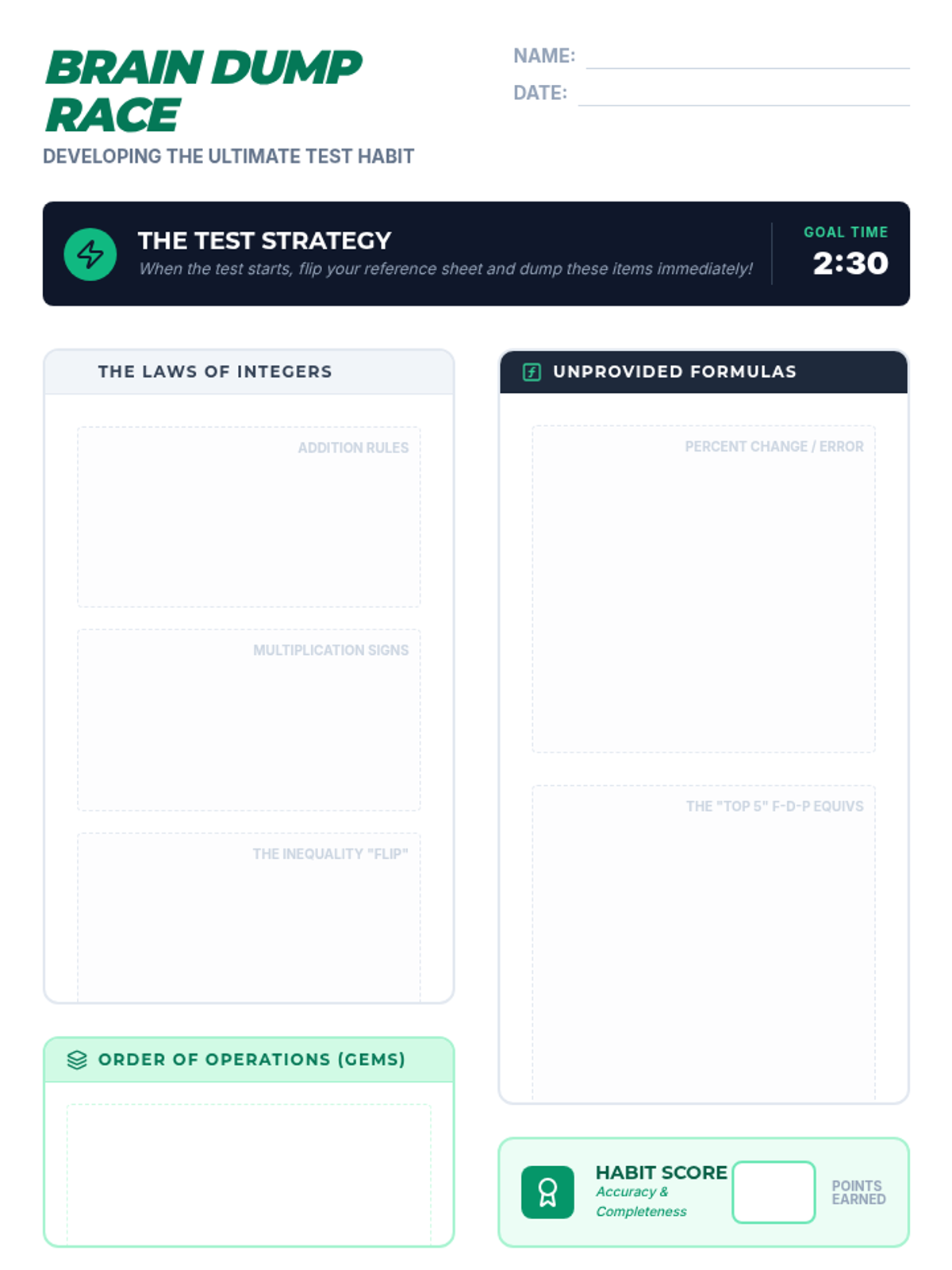
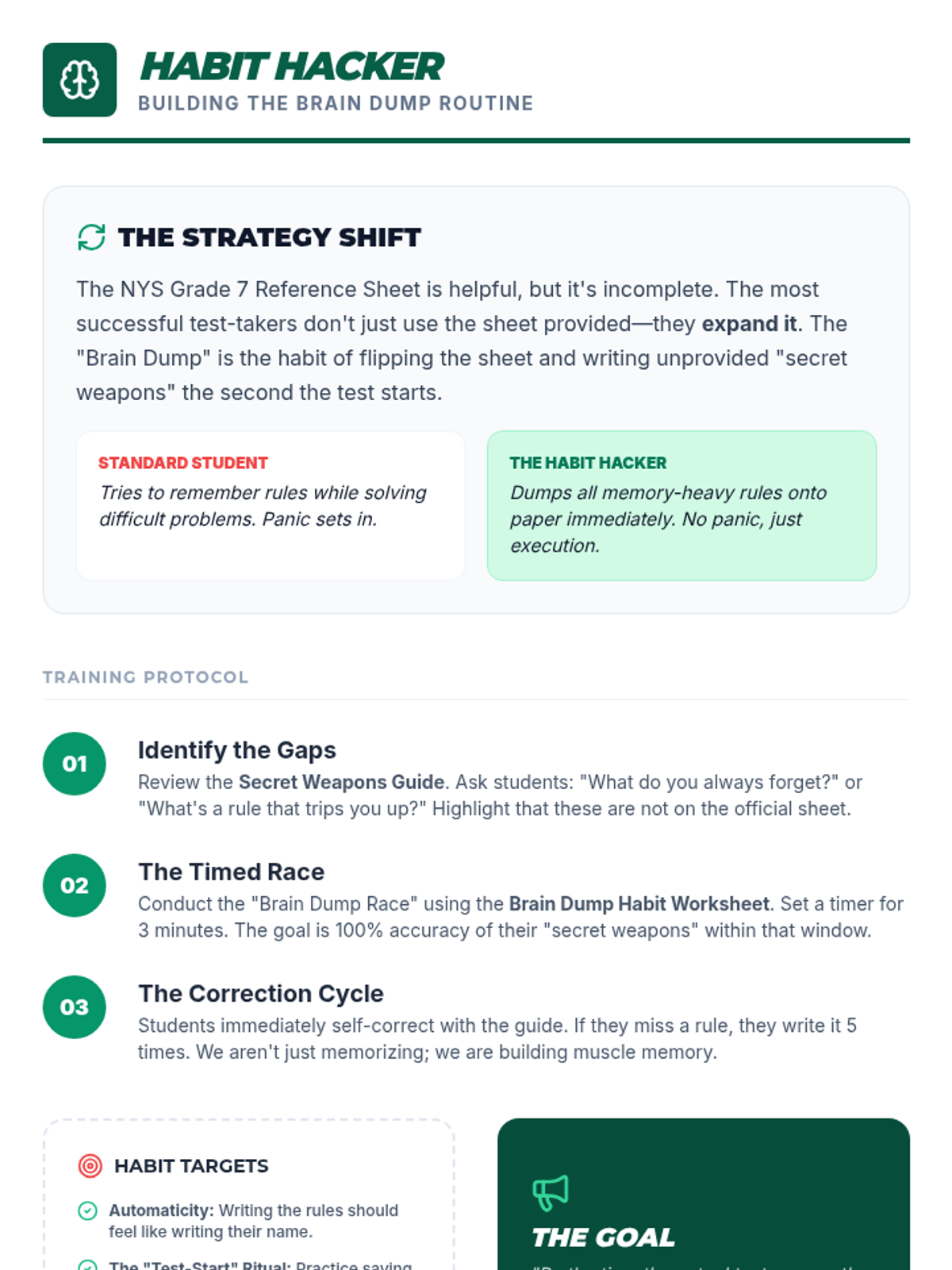
A series of focused prep sessions designed to equip 7th-grade students with the tools and strategies needed for the New York State Math Assessment. This sequence emphasizes reference sheet familiarity, test-taking endurance, and conceptual review.
A series of targeted review lessons designed to prepare 7th-grade students for state assessments in mathematics, covering all major clusters including Ratios, Number Systems, and Geometry.
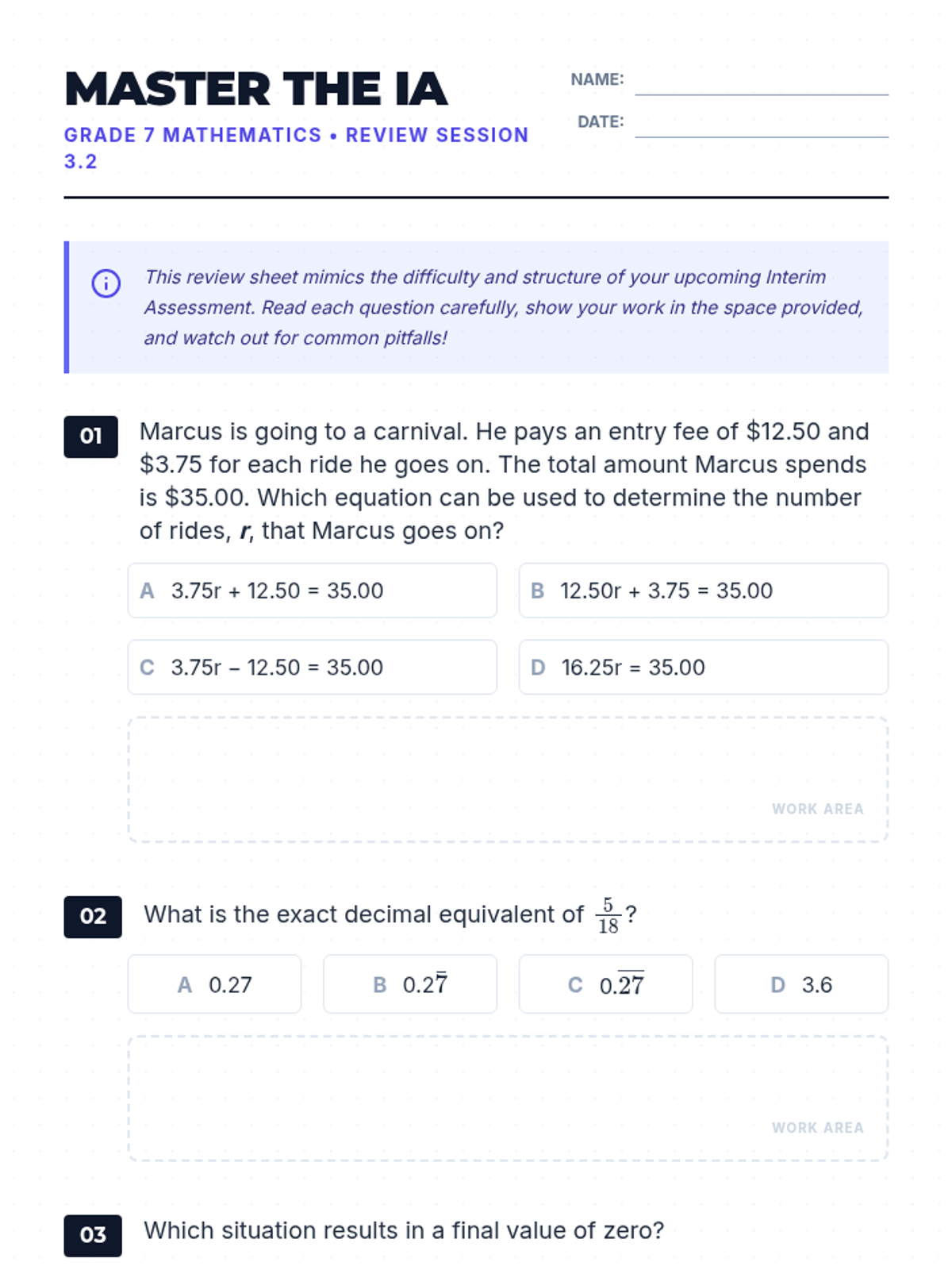
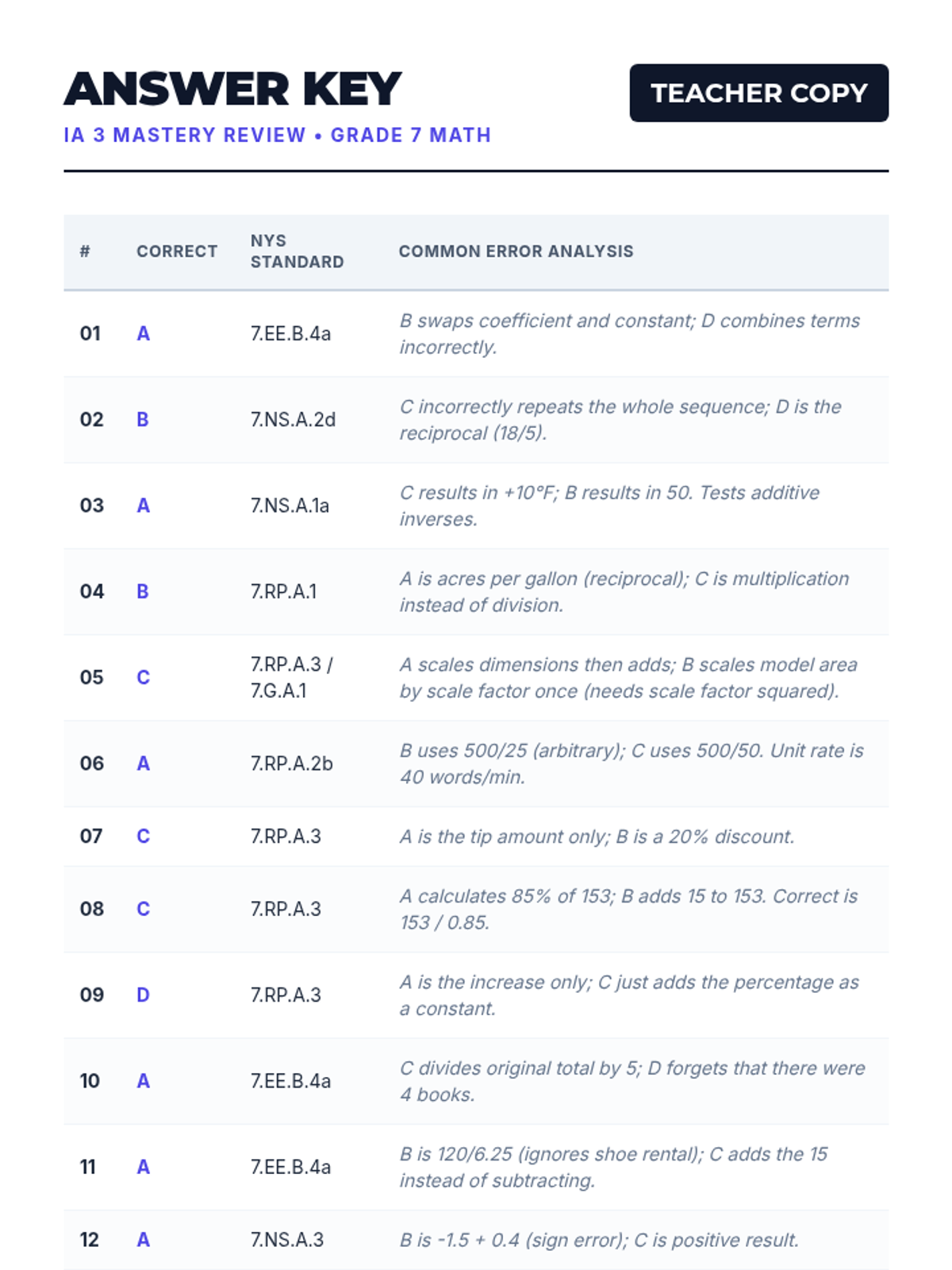
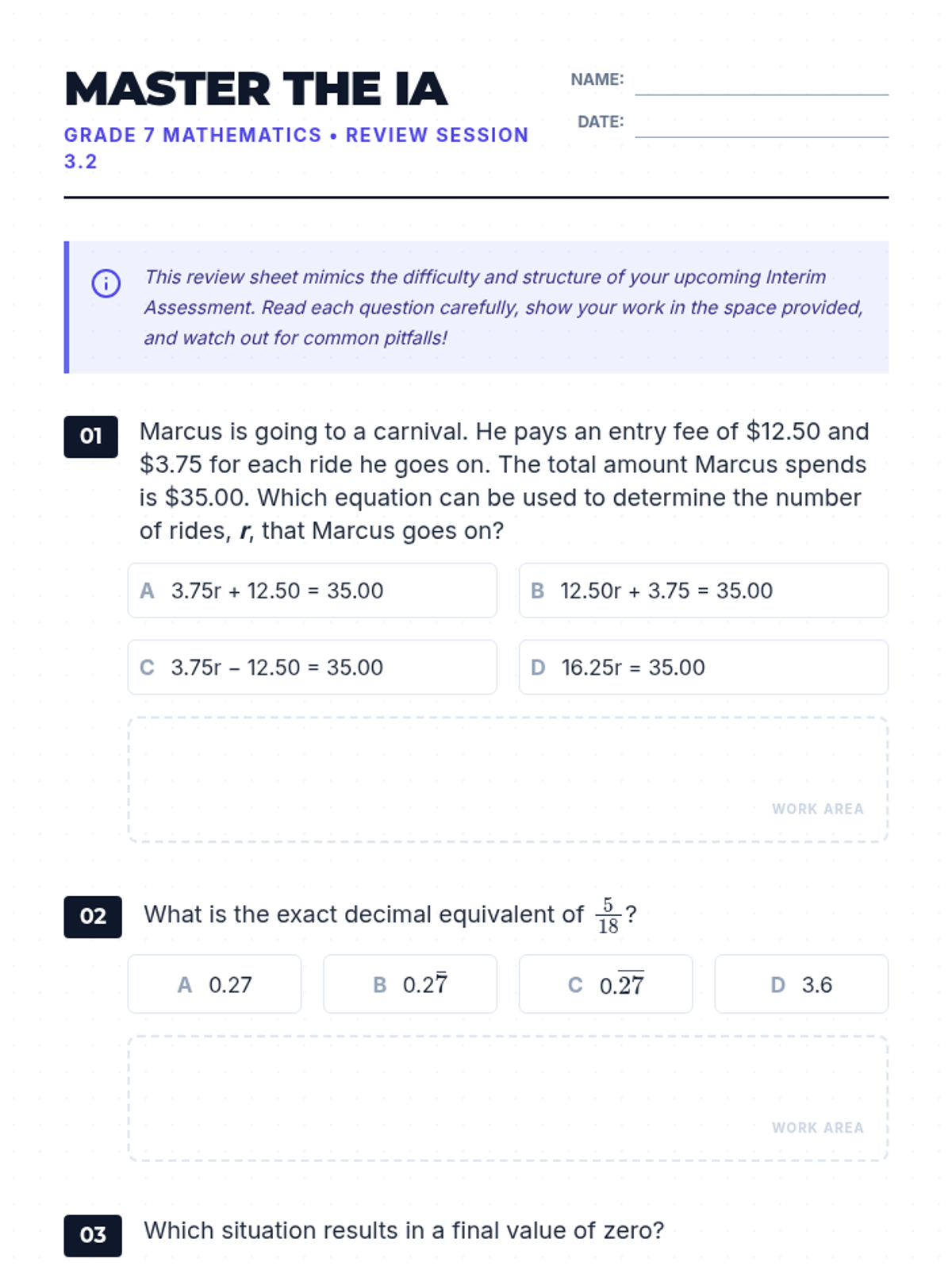
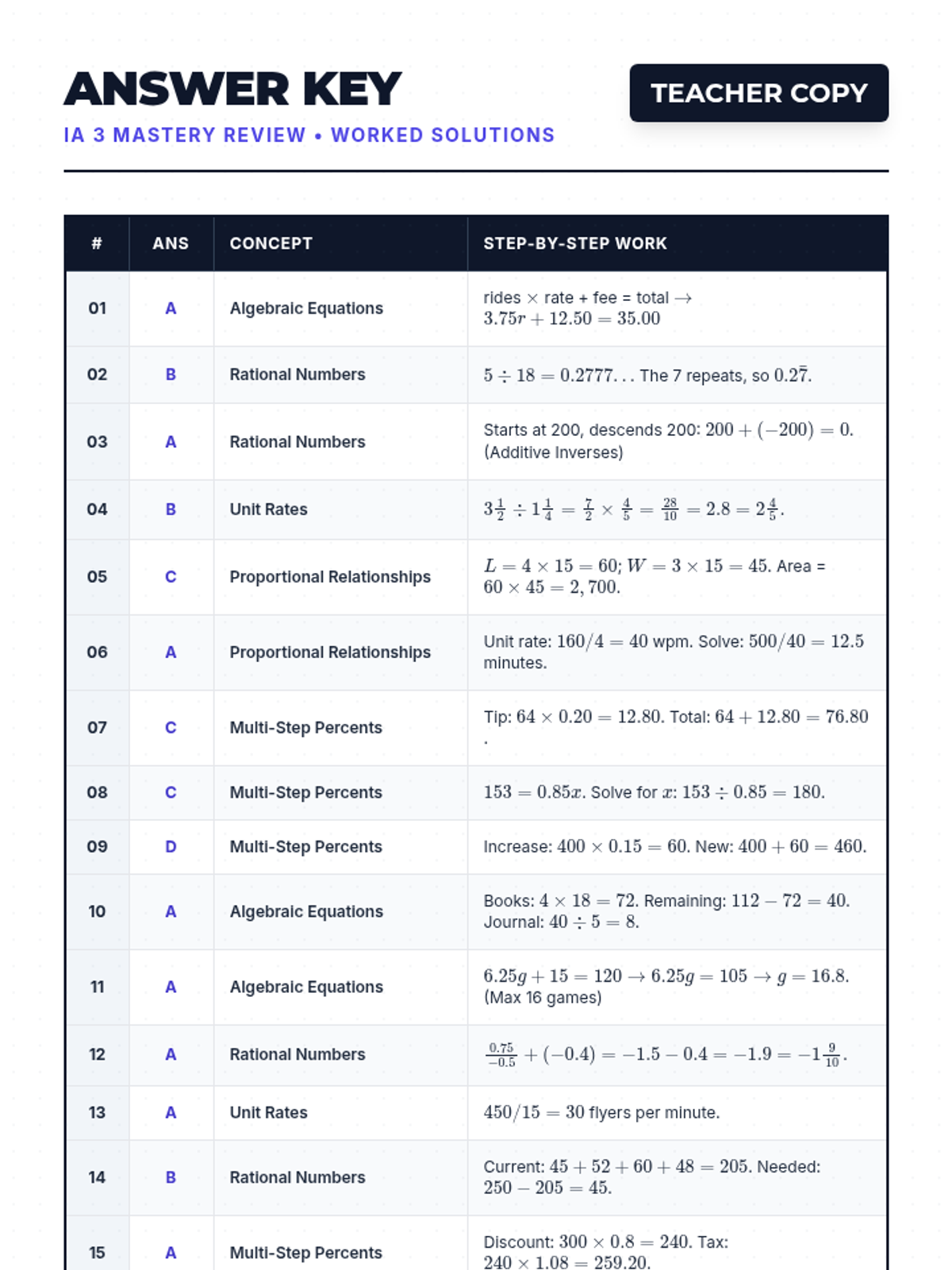
A comprehensive review for the Grade 7 Math Interim Assessment 3, covering algebraic equations, proportional relationships, rational numbers, and multi-step percent problems.
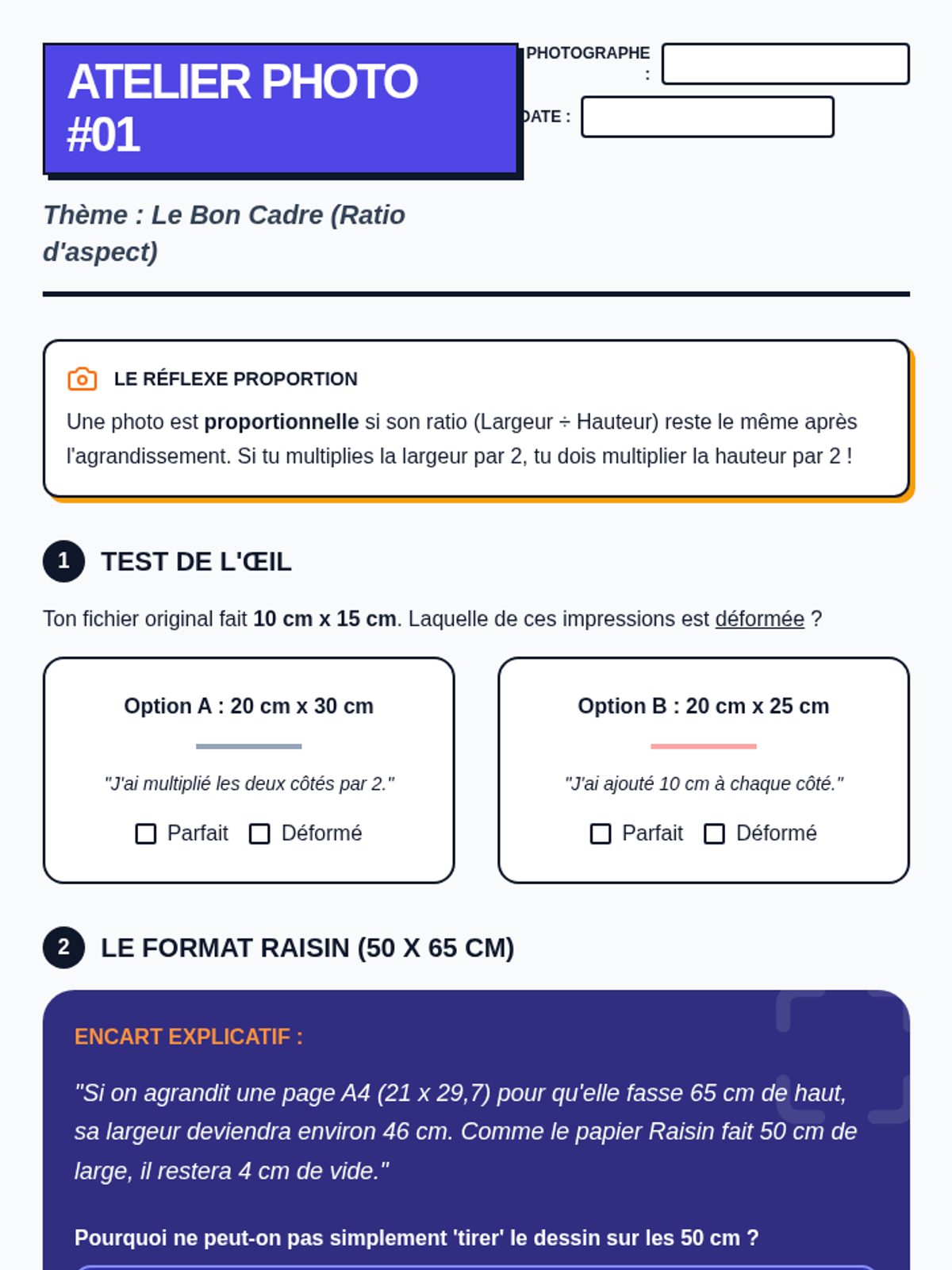
Une série de micro-leçons de 10 minutes centrée sur l'optimisation de l'espace papier. Les élèves apprennent à mettre à l'échelle une mise en page de 6 photos (format A4) vers le format Raisin (50x65 cm) en minimisant les chutes.
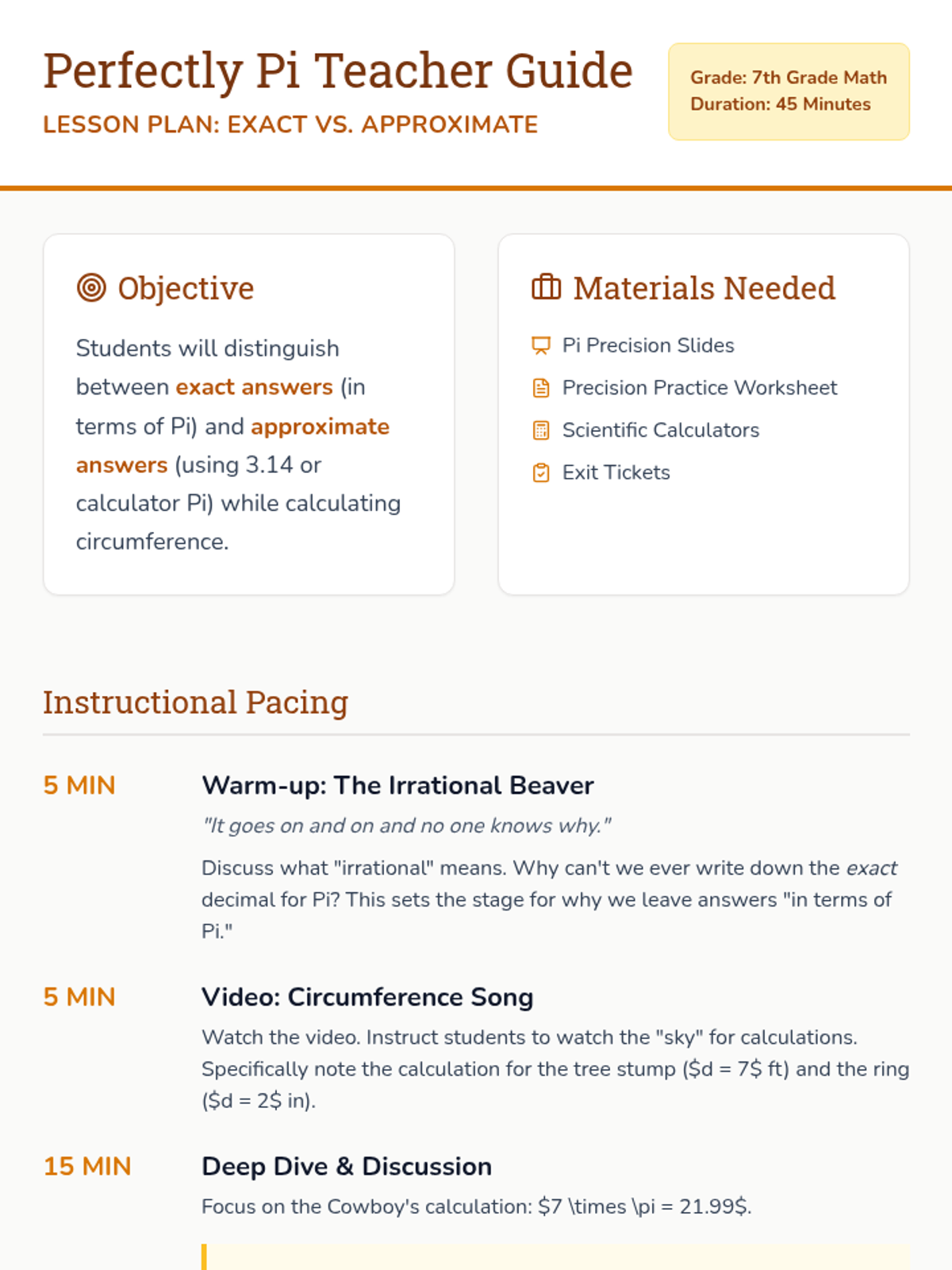
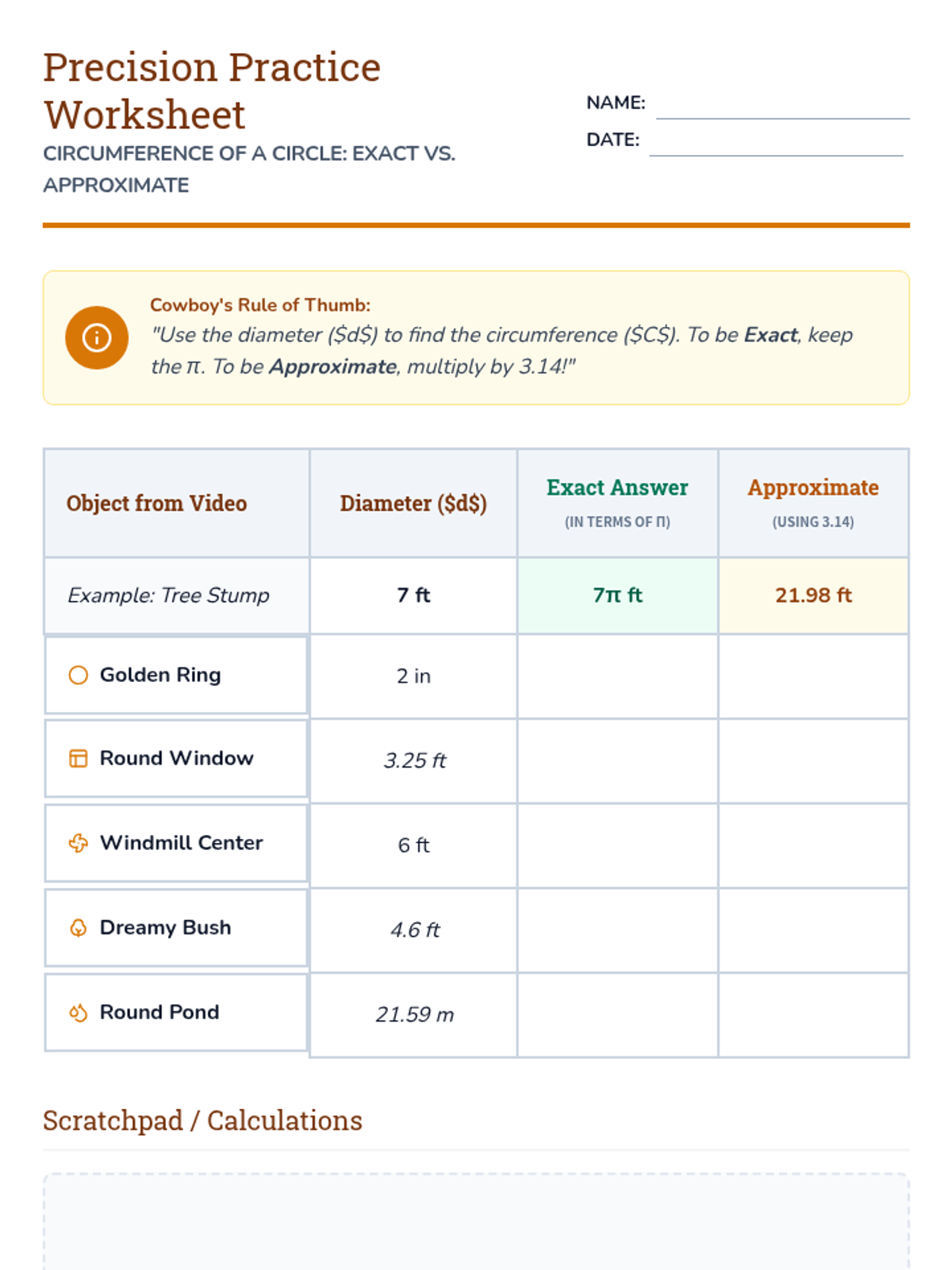
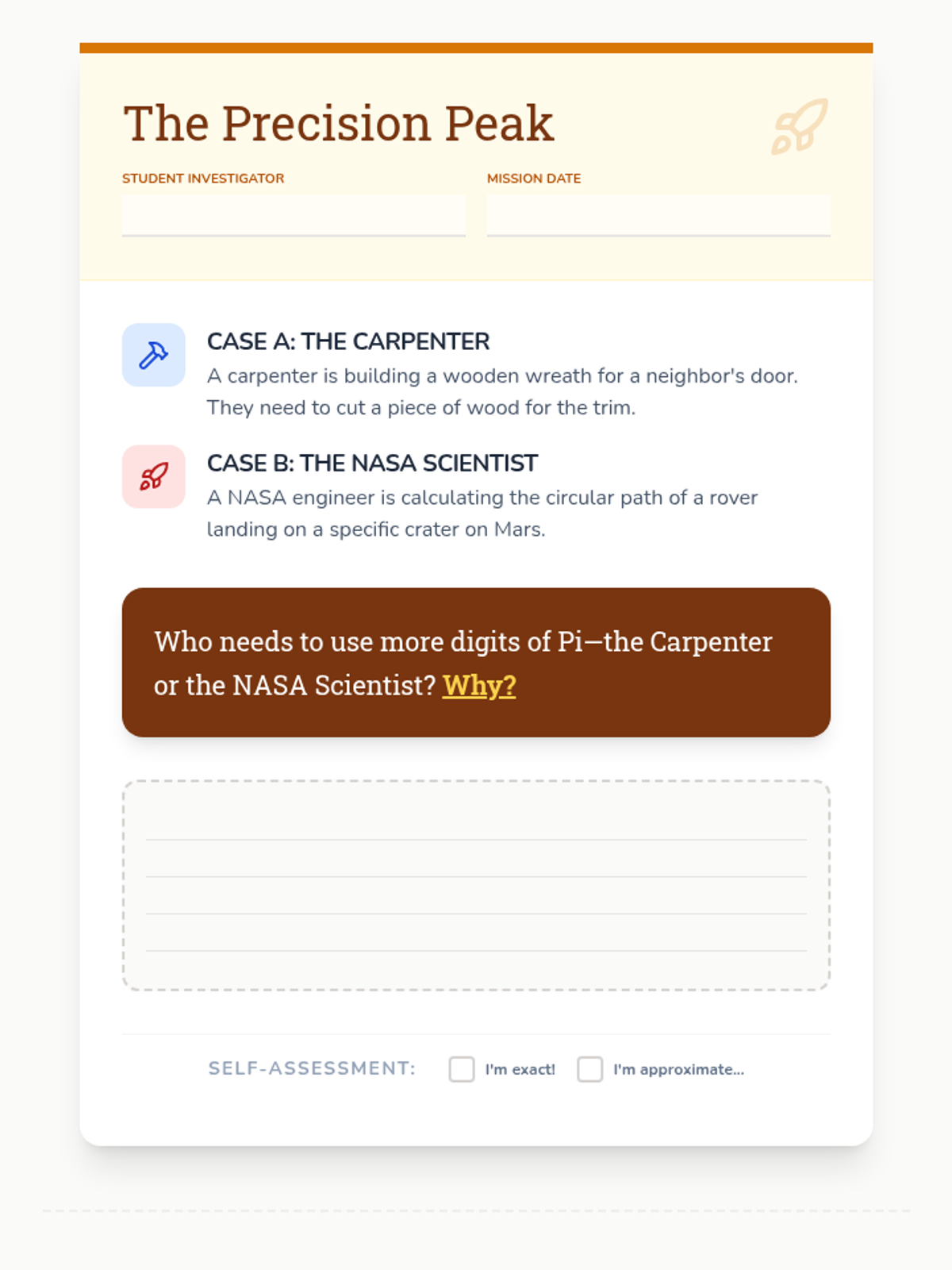
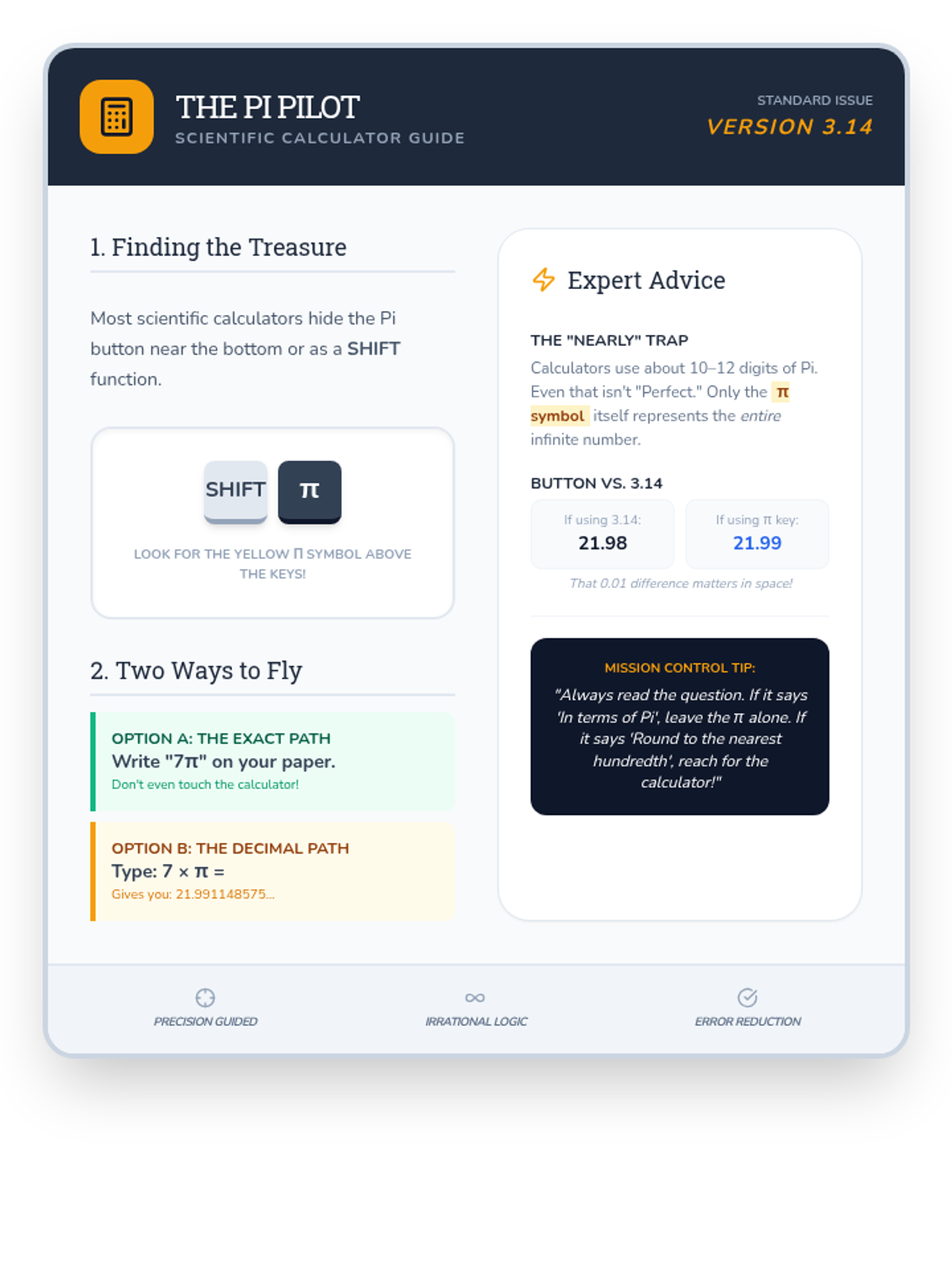
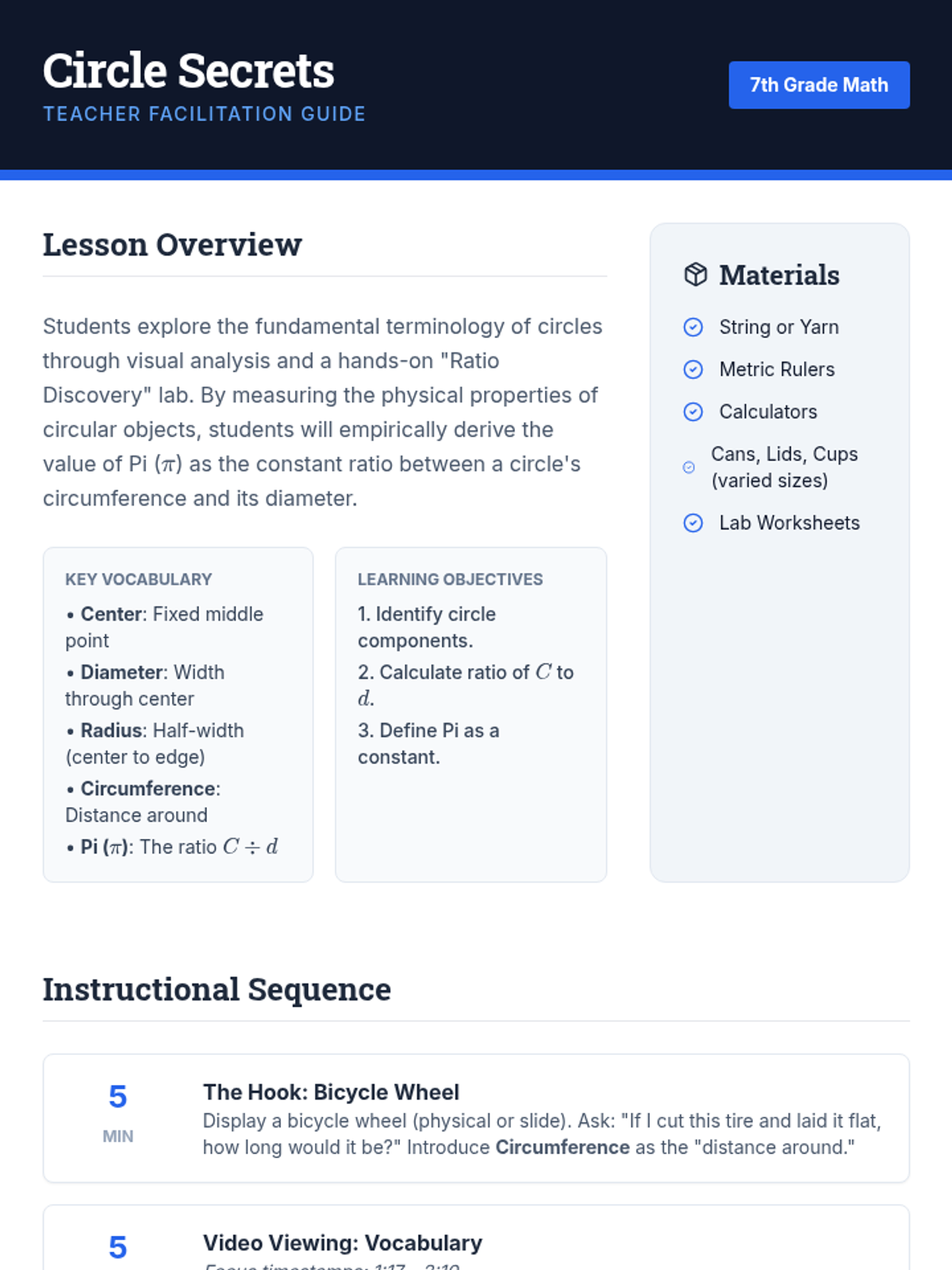
A 7th-grade math lesson focused on the distinction between exact values in terms of Pi and decimal approximations using circumference calculations from the 'Circumference Song'.
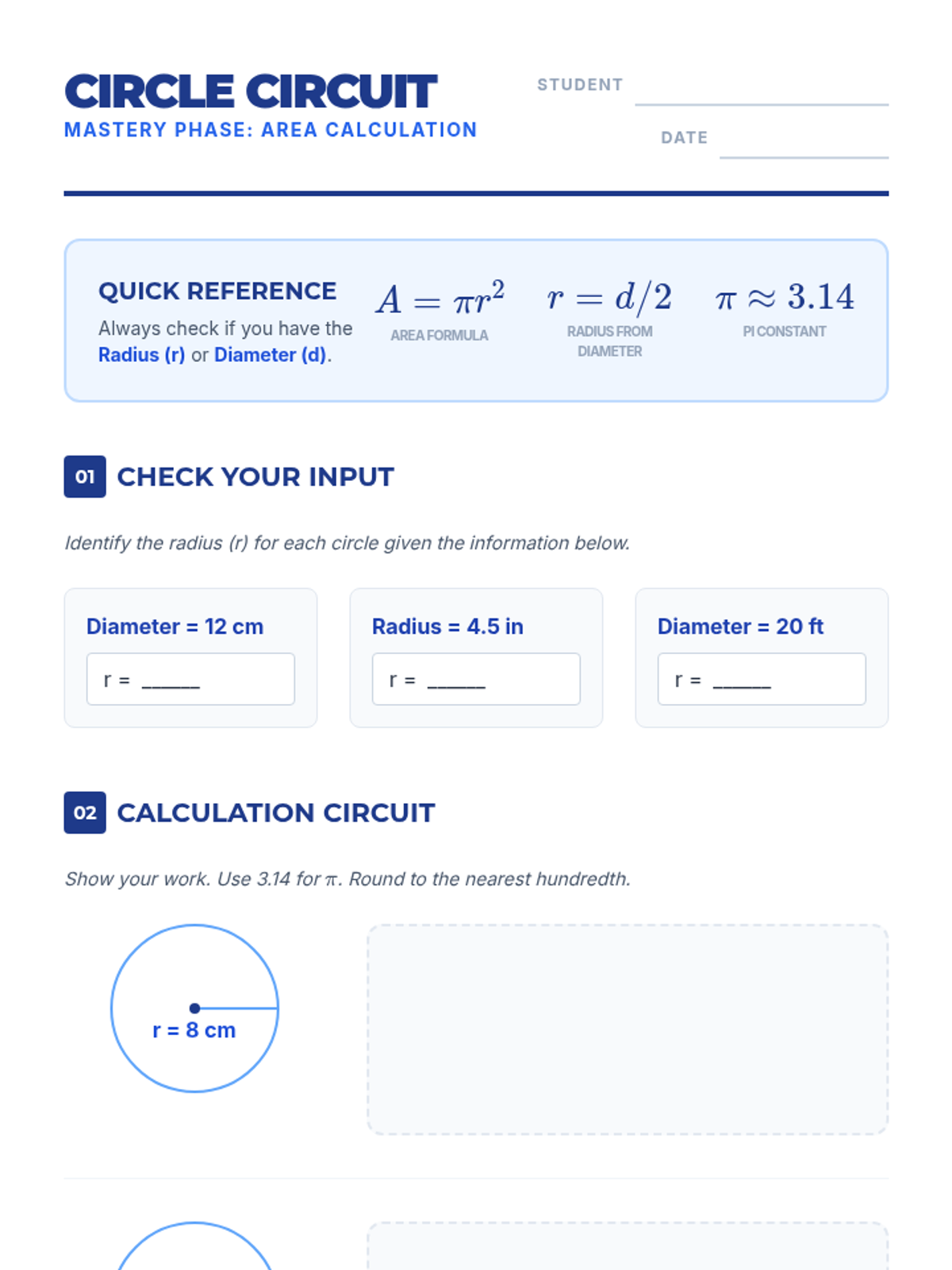
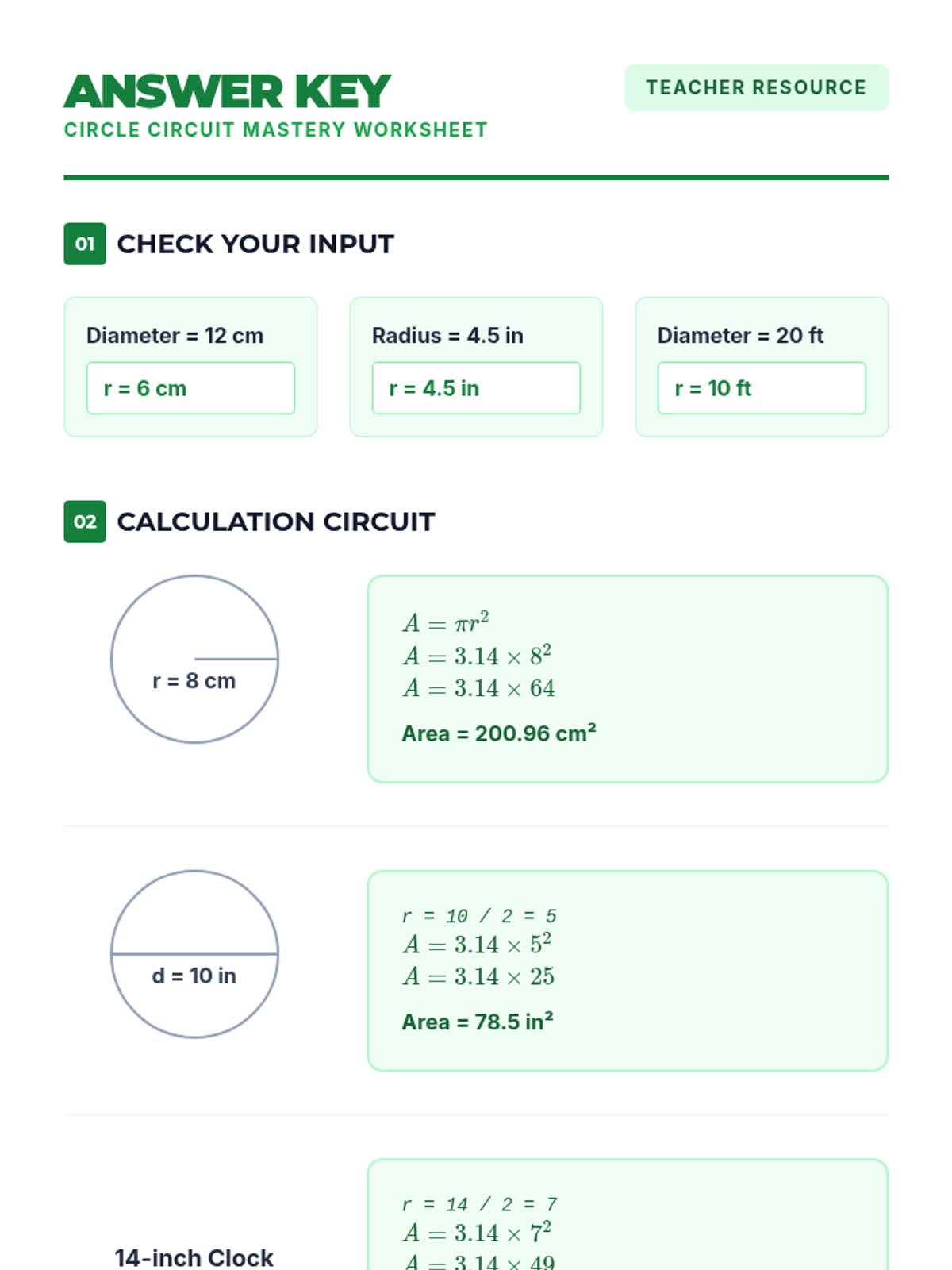
A mathematics sequence focusing on geometry, circles, and the calculation of circumference and area for middle school students.
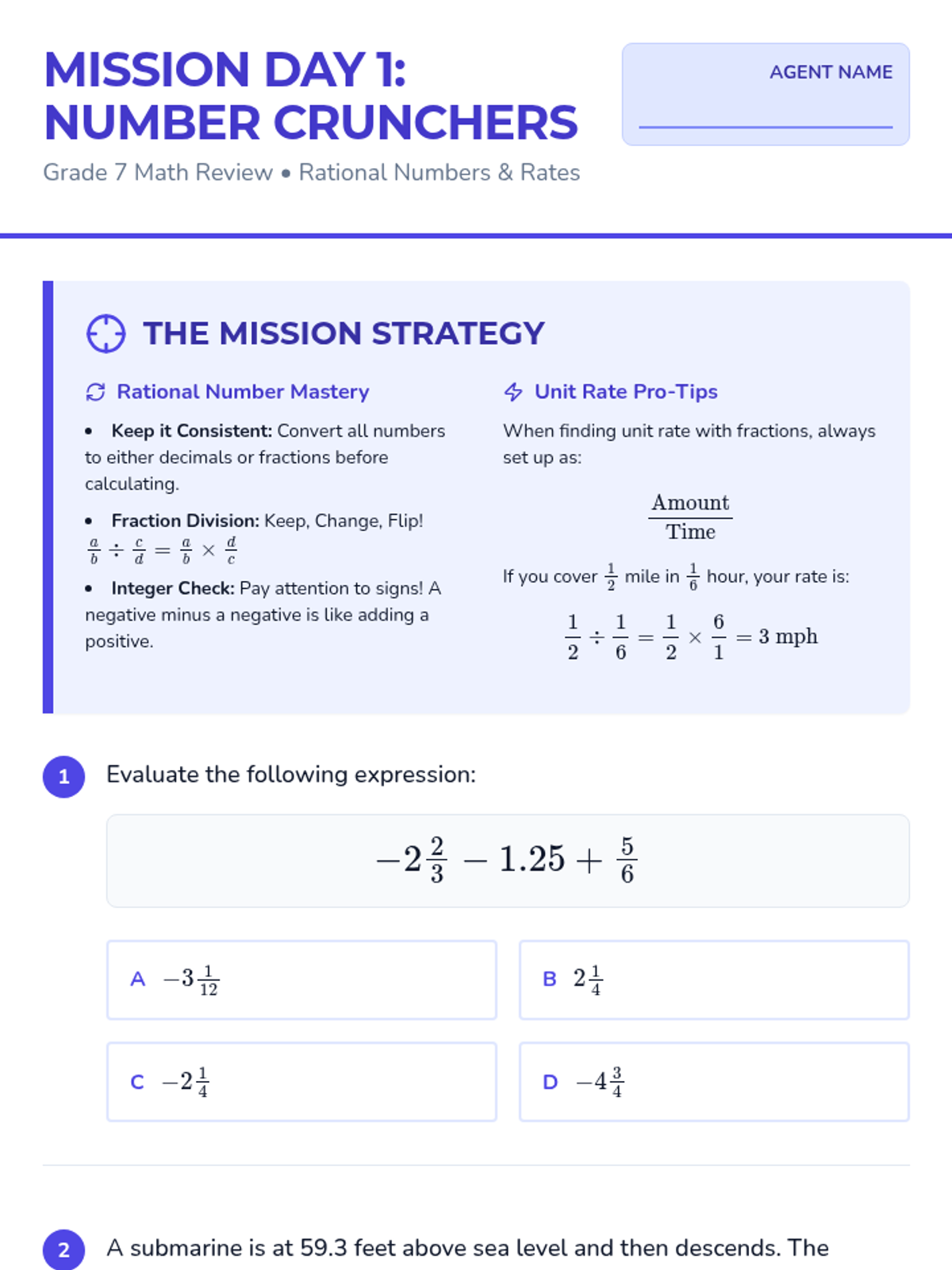
A comprehensive 5-day review program designed to prepare students for the Grade 7 Math Interim Assessment 3. Each day covers a key domain through targeted explanations, pro-tips, and practice problems focusing on rational numbers, expressions, equations, proportions, percents, and circles.
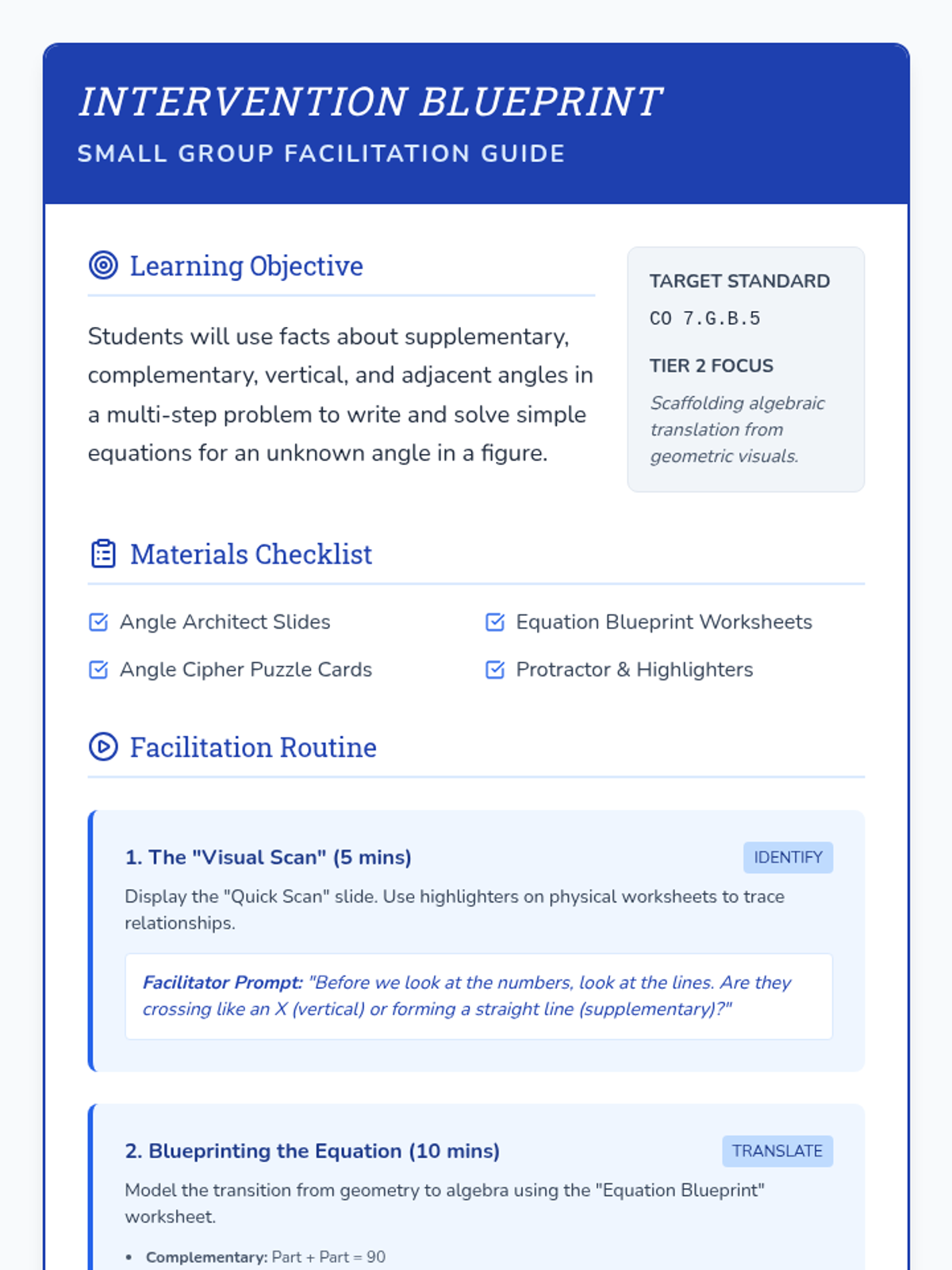
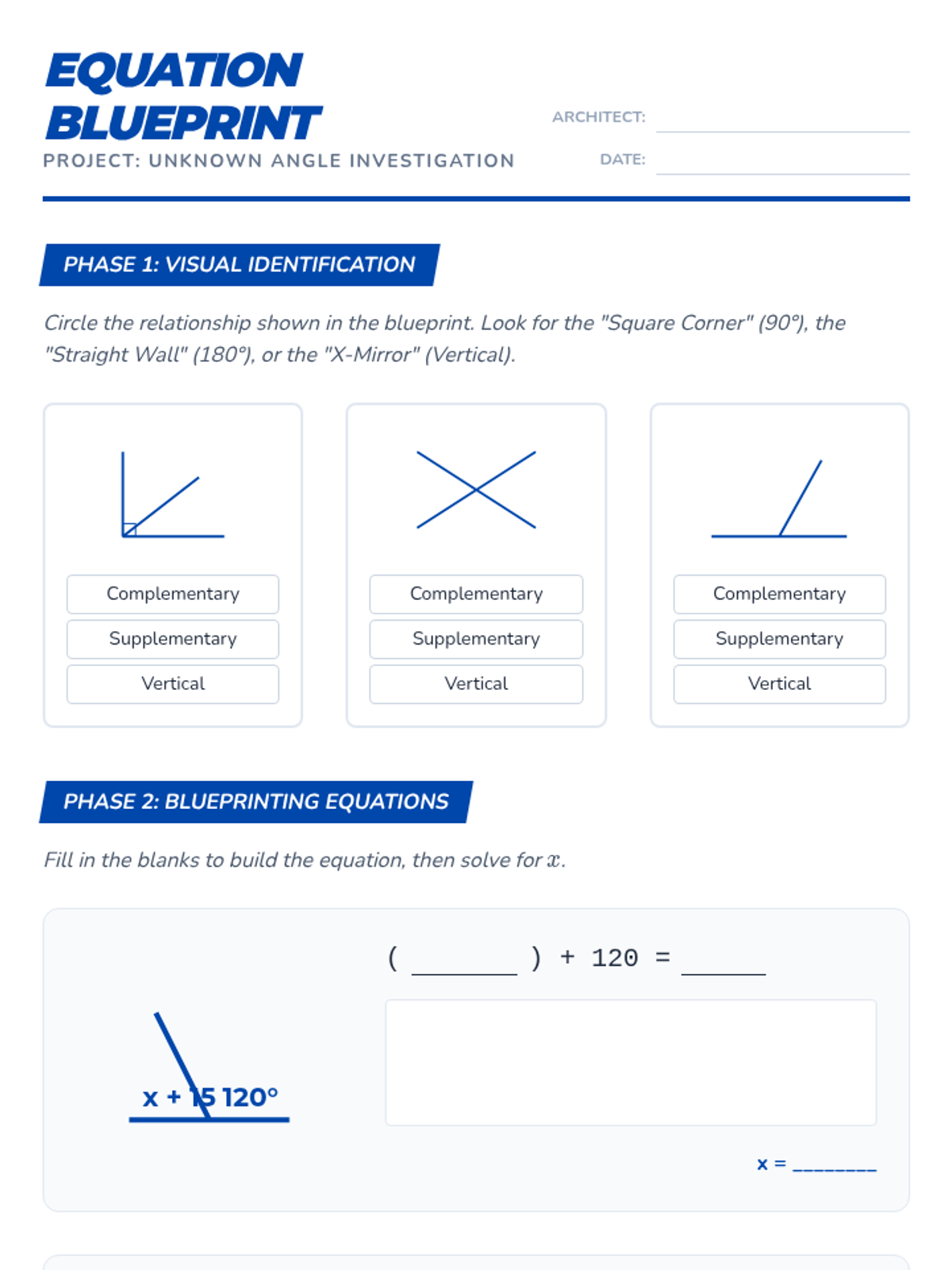
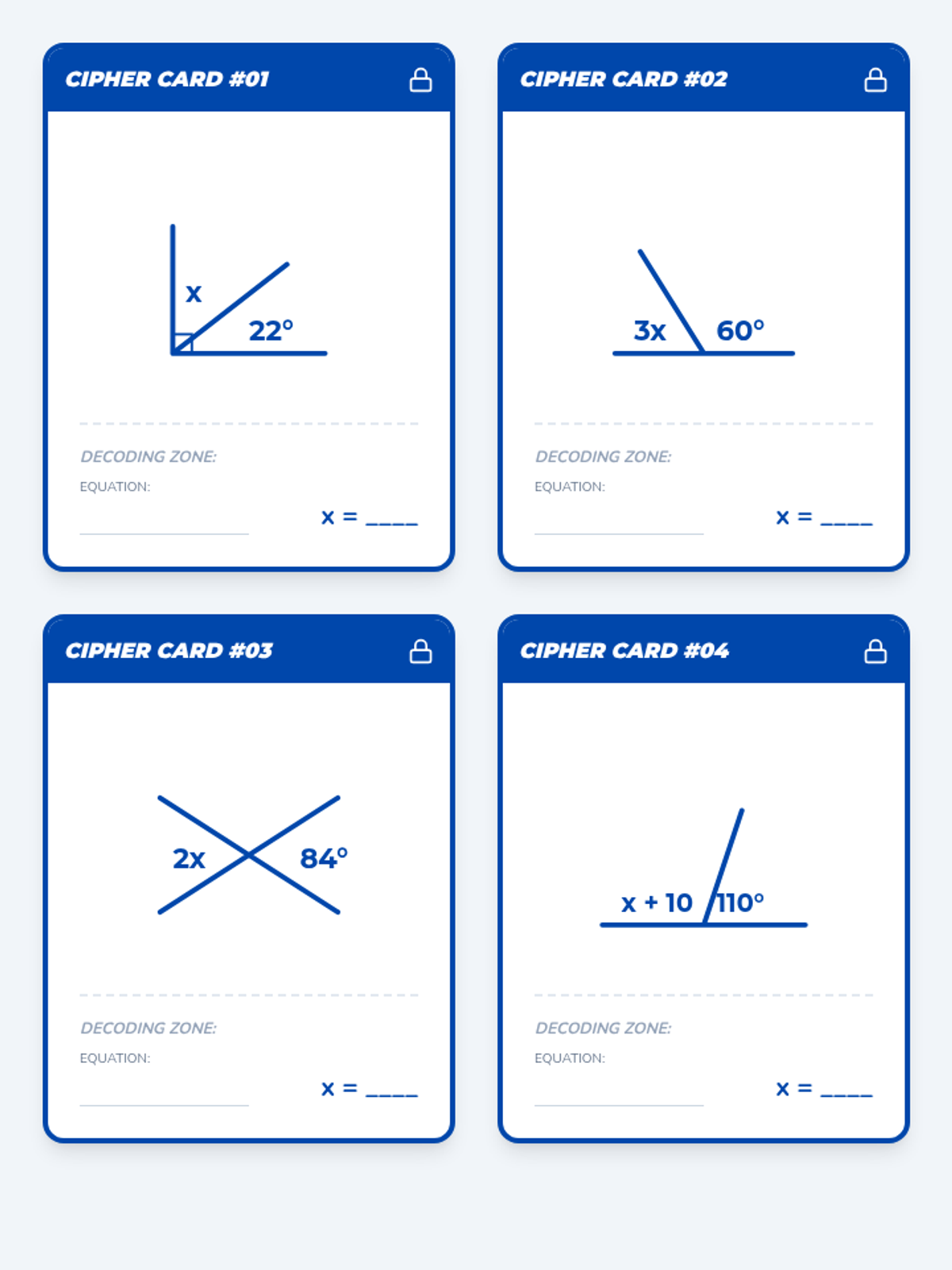
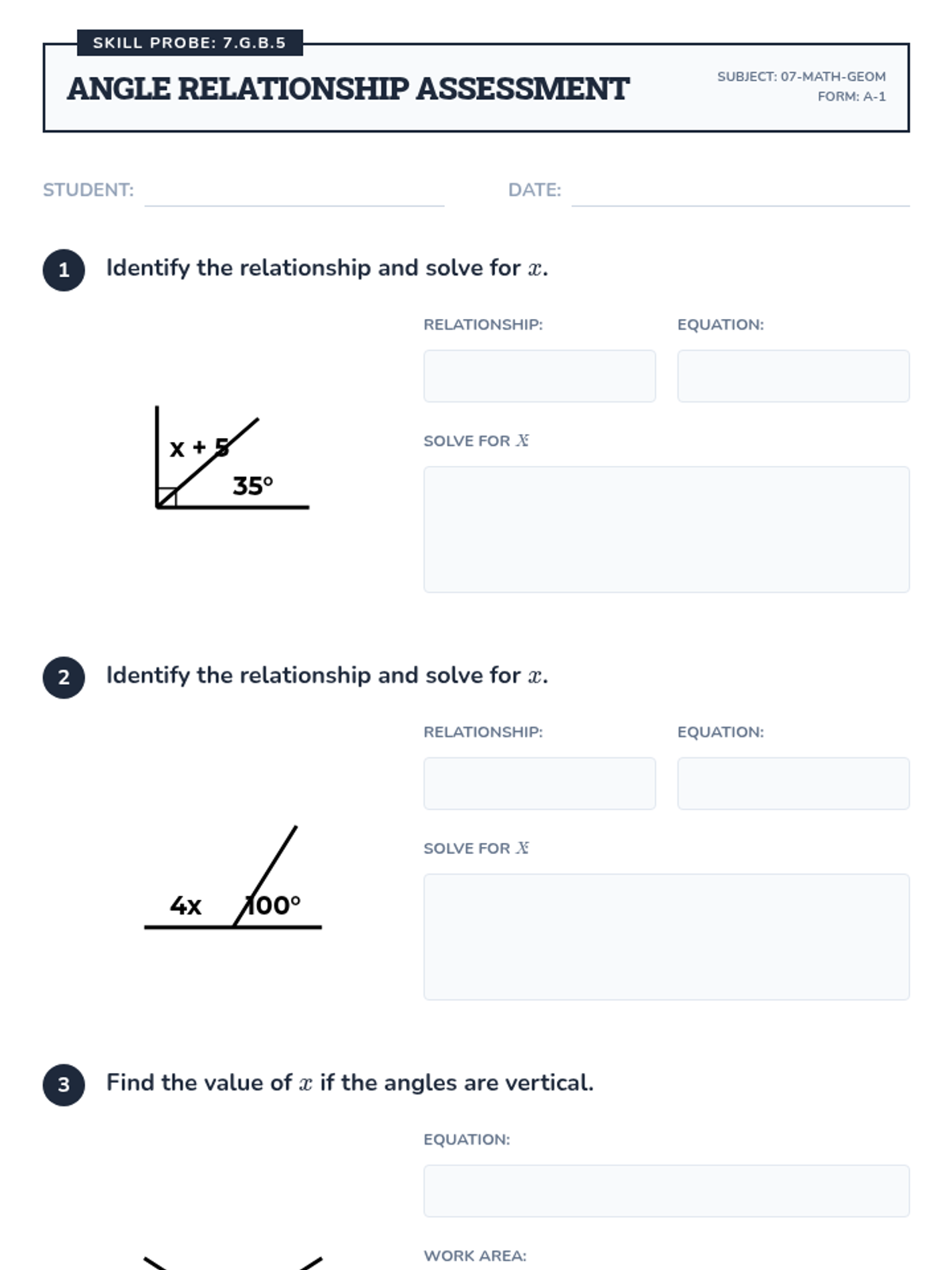
A targeted small group intervention for Grade 7 students focusing on using geometric relationships to solve algebraic equations for unknown angles. The sequence emphasizes scaffolded transitions from visual diagrams to formal algebraic solutions.
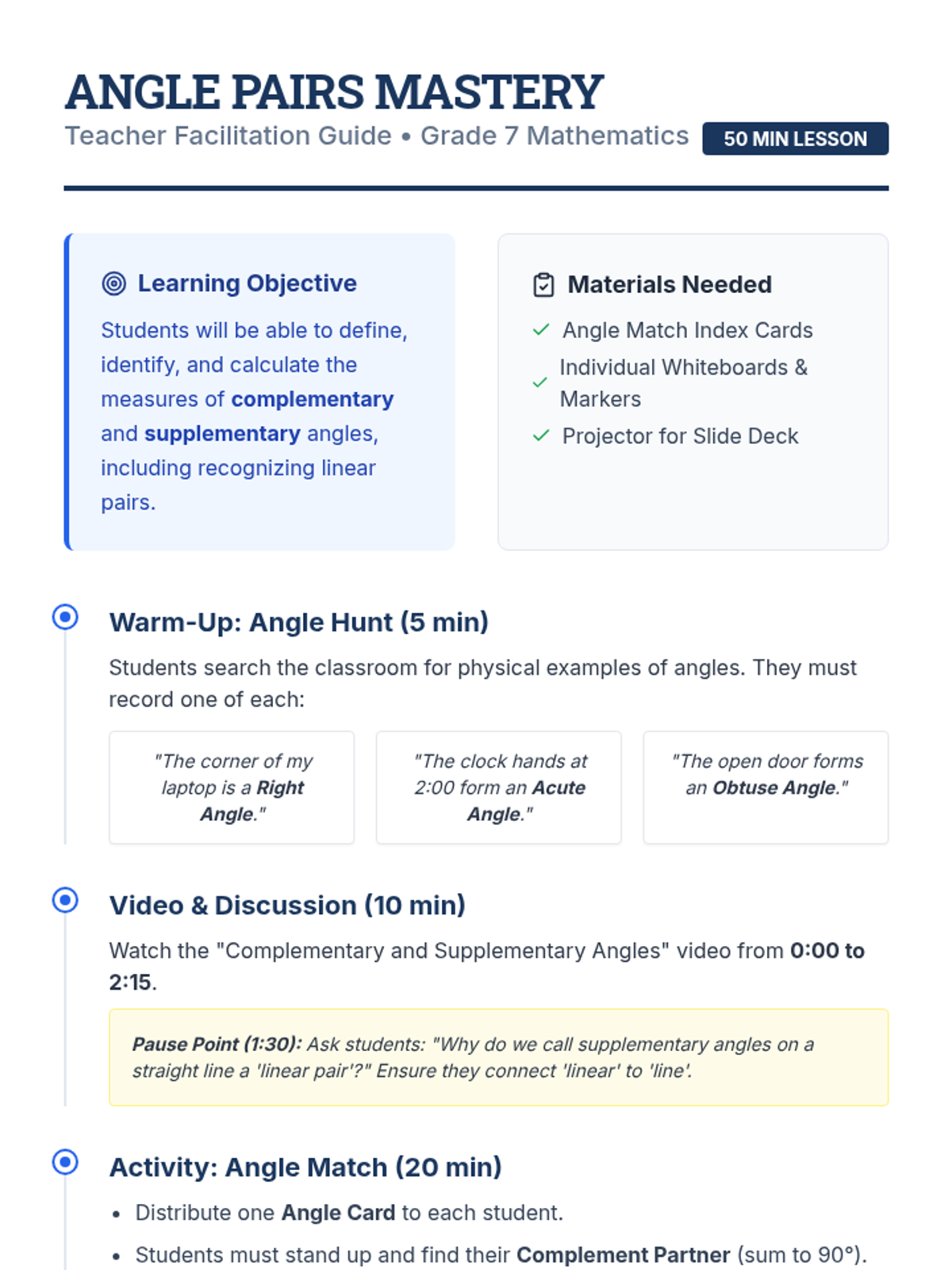
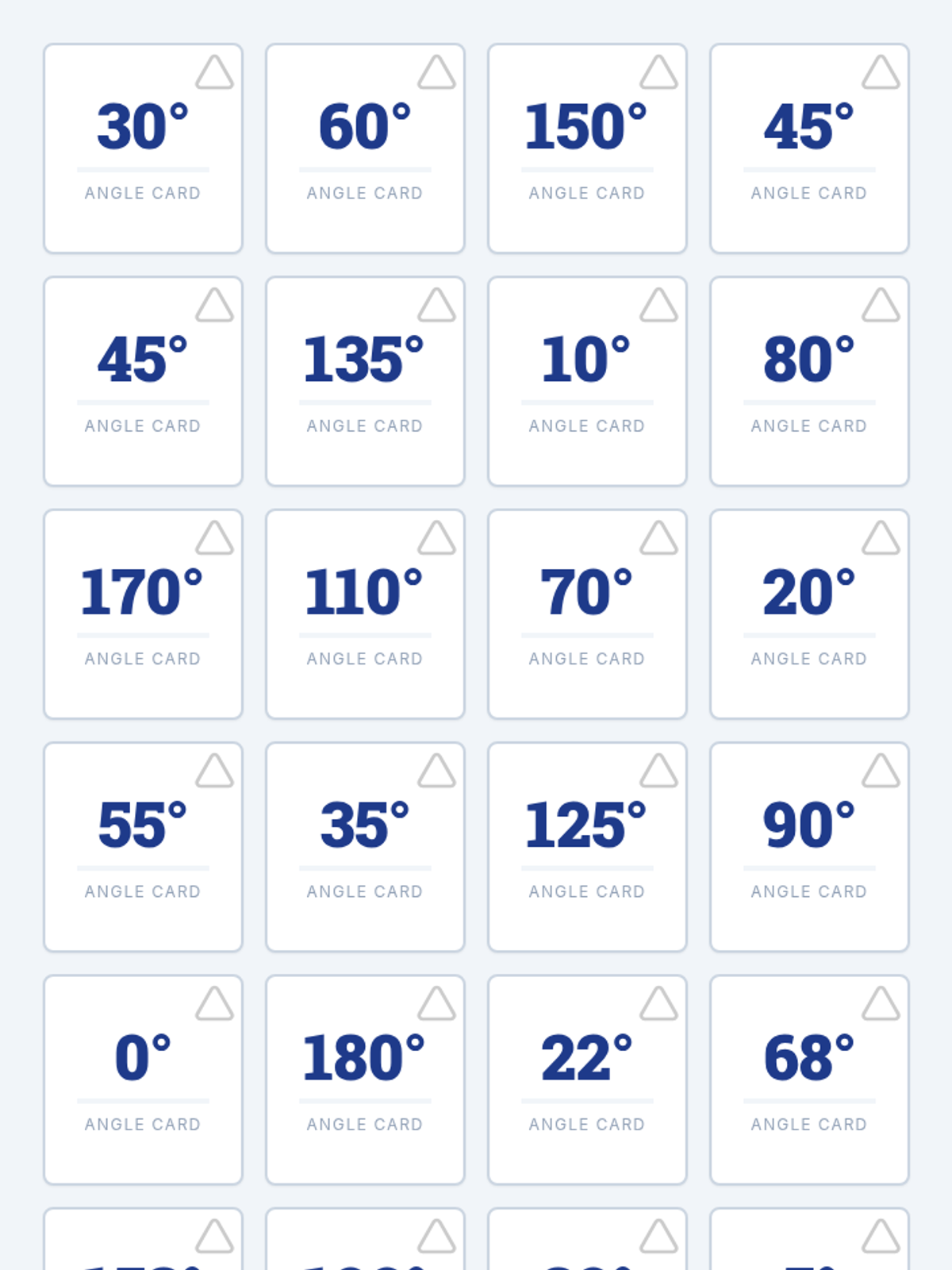
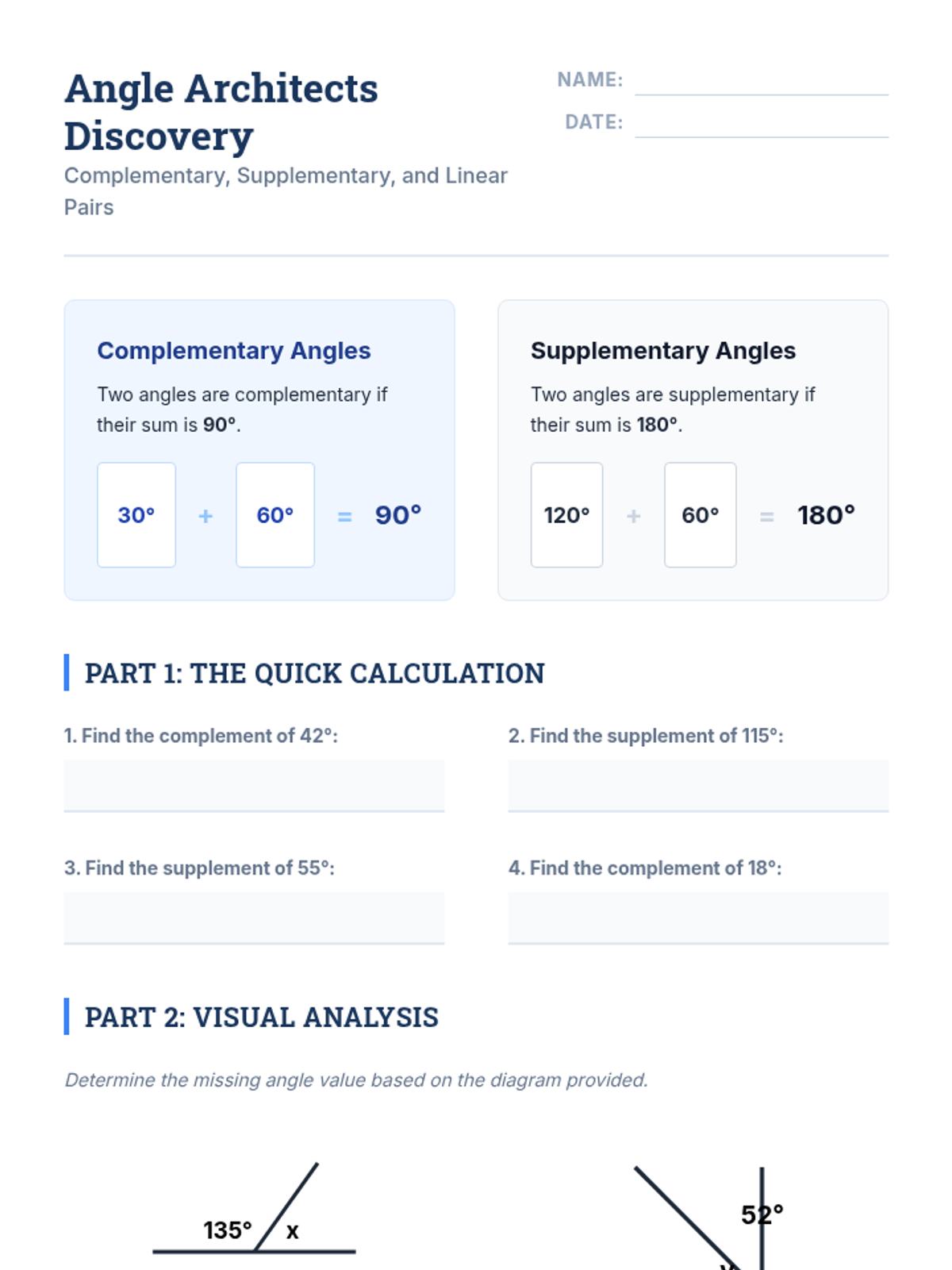
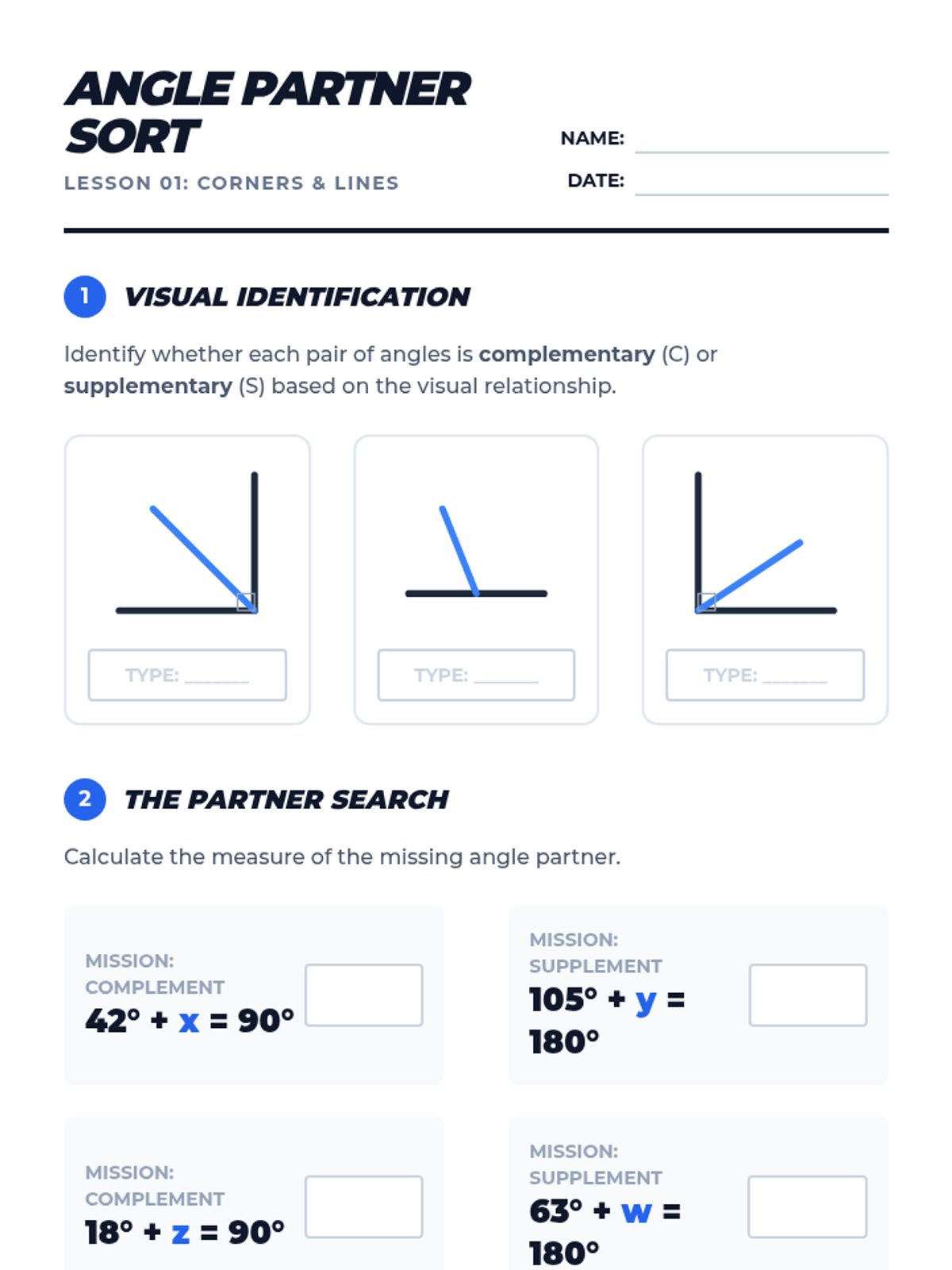
A comprehensive 7th-grade math lesson on identifying and calculating complementary and supplementary angles. The sequence covers basic definitions, linear pairs, and connects geometric concepts to algebraic problem-solving.
This sequence explores spatial visualization through the study of cross-sections and solids of revolution. Students learn to translate between 2D and 3D representations, a critical skill for engineering, physics, and advanced mathematics.
A 5-lesson unit for 7th-grade students that bridges arithmetic and geometry through the study of angle relationships (complementary, supplementary, vertical, and adjacent) and their algebraic applications. Students progress from visual identification to complex multi-step equation solving.
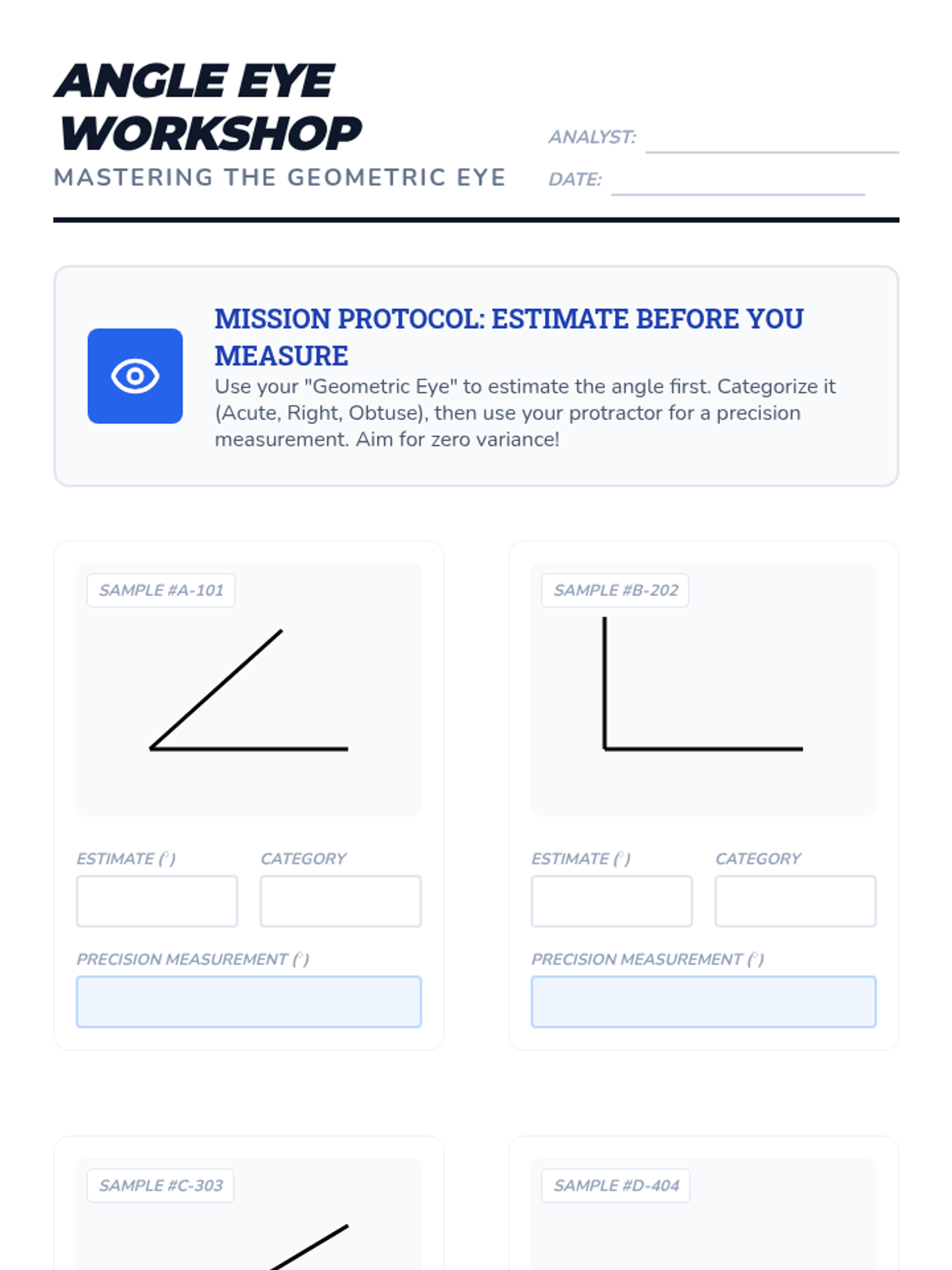
This sequence focuses on the fundamental proficiency of using geometric tools to measure and construct angles with high precision. Students learn protractor mechanics, estimation techniques, construction procedures, and error analysis through an engineering and drafting lens.
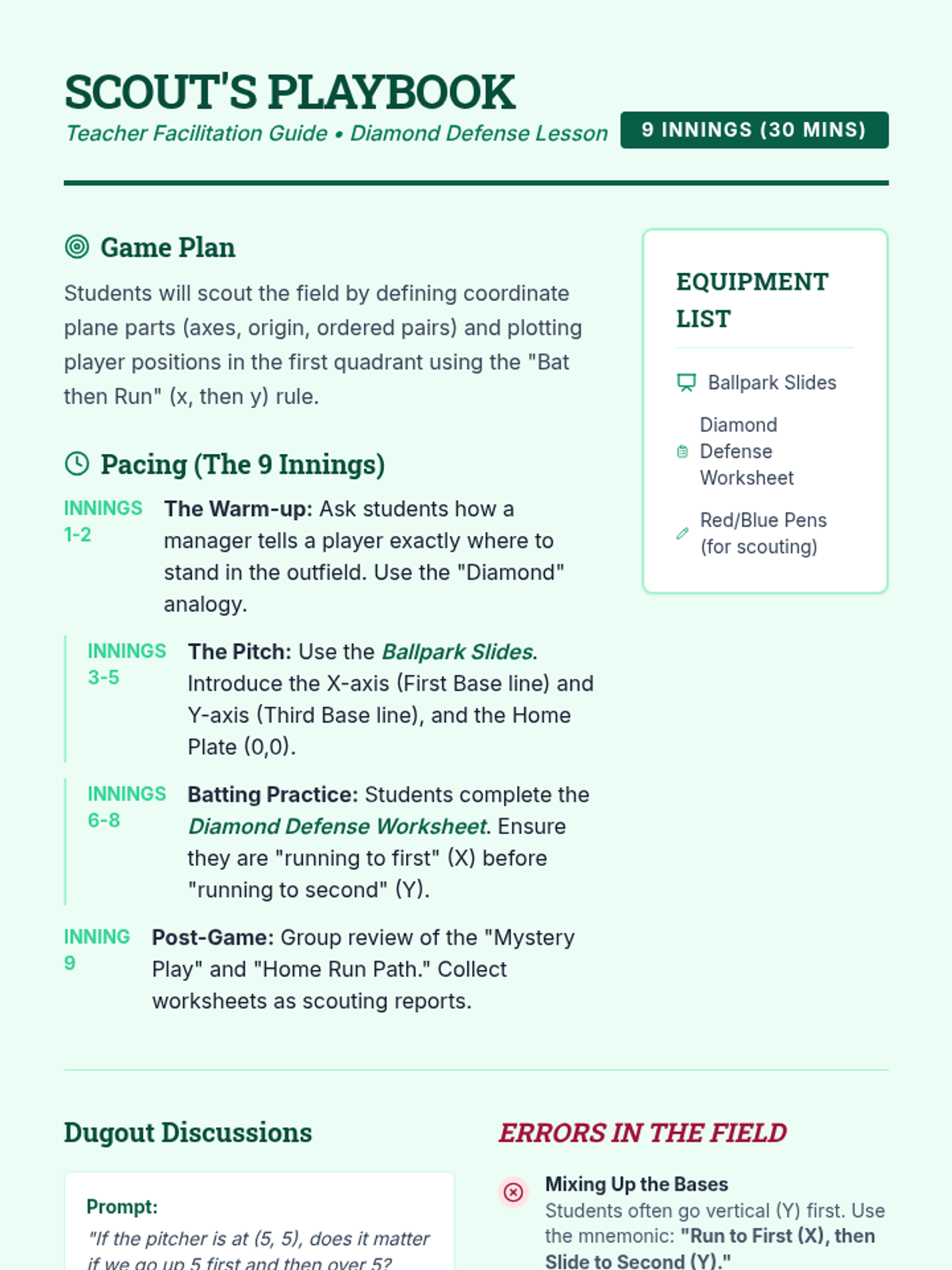
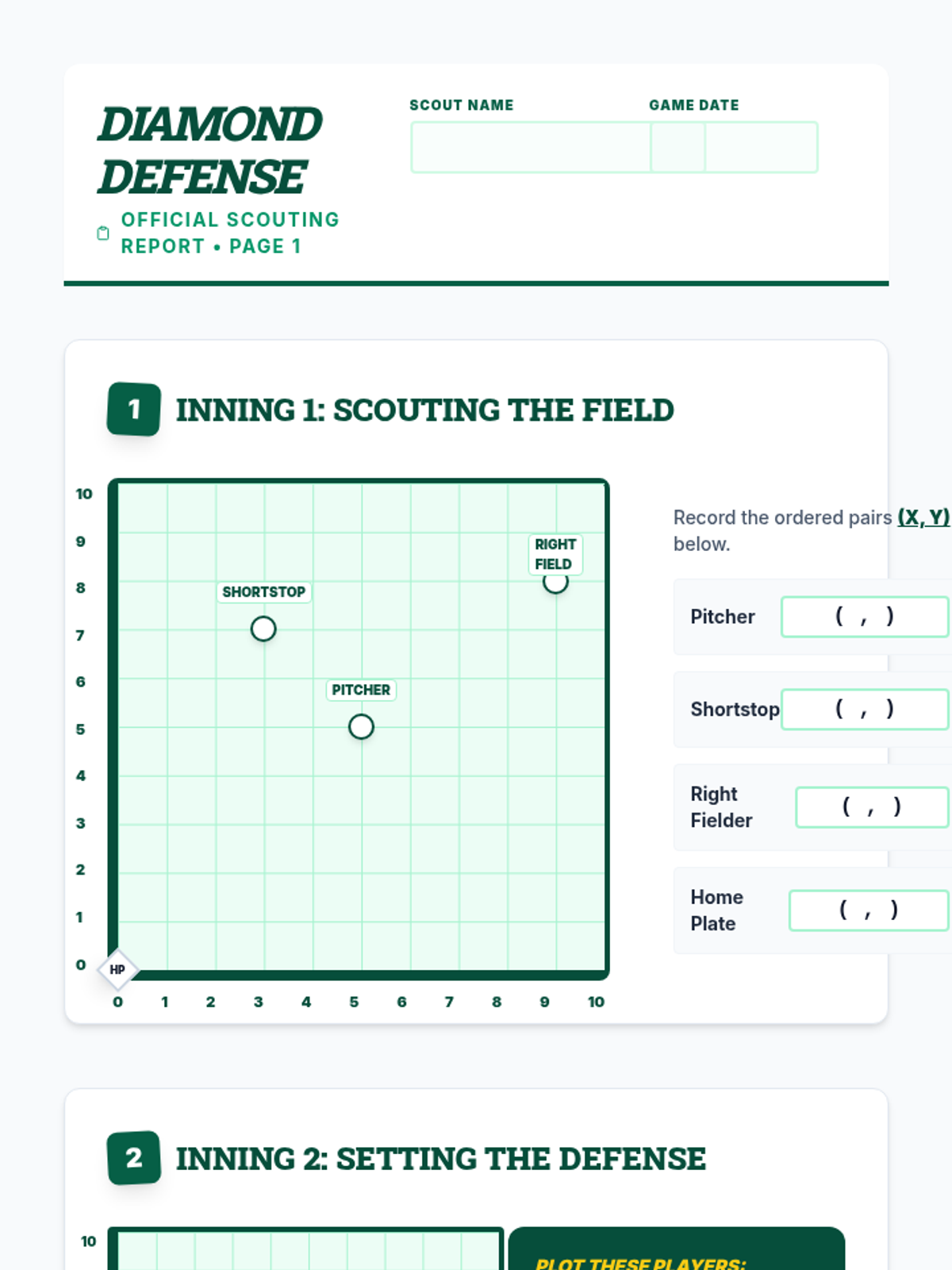
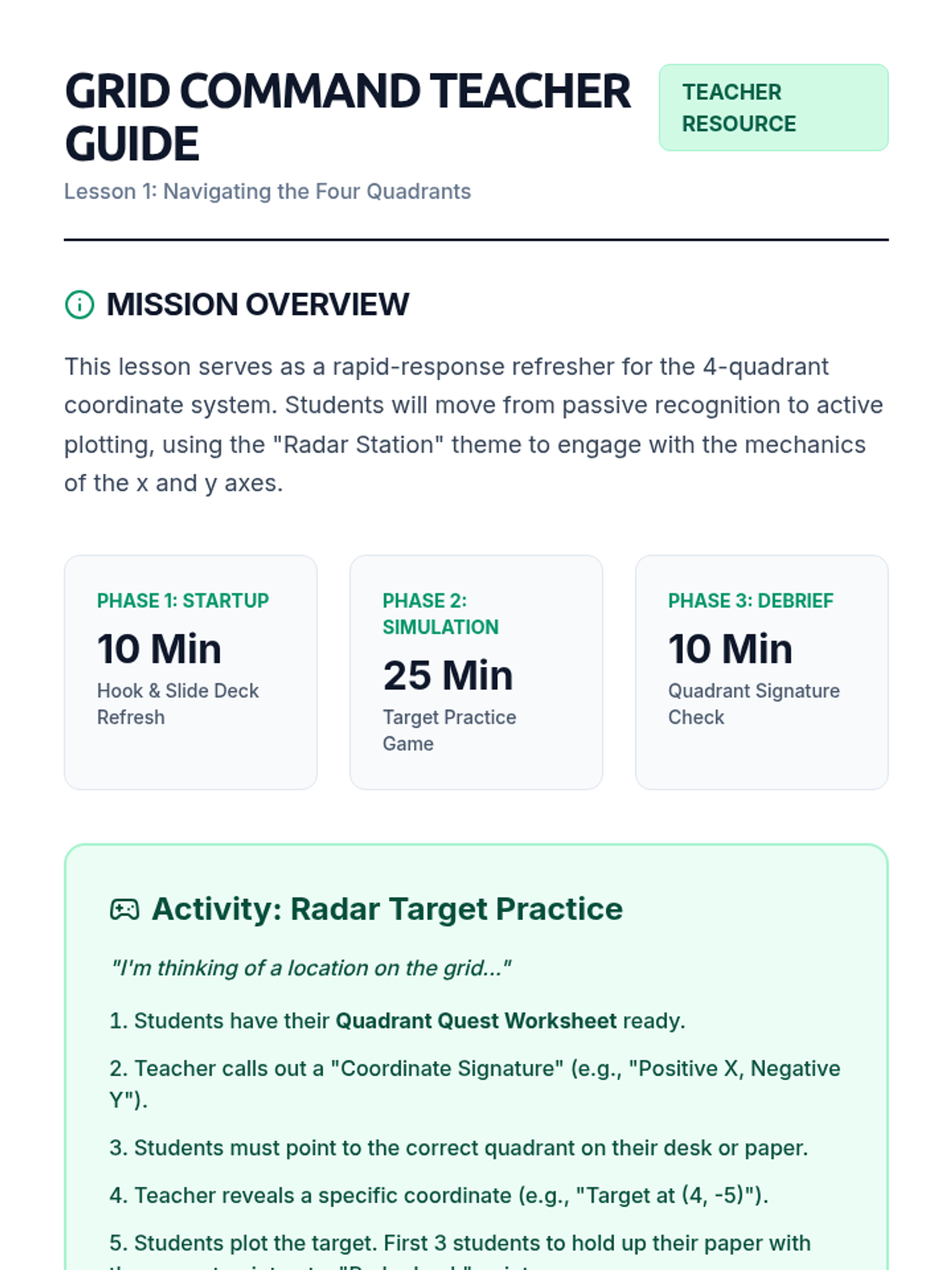
A 2-part unit on the coordinate plane using a baseball theme, moving from first-quadrant basics to full four-quadrant navigation.
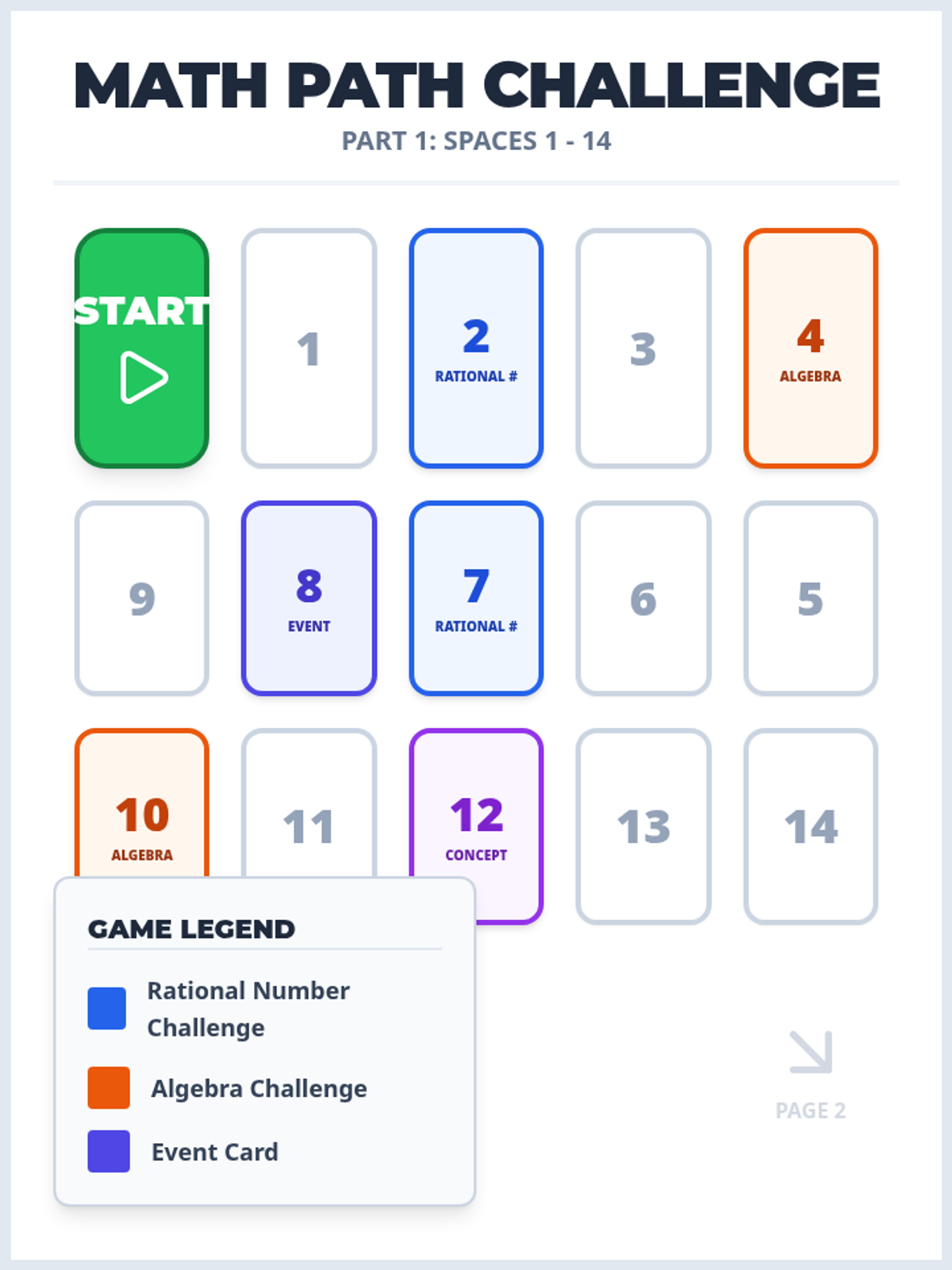
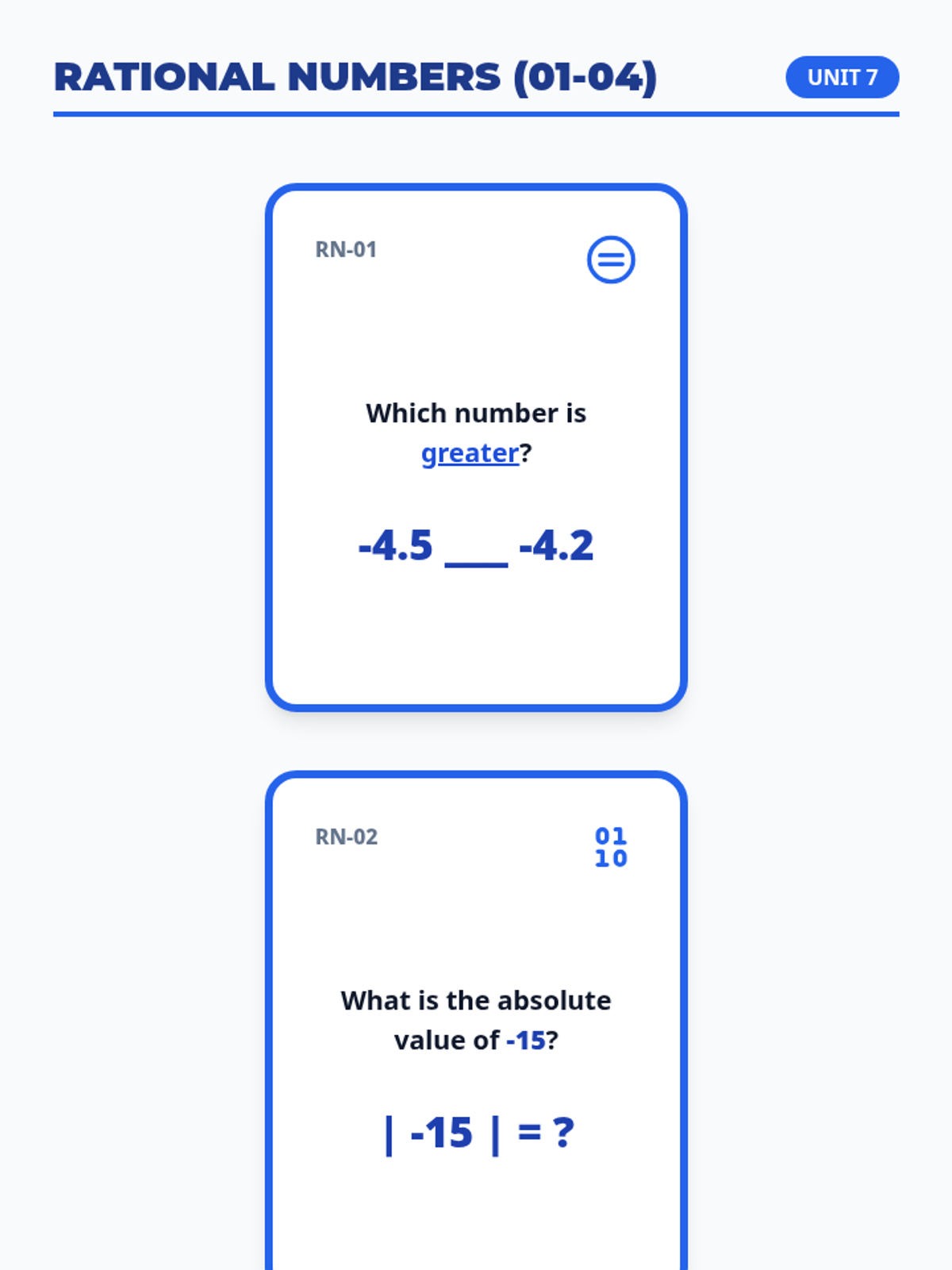
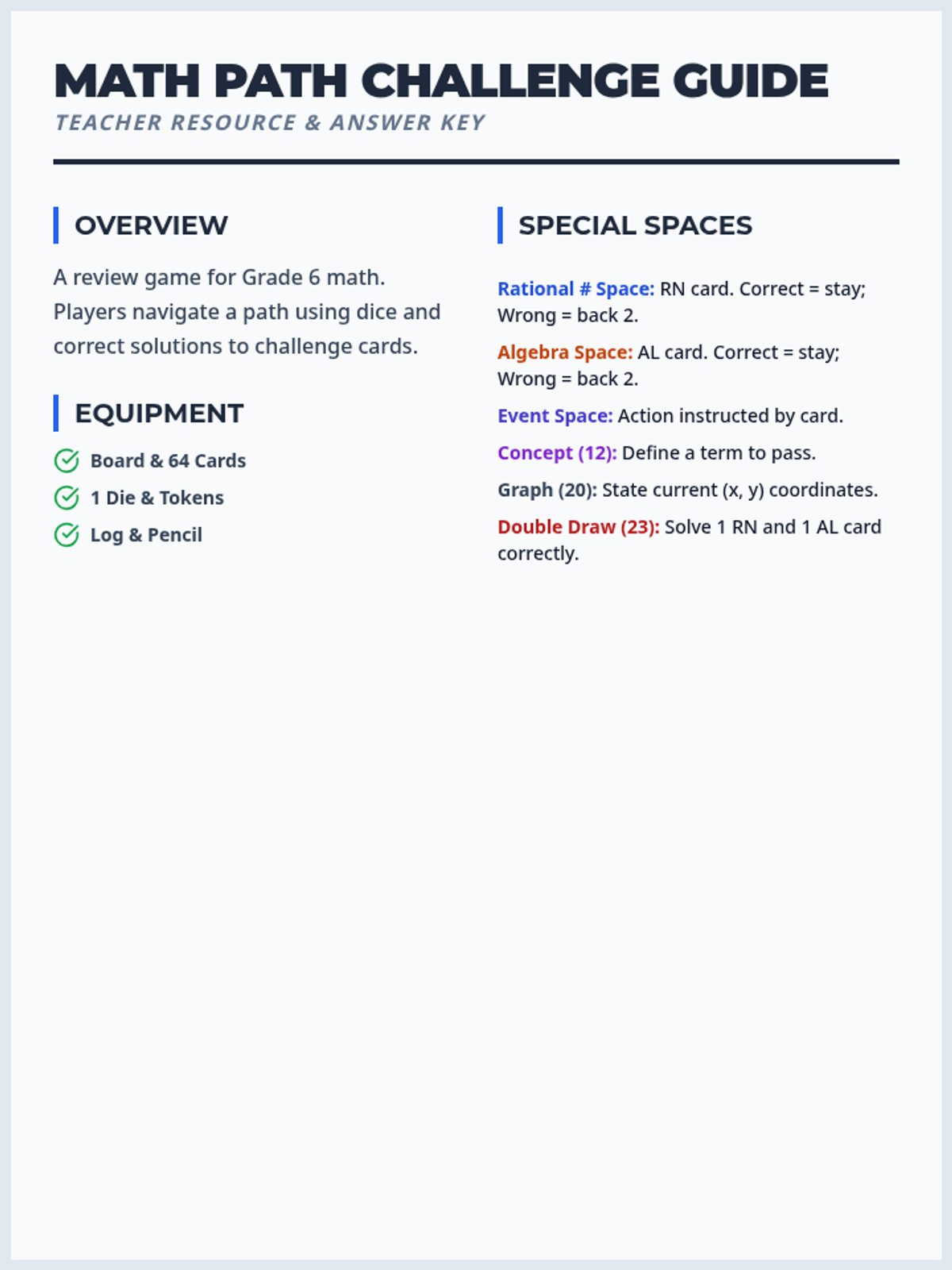
A comprehensive math review unit focused on mastering rational numbers, absolute value, and algebraic expressions through structured gameplay and practice.
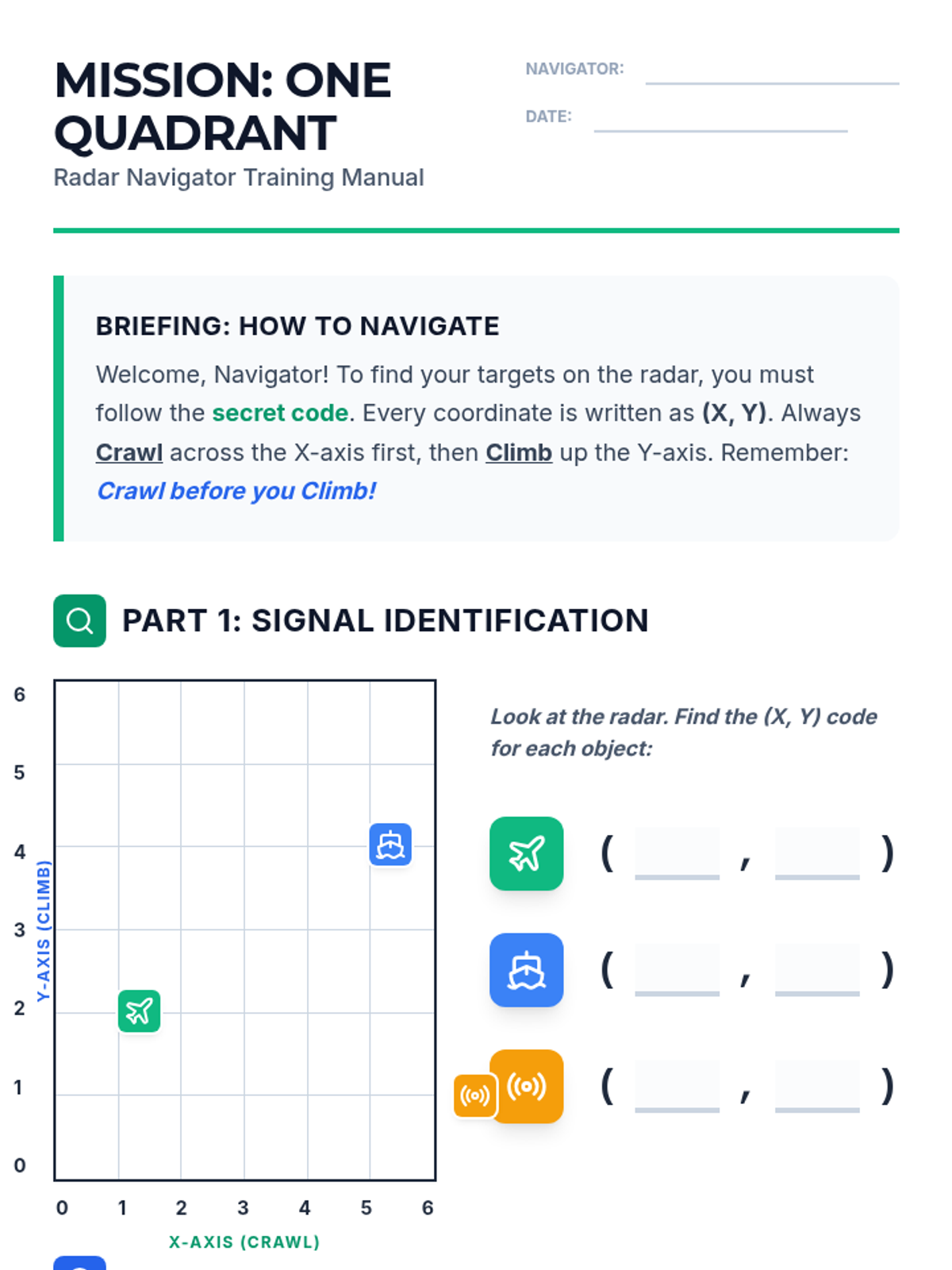
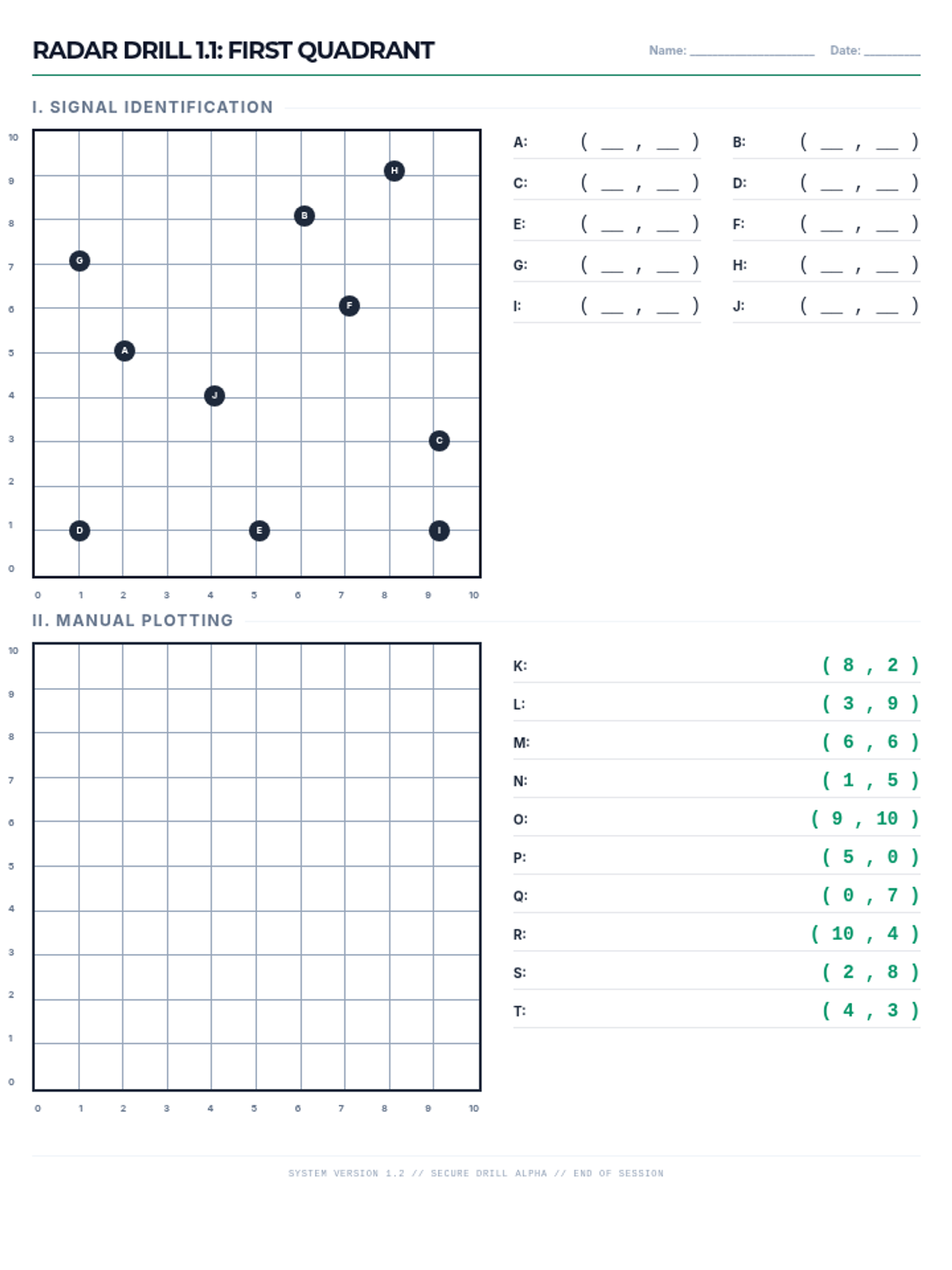
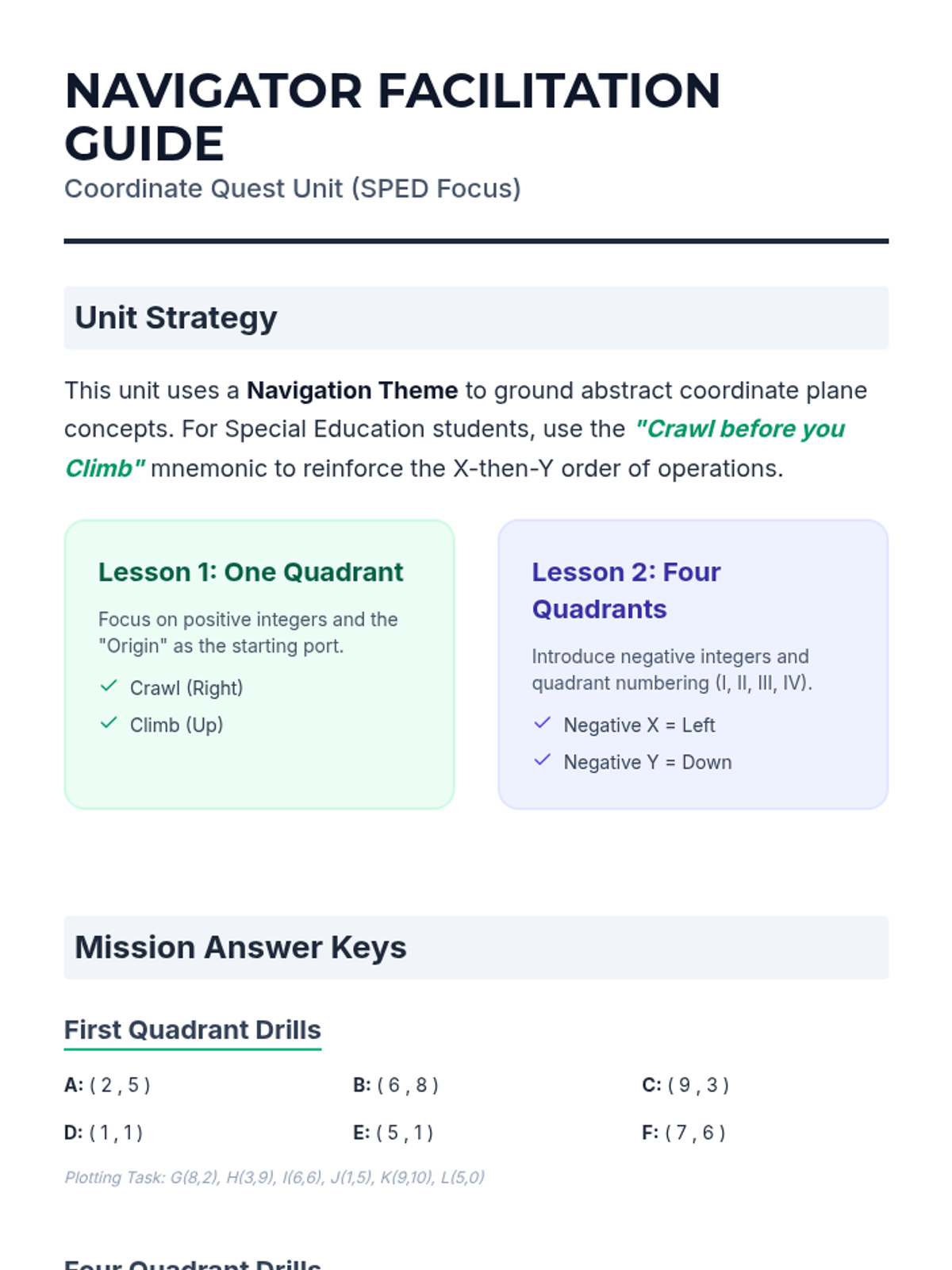
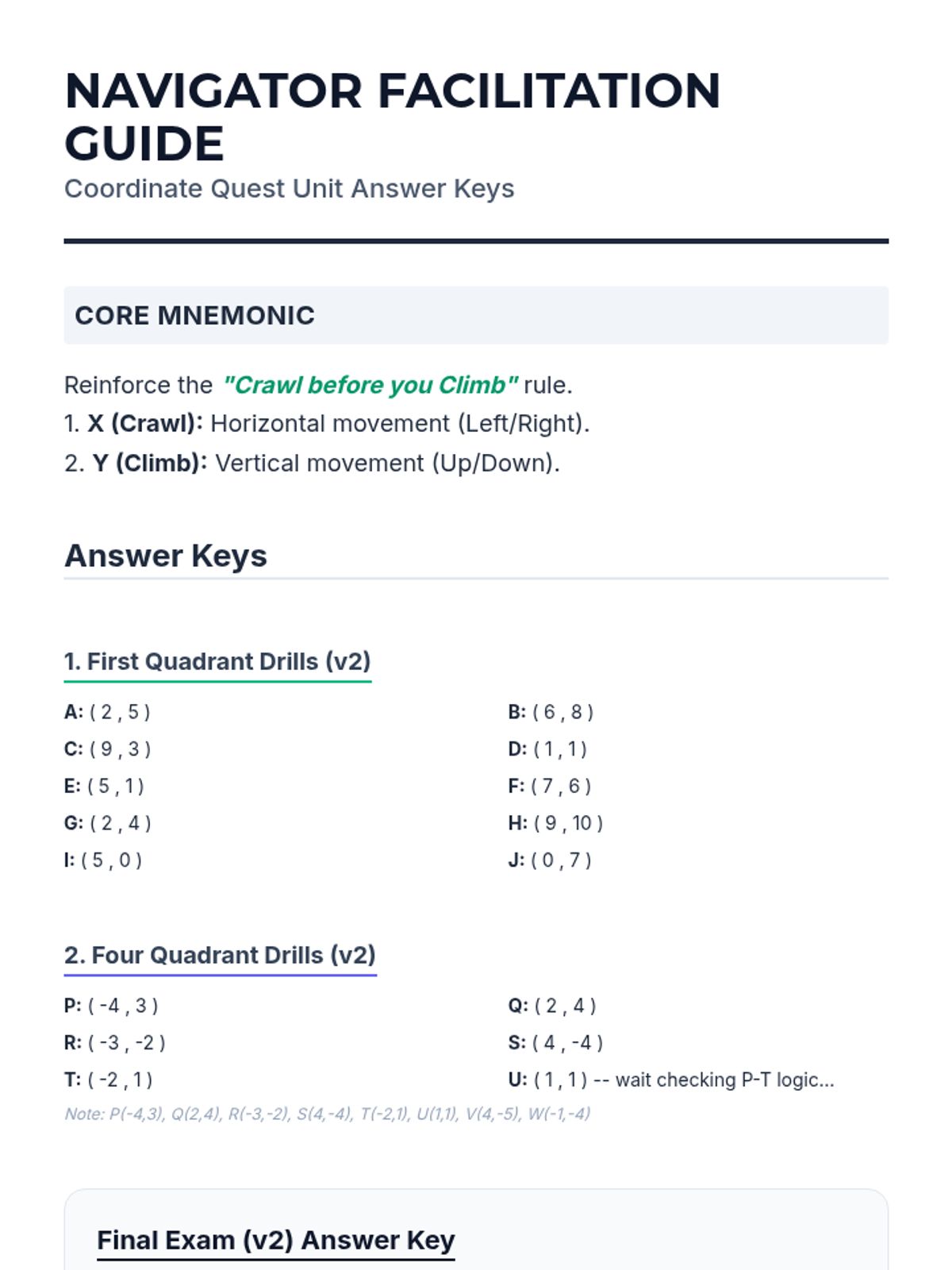
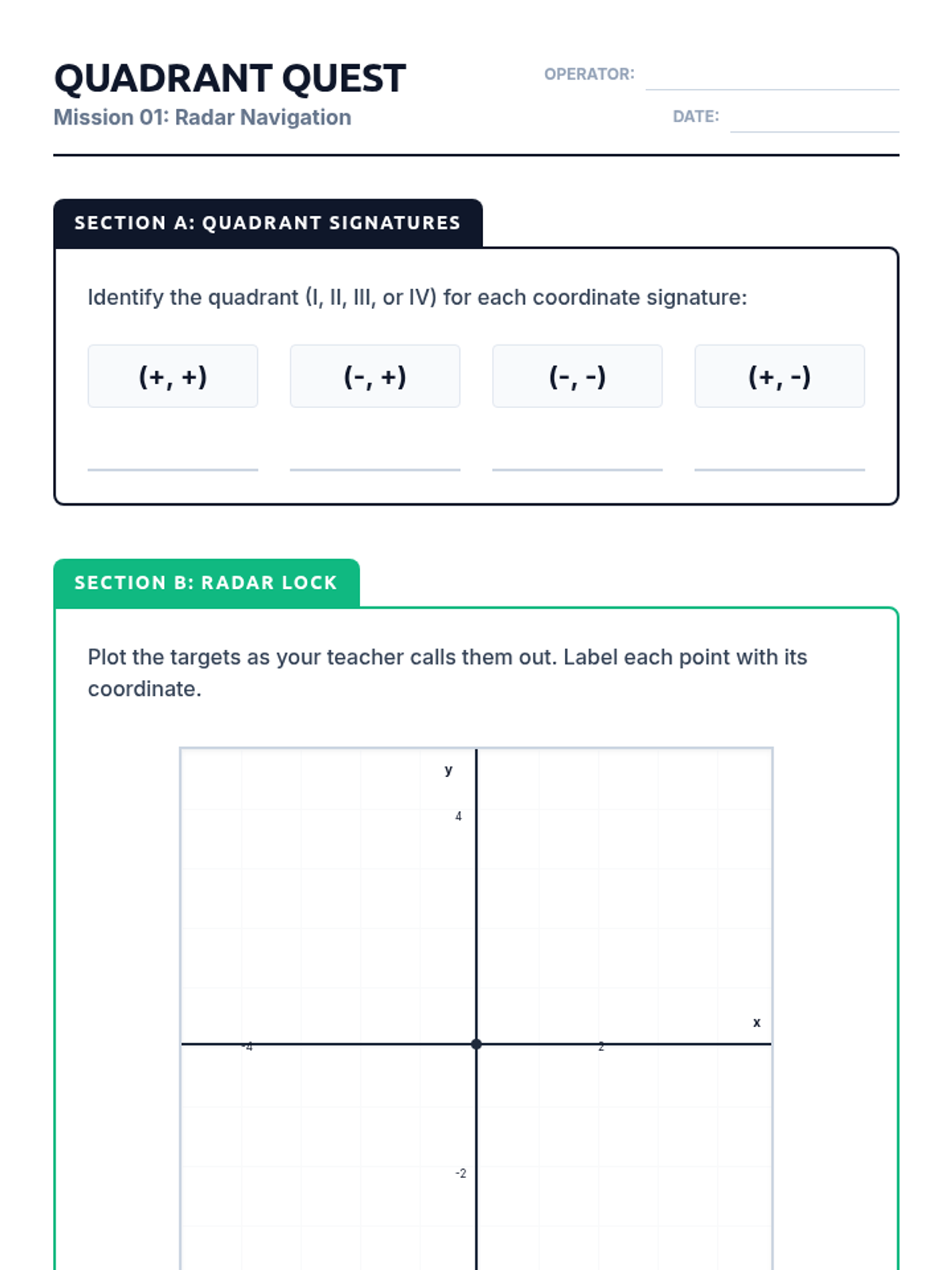
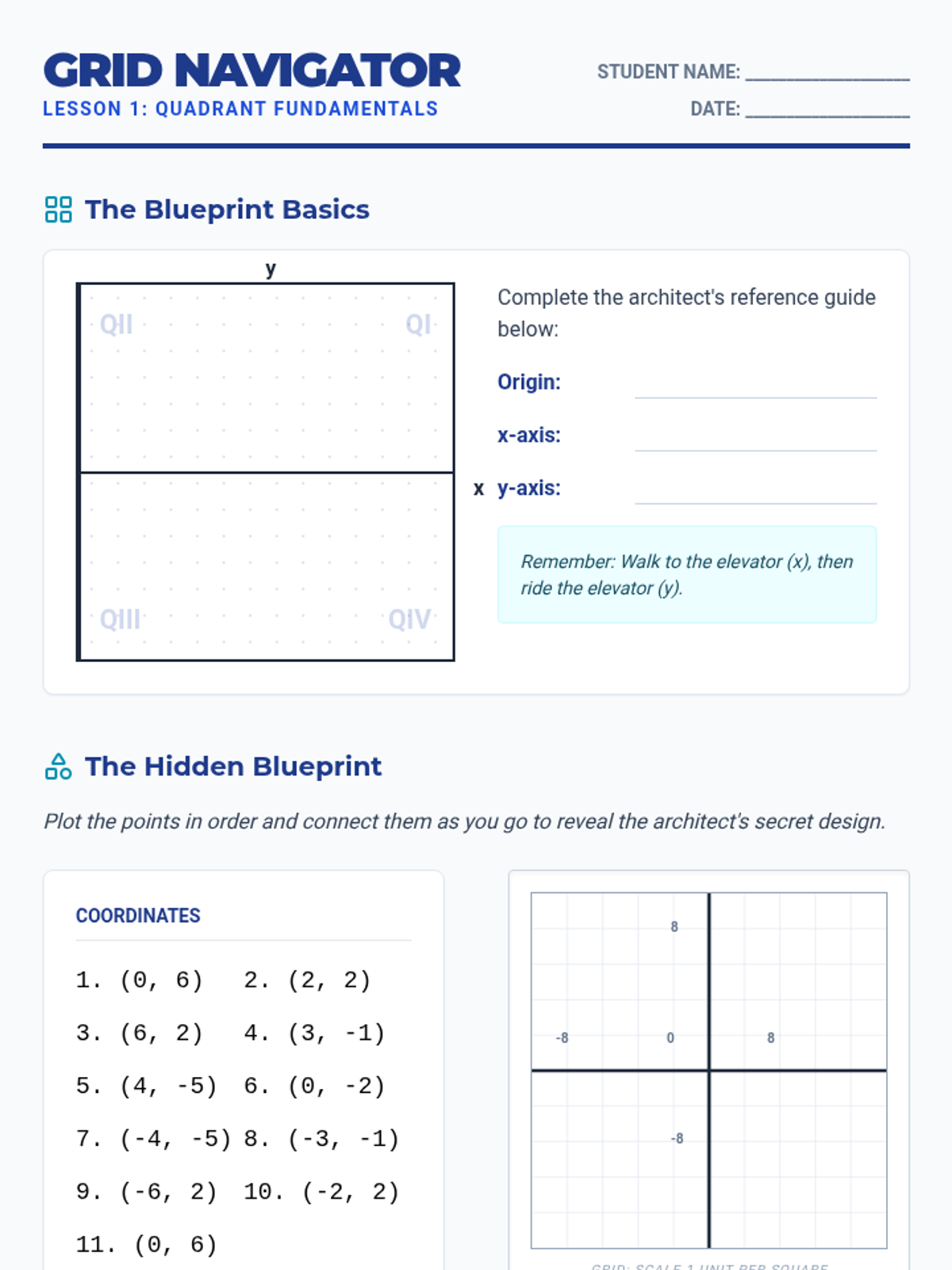
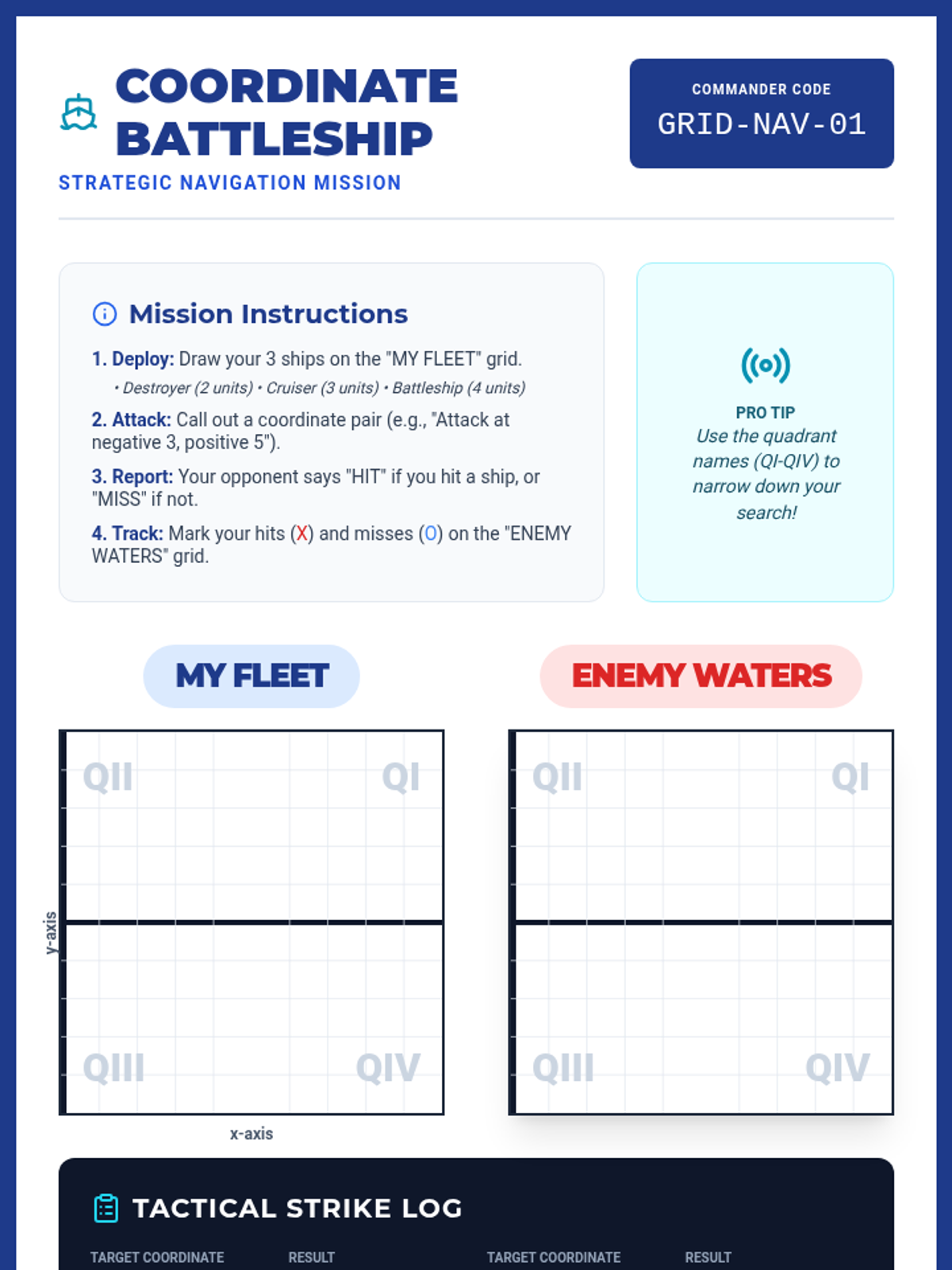
A comprehensive unit on the coordinate plane designed for Special Education students, transitioning from the first quadrant to all four quadrants using visual scaffolding and clear navigation-themed guides.
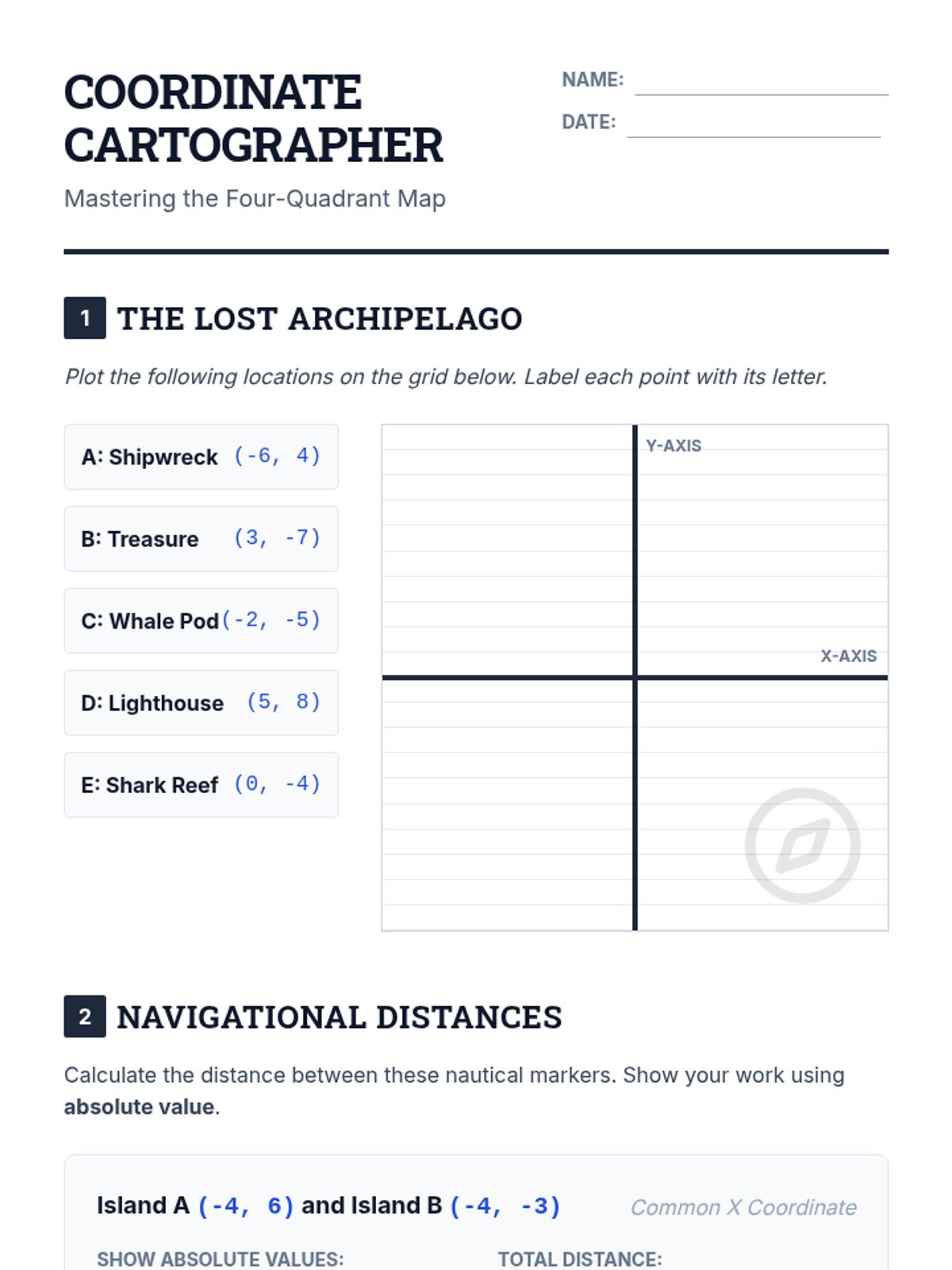
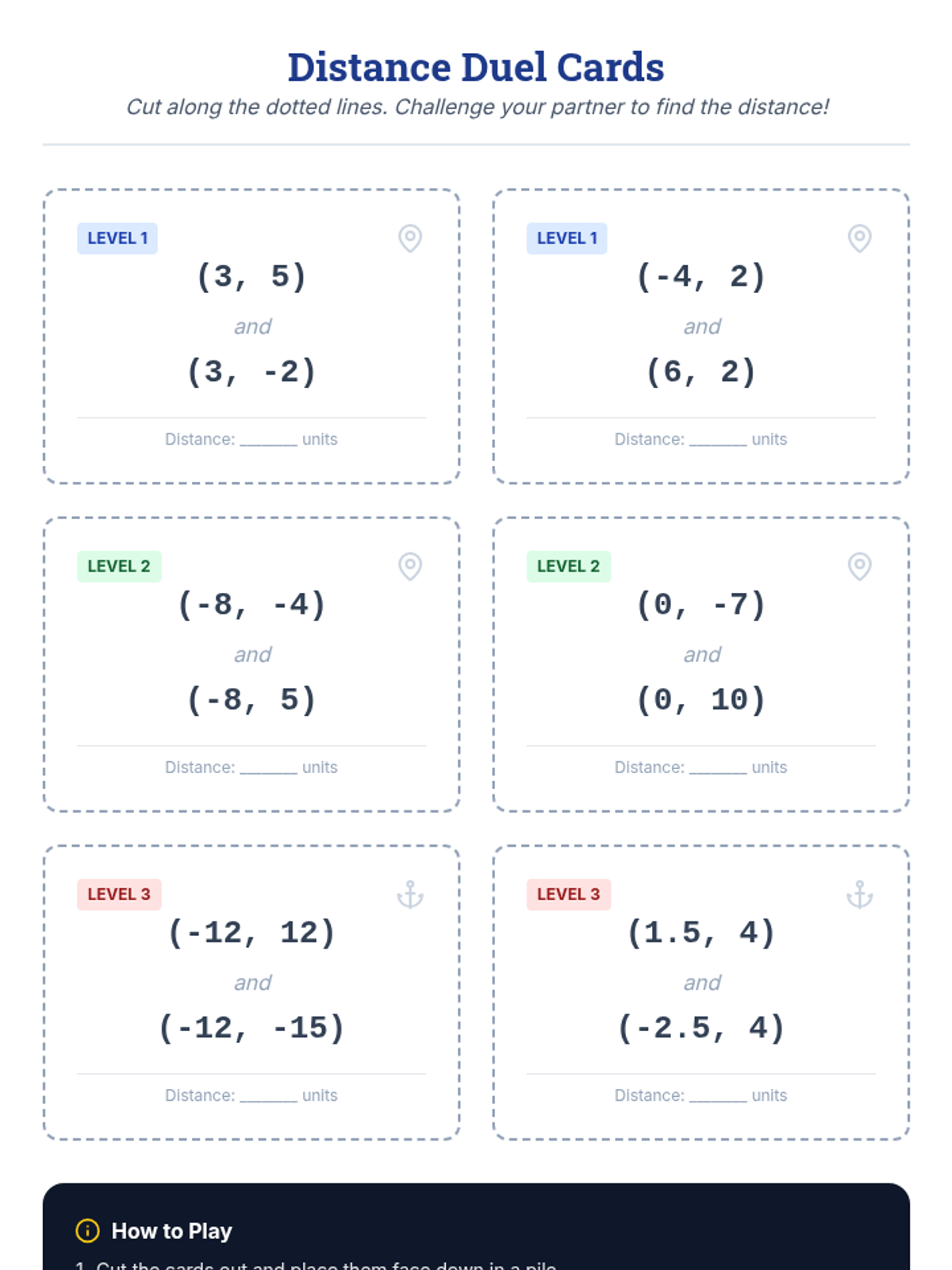
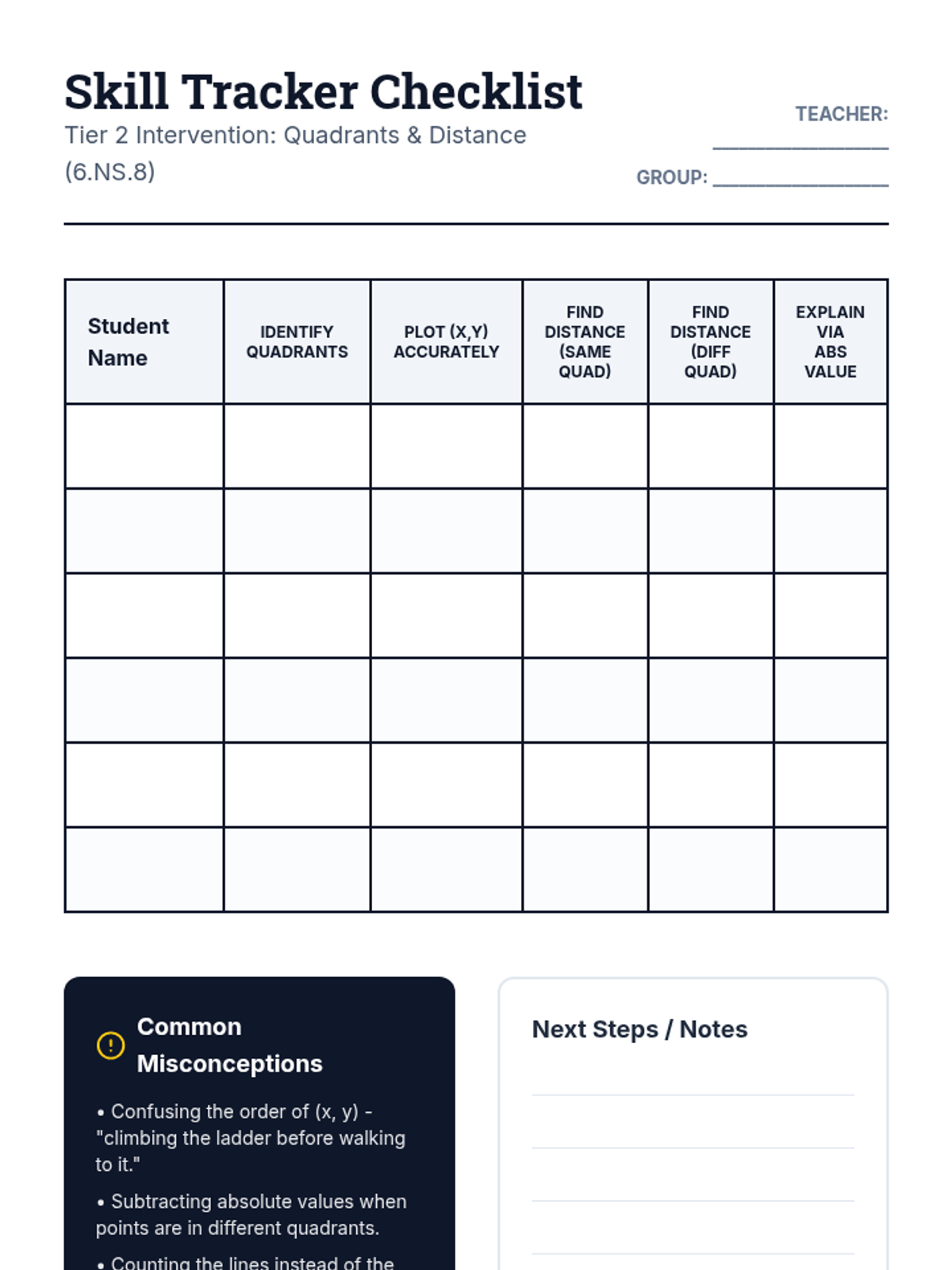
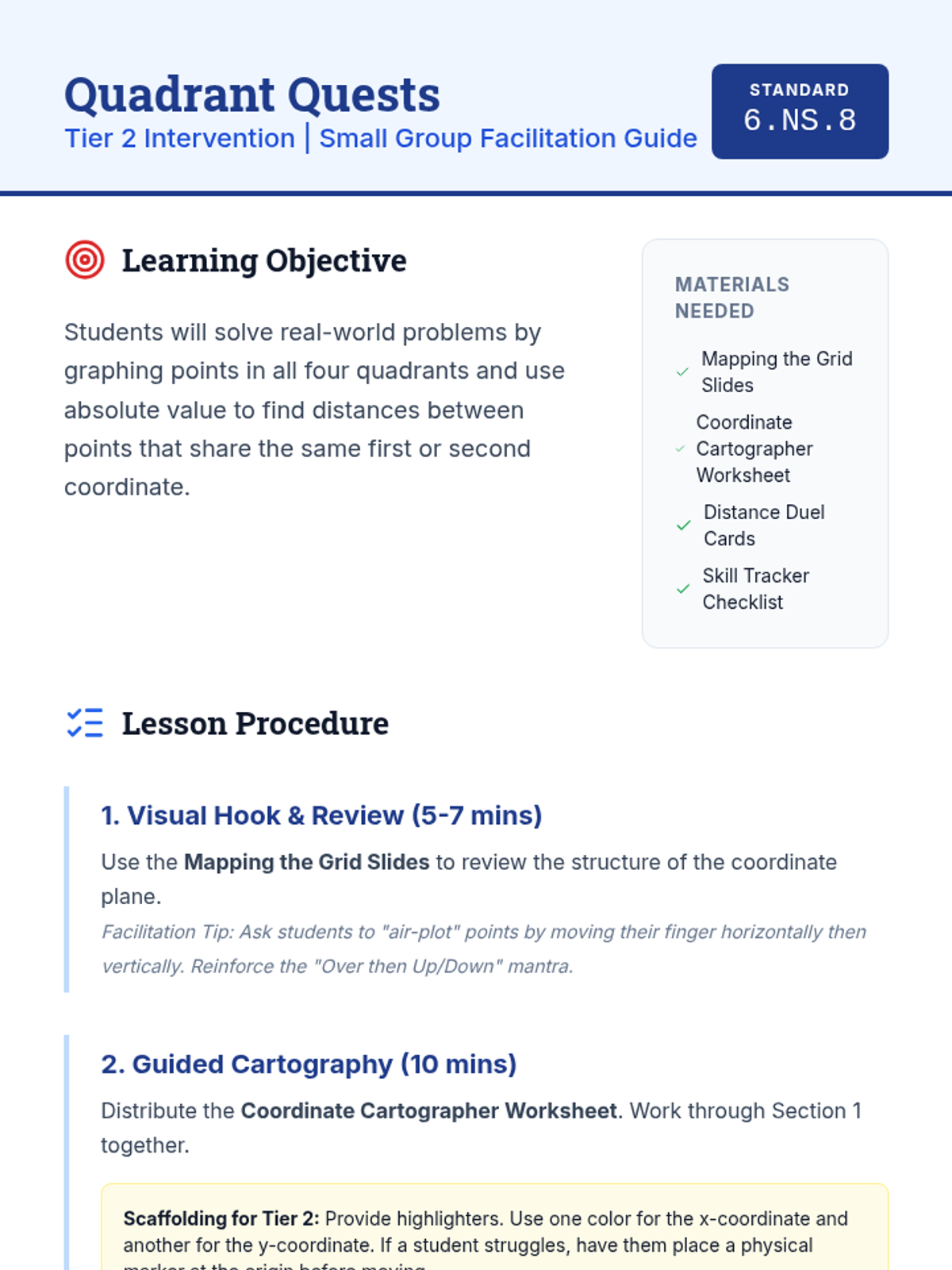
A Tier 2 intervention unit focused on mastering the four-quadrant coordinate plane and calculating distances between points using absolute value, aligned with Colorado standard 6.NS.8.
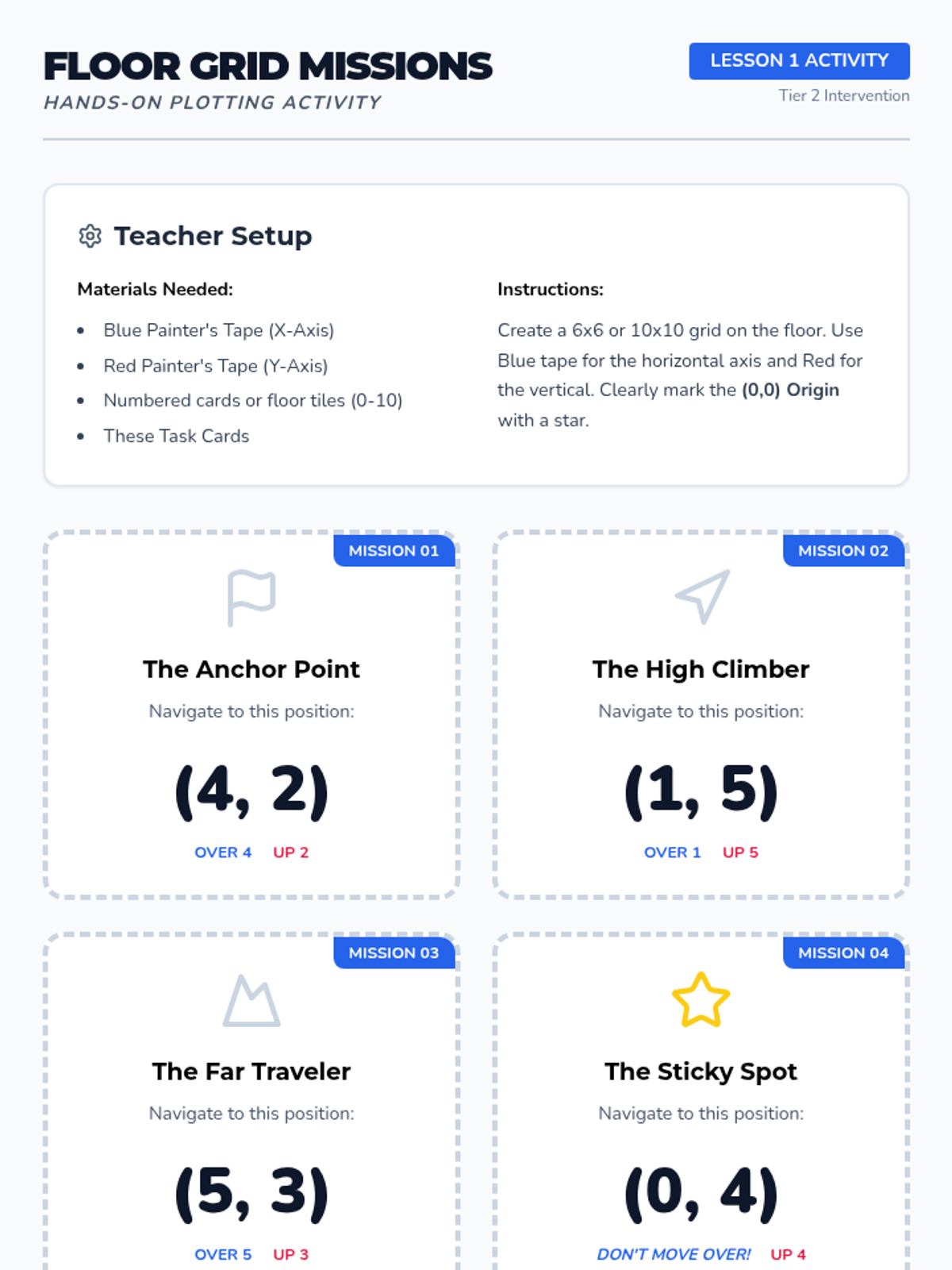
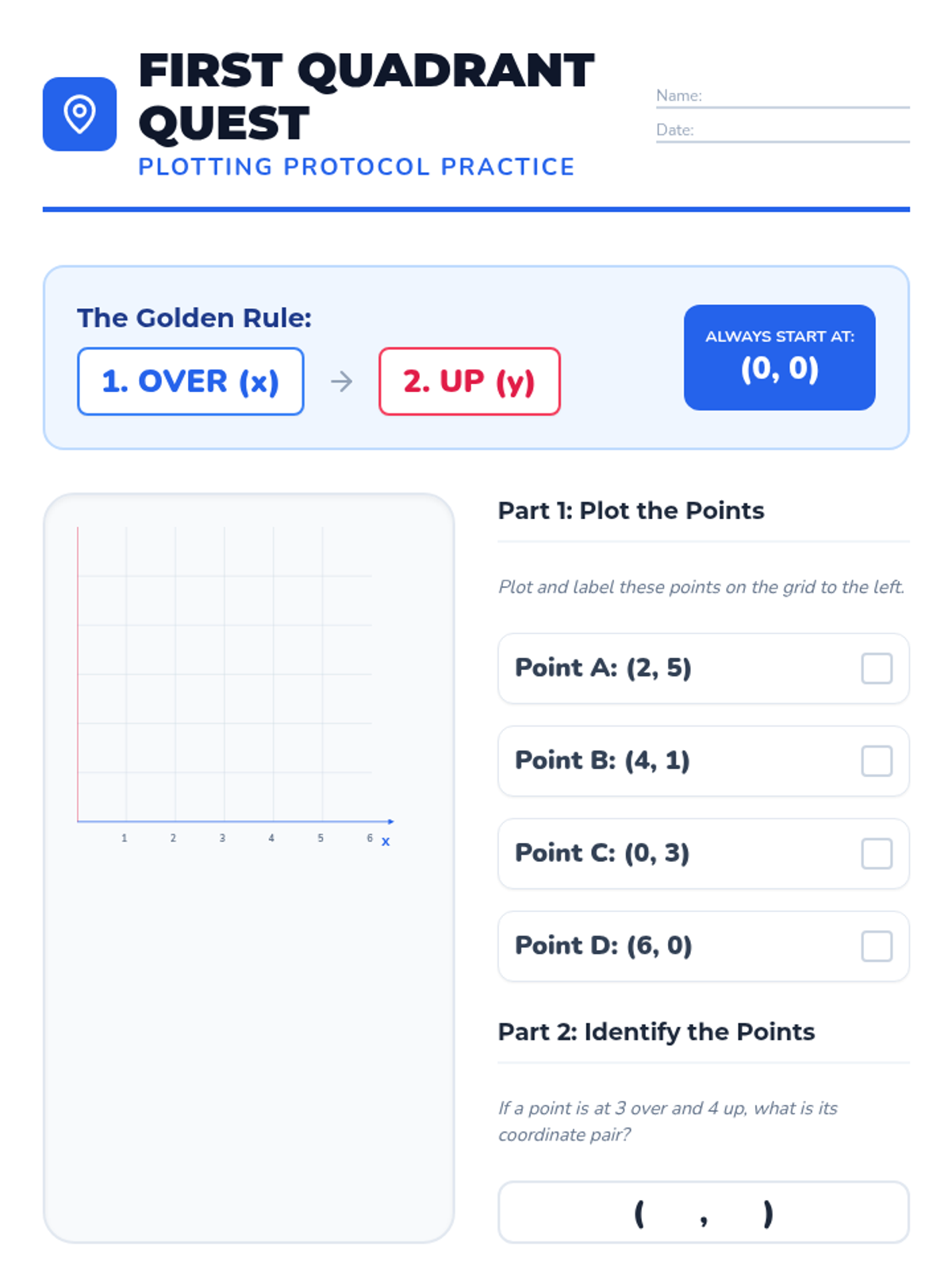
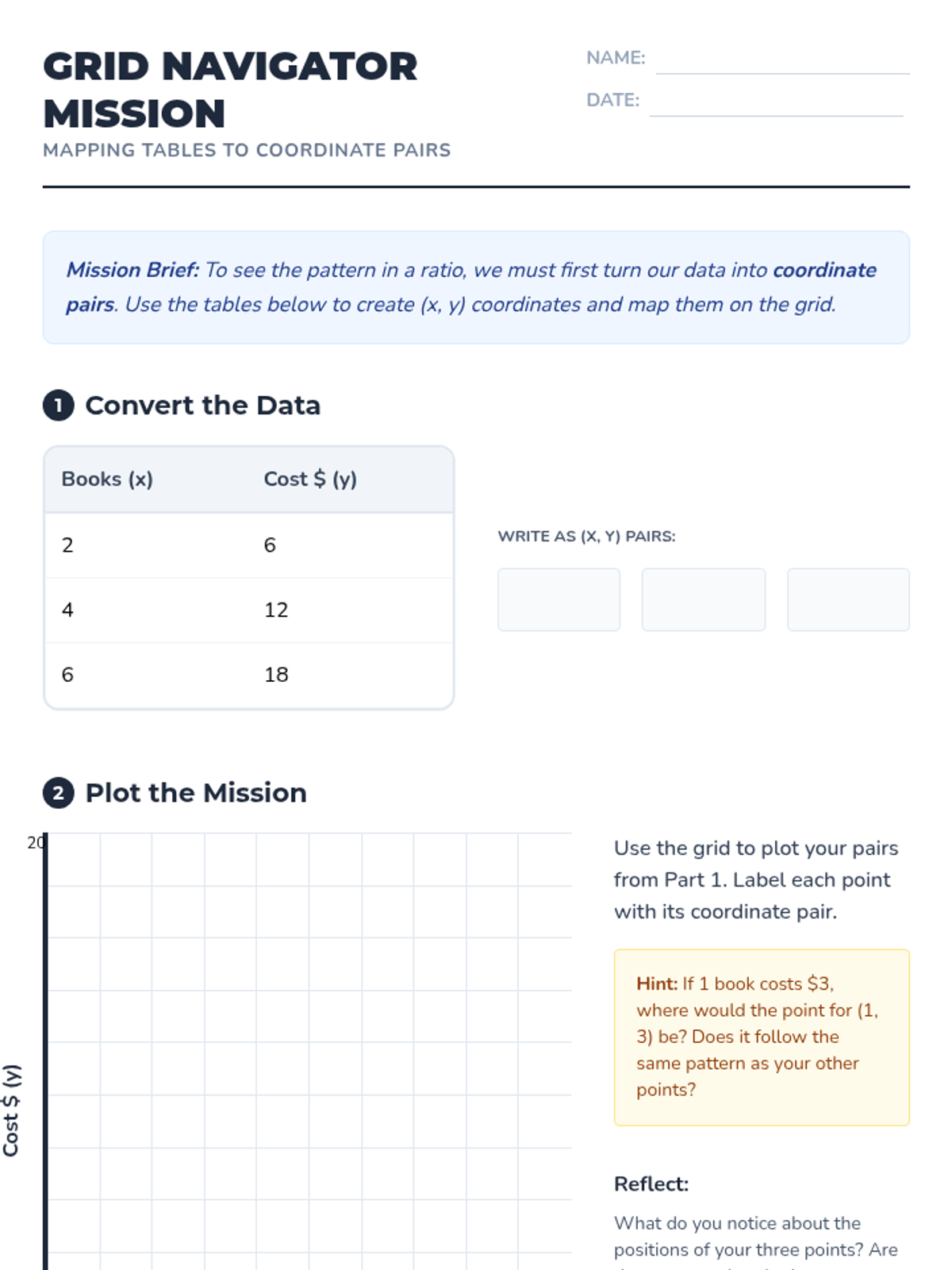
A 2-lesson intervention sequence focused on mastering the first quadrant of the coordinate plane through hands-on exploration and pattern-based plotting. Students develop a strong foundation in the 'over, then up' protocol to bridge the gap between basic graphing and algebraic patterns.
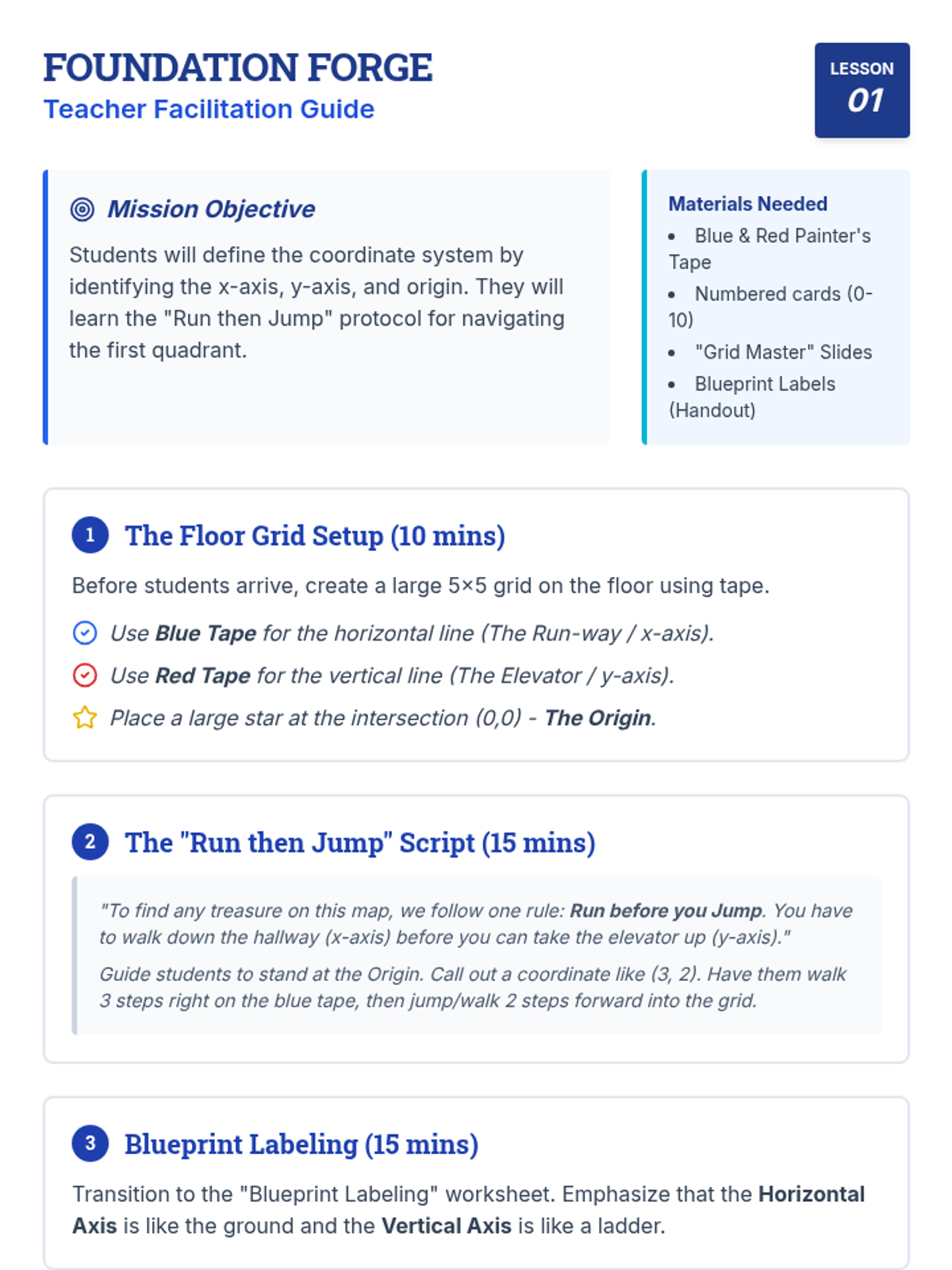
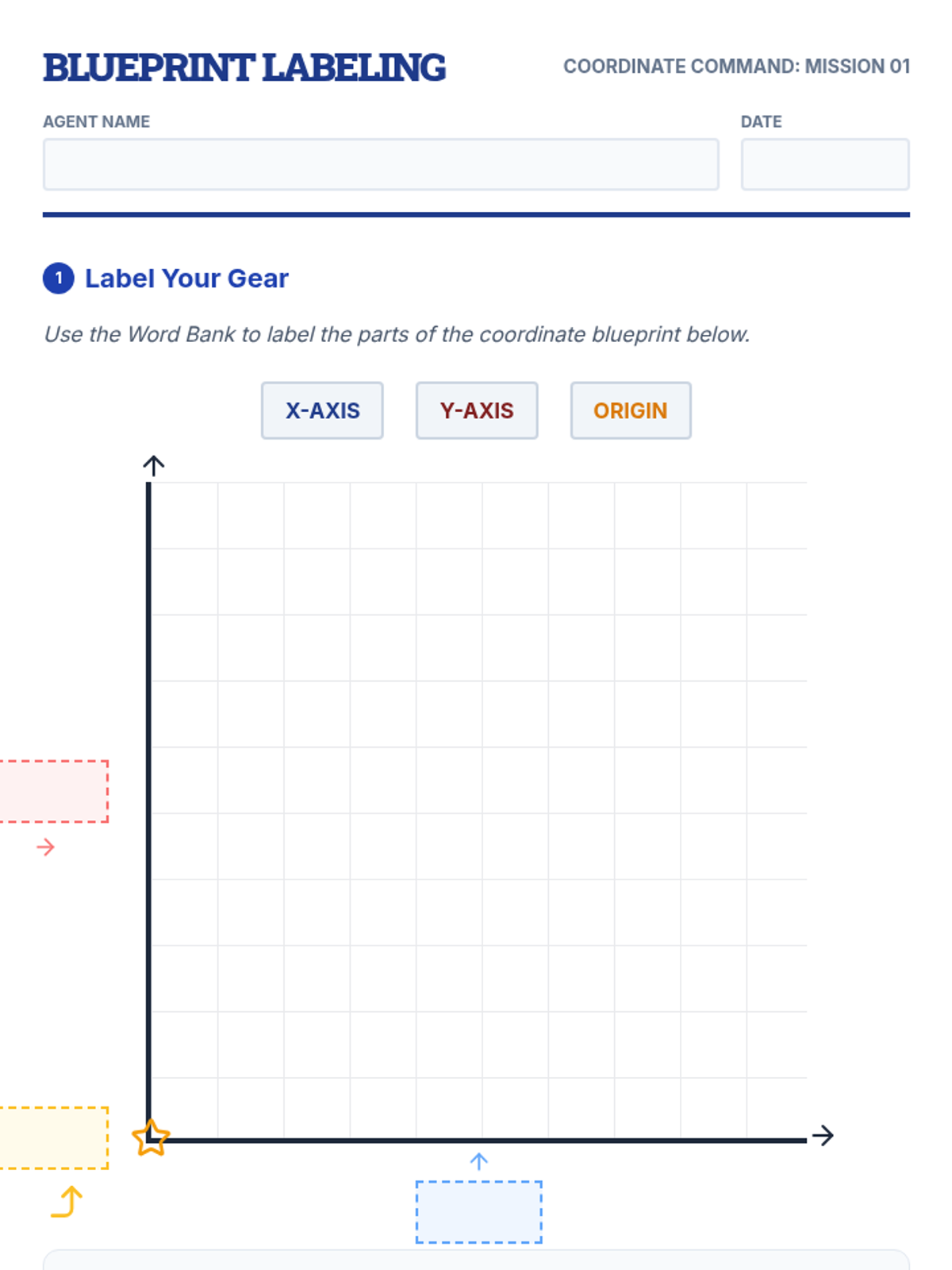
A 4-lesson intervention sequence focused on the fundamentals of the coordinate plane, specifically the first quadrant. Students progress from identifying axes to plotting patterns from numerical rules using a consistent 'Run then Jump' protocol.
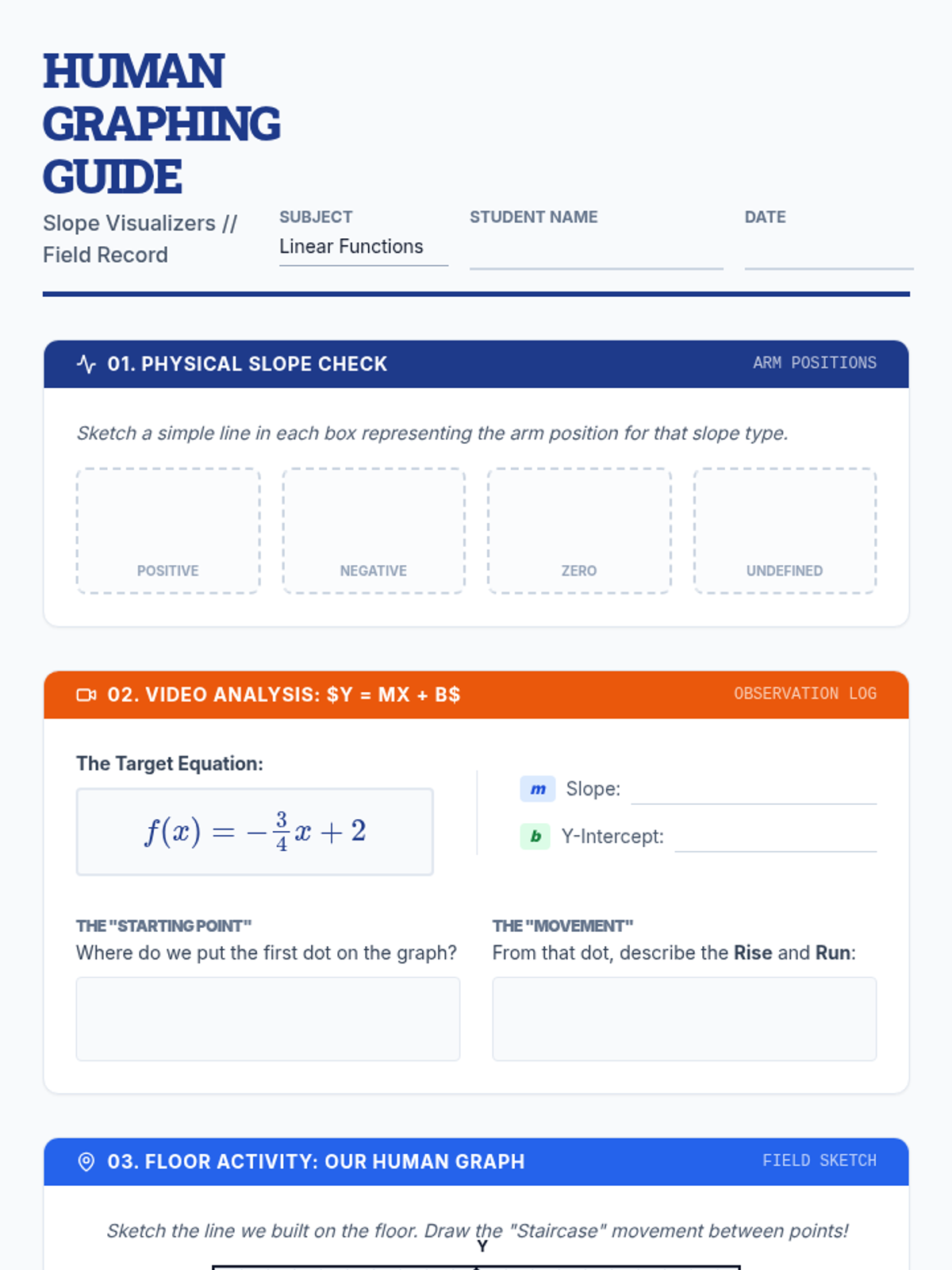
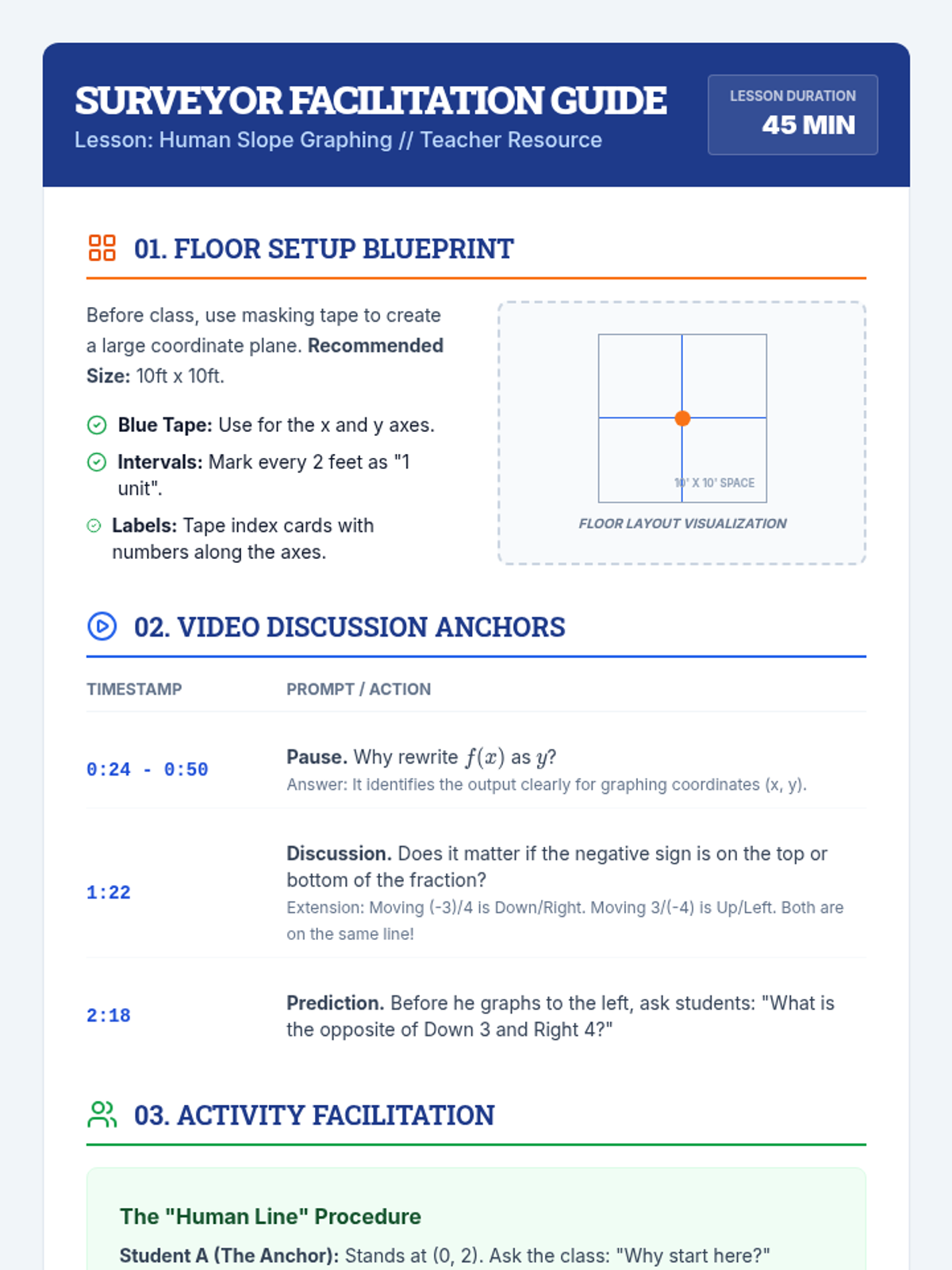
A sequence focused on visualizing linear functions through physical movement and spatial reasoning, designed for middle school students to master slope-intercept form.
A game-based exploration of polygons on the coordinate plane. Students learn to plot, calculate distance, reflect shapes, and deduce geometric properties using coordinate data in all four quadrants.
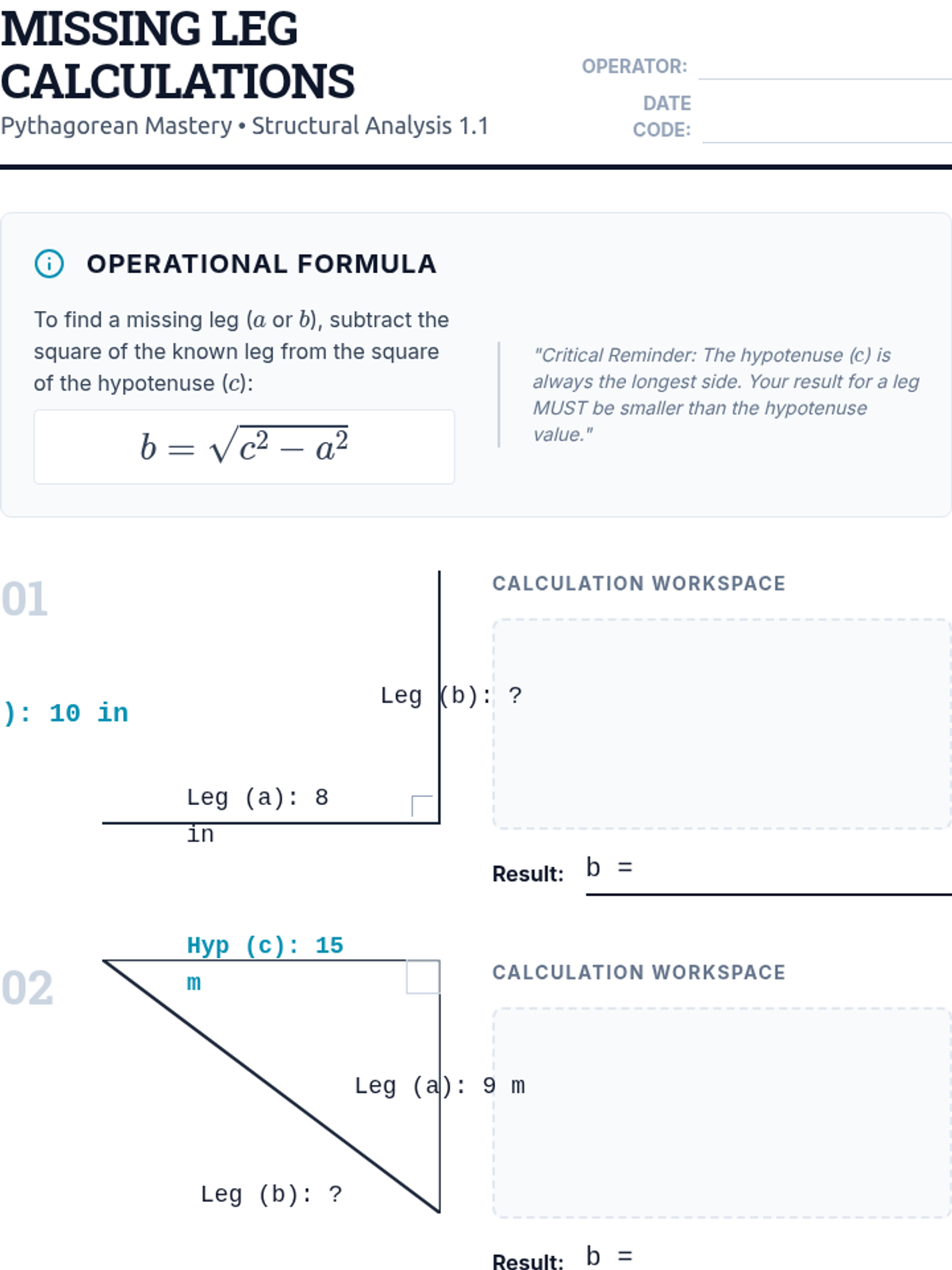
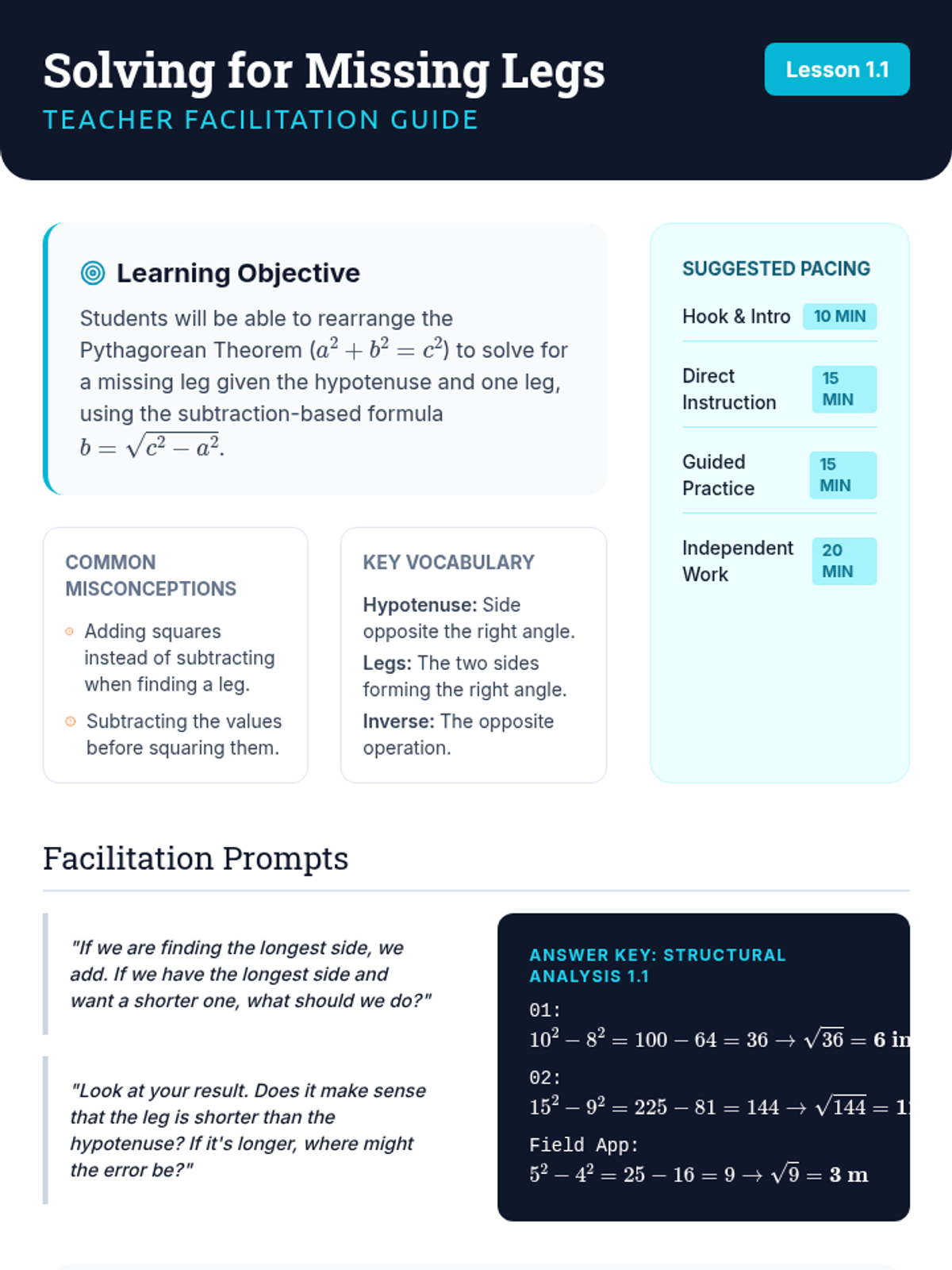
An advanced geometry sequence focusing on solving for missing legs, identifying triples, and applying the Pythagorean Theorem to coordinate geometry and real-world navigation.
This sequence builds a foundational understanding of the coordinate plane as a tool for visualizing algebraic relationships. Students progress from navigating the four quadrants to graphing linear equations and inequalities, culminating in a mastery-based synthesis challenge.
An inquiry-based unit where students investigate numerical patterns, generate sequences from rules, and represent these relationships on the coordinate plane. They will learn to compare patterns and analyze how different operations affect visual trends.
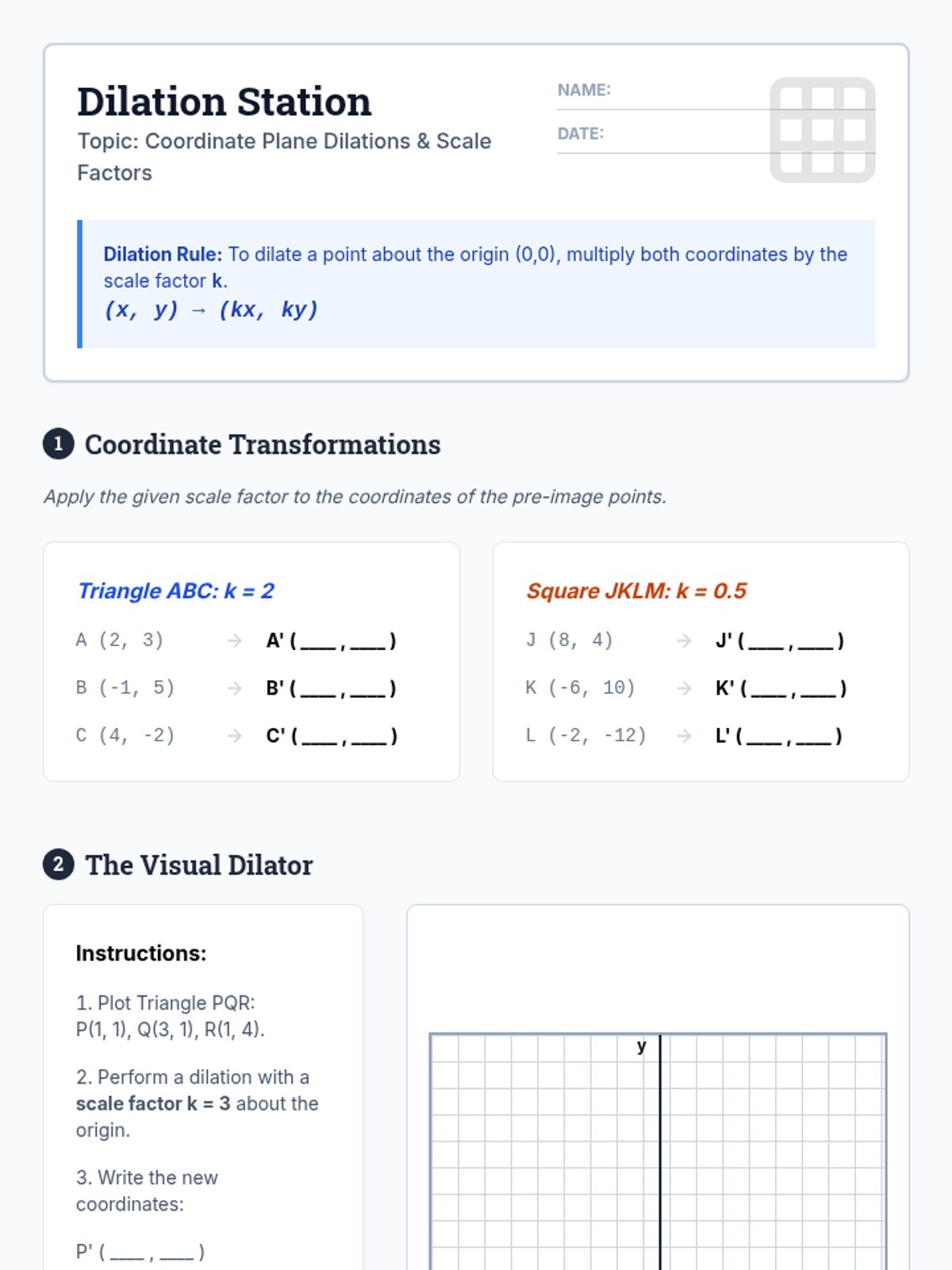
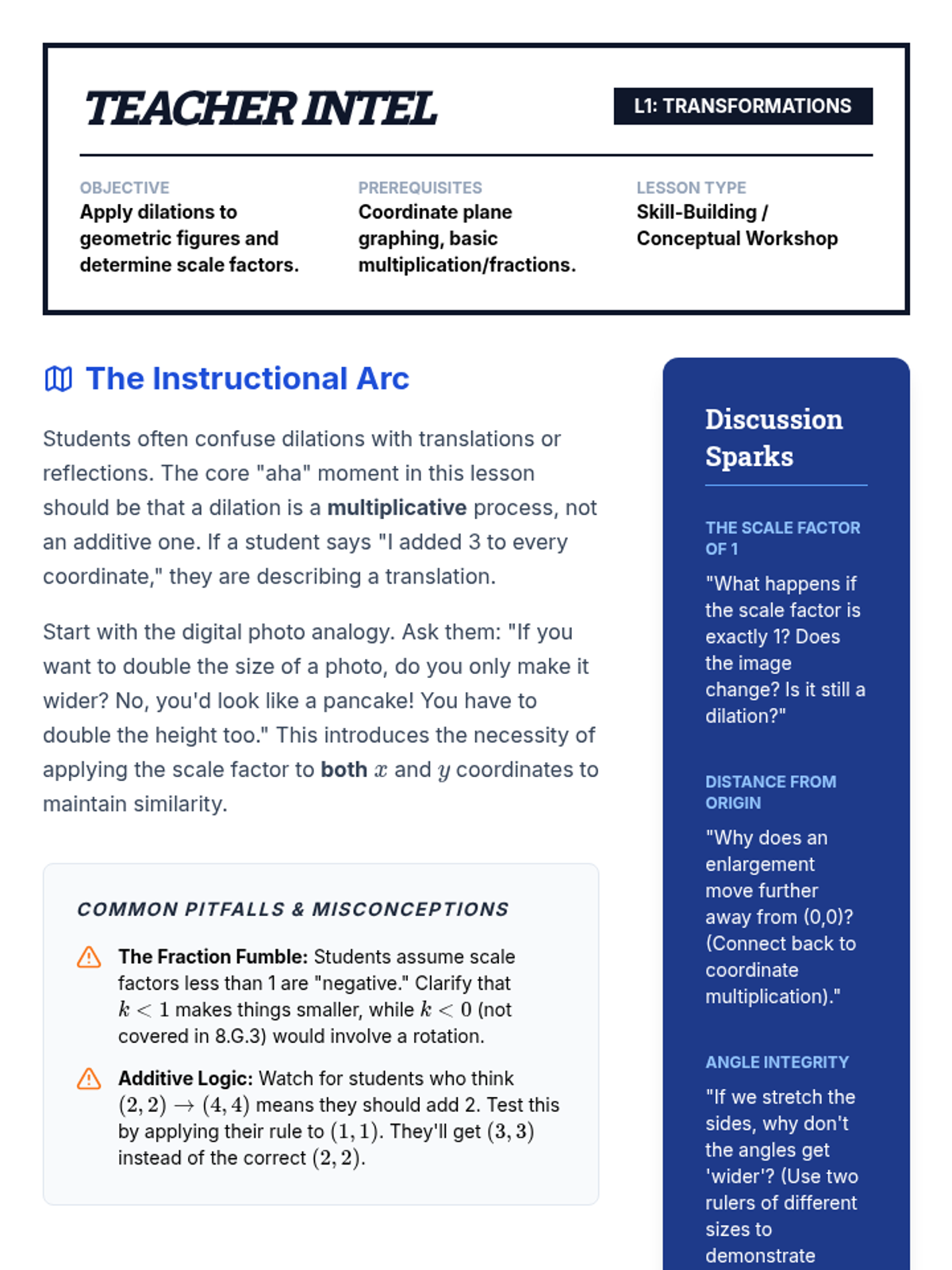
An 8th-grade journey through geometric similarity, from basic dilations on a coordinate grid to real-world indirect measurement and architectural design. Students apply proportional reasoning to solve complex spatial problems.
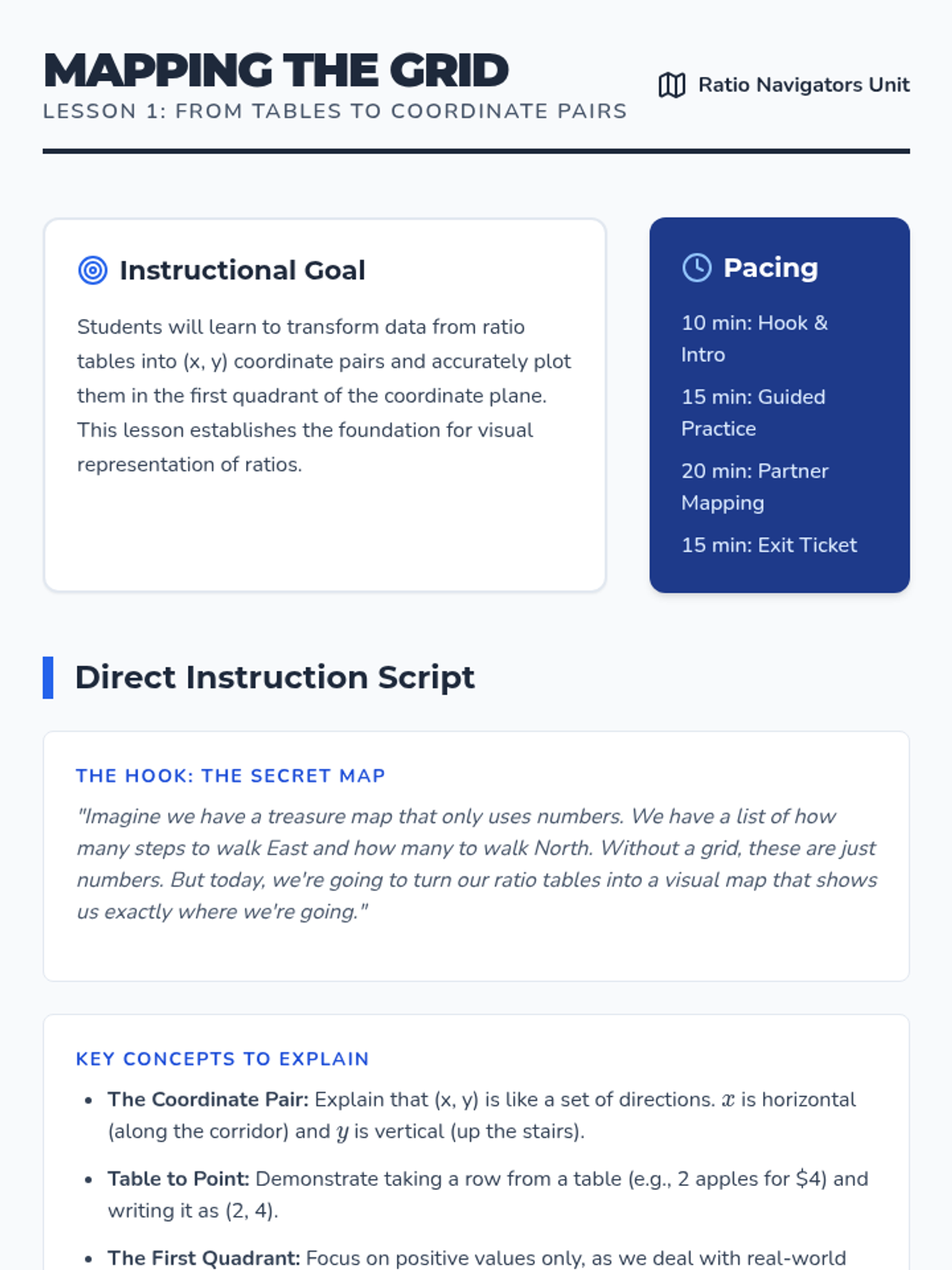
A 5-lesson unit for 6th grade math students exploring how to represent proportional relationships on the coordinate plane, emphasizing the transition from numerical tables to visual graphs.
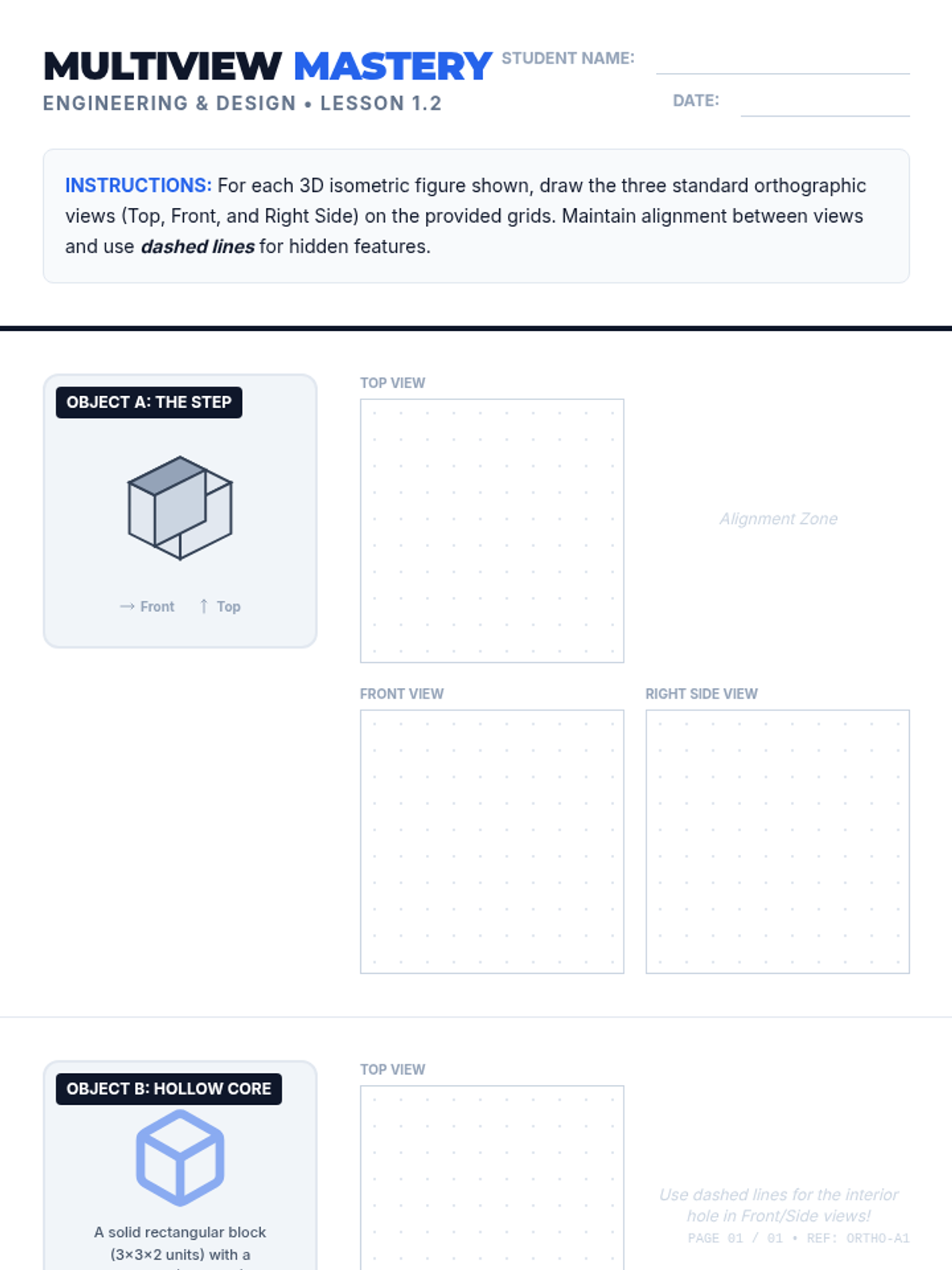
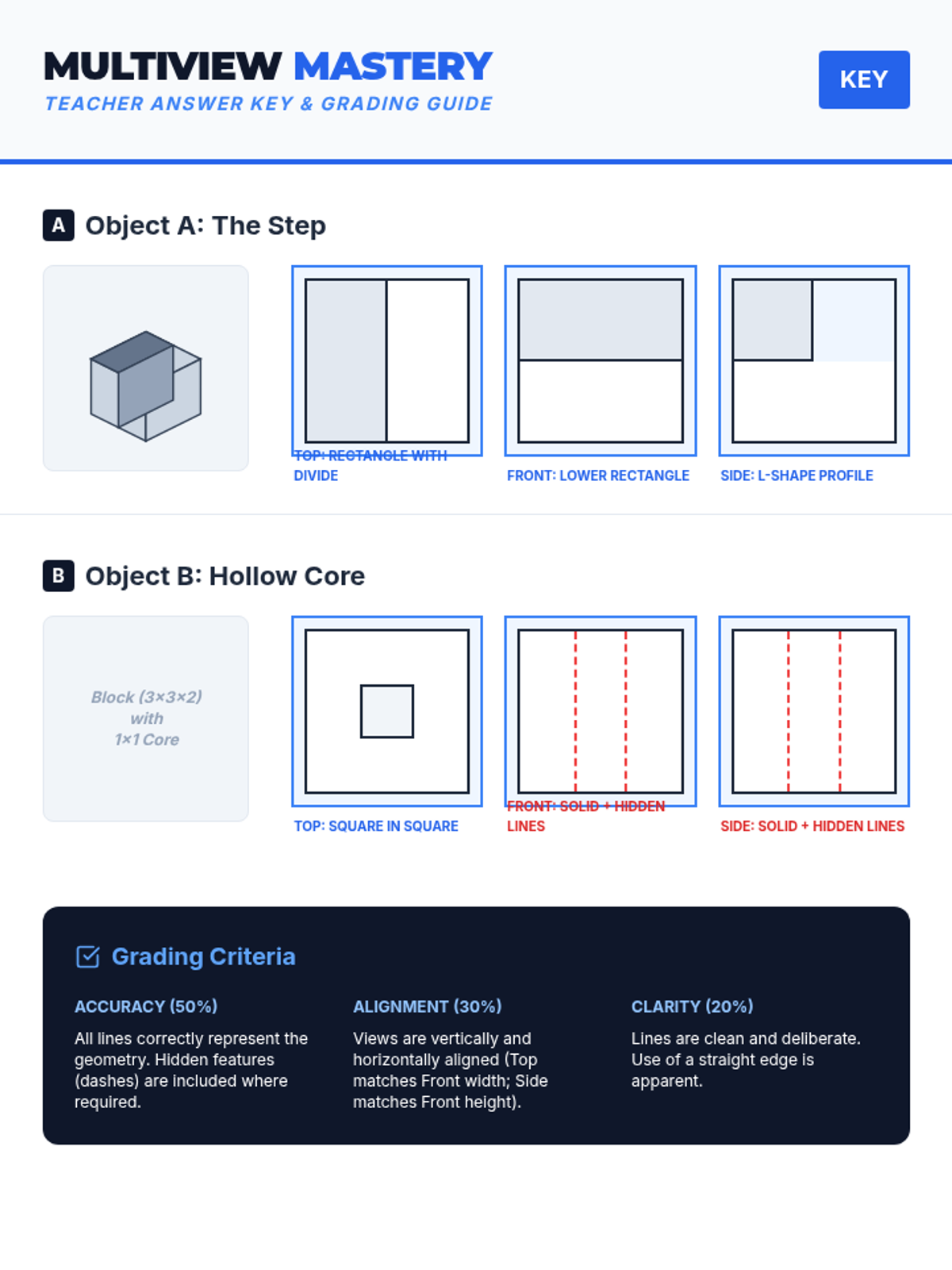
This sequence explores the intersection of geometry and engineering, focusing on 3D visualization, technical drawing, and the optimization of physical forms. Students develop spatial reasoning skills through orthographic and isometric sketching and apply geometric modeling to solve real-world design constraints.
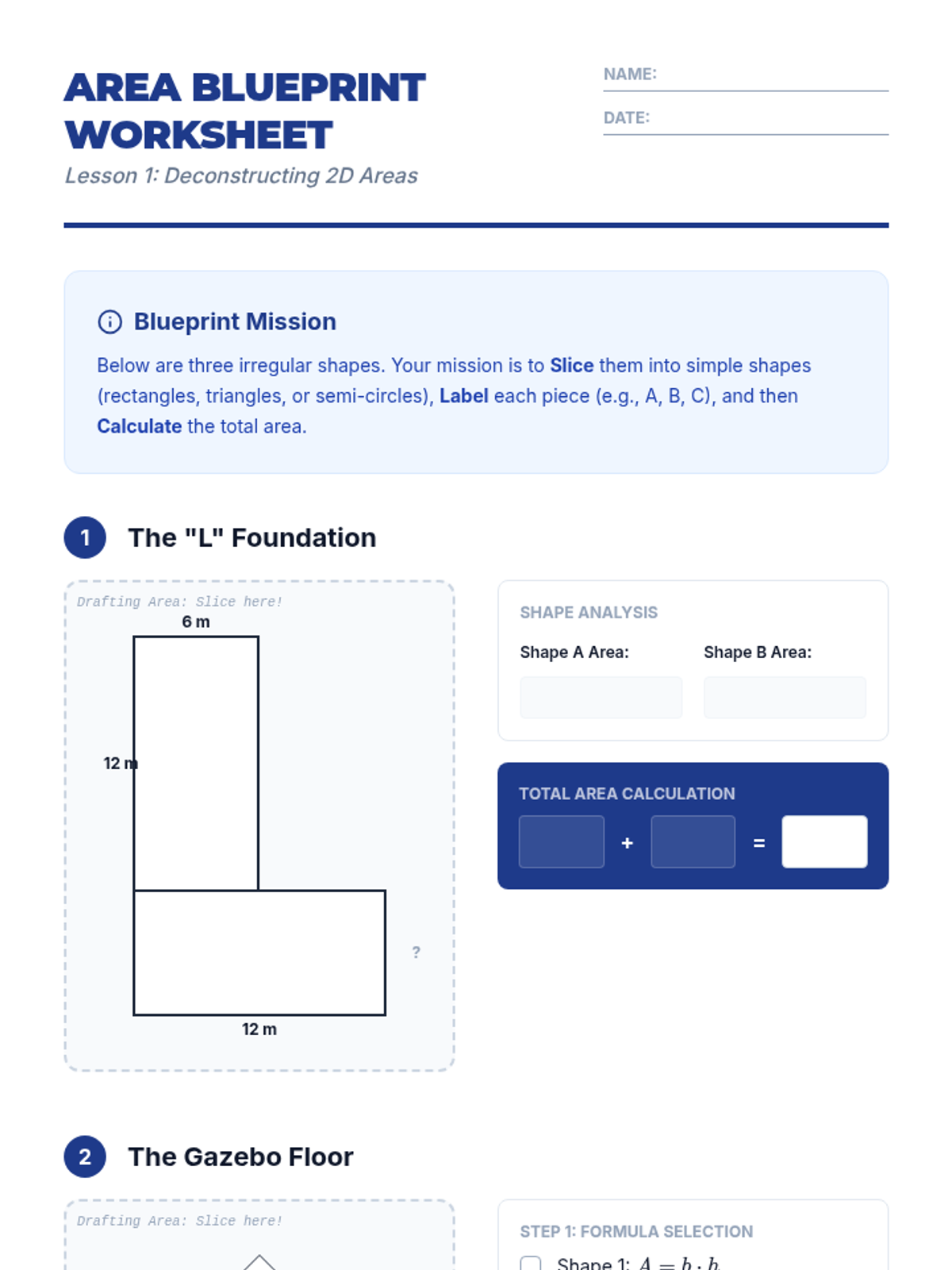
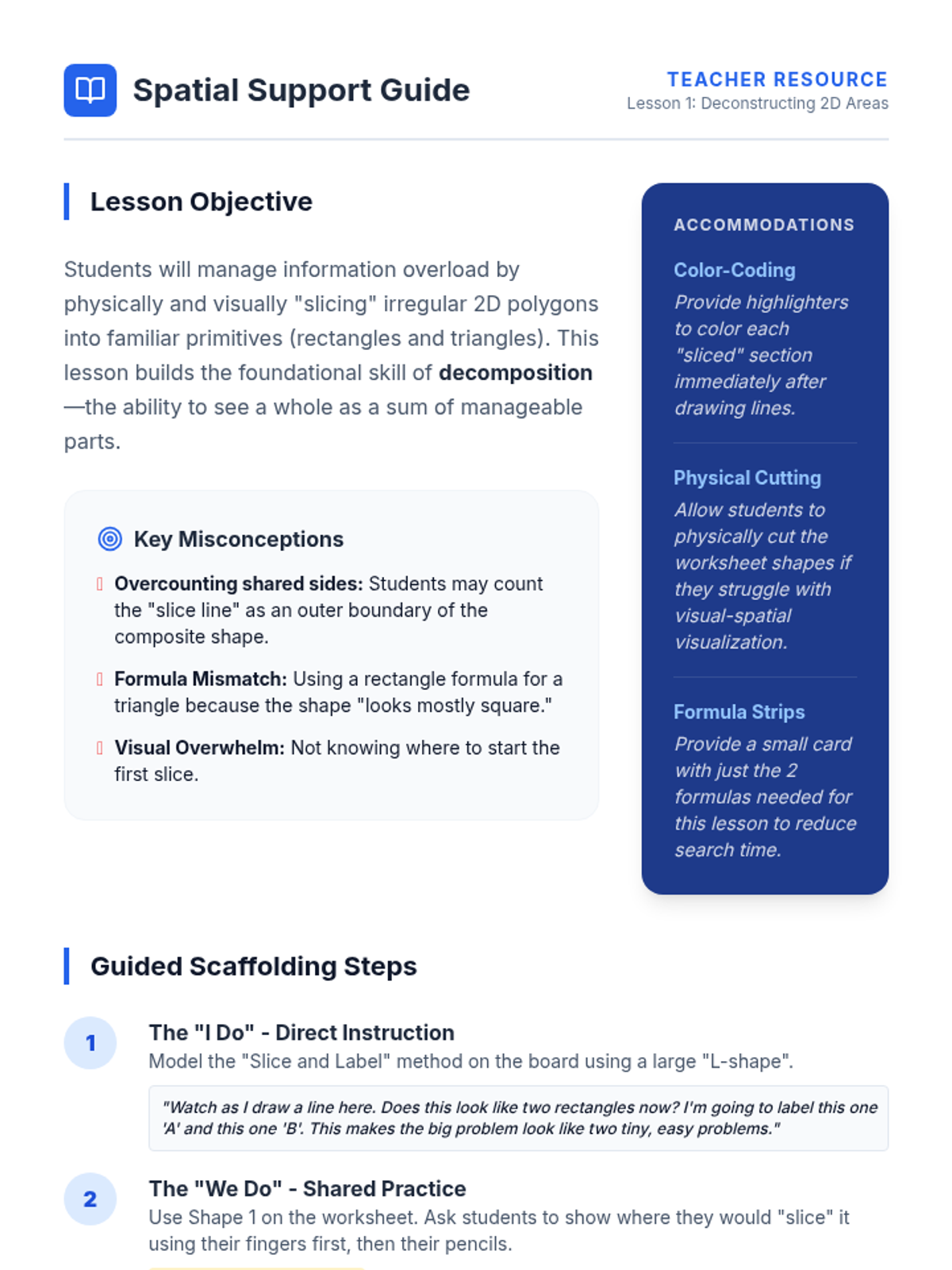
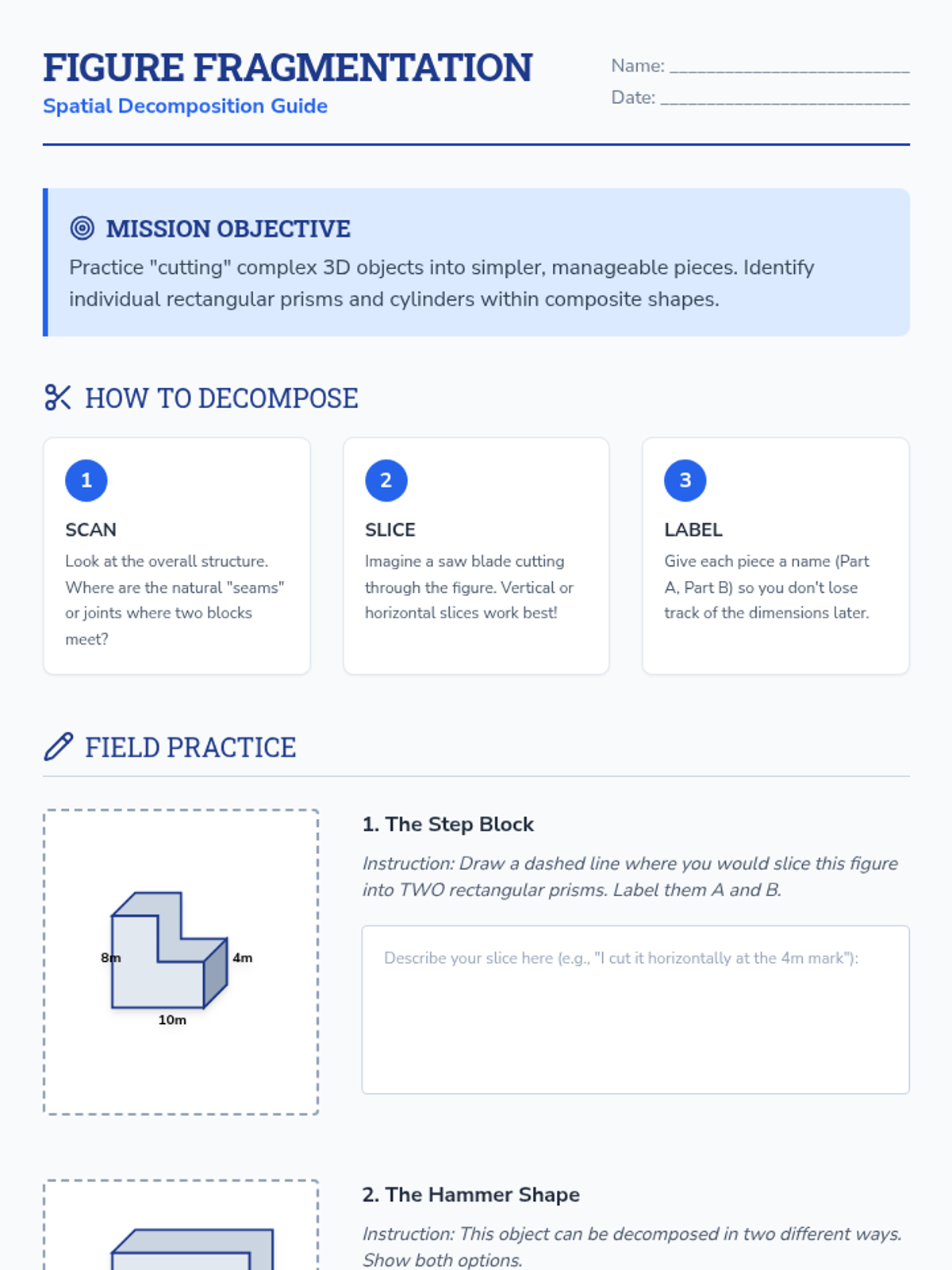
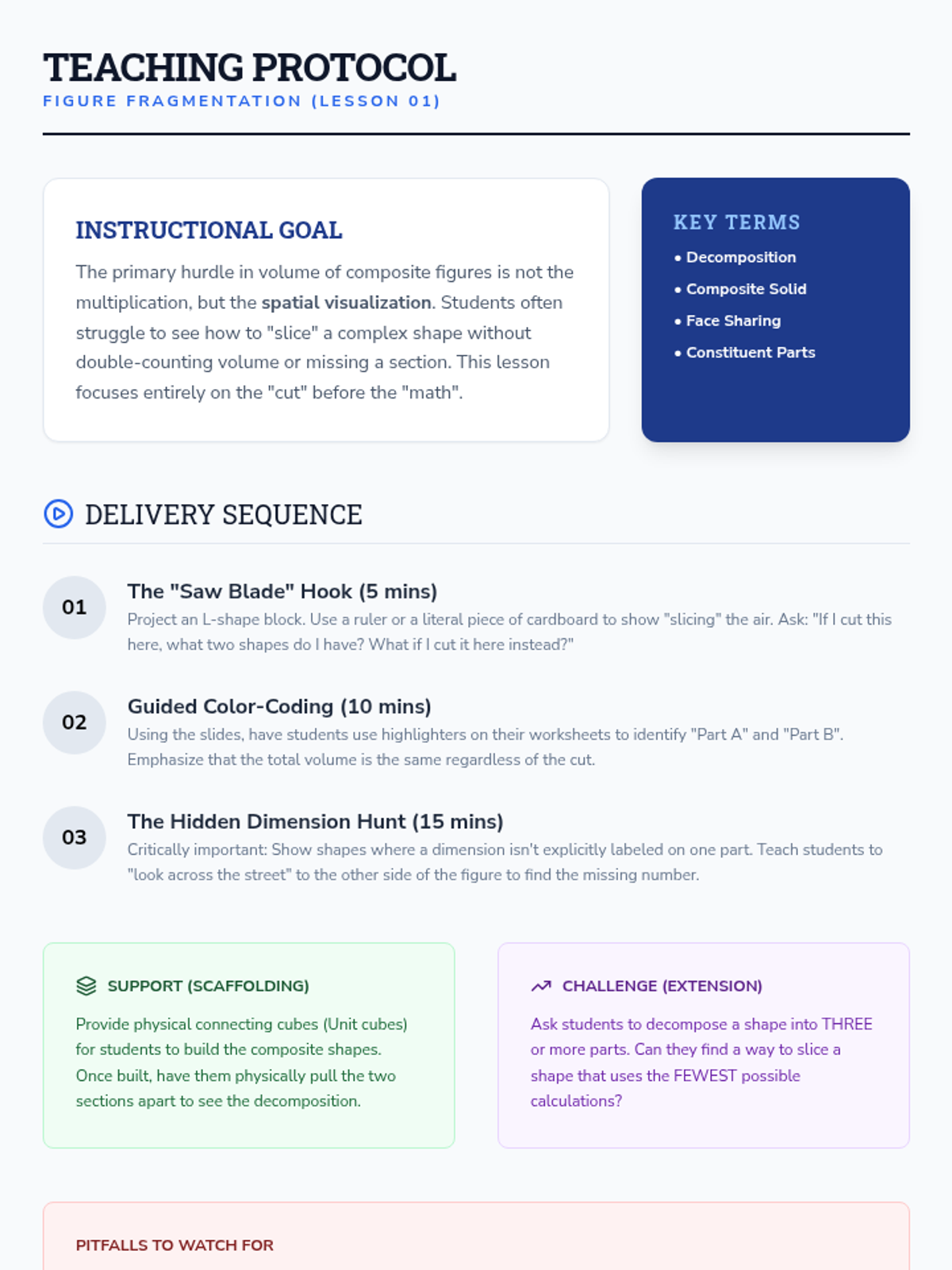
A sequence focused on breaking down complex geometric shapes into manageable parts. Students use color-coding, physical manipulation, and organized calculations to solve 2D area and 3D volume problems, culminating in a design challenge.
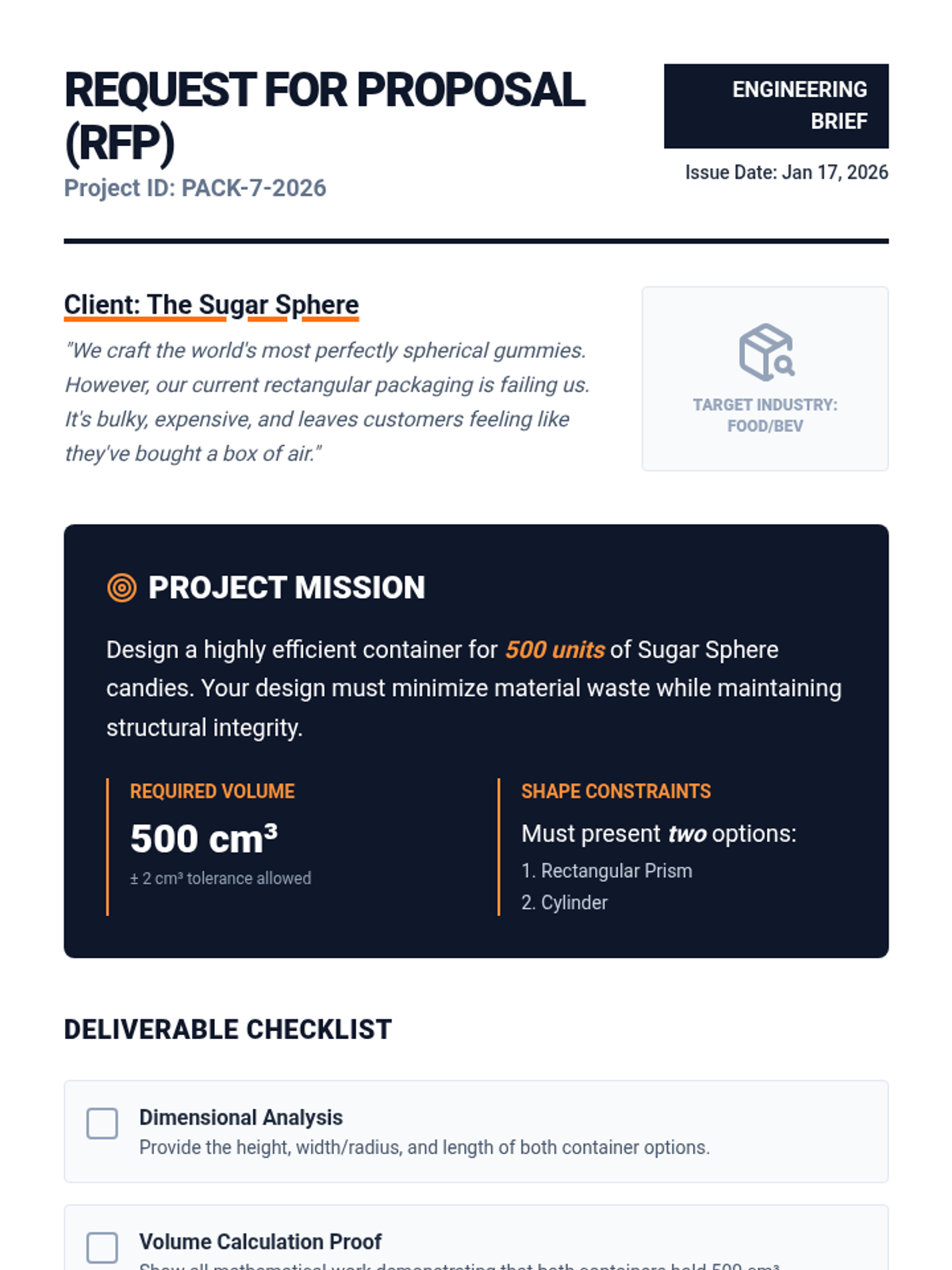
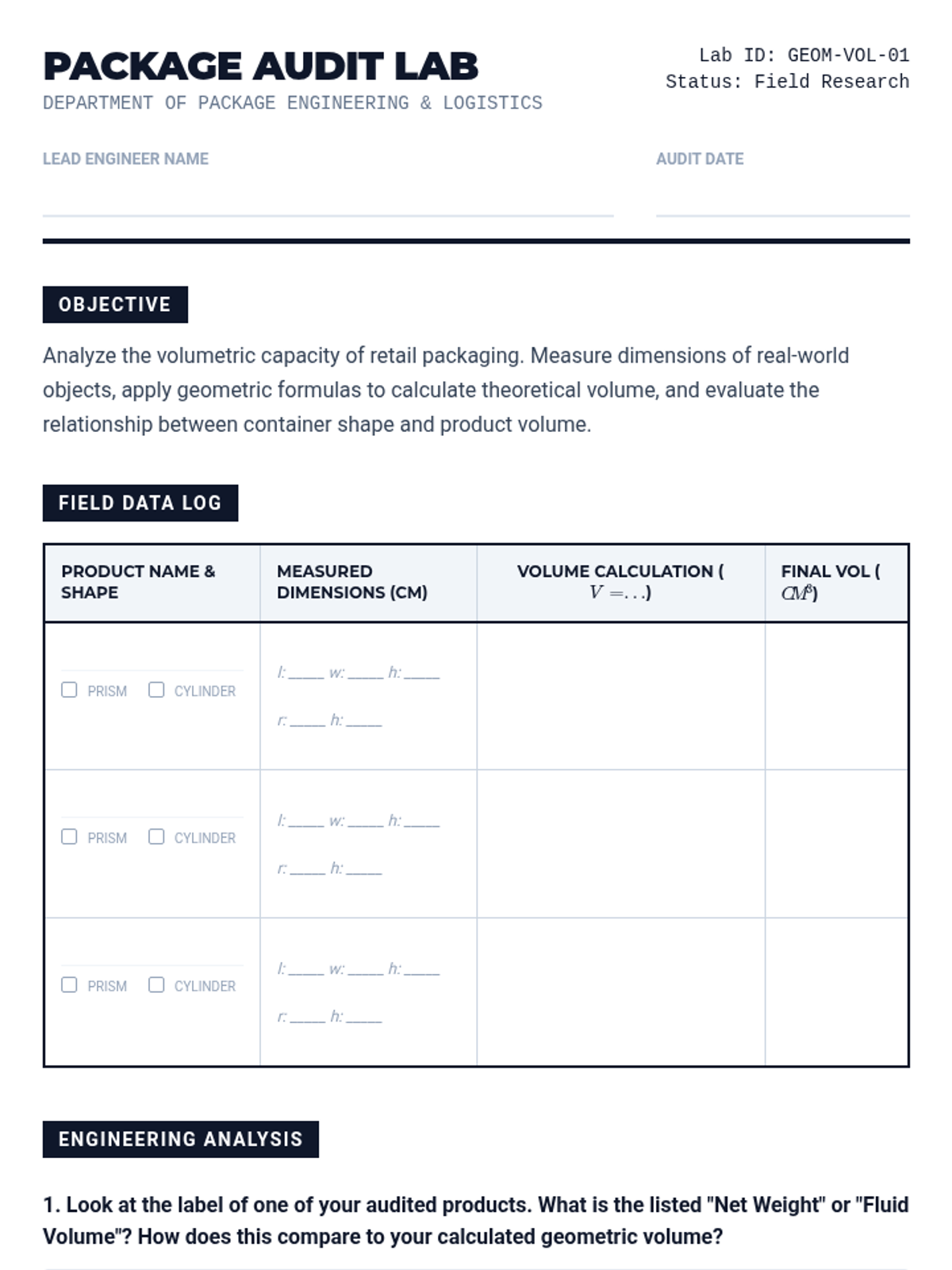
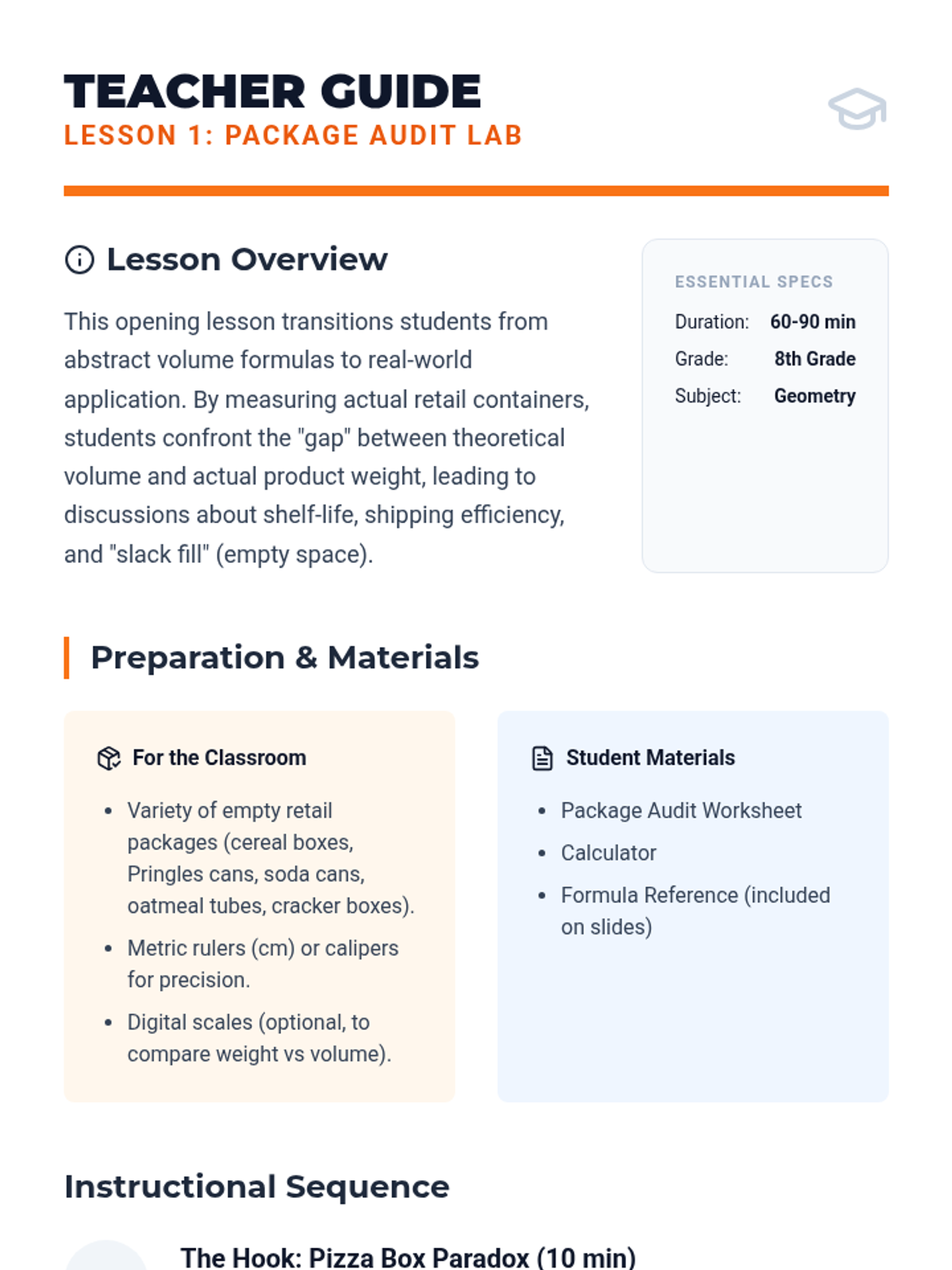
A project-based geometry sequence where students act as packaging engineers to design cost-effective containers. Students apply volume and surface area formulas for prisms and cylinders to optimize product packaging and minimize wasted space.
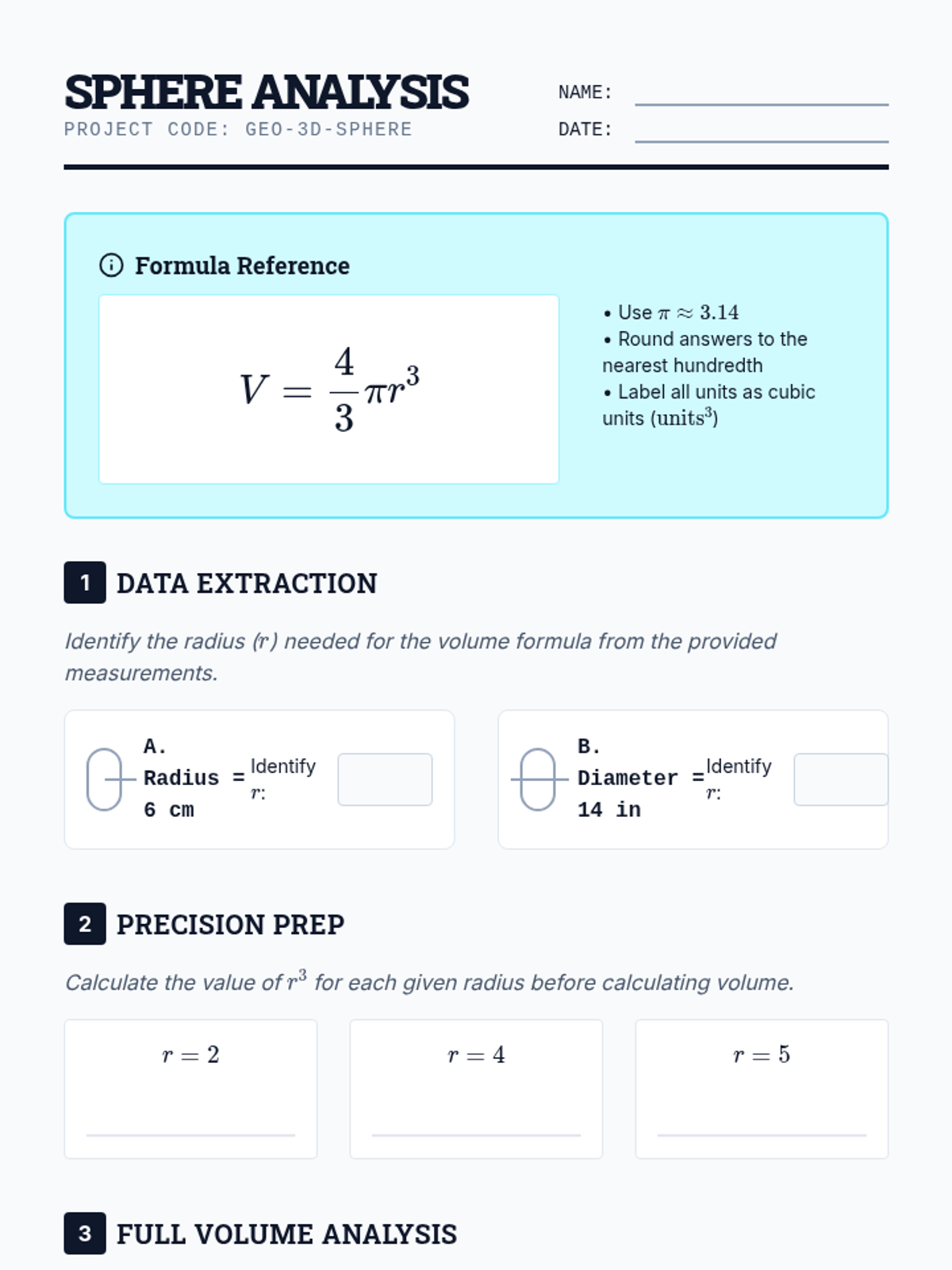
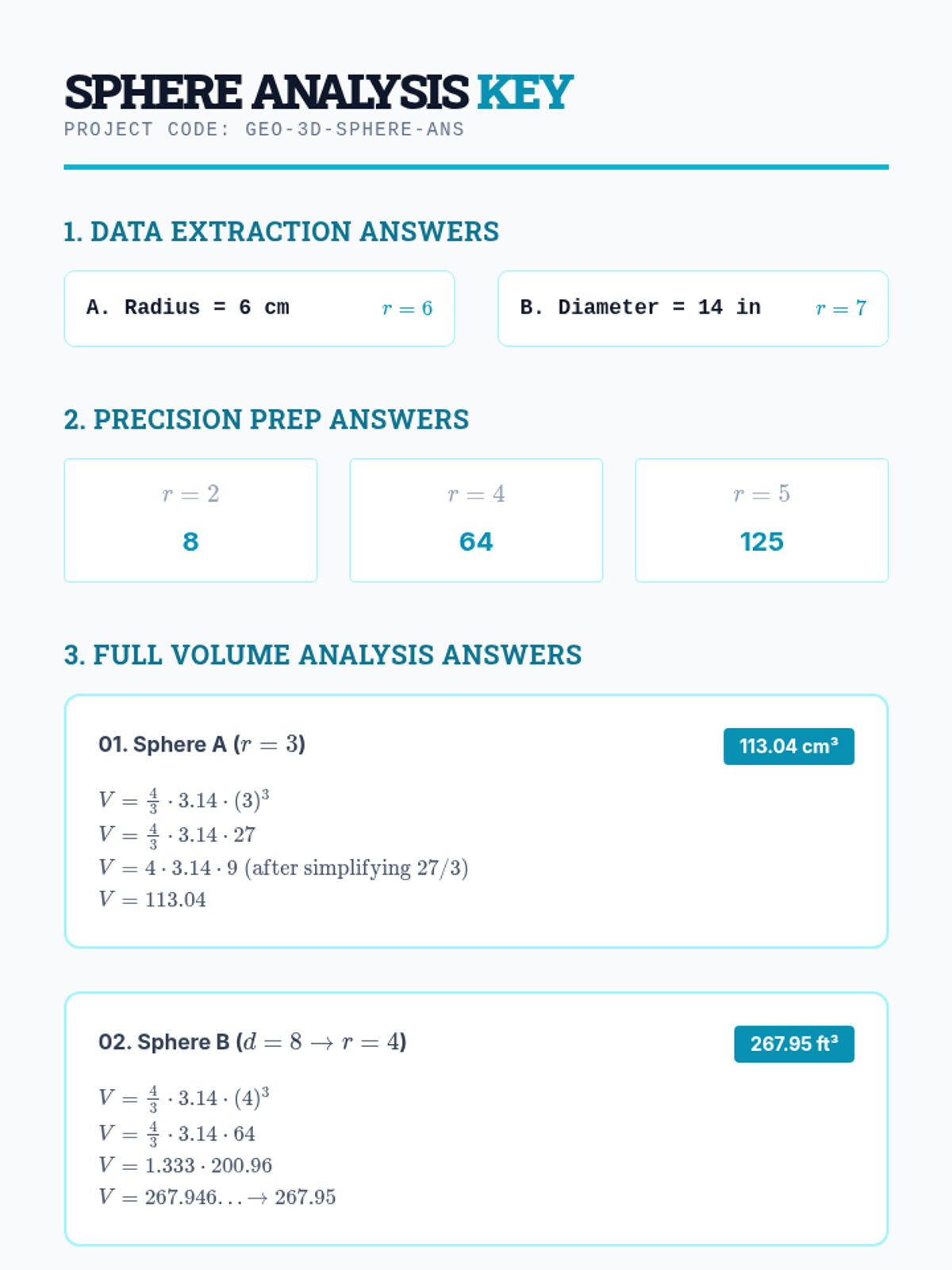
A comprehensive unit for 7th-grade students focusing on the volume of spheres, hemispheres, and composite solids. Students move from basic formula application to complex multi-step problem solving involving additive and subtractive volume strategies and real-world capacity conversions.
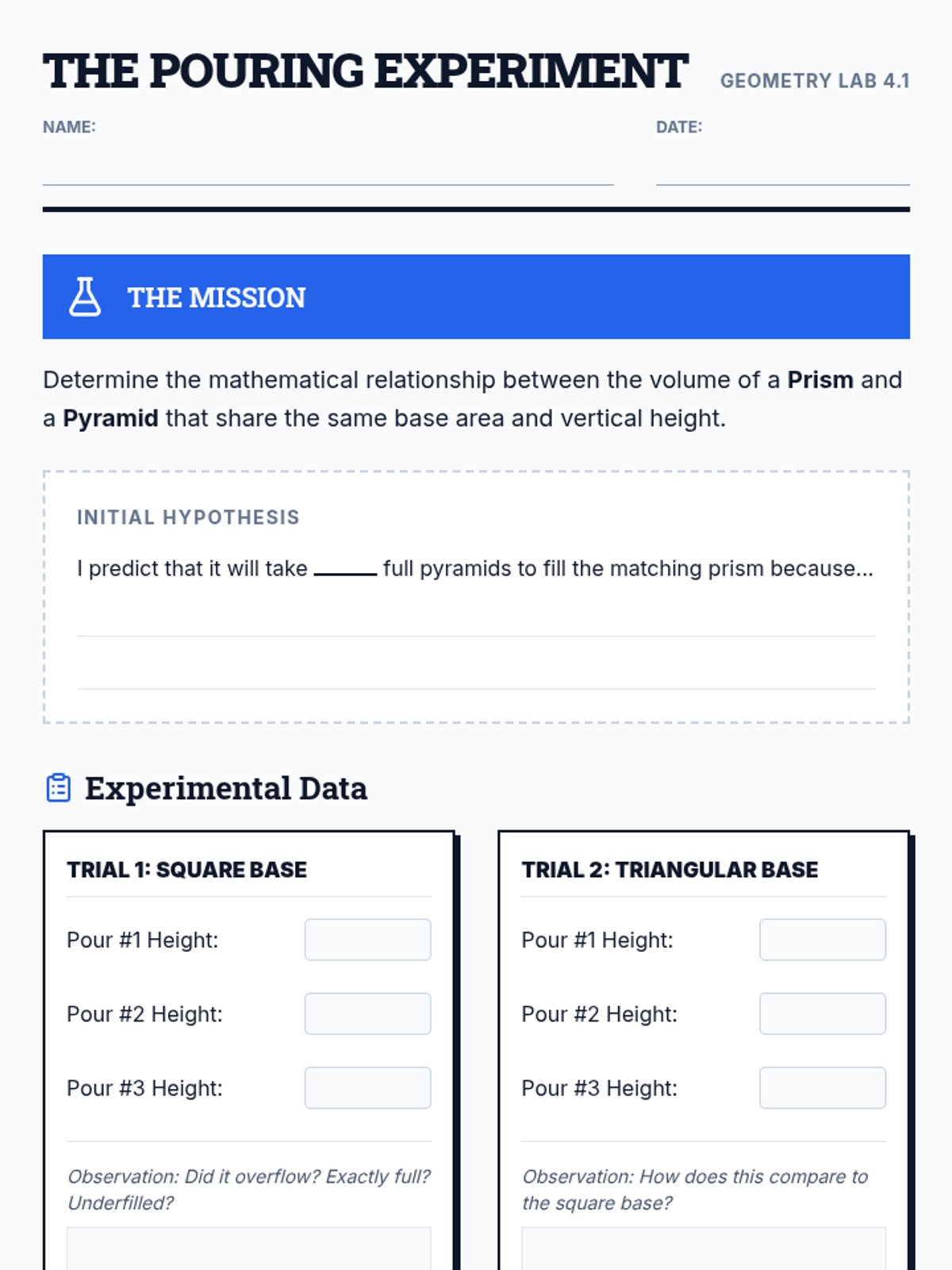
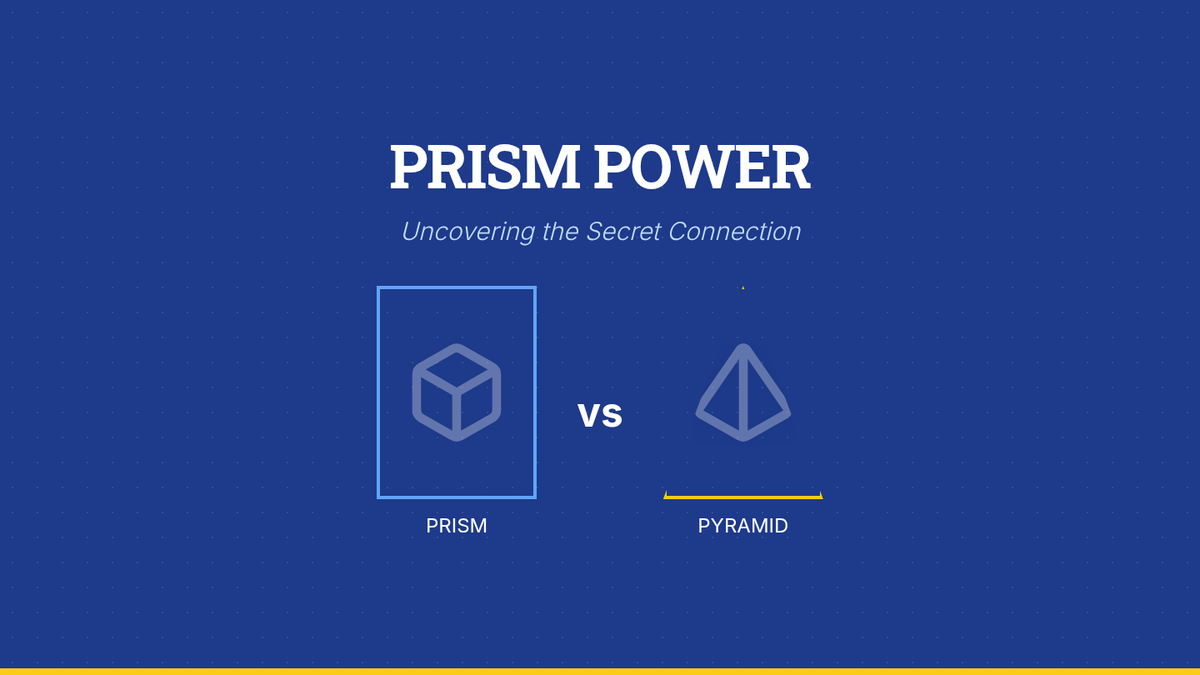
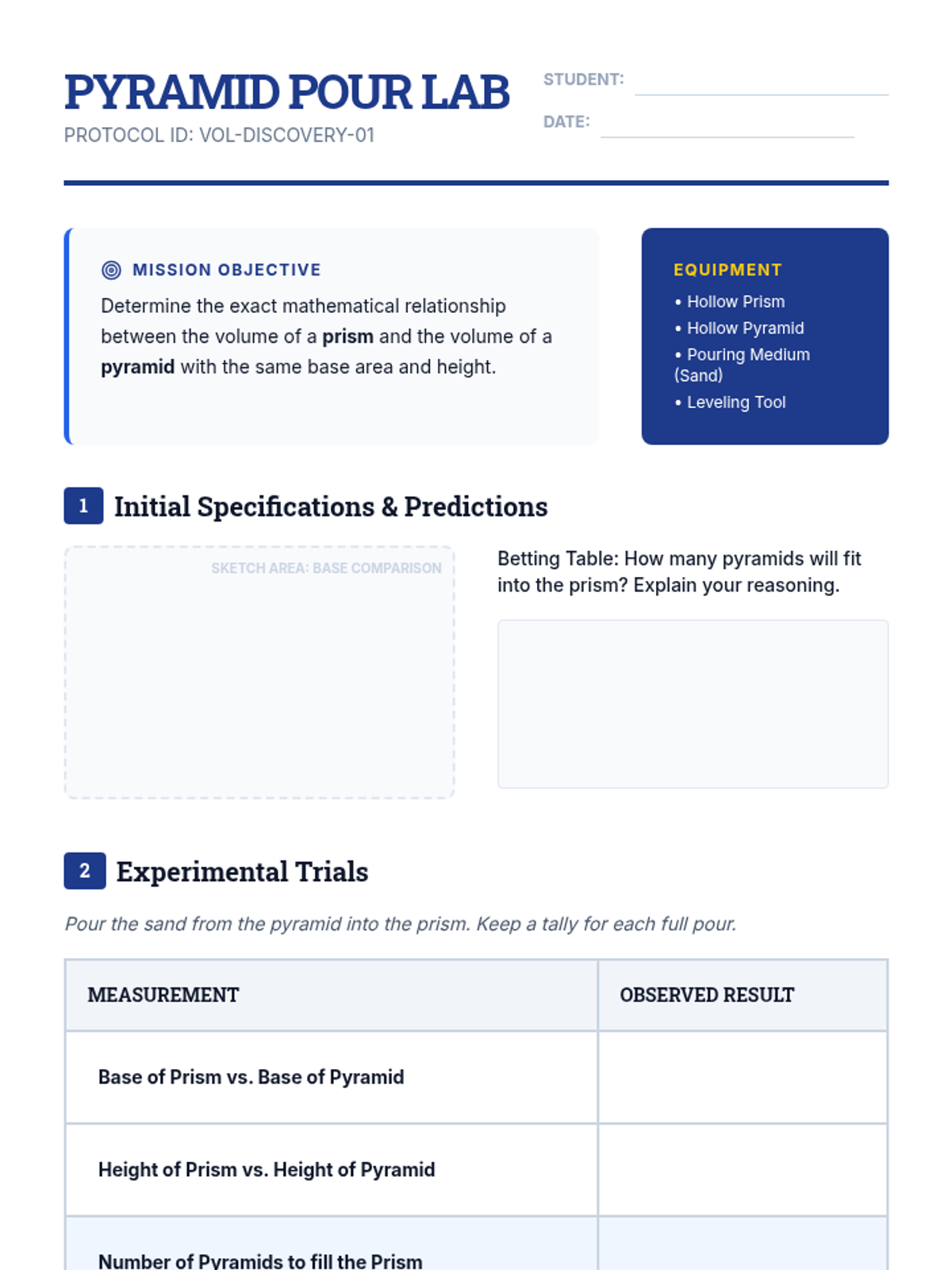
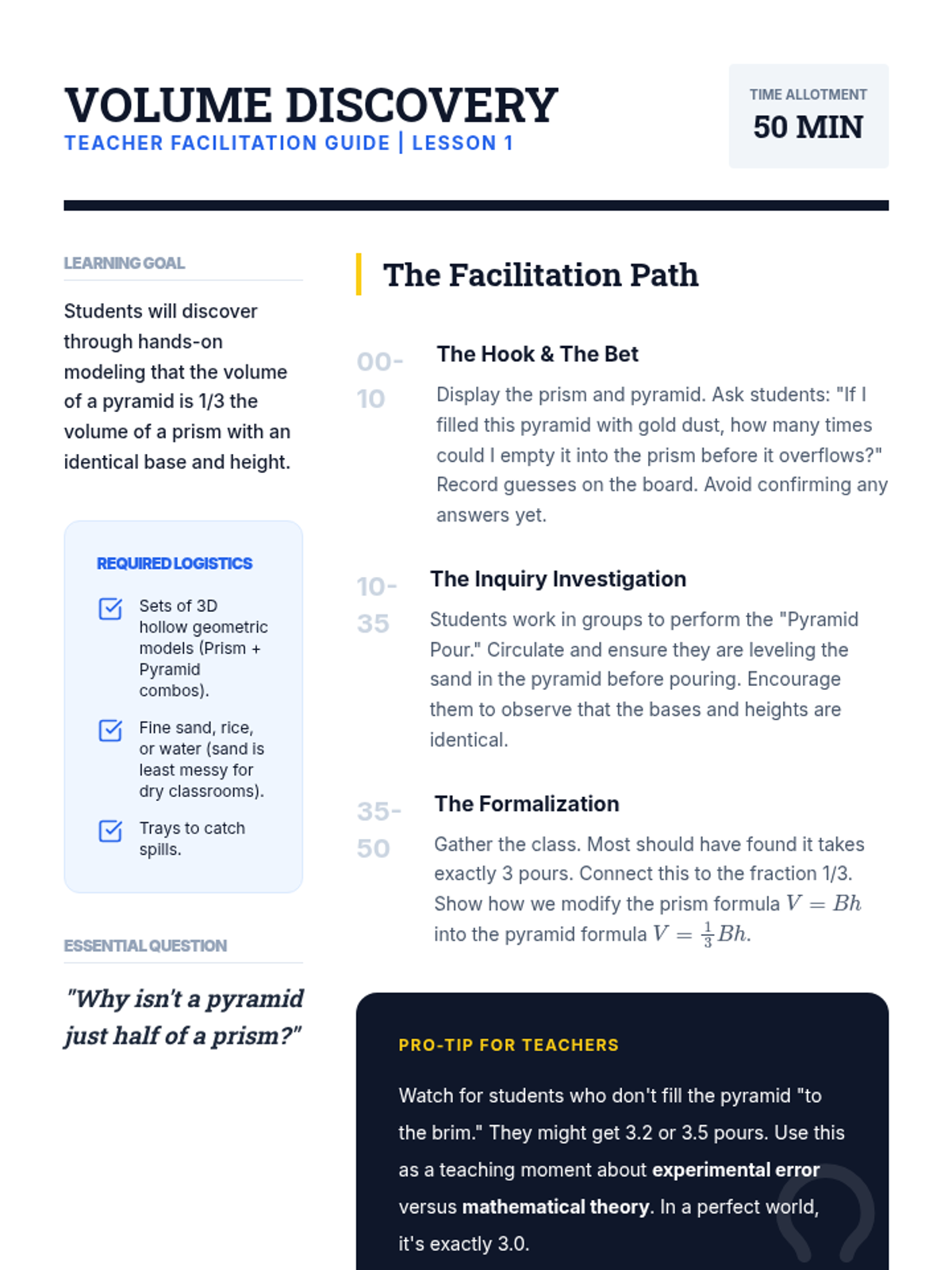
A 7th-grade geometry unit exploring the conceptual and mathematical relationship between prisms/cylinders and pyramids/cones, emphasizing the 1/3 volume ratio through discovery and application.
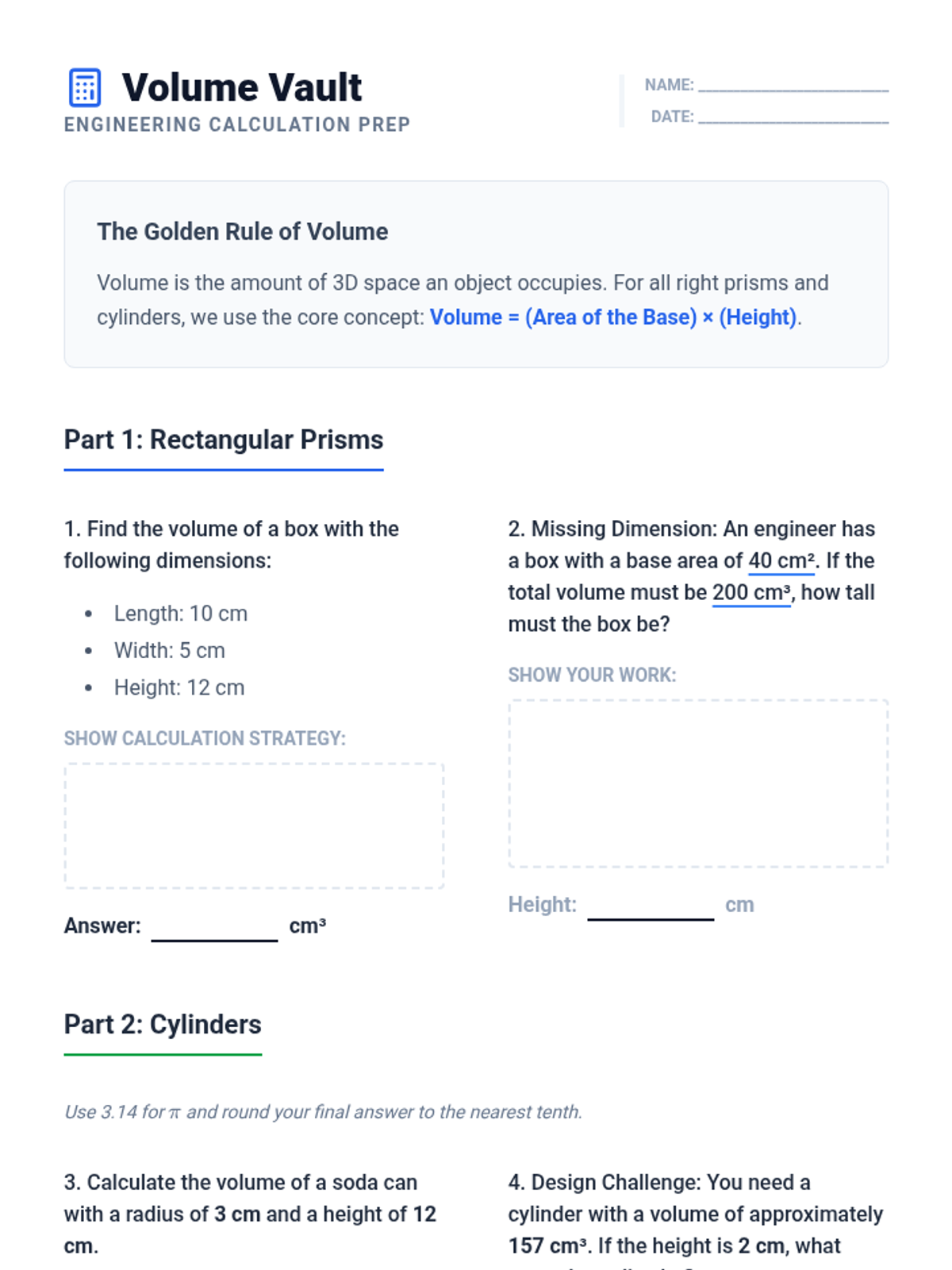
This geometry sequence guides 7th-grade students from circle area mastery to cylindrical volume calculations. It uses the concept of stacking circles to bridge 2D and 3D geometry, culminating in real-world engineering and packaging applications.
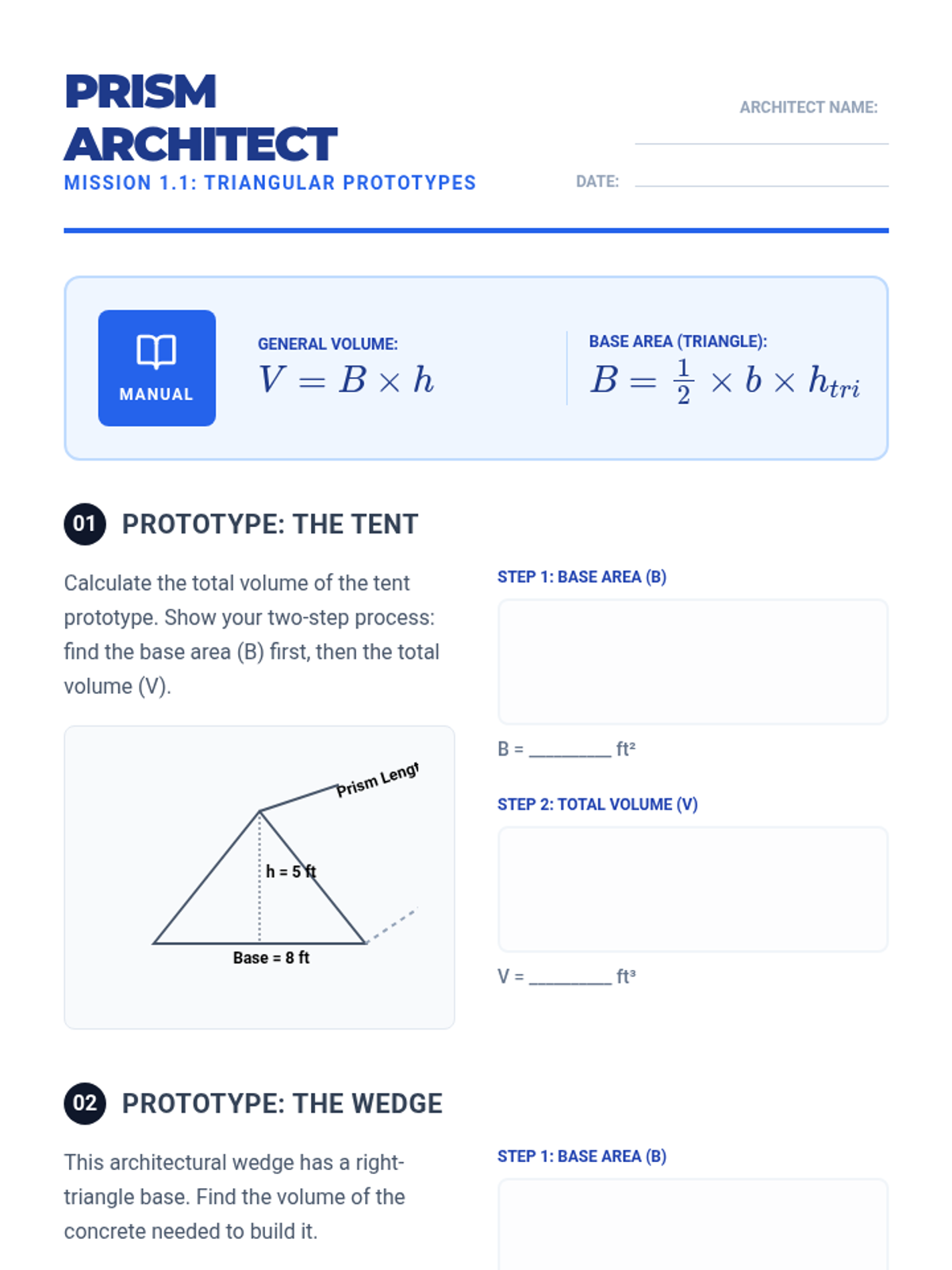
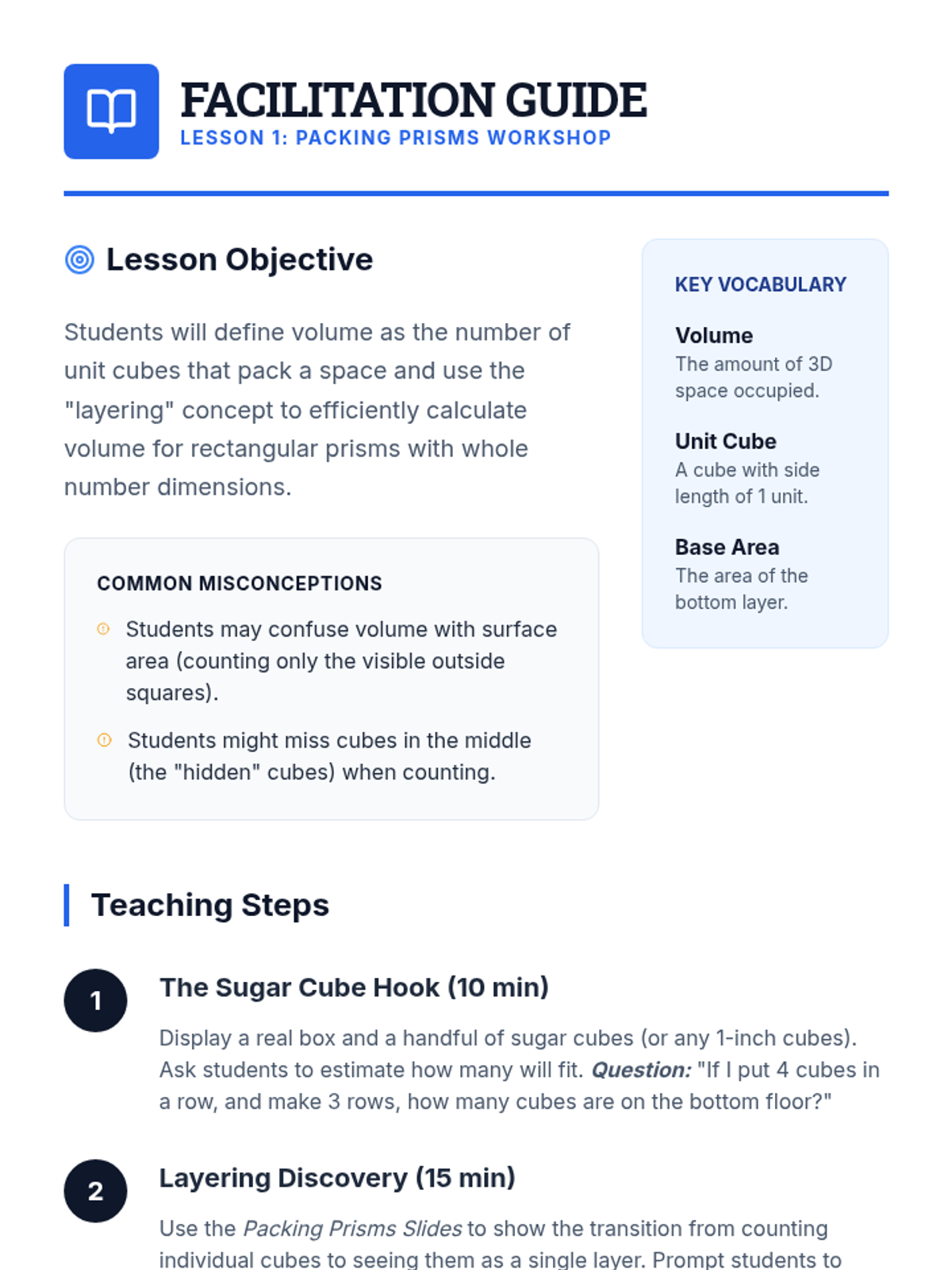
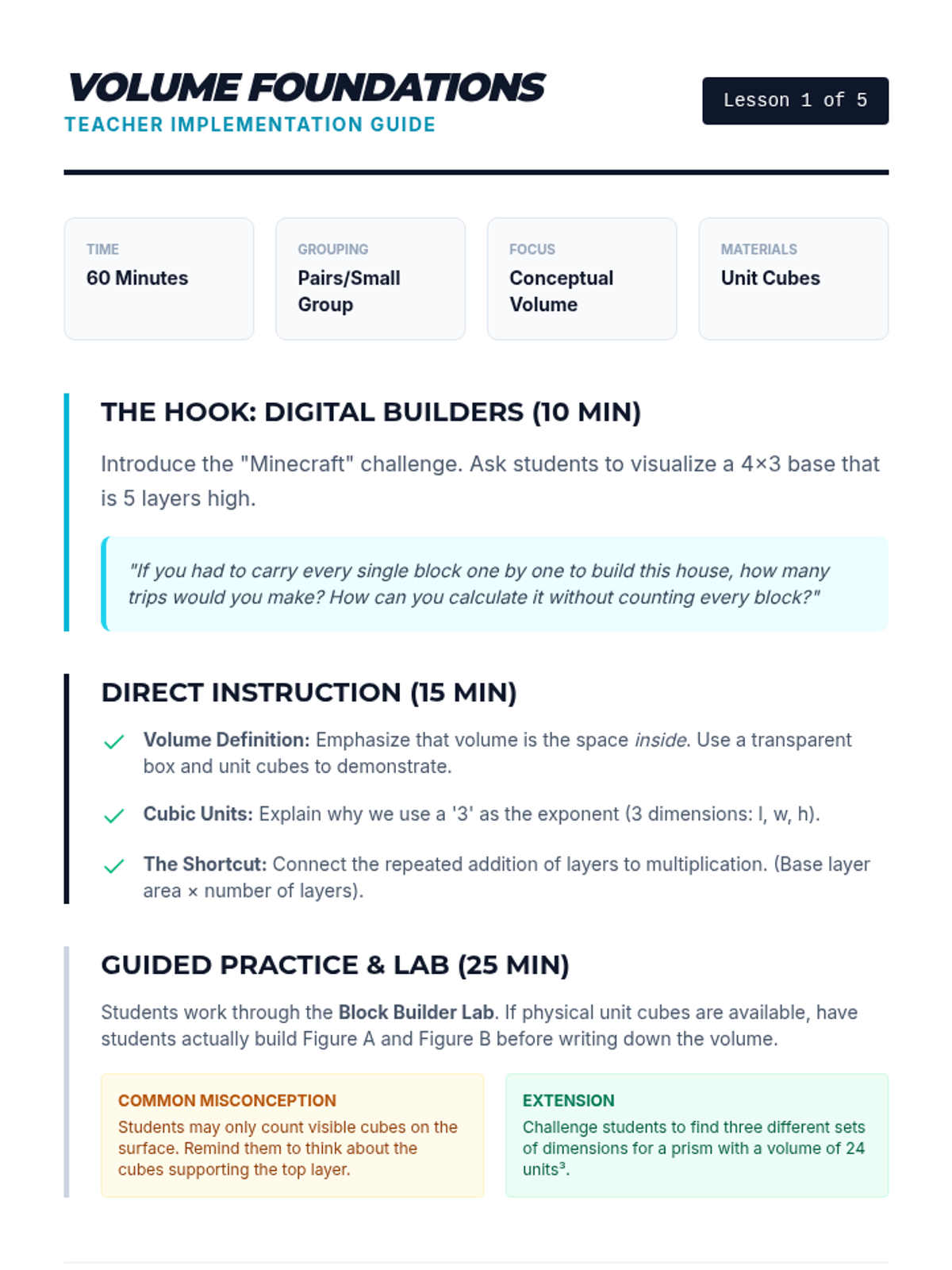
This inquiry-based sequence establishes the foundational conceptual understanding of volume as the accumulation of two-dimensional layers. Students move from counting unit cubes to deriving the universal formula V = Bh for prisms by exploring rectangular and triangular shapes.
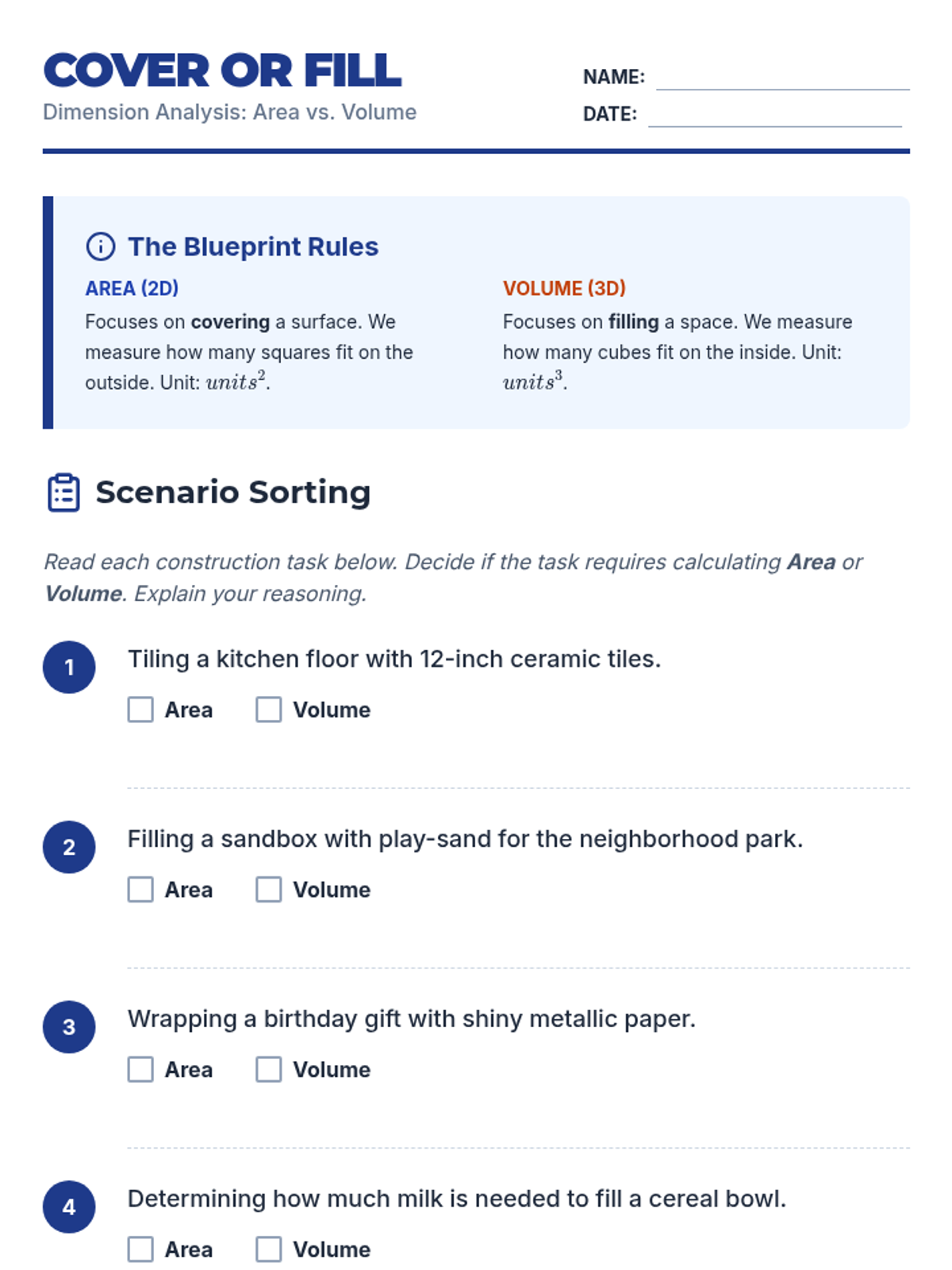
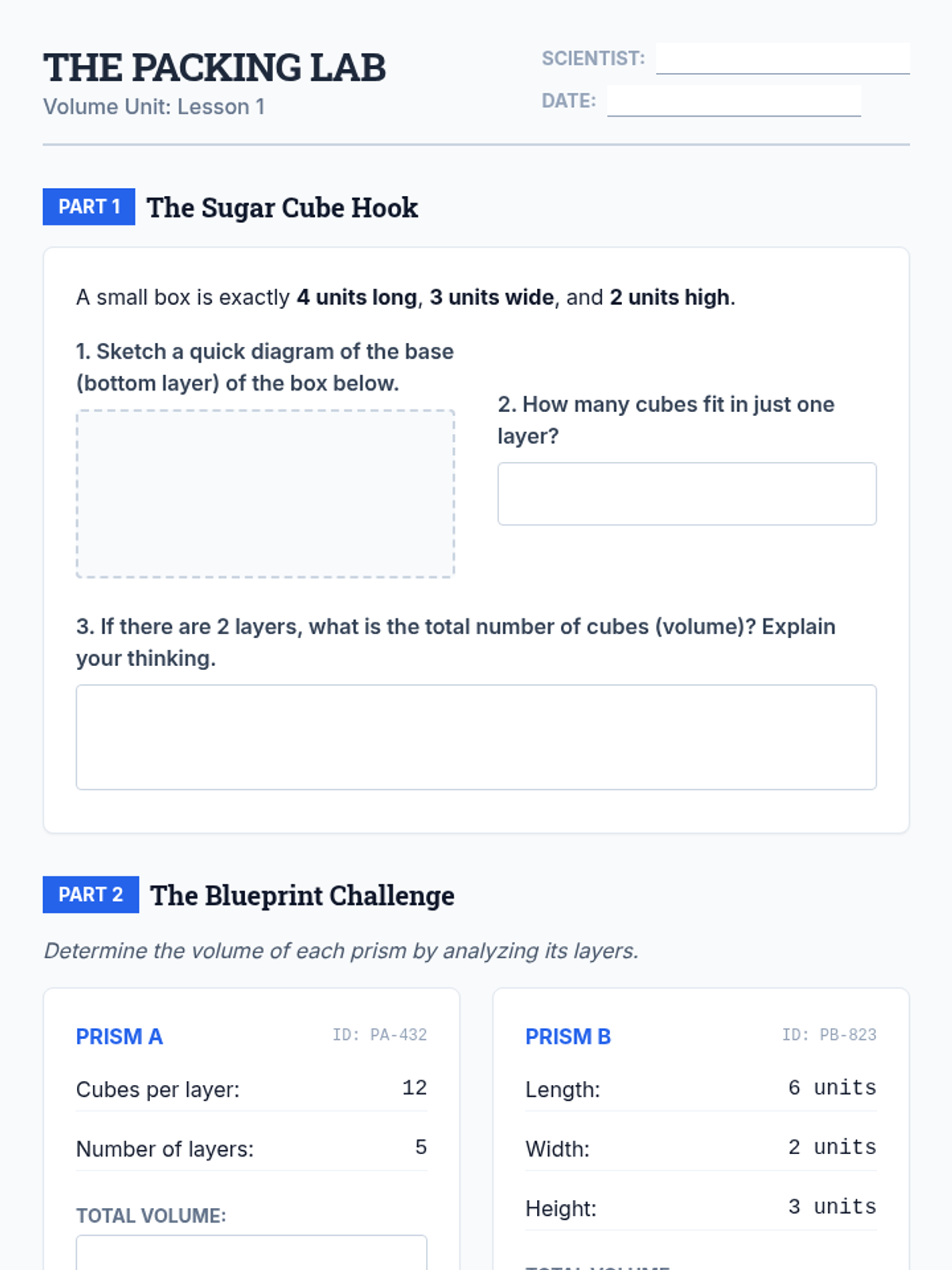
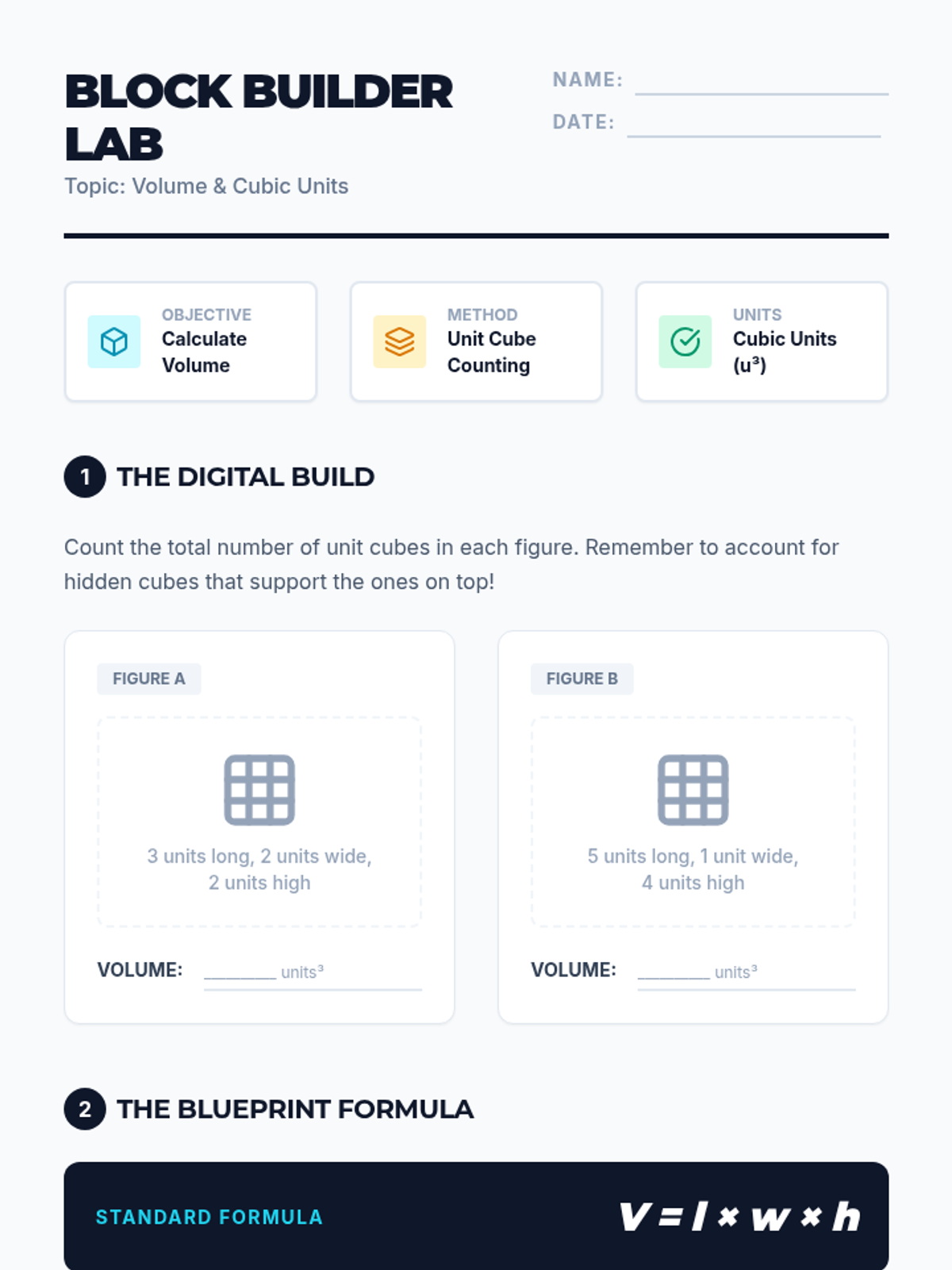
This sequence guides 6th-grade students through the conceptual derivation of volume formulas for rectangular prisms, moving from concrete unit cubes to abstract formulas. students explore the distinction between area and volume, discover the lwh formula through packing, and master the base-area method.
This sequence guides 6th-grade students through the process of analyzing and calculating the volume of composite 3D figures. Students progress from basic spatial decomposition to additive and subtractive volume strategies, culminating in a real-world design project for a custom aquarium.
A comprehensive geometry unit where students explore the relationships between different geometric solids through hands-on discovery, inquiry-based labs, and architectural application. Students transition from simple rectangular prisms to complex shapes like pyramids, cones, and spheres by understanding the core V=Bh relationship.
An inquiry-based exploration of the relationship between prisms/cylinders and pyramids/cones. Students derive volume formulas through experimentation and apply them to solve geometric problems.
This sequence explores the relationship between 2D base area and 3D volume for prisms and cylinders. Students build a deep conceptual understanding of the \(V = Bh\) formula through hands-on hooks, visual derivations, and real-world application problems.
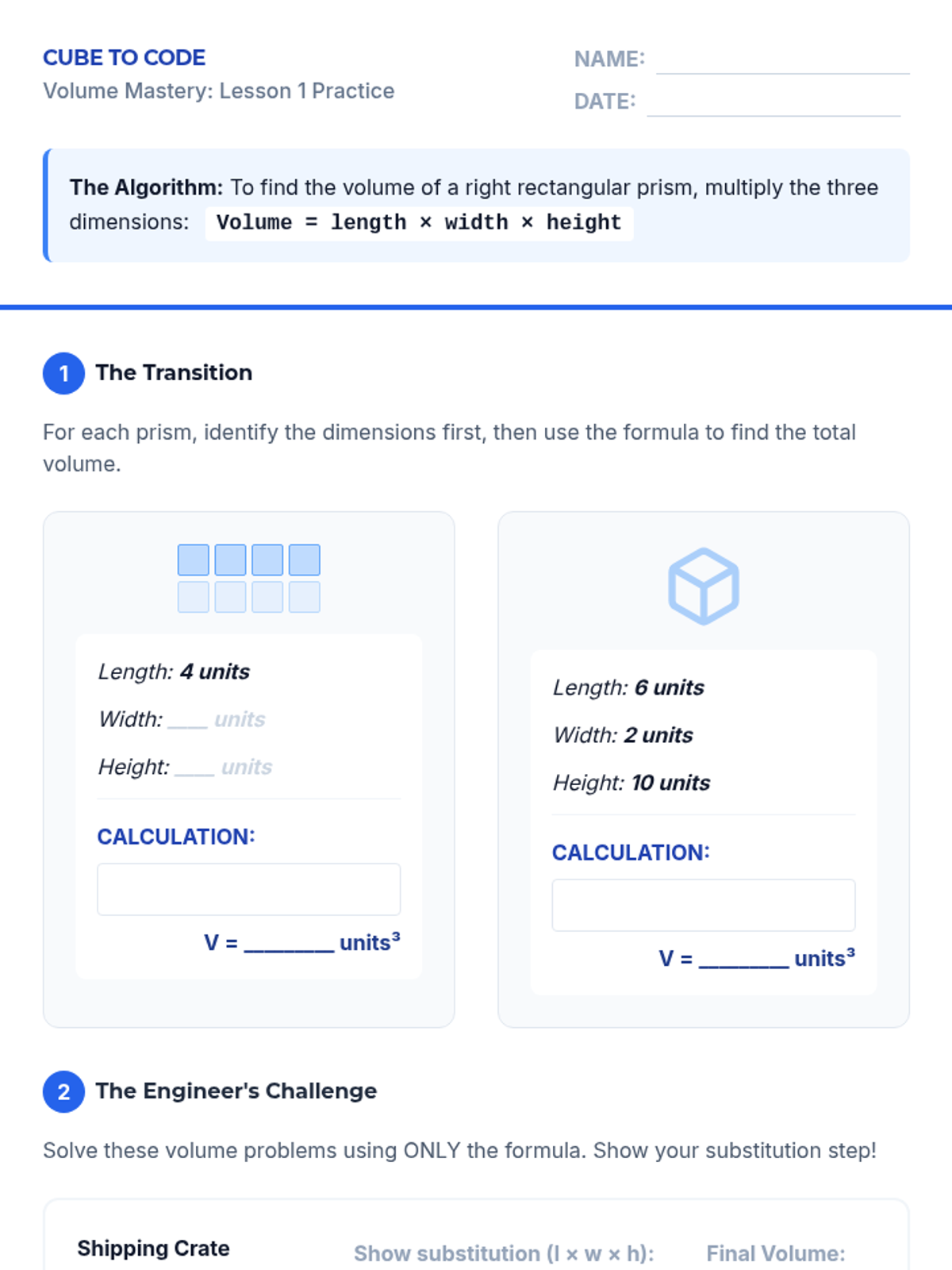
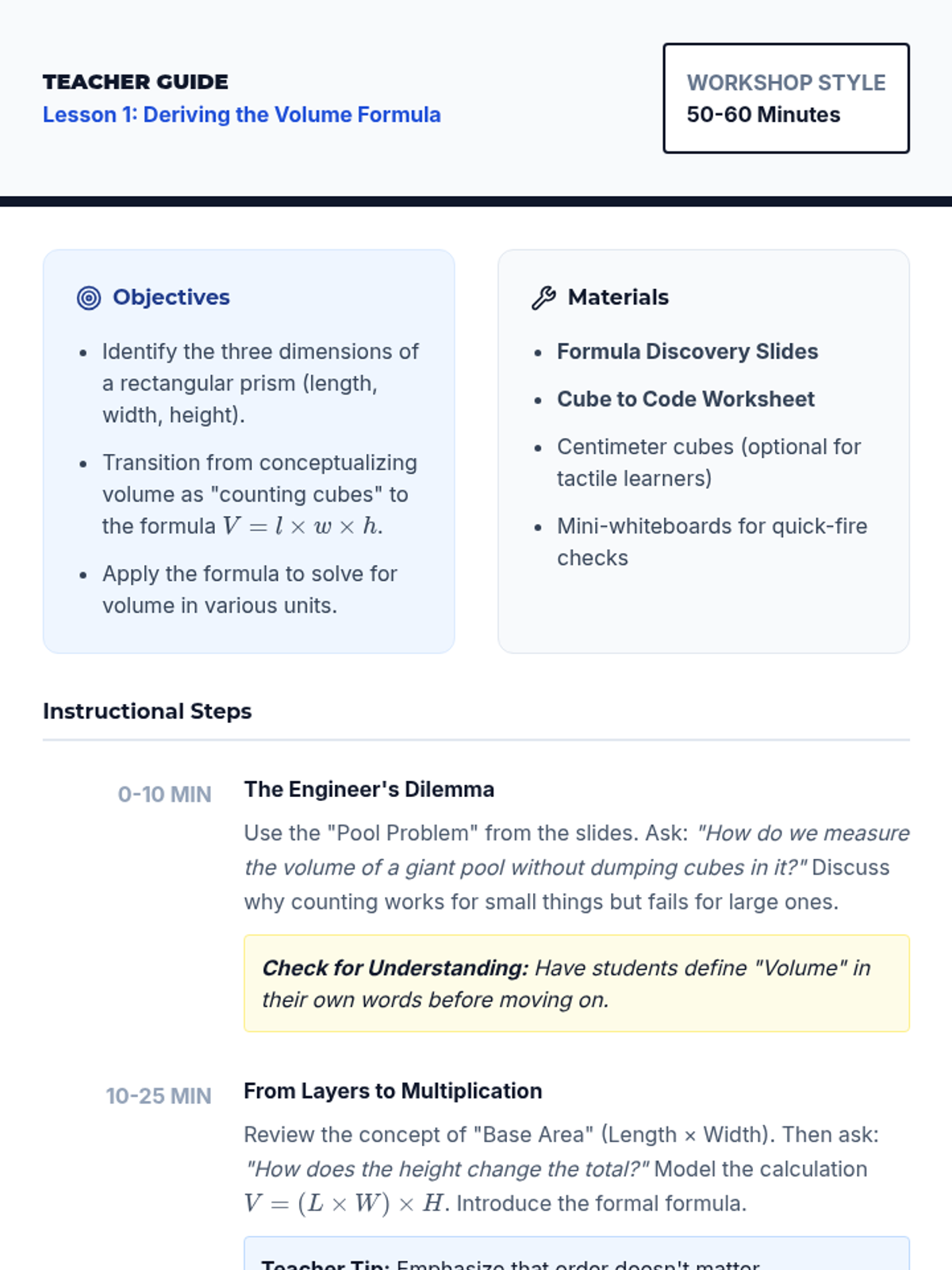
This workshop-style sequence transitions students from counting cubes to applying standard algorithms for calculating volume. Students derive and master the formulas V = l × w × h and V = B × h, progressing from straightforward calculations to solving for missing dimensions and complex real-world word problems.
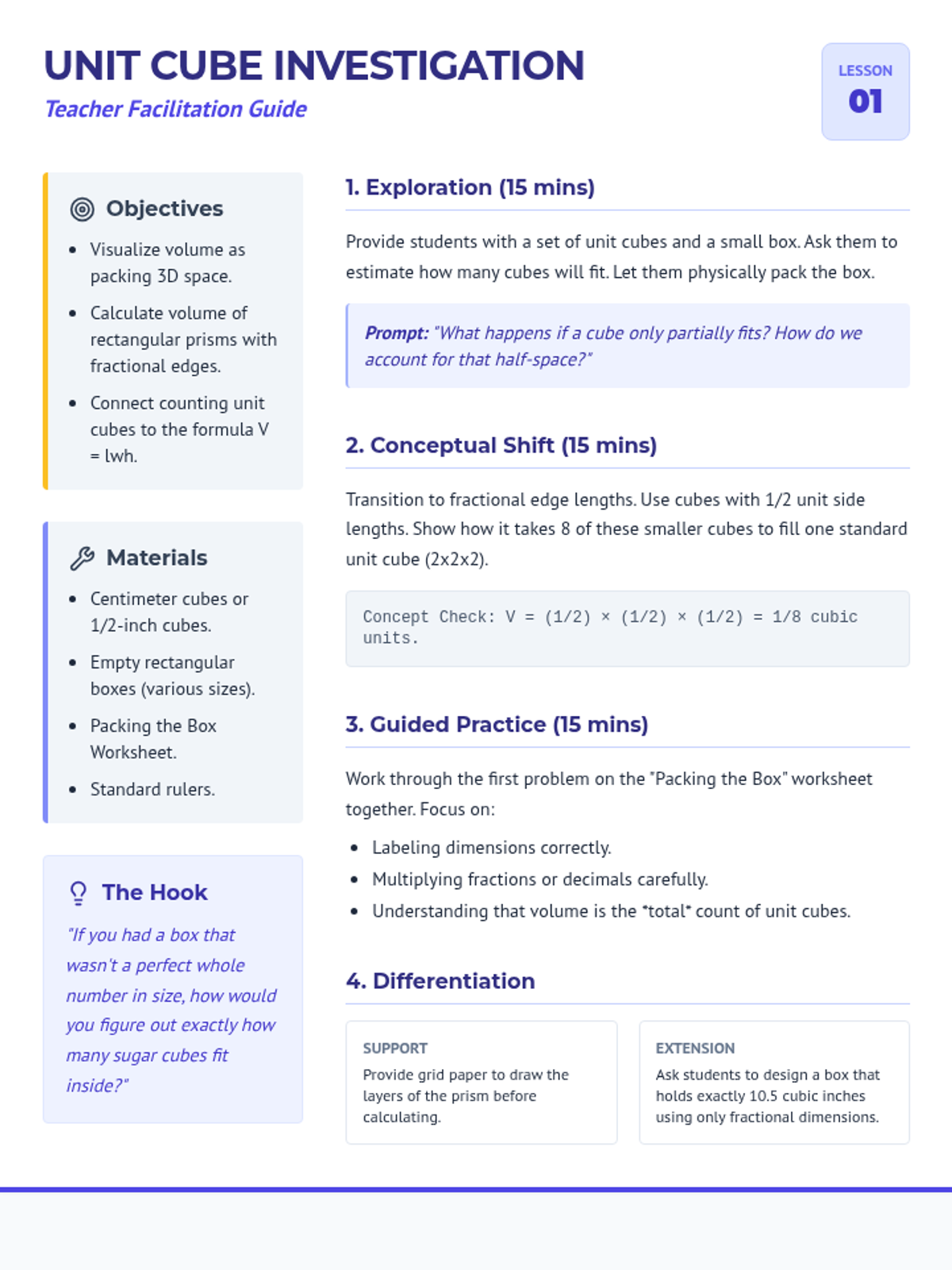
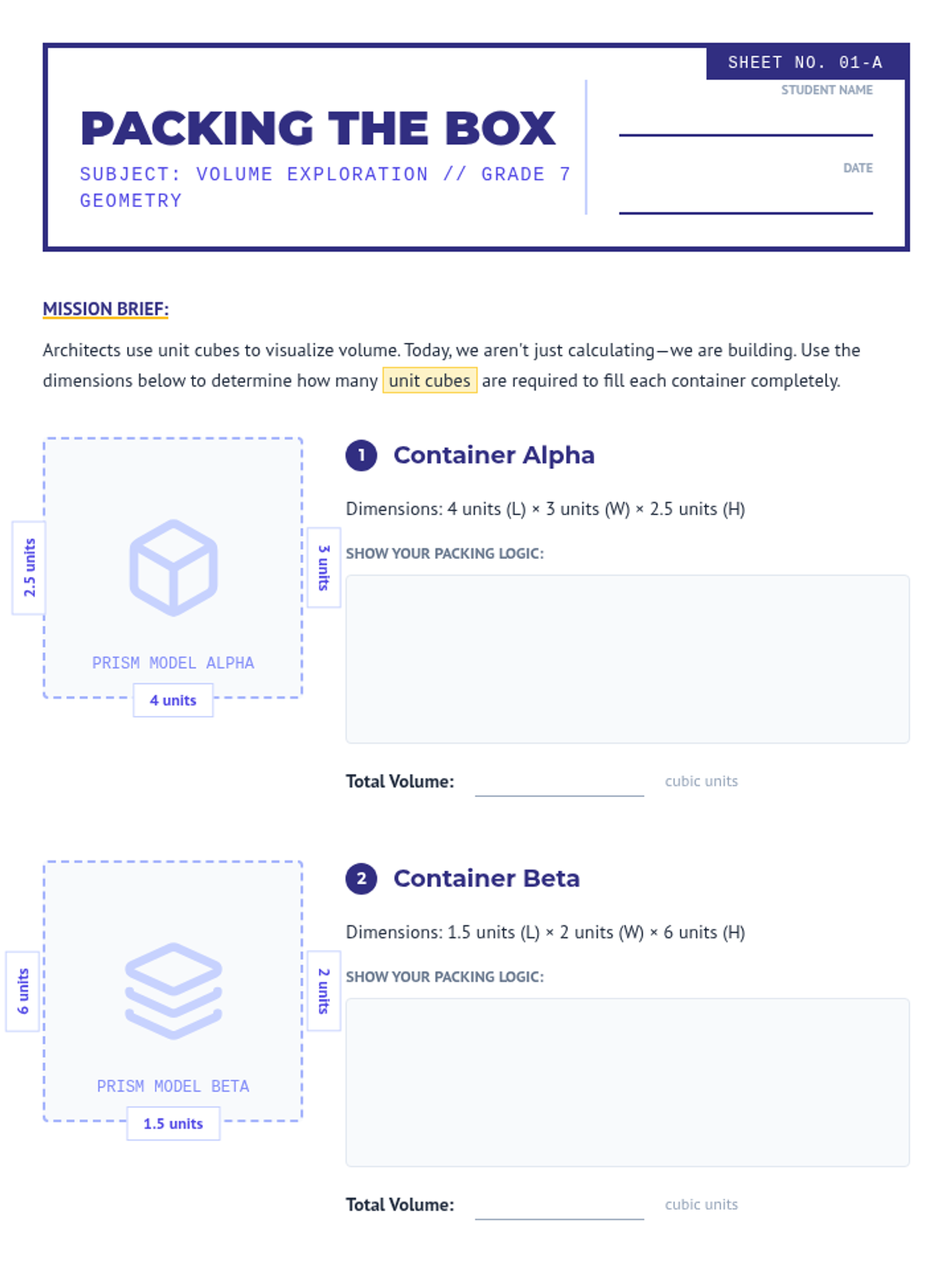
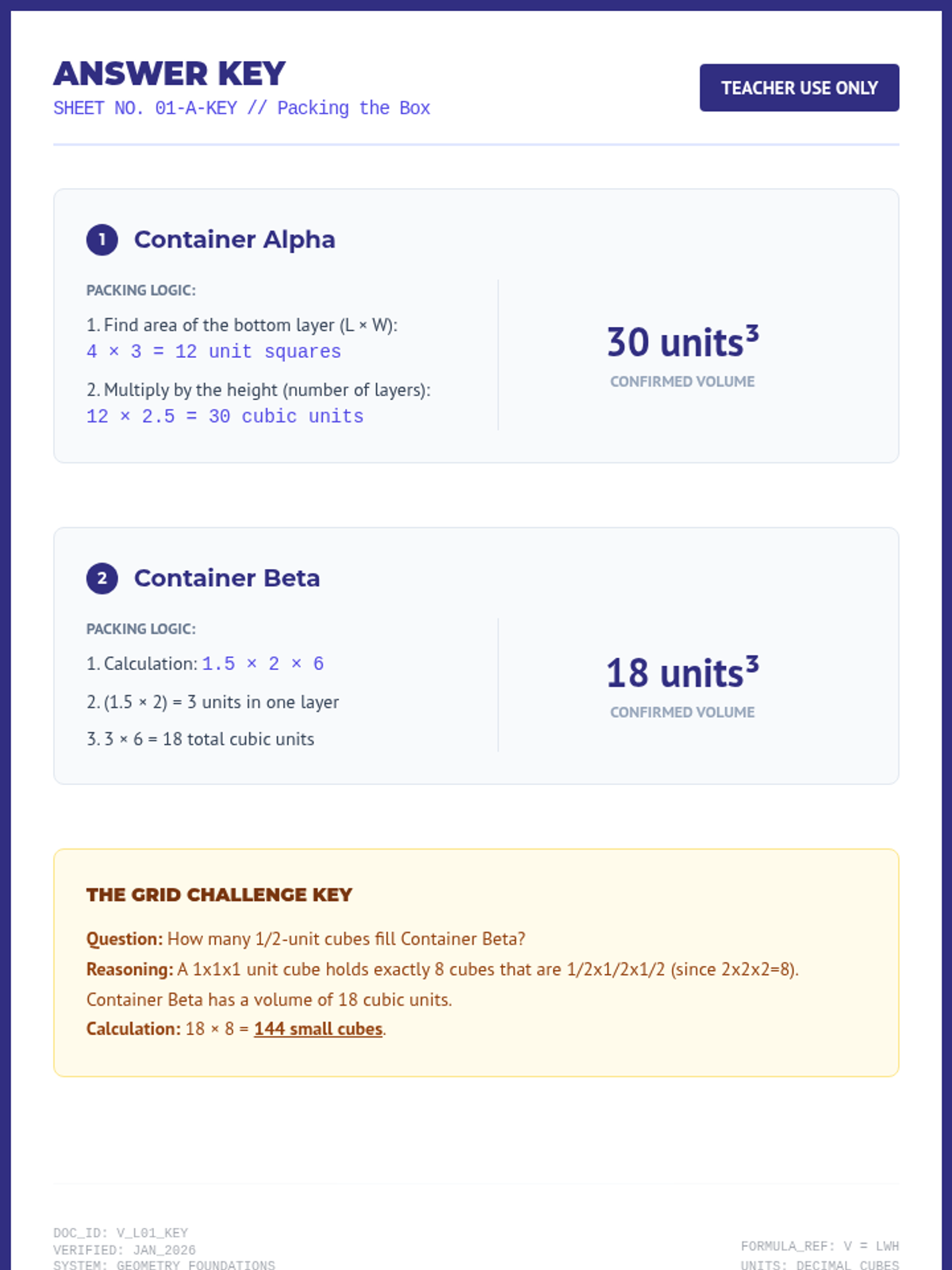
Students transition from concrete unit cube packing to abstract volume formulas (V=lwh, V=Bh) with a specific focus on rectangular prisms with fractional edge lengths. The sequence culminates in real-world application through shipping logistics and a design challenge.
A 7th-grade geometry sequence exploring volume from conceptual cubic units to the general formula V=Bh, triangular prisms, composite solids, and cross-sections through architectural and construction-themed challenges.
Students act as packaging engineers to design efficient containers by investigating the relationship between surface area and volume. They compare shapes like cylinders and prisms to maximize capacity while minimizing material costs, connecting geometry to real-world logistics and sustainability.
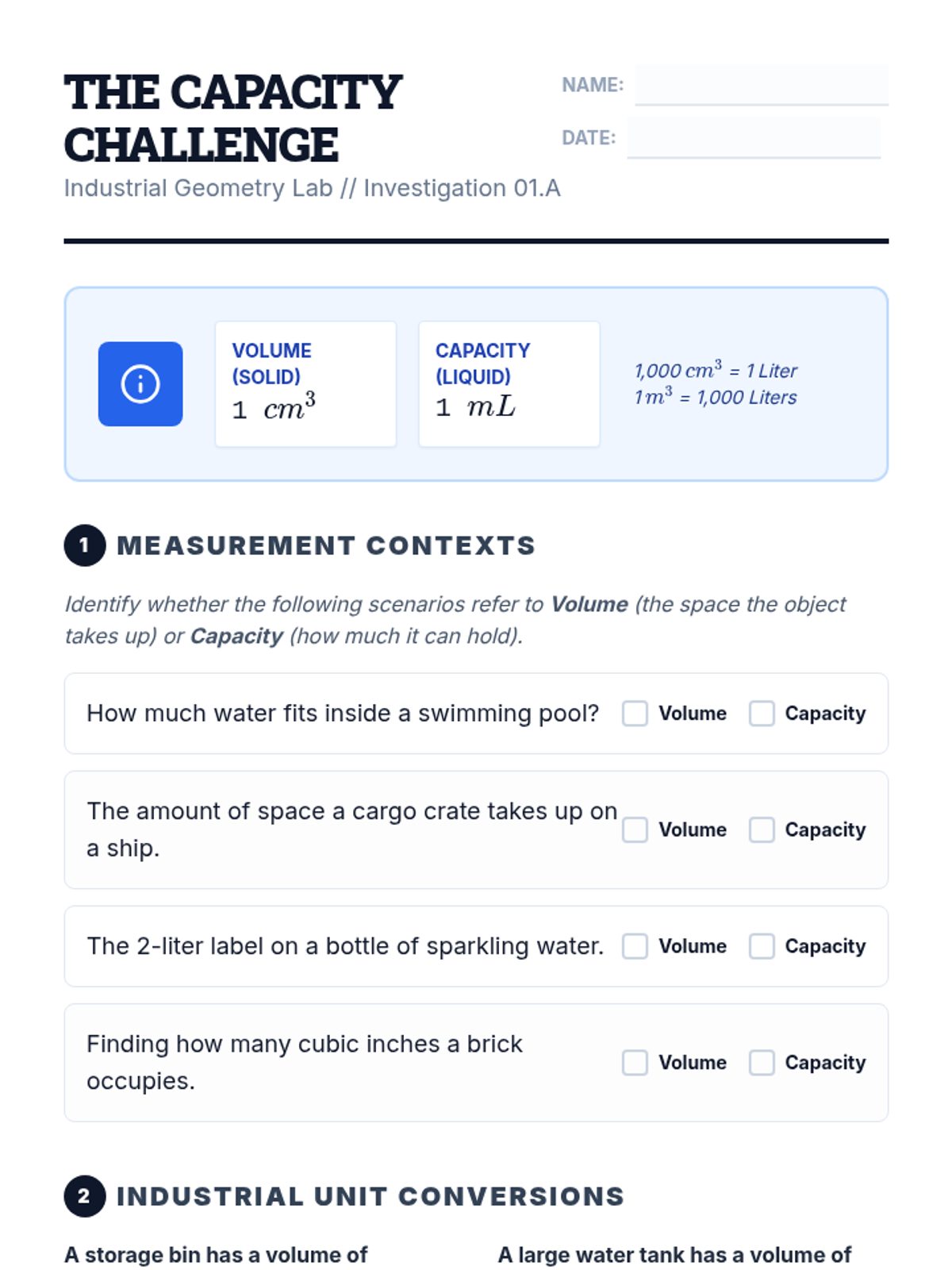
This sequence explores the practical applications of geometry through the lens of volume and capacity. Students investigate how space is measured in cubic units versus liquid units, solve real-world engineering problems involving aquariums and flow rates, and use displacement to find the volume of irregular objects.
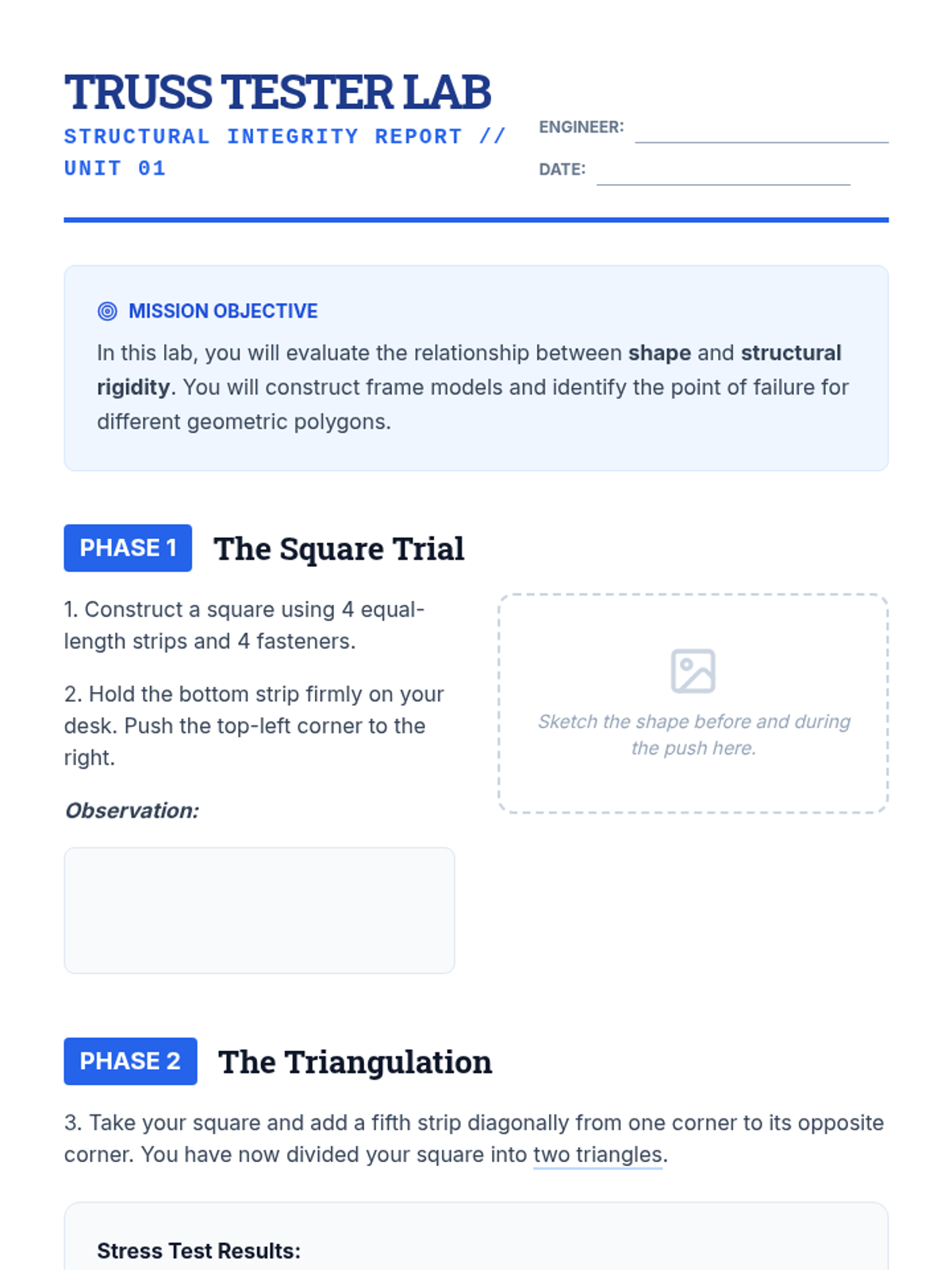
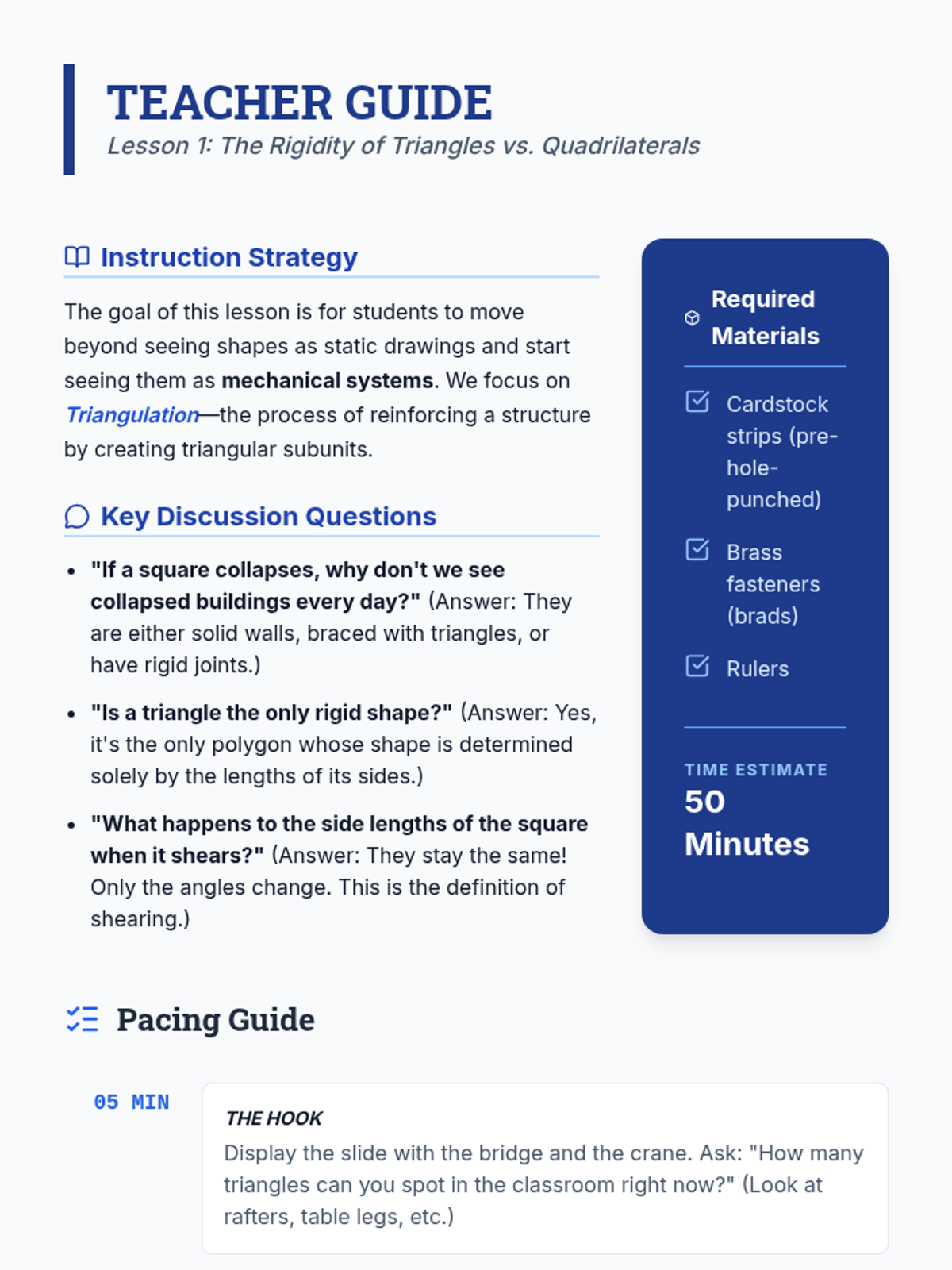
This sequence bridges geometry and physics, investigating the structural properties of 2D and 3D shapes. Students analyze rigidity, tessellation, and surface area-to-volume ratios to understand how geometric attributes influence physical performance in engineering and nature.
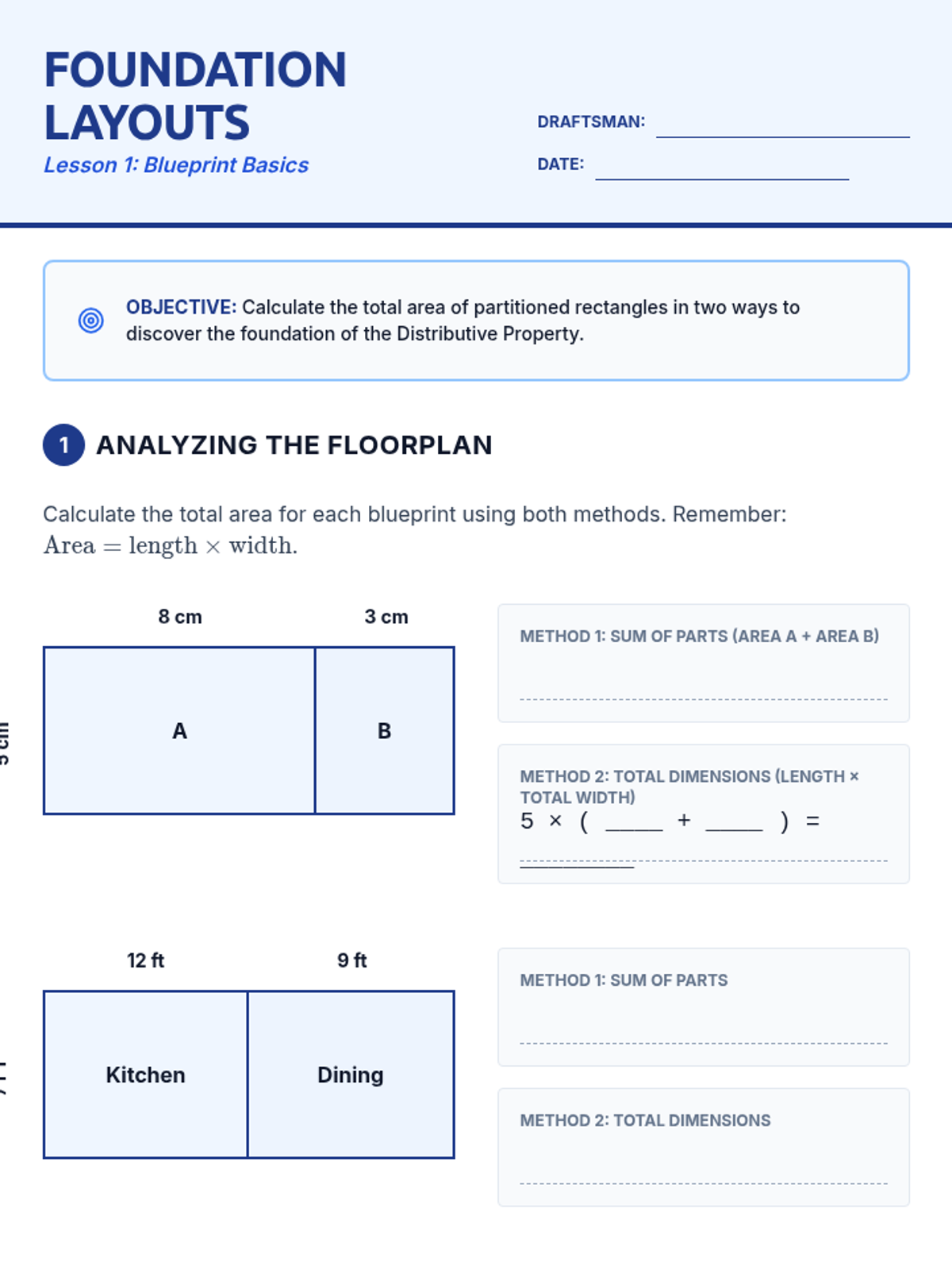
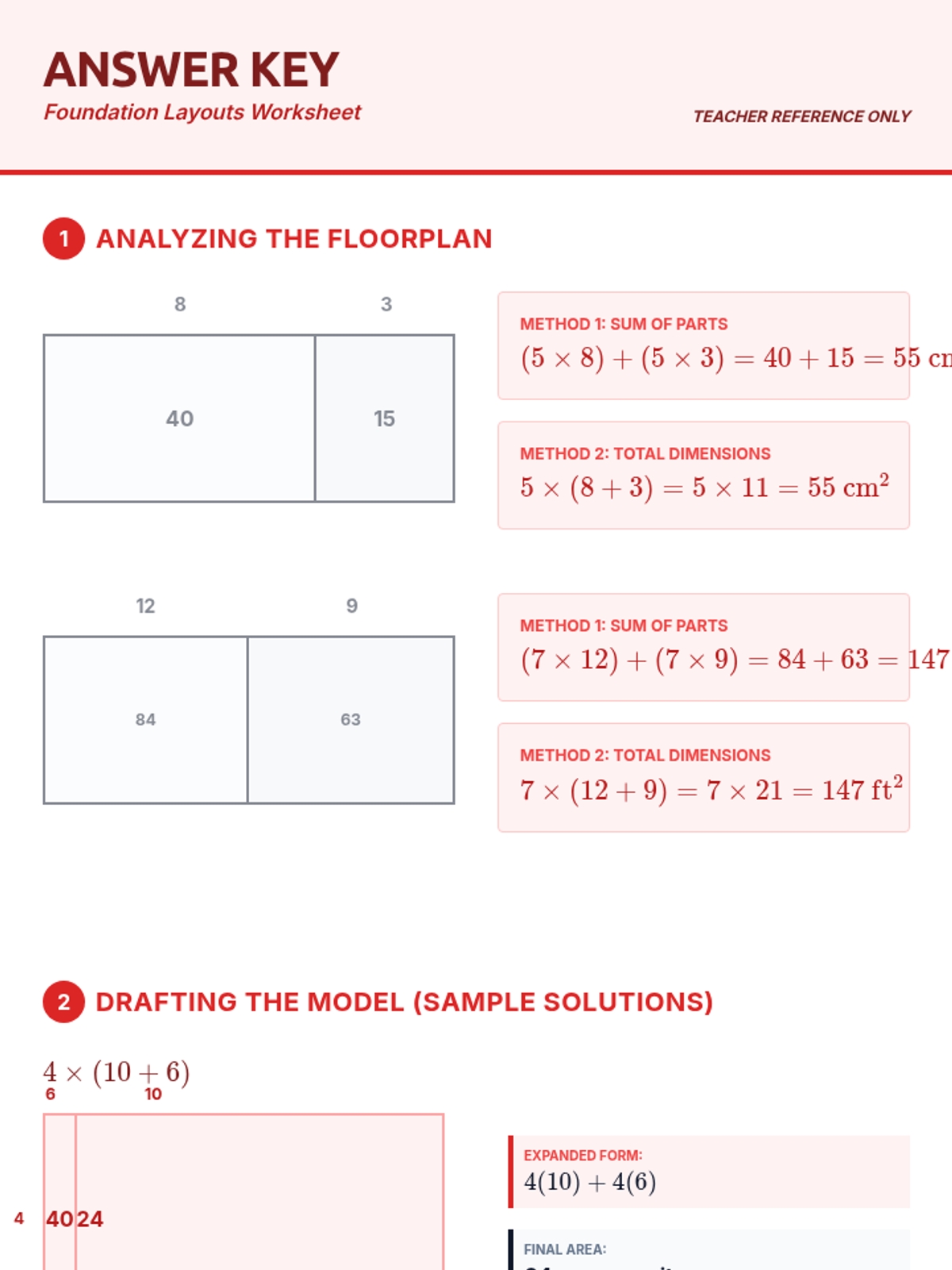
This inquiry-based sequence utilizes geometric area models to conceptualize the distributive property. Students move from concrete arithmetic to abstract algebraic manipulation, eventually fluently expanding linear expressions with rational coefficients.