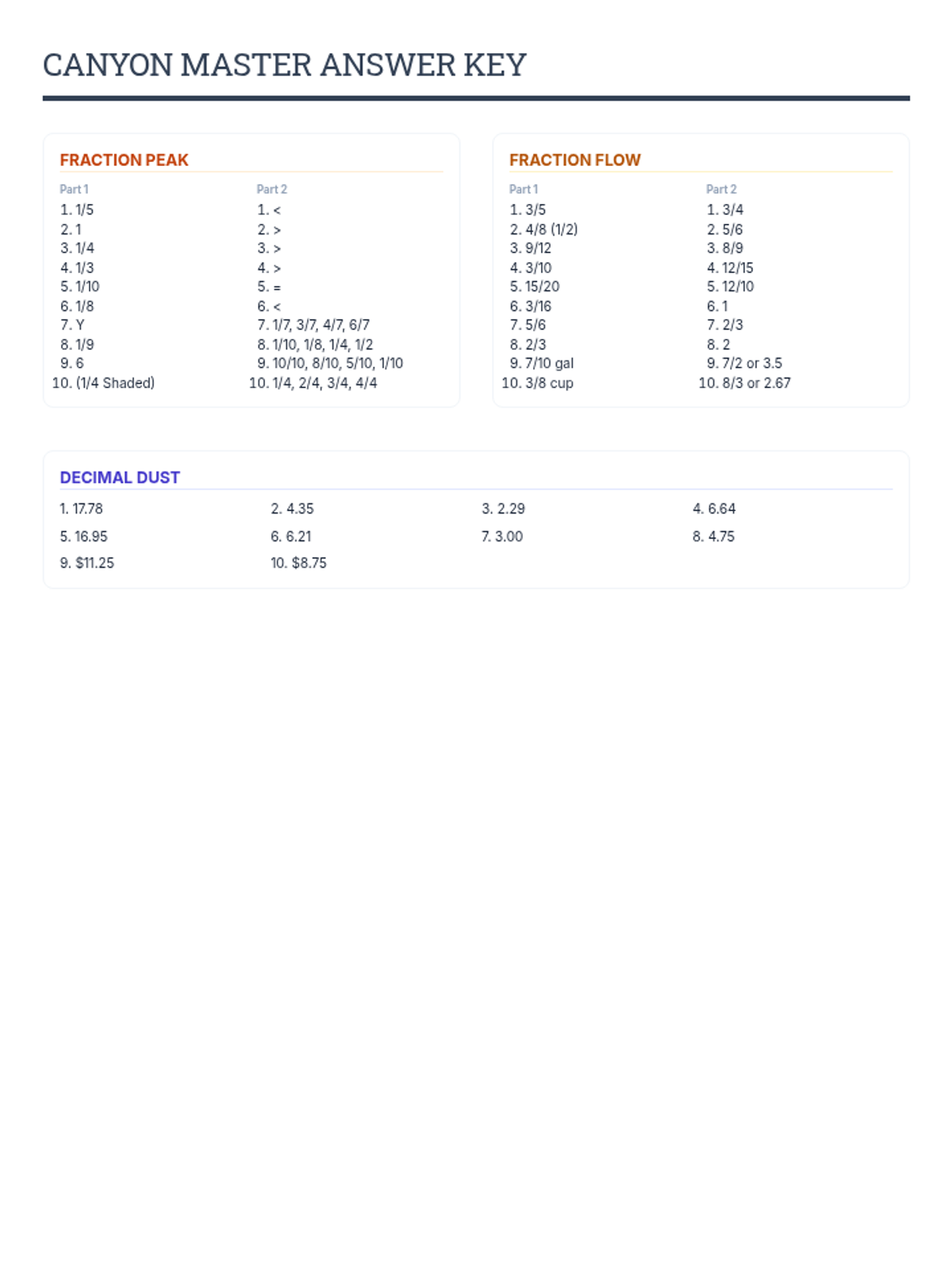
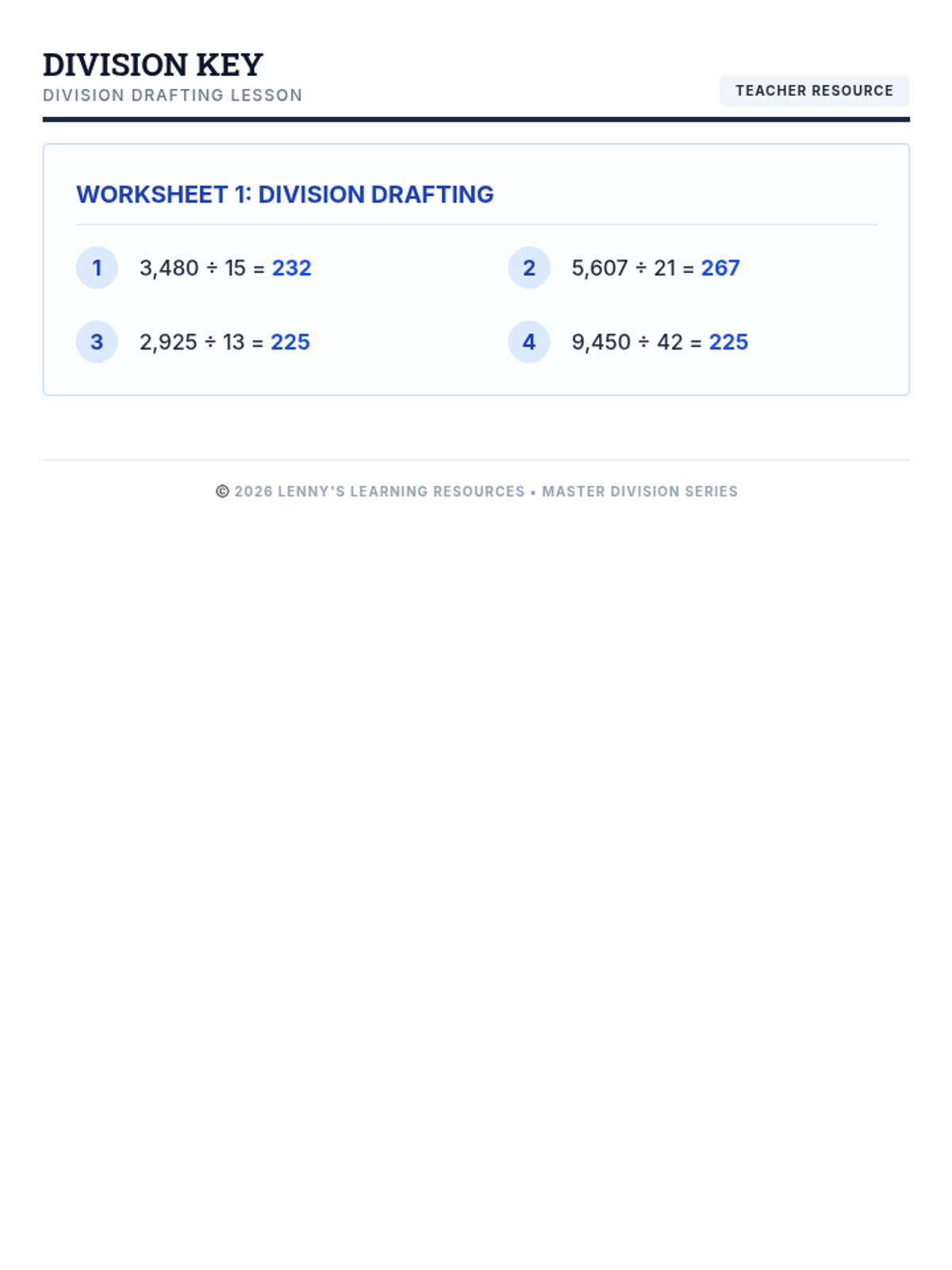
Foundational fraction equivalence, ordering, and operations across the rational number system. Addresses multi-digit computation, decimal conversions, and the distinction between rational and irrational numbers.
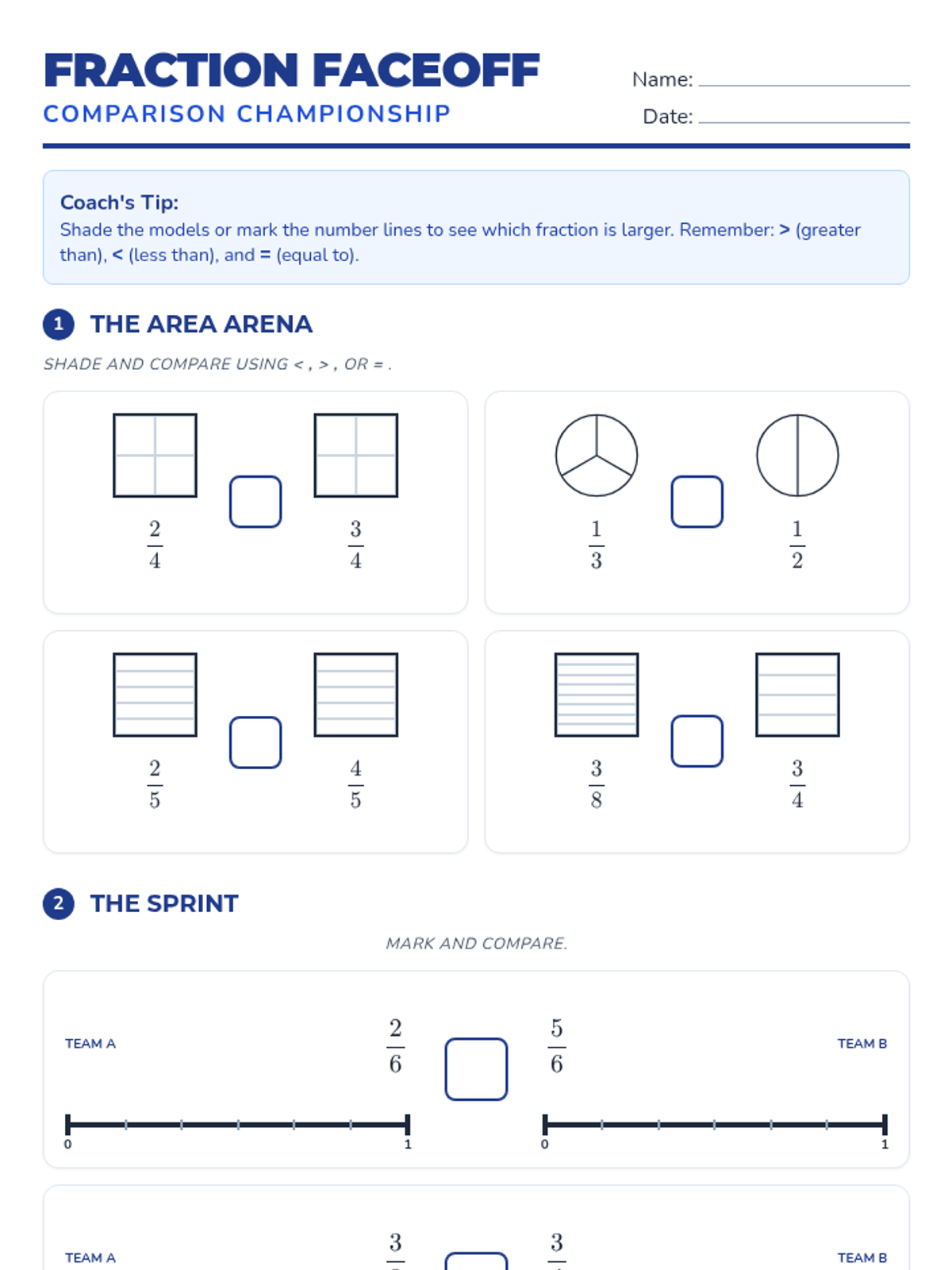
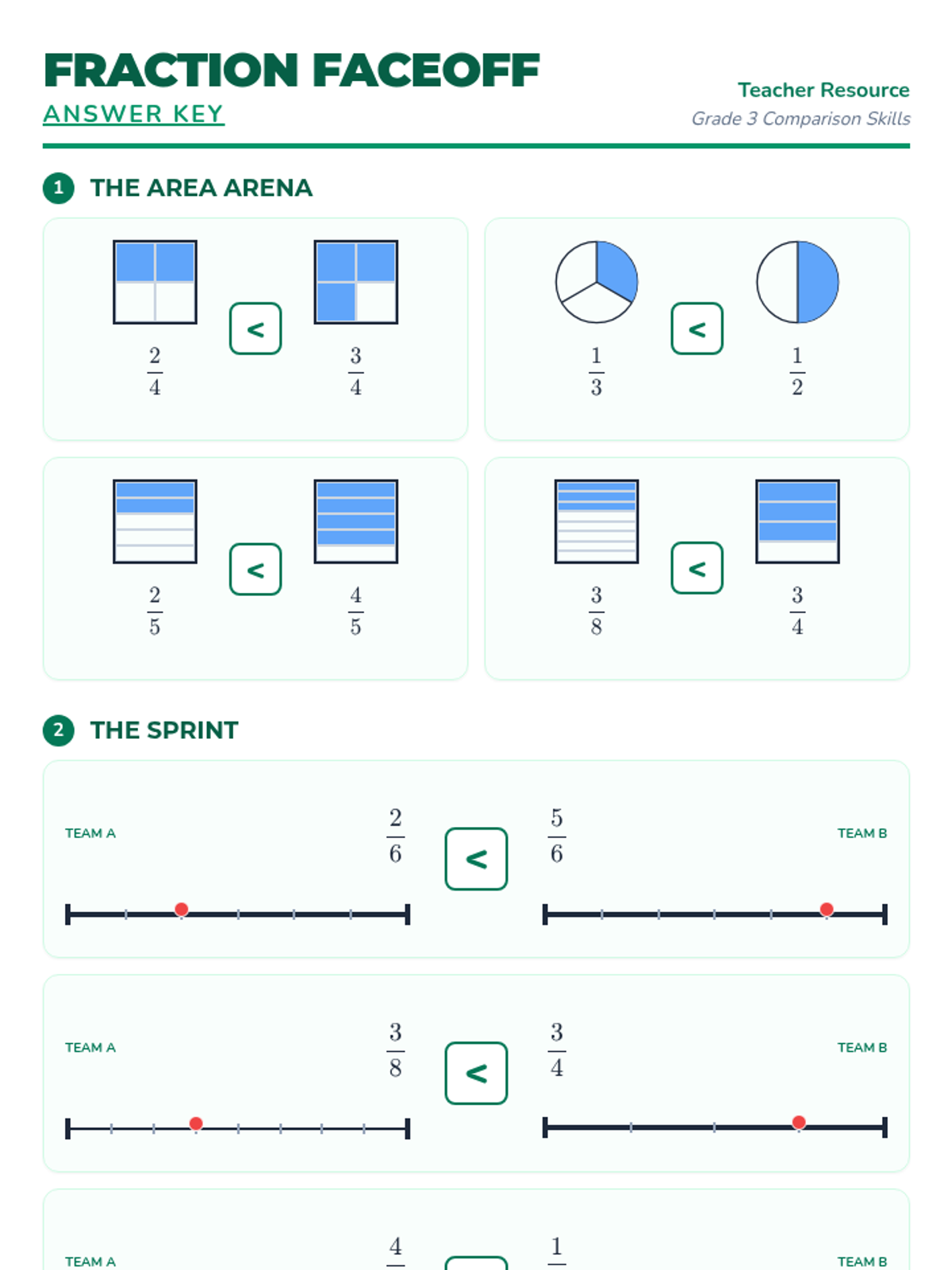
A lesson focused on comparing fractions with the same denominator or the same numerator using visual area models and number lines. Students will develop a conceptual understanding of fraction size through visual representation.
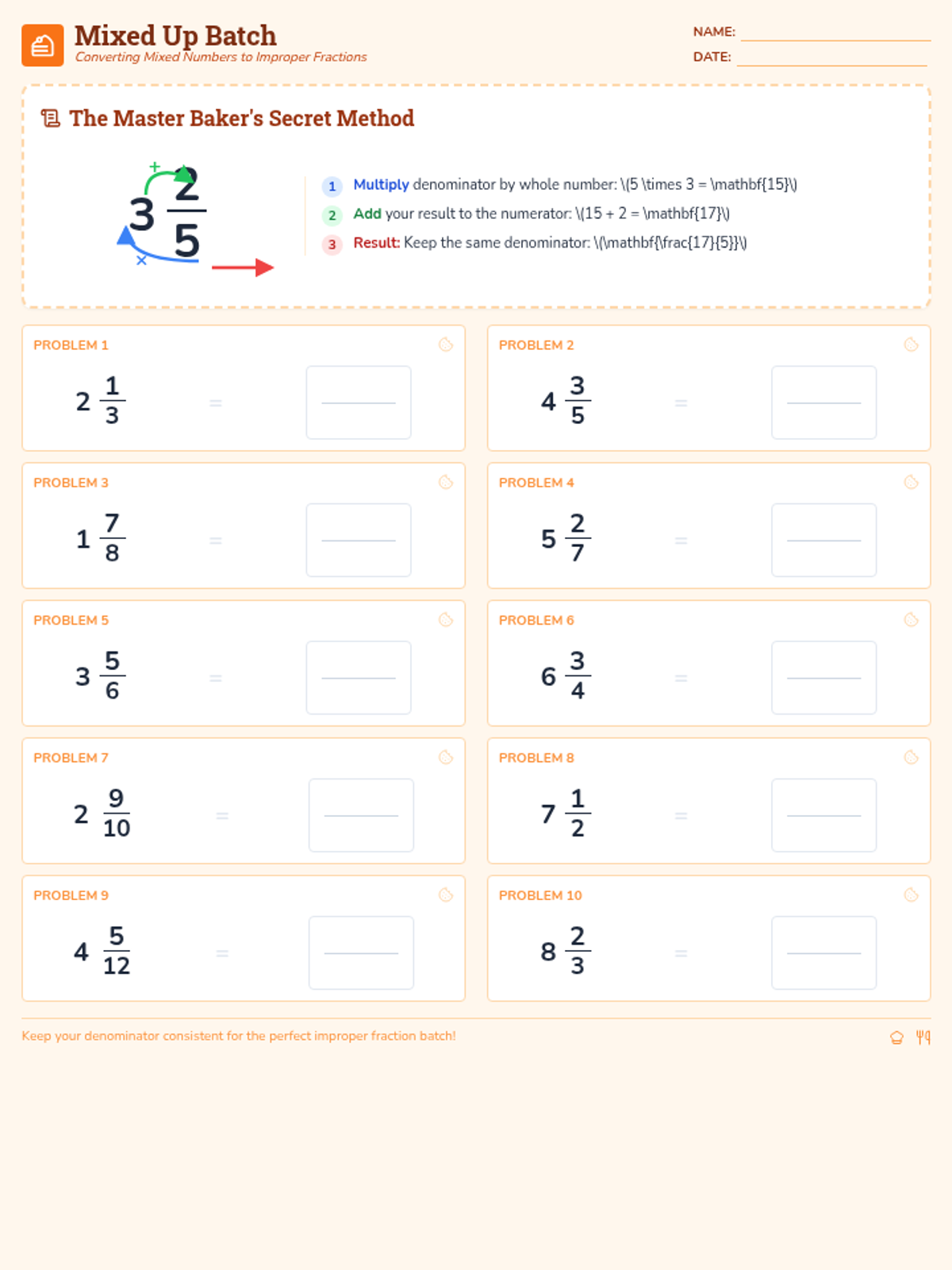
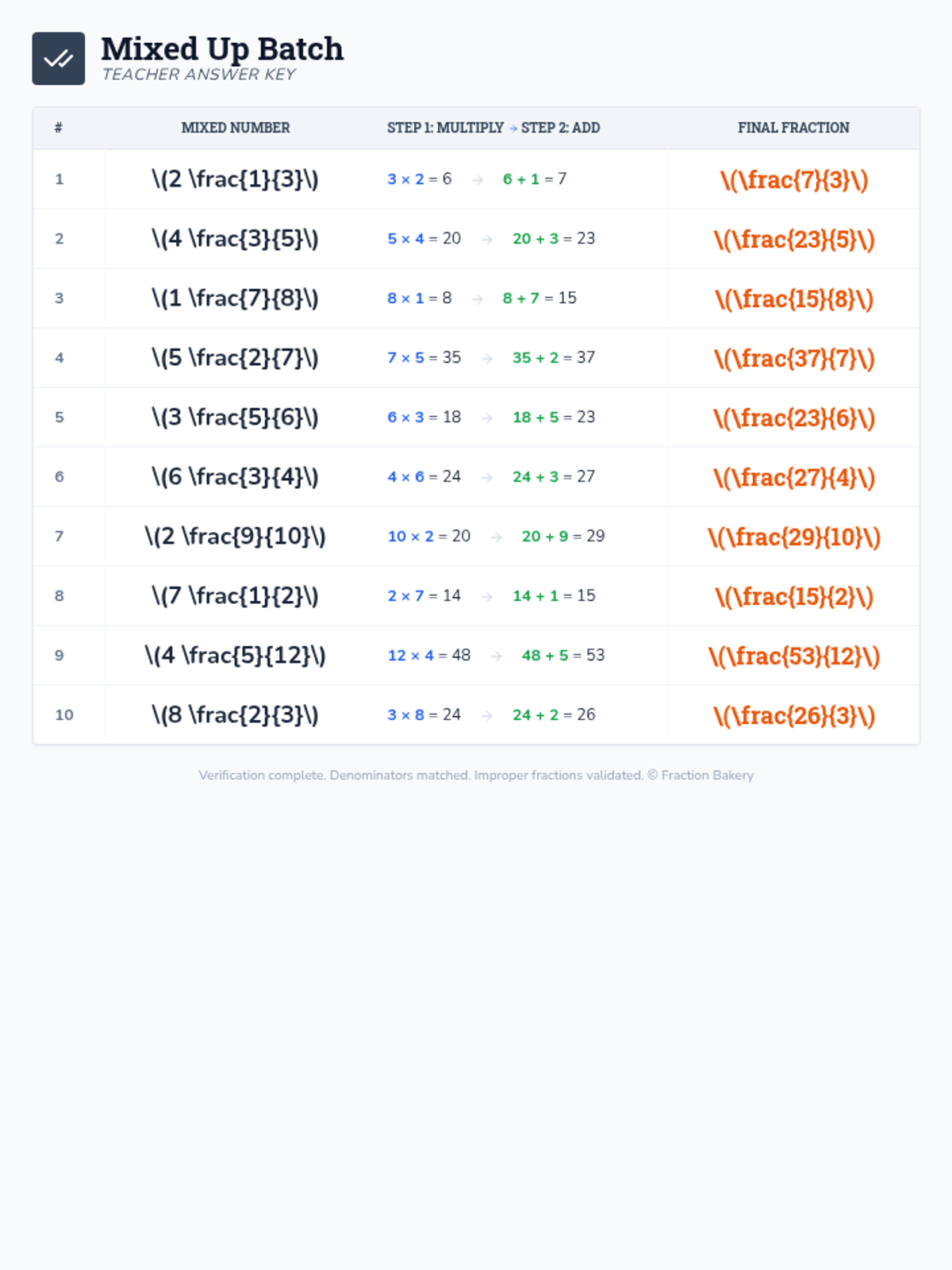
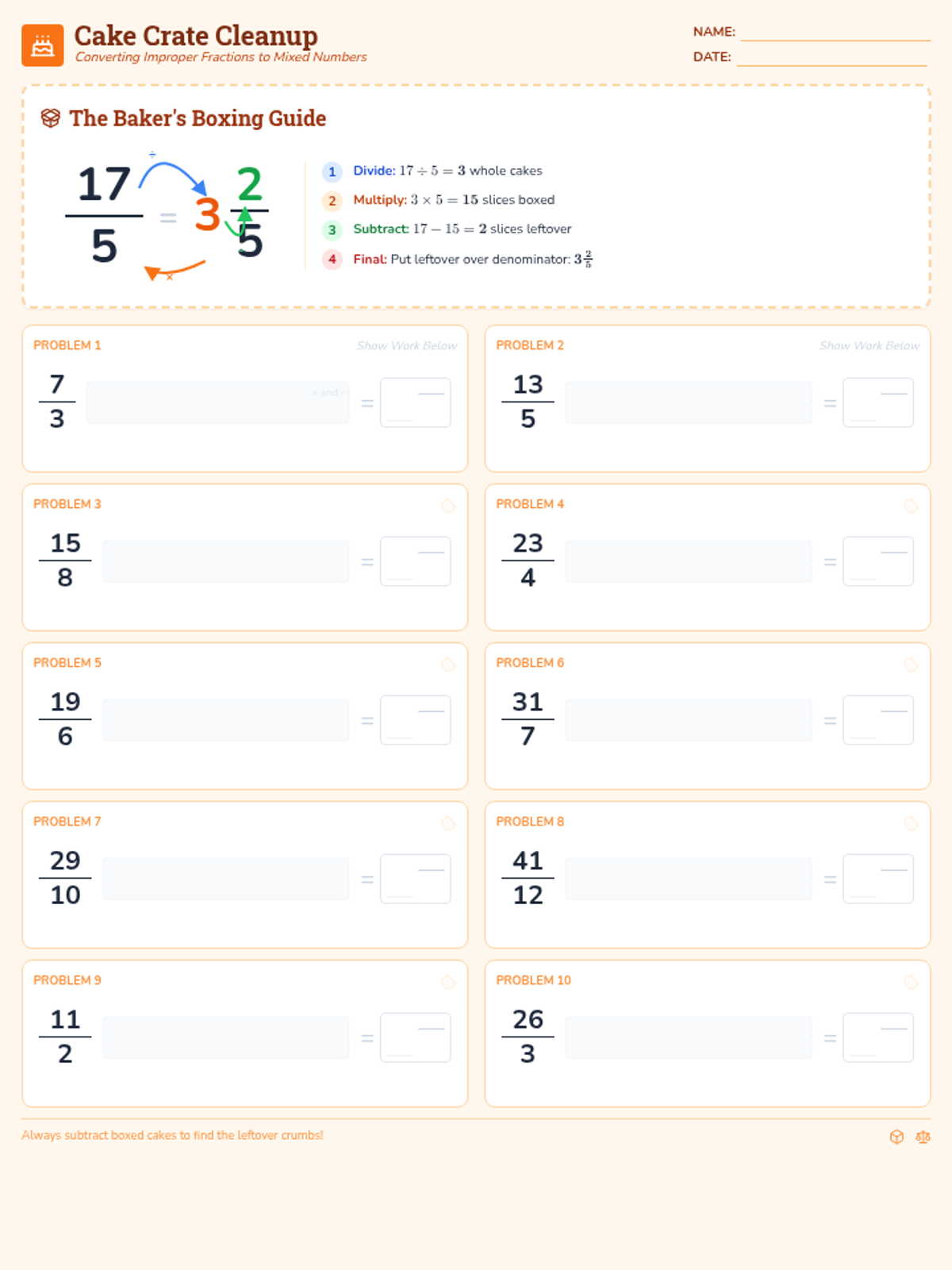
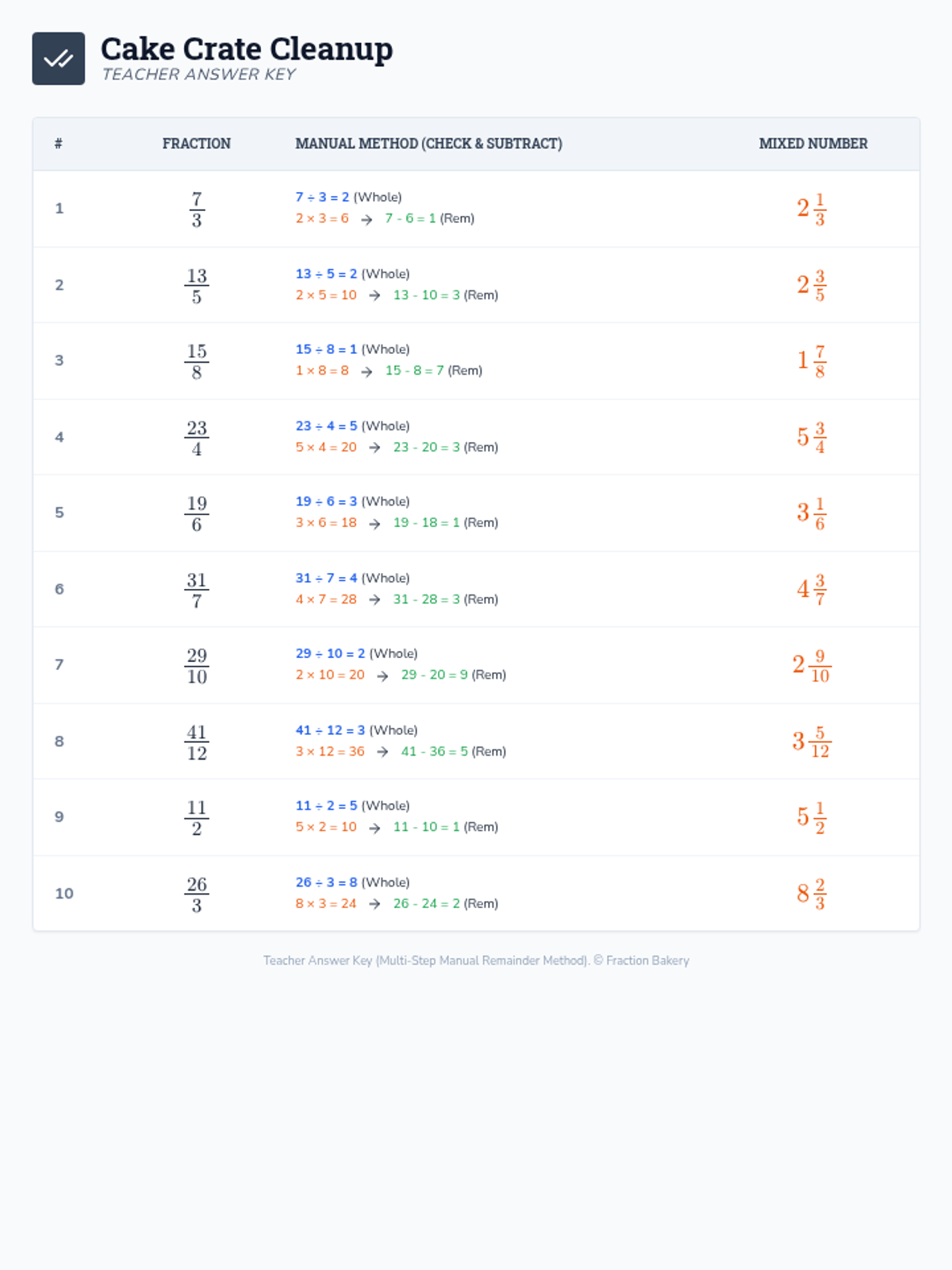
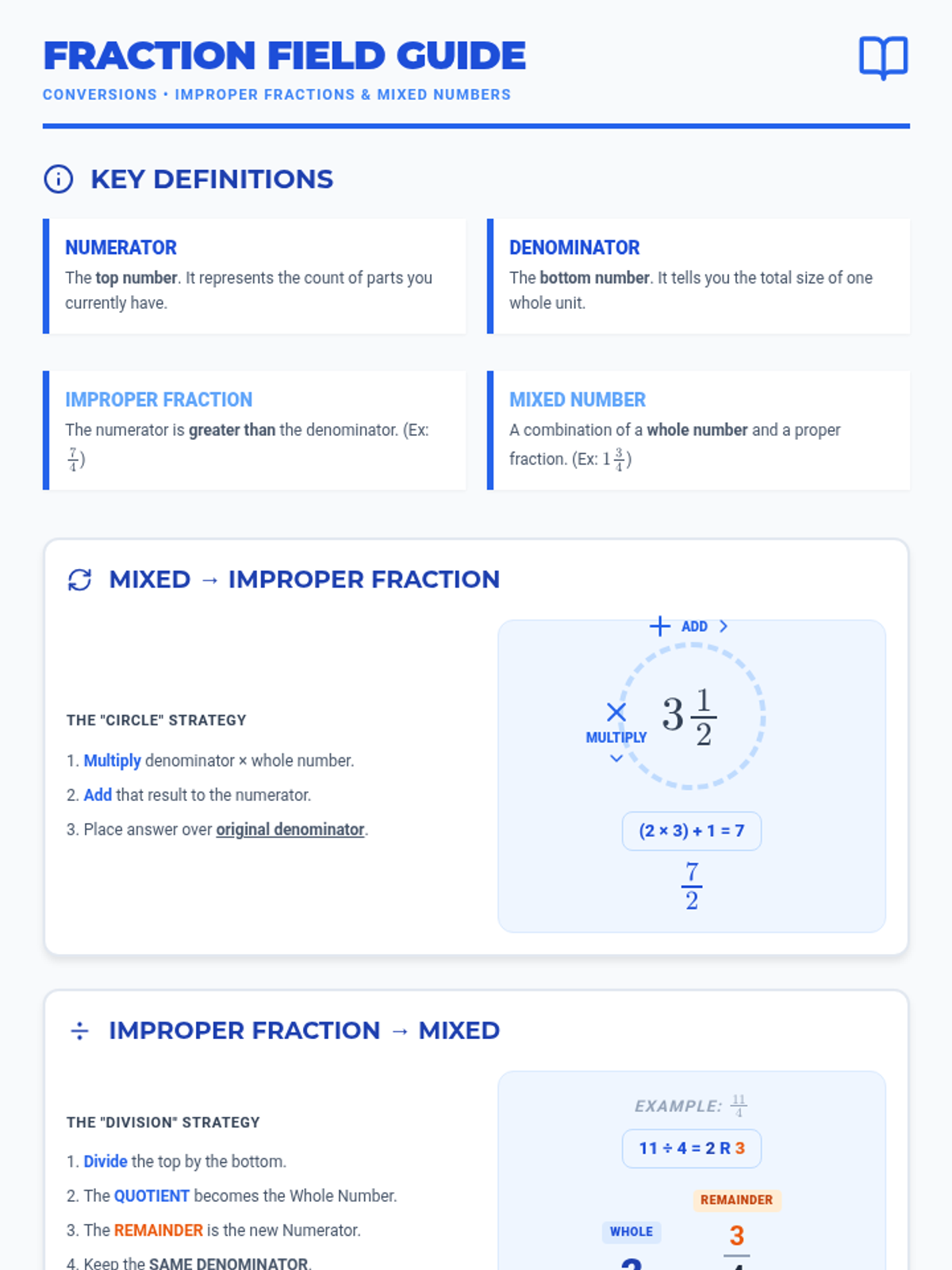
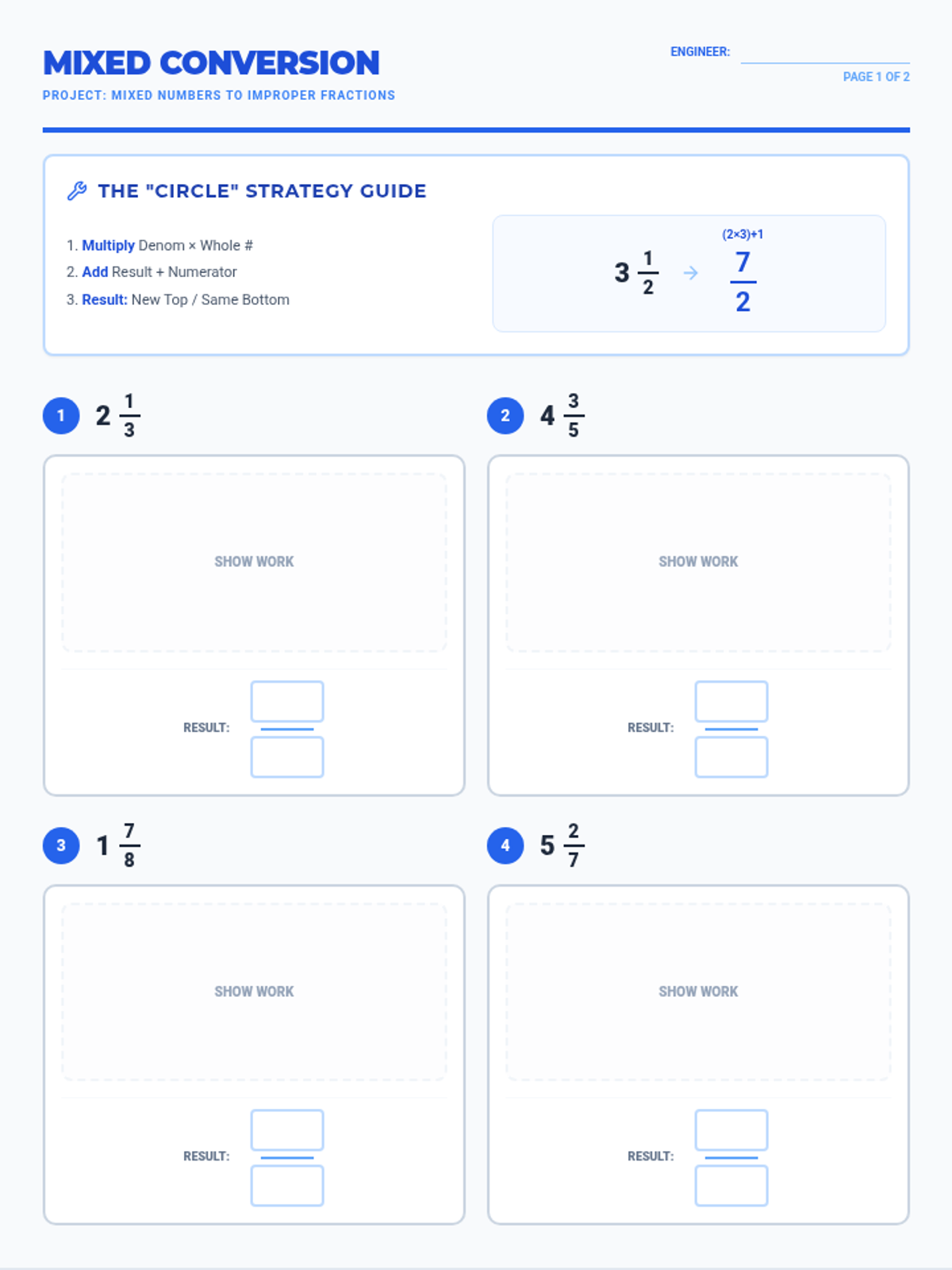
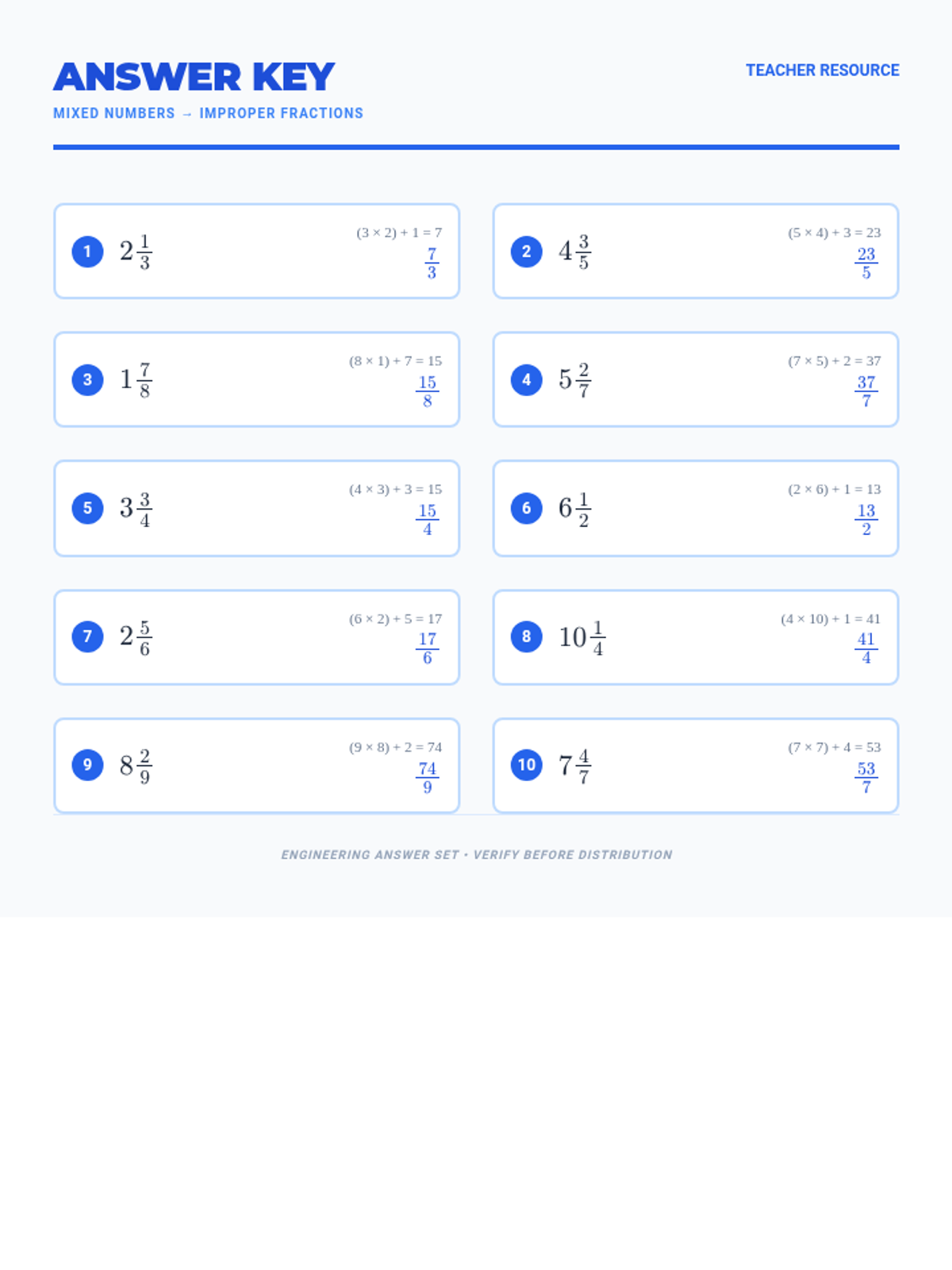
A sweet introduction to converting mixed numbers into improper fractions using a bakery-themed approach. Students will master the 'Multiply then Add' technique with clear visual aids and practice problems.
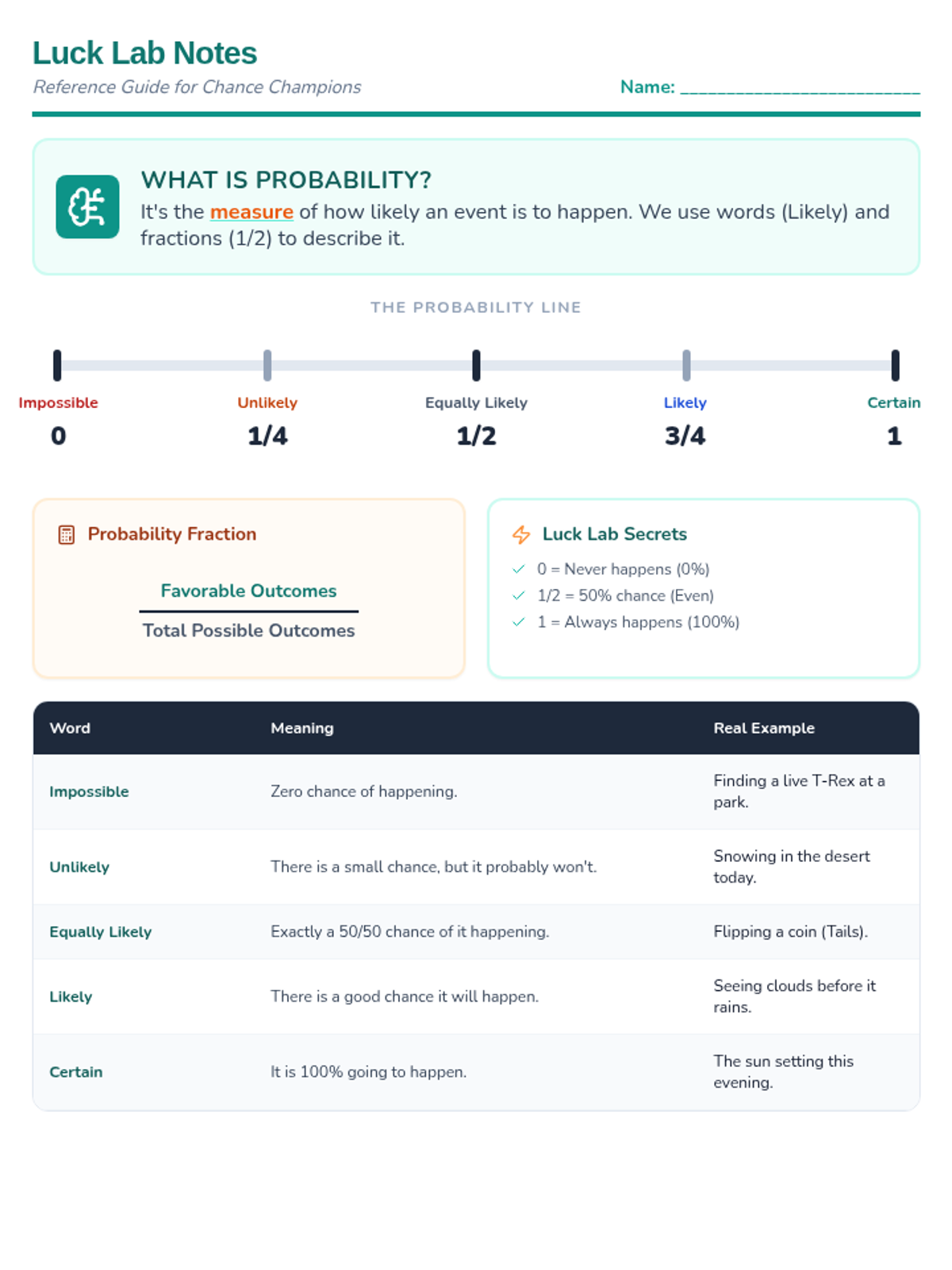
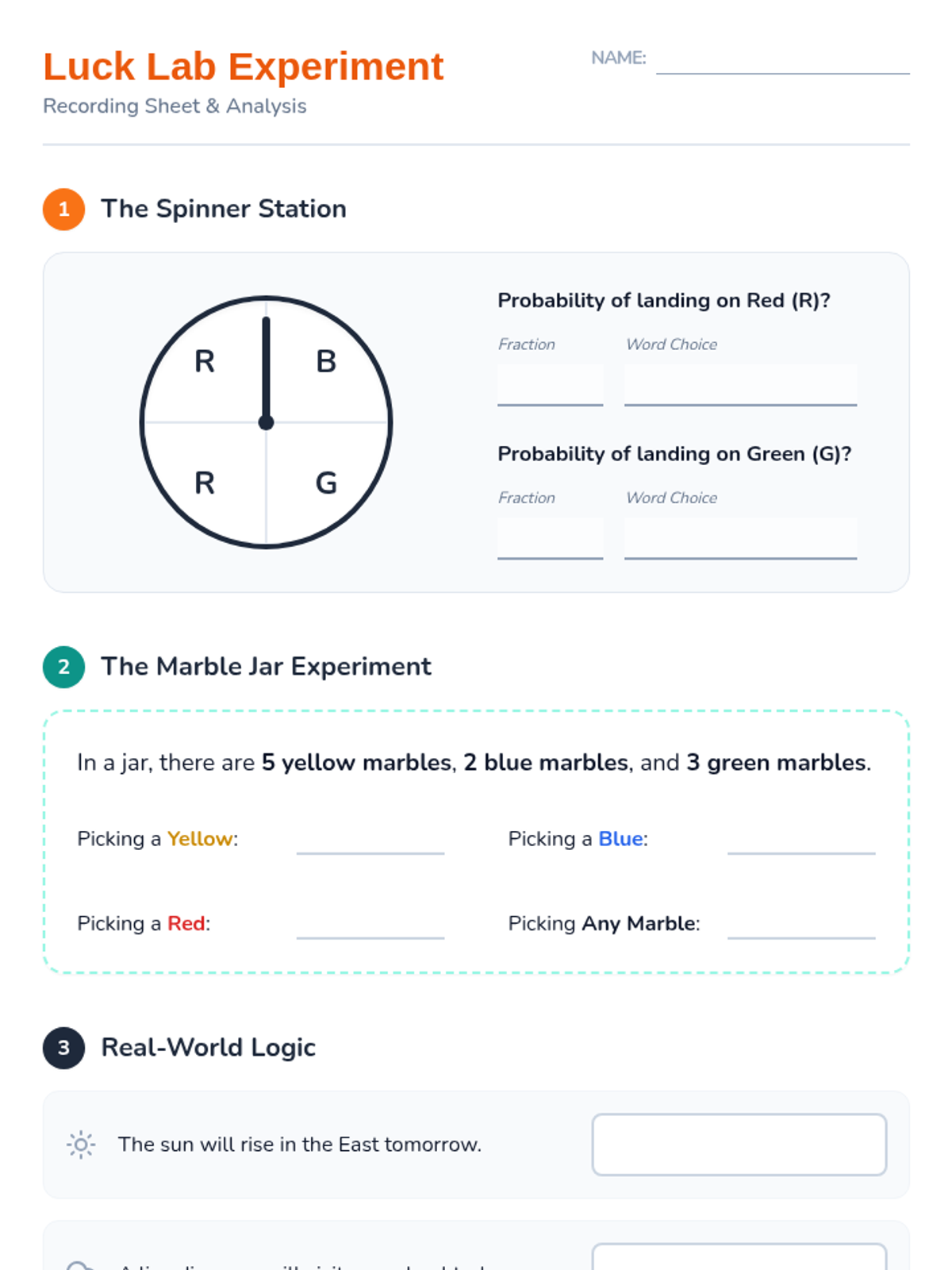
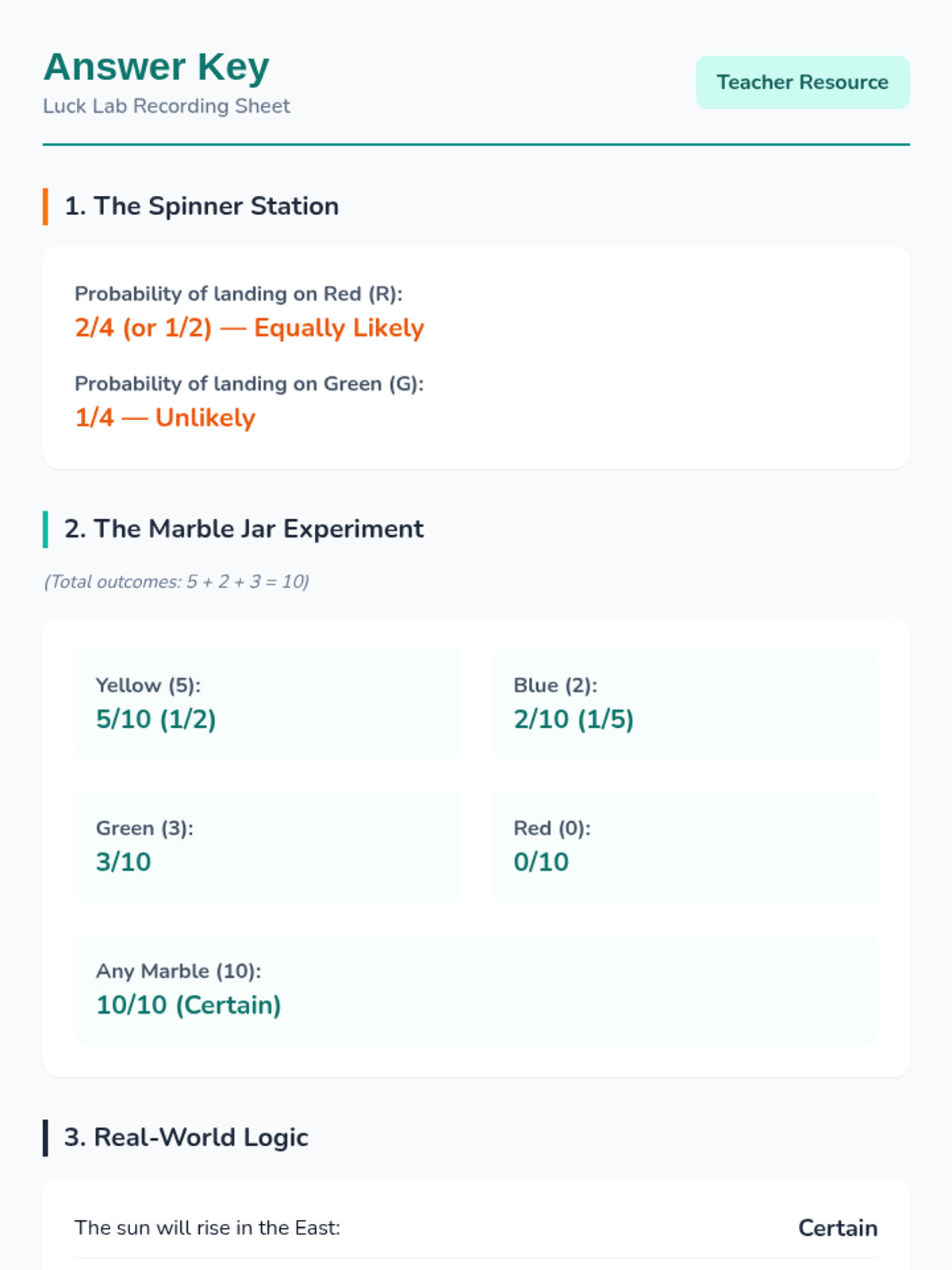
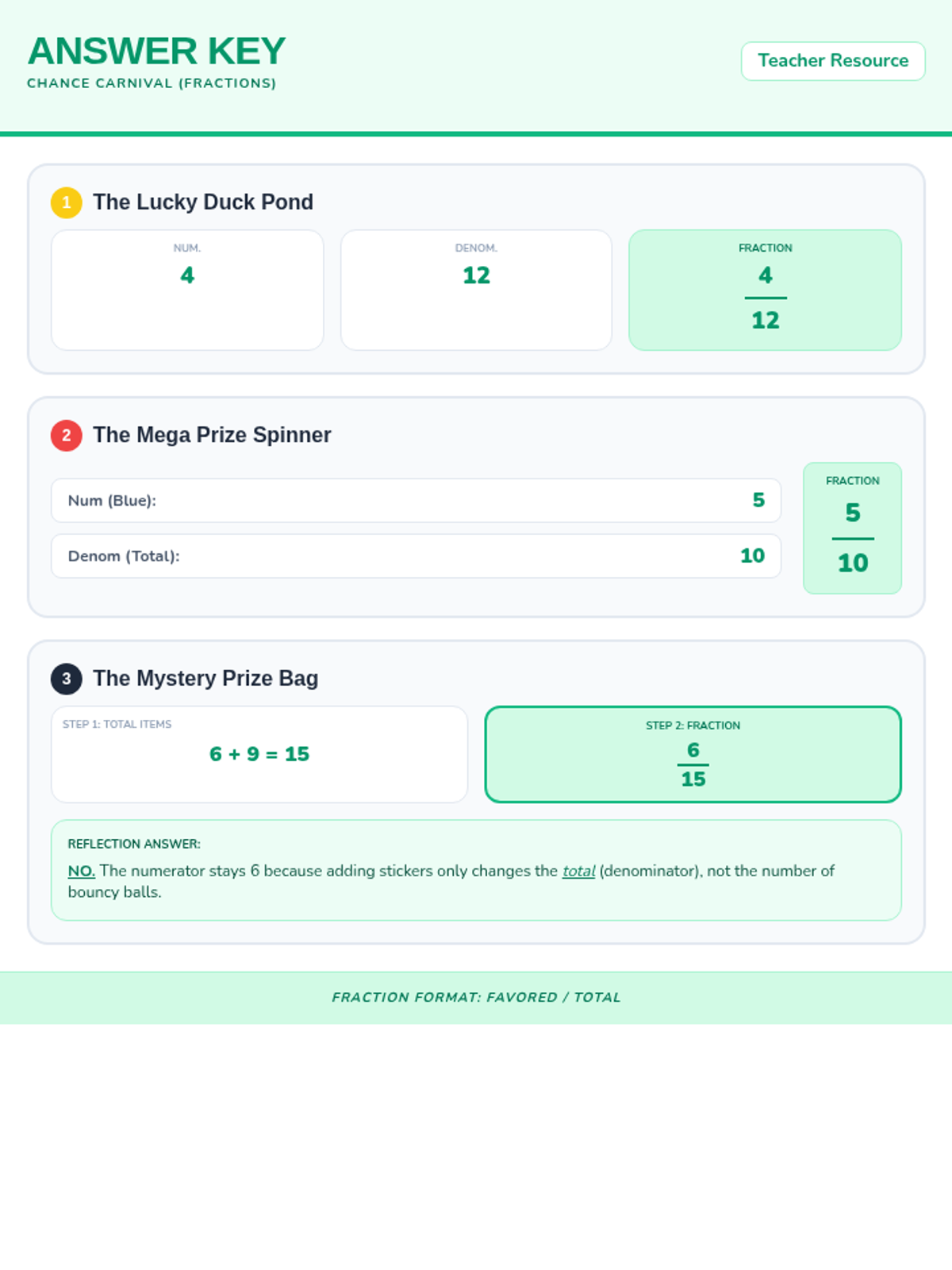
A mini-lesson introducing probability concepts through the lens of 'The Luck Lab', covering vocabulary (certain to impossible) and fractional representations.
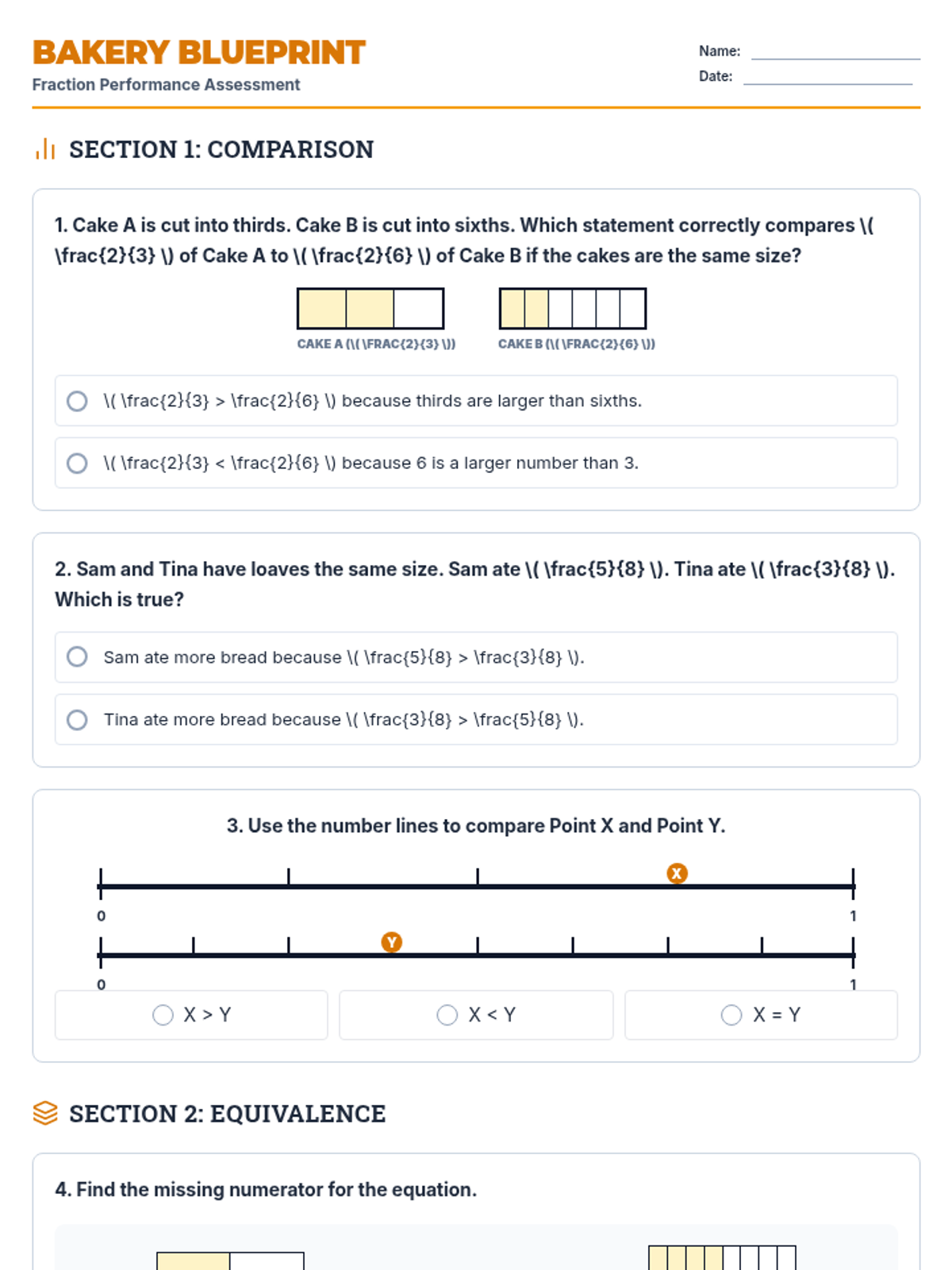
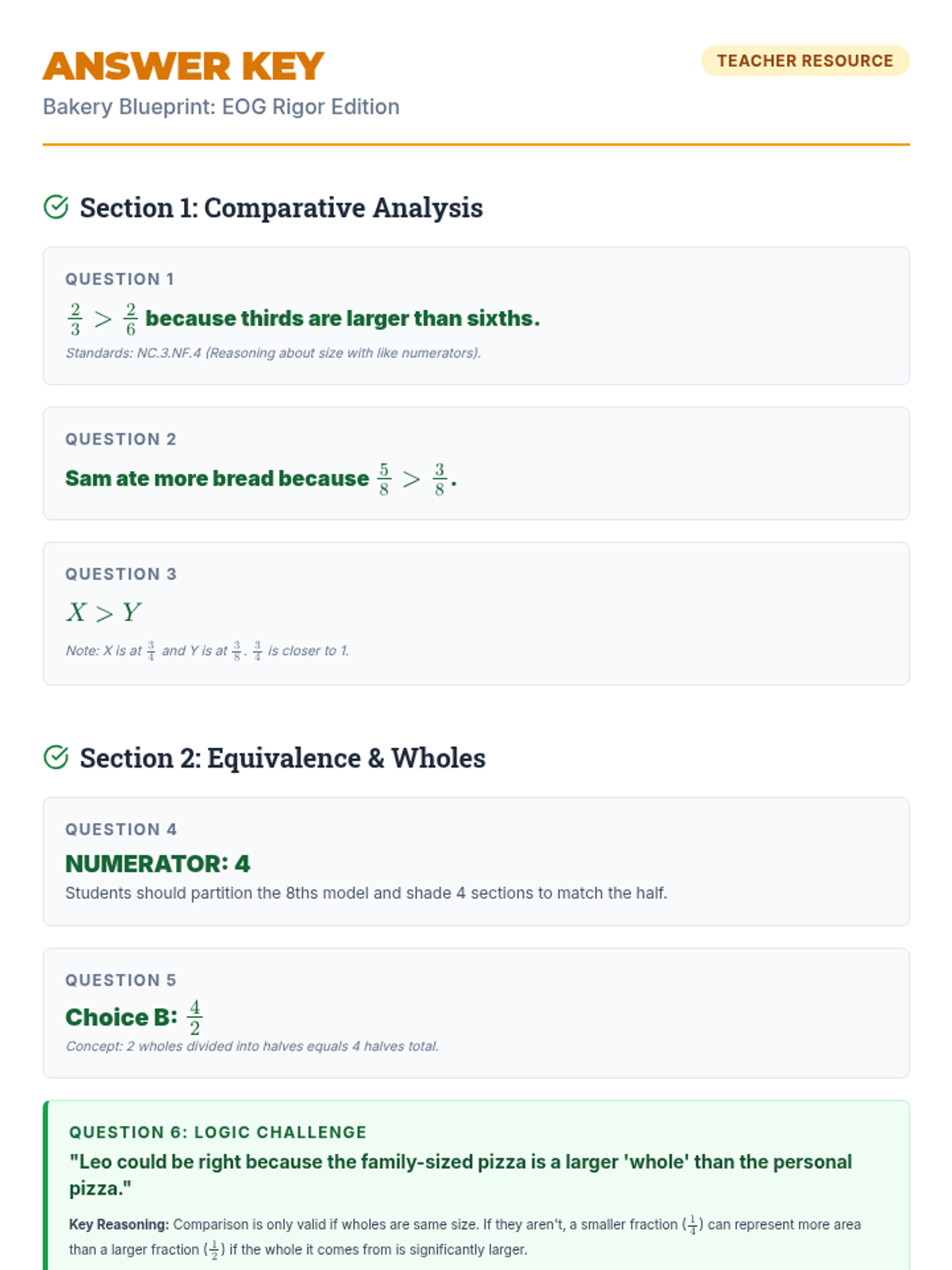
A comprehensive lesson on comparing and representing fractions using area and length models within a bakery-themed context. Students will practice comparing fractions with like numerators or denominators and identifying equivalent fractions and whole numbers.
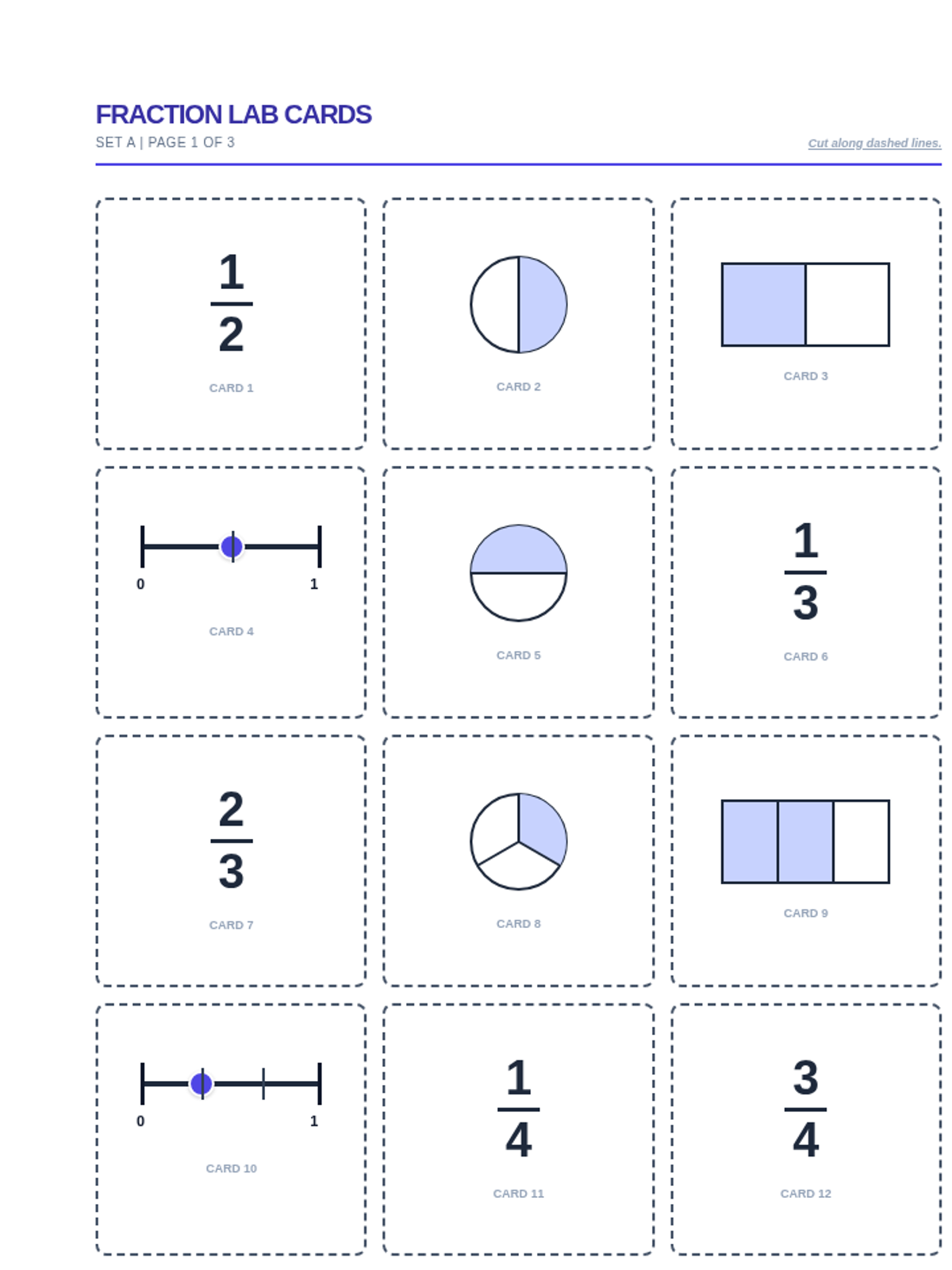
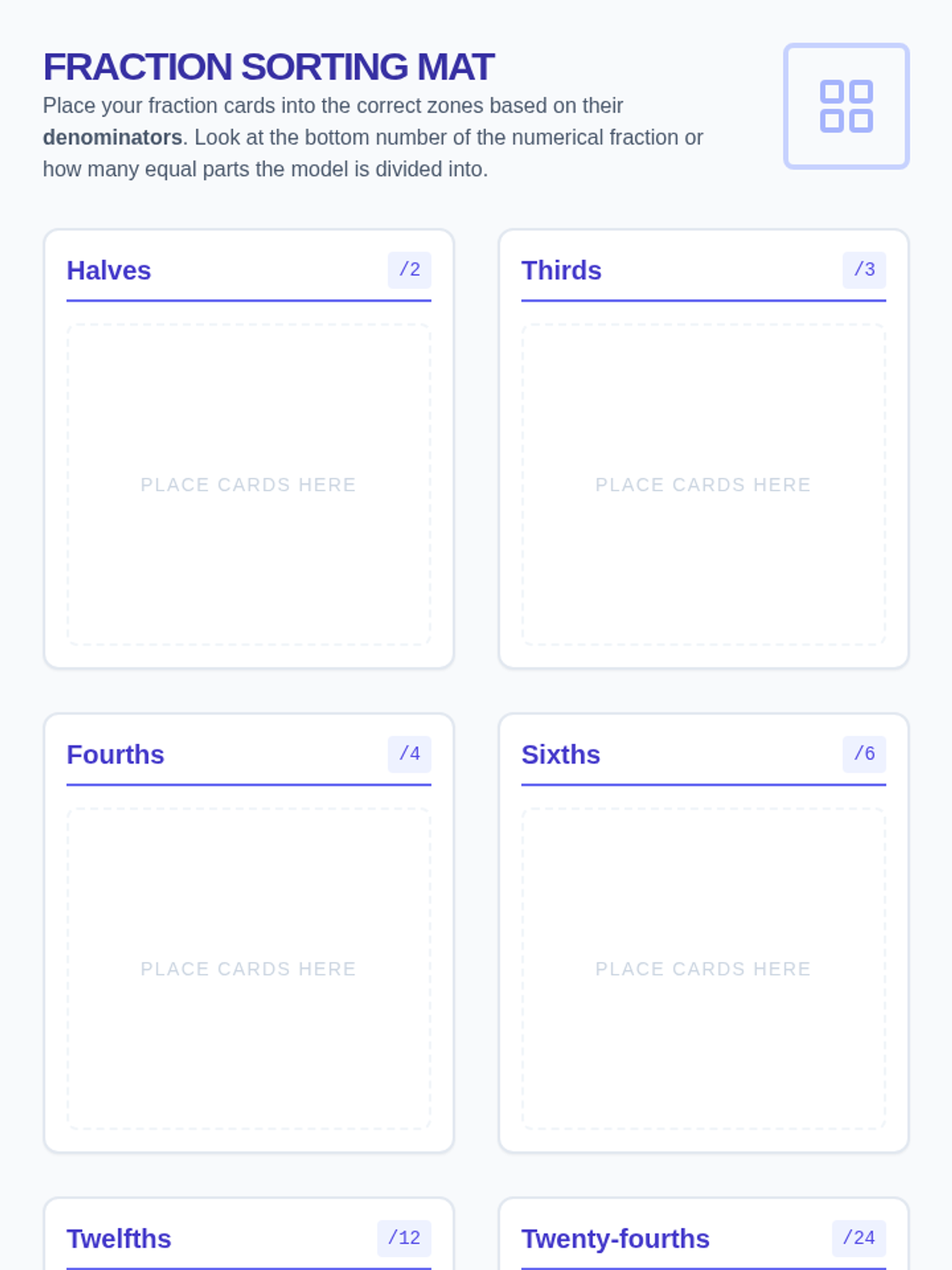
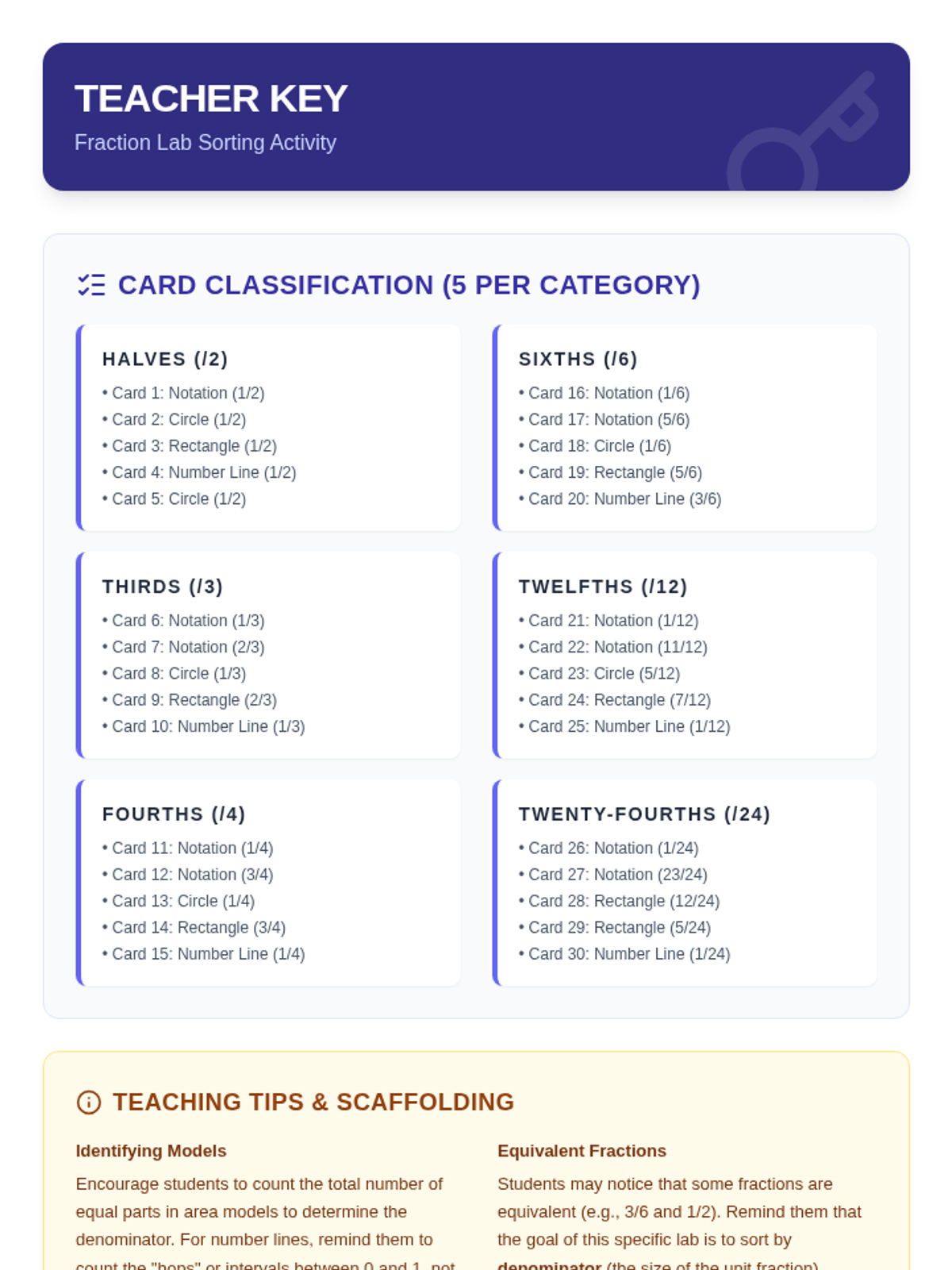
A hands-on exploration of fractions where students identify and sort fractions based on their denominators using various representations including number lines, area models, and numerical forms.
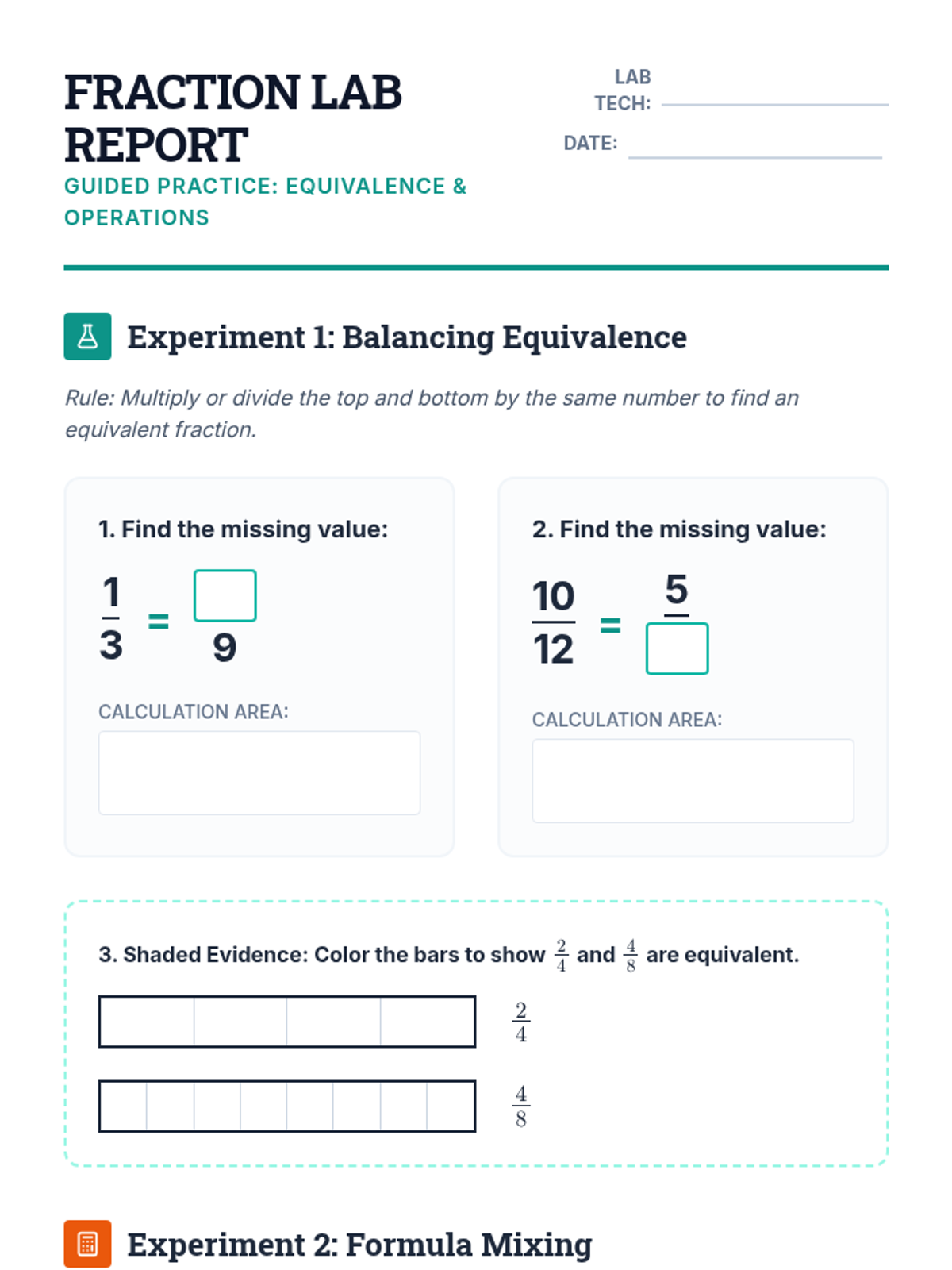
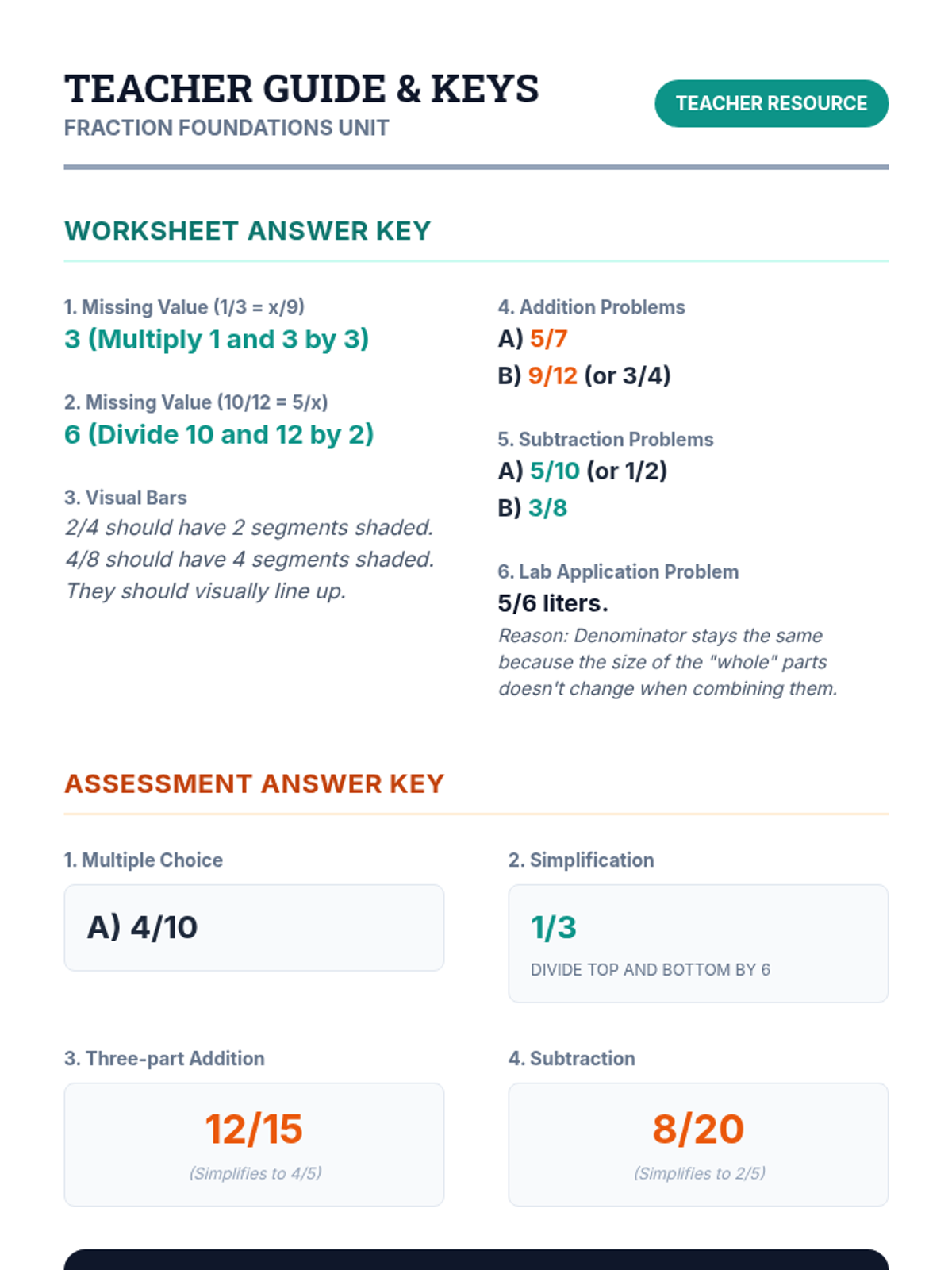
A comprehensive lesson on equivalent fractions and adding/subtracting fractions with like denominators, featuring a science lab theme.
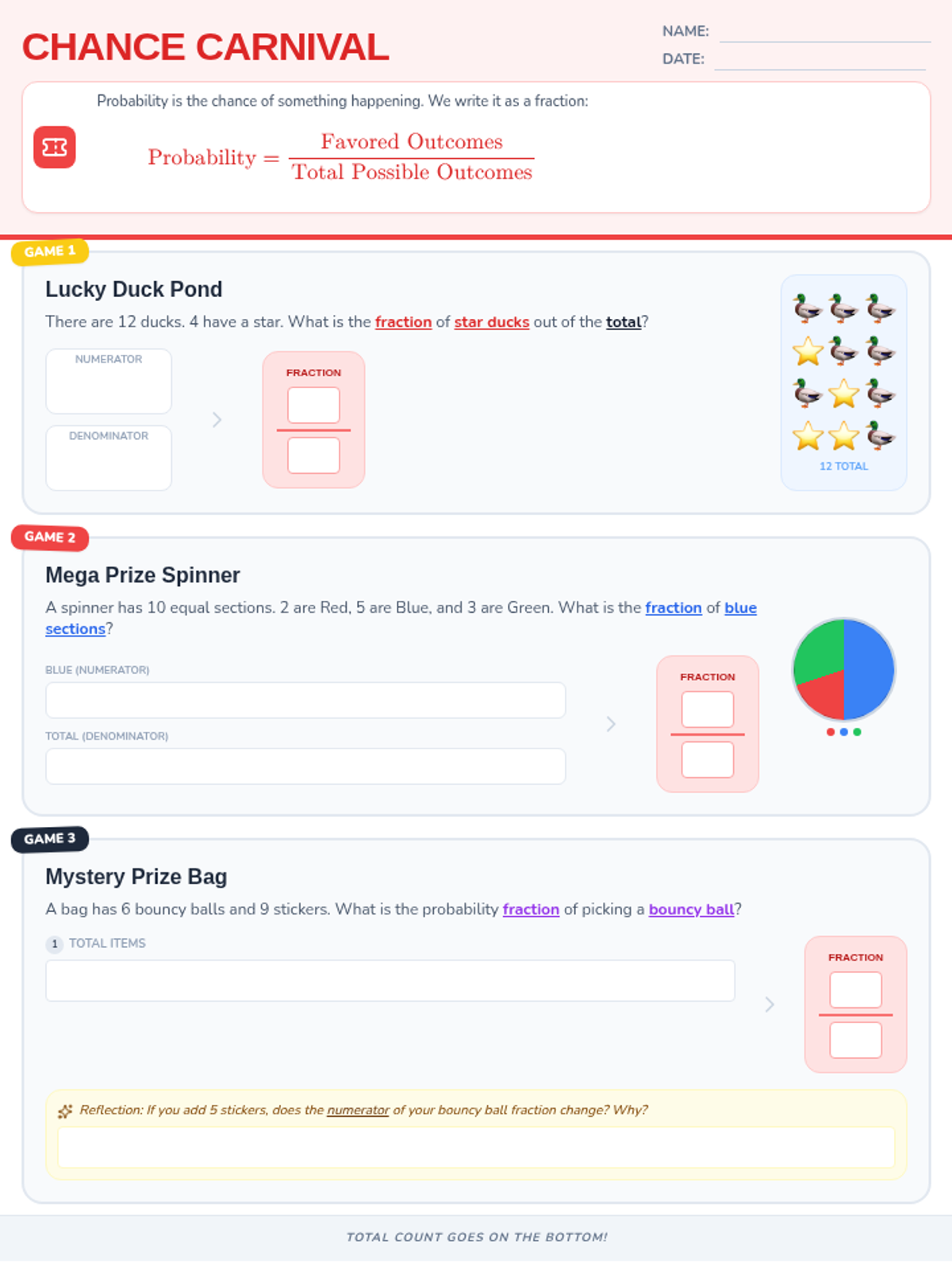
A quick introductory lesson focusing on the fundamental concept of probability as a ratio of favored outcomes to total possible outcomes.
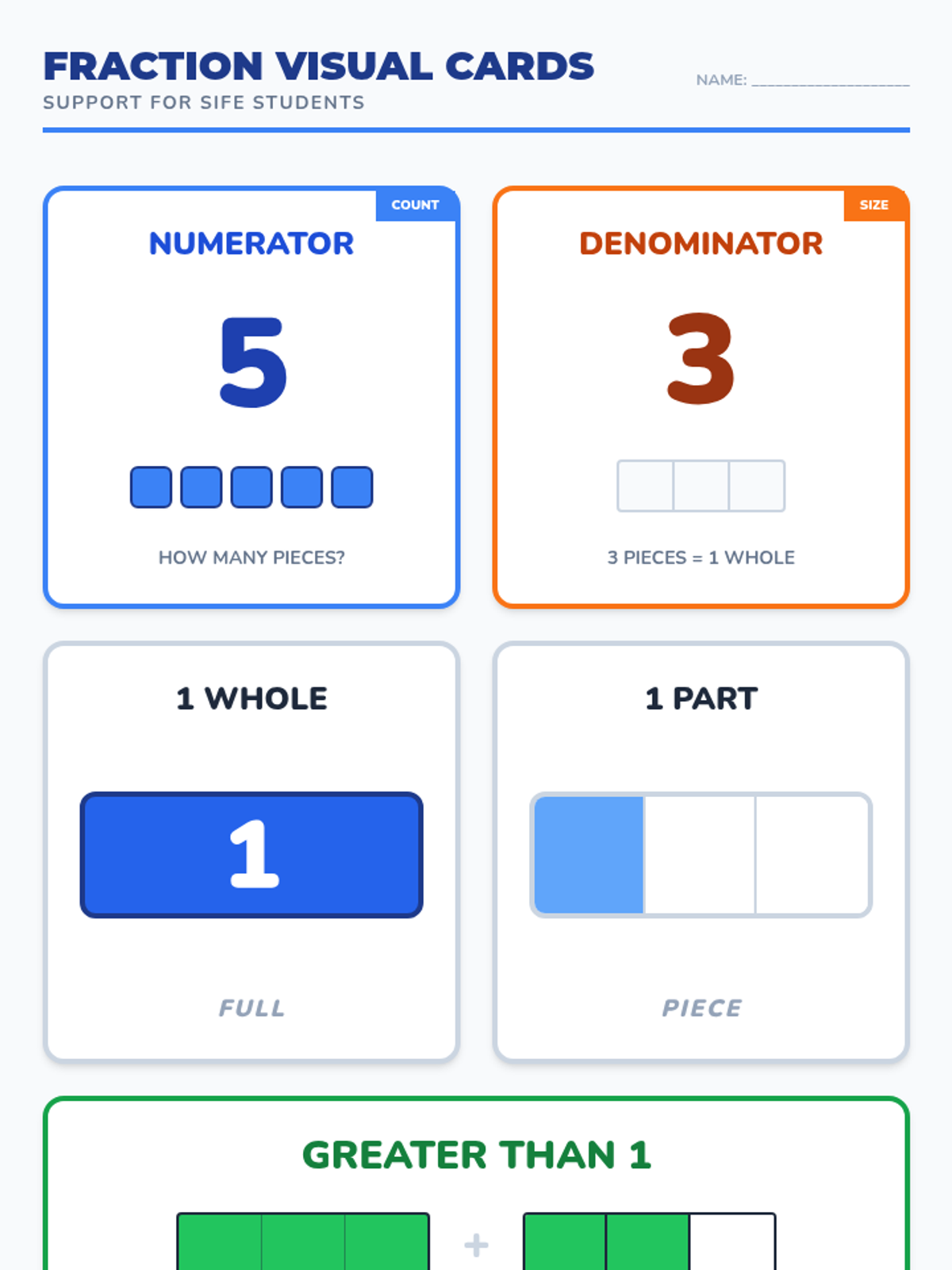
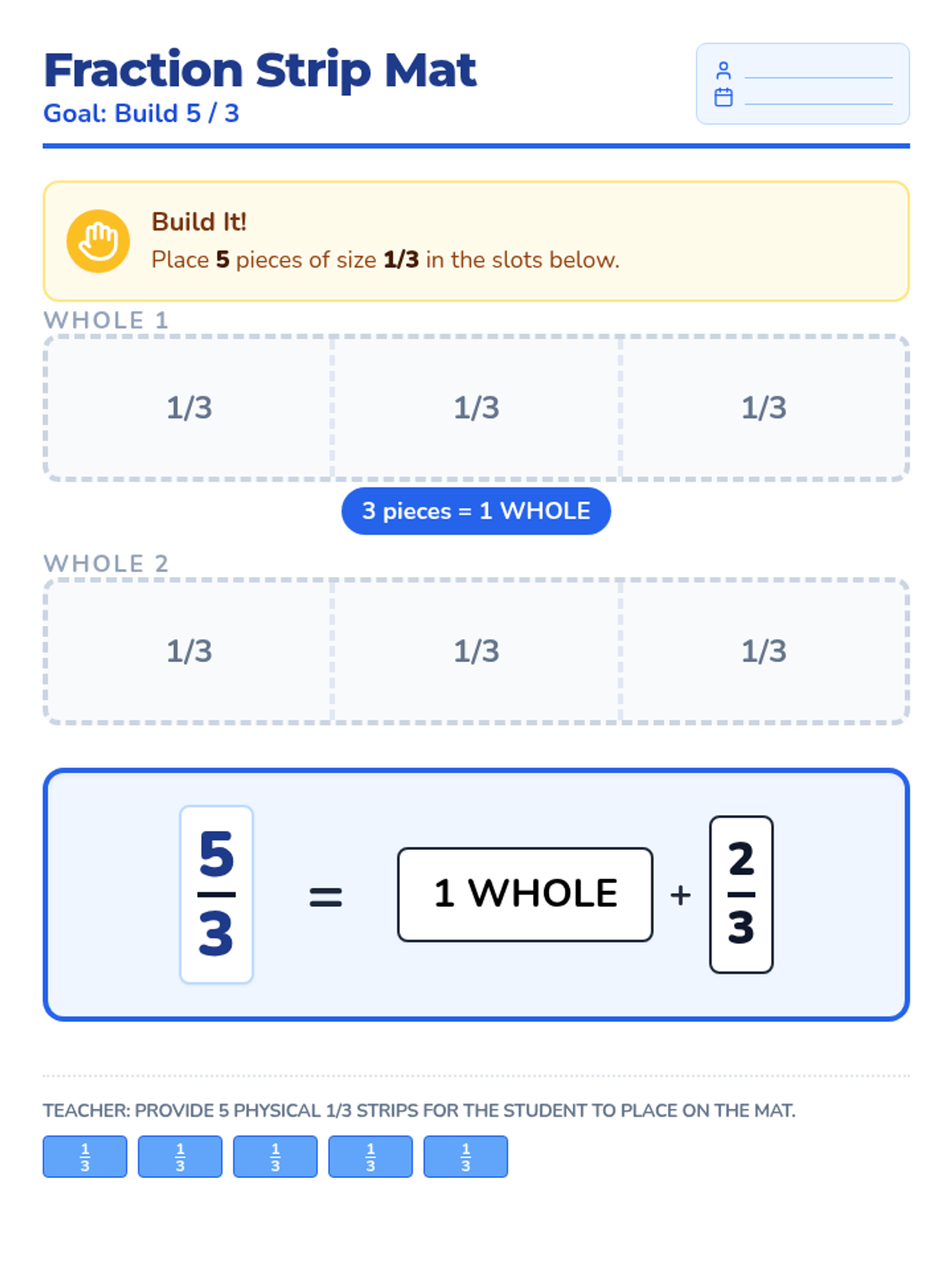
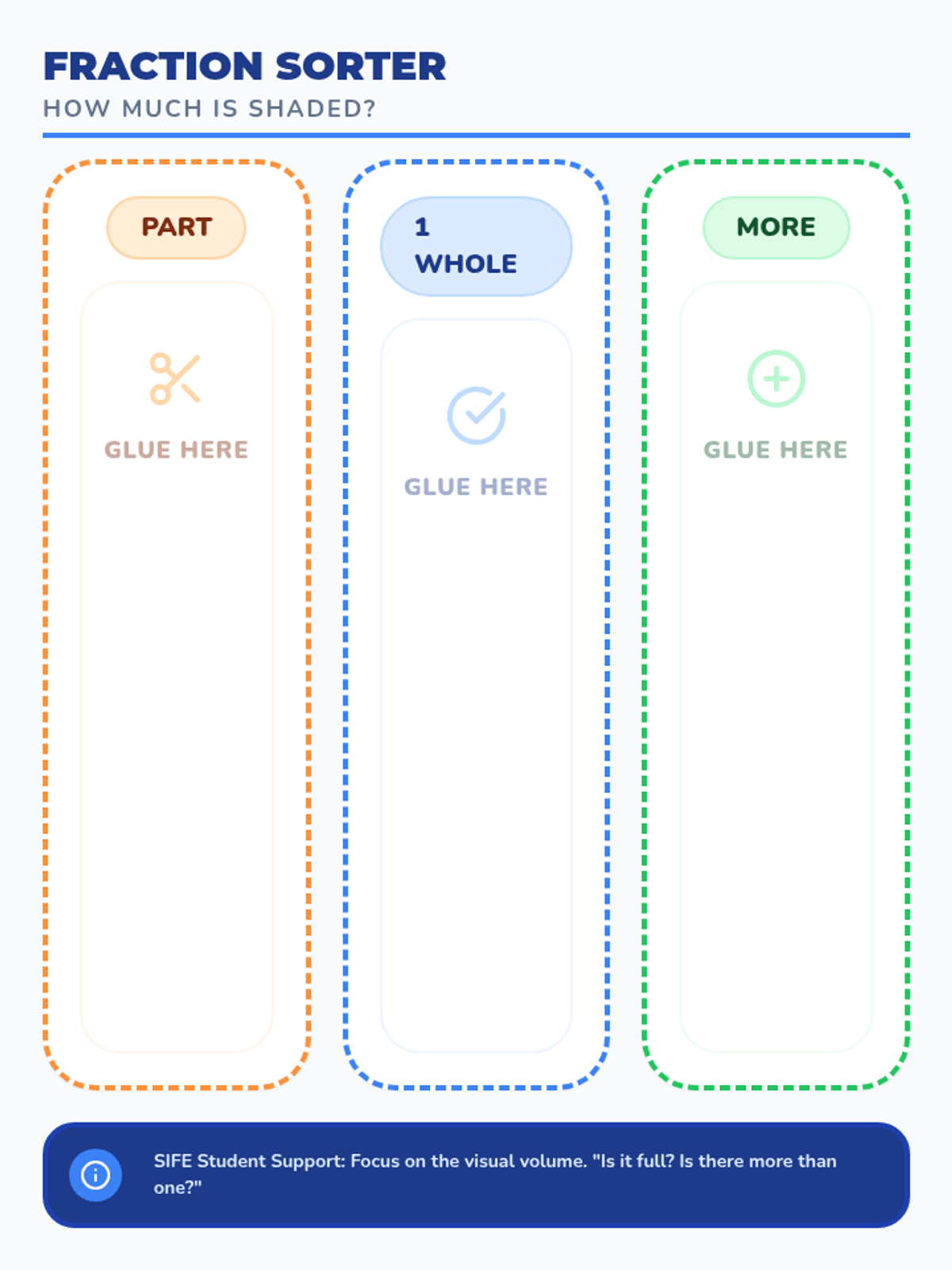
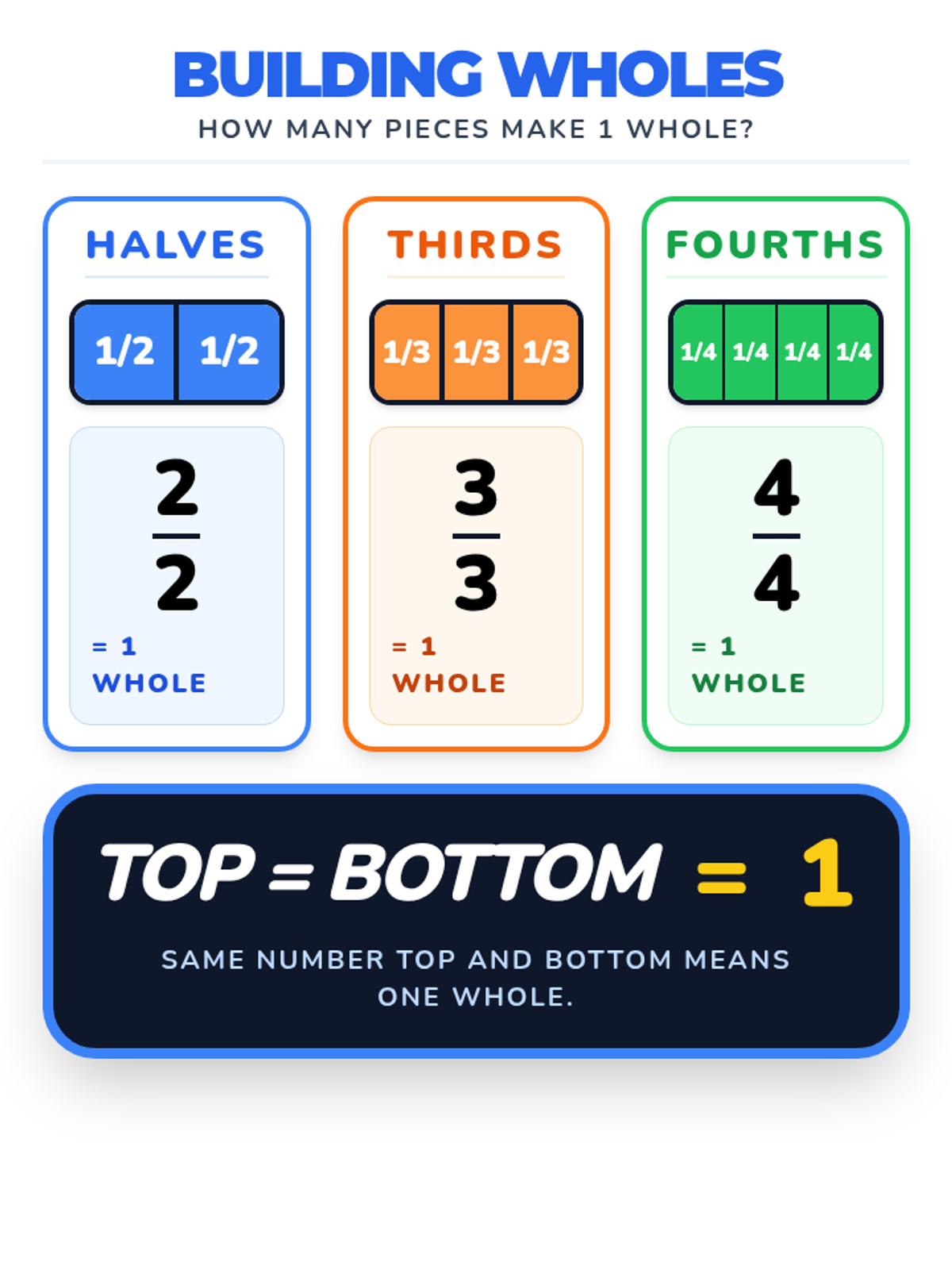
A foundational lesson designed for SIFE students to understand fractions greater than one using visual models and fraction strips. Focuses on bridging concrete models to number lines with minimal text reliance.
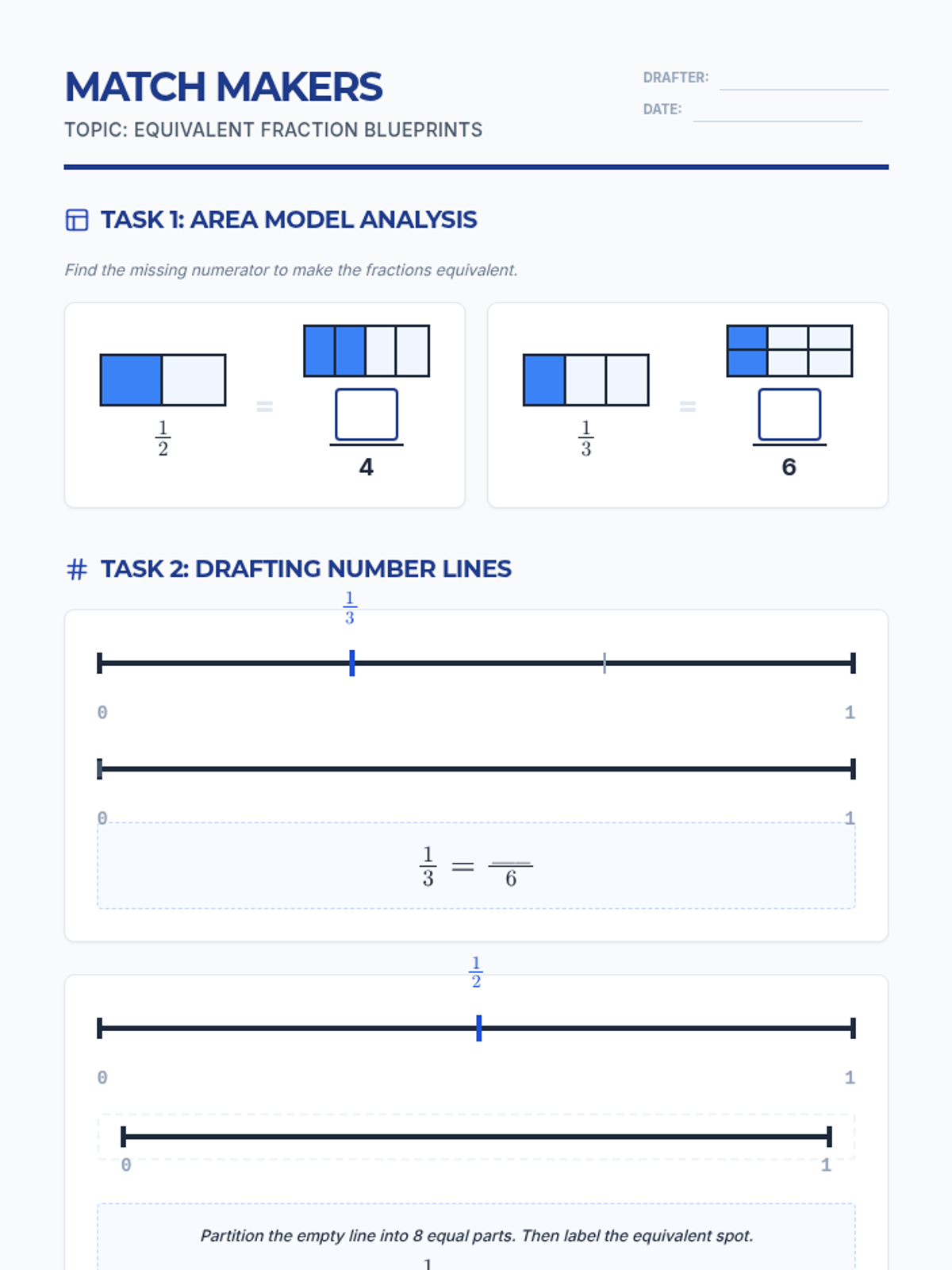
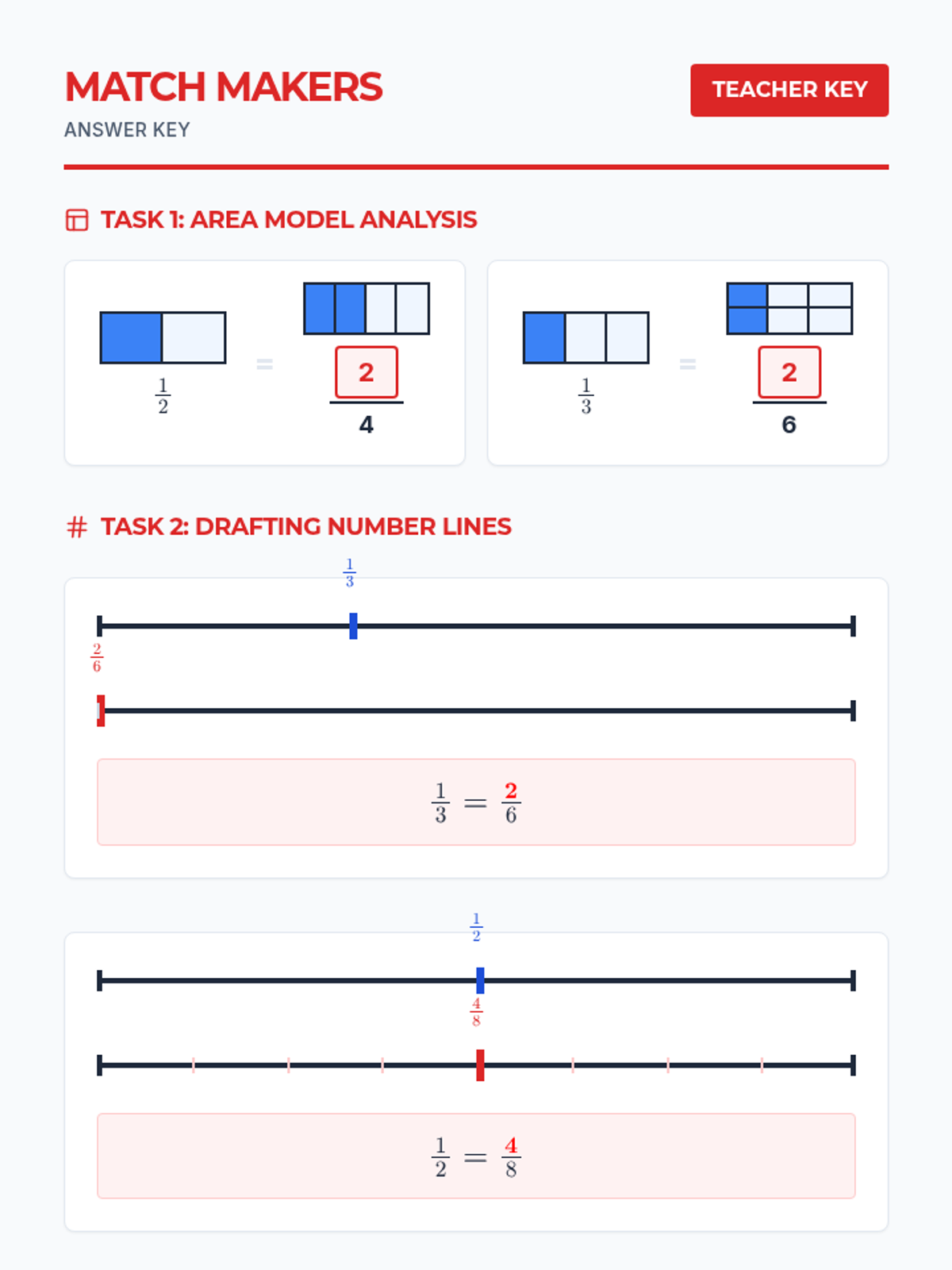
A foundational lesson on equivalent fractions using area models and number lines, styled as architectural blueprints to emphasize precision and measurement.
A comprehensive slide deck covering measurement in inches (halves and fourths) and interpreting data on line plots, provided in both English and Japanese.
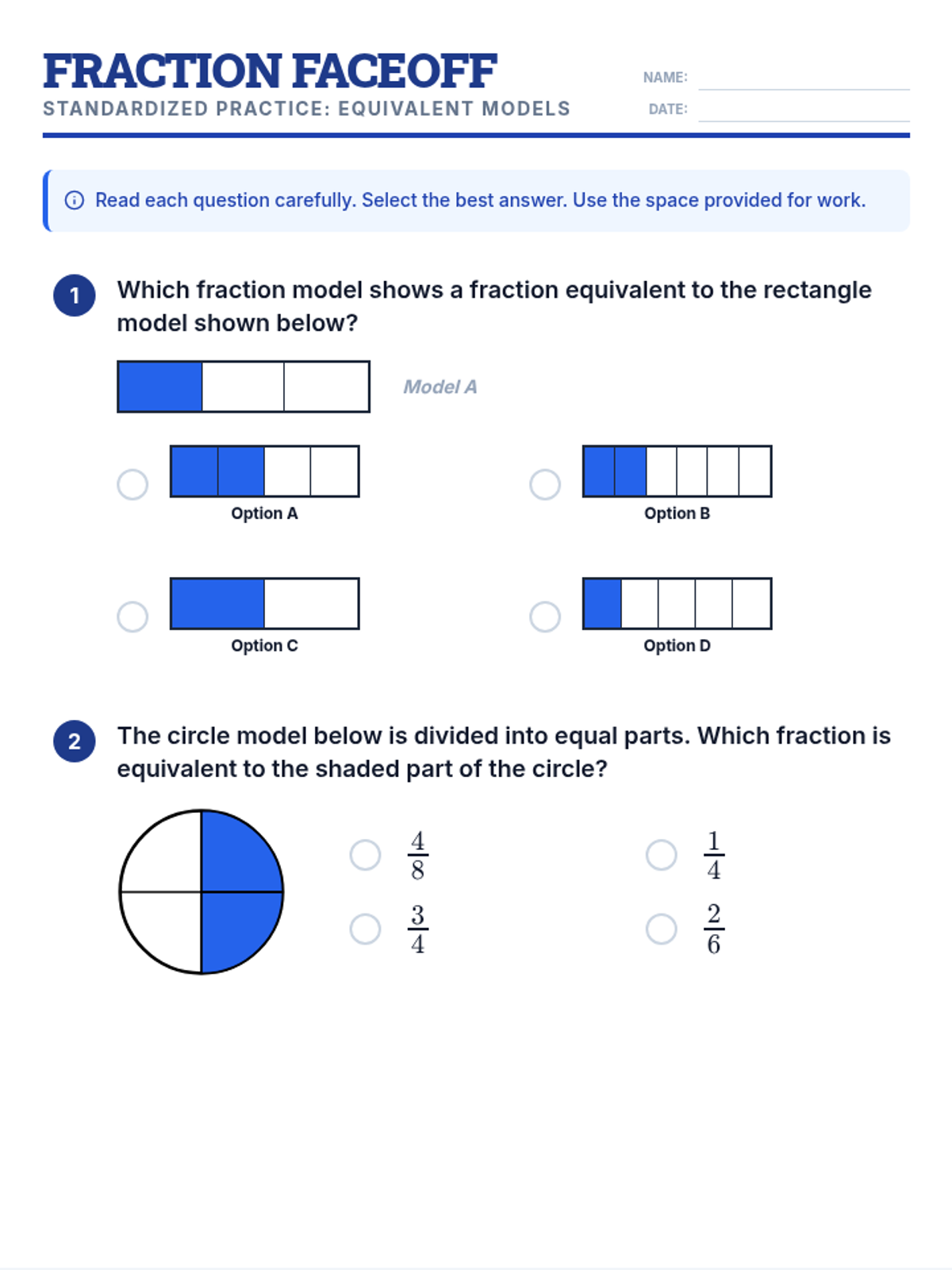
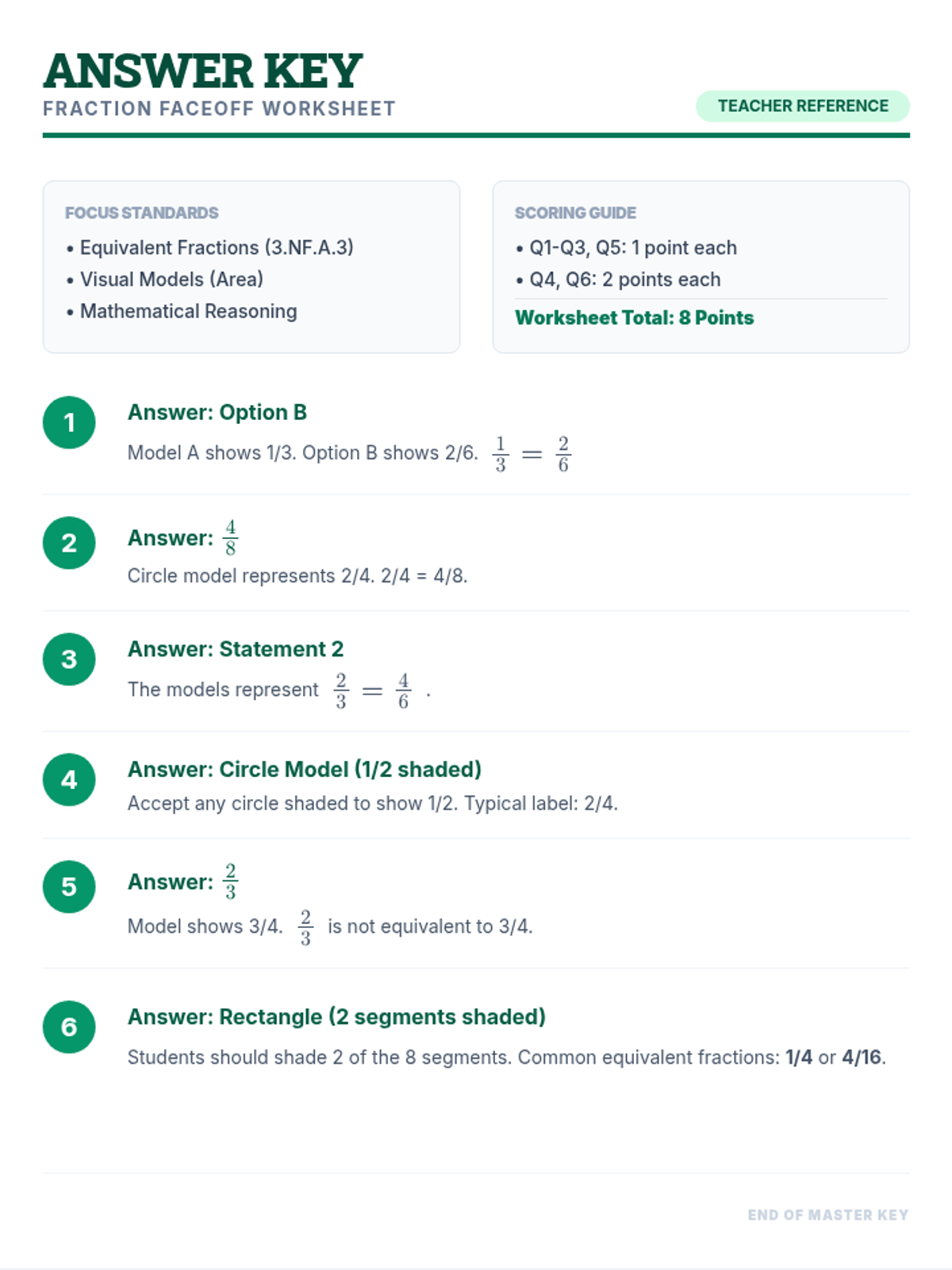
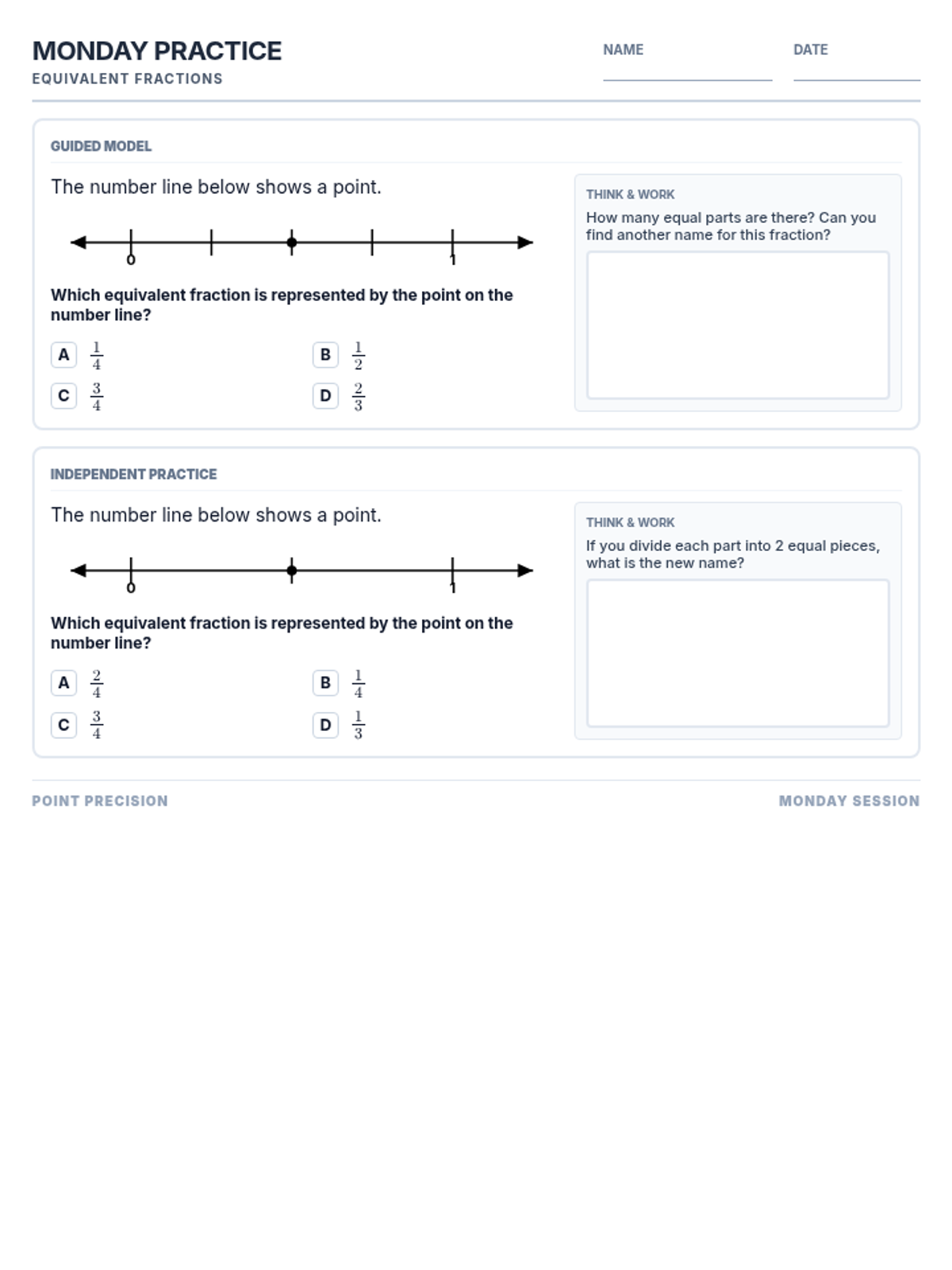
A focused practice session on identifying and creating equivalent fractions using visual area models, designed to mimic standardized testing formats.
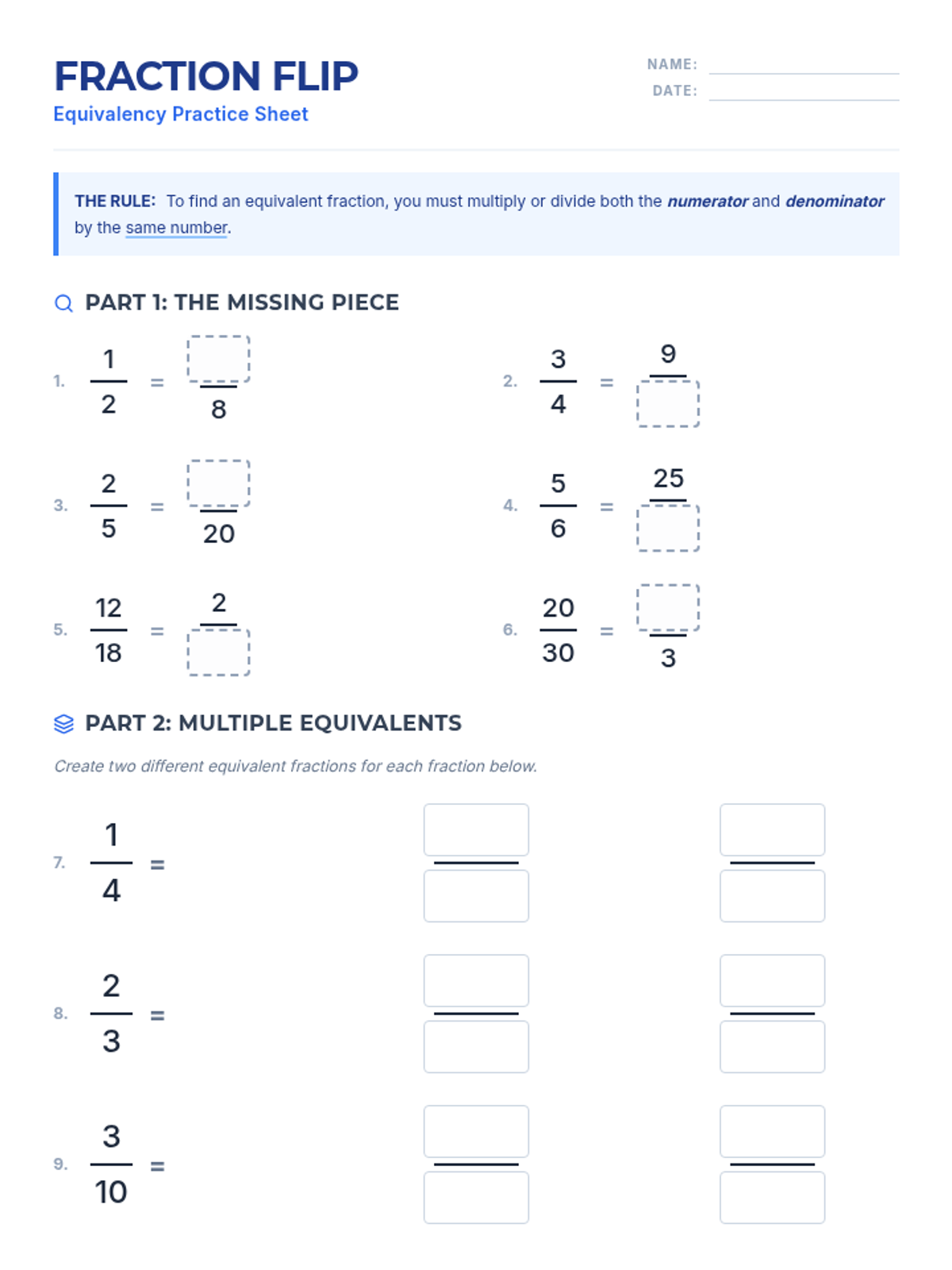
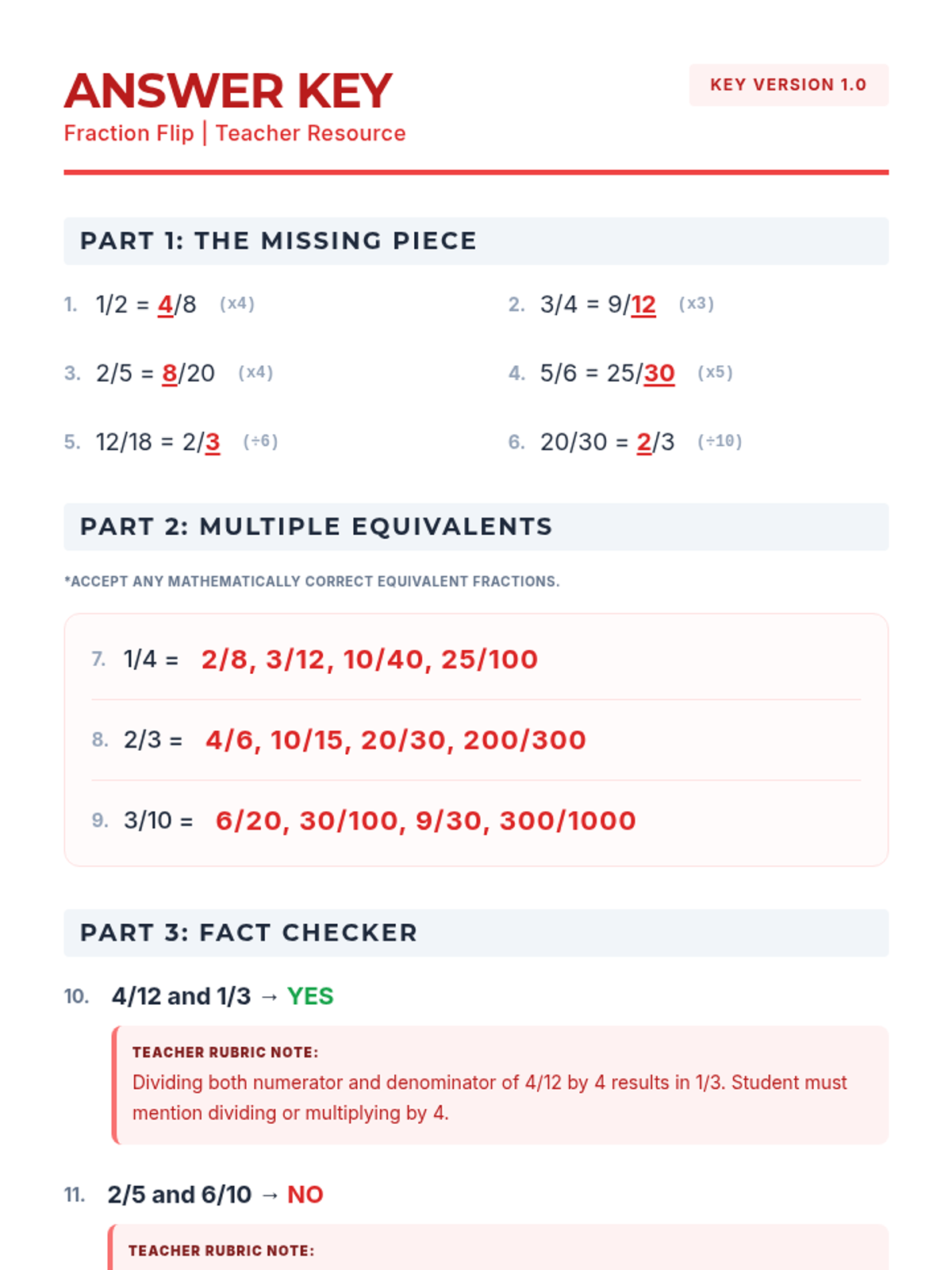
A practice-focused lesson on identifying and creating equivalent fractions using multiplication and division strategies without visual aids.
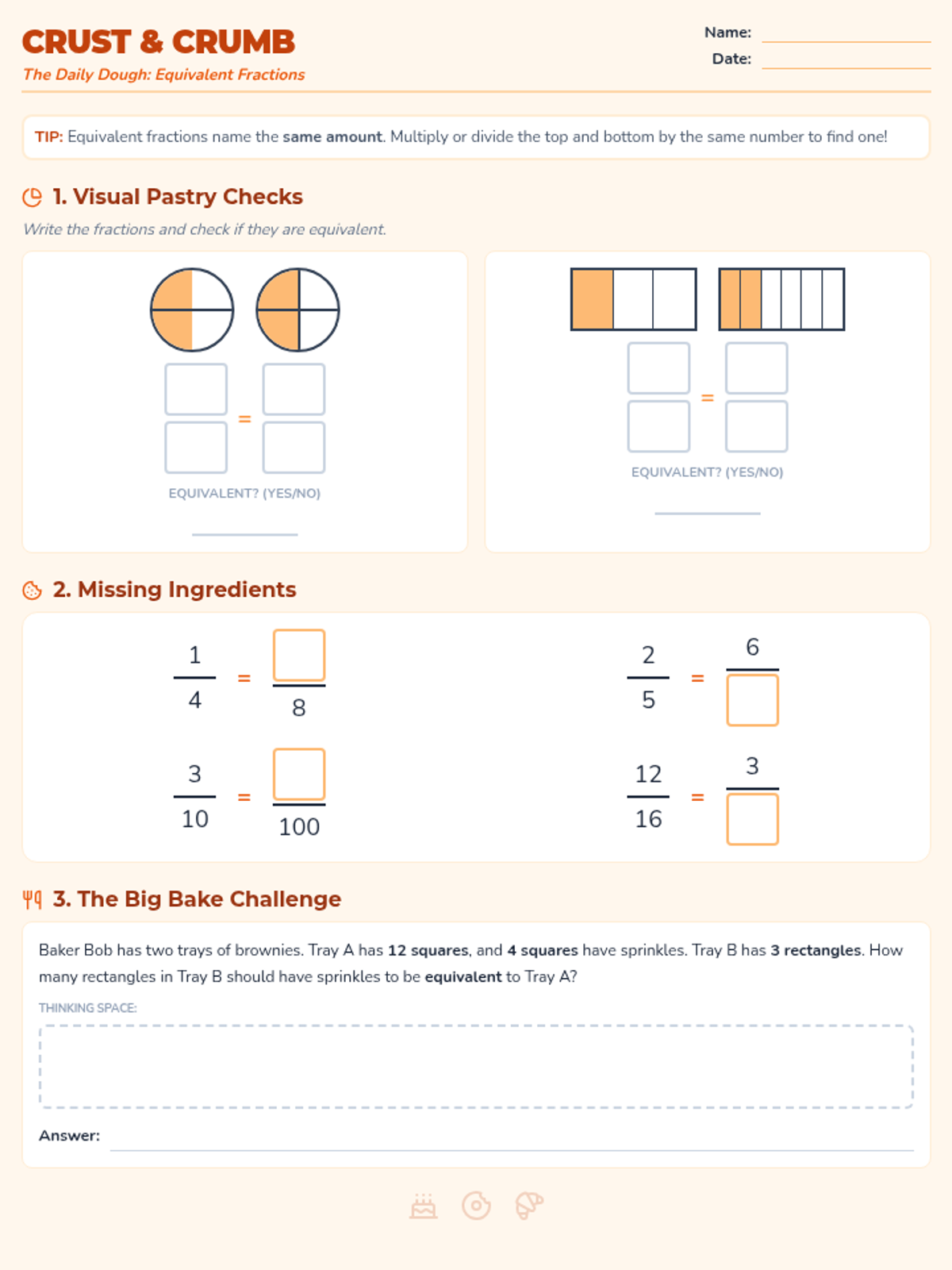
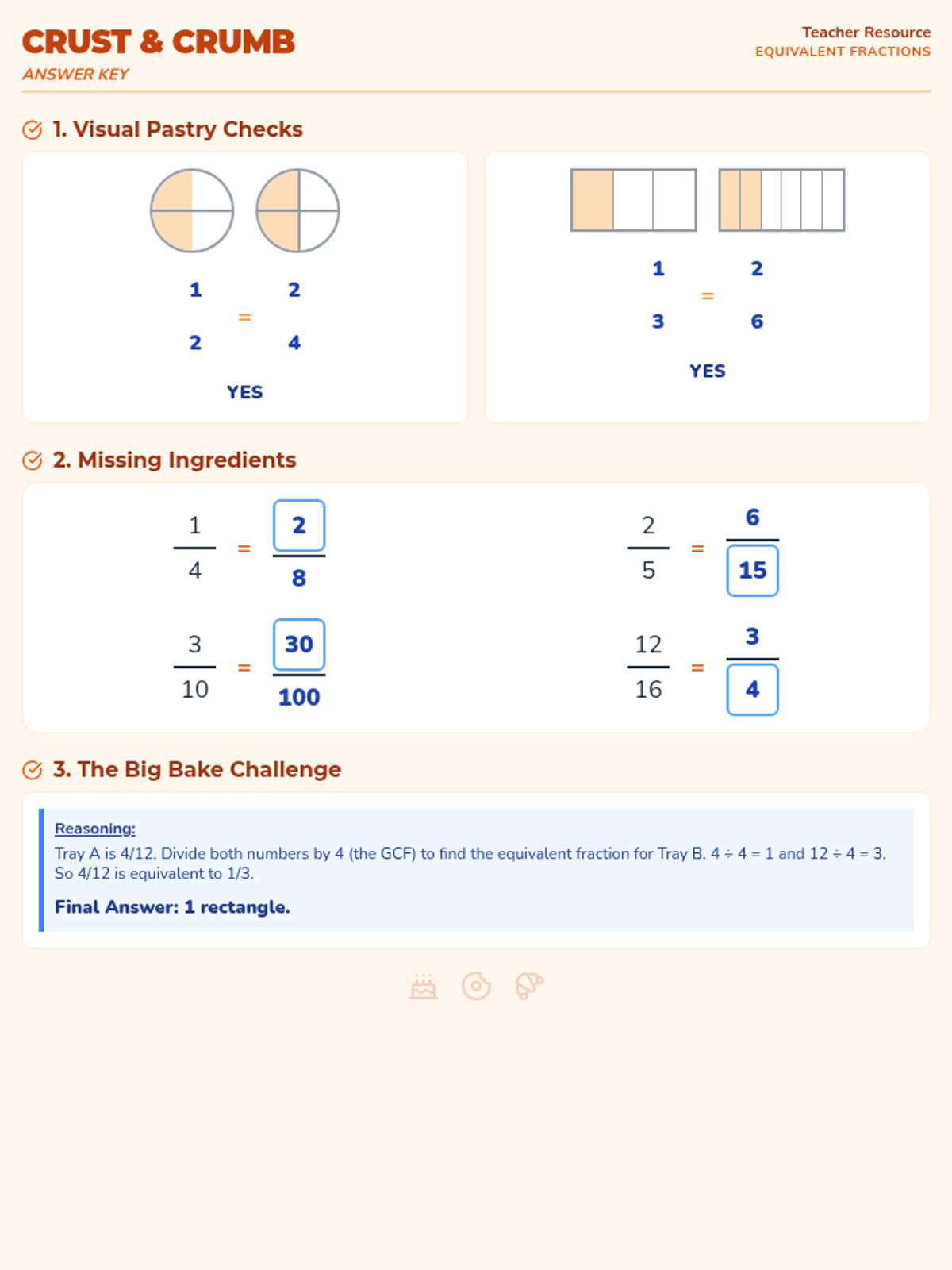
A focused lesson on identifying and generating equivalent fractions using visual models and multiplication strategies, themed around a bustling neighborhood bakery.
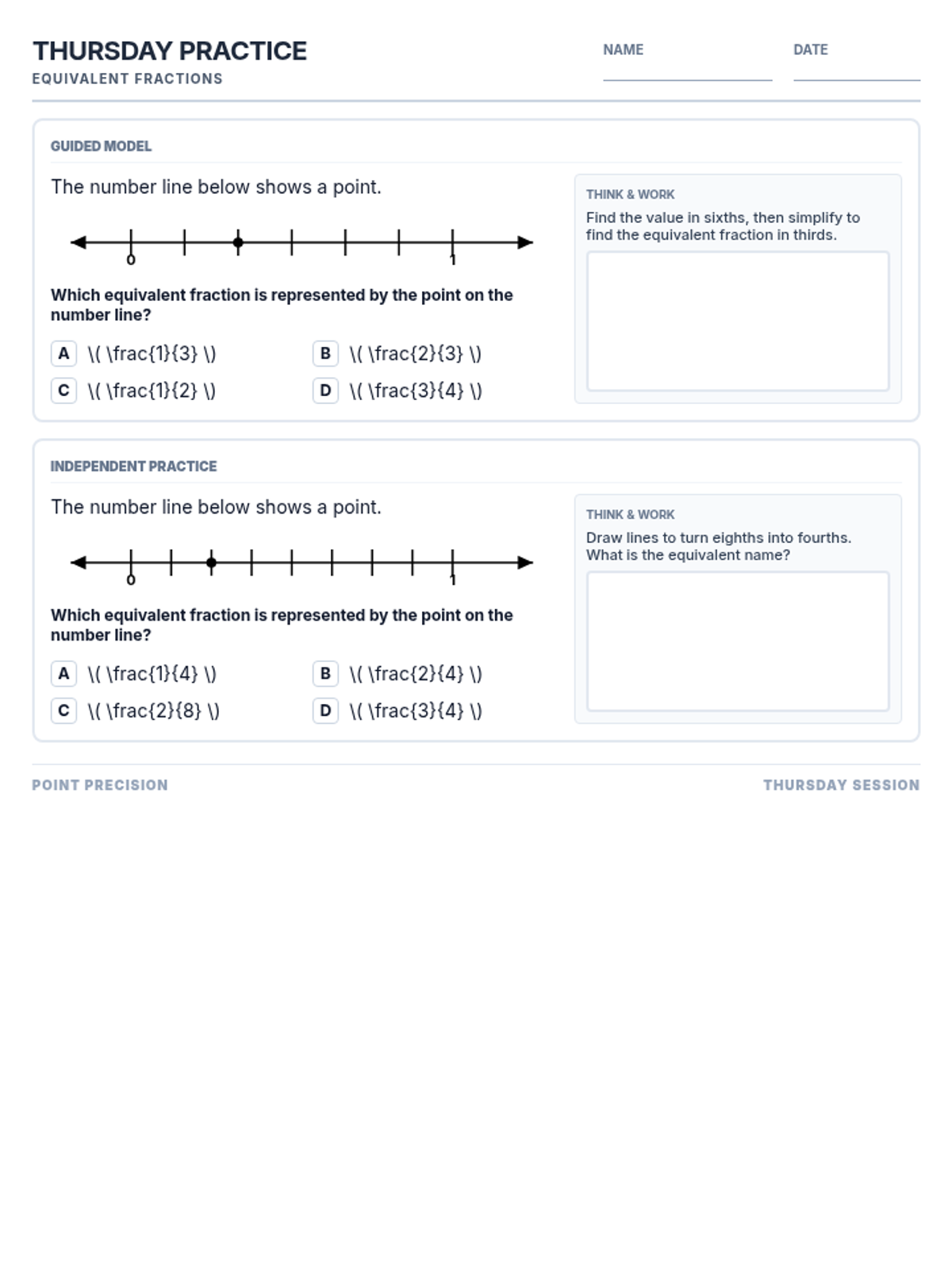
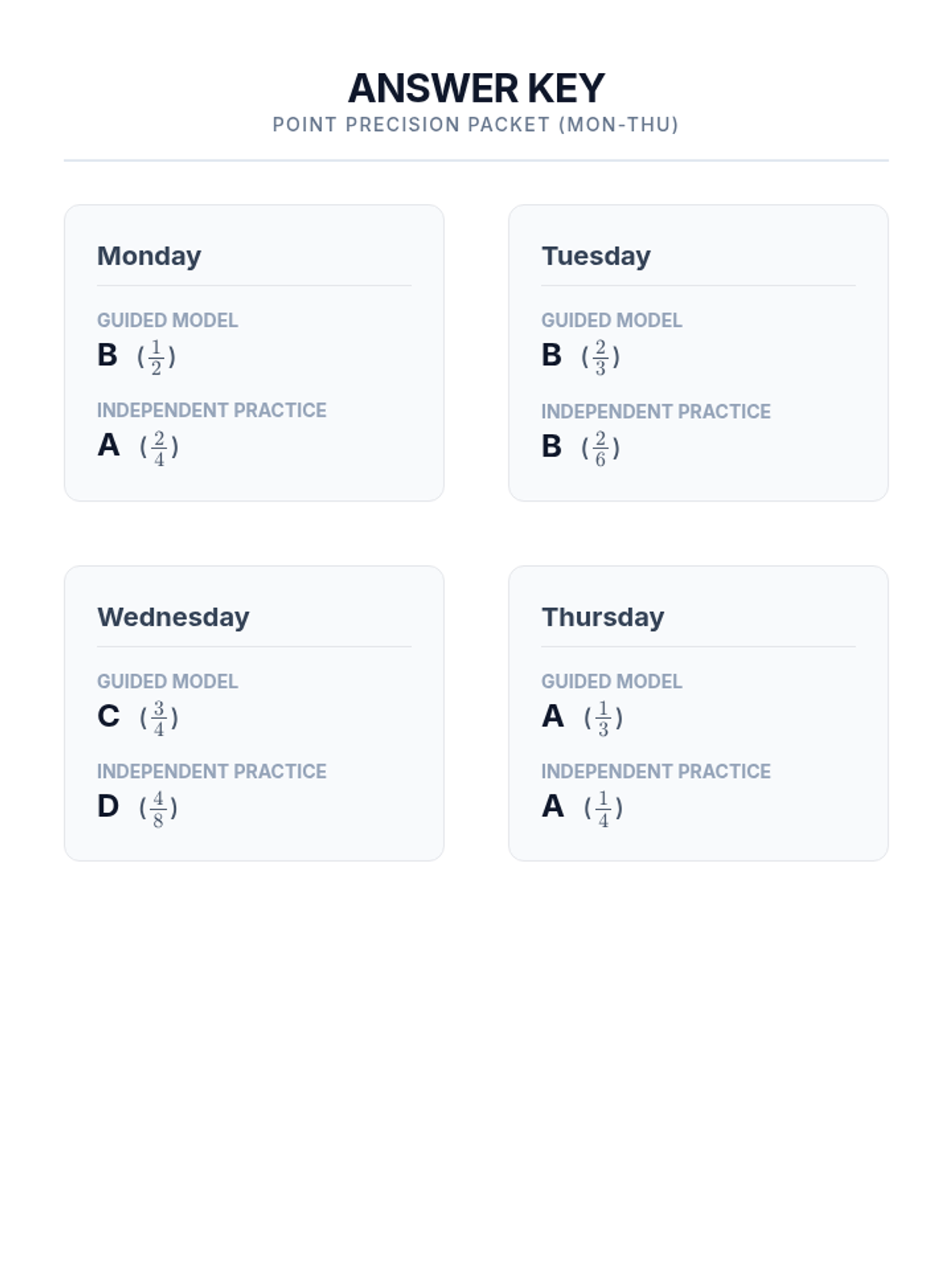
Thursday's lesson provides mixed practice with denominations of 3, 4, 6, and 8 to solidify understanding of equivalent fractions.
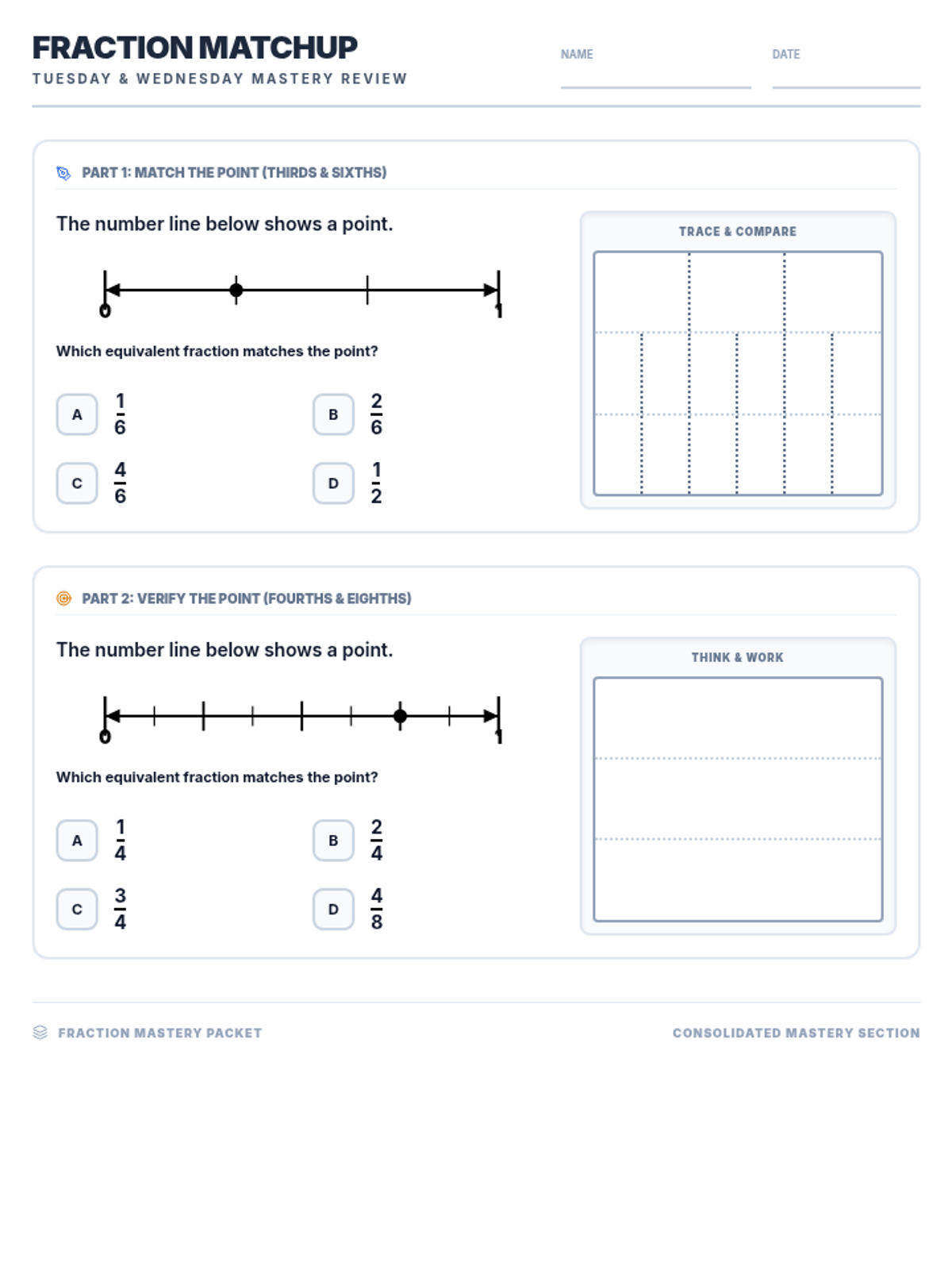
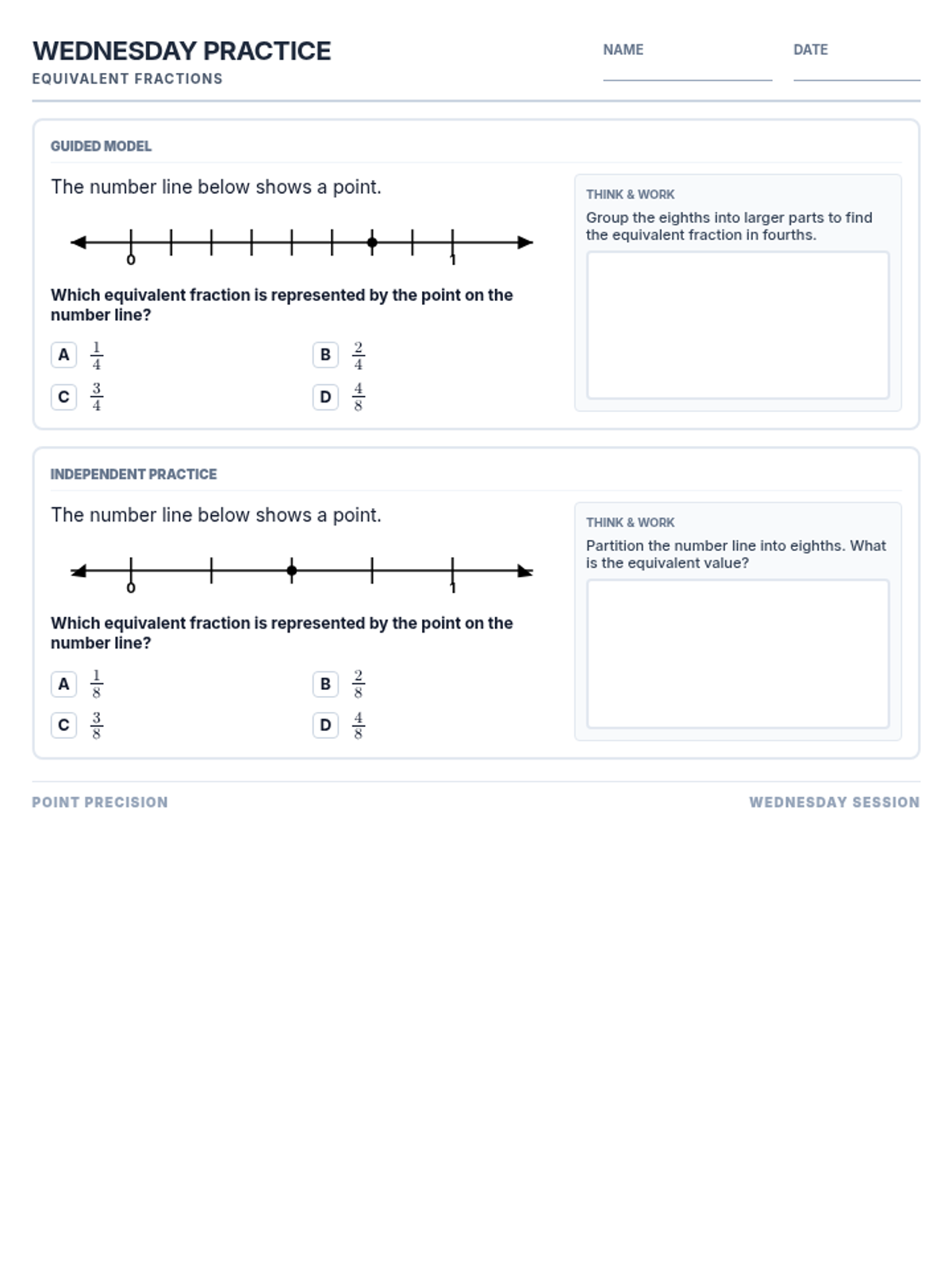
Wednesday's lesson focuses on the relationship between fourths and eighths on a number line.
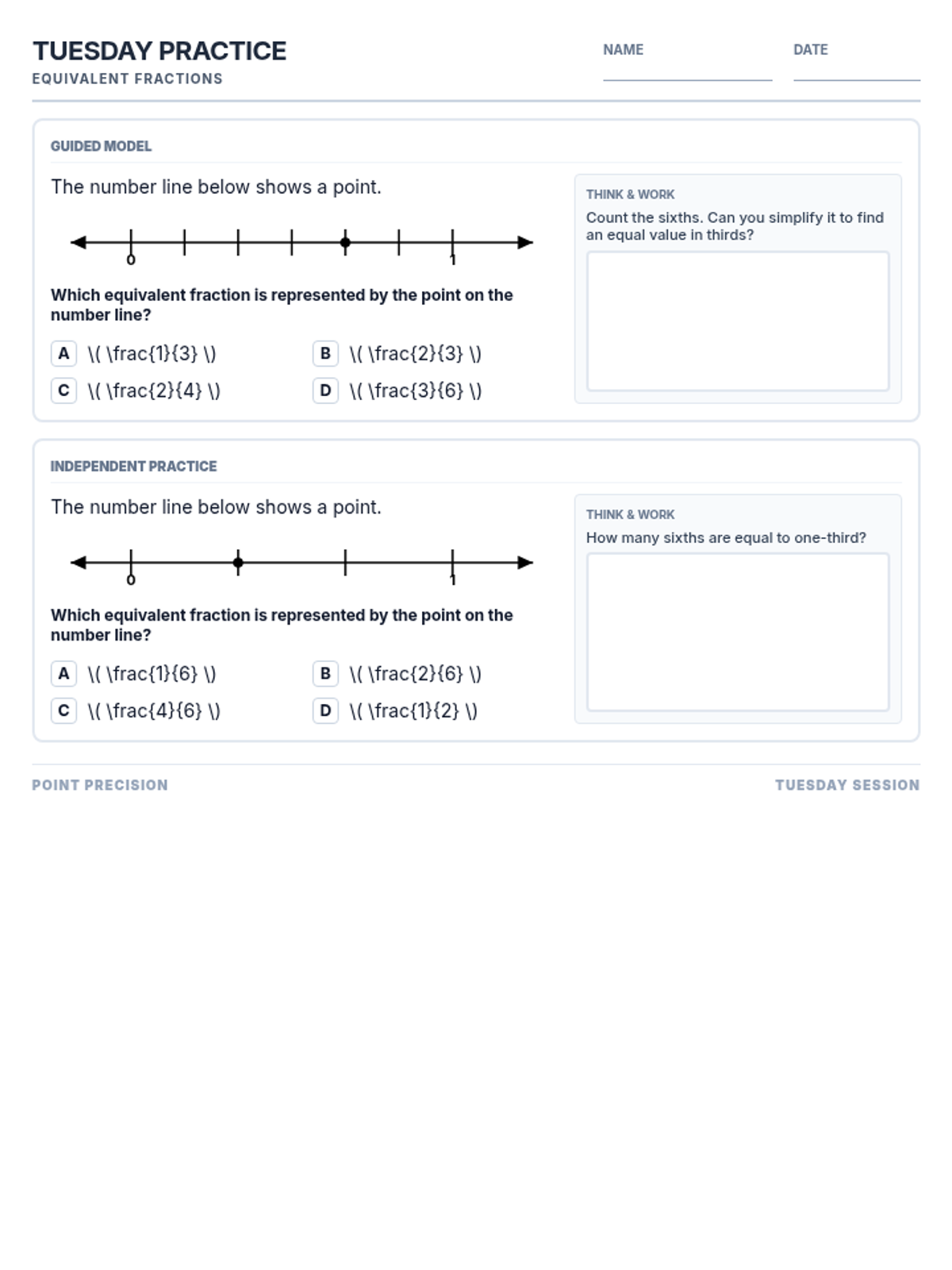
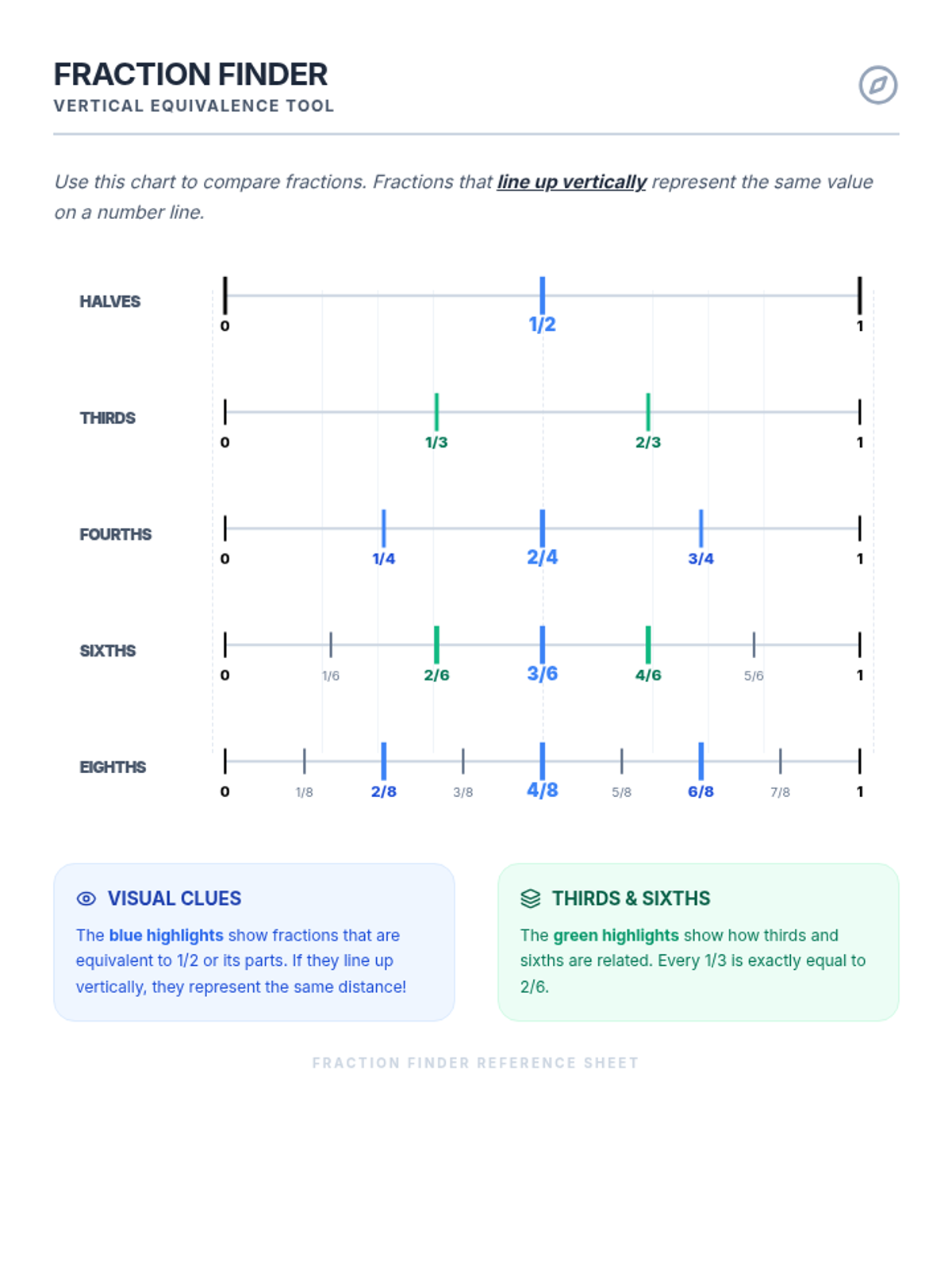
Tuesday's lesson introduces thirds and sixths, challenging students to find equivalent values on number lines.
Monday's lesson focuses on halves and fourths using number lines and identifying their equivalent forms.
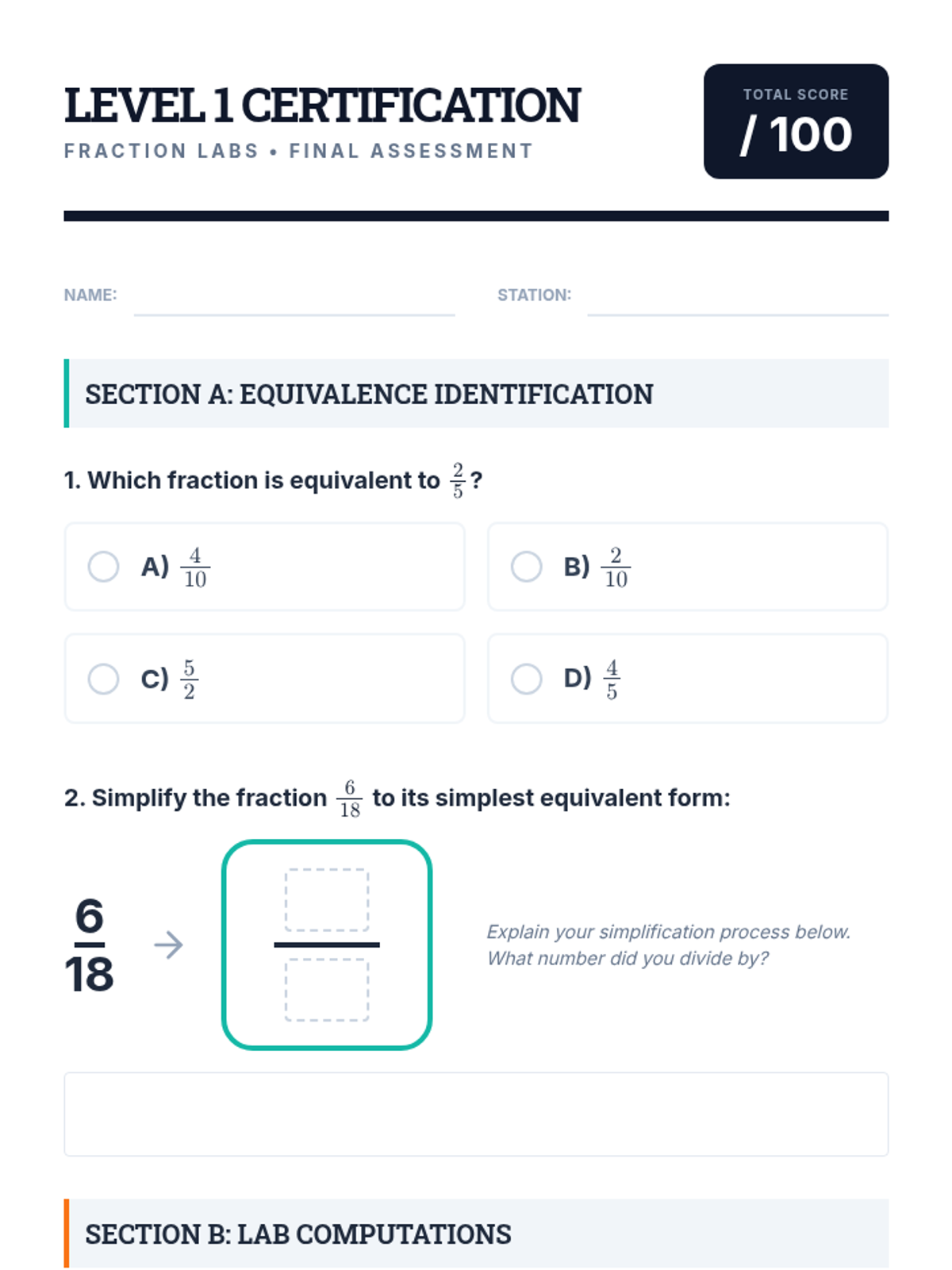
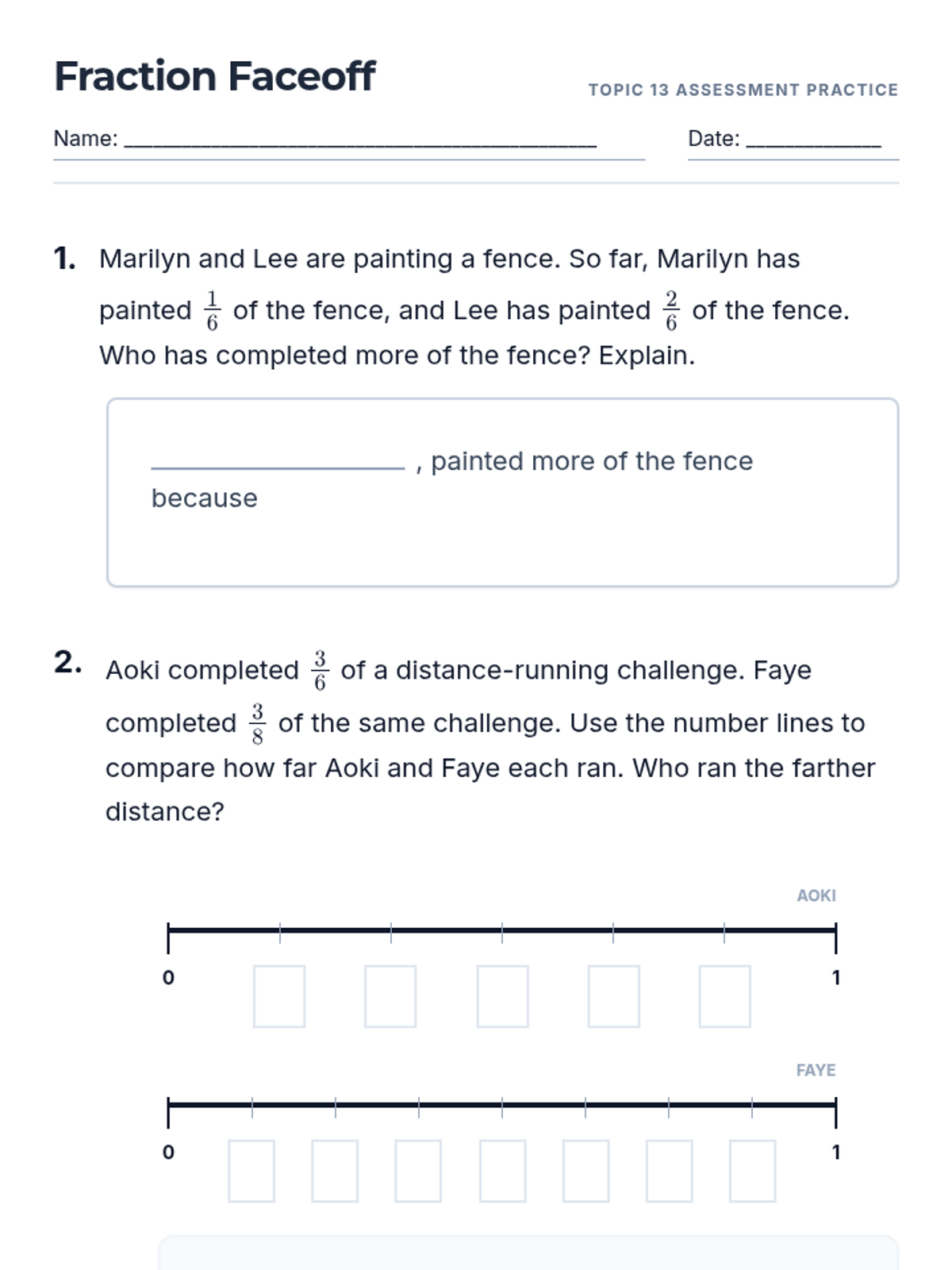
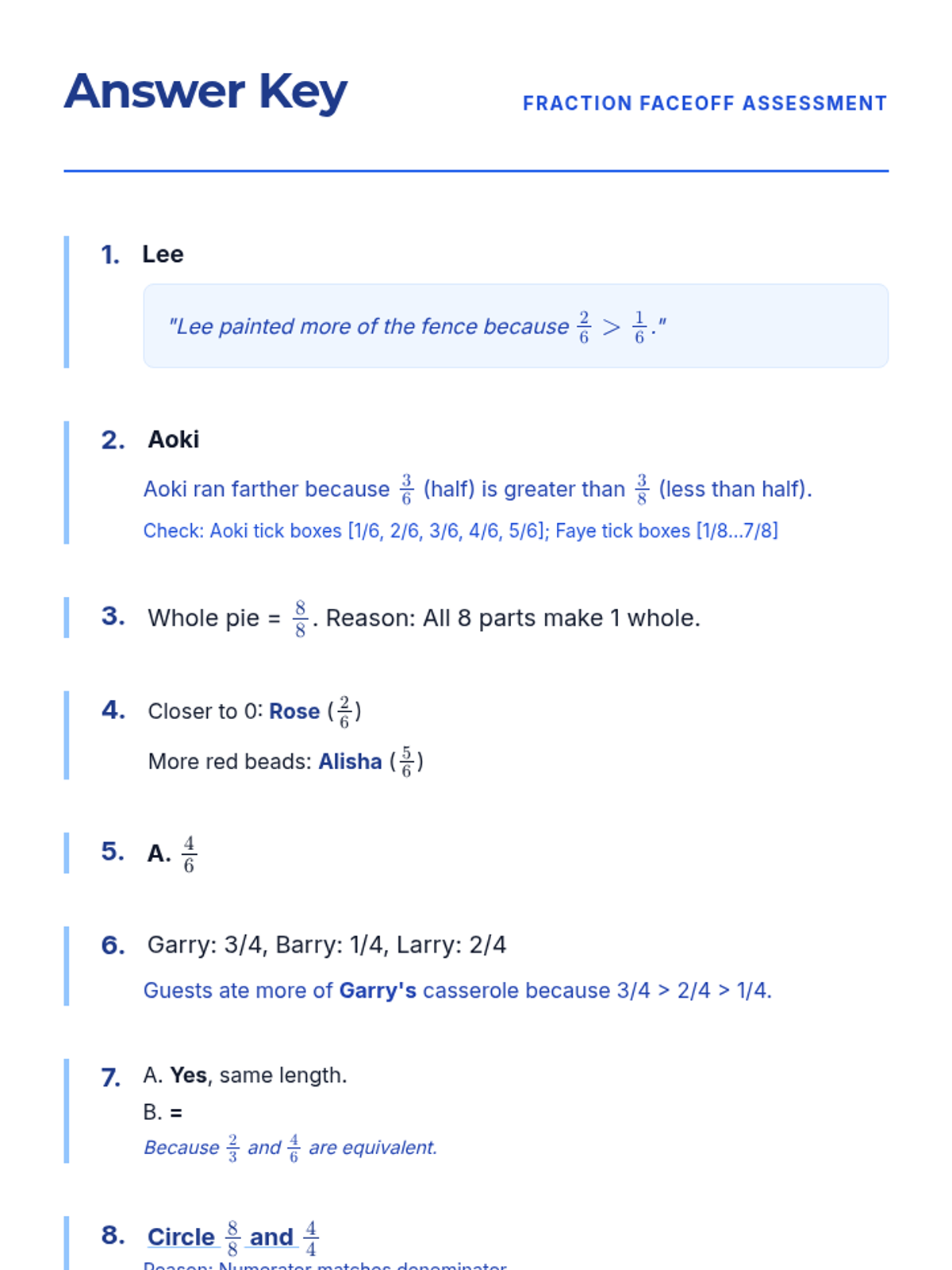
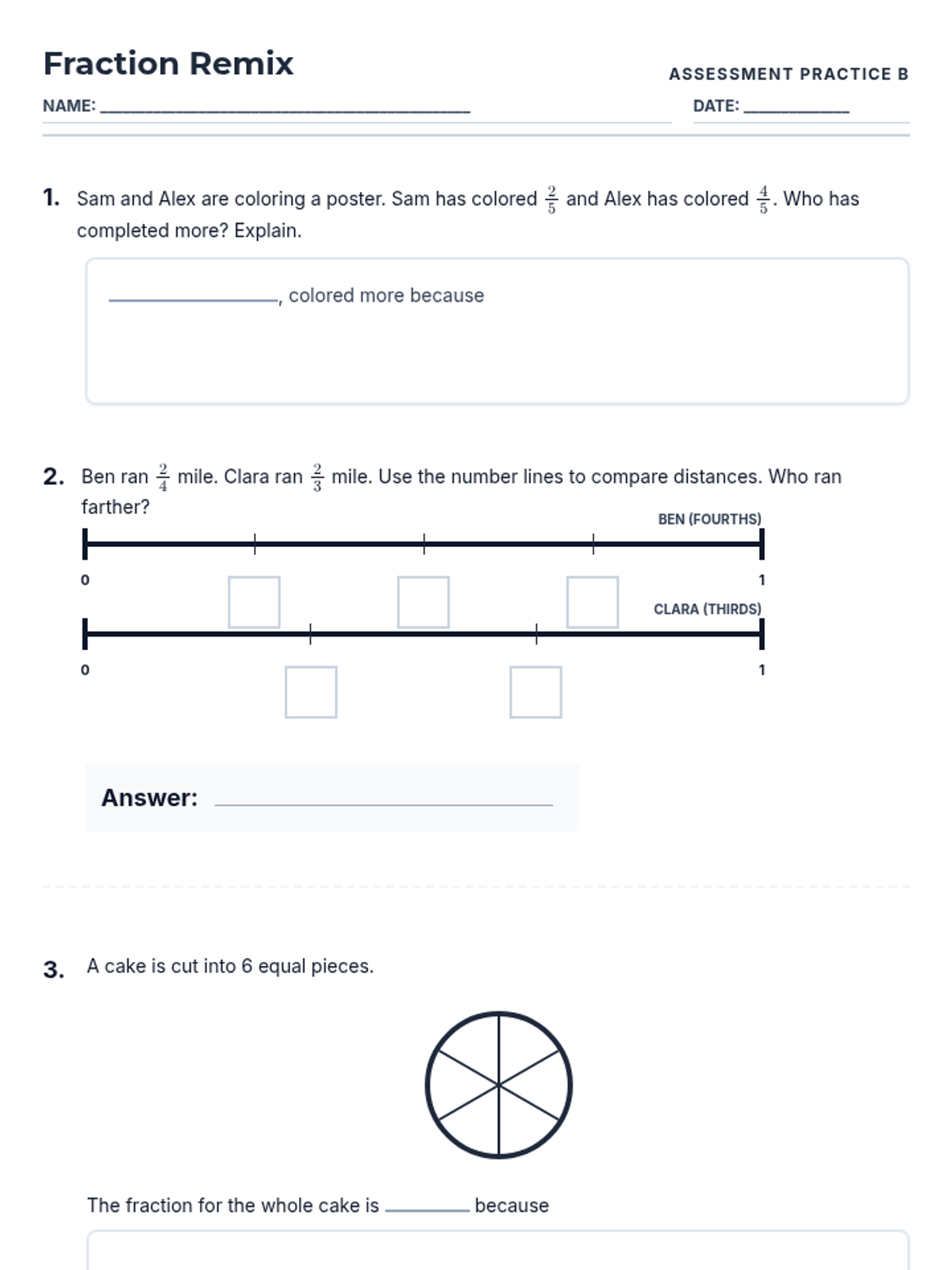
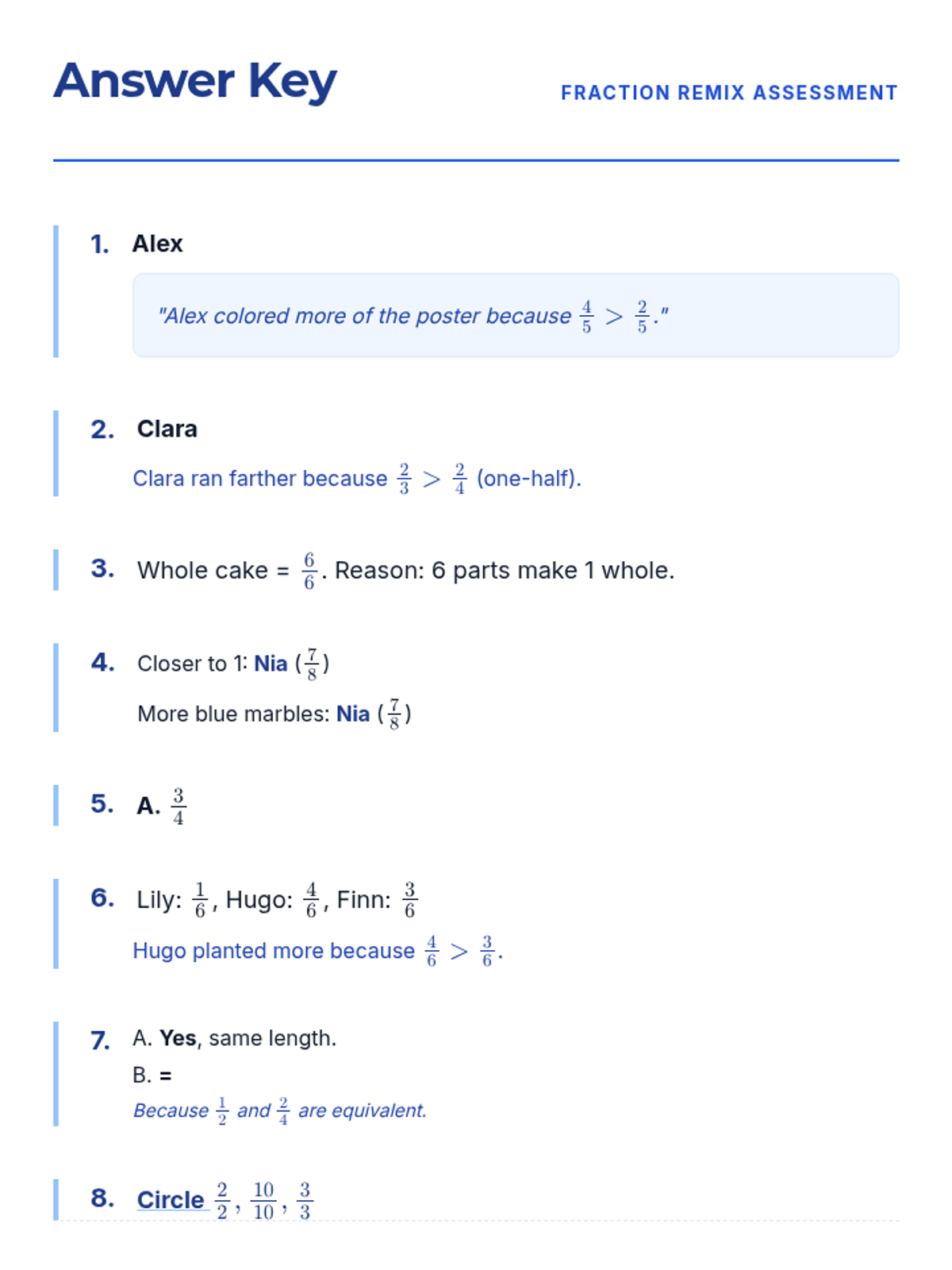
A comprehensive practice assessment focused on fraction comparison, equivalence, and representation, mirroring standardized testing formats with clear visuals and structured response areas.
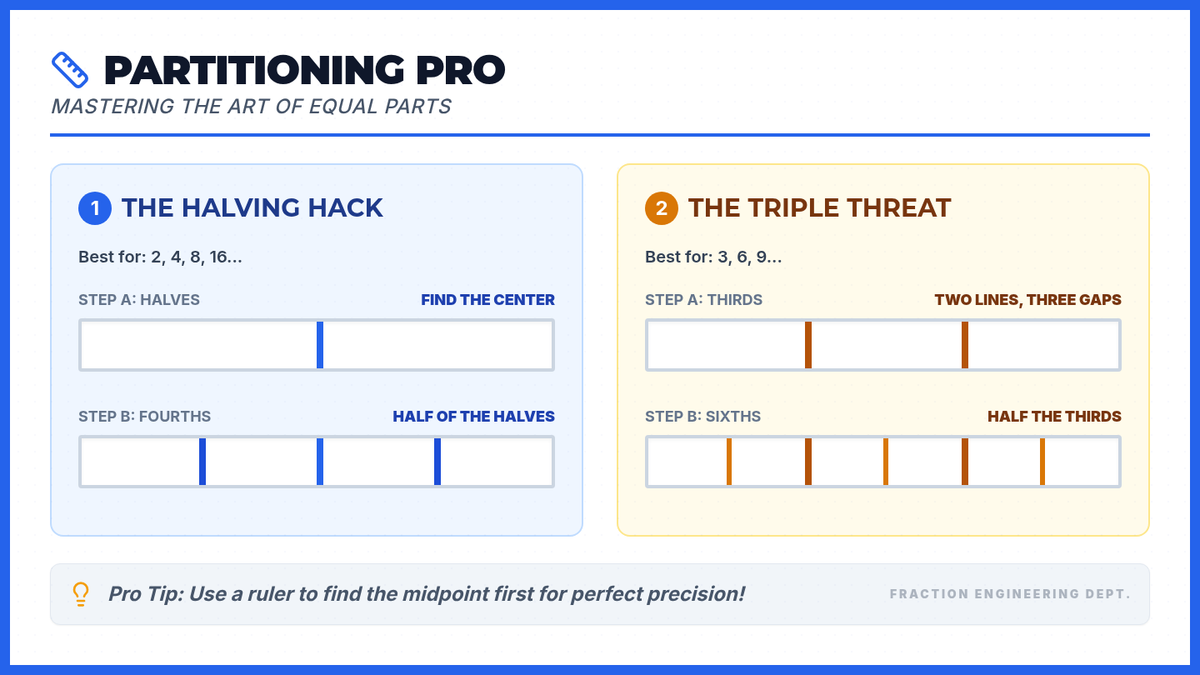
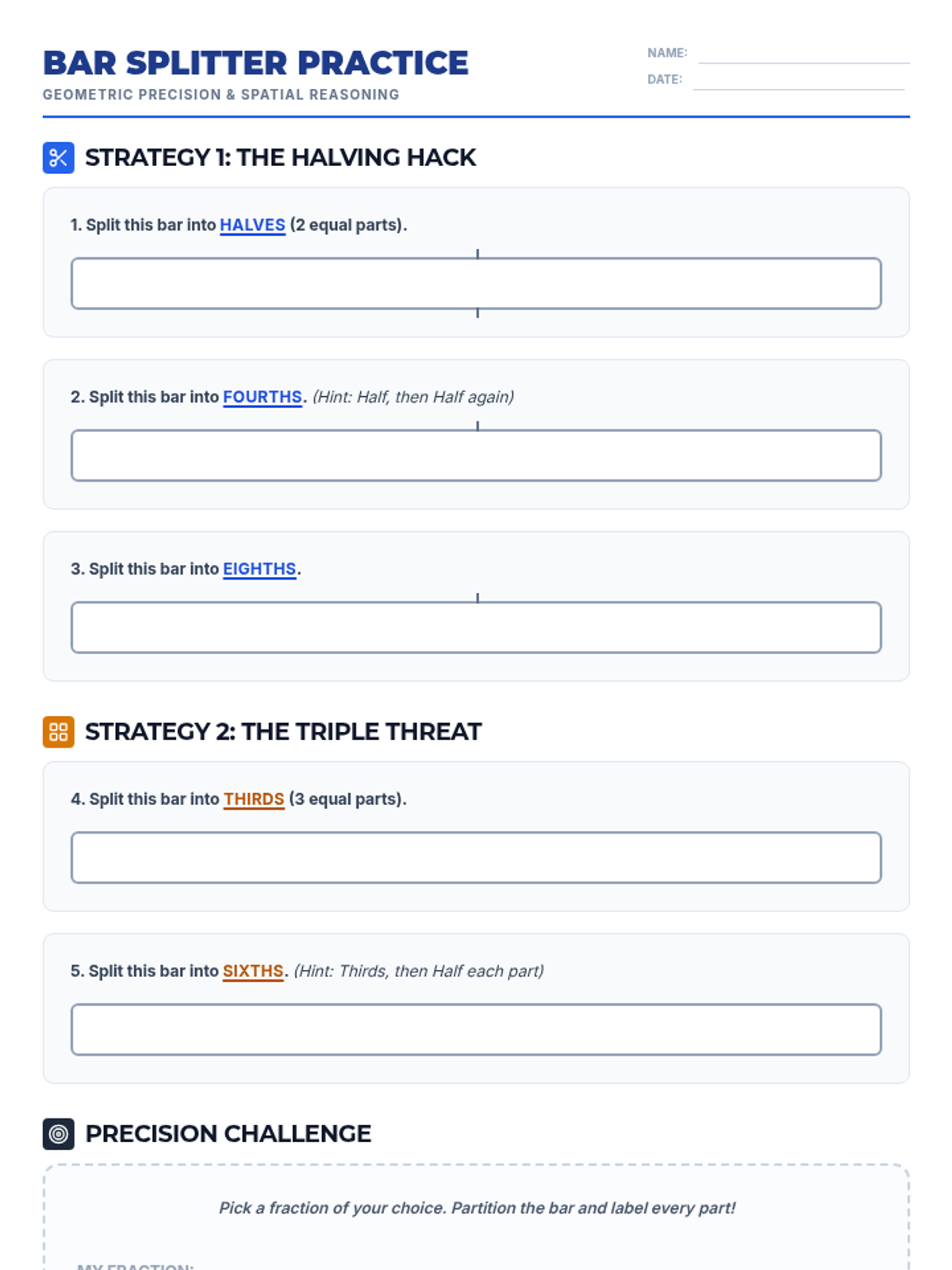
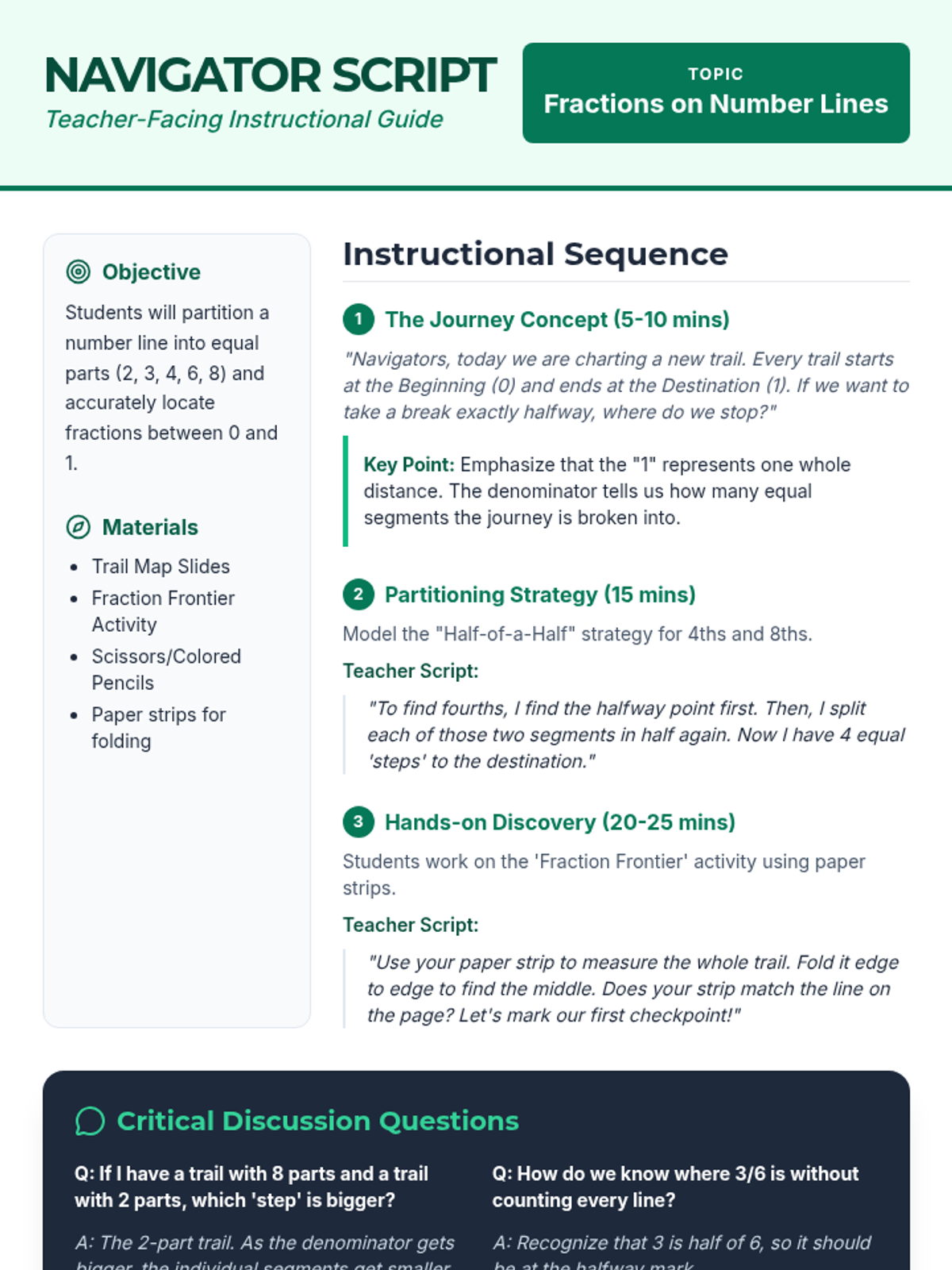
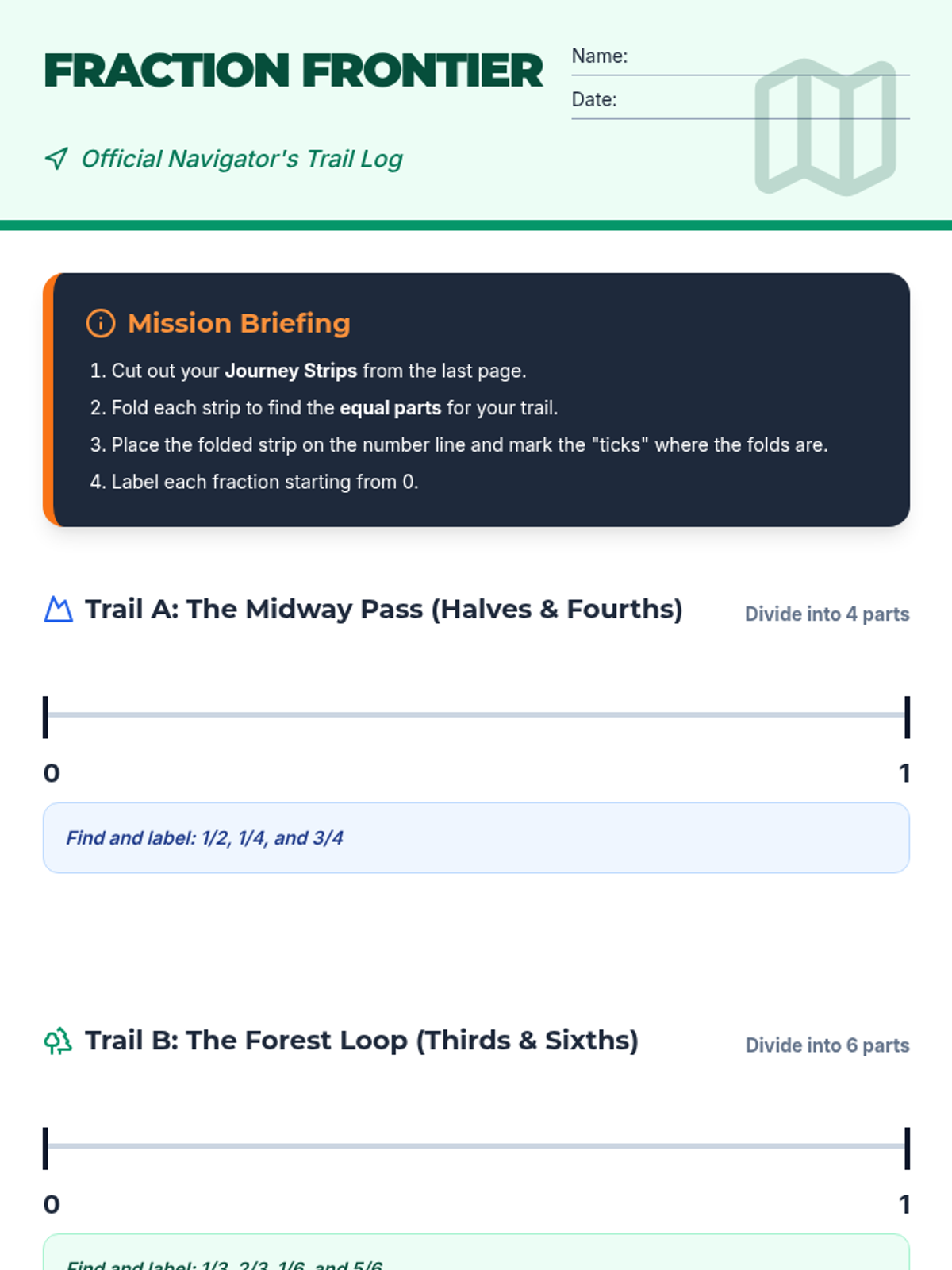
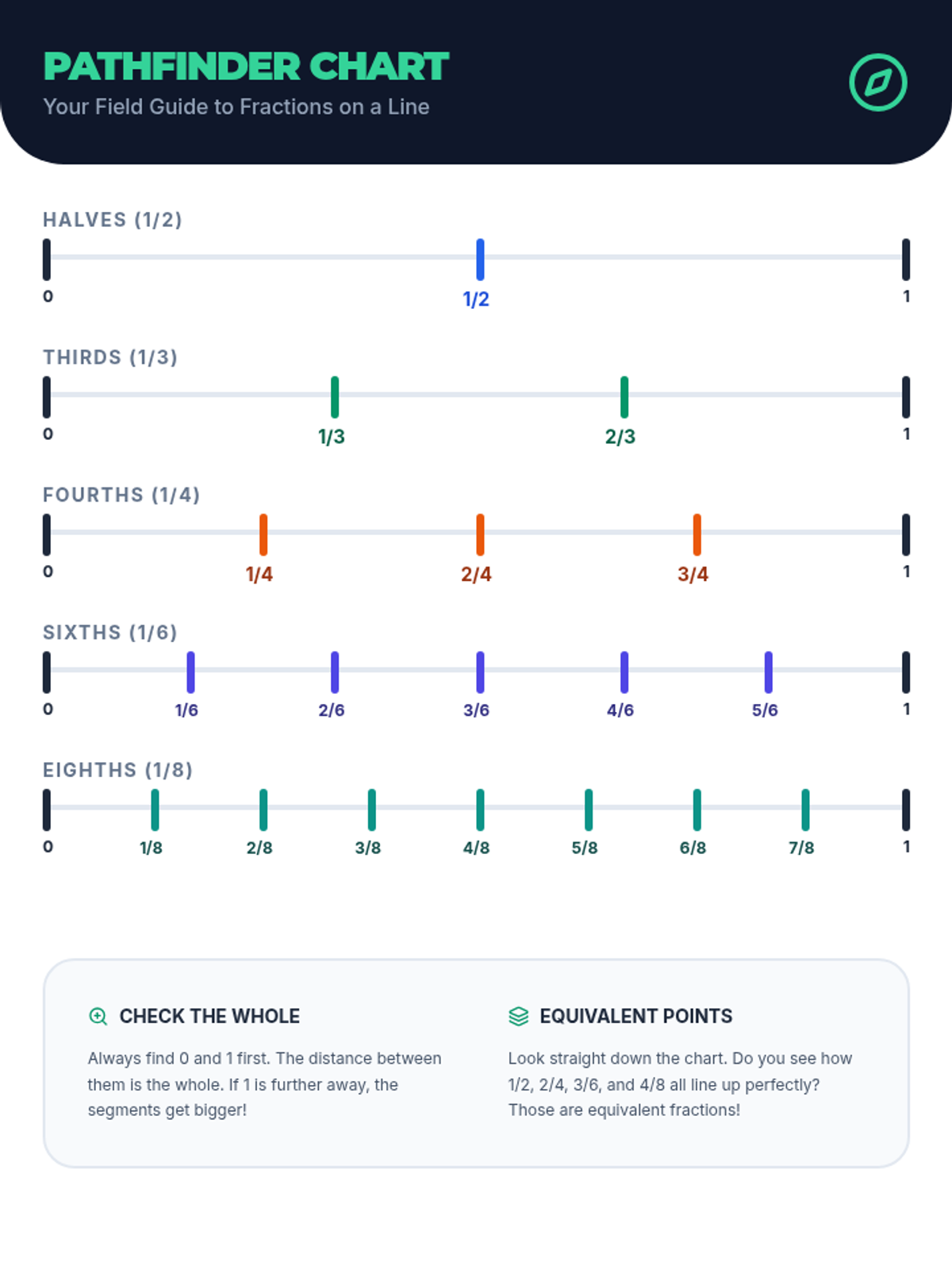
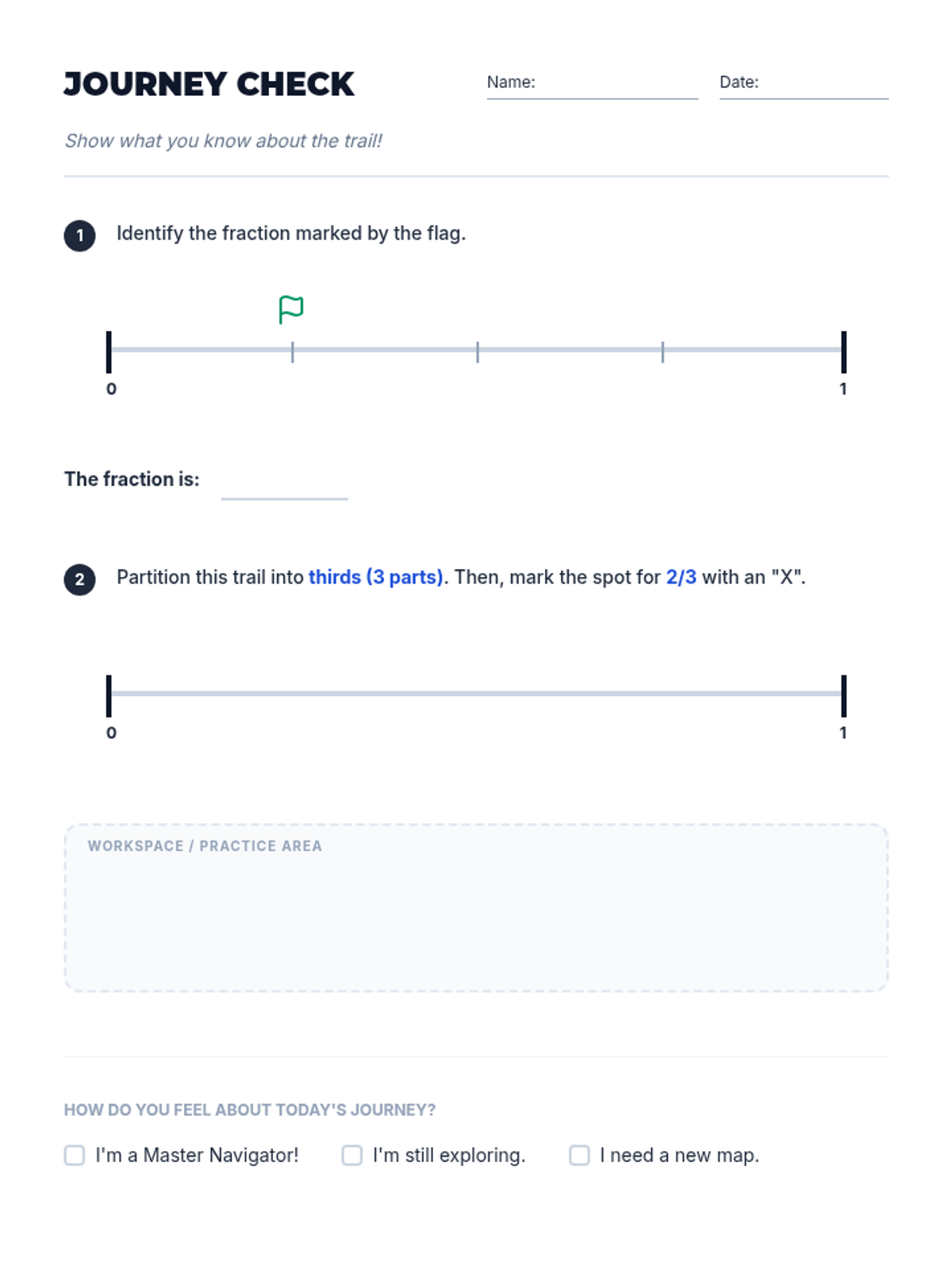
A remedial lesson focusing on partitioning and identifying fractions (halves, thirds, fourths, sixths, eighths) on a number line using a navigation and trail-blazing theme. Students practice partitioning distances from 0 to 1 and placing 'checkpoints' along the way.
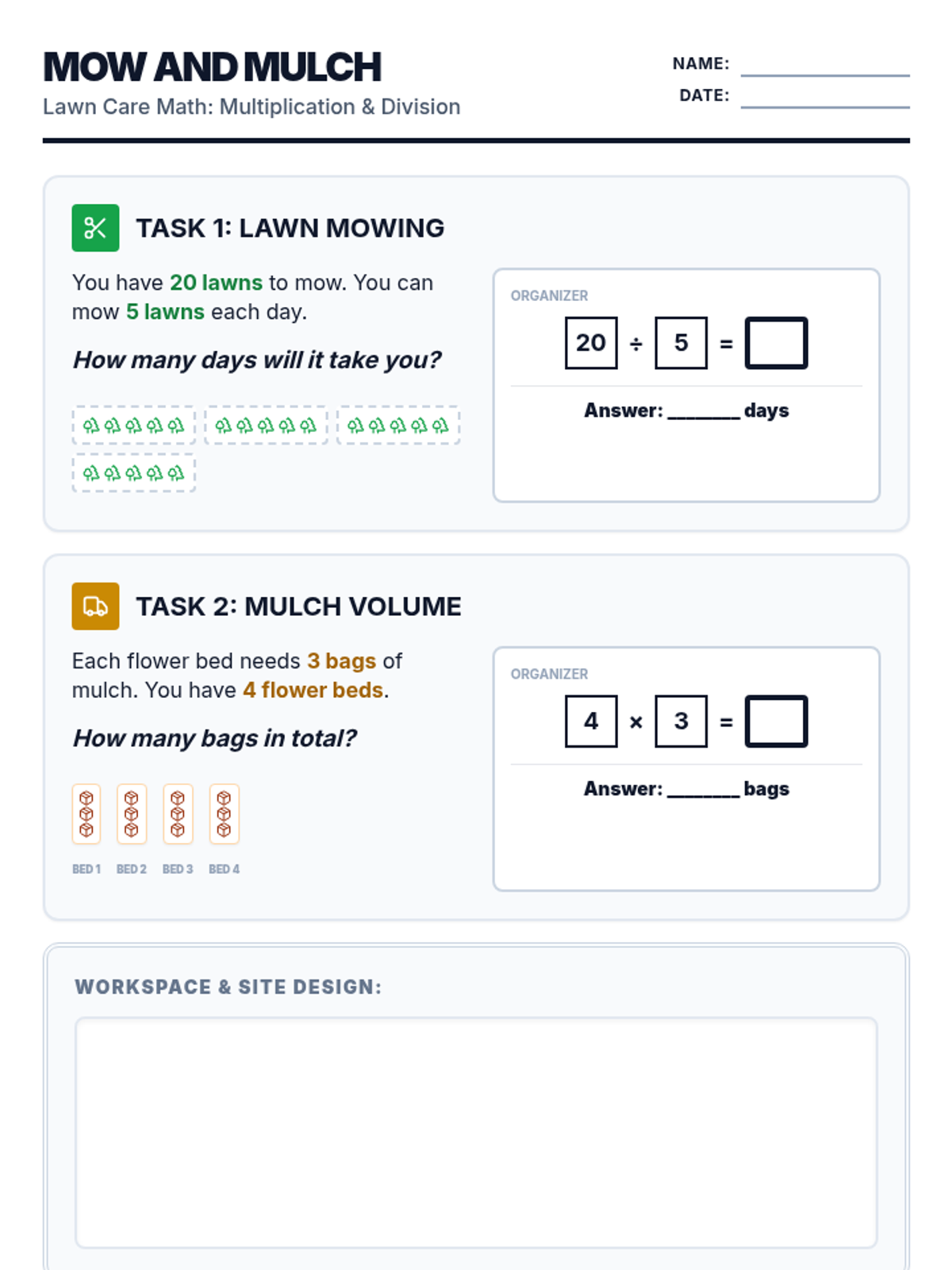
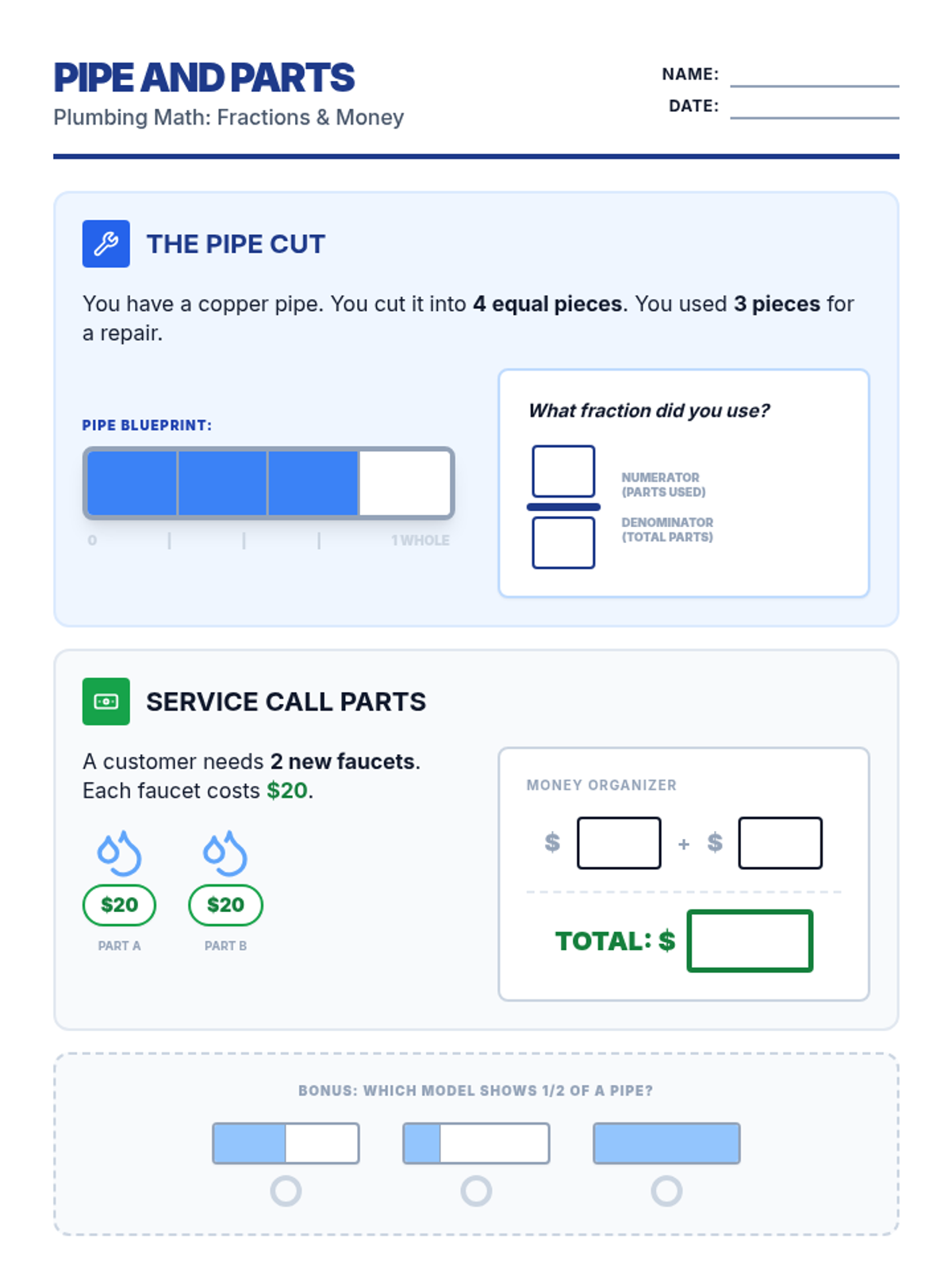
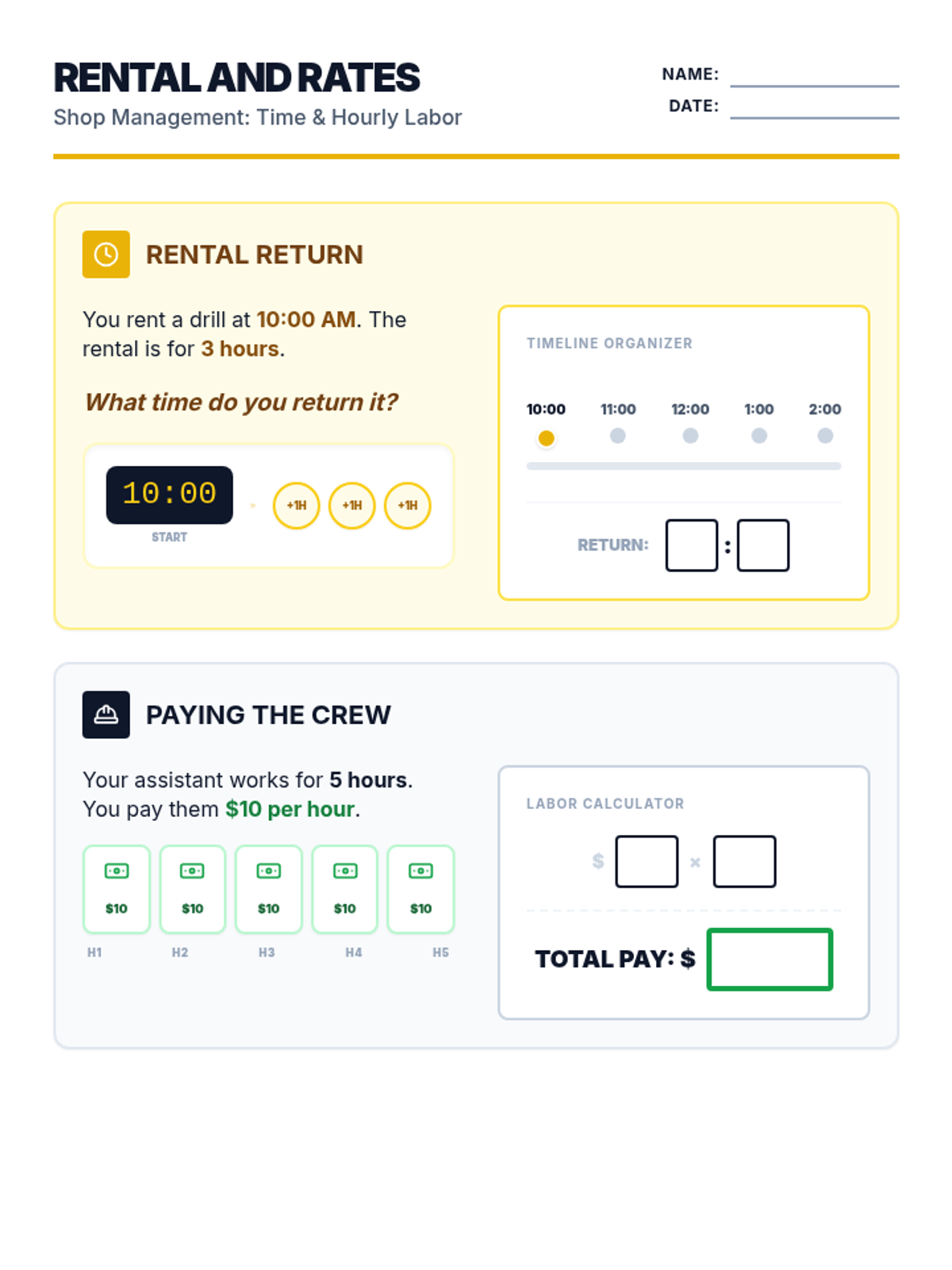
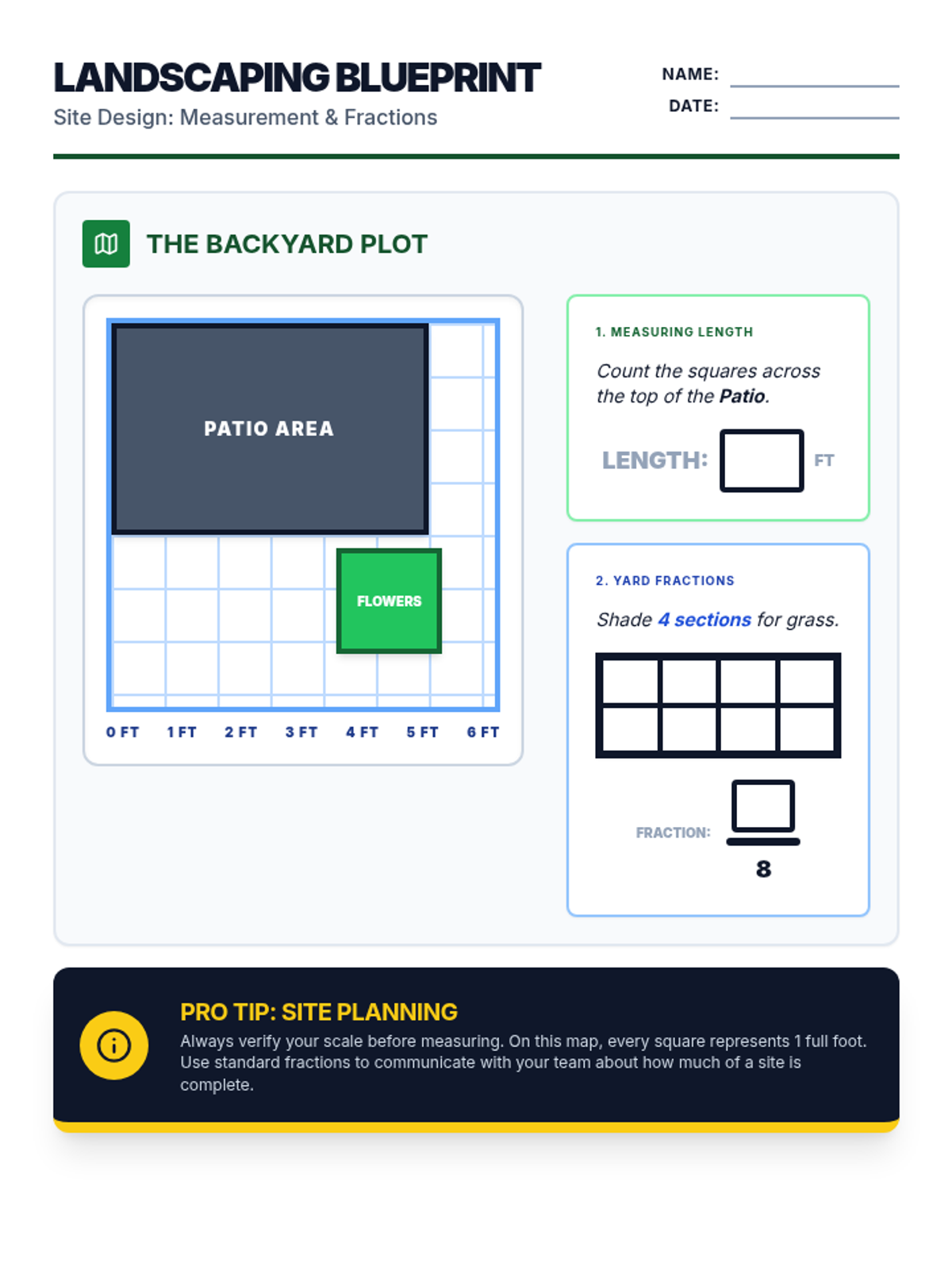
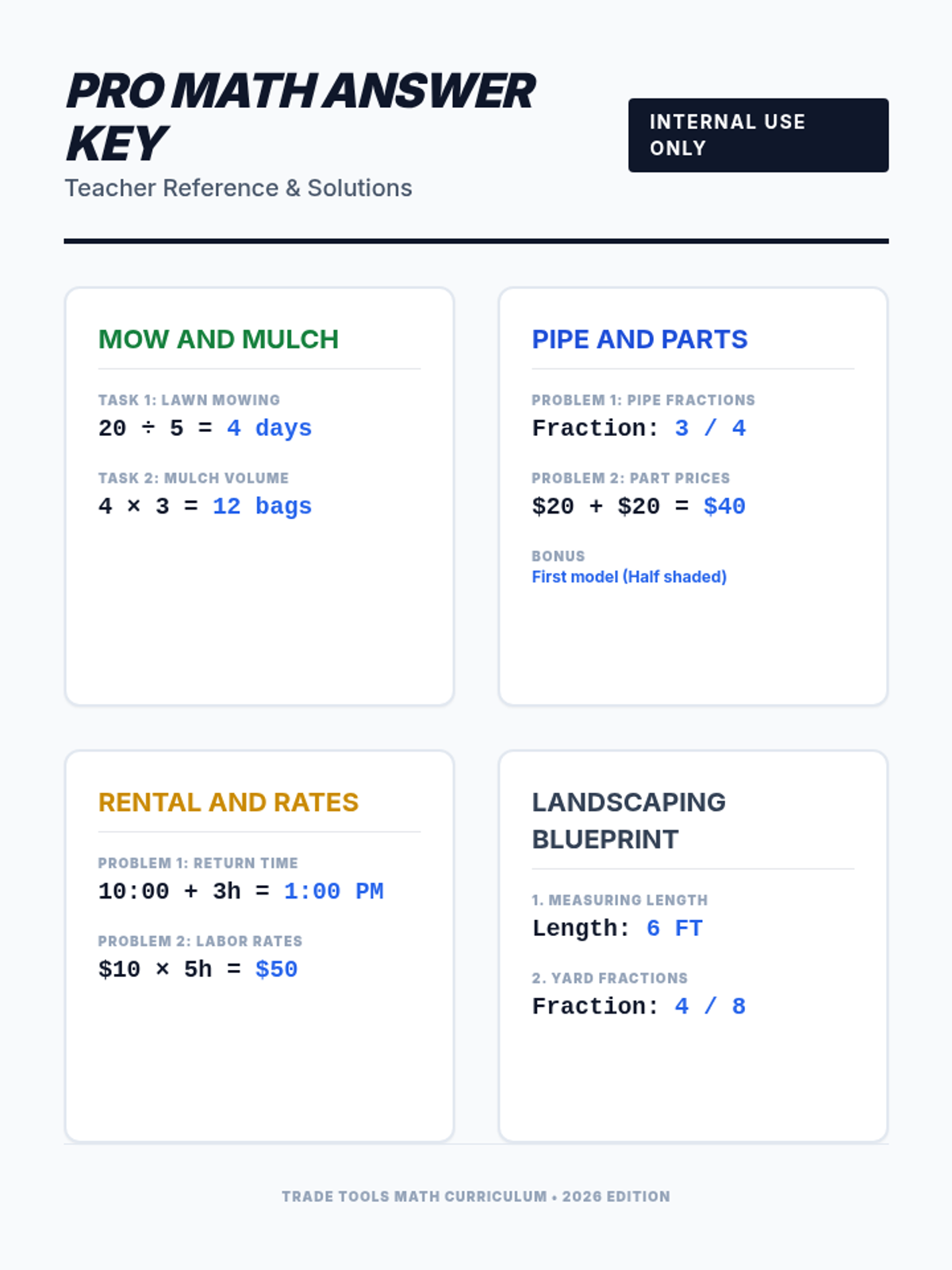
A series of vocational math activities focused on landscaping, plumbing, and tool rentals, featuring heavy visual modeling and step-by-step organizers for students interested in the trades.
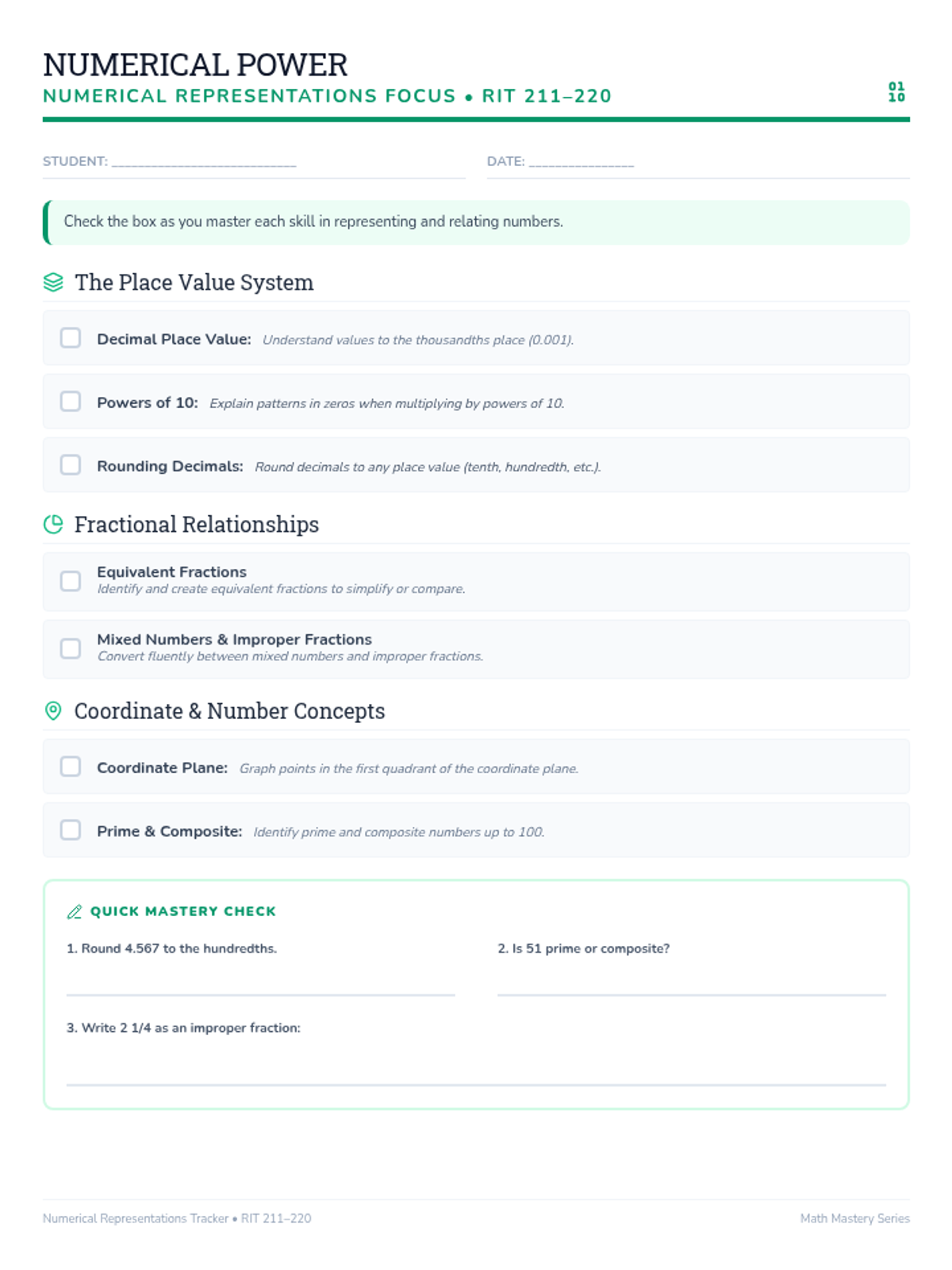
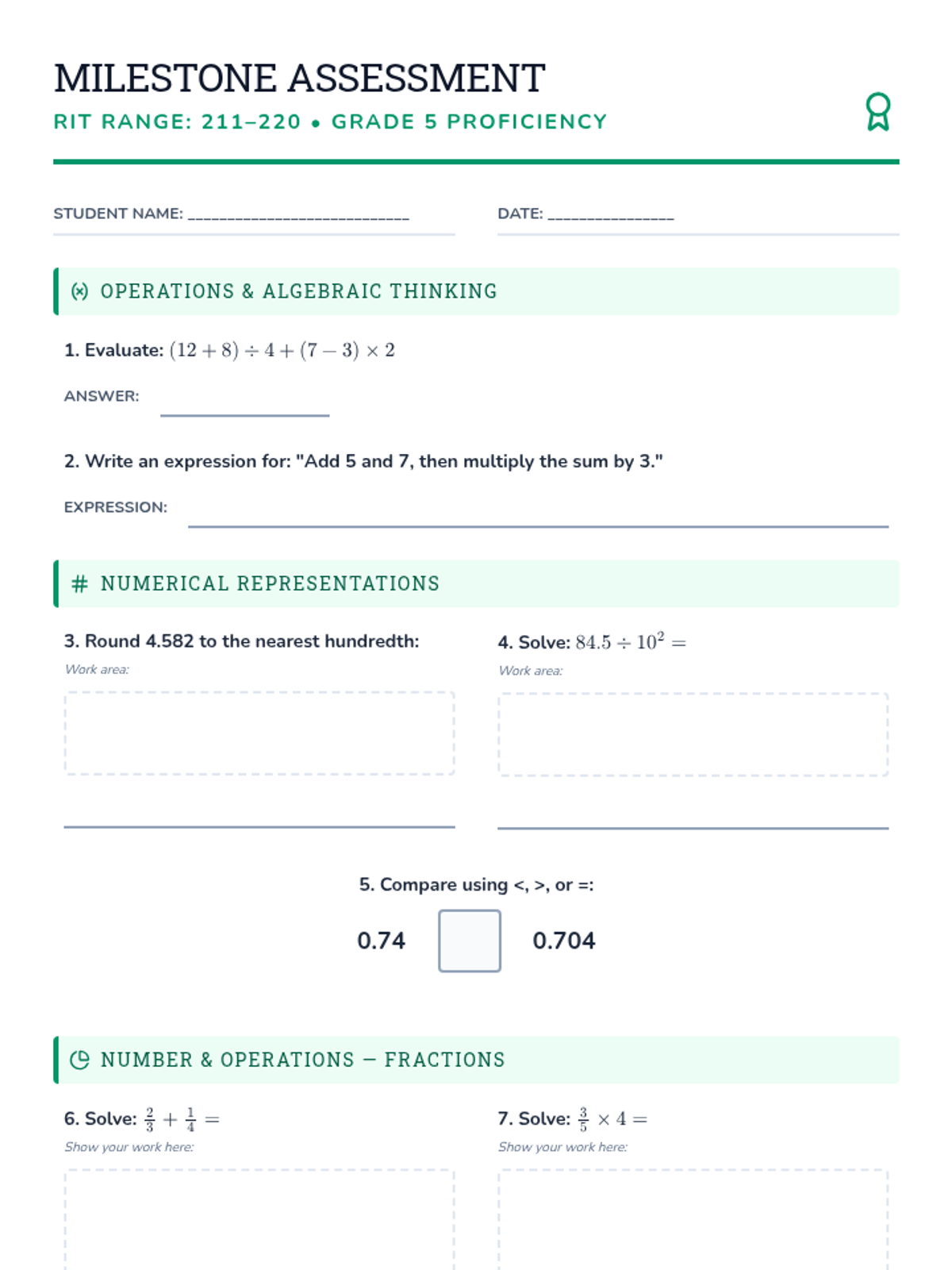
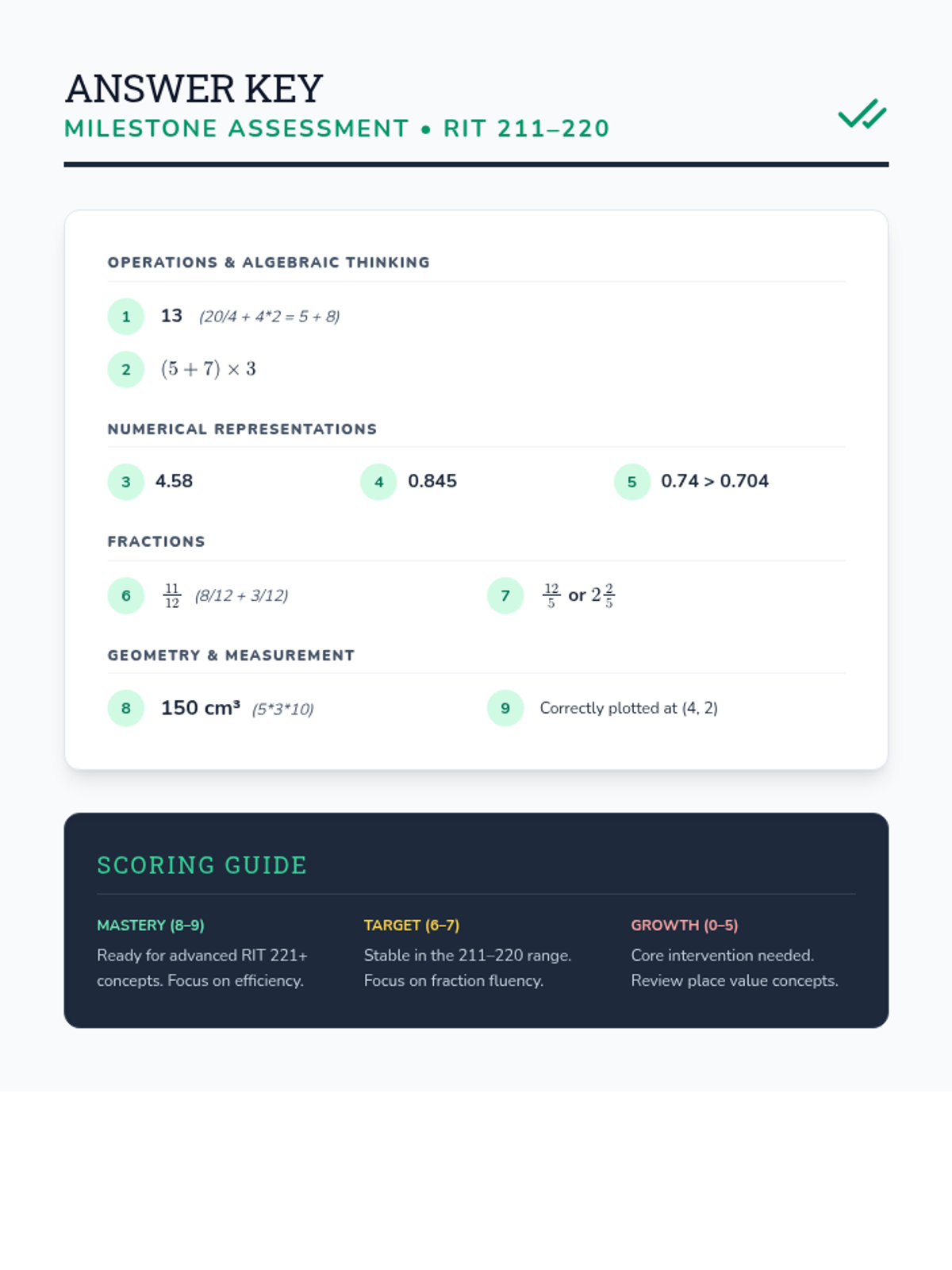
A specialized toolkit for navigating mathematical skills in the 211-220 RIT range, with a focus on foundational decimals, fractions, and place value relationships.
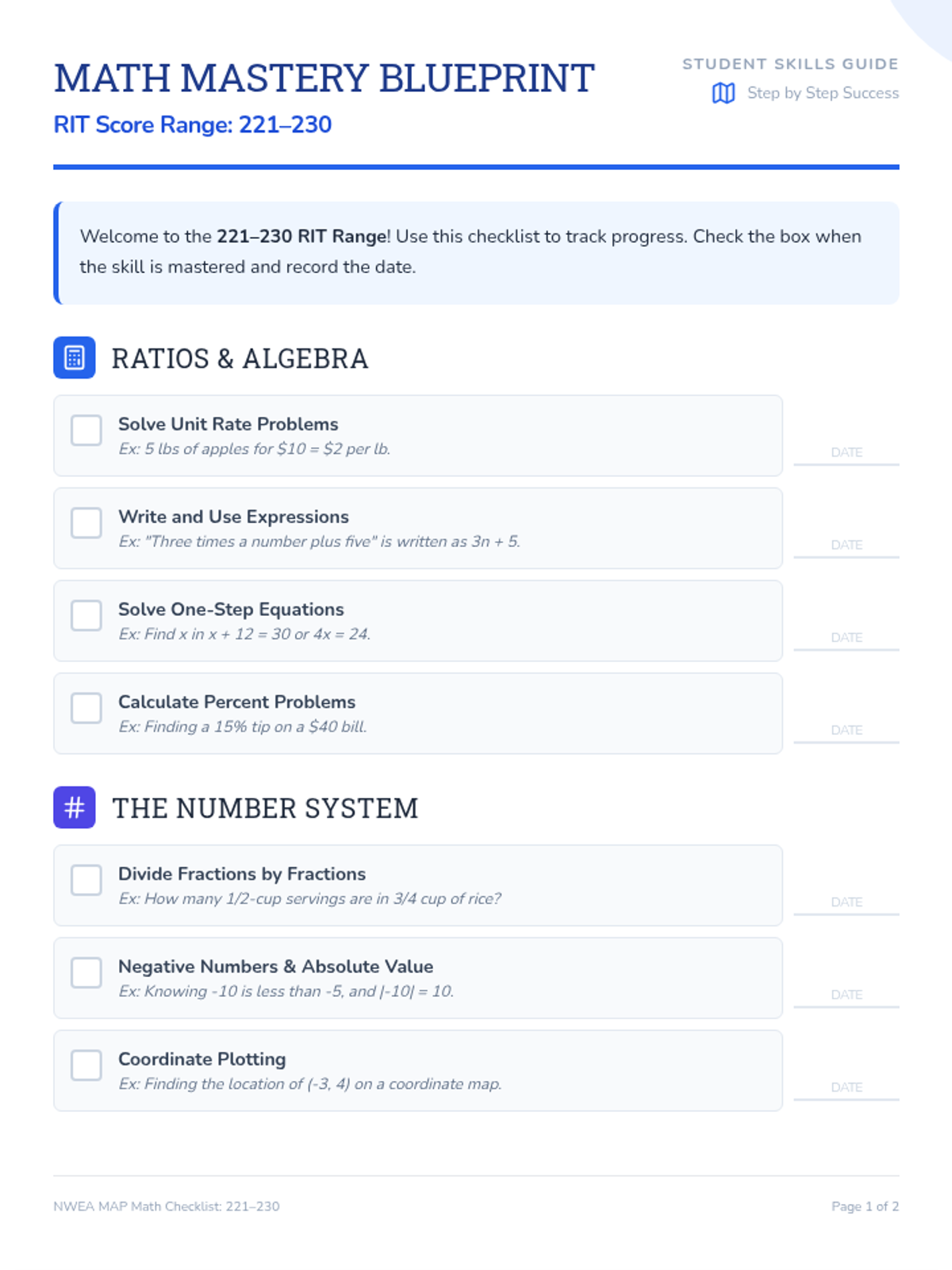
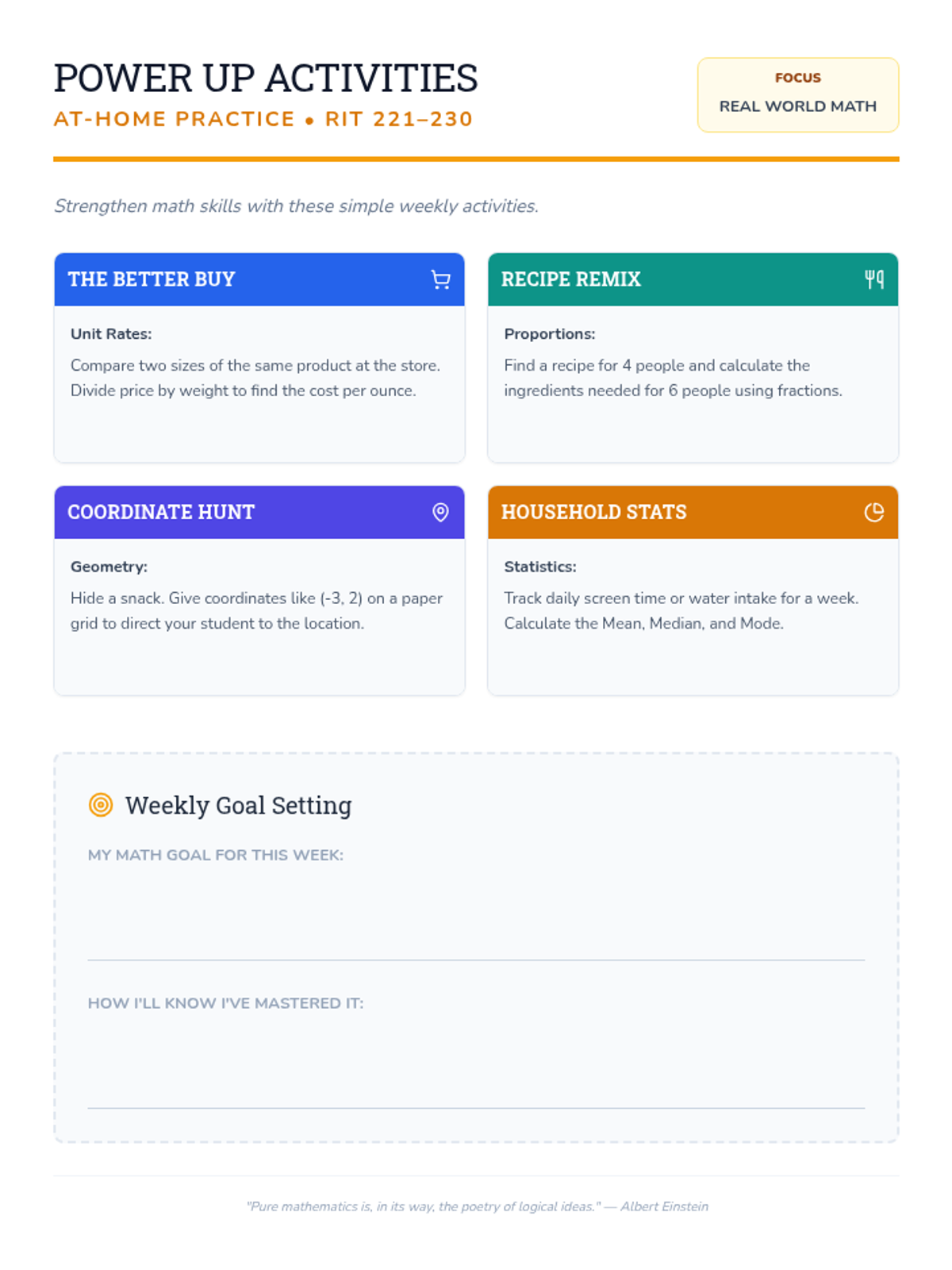
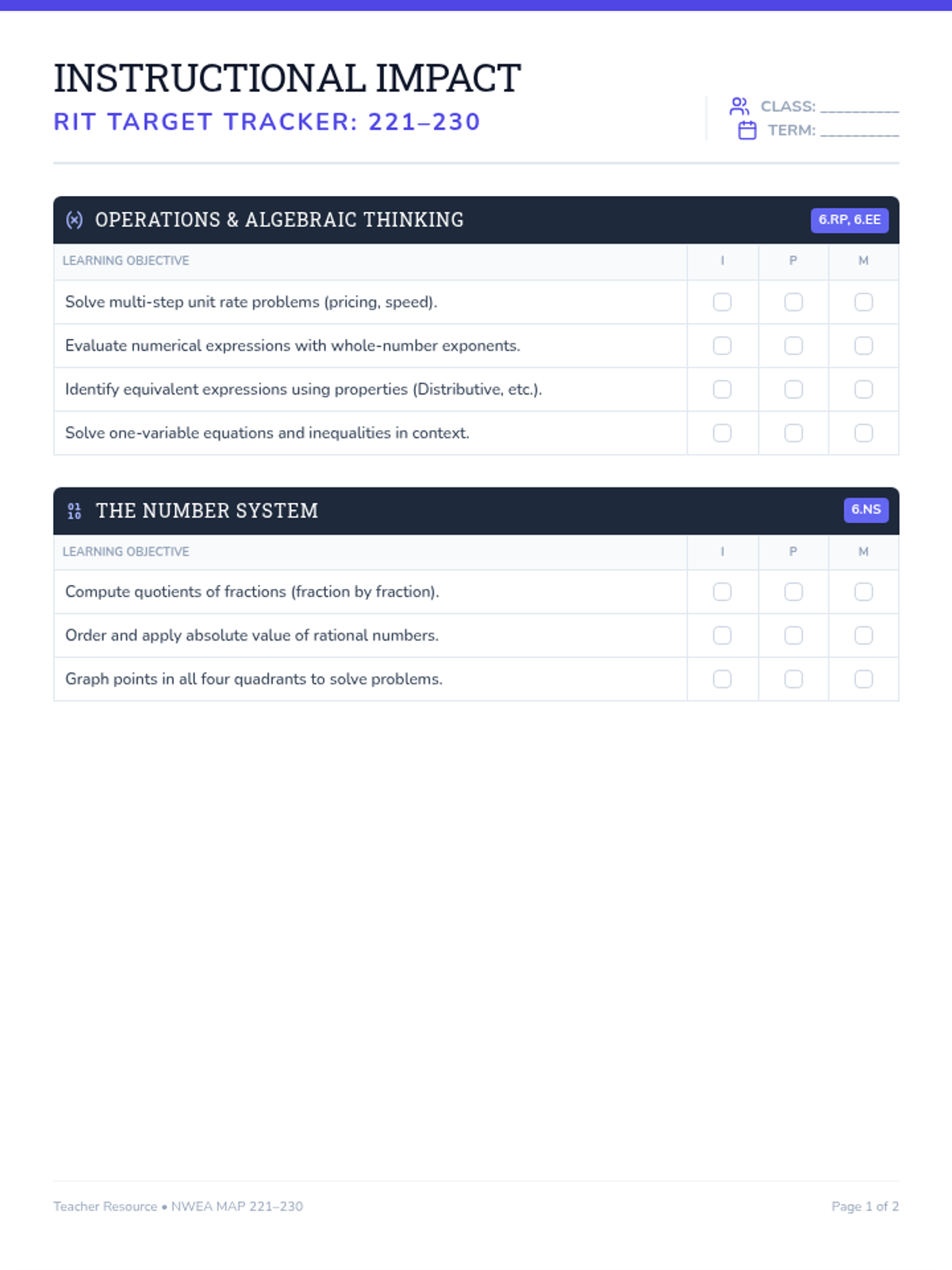
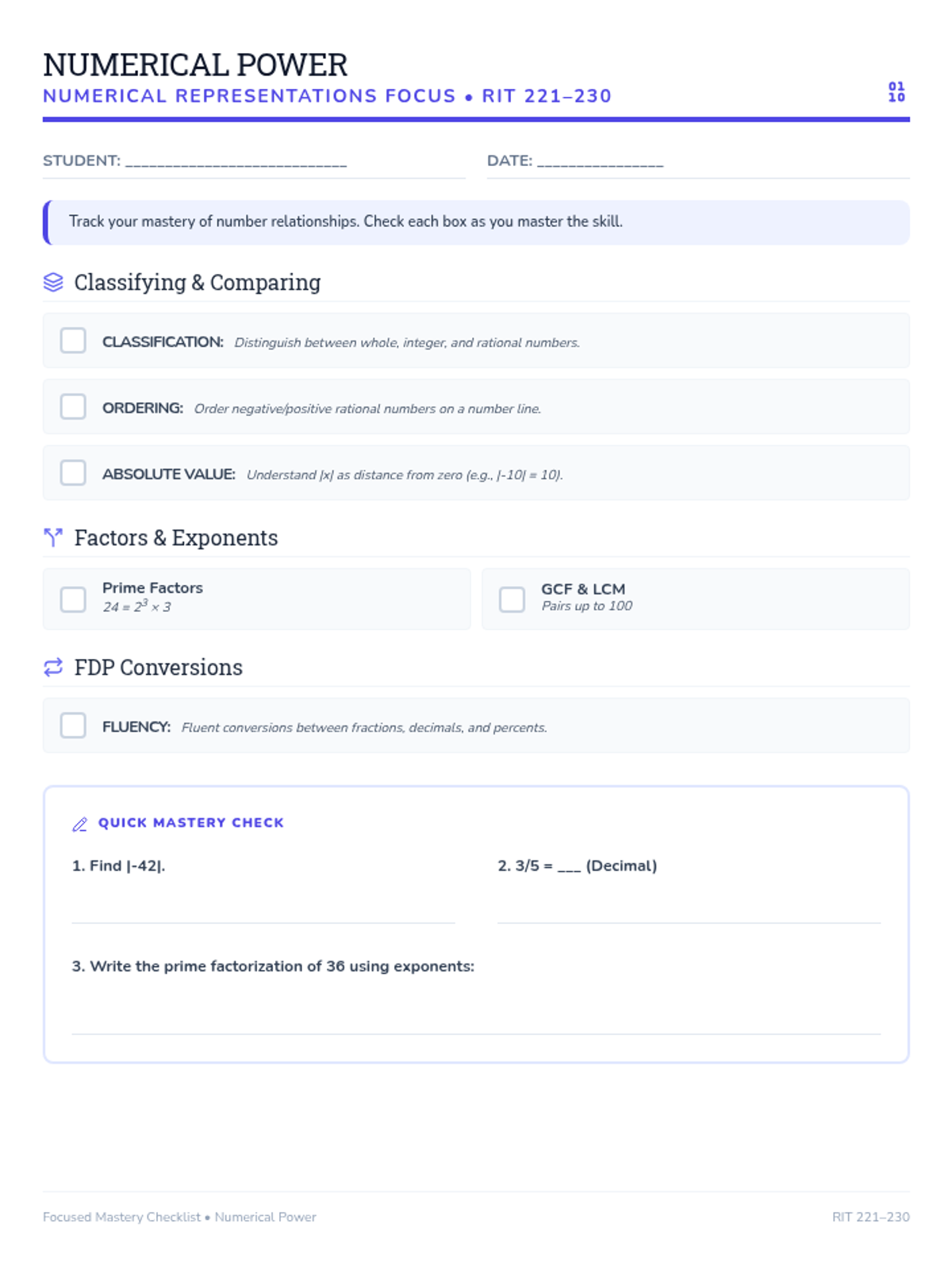
A comprehensive guide for parents and students to navigate the mathematical skills expected in the 221-230 NWEA MAP RIT range, featuring actionable checklists and home-based practice ideas.
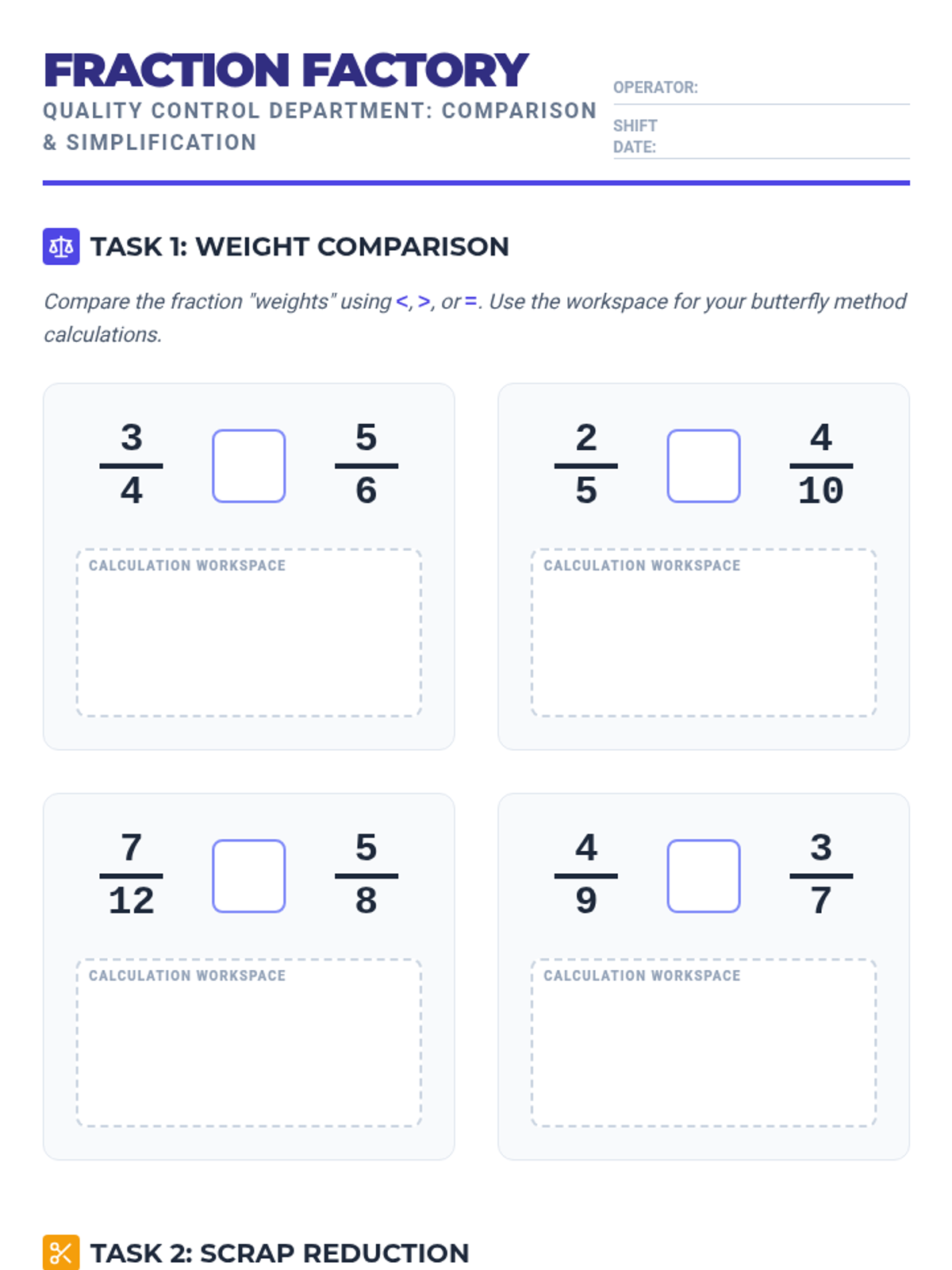
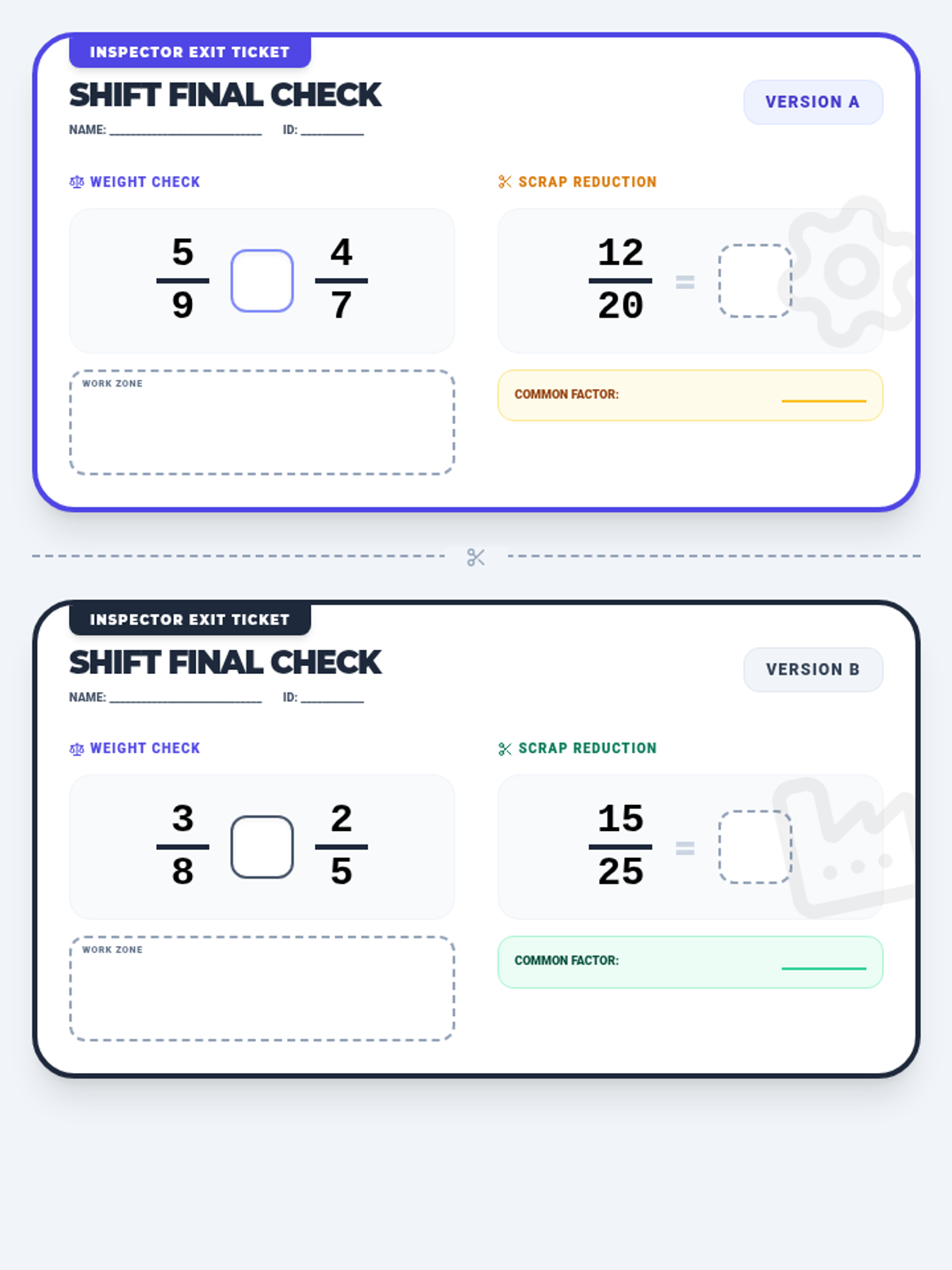
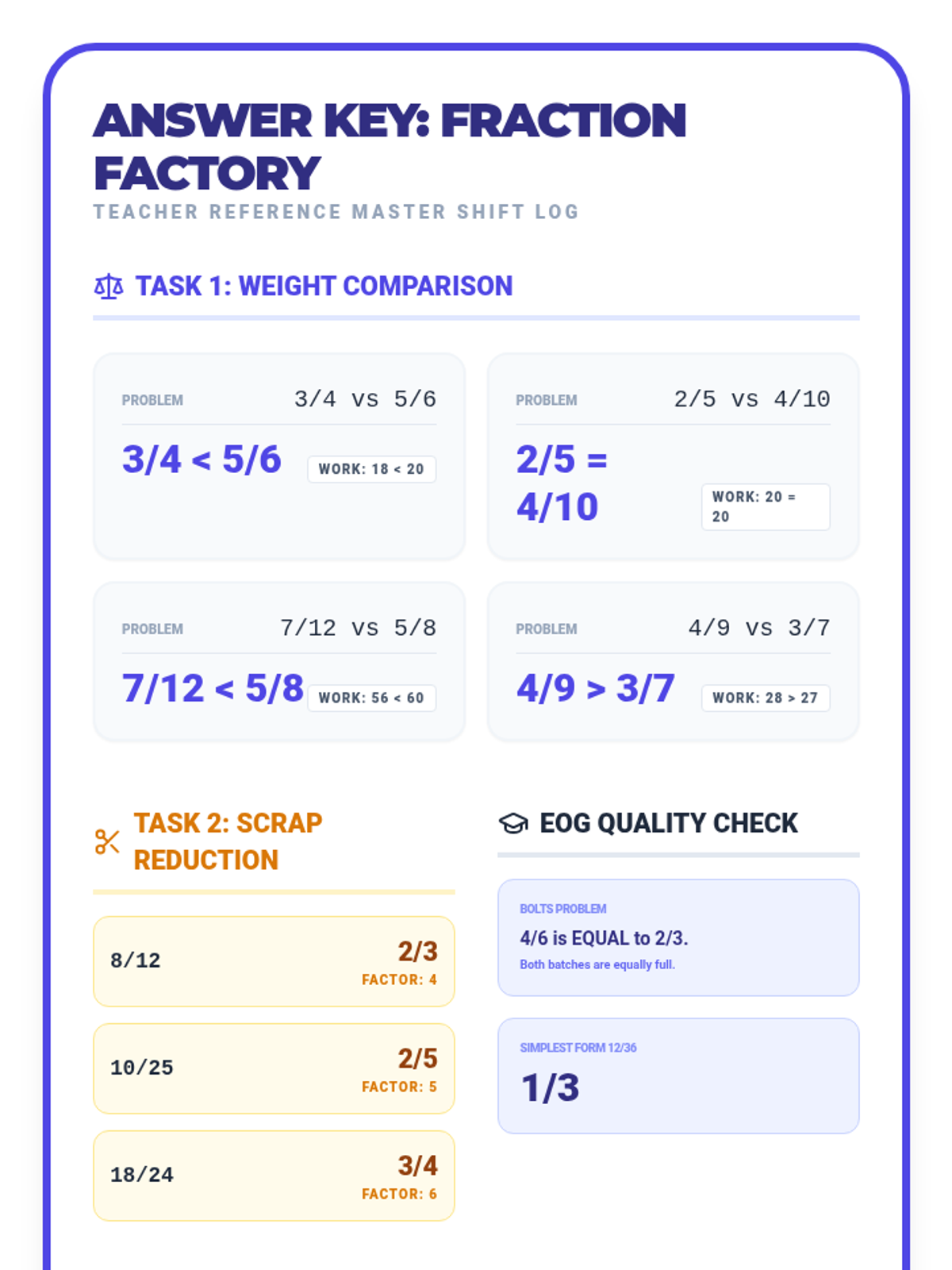
This lesson covers the fundamentals of comparing fractions with like and unlike denominators and the basics of simplifying fractions using common factors.
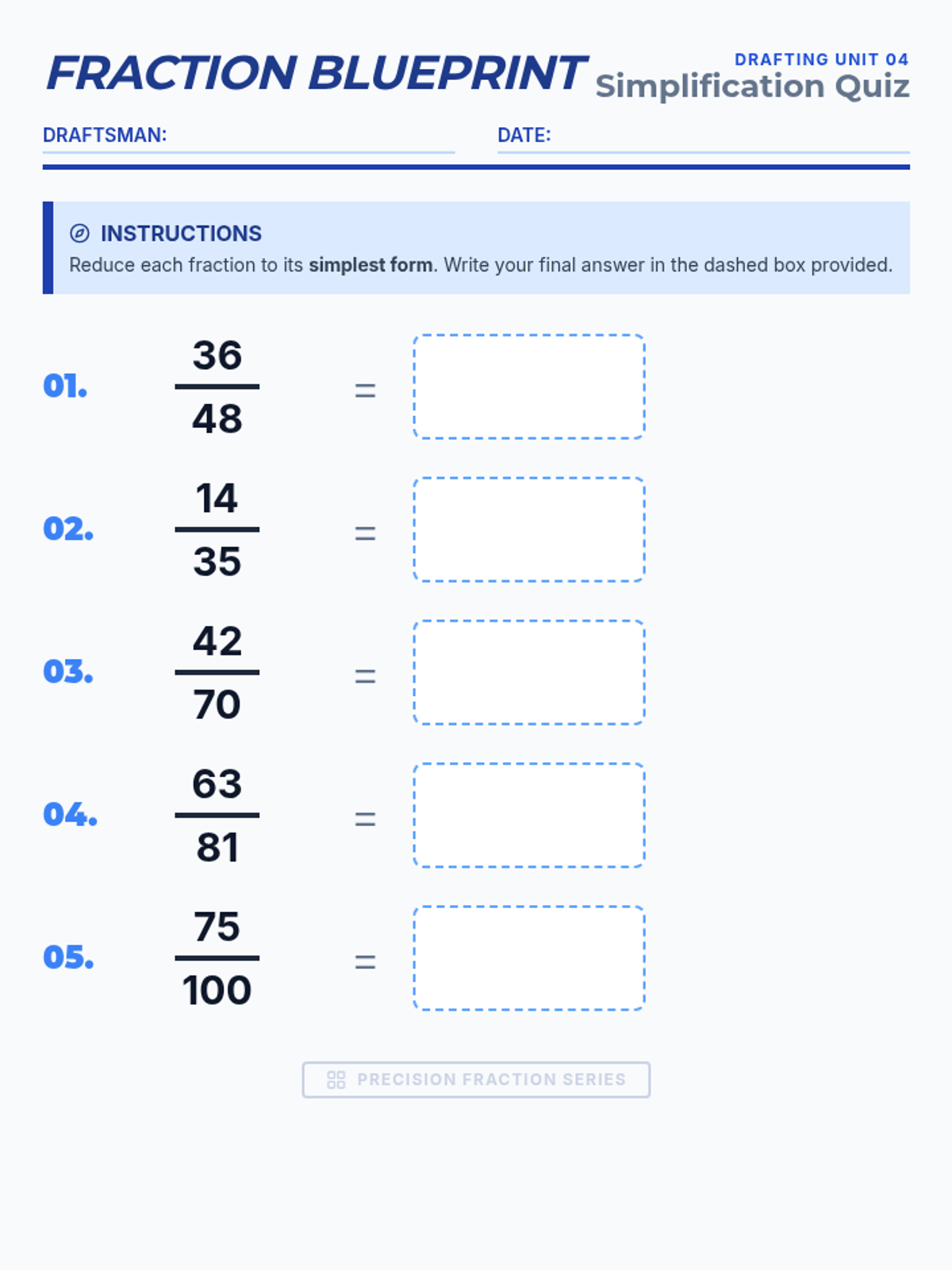
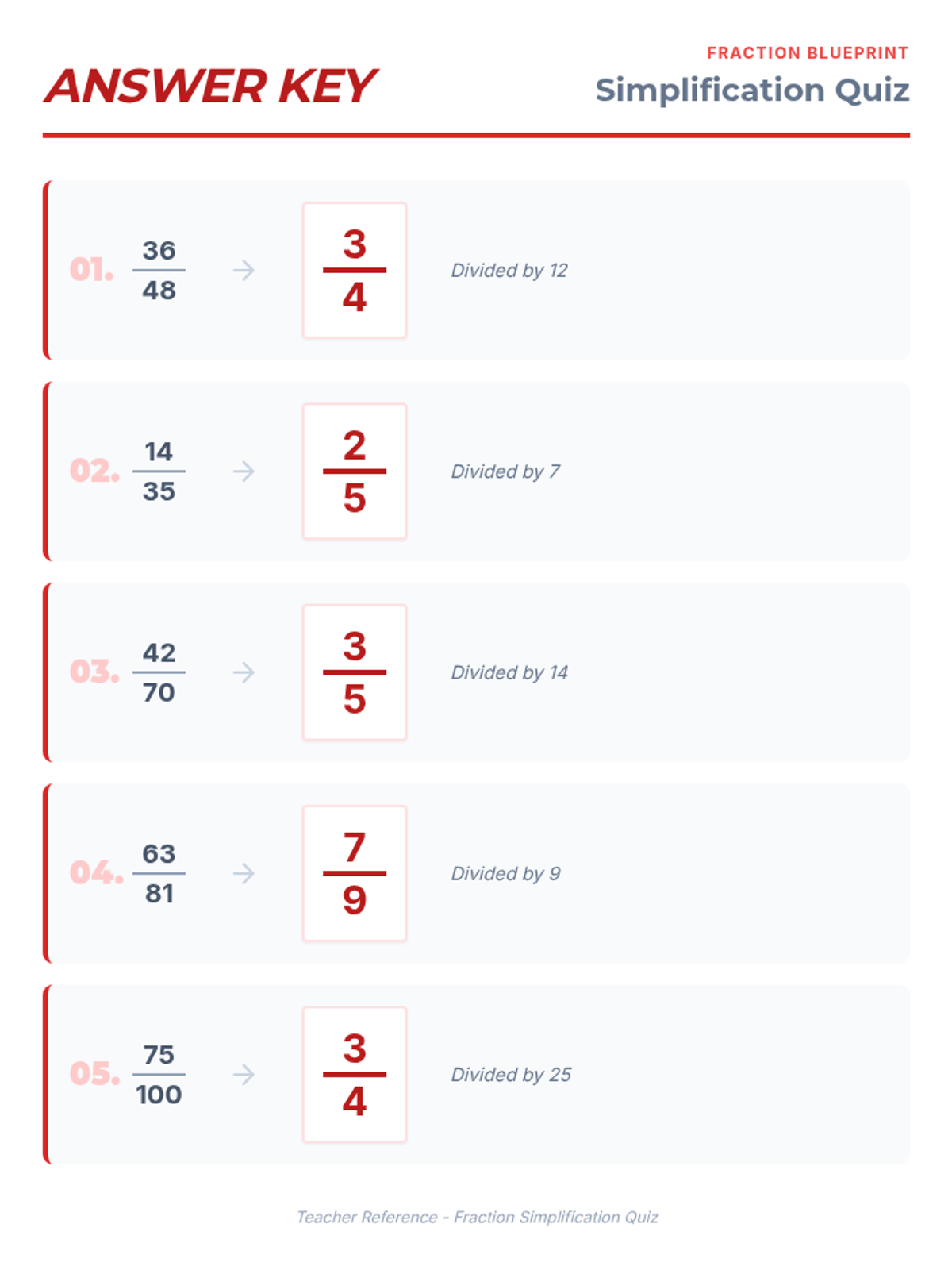
A quick assessment focusing on simplifying fractions with numerators and denominators up to 100 into their simplest form.
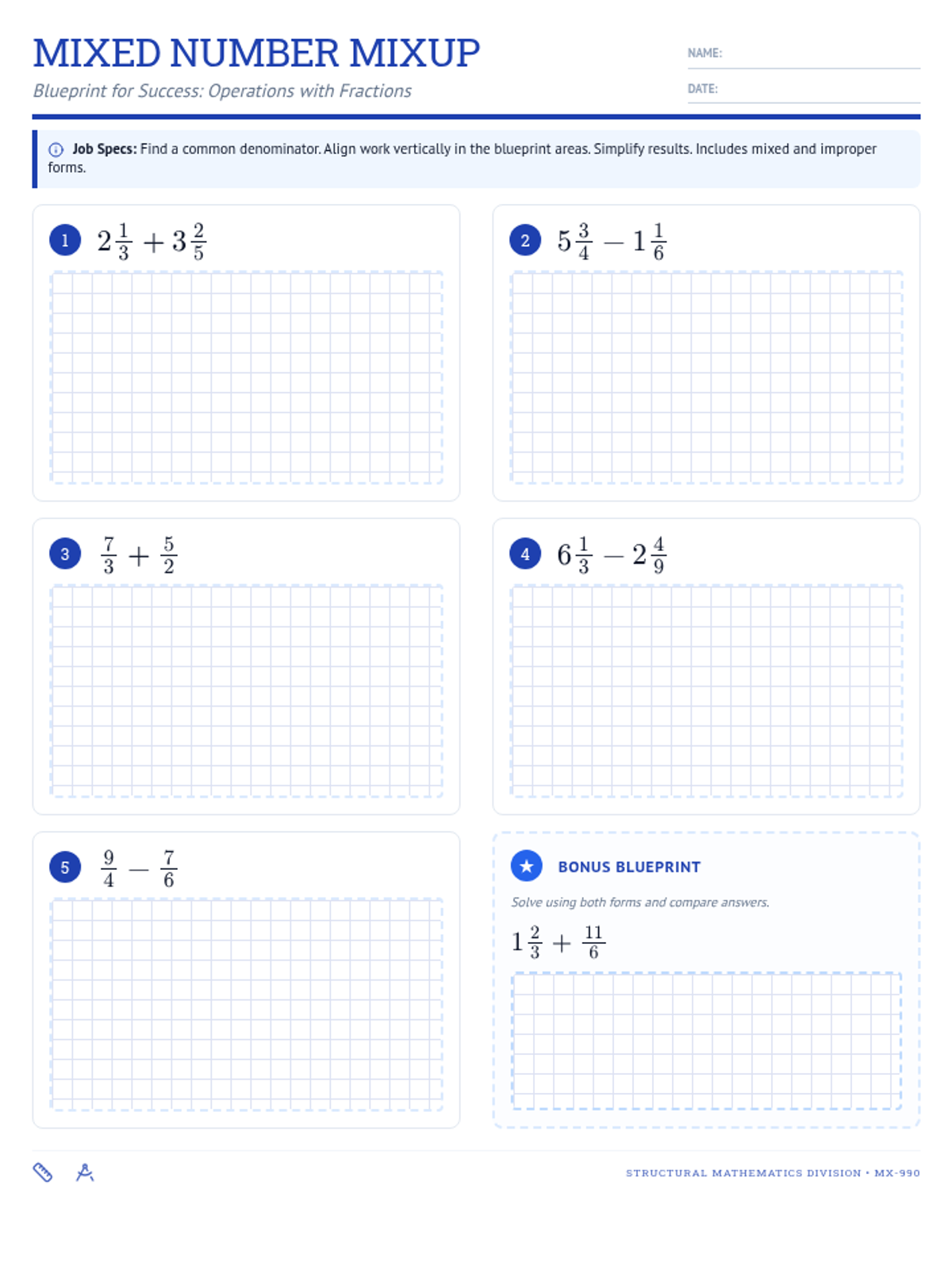
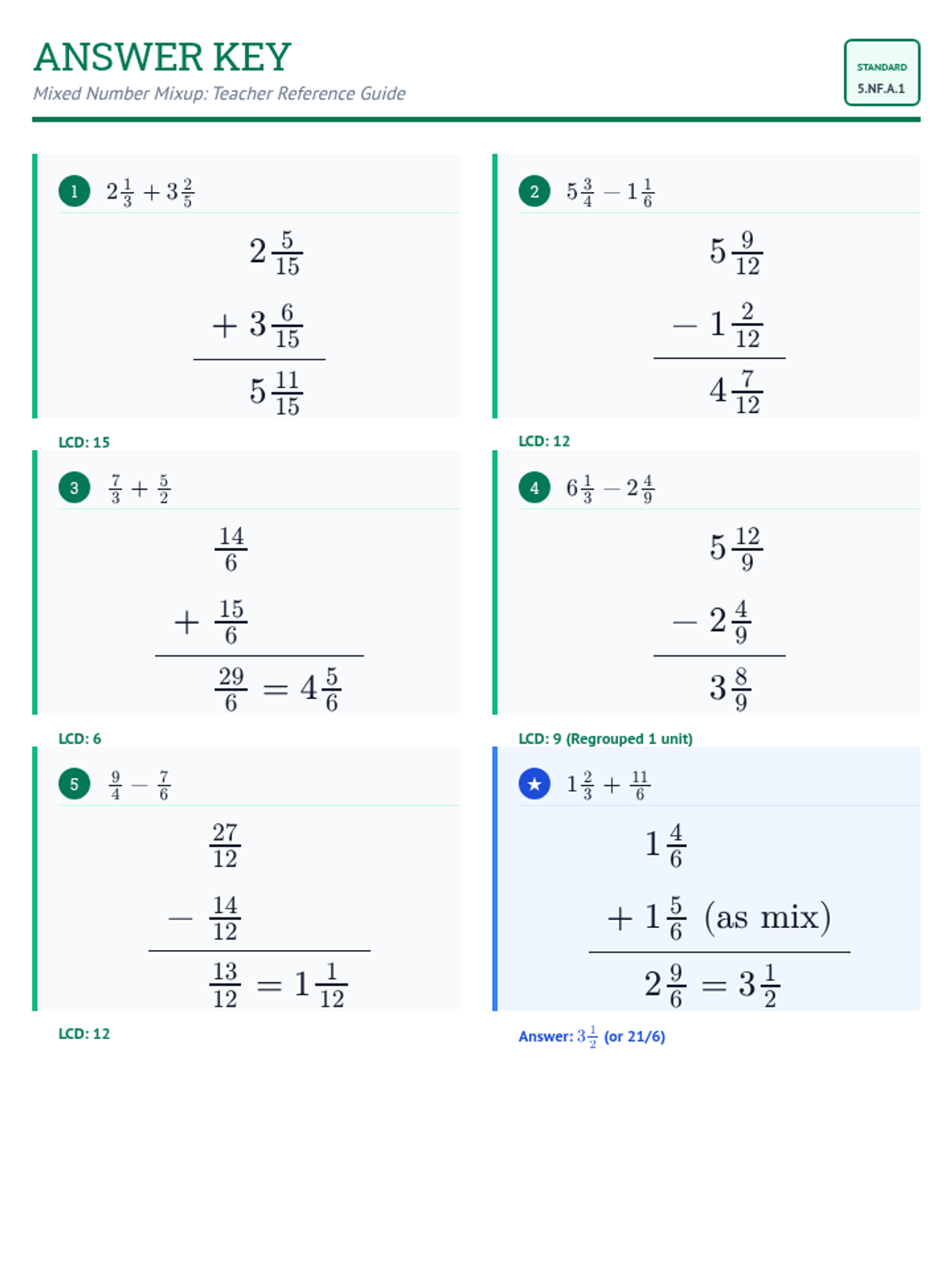
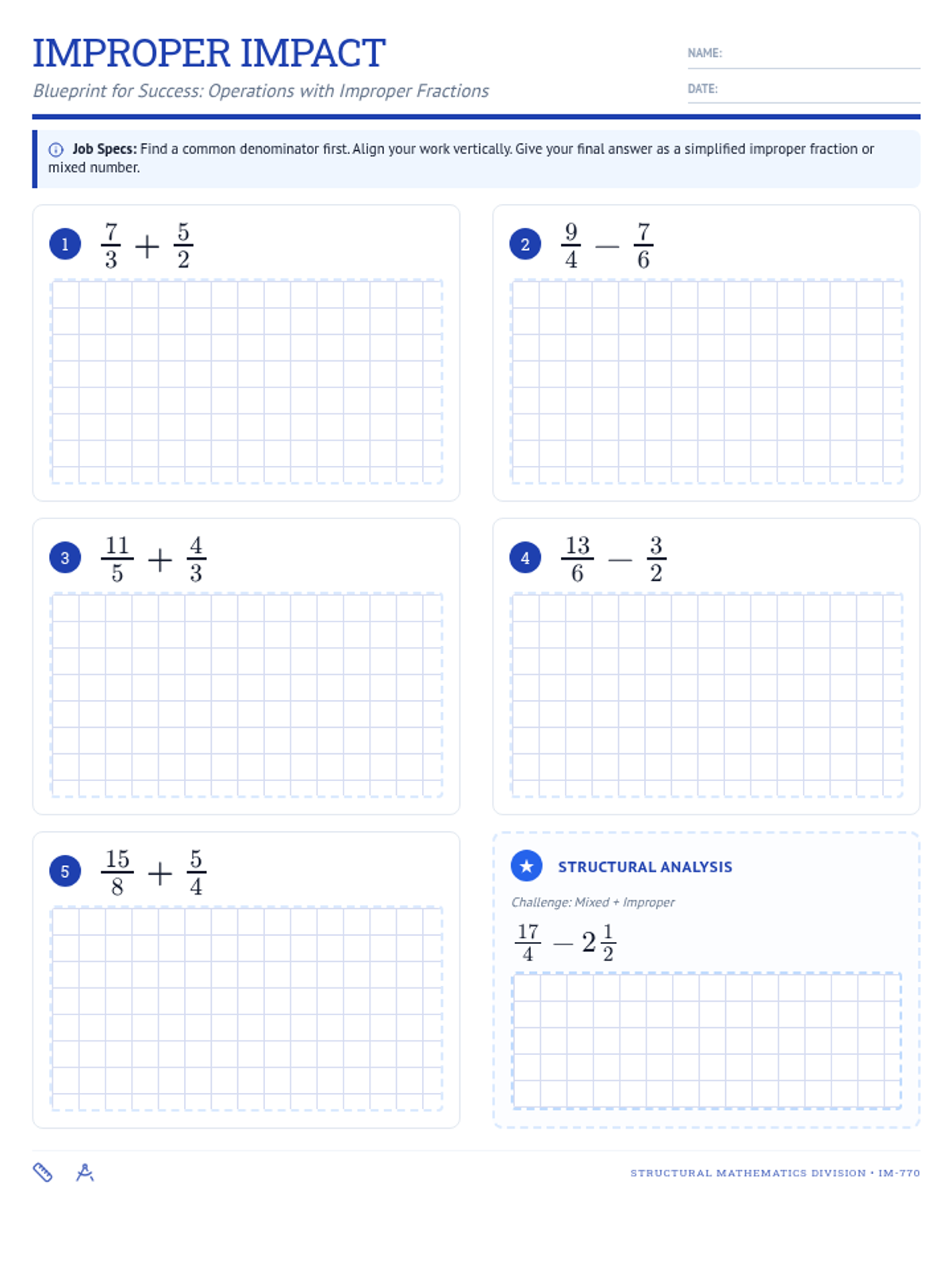
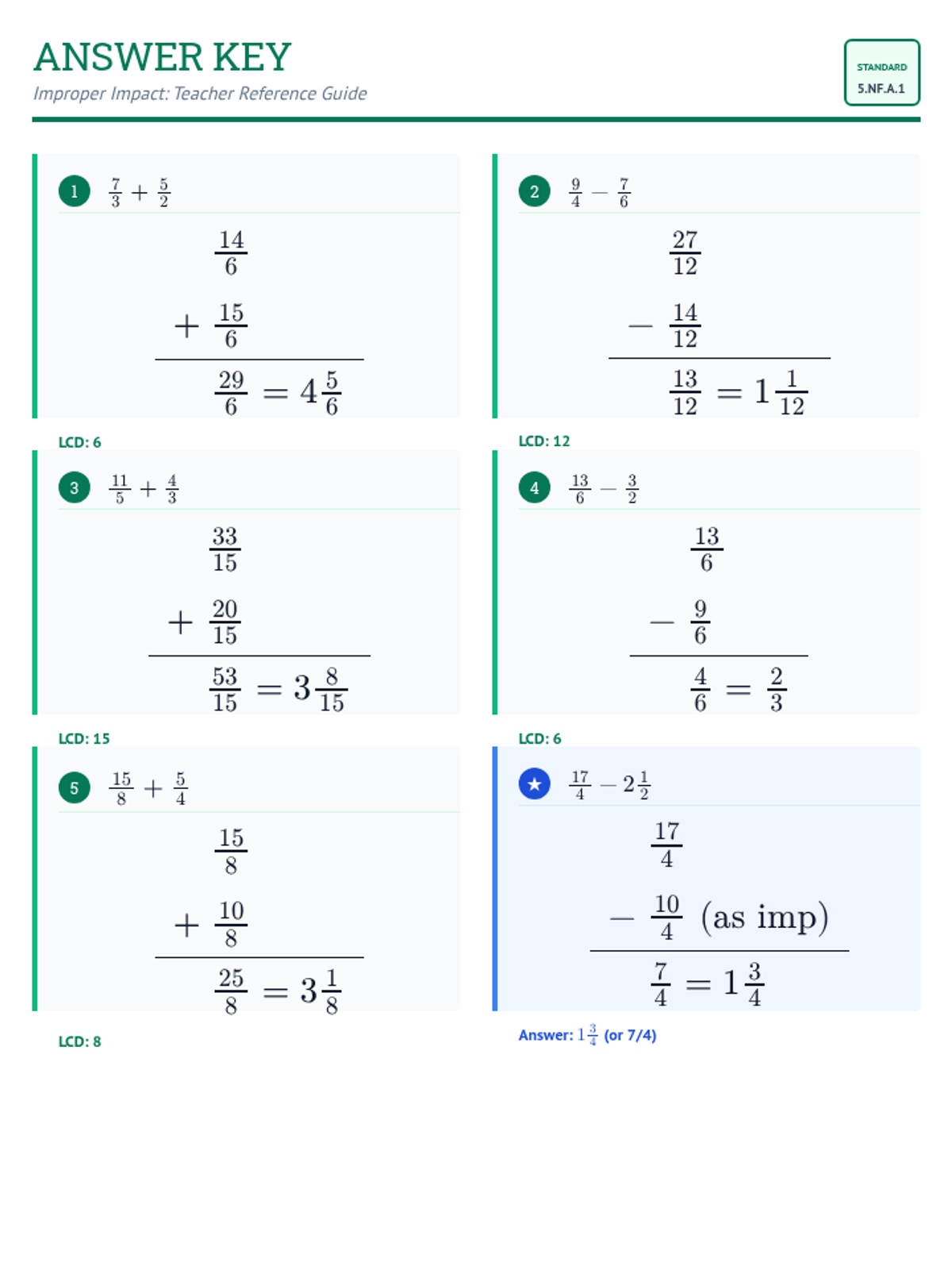
A comprehensive lesson on operations with mixed numbers and improper fractions, focusing on finding common denominators, regrouping, and converting between forms.
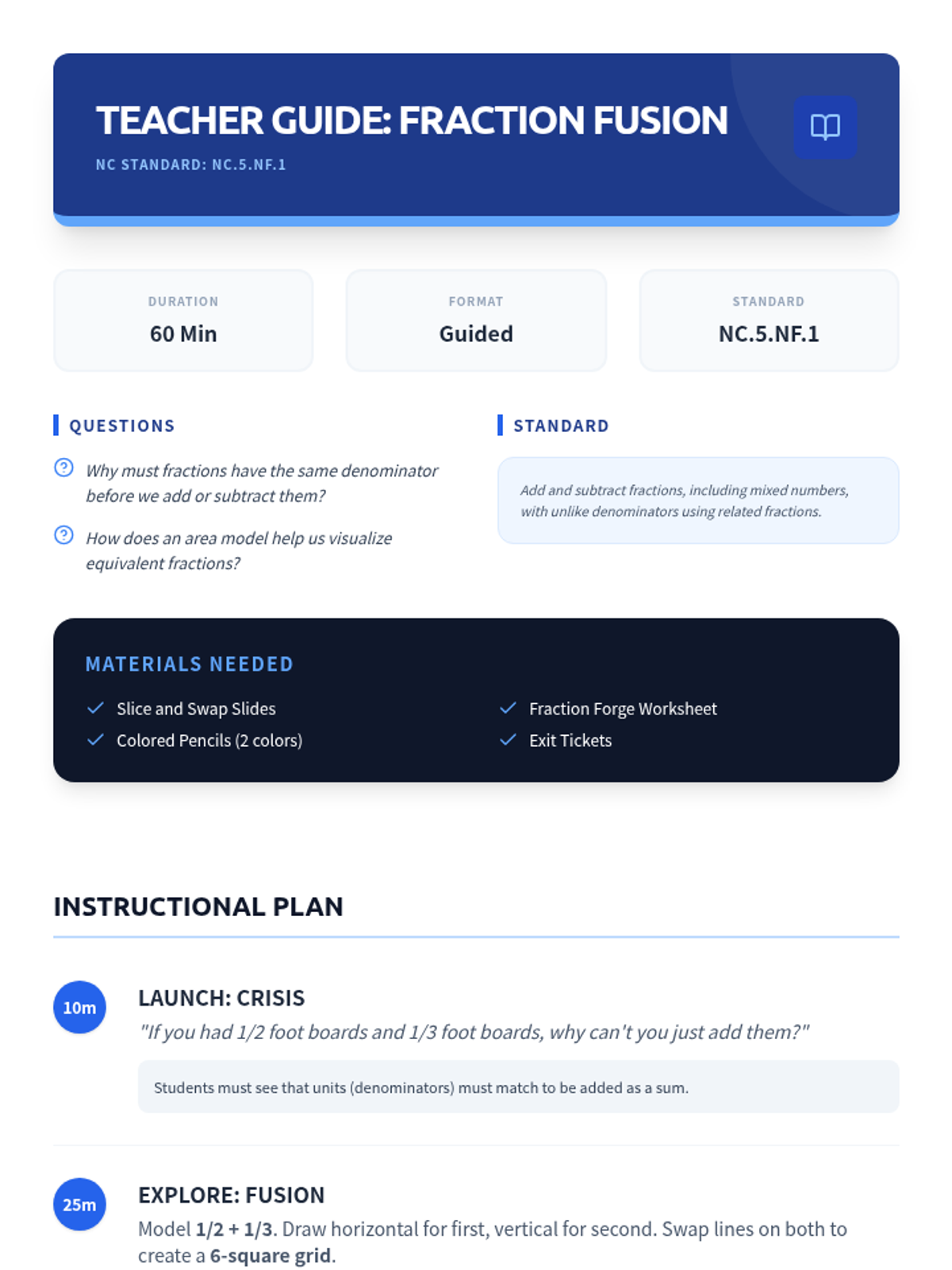
A lesson focused on adding and subtracting fractions with unlike denominators using area models and common denominators. Students will learn to visualize the process of creating equivalent fractions to solve problems.
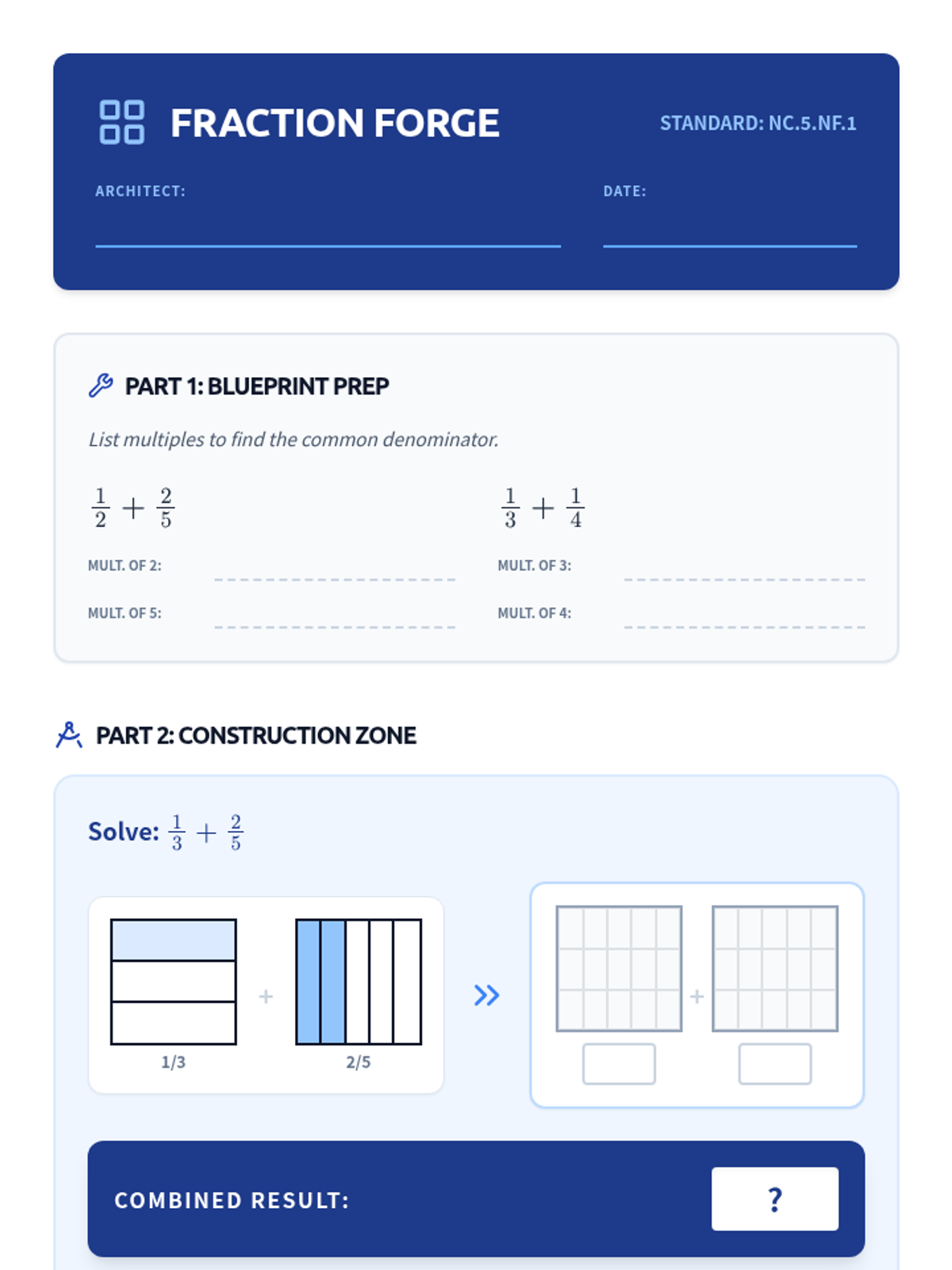
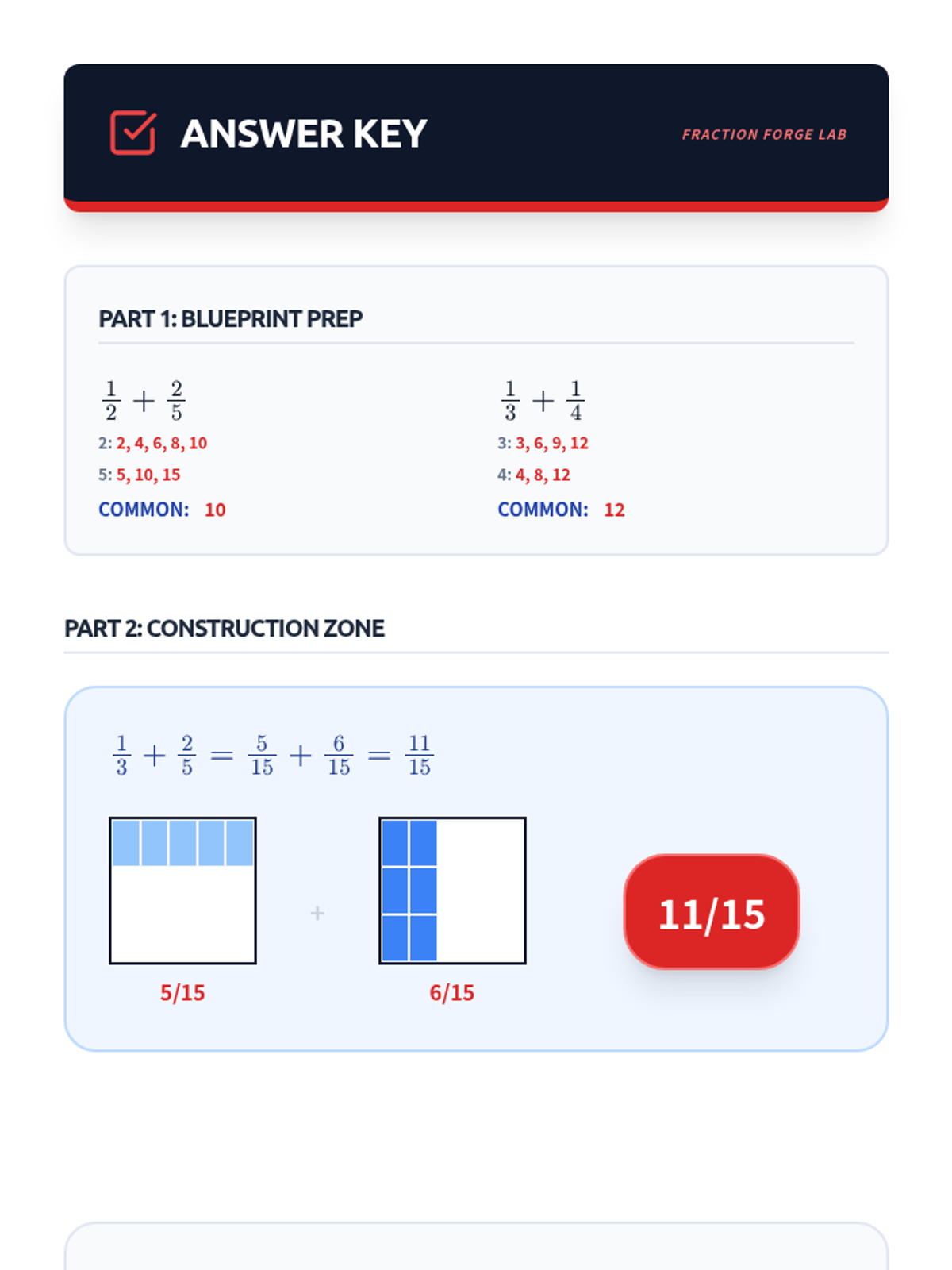
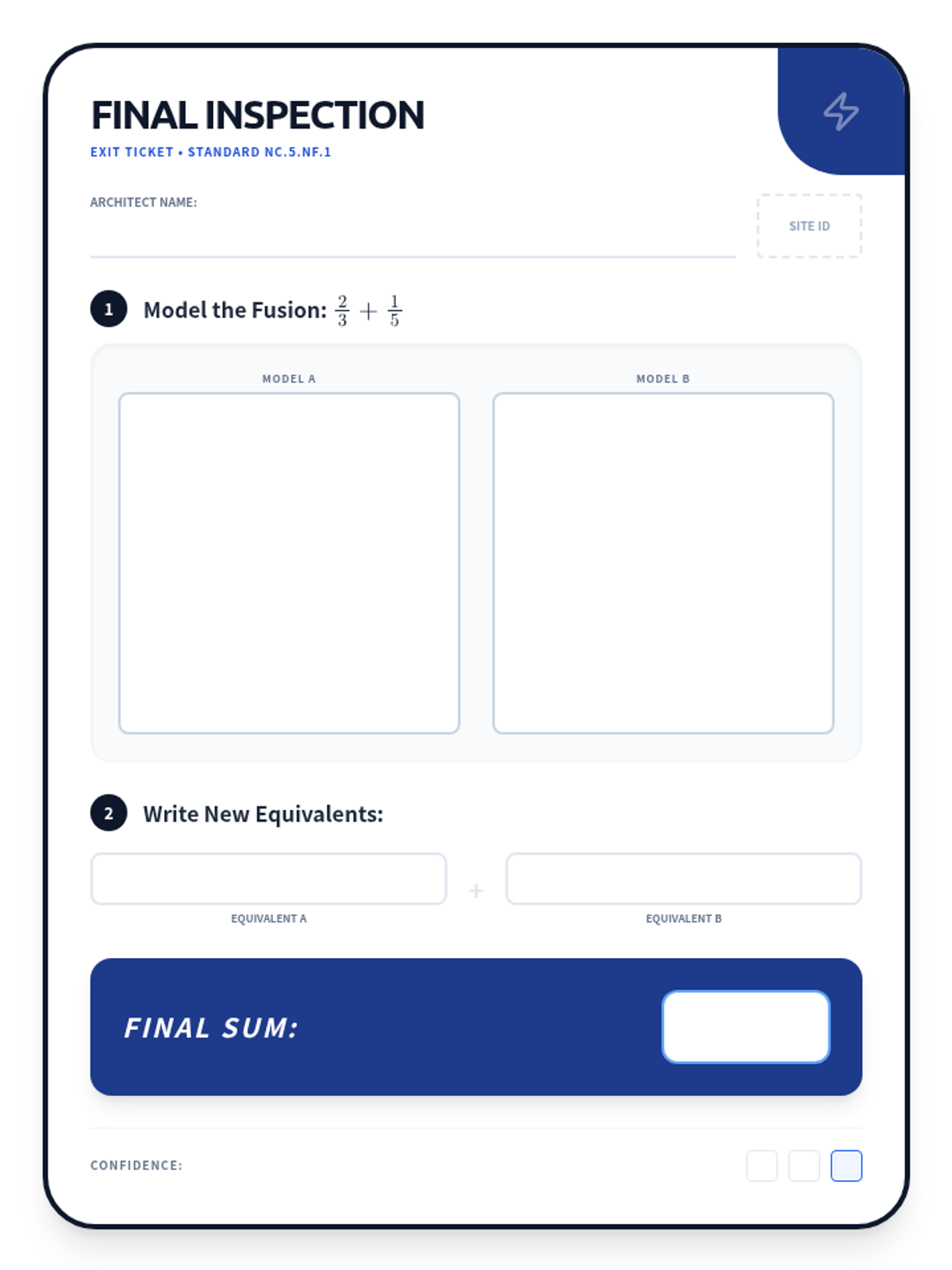
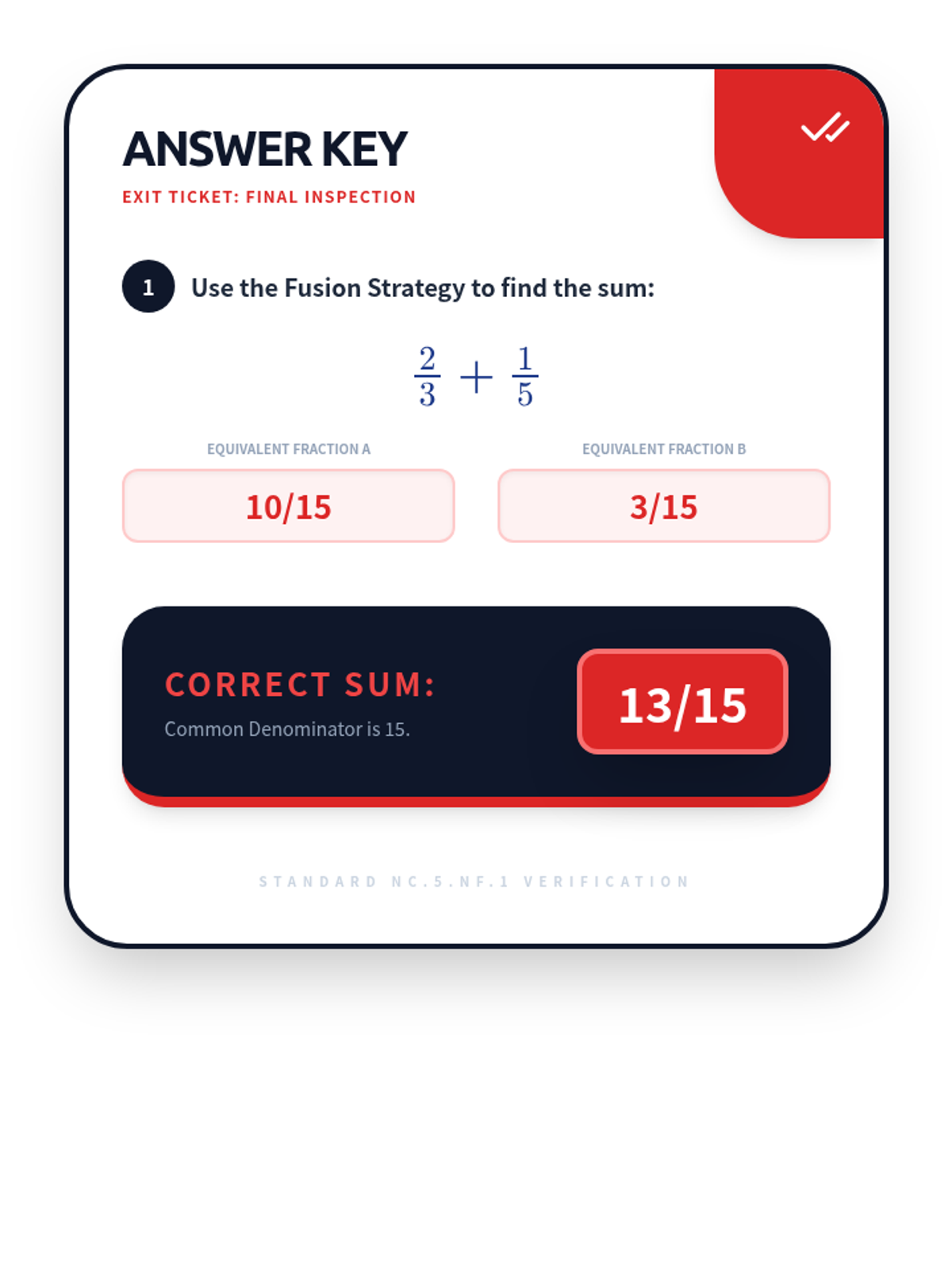
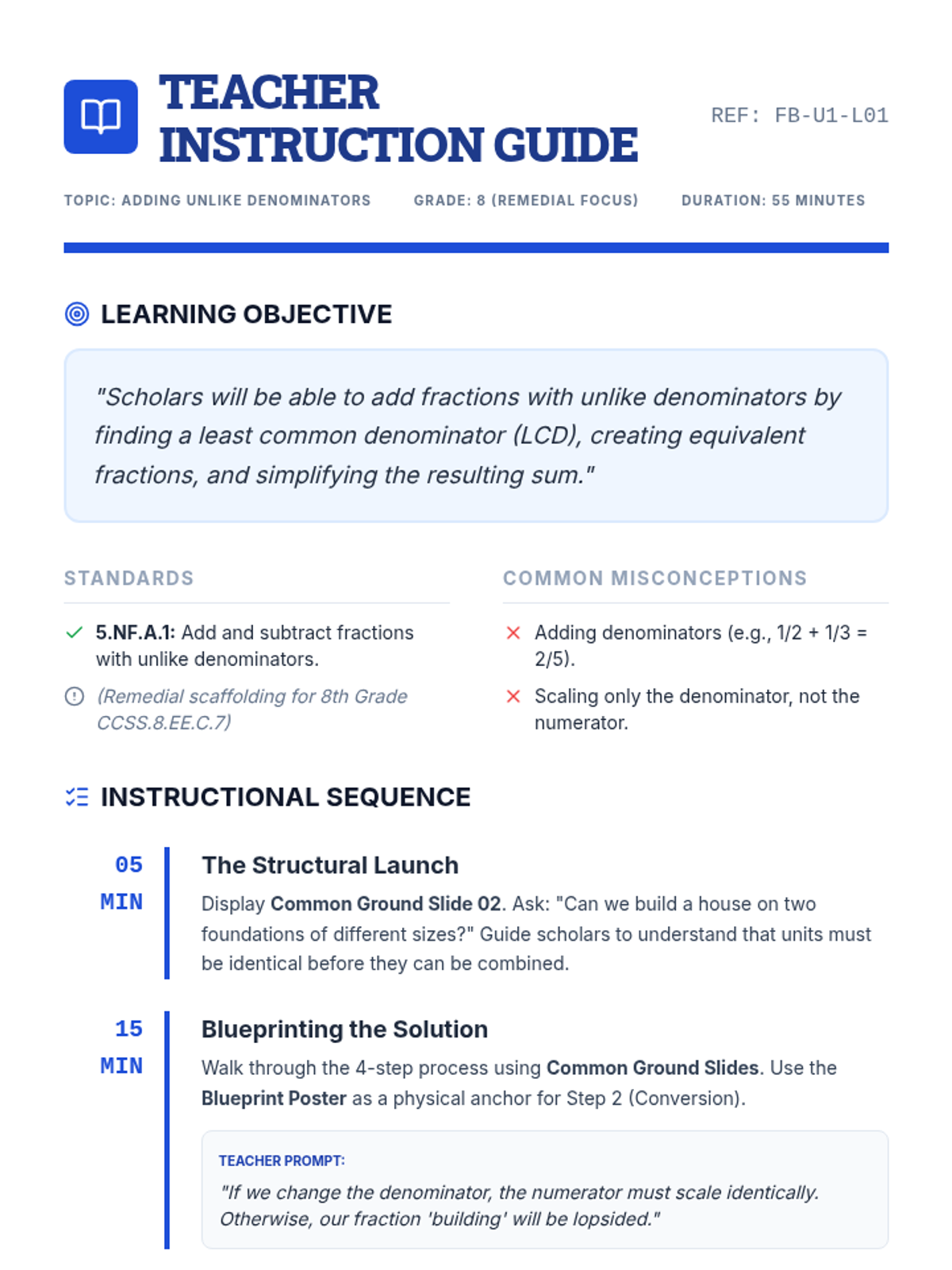
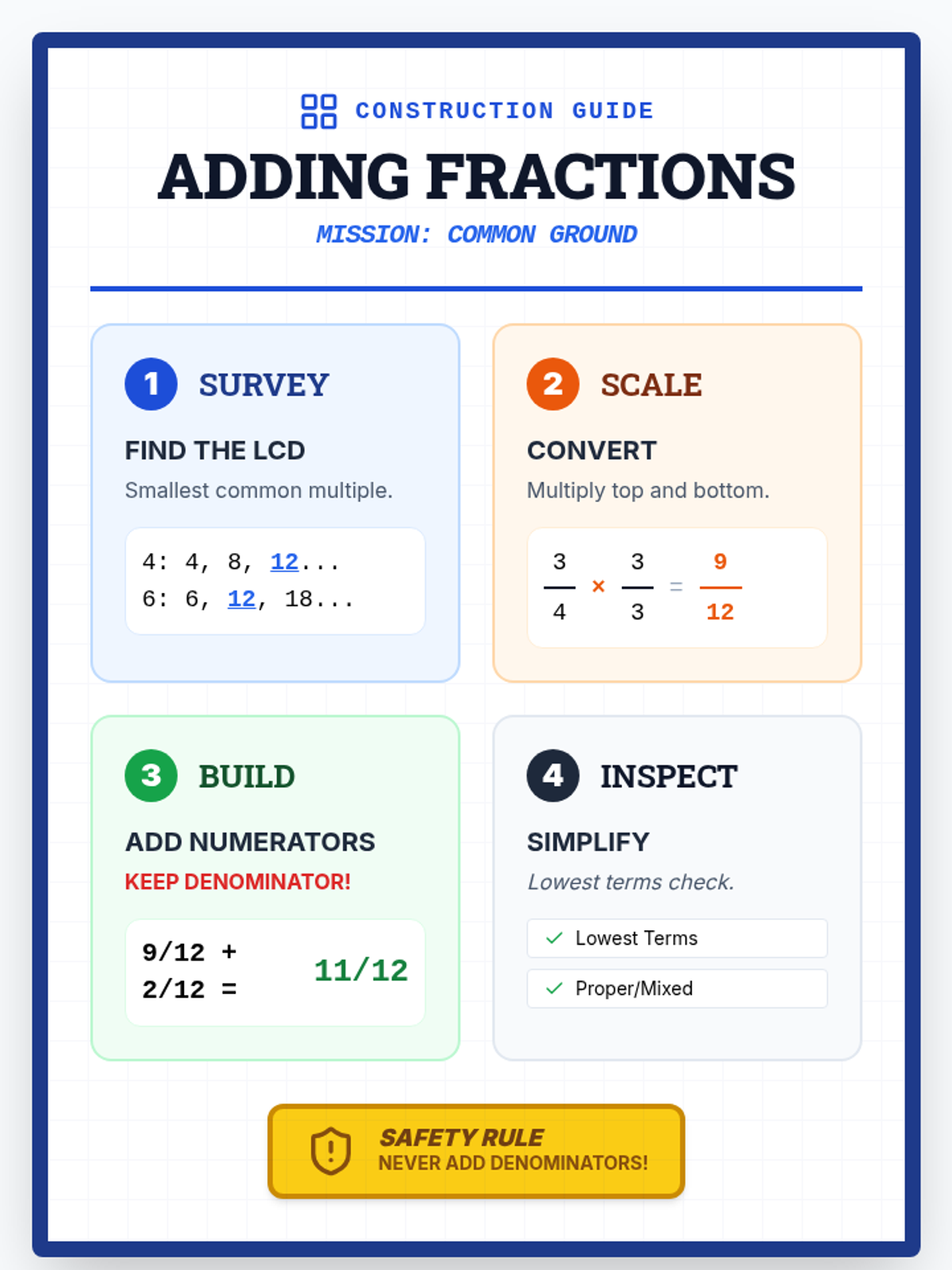
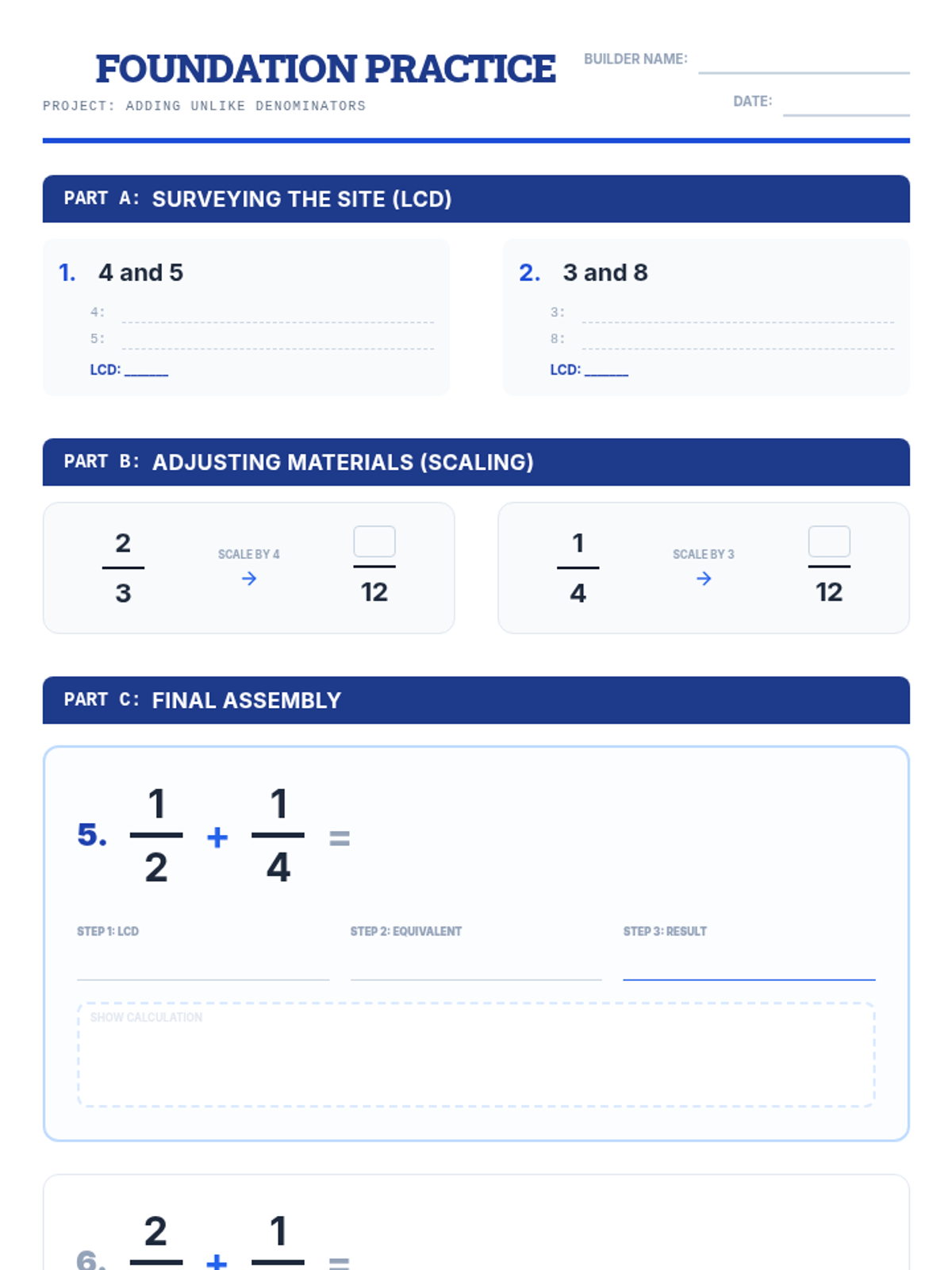
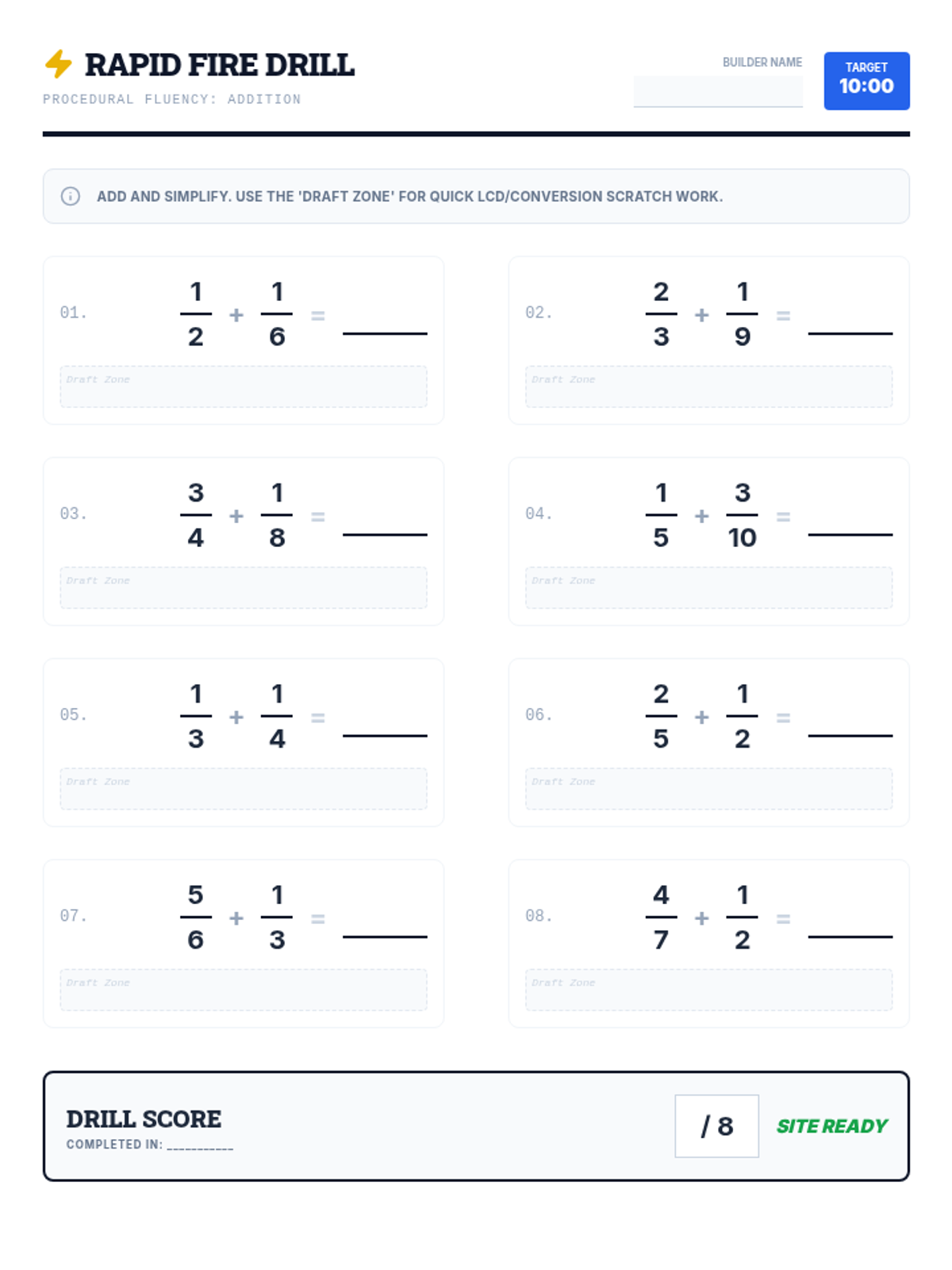
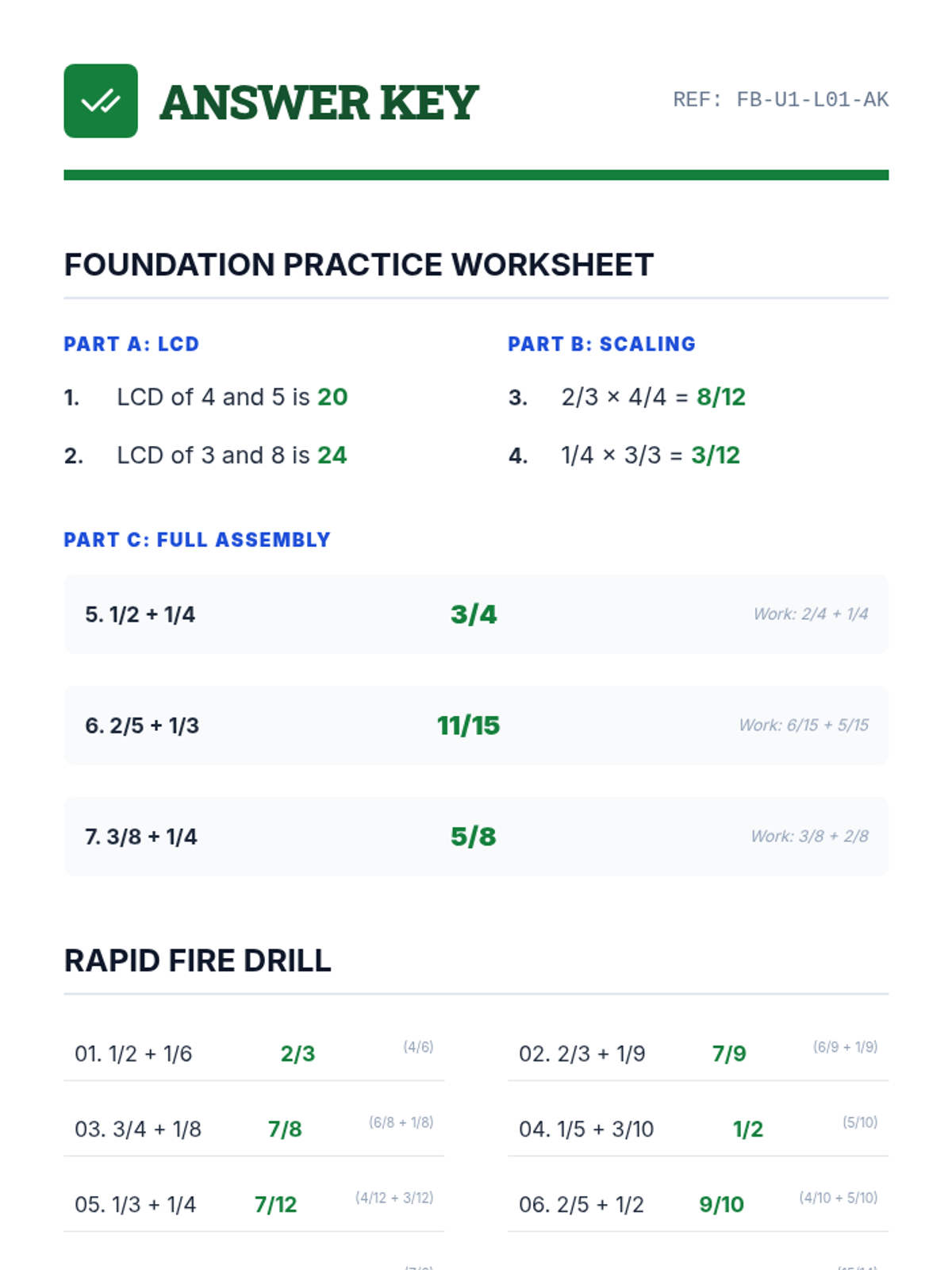
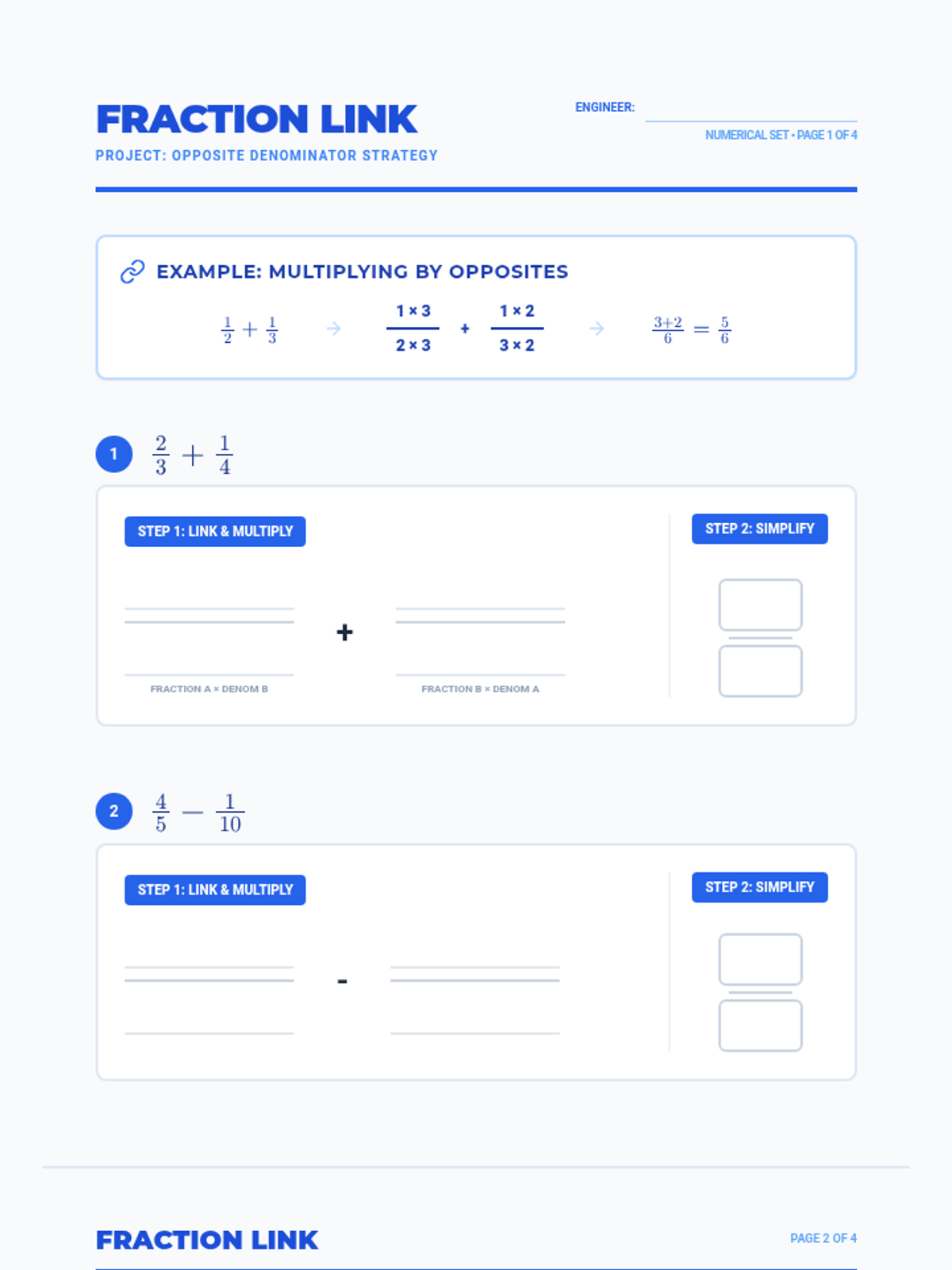
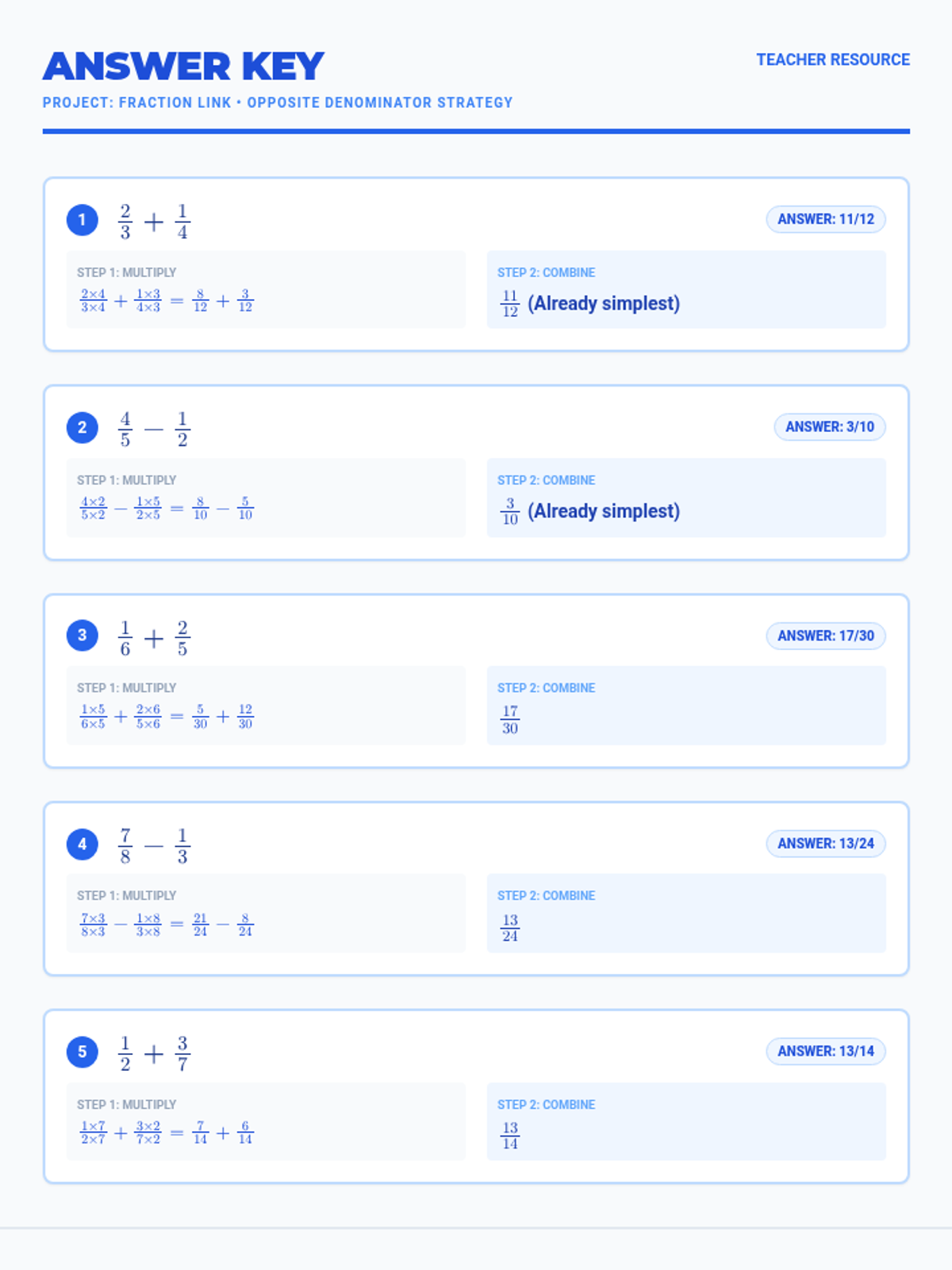
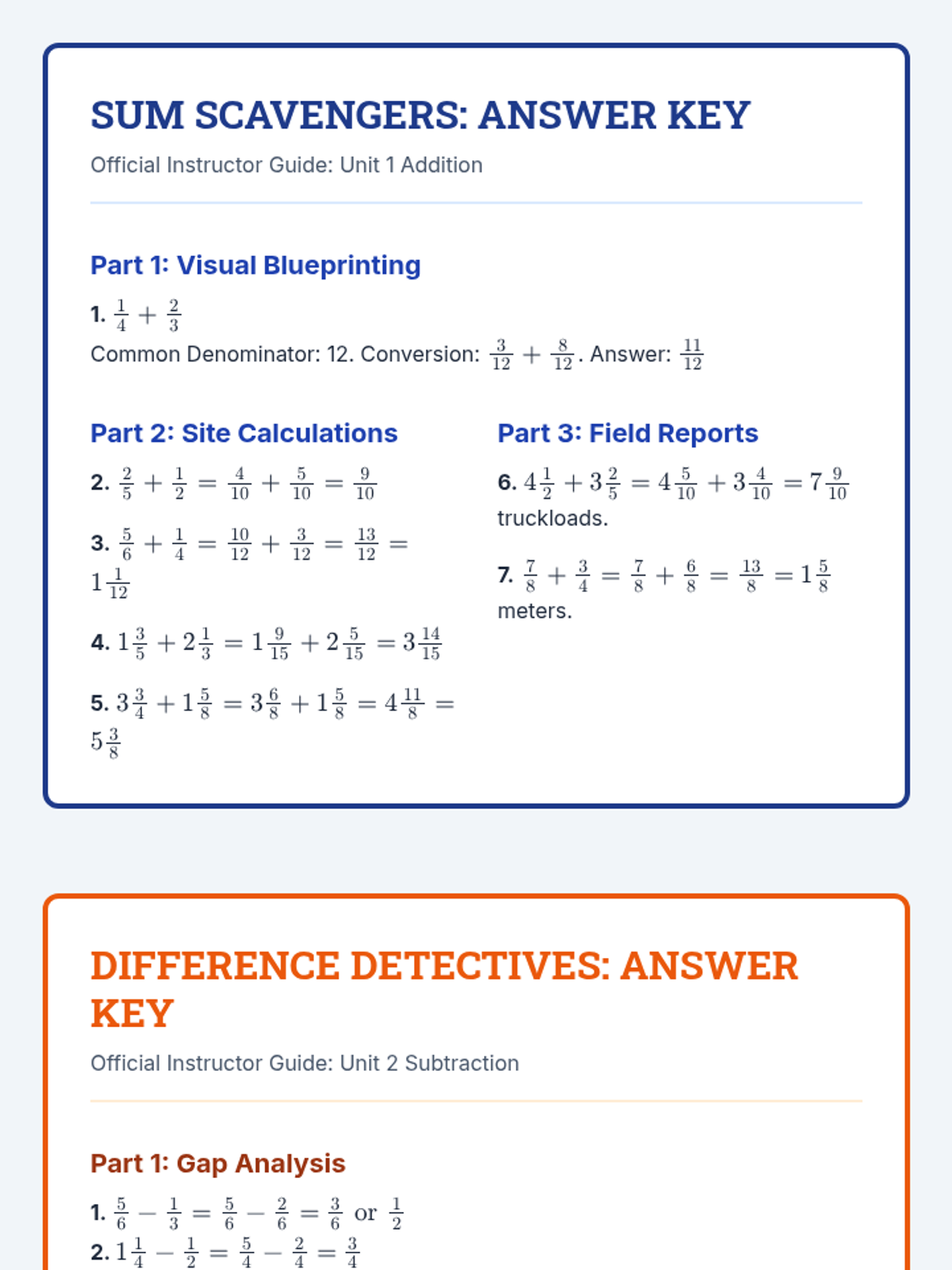
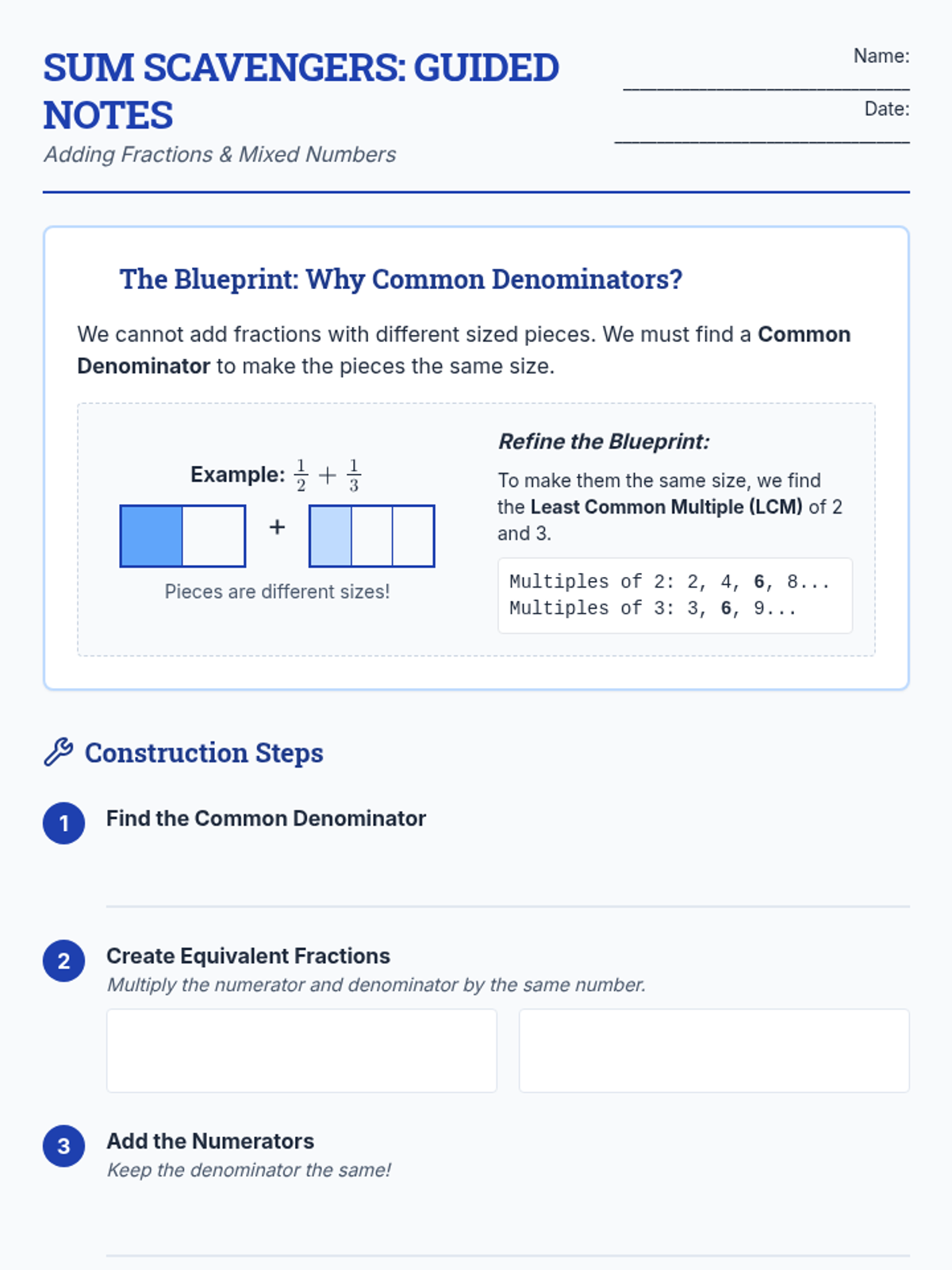
A focused lesson on adding fractions with unlike denominators using a blueprint-inspired approach to building common denominators.
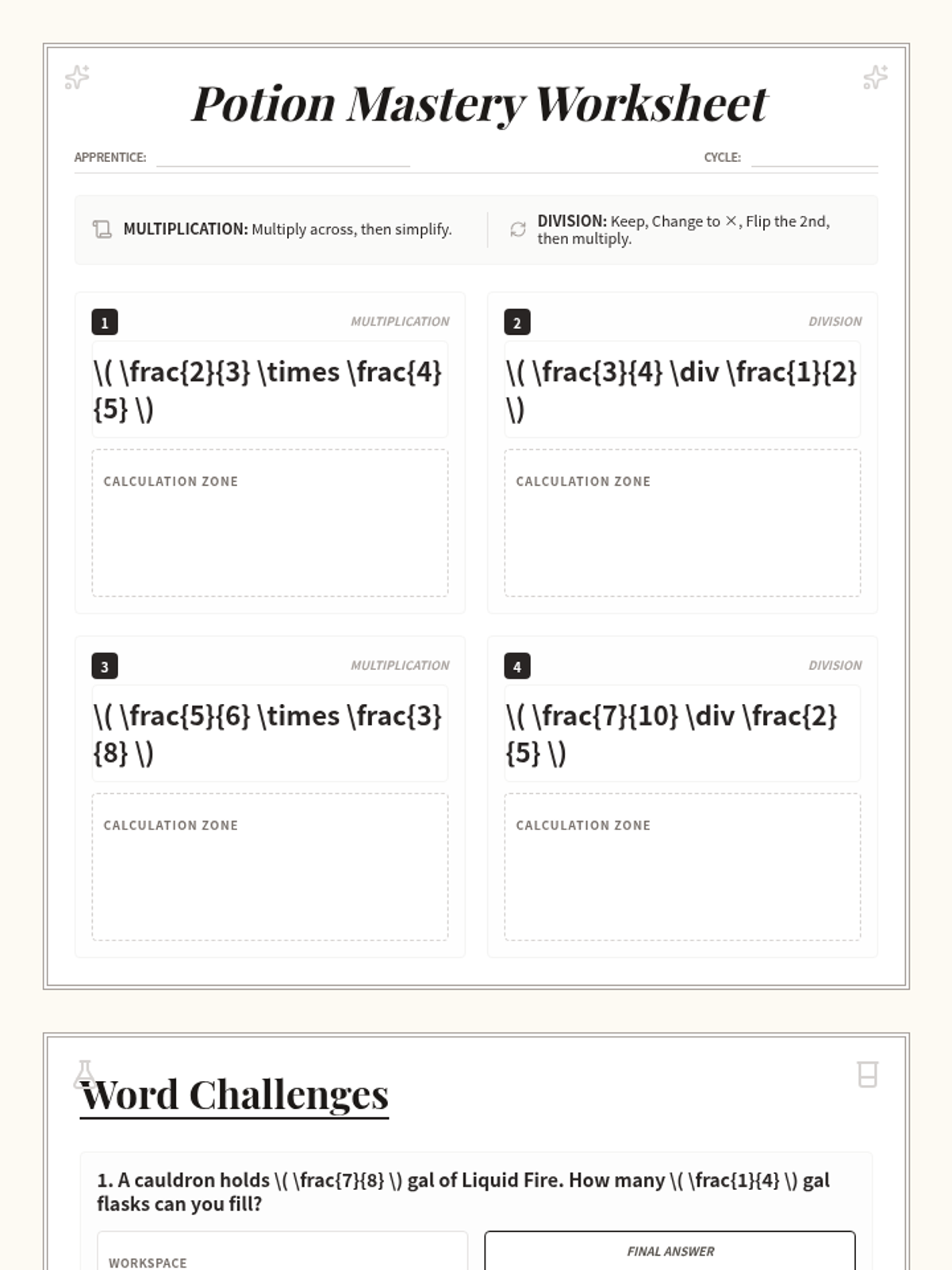
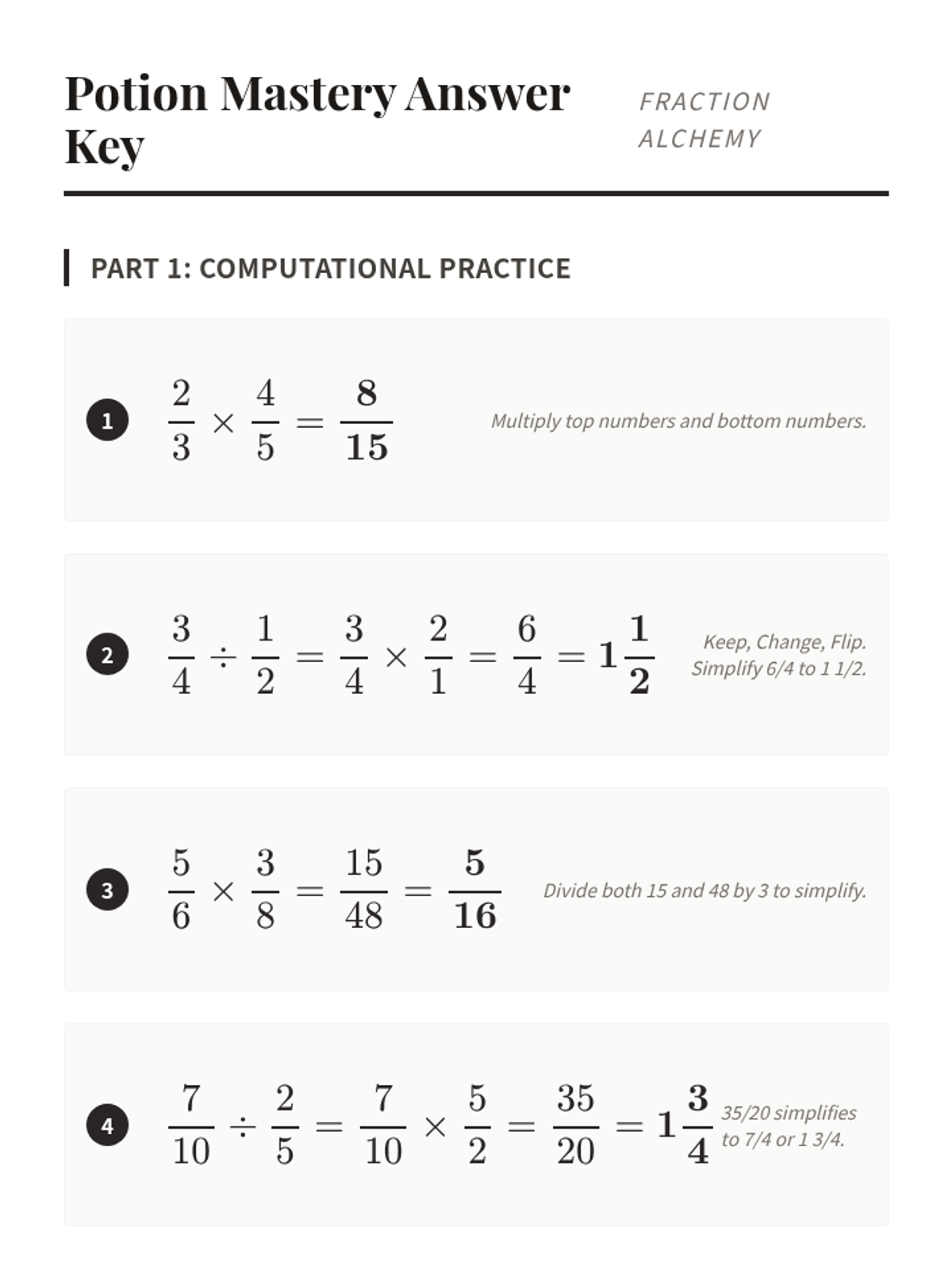
A lesson on multiplying and dividing fractions with unlike denominators, themed around an alchemy lab where students brew potions using mathematical formulas.
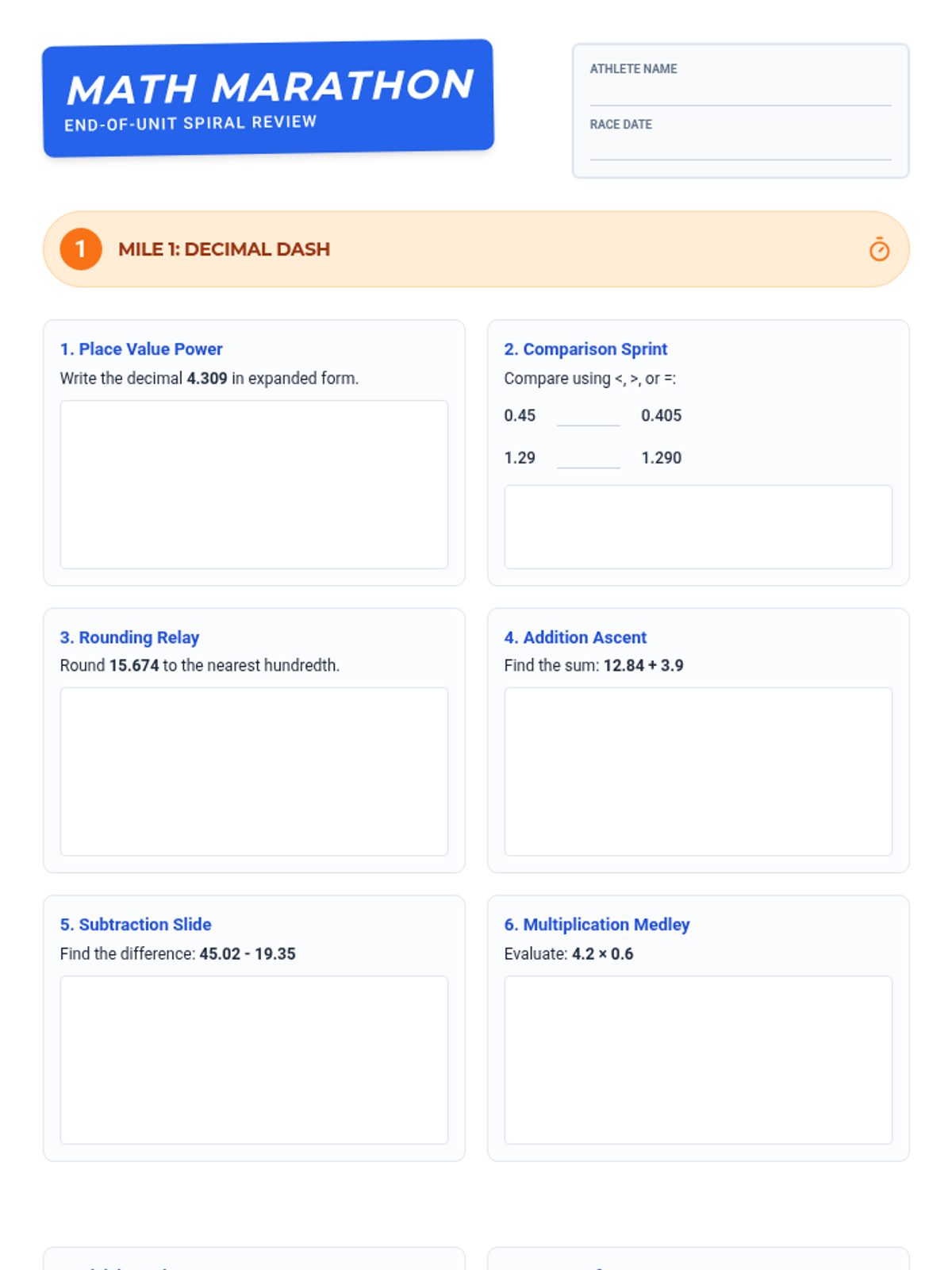
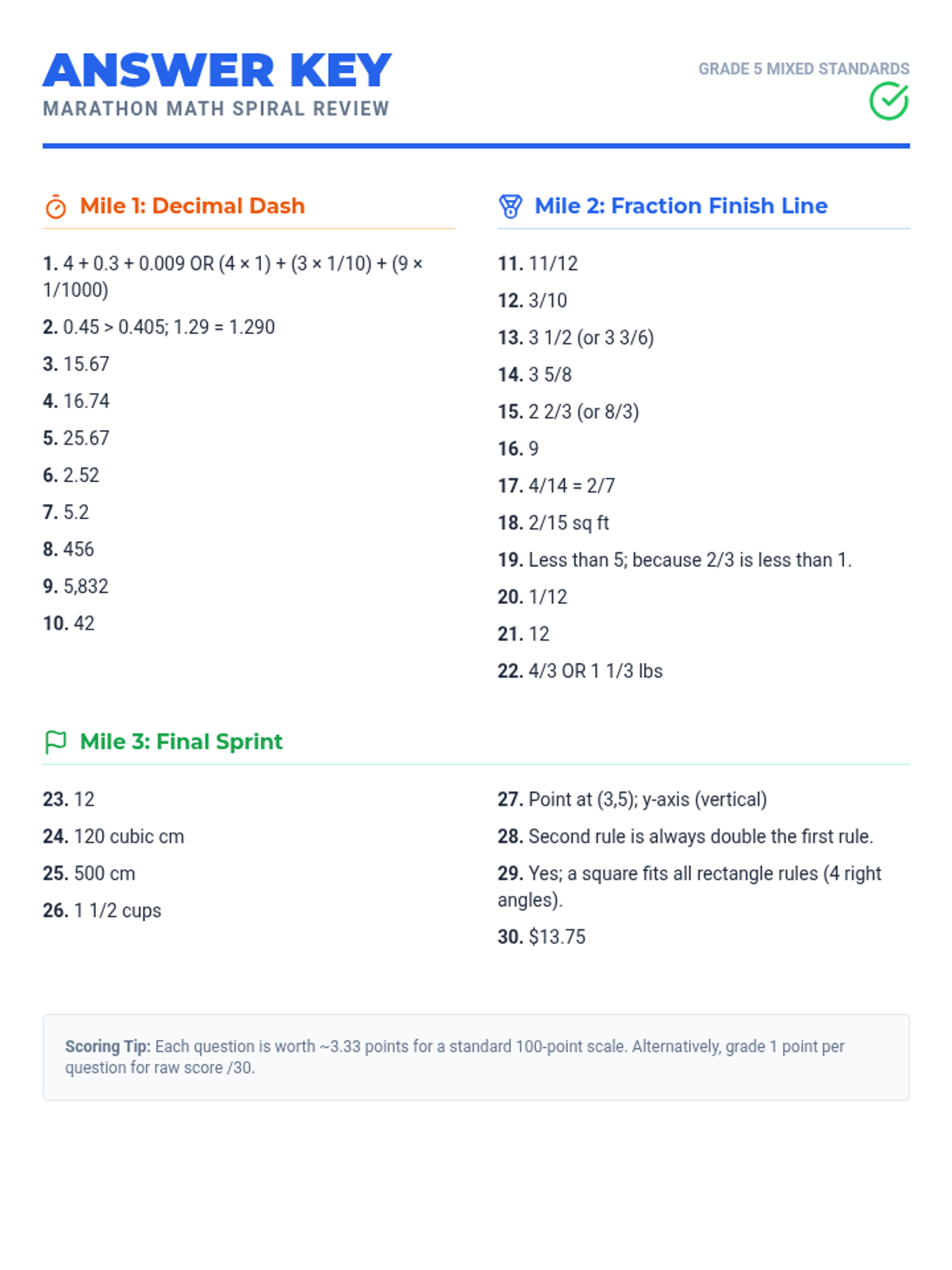
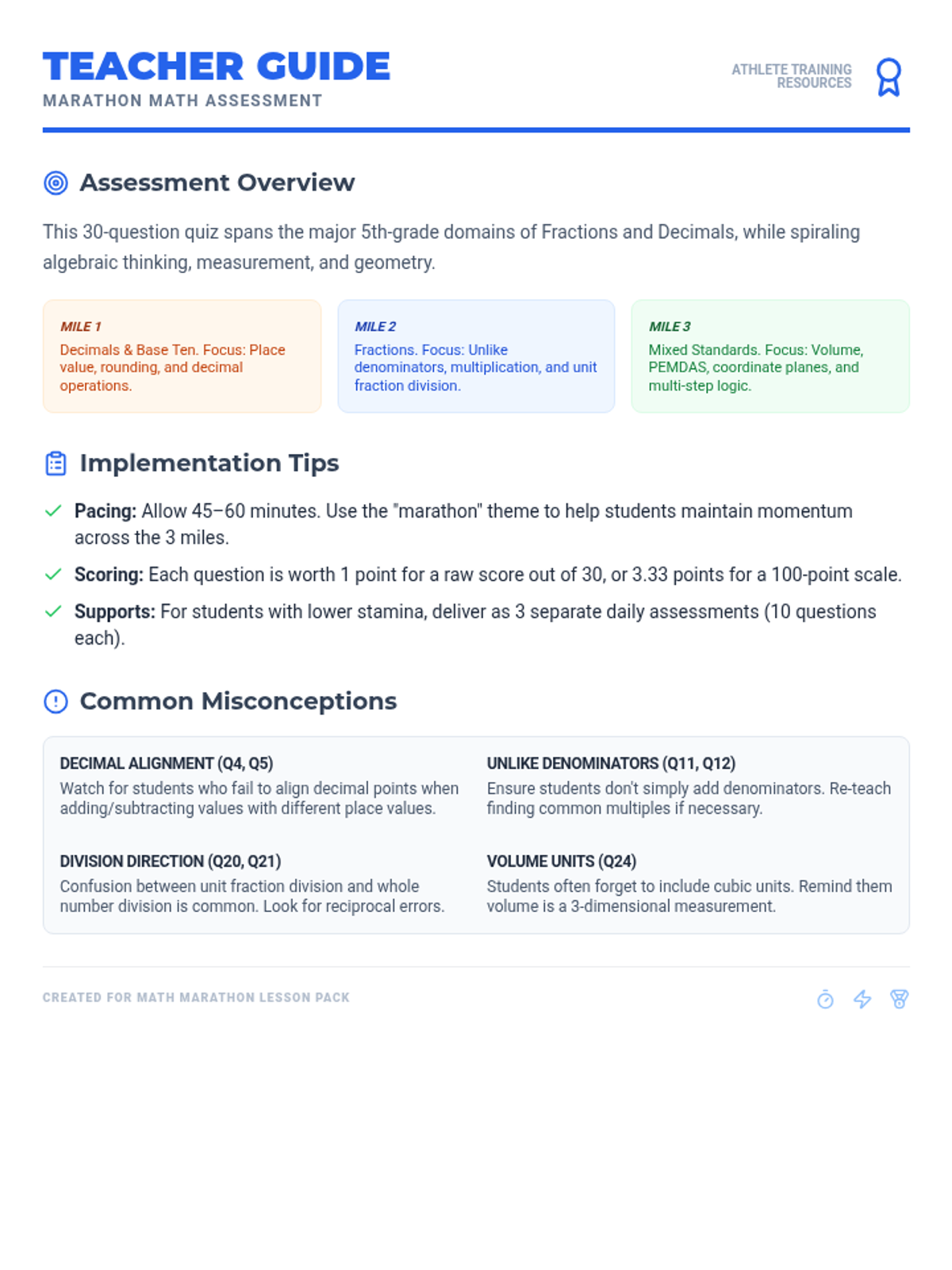
A comprehensive end-of-unit assessment designed for 5th-grade students, focusing on fractions, decimals, and mixed standards through a high-energy marathon theme.
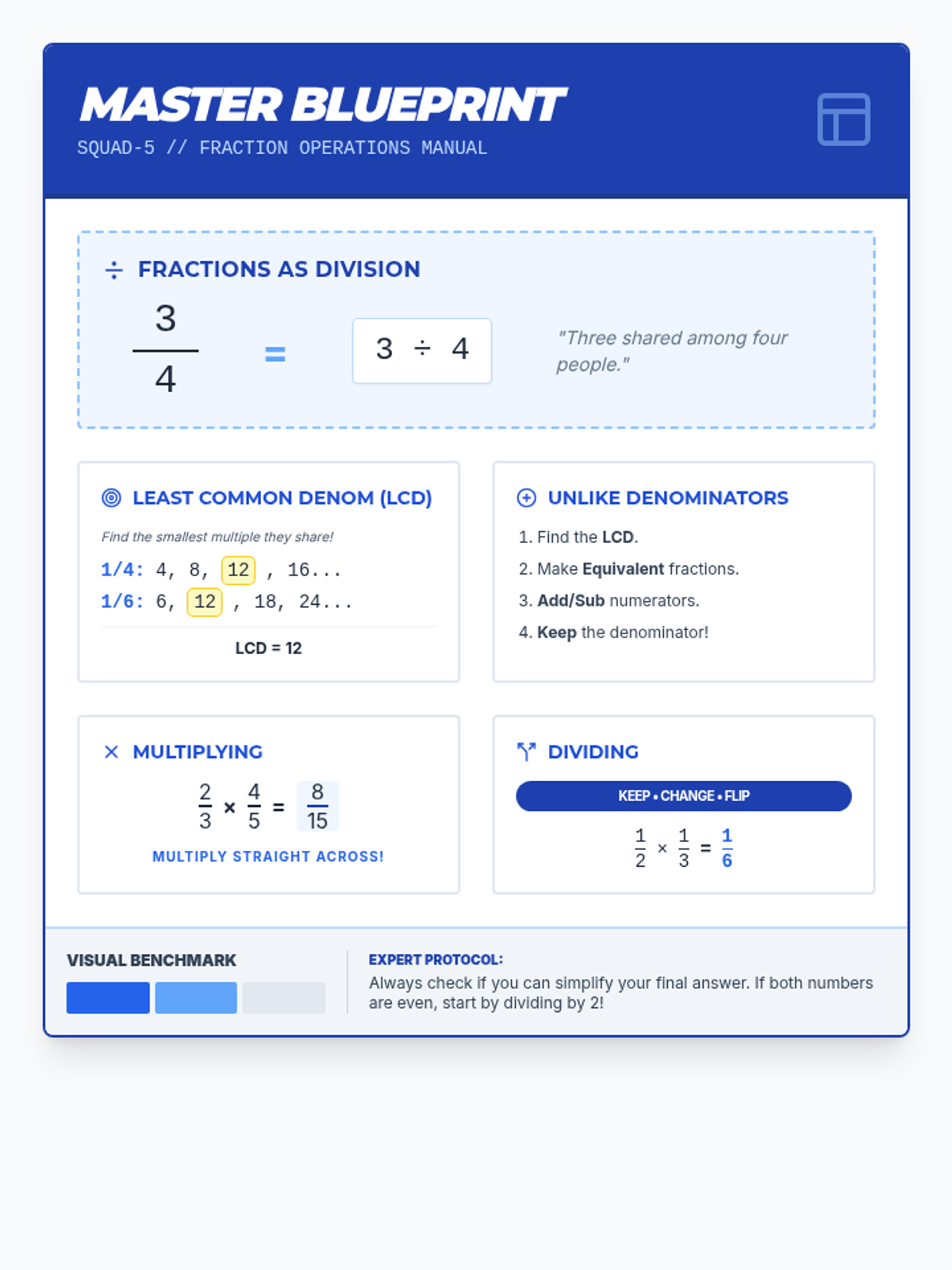
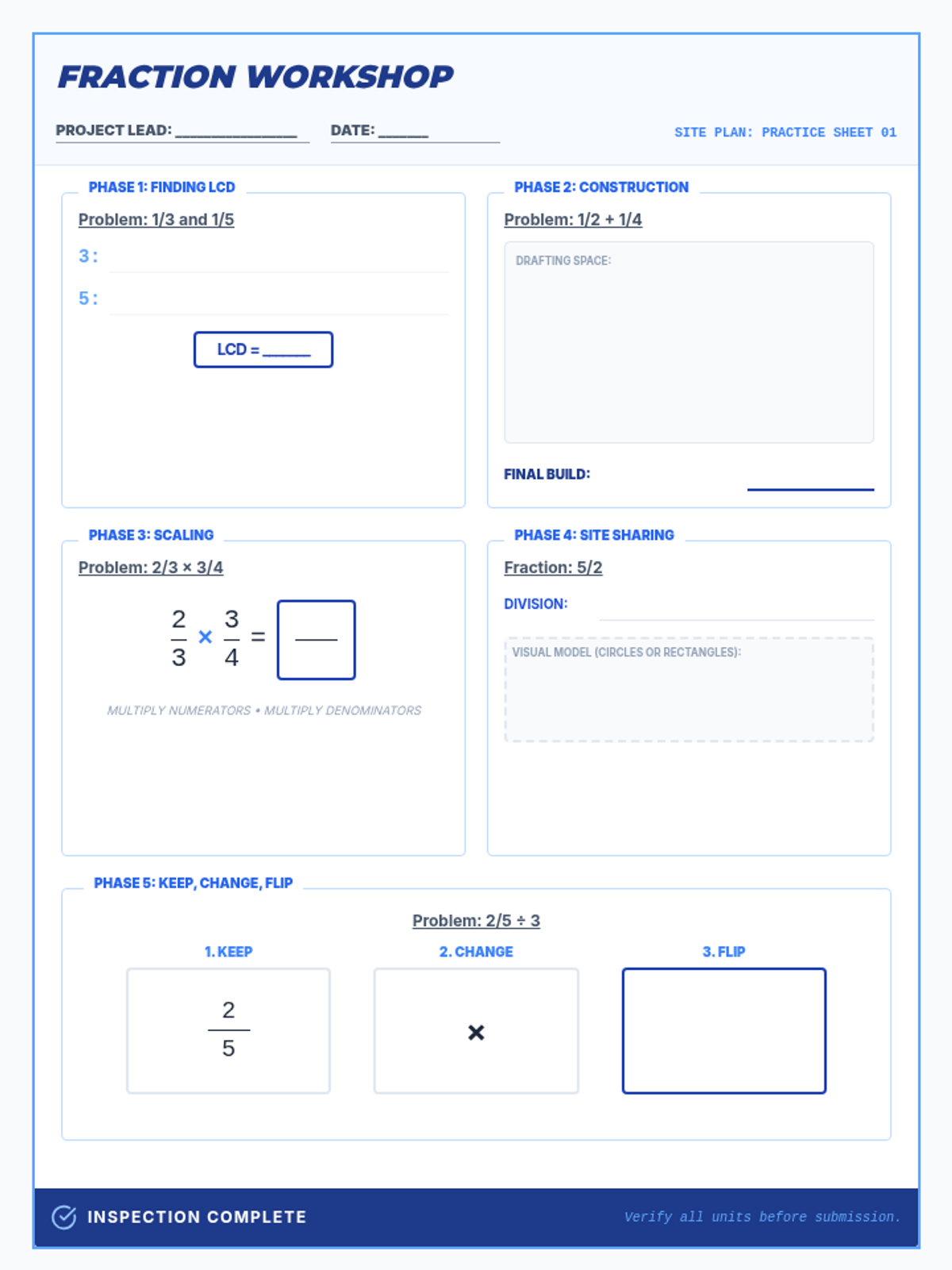
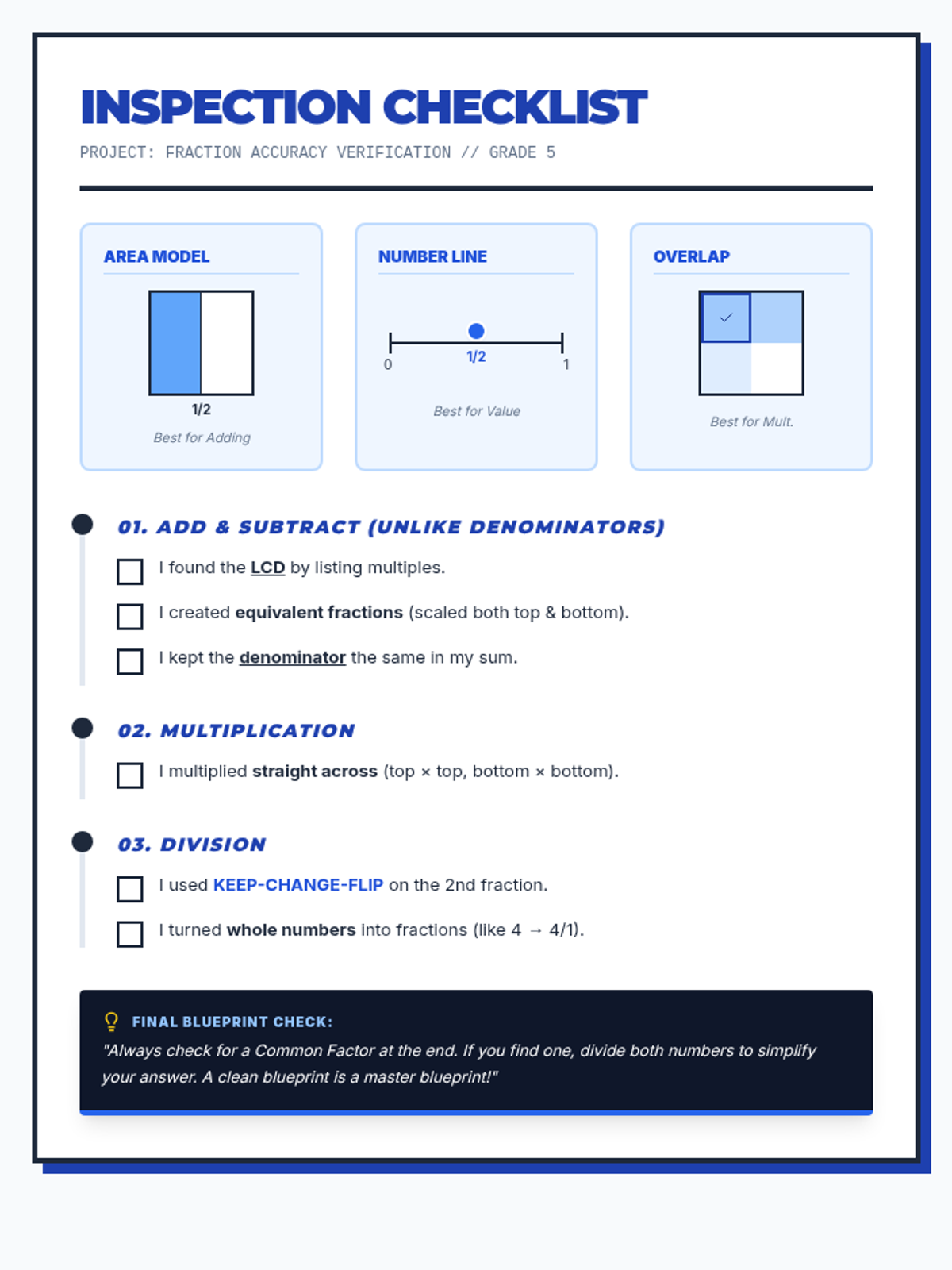
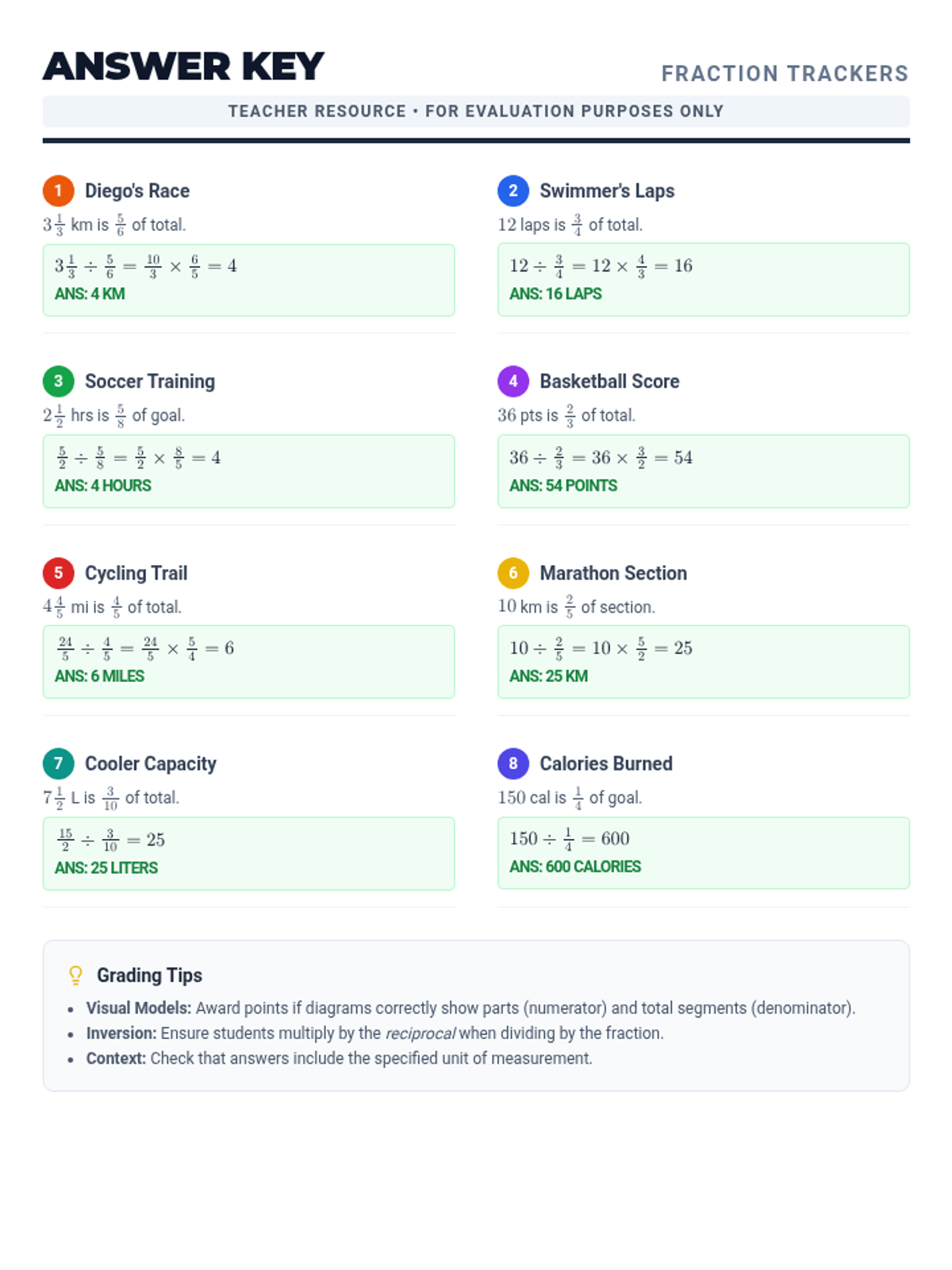
A comprehensive set of tools for 5th graders to master fraction operations, including visual models, step-by-step guides, and practice organizers.
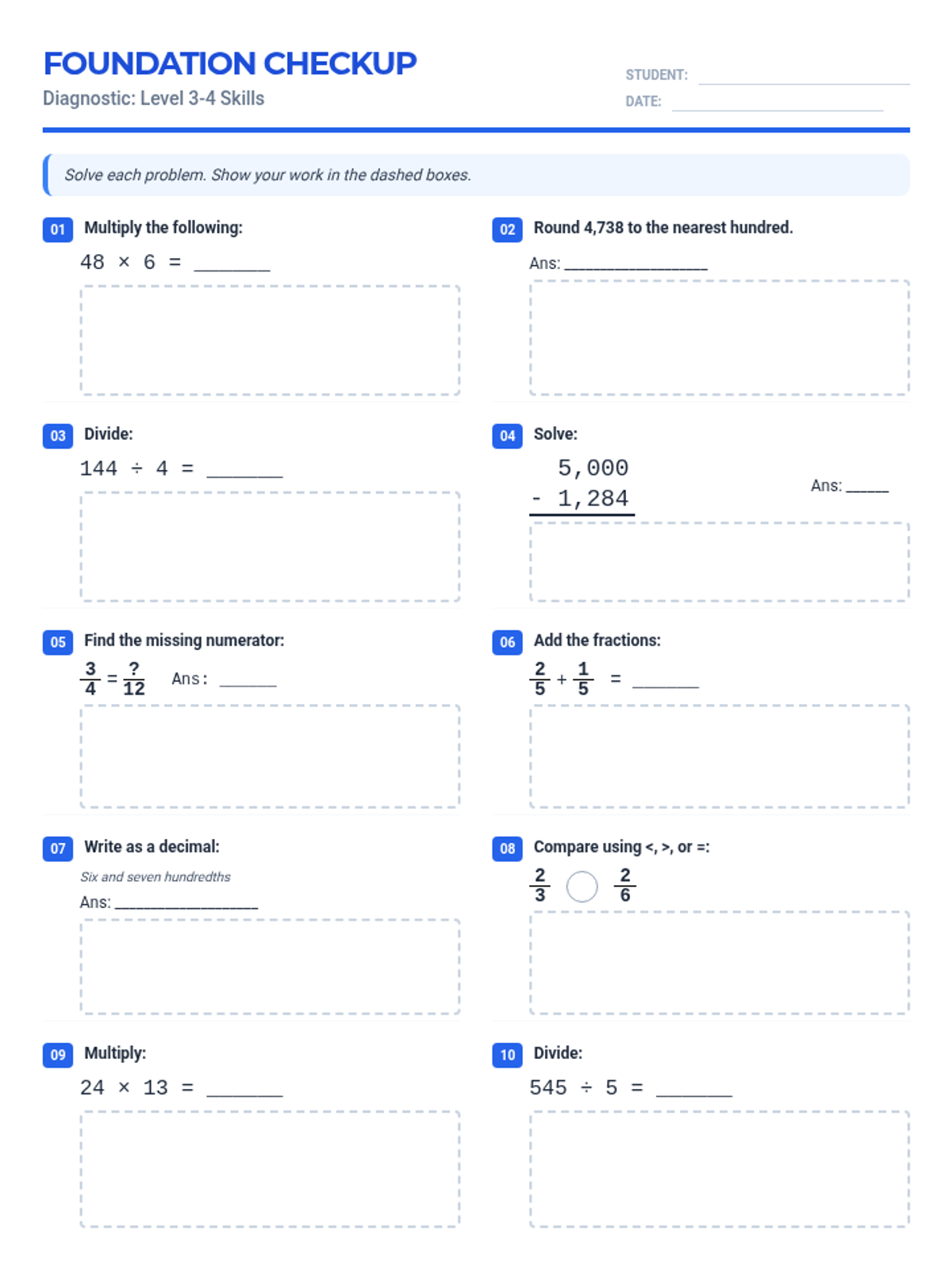
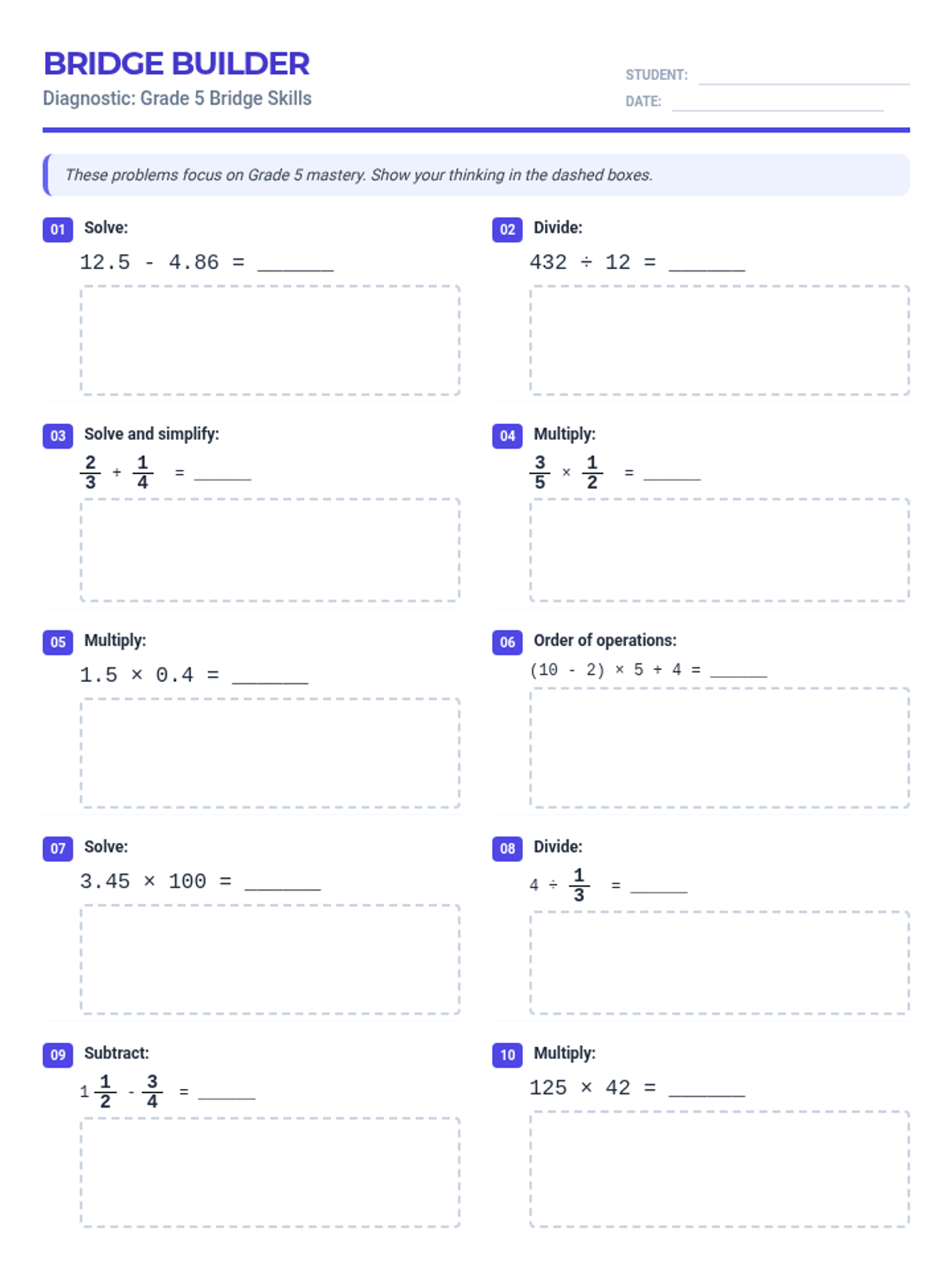
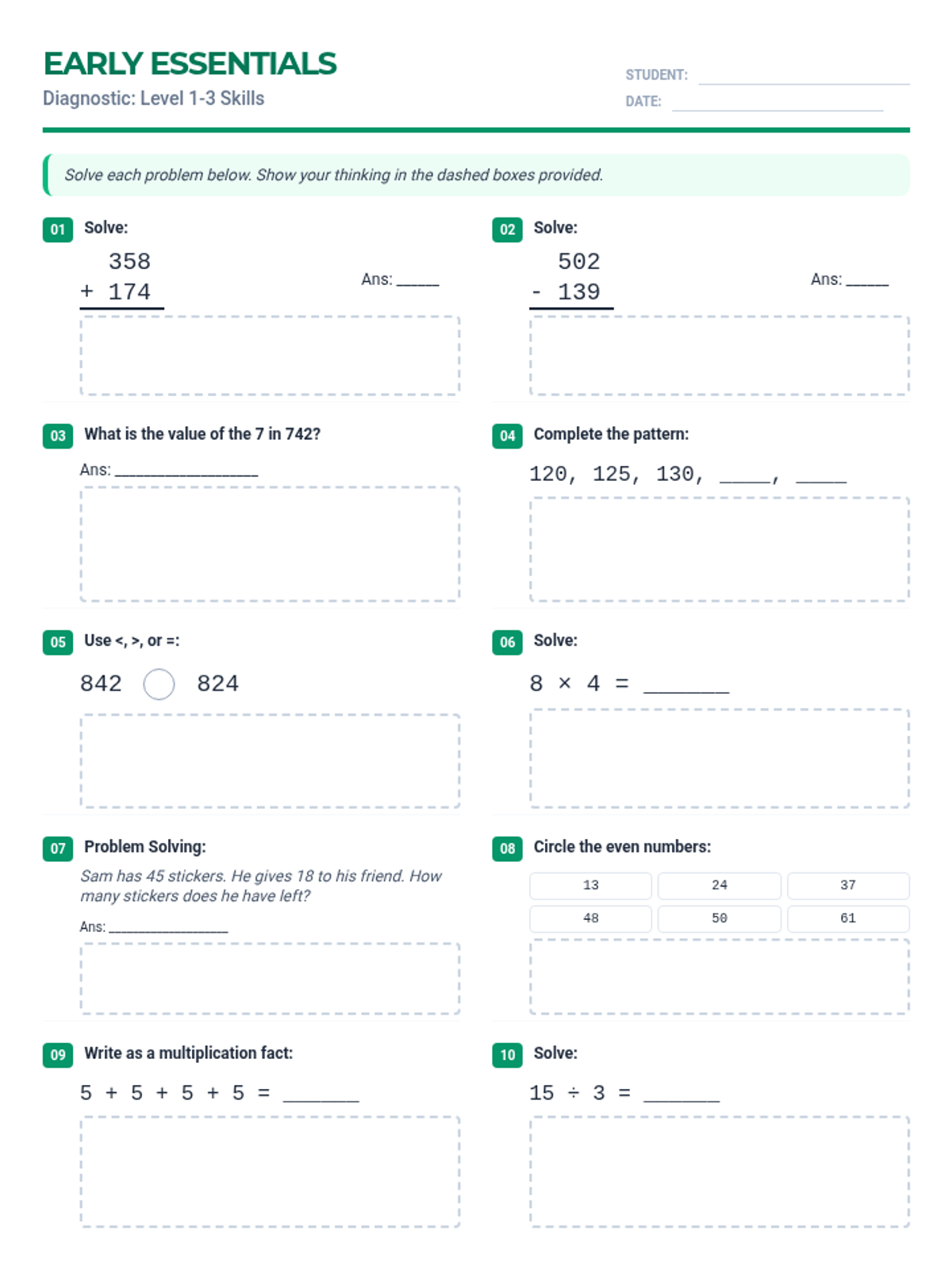
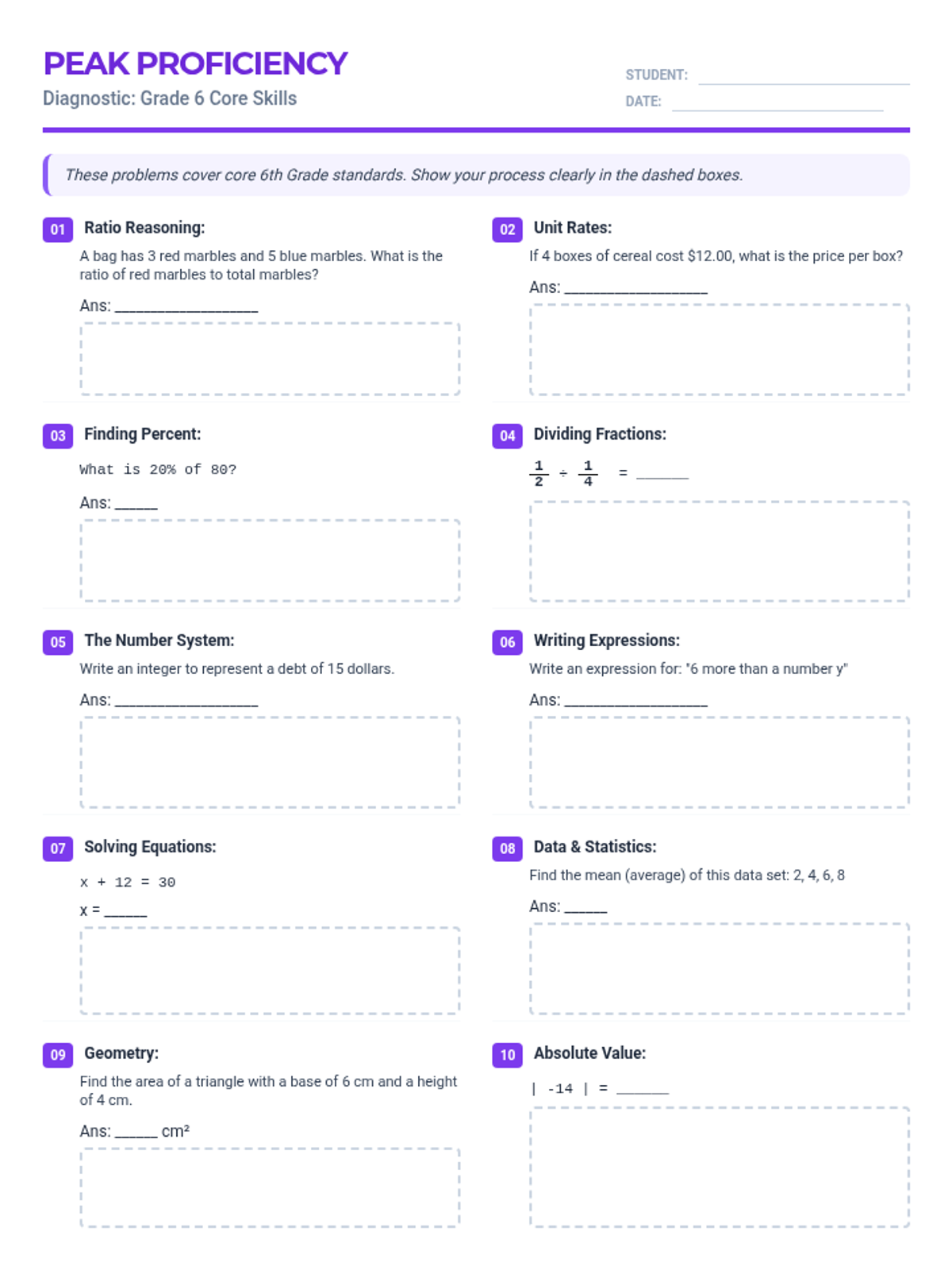
A pair of diagnostic assessments designed to pinpoint gaps in foundational number sense, fractions, and decimals, bridging 3rd-4th grade concepts to 5th grade mastery in preparation for 6th grade math.
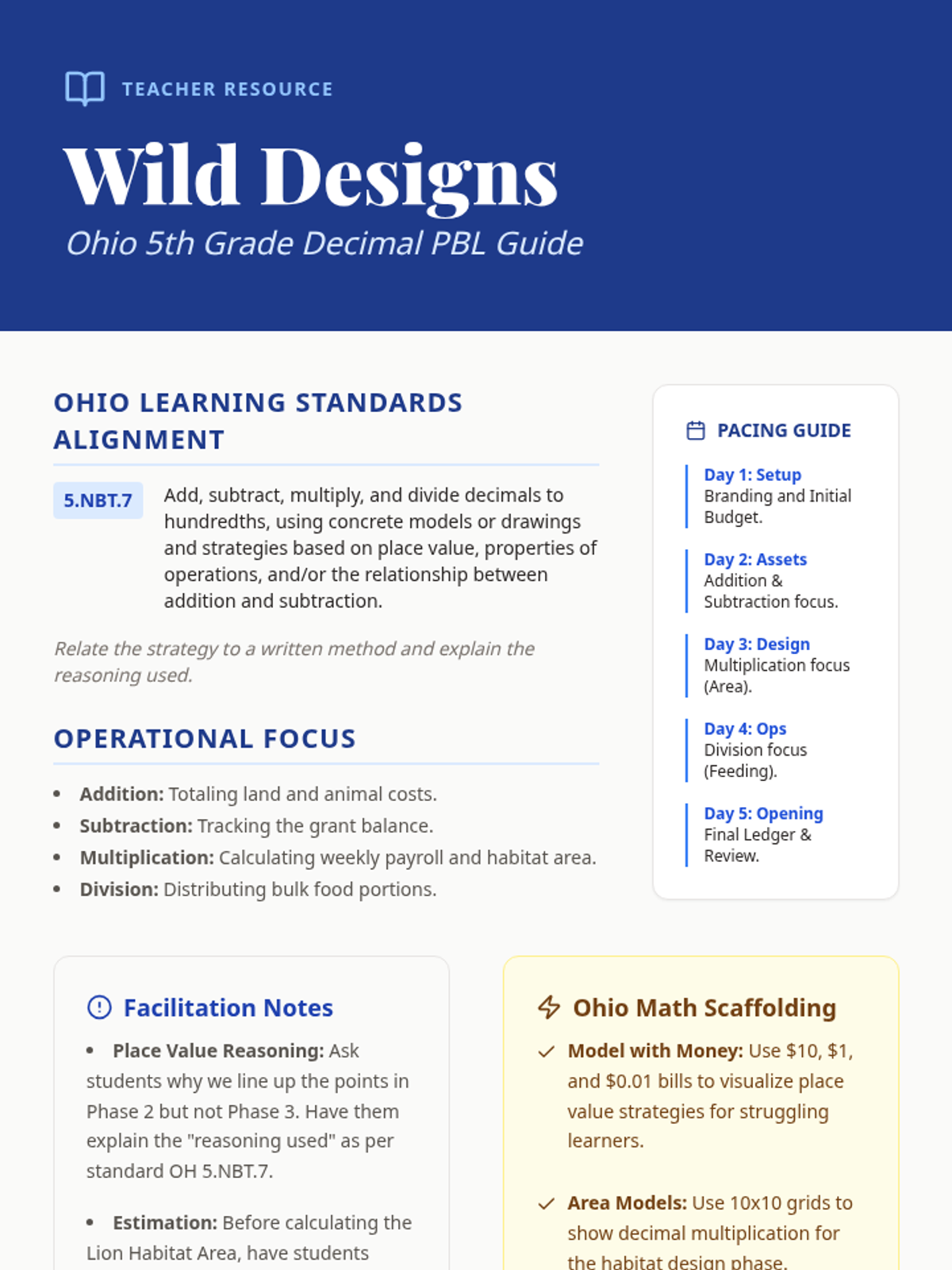
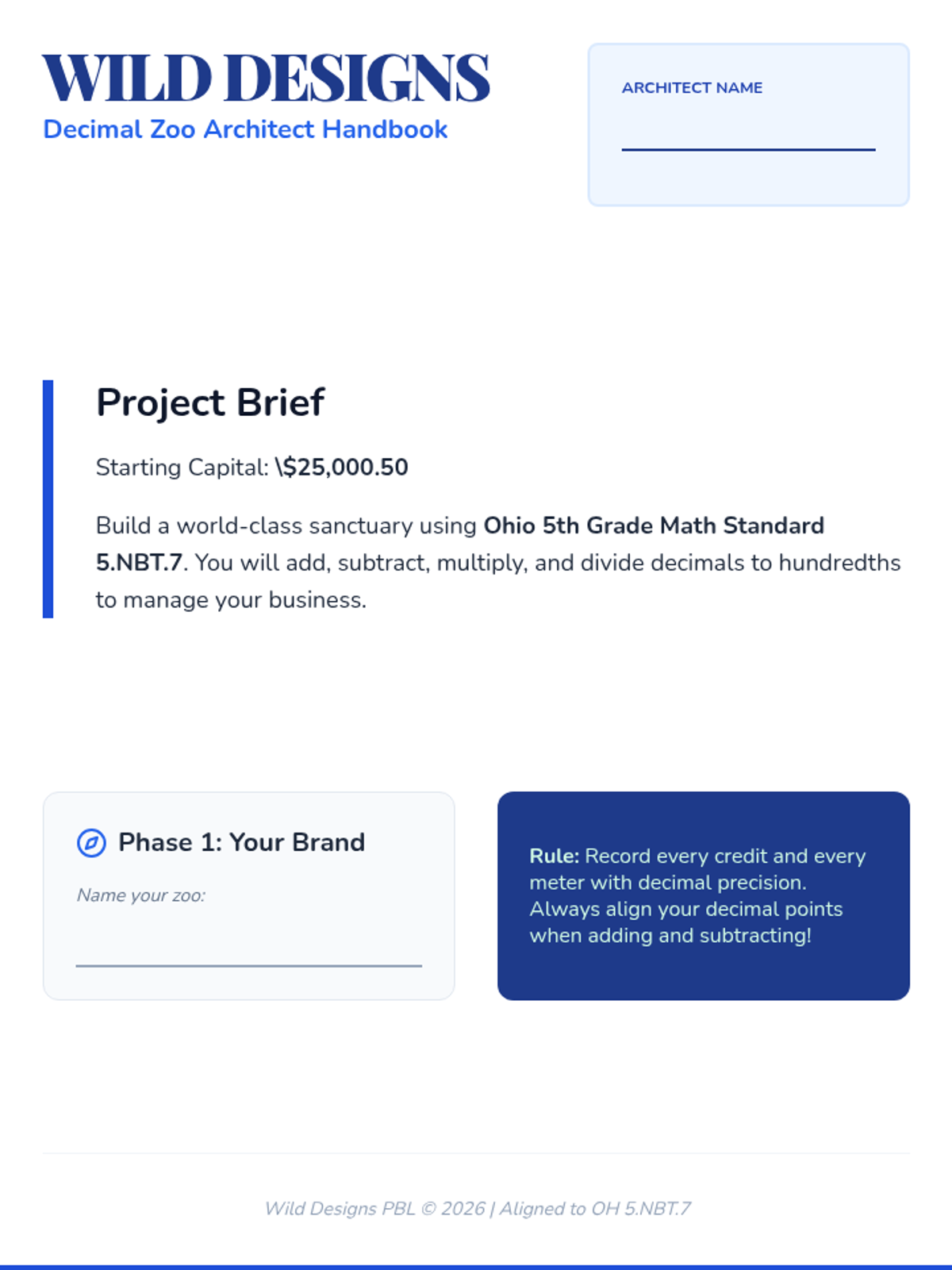
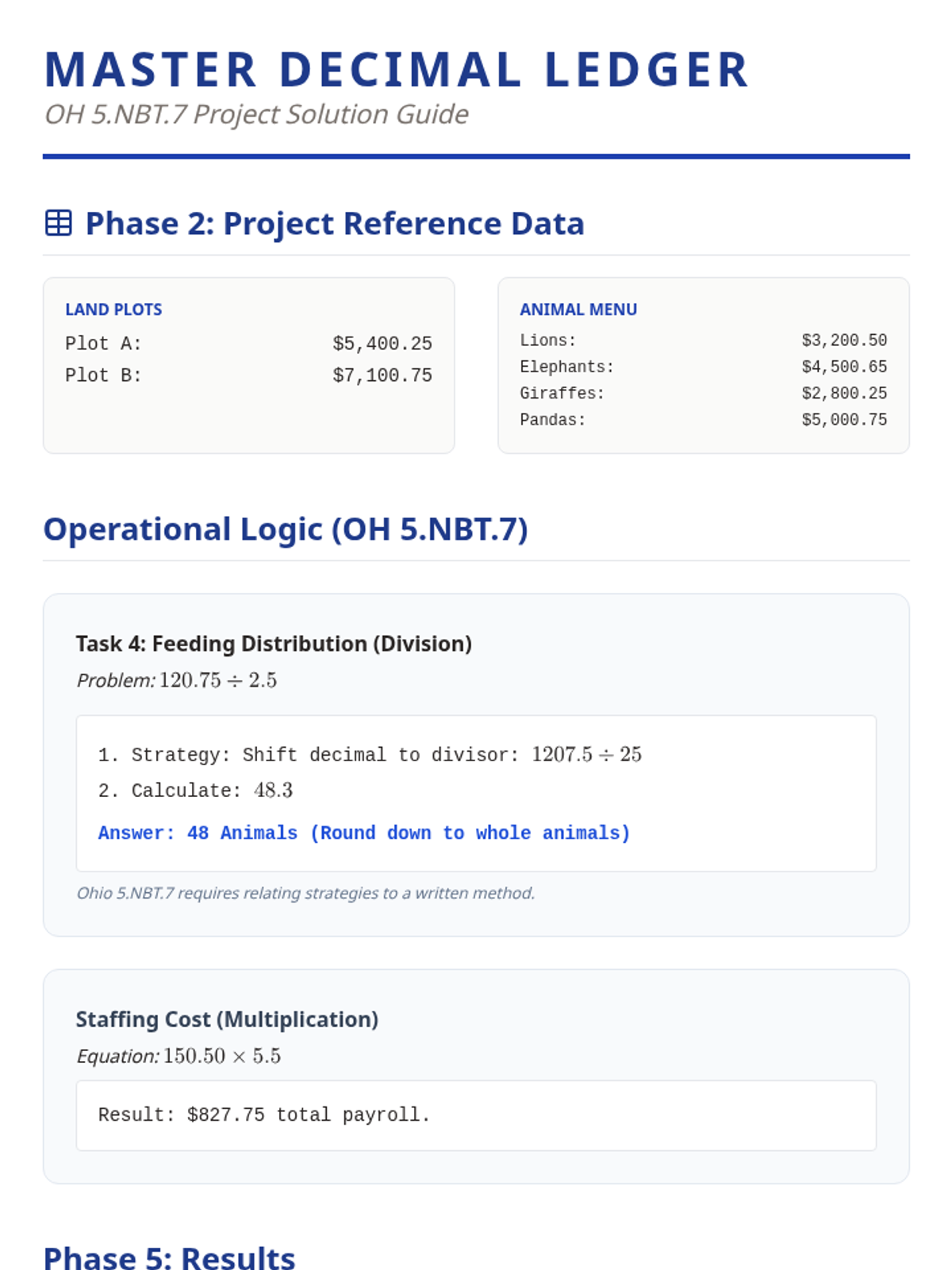
A project-based learning unit where students apply decimal operations (addition, subtraction, multiplication, and division to hundredths) to design, build, and manage their own zoo. Aligned to Ohio 5th Grade Standard 5.NBT.7.
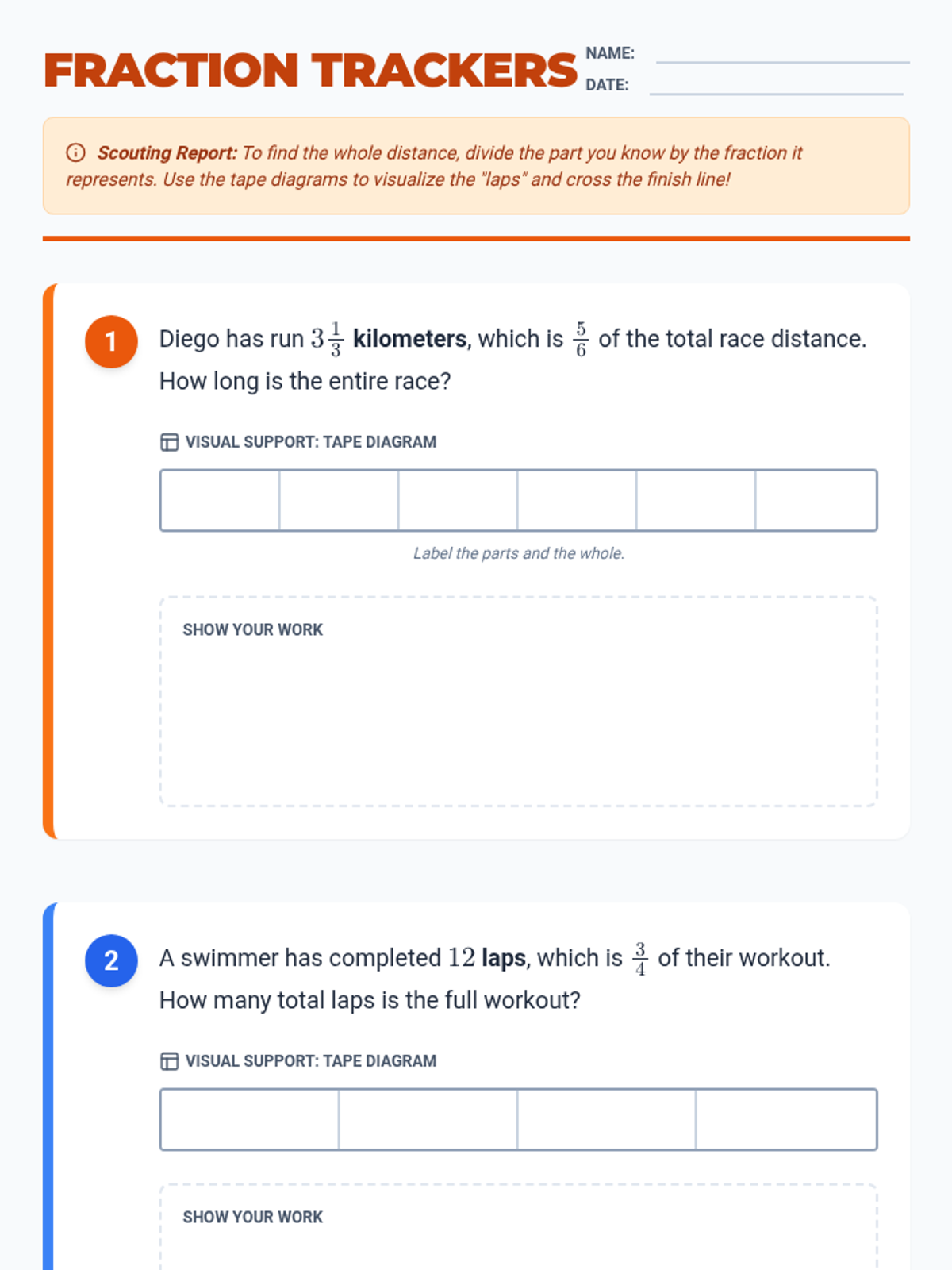
A lesson focused on solving word problems where a quantity is a fraction of an unknown whole, using visual models like tape diagrams and double number lines.
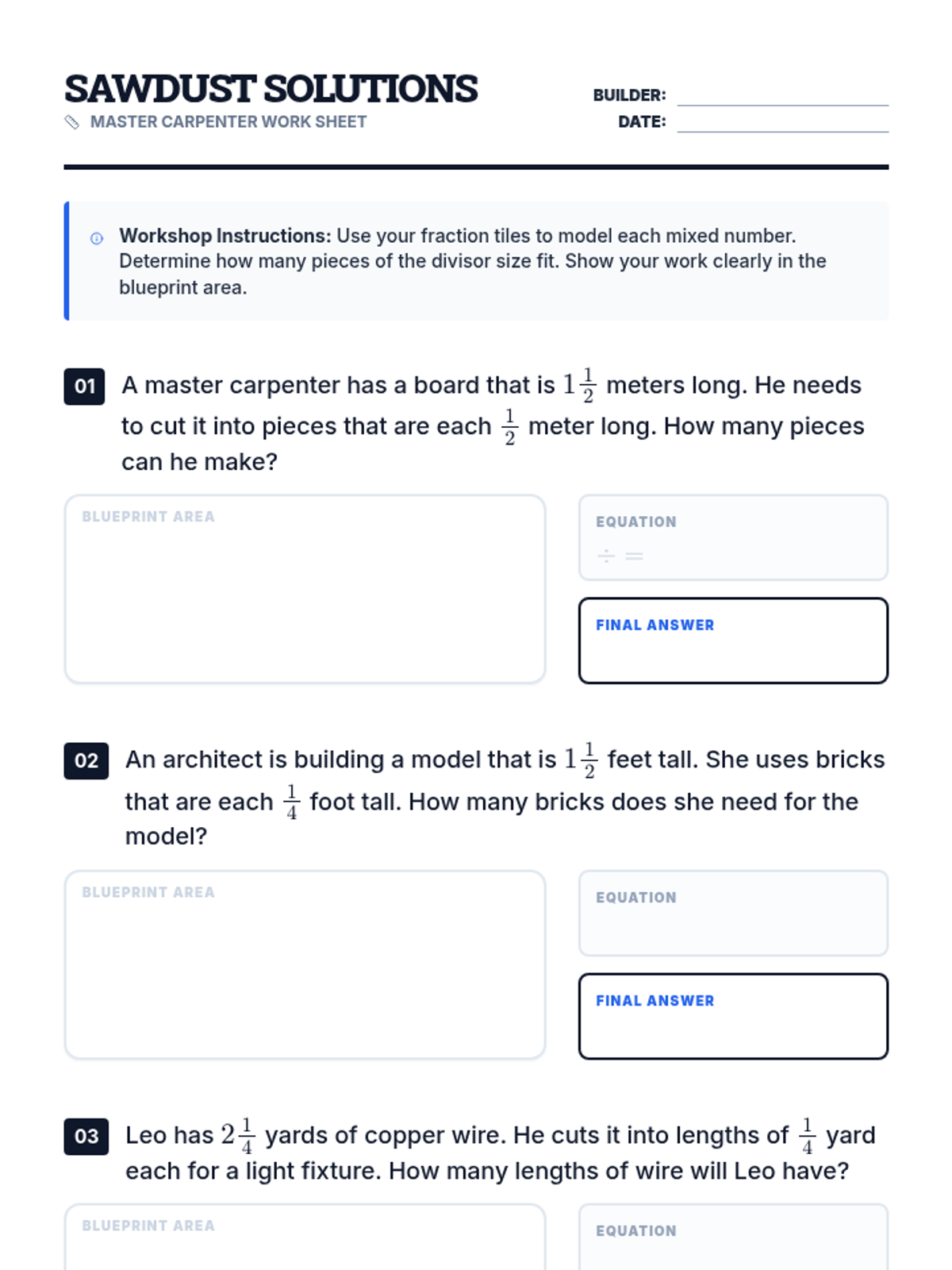
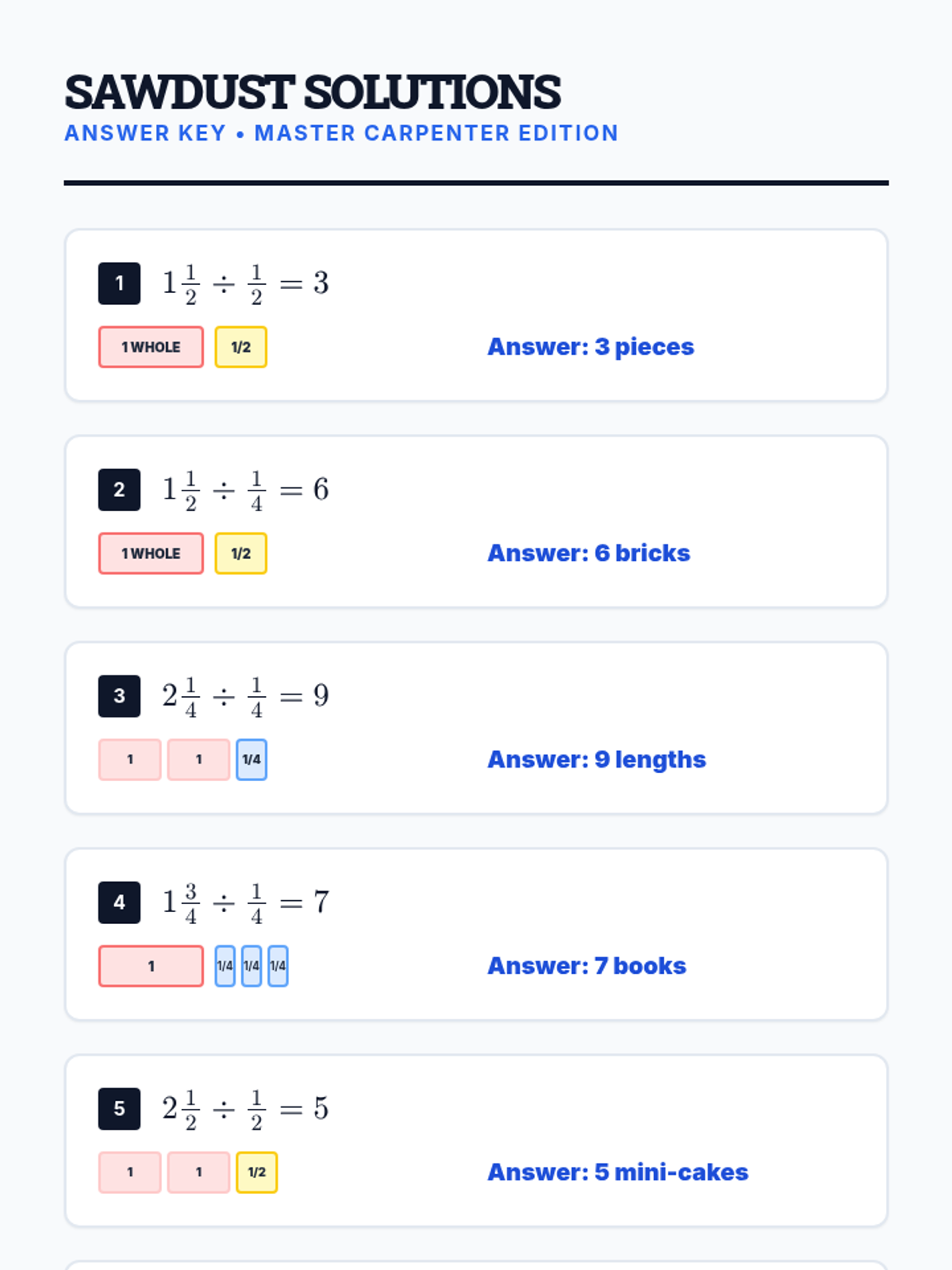
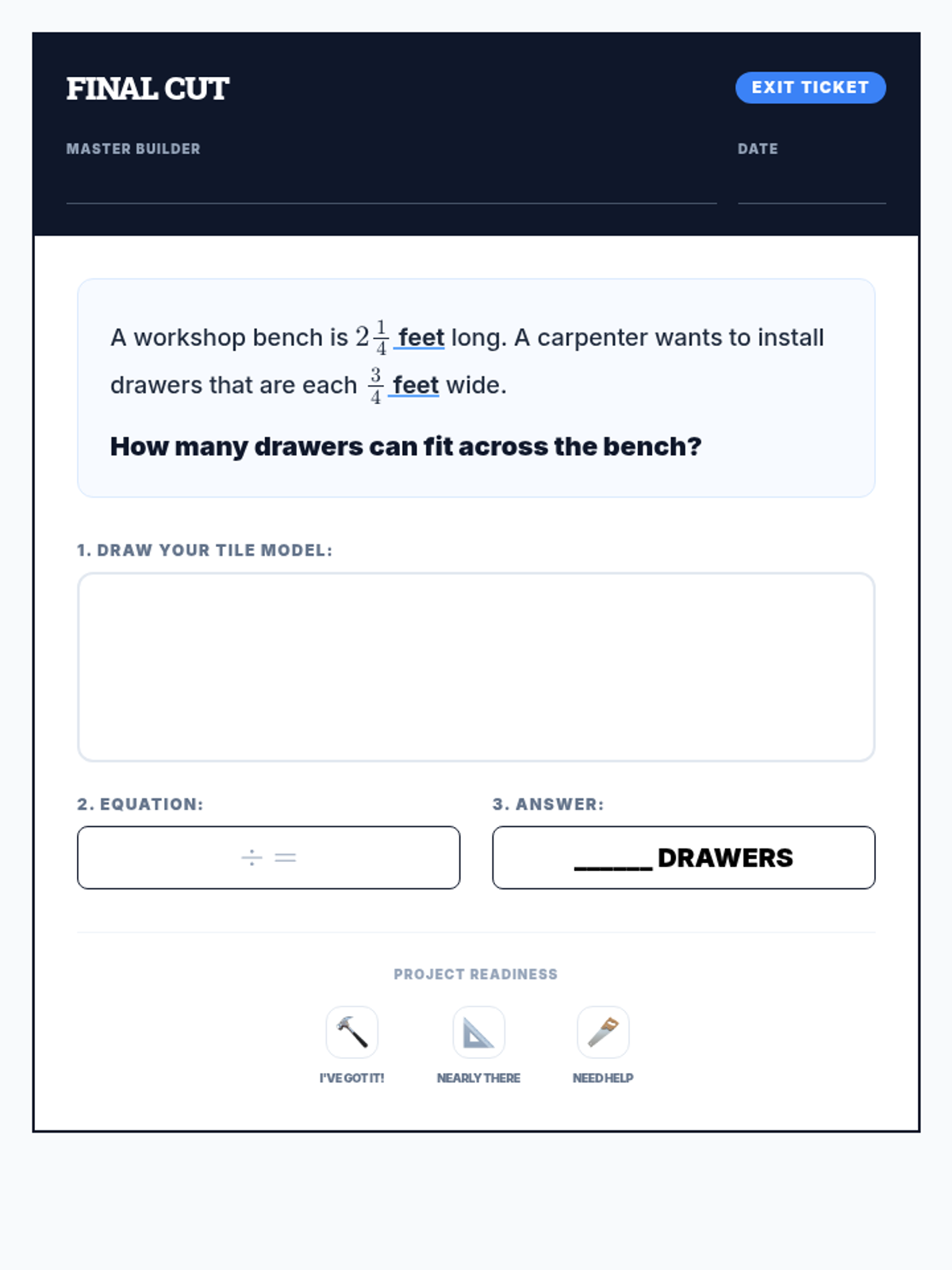
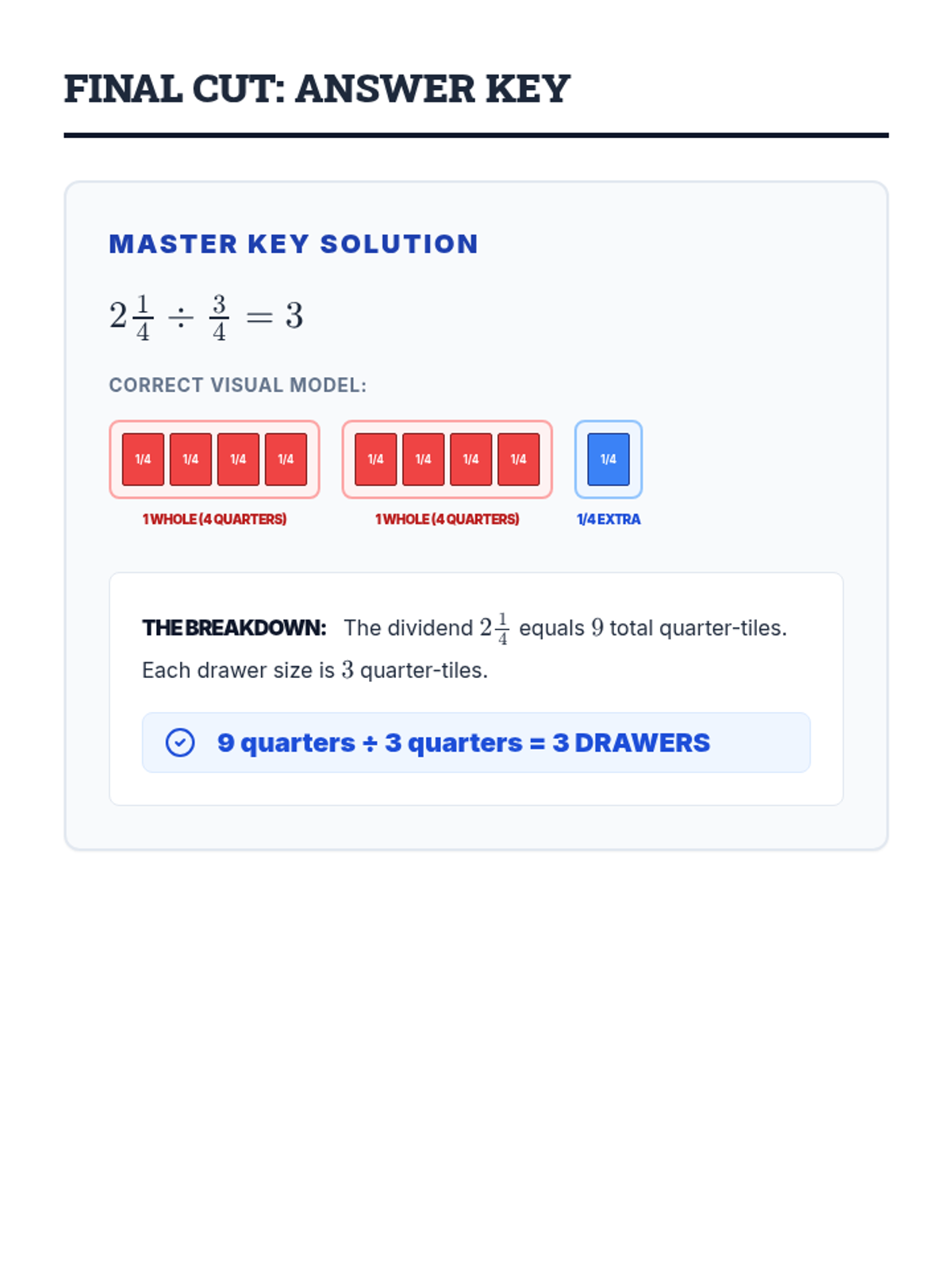
A lesson focused on using visual fraction models (tiles) to solve word problems involving mixed numbers divided by fractions. Students will learn to represent the dividend with tiles and determine how many divisor groups fit.
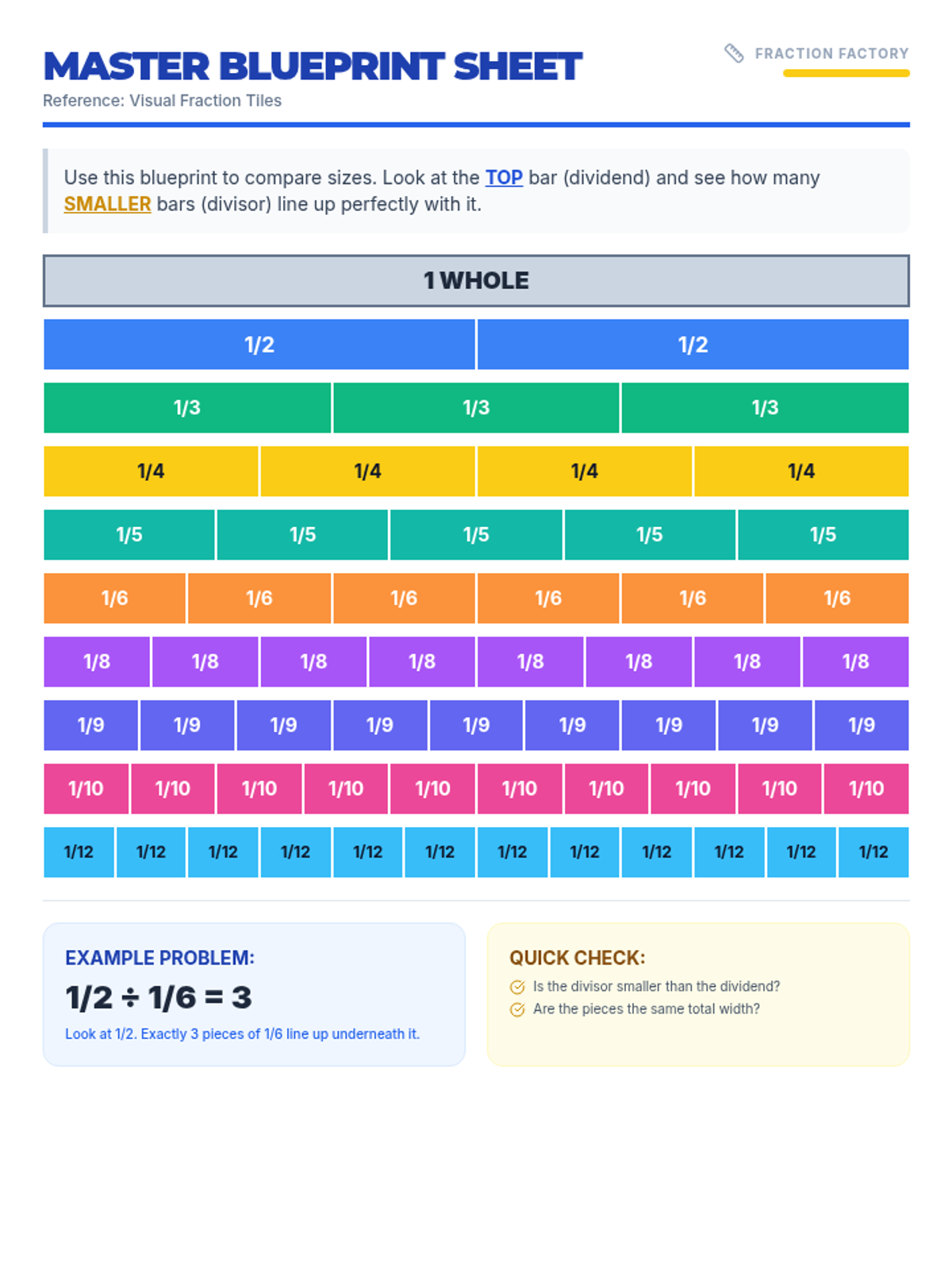
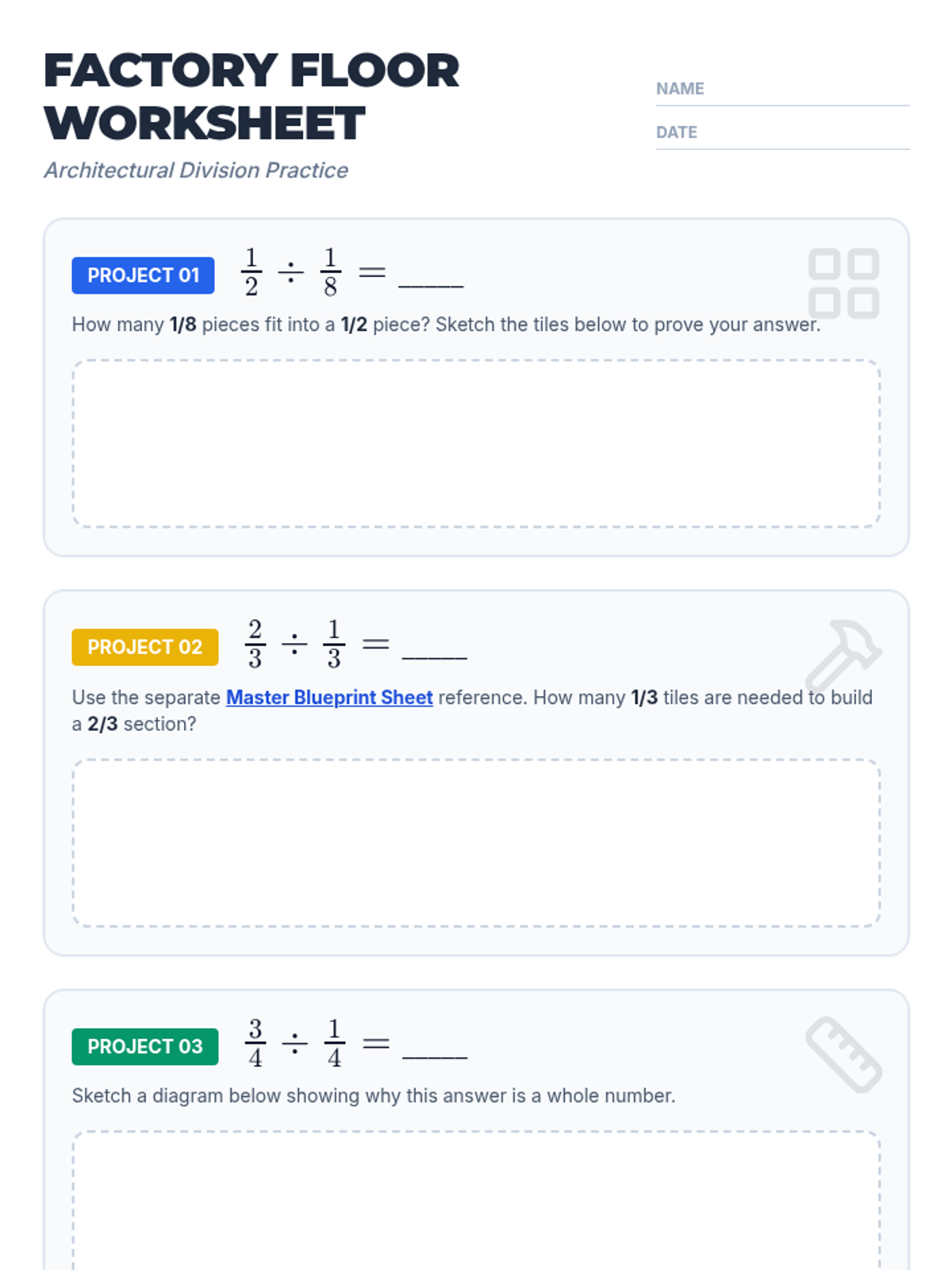
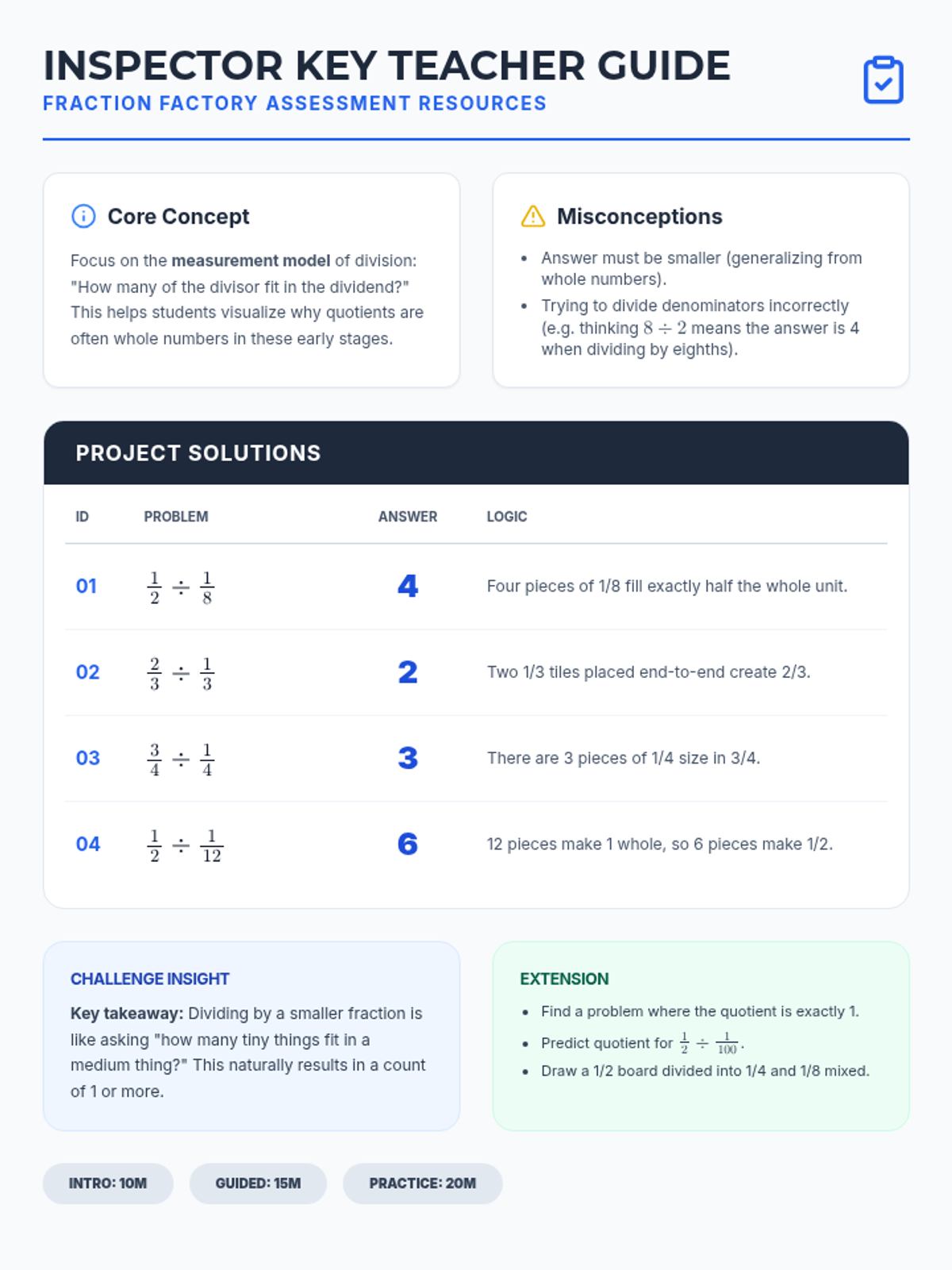
A conceptual introduction to dividing fractions less than one using fraction tiles to visualize how many smaller parts fit into a larger part. Students will move beyond procedures to truly see the 'how many groups' relationship.
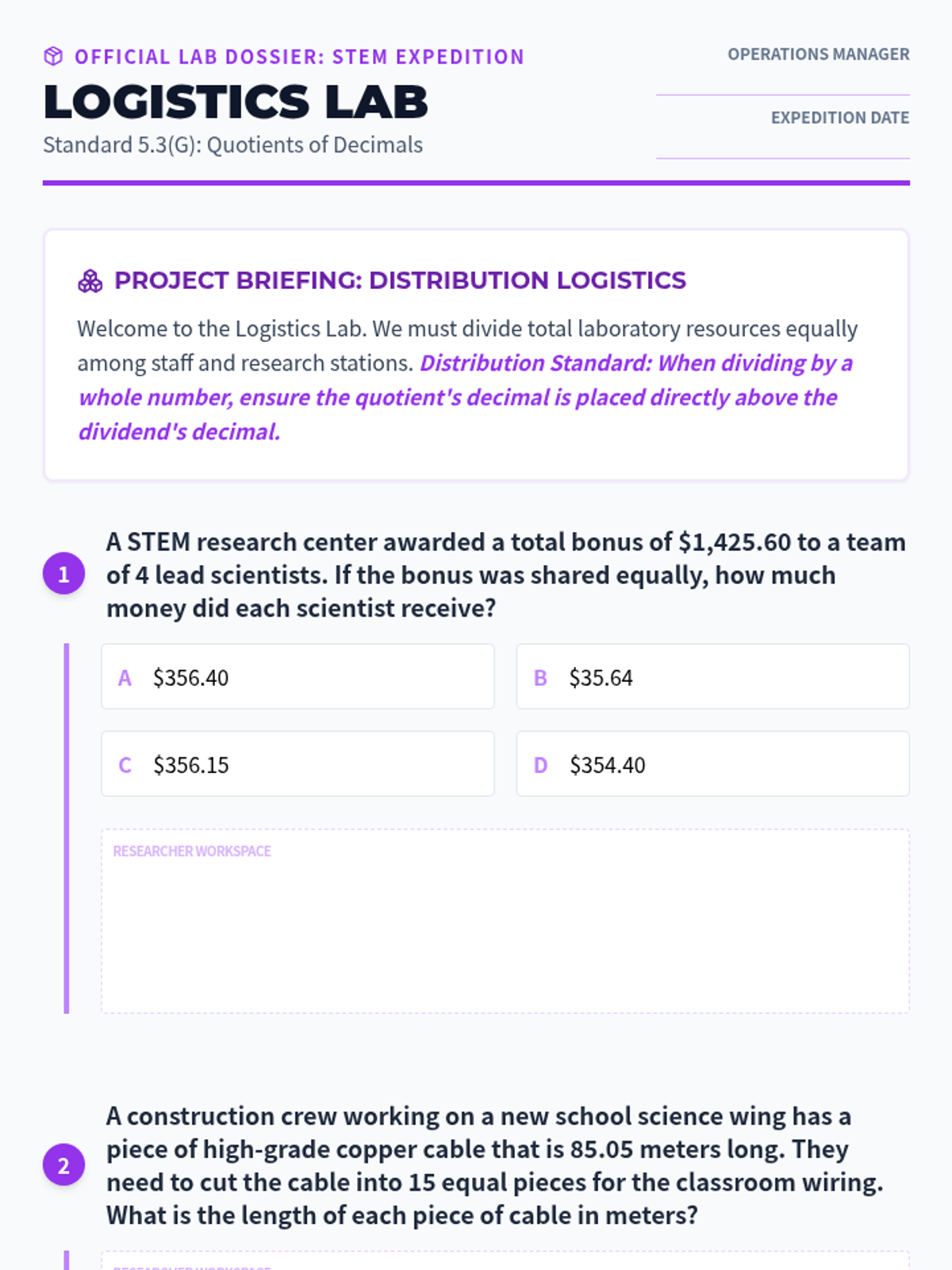
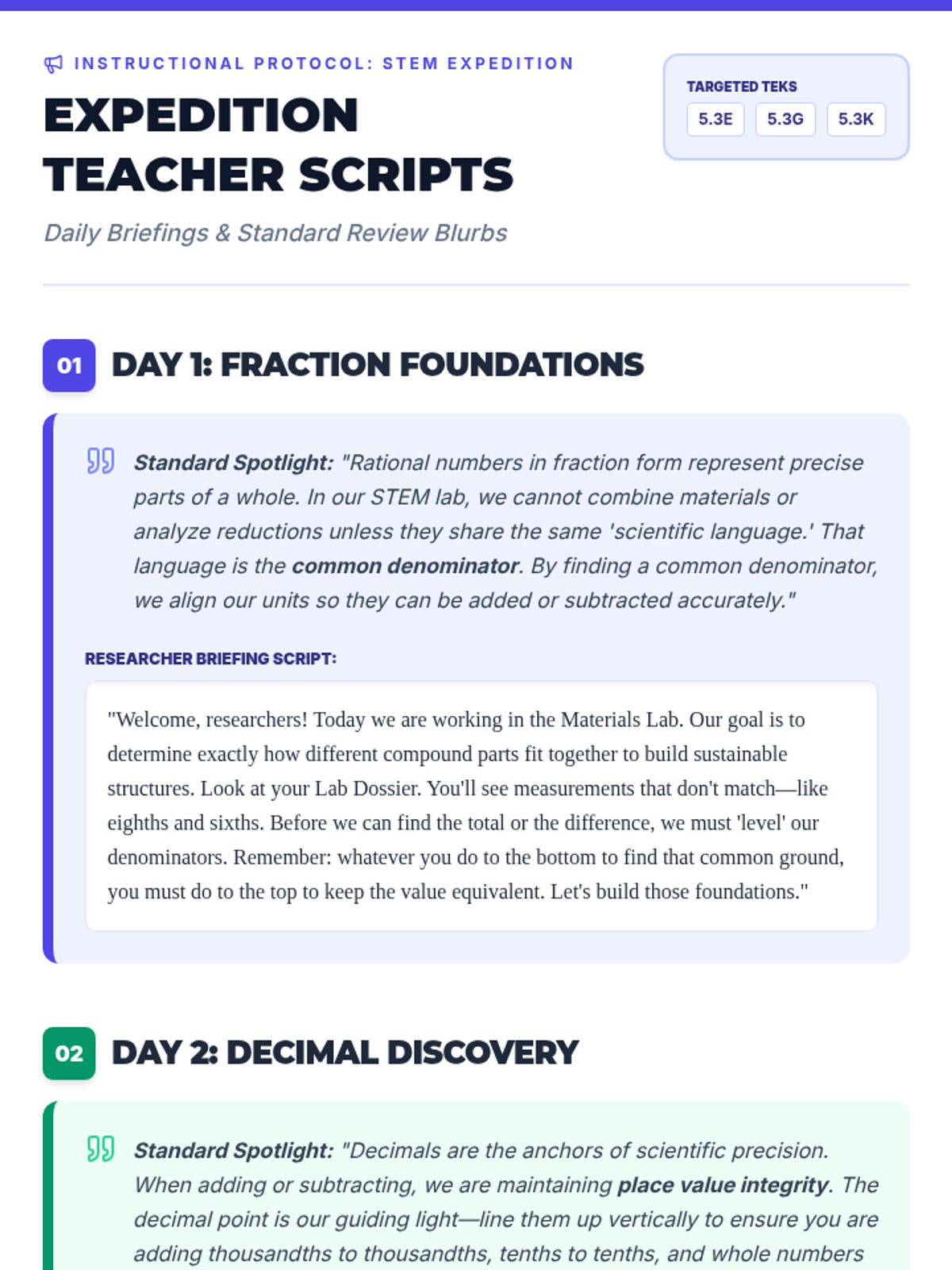
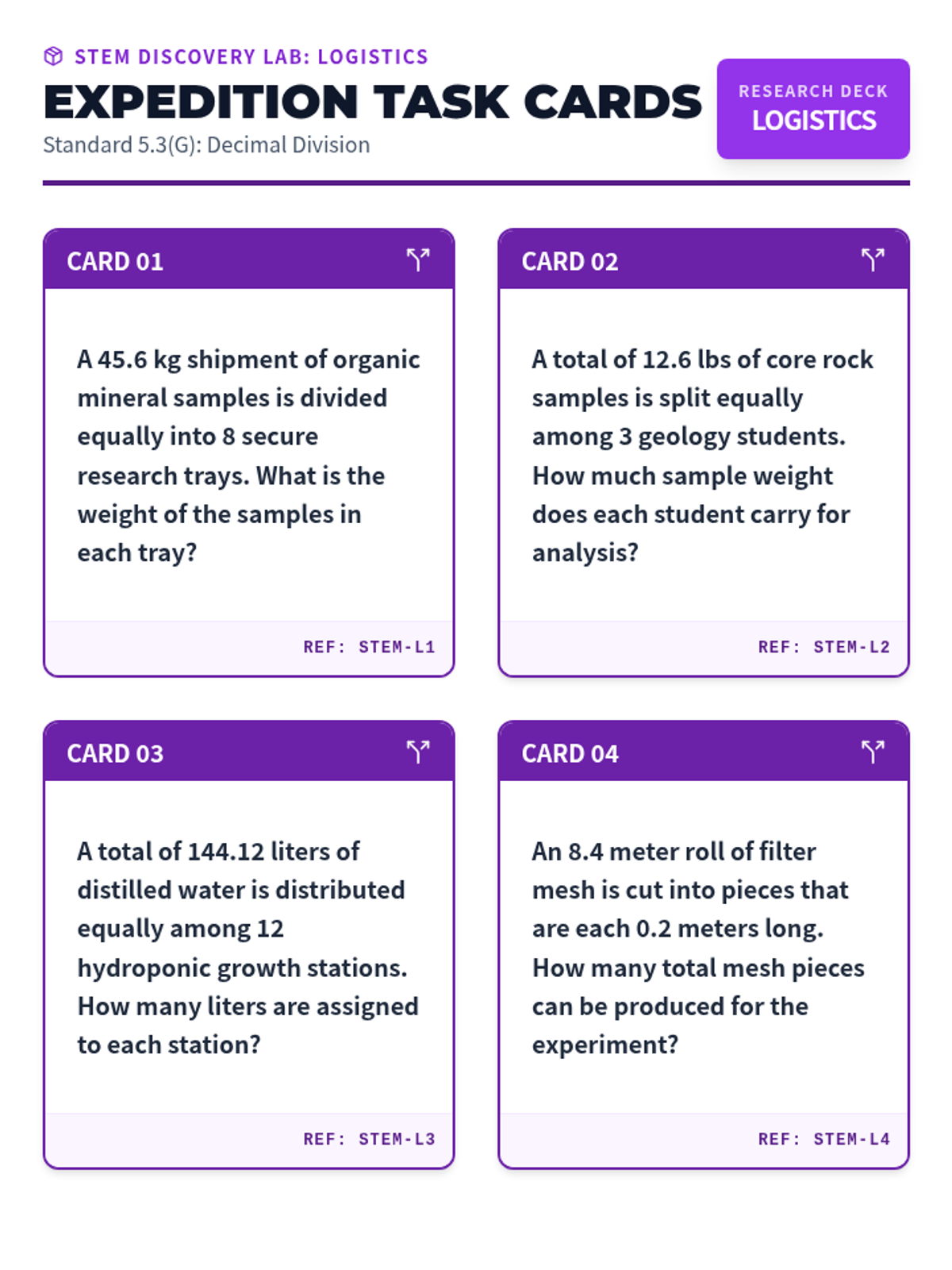
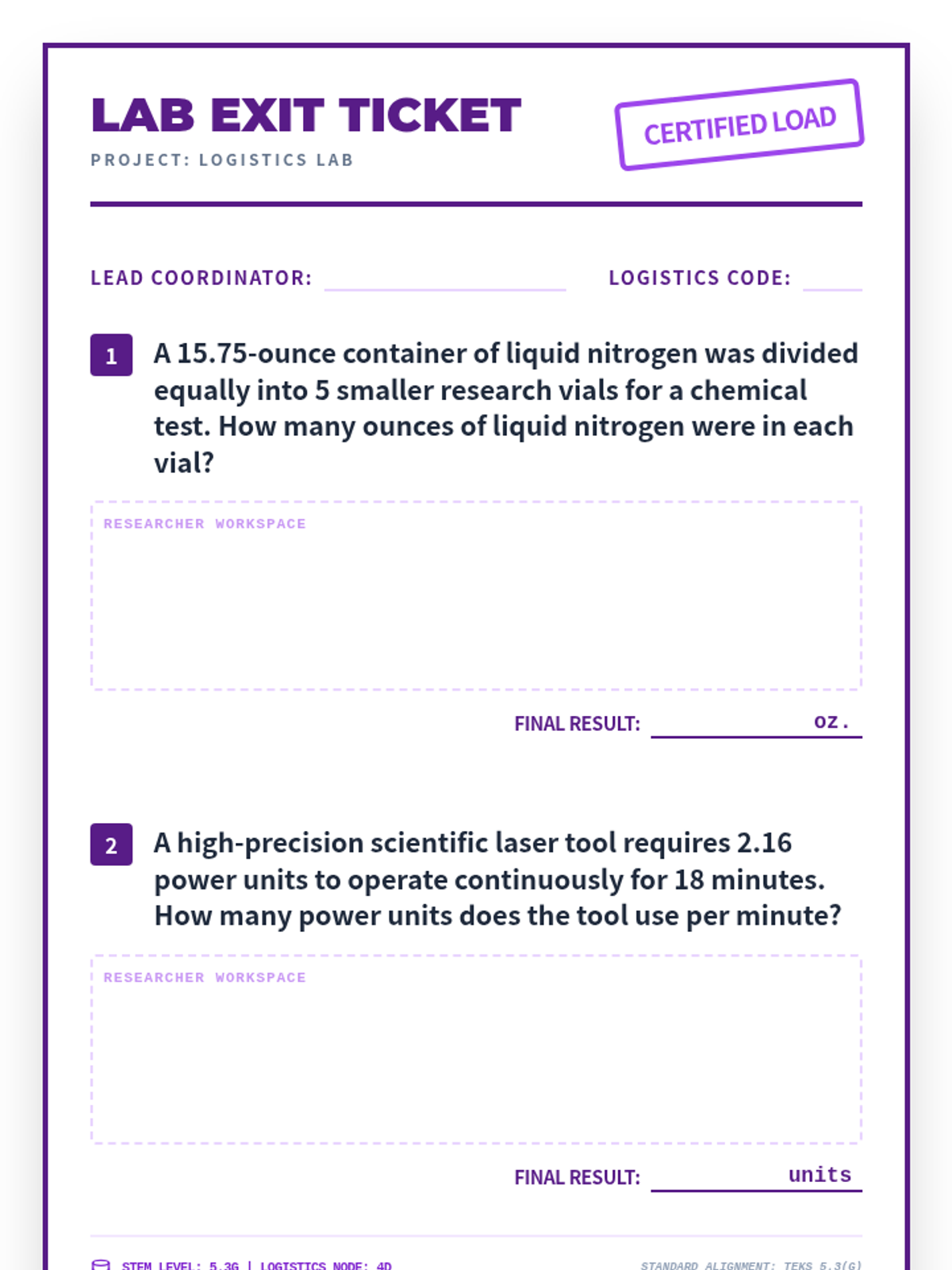
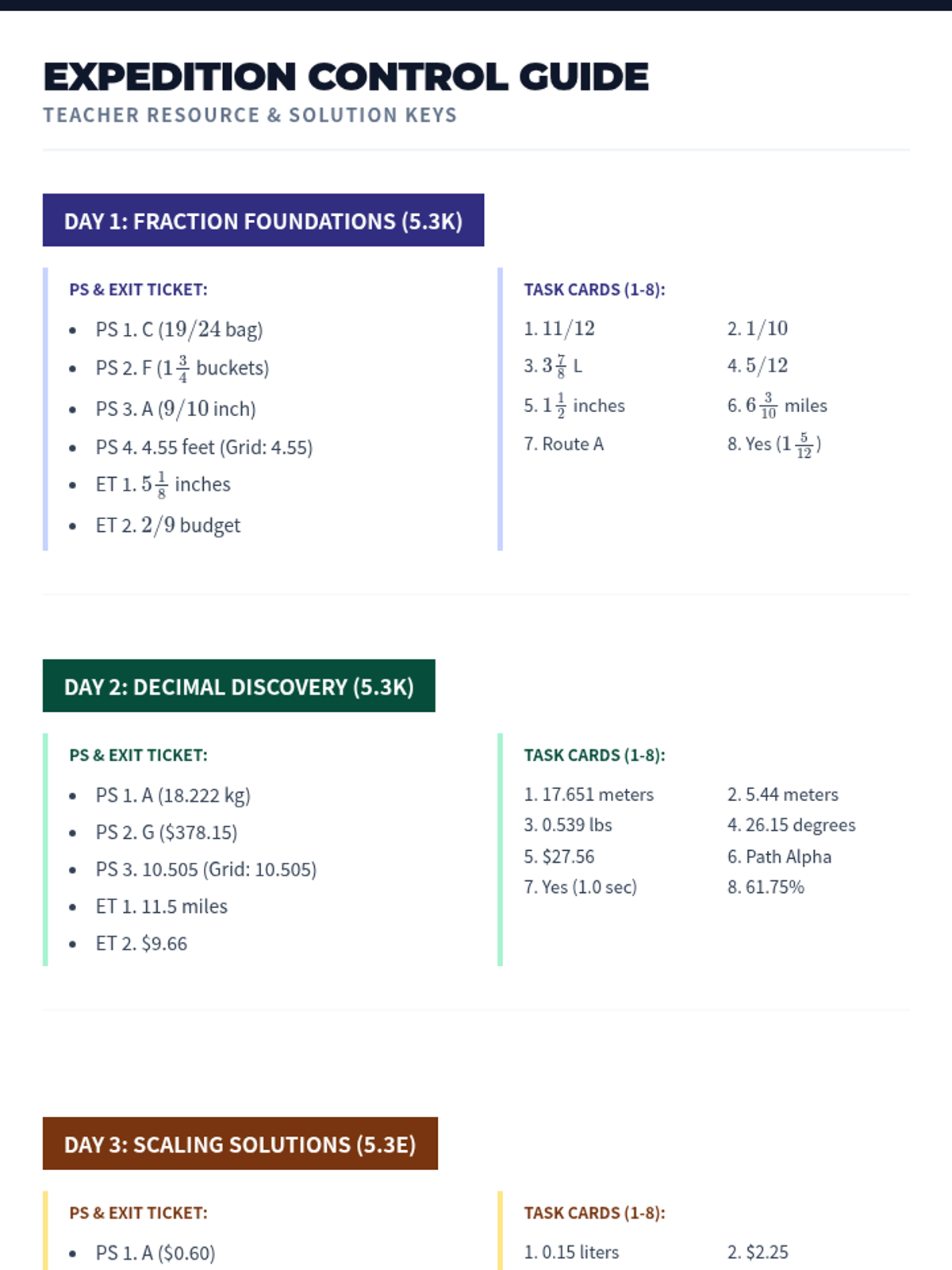
Solving for decimal quotients (5.3G) using distribution and logistics word problems.
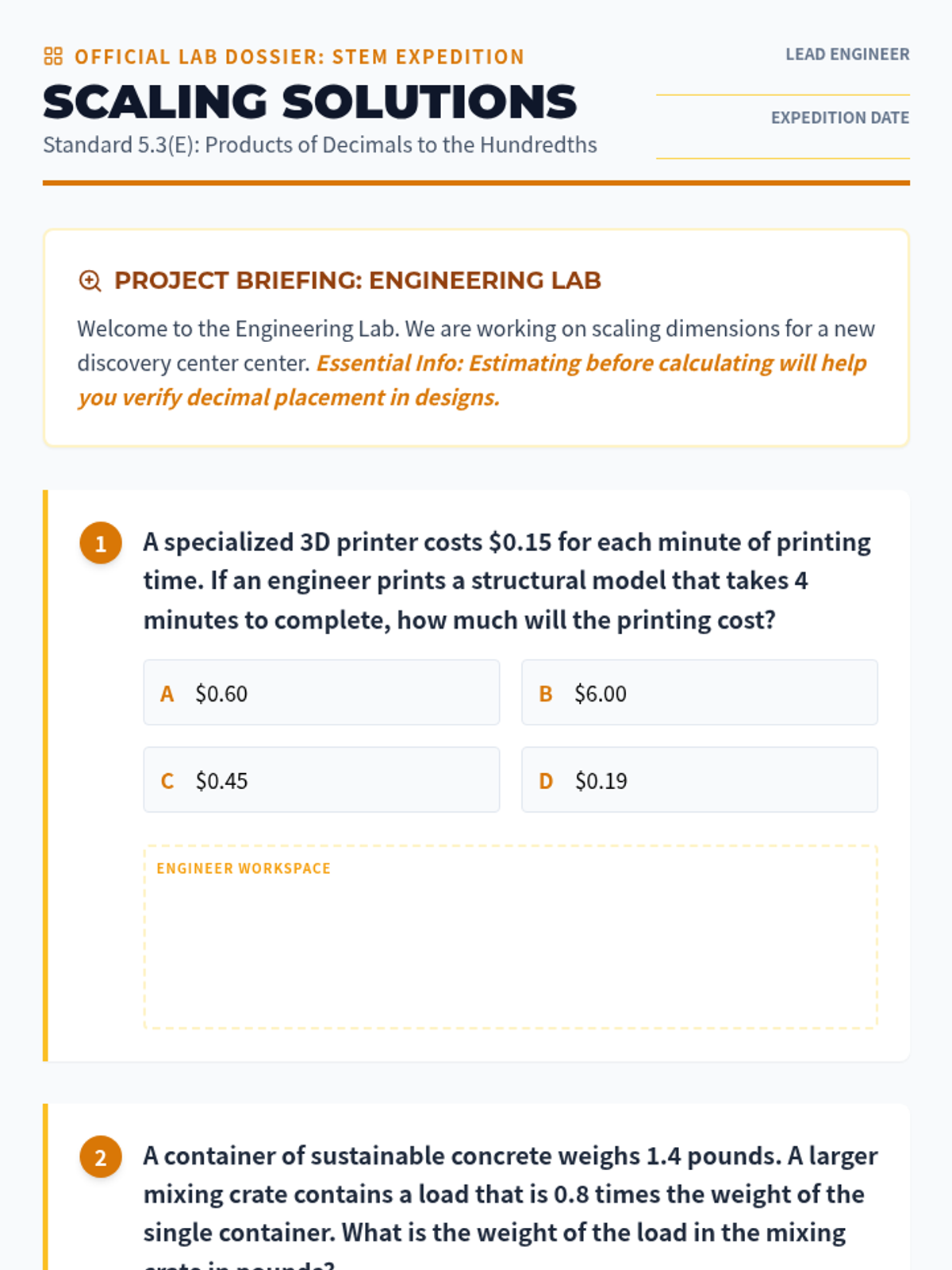
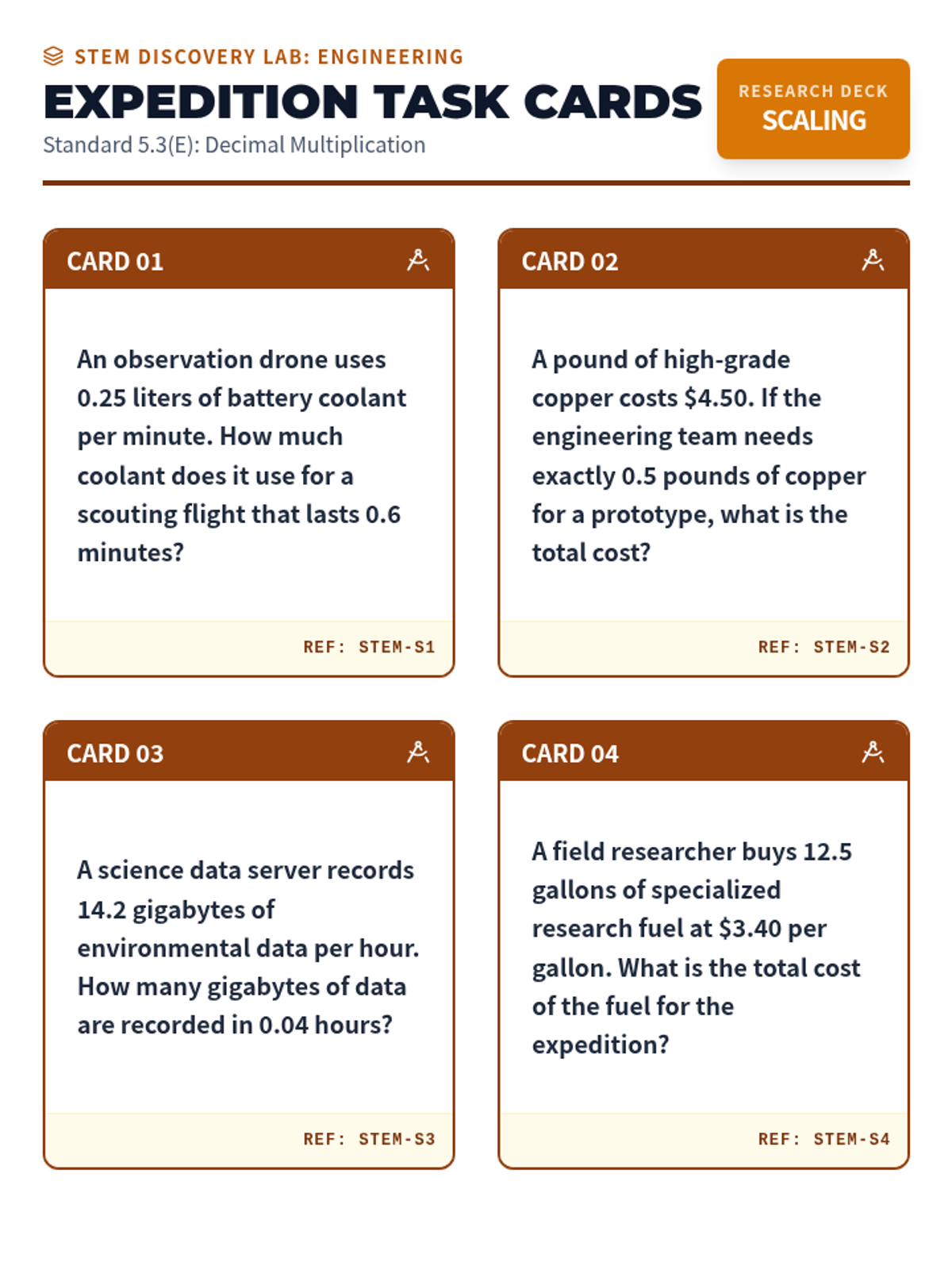
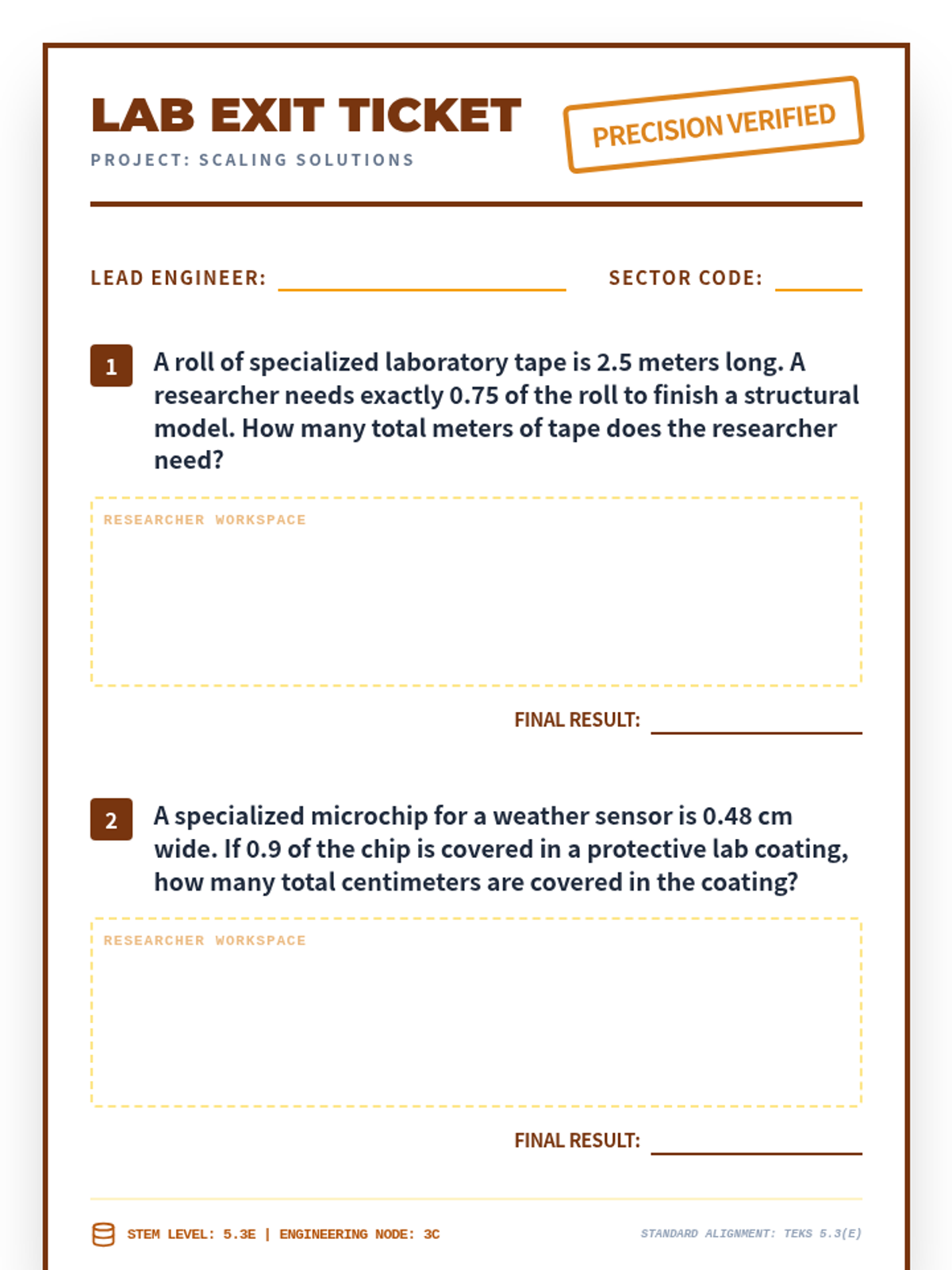
Mastering decimal multiplication (5.3E) through engineering and scaling word problems.
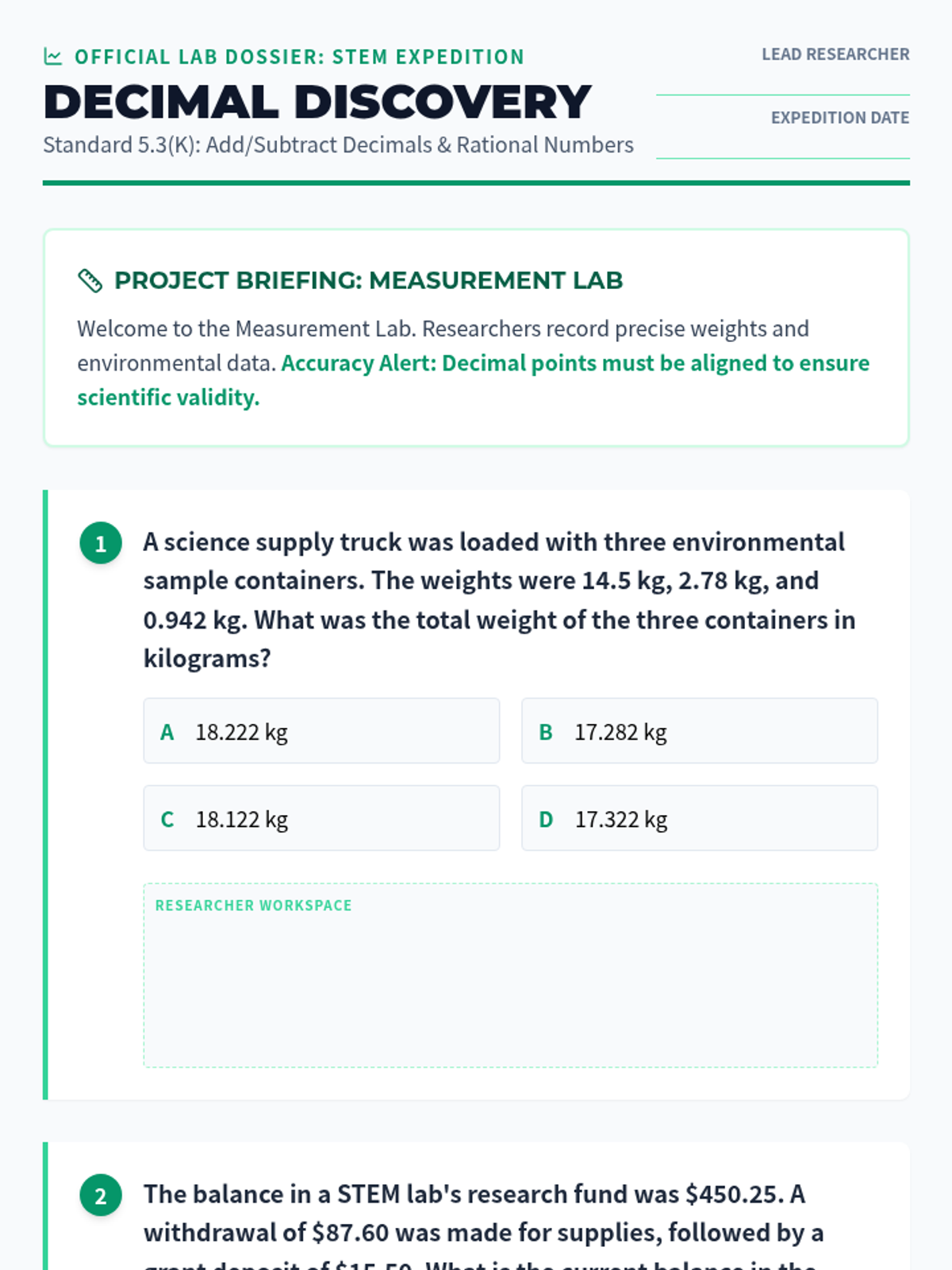
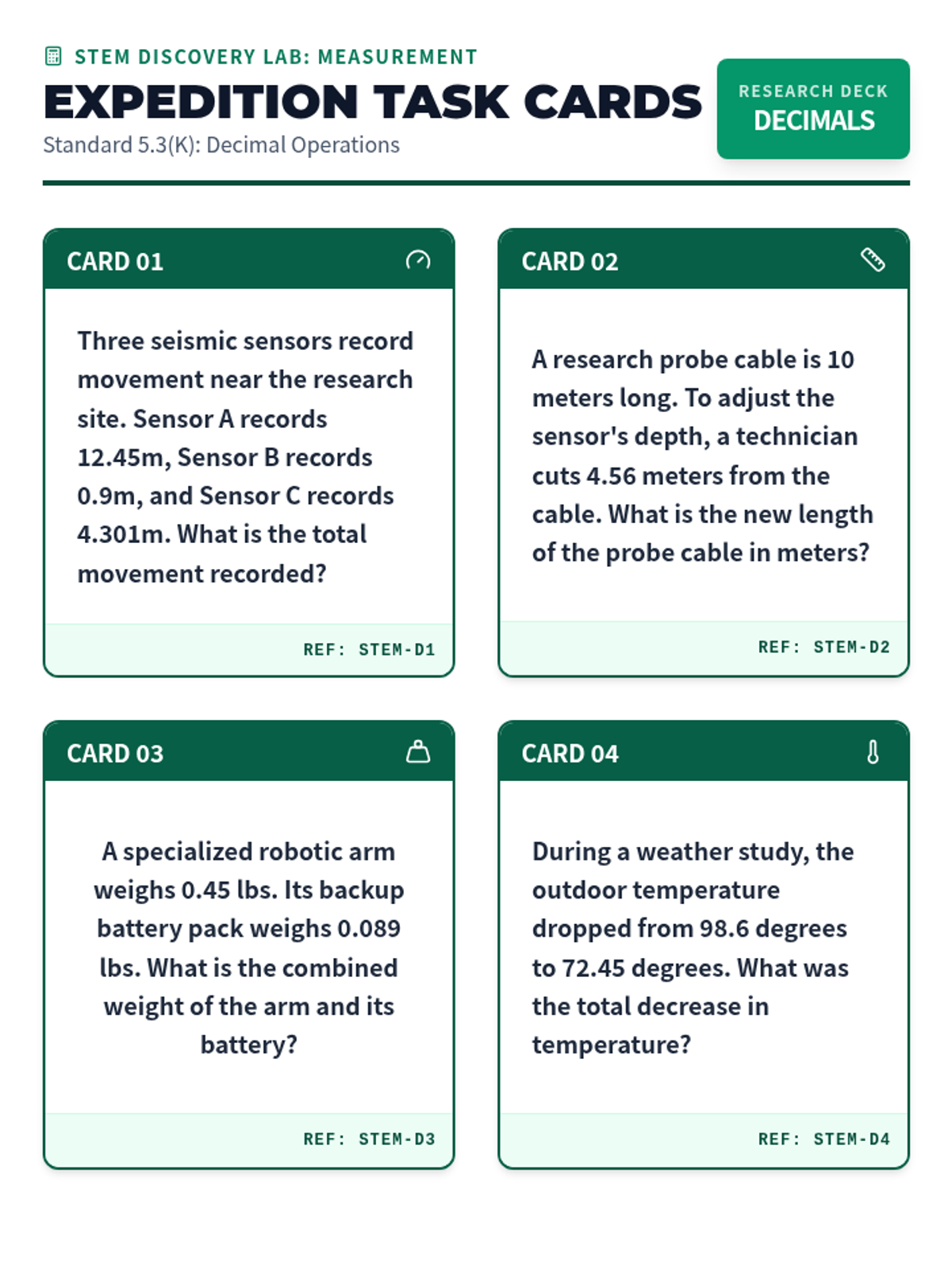
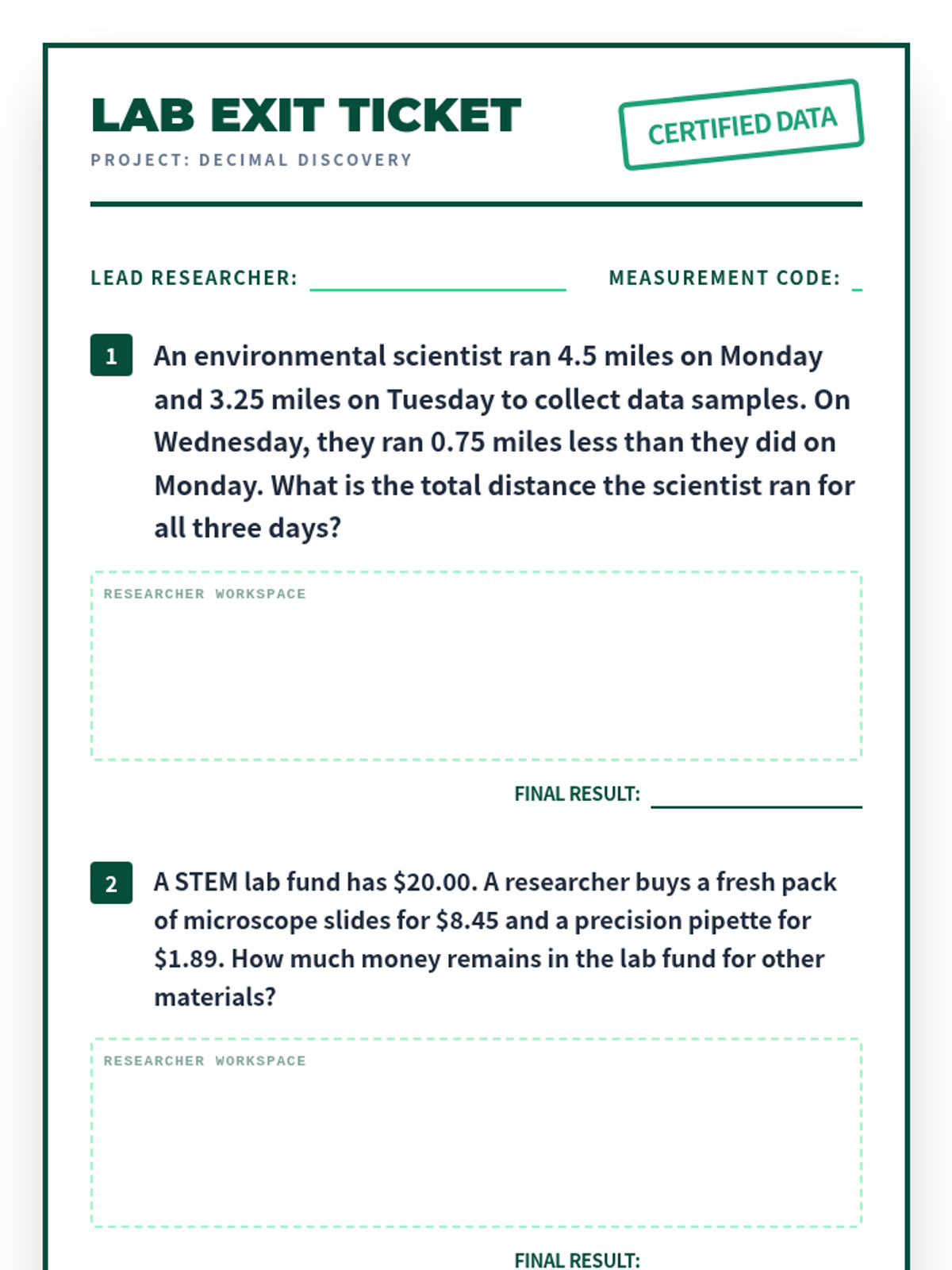
Deep dive into adding and subtracting decimals to the thousandths (5.3K) using measurement and data scenarios.
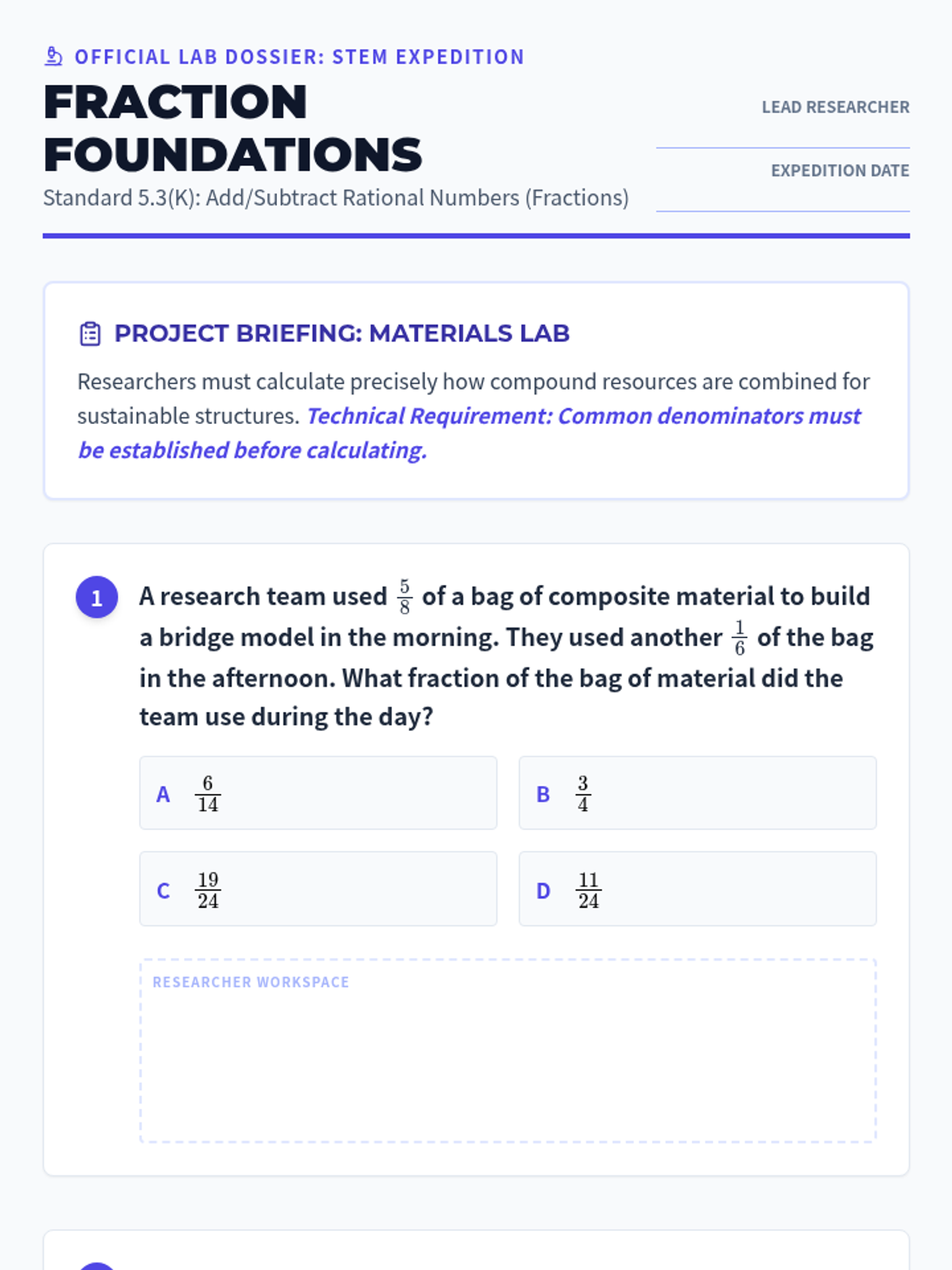
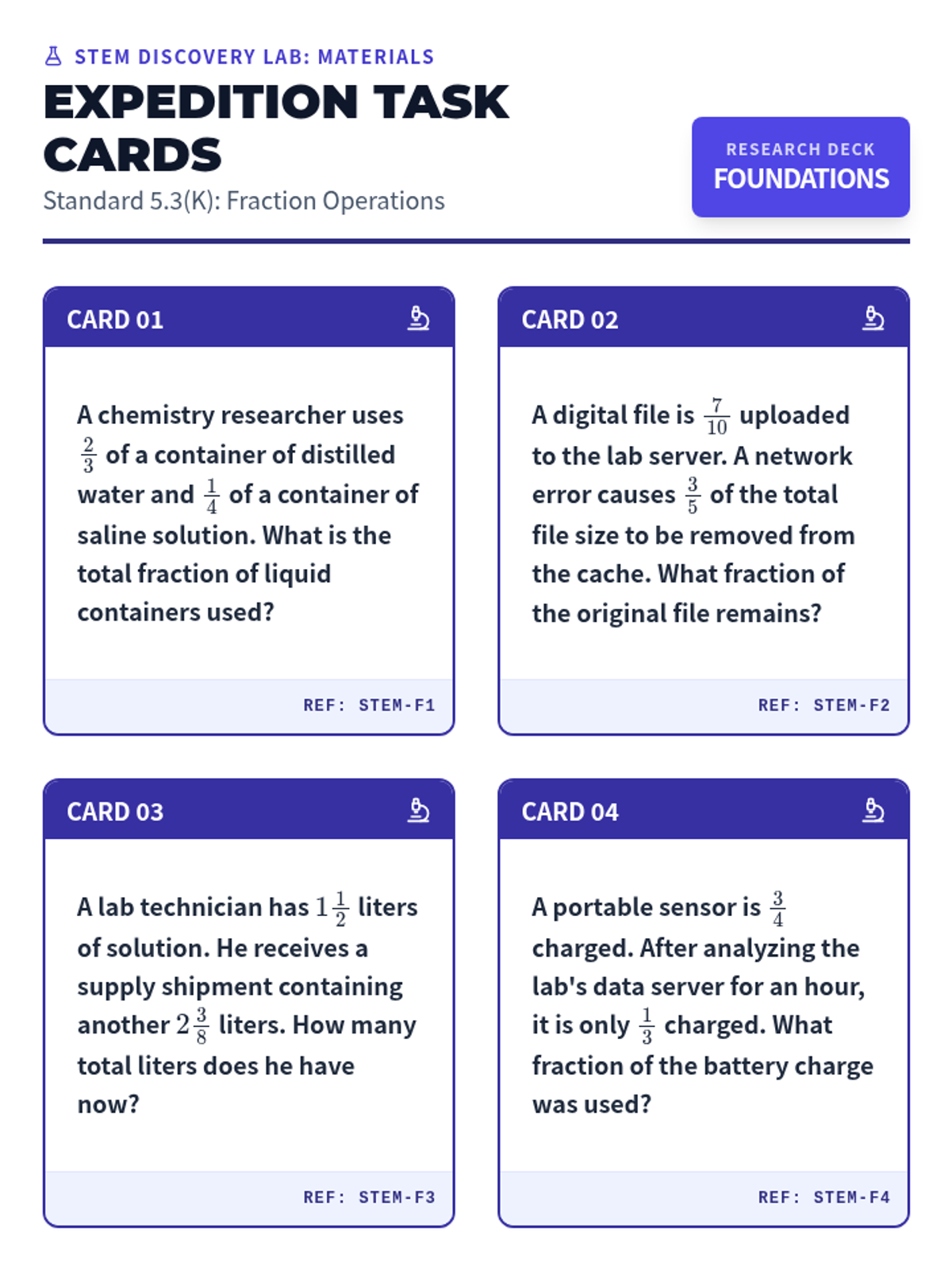
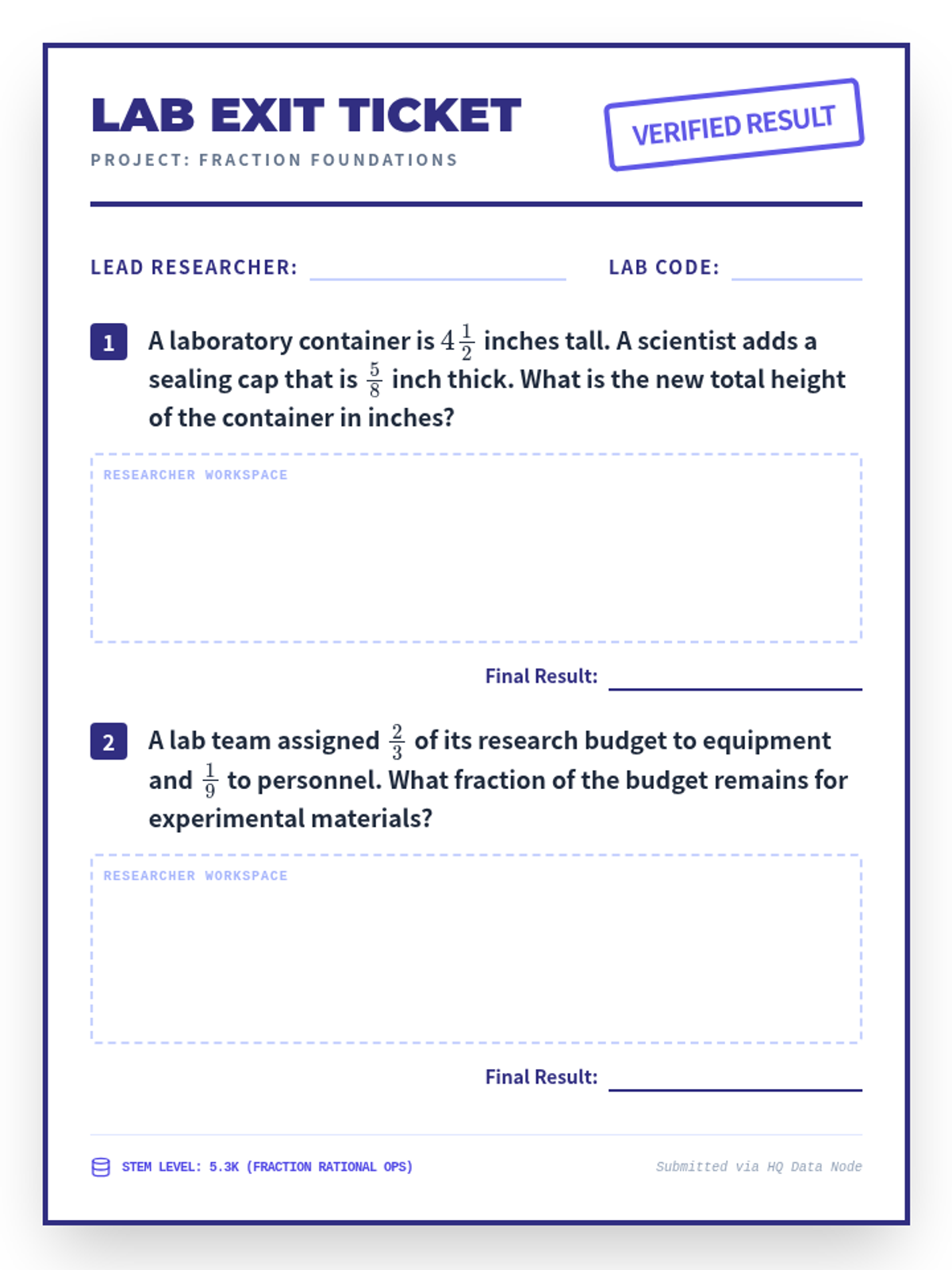
Focuses on adding and subtracting fractions with unequal denominators (5.3K) through lab-based word problems.
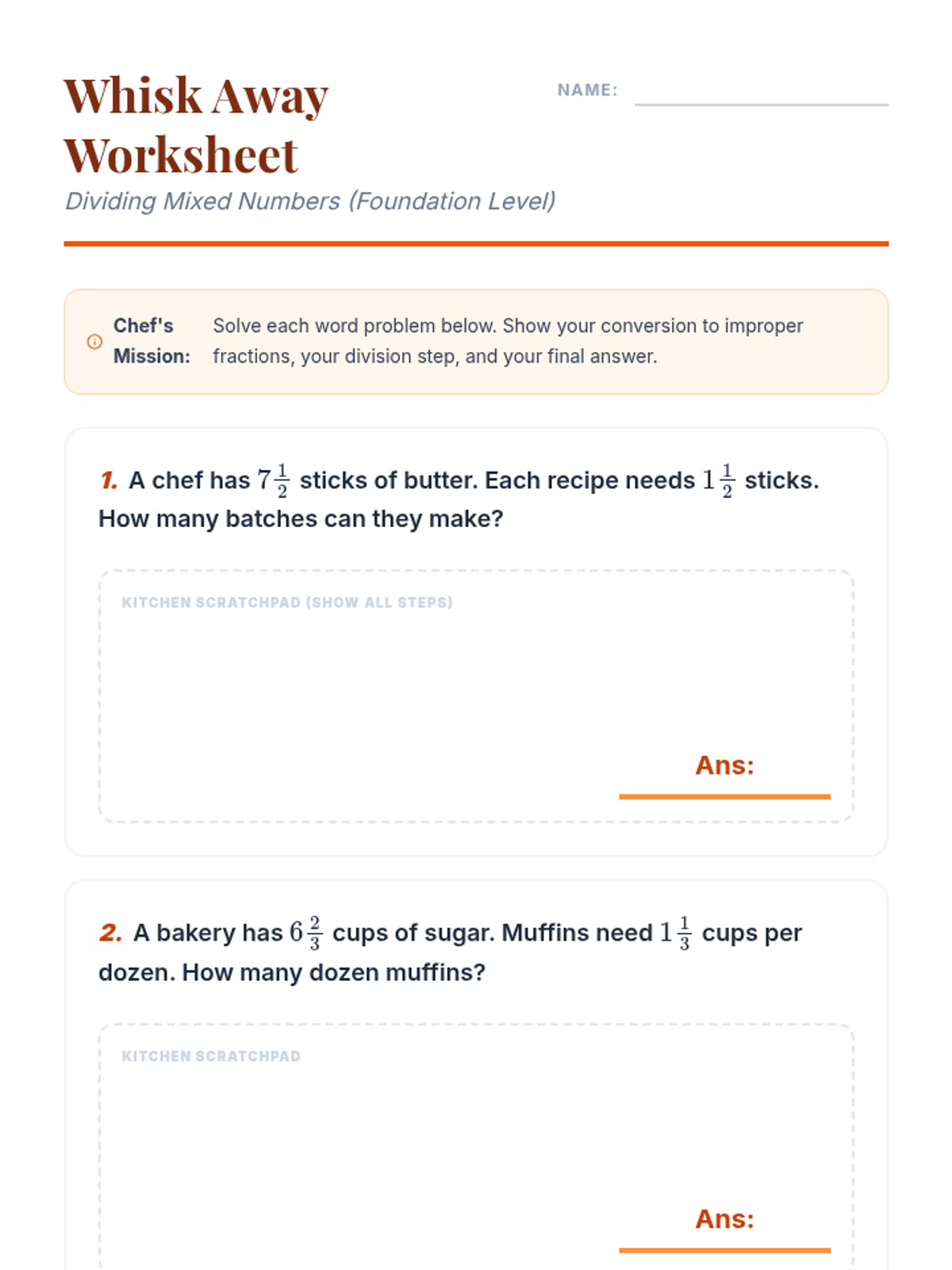
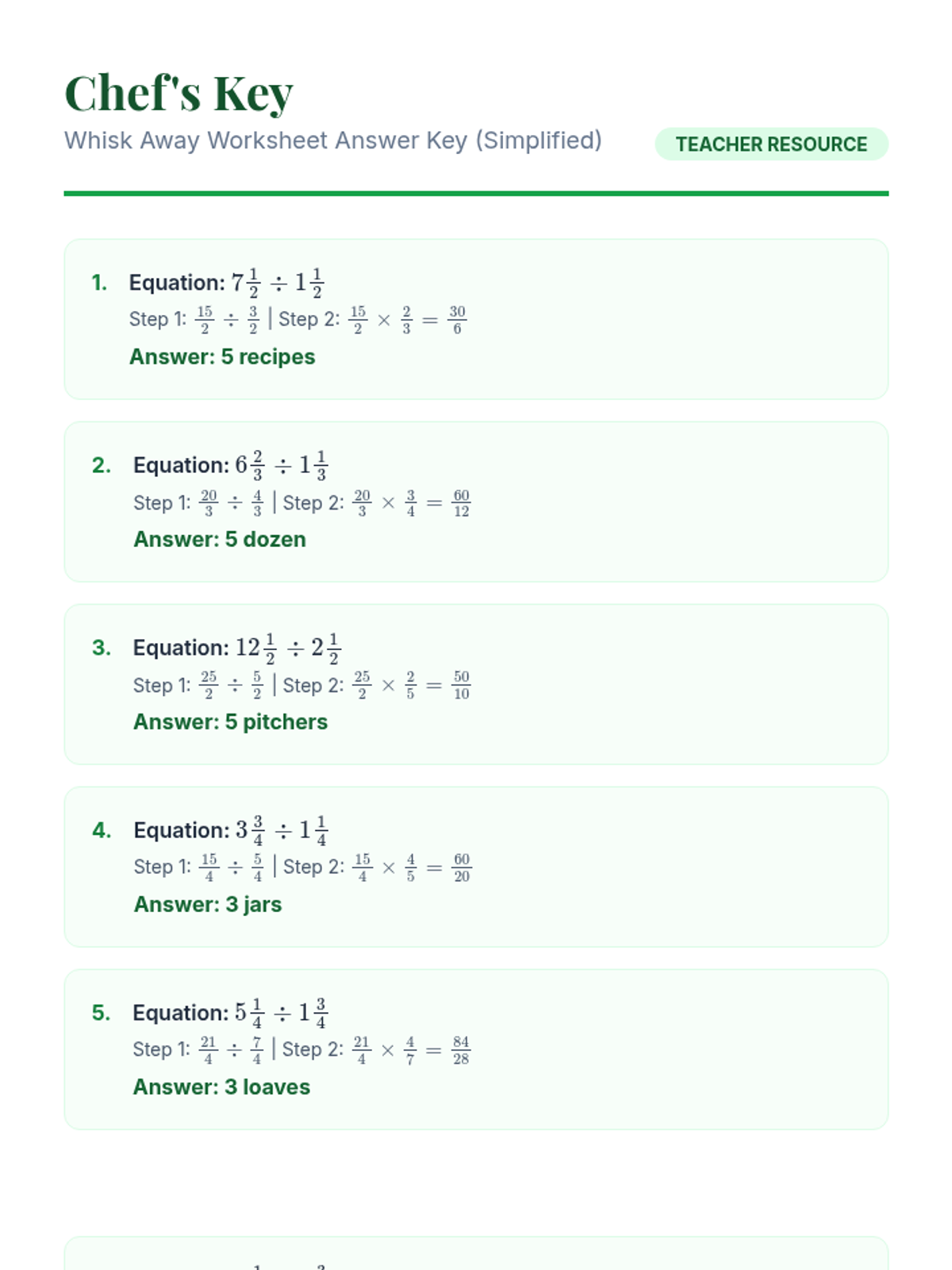
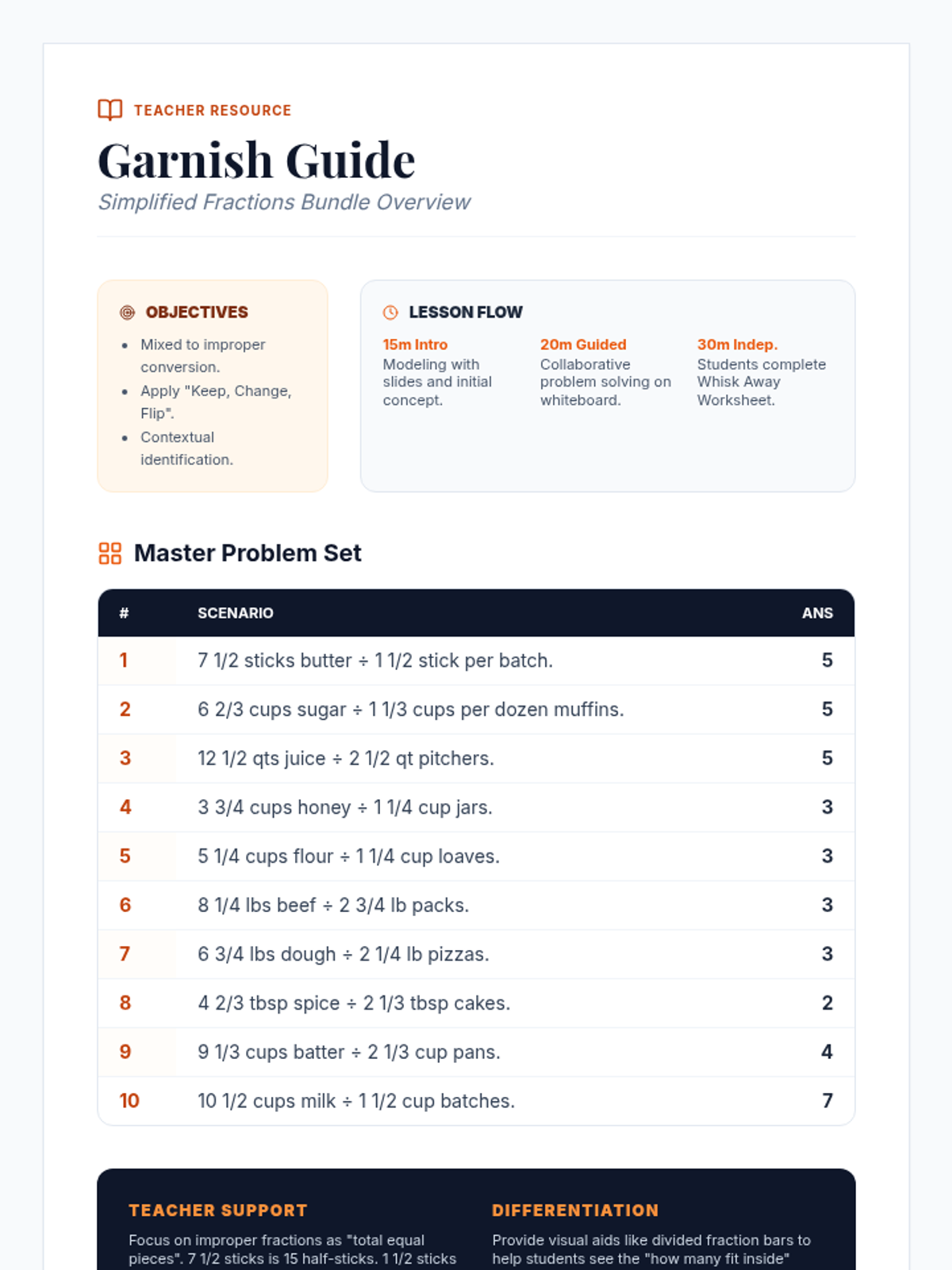
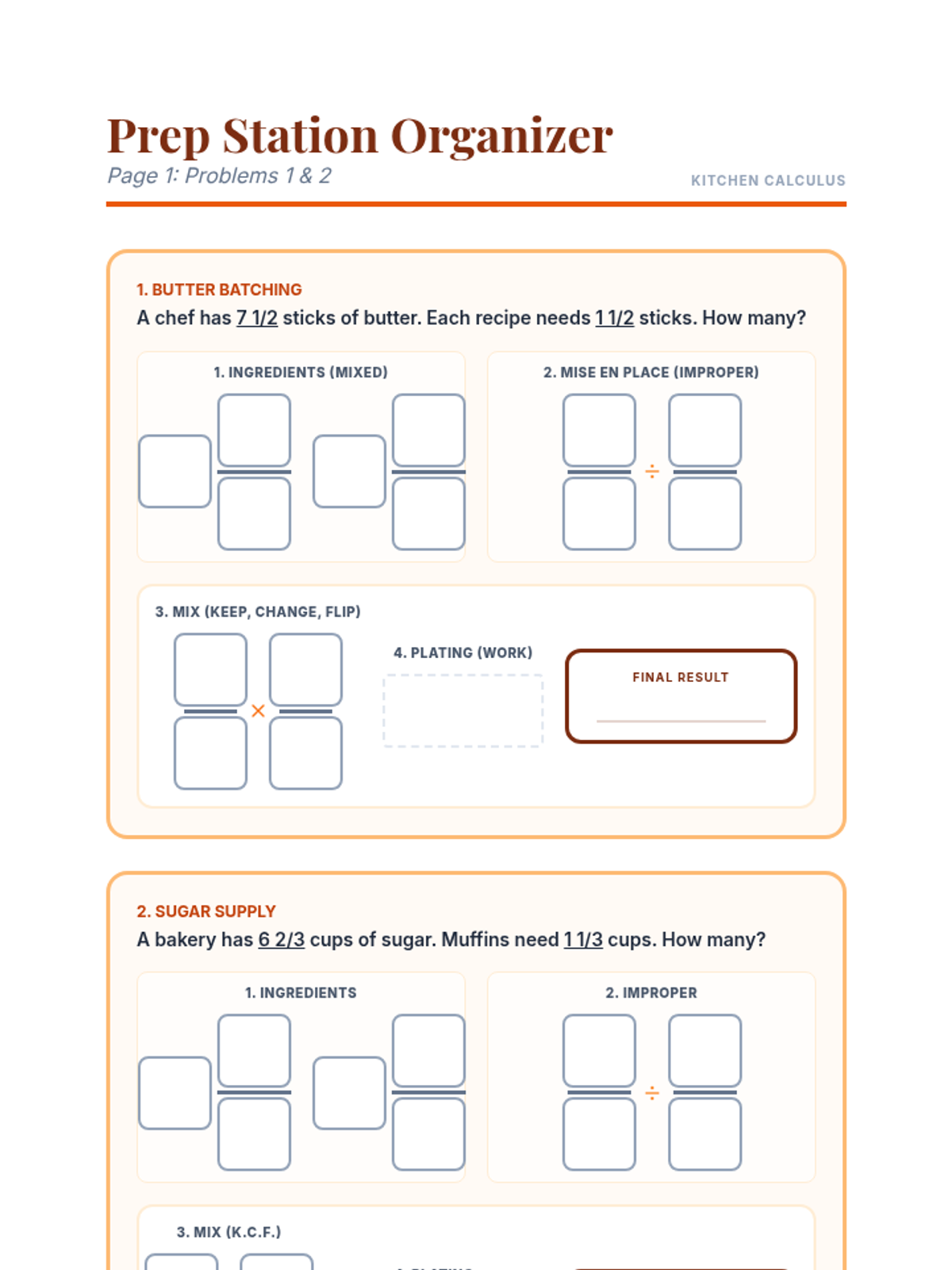
A math lesson focused on dividing mixed numbers through the lens of cooking and recipes, providing students with practical applications of fraction division.
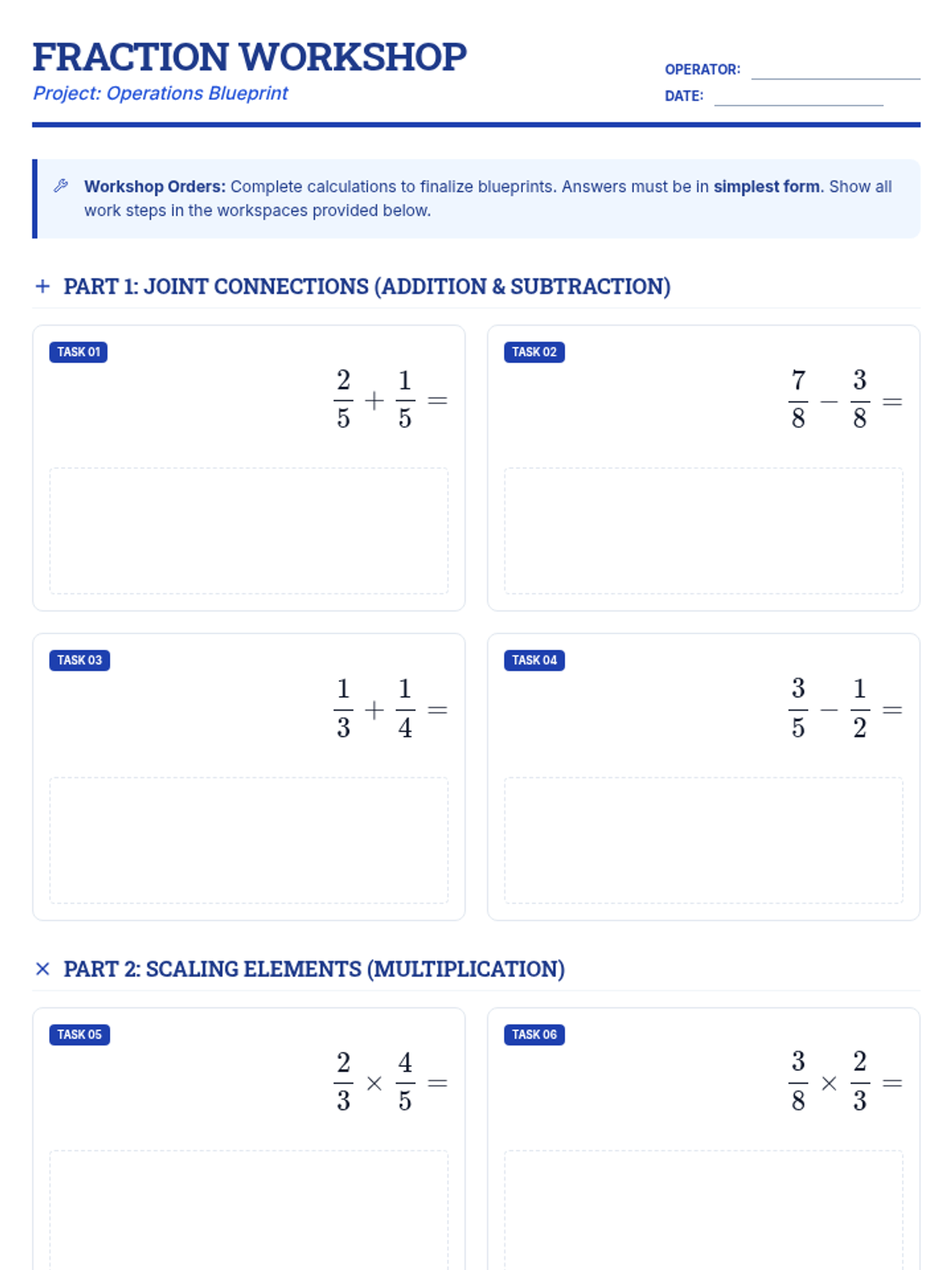
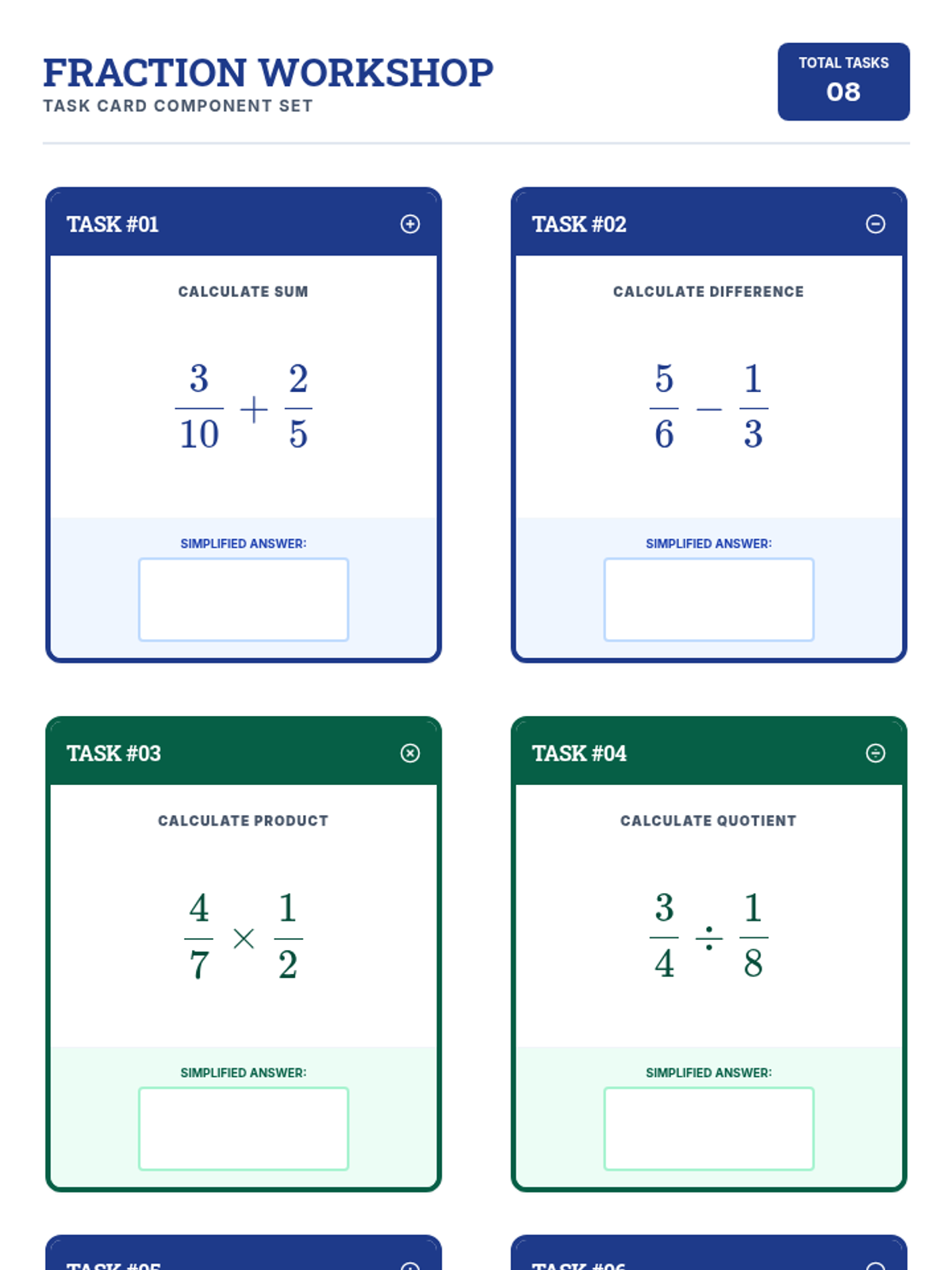
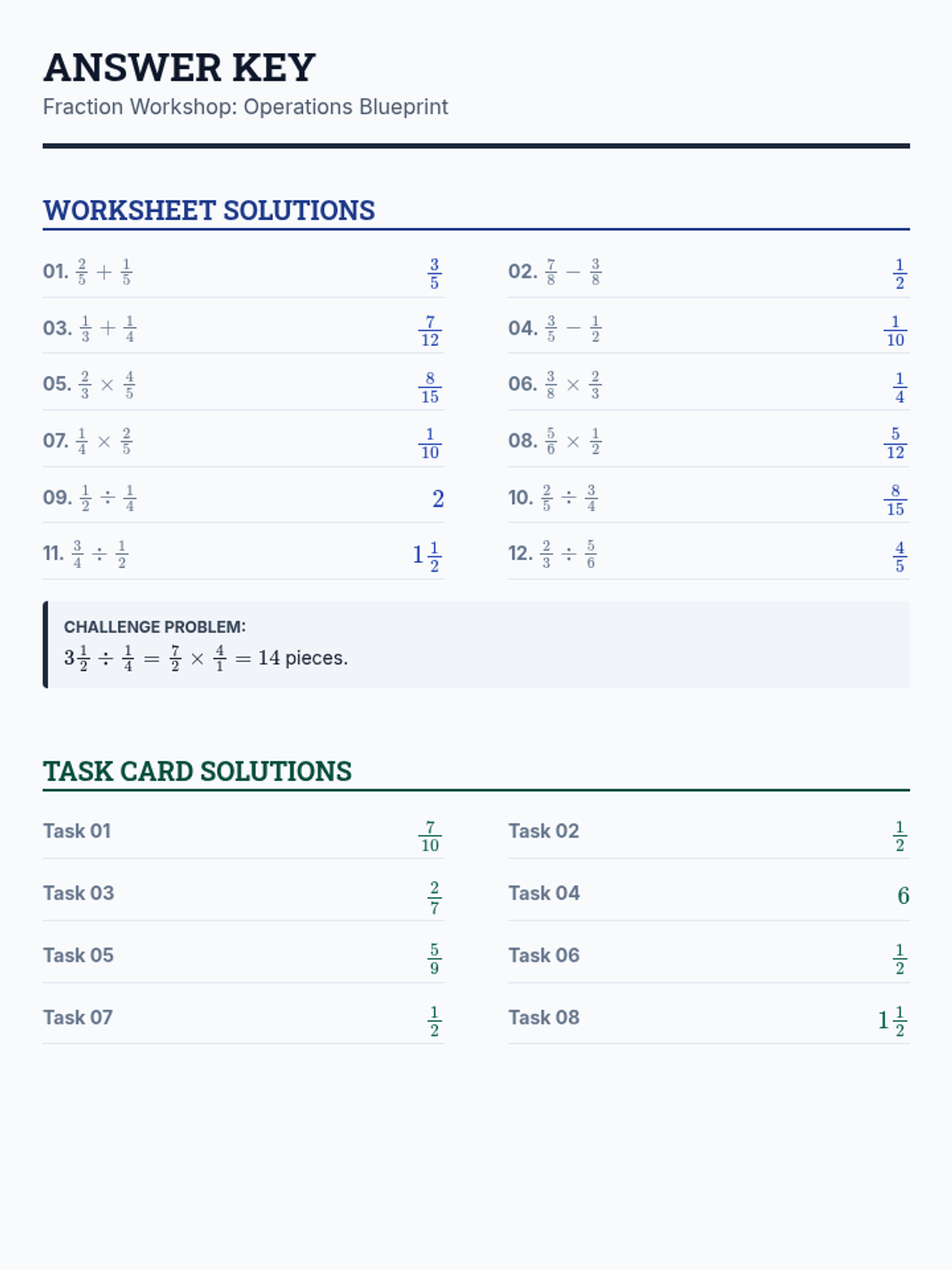
A comprehensive practice set for mastering the four basic operations with fractions, themed as an engineering workshop.
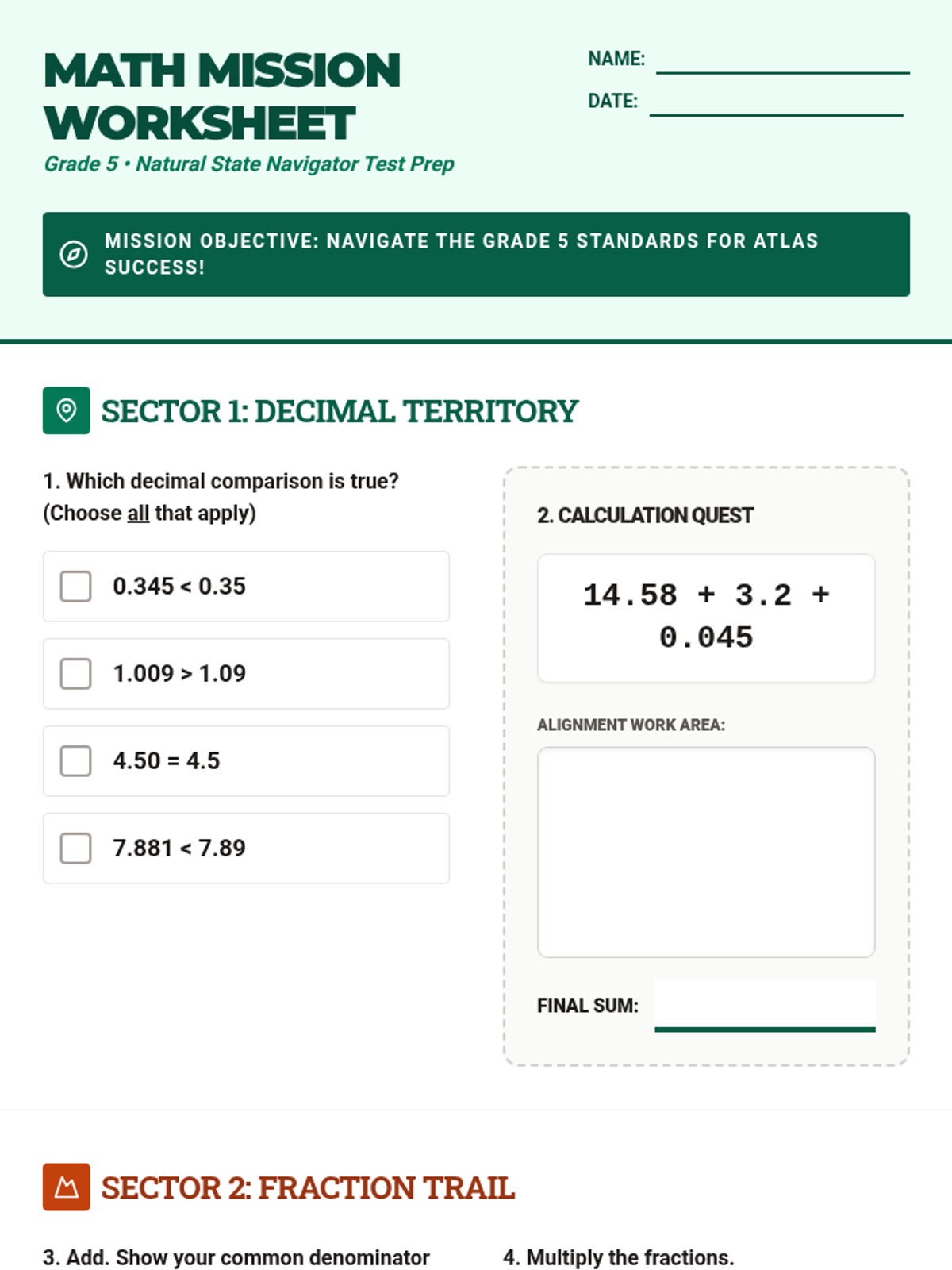
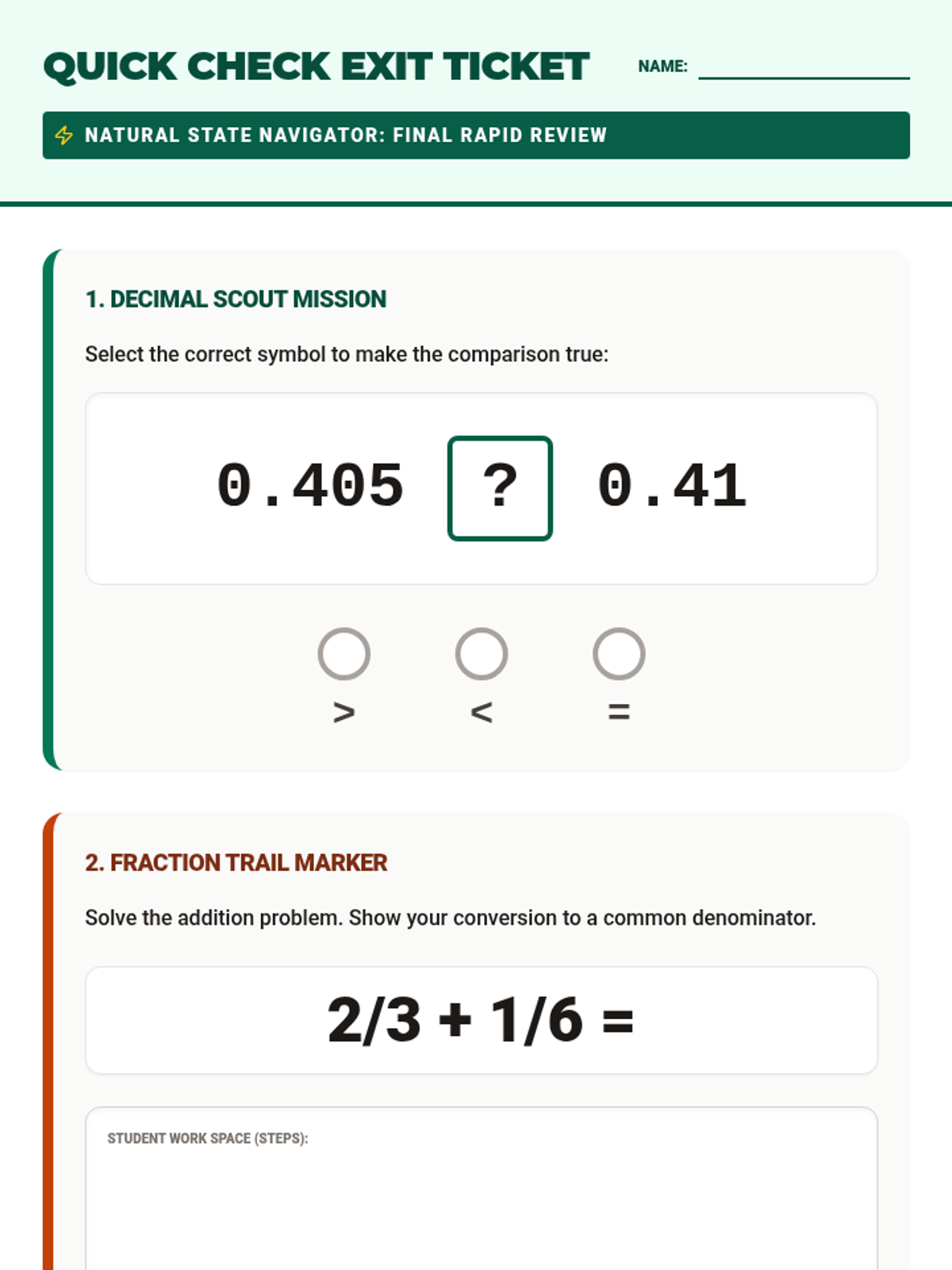
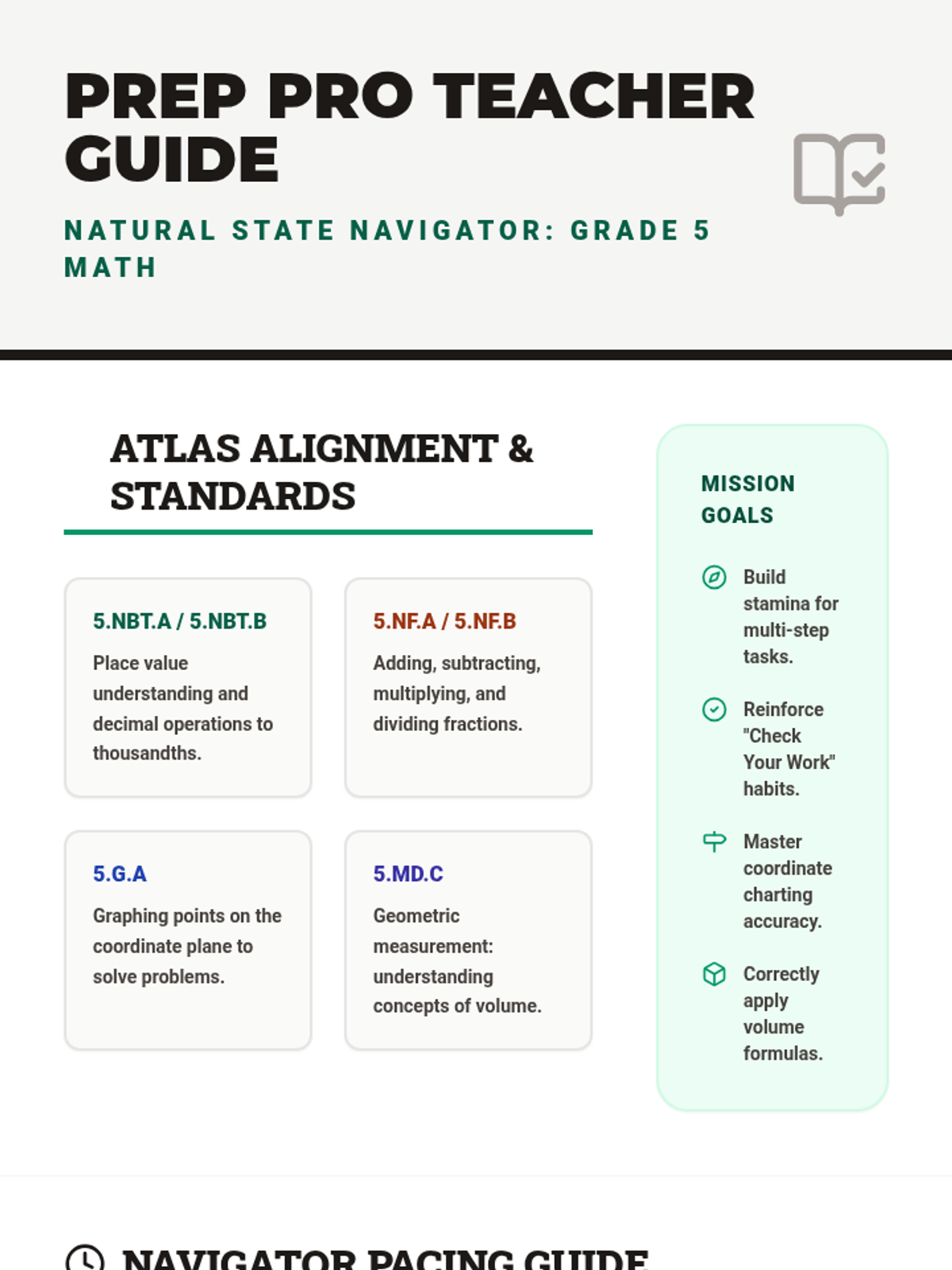
A comprehensive Grade 5 Math test prep lesson focused on Arkansas ATLAS standards, covering fractions, decimals, coordinate planes, and volume through a "Natural State Navigator" wilderness theme.
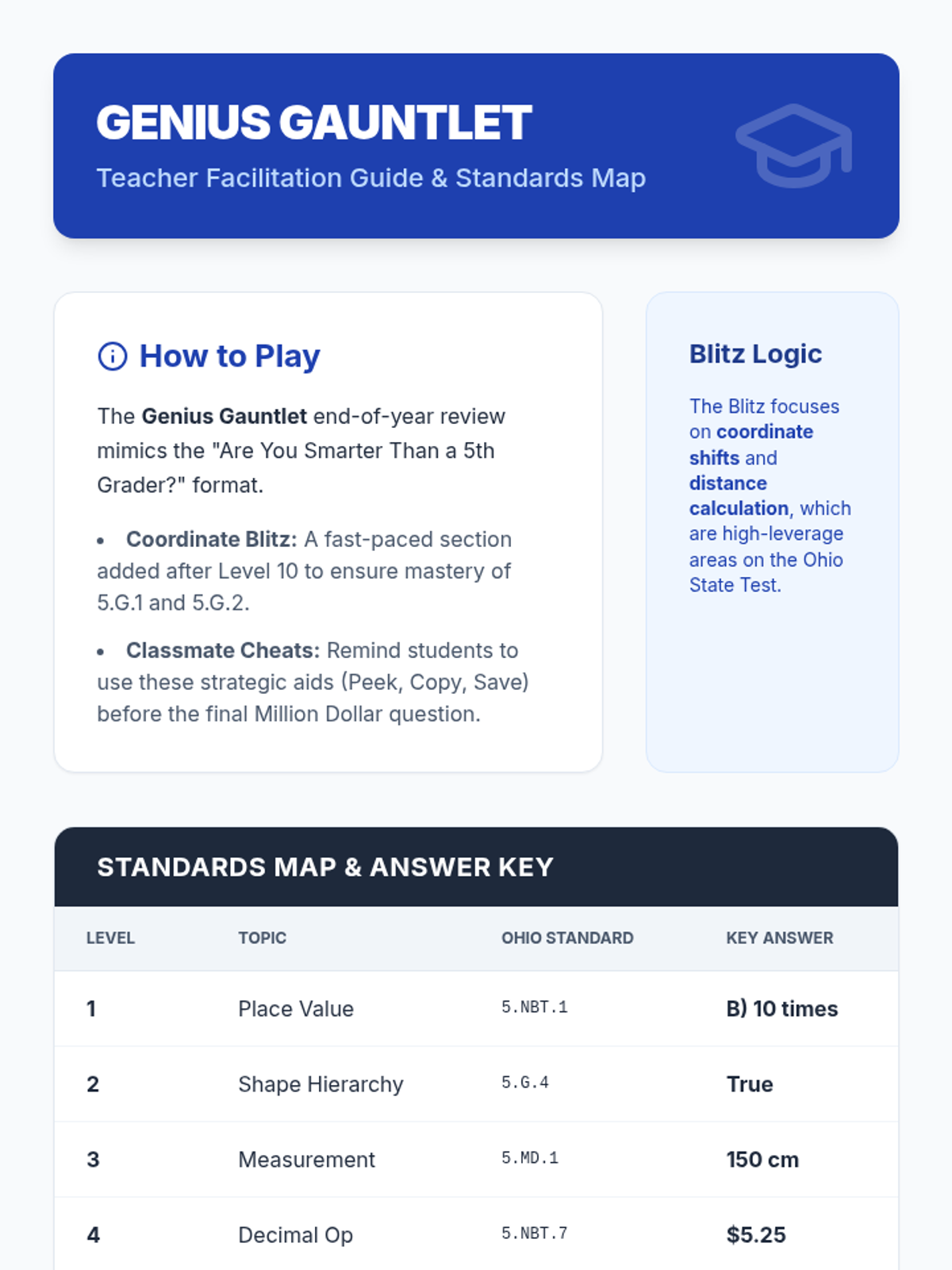
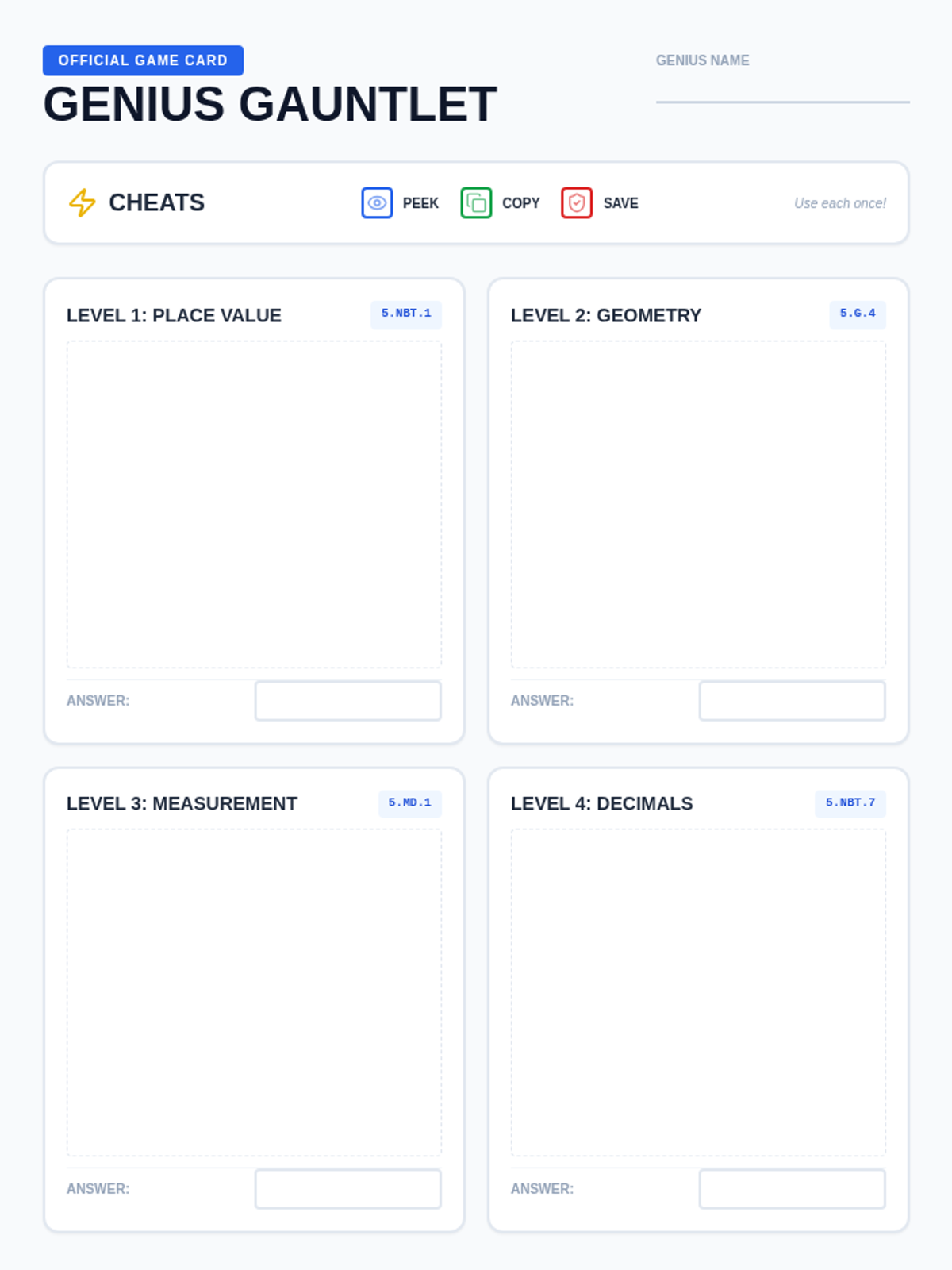
A comprehensive review of 5th Grade Ohio Learning Standards for Mathematics designed as a high-stakes classroom game show. Students will tackle 10 categories of increasing complexity plus a final 'Million Dollar' challenge covering fractions, volume, decimals, and algebraic thinking.
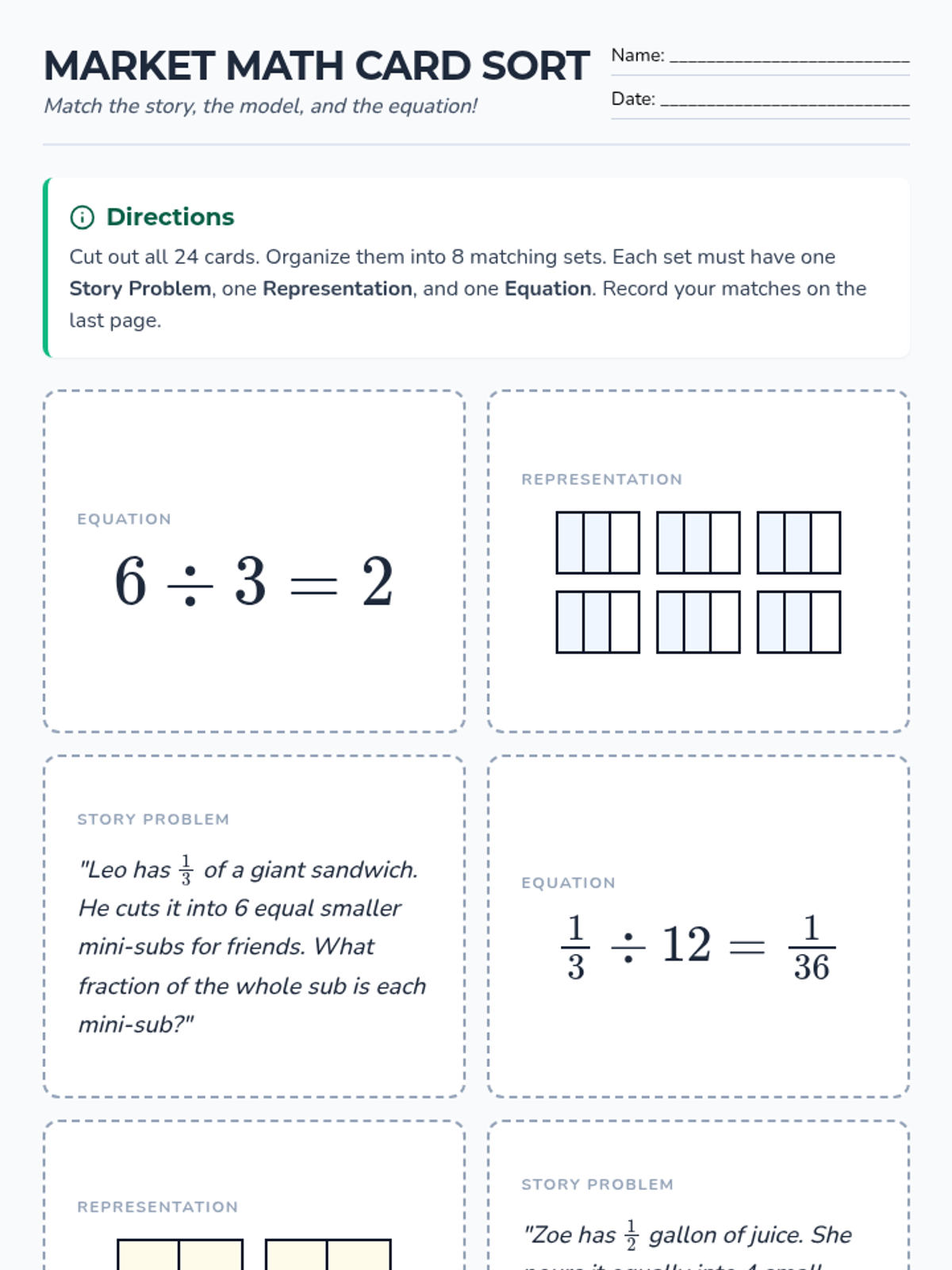
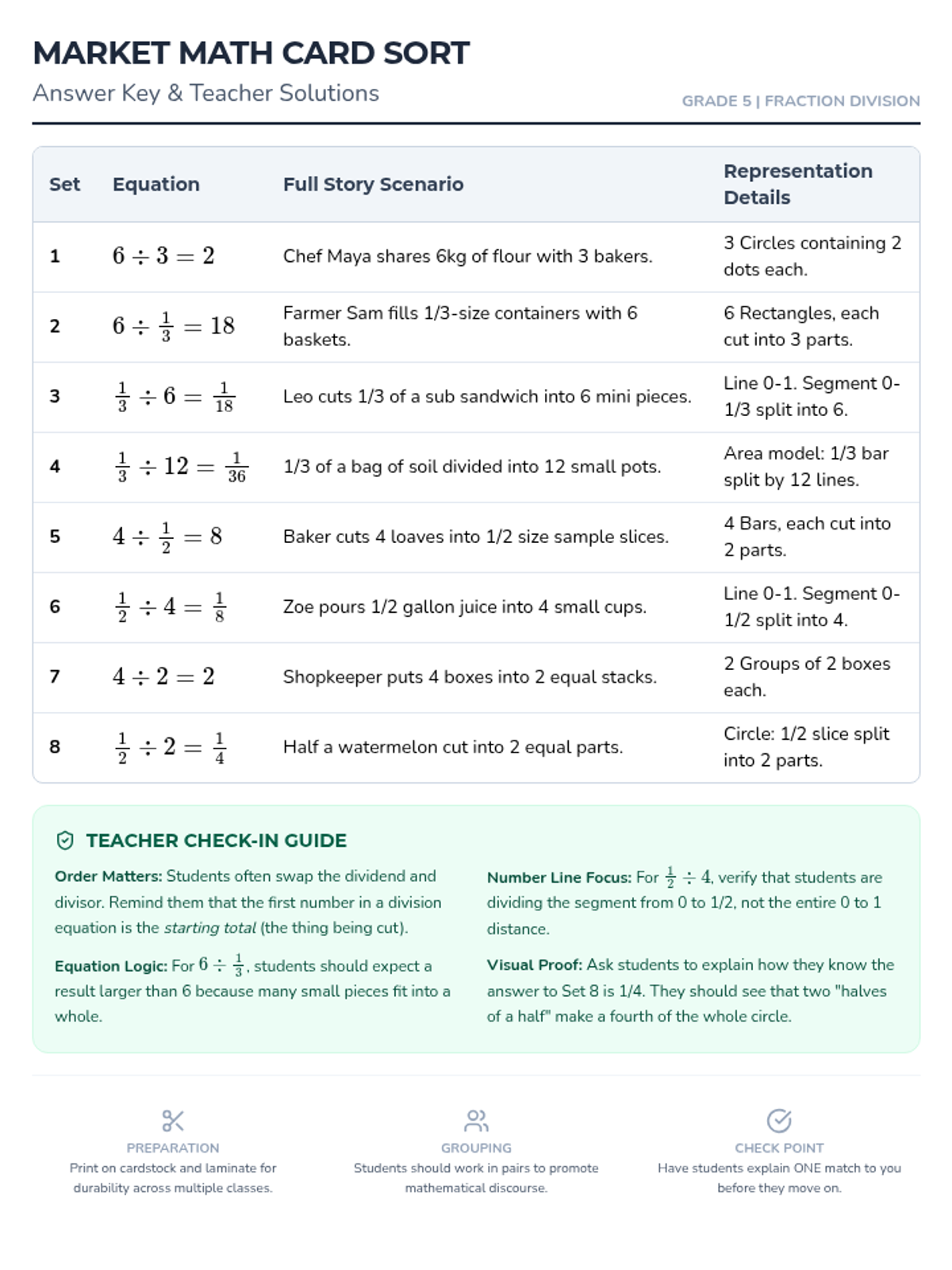
A hands-on activity where students match division story problems with their corresponding visual representations and equations, focusing on whole numbers and unit fractions.
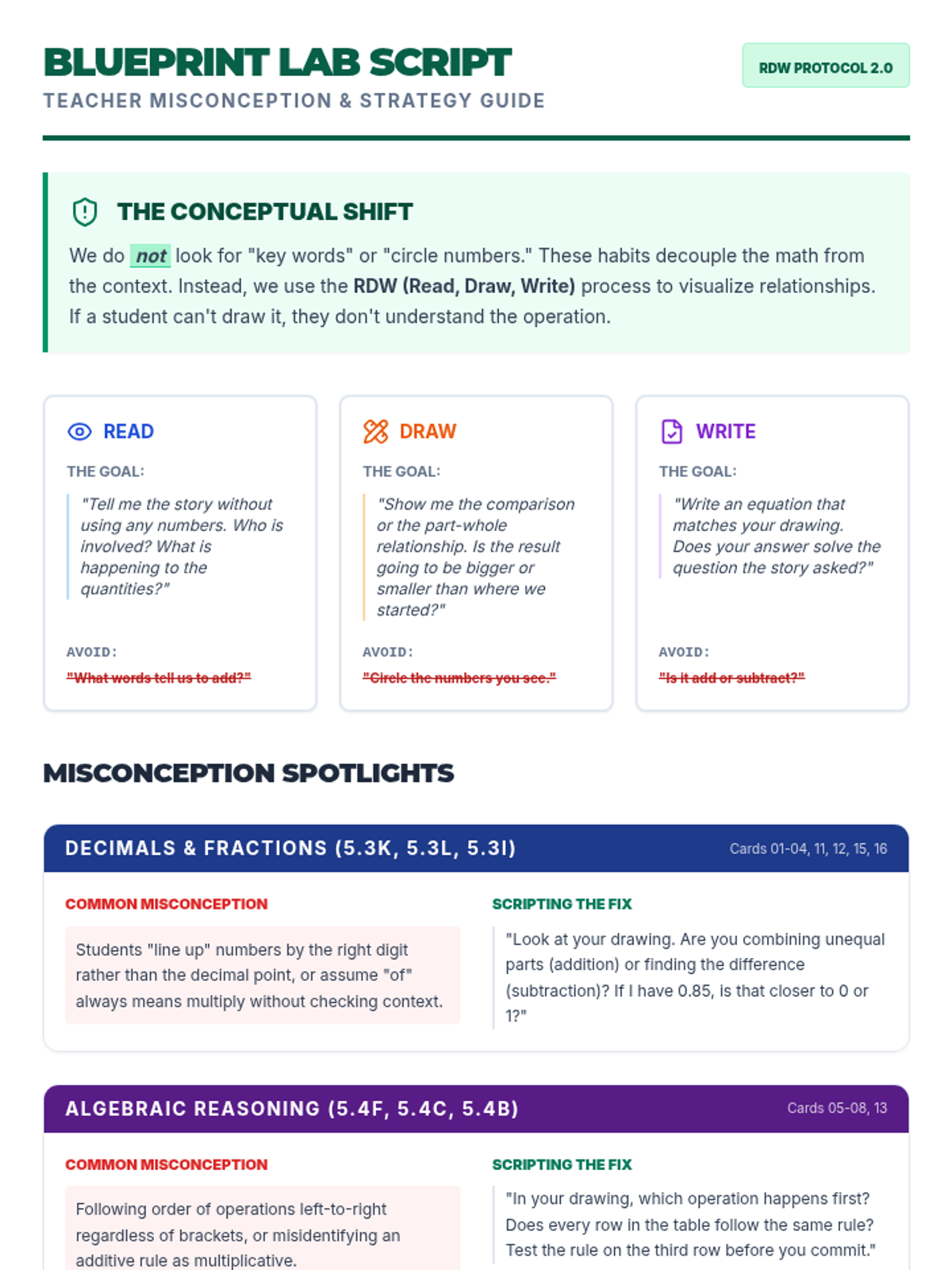
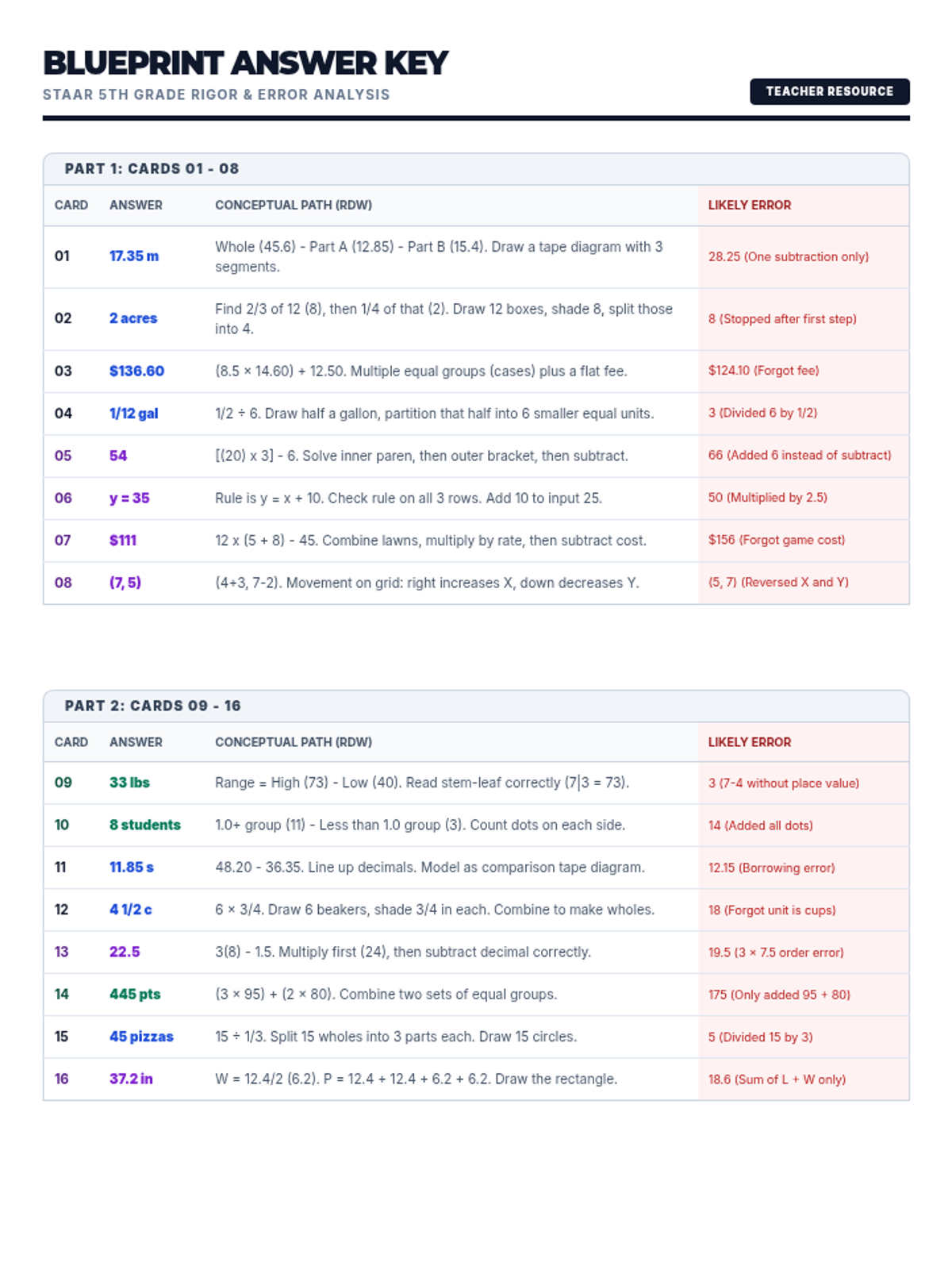
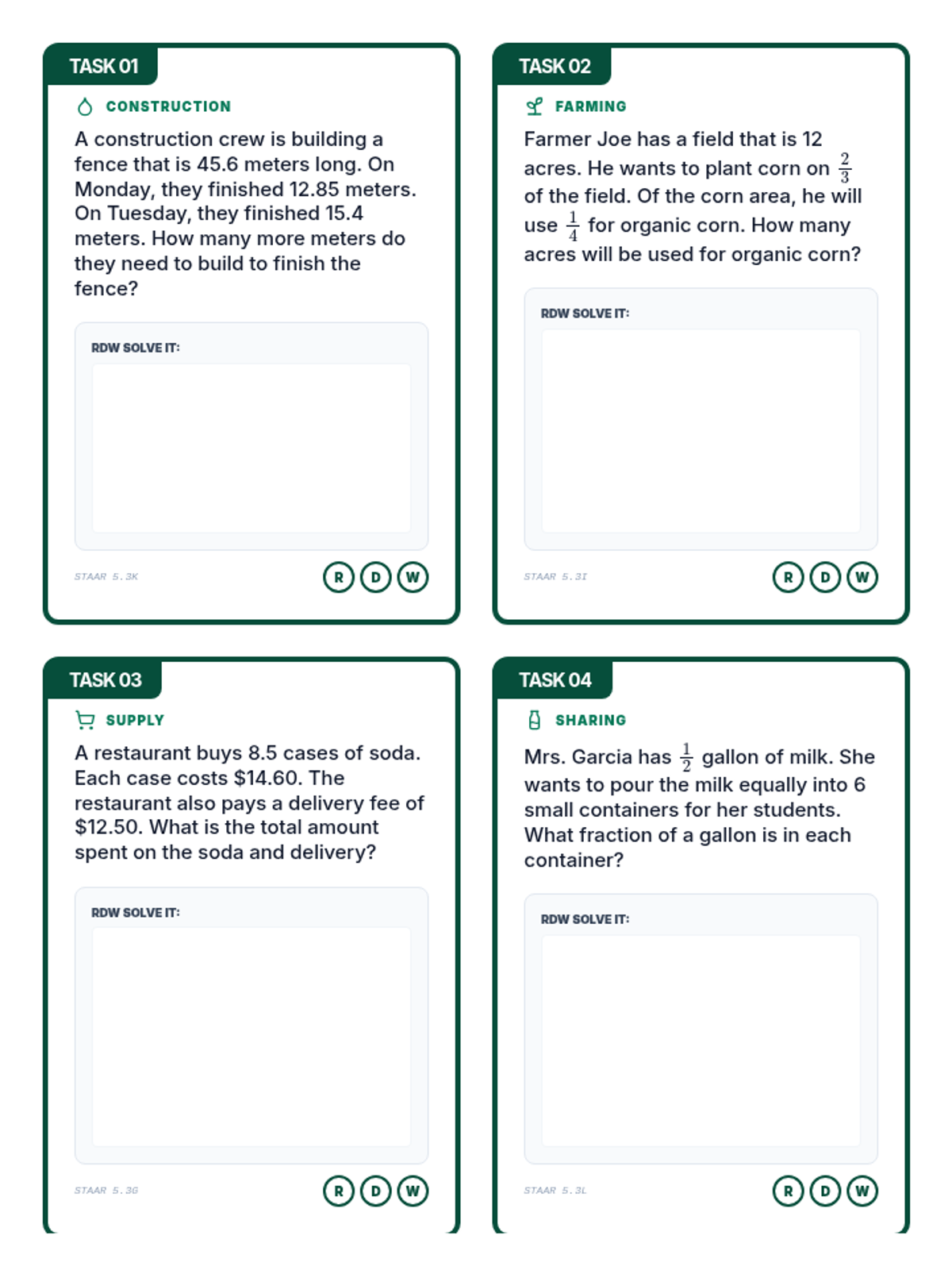
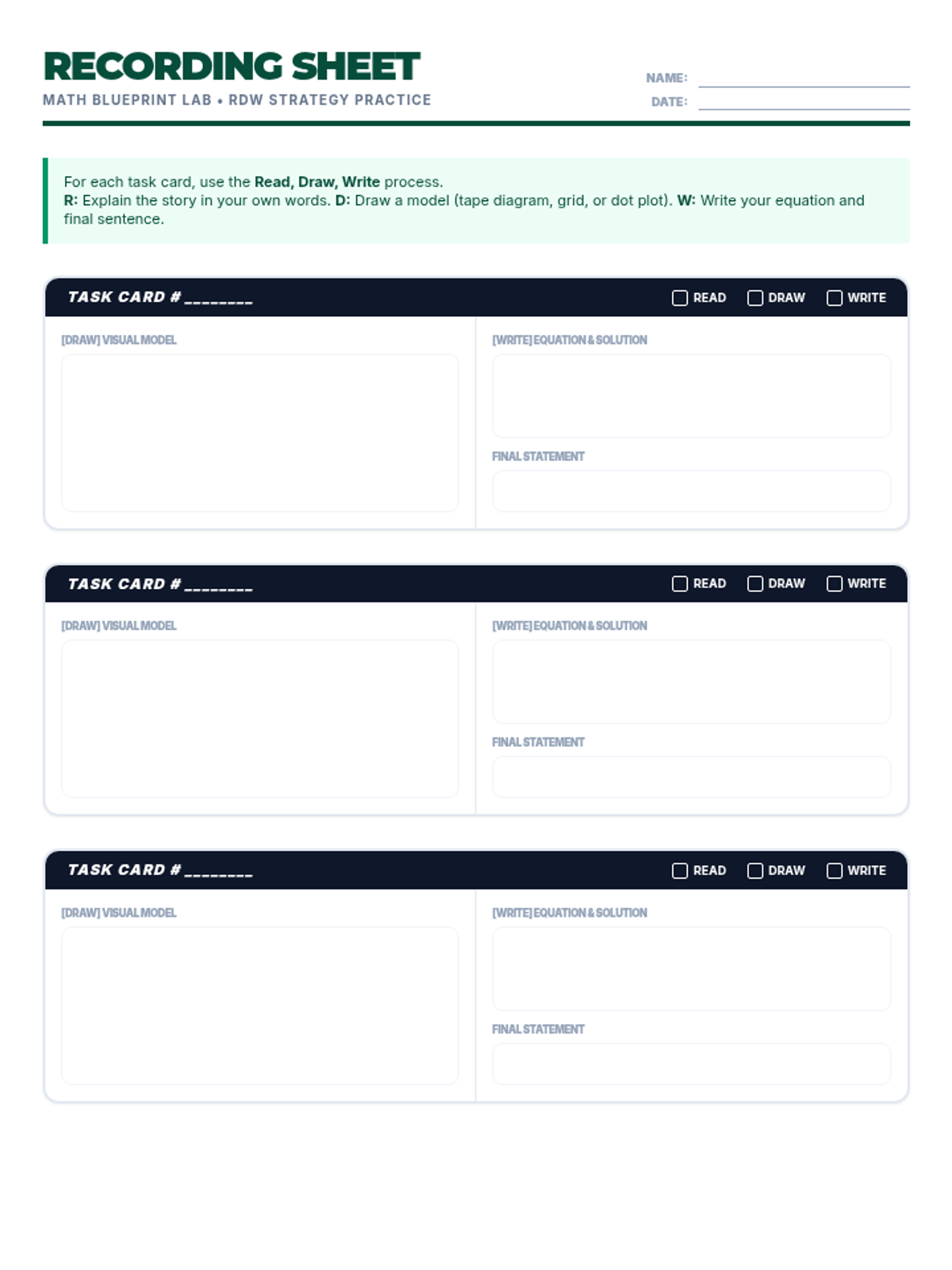
A rigorous STAAR-aligned 5th grade math lesson focusing on Decimals, Fractions, Algebraic Reasoning, and Data Analysis using the RDW (Read, Draw, Write) strategy. Includes task cards, modeling slides, and a comprehensive teacher script.
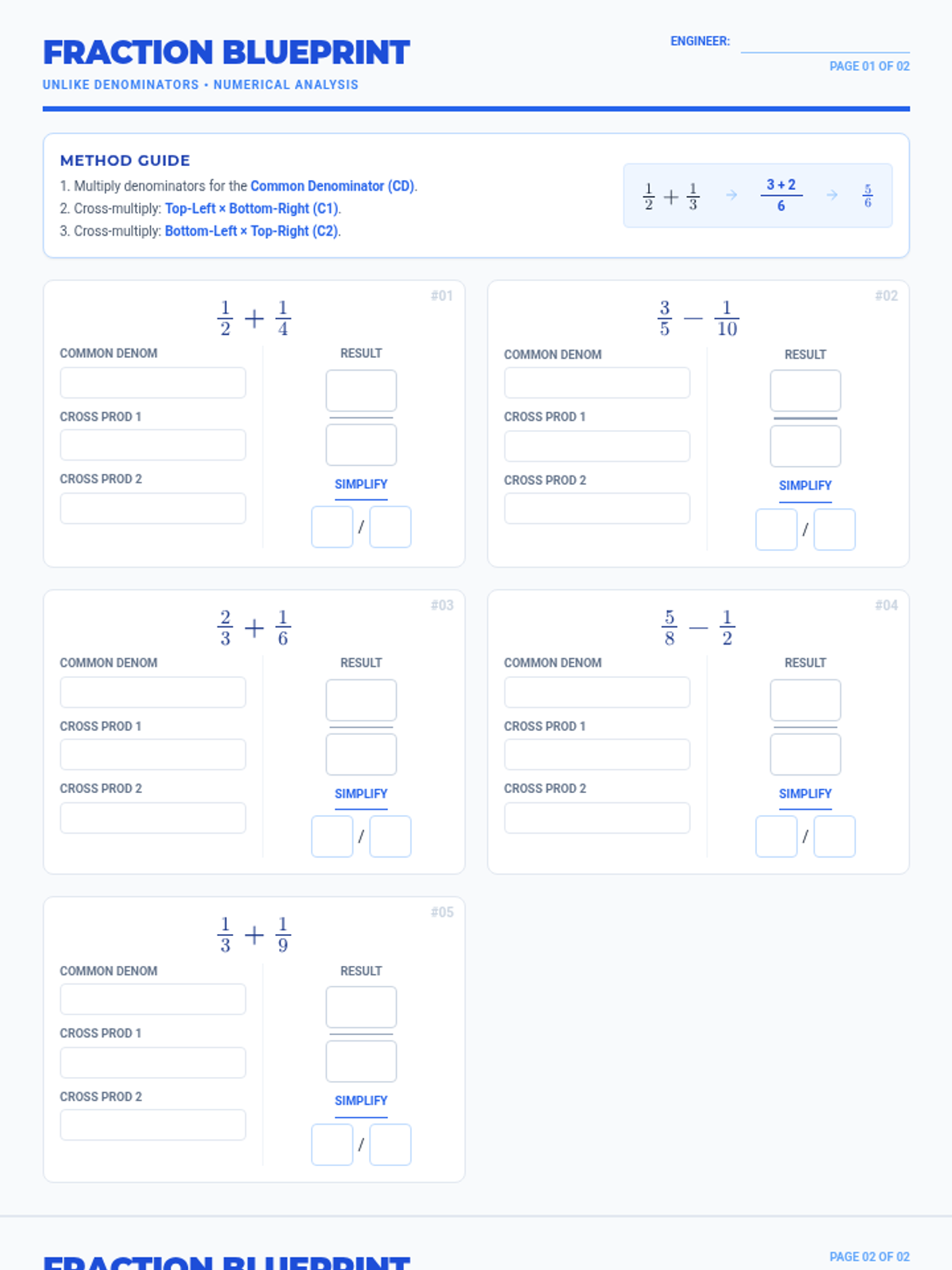
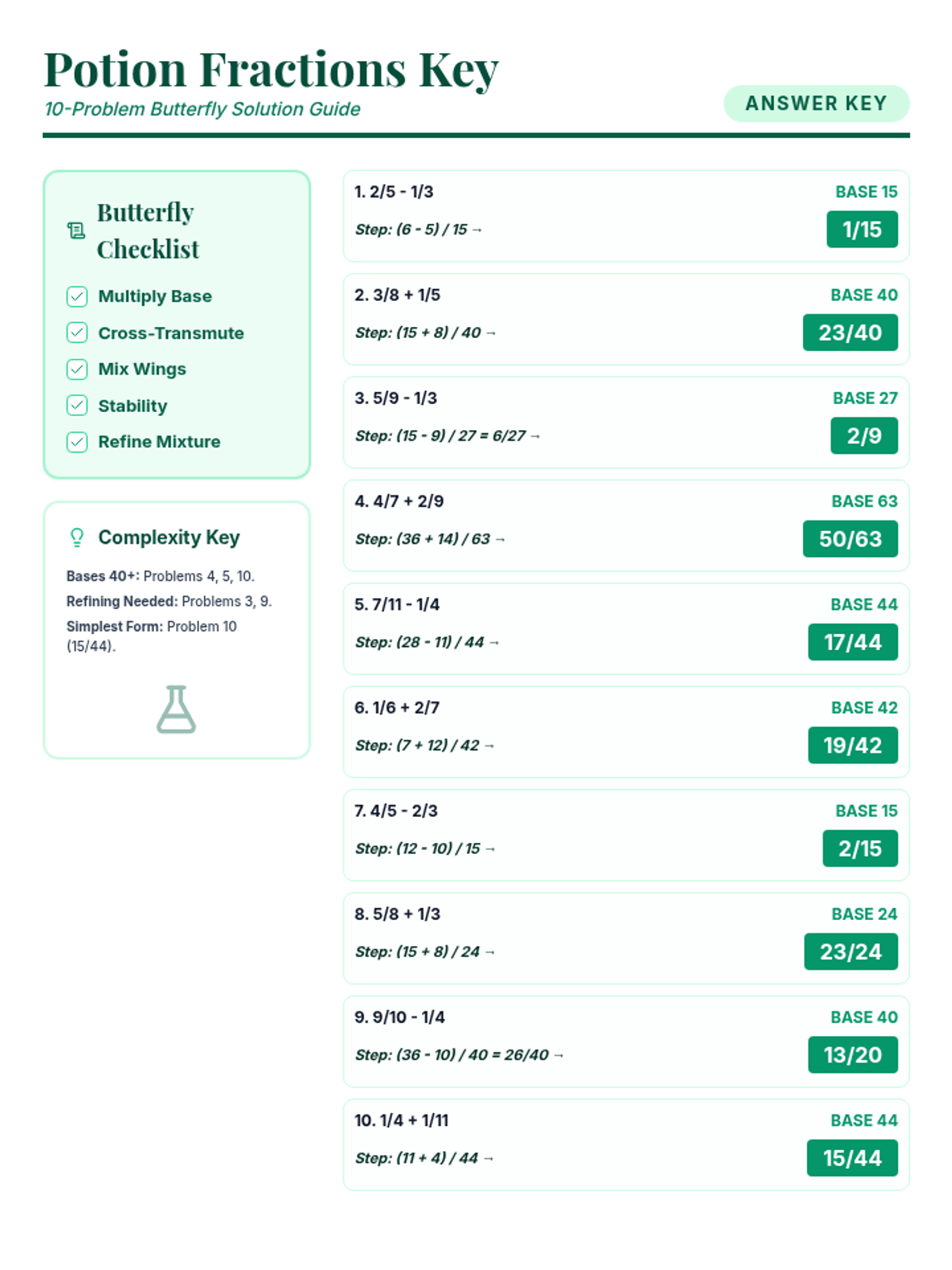
A lesson focused on mastering addition and subtraction of fractions with unlike denominators using the cross-multiplication (butterfly) method. Students use structured graphic organizers to visualize each step of the process.
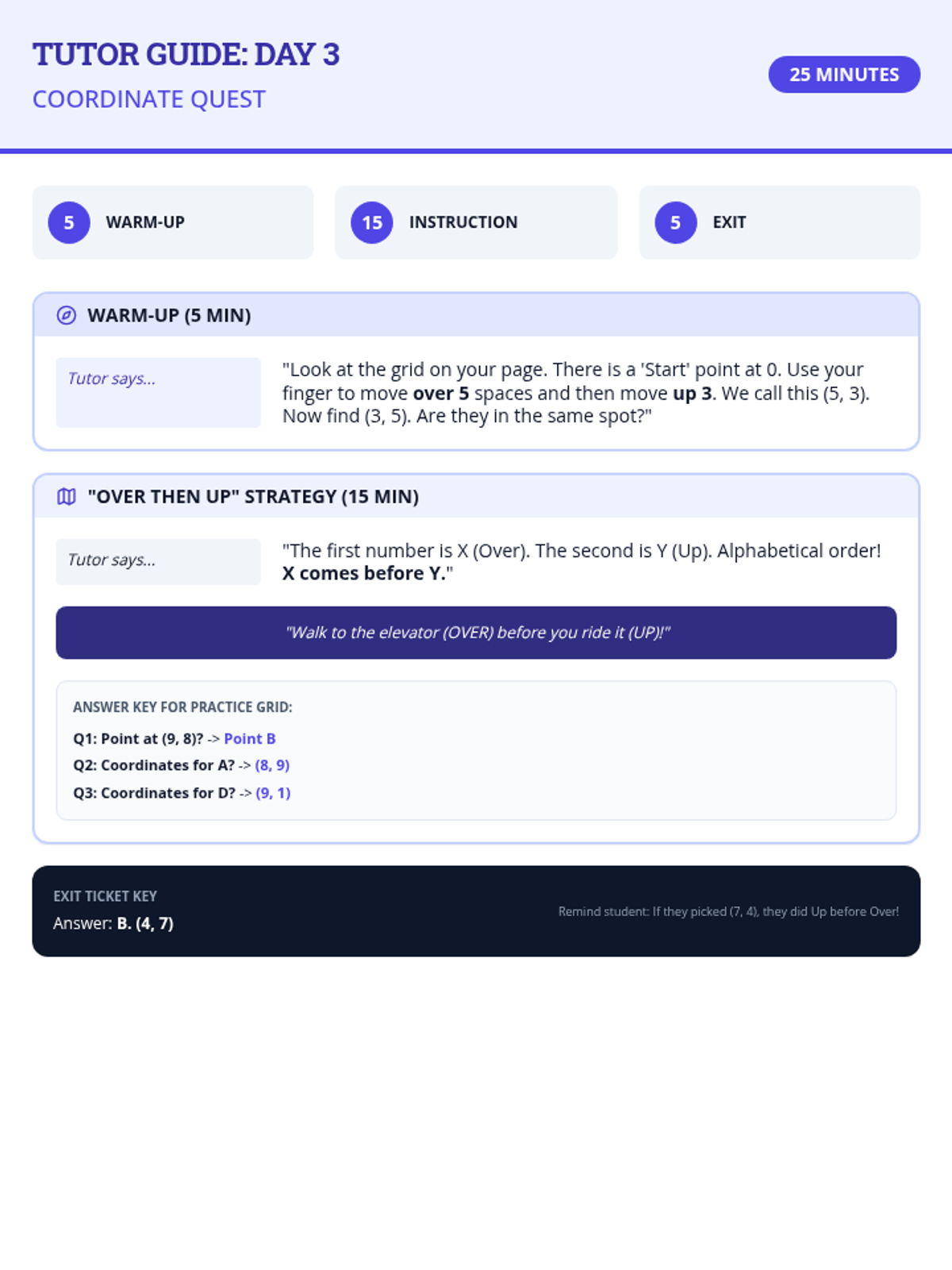
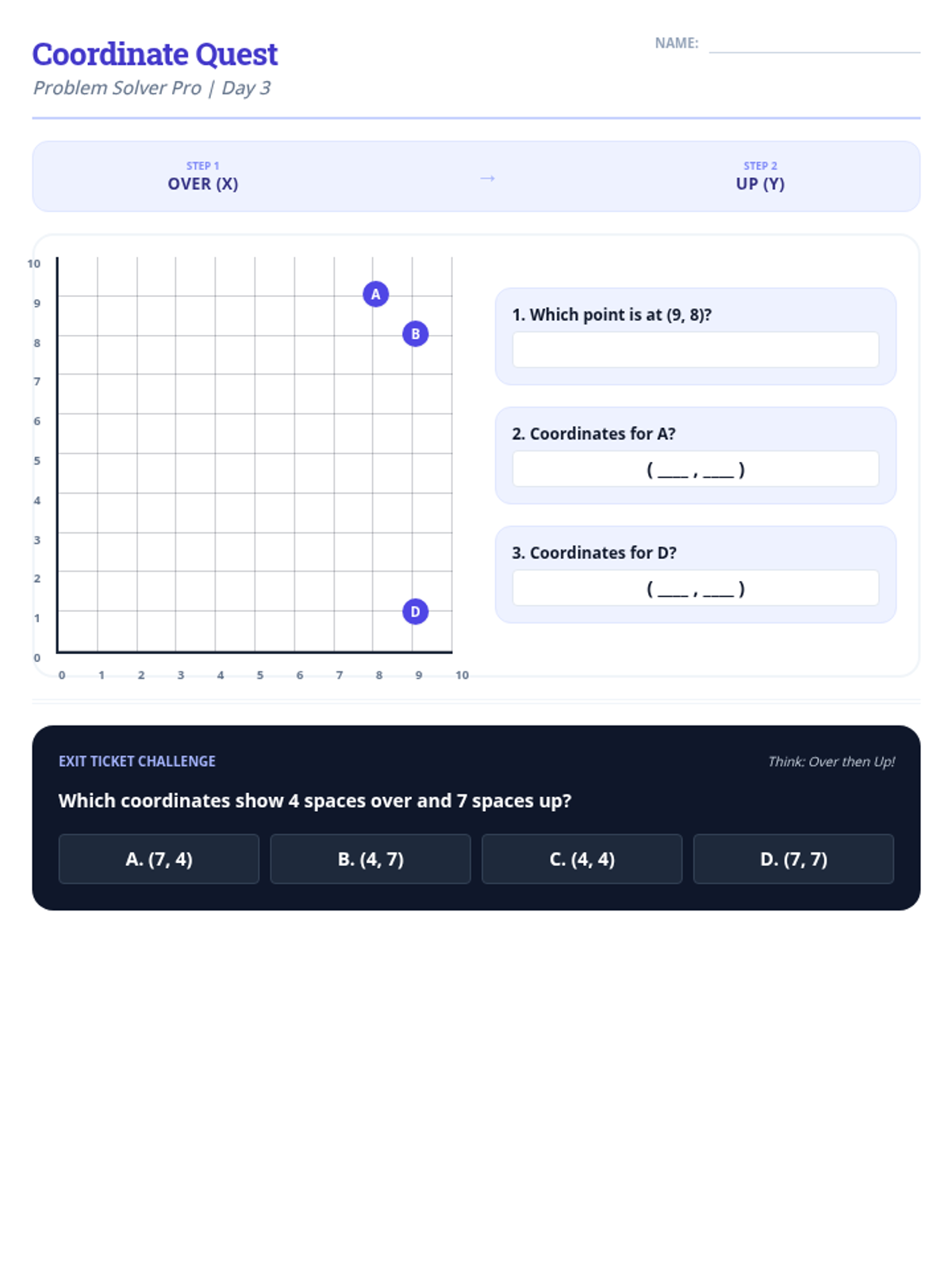
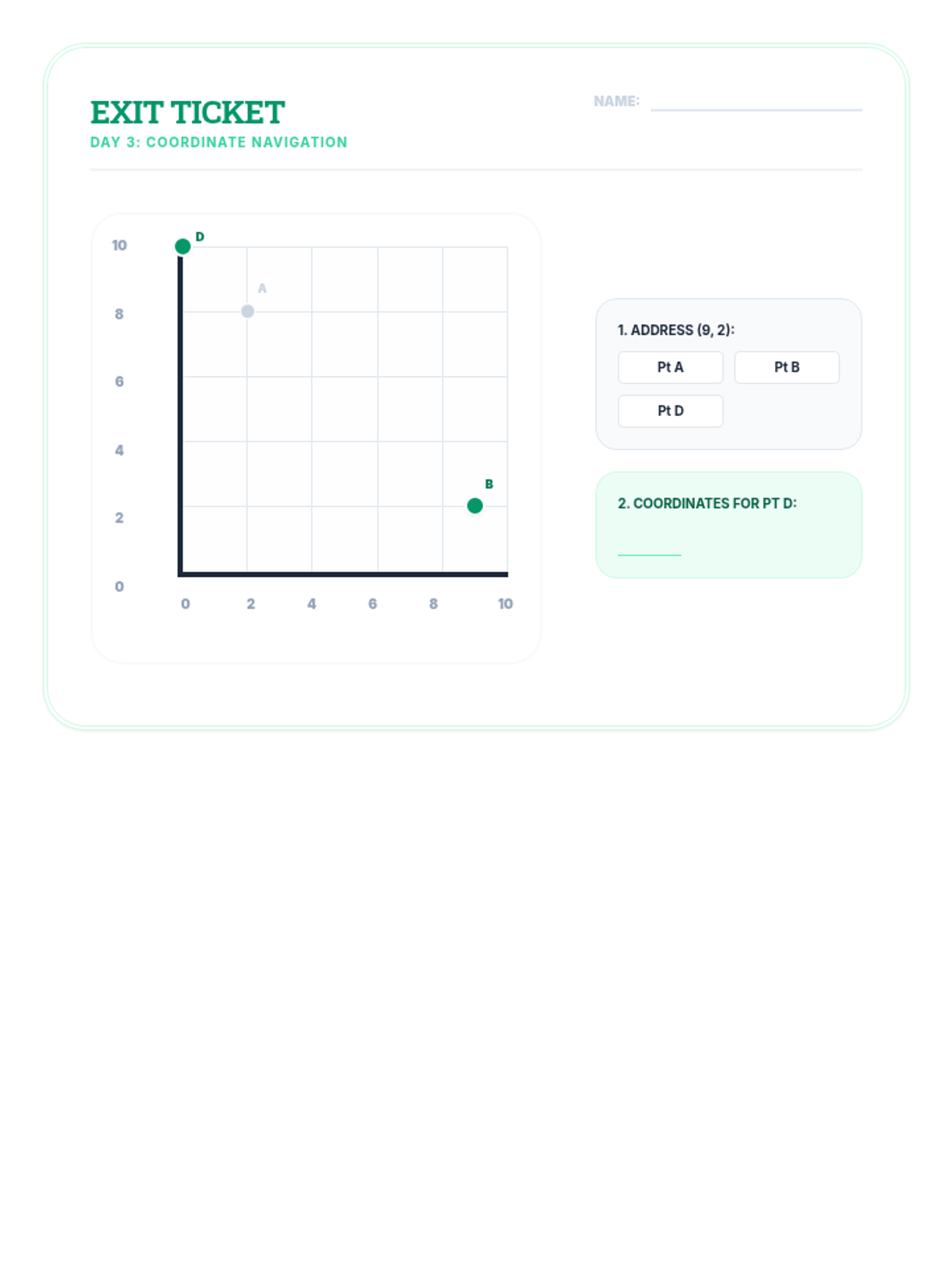
Introduces and reinforces the use of coordinate planes, focusing on identifying (x, y) coordinates using the 'over then up' strategy.
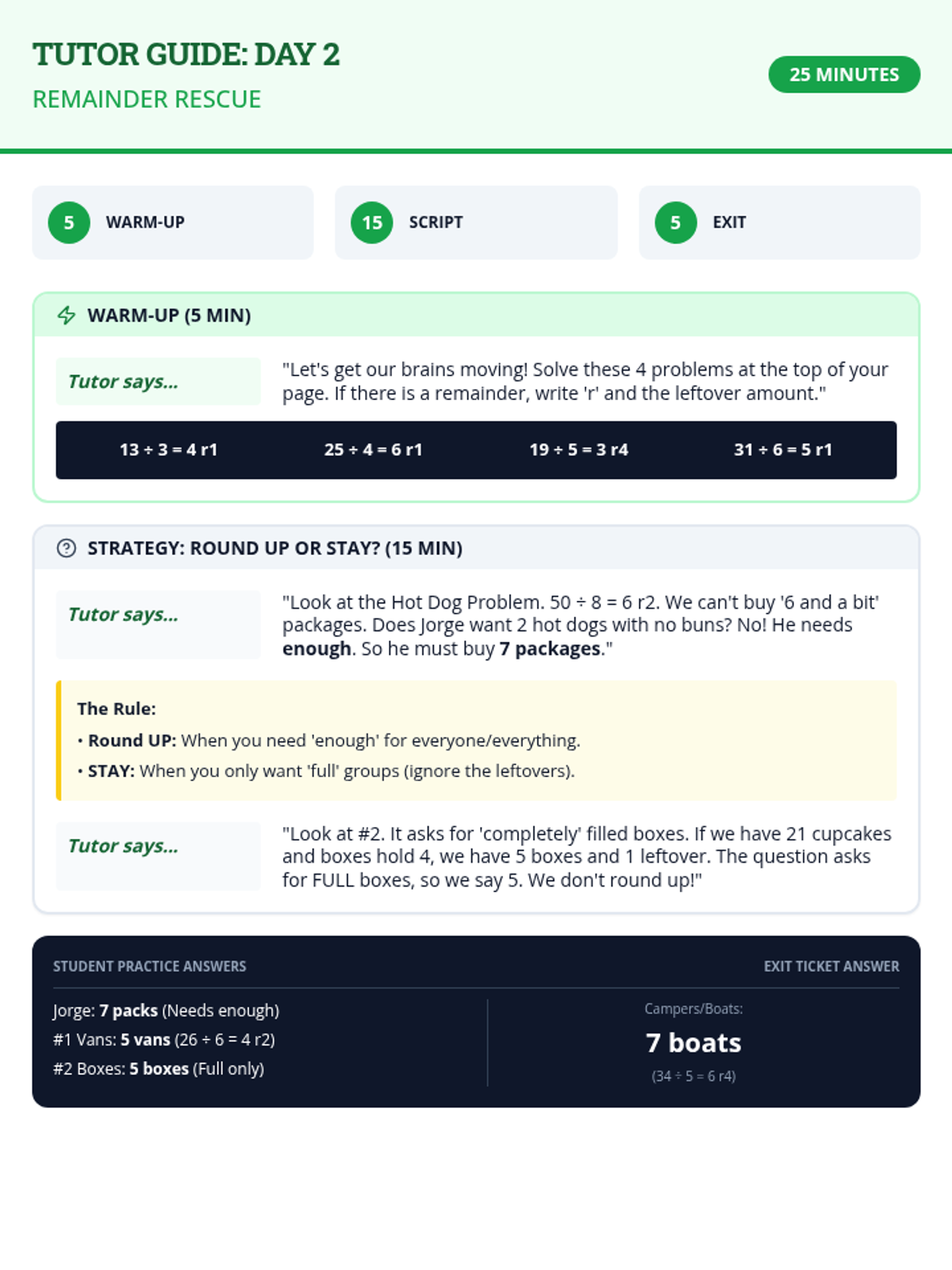
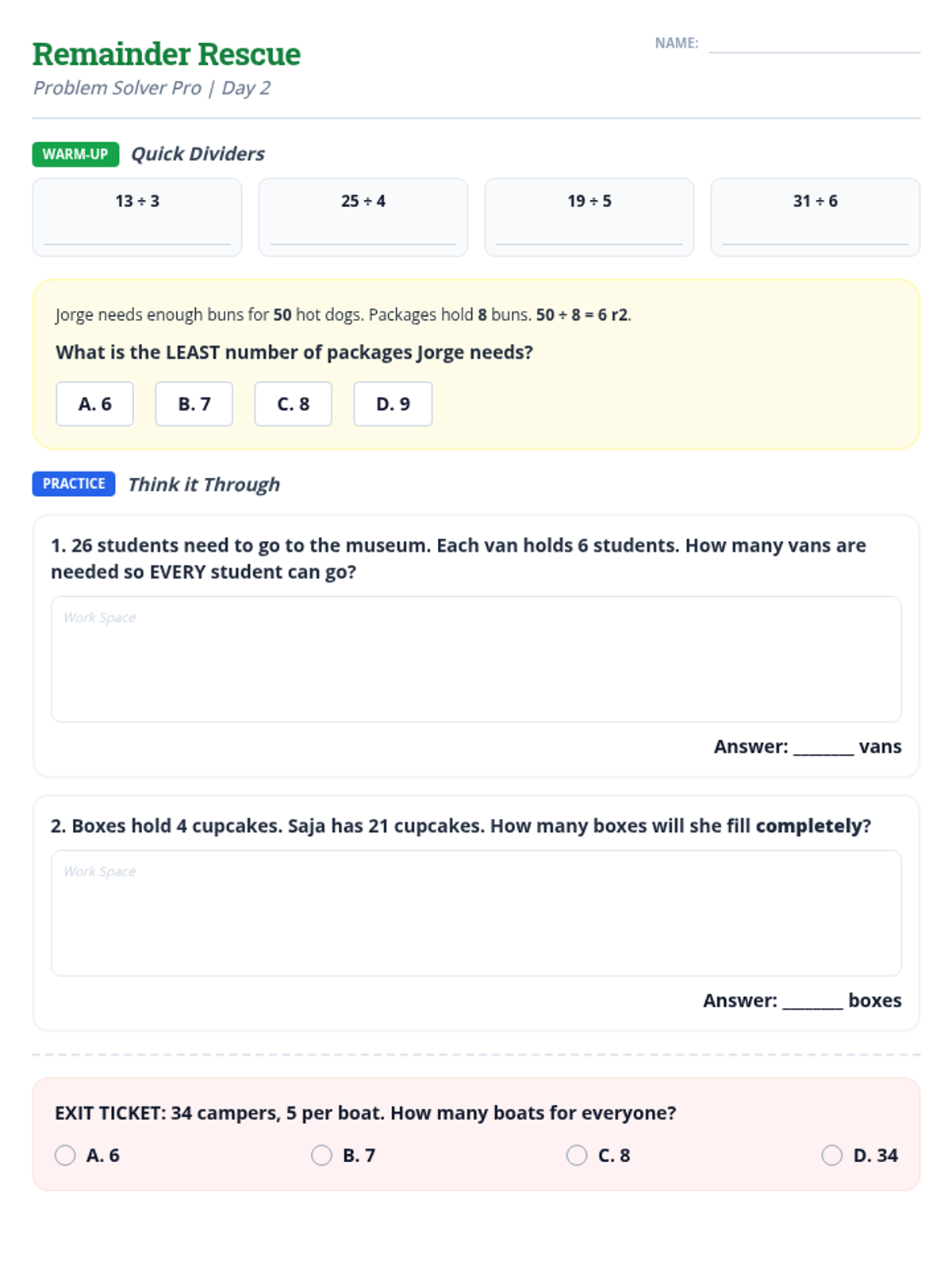
Teaches students how to interpret remainders in real-world division problems, specifically deciding when to 'round up' to ensure everyone or everything is included.
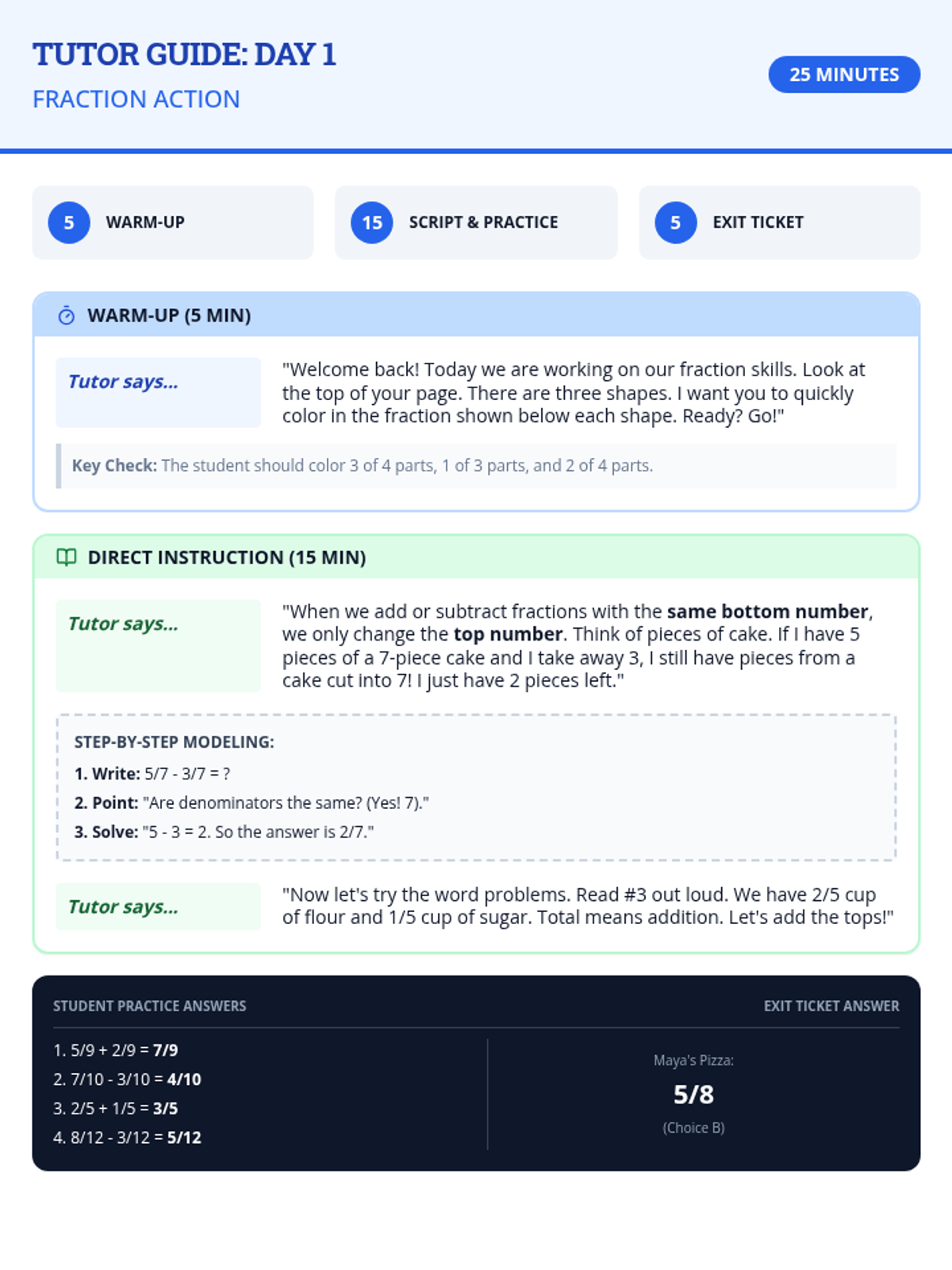
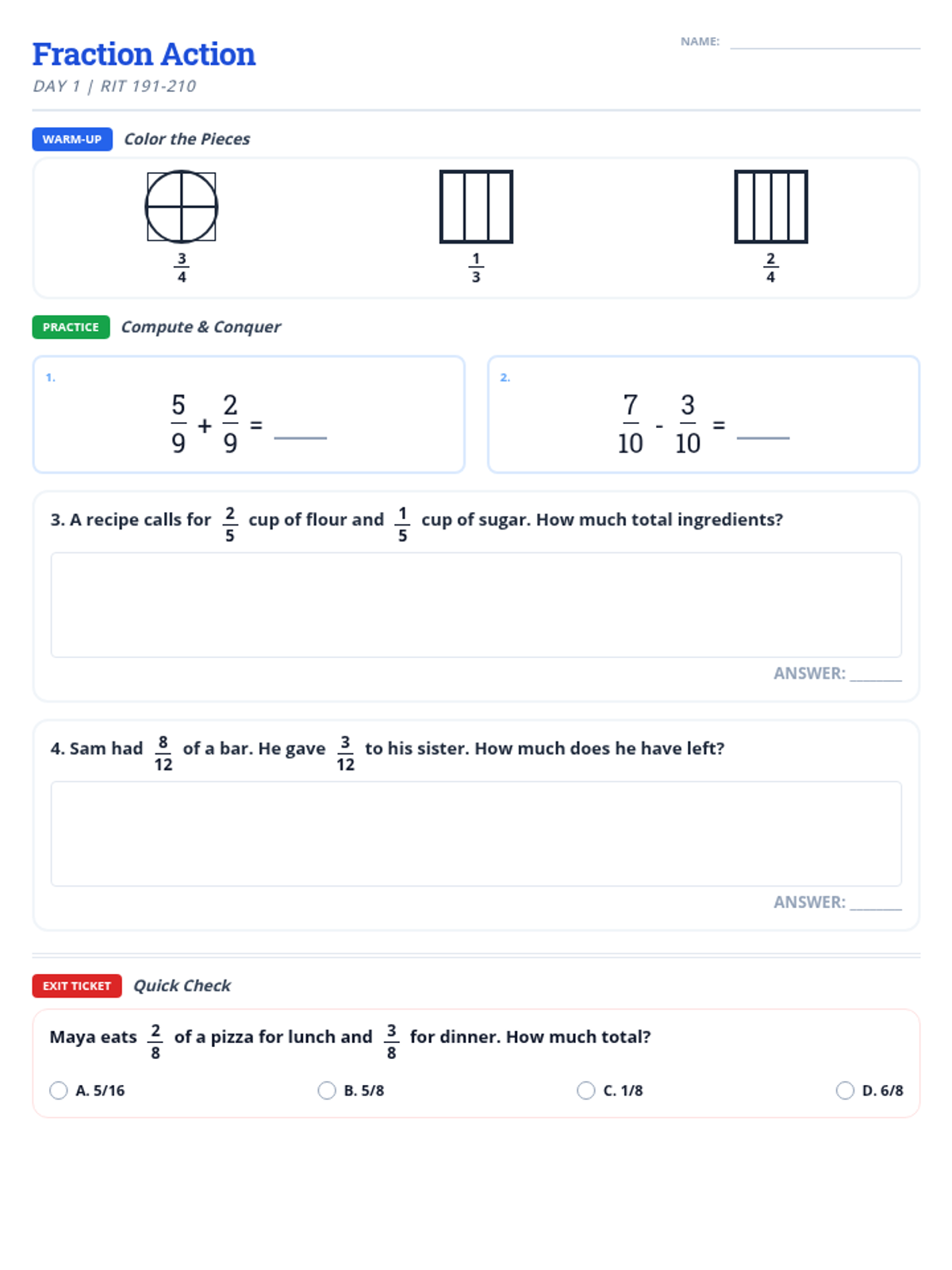
Focuses on adding and subtracting fractions with like denominators, emphasizing that the denominator represents the size of the piece and remains constant.
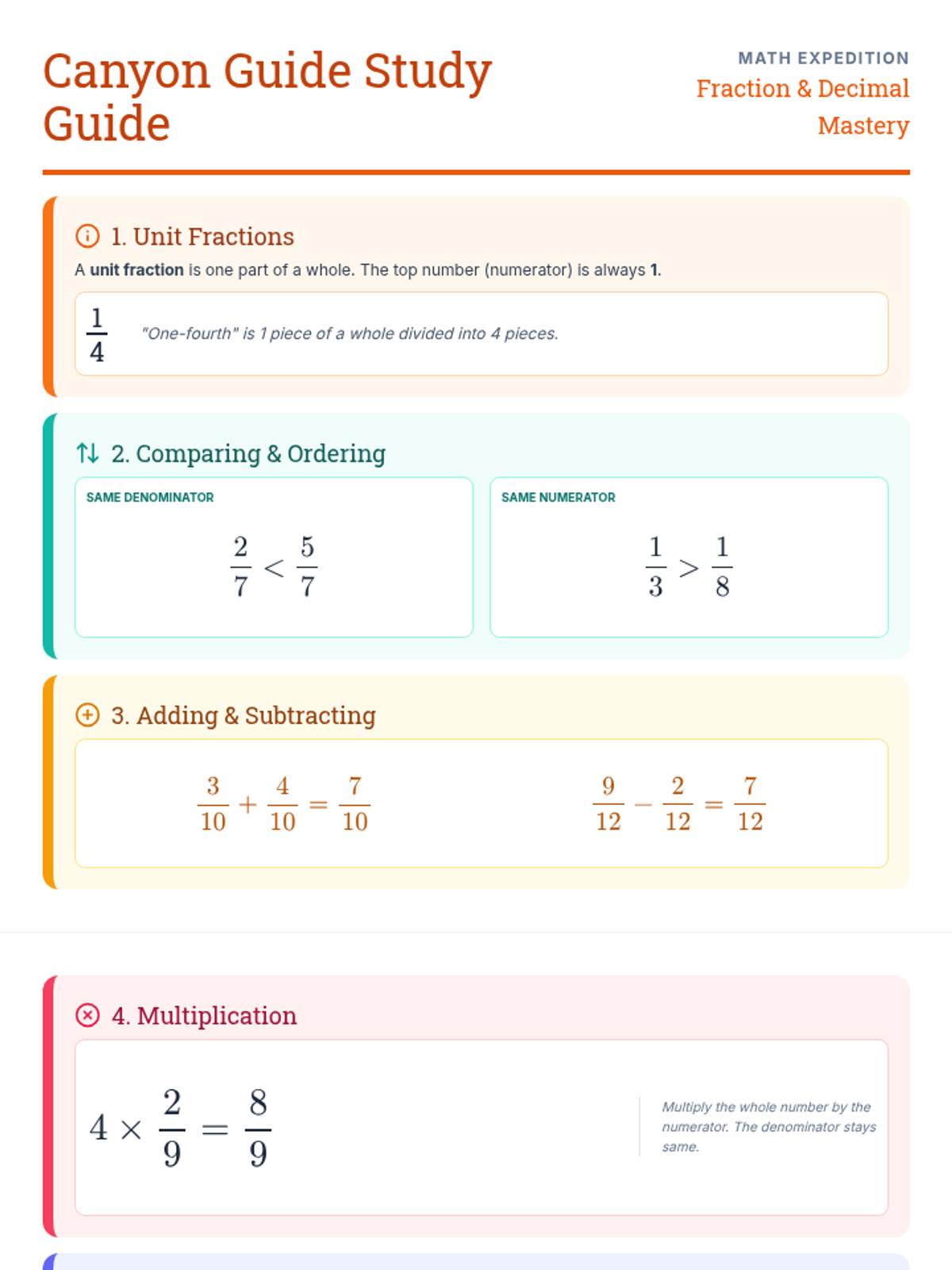
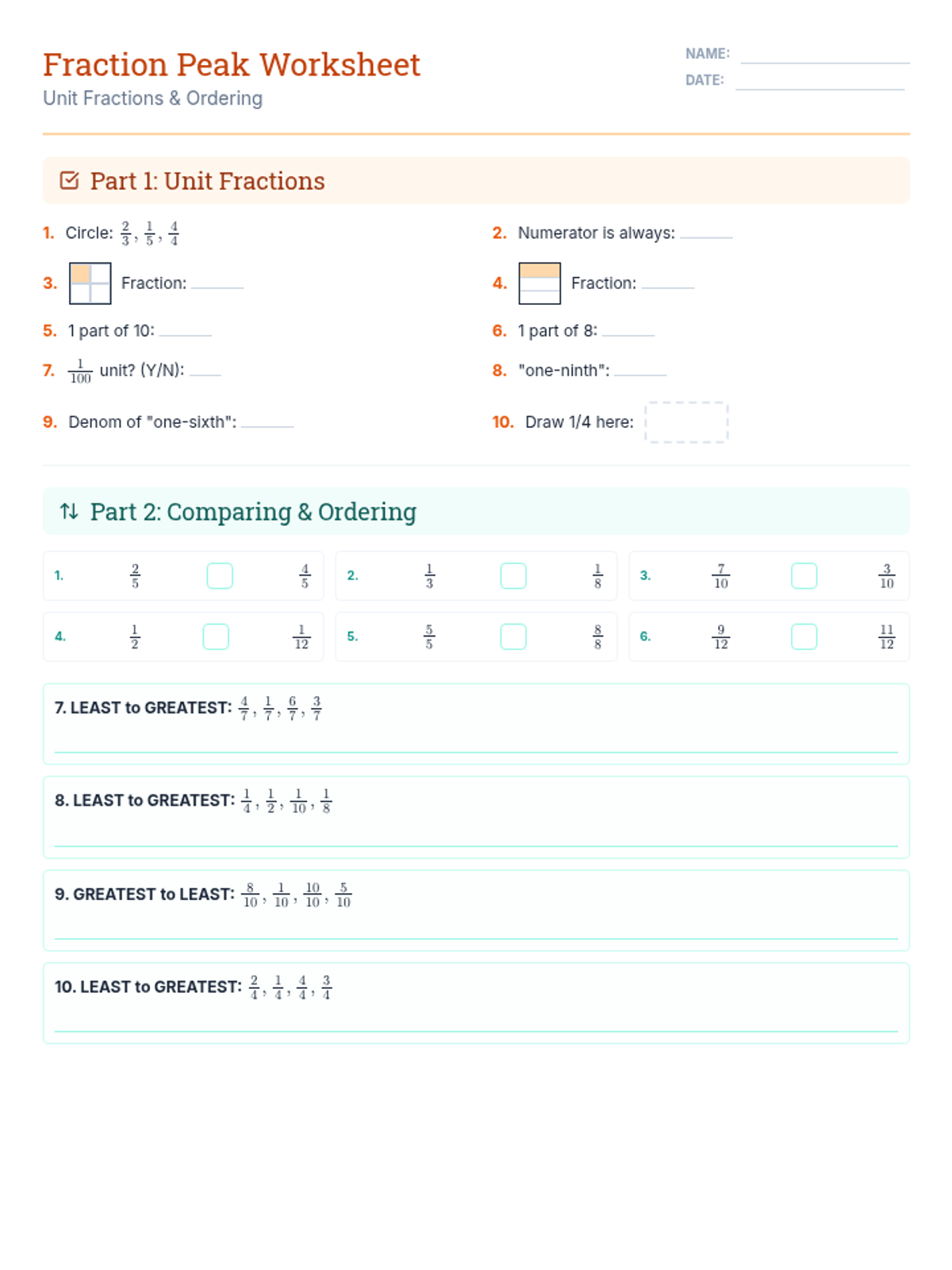
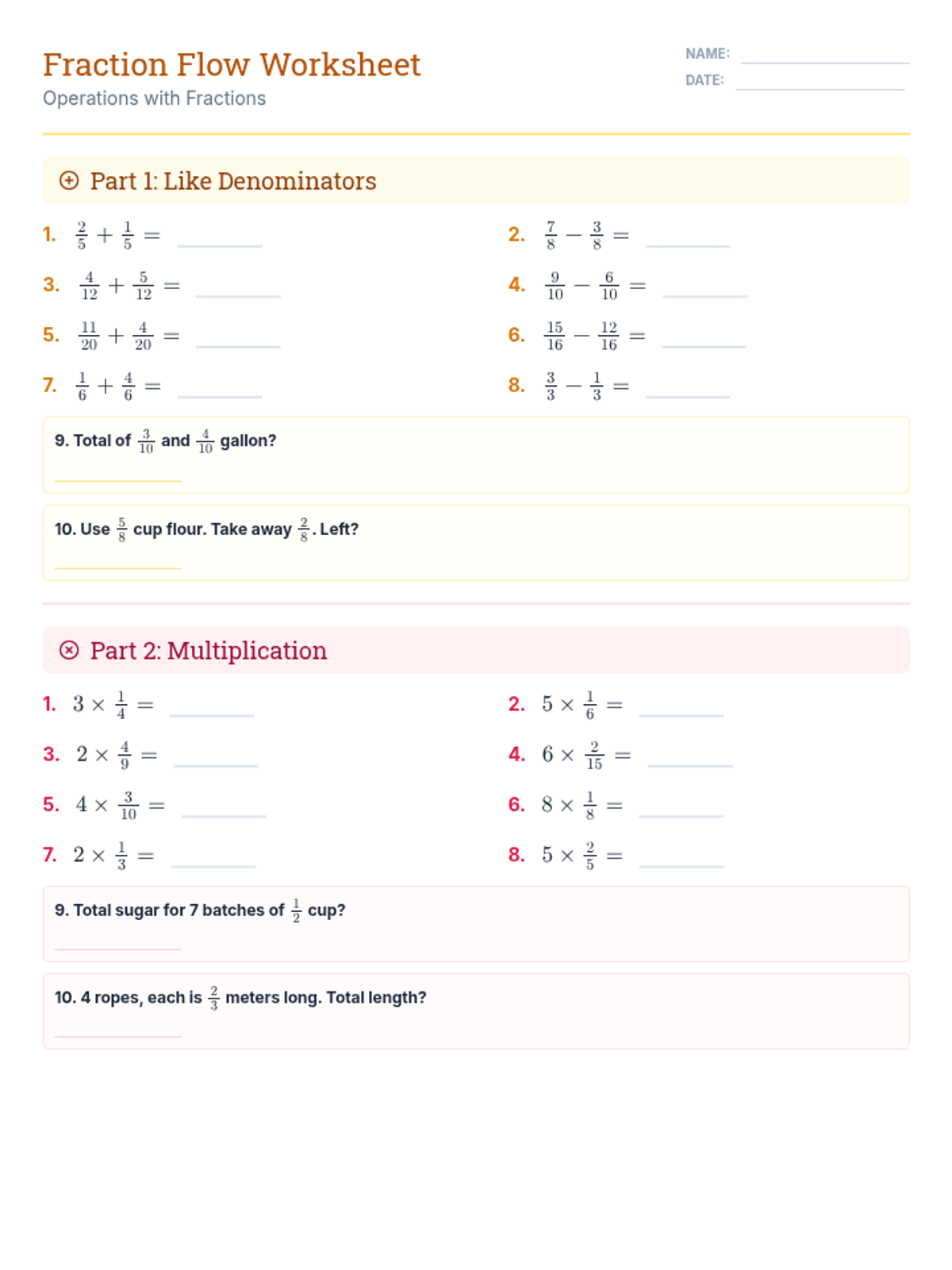
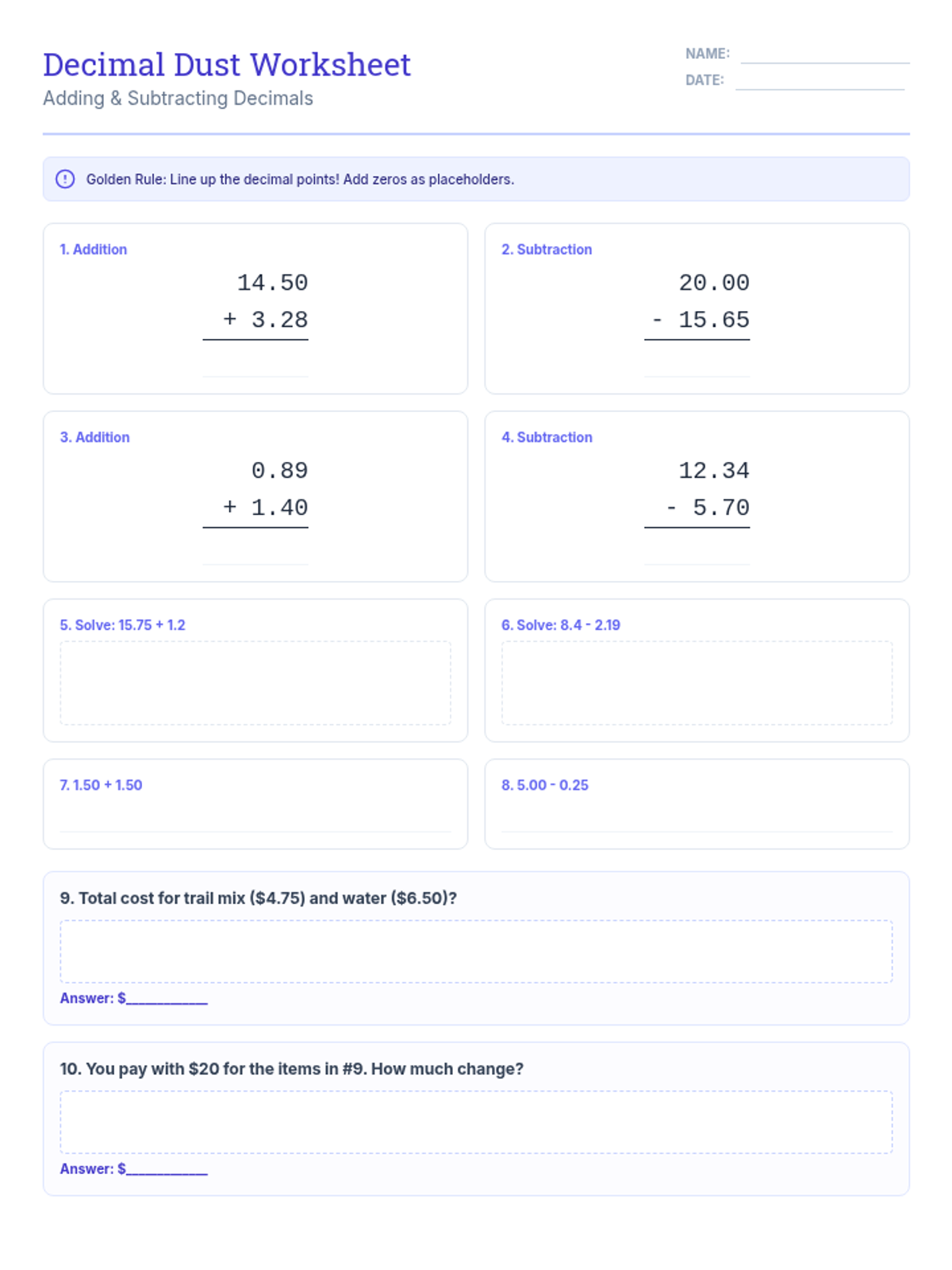
A comprehensive review lesson covering unit fractions, ordering, operations with like denominators, fraction multiplication, and decimal arithmetic.
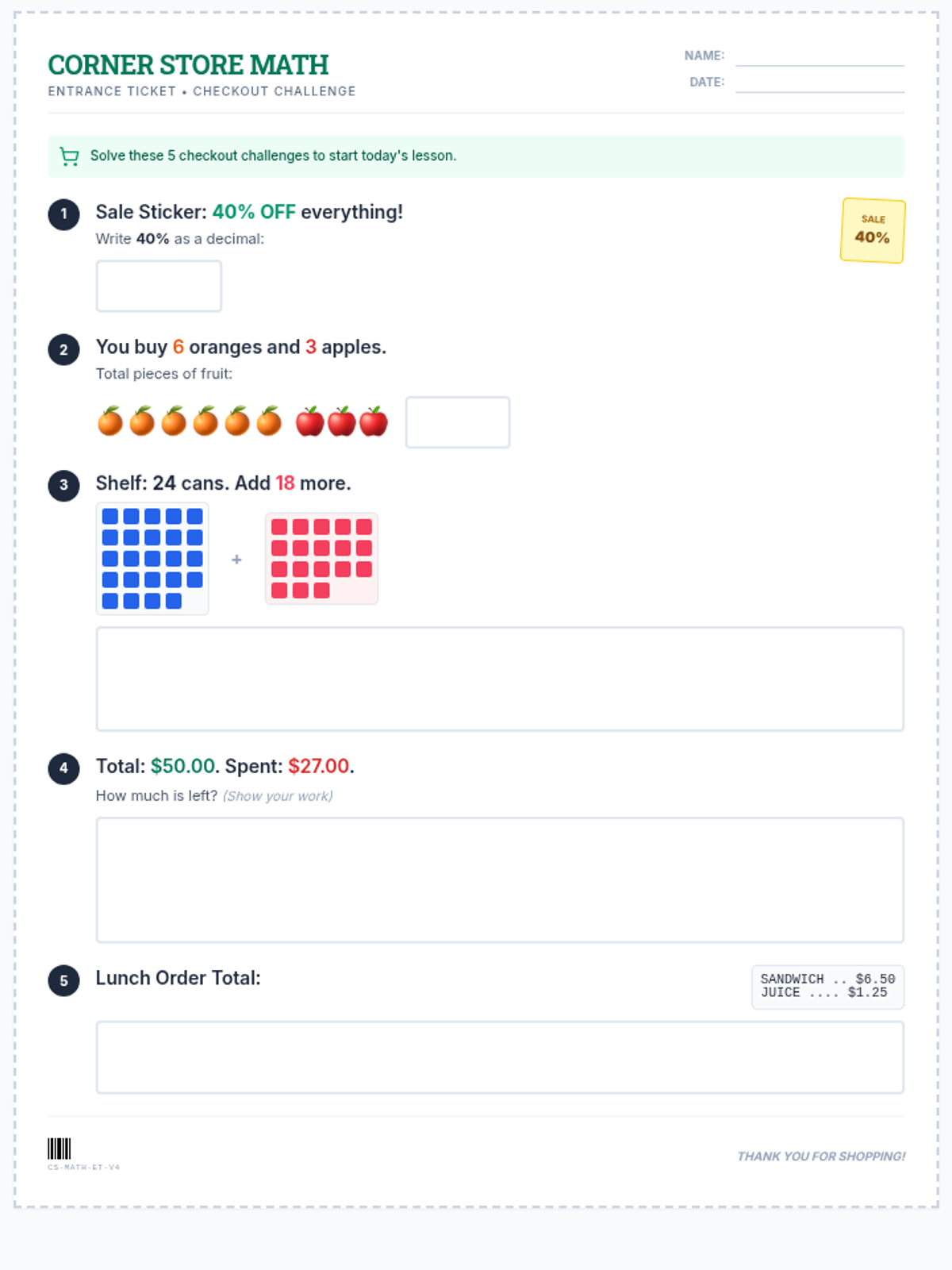
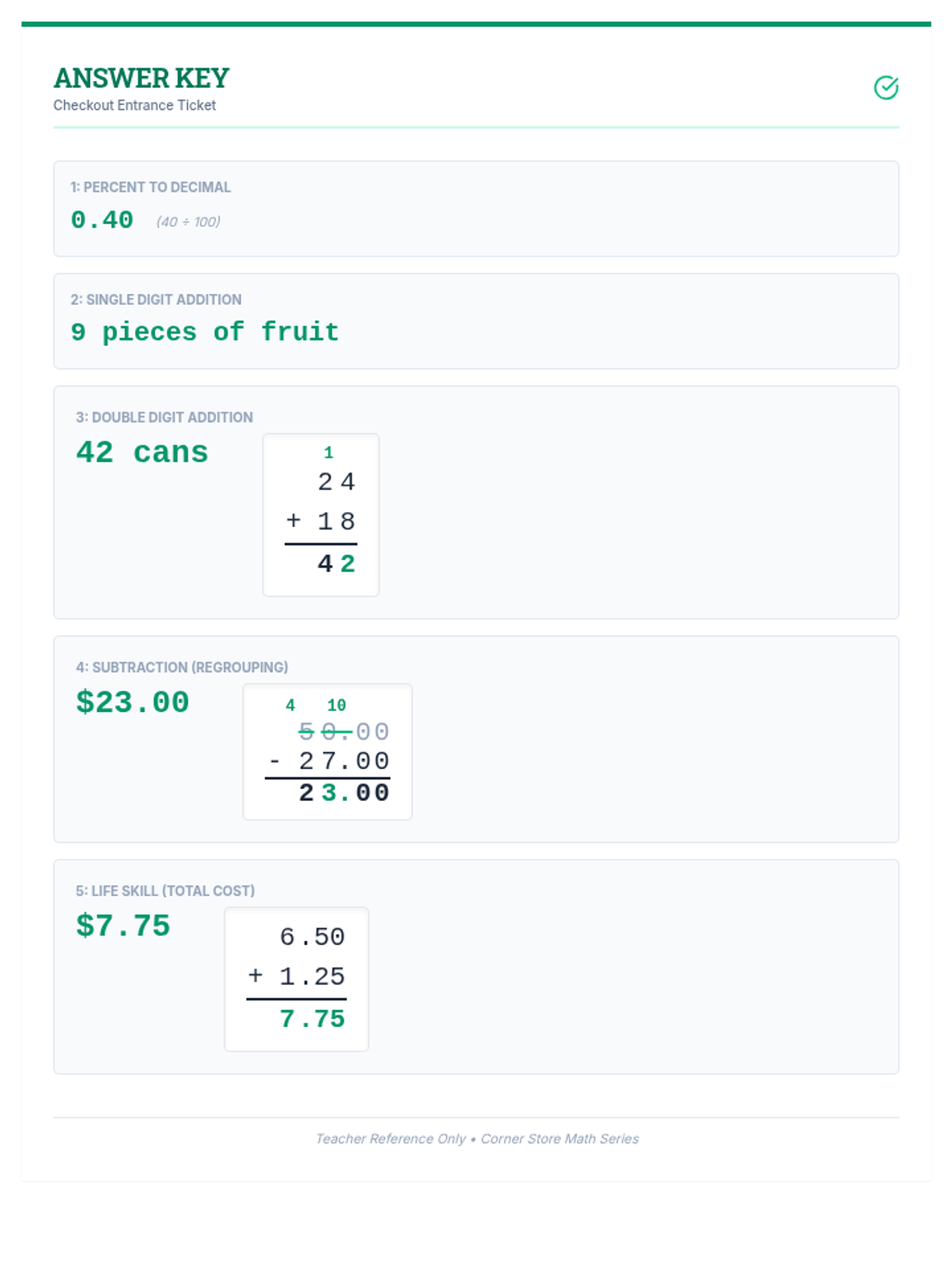
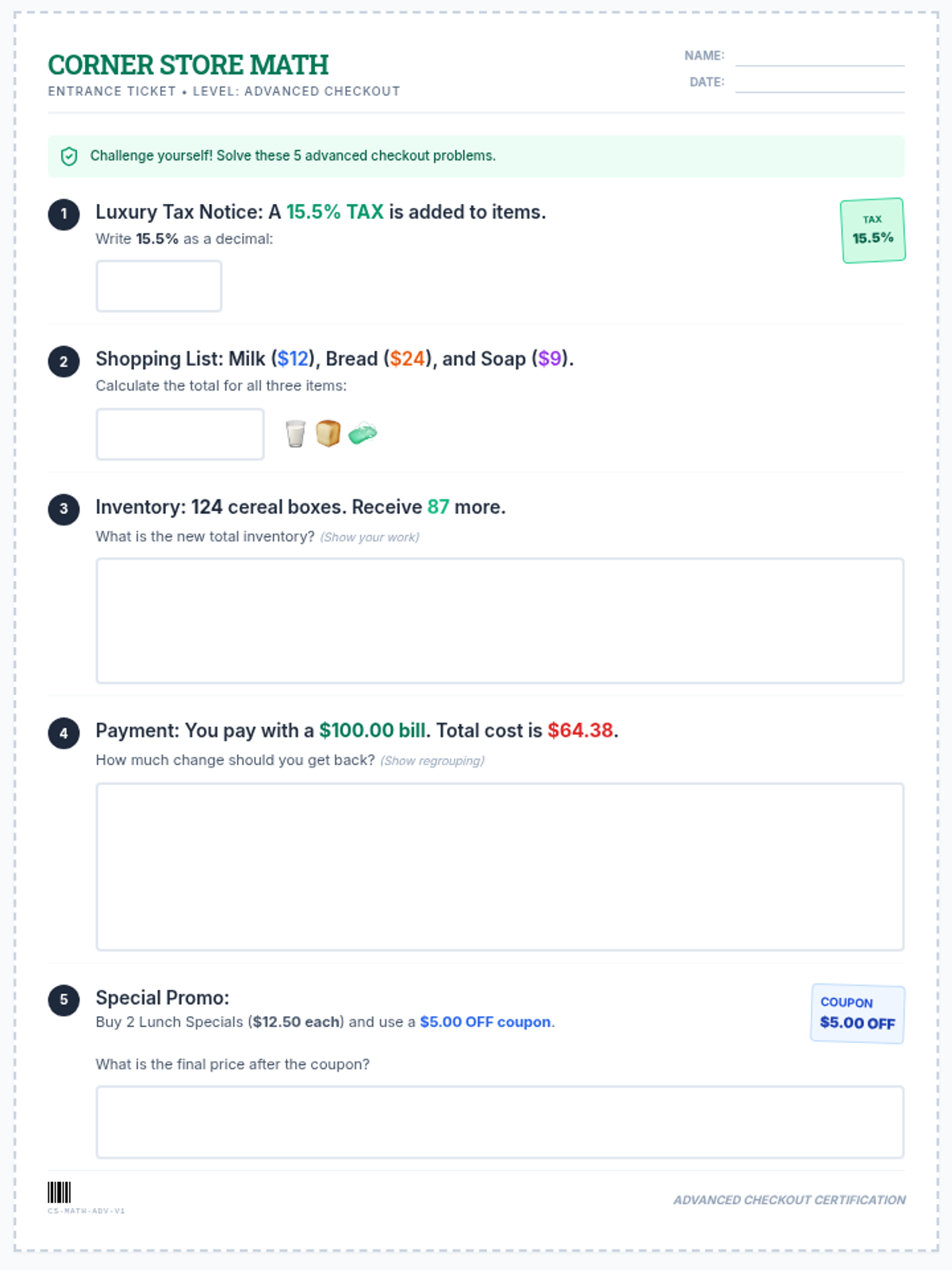
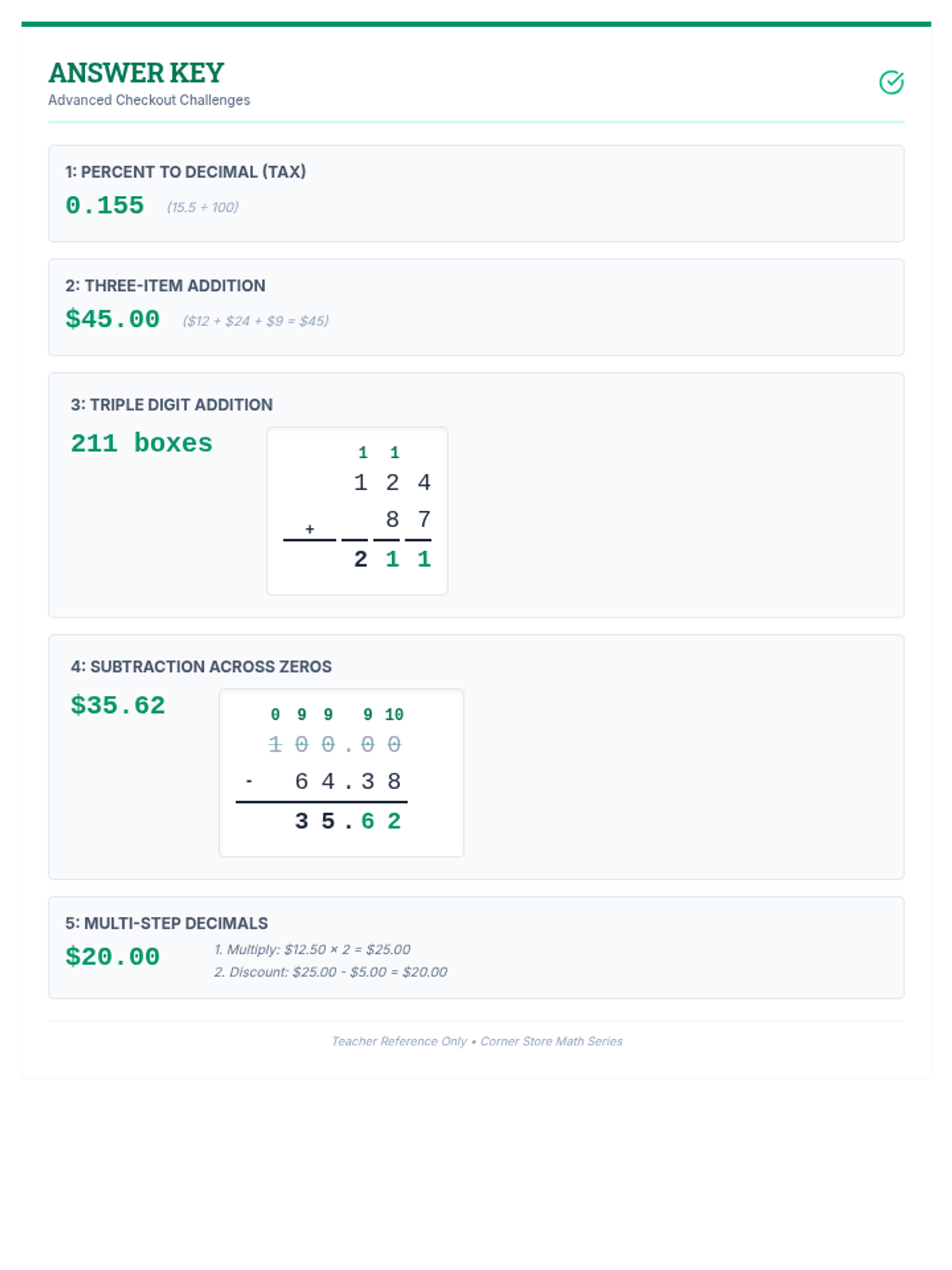
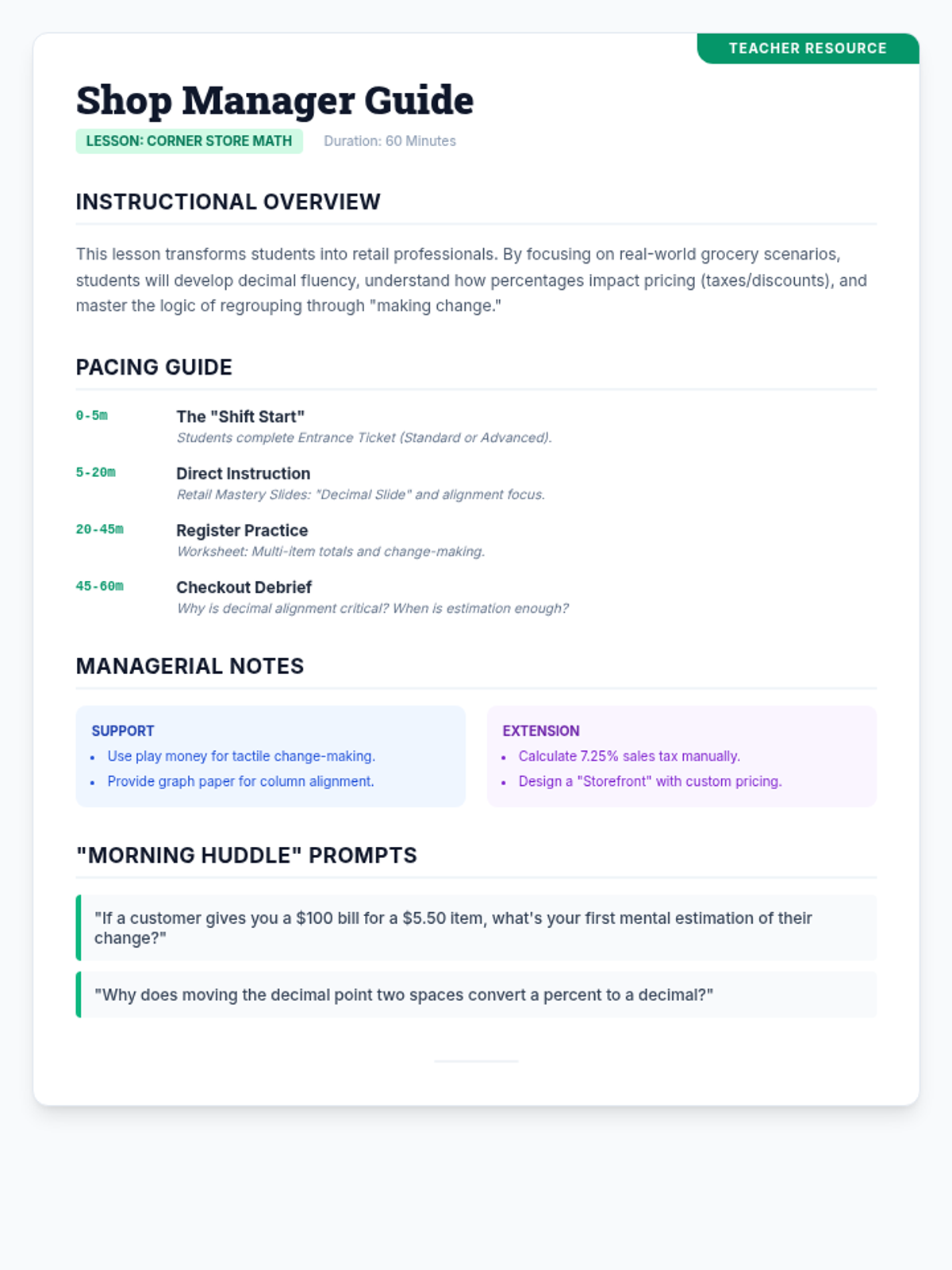
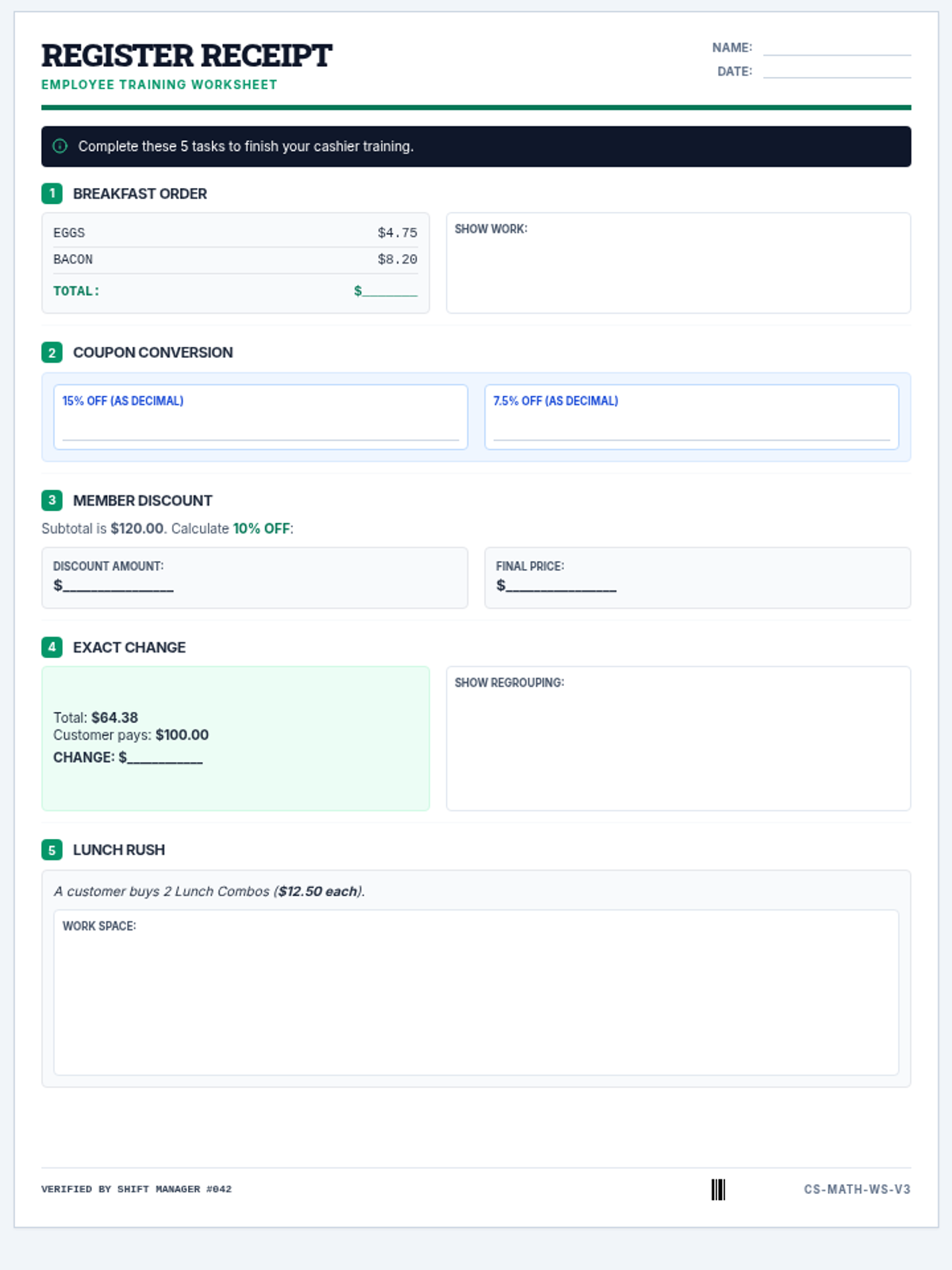
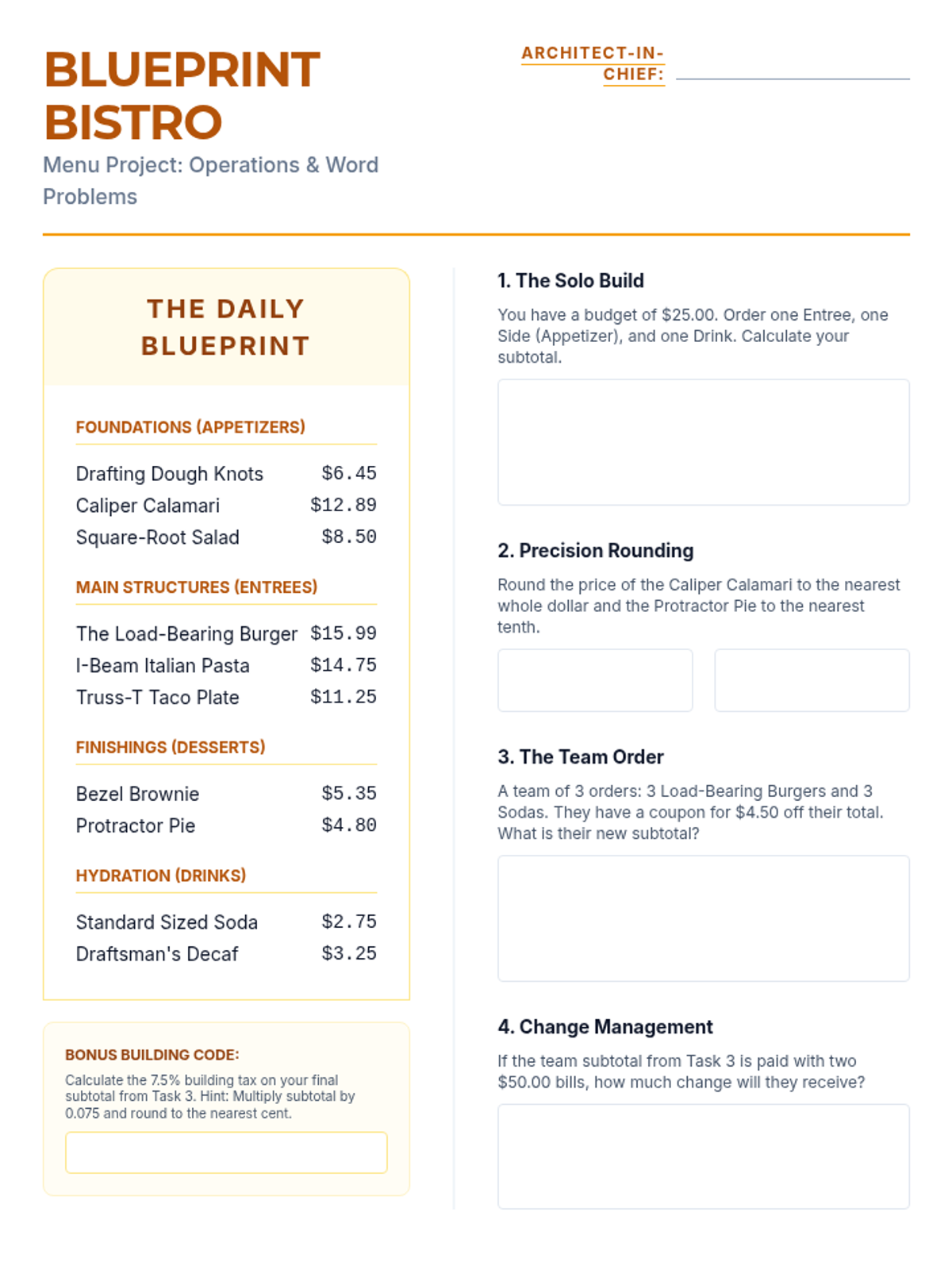
This lesson focuses on practical math applications in a retail setting, covering decimals, percentages, and basic arithmetic with a focus on money management.
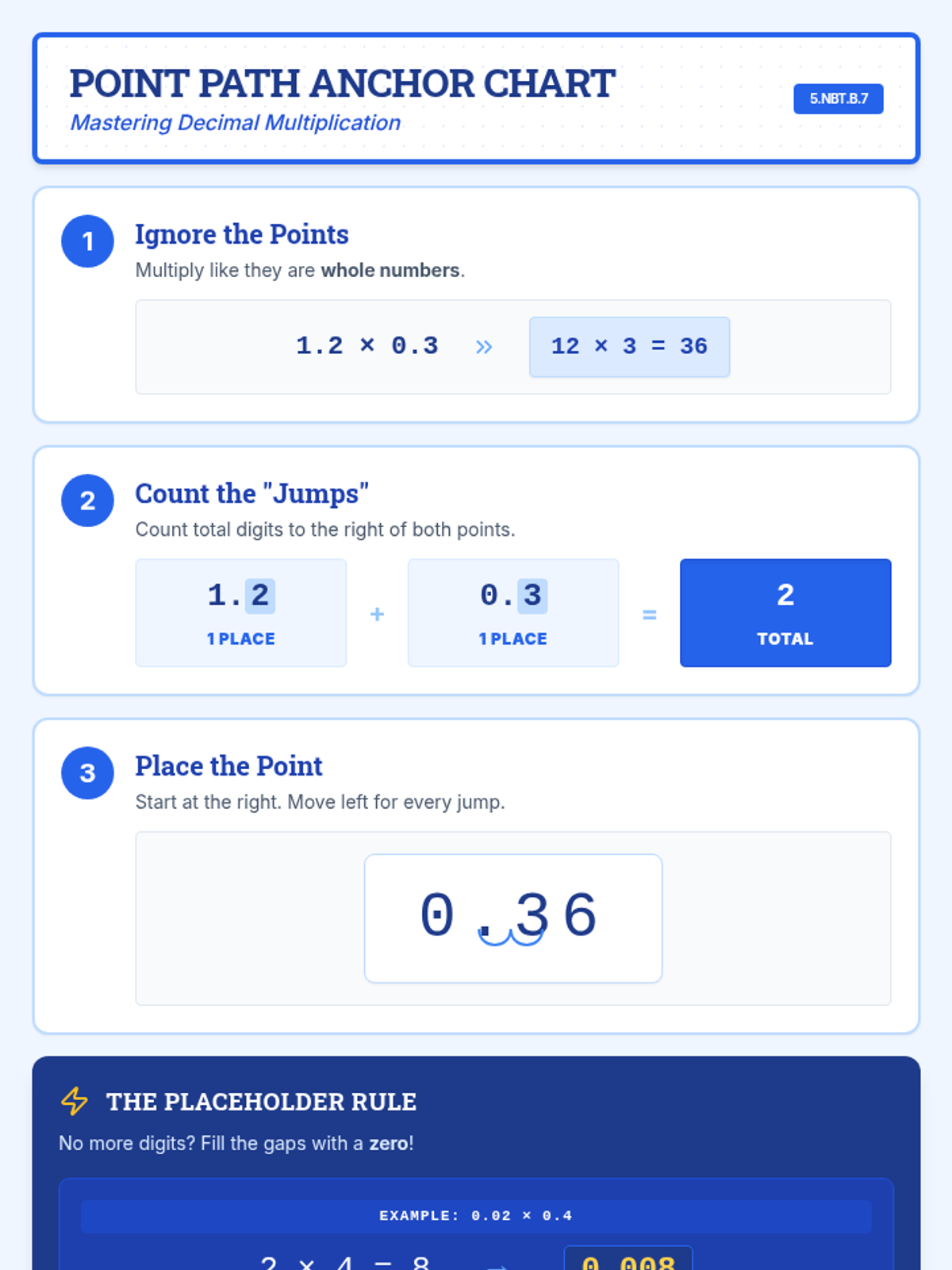
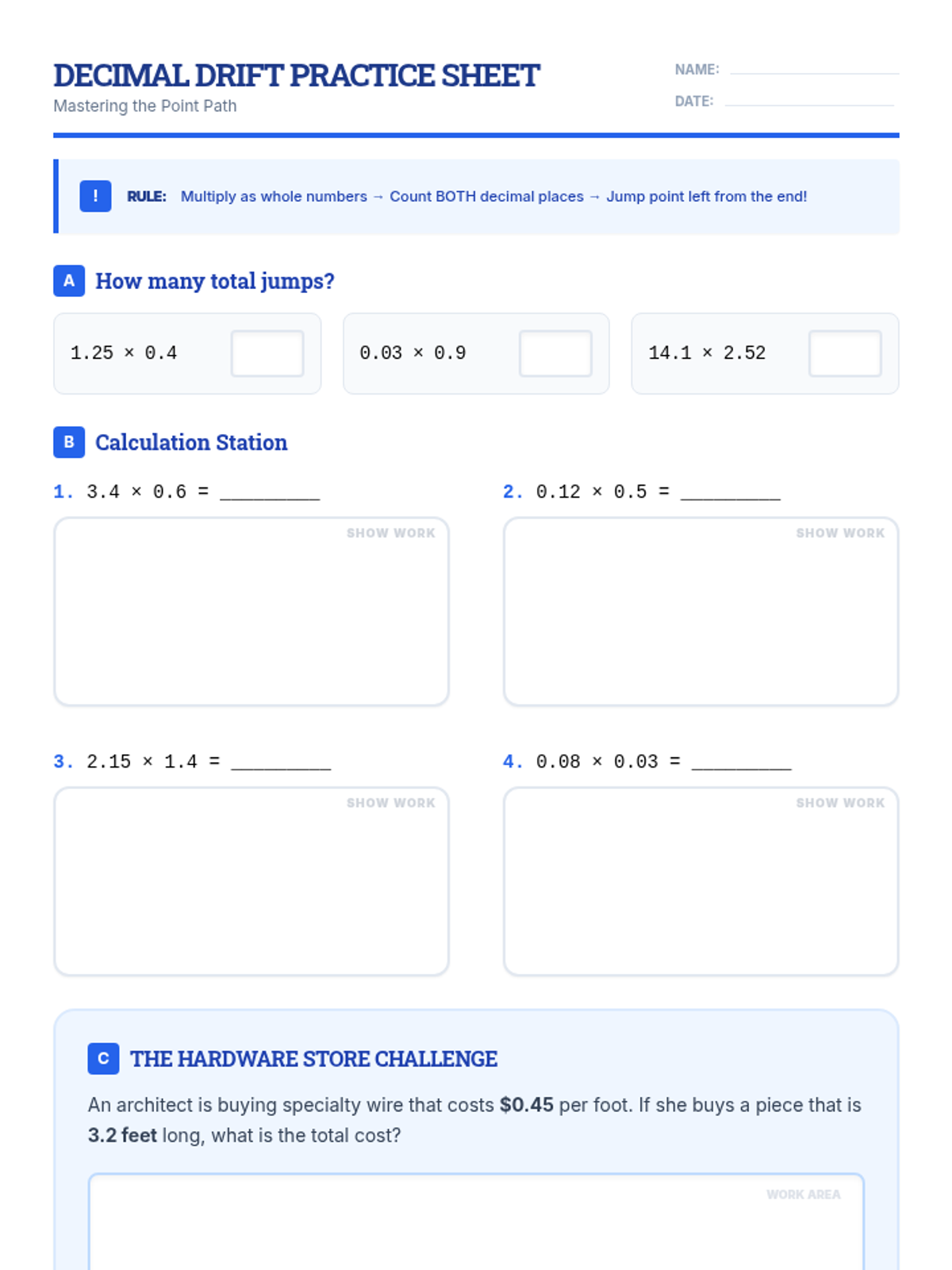
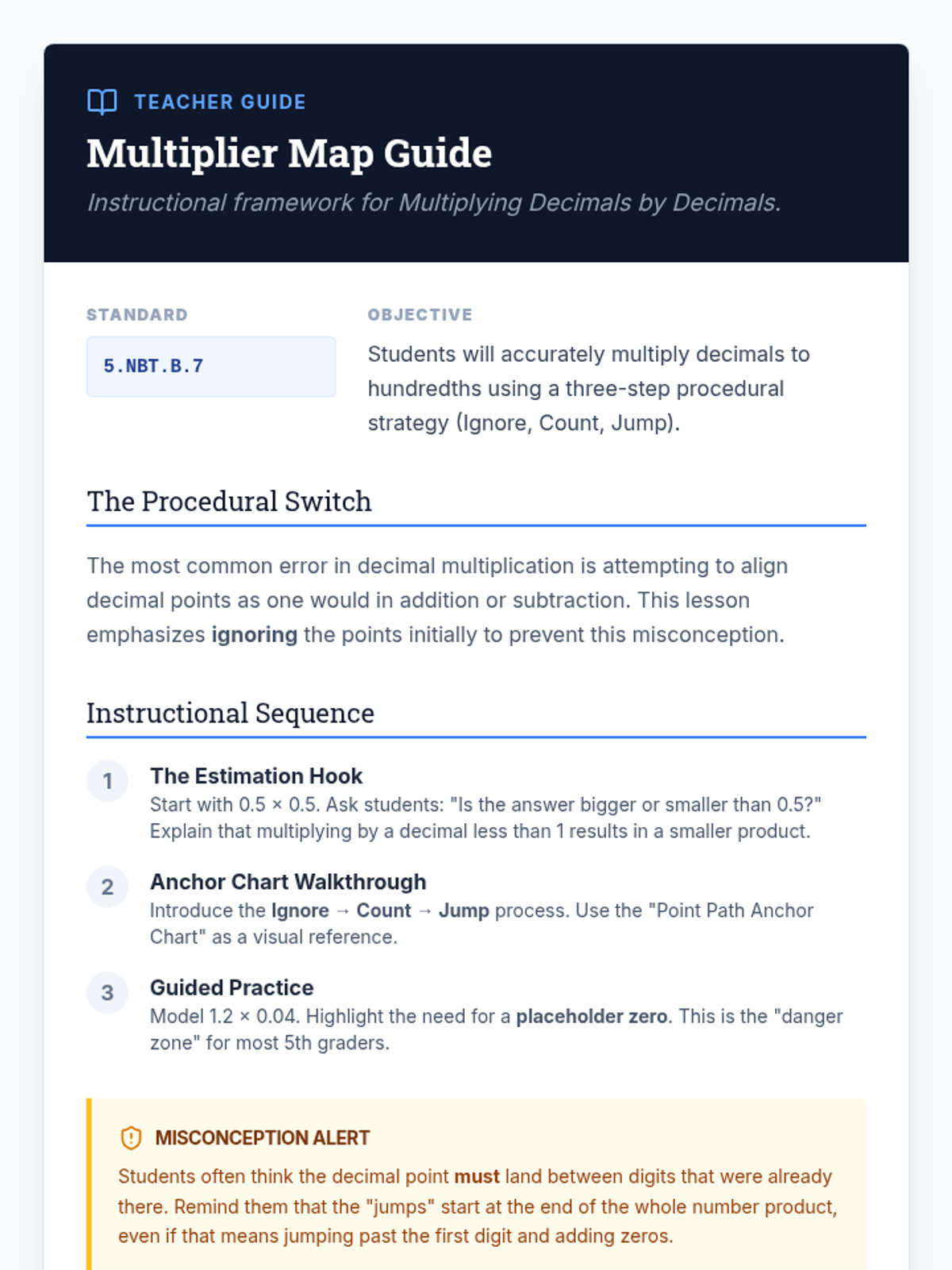
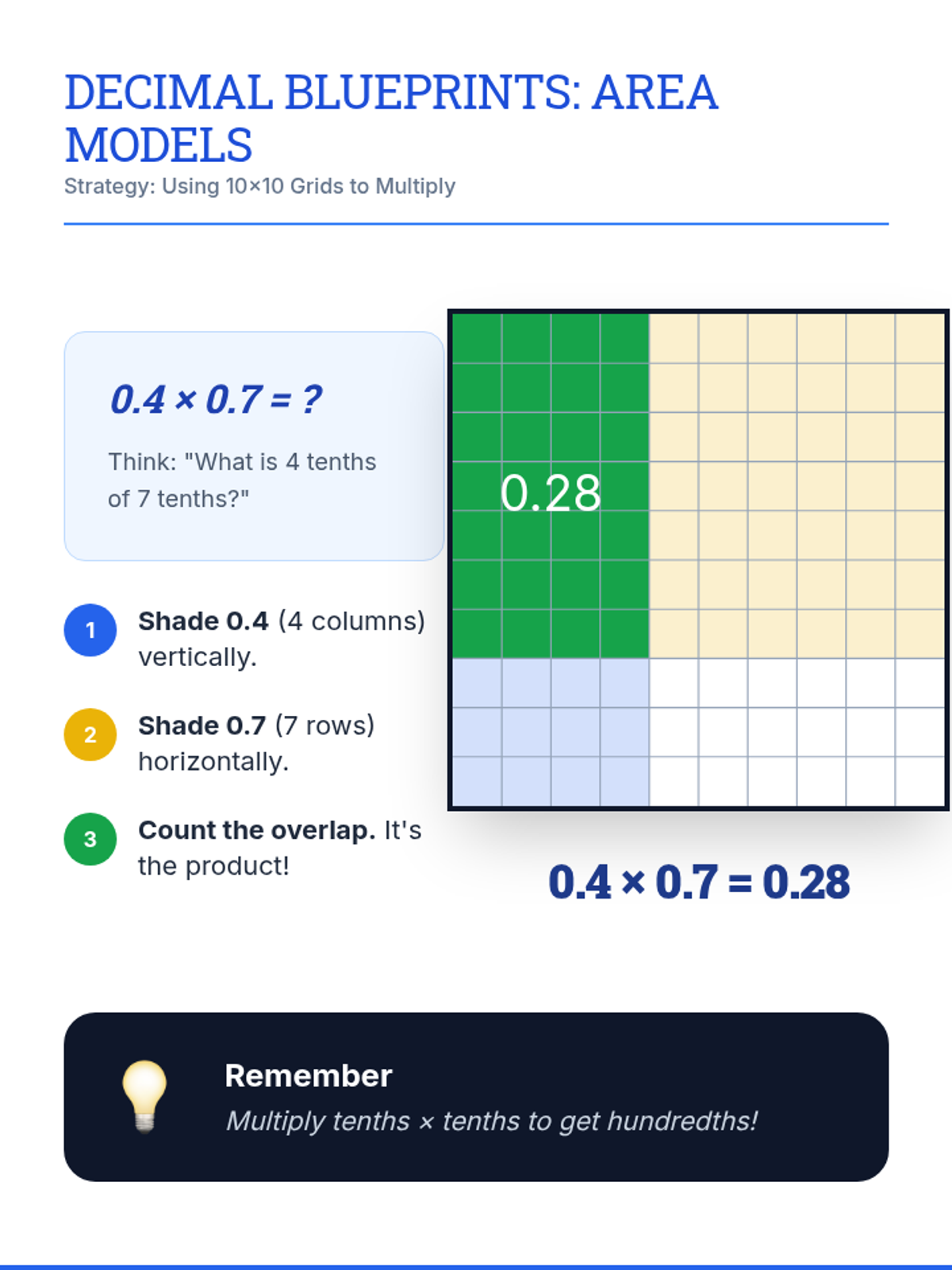
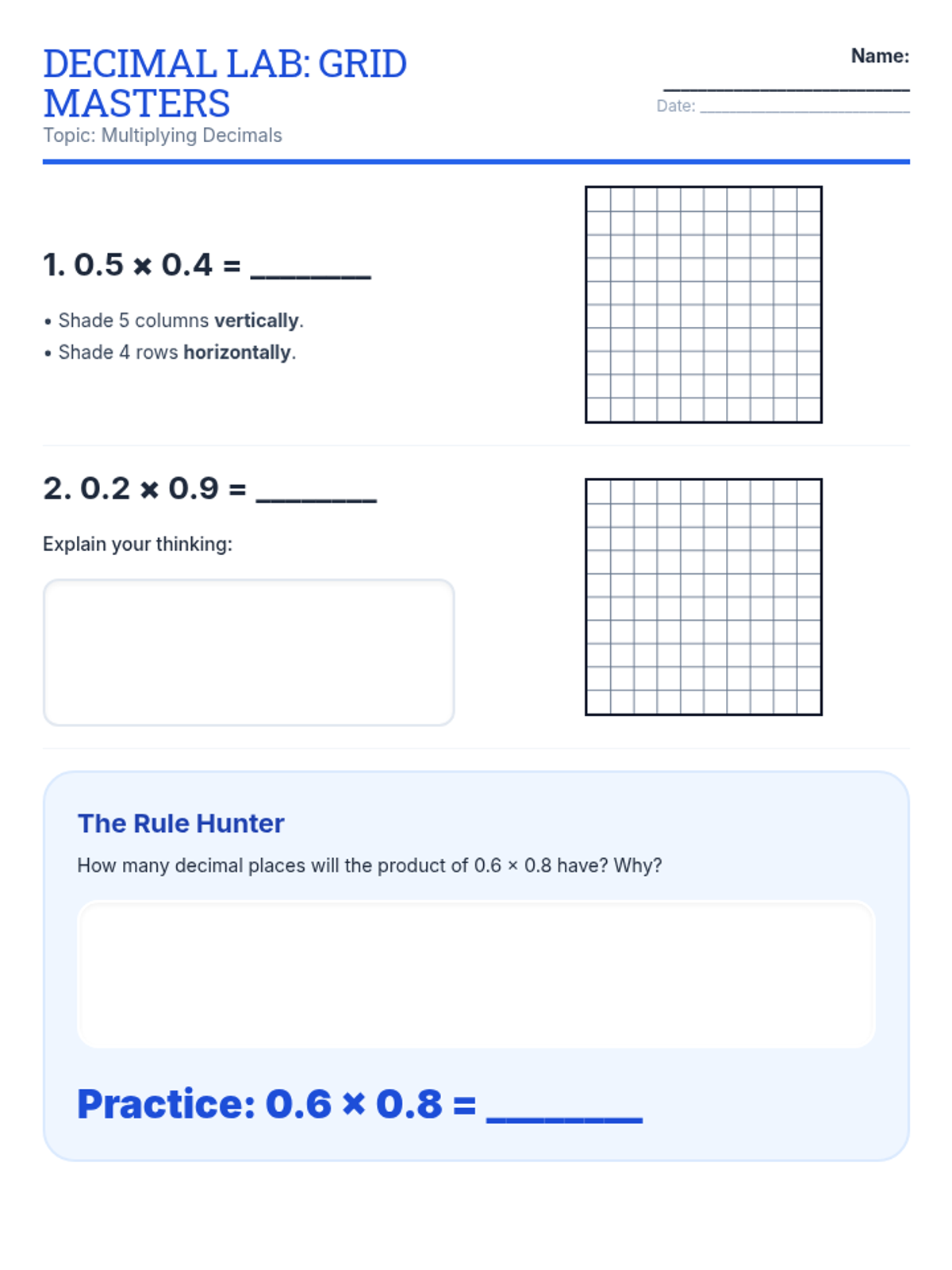
A comprehensive guide to multiplying decimals by decimals using a step-by-step procedural approach. This lesson includes a visual anchor chart for students, a practice worksheet to reinforce the skill, and a teacher guide for effective instruction.
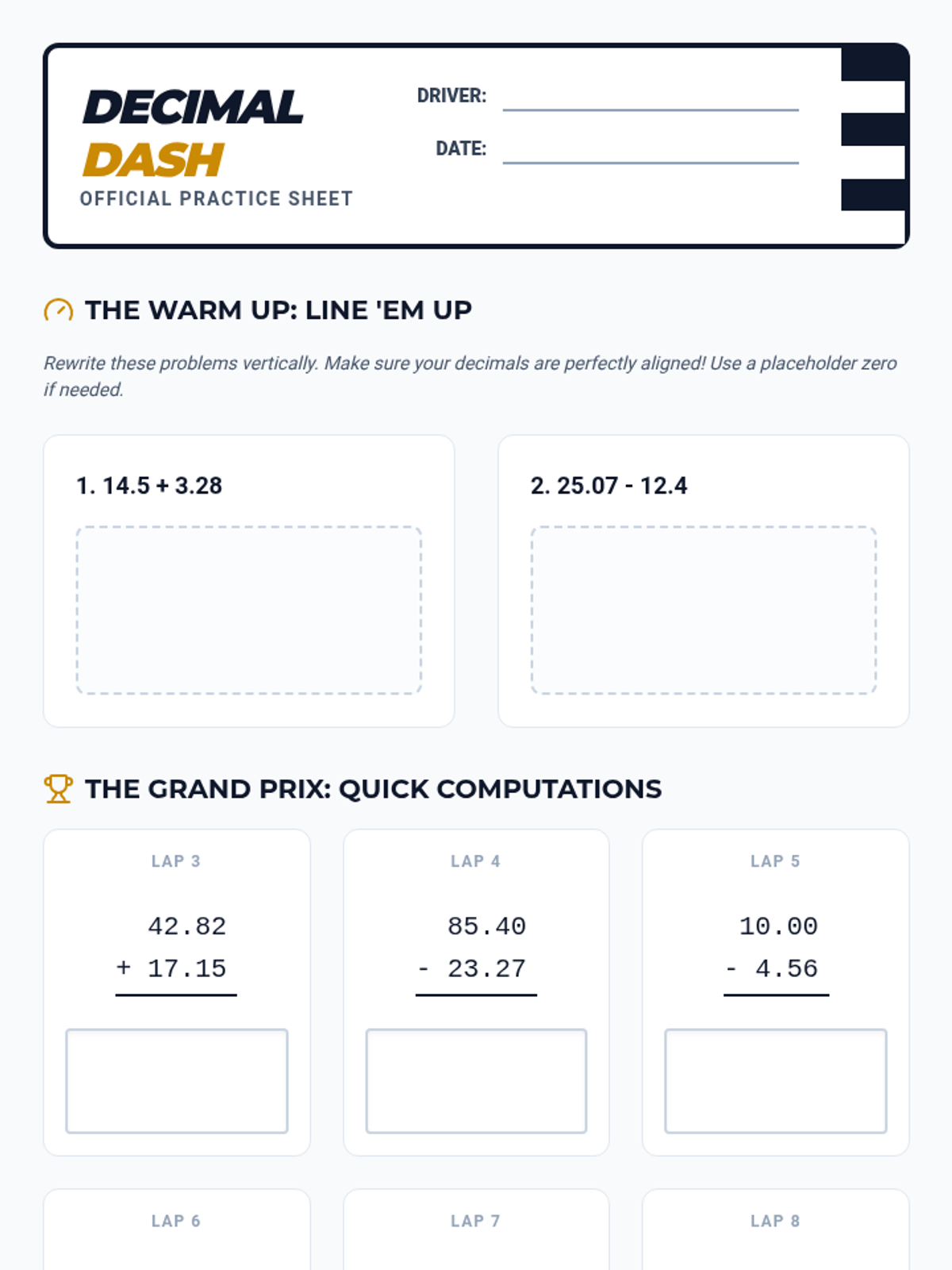
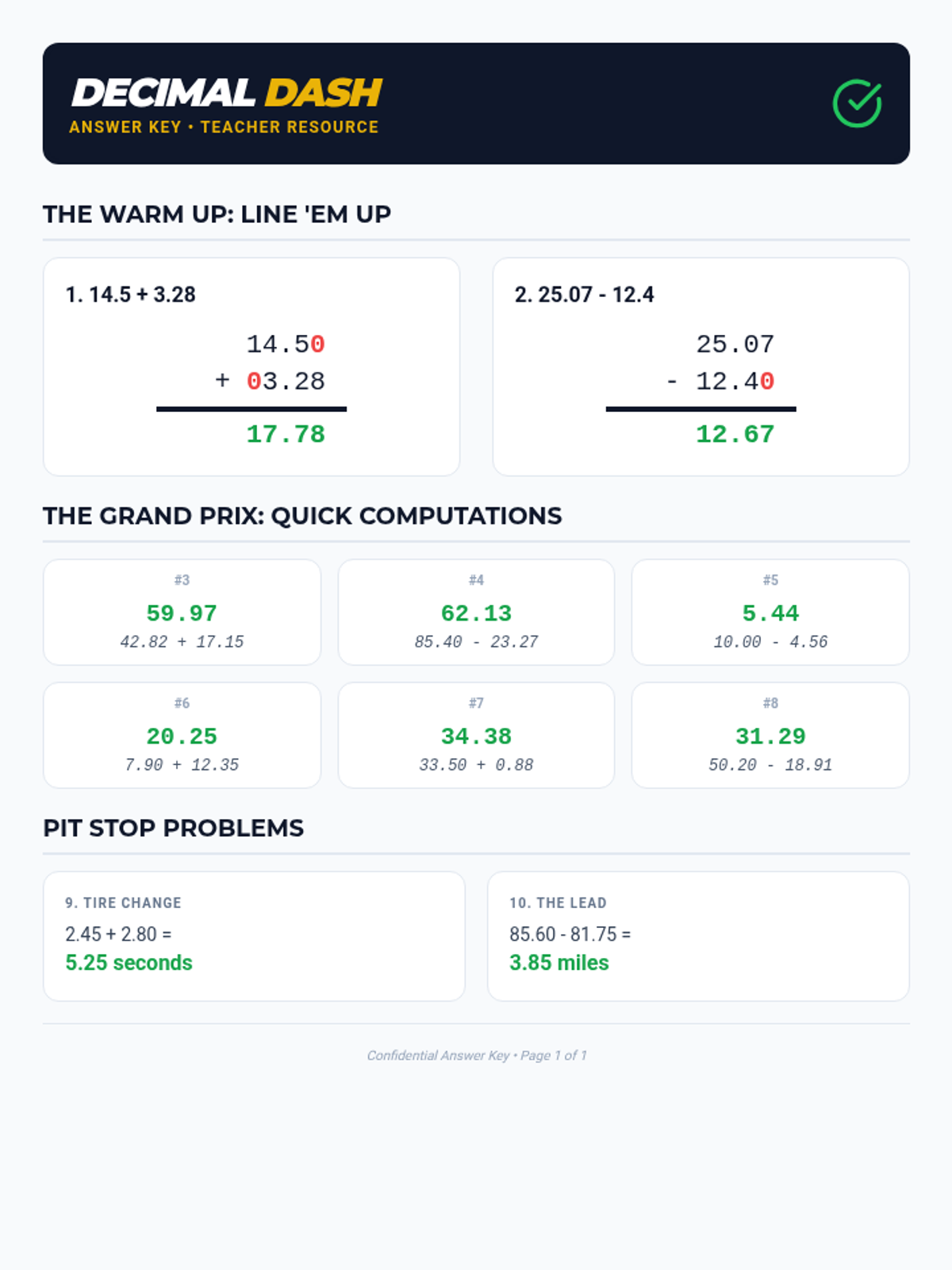
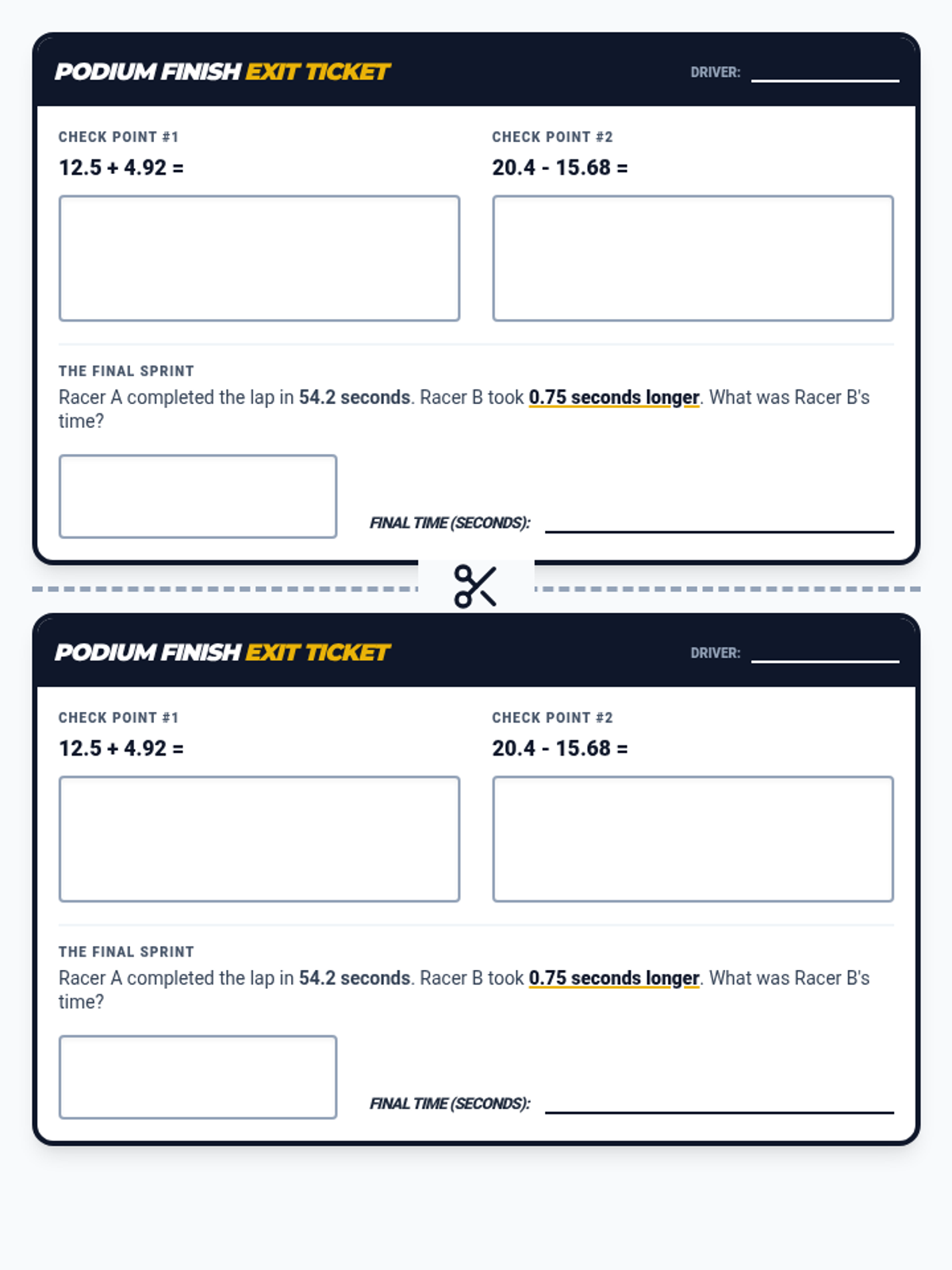
A fast-paced lesson on adding and subtracting decimals through the hundredths place, focusing on the importance of place value alignment. Students will practice lining up decimals and using placeholders to solve real-world racing-themed problems.
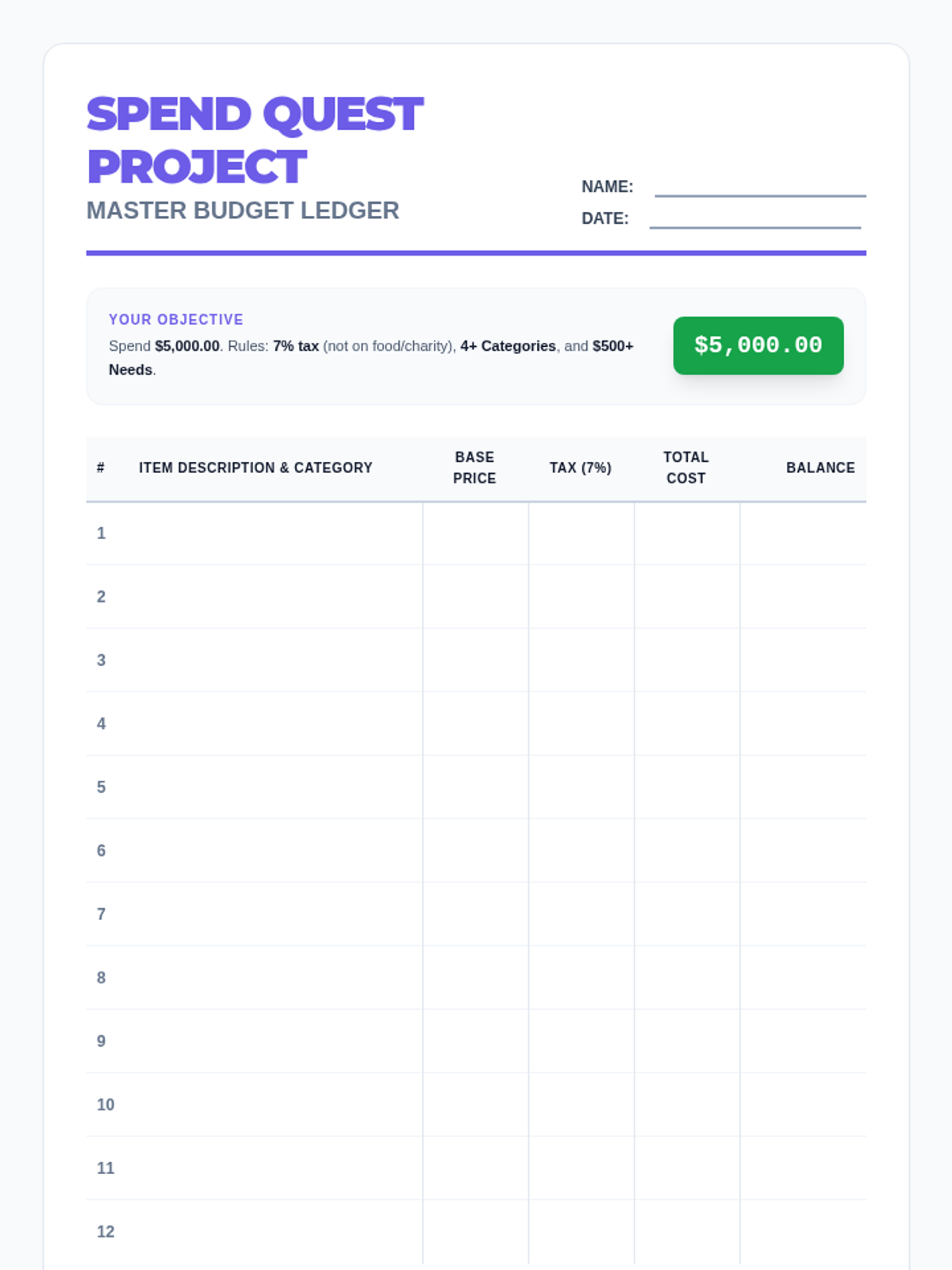
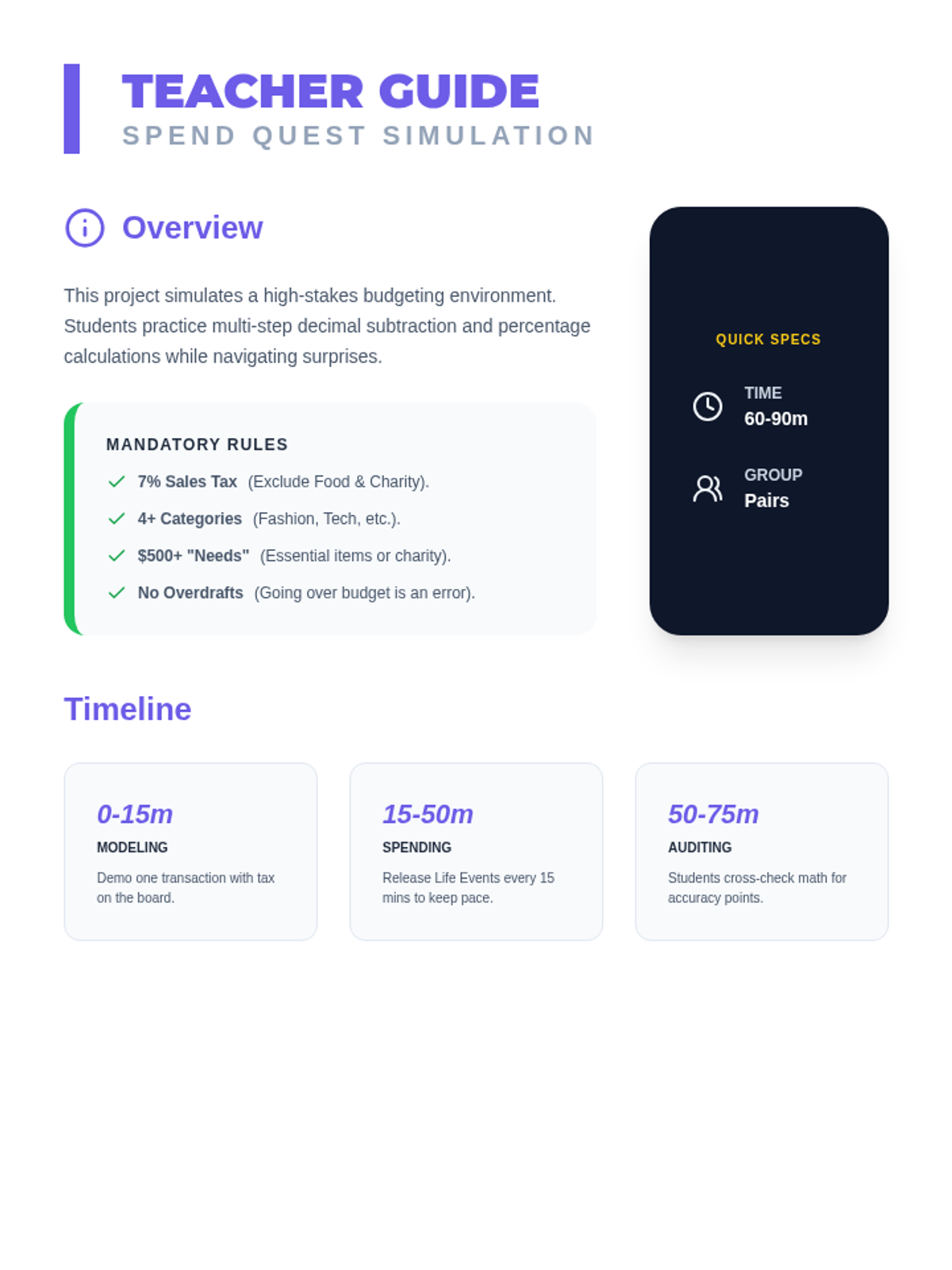
A high-energy math simulation where students manage a large budget, navigate financial constraints, and handle unexpected 'life events' while shopping for their dream items.
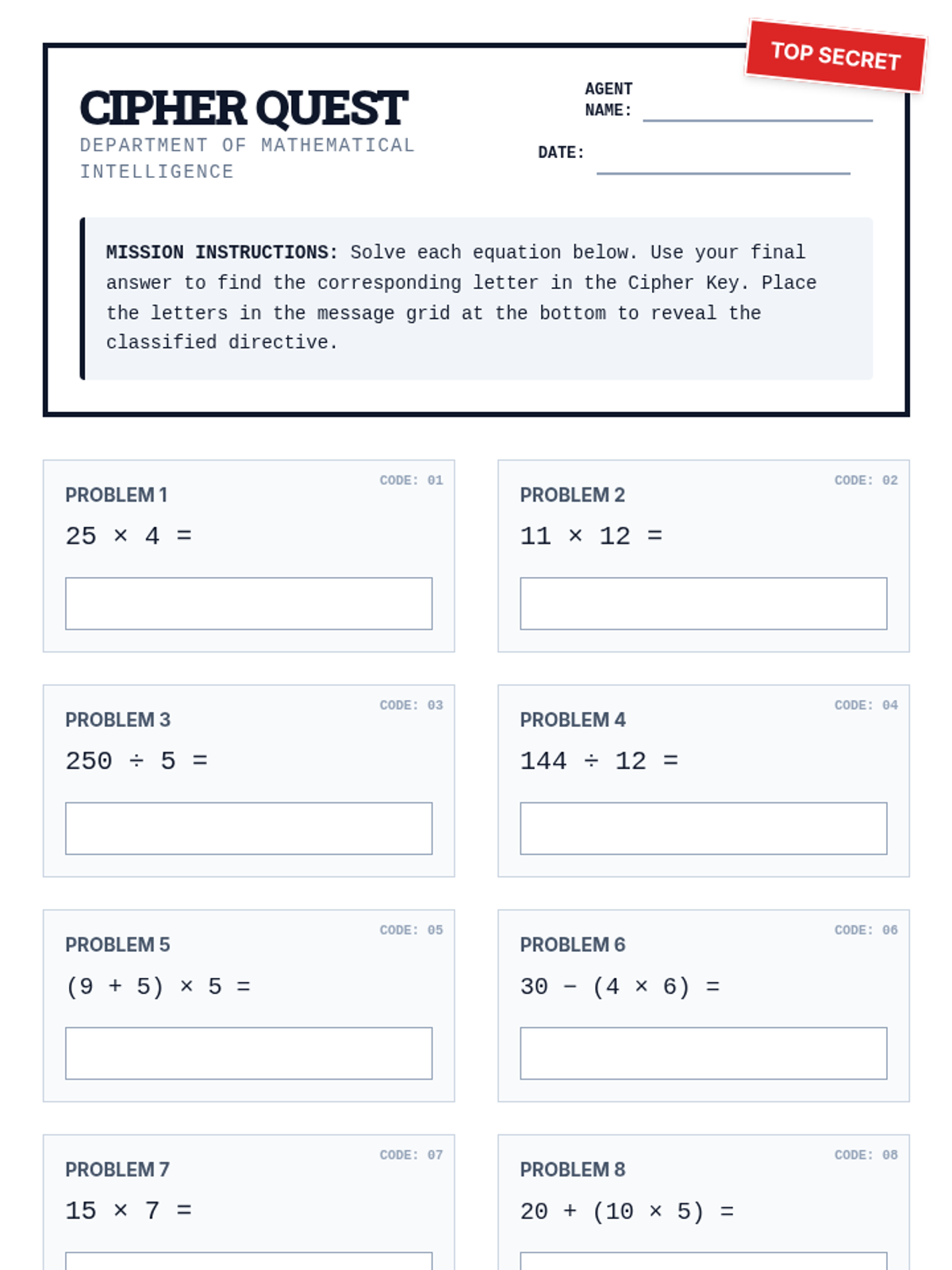
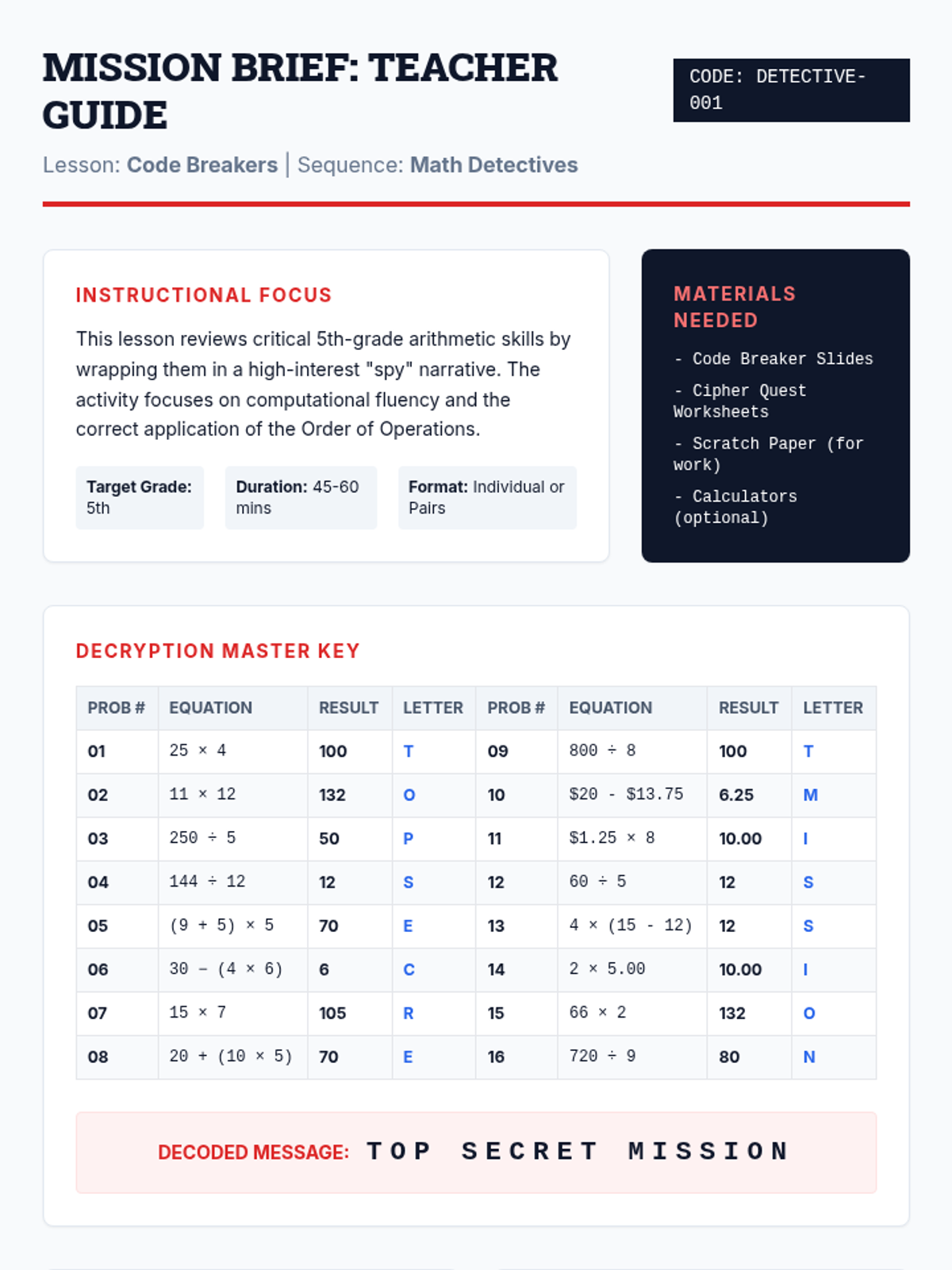
An engaging introduction to multi-digit multiplication, division, and order of operations through a spy-themed decoding challenge. Students act as 'Math Detectives' to solve a series of problems and reveal a hidden message.
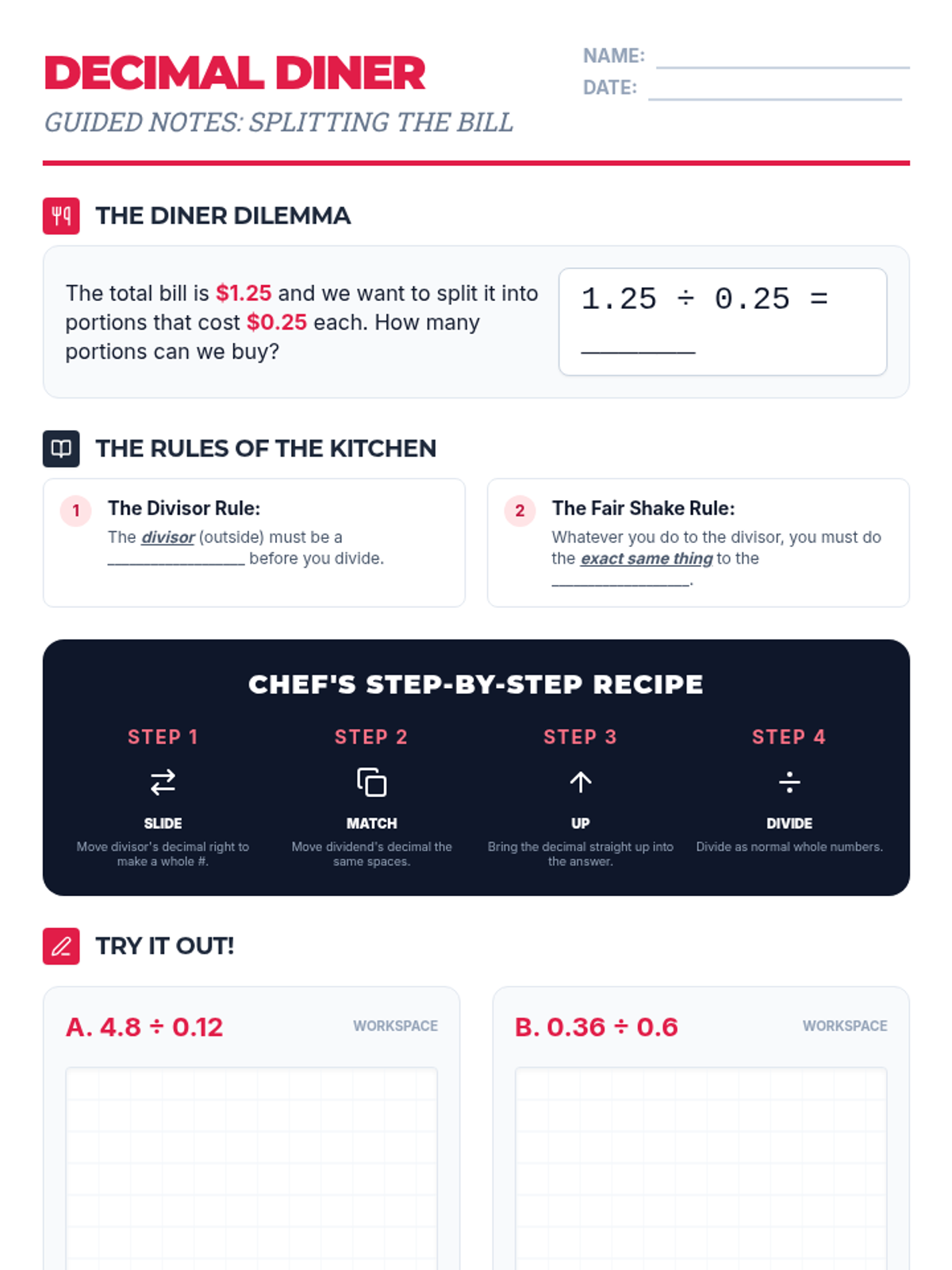
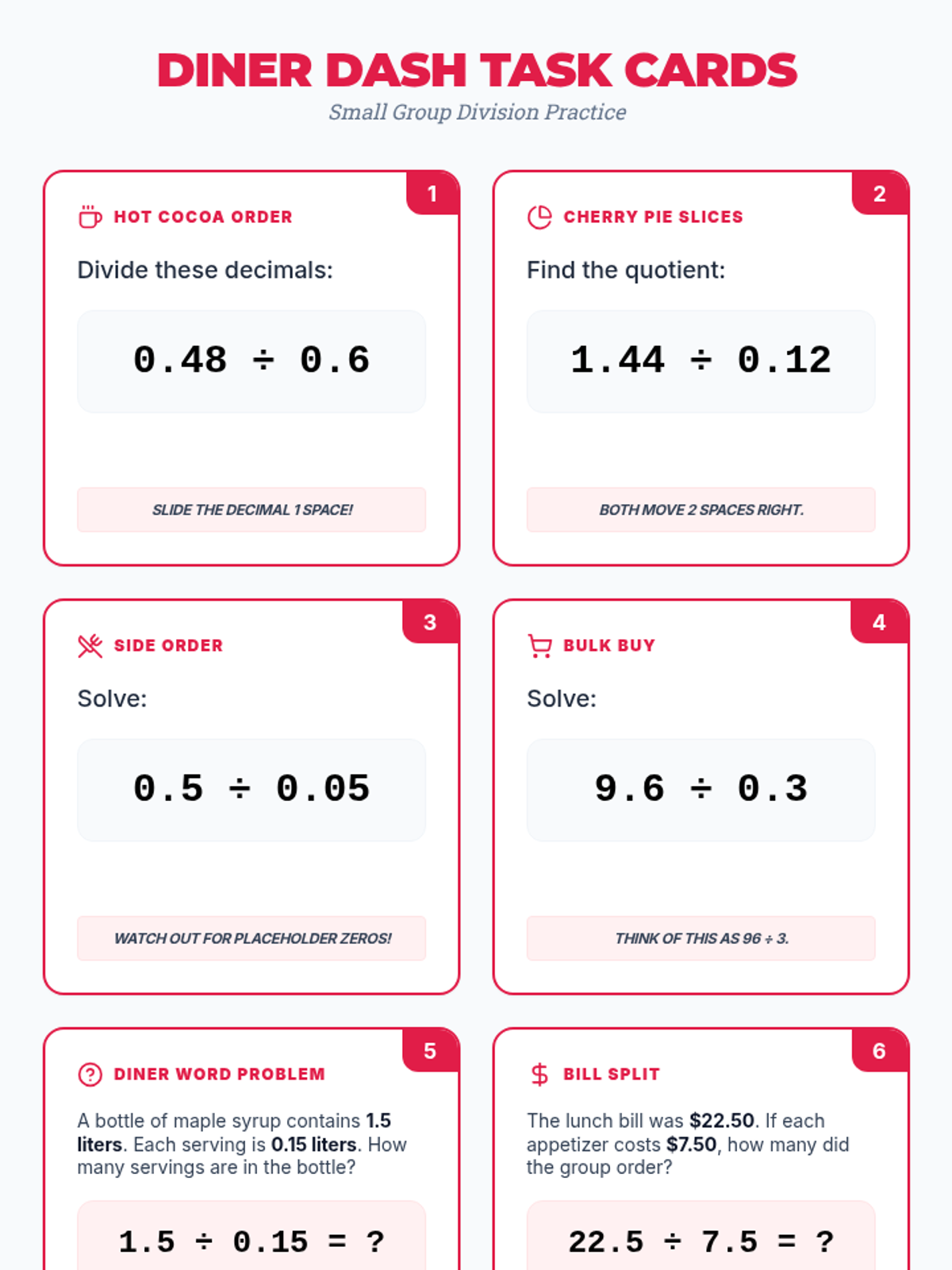
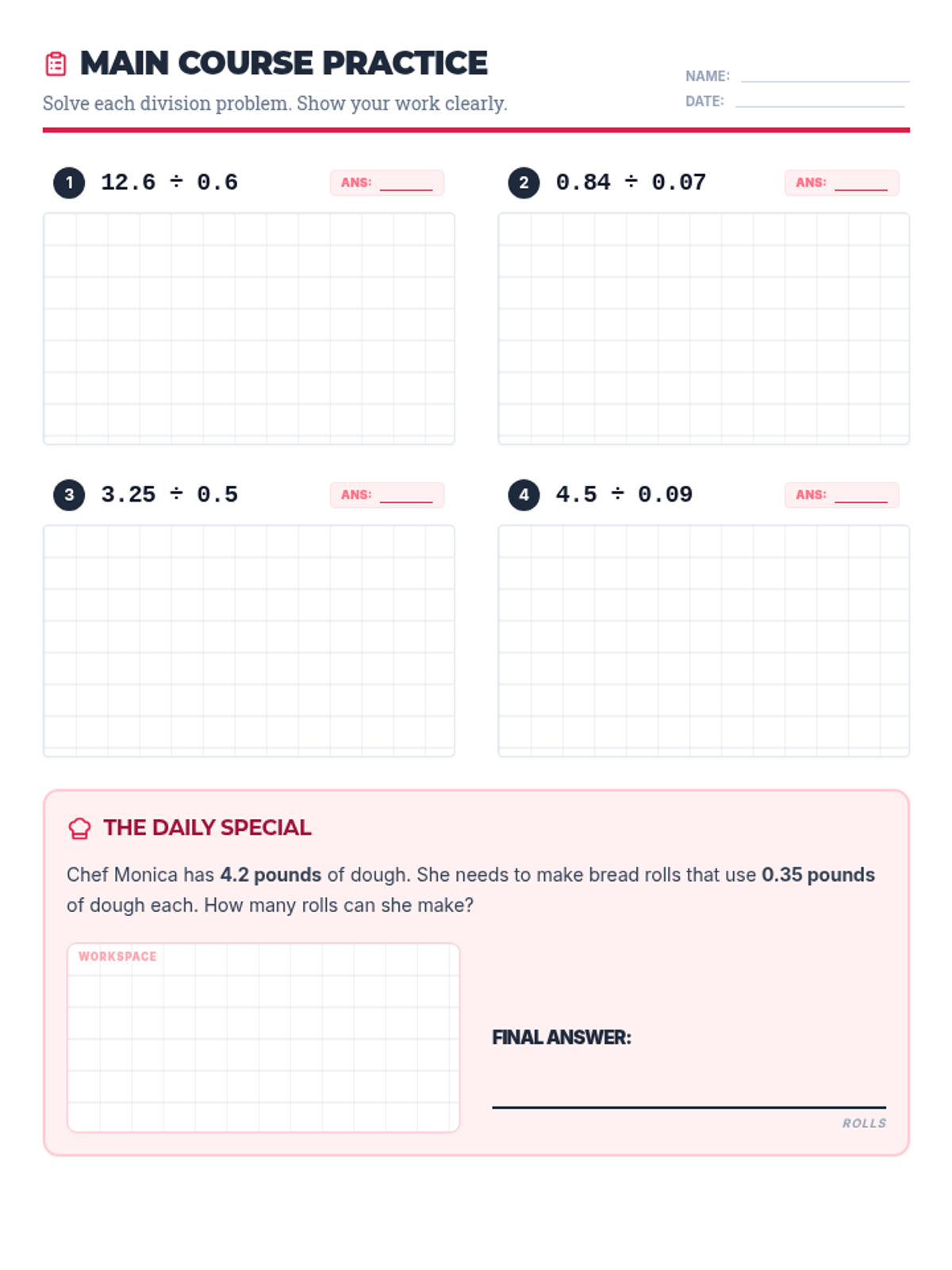
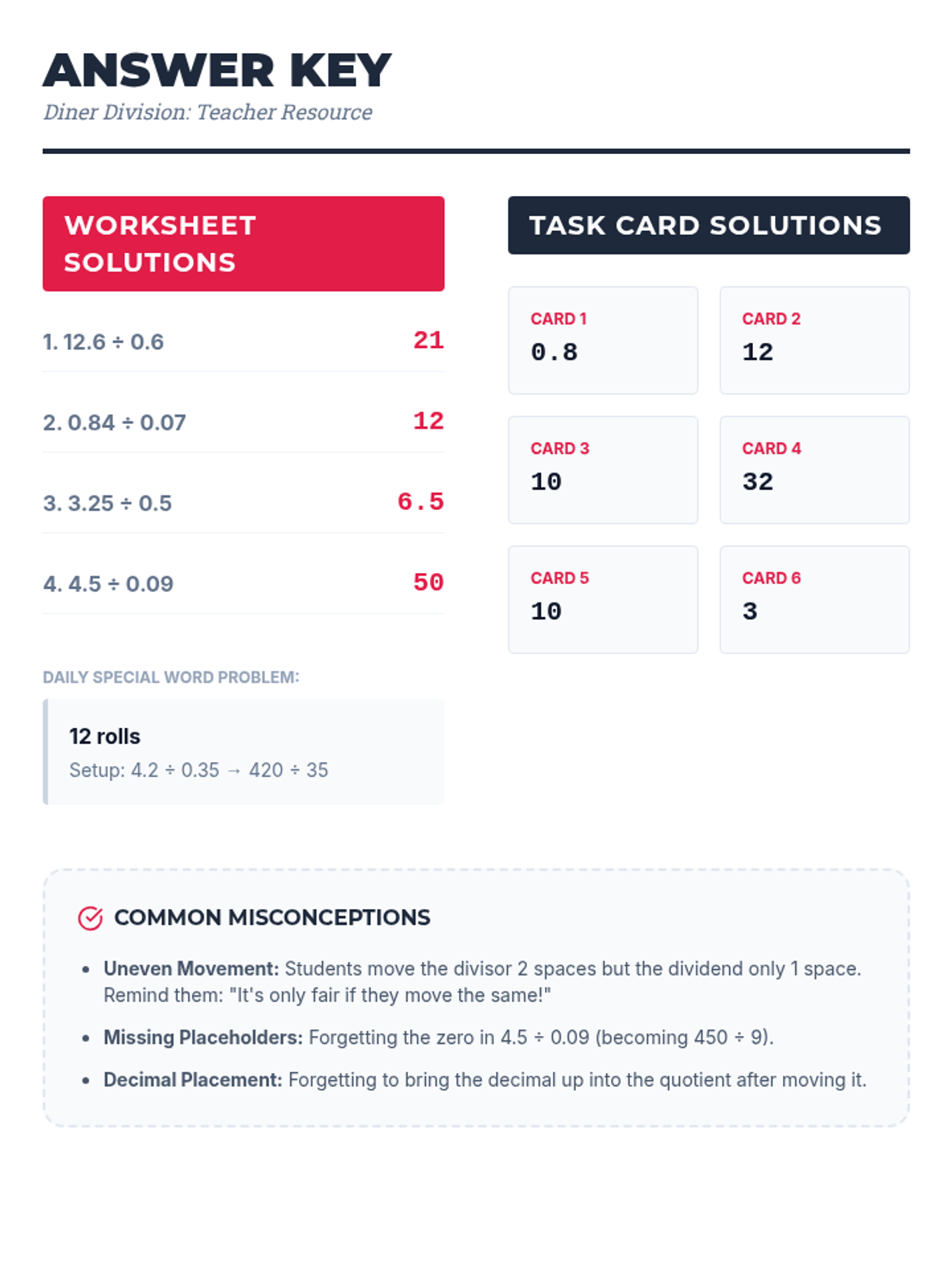
A comprehensive lesson on dividing decimals by decimals using a 'Decimal Diner' theme. Includes guided instruction, collaborative task cards, and independent practice with alignment grids.
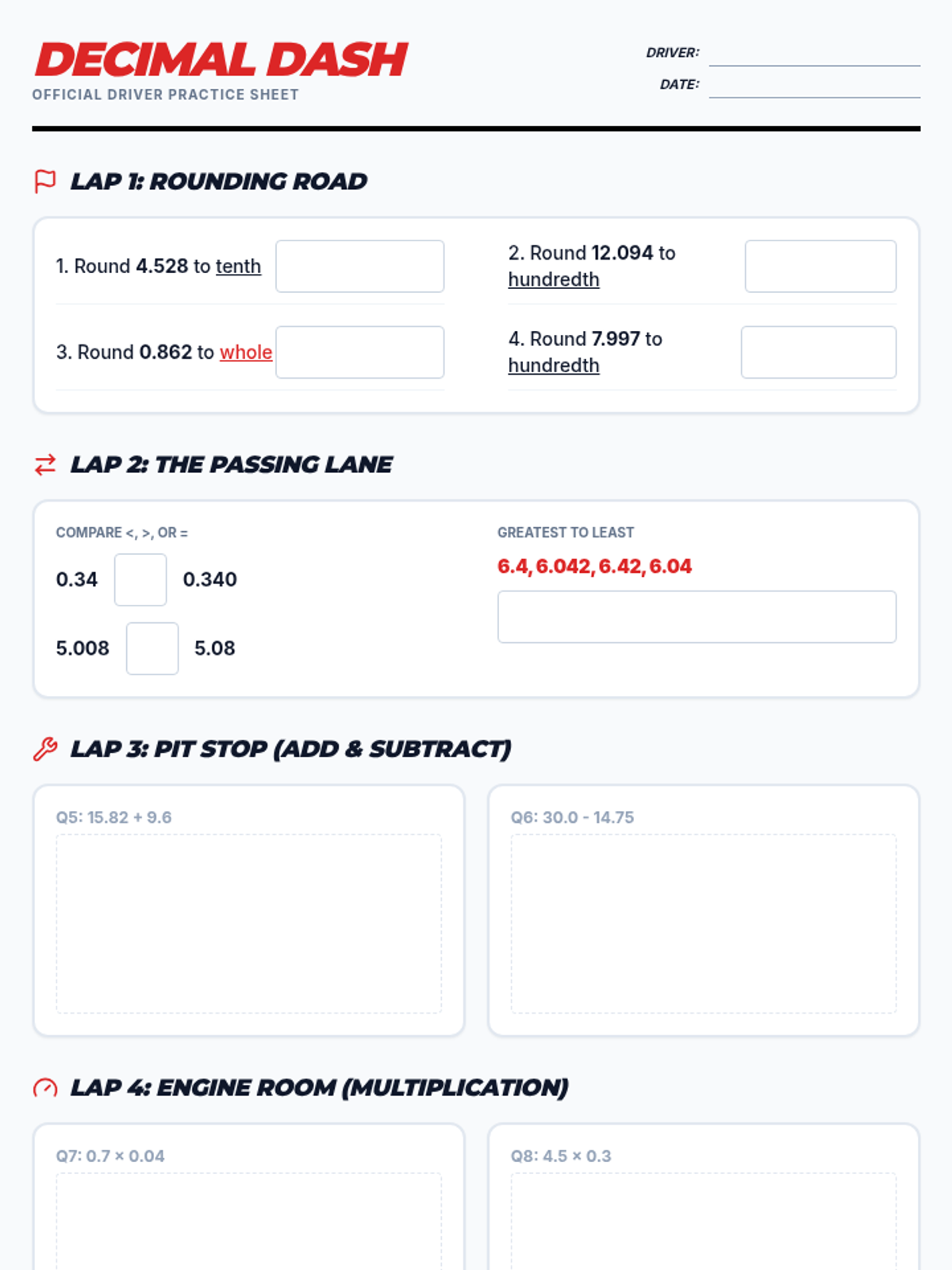
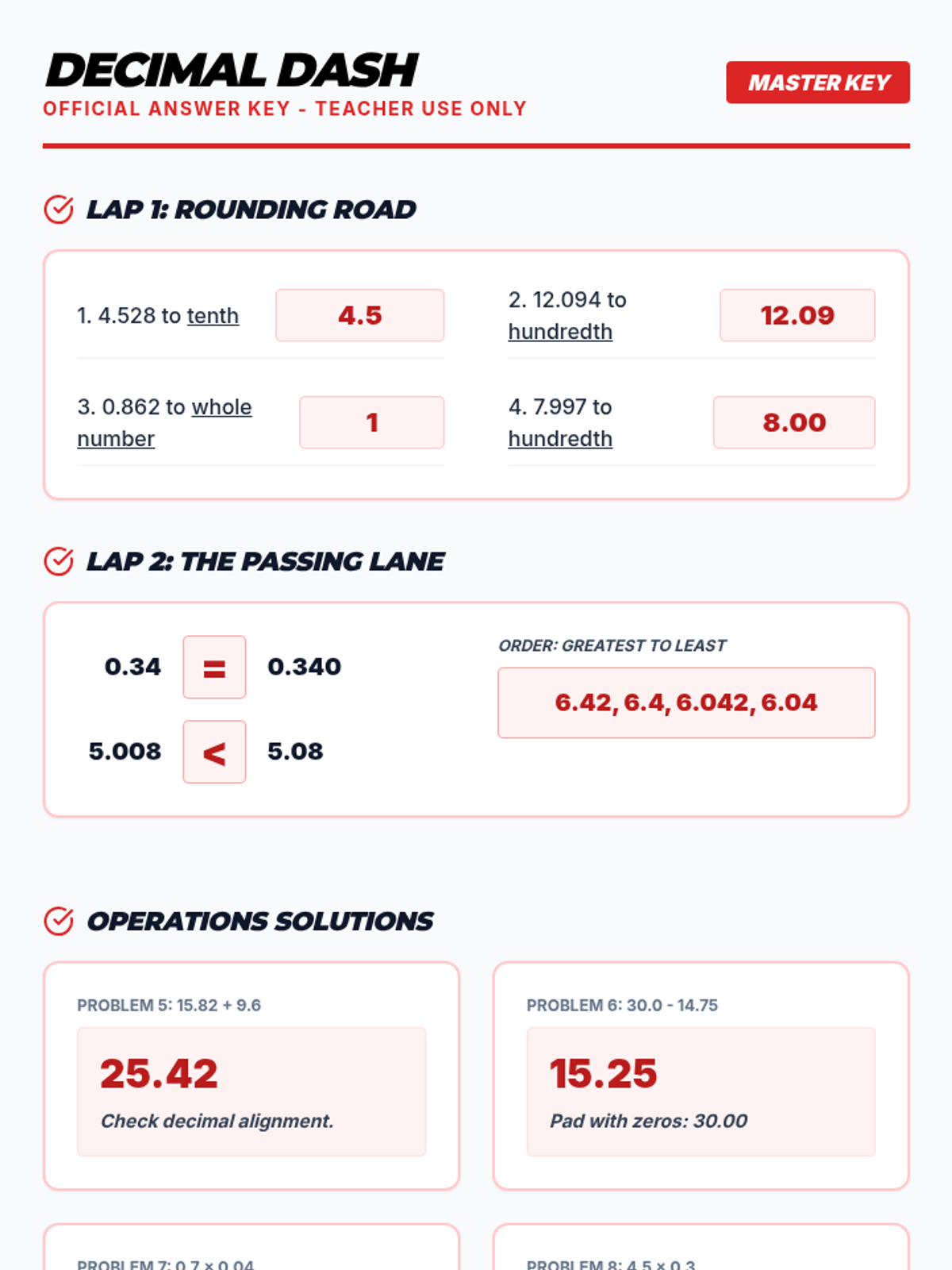
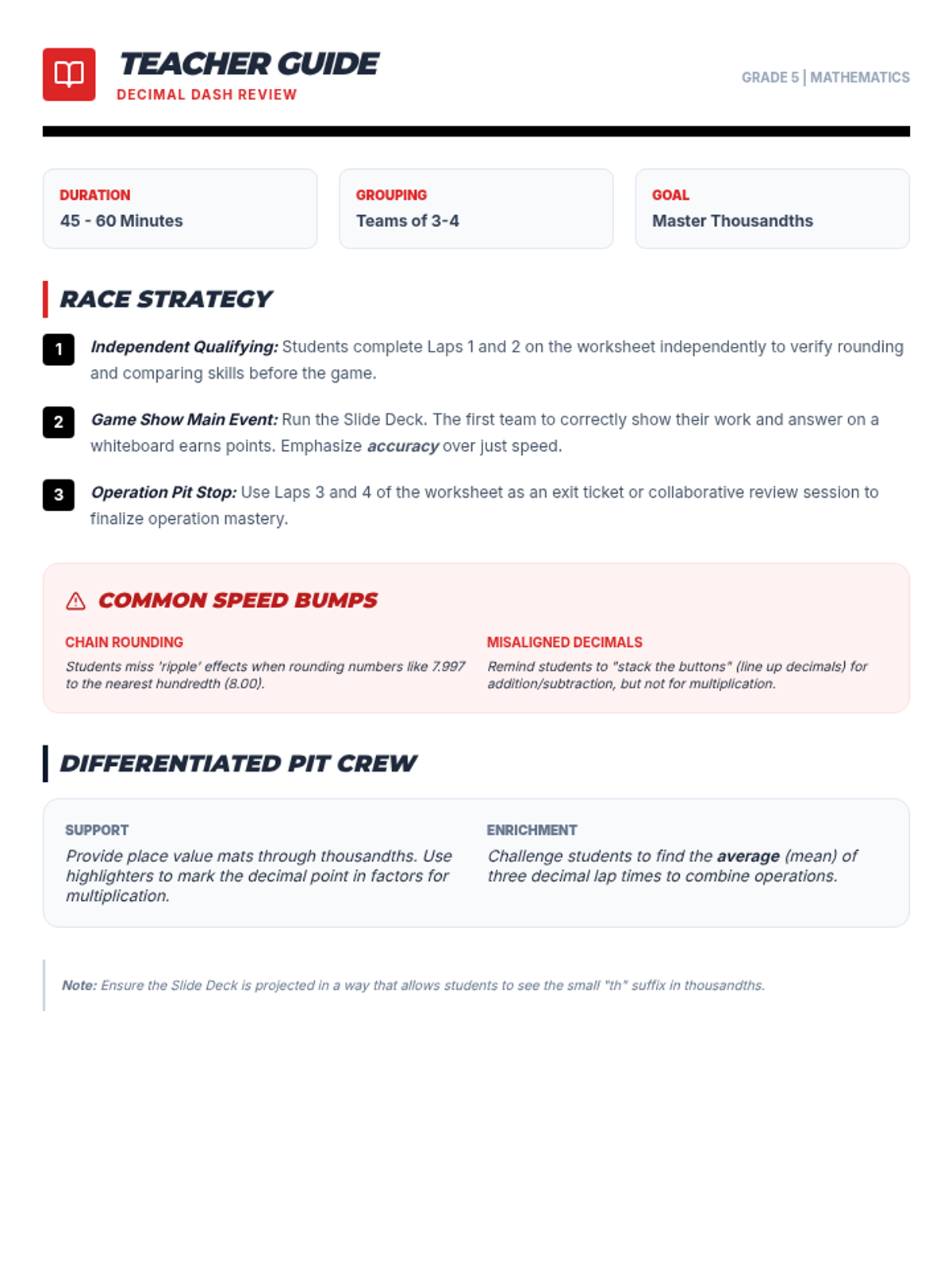
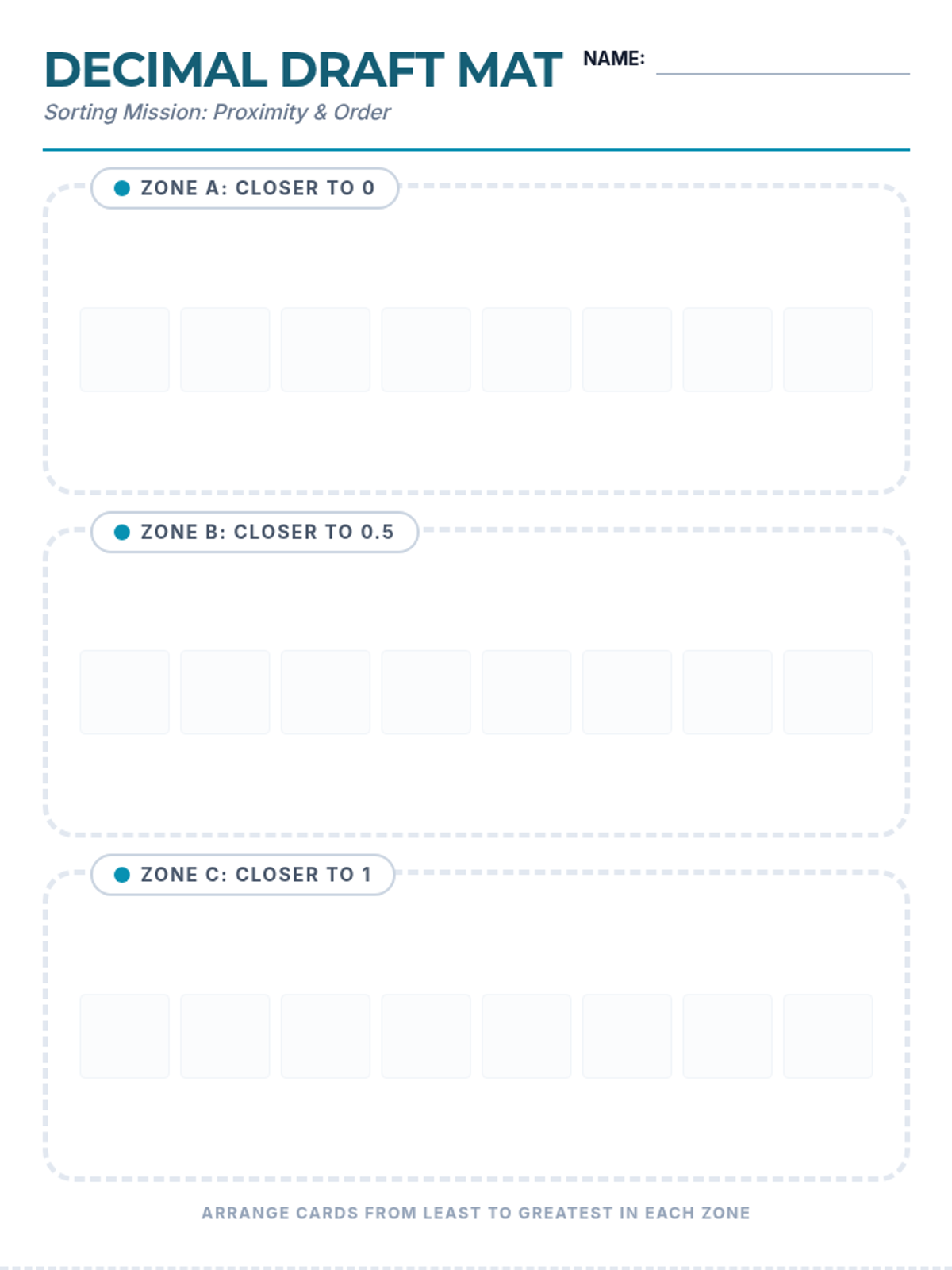
A high-energy 5th-grade review session covering decimal operations (addition, subtraction, multiplication), comparing, ordering, and rounding up to the thousandths place. Designed with a racing theme to engage students in a fast-paced mathematical challenge.
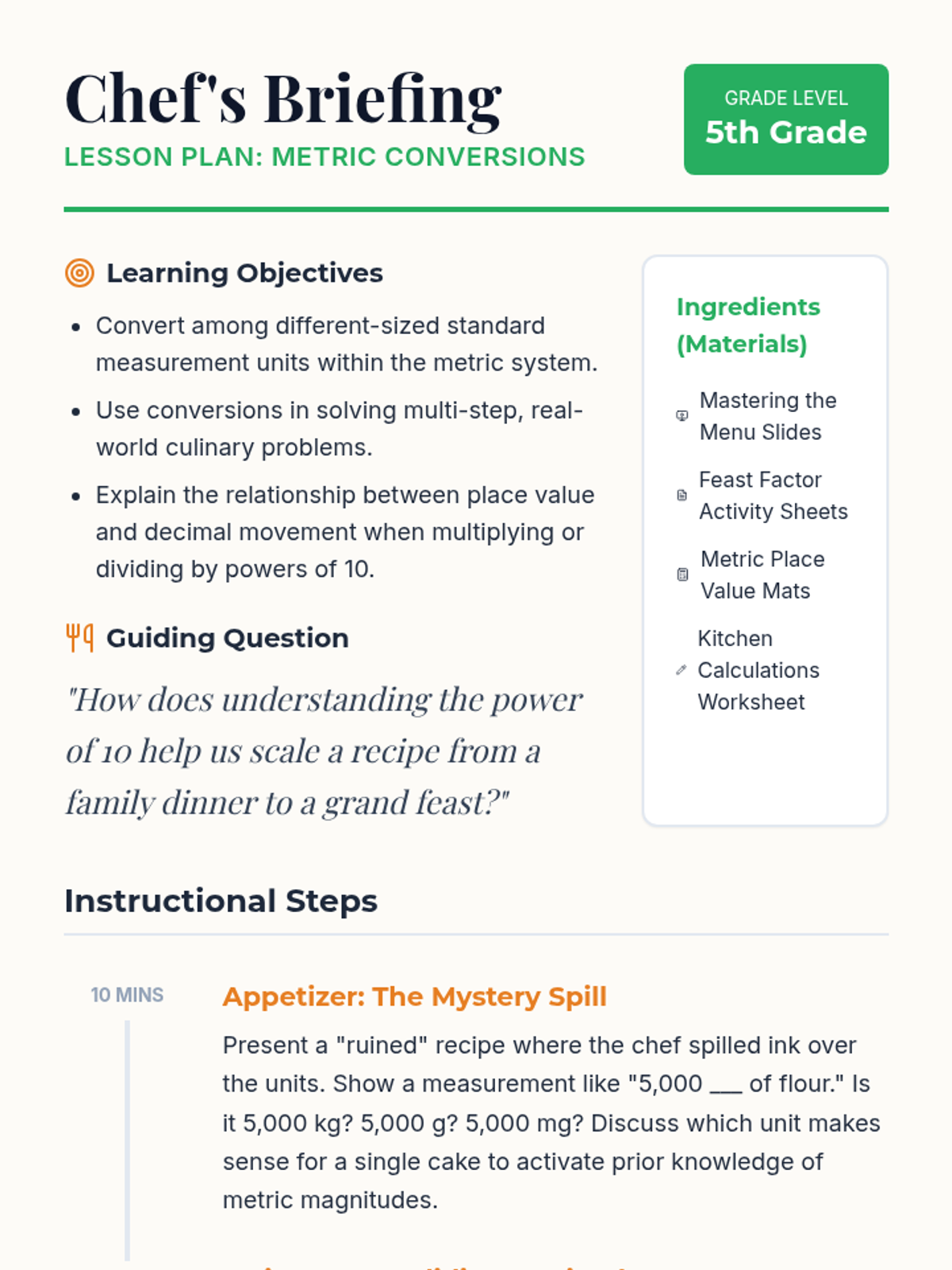
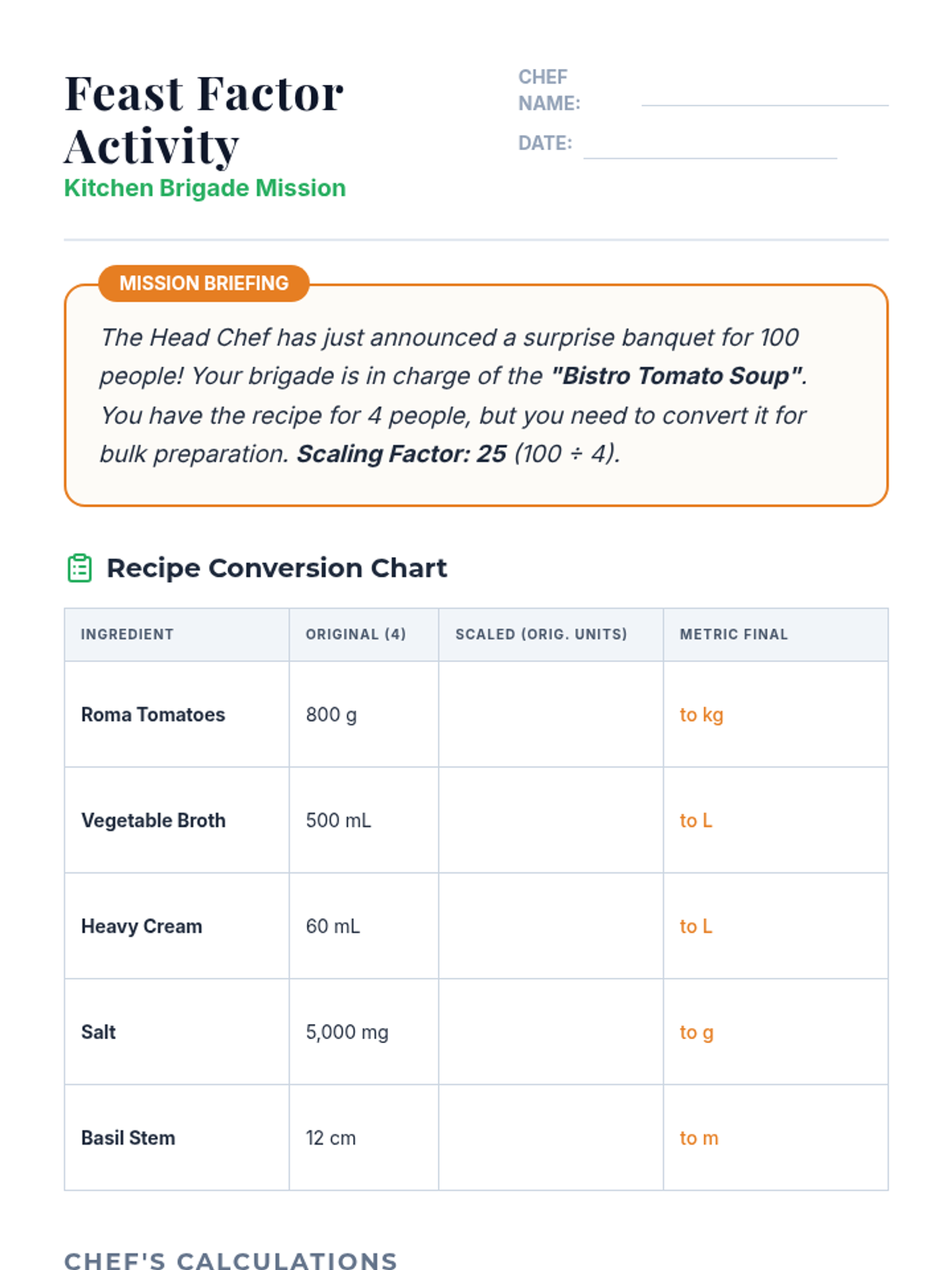
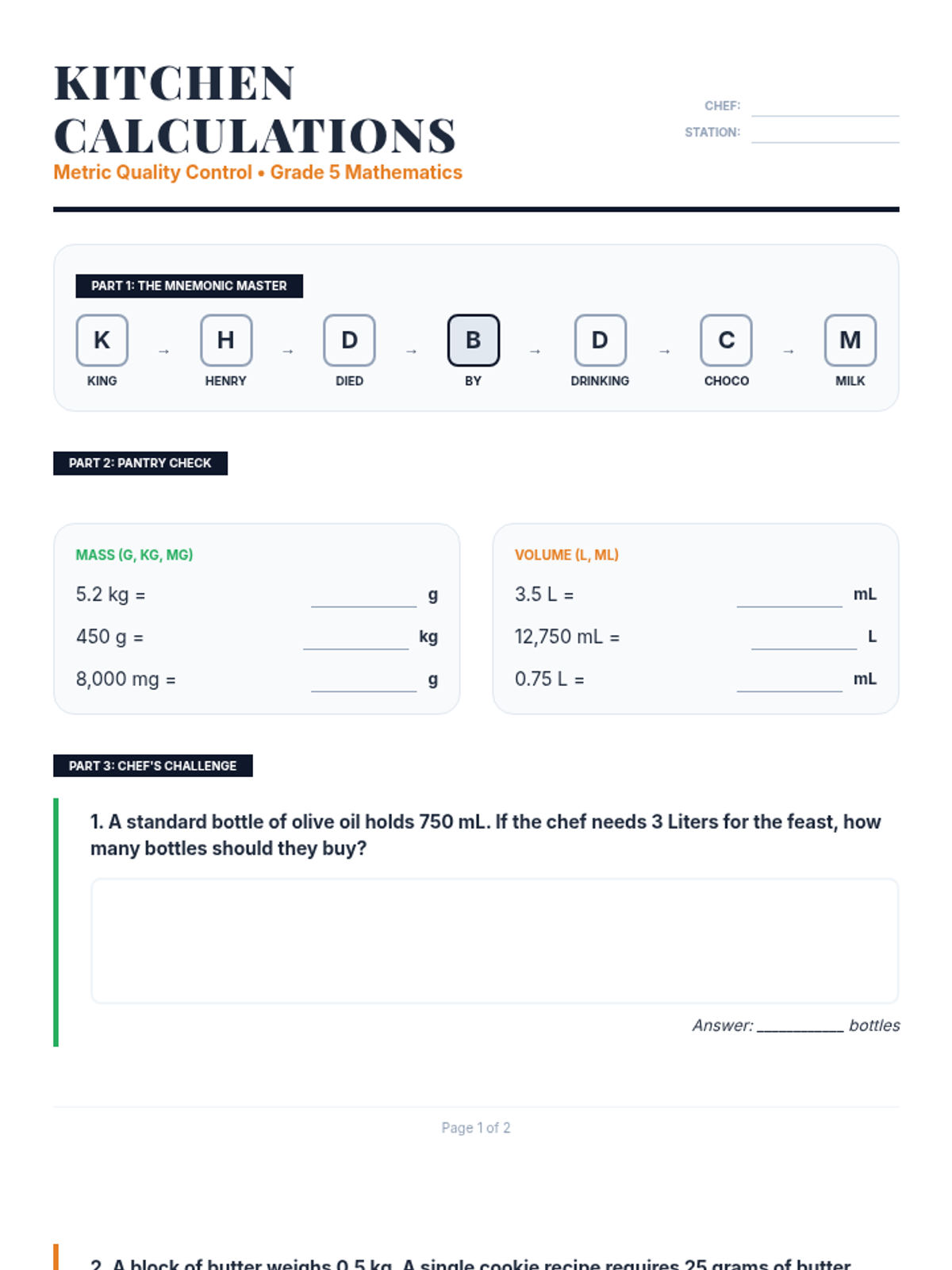
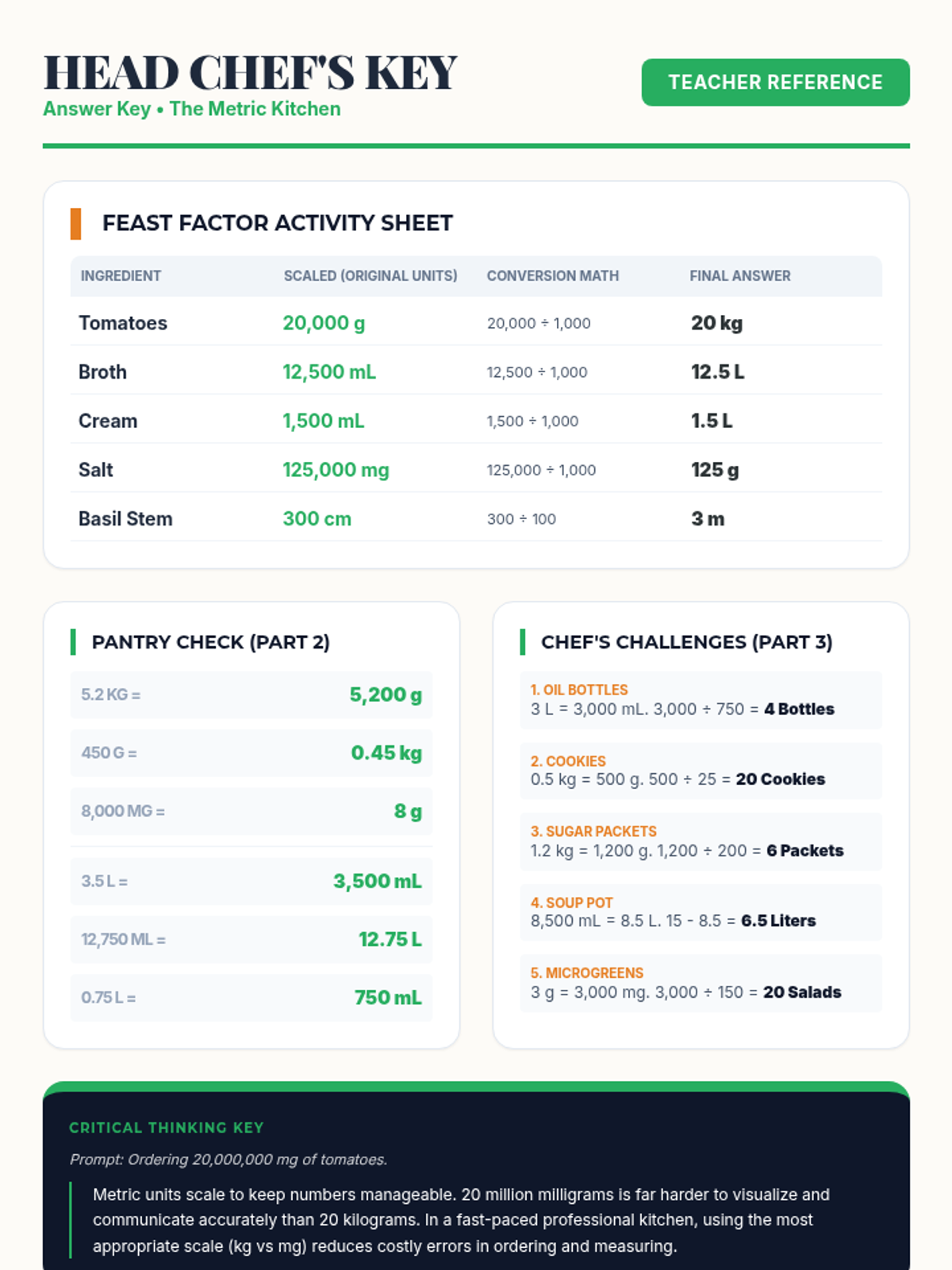
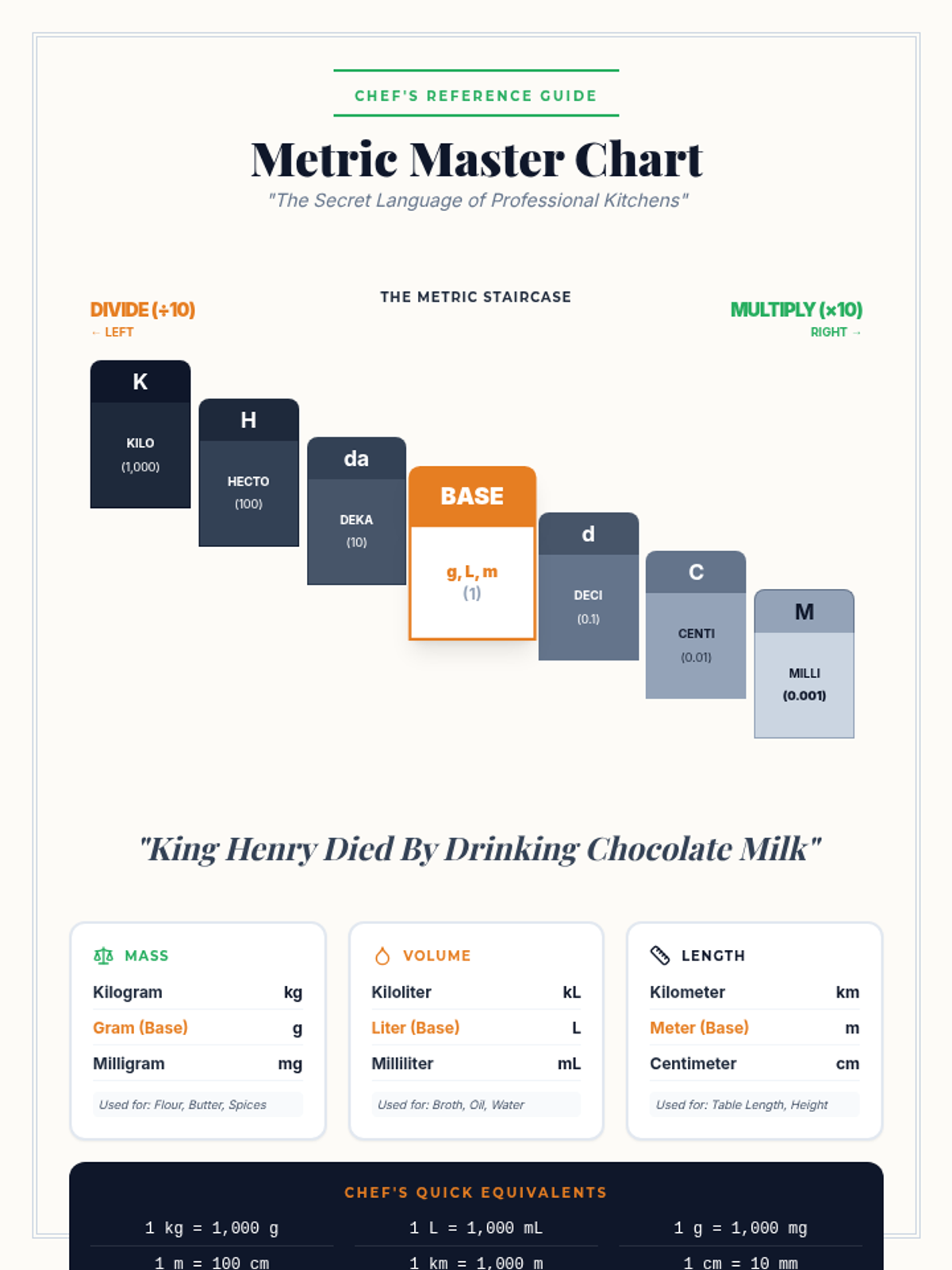
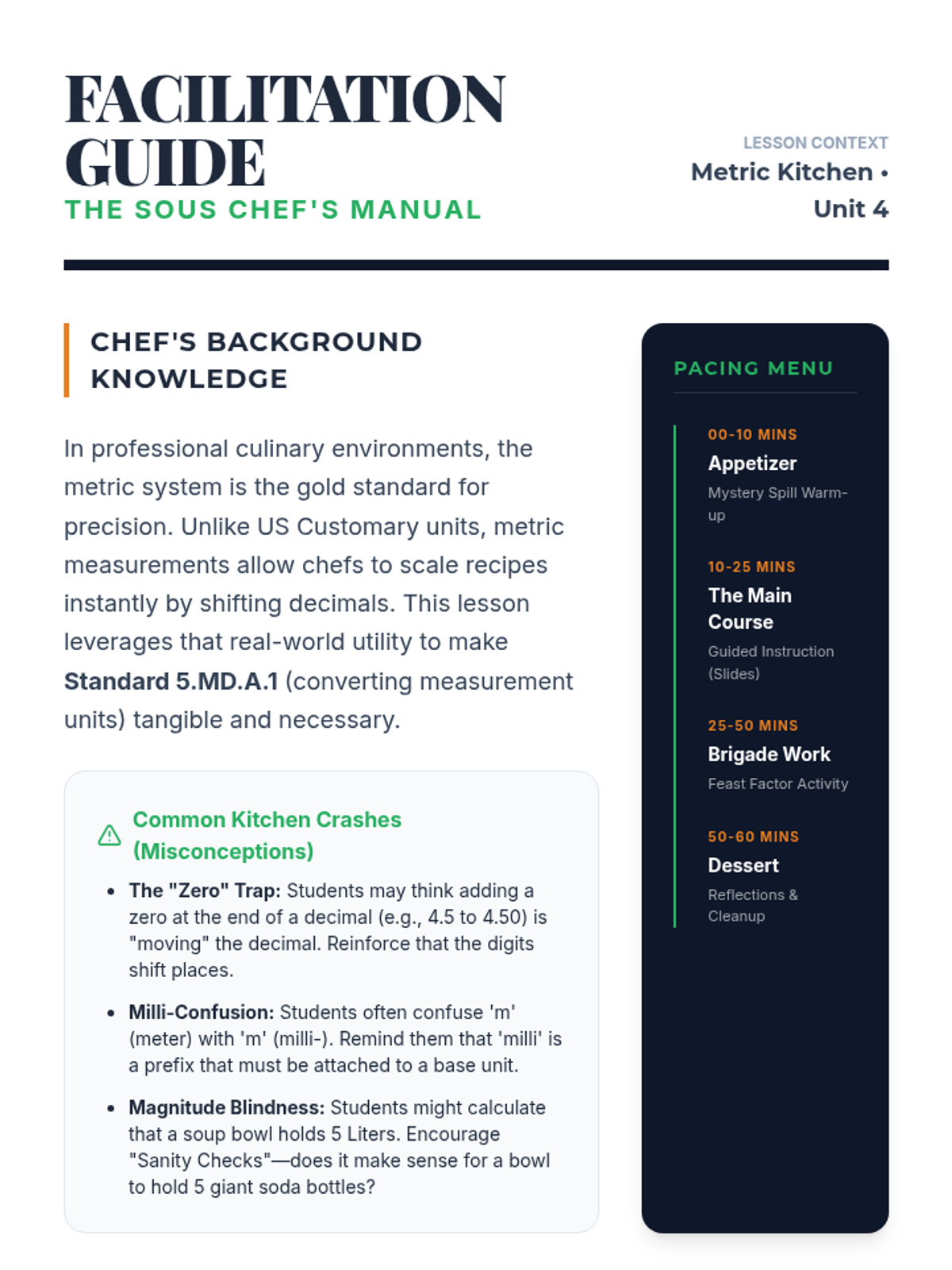
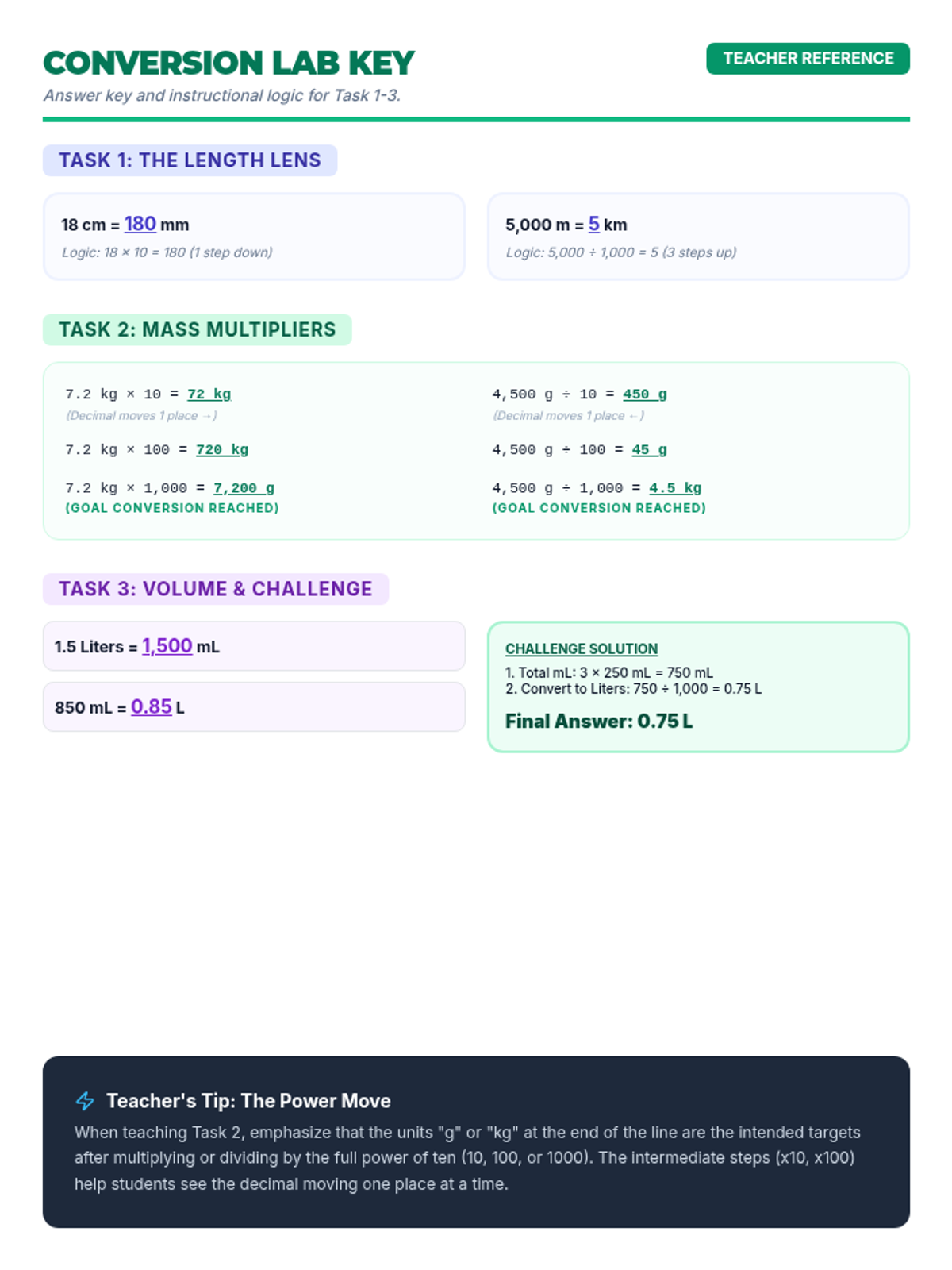
A hands-on math lesson where students master metric conversions (mass, volume, and length) by scaling and adjusting recipes for a grand class feast. Students apply decimal movement rules to transform ingredients from small kitchen measures to bulk quantities.
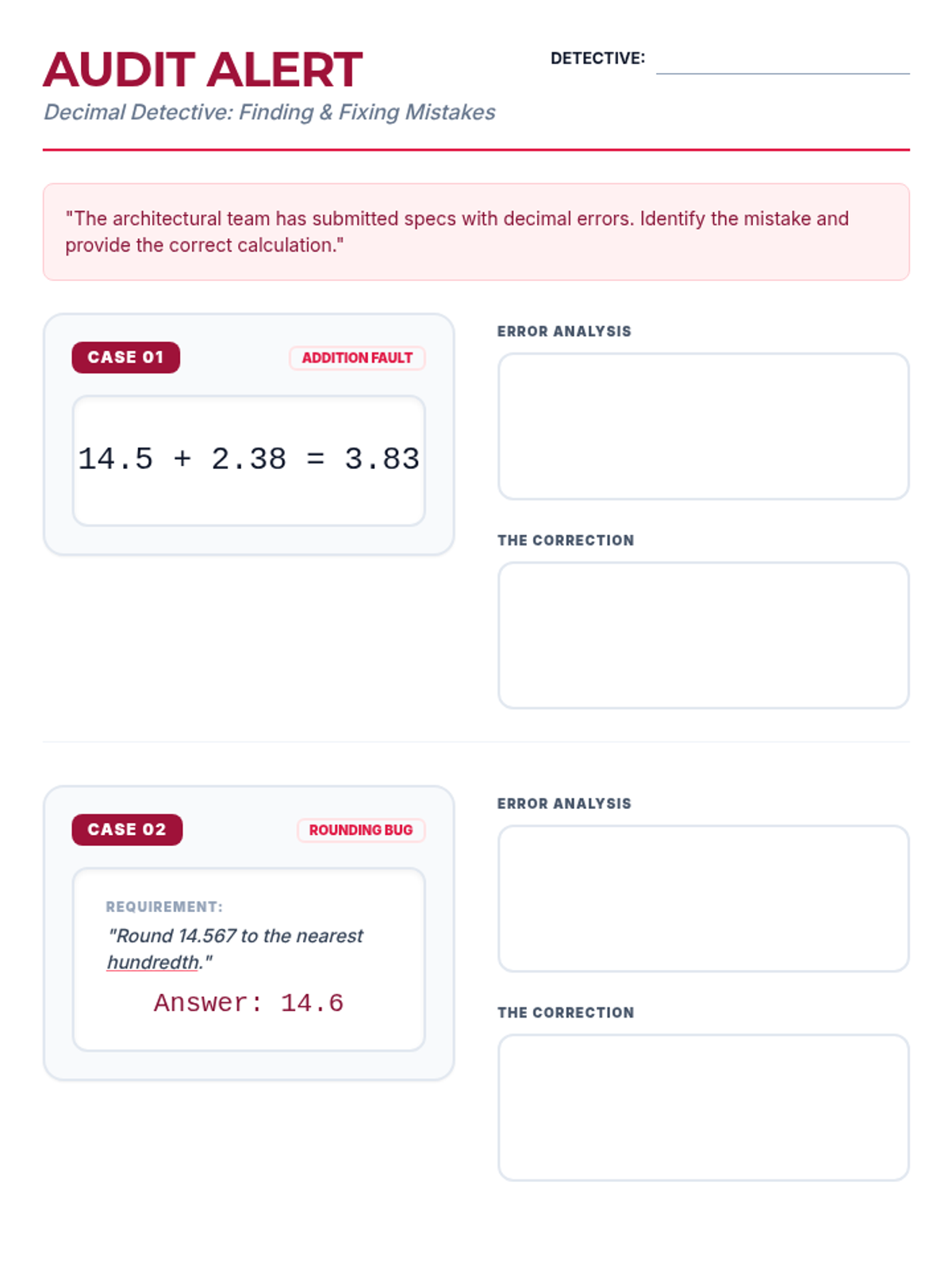
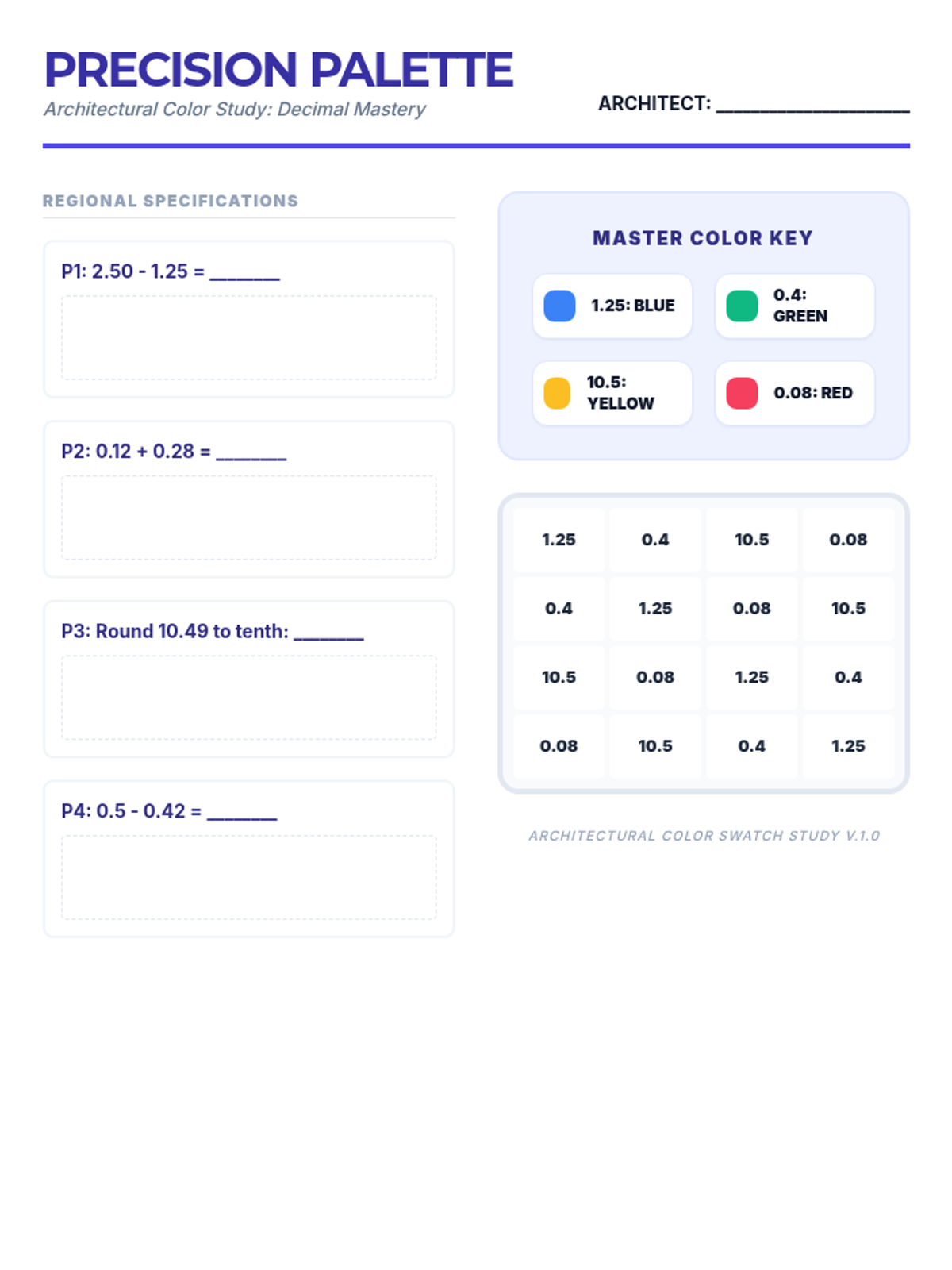
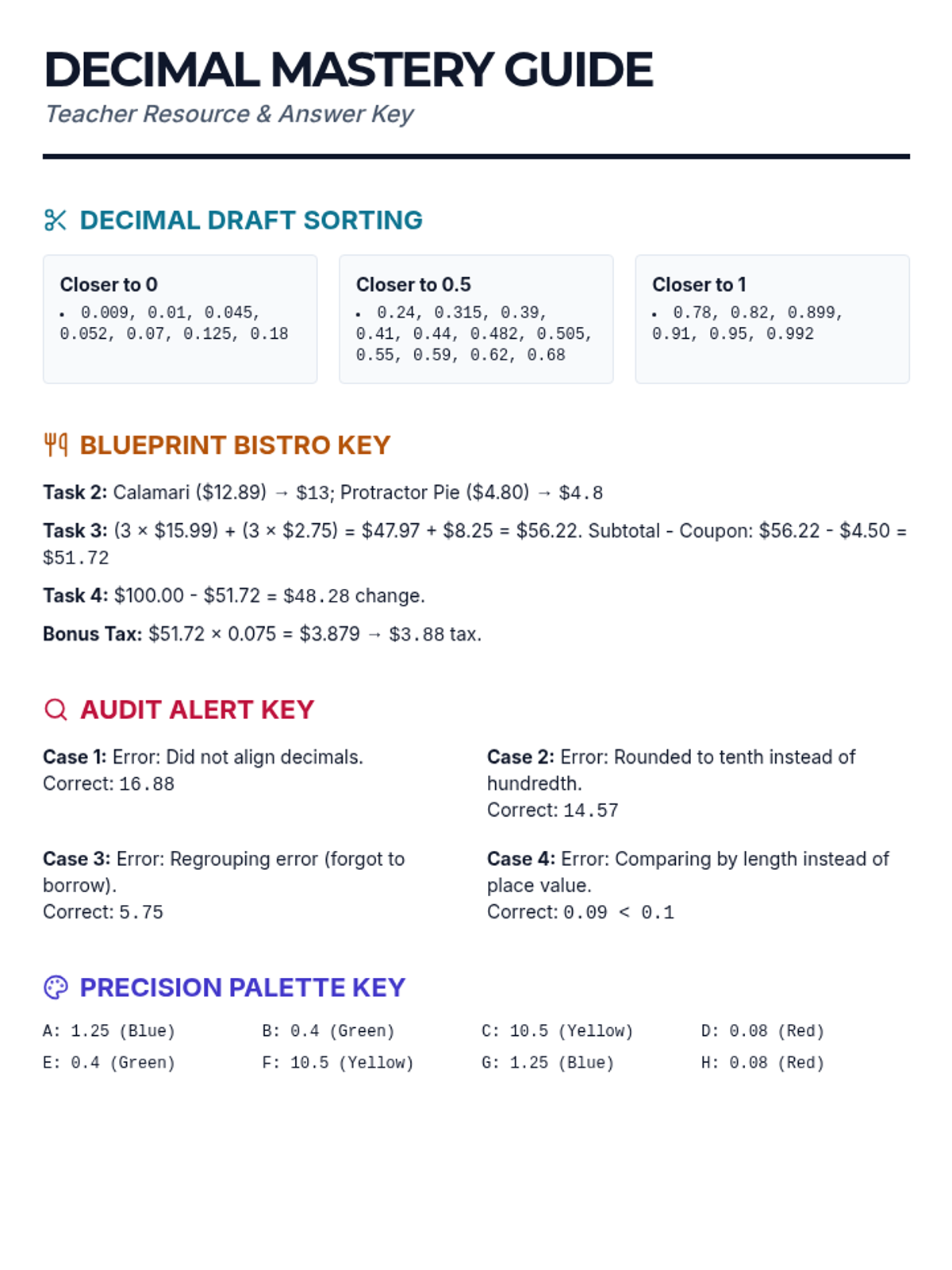
A collection of four diverse decimal practice activities covering addition, subtraction, comparison, rounding, and word problems for 7th-grade math students.
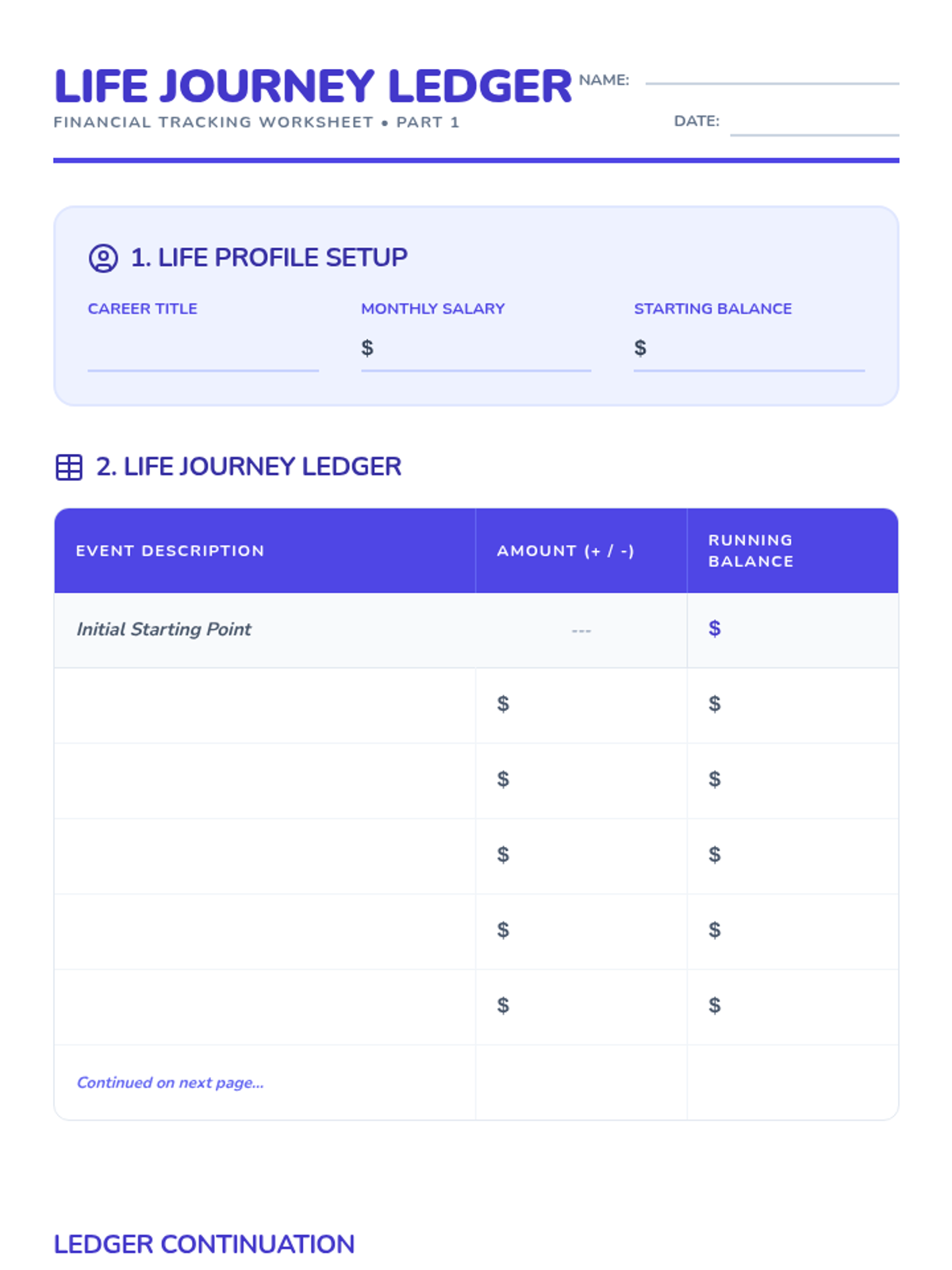
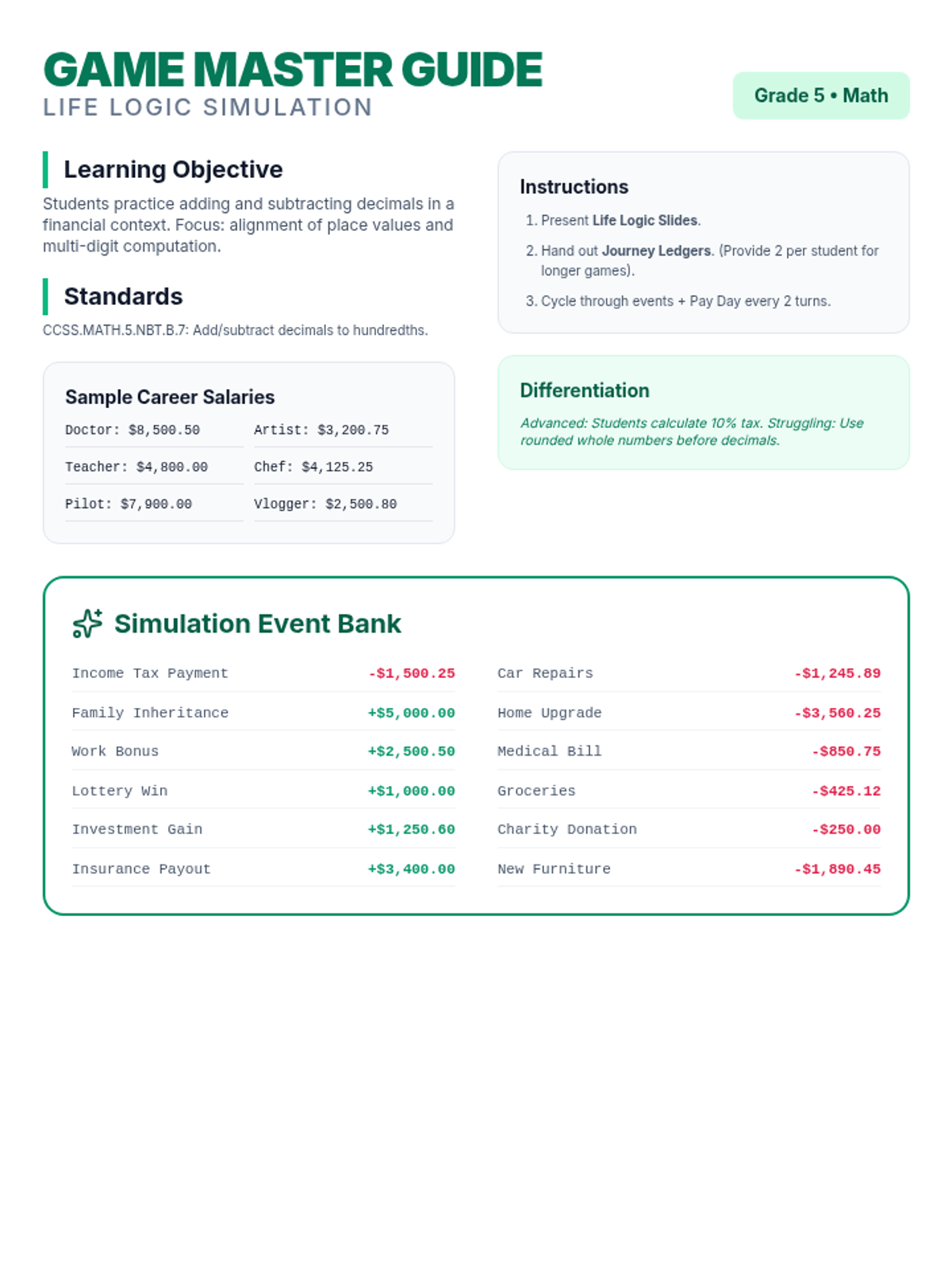
A comprehensive introduction to the classic board game 'Life', focusing on financial literacy and multi-digit decimal operations. Students learn the game mechanics and prepare for a project where they simulate their own financial journey.
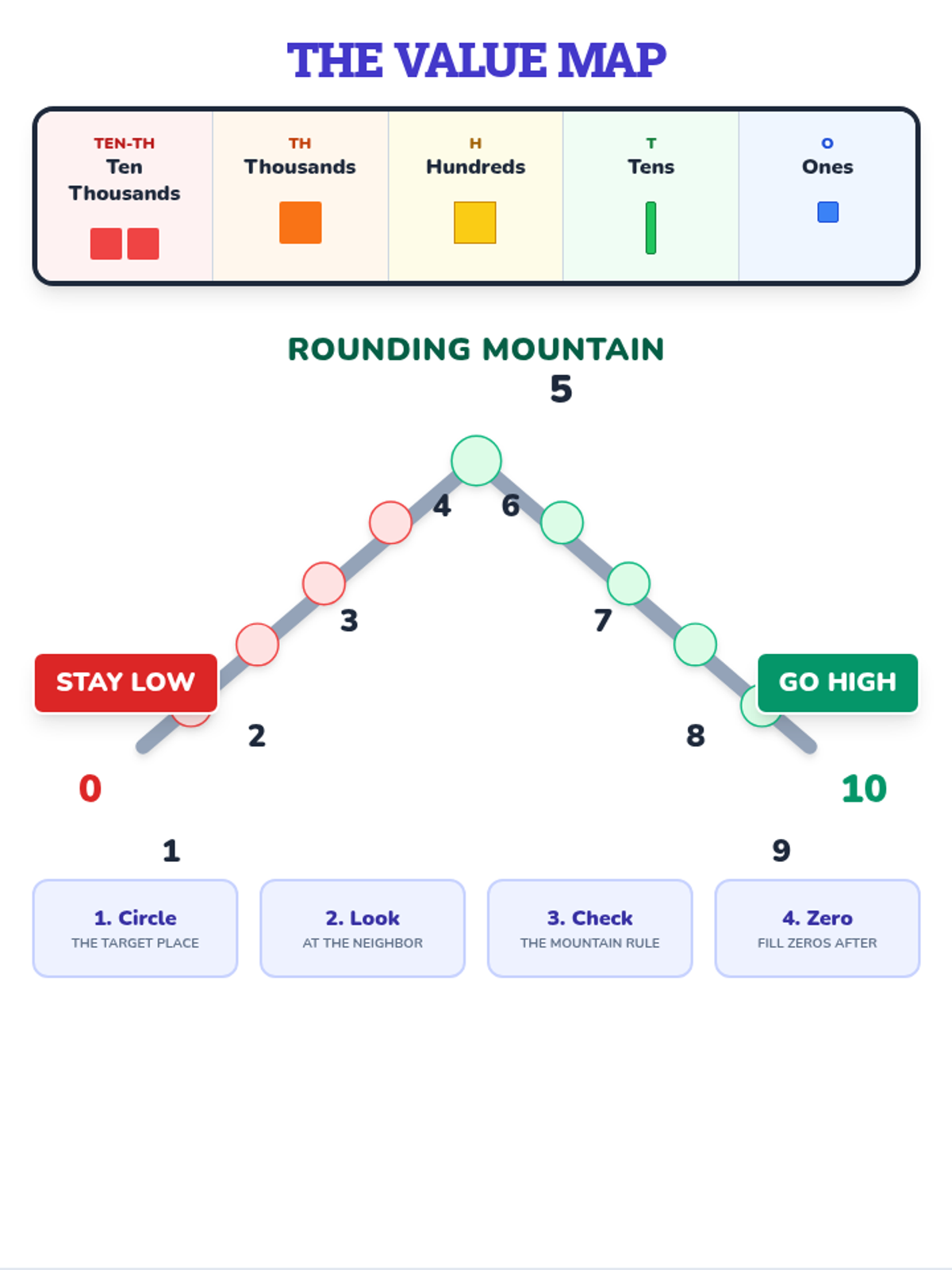
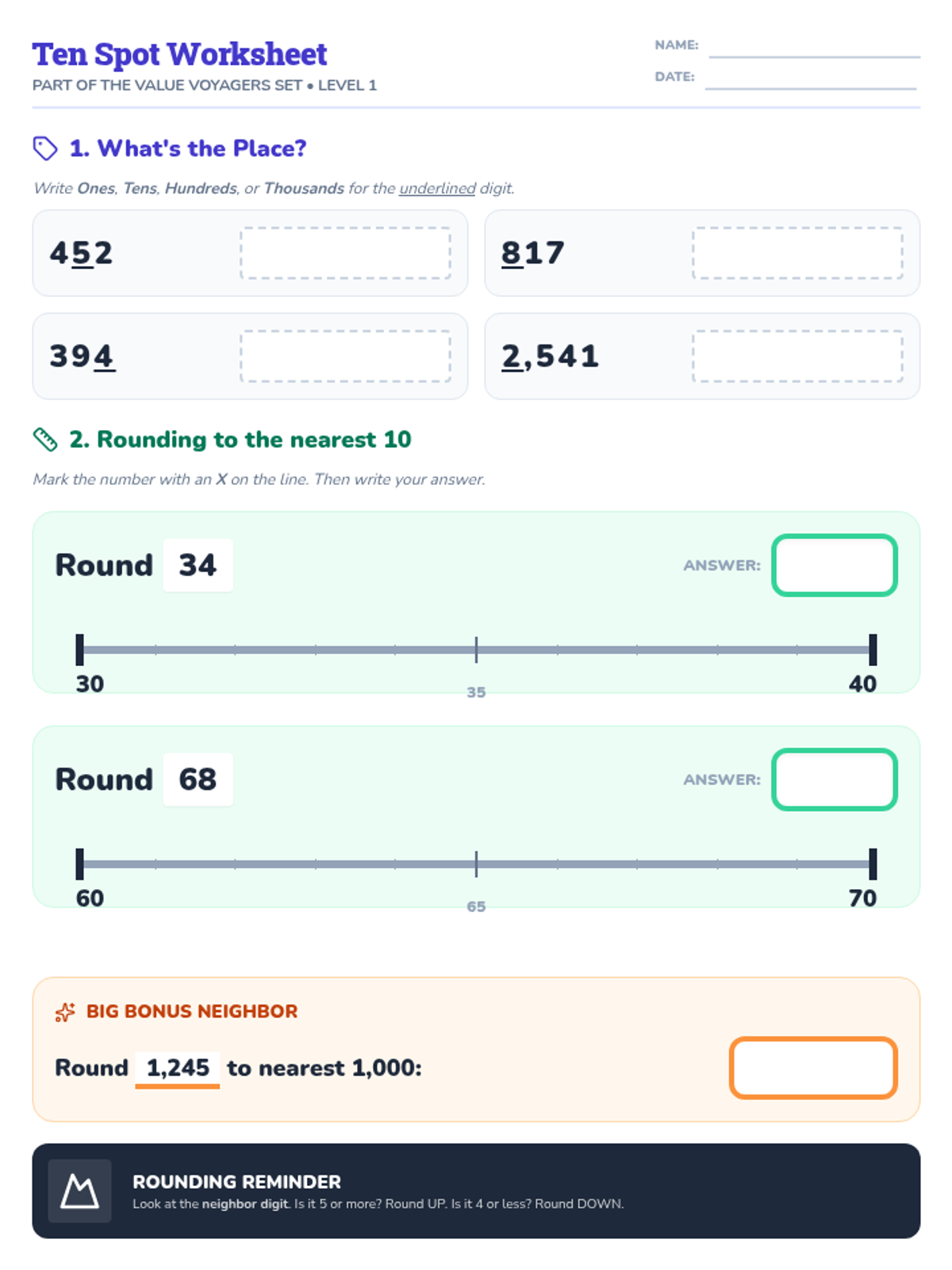
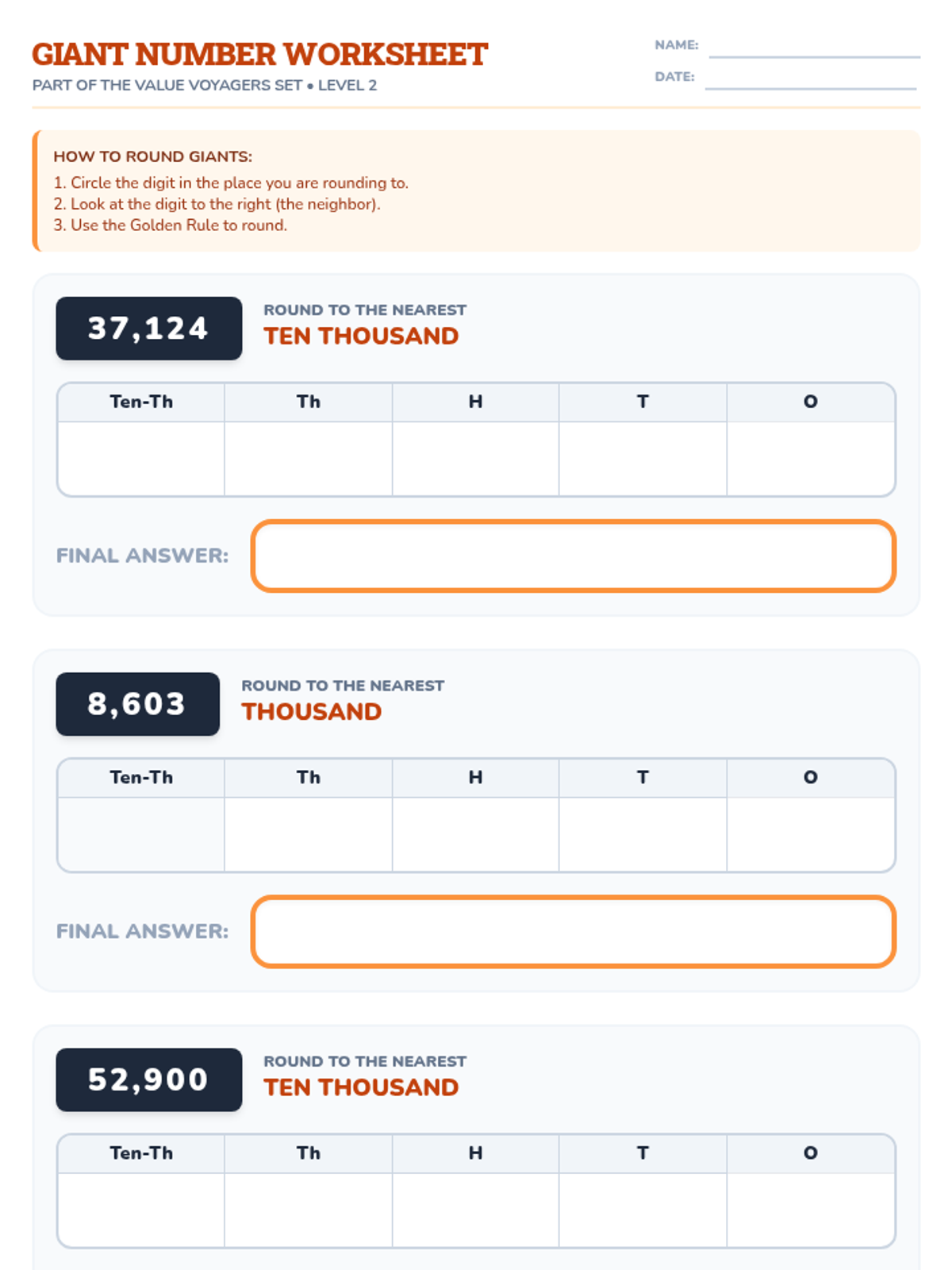
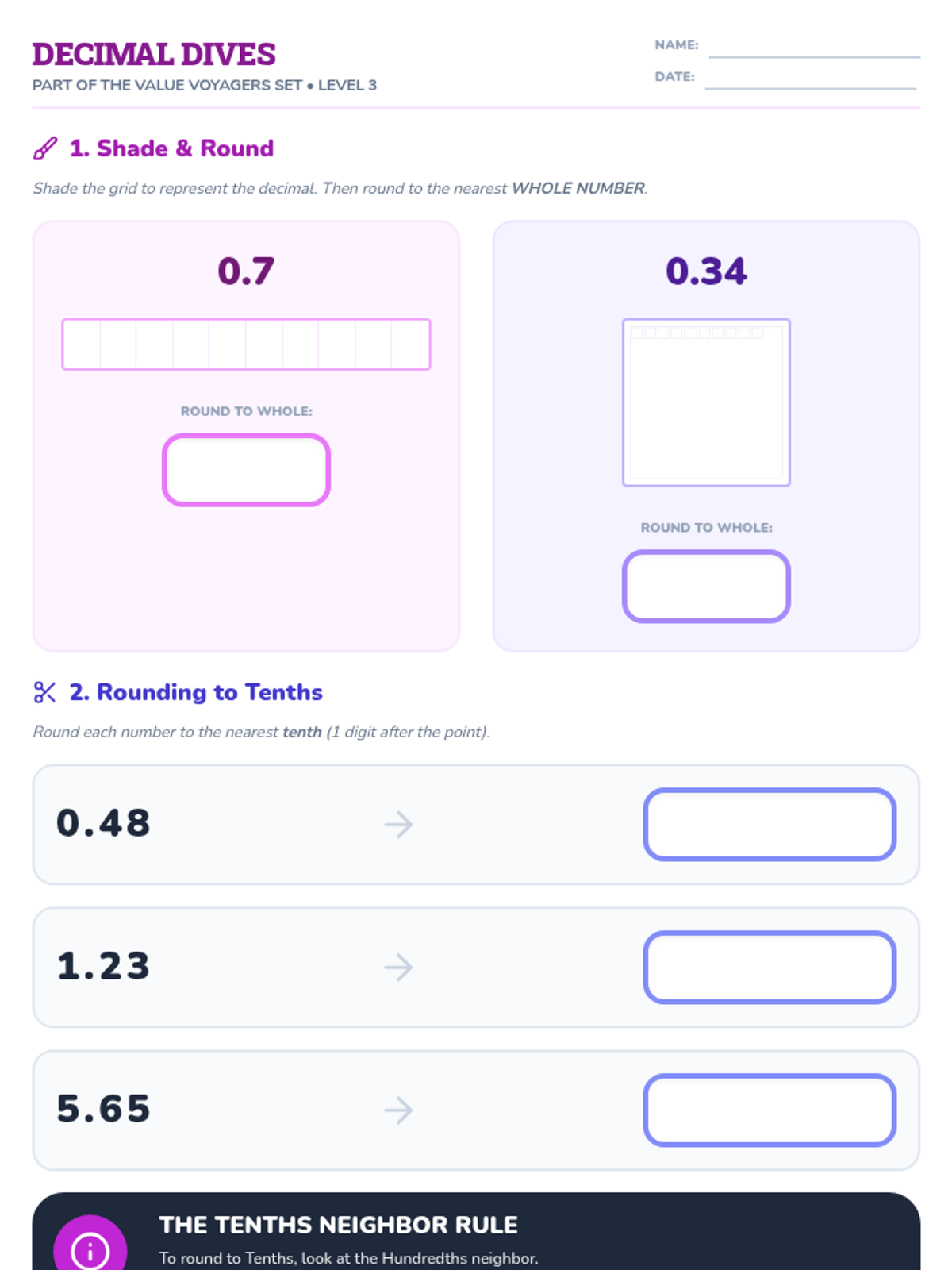
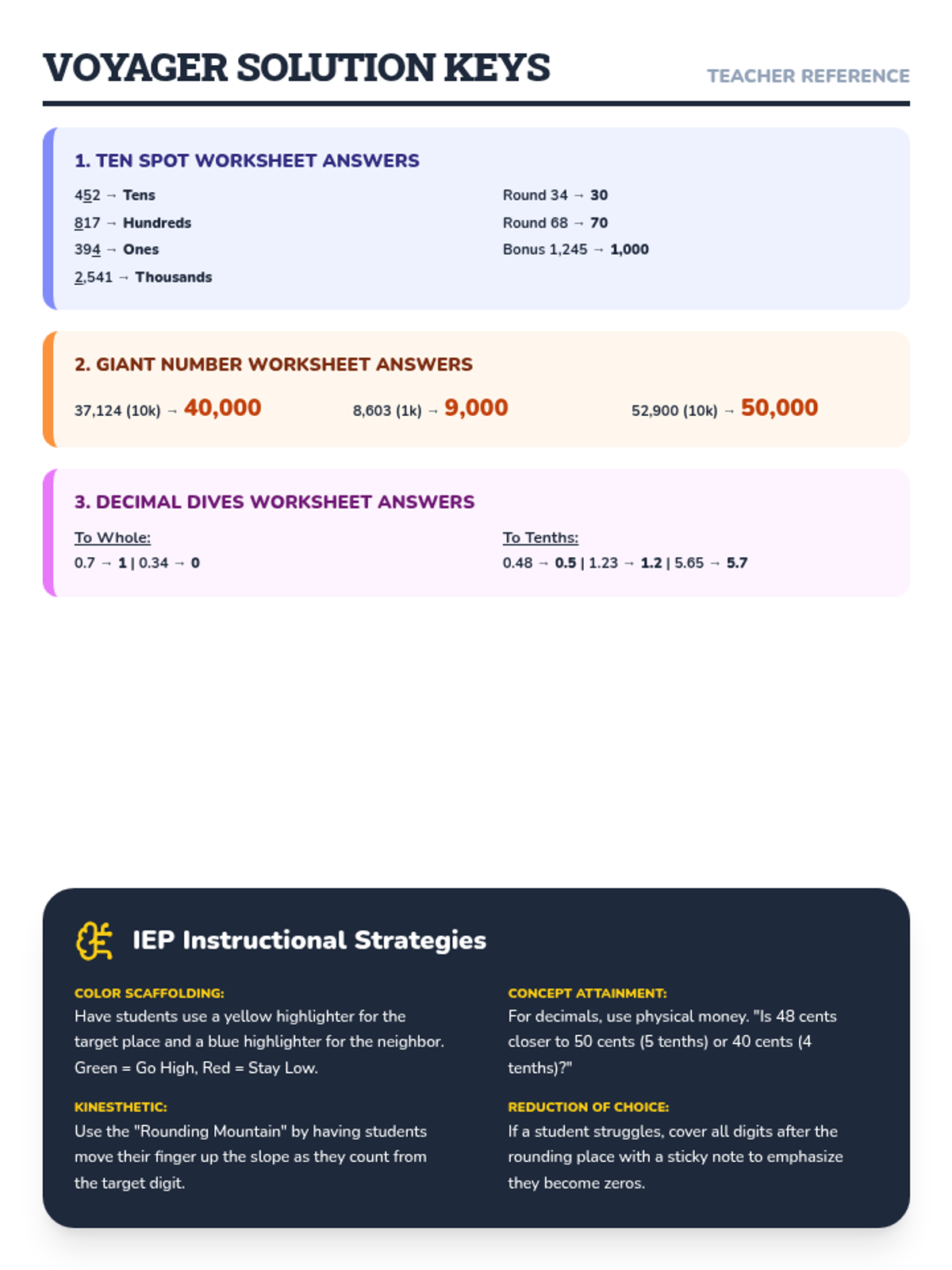
A comprehensive guide to understanding place value from single digits to ten-thousands and decimals, featuring visual scaffolding for rounding.
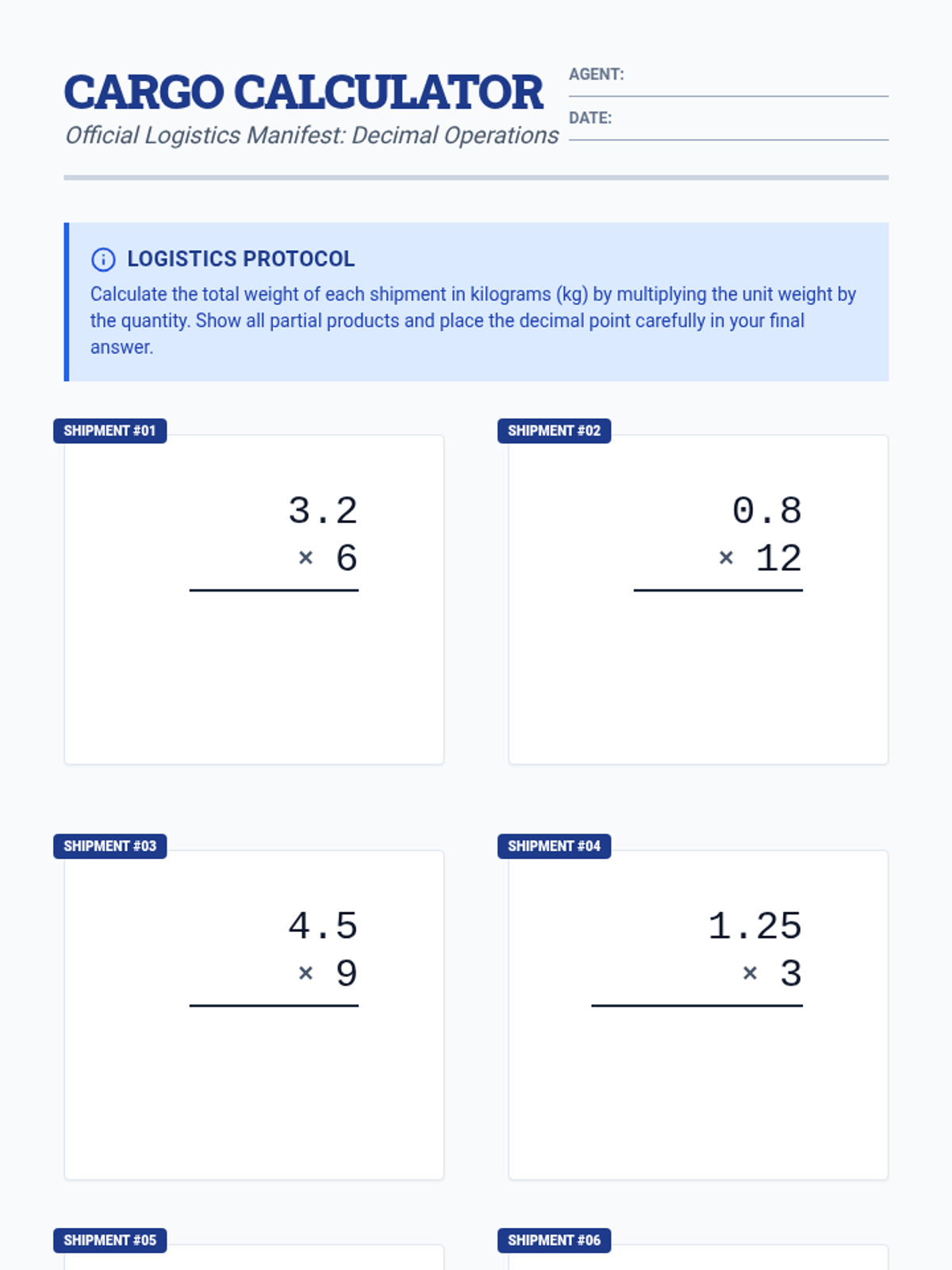
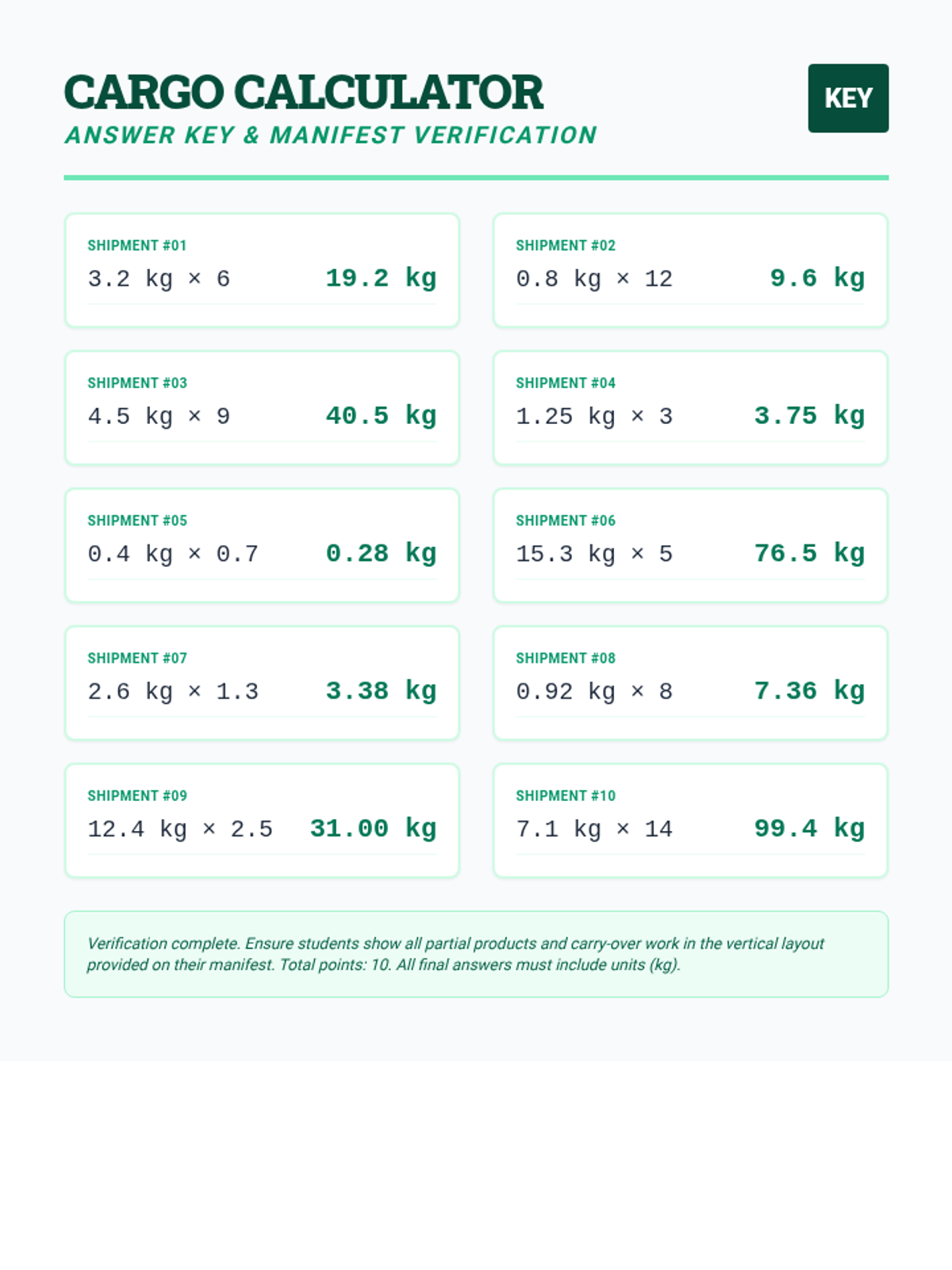
A lesson focused on multiplying decimals by whole numbers and other decimals using a cargo/shipping theme. Students will practice vertical multiplication and decimal point placement.
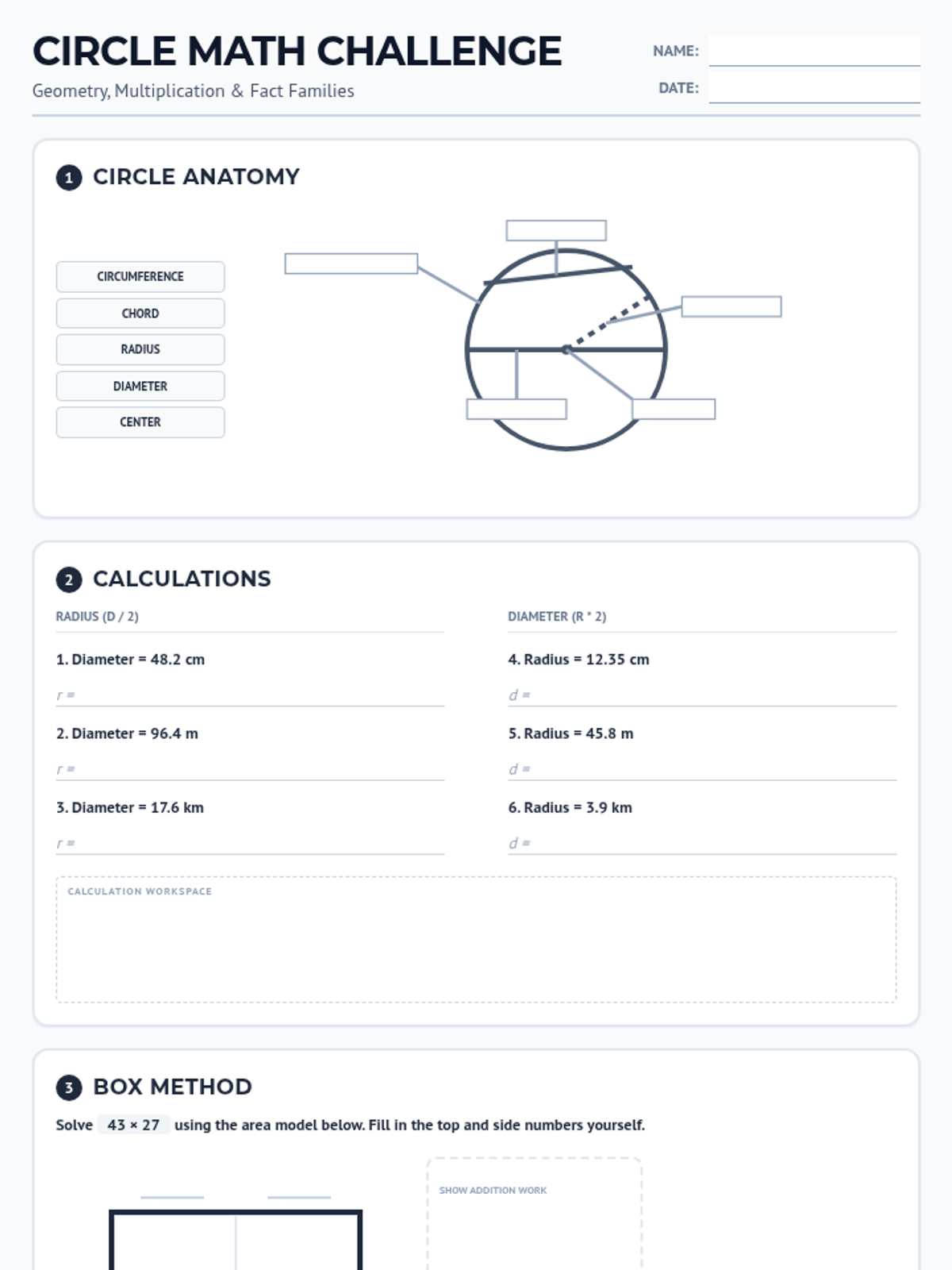
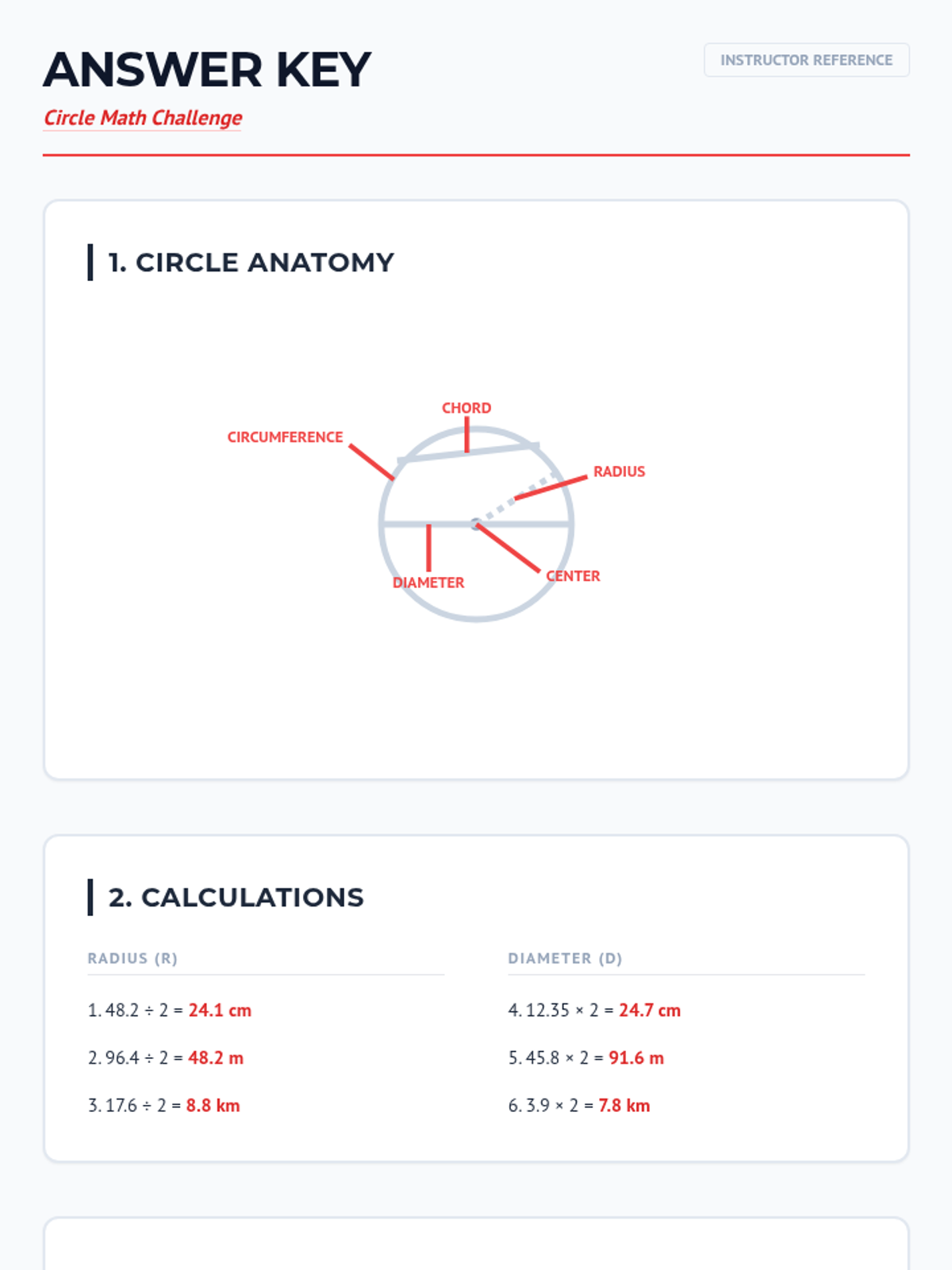
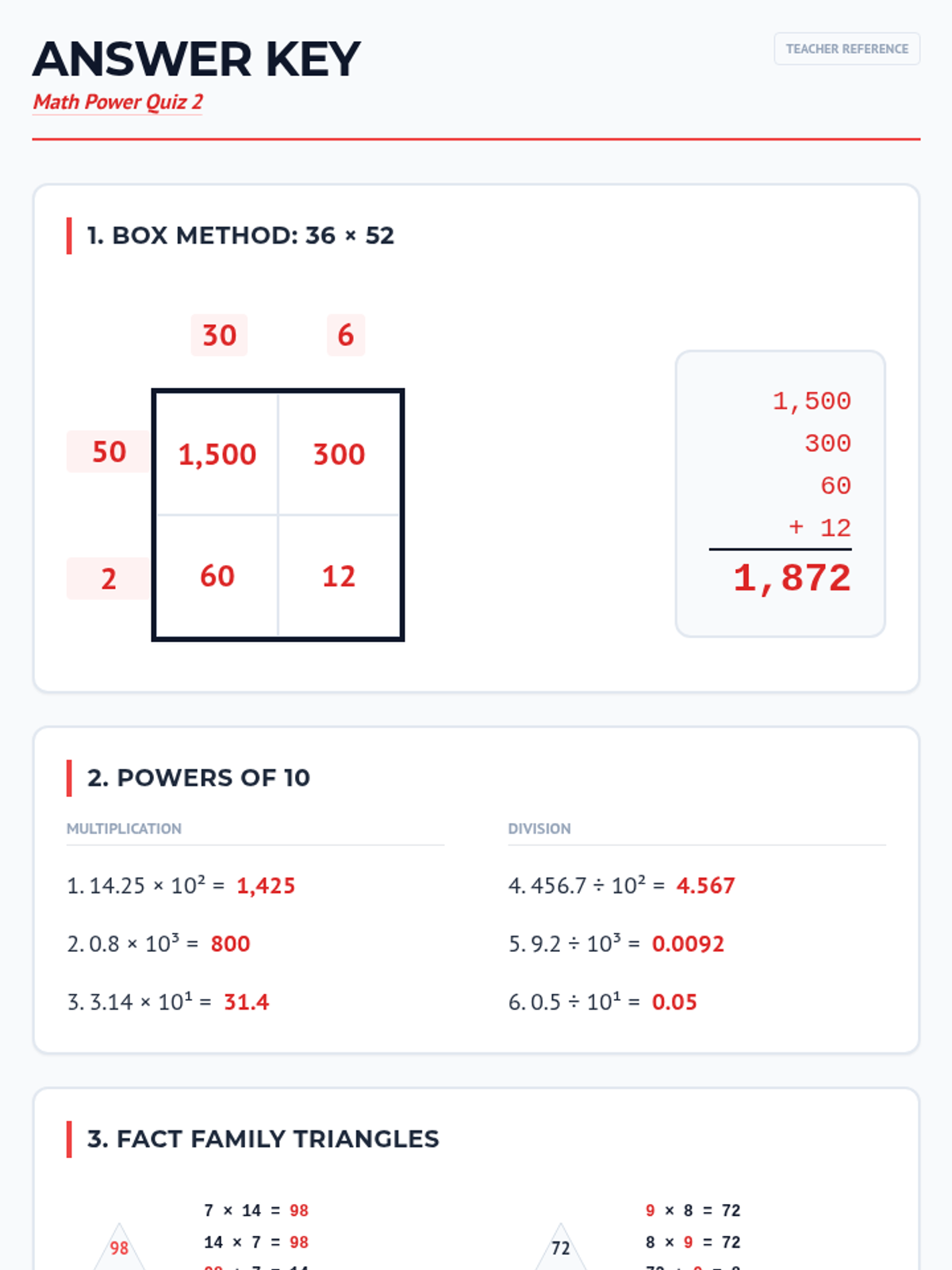
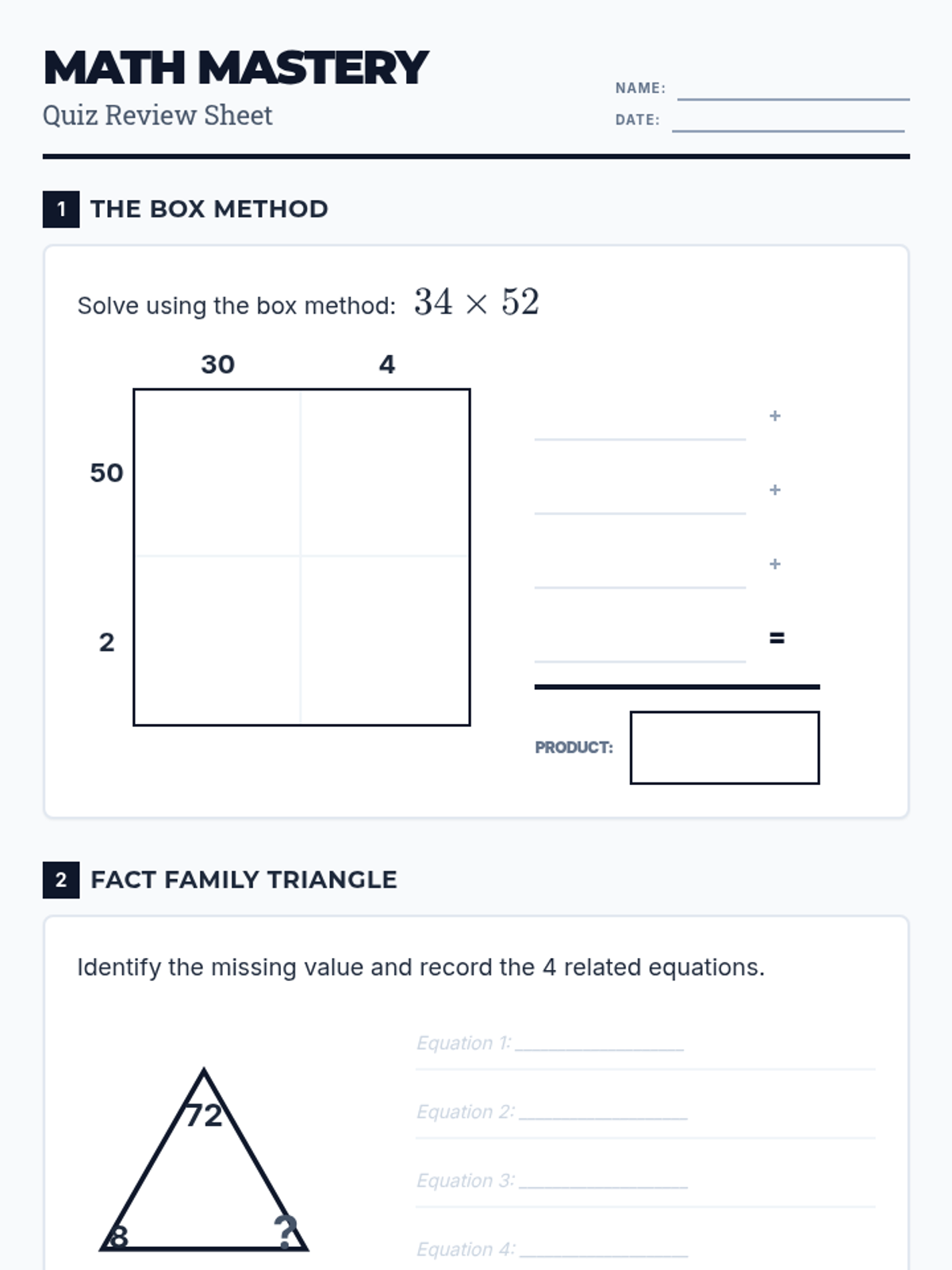
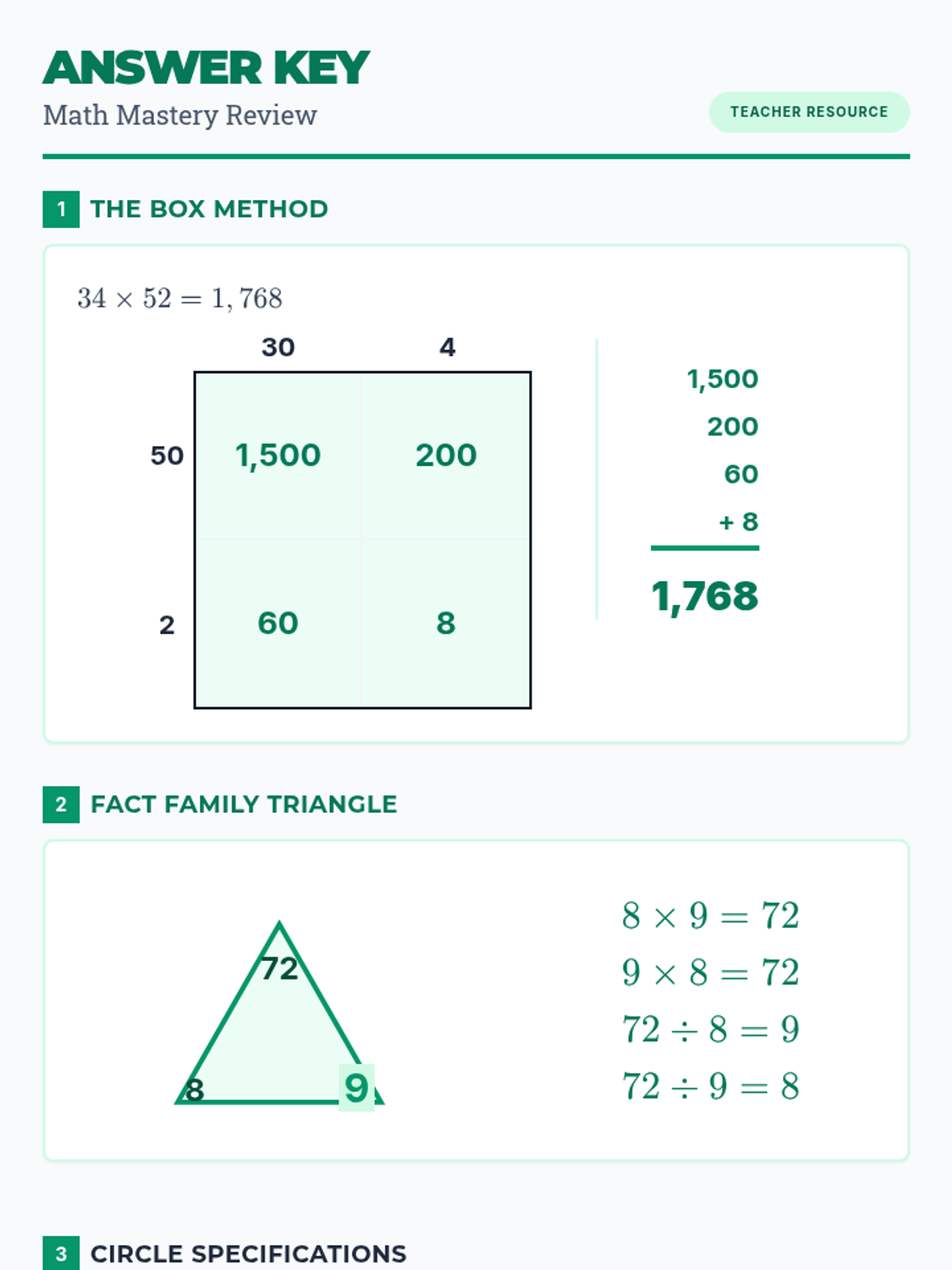
A comprehensive assessment covering circle geometry, area model multiplication, and multiplication/division fact families. Students will demonstrate their understanding of geometric parts, calculation skills, and algebraic relationships.
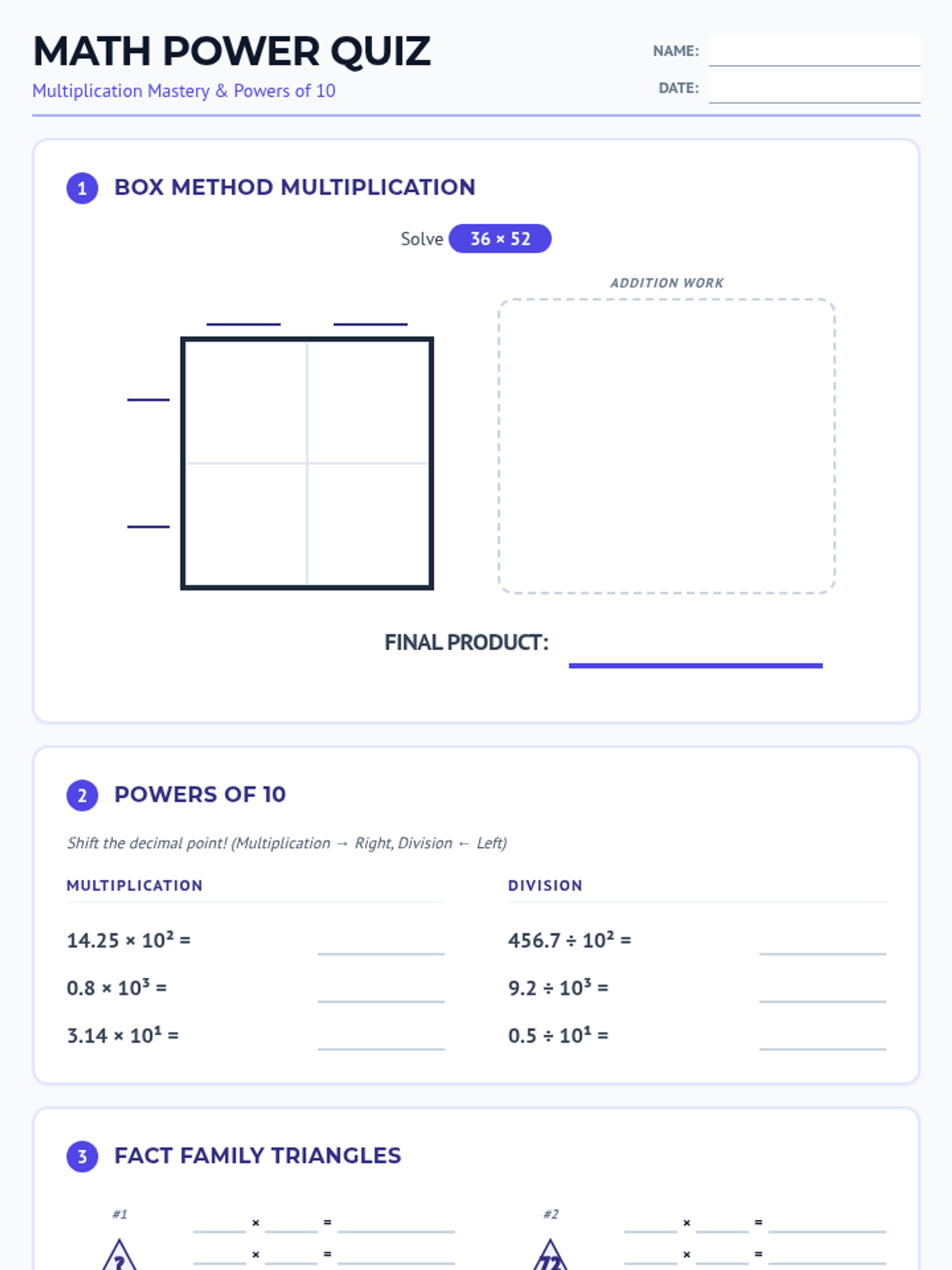
A comprehensive review lesson covering multi-digit multiplication, circle geometry, fact families, and decimal operations with powers of ten.
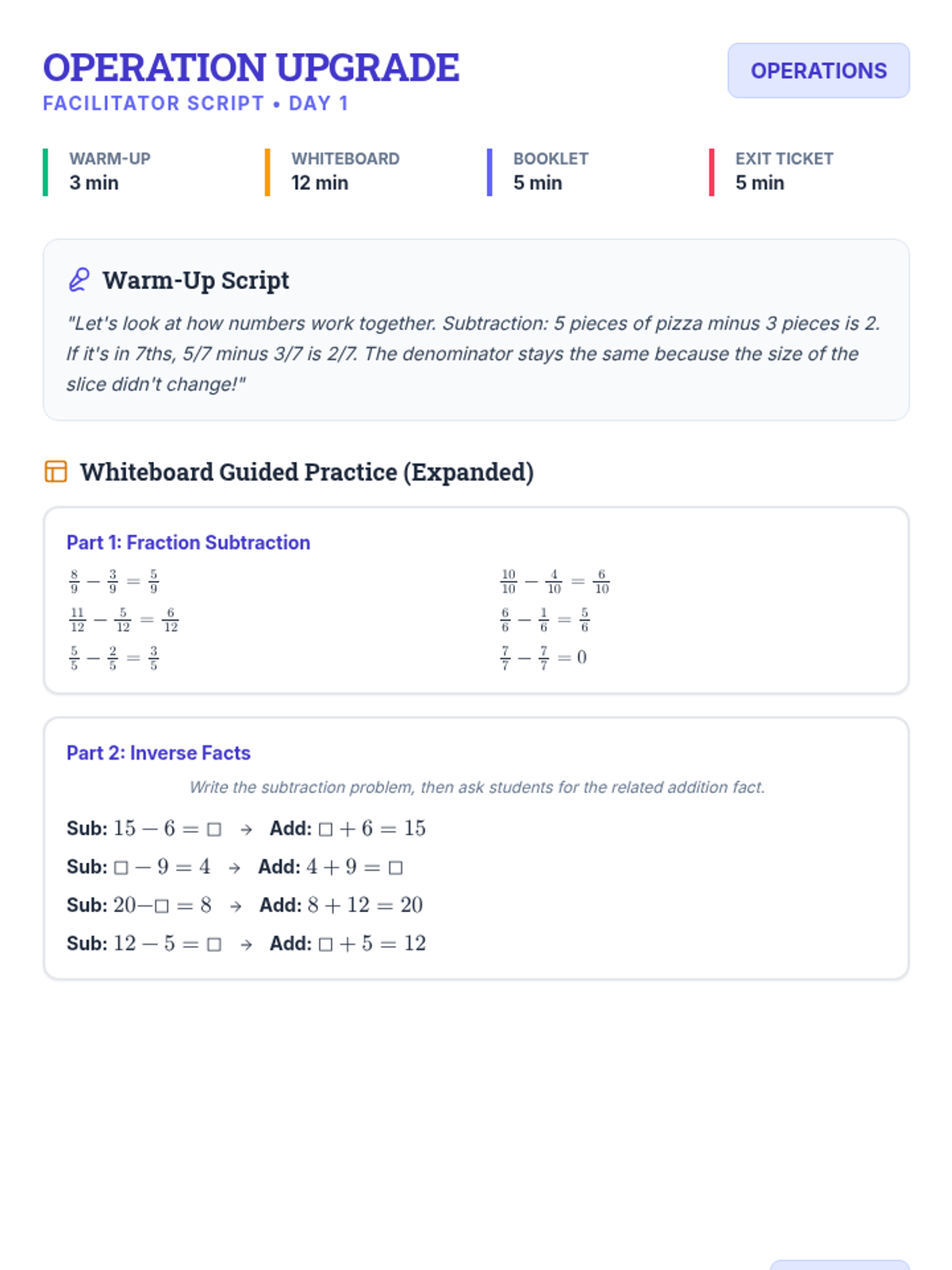
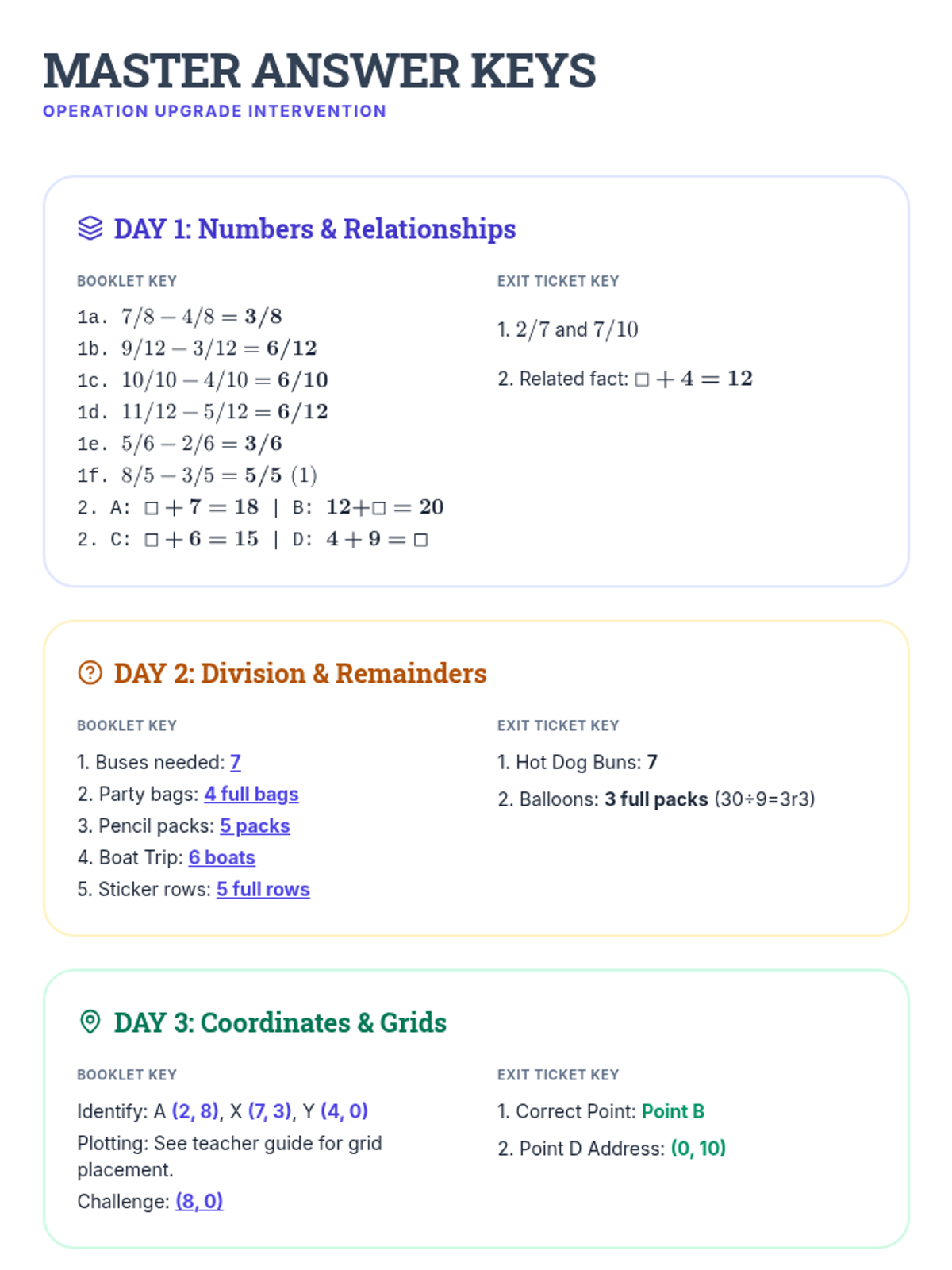
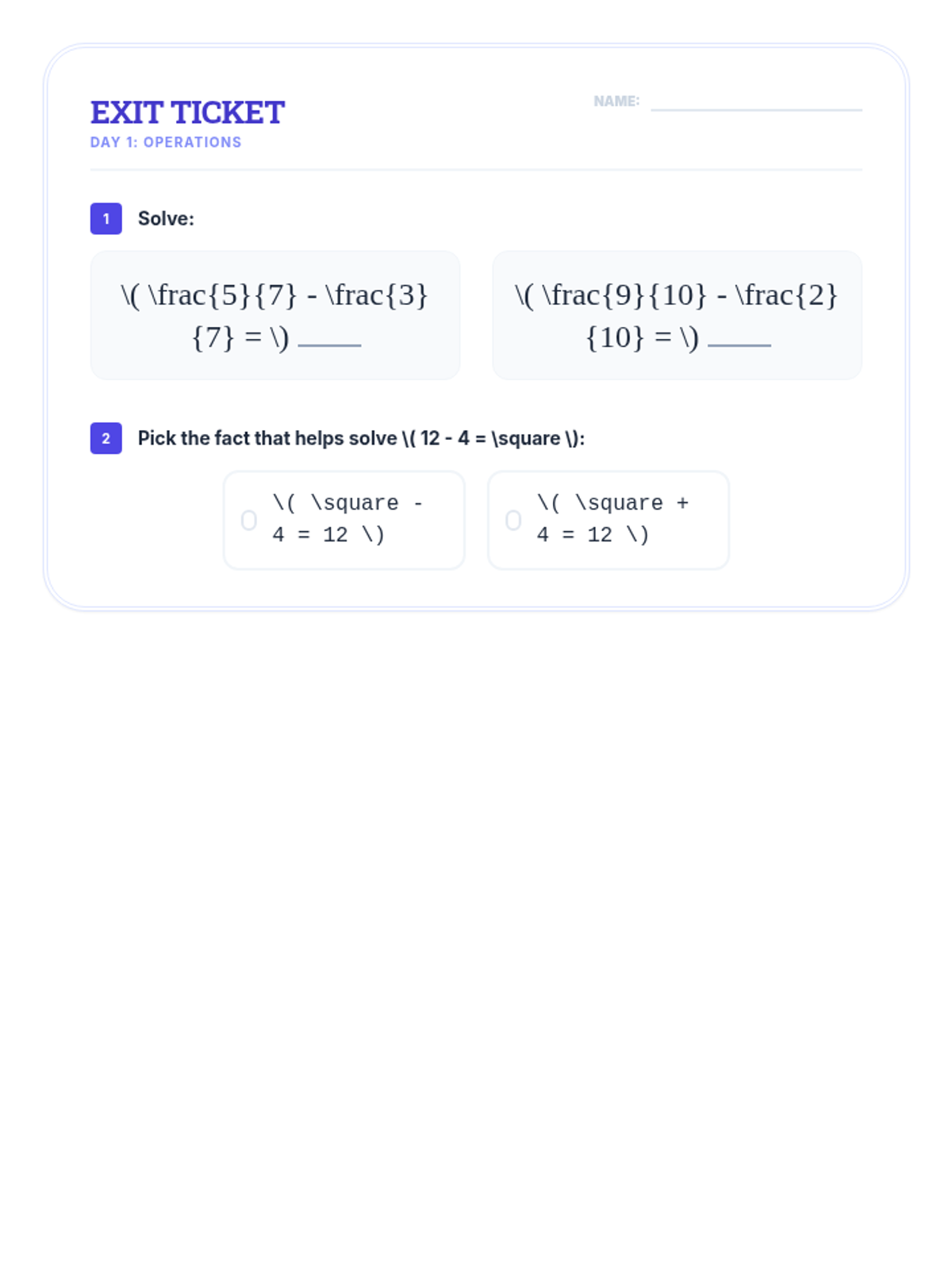
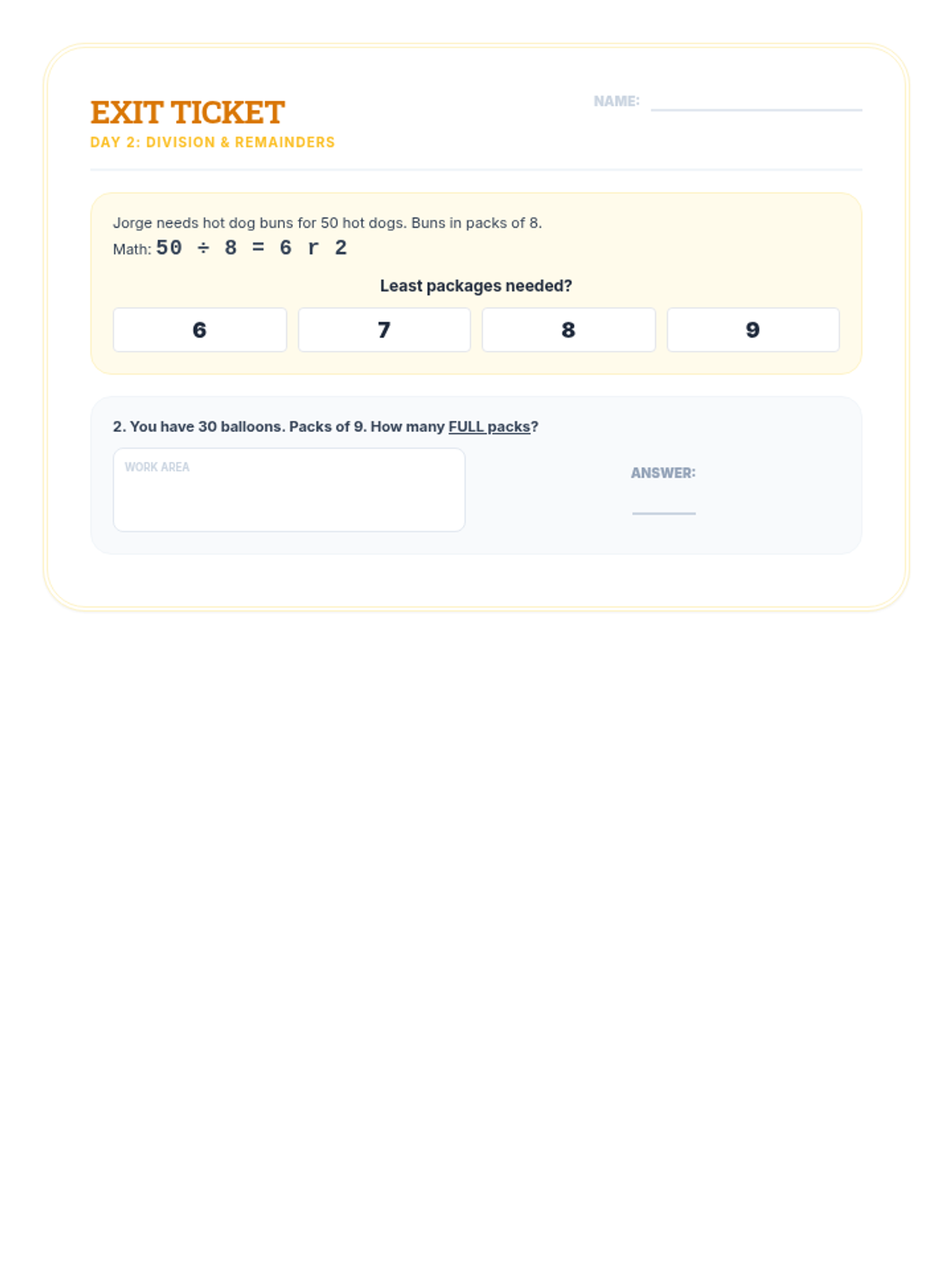
A 3-day small group intervention focused on RIT 191-210 skills: fraction subtraction, inverse operations, interpreting remainders, and coordinate plane graphing. Includes teacher scripts and student workbooks designed for 25-minute sessions without technology.
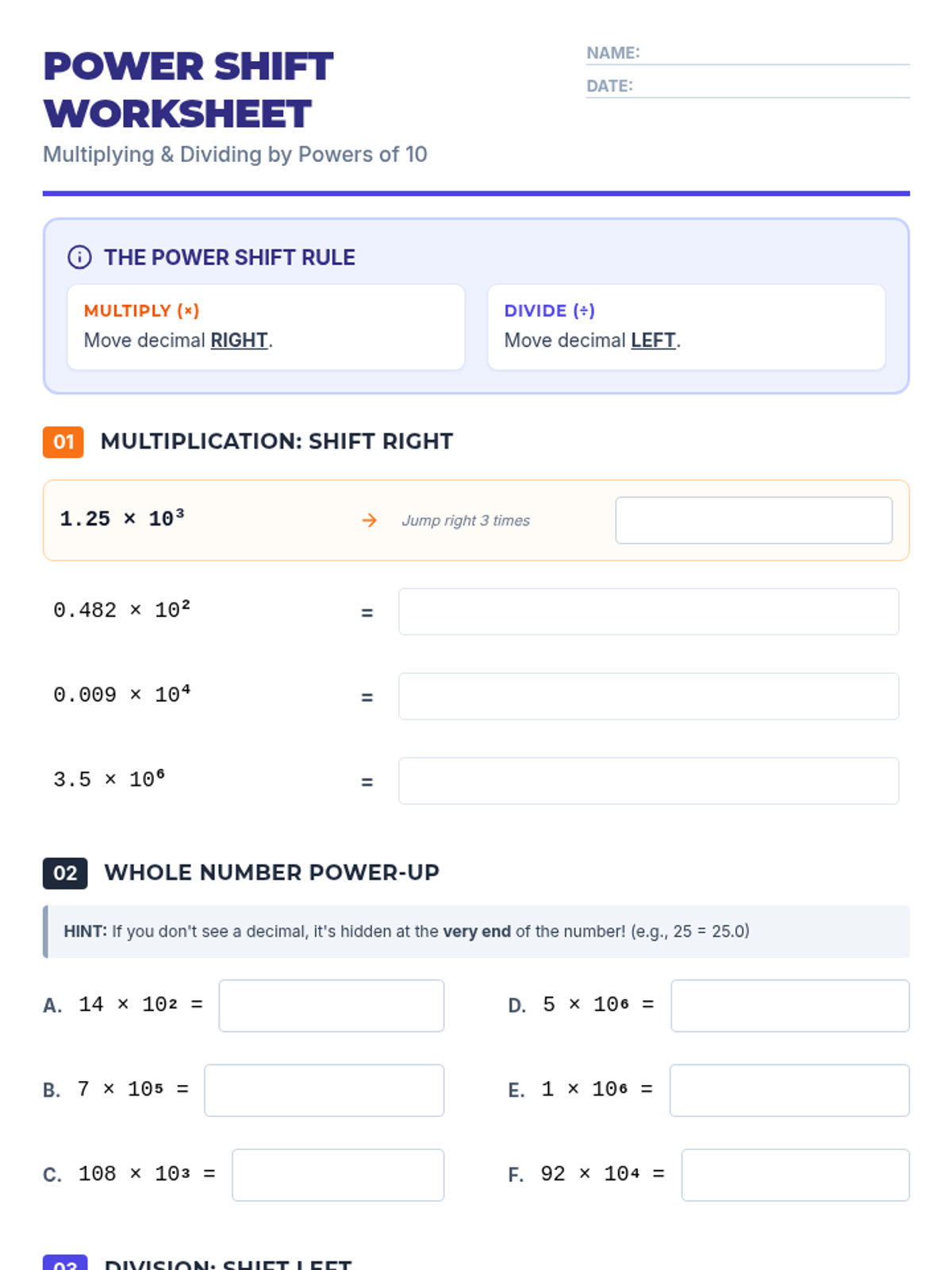
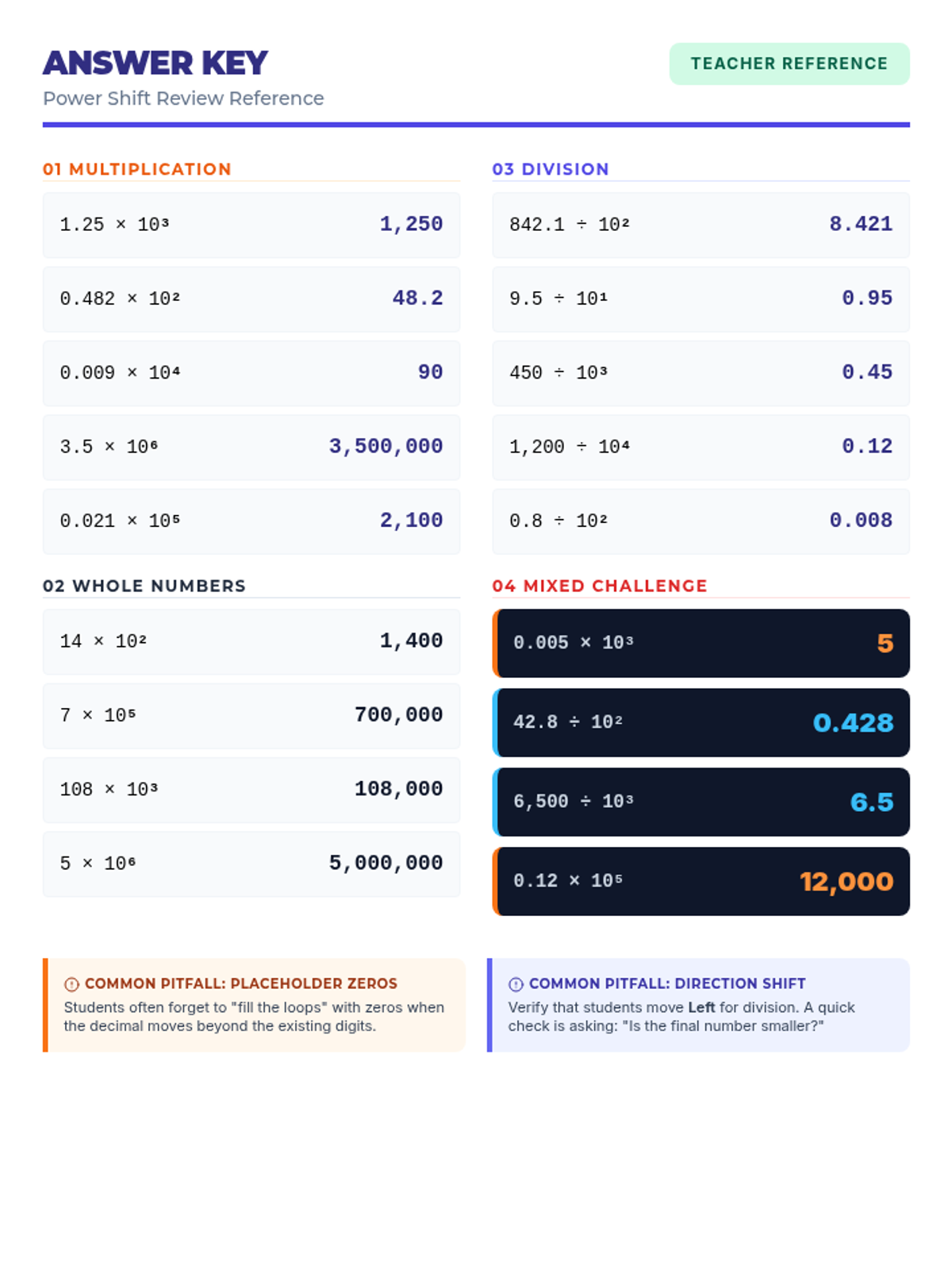
A comprehensive review of multiplying and dividing decimals and whole numbers by powers of 10 (up to 10^6), featuring step-by-step guidance on decimal placement.
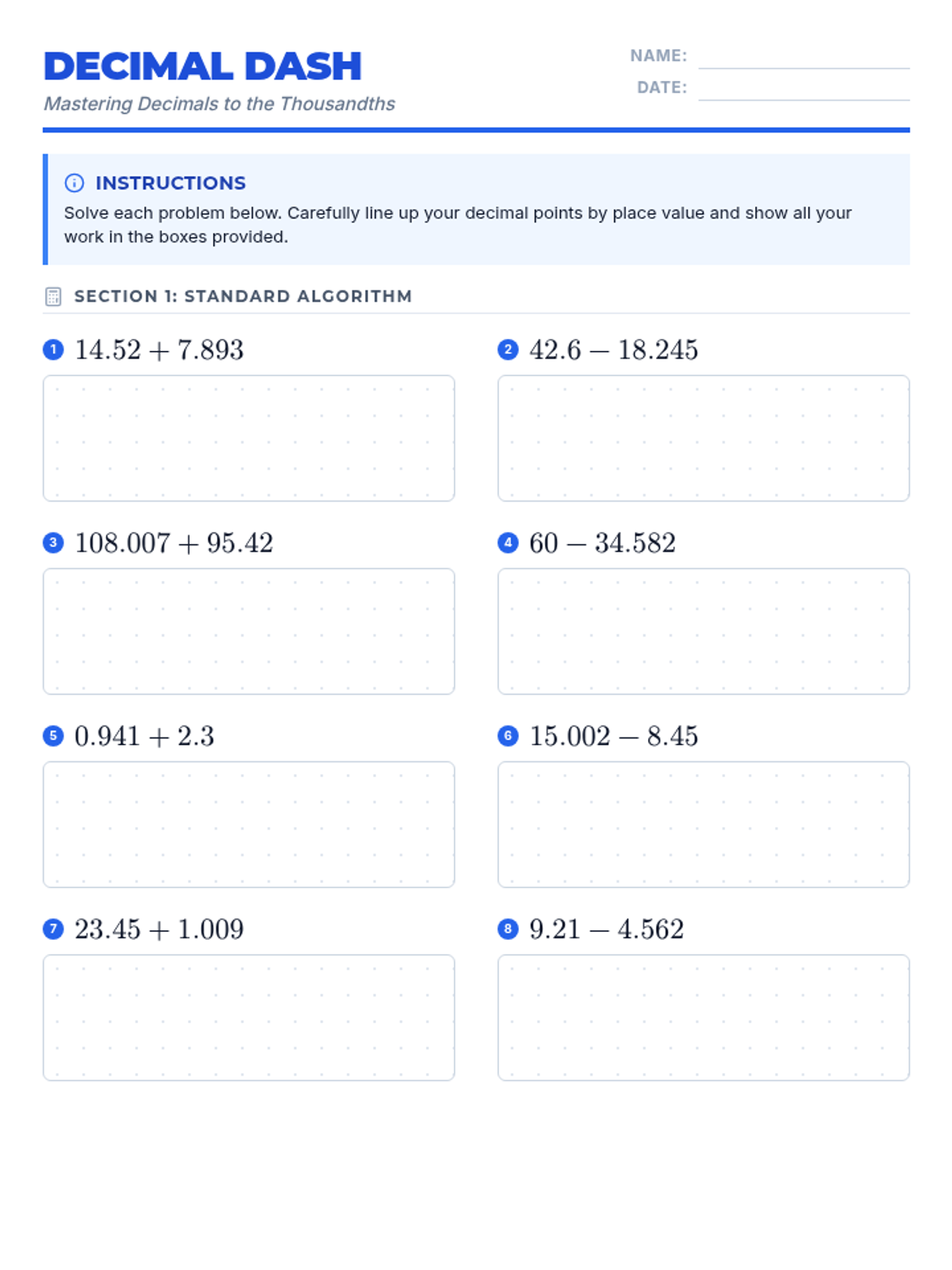
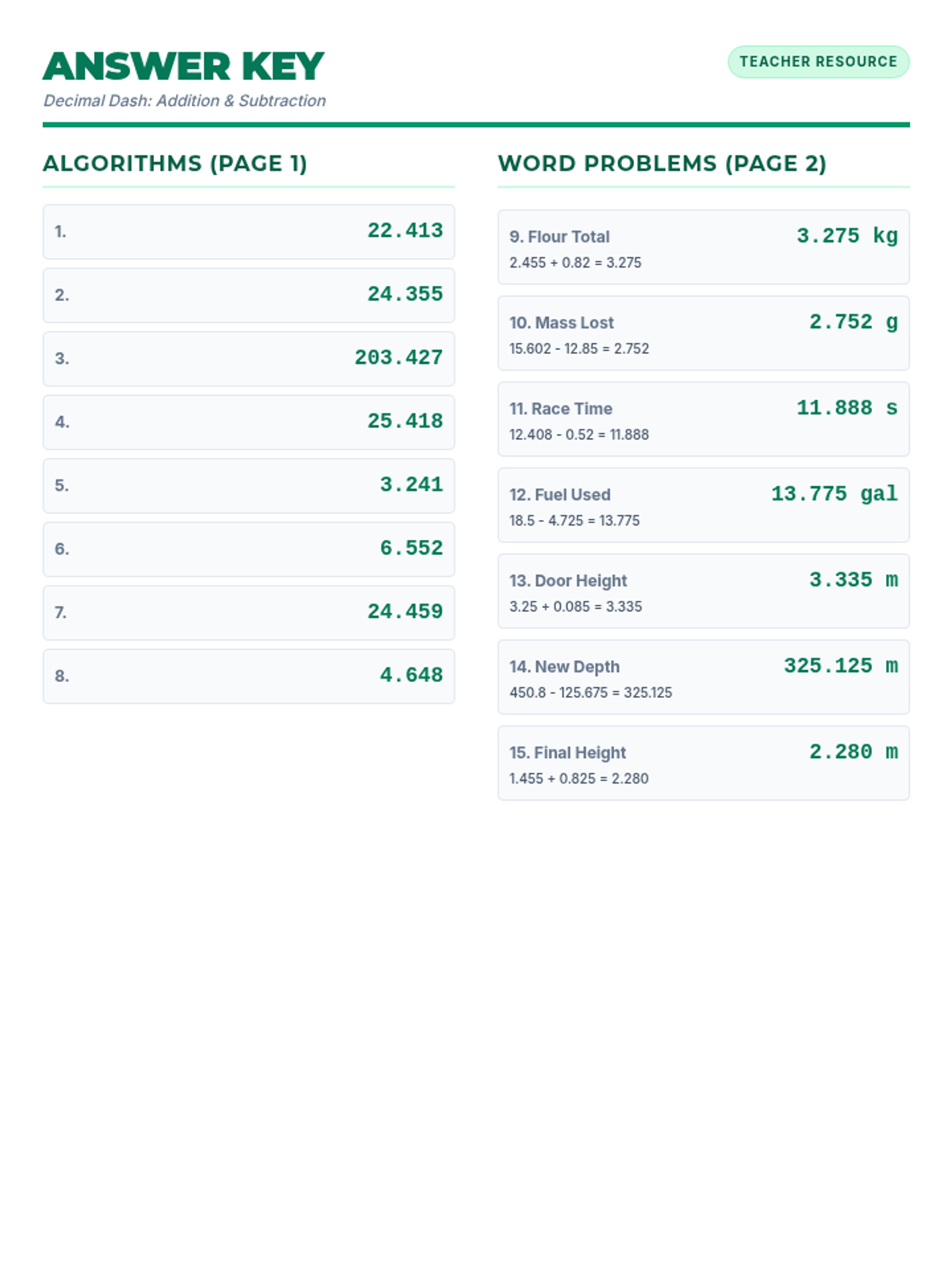
A comprehensive lesson on adding and subtracting decimals up to the thousandths place, featuring a mix of computational practice and diverse real-world word problems.
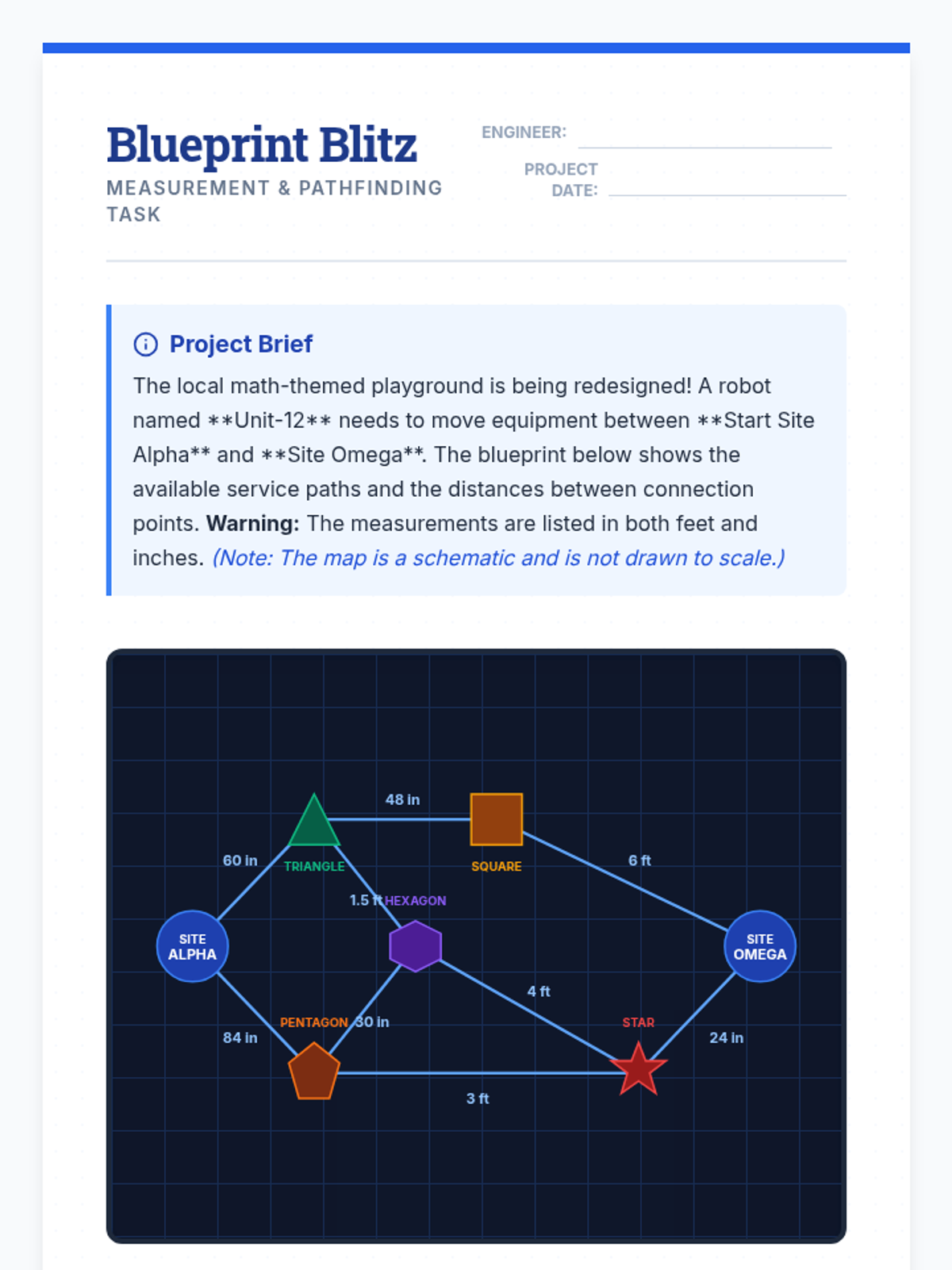
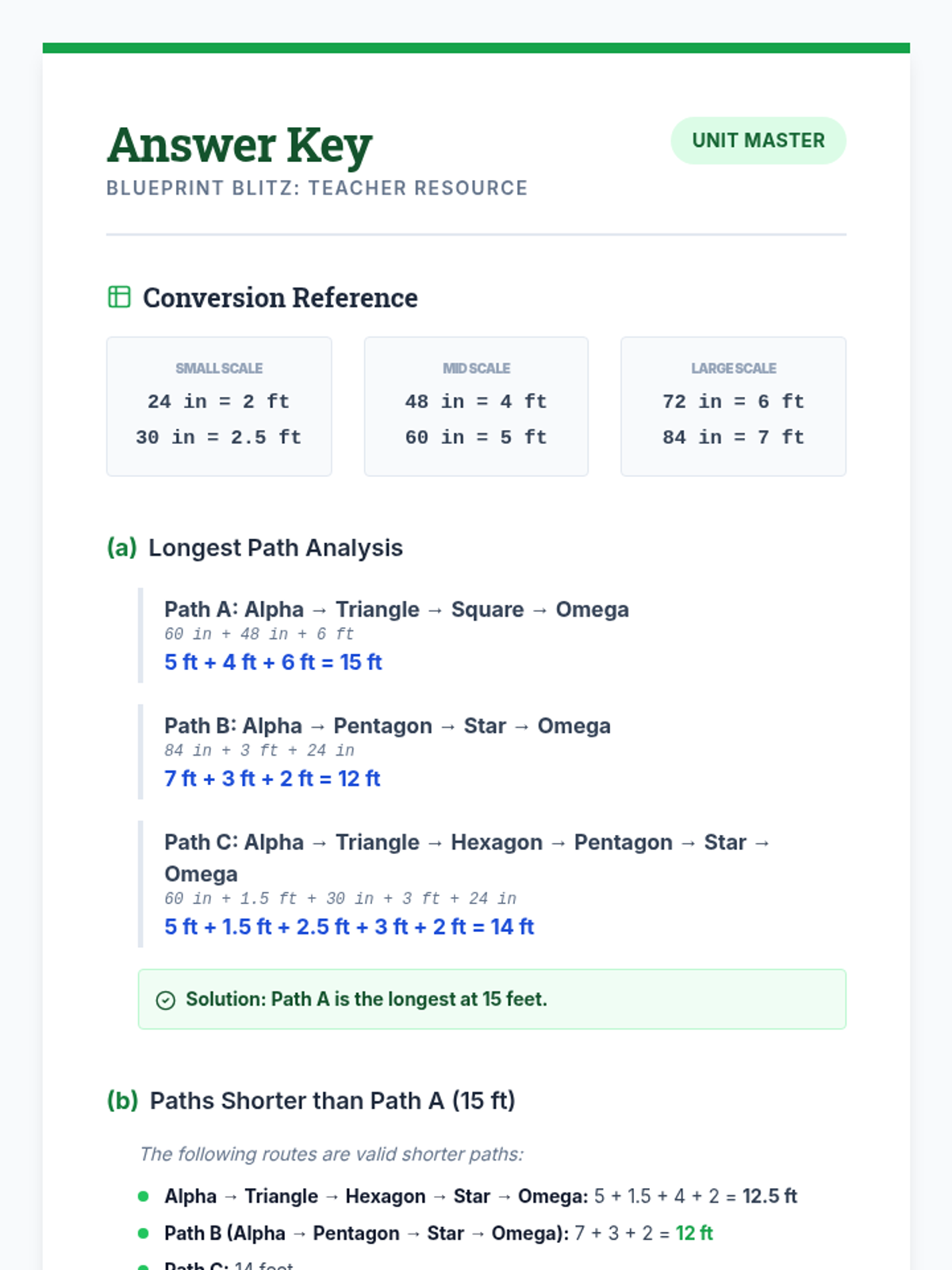
A lesson focused on unit conversion (feet and inches) through the lens of navigating a complex blueprint map. Students will calculate total distances of various paths and find the most efficient route.
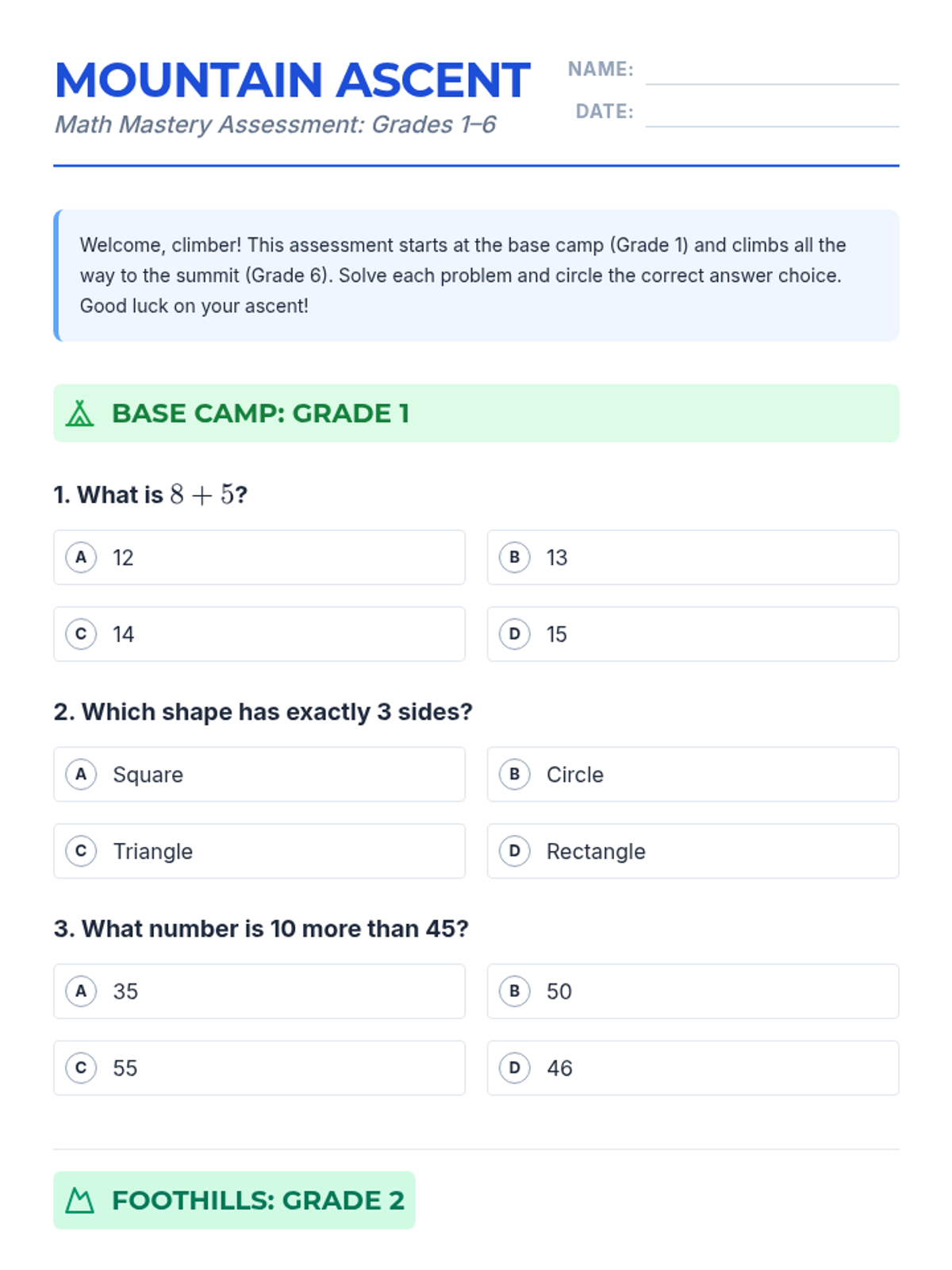
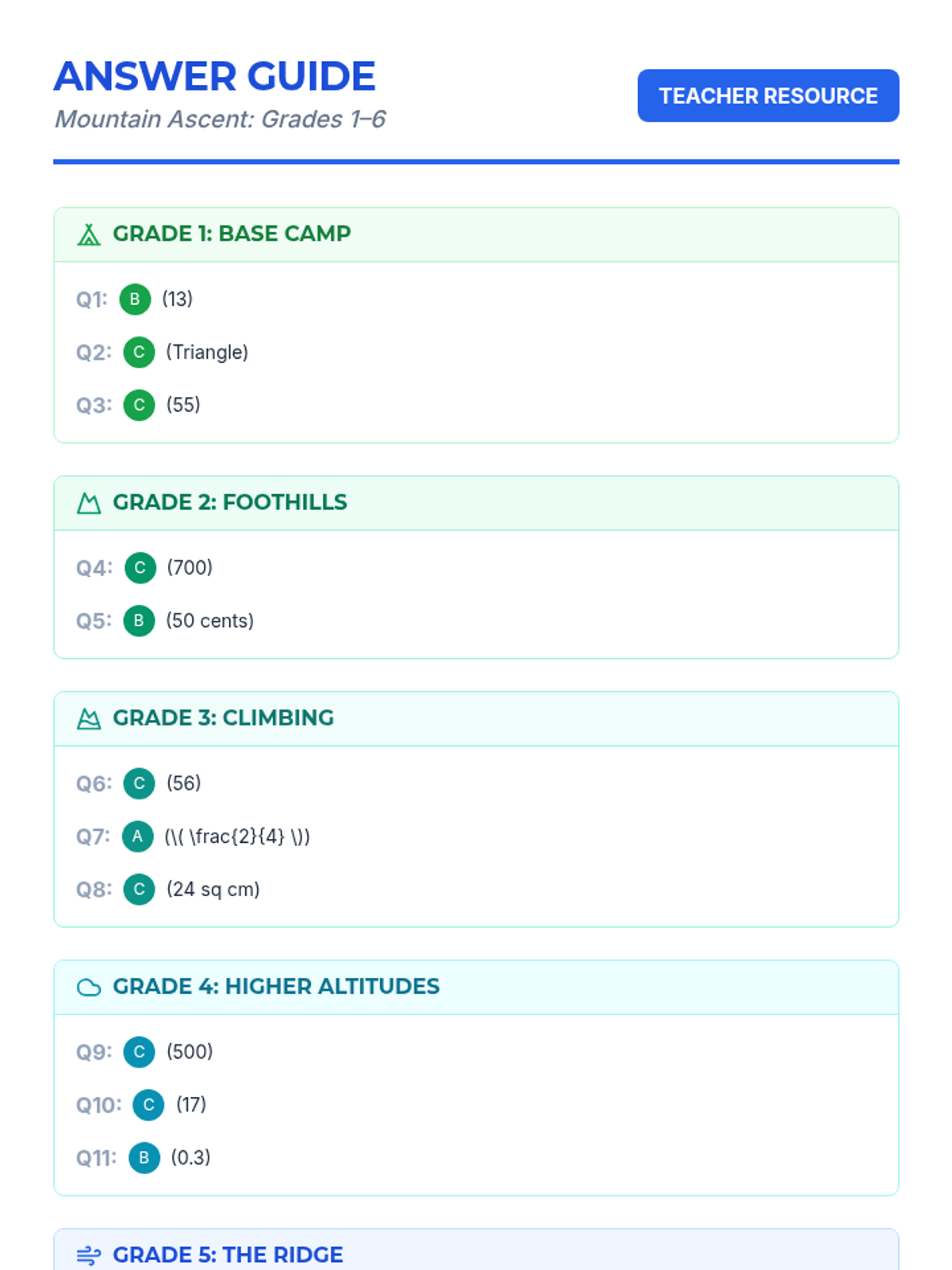
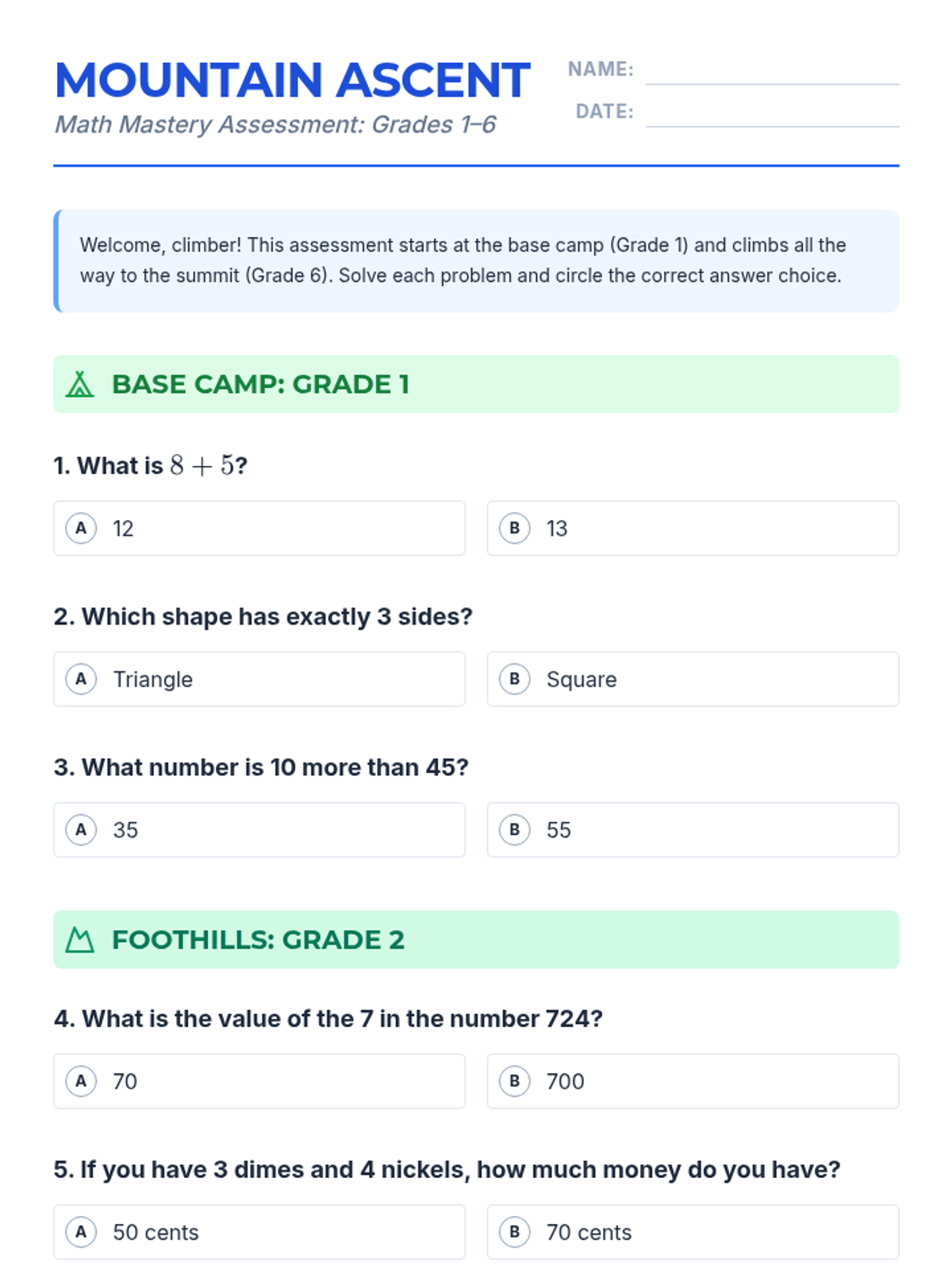
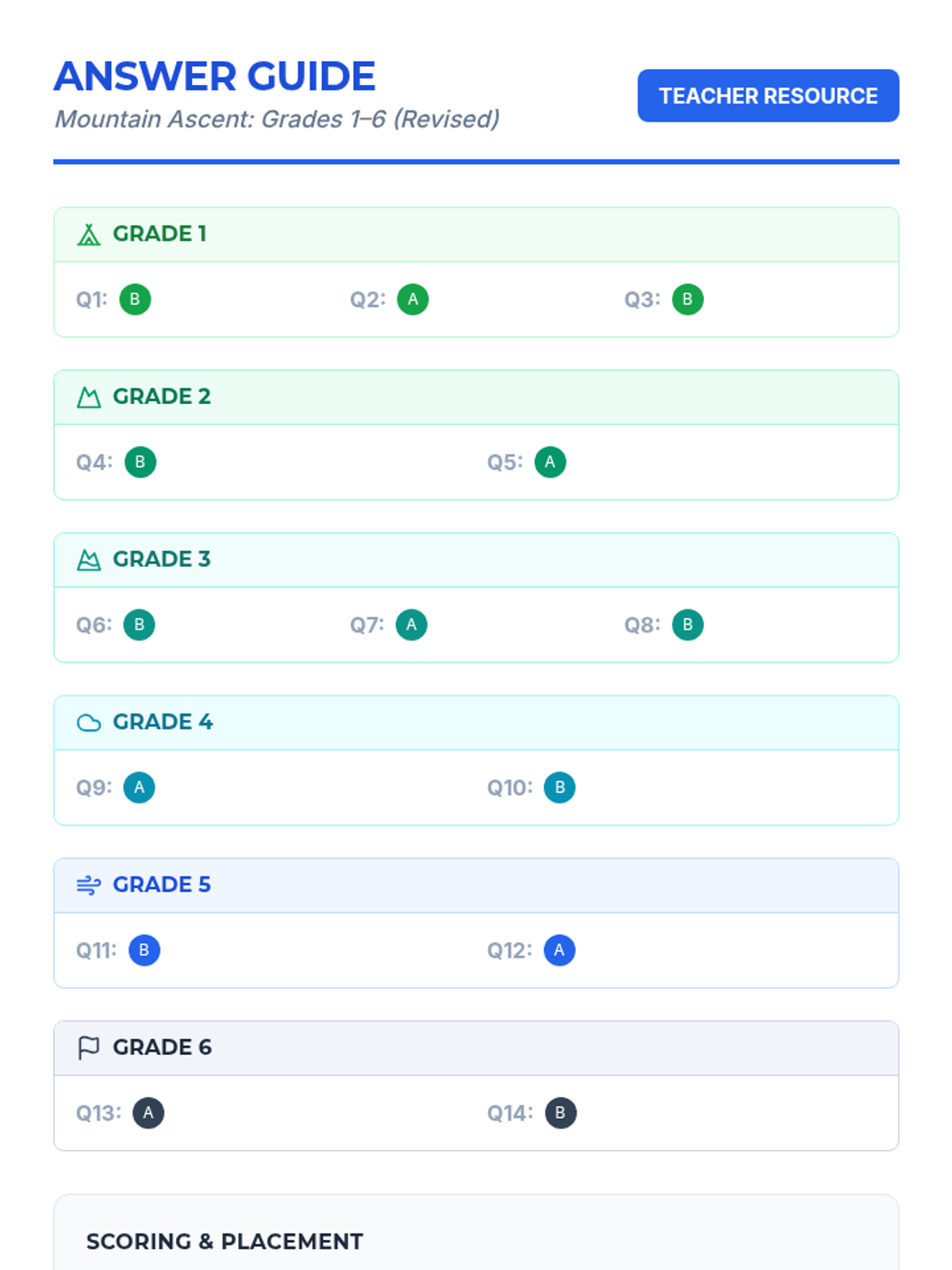
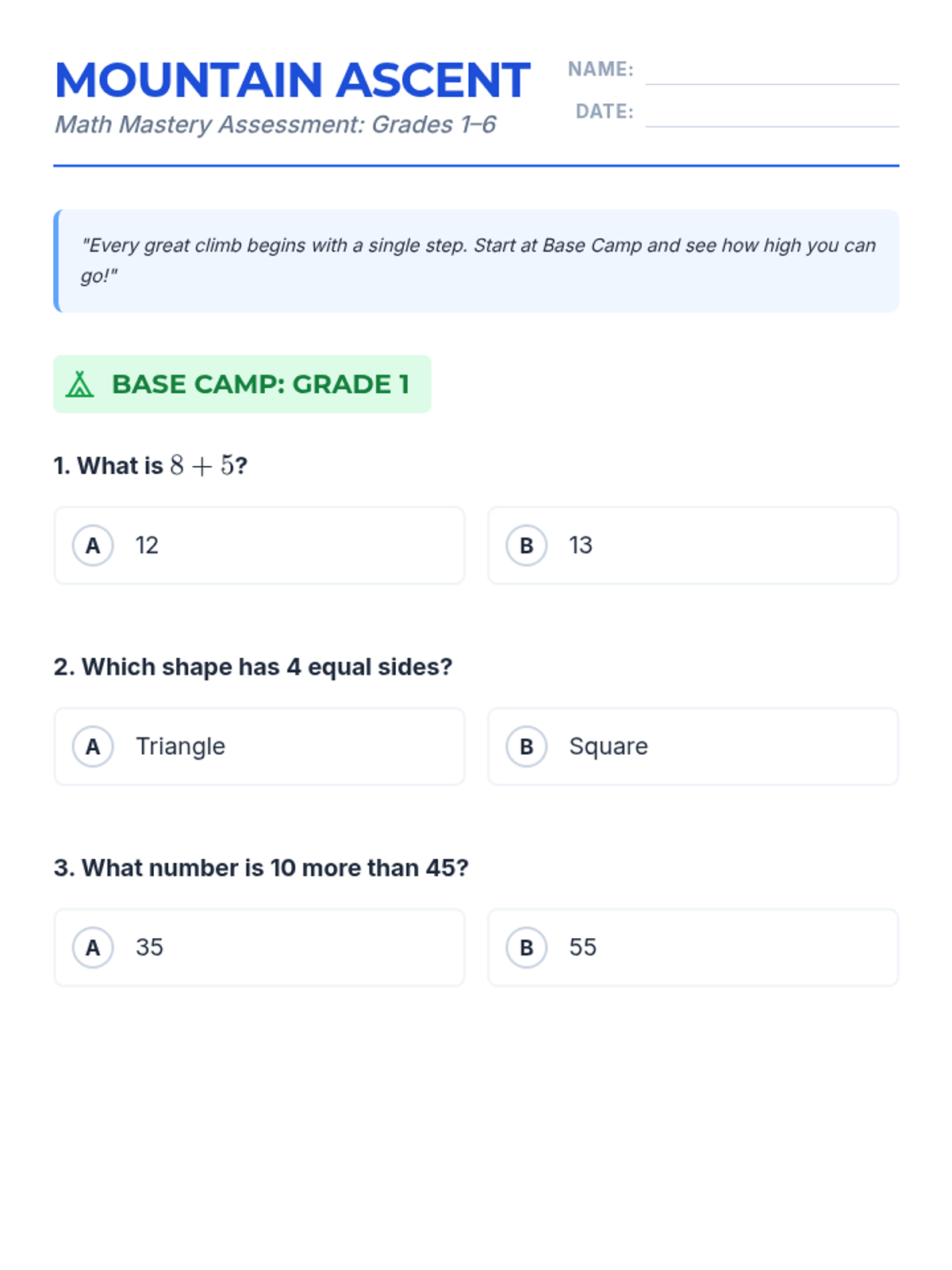
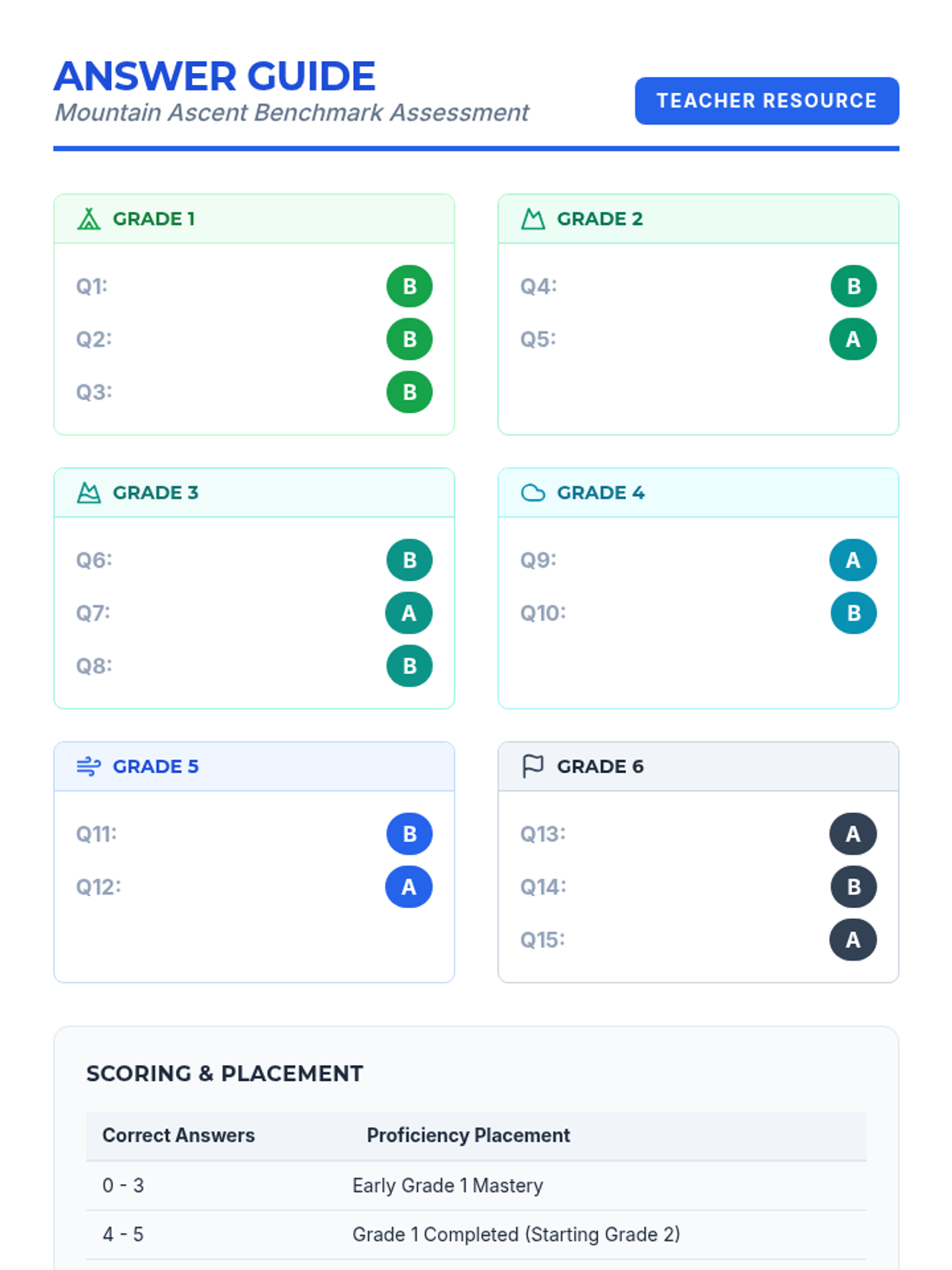
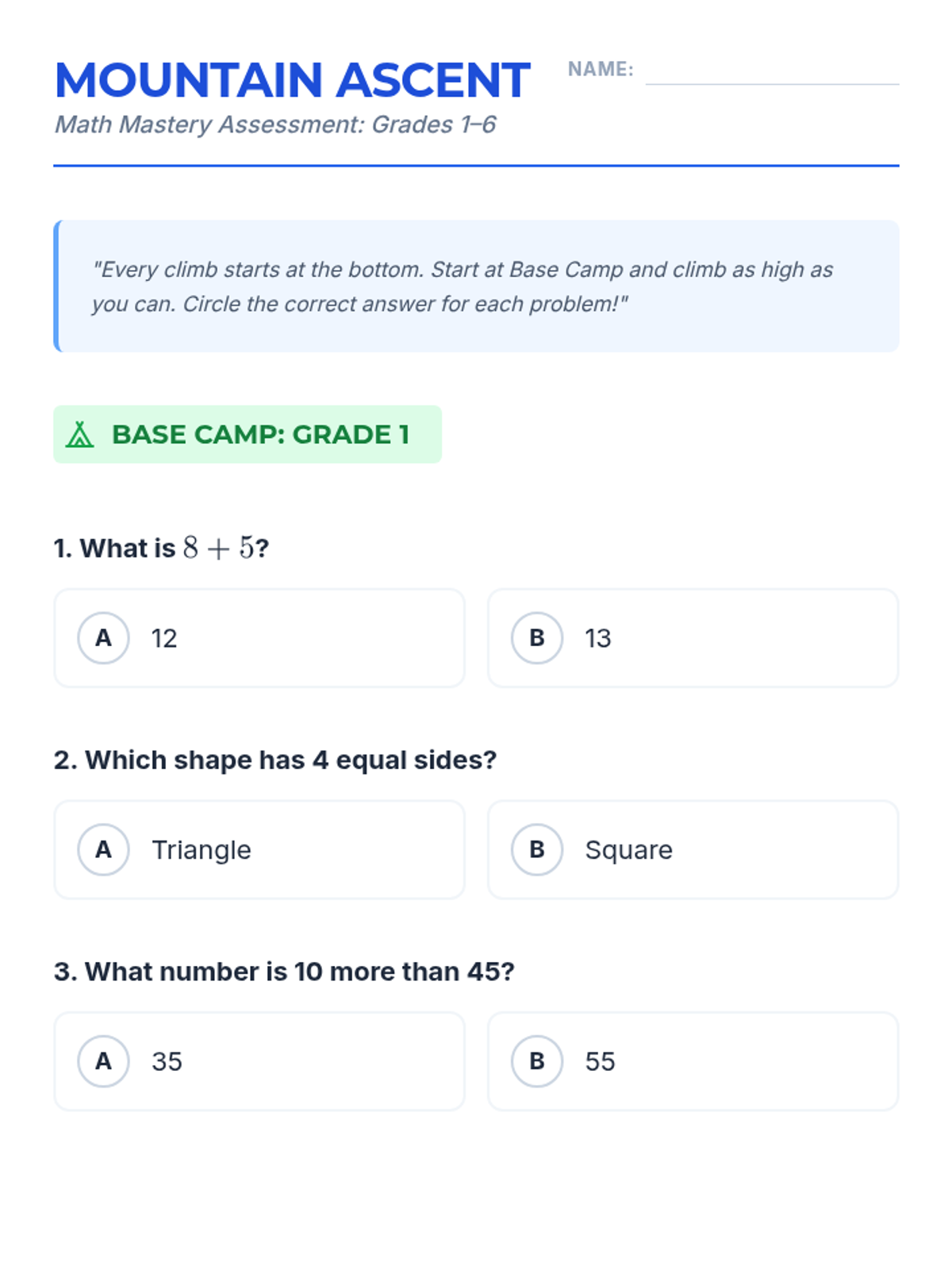
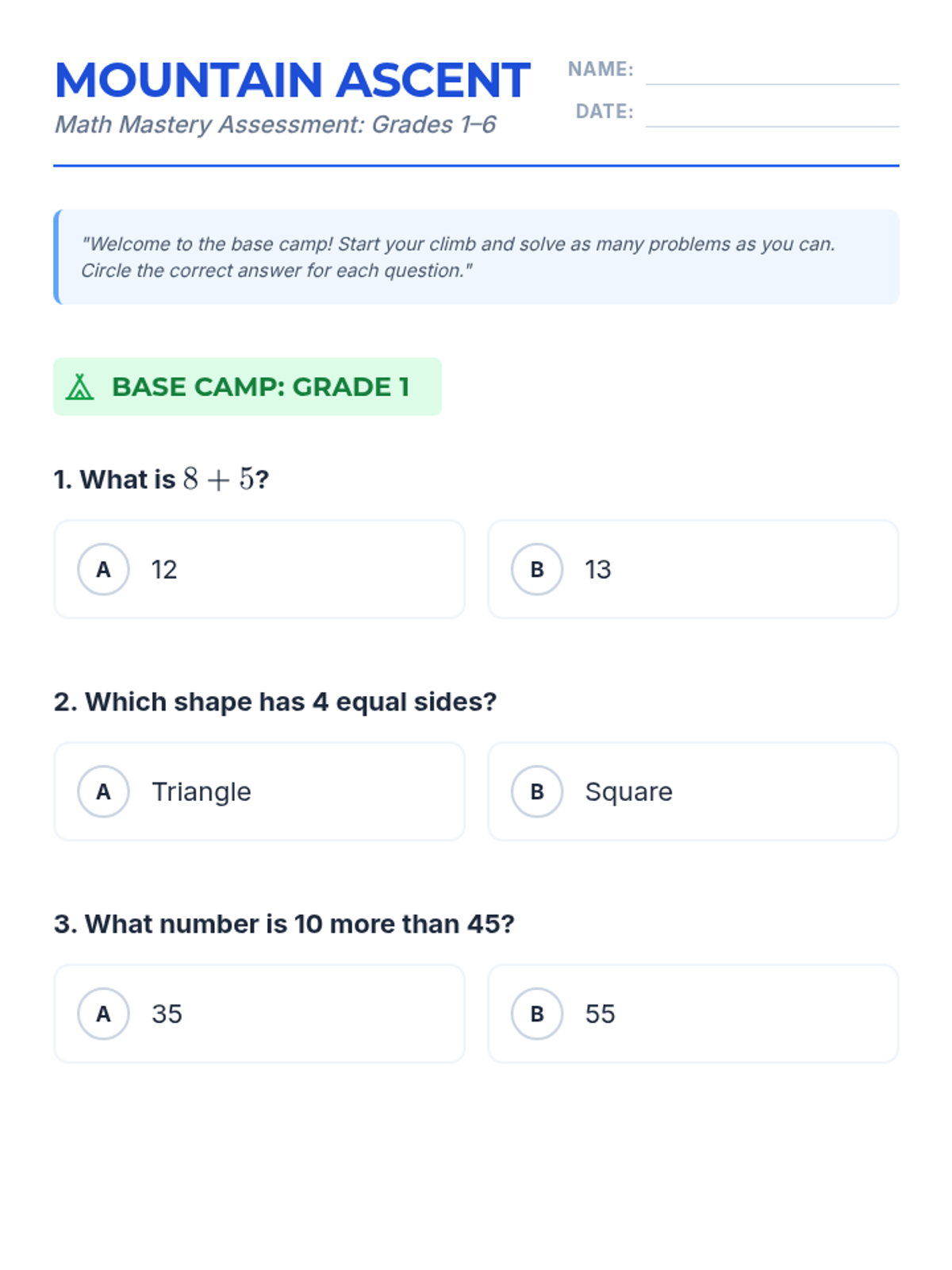
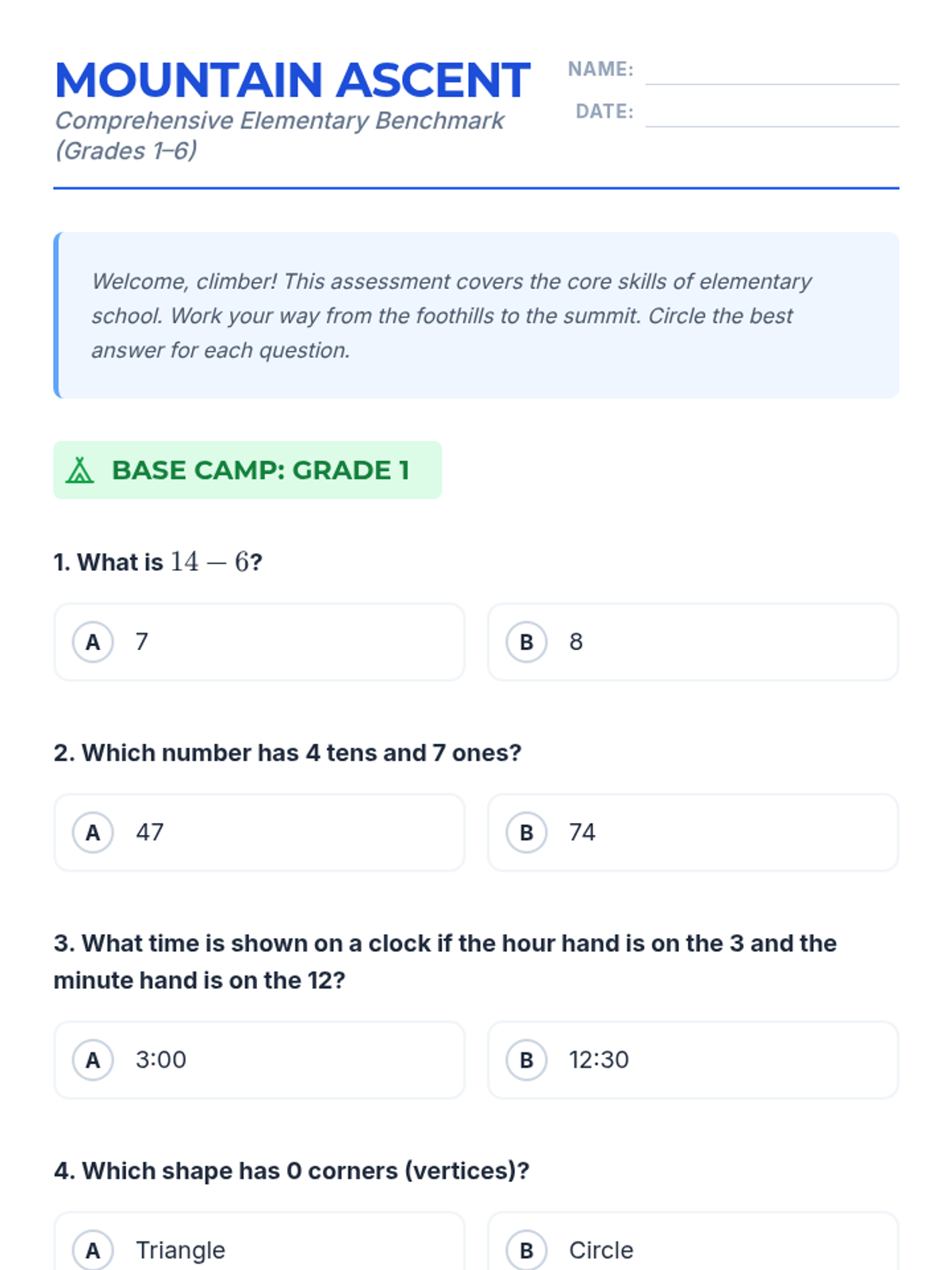
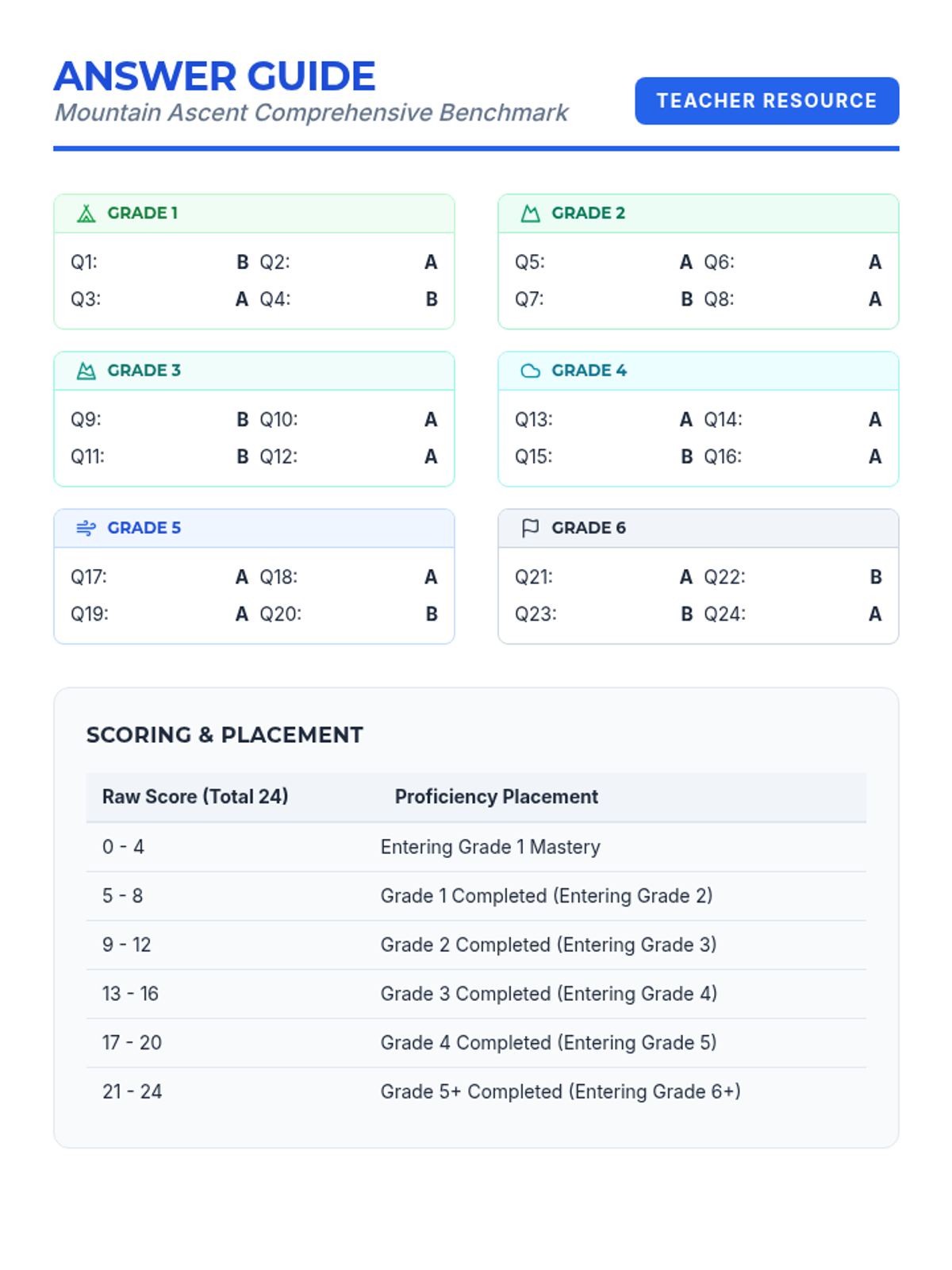
A comprehensive math benchmark assessment covering key standards from Grade 1 through Grade 6, designed to track student progress and identify skill gaps.
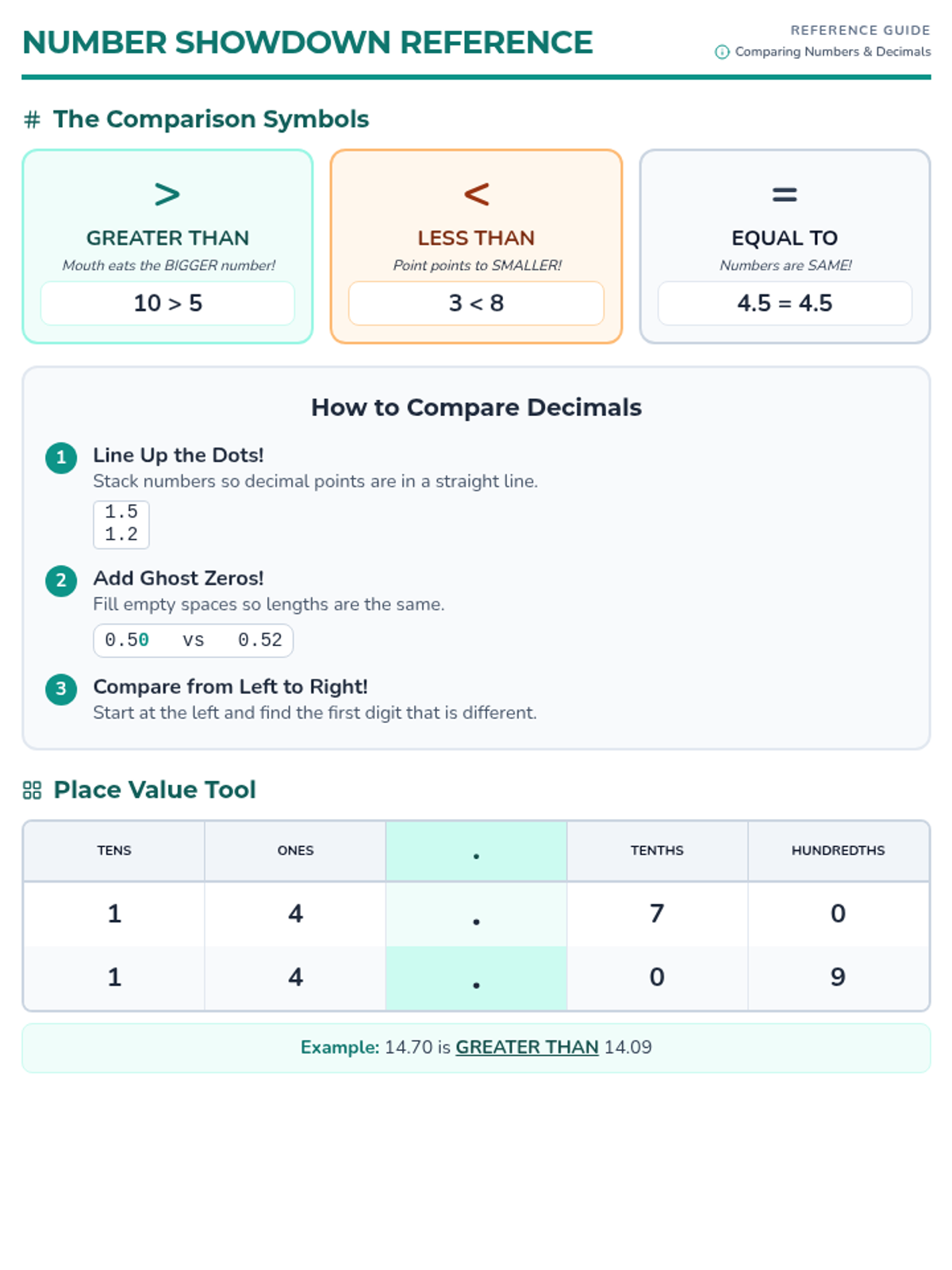
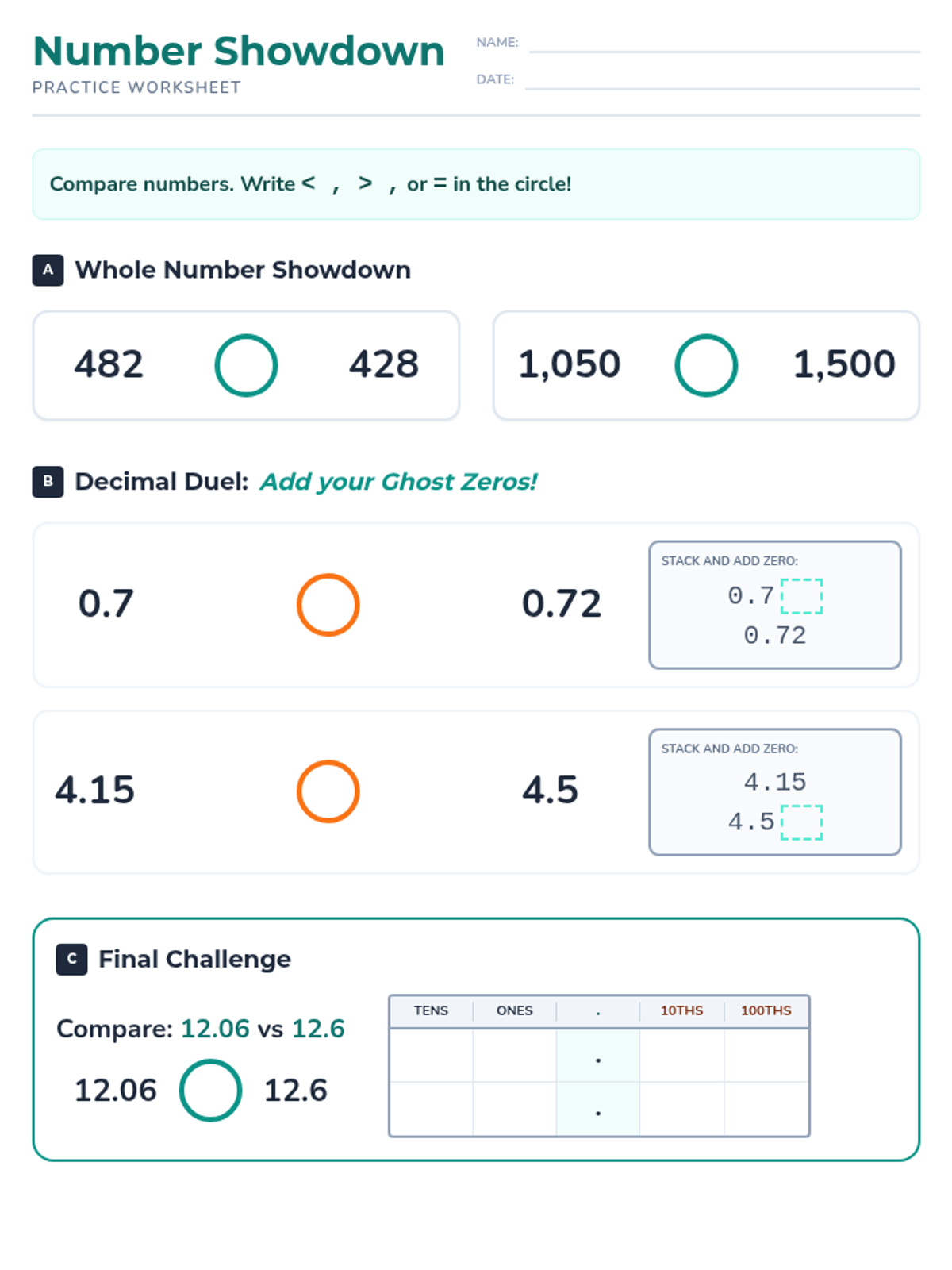
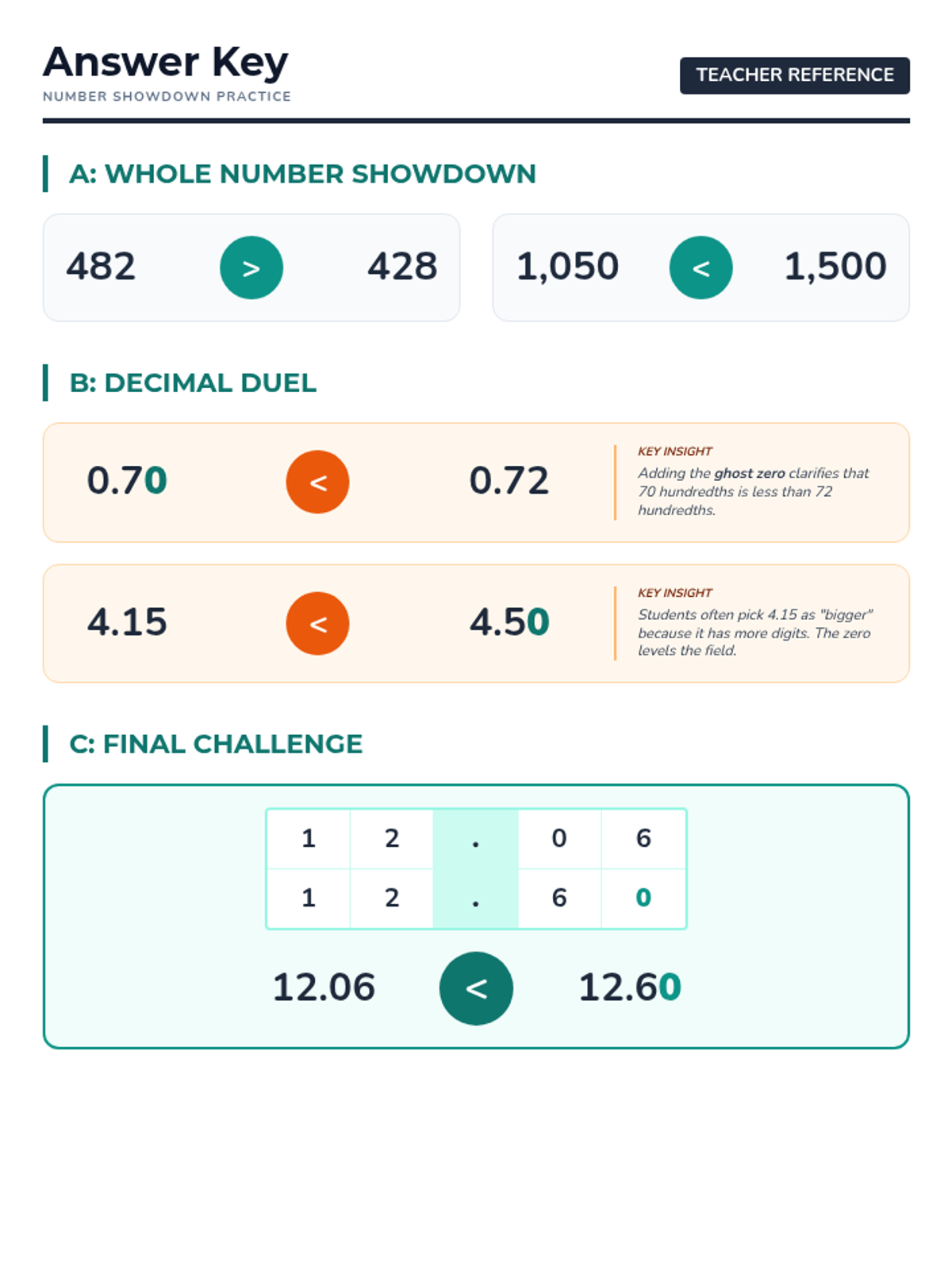
A guided lesson on comparing and ordering whole numbers and decimals, designed specifically for learners who benefit from visual scaffolding and structured place value support.
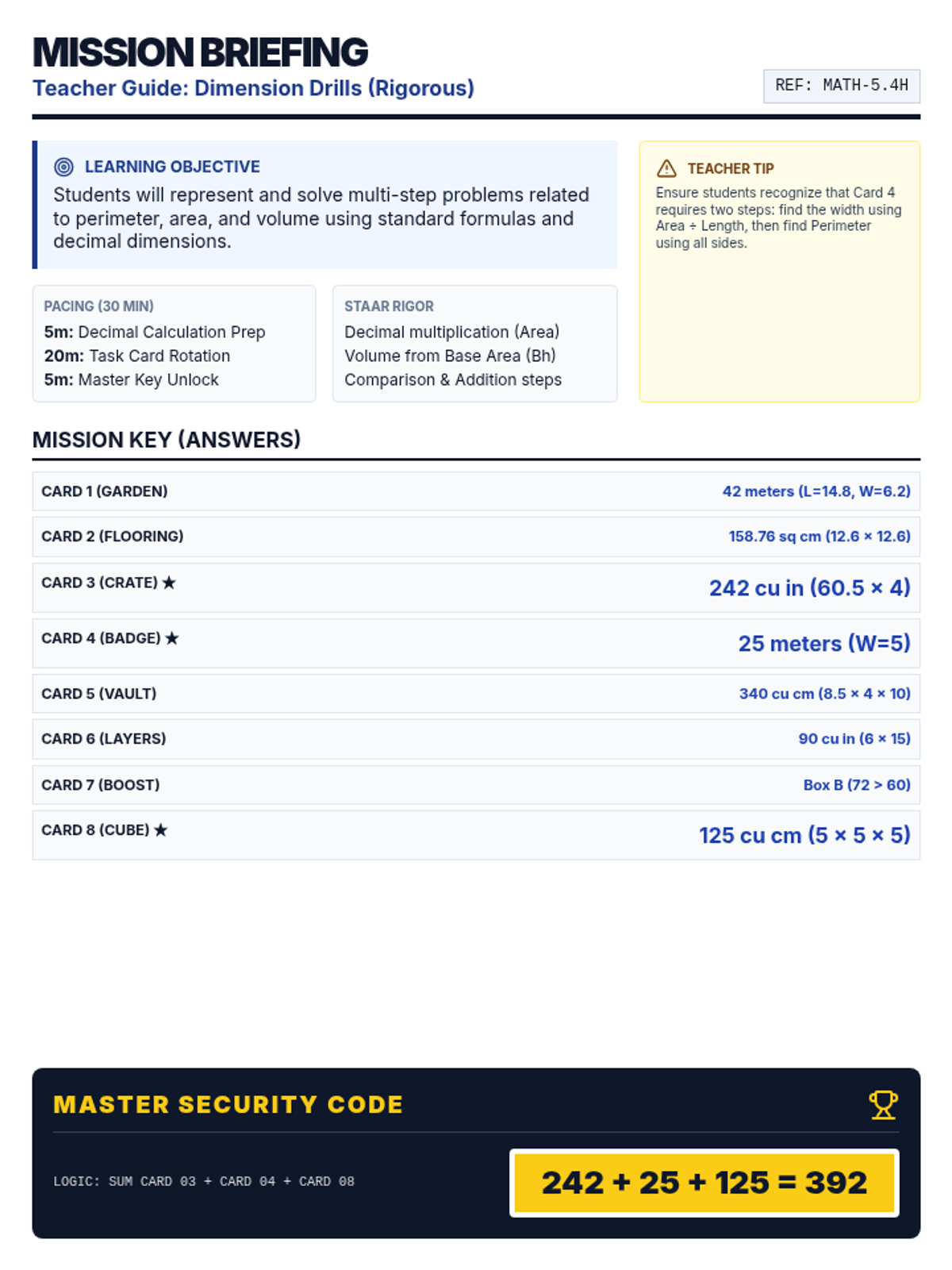
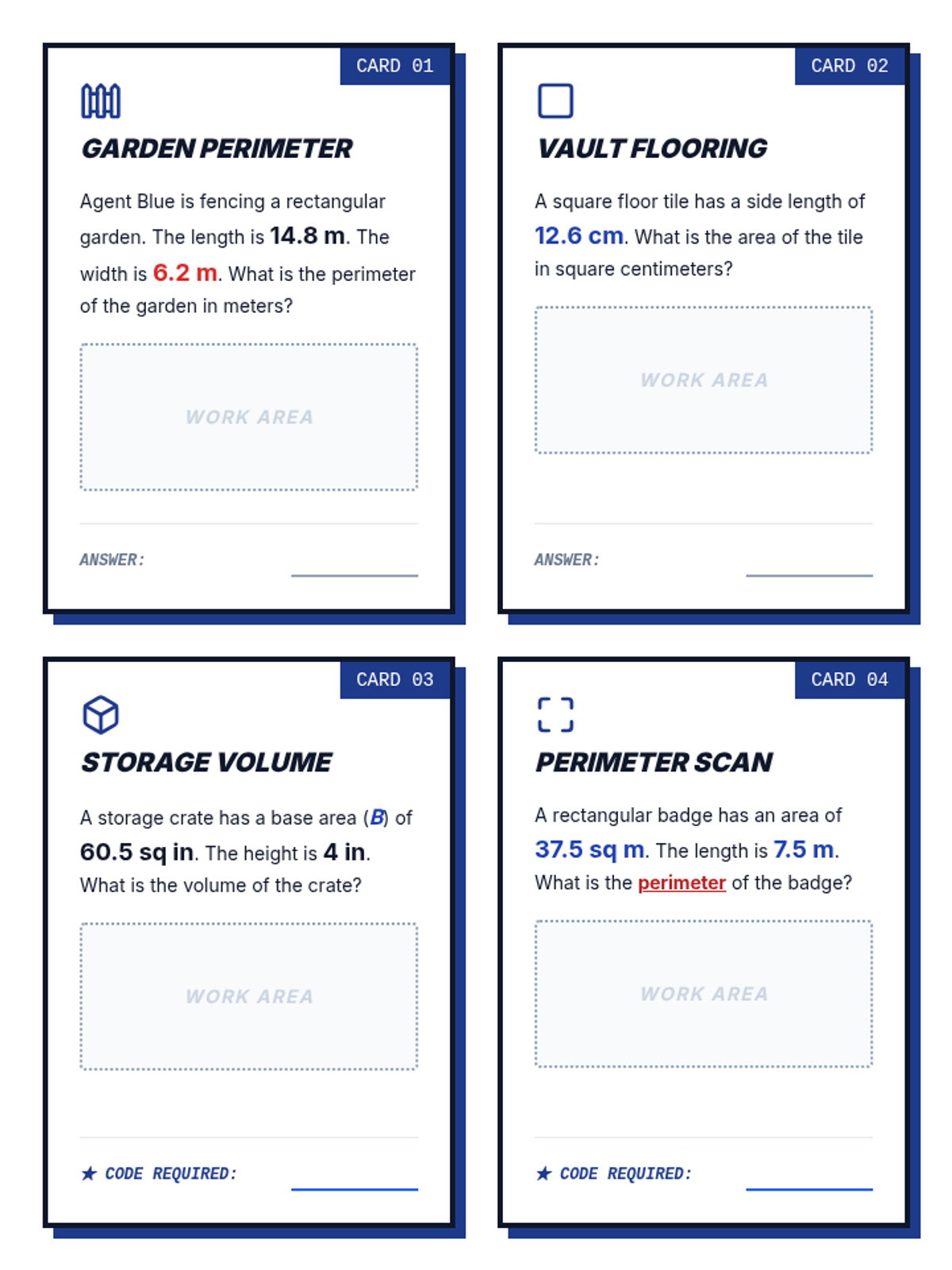
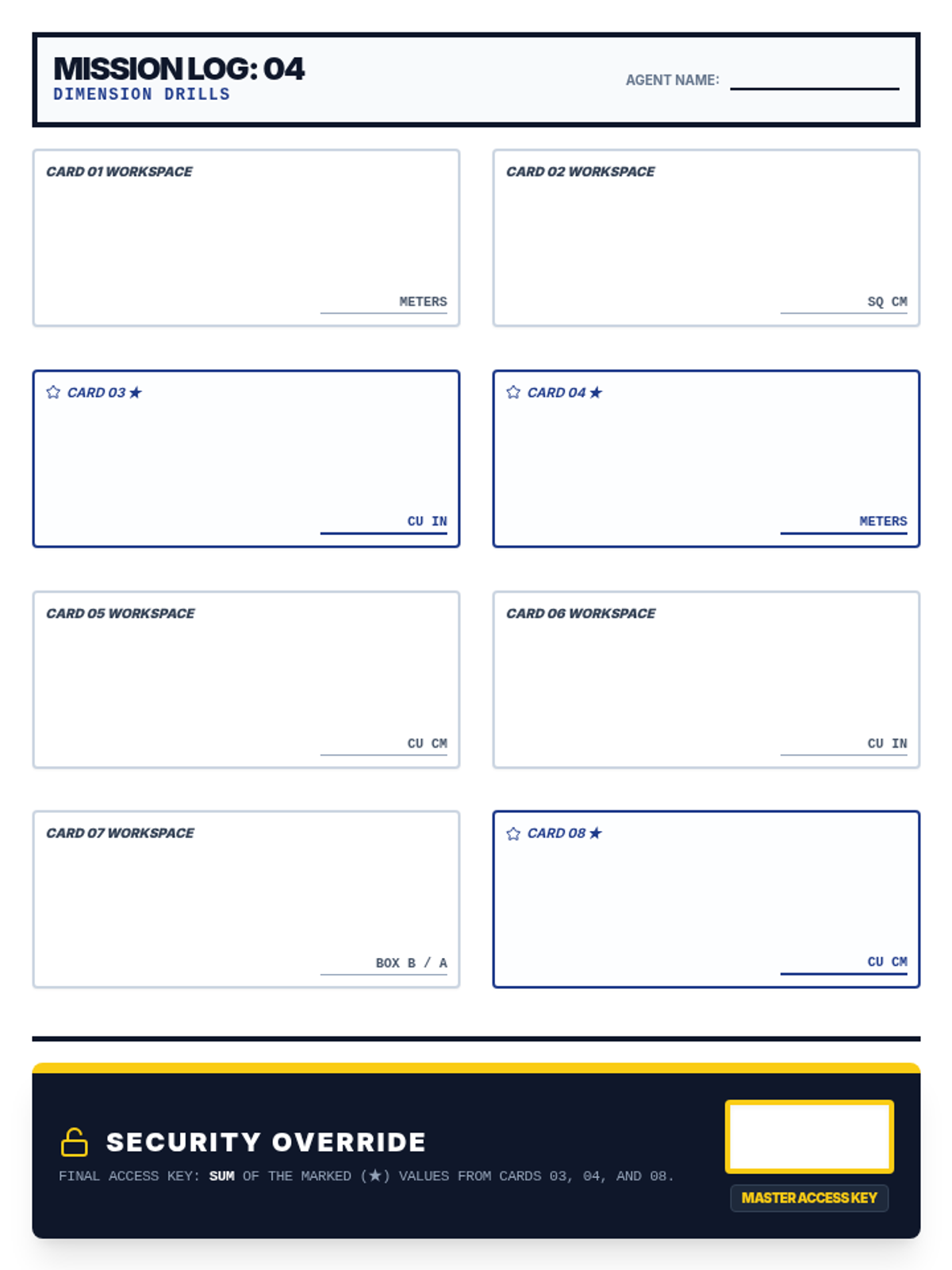
Focuses on representing and solving problems involving perimeter, area, and volume. Students use their measurement skills as 'Dimension Detectives' for the final mission.
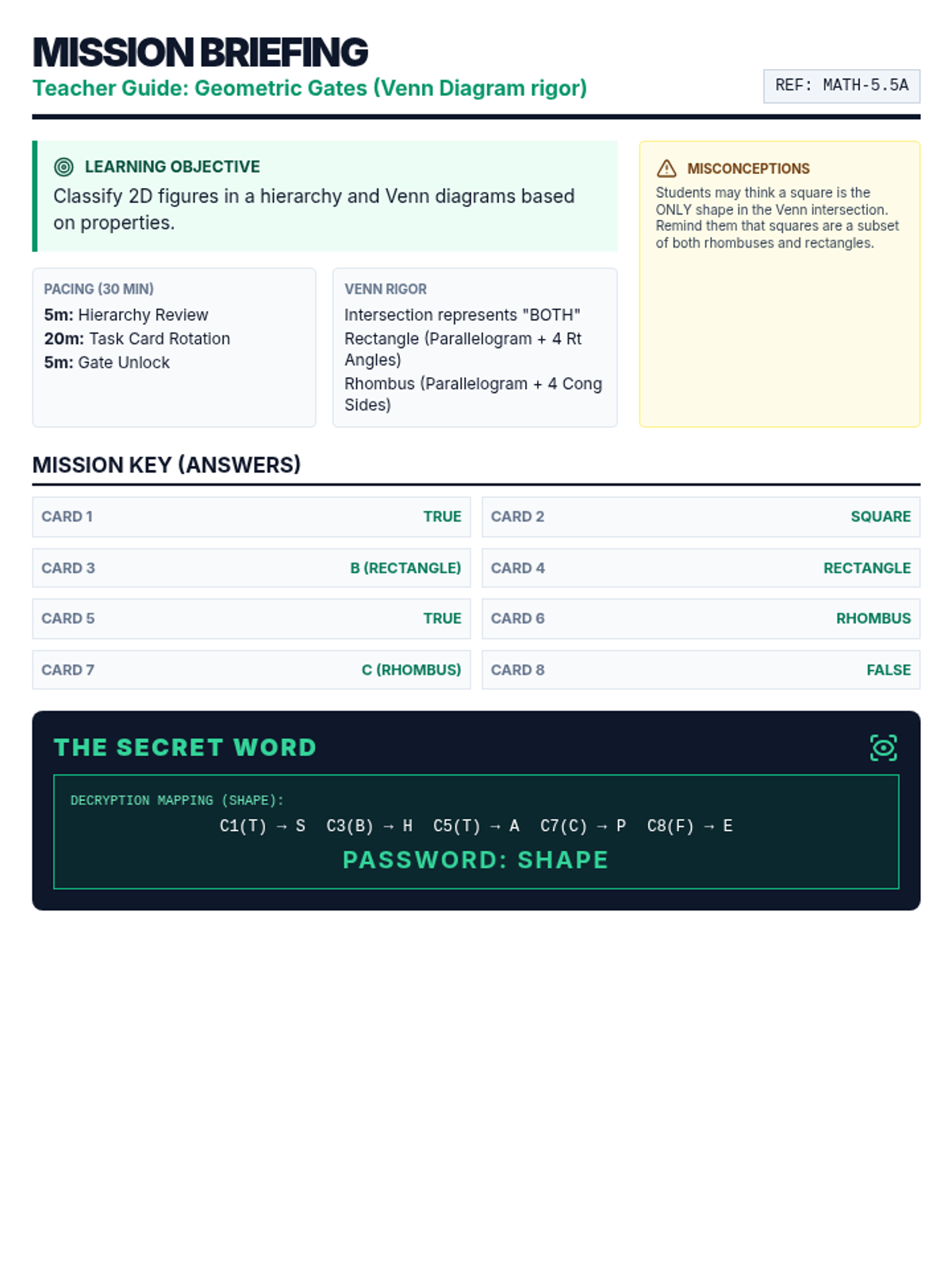
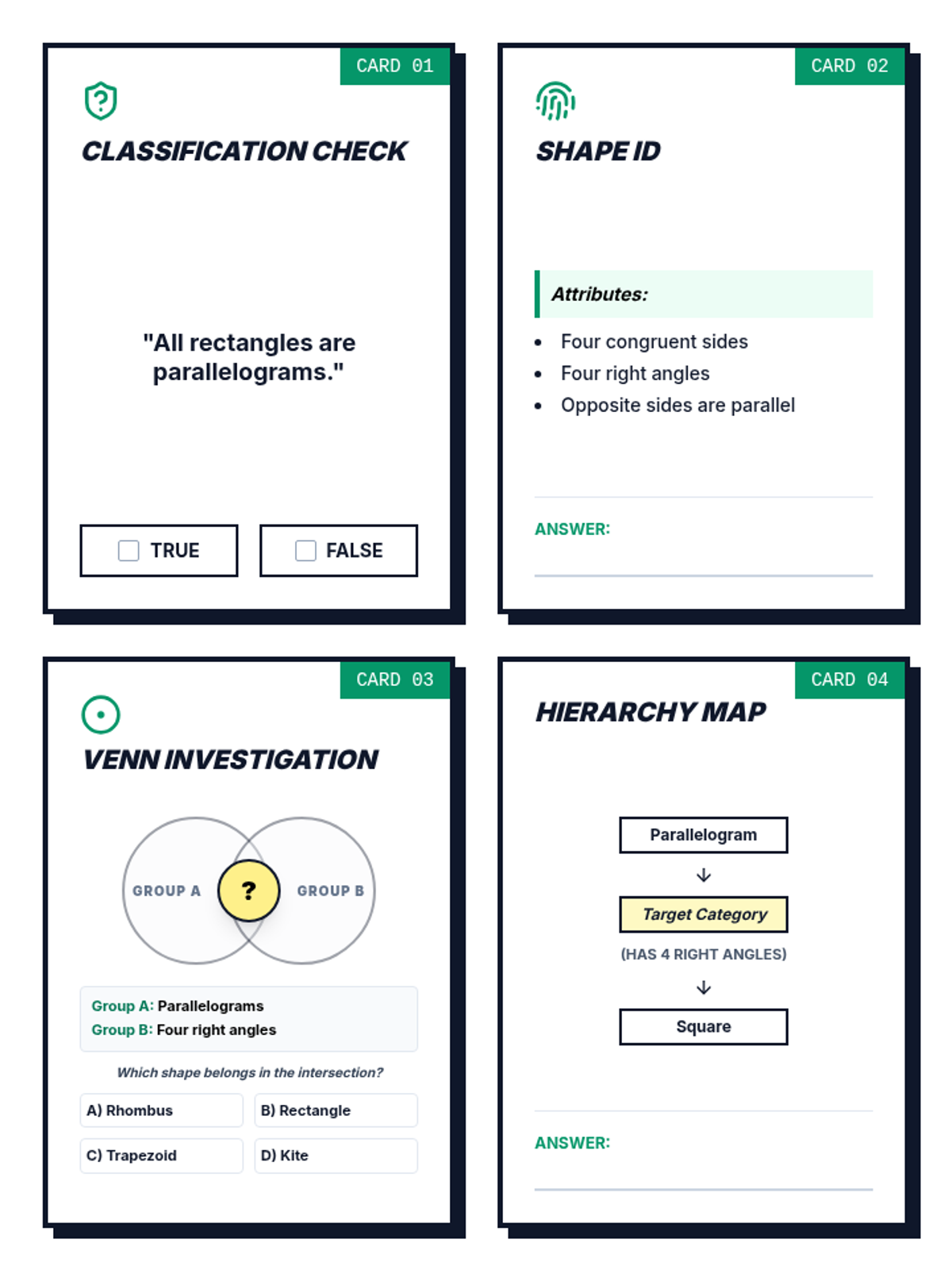
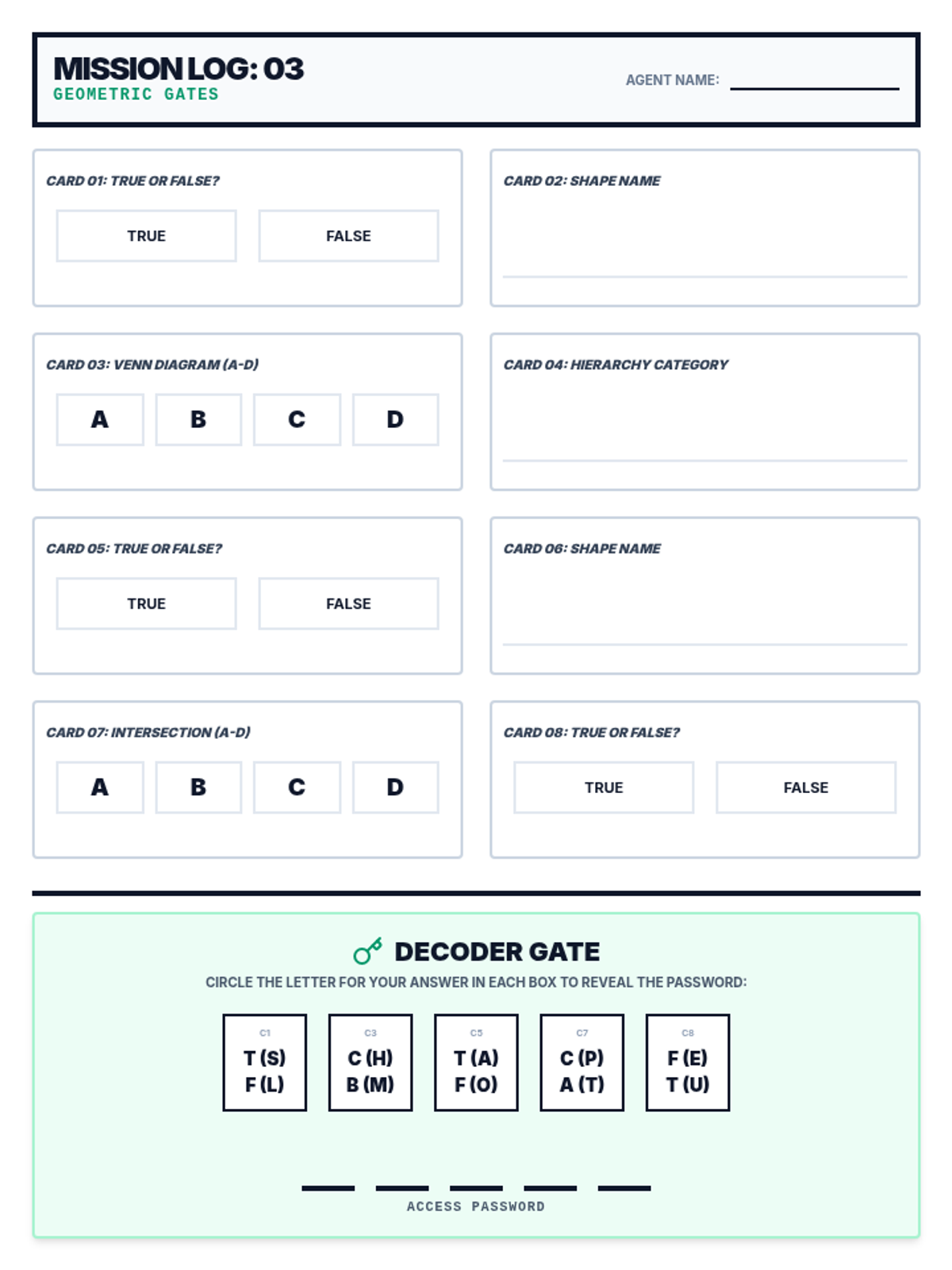
Focuses on classifying 2D figures in a hierarchy based on properties. Students identify relationships between sets and subsets to unlock the 'Geometric Gates'.
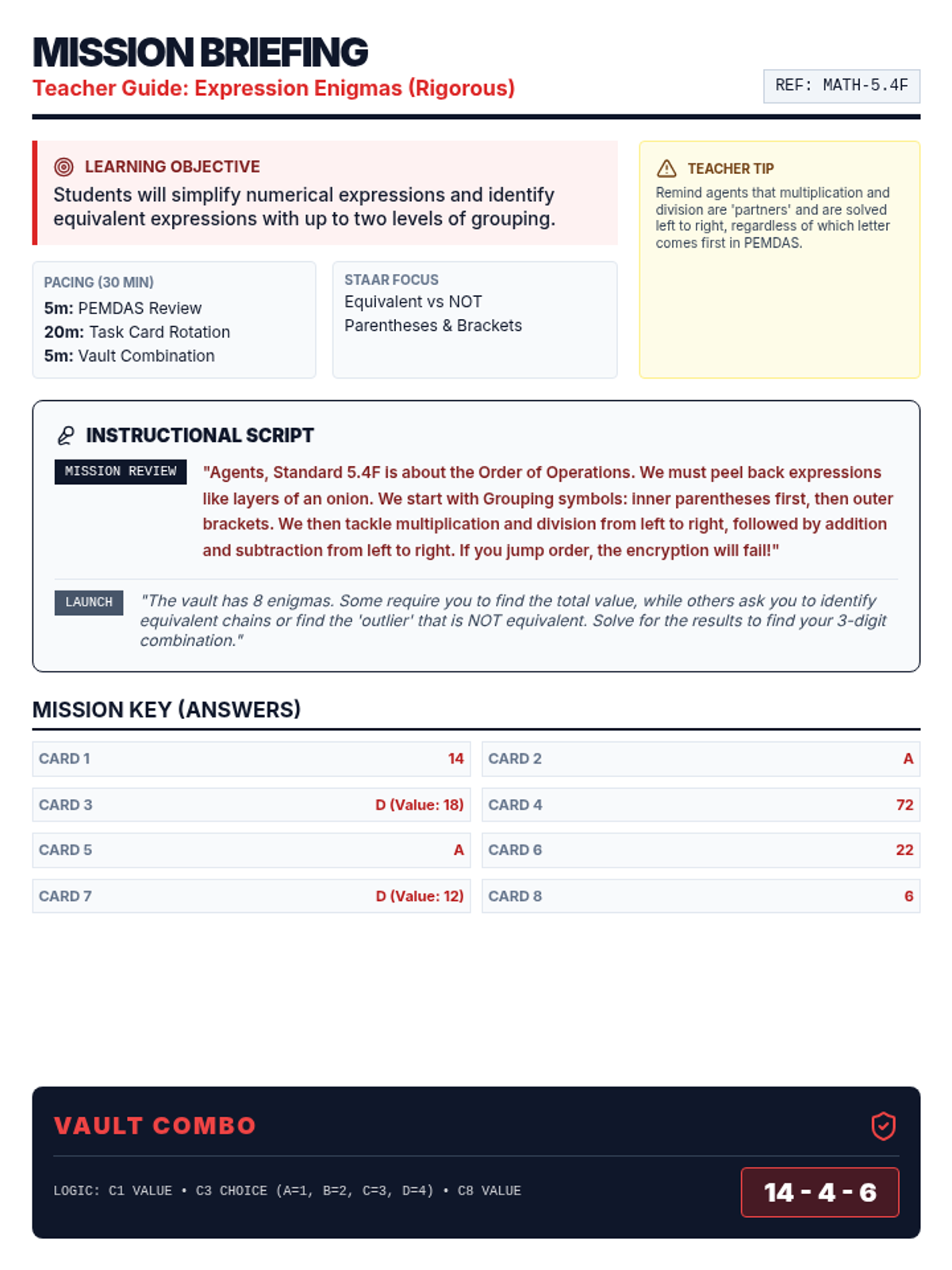
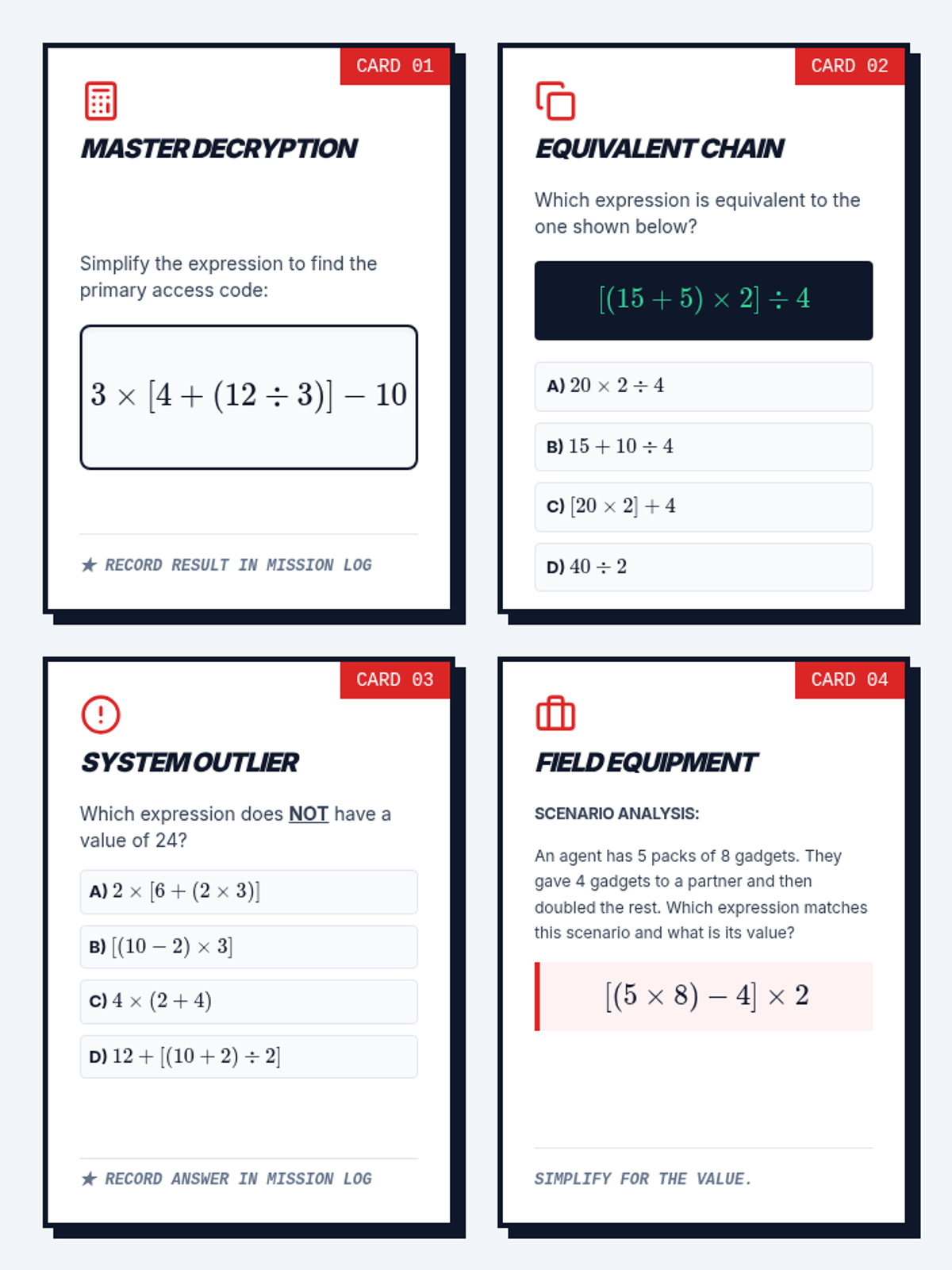
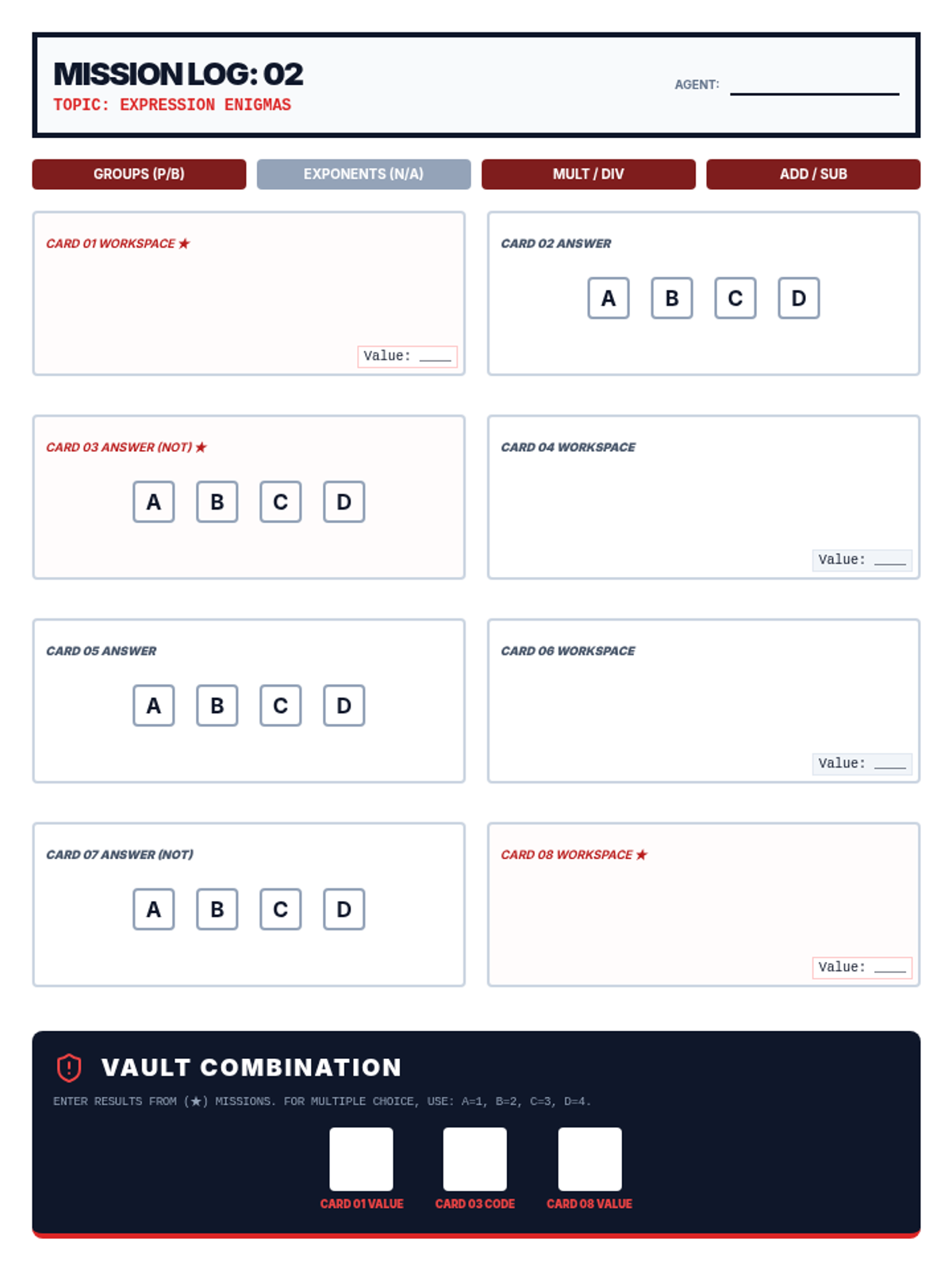
Focuses on simplifying numerical expressions using the order of operations, including up to two levels of grouping. Students solve 'Expression Enigmas' to find the vault combination.
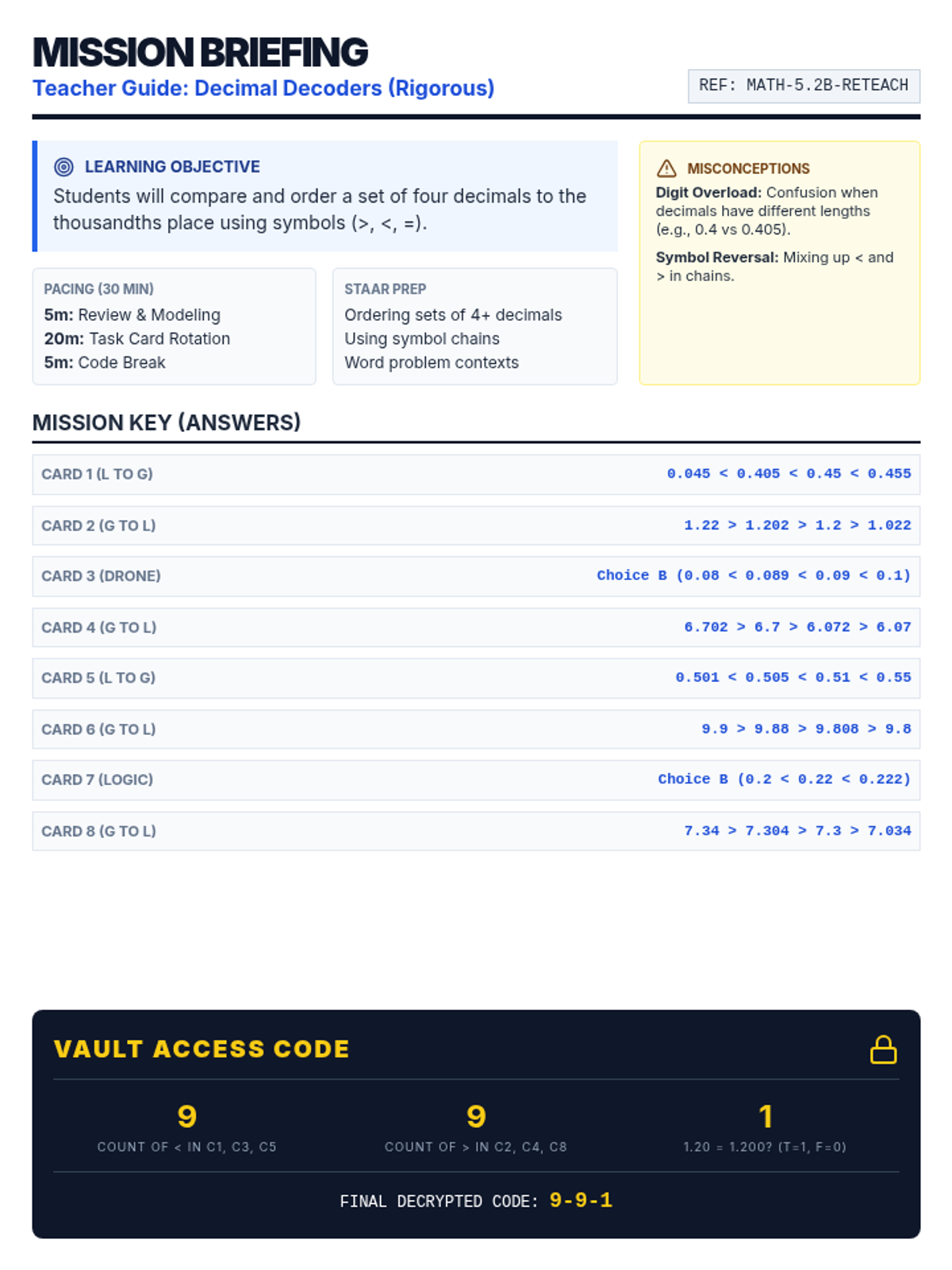
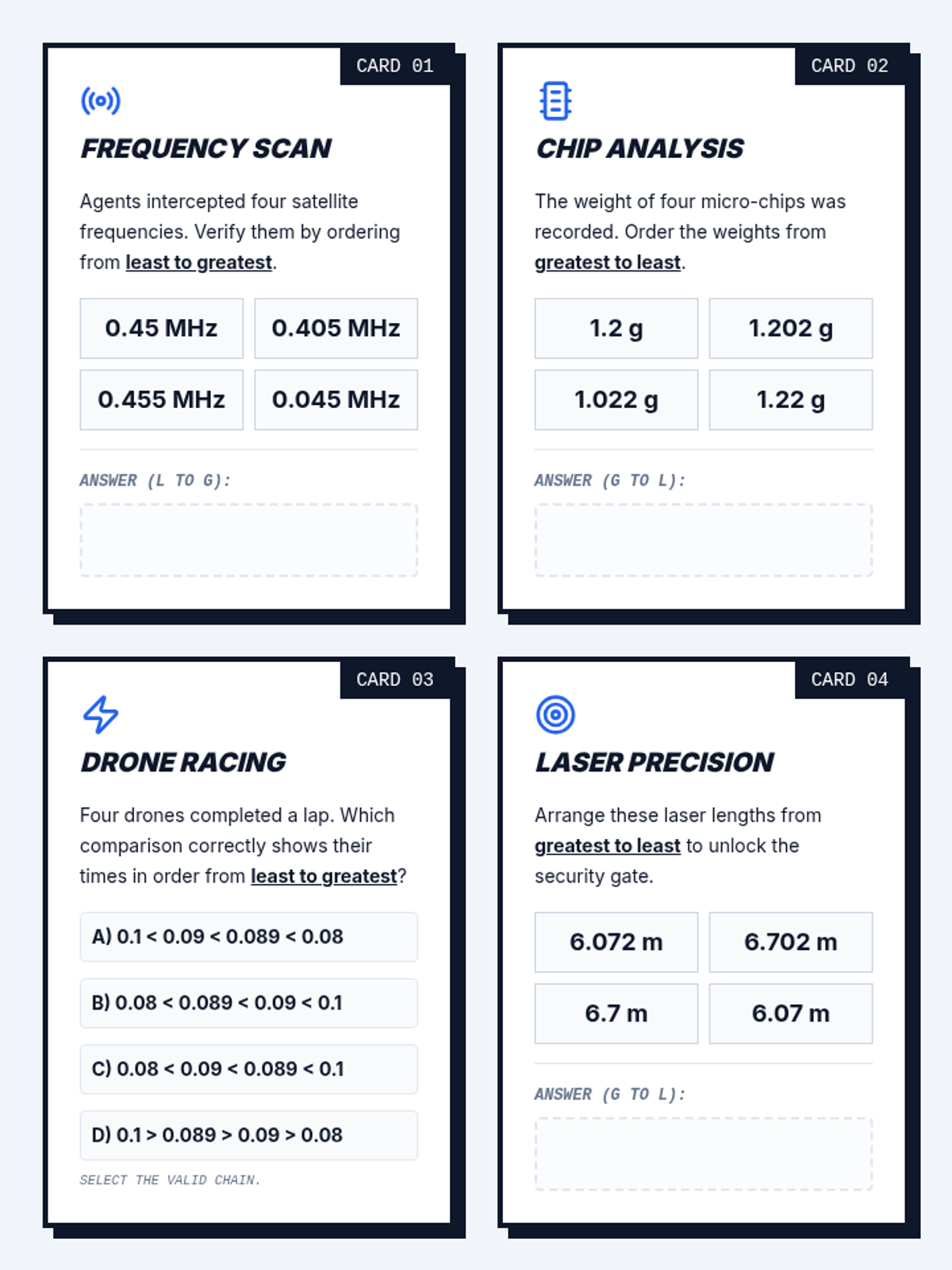
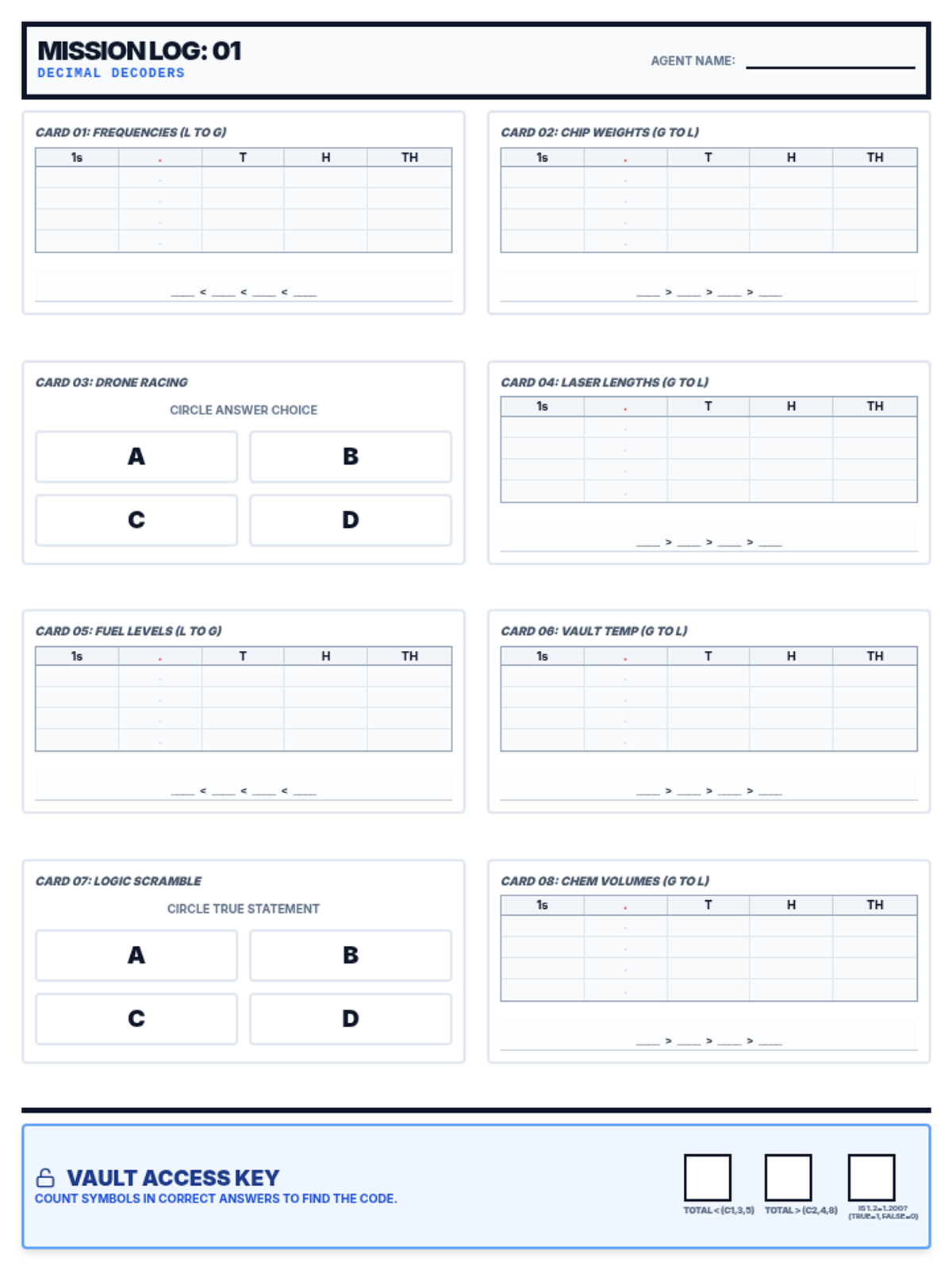
Focuses on comparing and ordering decimals to the thousandths place using symbols and place value logic. Students act as 'Decimal Decoders' to crack a numeric sequence code.
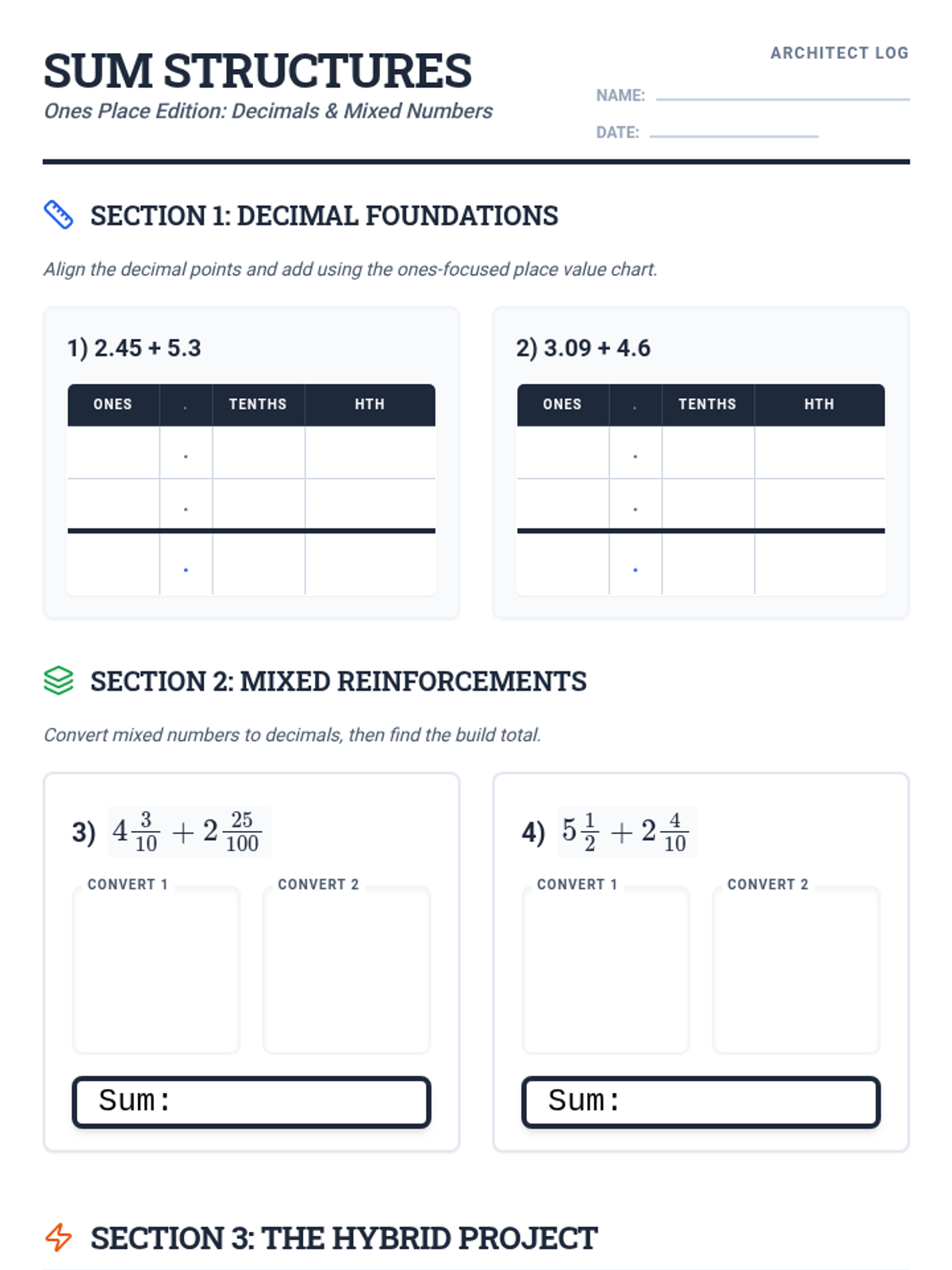
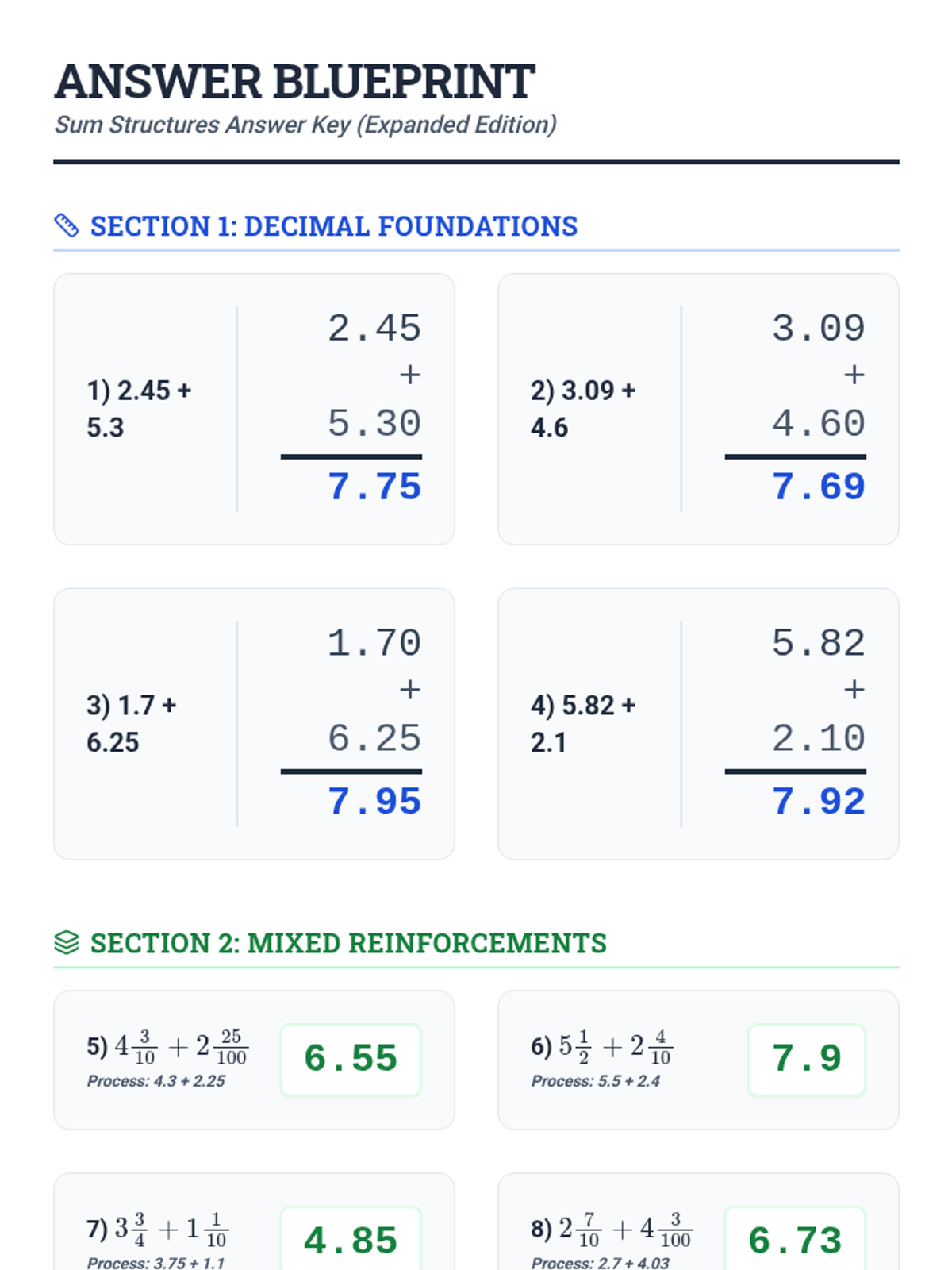
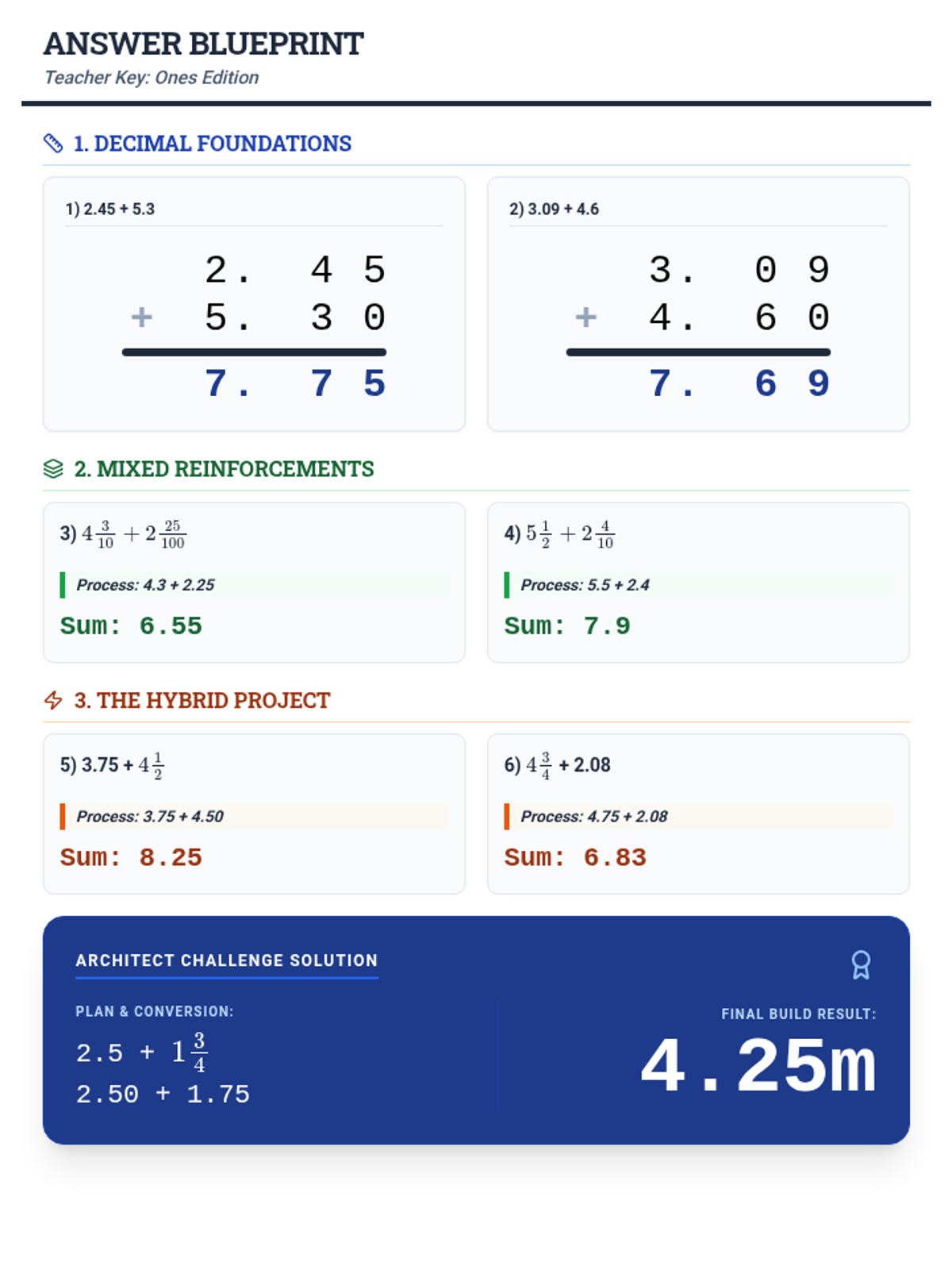
A comprehensive lesson on adding decimals, mixed numbers, and their combinations using place value strategies and 'blueprint' visualizations.
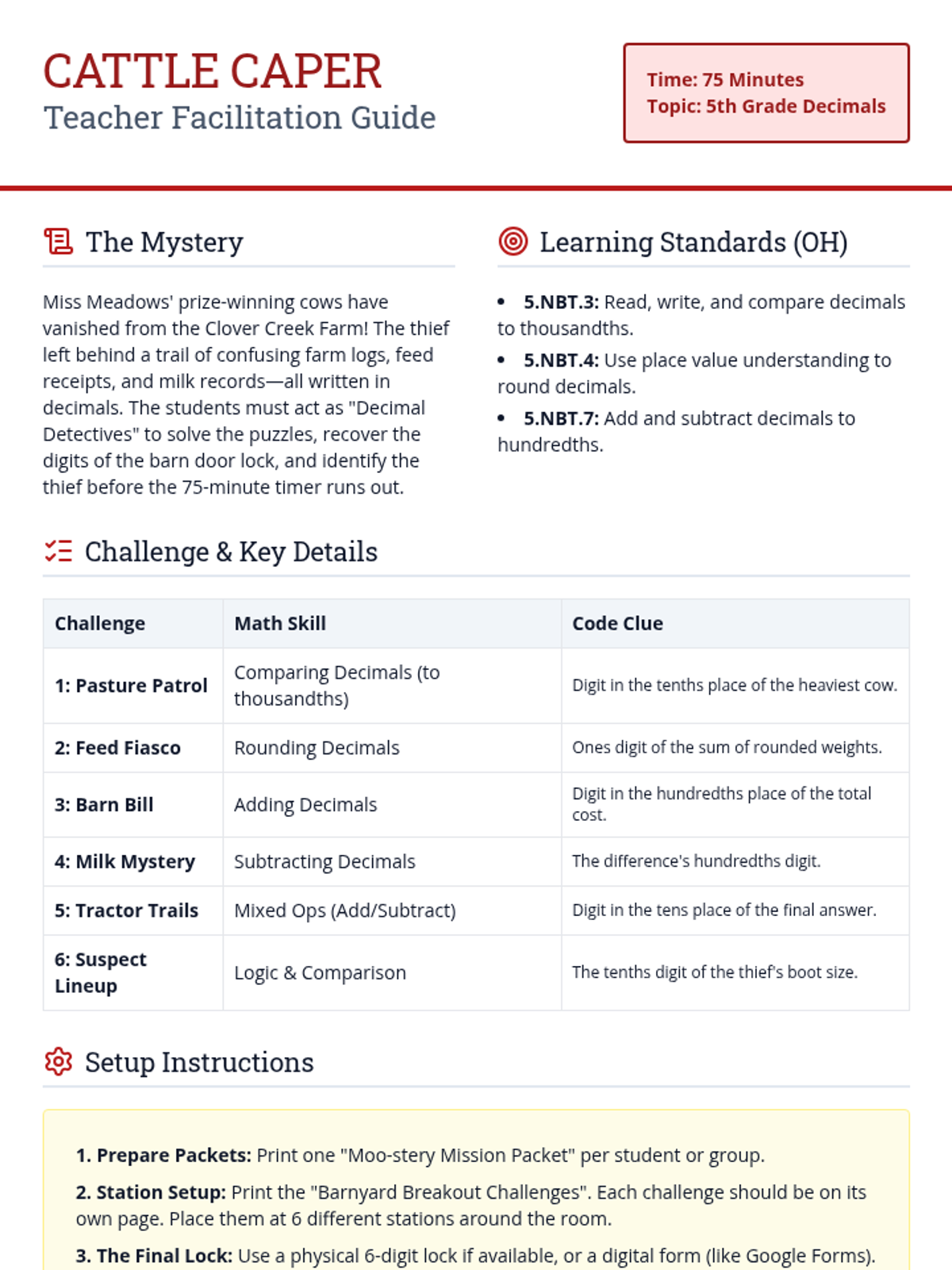
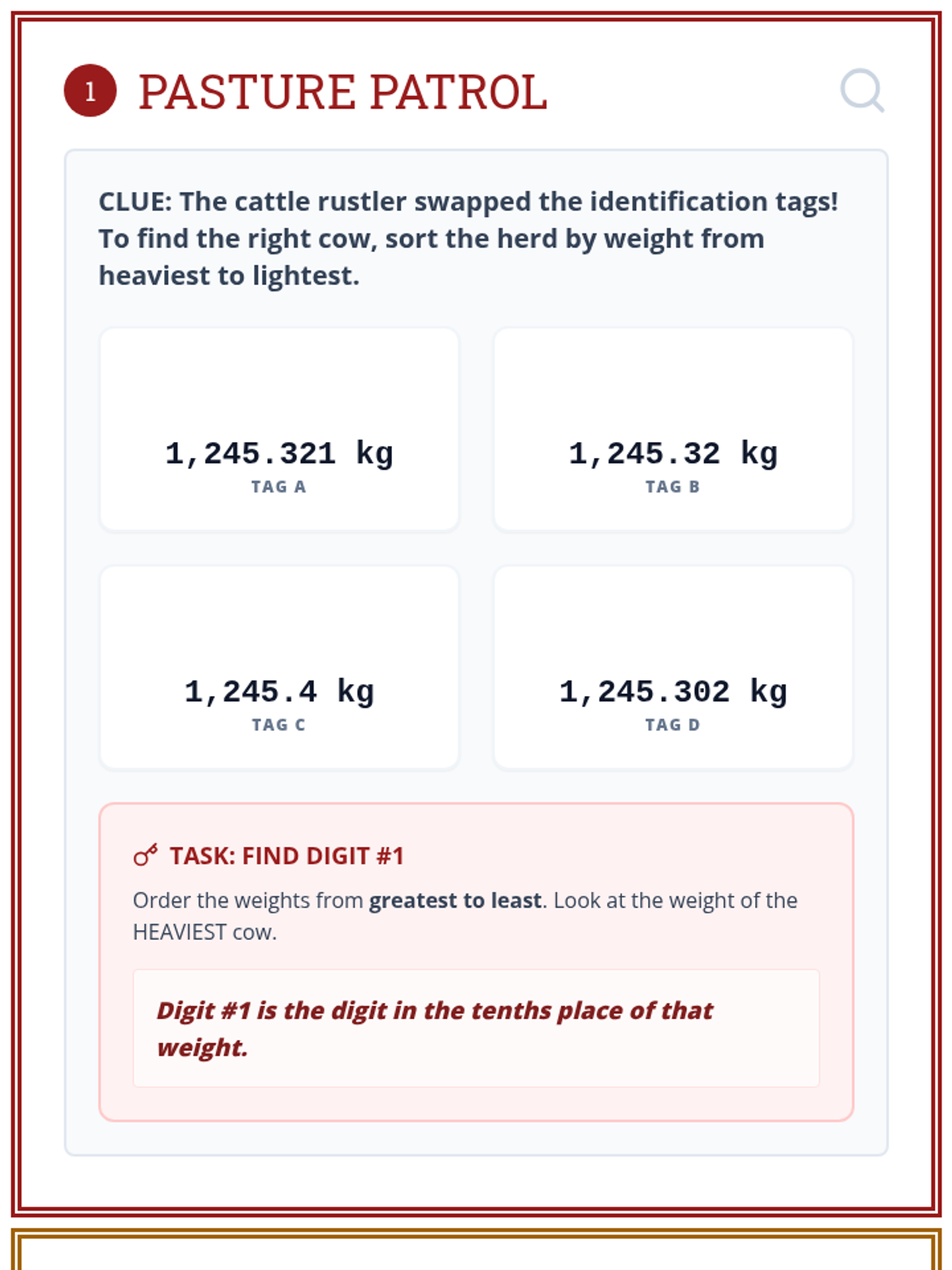
A high-stakes 5th-grade math escape room where students solve decimal-based puzzles to find Miss Meadows' missing cows. Students will round, compare, add, and subtract decimals to unlock the barn and catch the cattle rustler.
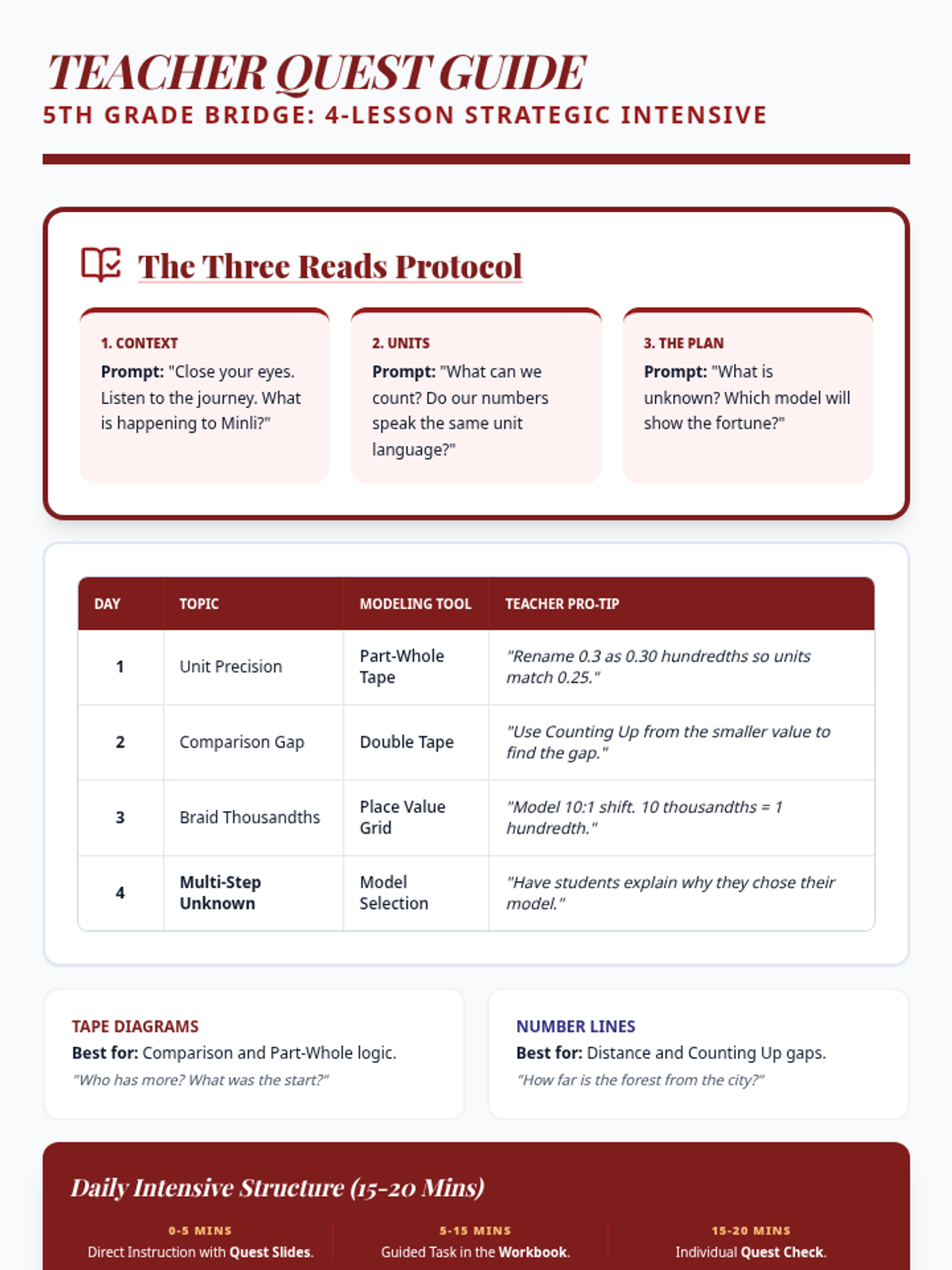
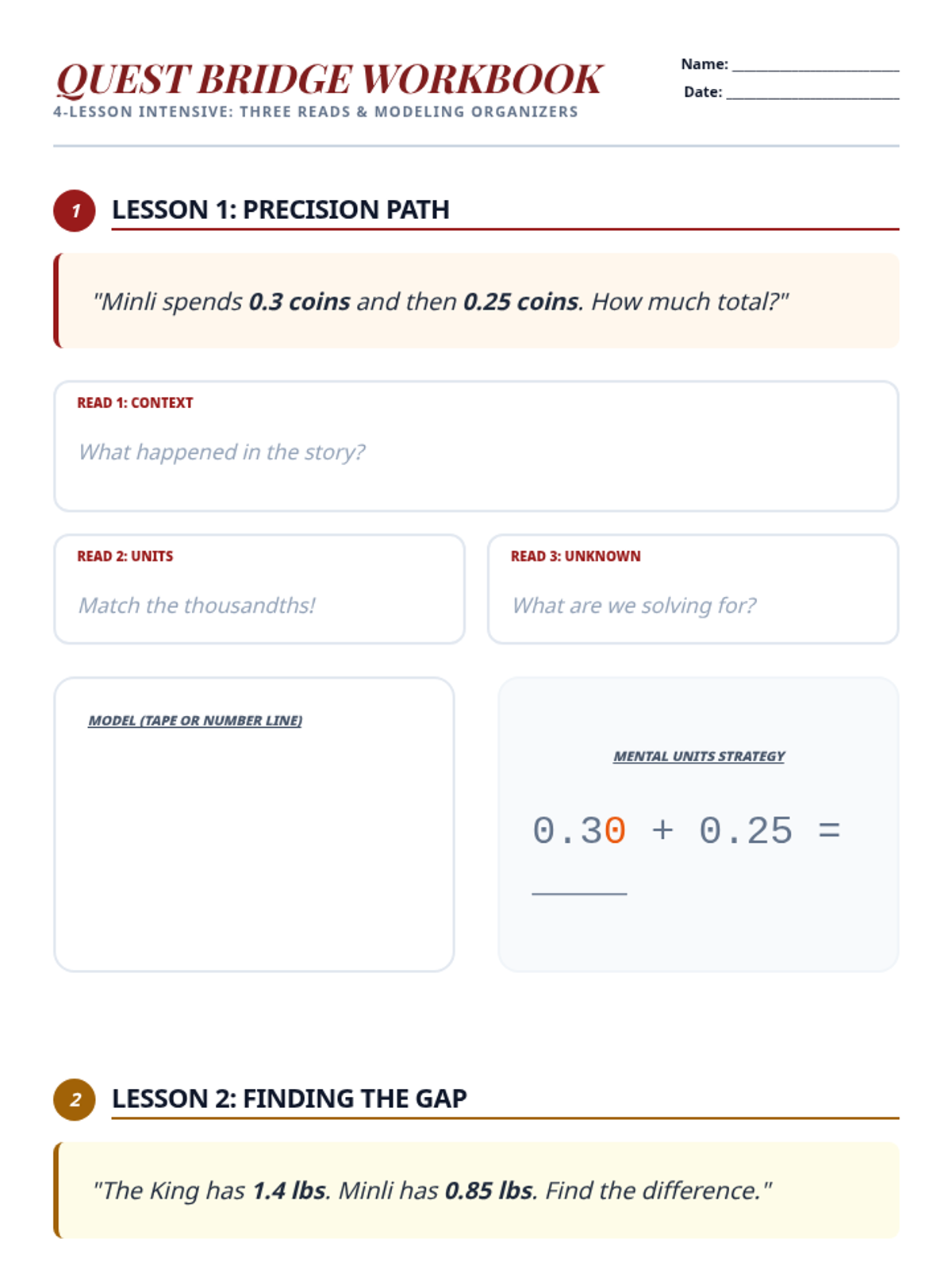
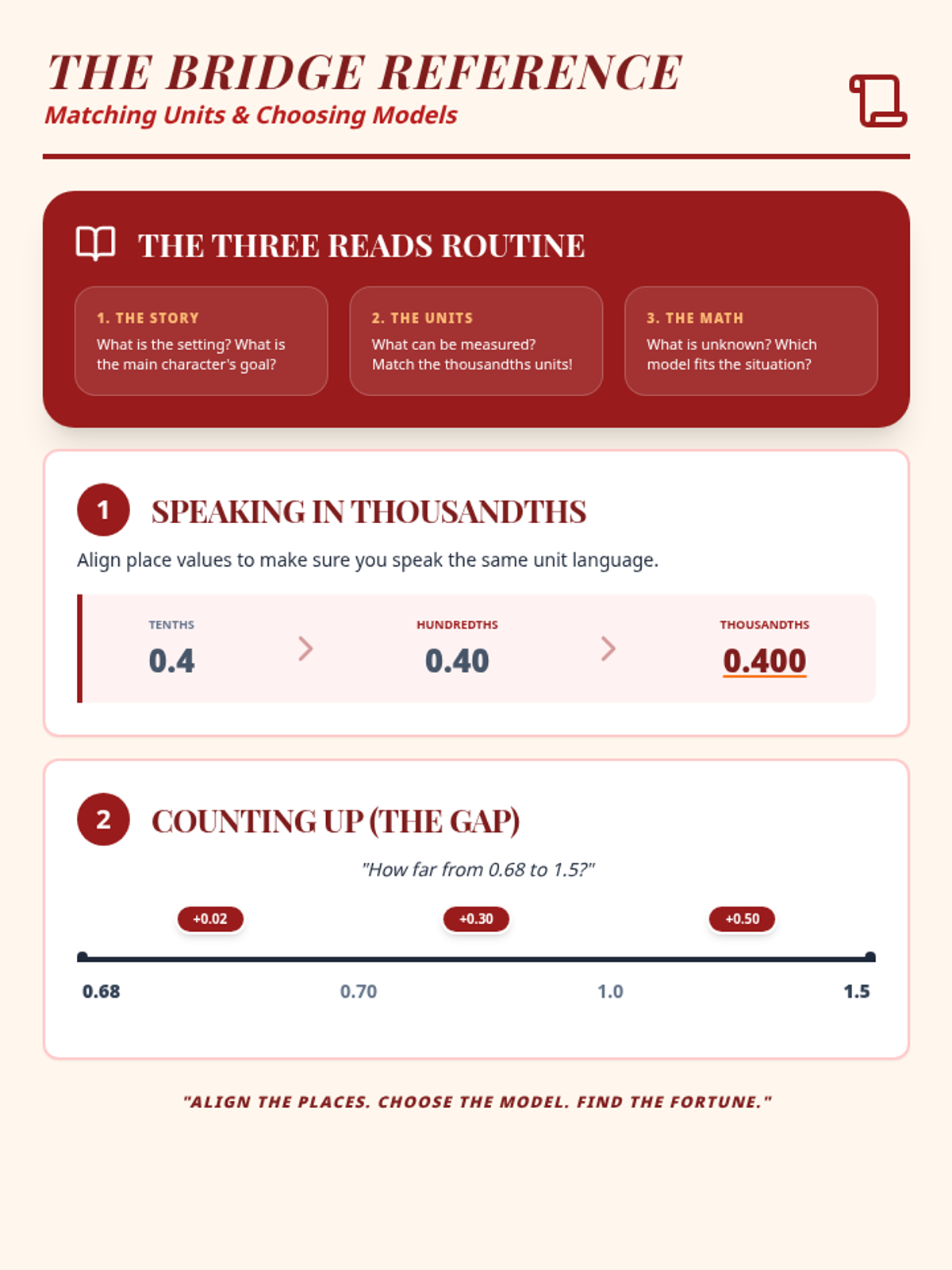
A series of 4 strategic math lessons covering addition and subtraction through thousandths using mental math and visual models.
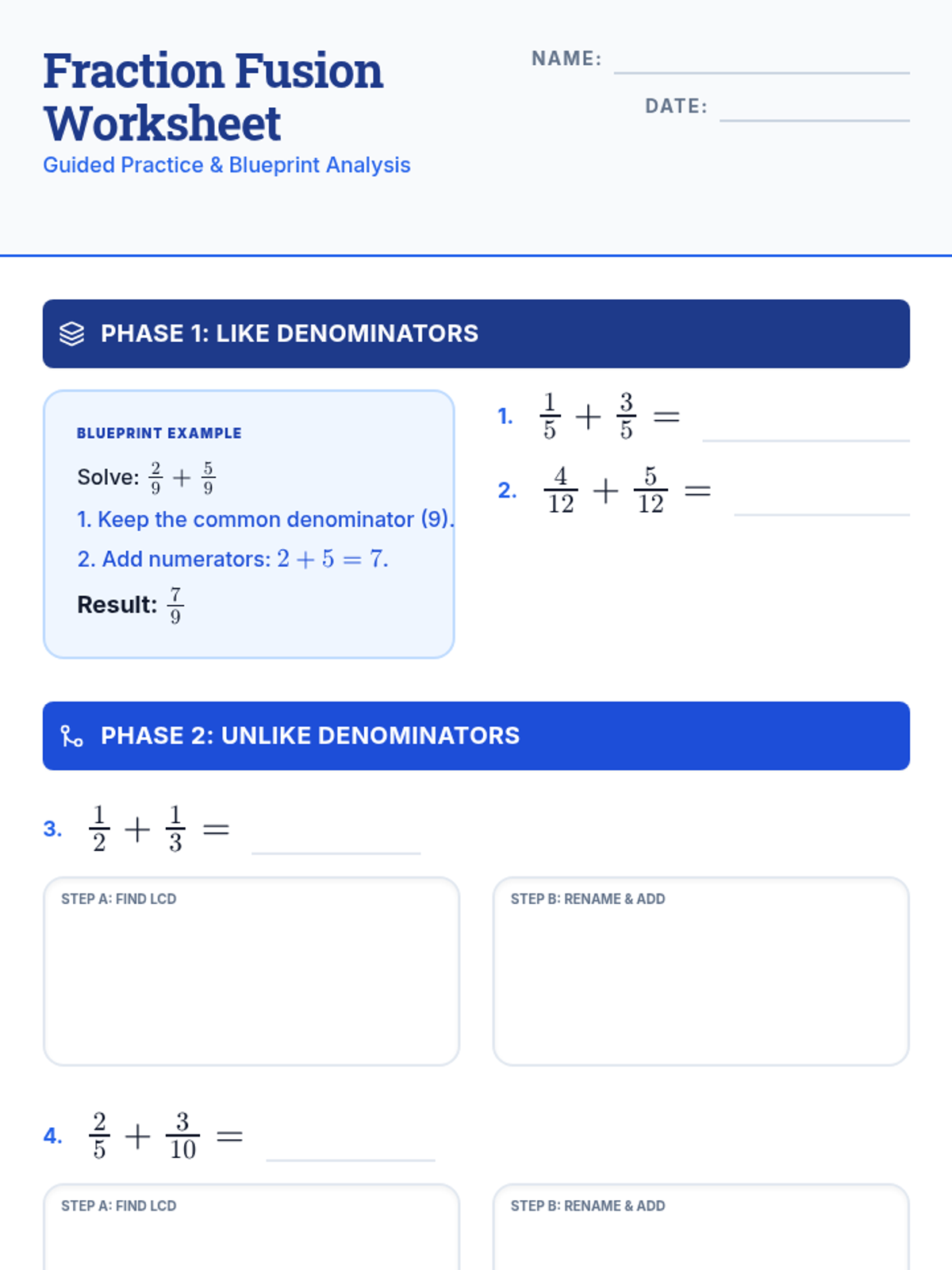
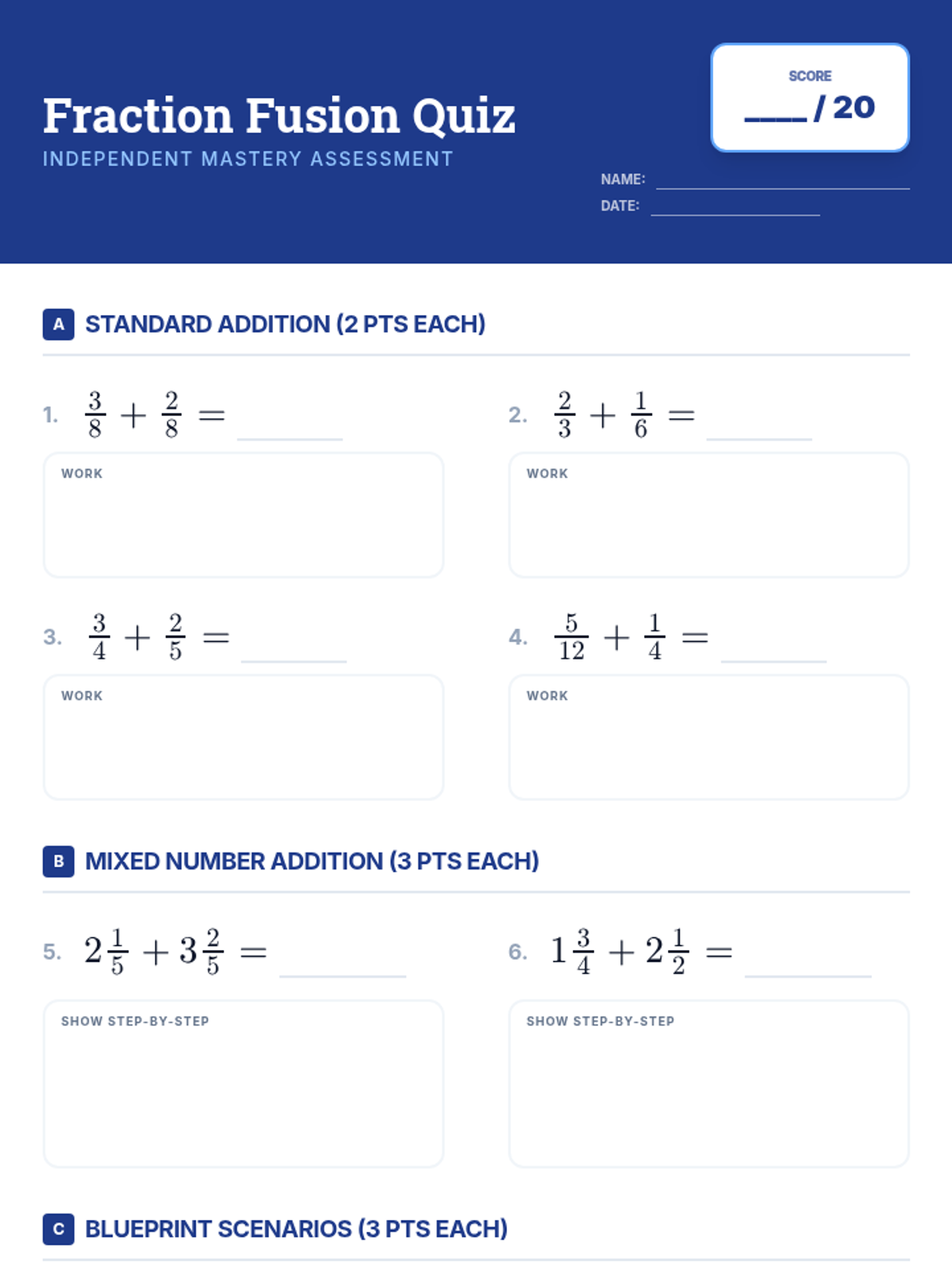
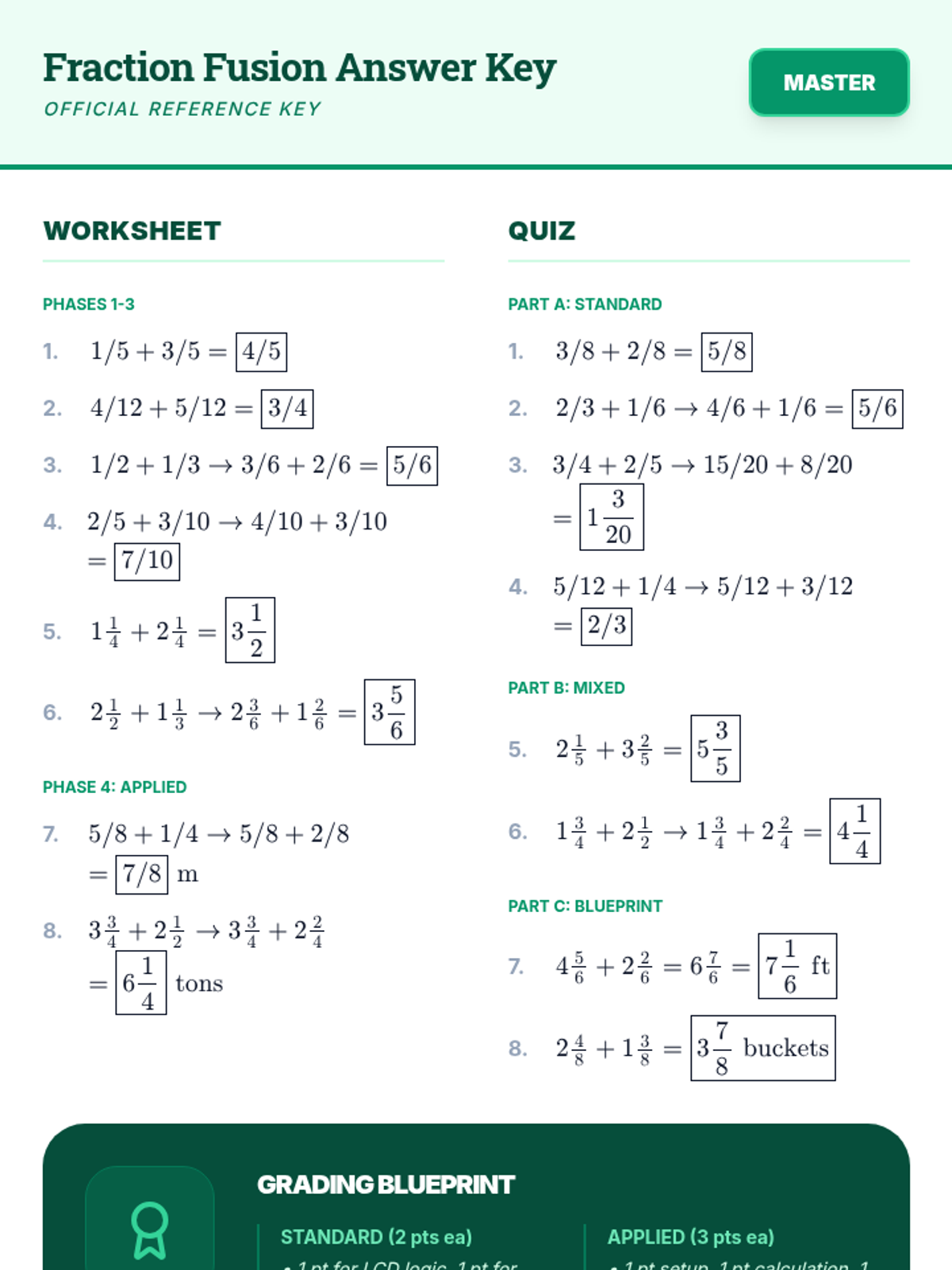
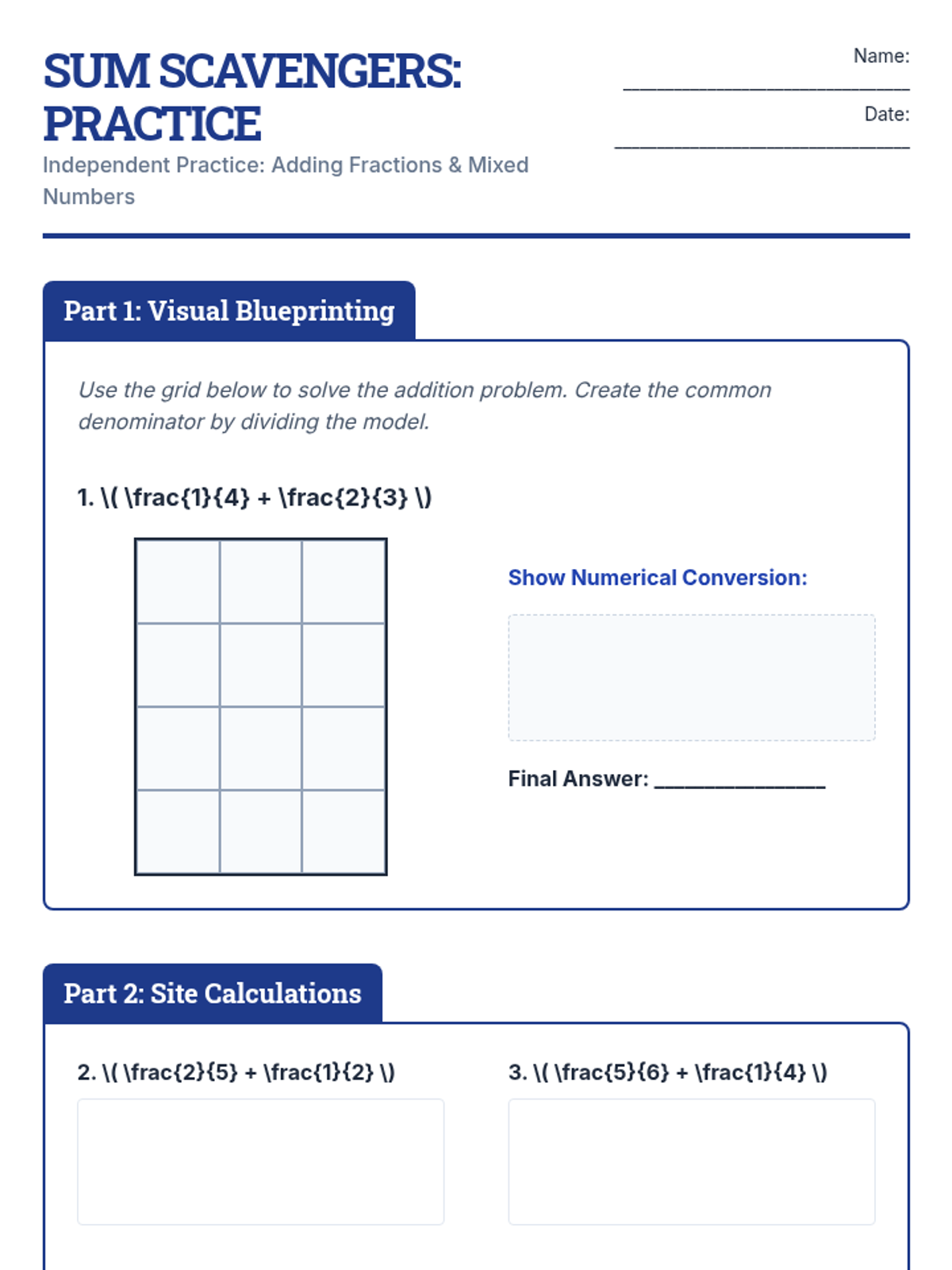
A comprehensive lesson on adding fractions with like and unlike denominators, including mixed numbers and real-world word problems. Students progress from basic addition to complex multi-step problems using a blueprint-themed approach.
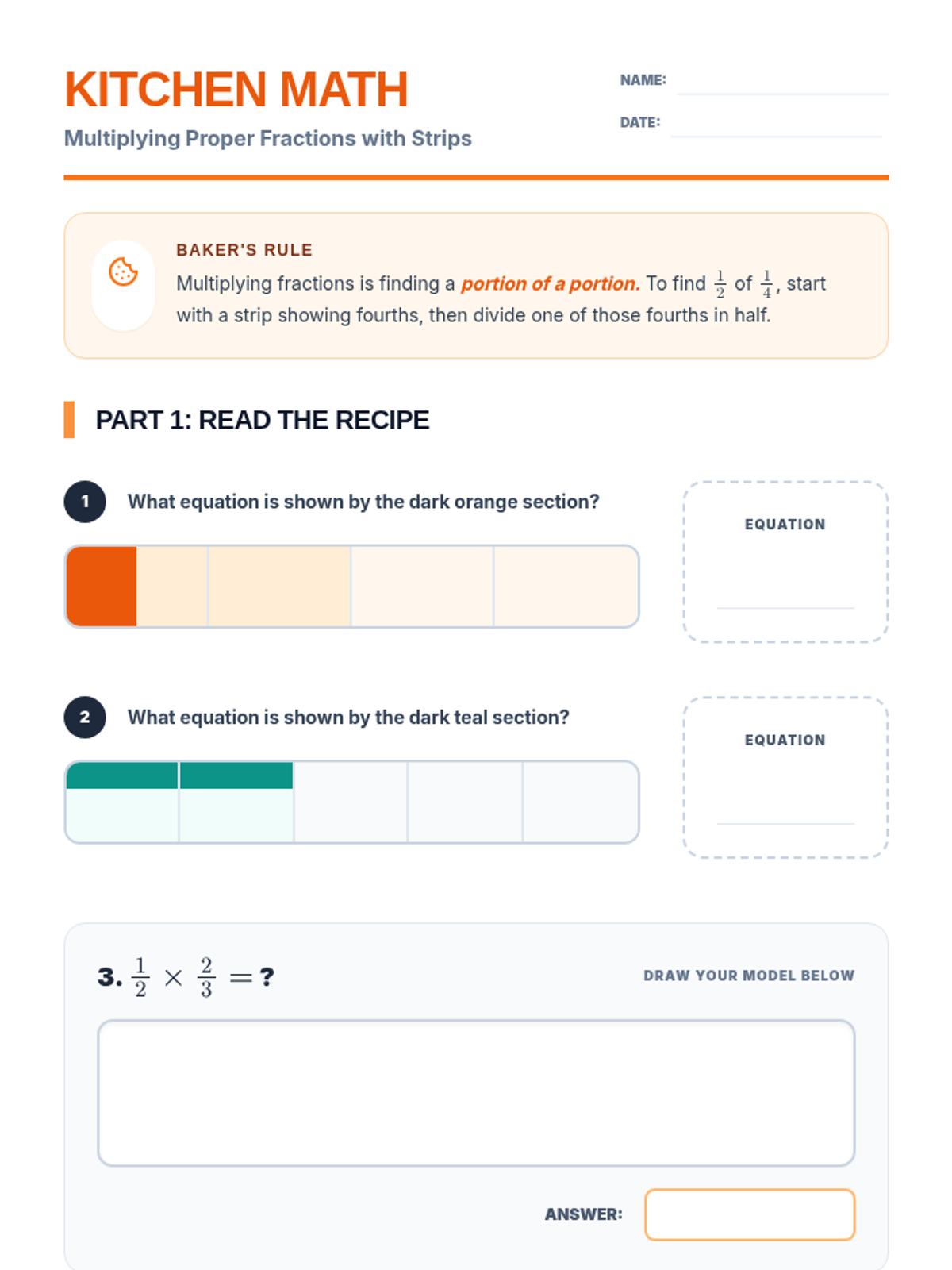
A lesson on multiplying proper fractions using fraction strip models, set in a bakery context to make scaling recipes intuitive and fun.
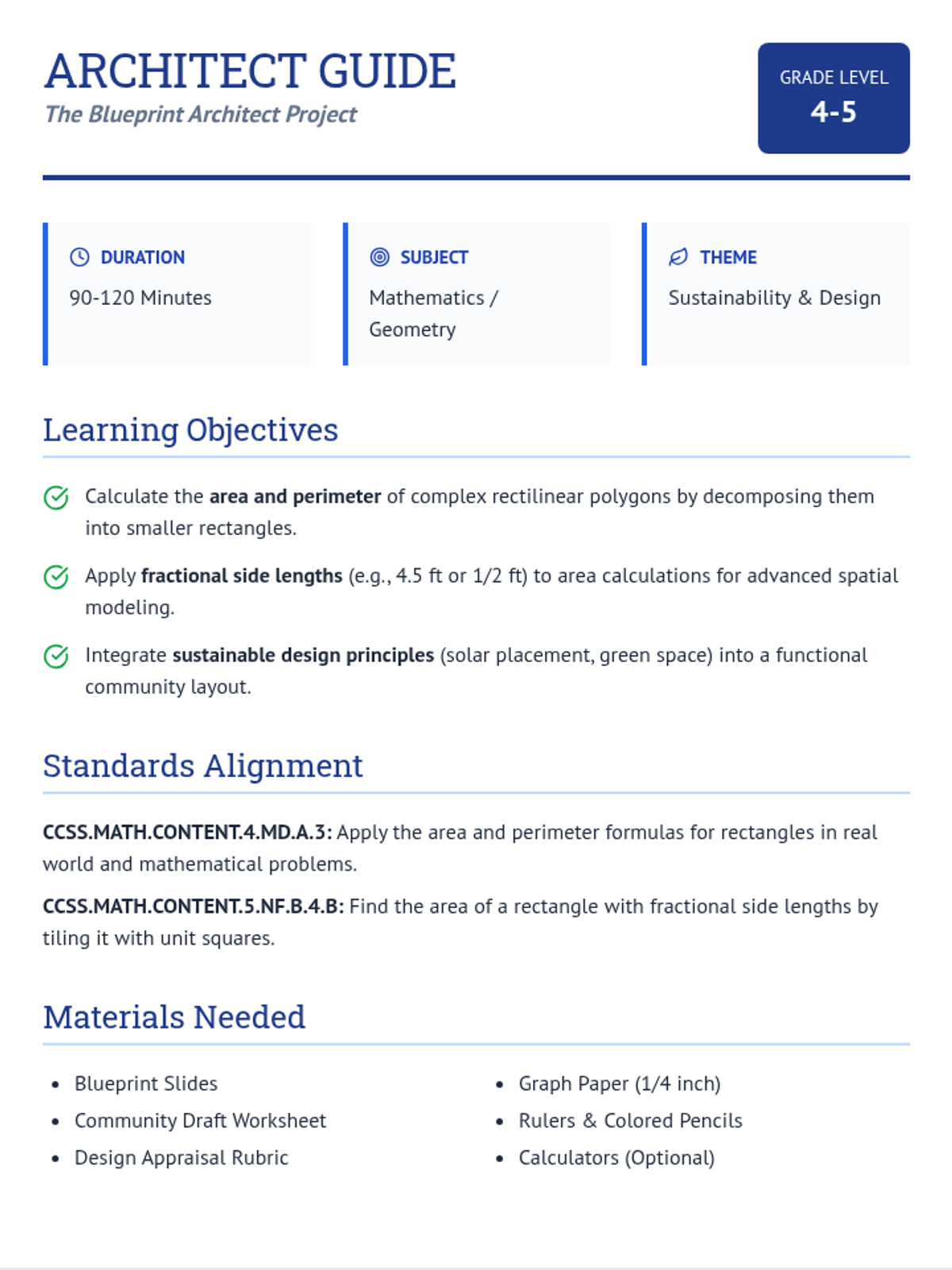
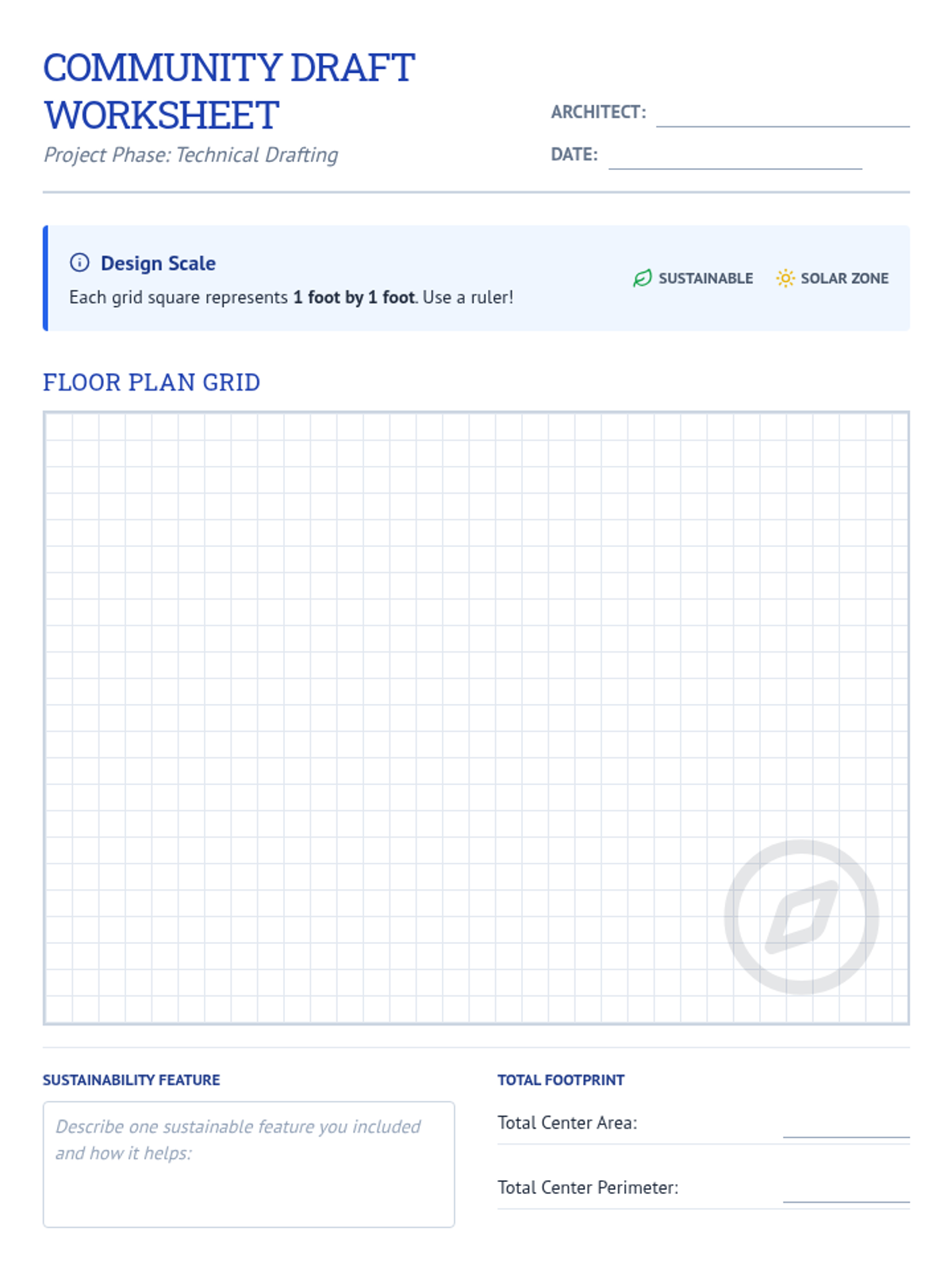
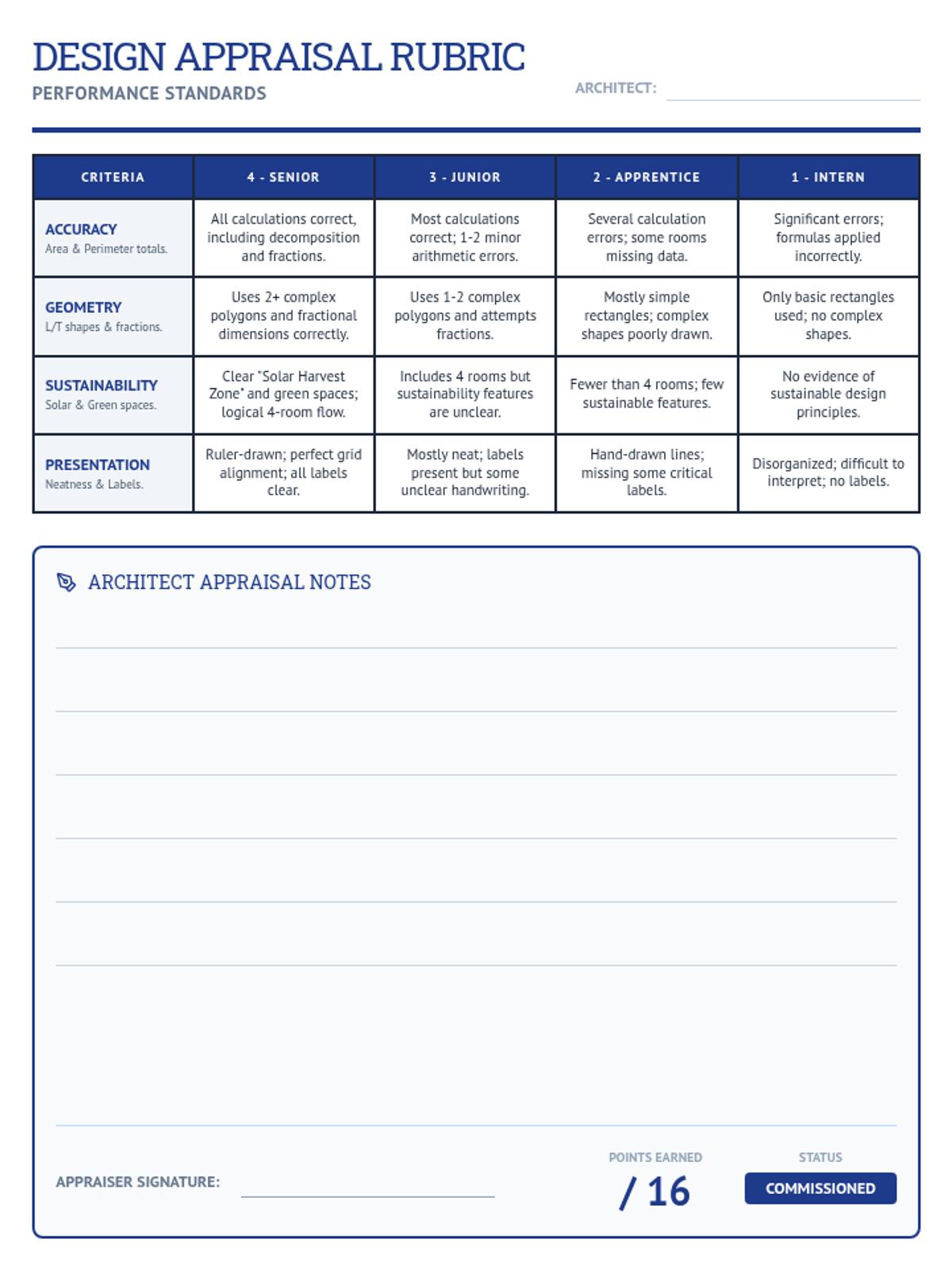
A project-based lesson where students design a sustainable community center, applying area and perimeter calculations to complex polygonal floor plans with fractional dimensions.
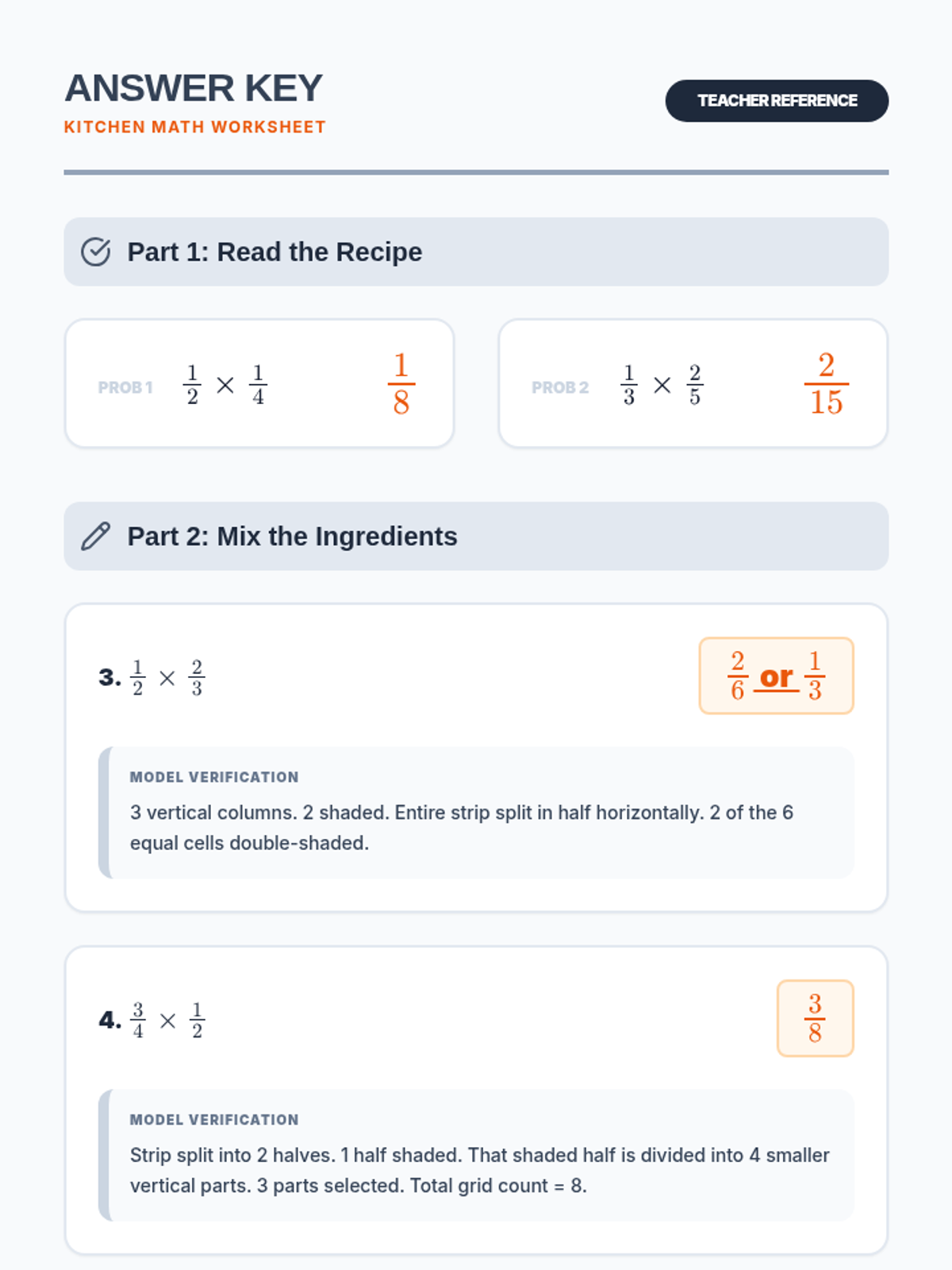
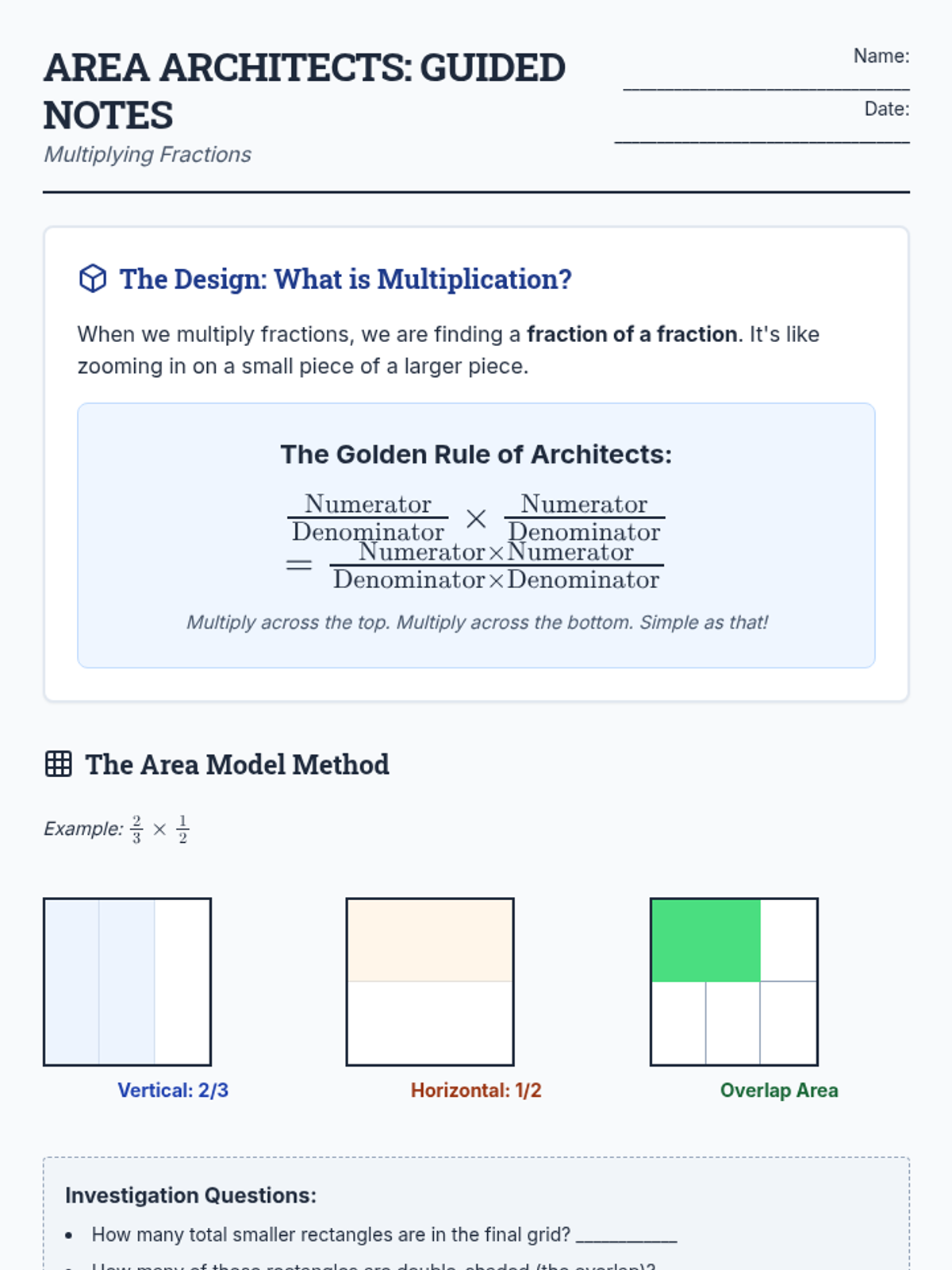
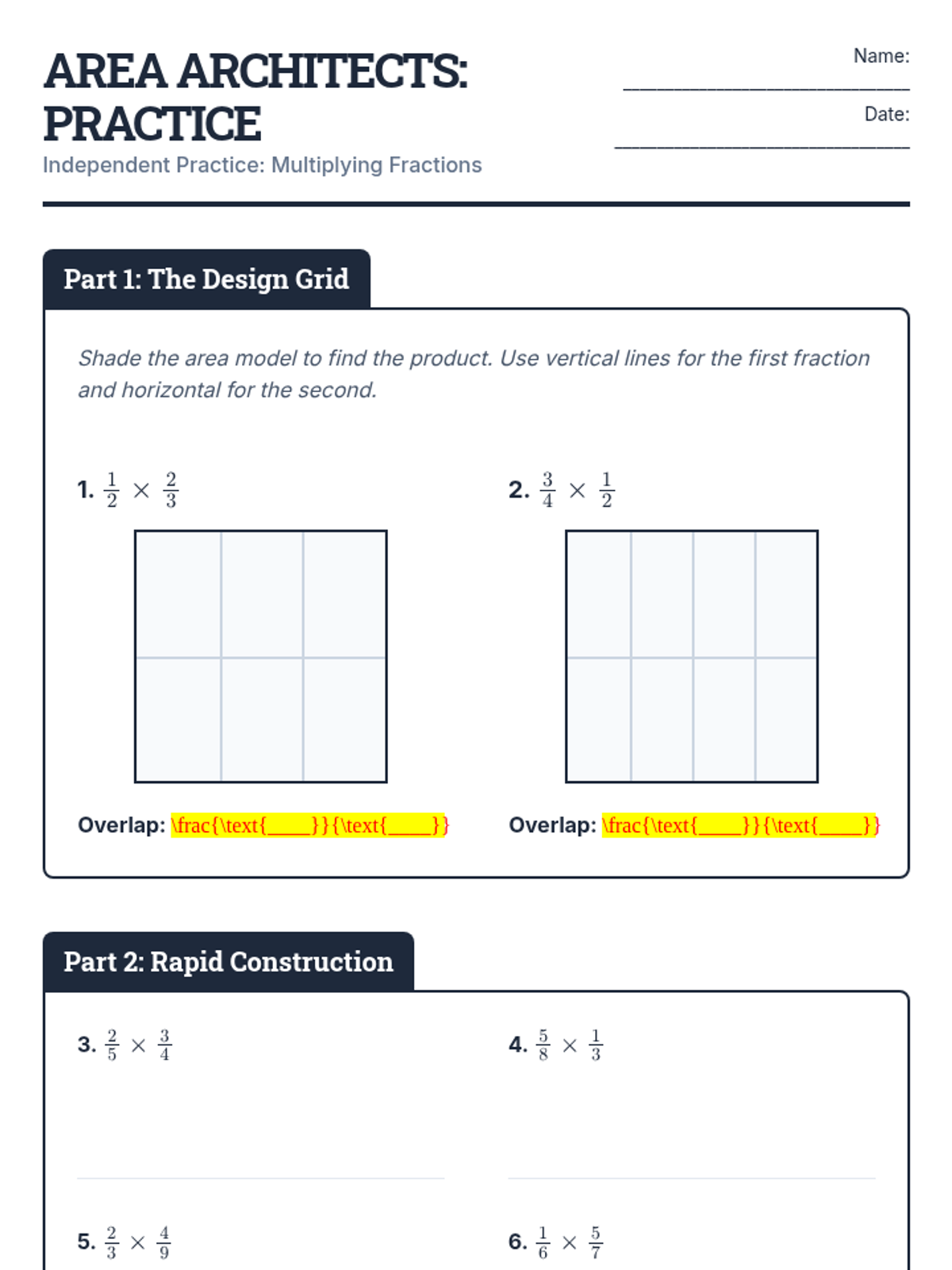
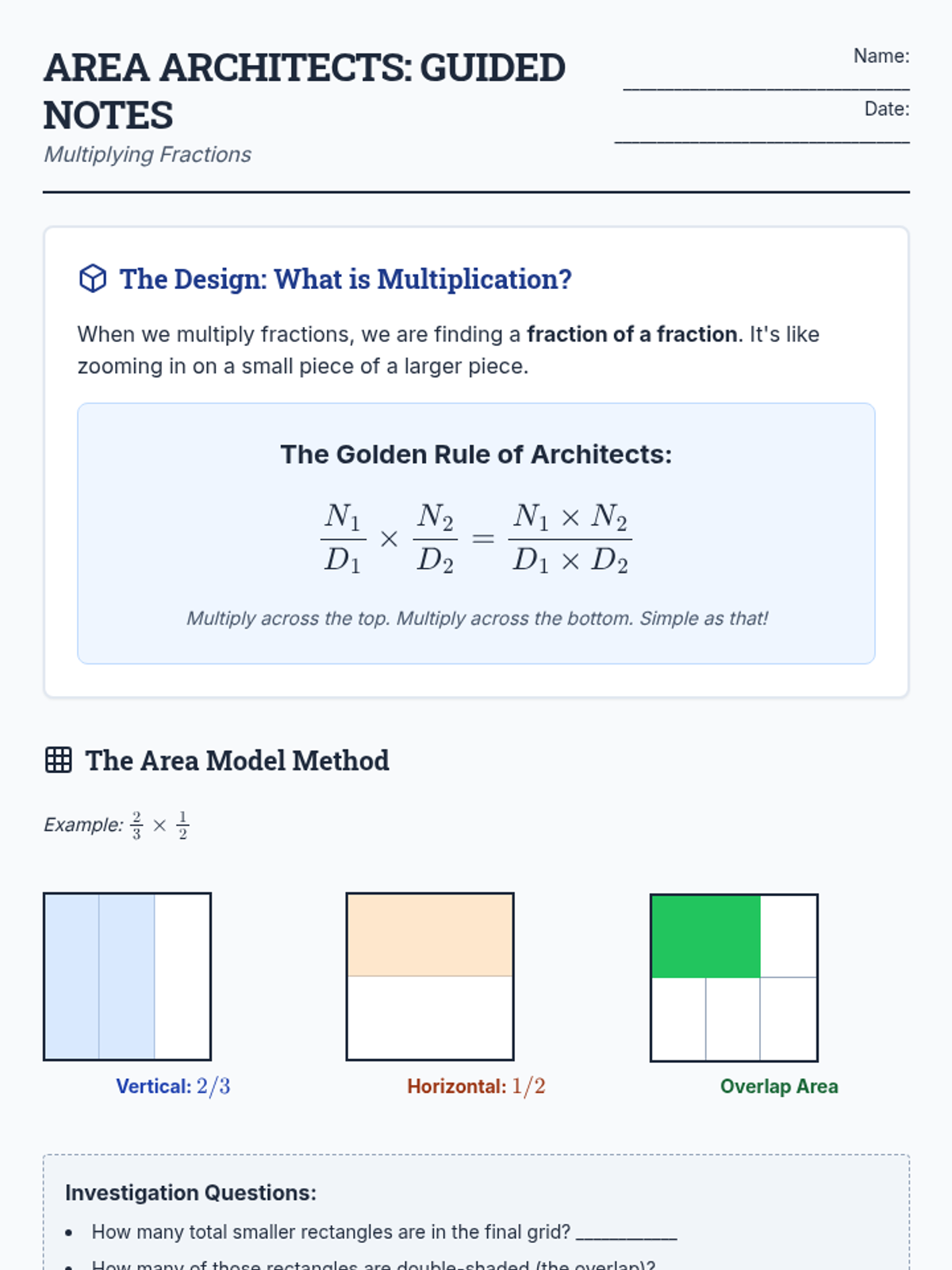
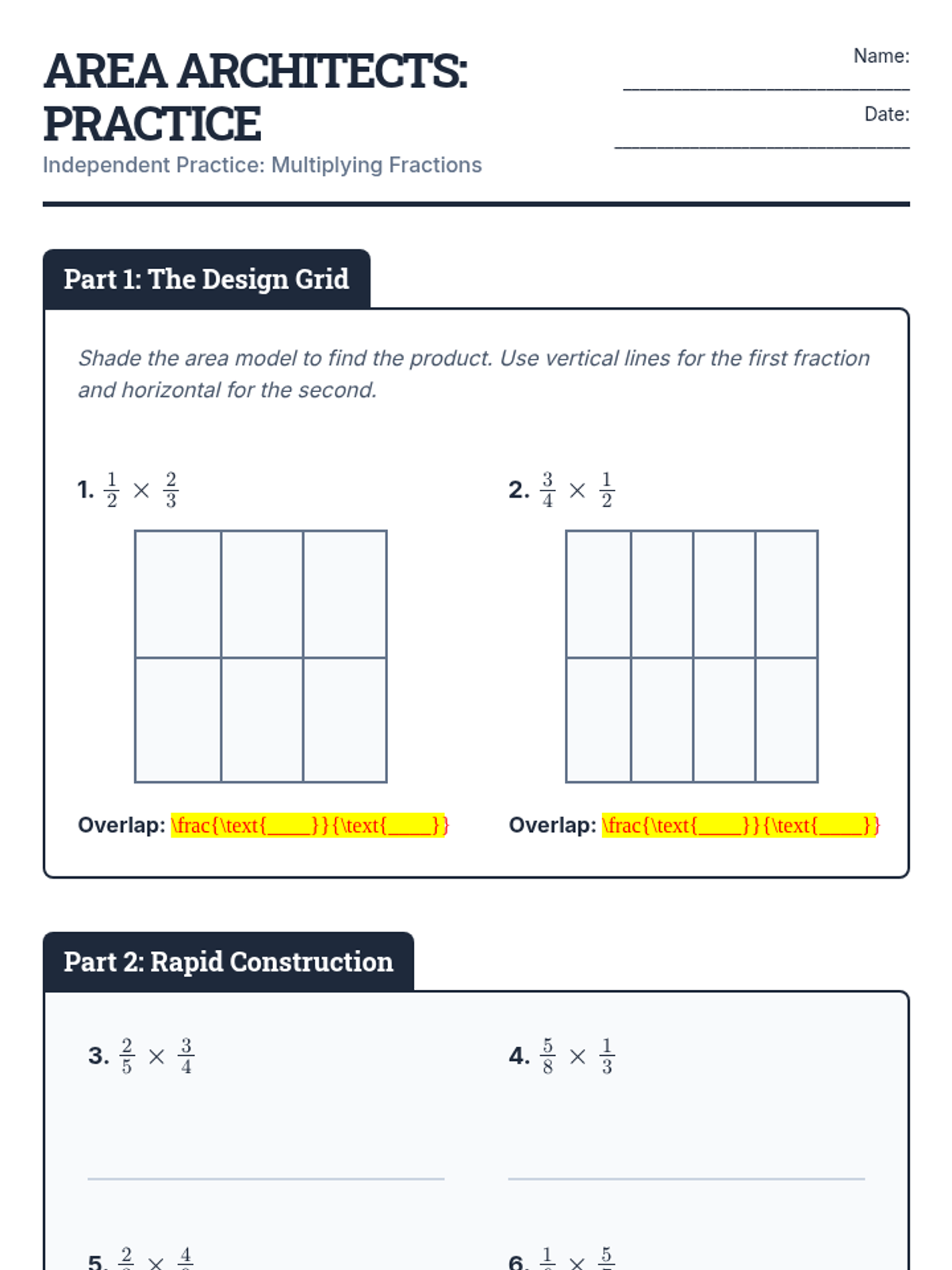
Students explore fraction multiplication through area models, understanding how to find a fraction of a fraction in real-world contexts.
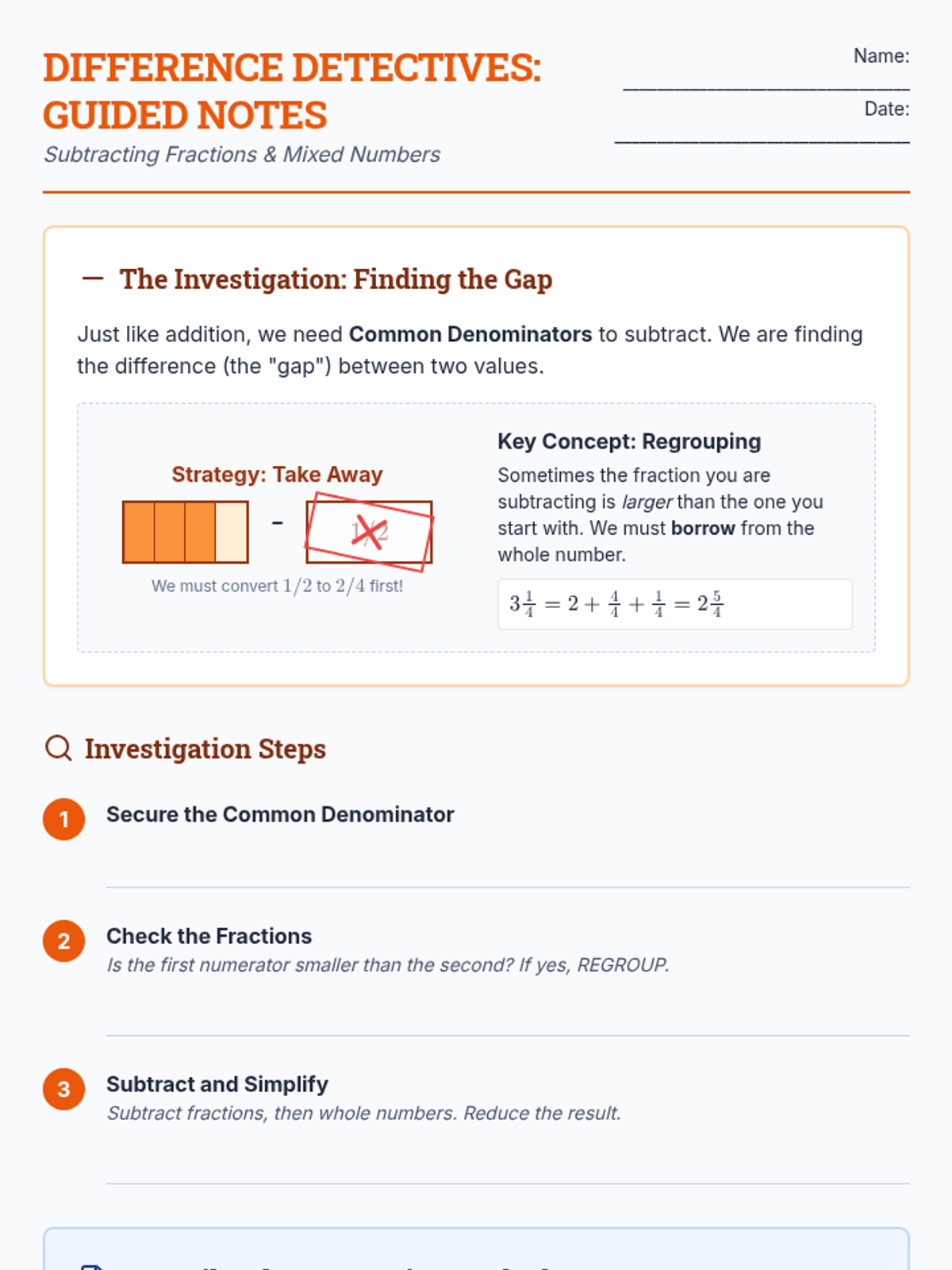
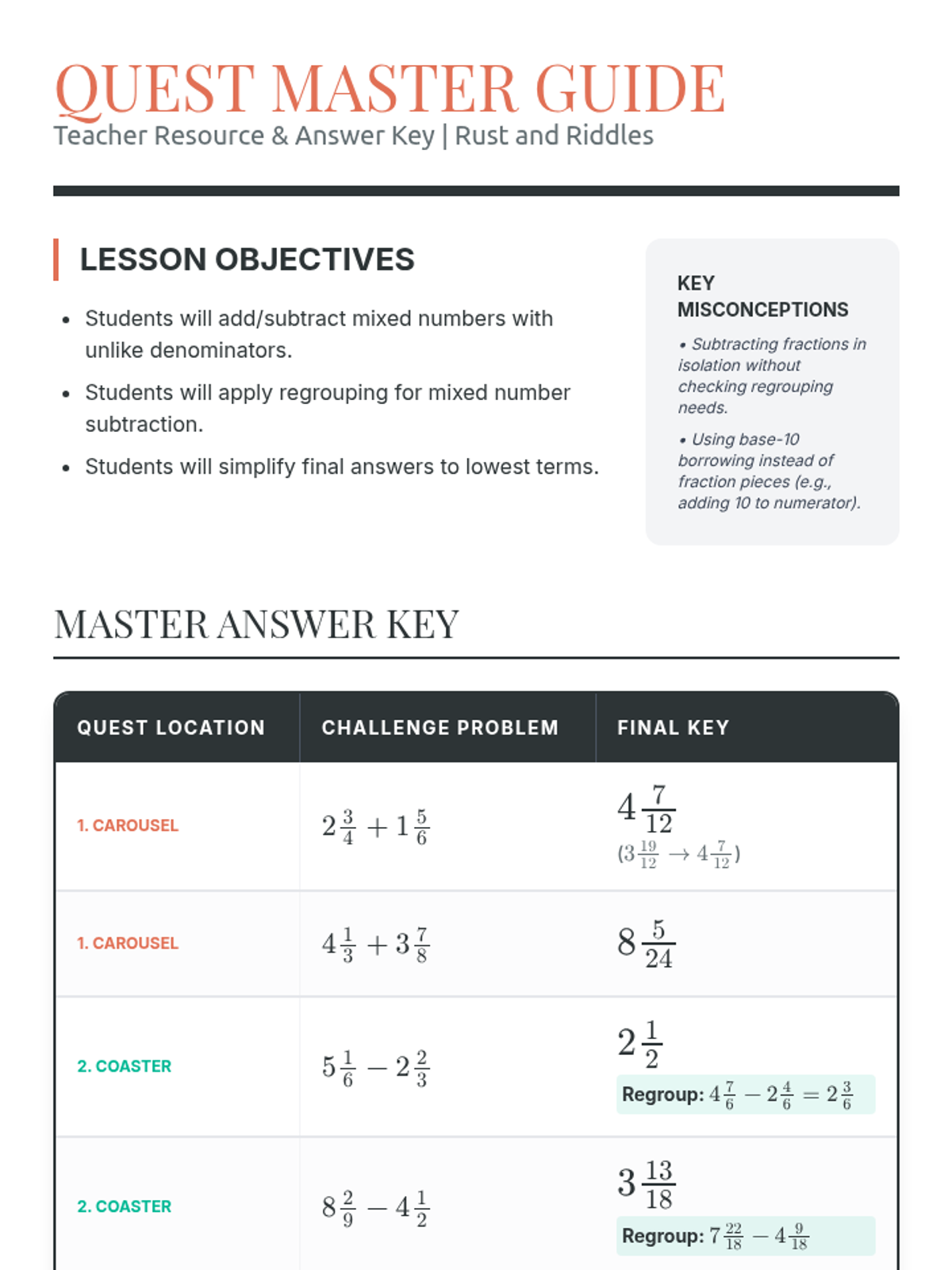
Students master subtracting fractions and mixed numbers with unlike denominators, focusing on regrouping strategies and visual representations.
Students learn to add fractions and mixed numbers with unlike denominators using area models and number lines to find common grounds.
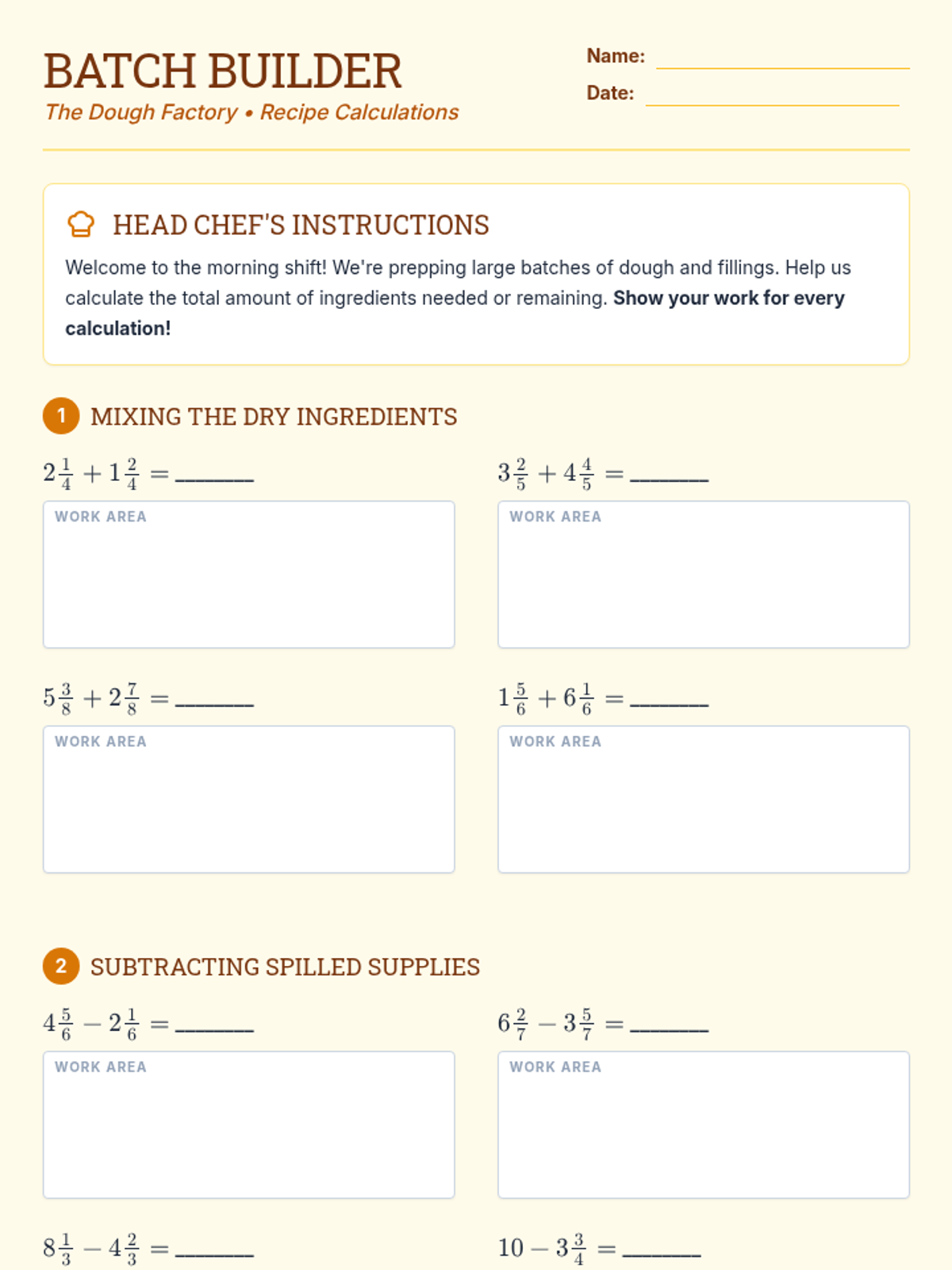
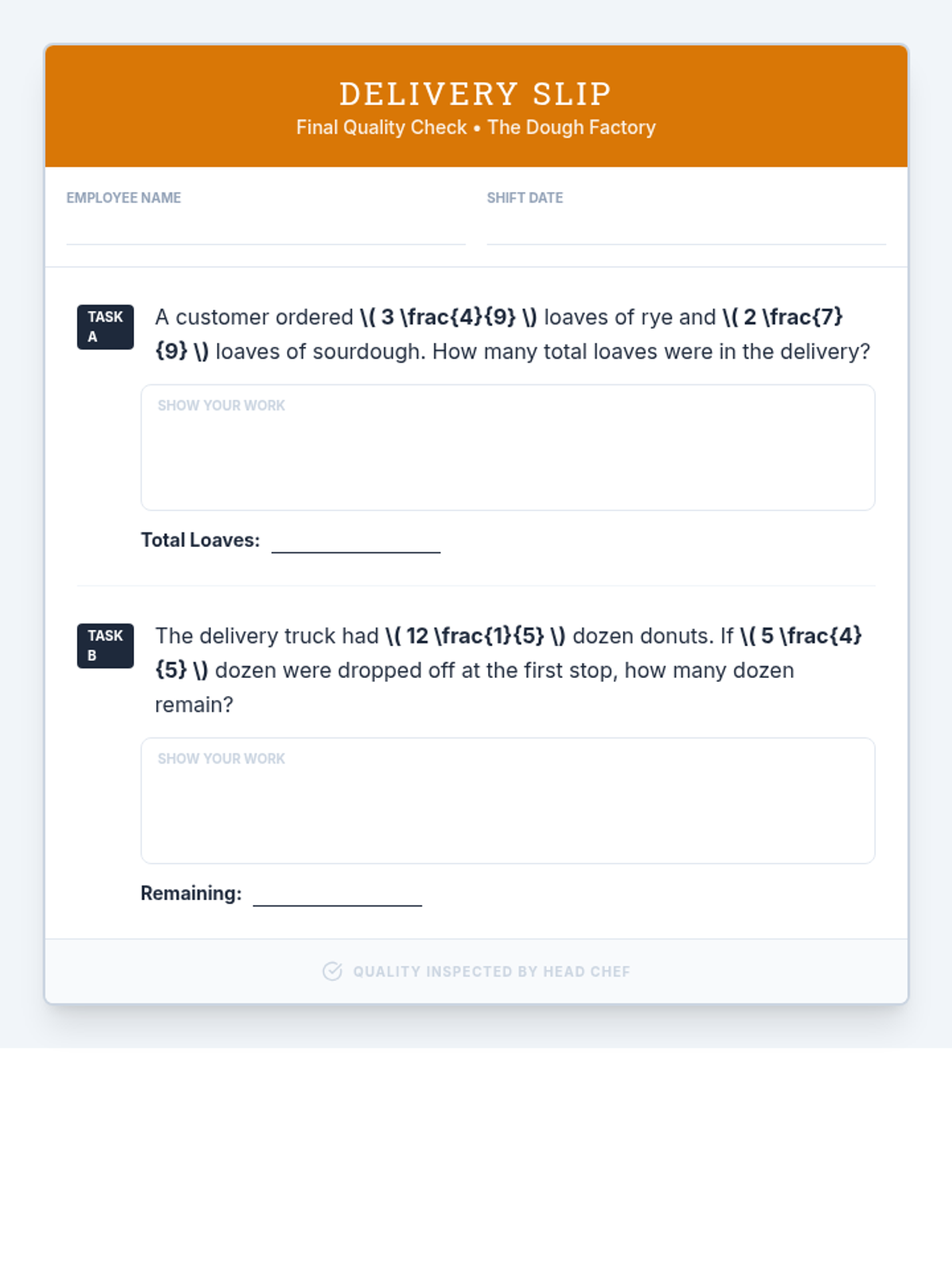
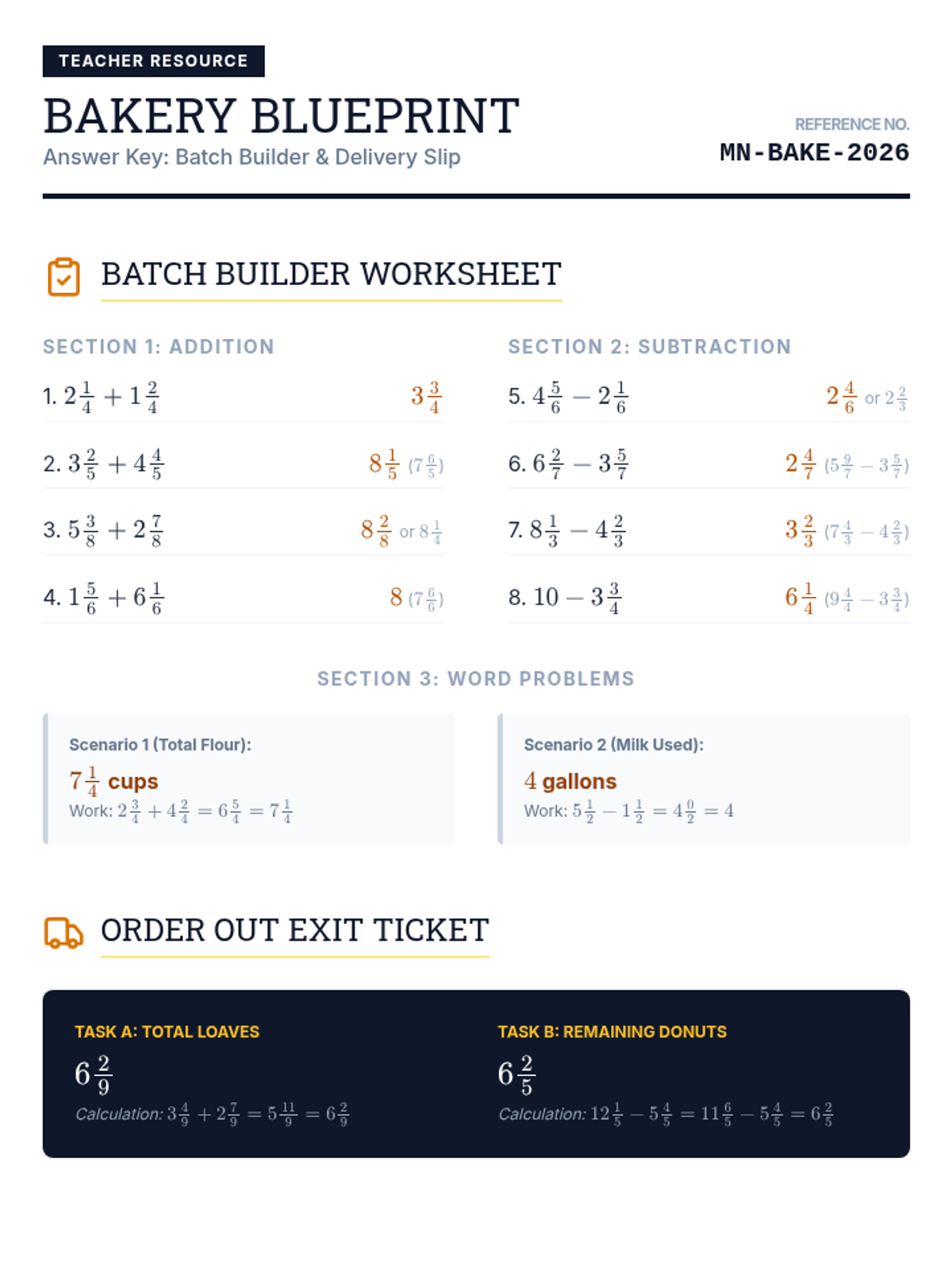
A lesson focused on adding and subtracting mixed numbers through the lens of a busy bakery, featuring word problems and computational practice.
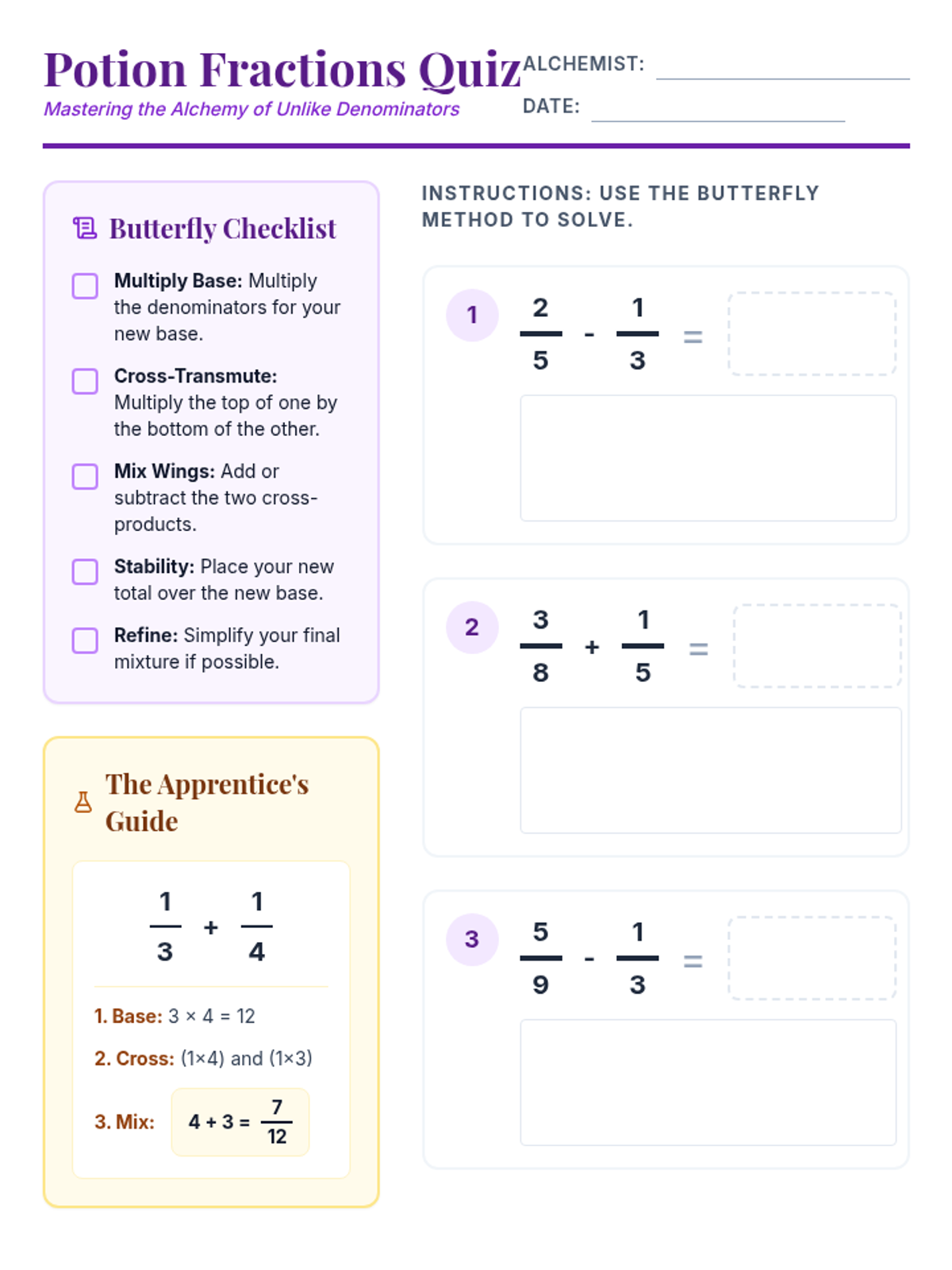
A lesson focused on adding and subtracting proper fractions with unlike denominators using a step-by-step checklist and potion-themed problems.
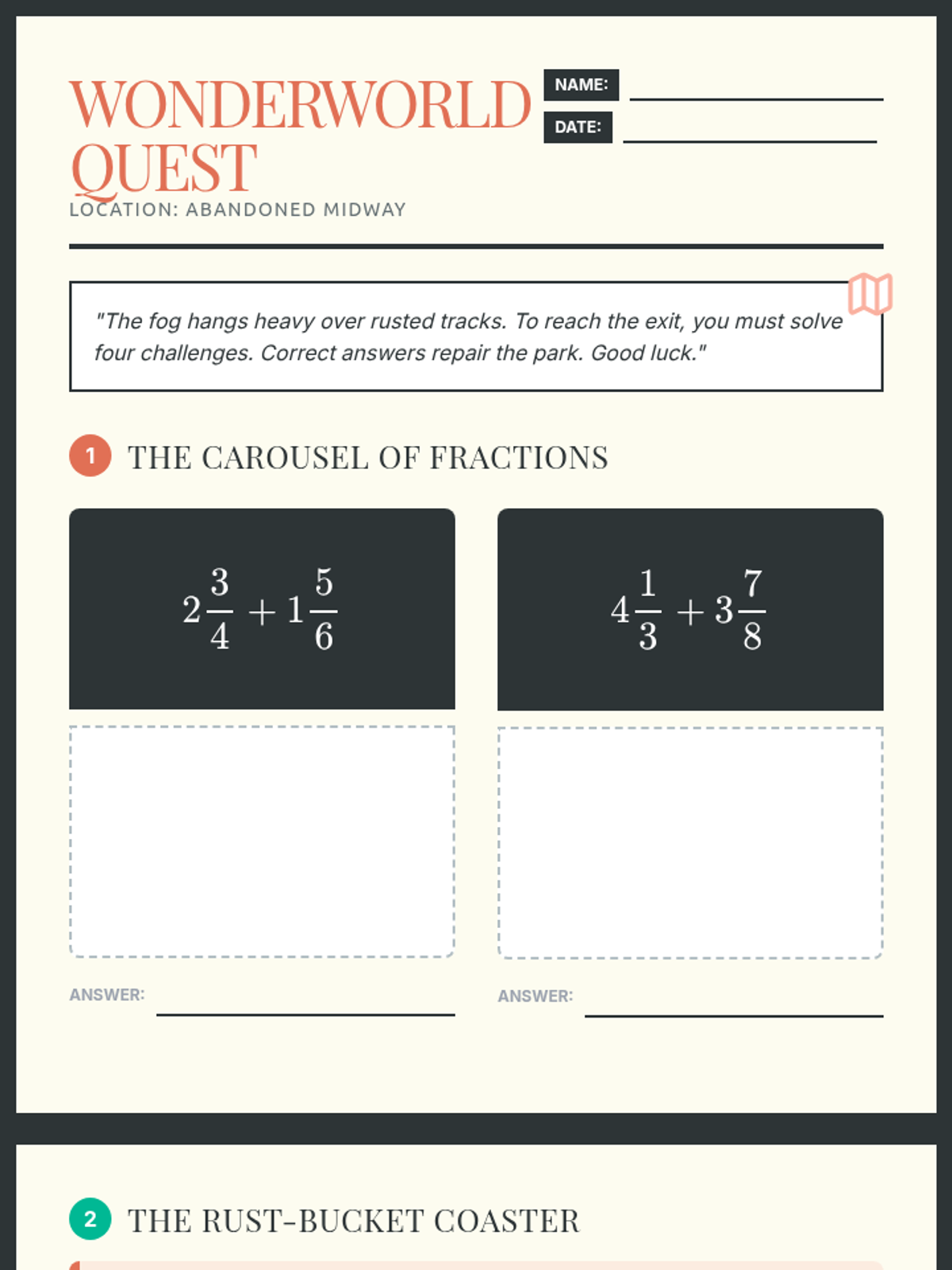
A mathematical quest set in an abandoned theme park where students solve fraction and mixed number problems with unlike denominators and regrouping to navigate the park.
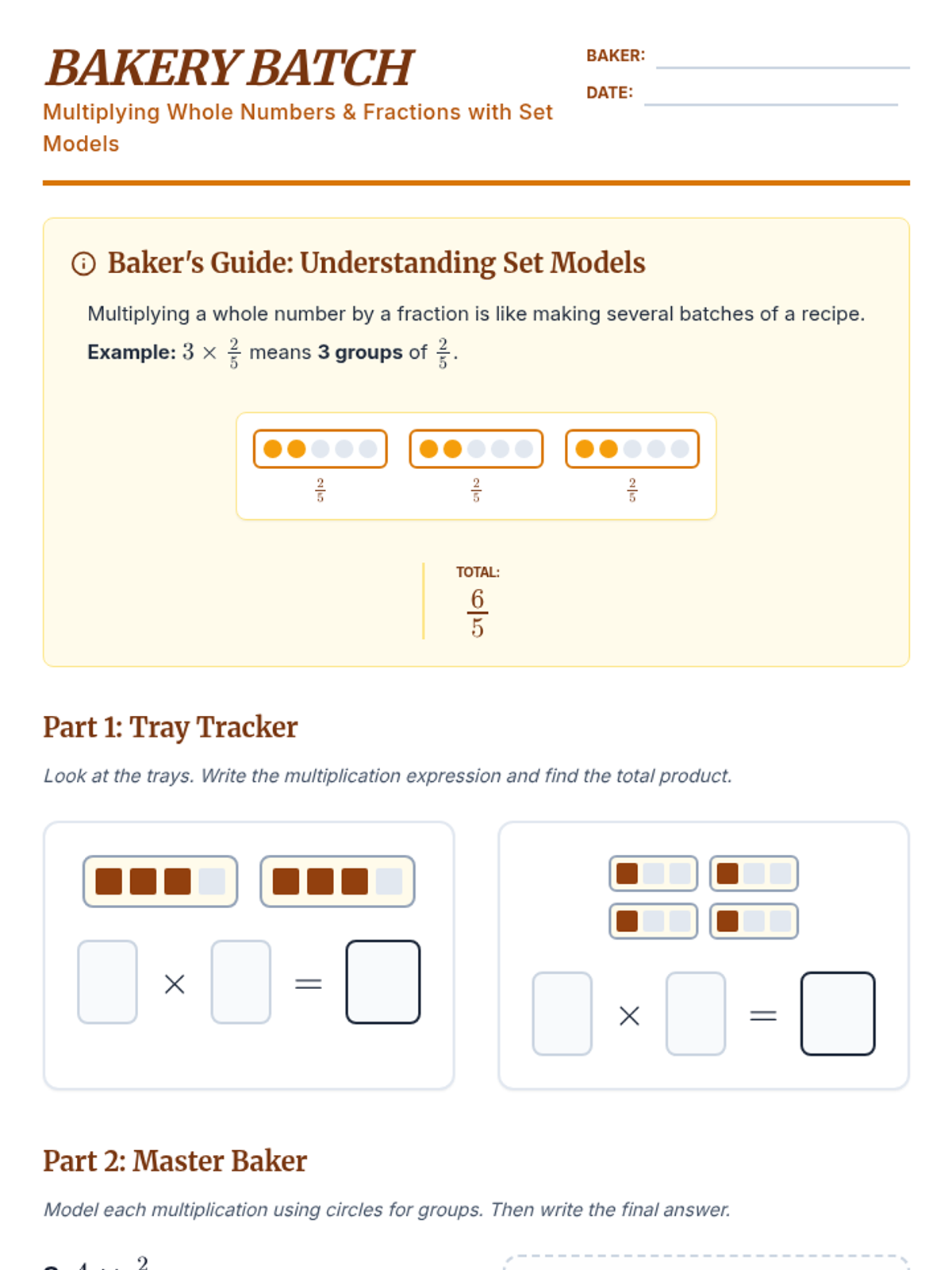
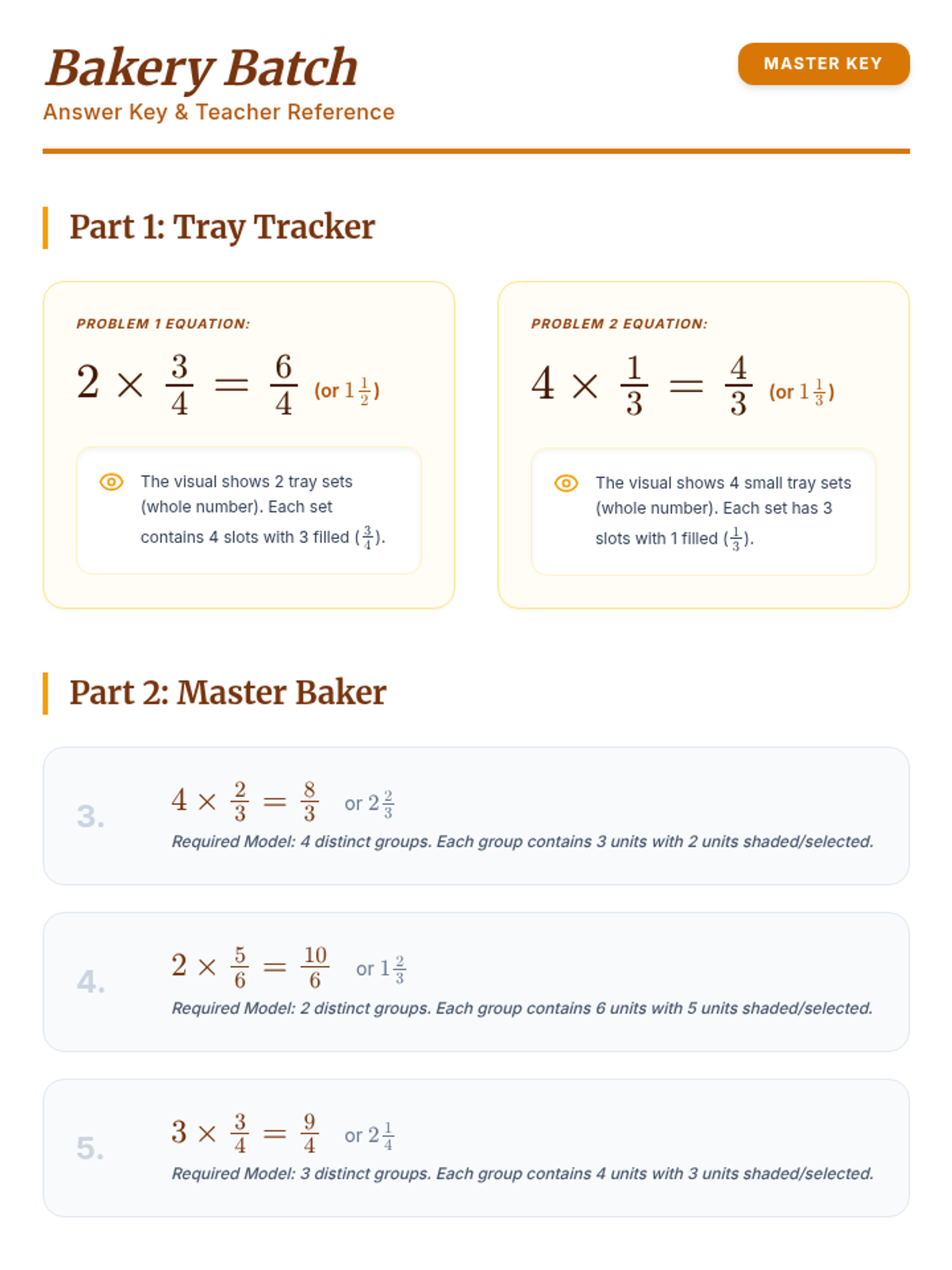
A lesson on multiplying whole numbers by fractions using visual set models with a bakery theme.
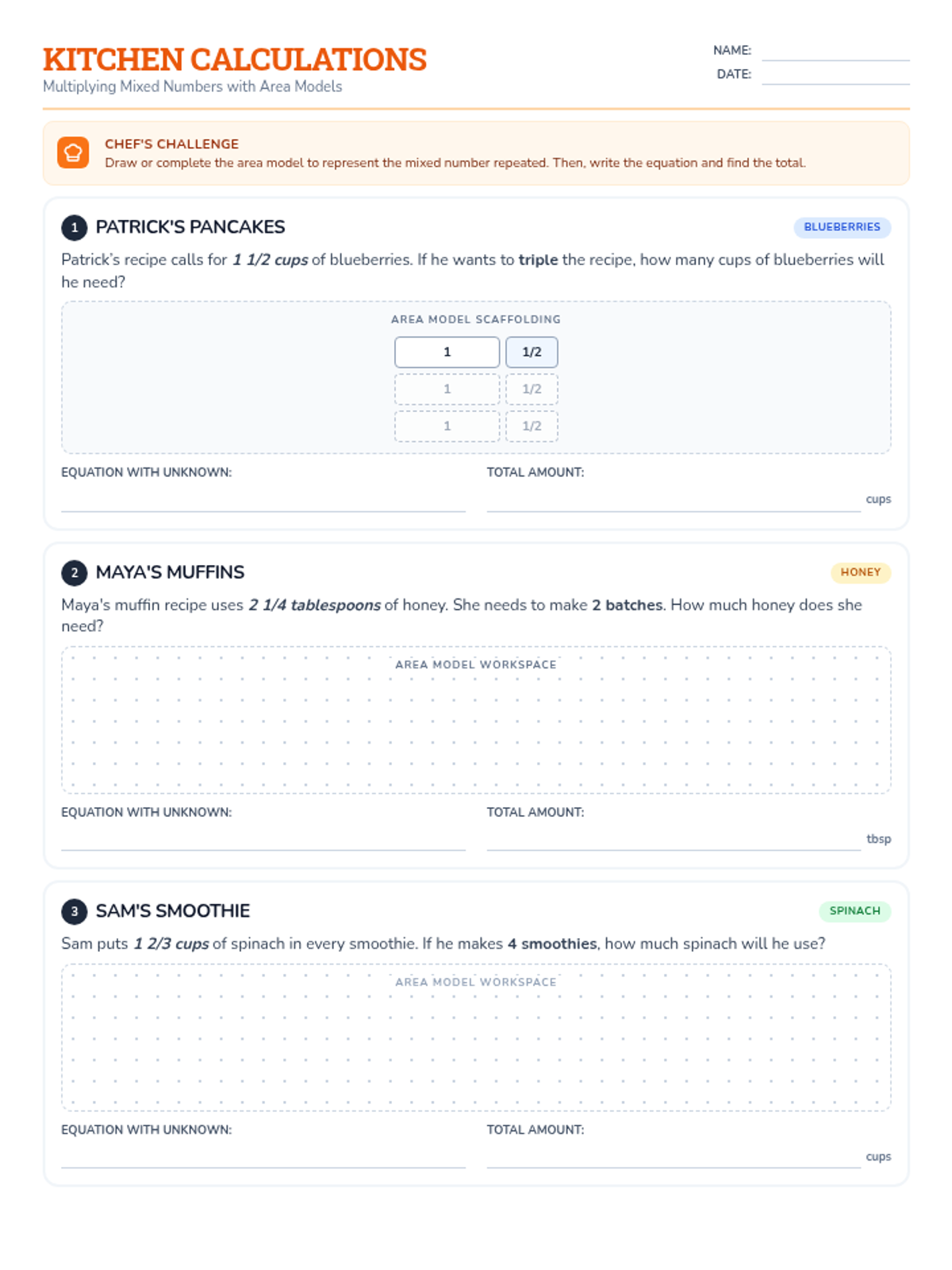
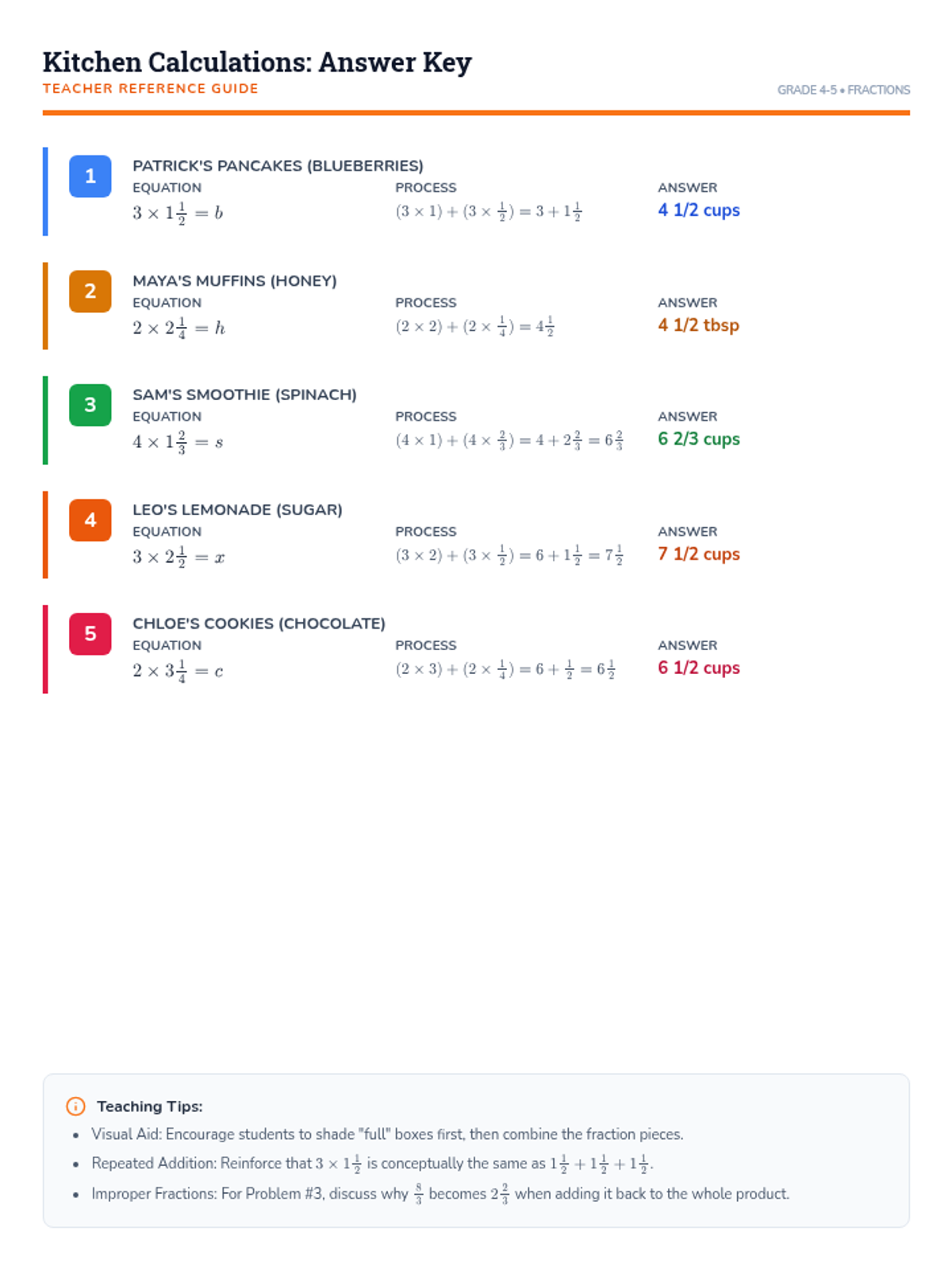
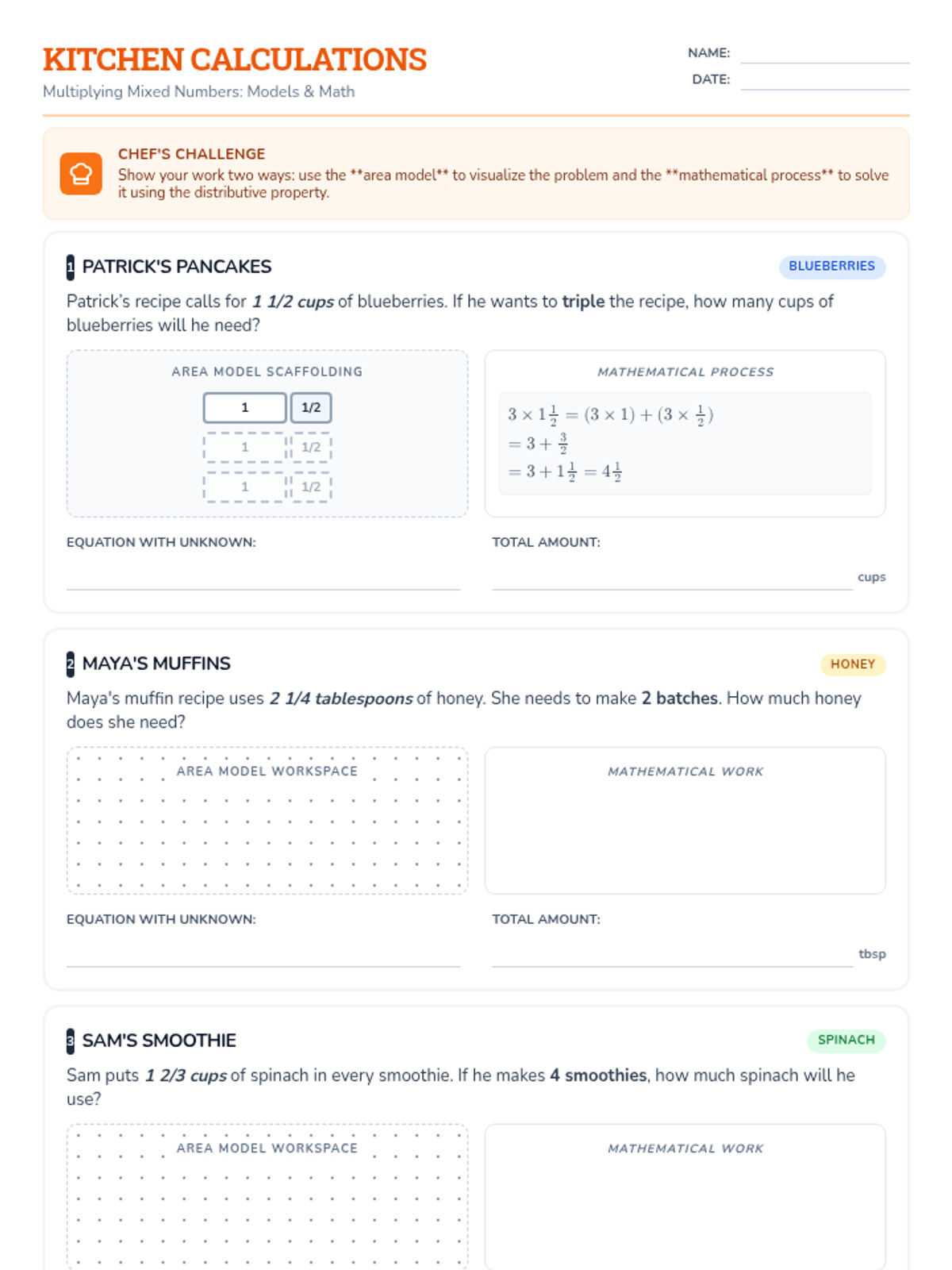
A lesson focused on multiplying mixed numbers by whole numbers using area models as visual scaffolding to represent repeated addition and the distributive property in a culinary context.
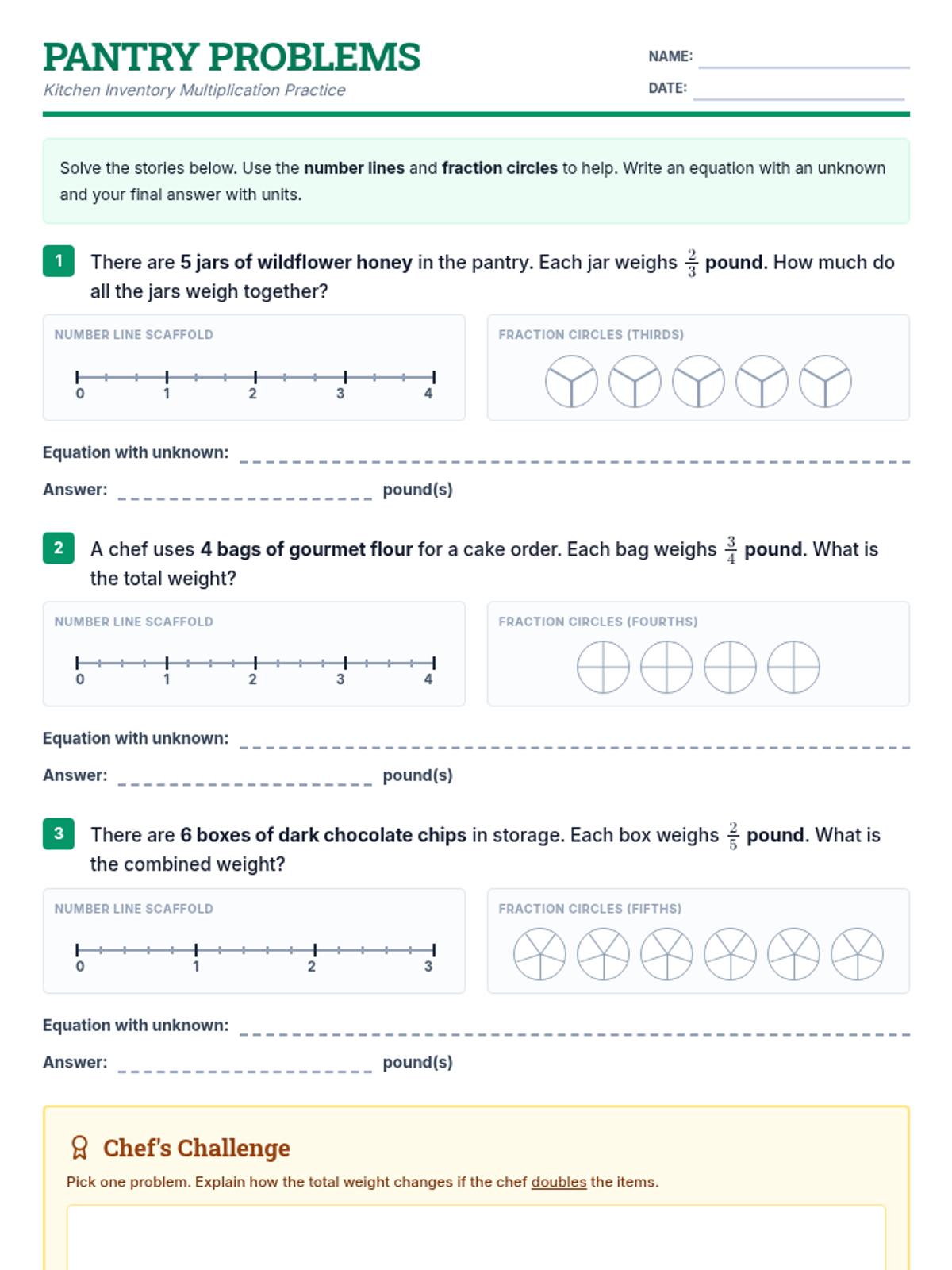
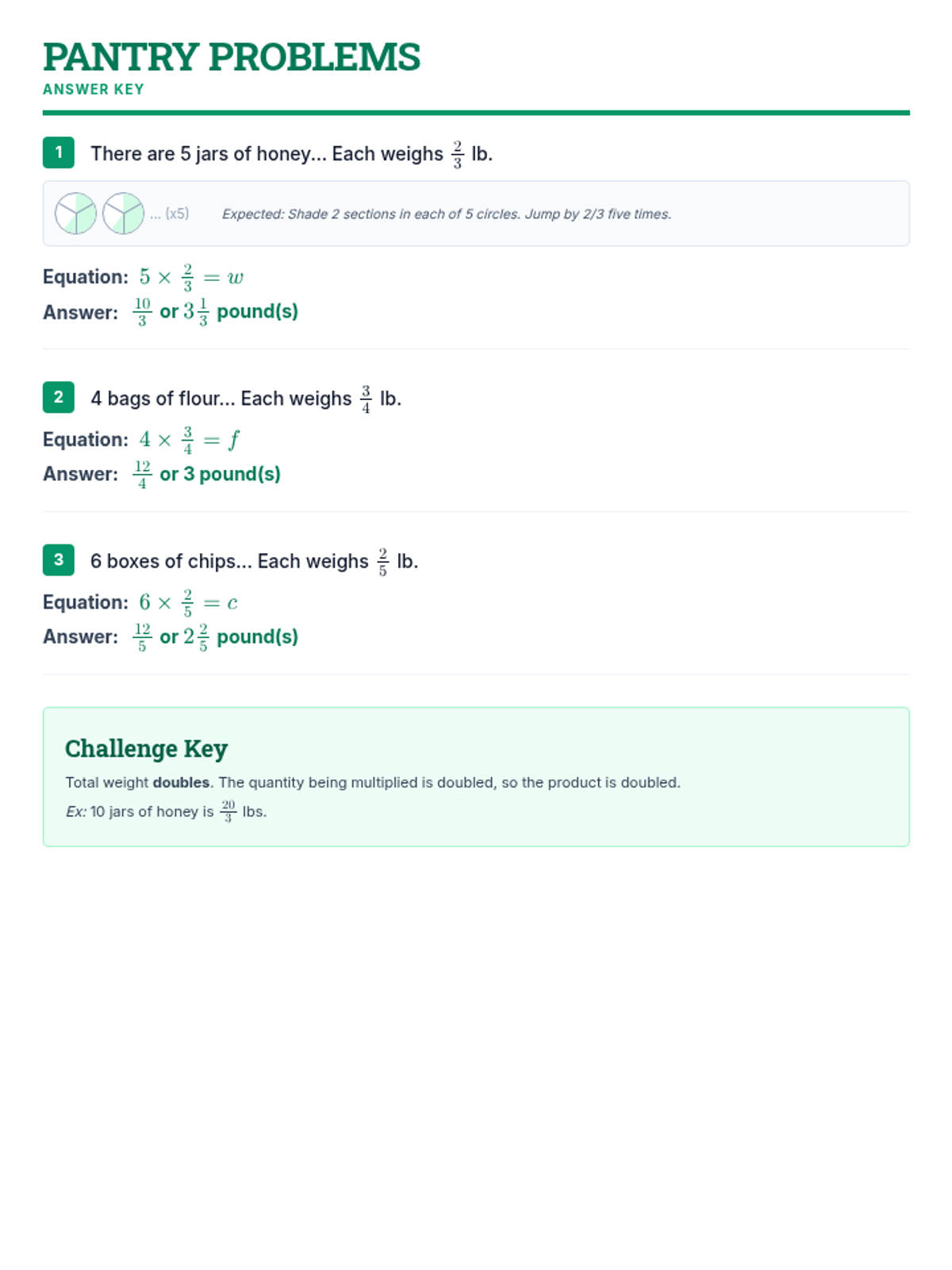
A lesson focused on multiplying whole numbers by non-unit fractions using visual models like number lines and fraction circles within the context of kitchen inventory.
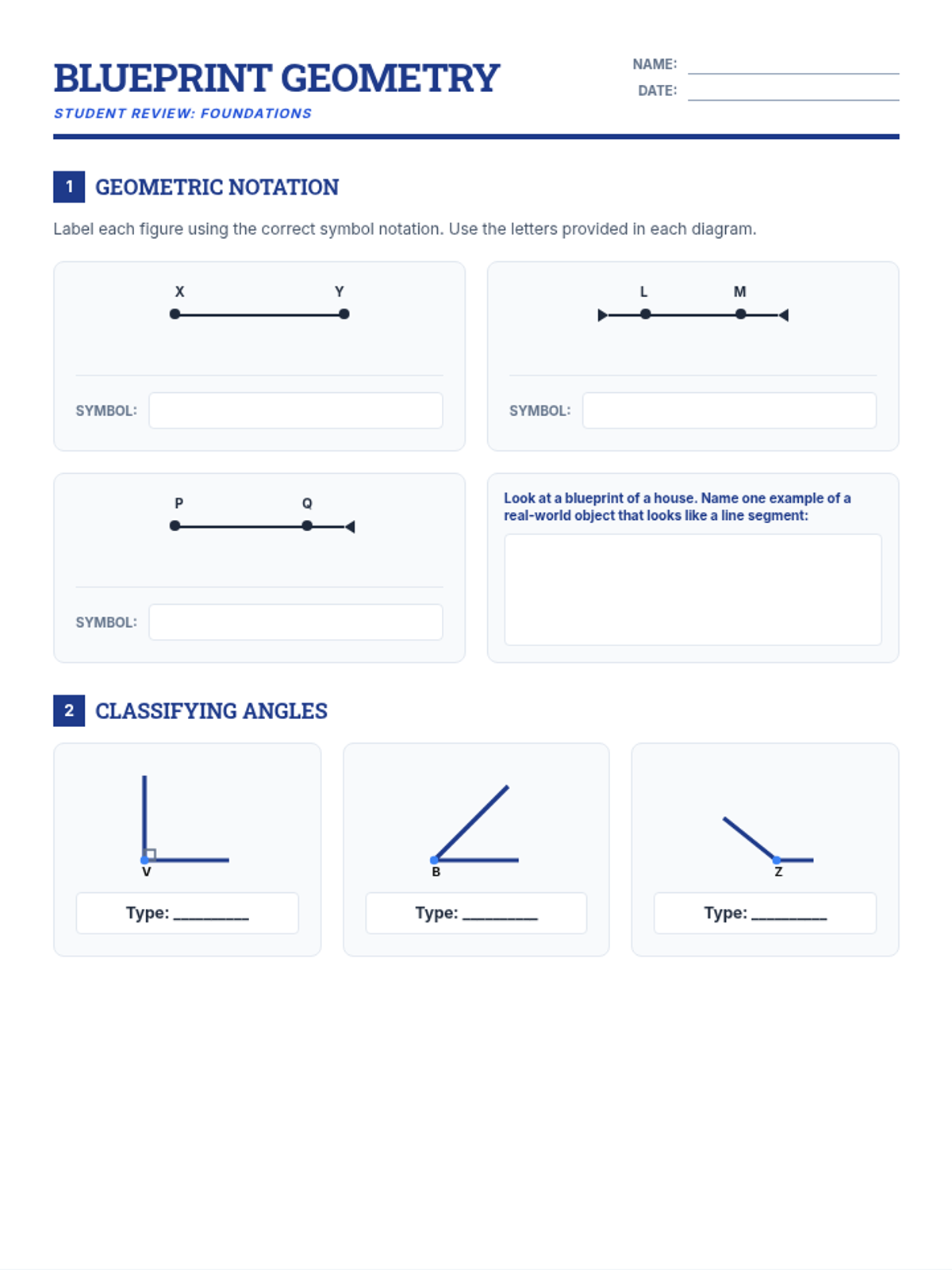
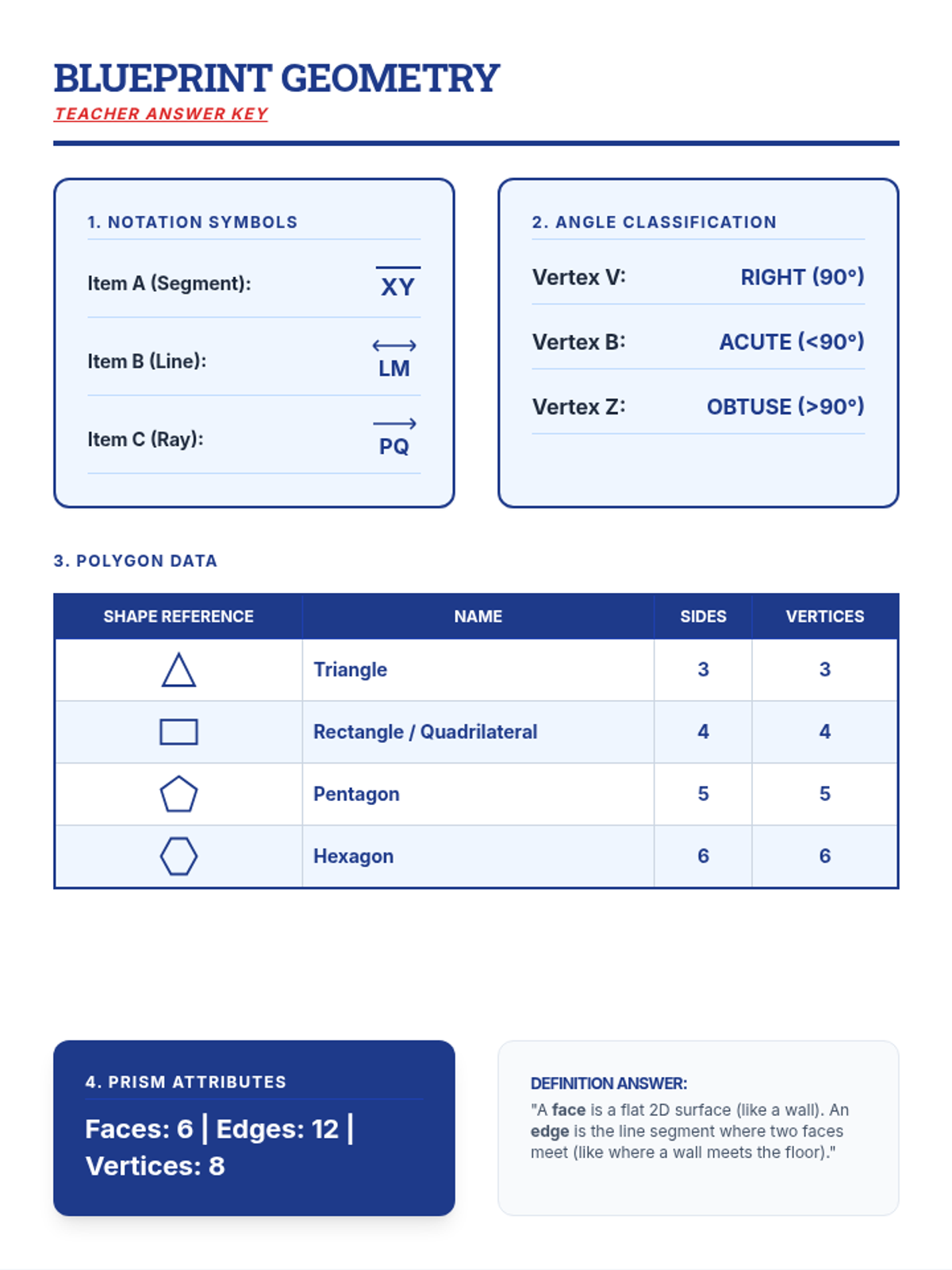
A comprehensive geometry review for 5th grade students, covering lines, angles, polygons, 3D shapes, and measurement with fractions and mixed numbers.
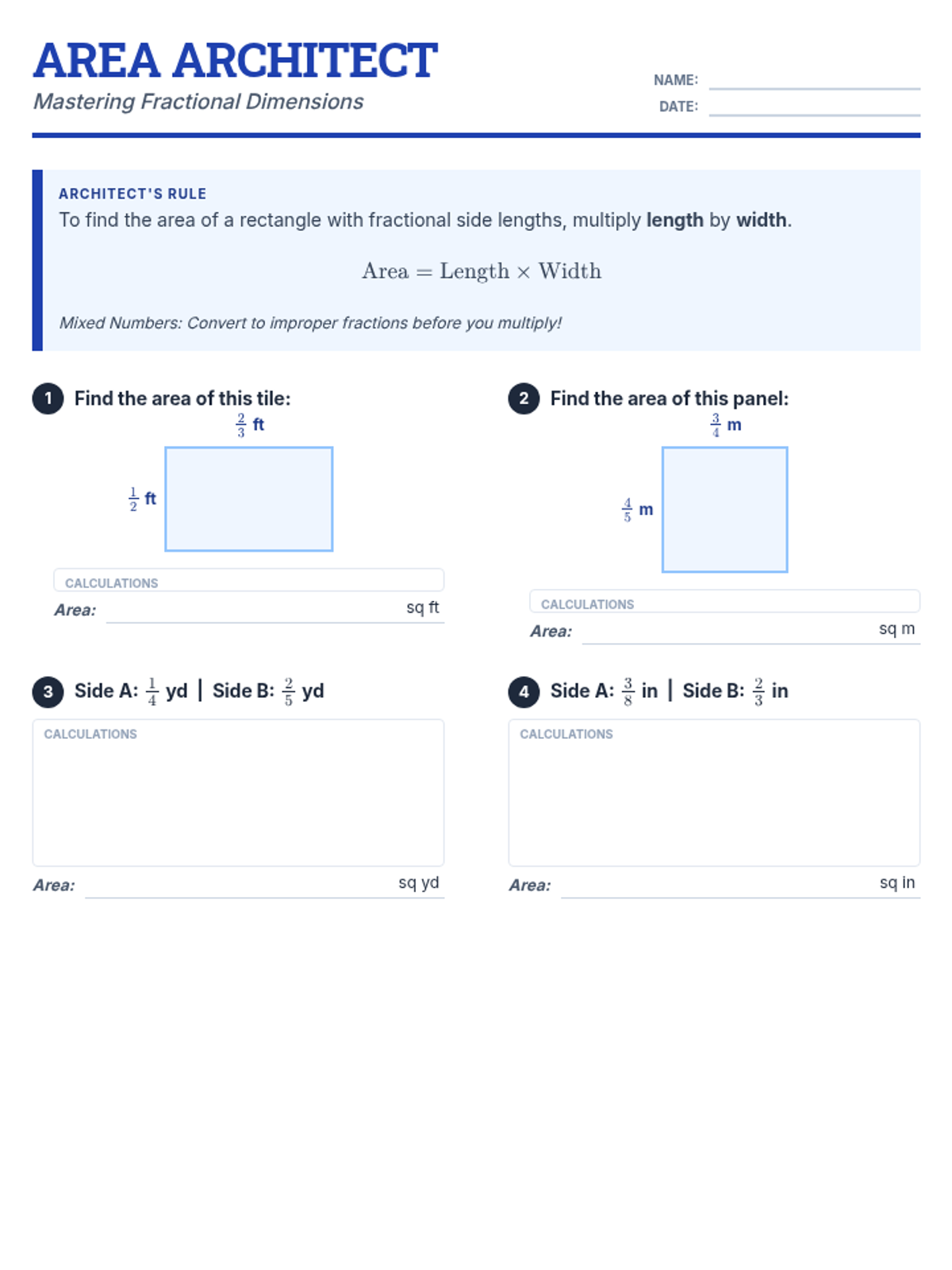
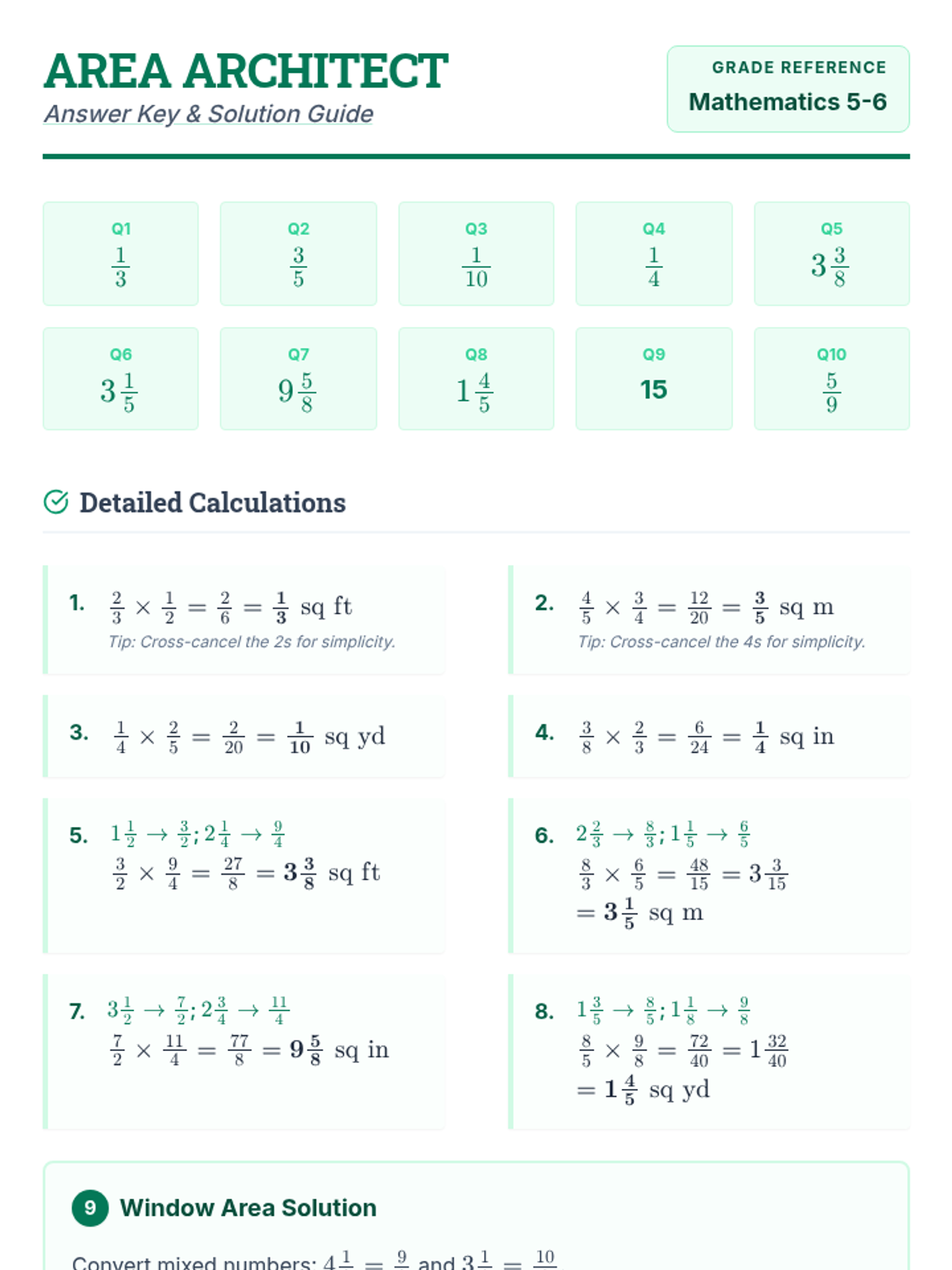
A lesson focused on calculating the area of rectangles with fractional and mixed number side lengths by relating the concept to multiplication. Students will practice converting mixed numbers to improper fractions and applying the area formula.
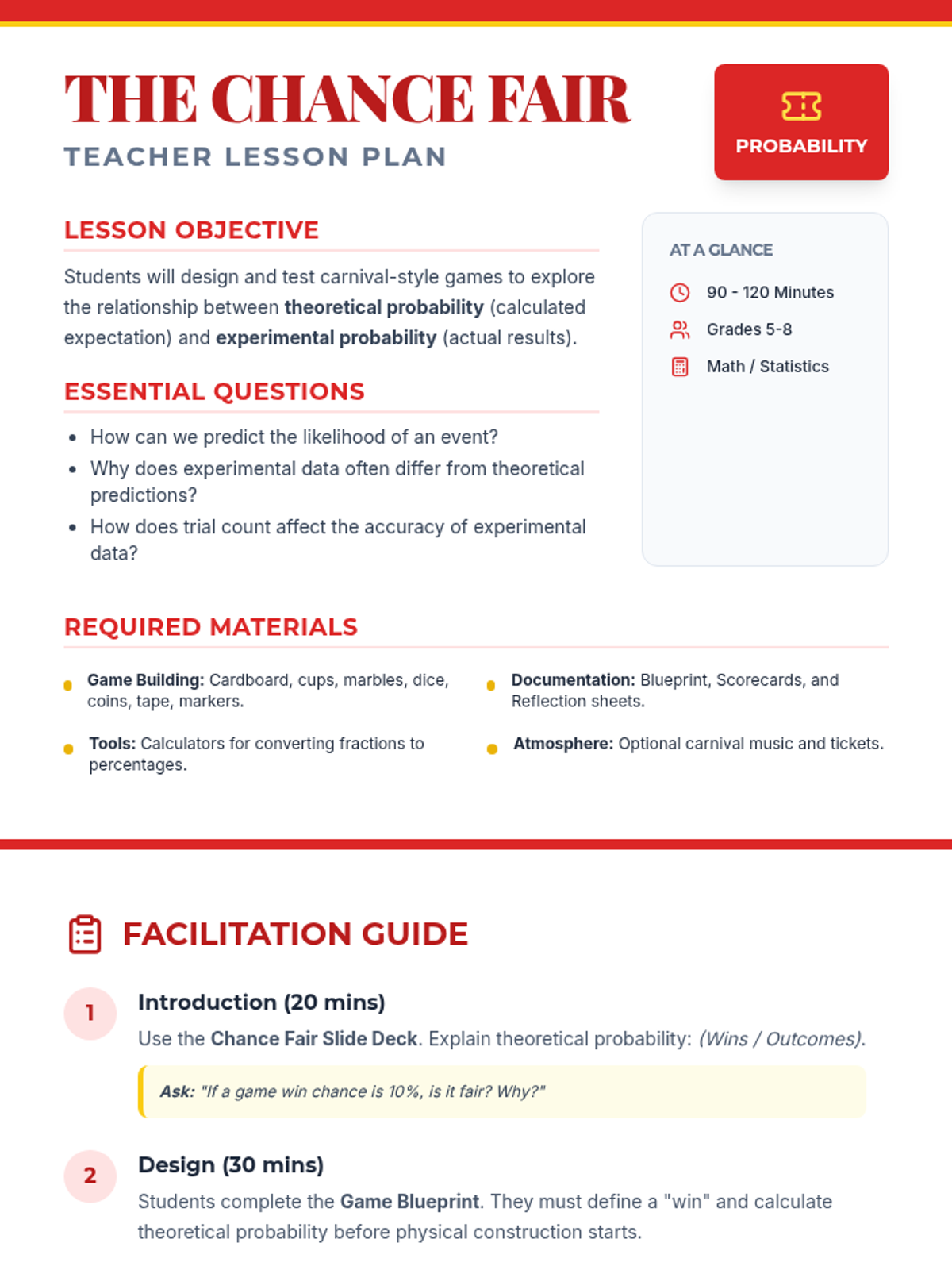
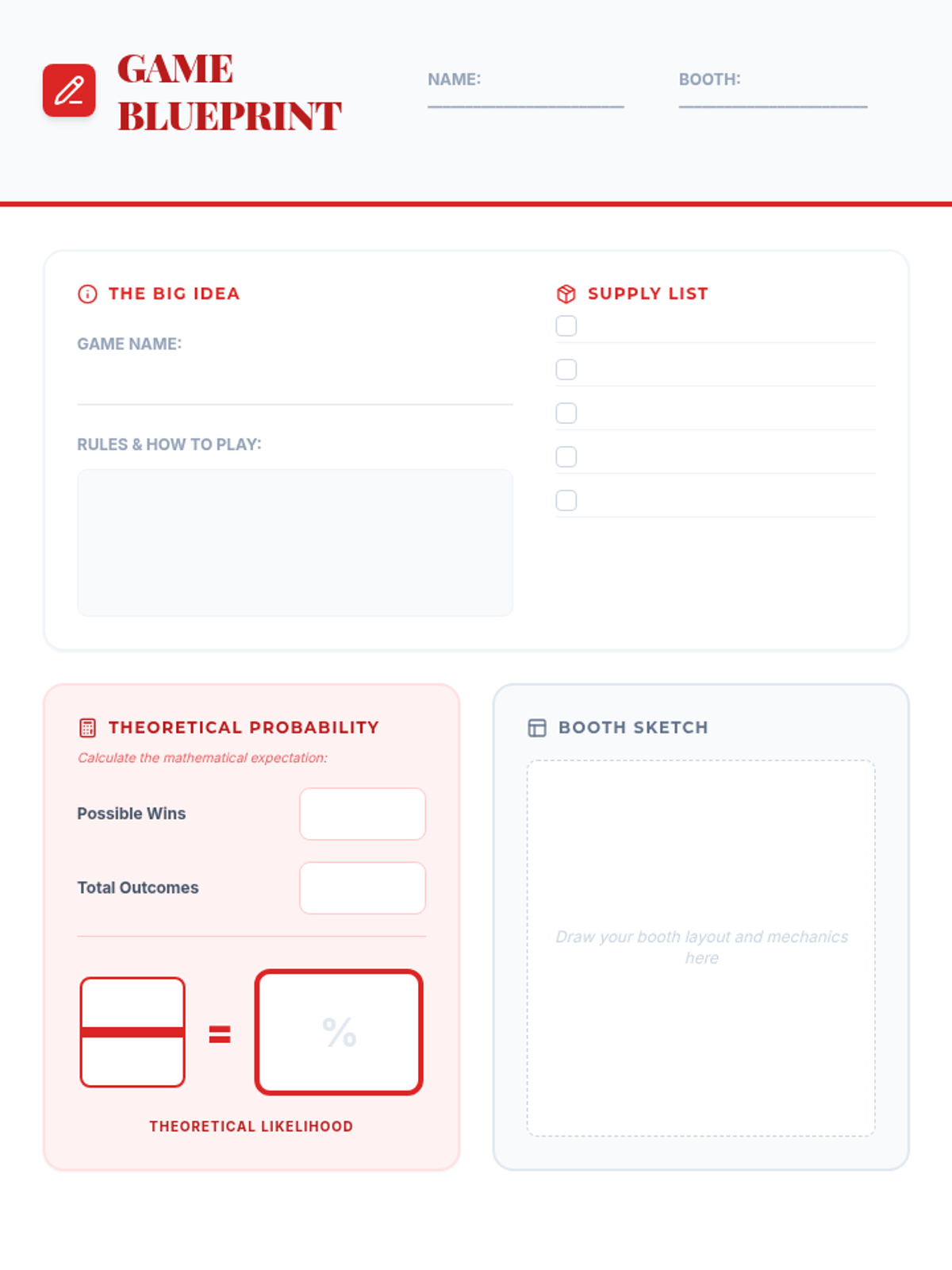
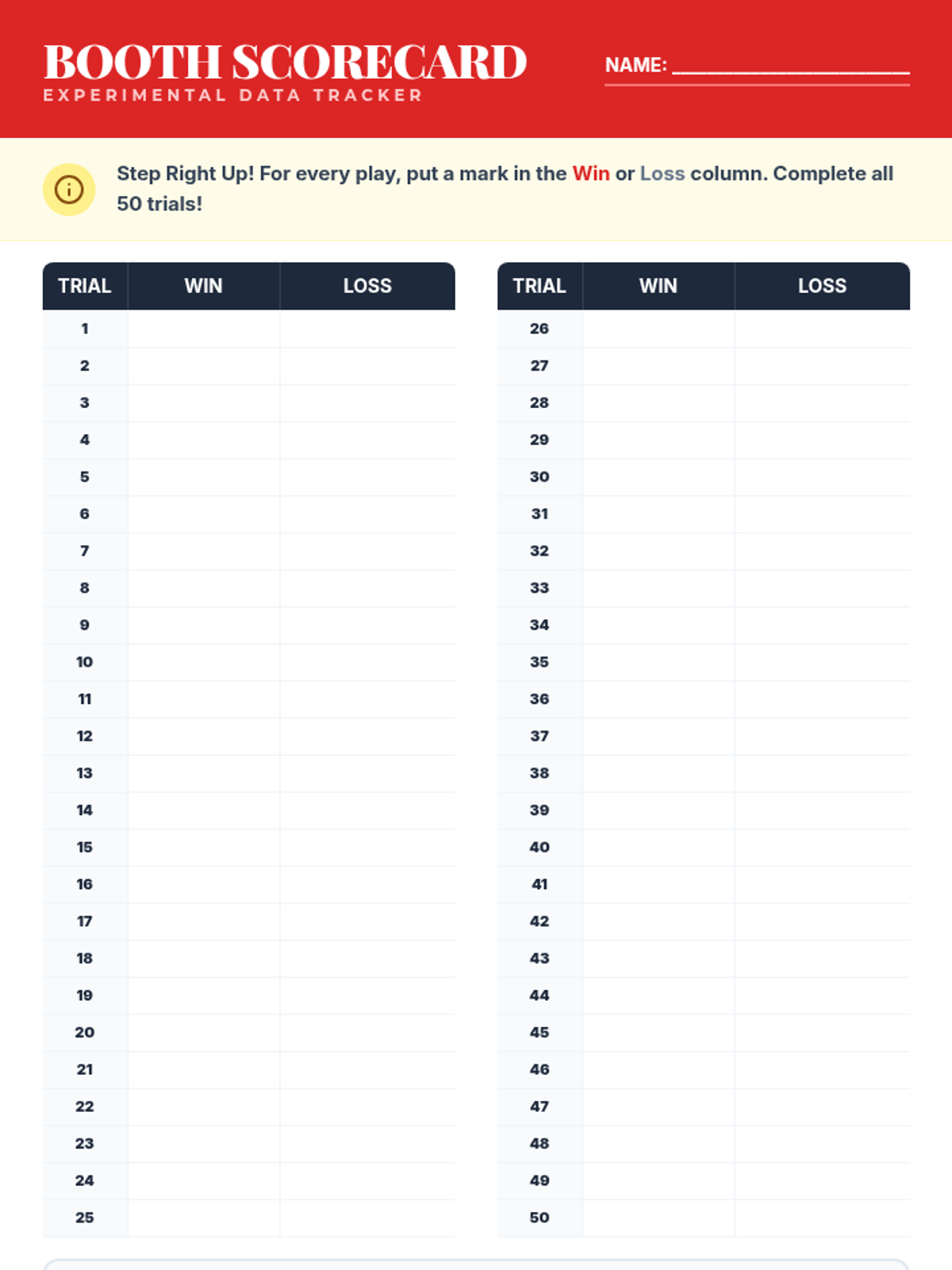
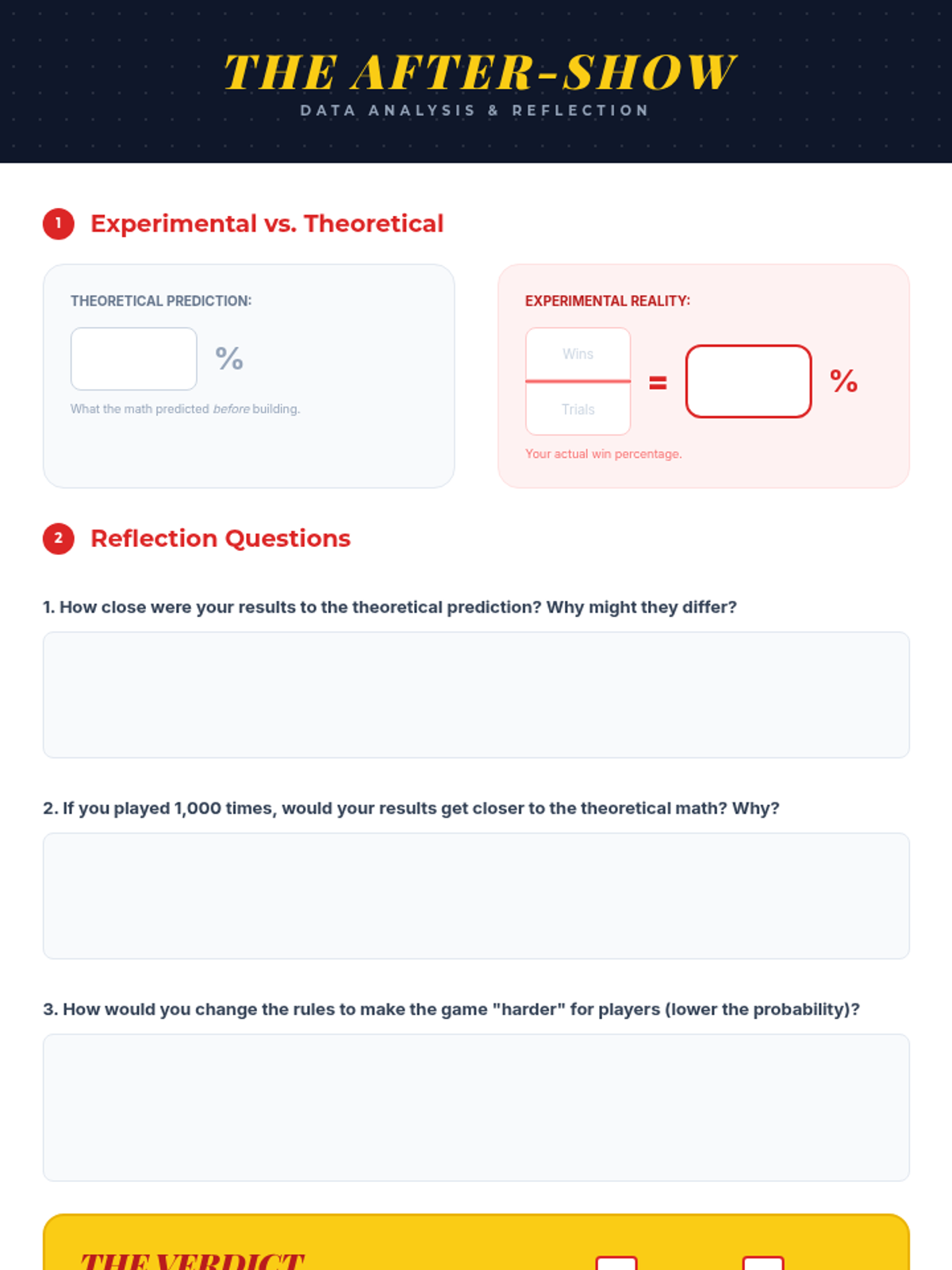
A hands-on probability project where students design, build, and test carnival games. They will calculate theoretical probability, collect experimental data, and analyze the results to understand statistical likelihood.
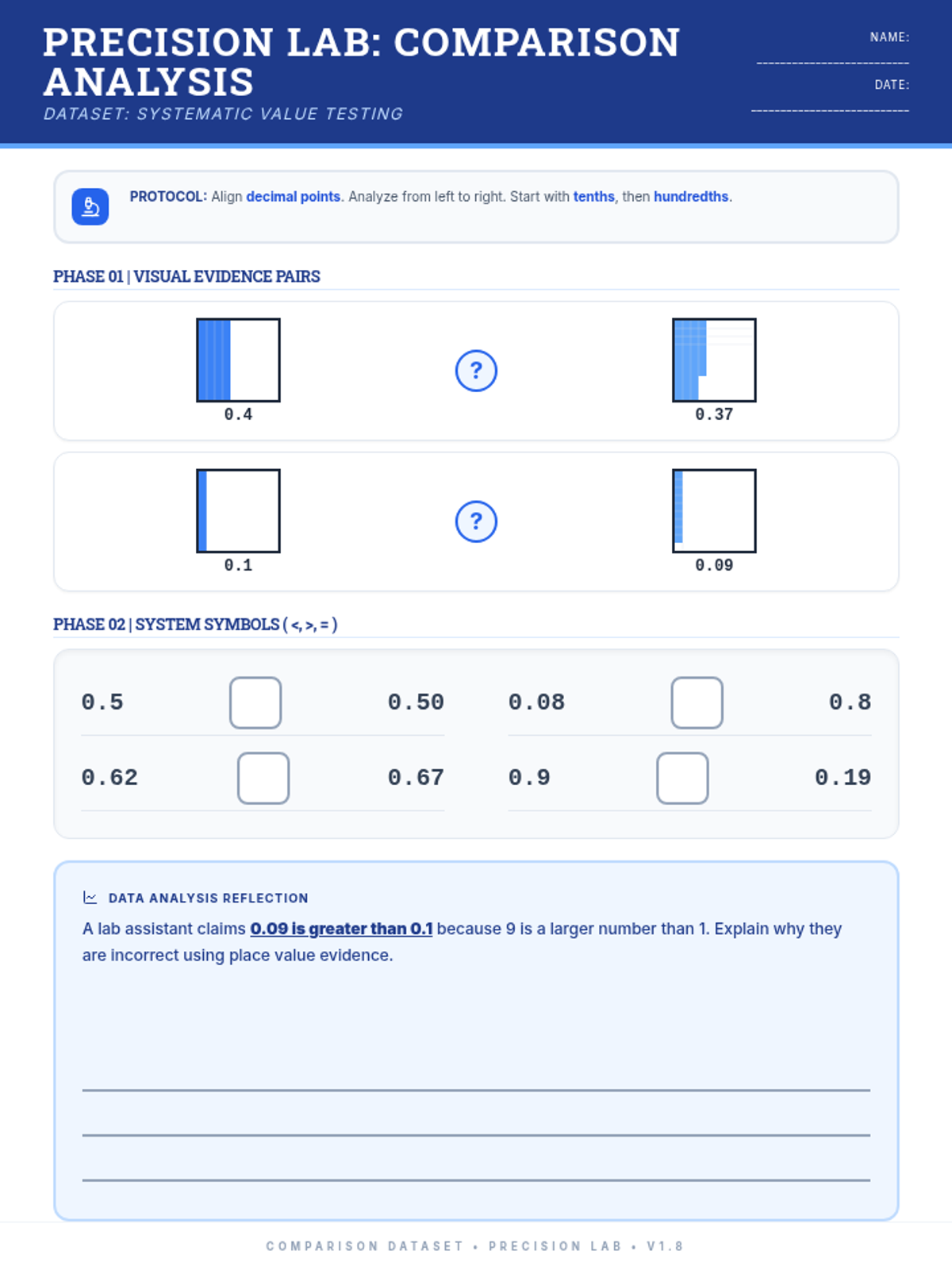
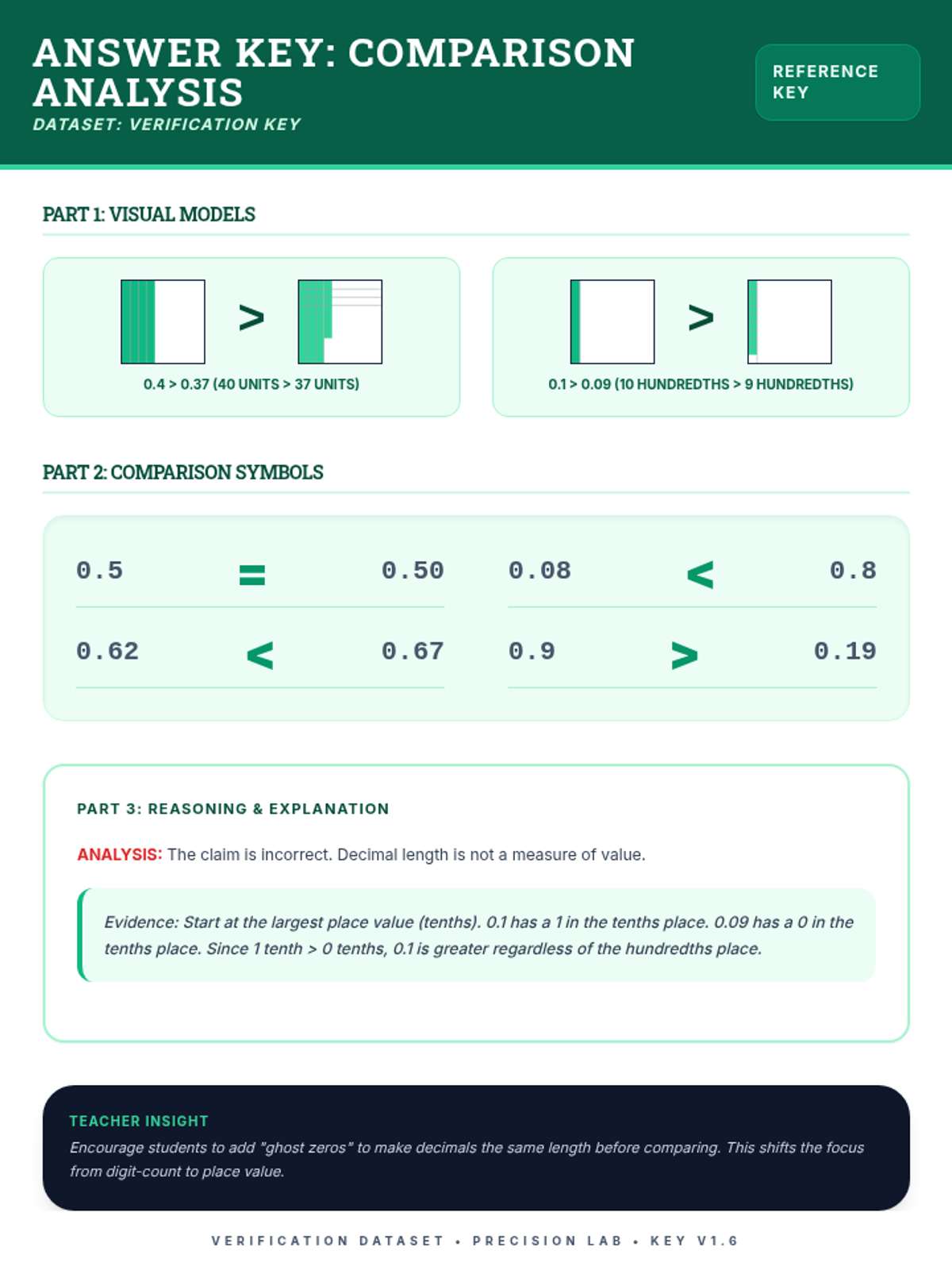
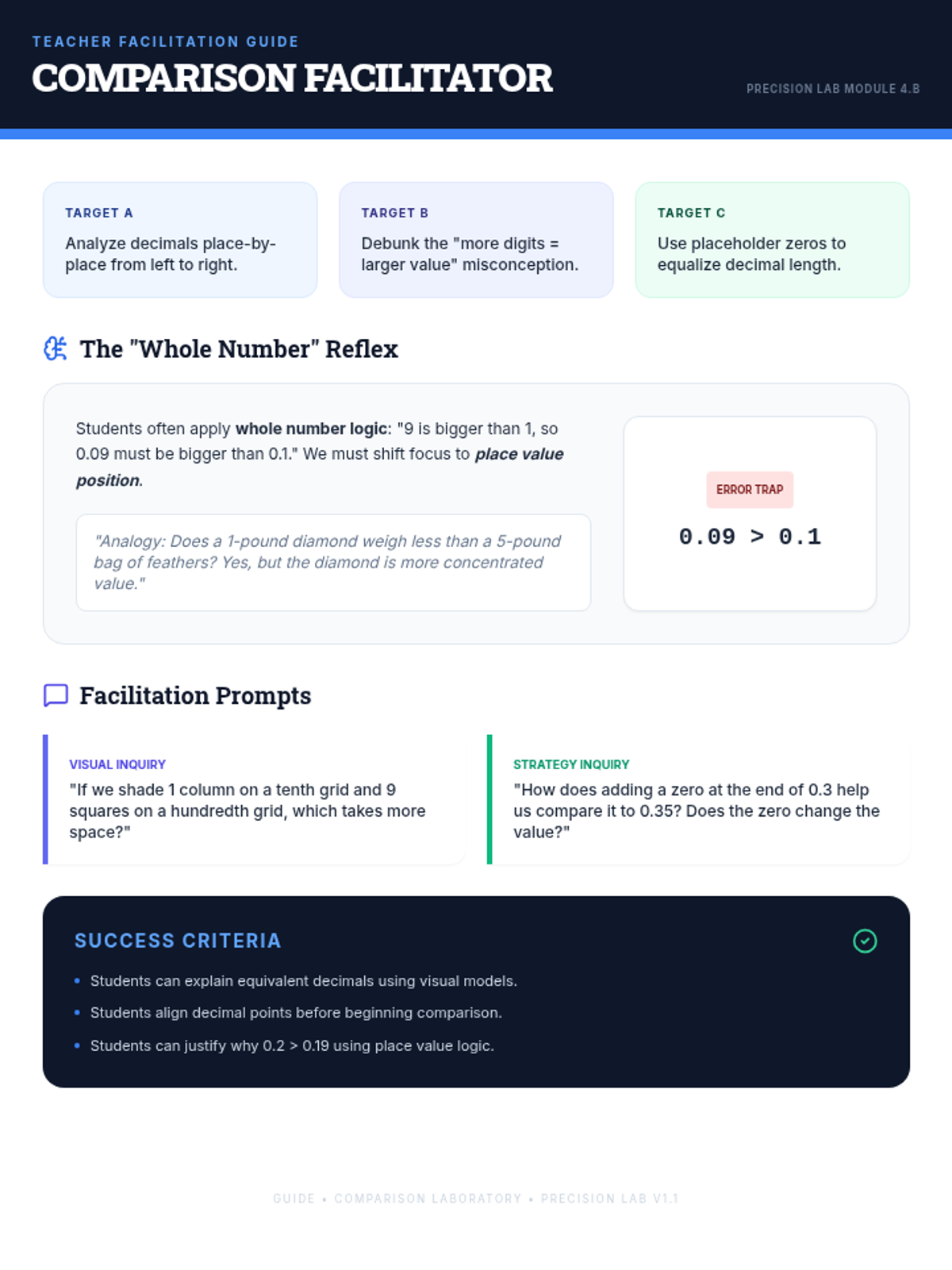
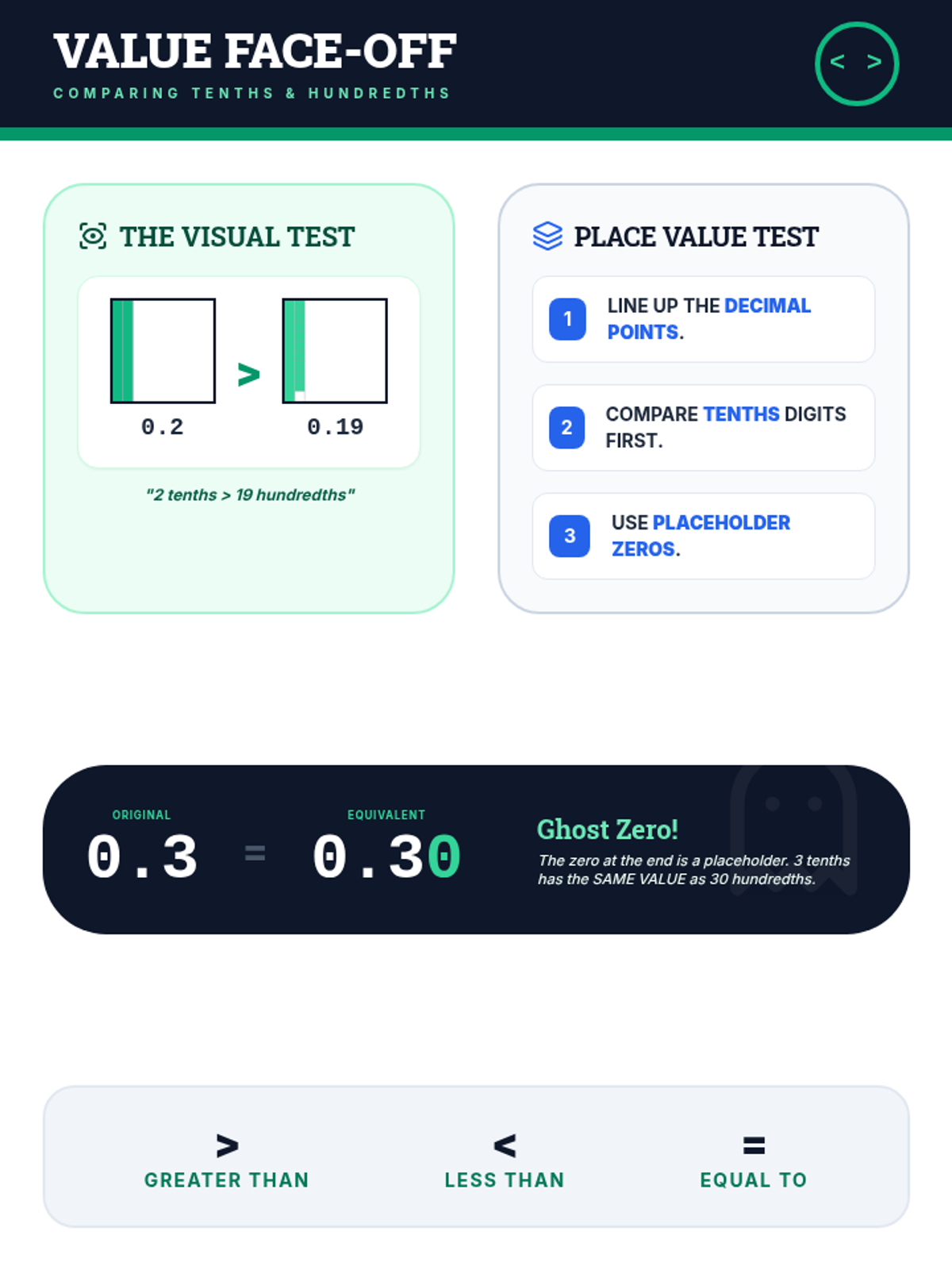
An advanced laboratory module focusing on the systematic comparison of decimals using visual models, place value analysis, and standard symbols.
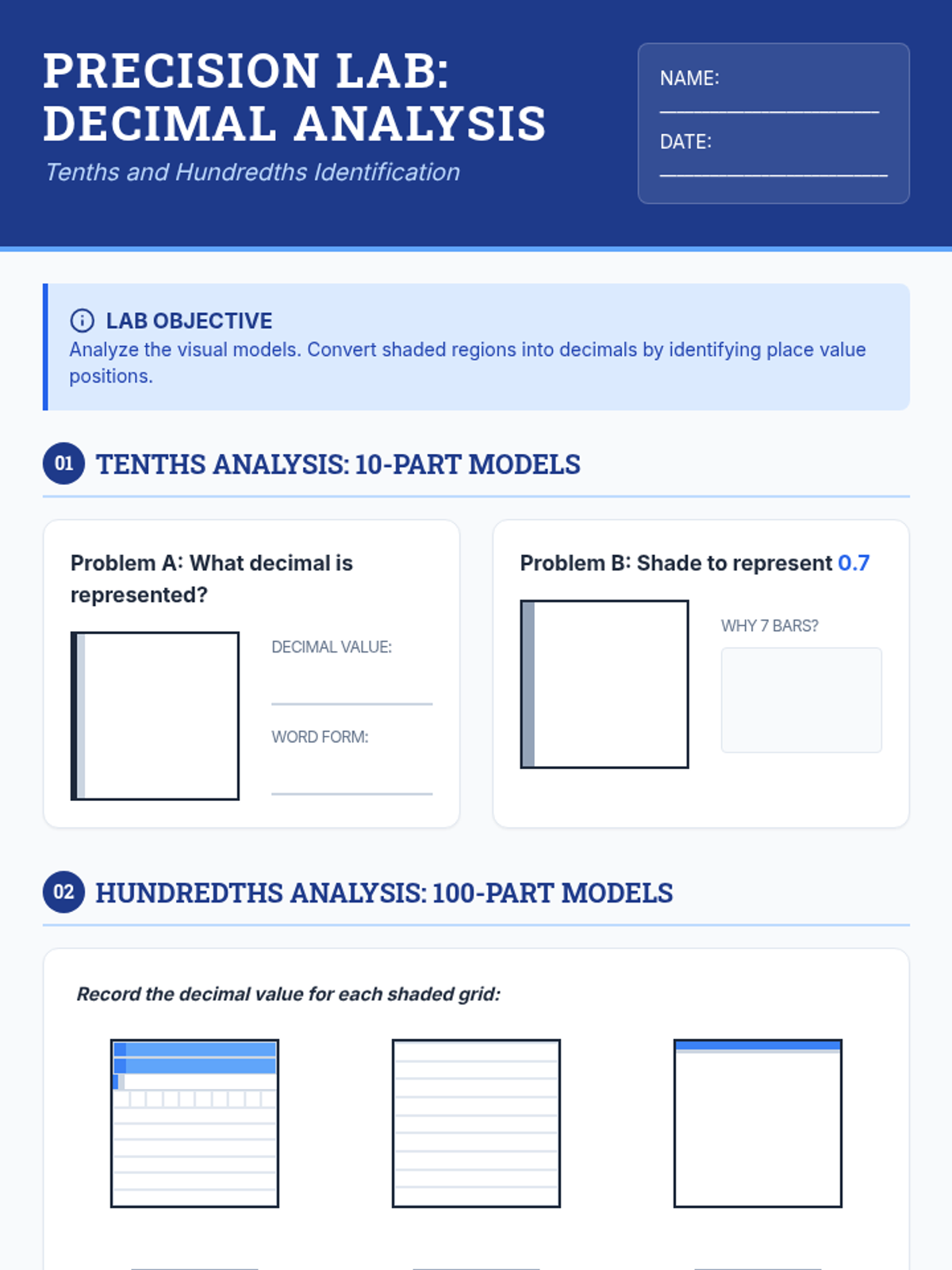
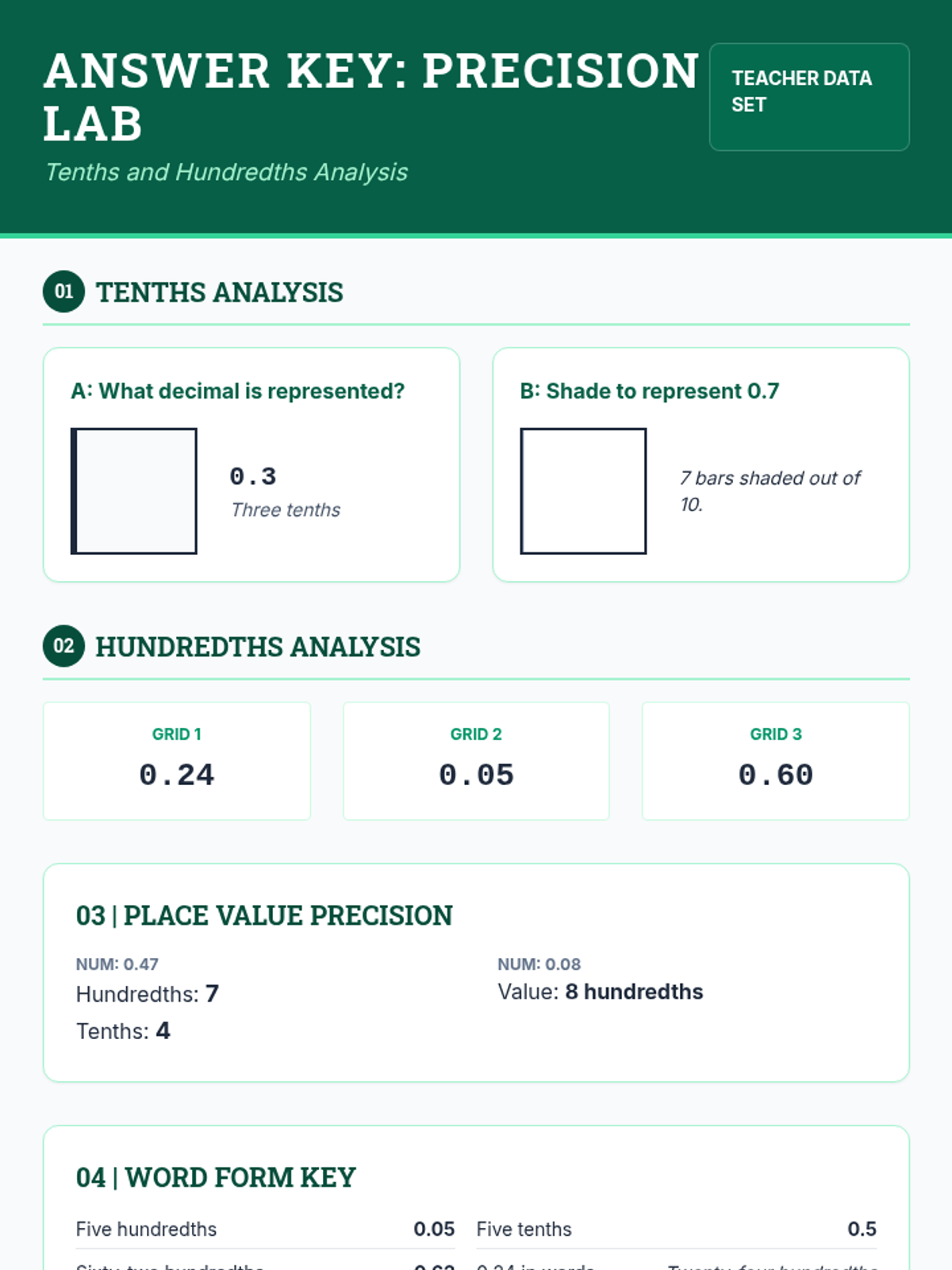
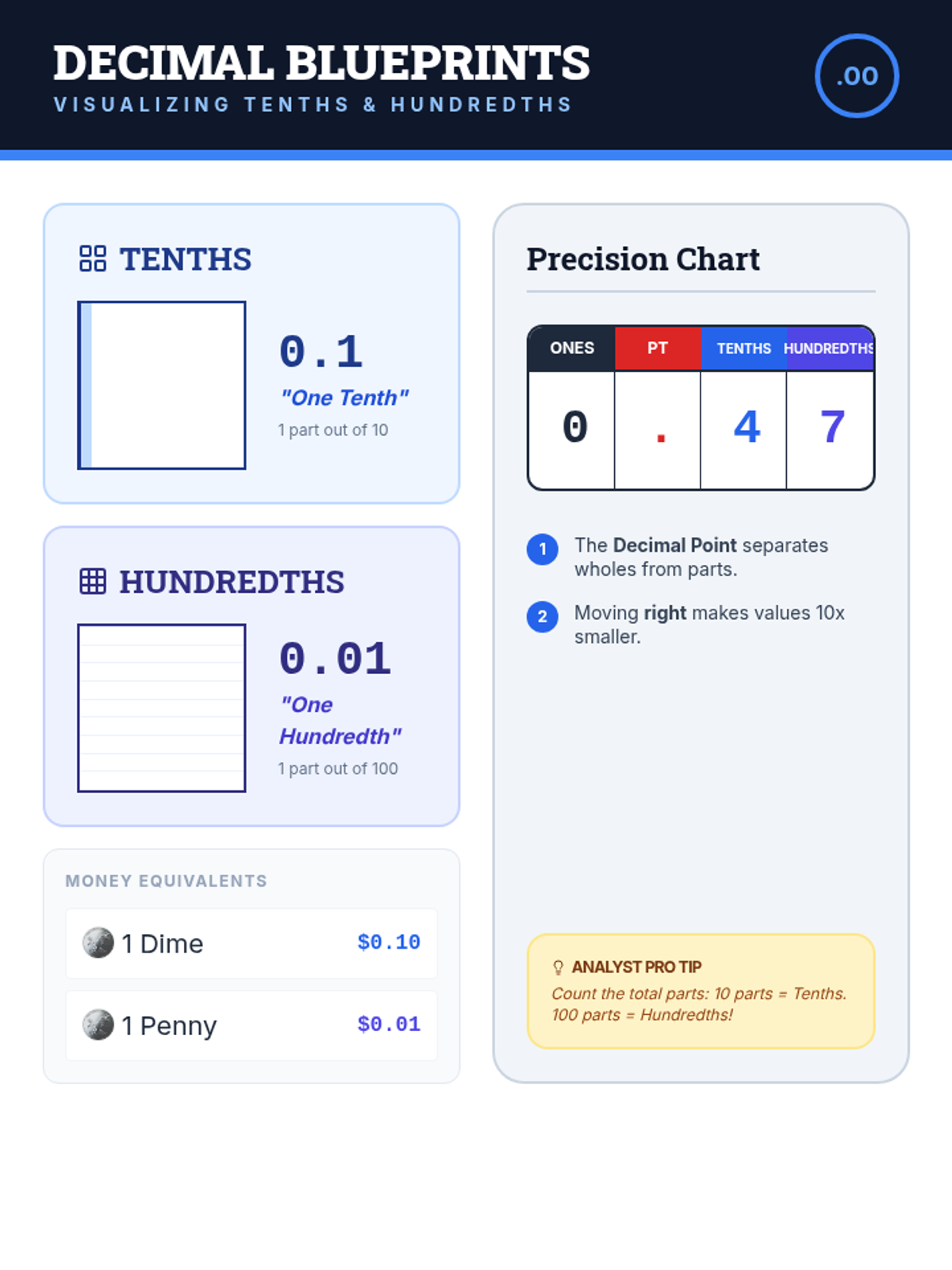
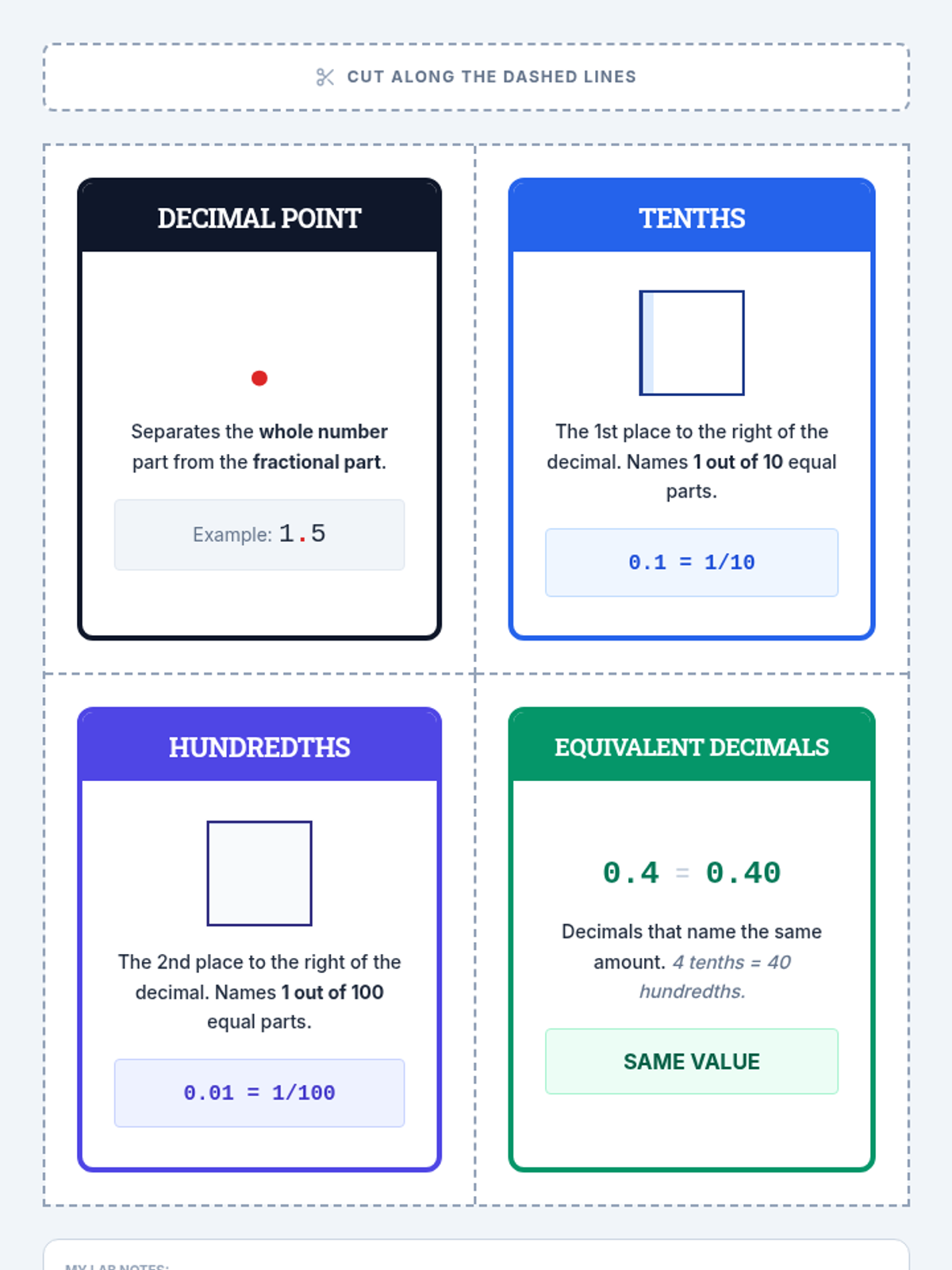
A foundational exploration of decimals focusing on the relationship between fractions and place value for tenths and hundredths through visual models and precise identification.
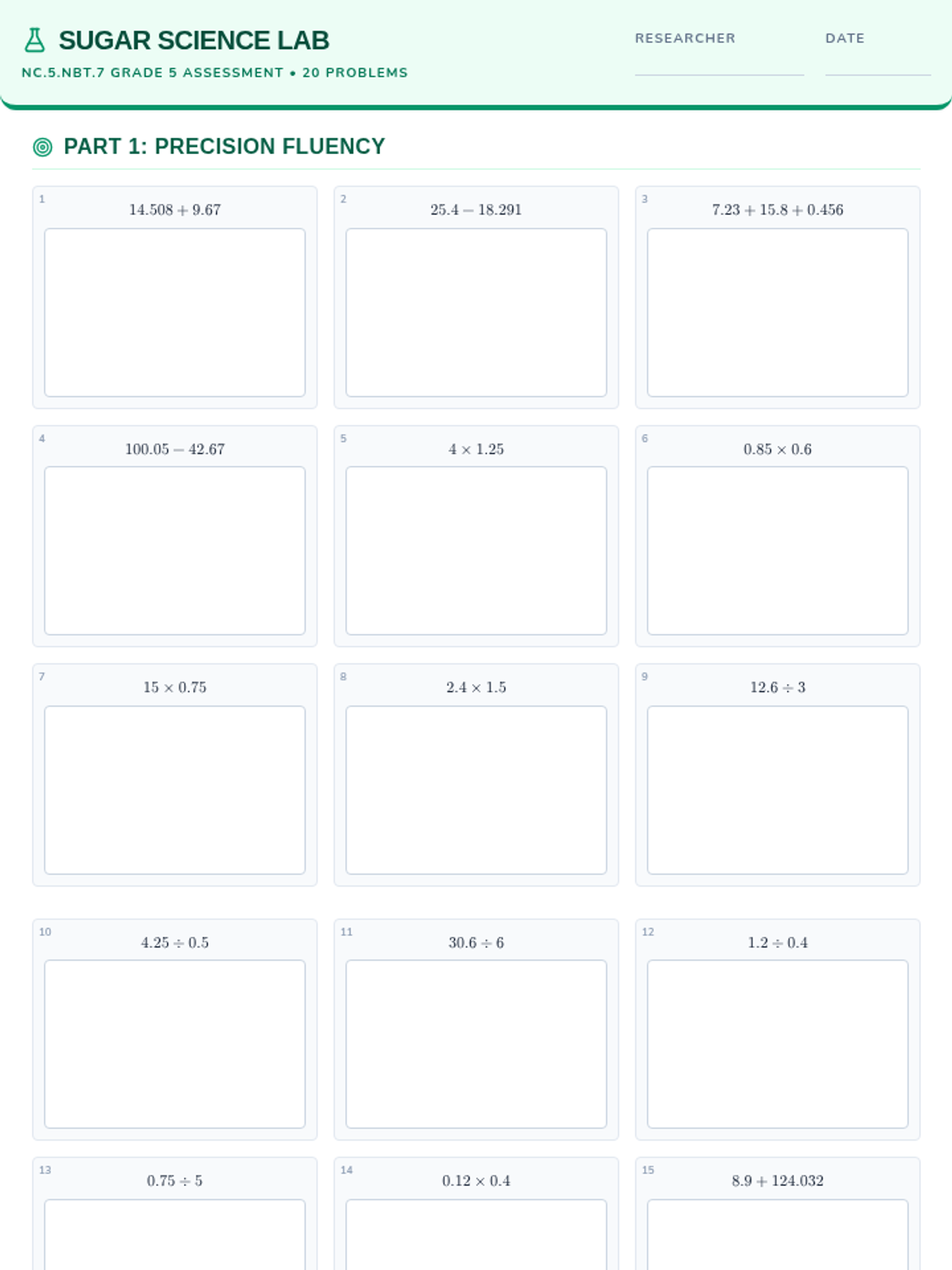
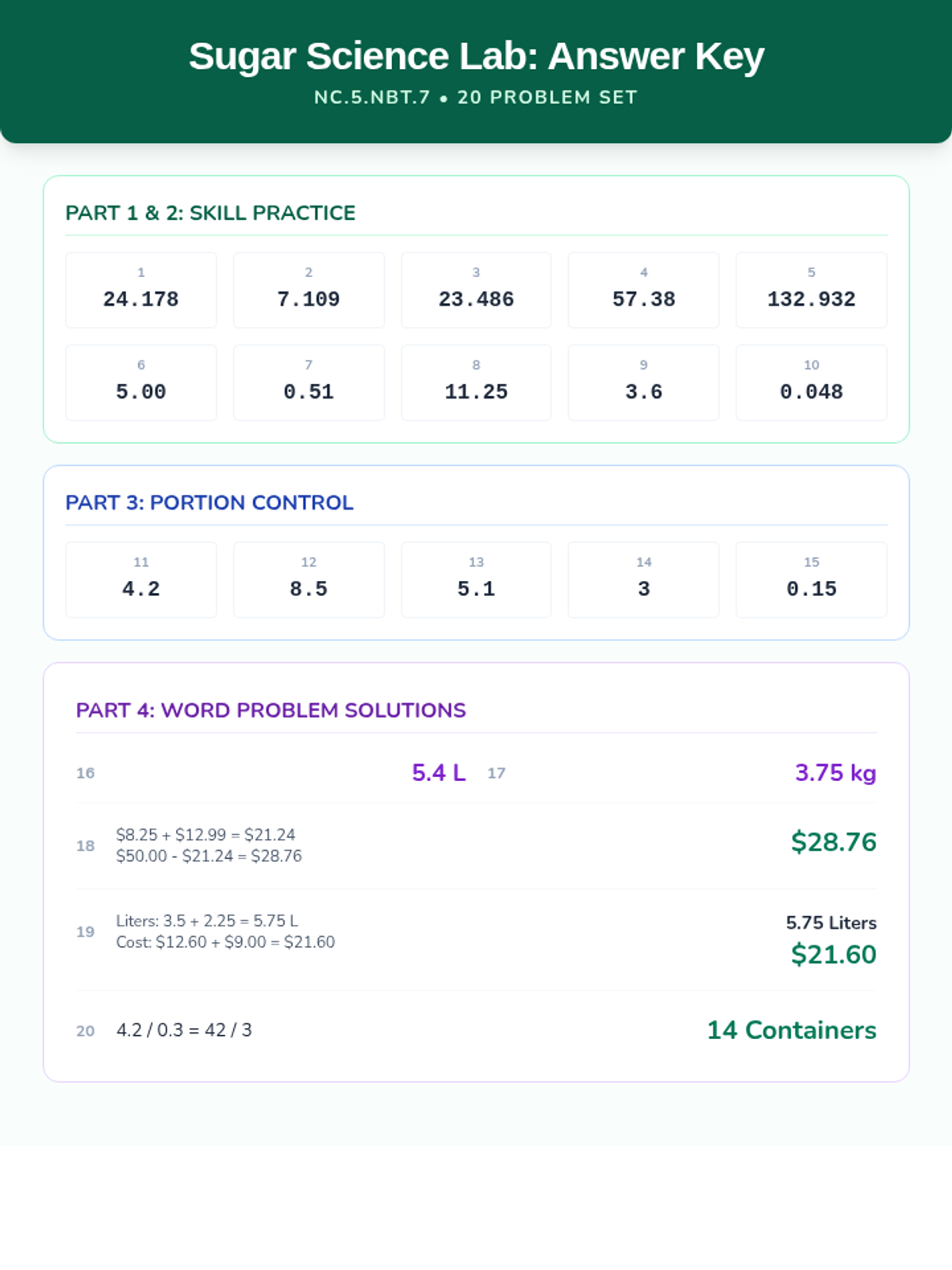
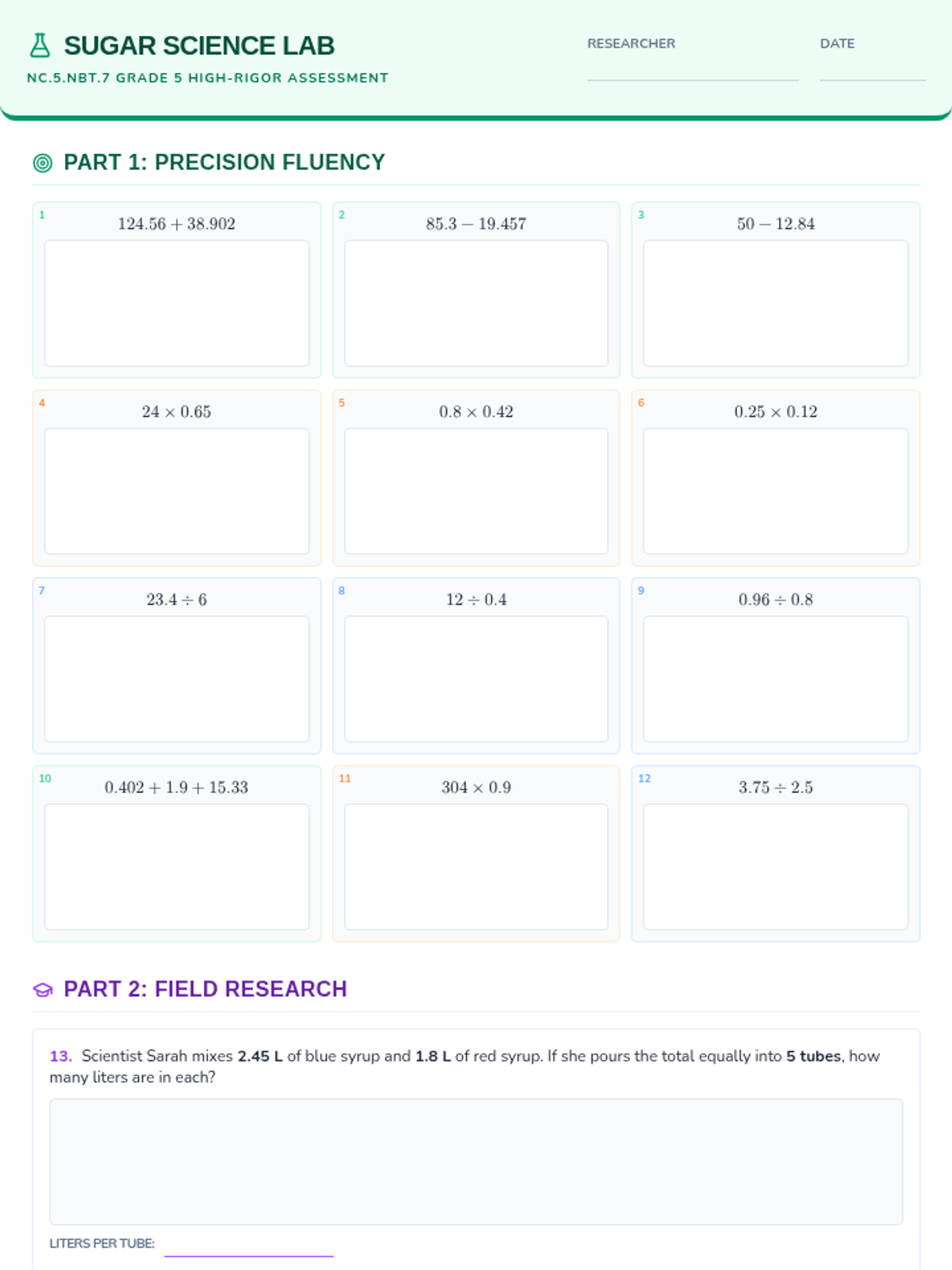
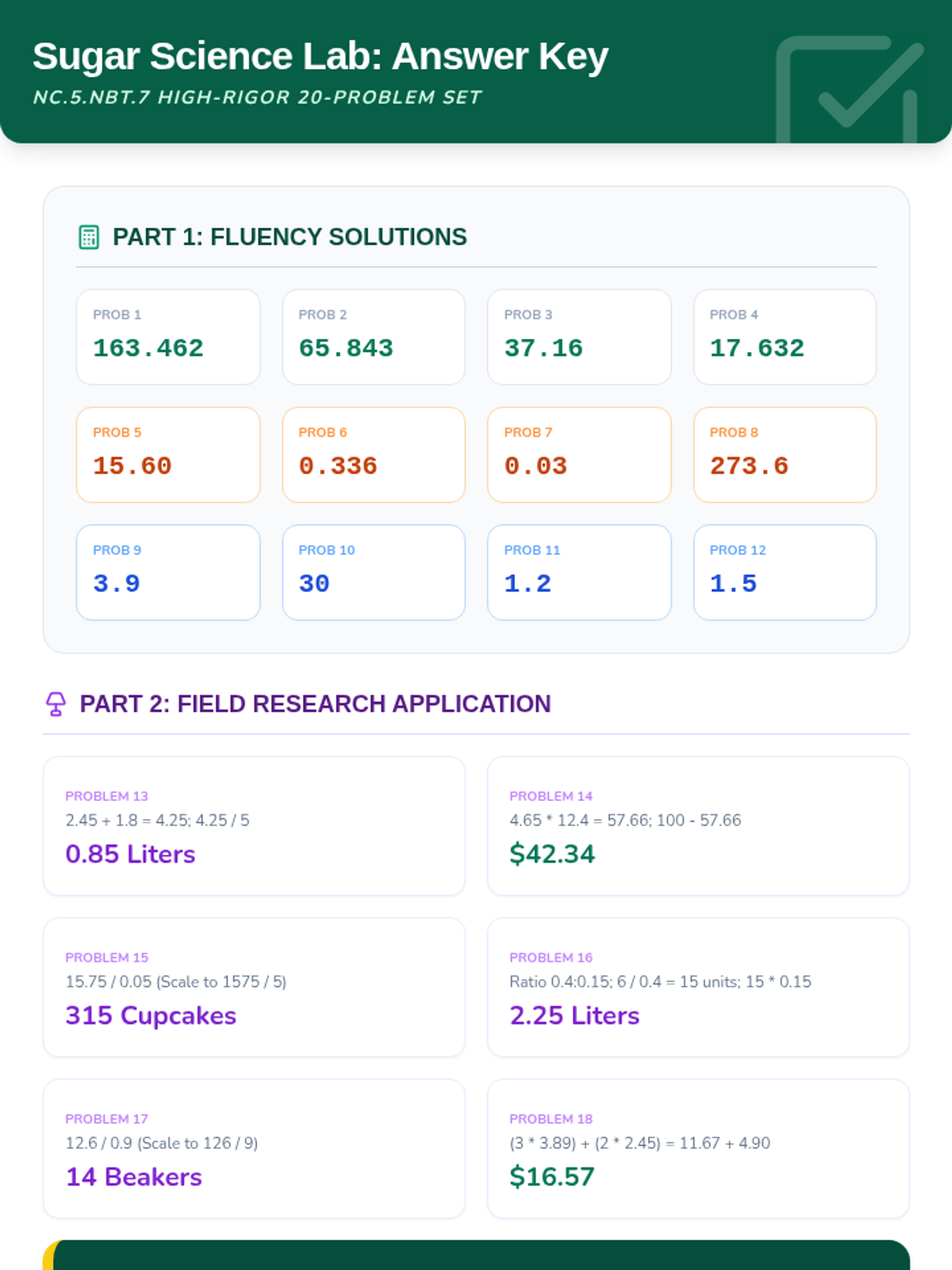
A comprehensive lesson on decimal operations (NC.5.NBT.7) using a culinary science theme to engage students in solving real-world mathematical problems.
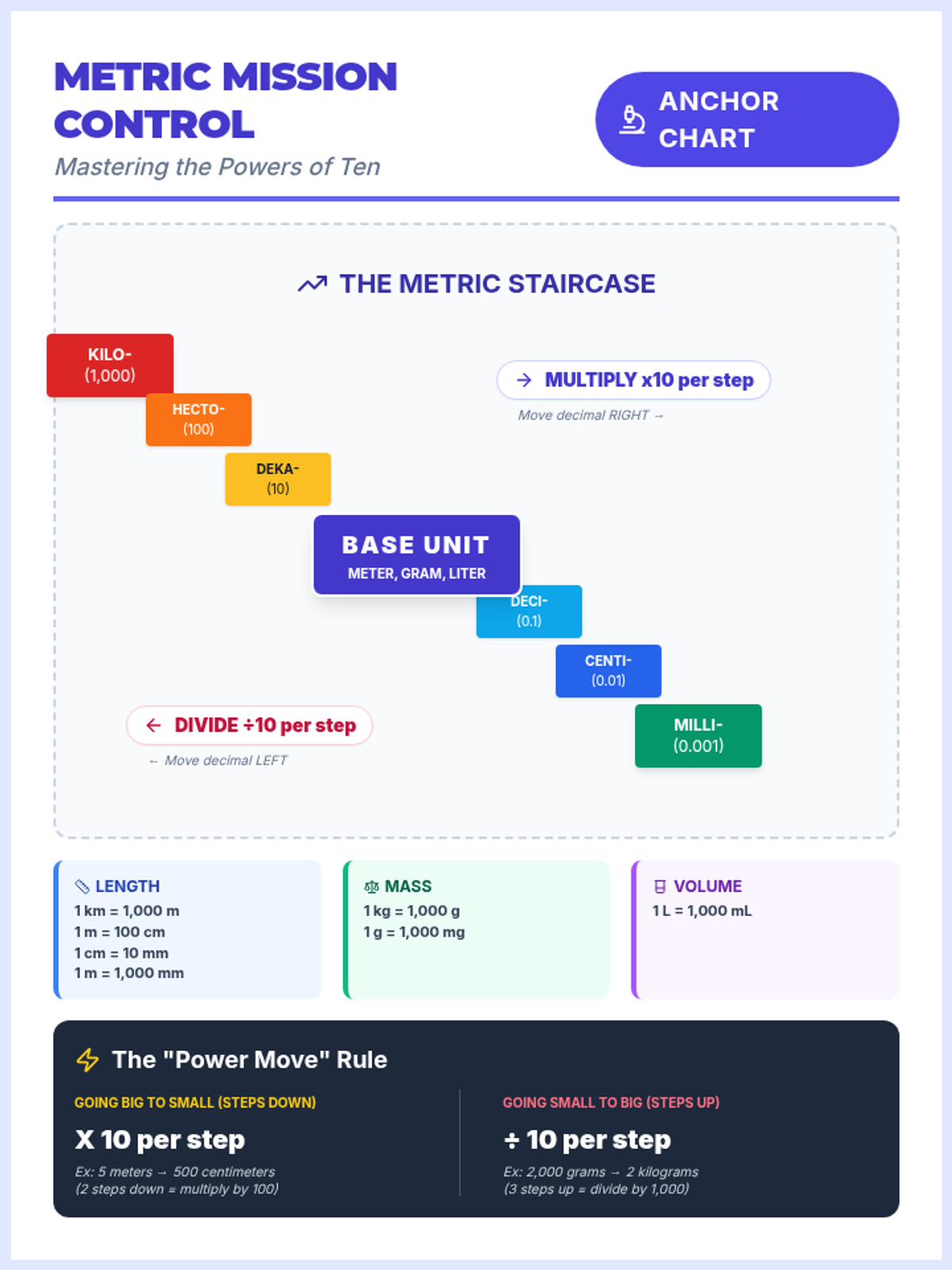
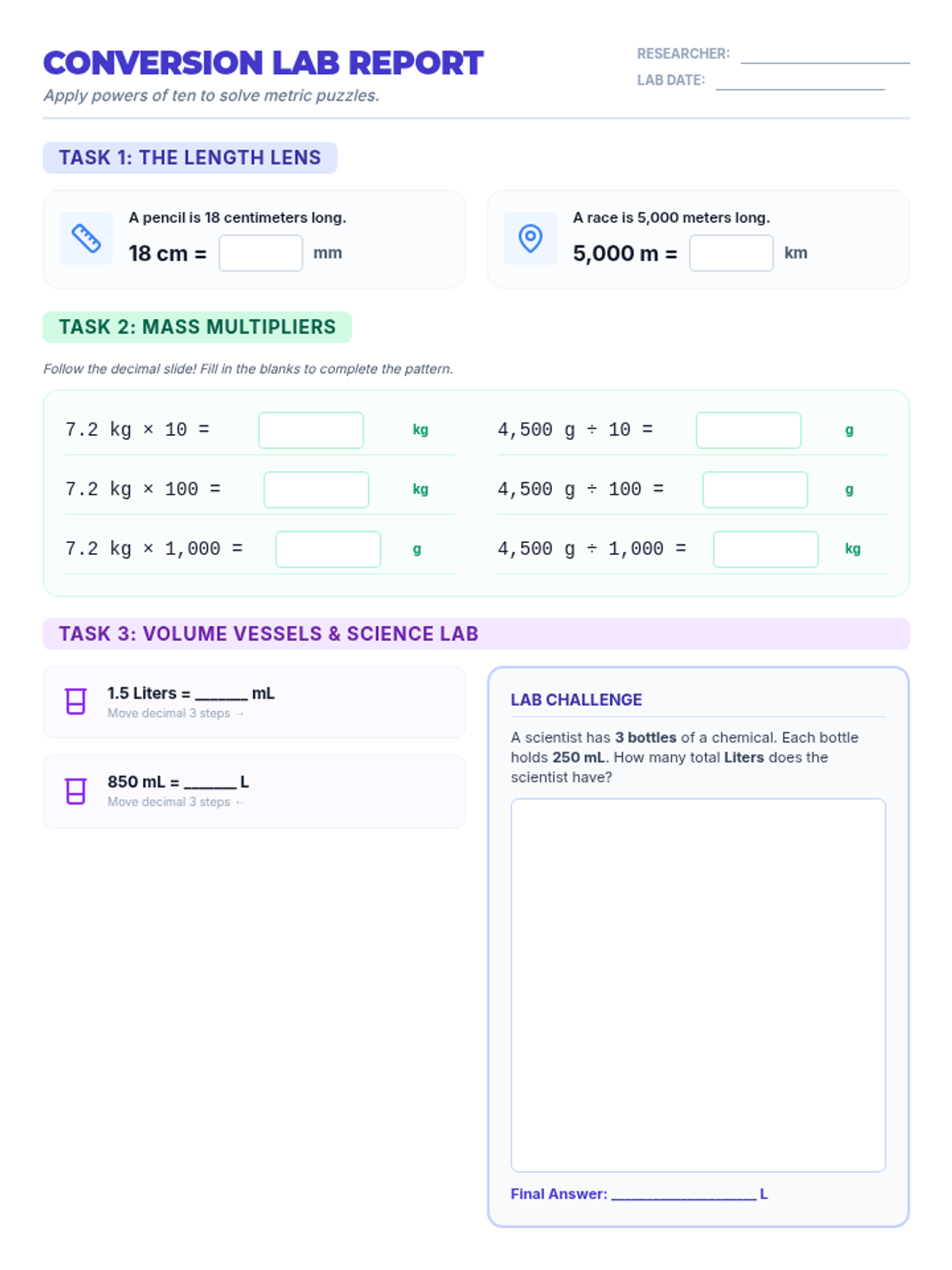
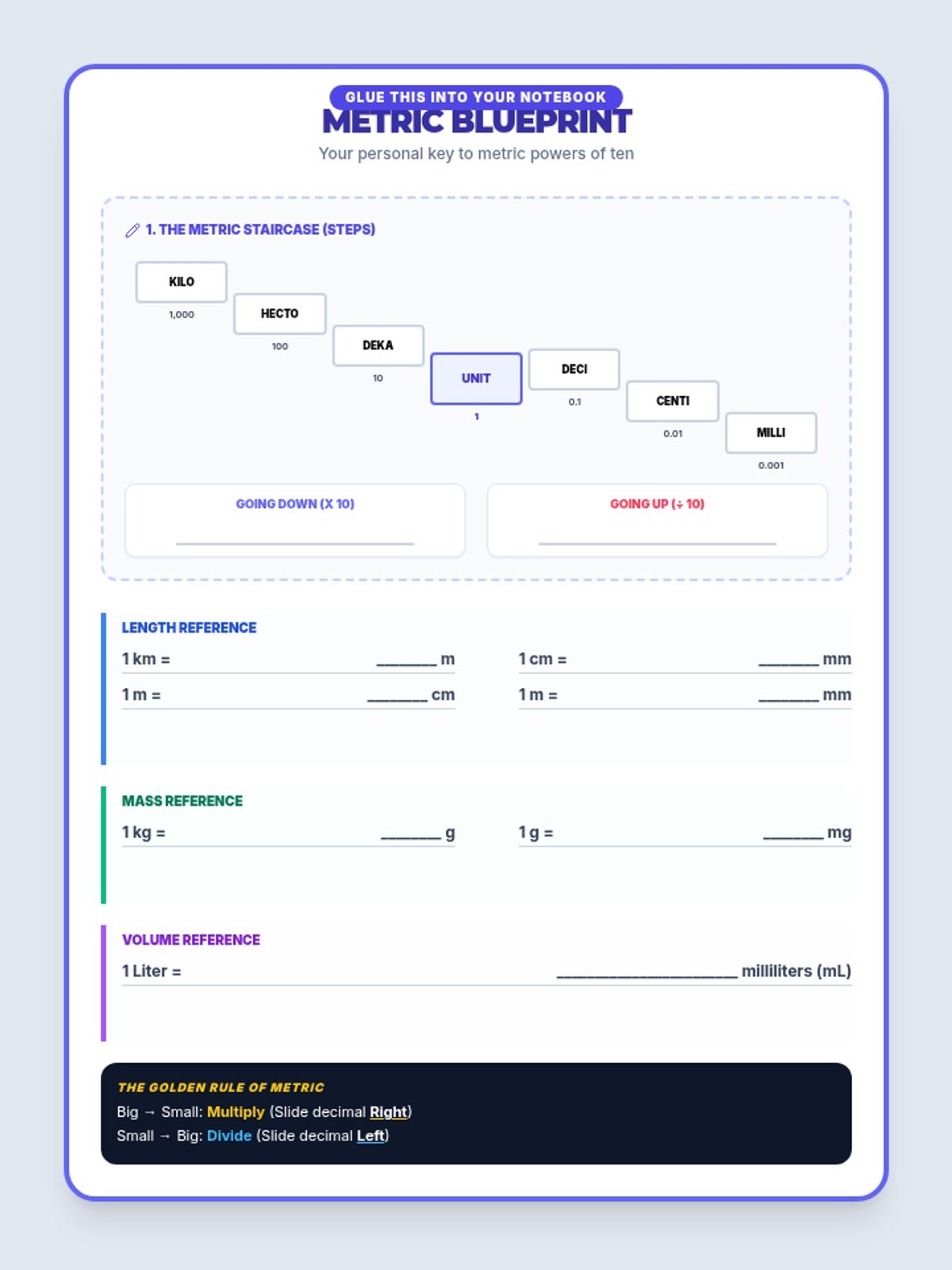
Students explore the relationship between metric units and powers of ten, using visual staircases and laboratory 'blueprints' to master conversions.
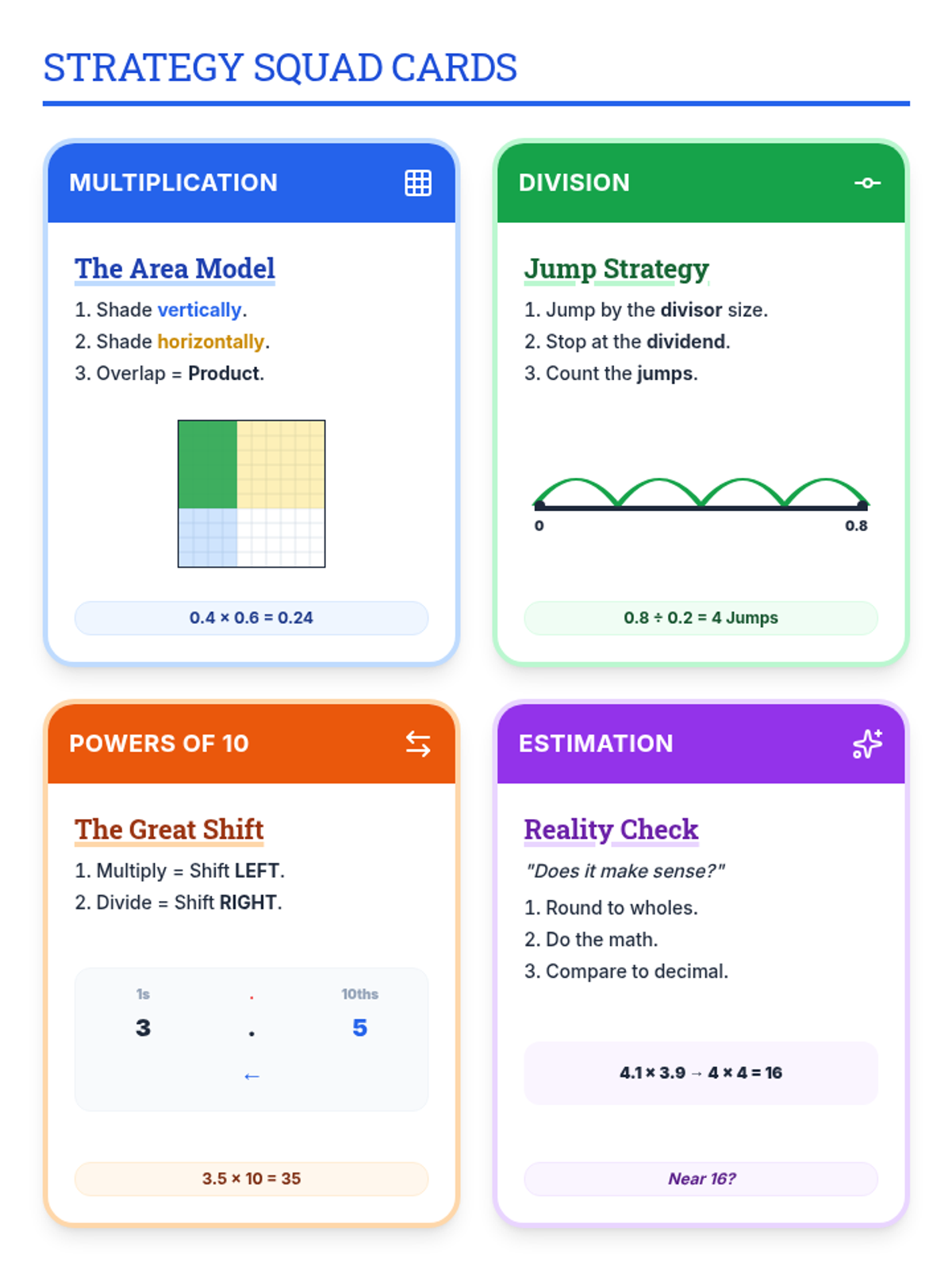
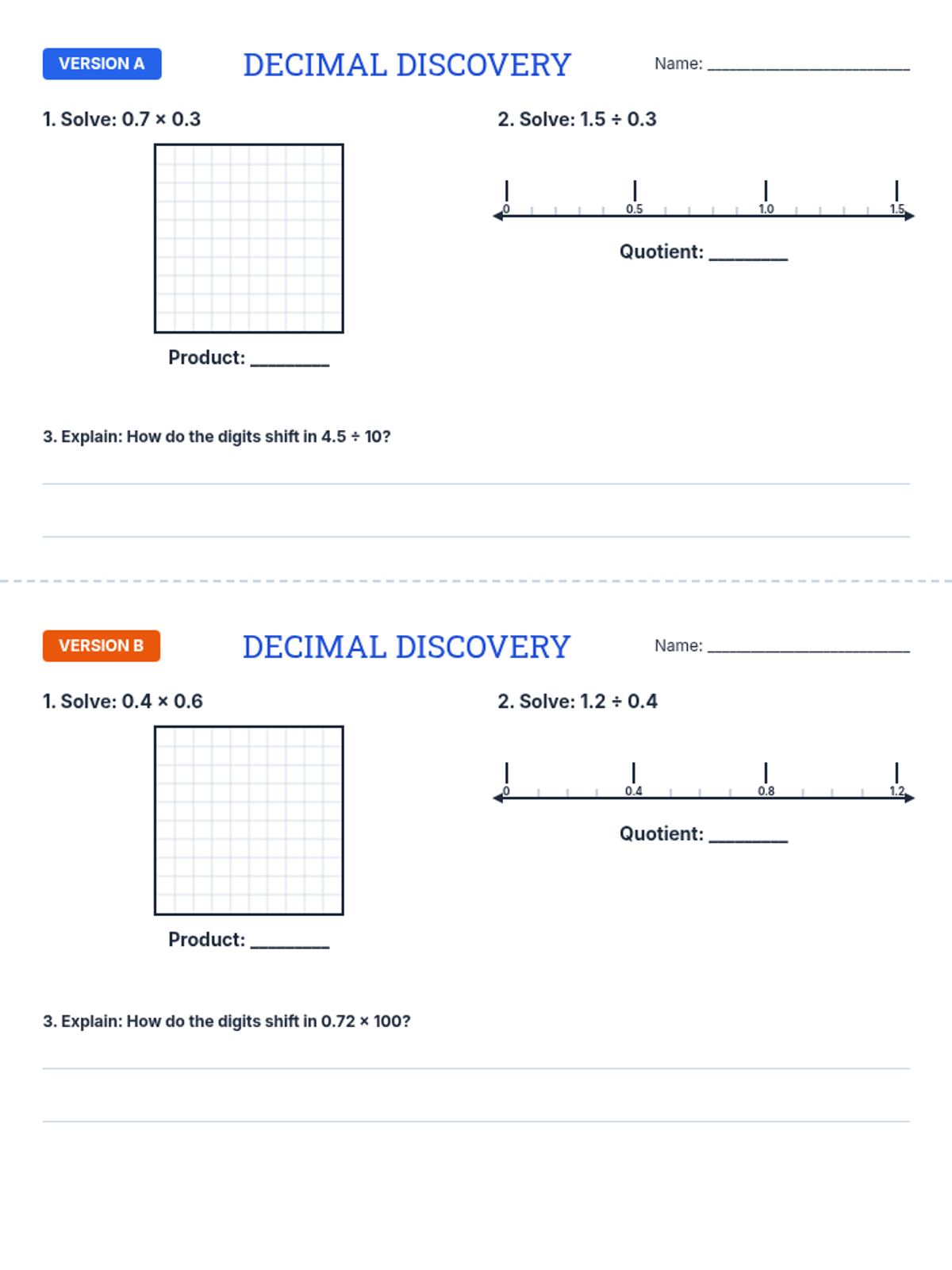
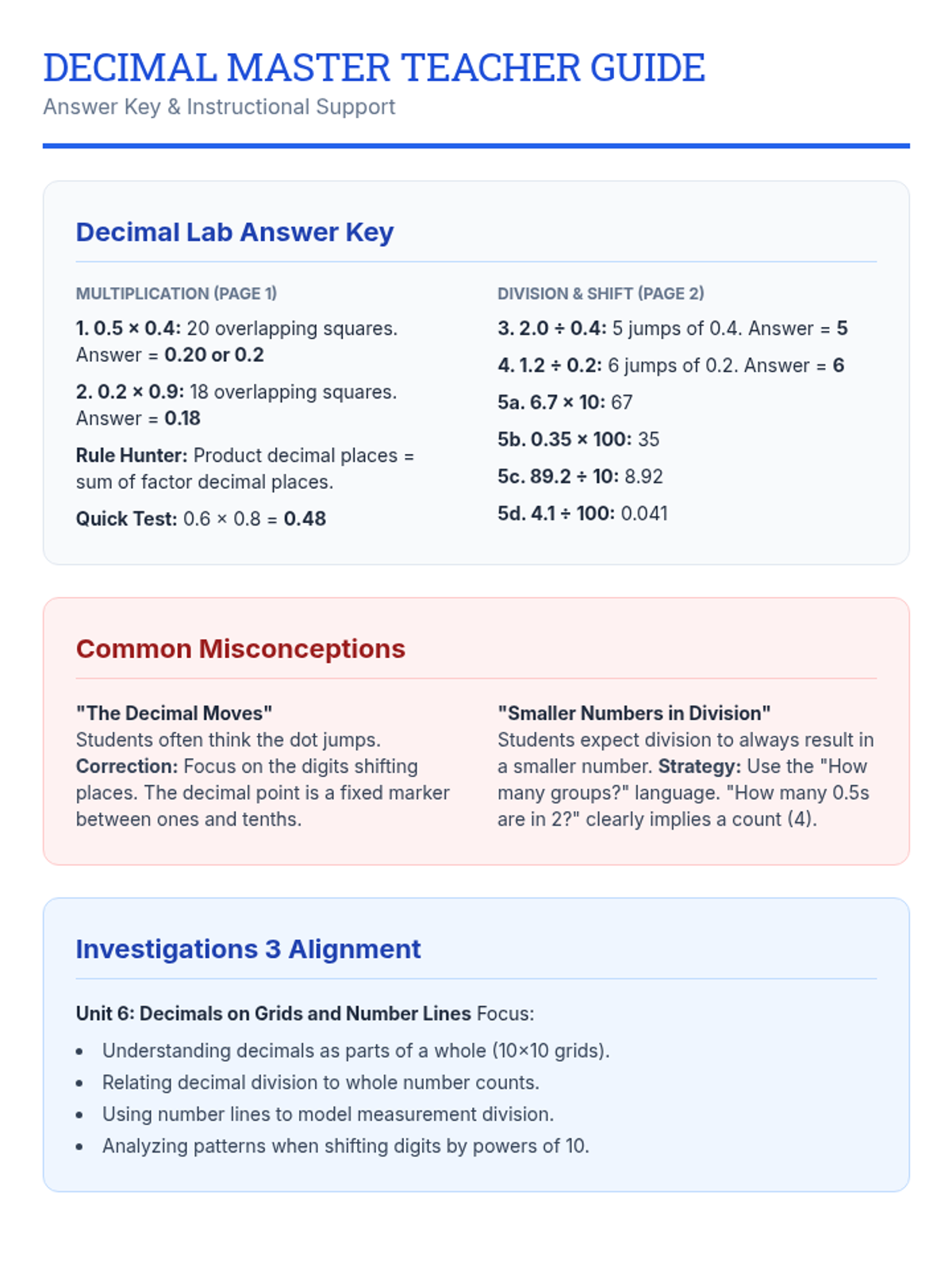
A comprehensive set of visual models and strategies for 5th-grade decimal multiplication and division, focusing on grids, number lines, and place value shifts.
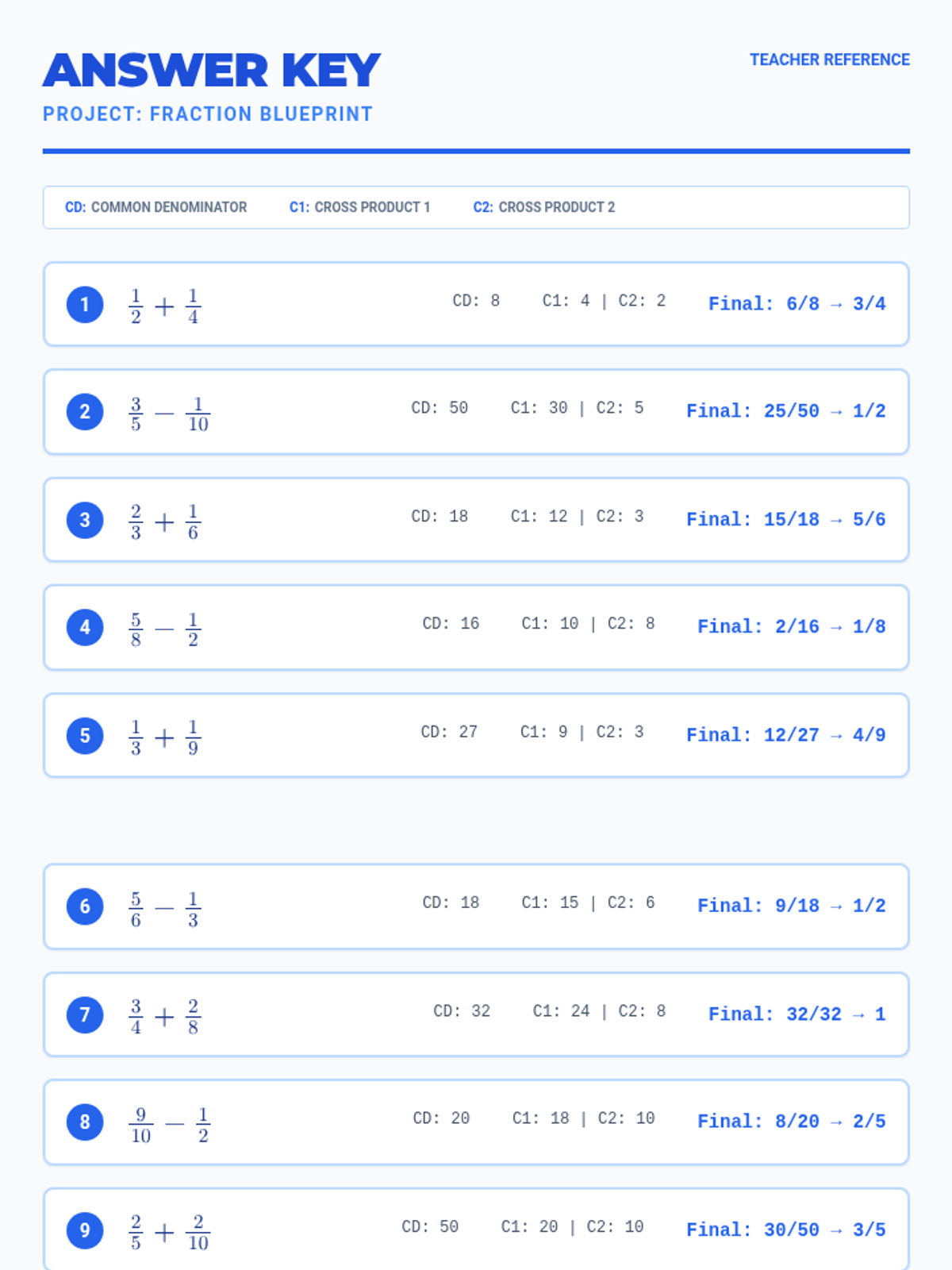
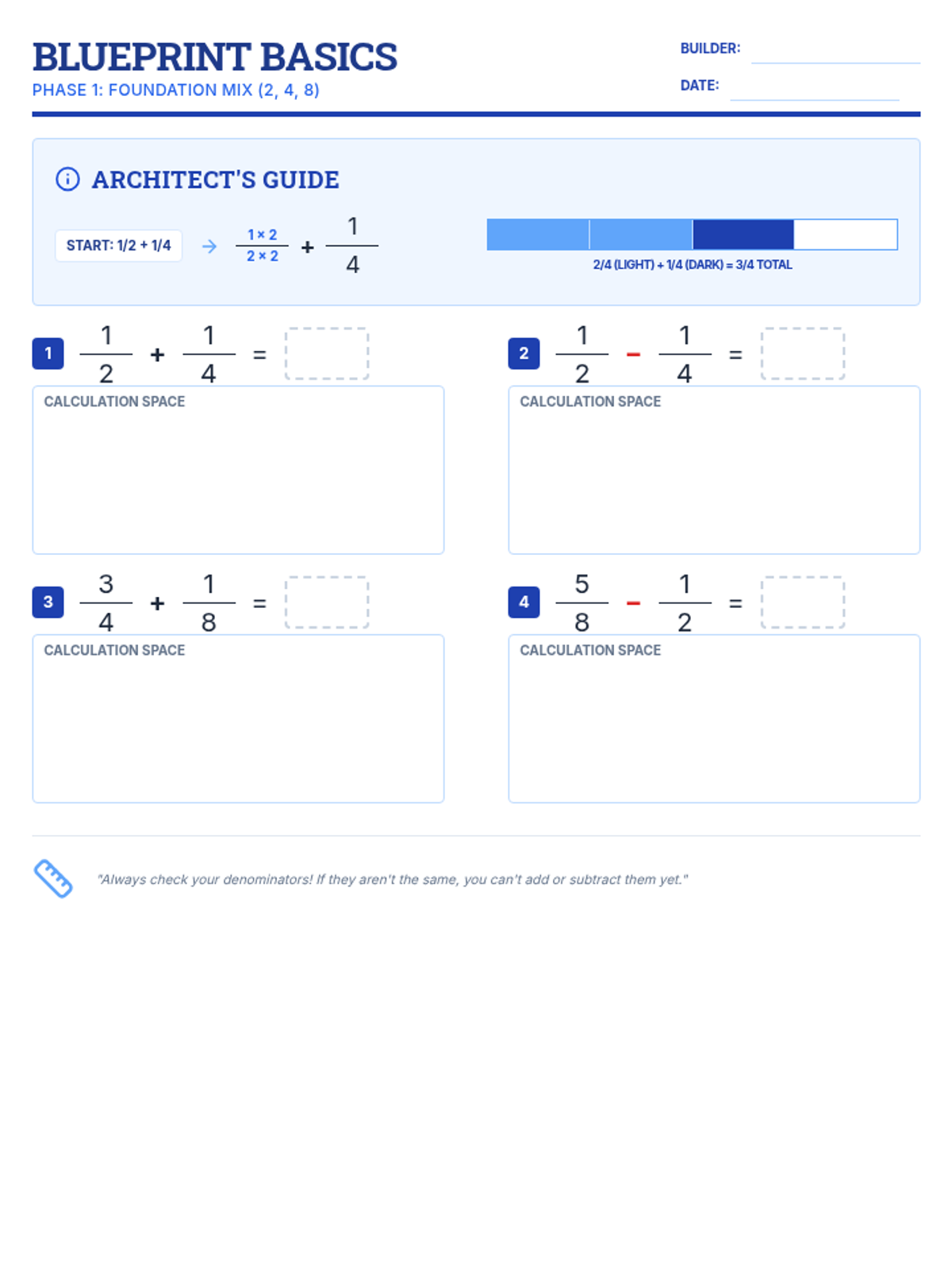
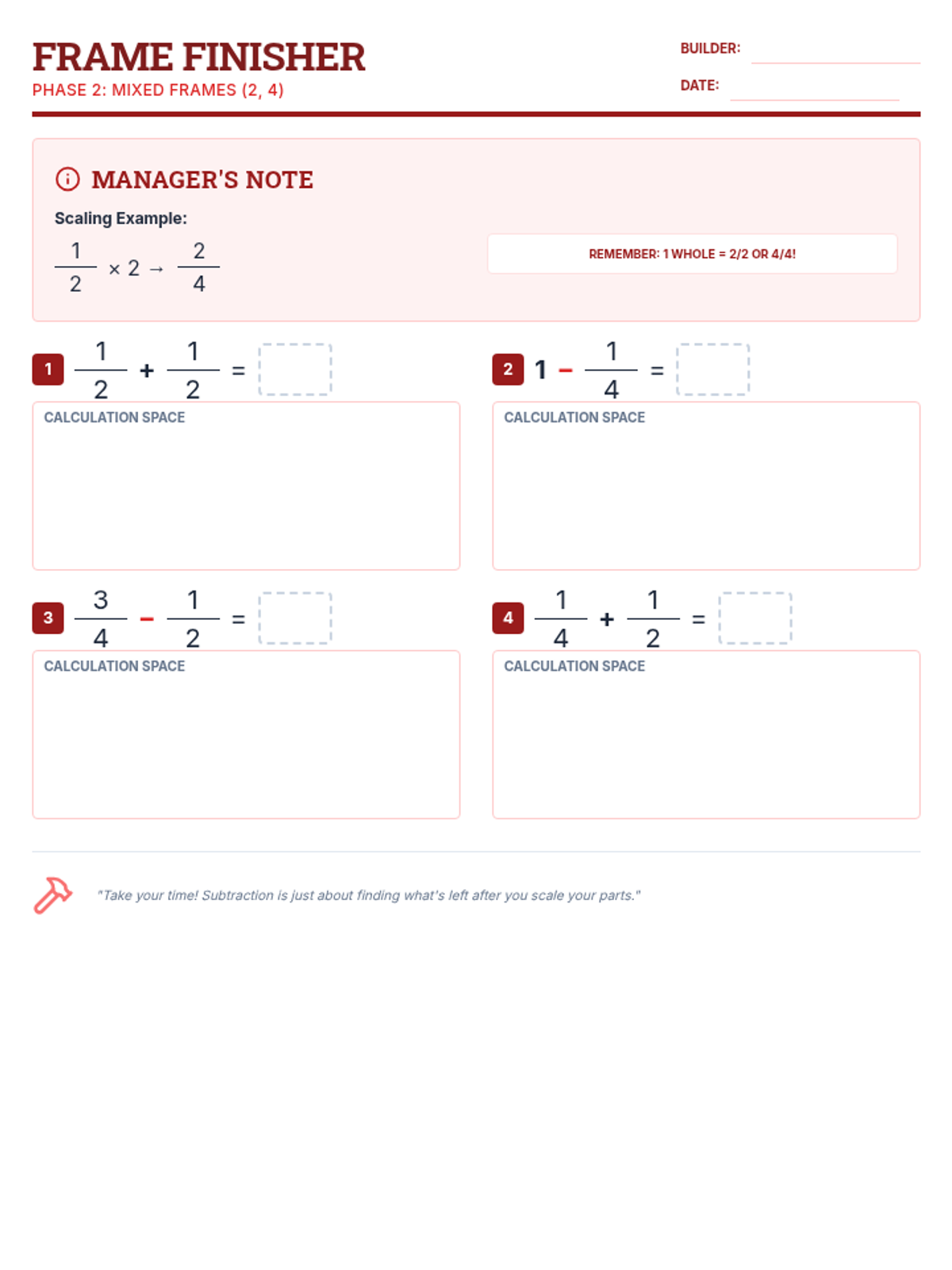
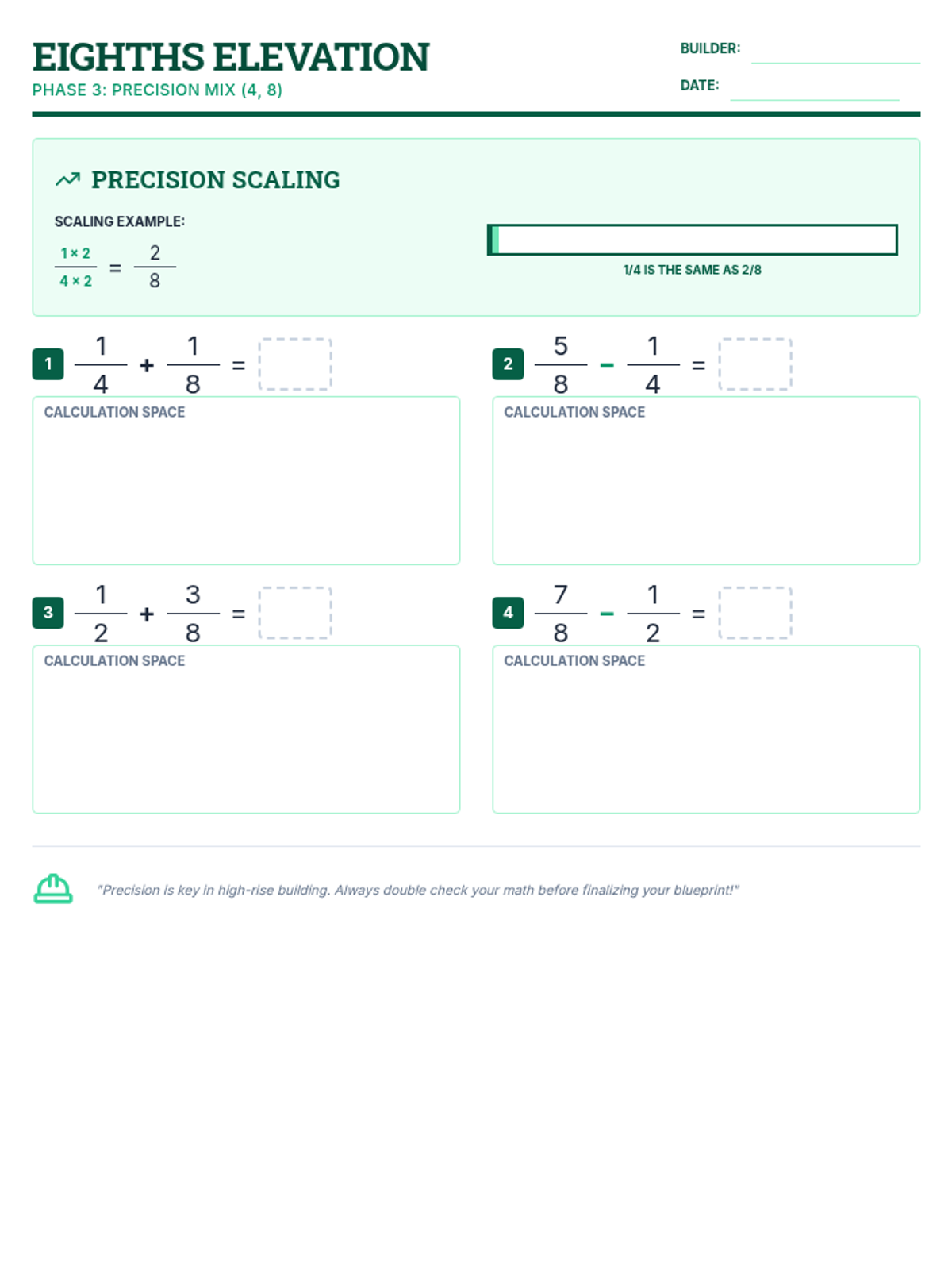
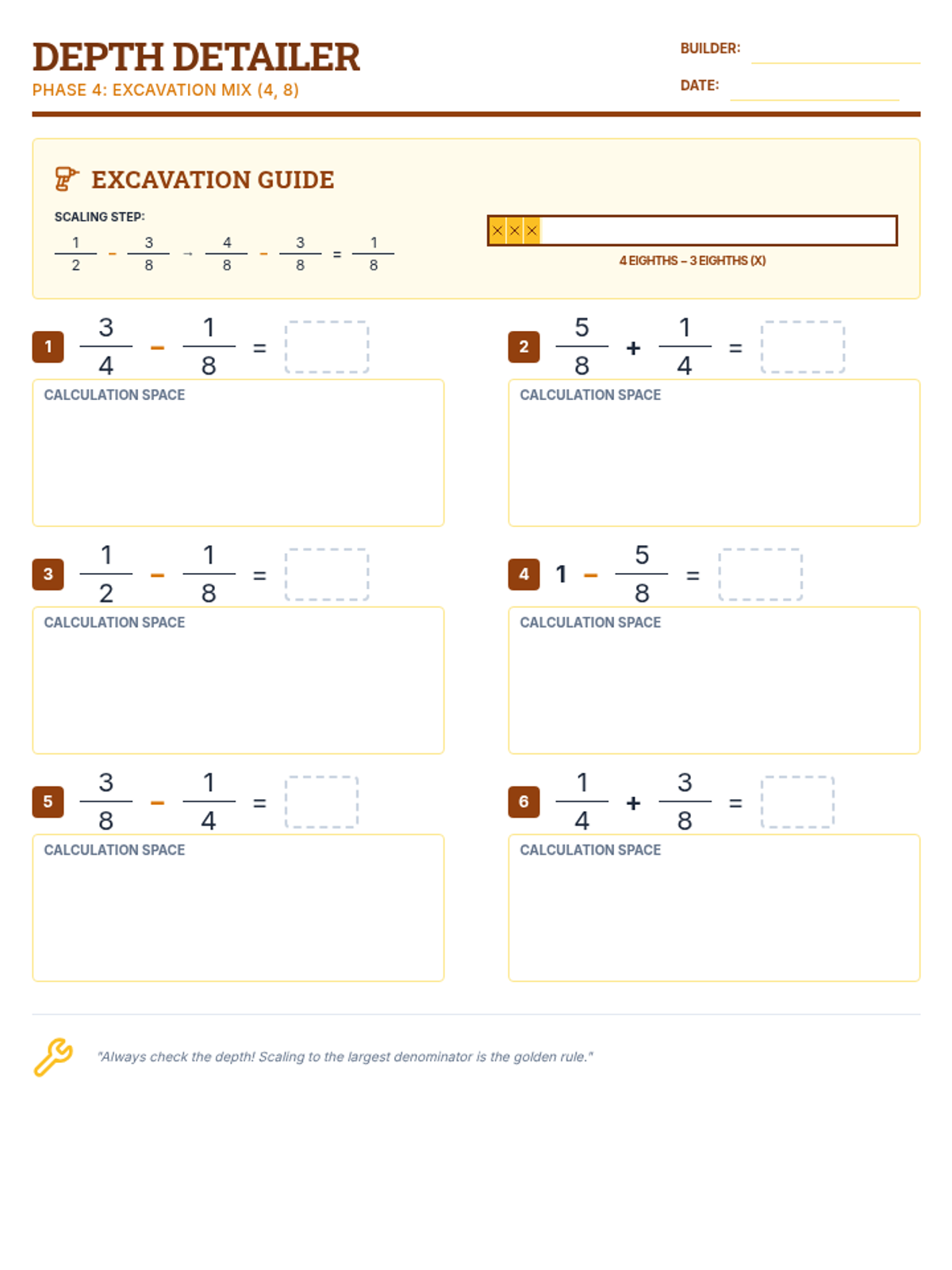
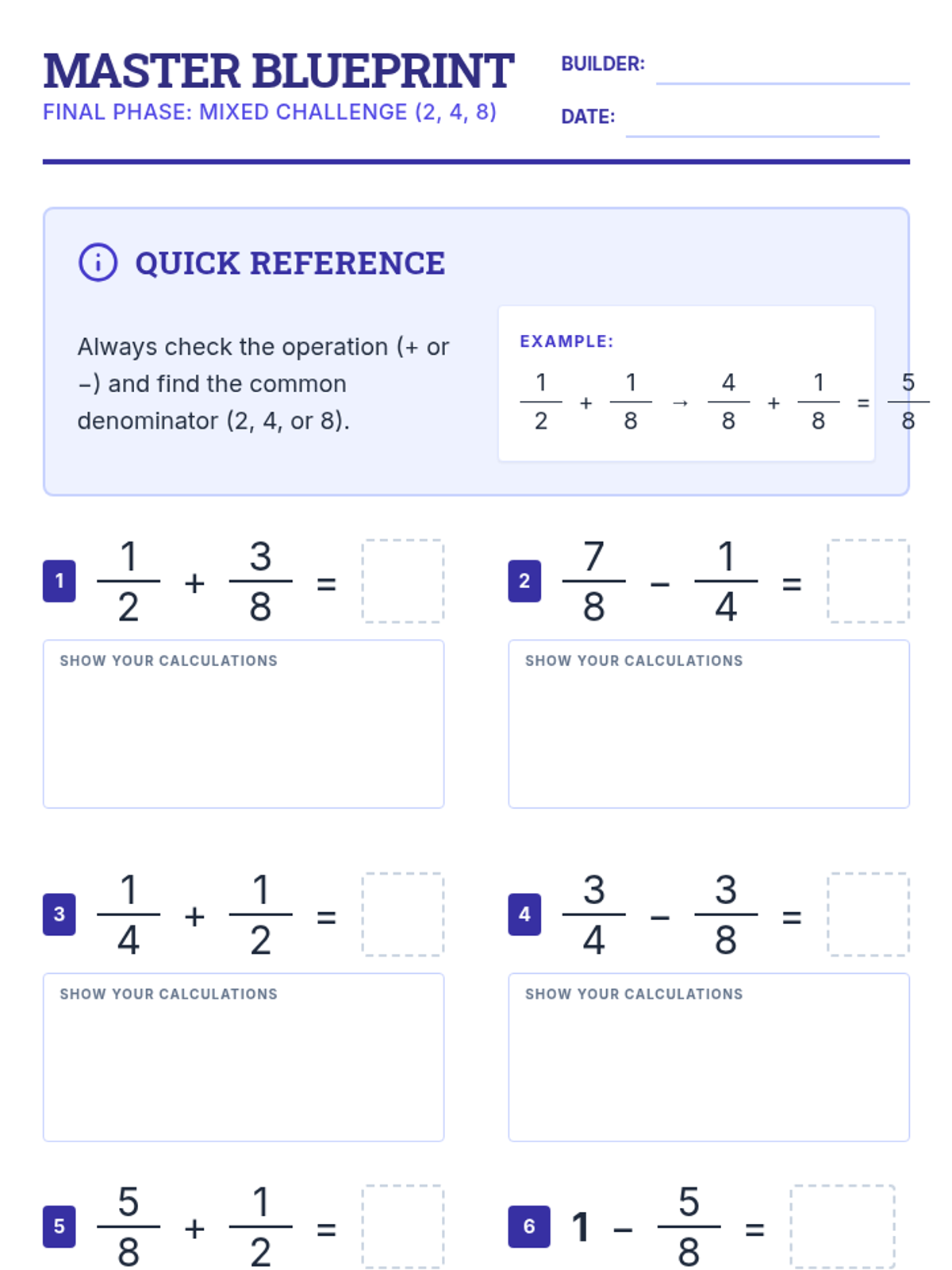
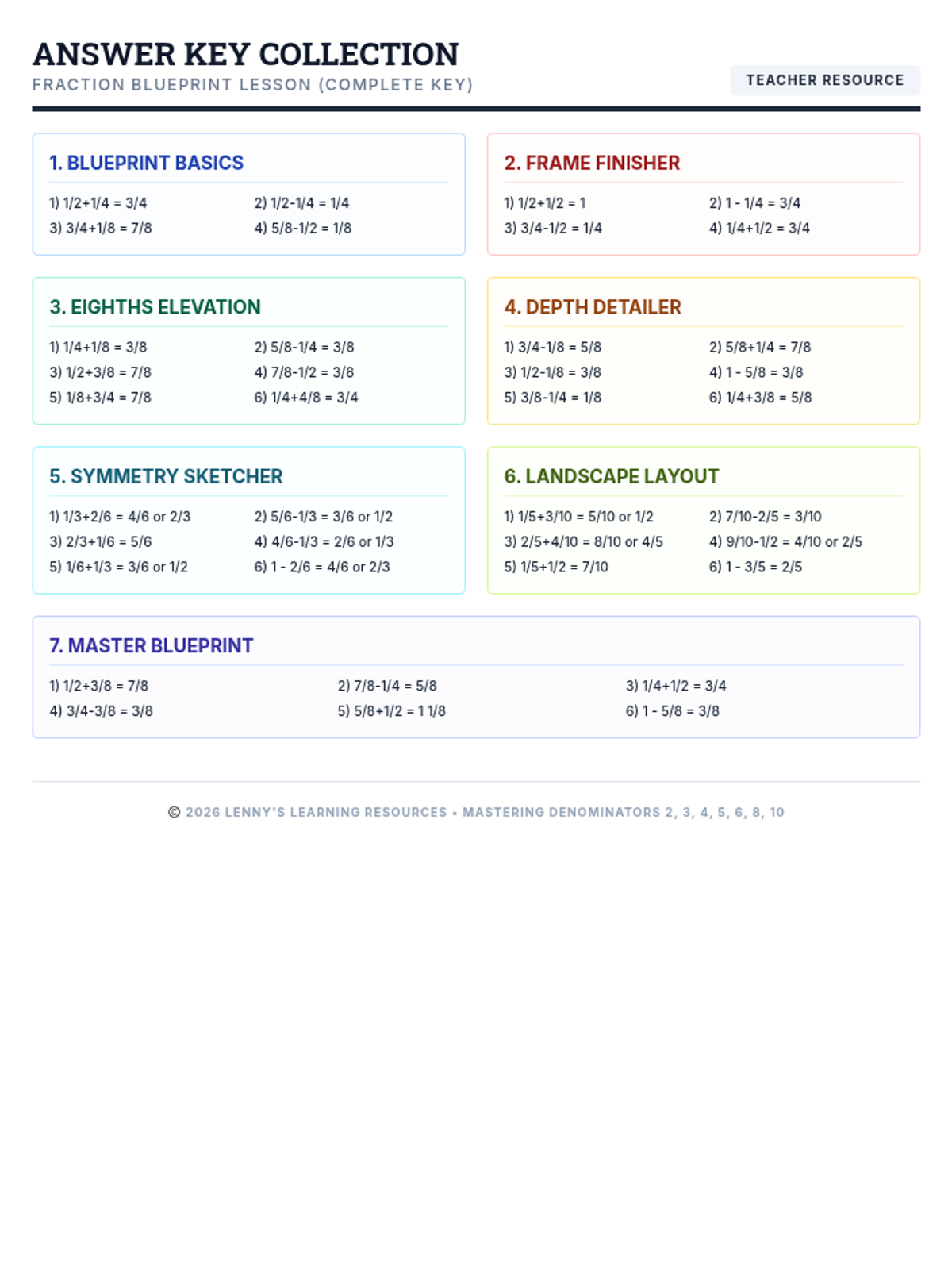
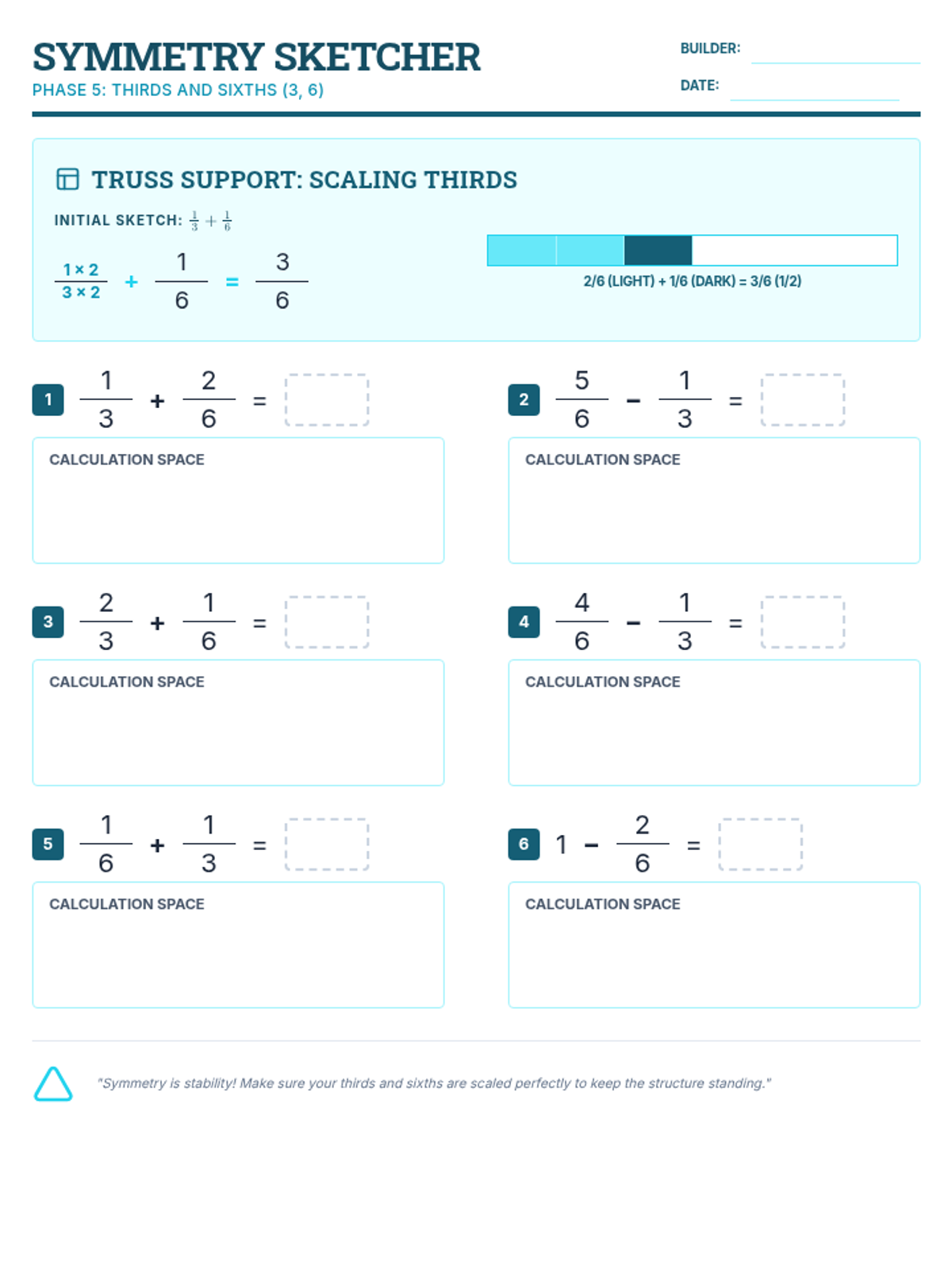
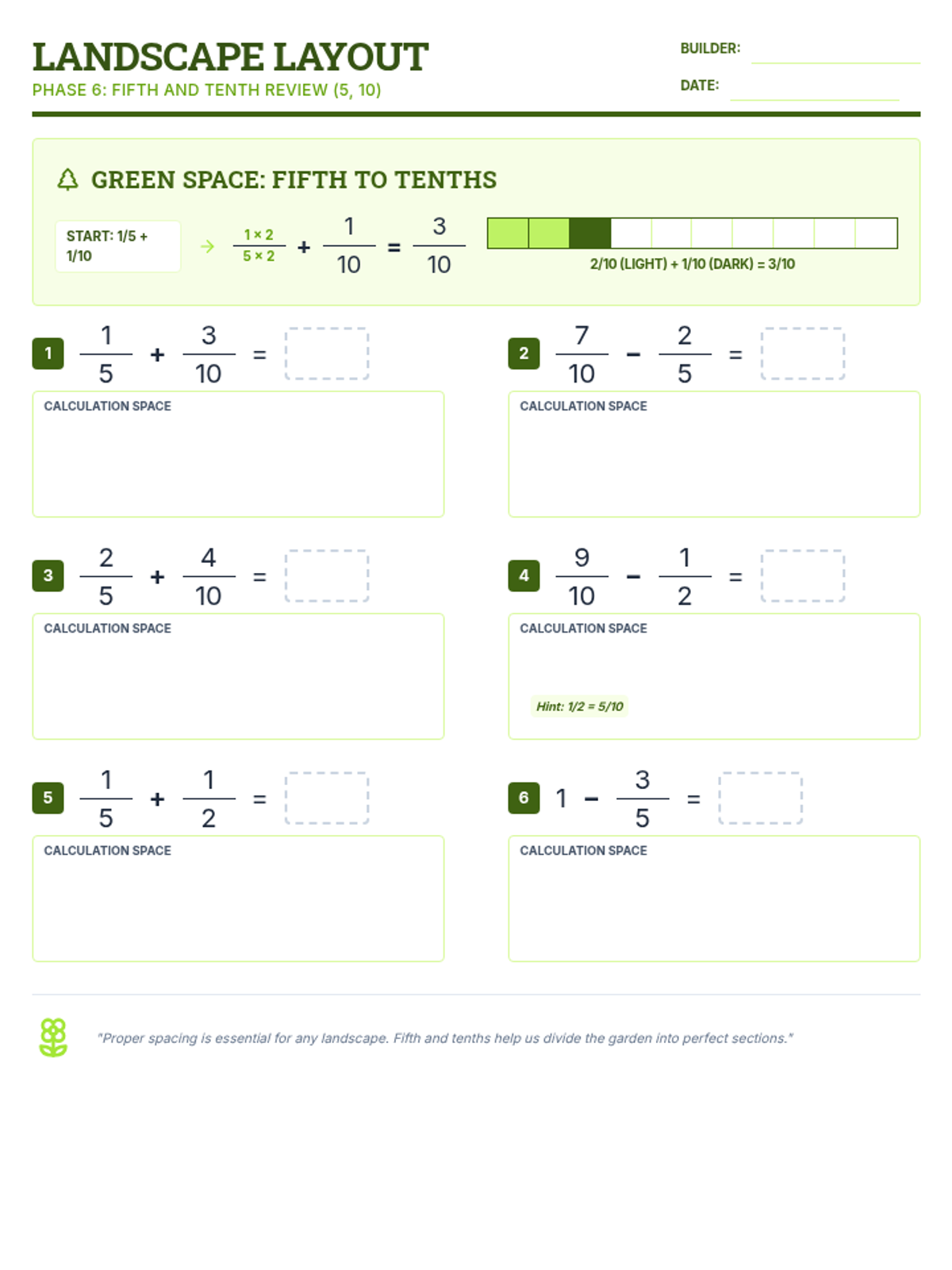
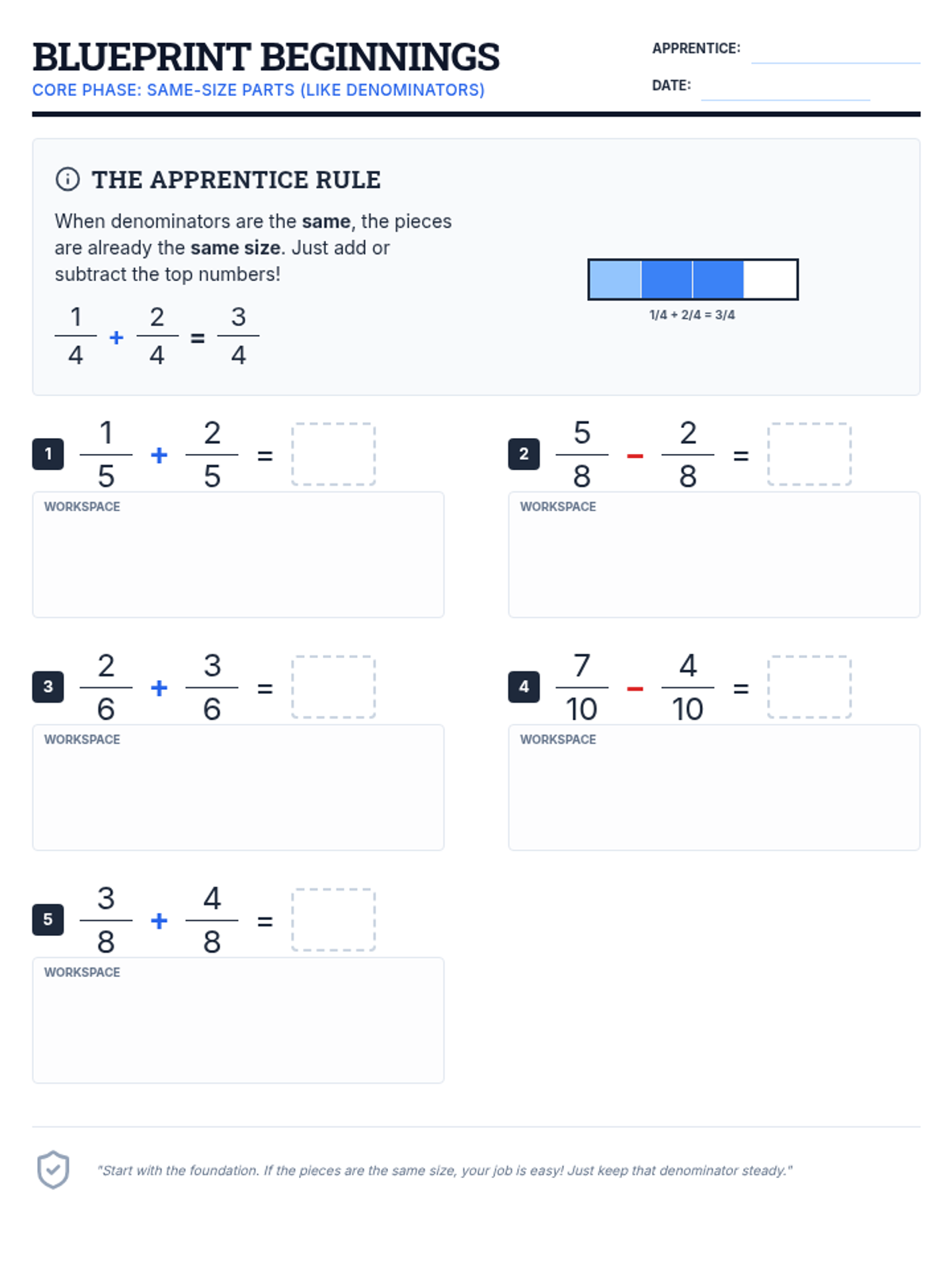
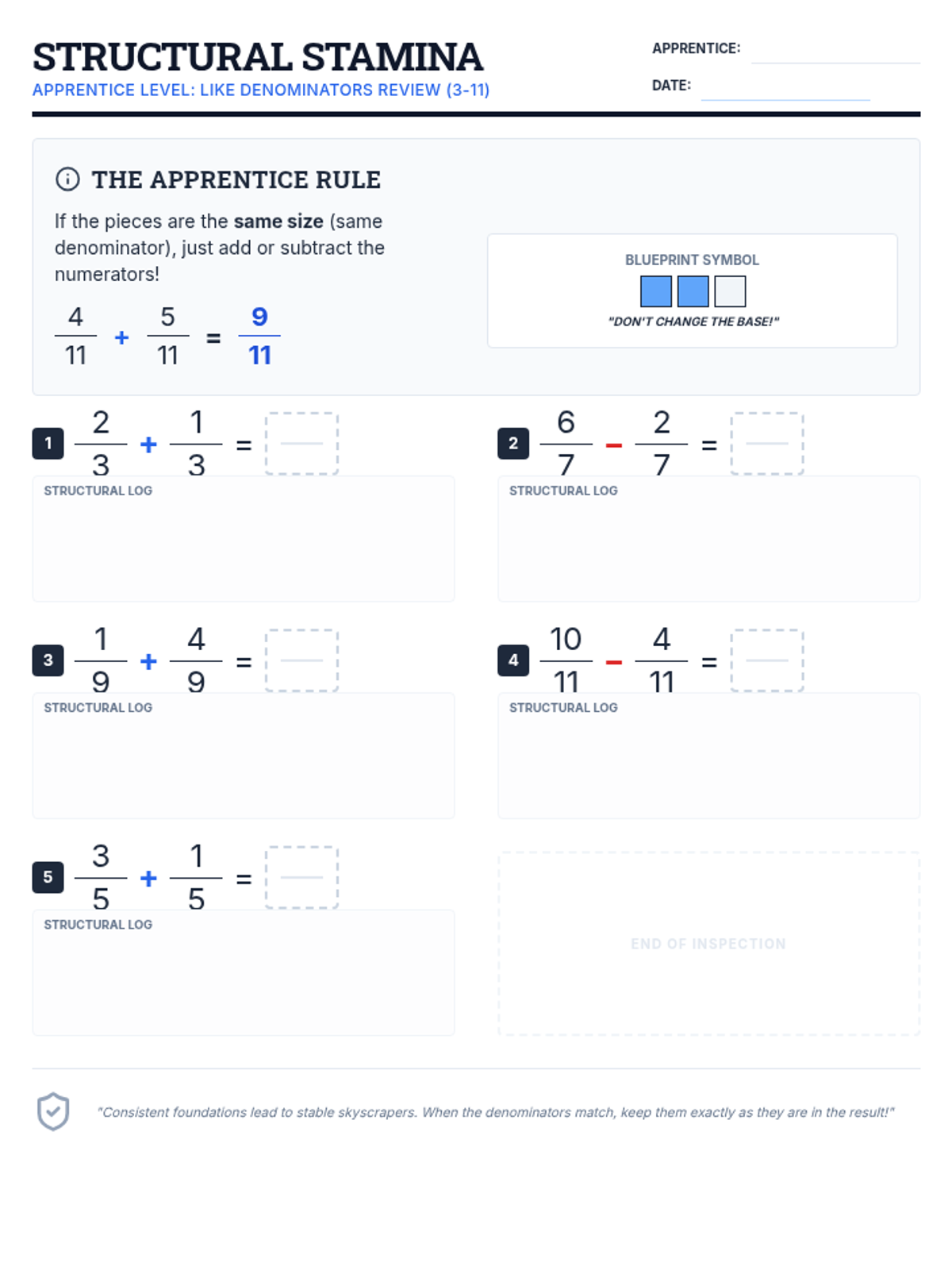
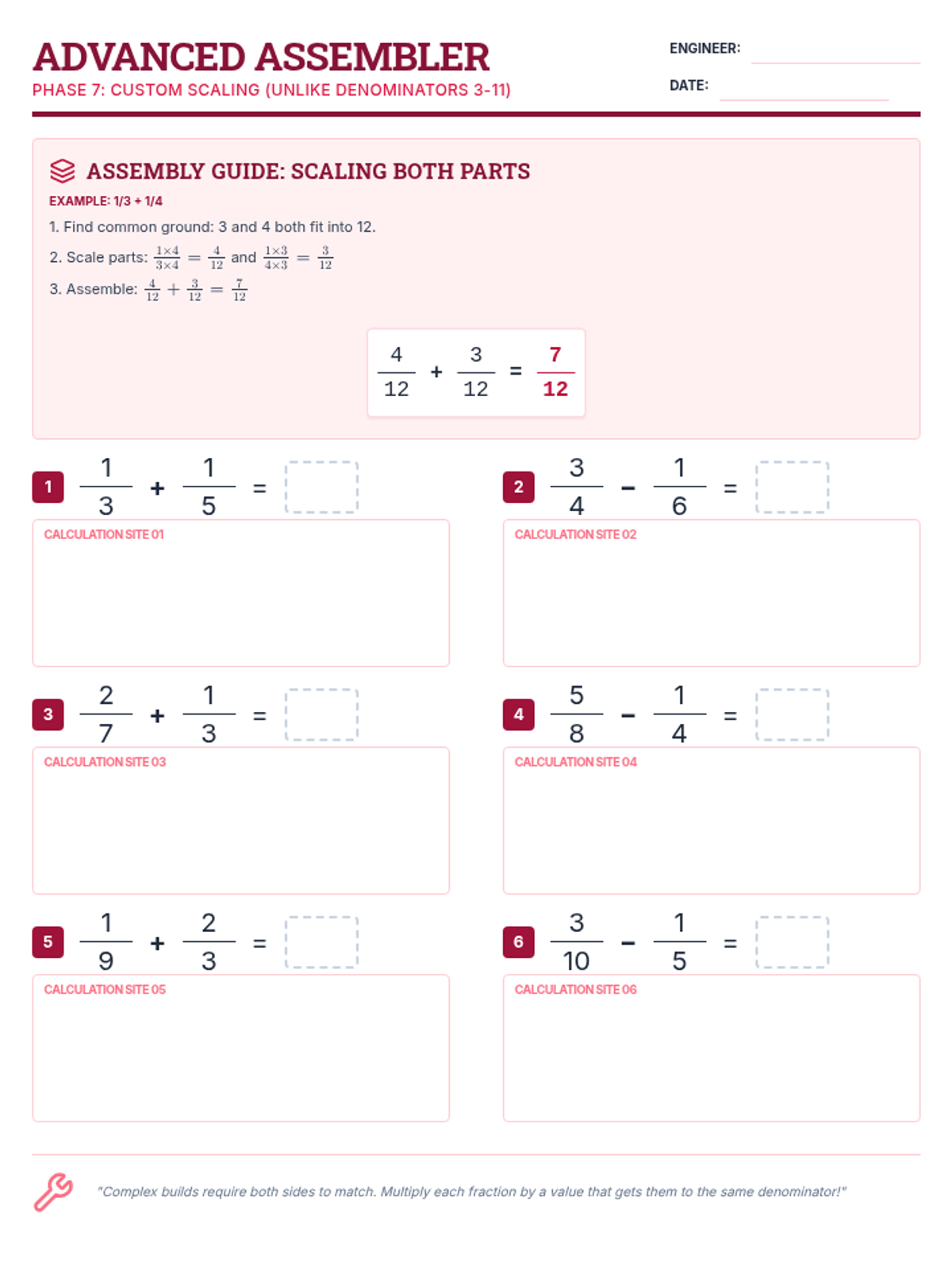
A series of 9 structured worksheets focusing on adding and subtracting fractions with simple denominators (2, 3, 4, 5, 6, 7, 8, 9, 10, 11) using a blueprint-inspired design. Includes step-by-step examples and visual scaffolds for students to master both like and unlike denominators.