Develops proficiency in estimating and measuring length, area, volume, and mass using standard units and unit conversions. Integrates time, money, angle measurement, and data classification through counting and arithmetic applications.
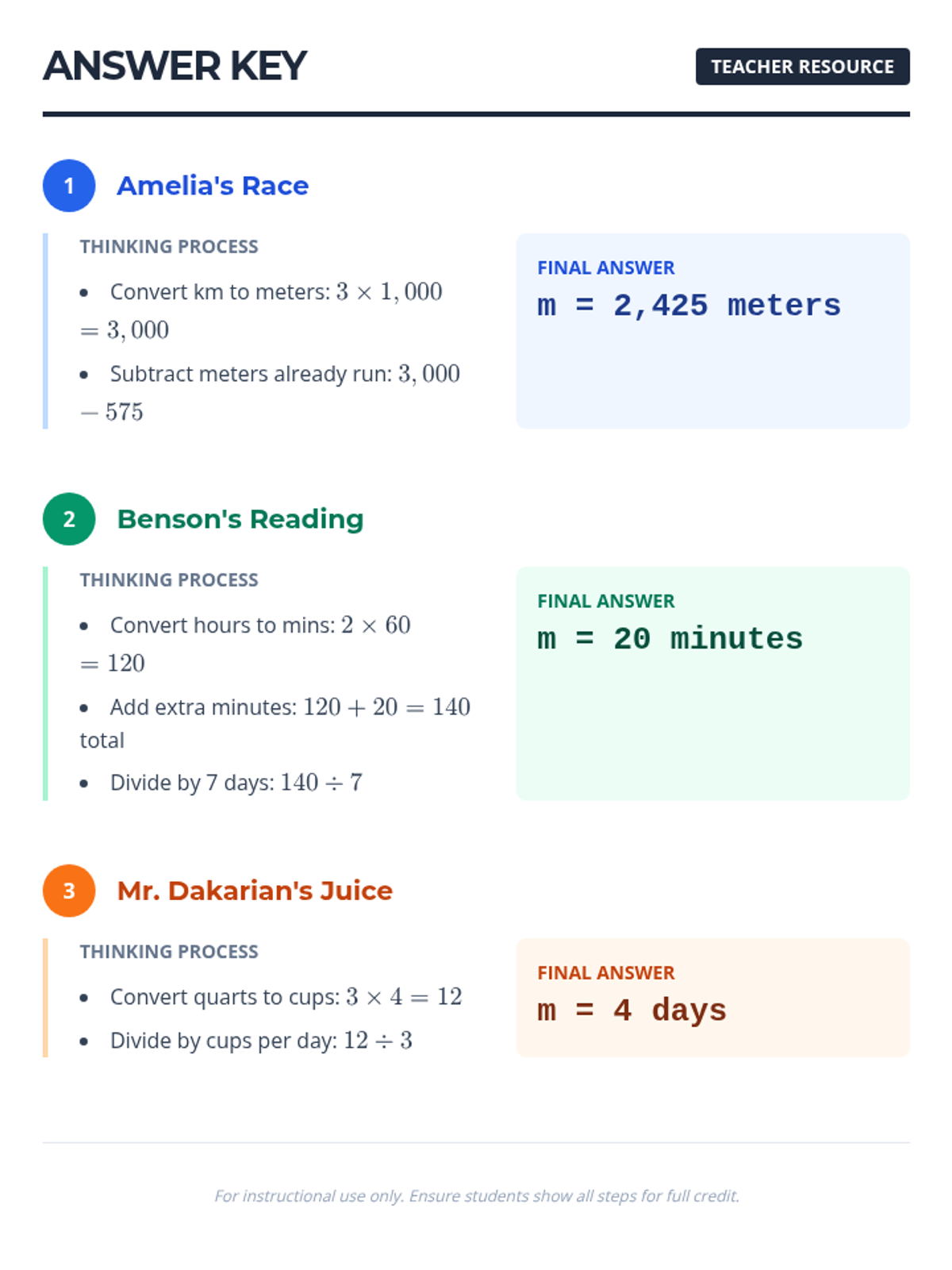
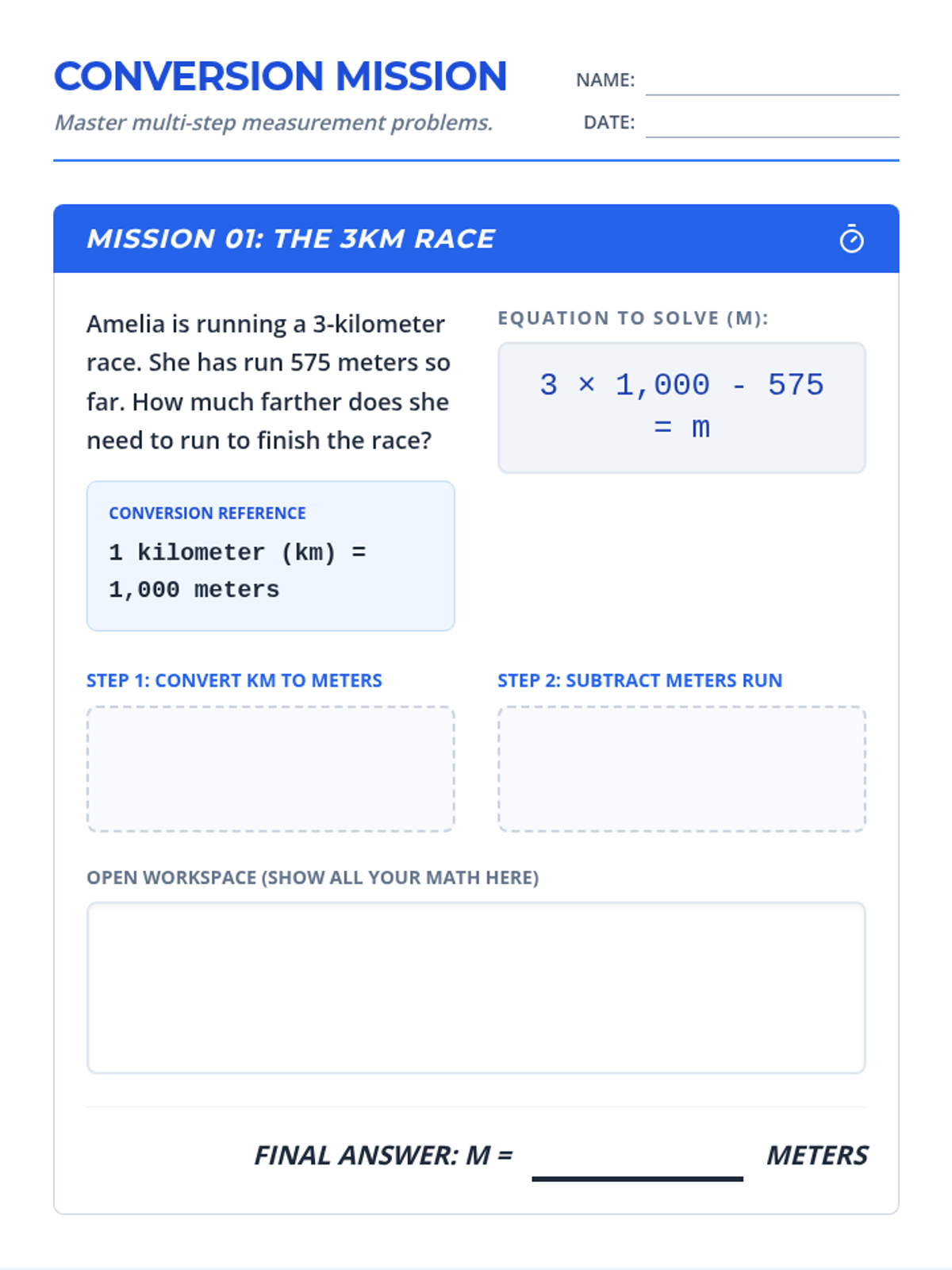
A focused lesson on solving multi-step word problems involving measurement conversions for length, time, and volume. Students practice converting units before applying arithmetic operations to find solutions.
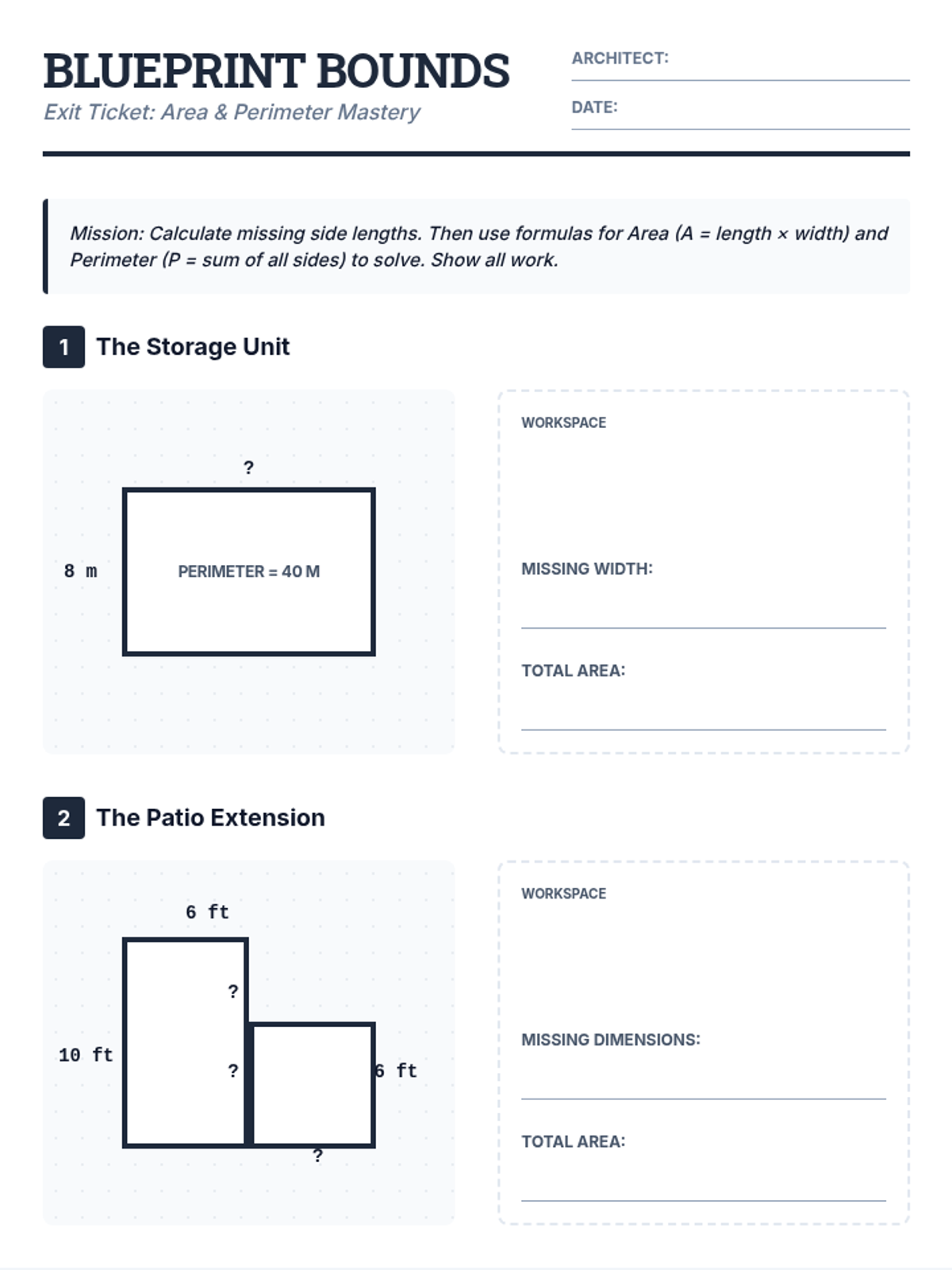
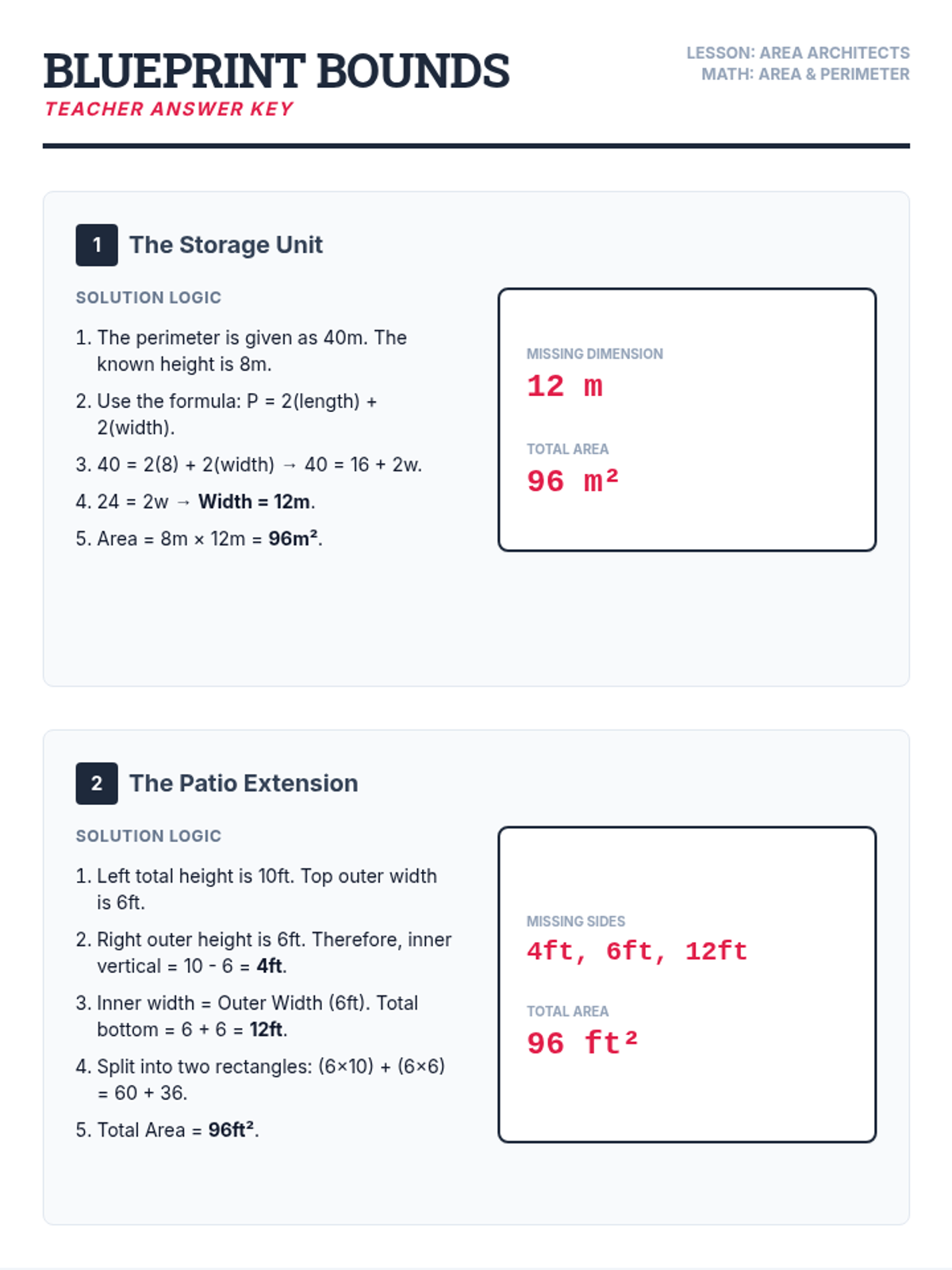
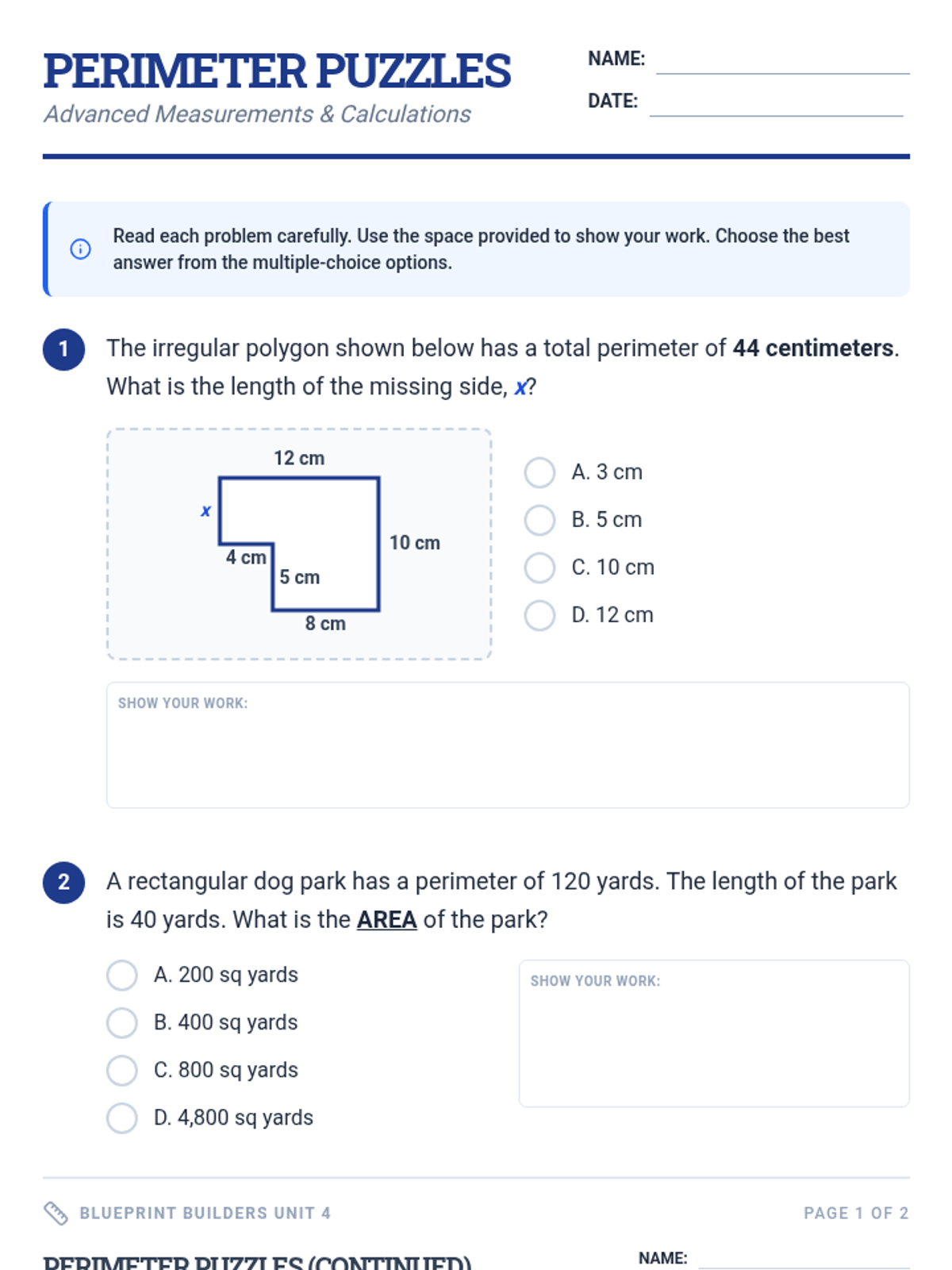
A focused lesson on calculating area and perimeter of complex rectilinear shapes by determining missing side lengths and applying geometric formulas.
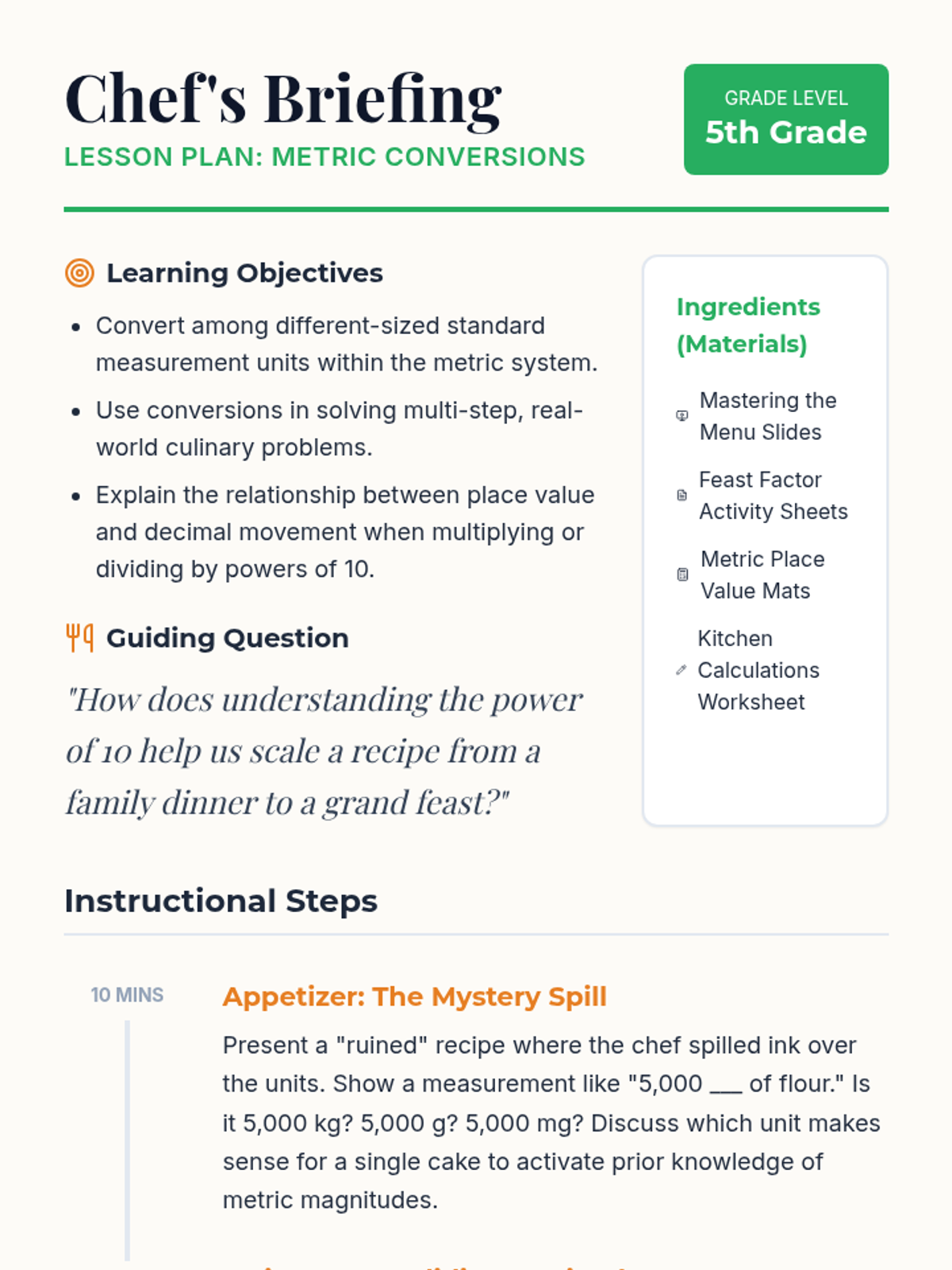
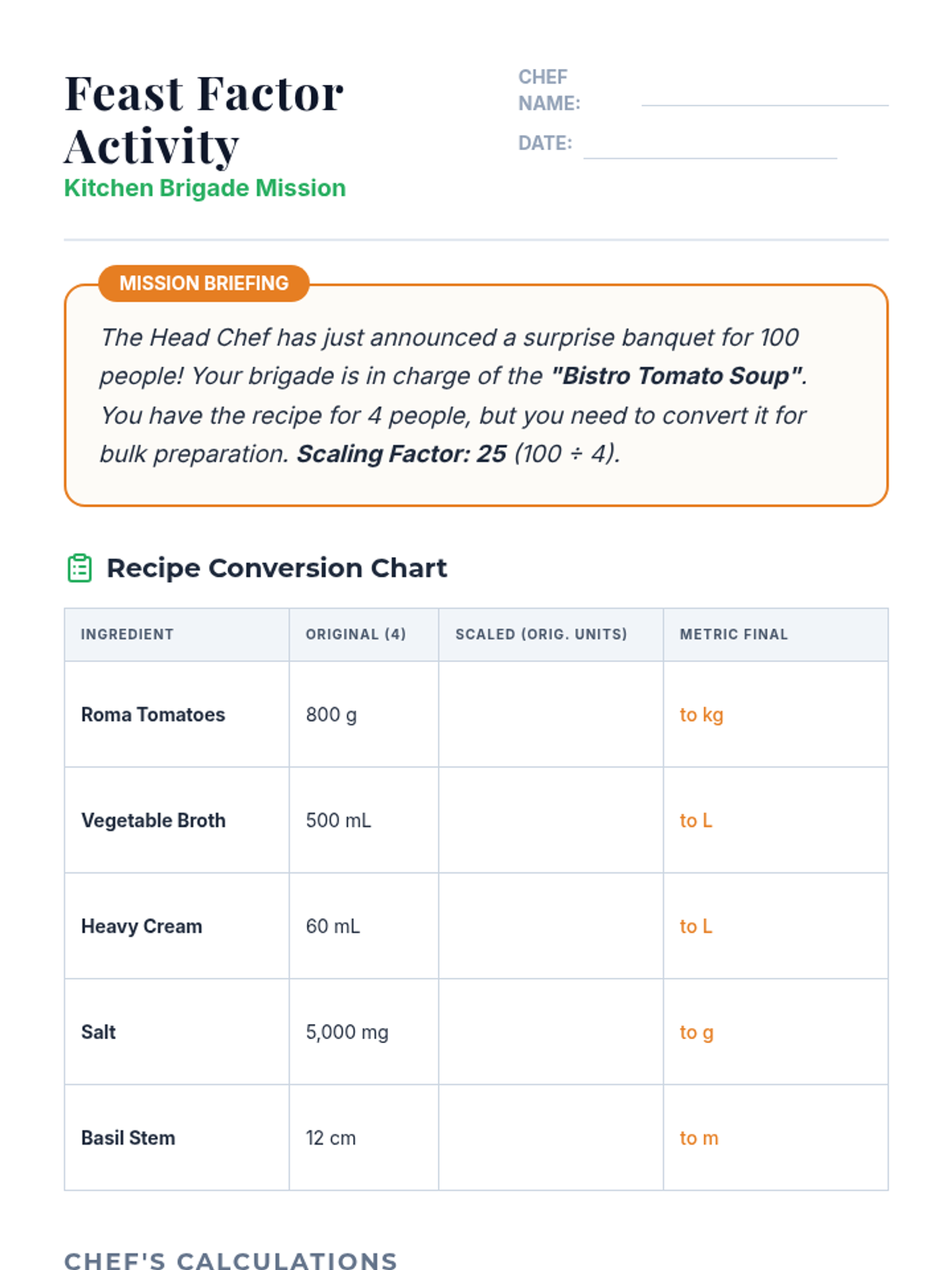
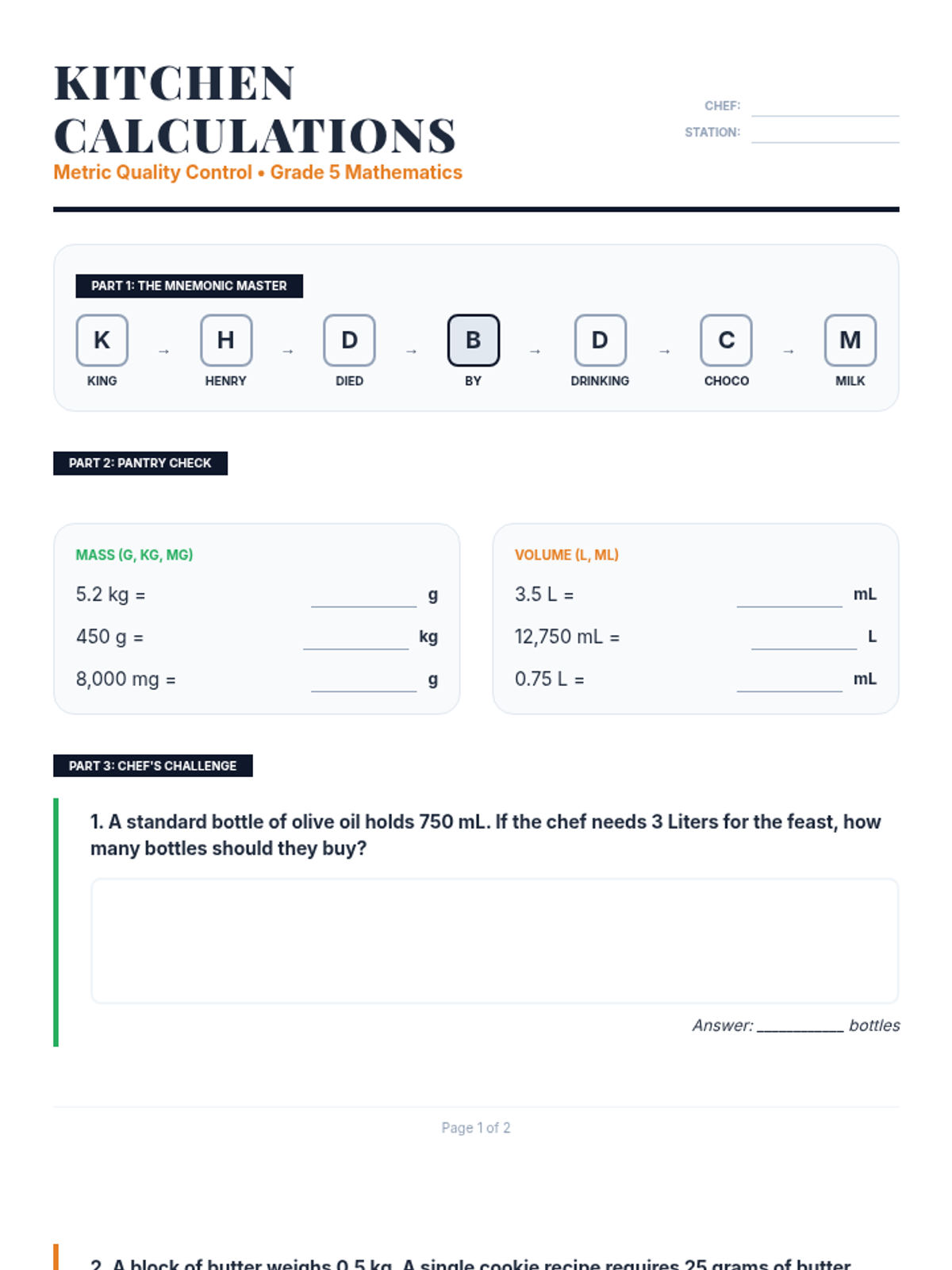
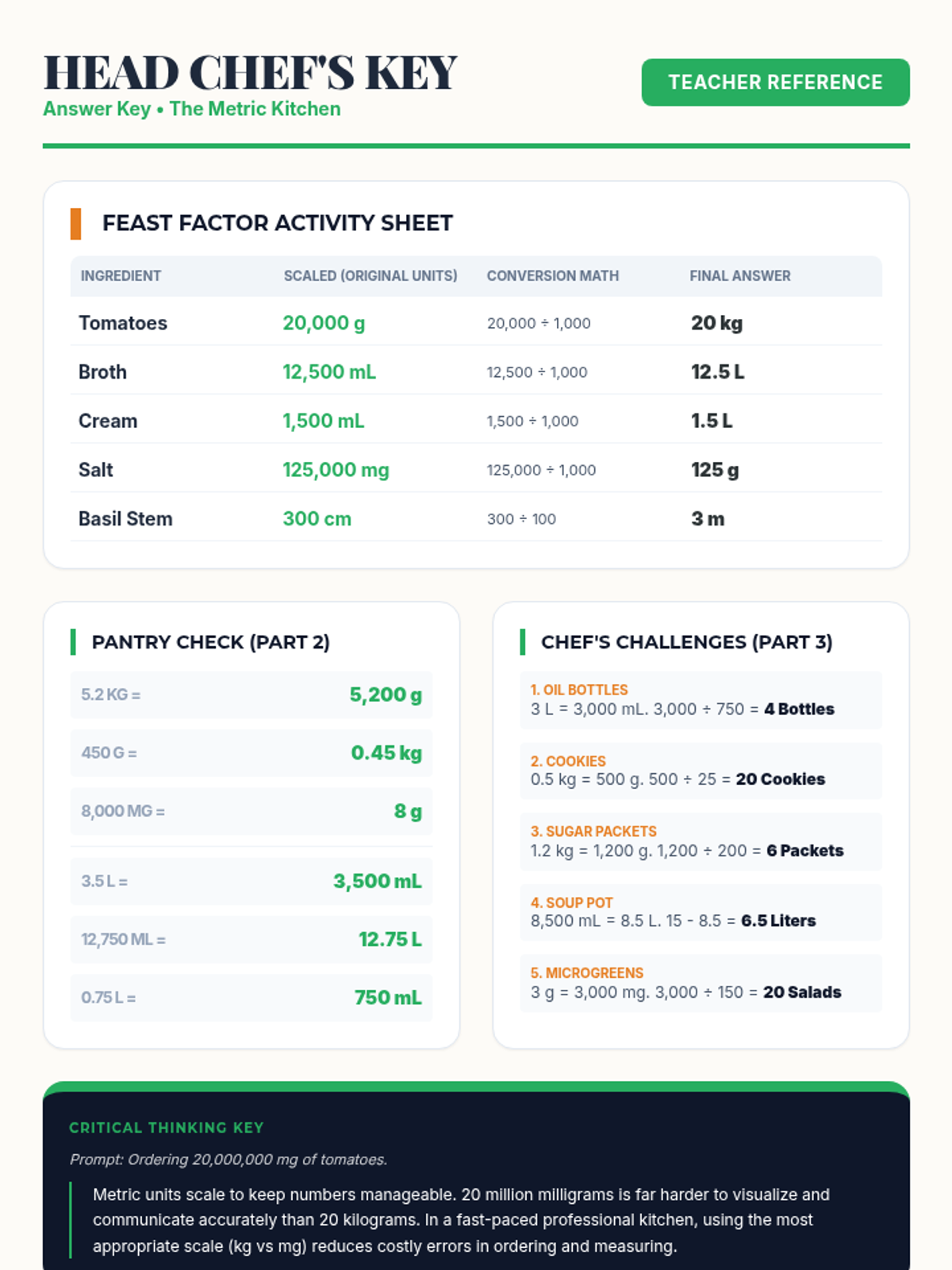
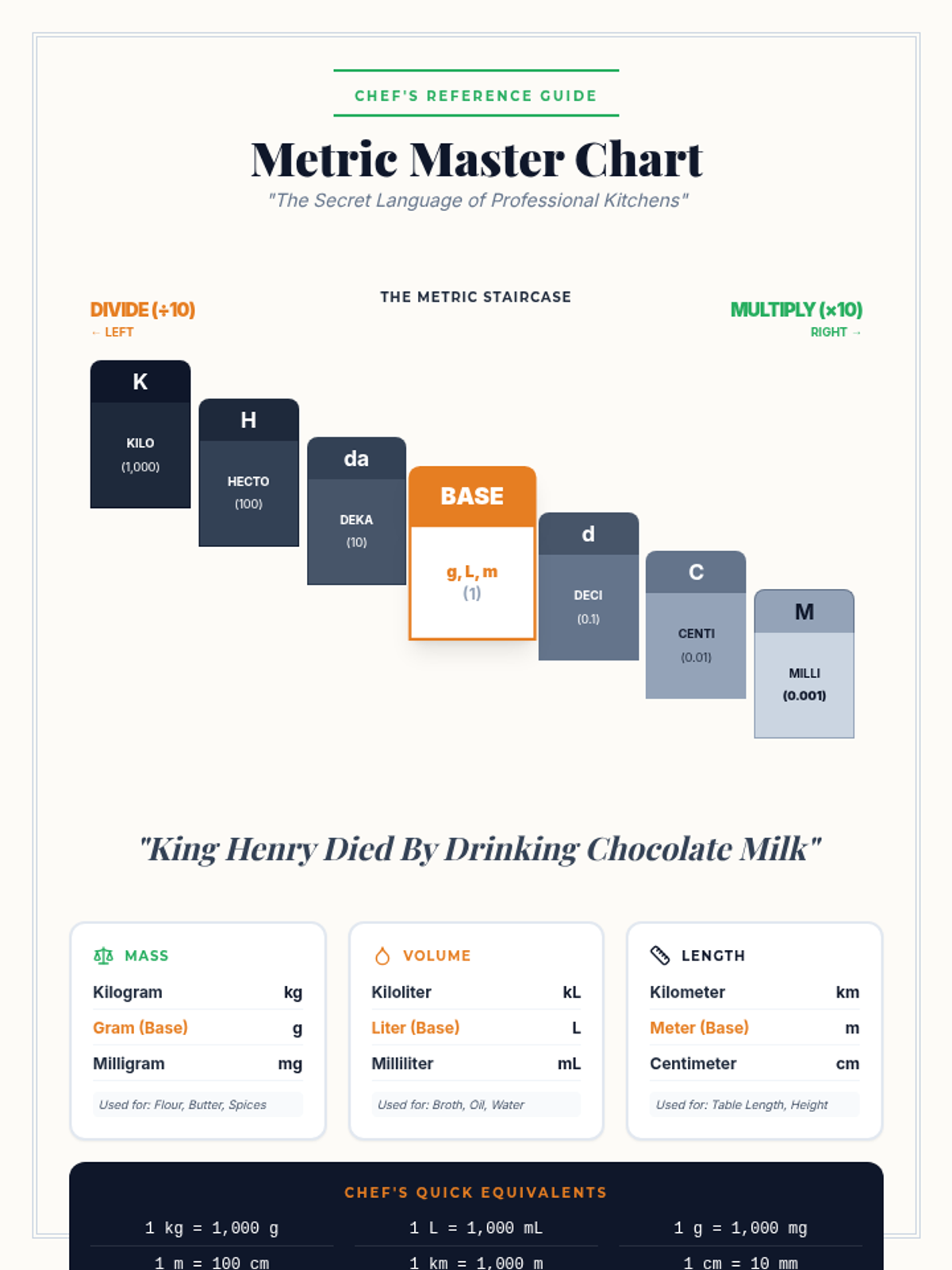
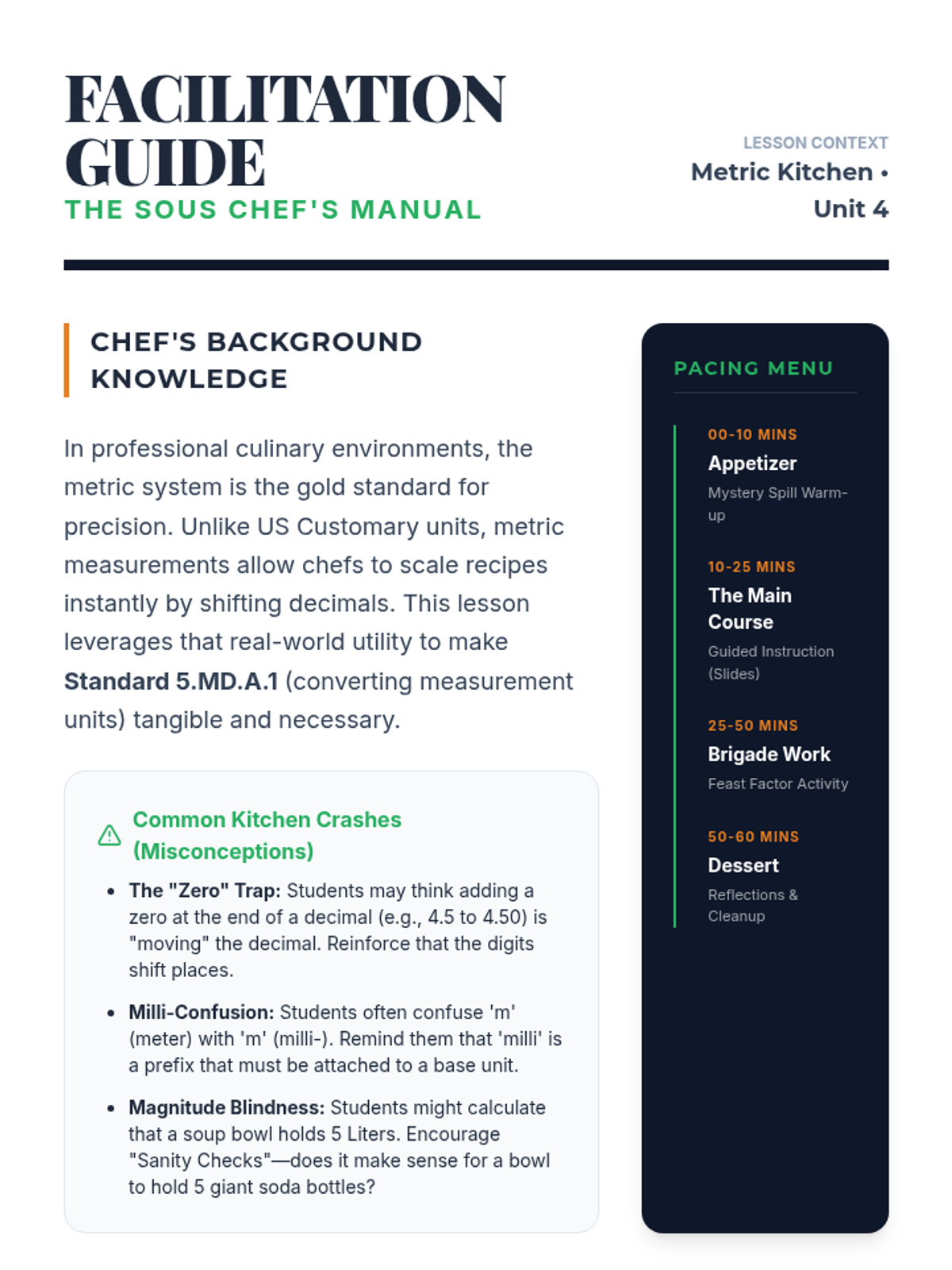
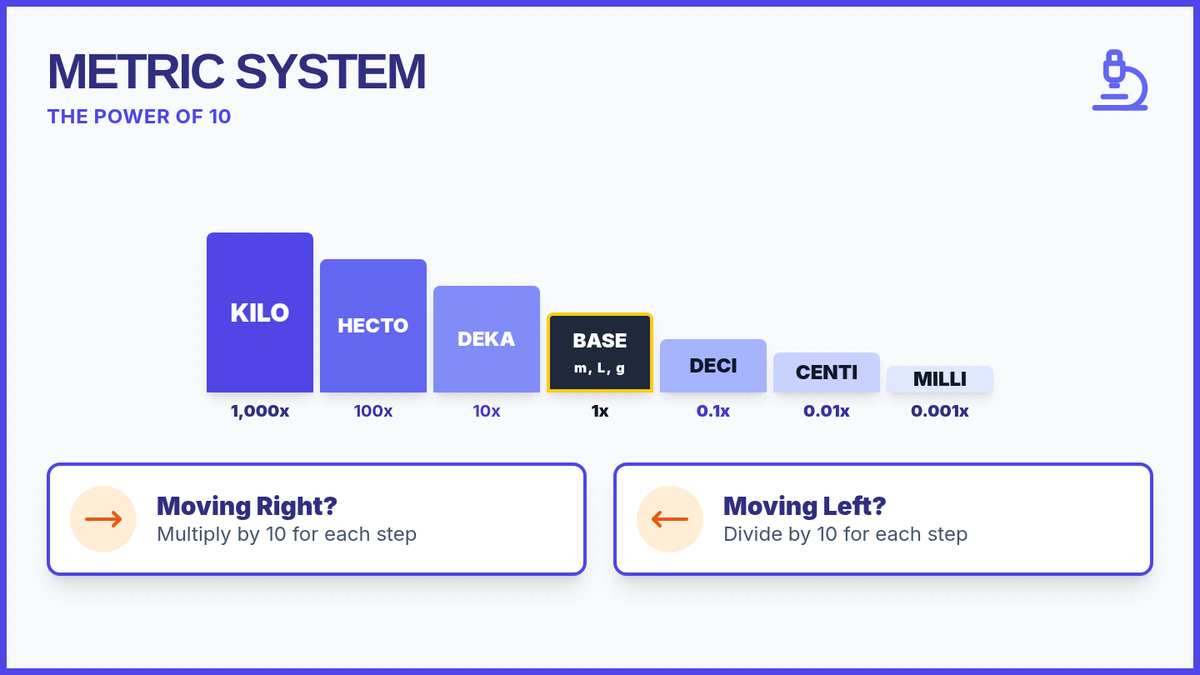
A hands-on math lesson where students master metric conversions (mass, volume, and length) by scaling and adjusting recipes for a grand class feast. Students apply decimal movement rules to transform ingredients from small kitchen measures to bulk quantities.
A comprehensive slide deck covering measurement in inches (halves and fourths) and interpreting data on line plots, provided in both English and Japanese.
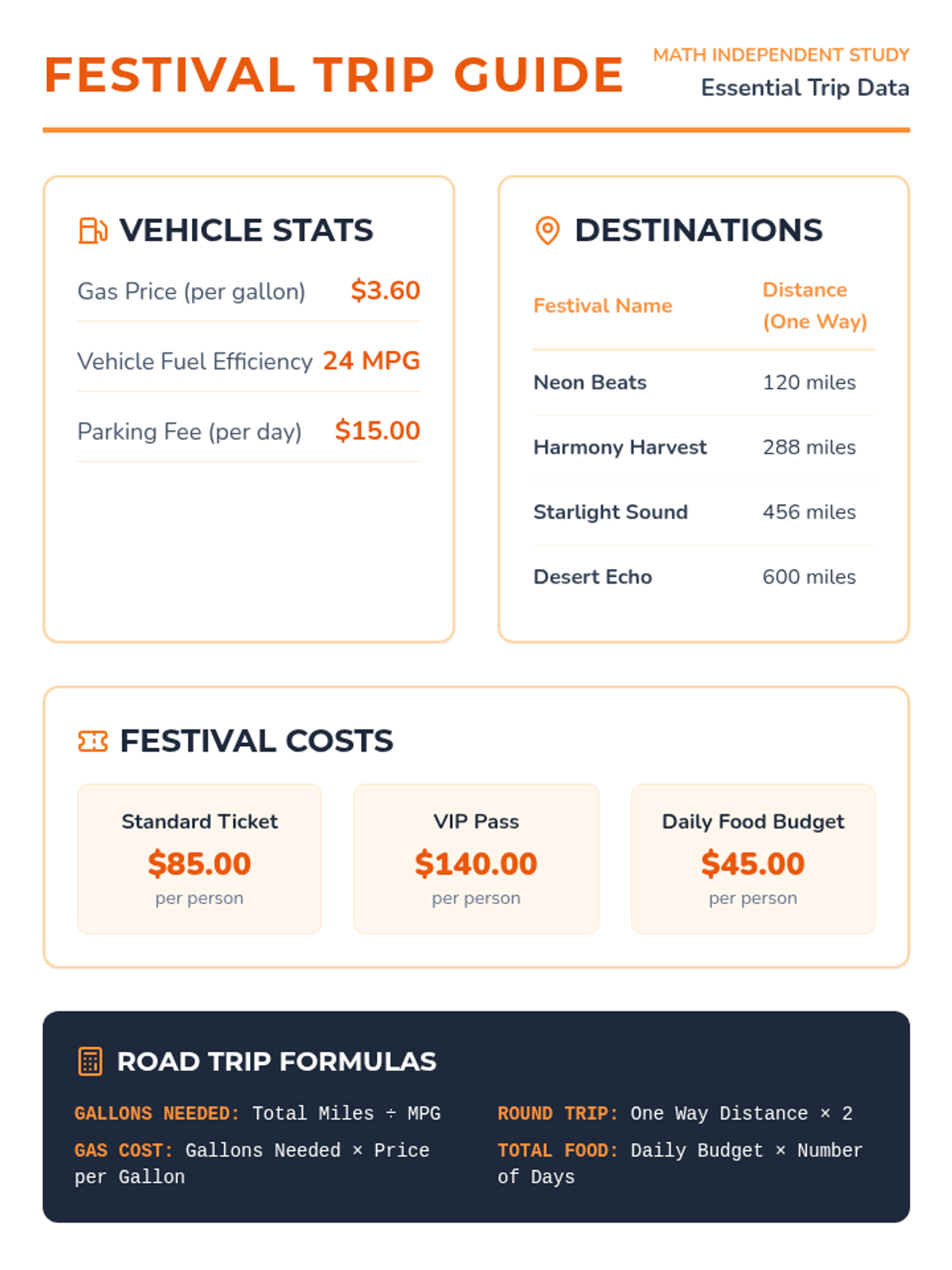
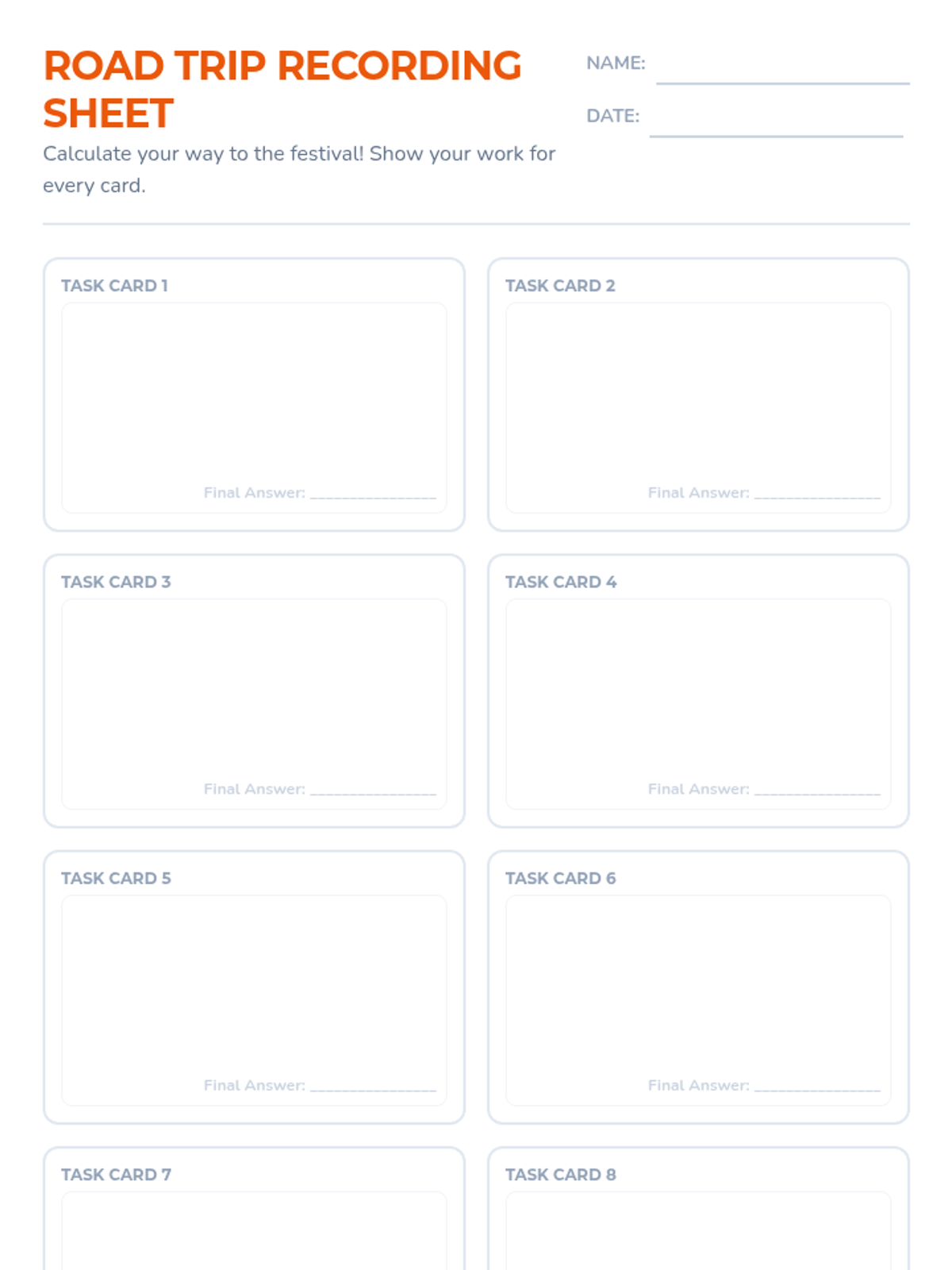
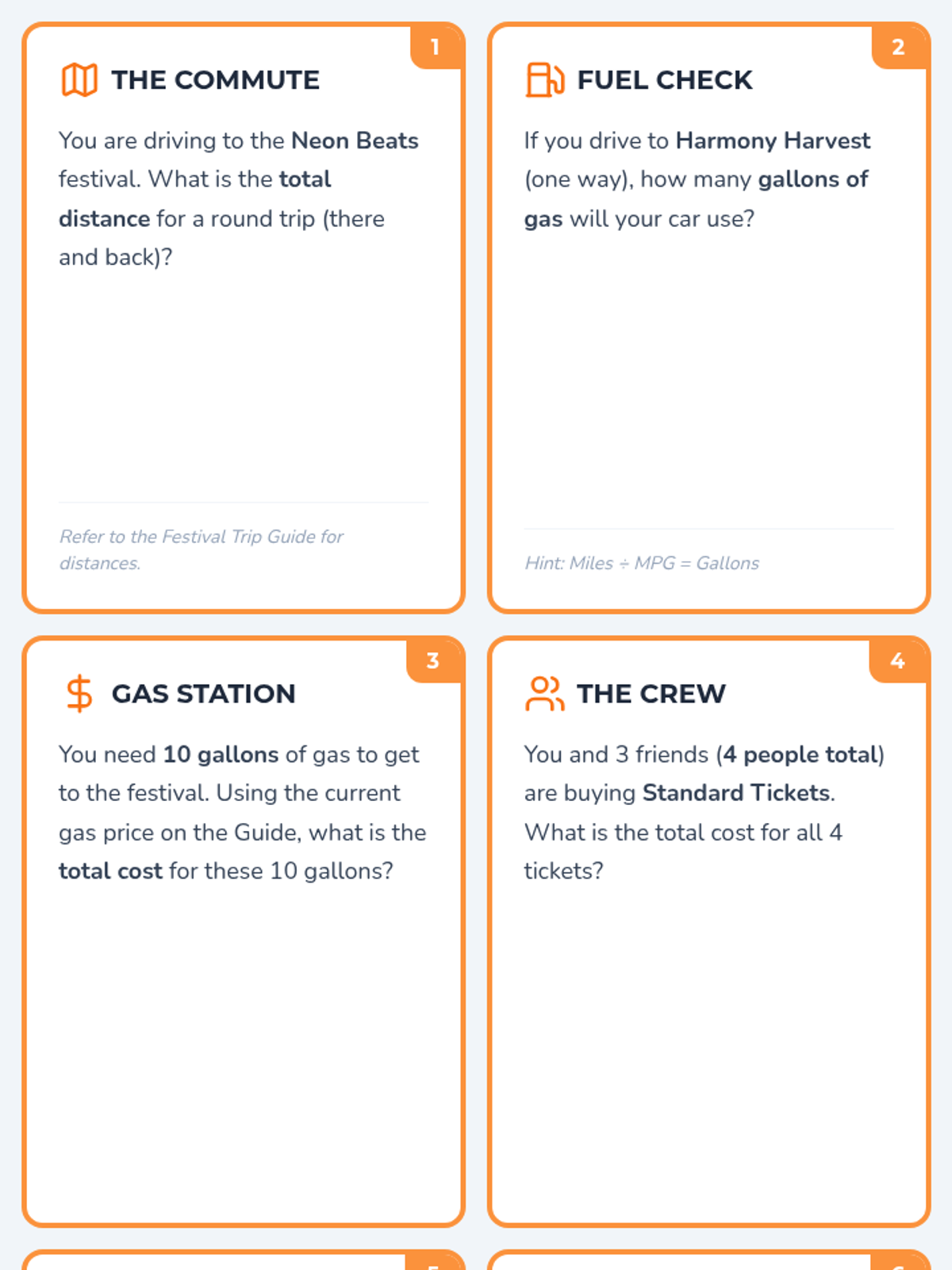
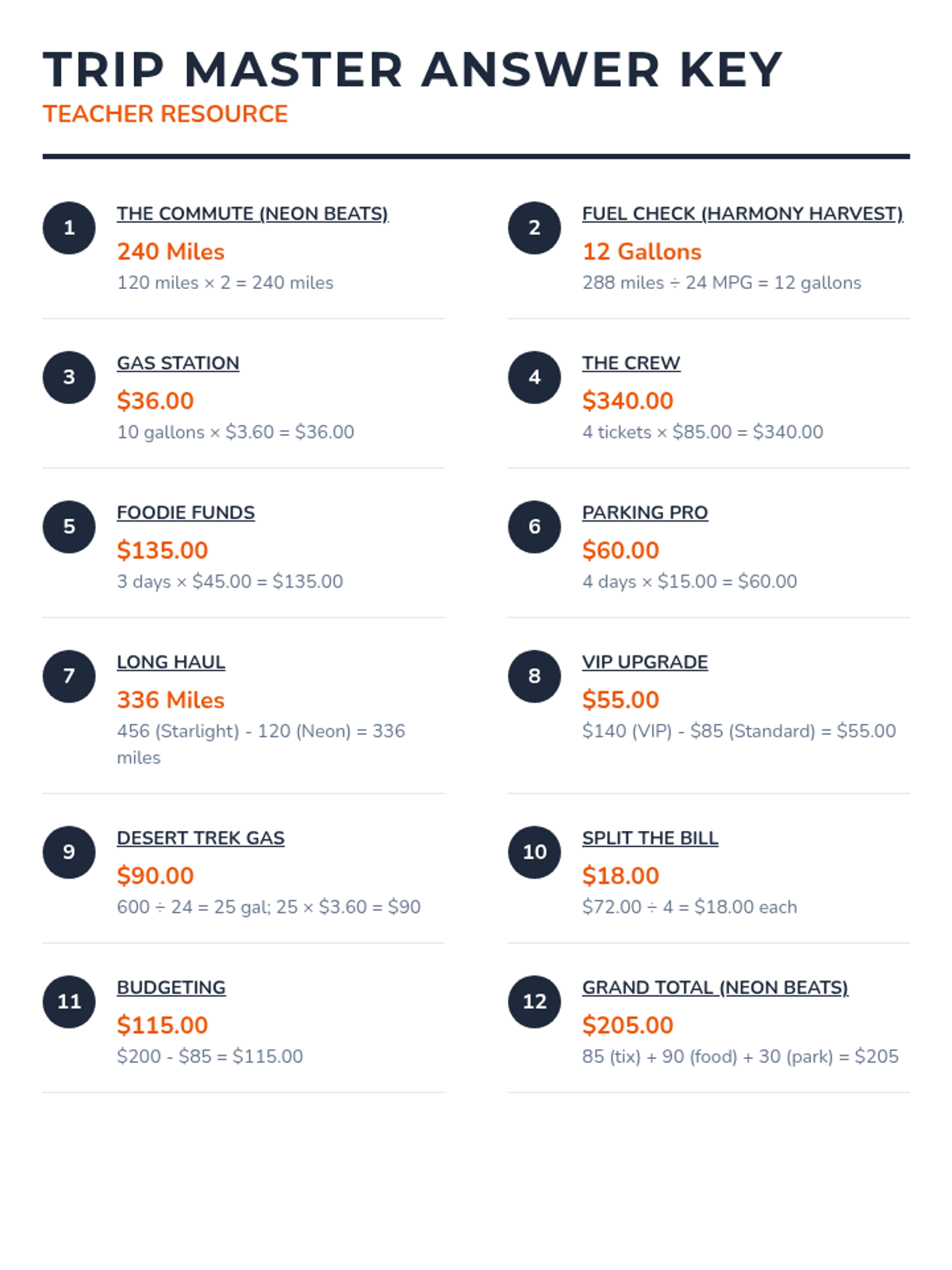
A math independent study unit where students calculate distances, fuel costs, and festival expenses for various road trip scenarios.
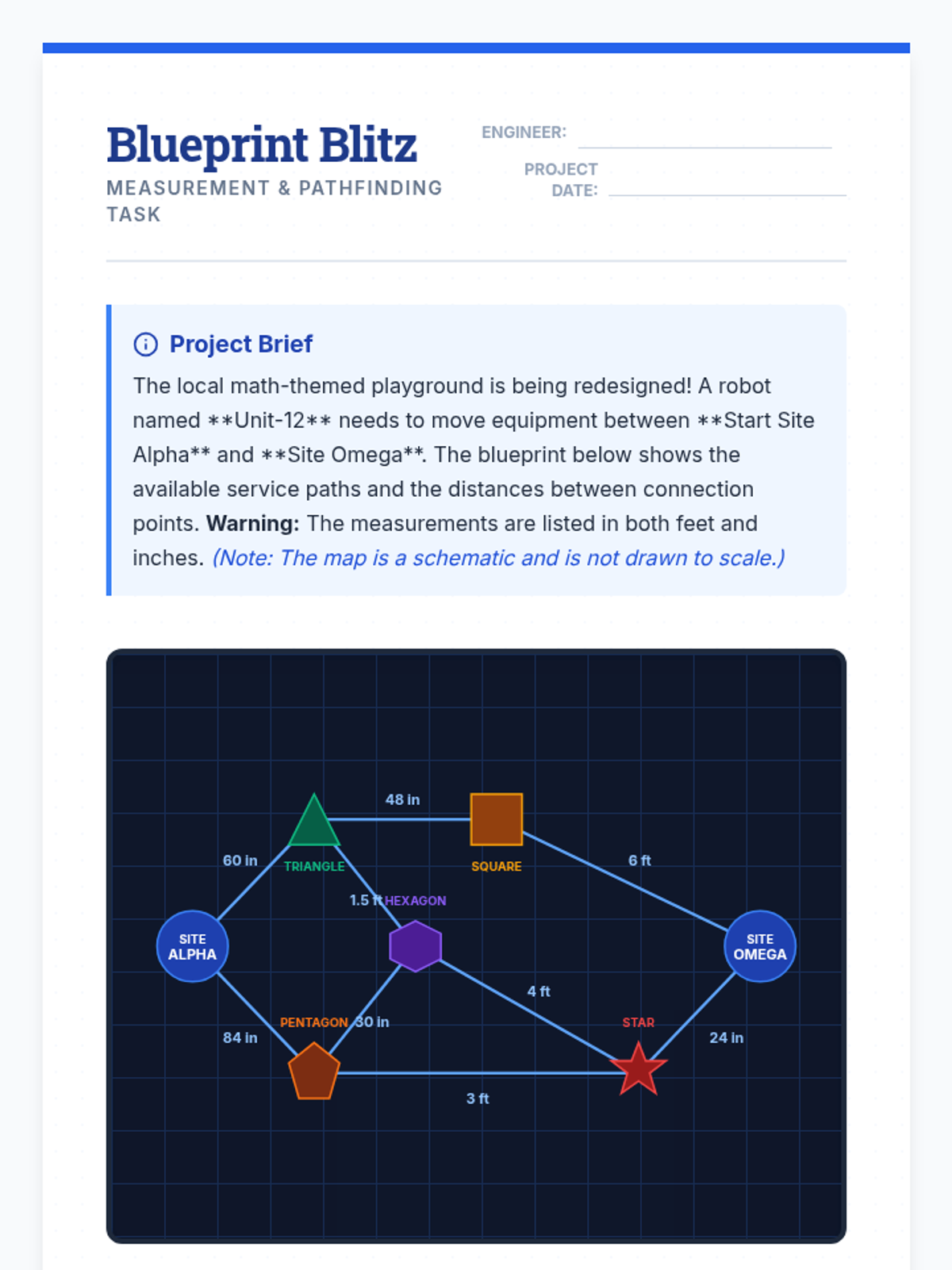
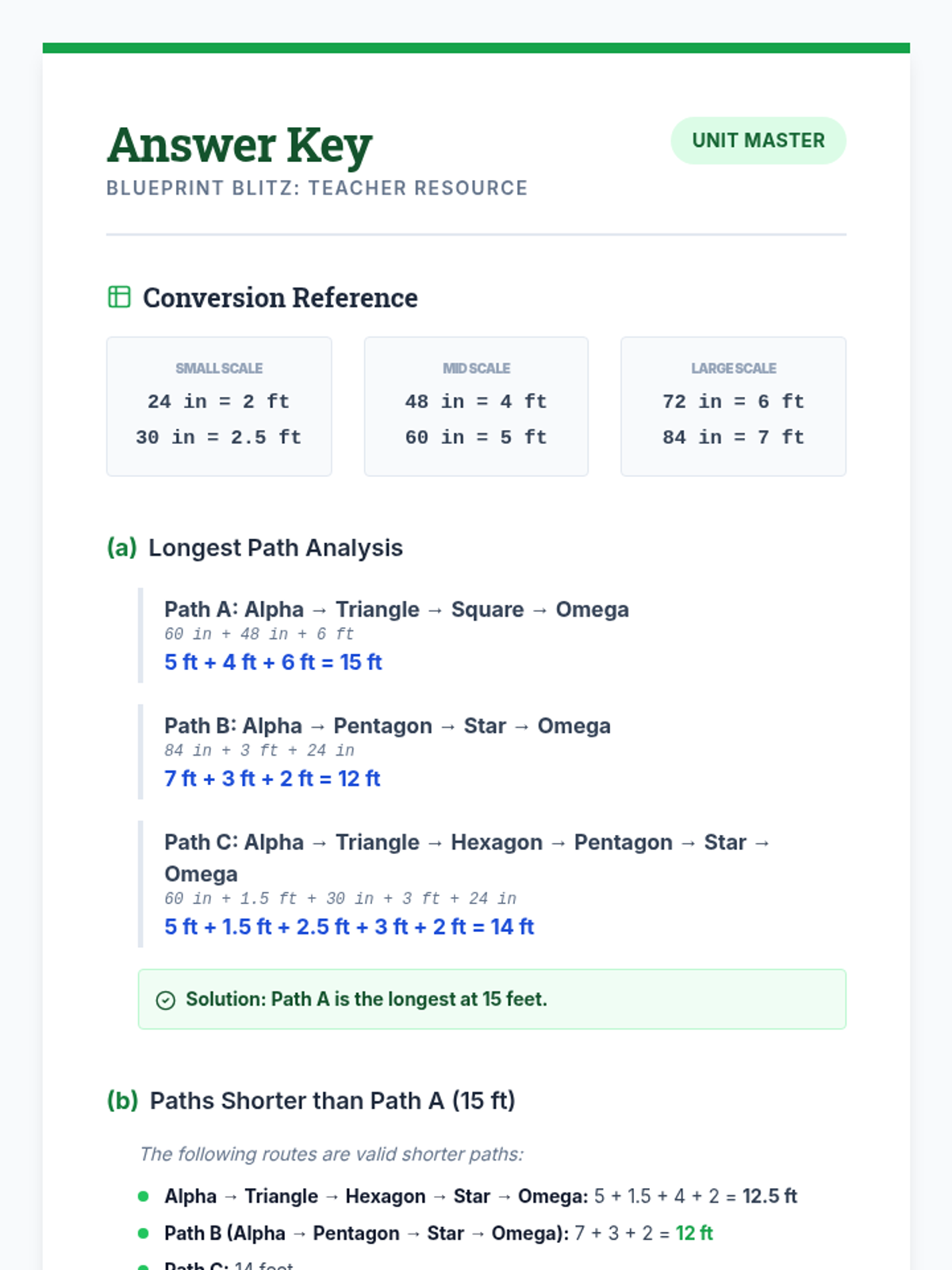
A lesson focused on unit conversion (feet and inches) through the lens of navigating a complex blueprint map. Students will calculate total distances of various paths and find the most efficient route.
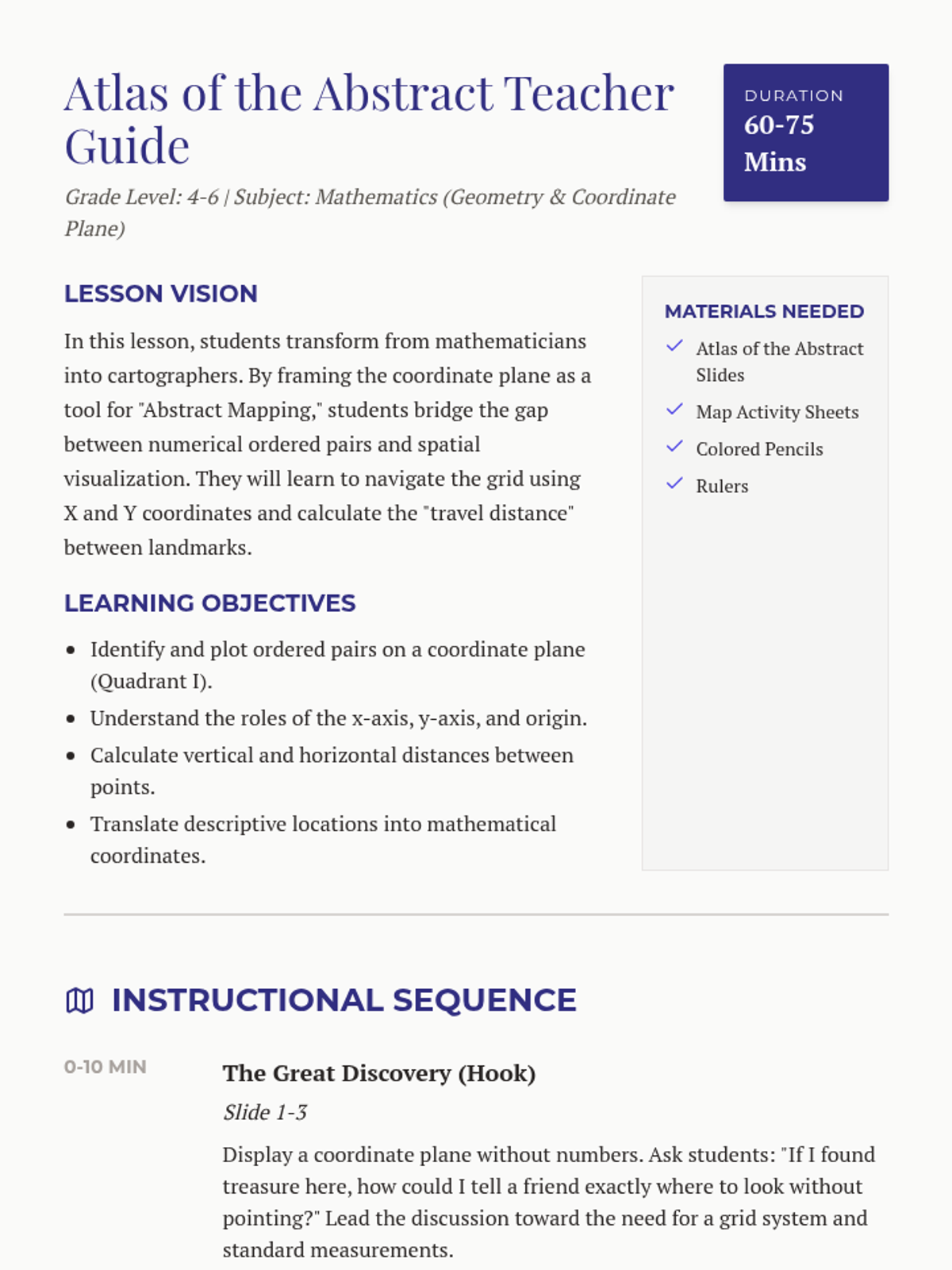
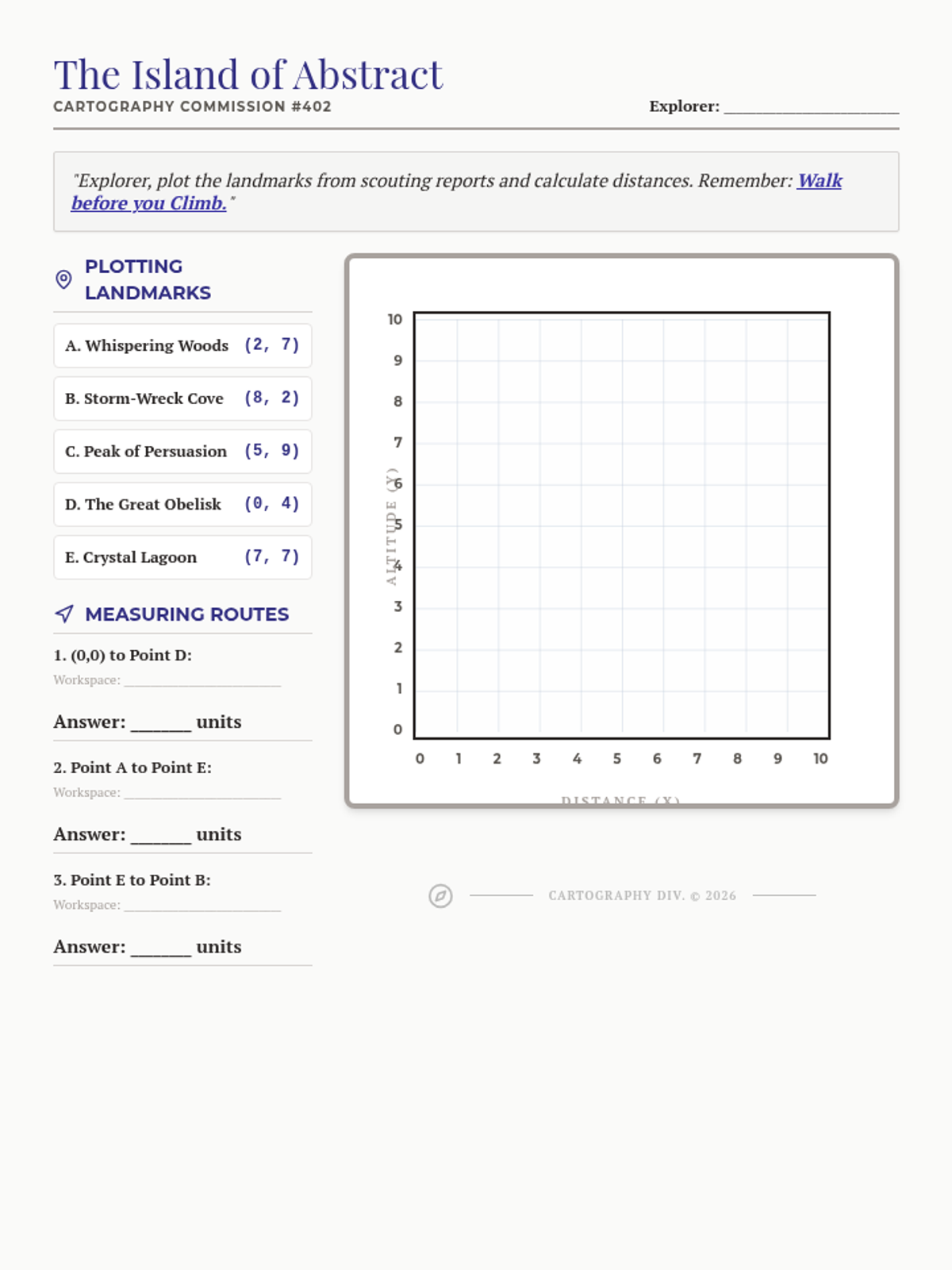
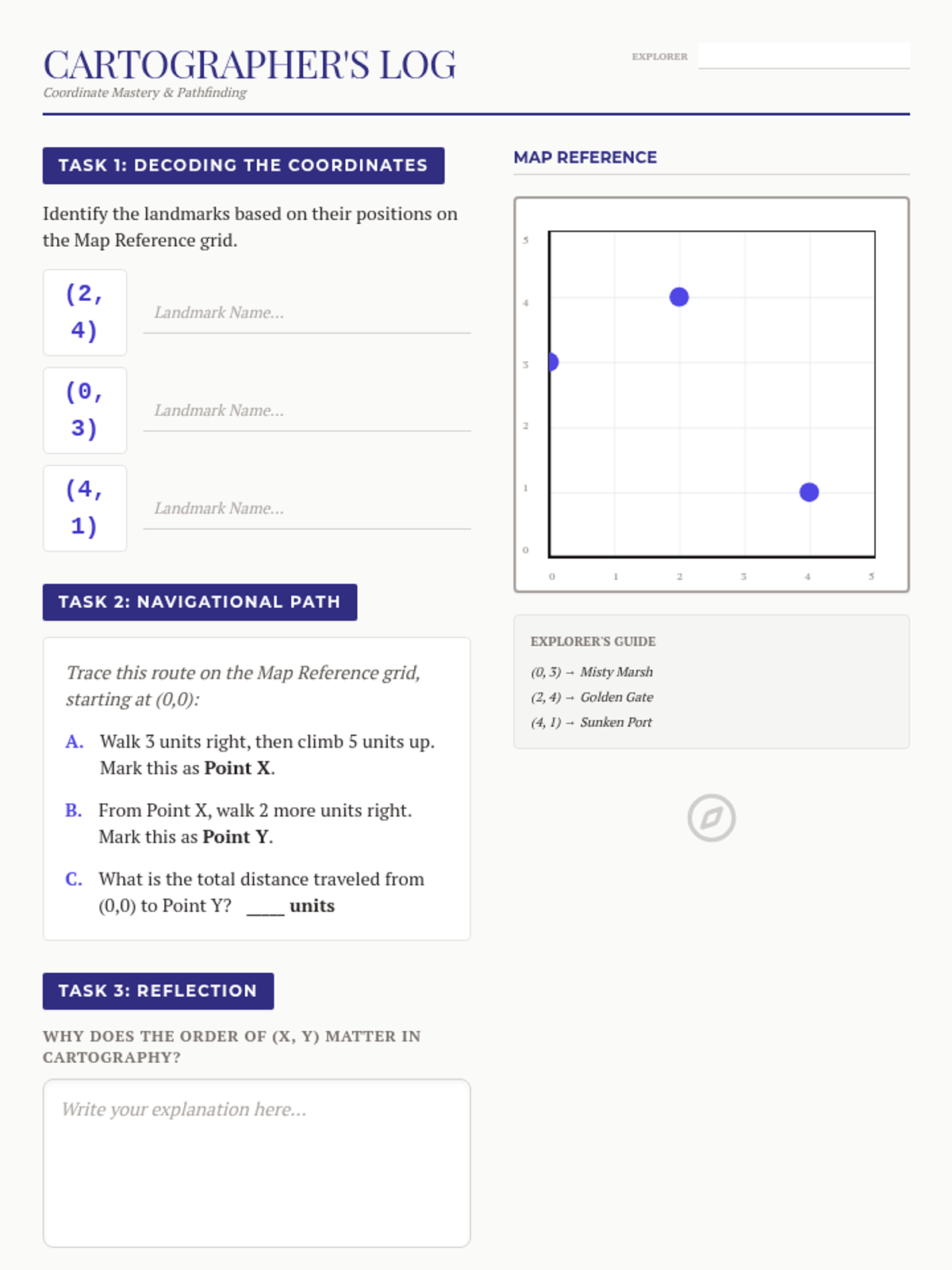
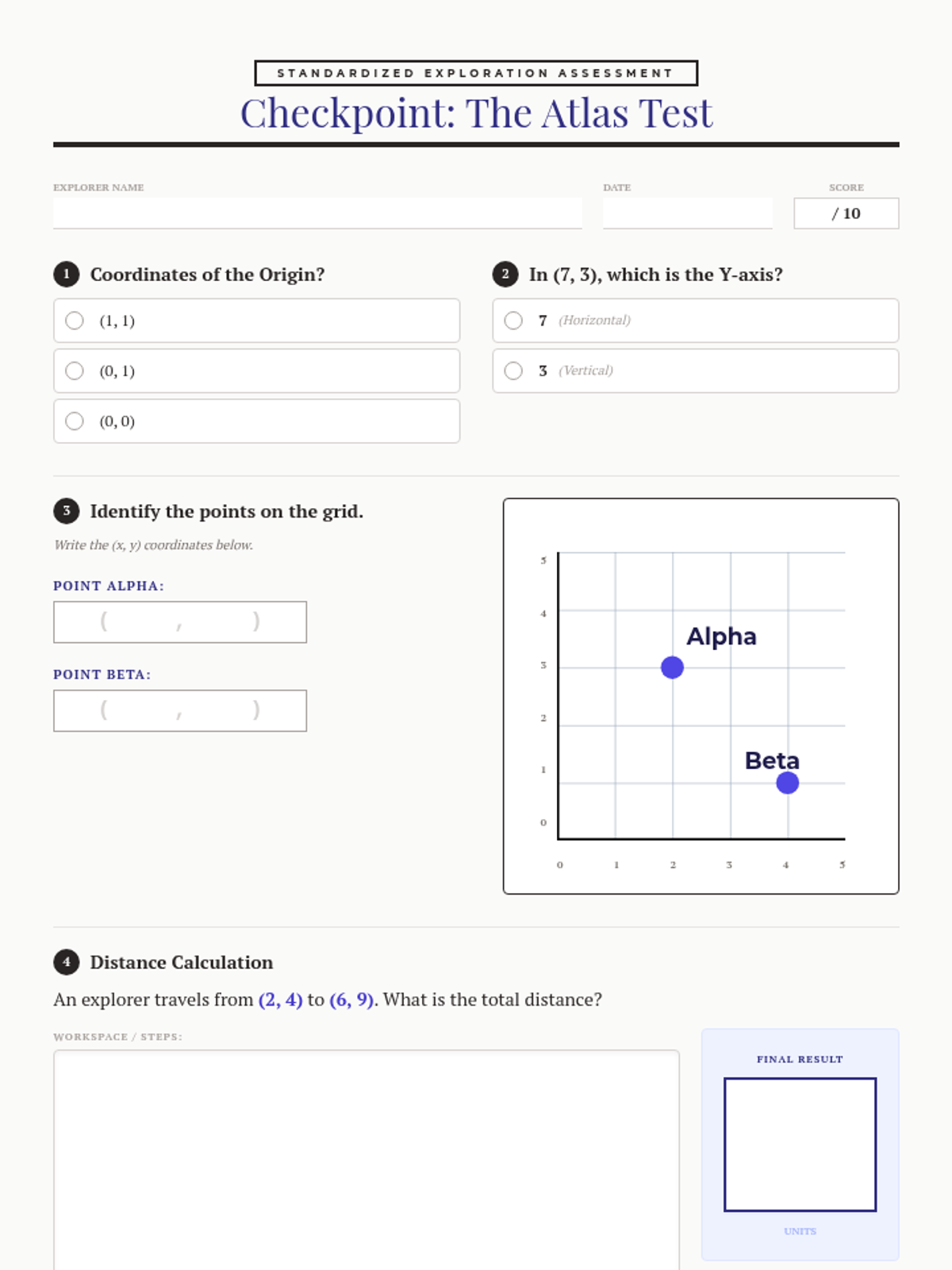
Students explore the coordinate plane through the lens of cartography, mapping imaginary landscapes using ordered pairs and calculating distances between landmarks.
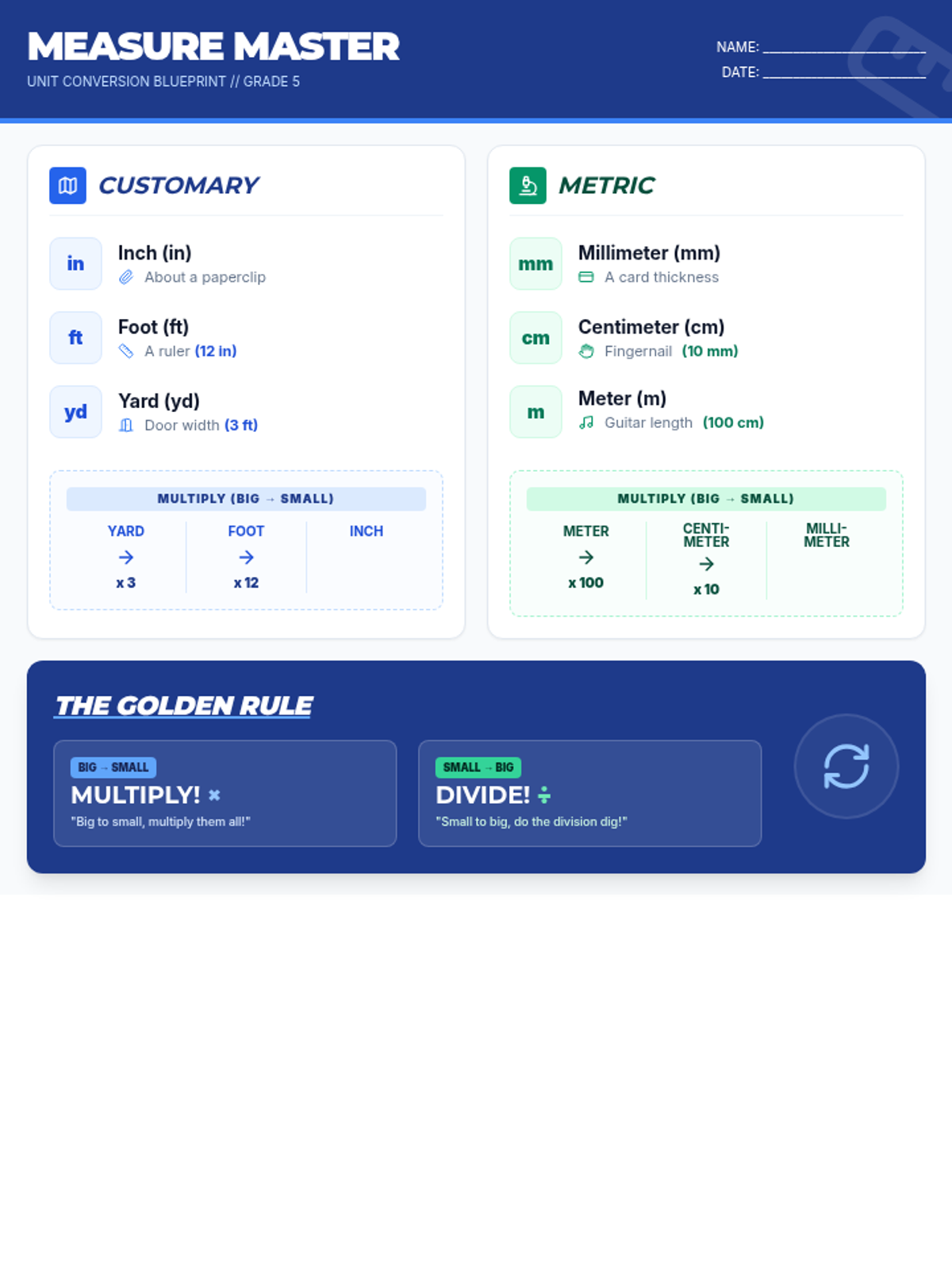
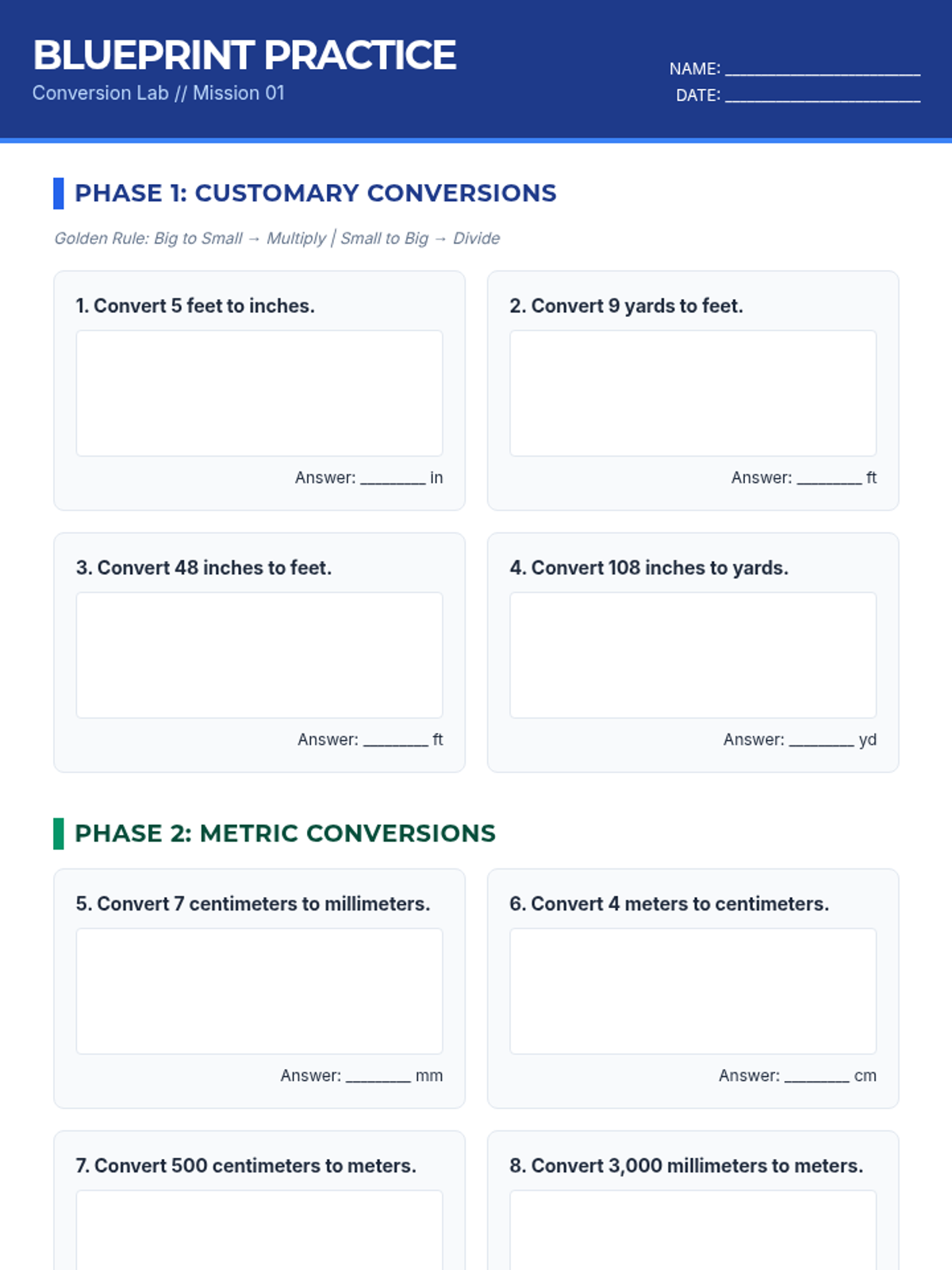
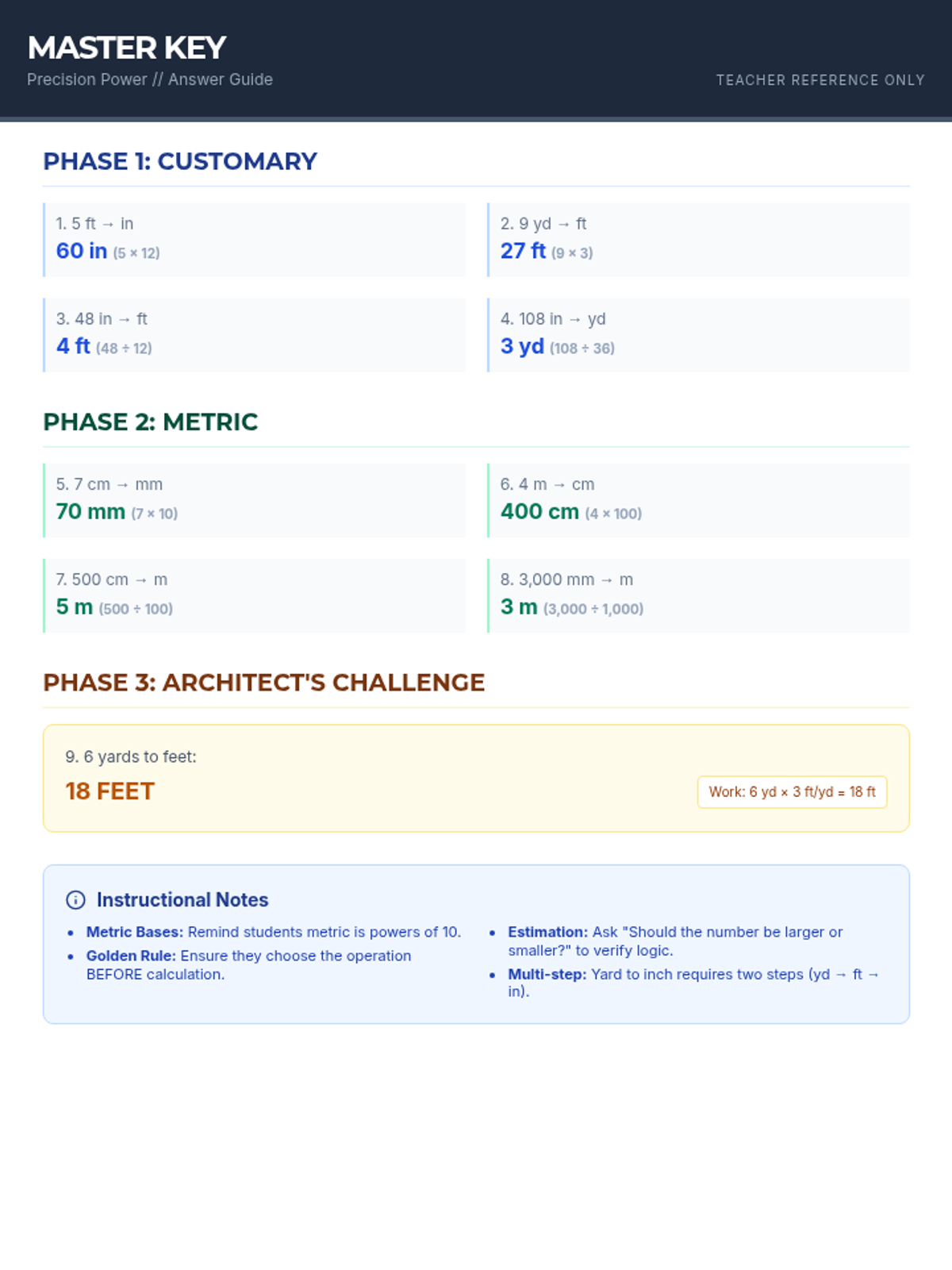
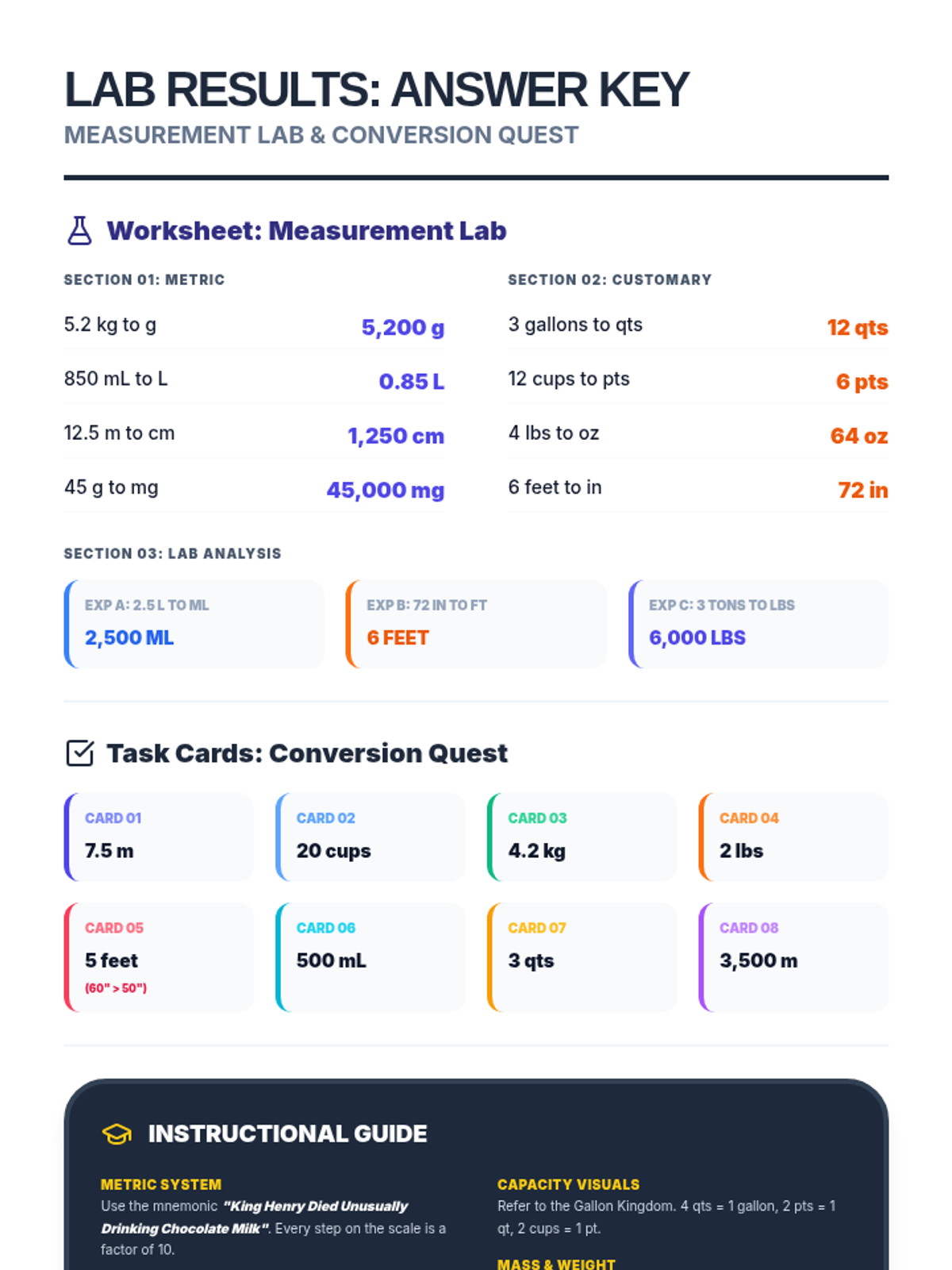
A comprehensive lesson on 5th-grade linear measurement conversions, featuring visual guides and practice problems for both Metric and Customary systems.
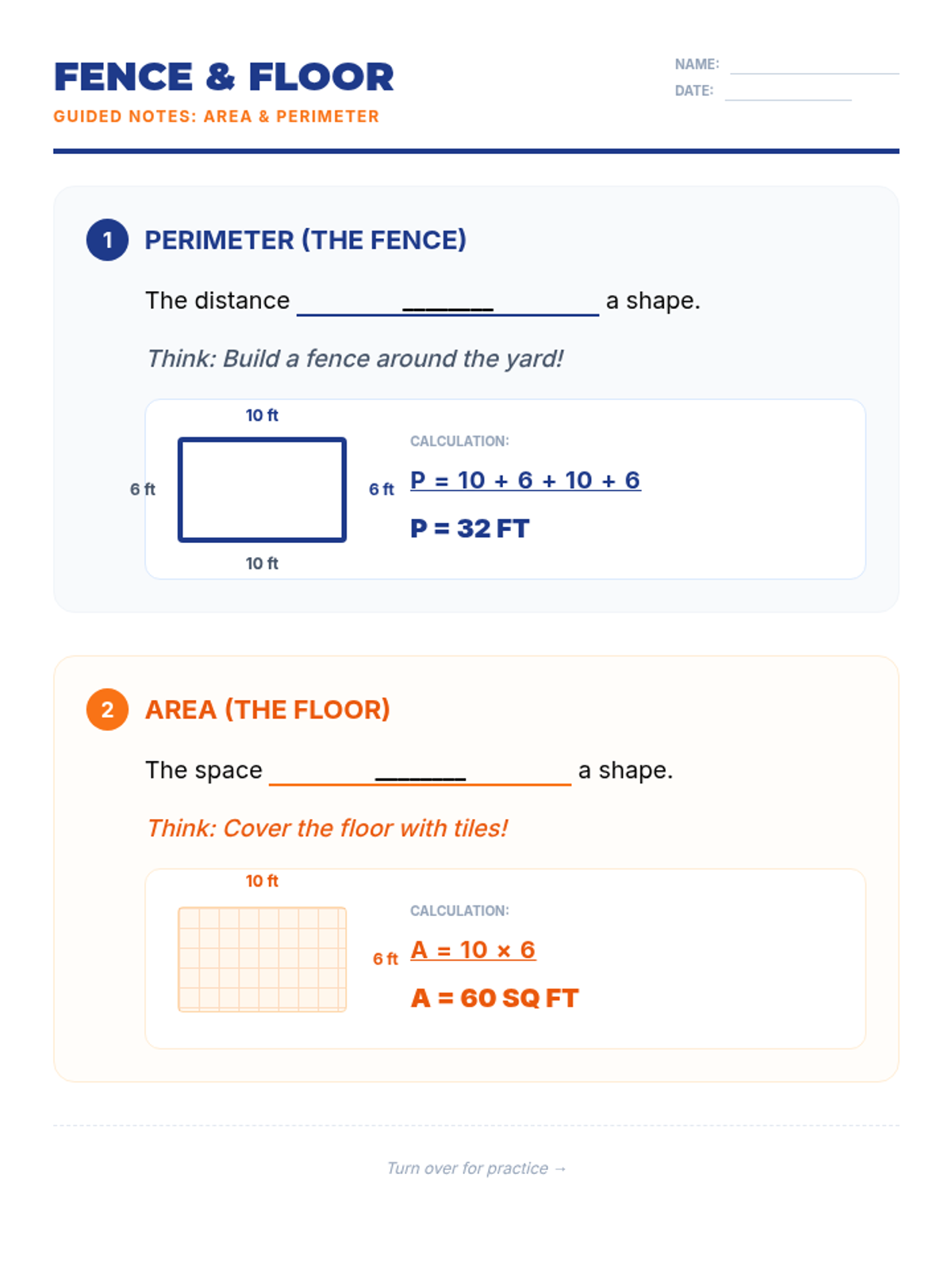
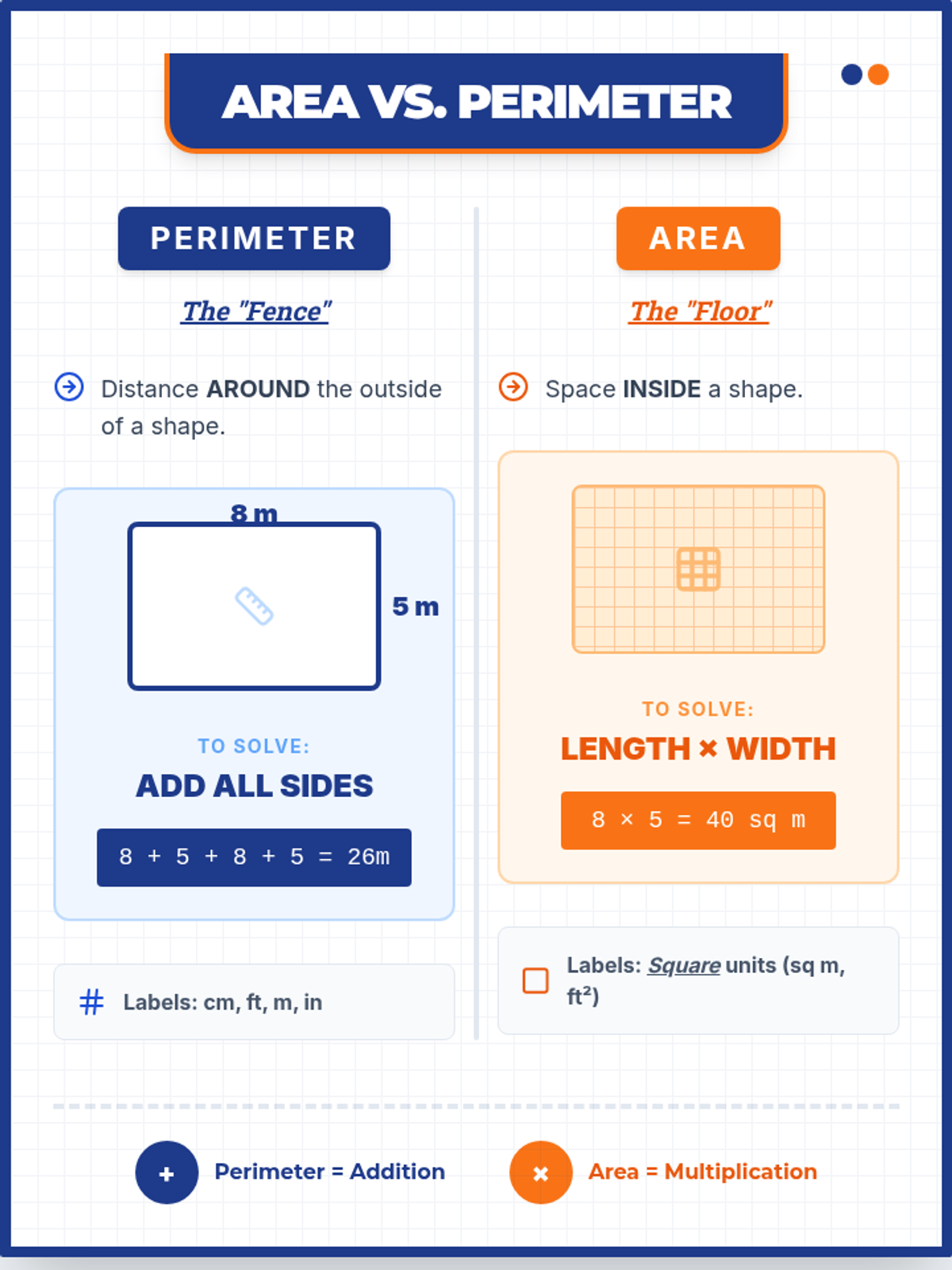
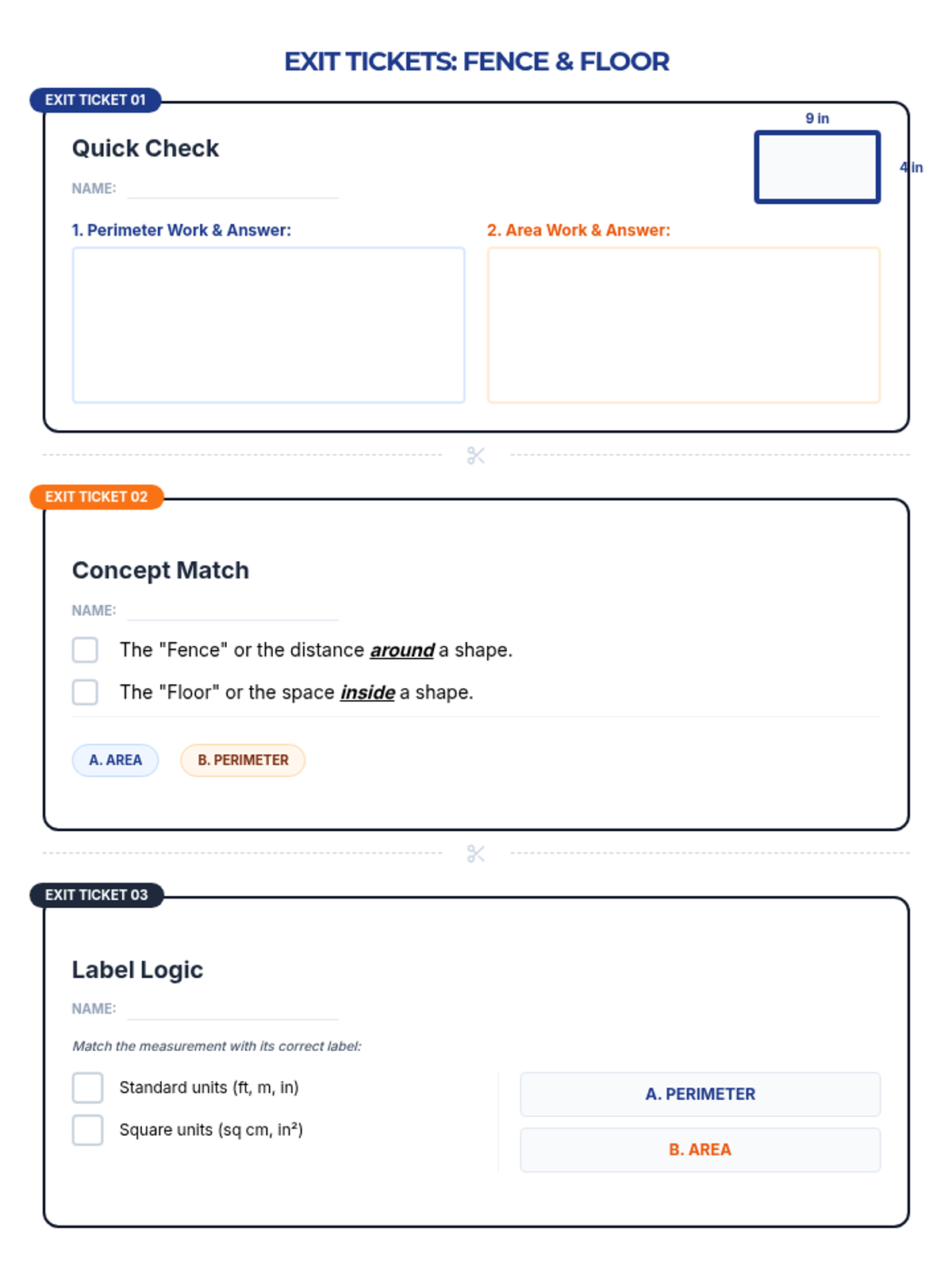
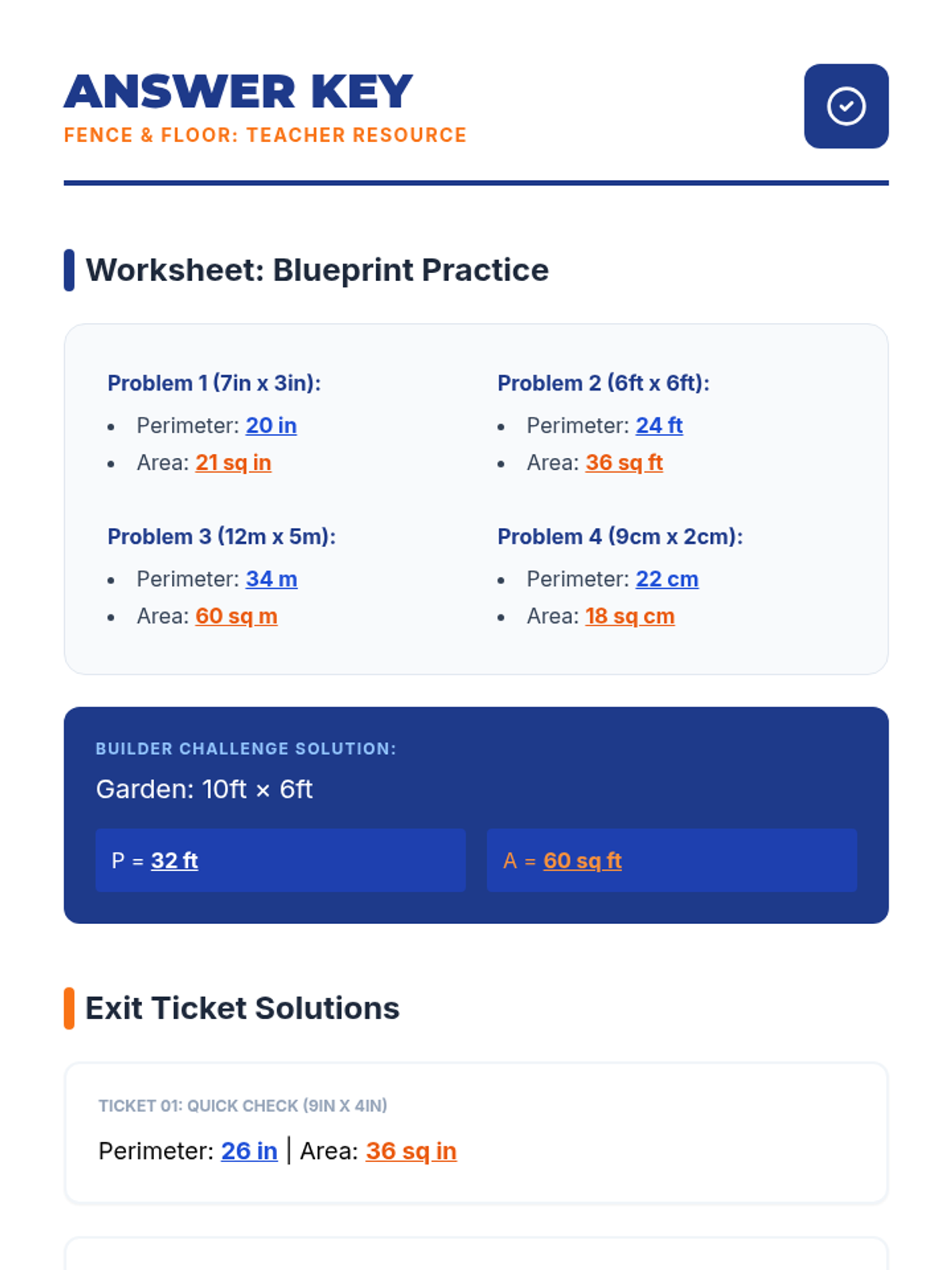
An introductory lesson on area and perimeter using the 'Fence and Floor' analogy. Students will learn the definitions, formulas, and real-world applications through visual aids and practice.
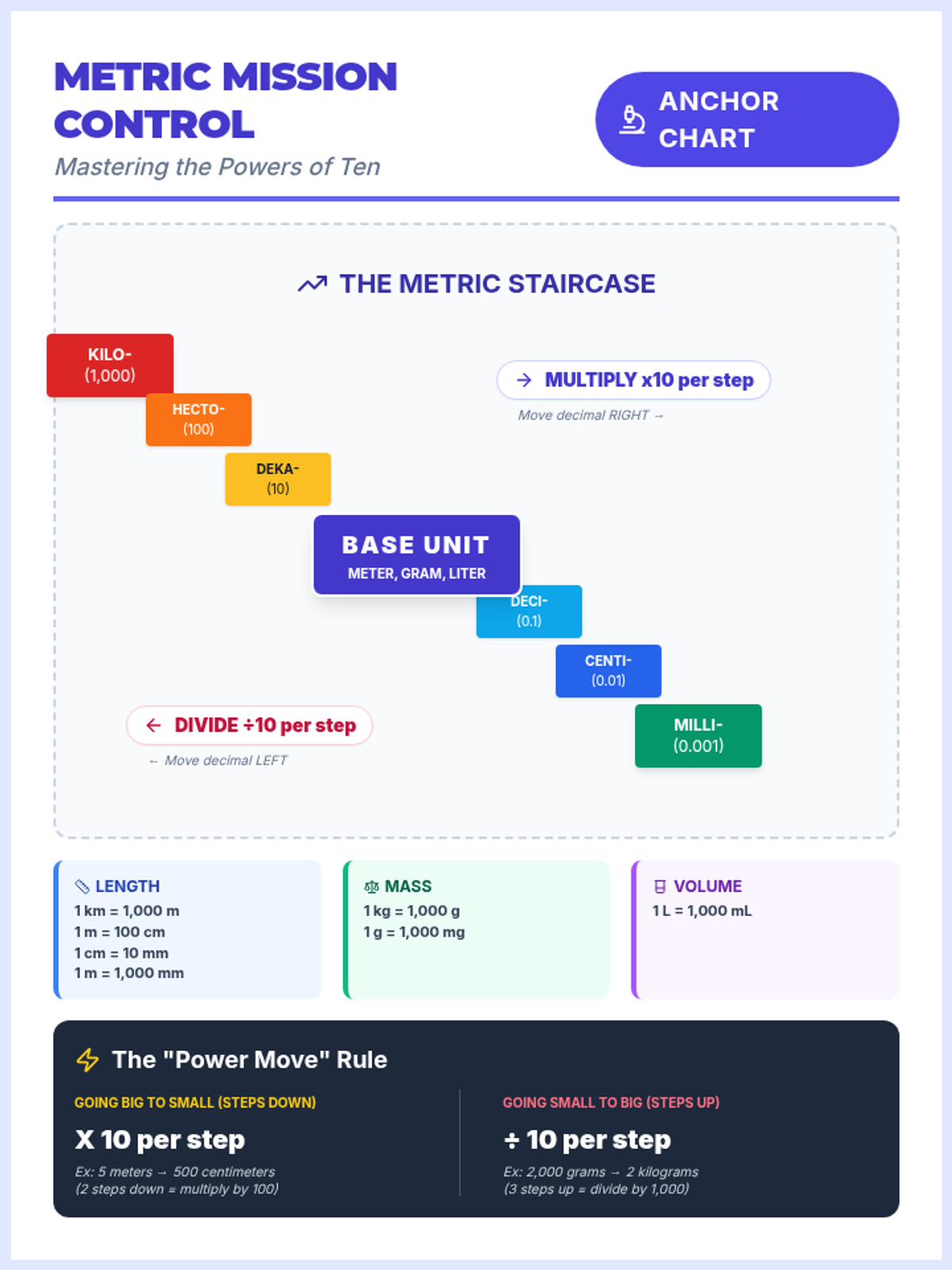
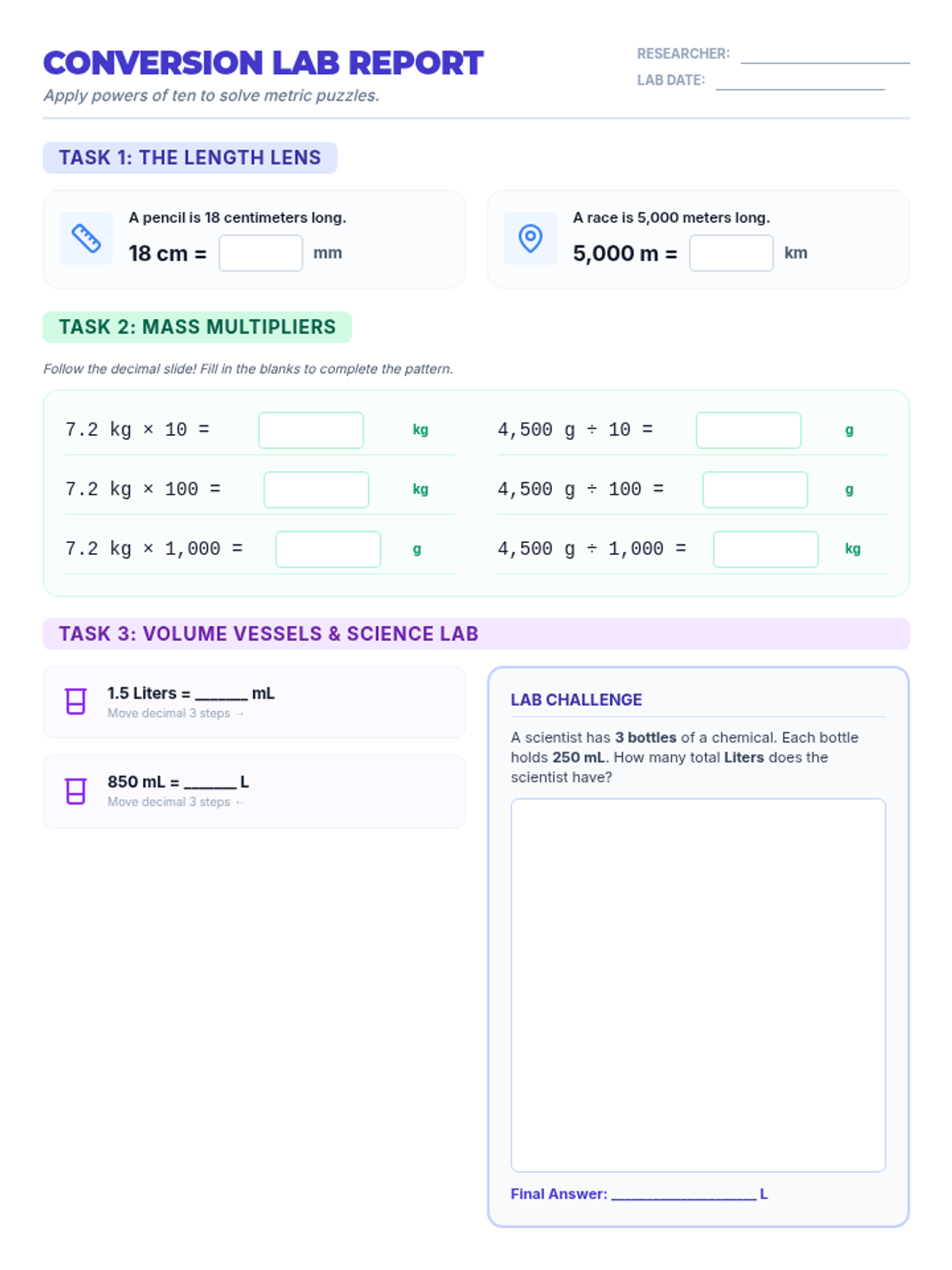
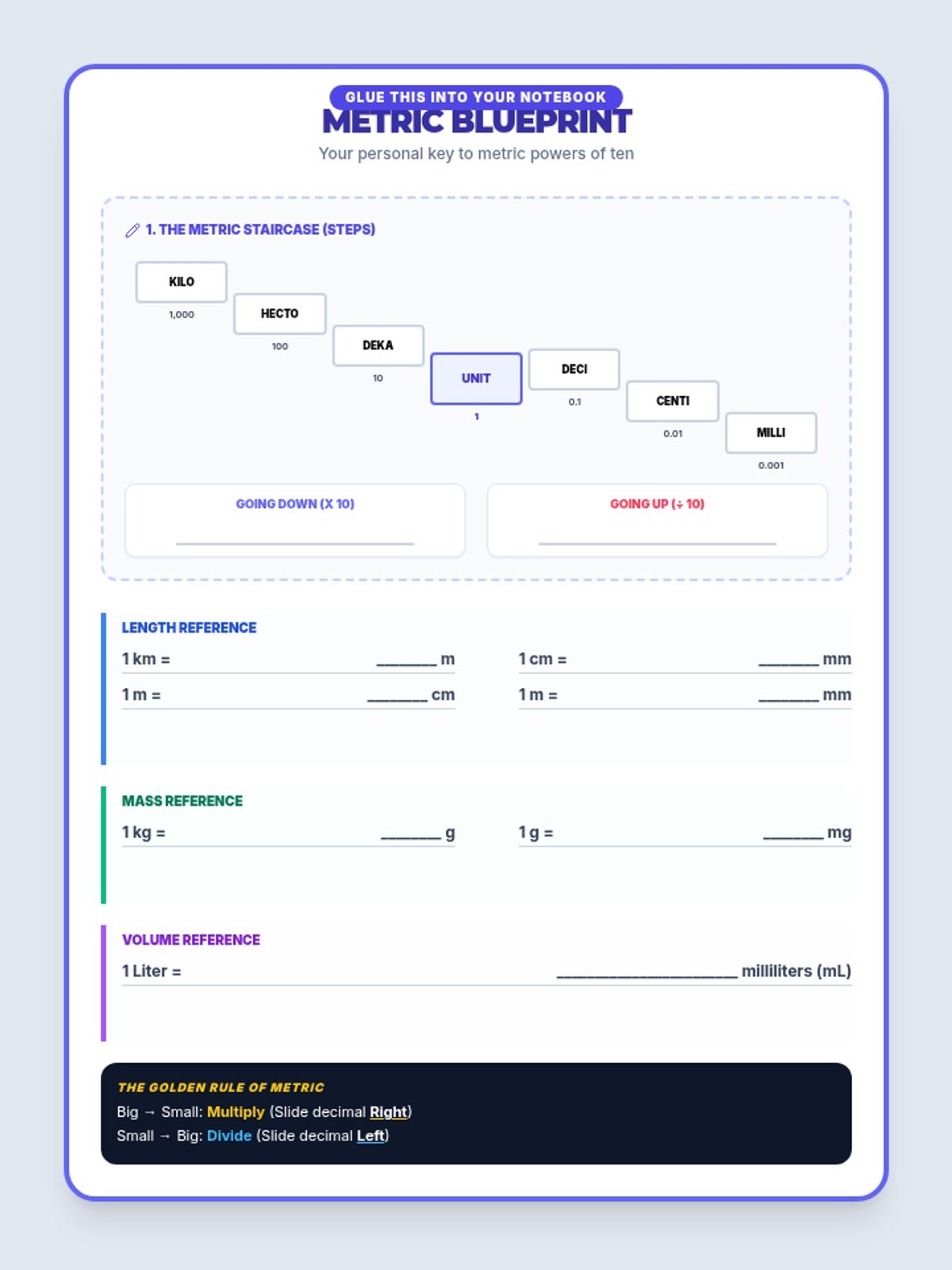
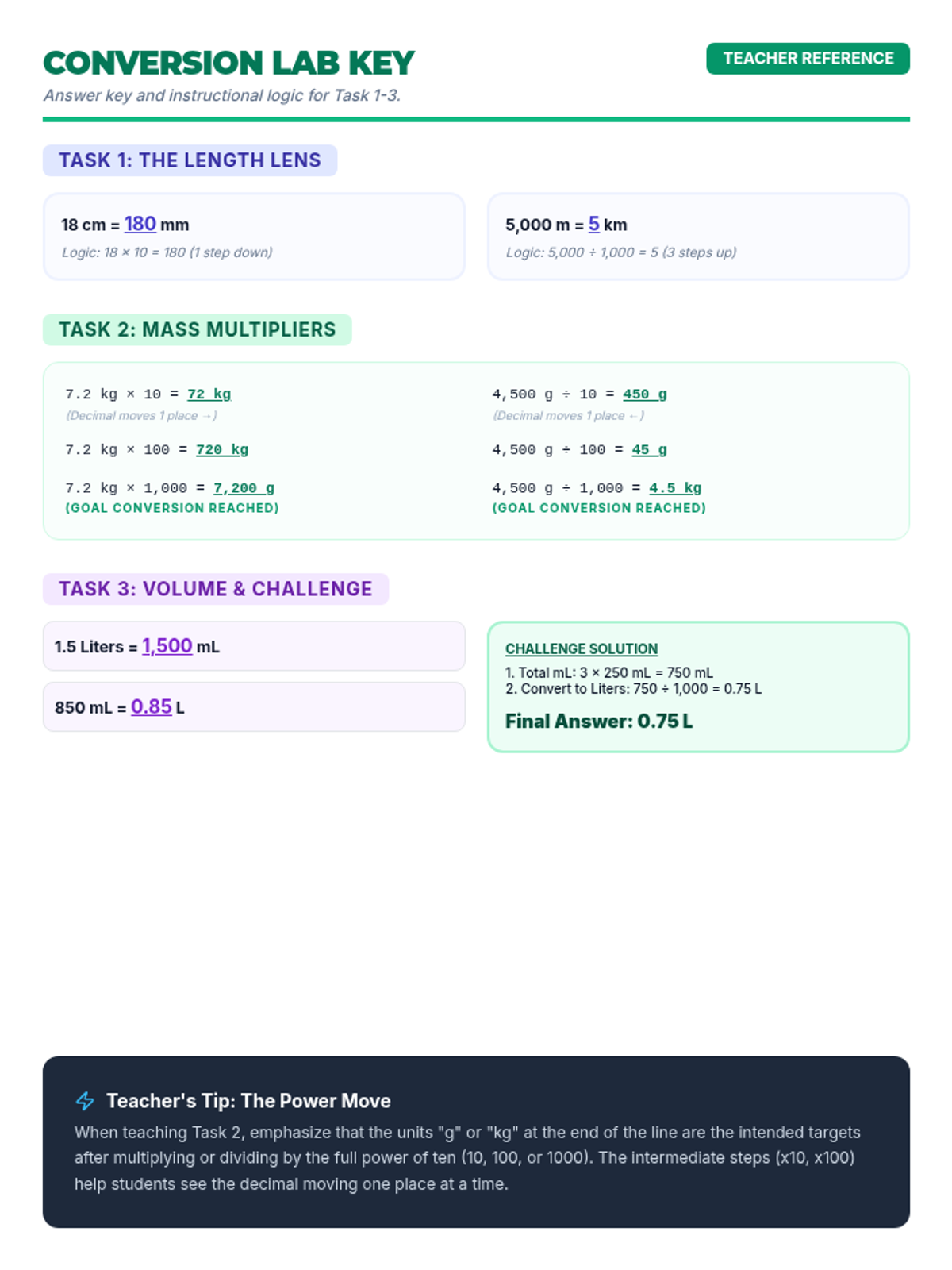
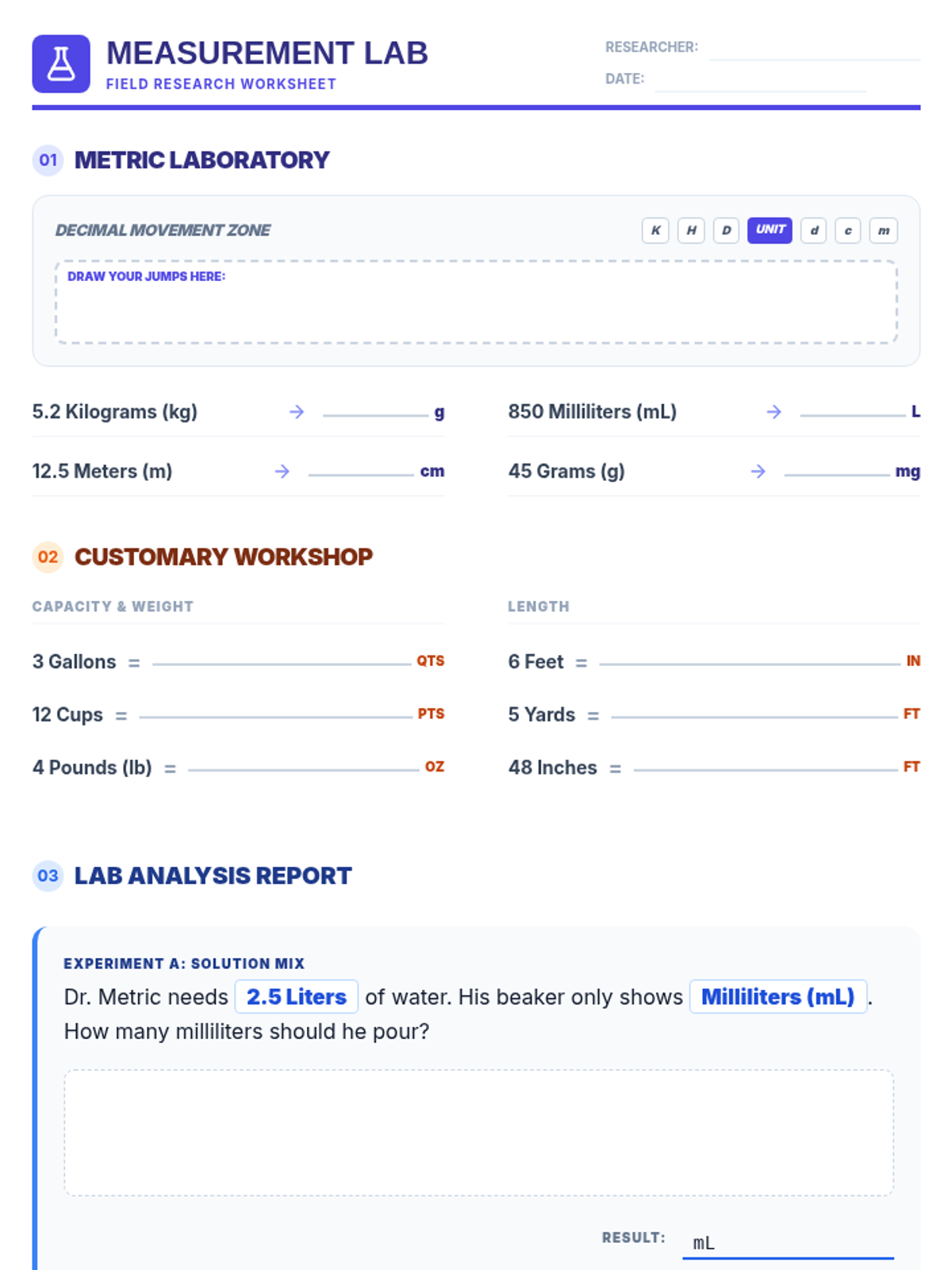
Students explore the relationship between metric units and powers of ten, using visual staircases and laboratory 'blueprints' to master conversions.
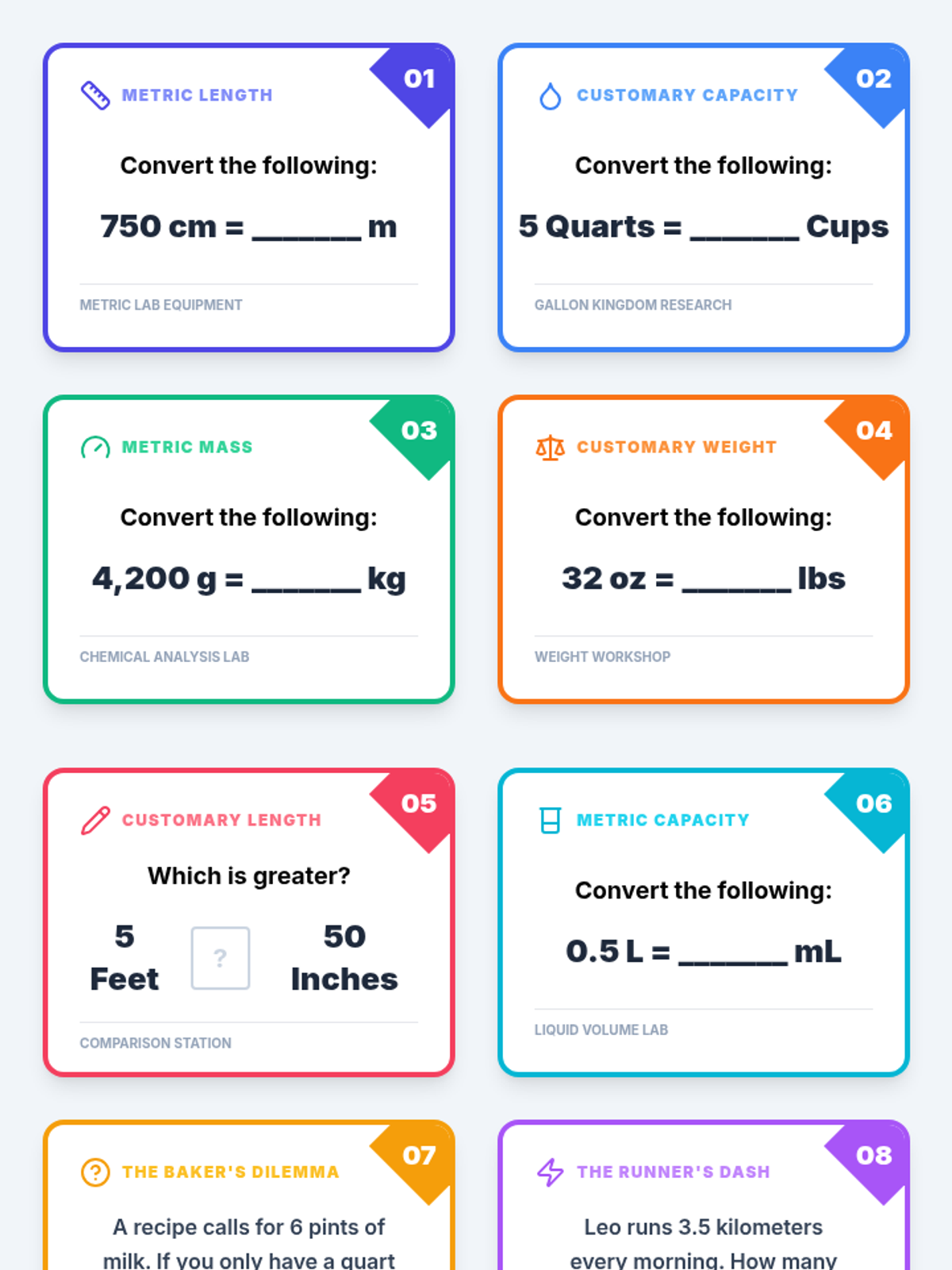
A comprehensive lesson on converting units within the Metric and US Customary systems using visual models, anchor charts, and hands-on task cards.
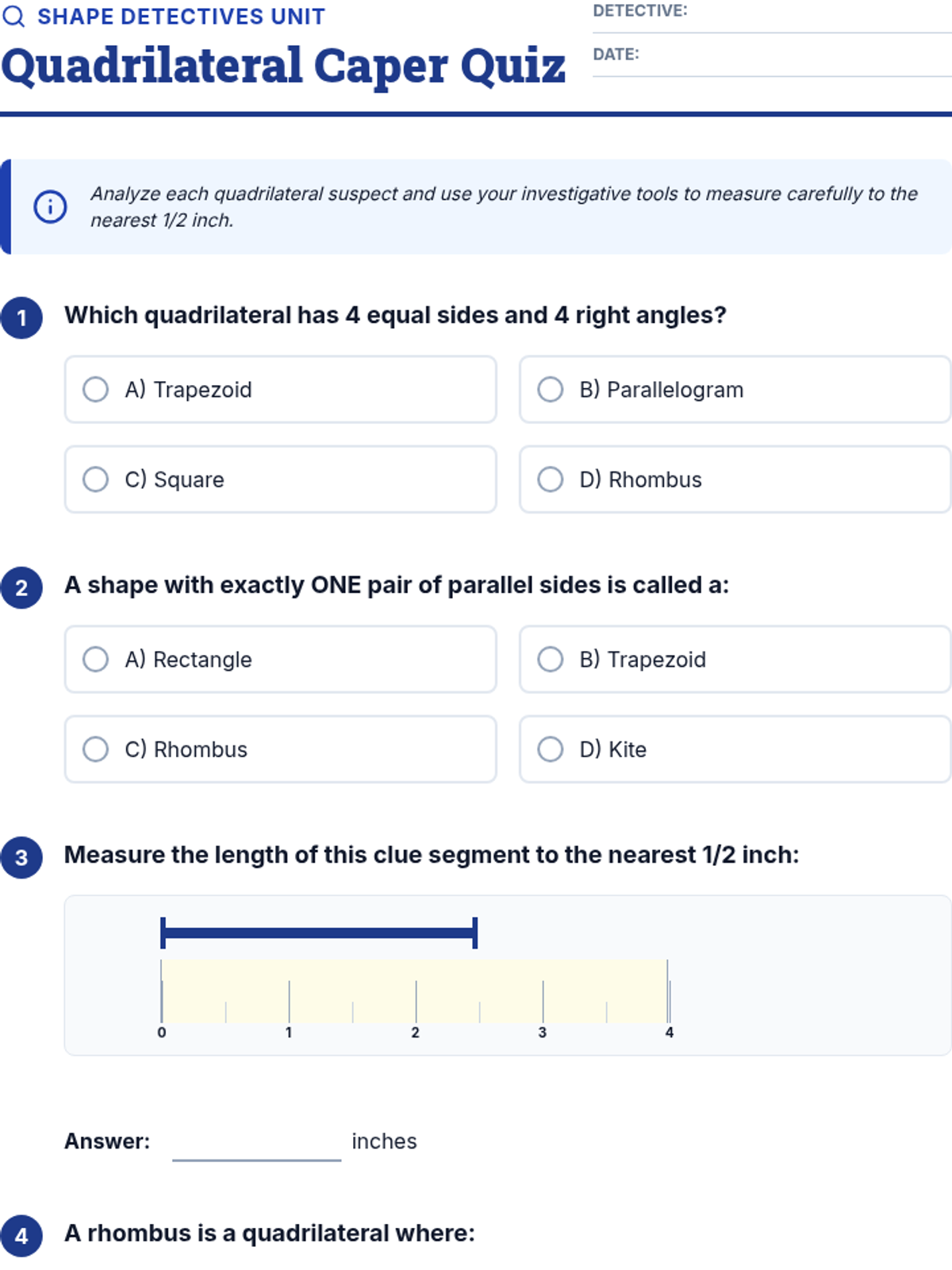
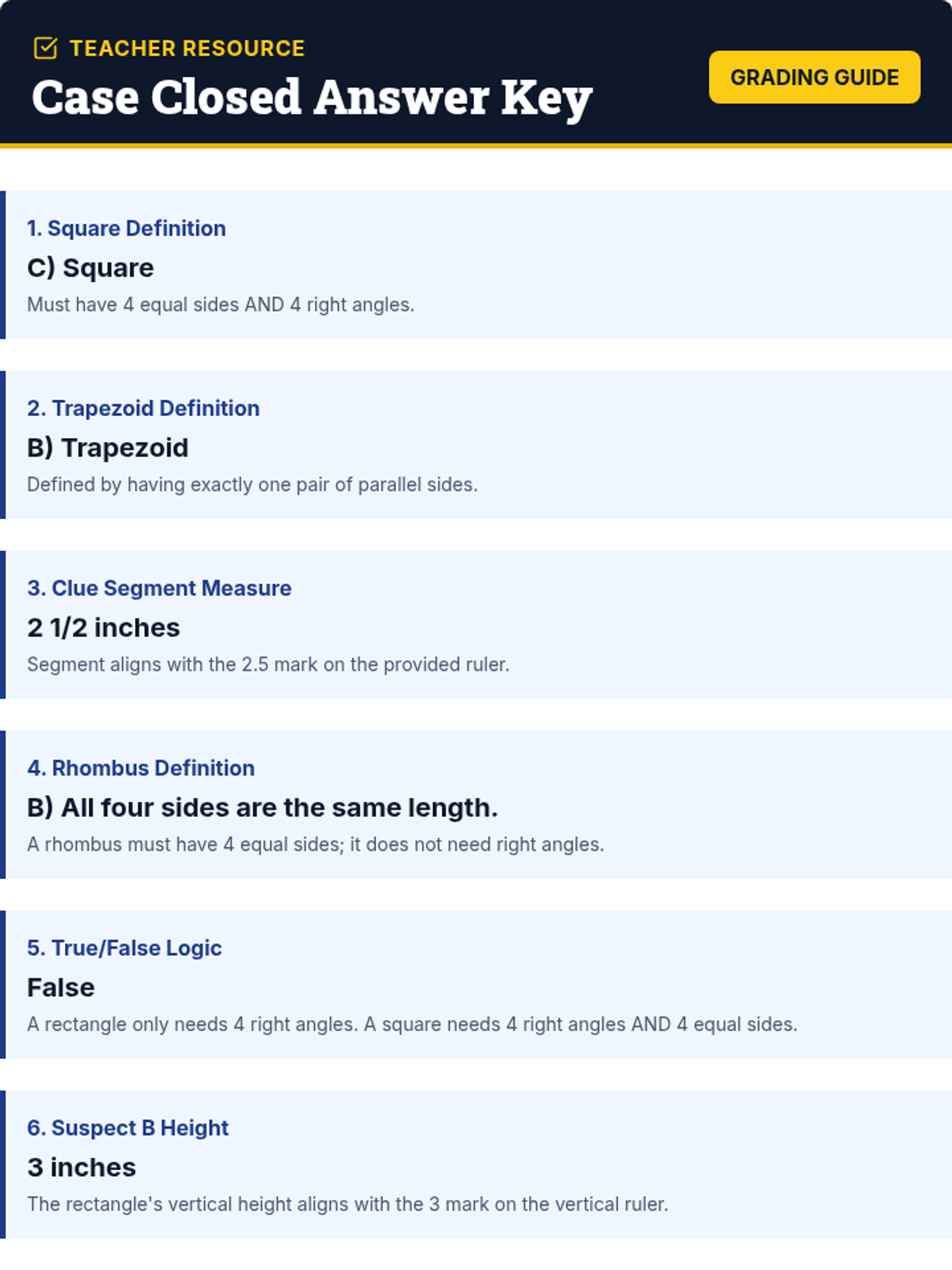
Students will identify various quadrilaterals by their attributes and practice measuring lengths to the nearest half-inch in this detective-themed lesson.
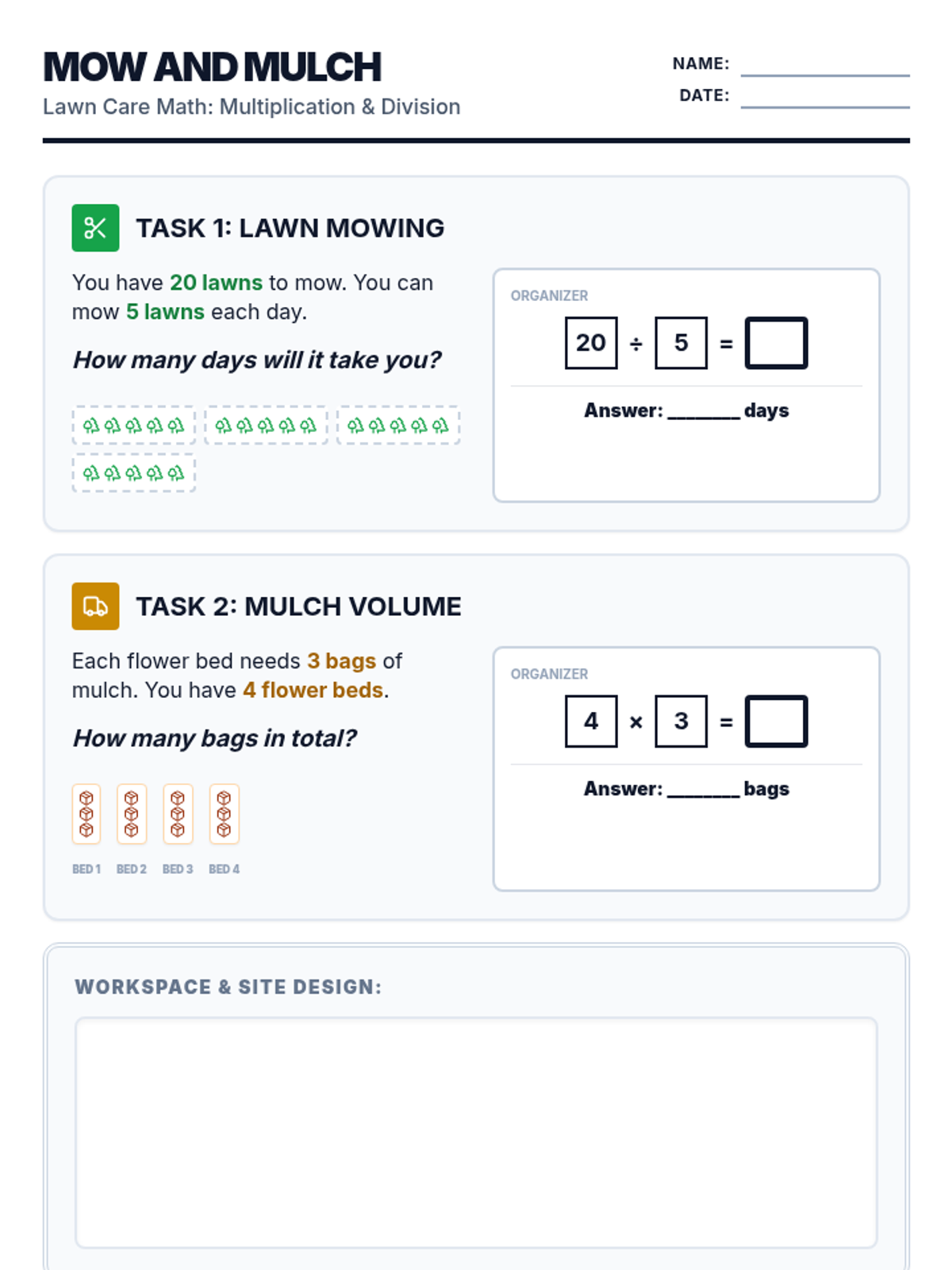
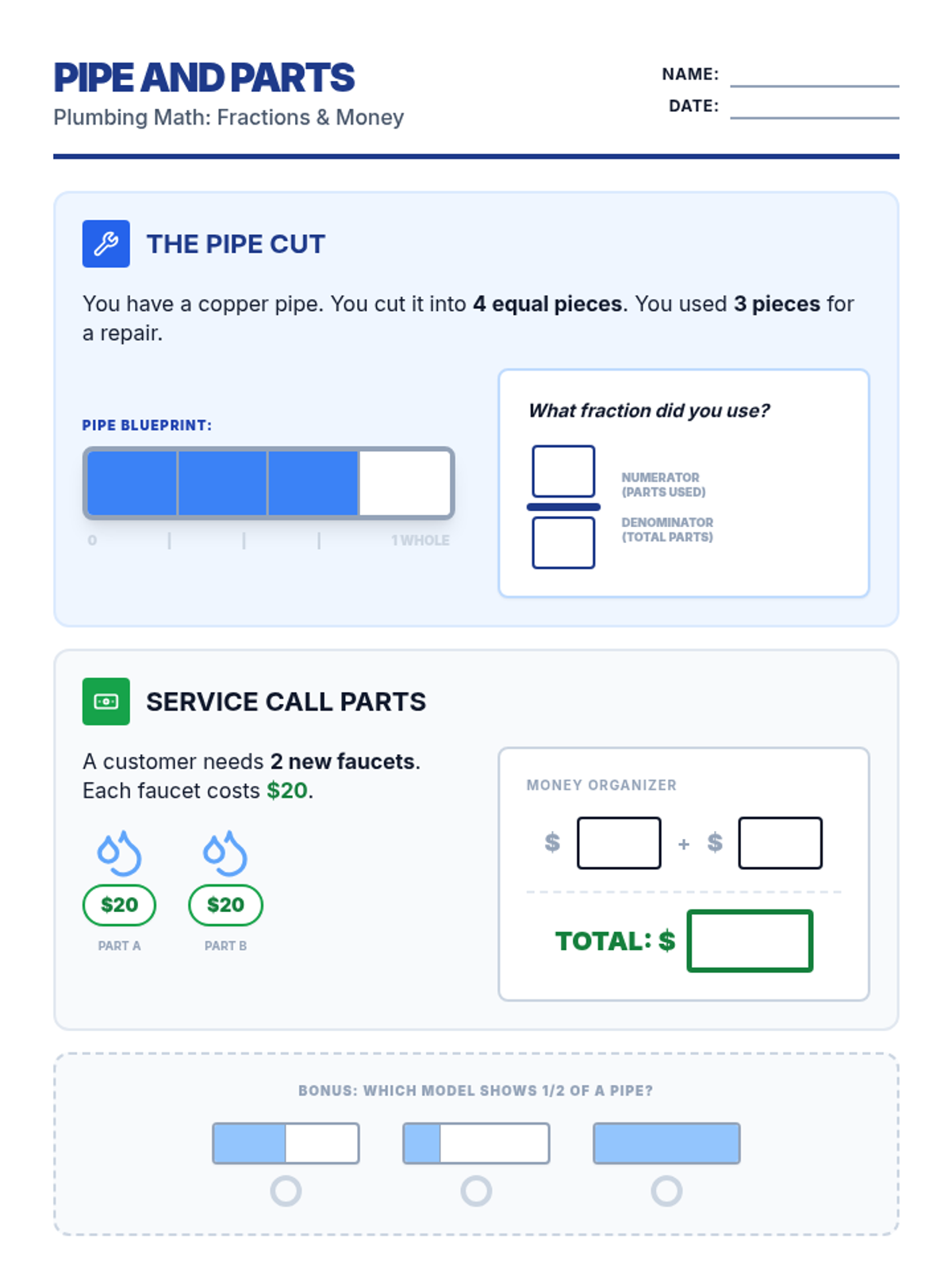
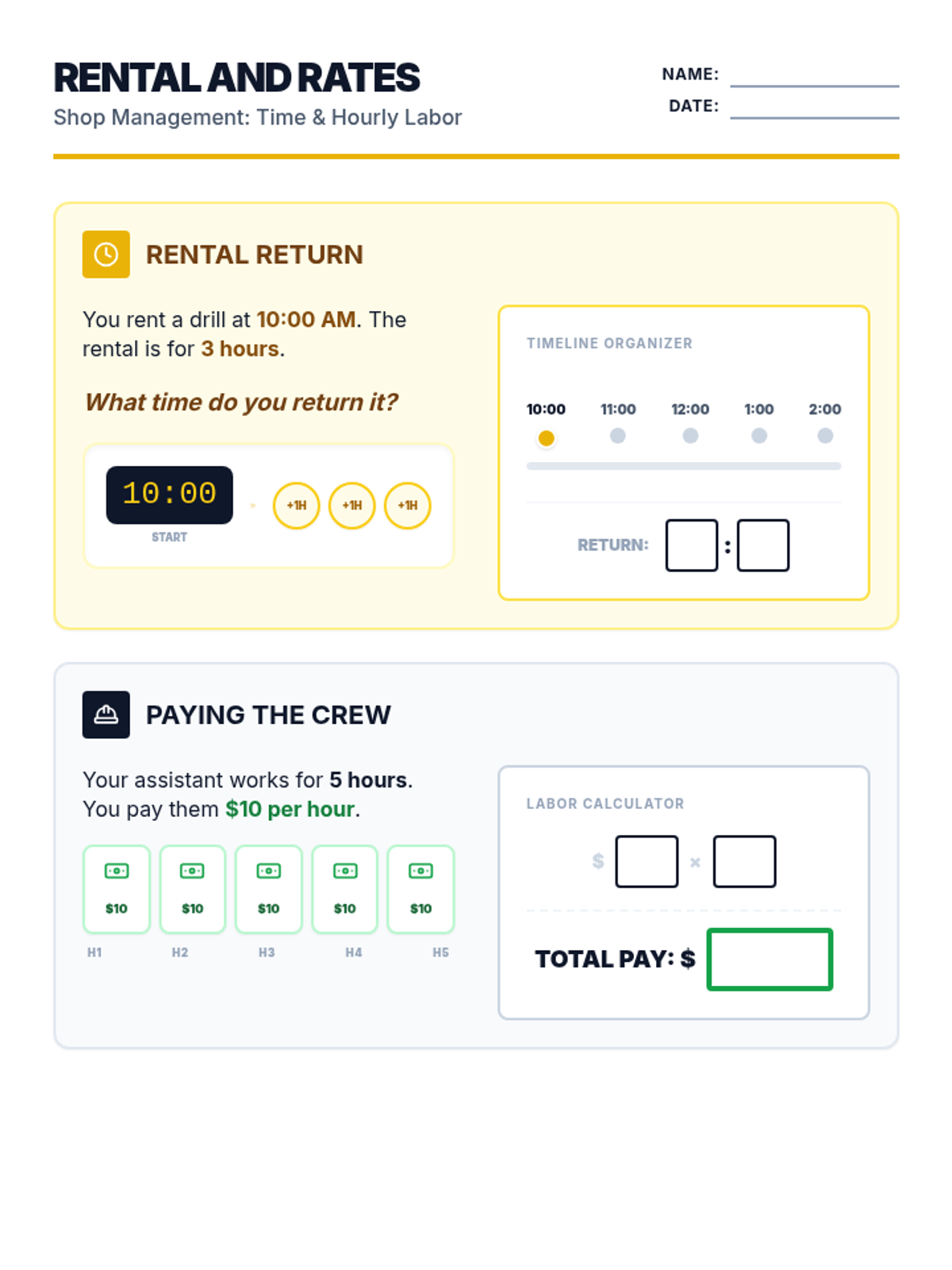
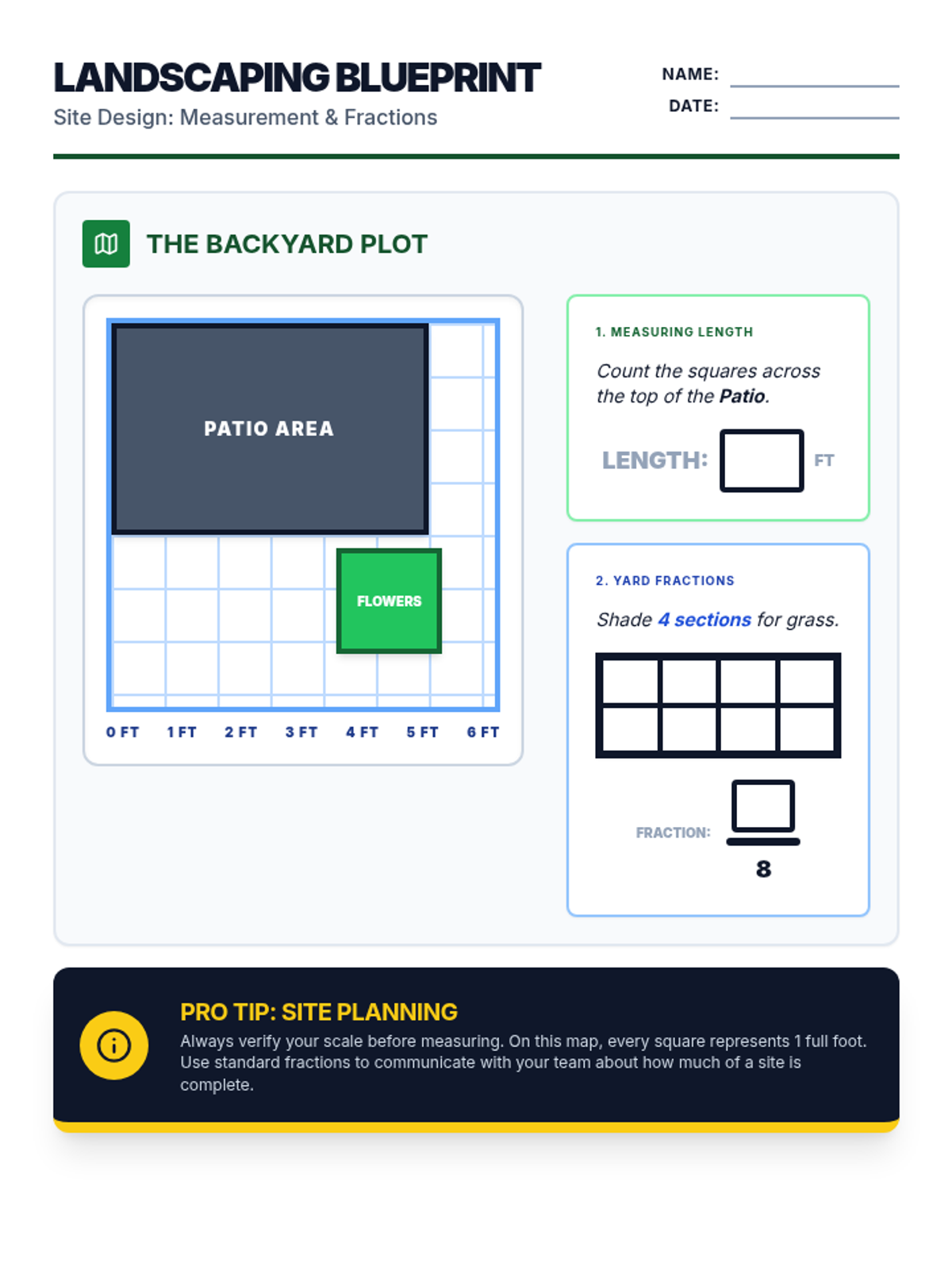
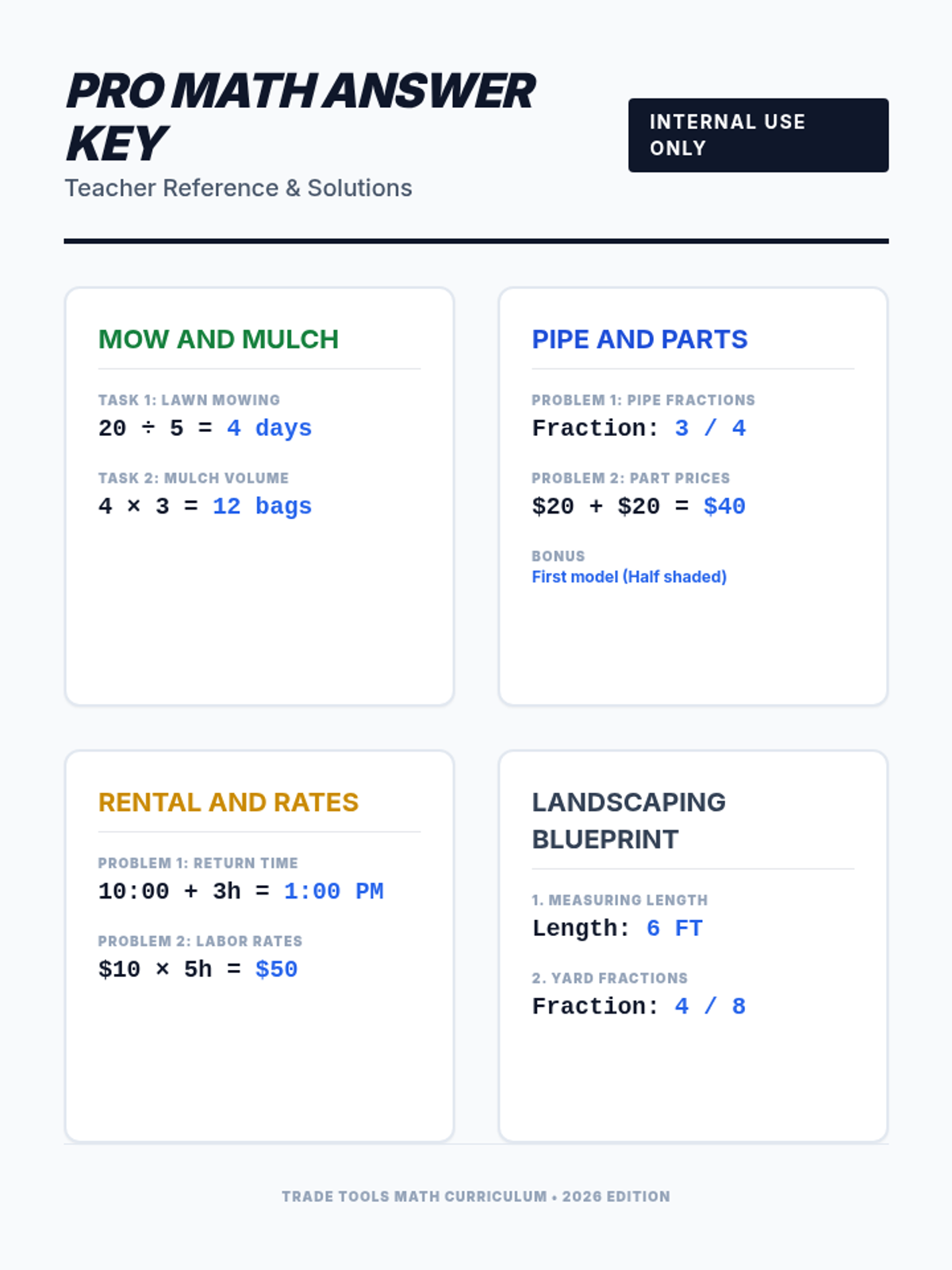
A series of vocational math activities focused on landscaping, plumbing, and tool rentals, featuring heavy visual modeling and step-by-step organizers for students interested in the trades.
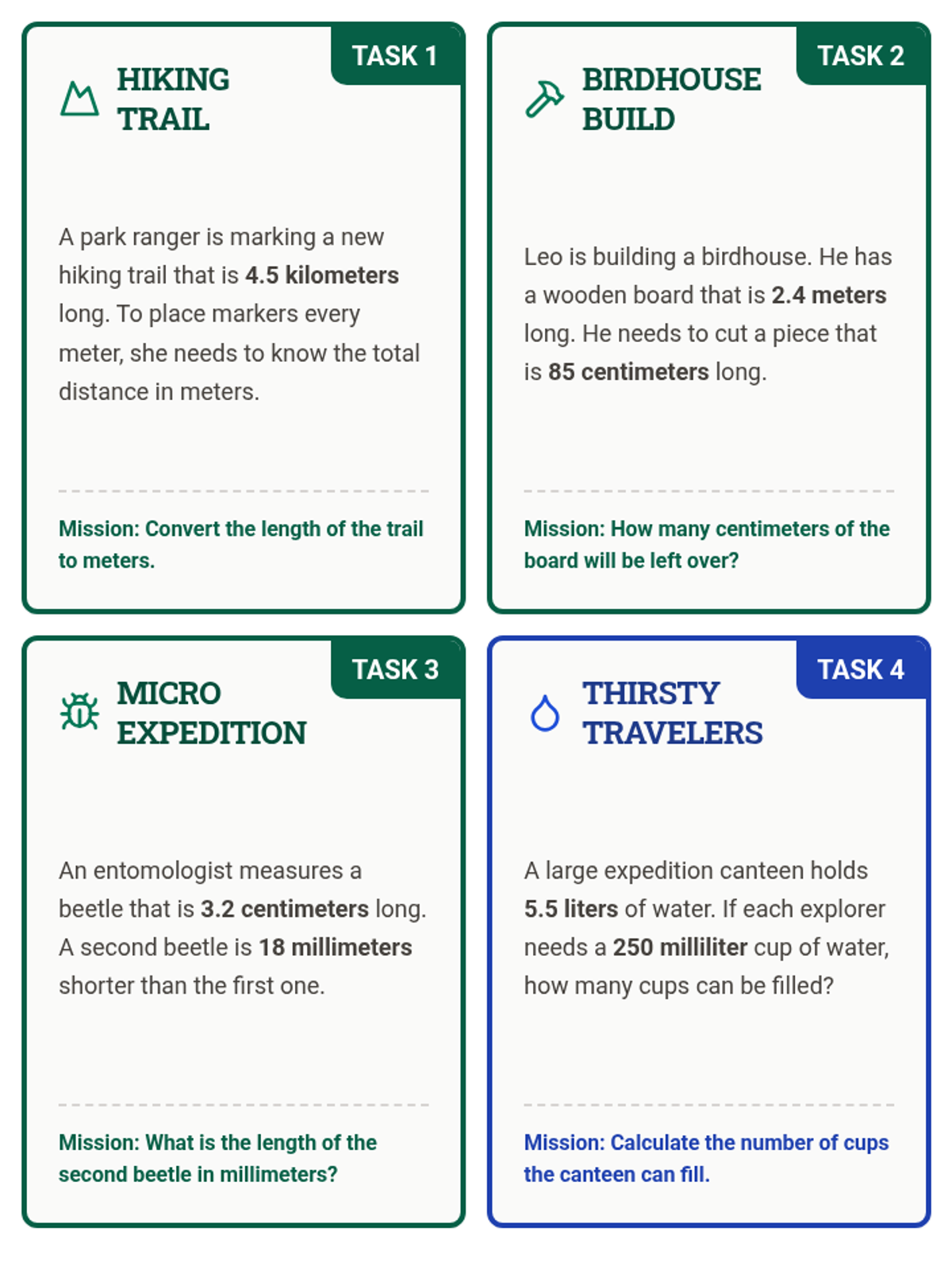
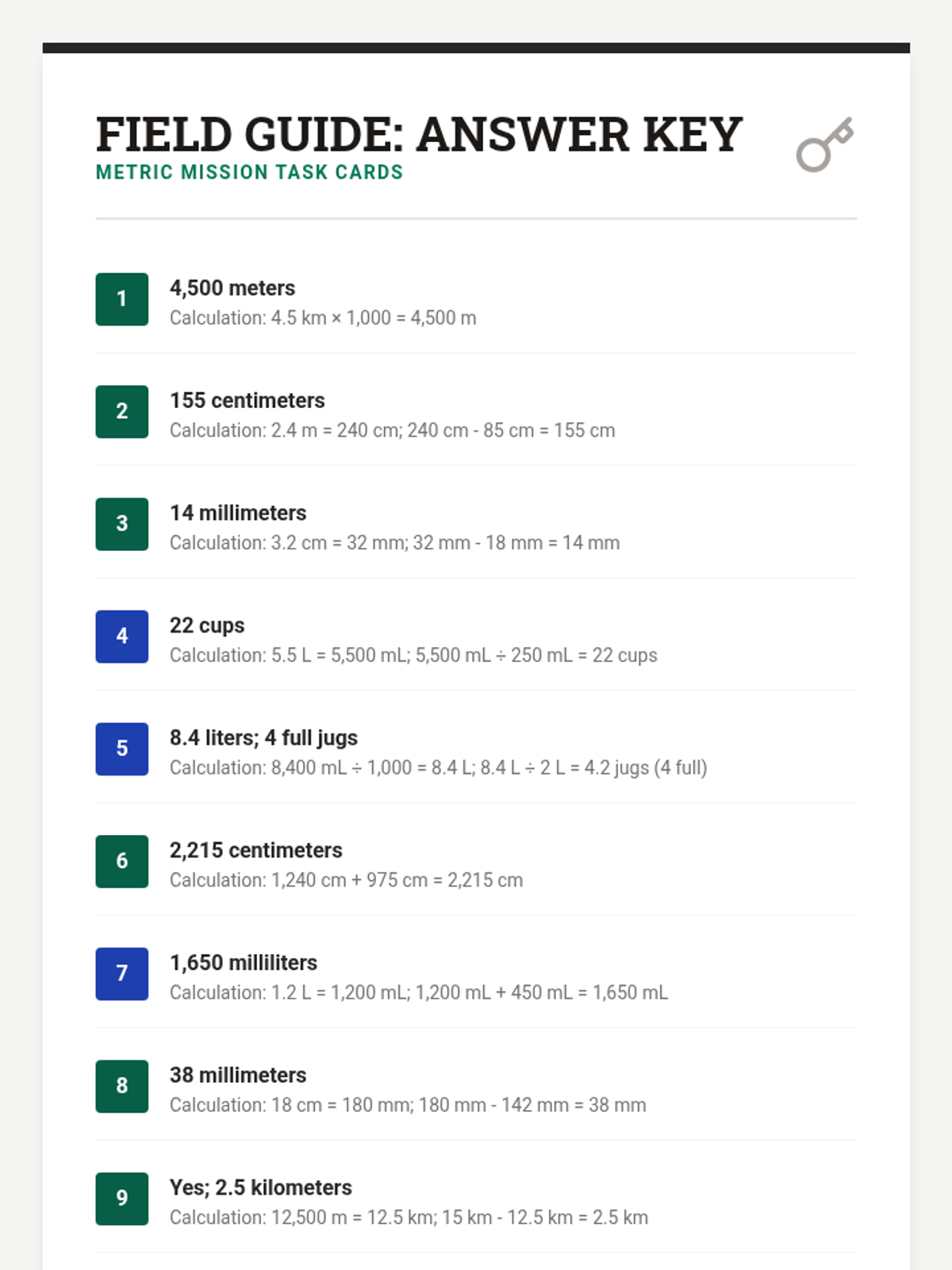
A hands-on lesson where students apply metric conversion skills for length and volume to solve real-world word problems using station-based task cards.
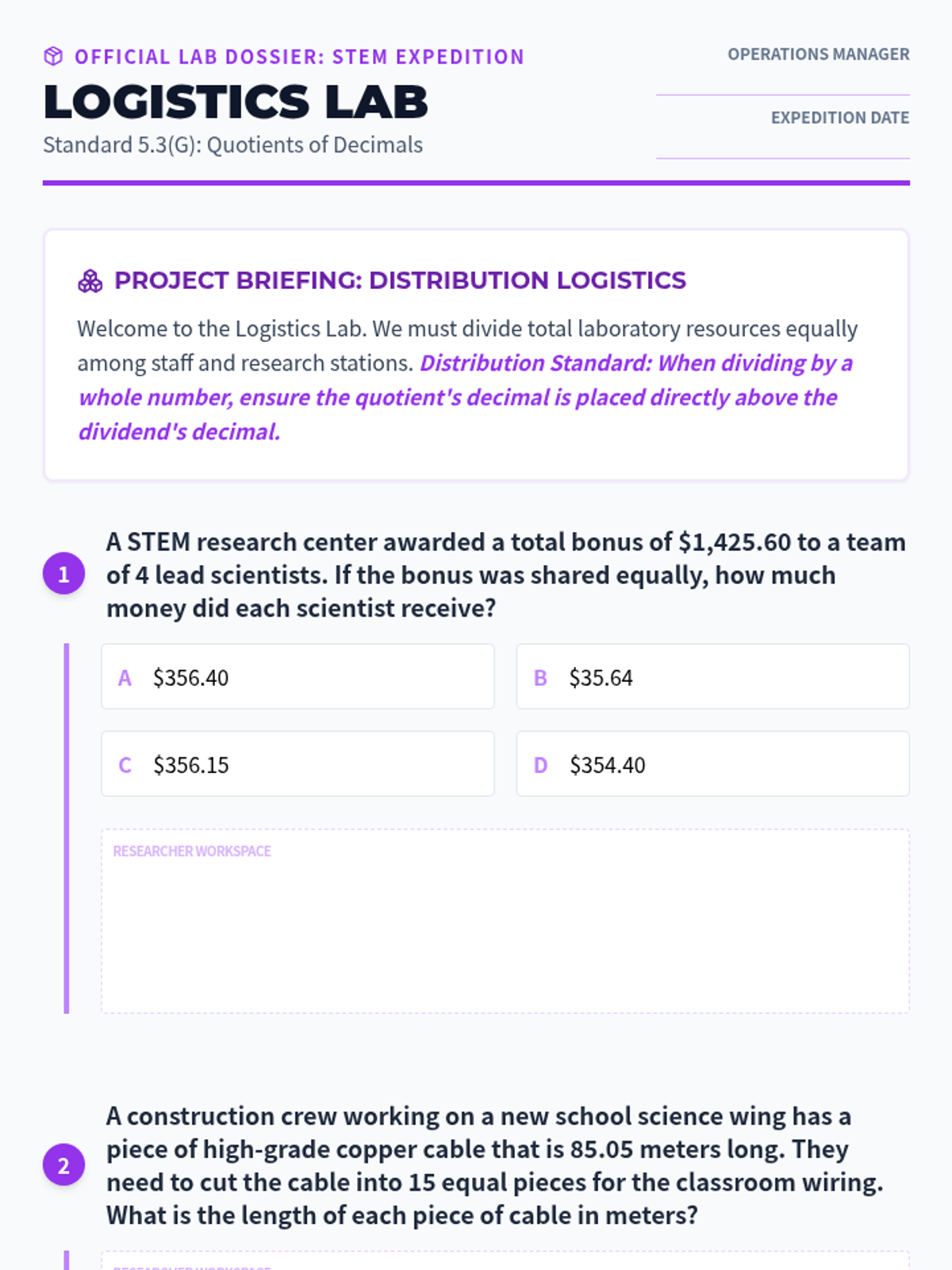
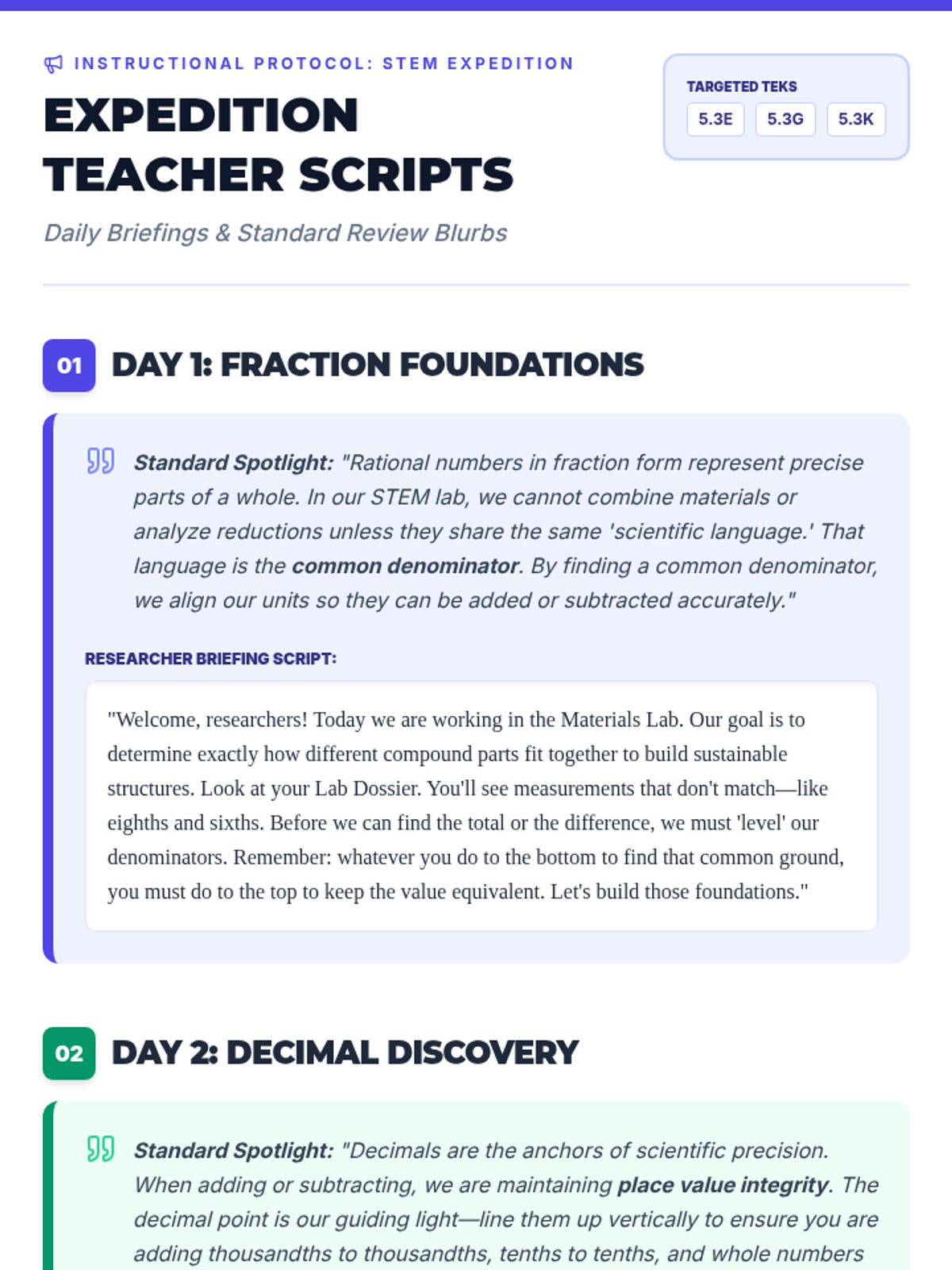
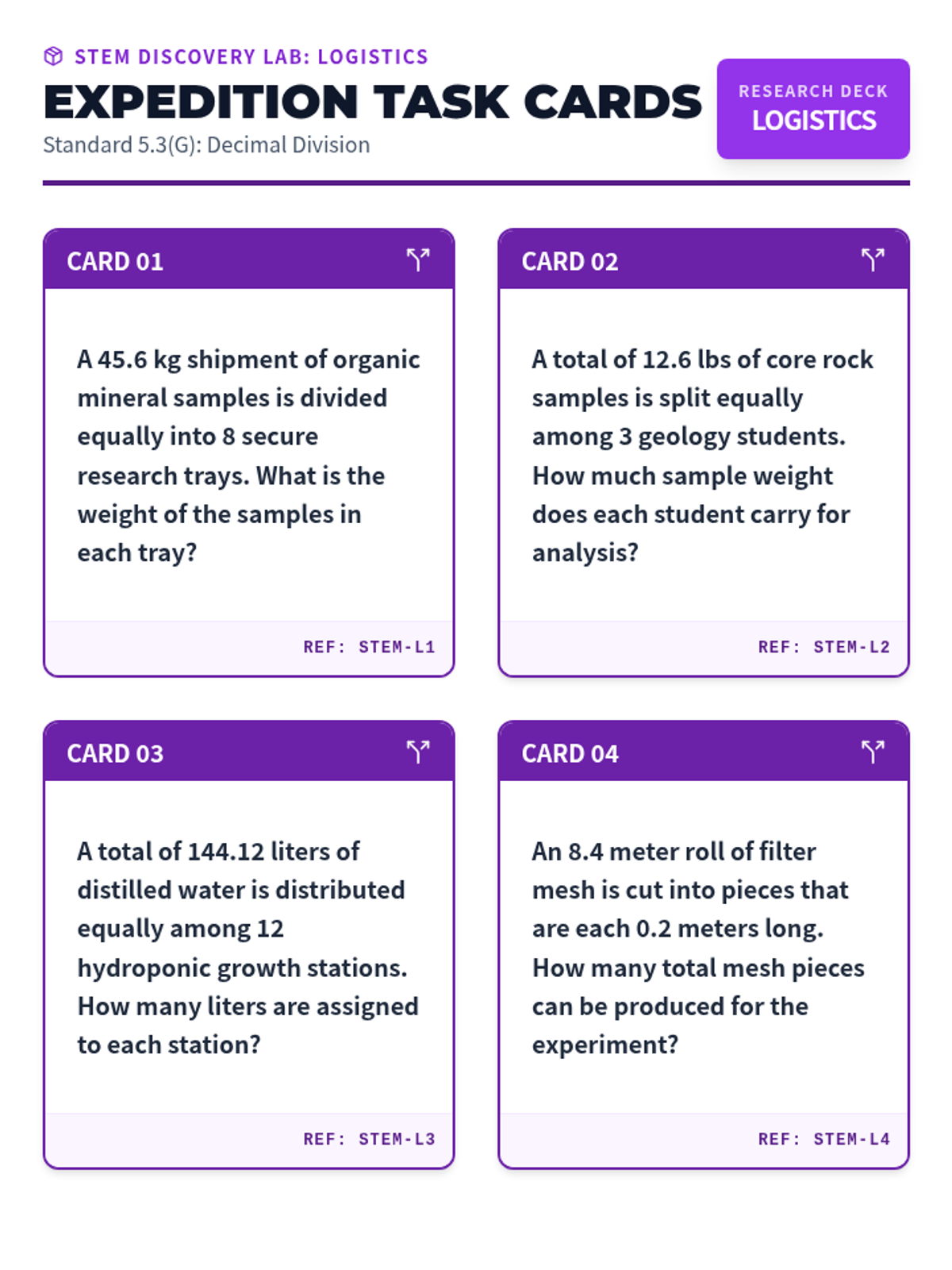
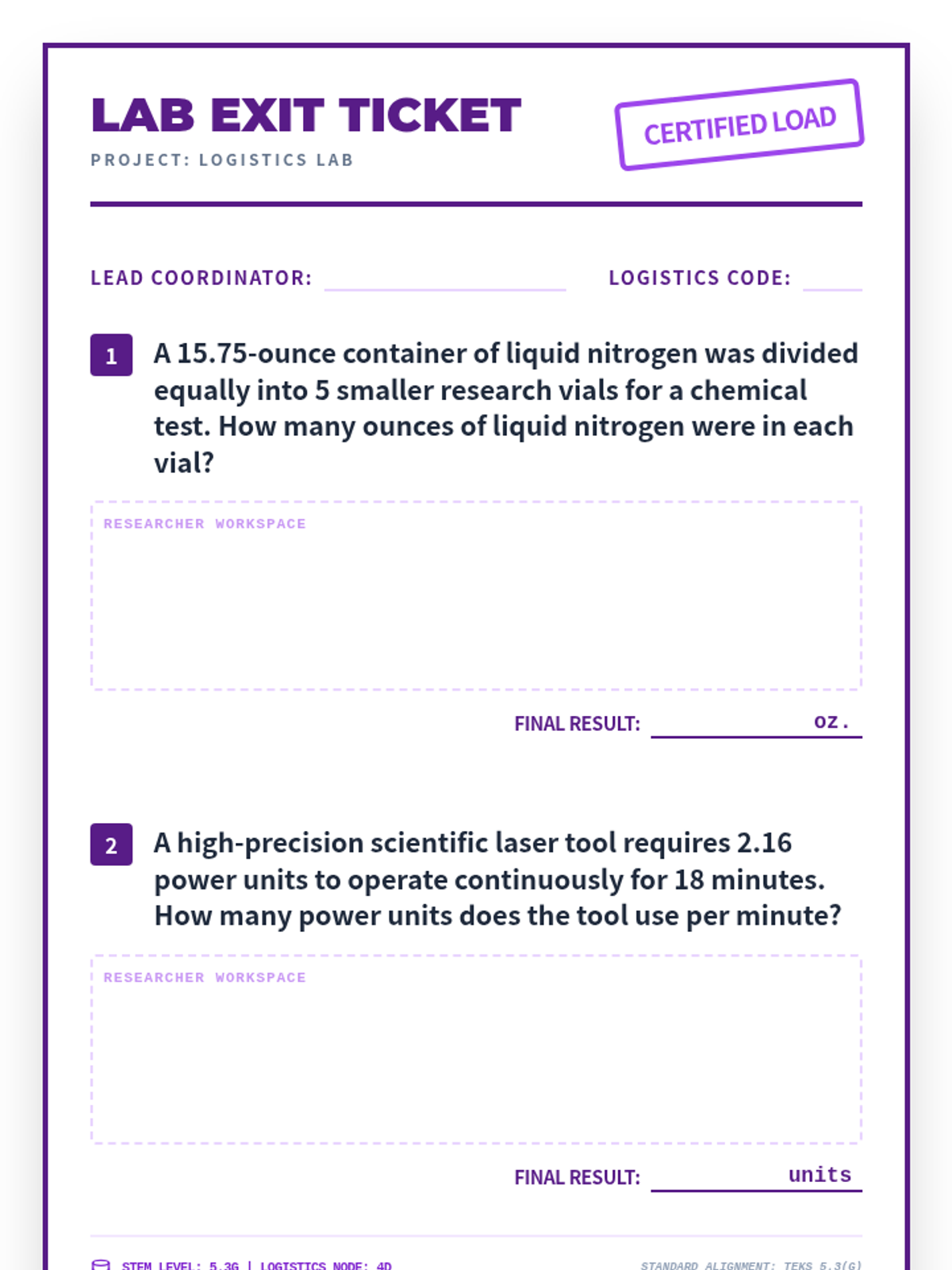
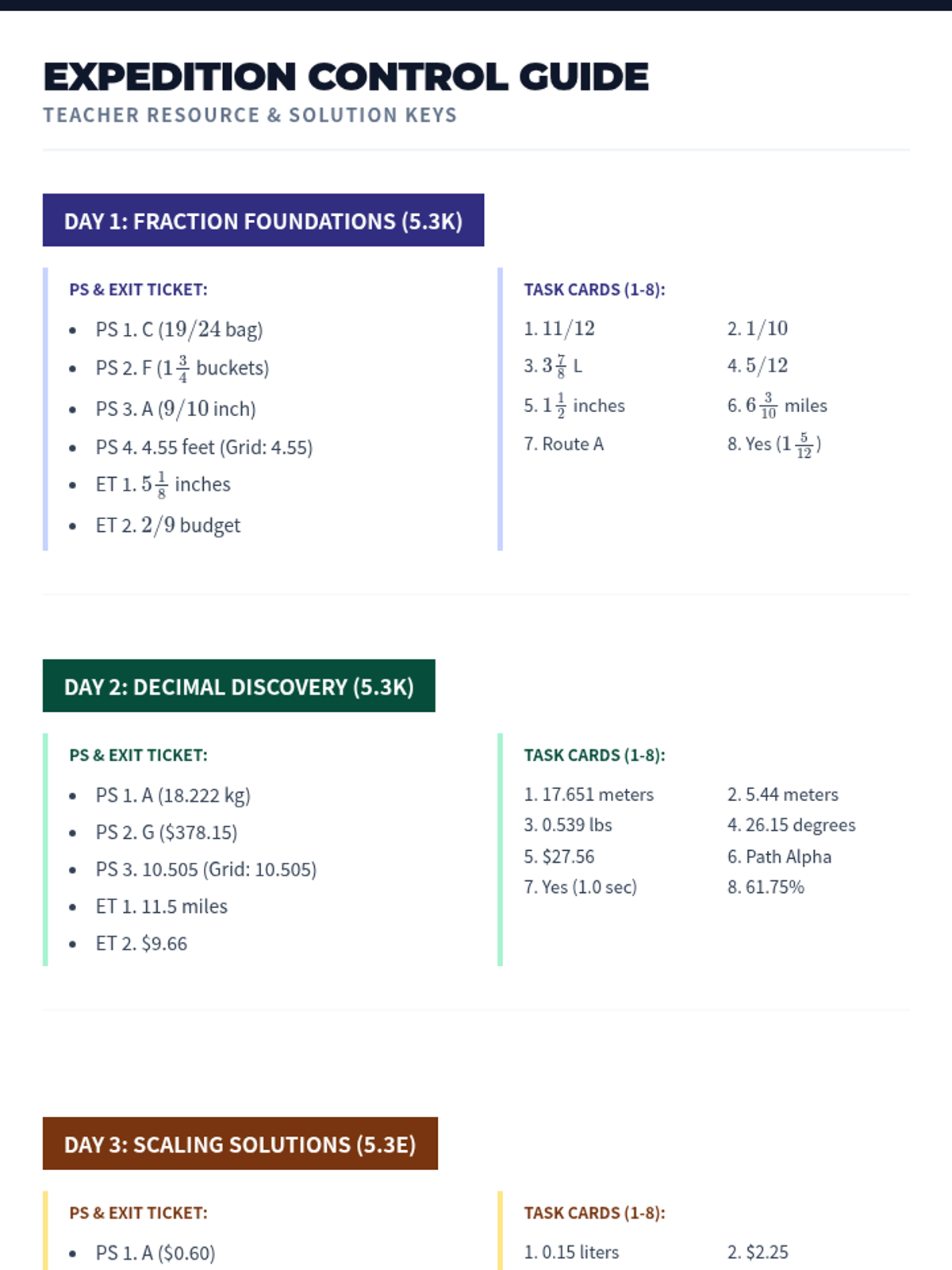
Solving for decimal quotients (5.3G) using distribution and logistics word problems.
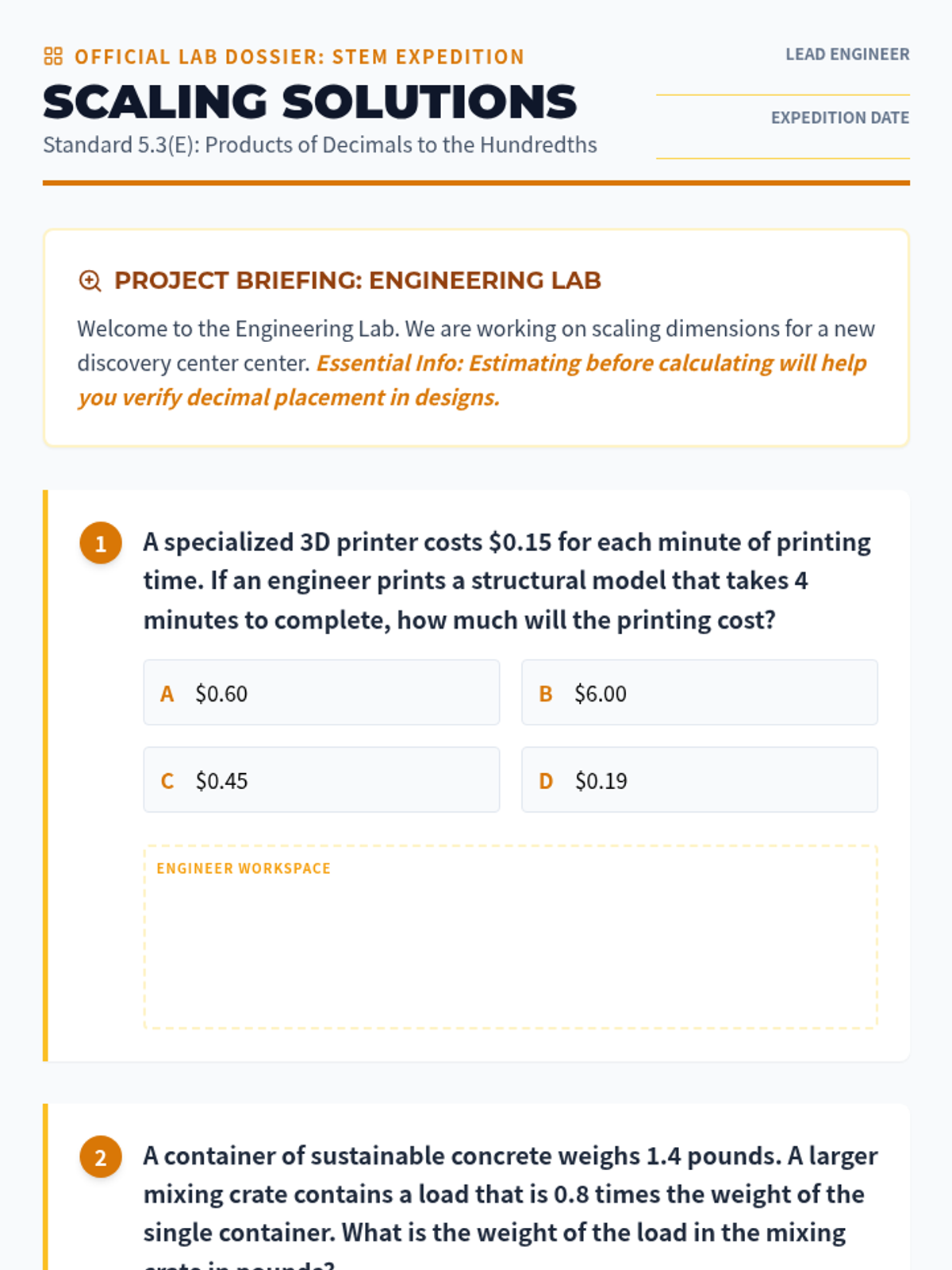
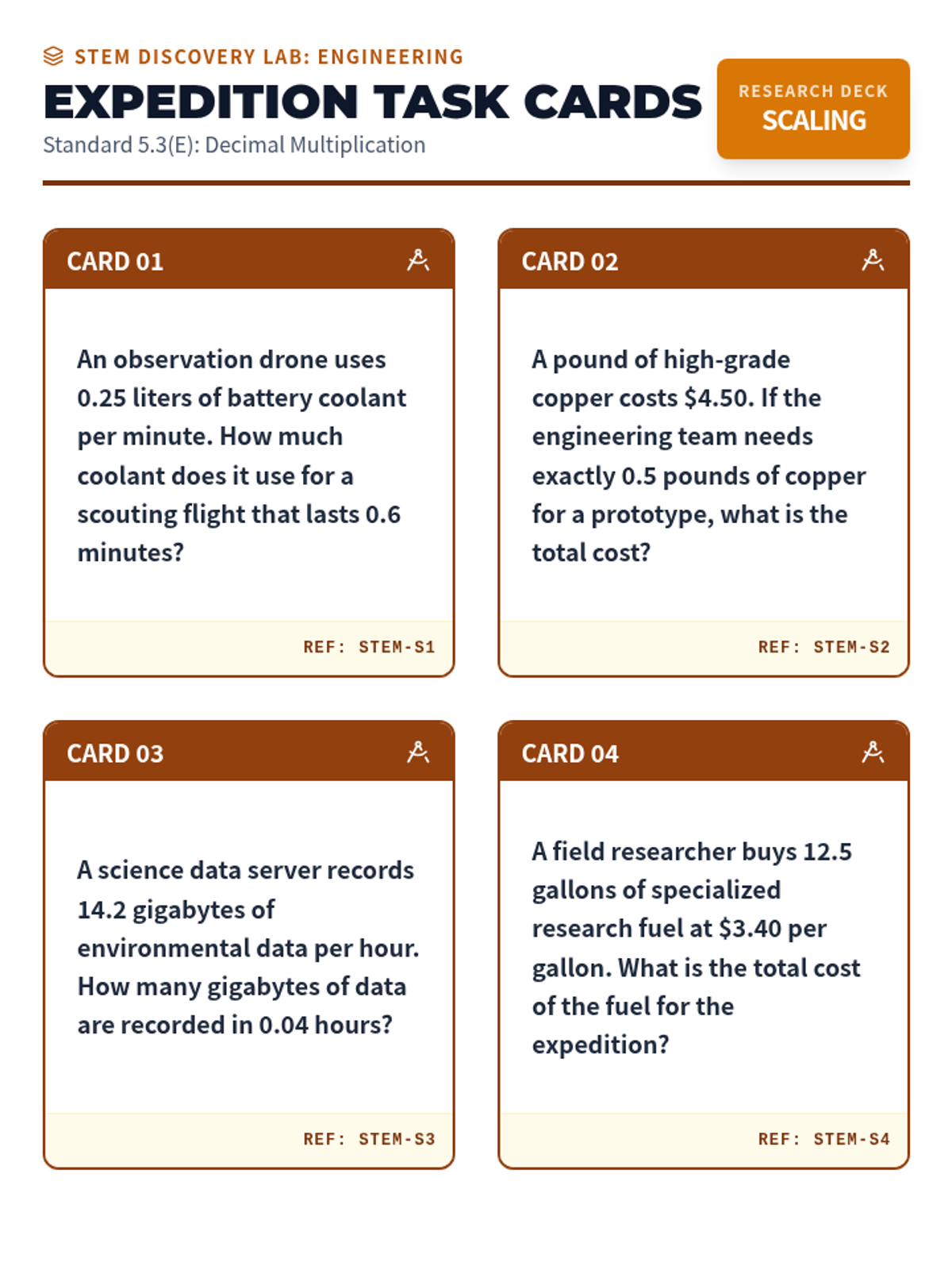
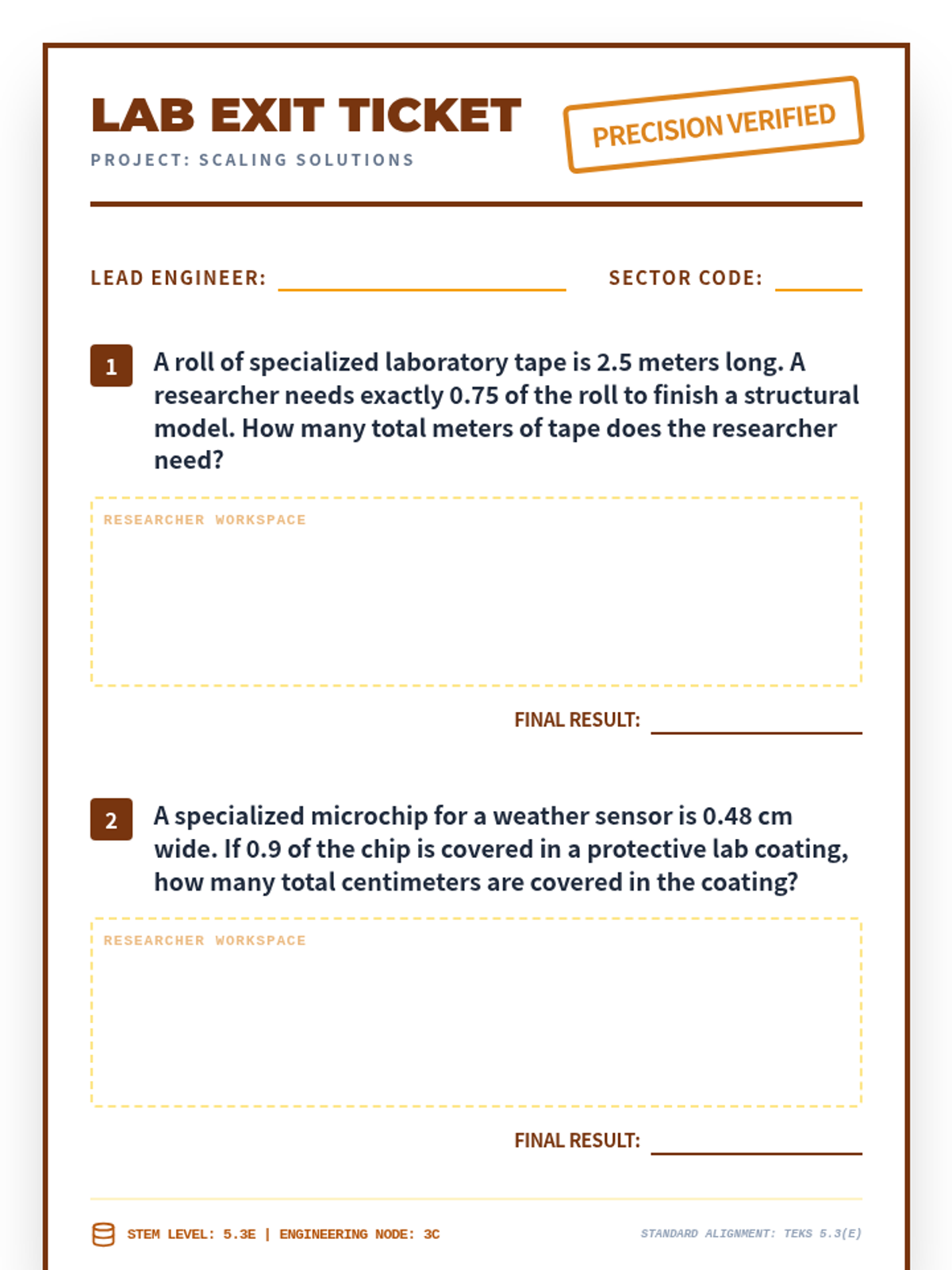
Mastering decimal multiplication (5.3E) through engineering and scaling word problems.
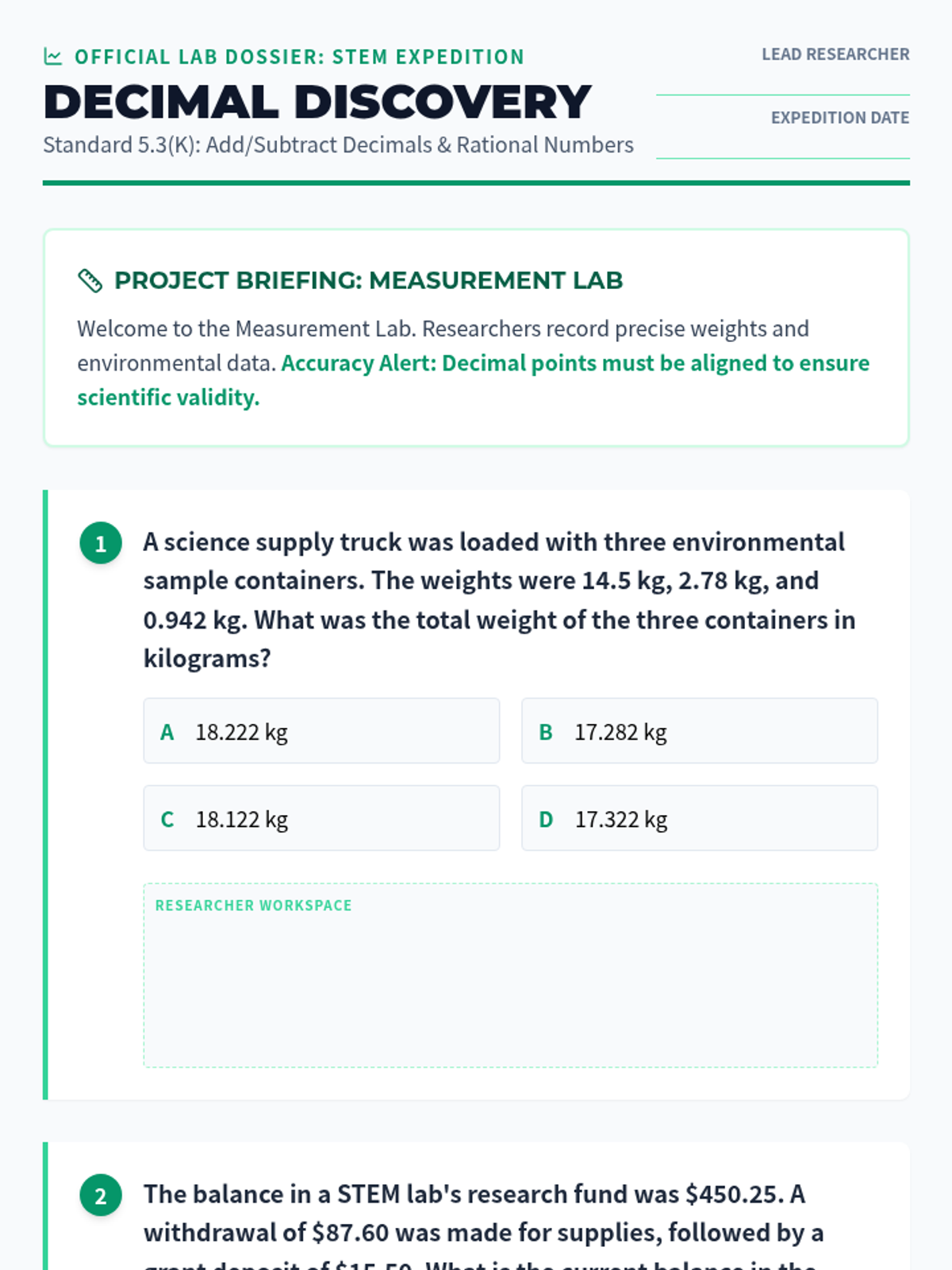
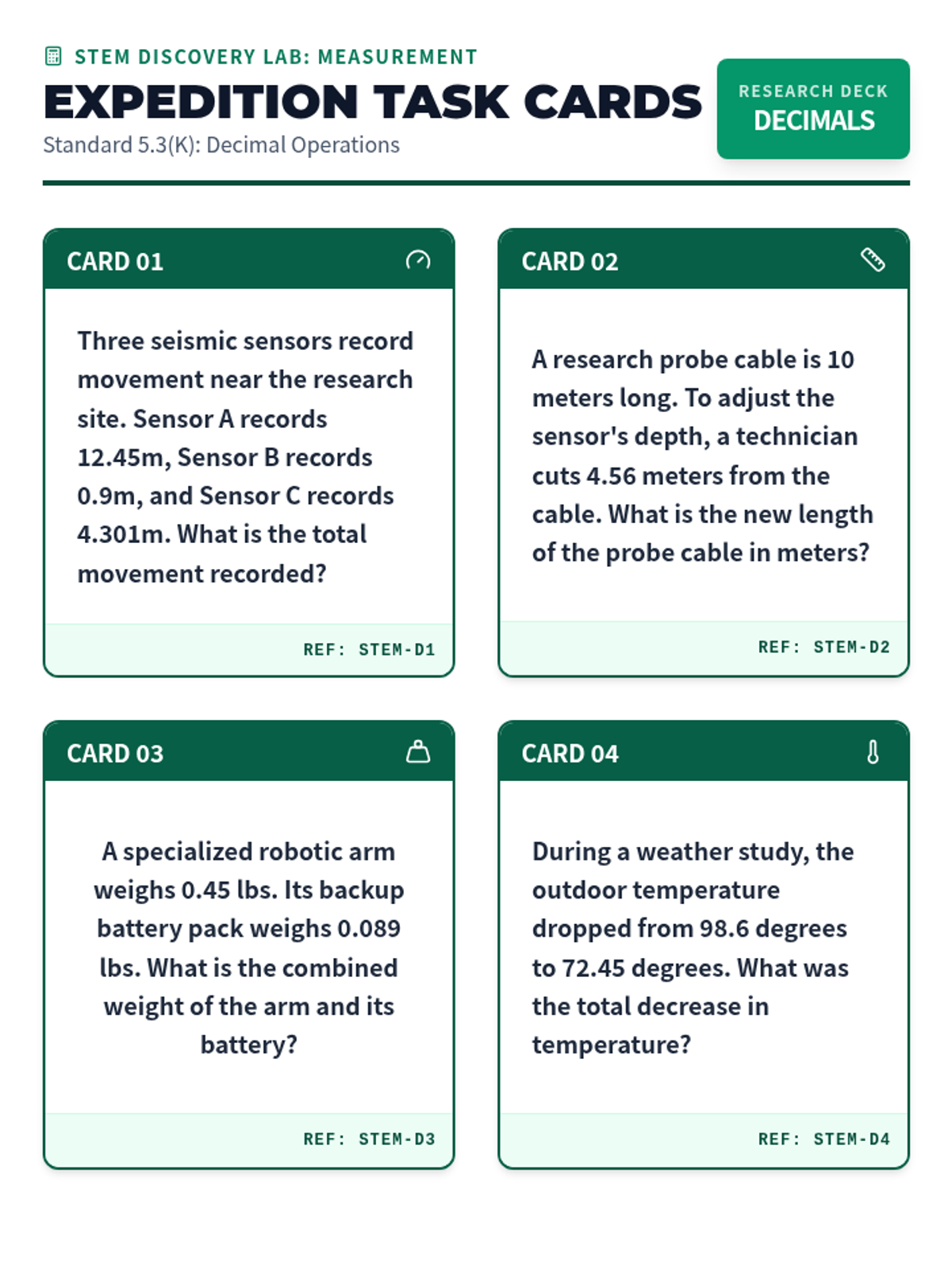
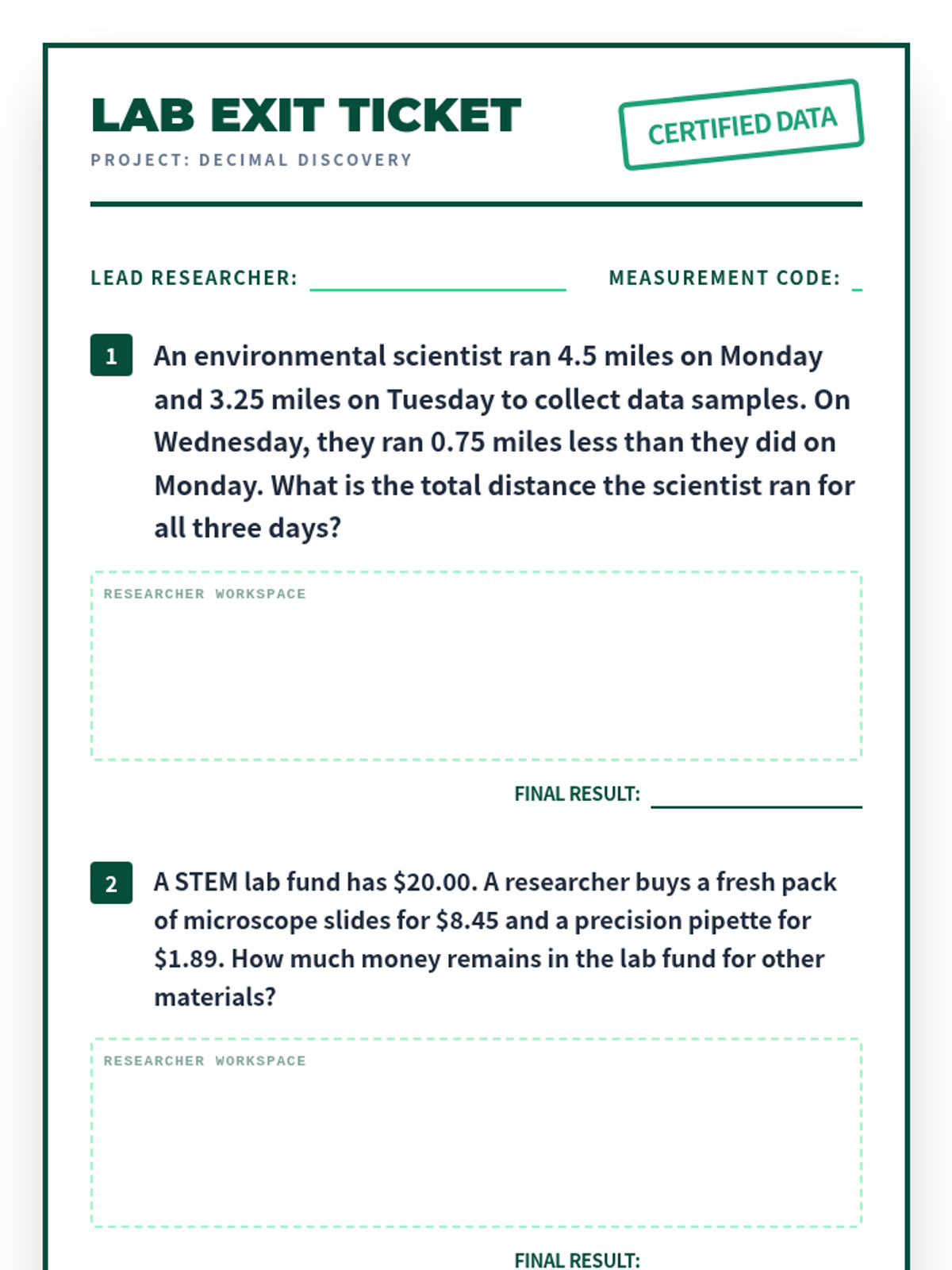
Deep dive into adding and subtracting decimals to the thousandths (5.3K) using measurement and data scenarios.
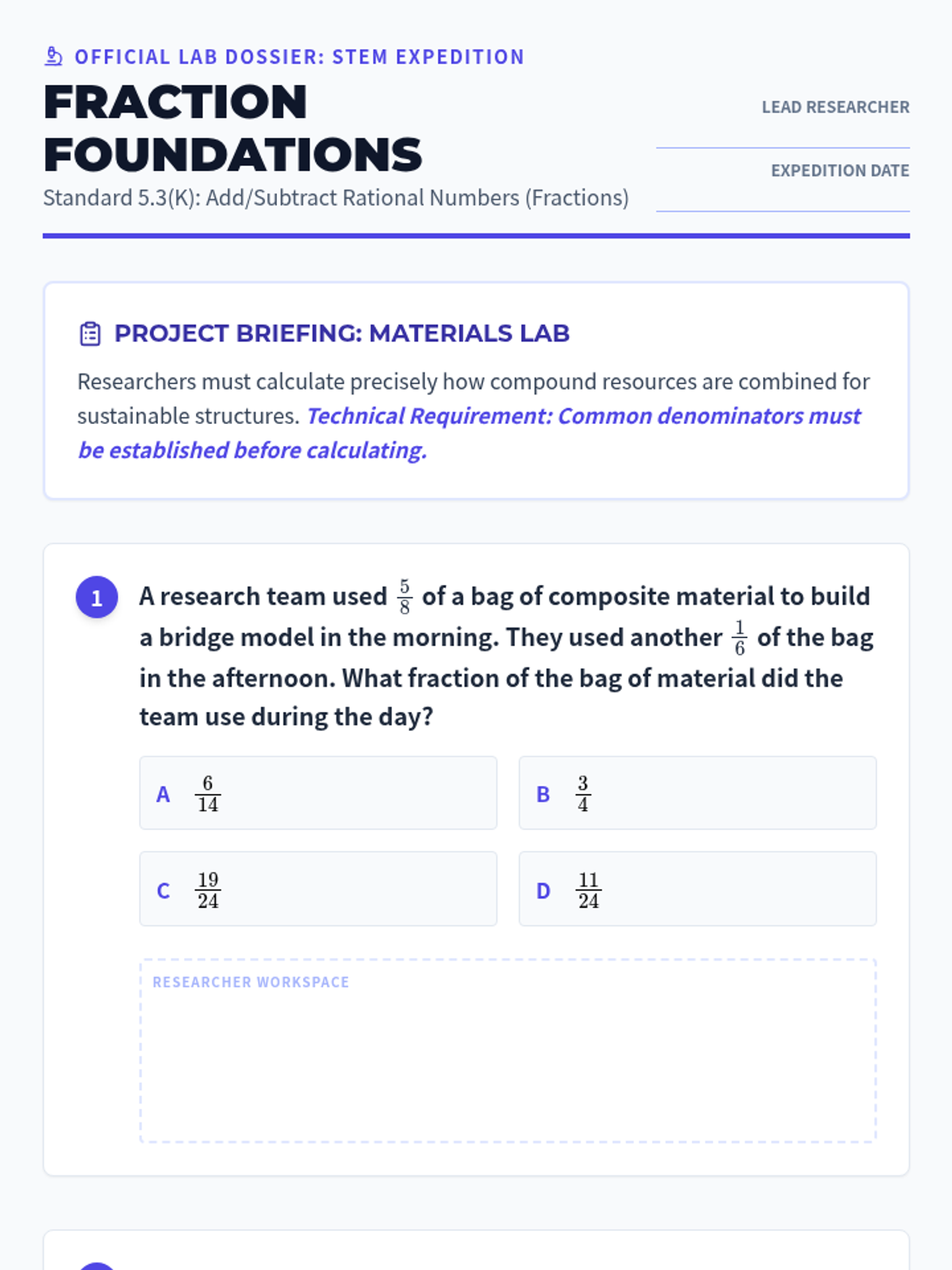
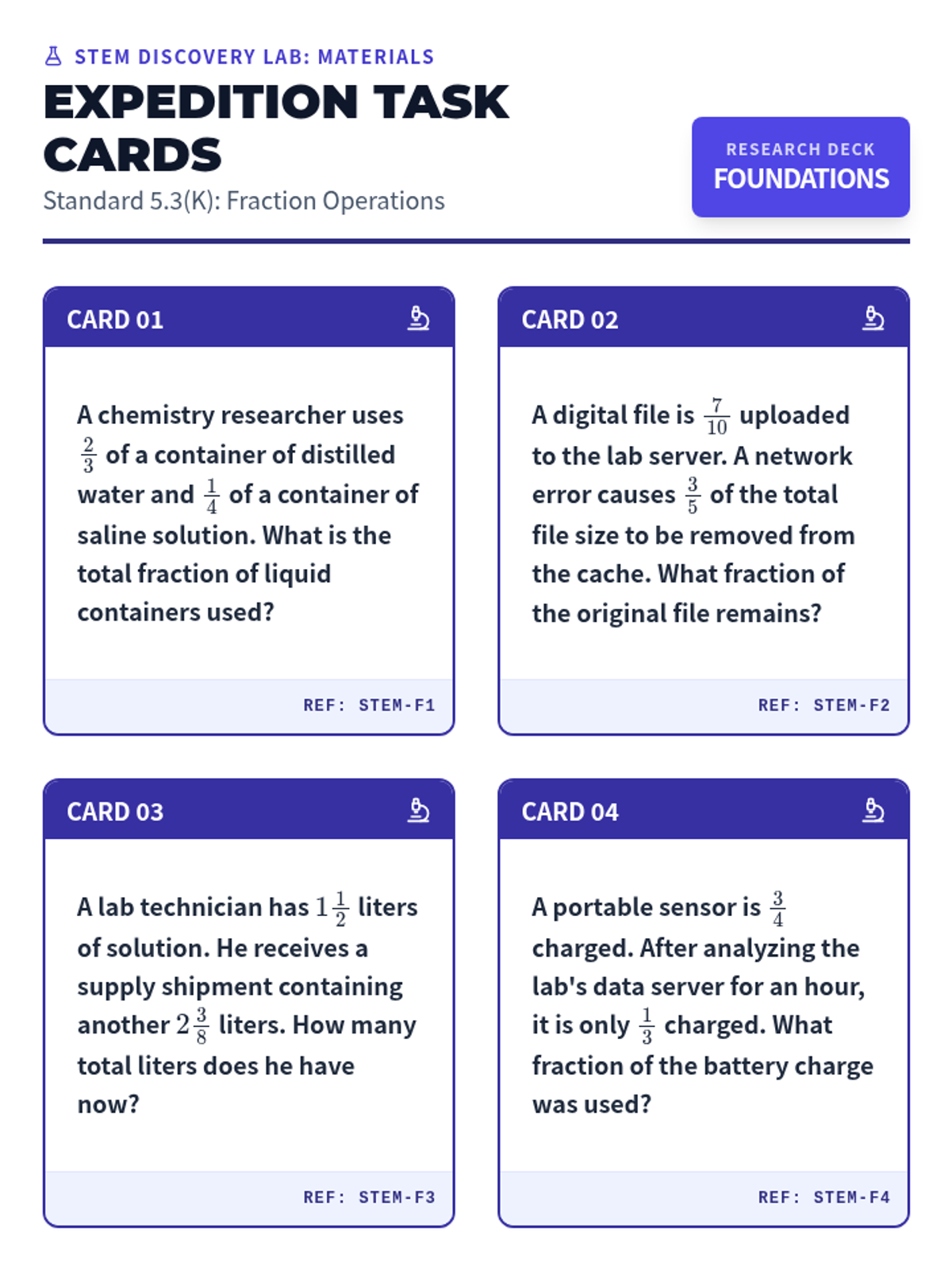
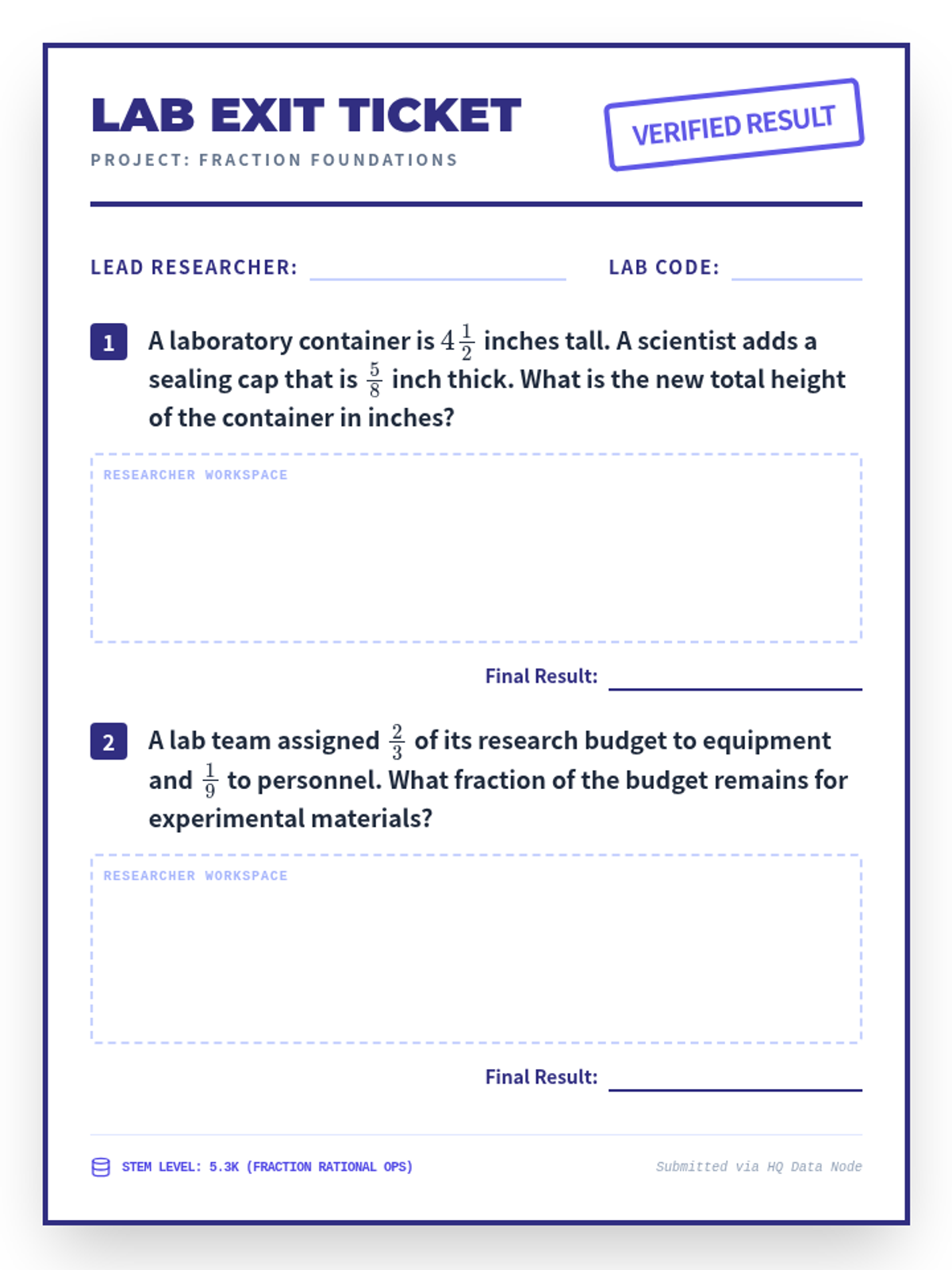
Focuses on adding and subtracting fractions with unequal denominators (5.3K) through lab-based word problems.
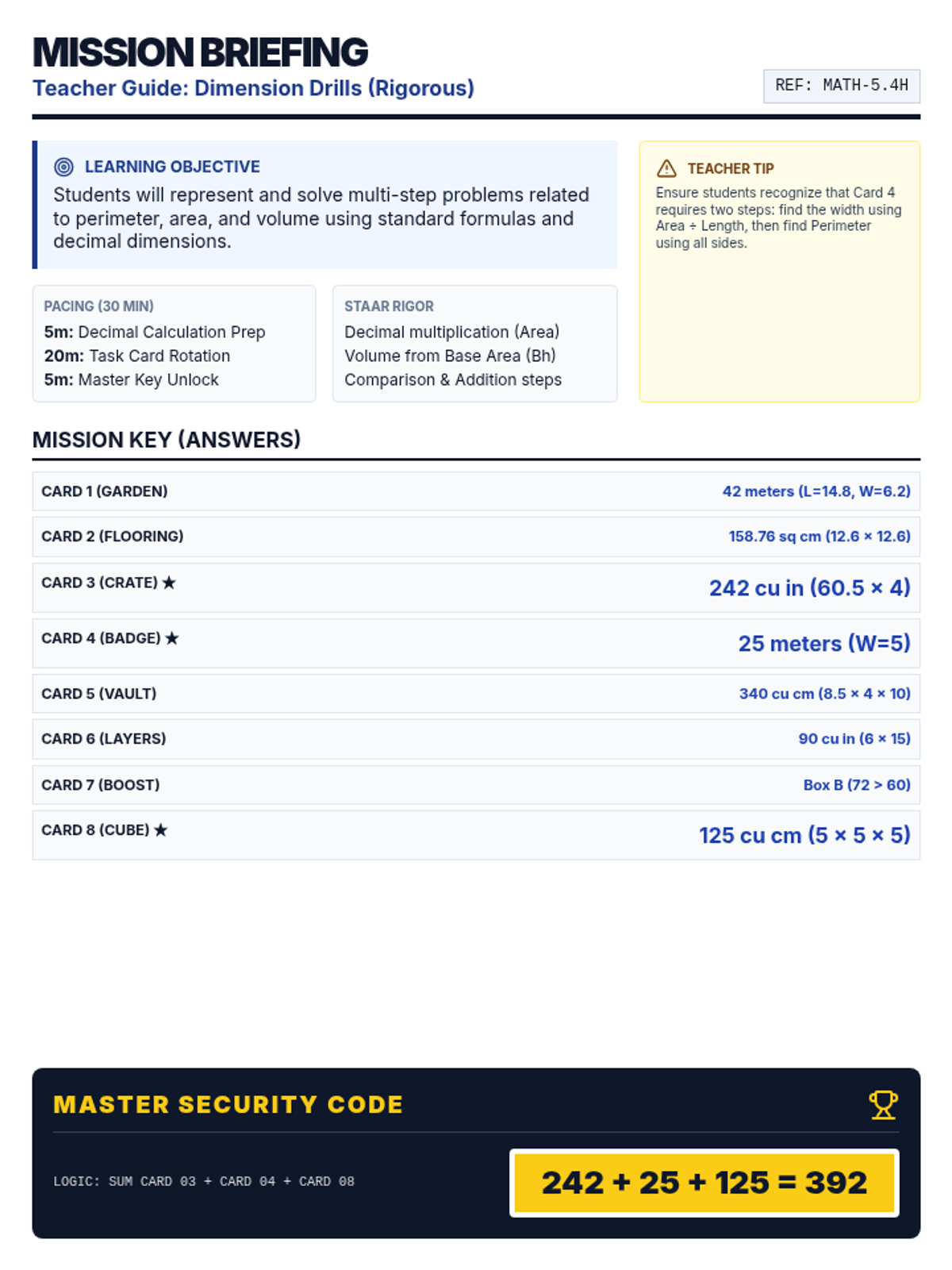
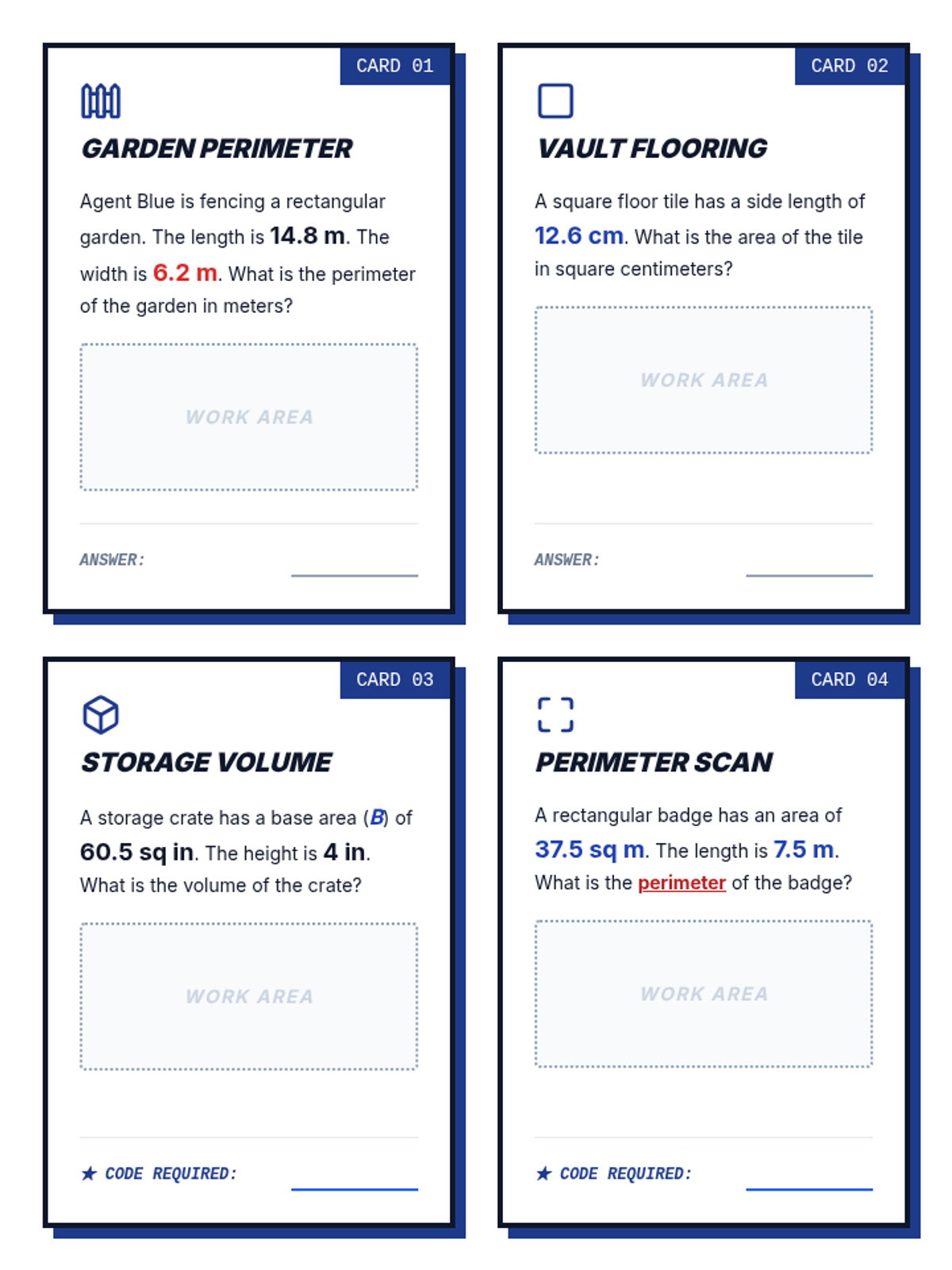
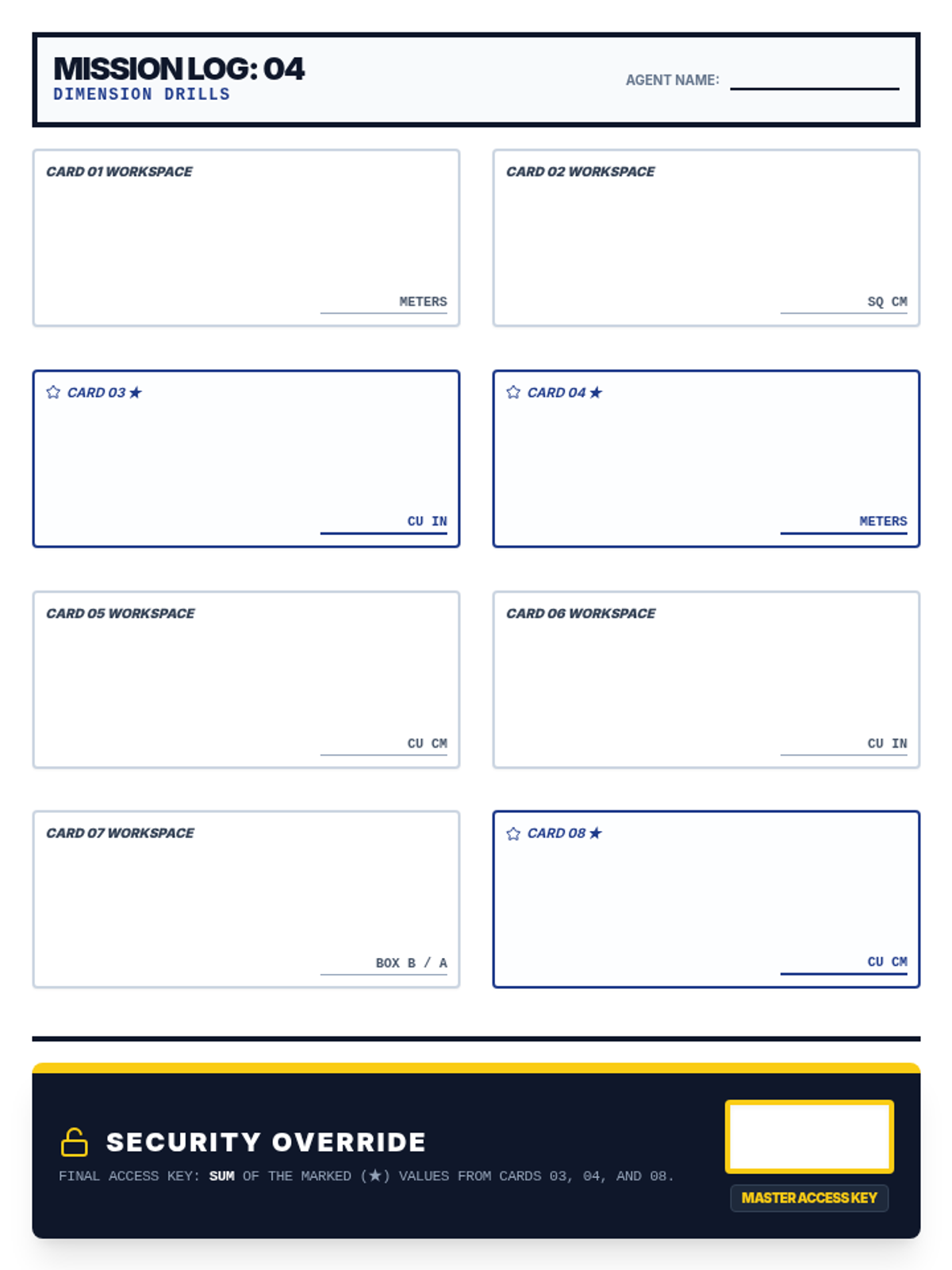
Focuses on representing and solving problems involving perimeter, area, and volume. Students use their measurement skills as 'Dimension Detectives' for the final mission.
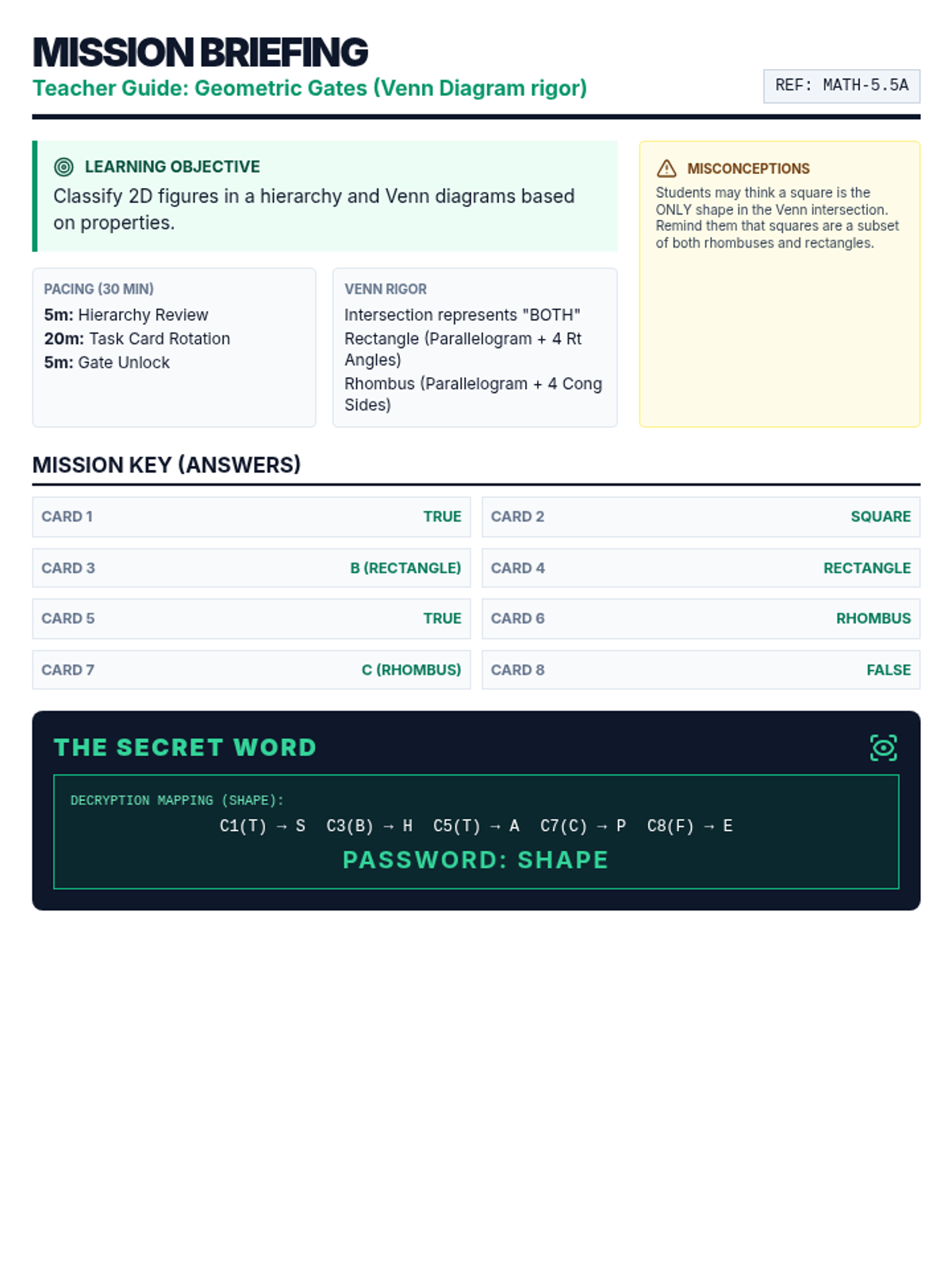
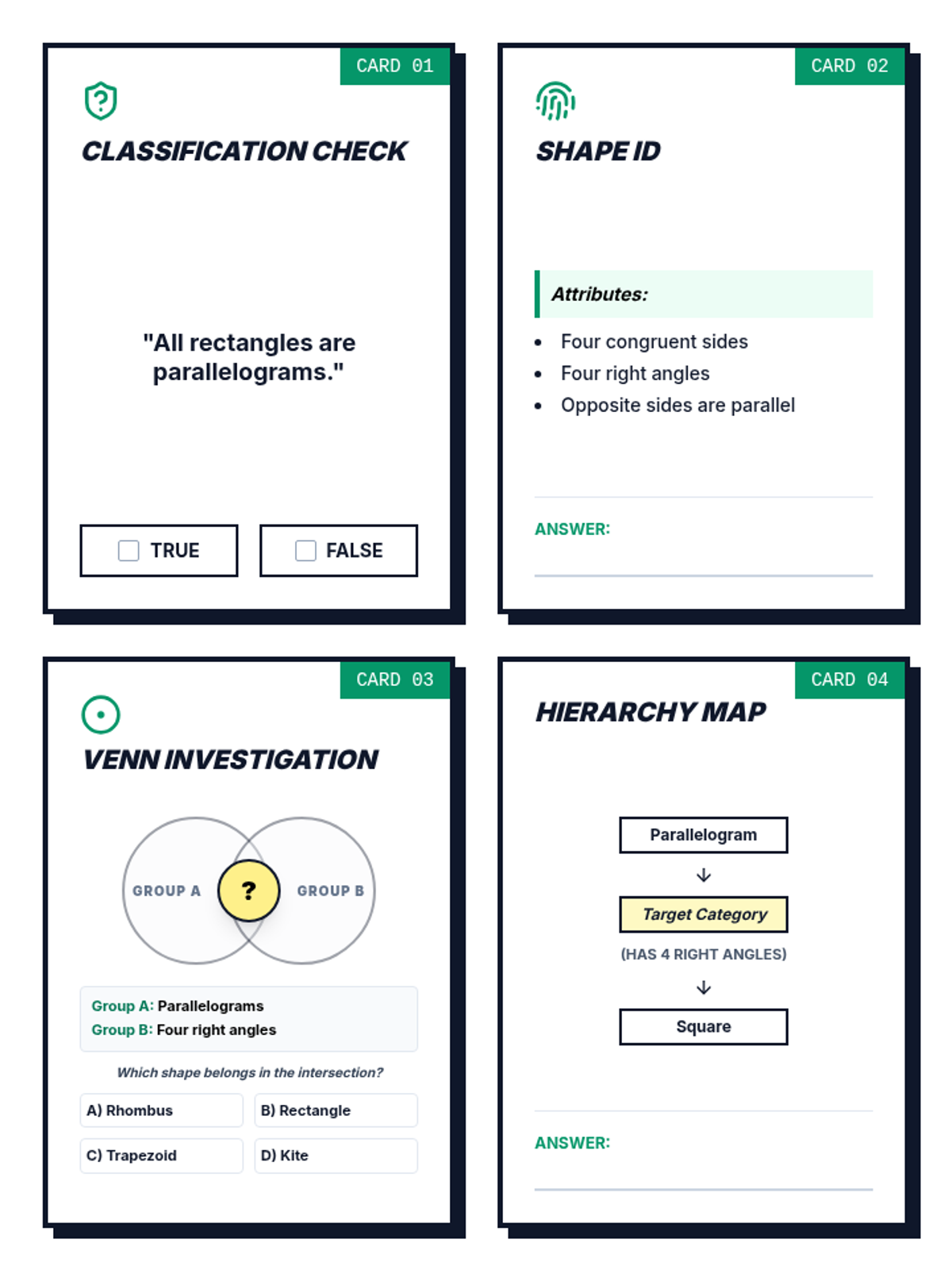
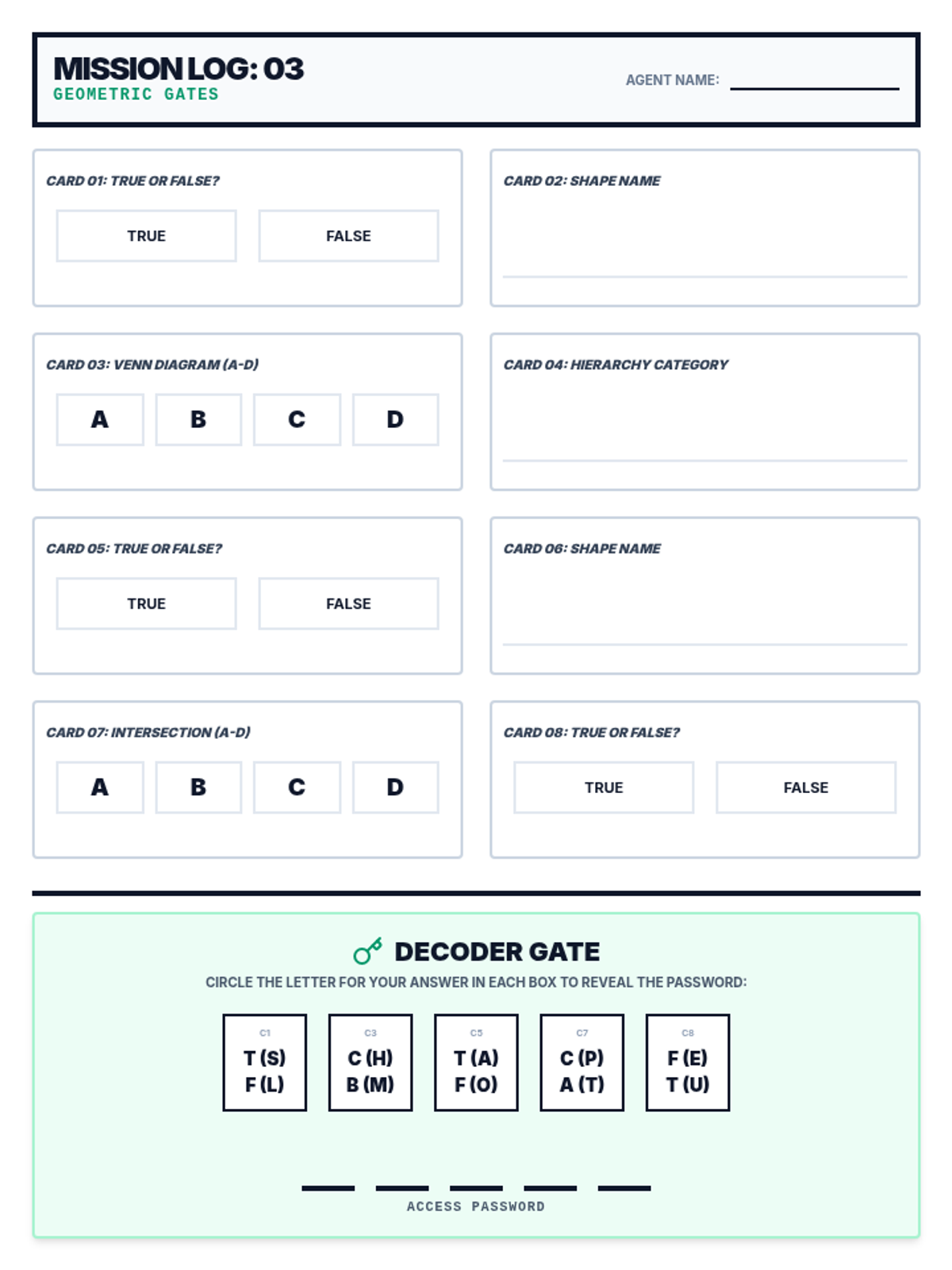
Focuses on classifying 2D figures in a hierarchy based on properties. Students identify relationships between sets and subsets to unlock the 'Geometric Gates'.
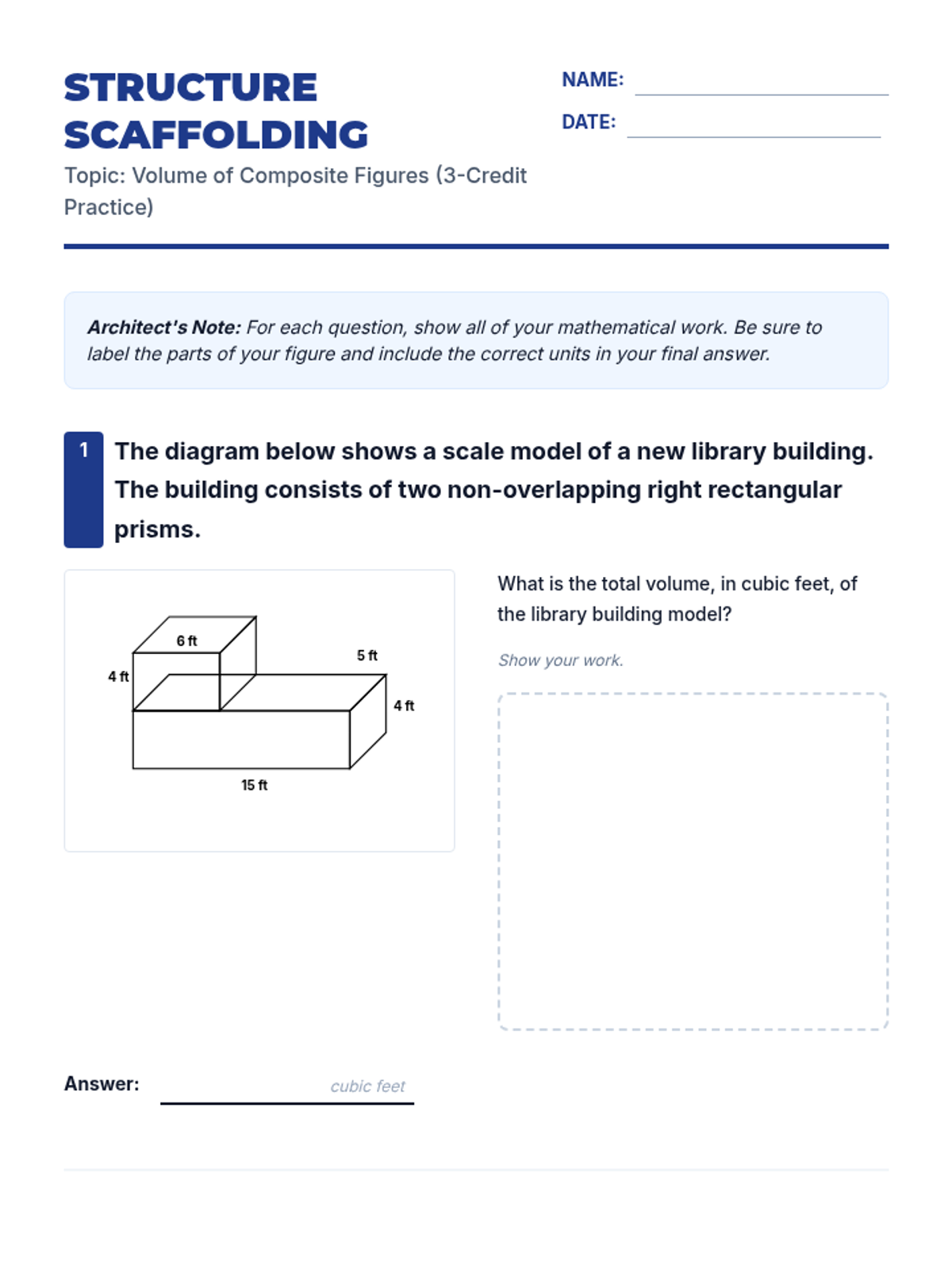
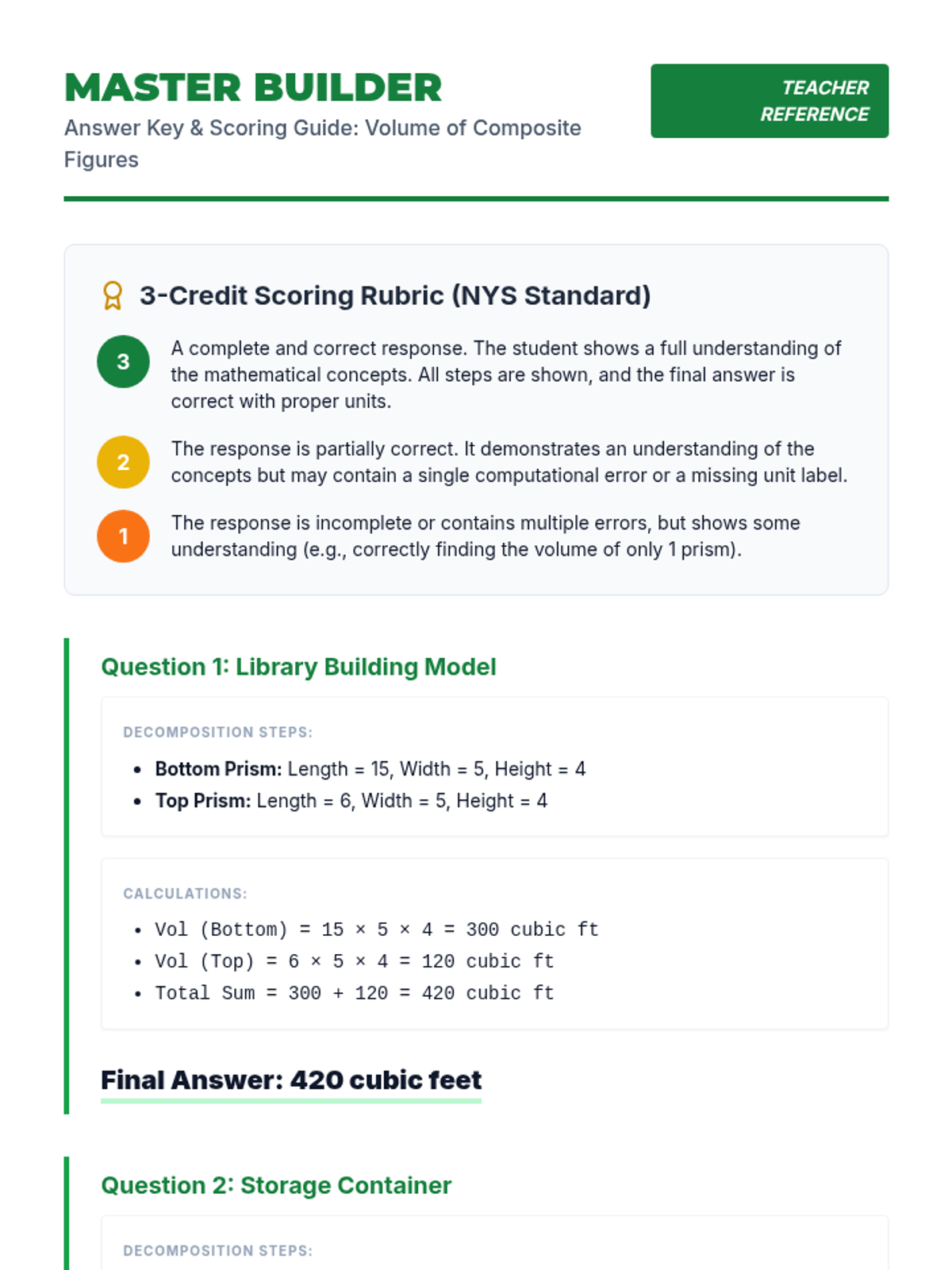
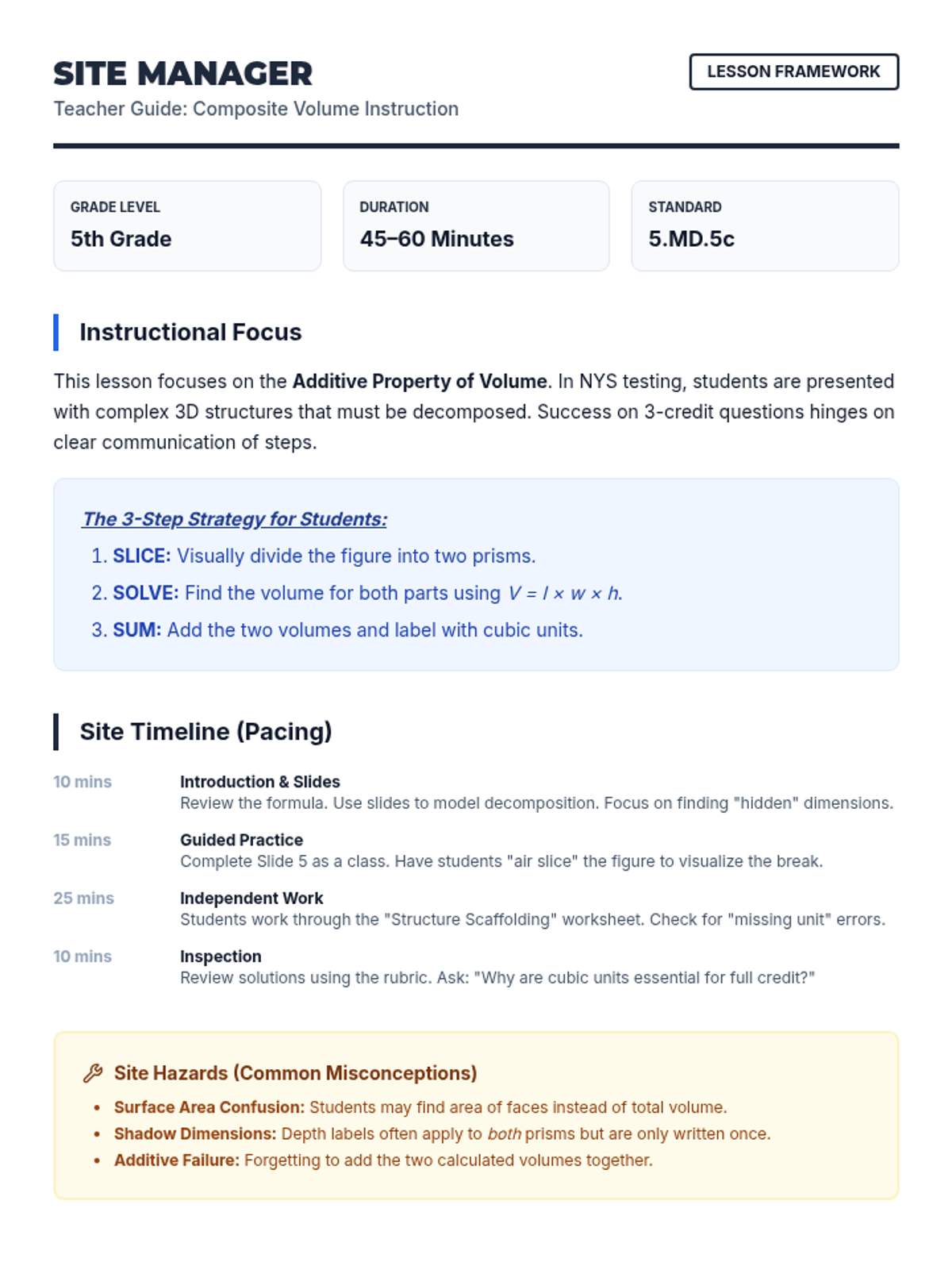
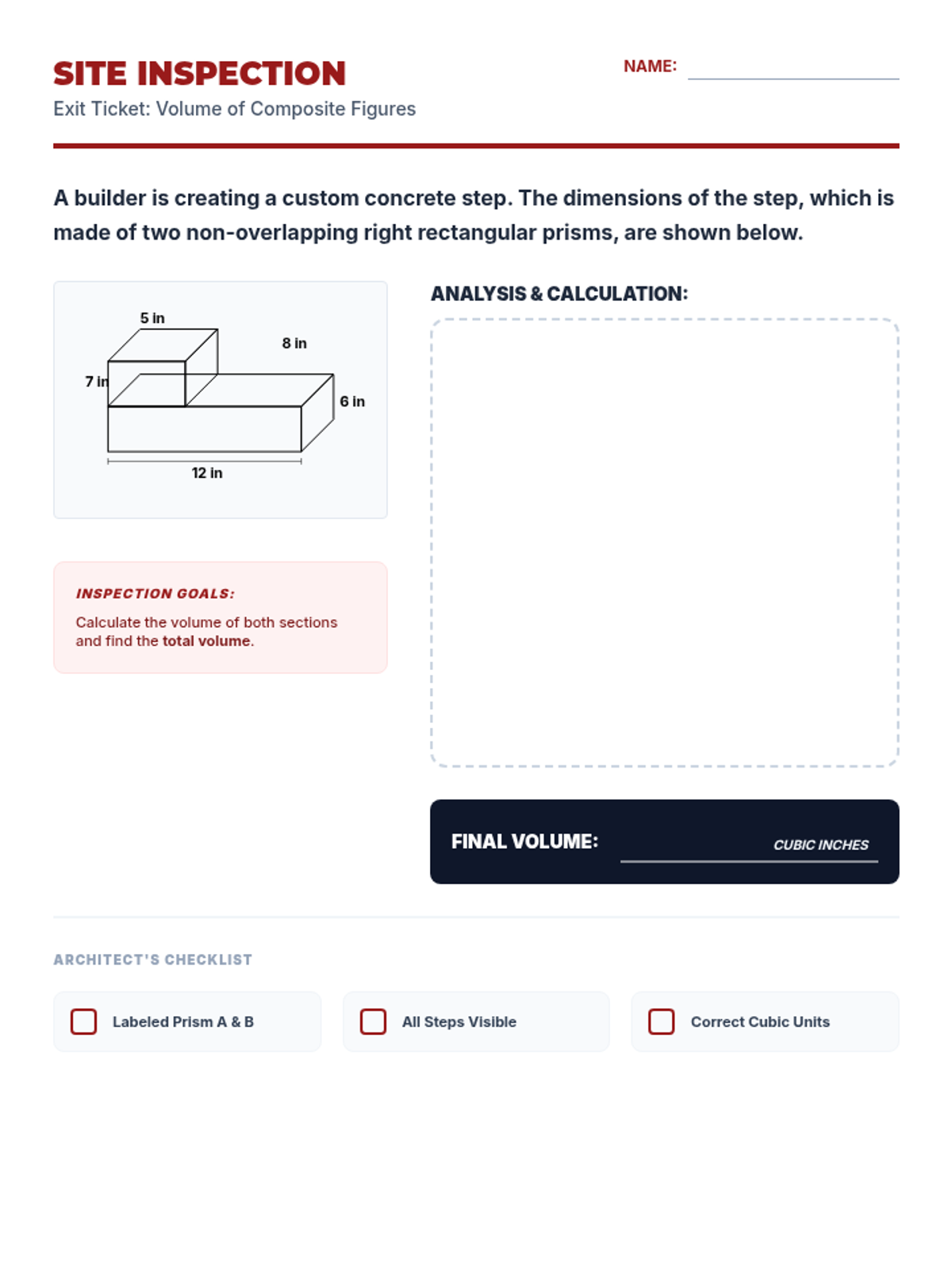
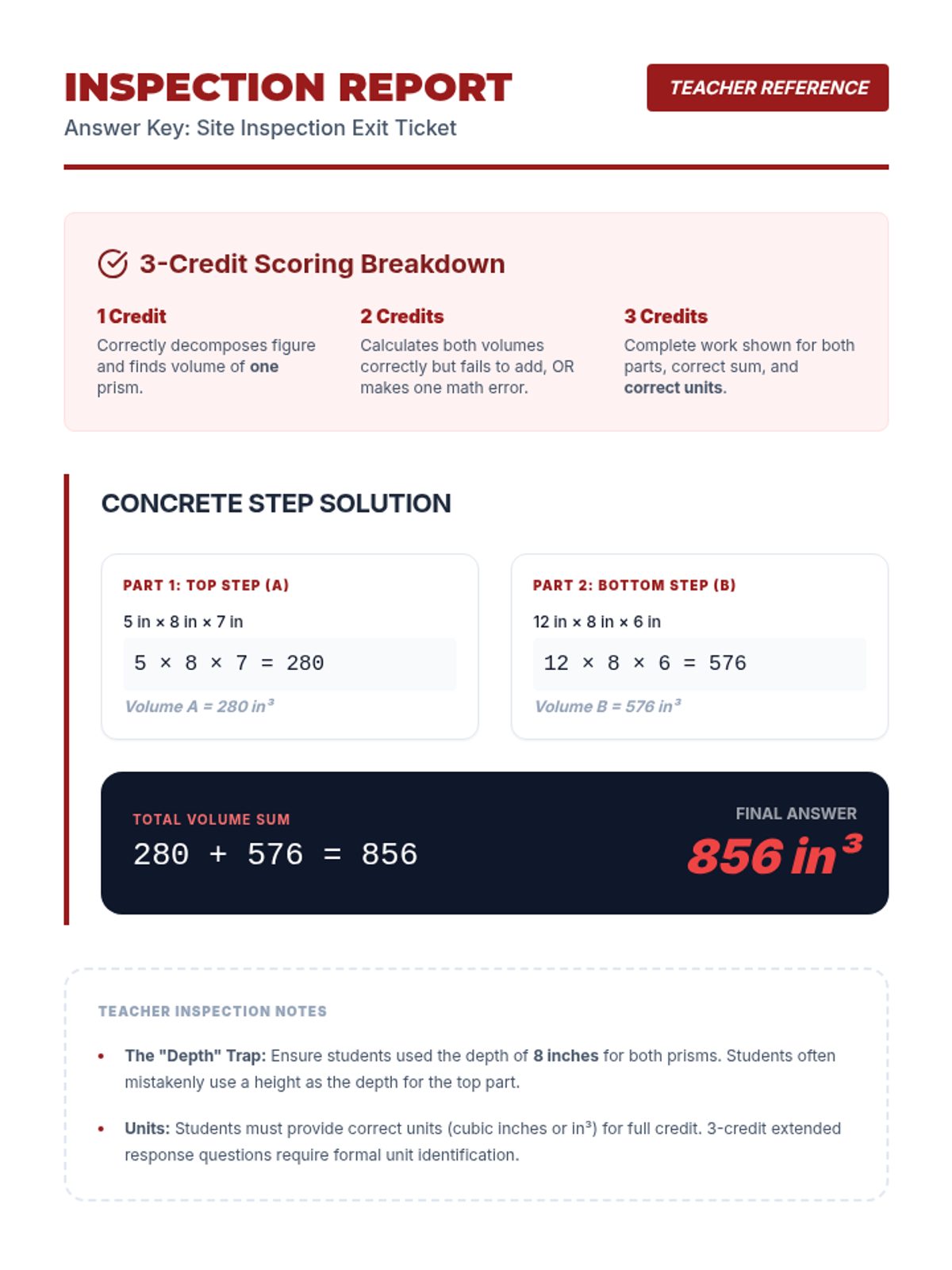
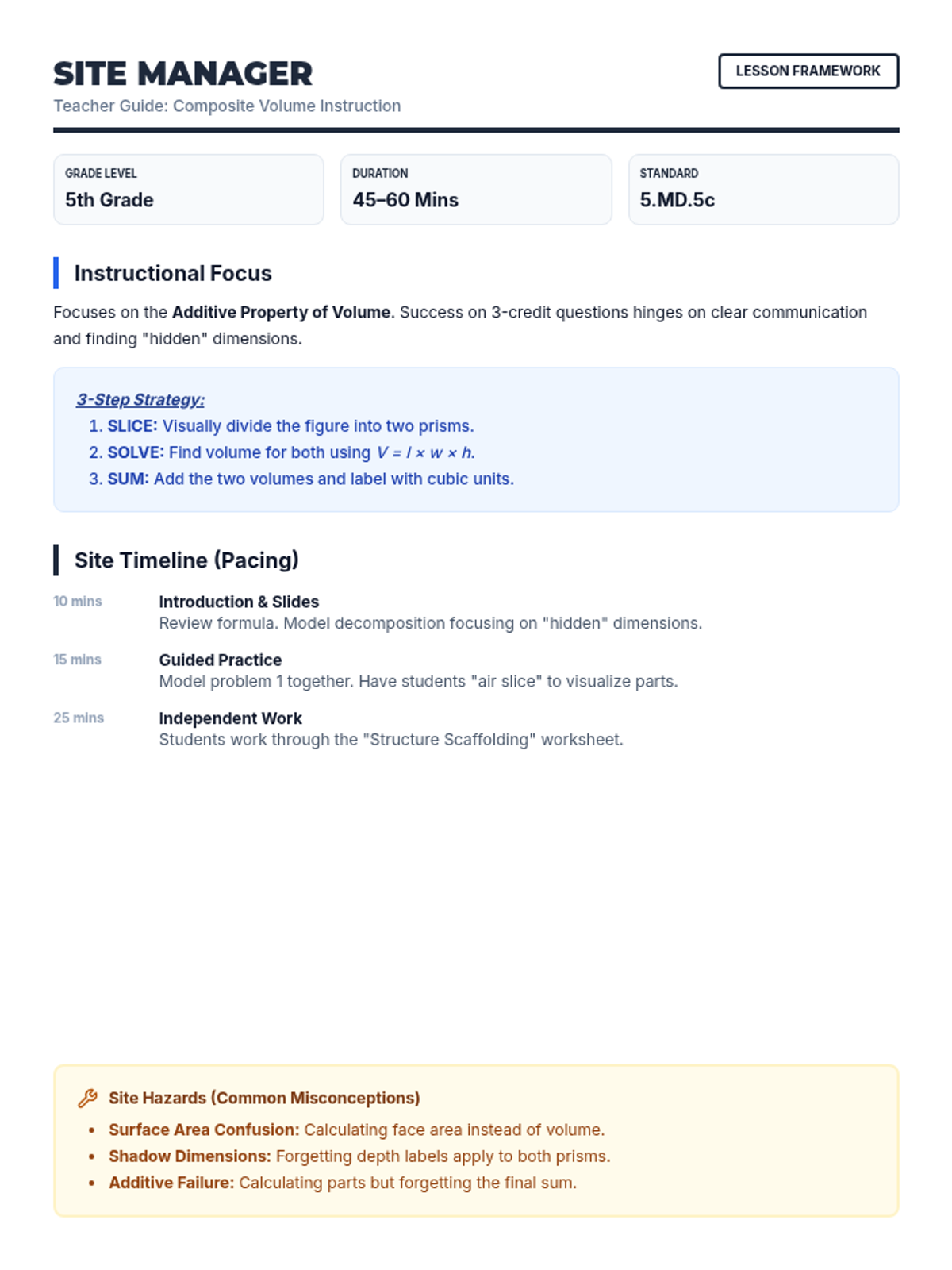
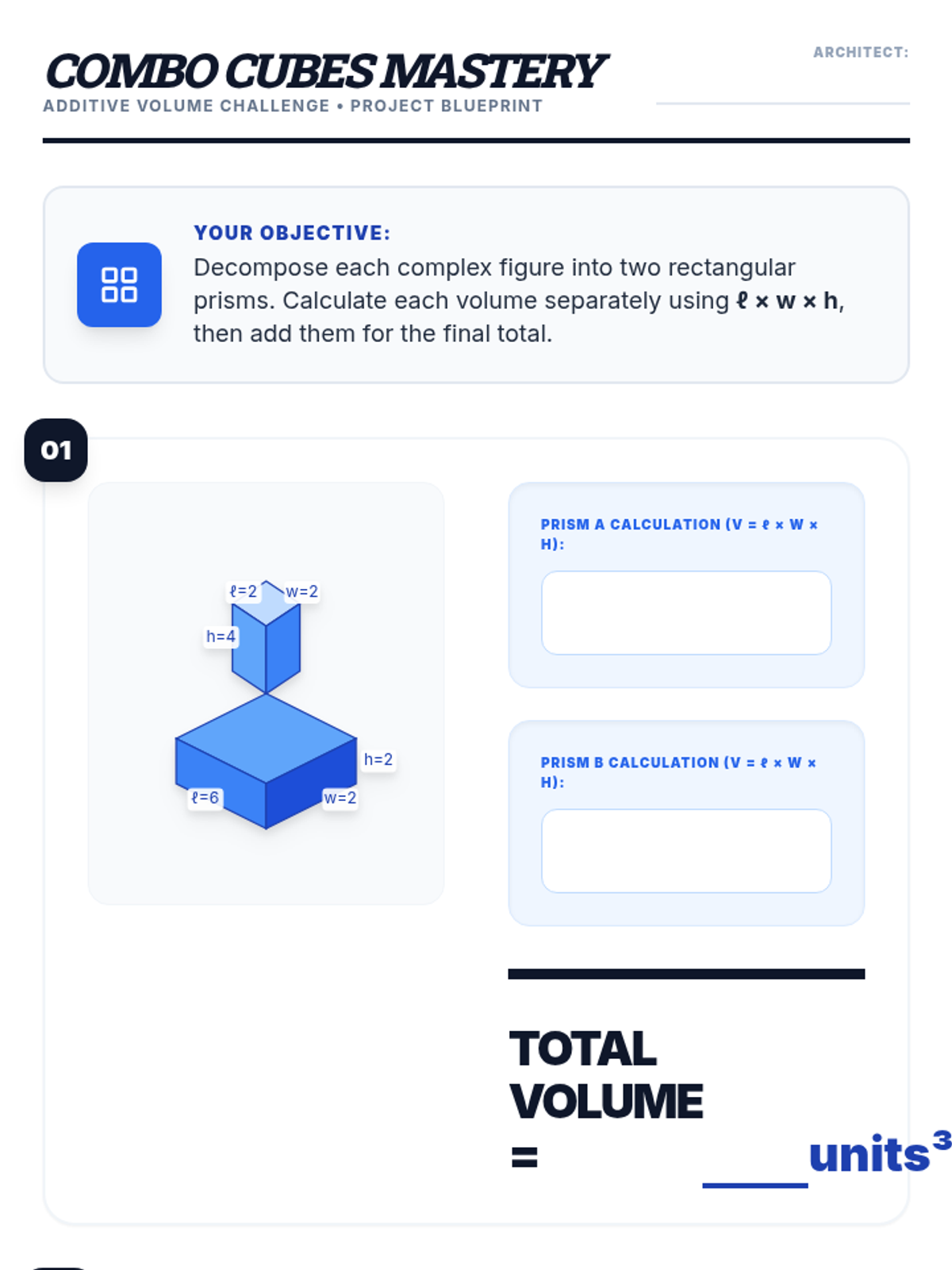
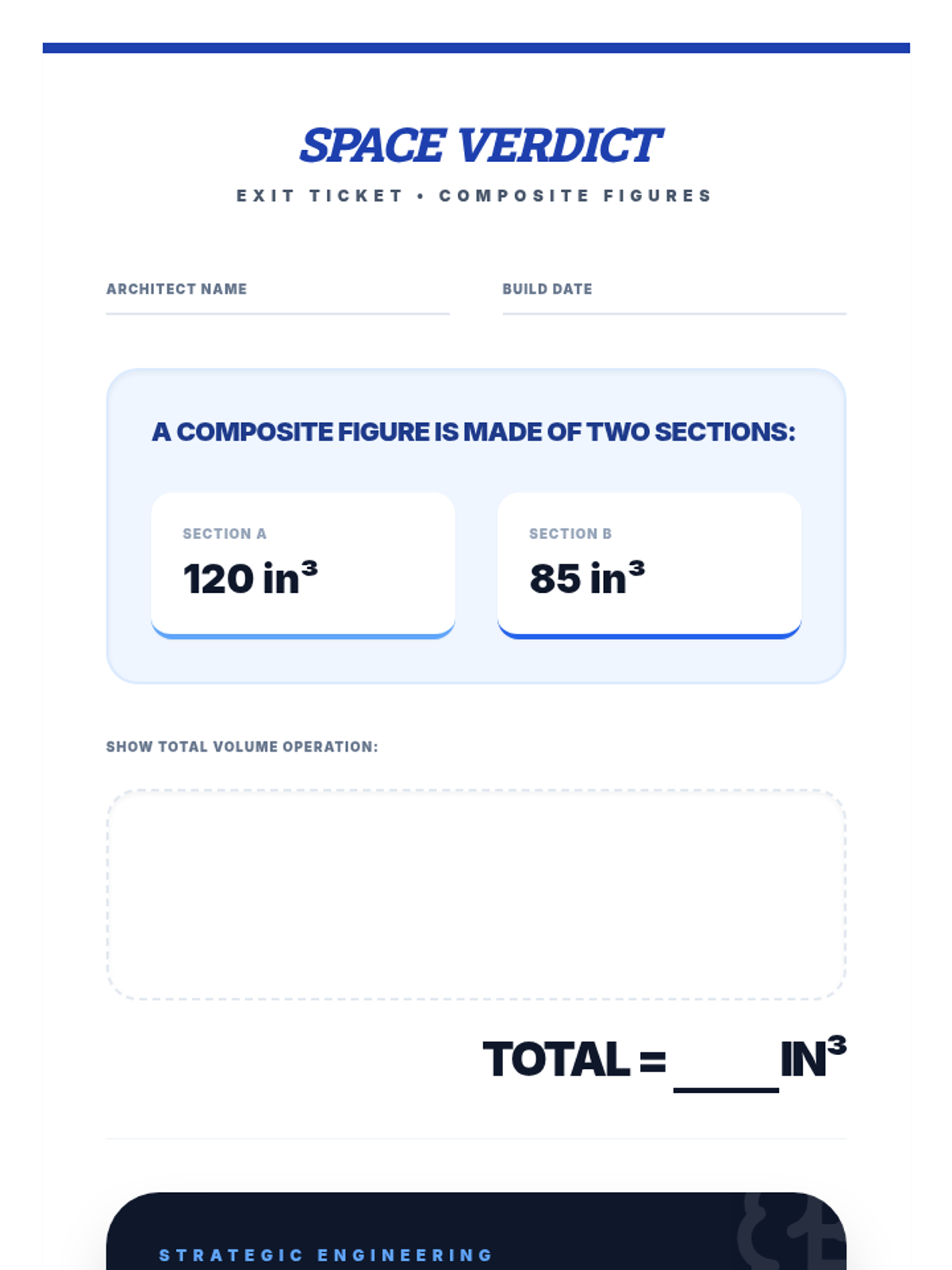
A comprehensive lesson on calculating the volume of composite figures composed of two non-overlapping right rectangular prisms, specifically modeled after NYS 3-credit extended response questions.
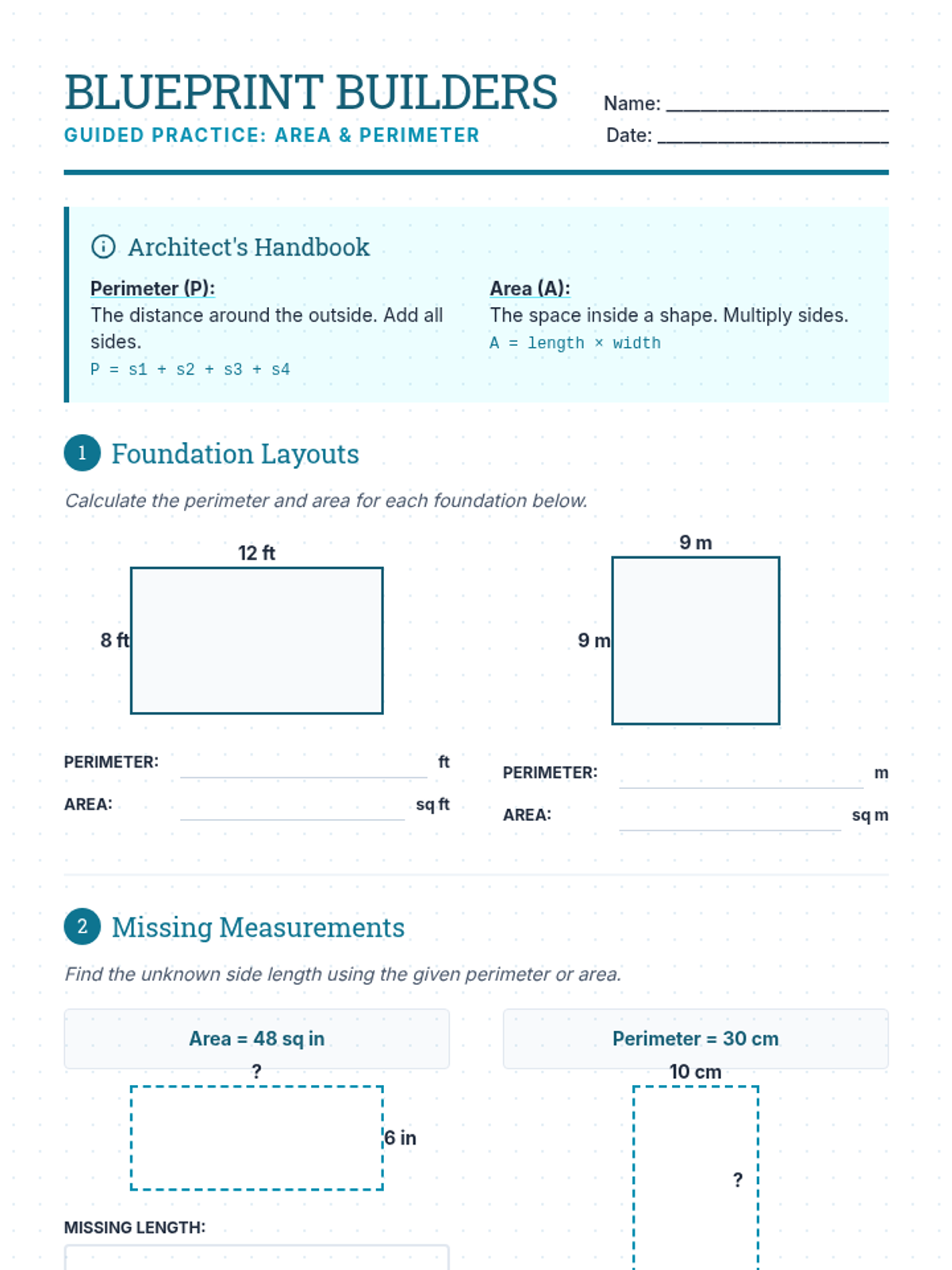
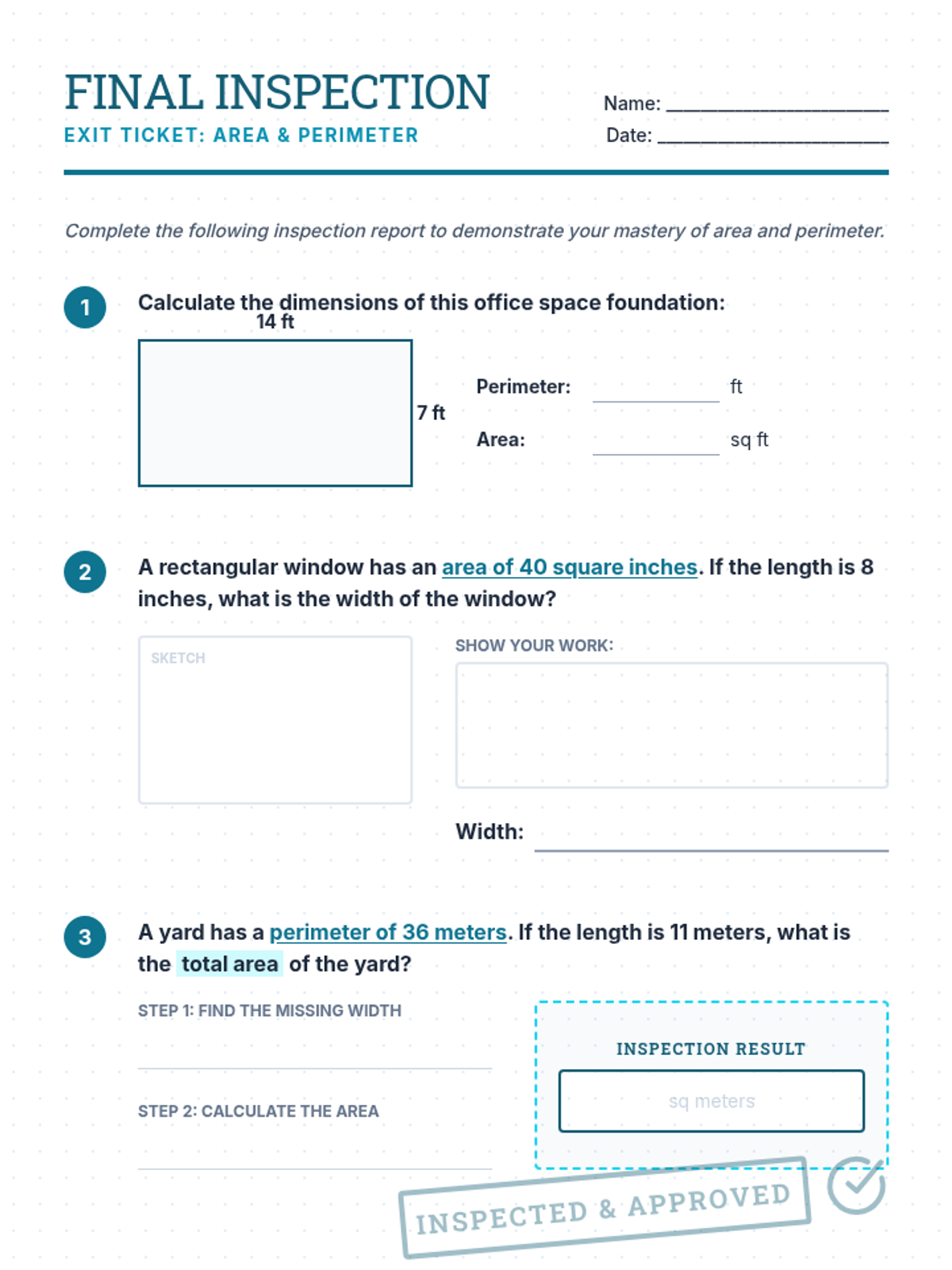
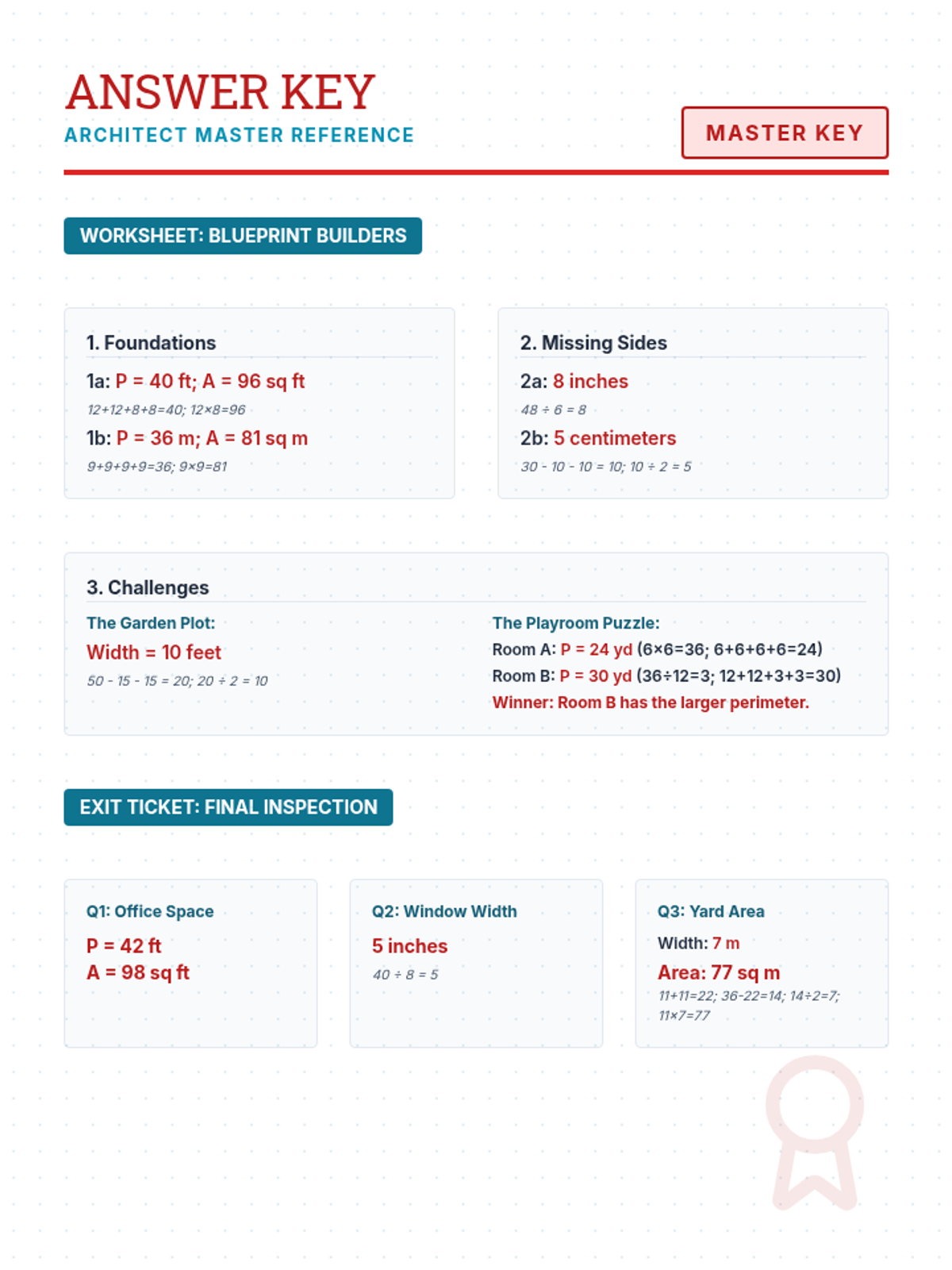
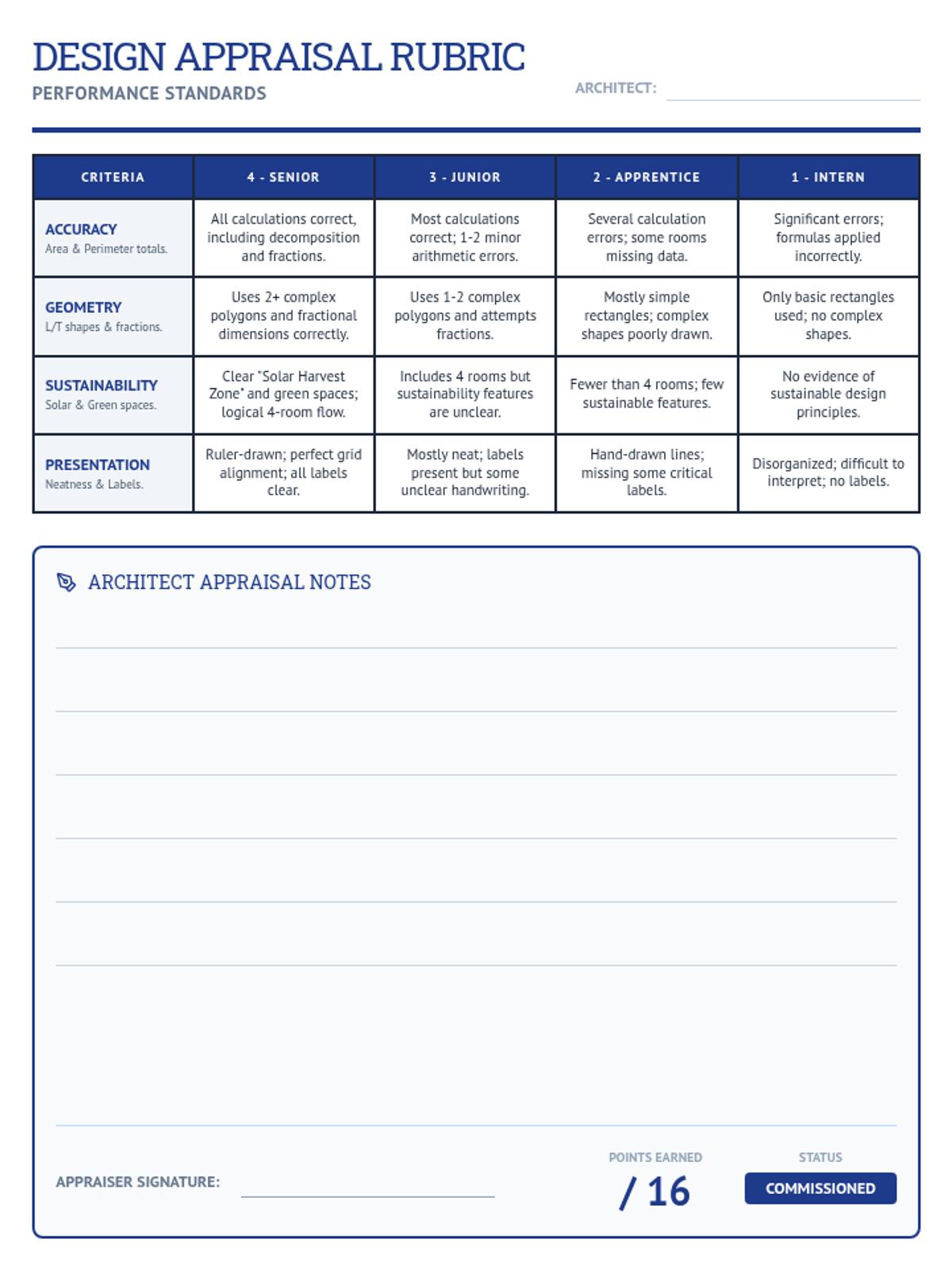
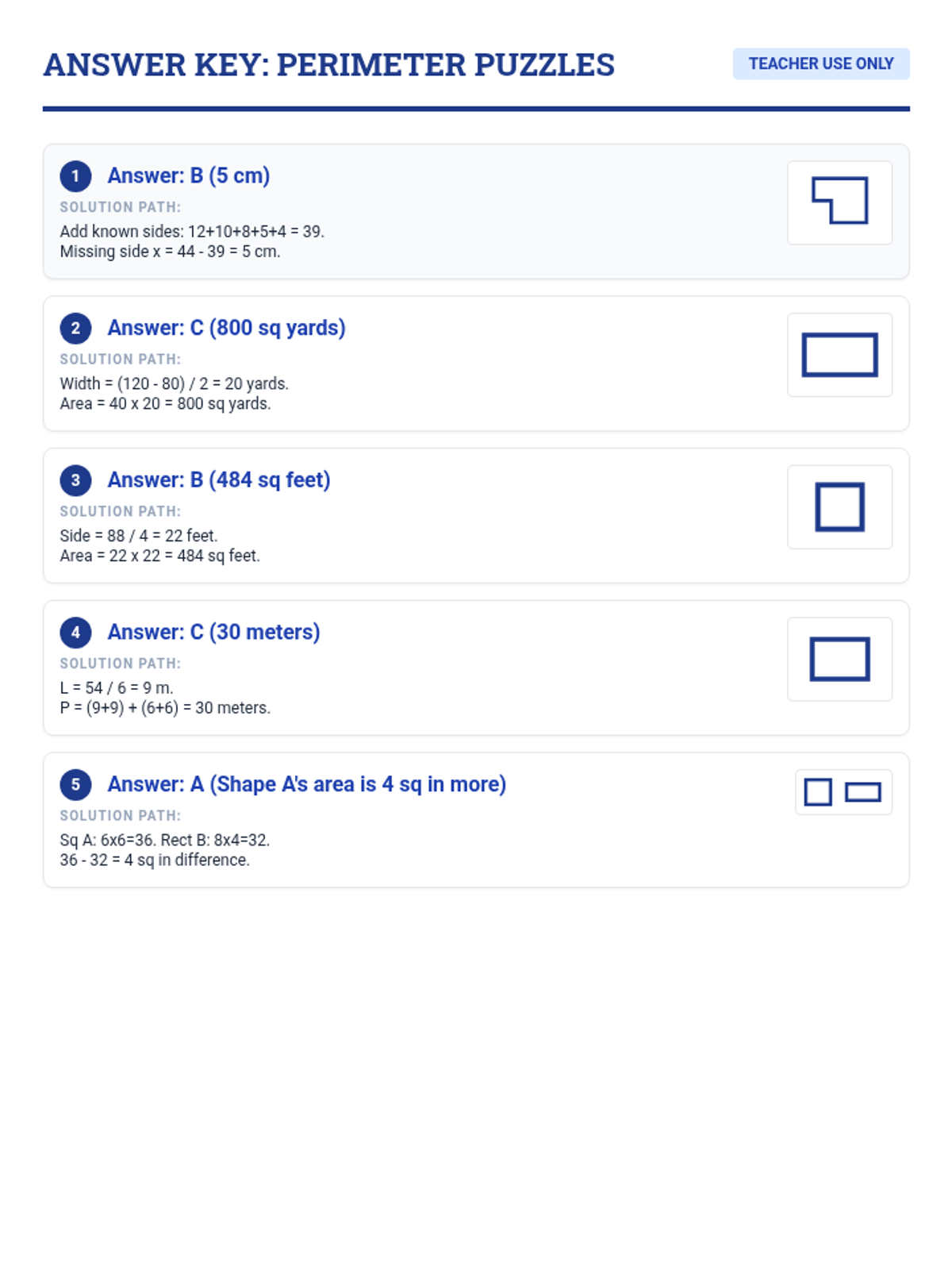
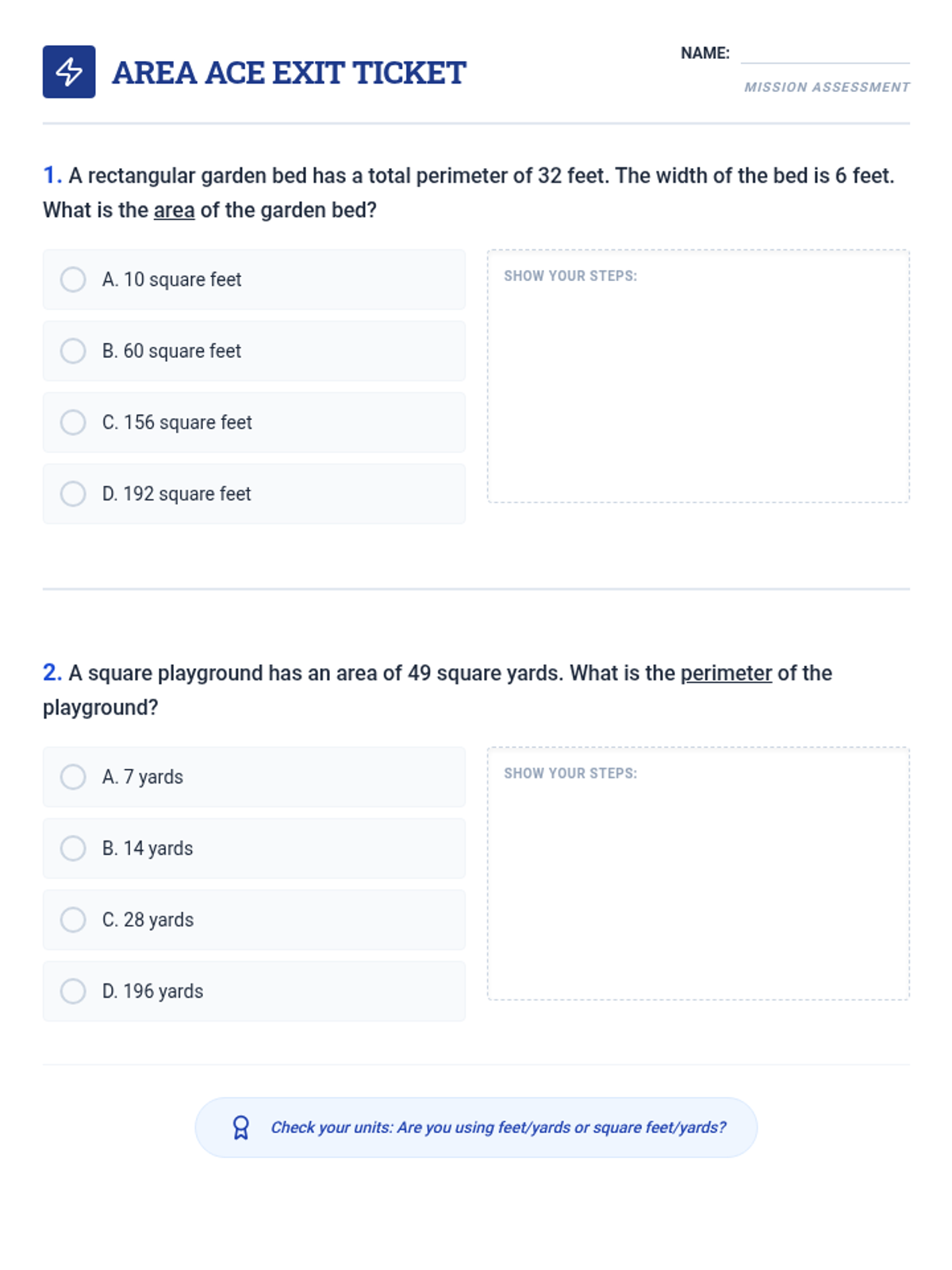
A lesson focused on solving real-world area and perimeter problems, including finding unknown side lengths and comparing rectangles with different dimensions but shared properties. Students act as junior architects to design and analyze blueprints.
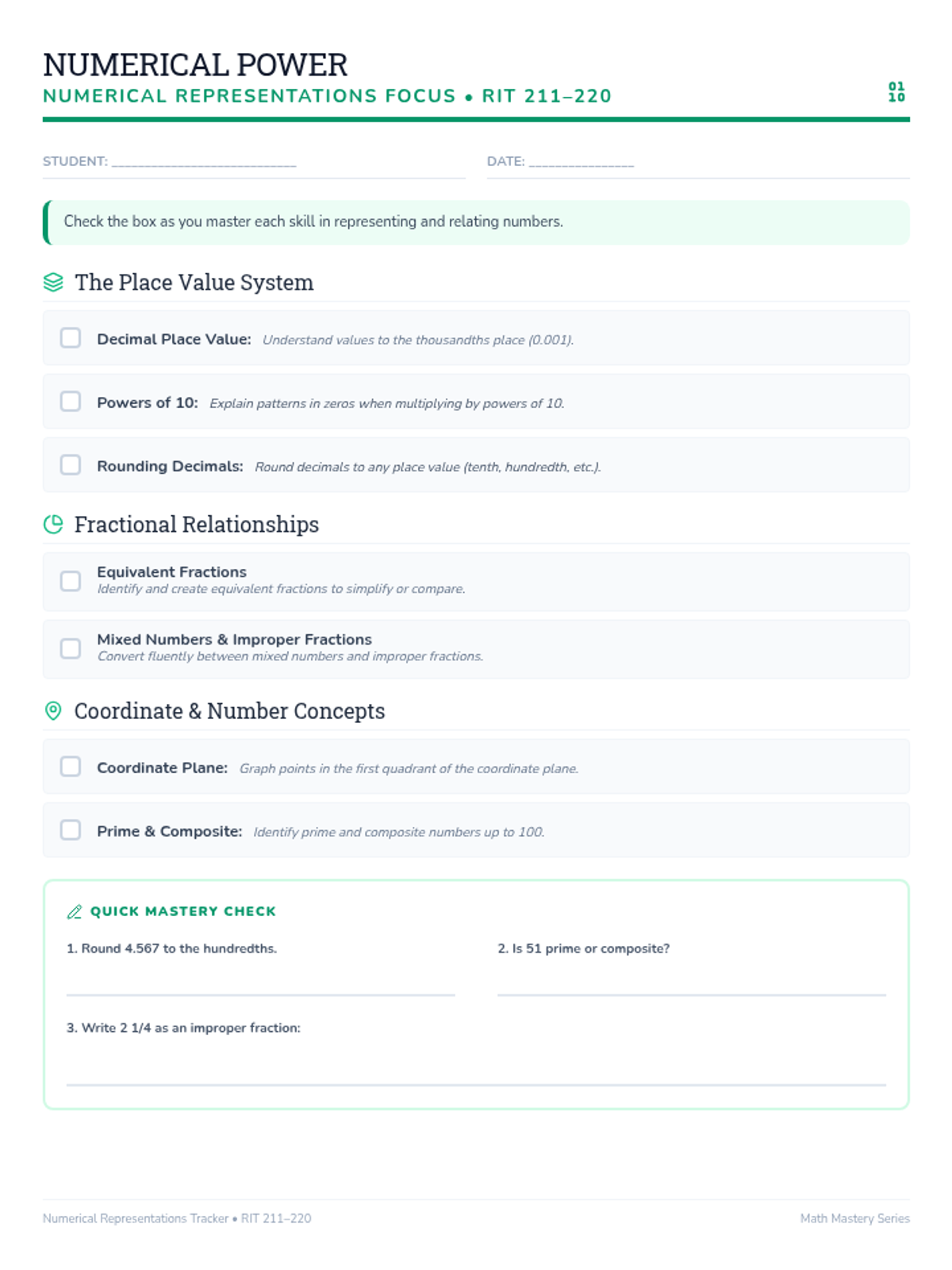
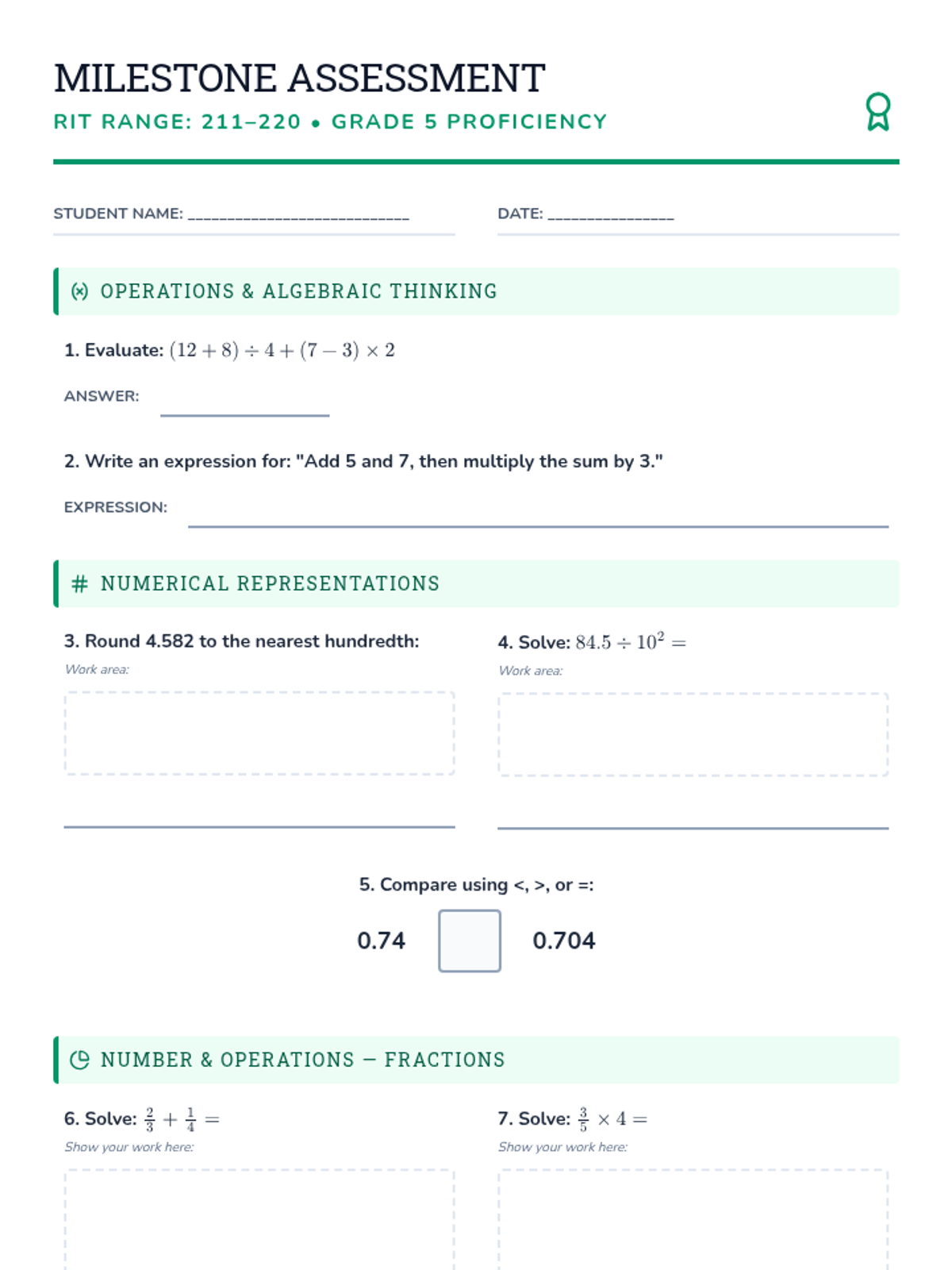
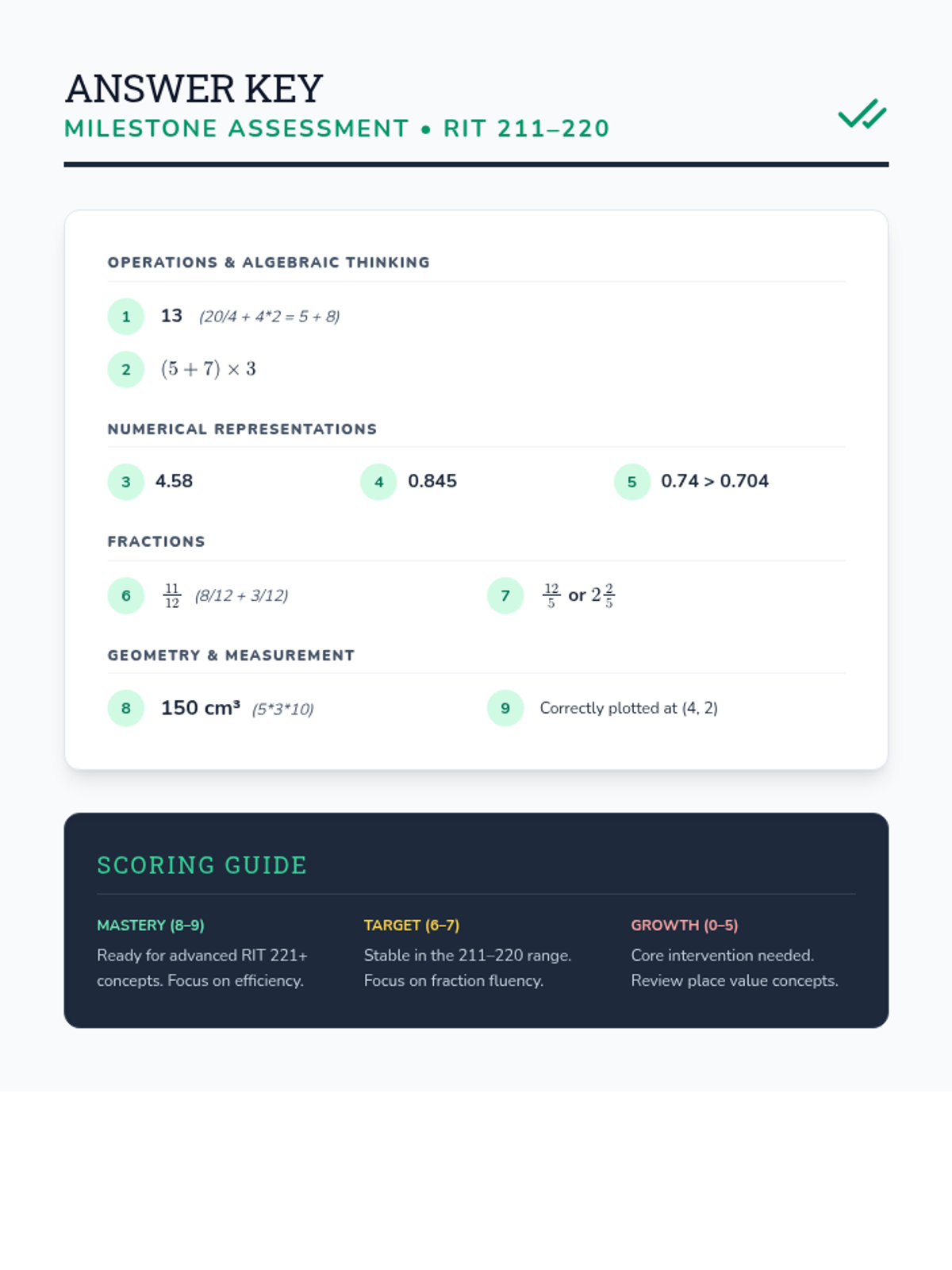
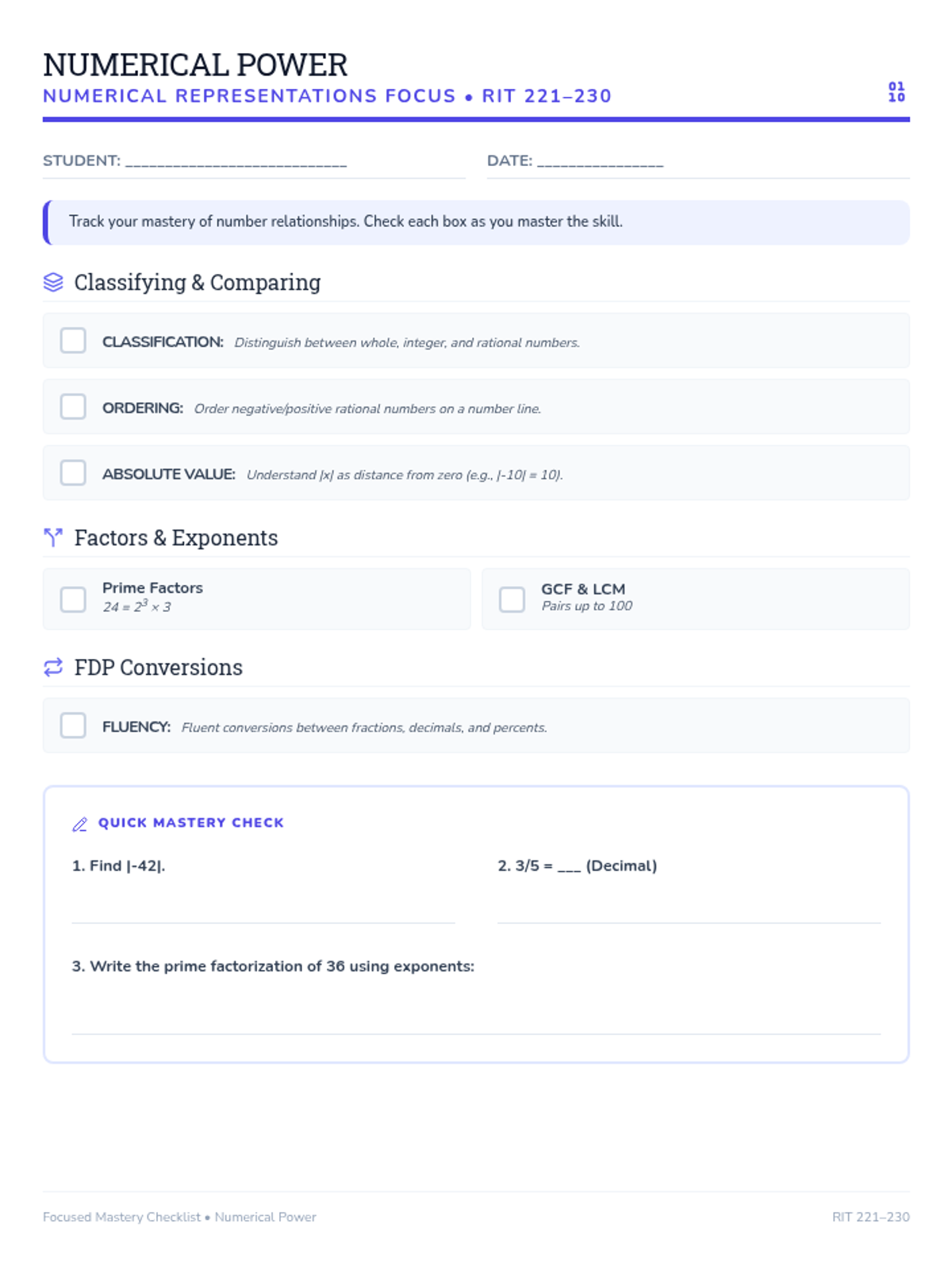
A specialized toolkit for navigating mathematical skills in the 211-220 RIT range, with a focus on foundational decimals, fractions, and place value relationships.
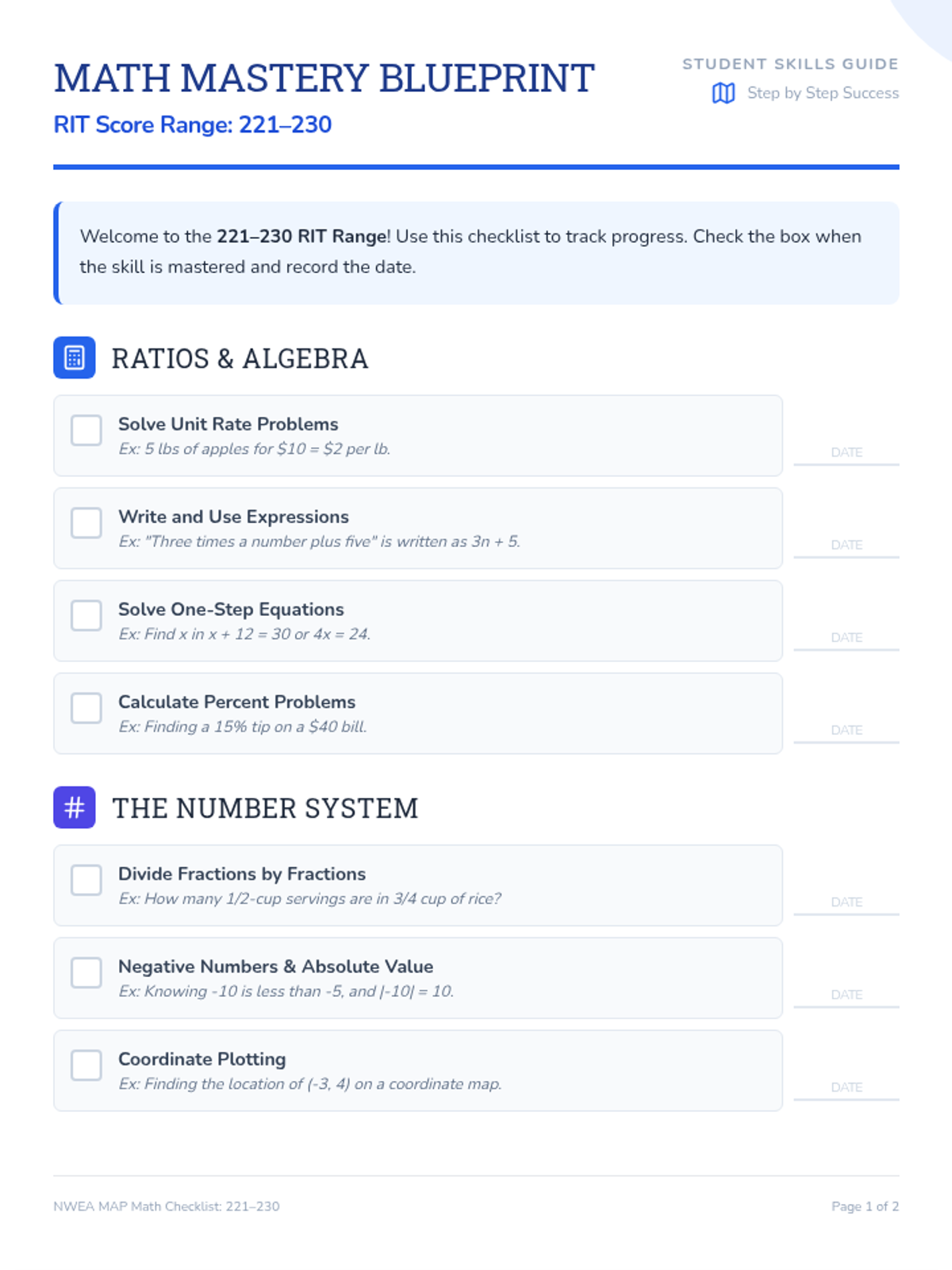
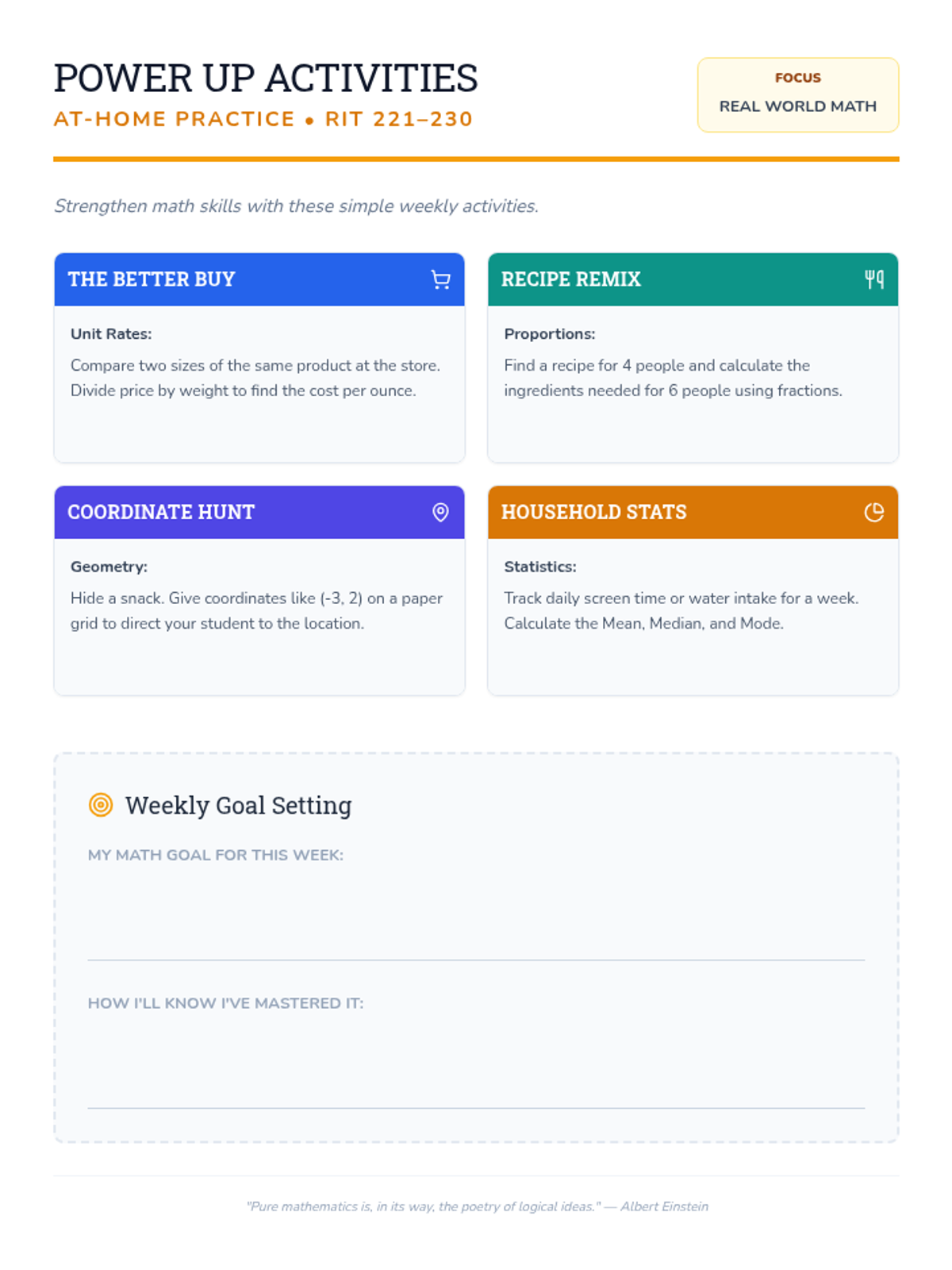
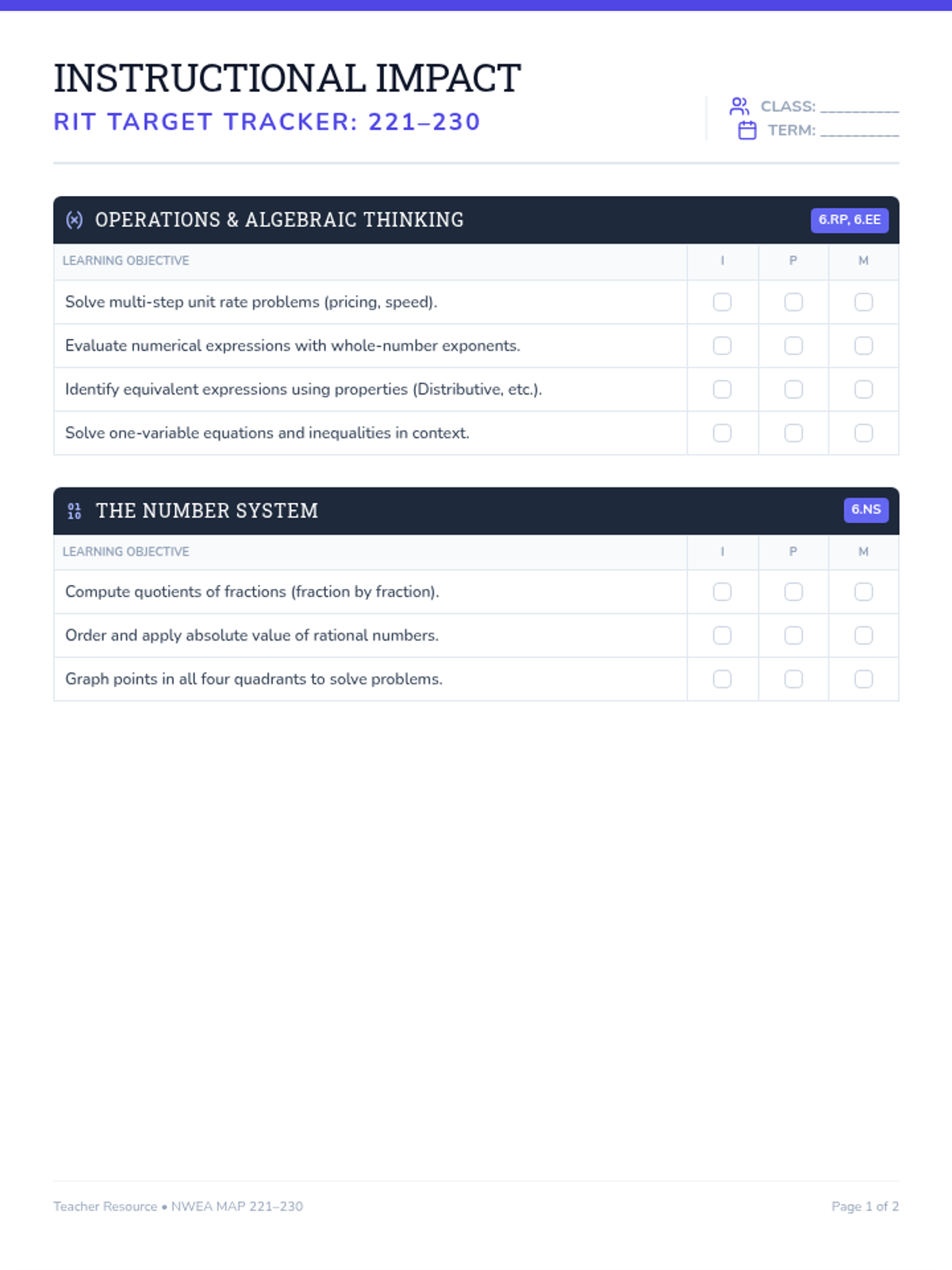
A comprehensive guide for parents and students to navigate the mathematical skills expected in the 221-230 NWEA MAP RIT range, featuring actionable checklists and home-based practice ideas.
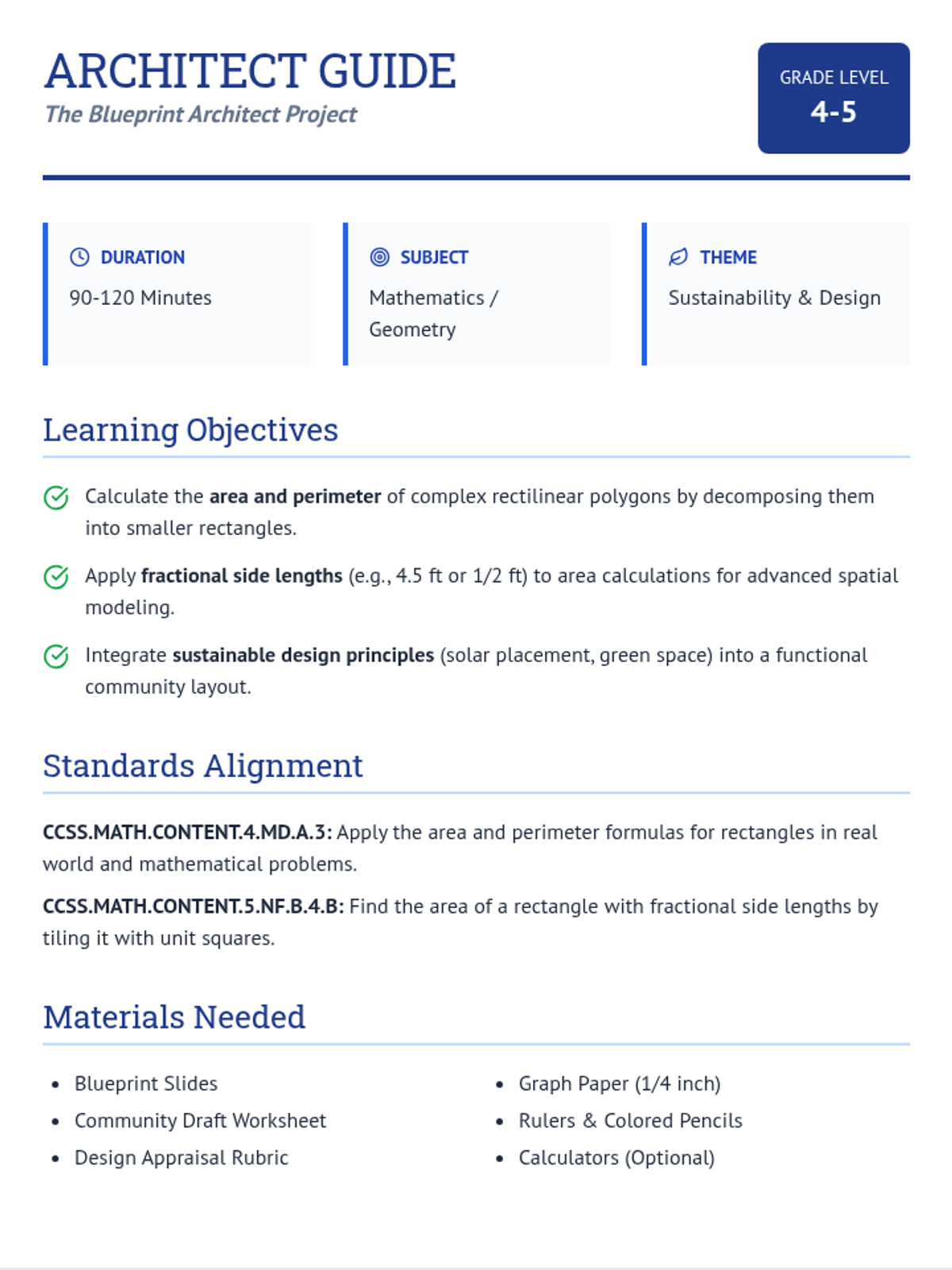
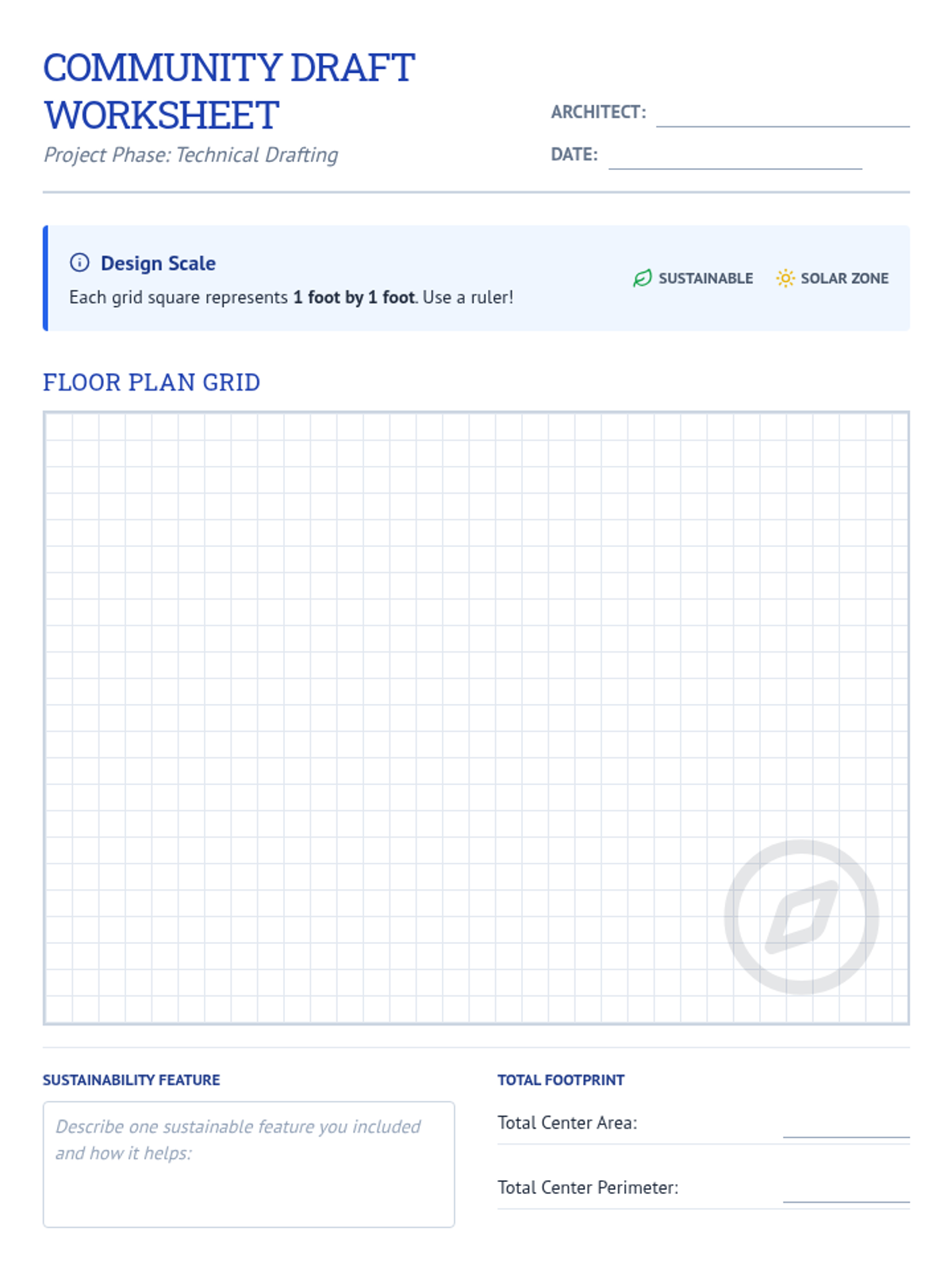
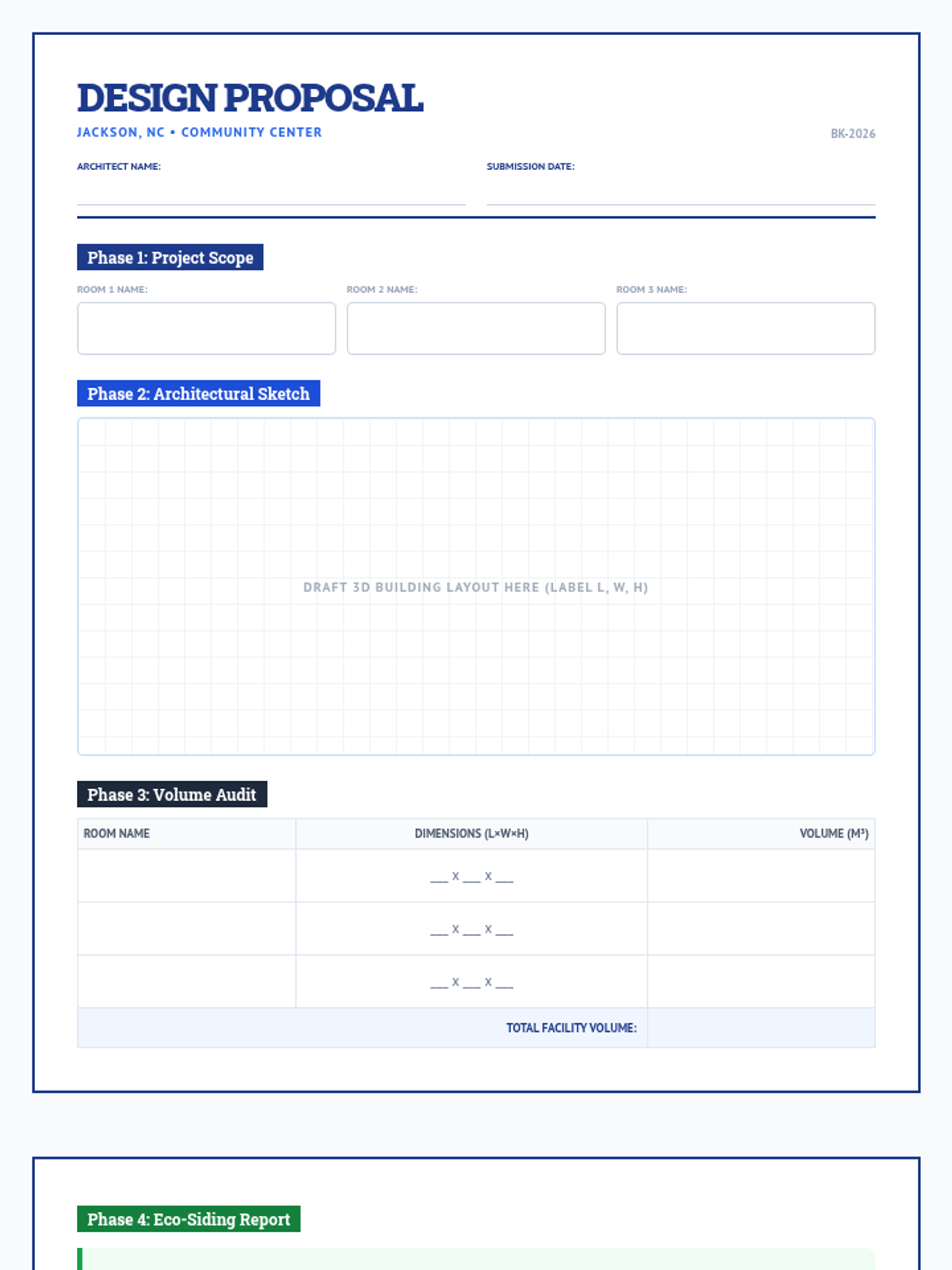
A project-based lesson where students design a sustainable community center, applying area and perimeter calculations to complex polygonal floor plans with fractional dimensions.
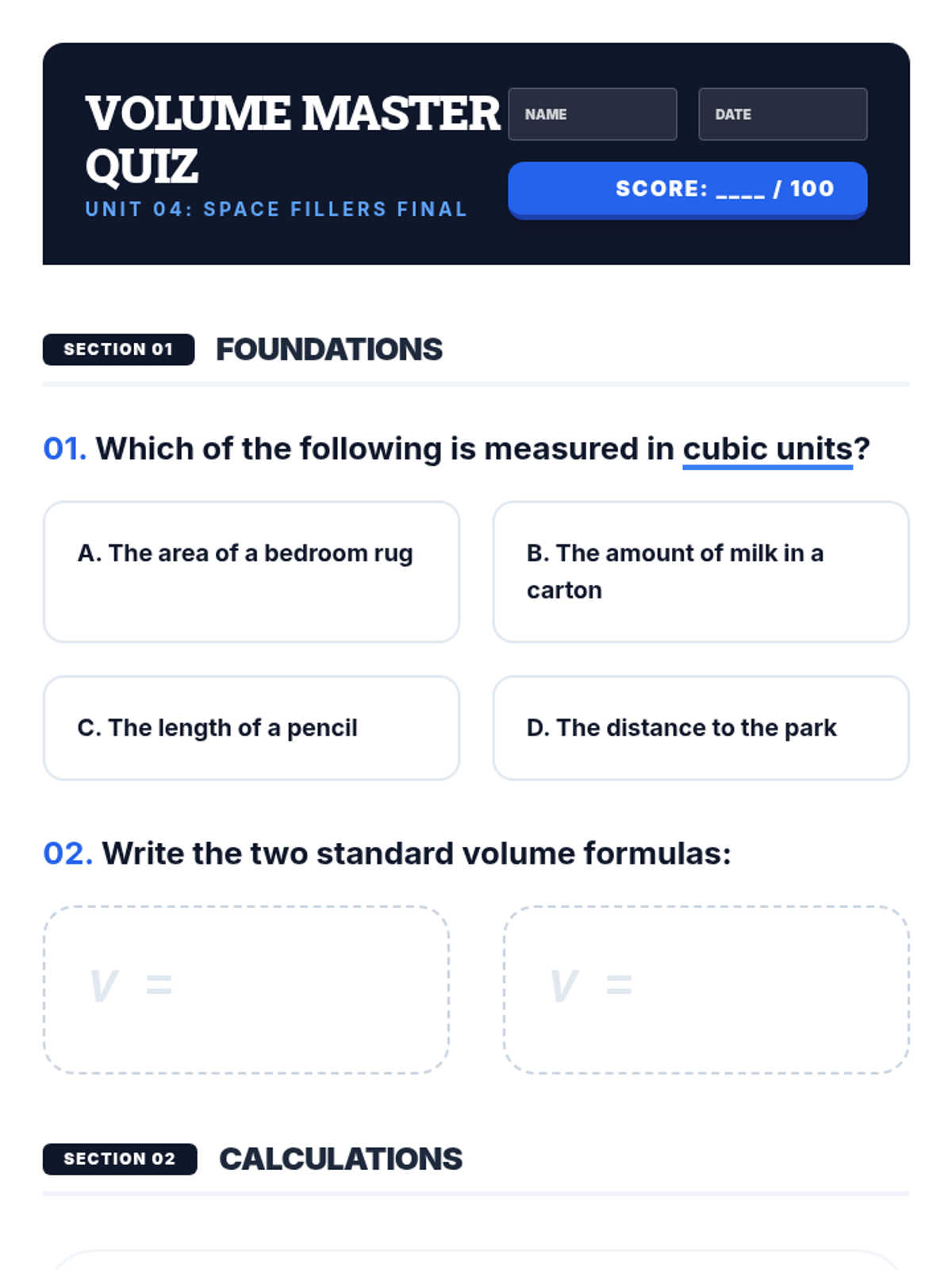
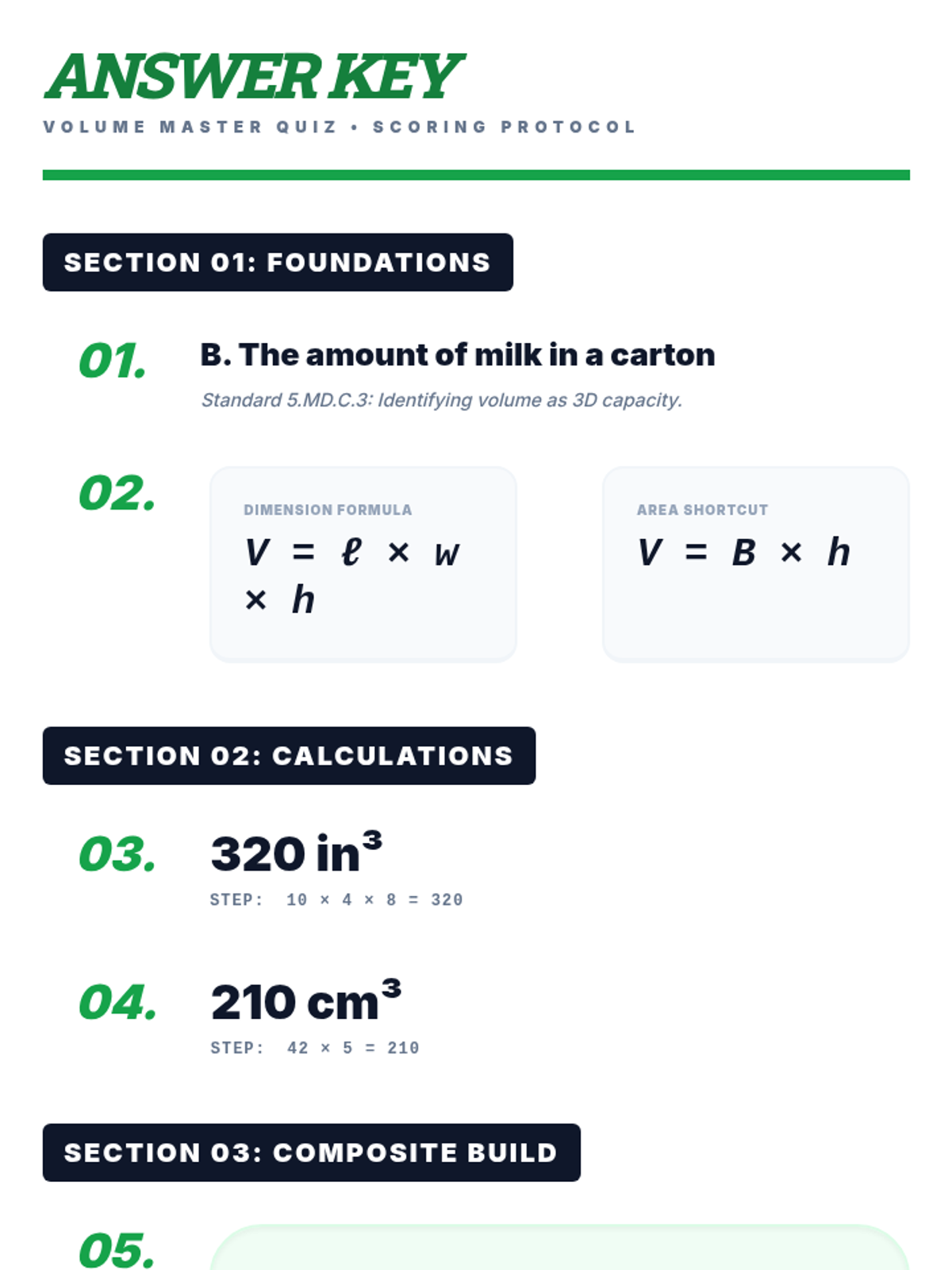
A final assessment of the unit covering all 5th-grade volume standards, including word problems and multi-step calculations.
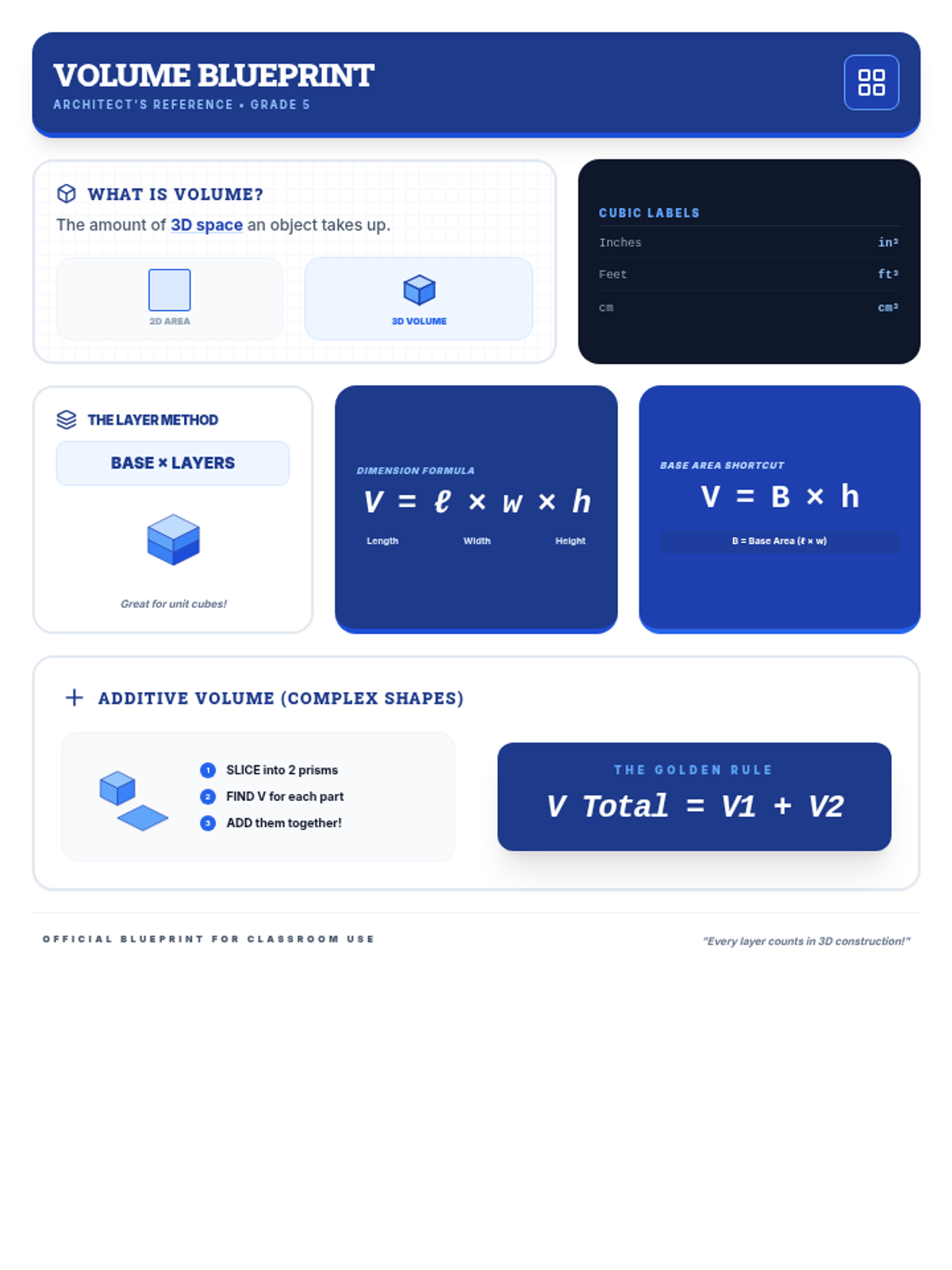
Calculating the volume of composite figures made of two non-overlapping rectangular prisms. Students learn to decompose complex shapes into simpler parts.
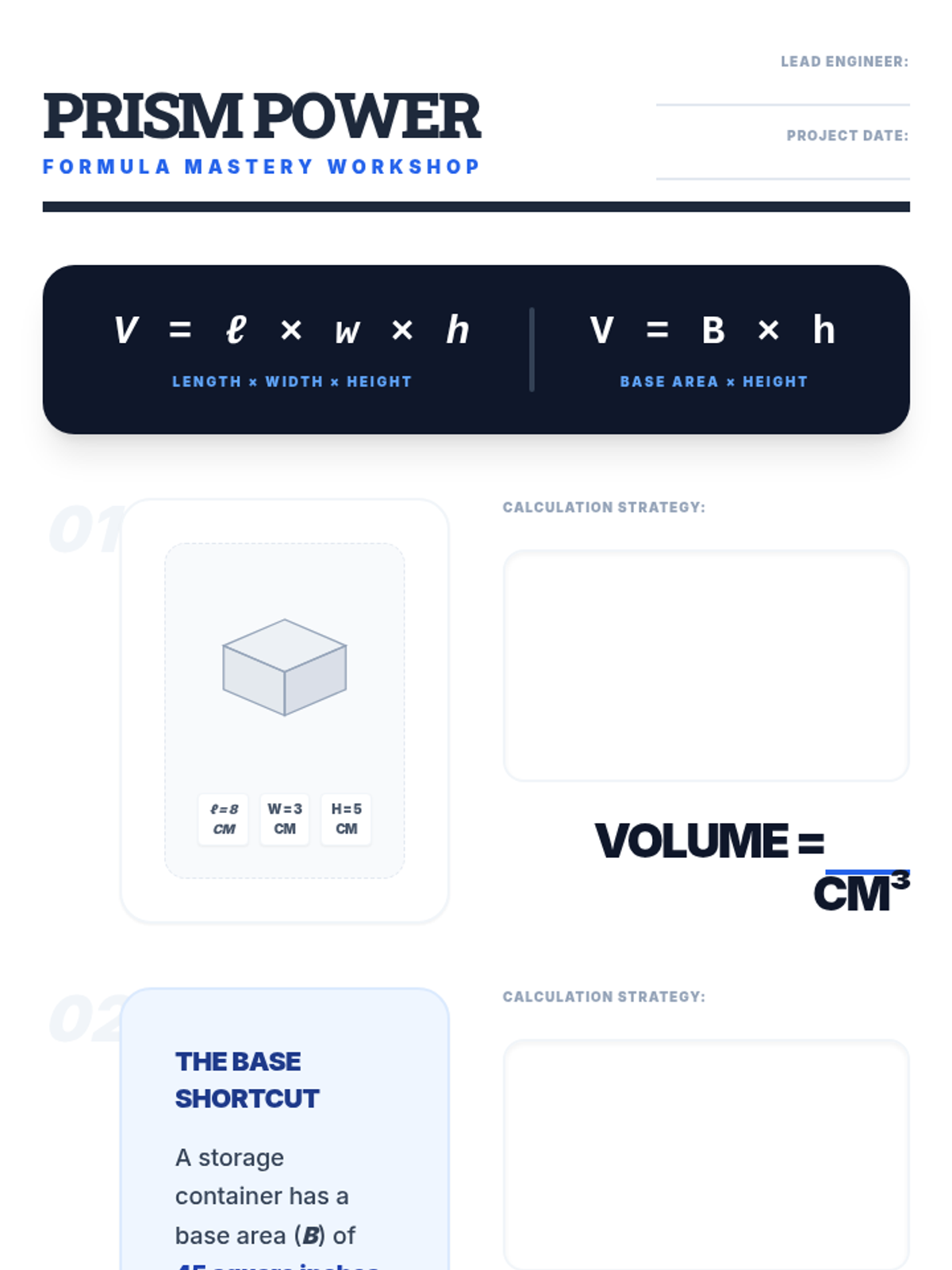
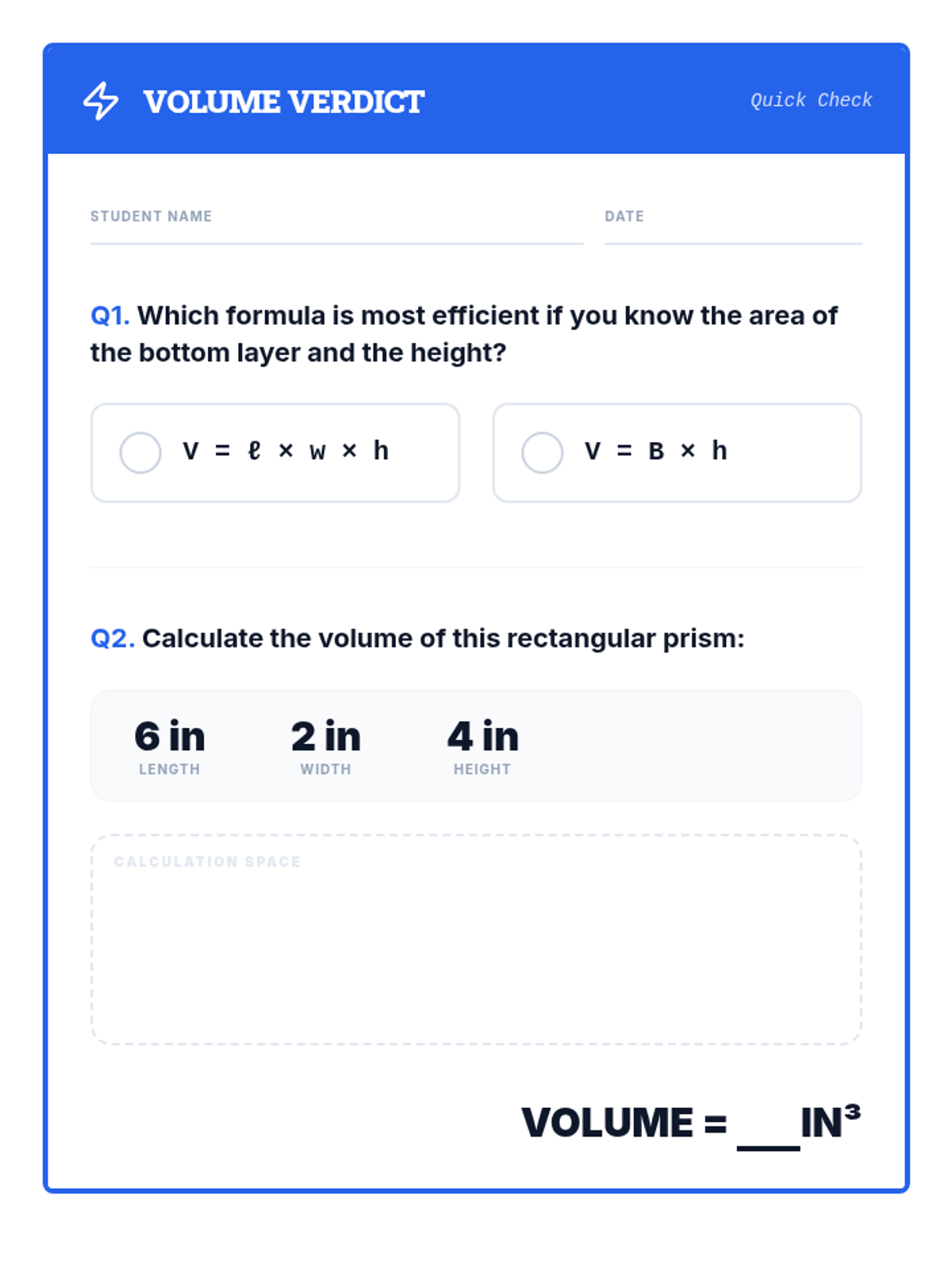
Moving from counting cubes to using the standard formulas V = l x w x h and V = B x h. Focuses on efficiency and understanding the relationship between layers and total volume.
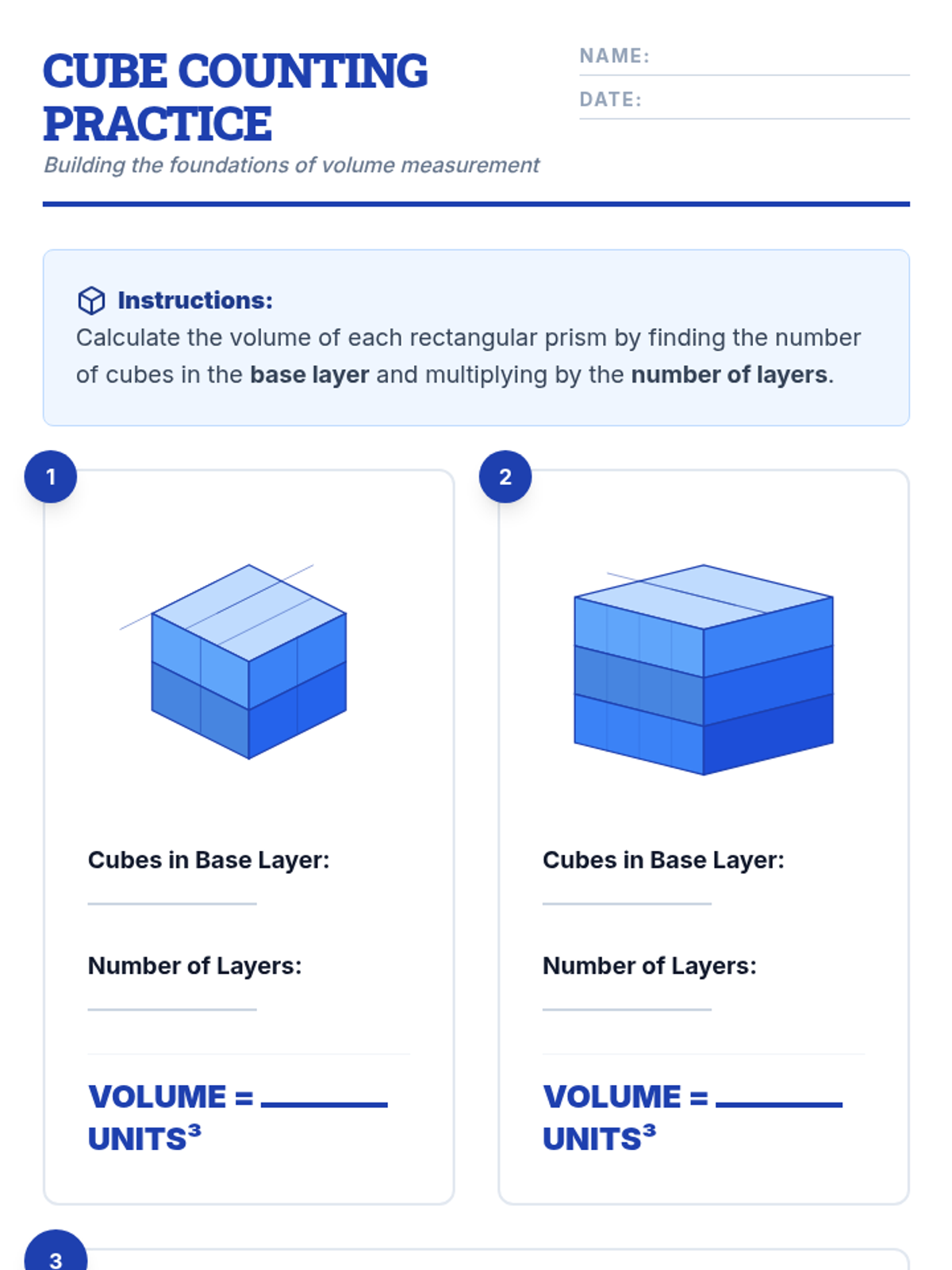
Introduction to the concept of volume using unit cubes to fill rectangular prisms. Students learn that volume is the amount of space an object occupies, measured in cubic units.
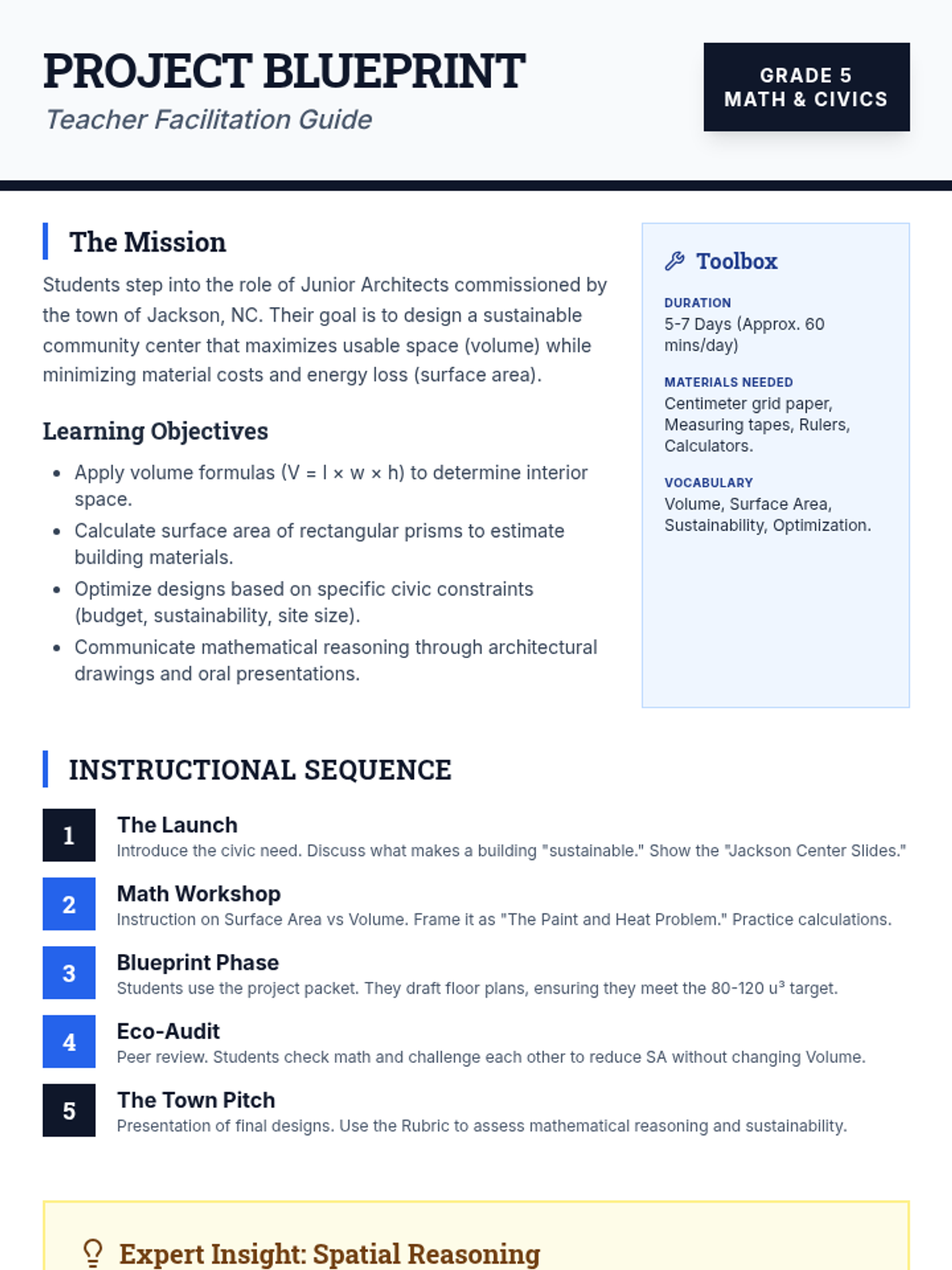
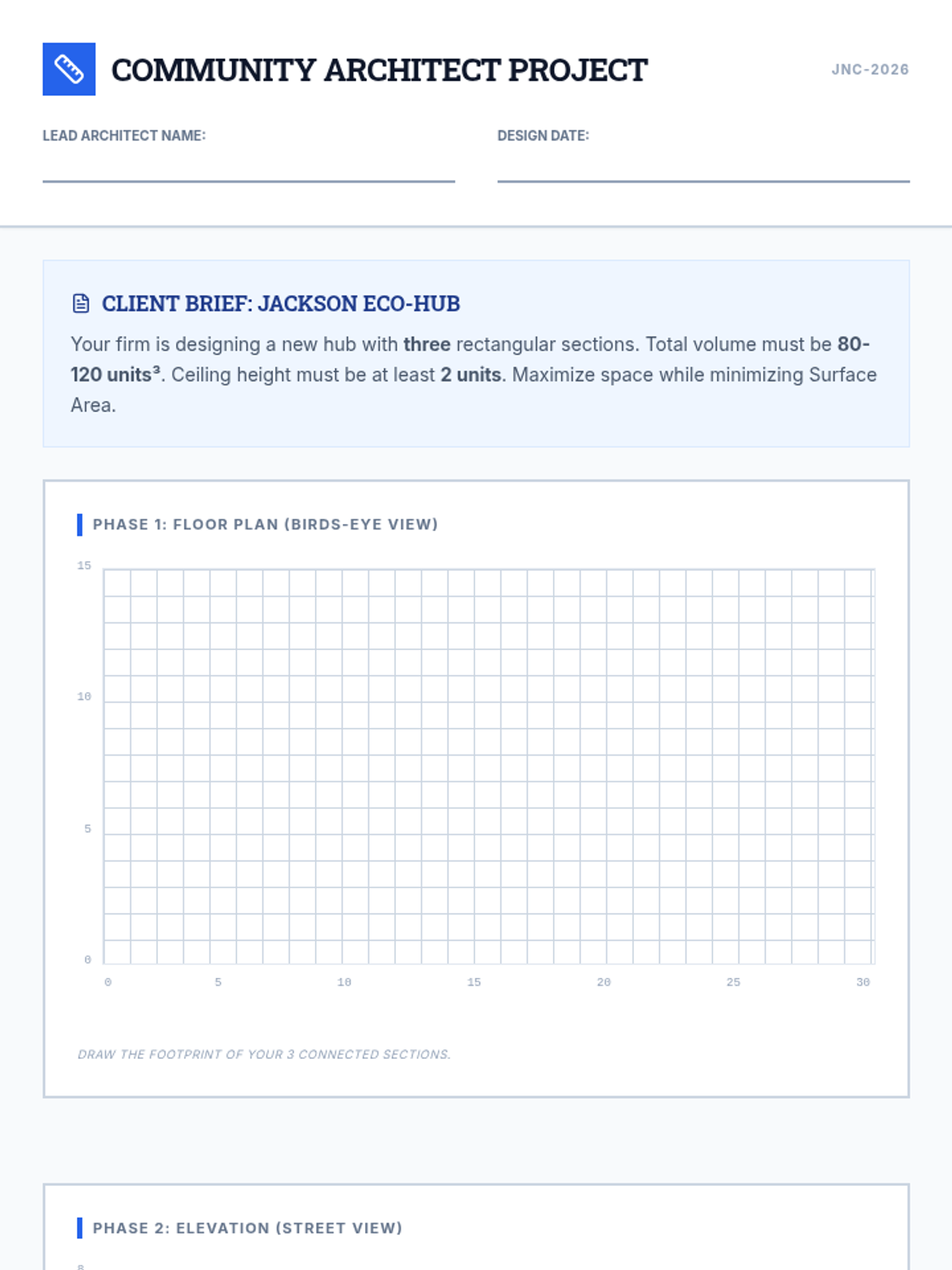
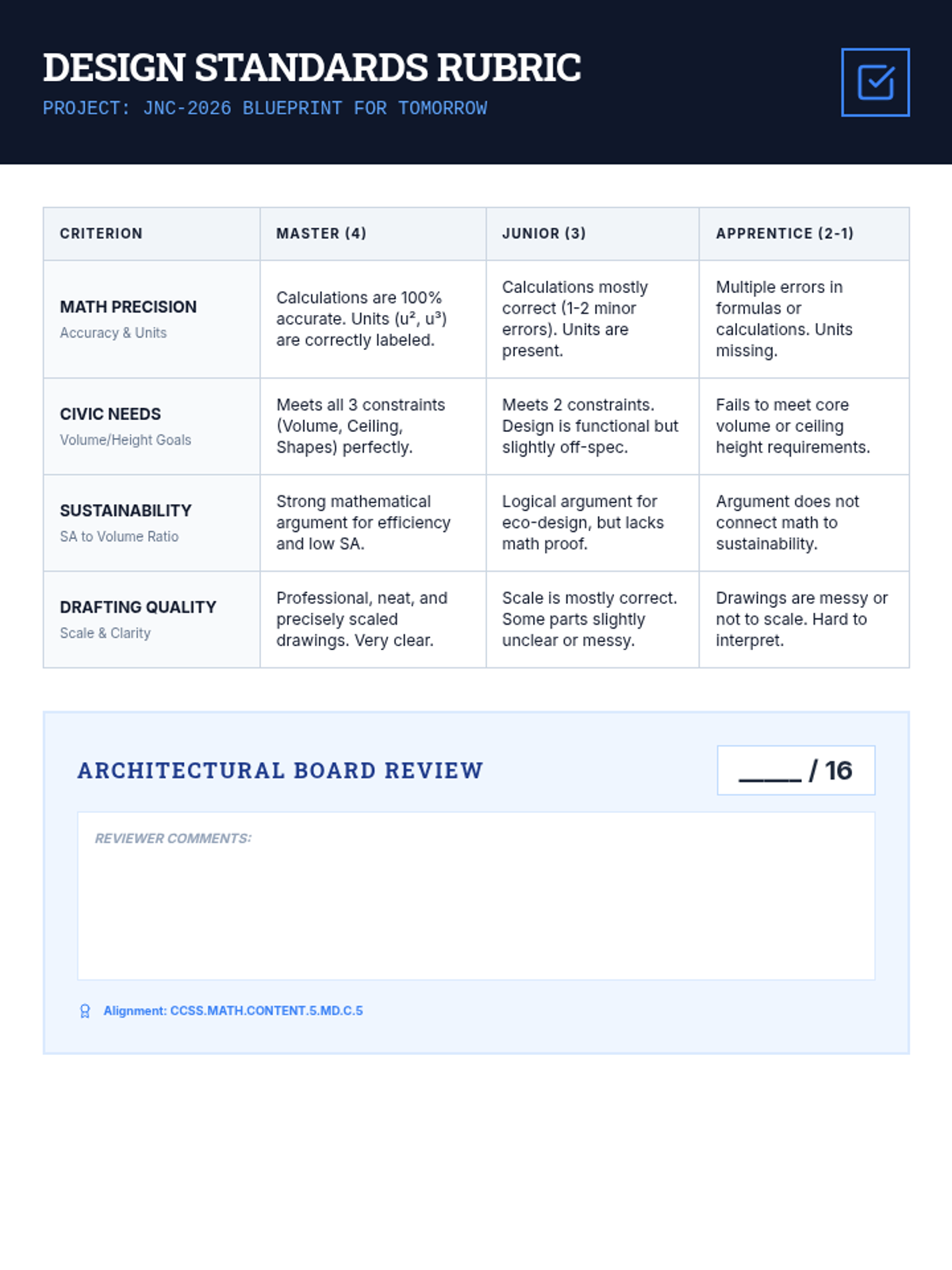
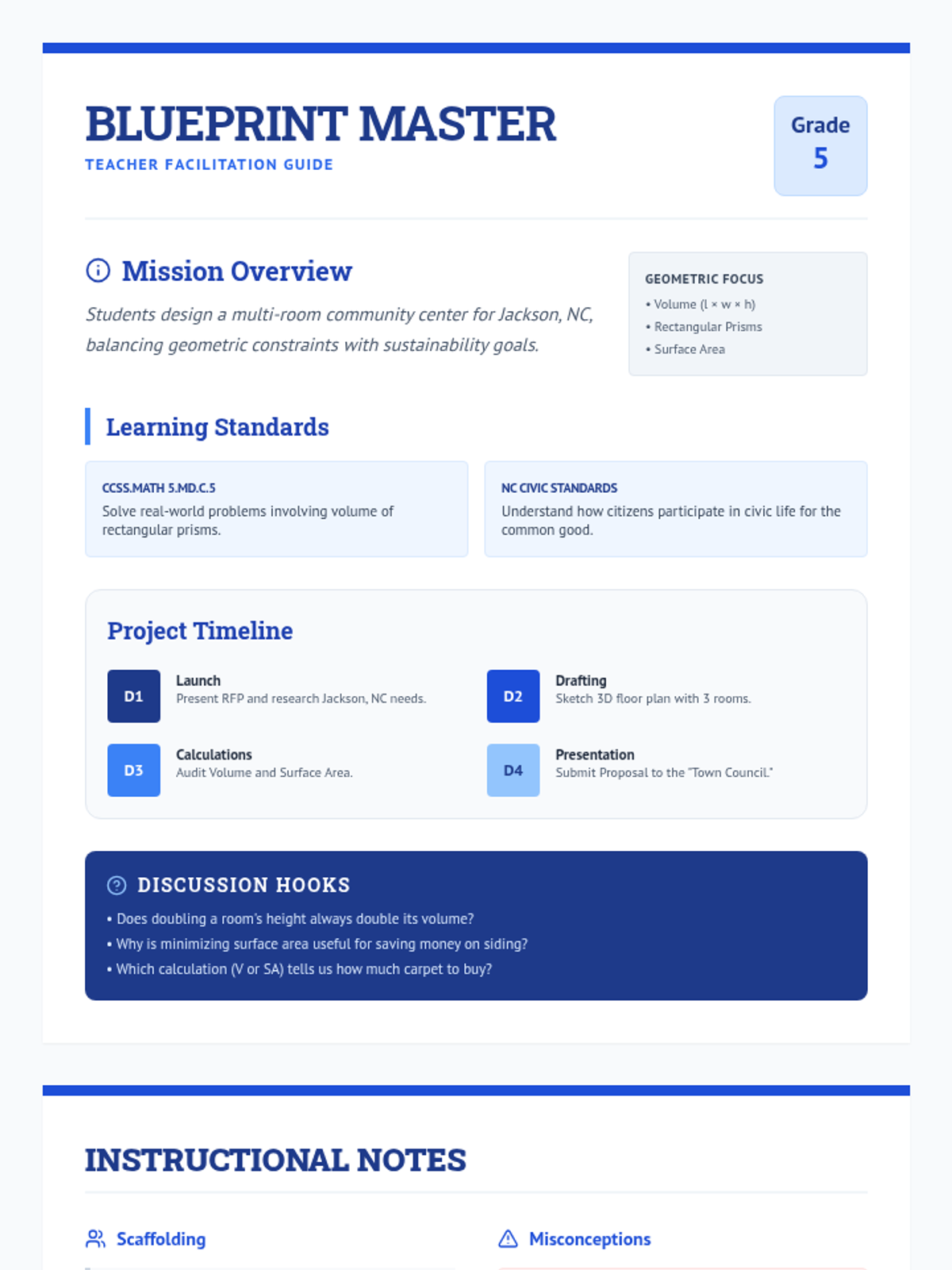
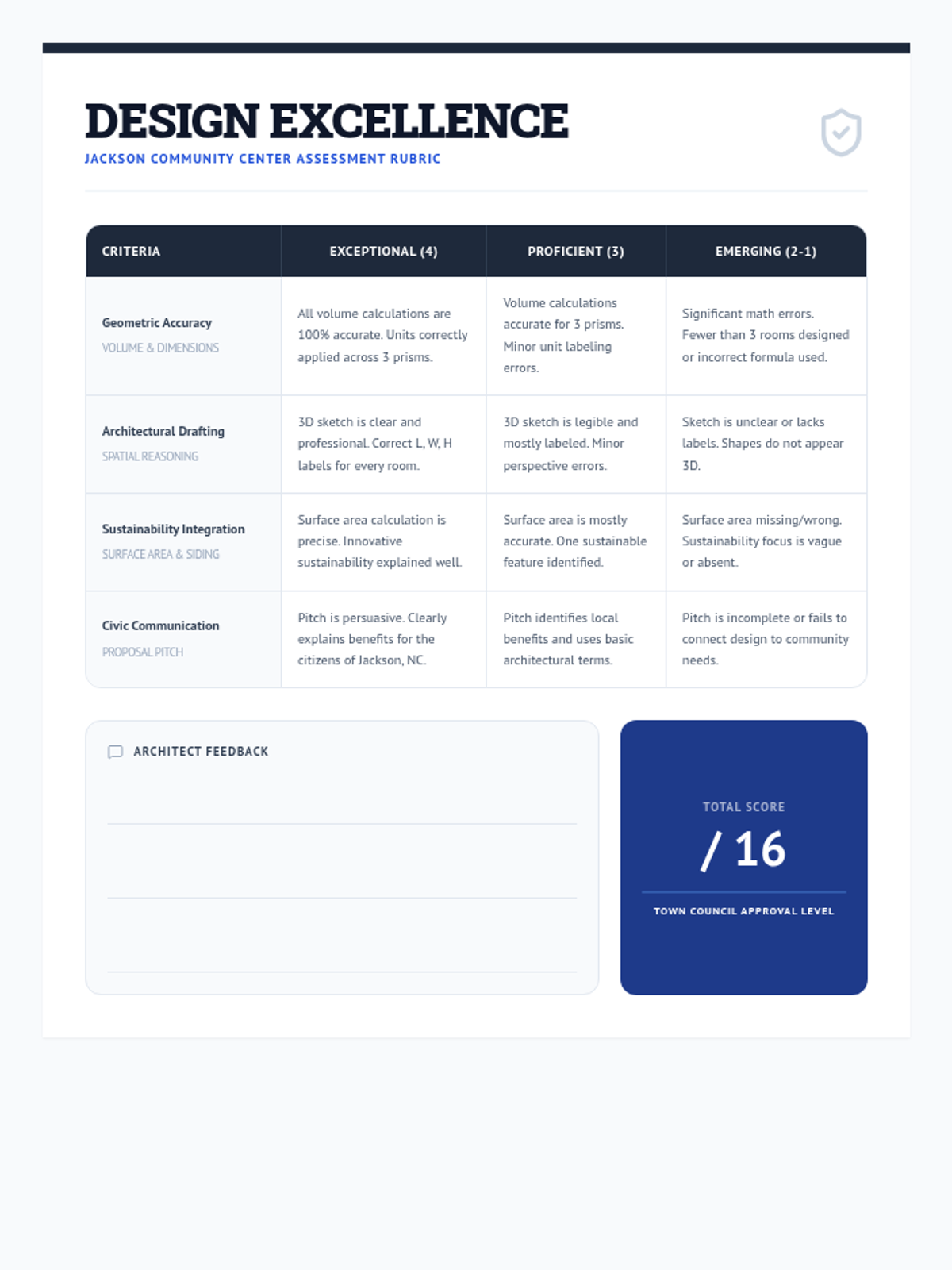
A project-based learning experience where 5th graders use volume and surface area to design a sustainable community center for Jackson, NC. Students bridge geometry with civic engineering through hands-on architectural design.
A project-based learning experience where 5th graders apply volume and surface area concepts to design a sustainable community center for Jackson, NC. Students bridge geometric standards with civic engineering and spatial reasoning through architectural drafting and calculation.
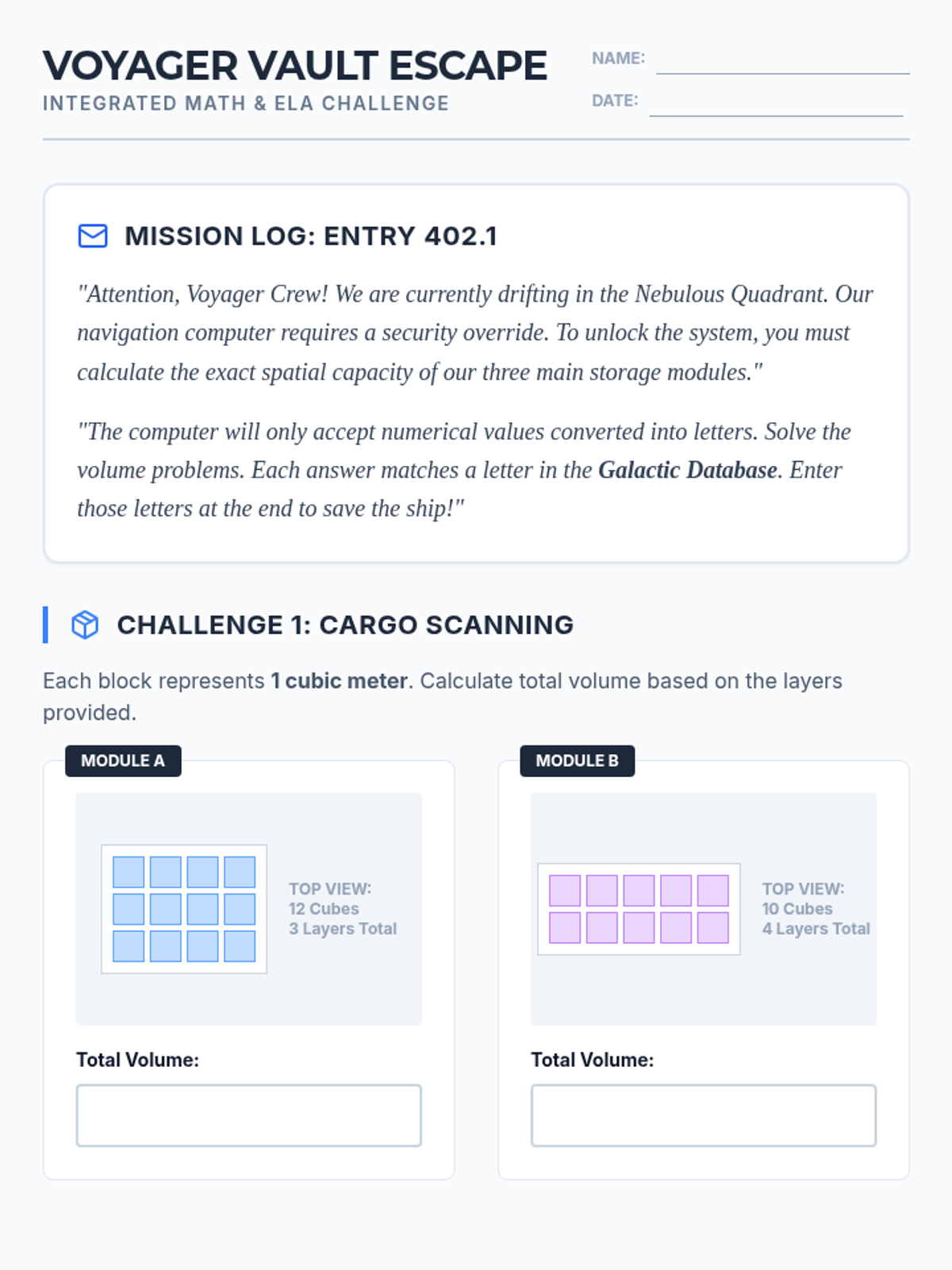
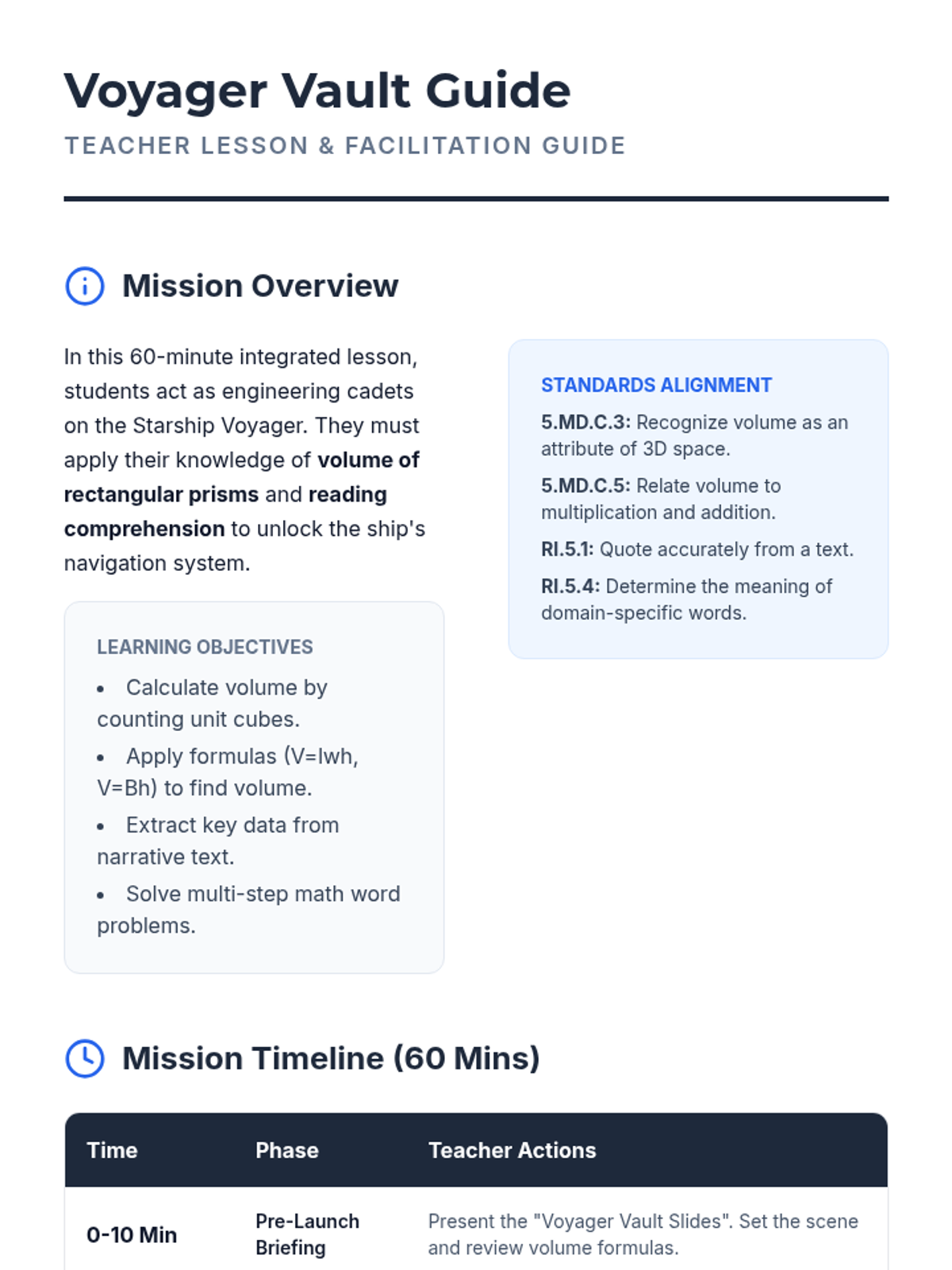
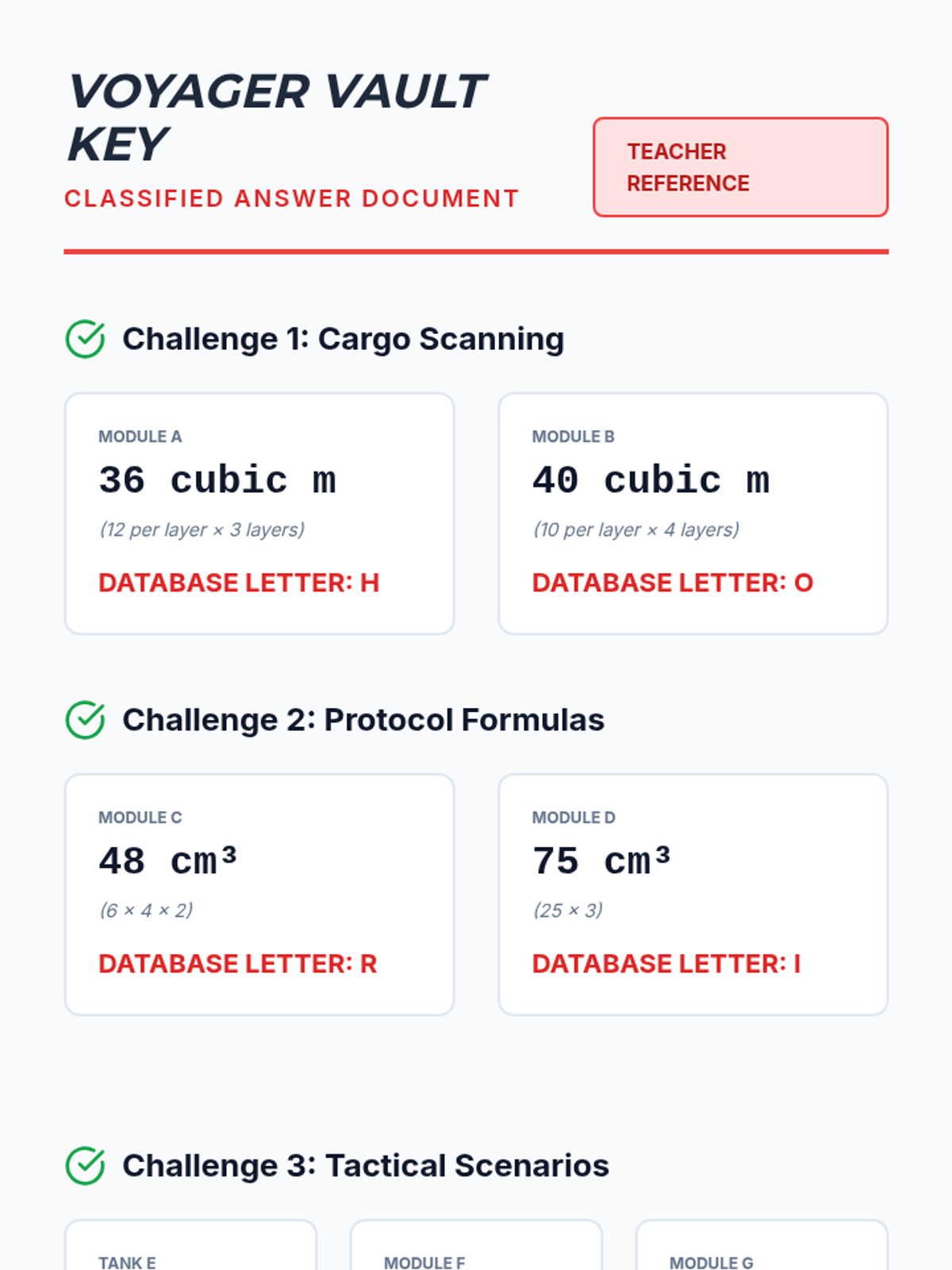
A 5th-grade integrated lesson where students solve volume-based math challenges within a space-themed narrative to unlock a starship's navigation system. Students apply math formulas and reading comprehension skills to crack the code and save the mission.
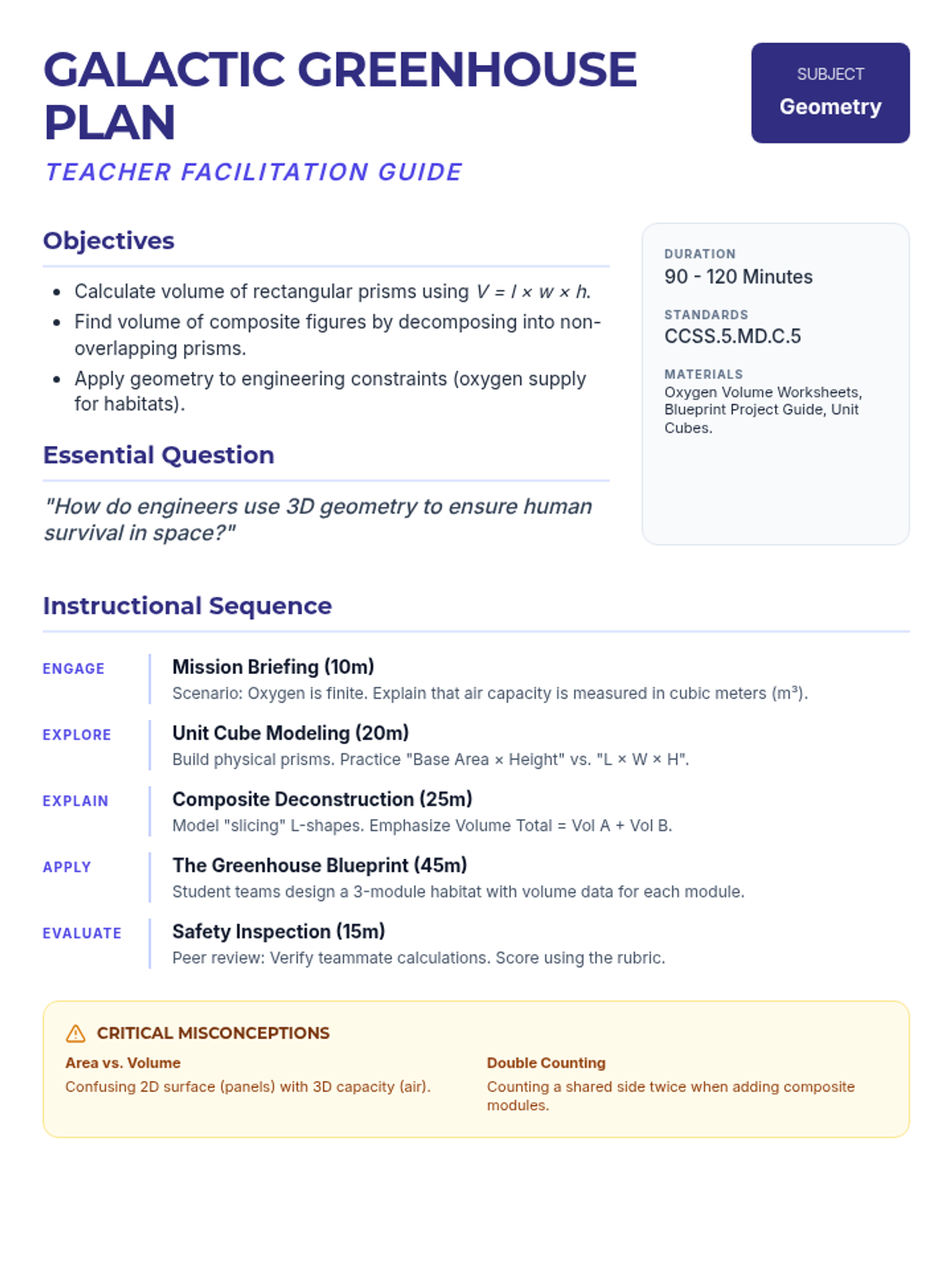
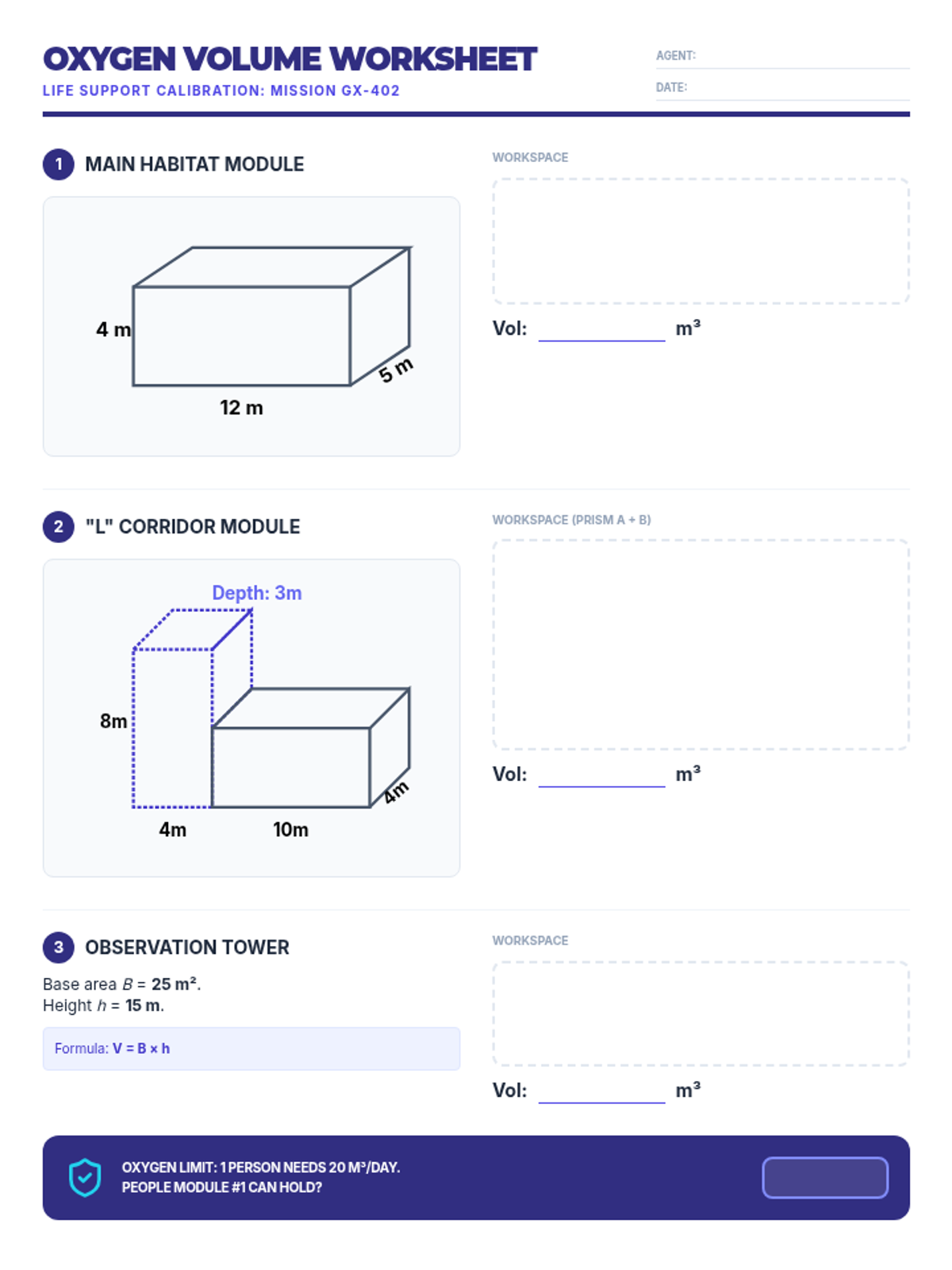
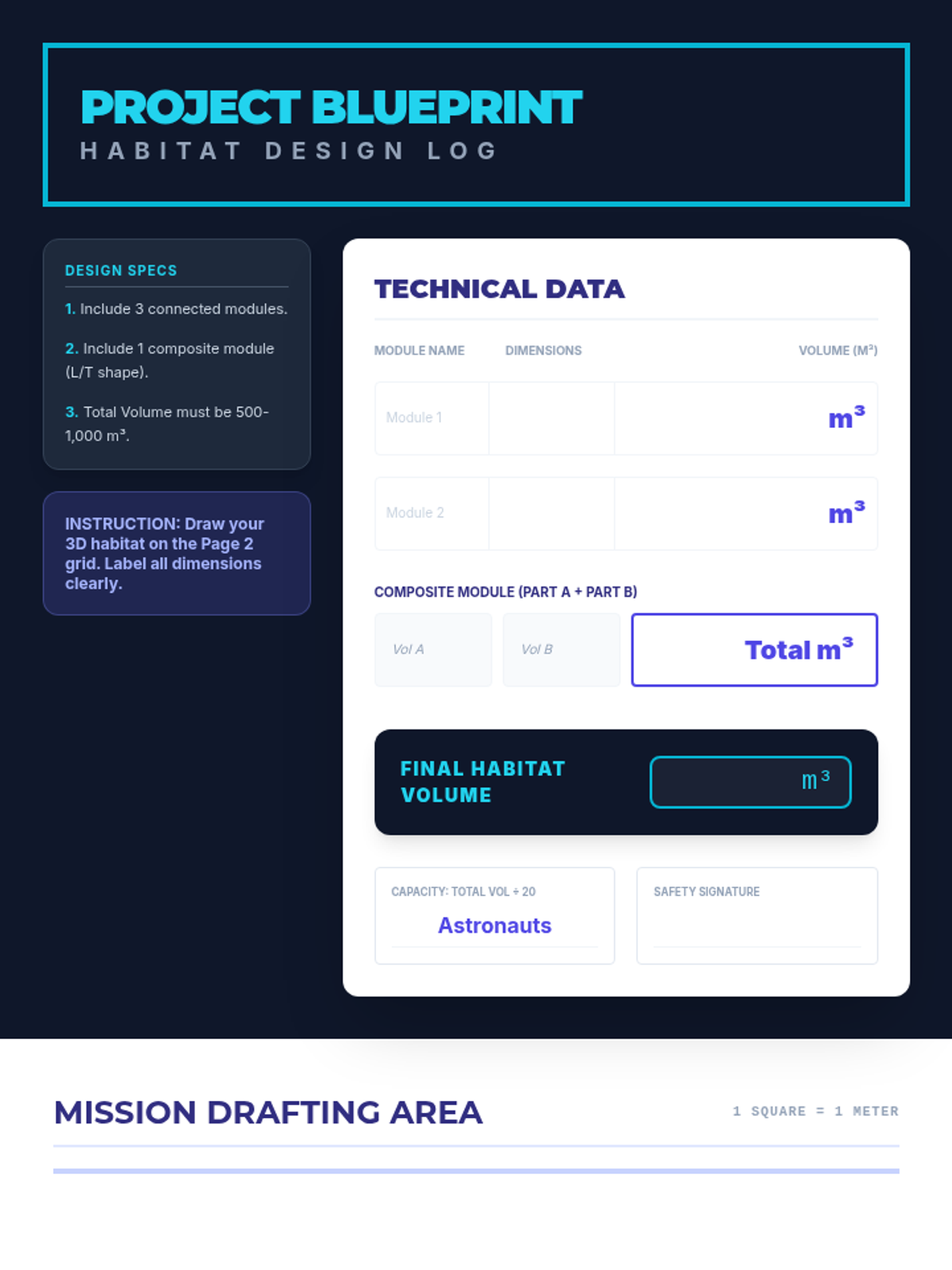
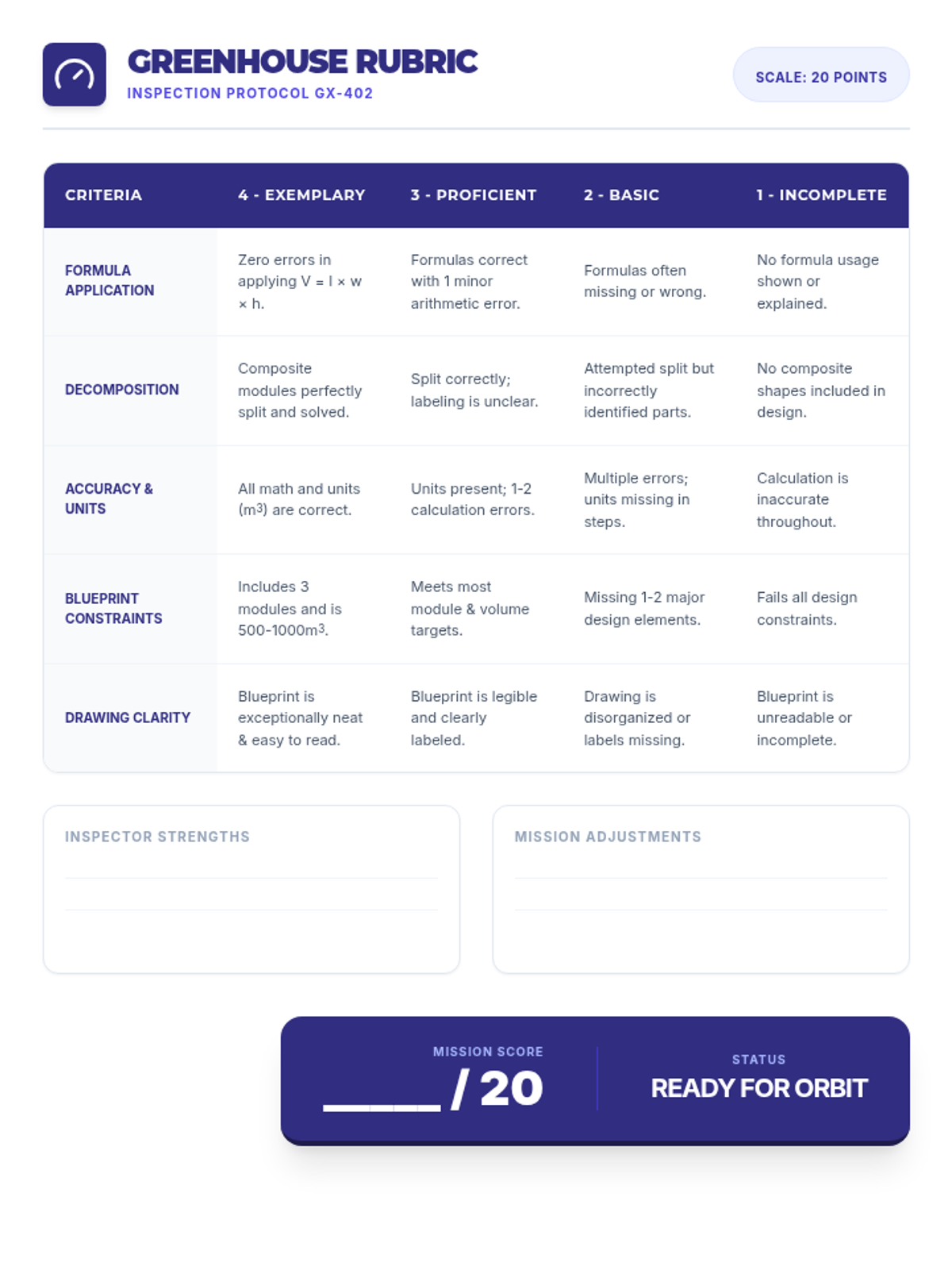
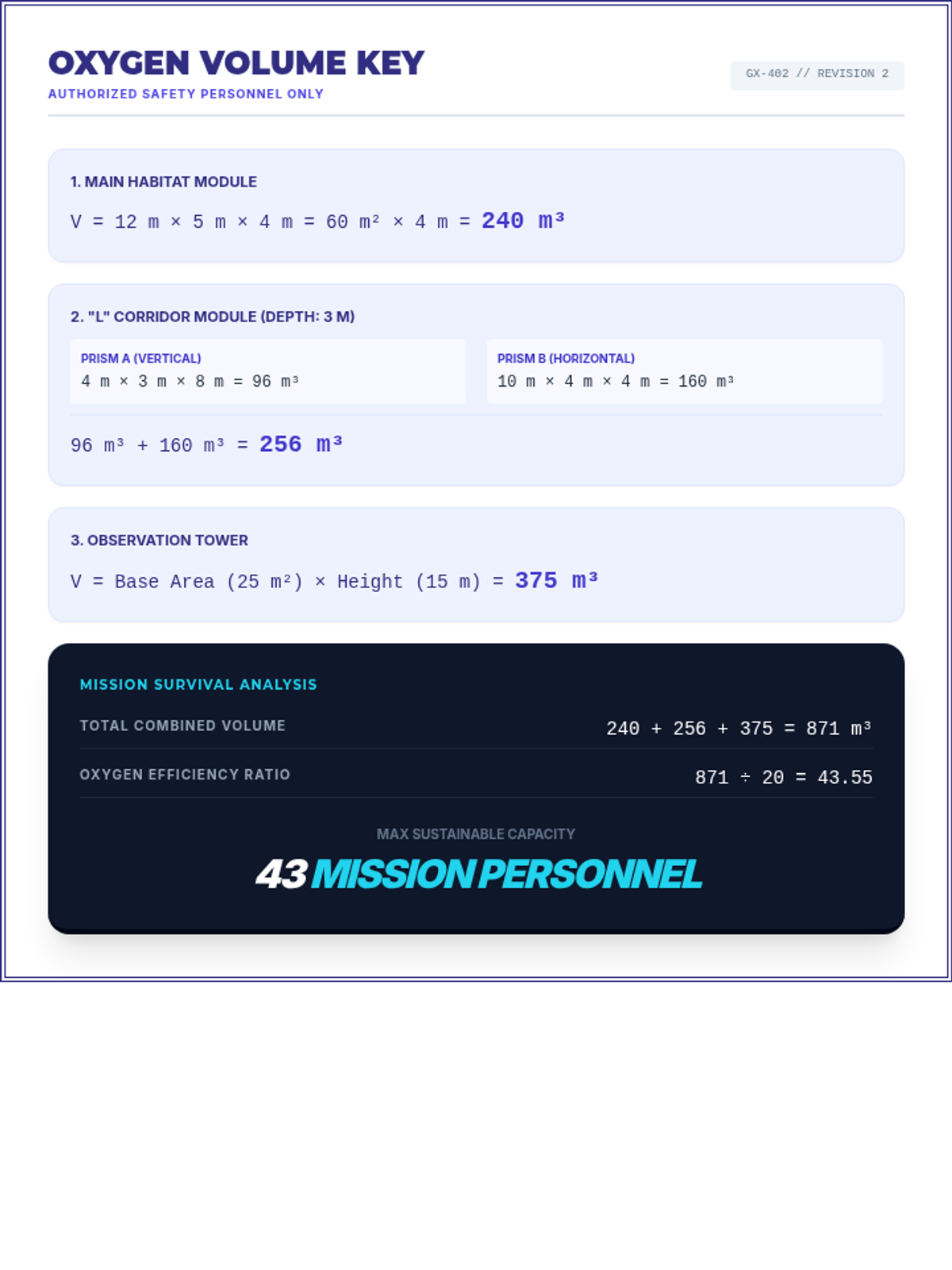
Students design futuristic space habitats by calculating the volume of rectangular prisms and composite figures to determine oxygen requirements. This lesson blends geometry with space exploration concepts for 4th and 5th grade students.
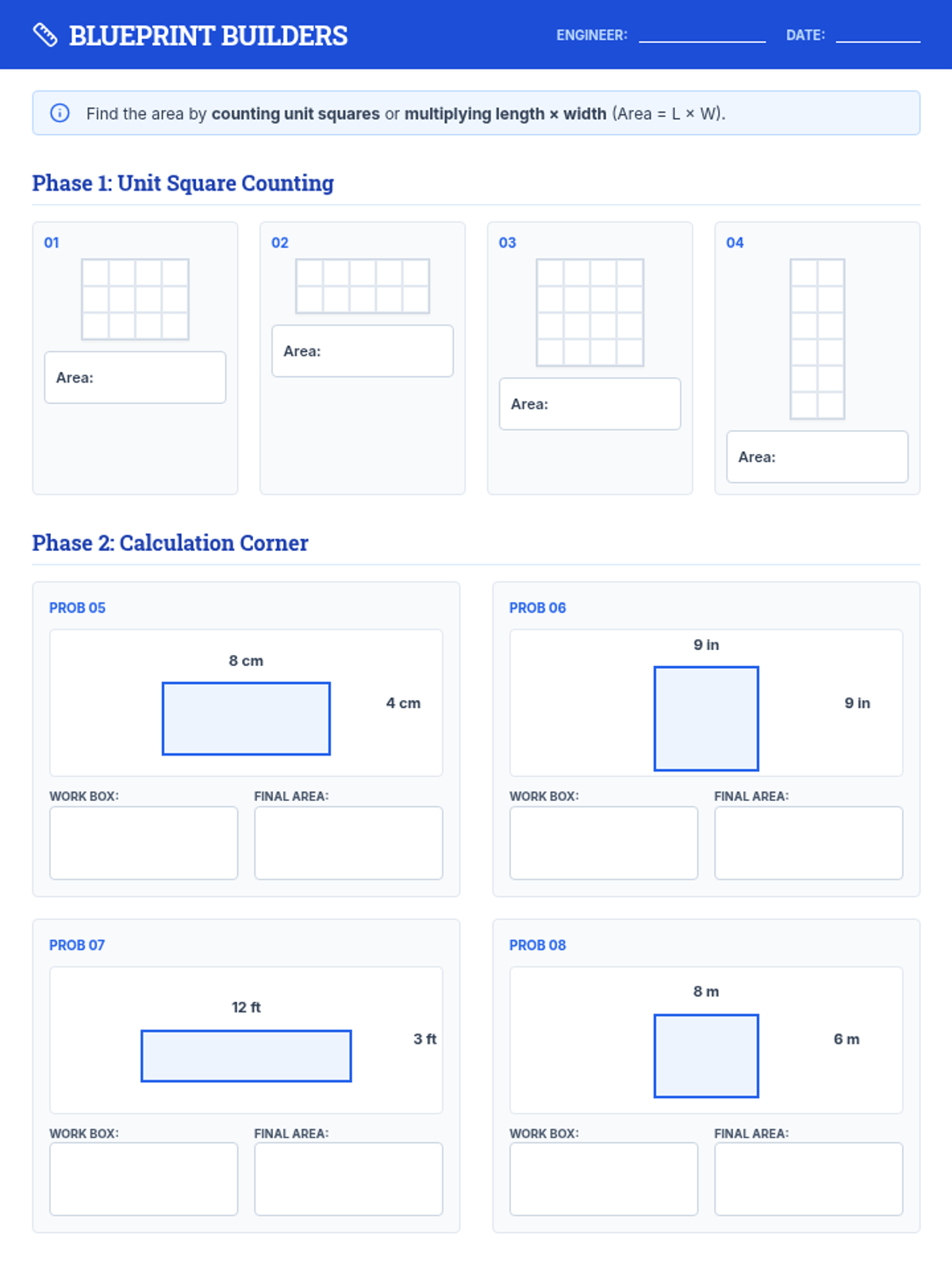
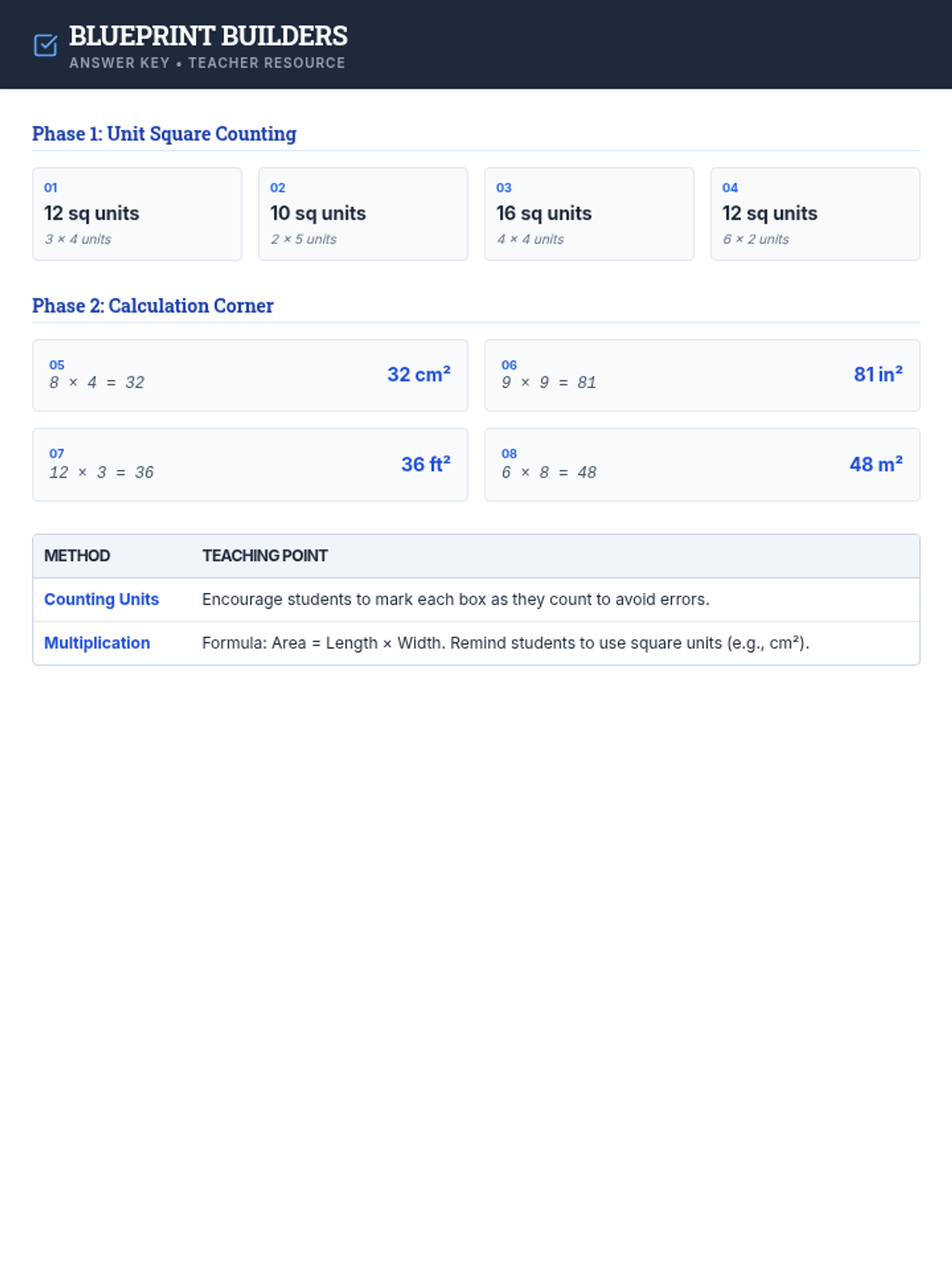
Students learn to calculate the area of rectangles and squares using two methods: counting unit squares on a grid and multiplying side lengths. This lesson provides hands-on practice with whole number measurements to build a solid foundation in geometry.
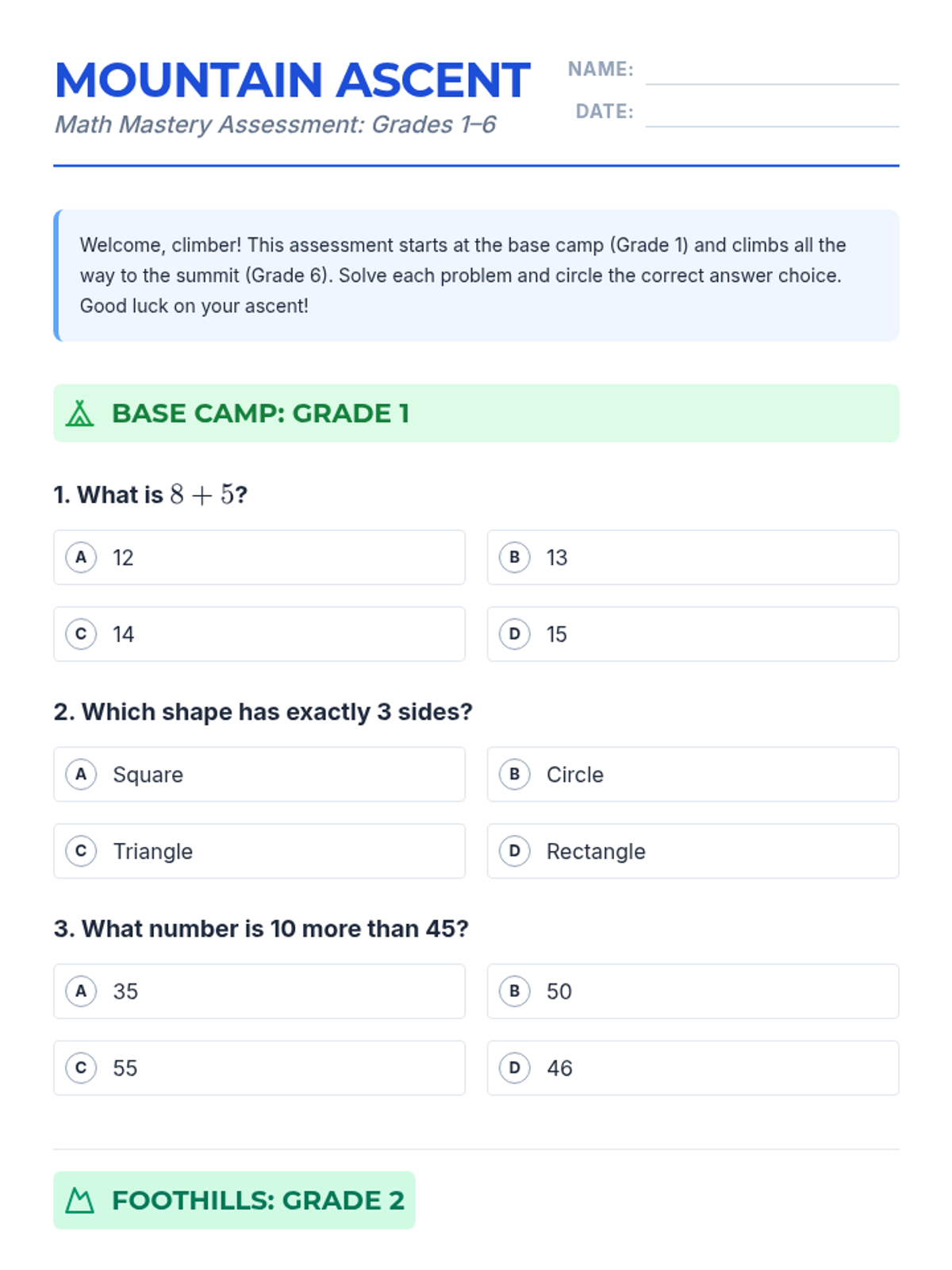
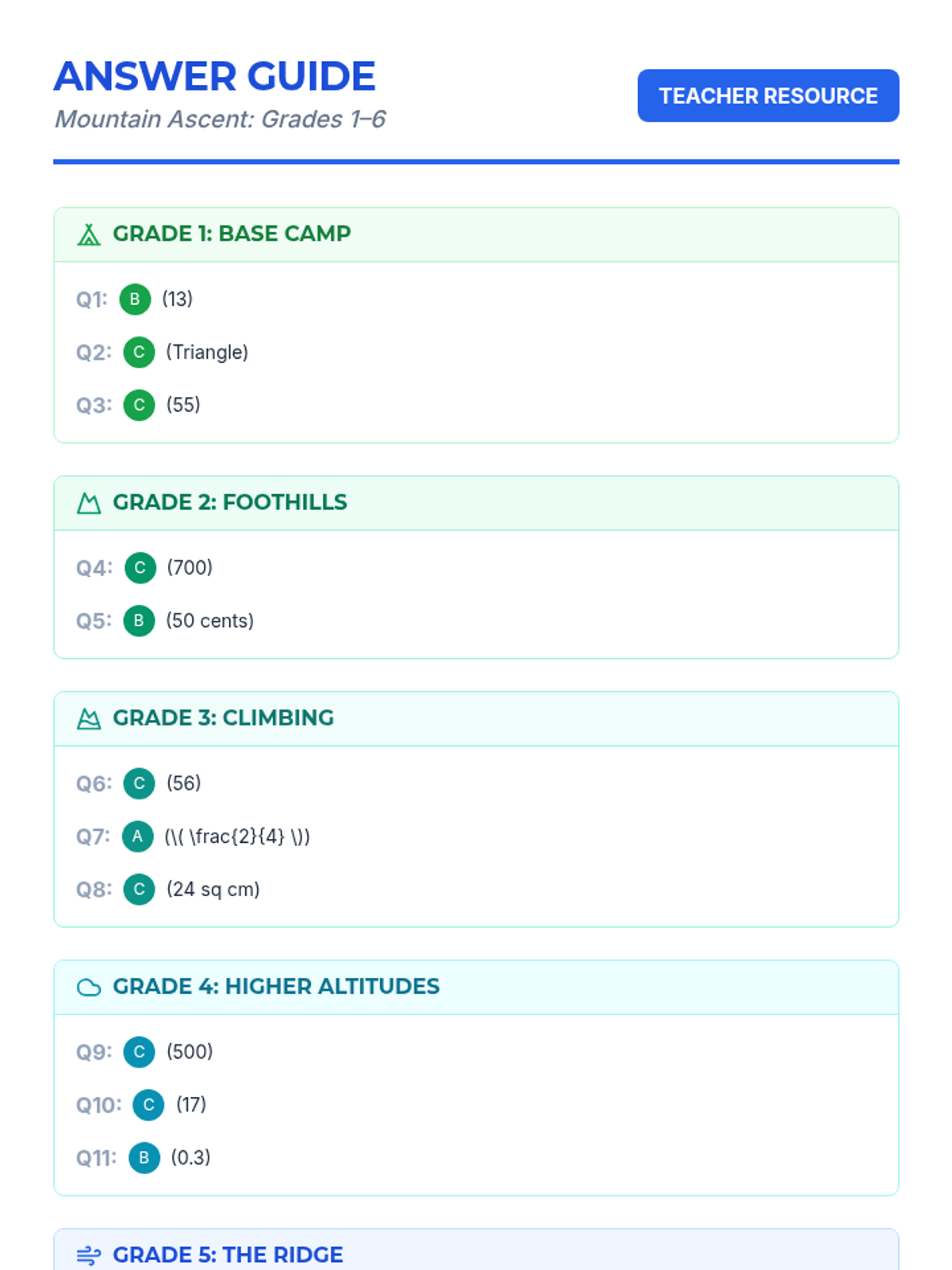
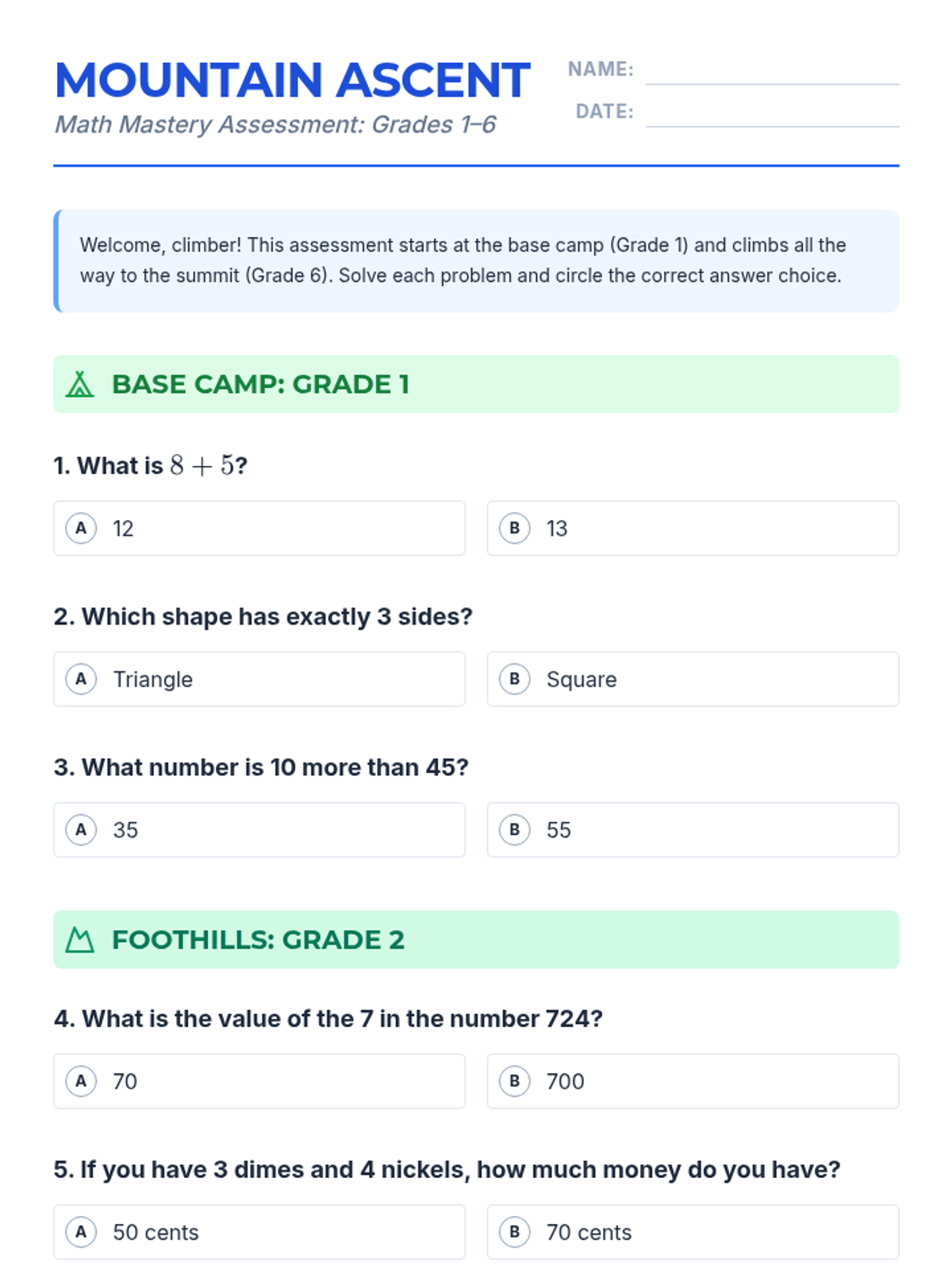
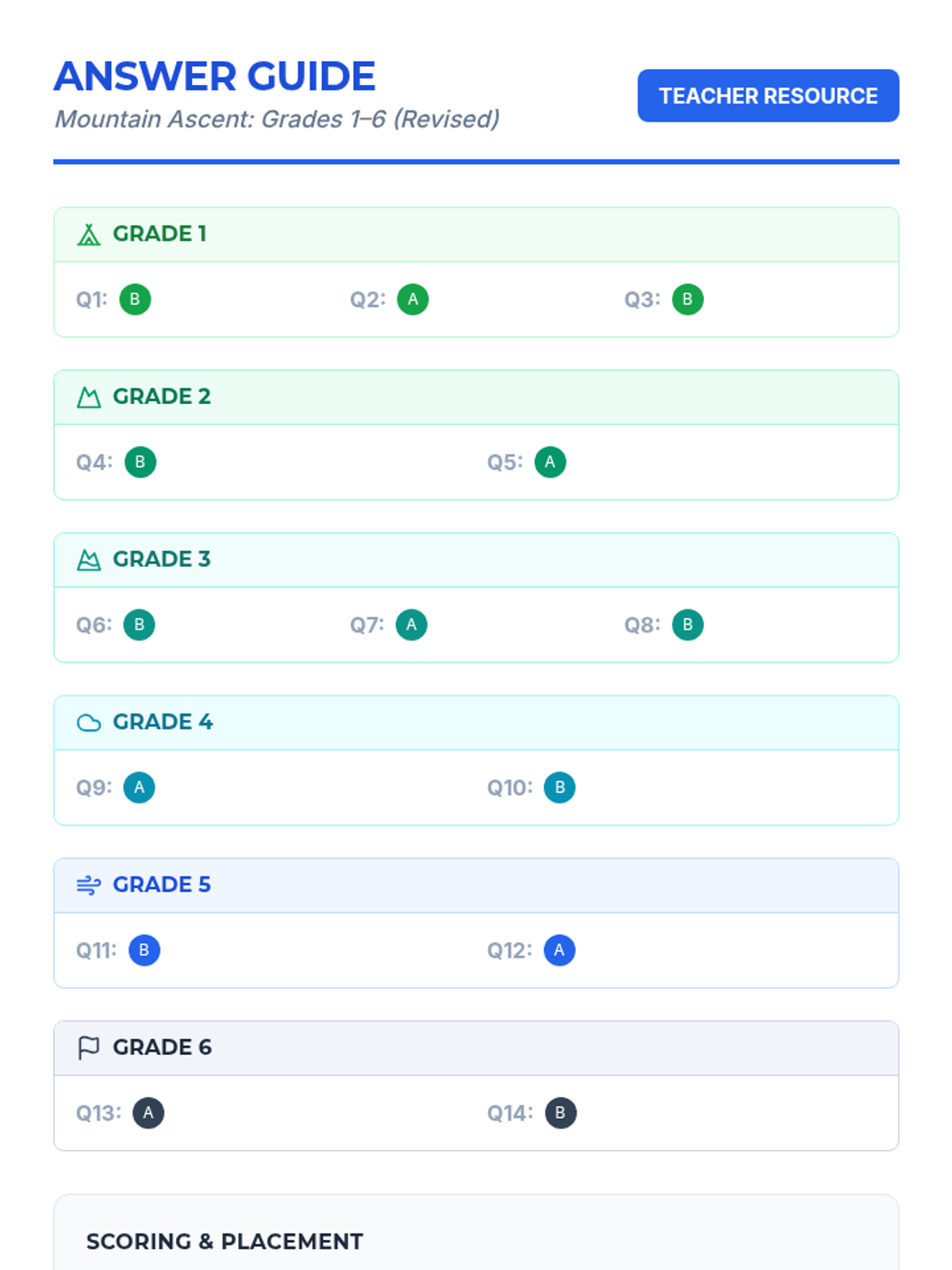
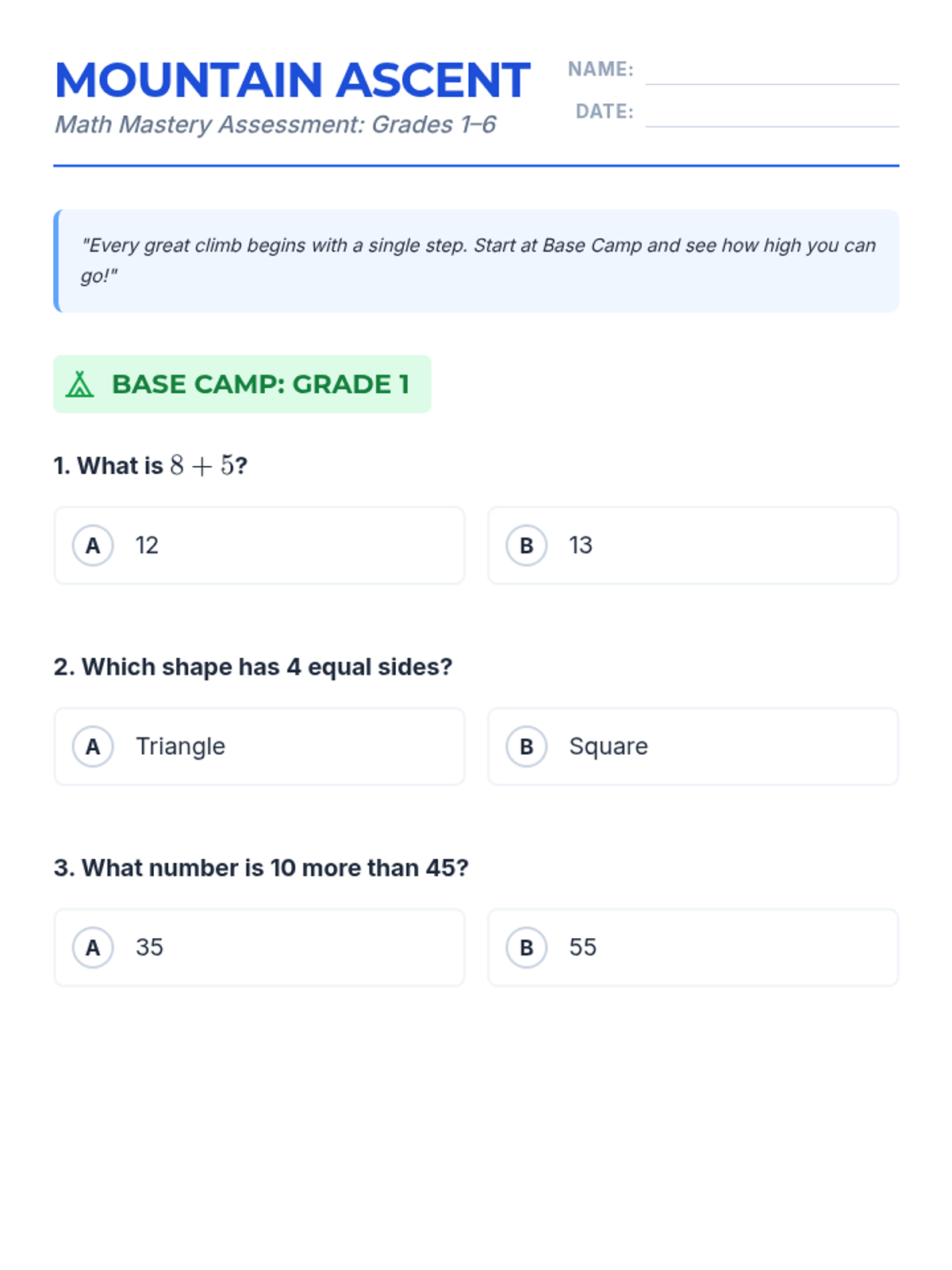
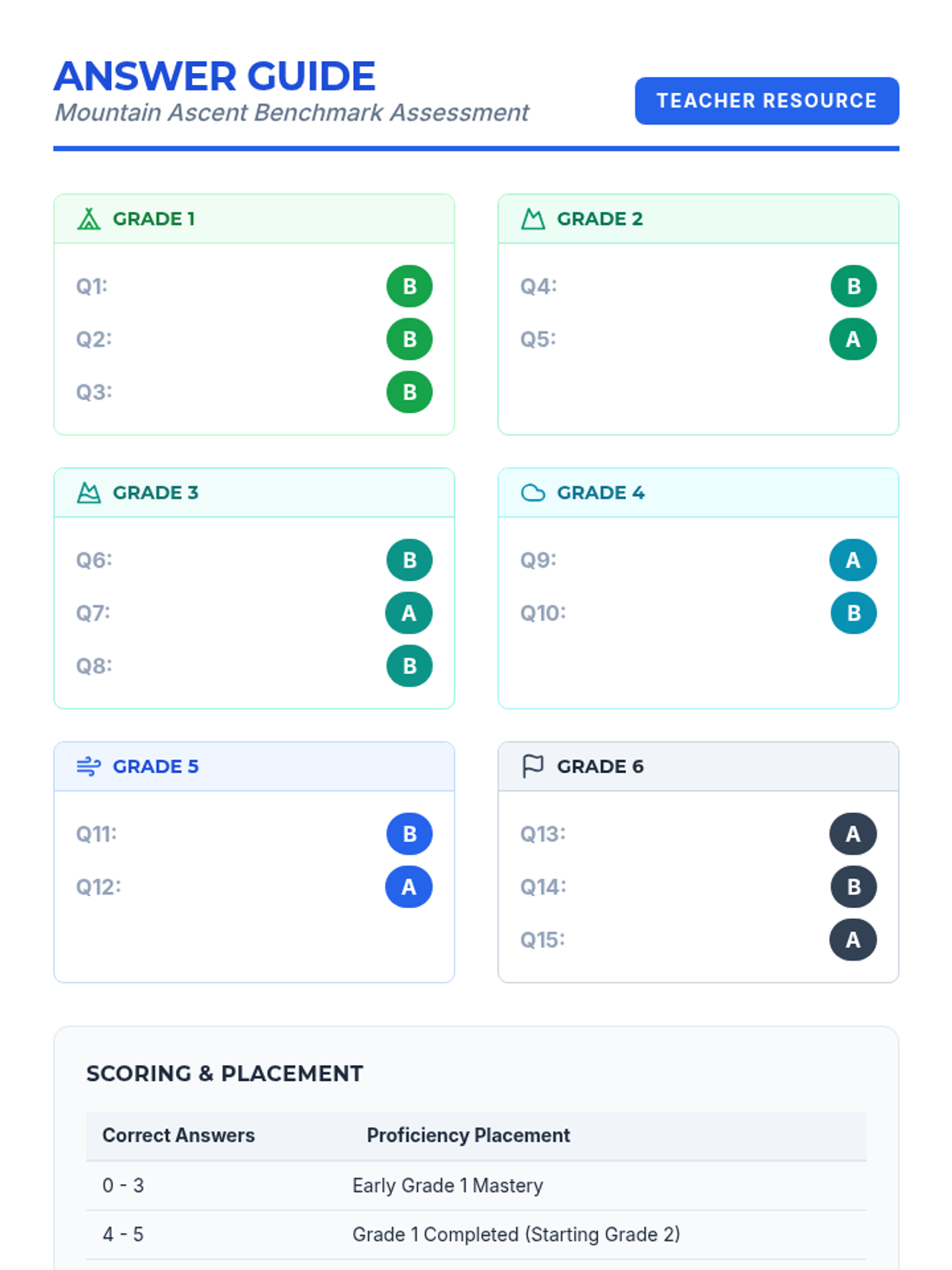
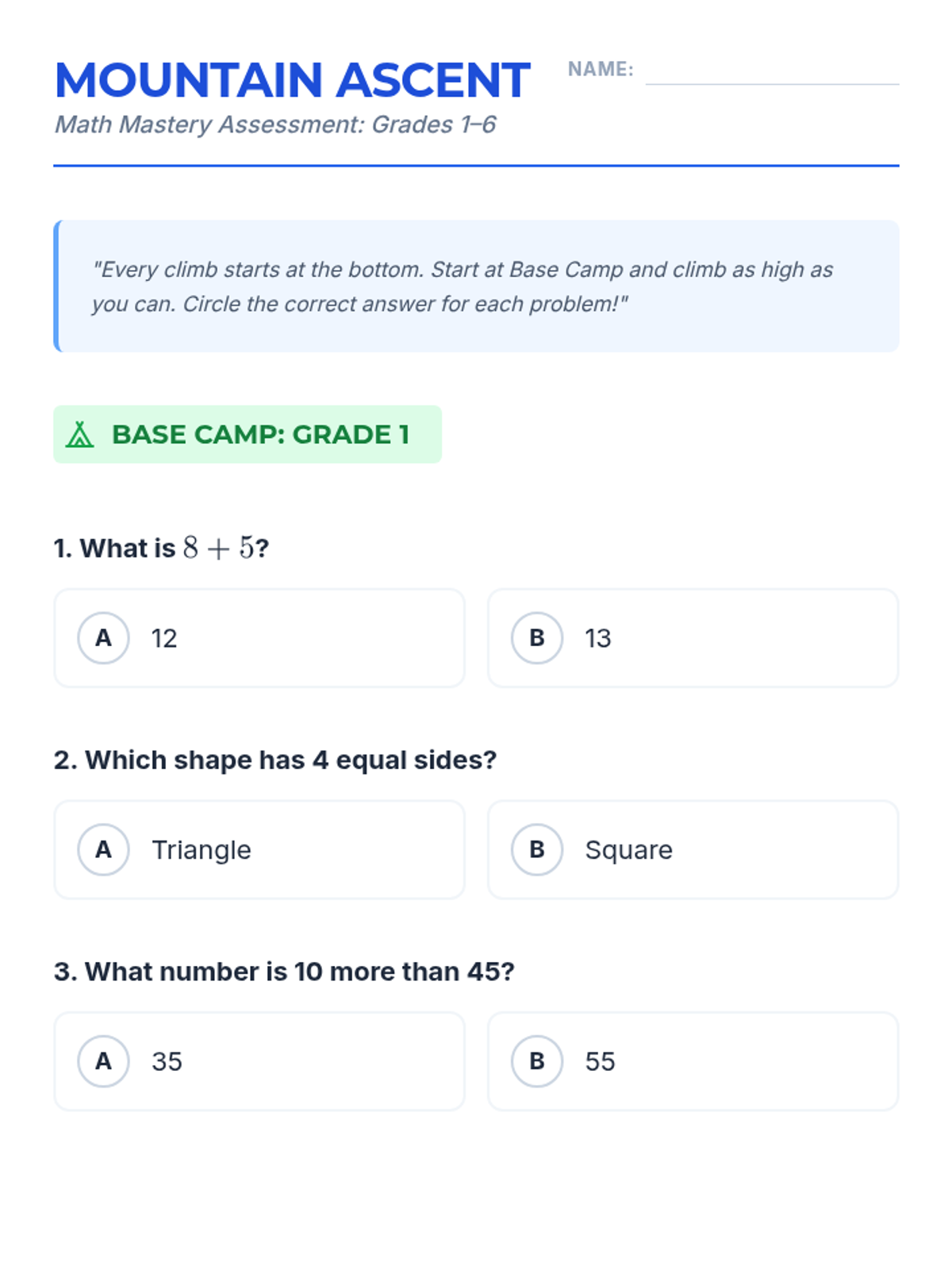
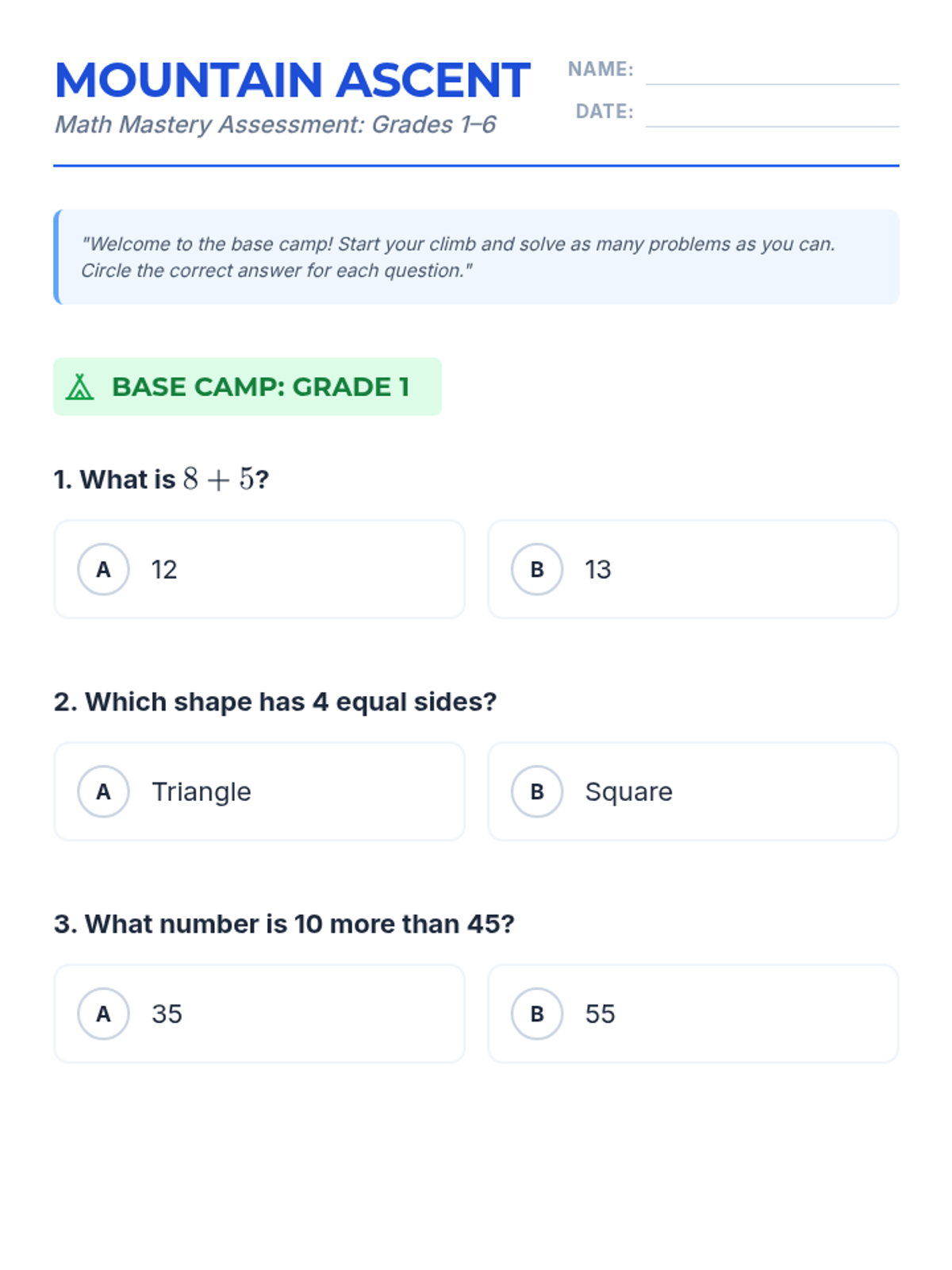
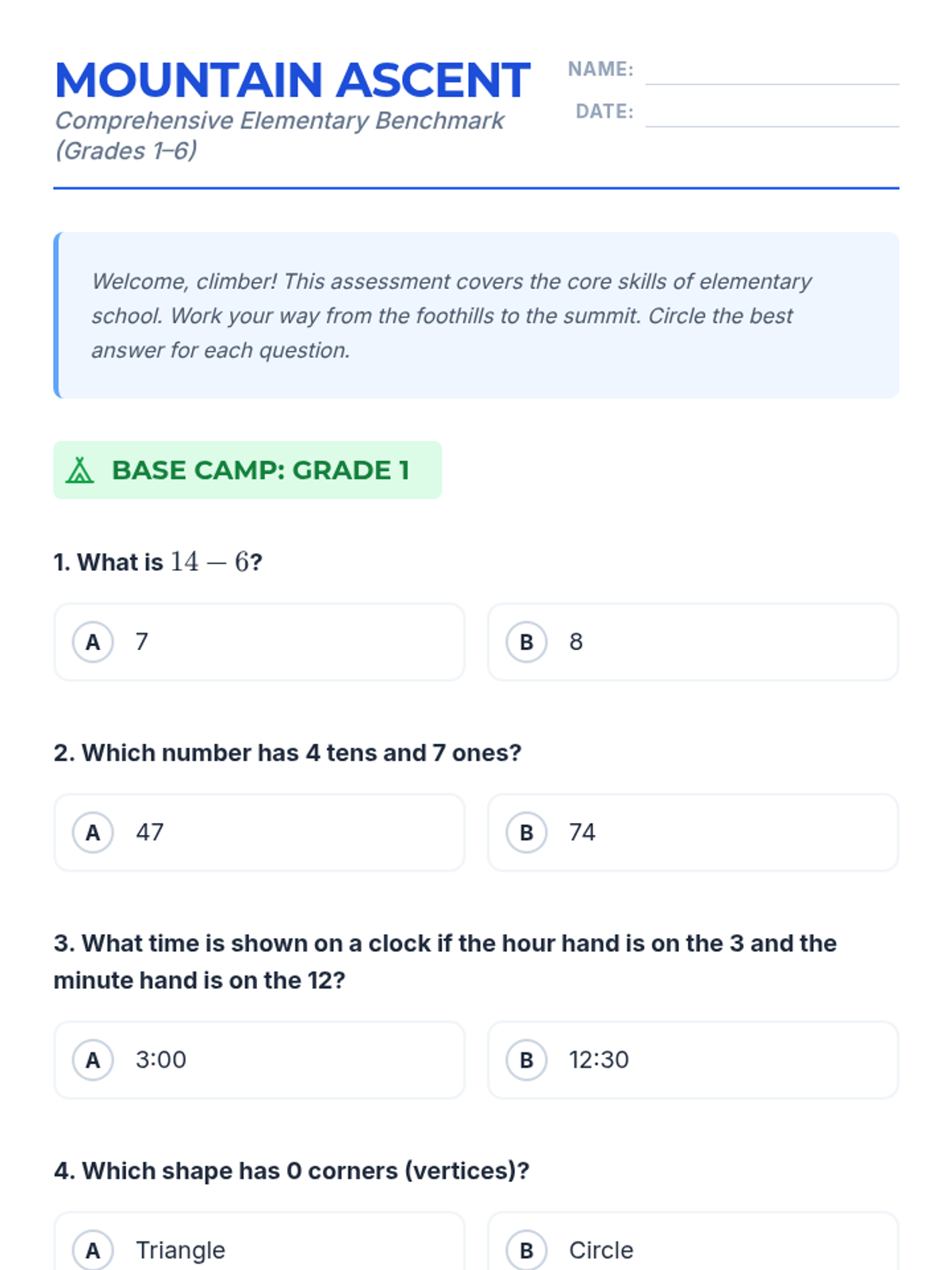
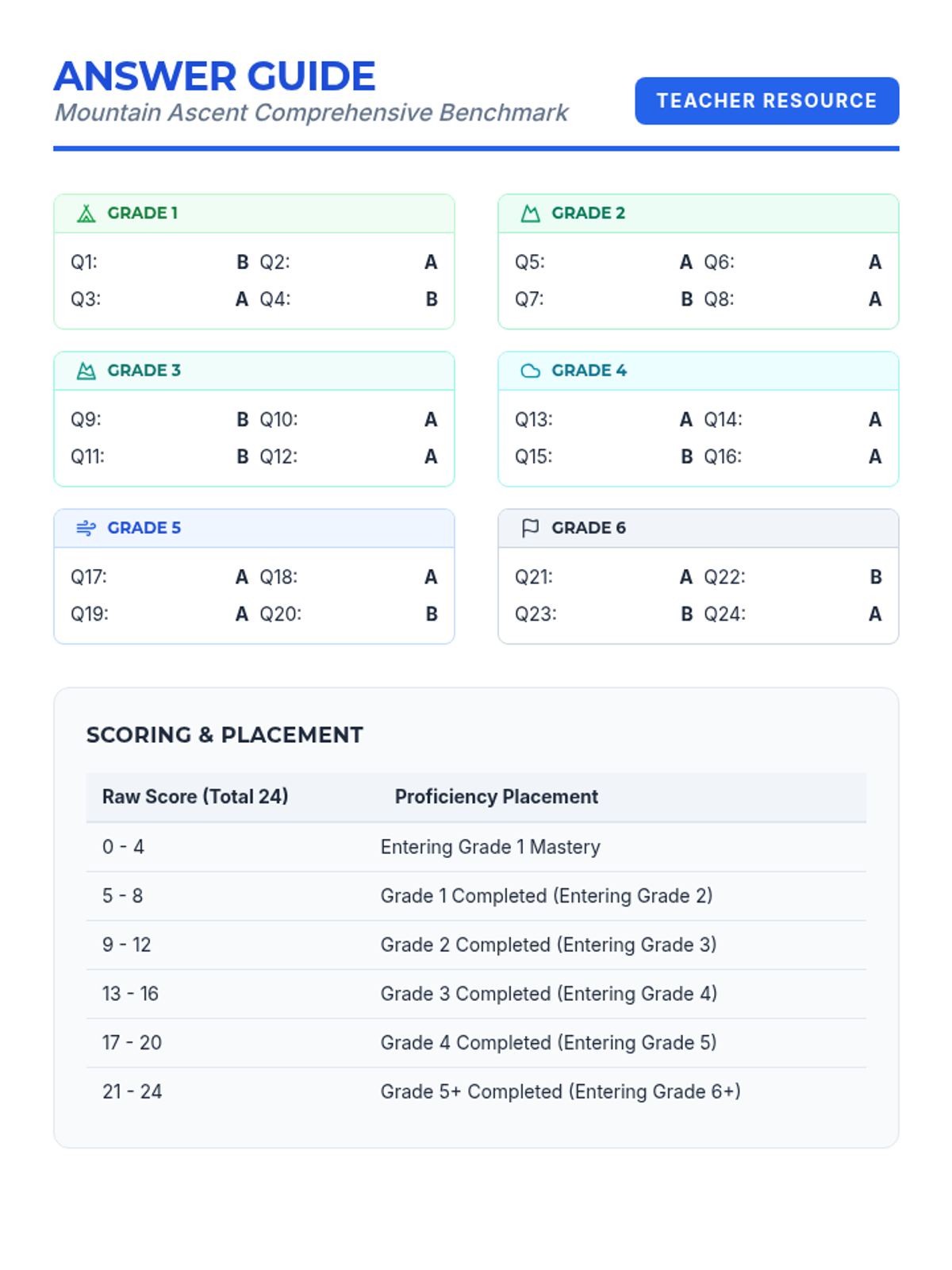
A comprehensive math benchmark assessment covering key standards from Grade 1 through Grade 6, designed to track student progress and identify skill gaps.
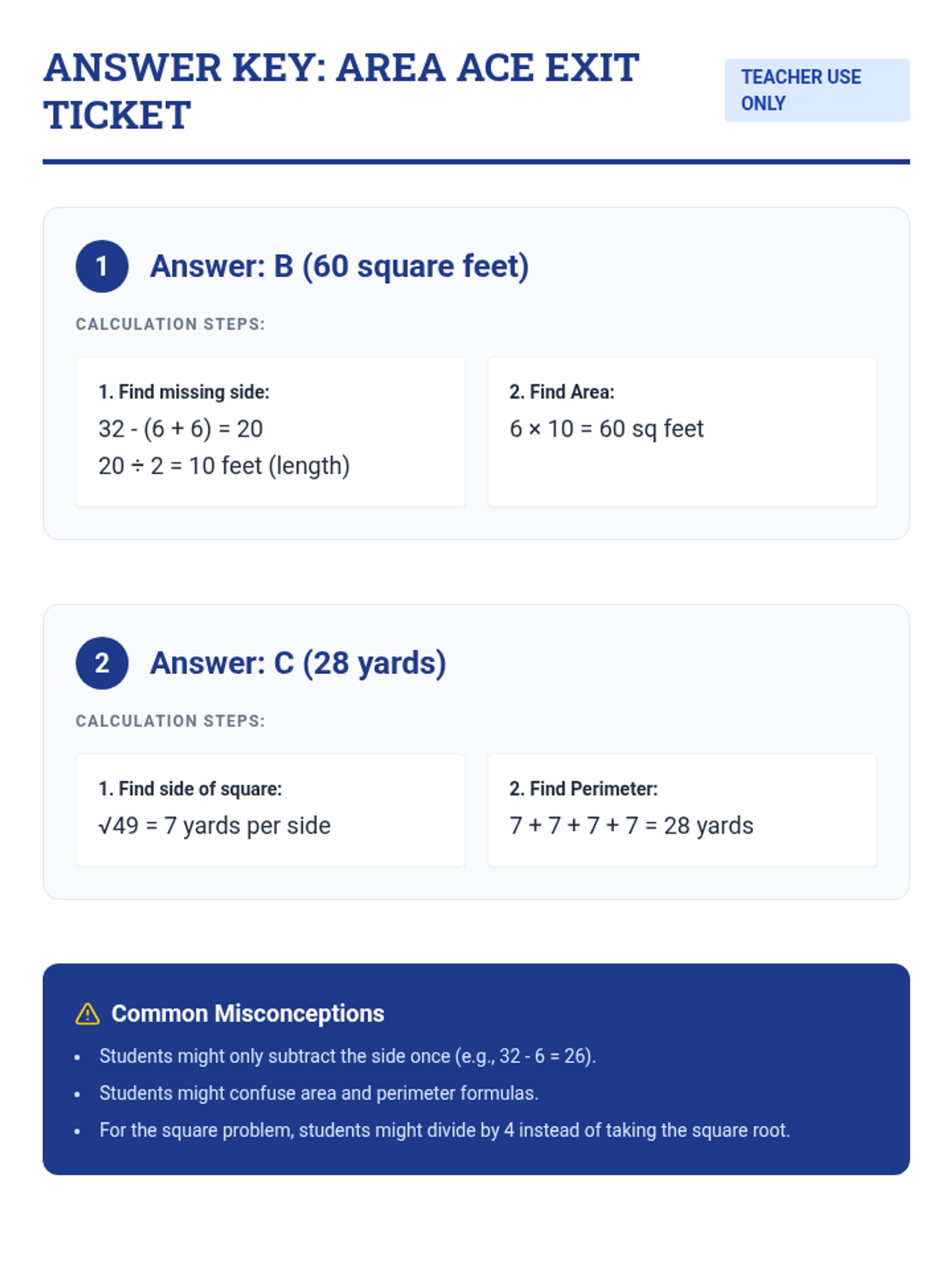
A rigorous math lesson focused on solving complex area and perimeter problems, including multi-step calculations to find area from perimeter and identifying missing side lengths in polygons.
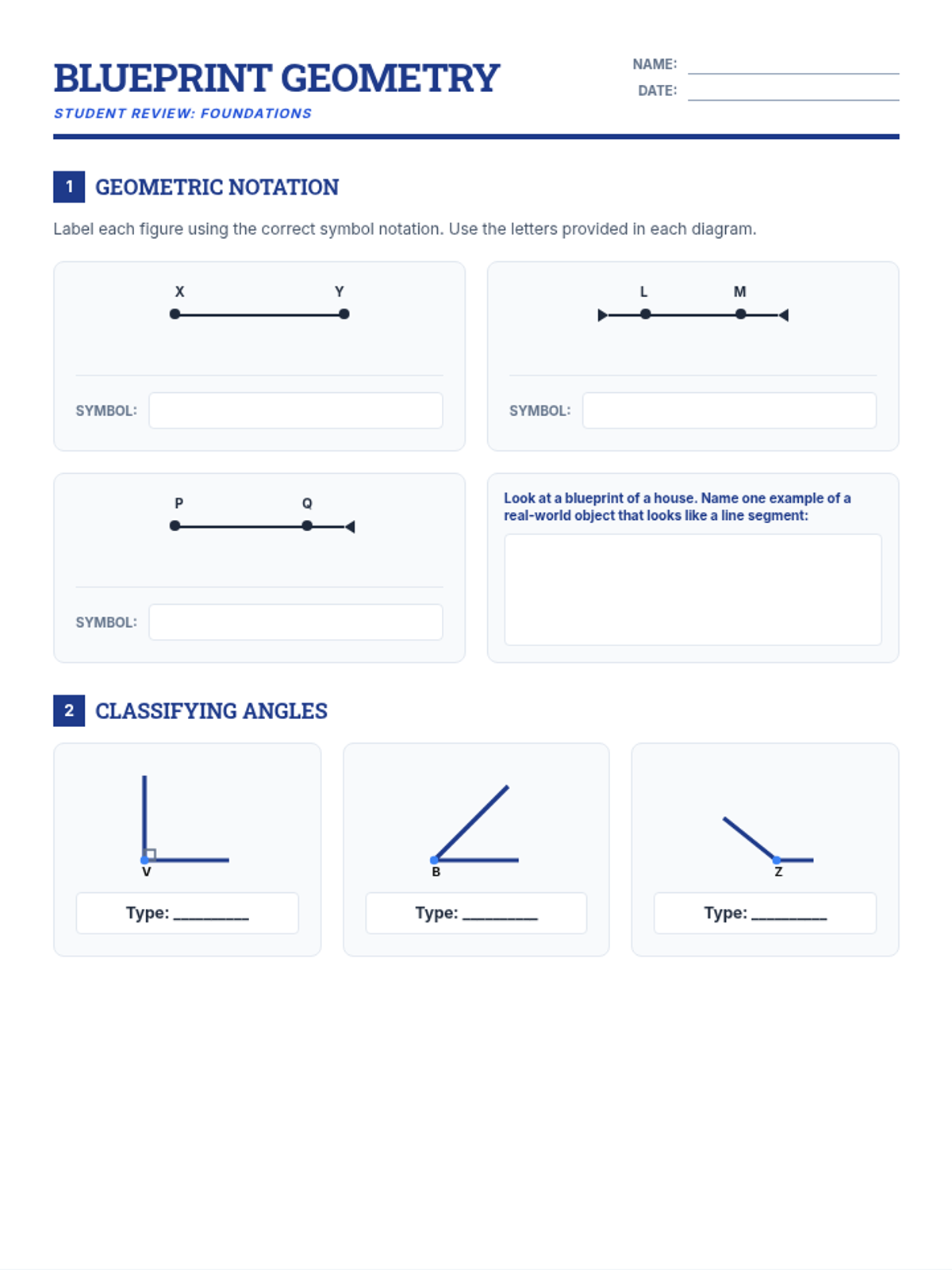
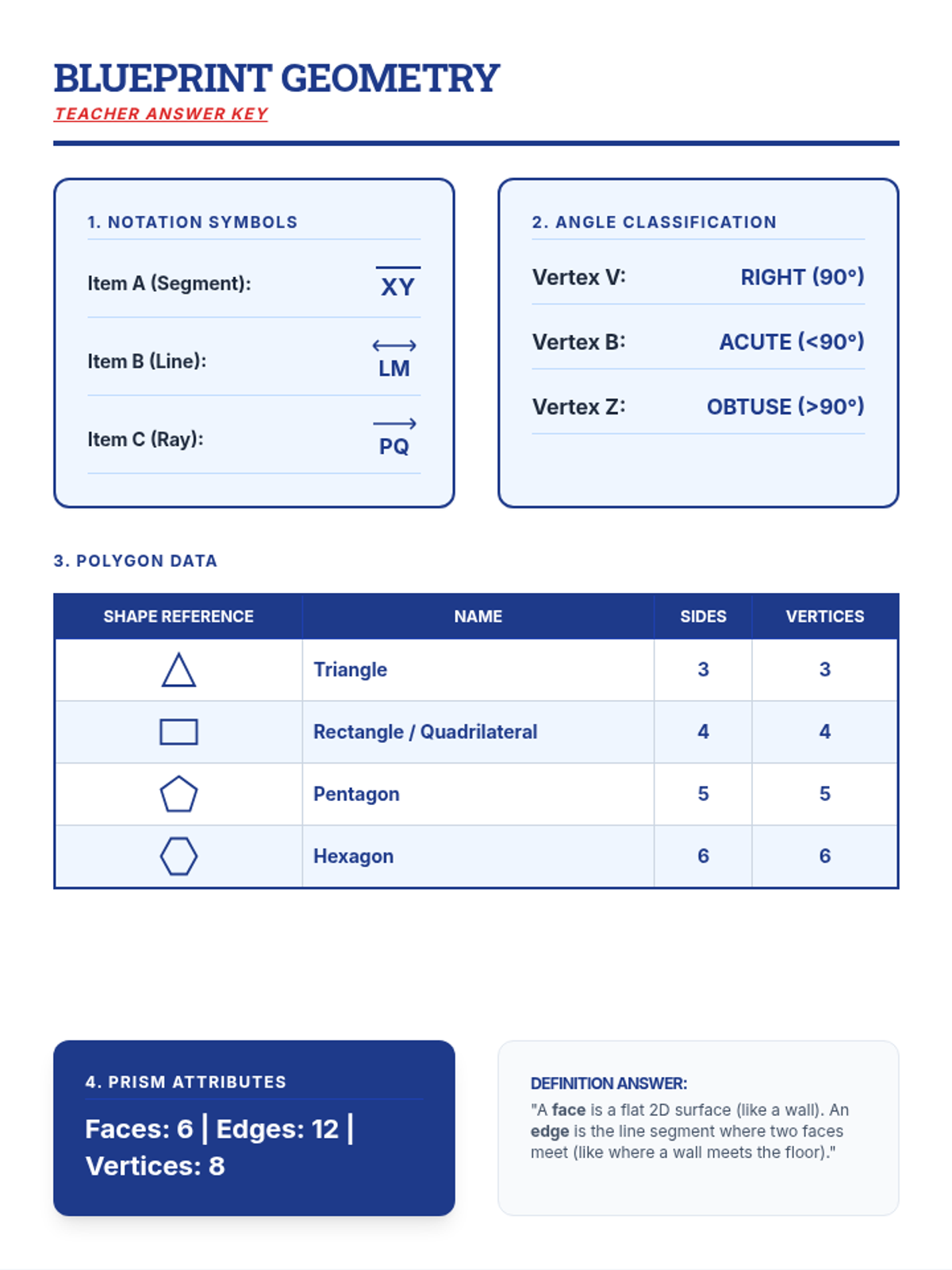
A comprehensive geometry review for 5th grade students, covering lines, angles, polygons, 3D shapes, and measurement with fractions and mixed numbers.
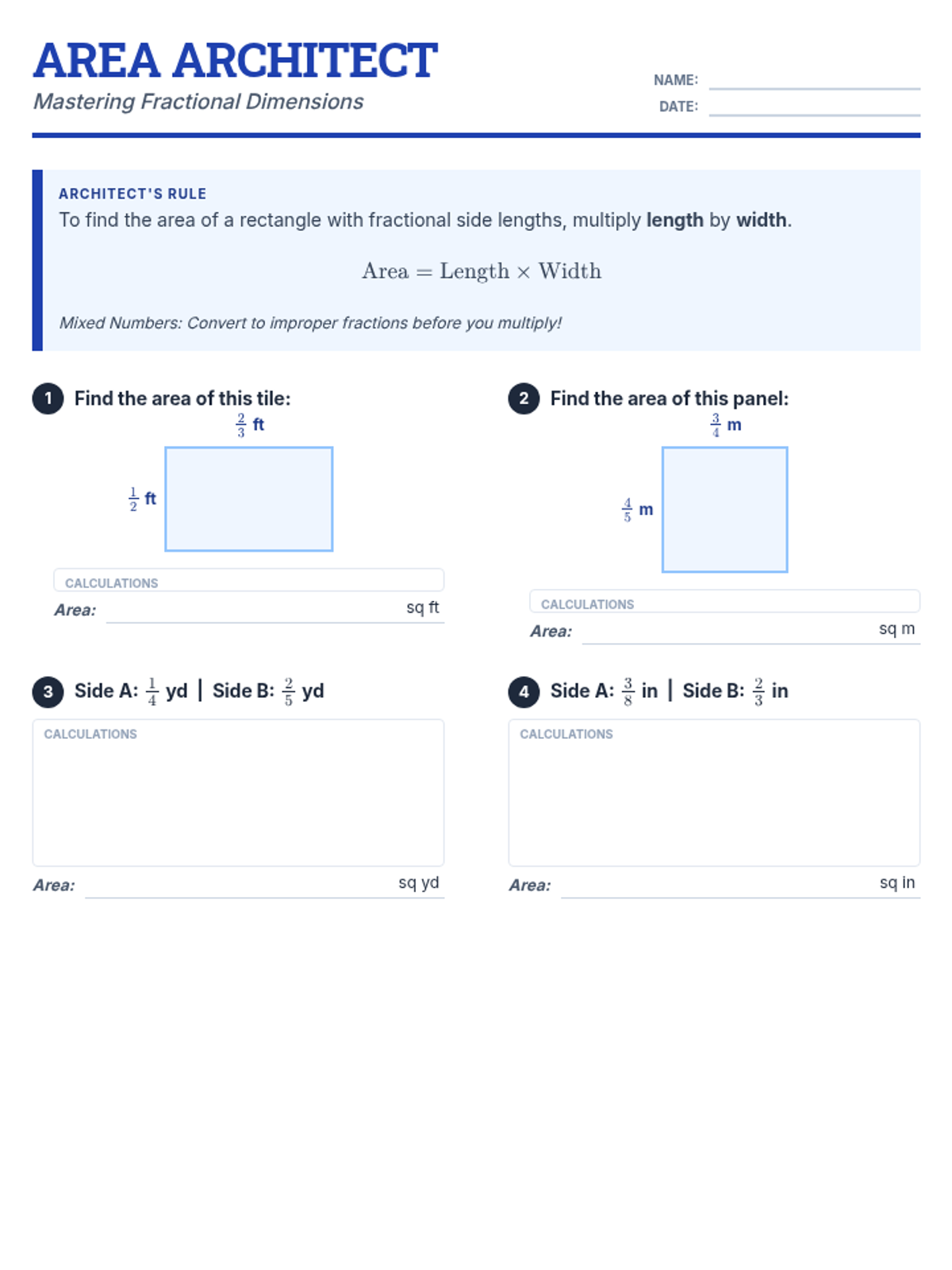
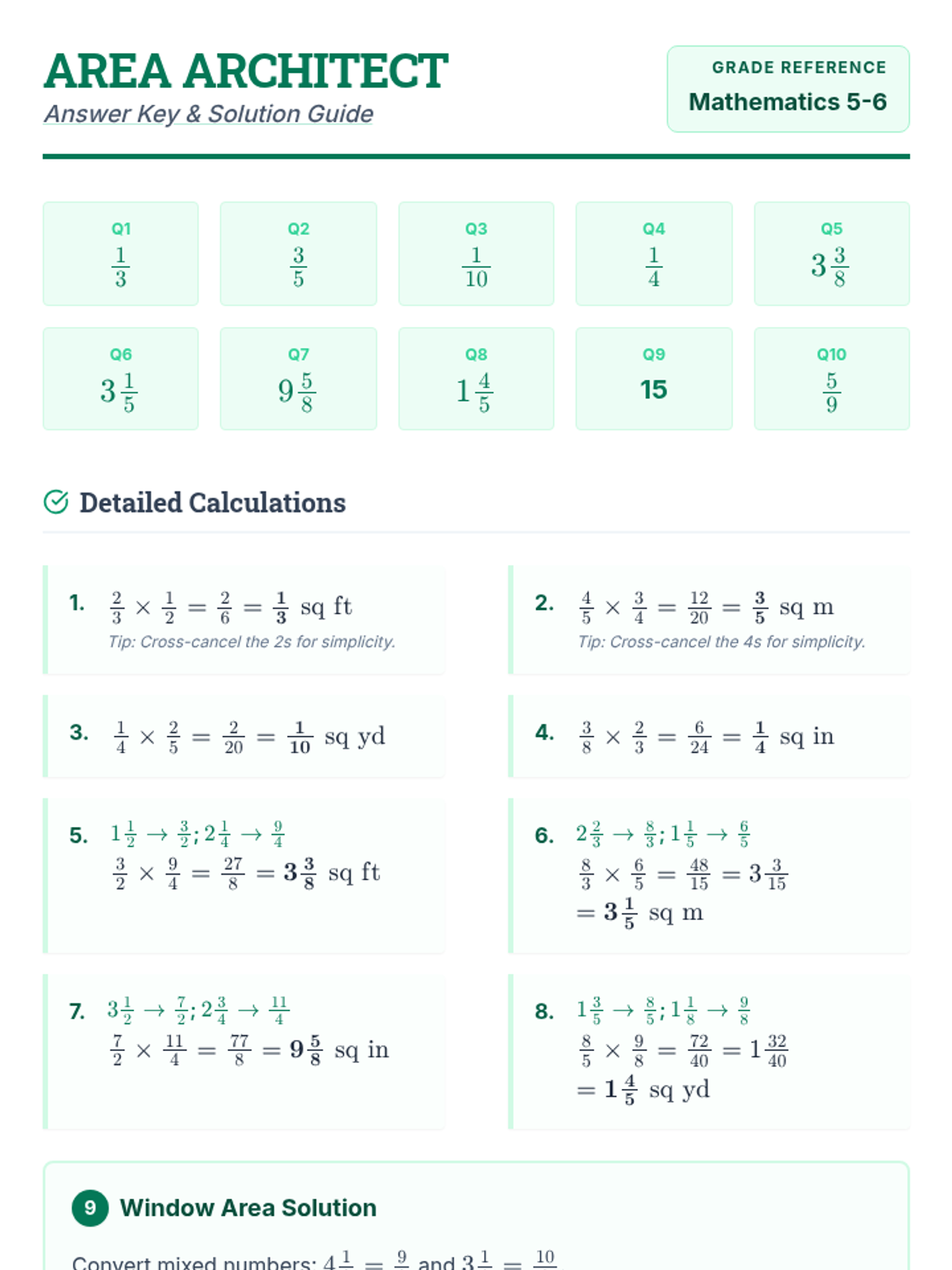
A lesson focused on calculating the area of rectangles with fractional and mixed number side lengths by relating the concept to multiplication. Students will practice converting mixed numbers to improper fractions and applying the area formula.
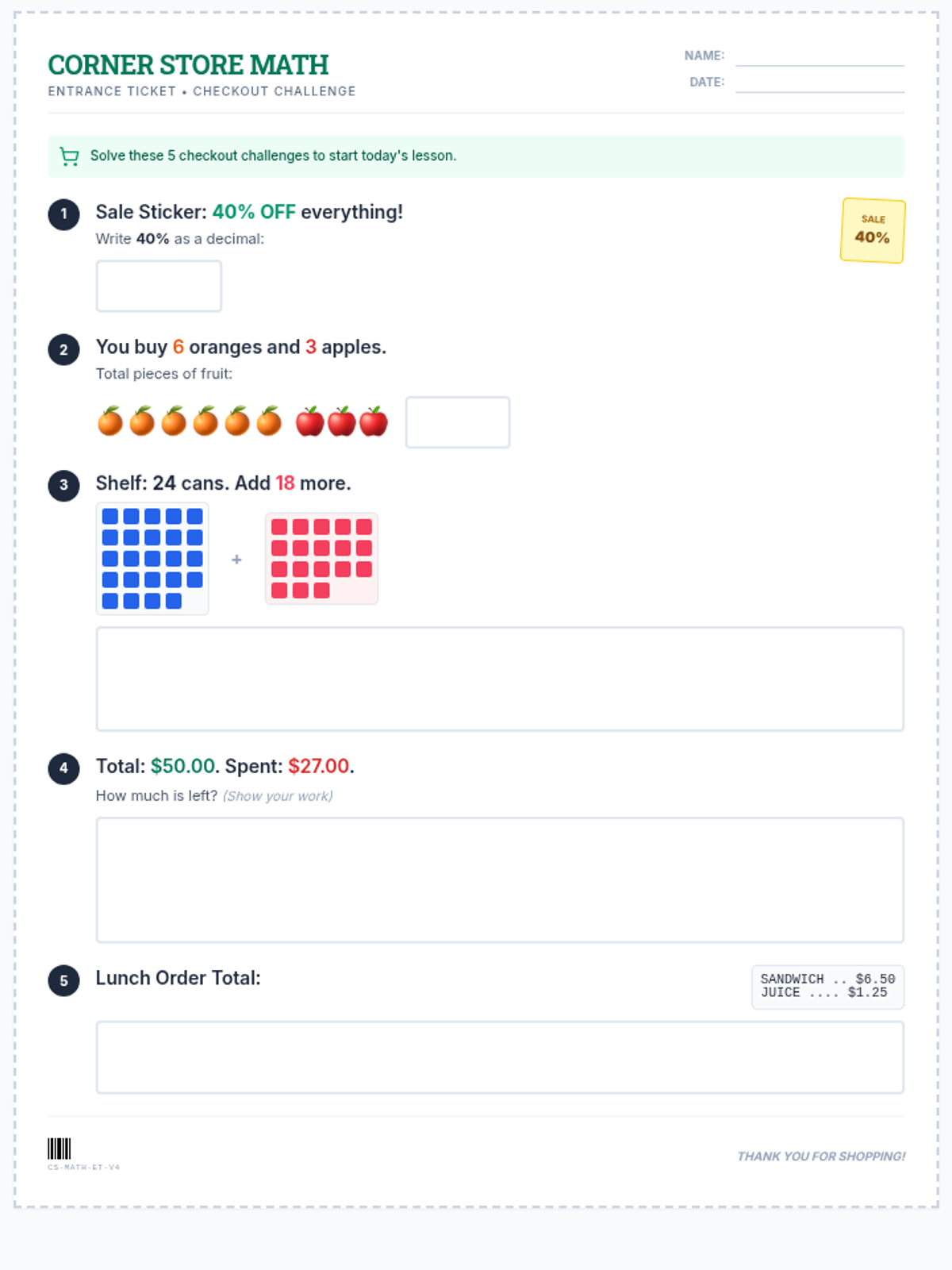
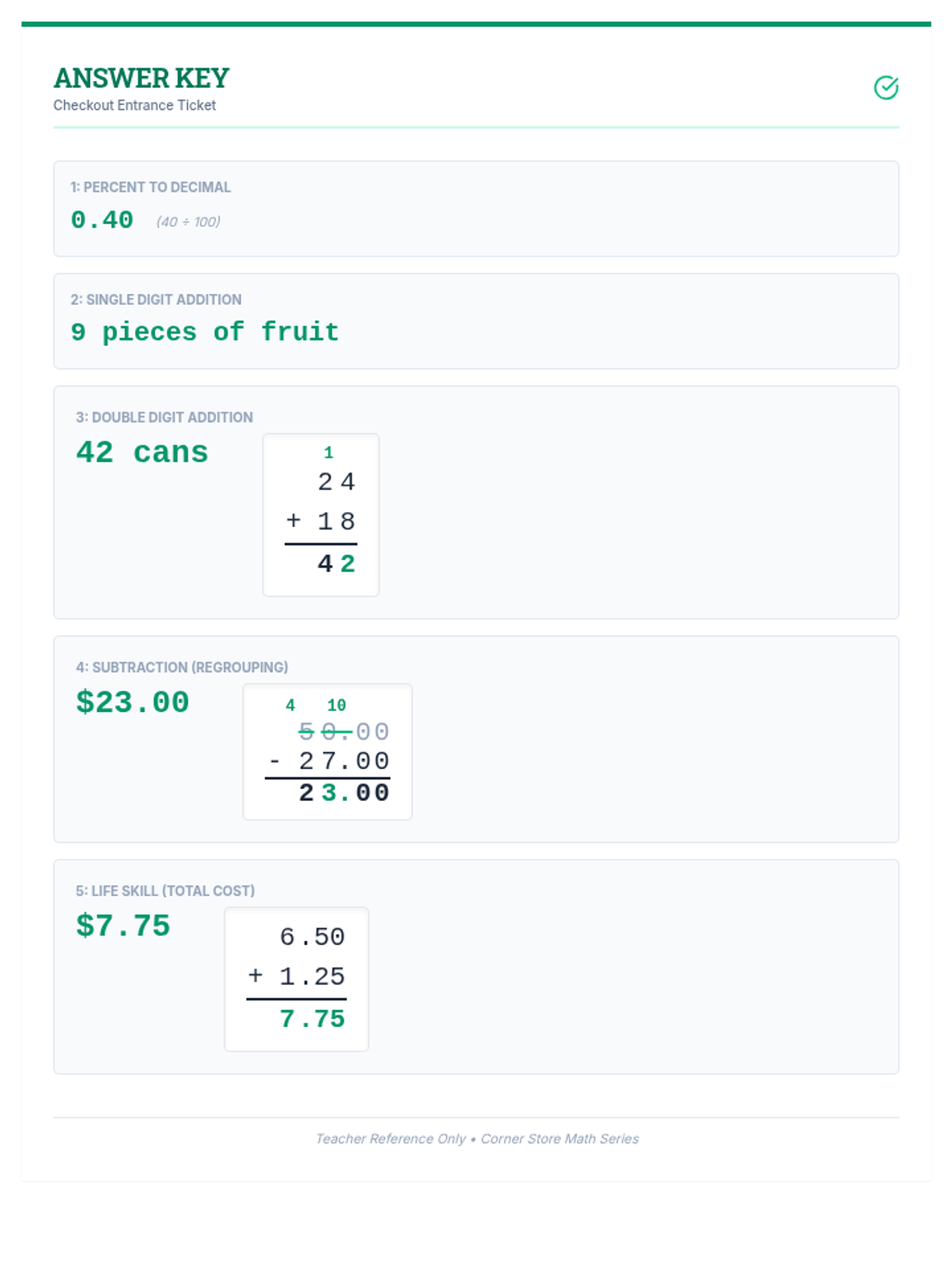
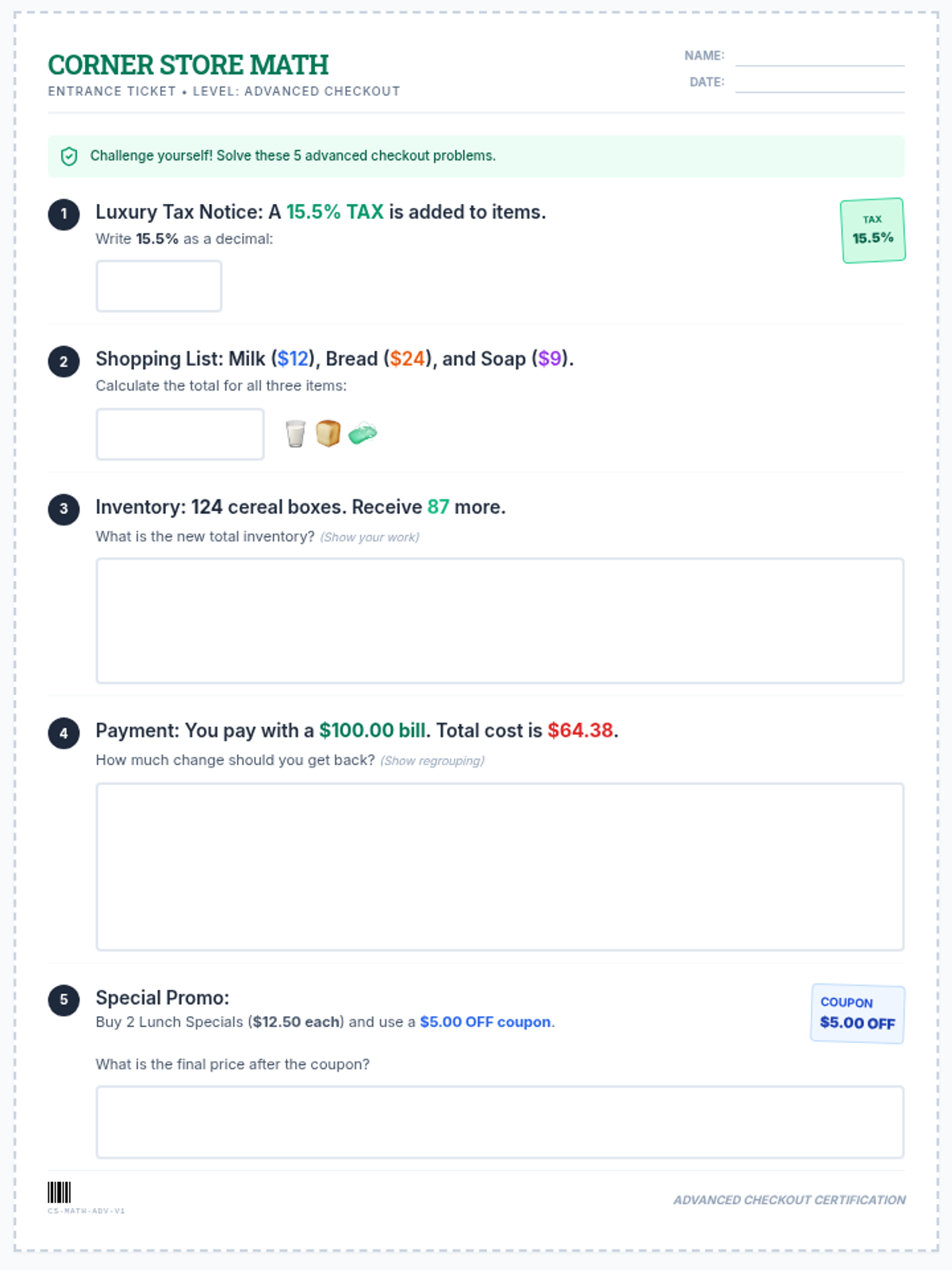
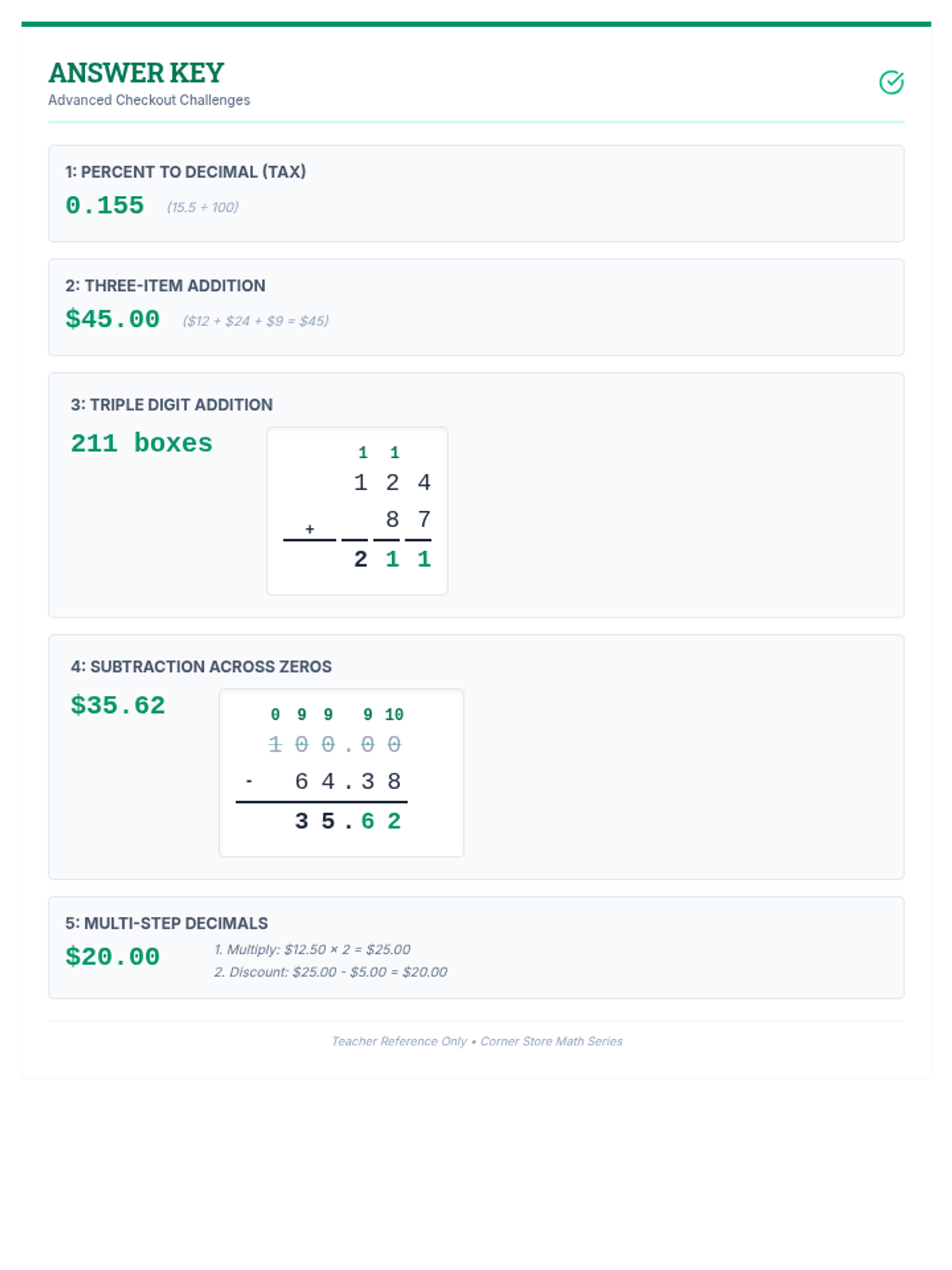
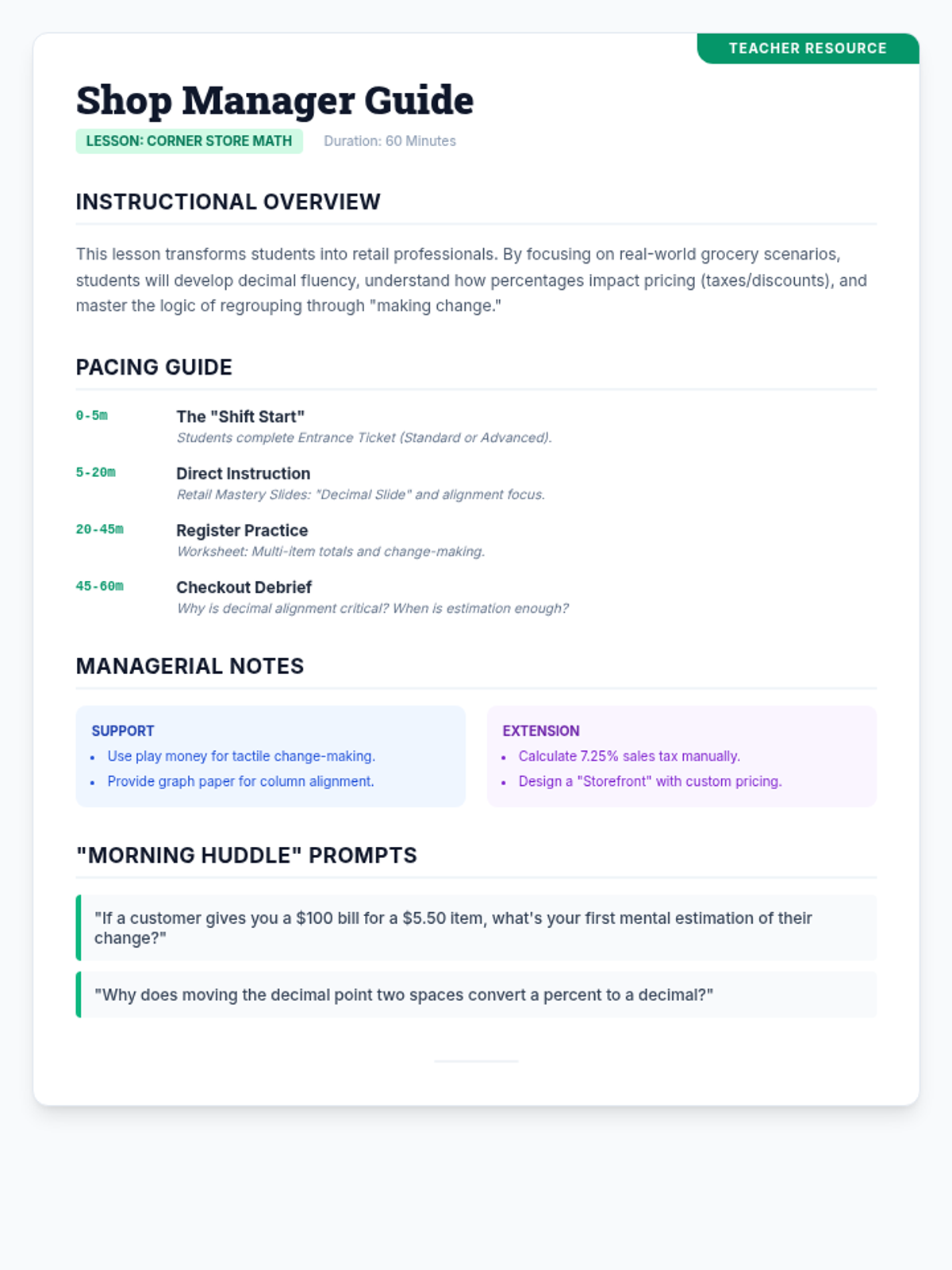
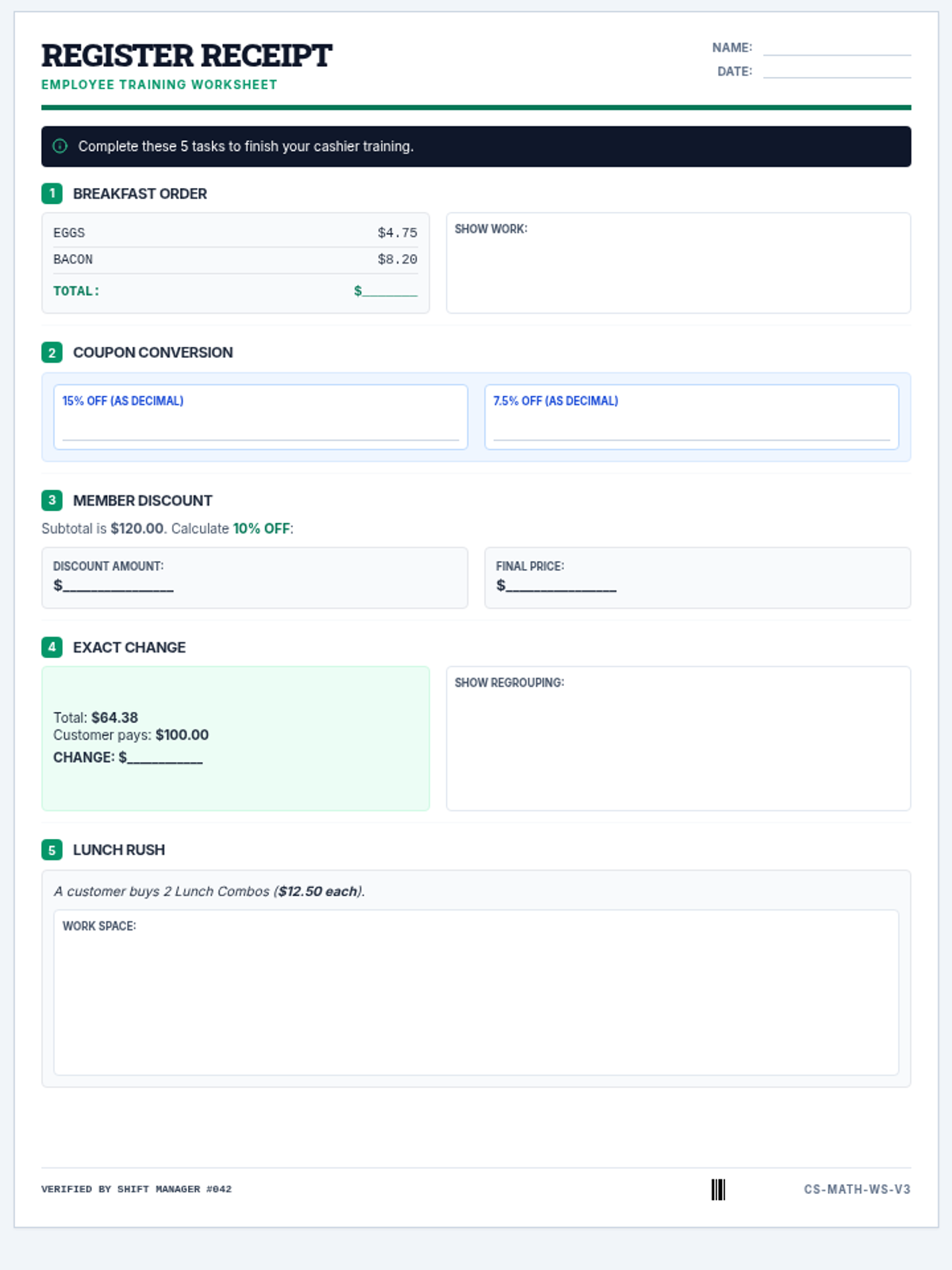
This lesson focuses on practical math applications in a retail setting, covering decimals, percentages, and basic arithmetic with a focus on money management.
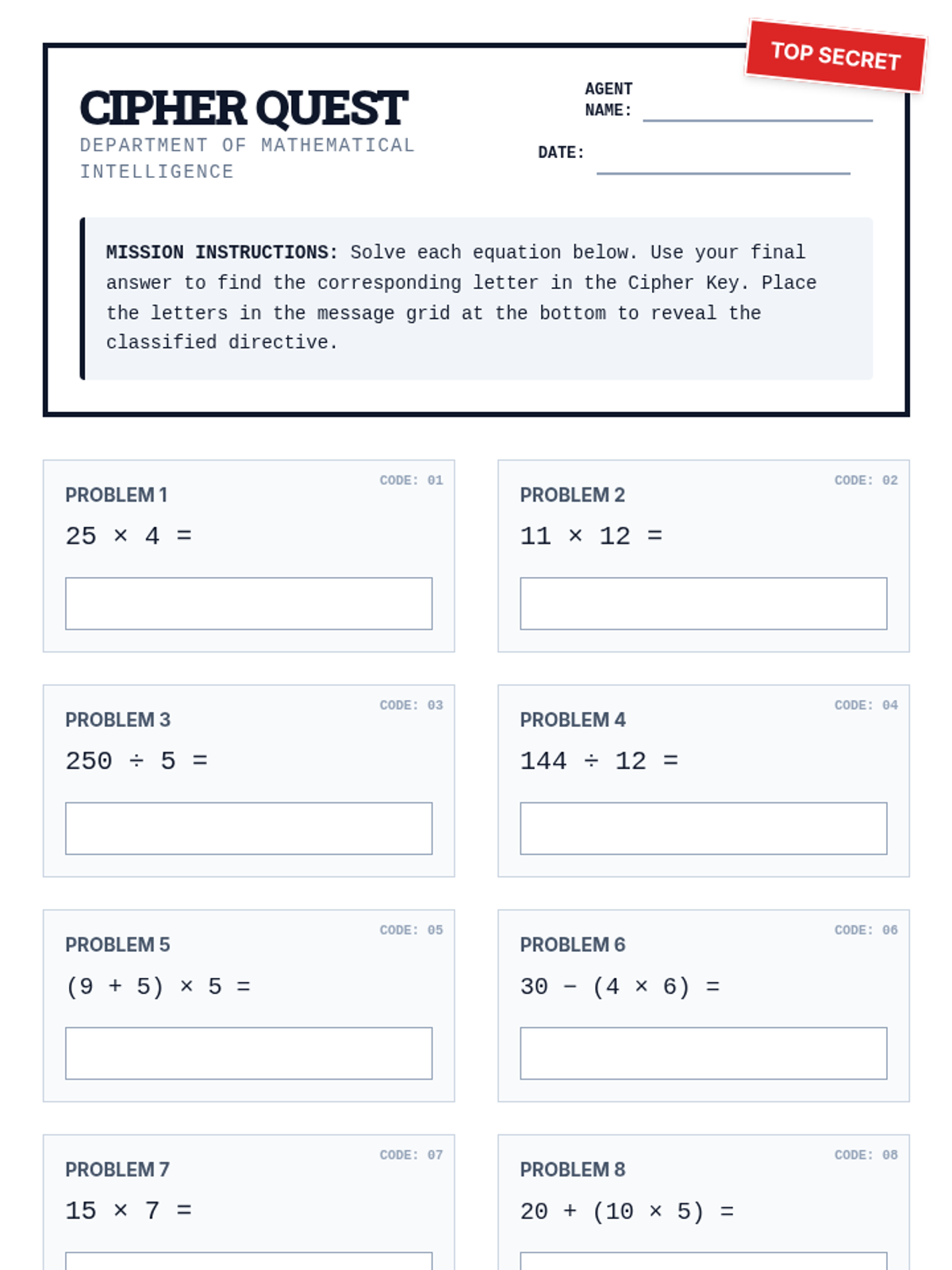
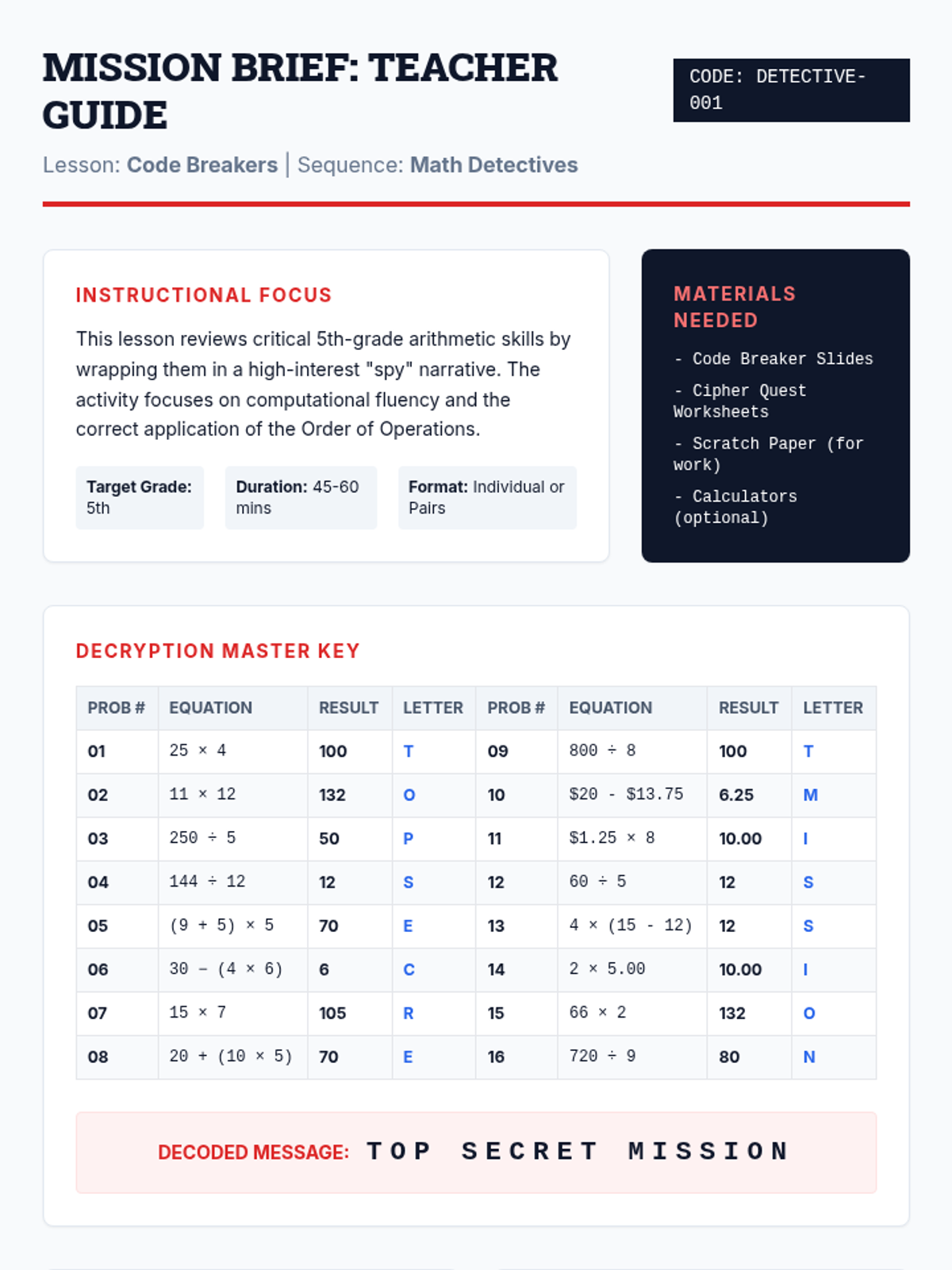
An engaging introduction to multi-digit multiplication, division, and order of operations through a spy-themed decoding challenge. Students act as 'Math Detectives' to solve a series of problems and reveal a hidden message.
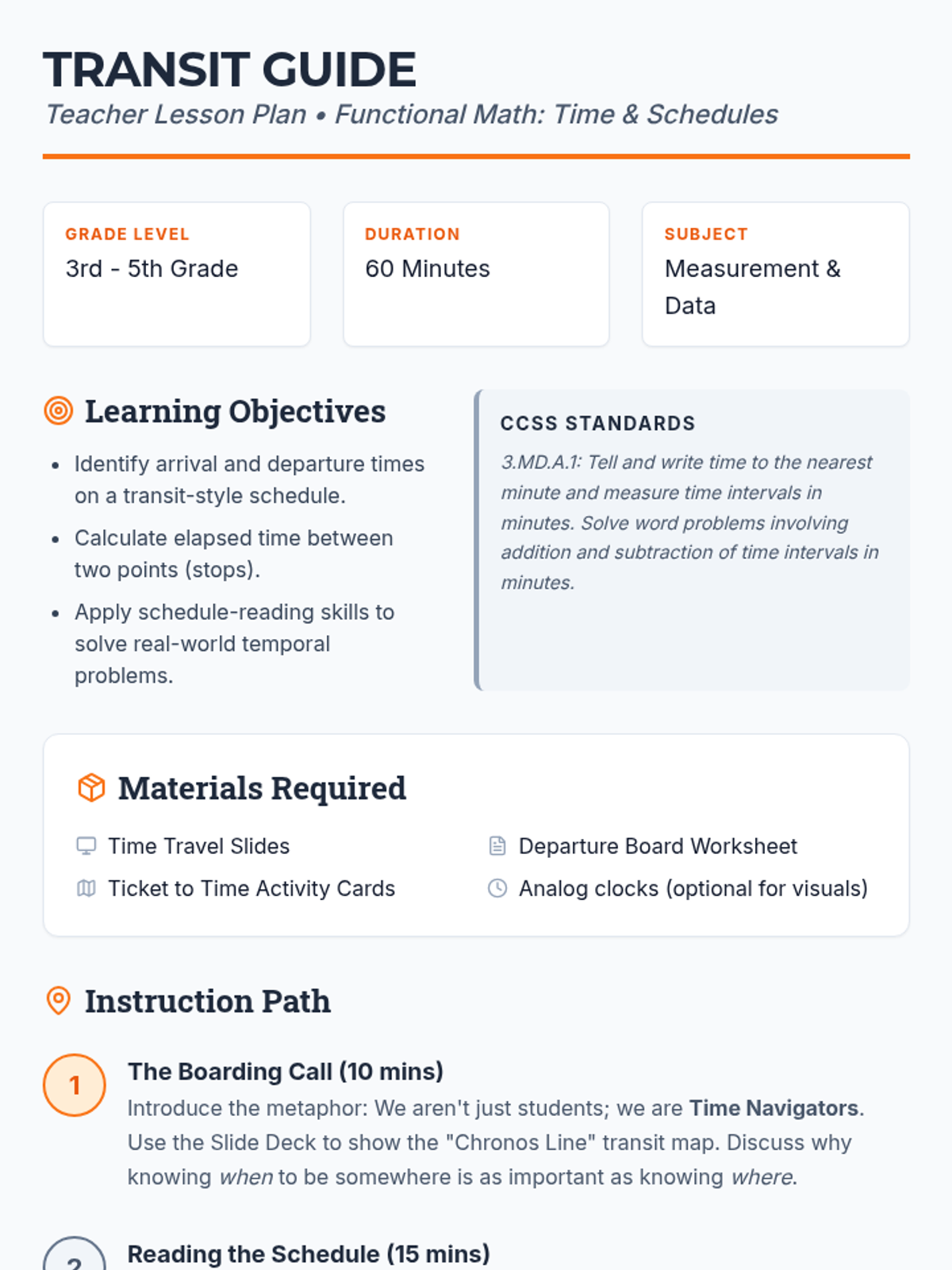
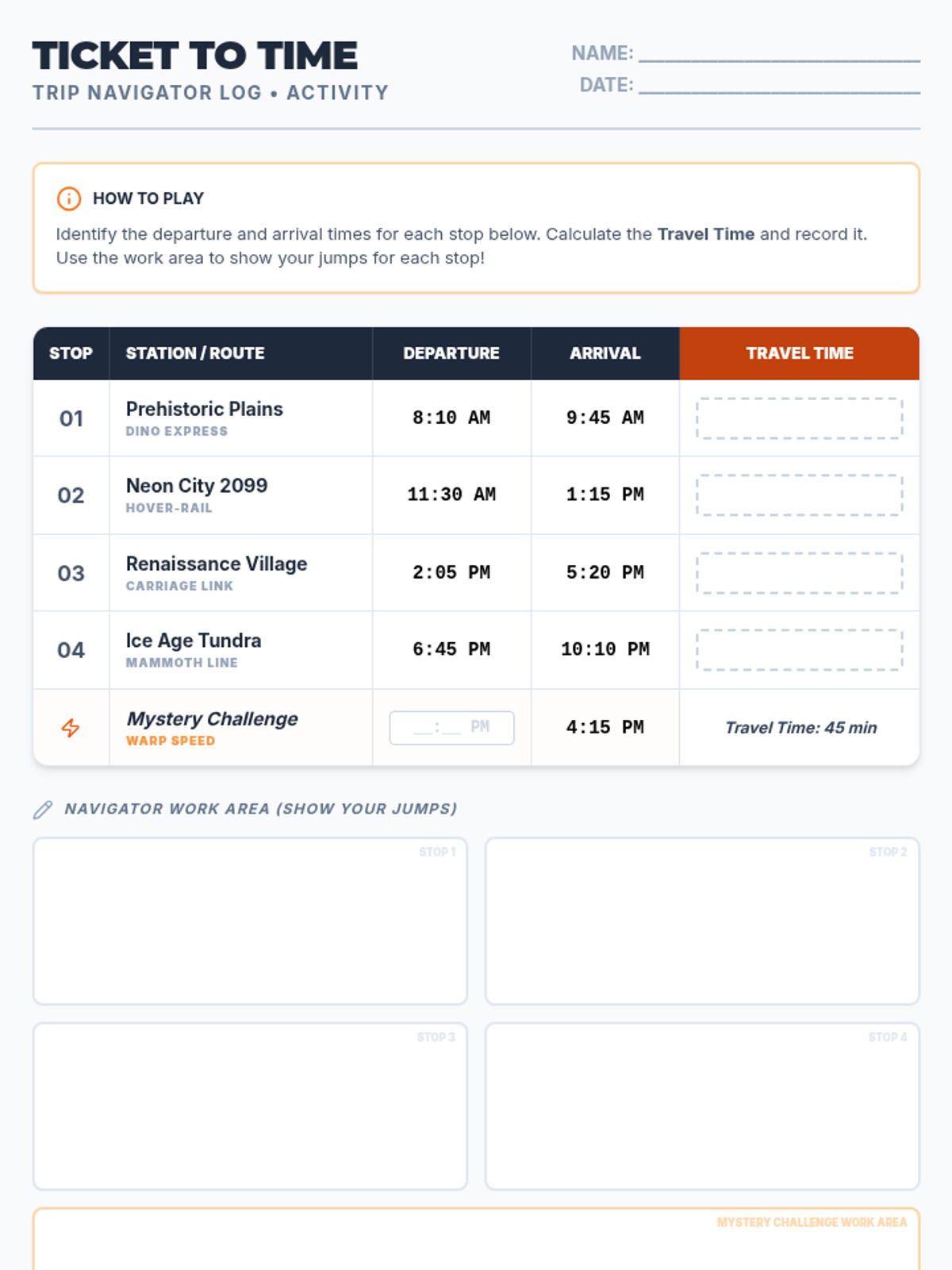
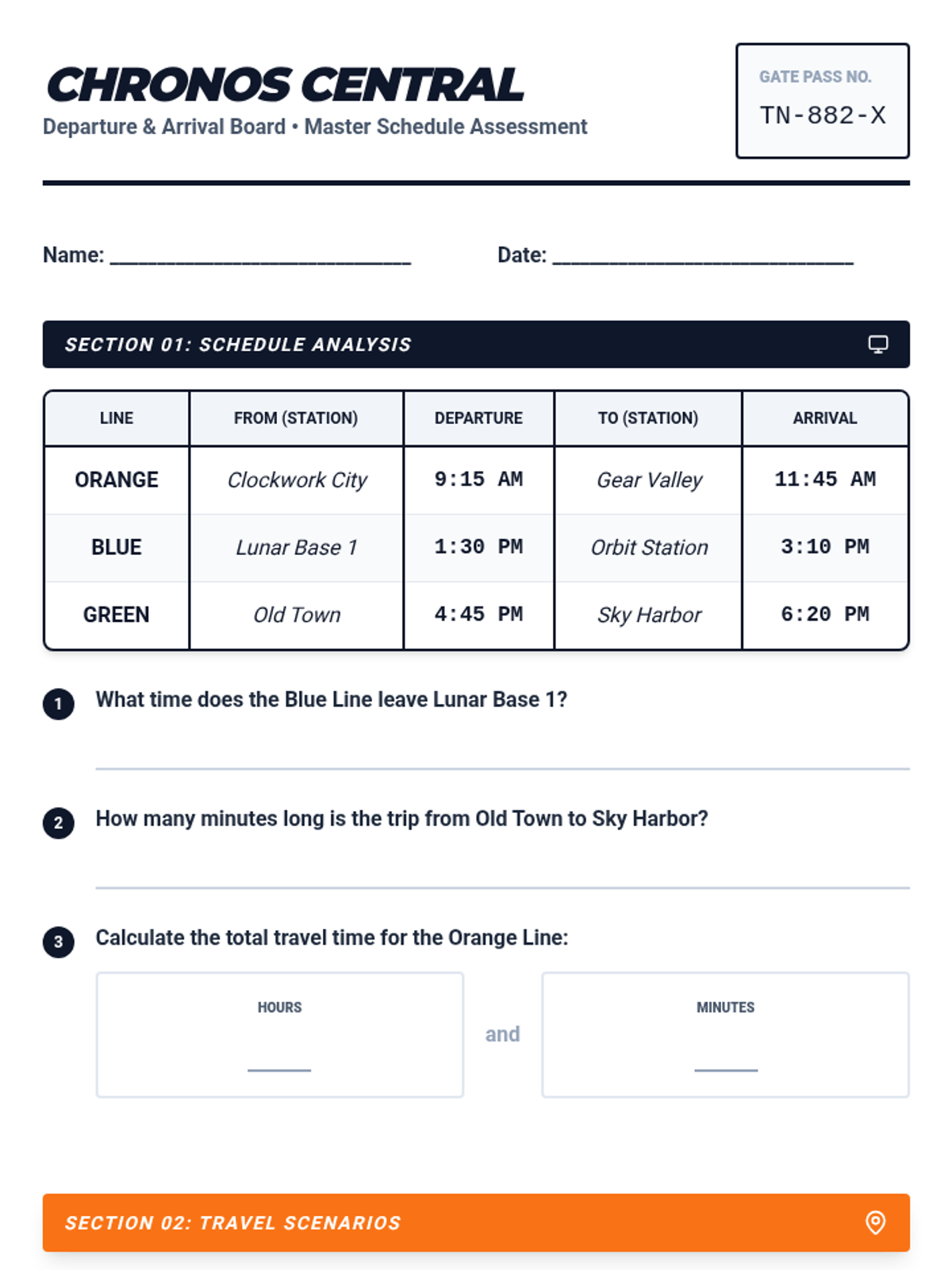
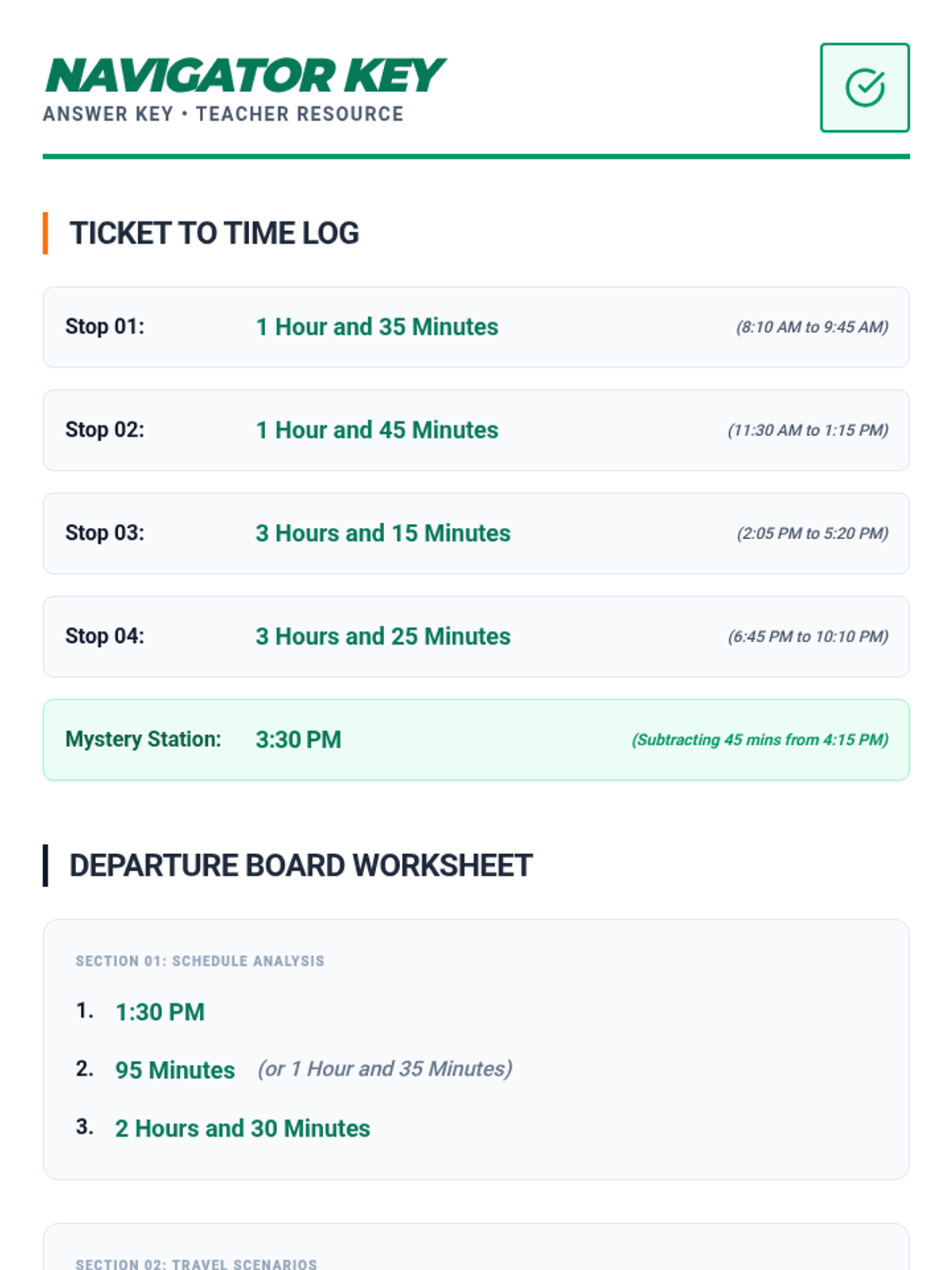
A functional math lesson using a transit map metaphor to teach students how to read schedules and calculate elapsed time, designed for grades 3-5.
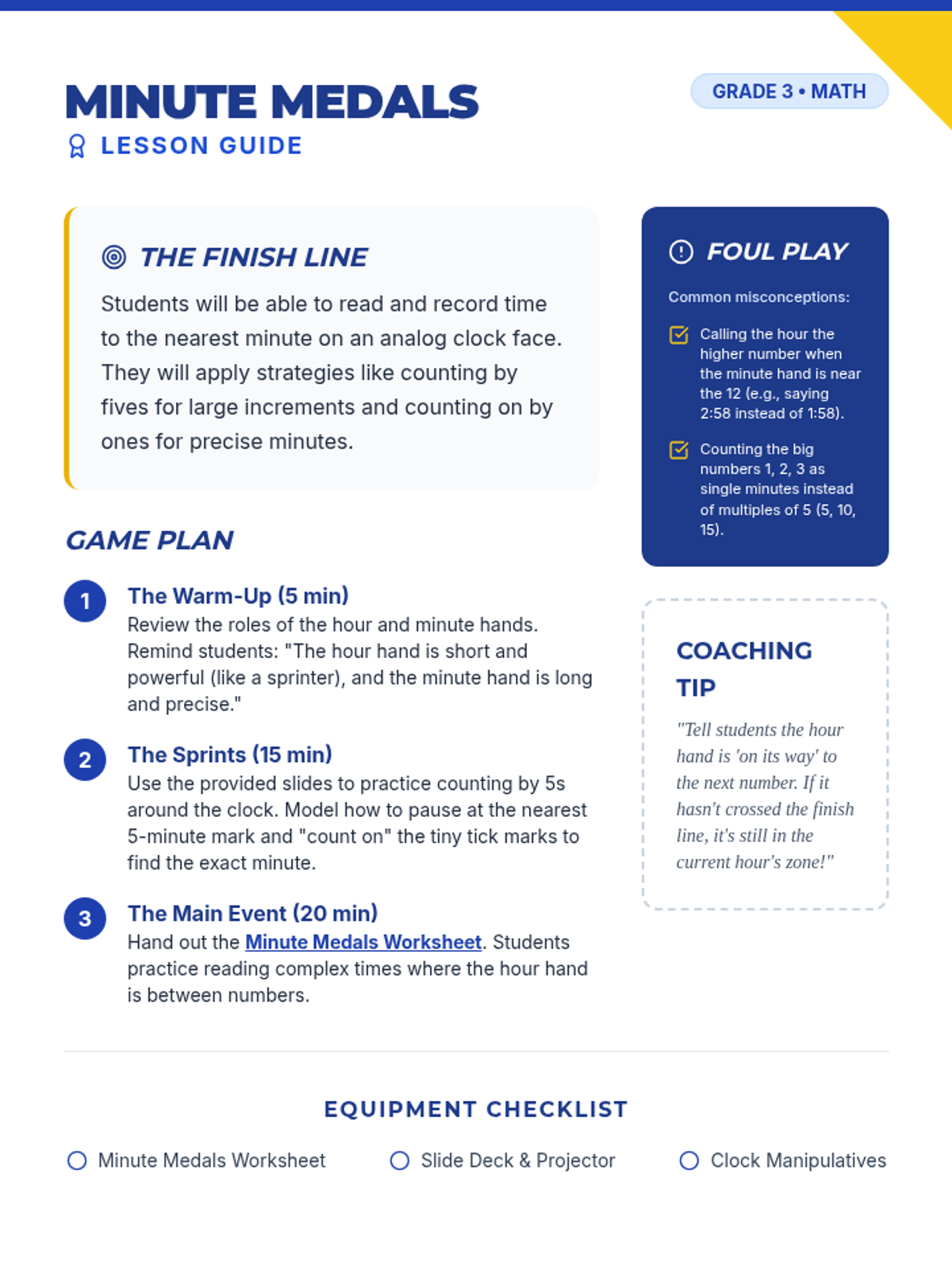
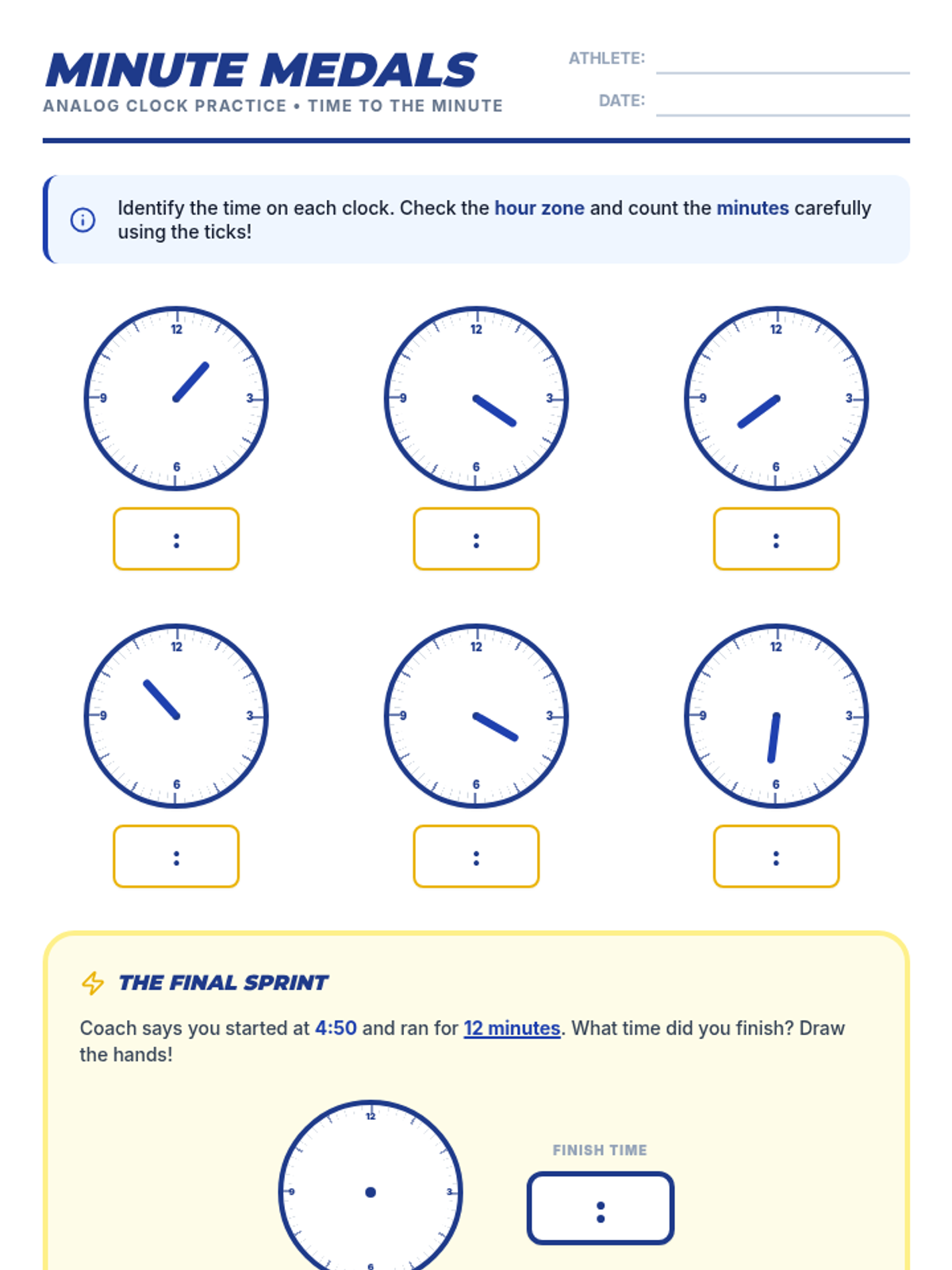
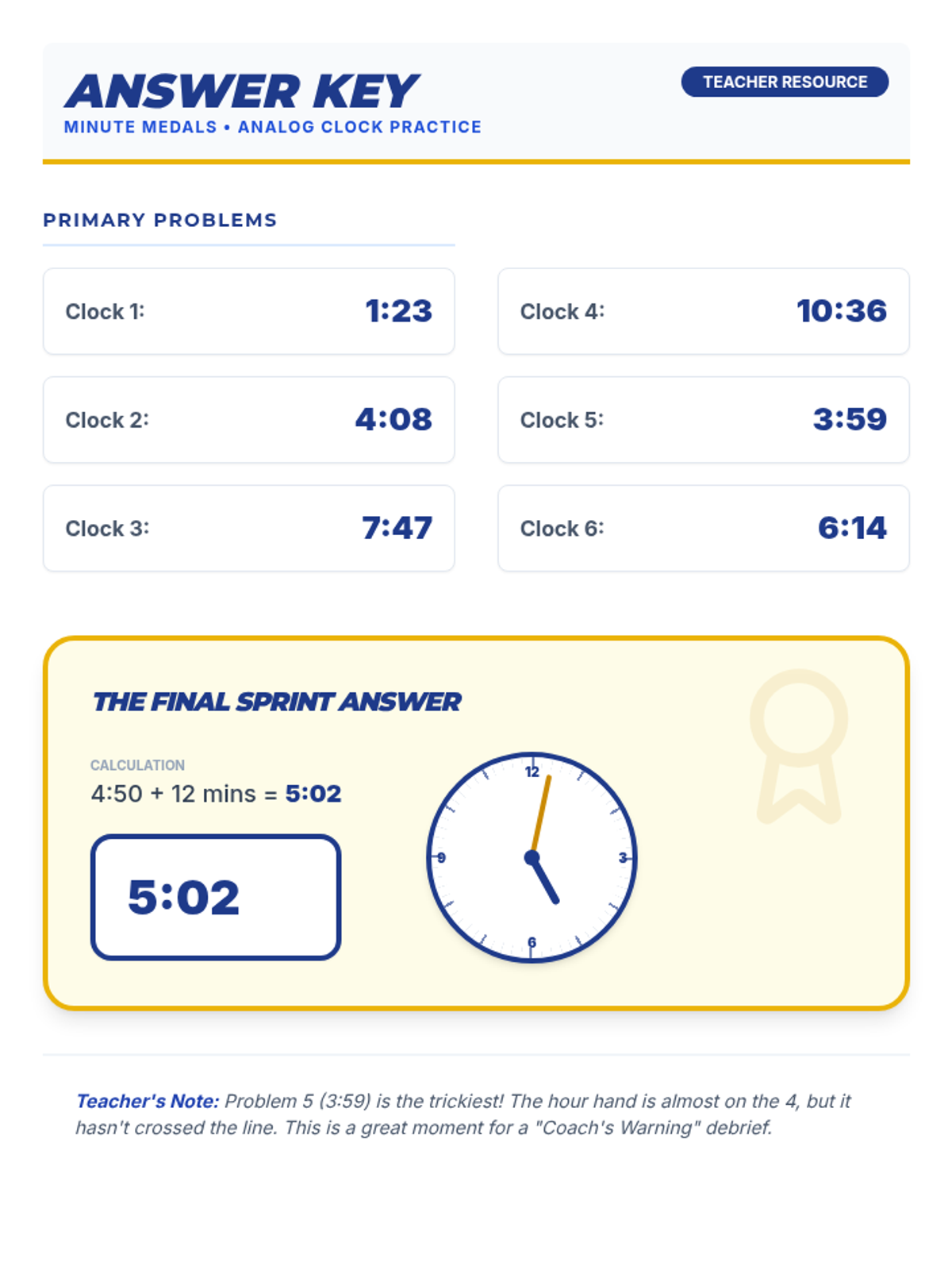
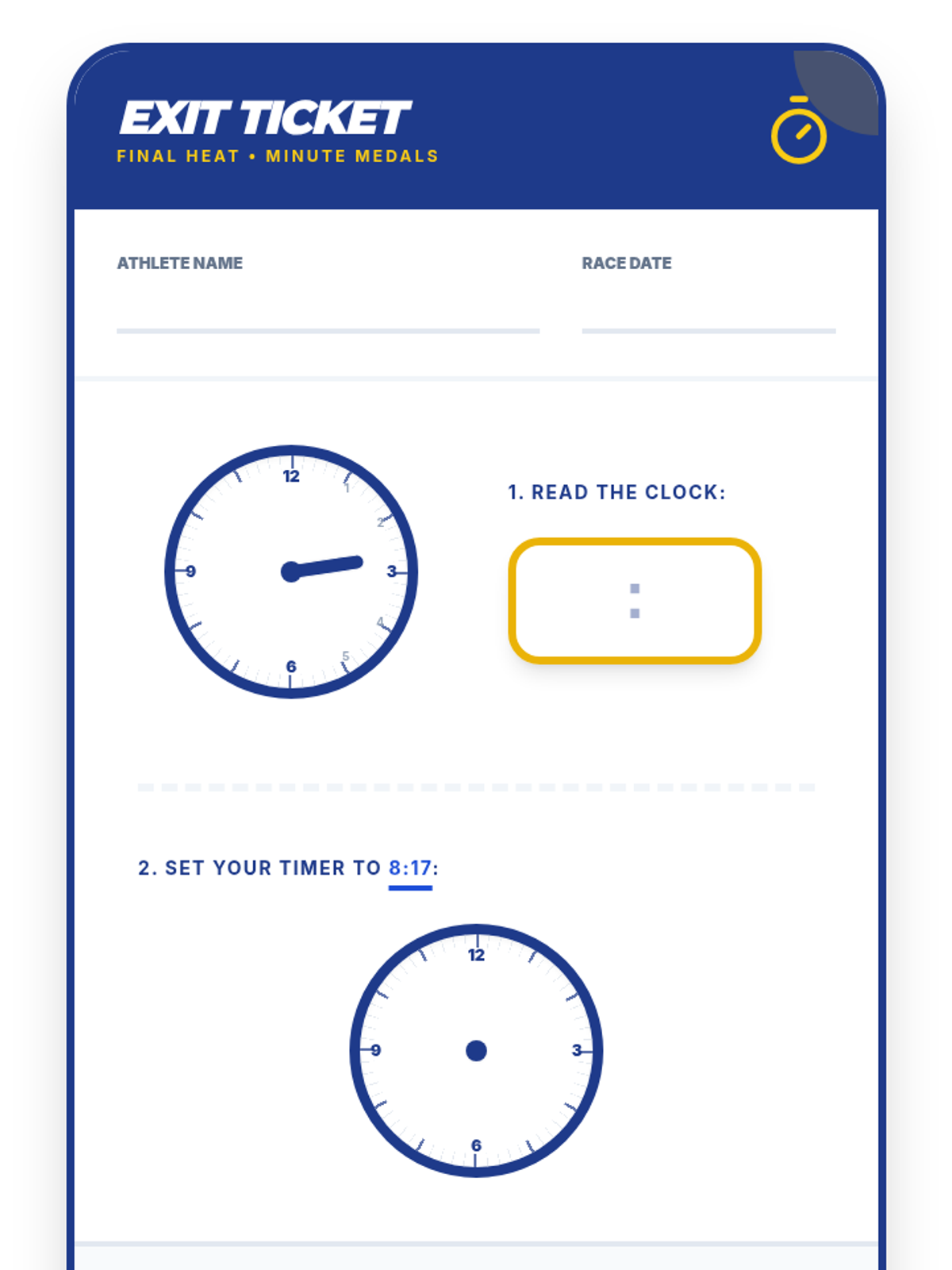
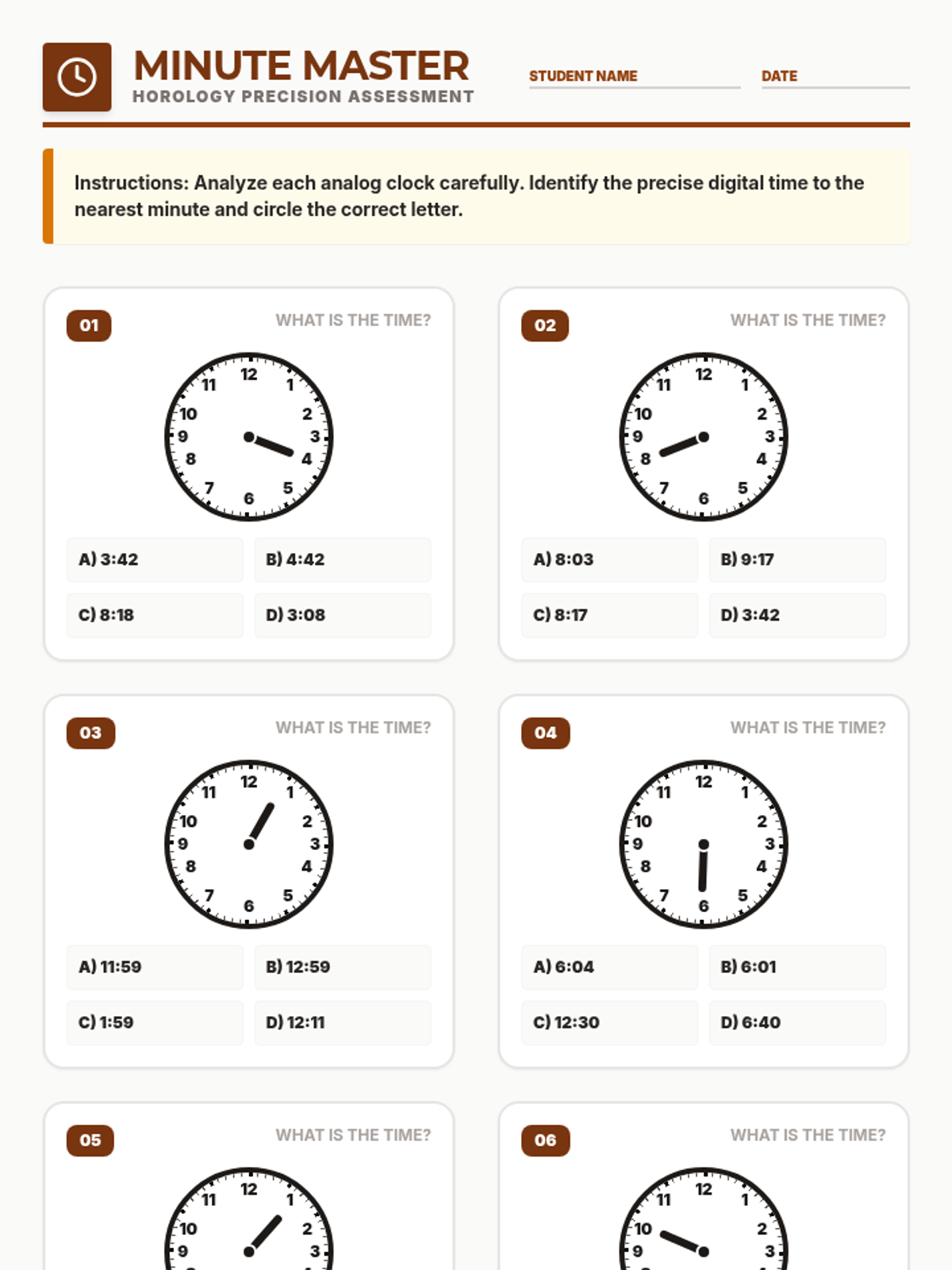
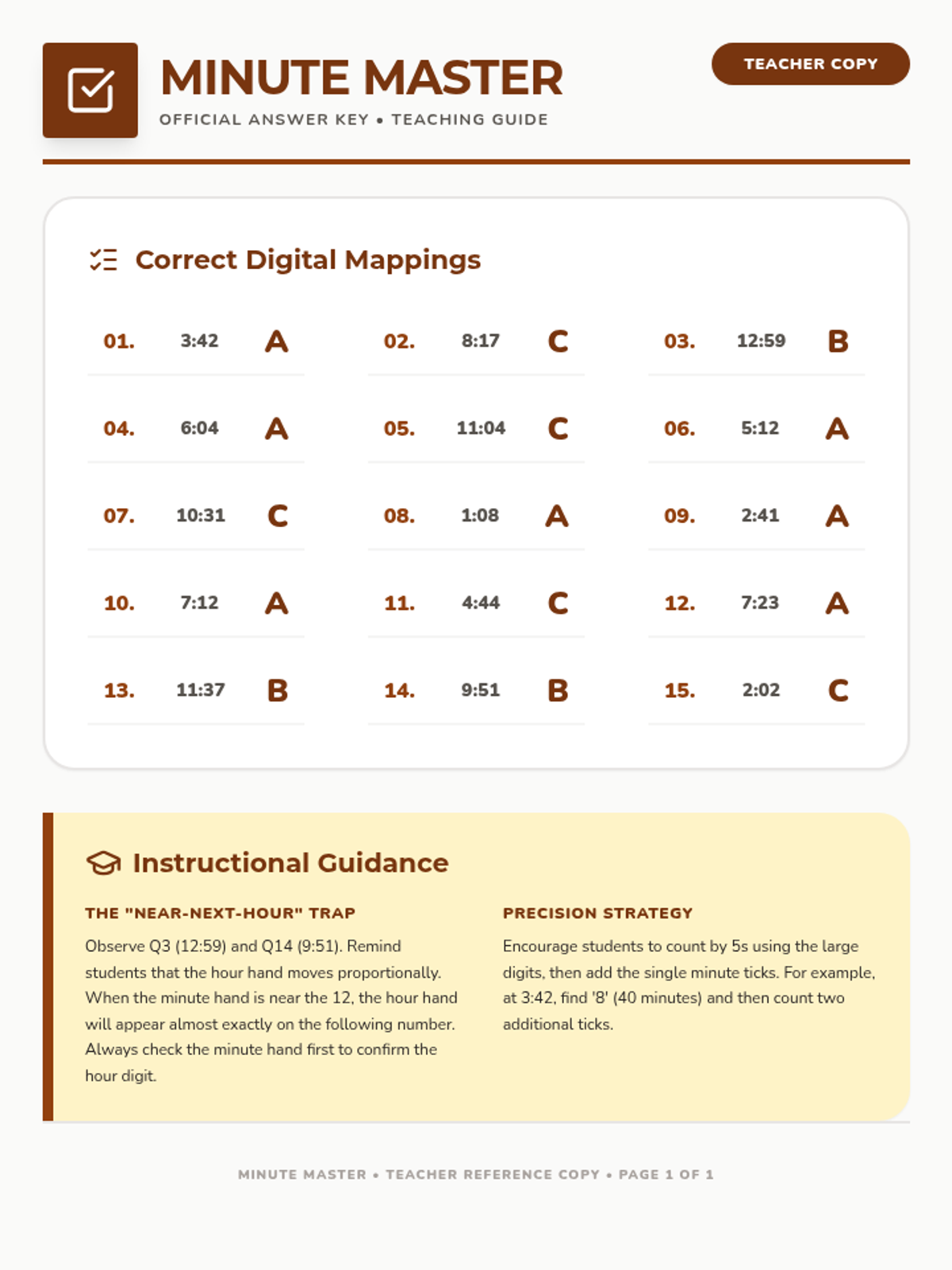
A high-energy, sports-themed lesson focused on mastering the skill of reading analog clocks to the exact minute. Students learn to navigate the clock face like a track, using landmarks and counting on to reach the finish line.
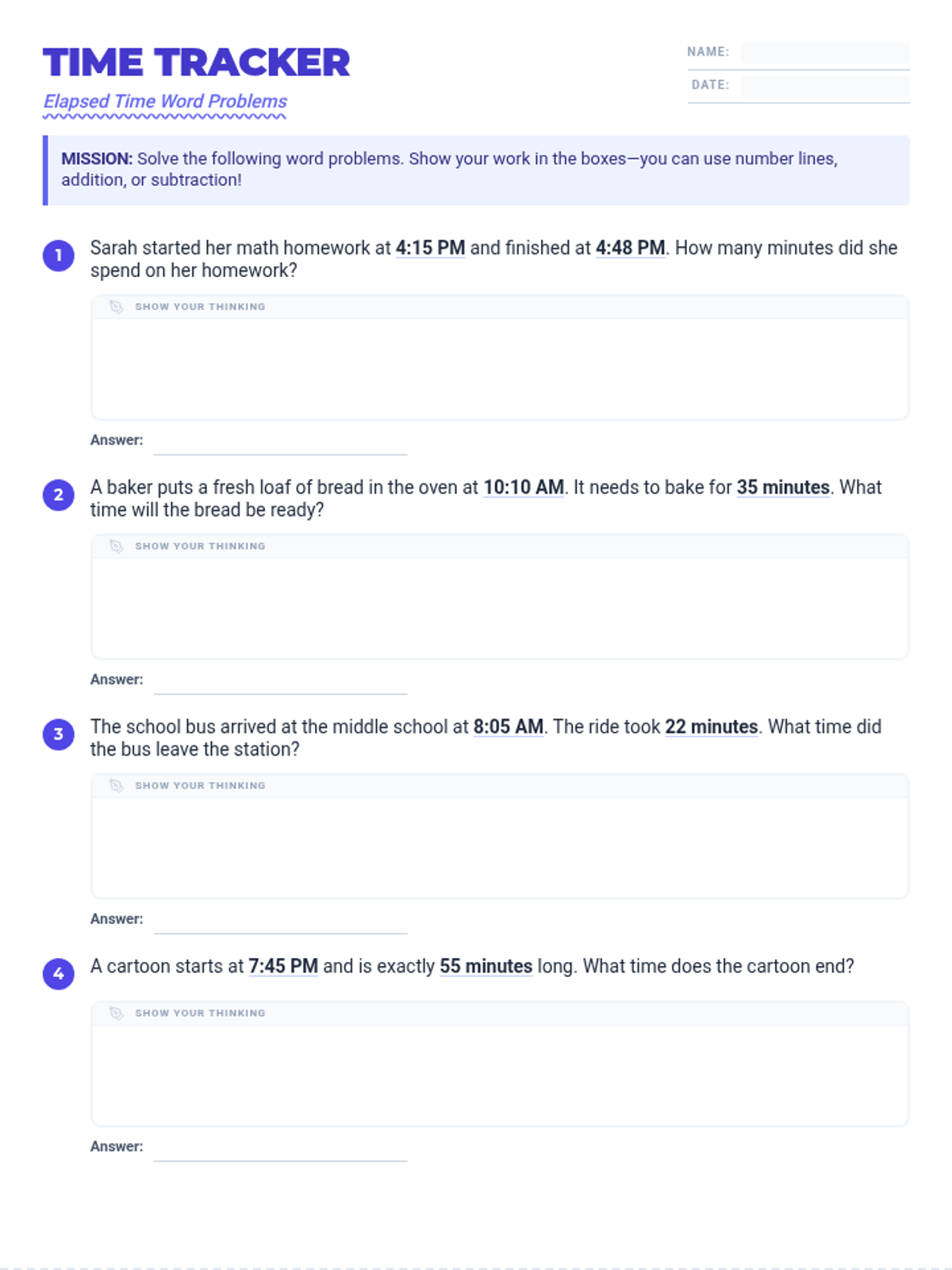
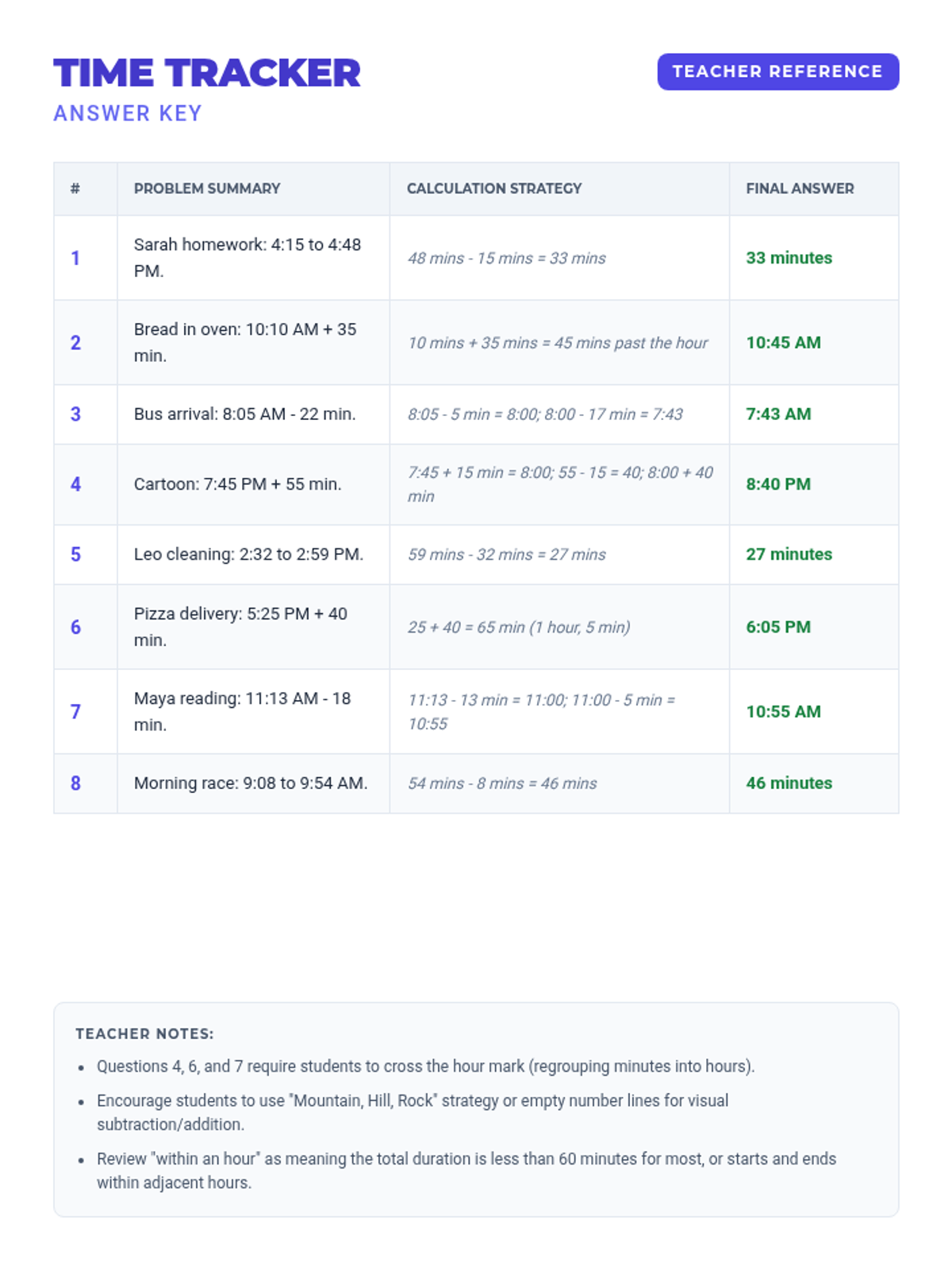
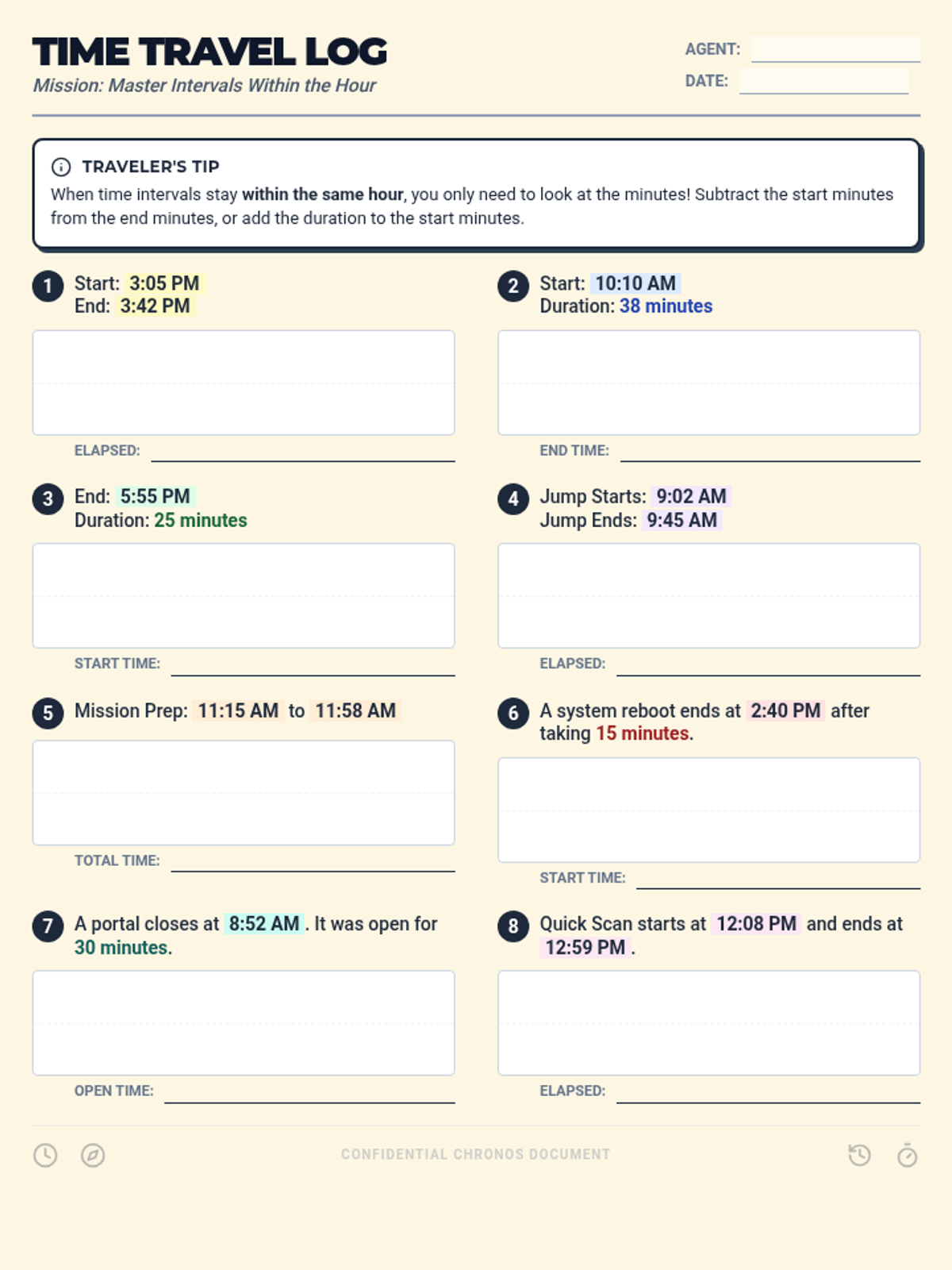
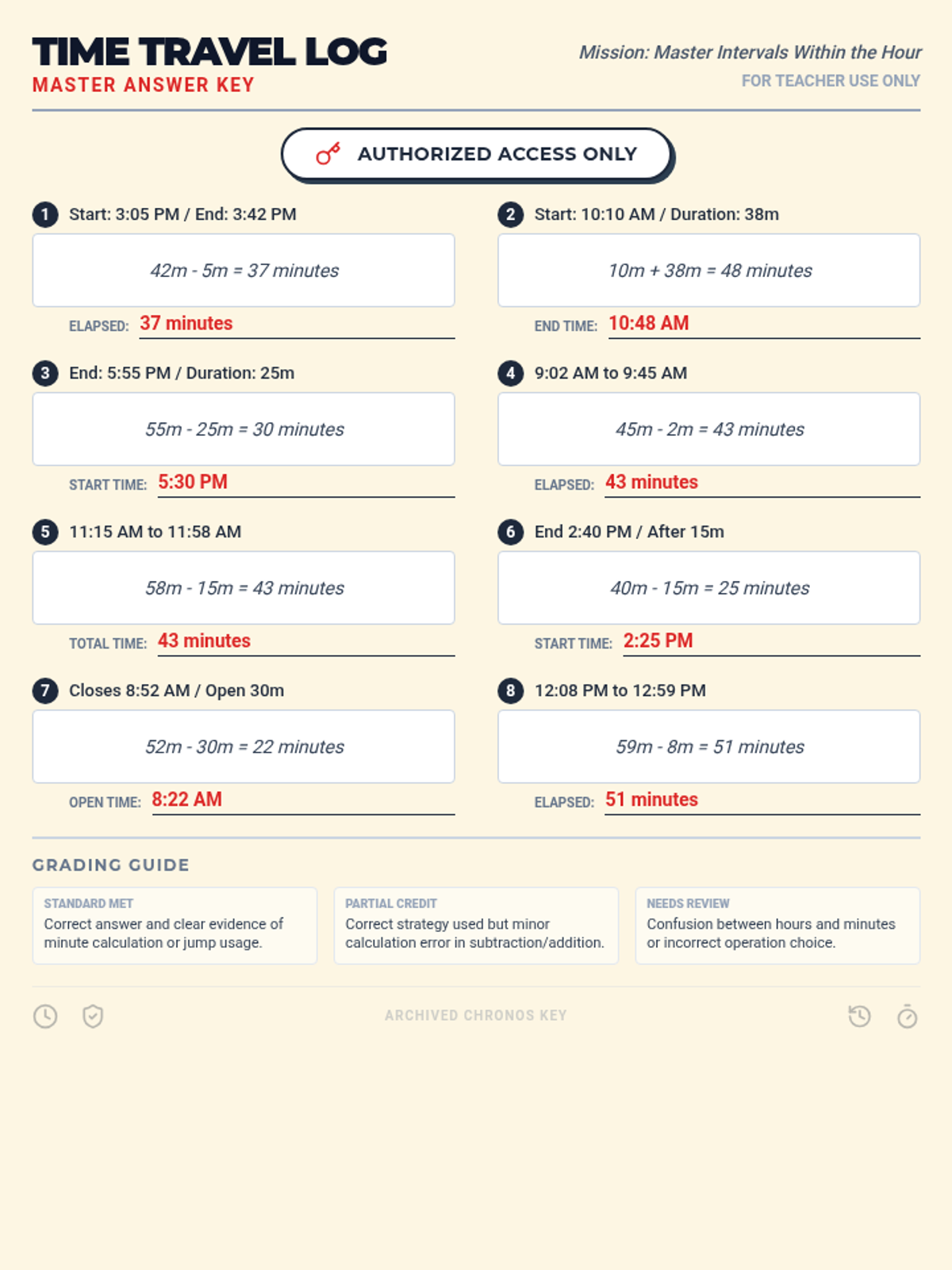
A practice-focused lesson on calculating elapsed time within a single hour, including word problems that cover finding start times, end times, and durations.
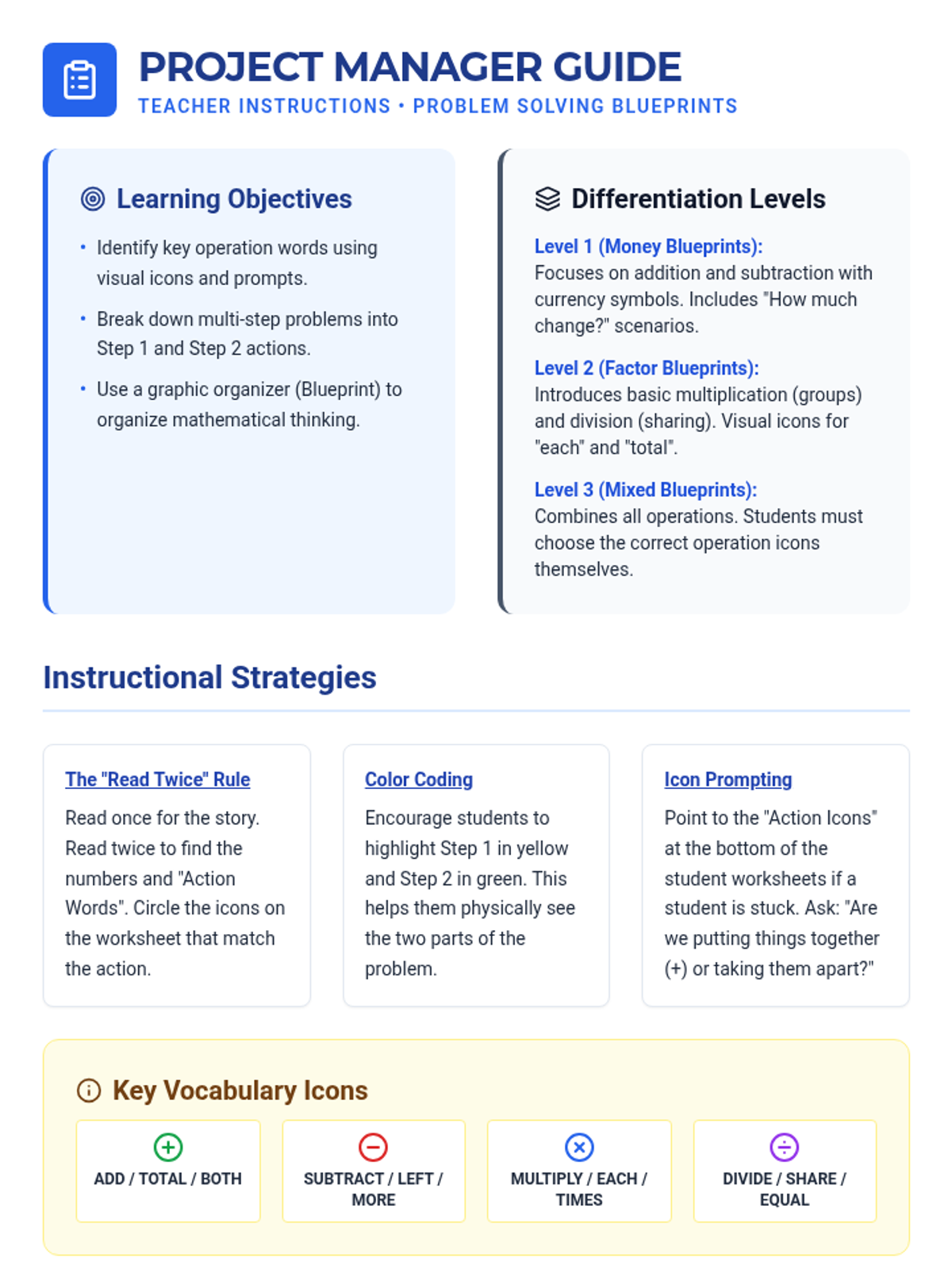
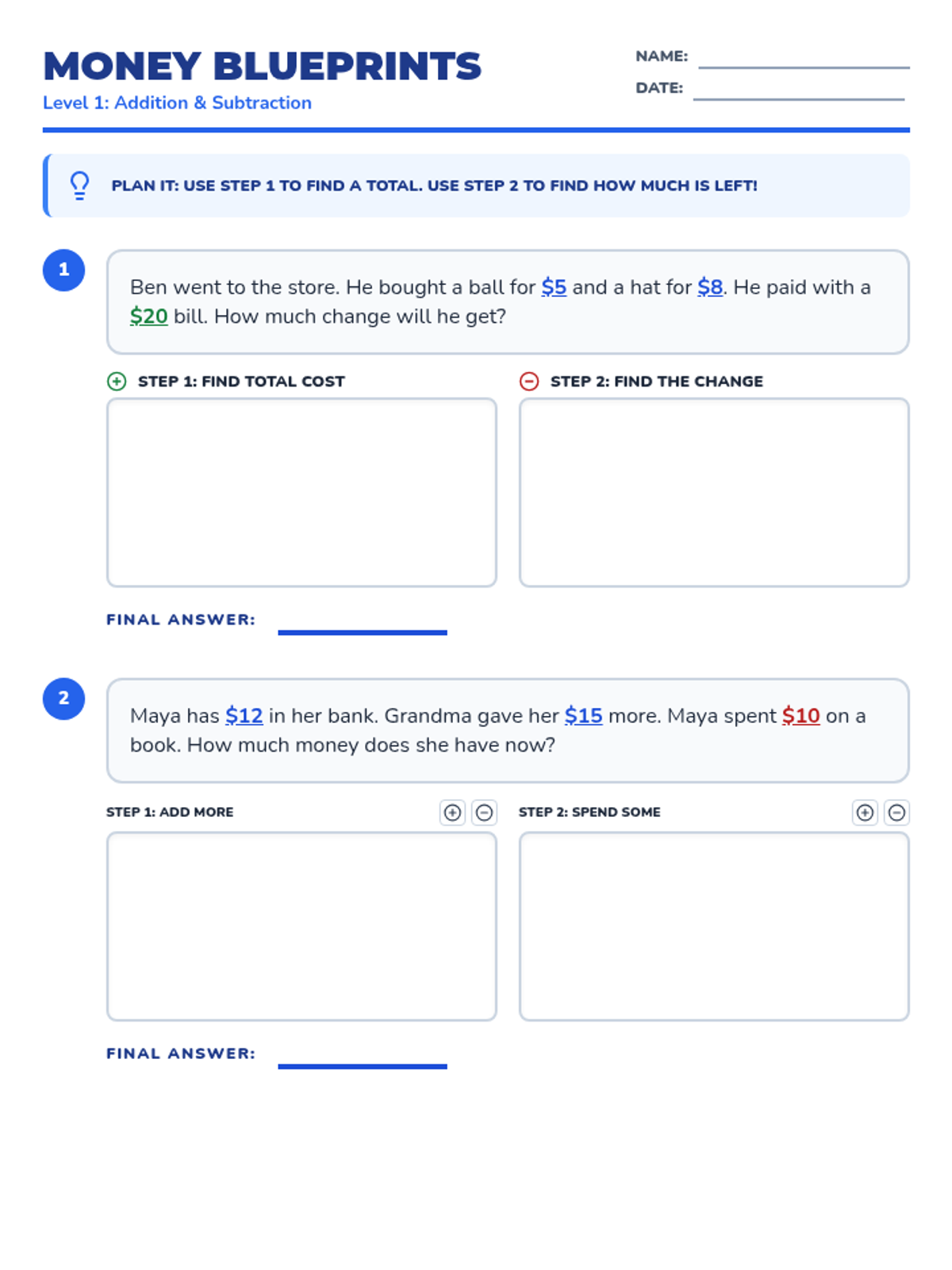
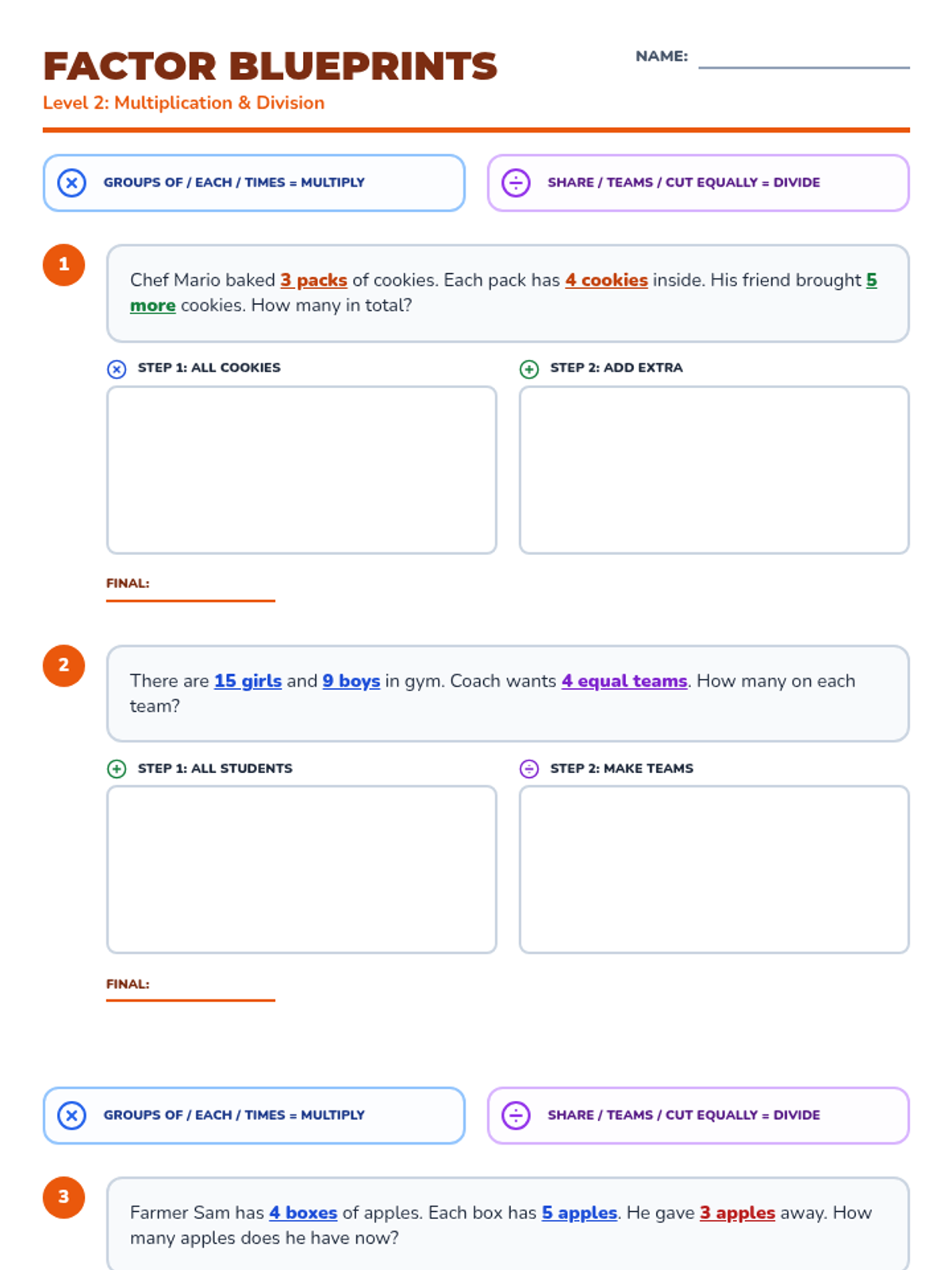
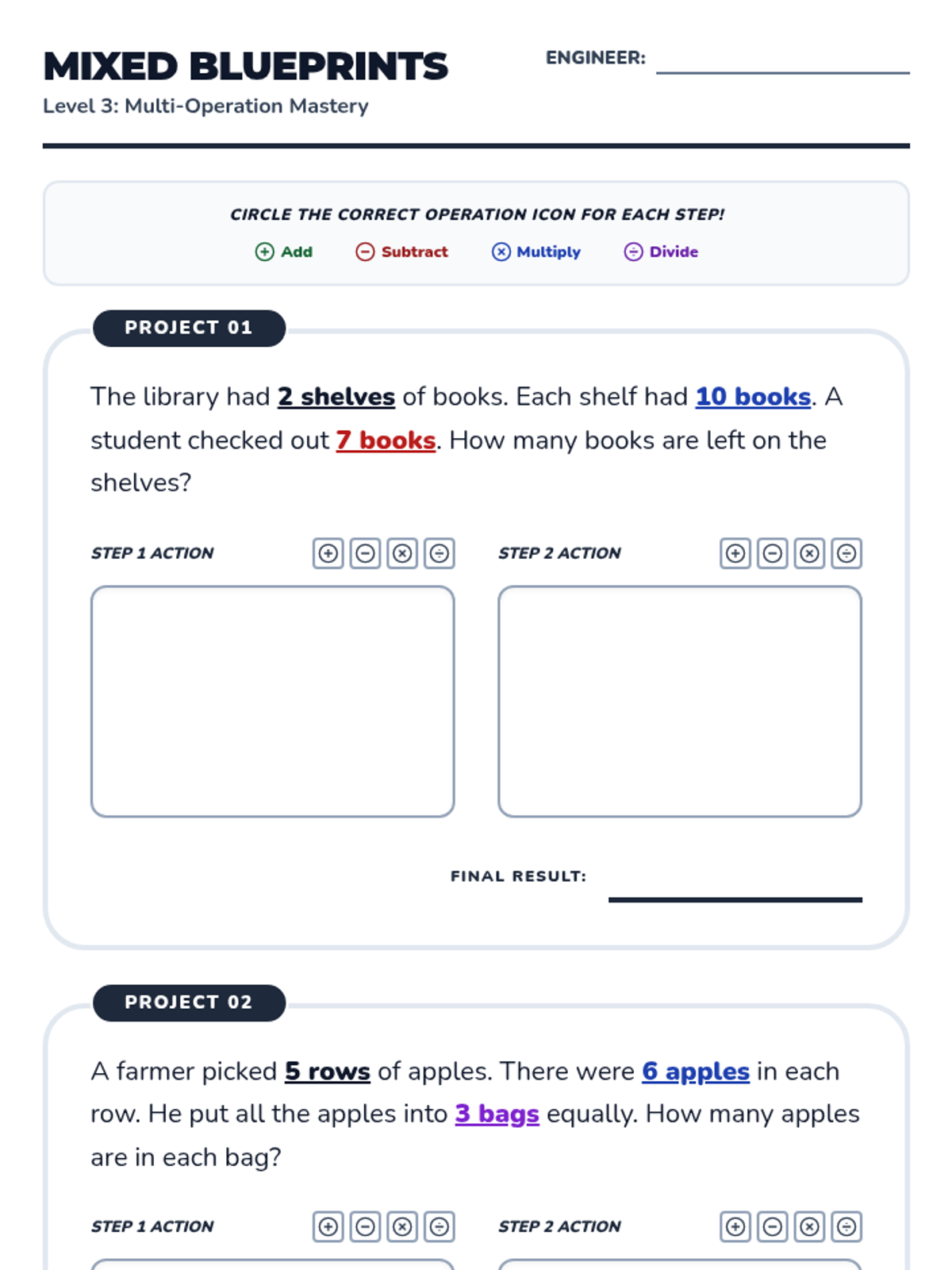
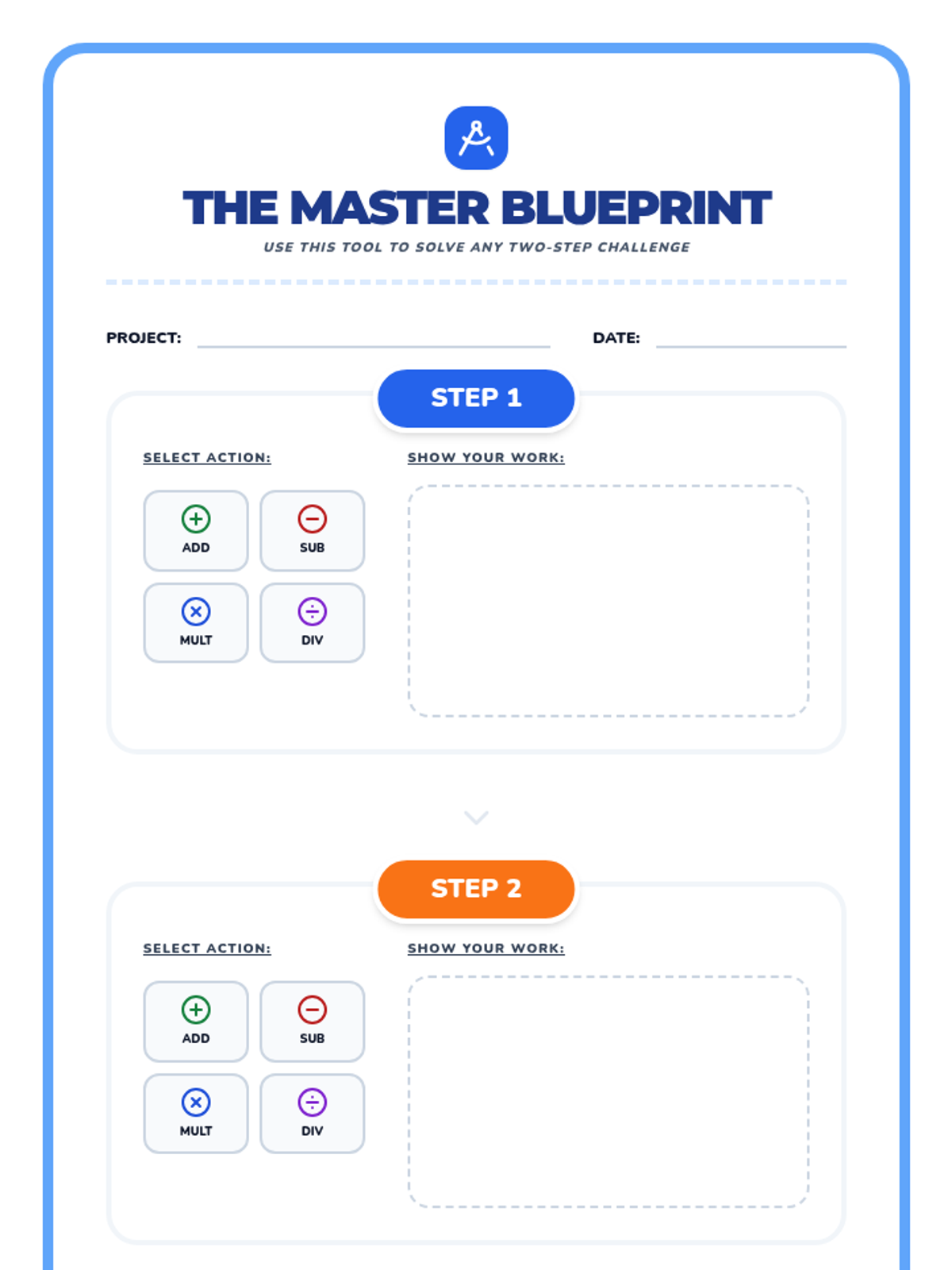
This lesson introduces students to multi-step word problems using a consistent graphic organizer (the Blueprint). It includes differentiated materials for various skill levels and operational focuses.
A lesson focused on solving word problems involving addition and subtraction of time intervals within the same hour, using a time-travel theme.
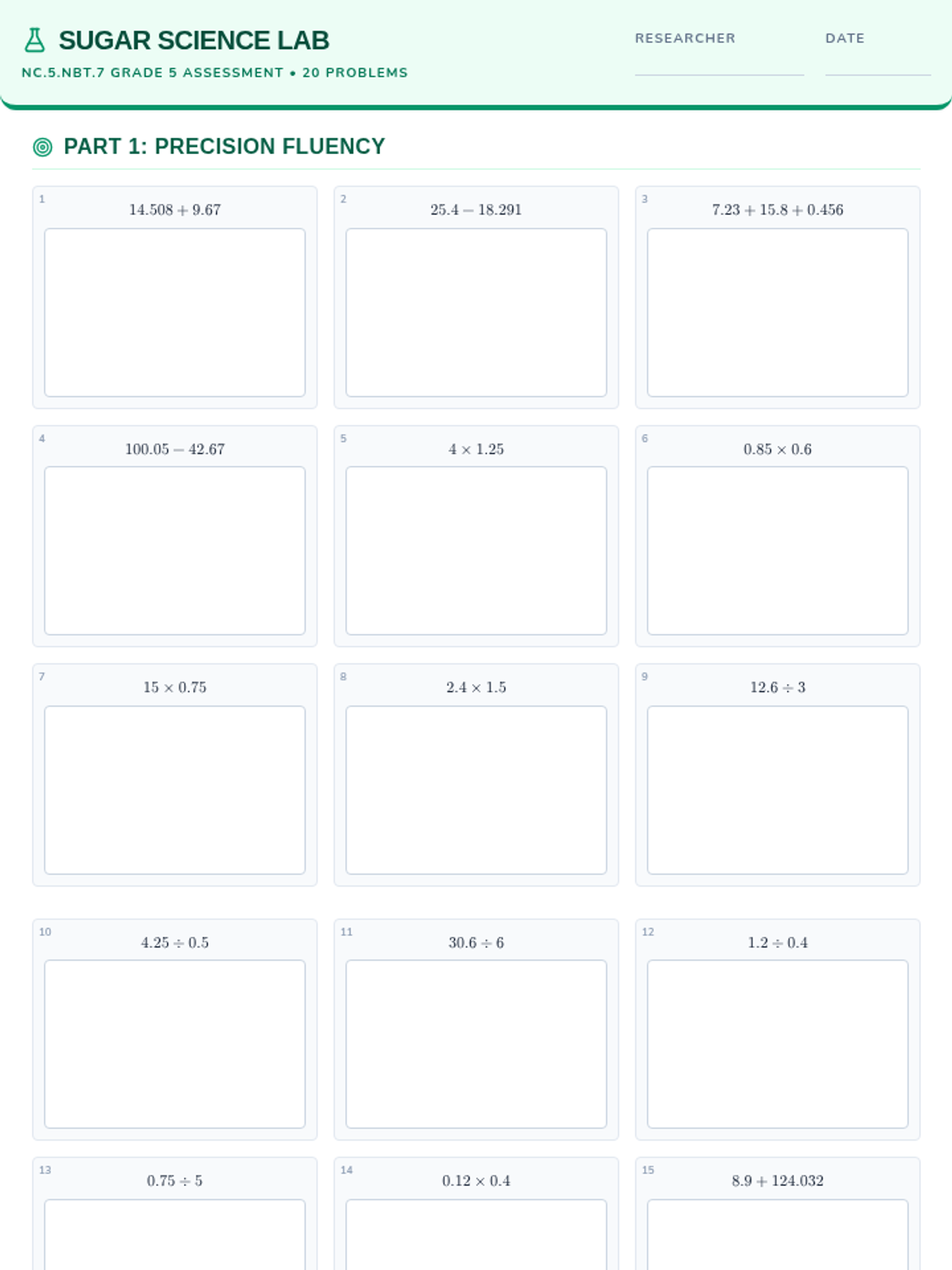
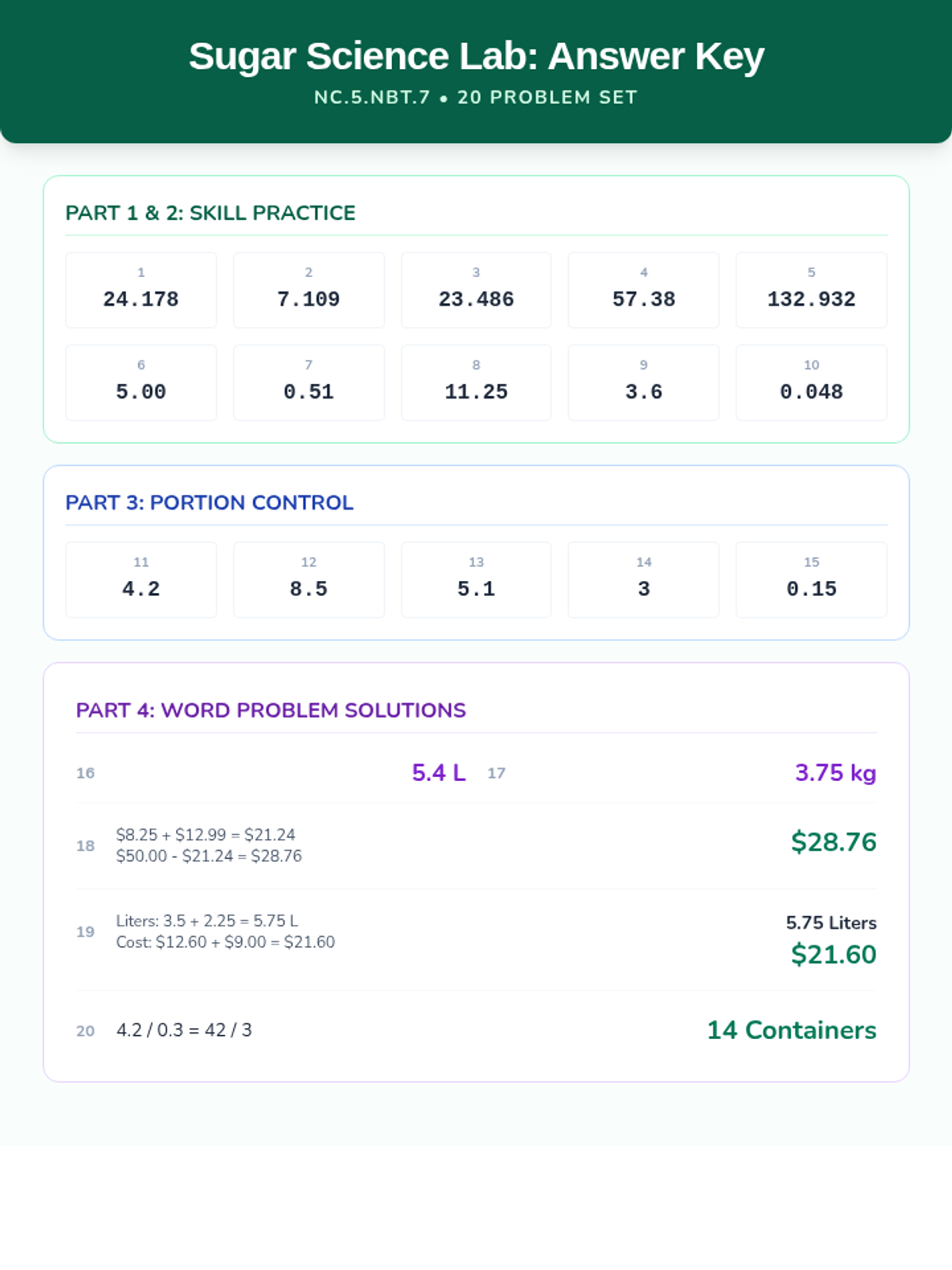
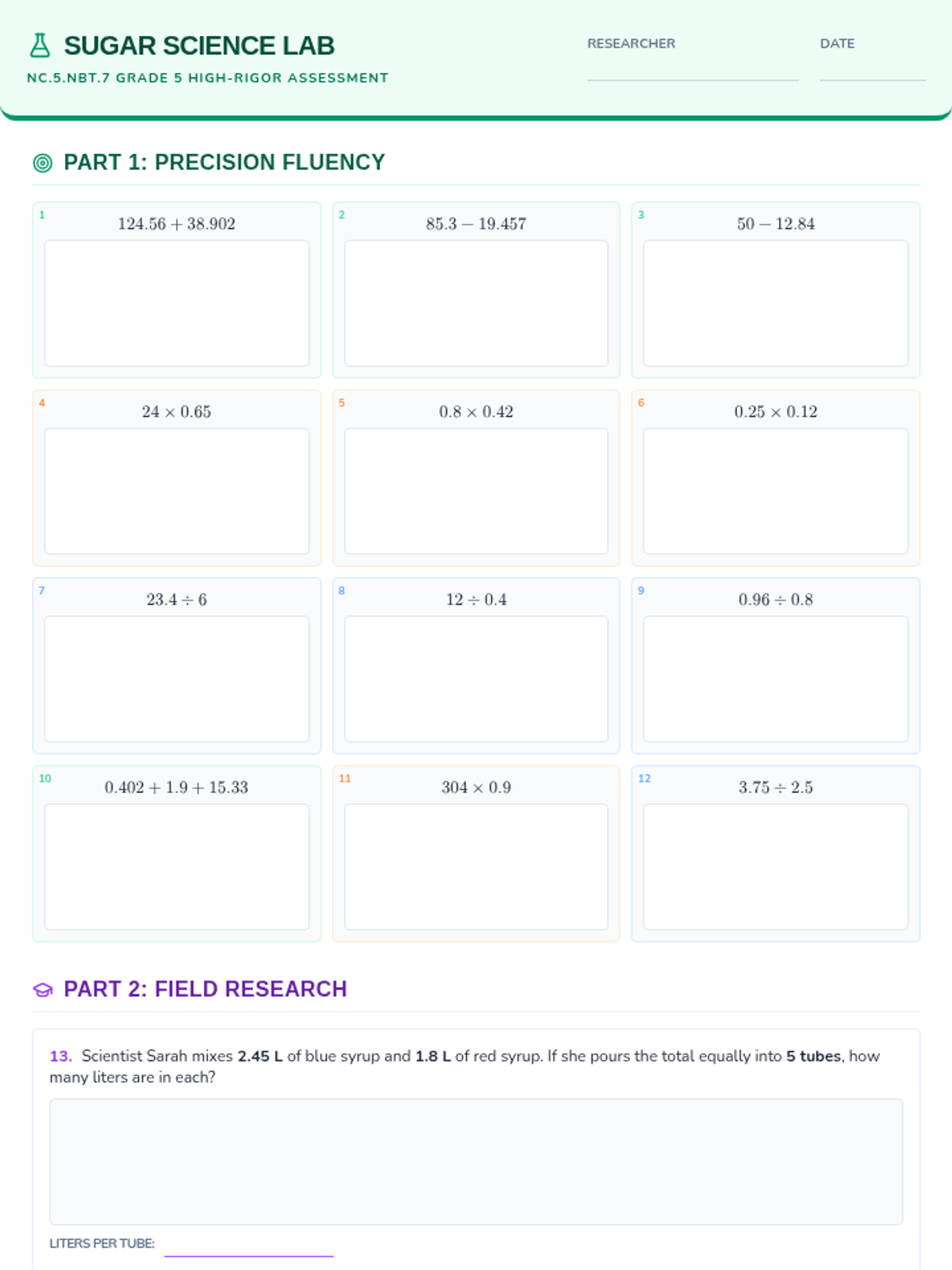
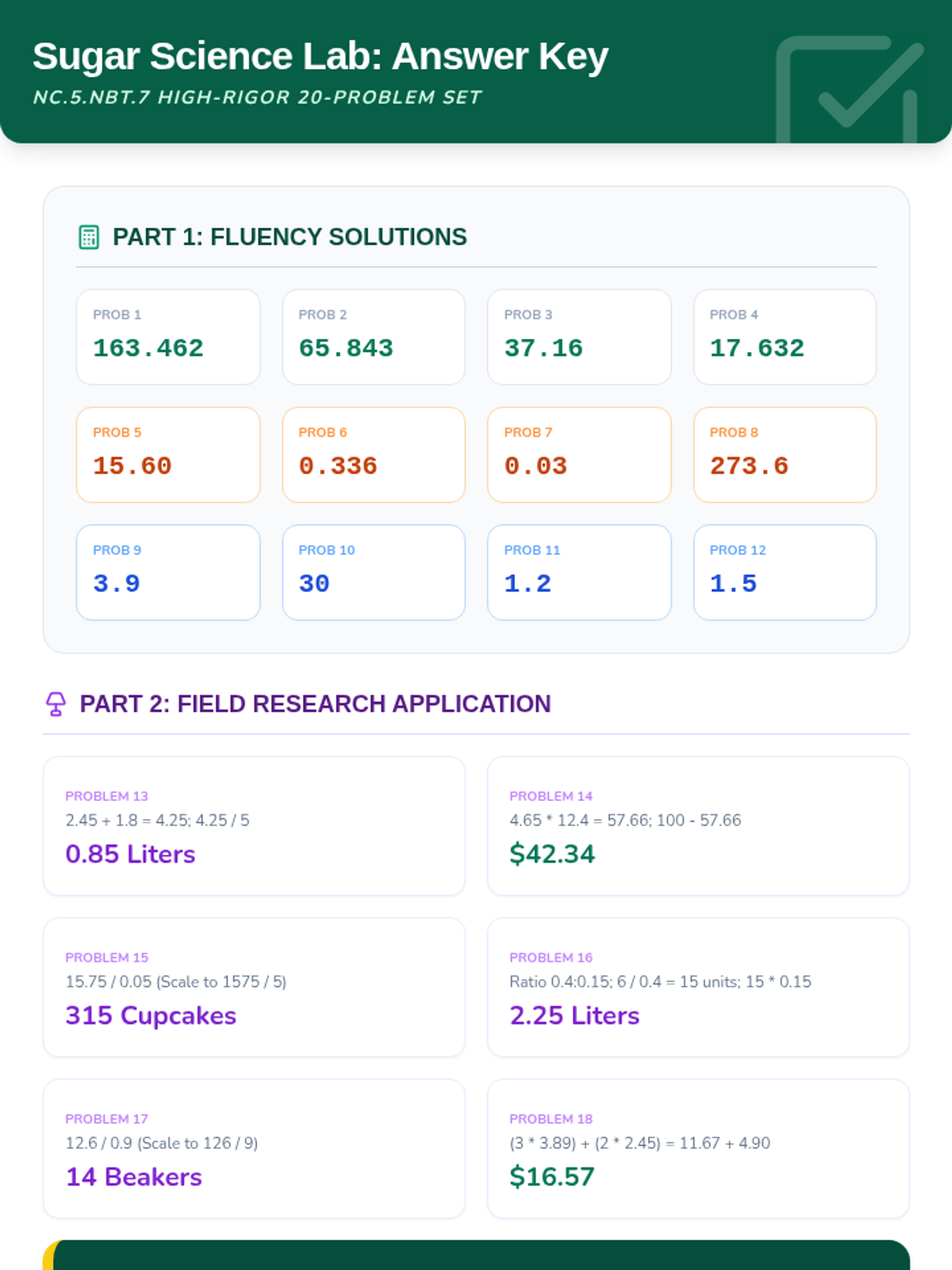
A comprehensive lesson on decimal operations (NC.5.NBT.7) using a culinary science theme to engage students in solving real-world mathematical problems.
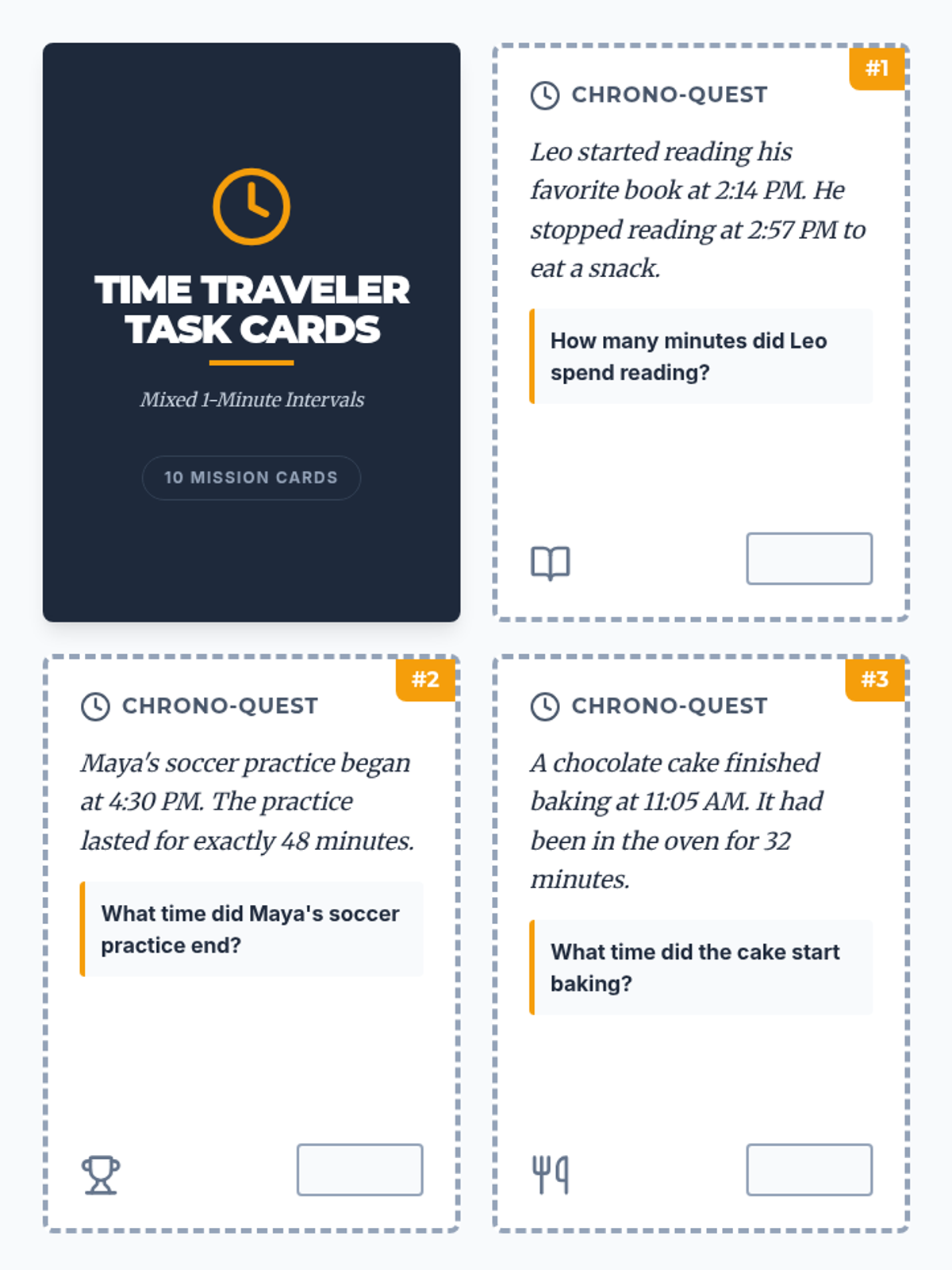
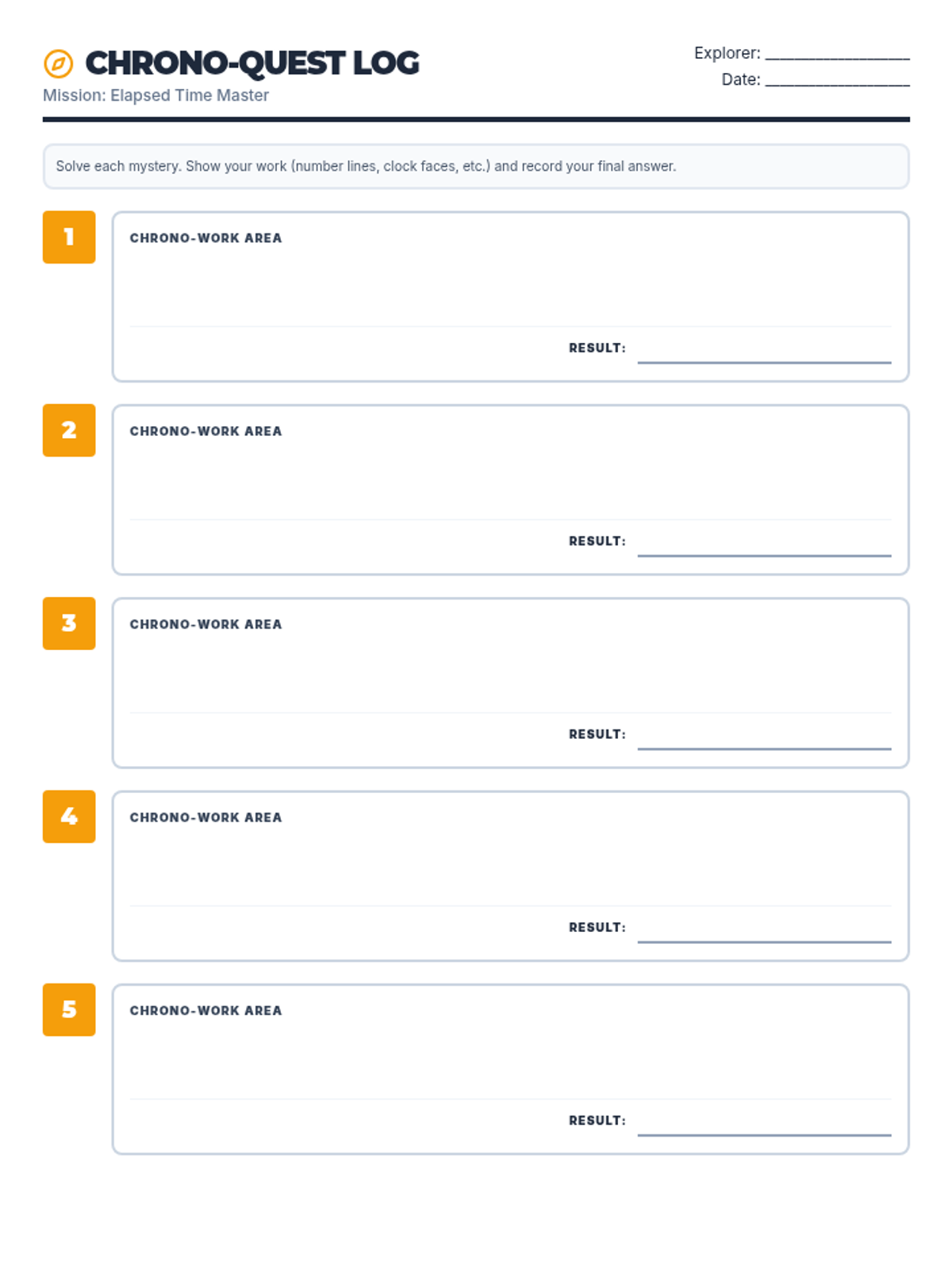
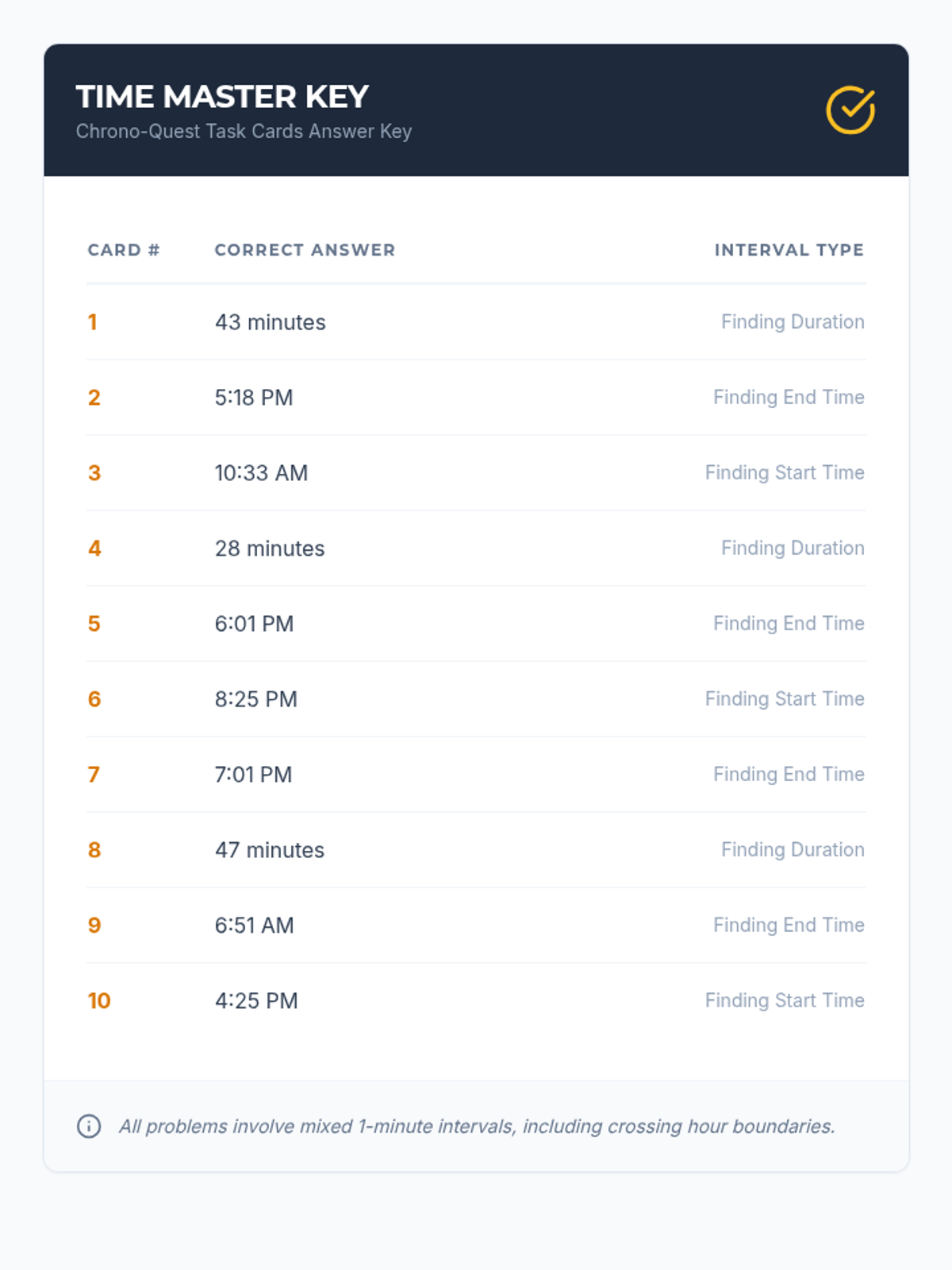
A lesson focused on solving word problems involving elapsed time using 1-minute intervals, themed around a 'Time Travel' adventure.
A comprehensive lesson focused on telling time to the exact minute, featuring visual clock identification and word problems.
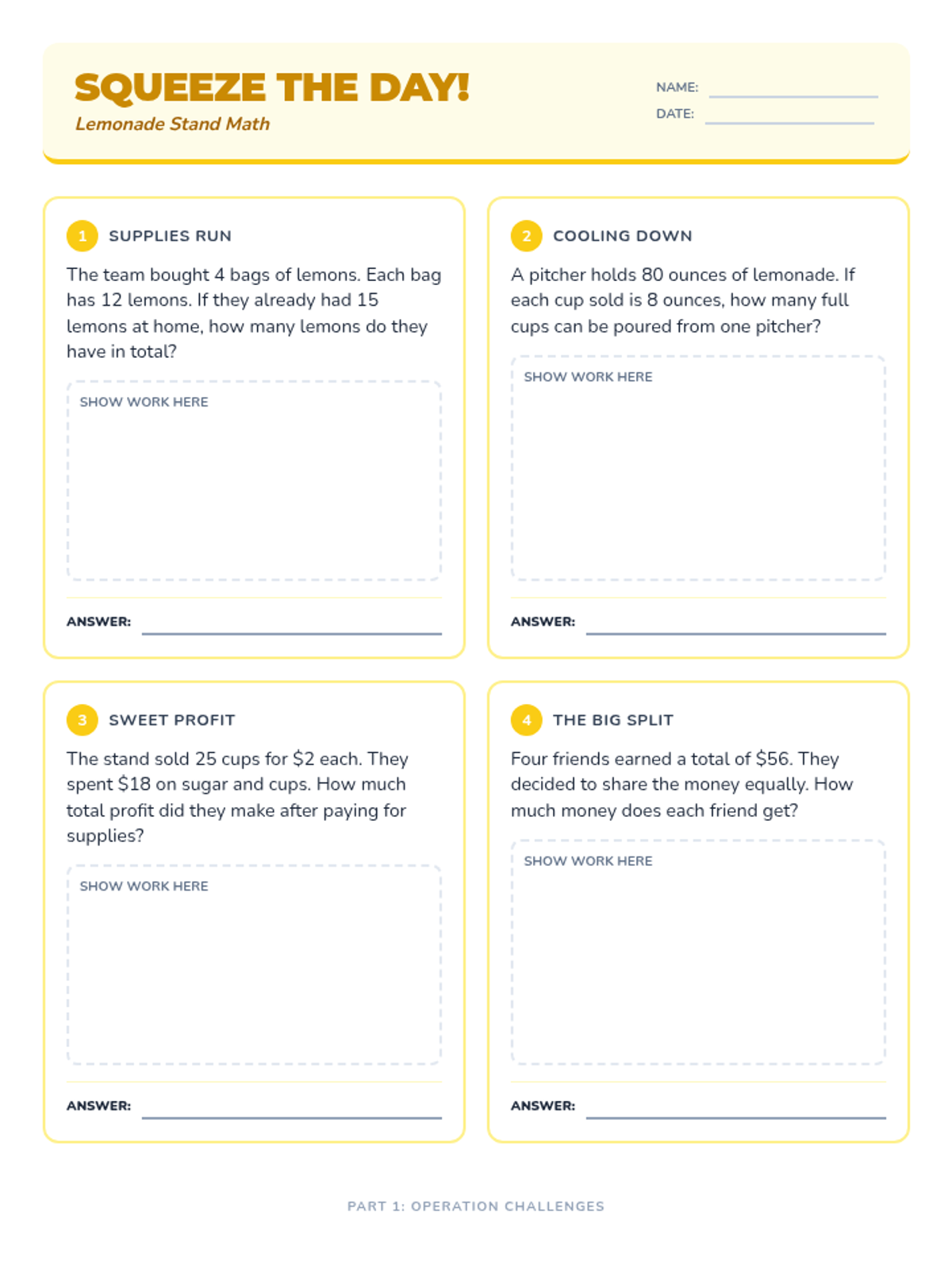
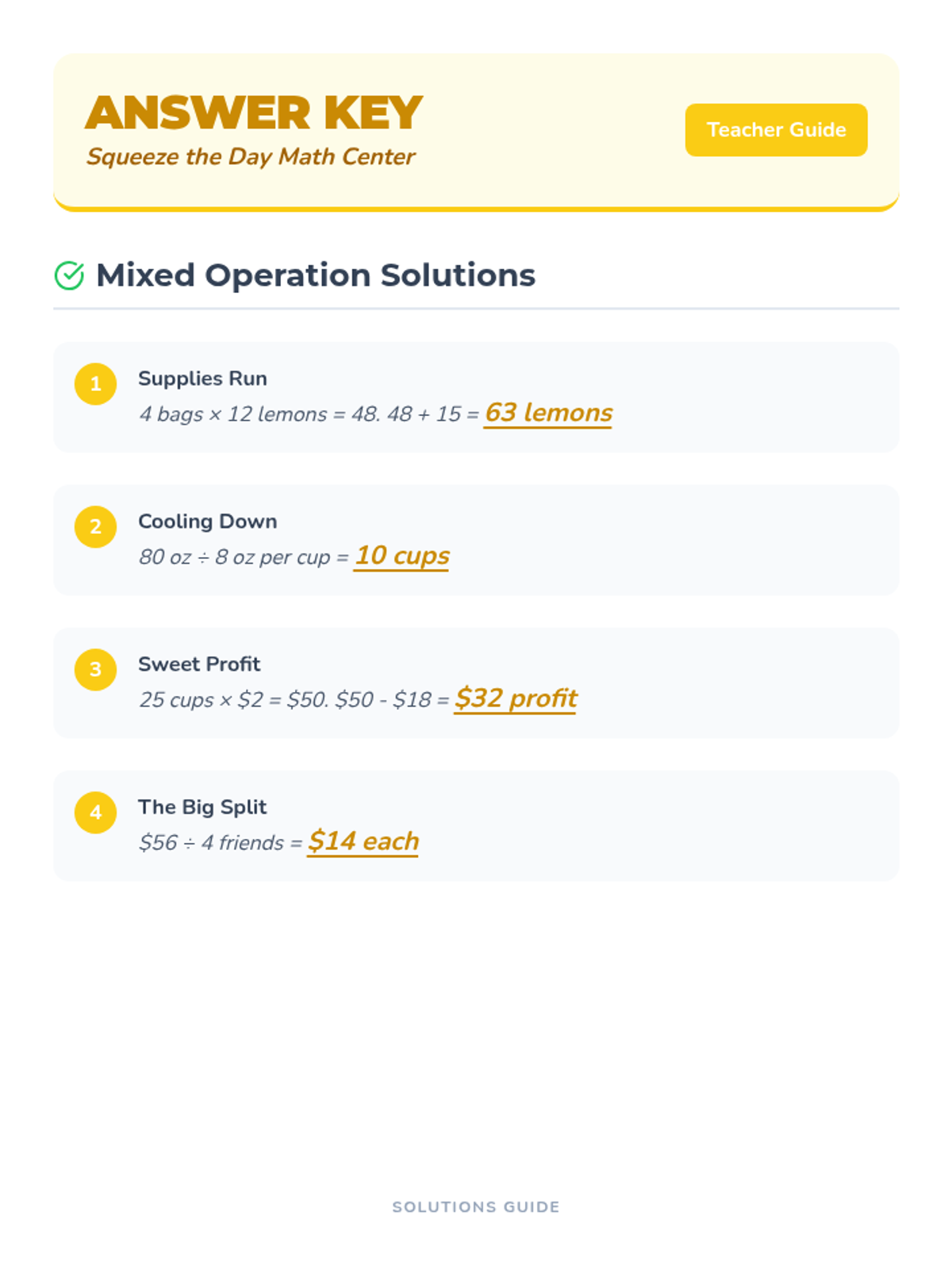
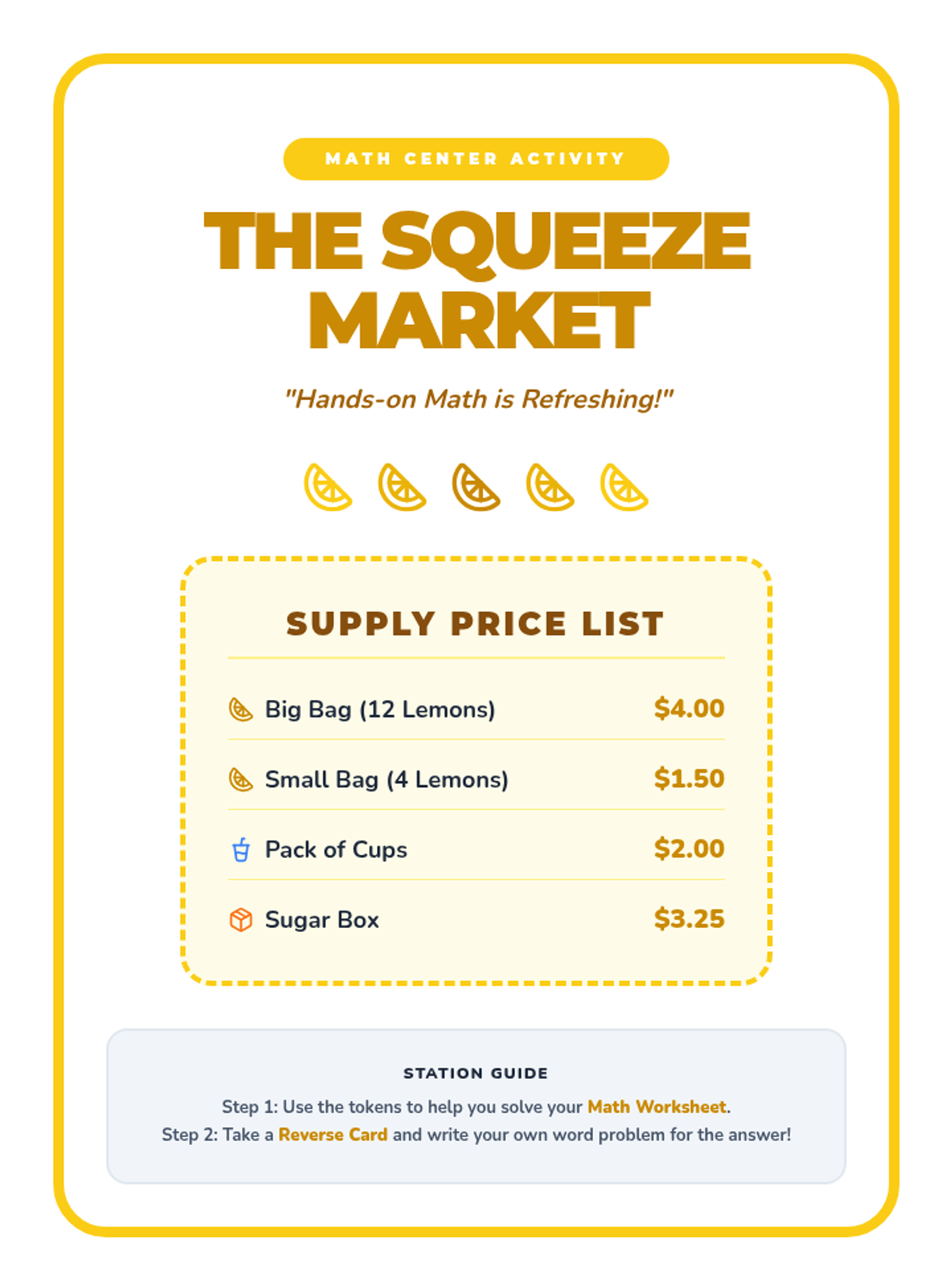
A high-energy math center rotation where students solve lemon-themed word problems and practice reverse-engineering math scenarios.
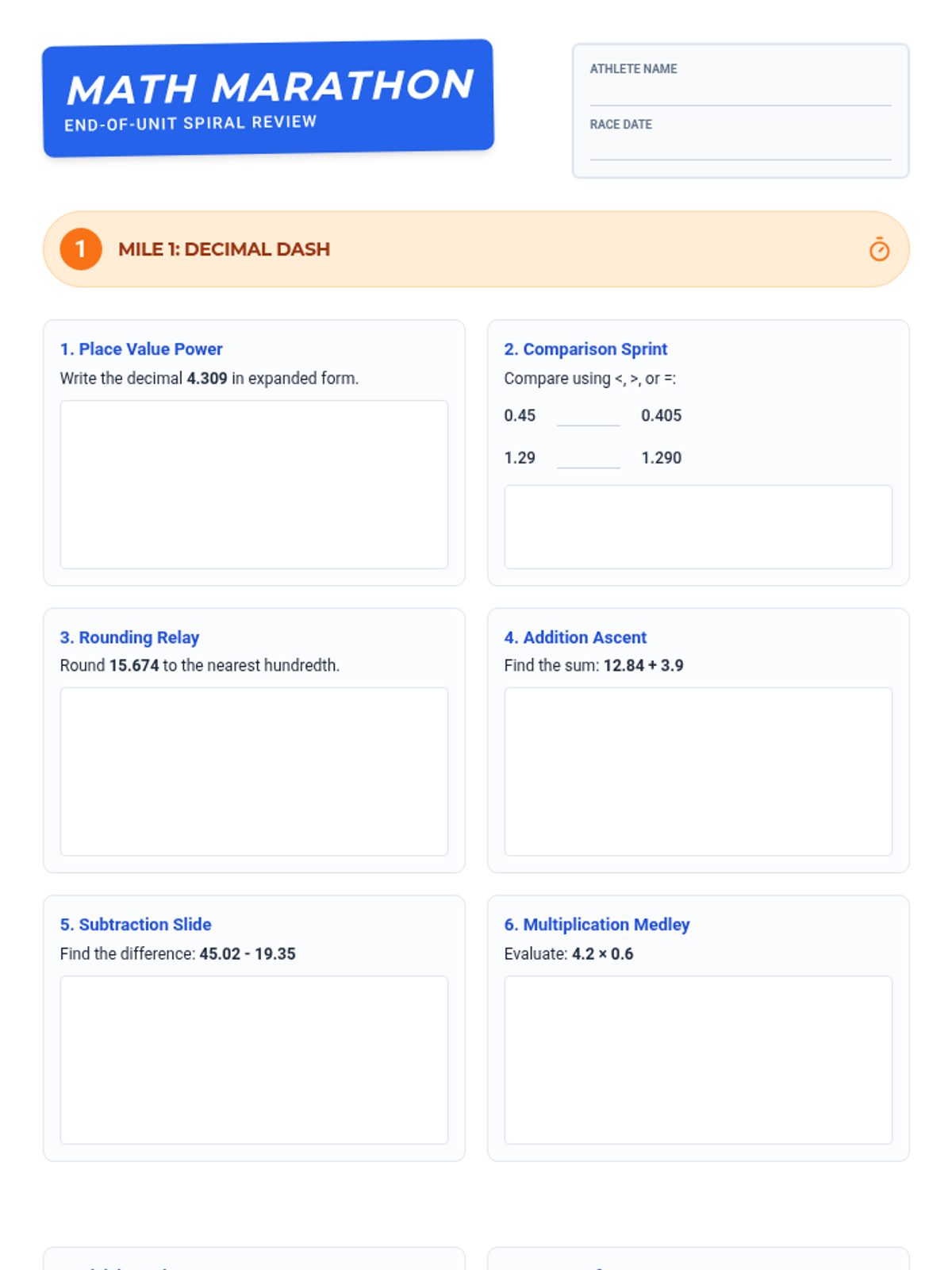
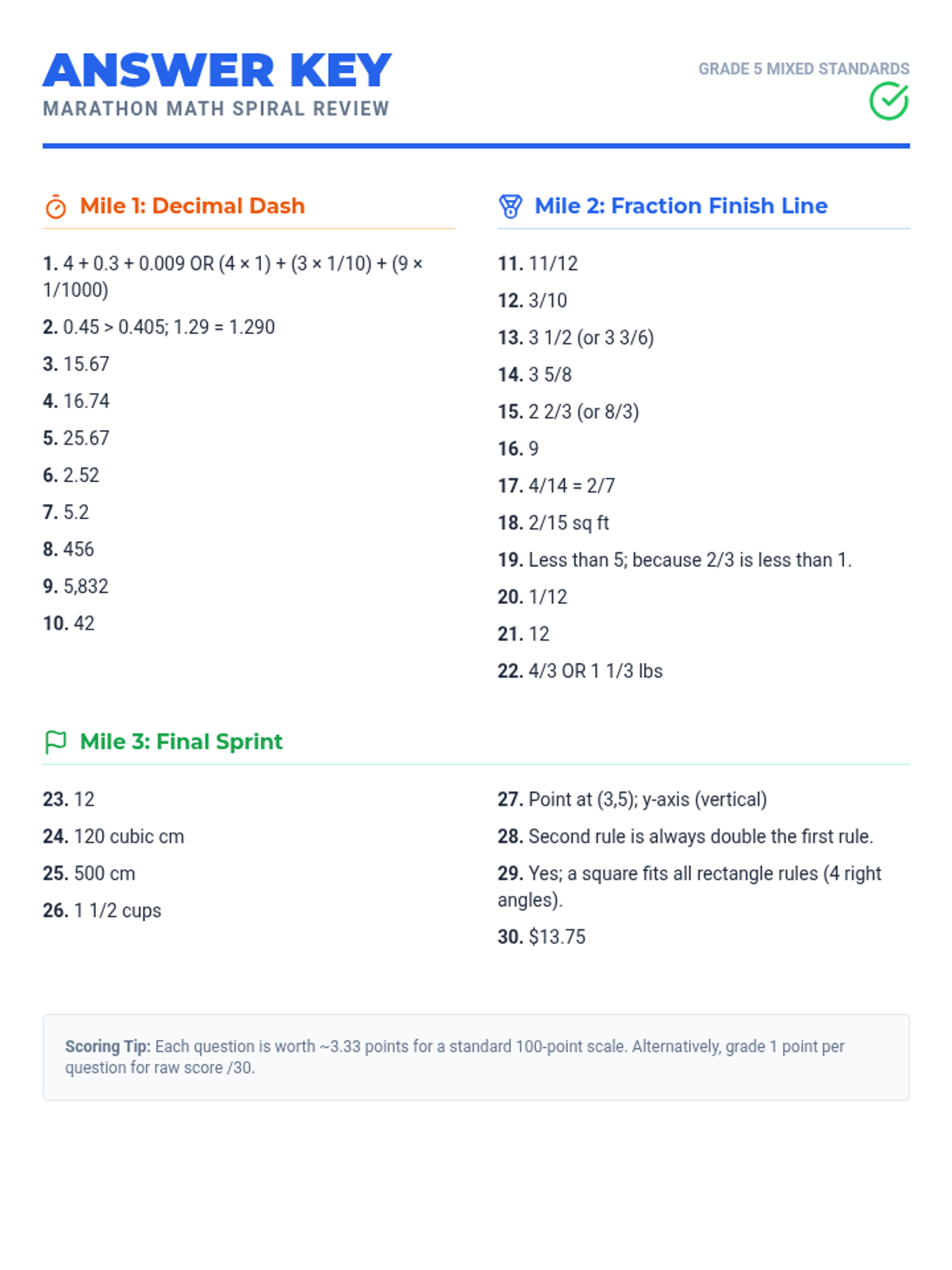
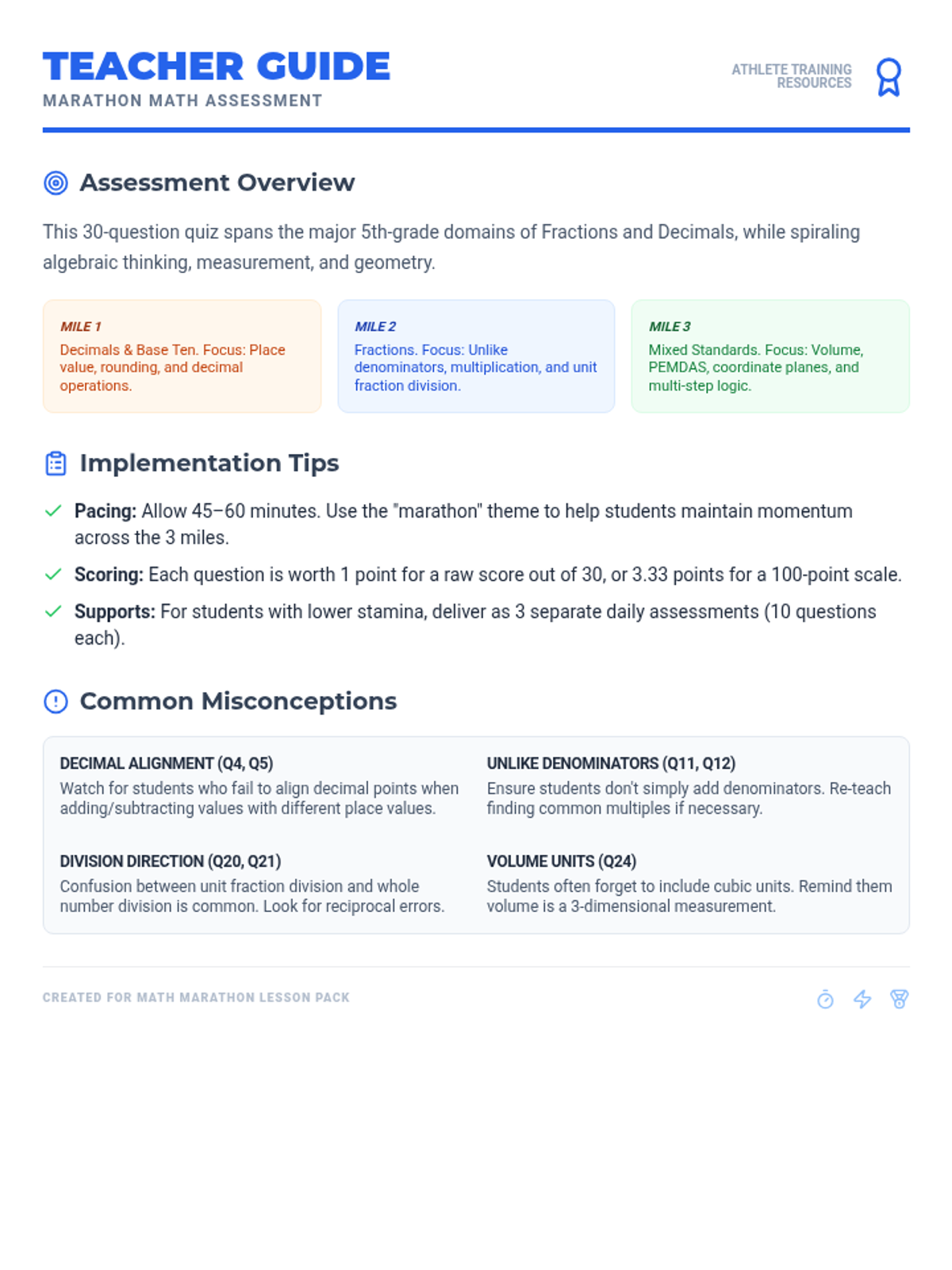
A comprehensive end-of-unit assessment designed for 5th-grade students, focusing on fractions, decimals, and mixed standards through a high-energy marathon theme.
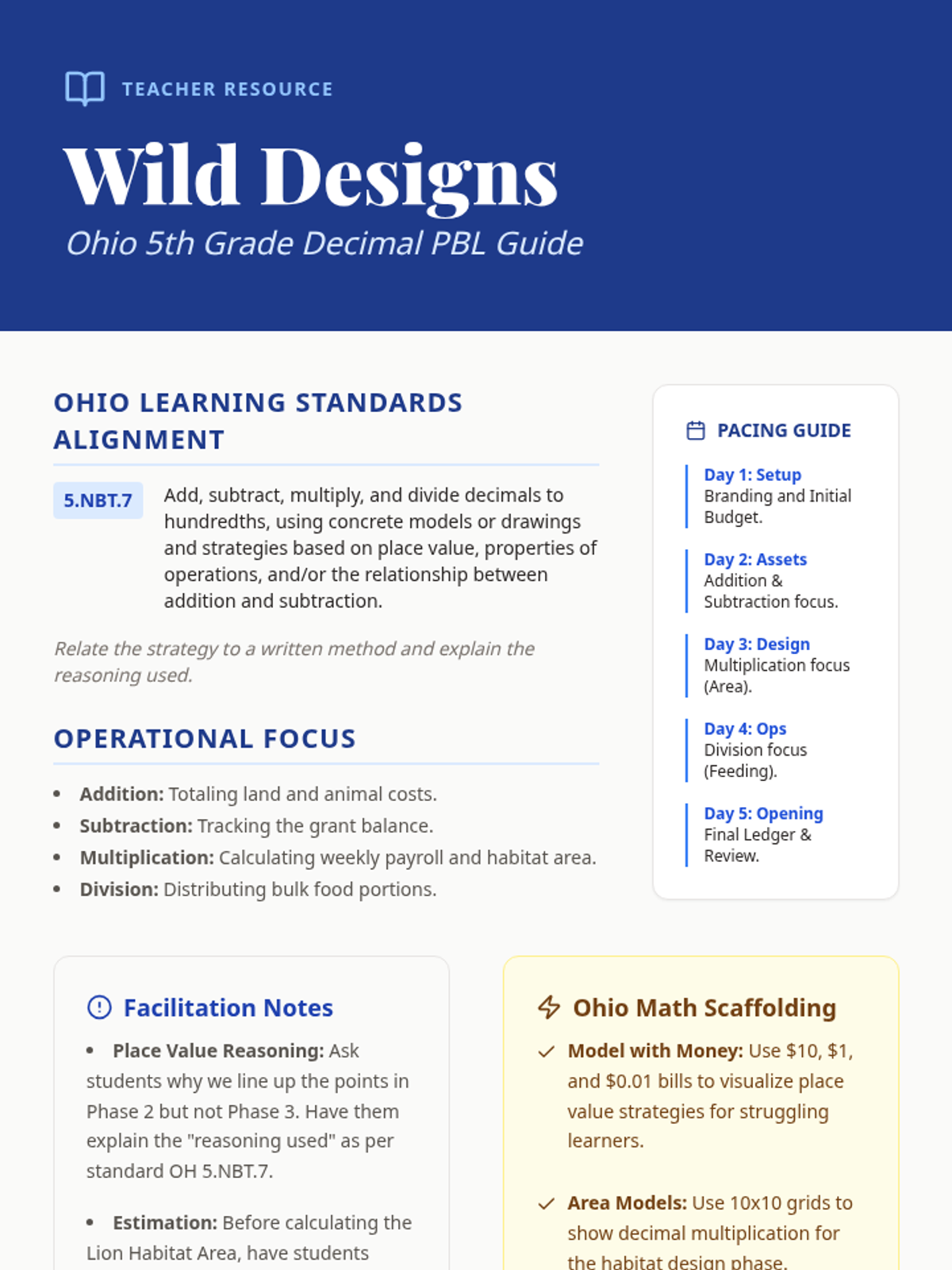
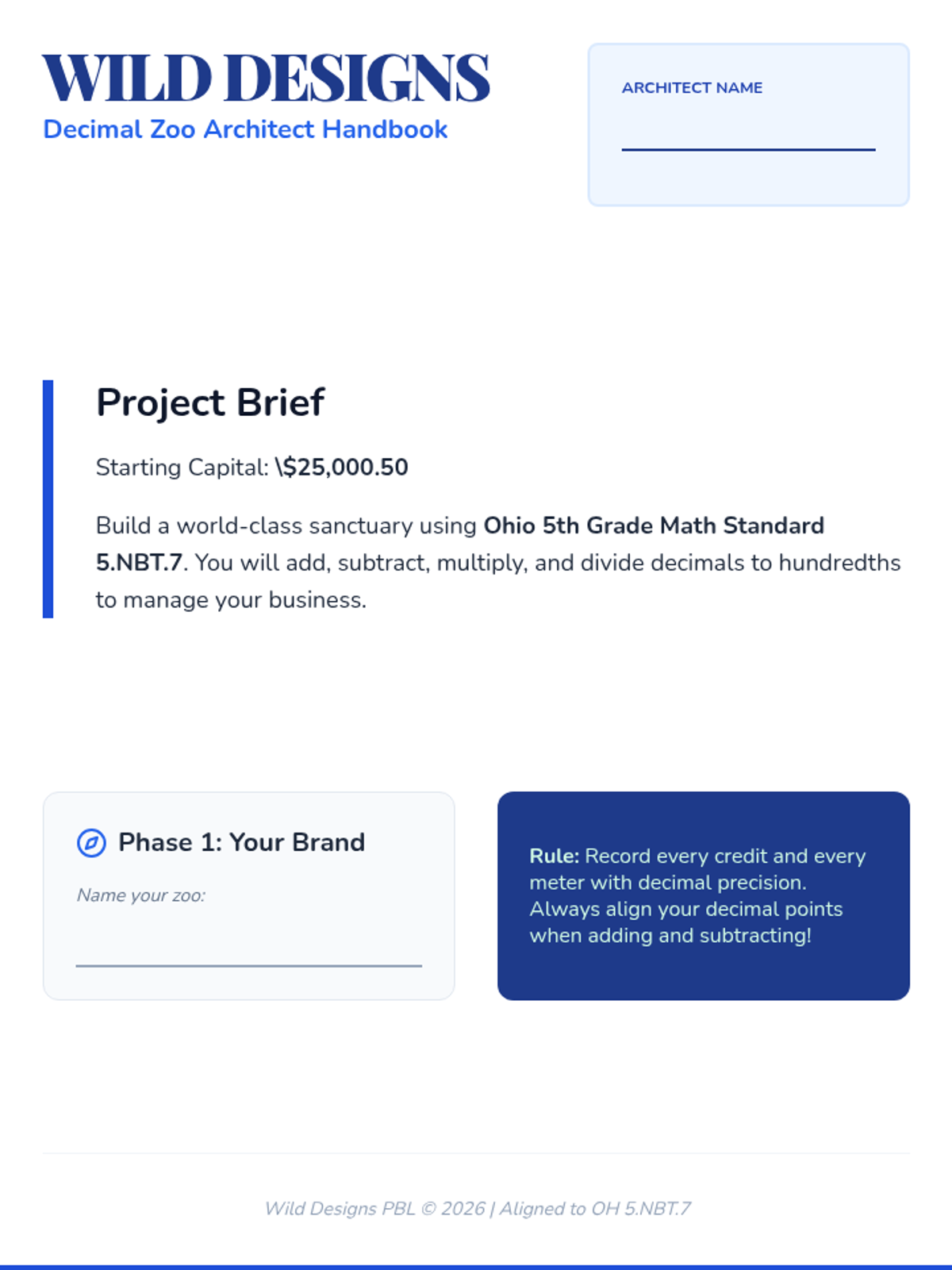
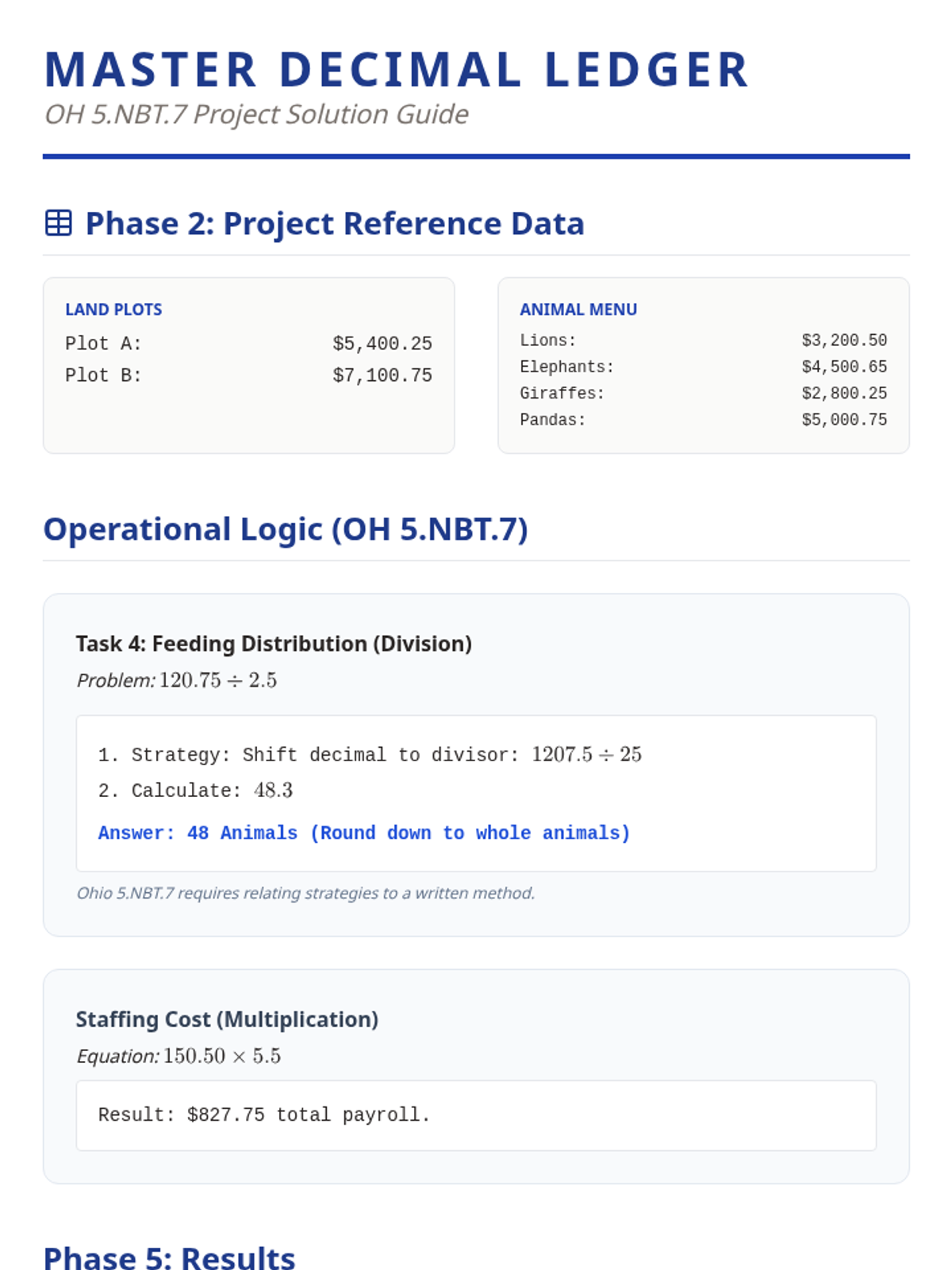
A project-based learning unit where students apply decimal operations (addition, subtraction, multiplication, and division to hundredths) to design, build, and manage their own zoo. Aligned to Ohio 5th Grade Standard 5.NBT.7.
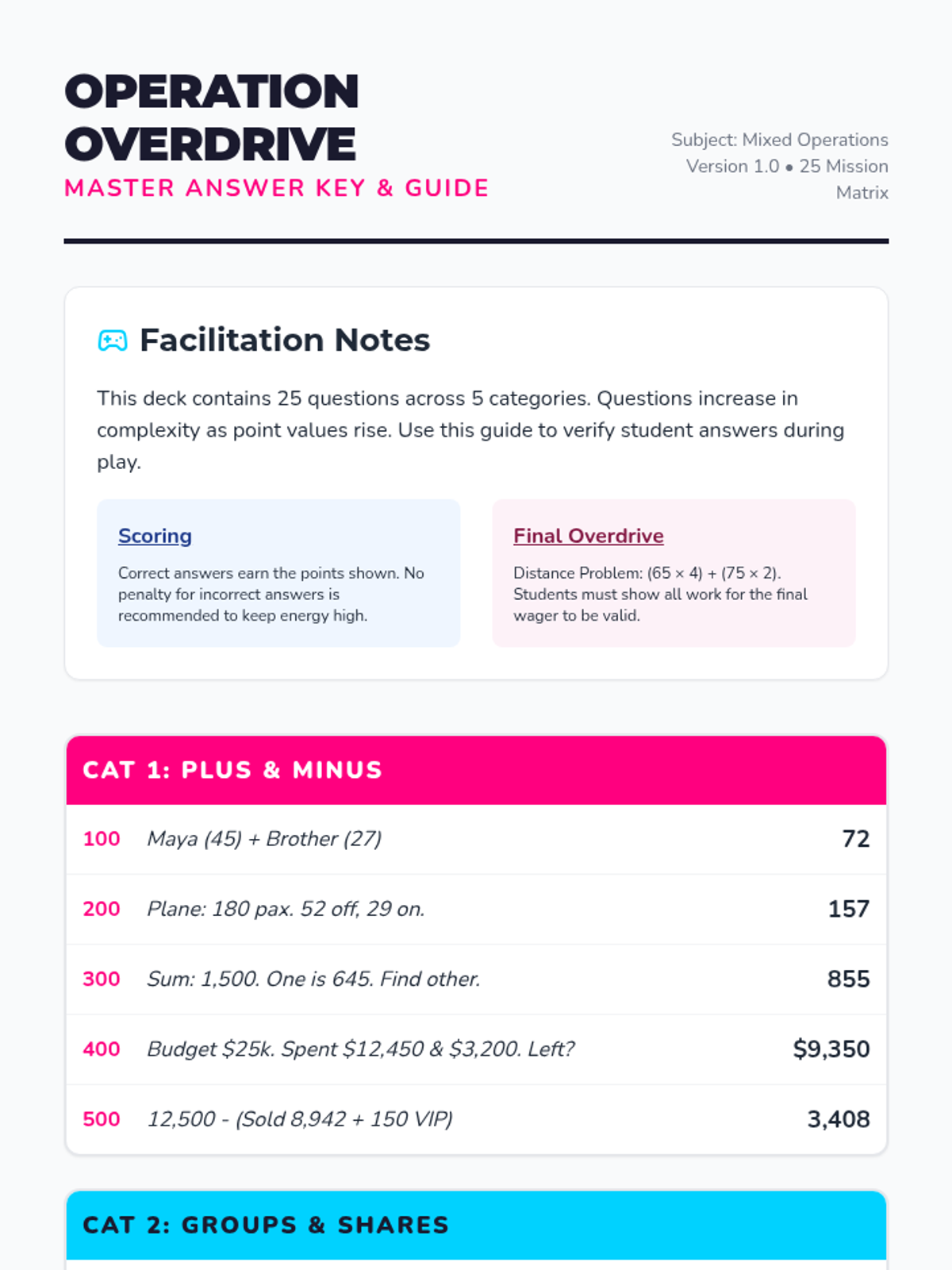
A fast-paced, game-show style lesson focusing on mixed numerical operations and word problems. Students practice addition, subtraction, multiplication, and division through a collaborative Jeopardy-inspired format.
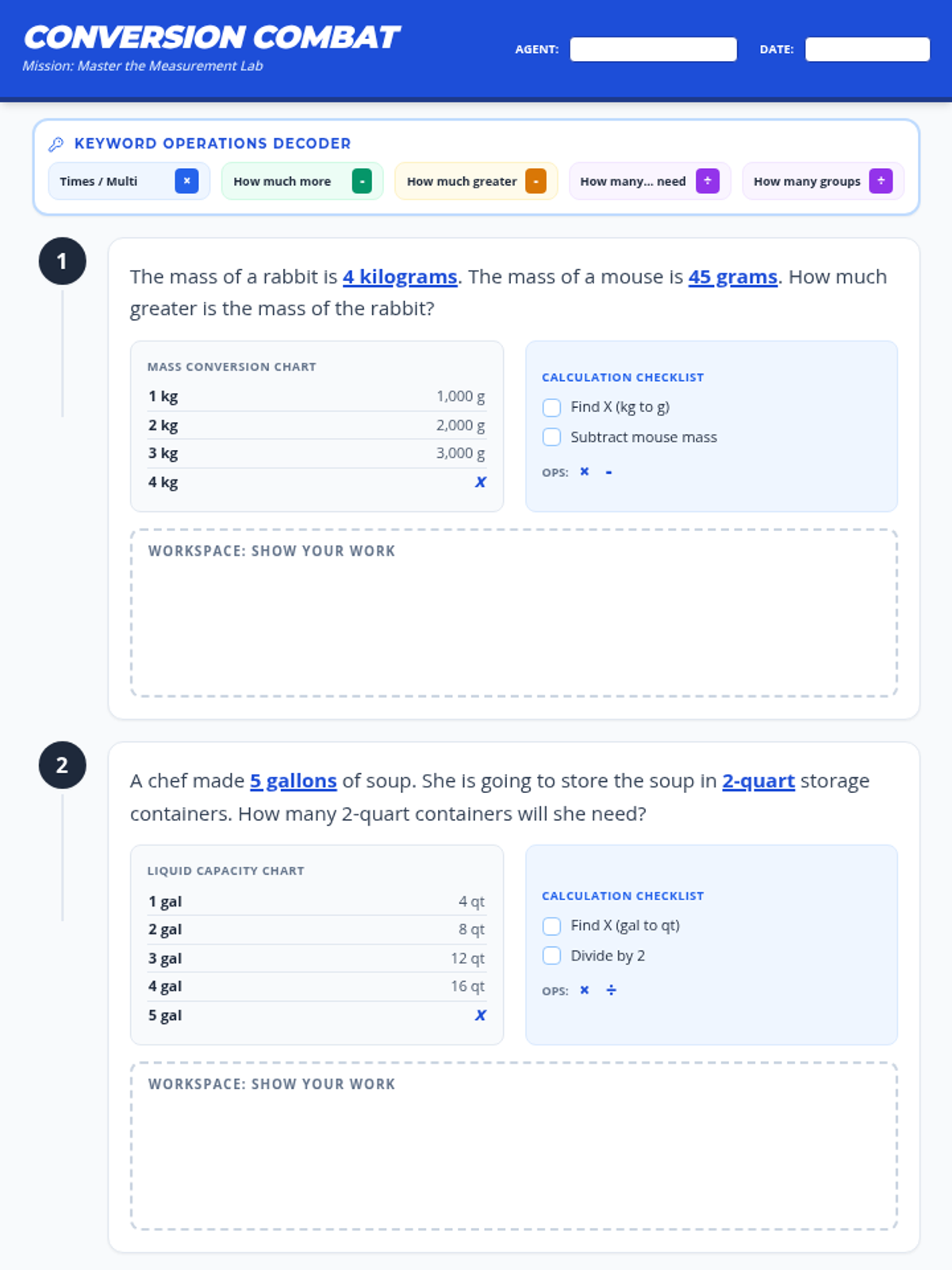
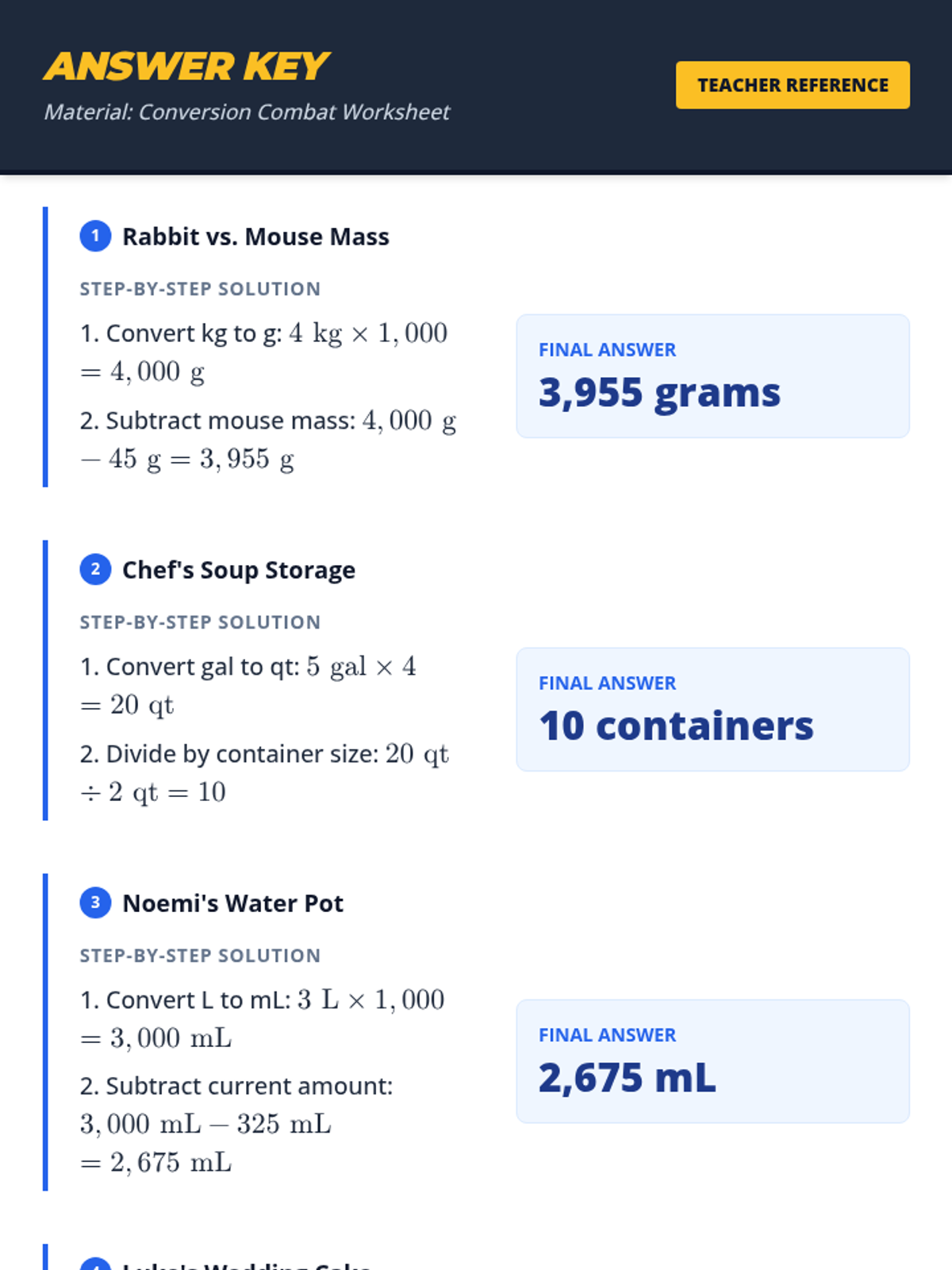
A lesson focused on solving multi-step word problems involving mass, volume, and capacity unit conversions. Students use conversion charts and operation keywords to determine the correct mathematical steps for each scenario.
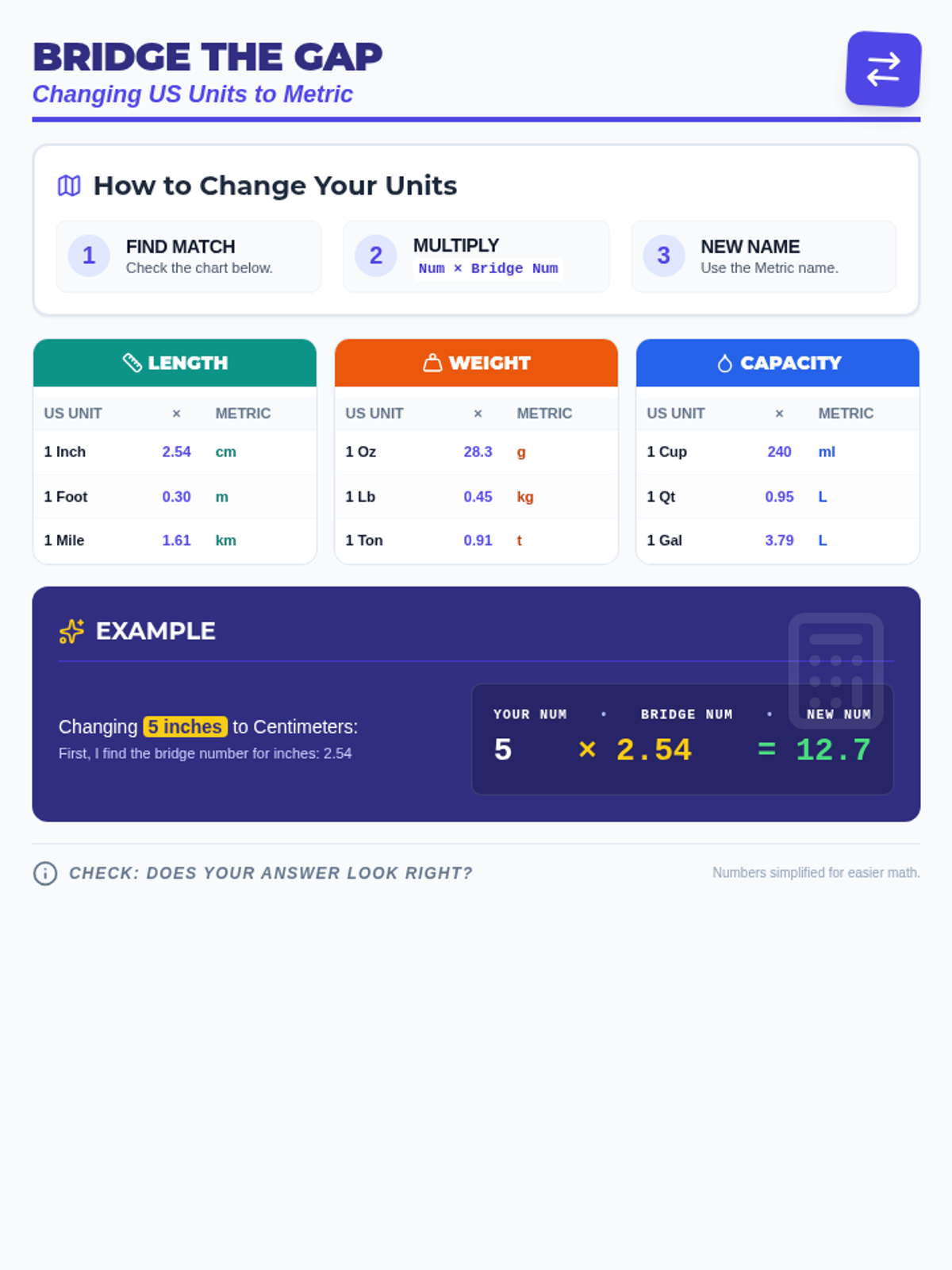
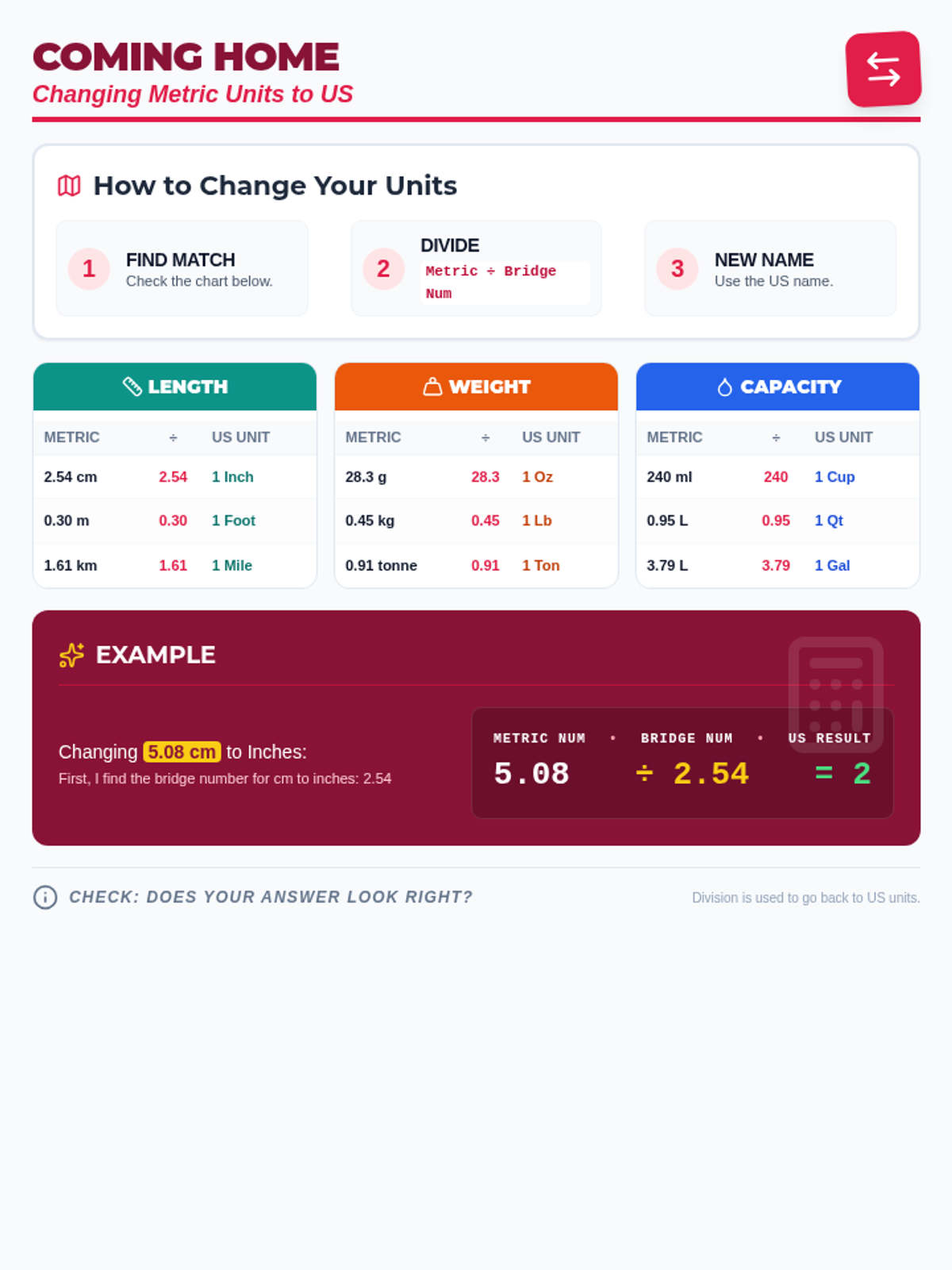
A lesson teaching students how to convert between US customary and metric measurement systems using a simplified 'Bridge Number' method. Includes anchor charts for both directions of conversion.
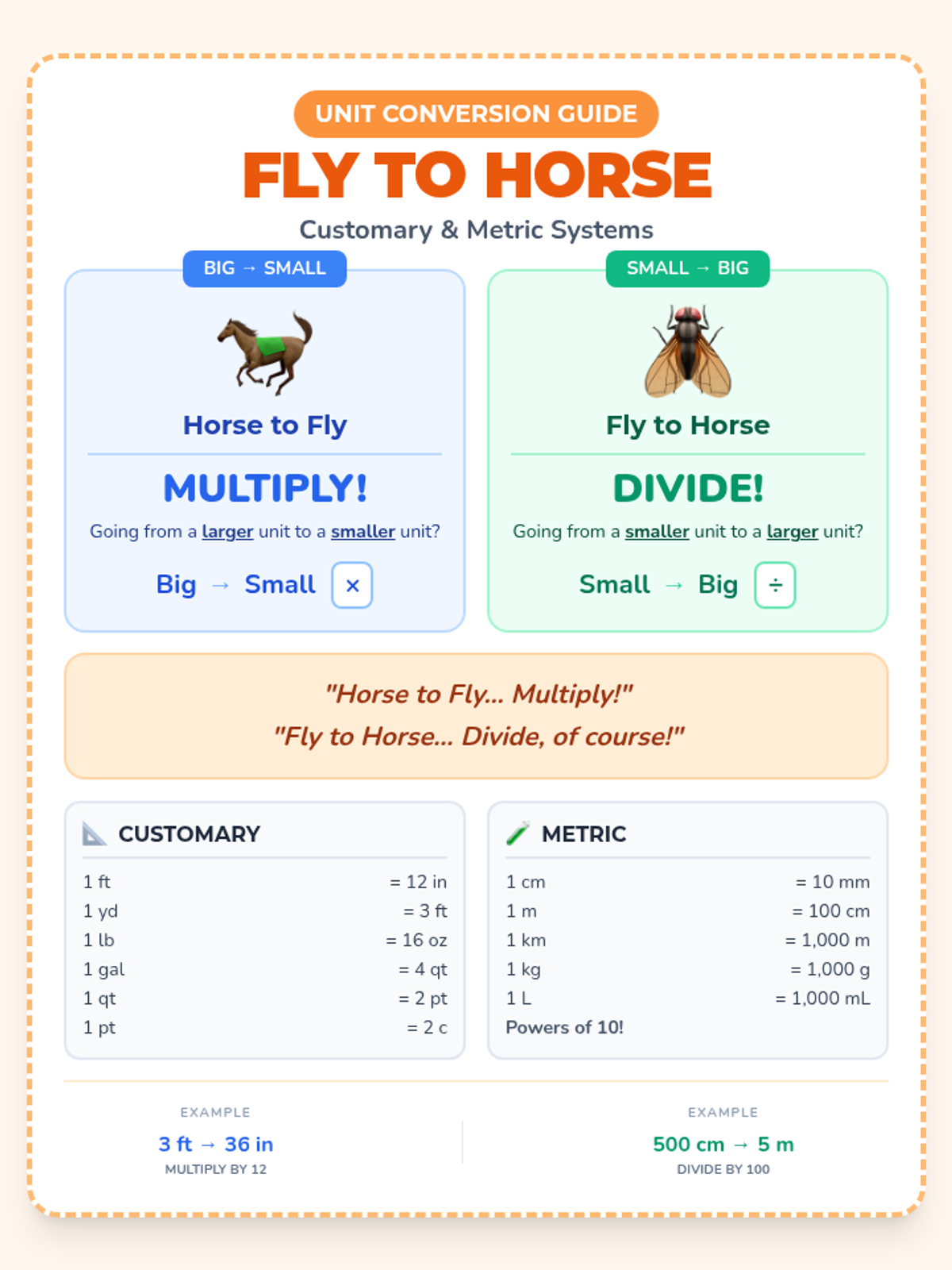
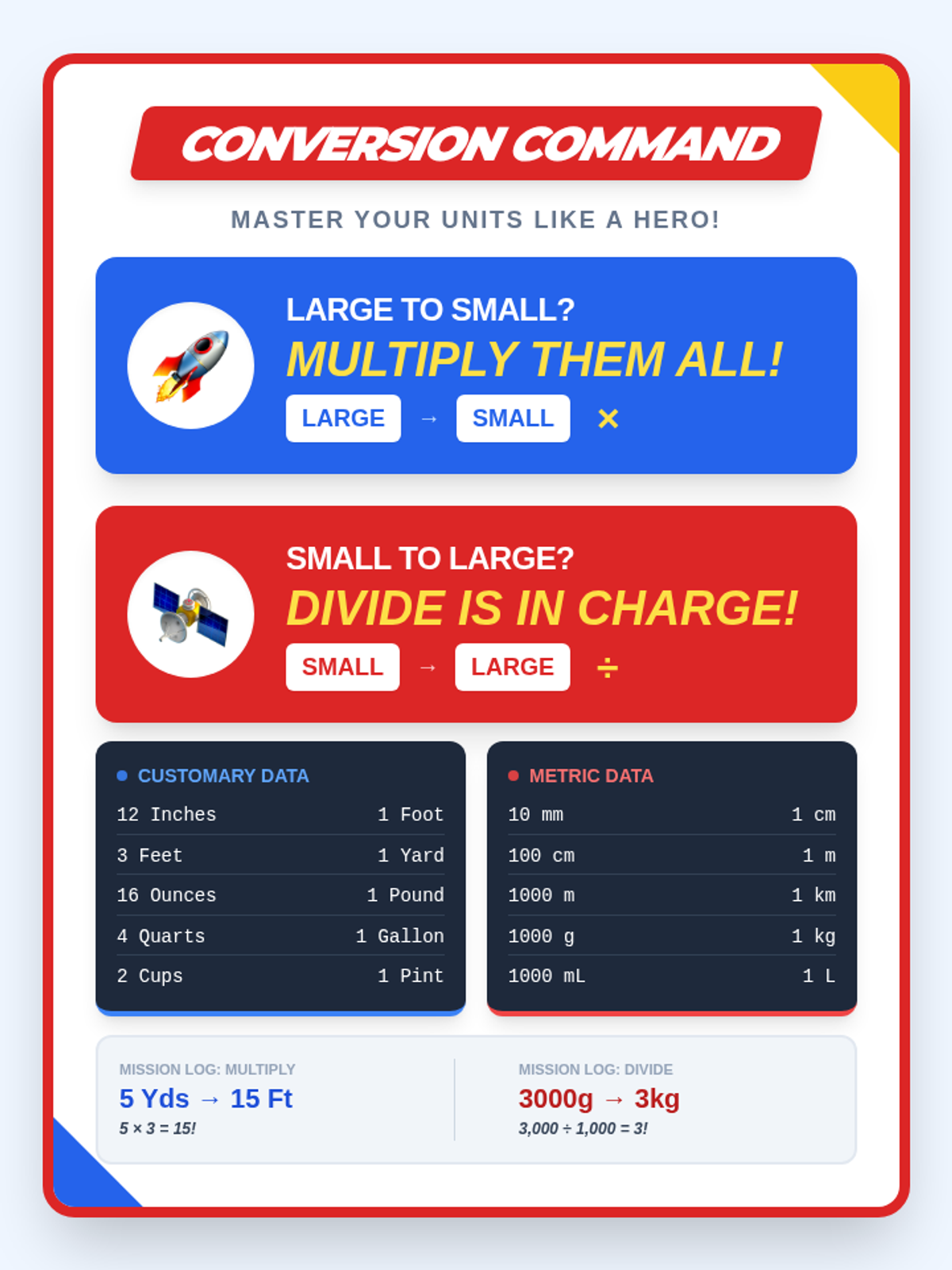
A collection of visual aids and tools to help students master unit conversions across Customary and Metric systems using various mnemonic strategies.
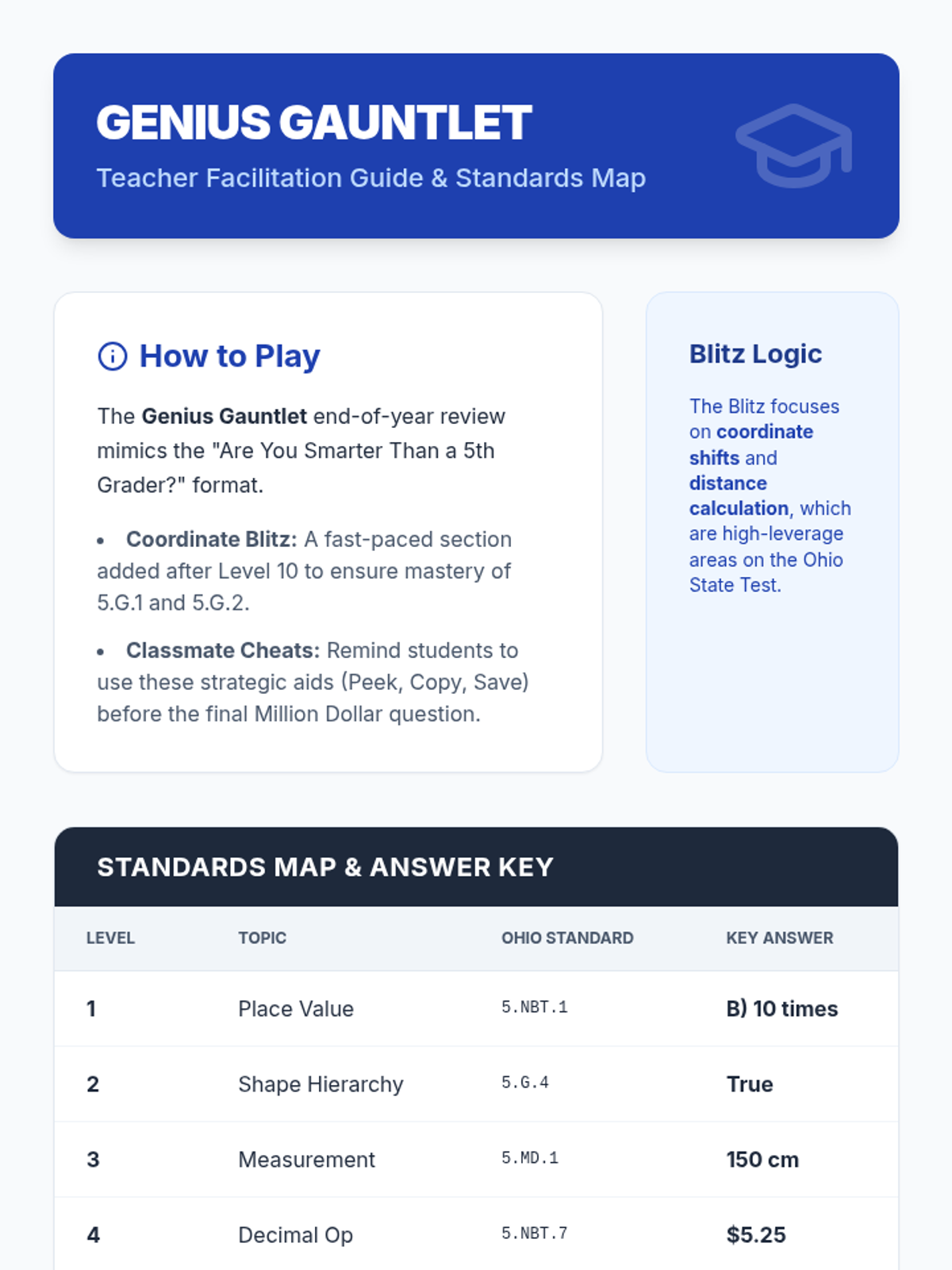
A comprehensive review of 5th Grade Ohio Learning Standards for Mathematics designed as a high-stakes classroom game show. Students will tackle 10 categories of increasing complexity plus a final 'Million Dollar' challenge covering fractions, volume, decimals, and algebraic thinking.
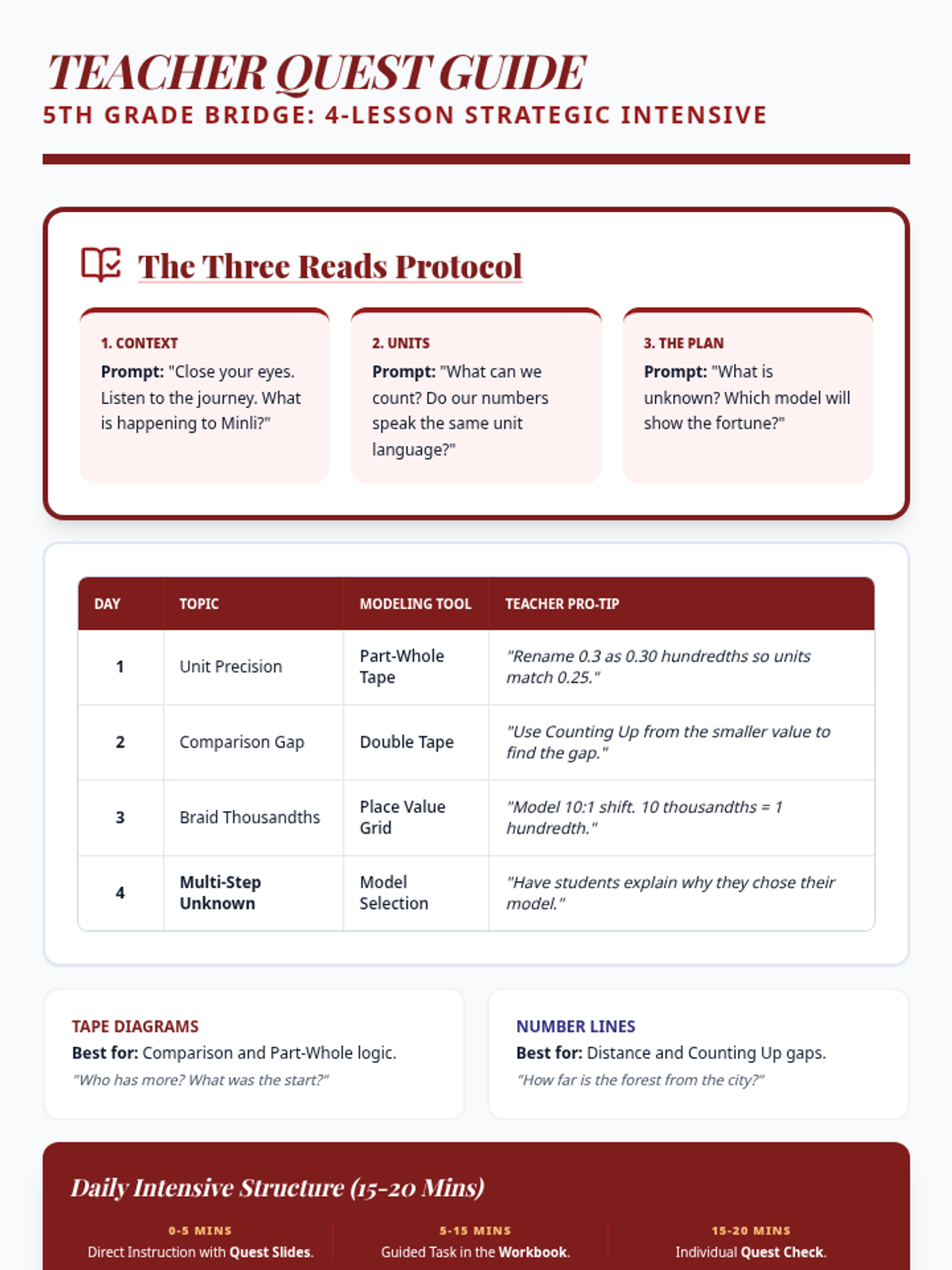
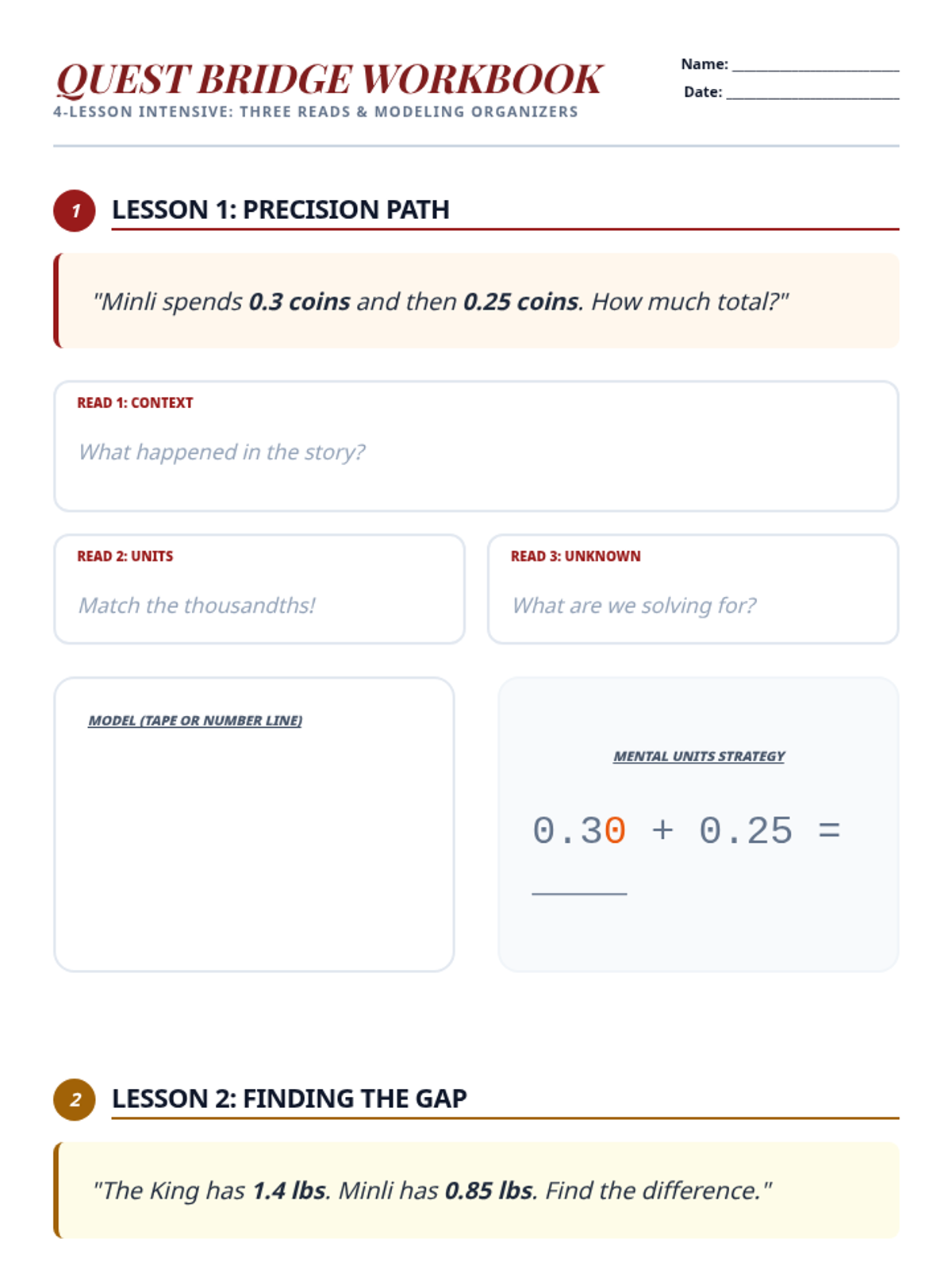
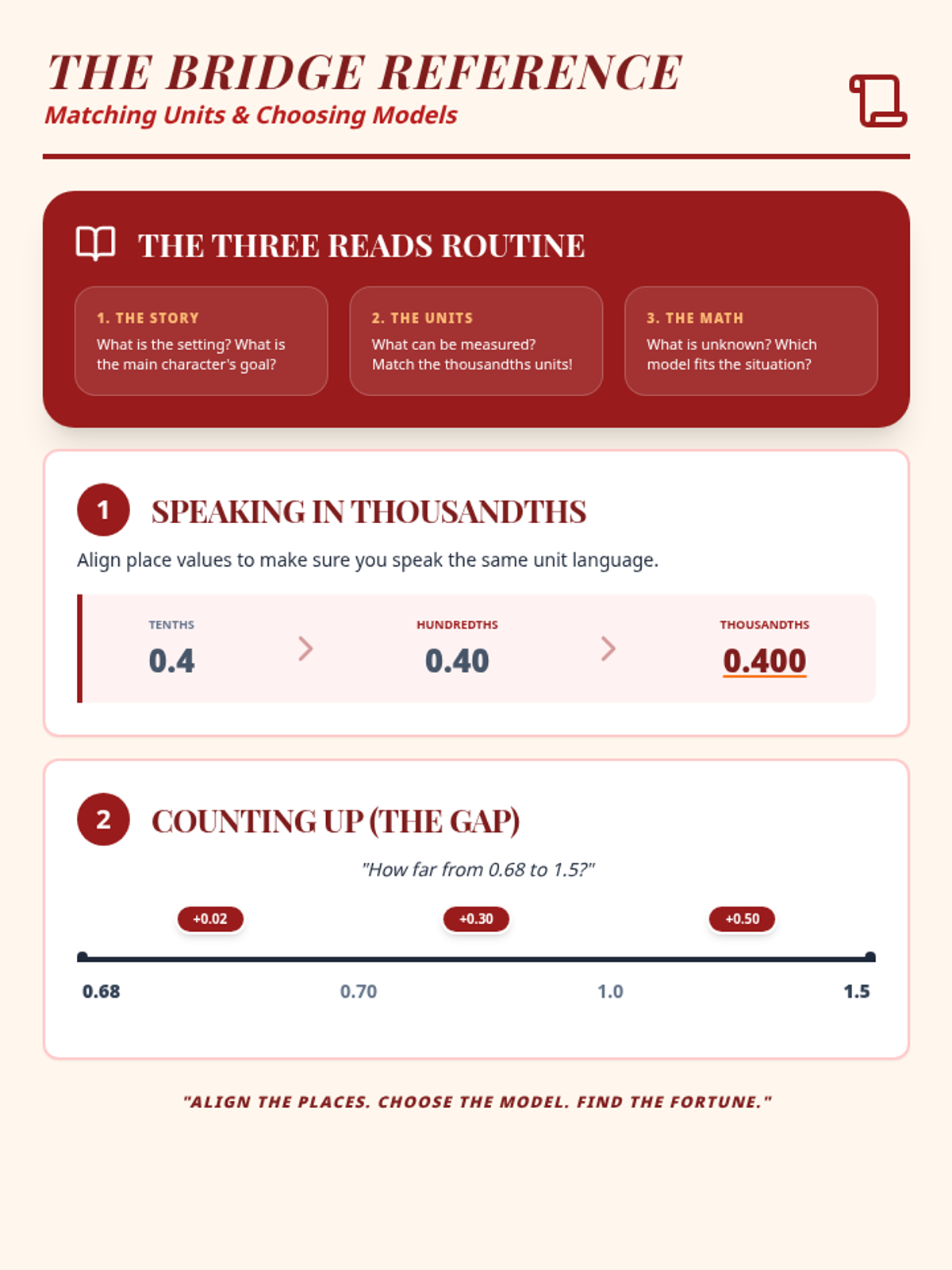
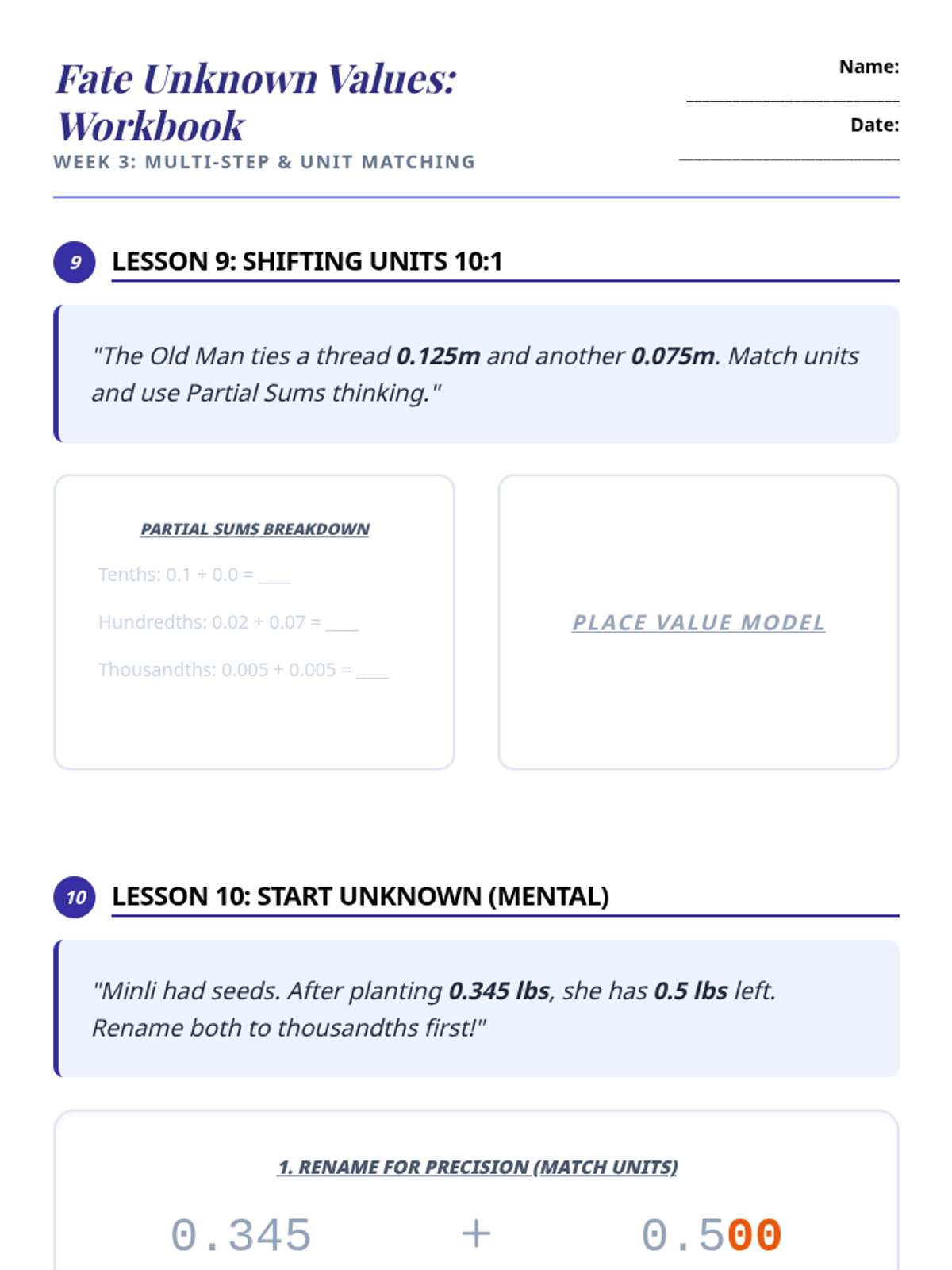
A series of 4 strategic math lessons covering addition and subtraction through thousandths using mental math and visual models.
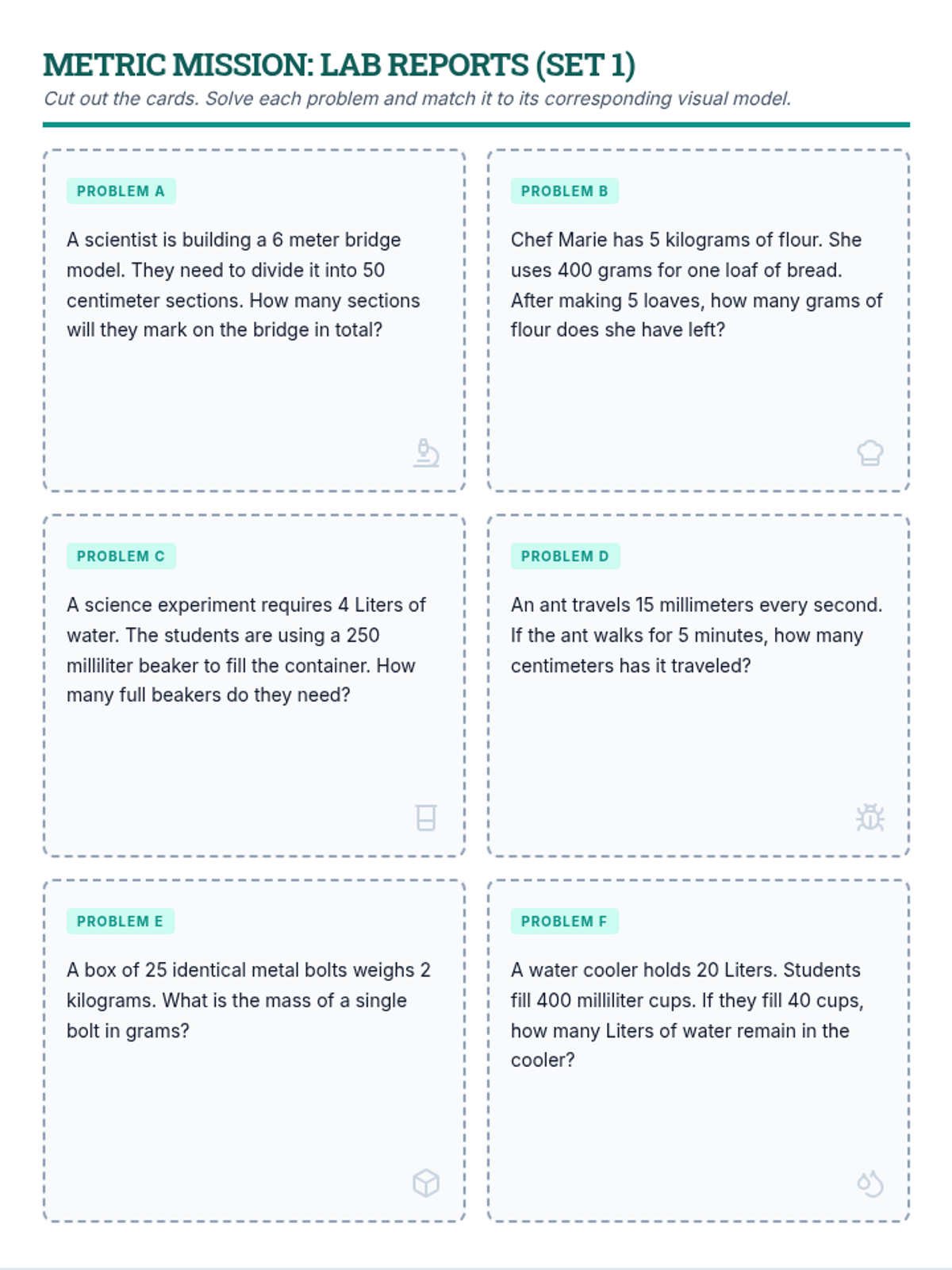
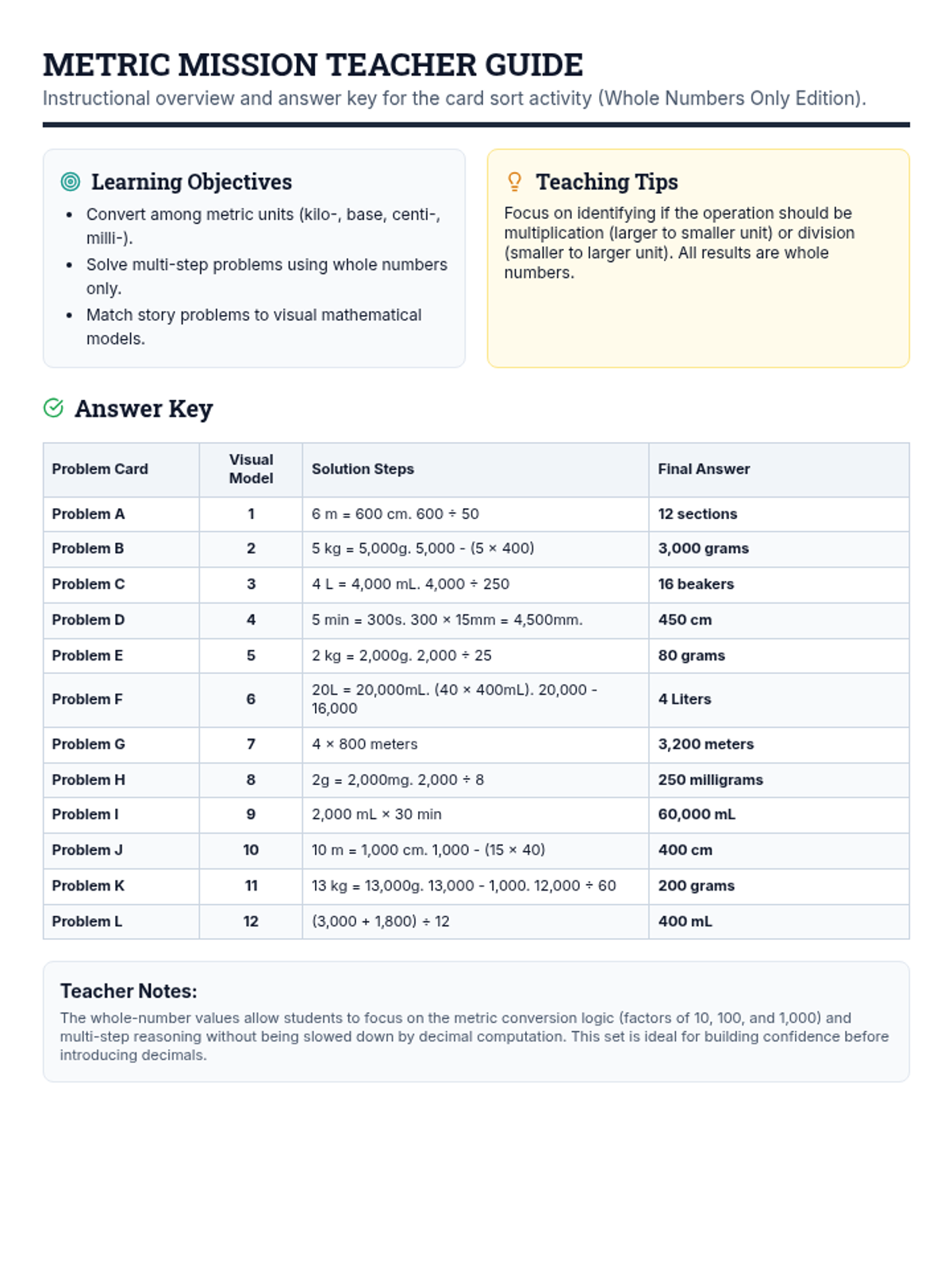
A hands-on lesson where students solve real-world metric conversion problems and match them with visual models. students will apply multiplication and division strategies to convert between units of length, mass, and capacity.
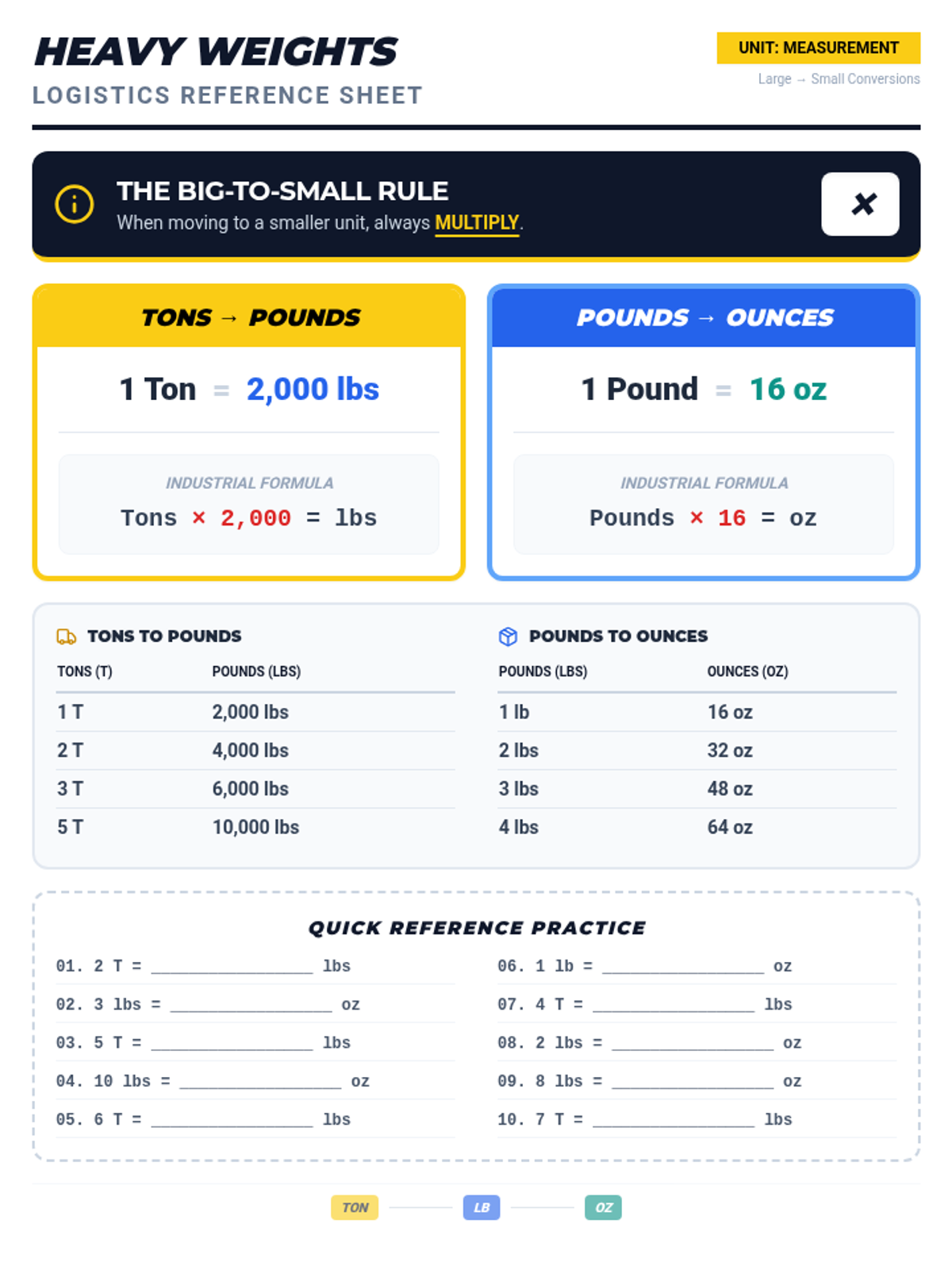
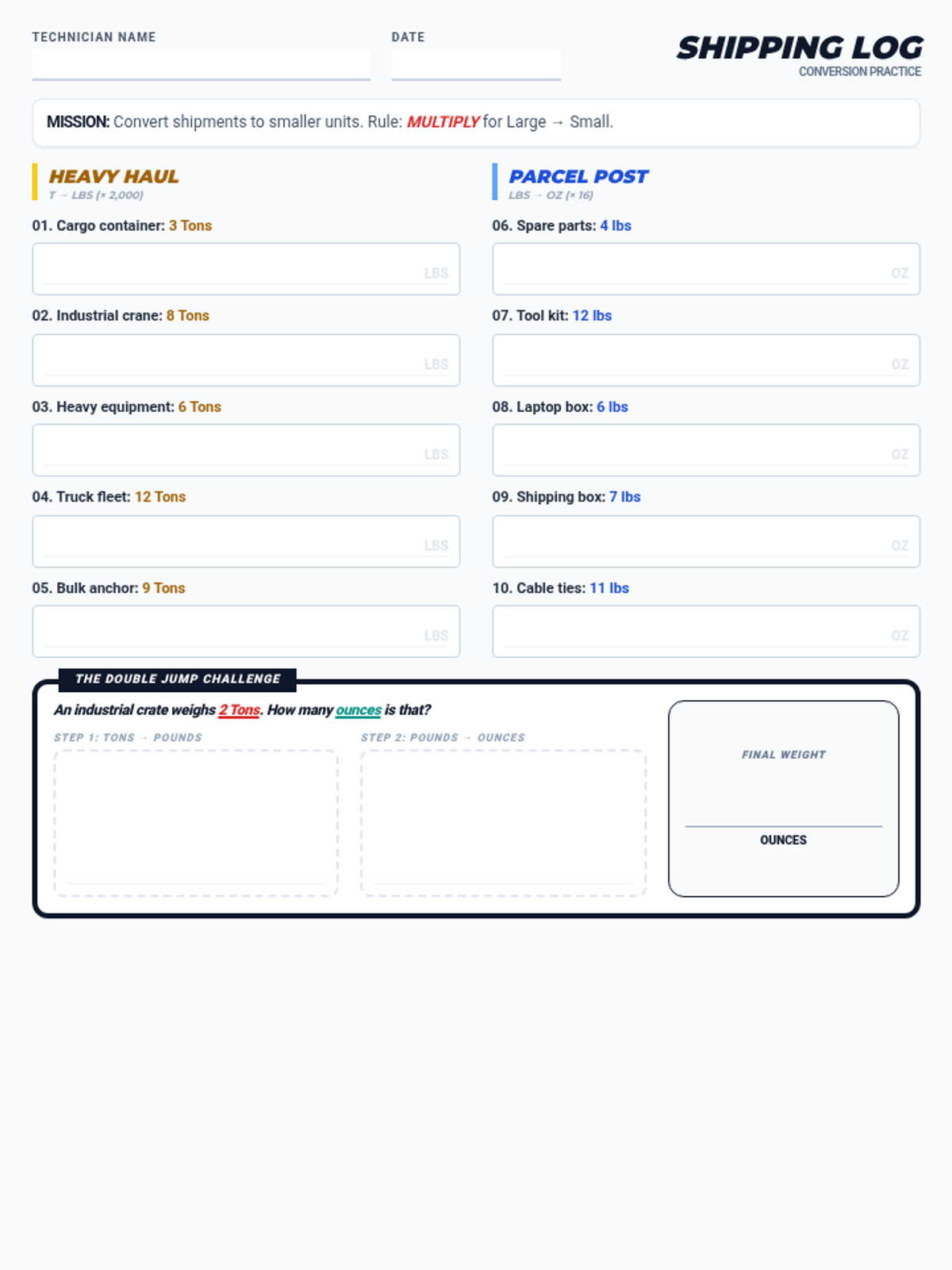
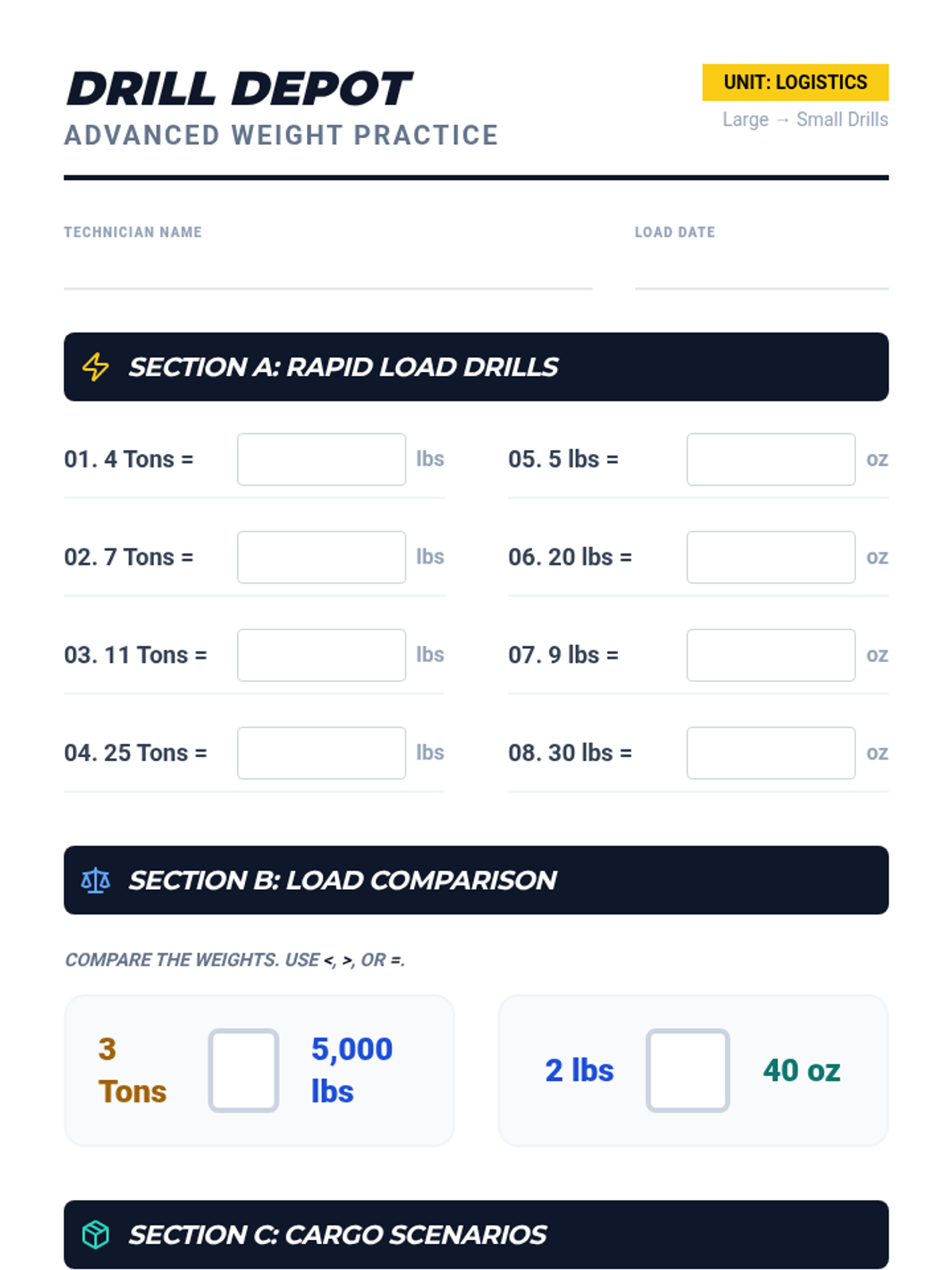
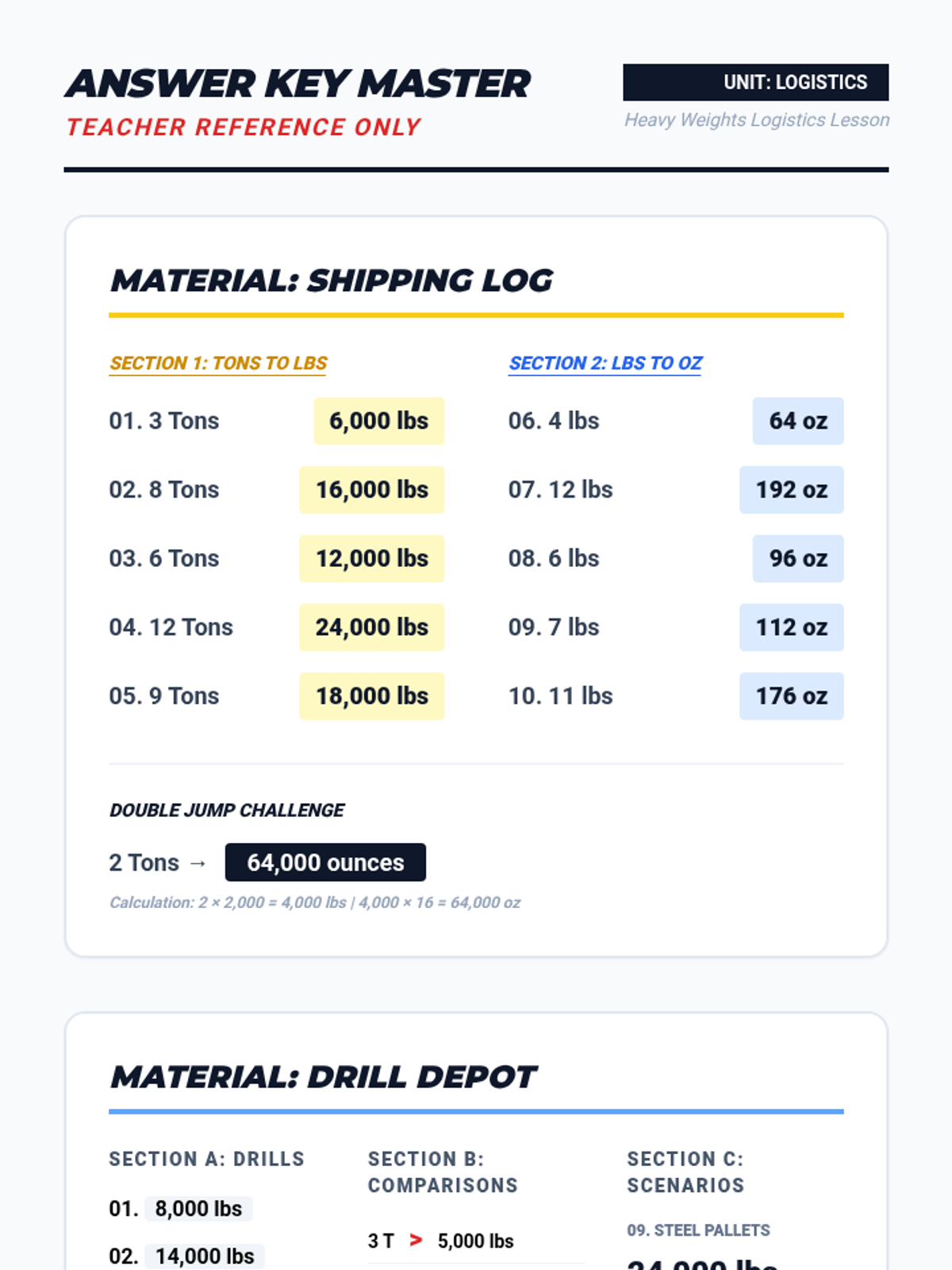
A focused lesson on converting weight units (tons, pounds, and ounces) from larger to smaller units using multiplication, featuring industrial-themed visuals and color-coded conversion guides.
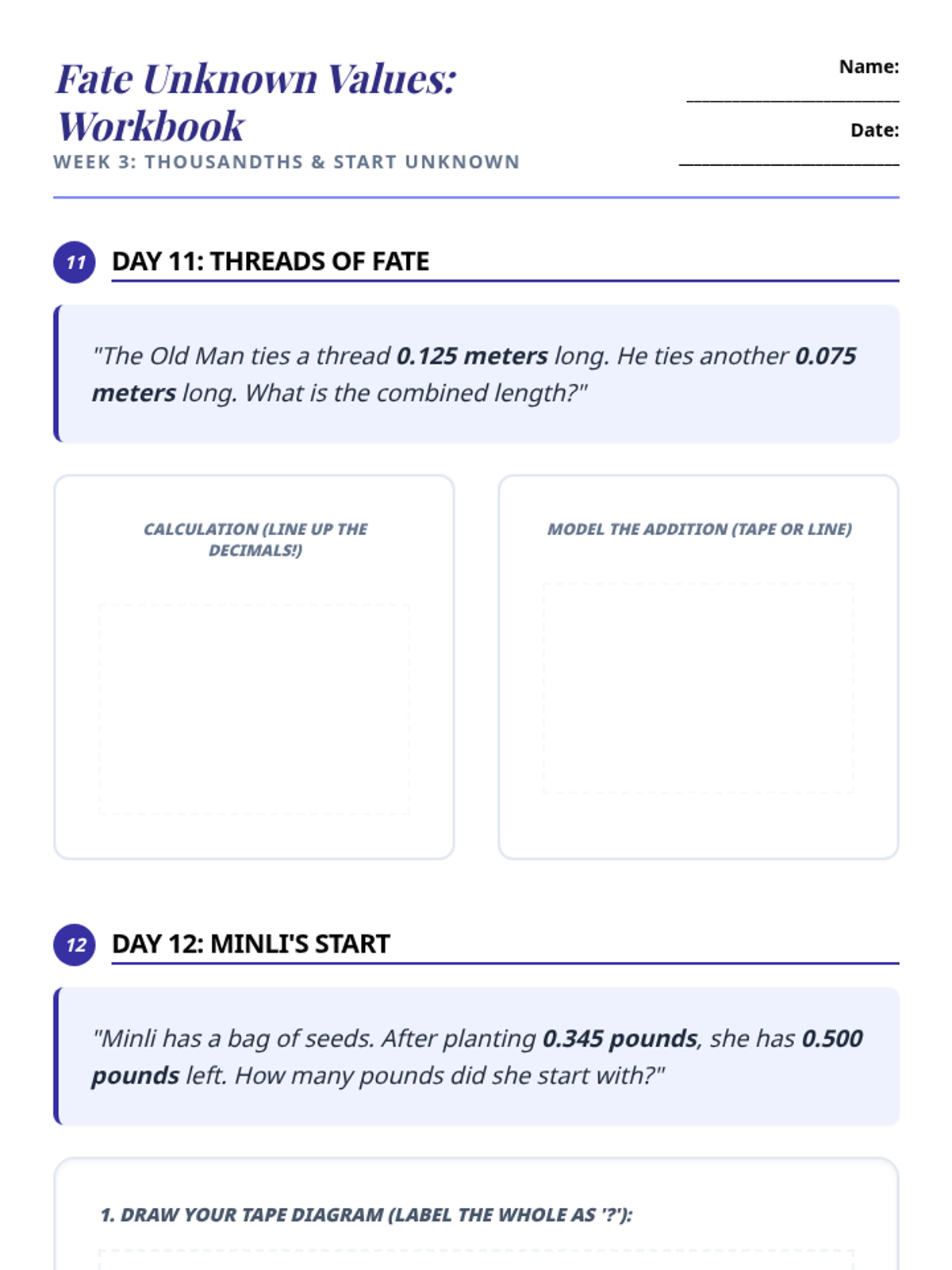
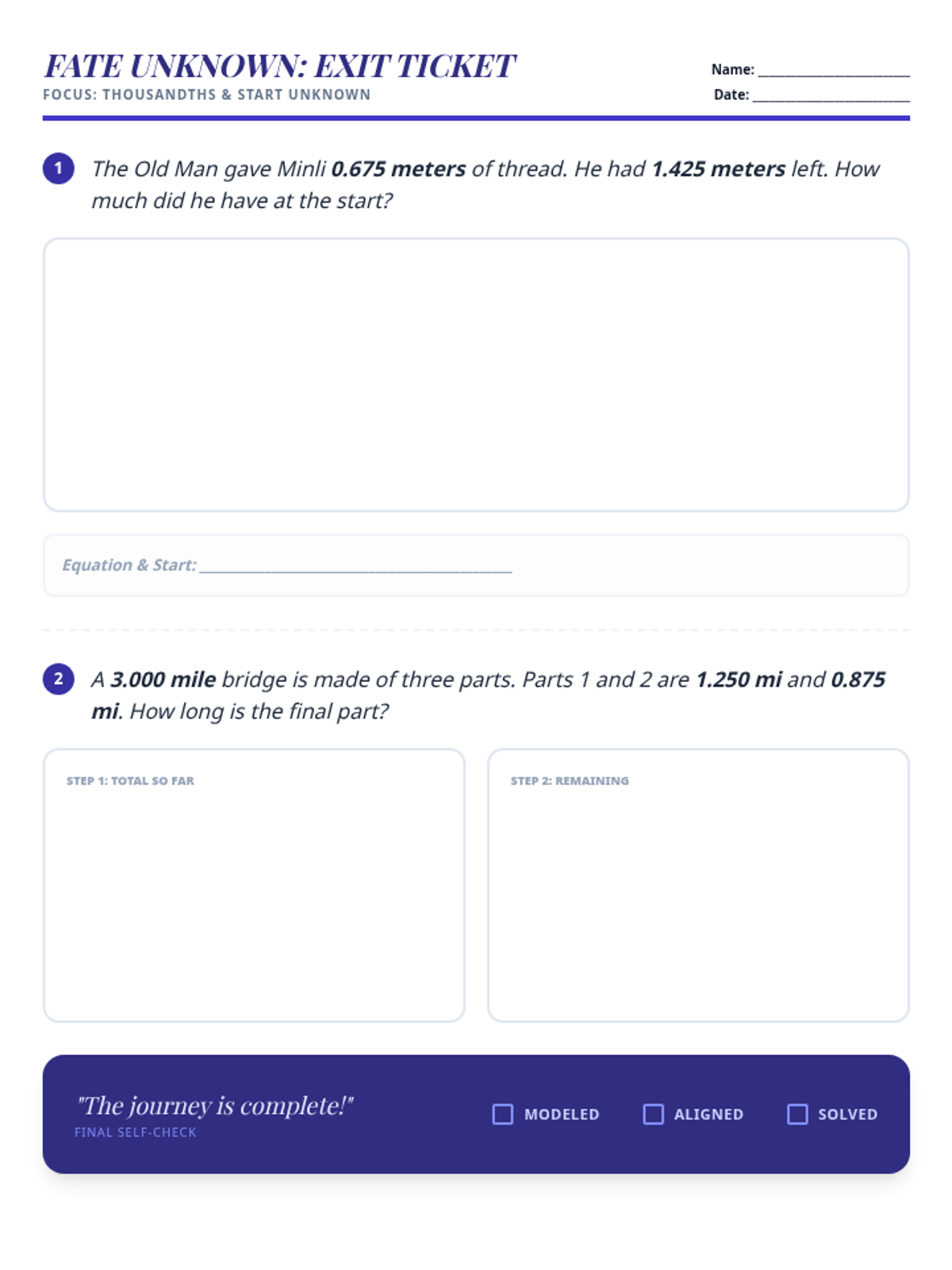
Introduces thousandths and focuses on 'start unknown' problem types, requiring students to work backward using modeling strategies.
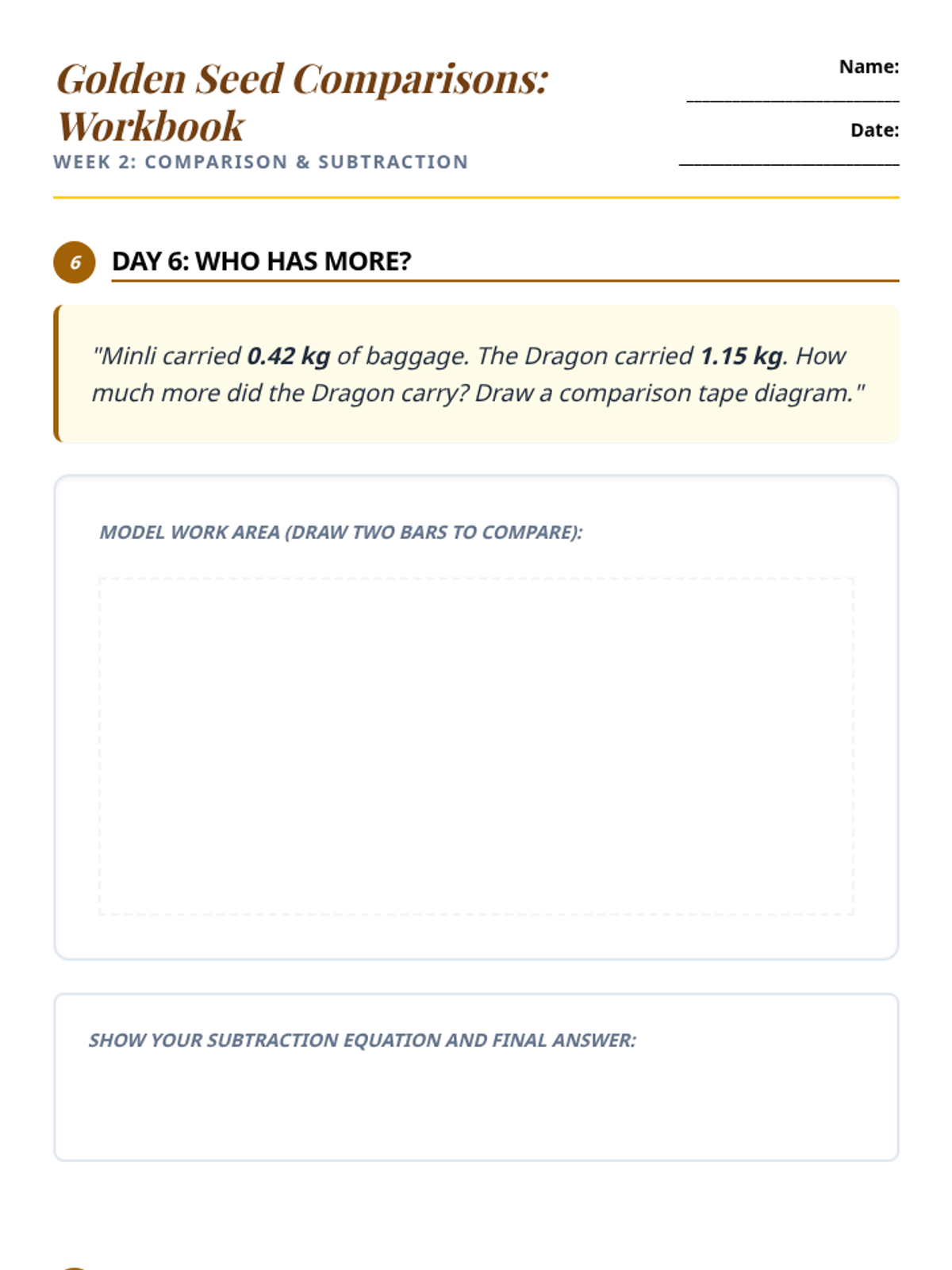
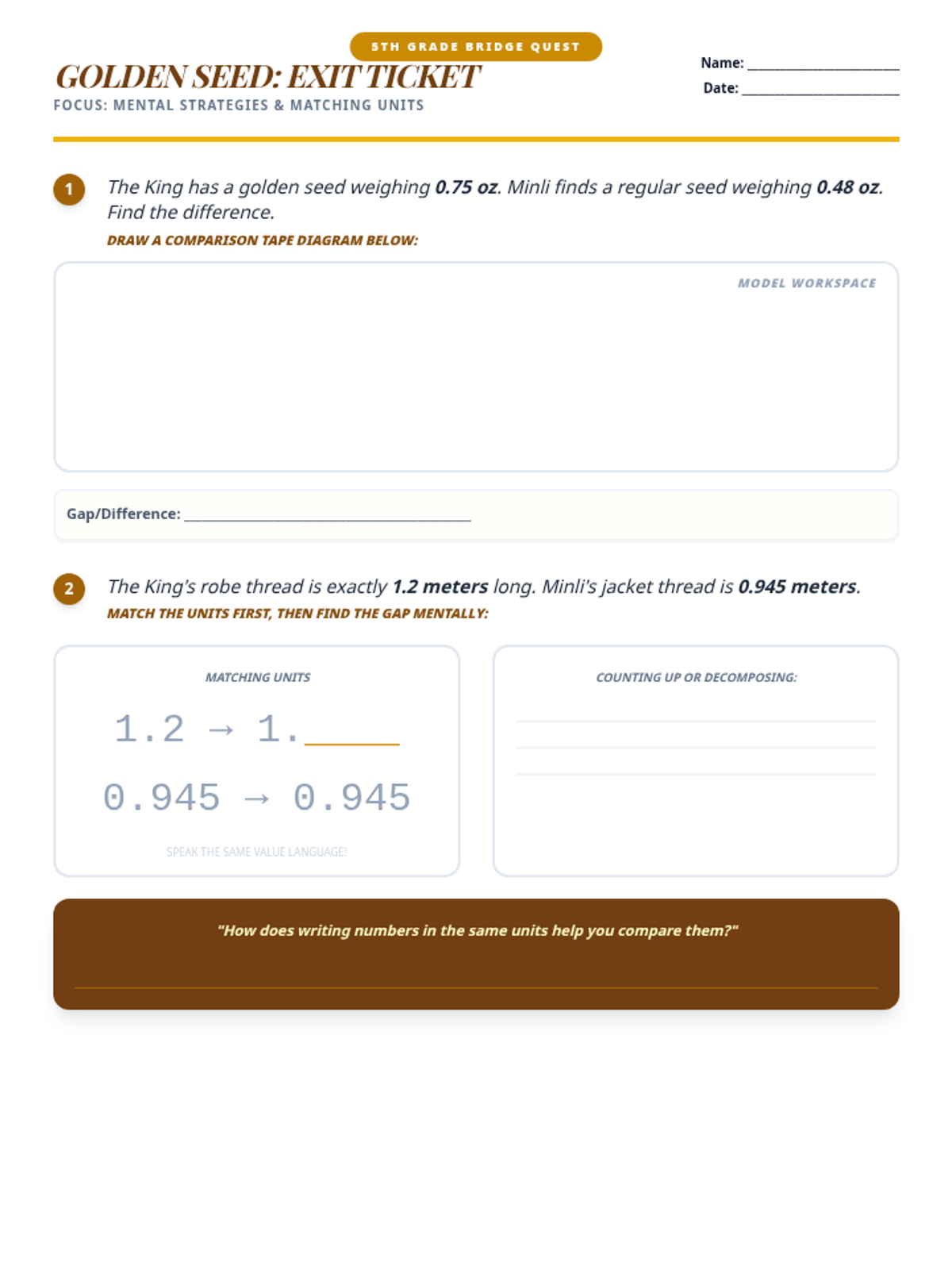
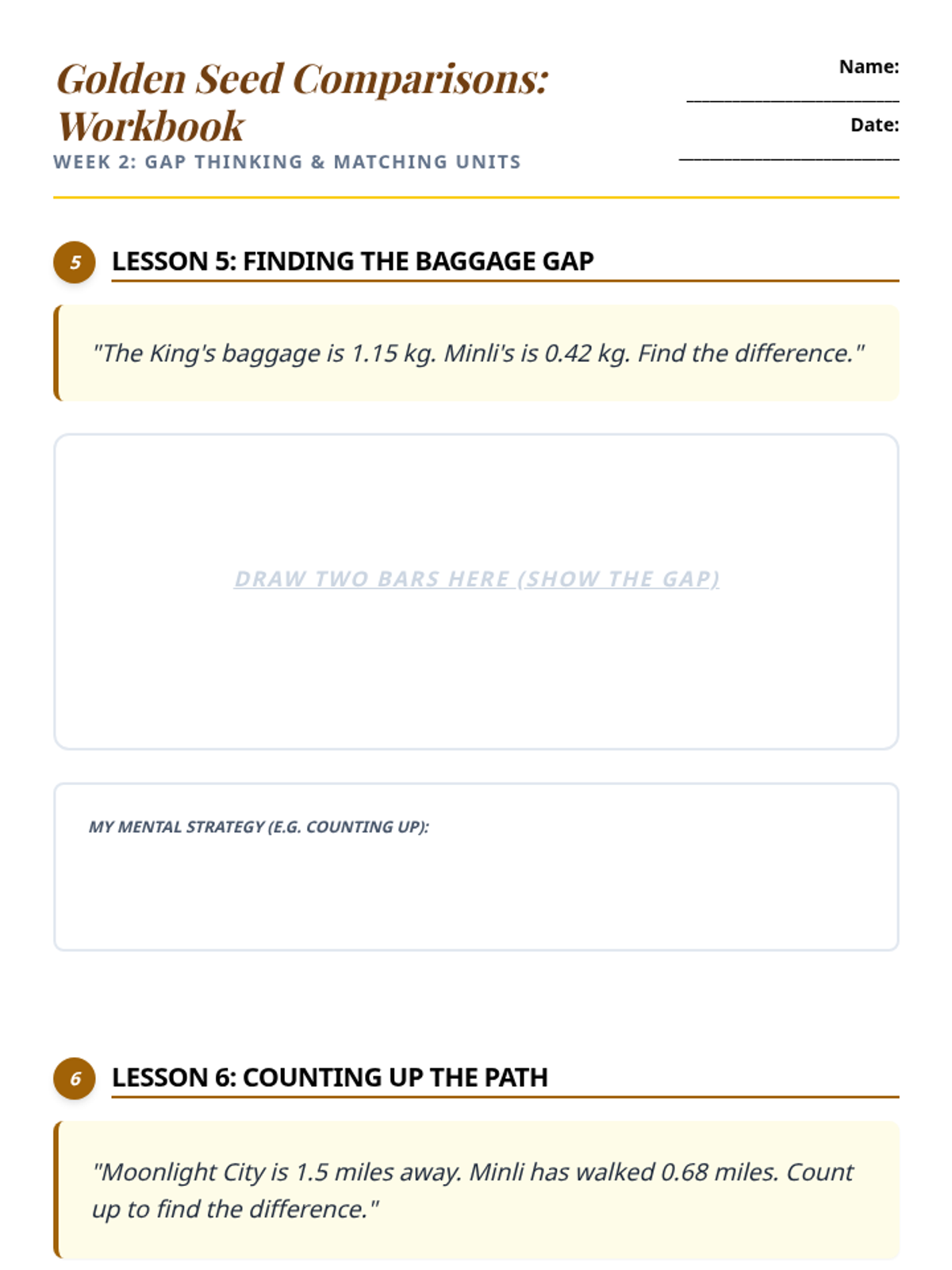
Focuses on comparison subtraction problems and using tape diagrams to visualize the difference between decimal quantities.
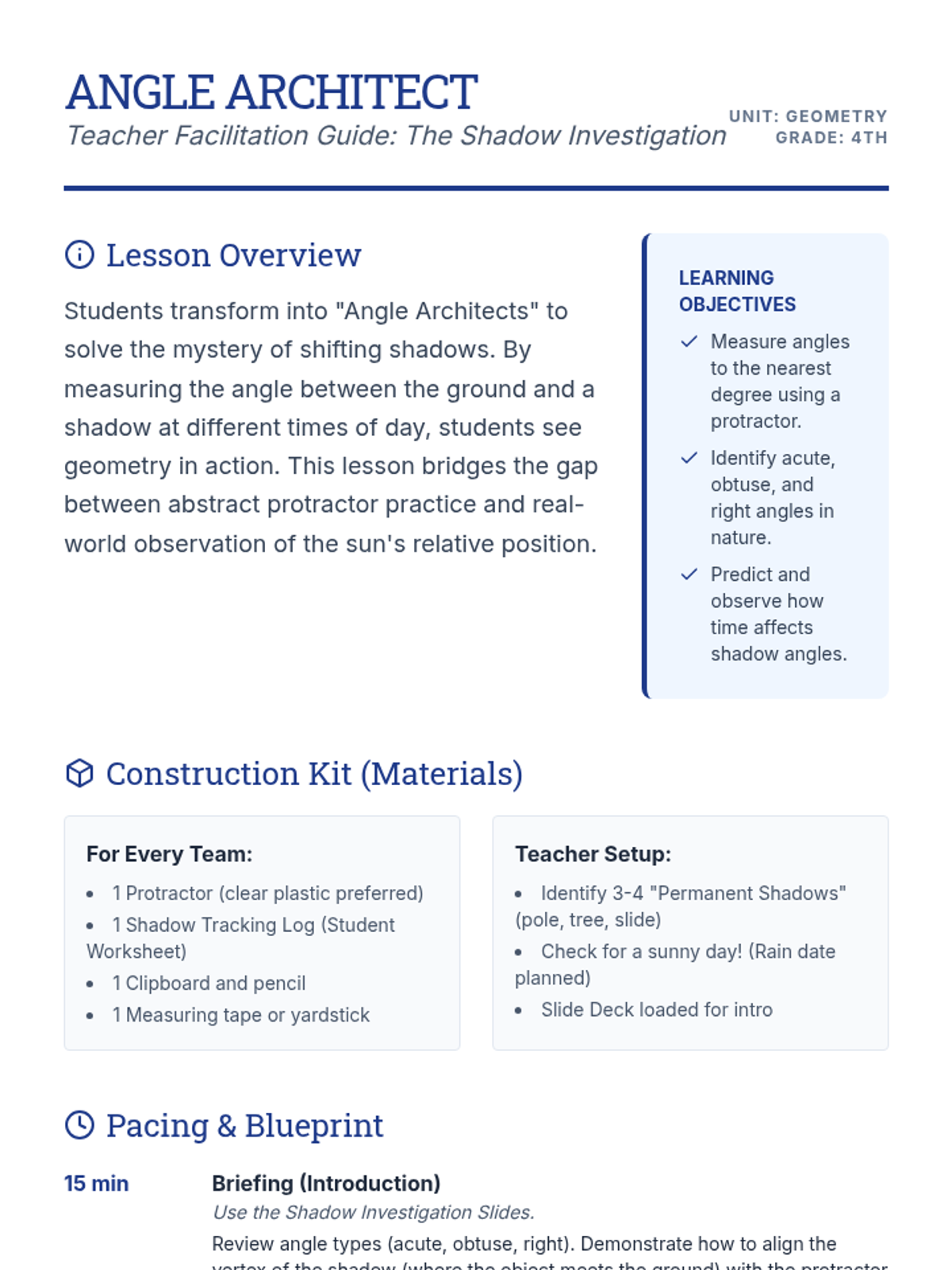
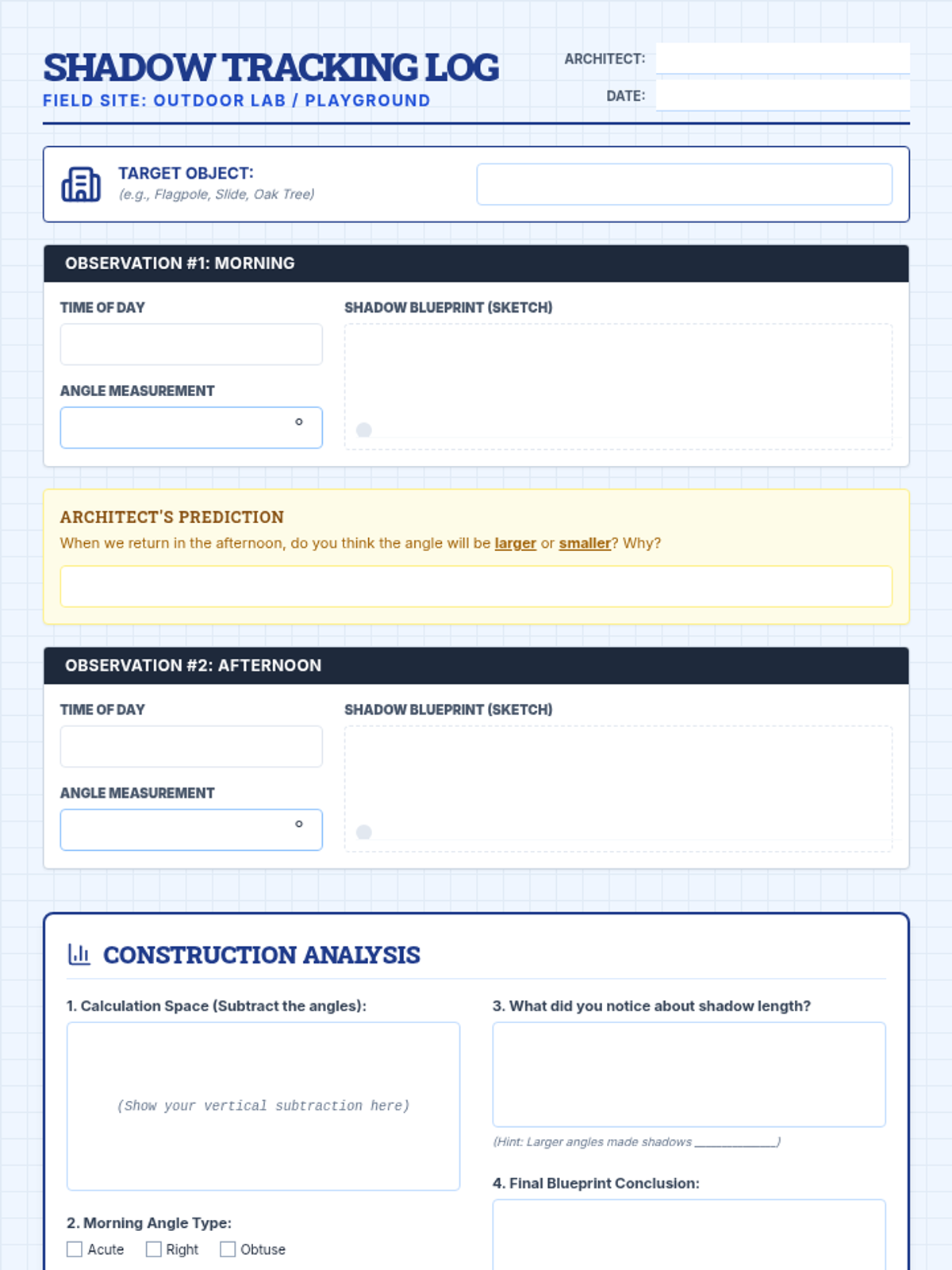
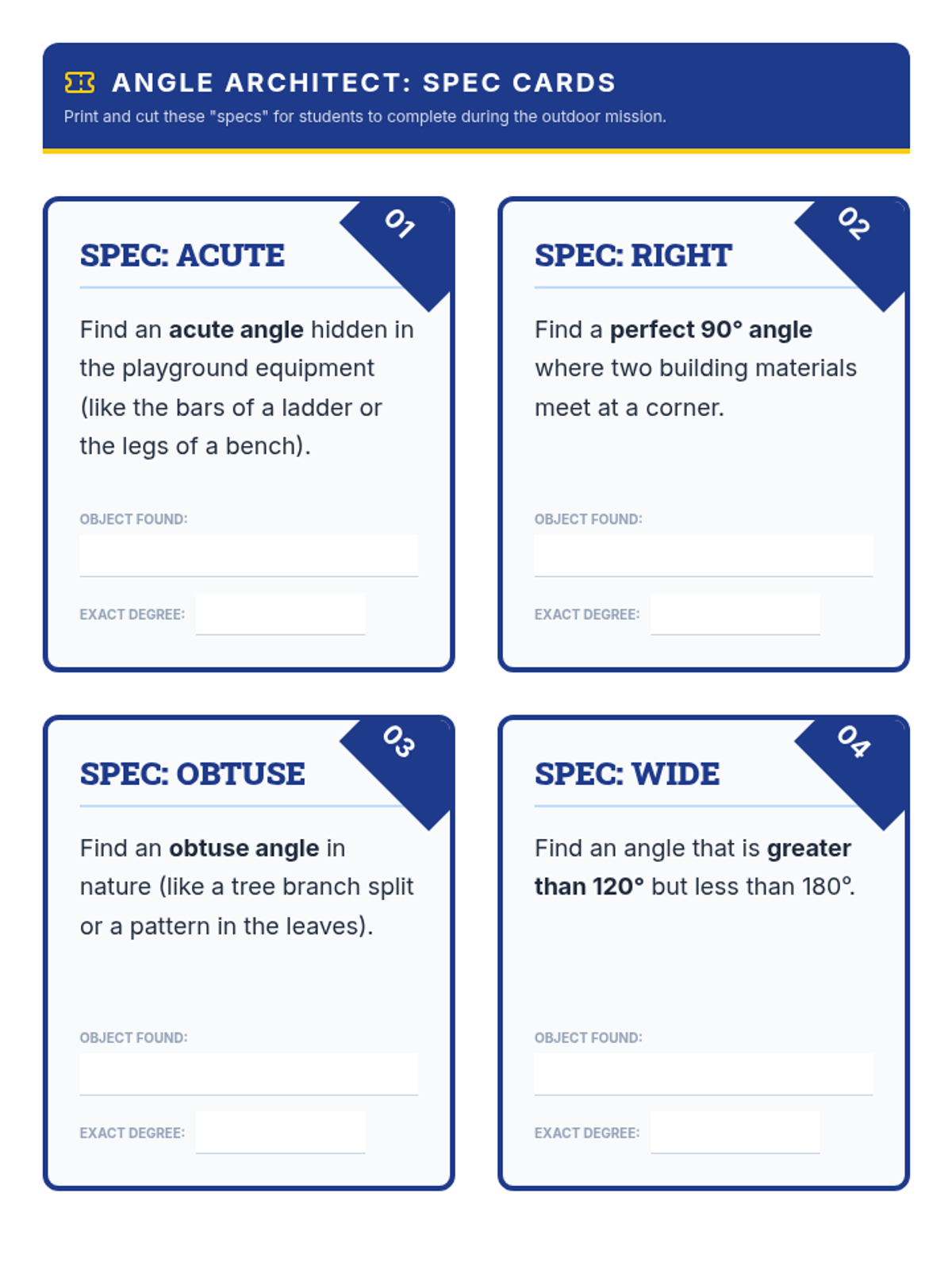
In this hands-on geometry exploration, students venture outside to measure the angles of shadows cast by playground equipment and trees at different times of day. They apply their protractor skills to record data and analyze how the sun's position changes angle measurements.
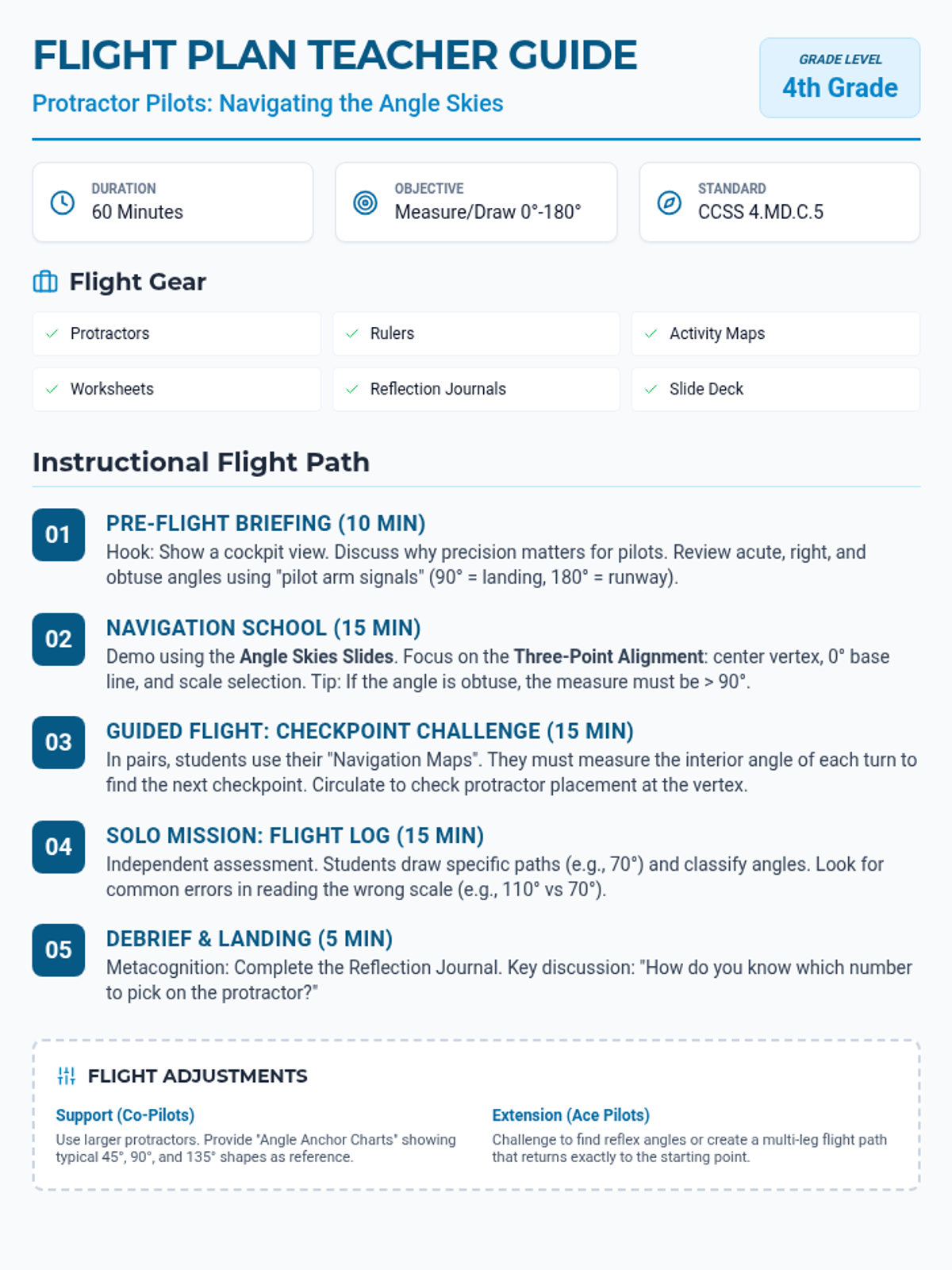
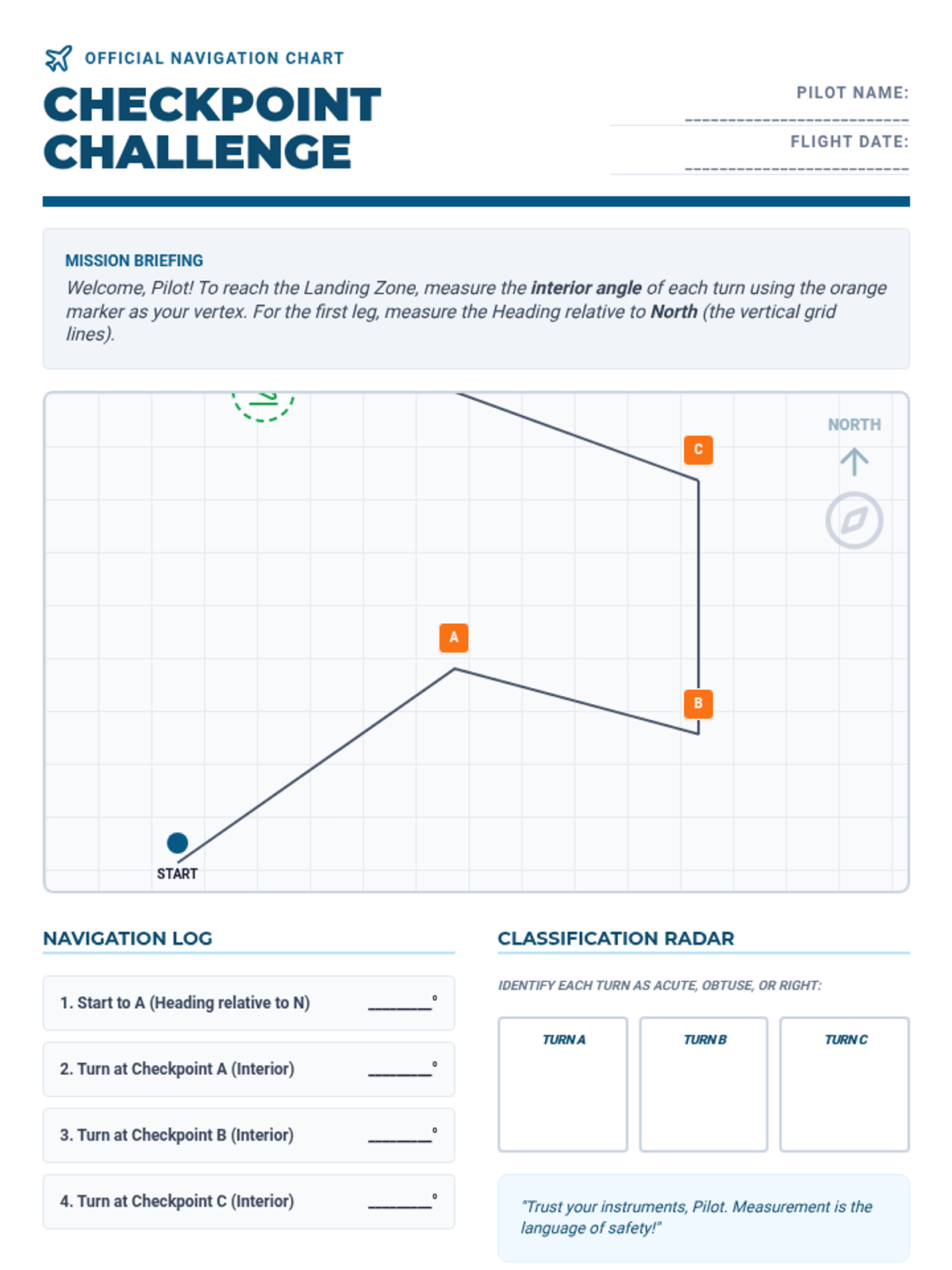
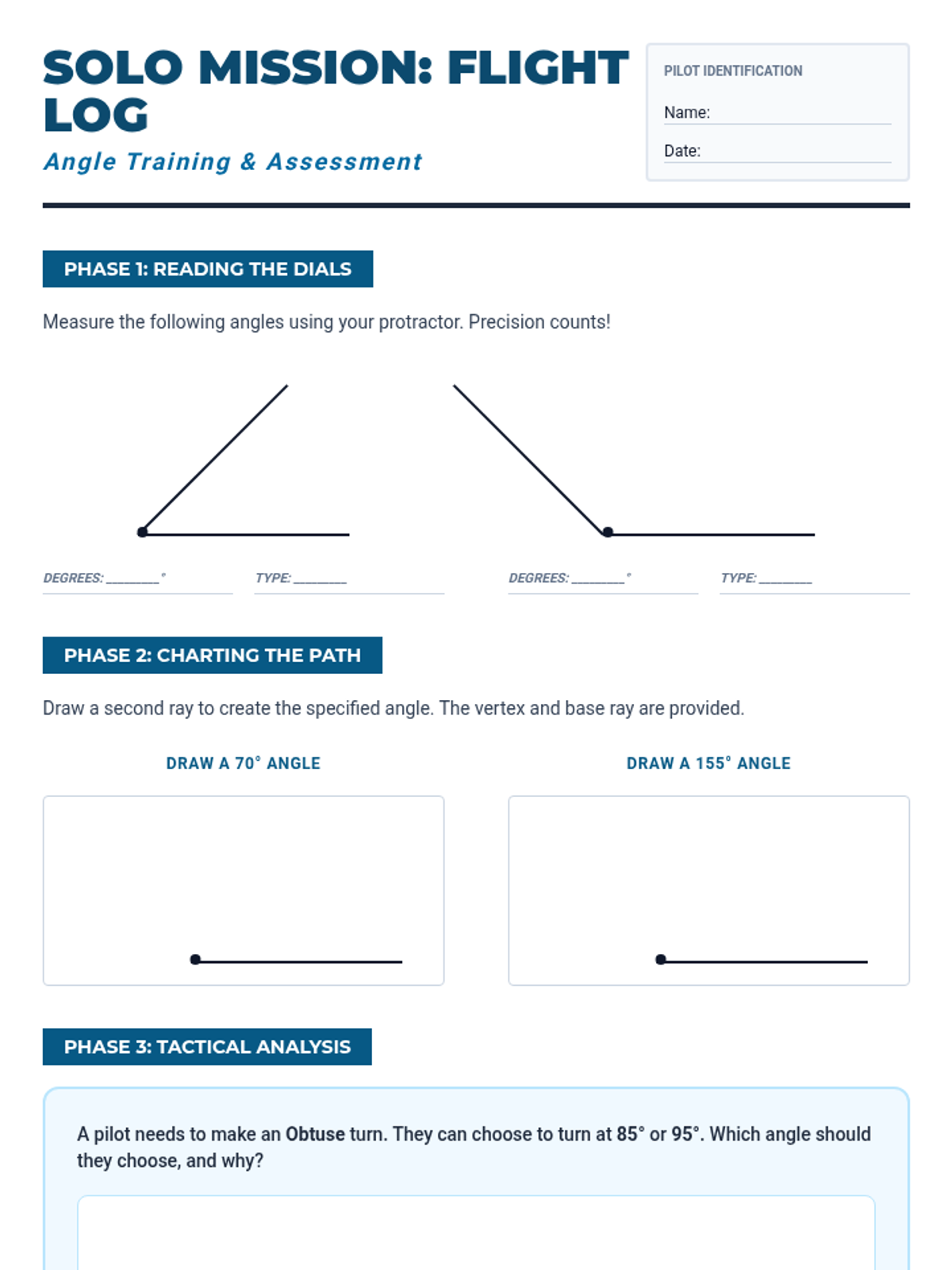
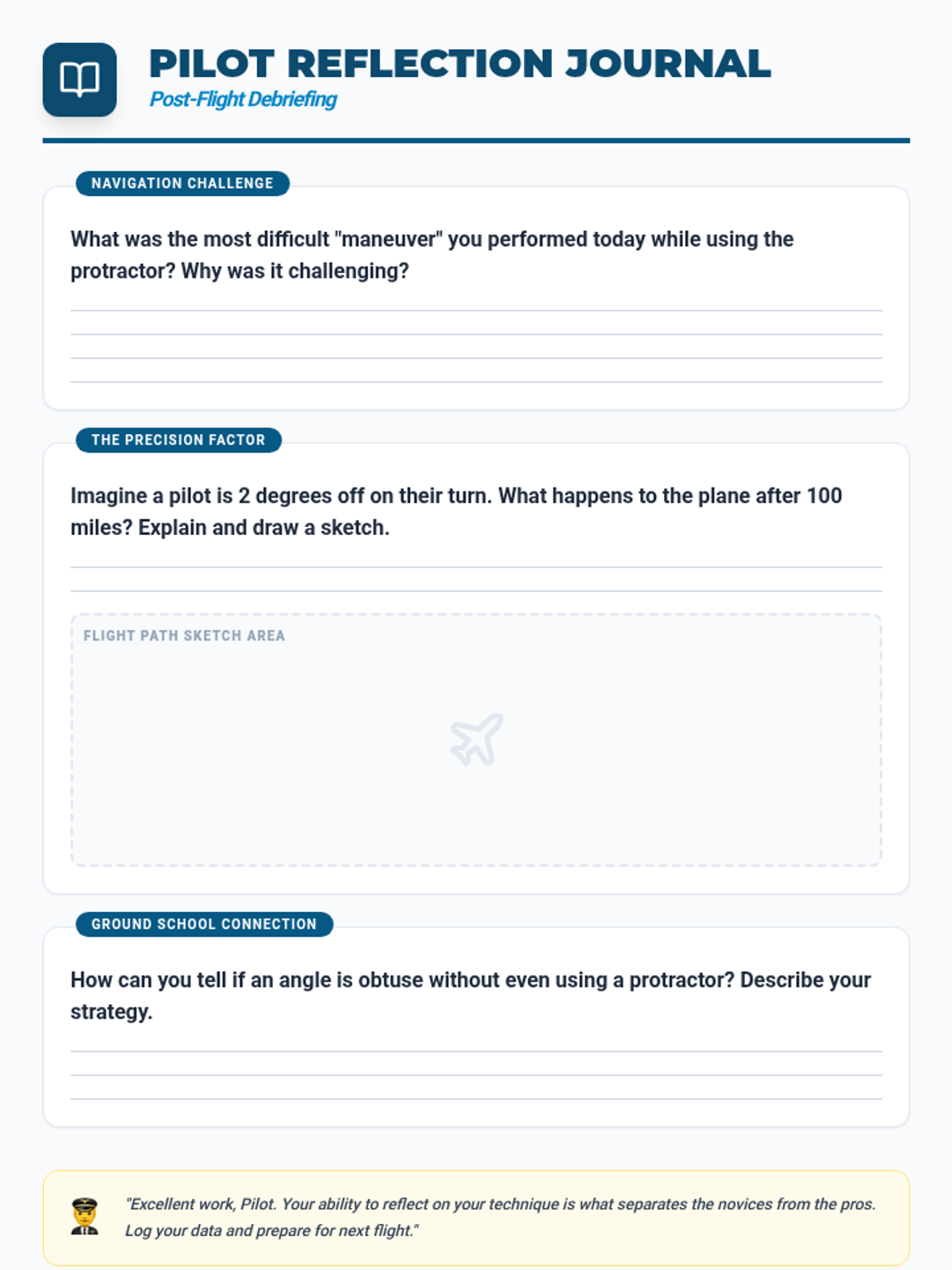
Students take to the skies as 'Protractor Pilots' to master measuring and drawing angles. This aviation-themed lesson focuses on precision, classifying angles, and spatial reasoning through a flight navigation simulation.
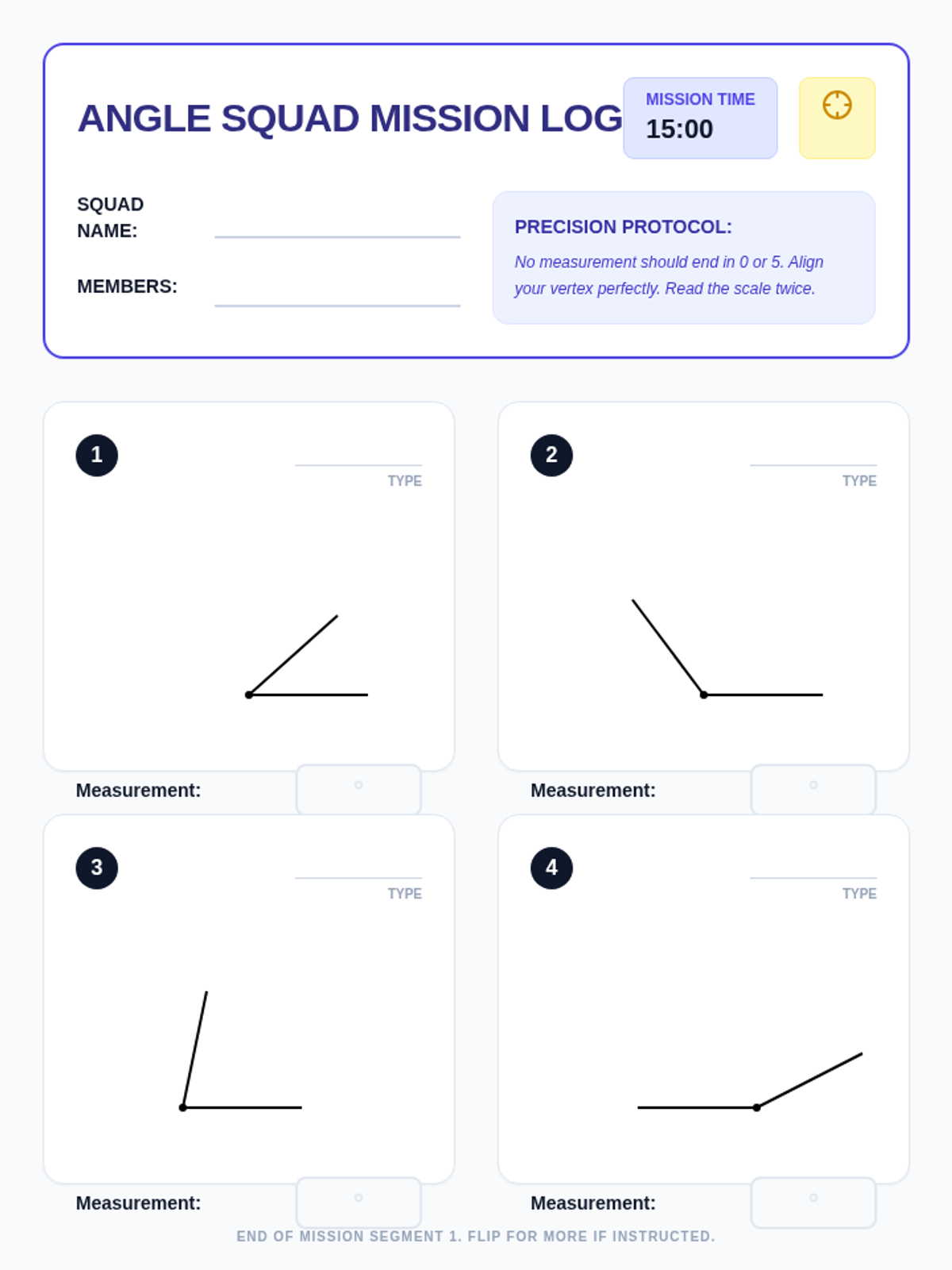
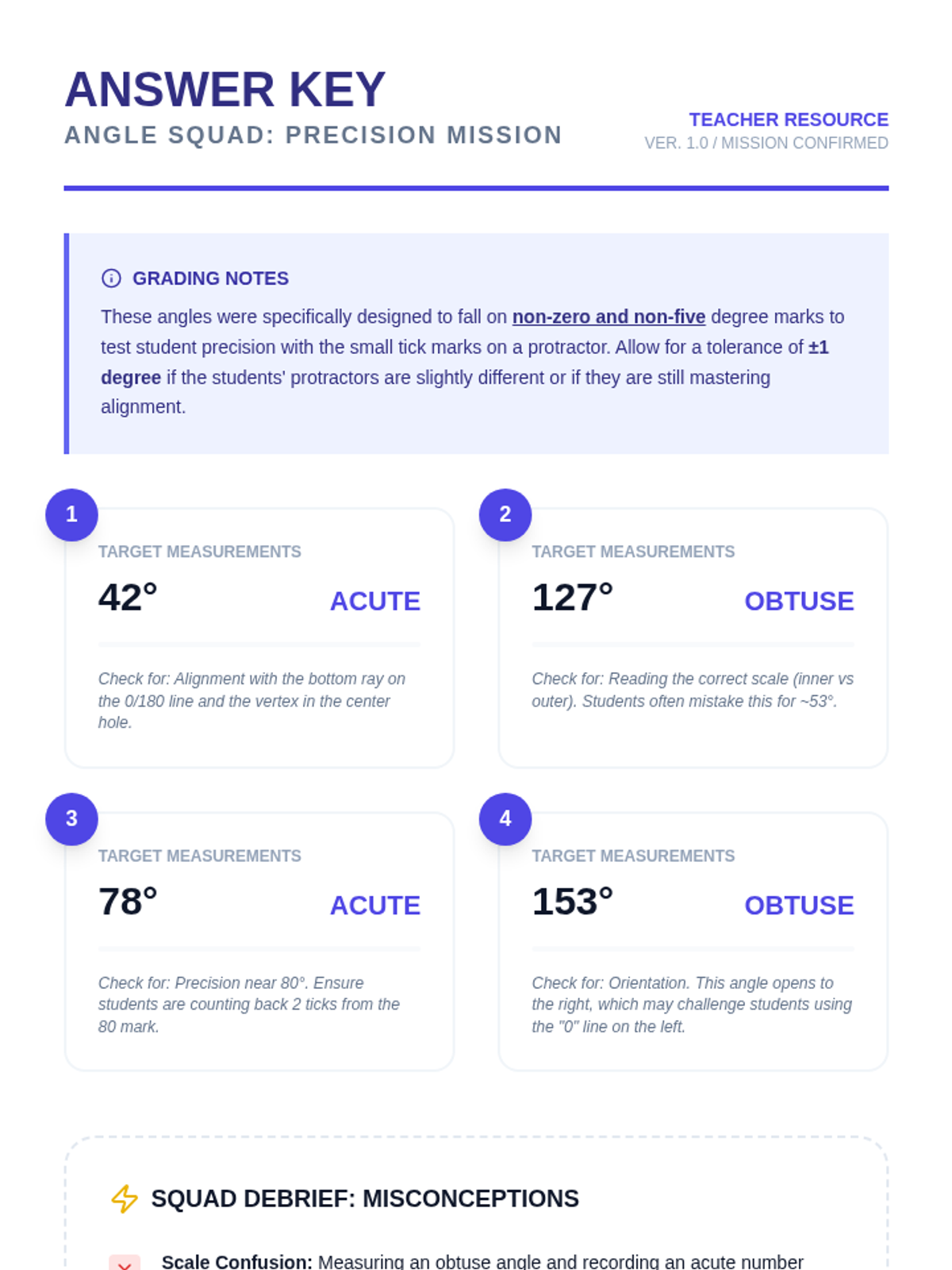
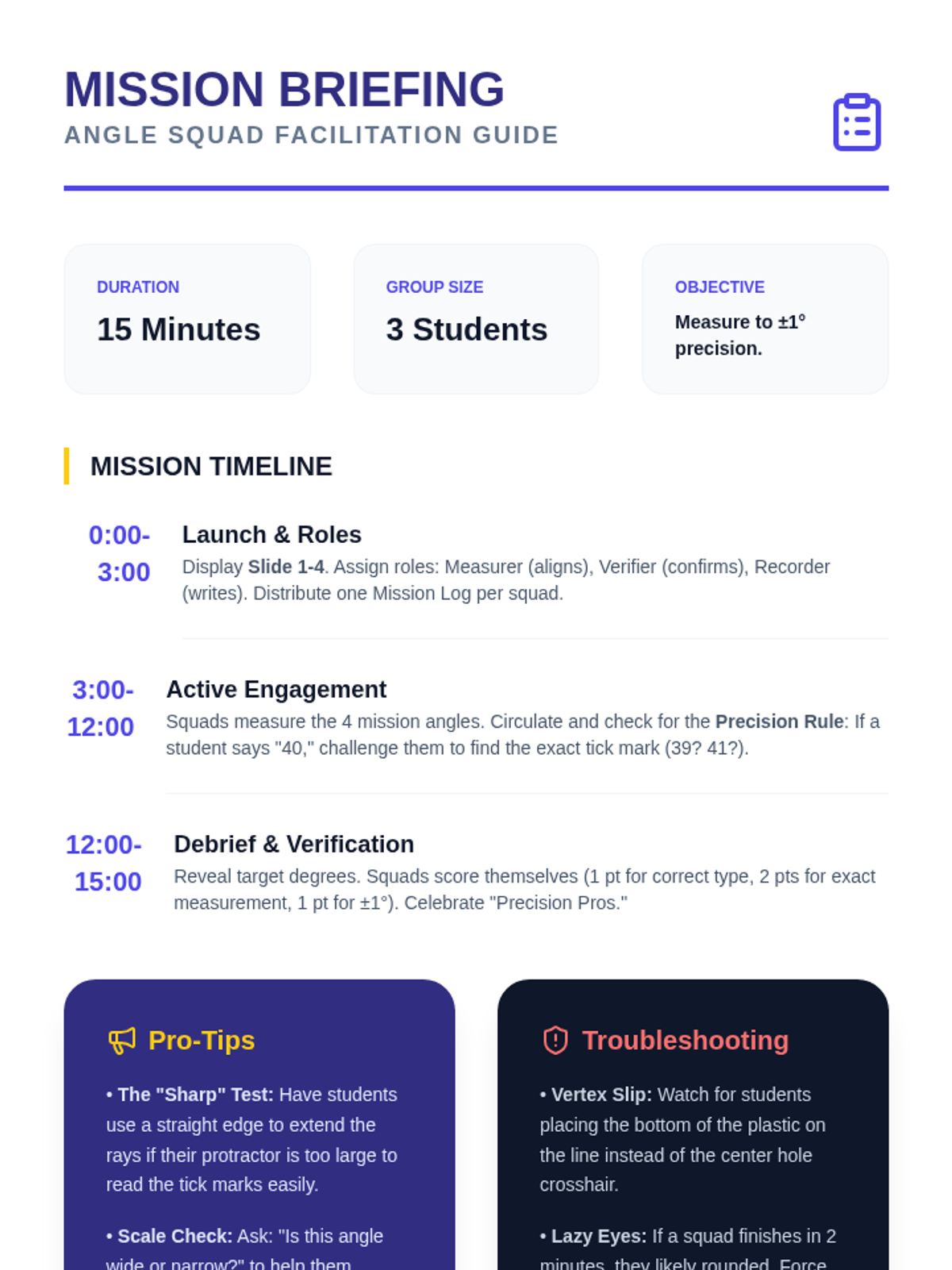
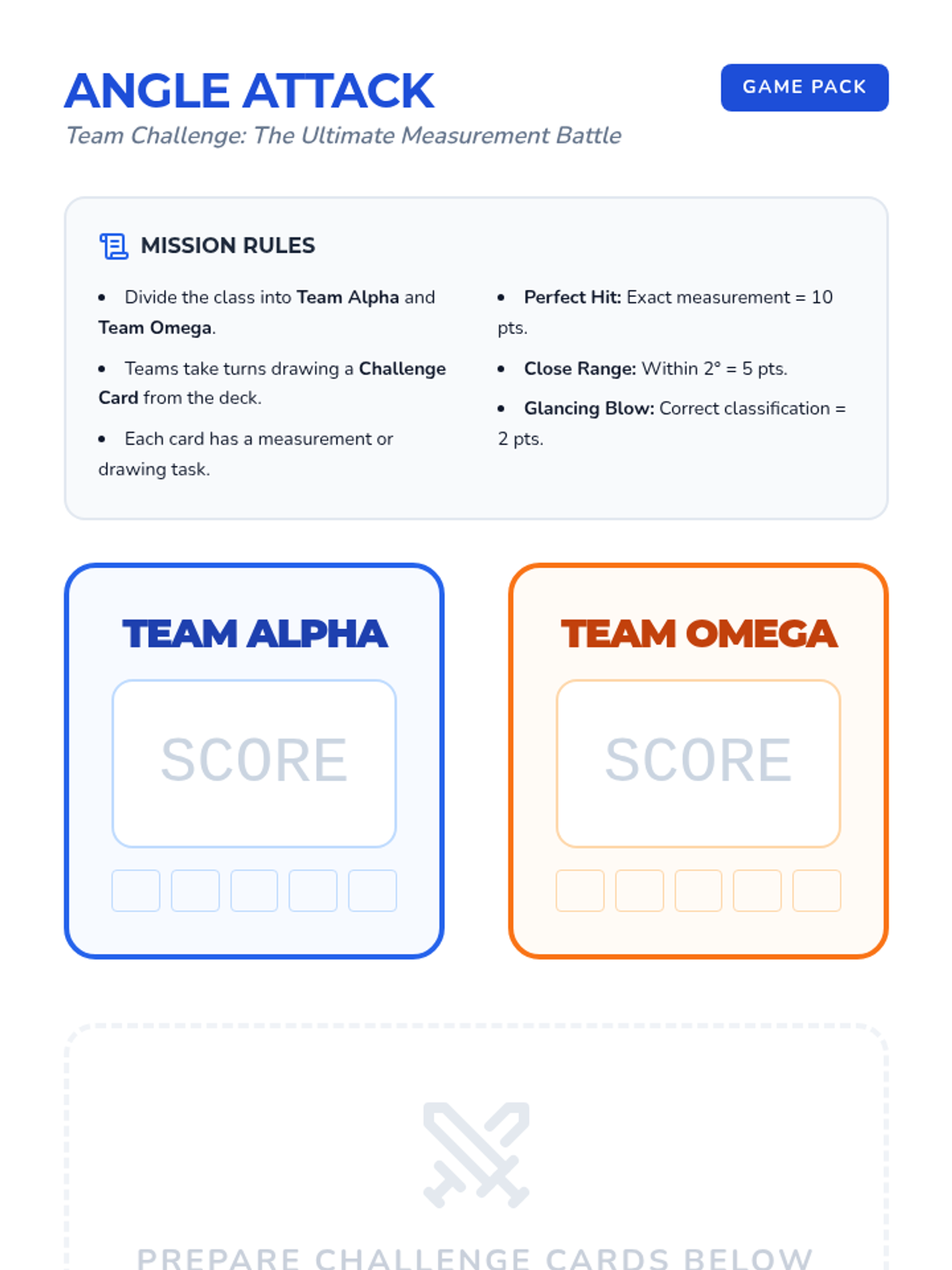
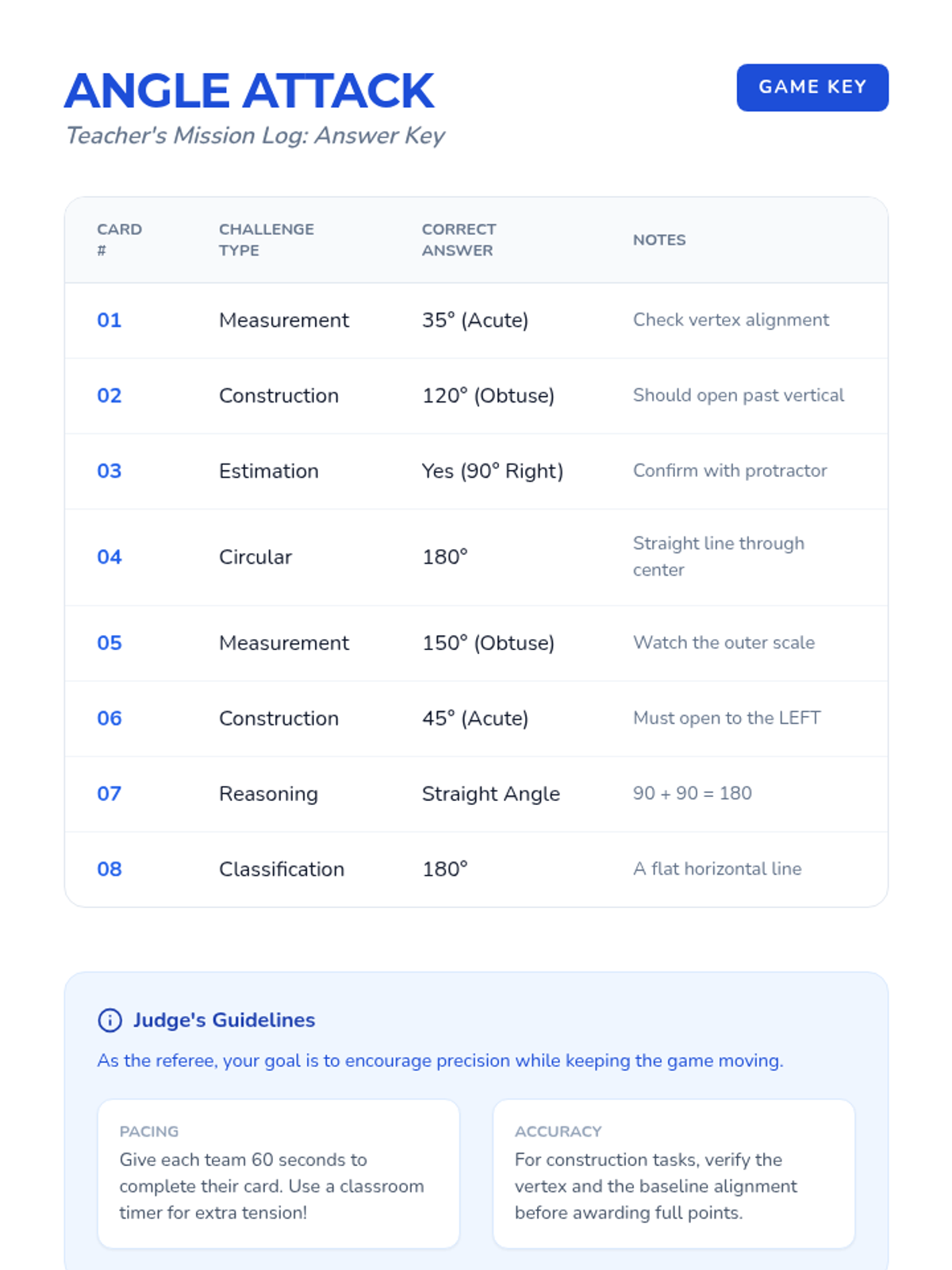
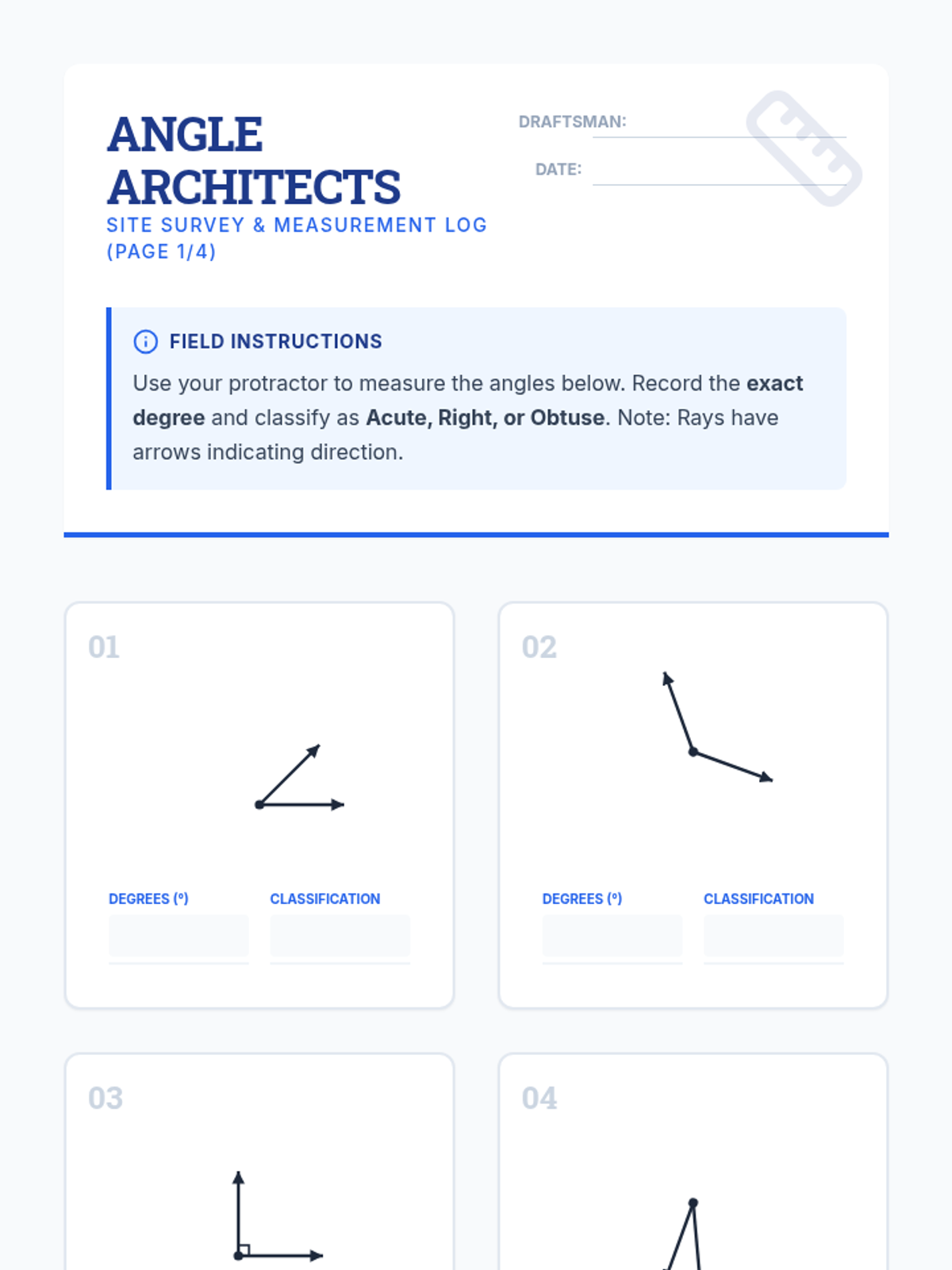
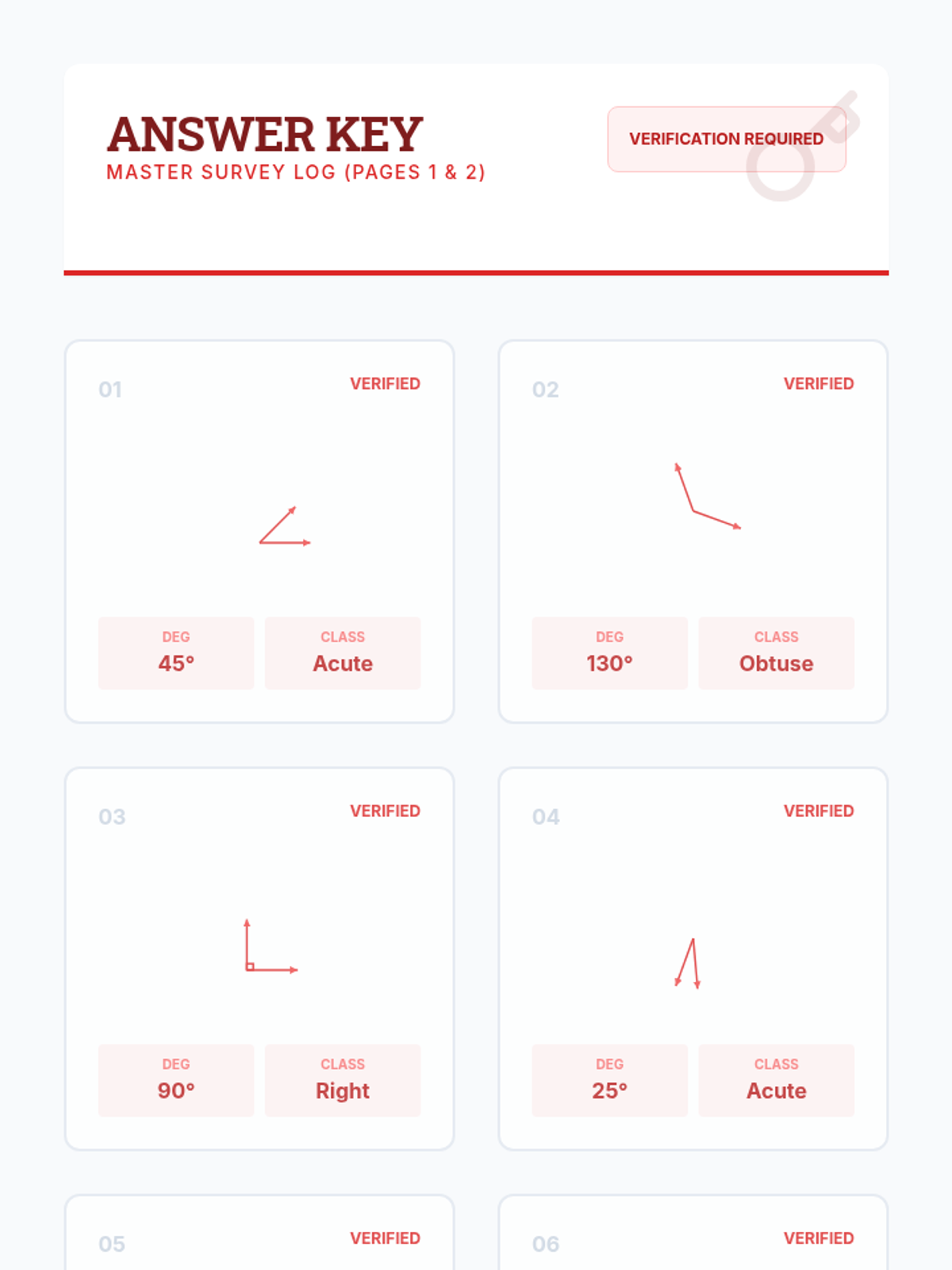
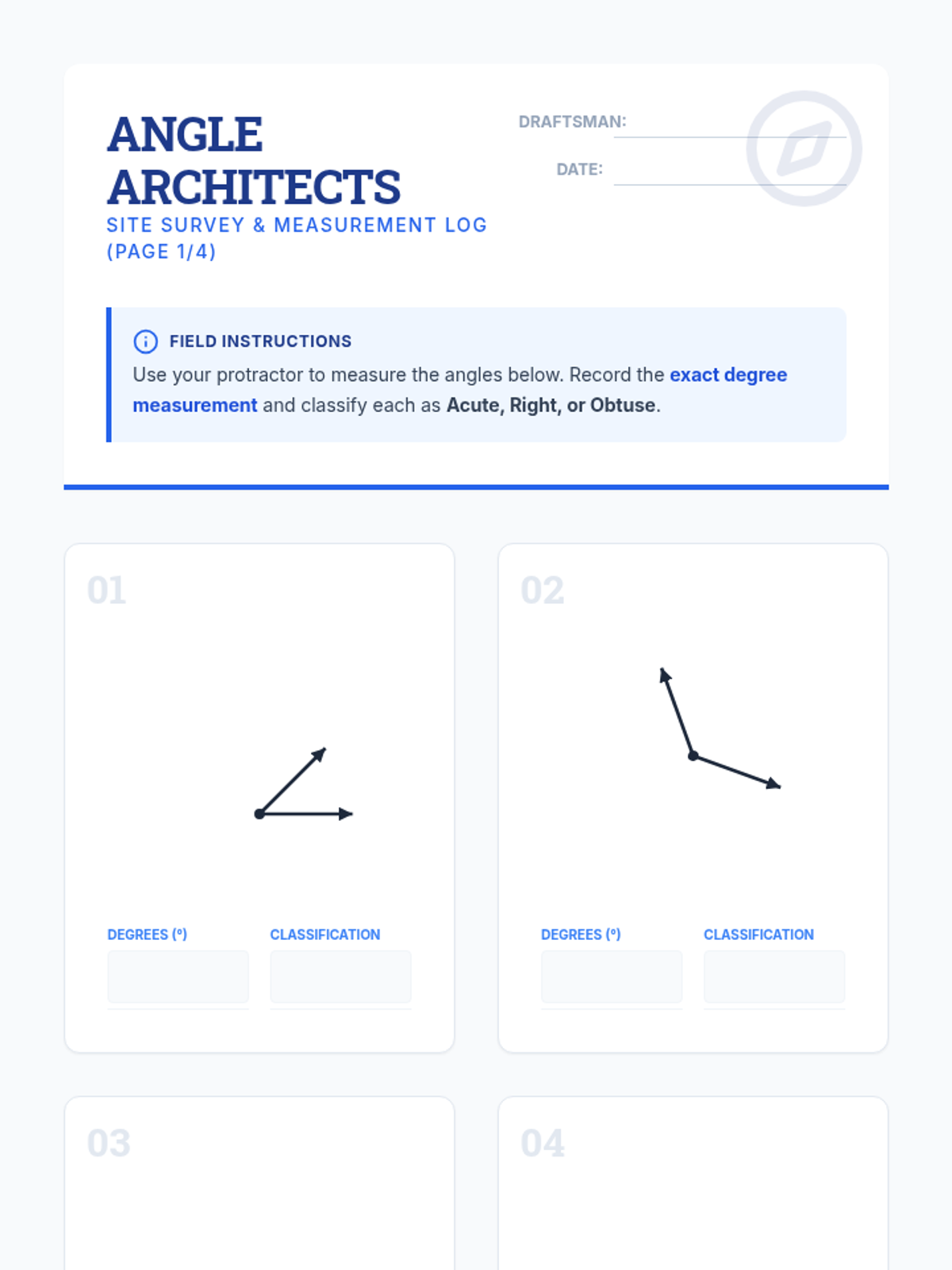
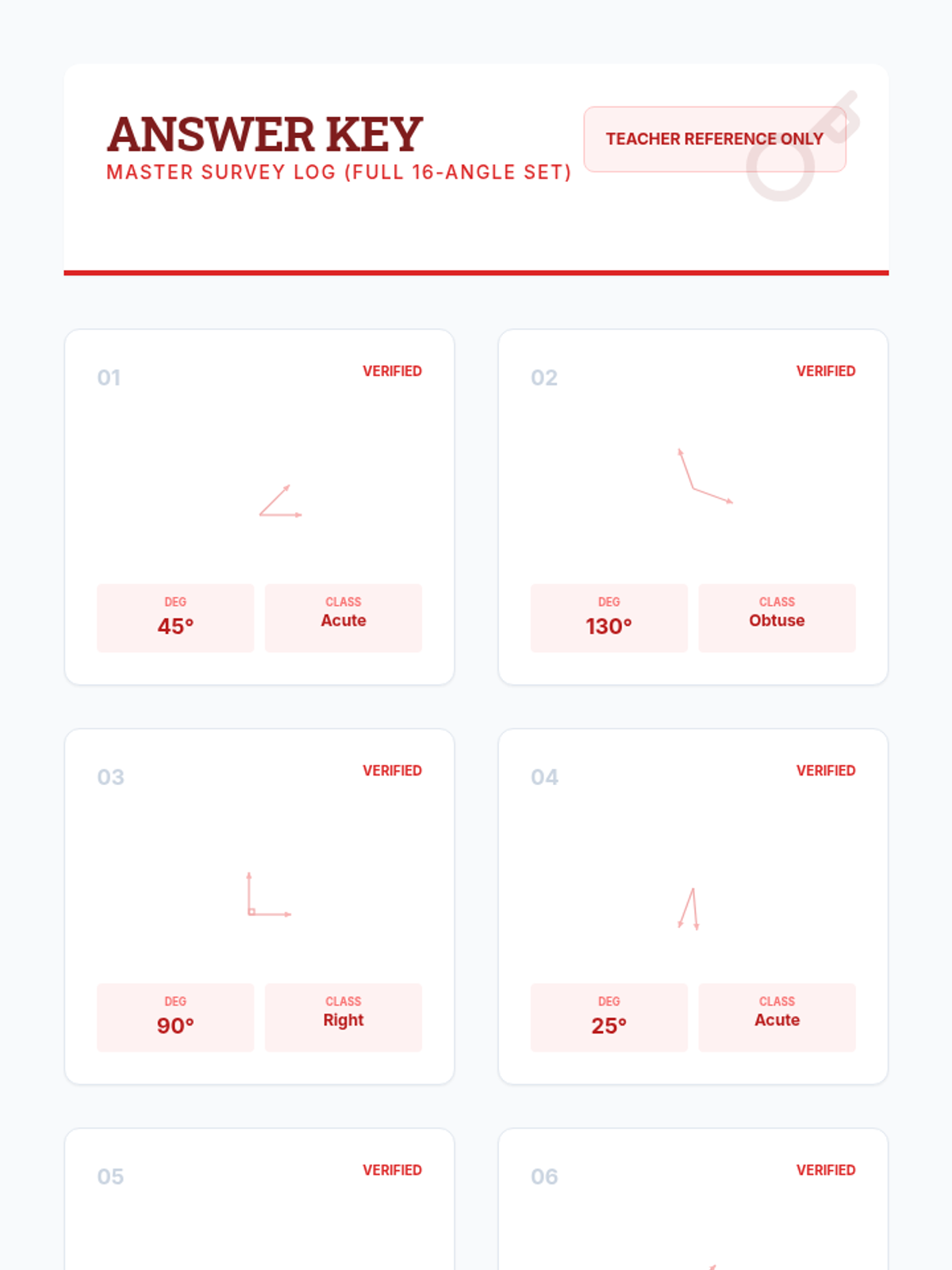
A 15-minute collaborative activity where students work in teams to measure acute, obtuse, and right angles with degree-level precision using a protractor.
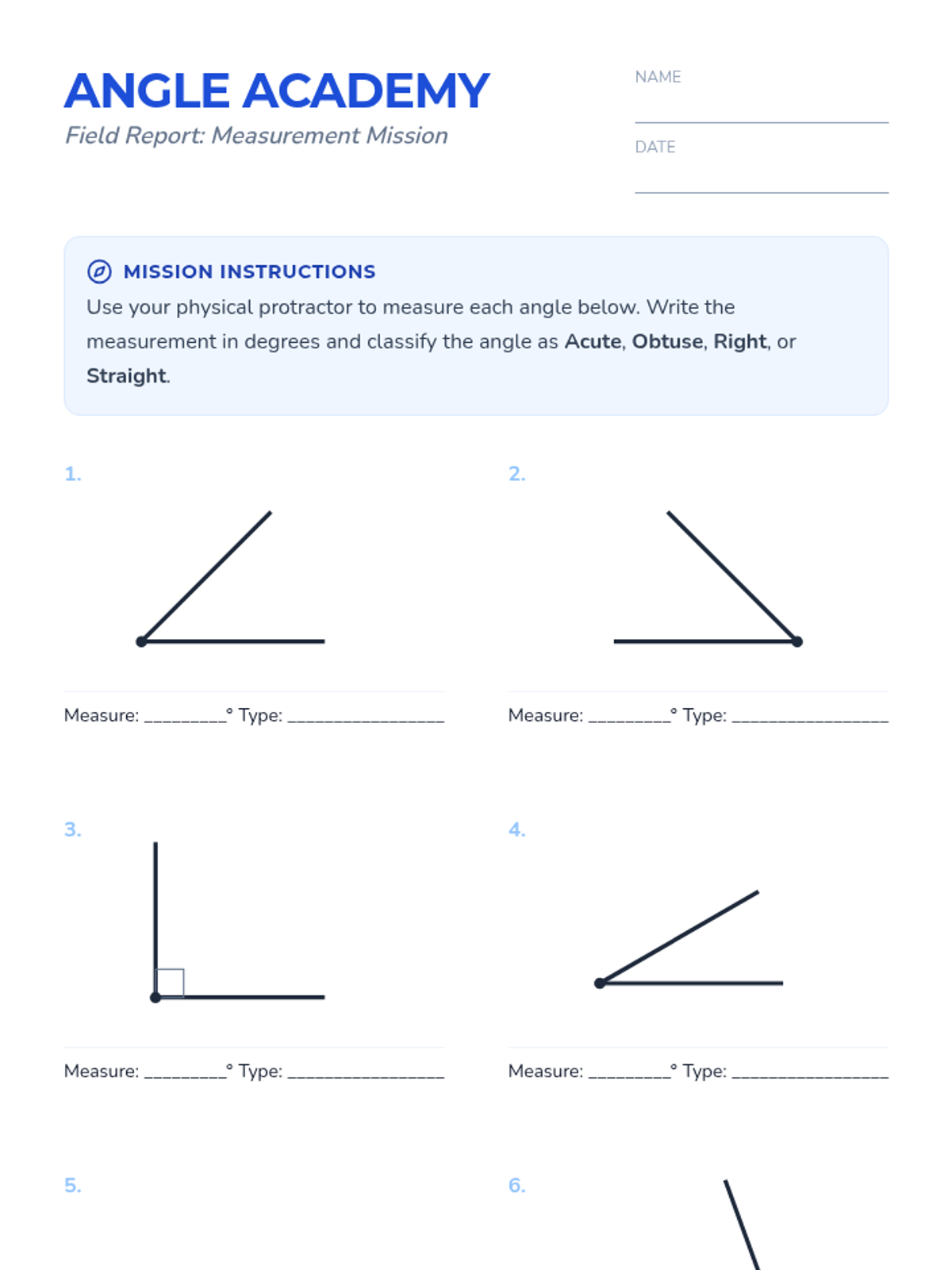
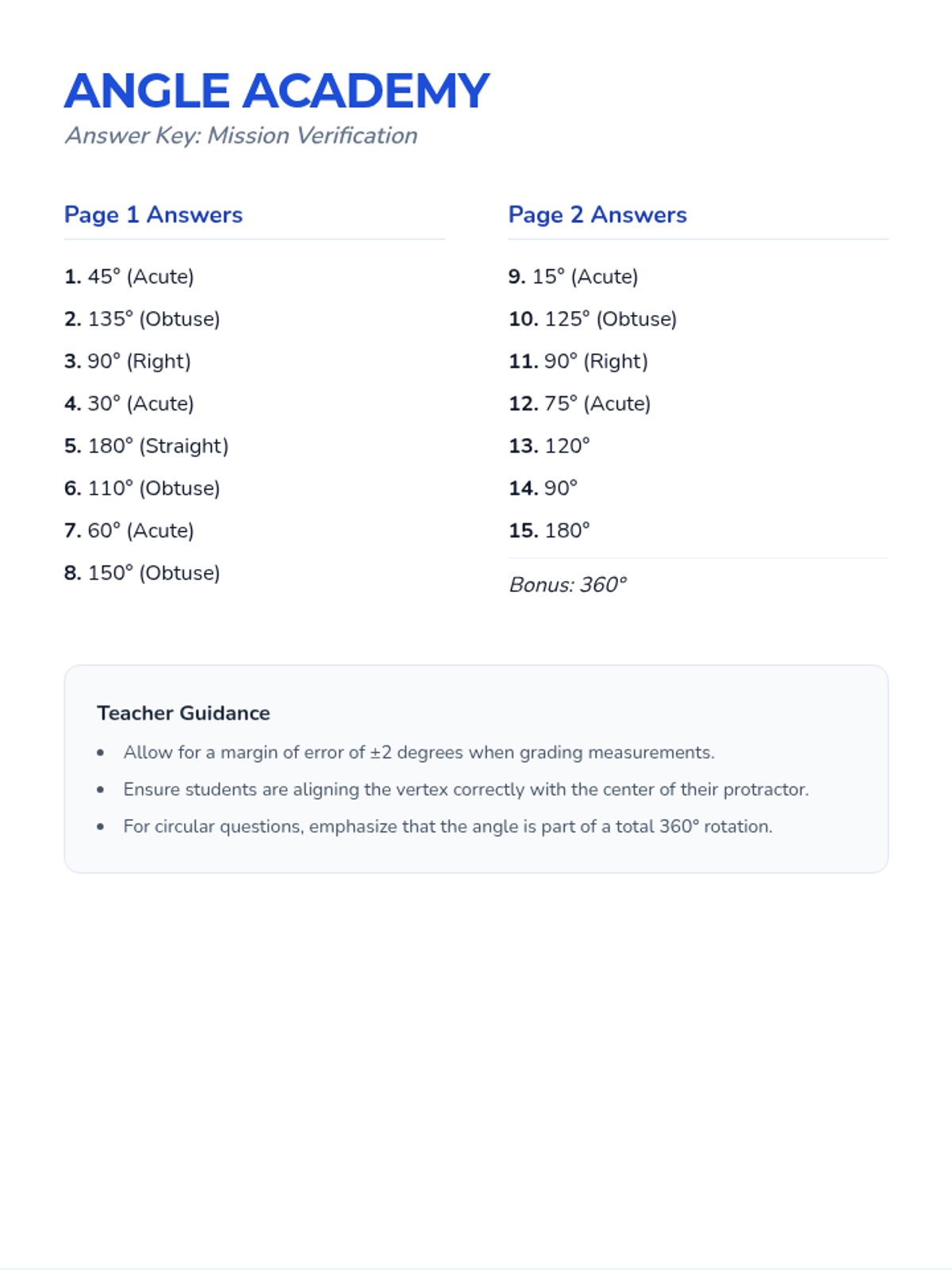
A comprehensive lesson on measuring angles using a physical protractor, covering acute, obtuse, right, straight, and circular angles.
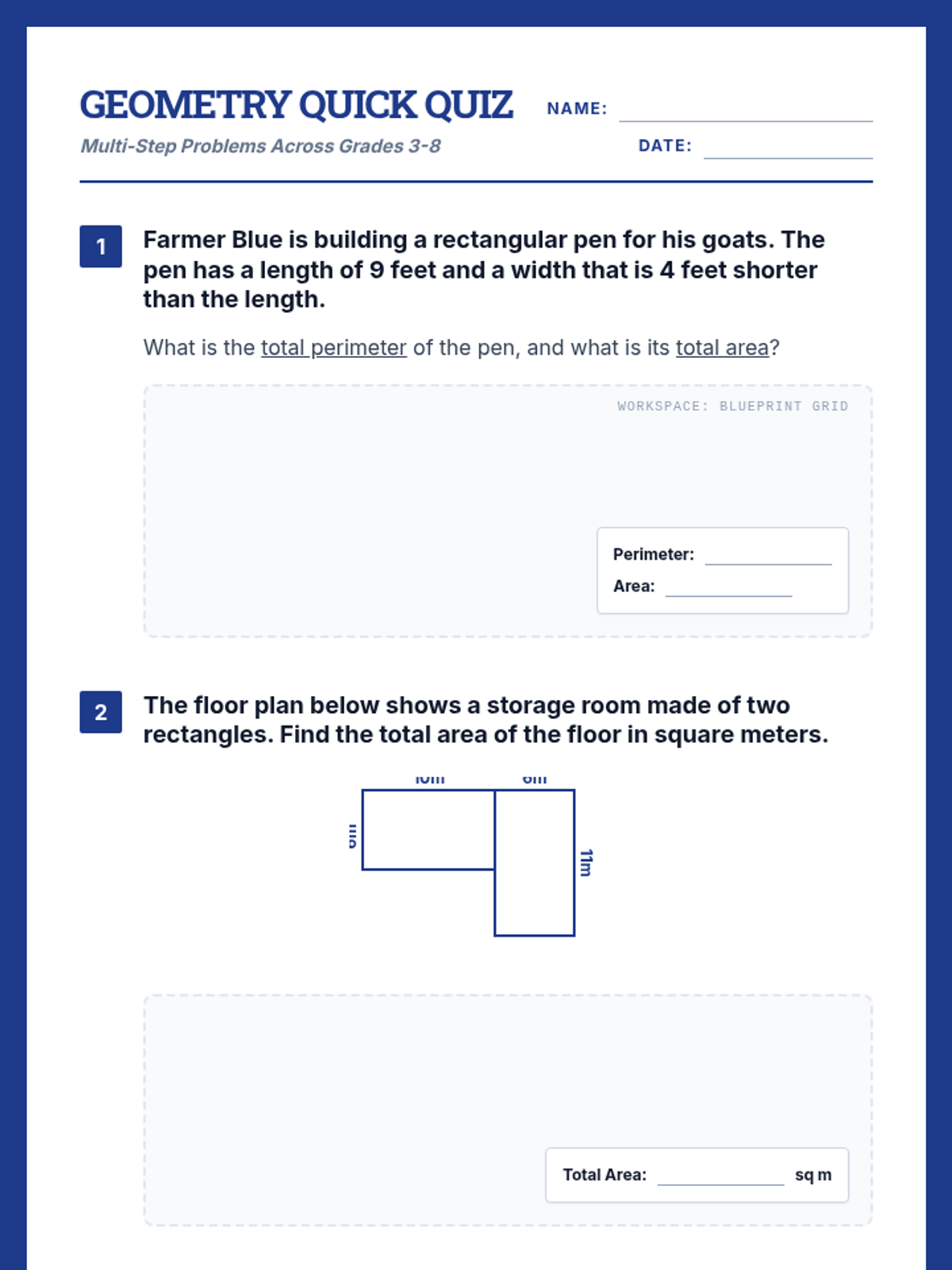
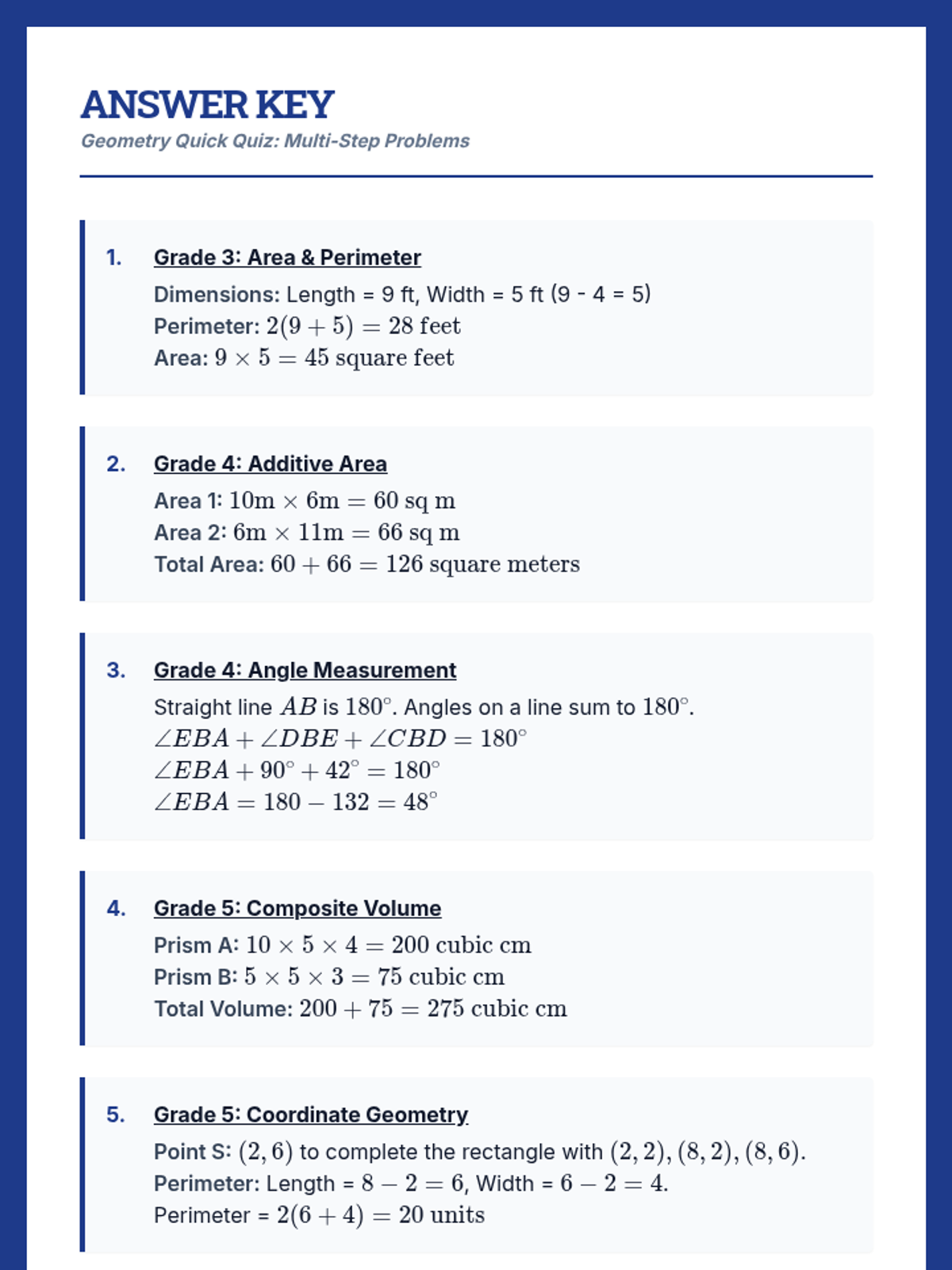
A comprehensive geometry and measurement assessment featuring multi-step problems aligned with North Carolina EOG standards for grades 3 through 8.
A hands-on lesson focusing on the precise measurement of acute, obtuse, and right angles using a protractor. Students will practice measuring angles in various orientations to build spatial reasoning and technical accuracy.
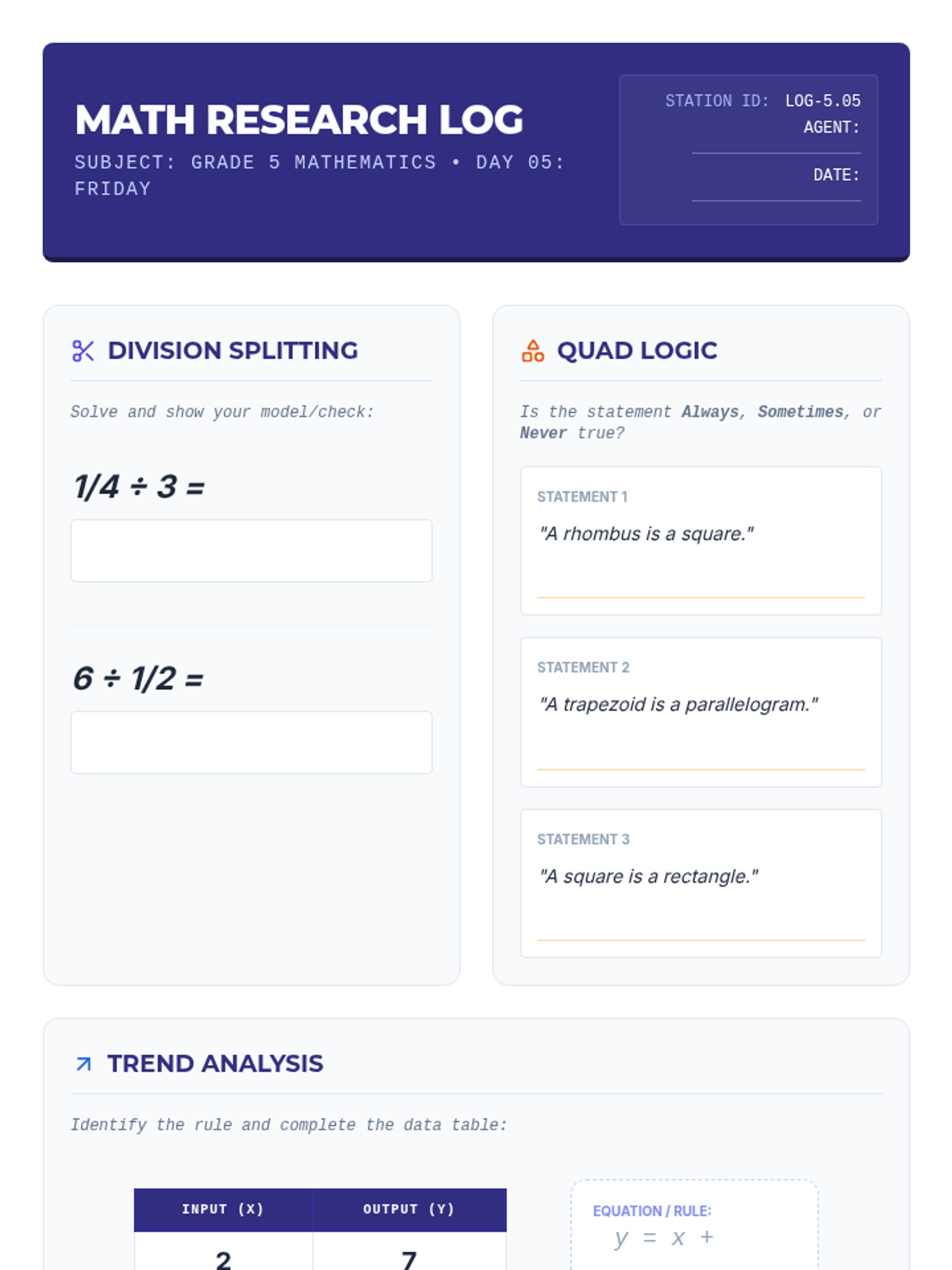
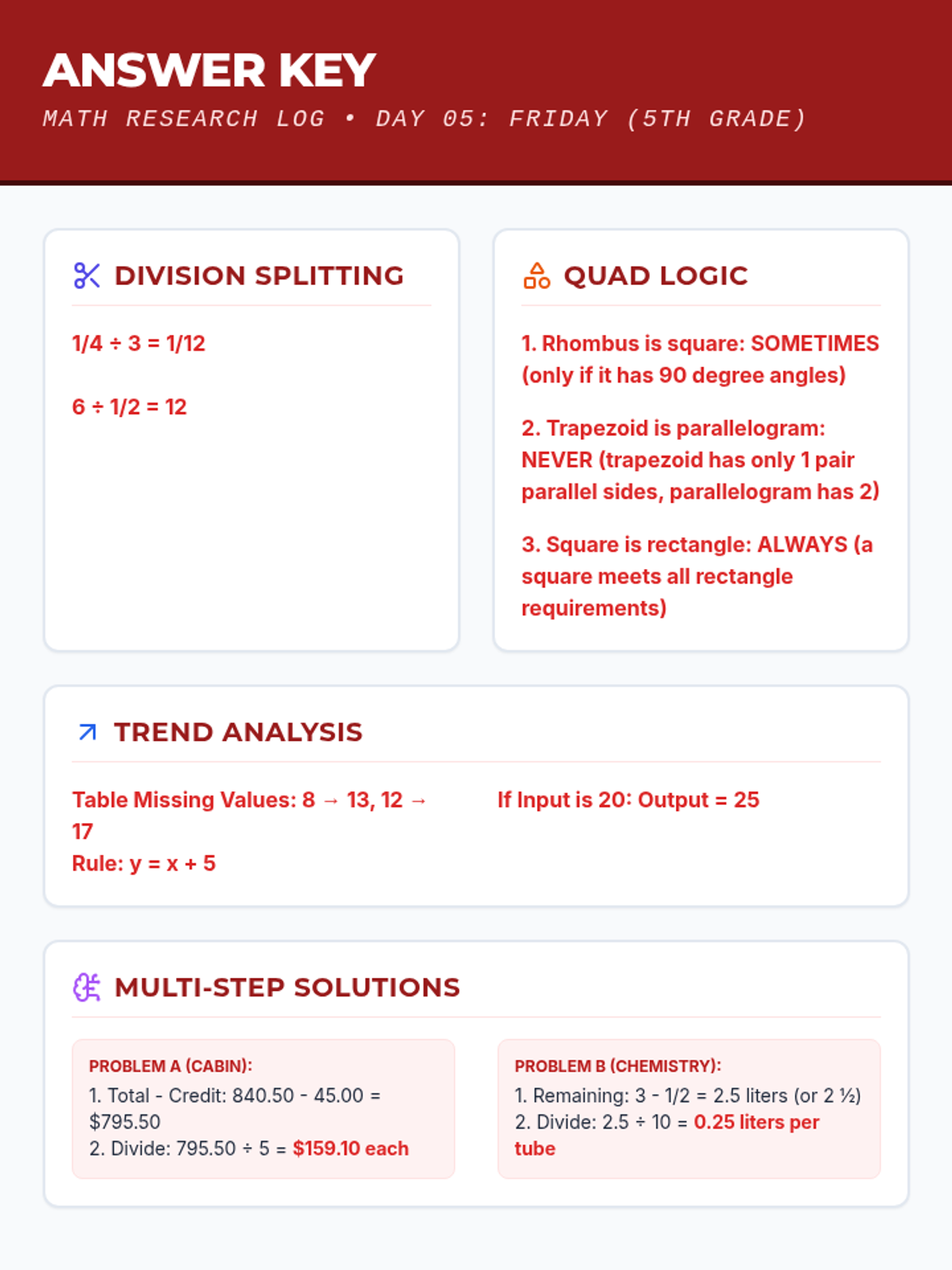
Friday Review: Dividing unit fractions/whole numbers, numerical patterns/rules, quadrilateral classification, and multi-step budgeting/trip word problems.
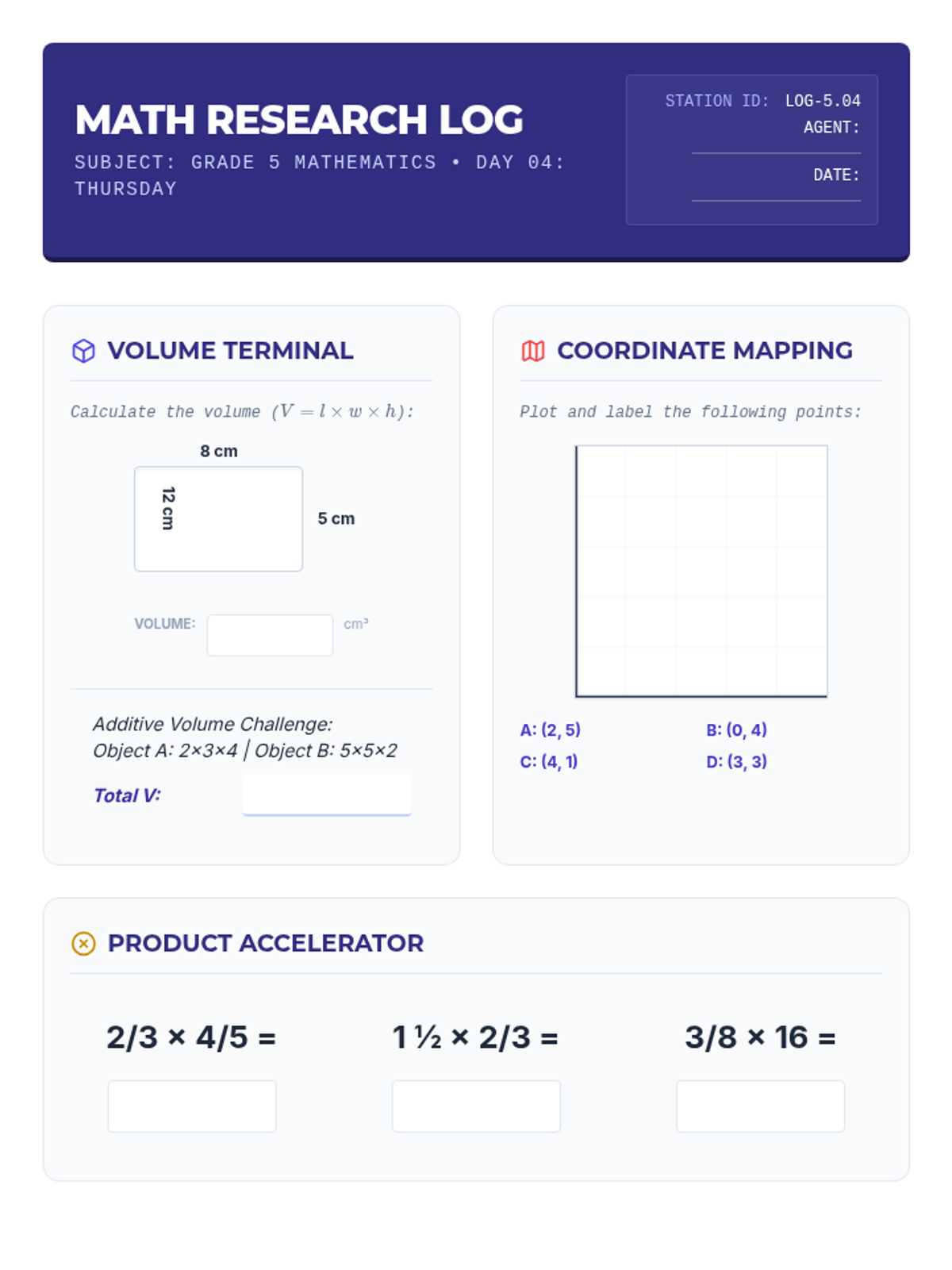
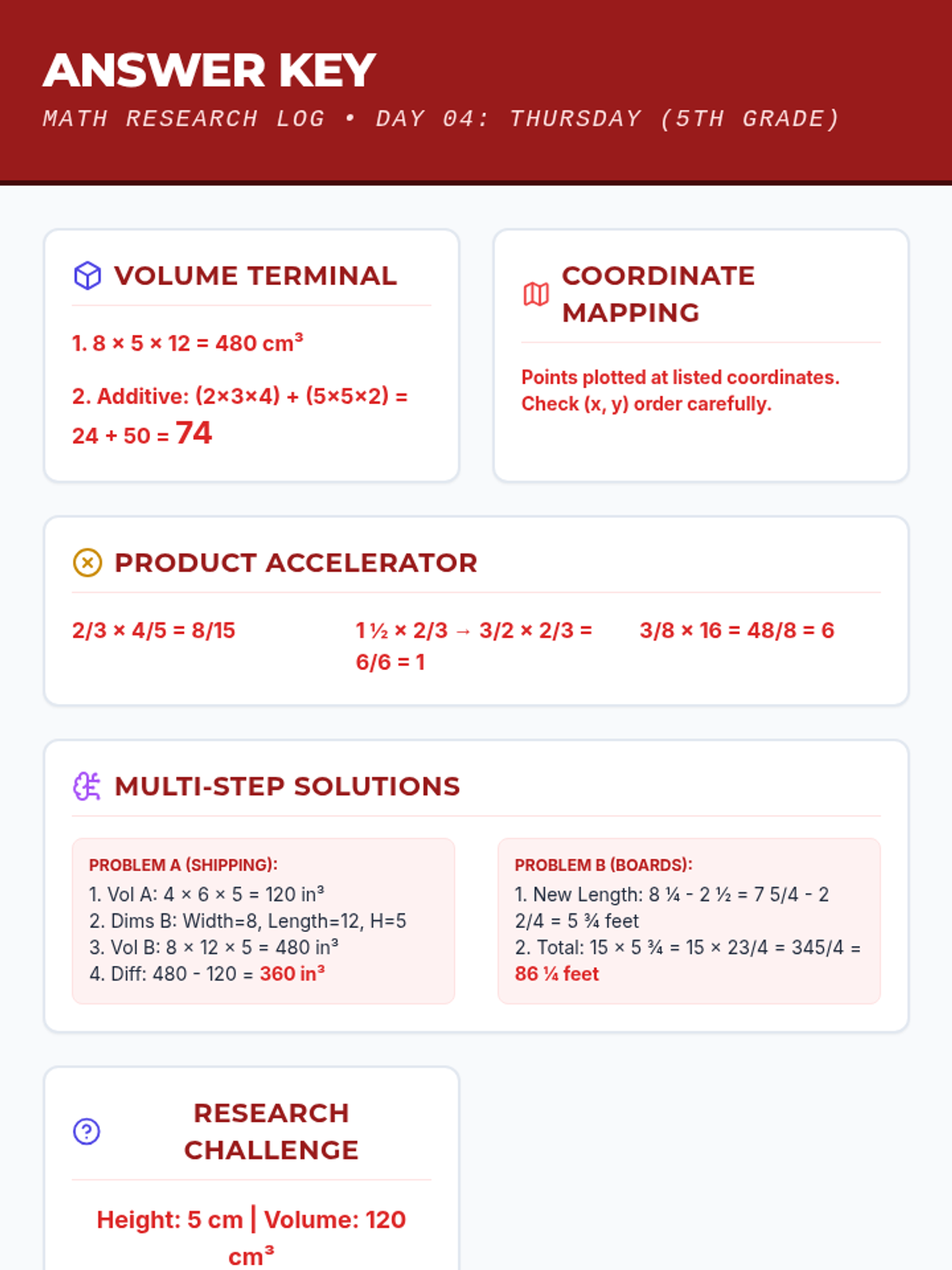
Thursday Review: Volume of rectangular prisms, additive volume, multiplying fractions/mixed numbers, coordinate plane graphing, and multi-step shipping/logistics word problems.
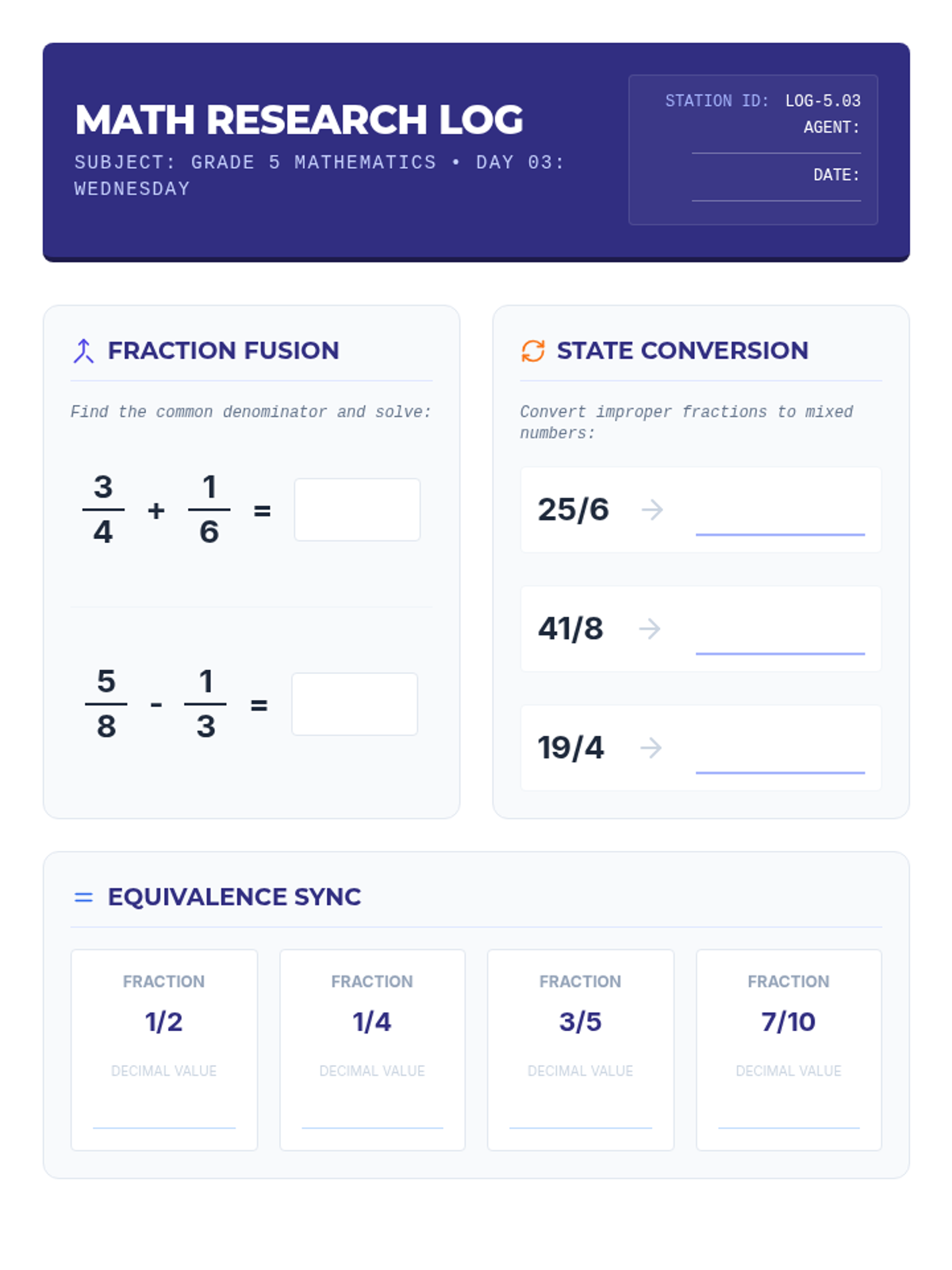
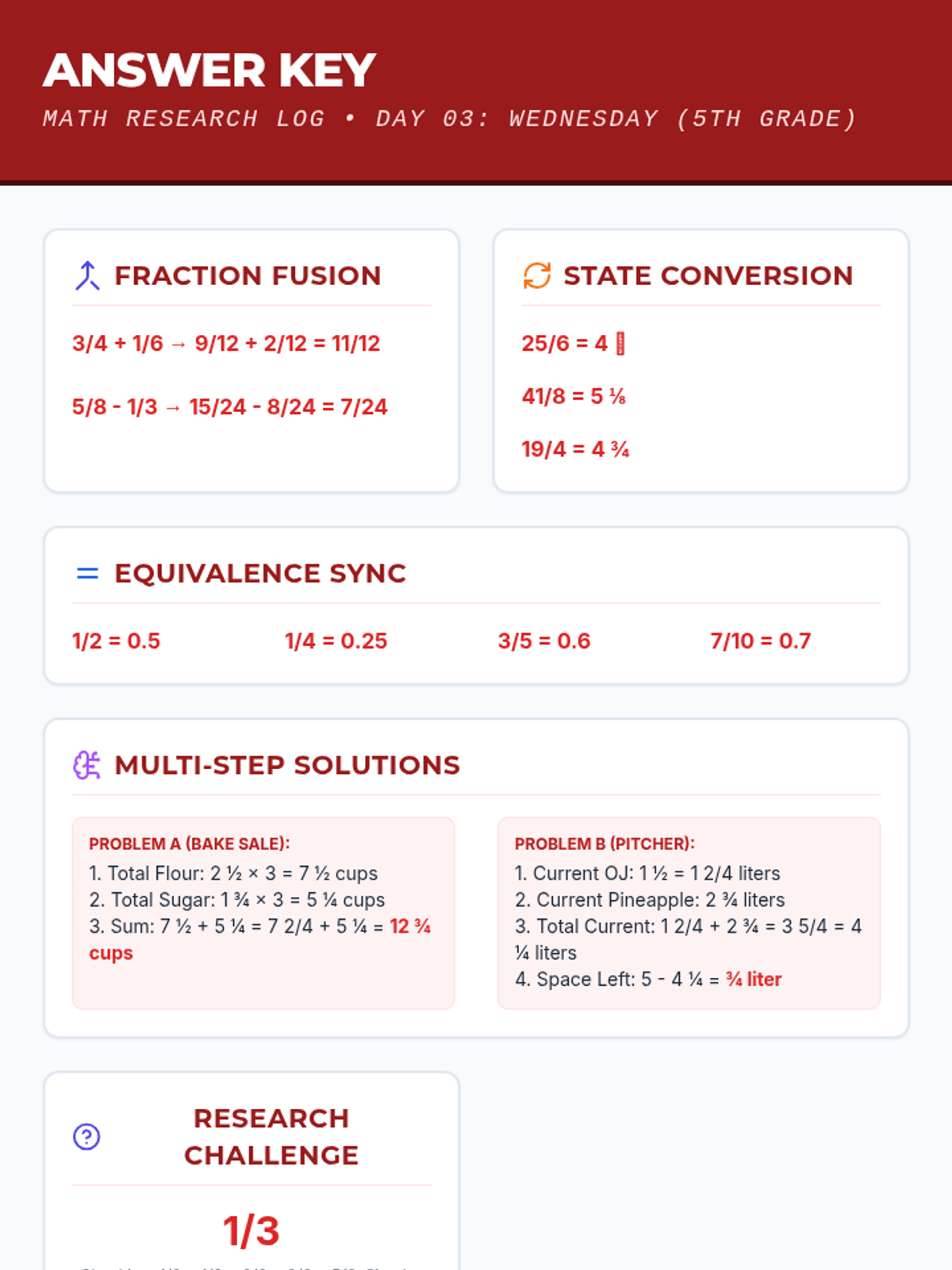
Wednesday Review: Adding/subtracting fractions with unlike denominators, converting improper fractions, fraction/decimal equivalence, and multi-step recipe conversion word problems.
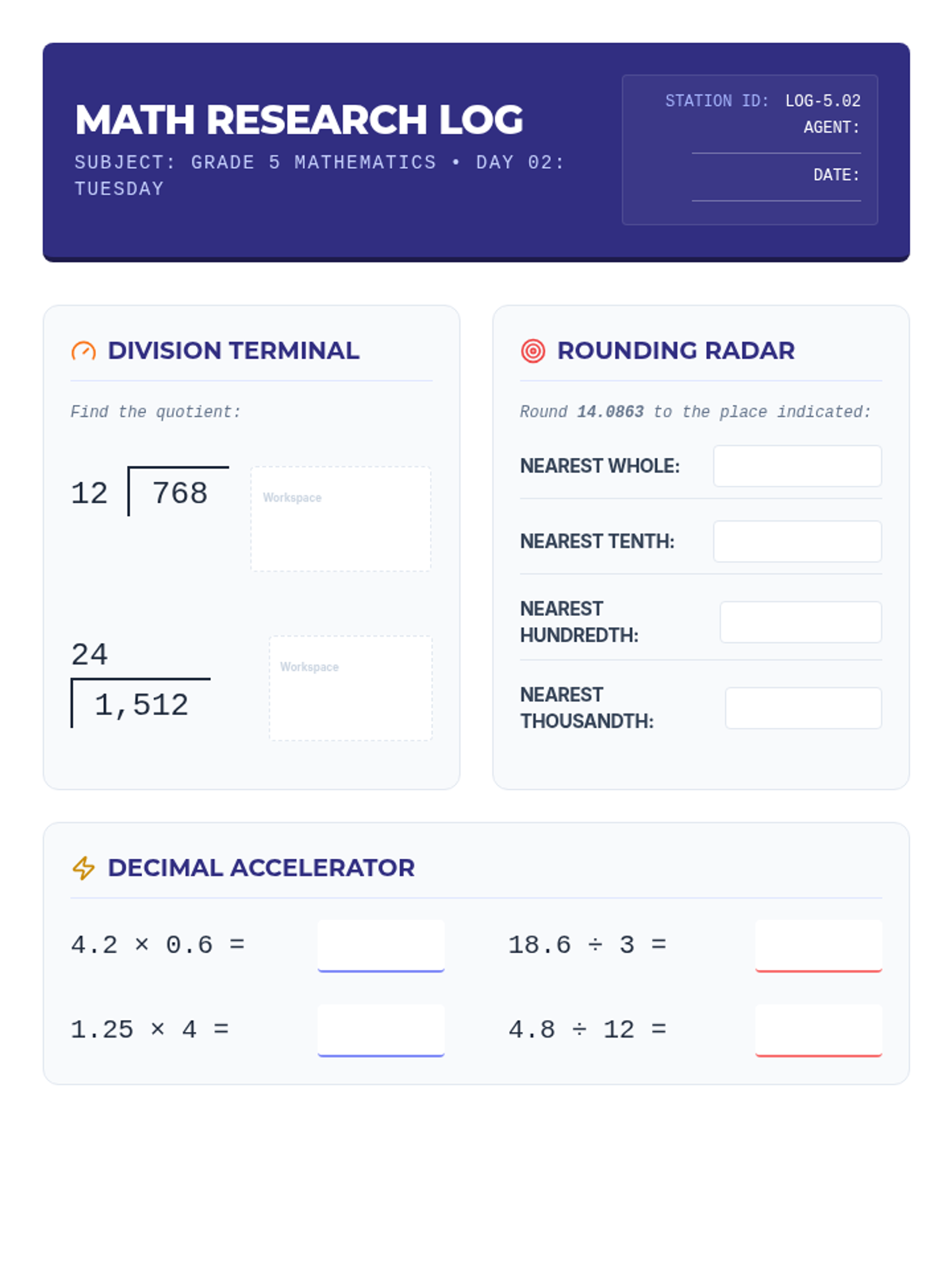
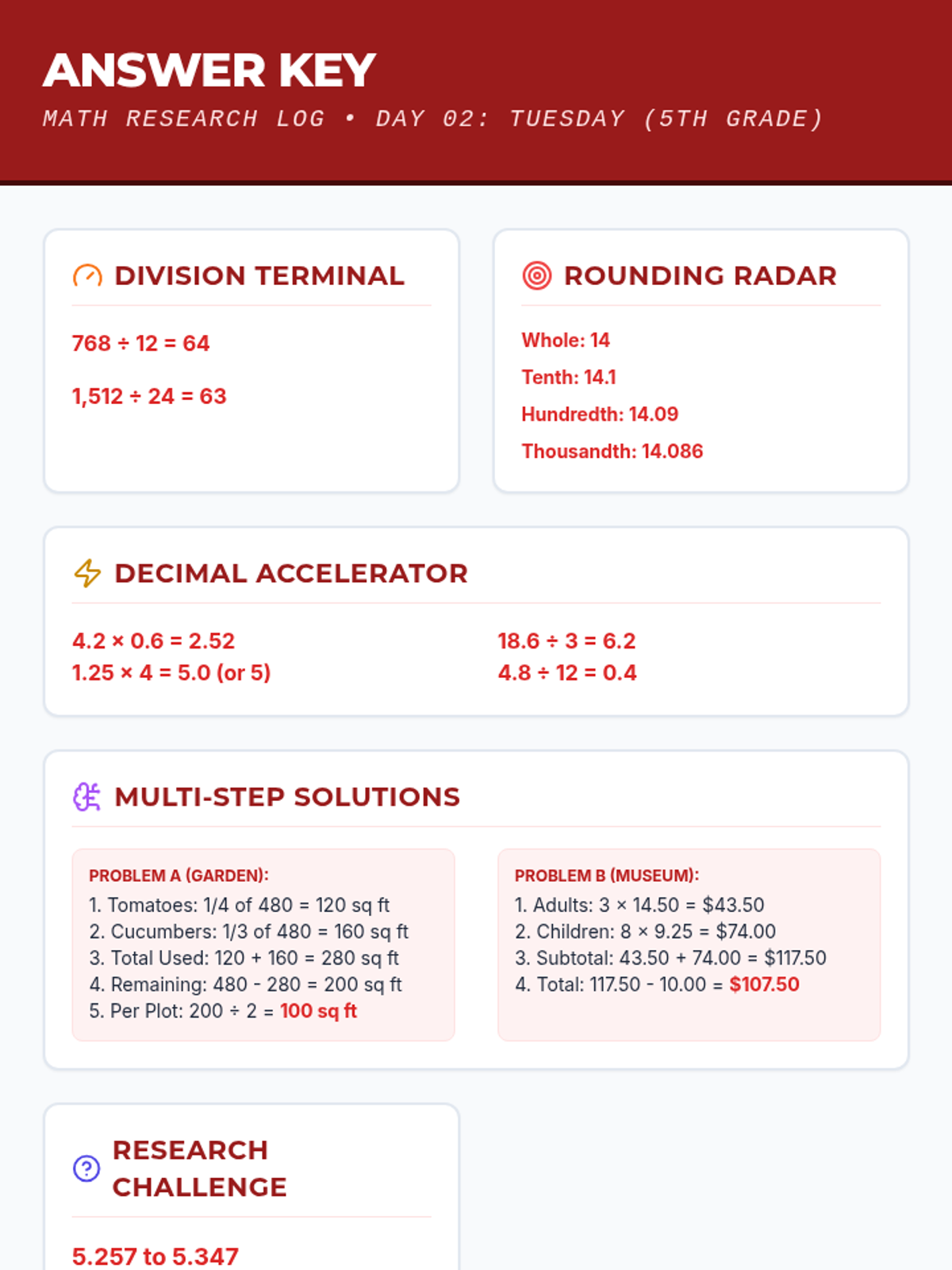
Tuesday Review: Long division with 2-digit divisors, rounding decimals to the thousandths, multiplying/dividing decimals, and multi-step fraction-of-a-whole word problems.
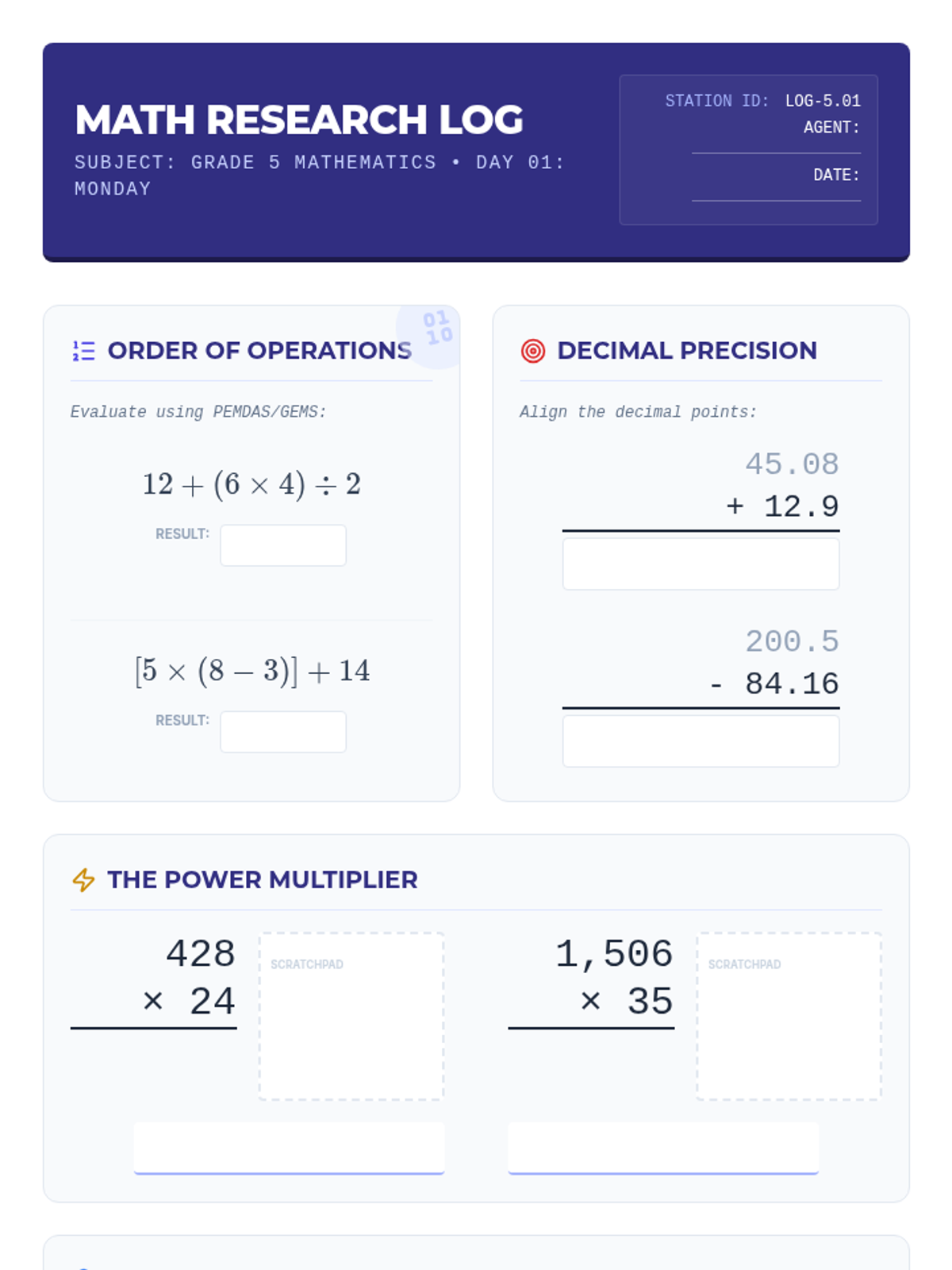
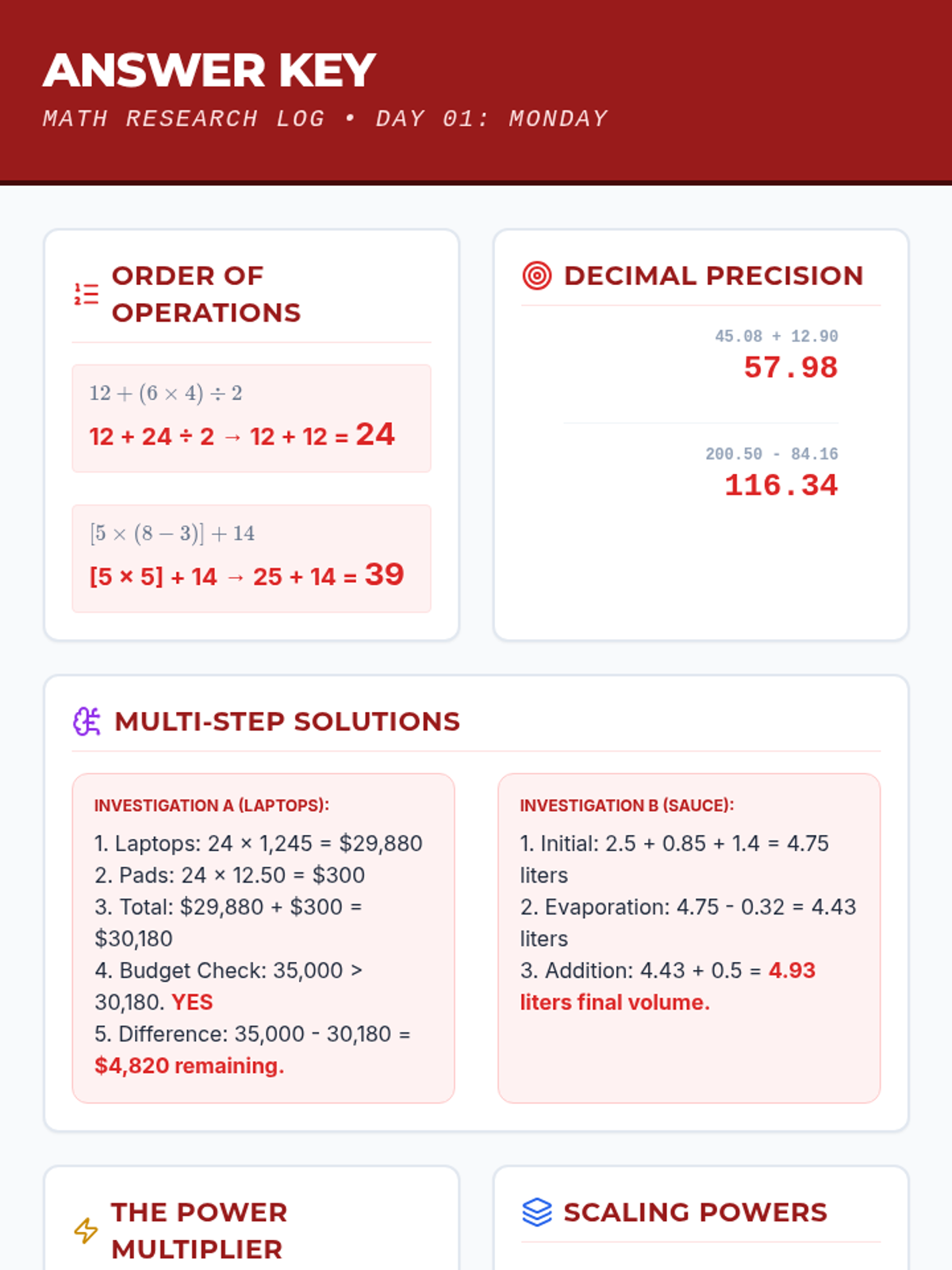
Monday Review: Order of Operations (PEMDAS), multi-digit multiplication, adding/subtracting decimals, and multi-step financial word problems.
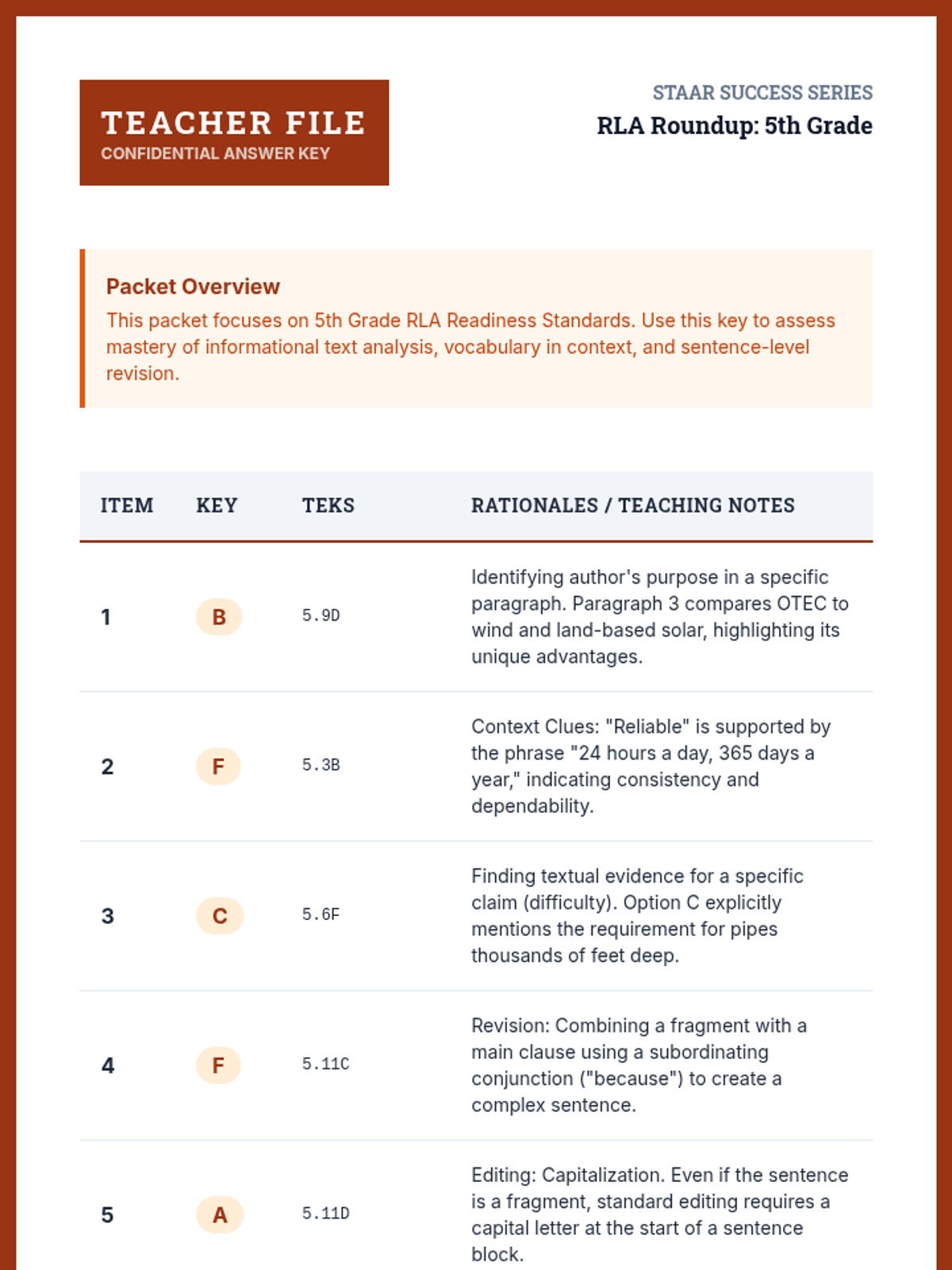
5th grade RLA review emphasizing theme, author's purpose, synthesis of information, and polished expository writing.
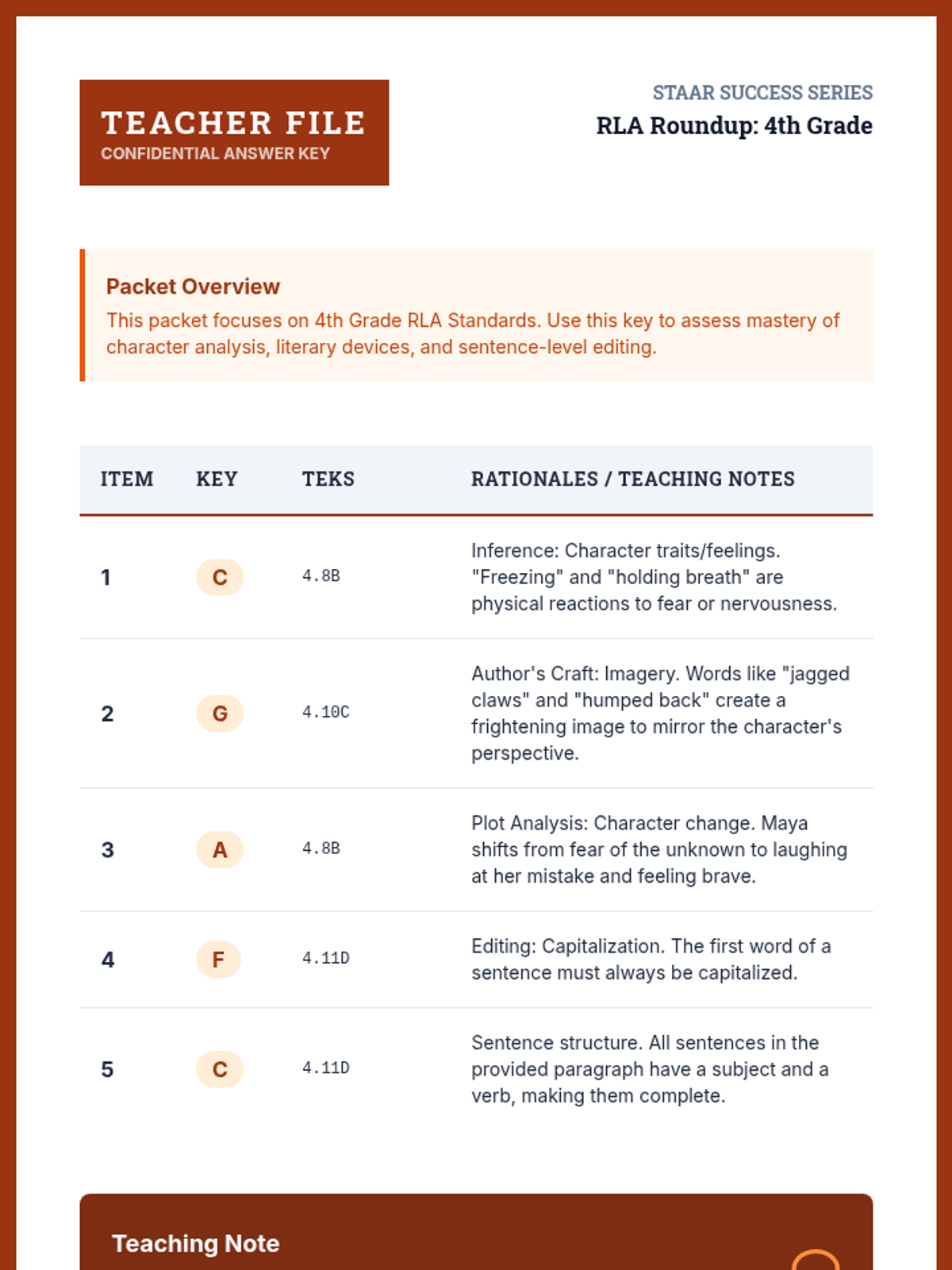
4th grade RLA mastery practice including complex text analysis, context clues, and multi-paragraph writing prompts.
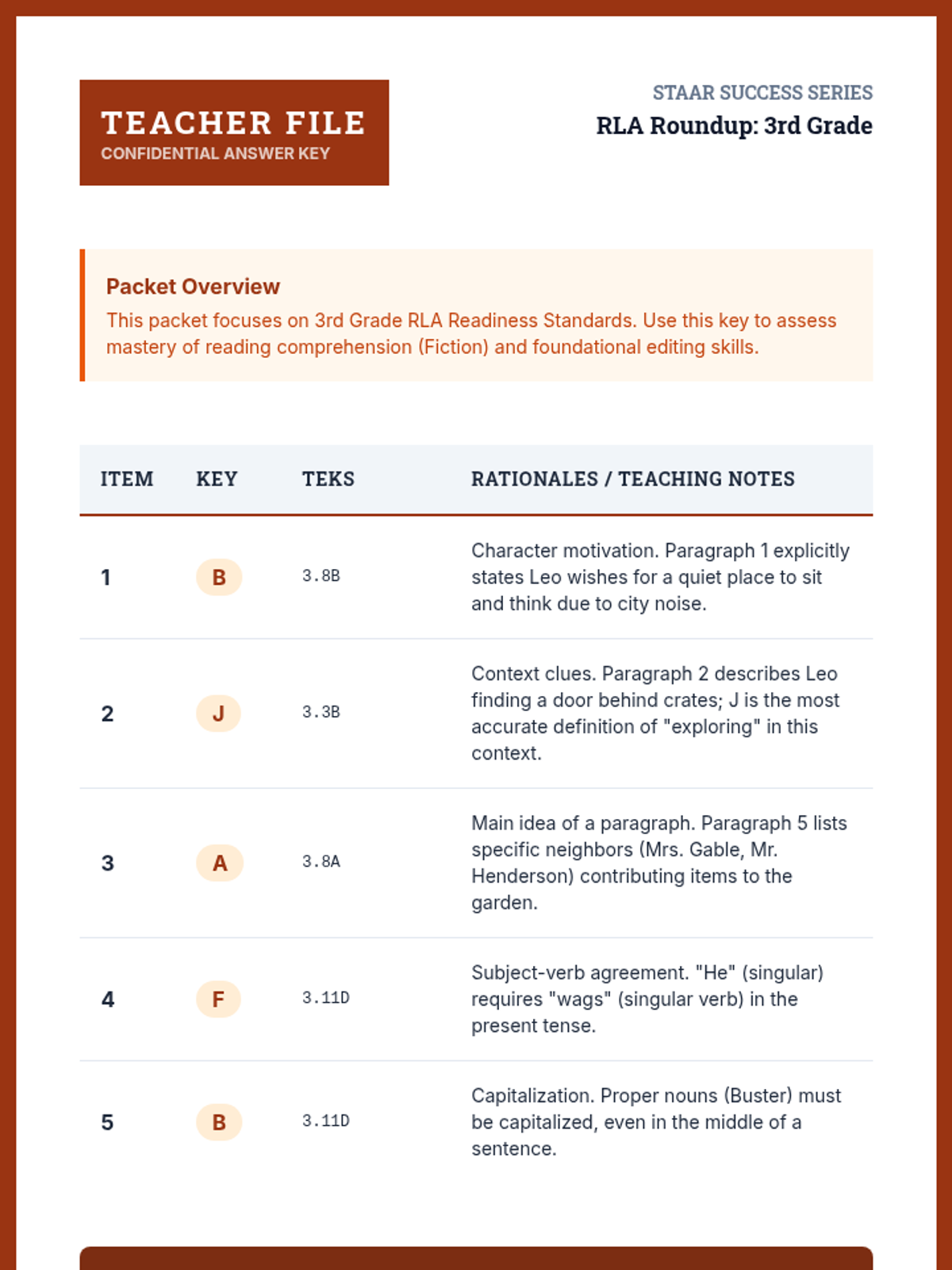
3rd grade RLA practice focusing on reading comprehension of fiction and non-fiction, as well as basic editing and revising skills.
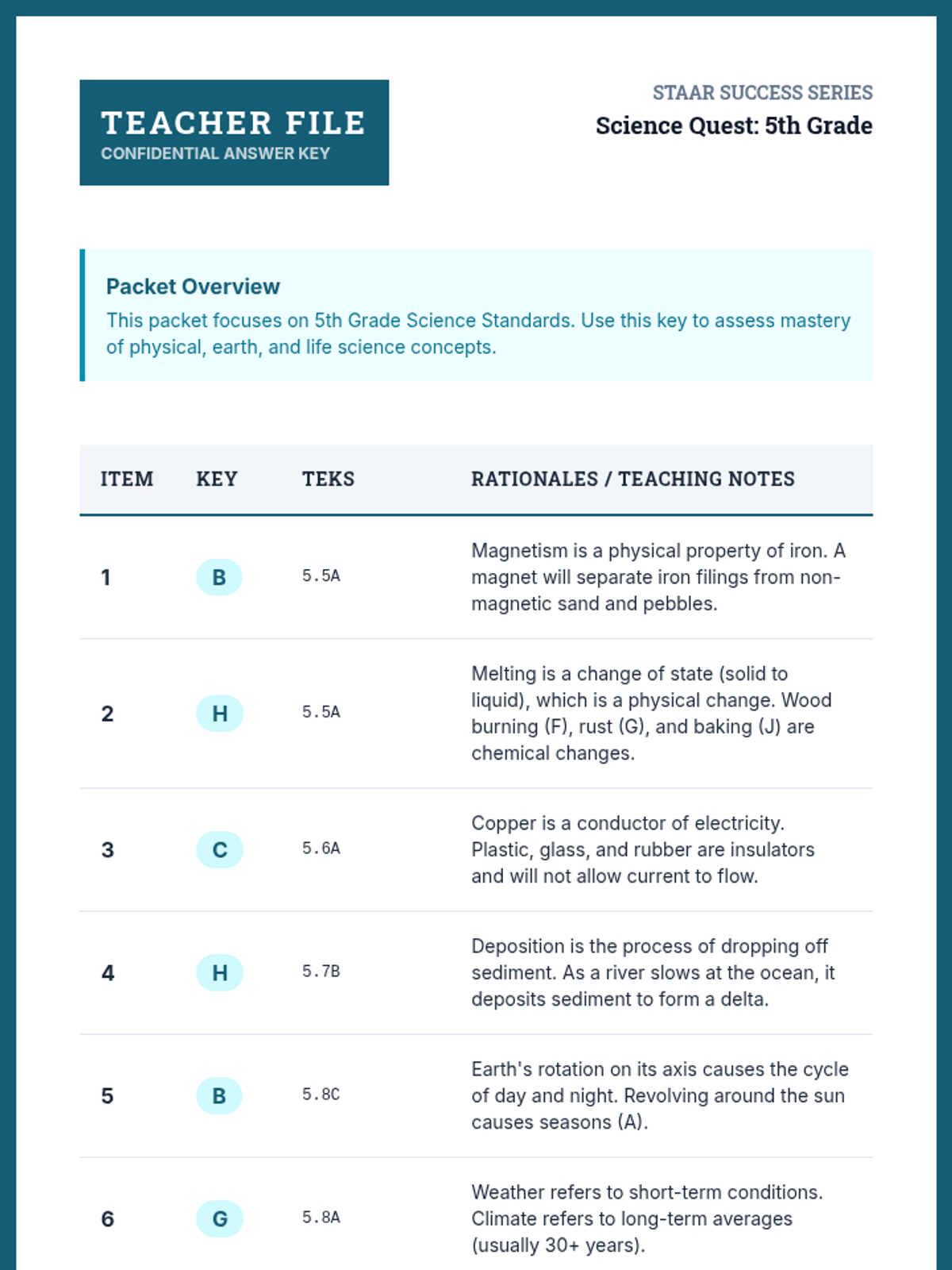
Comprehensive 5th grade science review of life, earth, and physical science topics from the TEKS curriculum.
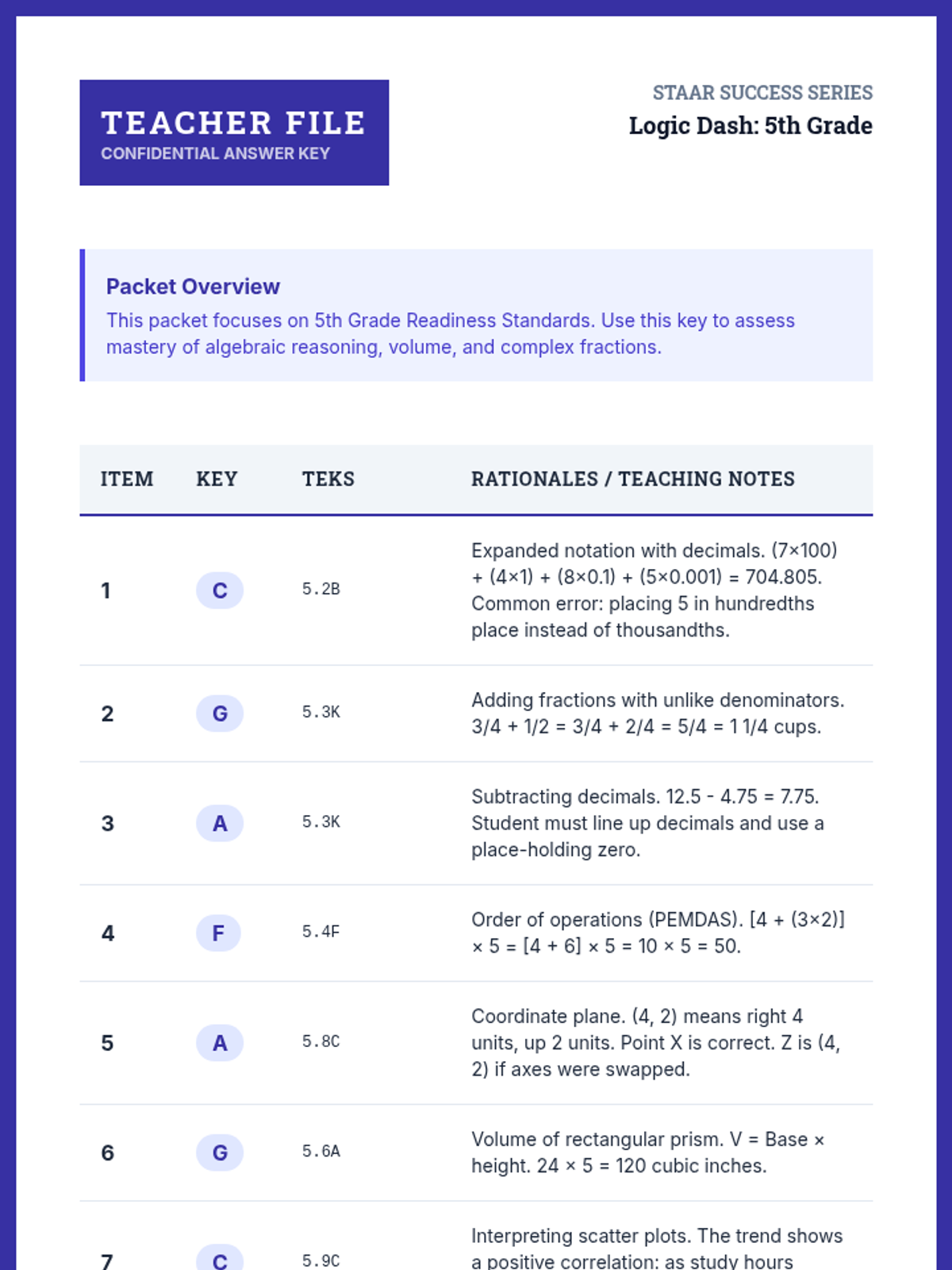
Rigorous 5th grade math review including coordinate planes, volume, order of operations, and adding/subtracting fractions.
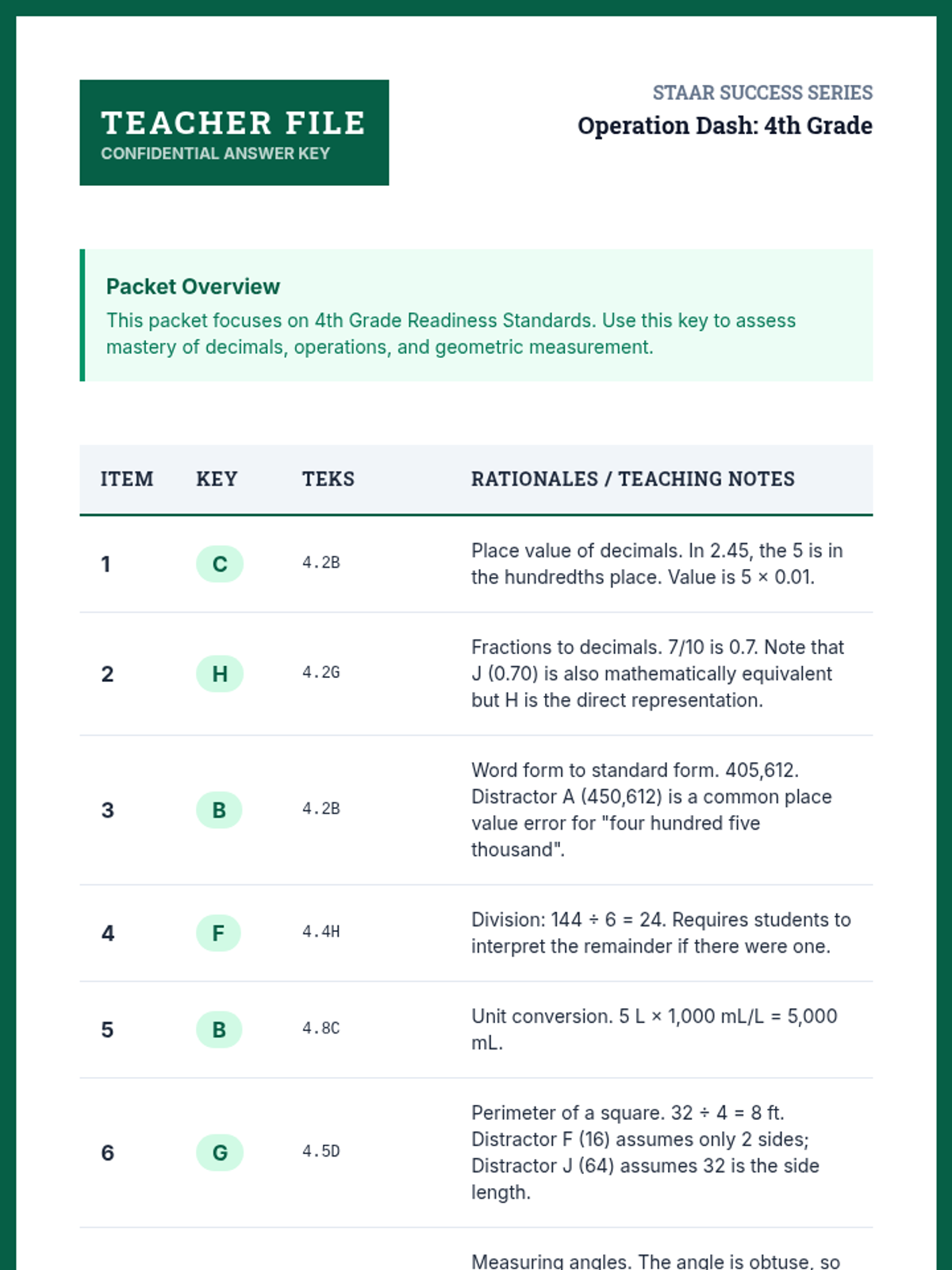
Advanced 4th grade math practice covering decimal operations, long division, measurement conversions, and angle measurement.
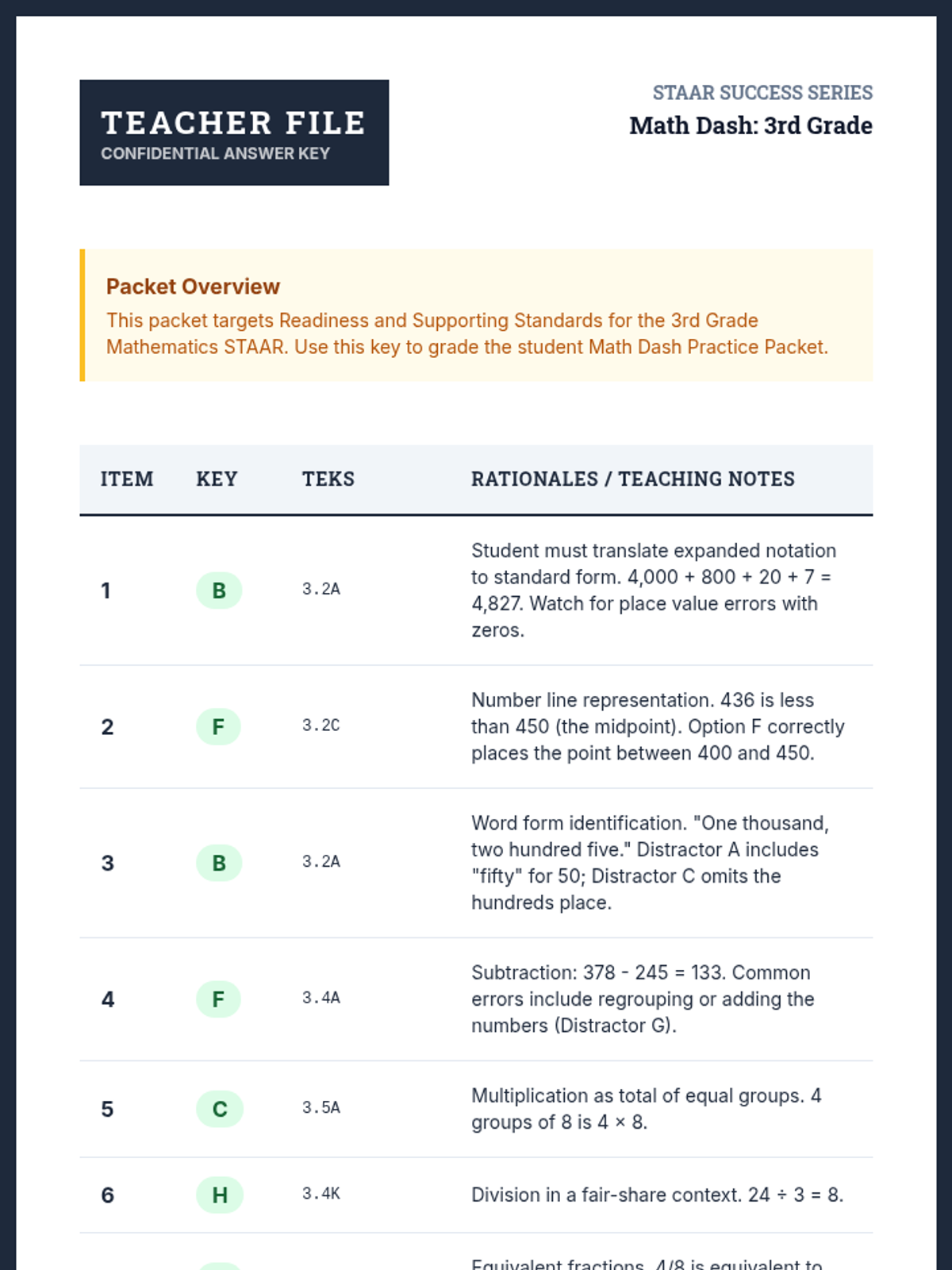
Focused practice for 3rd grade math standards including multi-digit operations, fraction understanding, and perimeter/area concepts.
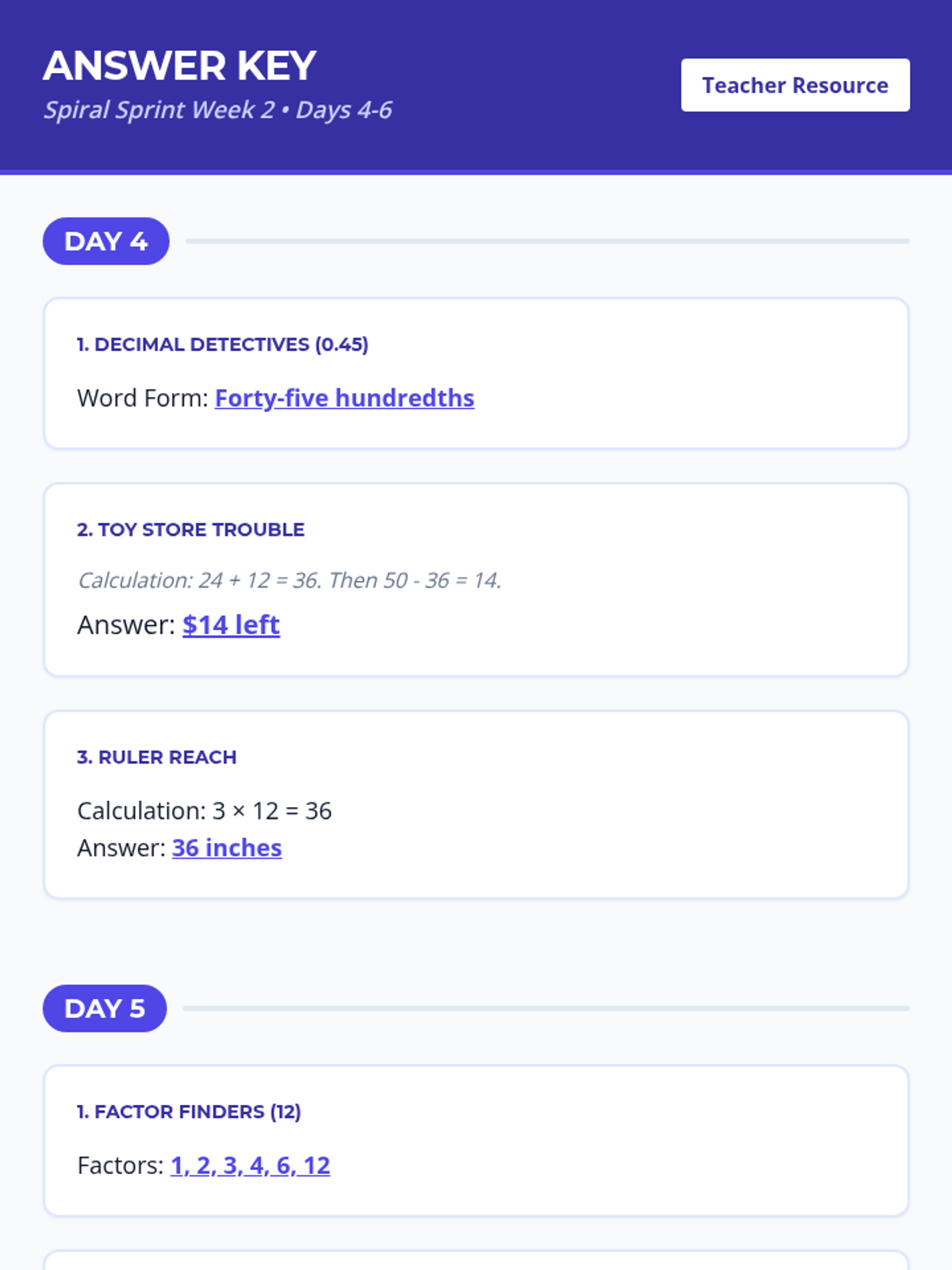
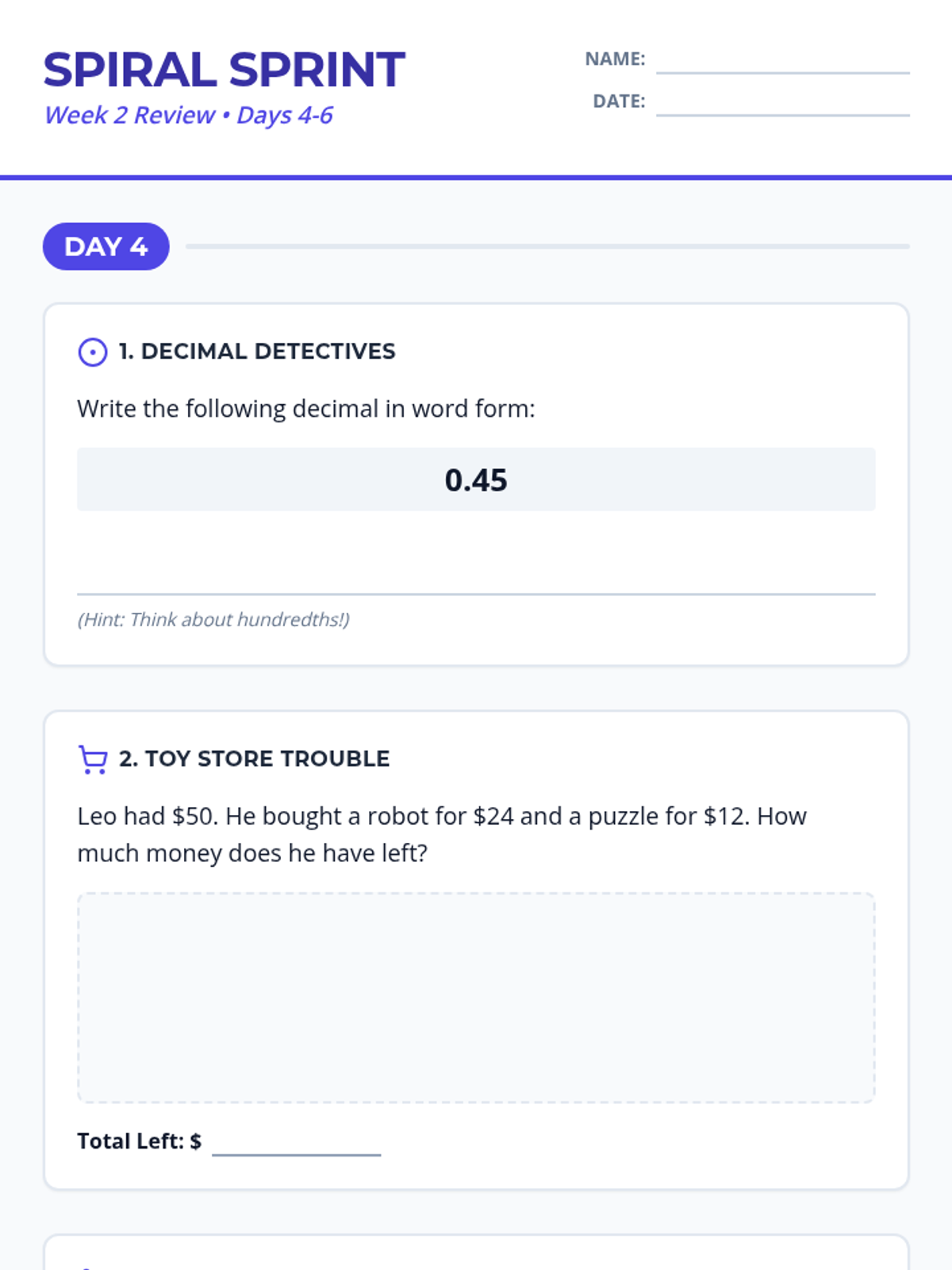
The second week of spiral review shifts towards multi-step word problems, decimal notation, and geometric properties.
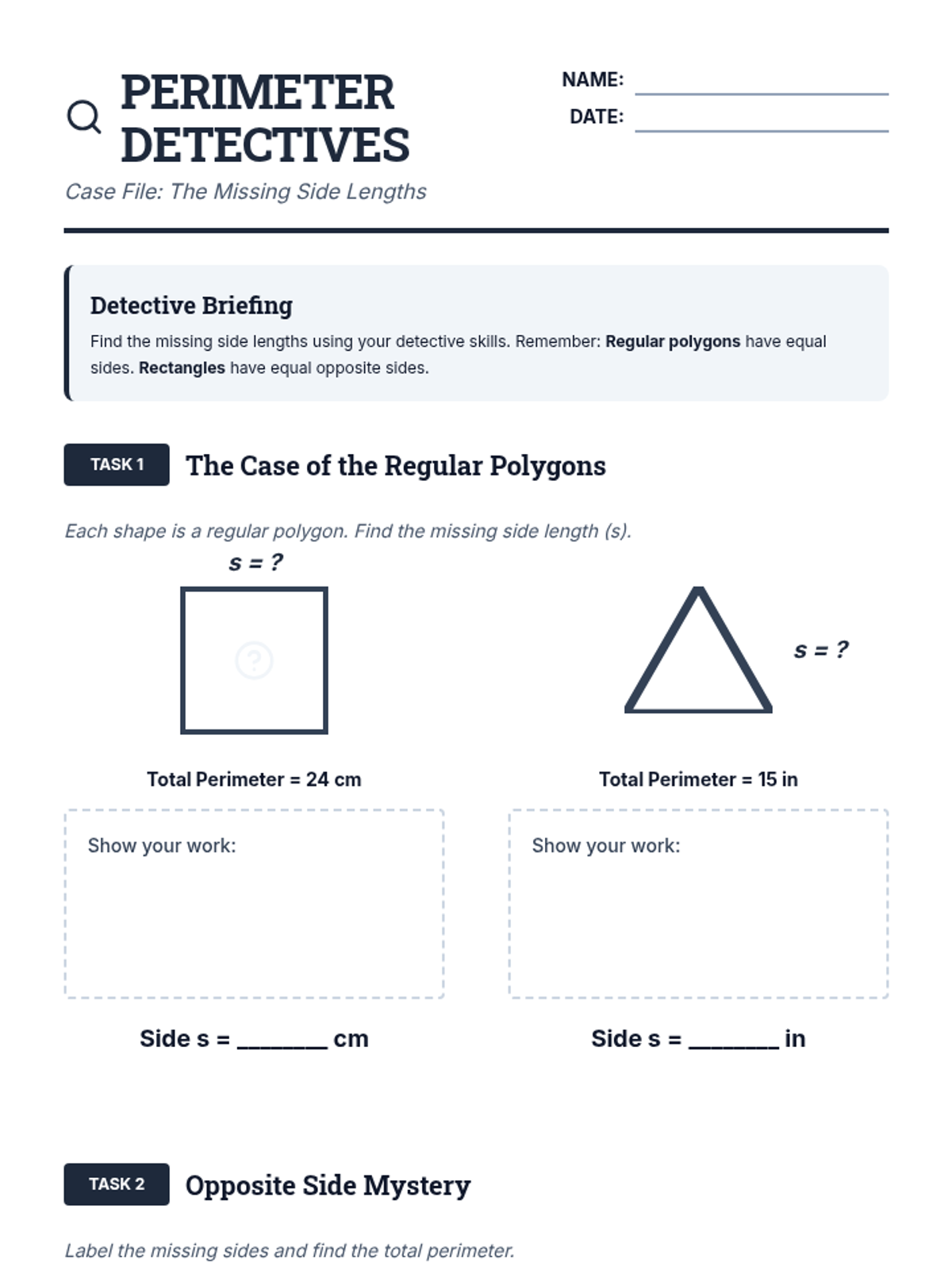
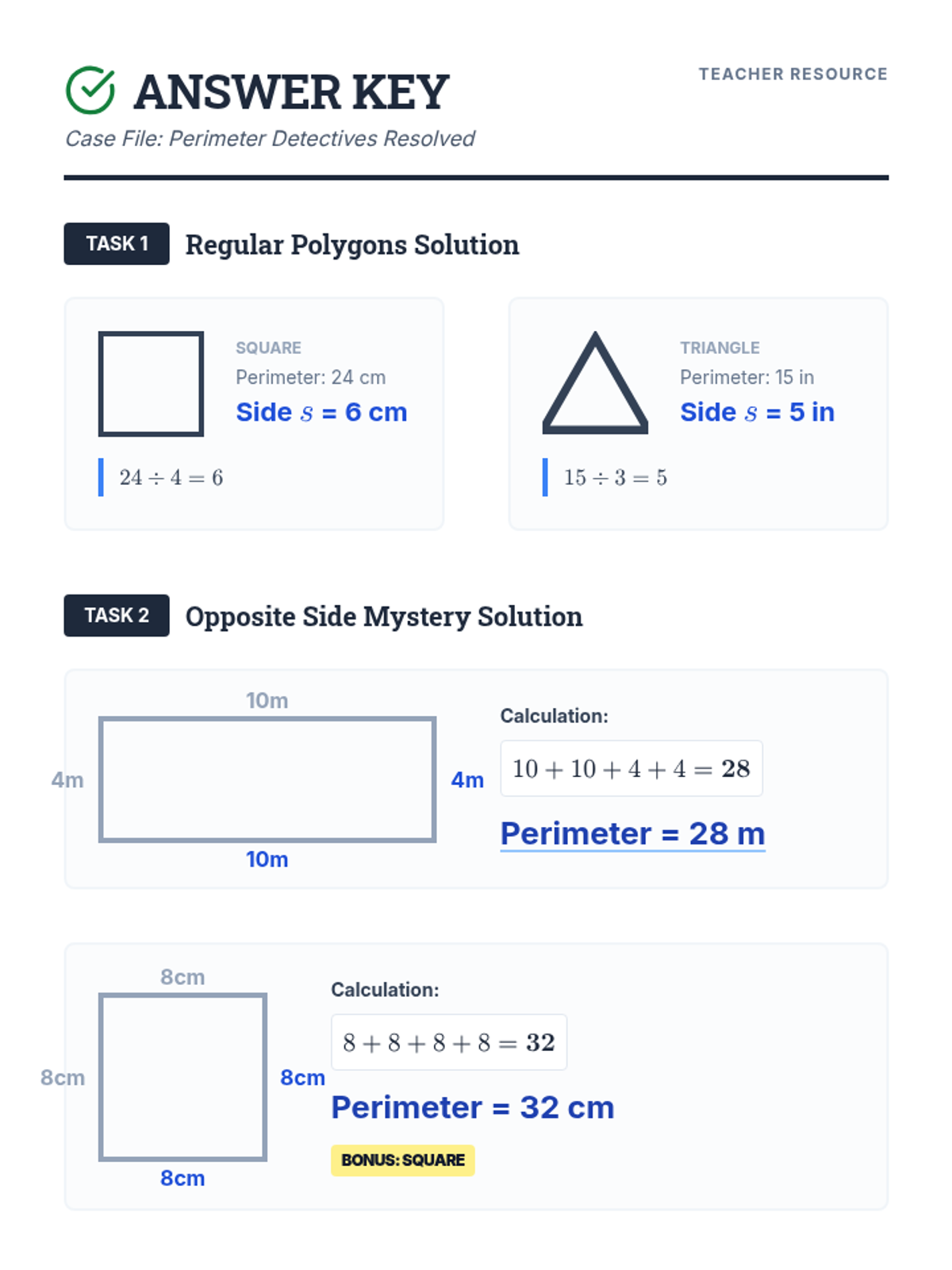
In this lesson, students become 'Perimeter Detectives' to solve for missing side lengths in regular polygons and rectangles. They use their knowledge of polygon properties and addition/subtraction to calculate perimeters and individual side measurements.
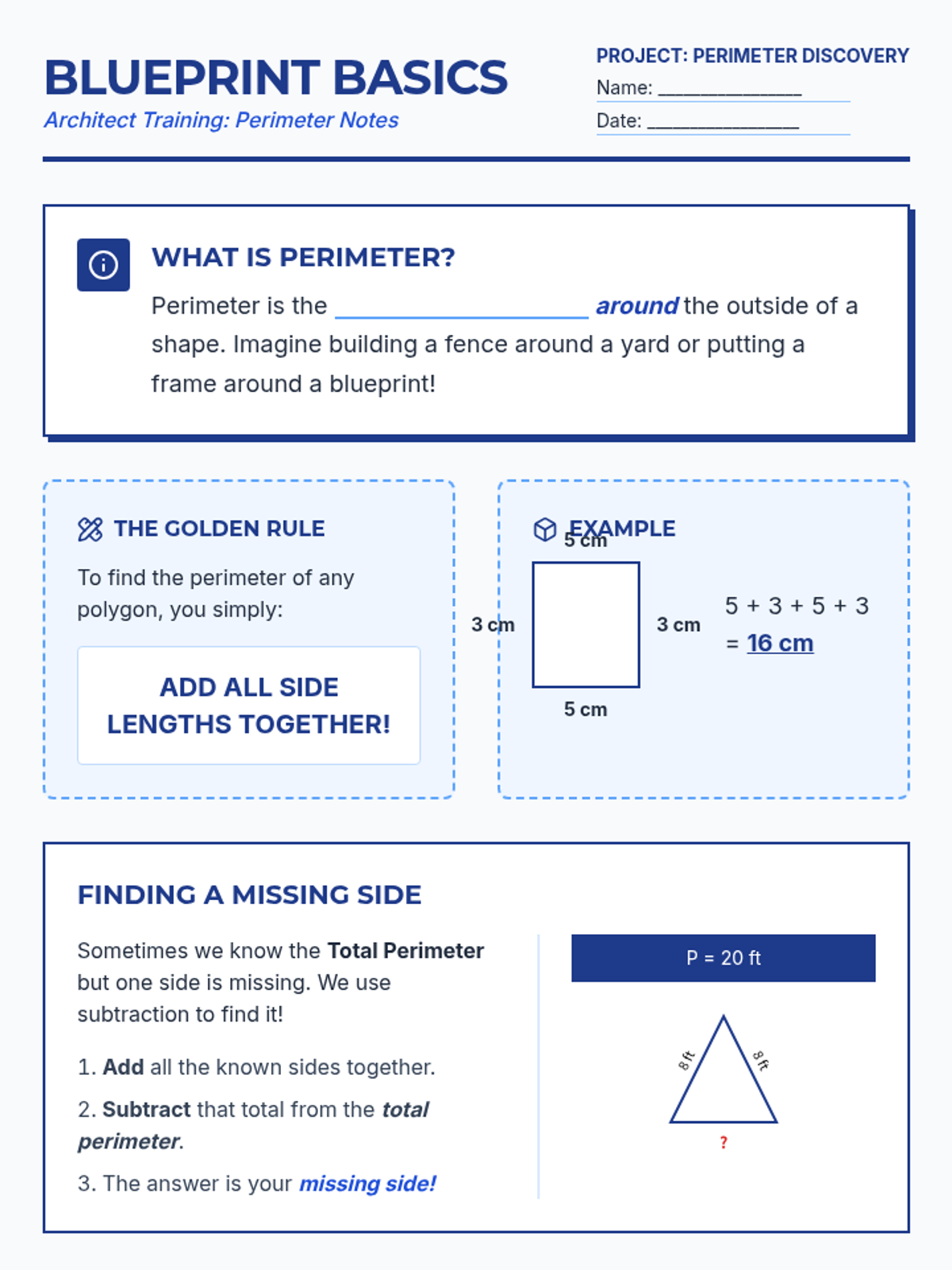
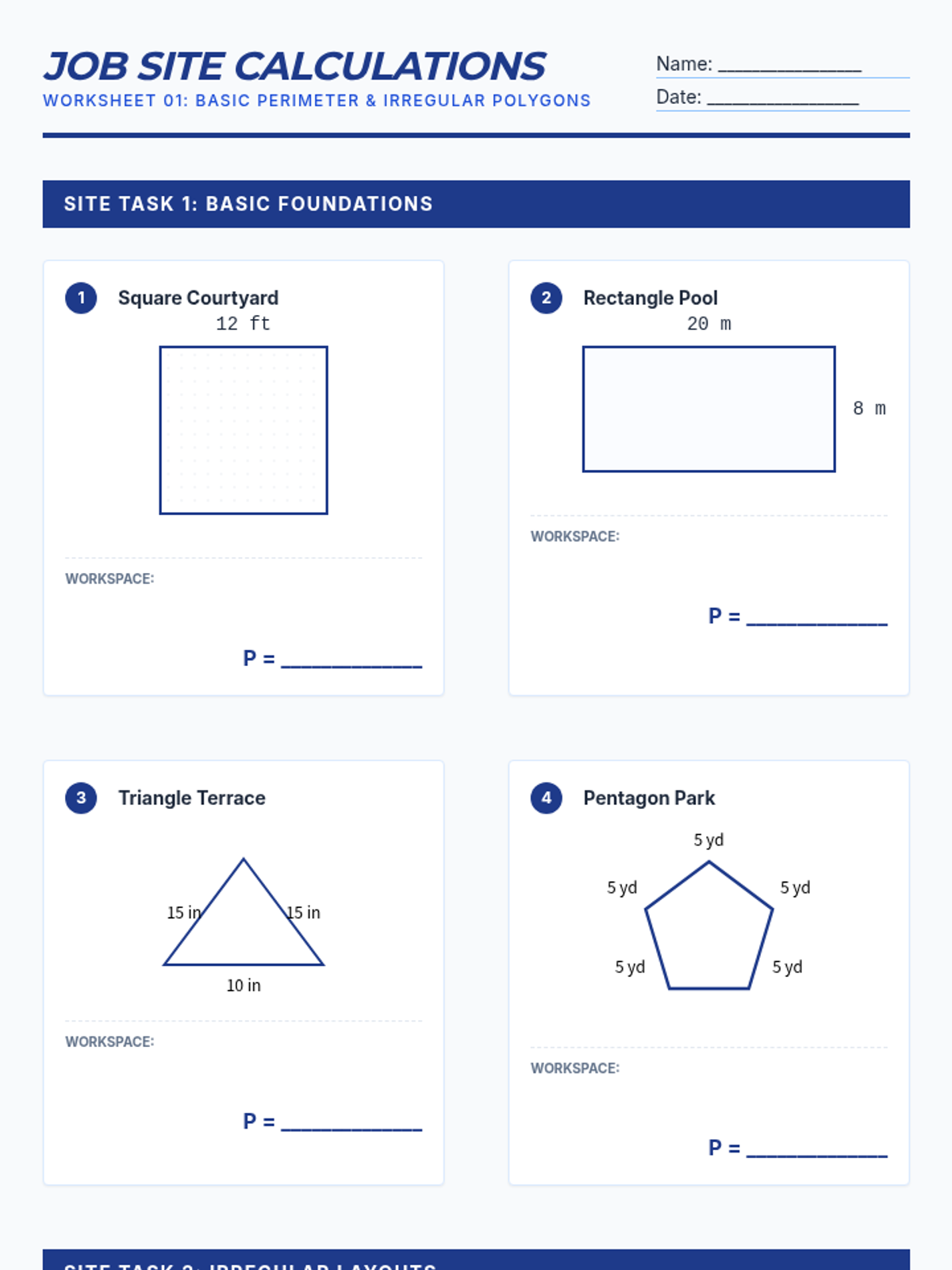
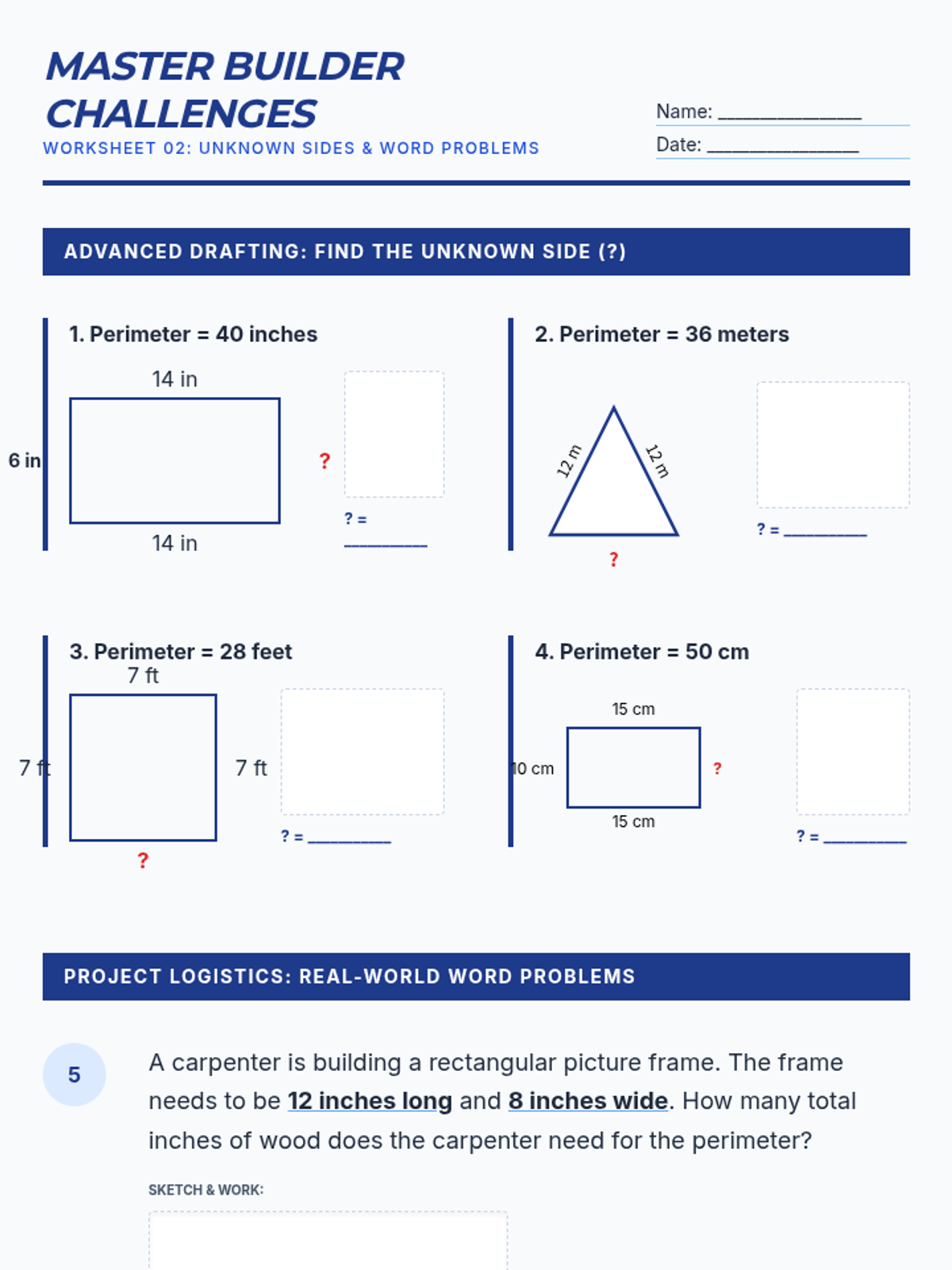
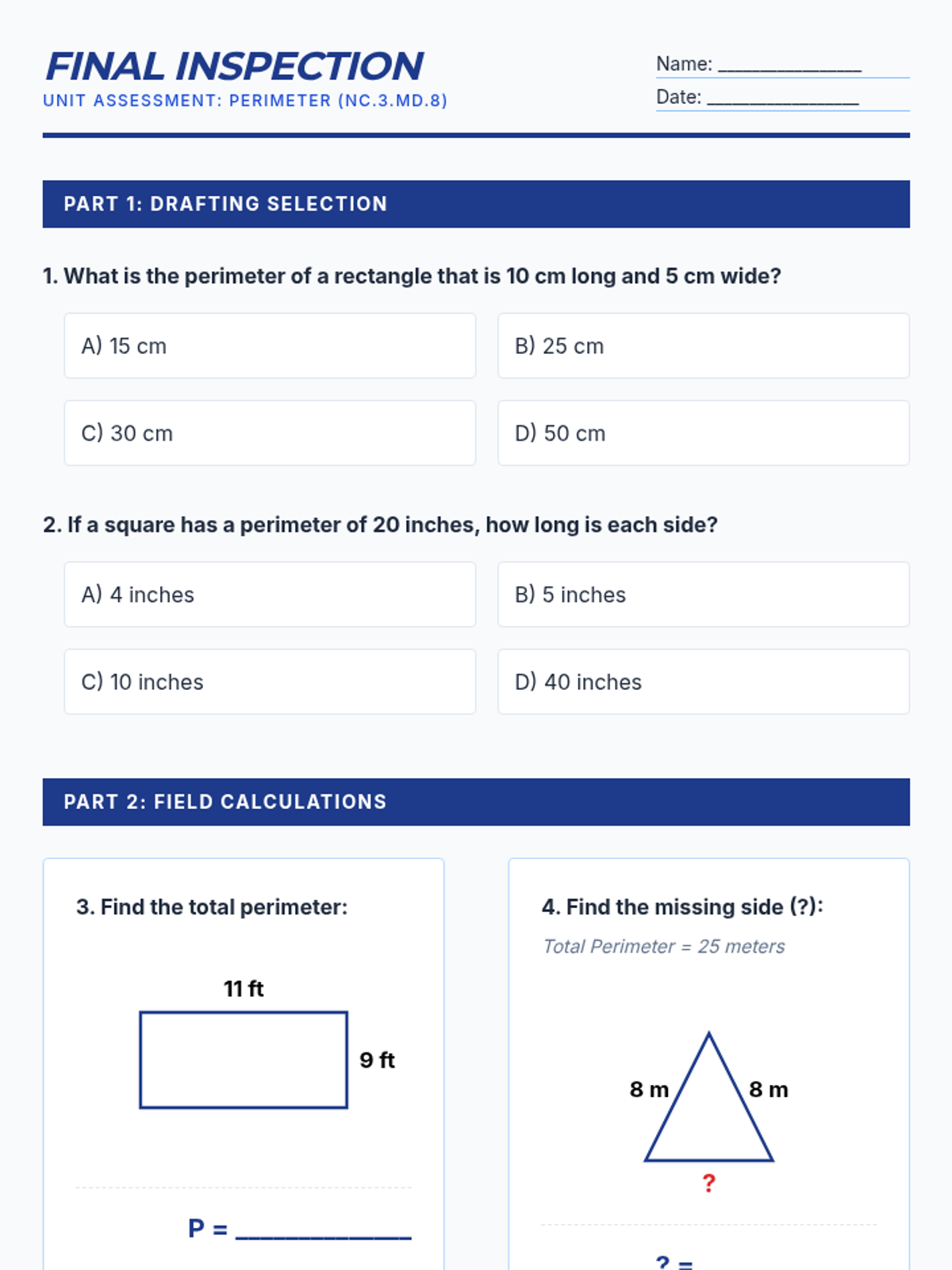
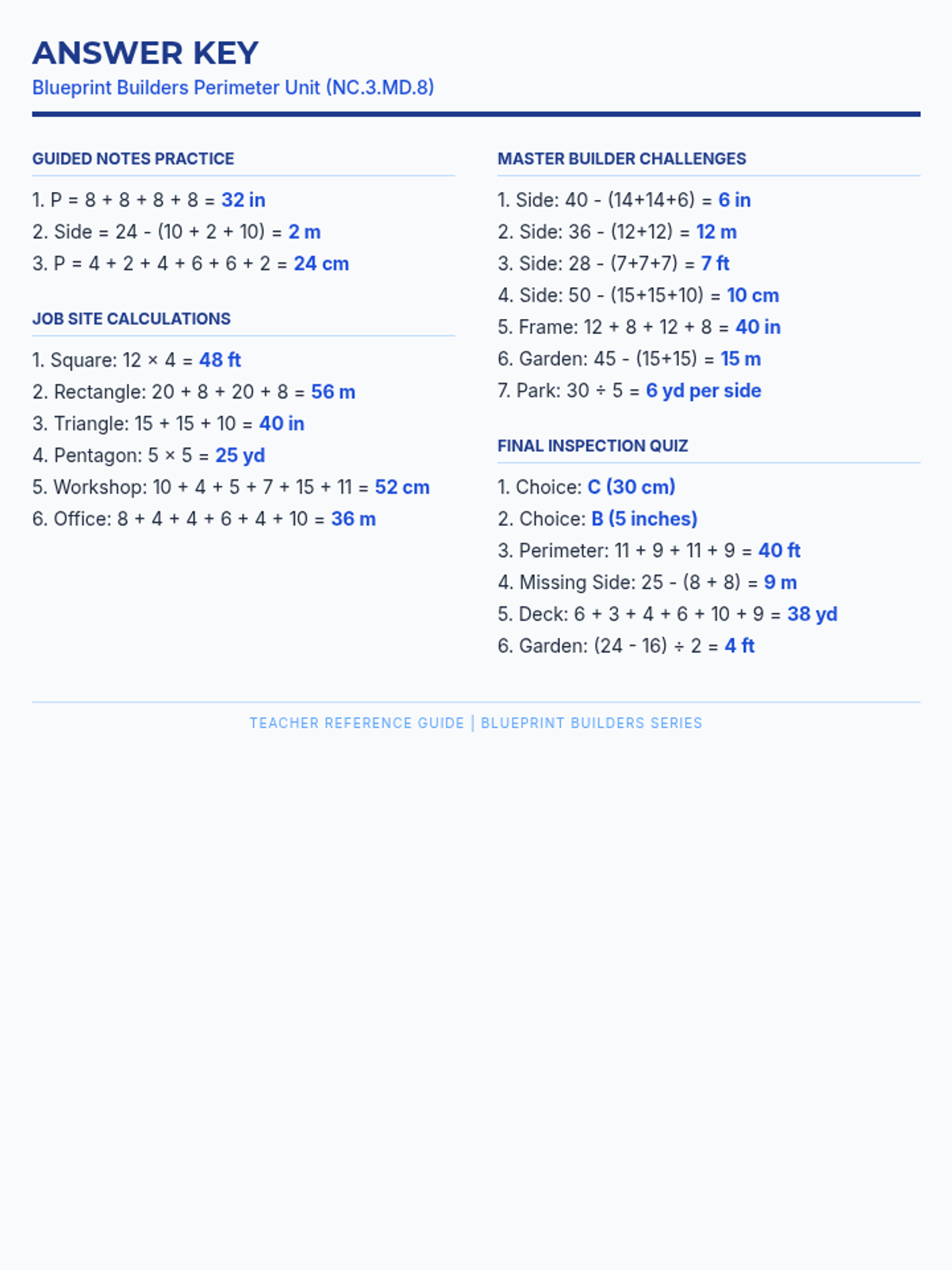
A comprehensive unit on finding the perimeter of various polygons, including unknown side lengths and real-world word problems, themed around architectural blueprints.
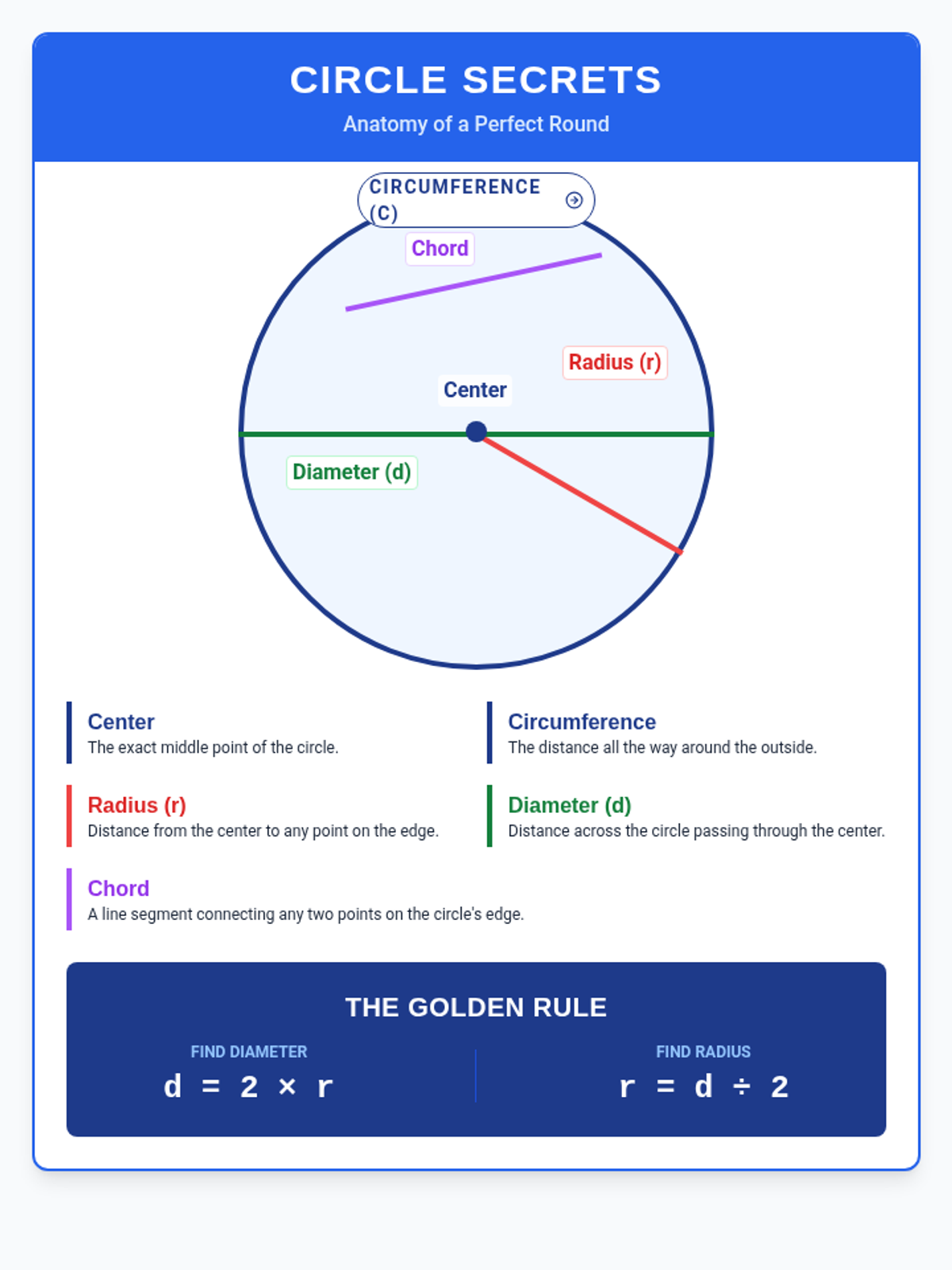
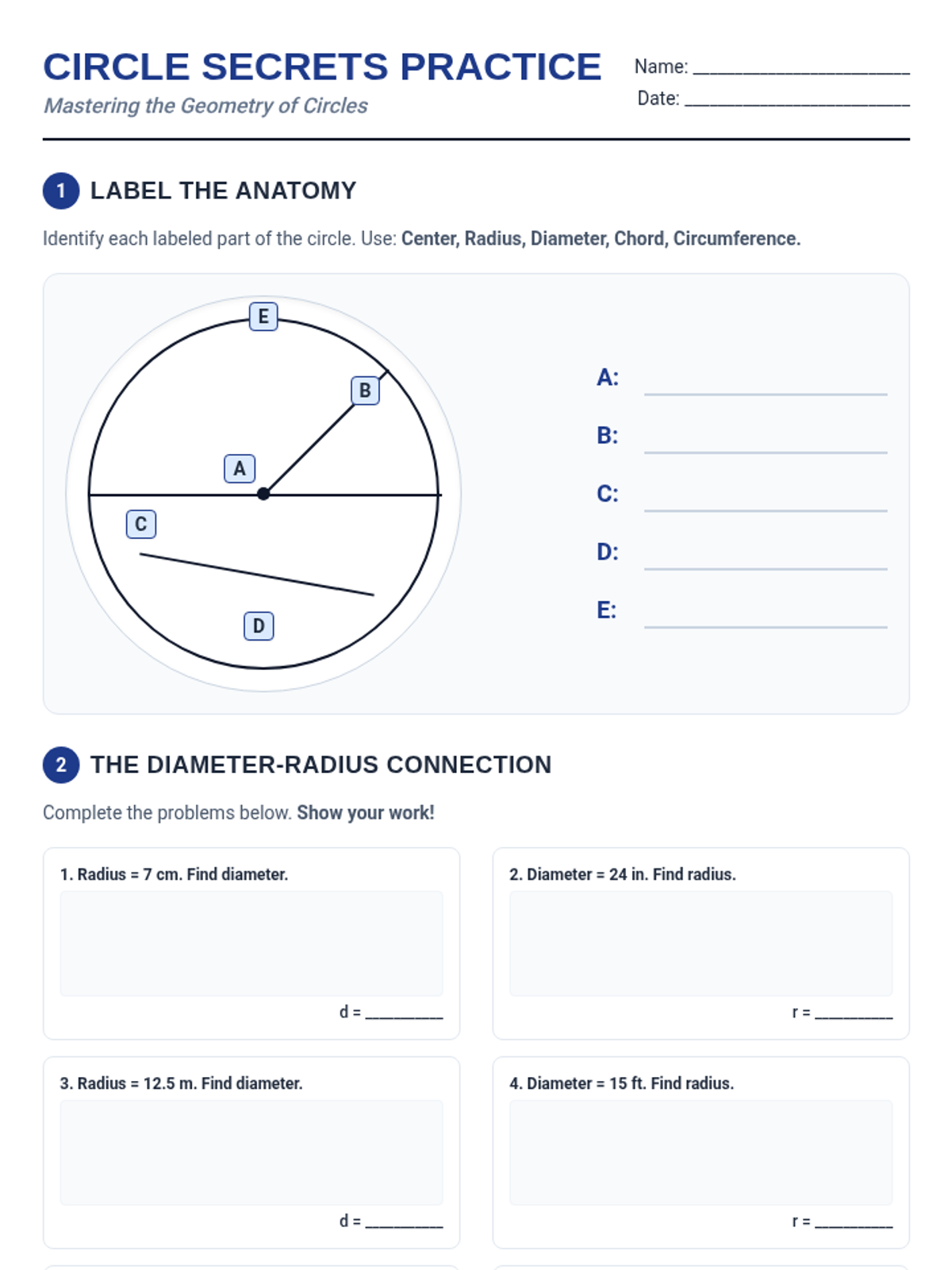
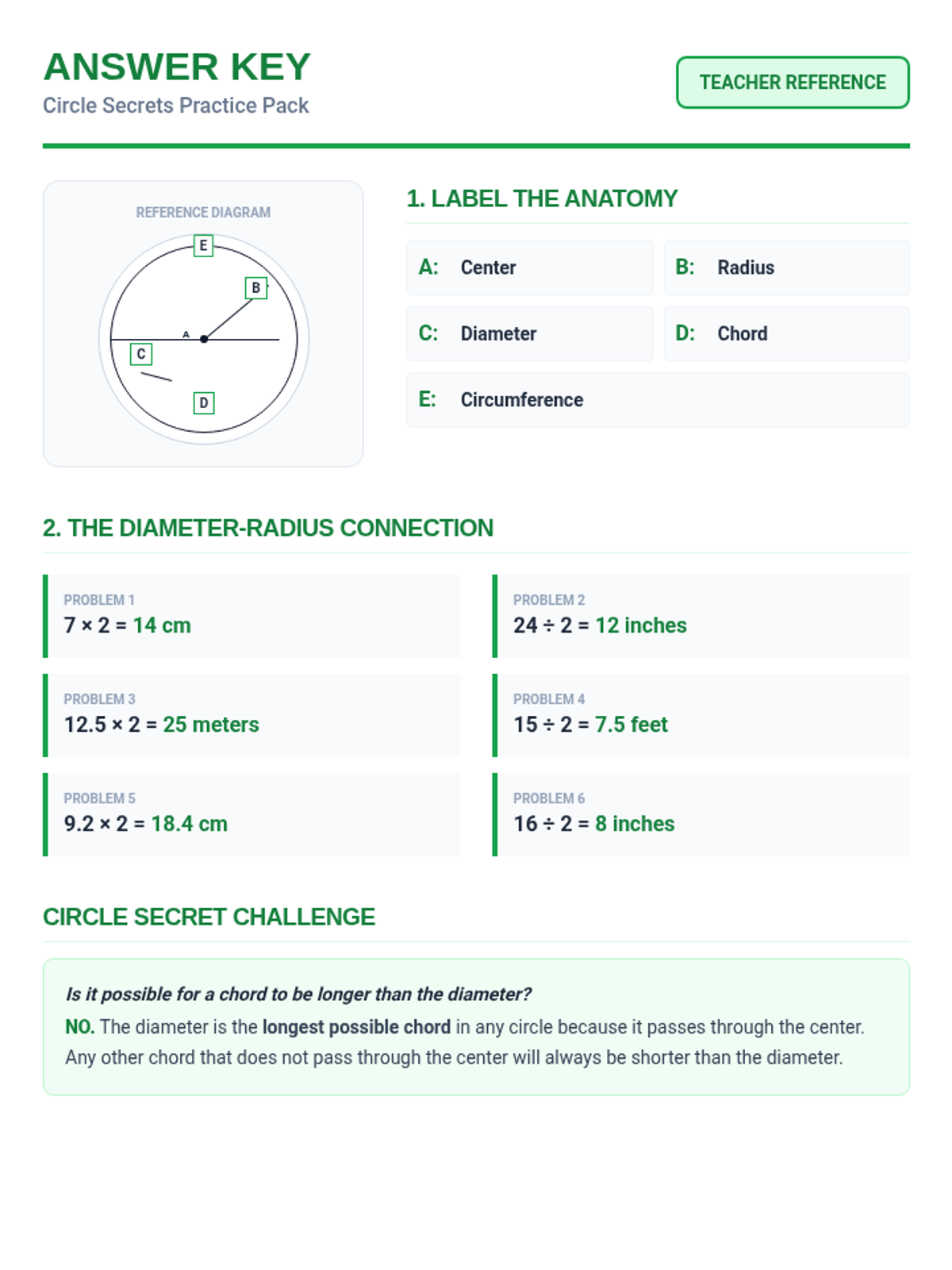
A 30-minute mini-lesson focusing on identifying the parts of a circle (radius, diameter, chord, center, and circumference) and calculating measurements between radius and diameter.