Fundamental notation, instrumental proficiency, and vocal techniques across various genres. Connects historical analysis with original composition and creative performance skills.
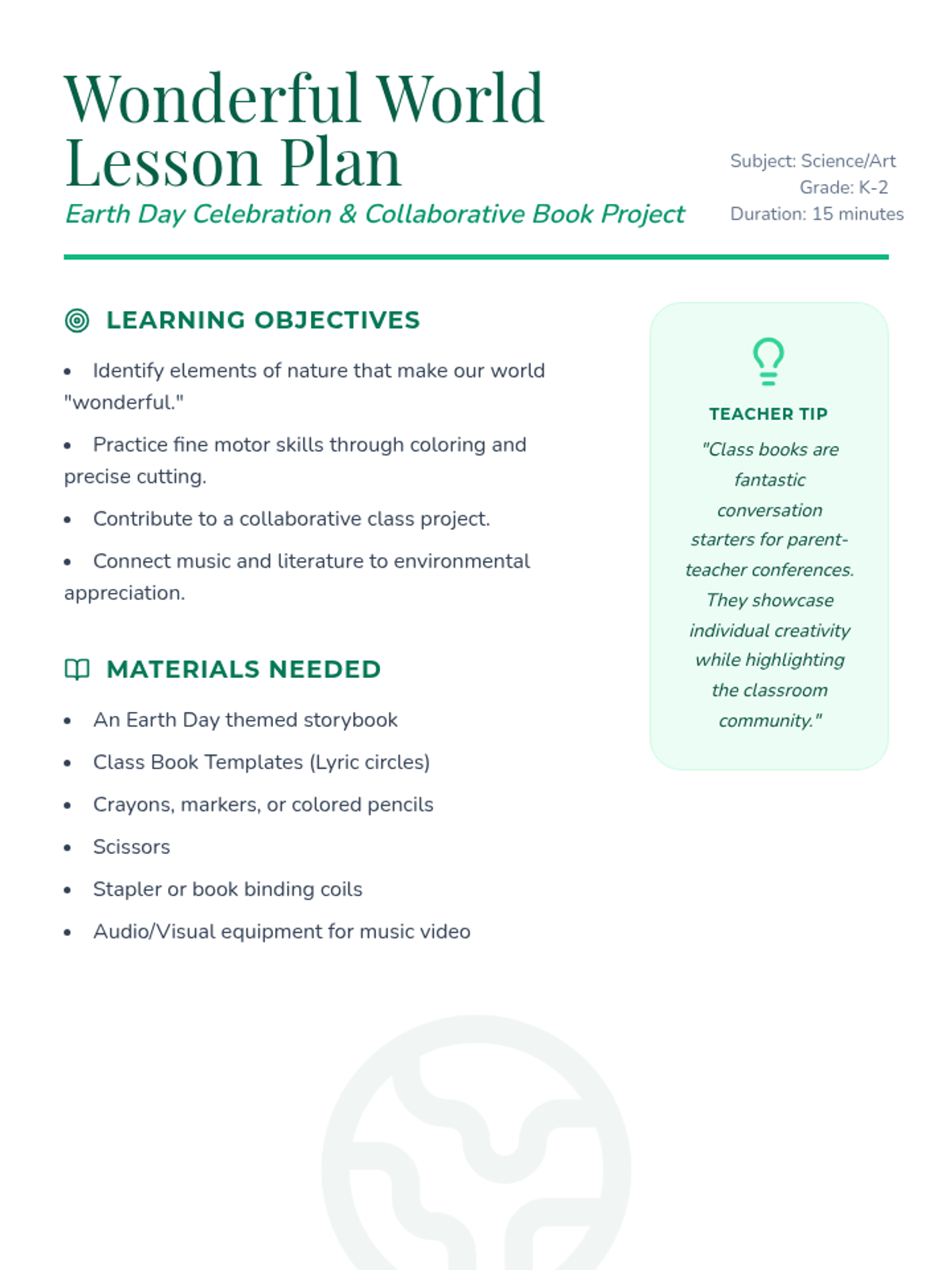
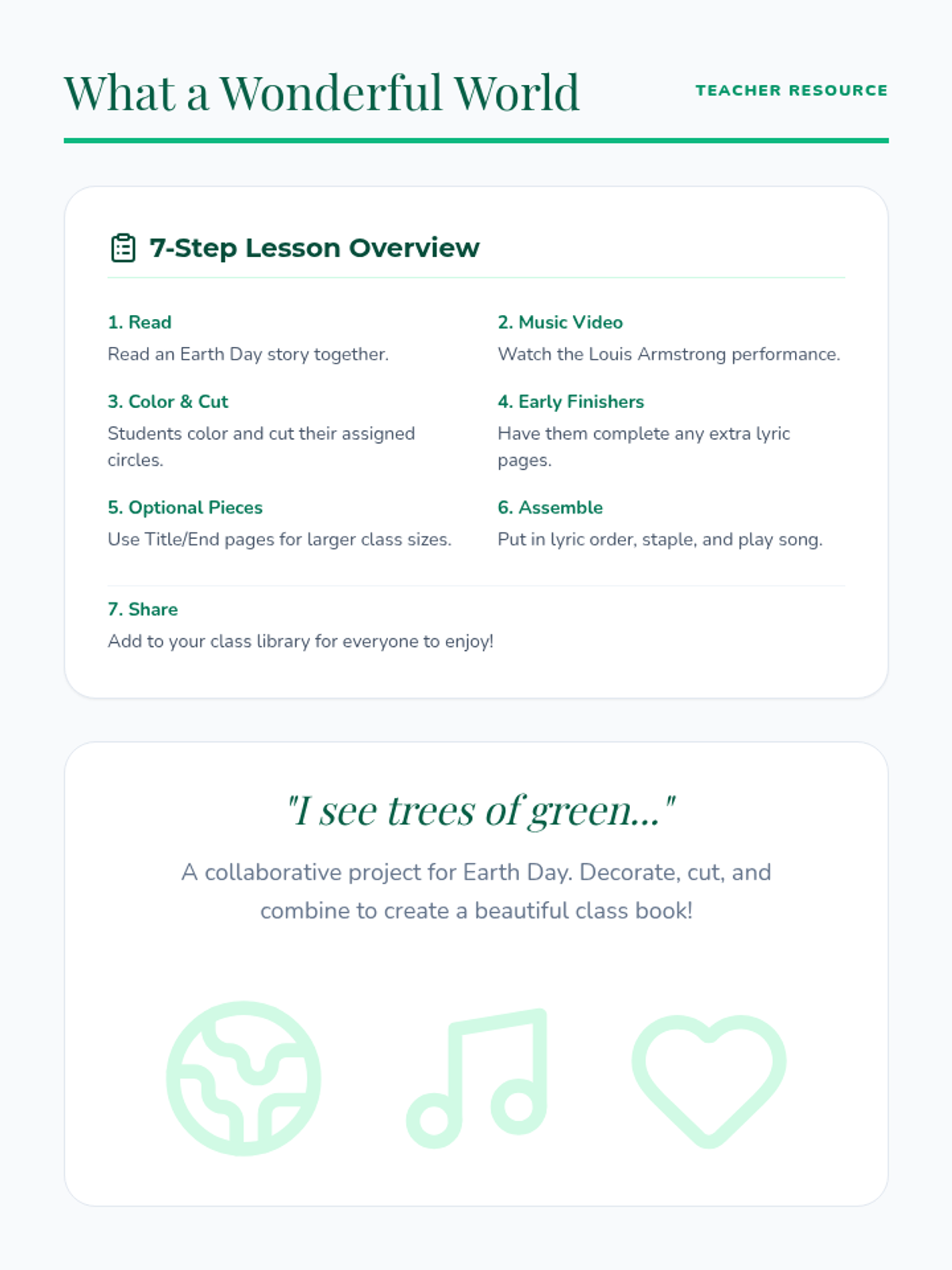
A collaborative Earth Day lesson where students create a class book inspired by Louis Armstrong's 'What a Wonderful World'. Includes a detailed teacher guide and presentation slides with a video embed.
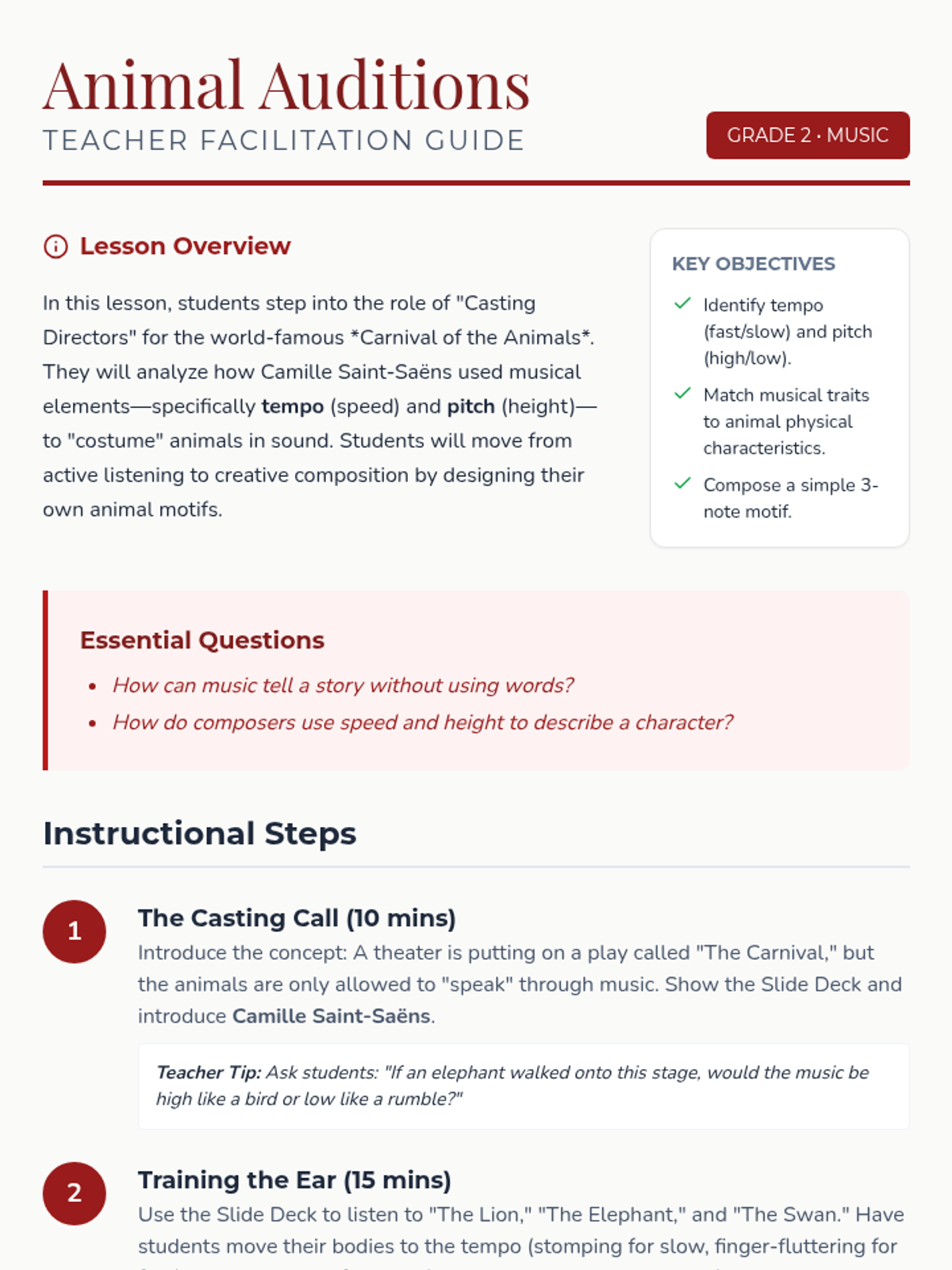
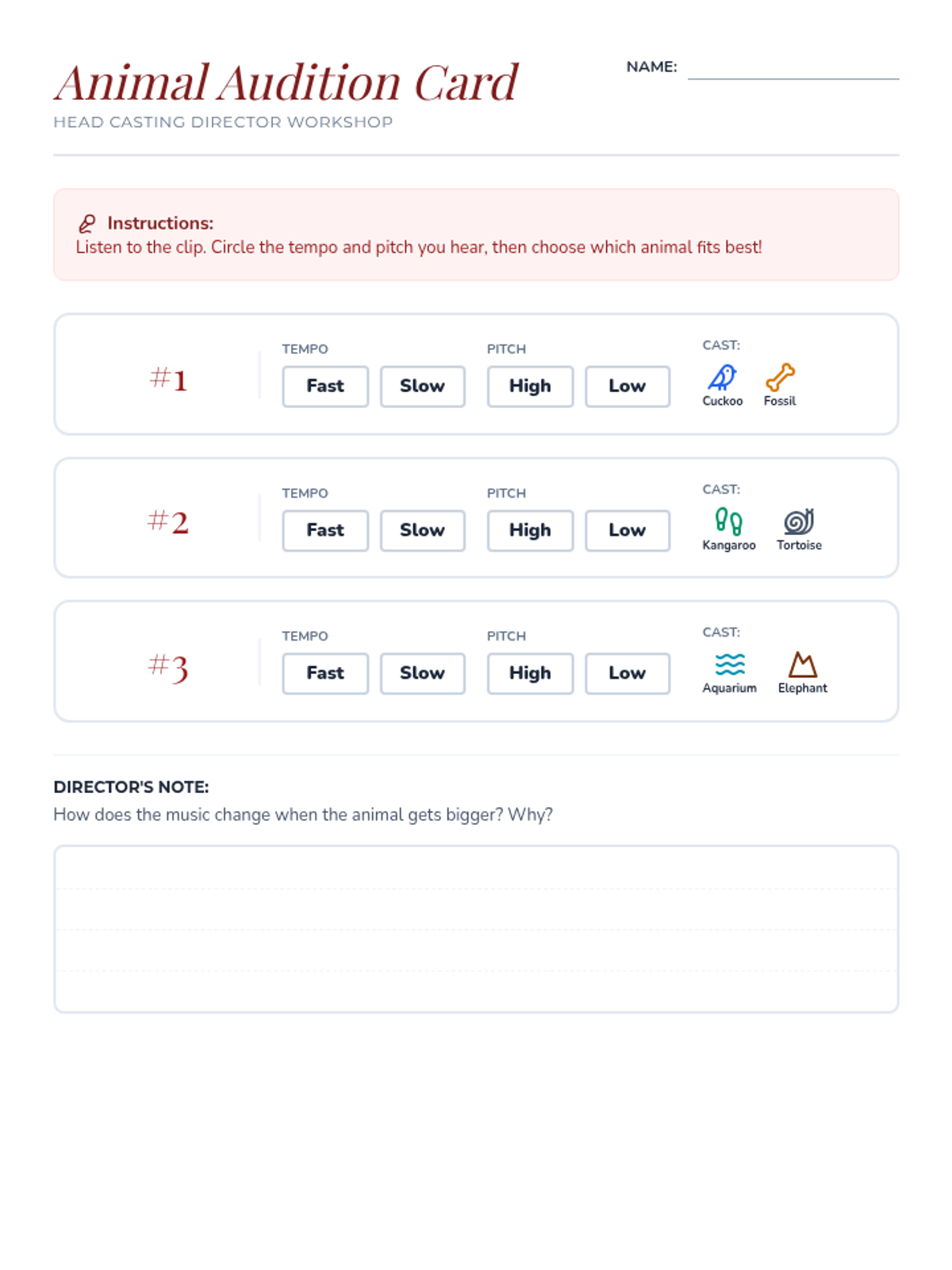
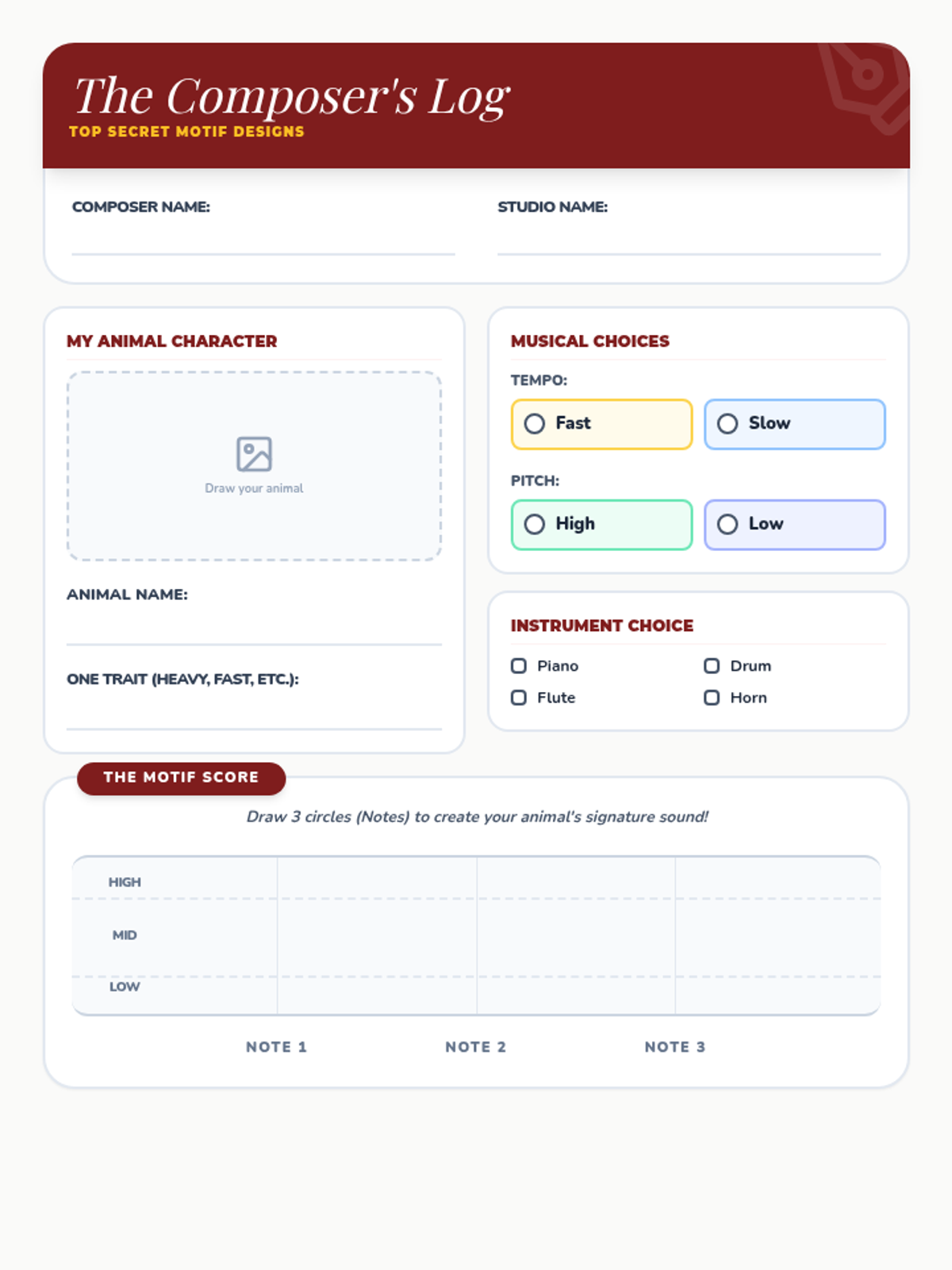
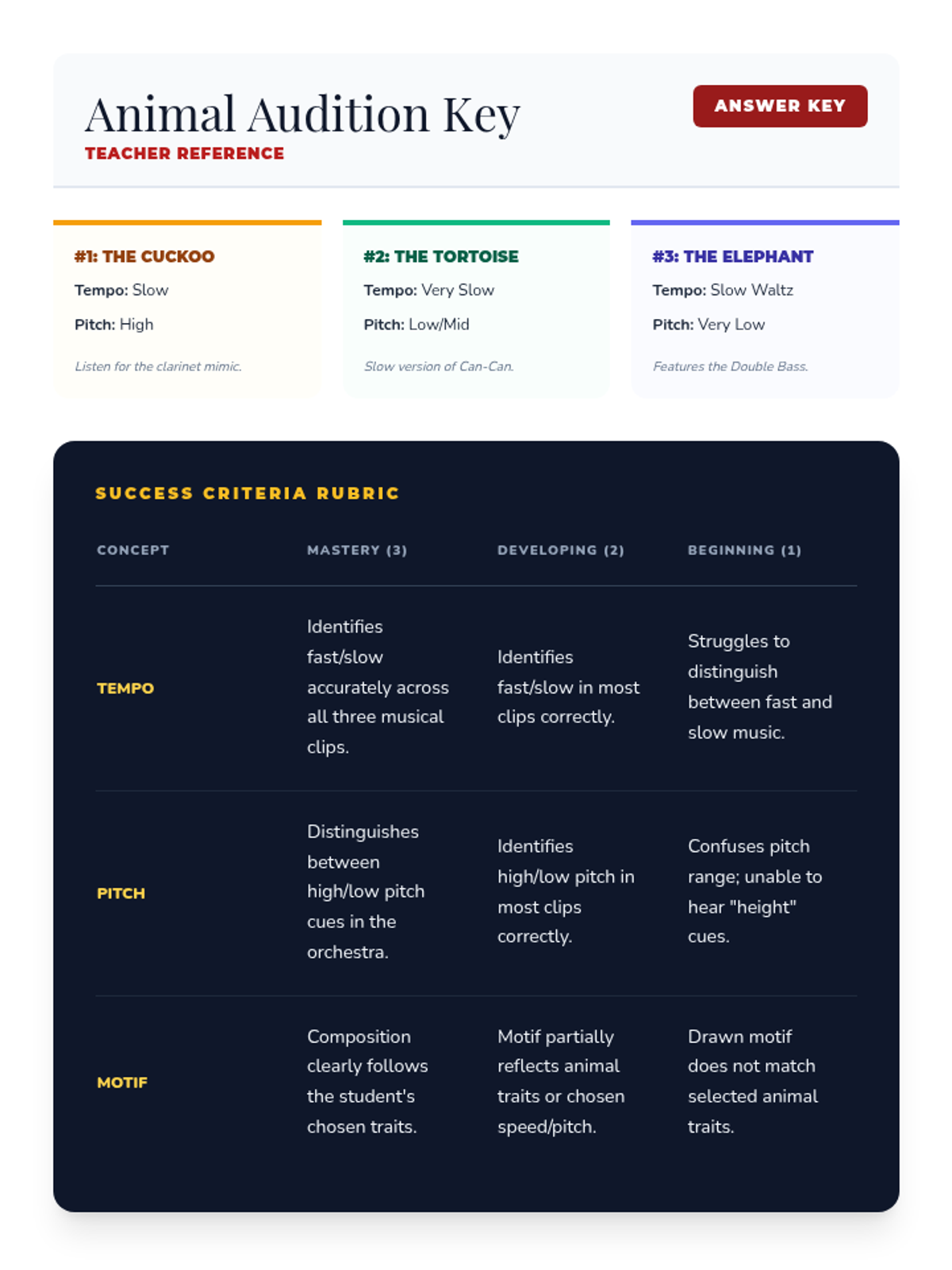
A theatrical exploration of Saint-Saëns' 'The Carnival of the Animals' where 2nd graders act as casting directors to match musical traits like tempo and pitch to animal characters.
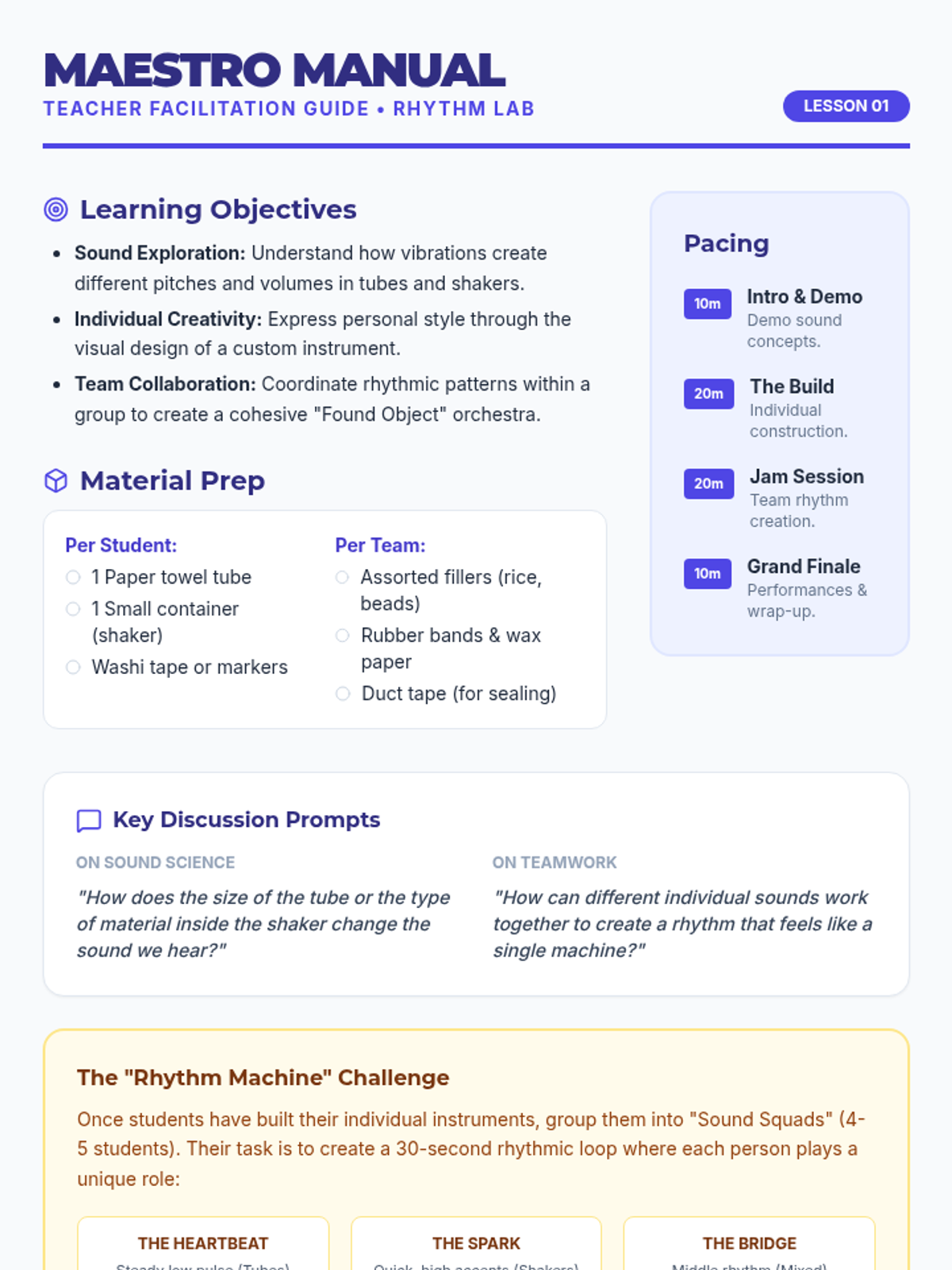
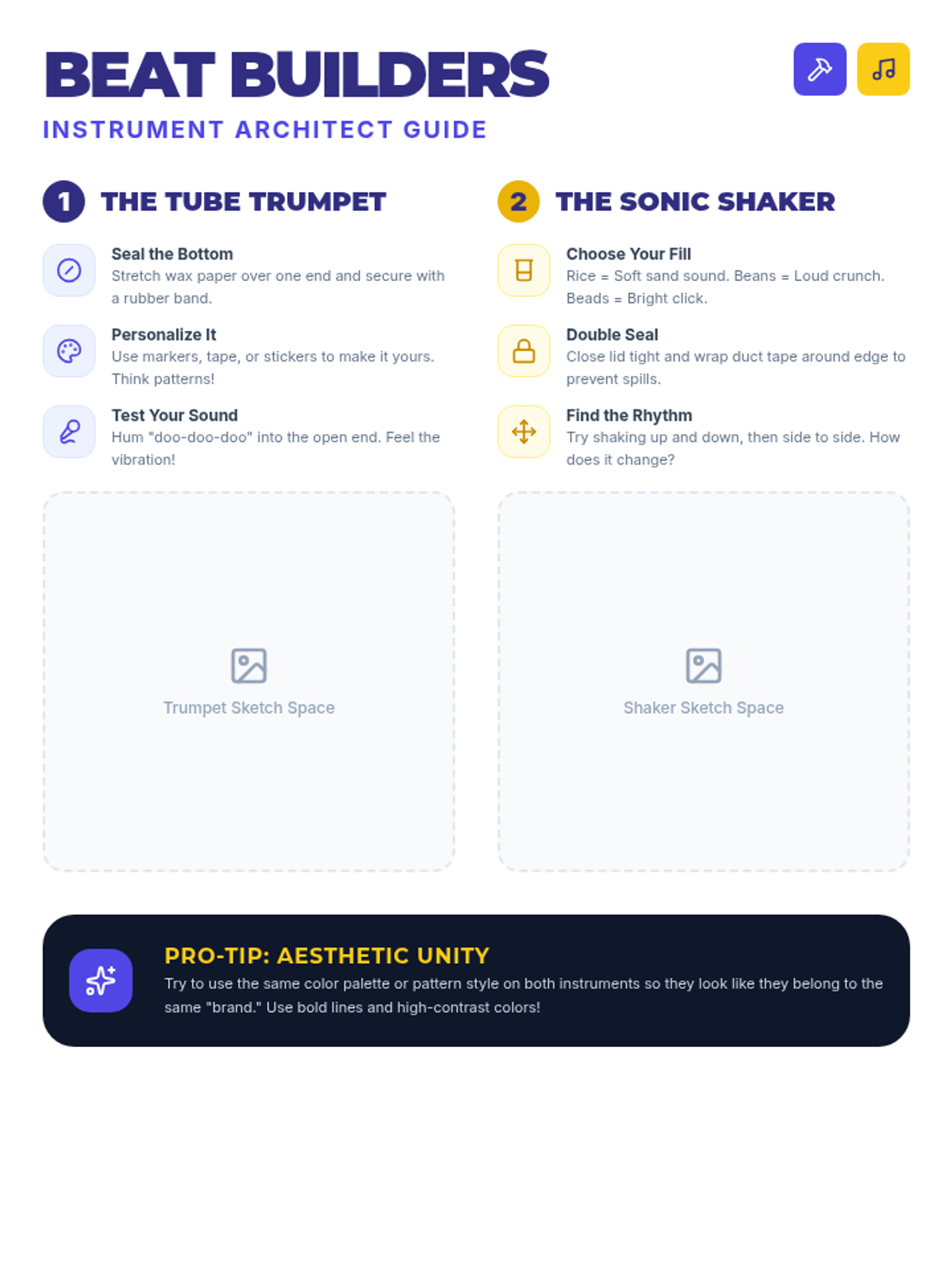
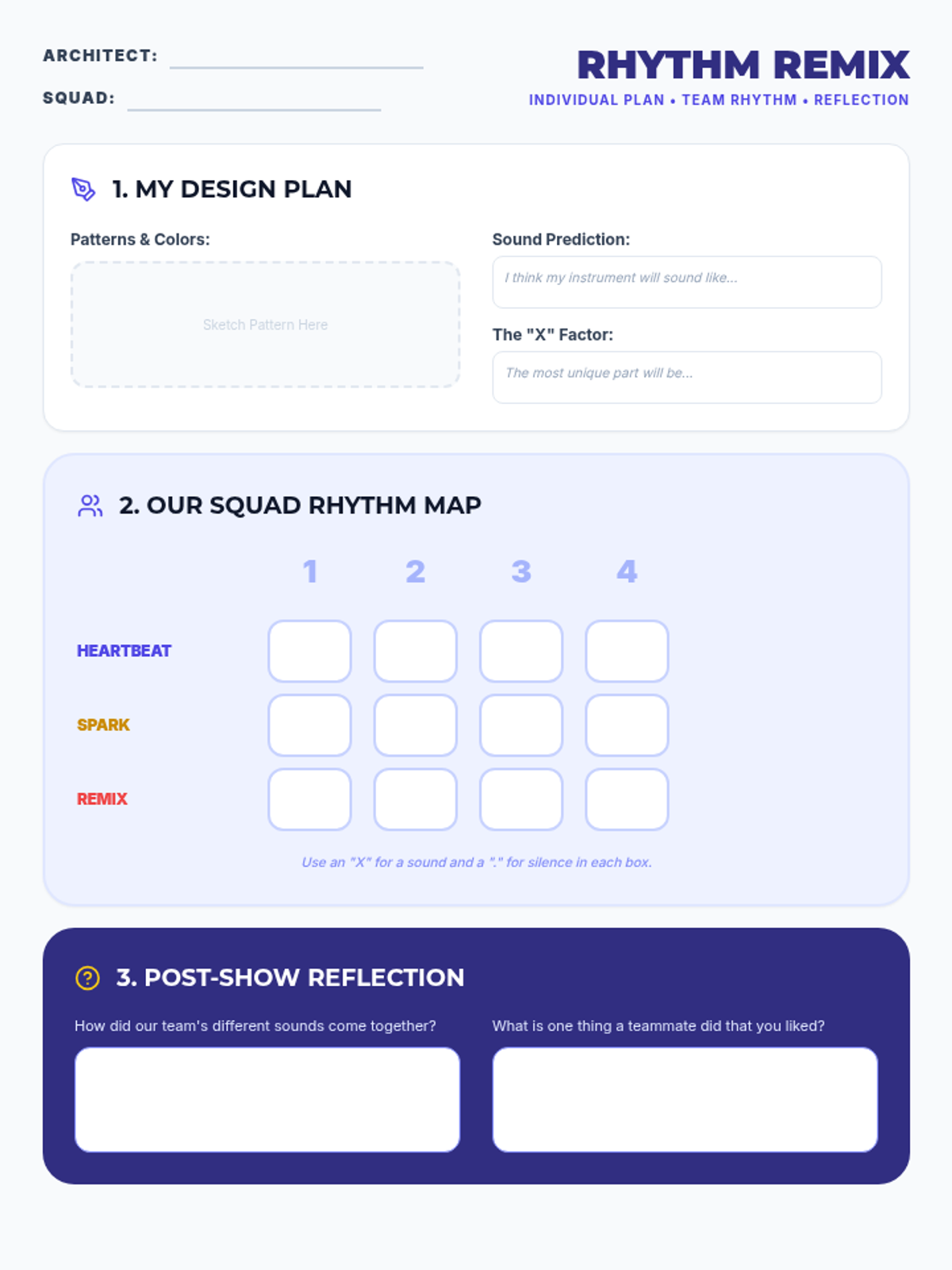
Students explore the science and art of sound by constructing DIY instruments from recycled materials. The lesson emphasizes individual creative design followed by a collaborative team performance.
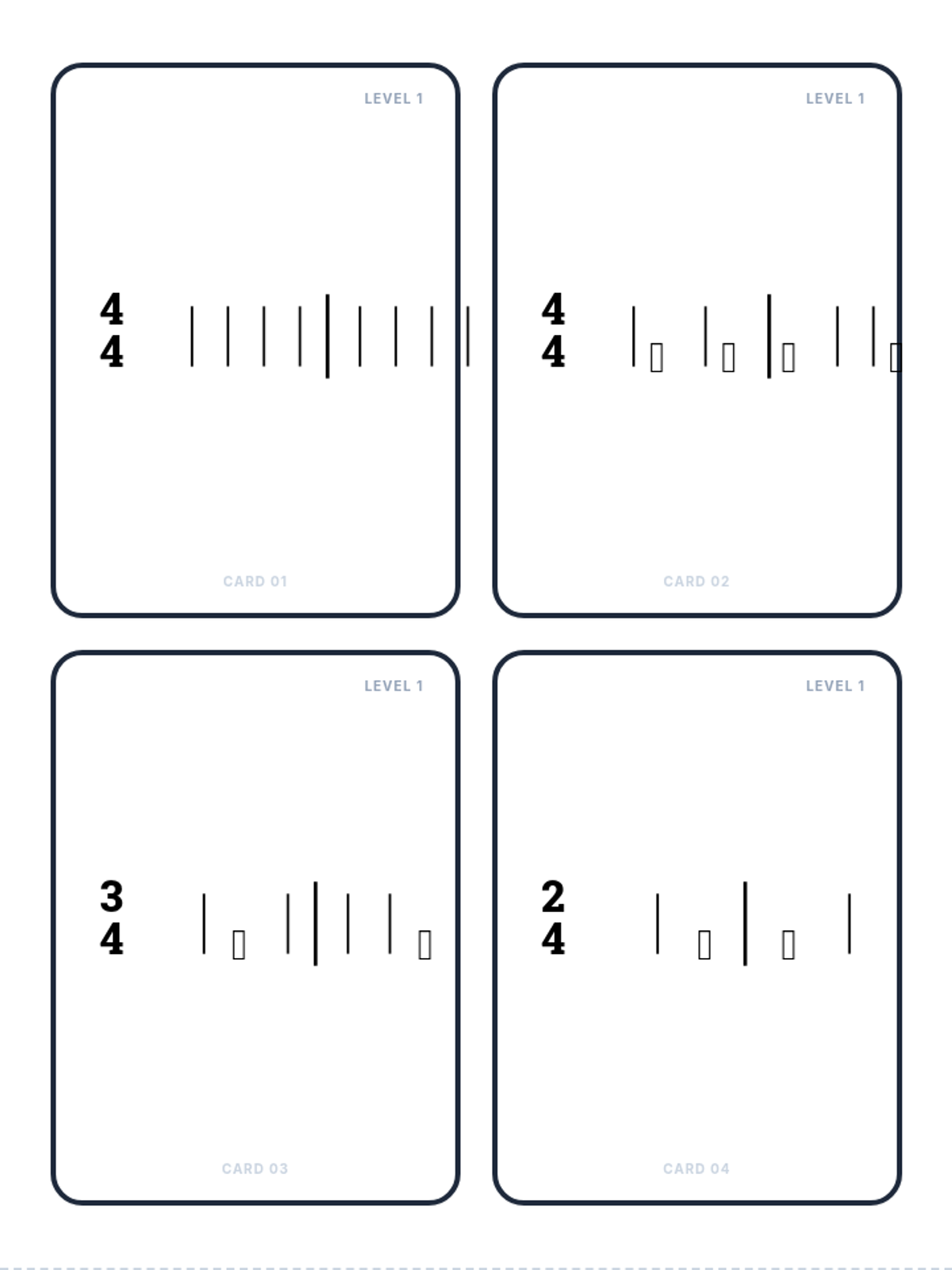
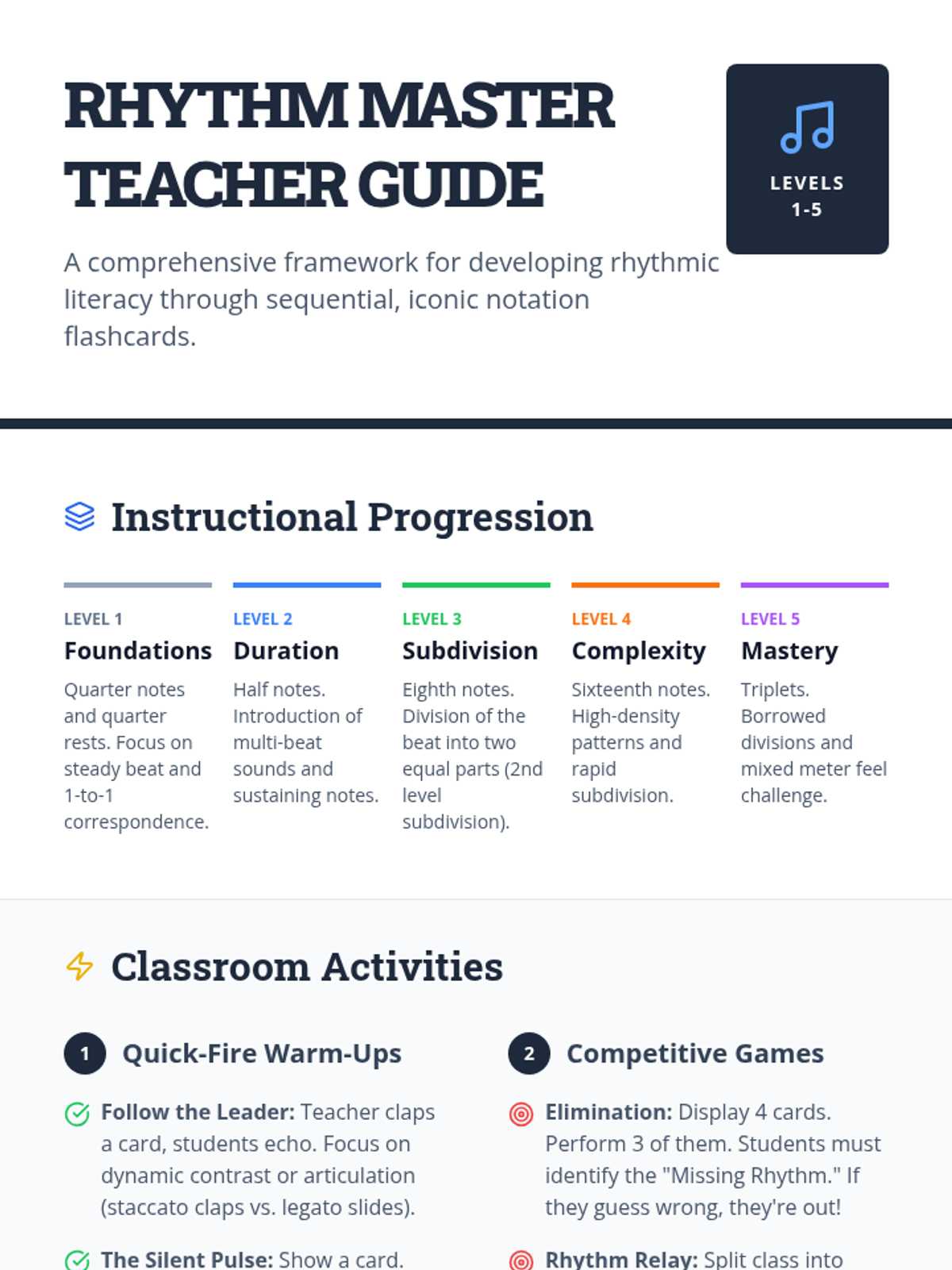
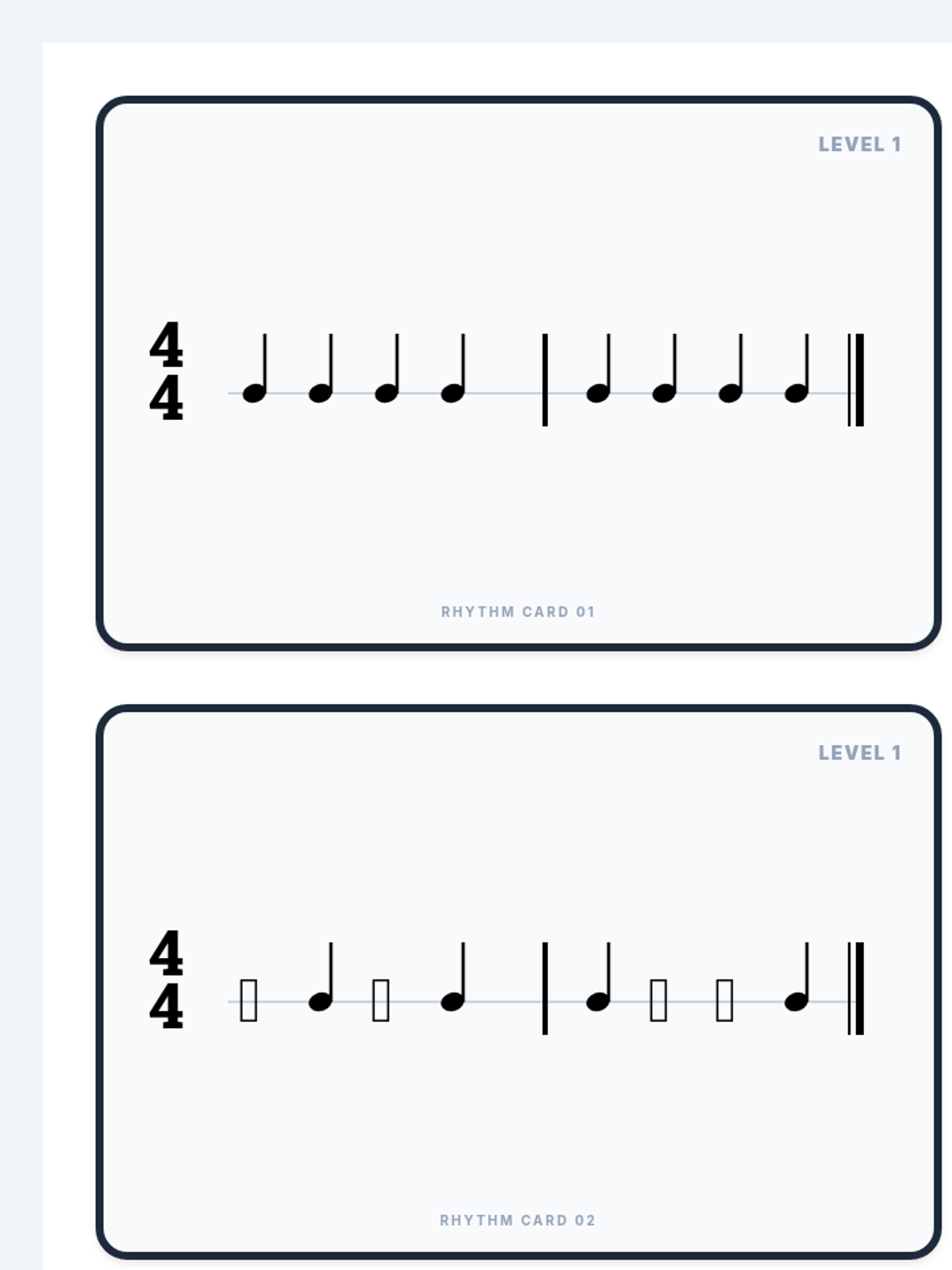
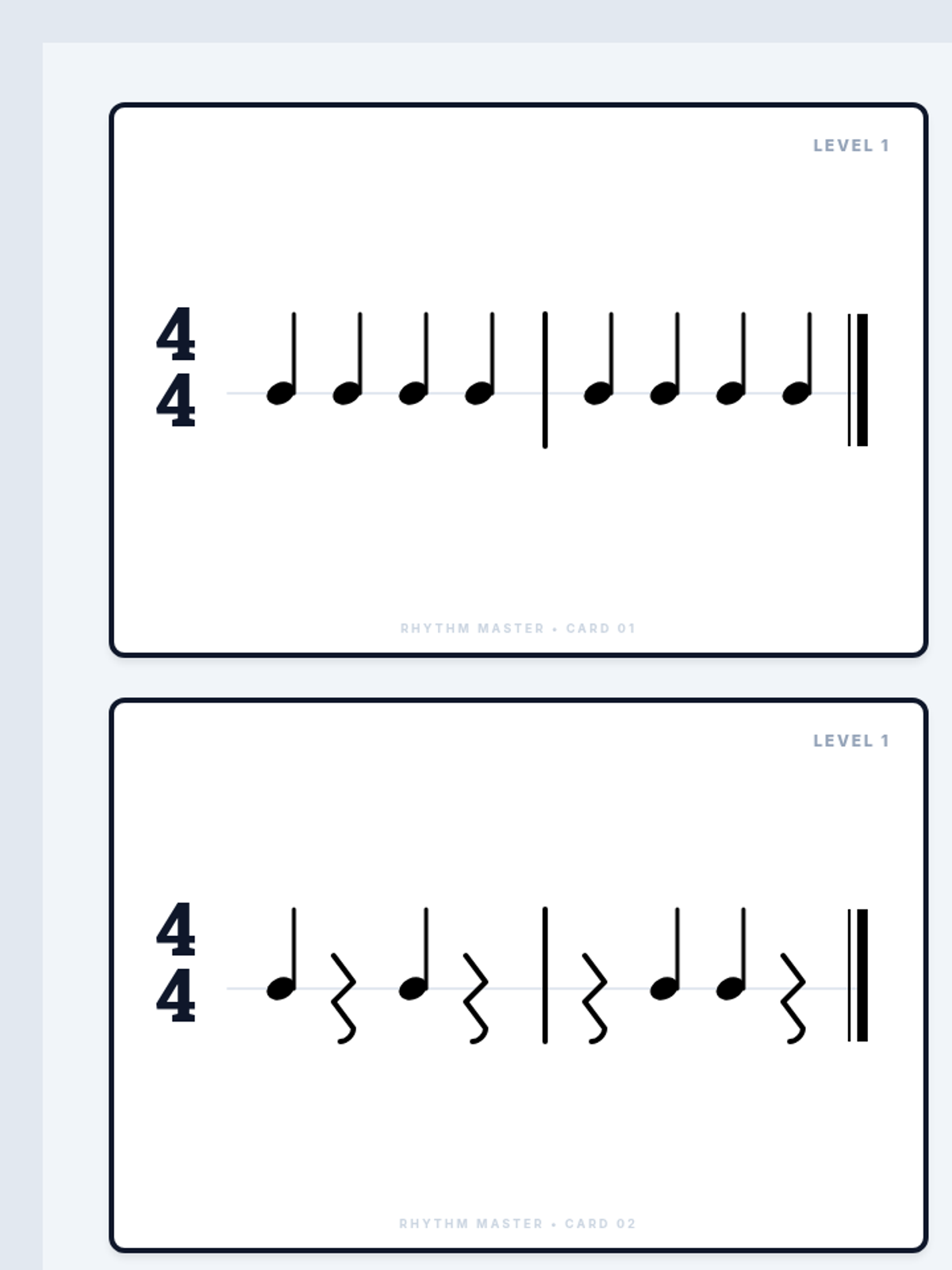
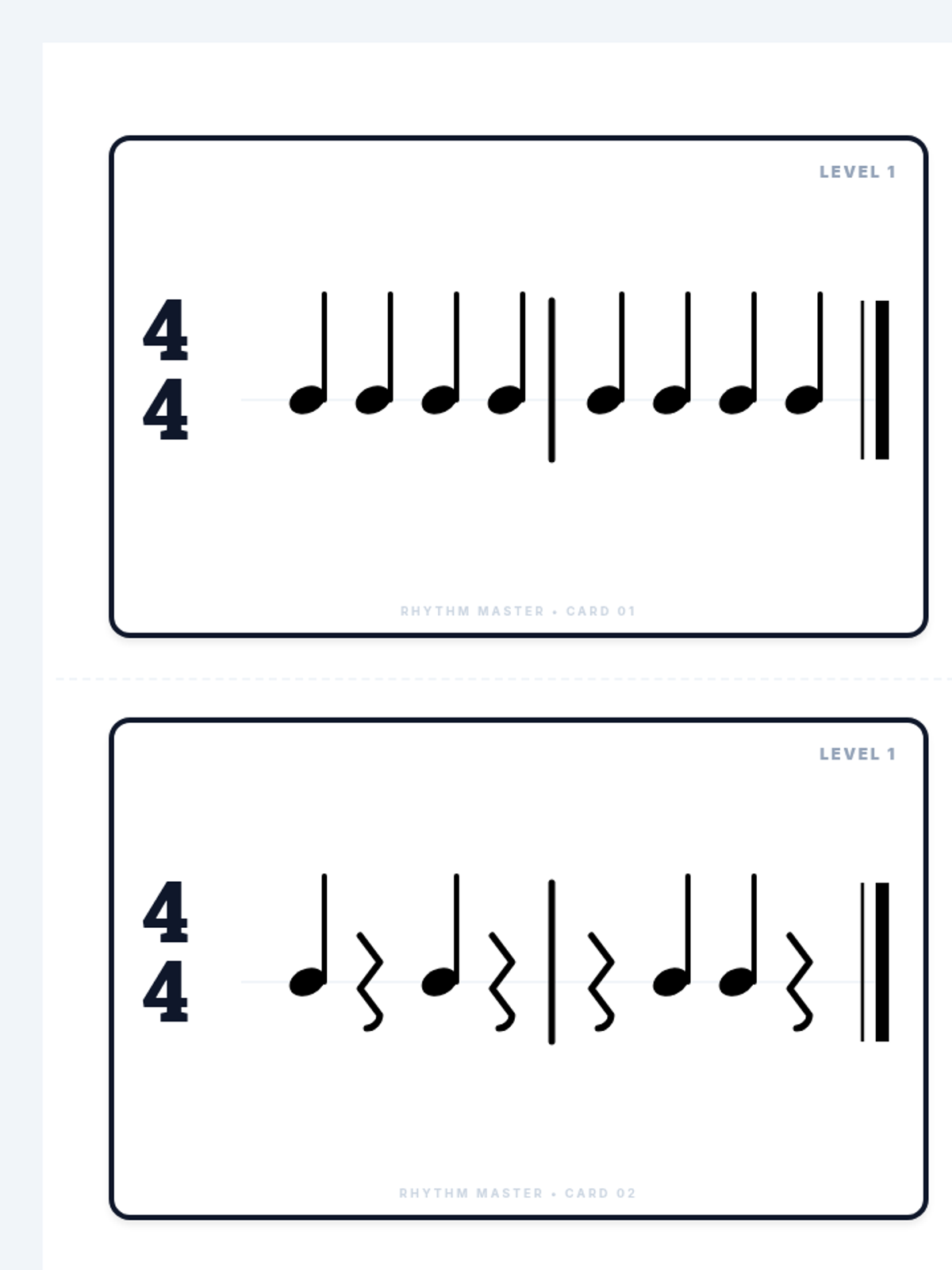
A series of rhythm reading flashcards and a teacher's guide covering basic to advanced rhythmic patterns. Activities progress from quarter notes and rests to complex sixteenth notes and triplets across multiple time signatures.
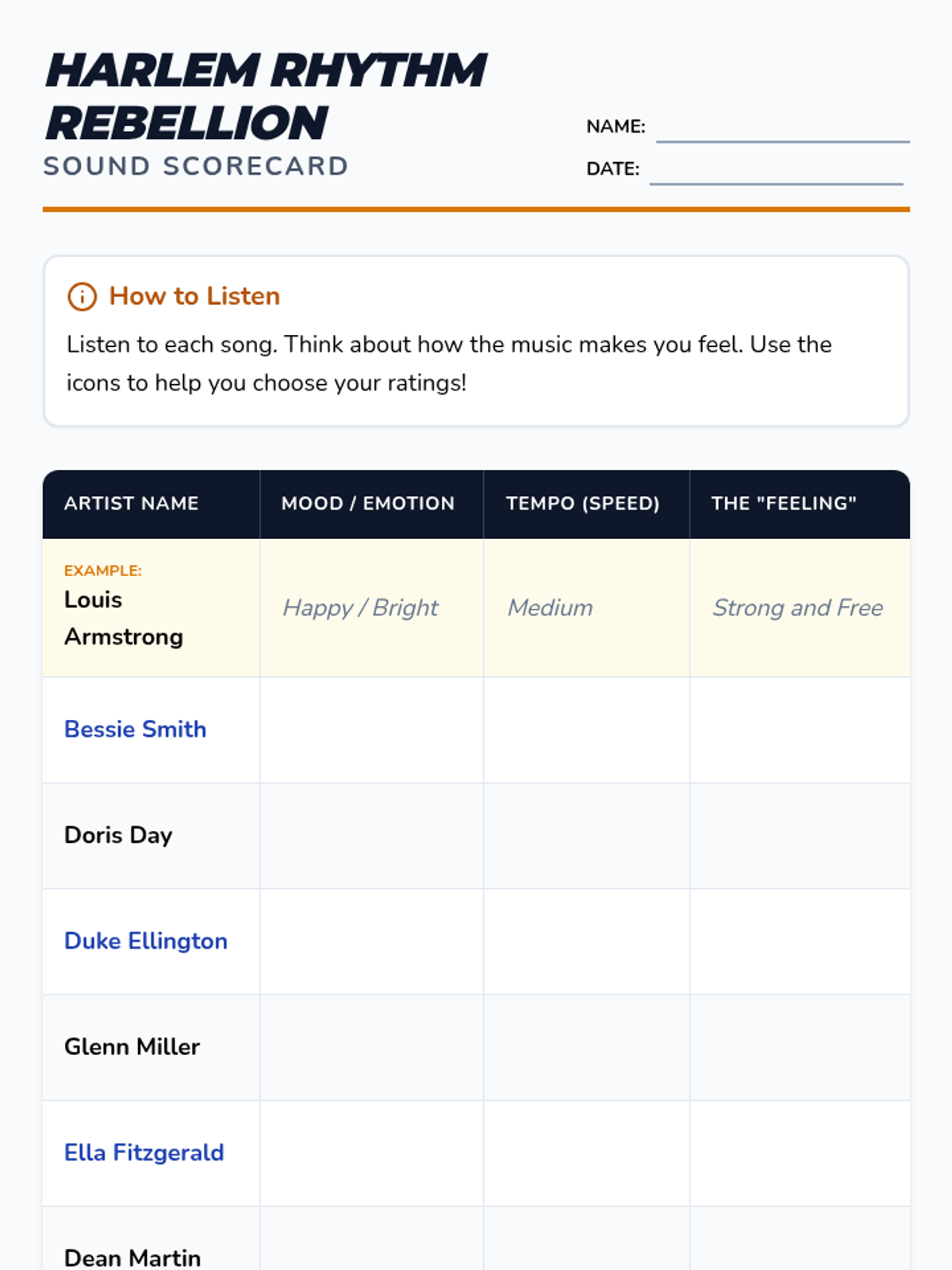
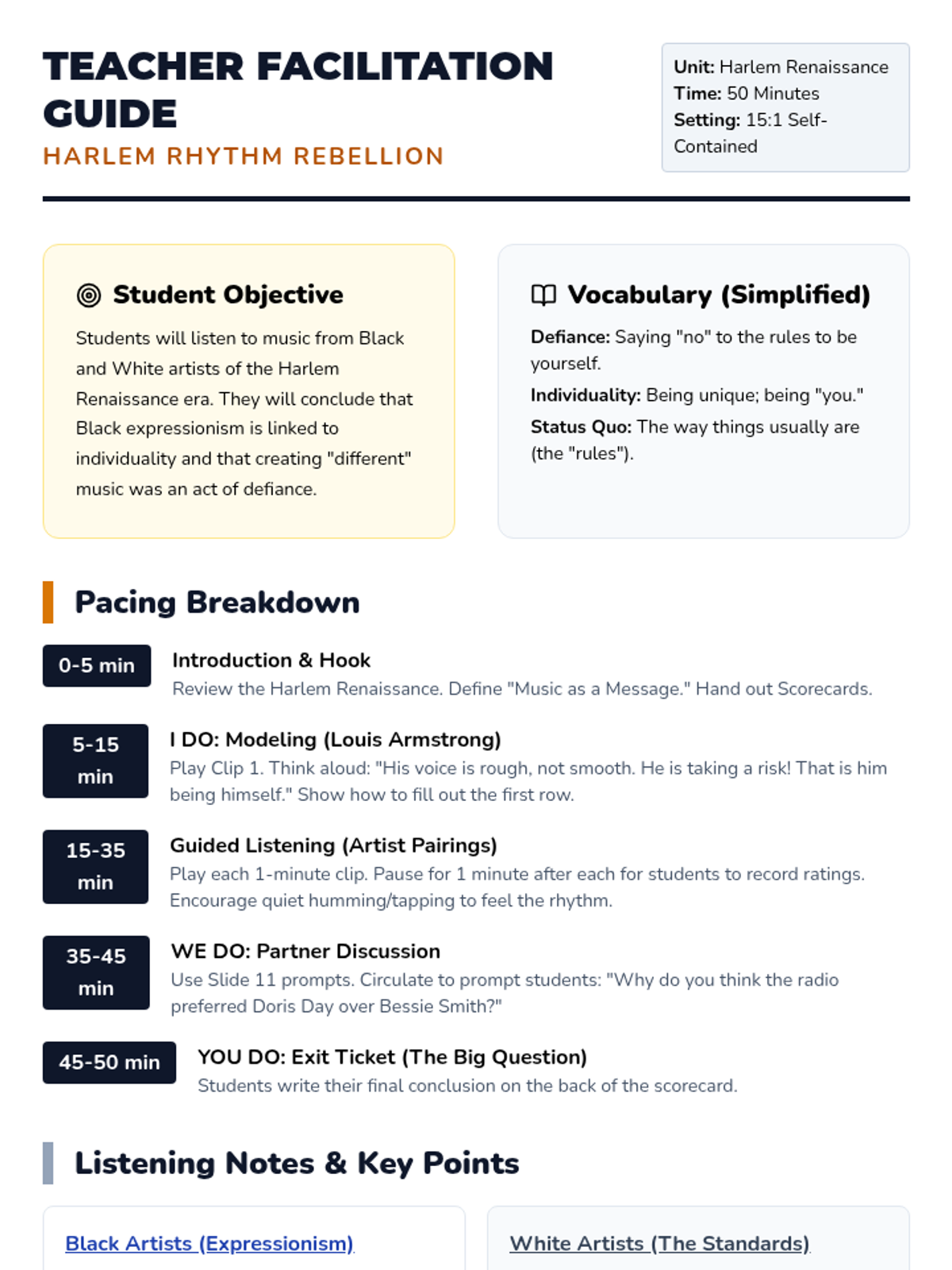
A 50-minute lesson exploring the connection between Jazz music, Black expressionism, and the Harlem Renaissance through music comparison and artist biopics. Students will analyze the differences between Black and White artists of the era to understand music as an act of defiance and cultural identity.
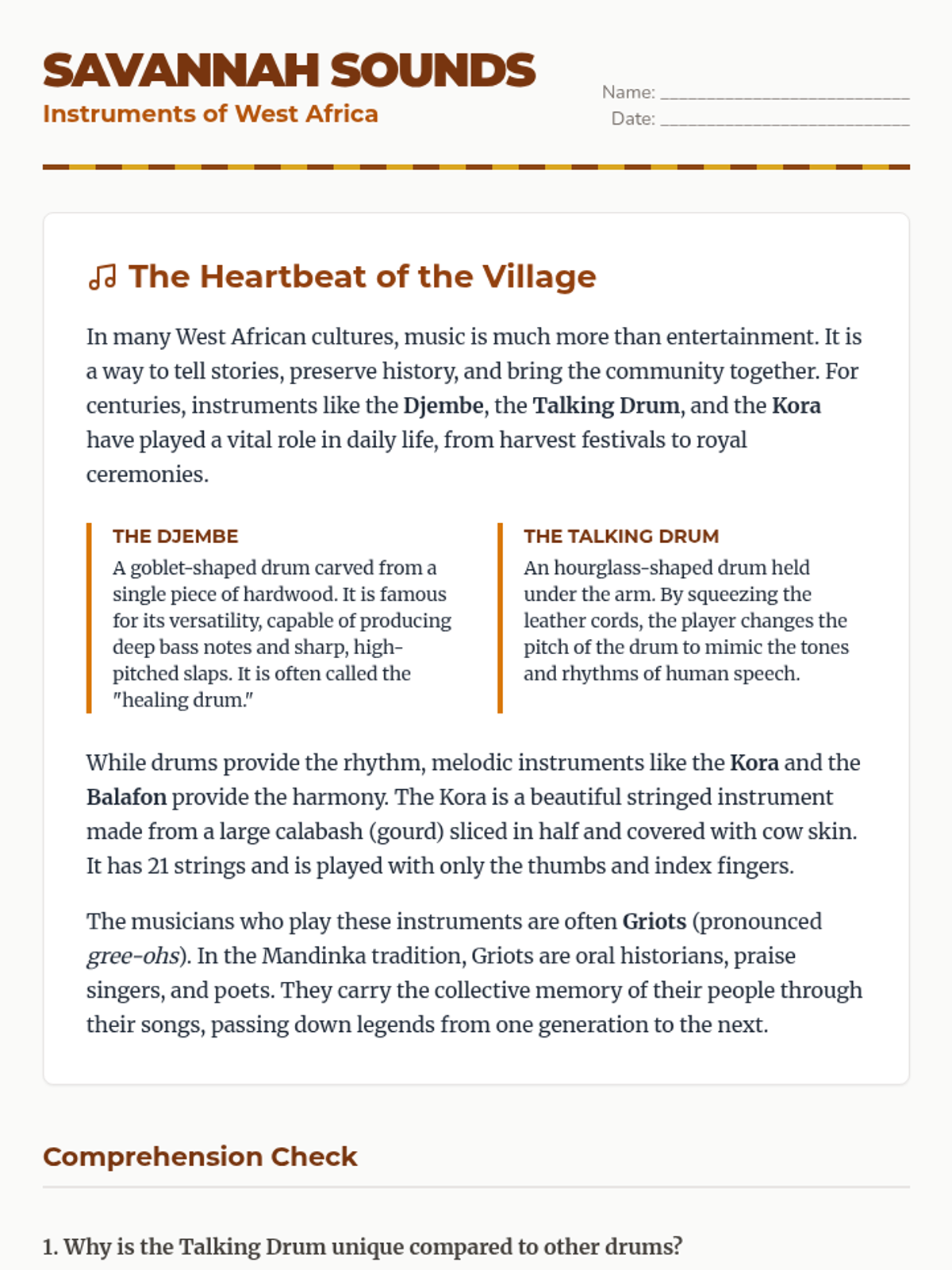
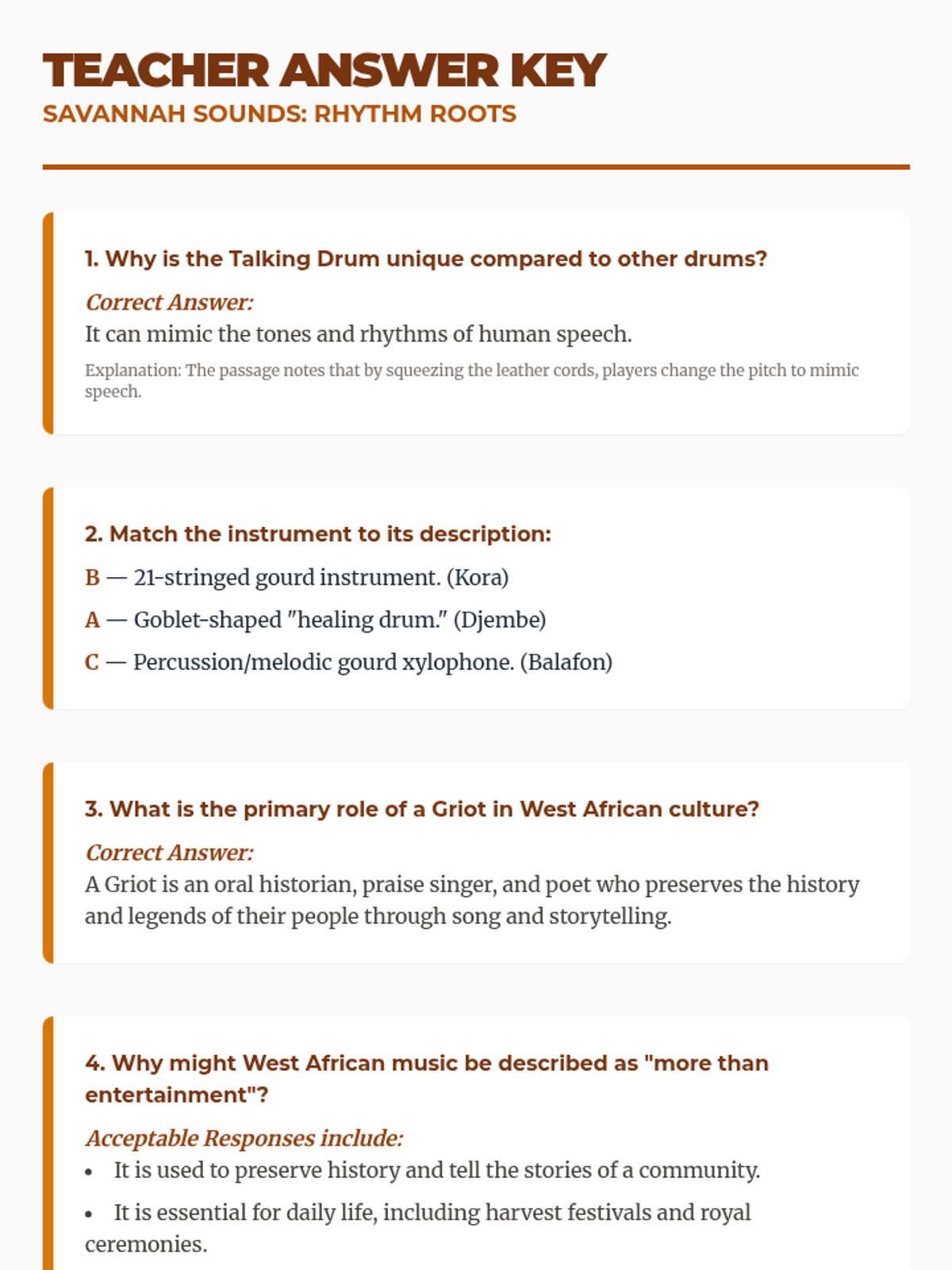
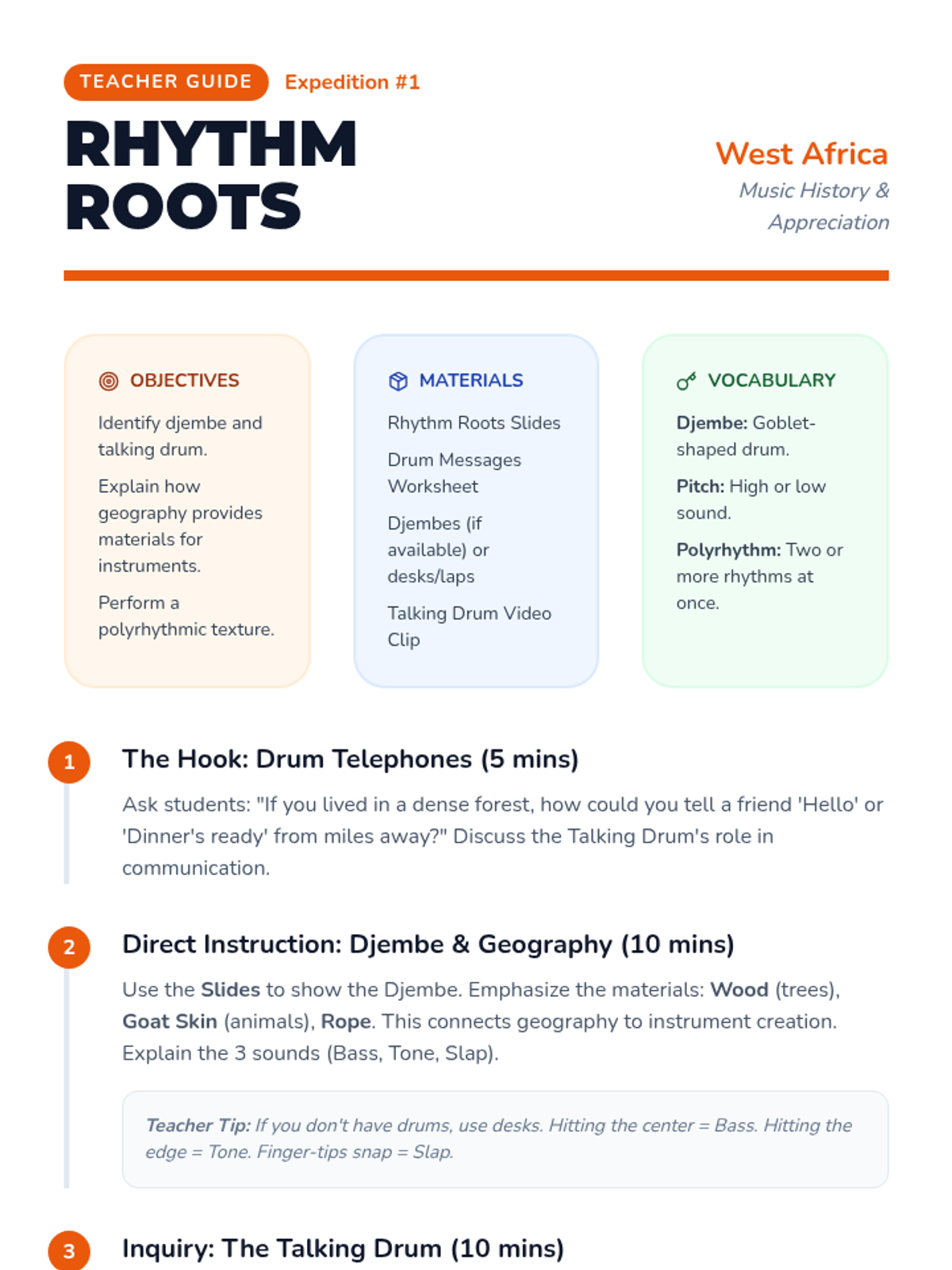
An introduction to the vibrant musical traditions of West Africa, focusing on iconic percussion and melodic instruments like the djembe, kora, and talking drum.
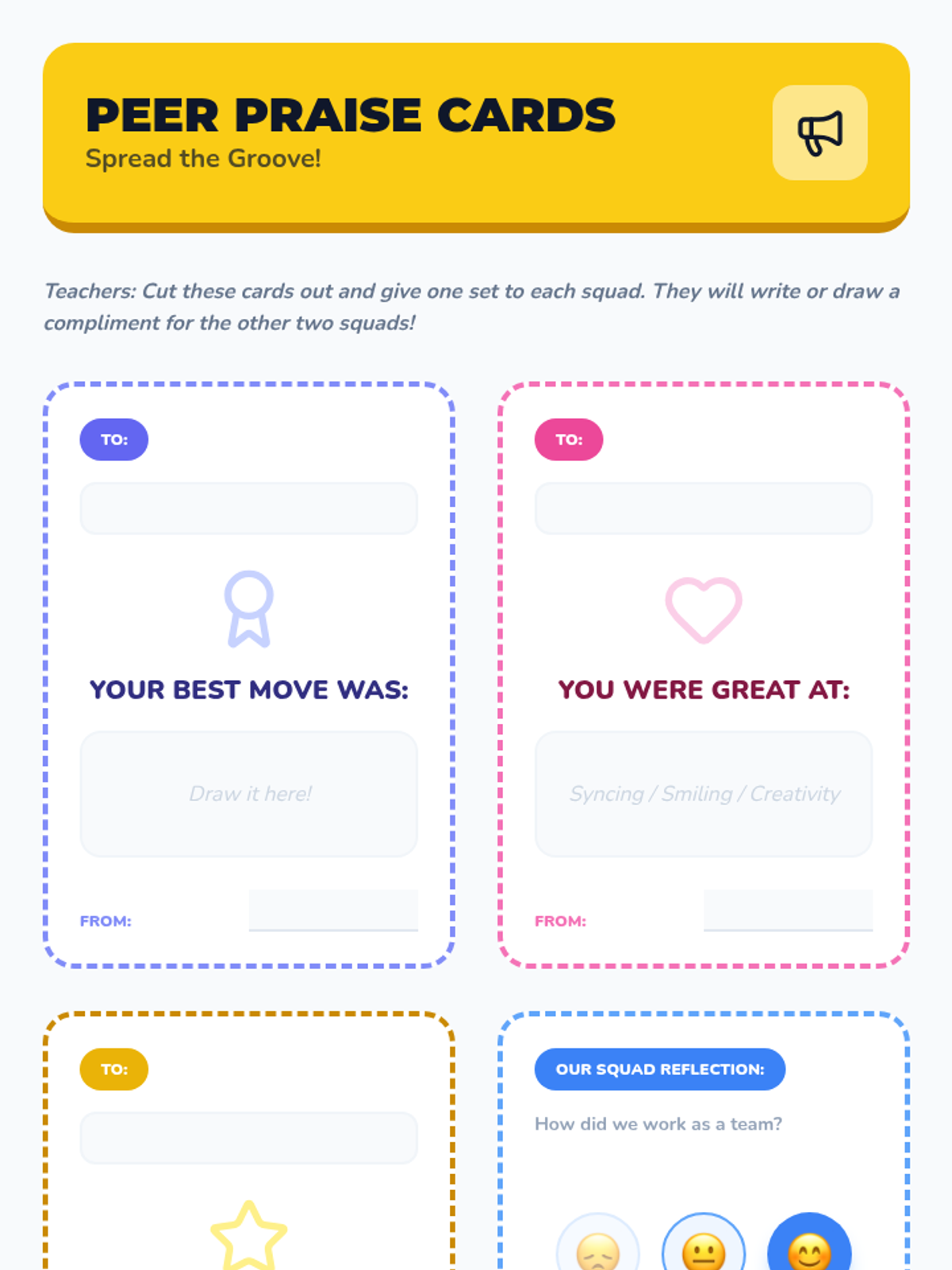
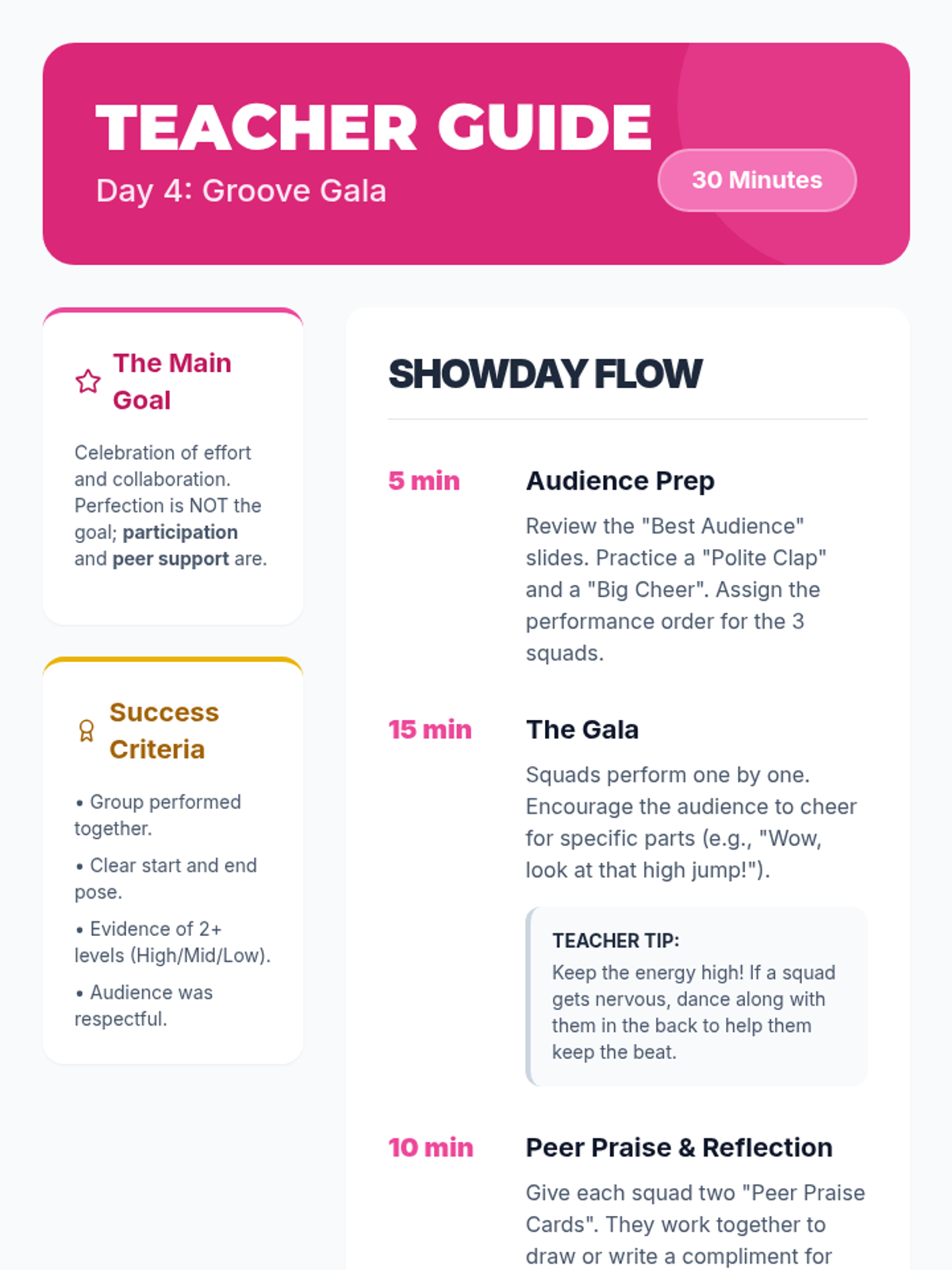
The final performance day where groups showcase their choreography and celebrate each other's creativity.
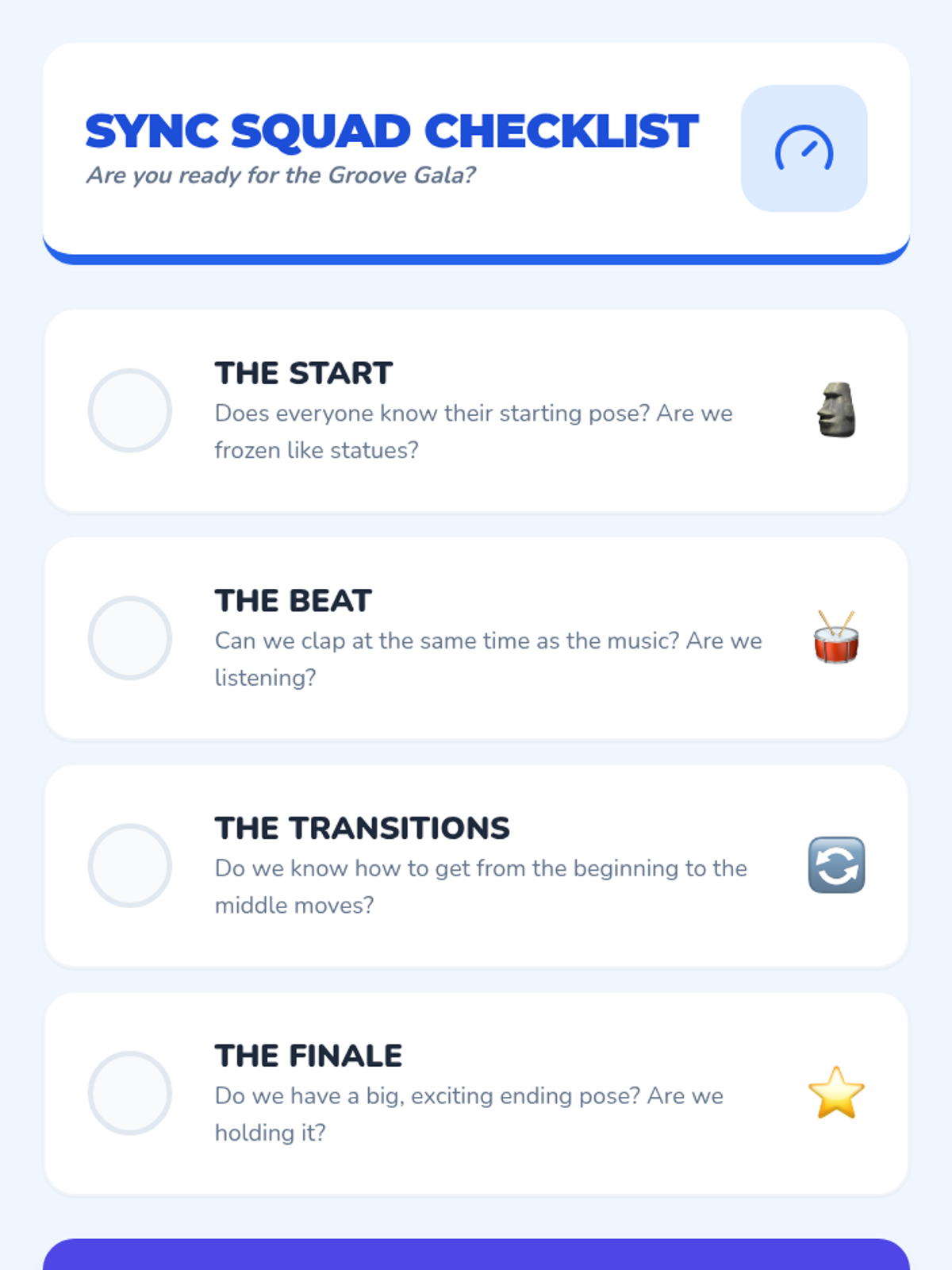
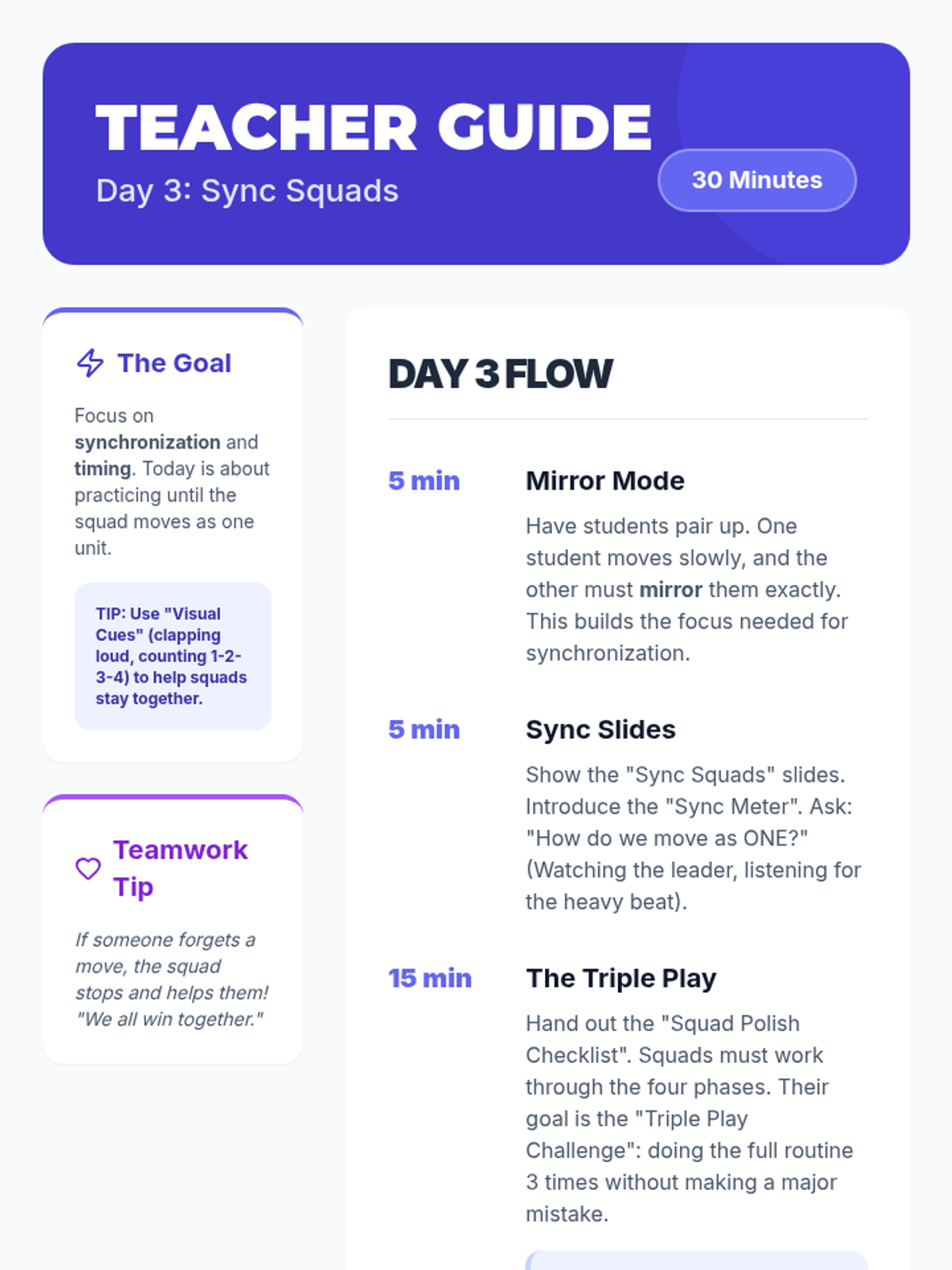
Squads practice their full routine, adding transitions and ensuring every member is in sync.
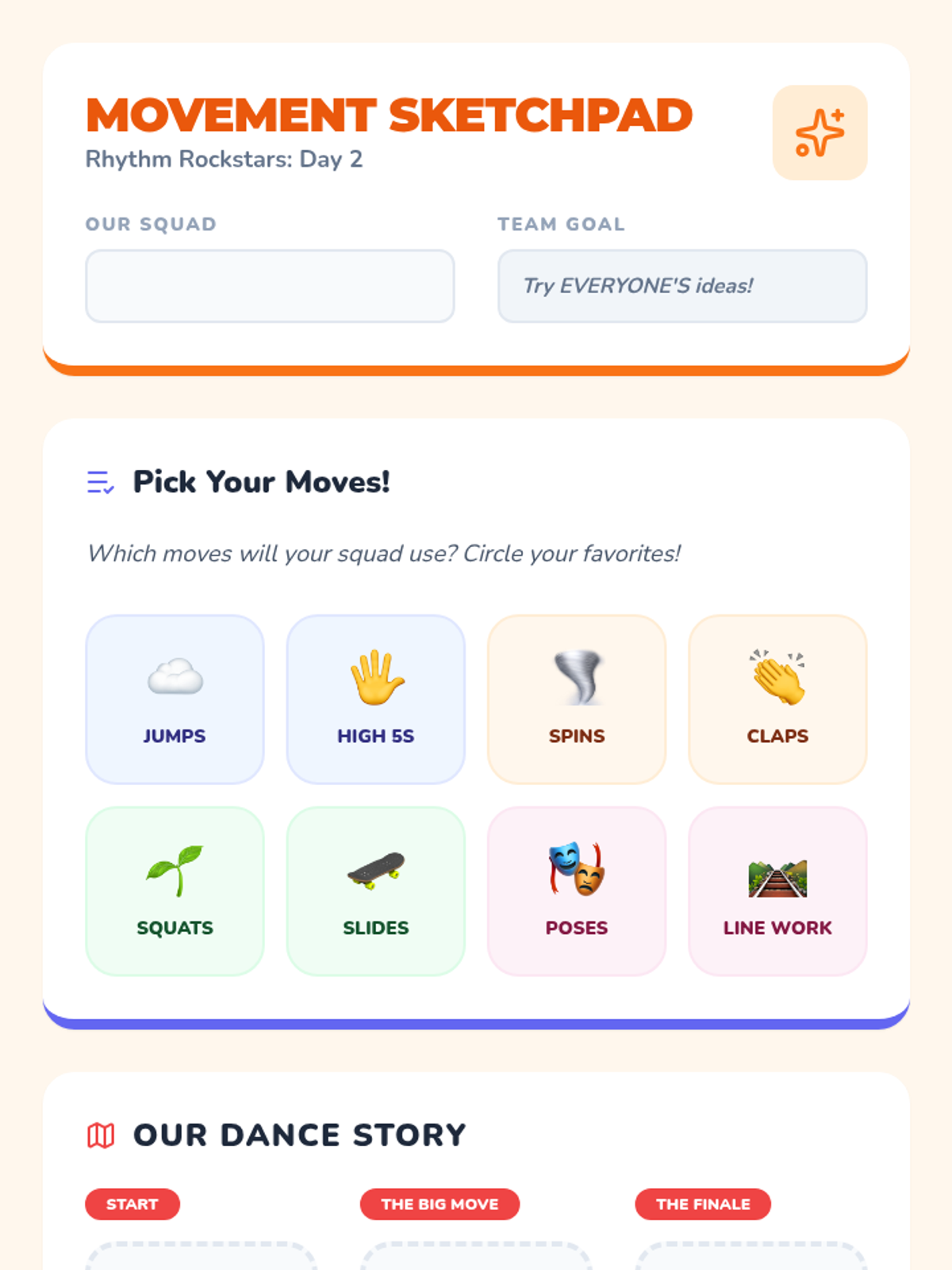
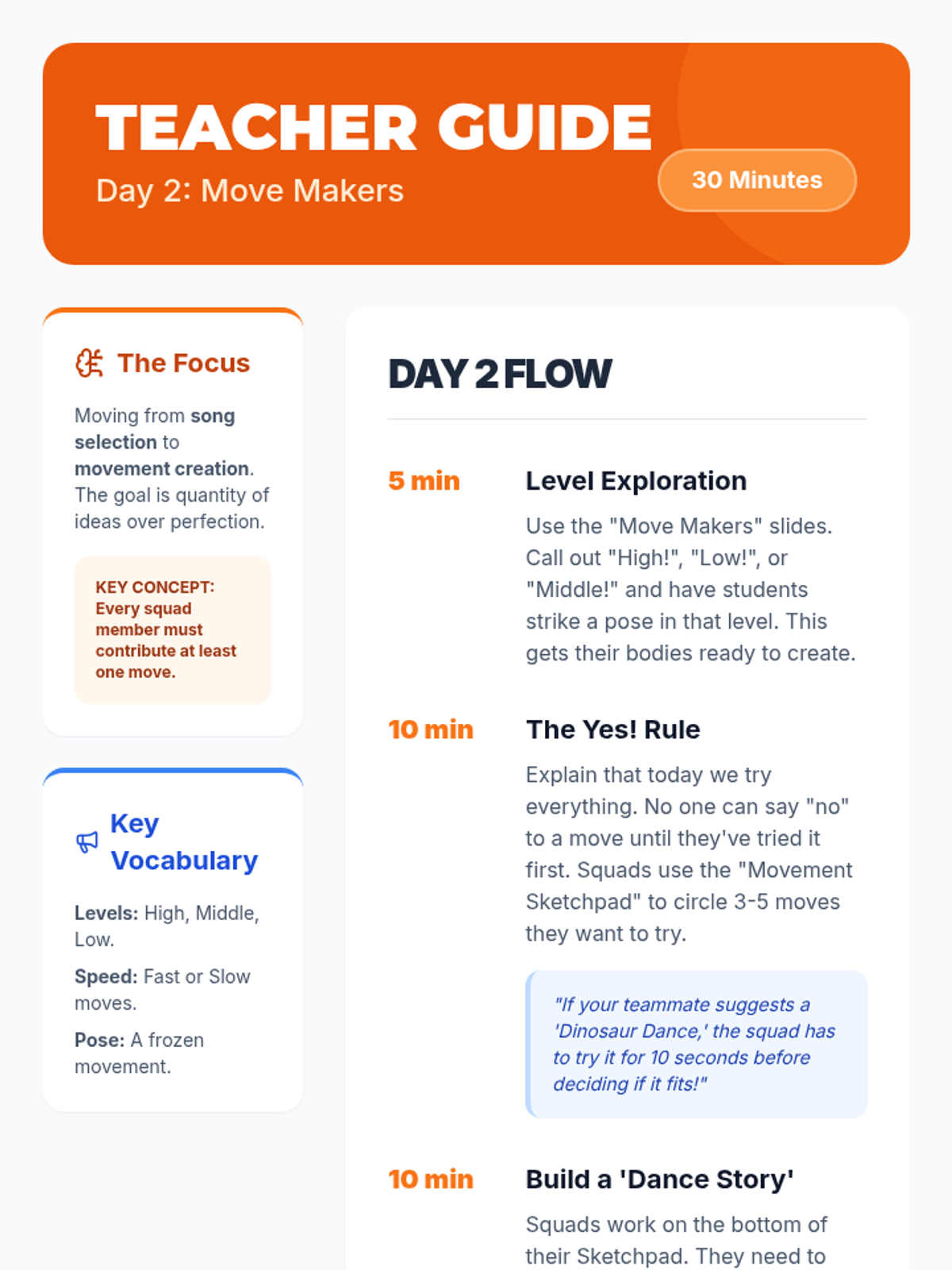
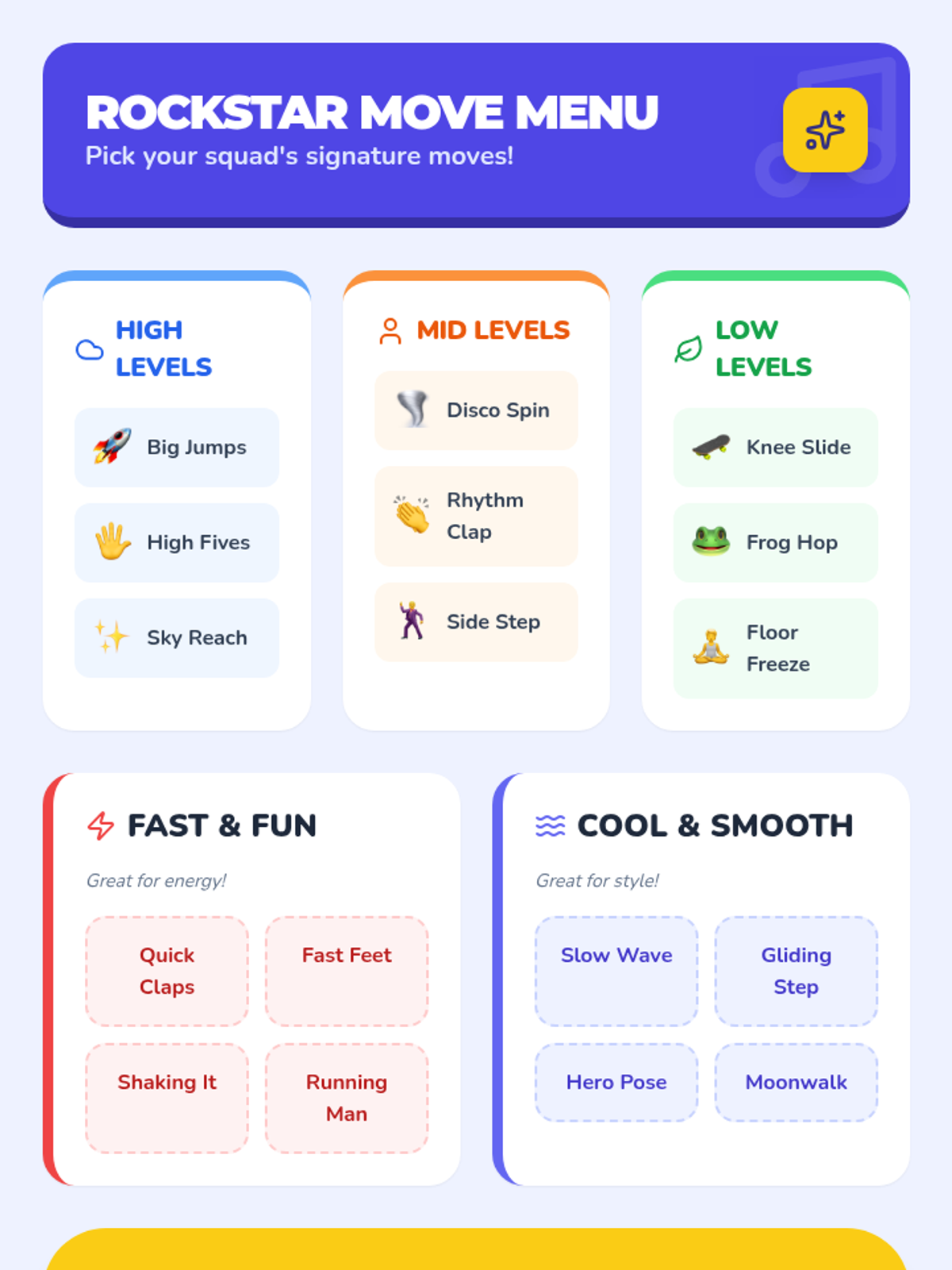
Groups brainstorm dance moves using different levels and speeds, focusing on including everyone's ideas.
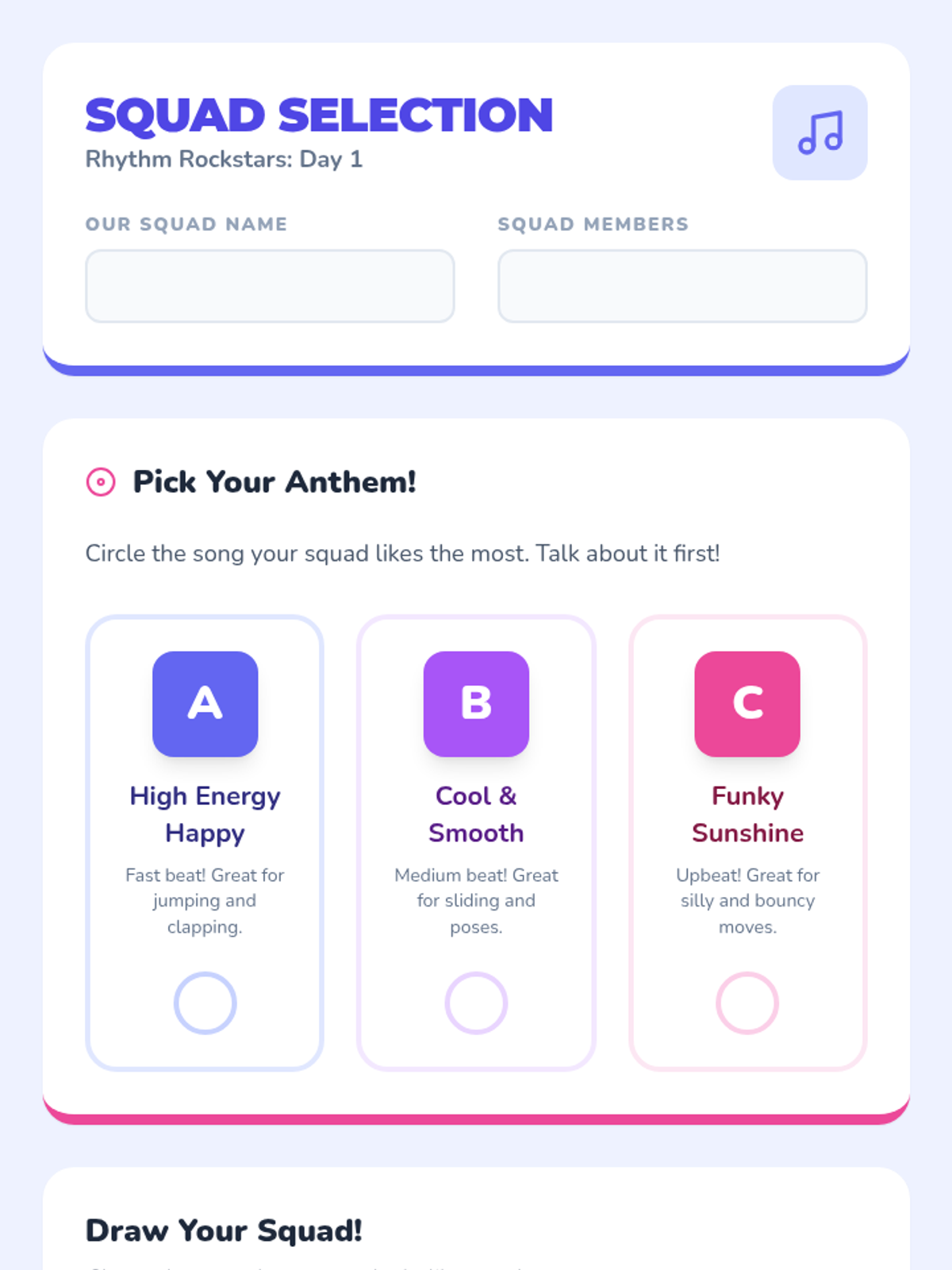
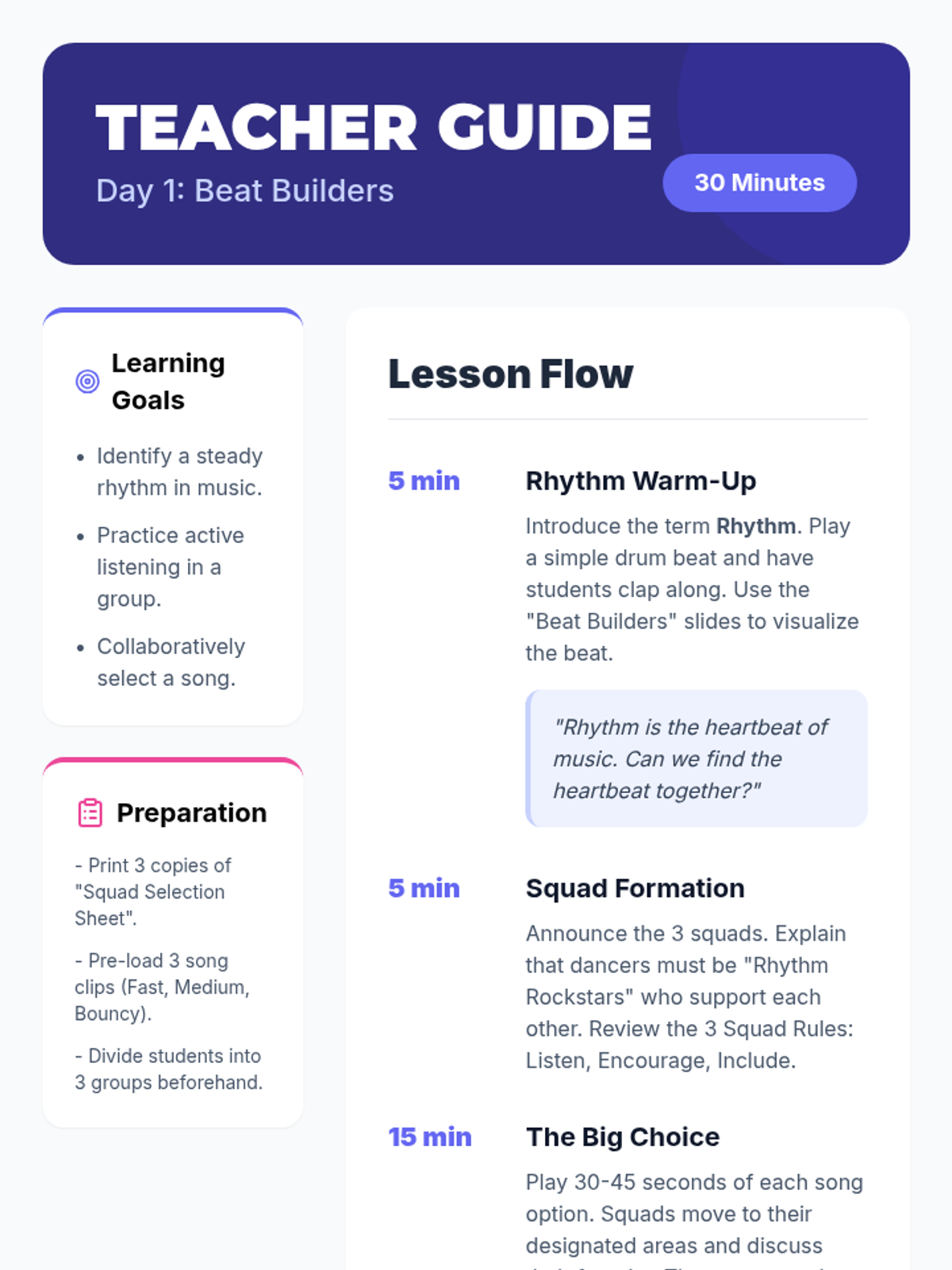
Students explore rhythm and tempo, form their dance squads, and select their group's performance song.
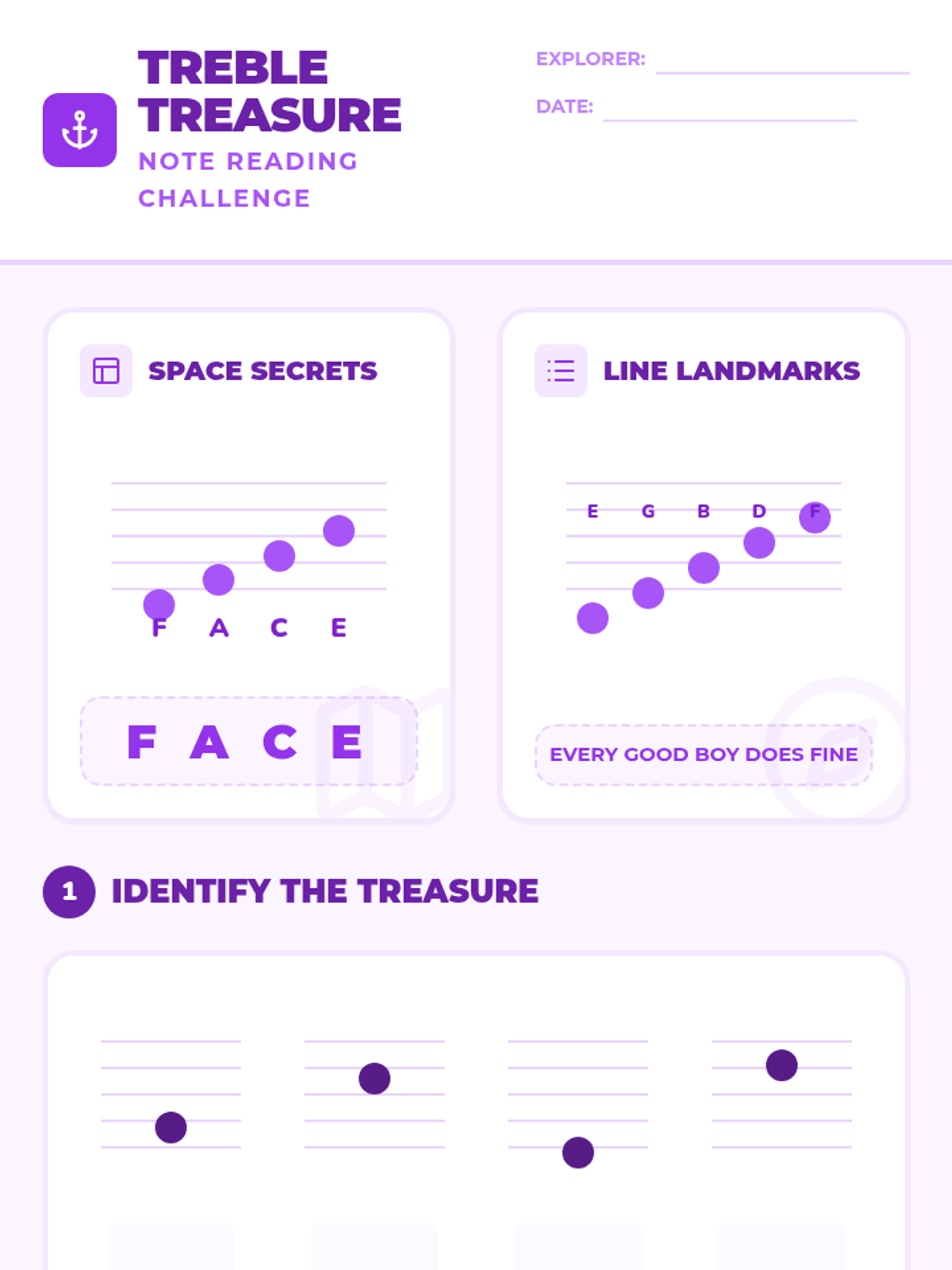
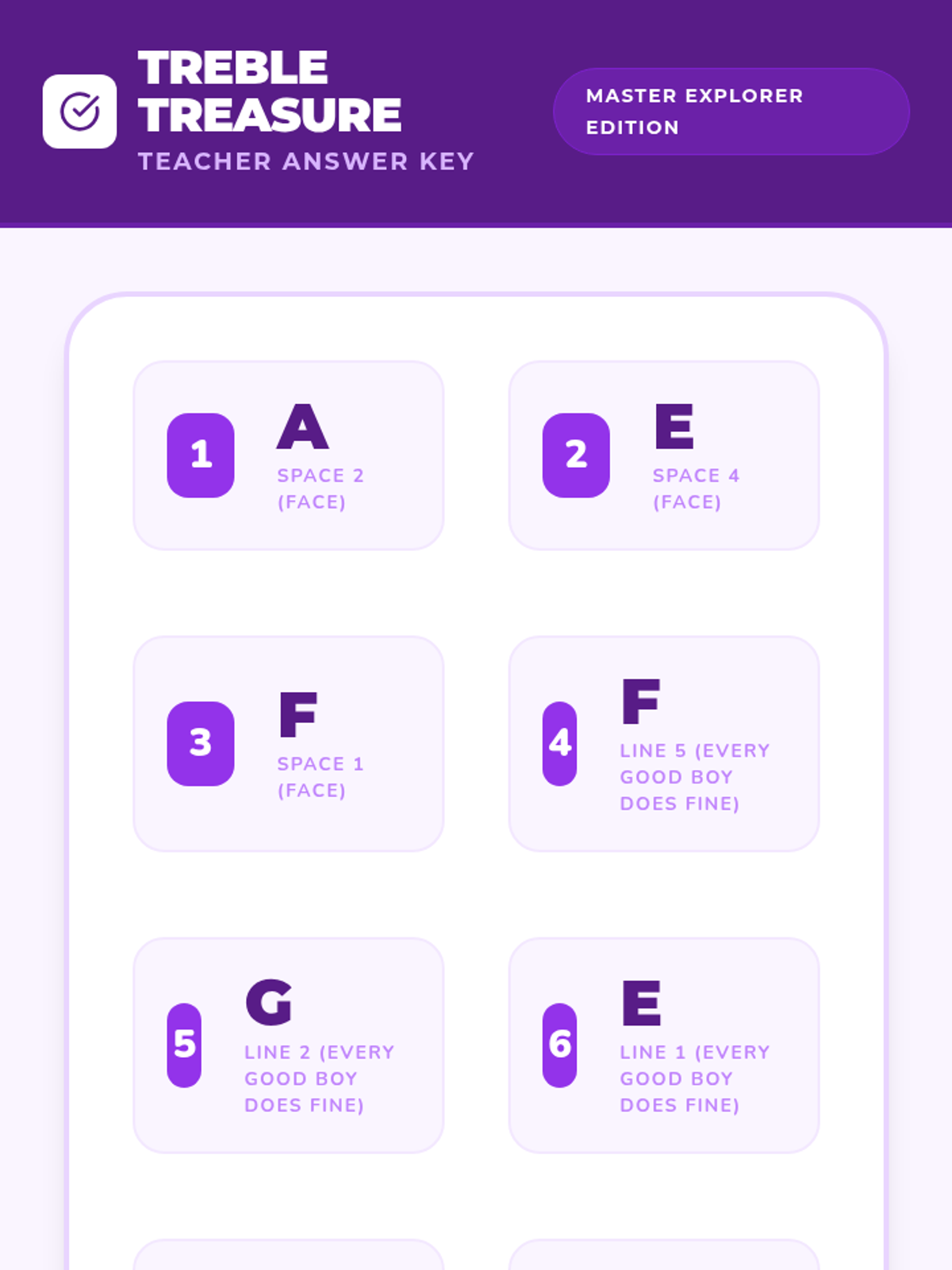
An introductory lesson on reading treble clef notes using the FACE and 'Every Good Boy Does Fine' mnemonics, redesigned with a purple treasure hunt theme.
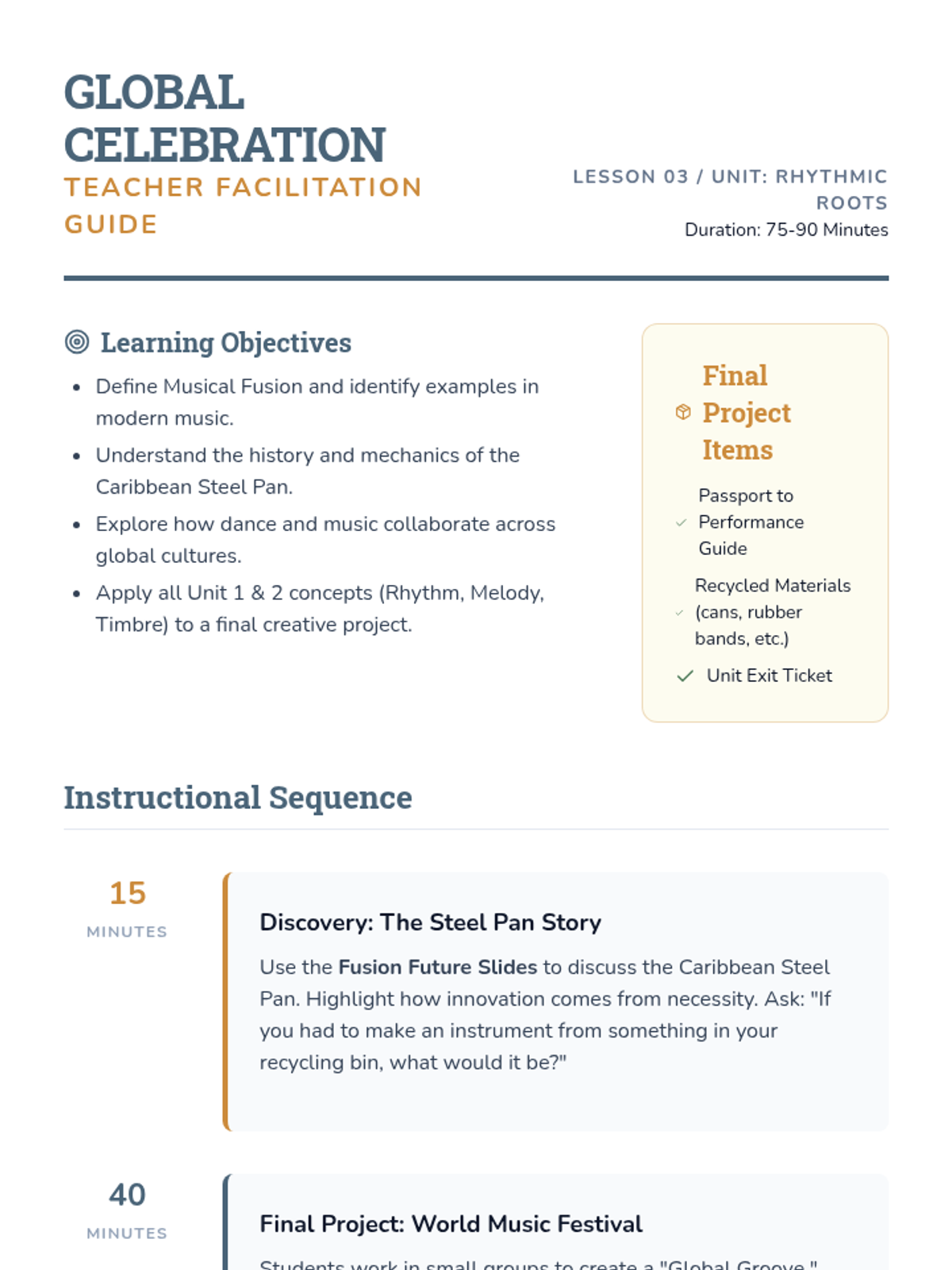
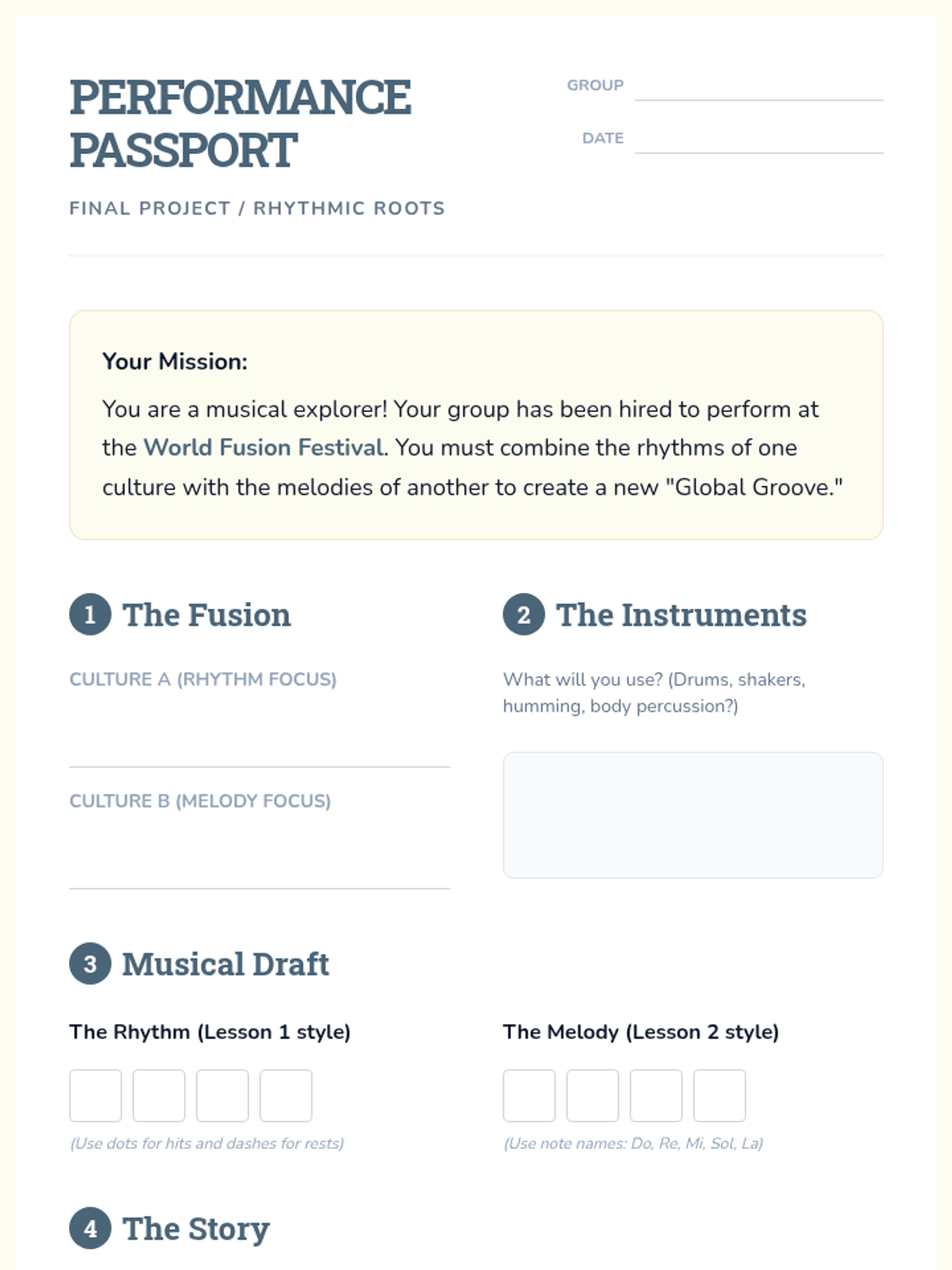
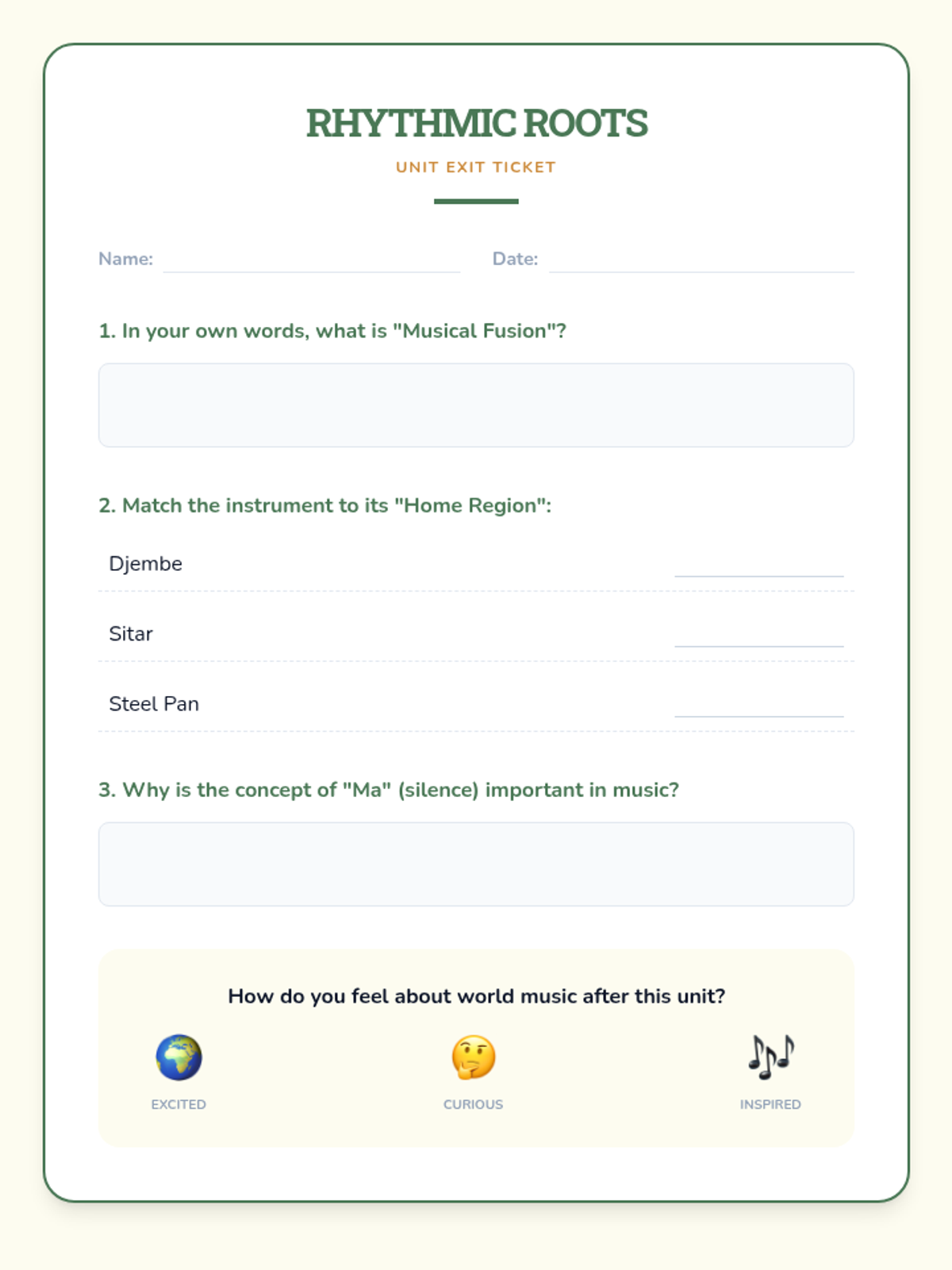
Synthesize learning through the study of global fusion and the creation of a collaborative world music project.
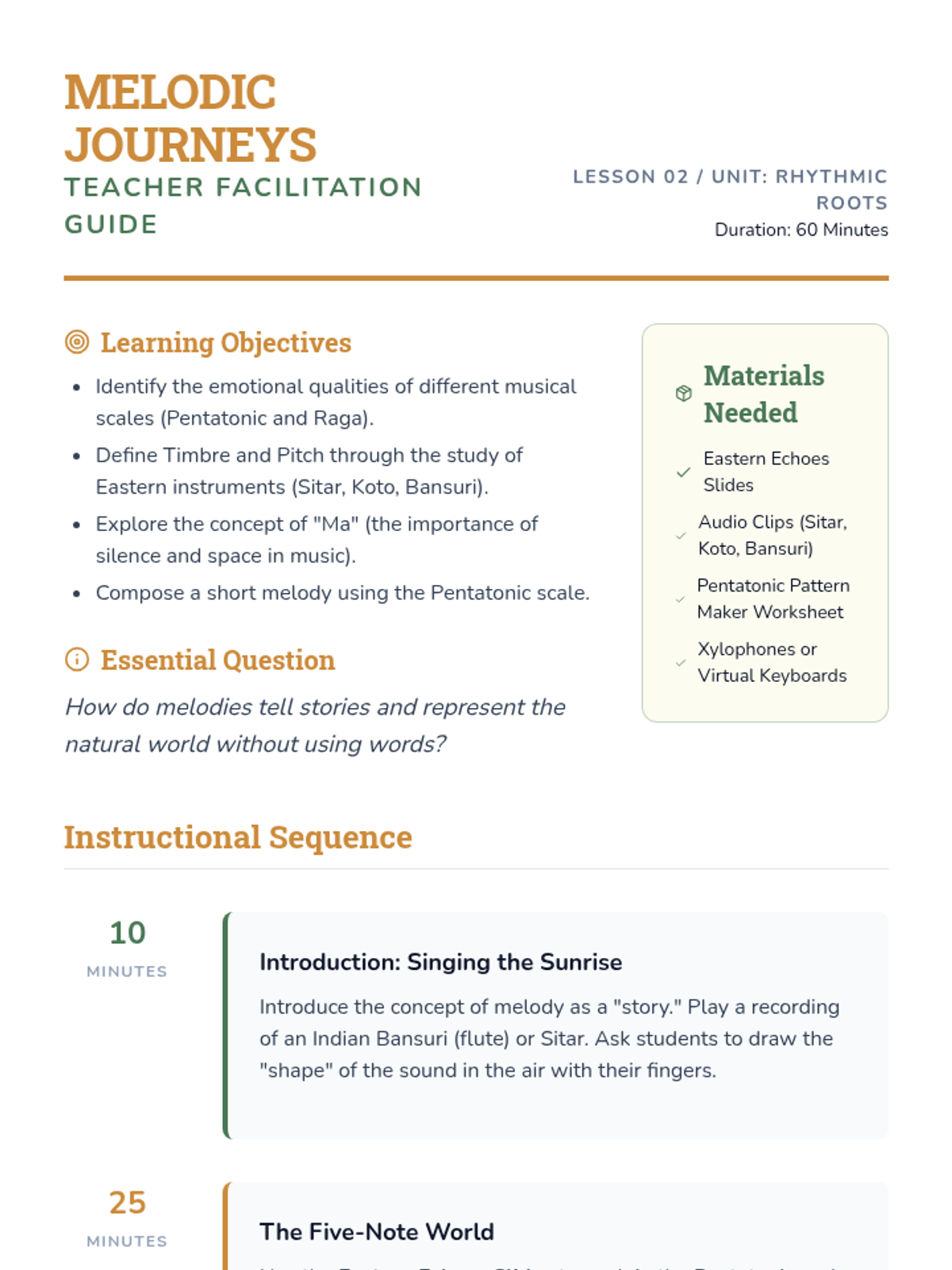
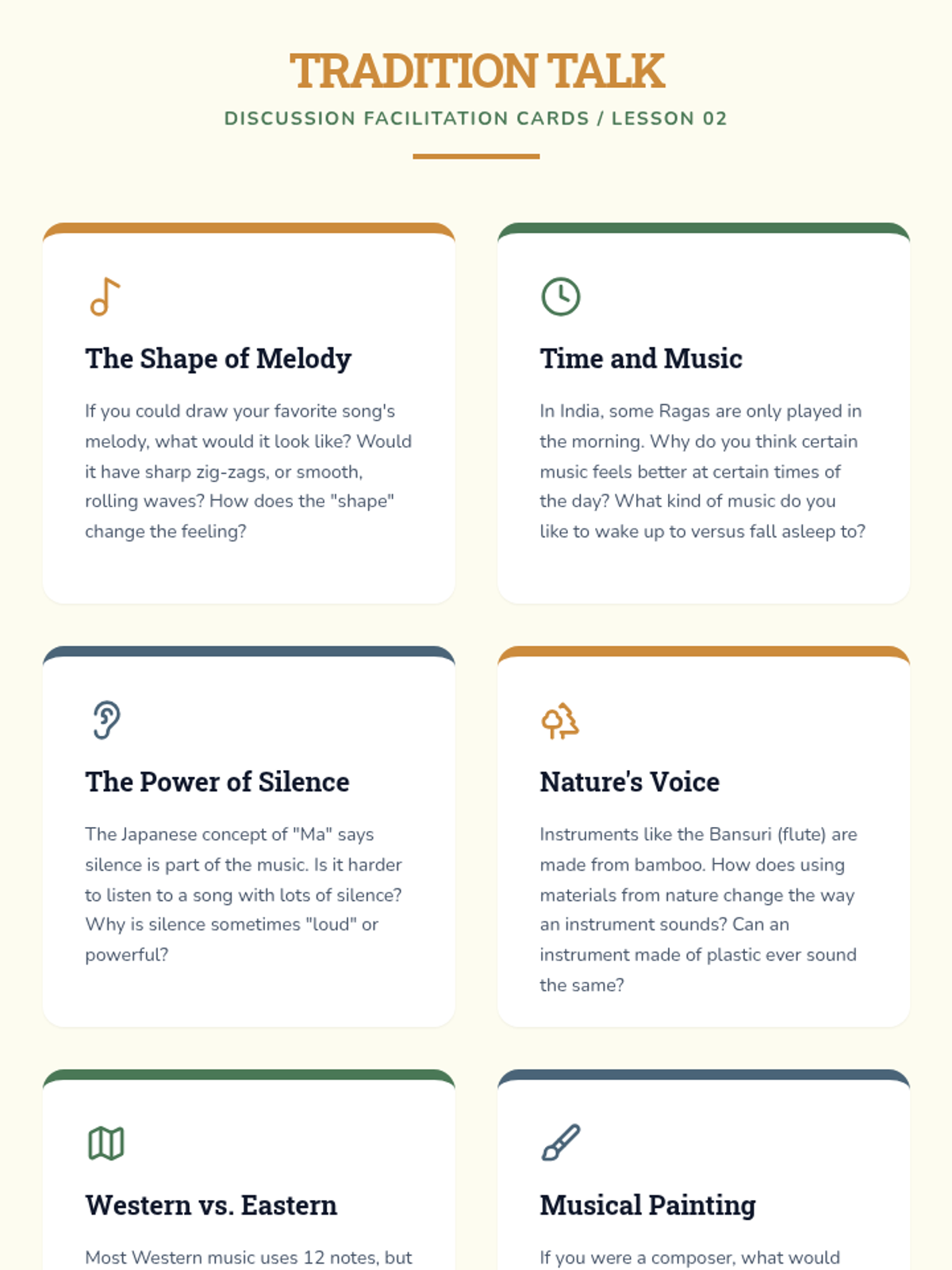
Discover the unique melodic structures, scales, and storytelling traditions of Asian and Middle Eastern music.
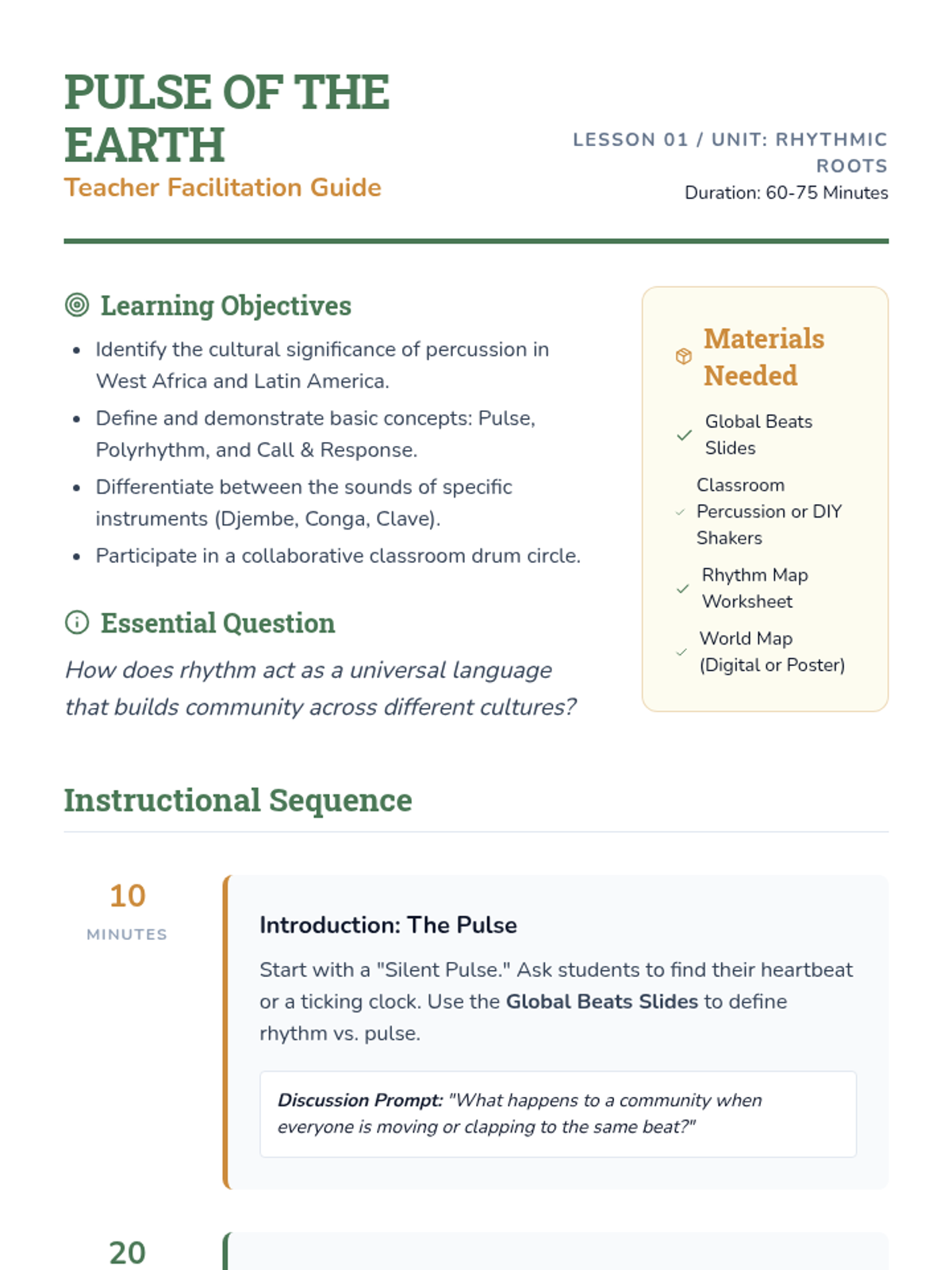
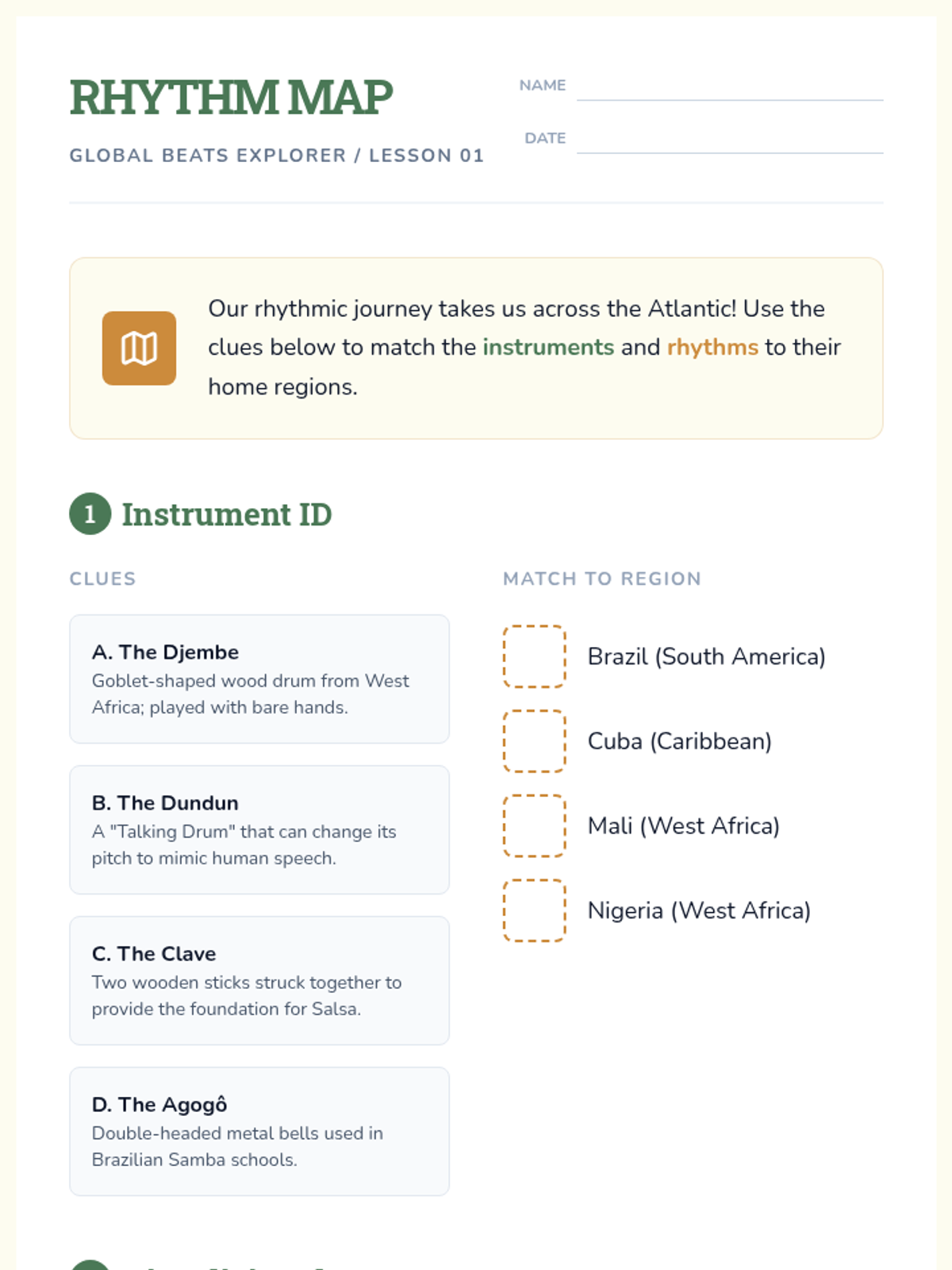
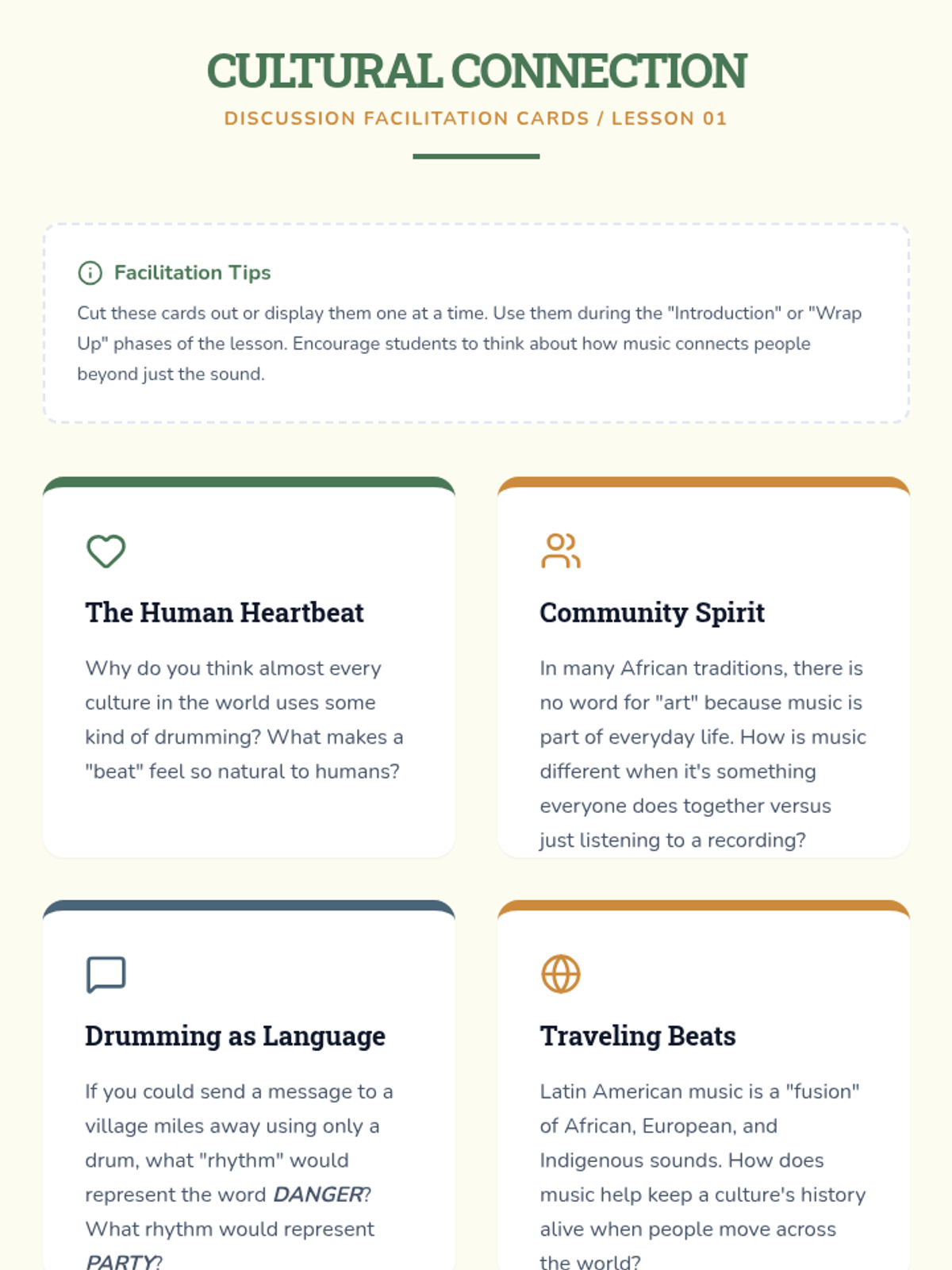
Explore the foundational role of percussion and polyrhythms in West African and Latin American musical traditions.
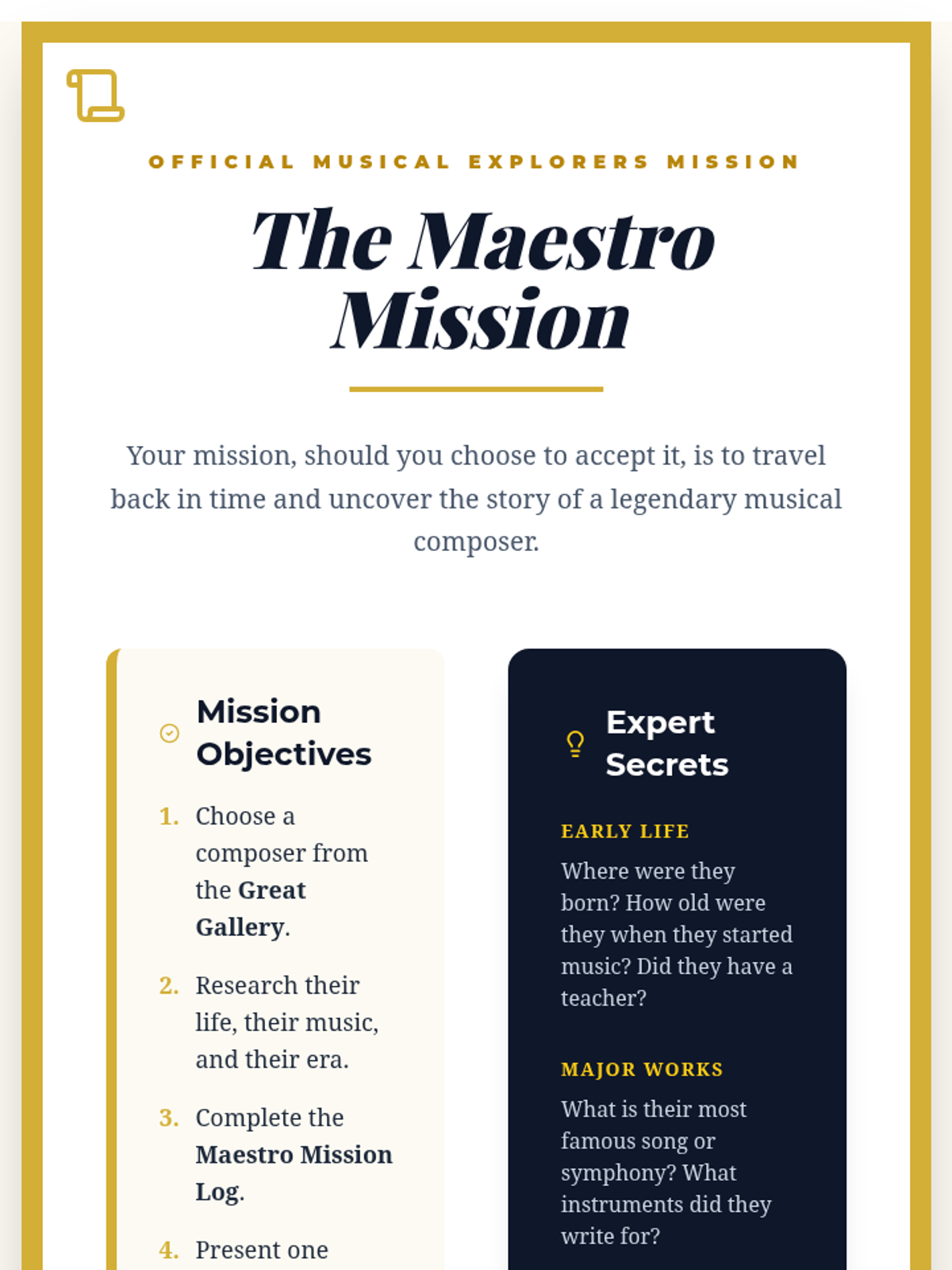
Guides students through researching and presenting a biography of a famous composer.
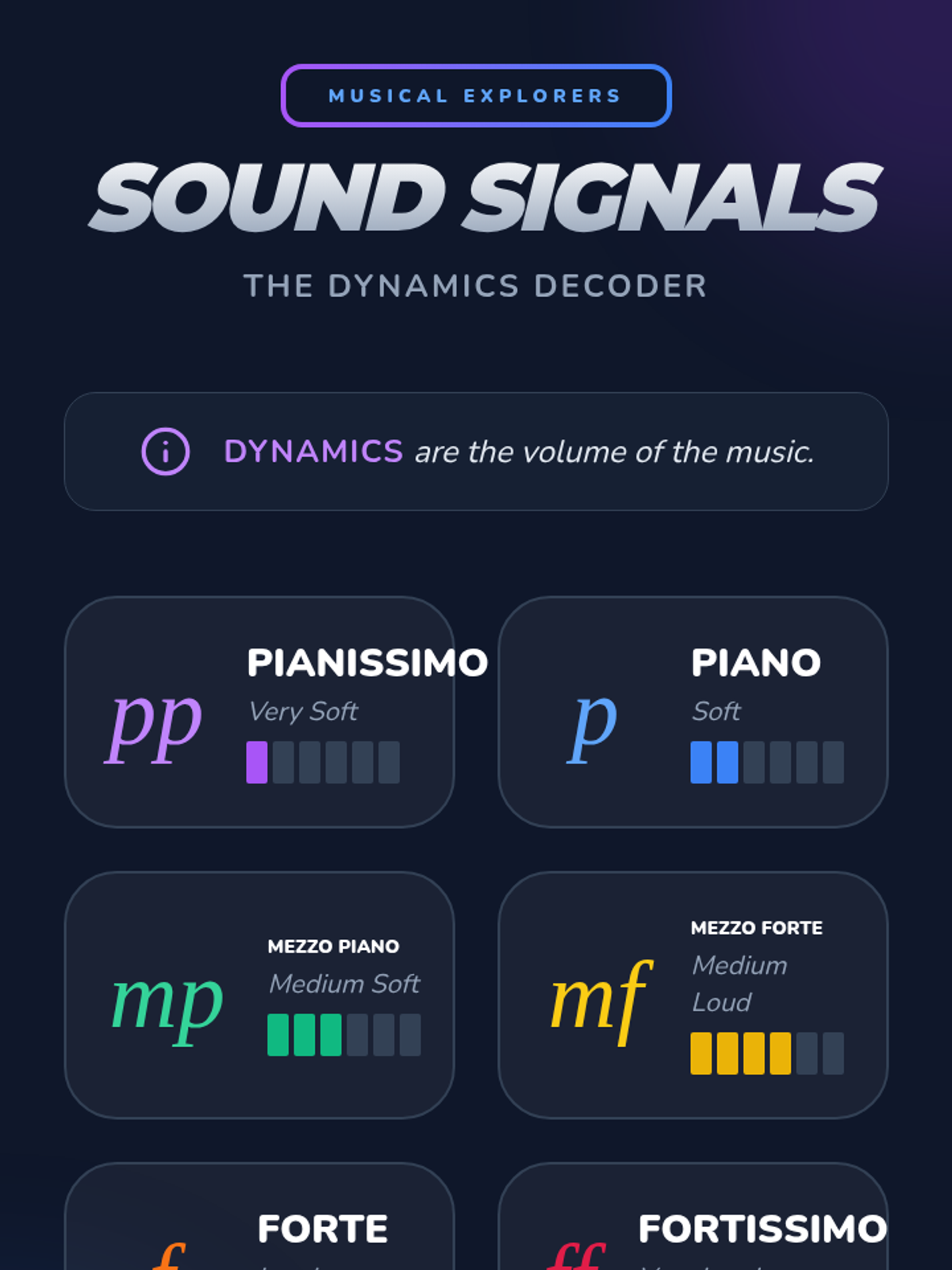
Explores the concept of dynamics through vocabulary and visual aids.
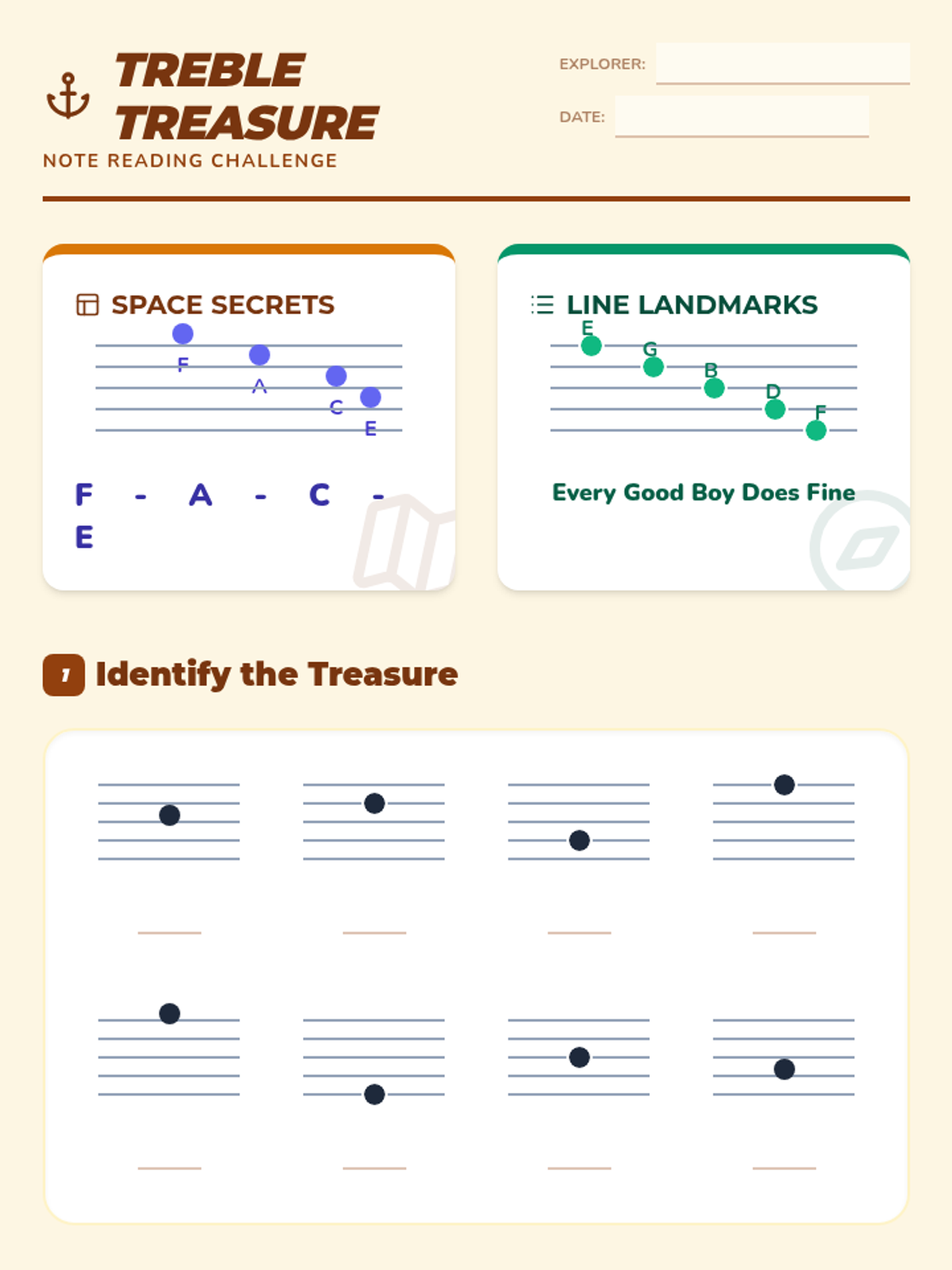
Introduces the treble clef and provides practice for identifying notes on the staff.
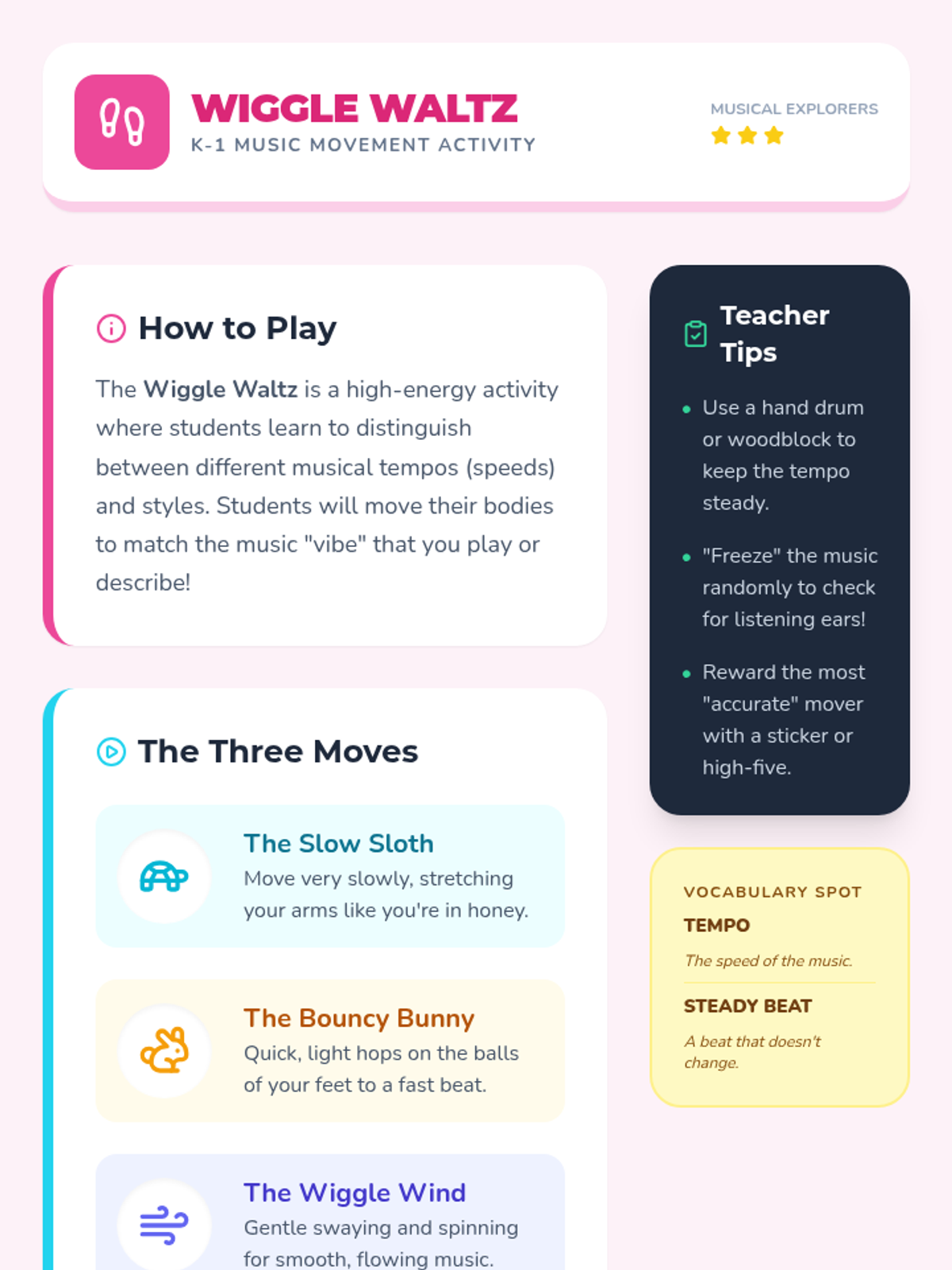
Focuses on the fundamentals of rhythm for 2nd graders and incorporates active movement activities suitable for Kindergarteners.
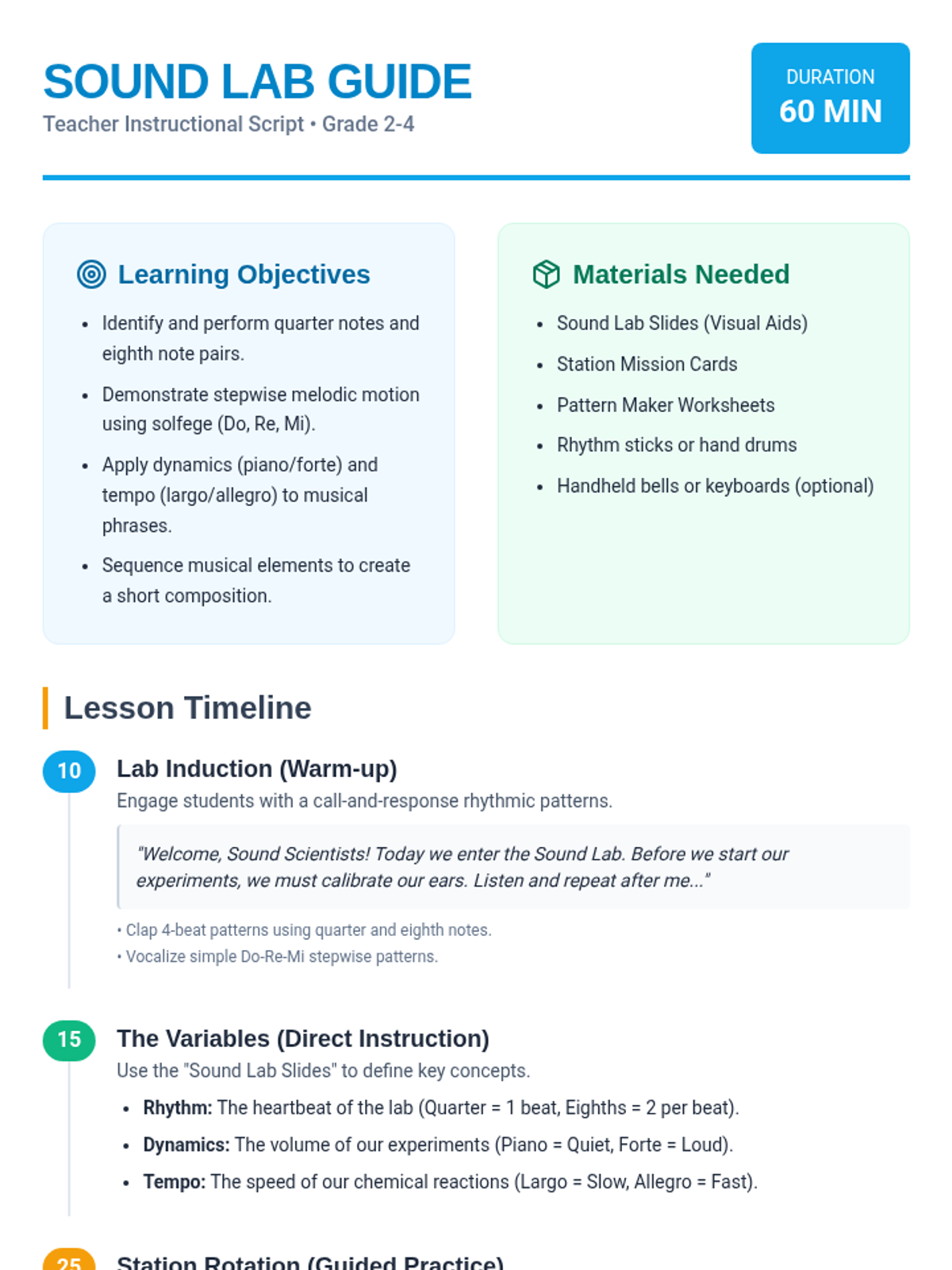
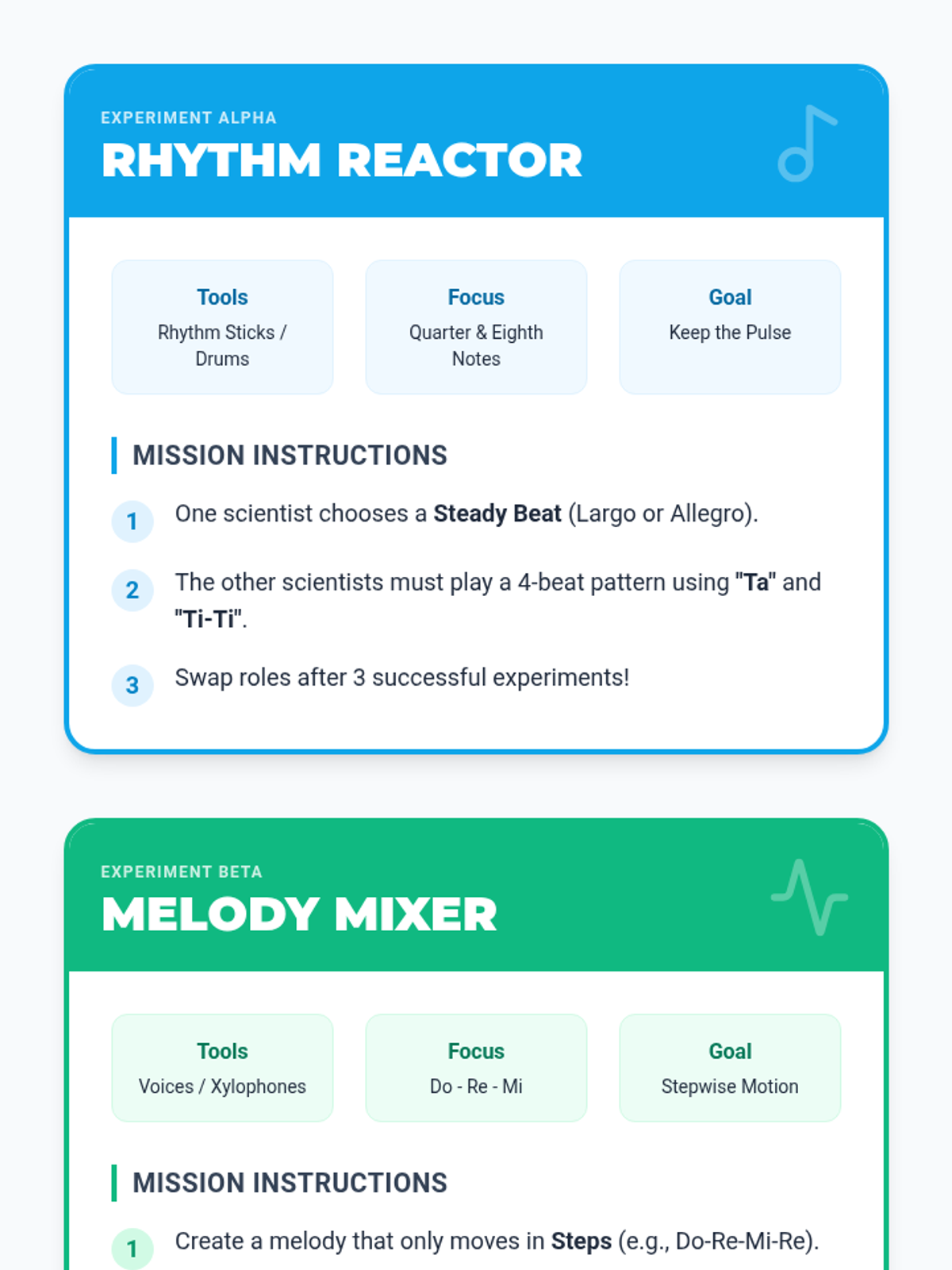
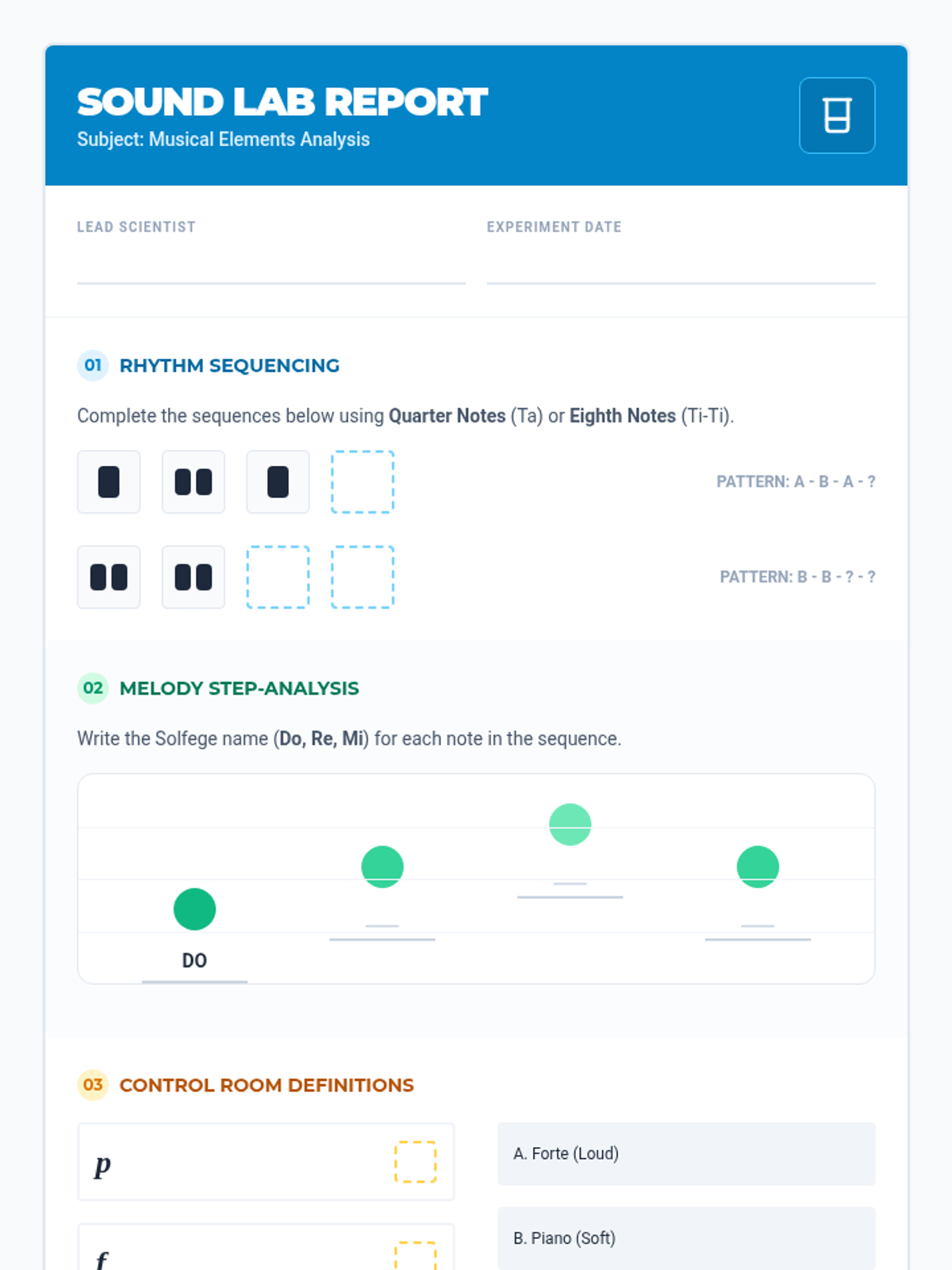
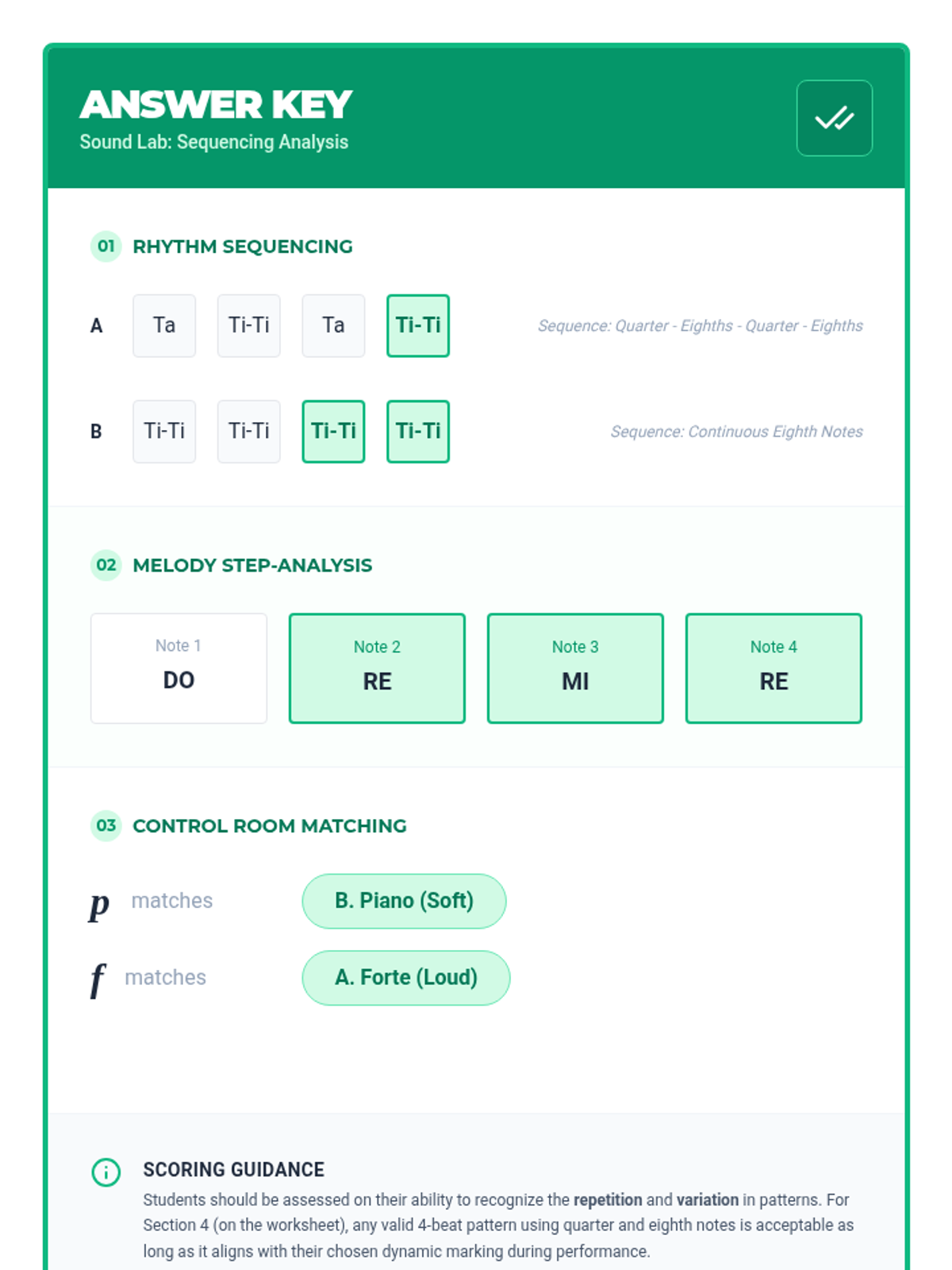
A comprehensive 60-minute introductory music lesson exploring rhythm, melody, dynamics, and tempo through the lens of a 'Sound Lab'. Students act as scientists to experiment with musical elements.
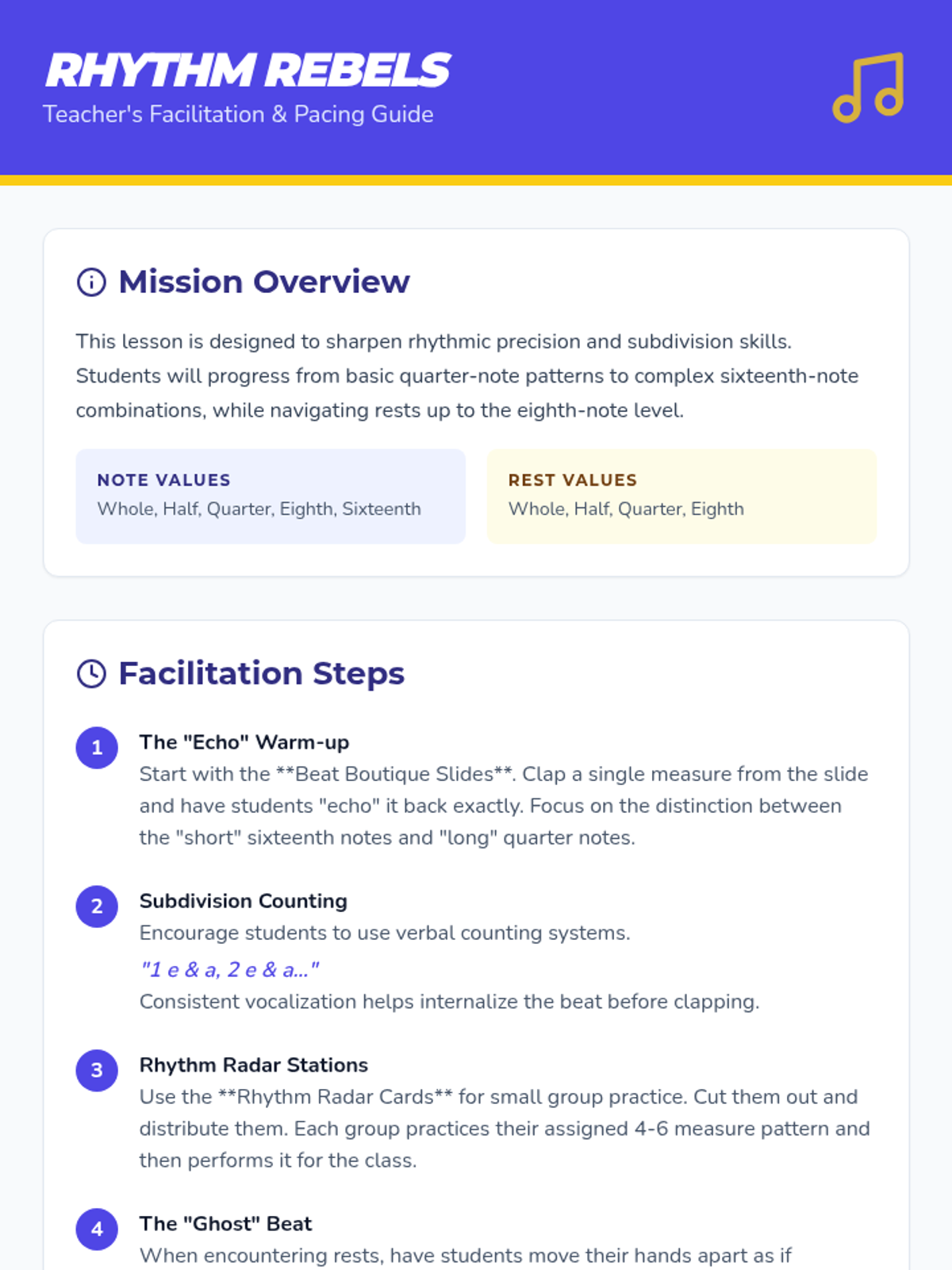
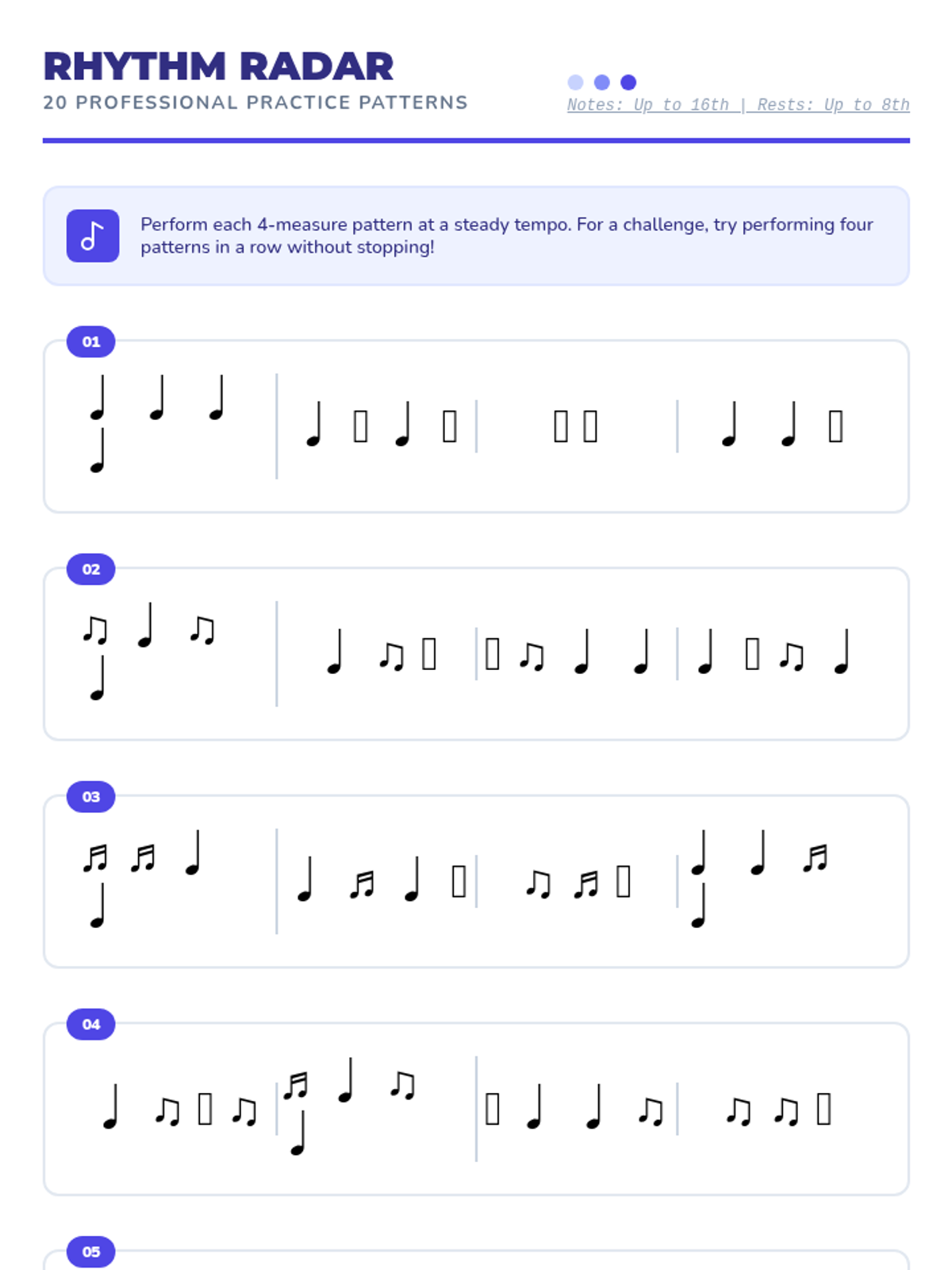
A comprehensive set of rhythm practice materials focusing on notes up to sixteenths and rests up to eighths, designed to build clapping proficiency through 20 unique patterns.
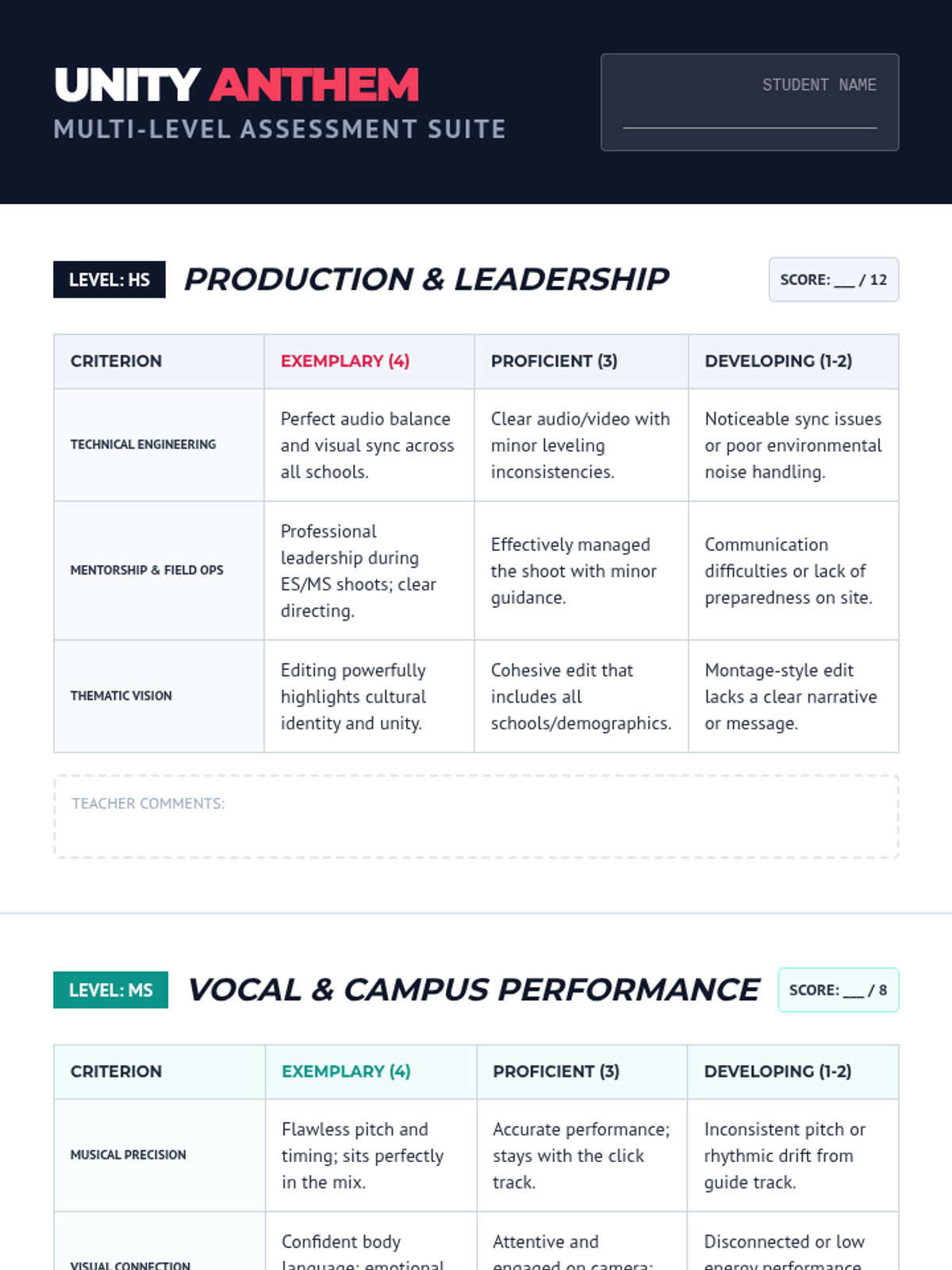
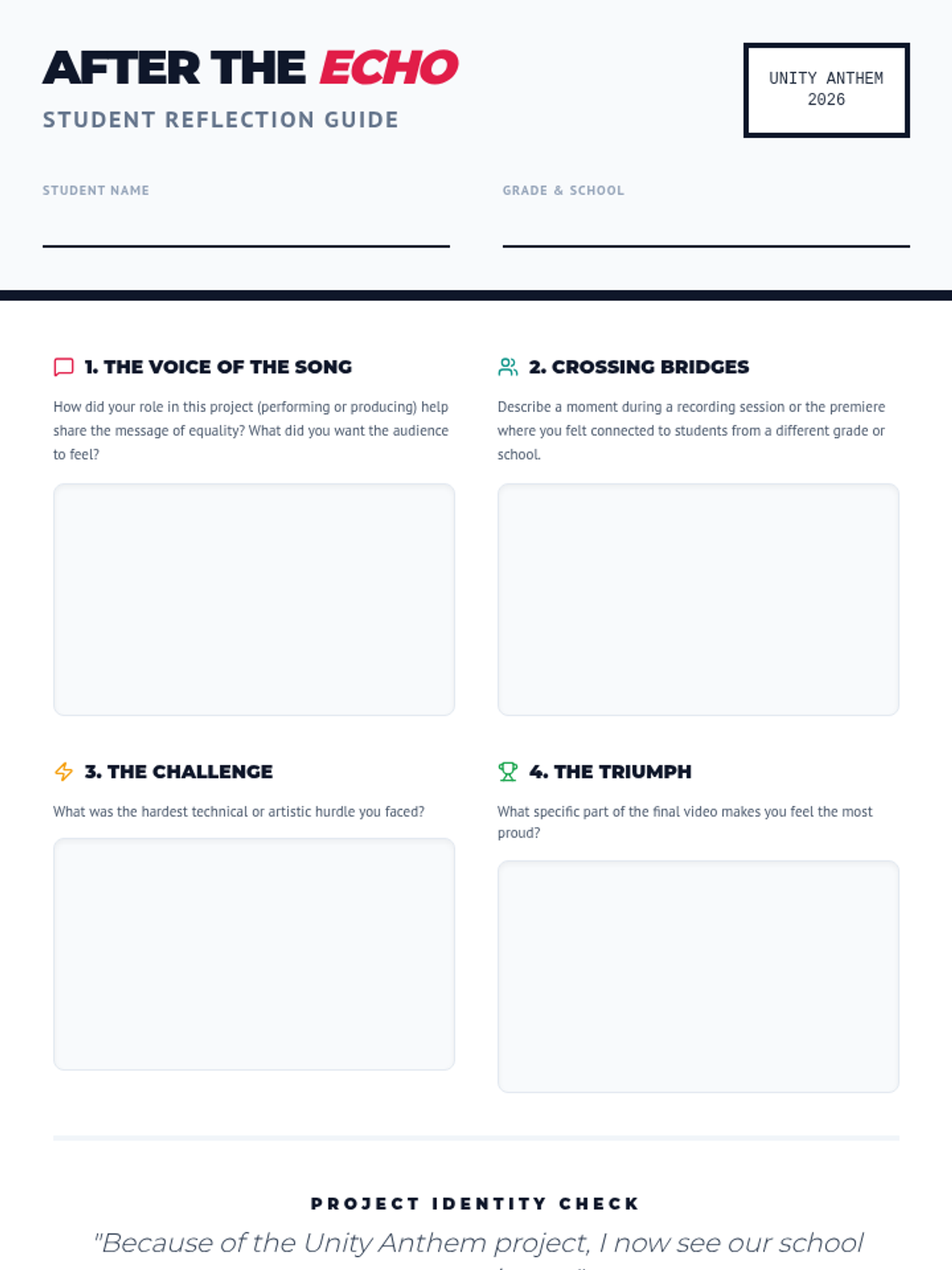
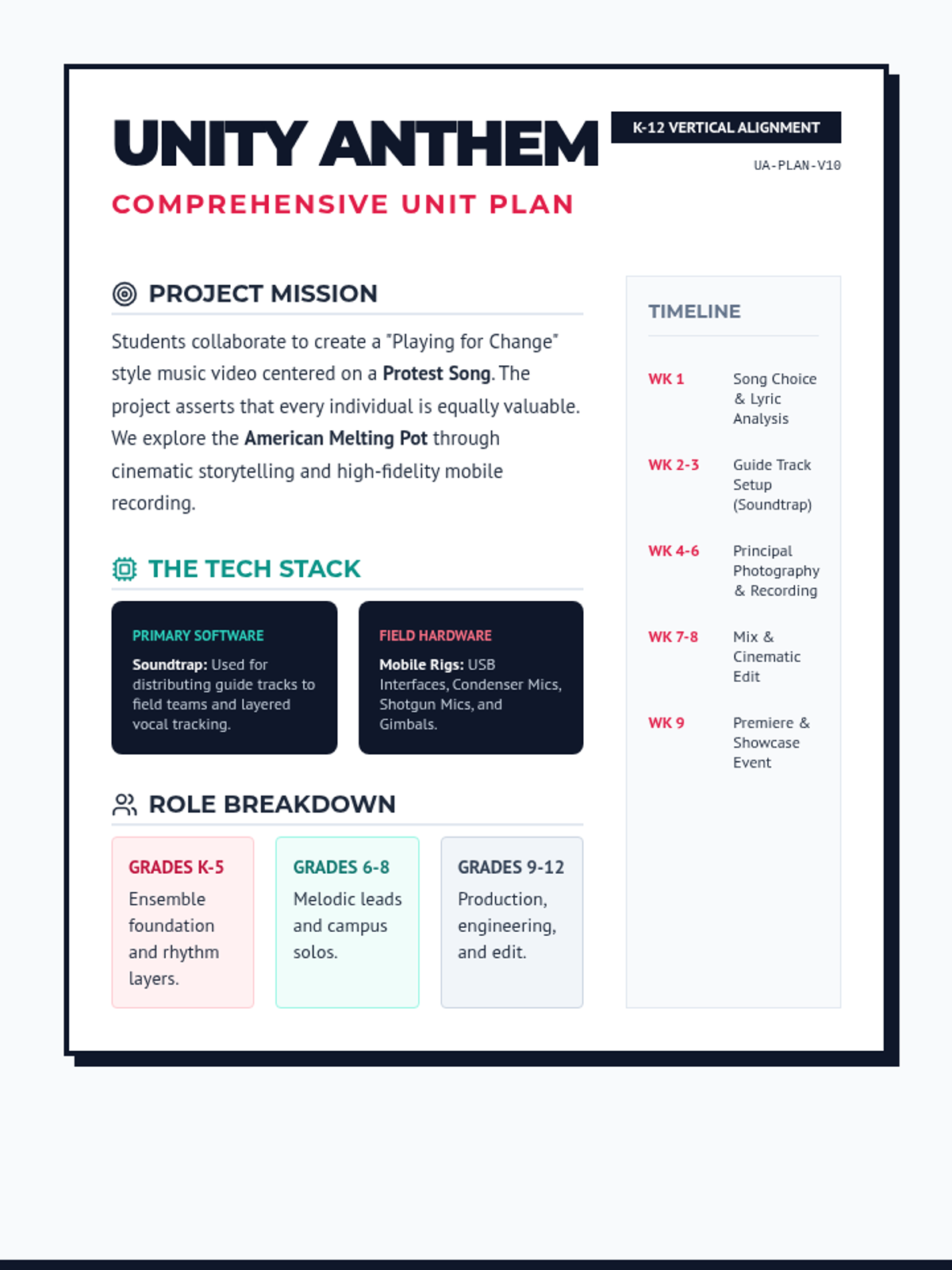
The final premiere of the music video at the All-town Music Tech Showcase, followed by a live performance and student reflection on the collaborative process.
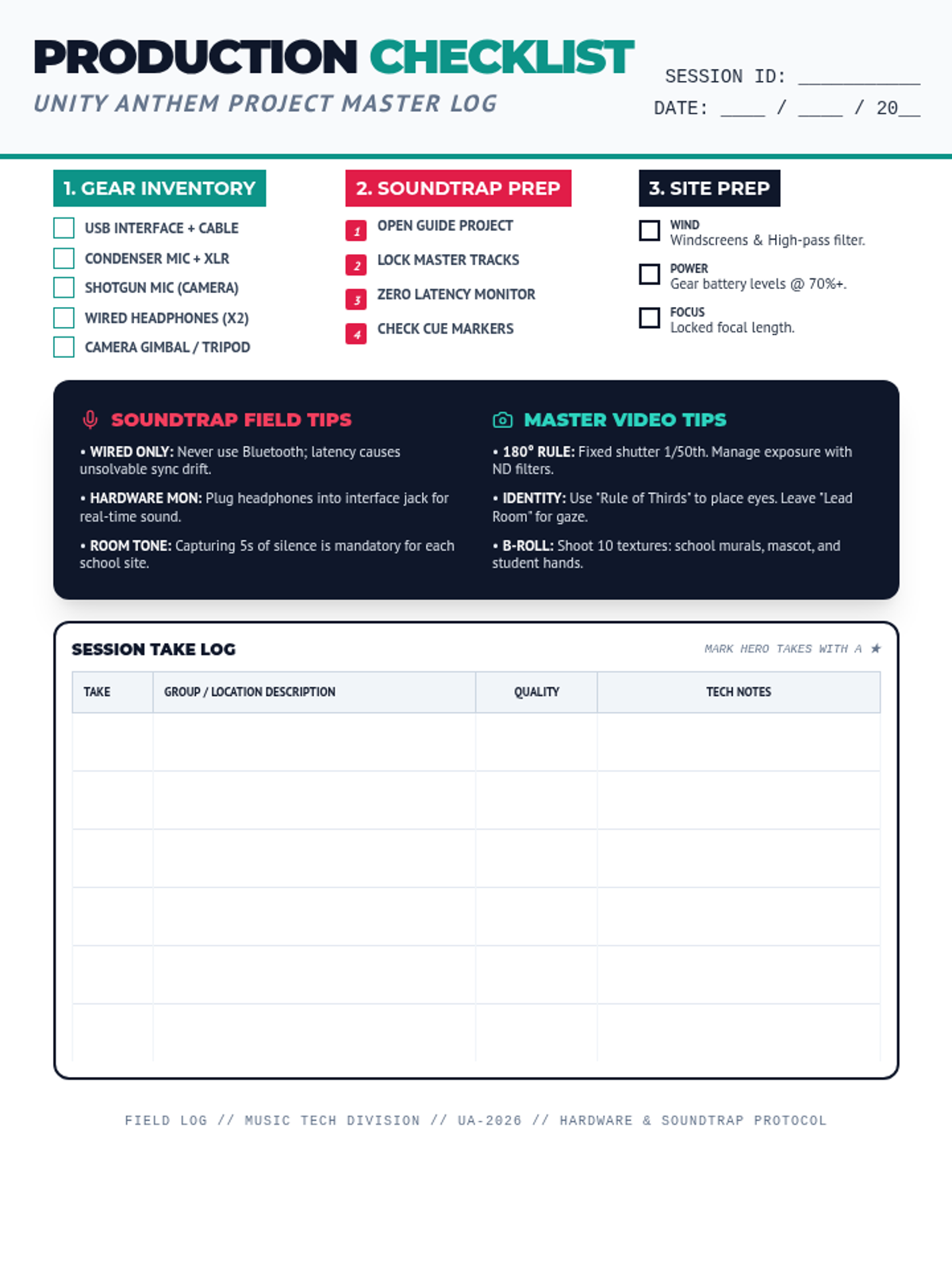
The technical phase involving on-location recordings at elementary and middle schools, followed by high school student-led mixing and video production.
Introduction to the 'Playing for Change' concept, exploring the themes of the chosen protest song, and laying the groundwork for the K-12 collaboration.
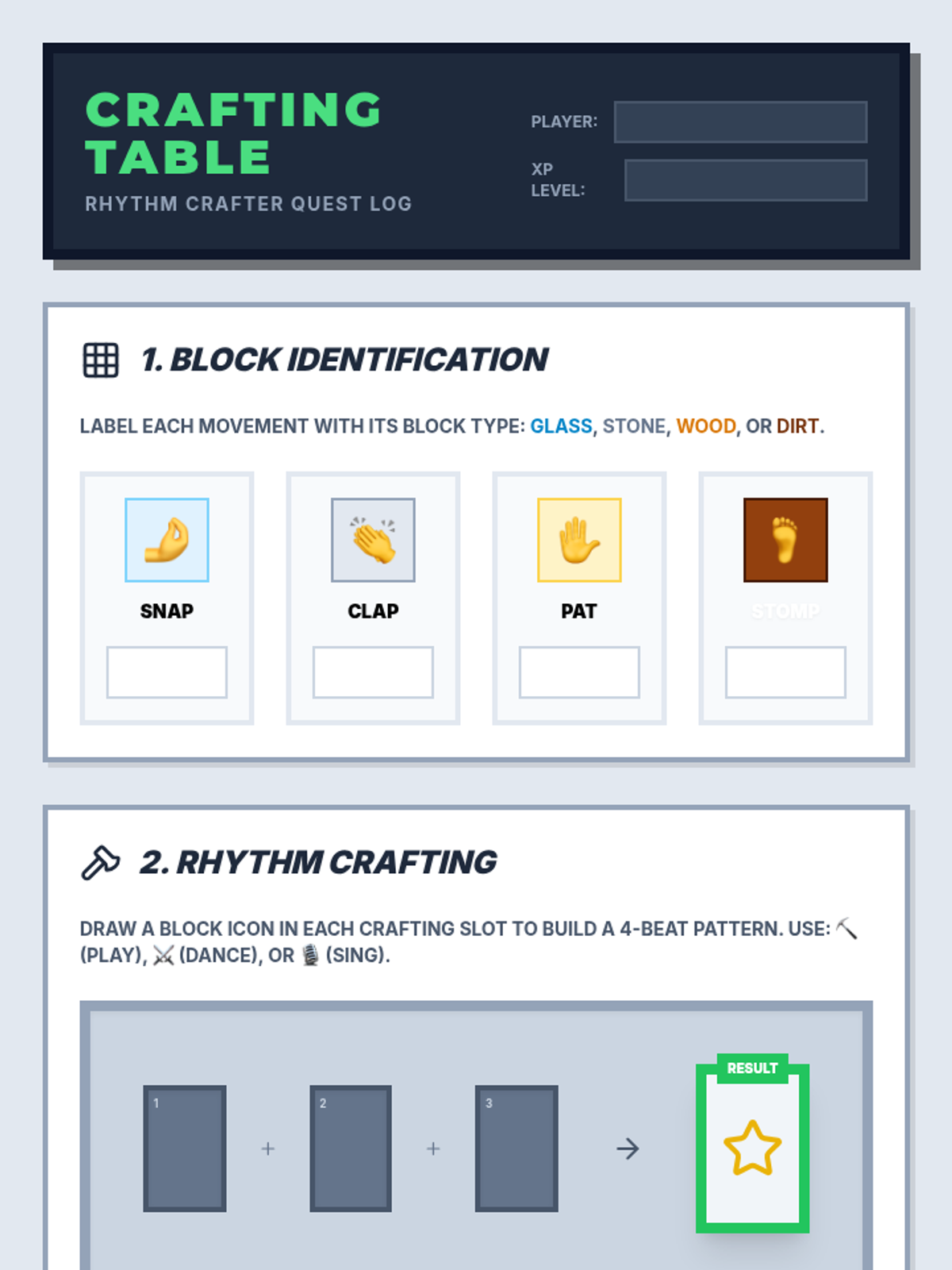
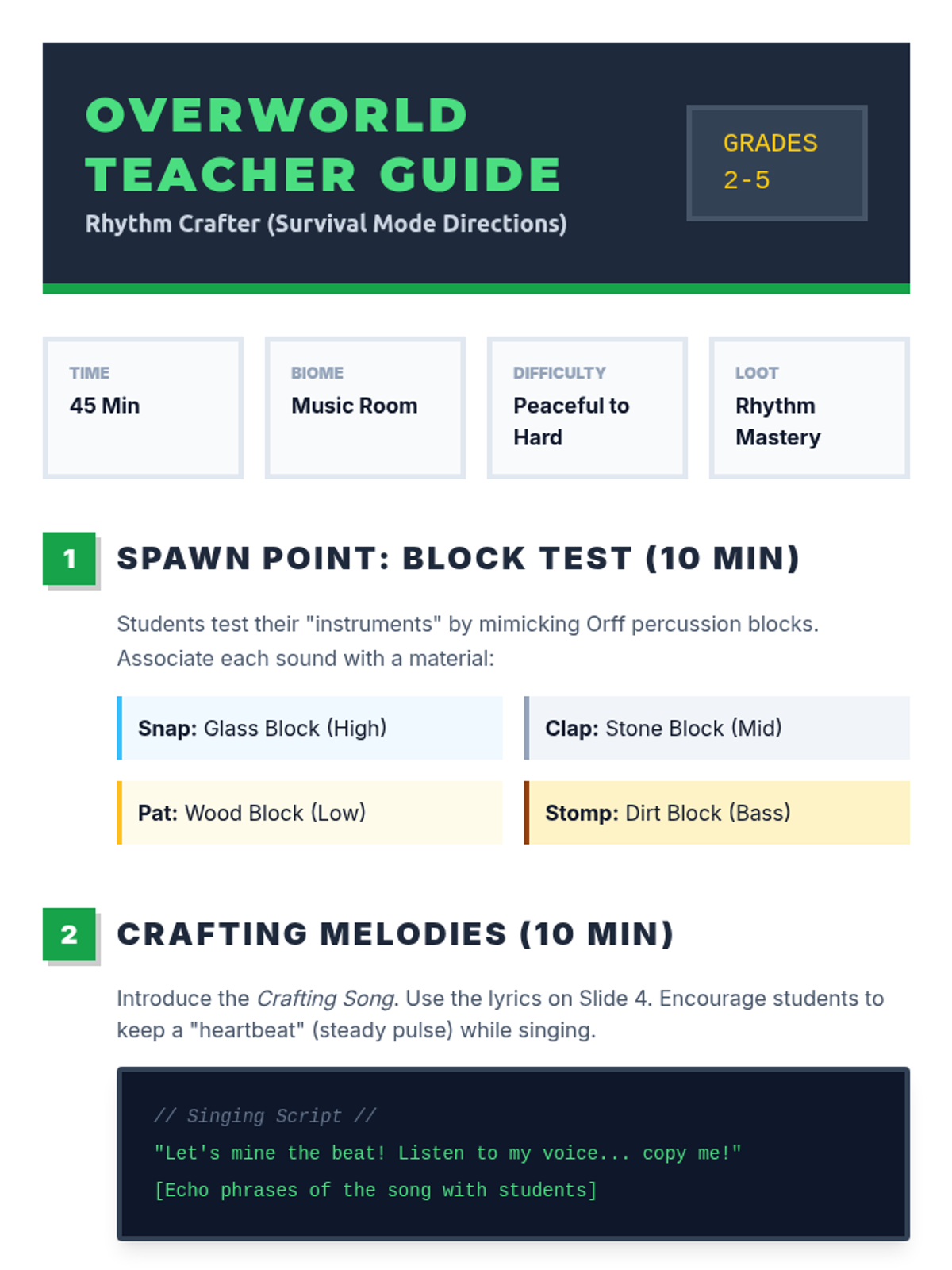
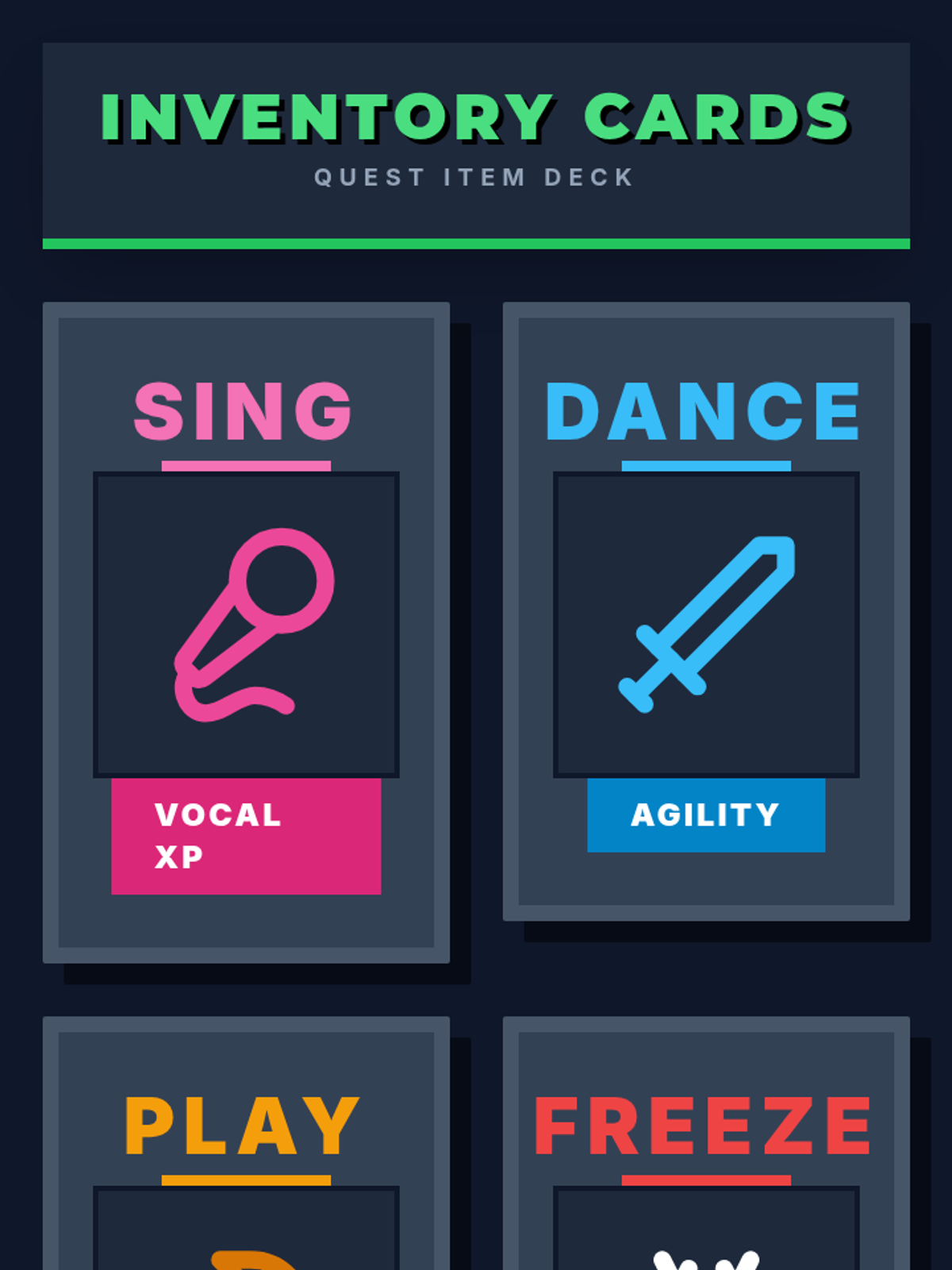
A block-building music lesson where students 'craft' rhythms, 'survive' rapid direction changes, and explore Orff percussion through a pixelated world theme. Includes singing, dancing, and body percussion activities.
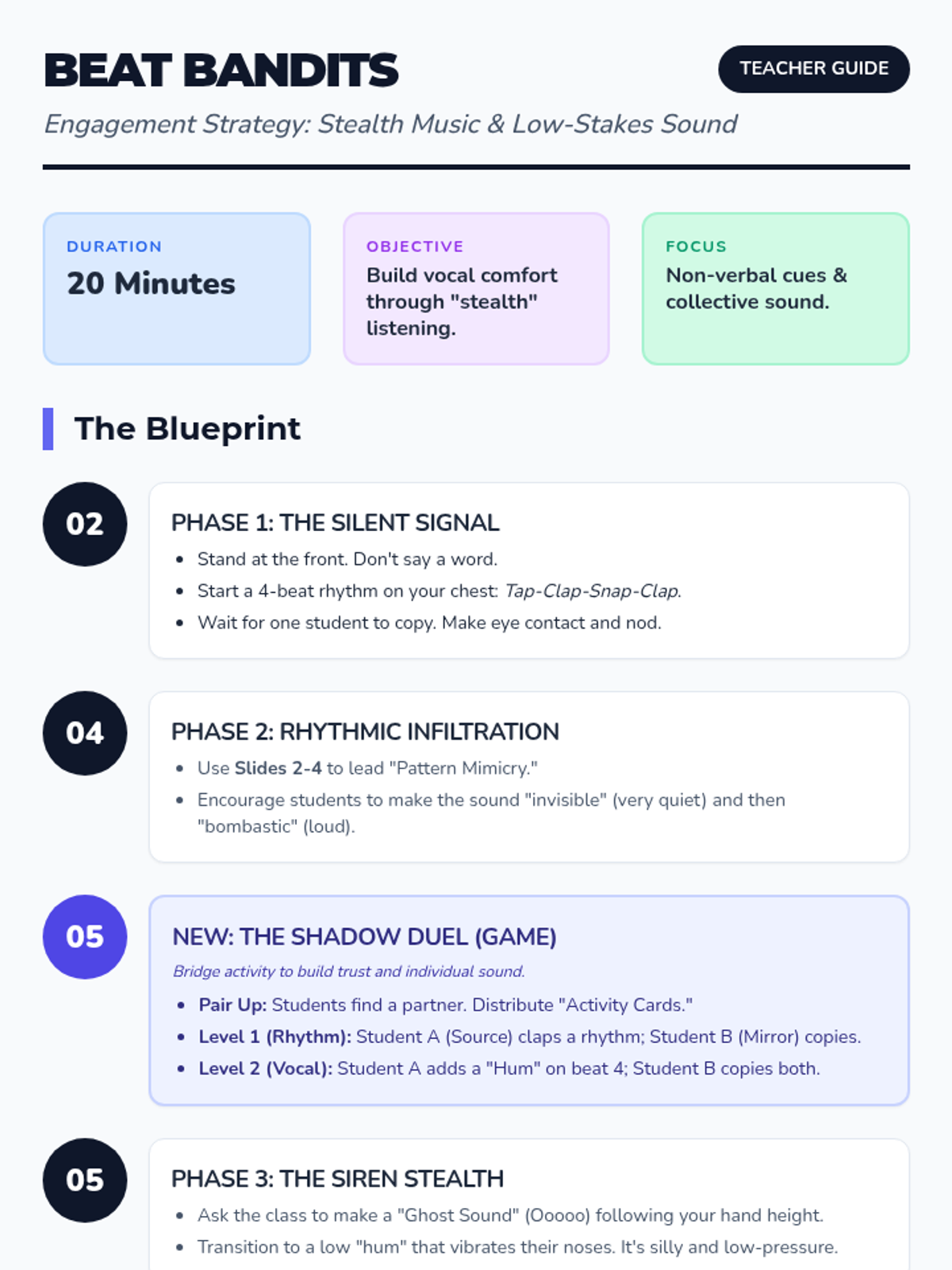
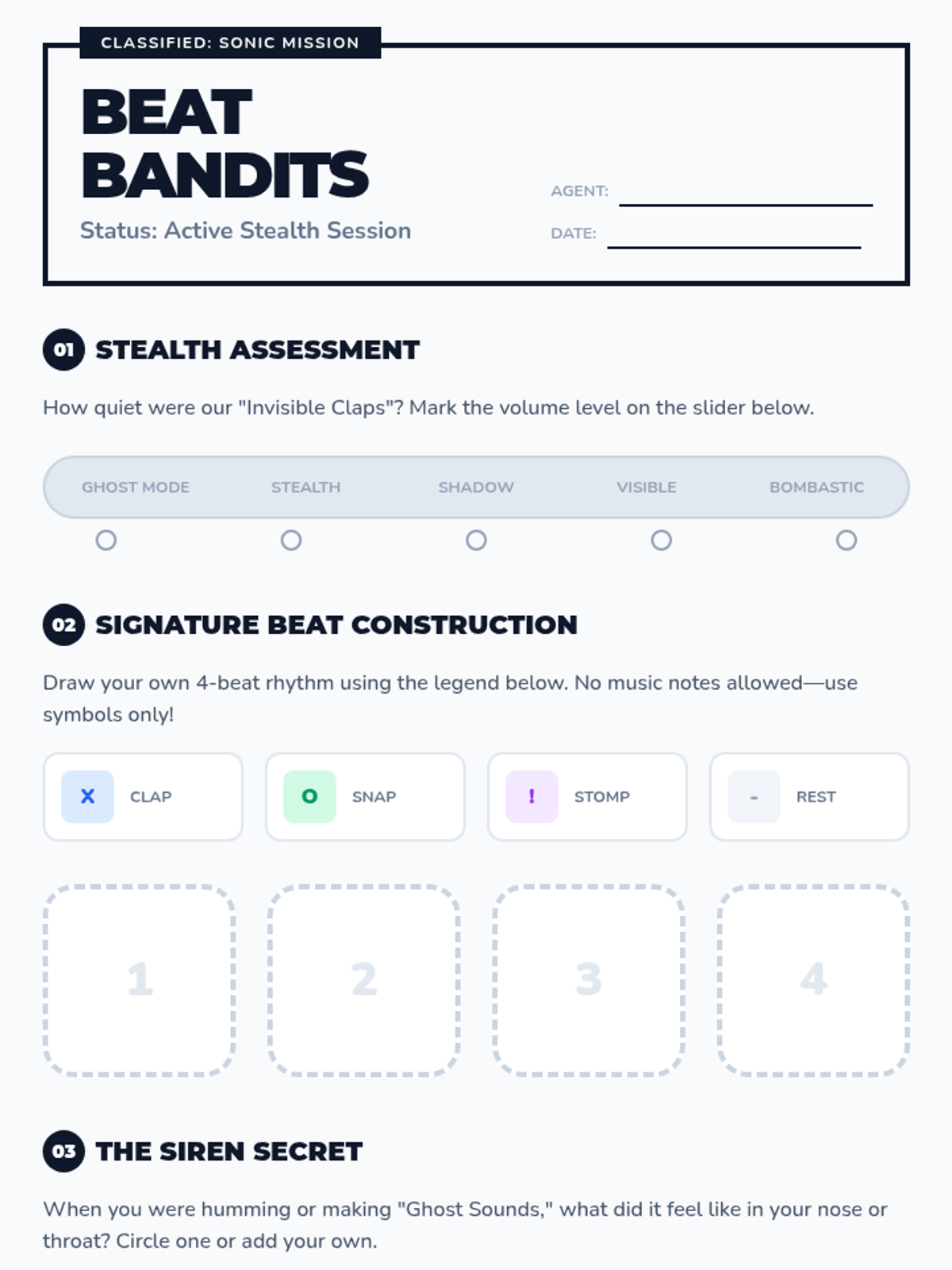
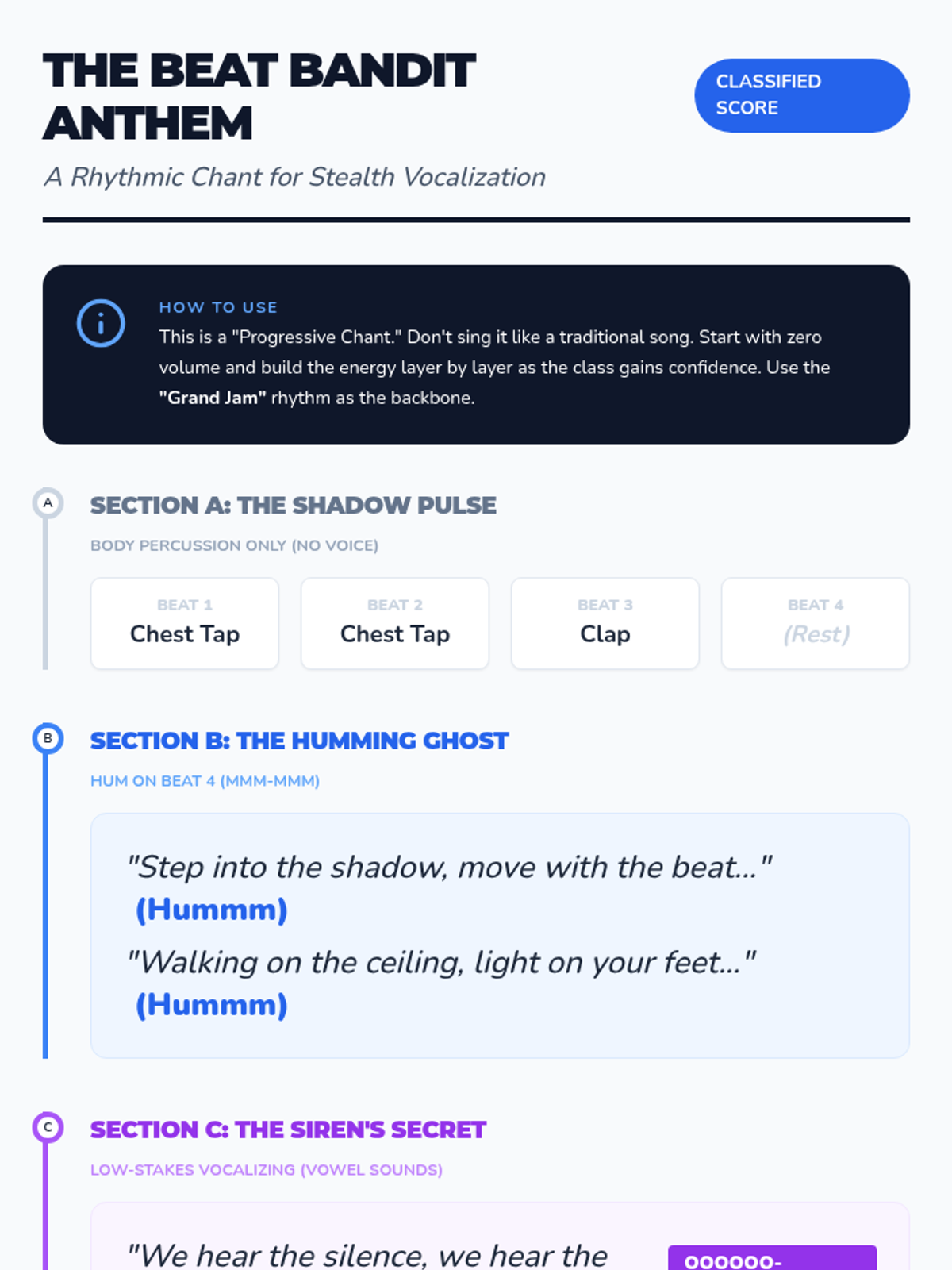
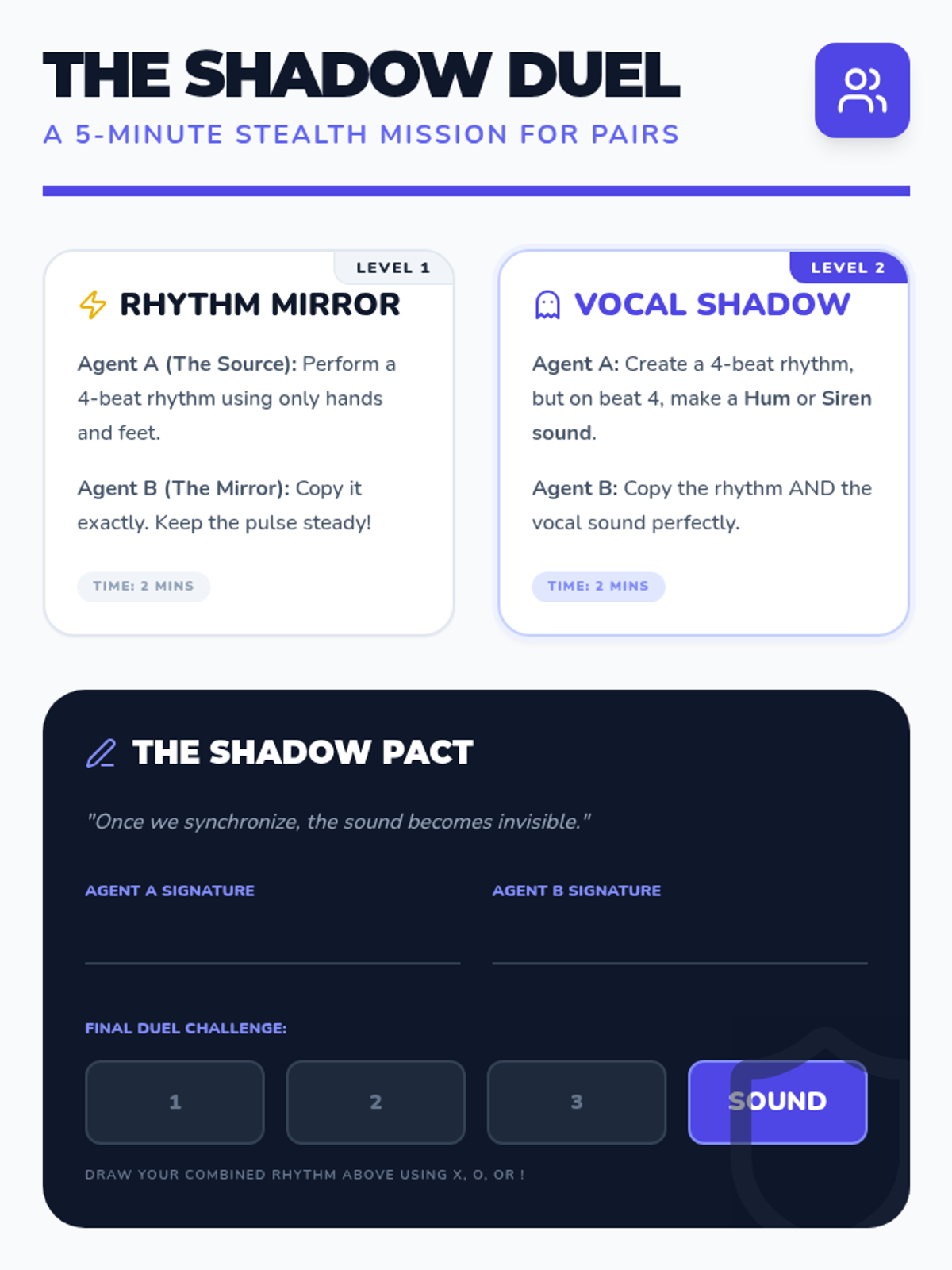
A high-energy, low-pressure 15-minute music lesson designed to engage disengaged students and build vocal confidence through rhythm and stealth games. This lesson moves from non-verbal rhythmic games to collective vocalizing to bypass the fear of singing.
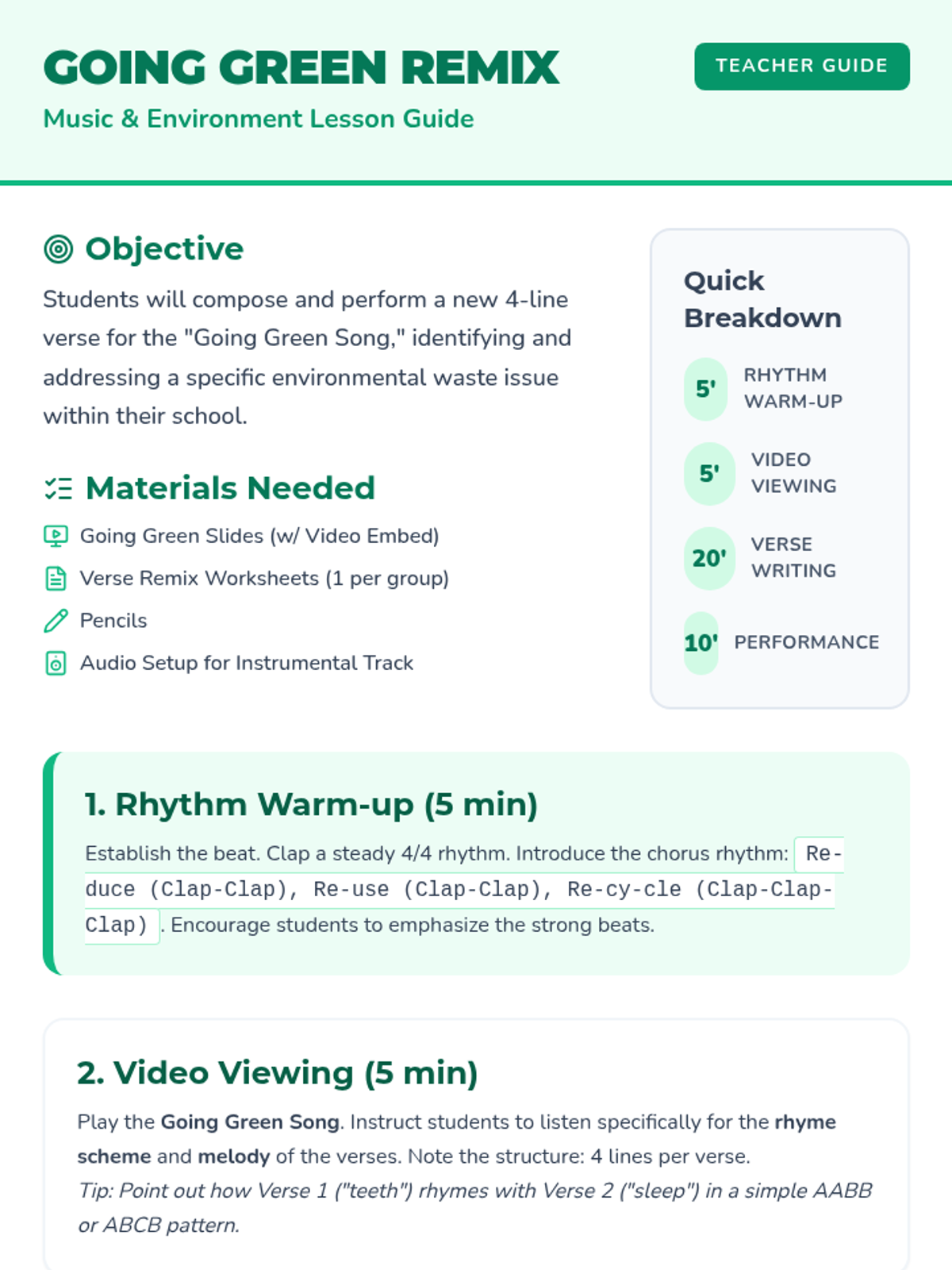
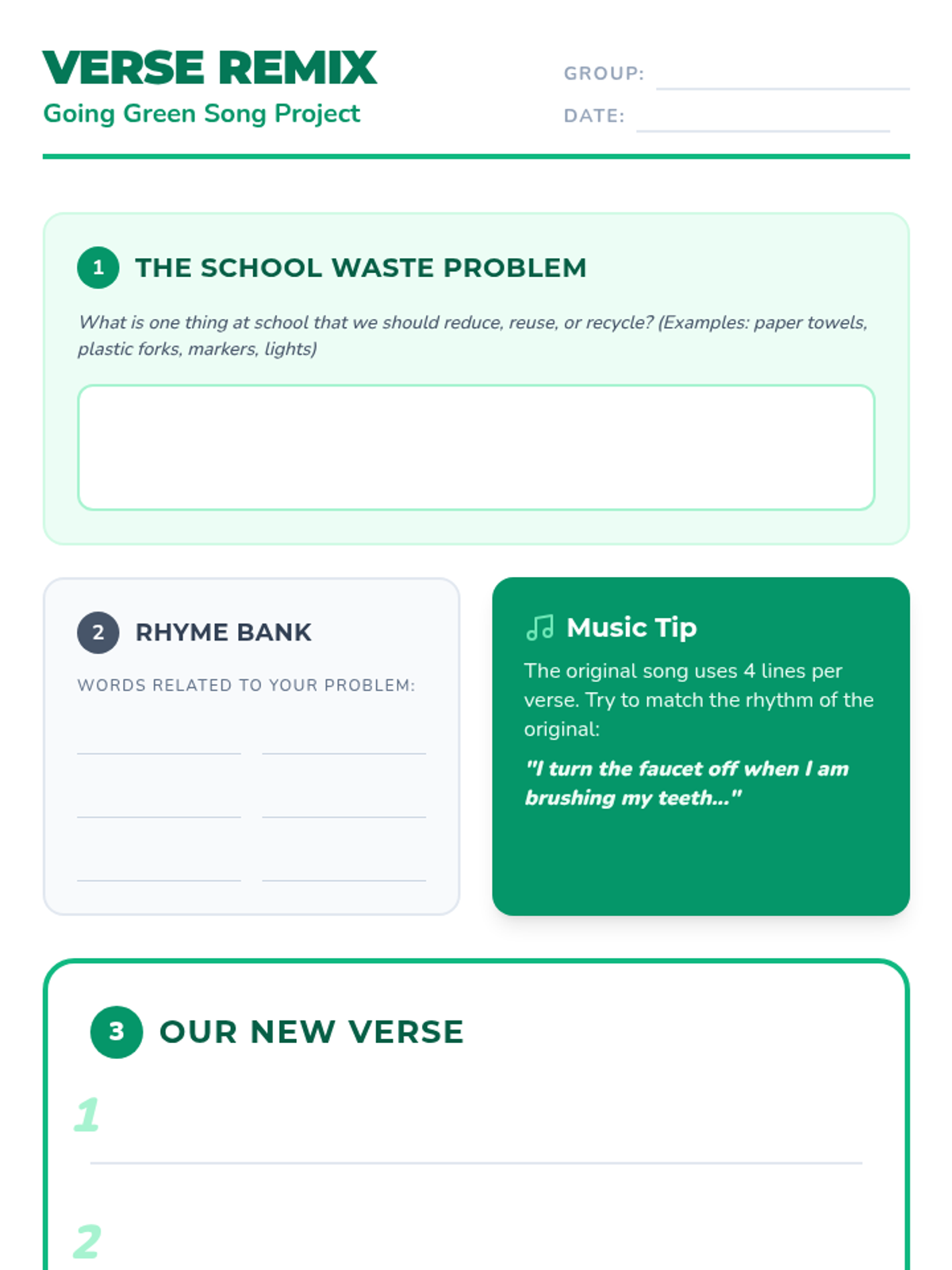
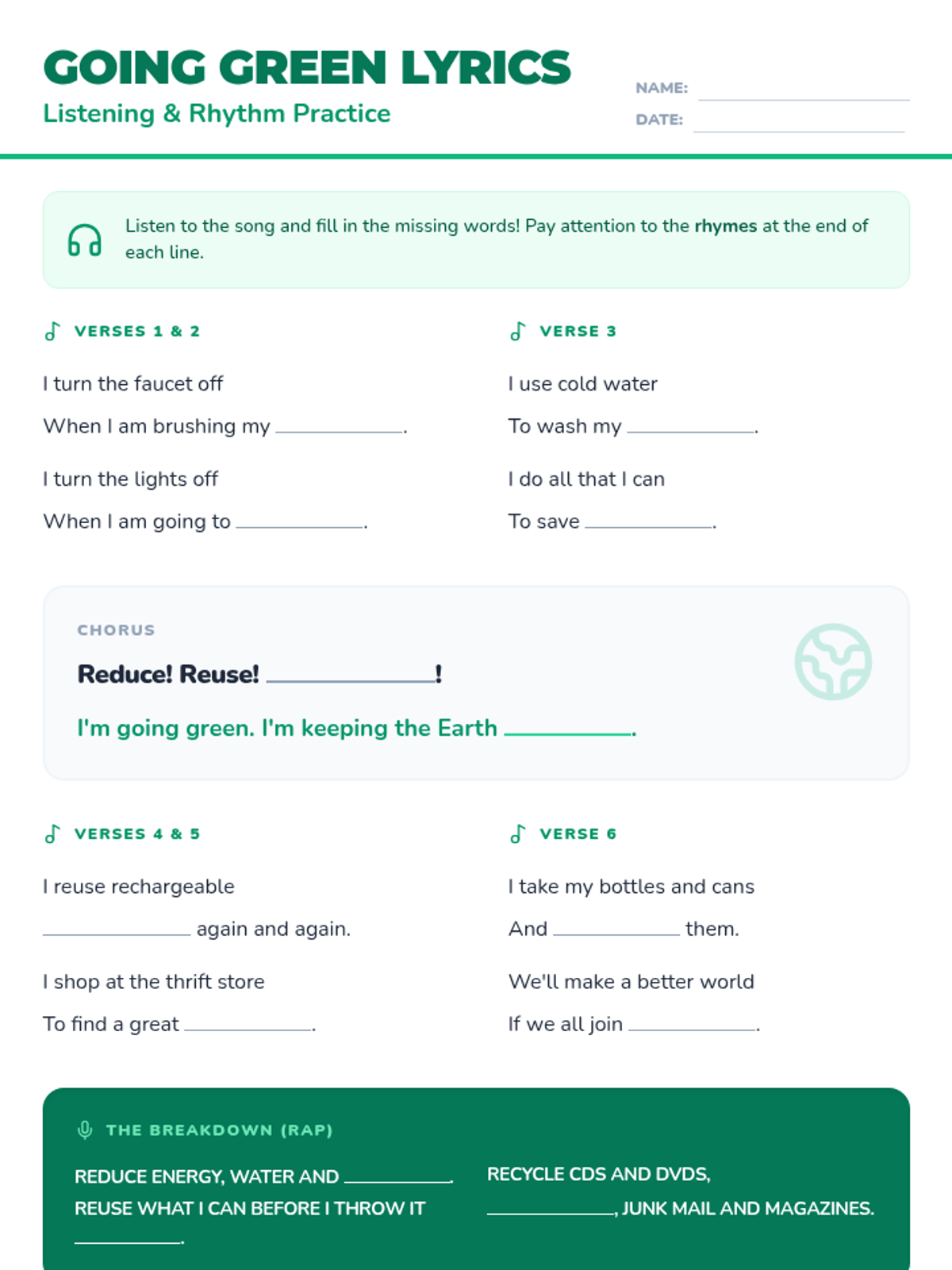
A music lesson where students compose and perform a new verse for 'Going Green Song' about environmental issues in their own school.
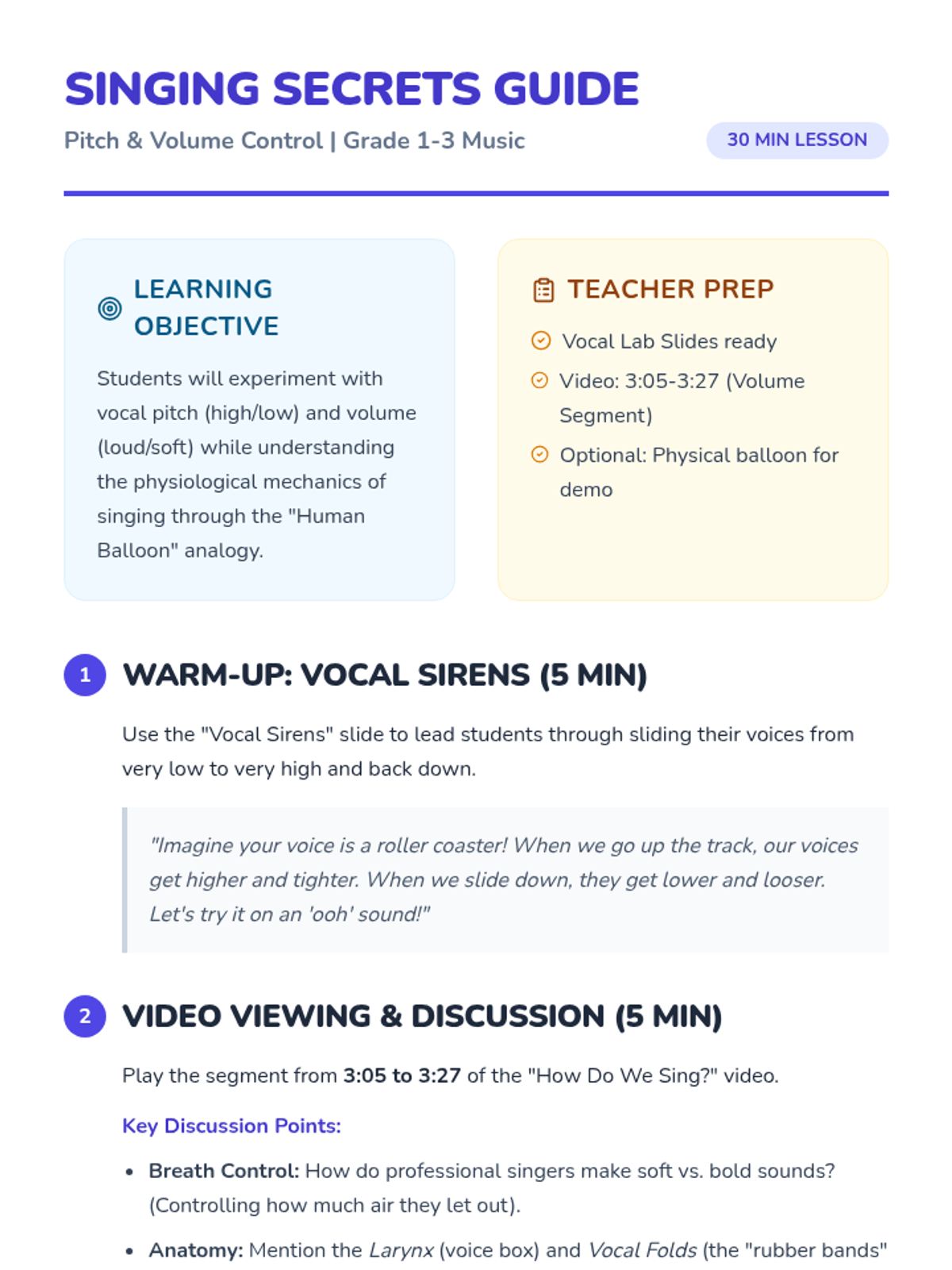
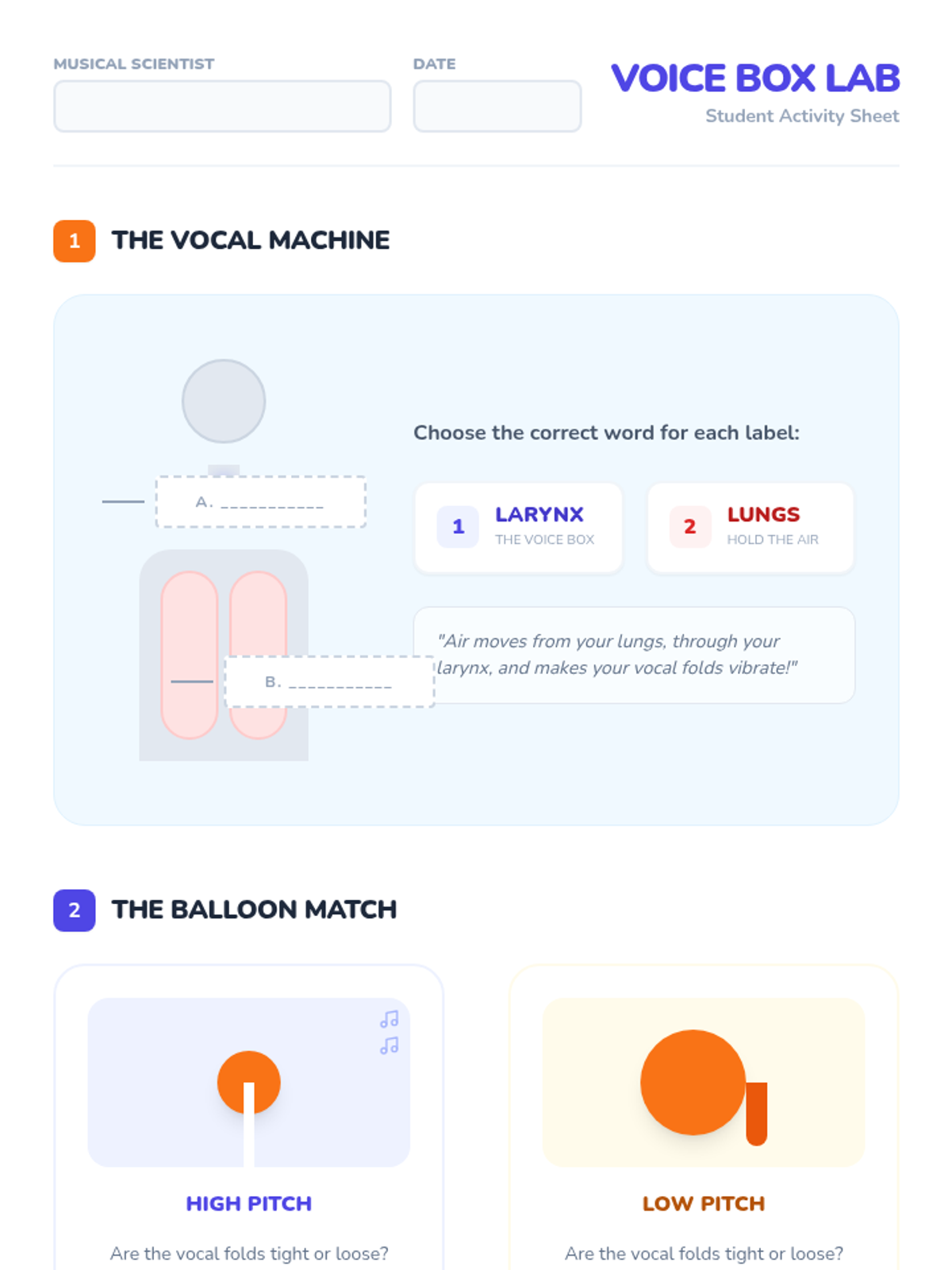
A fun, interactive music lesson where students use a balloon analogy to understand how vocal folds create different pitches and how breath control changes volume. Includes a slide presentation, a comprehensive teacher guide, and a student activity sheet.
Bring all skills together in a classroom 'Swing Band' performance that highlights group collaboration and individual creativity.
Learn the art of vocal improvisation using scat syllables, inspired by jazz legends like Ella Fitzgerald and Louis Armstrong.
Master the concept of syncopation and off-beat rhythms inspired by the Ragtime style of Scott Joplin.
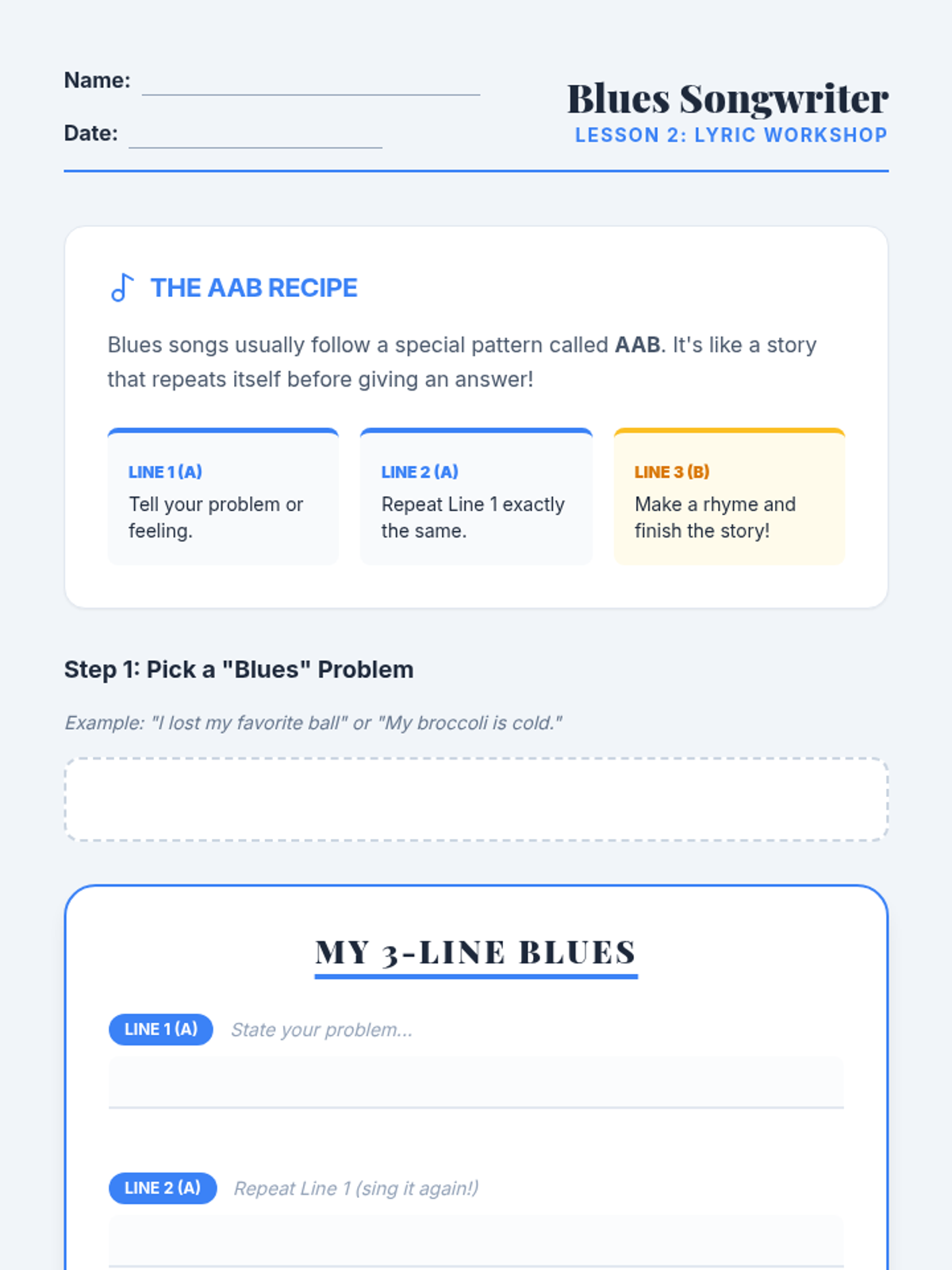
Introduce students to the 12-bar blues form and 'blue notes' as a way to express emotions and tell stories through music.
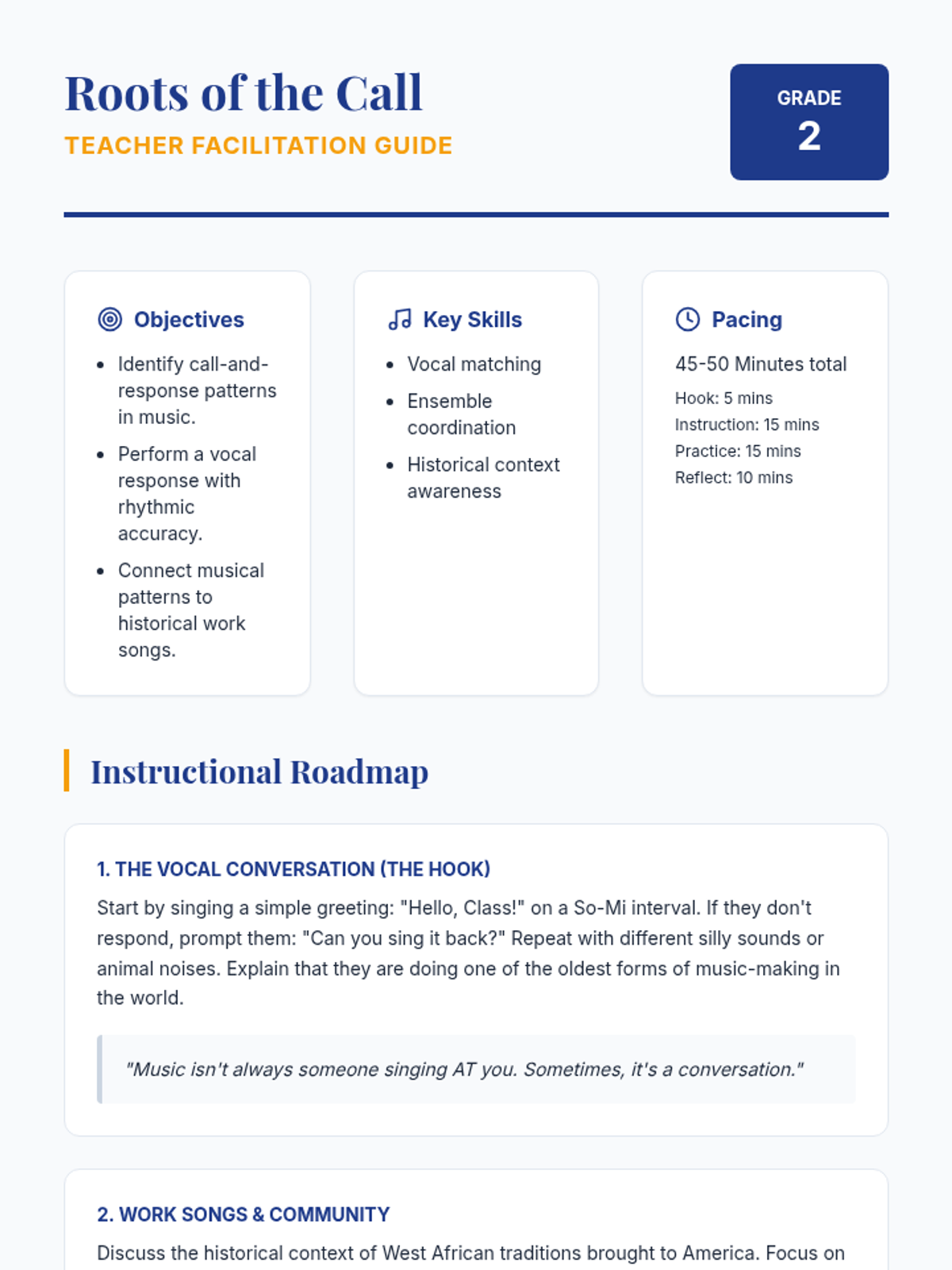
Explore the origins of call-and-response in American music history through work songs and spirituals, focusing on vocal matching and coordination.
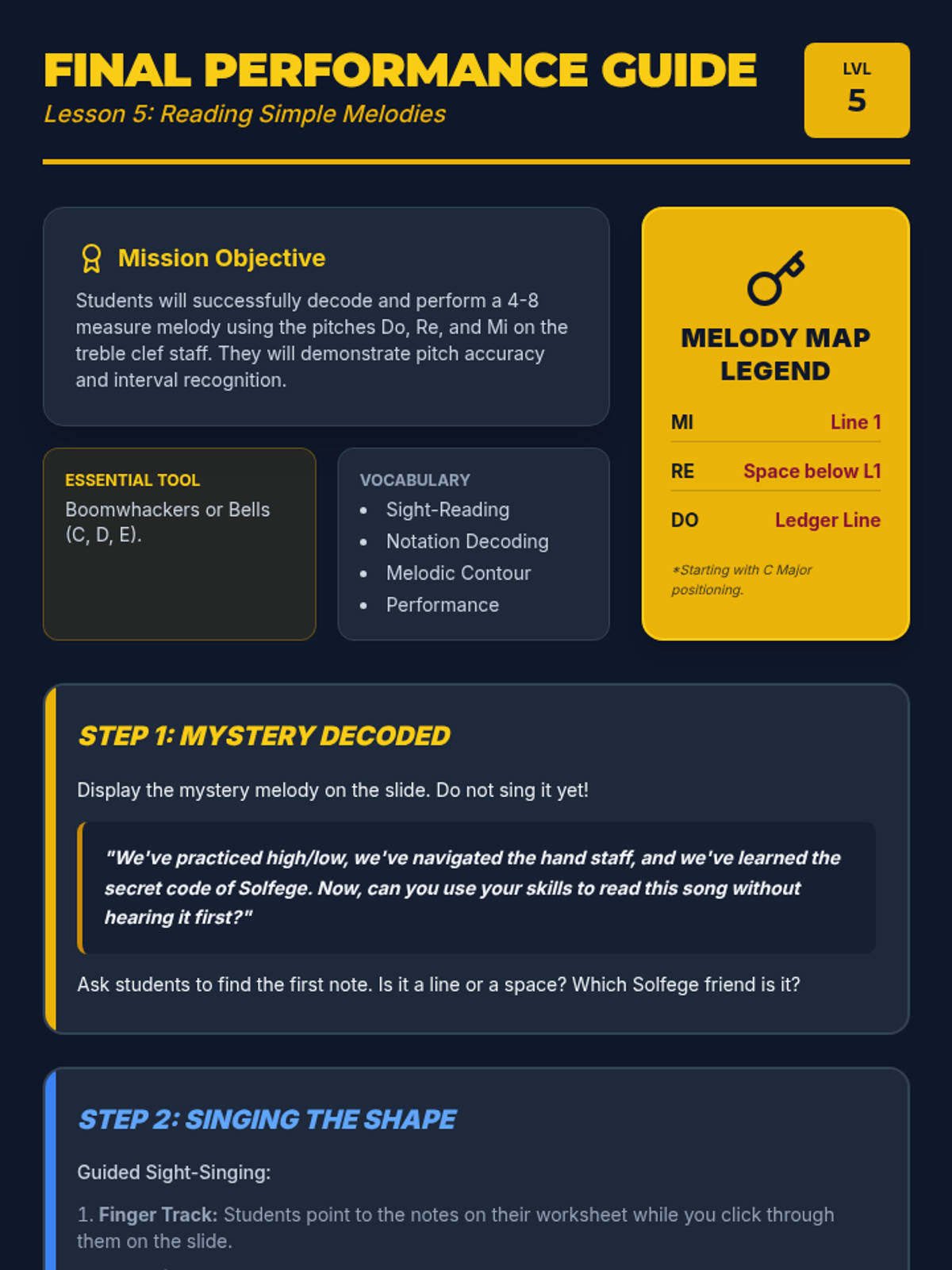
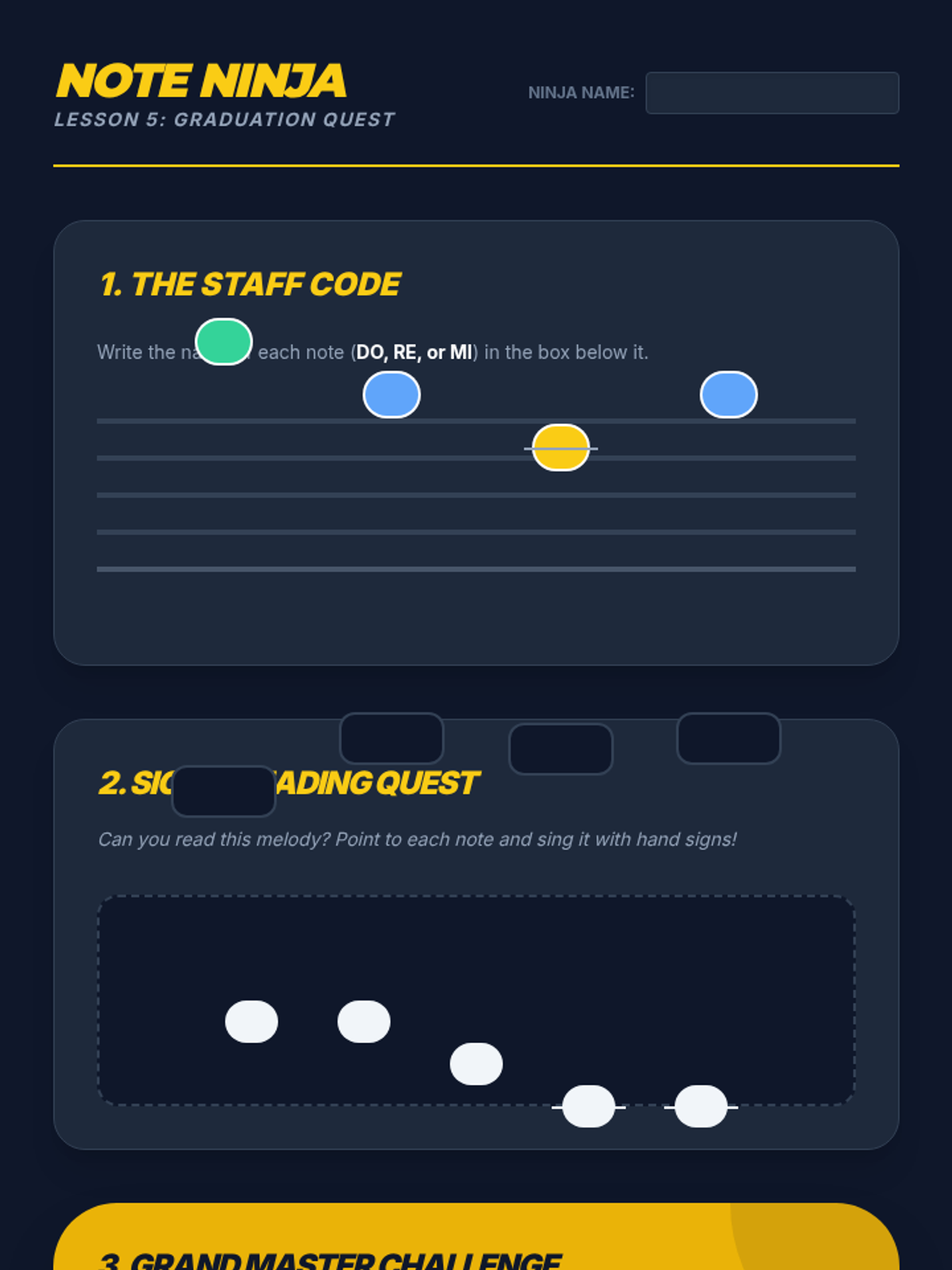
Students synthesize their knowledge of the staff and Solfege to read a three-note melody written in standard notation. Using Boomwhackers or bells, they translate the visual dots on lines and spaces into accurate musical pitches.
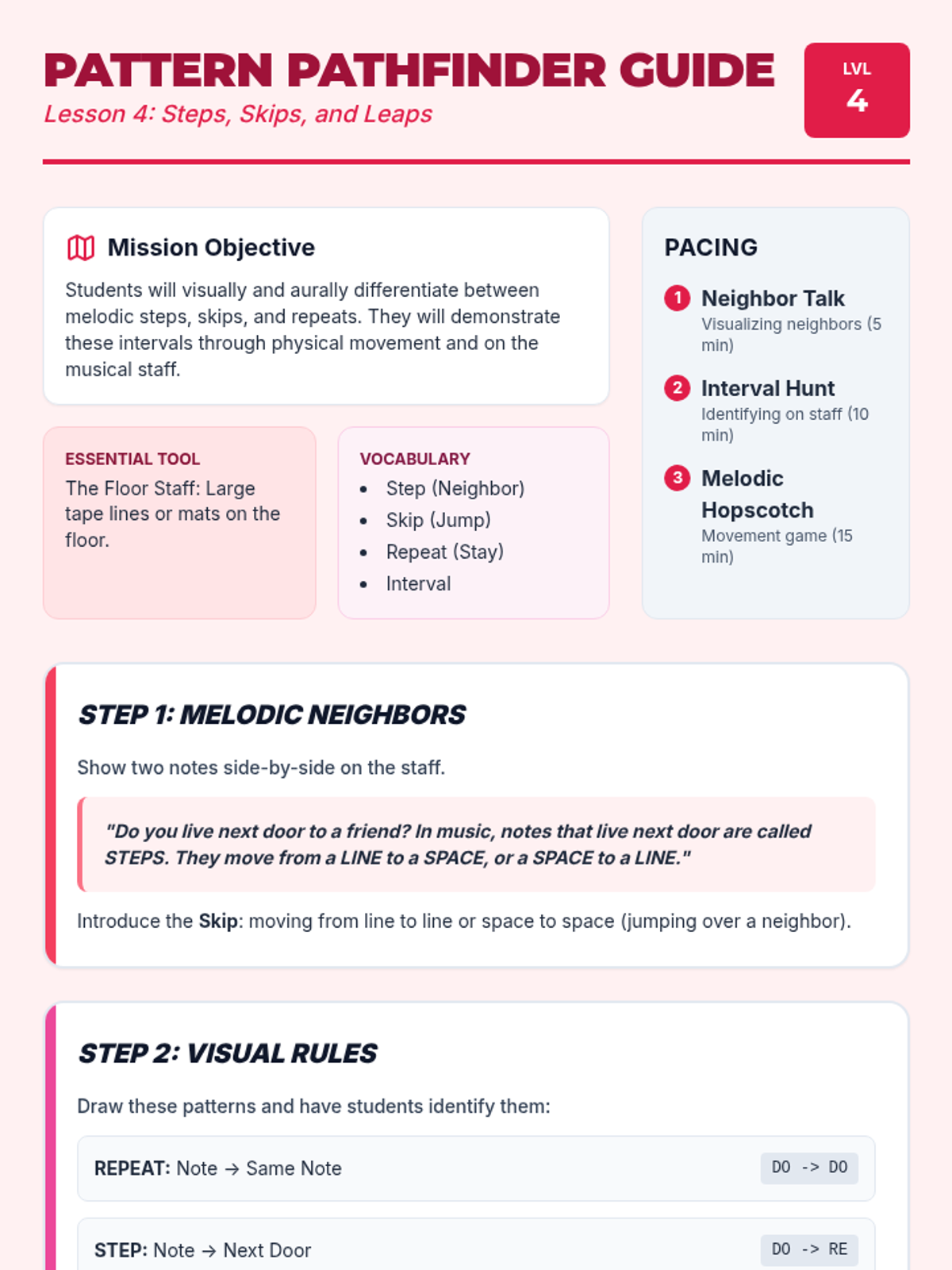
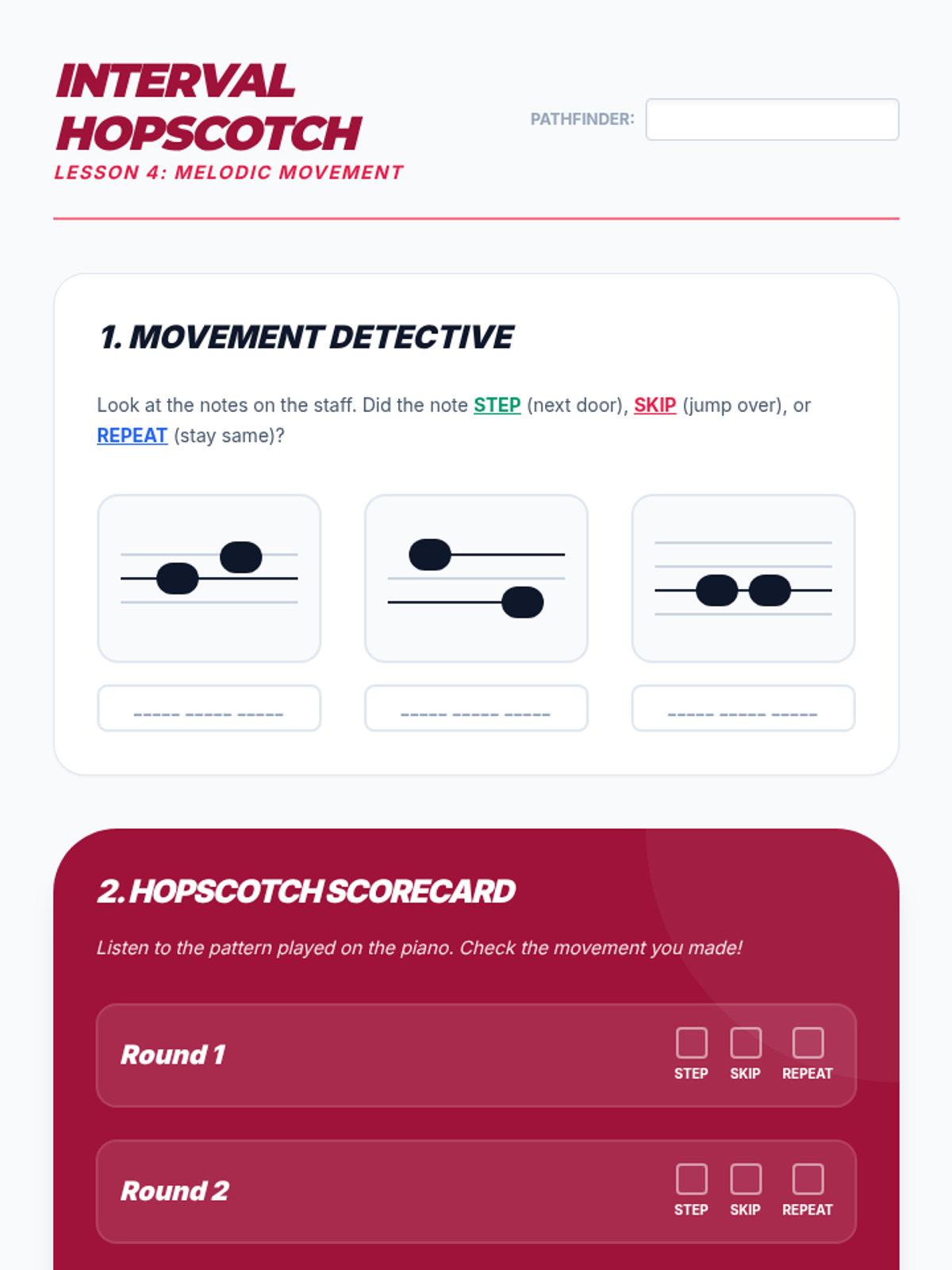
Building on Solfege, students analyze melodic movement to determine if notes are stepping (next door neighbors), skipping (jumping over one), or repeating. They use floor markers to physically step or skip through a melody.
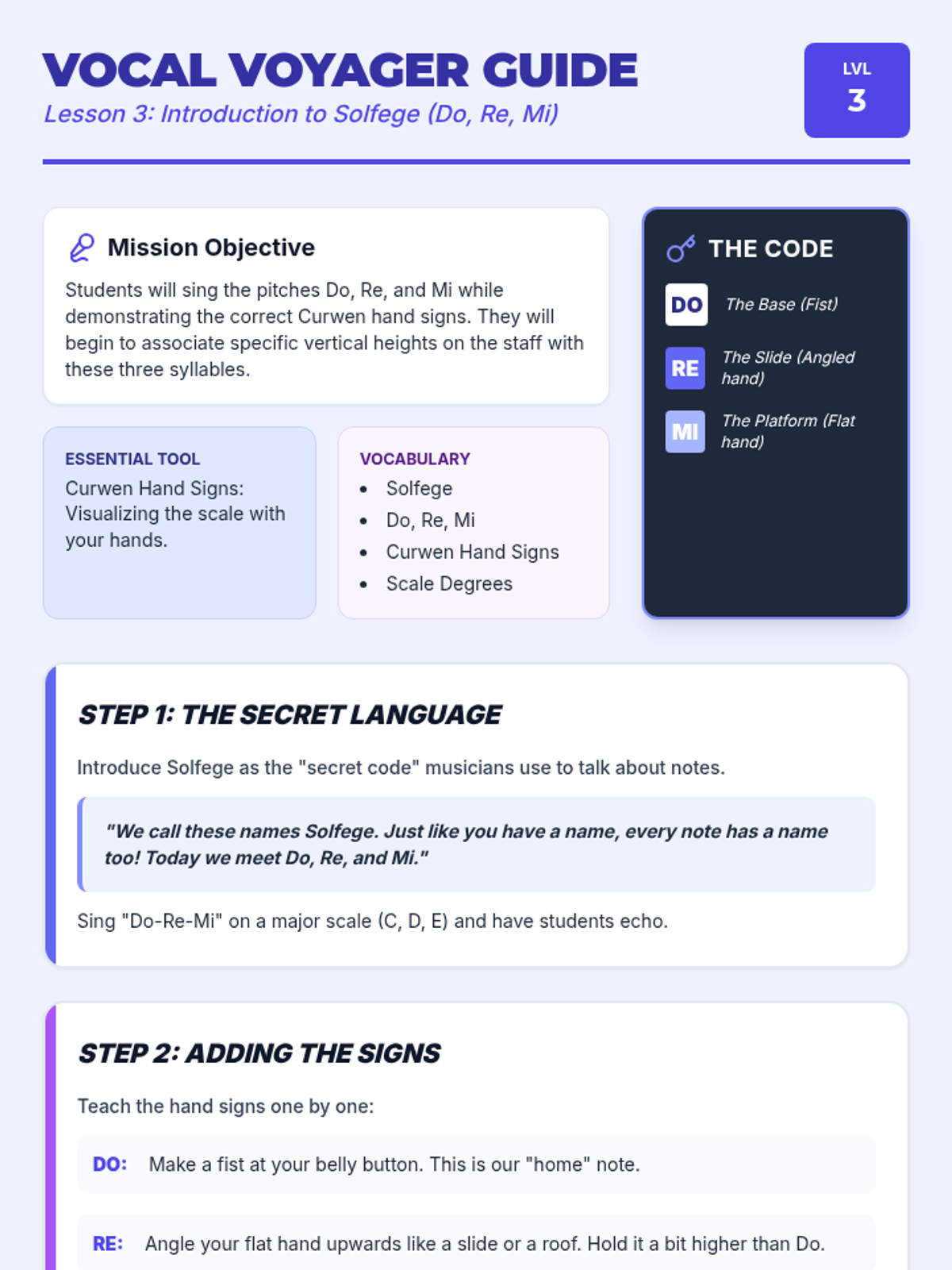
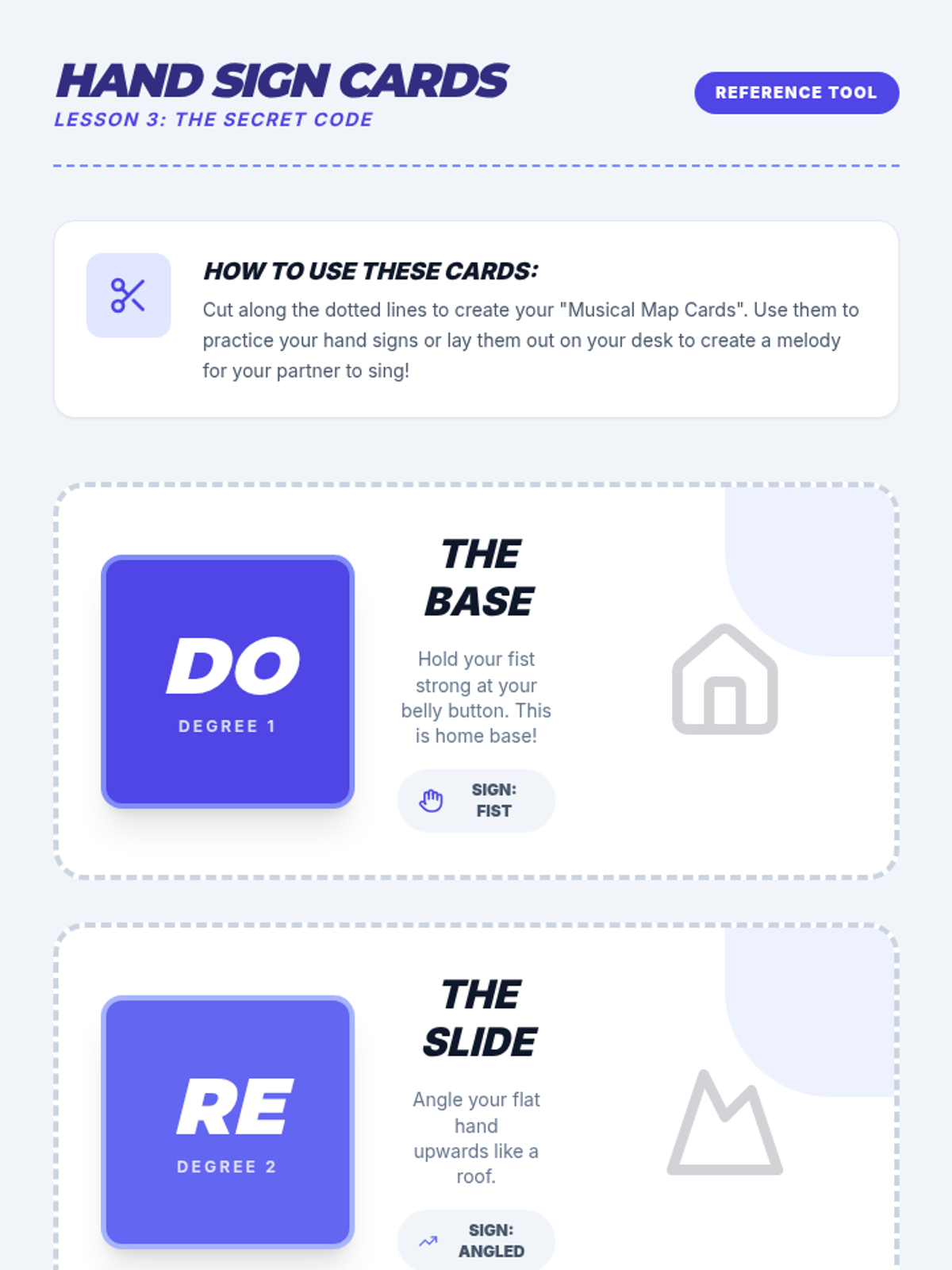
Students learn the first three degrees of the major scale using Curwen hand signs and Solfege syllables. They practice matching pitch with their voice and identifying the 'step' interval between these three notes.
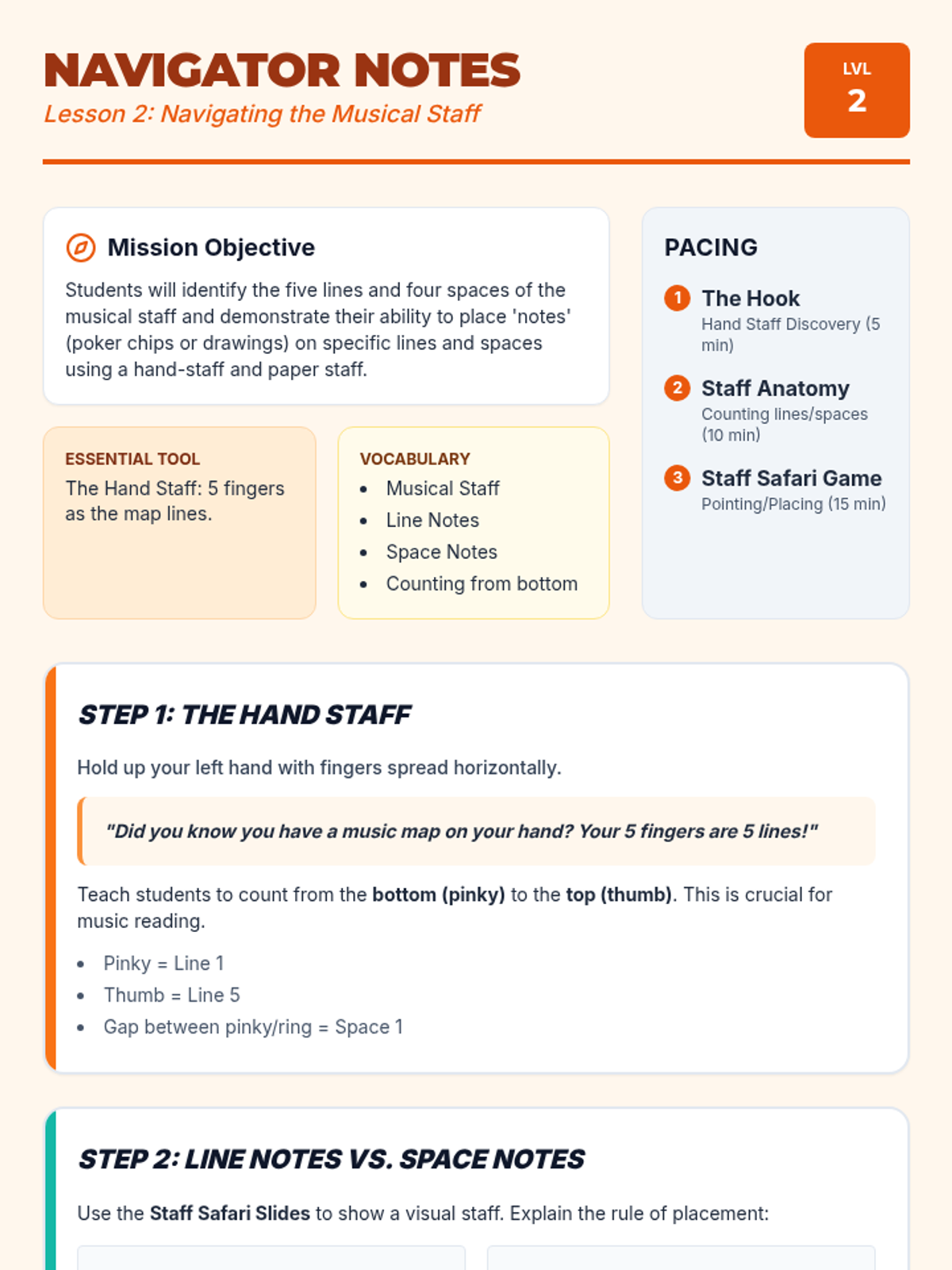
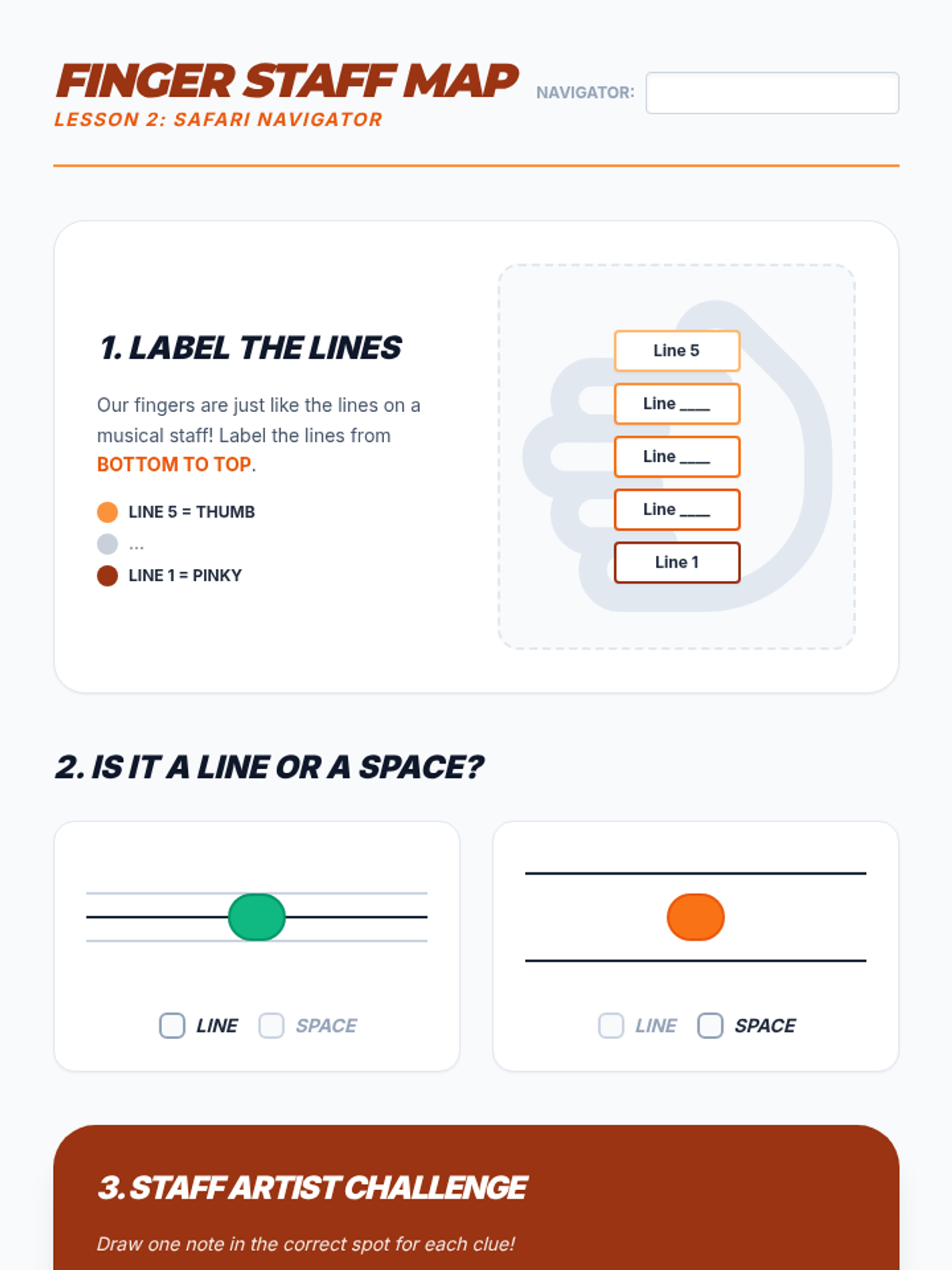
This lesson introduces the five lines and four spaces of the staff. Using their own hand as a portable staff, students practice identifying 'line notes' and 'space notes'.
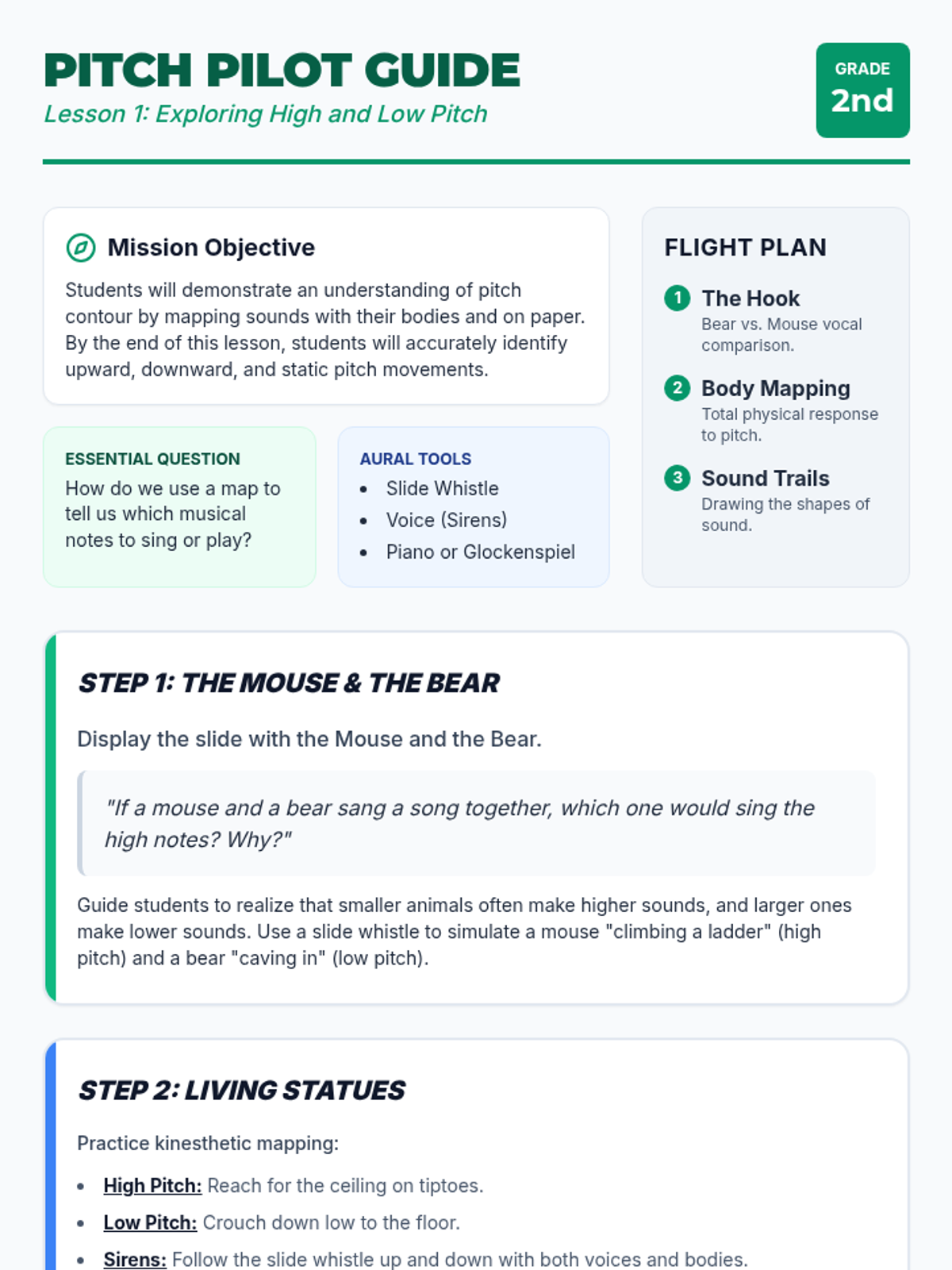
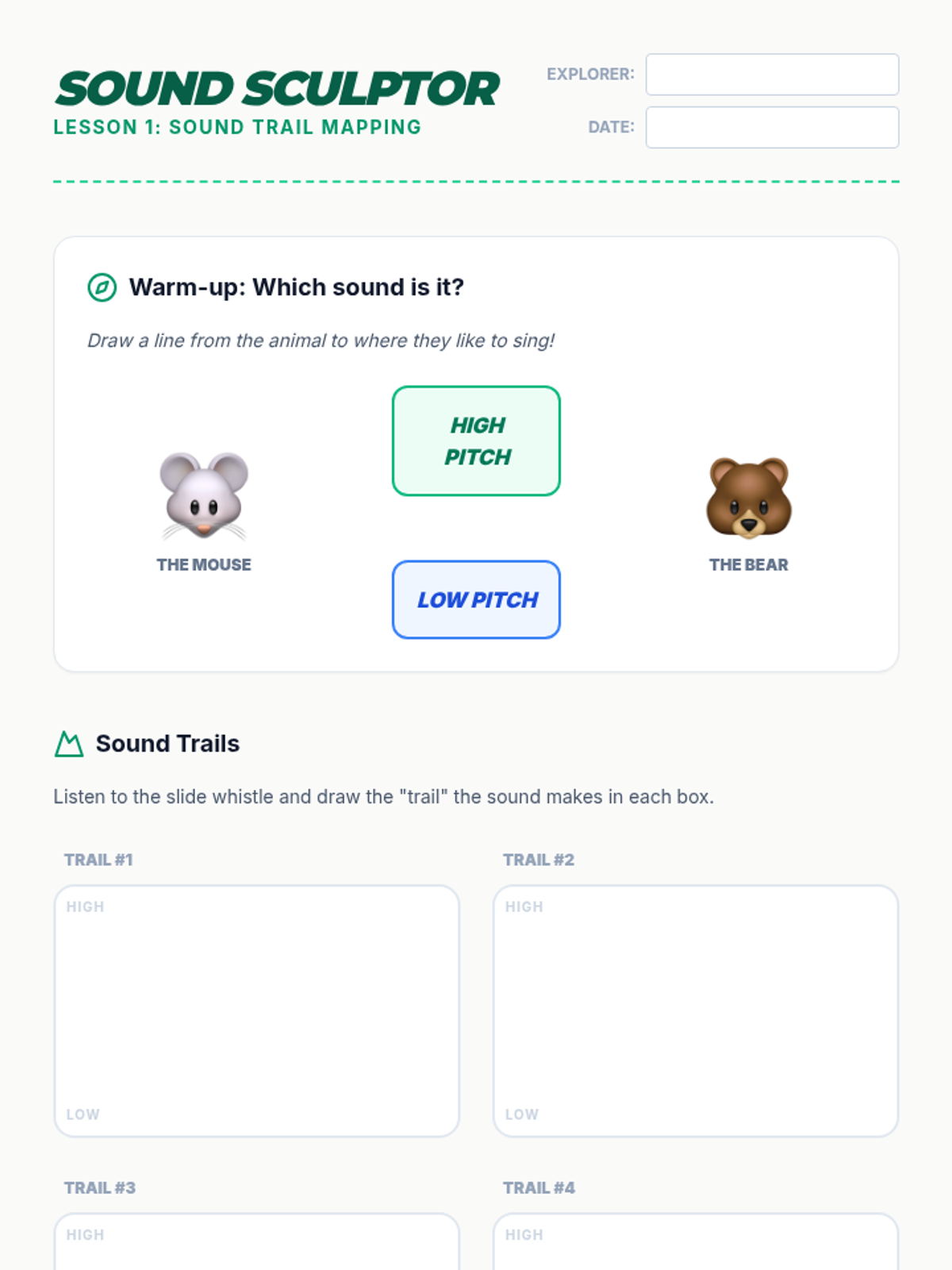
Students explore the concept of pitch height through movement, visualization, and aural discrimination using sirens and animal metaphors.
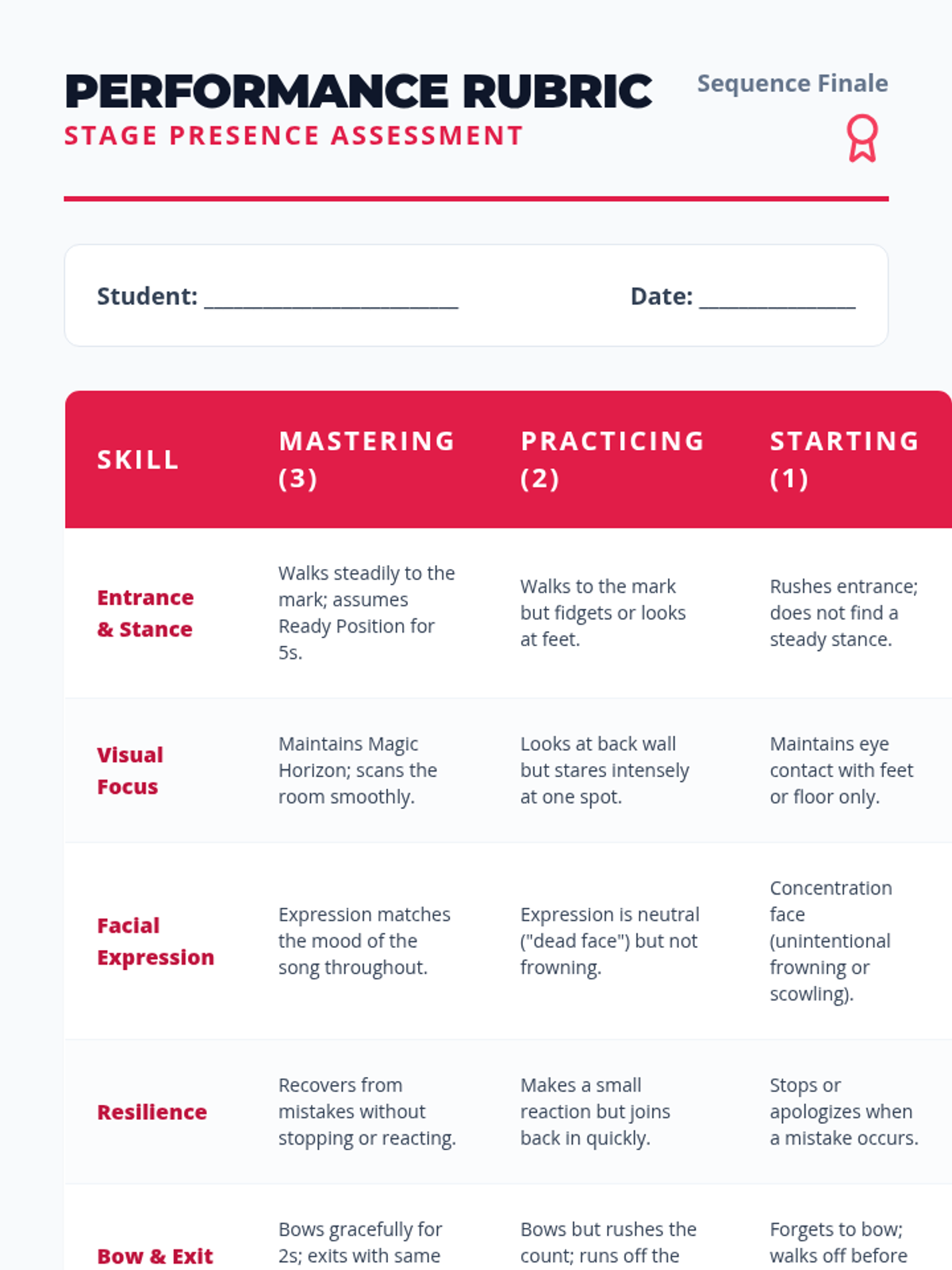
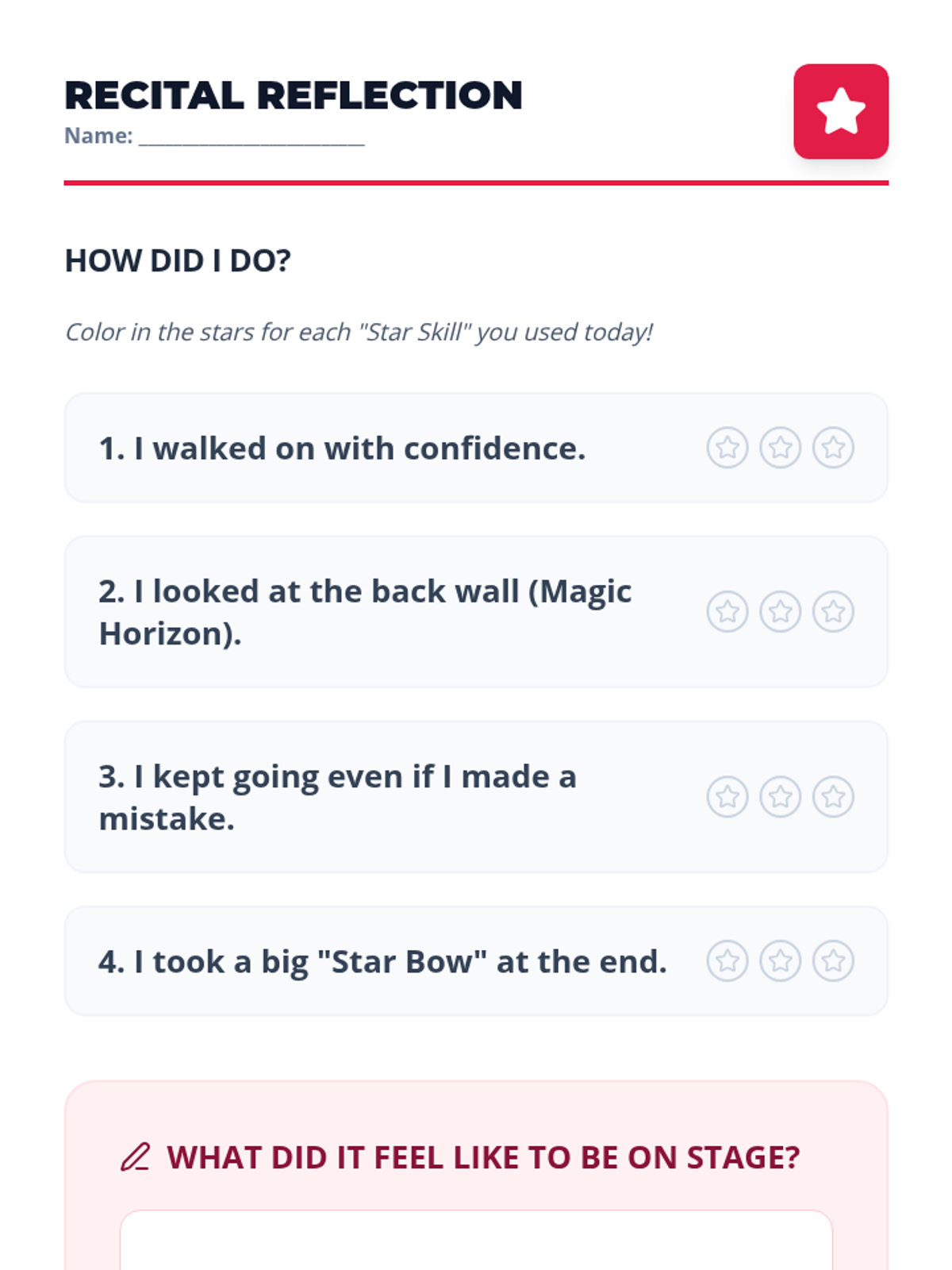
Students master the final bow and exit protocol, culminating in a full performance simulation.
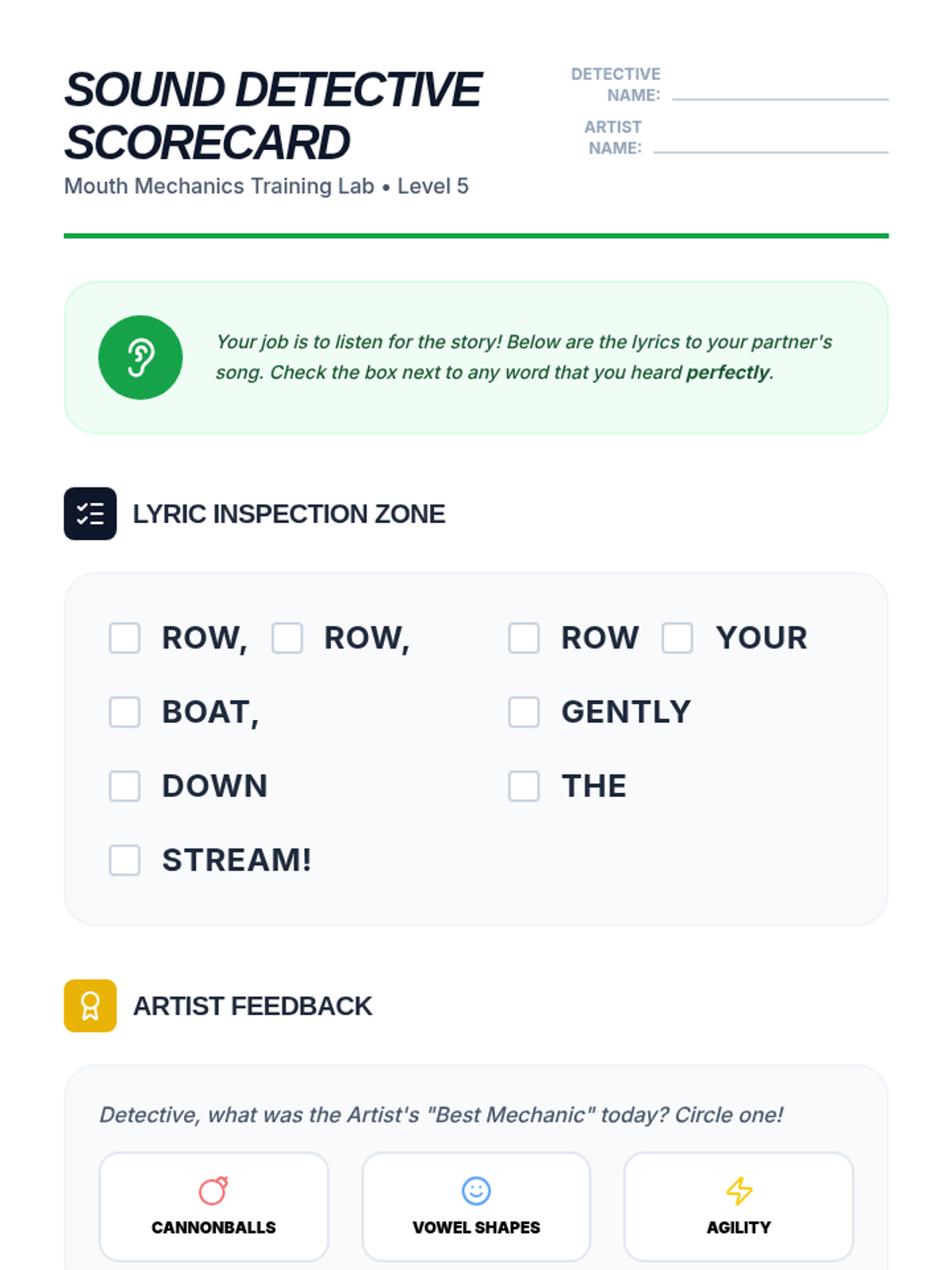
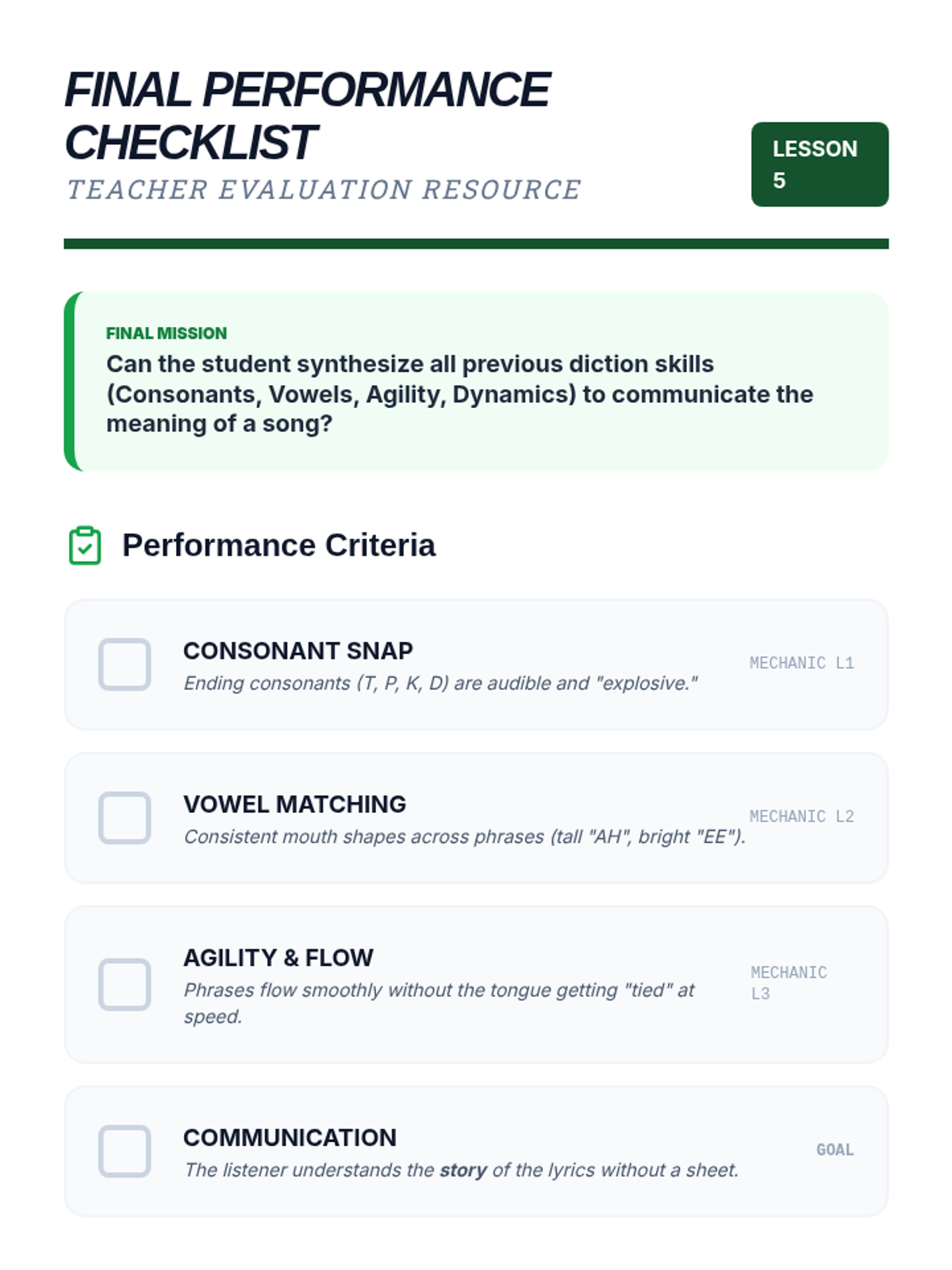
Apply all diction skills to a final performance, using peer assessment to ensure the story is clearly communicated.
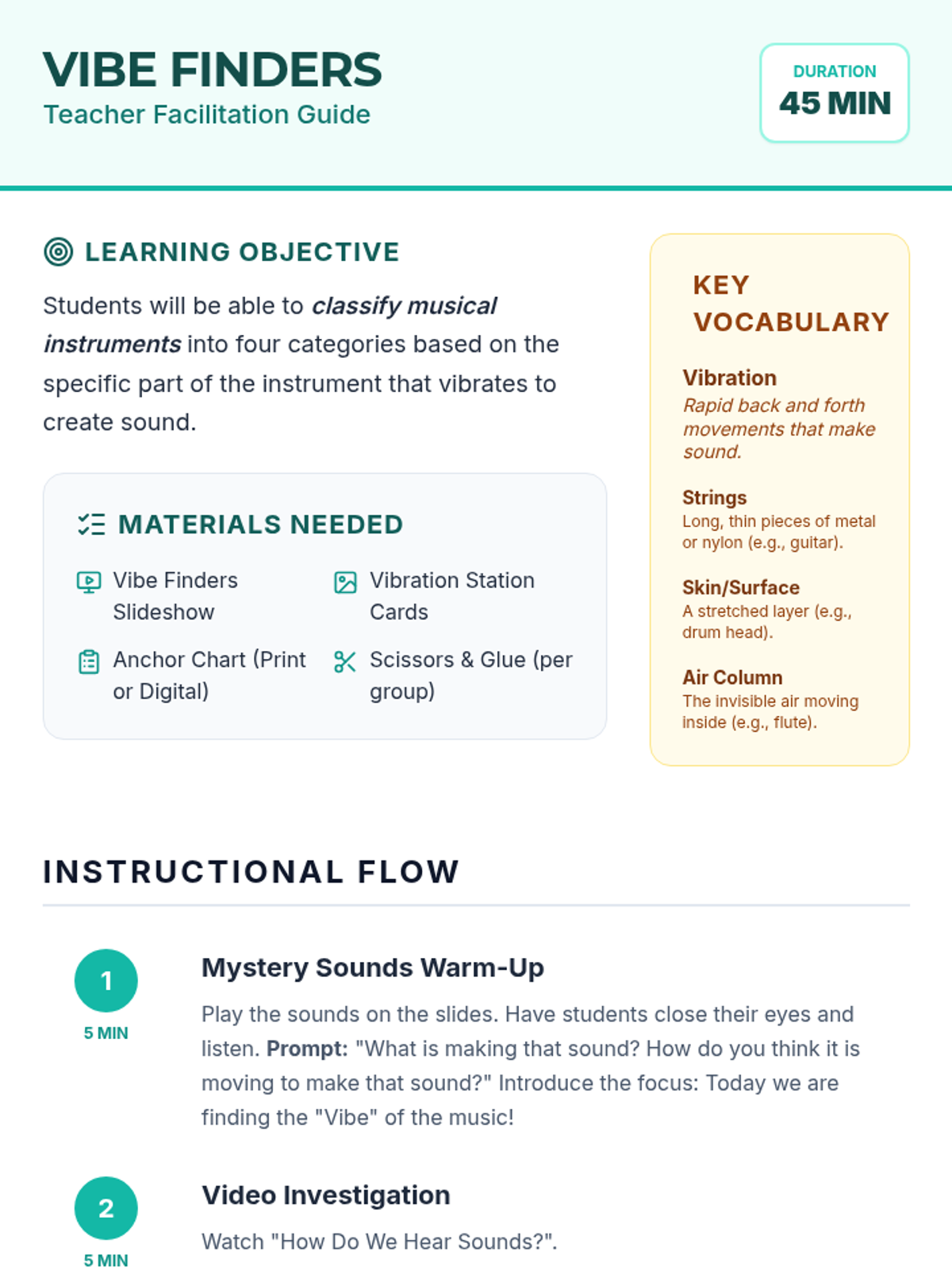
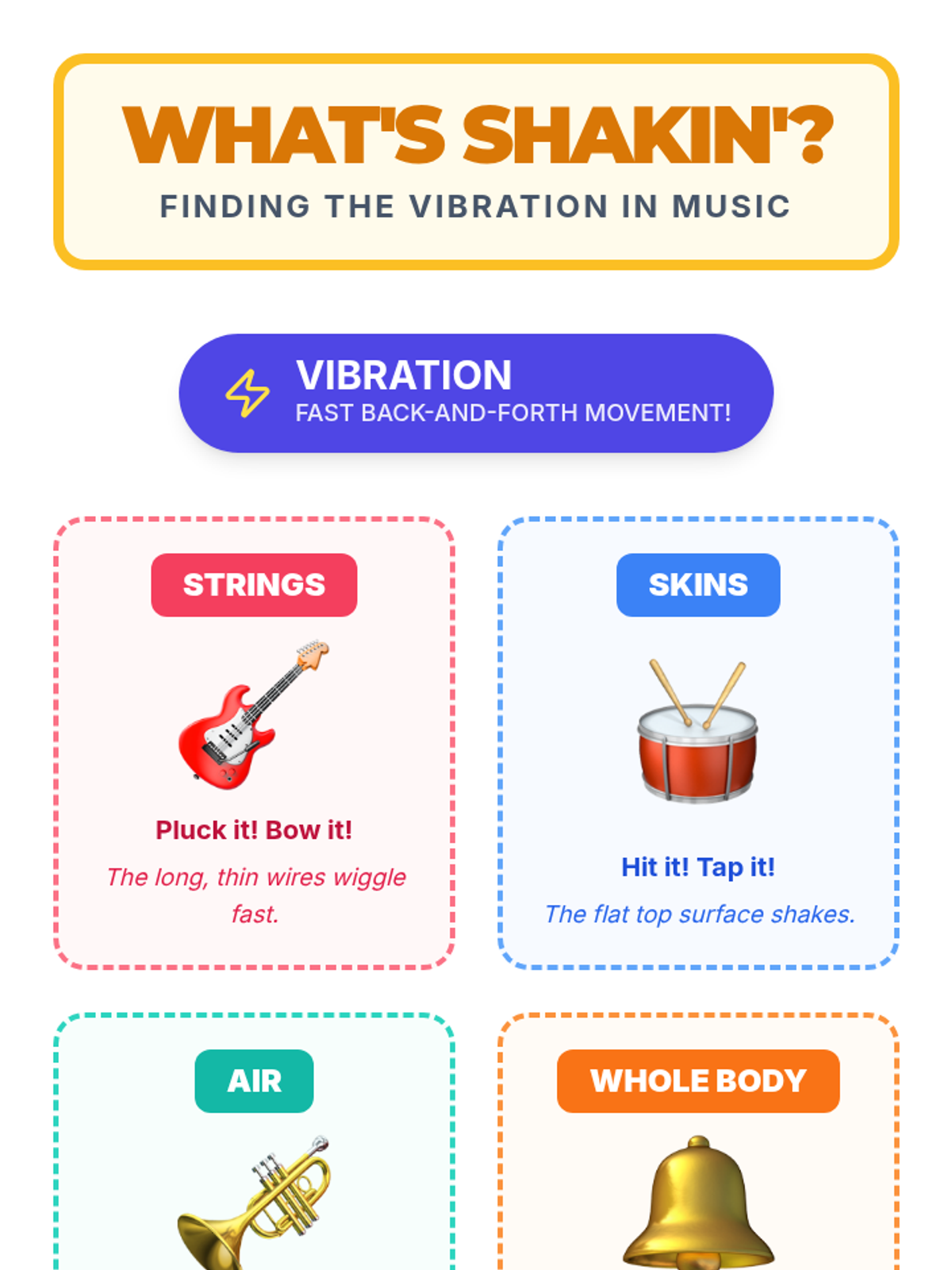
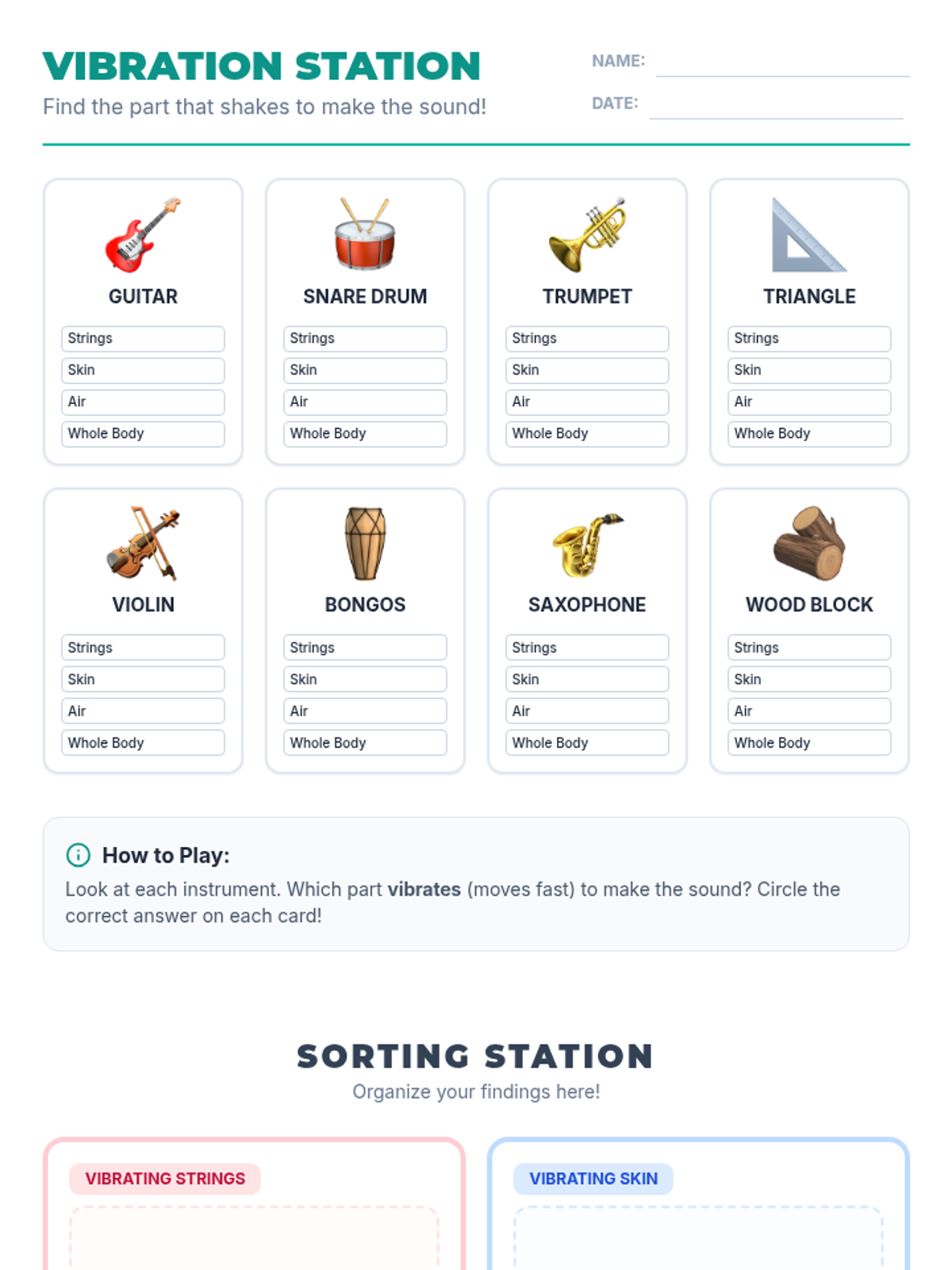
A 2nd grade music and science integration lesson where students investigate how vibrations produce sound and classify musical instruments by their vibrating parts.
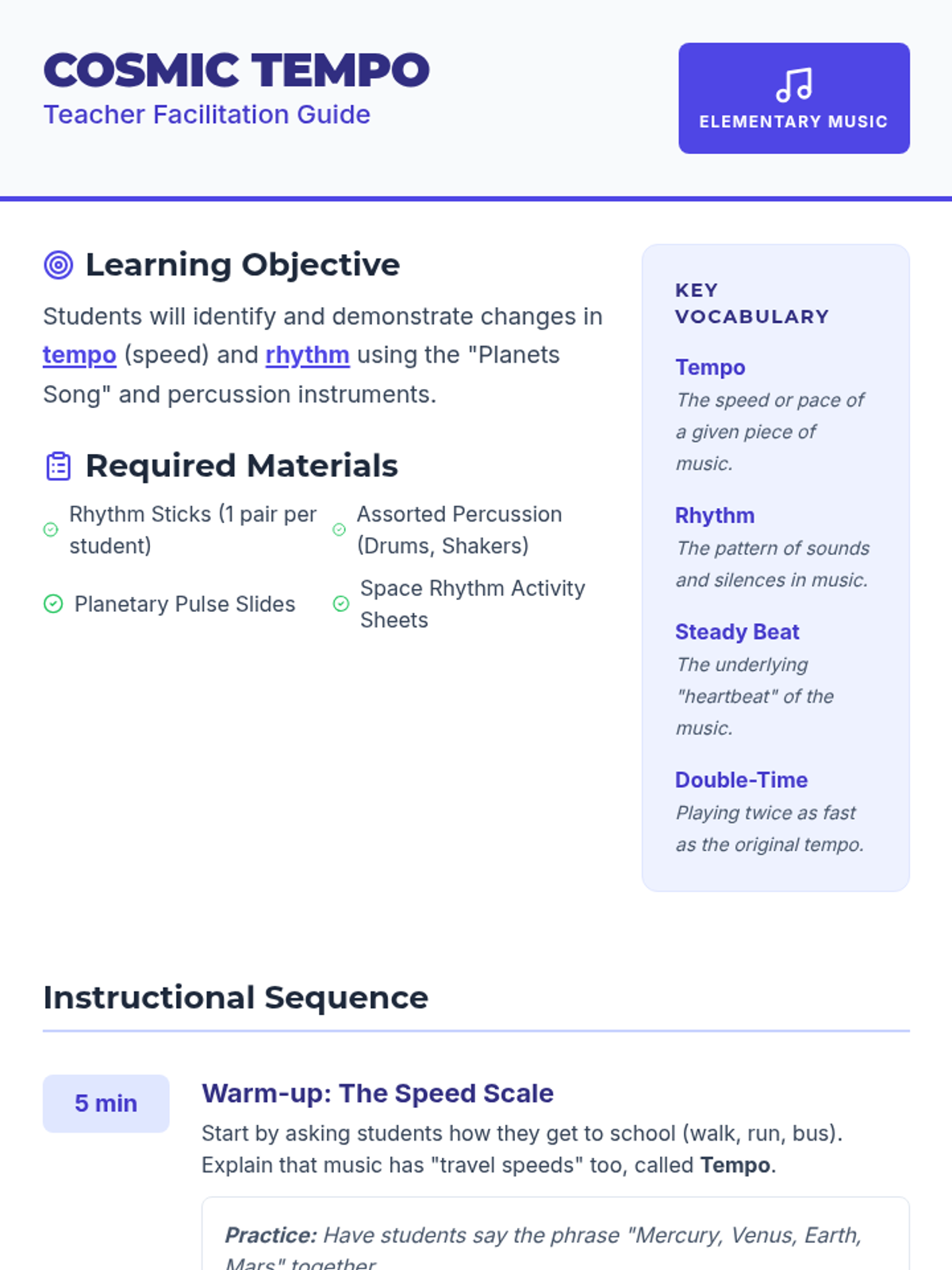
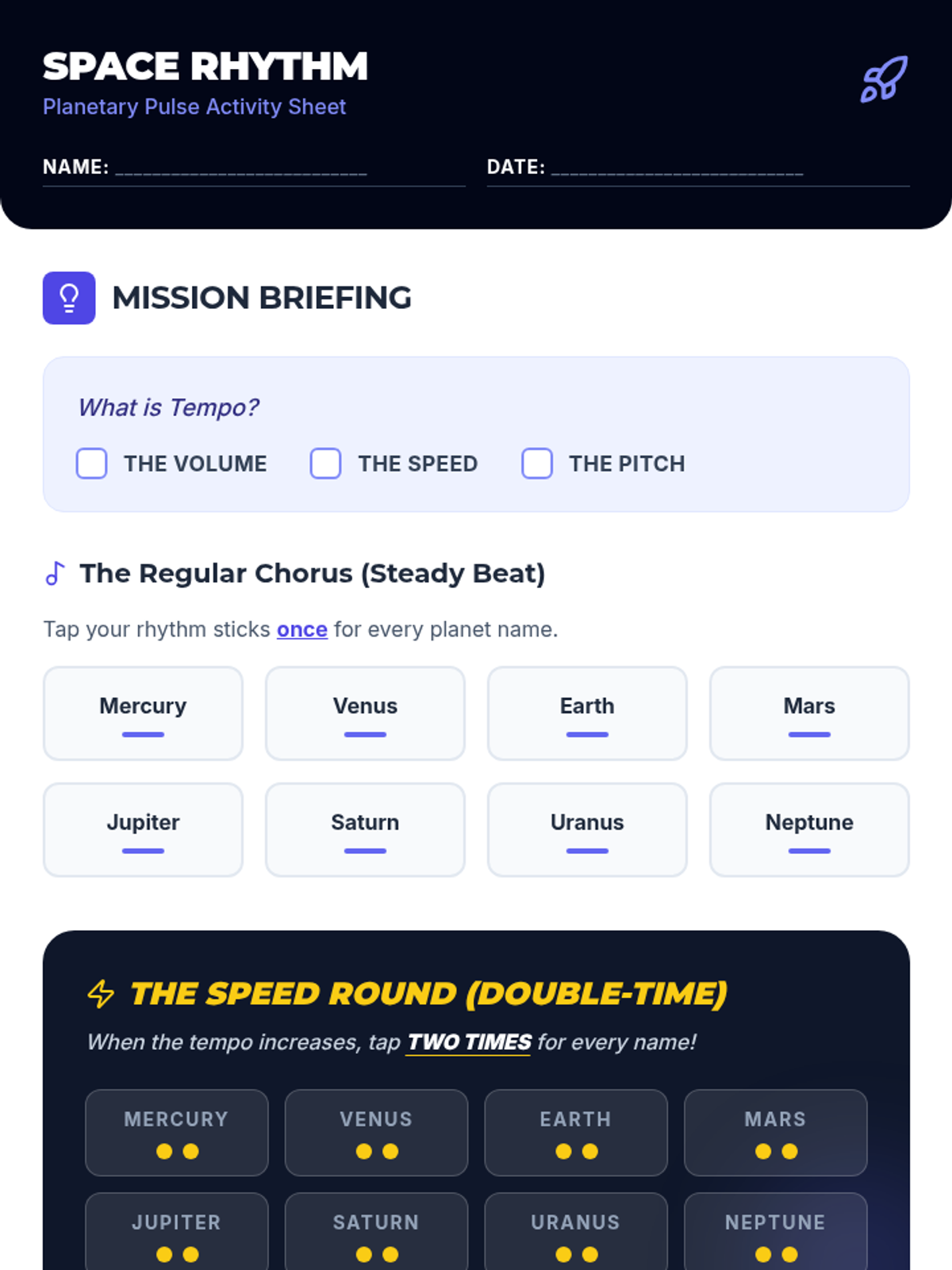
Students explore the concept of tempo and rhythm through a catchy song about the solar system, using rhythm sticks to match shifting speeds.
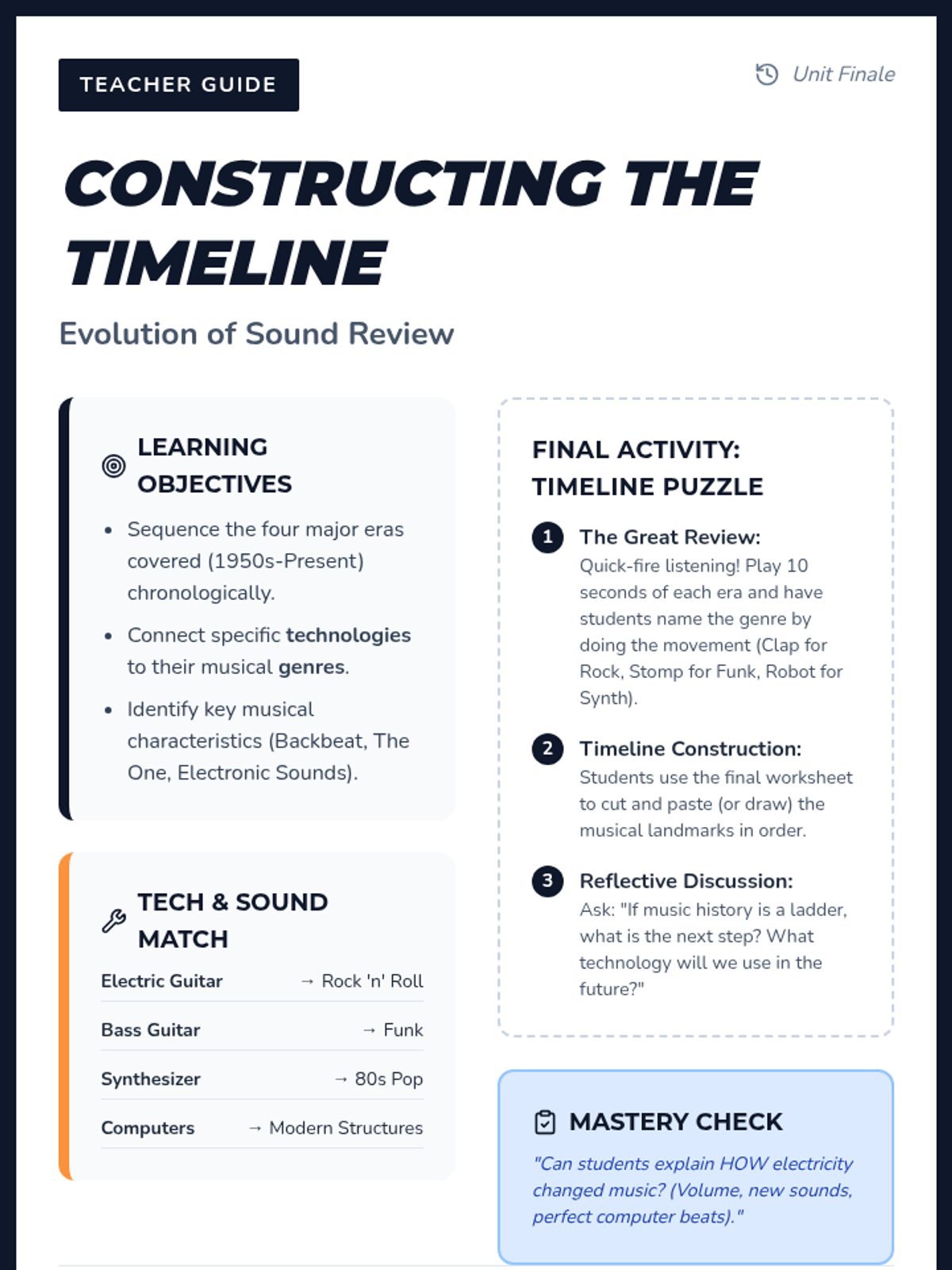
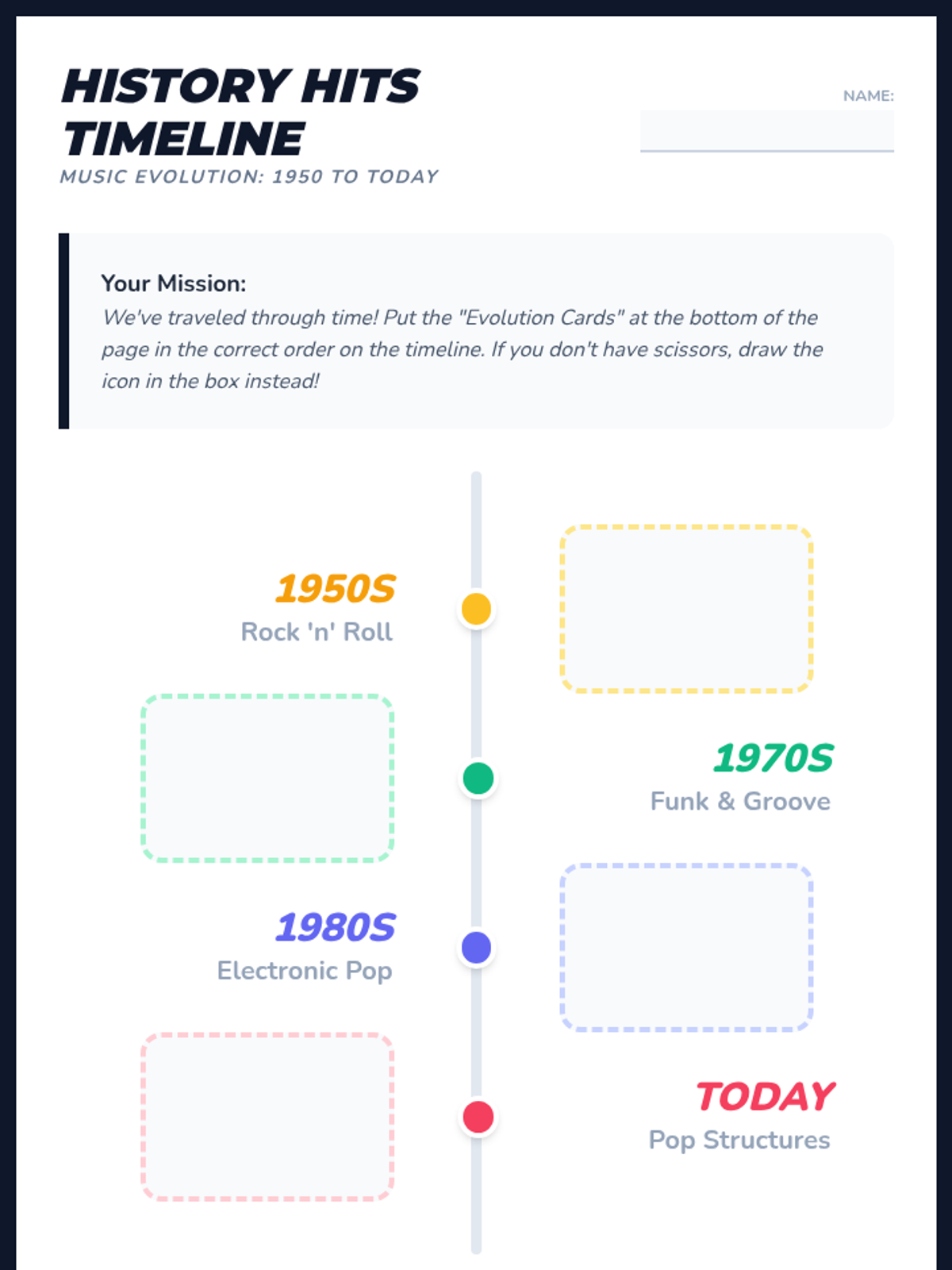
A cumulative review where students synthesize their knowledge to build a complete timeline of music history. They categorize genres by their technological and musical characteristics.
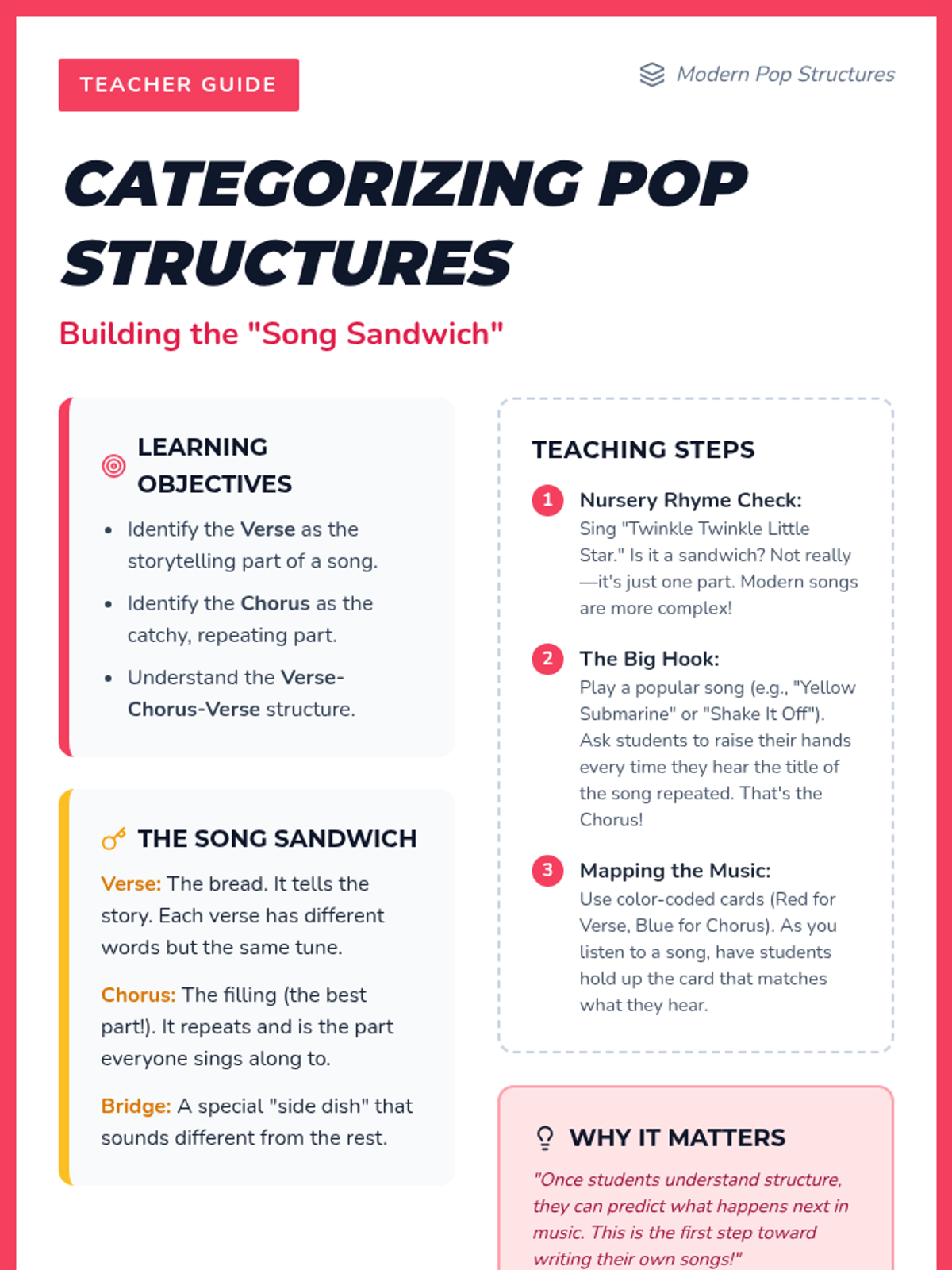
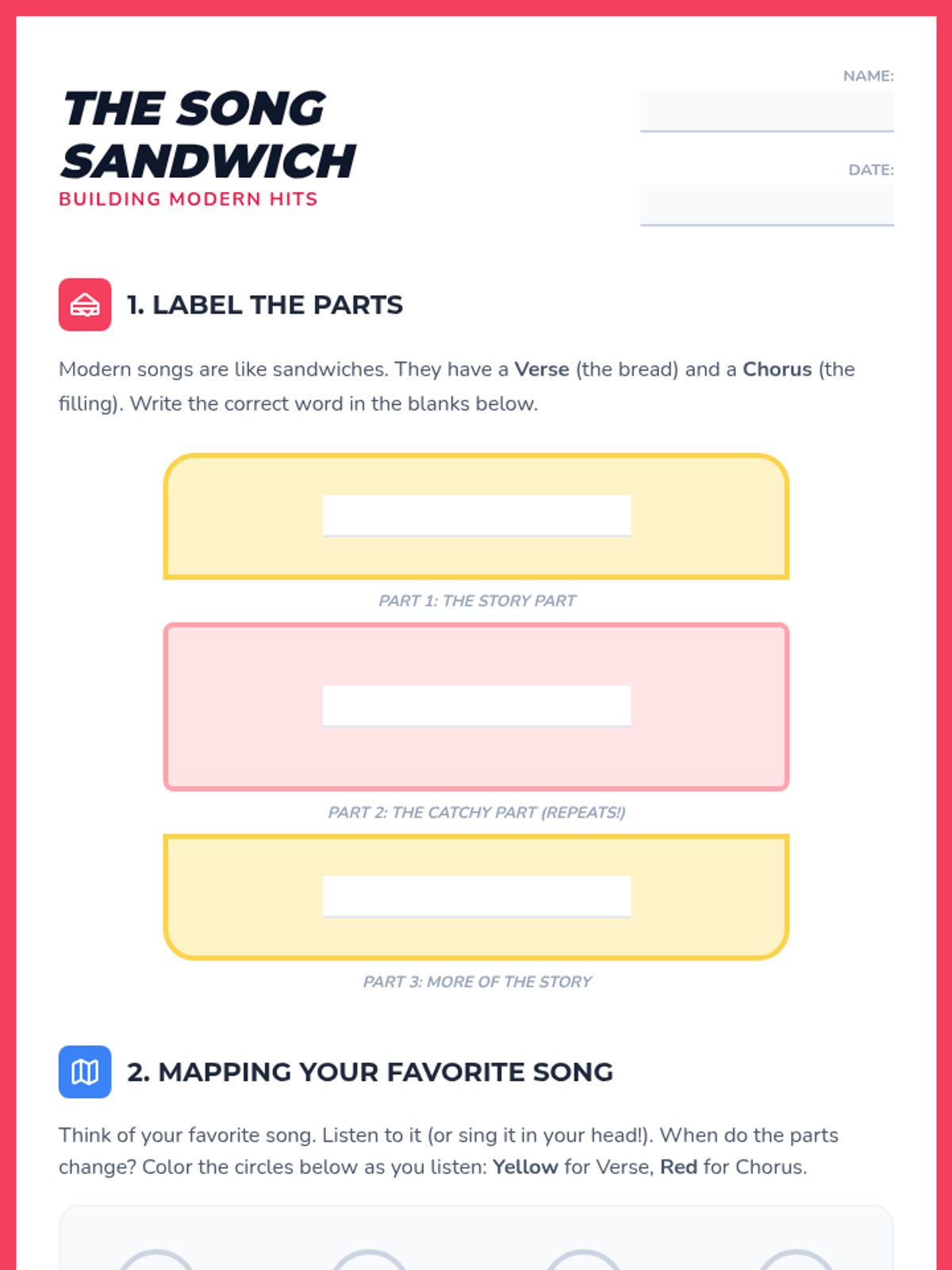
Students deconstruct modern pop songs to find the 'Verse-Chorus' pattern. They use a 'Song Sandwich' analogy to understand how most modern music is structured.
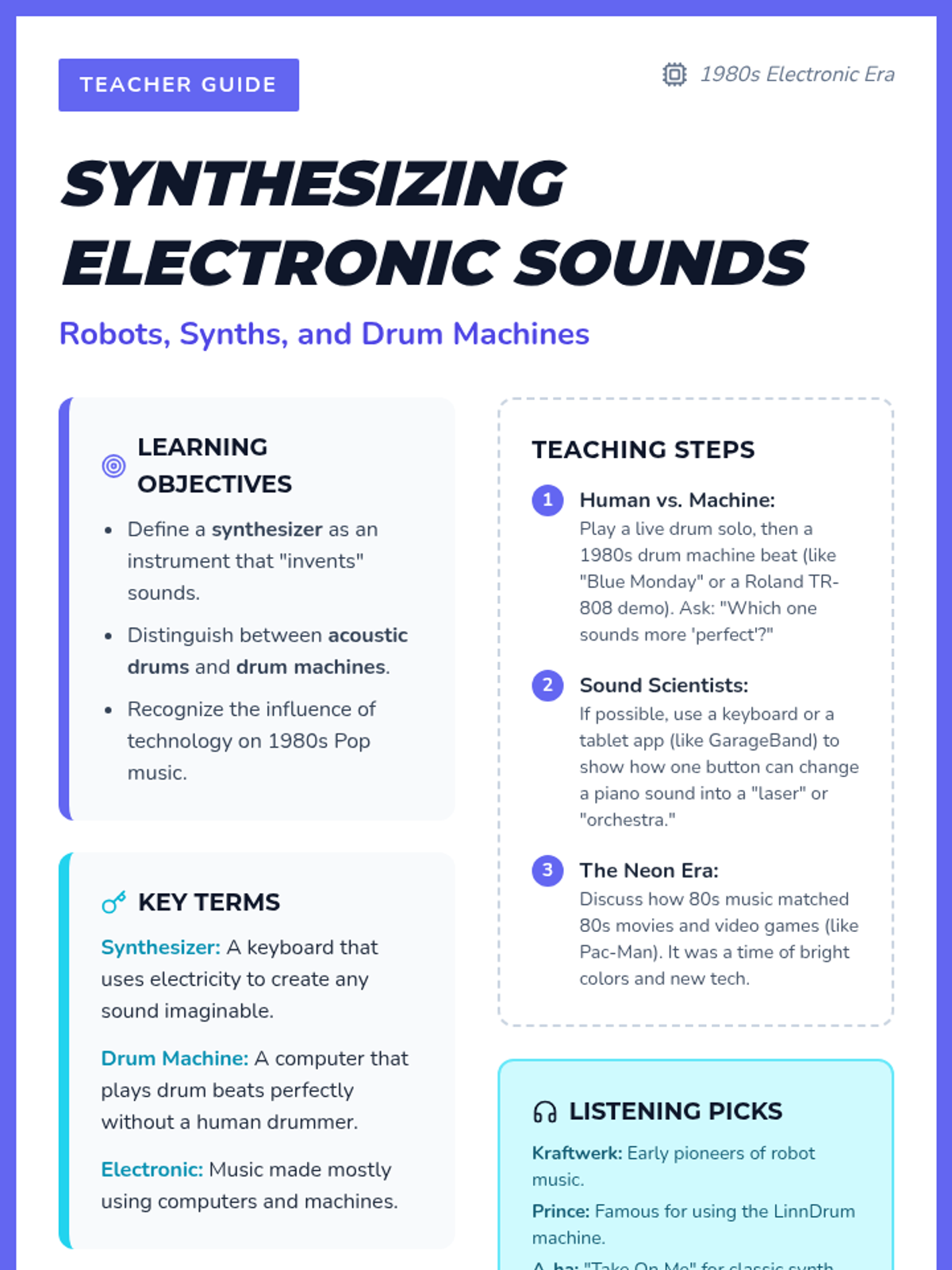
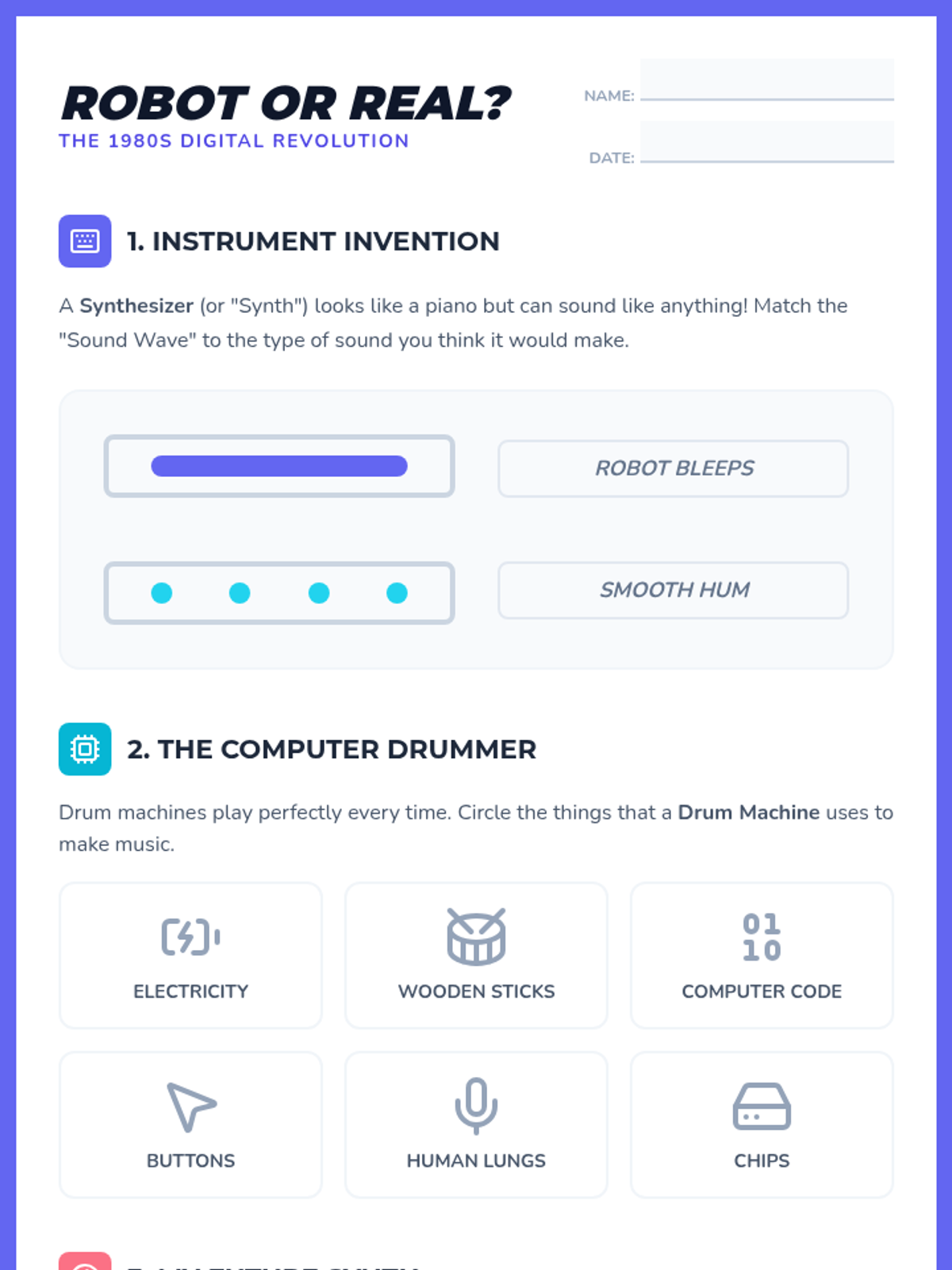
An introduction to the digital age of music, where students explore synthesizers and drum machines from the 1980s. They compare electronic sounds with traditional acoustic instruments.
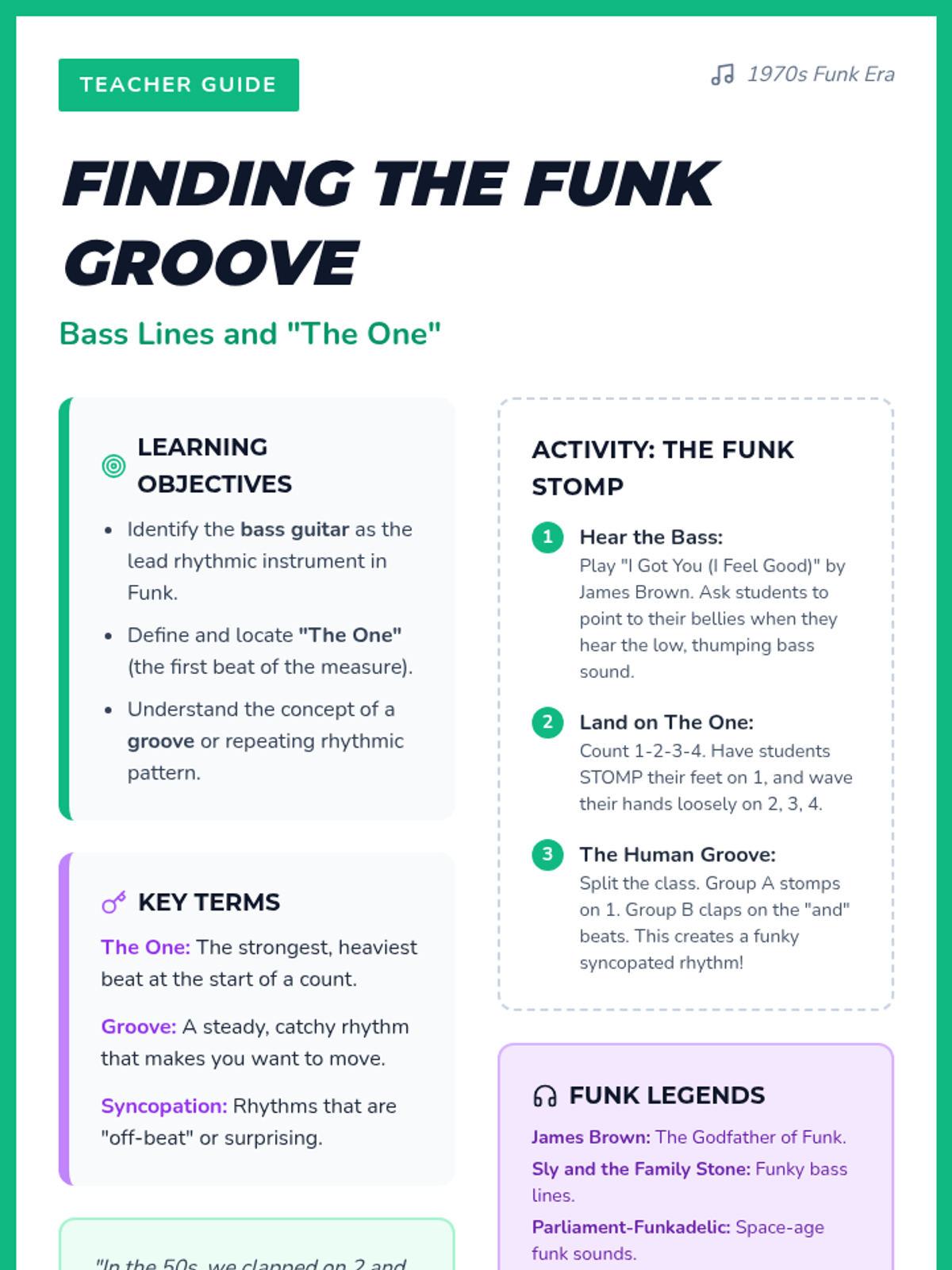
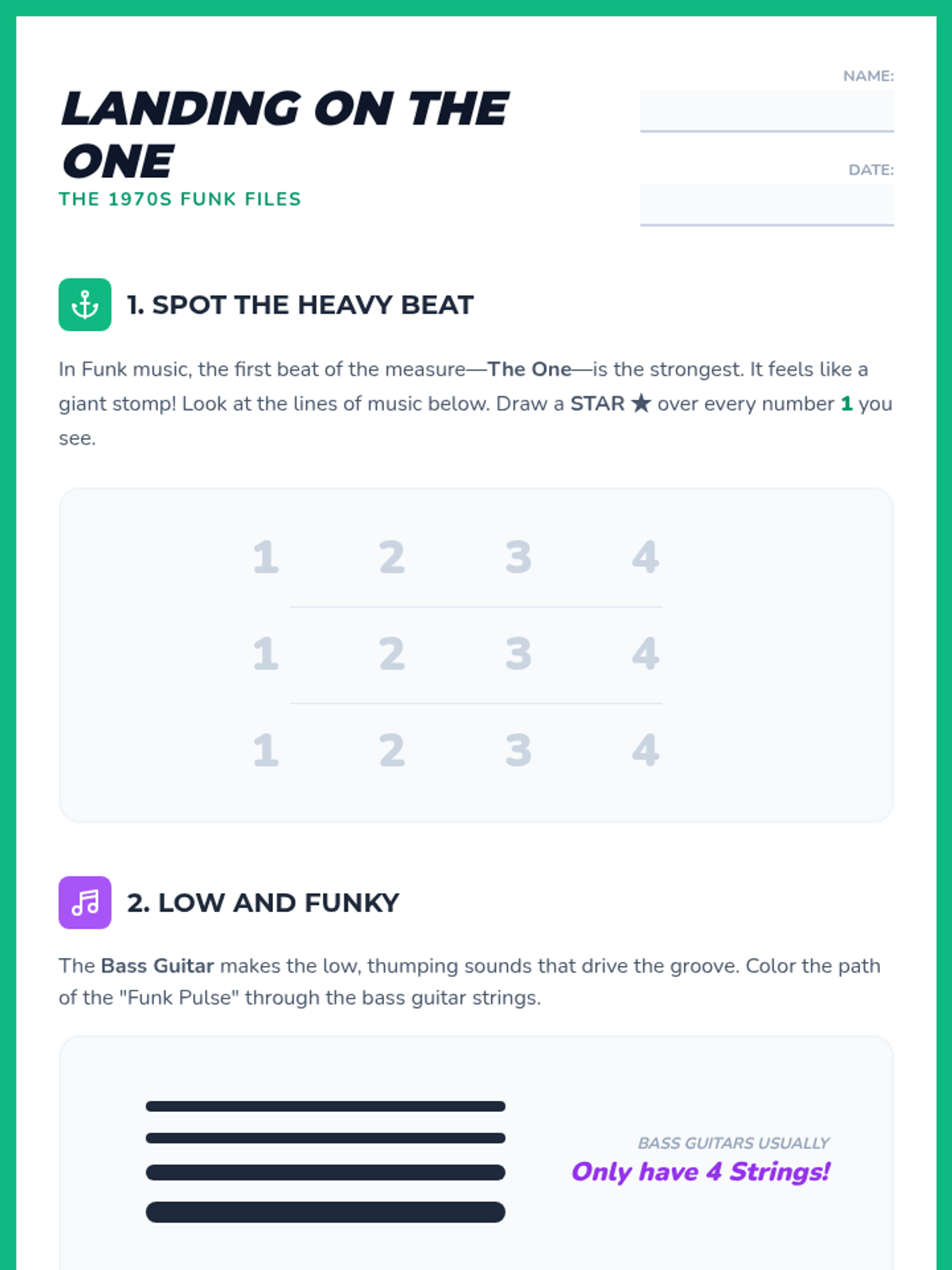
Learners dive into the 1970s Funk era, focusing on the bass guitar and the importance of 'The One.' They practice rhythmic grounding through movement and listening exercises.
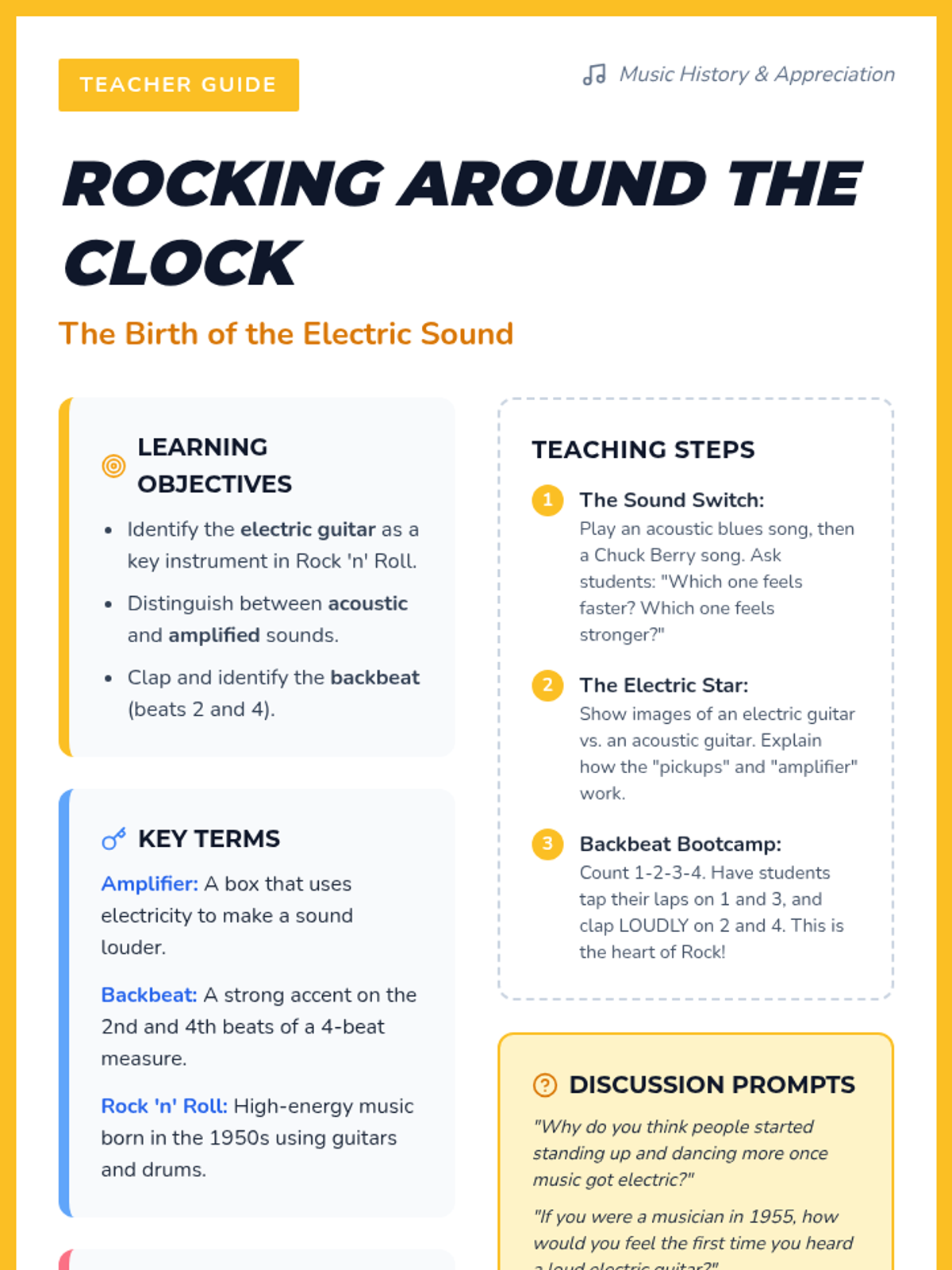
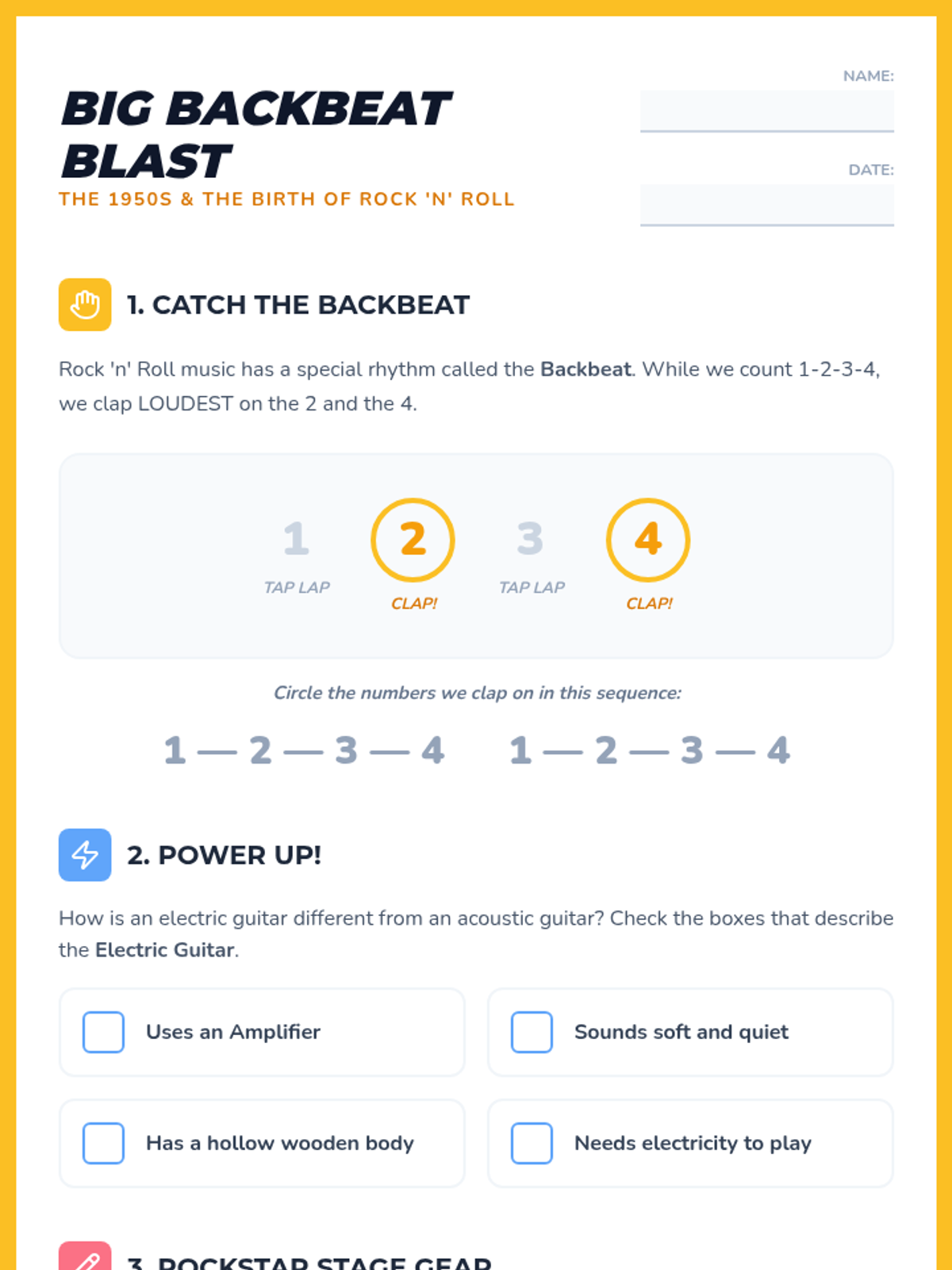
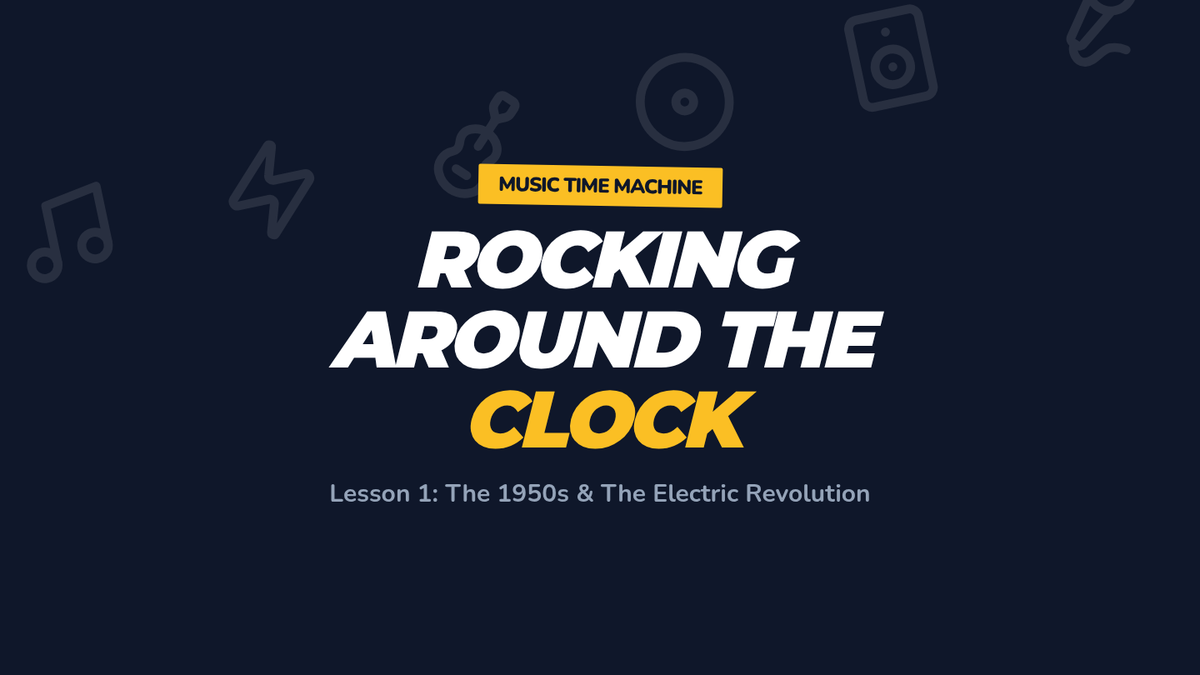
Students explore the birth of Rock 'n' Roll, focusing on the electric guitar and the shift from acoustic to amplified sound. They learn to identify the backbeat and understand how electricity changed the energy of music.
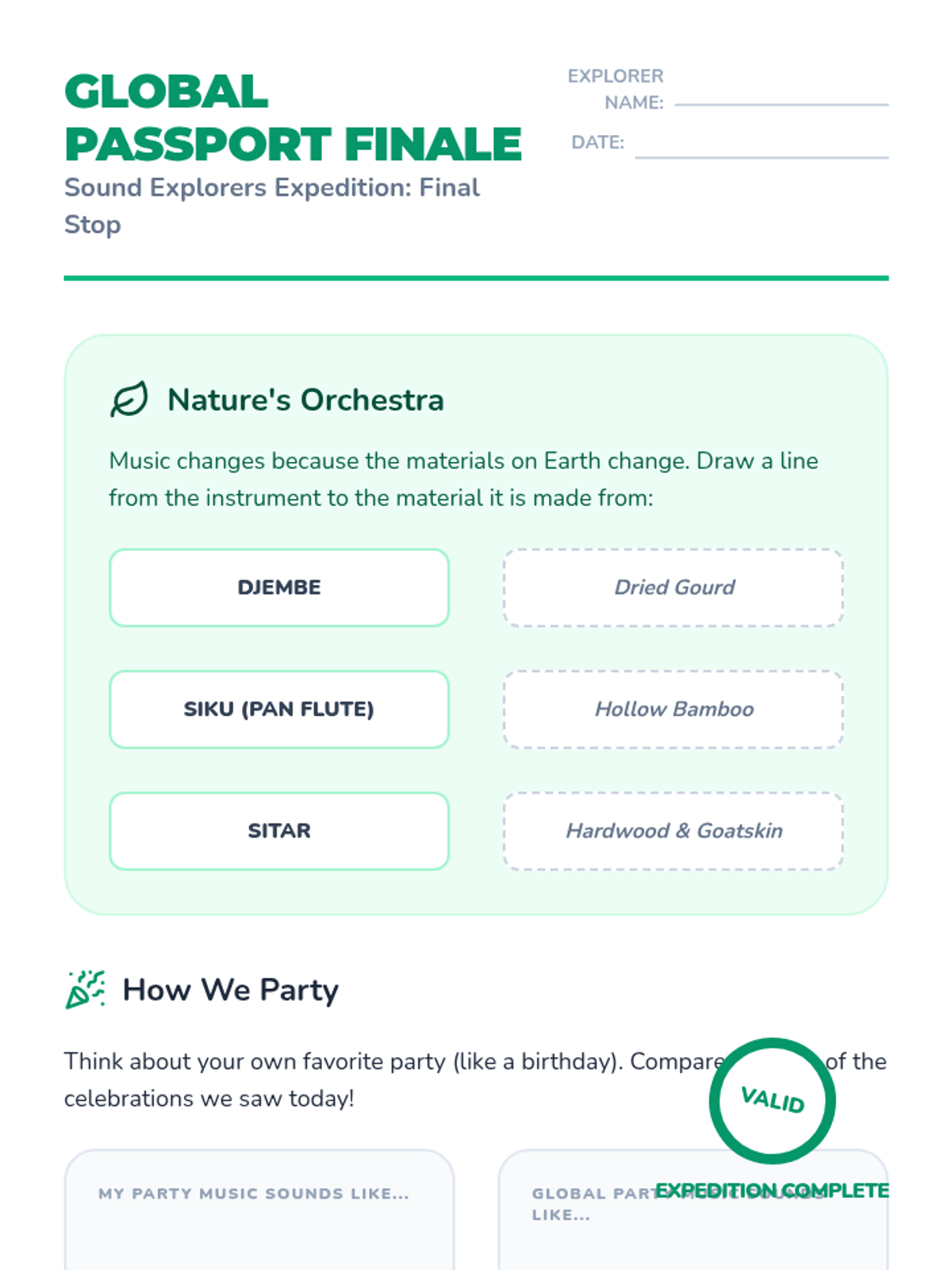
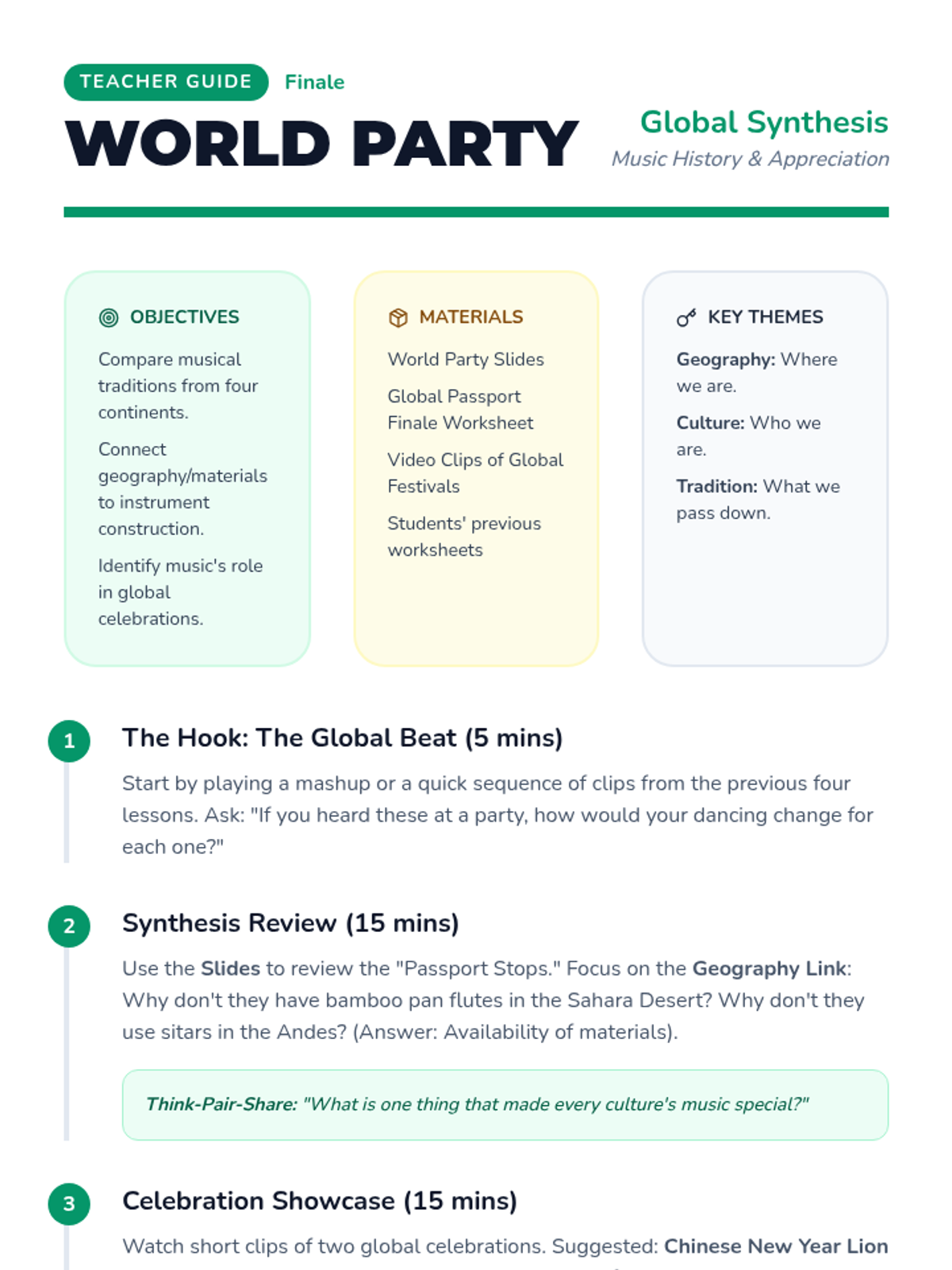
A culminating lesson where students compare musical celebrations from the cultures studied, synthesizing their understanding of music's role in global traditions.
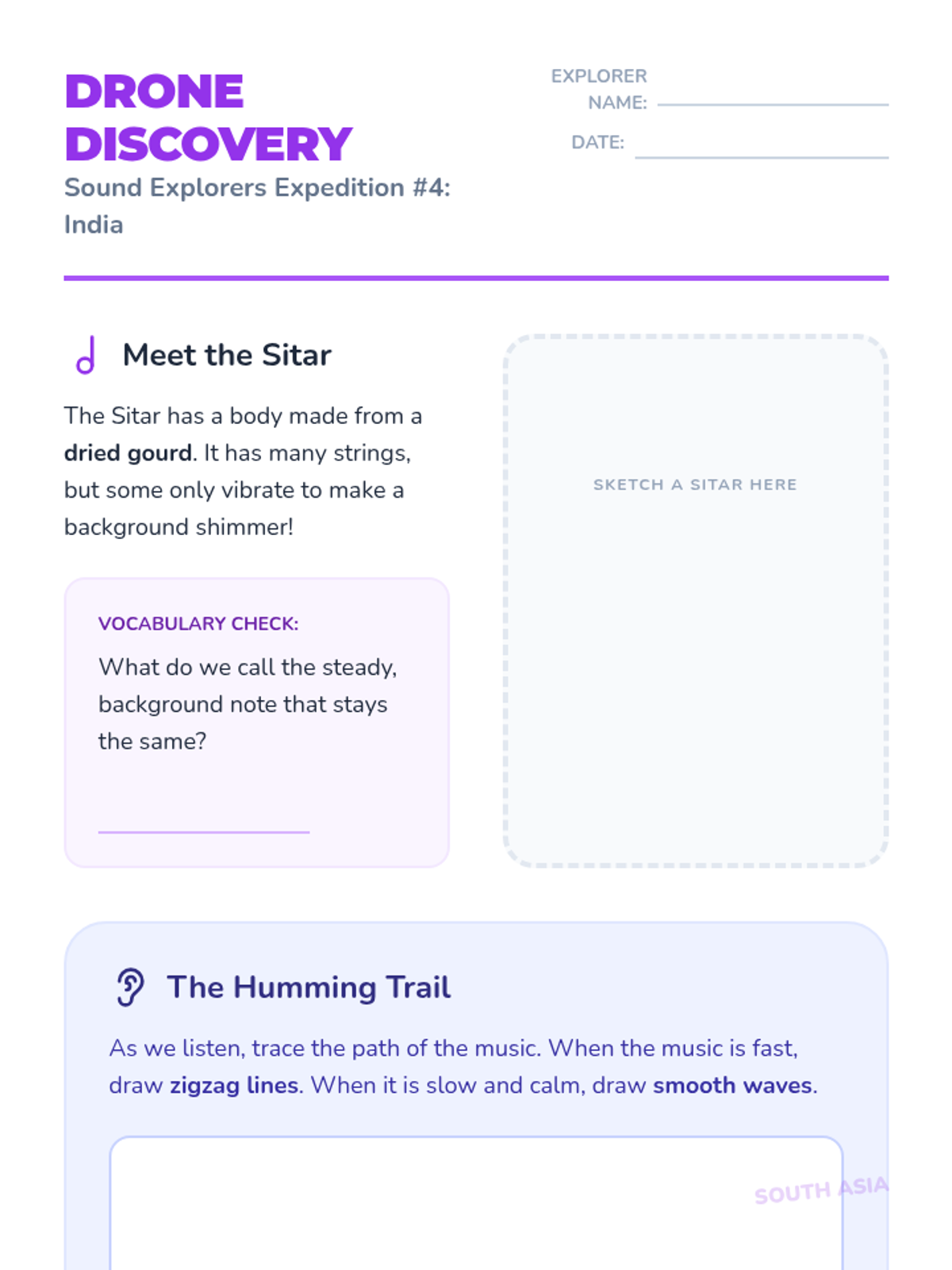
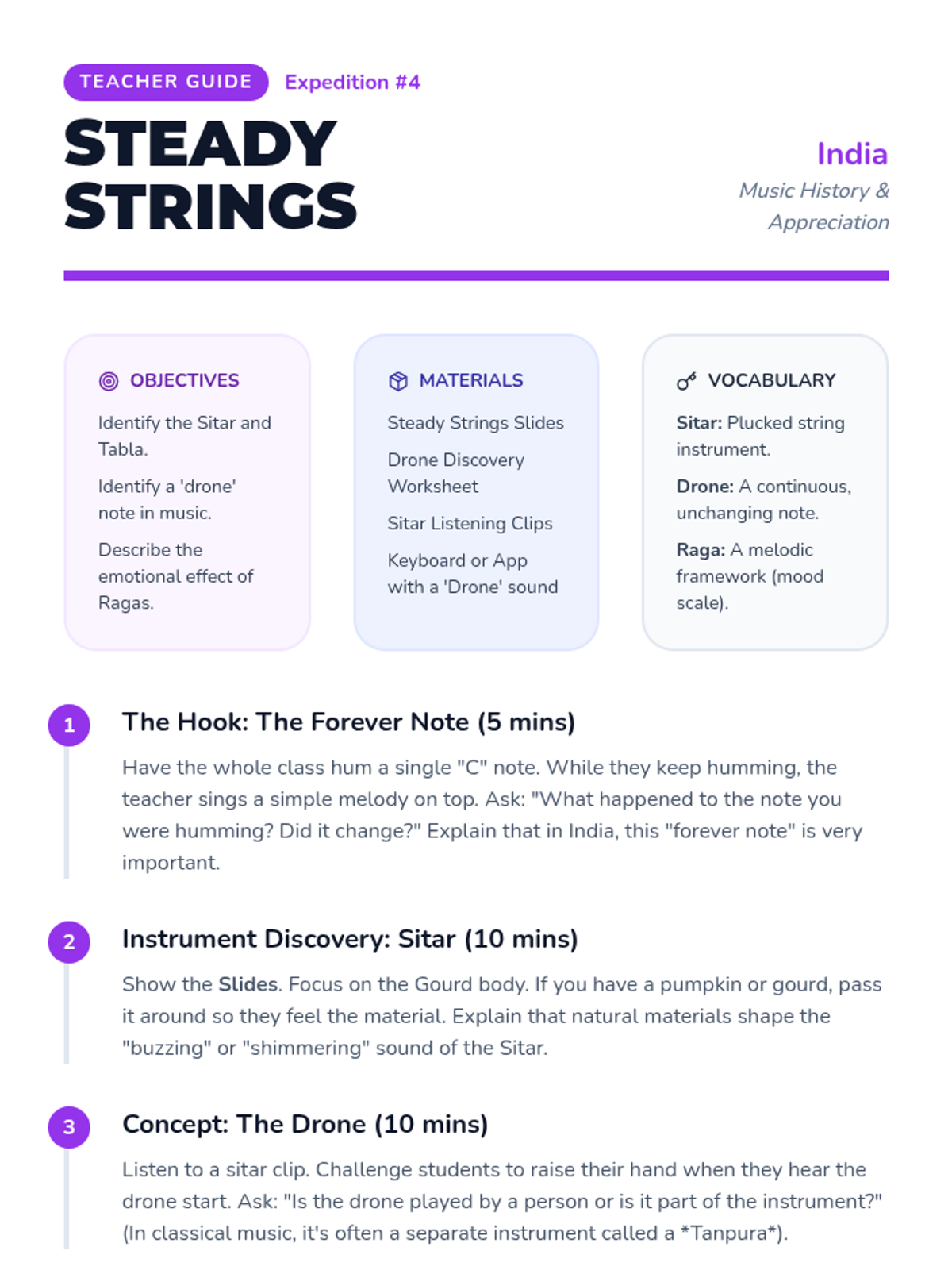
Introduction to the Sitar and the concept of a 'drone' note in Indian classical music, focusing on listening endurance and harmonic texture.
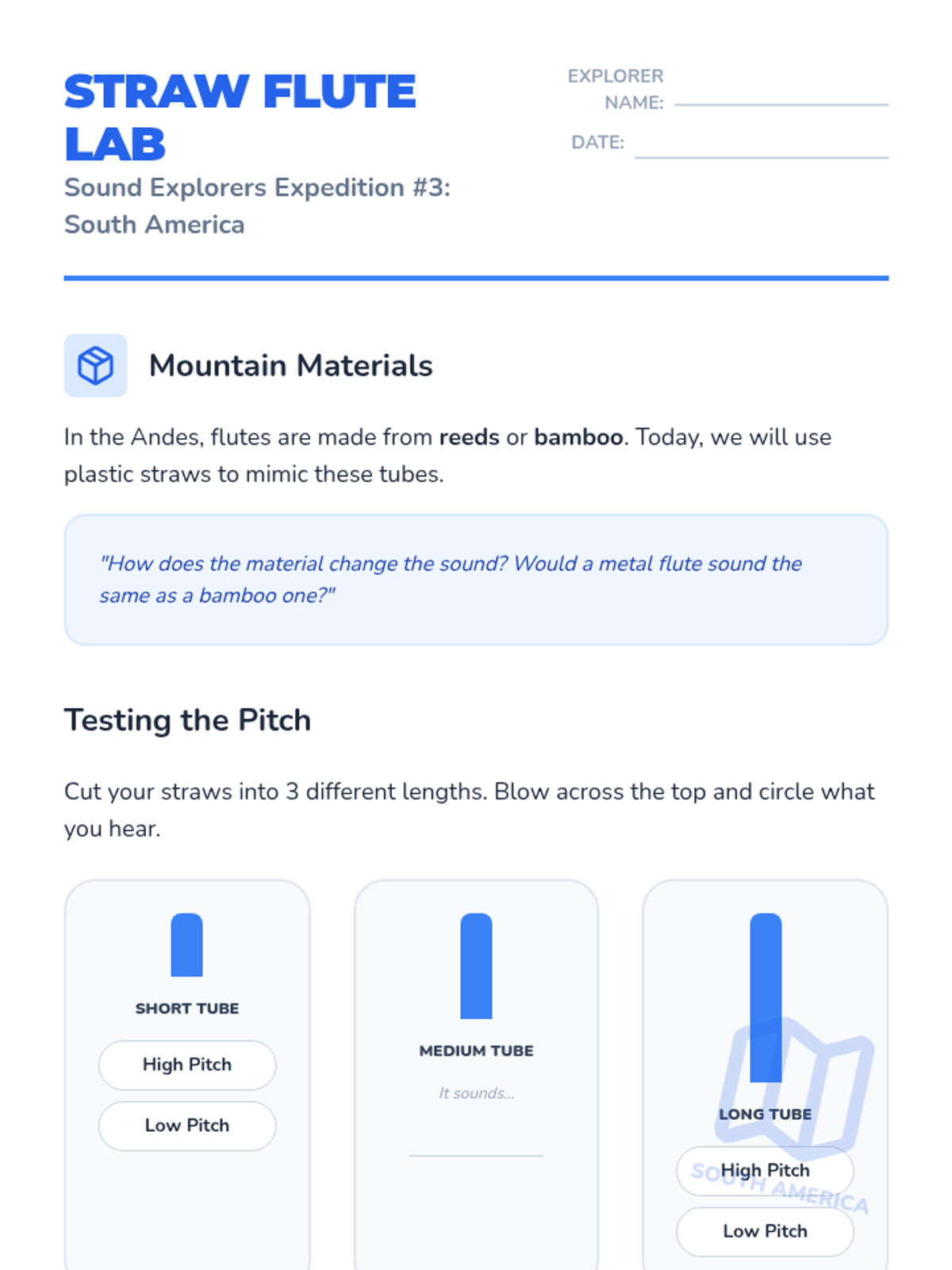
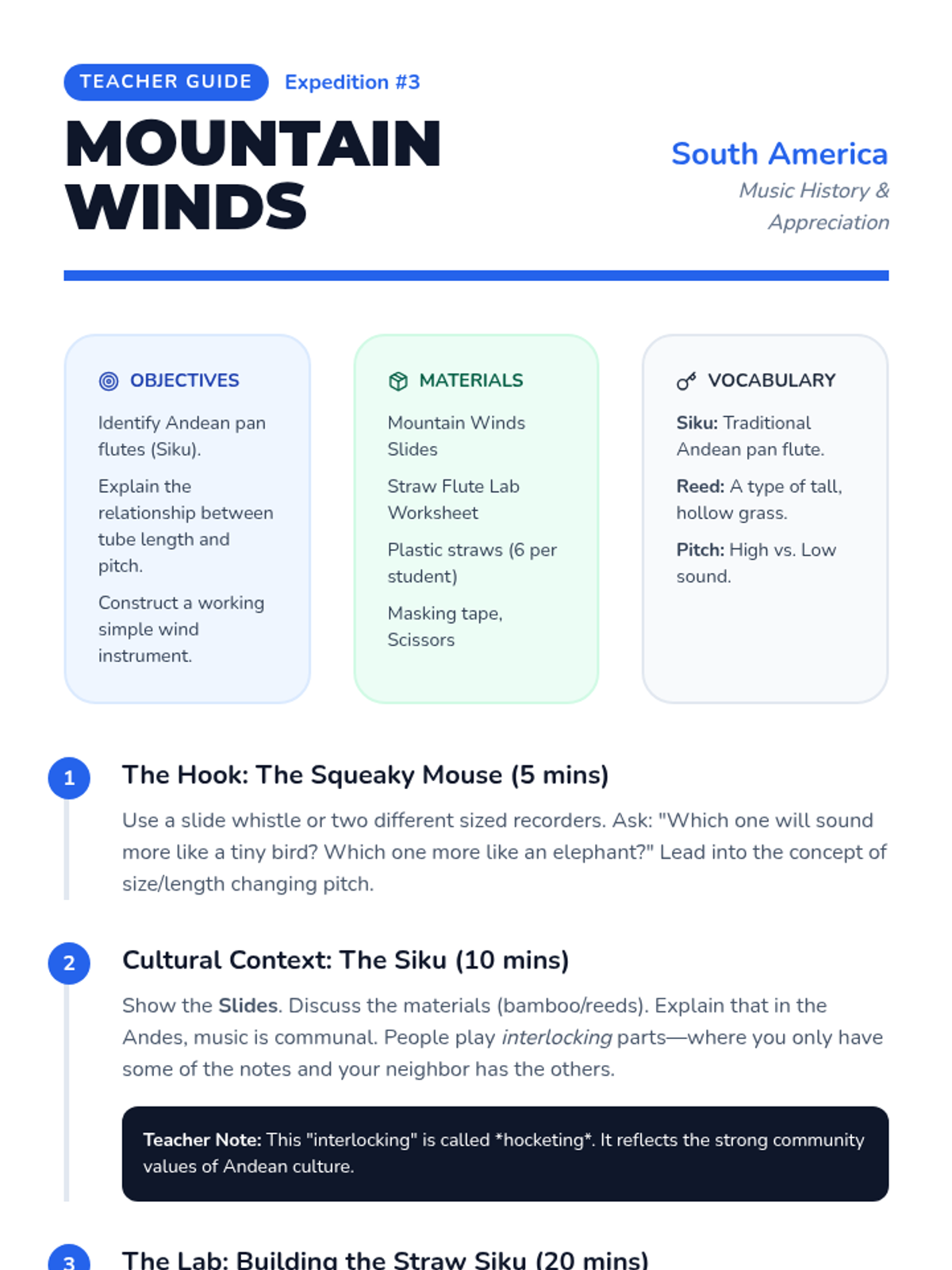
Students investigate the pan flutes of the Andes Mountains, discussing how natural materials shape sound and constructing straw flutes to learn about pitch.
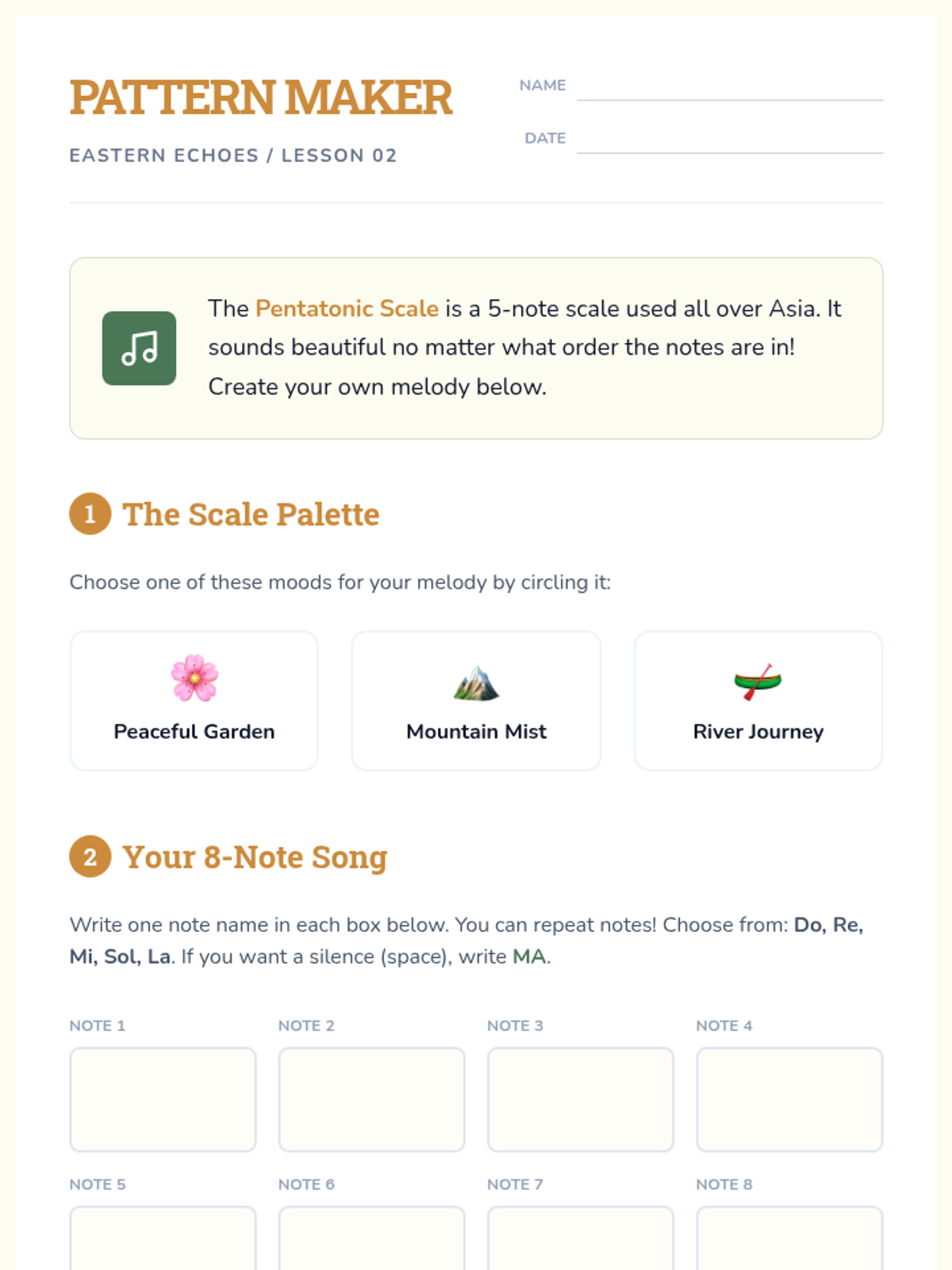
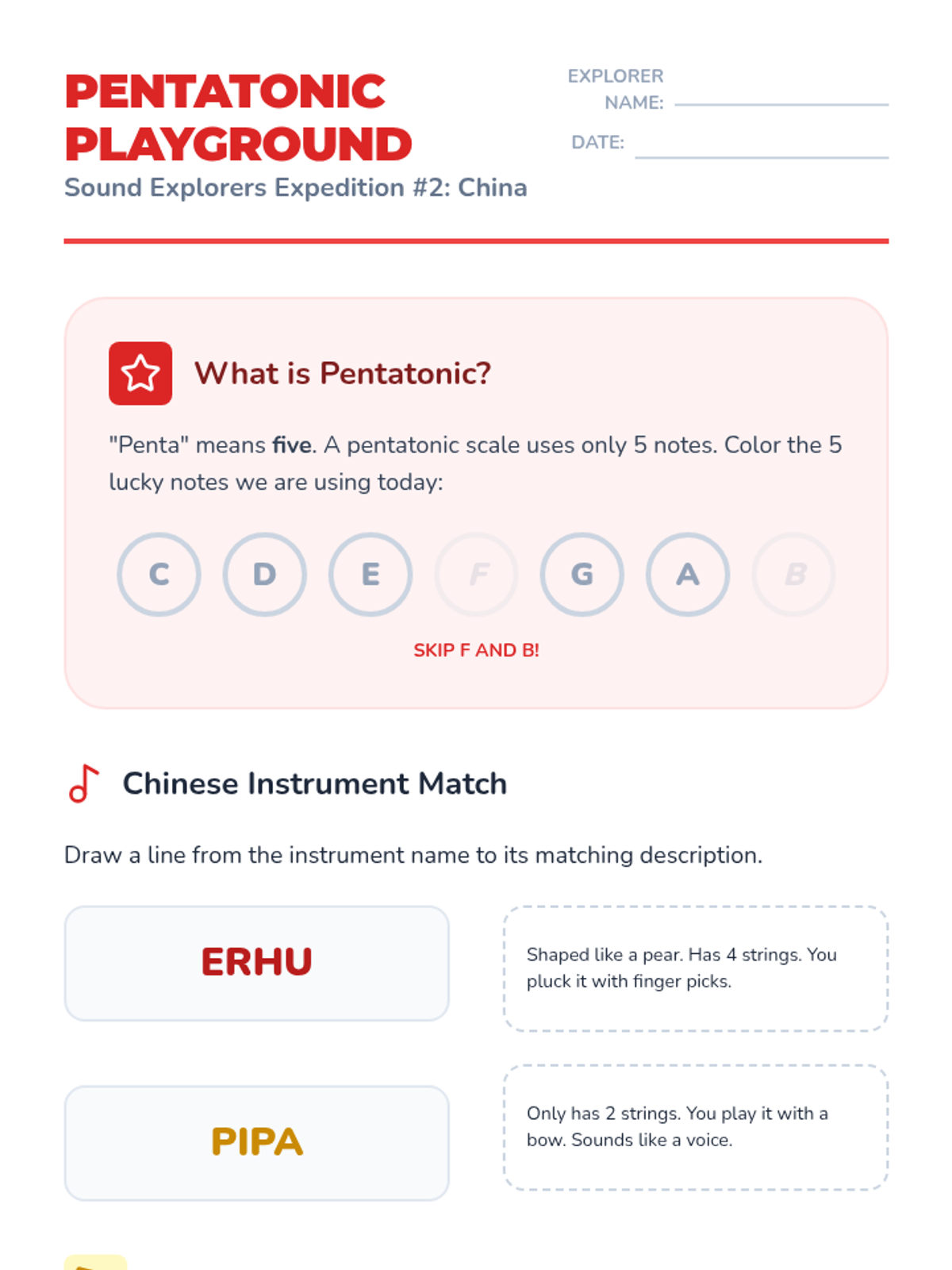
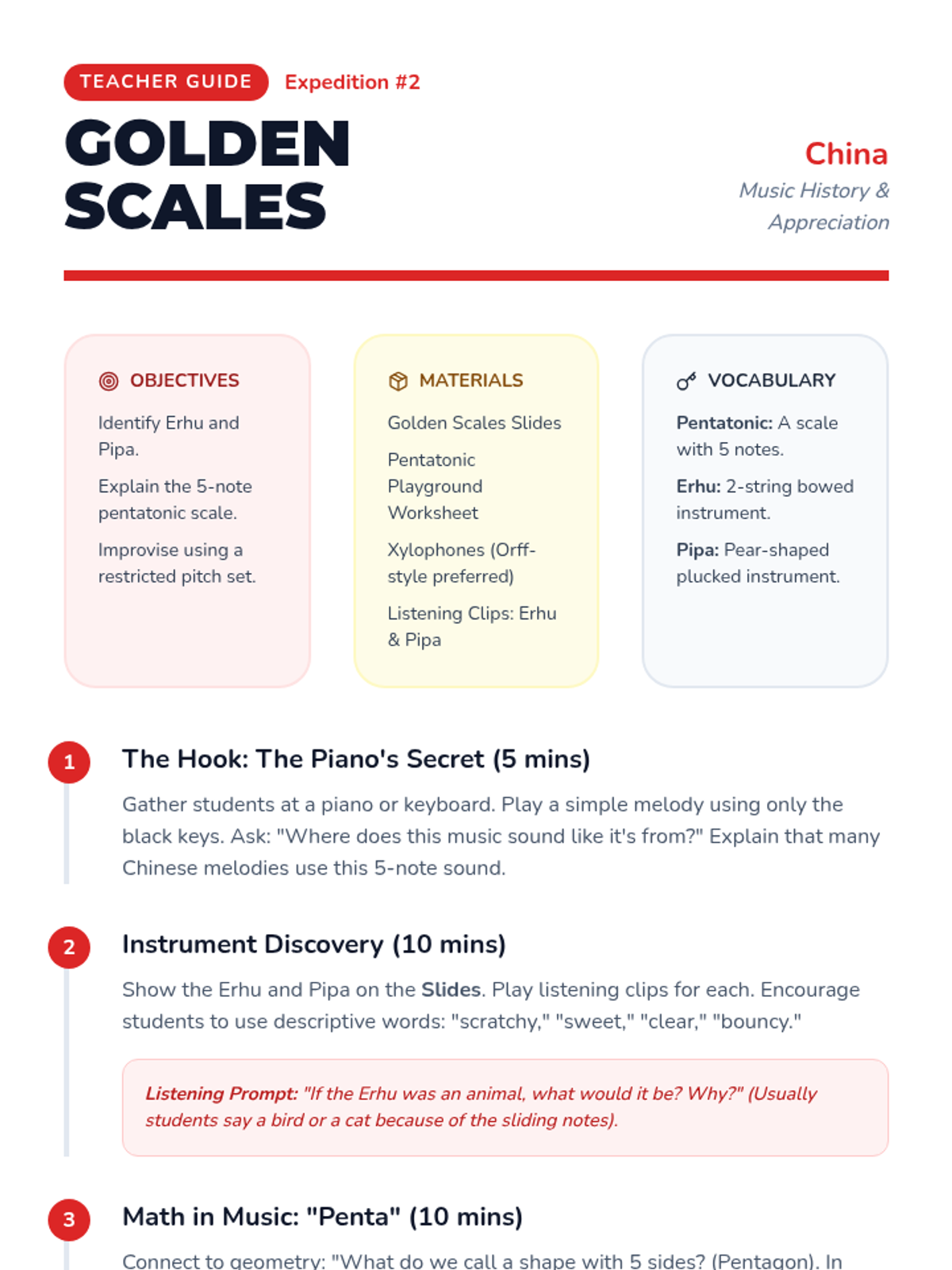
Learners discover the Erhu and Pipa and explore the five-note pentatonic scale common in traditional Chinese music through listening and xylophone exploration.
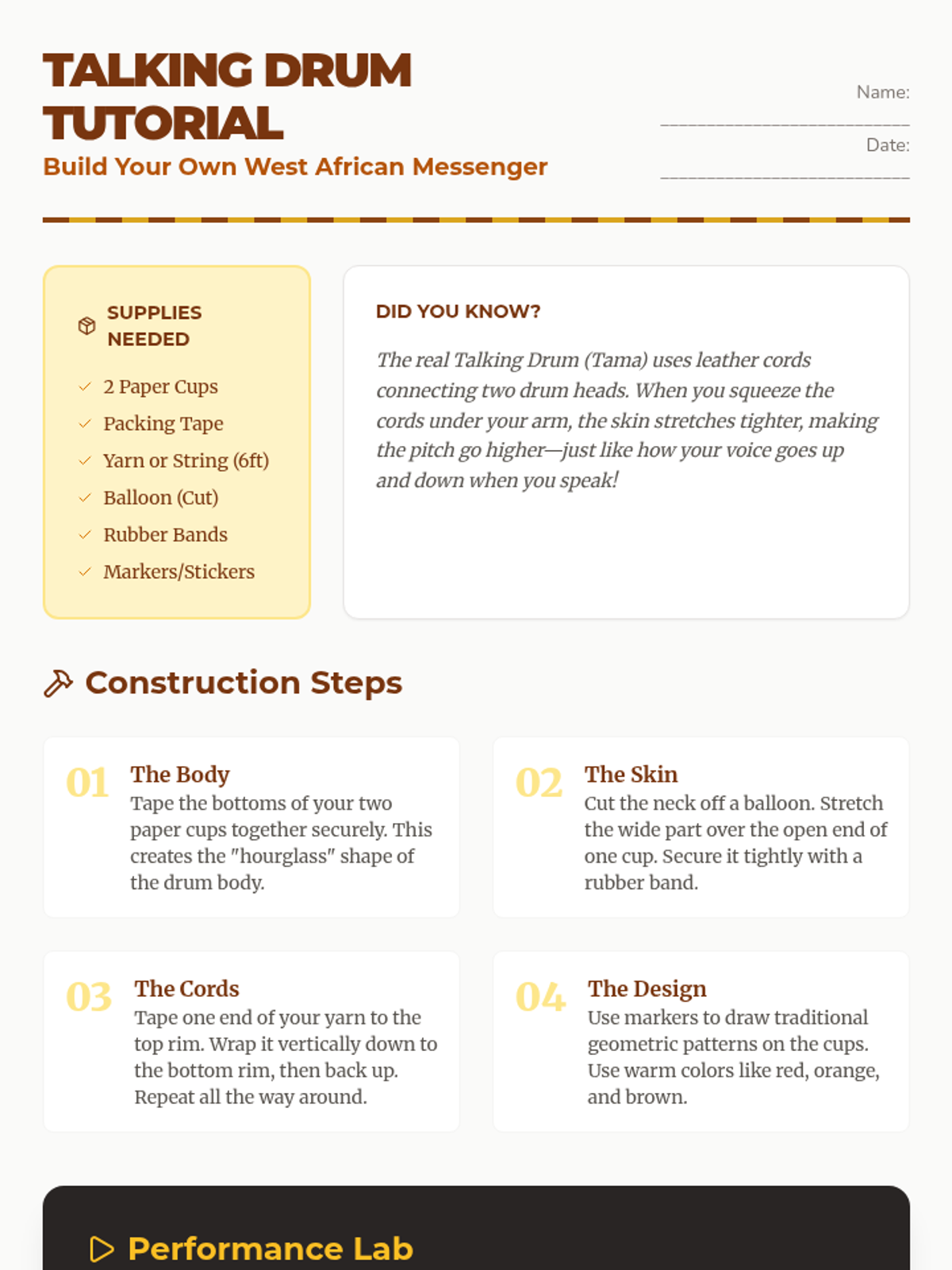
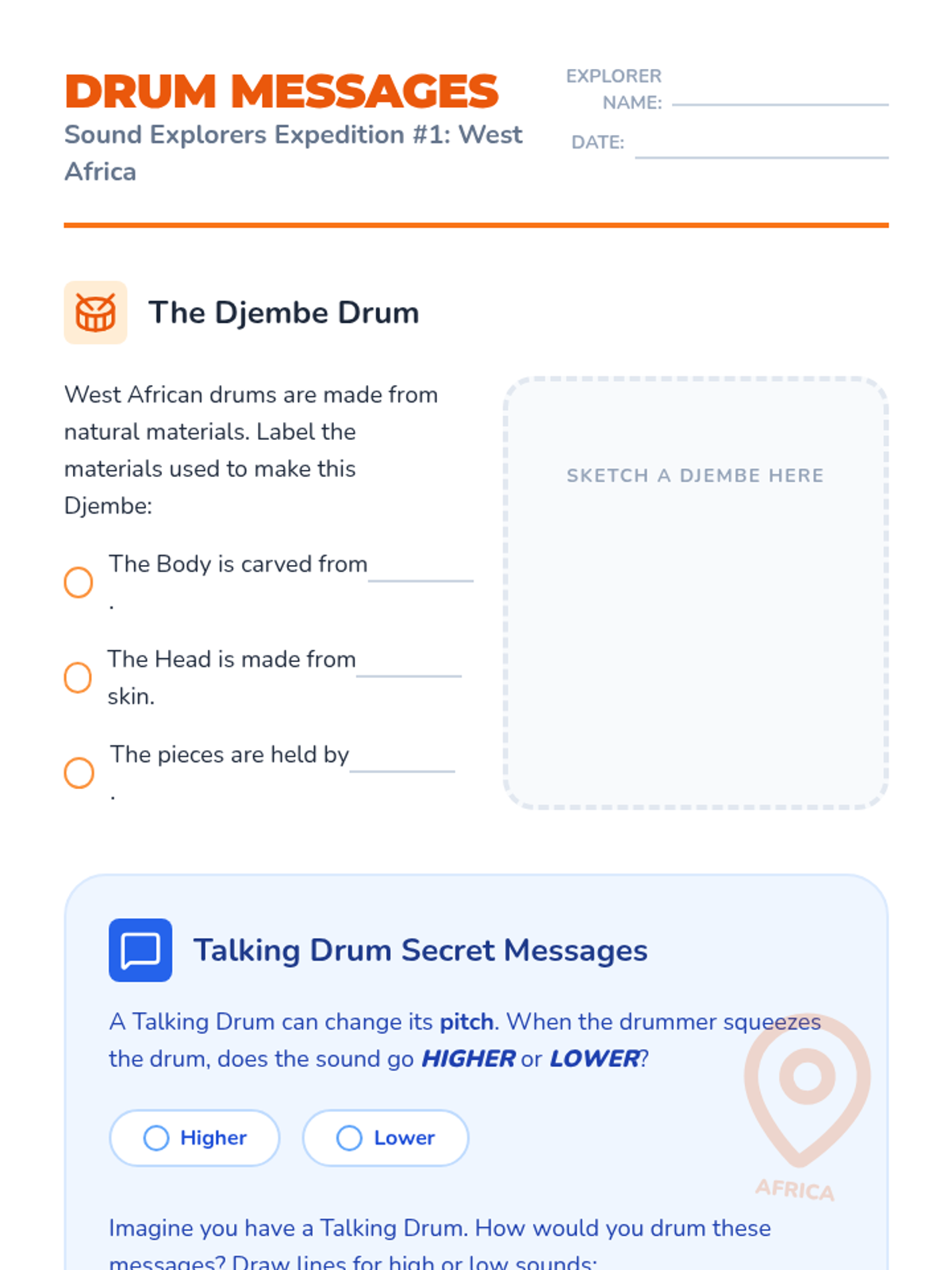
Students explore the djembe and talking drums of West Africa, learning how drums can mimic human speech and layering simple rhythms to create polyphonic textures.
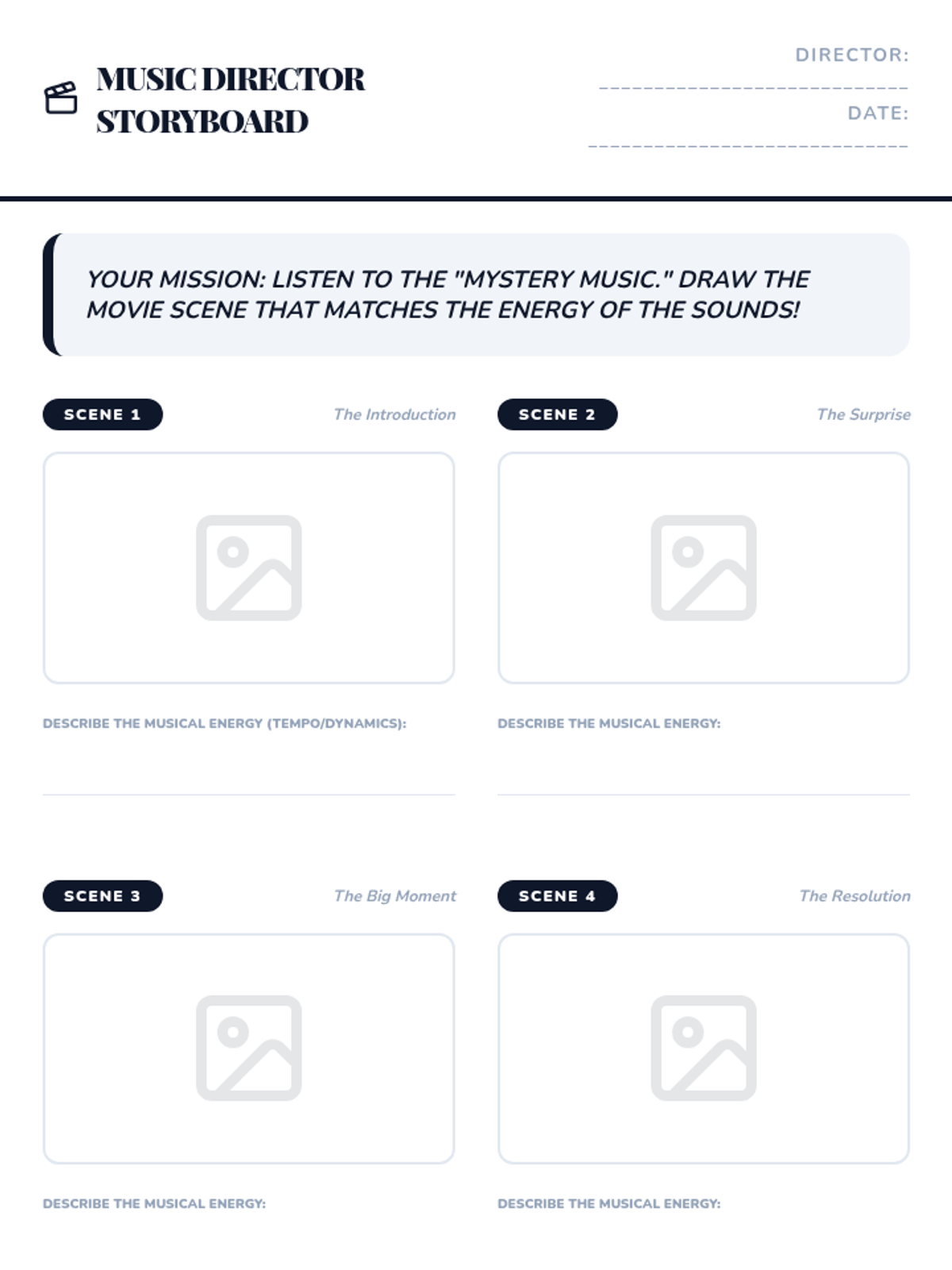
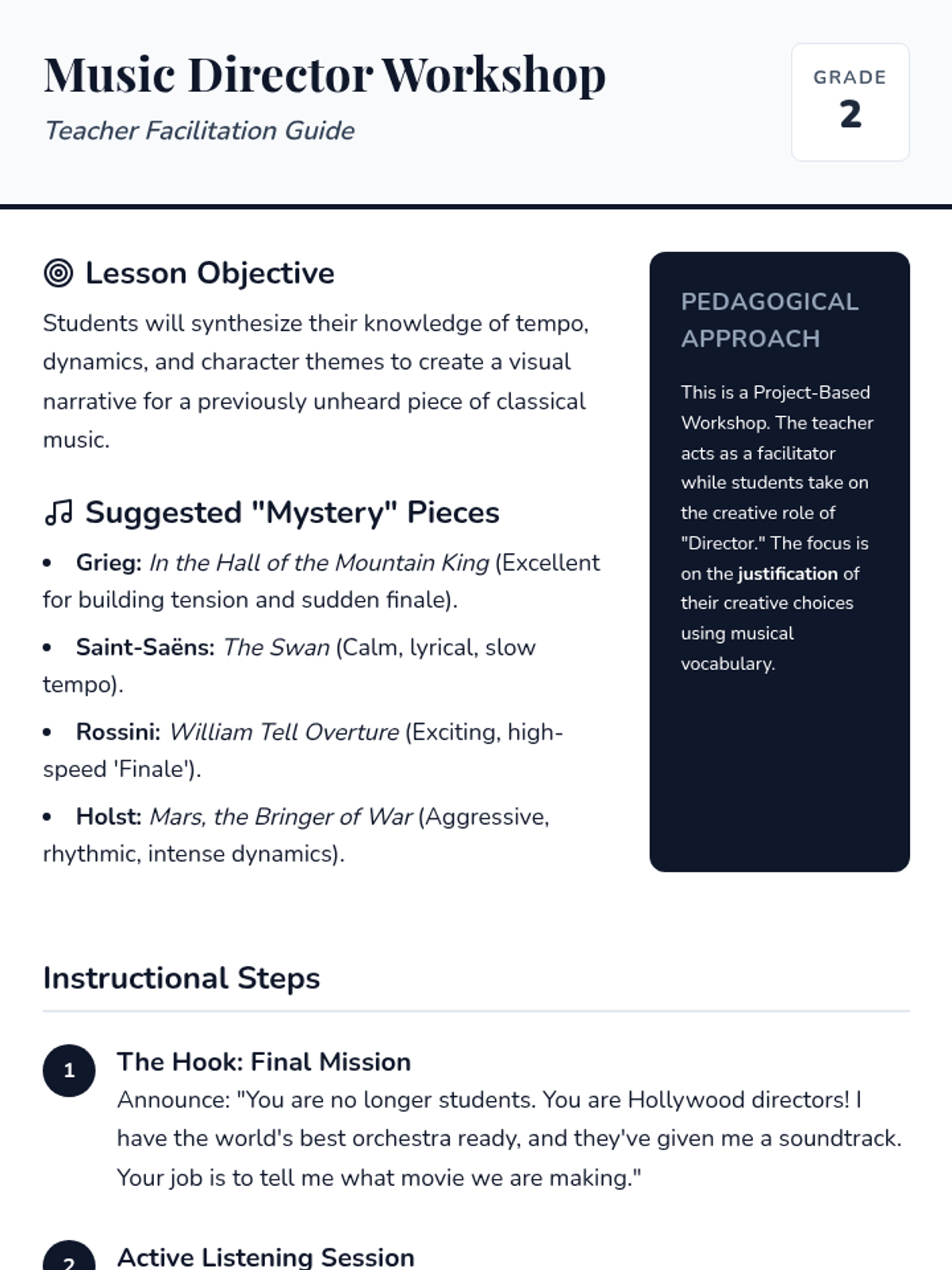
Students act as 'directors' by creating a storyboard for a mystery piece of music, mapping an emotional arc to their own story.
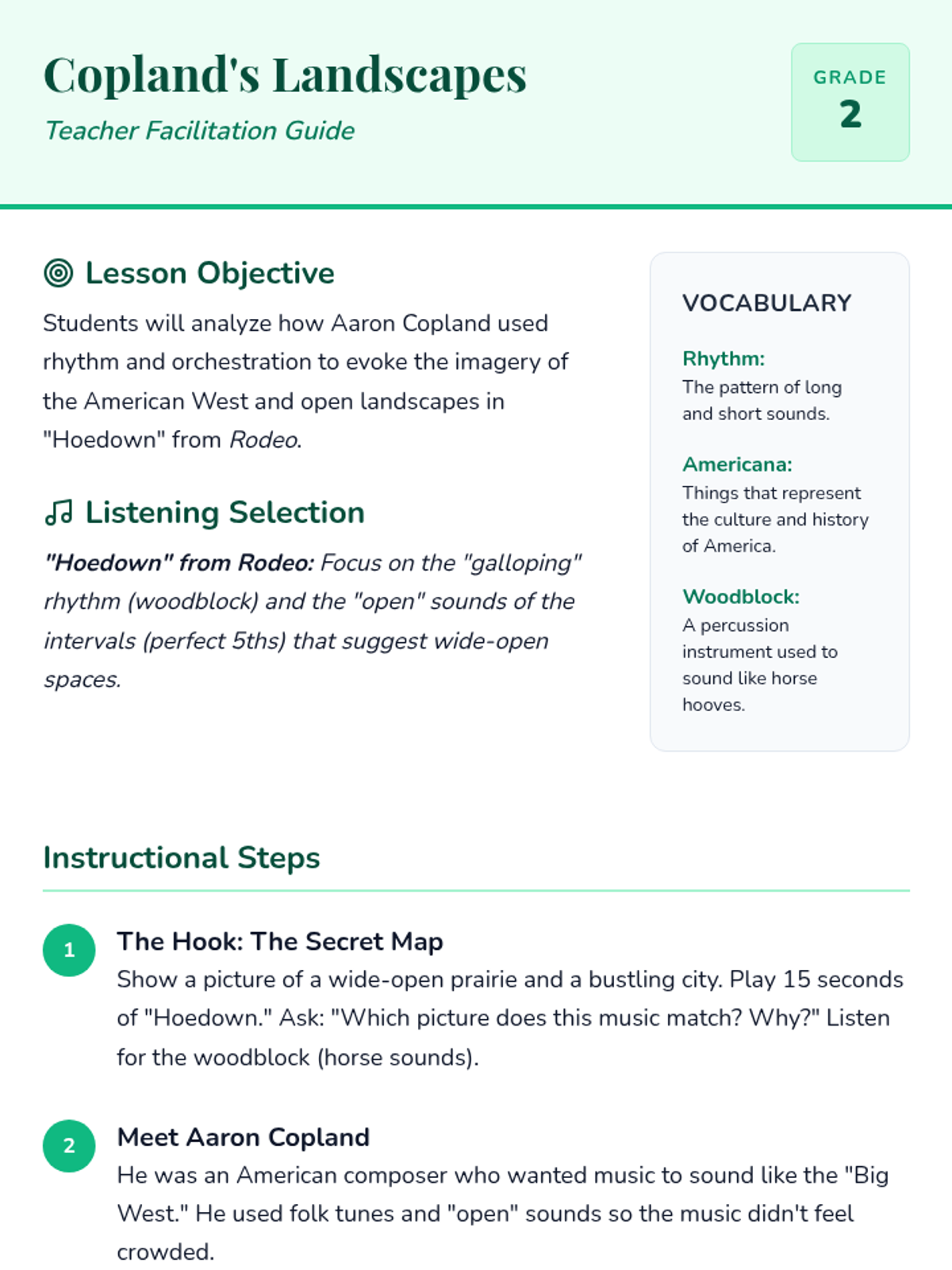
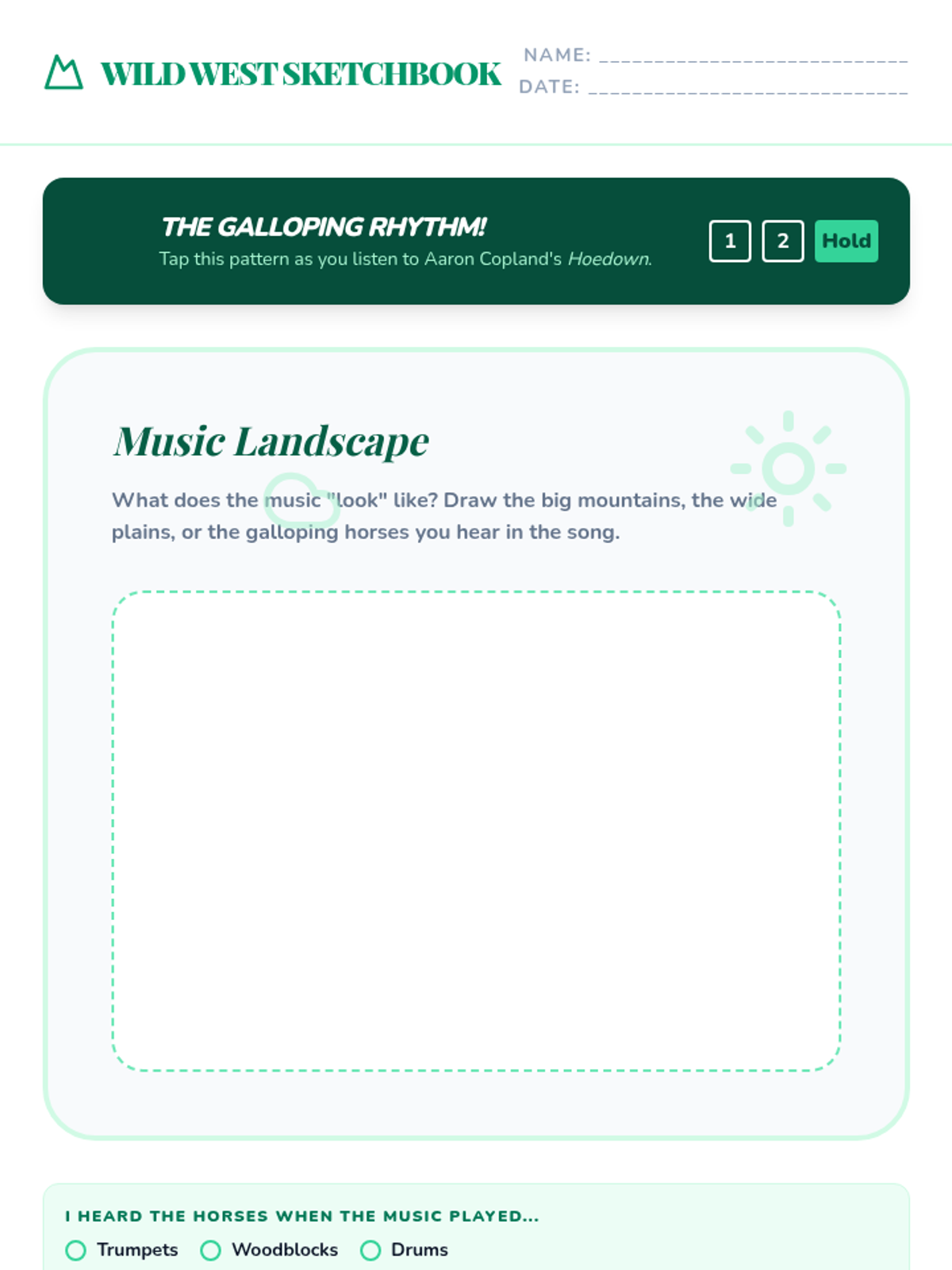
Students analyze Aaron Copland's 'Hoedown' to see how music can create a sense of place, specifically the American West.
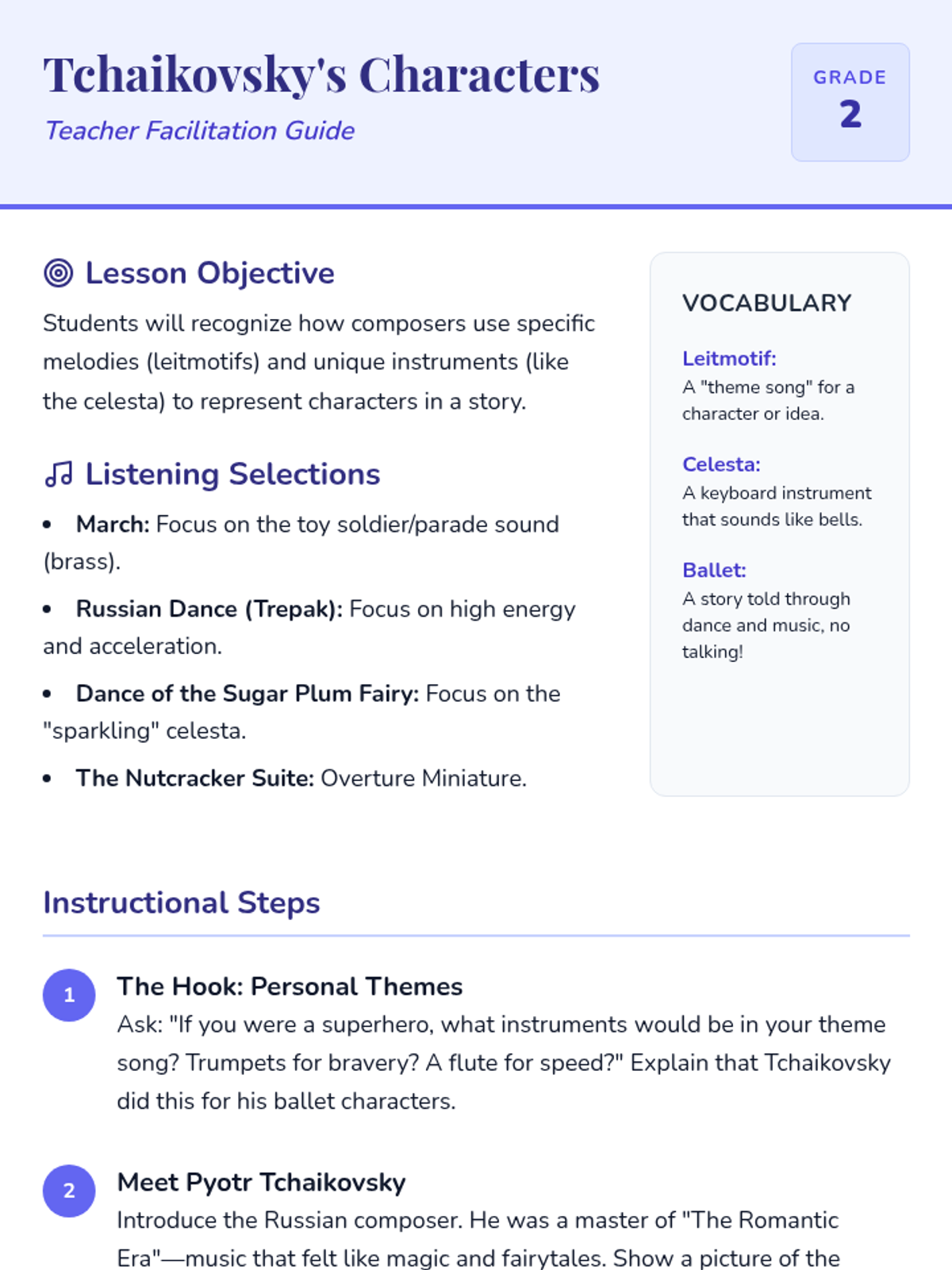
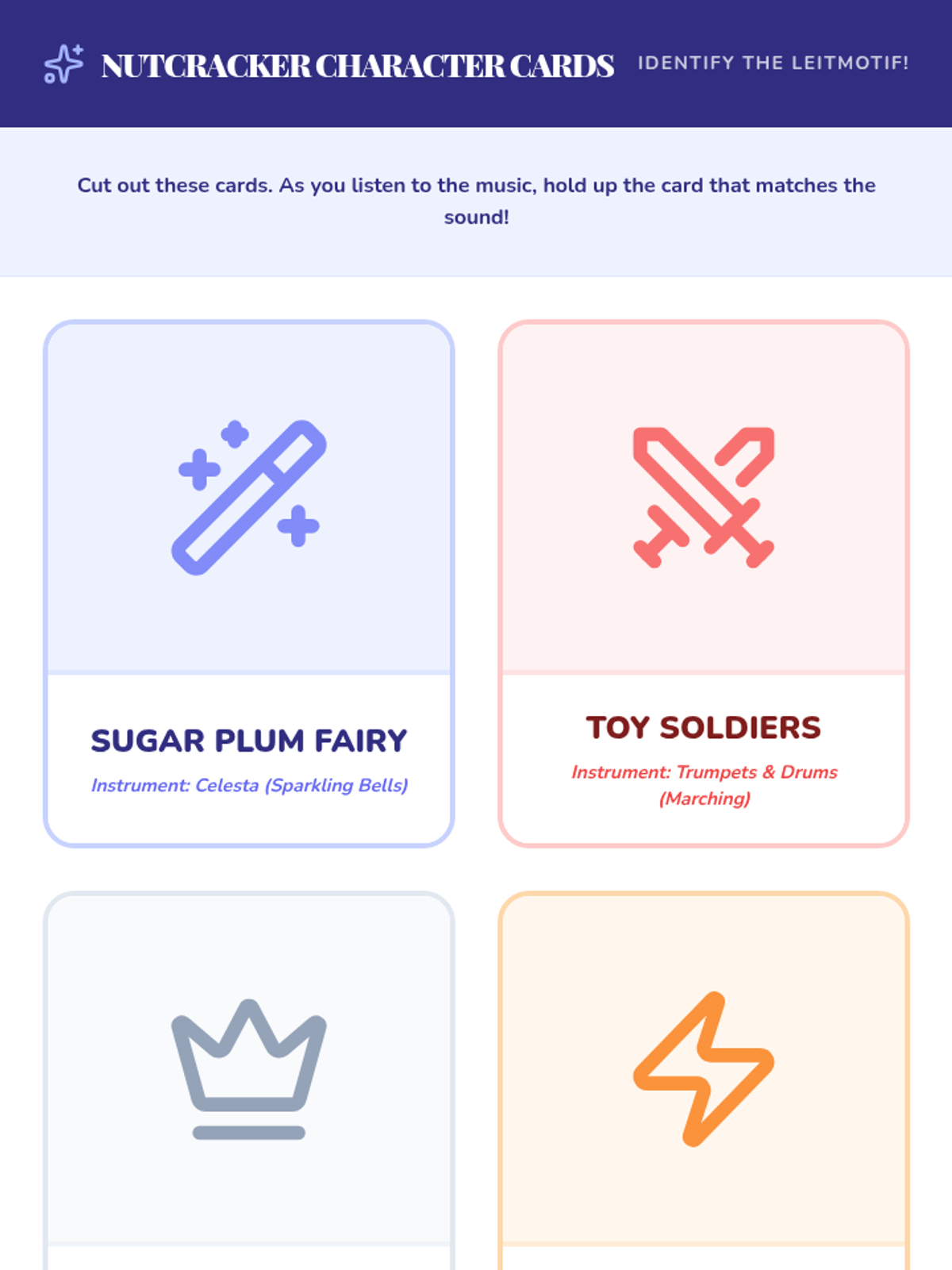
Students discover how Tchaikovsky uses specific melodies (leitmotifs) to represent characters in 'The Nutcracker' ballet.
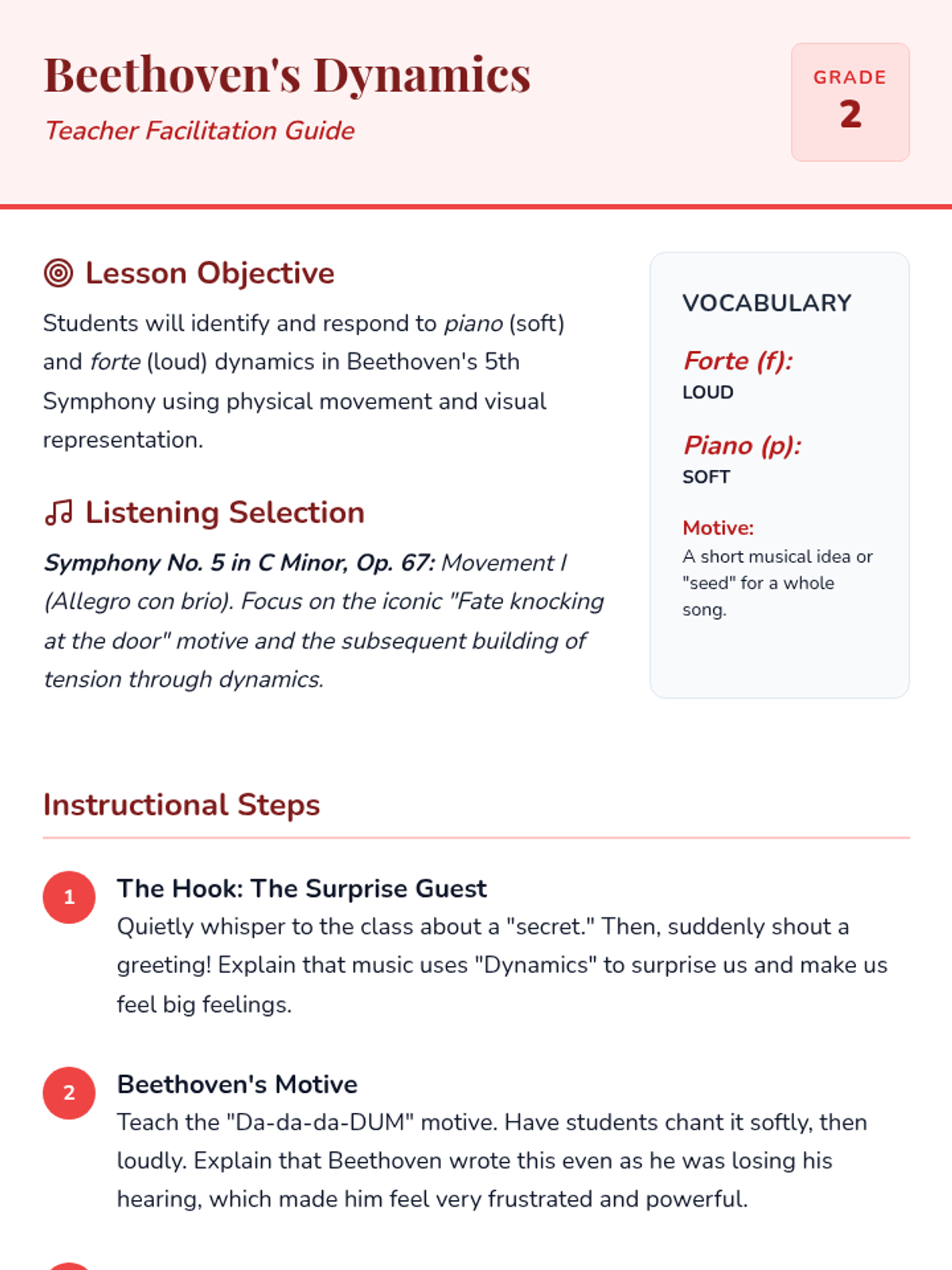
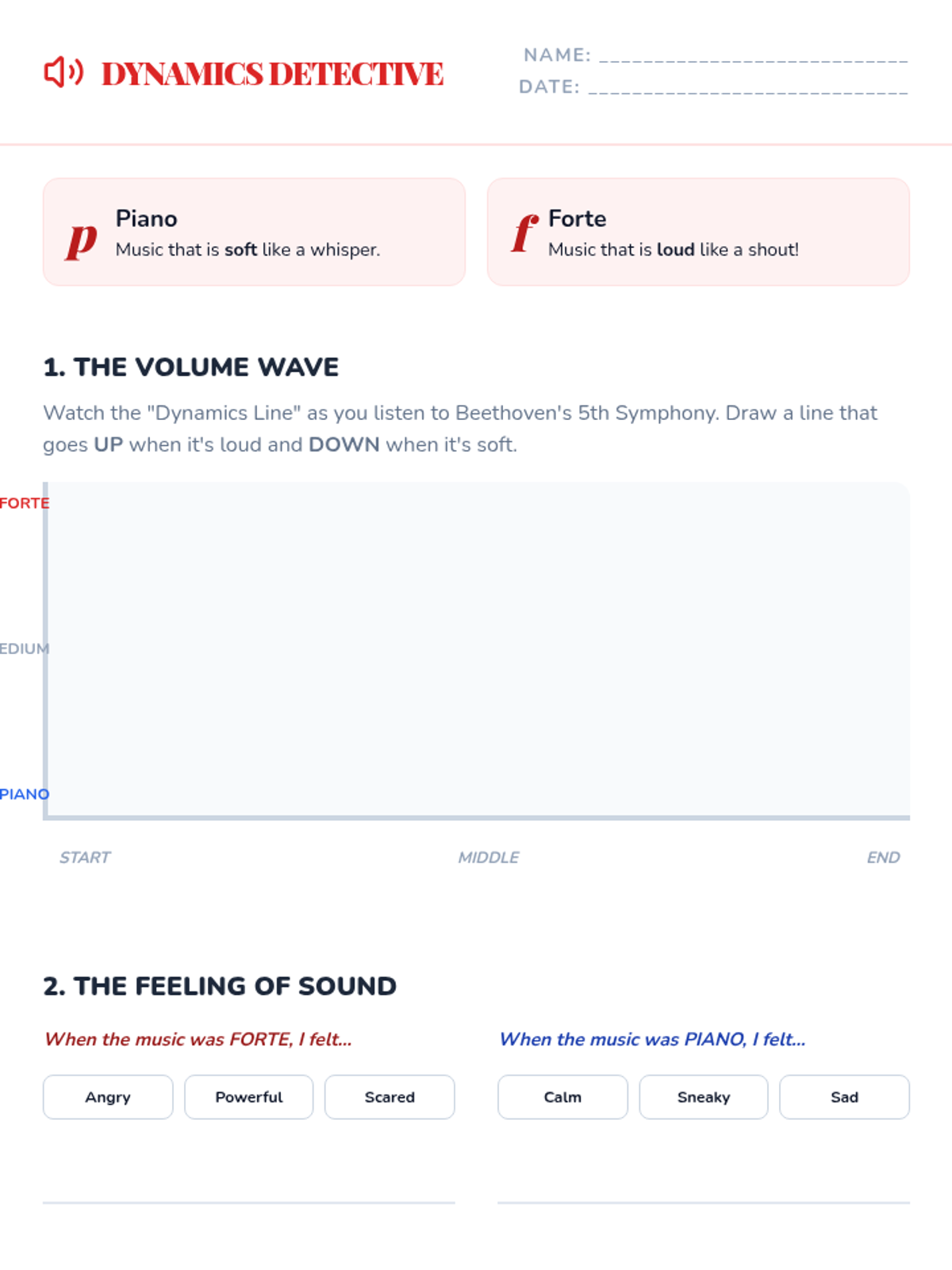
Students learn about dynamics (loud and soft) through Beethoven's 5th Symphony, using movement to respond to dramatic musical shifts.
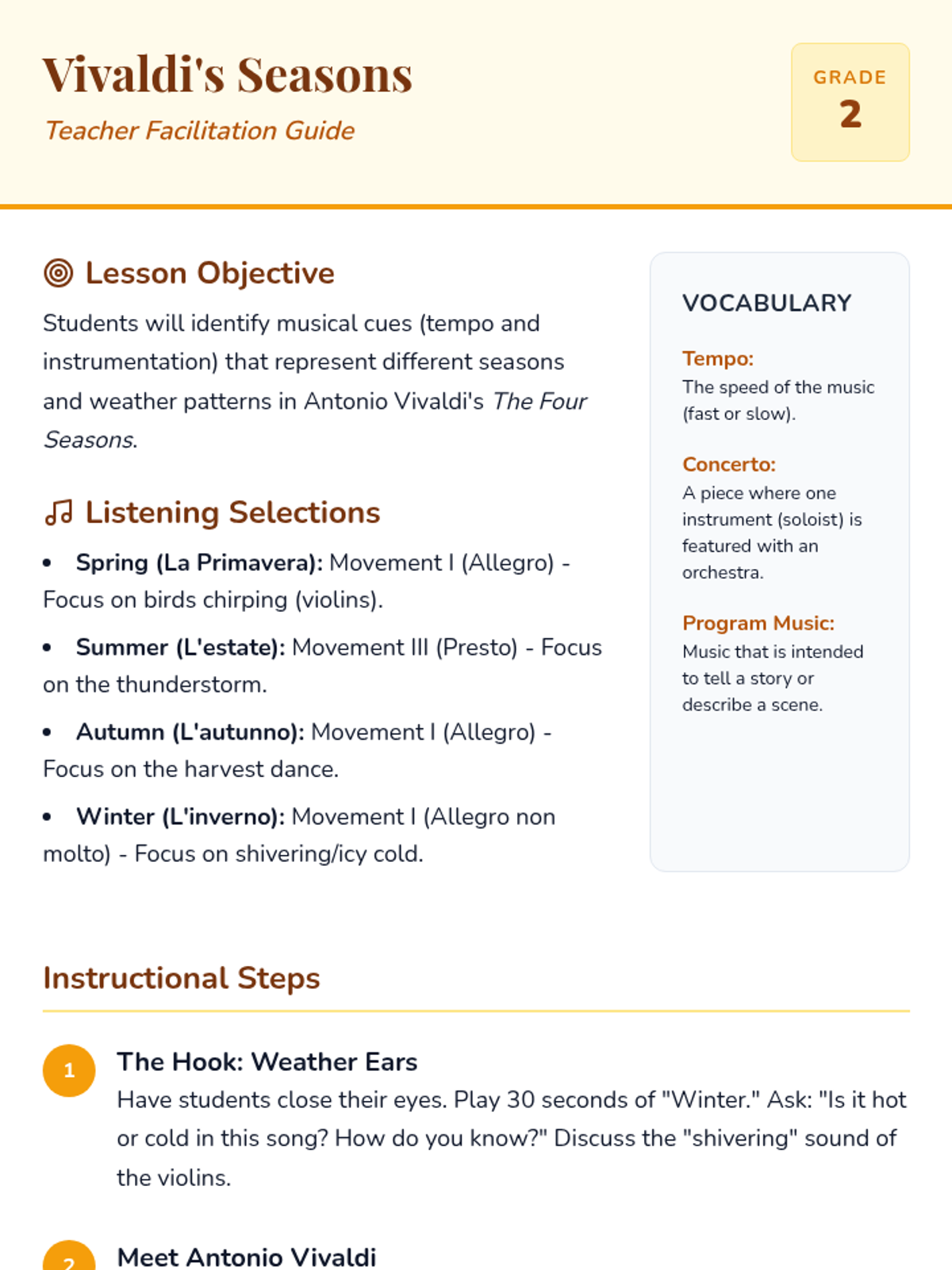
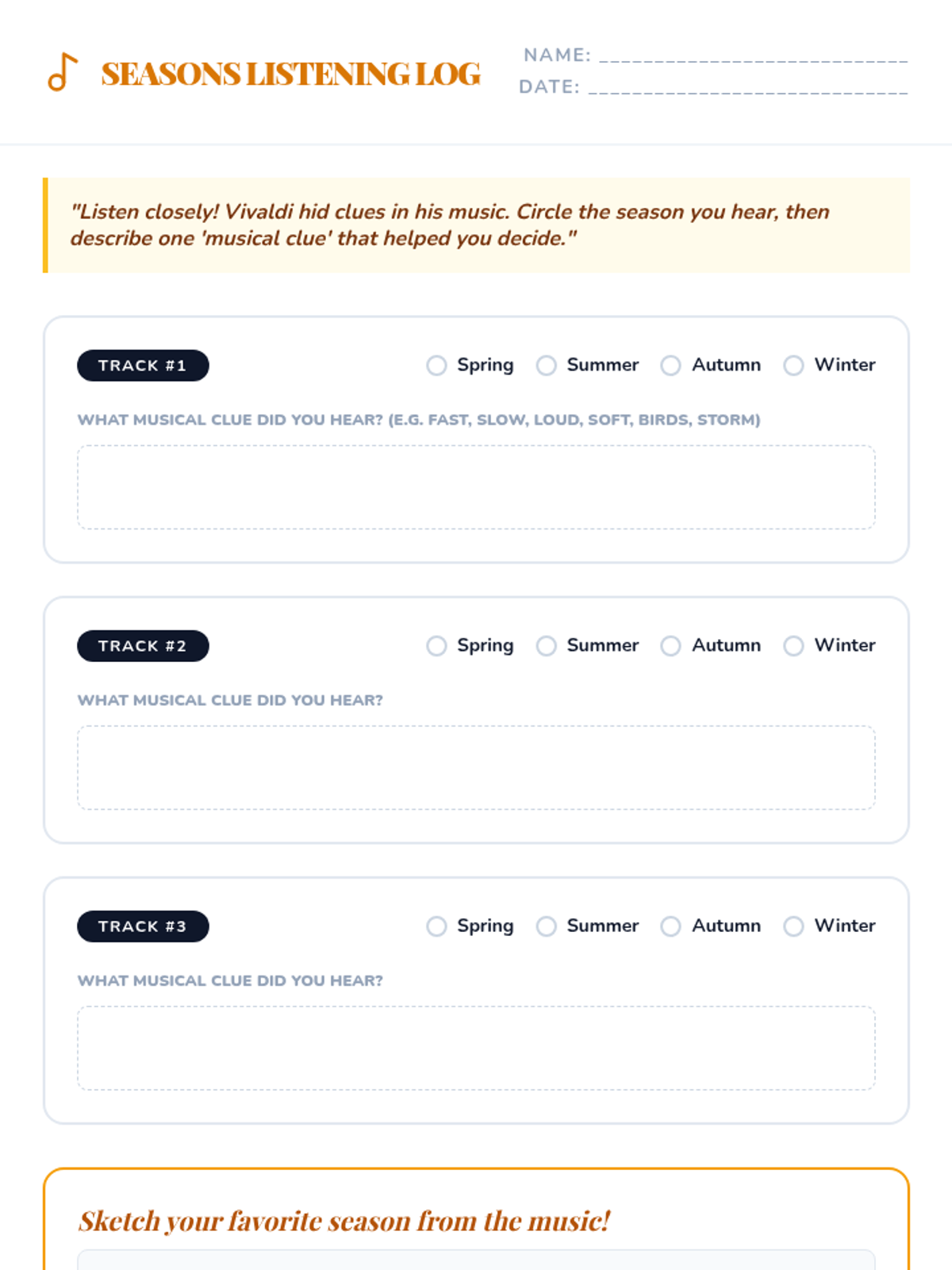
Students explore how Vivaldi uses tempo and instrumentation to depict the four seasons, connecting musical sounds to nature imagery.