Historical evolution of performance, technical stagecraft, and core acting techniques. Develops playwriting skills and fosters imaginative expression through script development and production management.
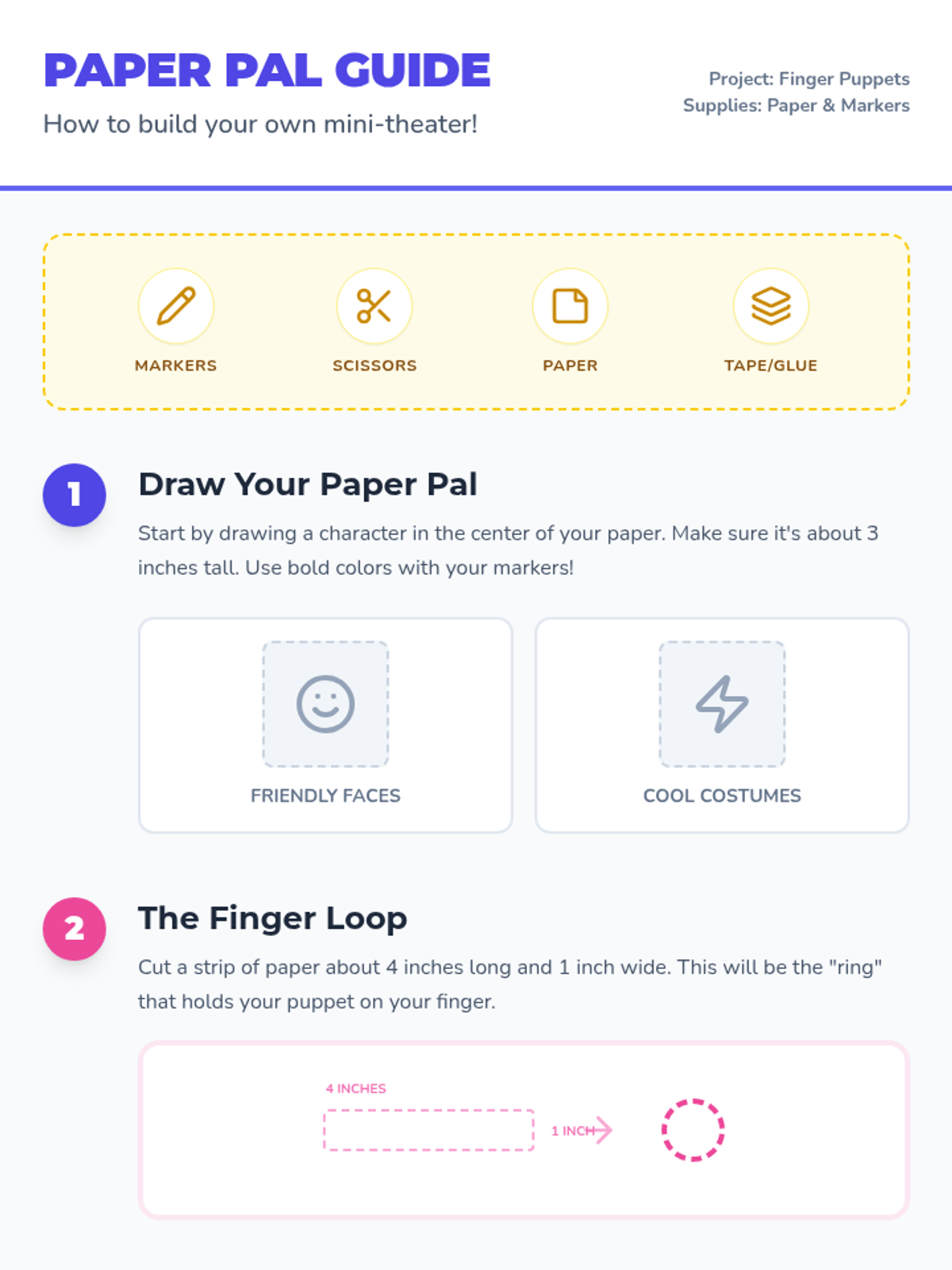
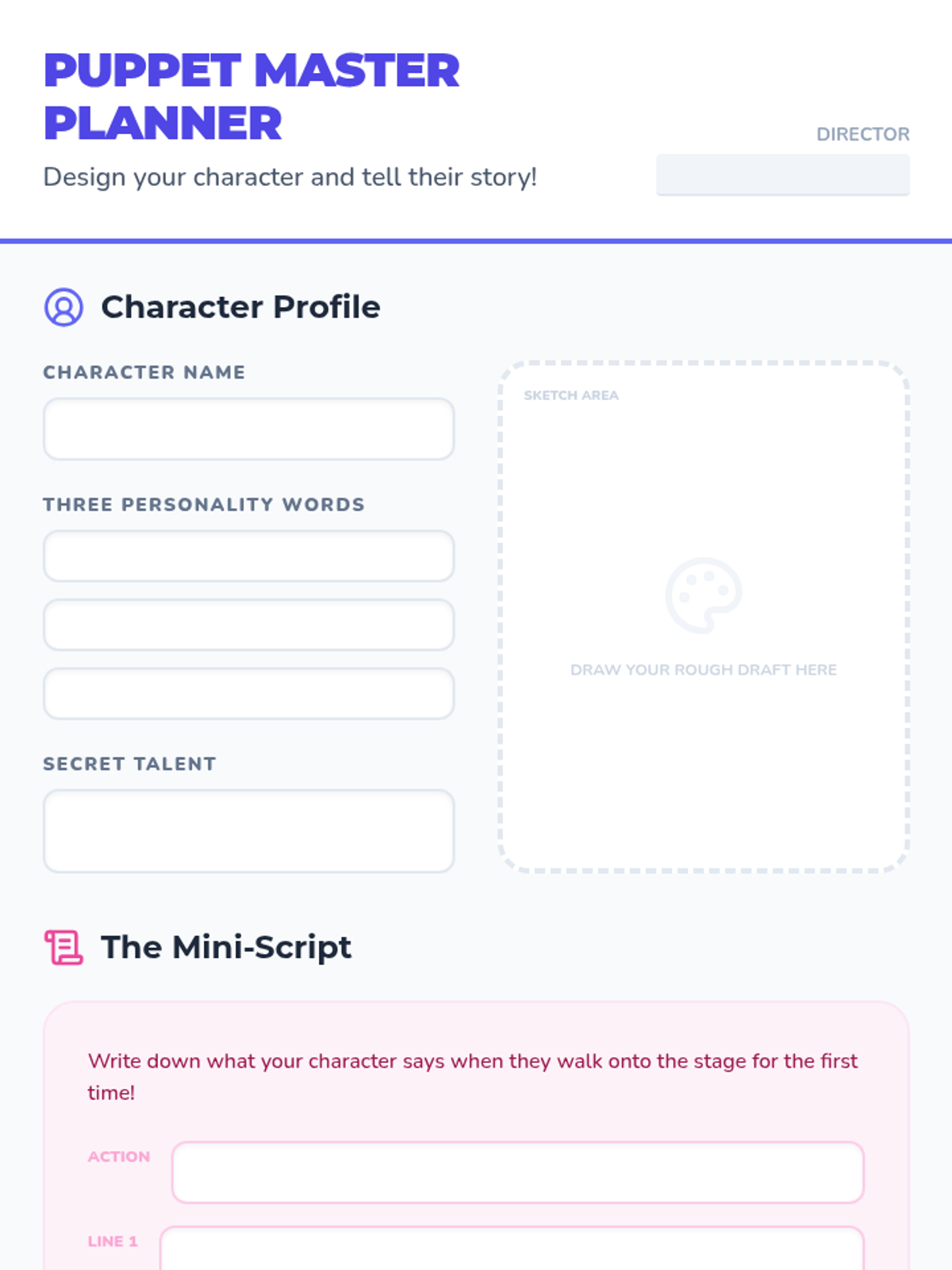
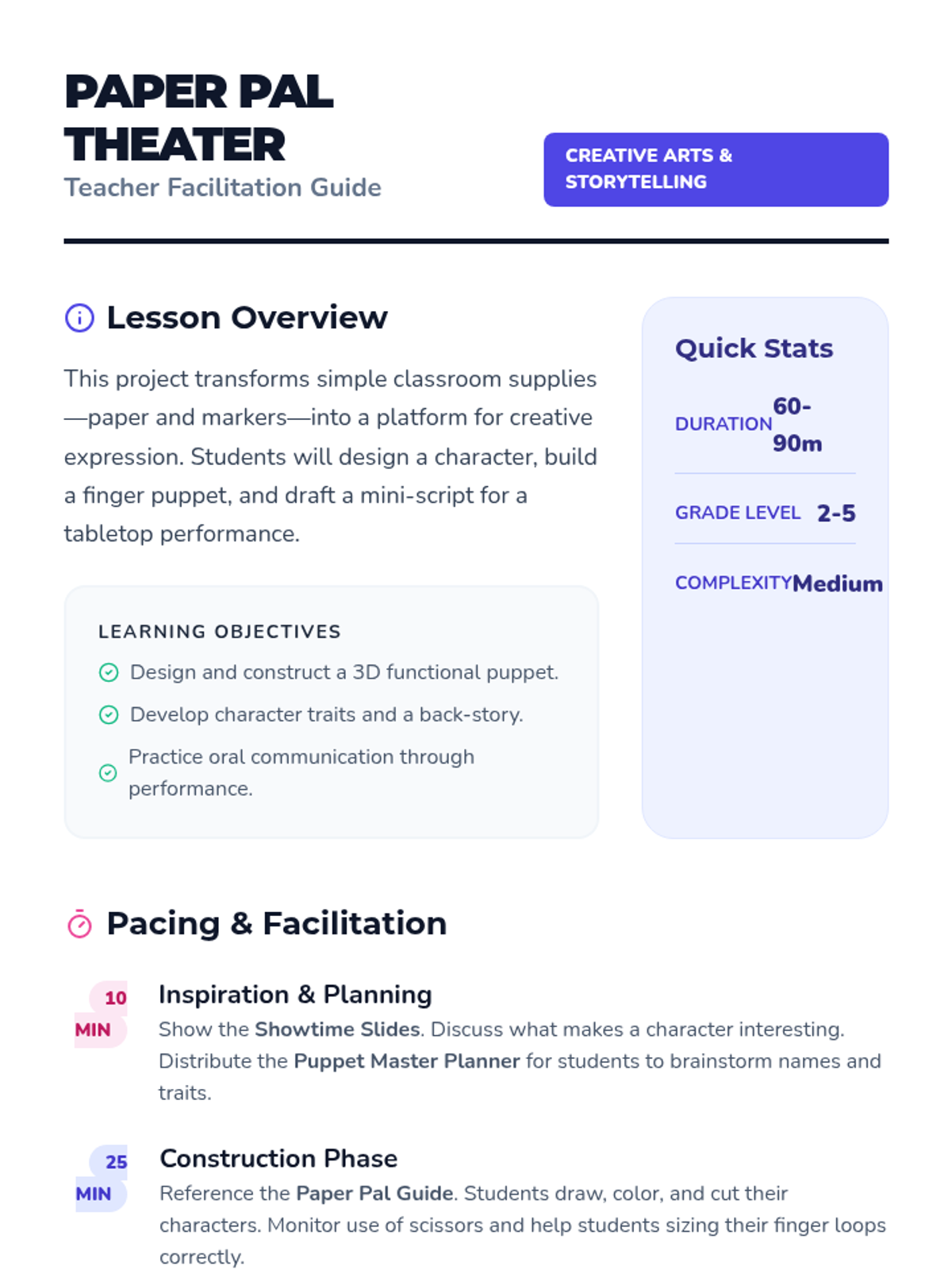
Students design and build their own paper finger puppets and a tabletop stage using markers and paper. This project combines visual arts with storytelling and performance.
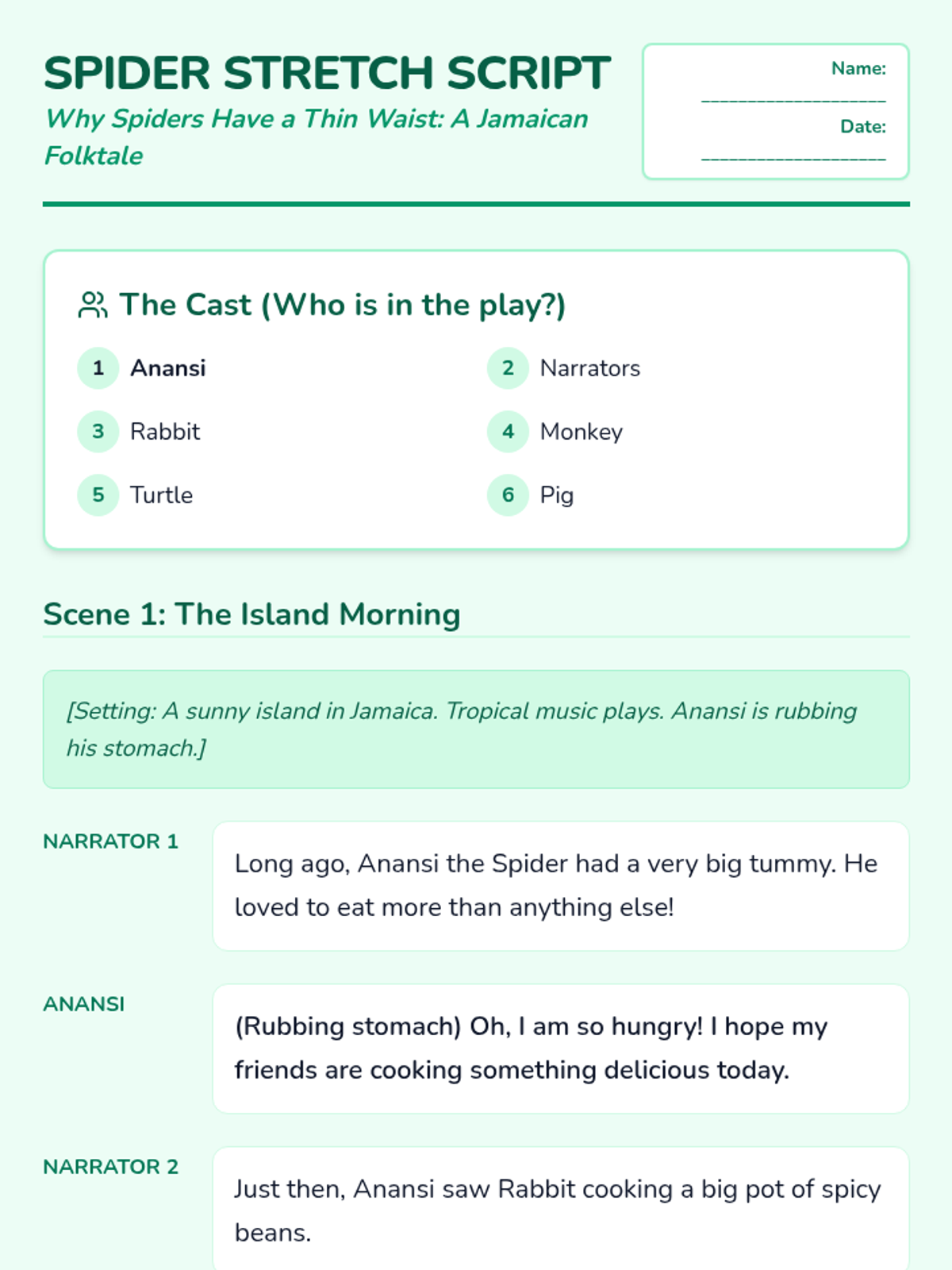
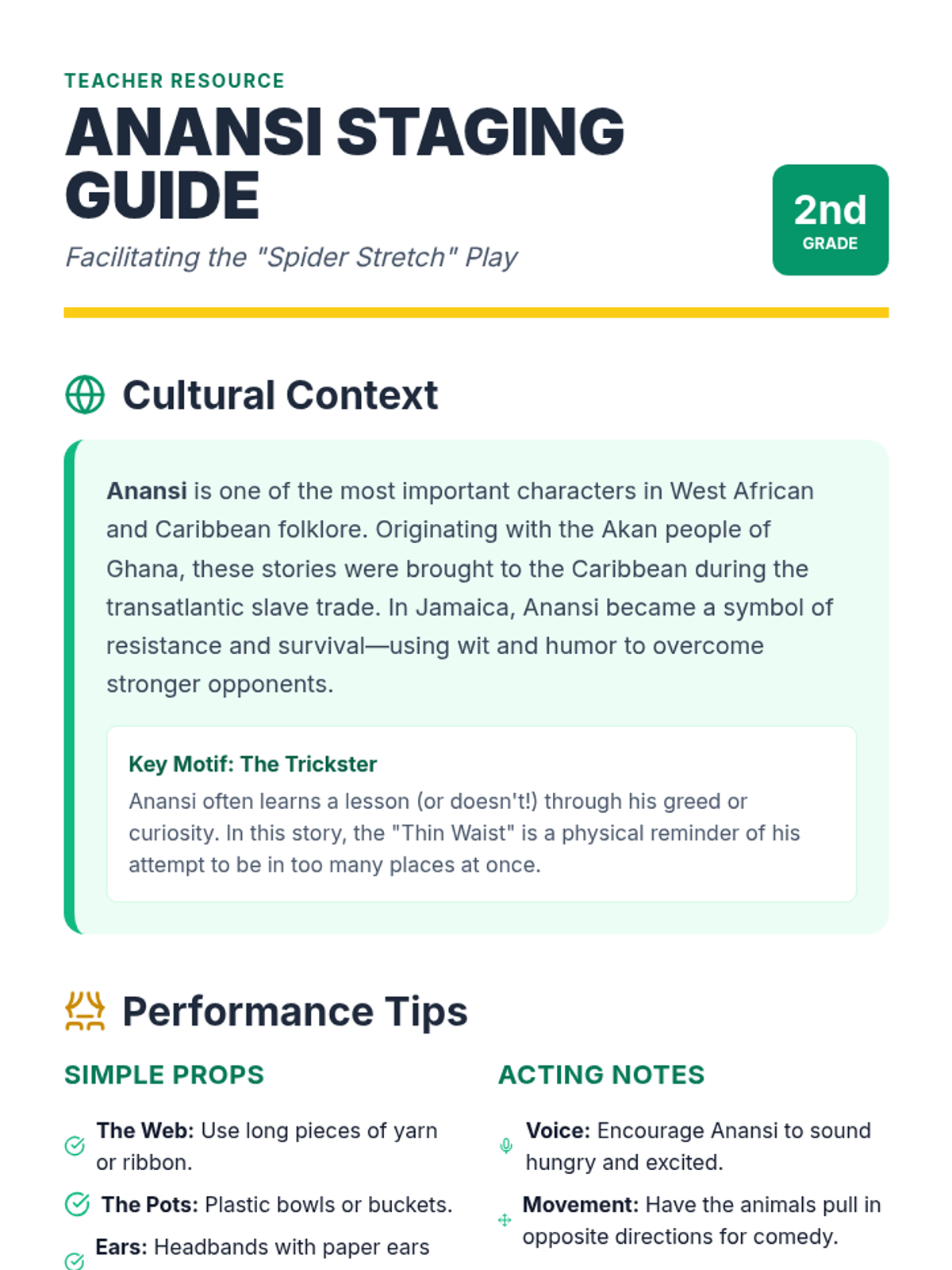
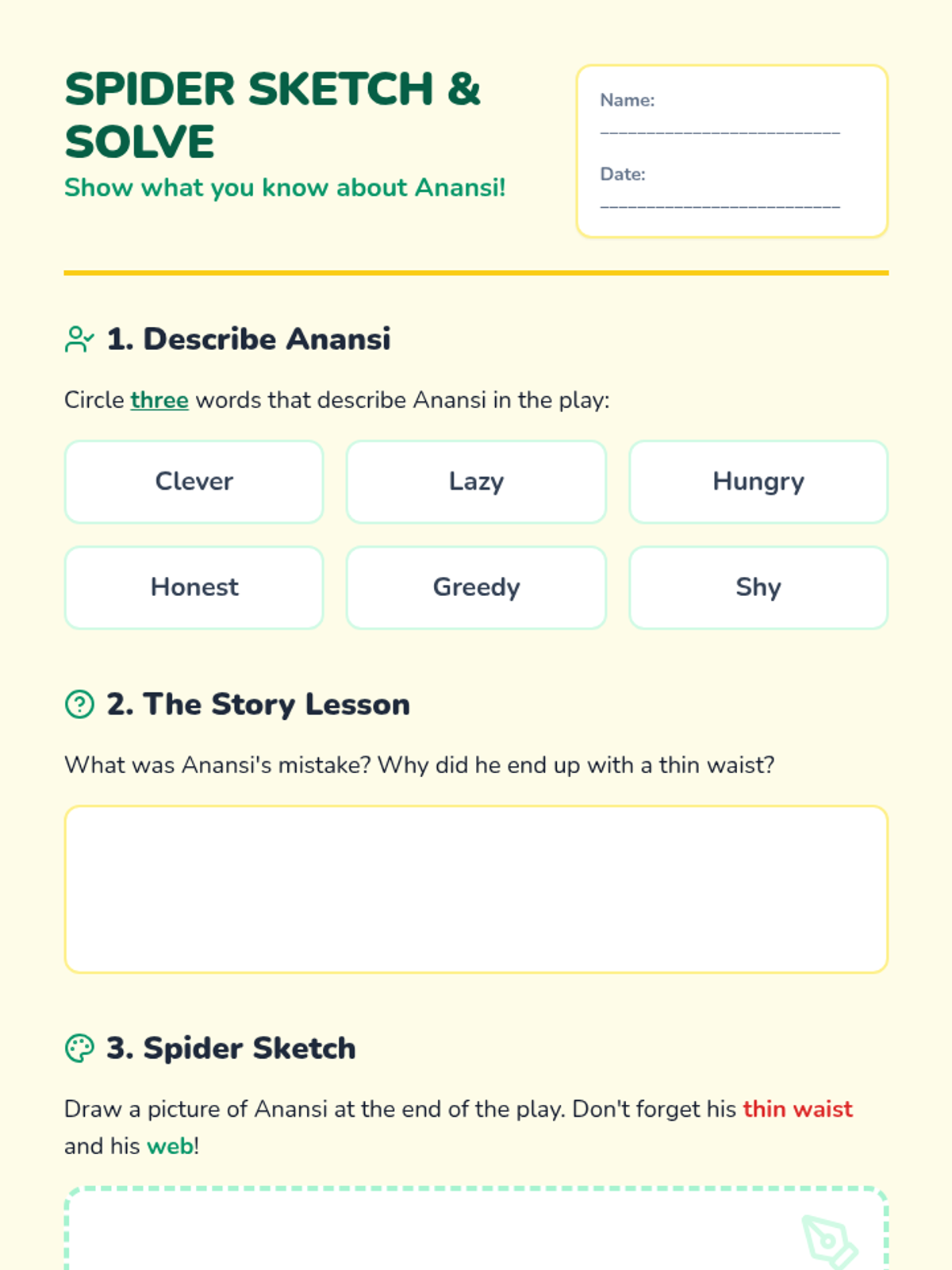
A fun, interactive lesson introducing students to Jamaican folklore through the story of Anansi the Spider and his famously thin waist. Students will learn about trickster tales, explore Jamaican cultural motifs, and perform a short play.
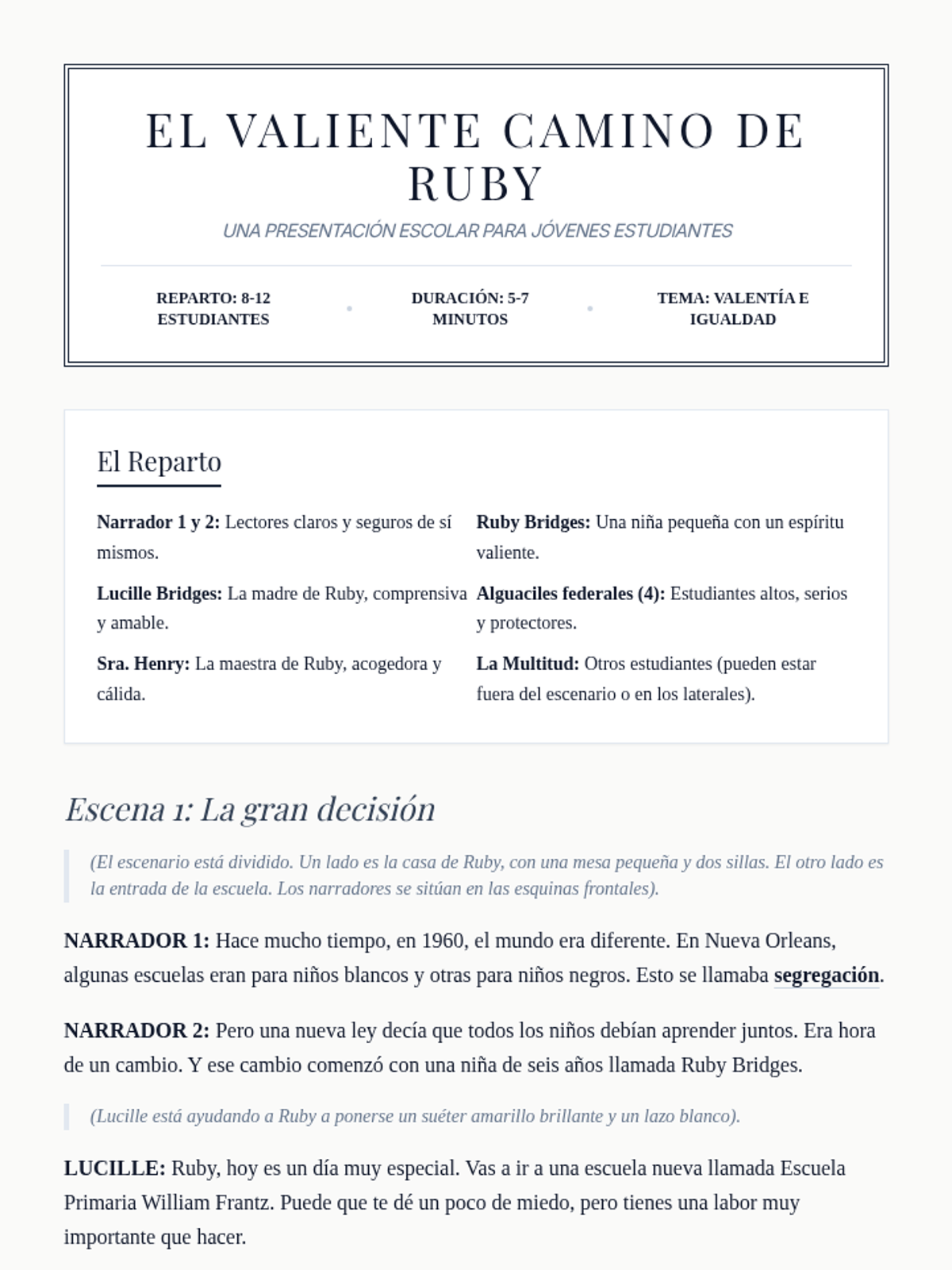
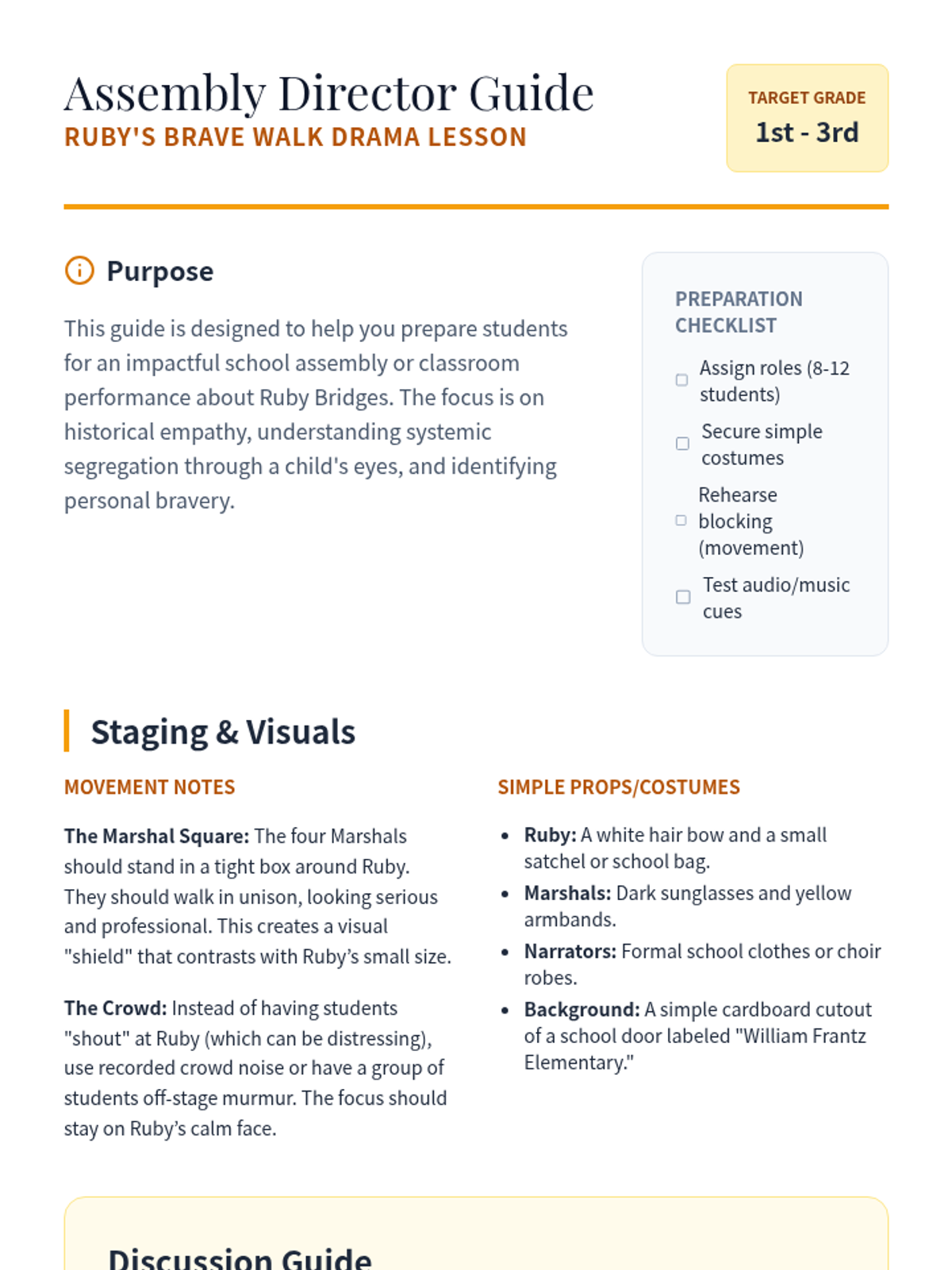
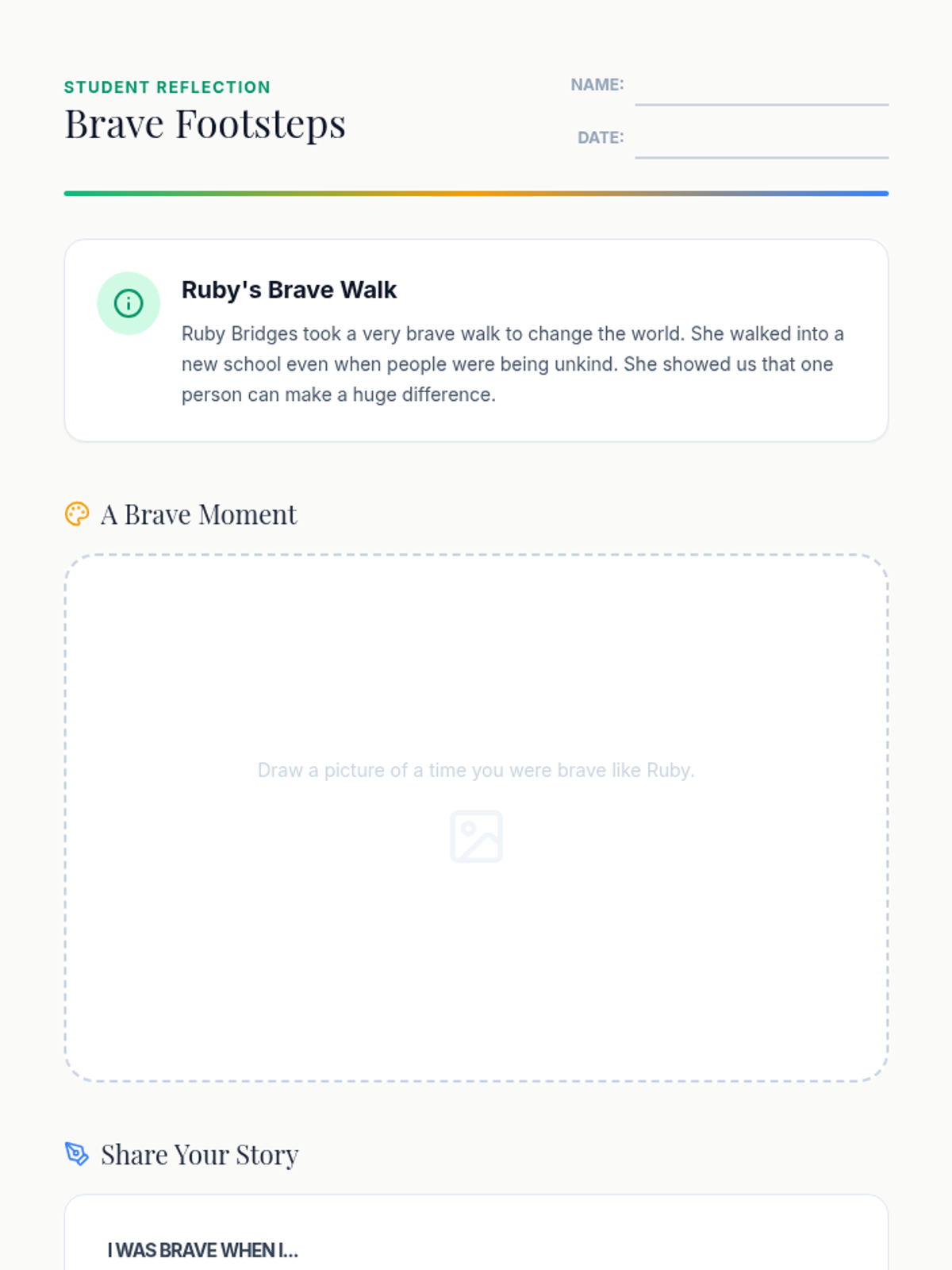
A short, impactful drama lesson centered around a school assembly script about Ruby Bridges. Students explore themes of bravery and segregation through performance, visual storytelling, and personal reflection.
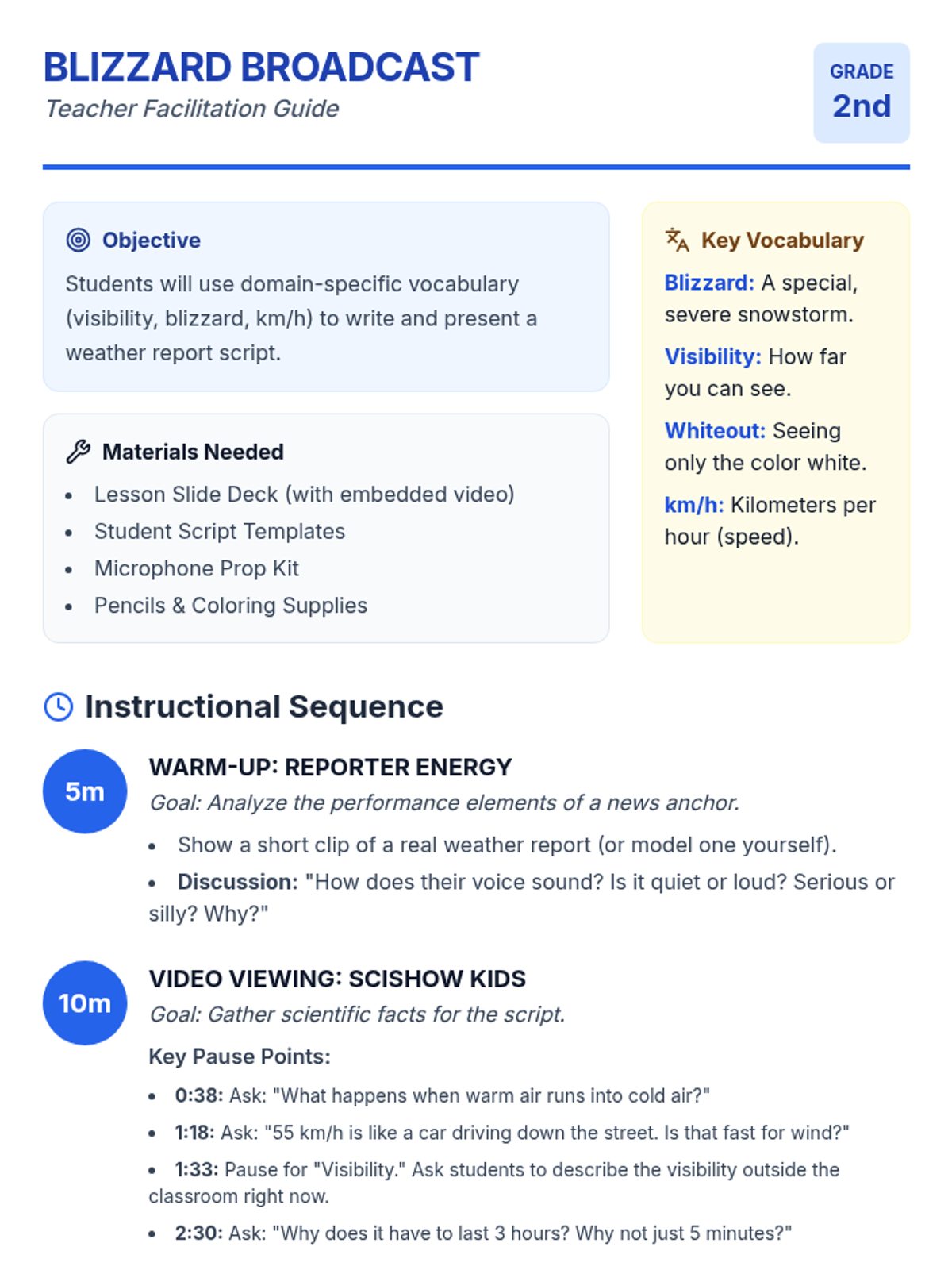
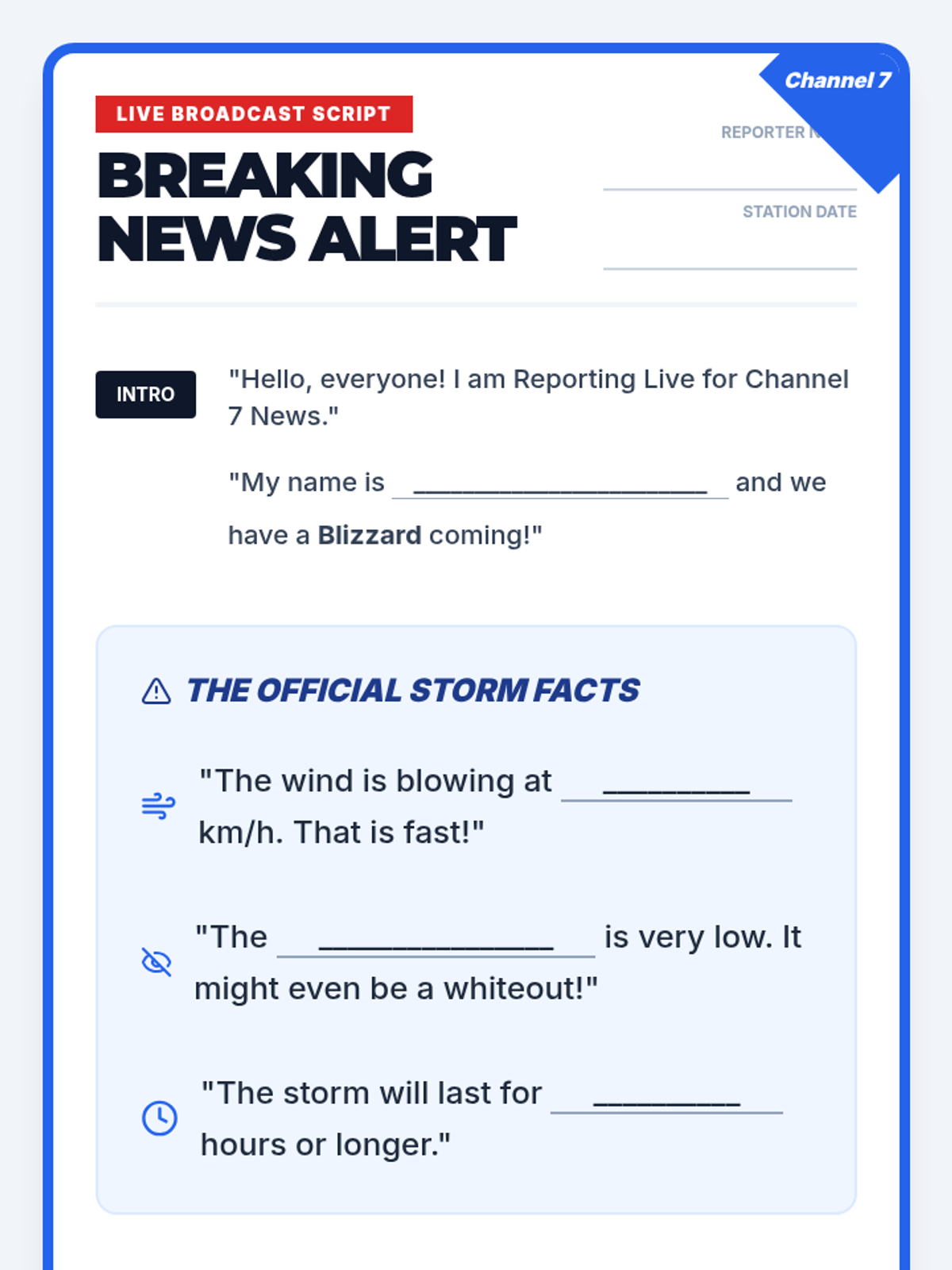
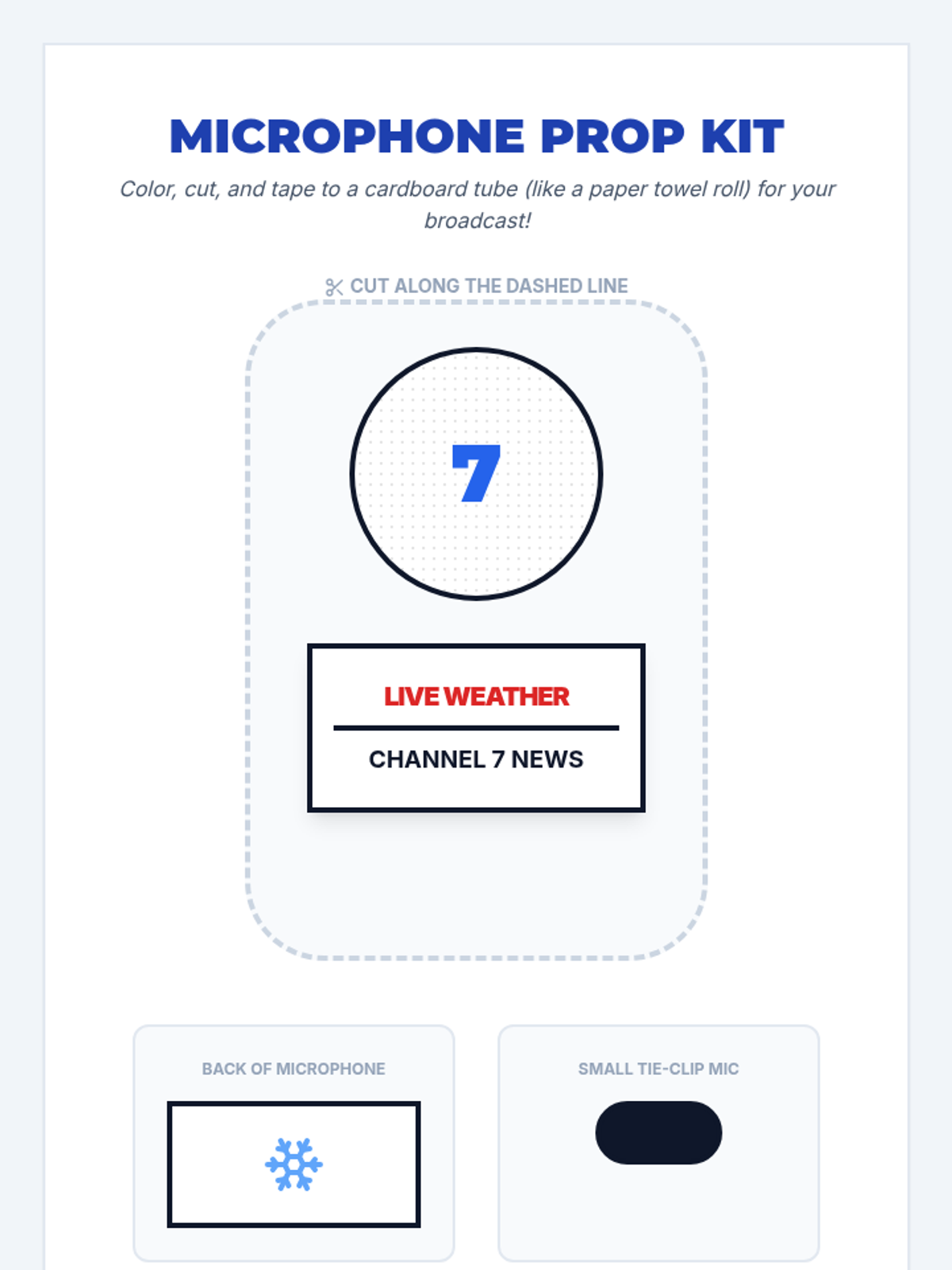
Students become weather reporters in this ELA and Drama lesson, learning the scientific requirements of a blizzard and performing a 'Breaking News' broadcast using domain-specific vocabulary.
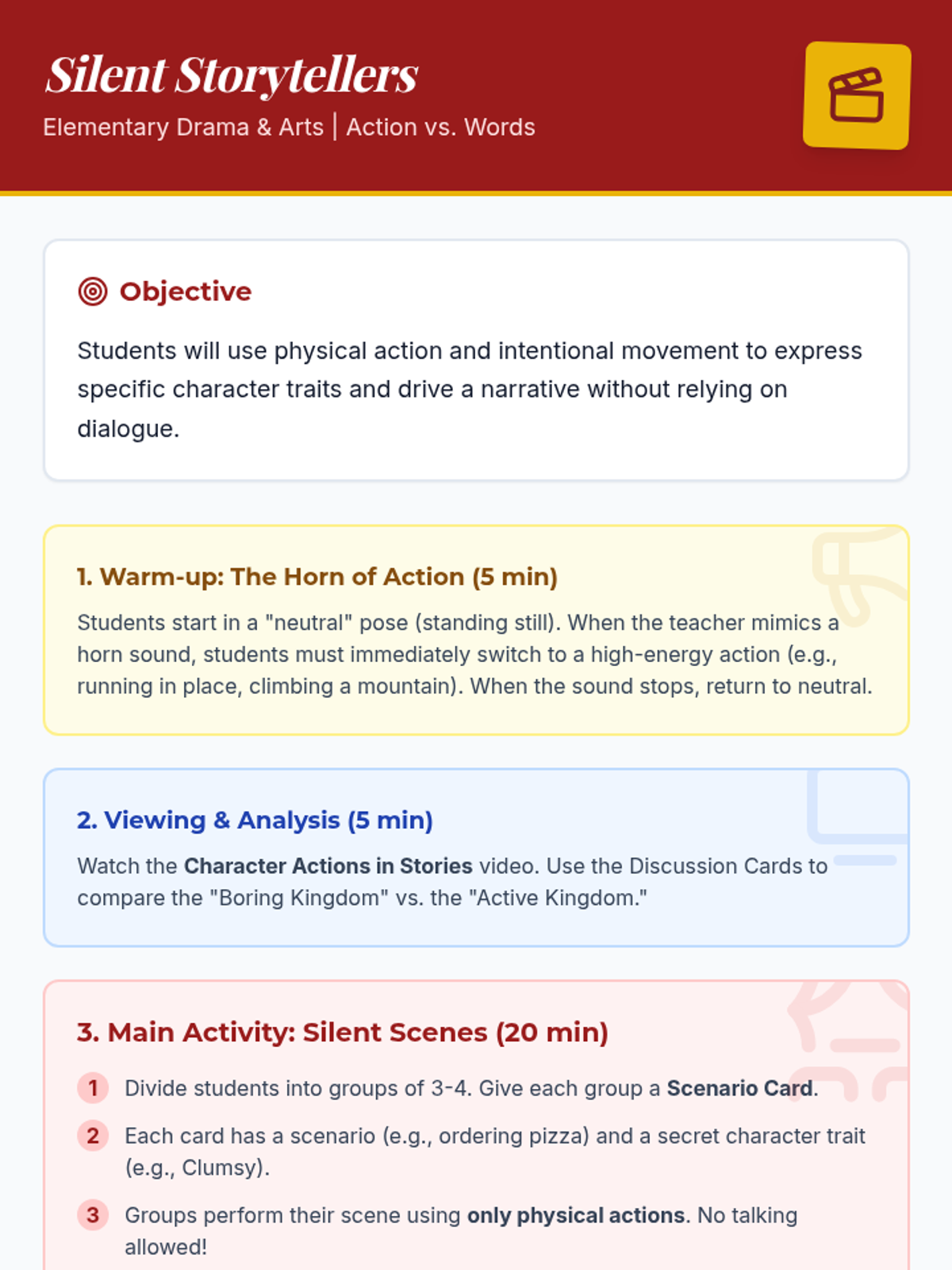
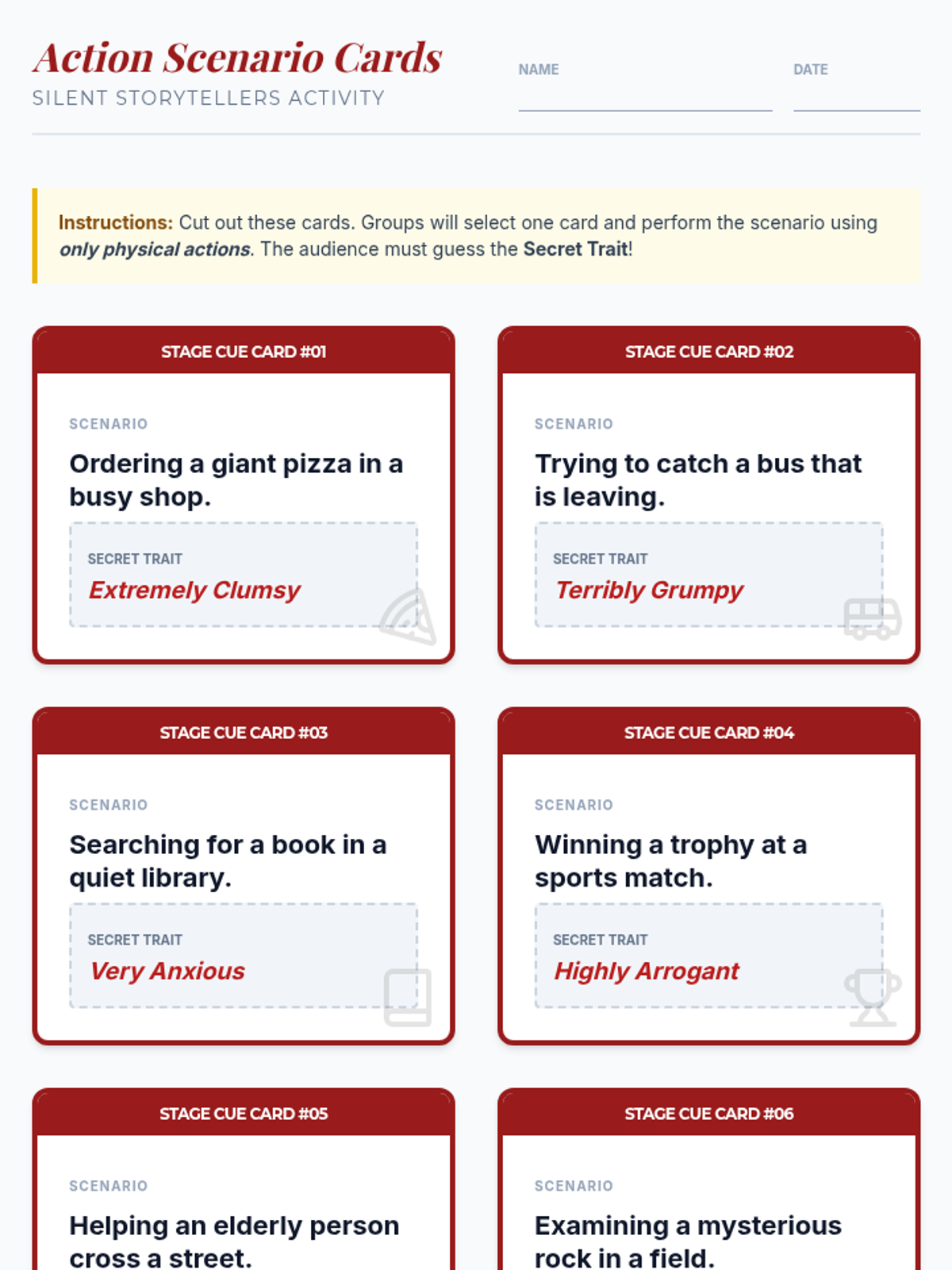
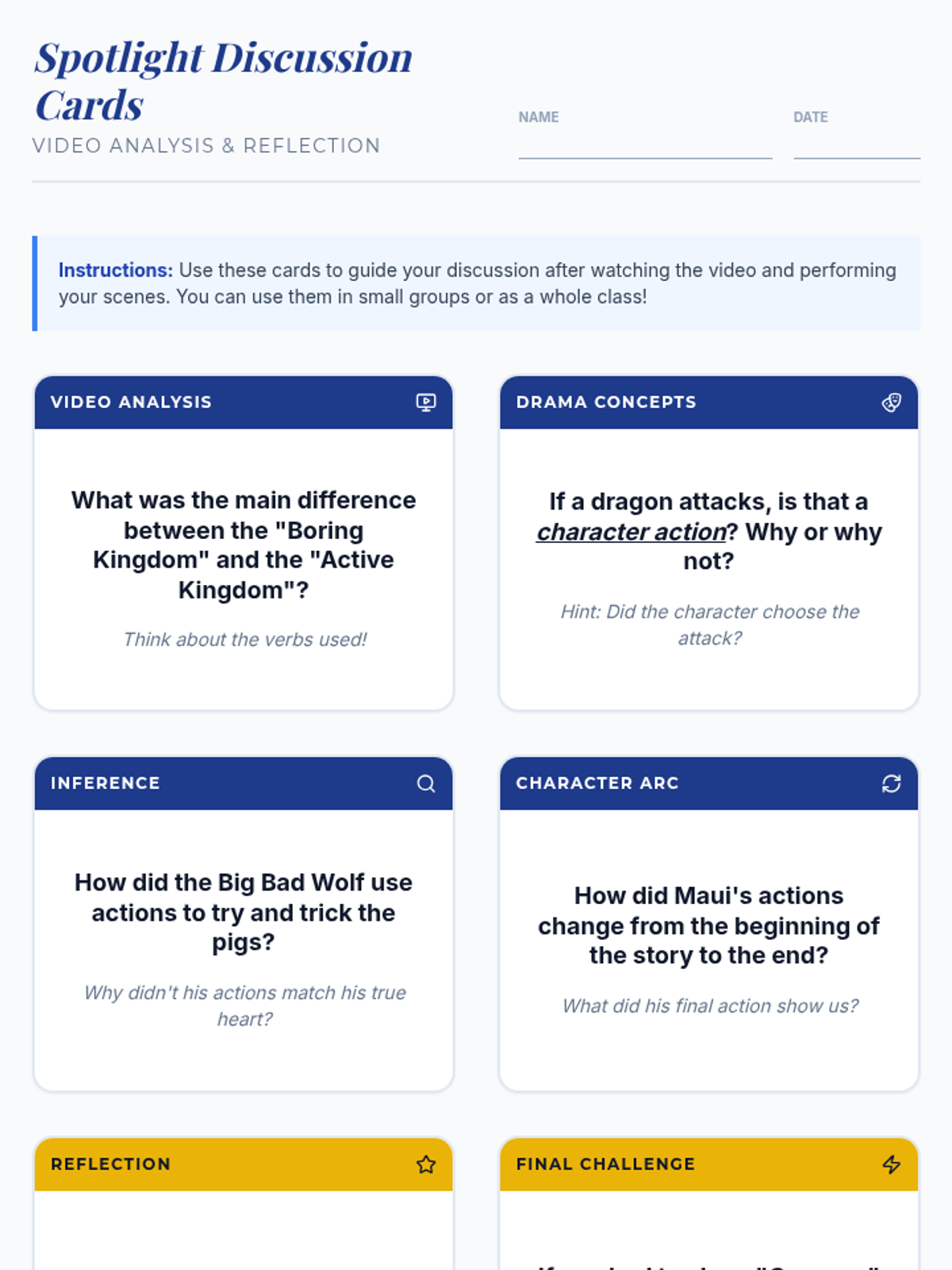
Students explore how physical action and decisions drive story and reveal character traits without using words, featuring a 'Silent Scenes' activity and a video analysis.
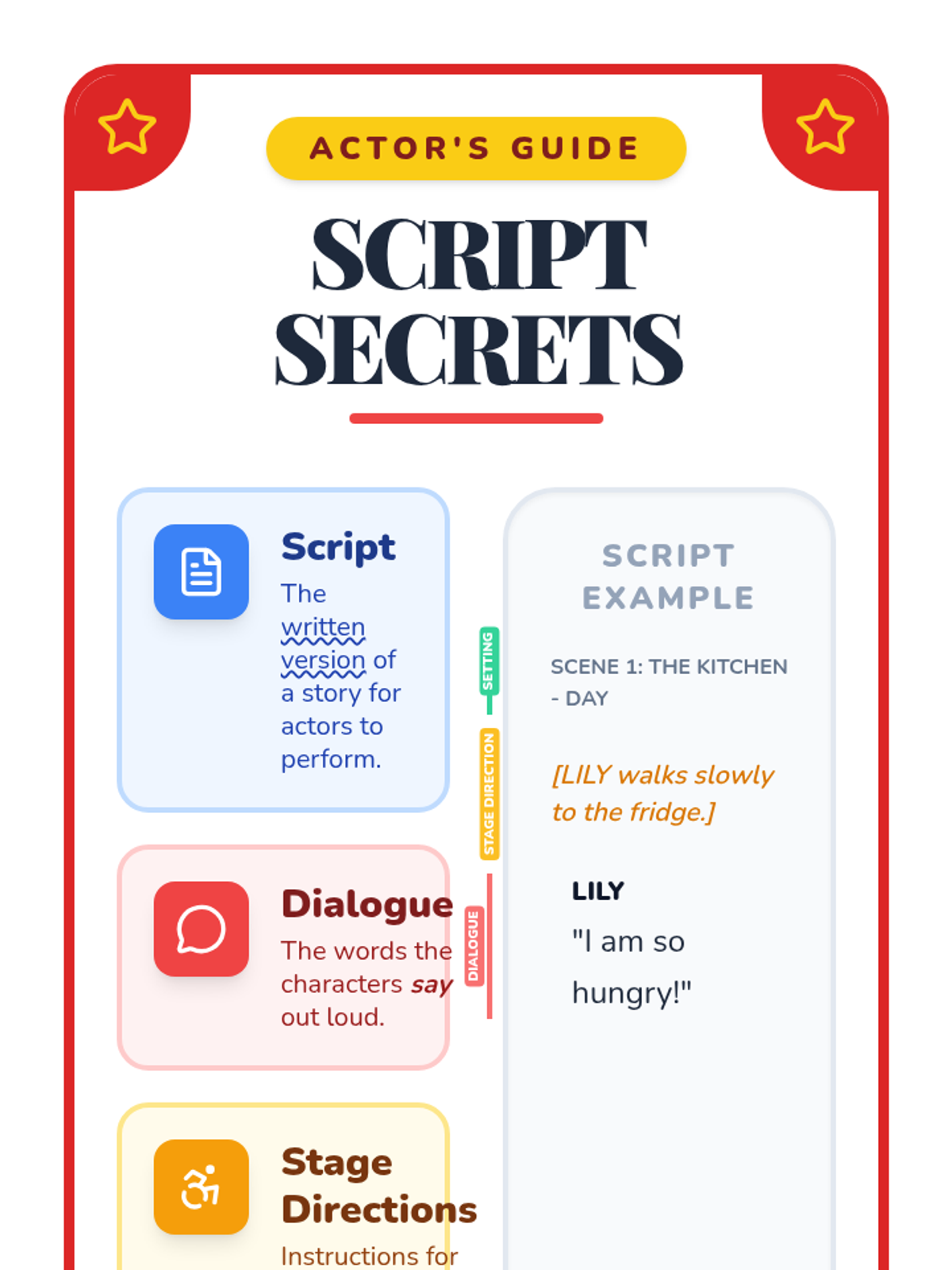
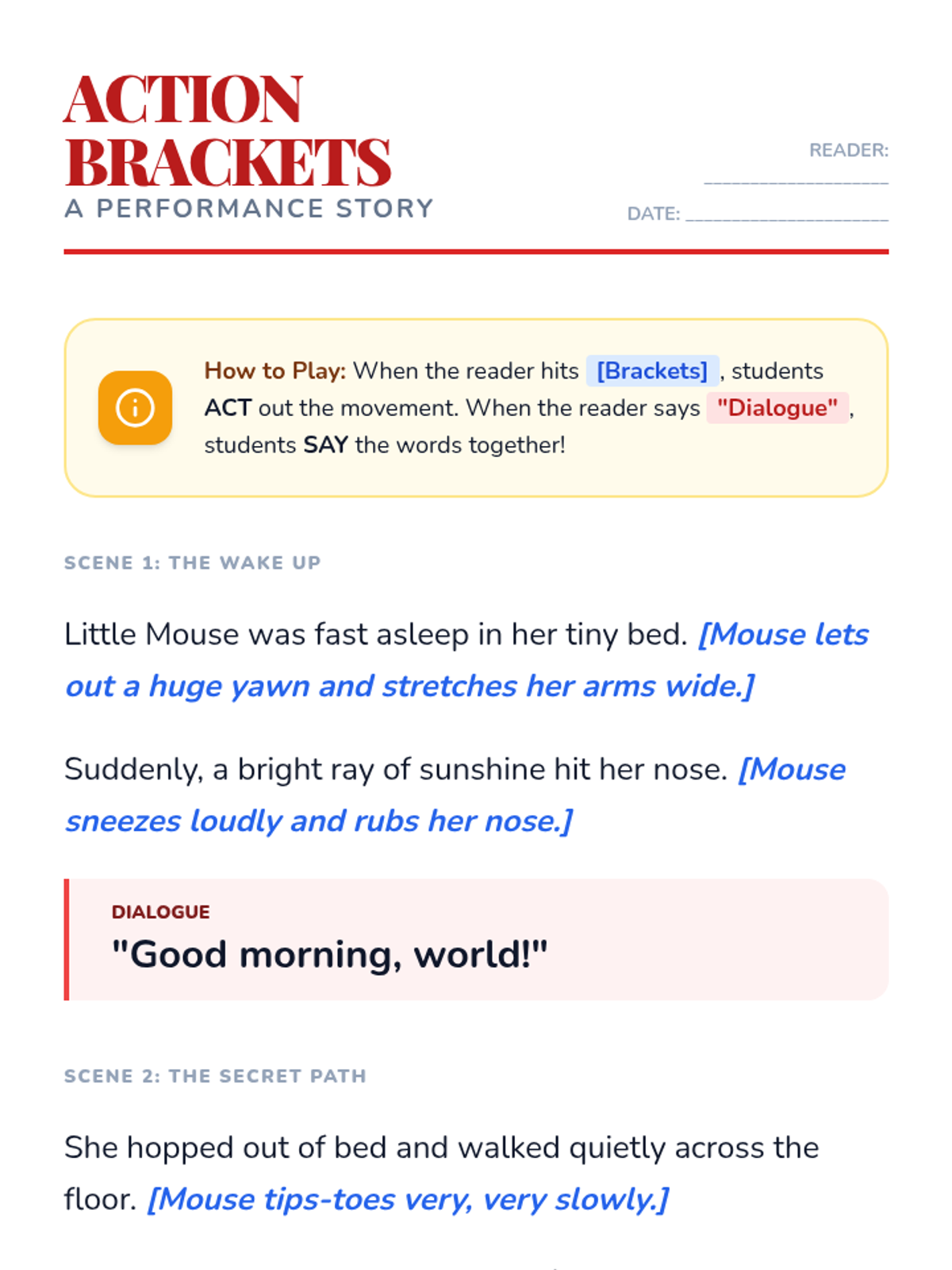
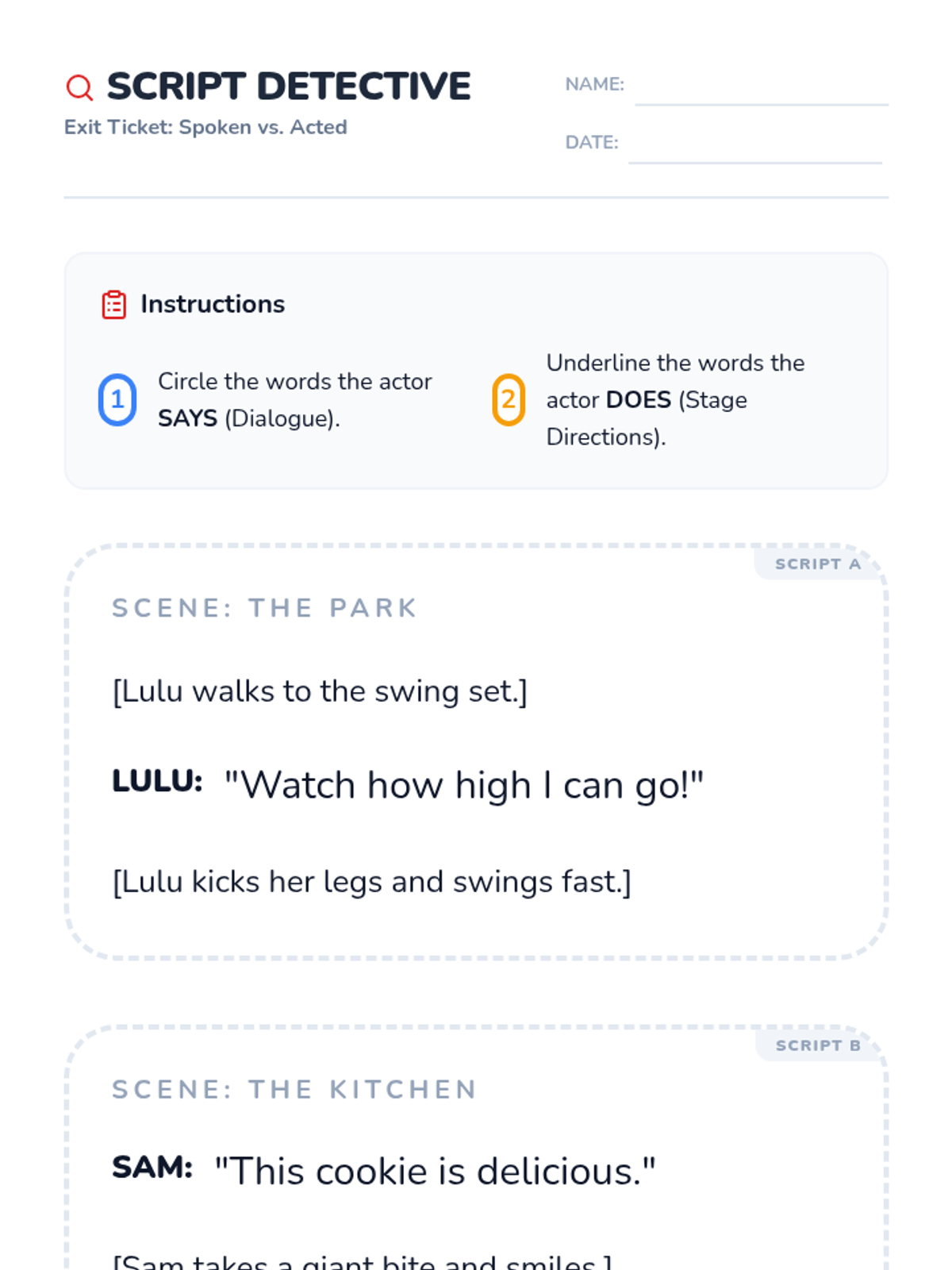
Students learn to distinguish between dialogue (spoken text) and stage directions (text to be acted out) using the 'Ode to a Saucepan' video and a hands-on 'Action Brackets' activity.
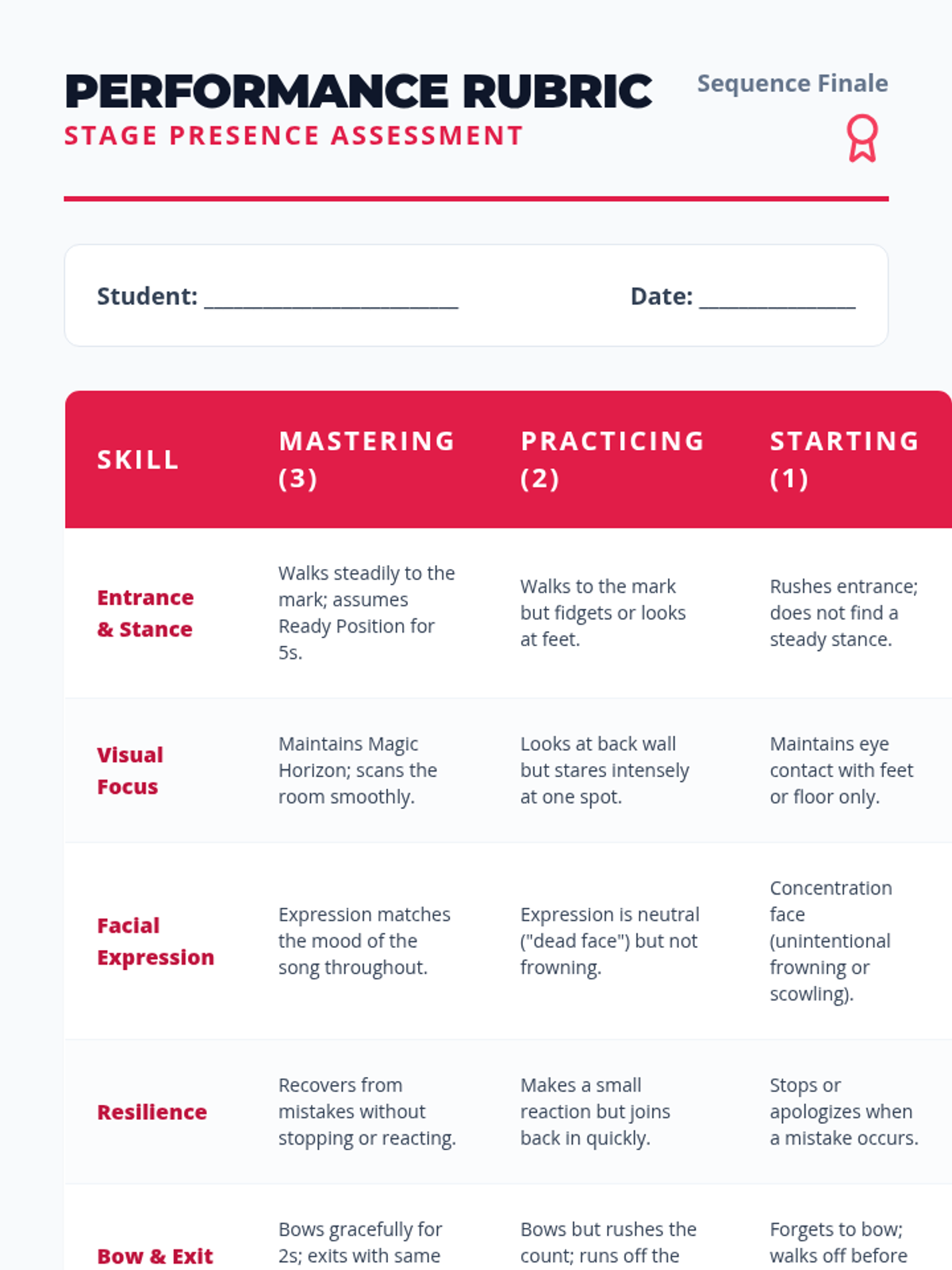
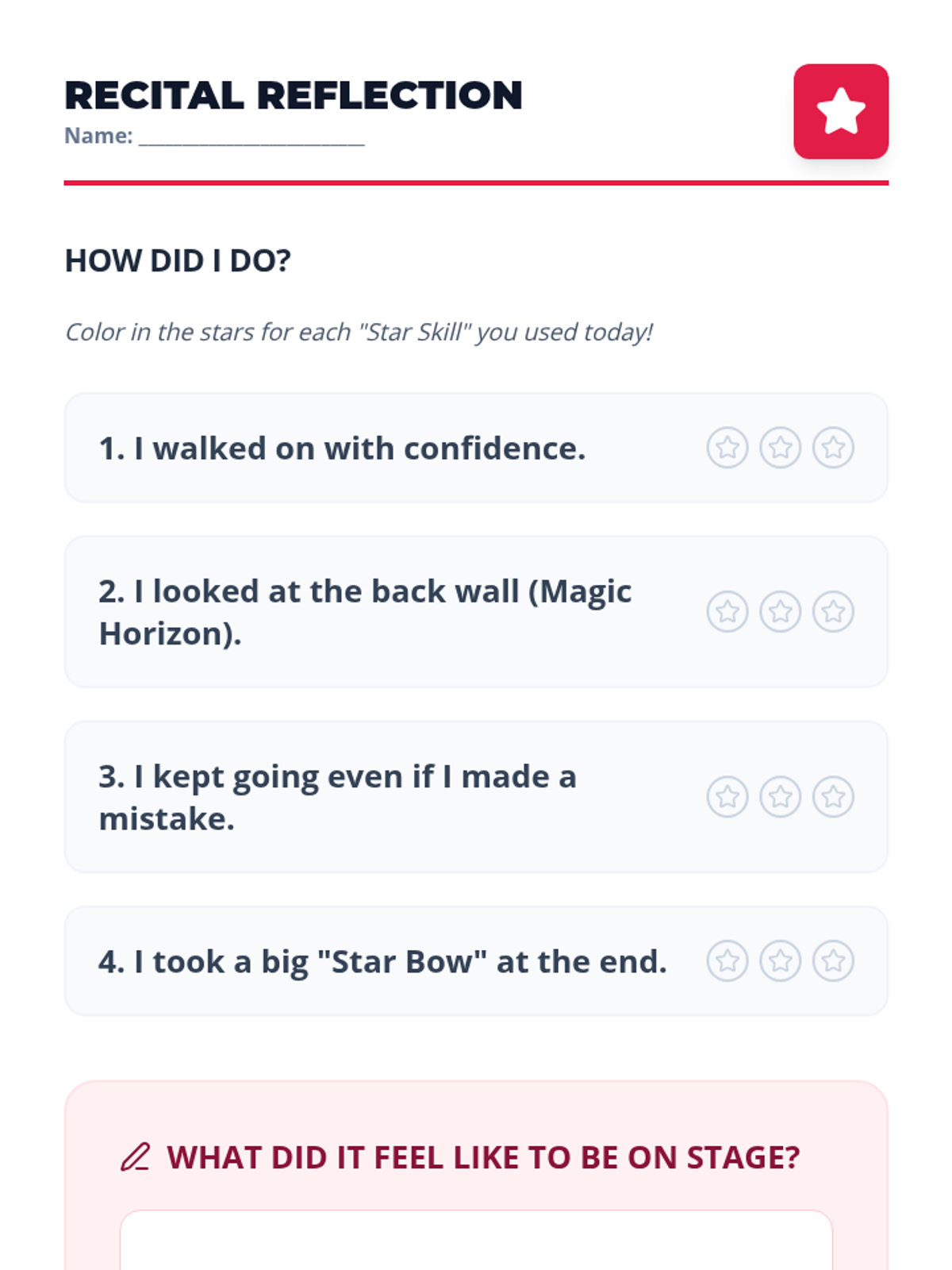
Students master the final bow and exit protocol, culminating in a full performance simulation.
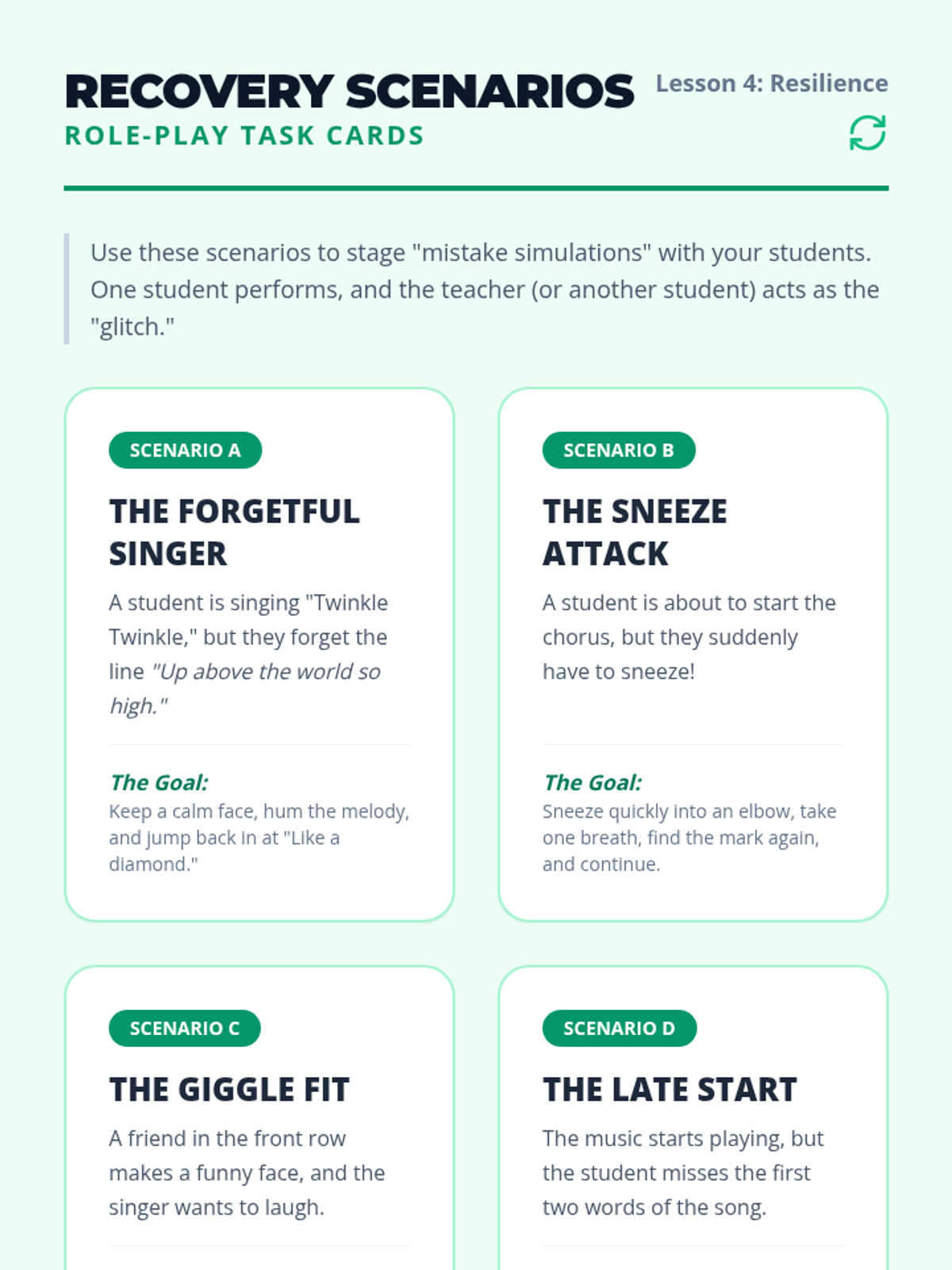
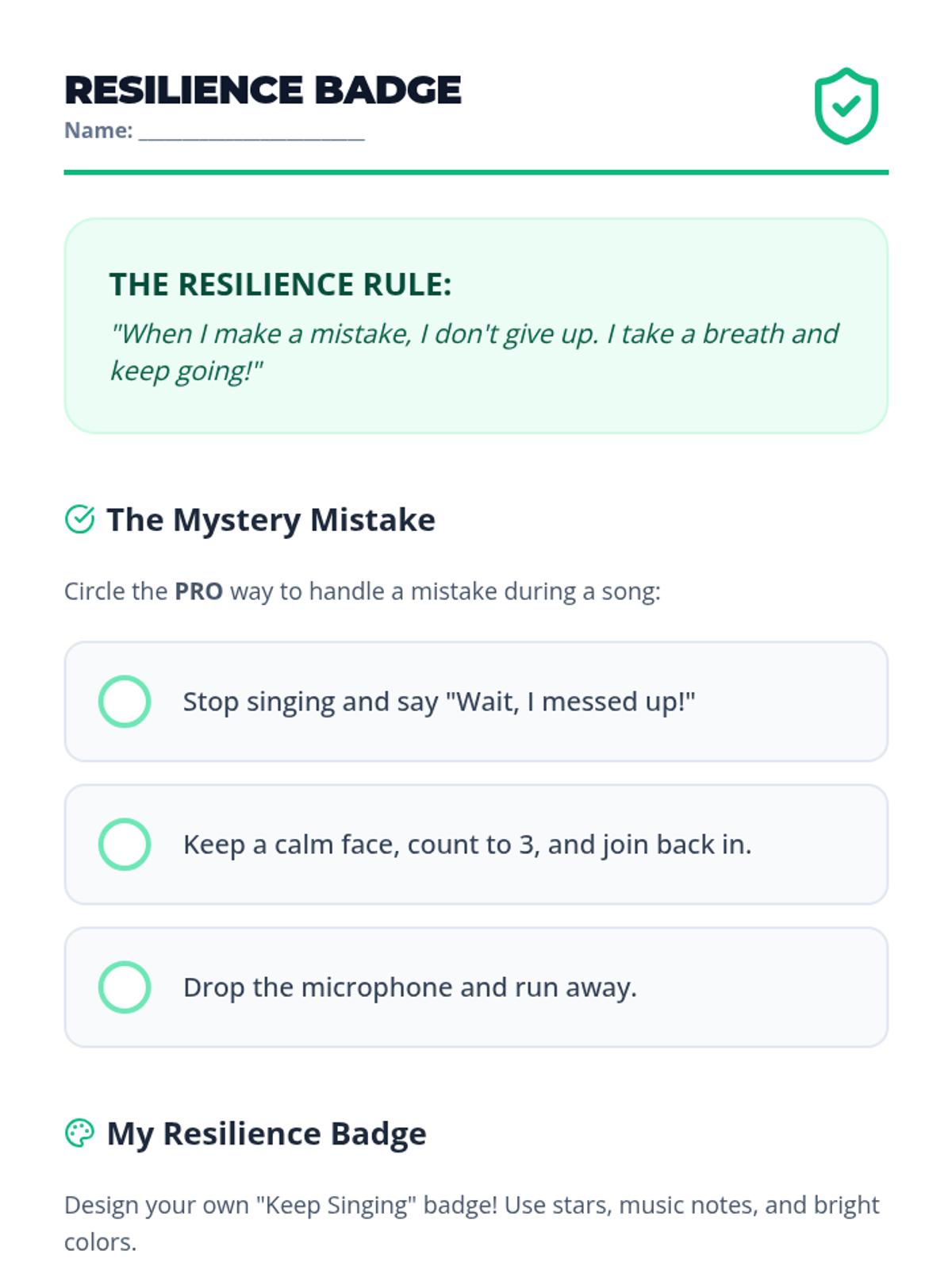
Students practice resilience by learning how to gracefully recover from mistakes during a performance.
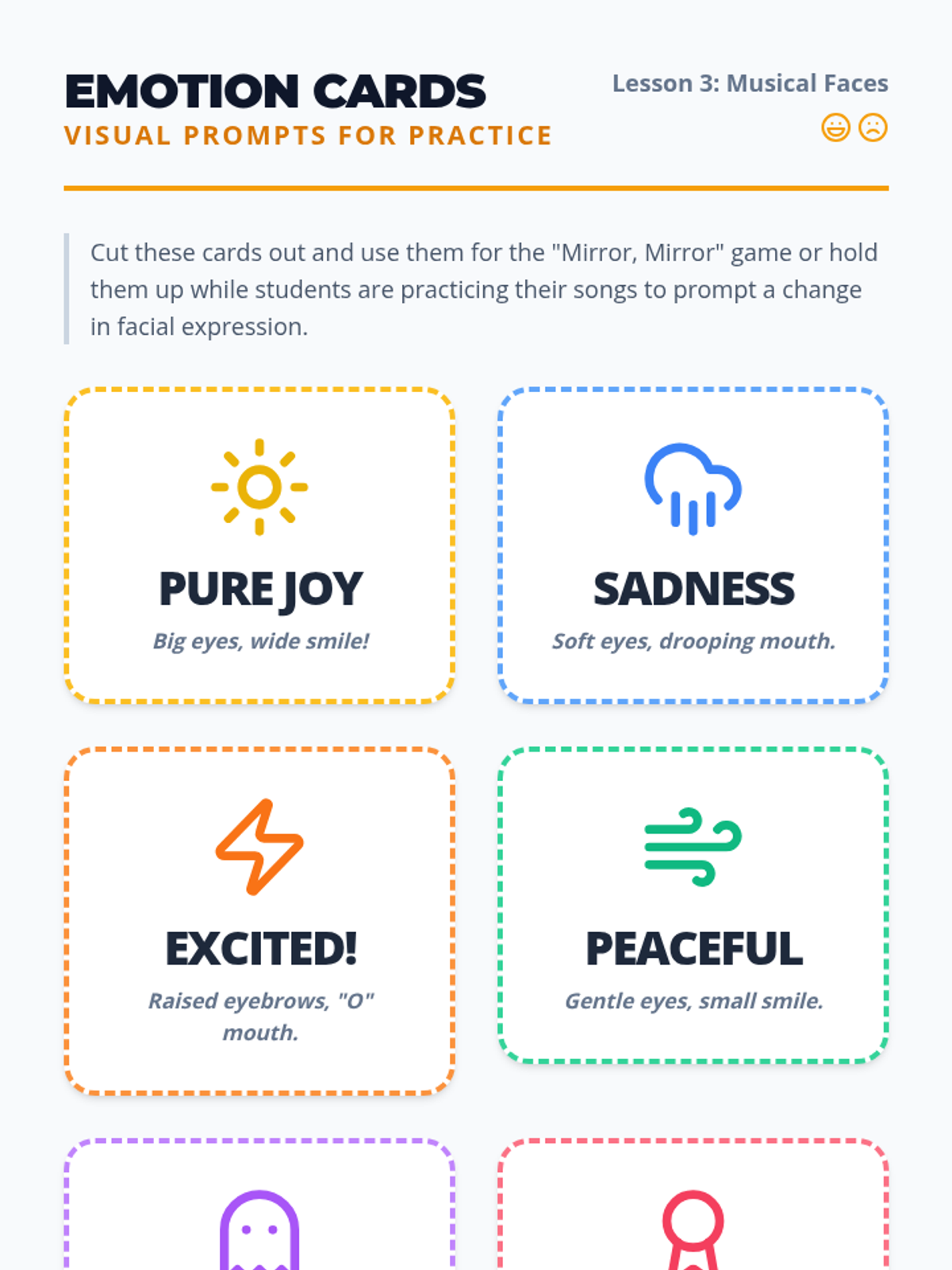
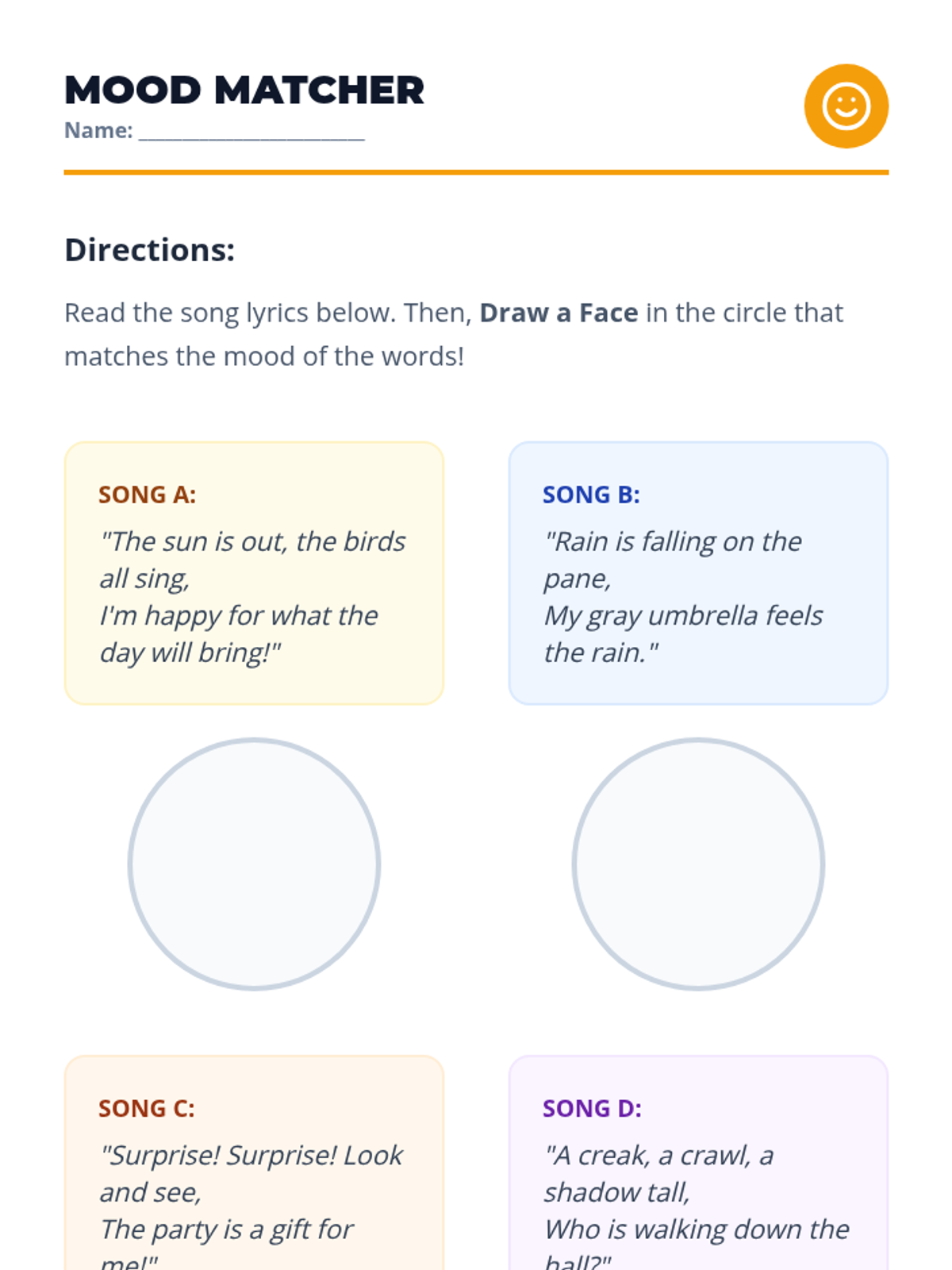
Students explore how their facial expressions communicate the mood of the music and match their vocal performance.
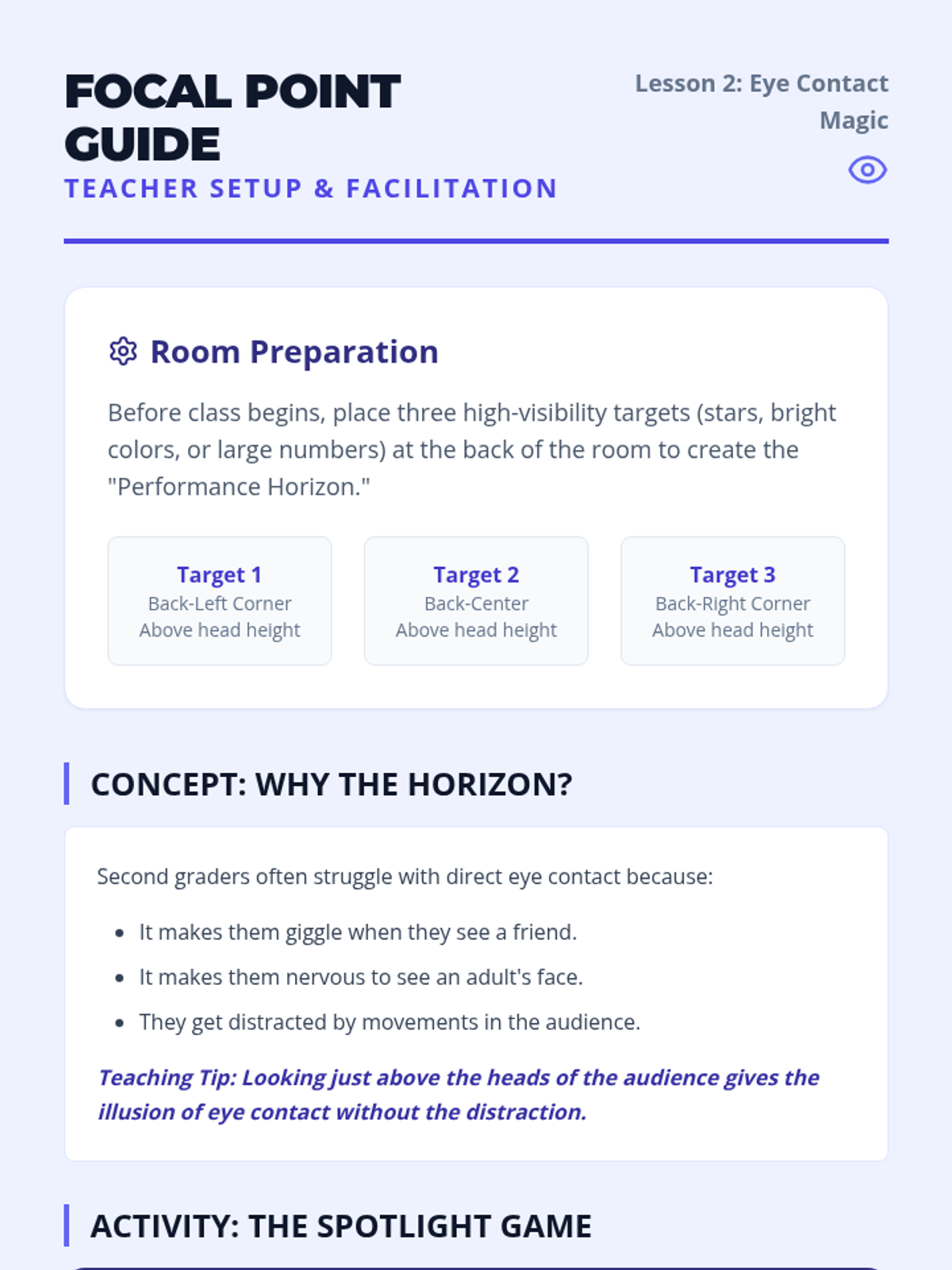
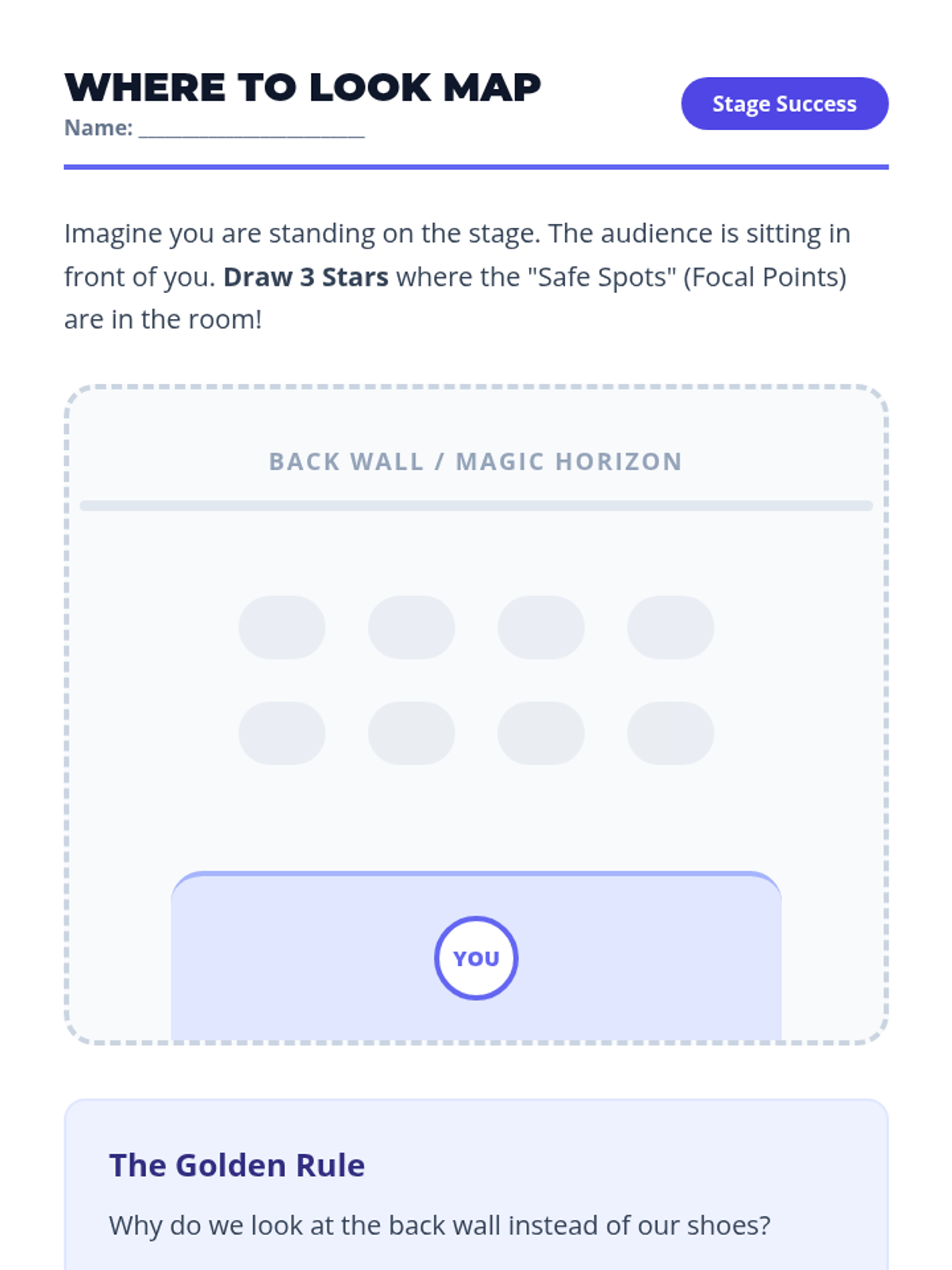
This lesson teaches students where to look while performing to maintain audience connection without being distracted.
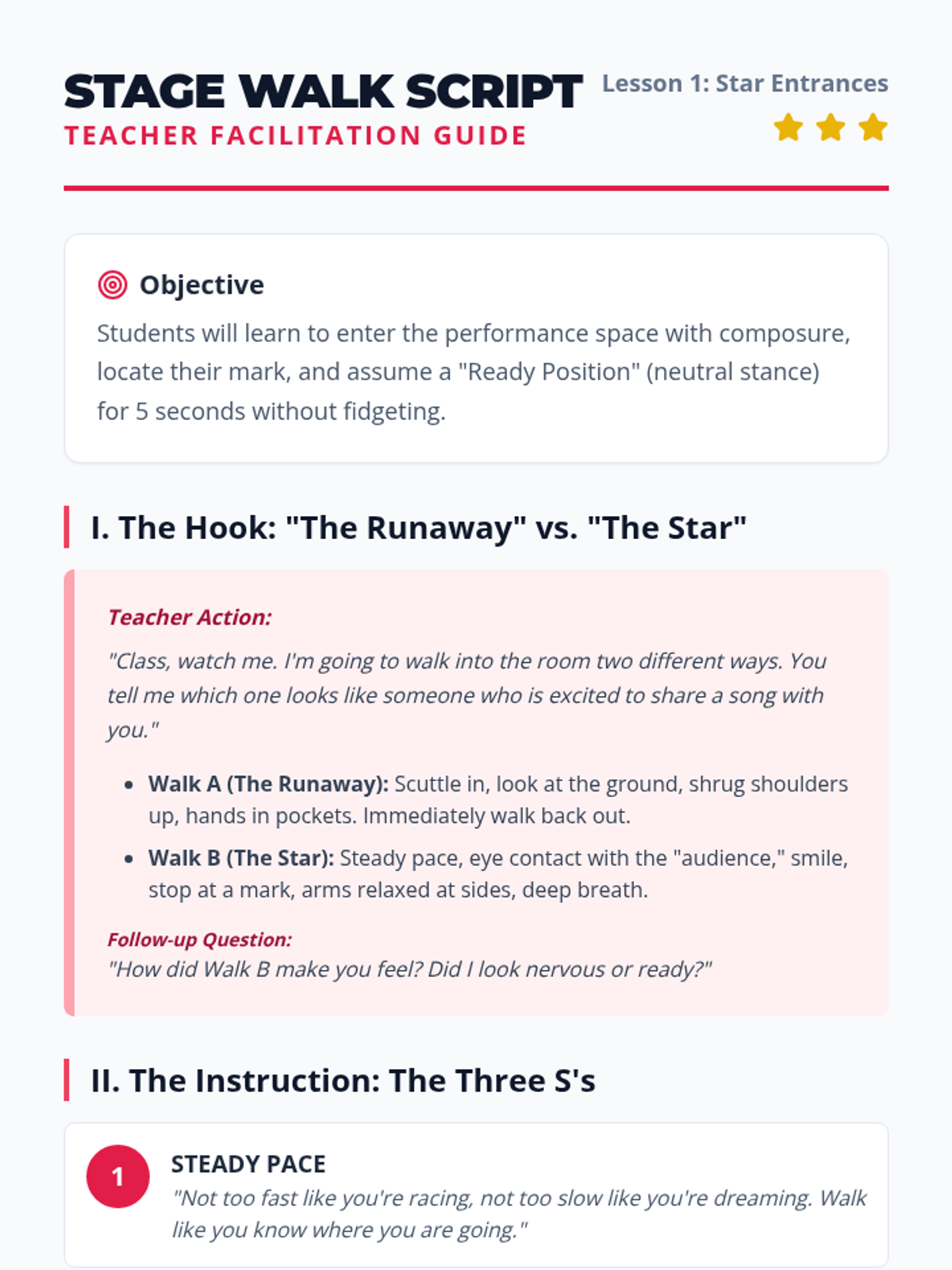
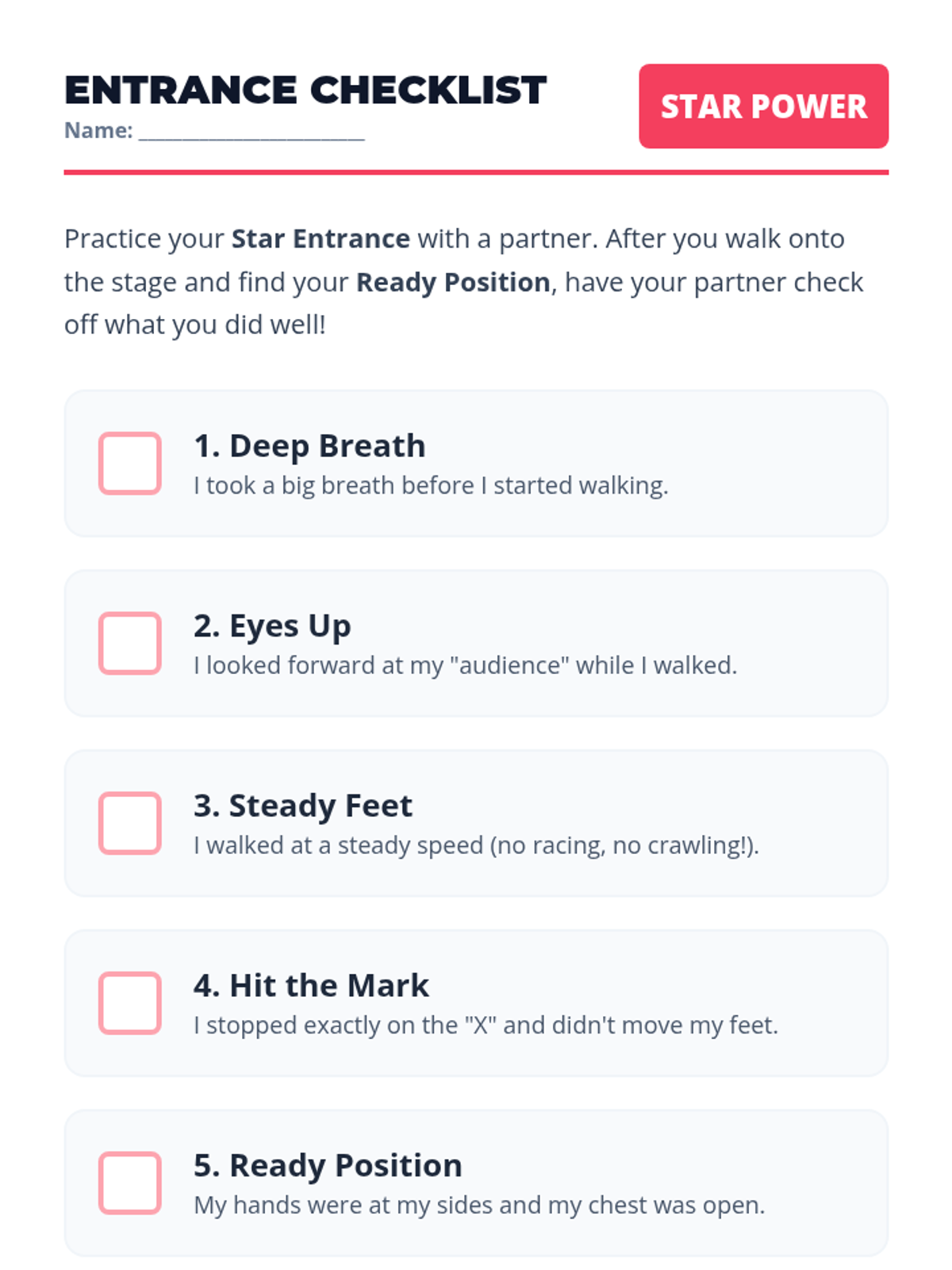
Students practice the art of walking onto a stage with confidence and establishing a neutral, ready position.
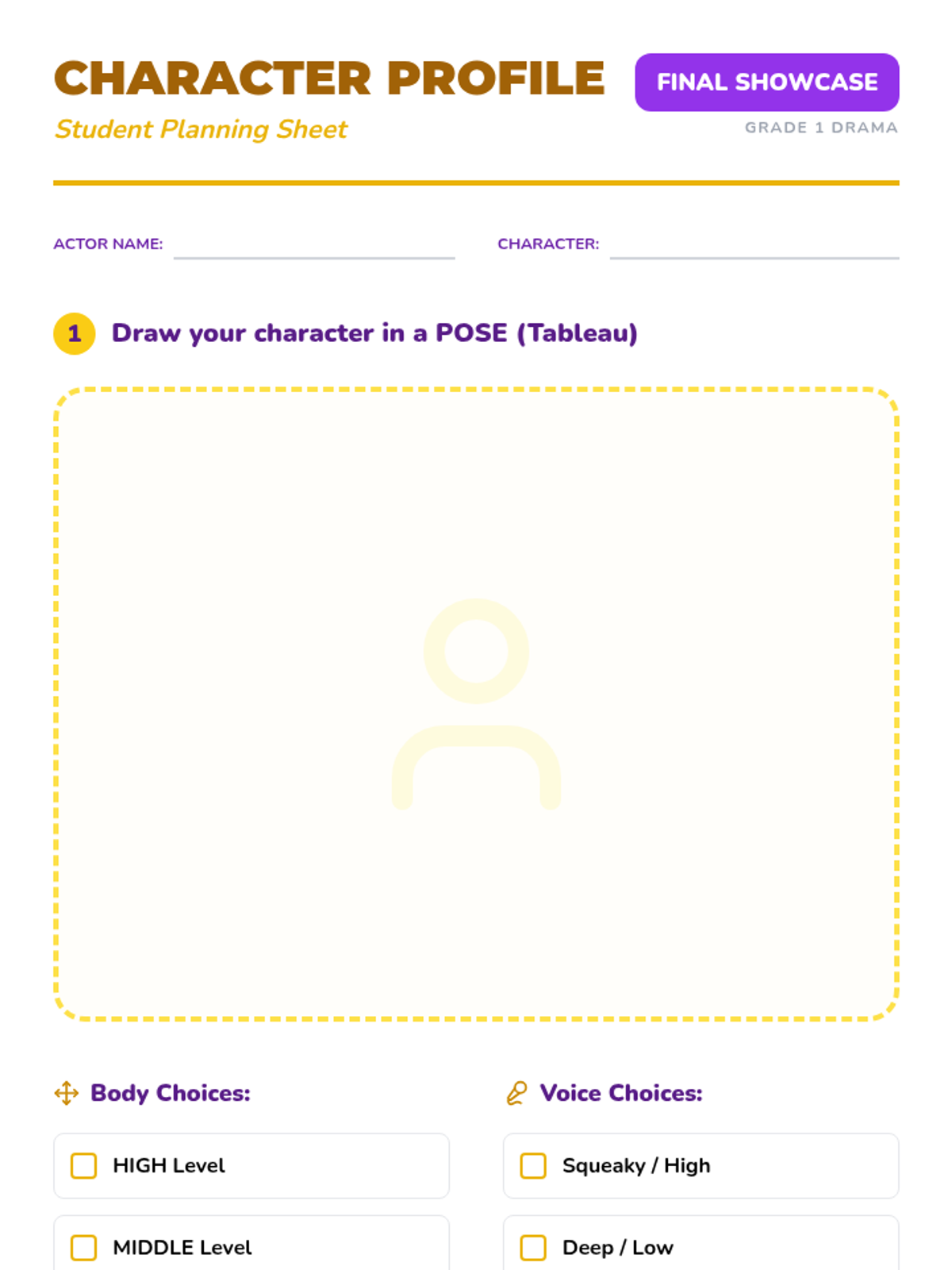
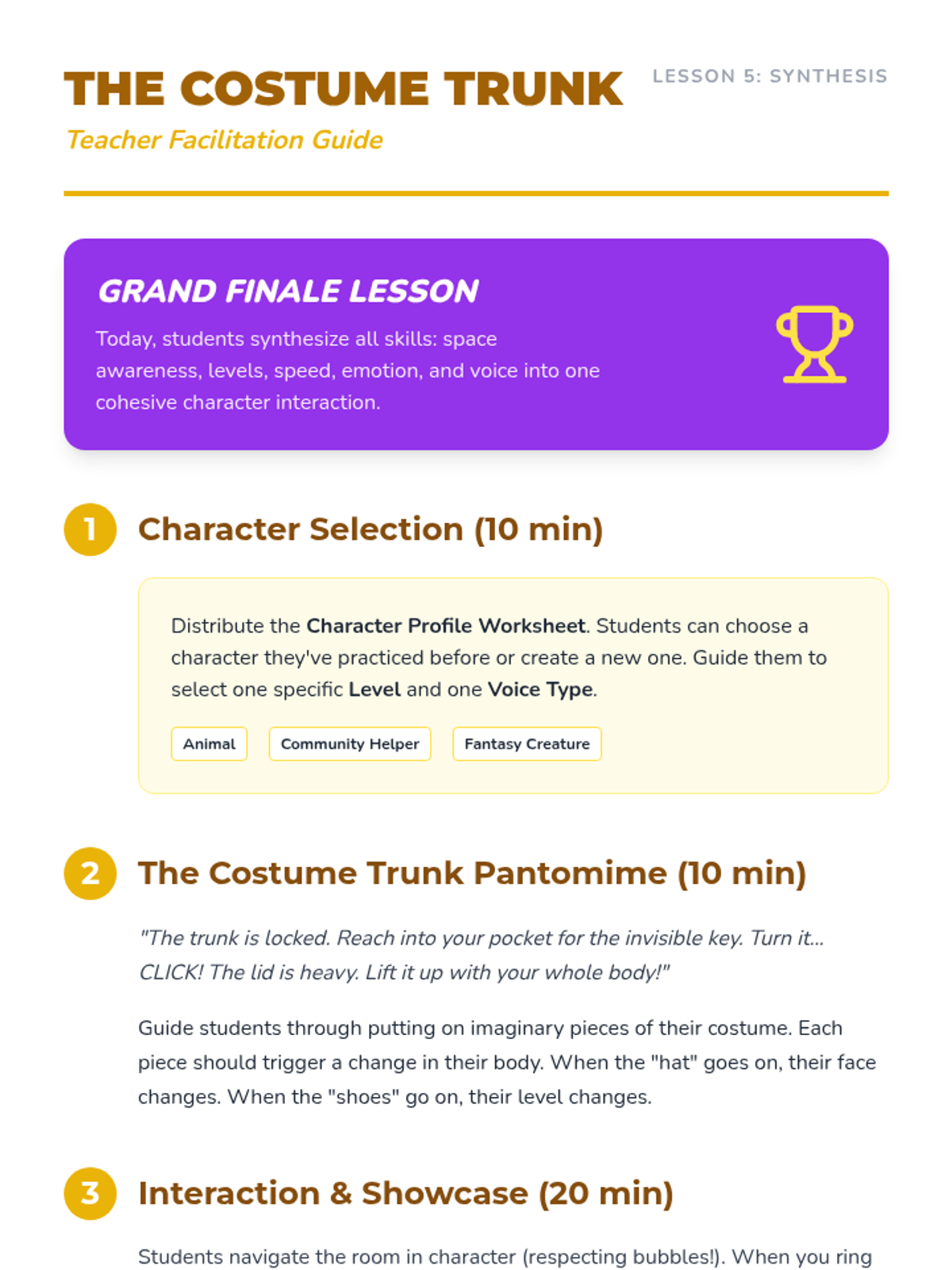
Students combine their physical choices and character voices to introduce themselves as a specific character, participating in a 'Character Walk' with peers.
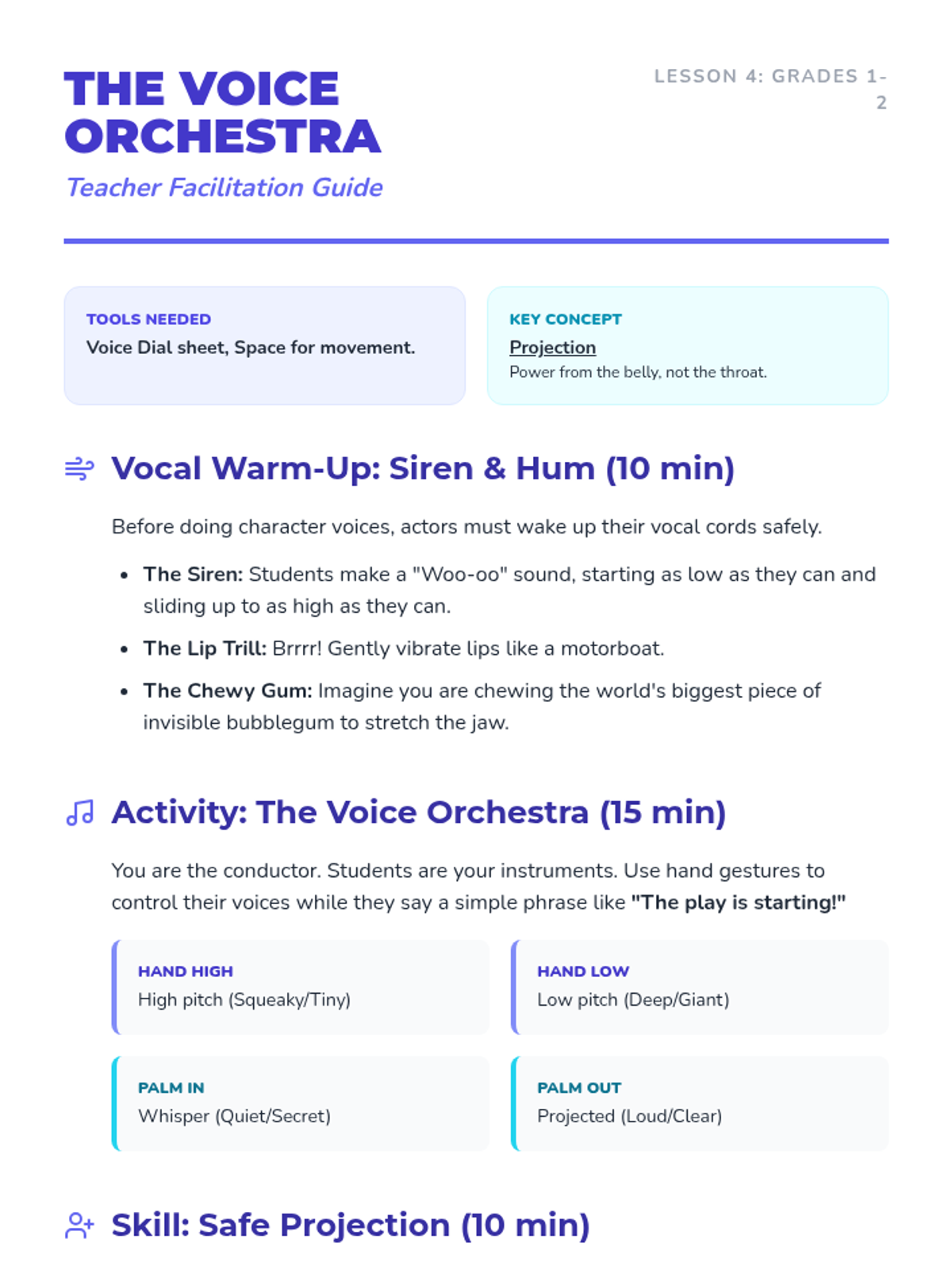
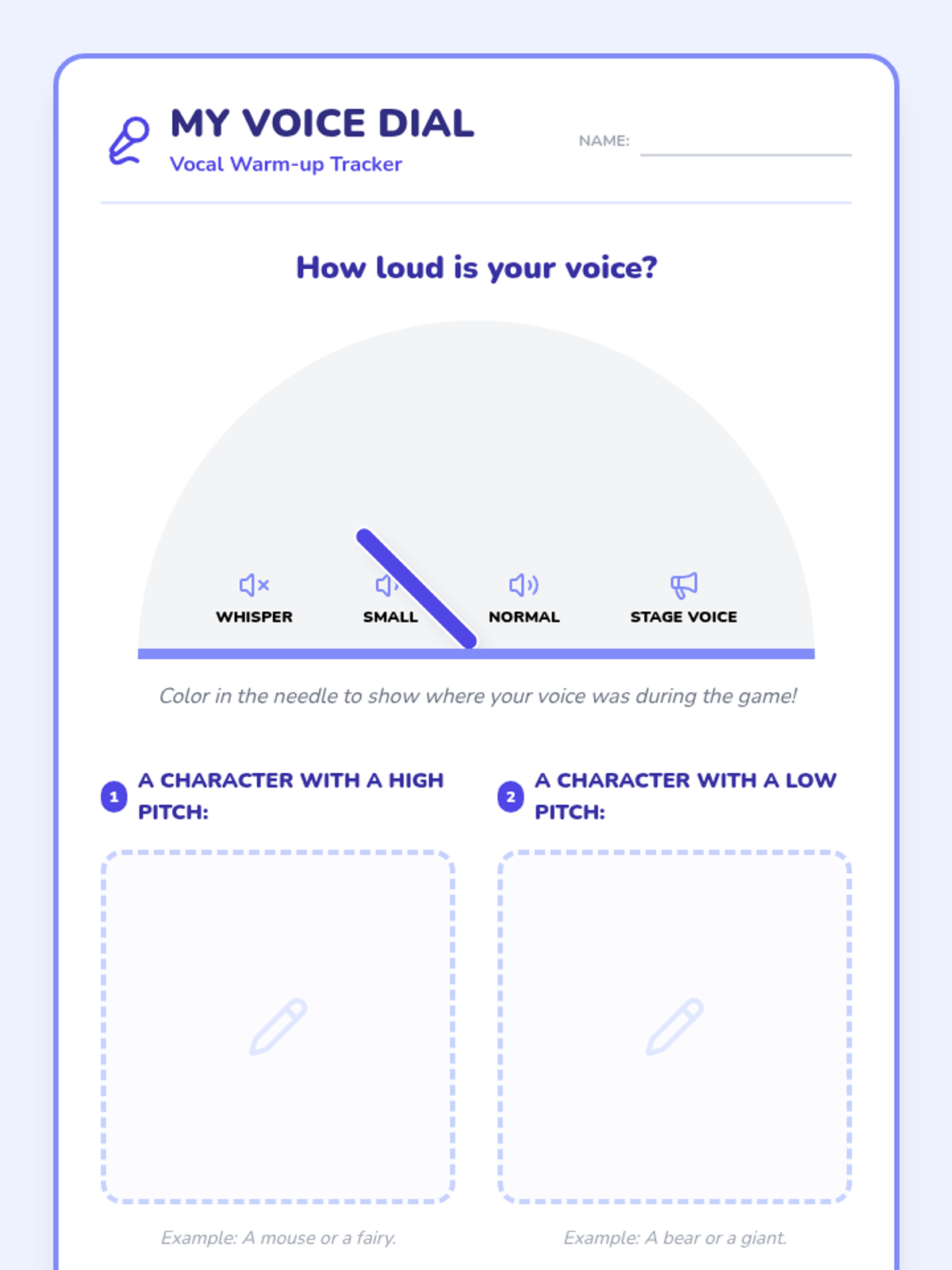
Students experiment with pitch, volume, and tone to create distinct voices for different characters, learning to project safely and match vocal qualities to physical traits.
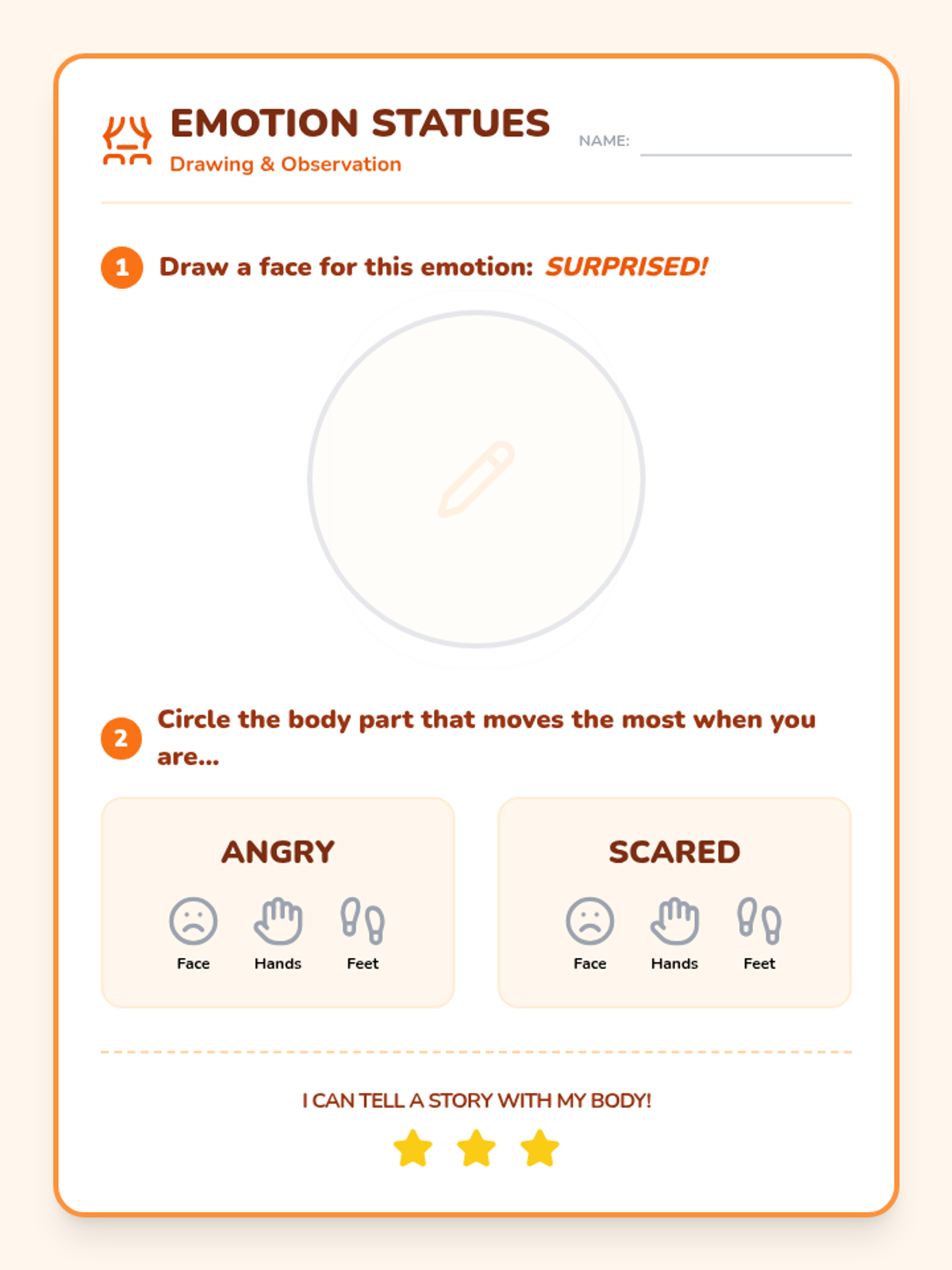
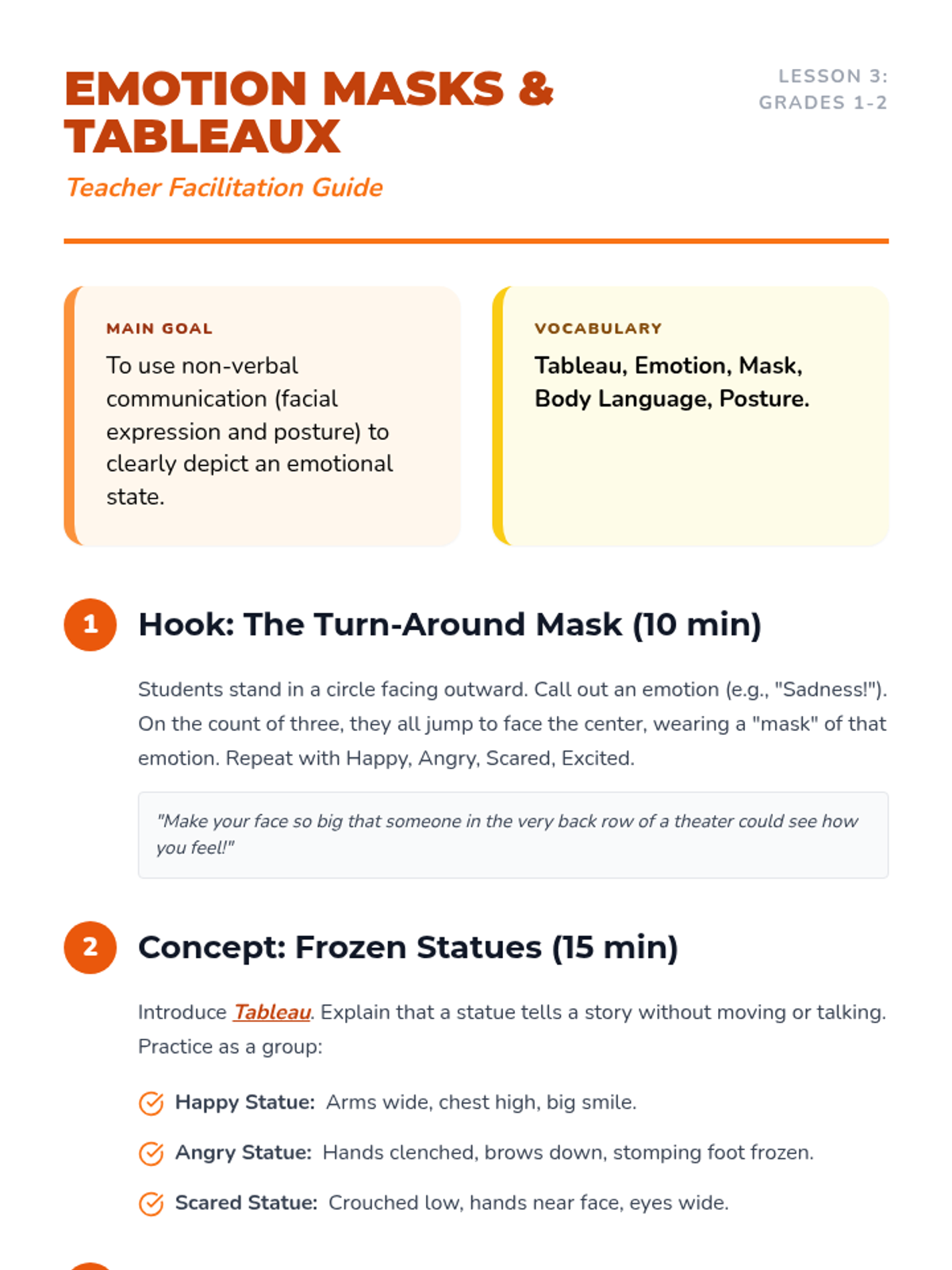
Focusing on facial expressions and body language, students create frozen statues (tableaux) to represent specific emotions, emphasizing non-verbal storytelling.
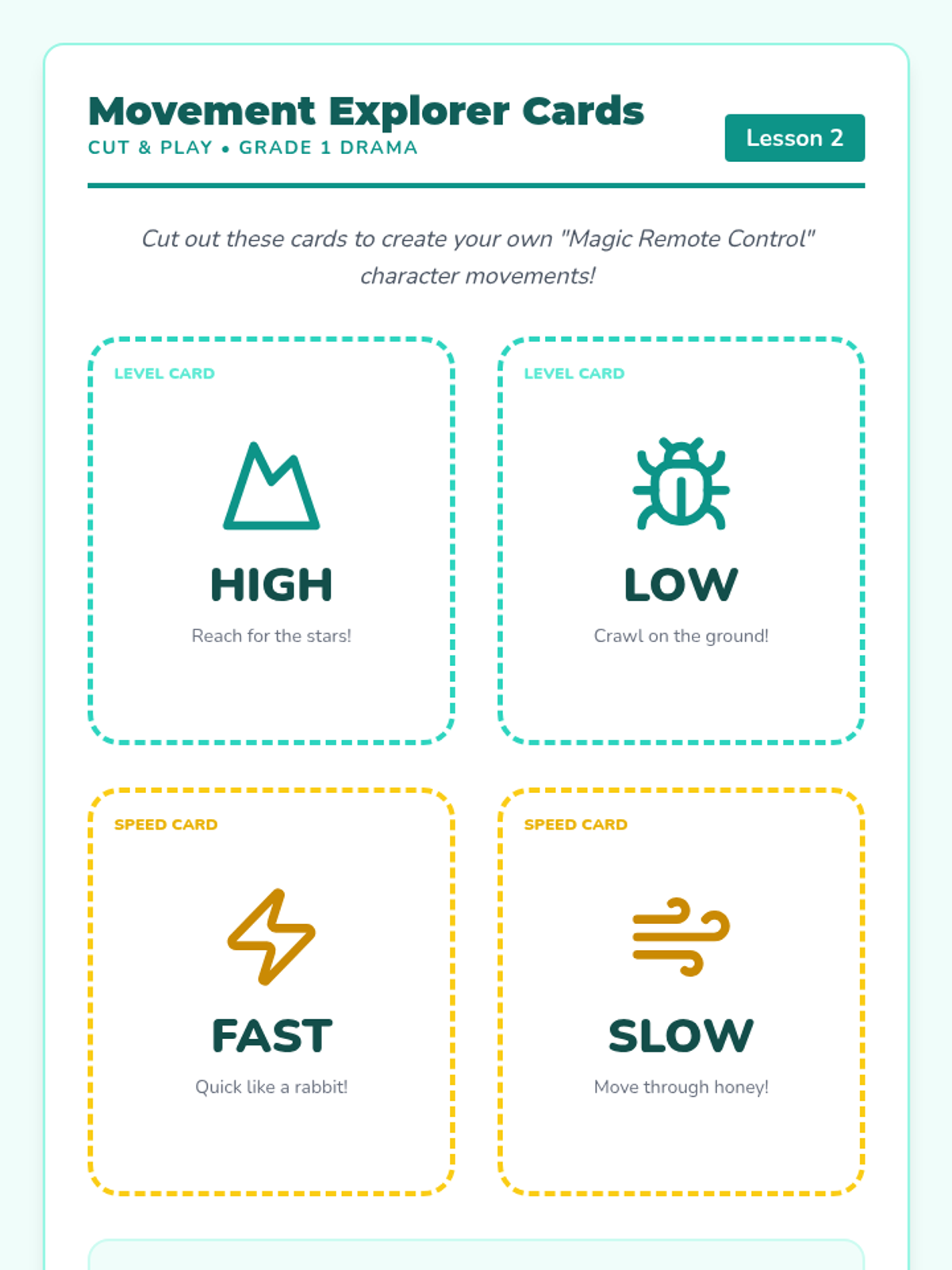
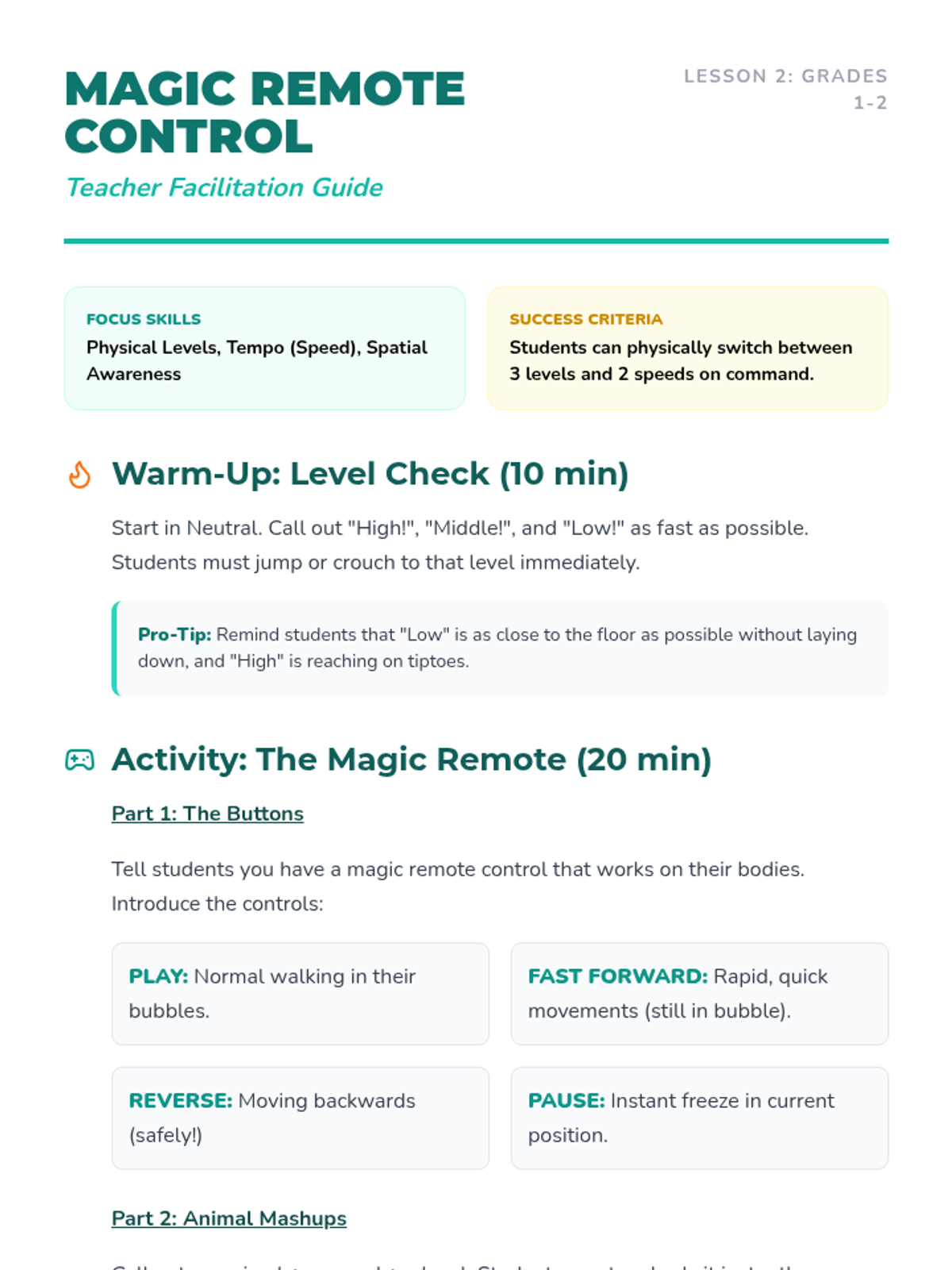
Students investigate how characters move differently by experimenting with high, middle, and low levels, as well as fast and slow tempos, embodying various animals to practice.
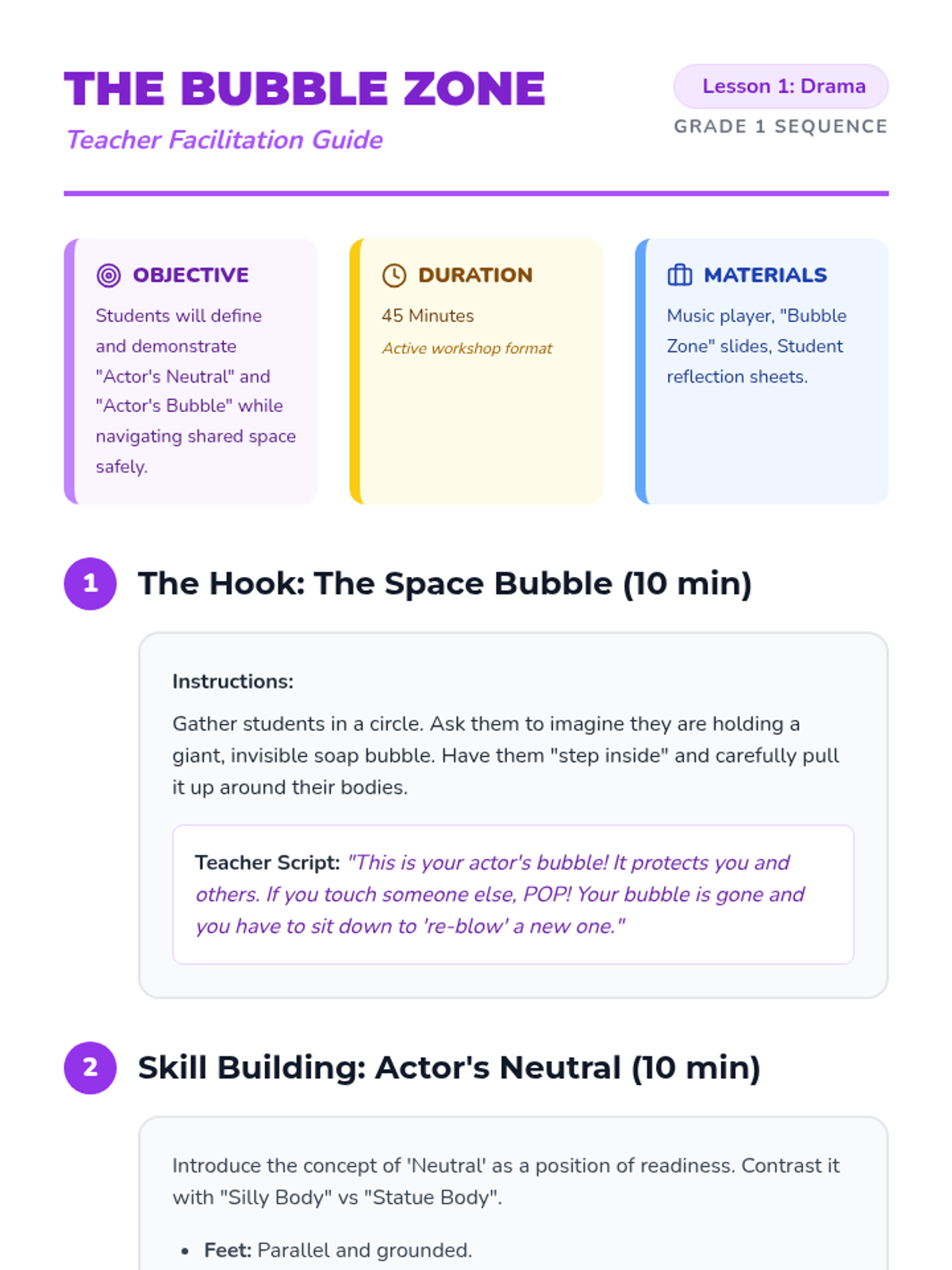
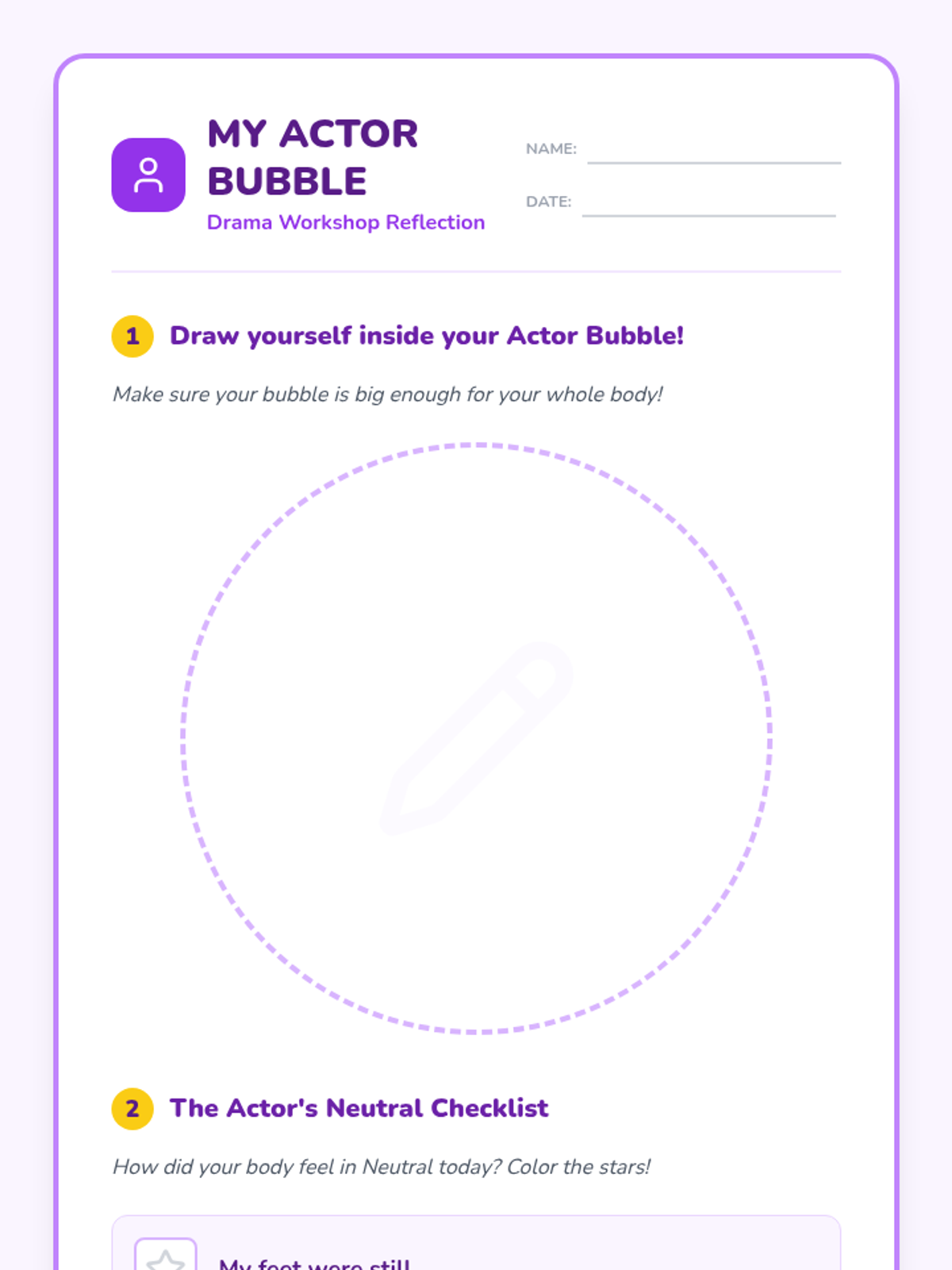
Students explore the concept of the 'actor's bubble' to understand personal space and safety on stage, practicing transitions between neutral and active states.
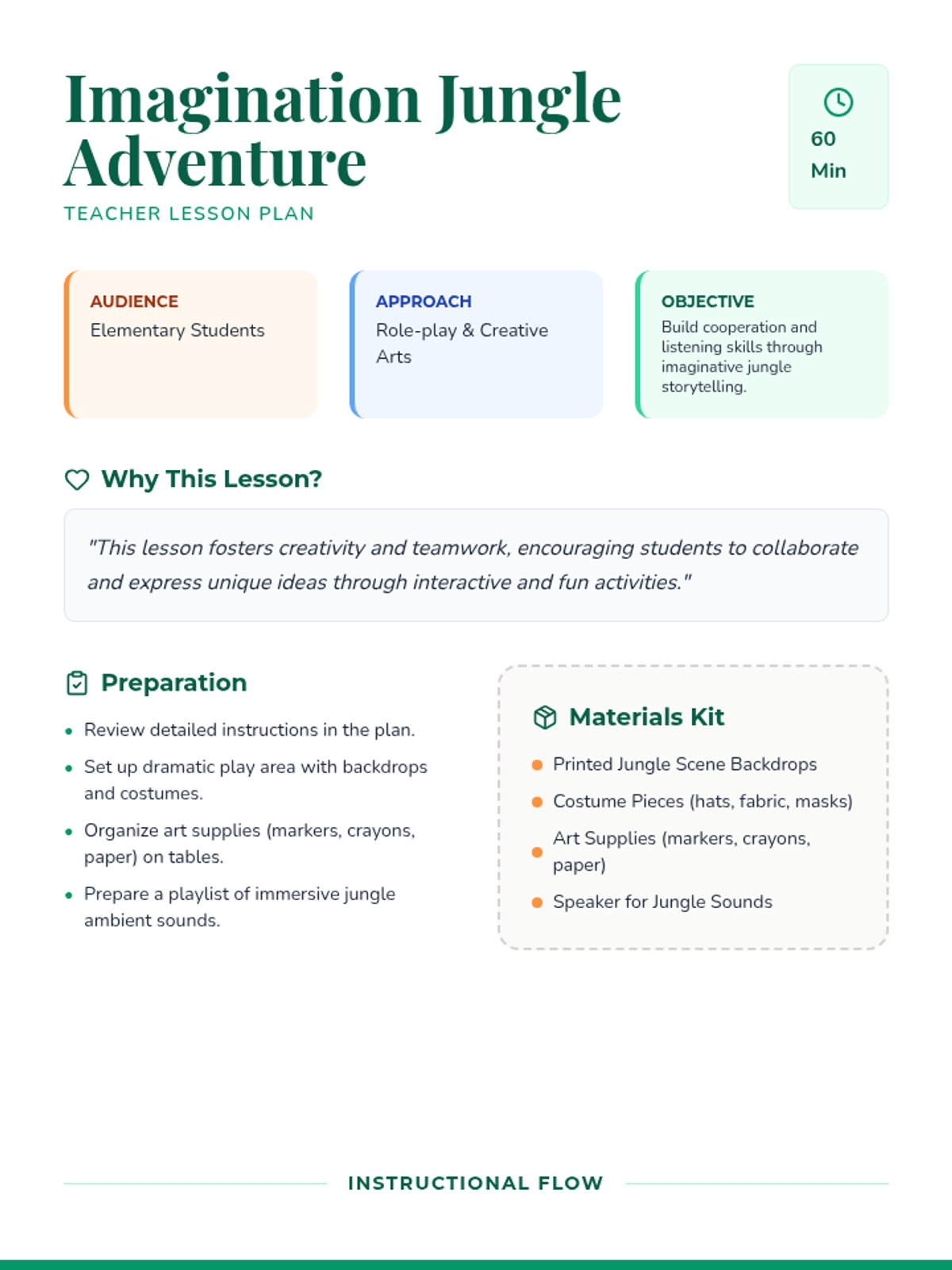
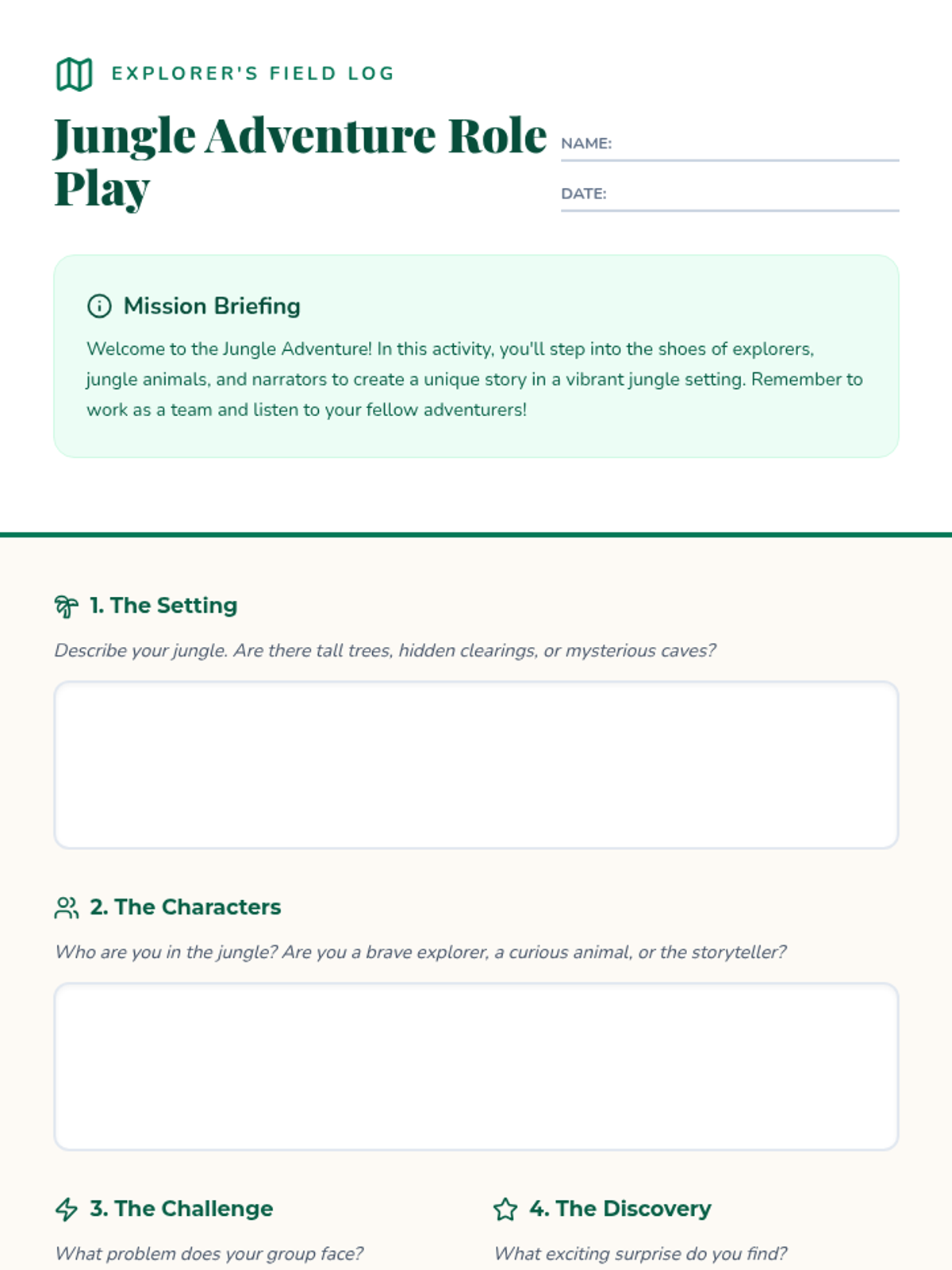
An interactive elementary lesson where students explore a vibrant jungle through dramatic play and creative arts, fostering teamwork and imaginative storytelling.
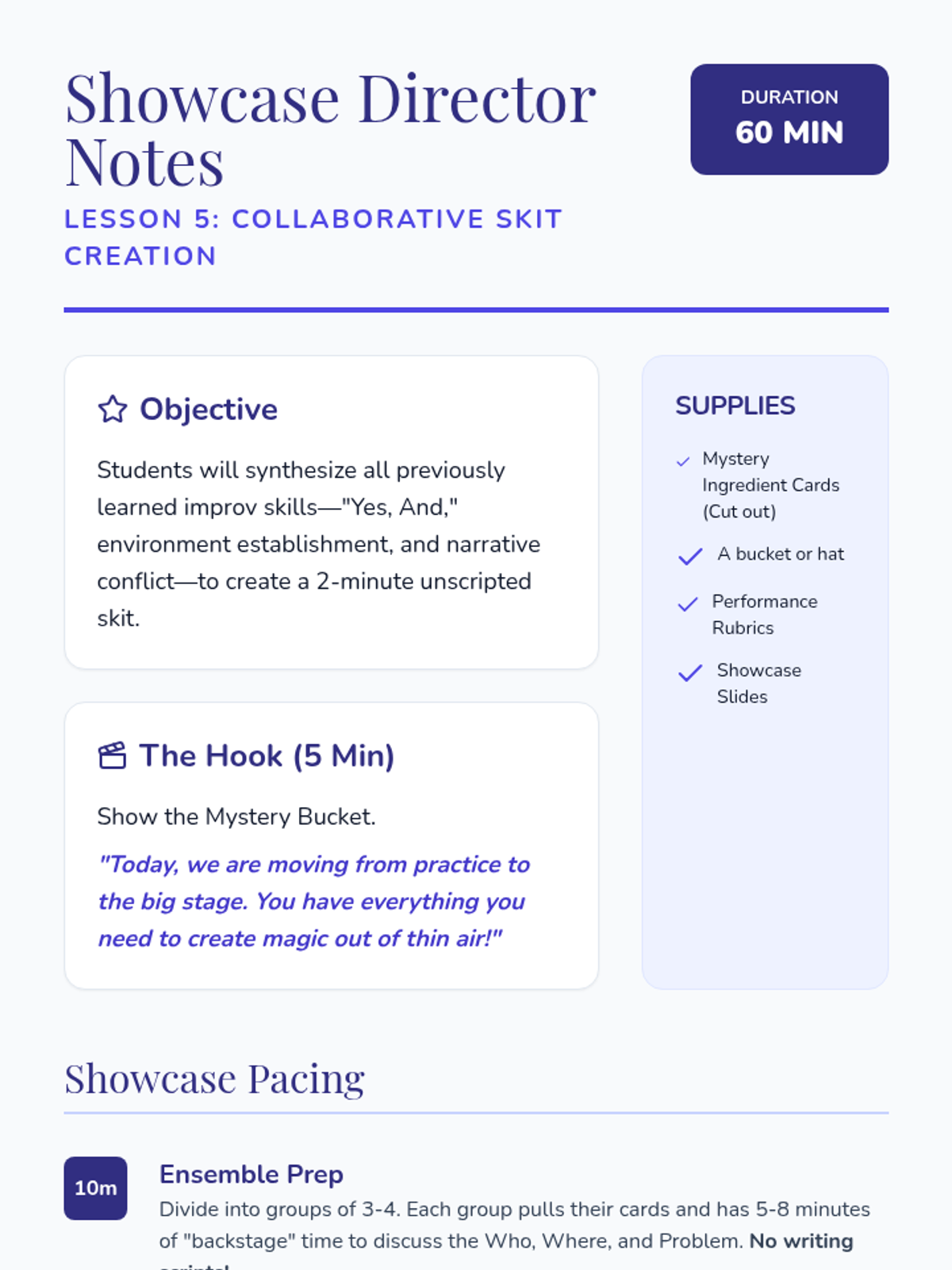
In small groups, students use a random prompt to improvise a short skit. They apply all previous skills: listening, 'Yes, And', and structure, concluding with a showcase performance.
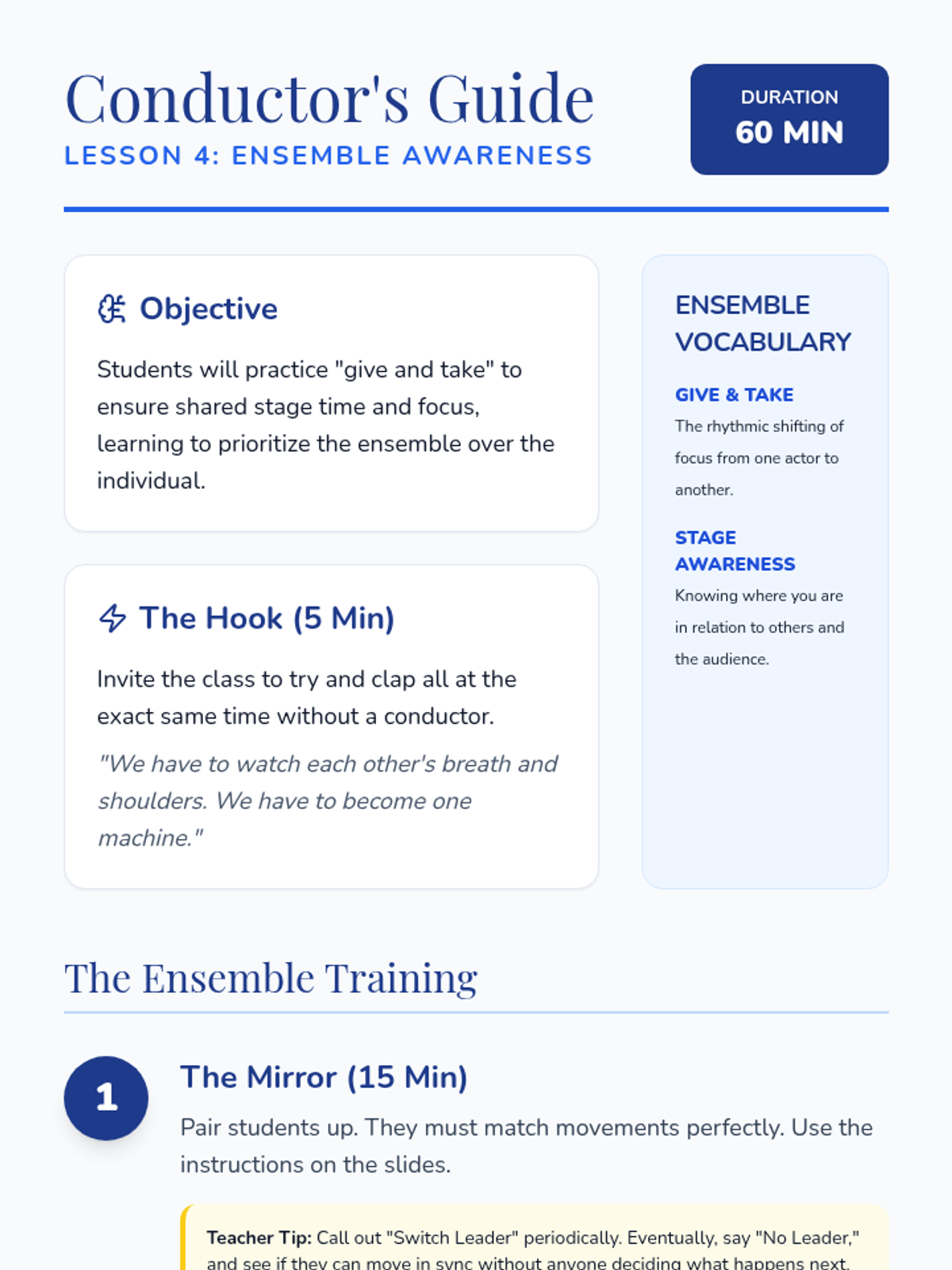
The class focuses on 'give and take' and stage awareness, ensuring students don't talk over one another or hog the spotlight. Activities involve group storytelling and mirroring exercises.
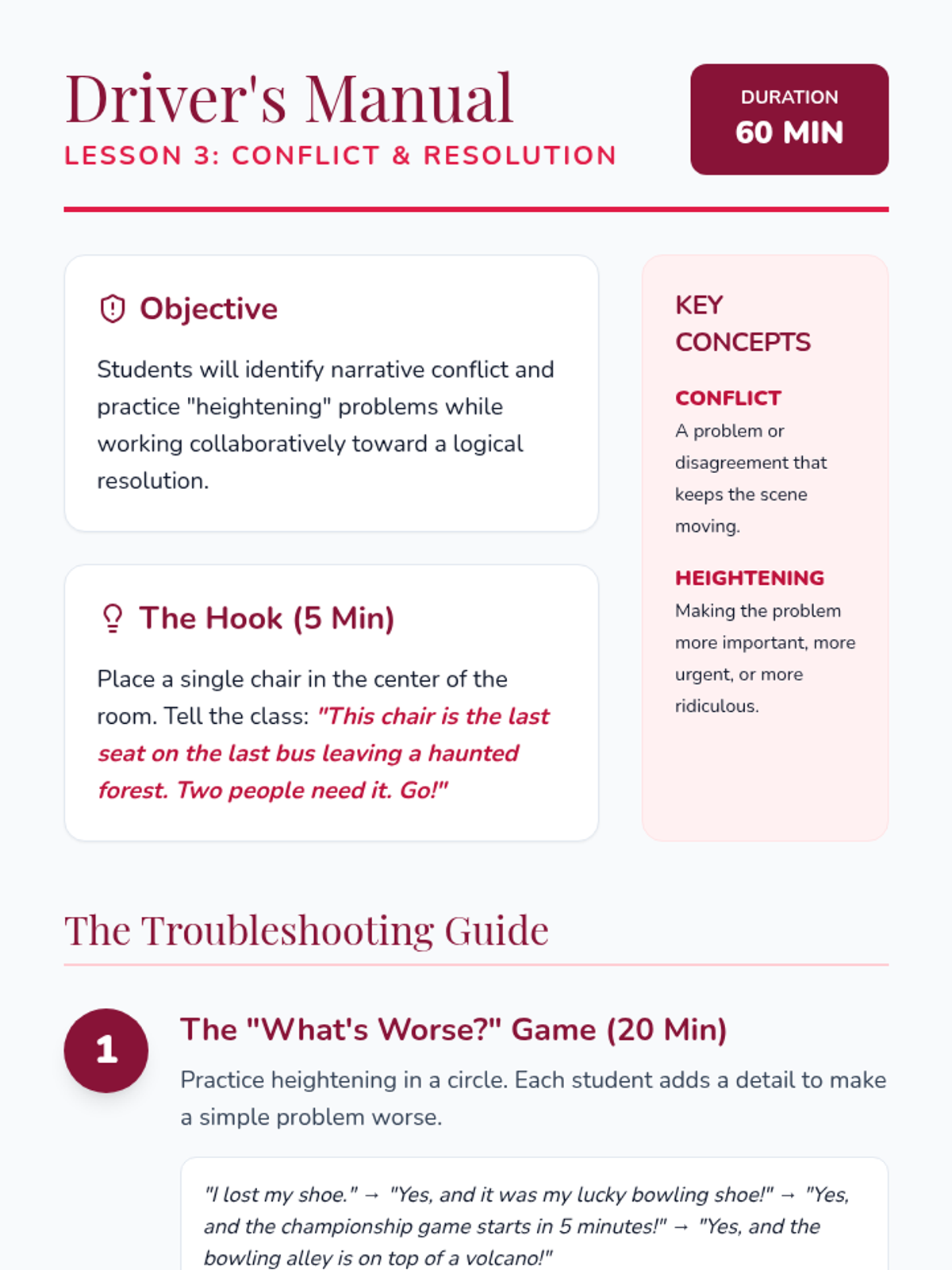
Students explore narrative structure within improv by identifying a problem and working toward a solution. They play games designed to heighten conflict safely and encourage cooperative problem-solving.
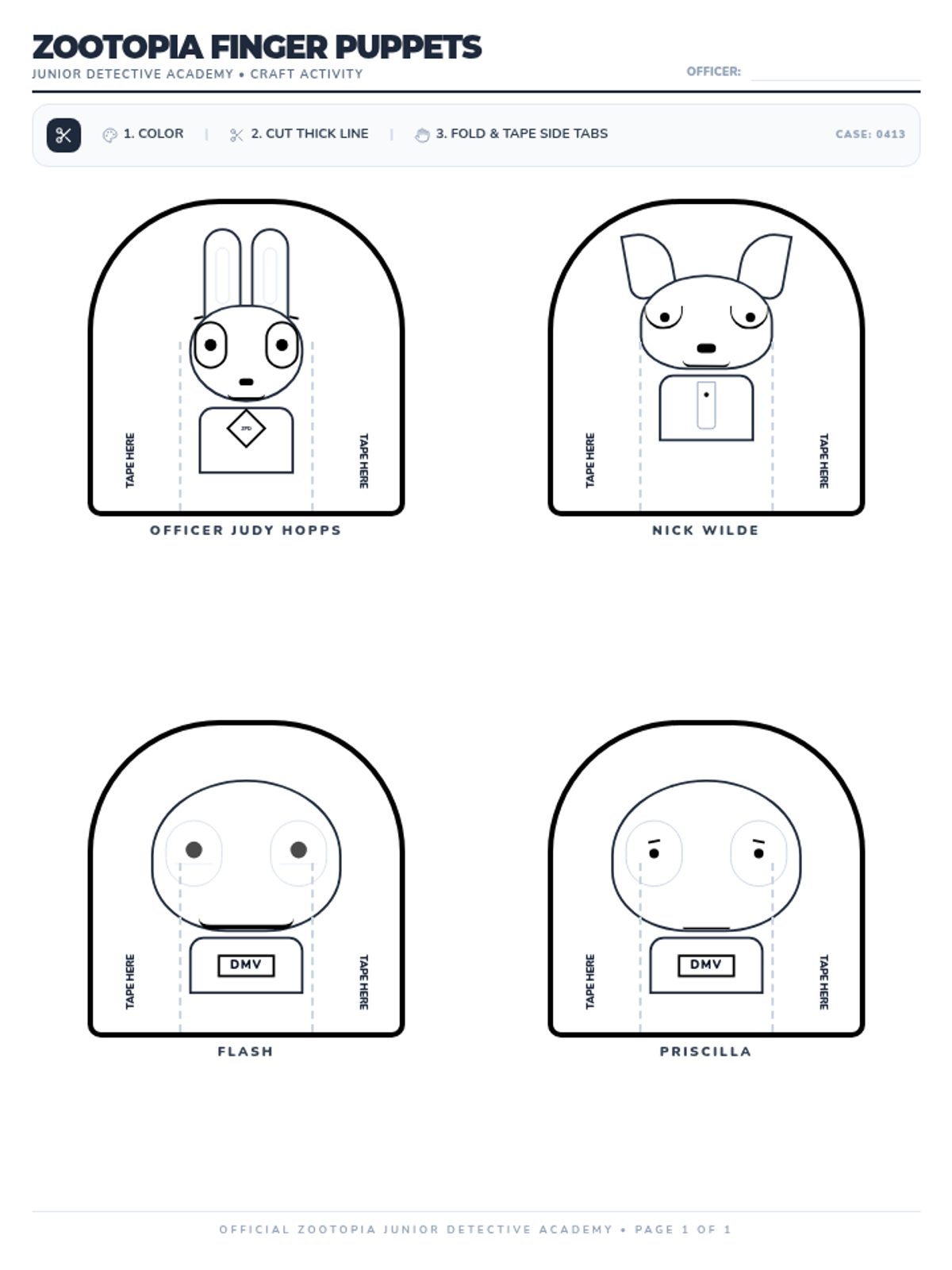
A creative craft lesson where students color and create their own finger puppets of favorite Zootopia characters to practice storytelling and role-playing.
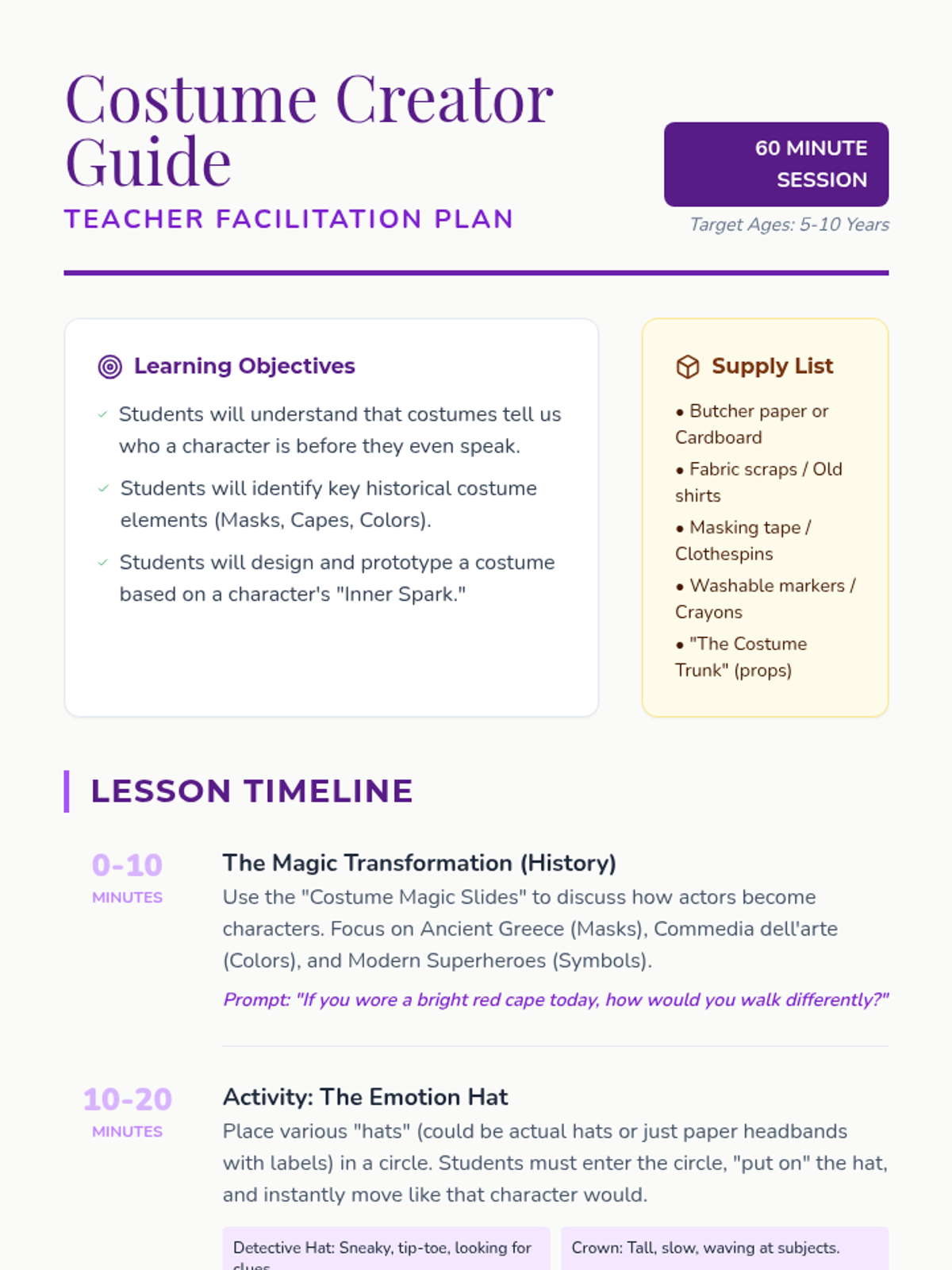
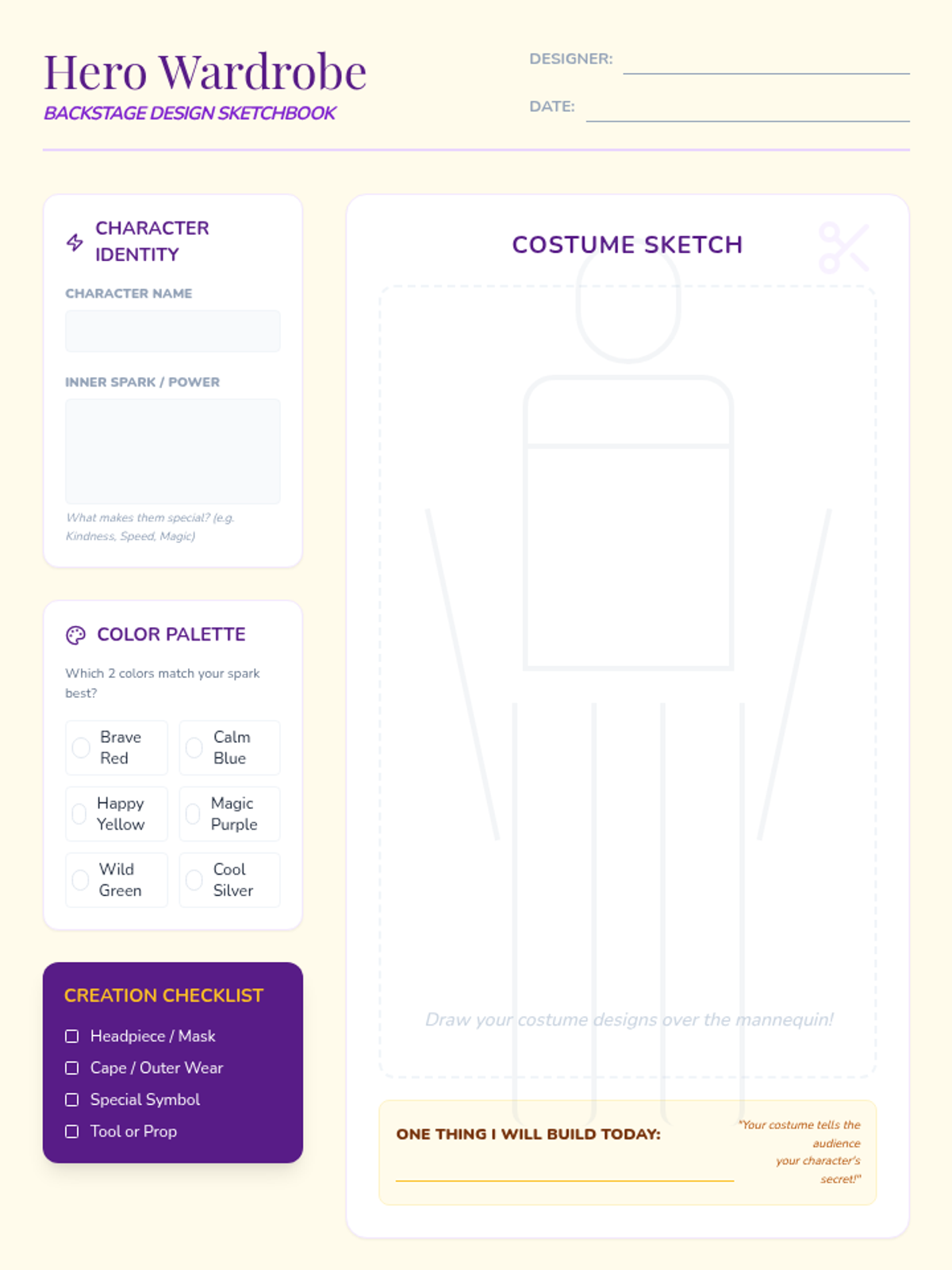
A 60-minute exploration into the world of theatrical costume design, featuring a simplified history of stage attire, interactive character-building games, and a hands-on design workshop for young creators.
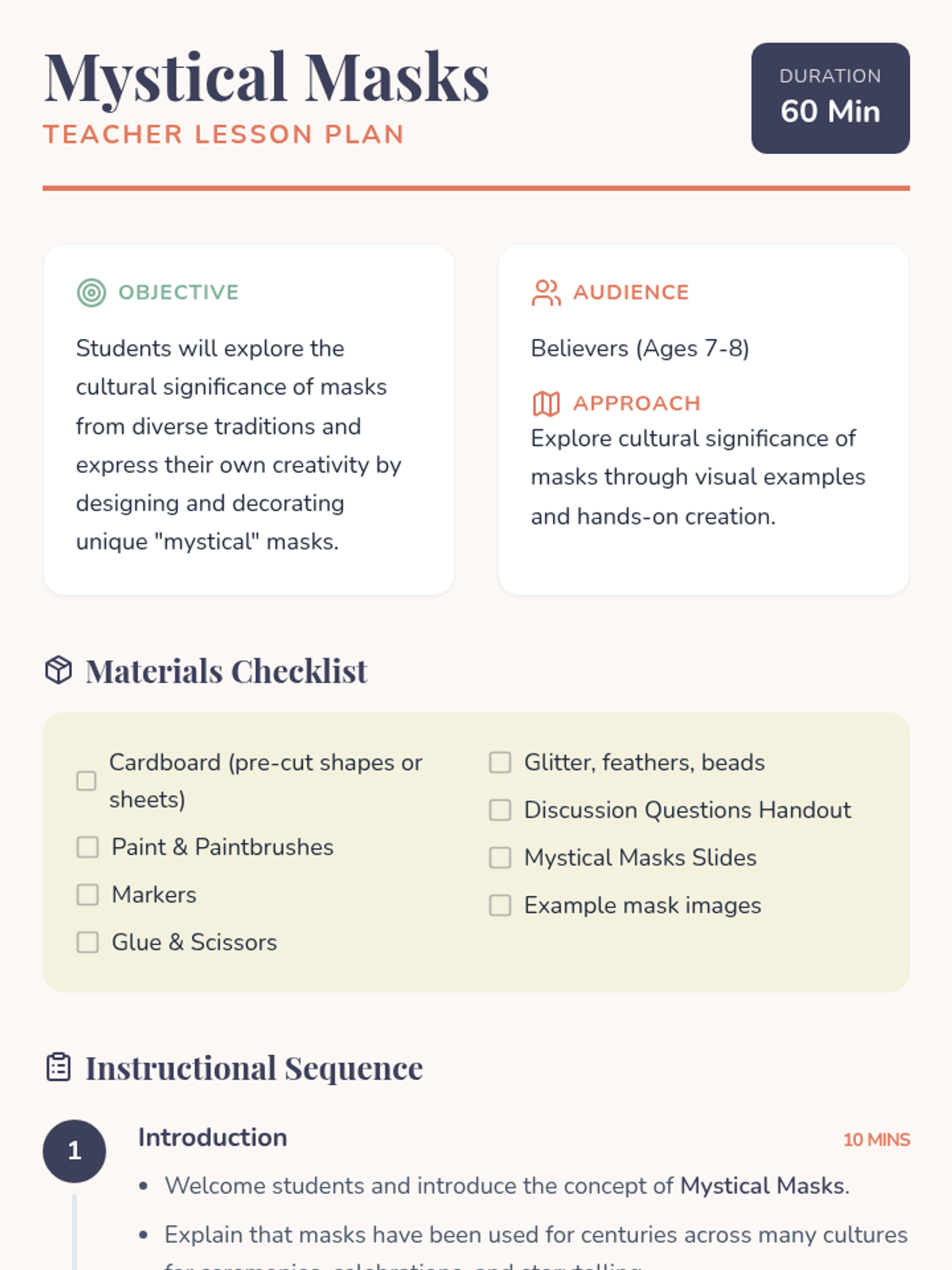
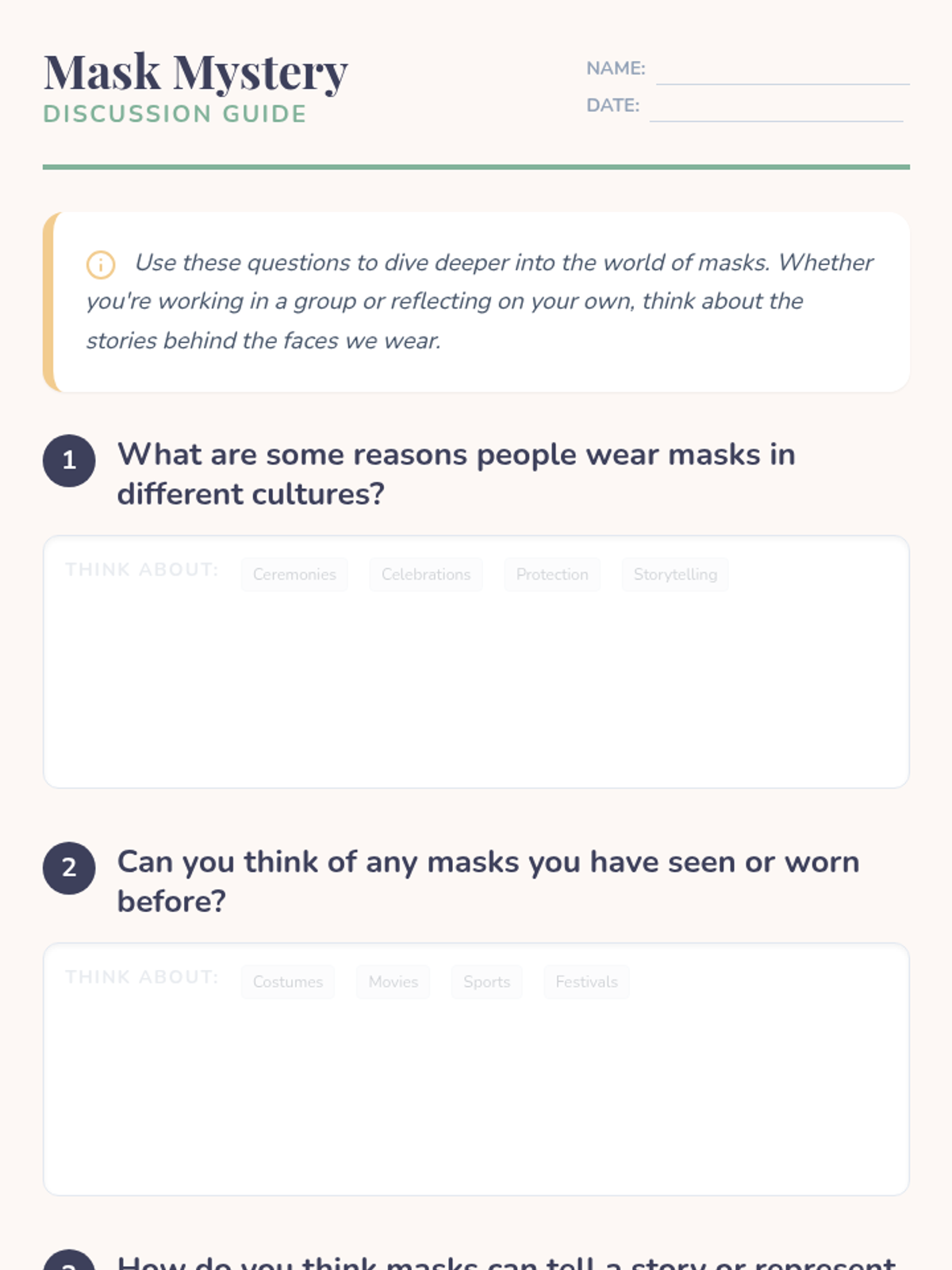
Students explore the cultural significance of masks from around the world and design their own mystical masks using cardboard and craft supplies. This lesson encourages creative expression and appreciation for global traditions.
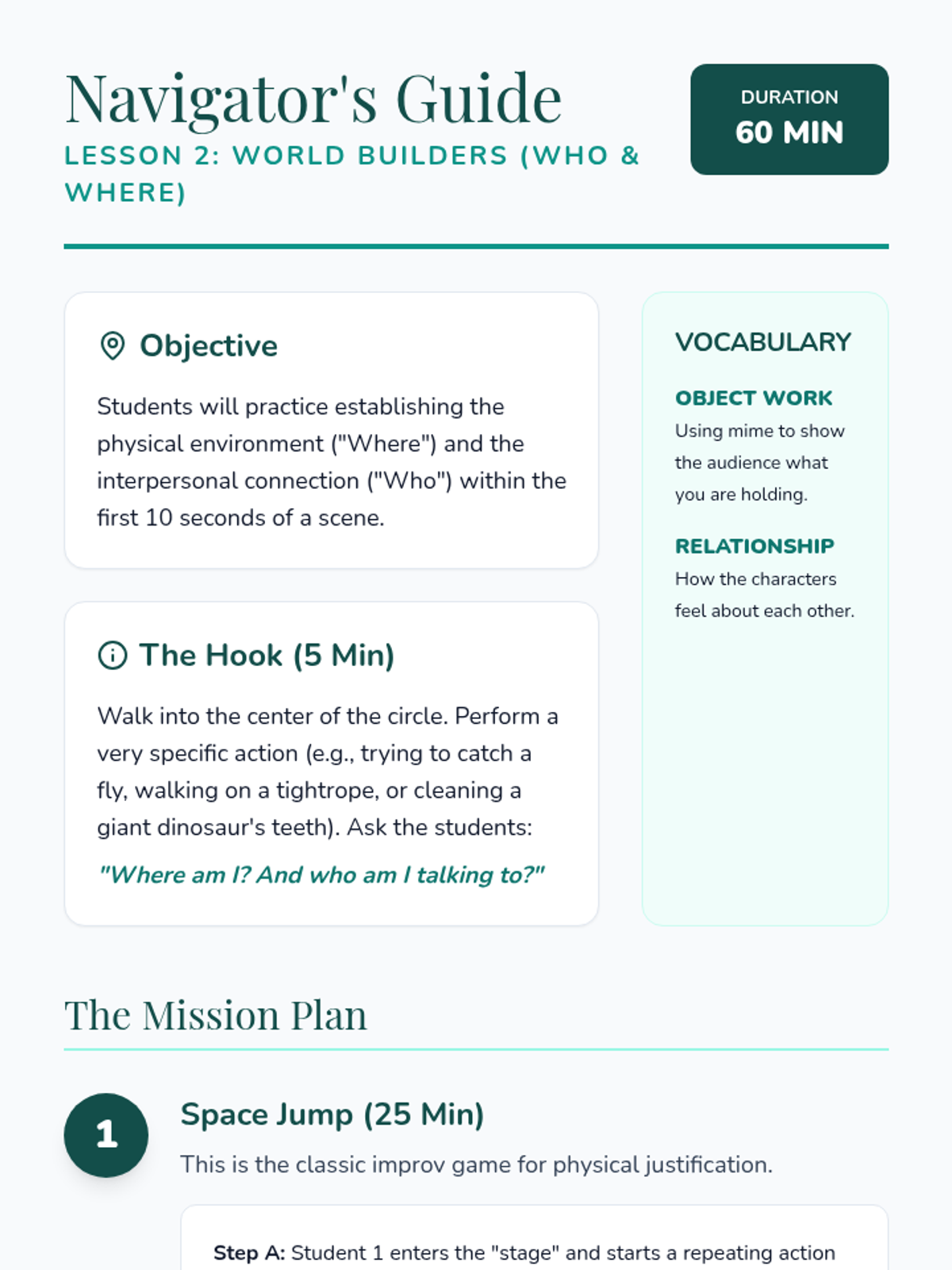
Learners practice establishing the 'Who' (relationship) and 'Where' (location) at the start of an improvised scene. They participate in exercises where they must instantly justify their physical position and define the setting.
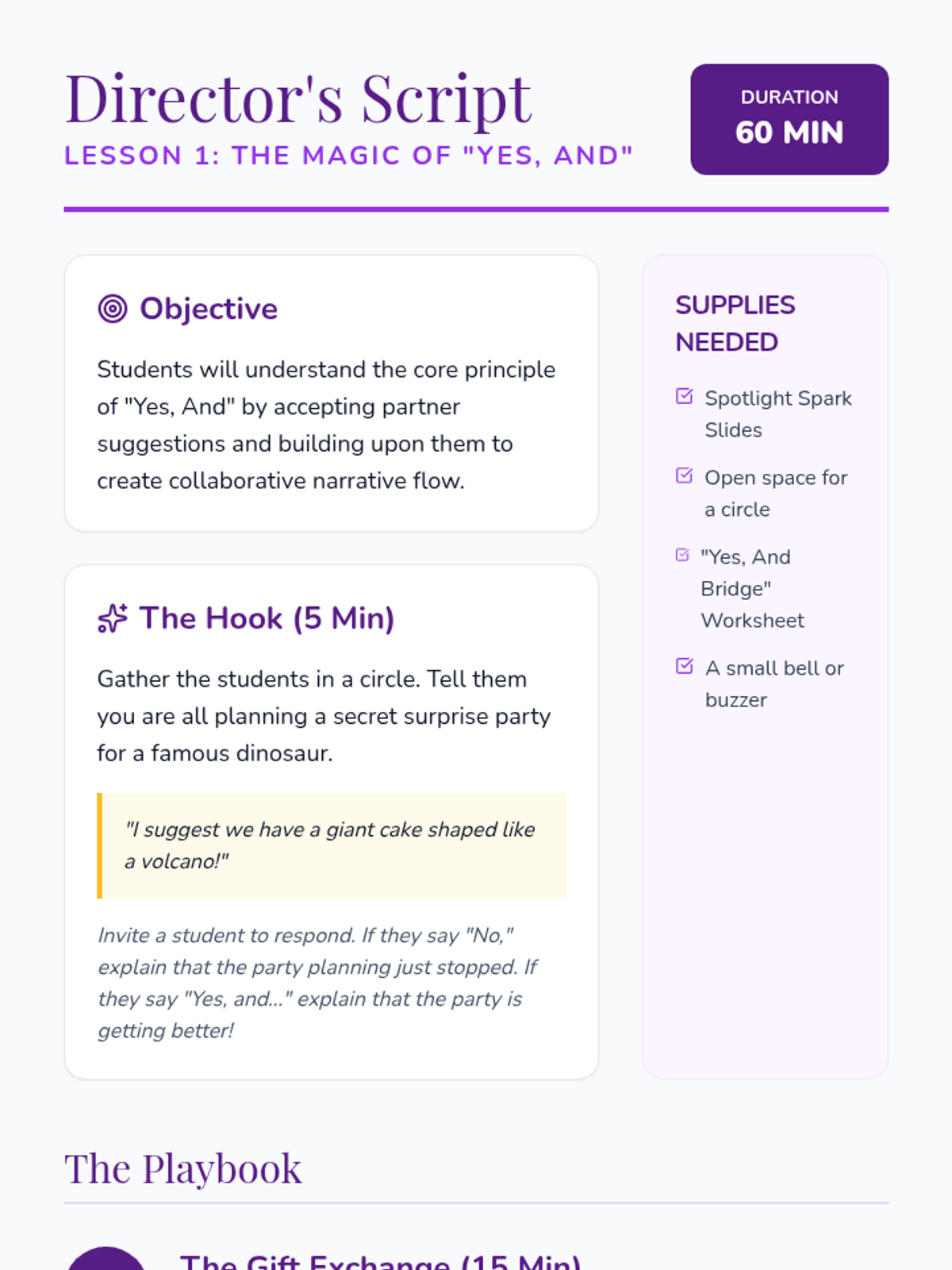
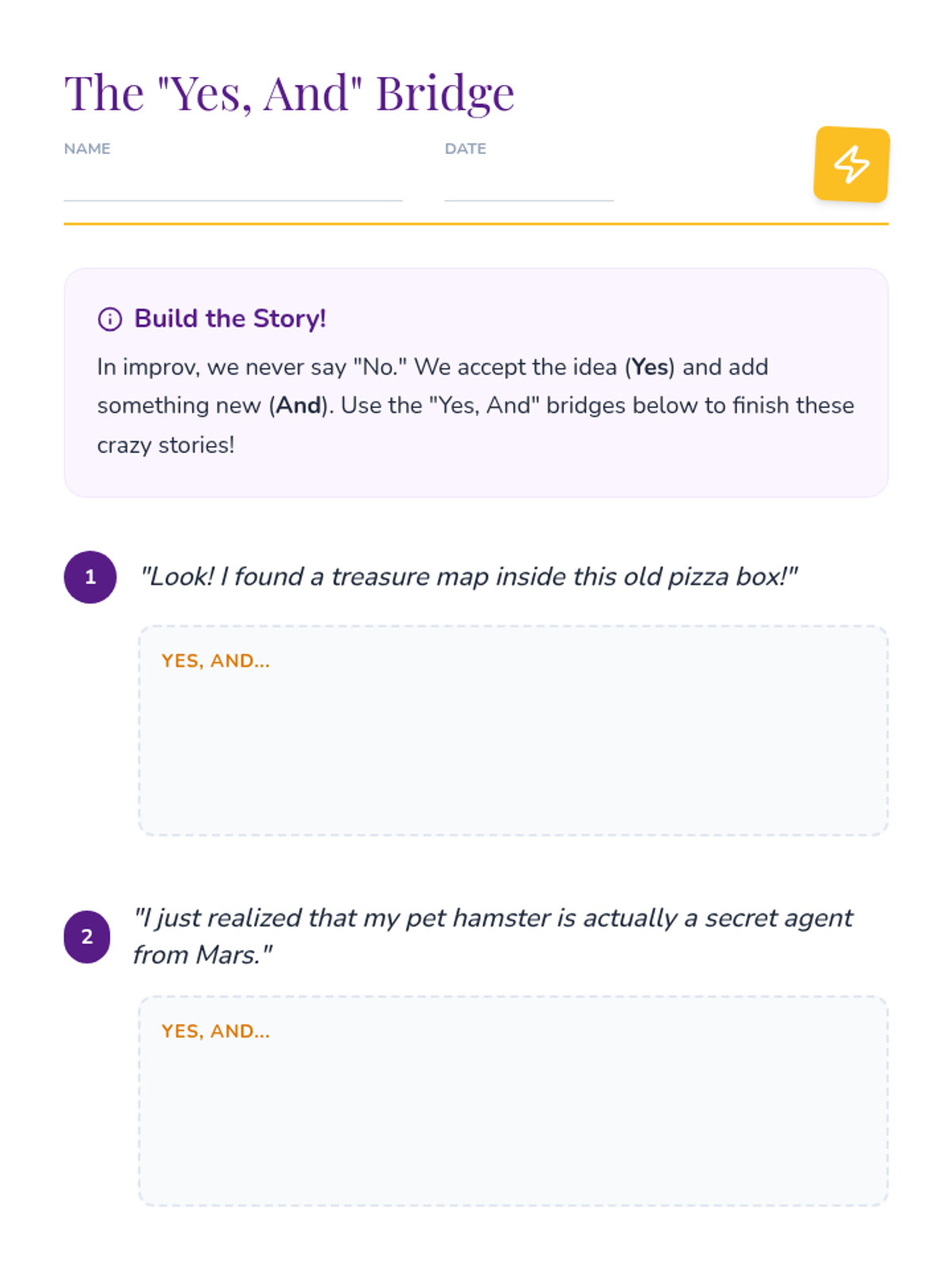
Students are introduced to the golden rule of improv: 'Yes, And.' Through circle games and pair activities, they practice accepting a partner's idea (Yes) and adding new information to it (And).
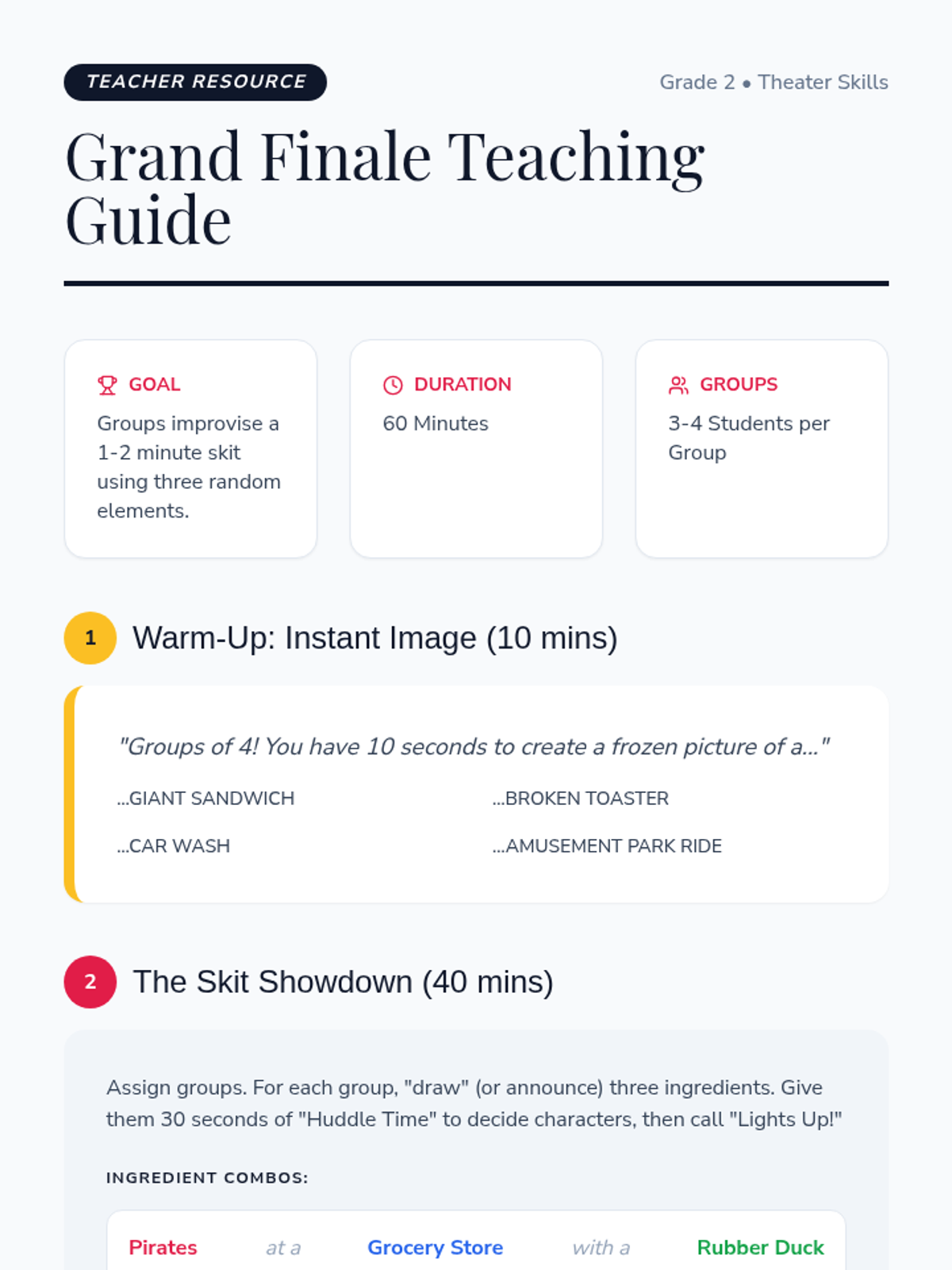
Groups are given three random elements (a character, a setting, and an object) and must instantly create a skit. This final lesson emphasizes teamwork, quick thinking, and stage confidence.