Develops technical proficiency and creative movement skills across various styles. Examines choreographic principles alongside the historical and cultural origins of diverse global dance forms.
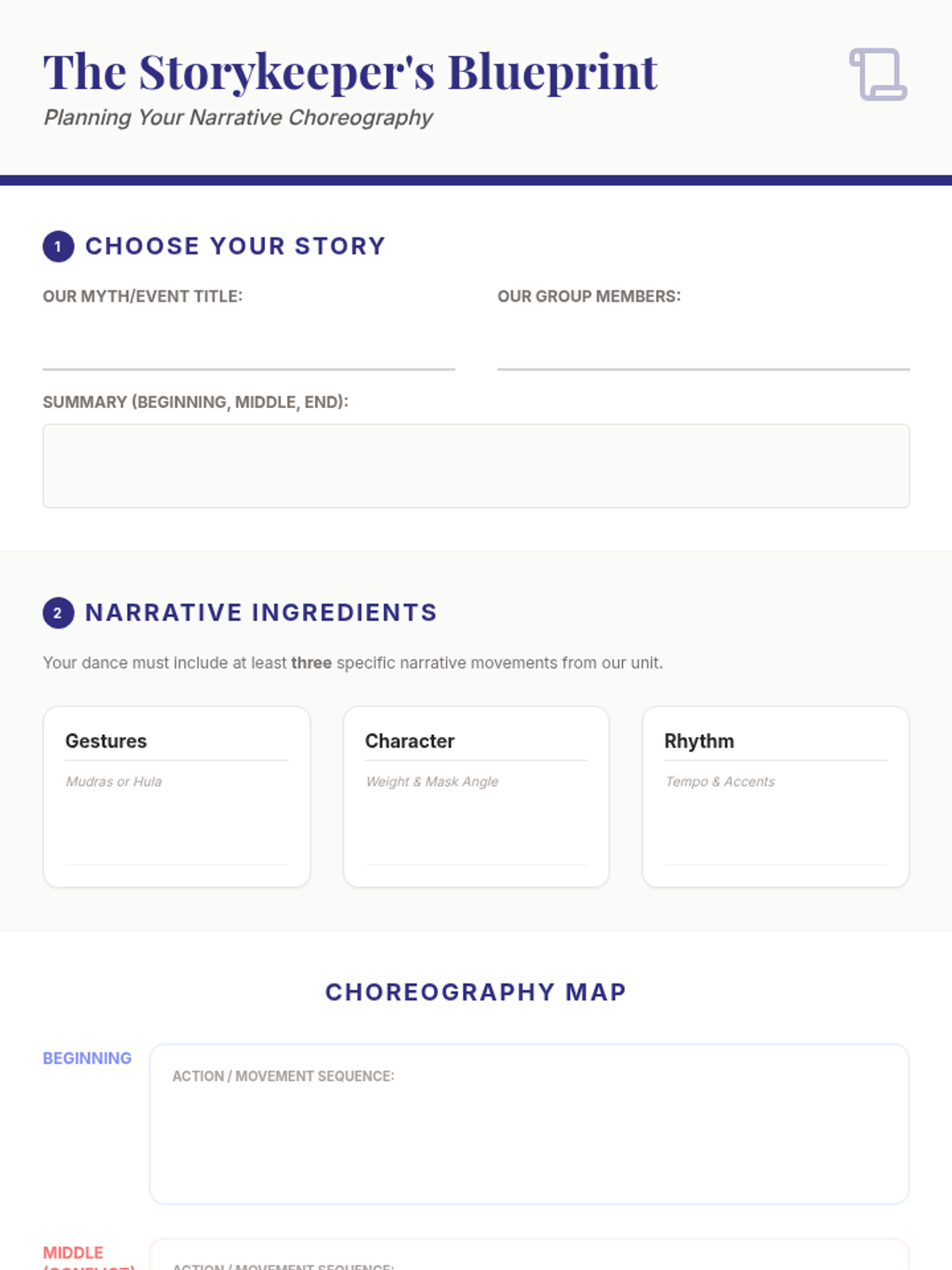
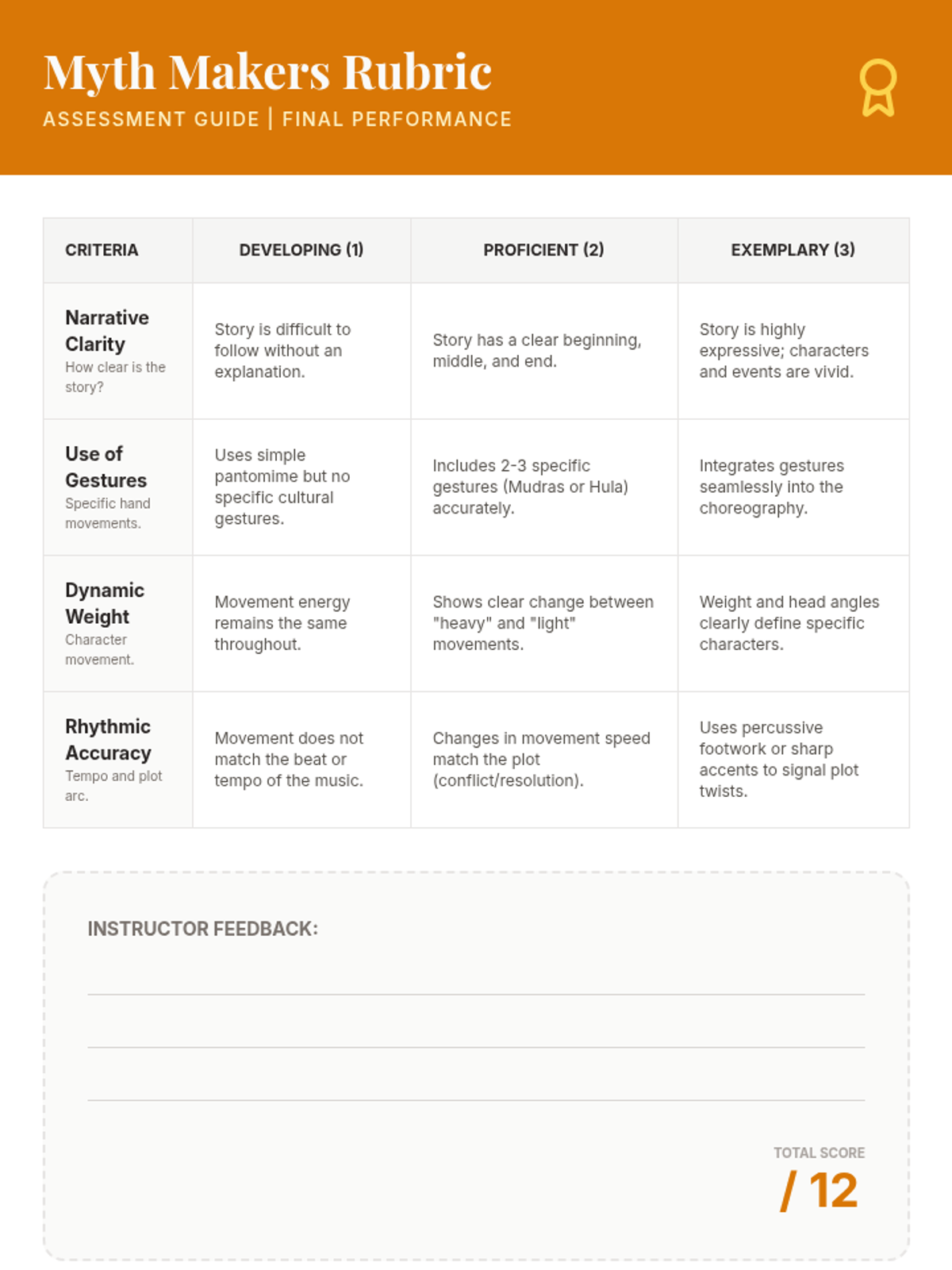
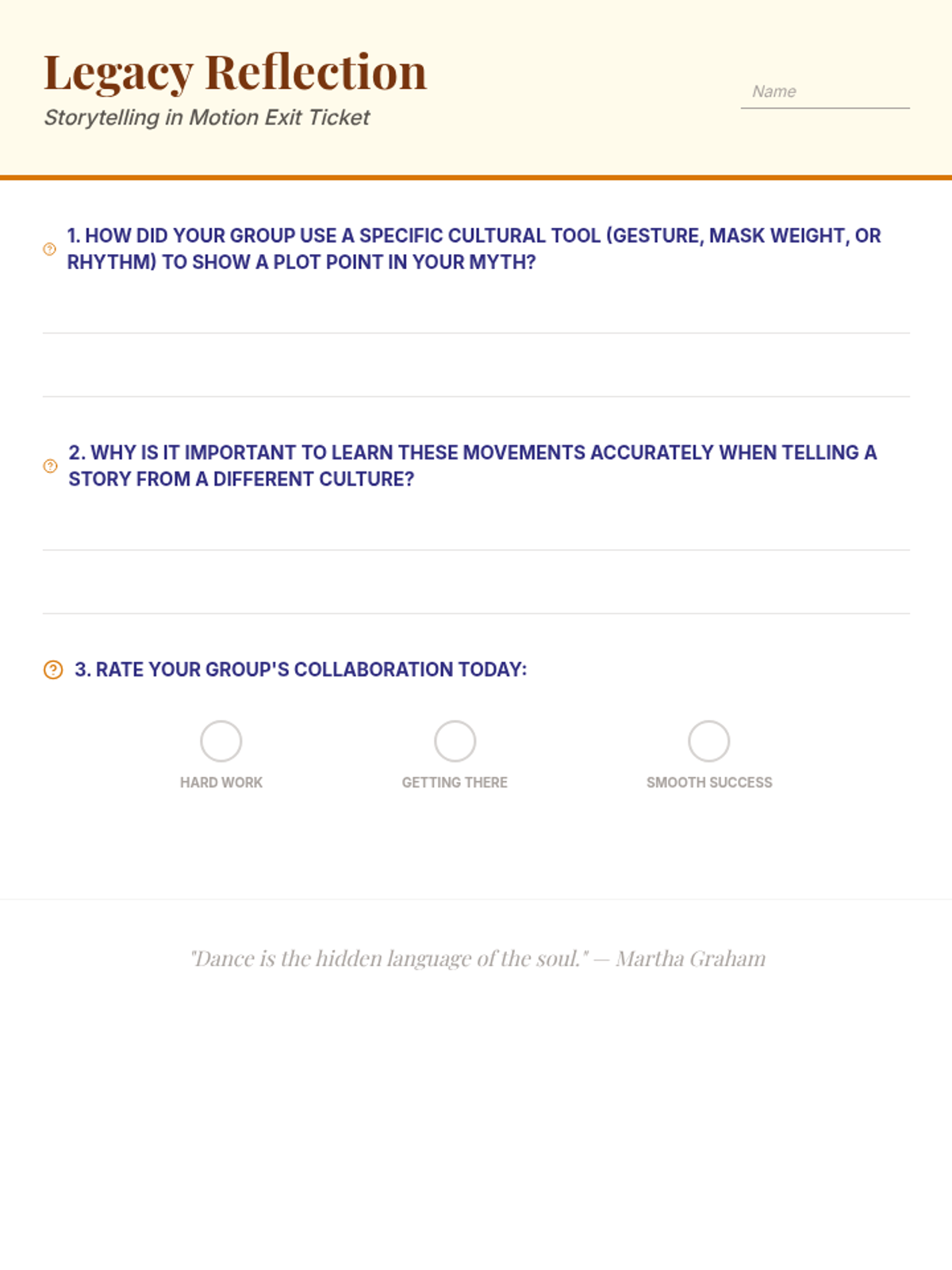
Working in small groups, students choreograph a short dance piece based on a myth or historical event using the gestures and rhythmic tools learned throughout the unit.
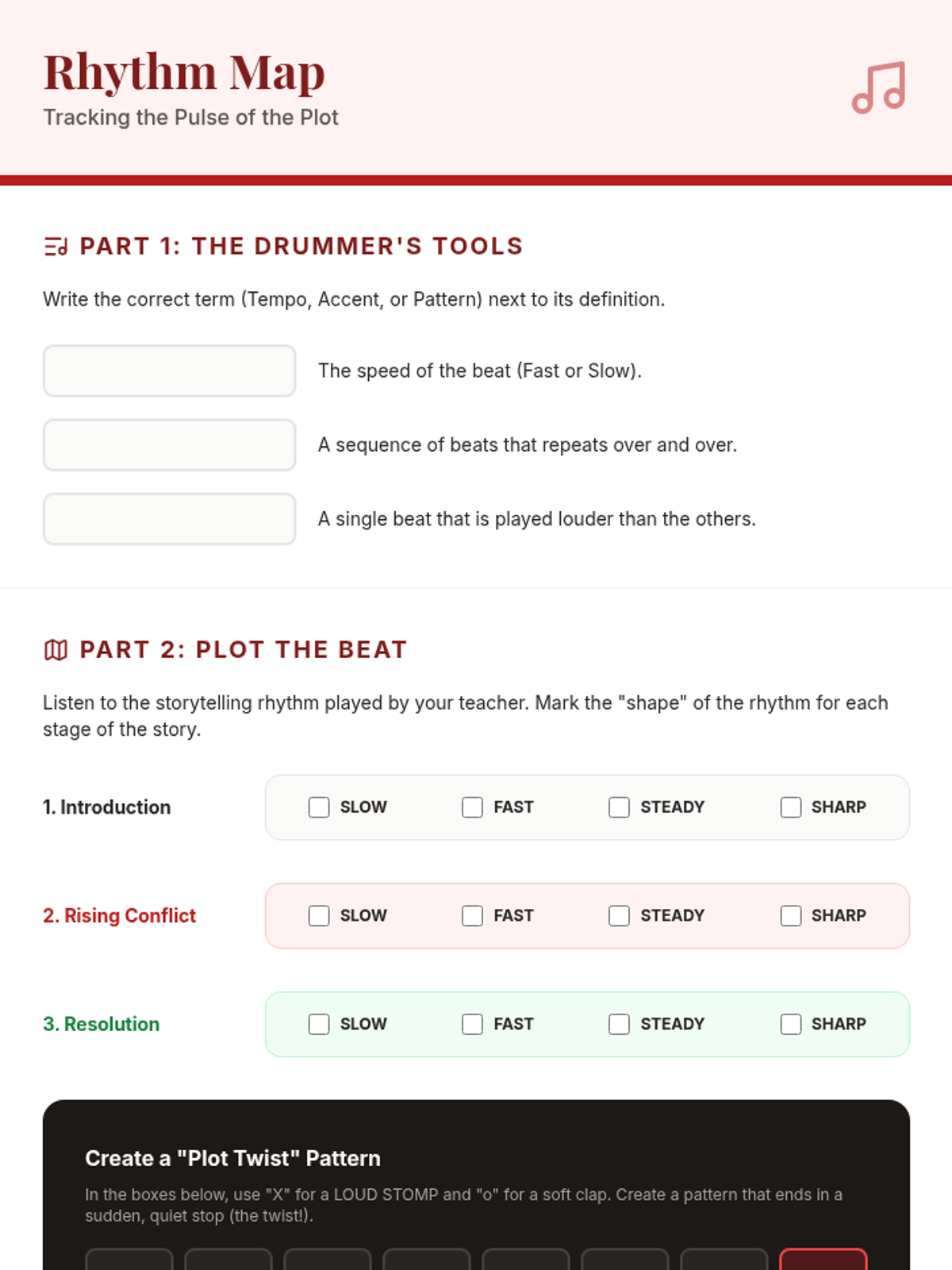
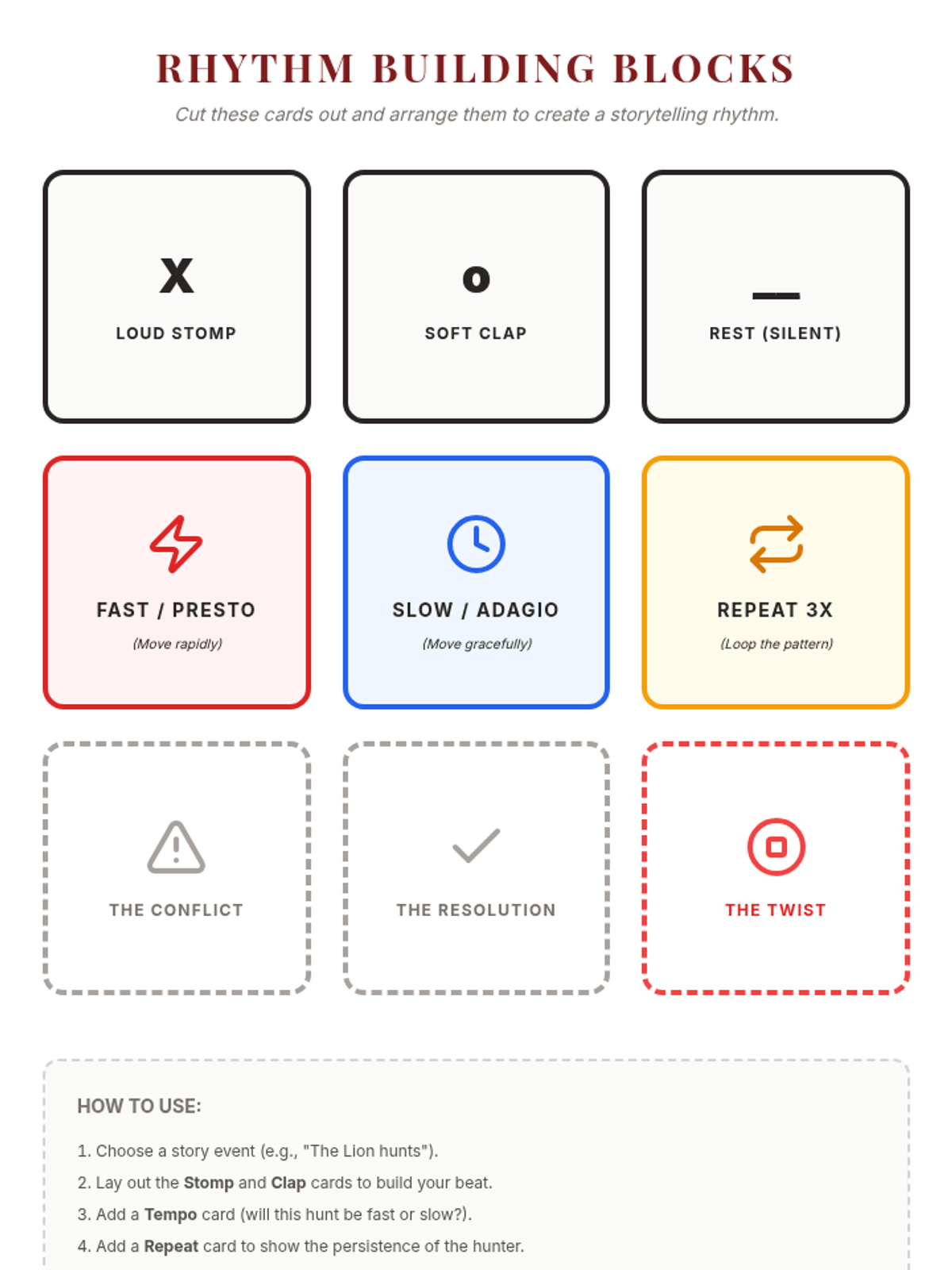
Students explore the relationship between rhythmic patterns, tempo, and dramatic arcs, mapping how drum beats signal conflict and resolution in dance.
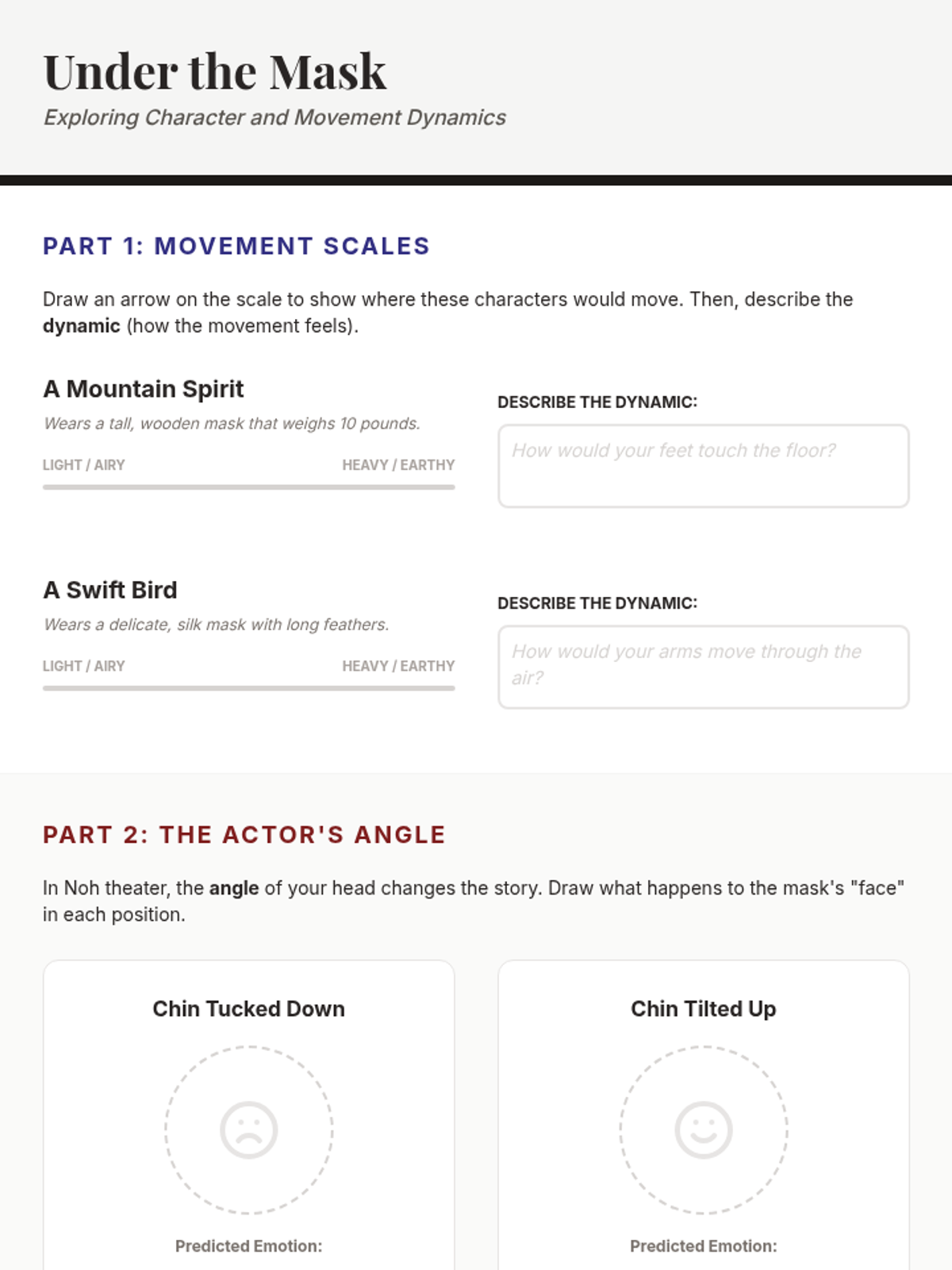
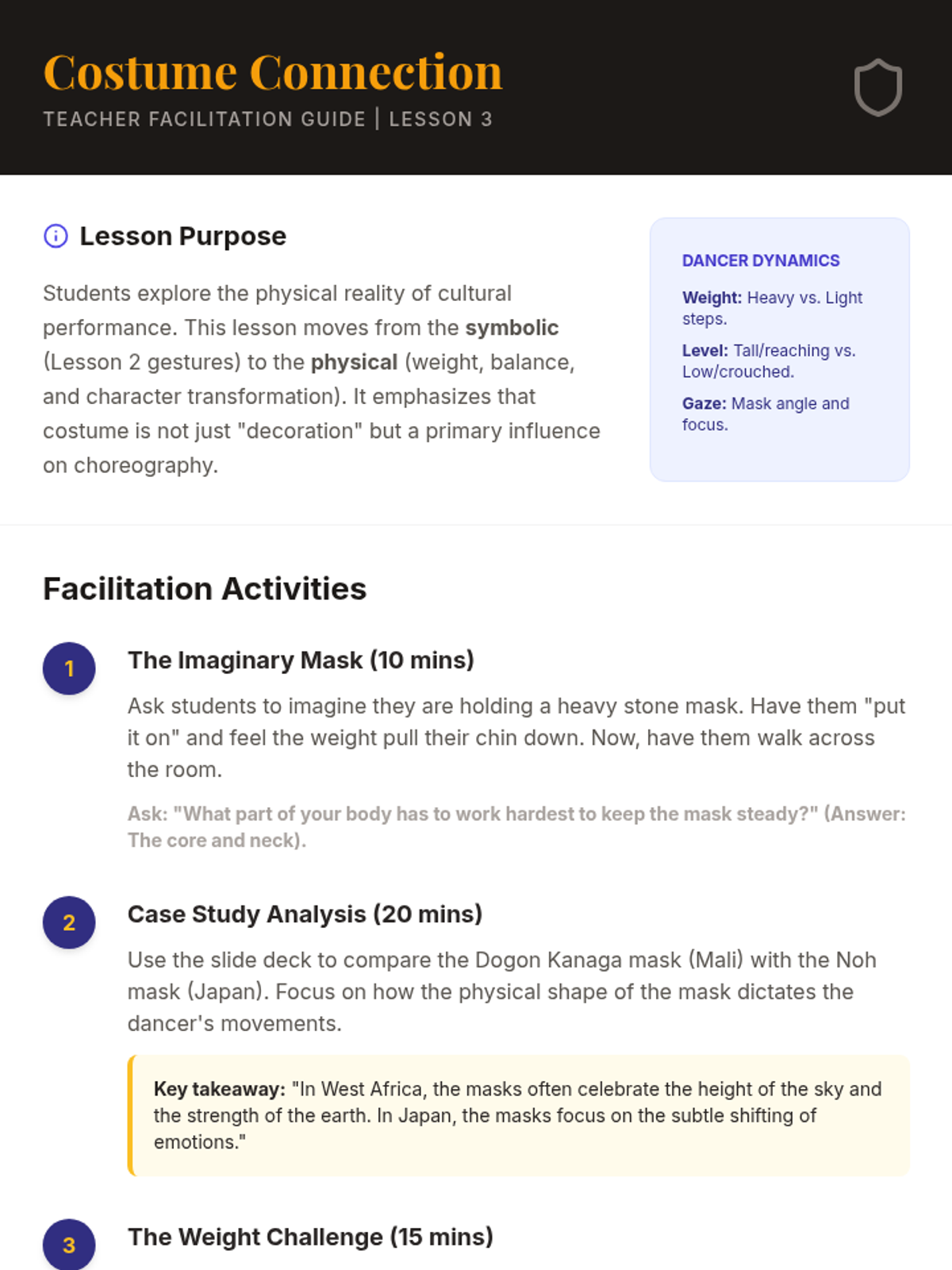
Students analyze how masks and heavy costumes in West African and Asian traditions influence character portrayal and movement dynamics.
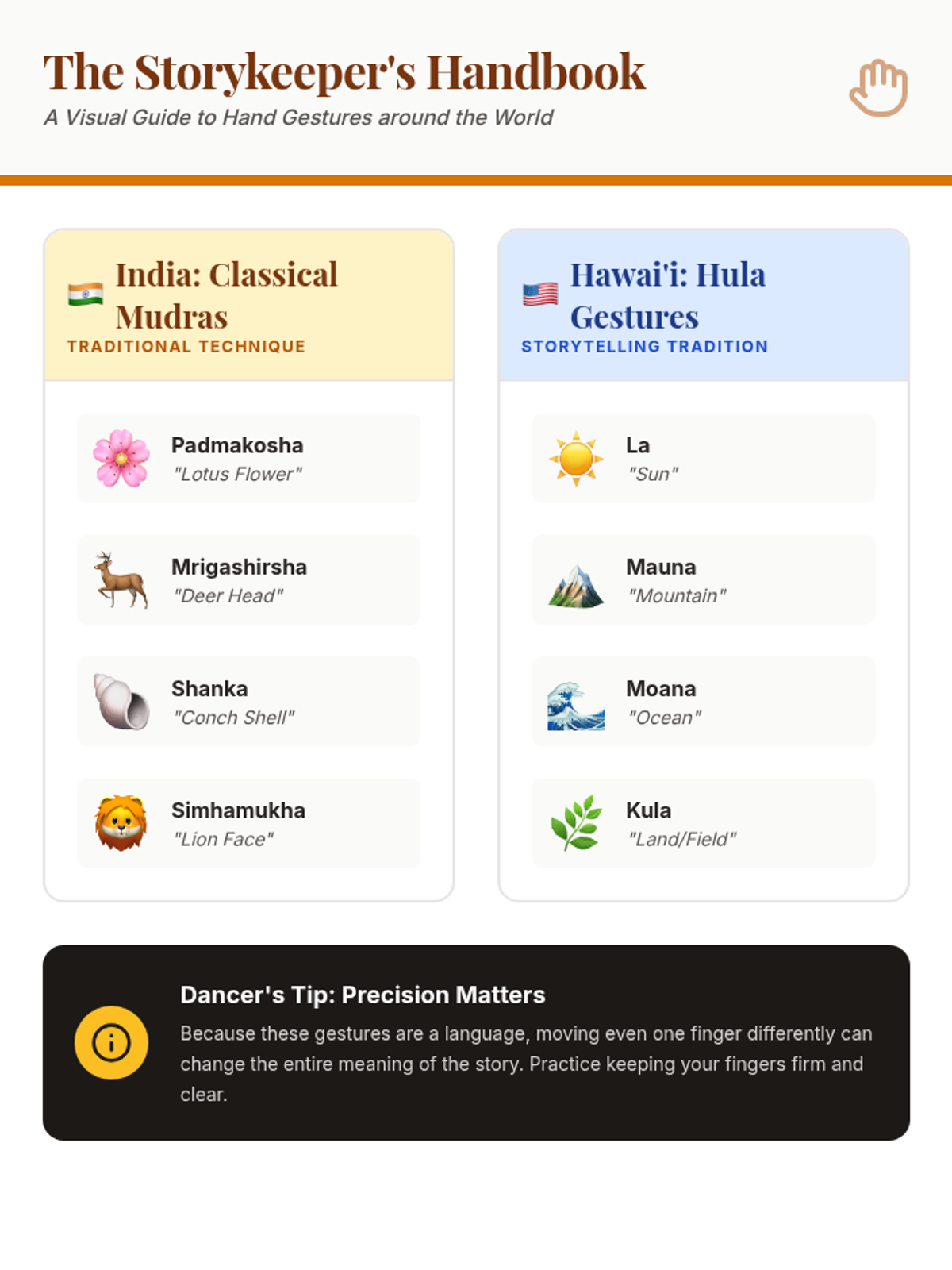
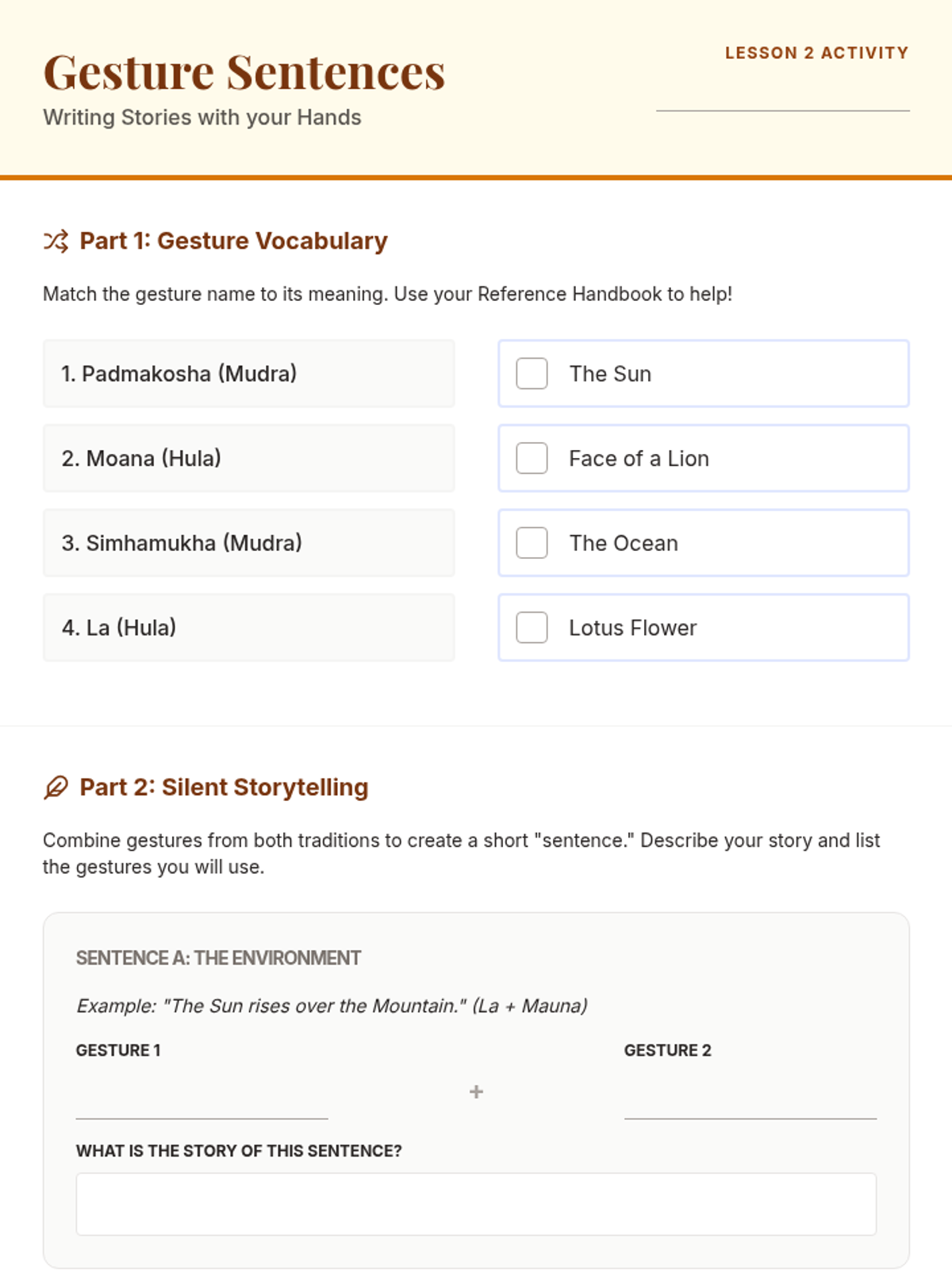
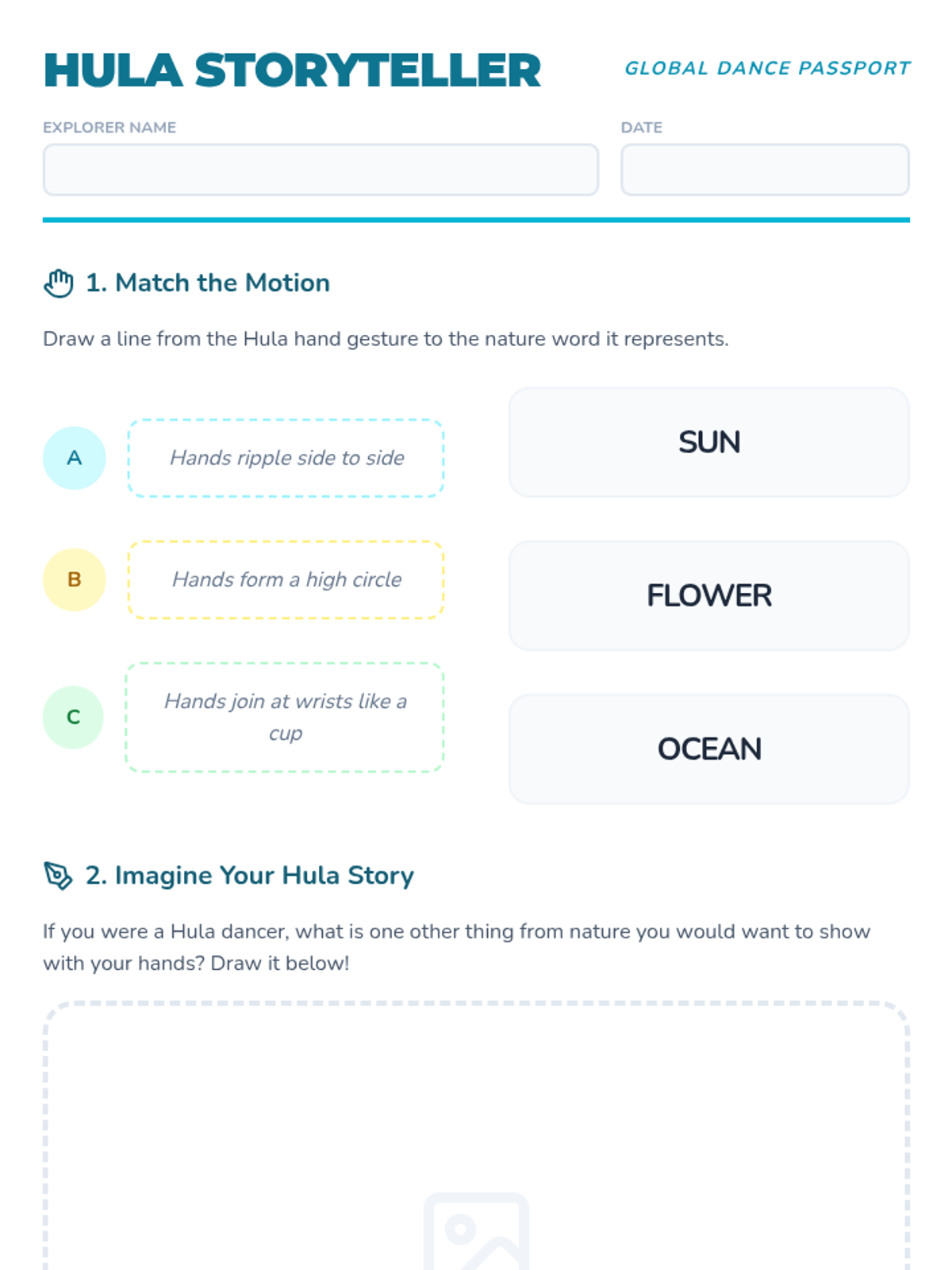
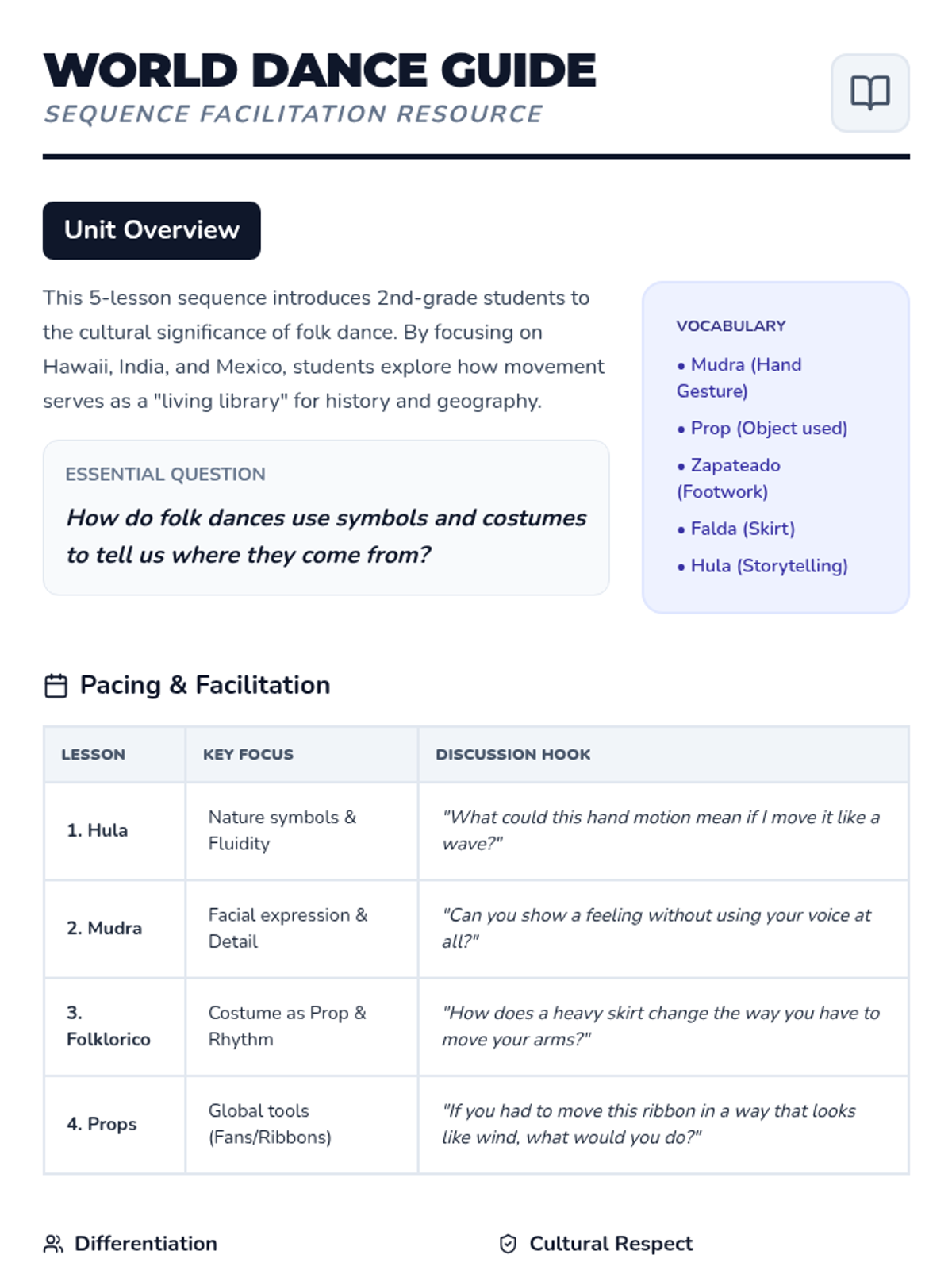
Students learn specific hand gestures from traditions like Classical Indian Mudras and Hawaiian Hula, exploring how these 'secret languages' preserve cultural narratives.
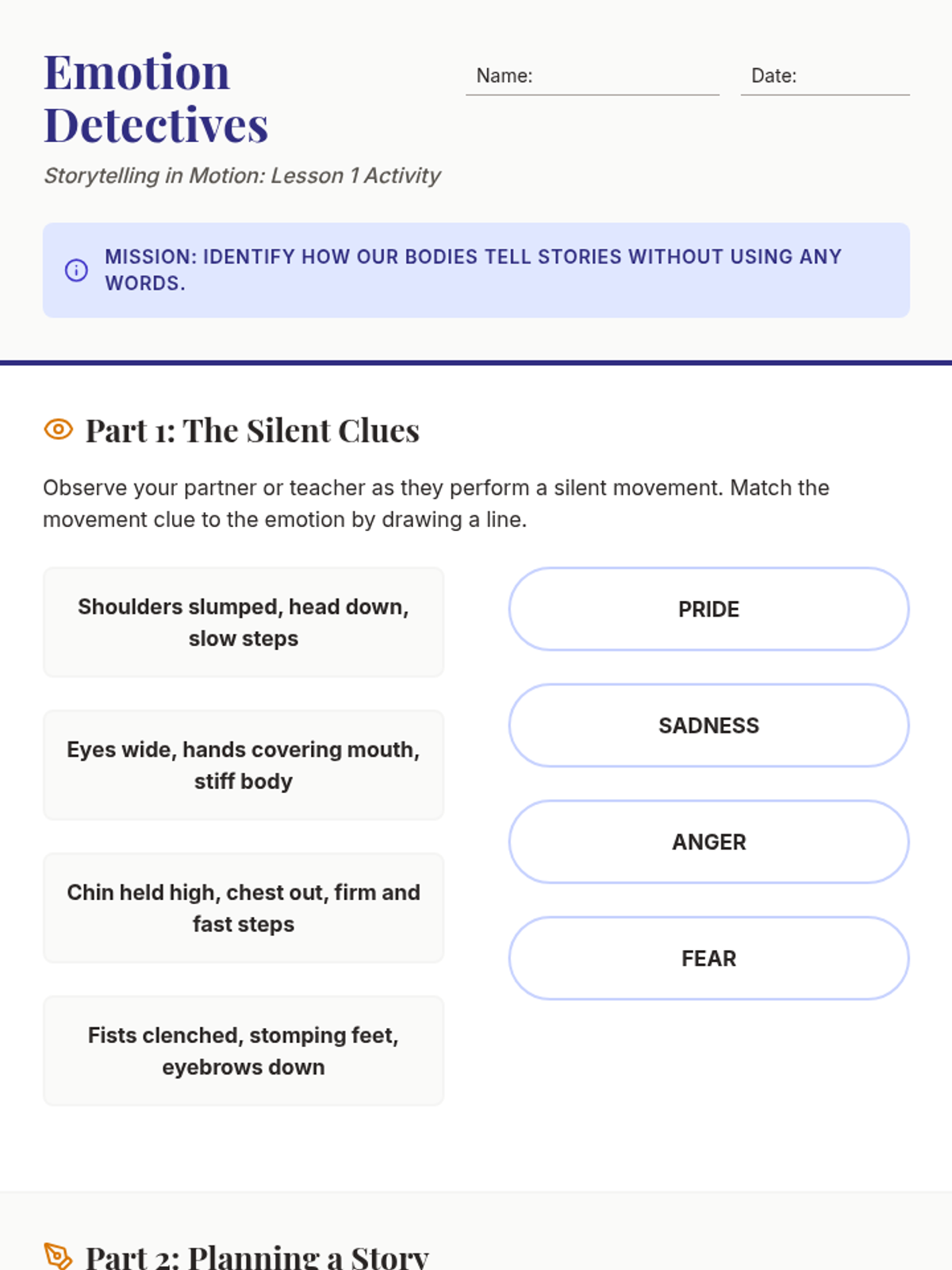
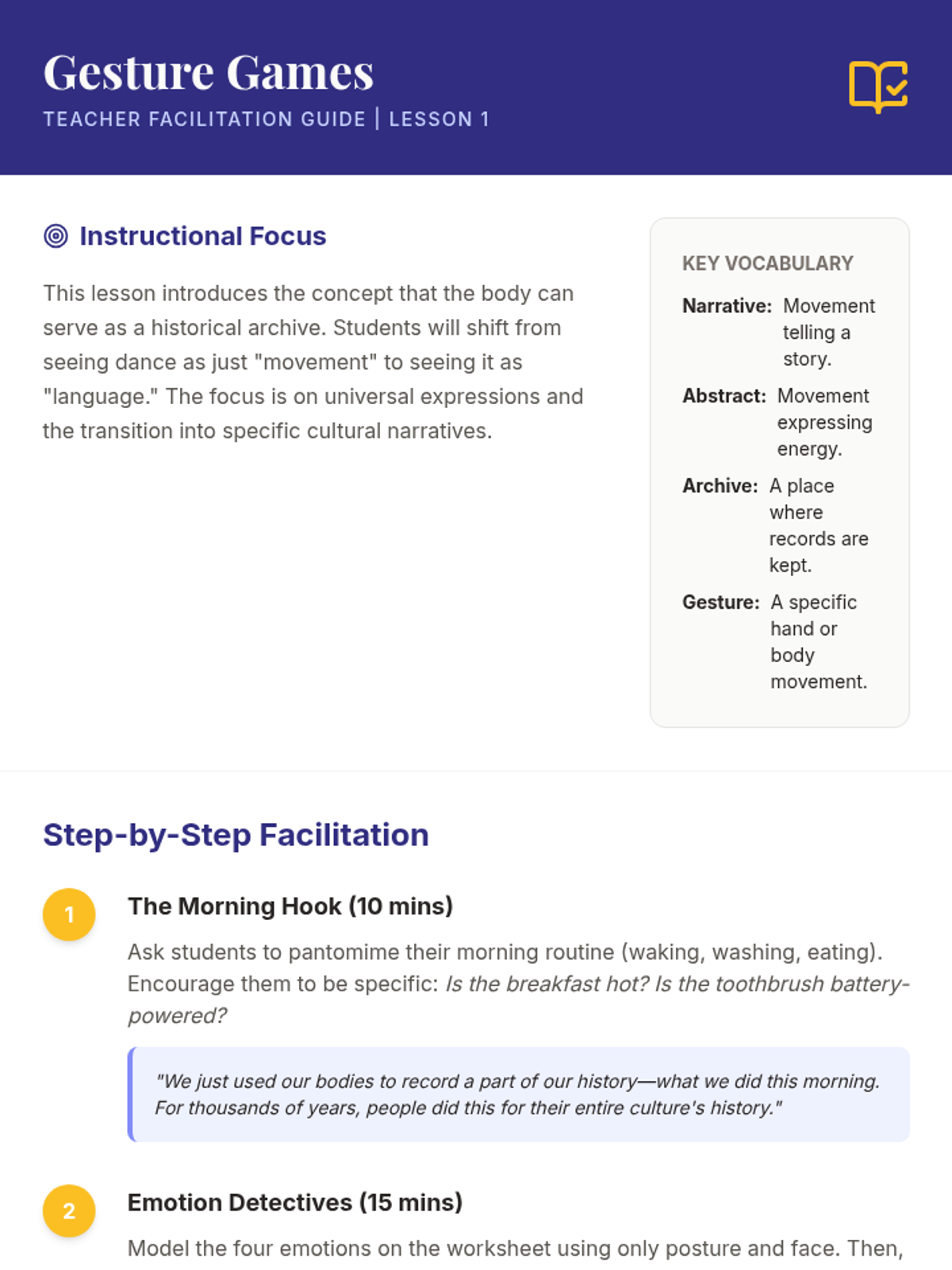
Students investigate the concept of pantomime and gestural language used in ancient cultures, identifying how universal emotions are communicated through posture and facial expression.
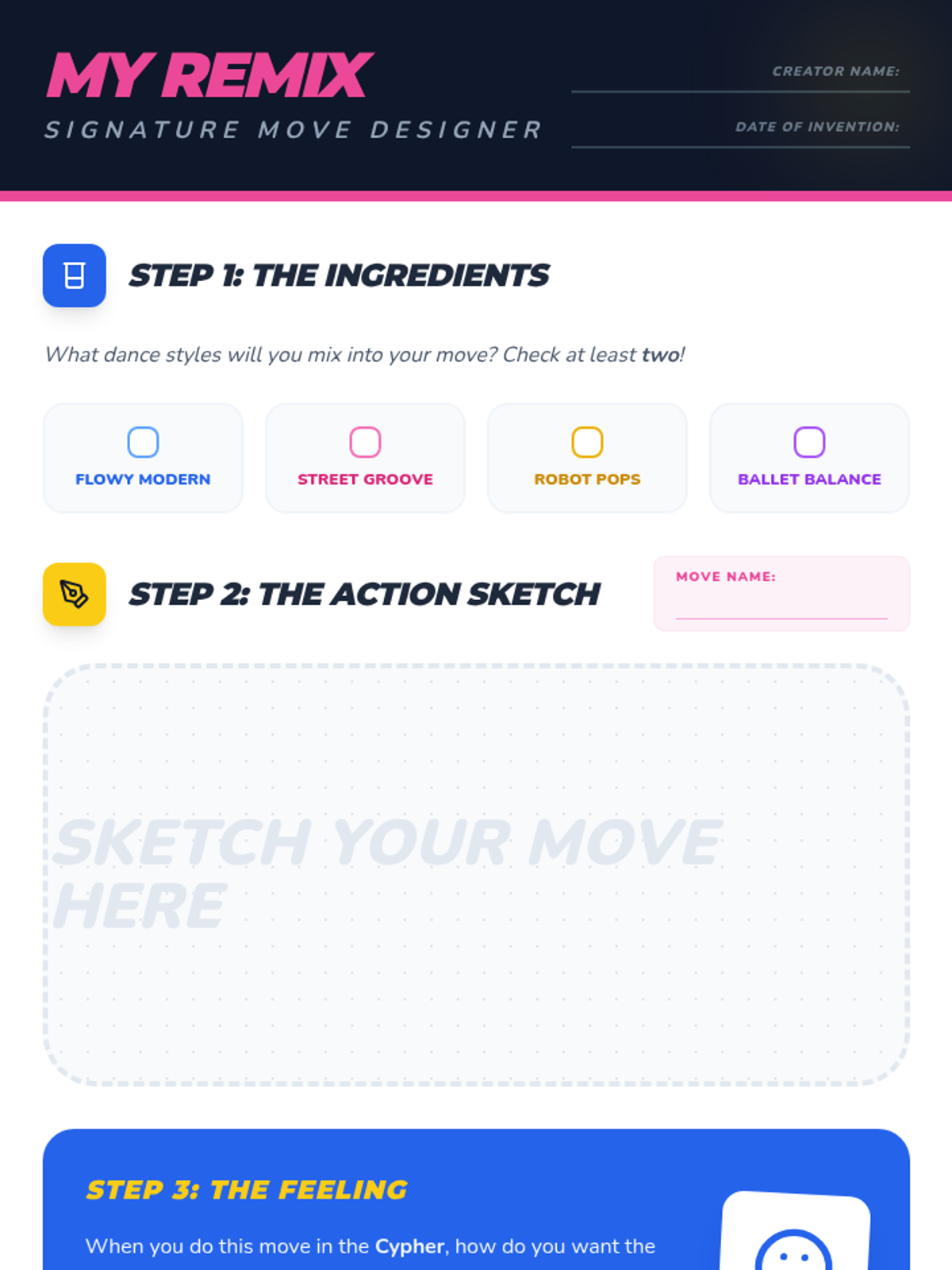
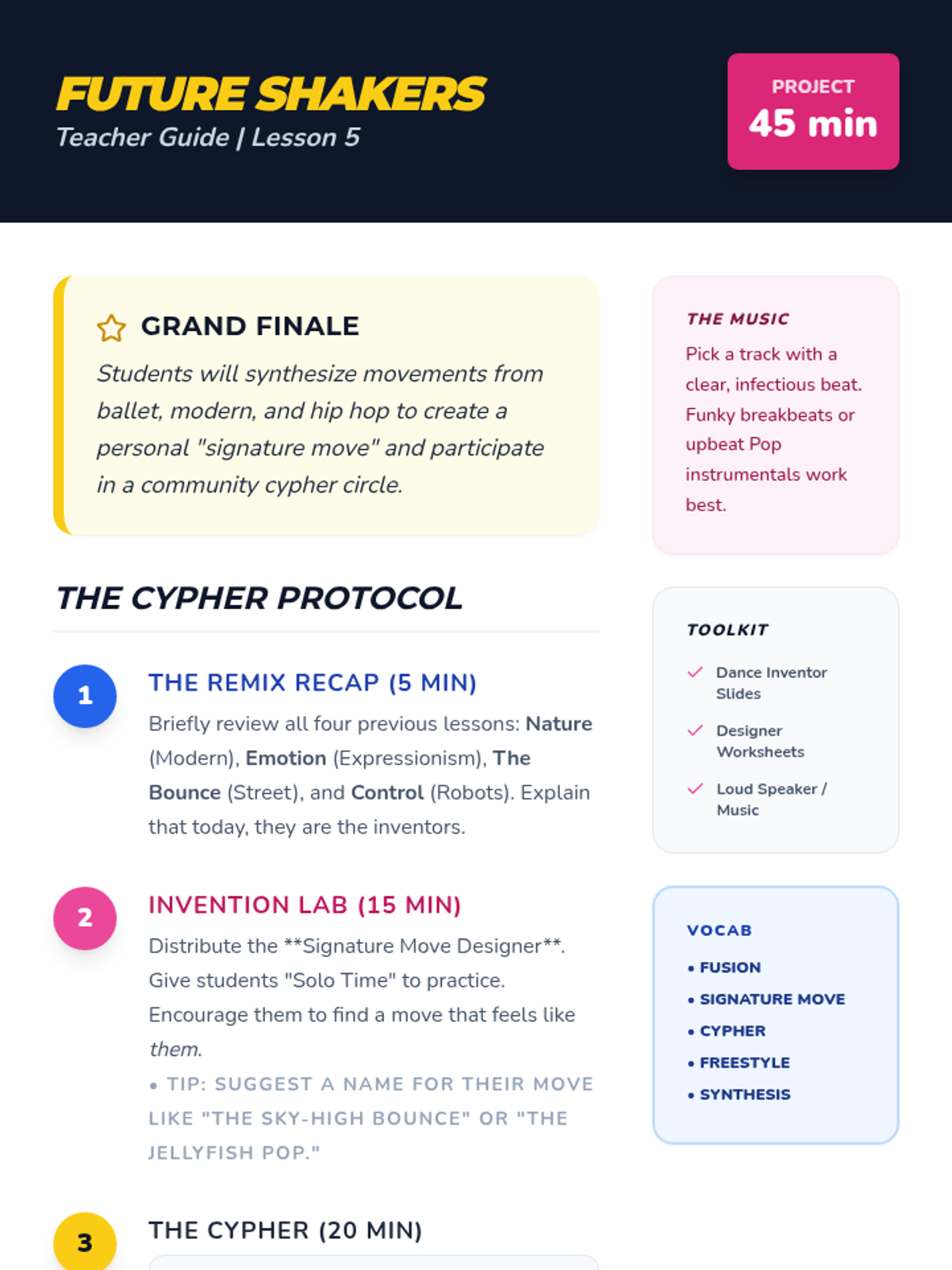
The final lesson encourages students to synthesize all styles into their own freestyle 'signature move' and participate in a cypher.
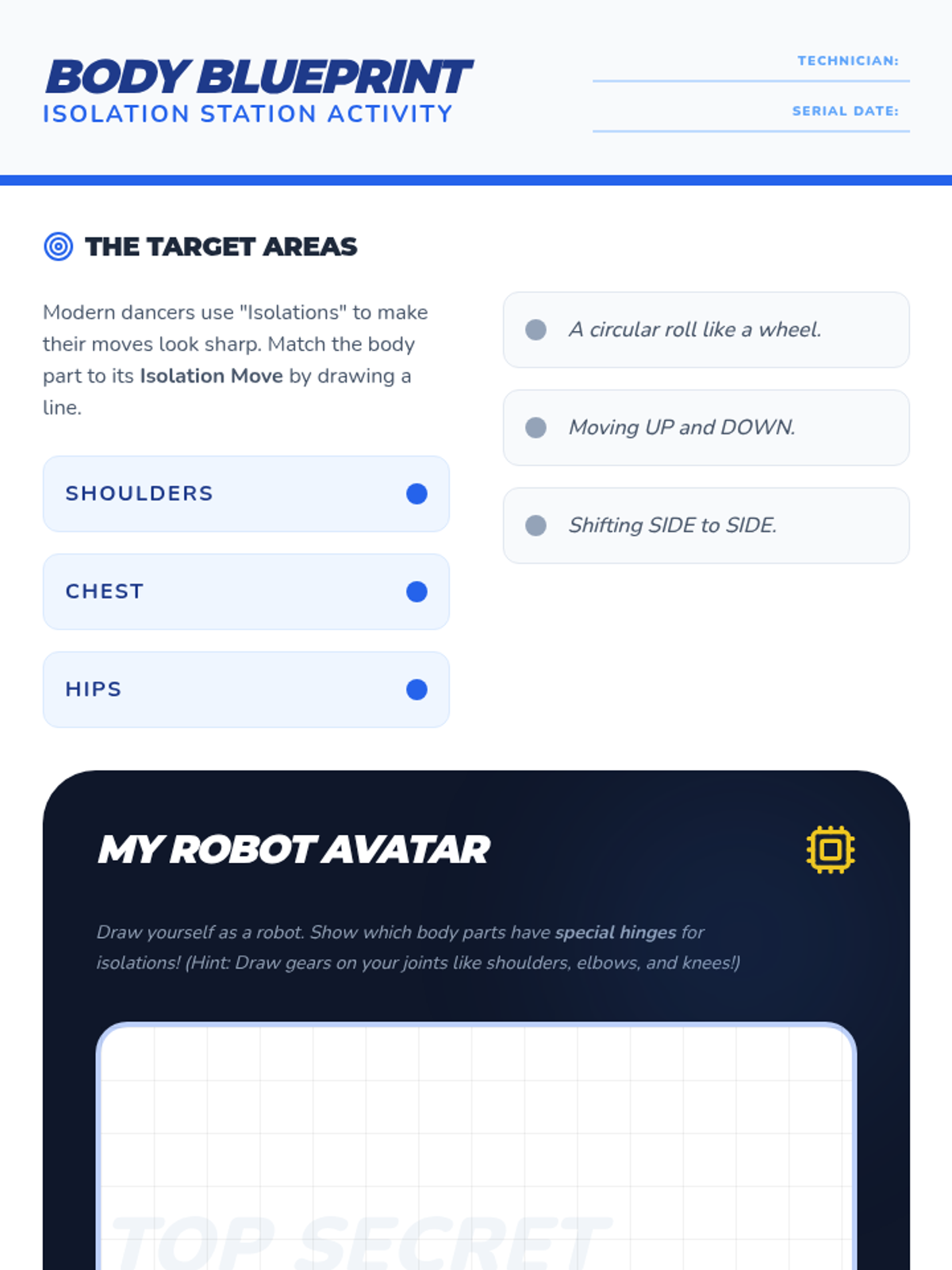
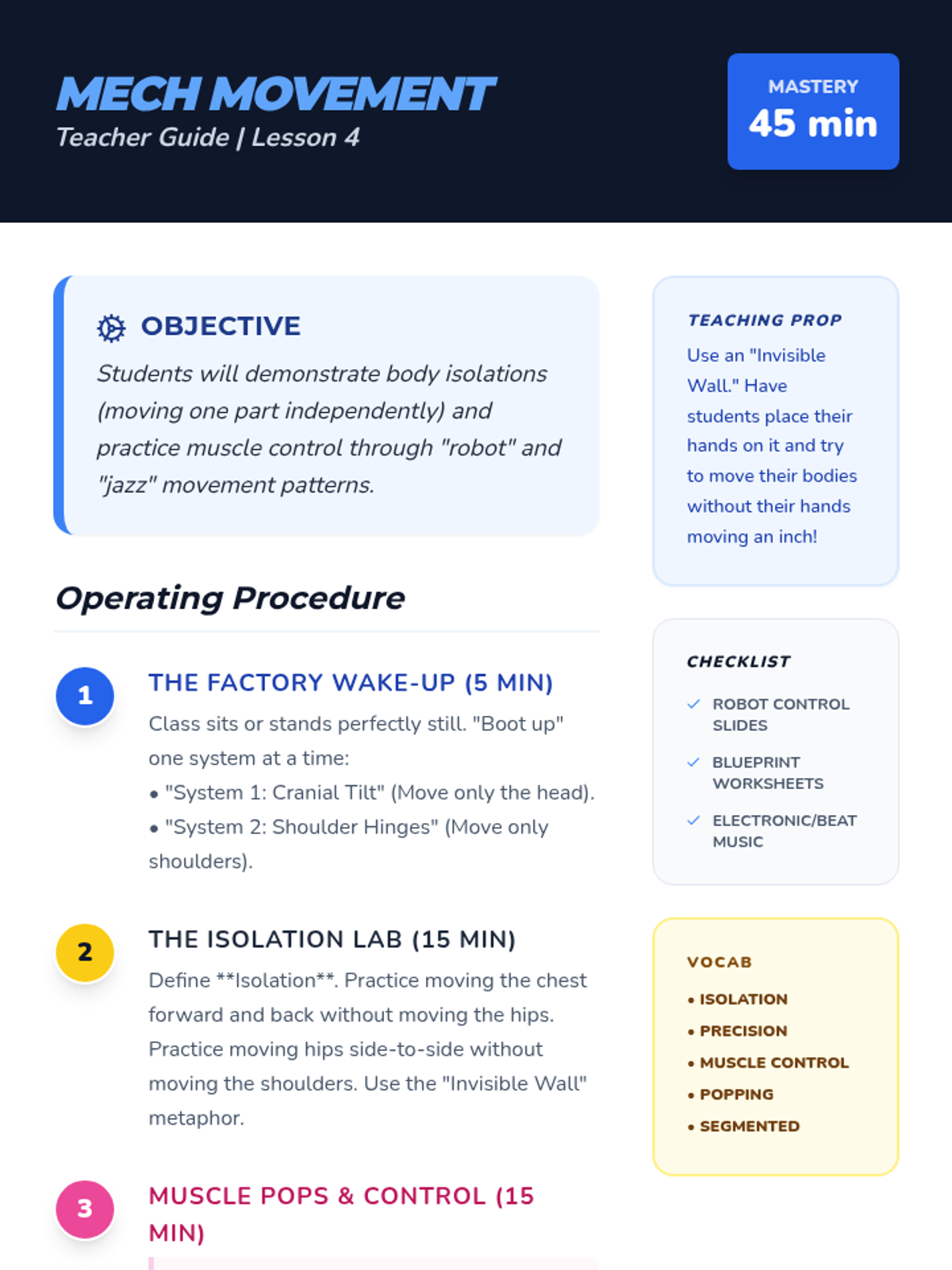
Students master the technique of body isolations and muscle control through the lens of robot movements and jazz.
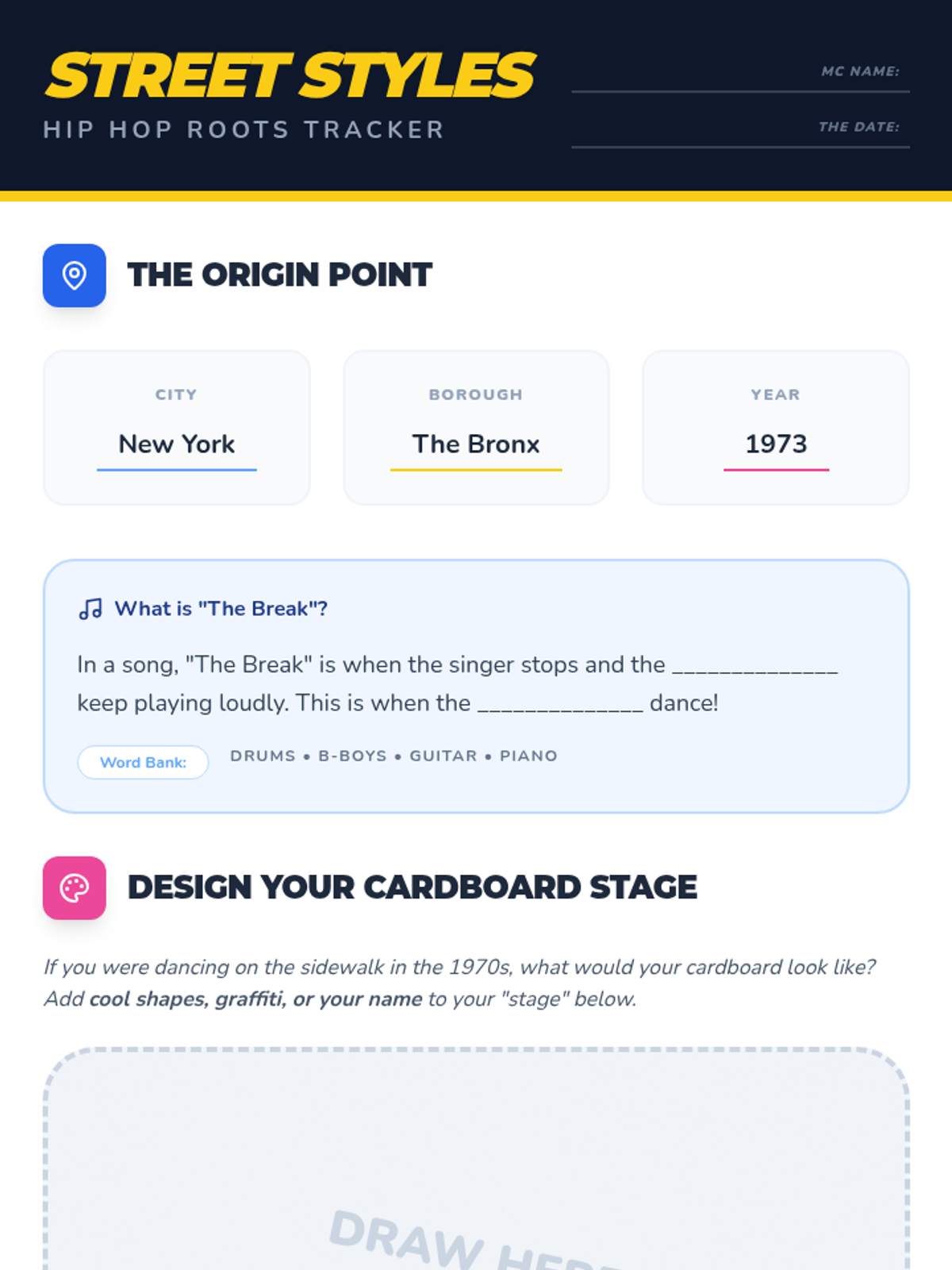
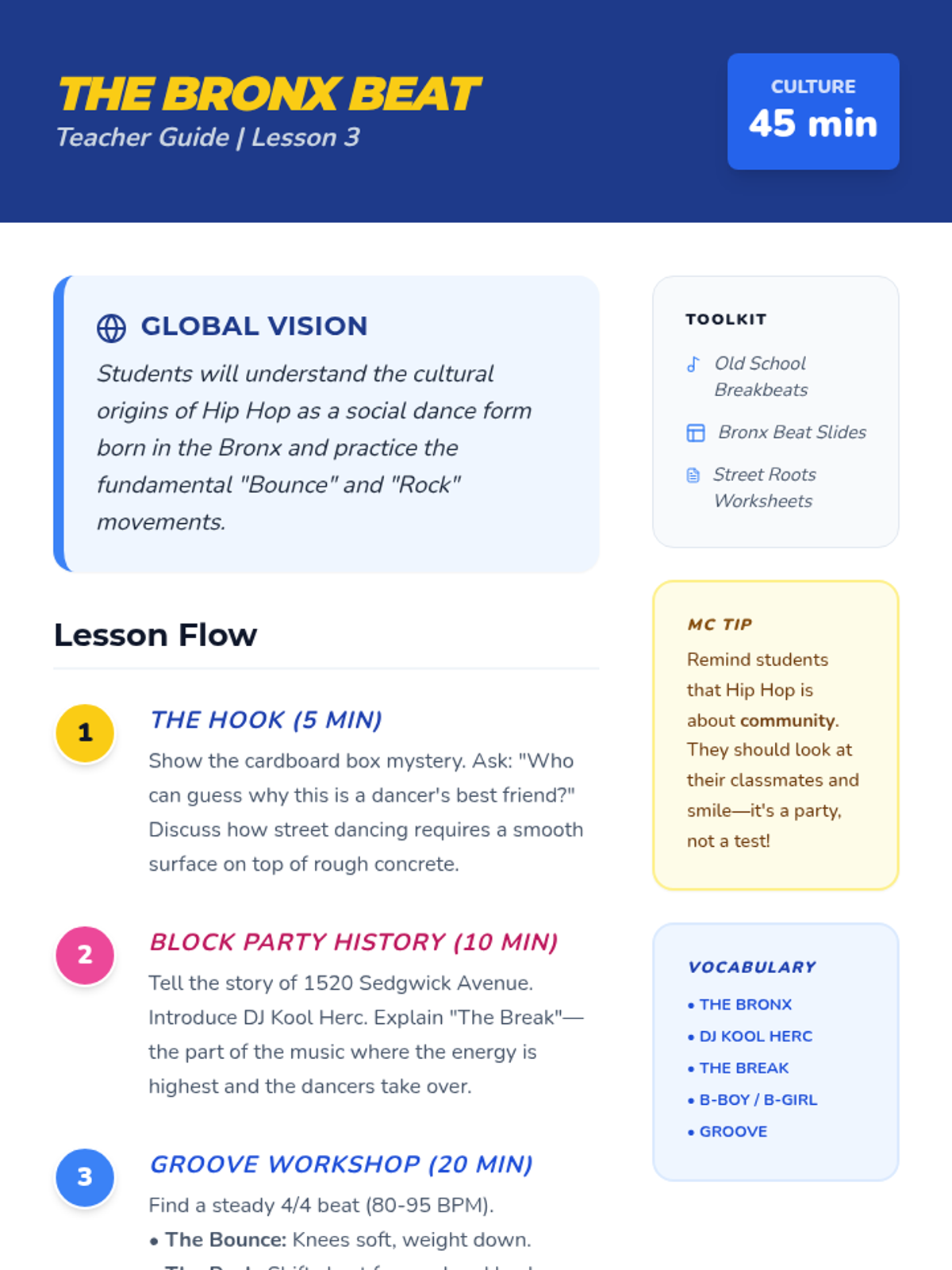
An introduction to Hip Hop's origins in the Bronx, focusing on 'the break' in music and the social nature of street dance.
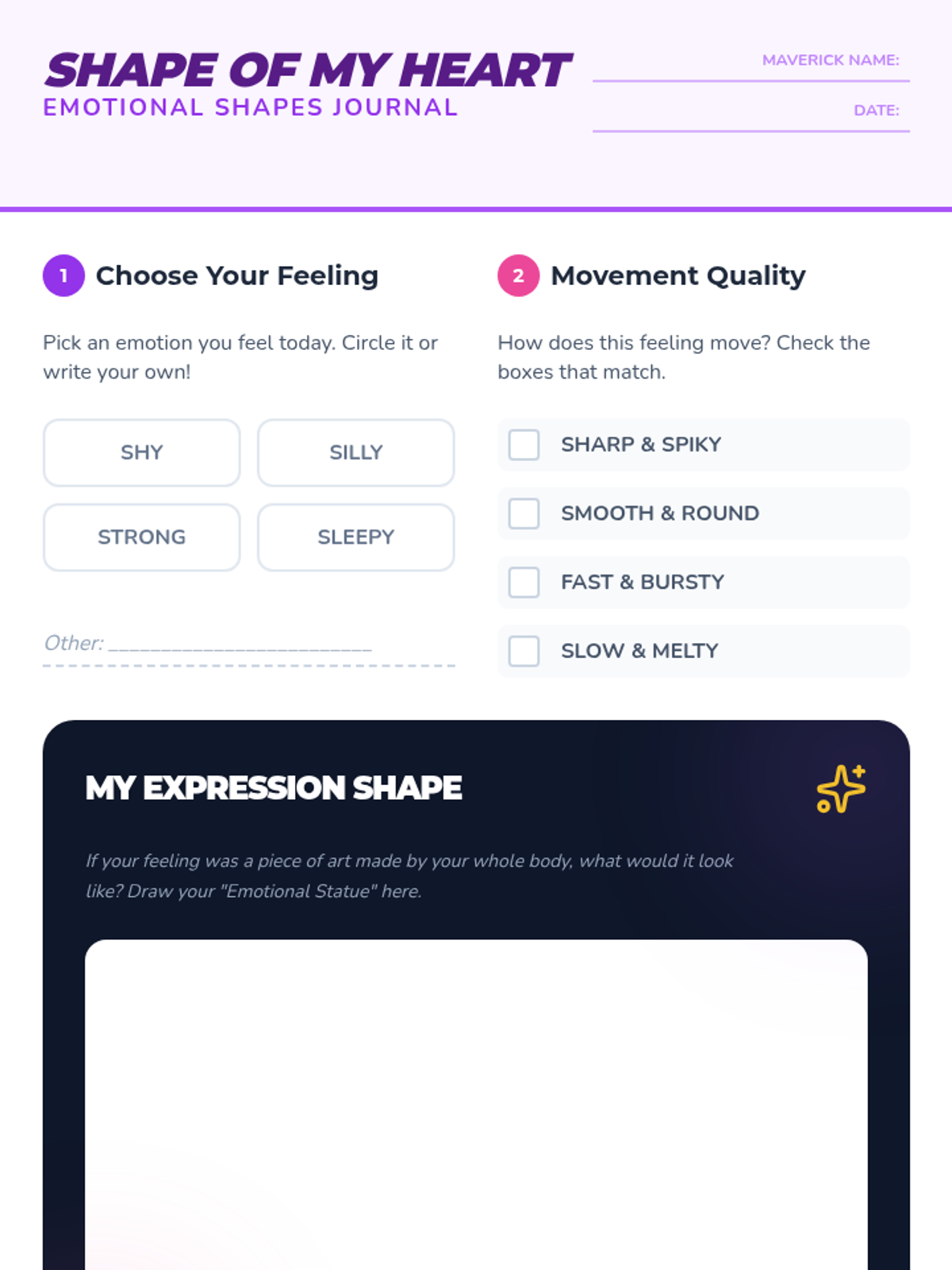
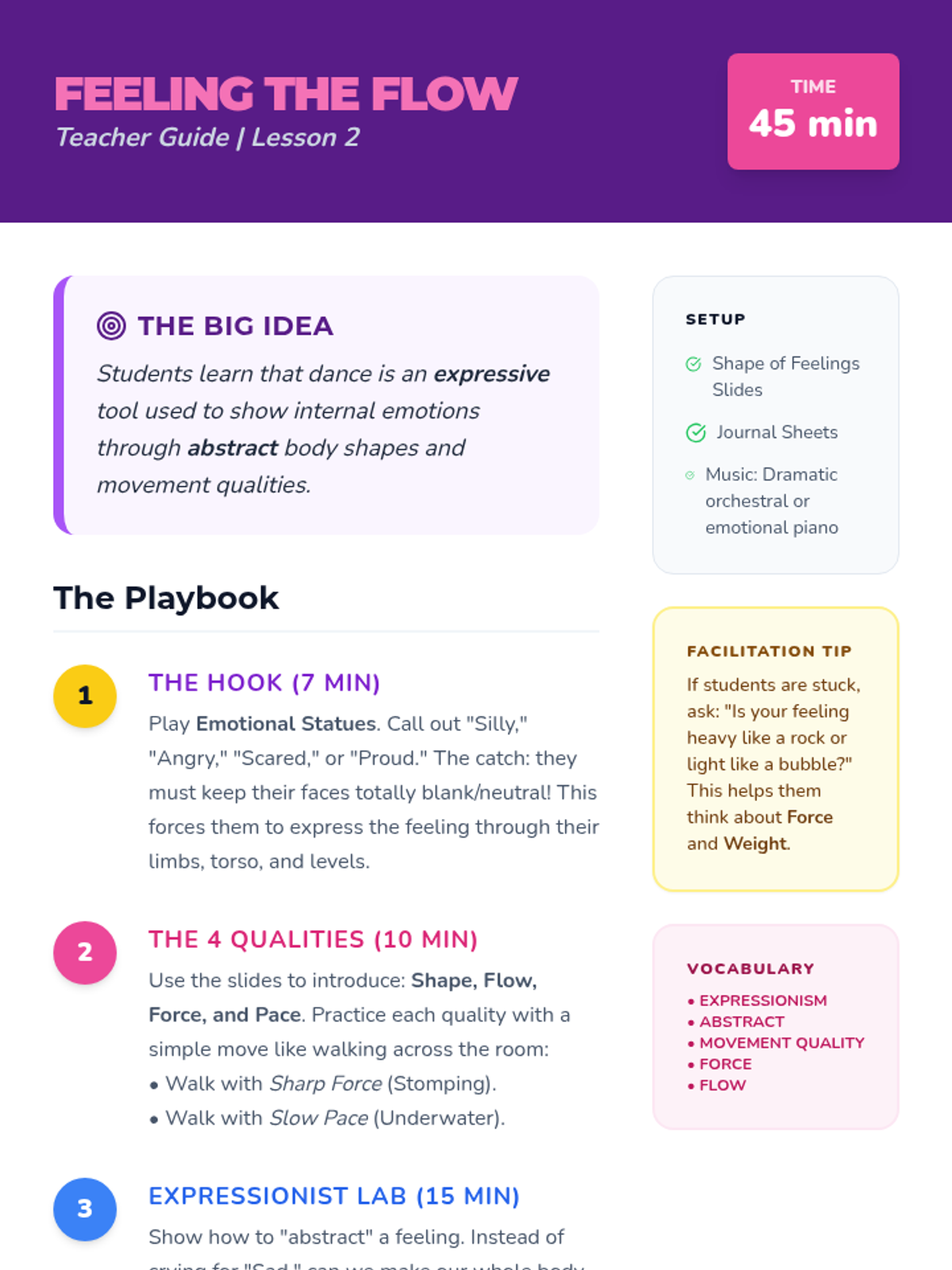
Focusing on Expressionism, students explore how to turn internal feelings into physical shapes and movements.
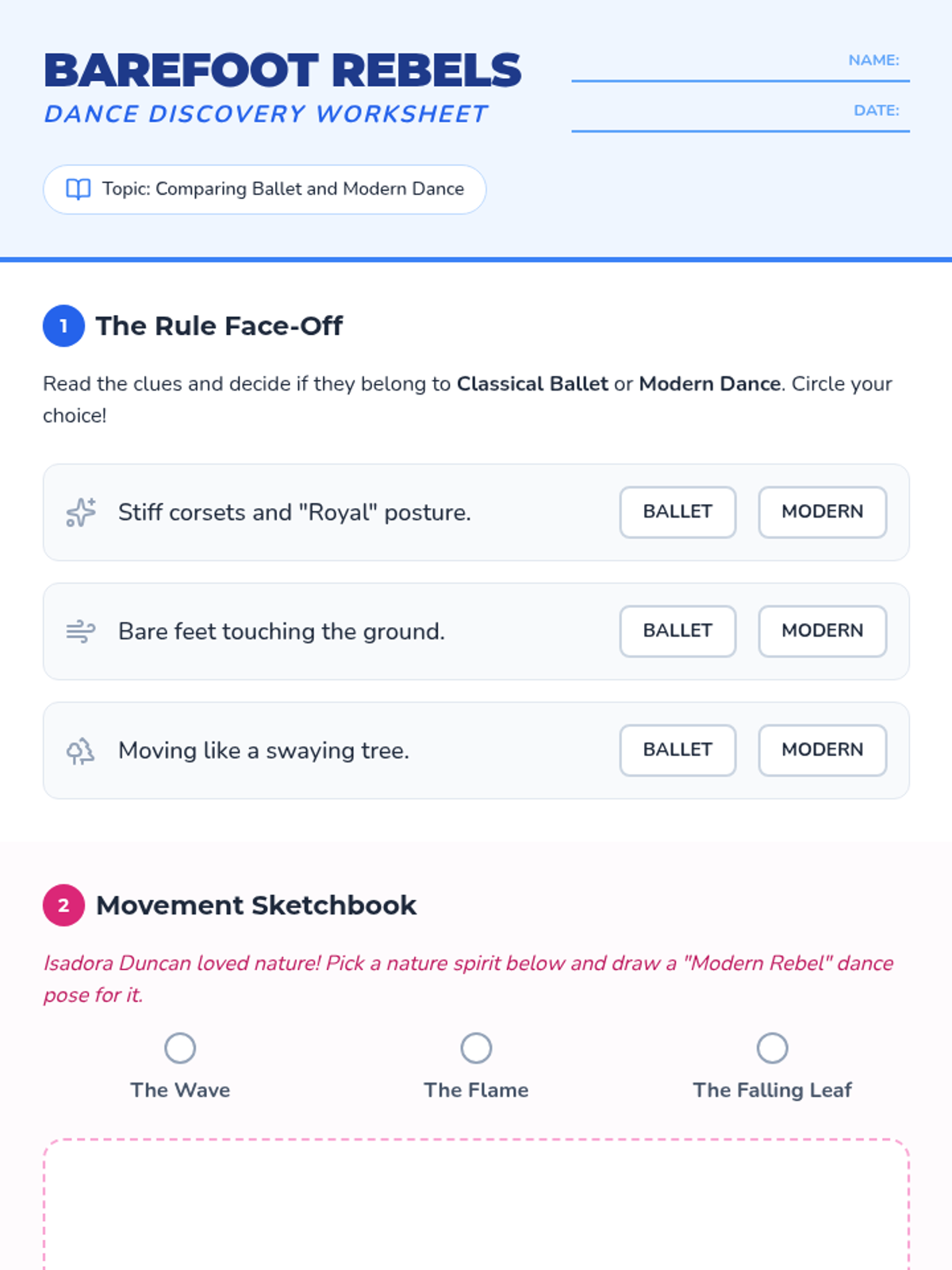
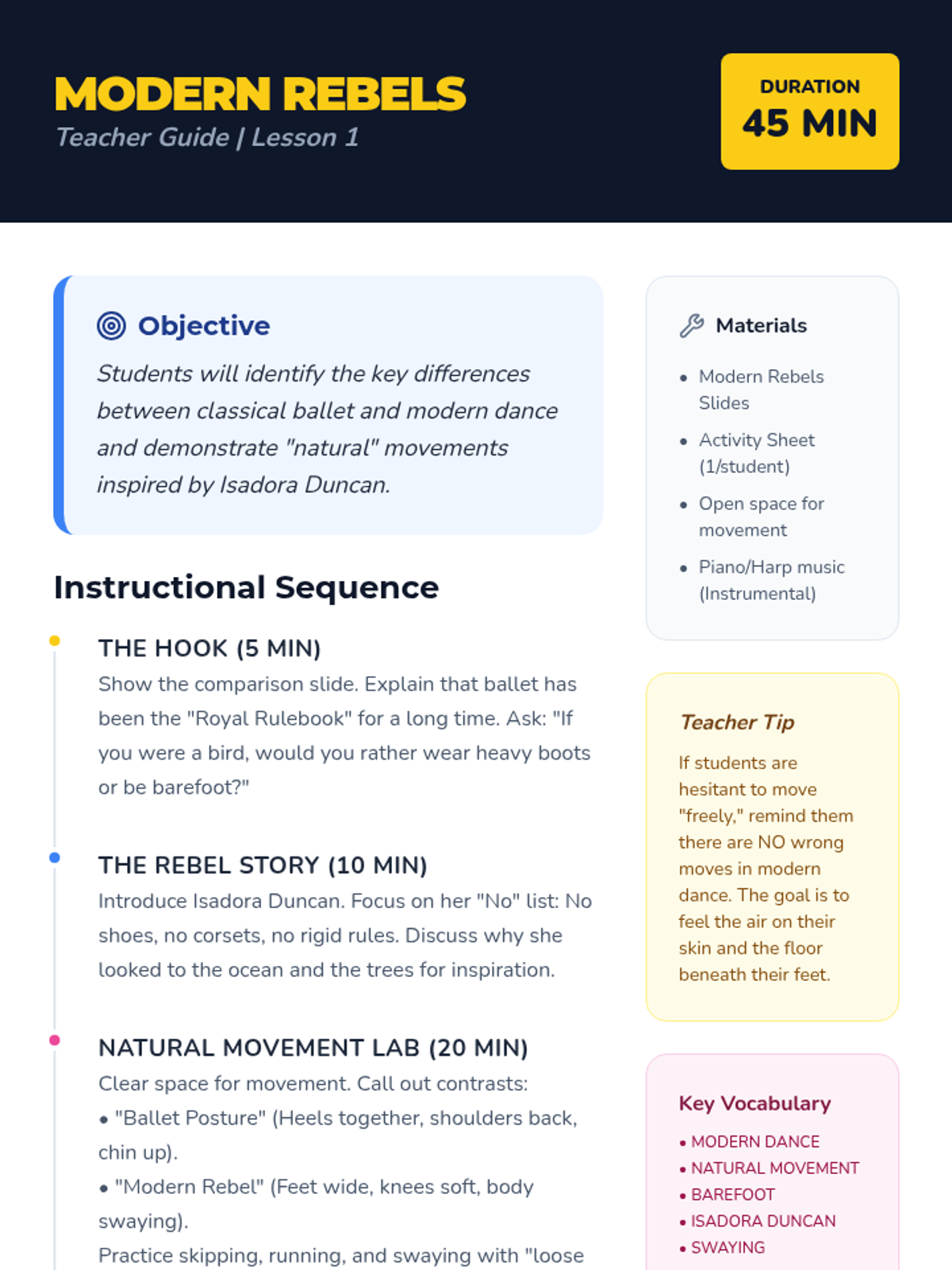
Students learn about Isadora Duncan and the rebellion against classical ballet, practicing natural movements like swaying and skipping.
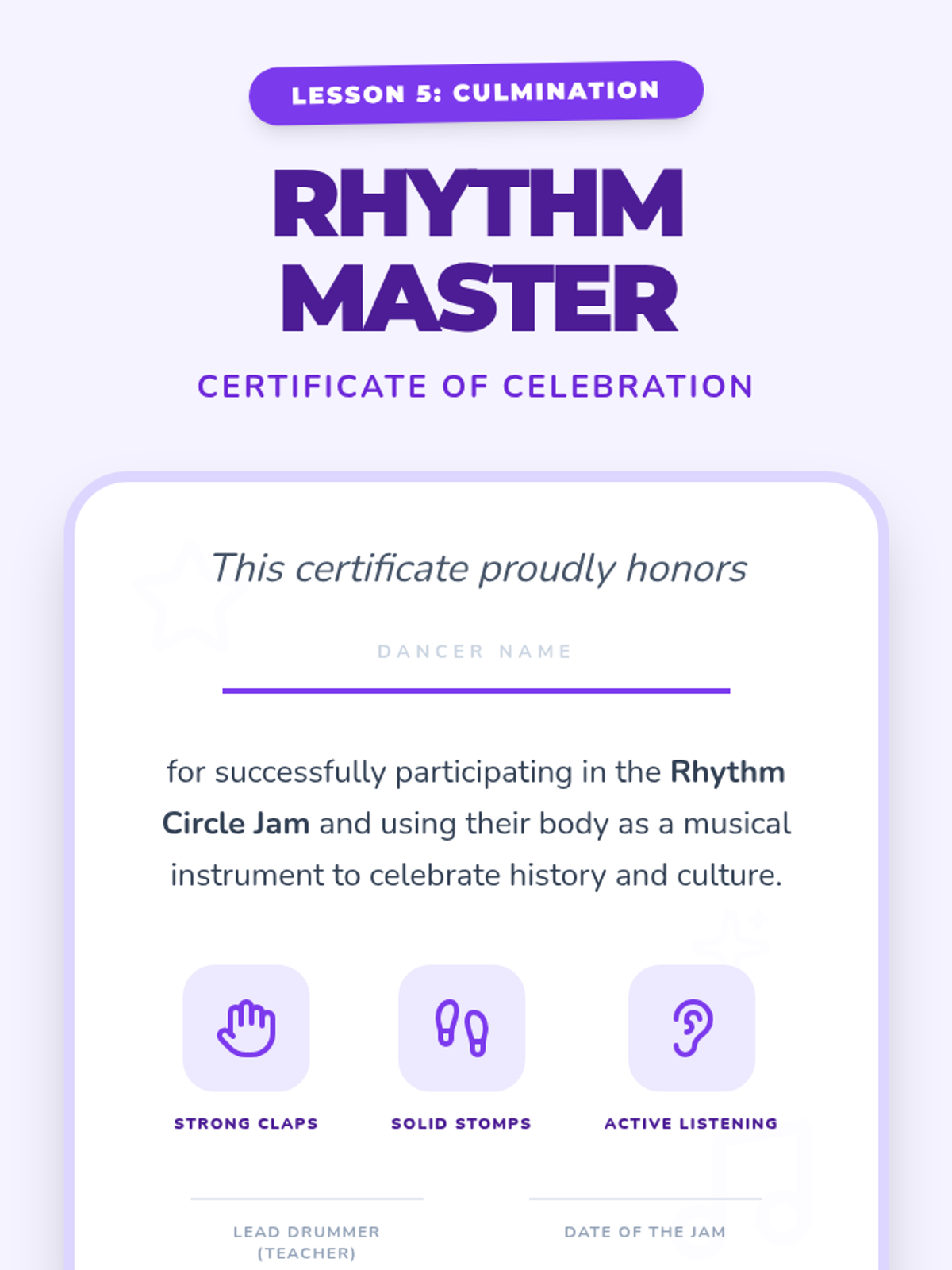
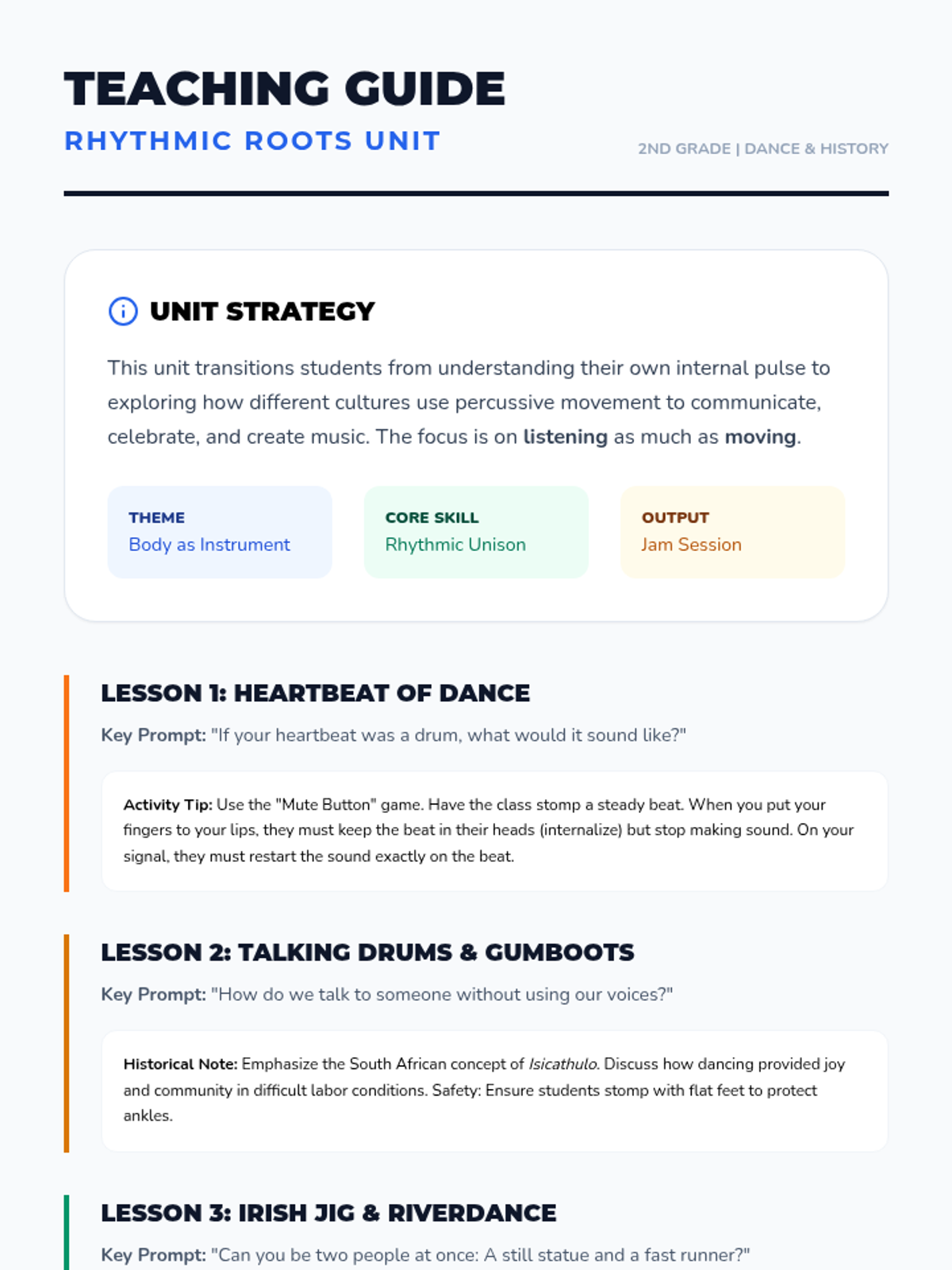
A culminating rhythmic jam session focusing on improvisation, listening, and call-and-response patterns in a group circle.
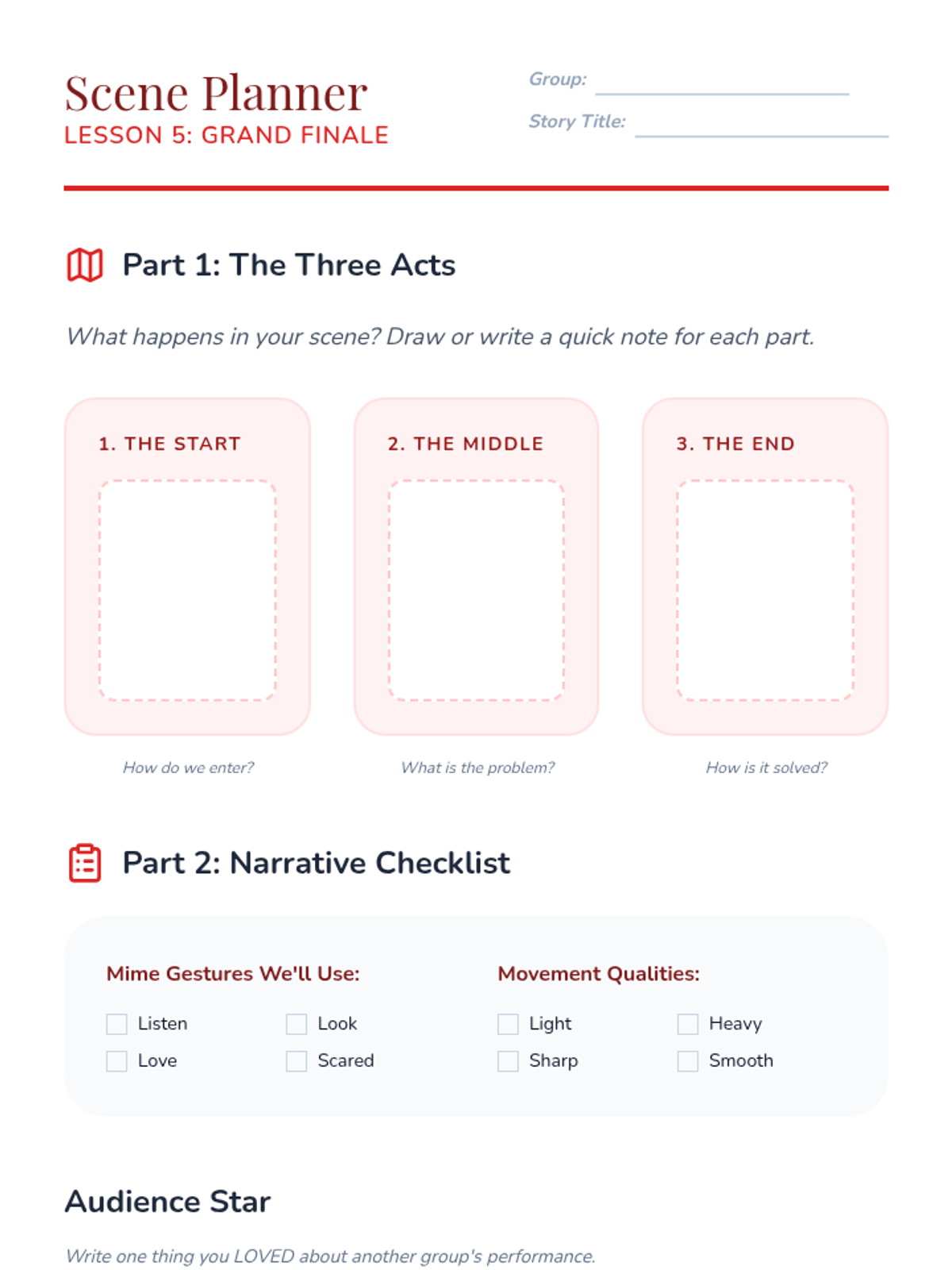
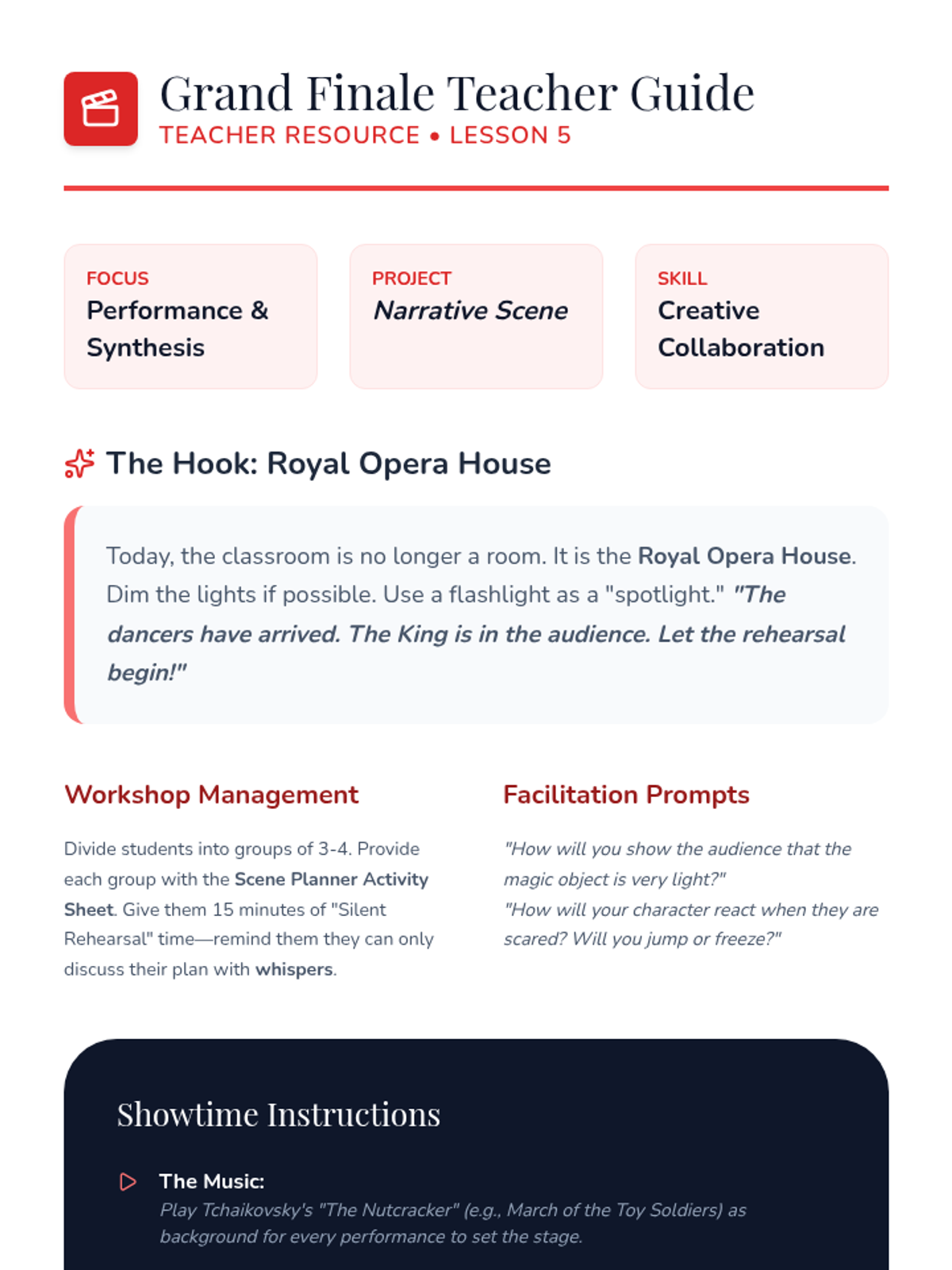
Small groups apply their knowledge of mime, posture, and character to perform a short narrative dance scene.
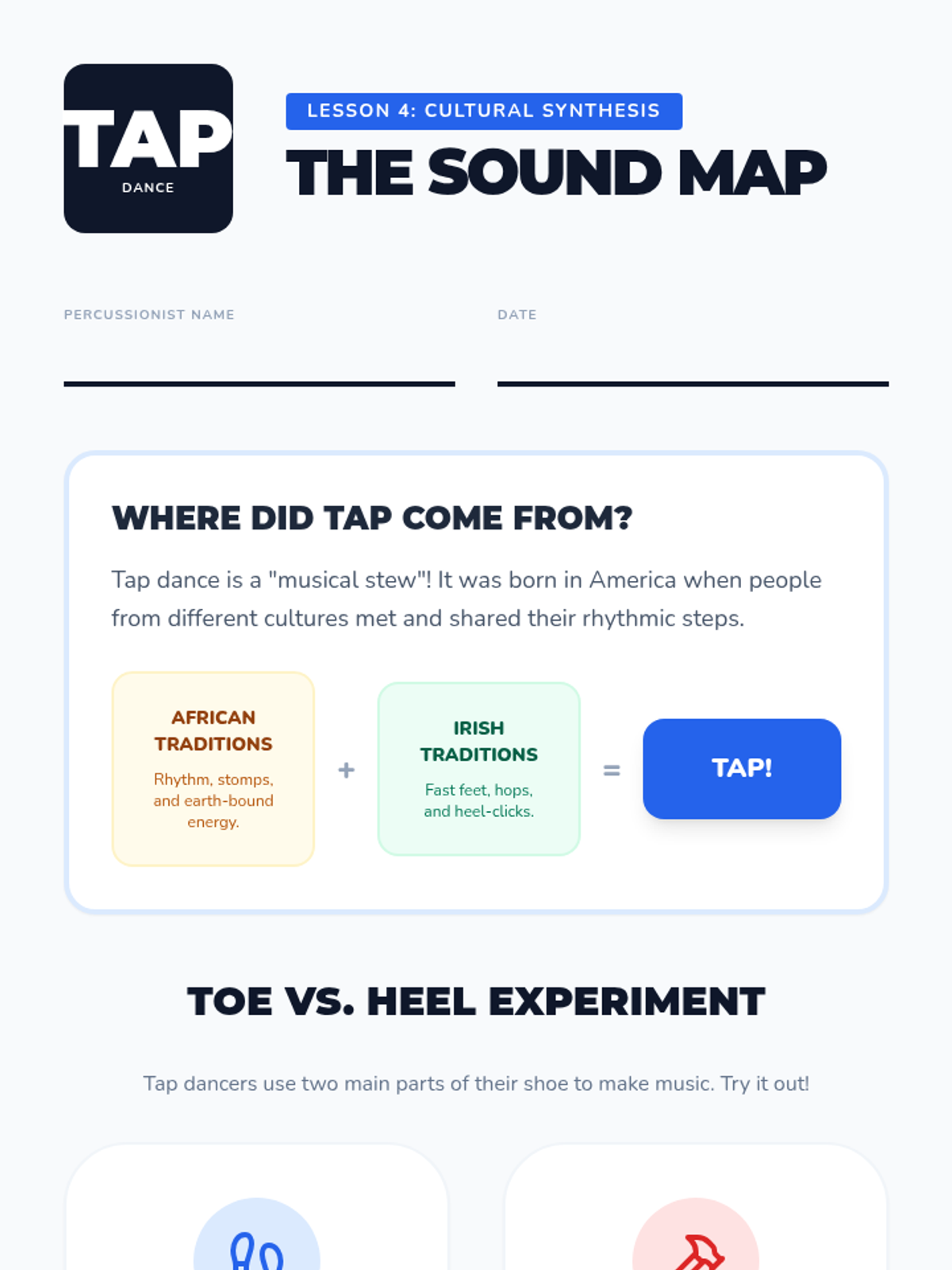
Exploring the cultural synthesis of African and Irish traditions in America that led to the creation of Tap dance.
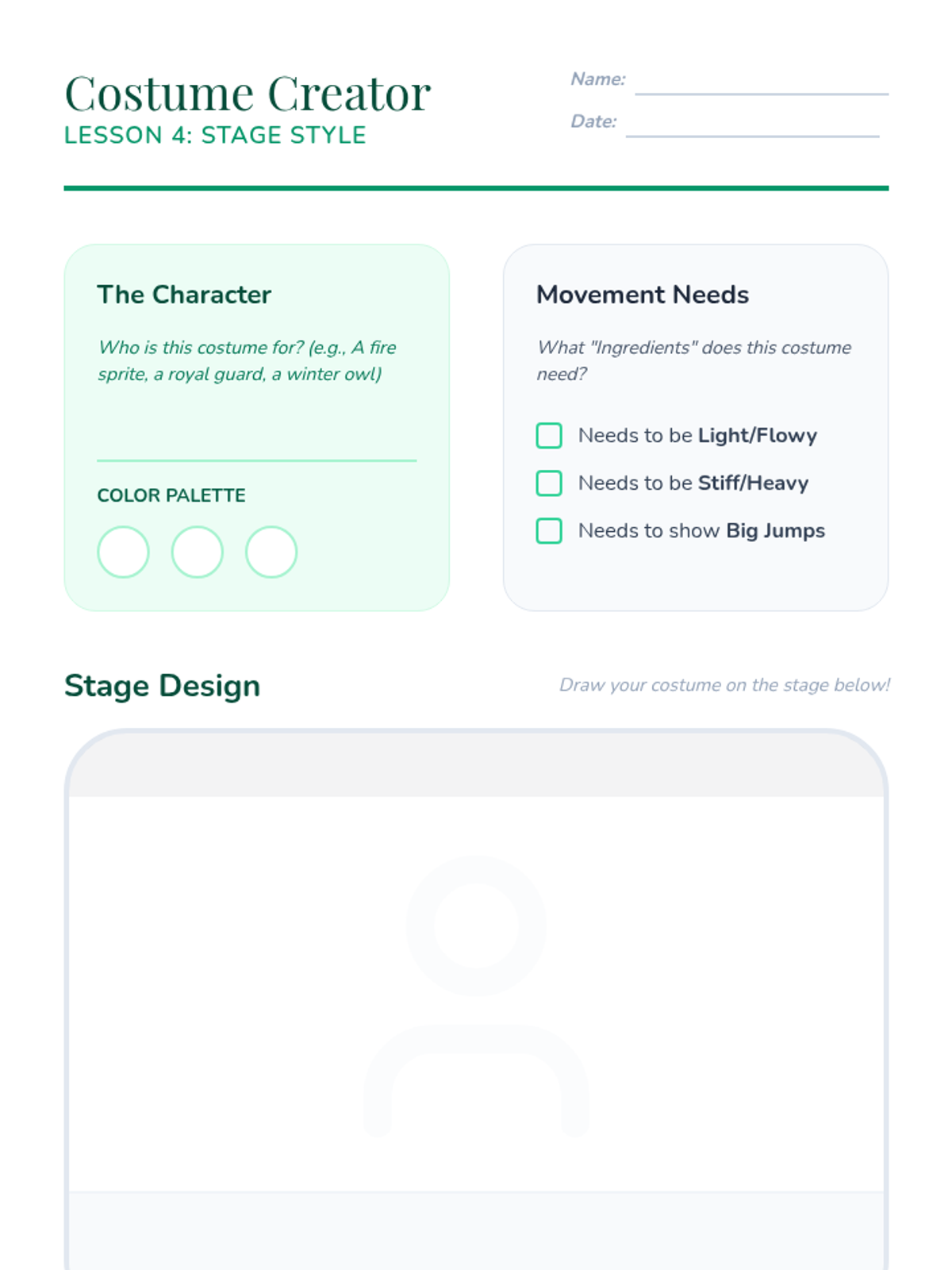
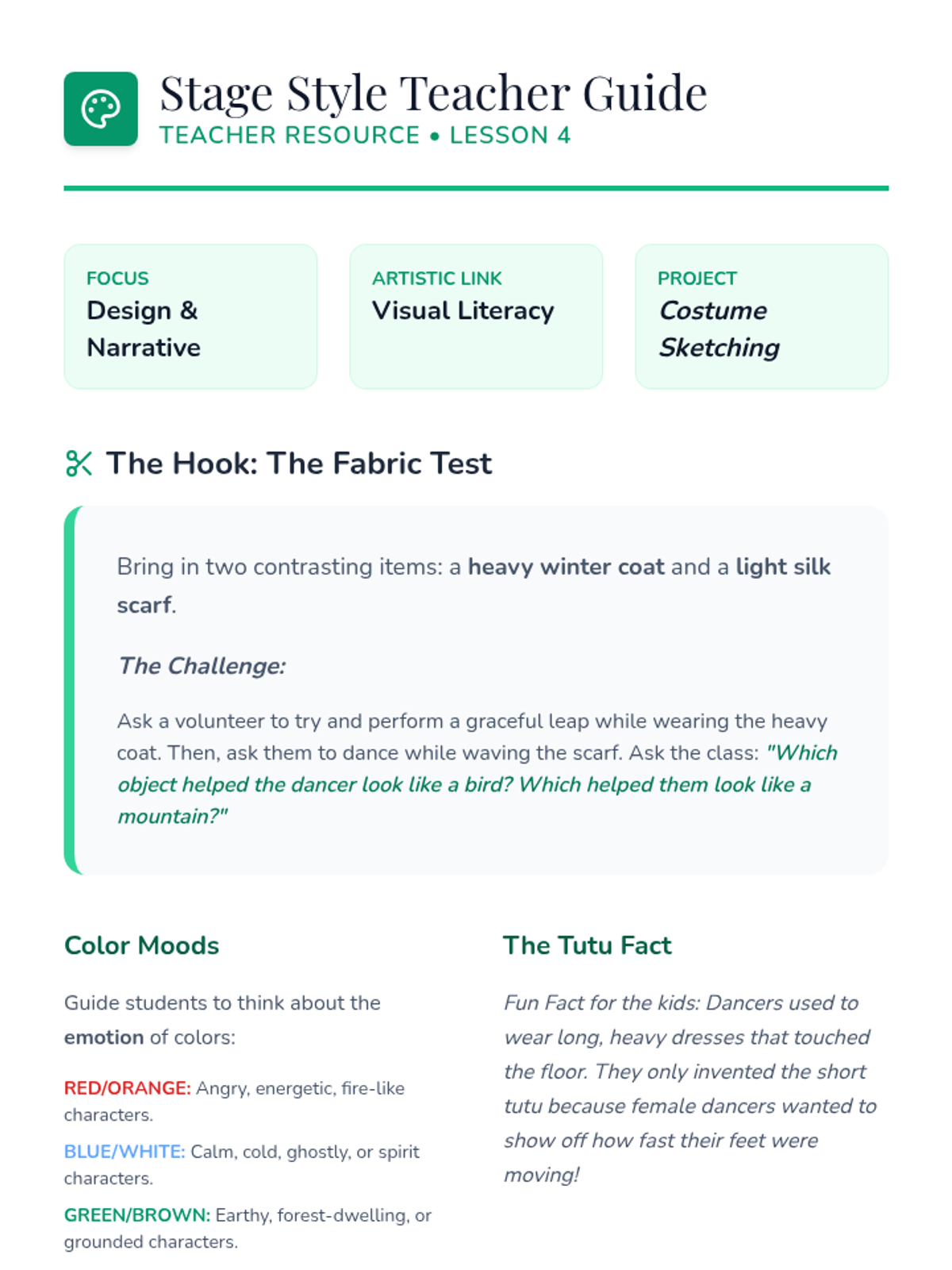
An investigation into how costumes and stage design support narrative in dance history, including a costume design project.
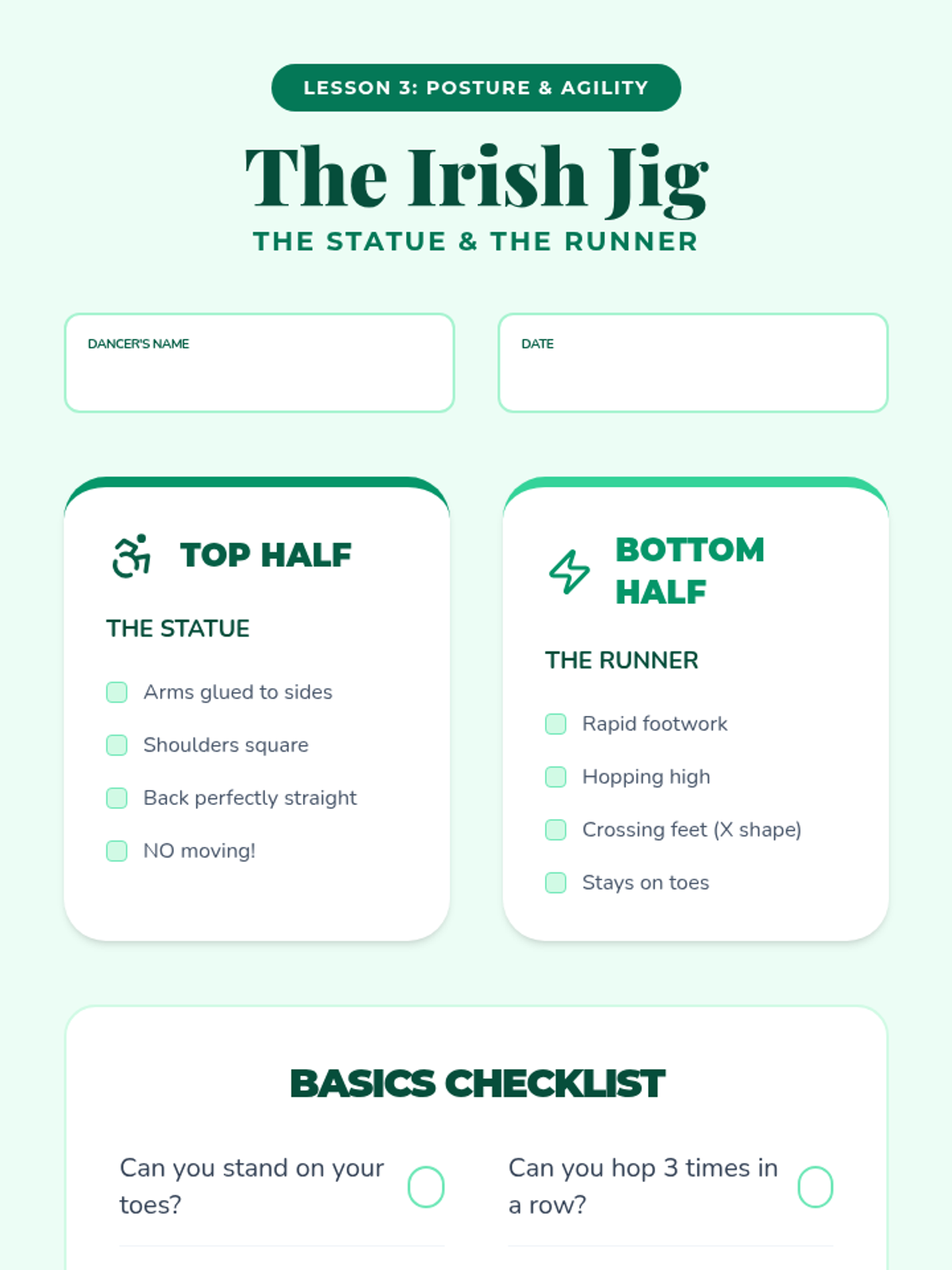
Introduction to Irish Step Dance, focusing on upper-body stillness versus rapid lower-body movement and agility.
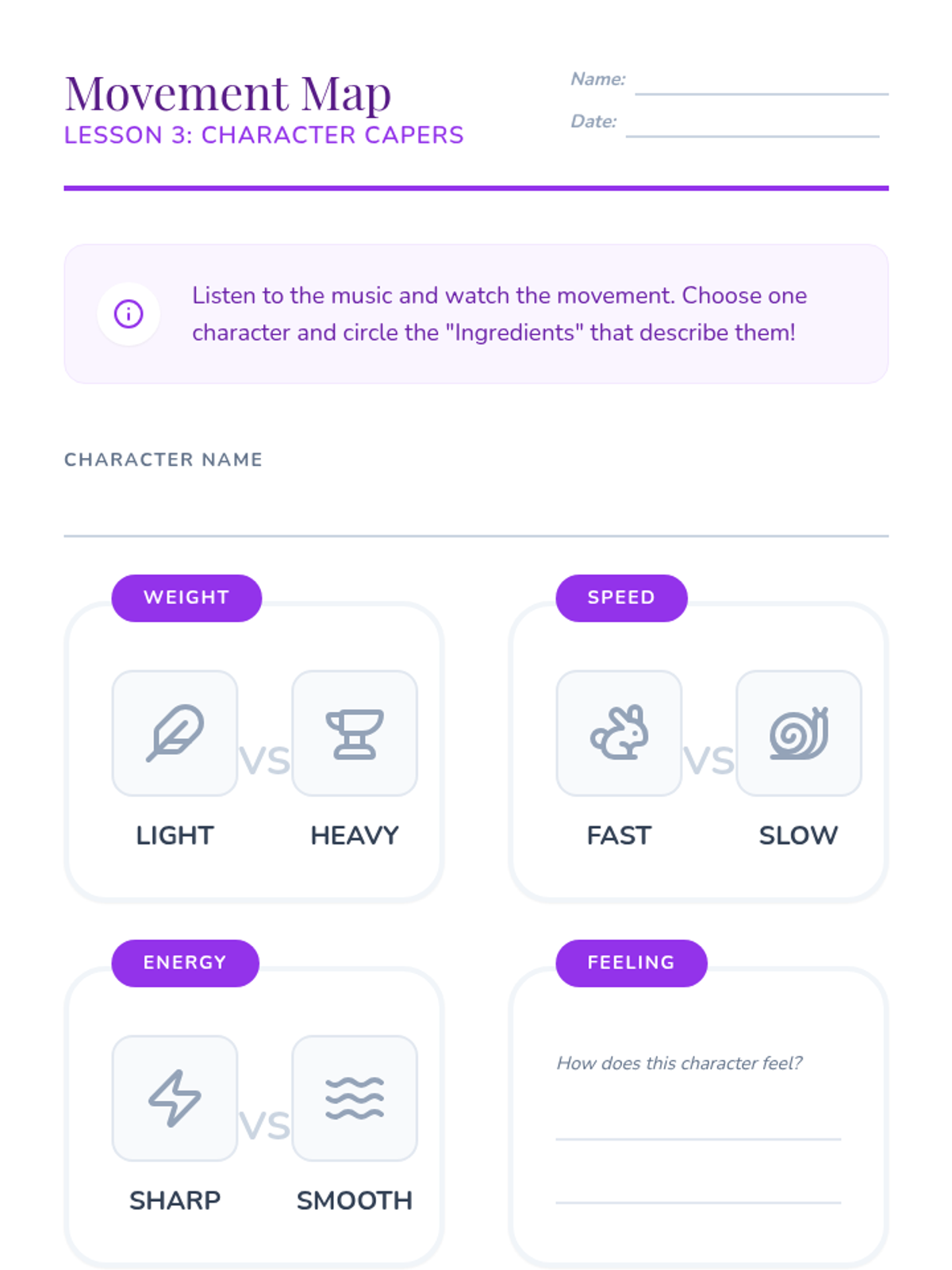
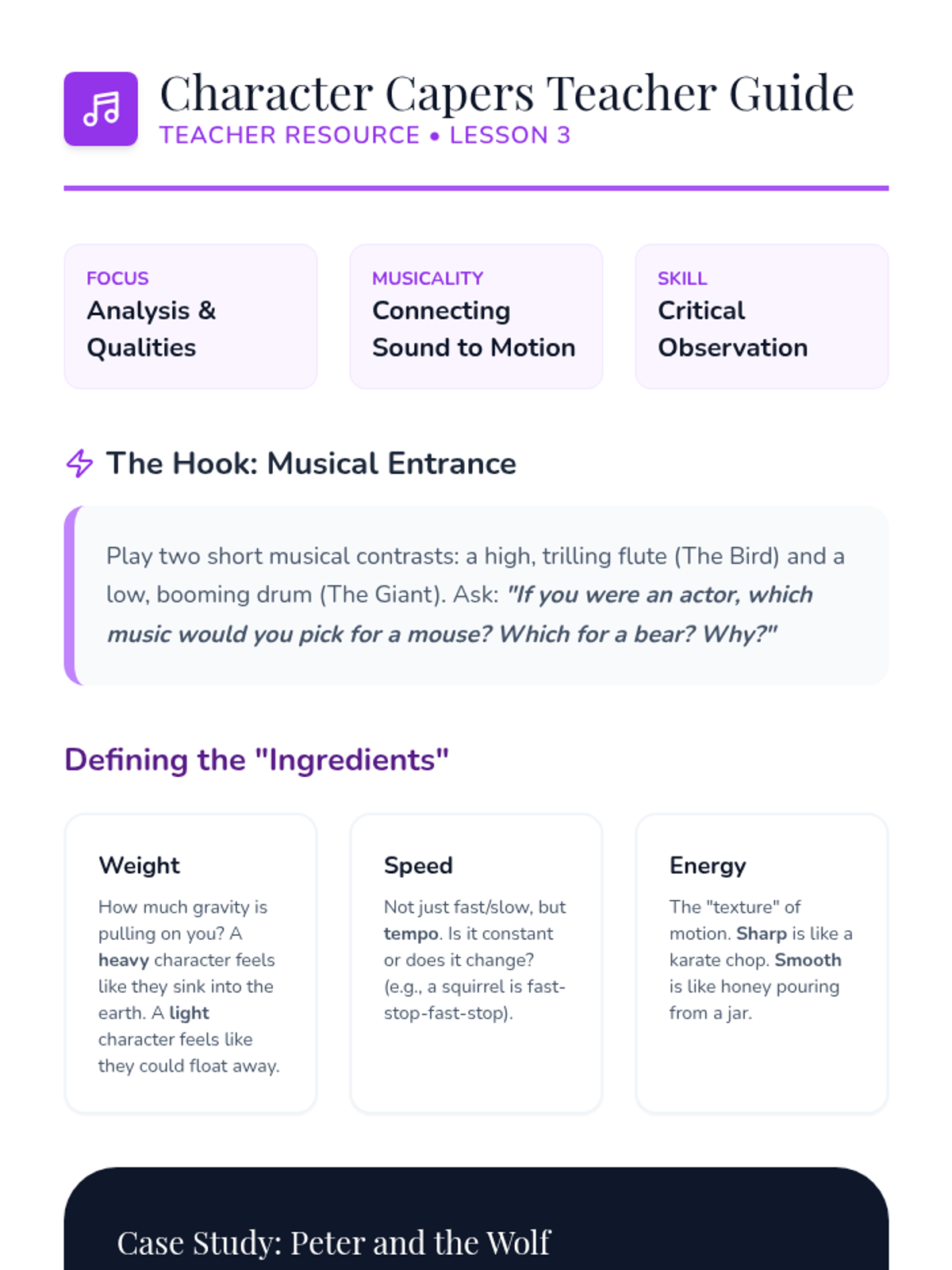
Students analyze how music and movement create different characters in story ballets like The Nutcracker and Peter and the Wolf.
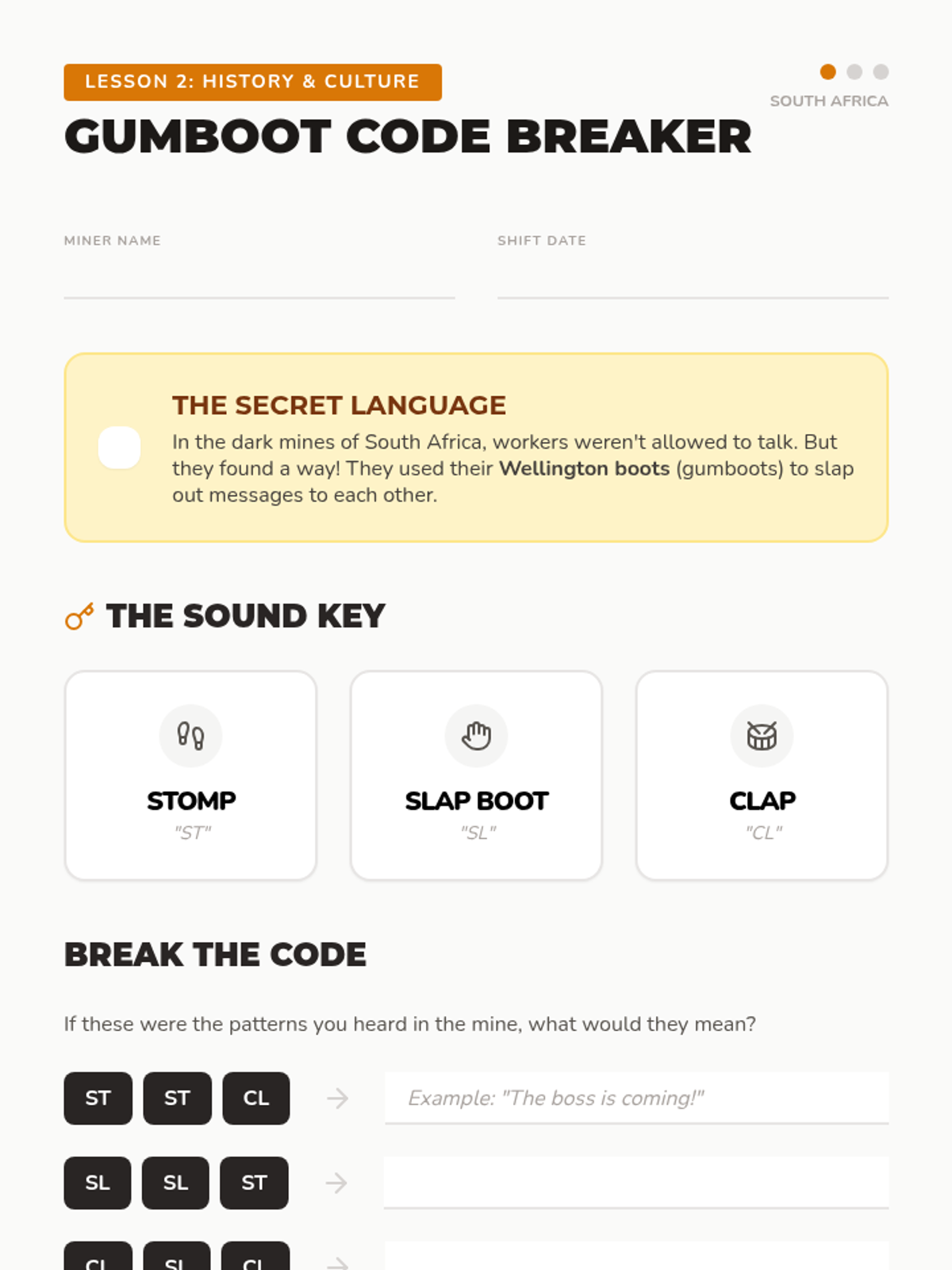
Exploration of South African Gumboot dance history, focusing on communication through sound and basic step-clap patterns.
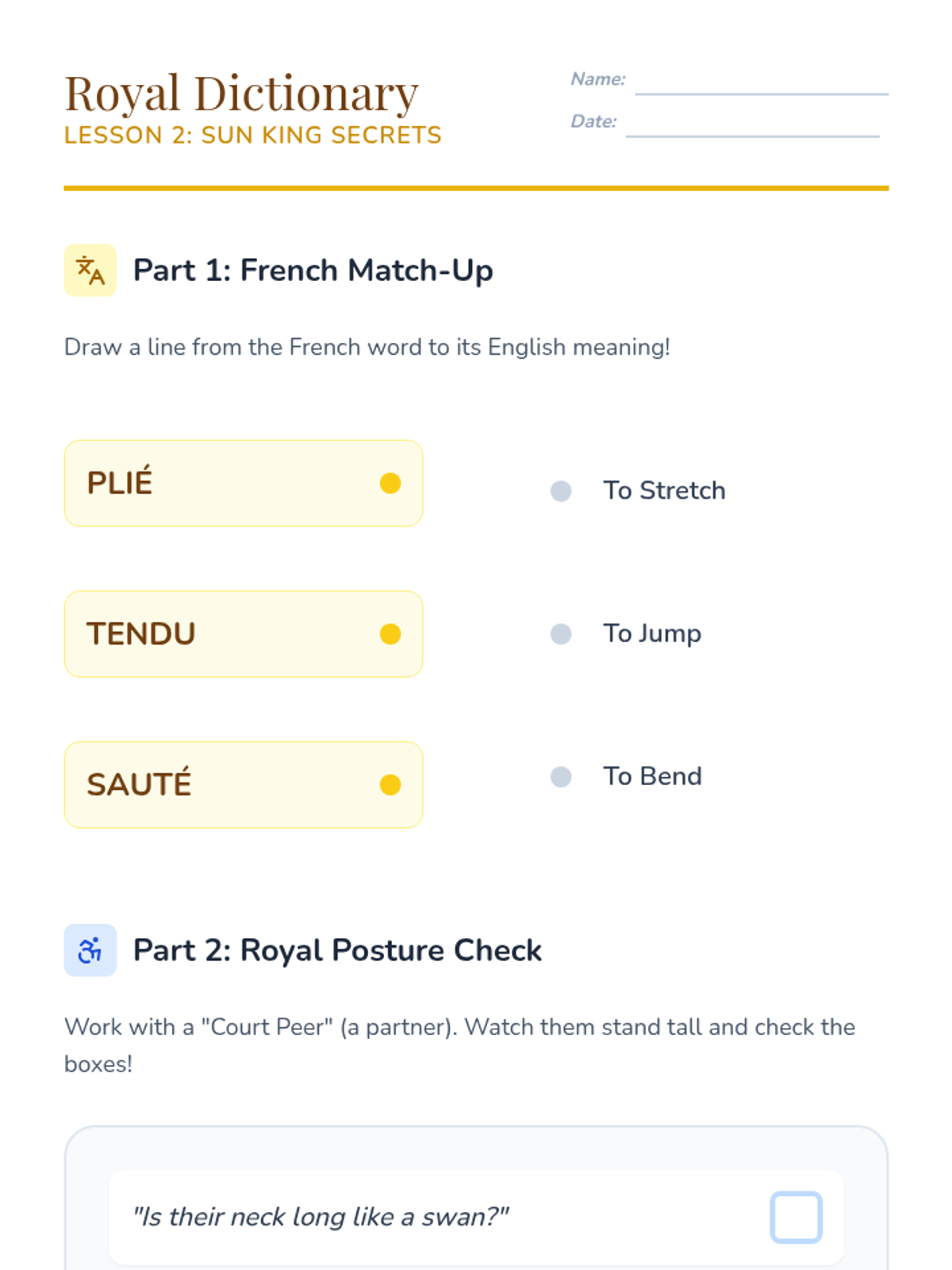
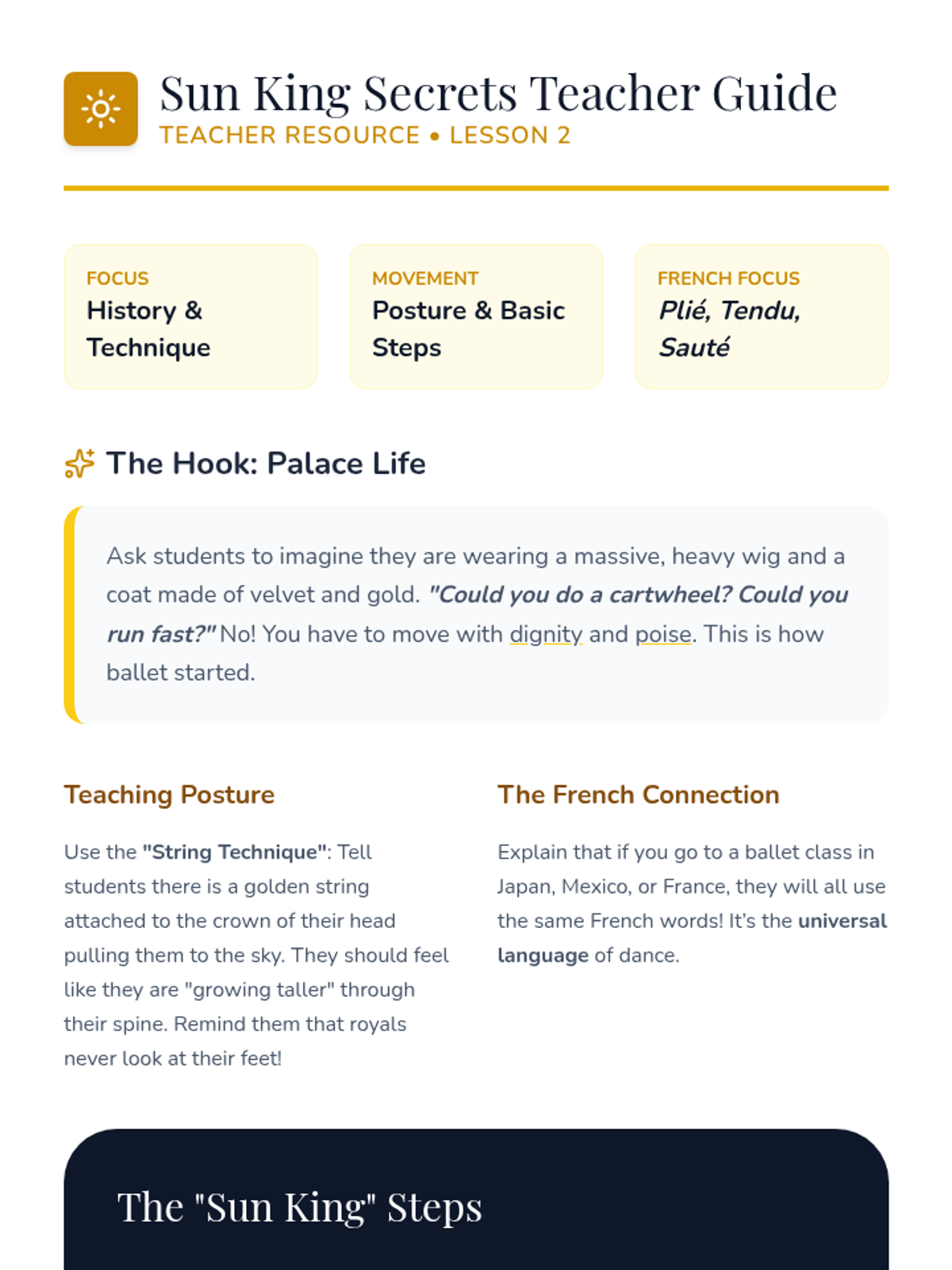
A dive into the origins of ballet in the court of King Louis XIV, focusing on royal posture and the French roots of dance vocabulary.
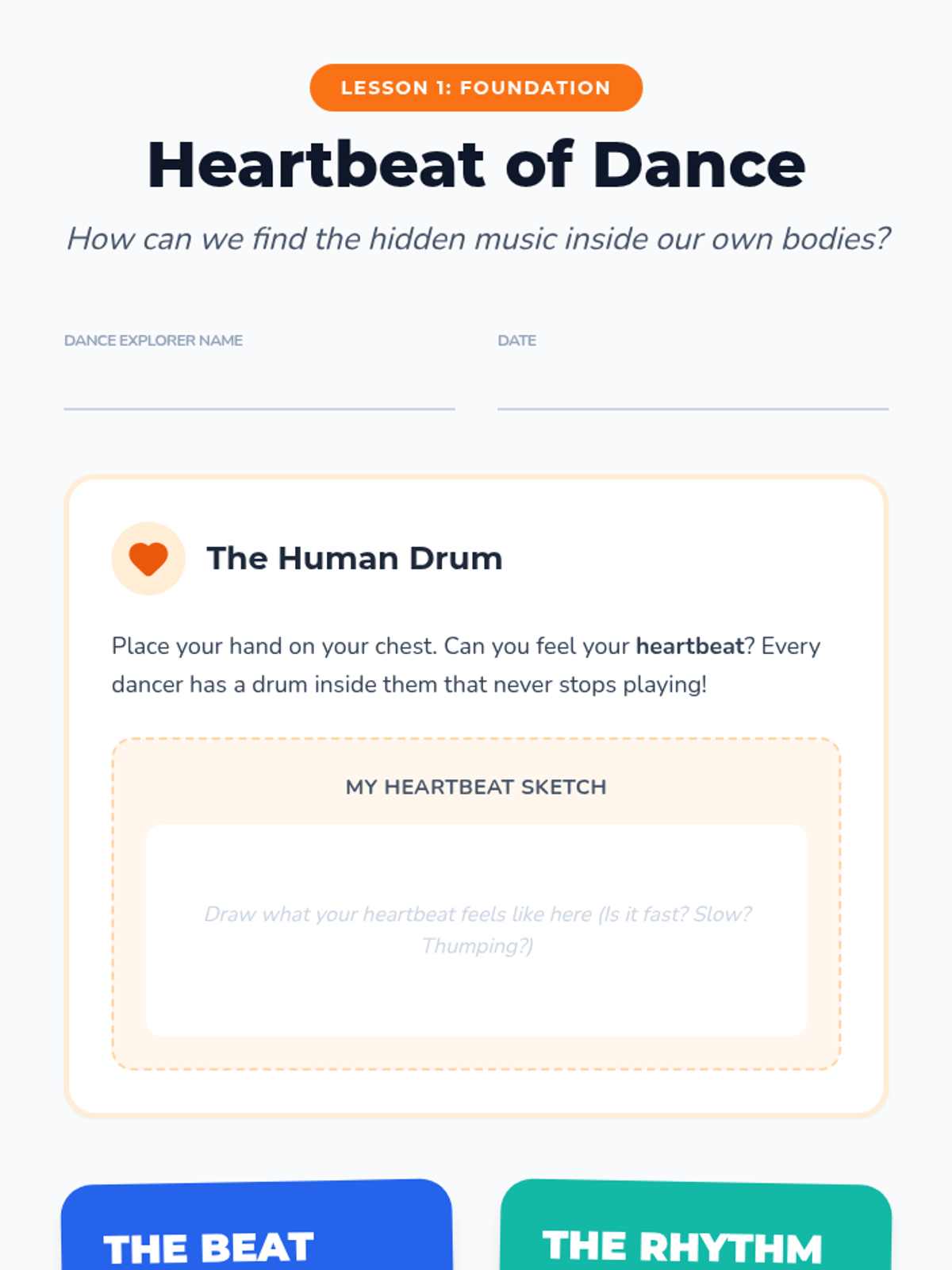
Students learn about the 'pulse' or 'beat' in music and dance, practicing rhythmic accuracy and unison through body percussion.
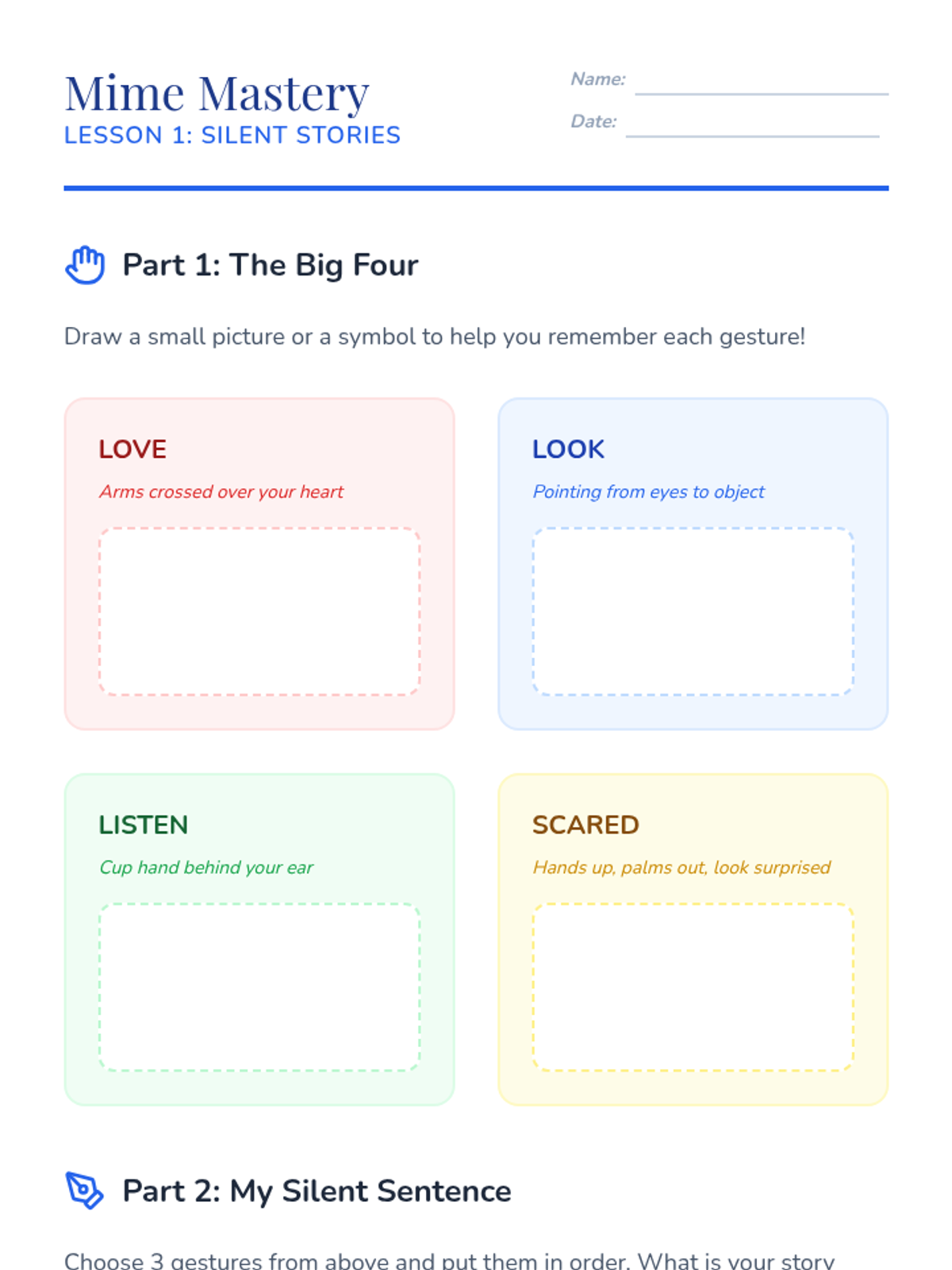
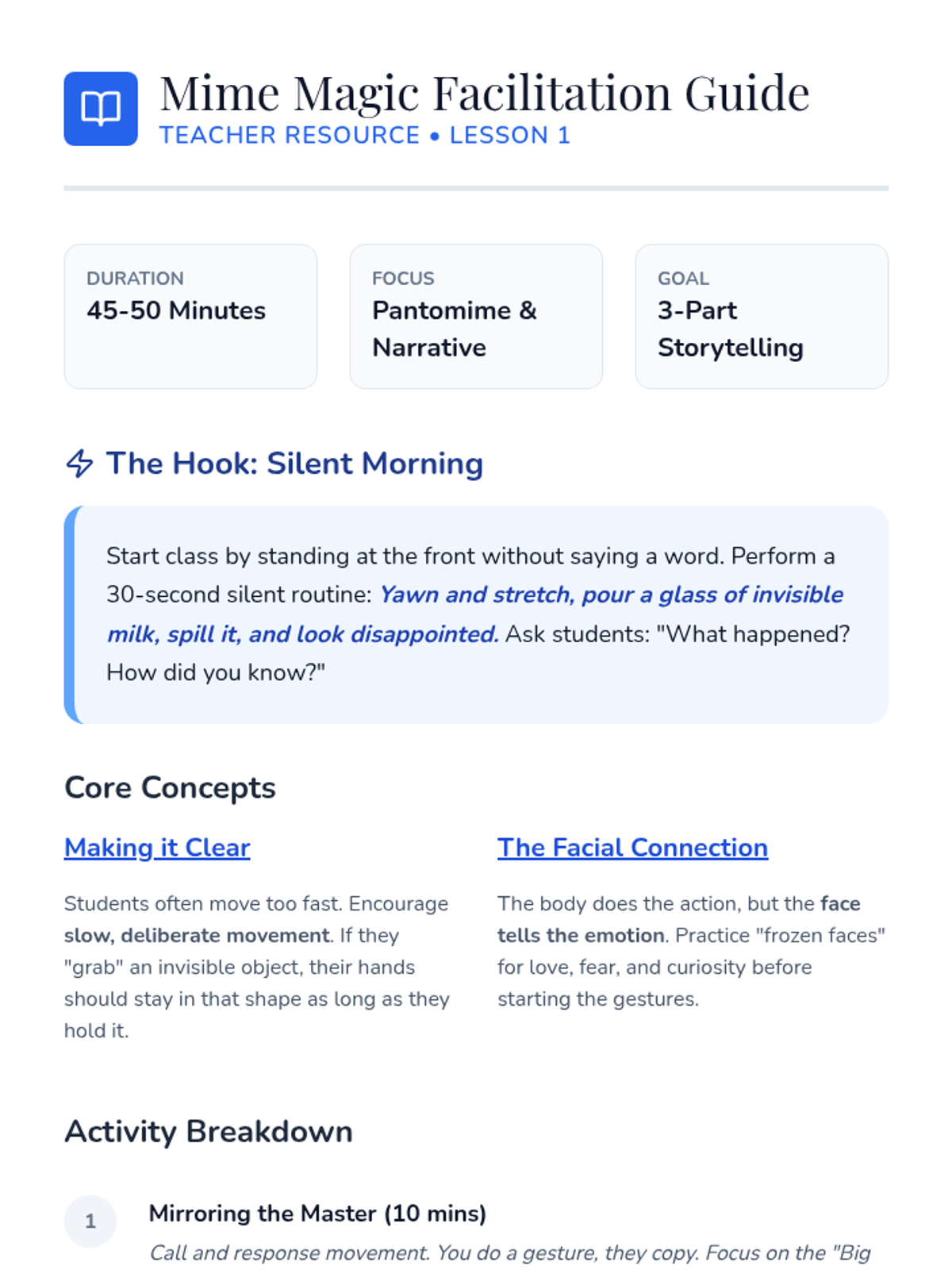
Students explore the art of mime, learning standard gestures and how to sequence them to tell a story without words.
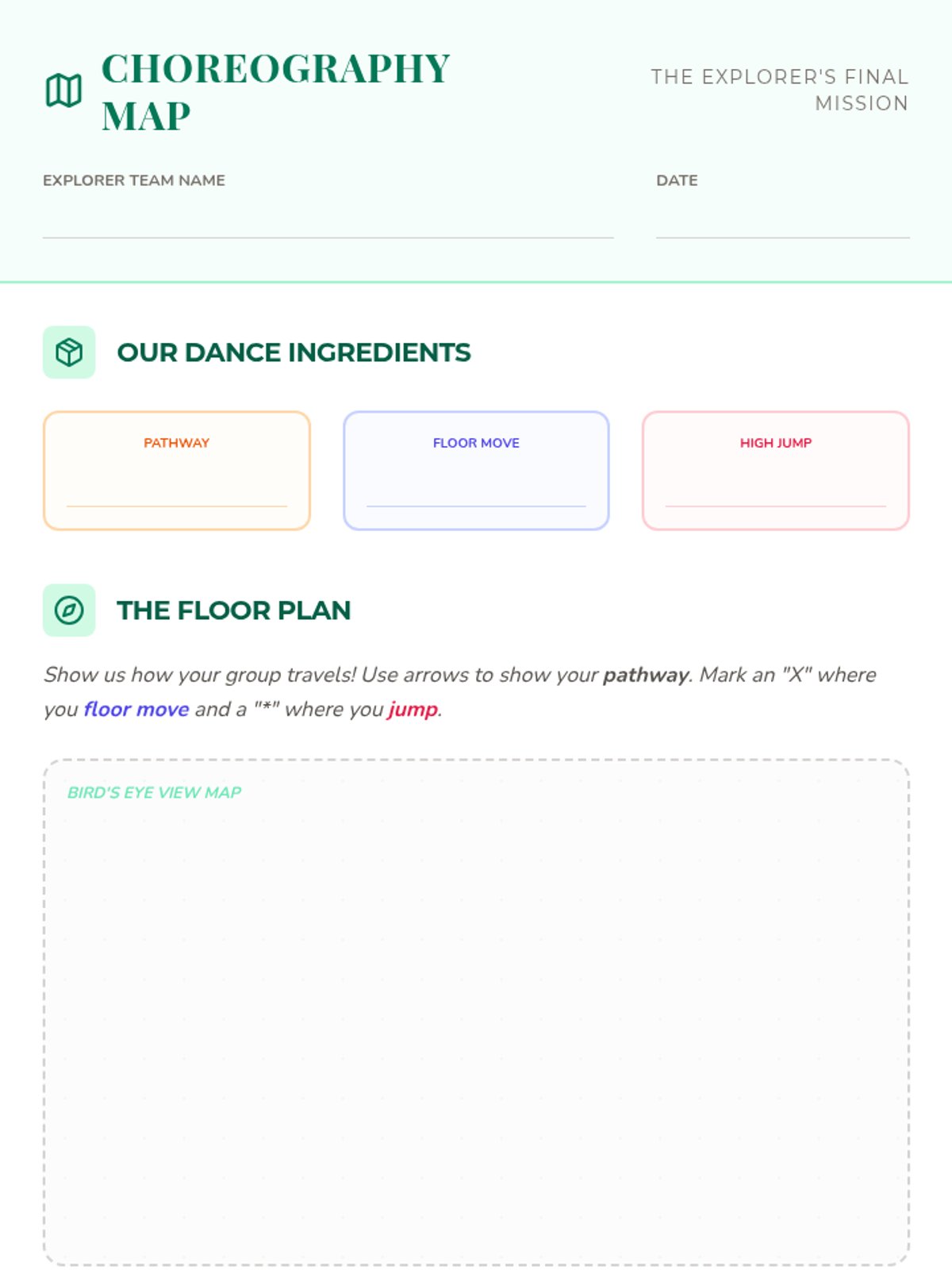
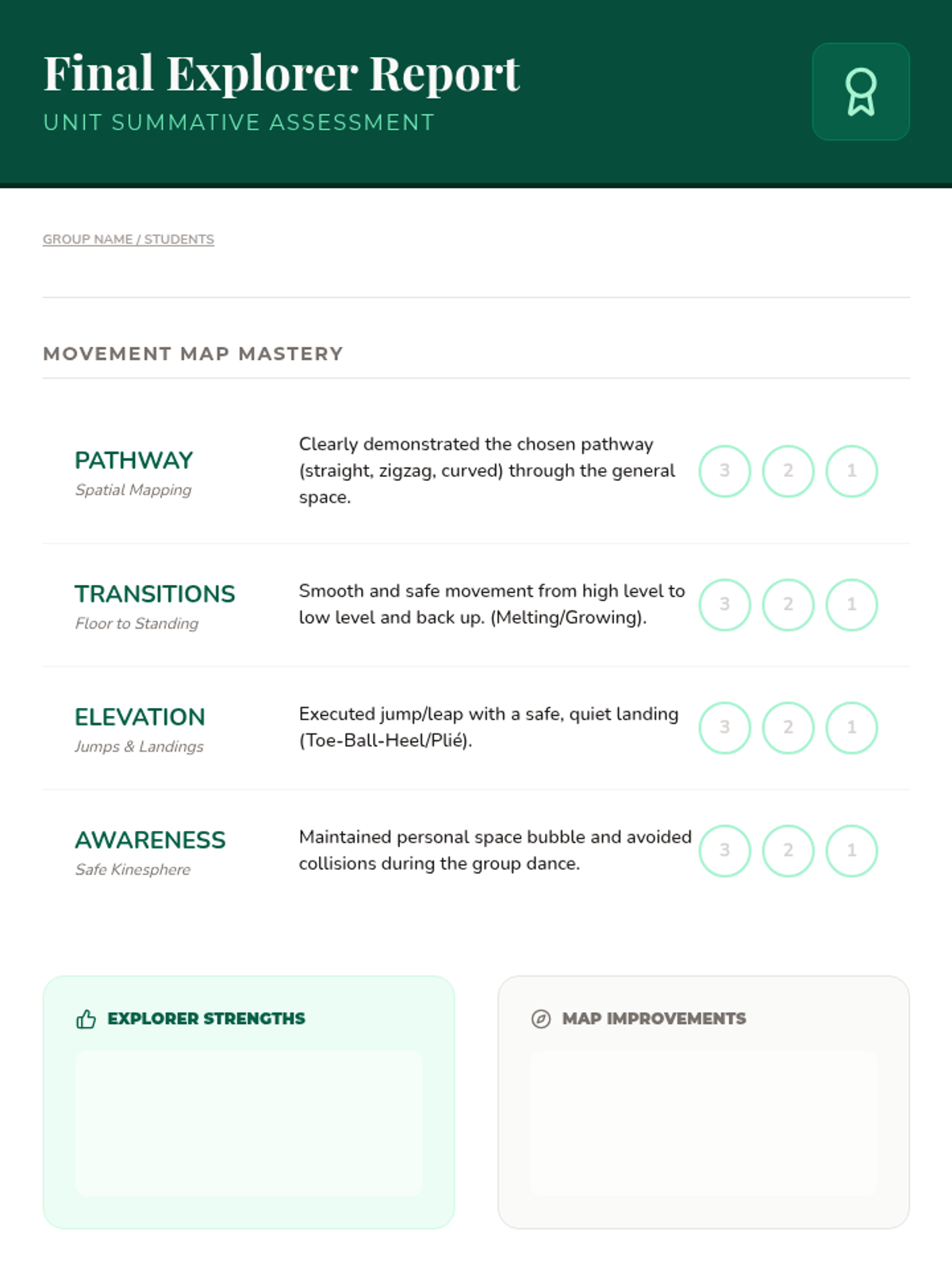
Small groups synthesize their learning by creating 'dance maps' that incorporate specific pathways, floor work, and jumps.
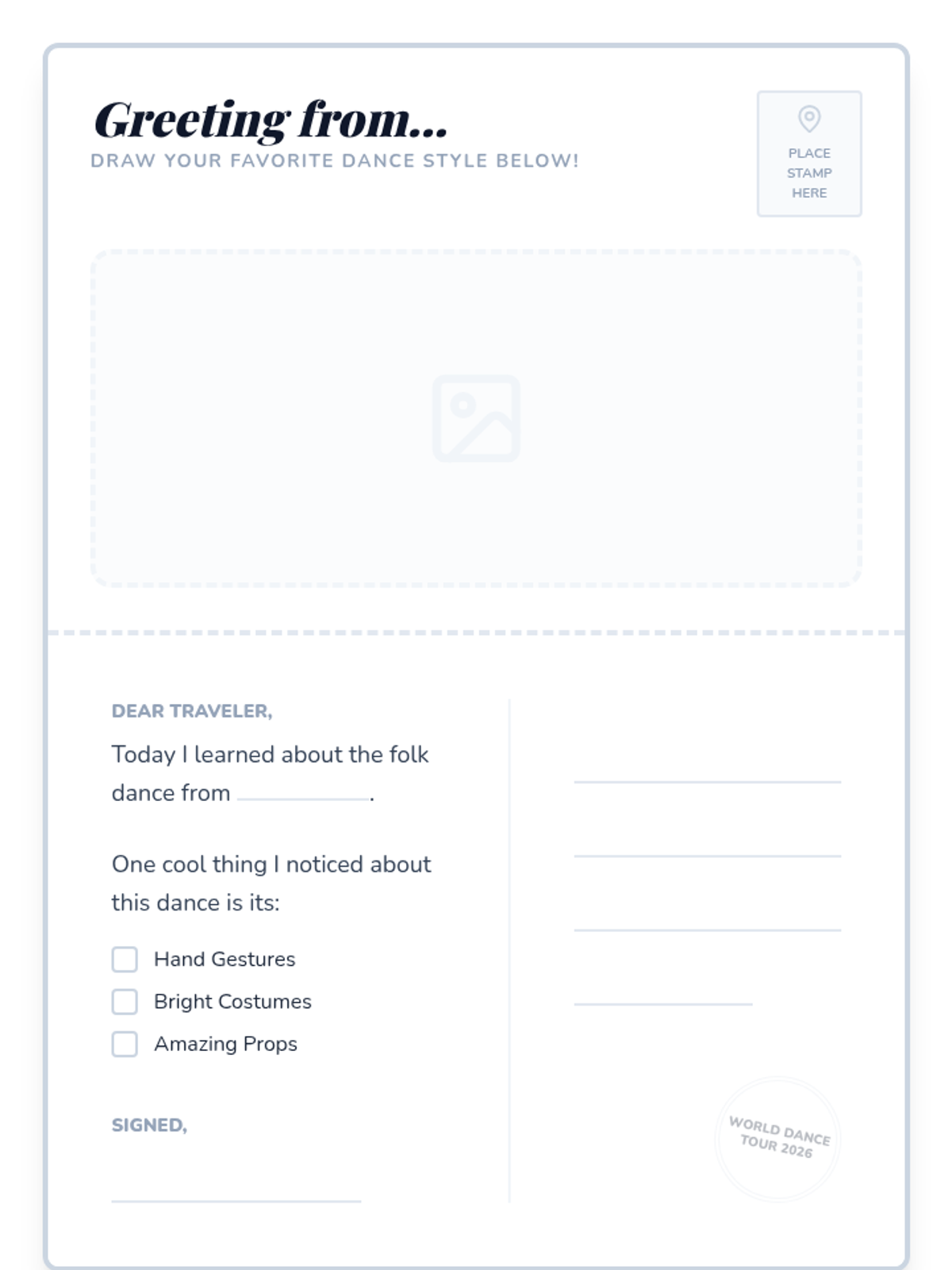
A culminating project where students review the styles learned, create a dance postcard, and perform a movement representing one culture.
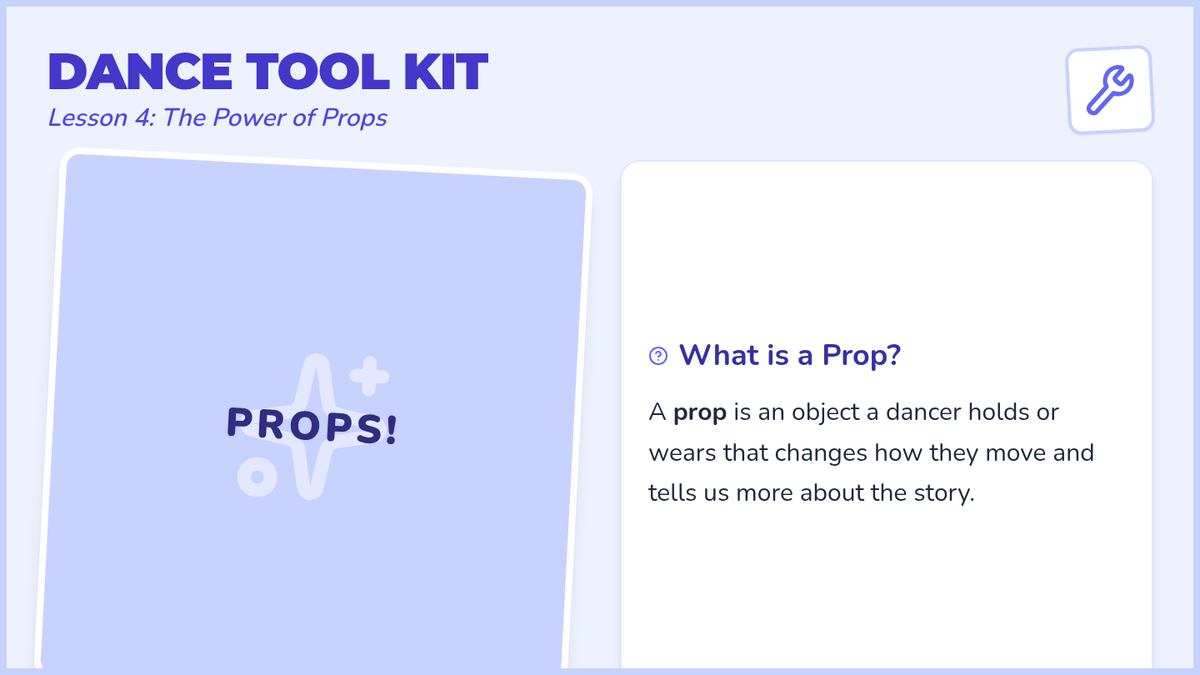
A survey of various props used in global folk dances, such as fans and ribbons, and how they influence body movement.
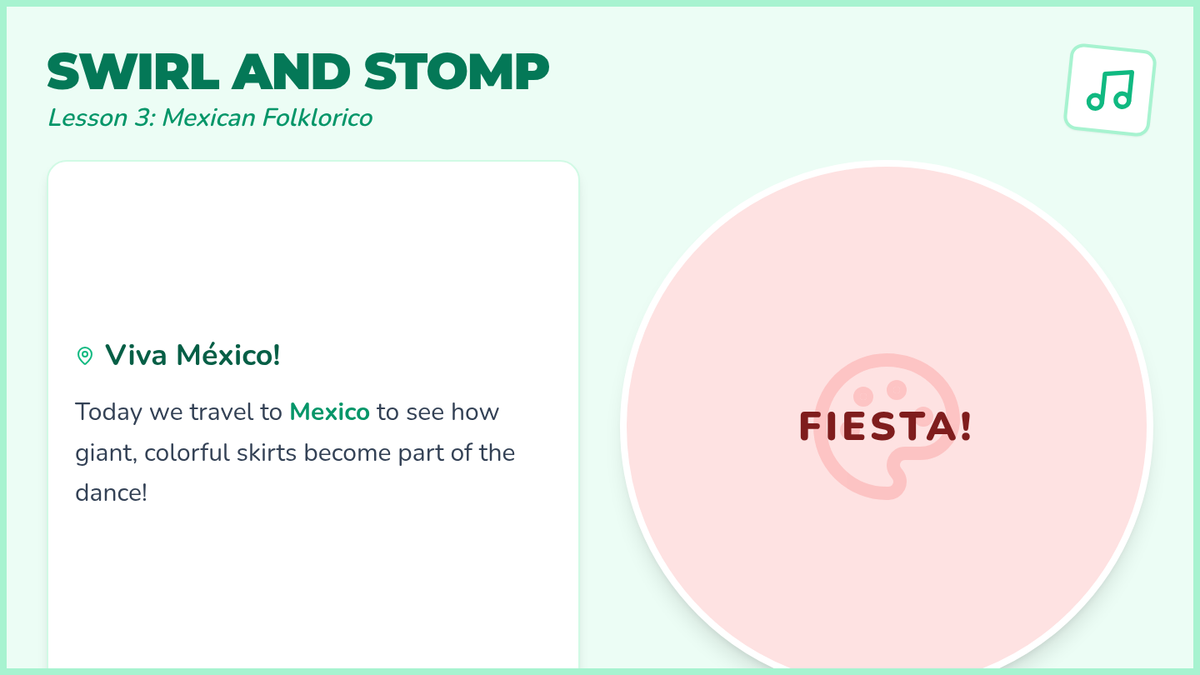
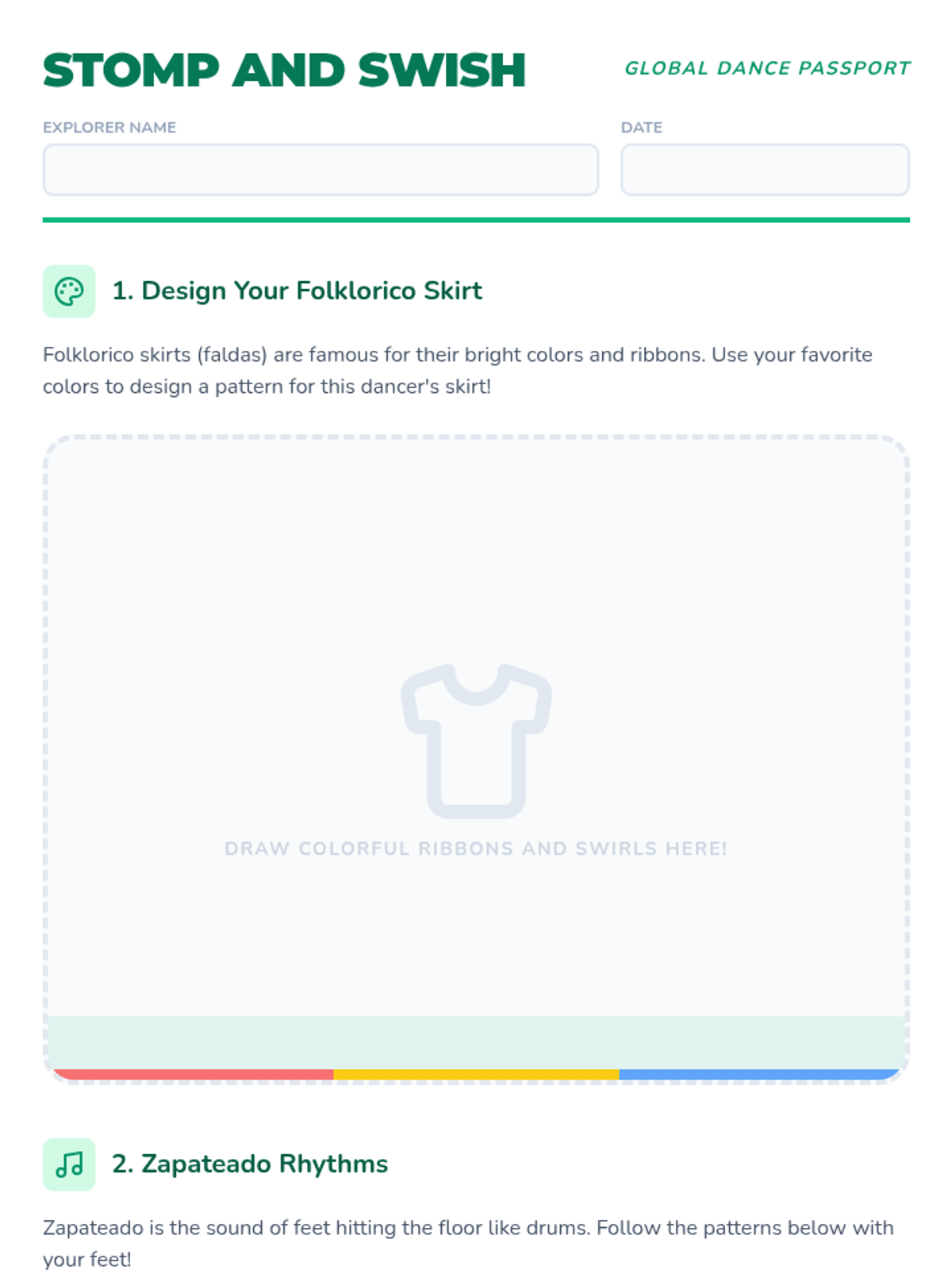
Exploring Mexican Folklorico through the lens of costume and rhythm, specifically focusing on the use of large skirts as props for movement.
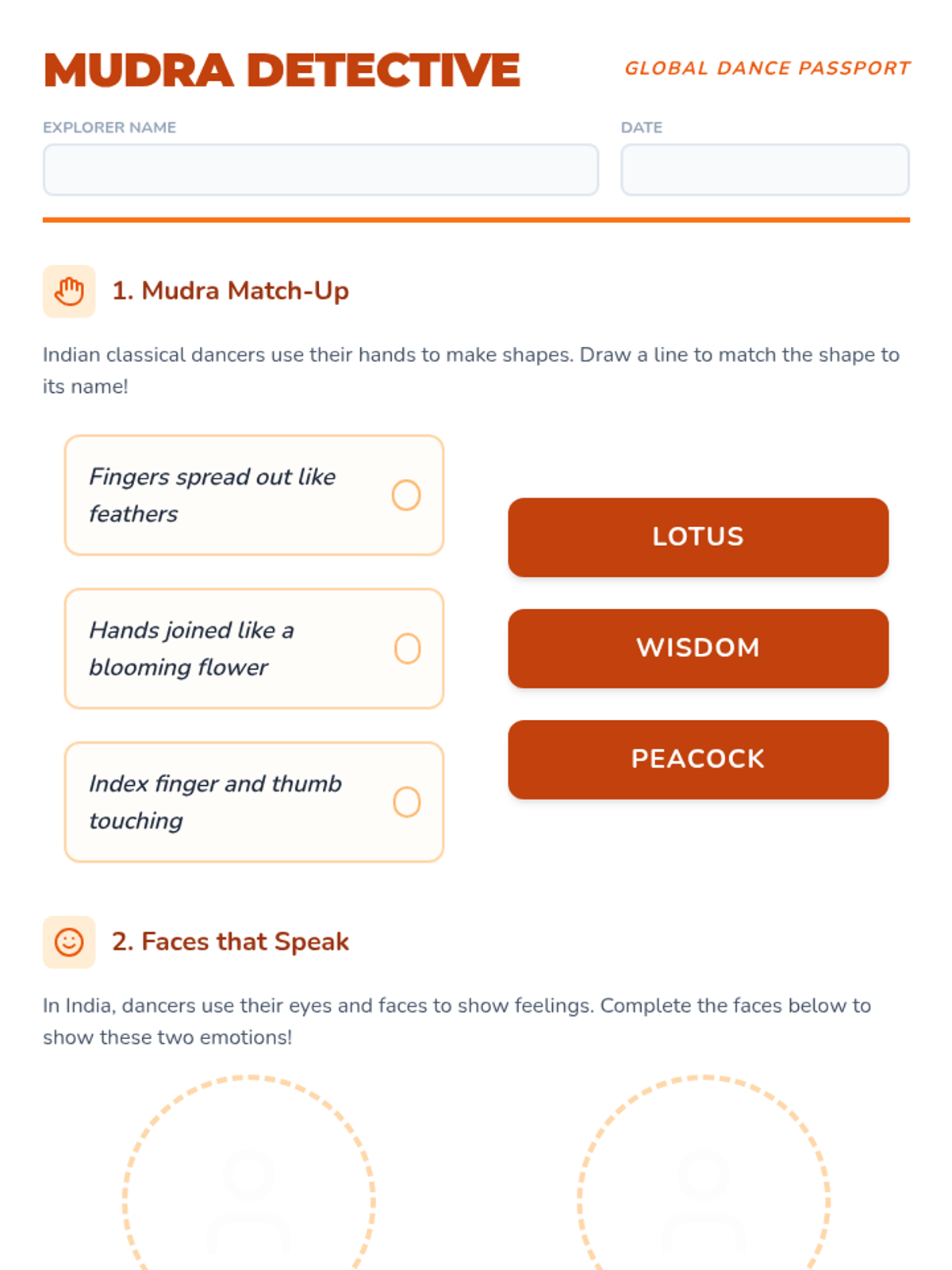
Introduction to Indian classical dance and the use of 'Mudras' (hand gestures) and facial expressions to convey emotions and stories.
Students explore Hawaiian Hula, focusing on how hand gestures represent elements of nature like the ocean, sun, and flowers to tell stories.