Develops technical proficiency and creative movement skills across various styles. Examines choreographic principles alongside the historical and cultural origins of diverse global dance forms.
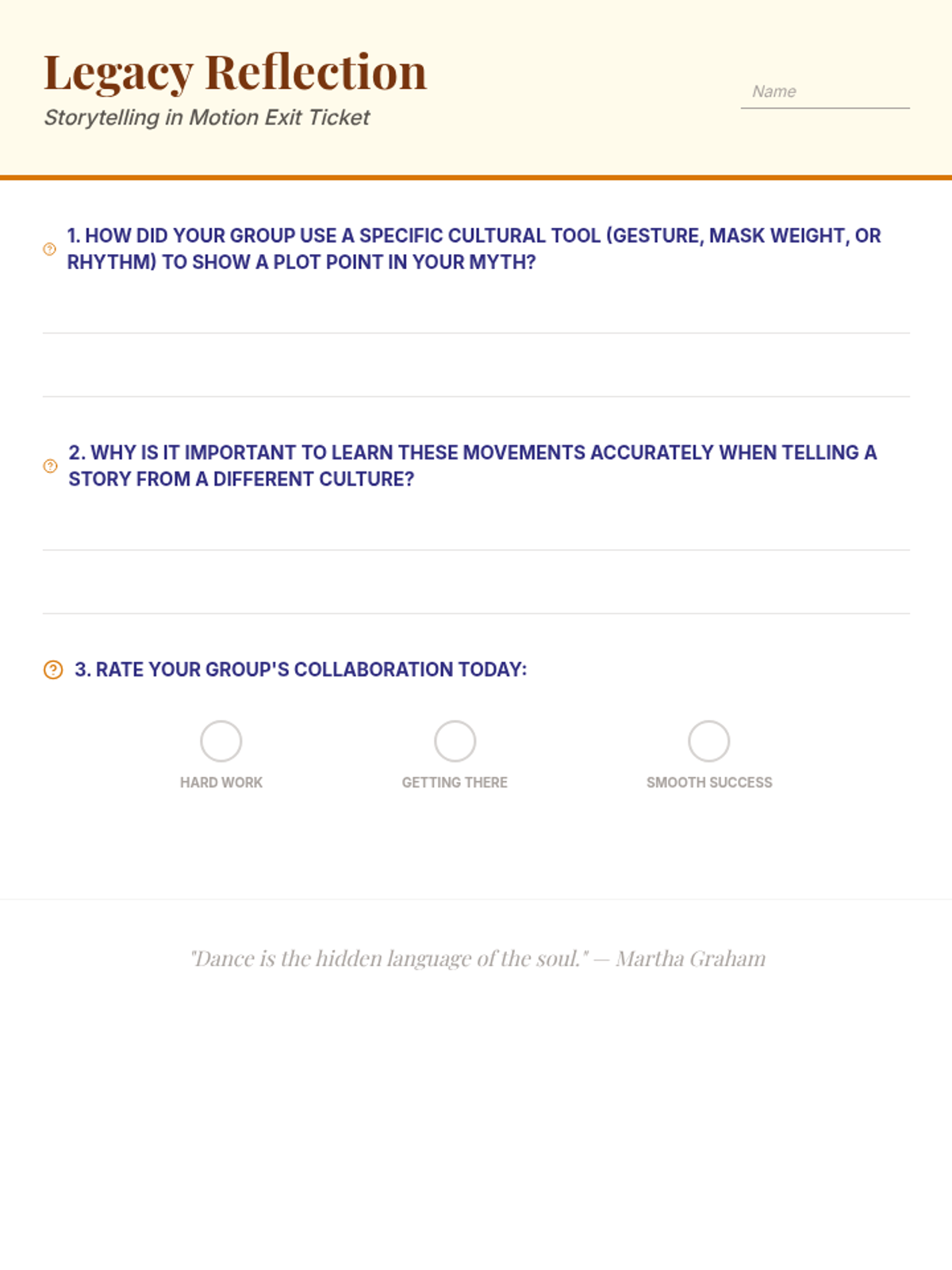
A short reflection exit ticket for the final lesson, asking students to connect their choreographic choices to the cultural tools learned in the unit.
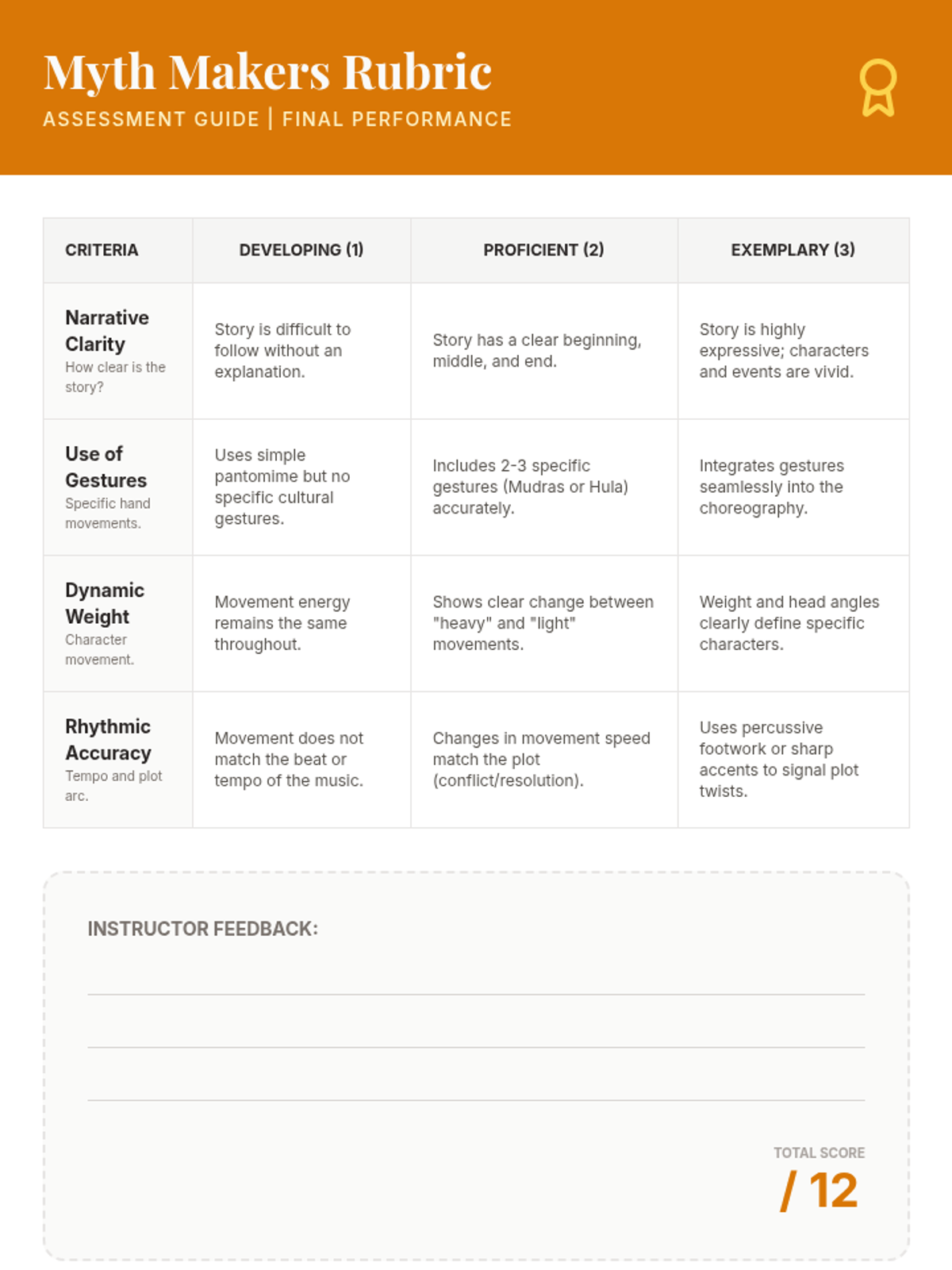
A grading rubric for the final narrative dance project, assessing narrative clarity, gesture usage, movement dynamics, and rhythm.
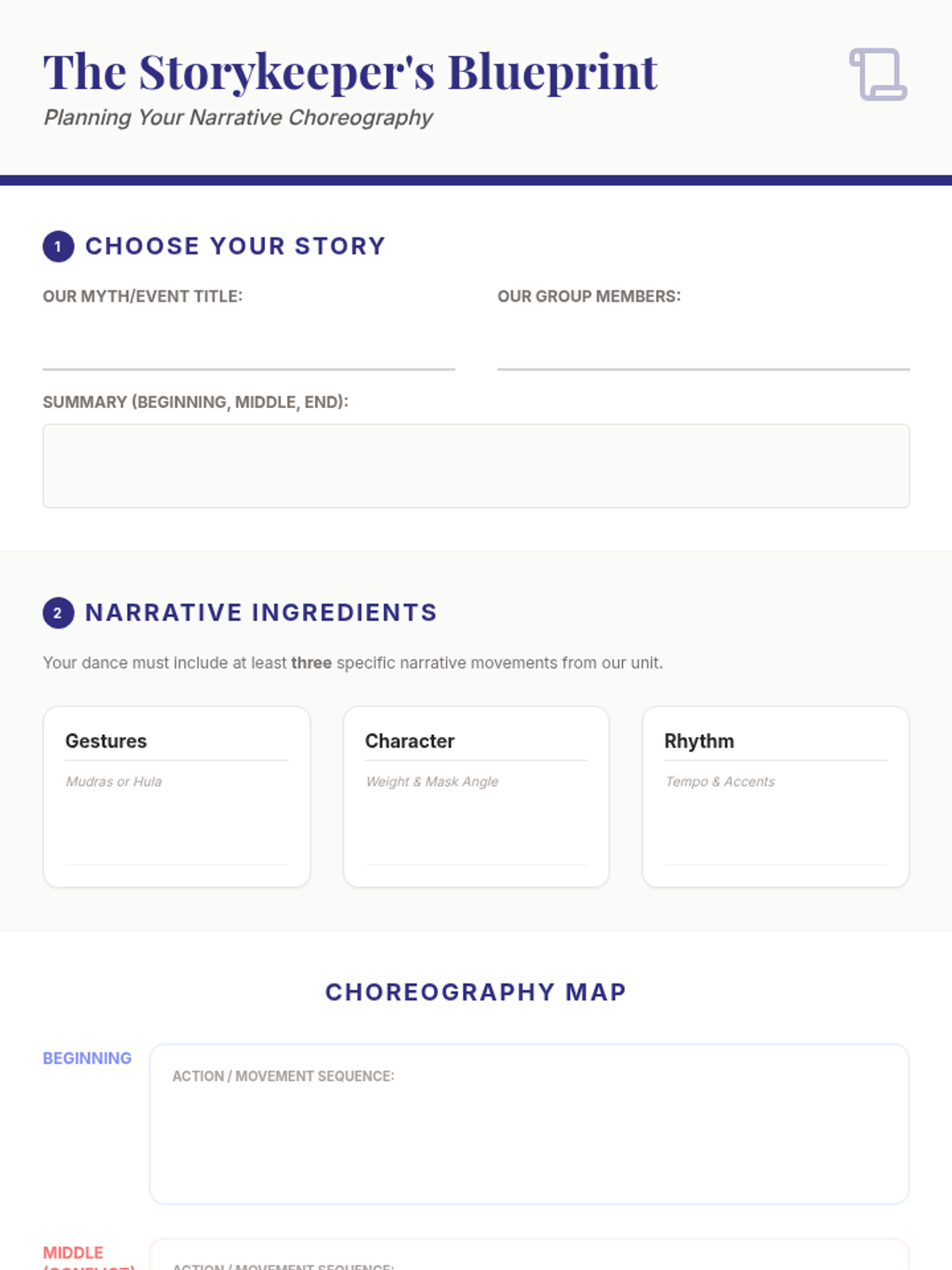
A planning worksheet for students to organize their group's narrative dance project, including story summary and movement choices.
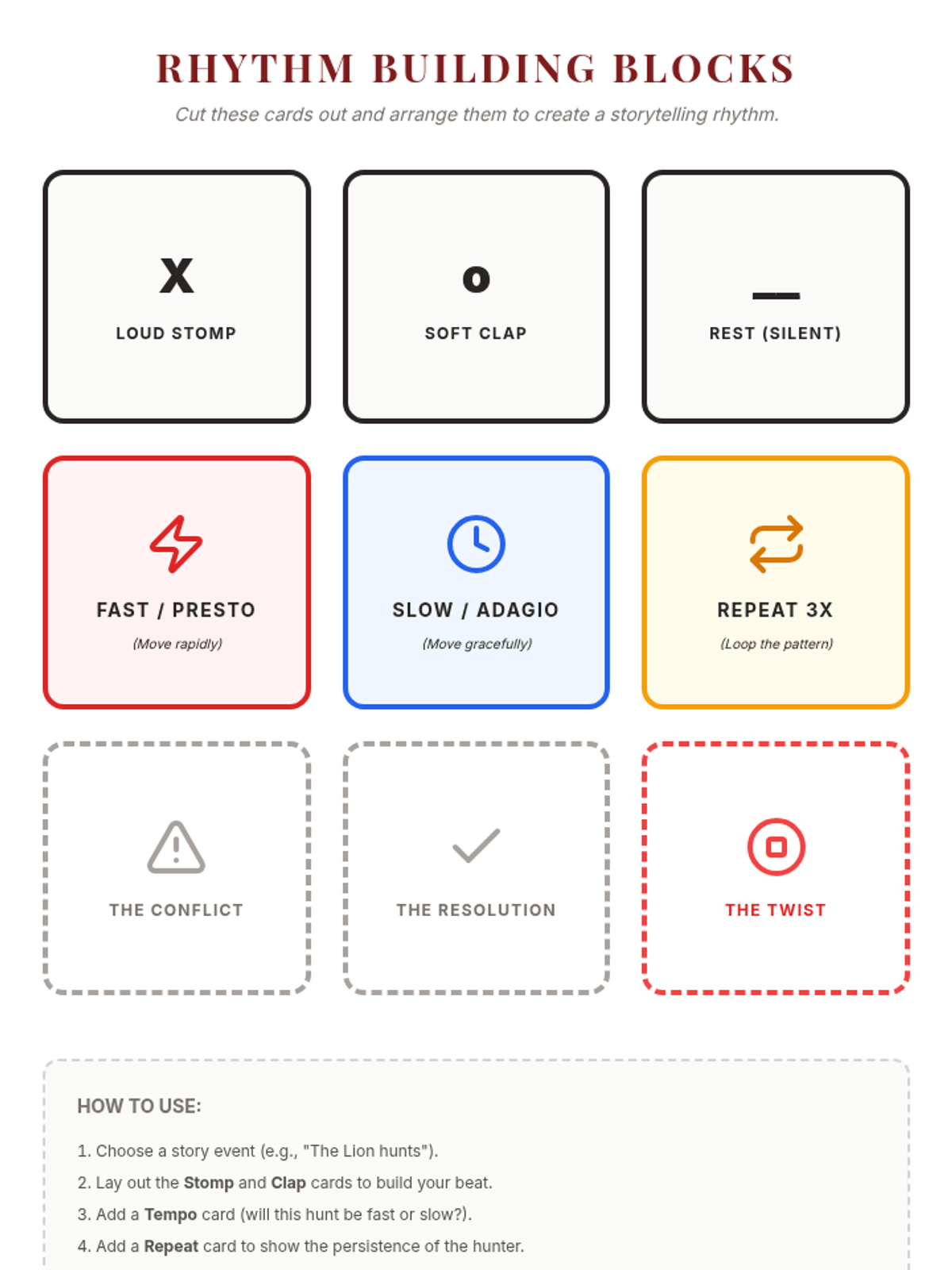
Rhythm pattern cards for student use in sequencing their own rhythmic story arcs.
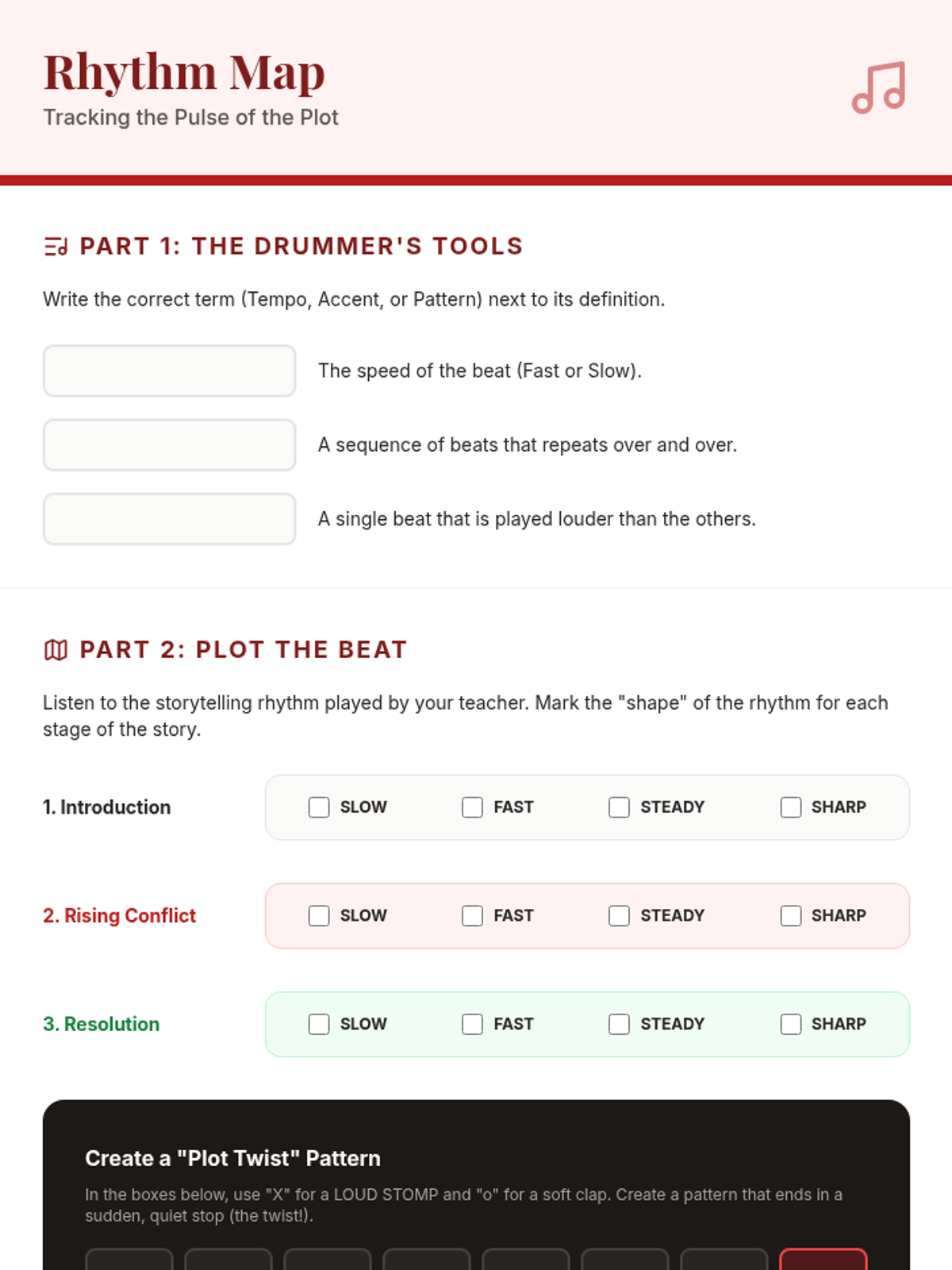
A worksheet for Lesson 4 where students map rhythmic changes to the dramatic structure of a story (Introduction, Conflict, Resolution).
Slide deck for Lesson 4, connecting drum beats and footwork to the dramatic arc of a story.
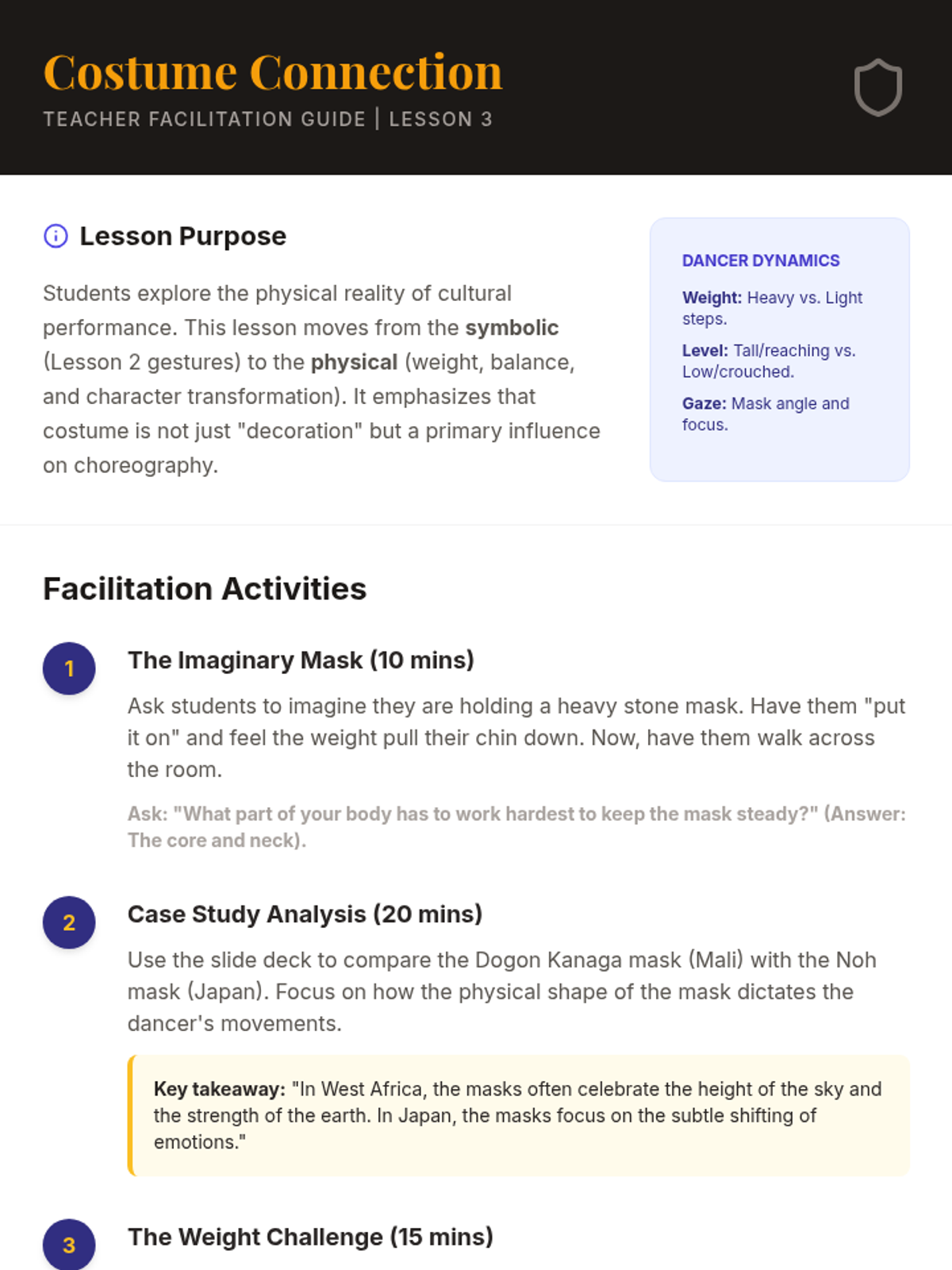
Teacher facilitation guide for Lesson 3, including activity instructions, discussion prompts, and cultural sensitivity notes.
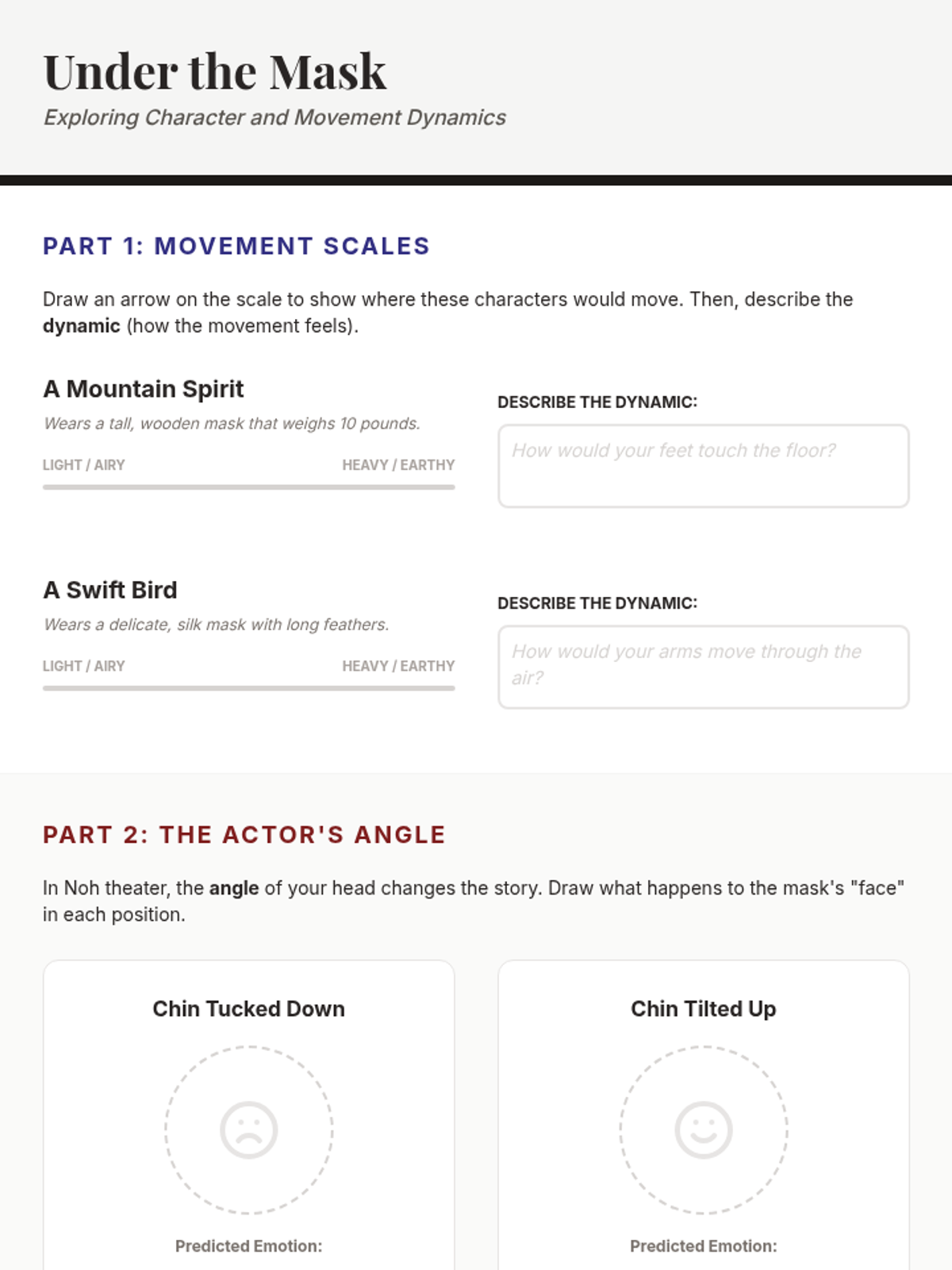
A worksheet for Lesson 3 where students explore the influence of mask weight and head angles on movement dynamics and emotion.
Slide deck for Lesson 3, exploring how masks and costumes influence character and movement in West African and Asian traditions.
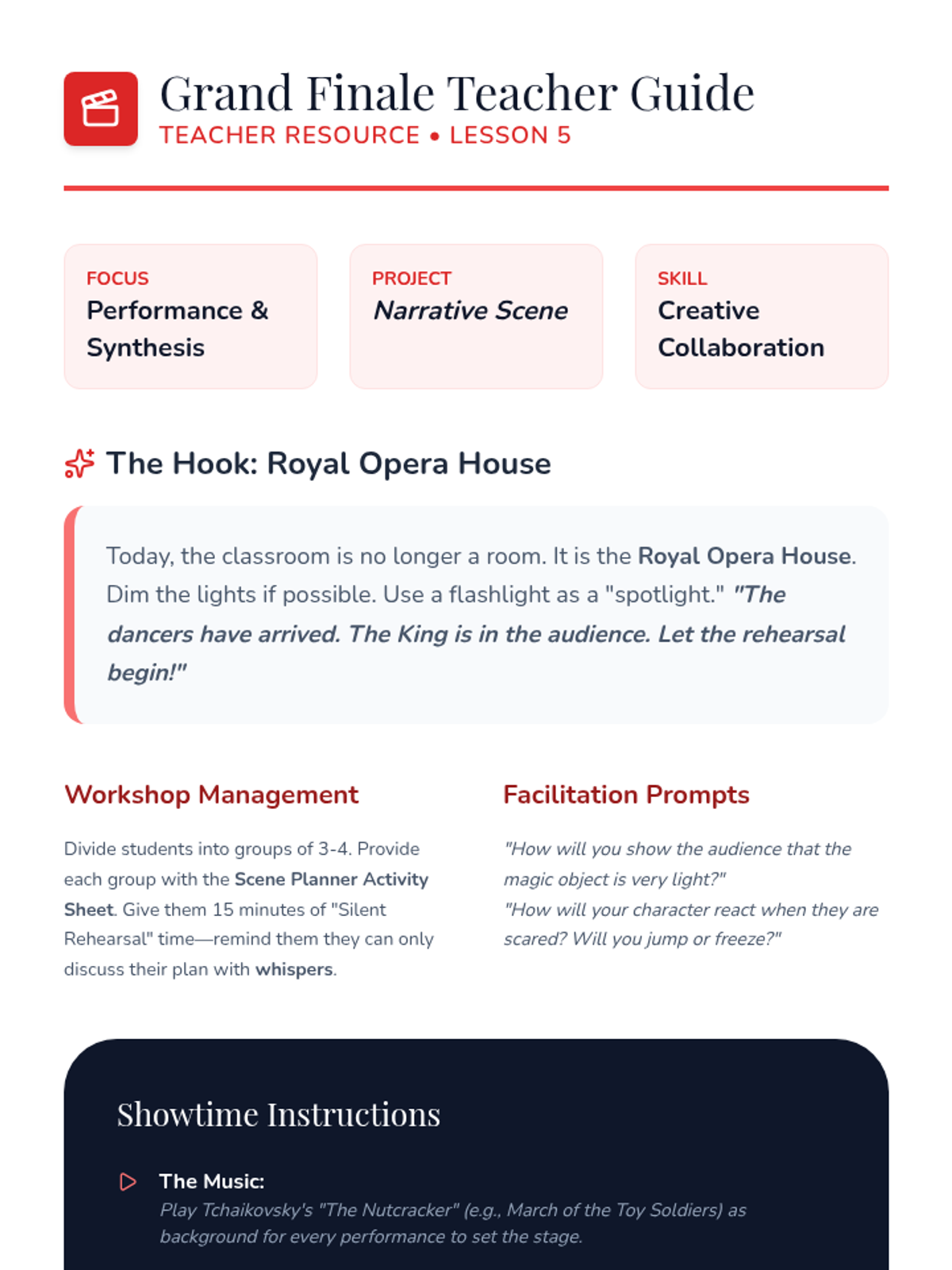
A teacher guide for the Grand Finale lesson, featuring workshop management tips, performance etiquette, and assessment prompts for the final showcase.
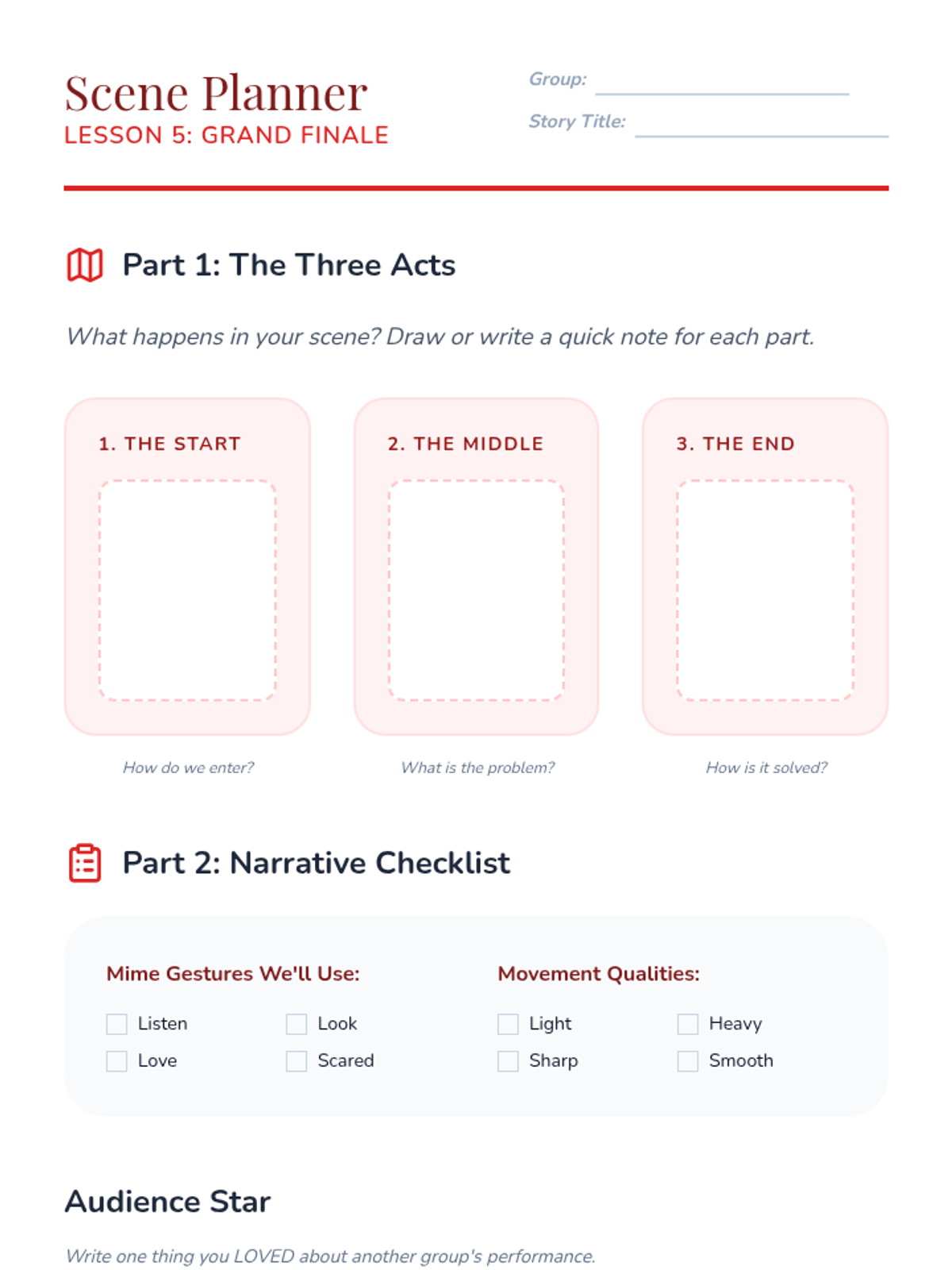
A planning sheet for students to structure their 3-part silent narrative scene using mime, posture, and movement qualities.
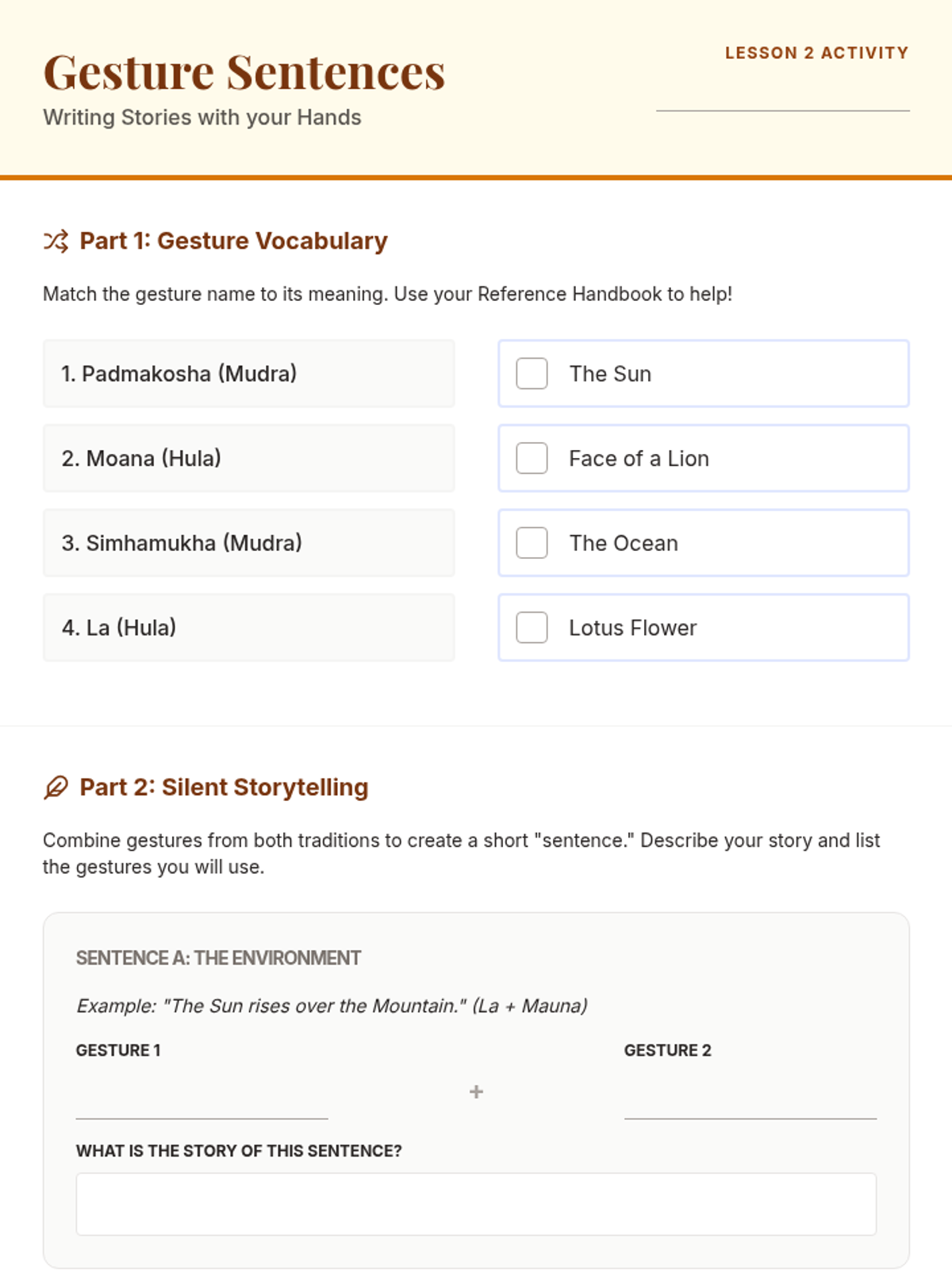
A worksheet for Lesson 2 where students match gesture meanings and compose their own short narrative "sentences" using hand gestures.
A slide deck introducing performance etiquette, group performance prompts, and the structure for the final narrative dance scene.
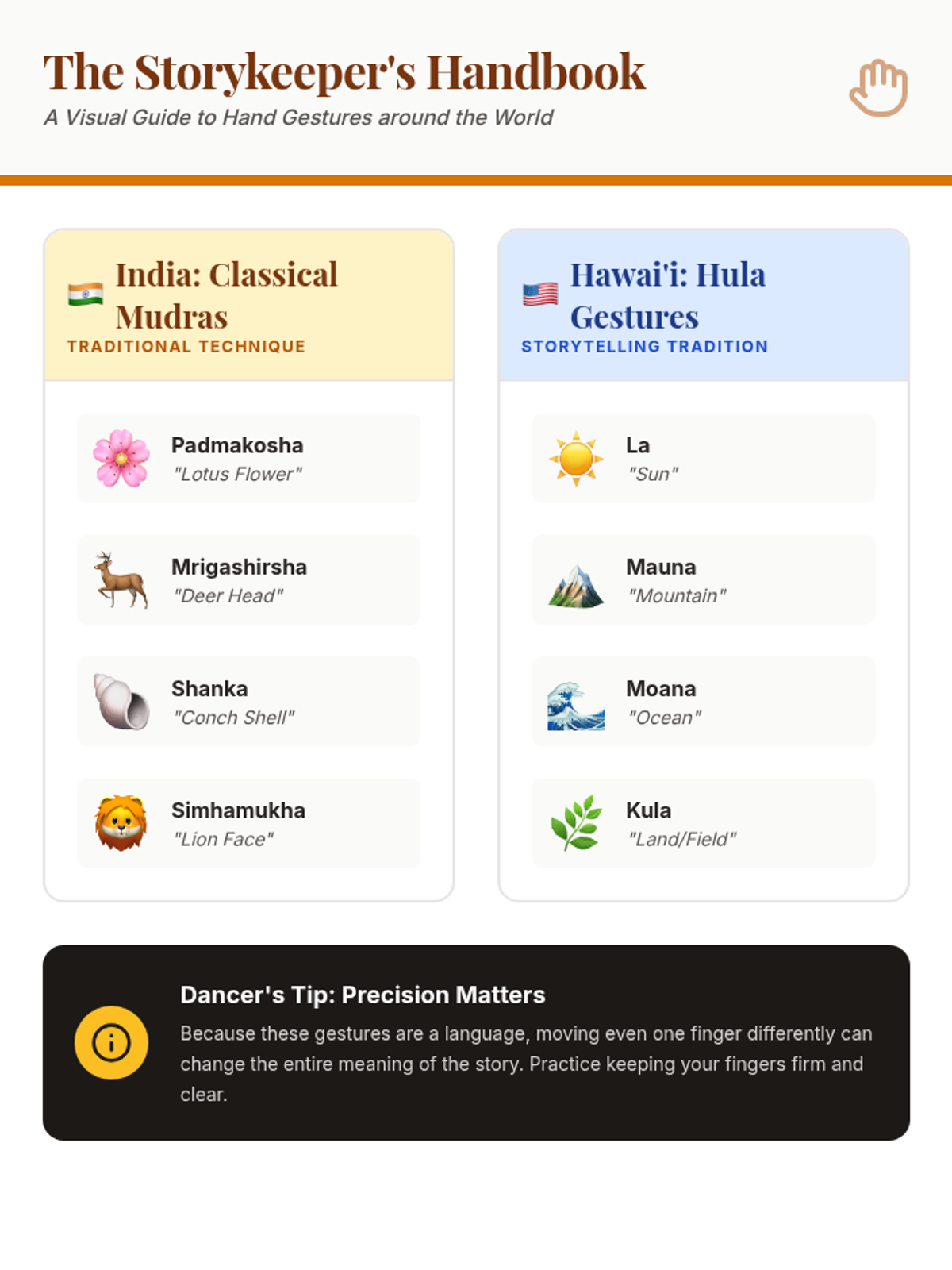
A visual reference guide for students showing specific hand gestures from Indian and Hawaiian traditions.
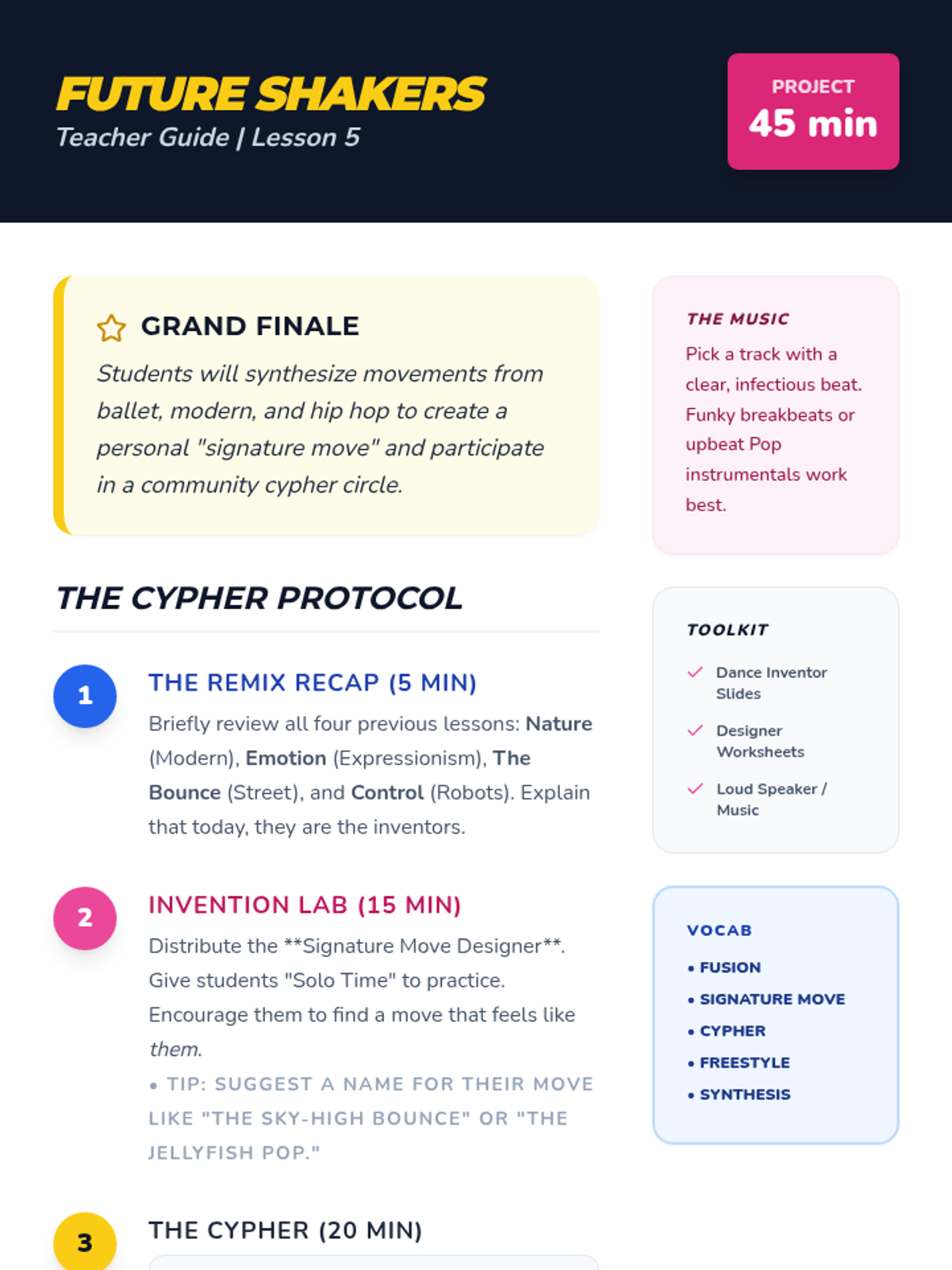
The final teacher guide, detailing how to facilitate the 'Signature Move' design process and lead a successful classroom dance cypher.
Slide deck for Lesson 2, exploring the hand gesture traditions of Indian Mudras and Hawaiian Hula.
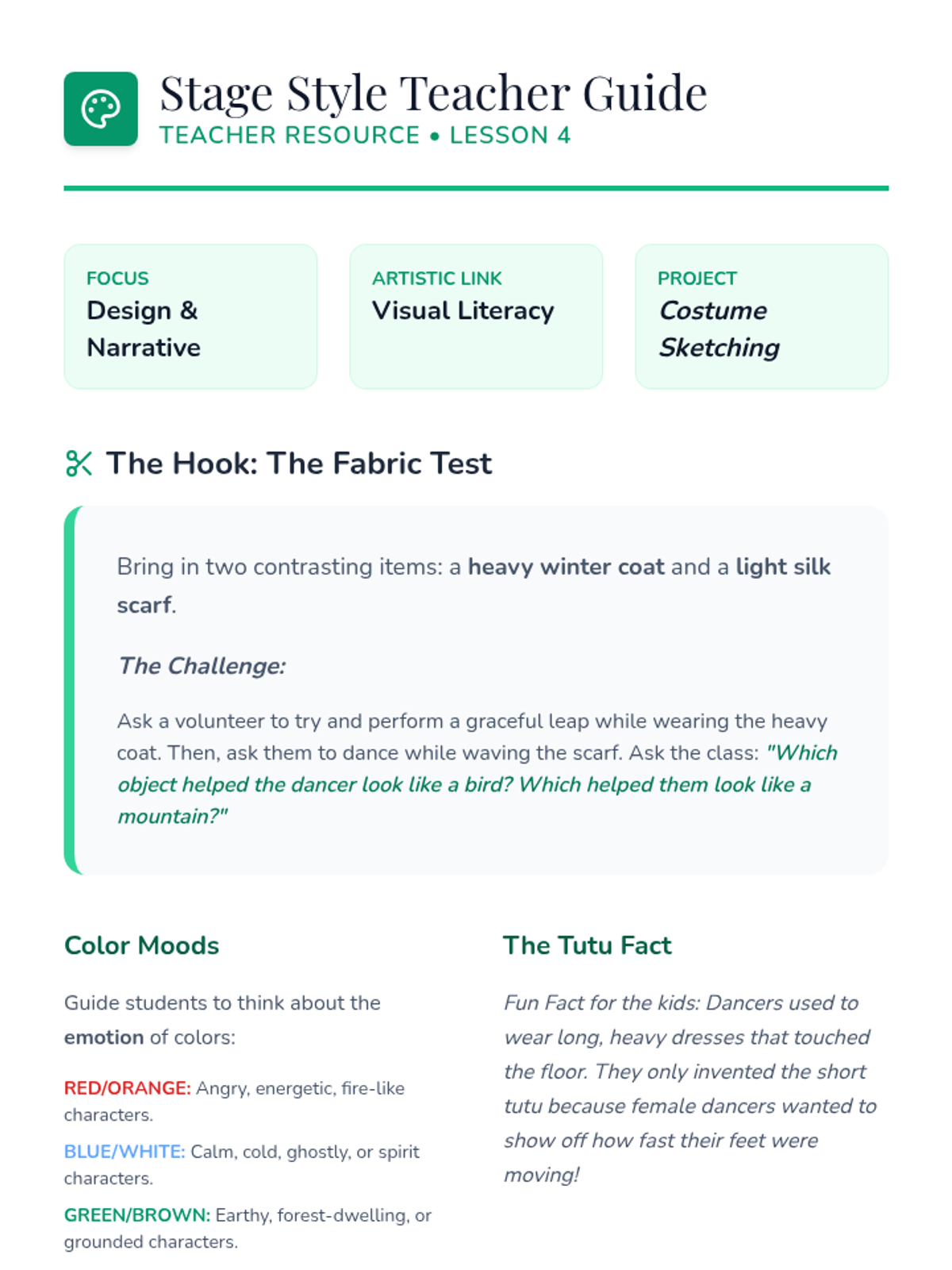
A teacher guide for the Stage Style lesson, featuring discussion prompts, costume design tips, and instructions for the fabric movement experiment.
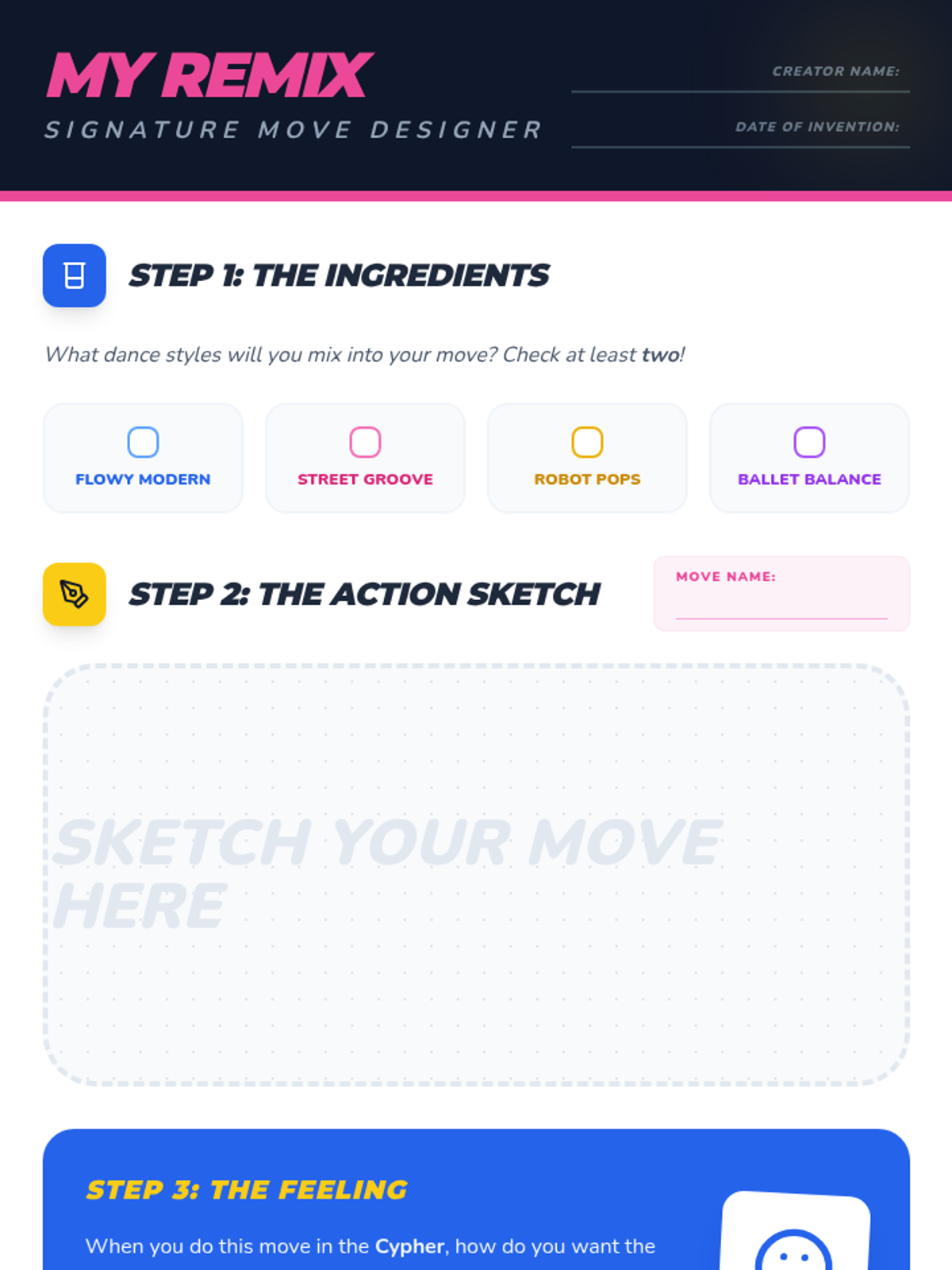
A creative planning document for students to design their own 'signature move', selecting styles to fuse together and sketching the action.
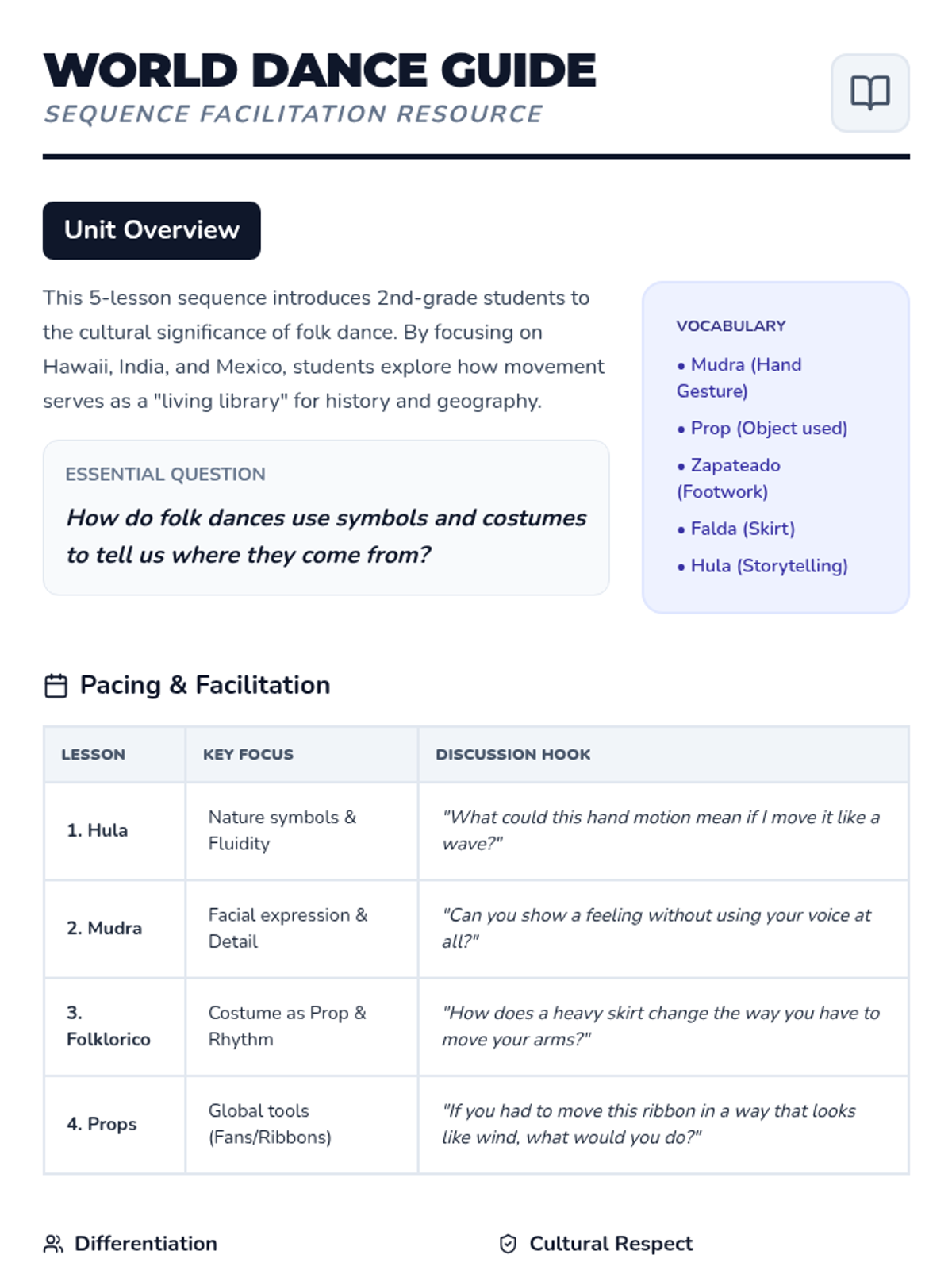
A comprehensive teacher facilitation guide for the Global Dance Passports sequence, including pacing, vocabulary, and differentiation strategies.
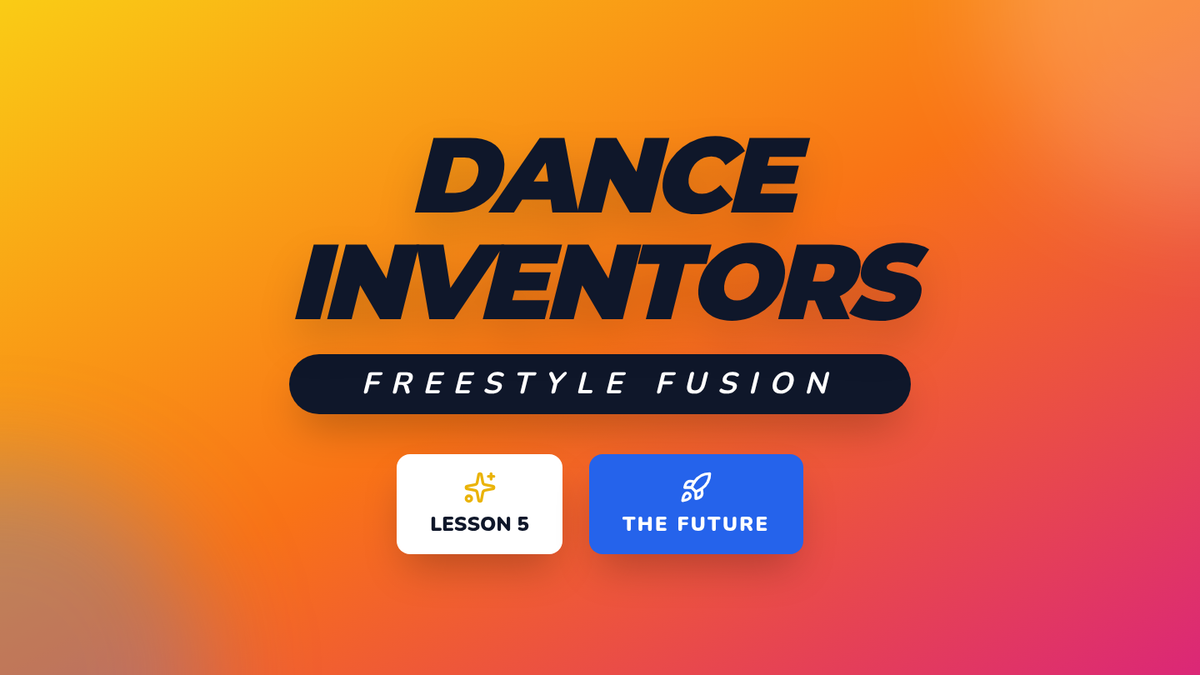
The final slide deck for the unit, encouraging students to synthesize modern, street, and technical dance into a personal 'freestyle' style and participate in a community cypher.
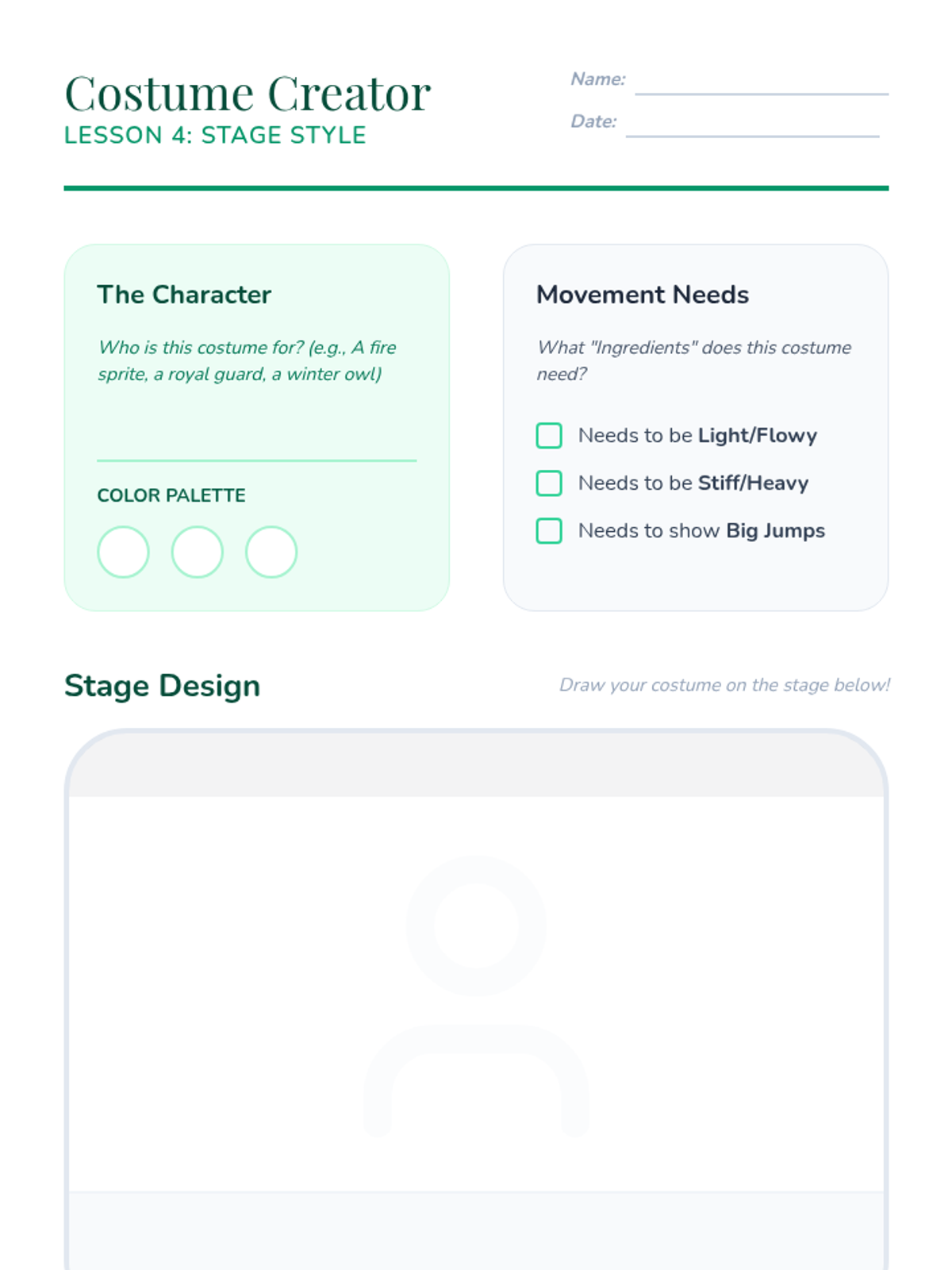
A project guide and sketch sheet for students to design a dance costume that supports a character's narrative and movement qualities.
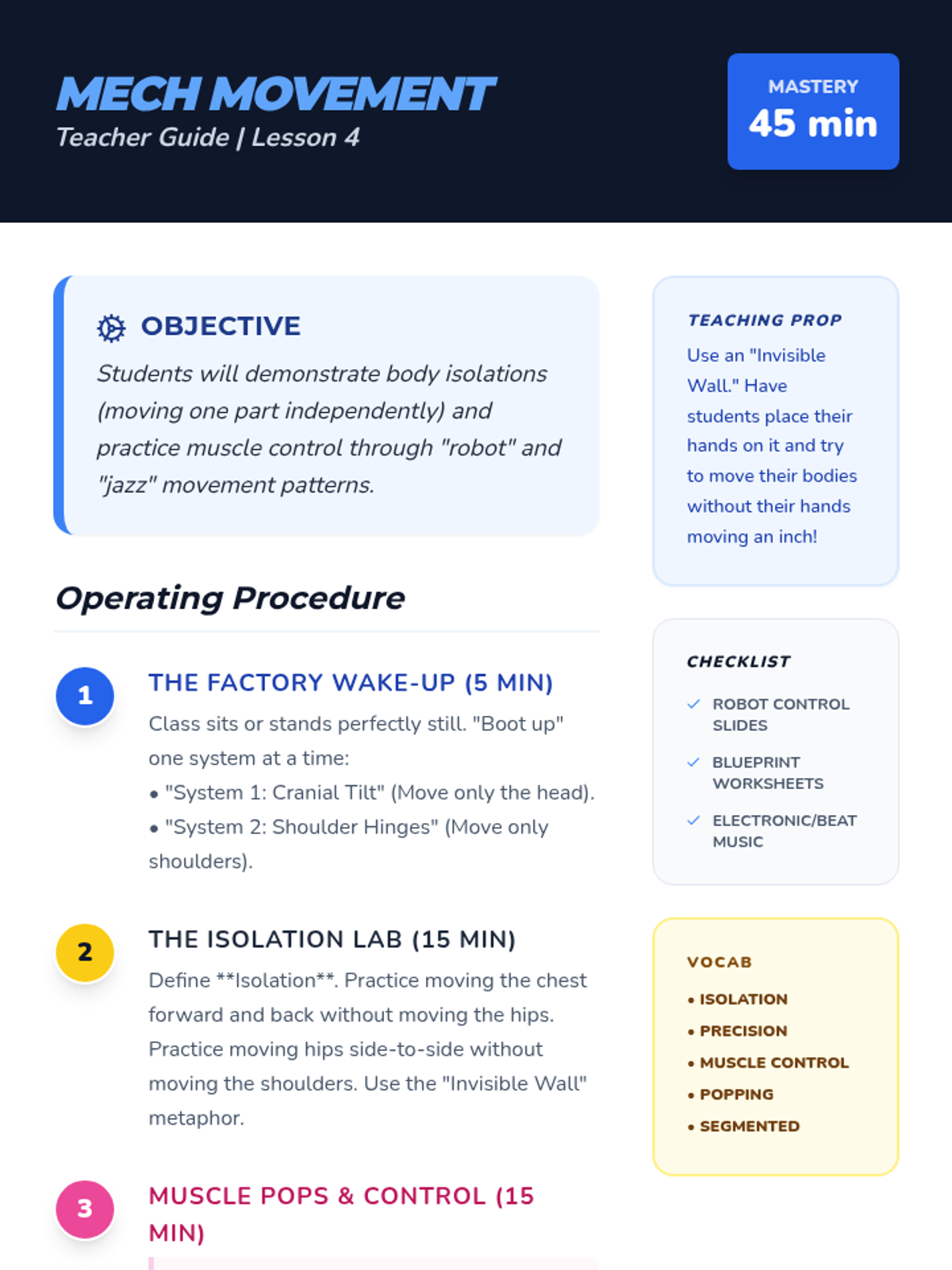
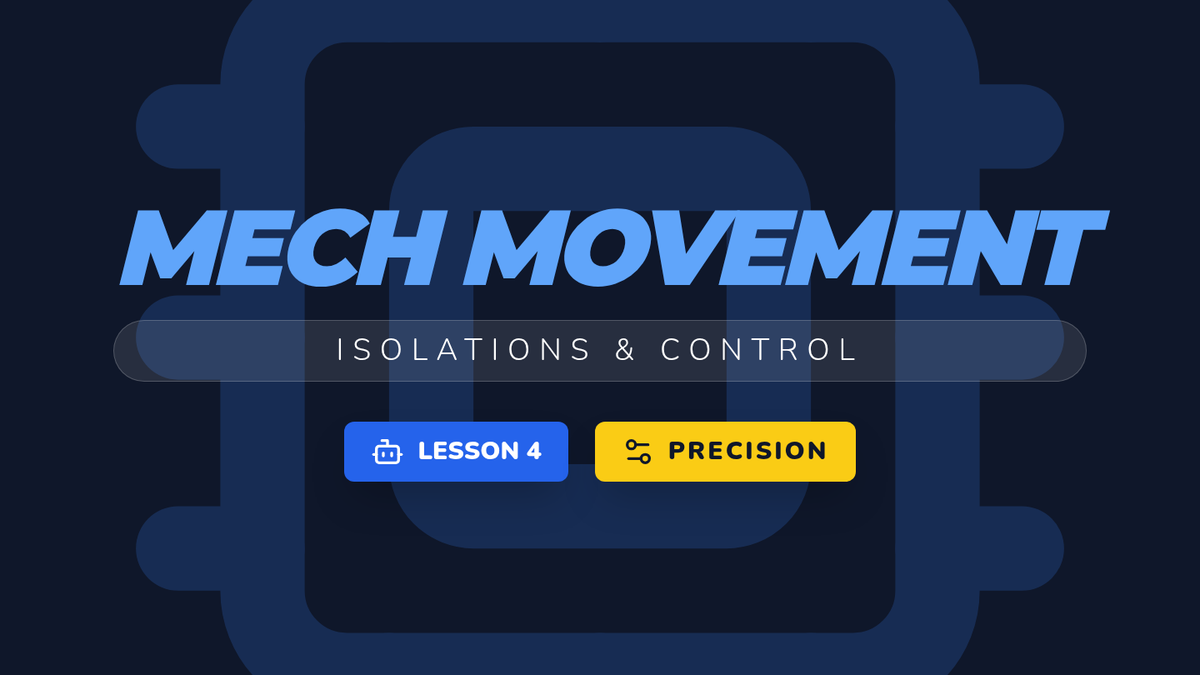
A technical guide for teaching body isolations, featuring the 'Invisible Wall' metaphor, muscle control exercises, and robot-themed movement cues.
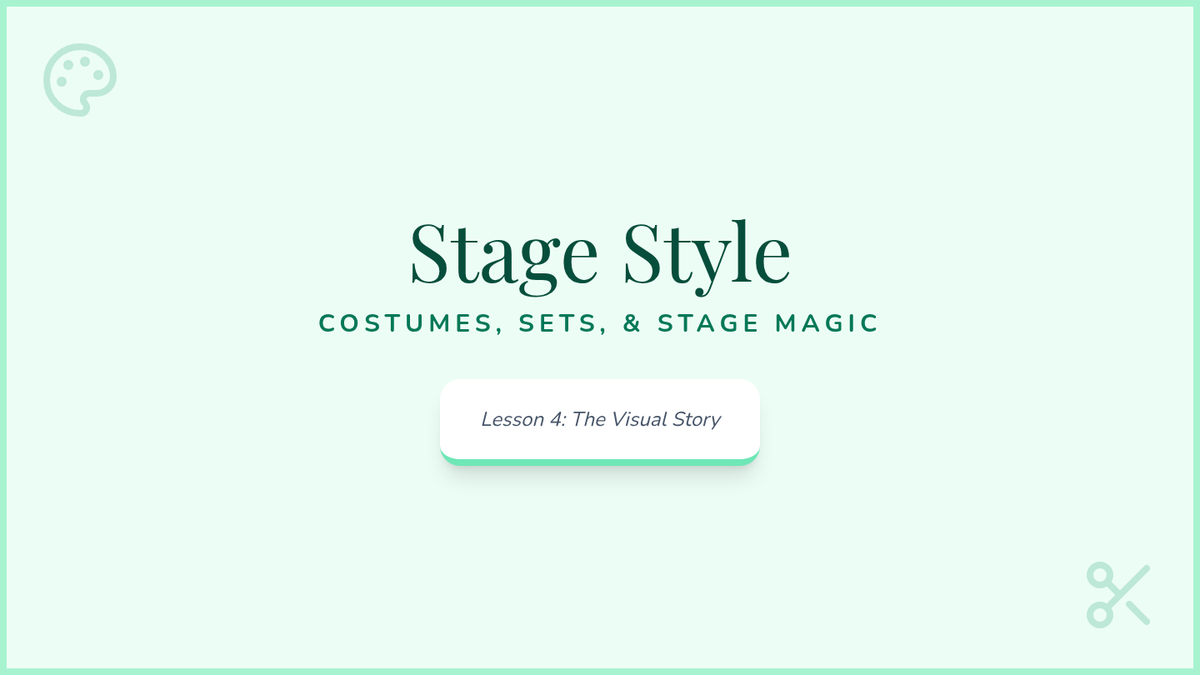
A slide deck introducing stage scenery, costume history (including the tutu), and how visual design supports narrative in dance.
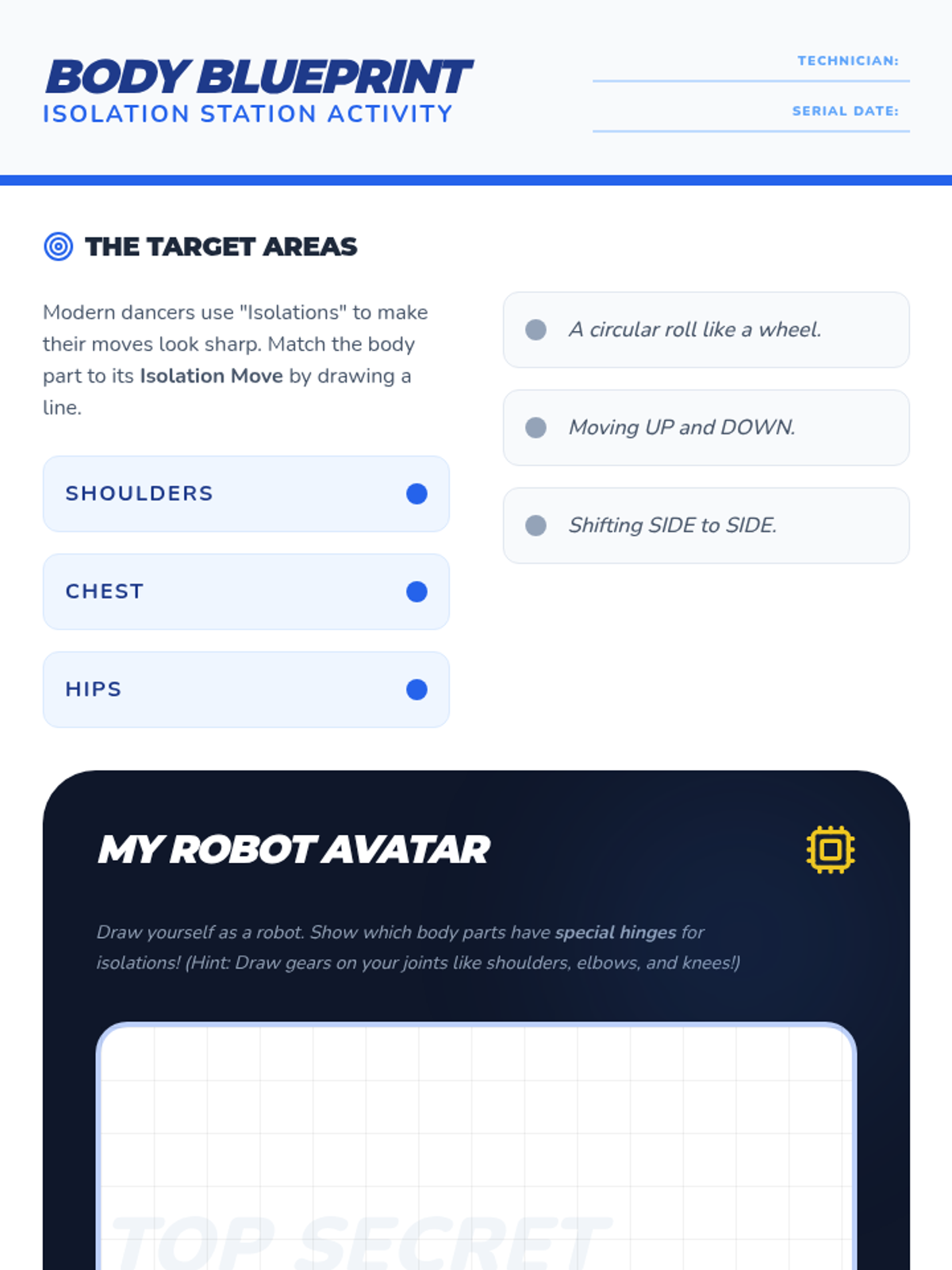
An activity sheet where students match body parts to isolation movements and design a robot avatar with 'joint hinges' to visualize segmented motion.
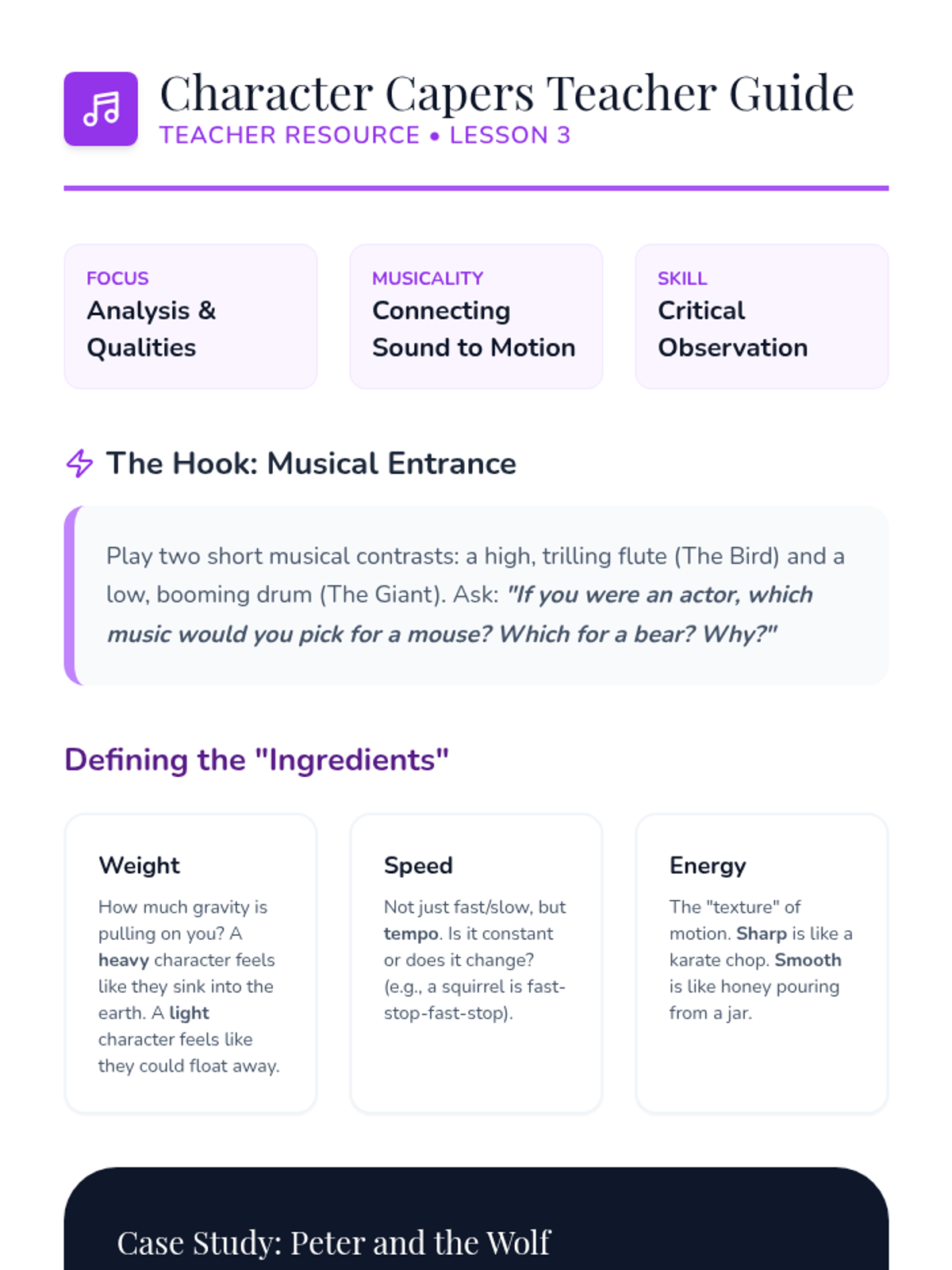
A teacher guide for the Character Capers lesson, featuring musical analysis tips, movement quality definitions, and facilitation strategies for 'Peter and the Wolf'.
A technical slide deck focused on body isolations and muscle control. Students learn to segment movement like a robot, a key skill in Jazz and Hip Hop.
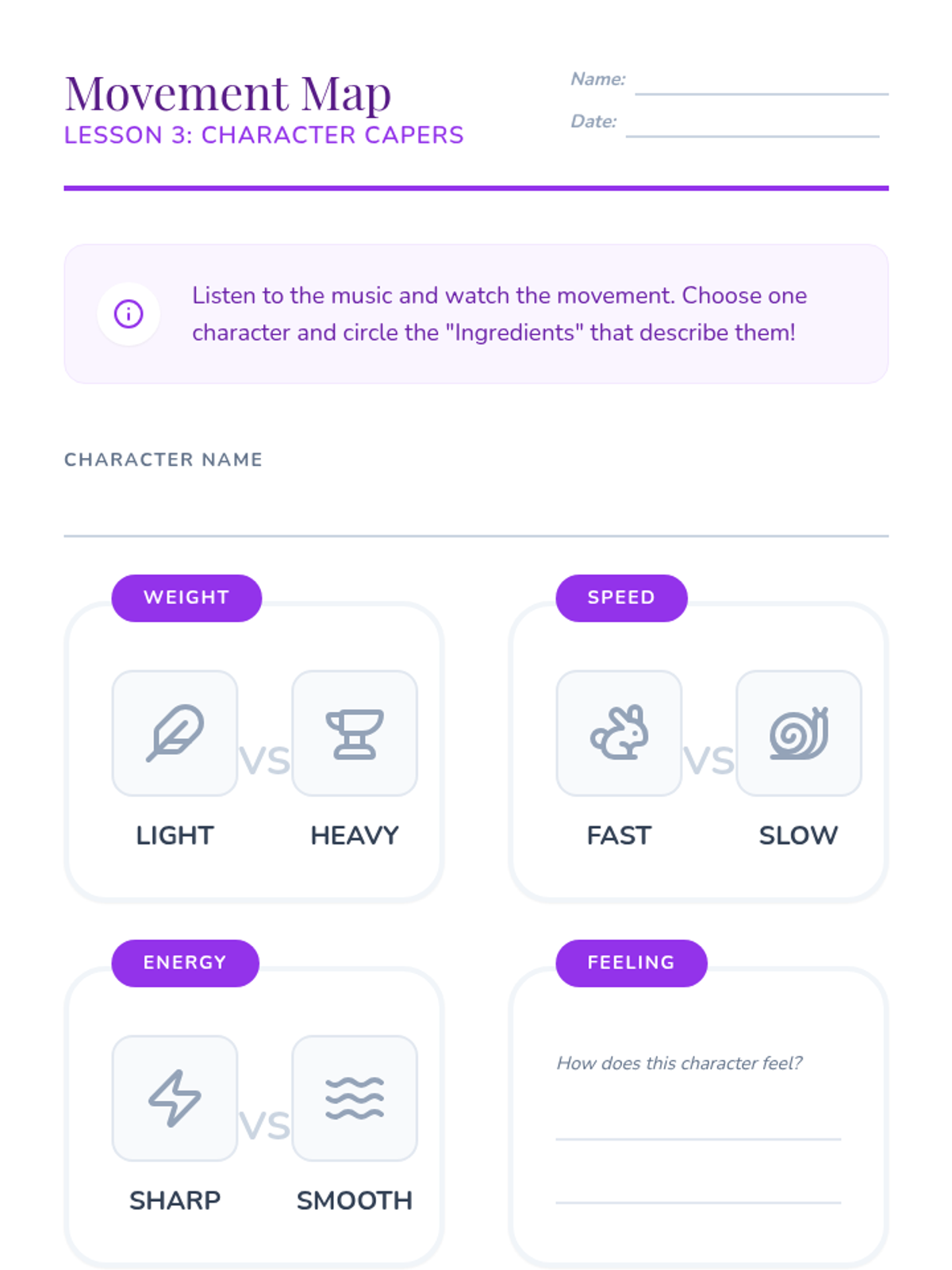
A graphic organizer for students to analyze character movement qualities (weight, speed, energy) while watching ballet clips.
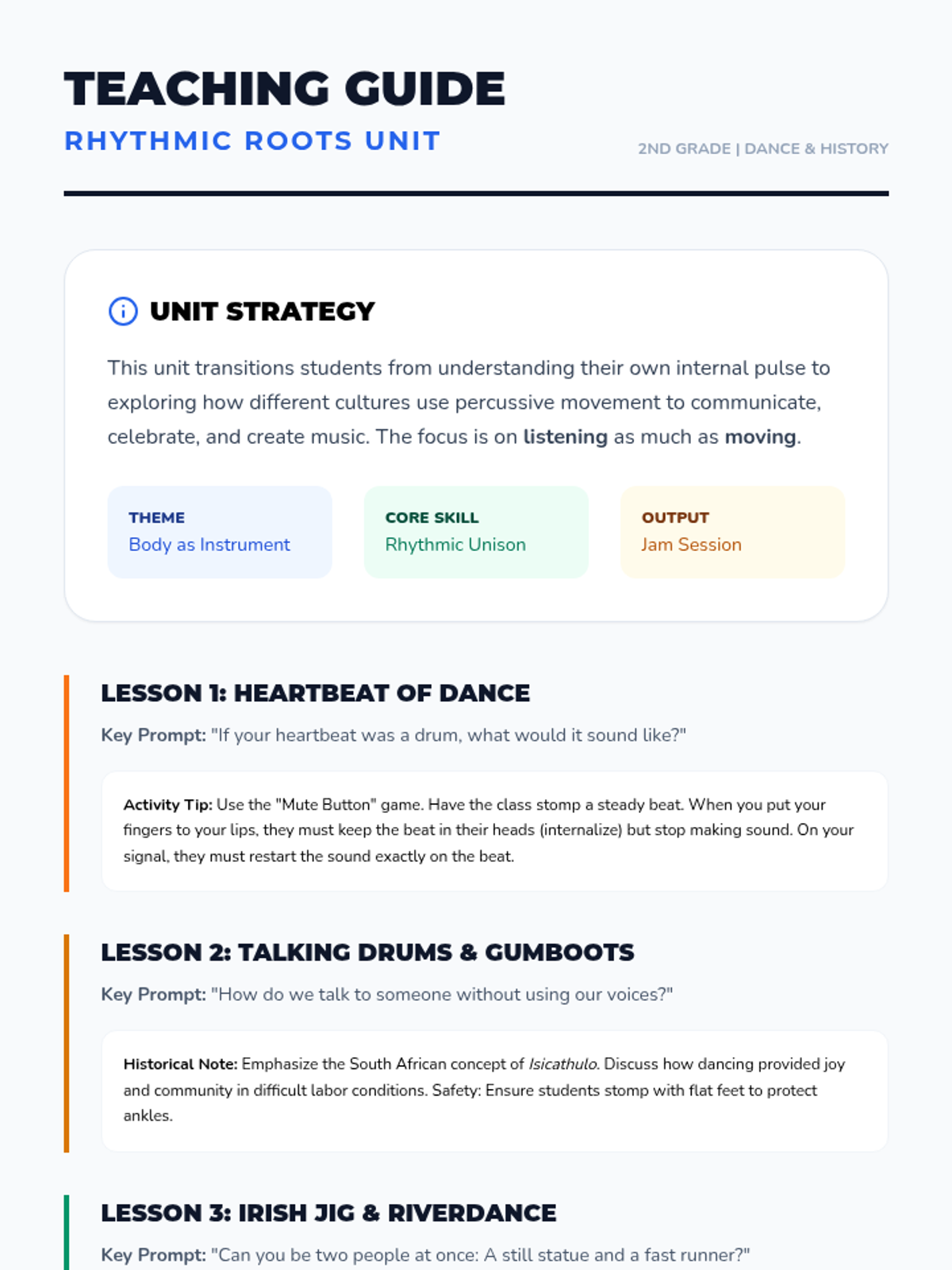
A comprehensive teacher facilitation guide providing instructional tips, historical context, discussion prompts, and differentiation strategies for all five lessons in the unit.
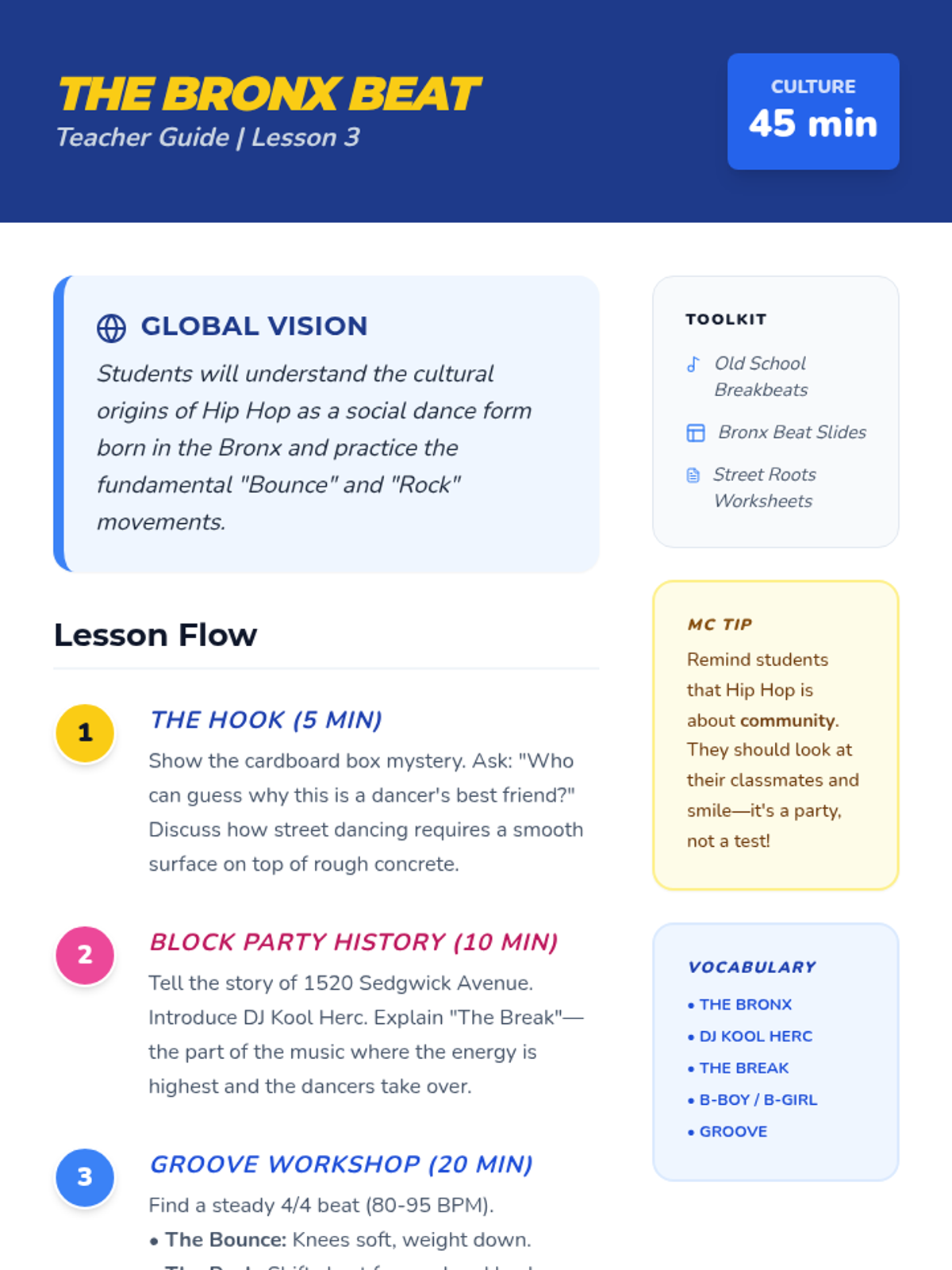
A comprehensive teacher guide for Lesson 3, including the history of DJ Kool Herc, movement cues for 'The Bounce', and cultural context for Hip Hop social dancing.
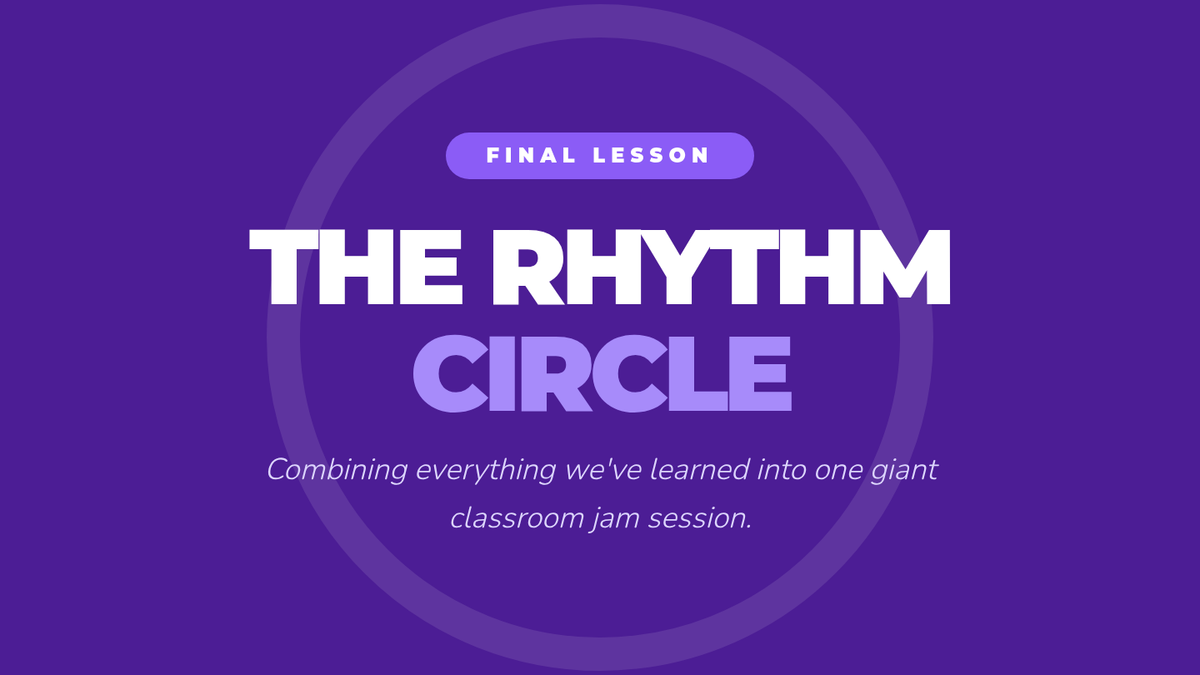
Final slides for the unit, guiding the classroom rhythmic circle jam session and reinforcing the concepts of call-and-response and unison performance.
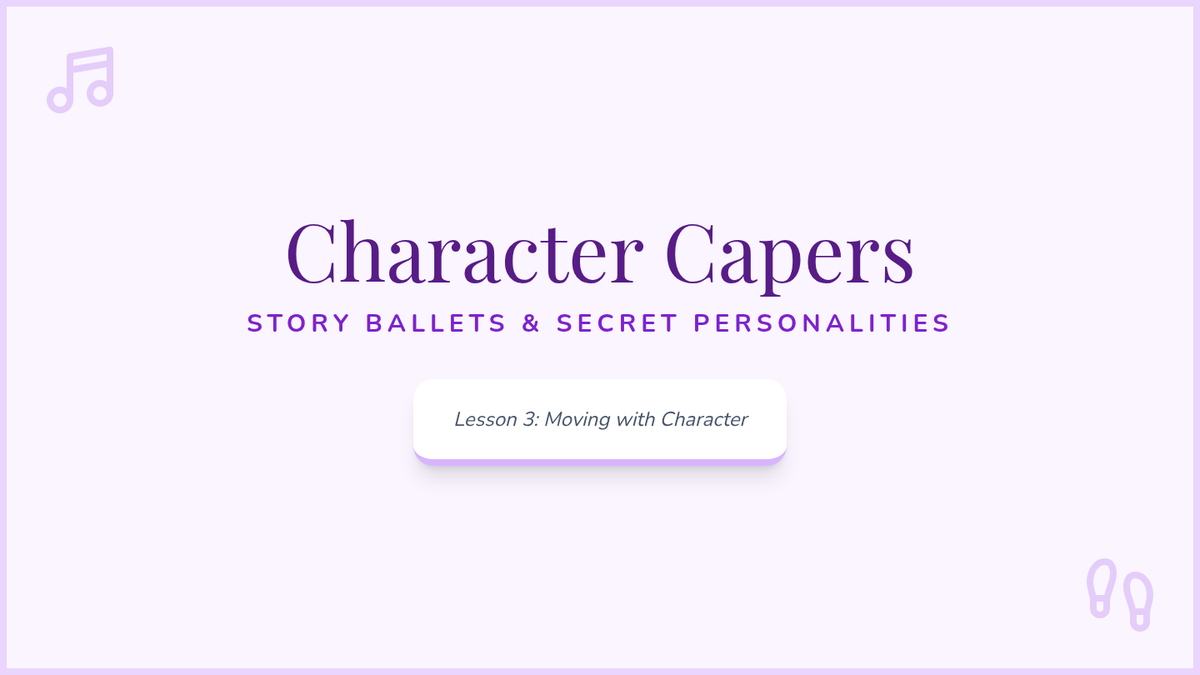
A slide deck introducing story ballets, the concept of movement qualities (weight, speed, energy), and how music influences character expression.
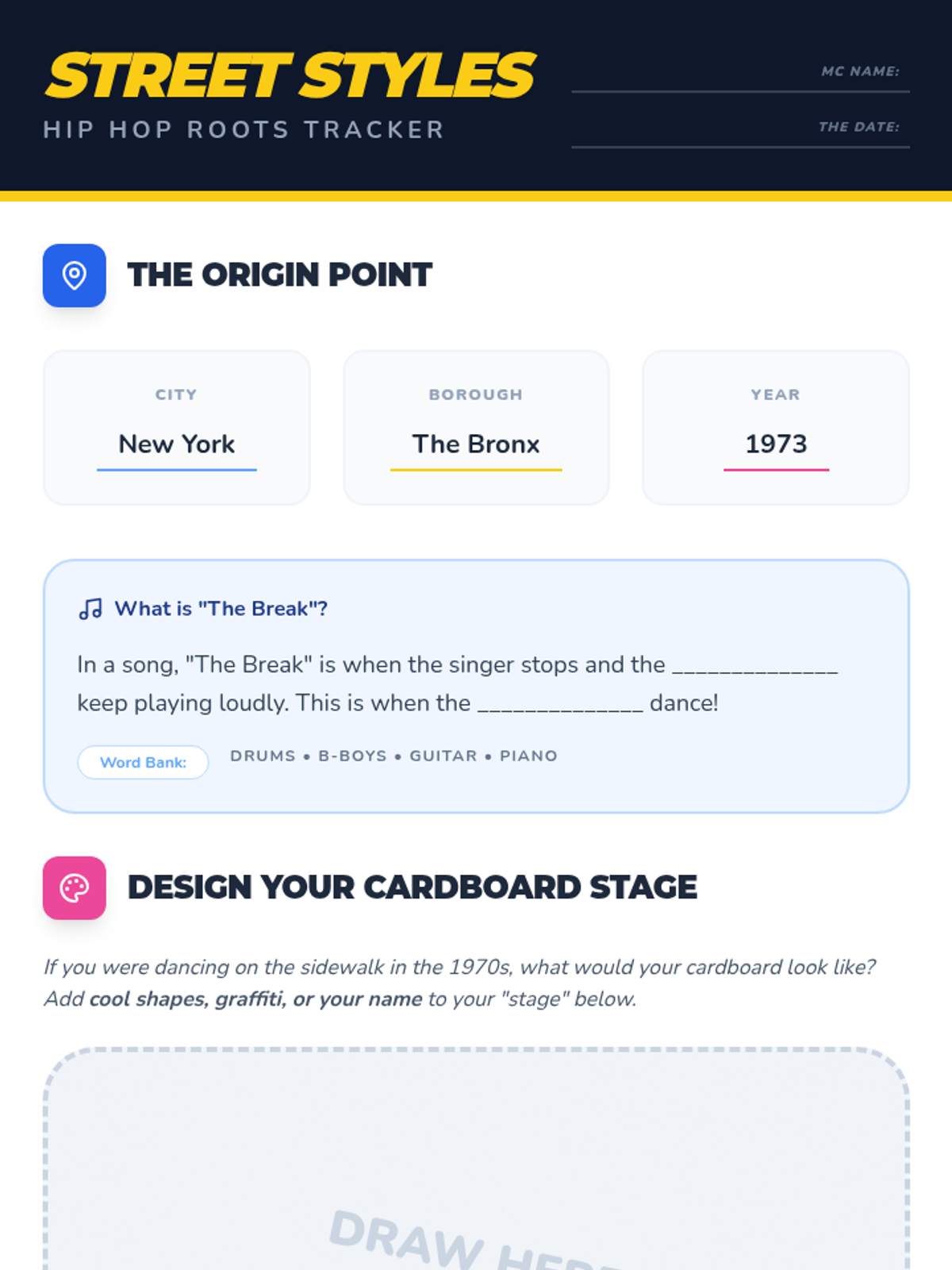
A student worksheet focusing on the origins of Hip Hop, including a history fill-in-the-blank and a creative 'cardboard stage' design activity.
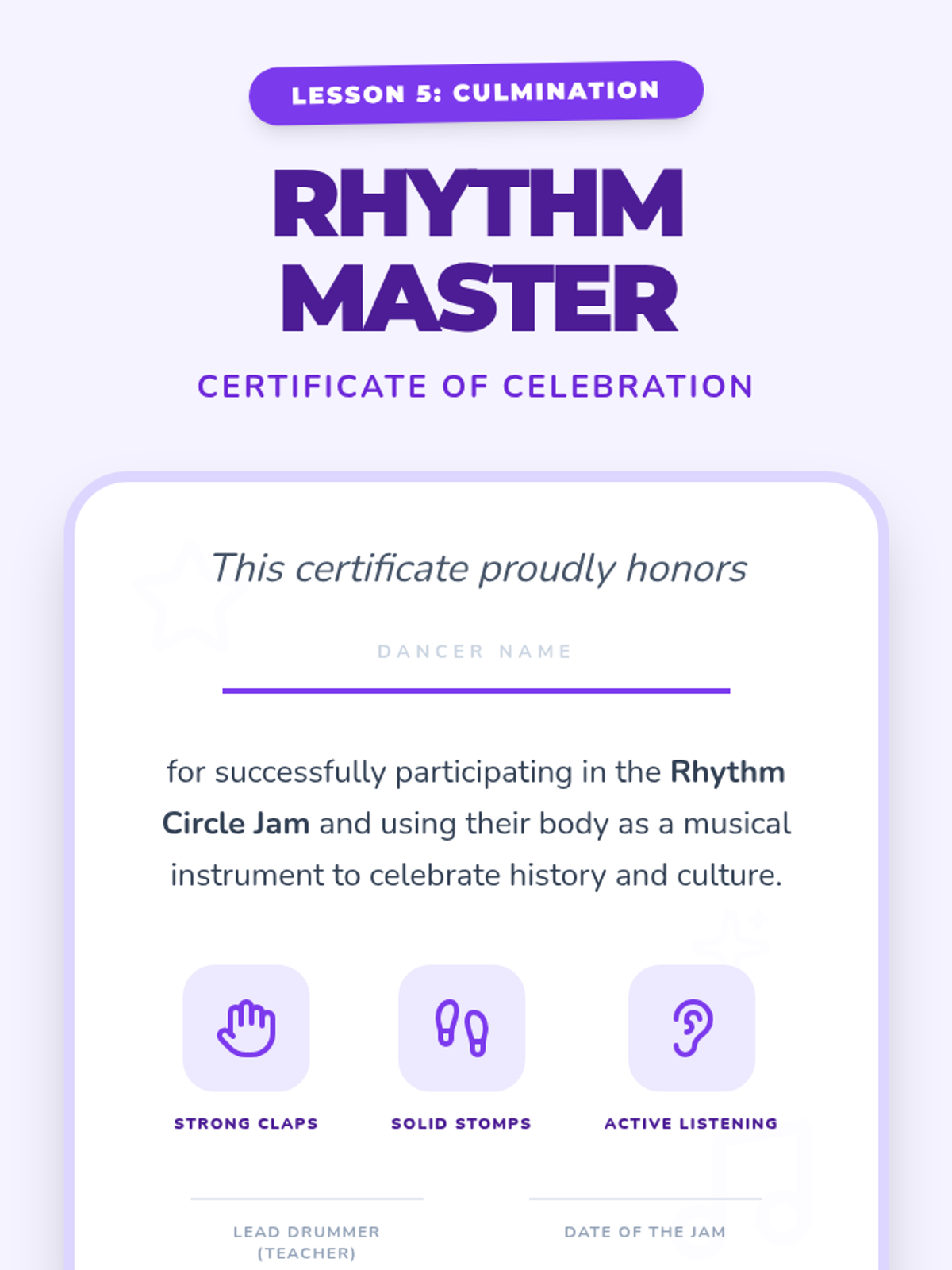
A commemorative certificate and reflection sheet for the final lesson, celebrating the students' participation in the rhythmic jam session and their learning throughout the unit.