Historical evolution of performance, technical stagecraft, and core acting techniques. Develops playwriting skills and fosters imaginative expression through script development and production management.
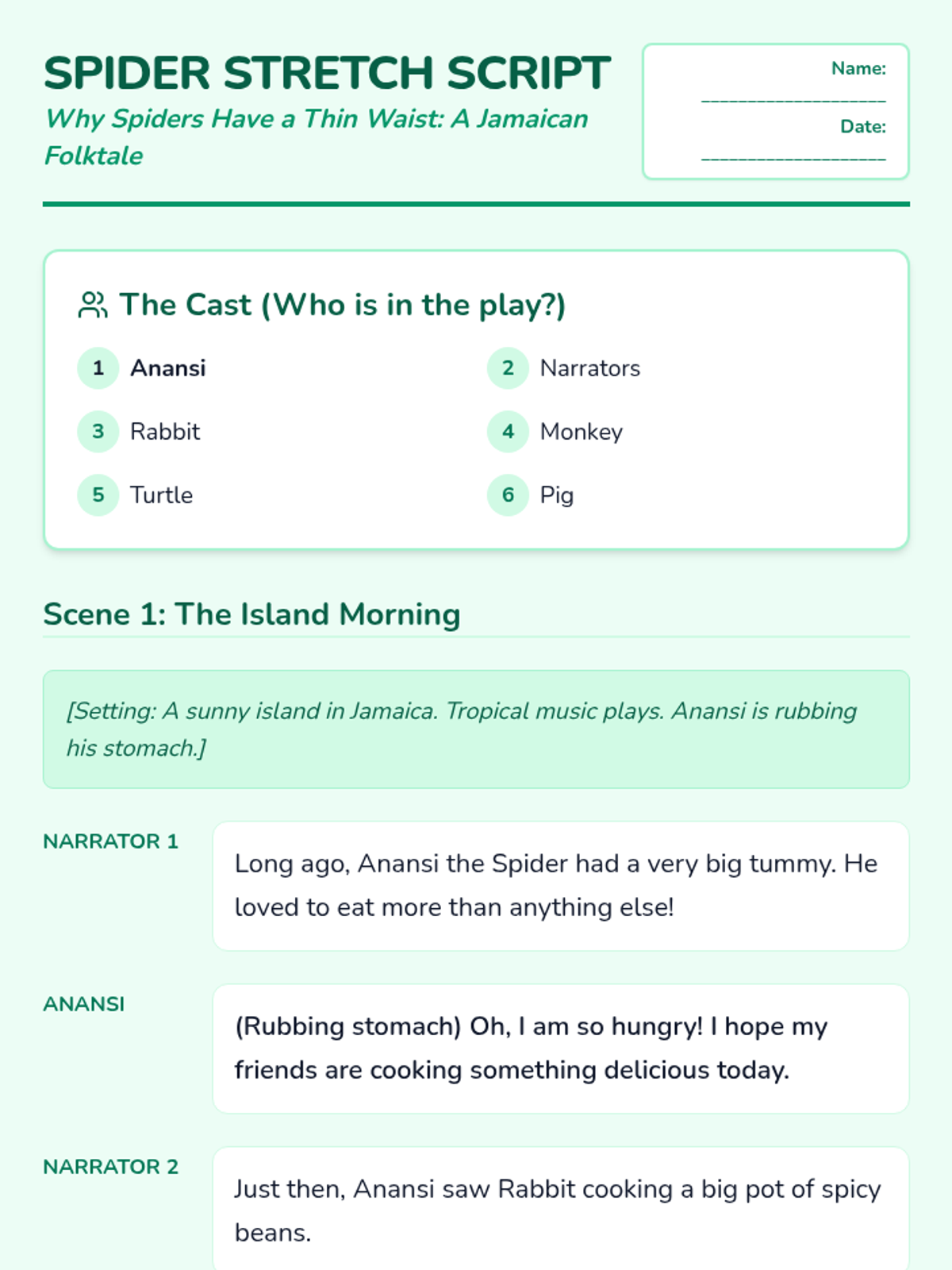
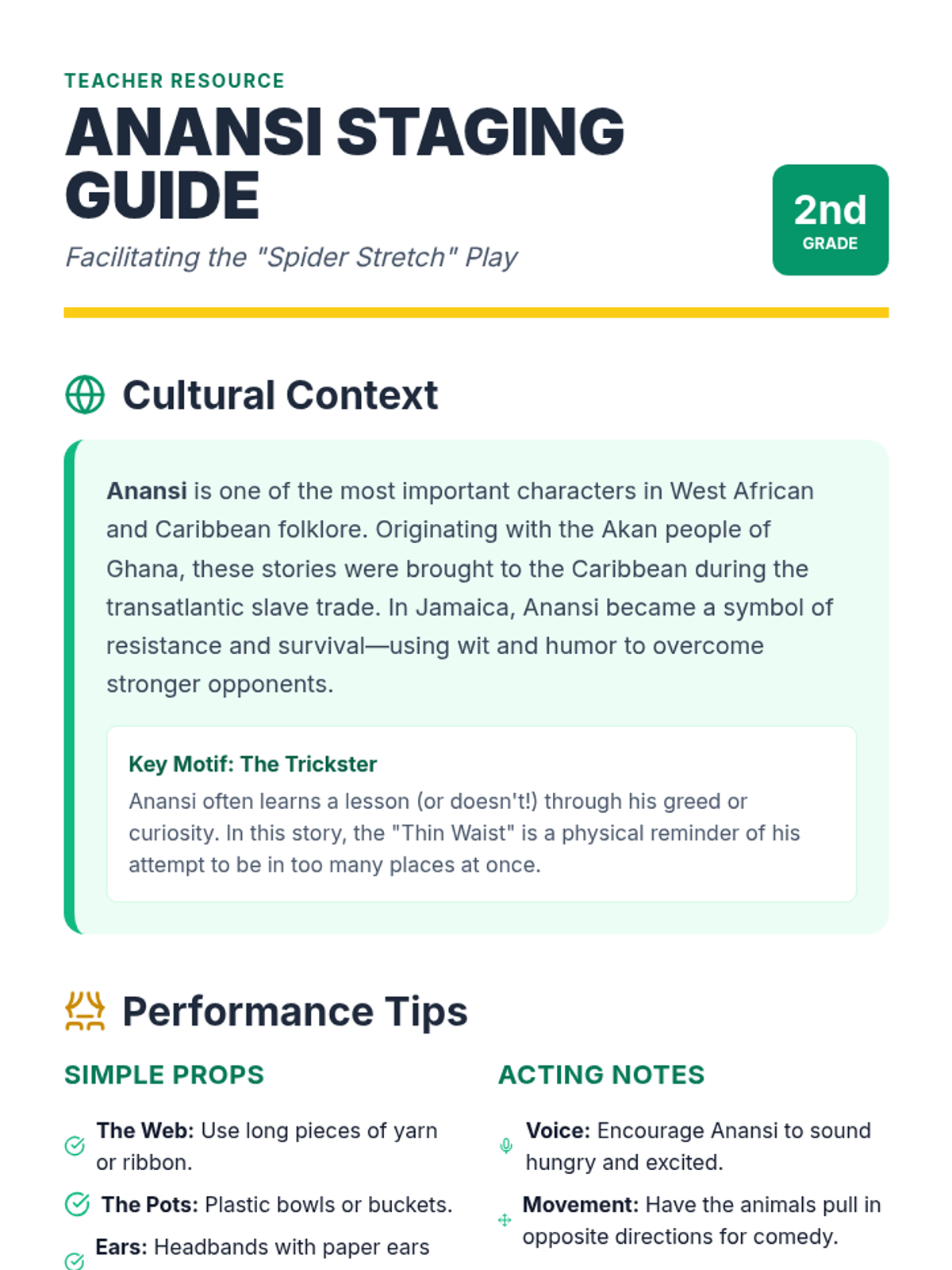
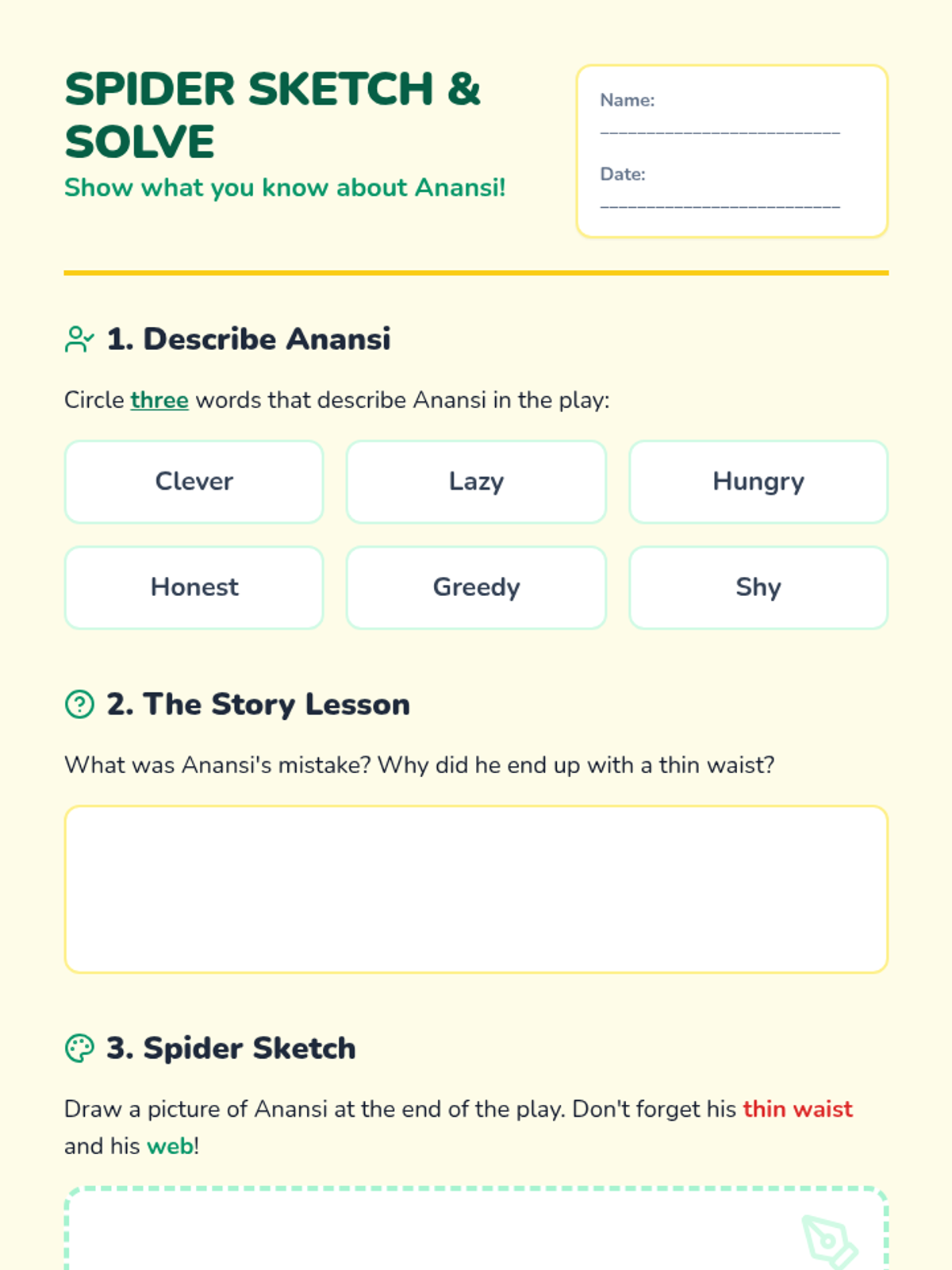
A series of lessons exploring Caribbean folklore and cultural storytelling traditions, focusing on the iconic character of Anansi the Spider.
A 1st-grade theater sequence focusing on the actor's primary tools: the body and the voice. Students progress from spatial awareness and physical levels to emotional expression and vocal variety, culminating in a short character performance.
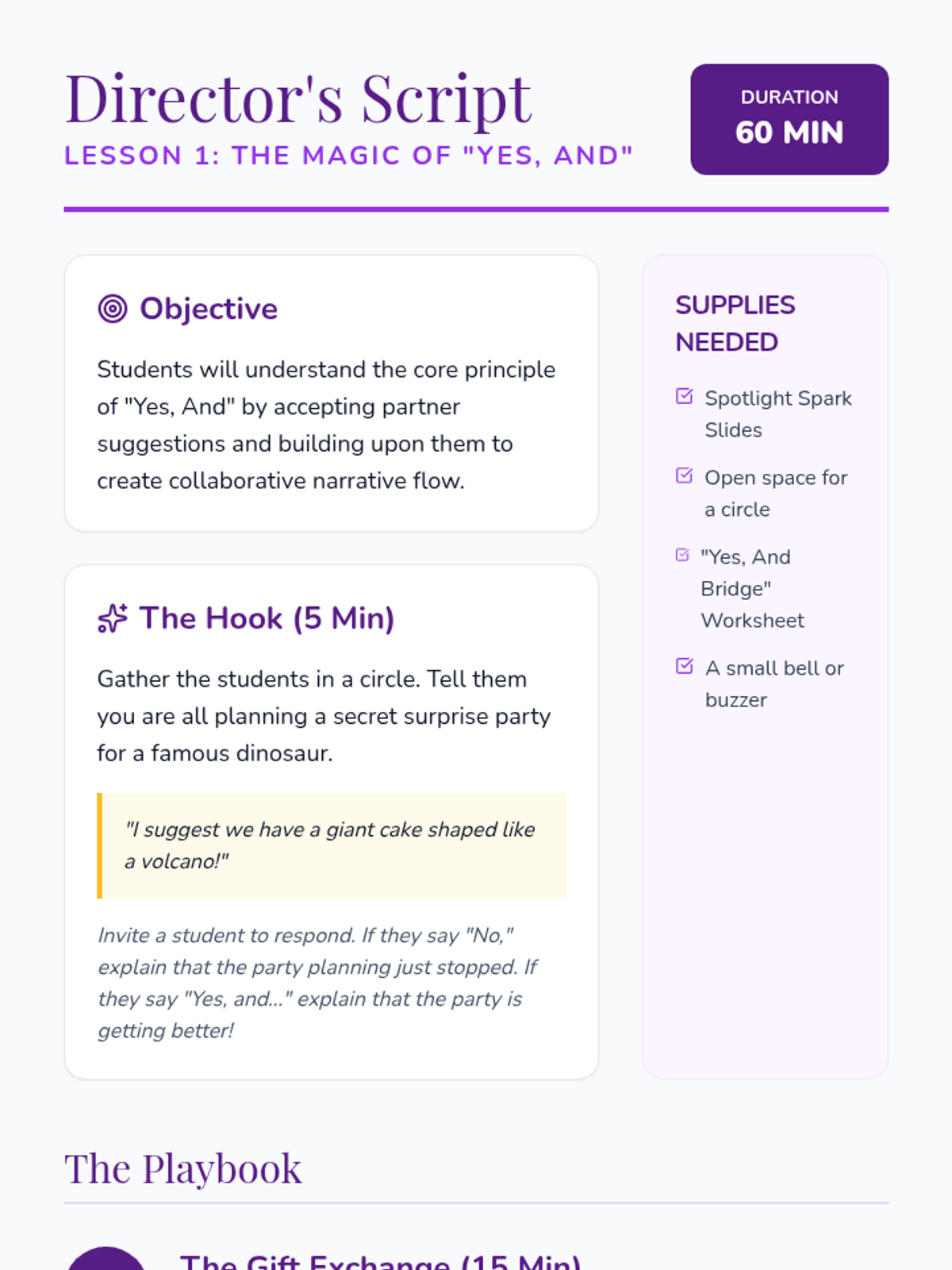
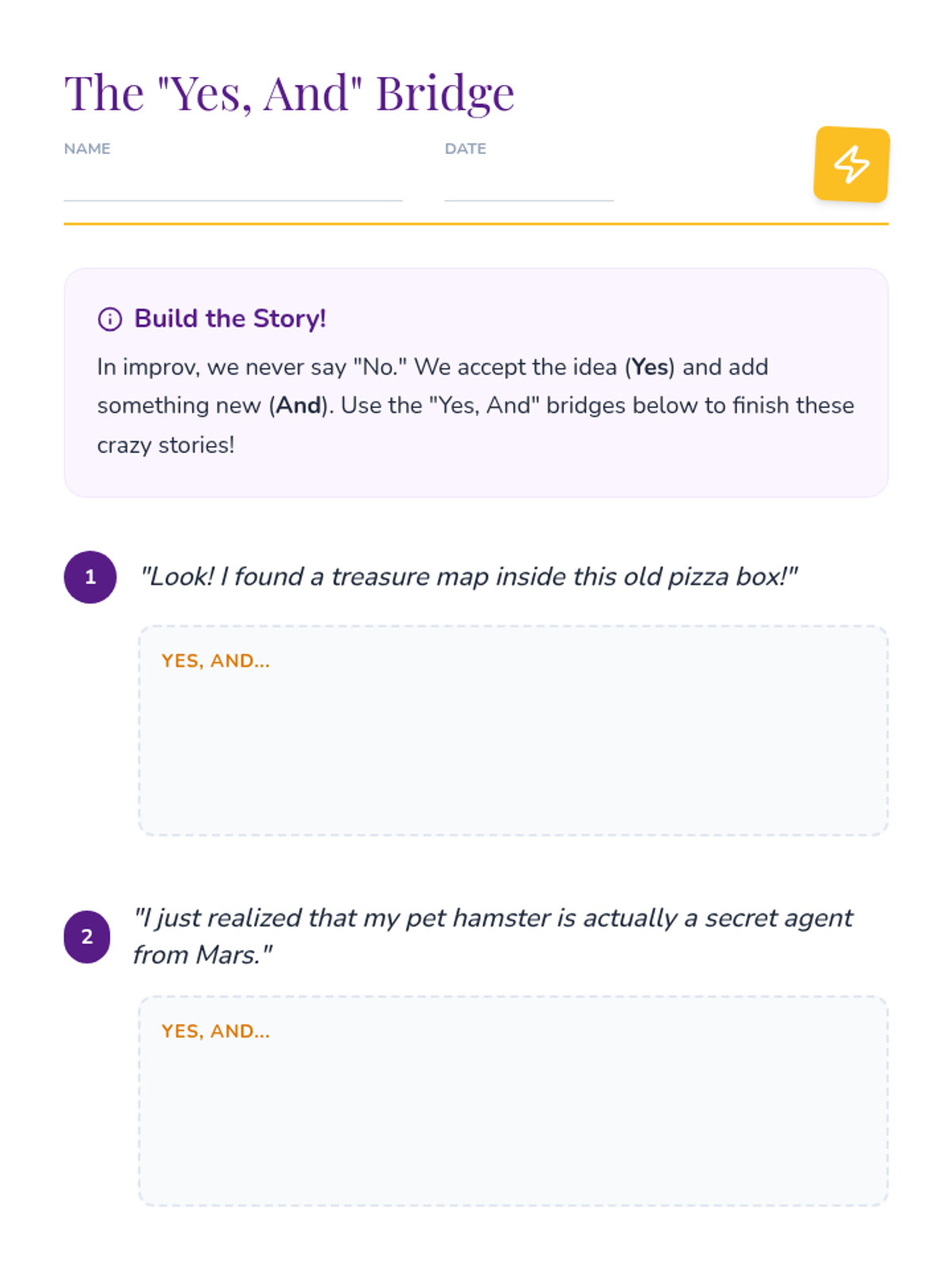
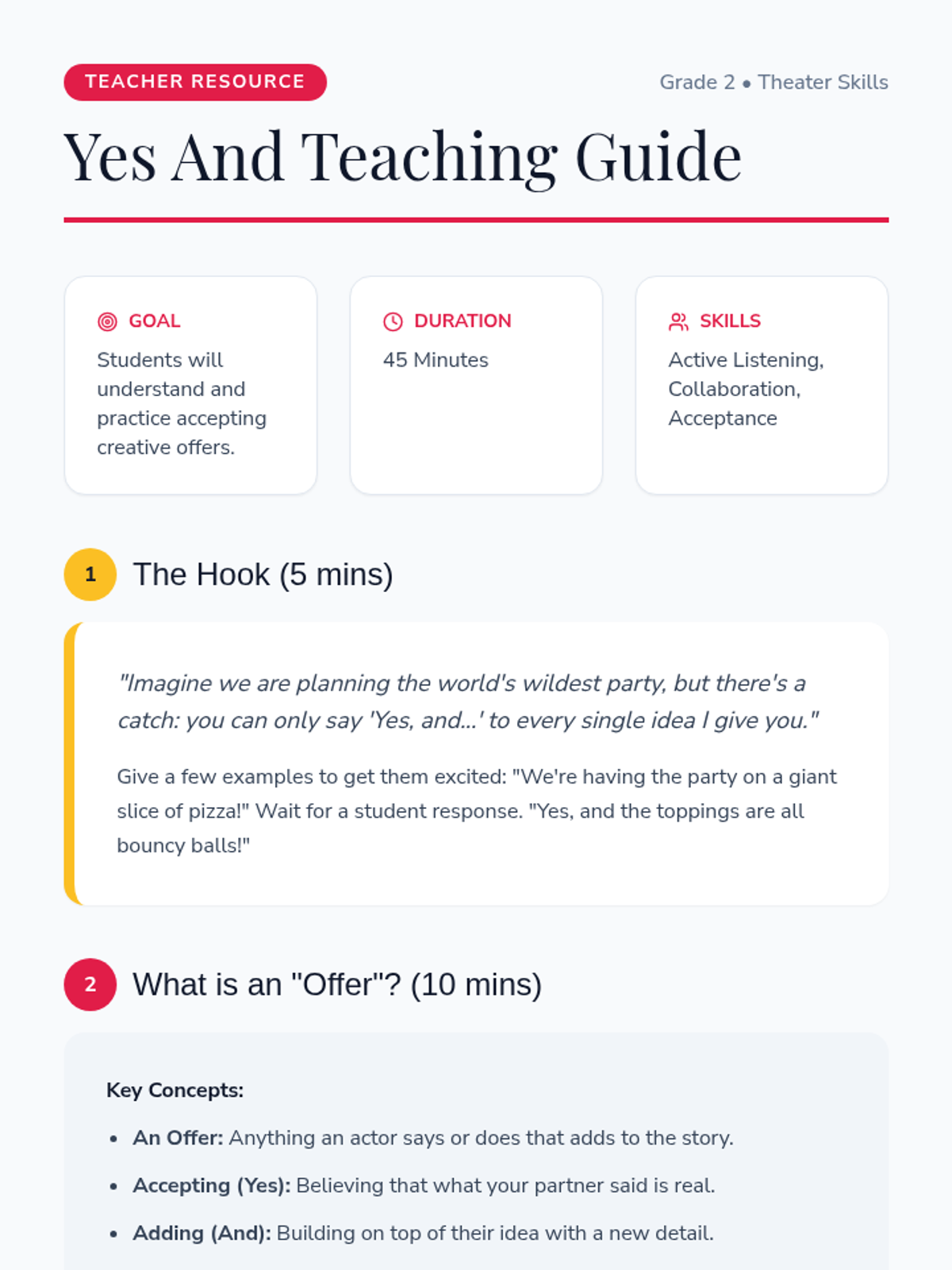
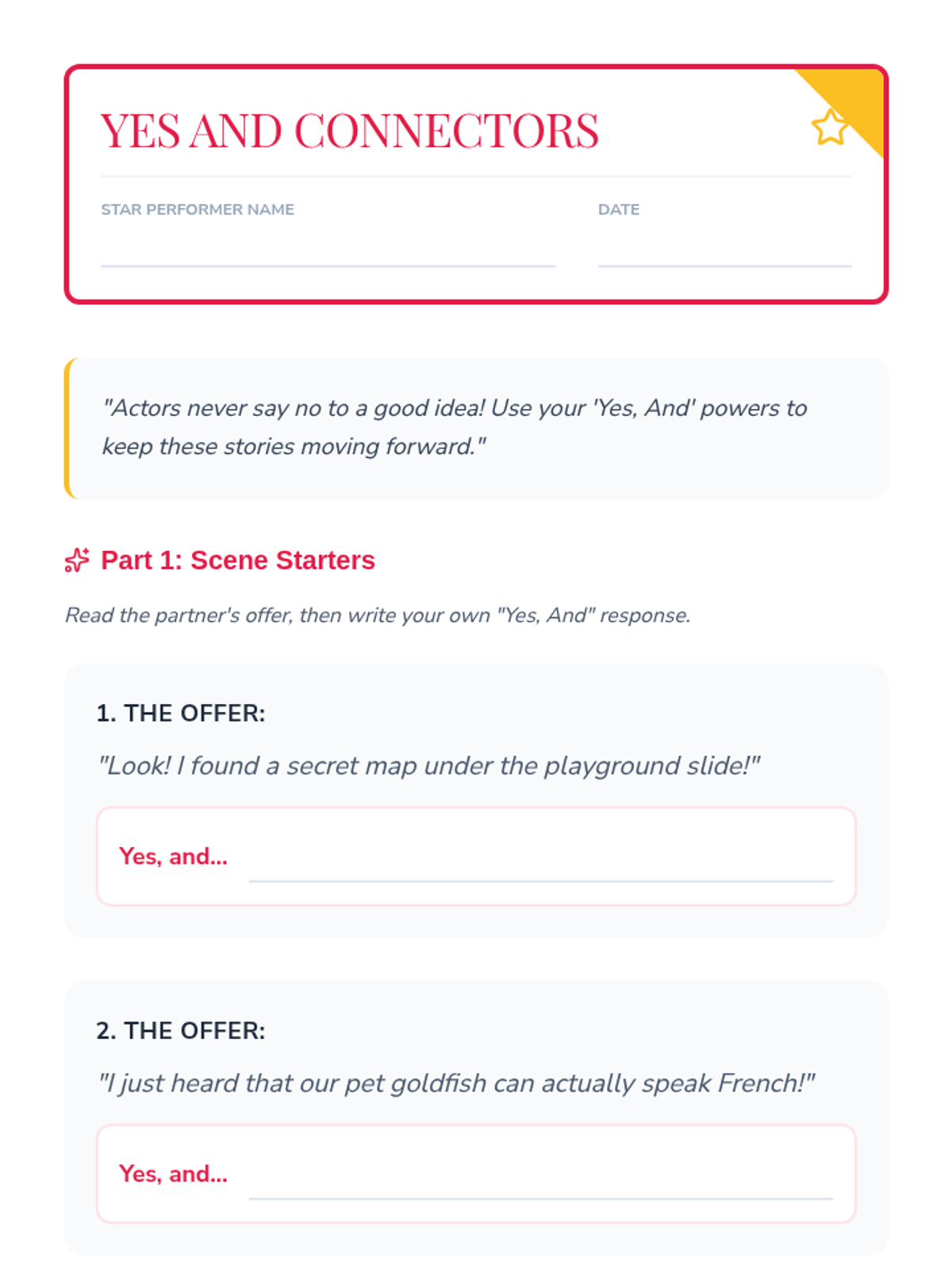
This sequence develops improvisation skills and ensemble collaboration, teaching students to react authentically in the moment. Students build trust and creative confidence by practicing 'Yes, And,' establishing environments, and solving narrative problems as a team.
This 2nd Grade theater sequence focuses on the core principles of improvisation: active listening, creative acceptance (Yes, And), physical commitment to imaginary objects, and collaborative character creation. Students progress from basic reaction games to full group skits, building confidence and storytelling skills.
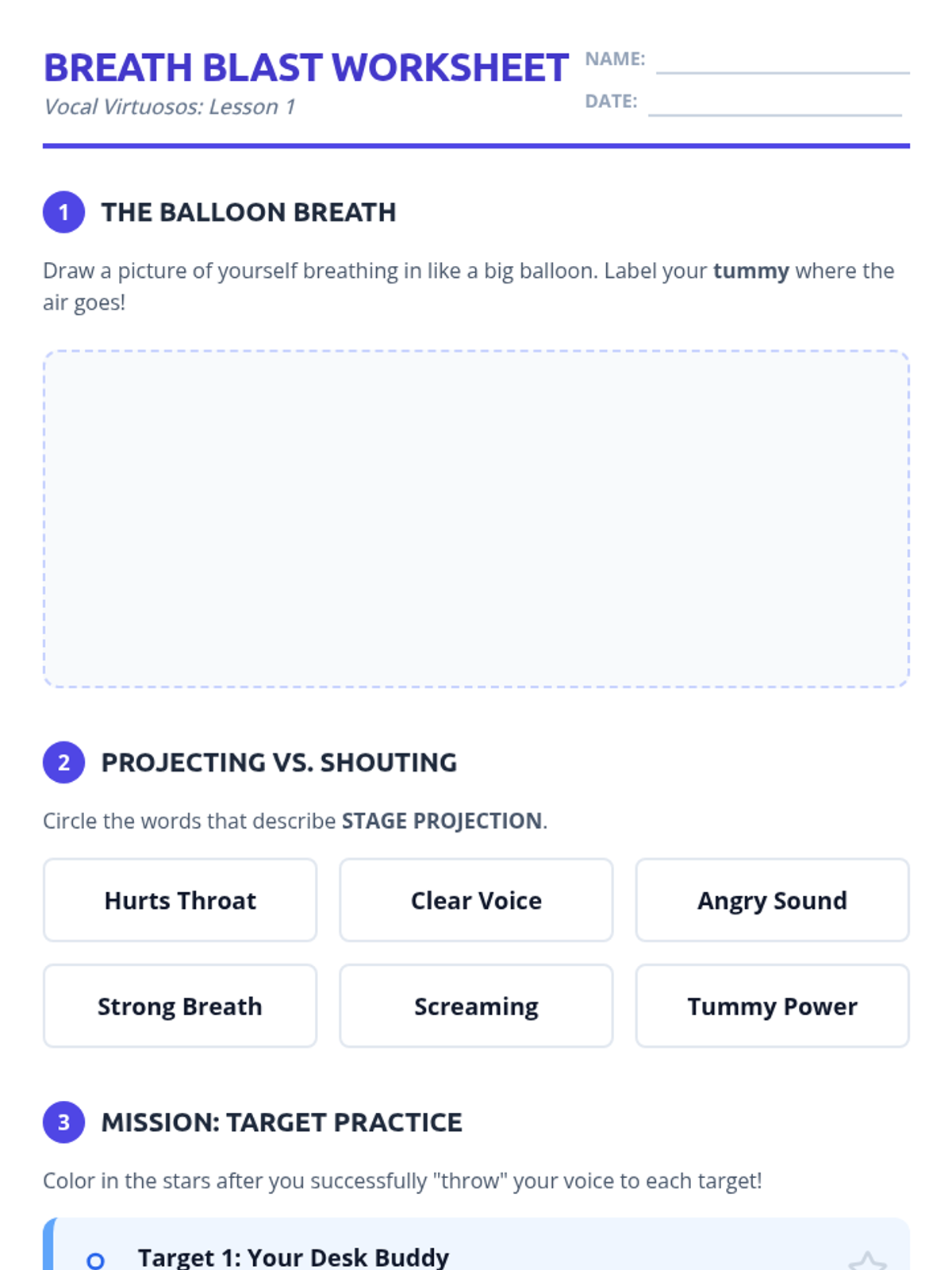
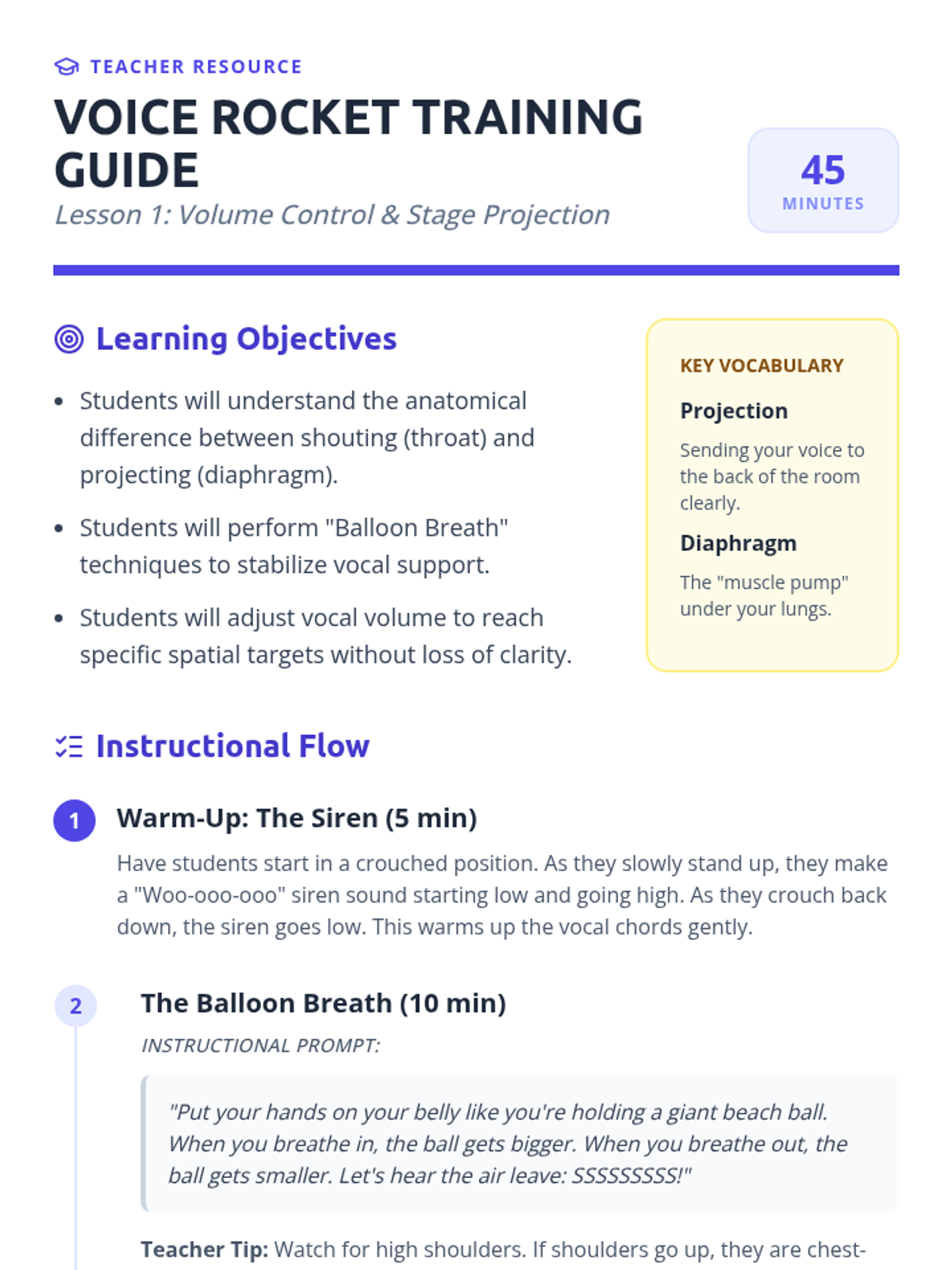
A workshop-style sequence for 2nd graders focusing on vocal projection, tone, pacing, and character voice development, culminating in a Reader's Theater showcase. Students learn to use their voices as instruments to convey meaning and create characters.
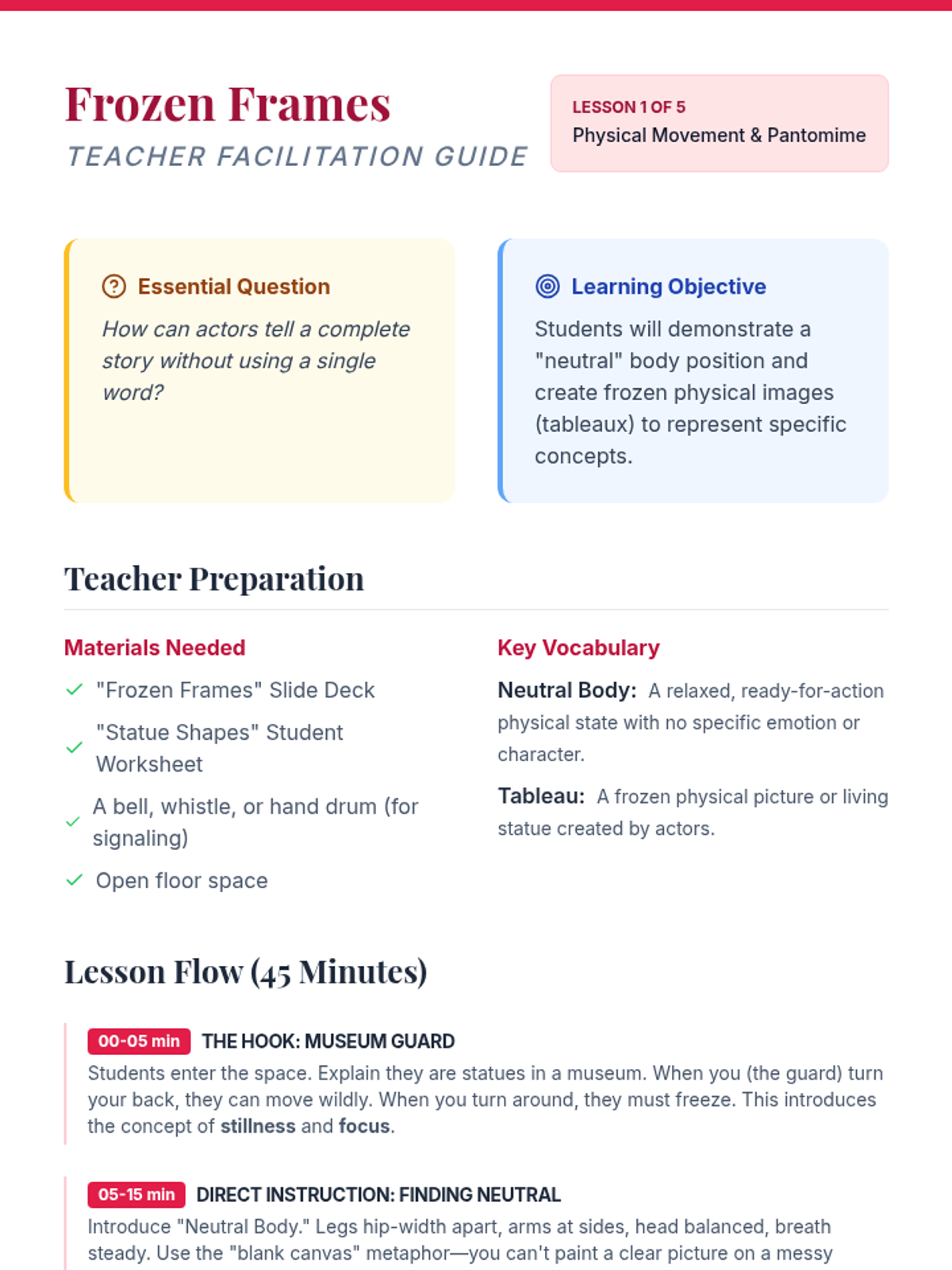
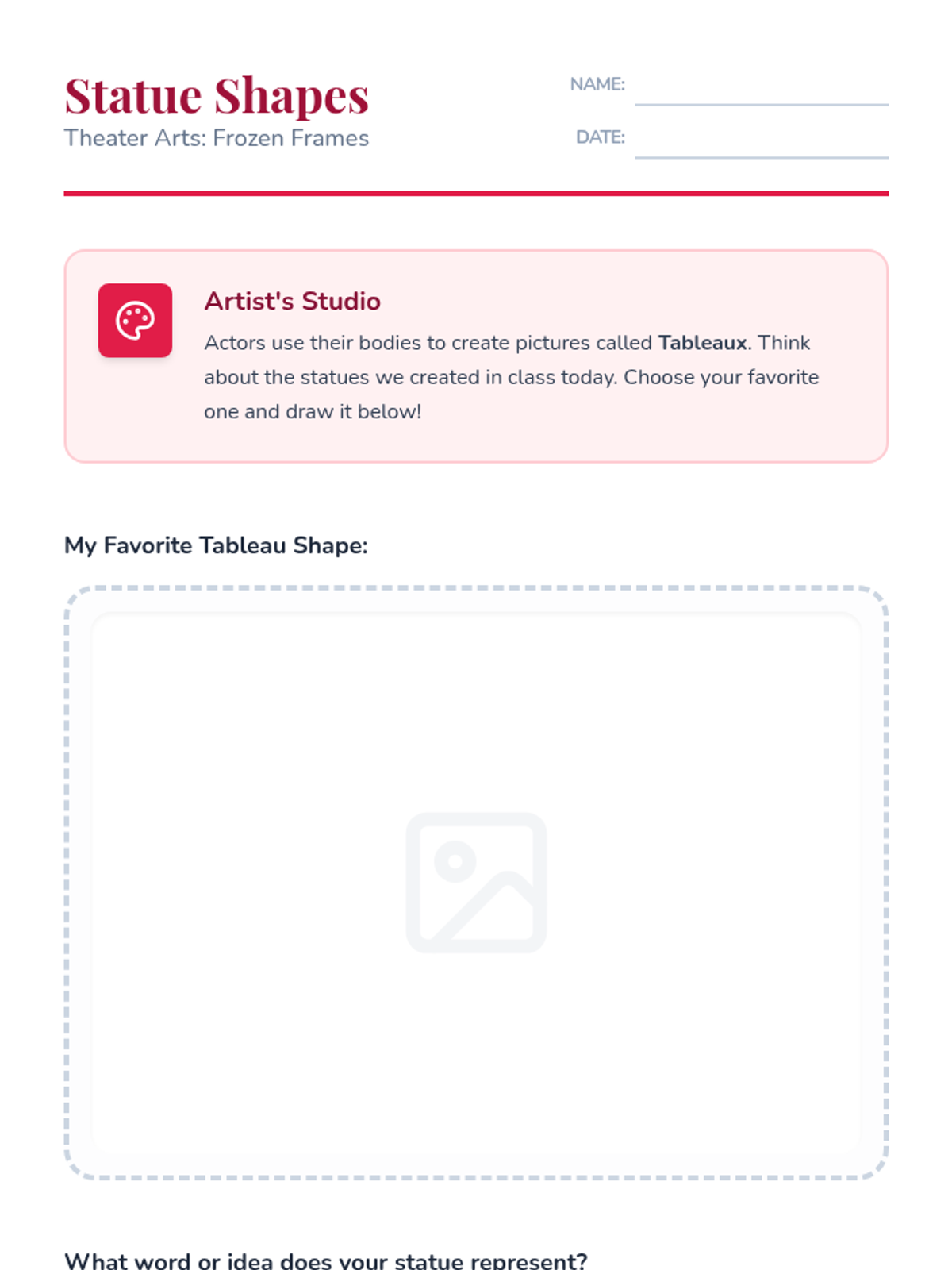
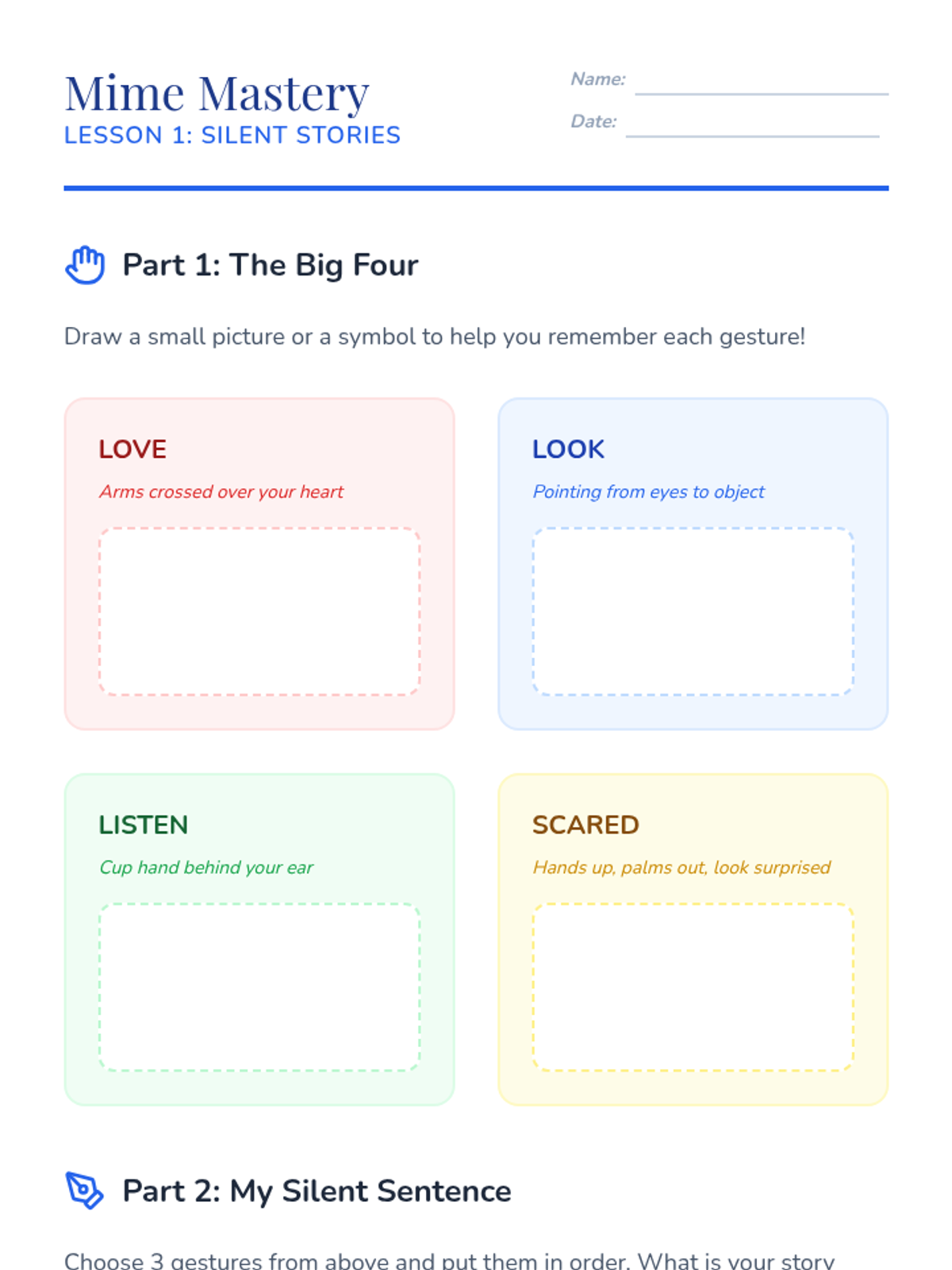
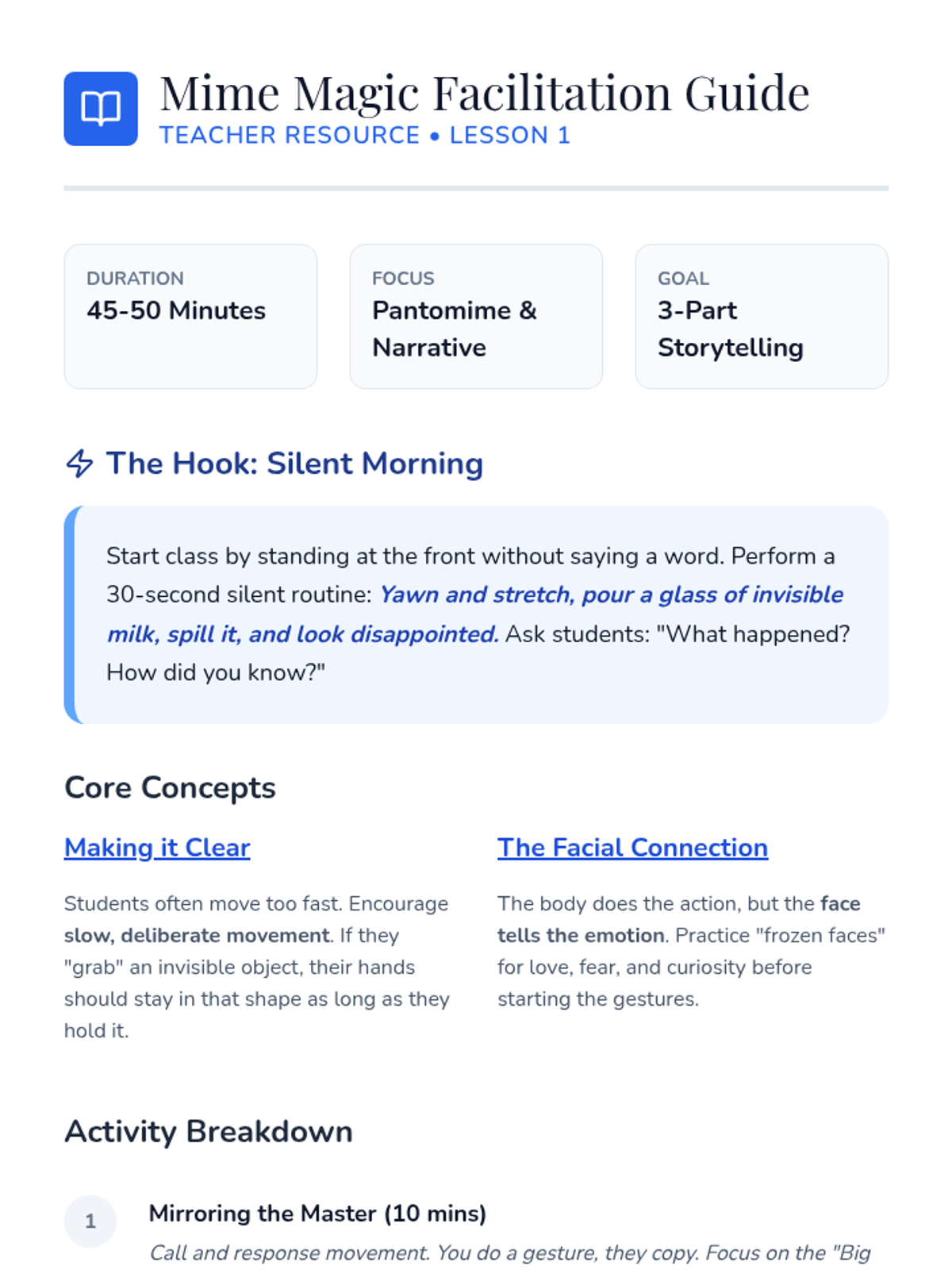
A 5-lesson series for 2nd graders focused on non-verbal communication, body awareness, and pantomime. Students progress from physical neutrality to complex silent storytelling.
A journey through the history of dance and storytelling, from the royal courts of France to the grand stages of story ballets. Students learn how to communicate emotion and narrative through posture, gesture, and movement.
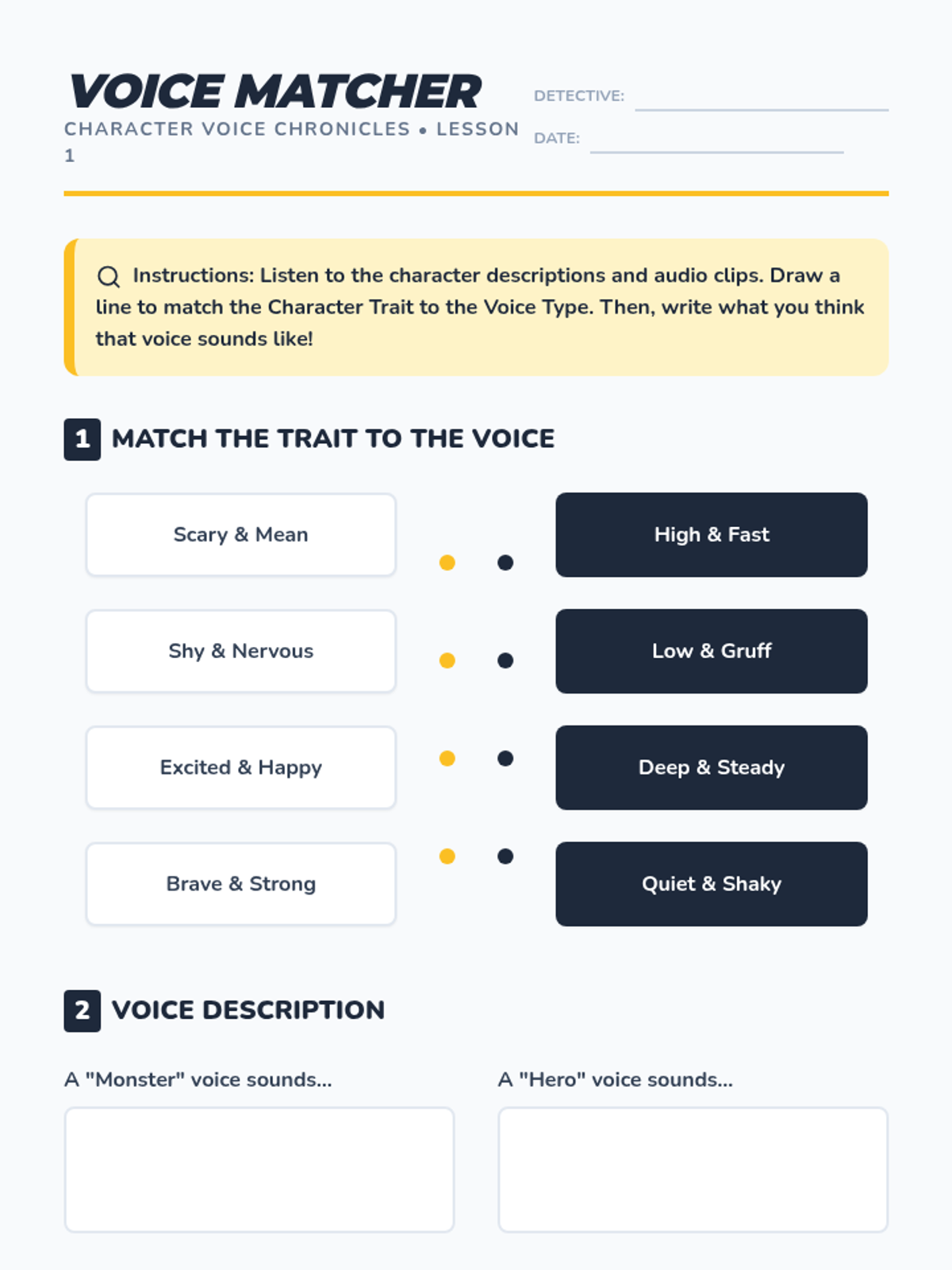
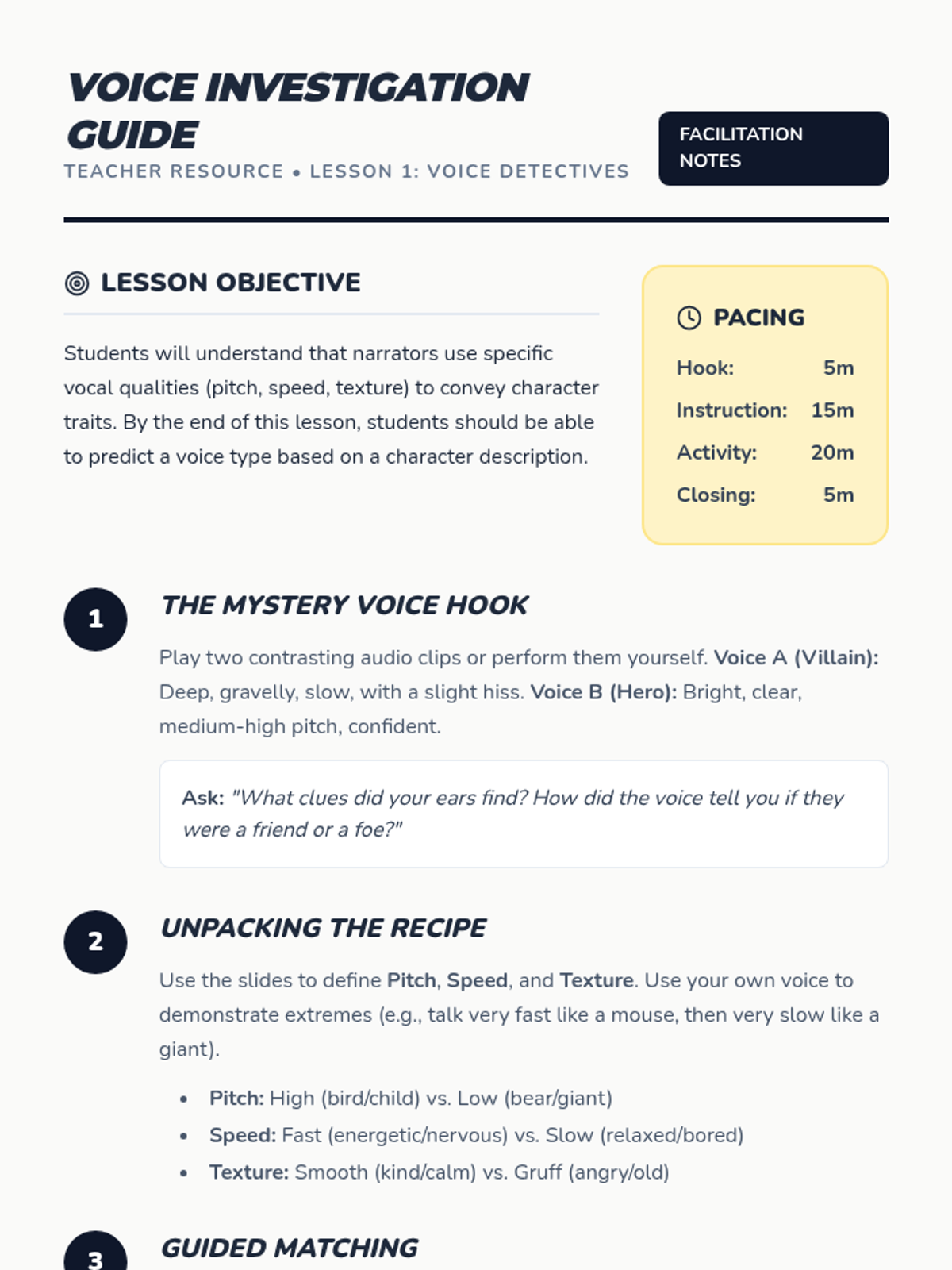
Students analyze how narrators use distinct voices to differentiate characters, map character traits to vocal qualities, and practice performing dialogue for a final Reader's Theater performance.
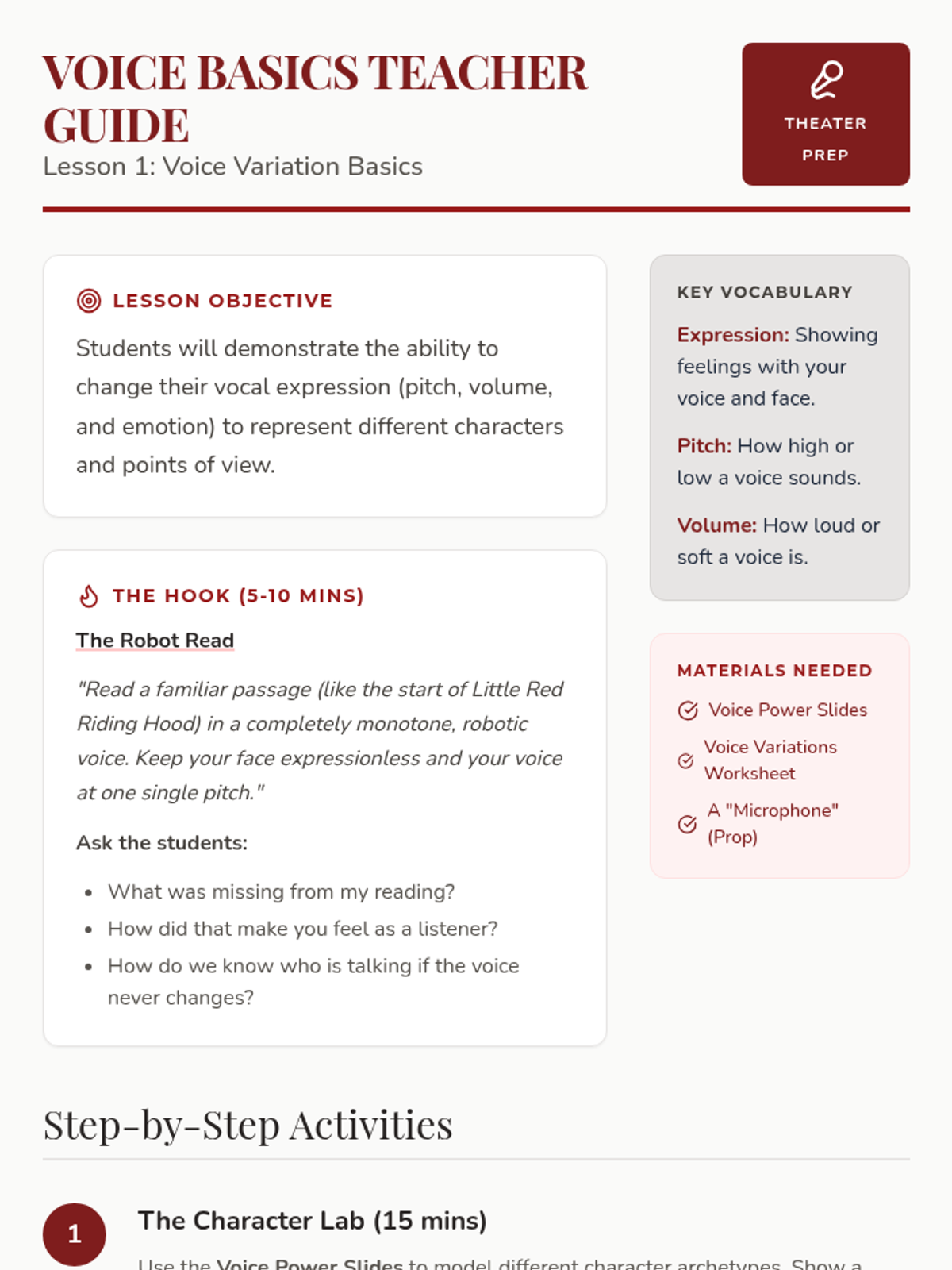
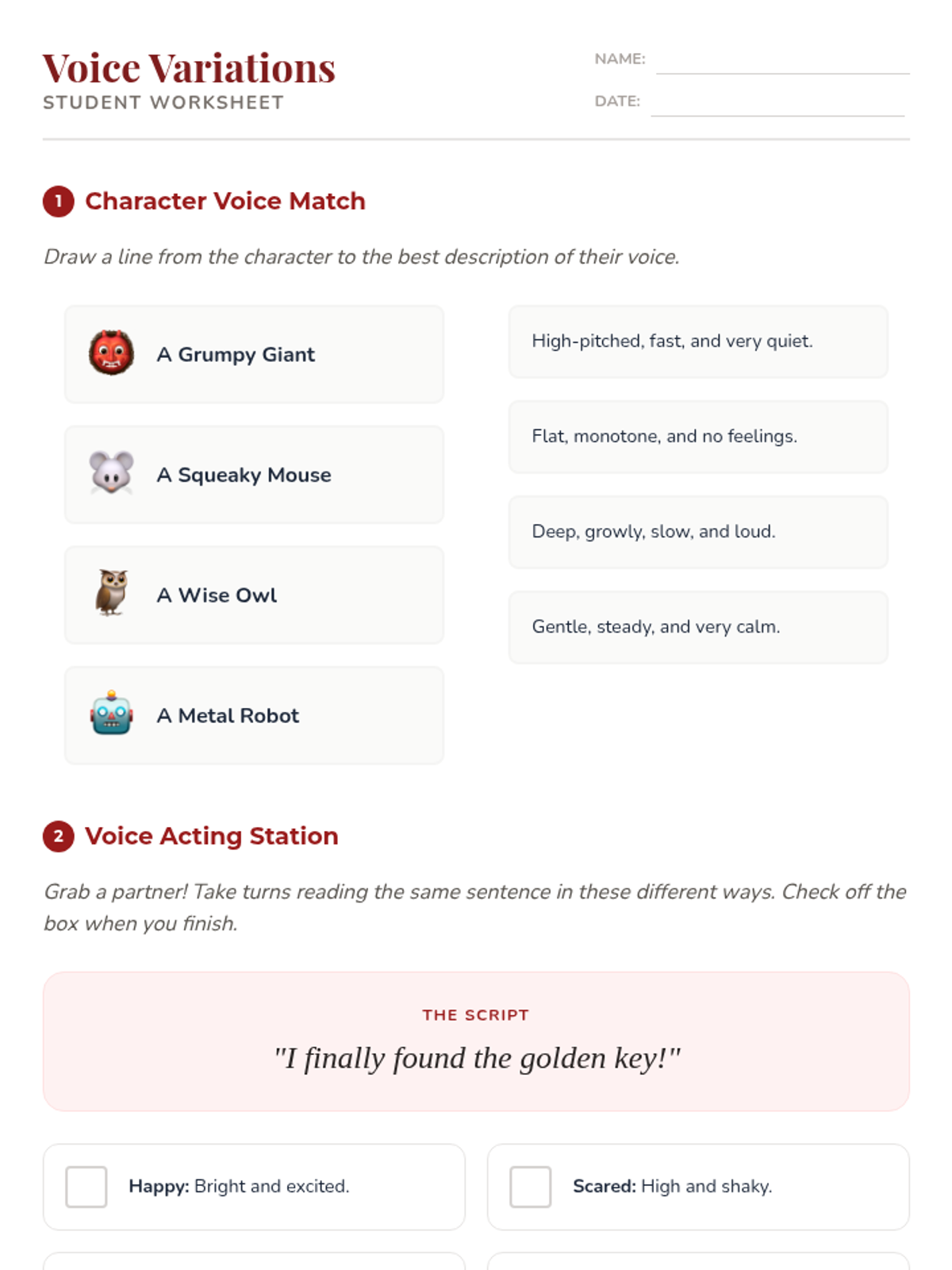
A 5-lesson unit for 2nd graders focusing on point of view through oral interpretation, voice variation, and Reader's Theater. Students learn to distinguish between narrators and characters by adjusting their tone, emotion, and expression.
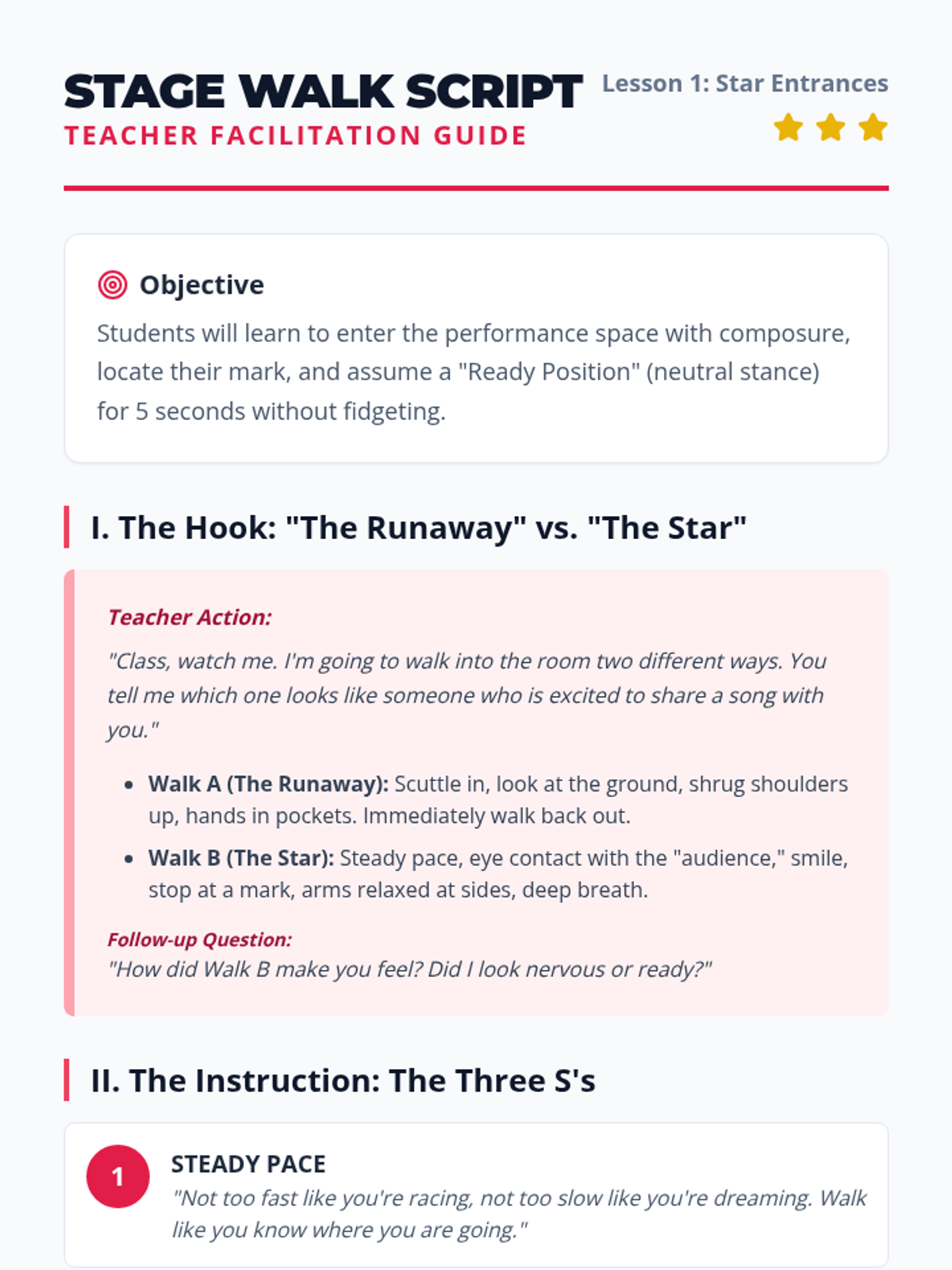
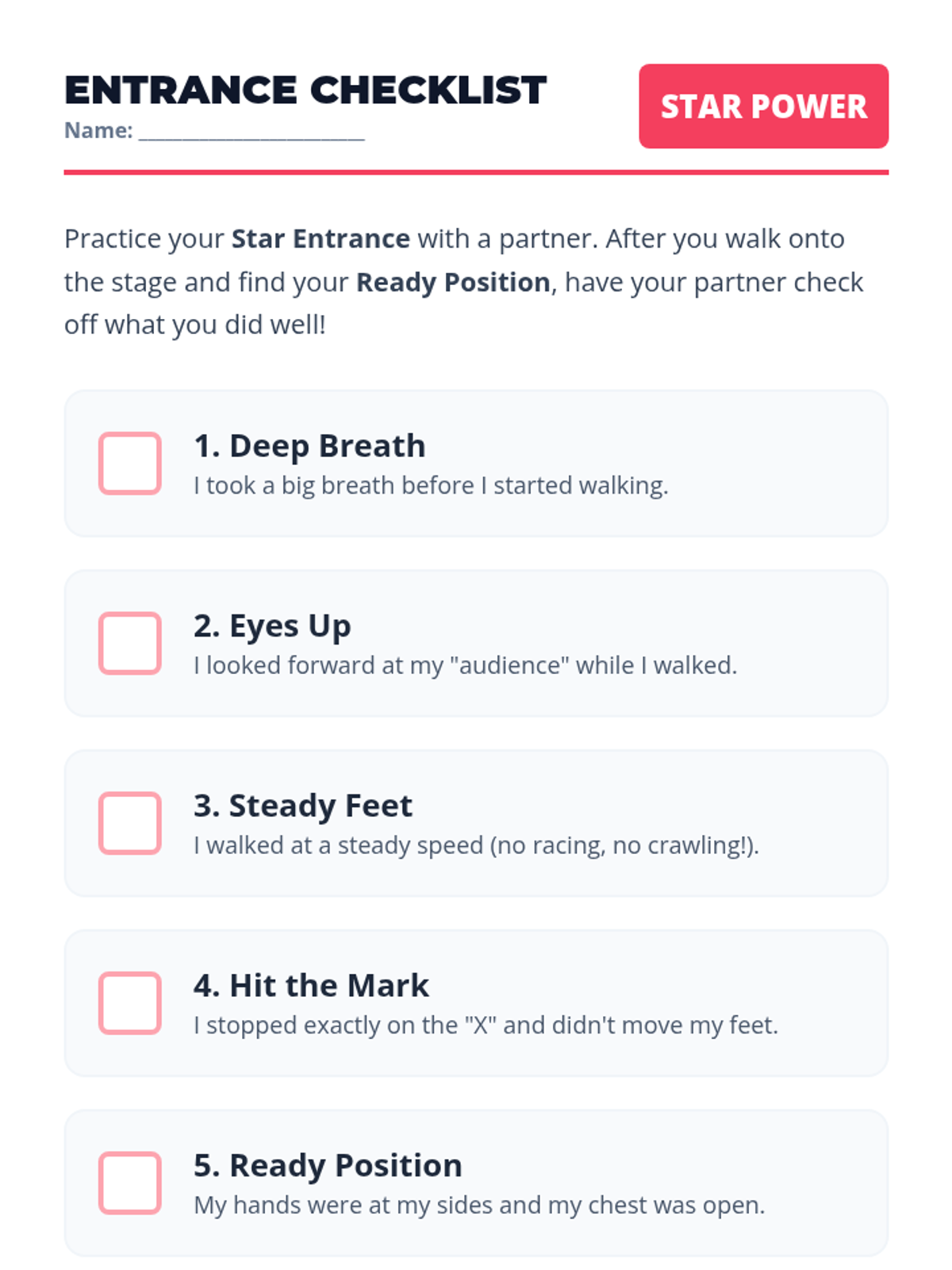
A comprehensive sequence for 2nd graders on stage presence, performance etiquette, and vocal performance confidence, moving from the initial entrance to the final bow.