Fundamental notation, instrumental proficiency, and vocal techniques across various genres. Connects historical analysis with original composition and creative performance skills.
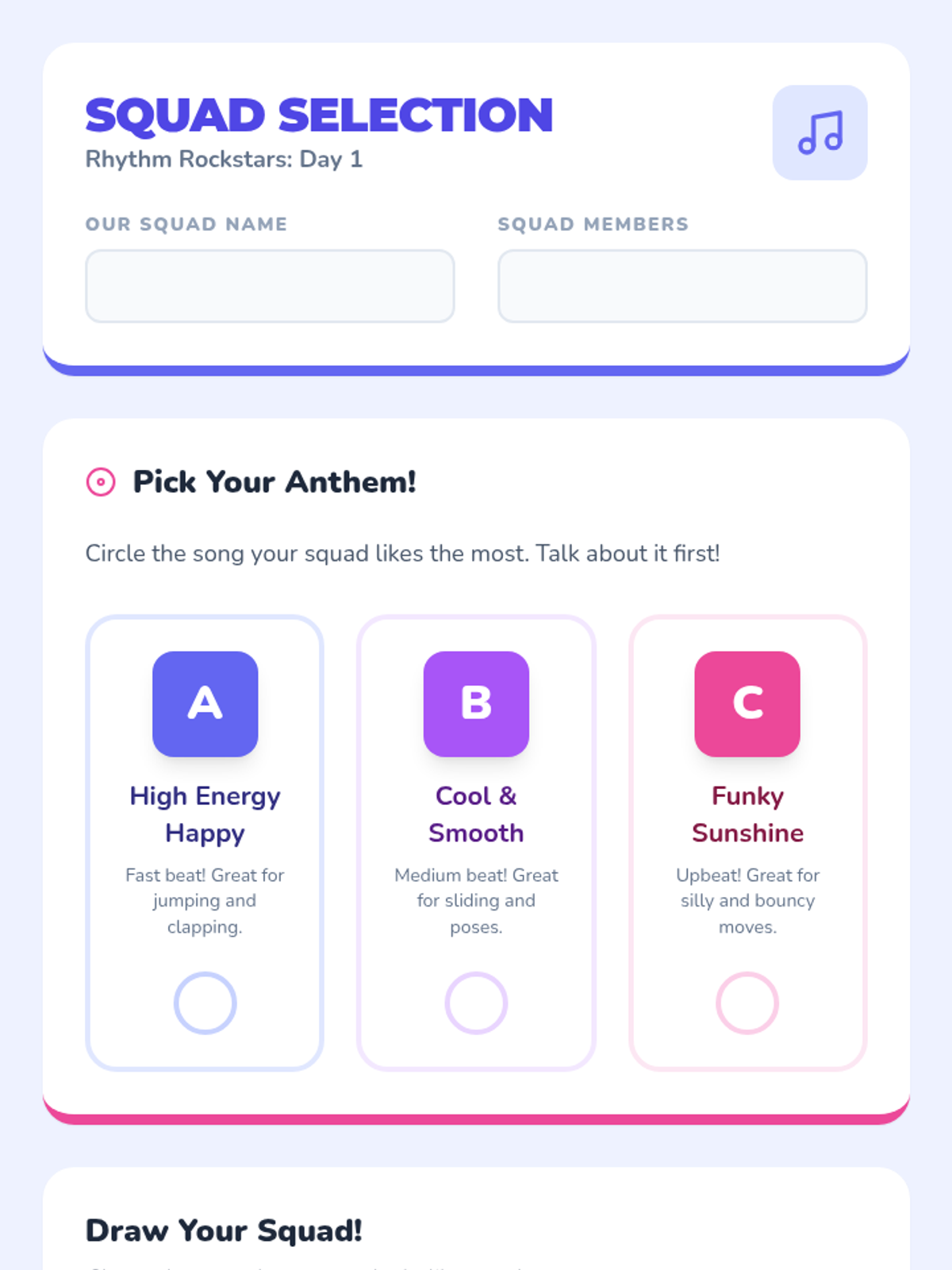
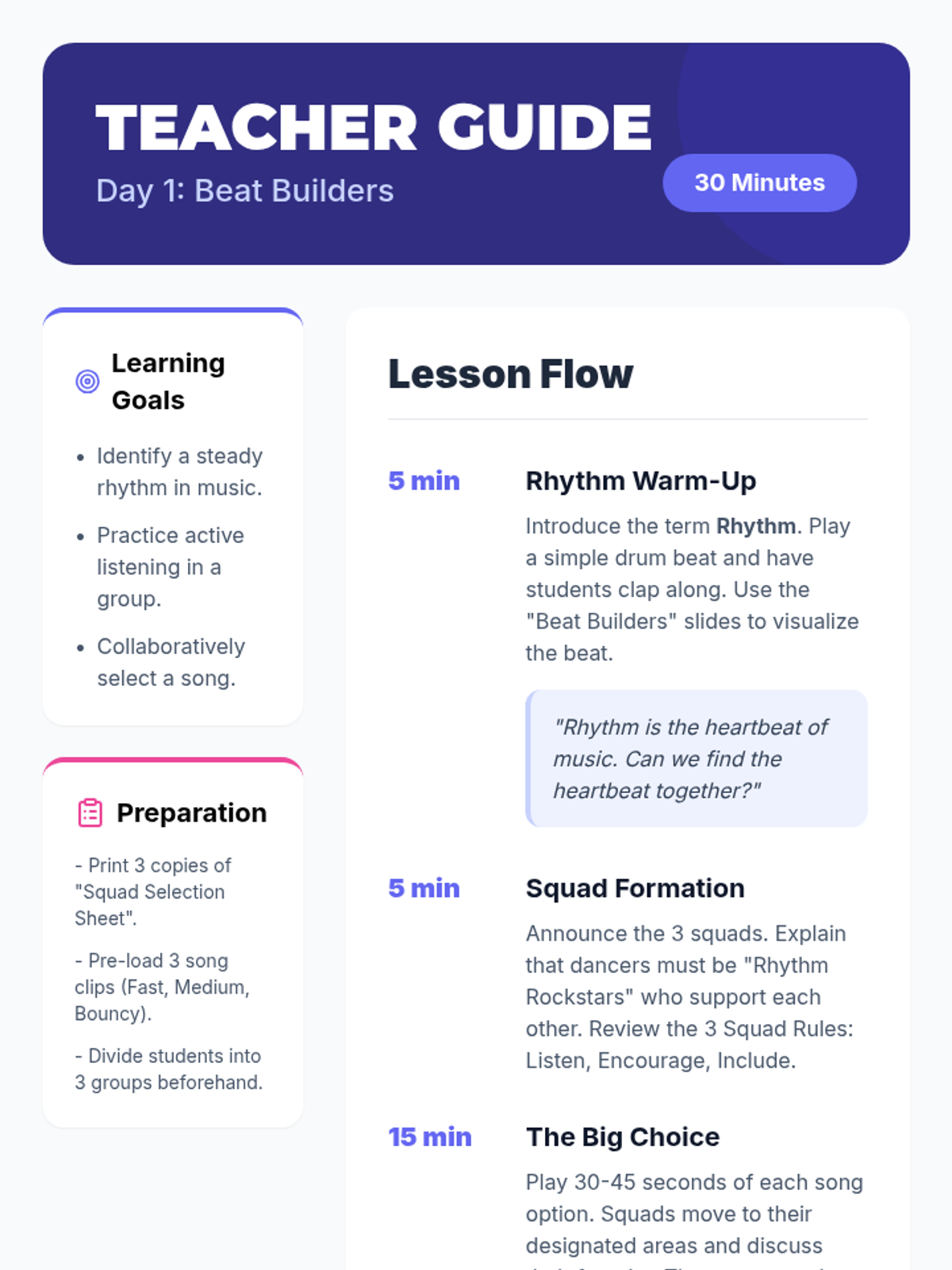
A four-day music and movement unit for K-3 students focused on collaboration, rhythm, and creative choreography. Groups work together to select songs and build original dance routines.
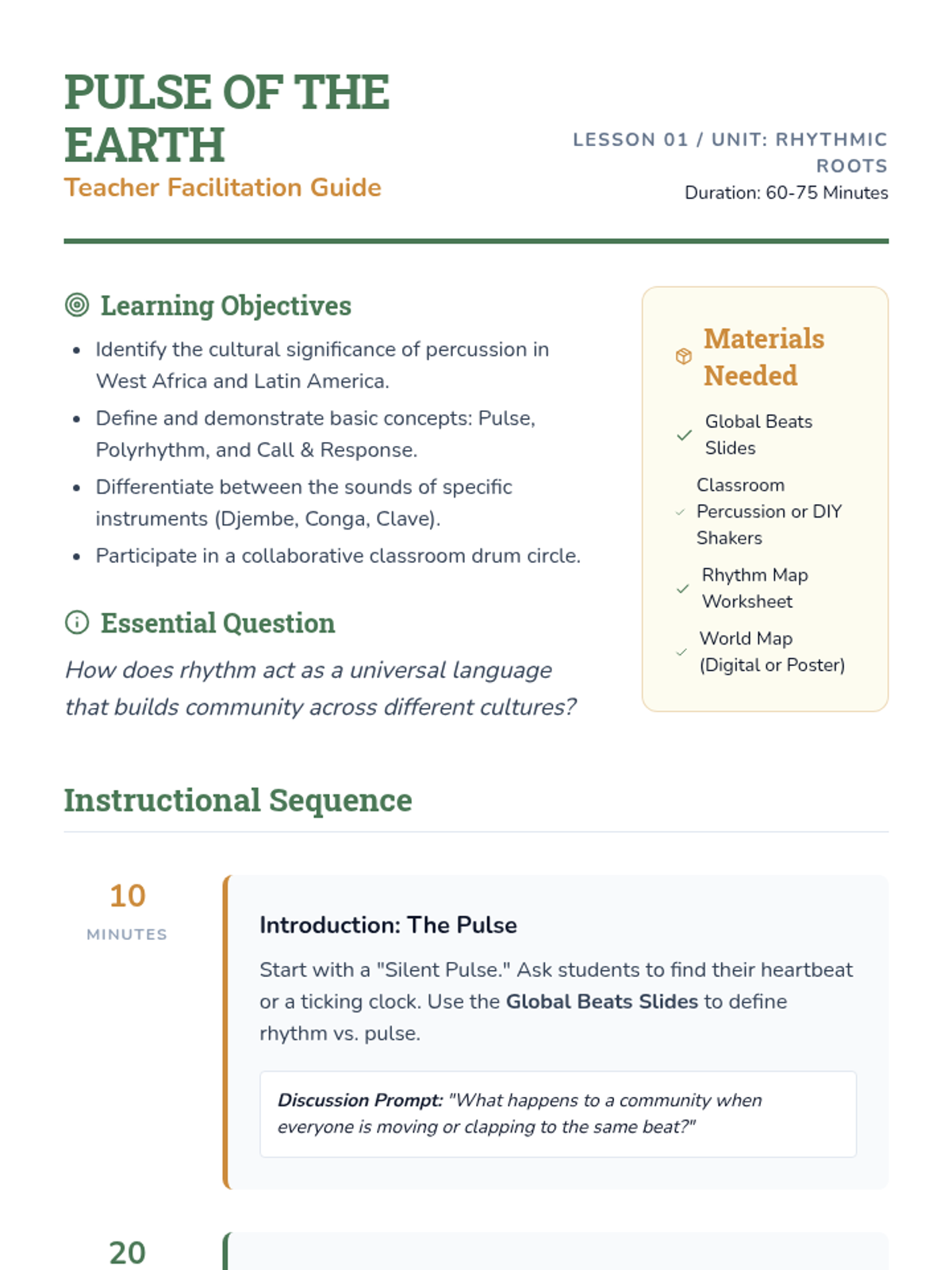
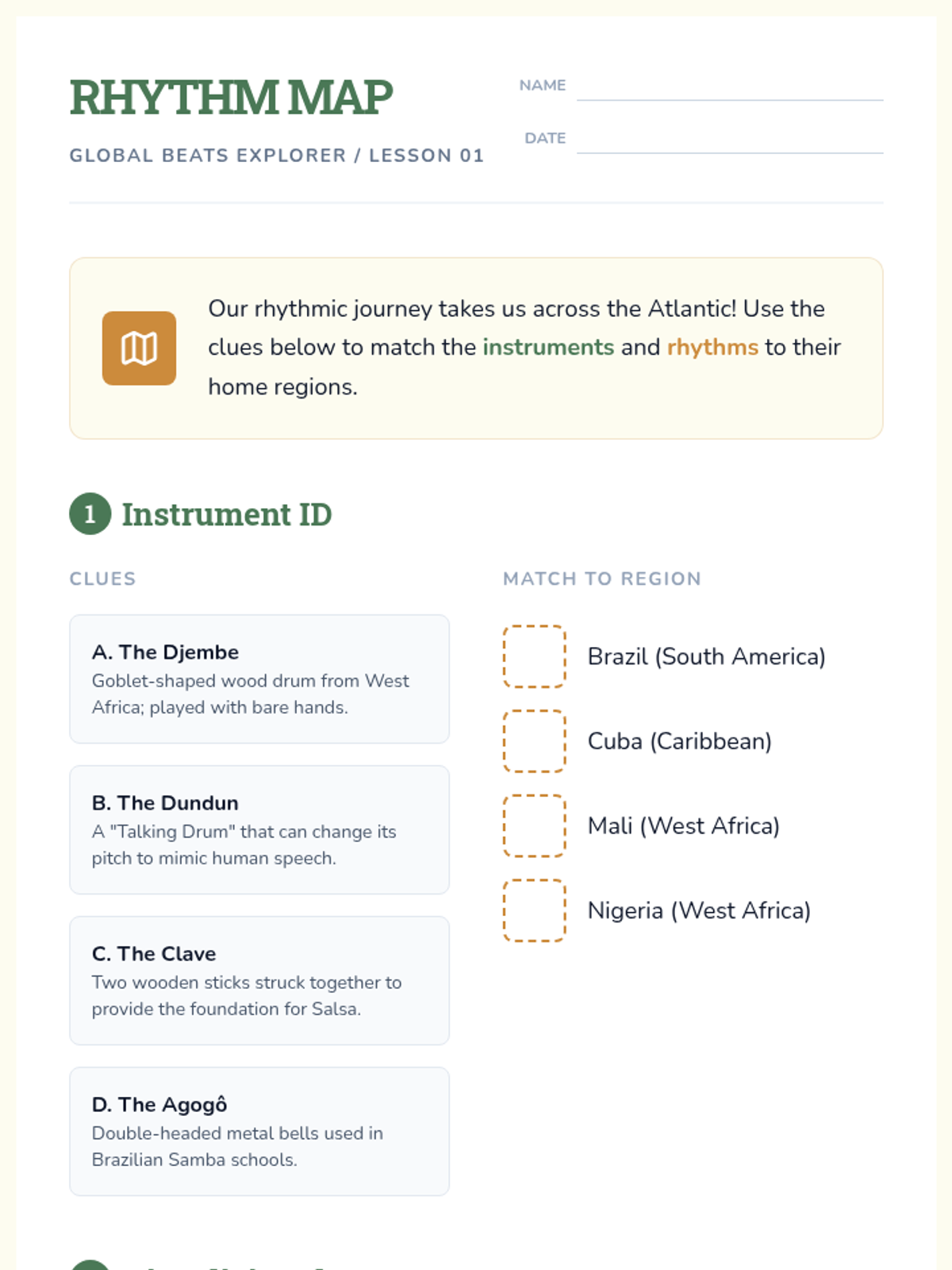
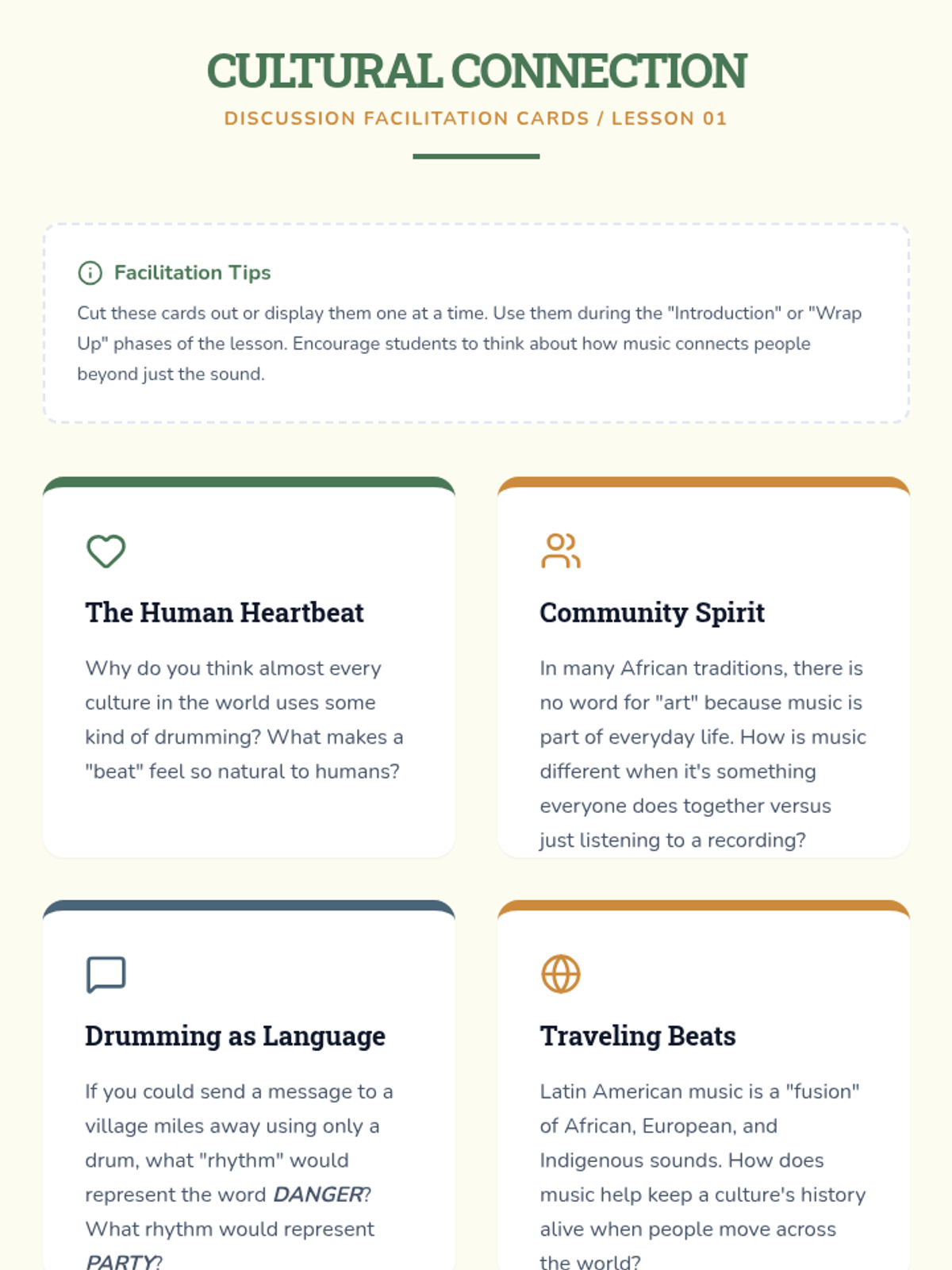
A comprehensive exploration of world music and dance, focusing on cultural heritage, musical elements, and creative expression through drumming, melody, and global fusion.
A foundational music education series designed for early elementary students, covering rhythm, movement, note reading, dynamics, and music history.
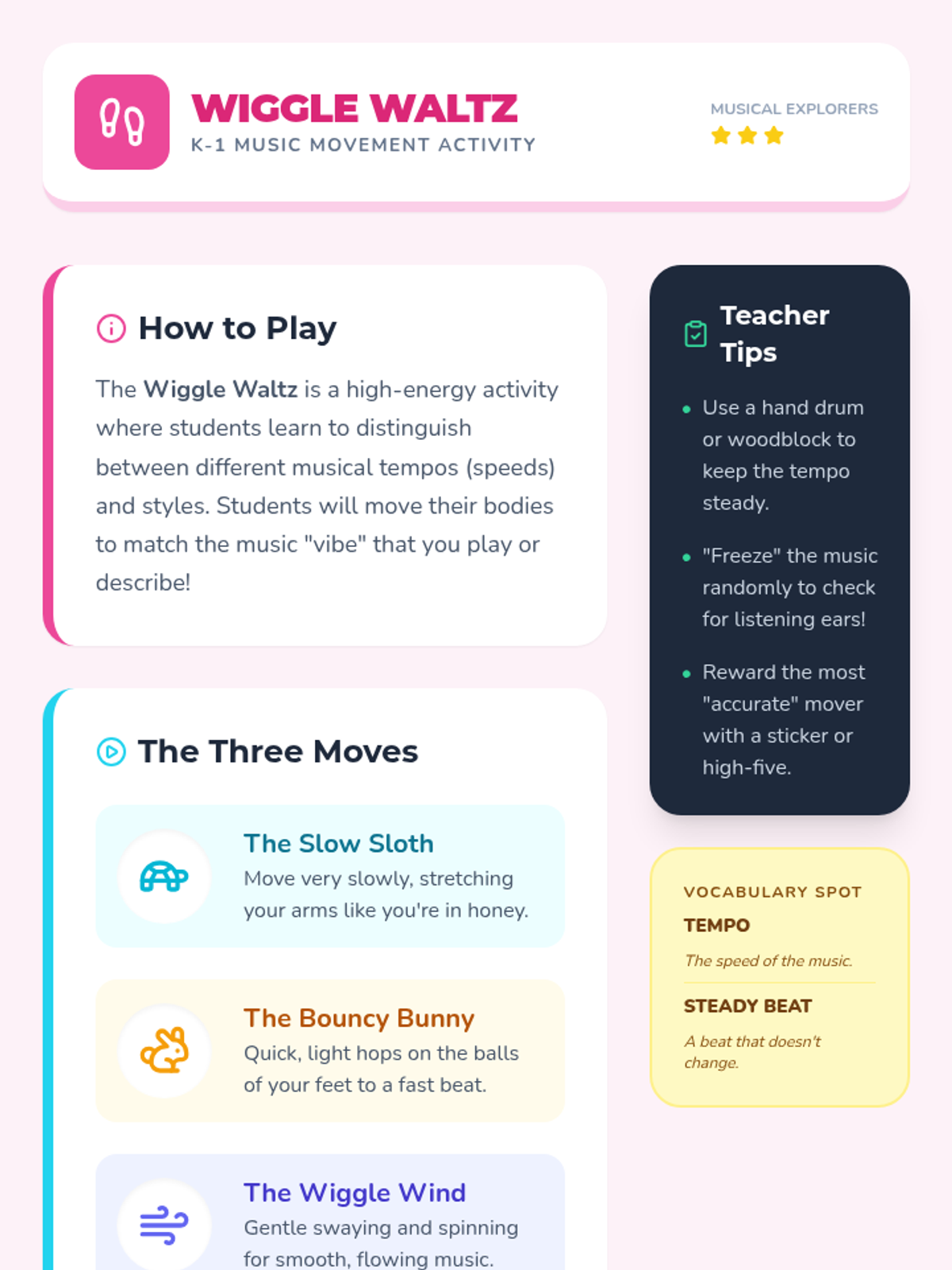
A high-energy elementary music unit focusing on the fundamentals of steady beat, tempo variations, and rhythmic patterns through interactive play-alongs and movement.
A high-energy, interactive unit focused on mastering rhythm and tempo through digital gameplay and body percussion, designed specifically for paperless classrooms.
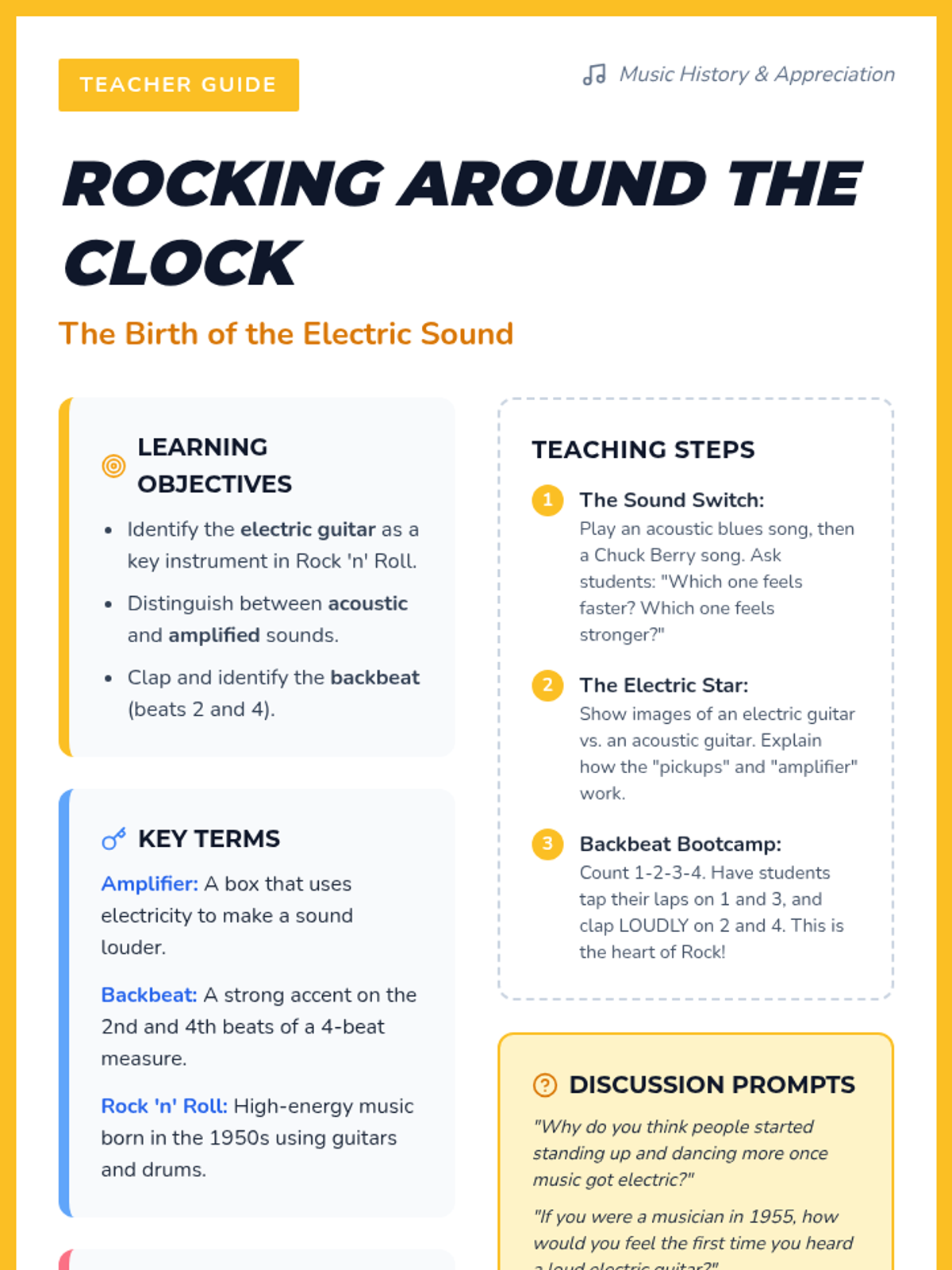
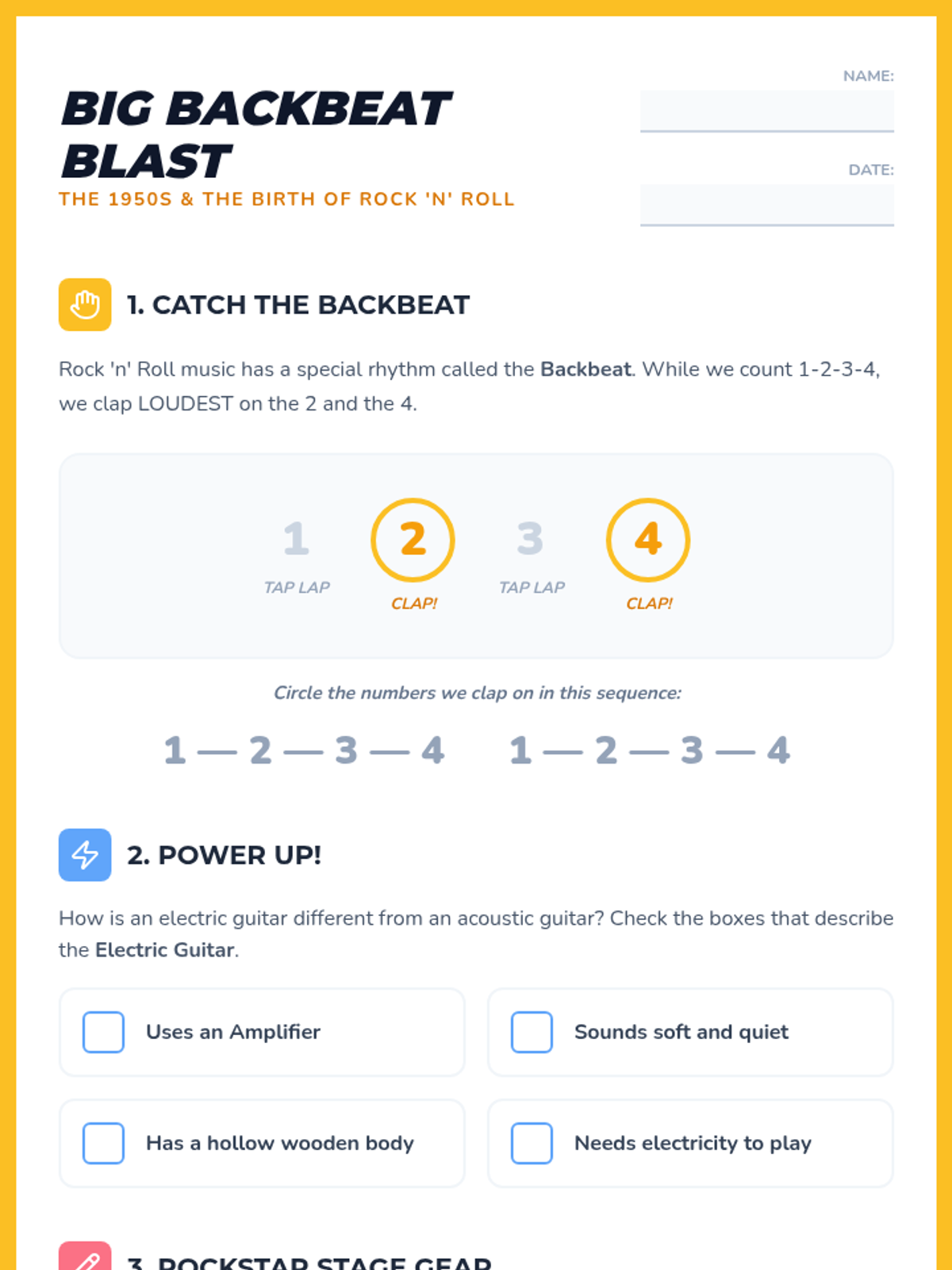
A journey through the 20th and 21st centuries, exploring how technology like electric guitars and synthesizers shaped genres from Rock 'n' Roll to Pop. Students analyze rhythm, structure, and sound to build a chronological timeline of musical evolution.
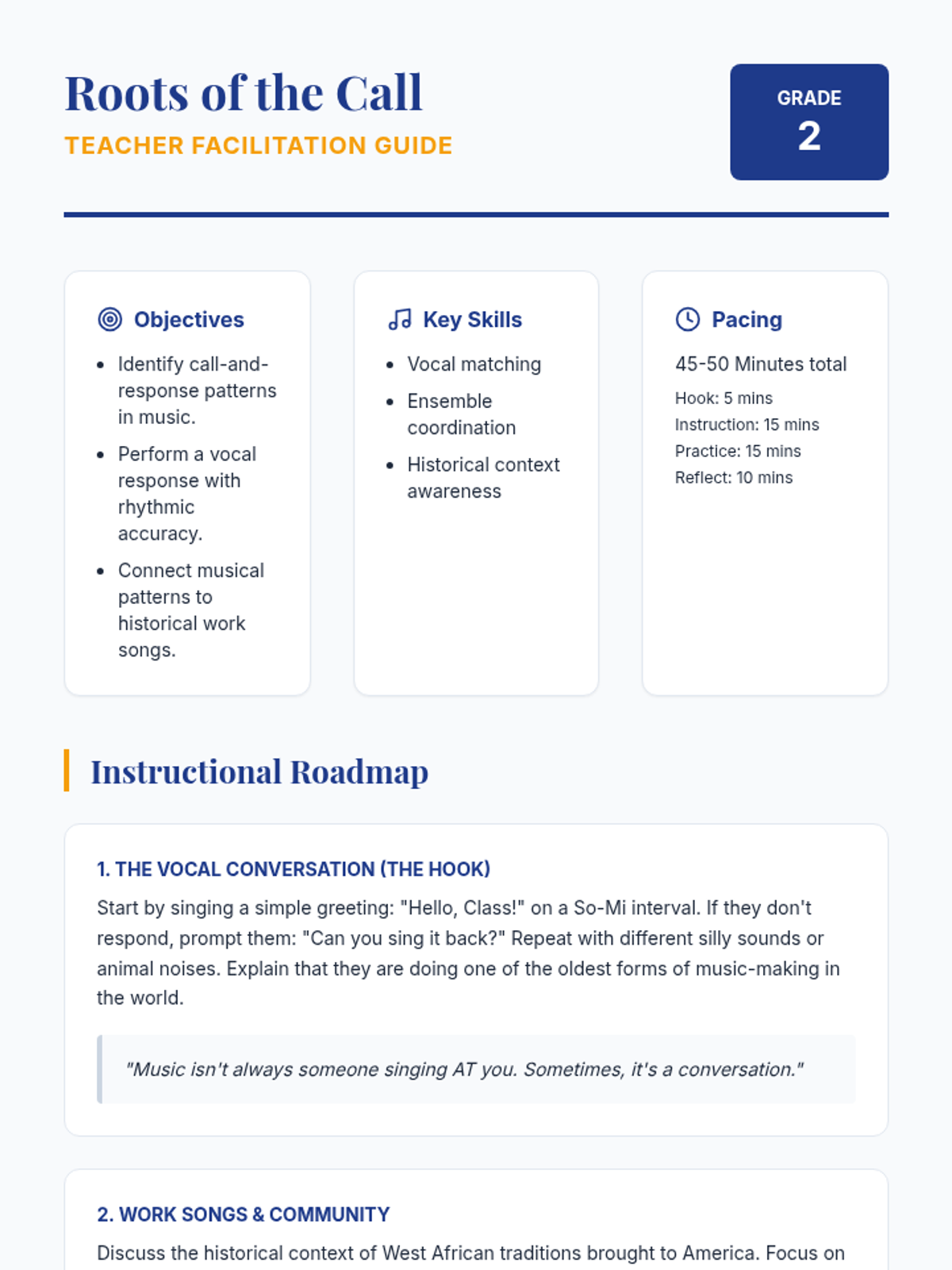
An immersive workshop-style sequence for 2nd graders exploring the roots of Jazz, Blues, and Folk music through call-and-response, syncopation, and improvisation. Students trace American musical history from work songs to the Swing era through active music-making.
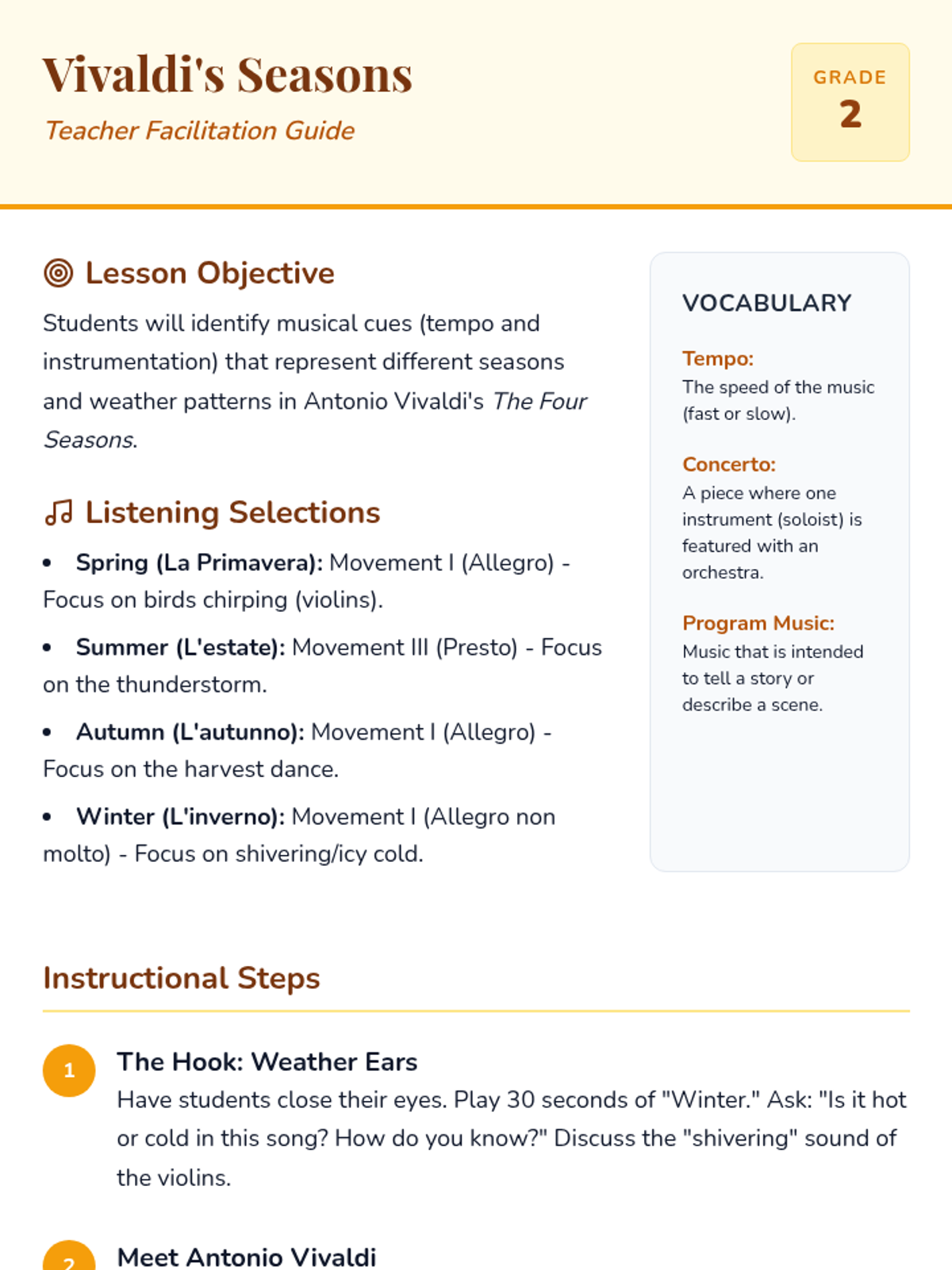
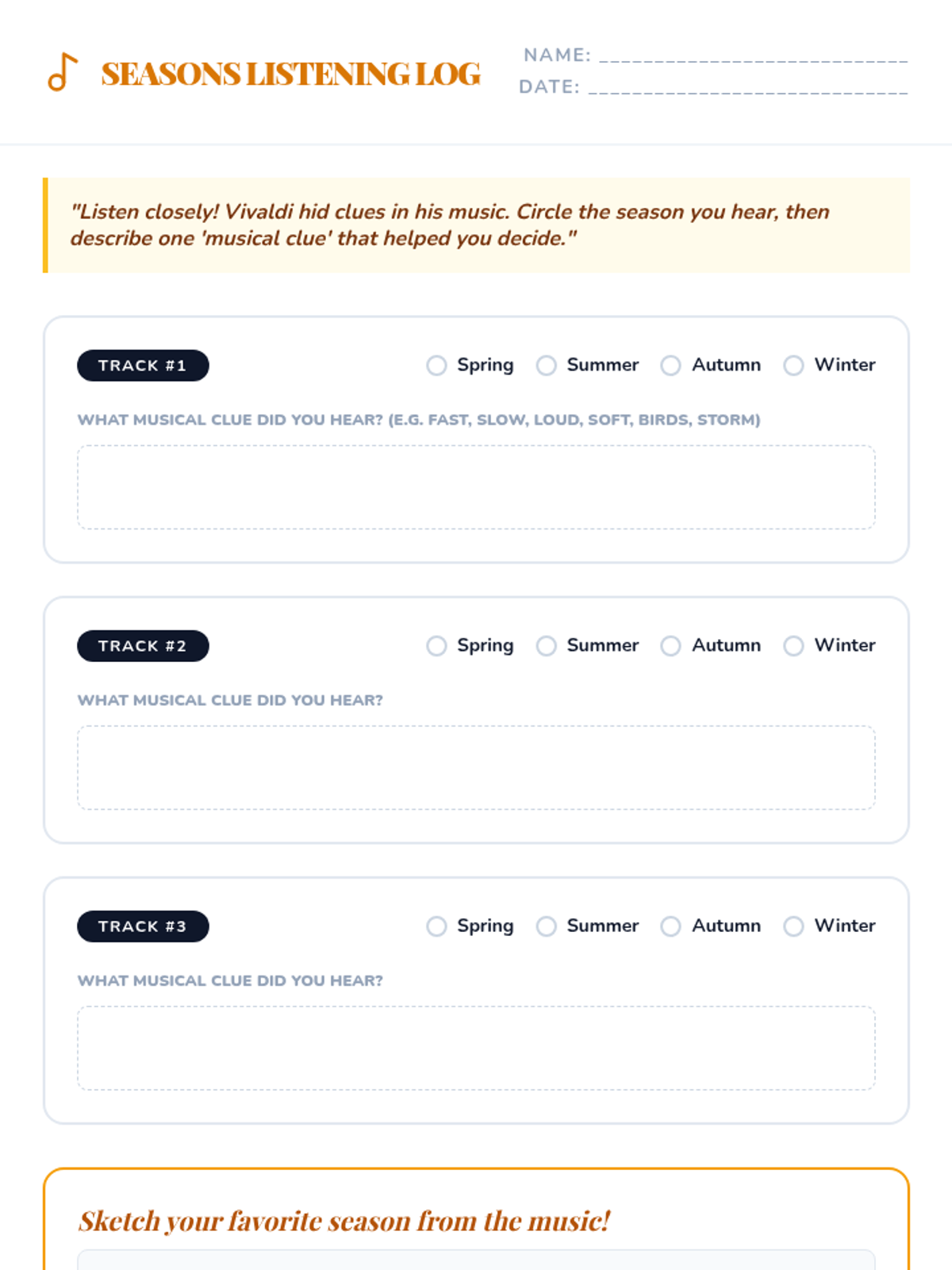
A 5-lesson sequence for 2nd graders exploring how classical composers use musical elements to tell stories and express emotions. Students 'meet' famous composers like Vivaldi and Beethoven, identifying tempo, dynamics, and leitmotifs in iconic works.
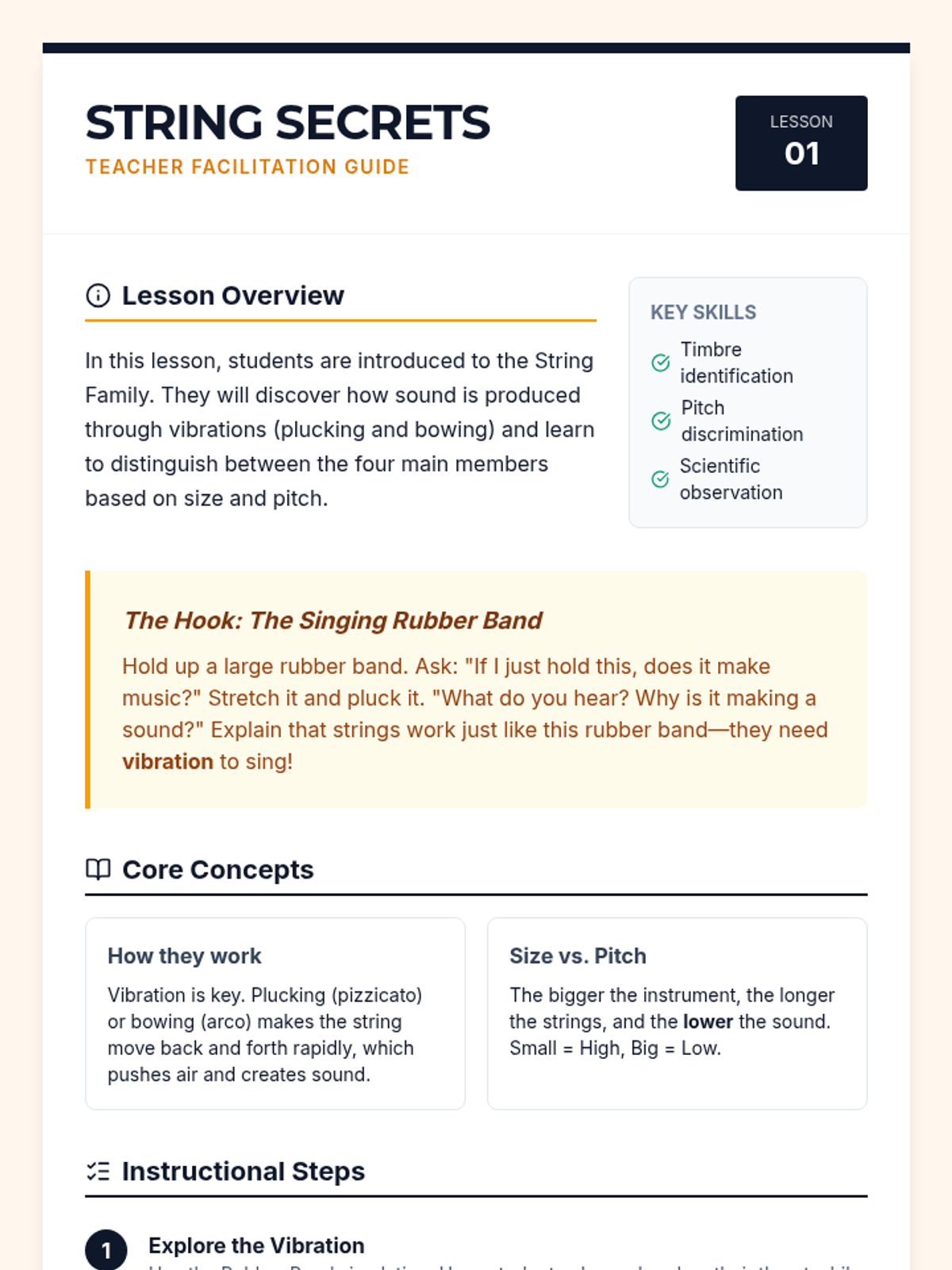
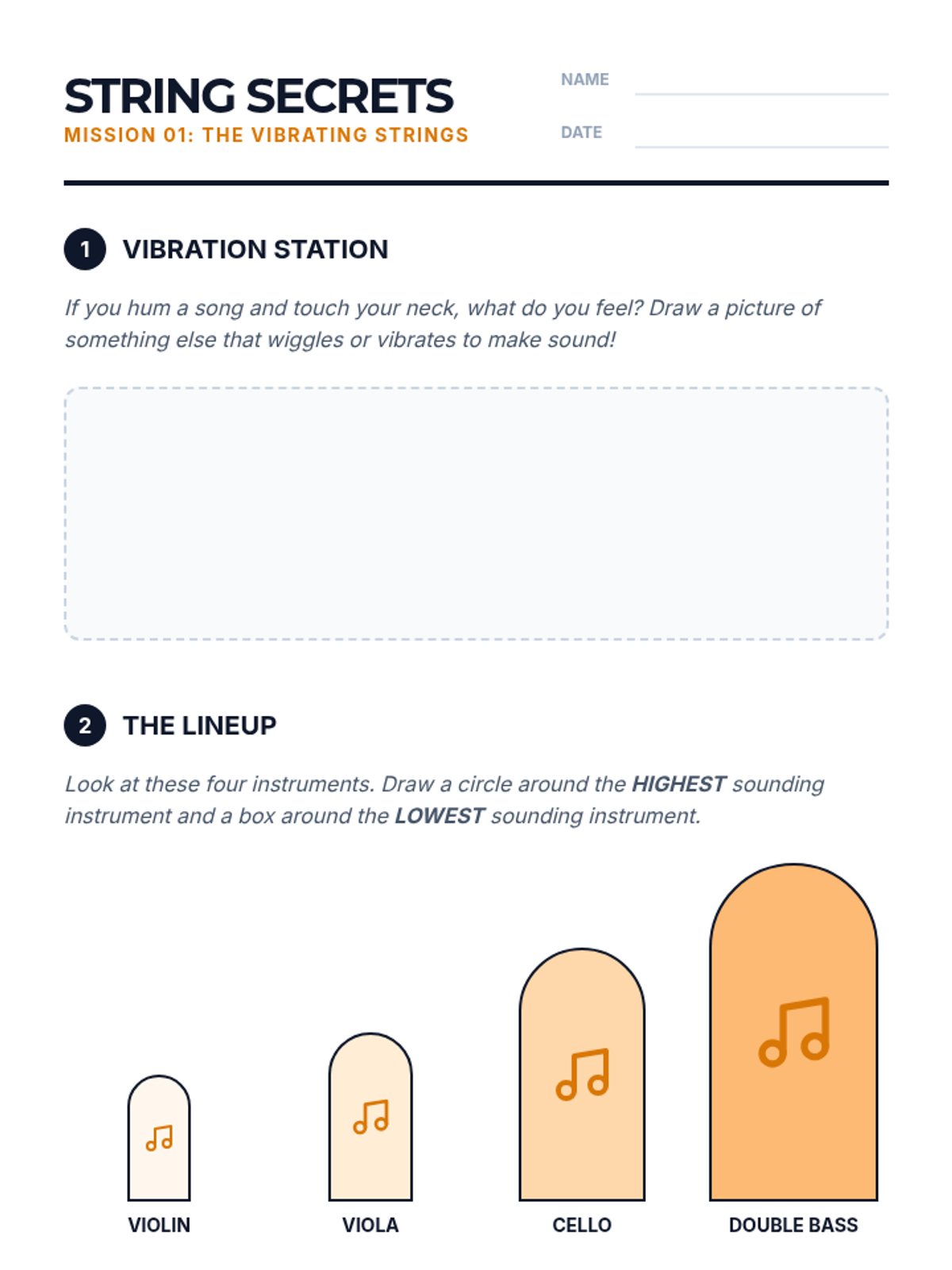
A comprehensive introduction to the four families of the orchestra for 2nd graders. Students explore timbre, mechanics, and historical roles of strings, woodwinds, brass, and percussion, culminating in a conductor simulation.
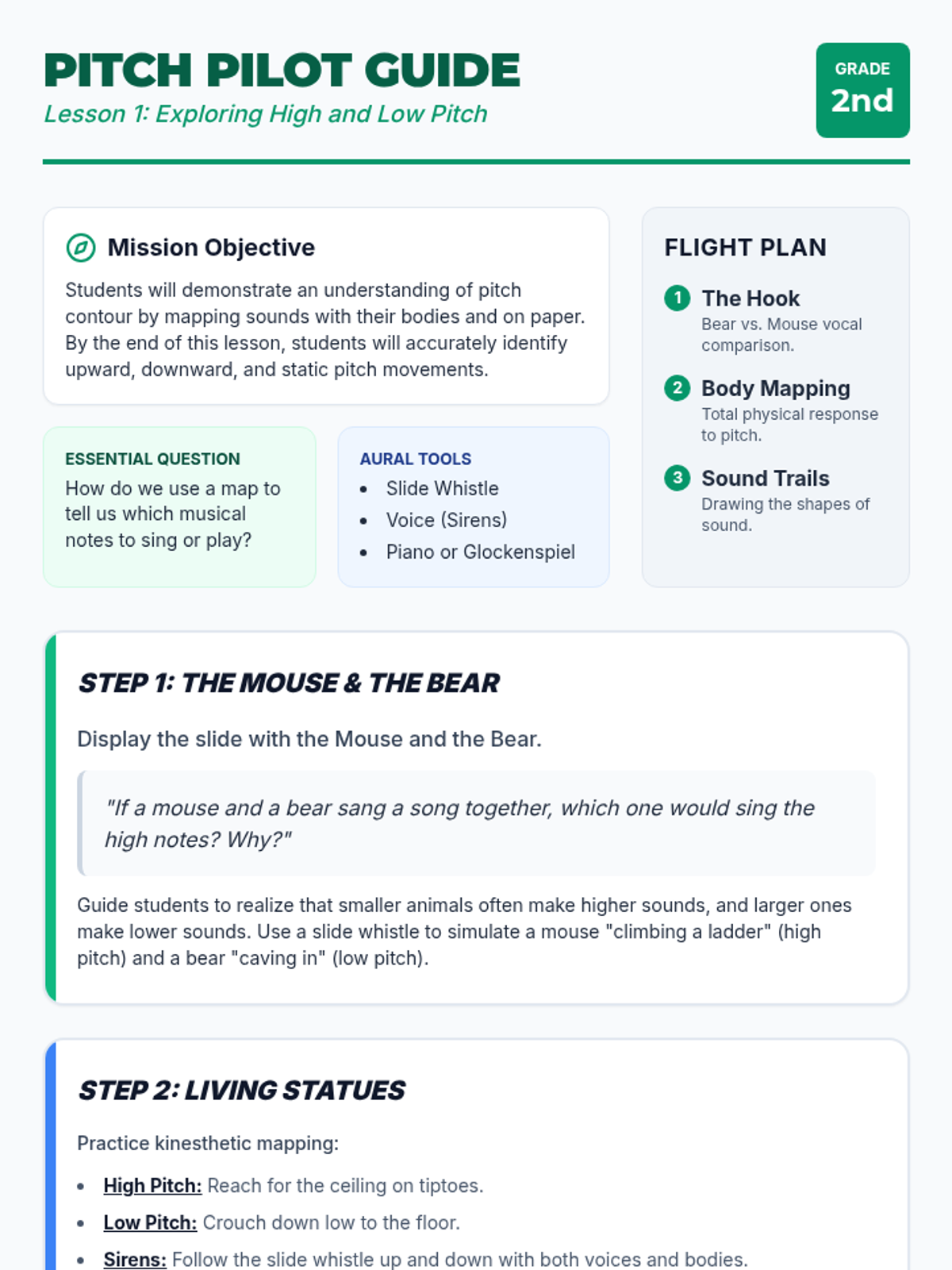
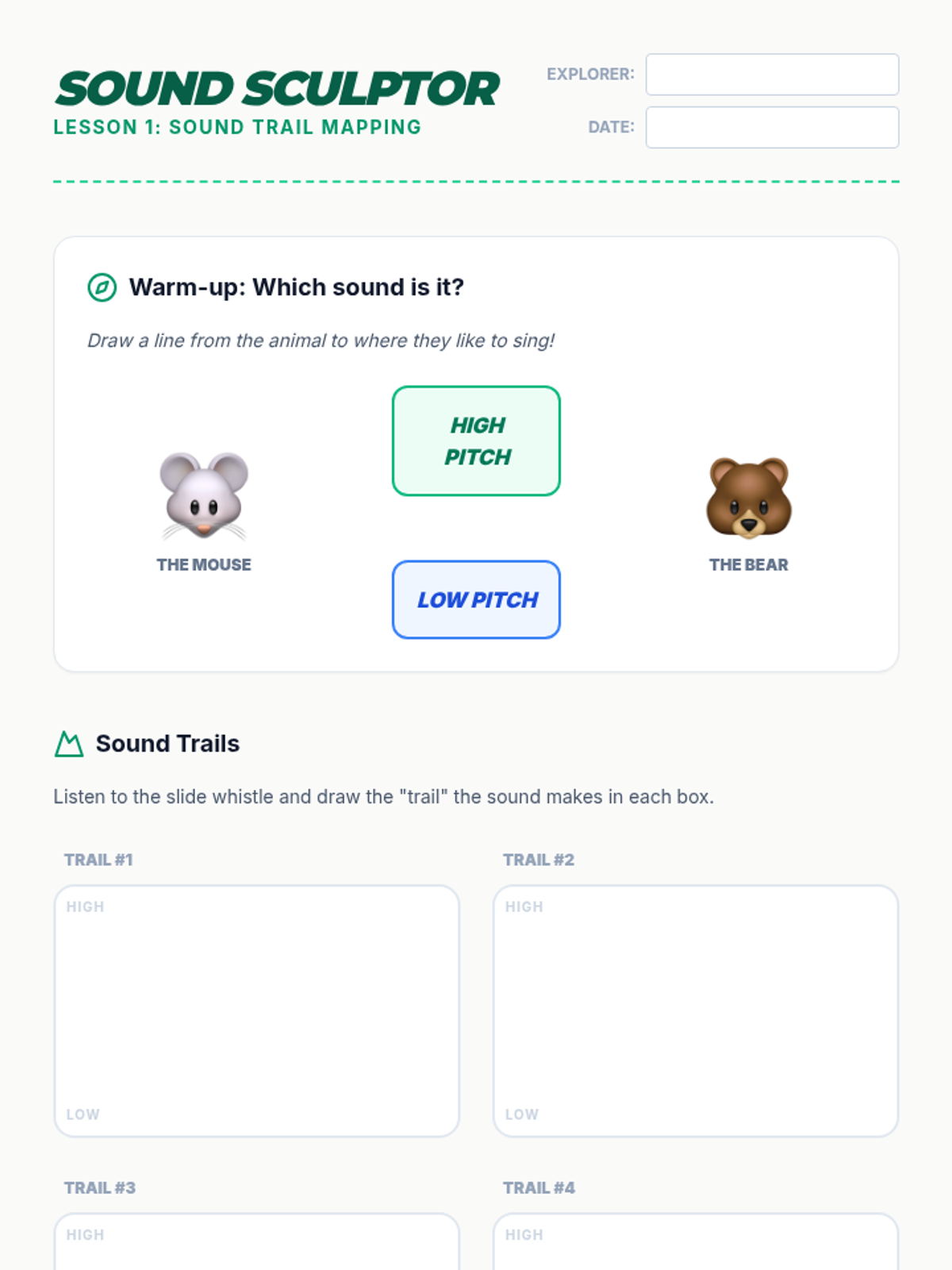
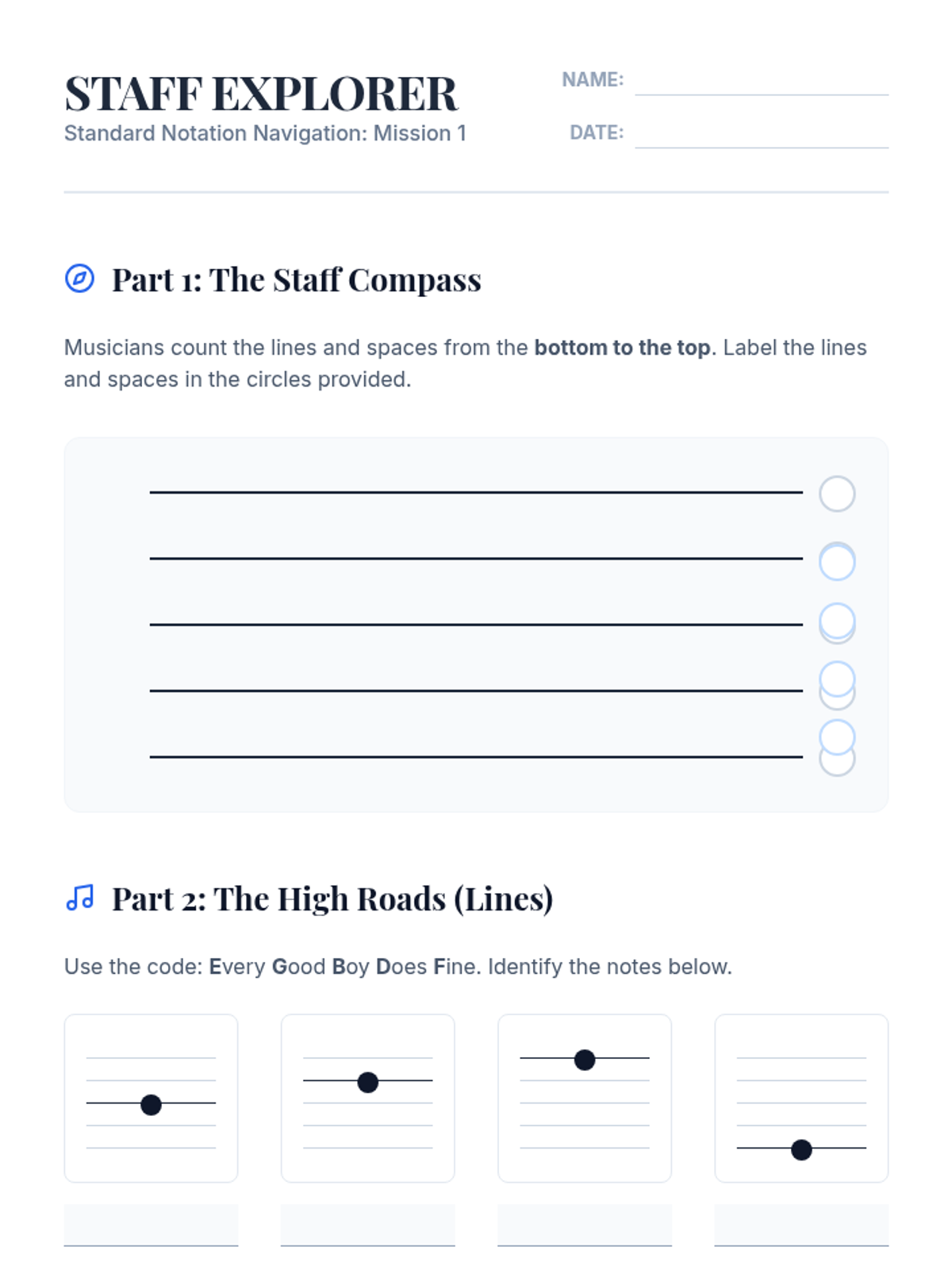
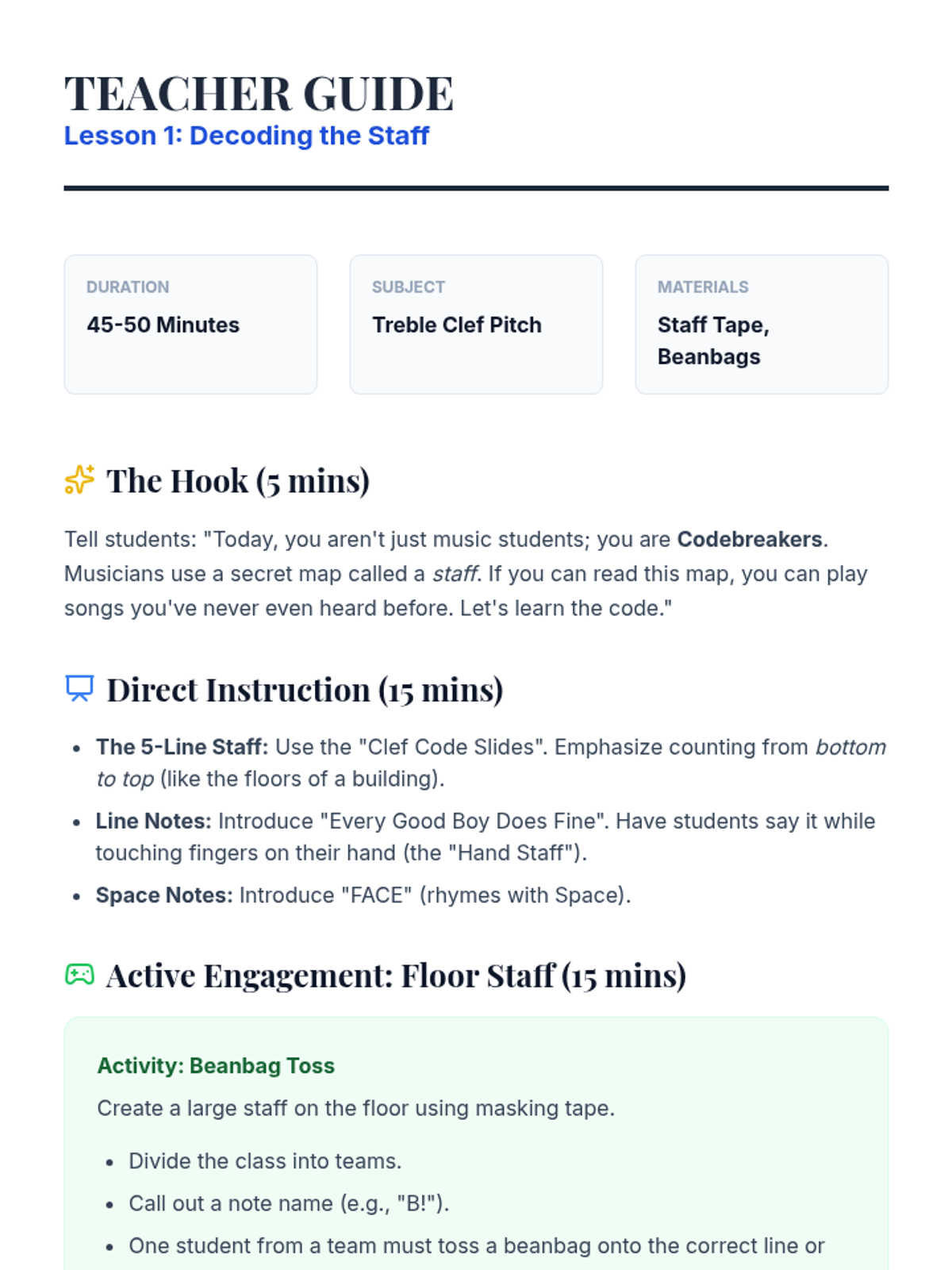
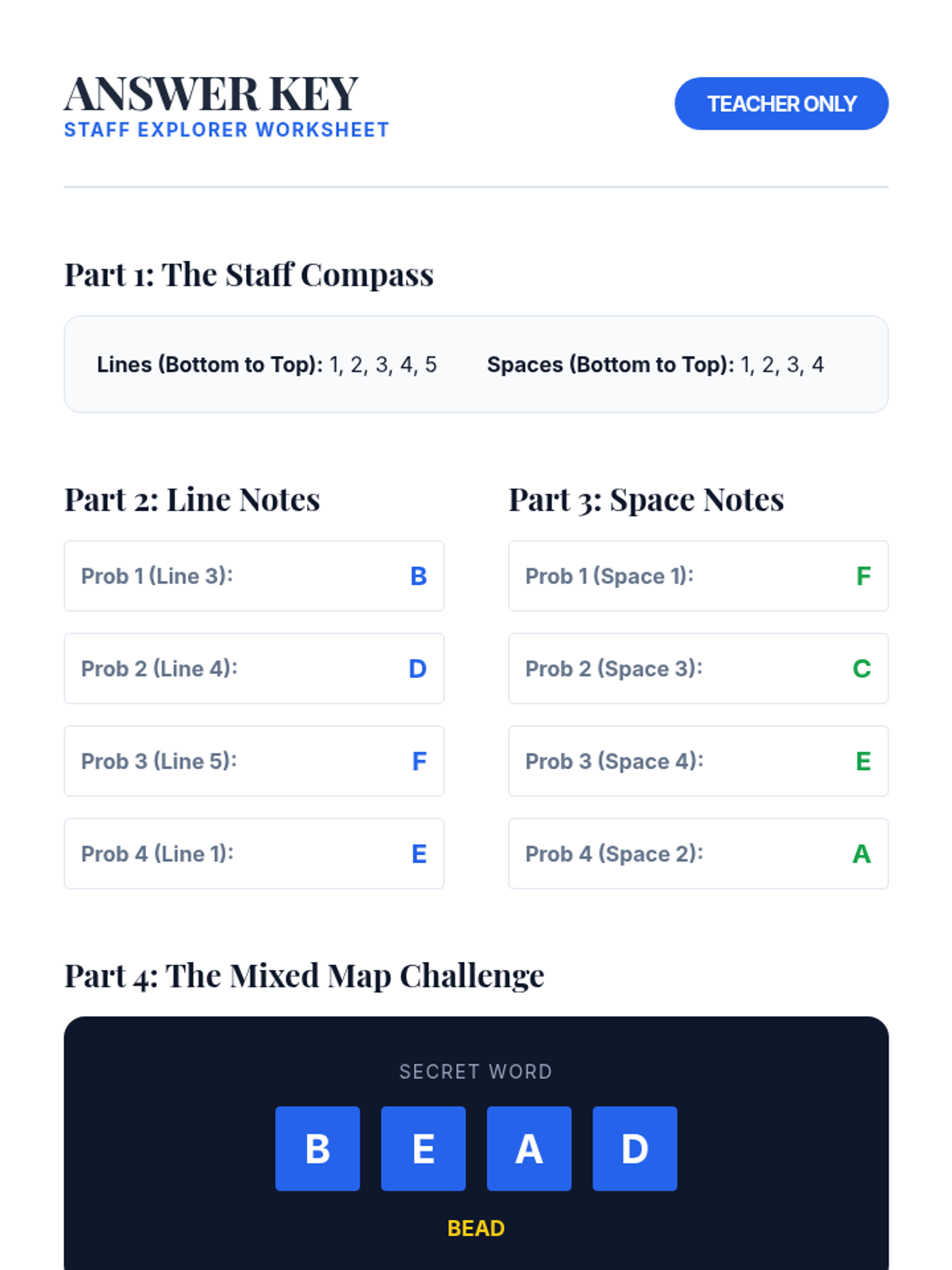
A 5-lesson sequence for 2nd graders to master reading pitch on the musical staff, moving from high/low discrimination to reading 3-note melodies using Solfege.
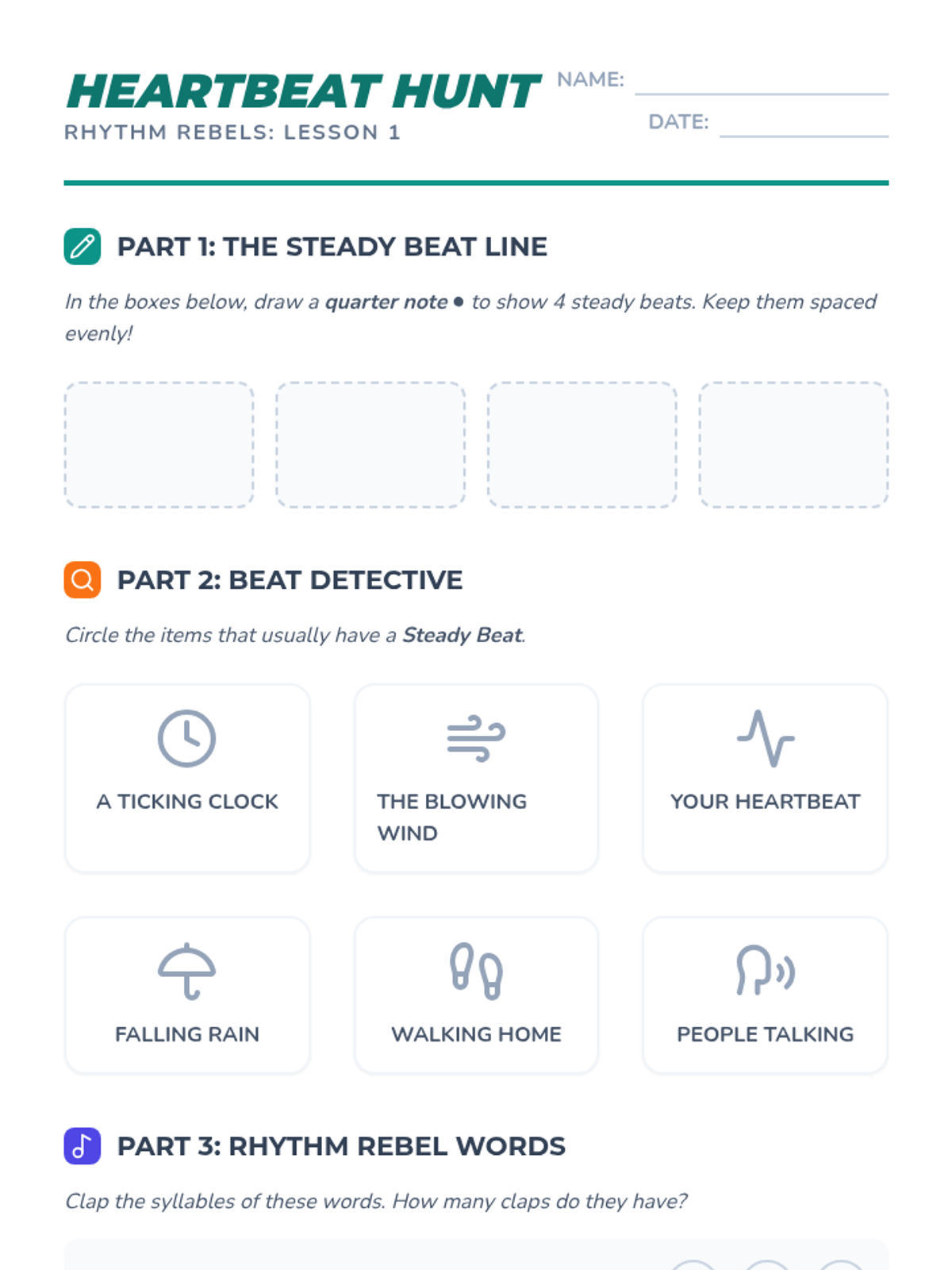
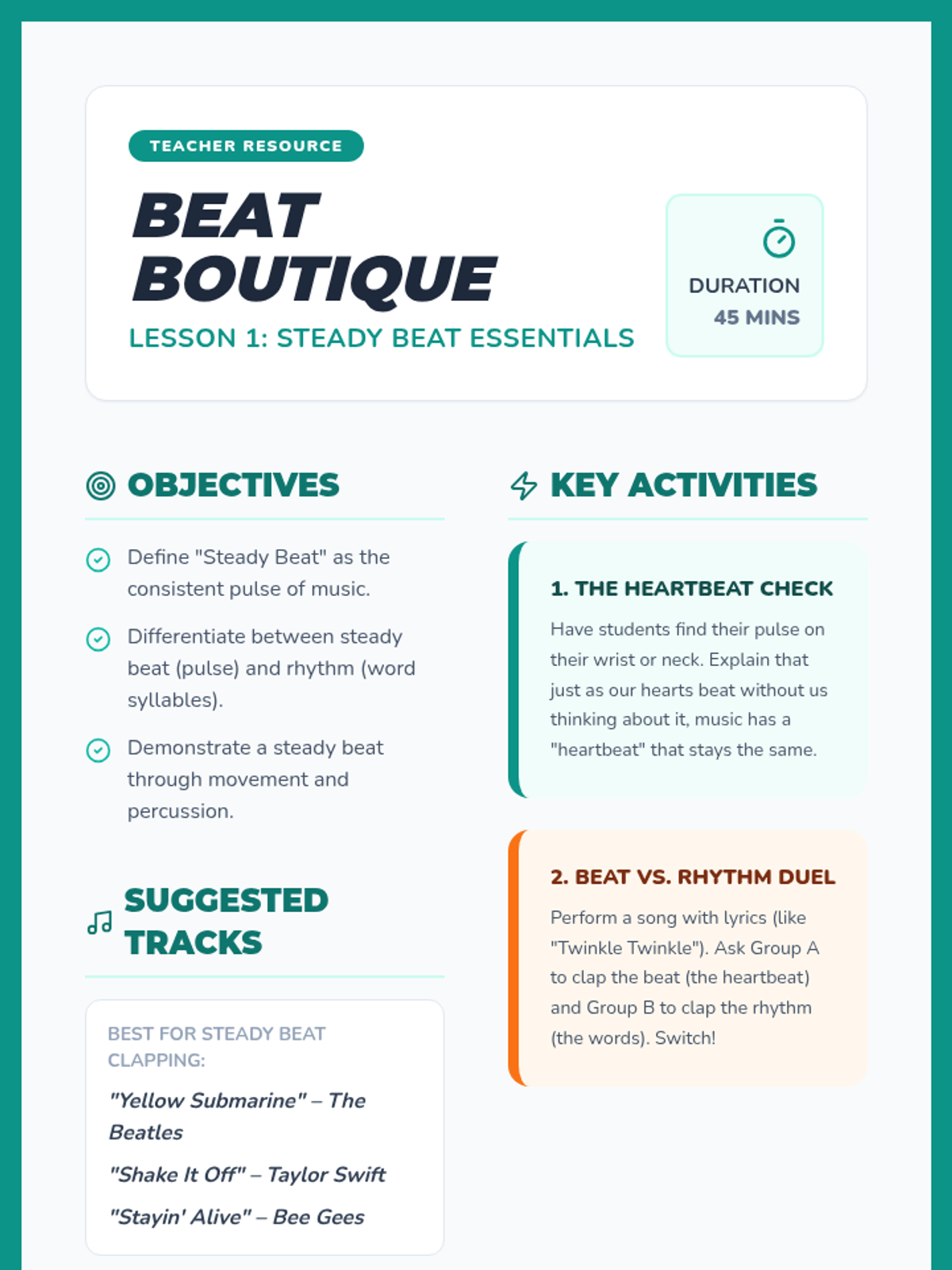
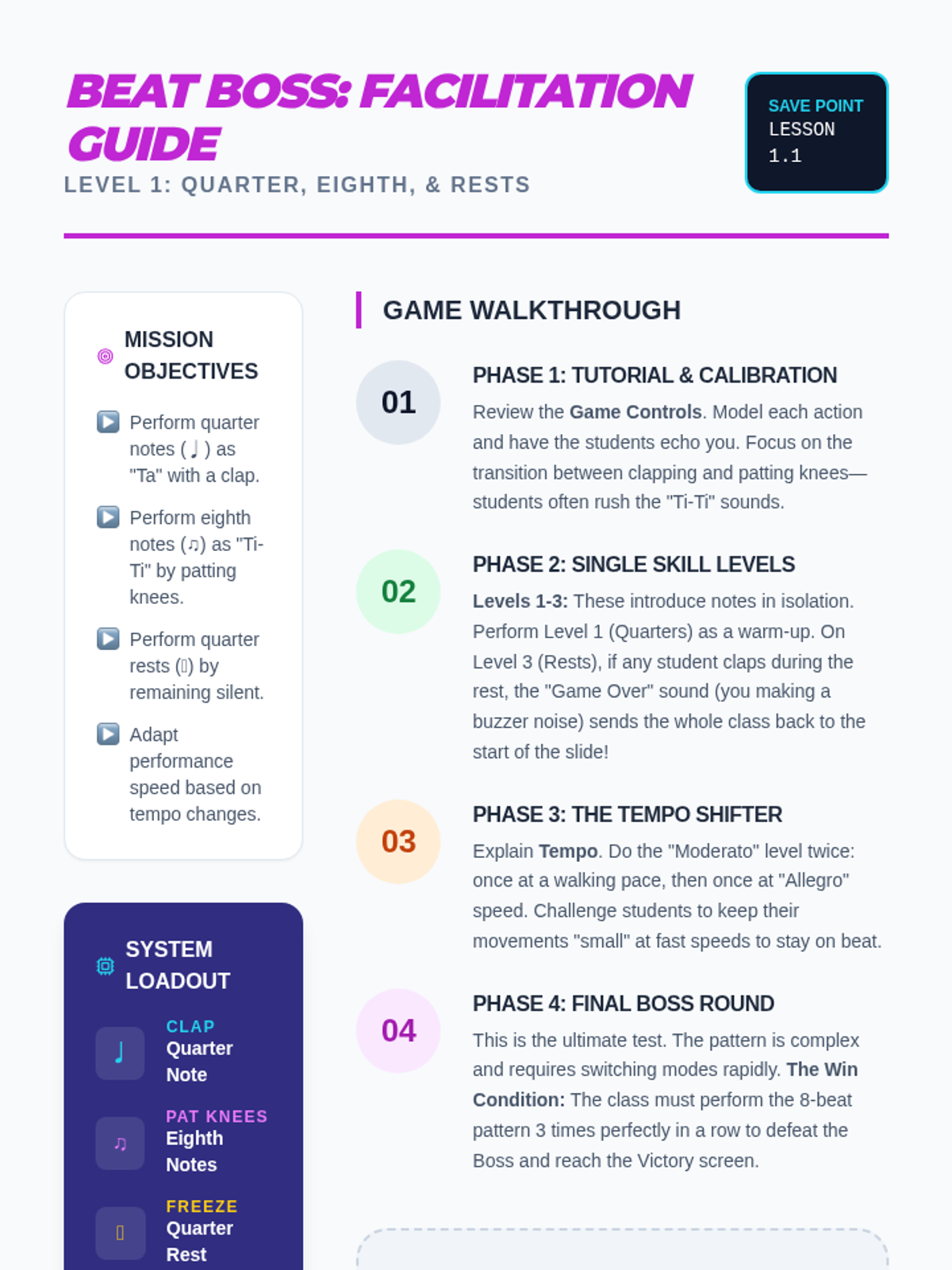
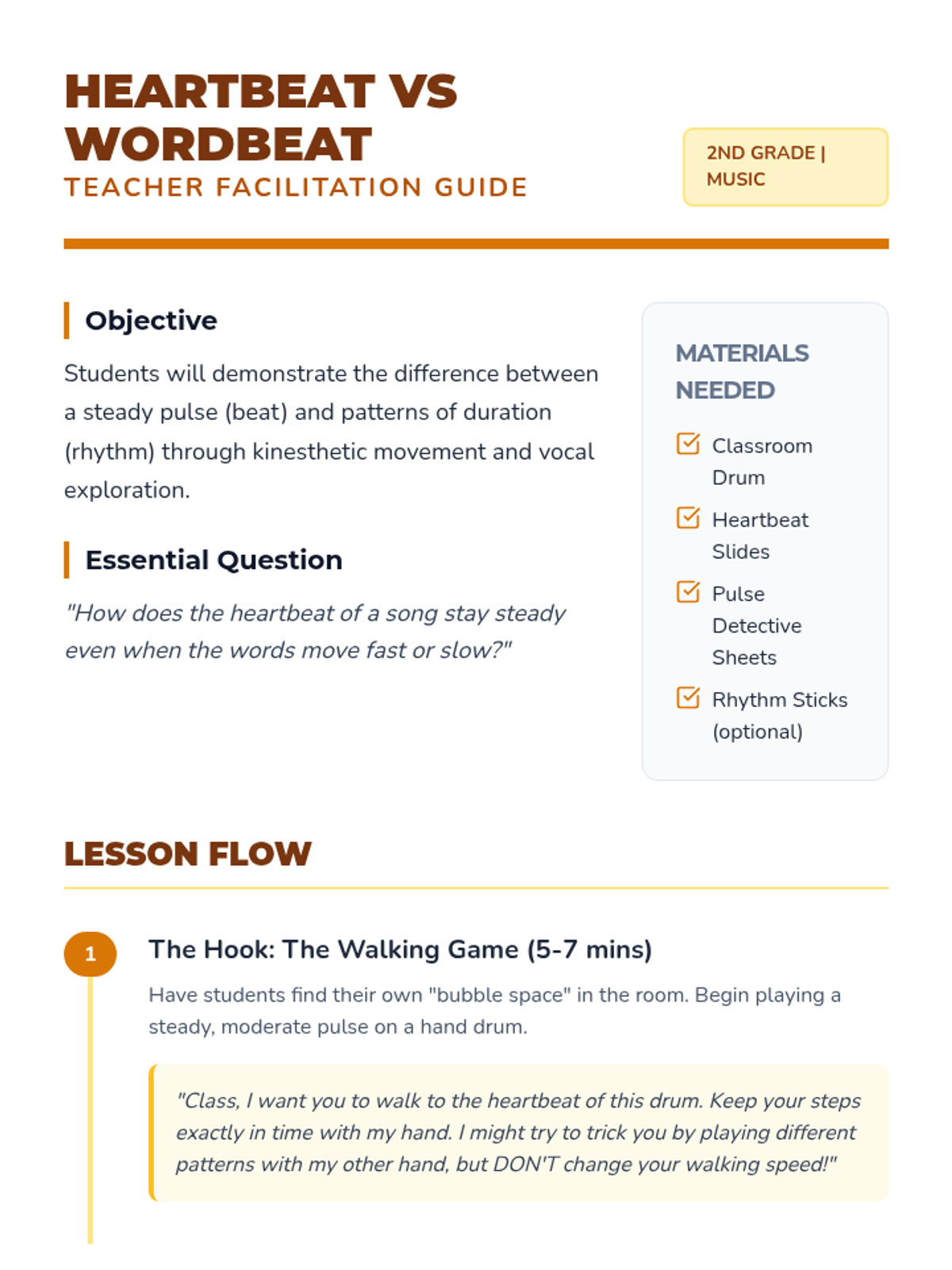
A foundational music unit for 2nd grade that guides students from internalizing a steady beat to reading and performing basic rhythmic notation including quarter notes, eighth notes, and rests.
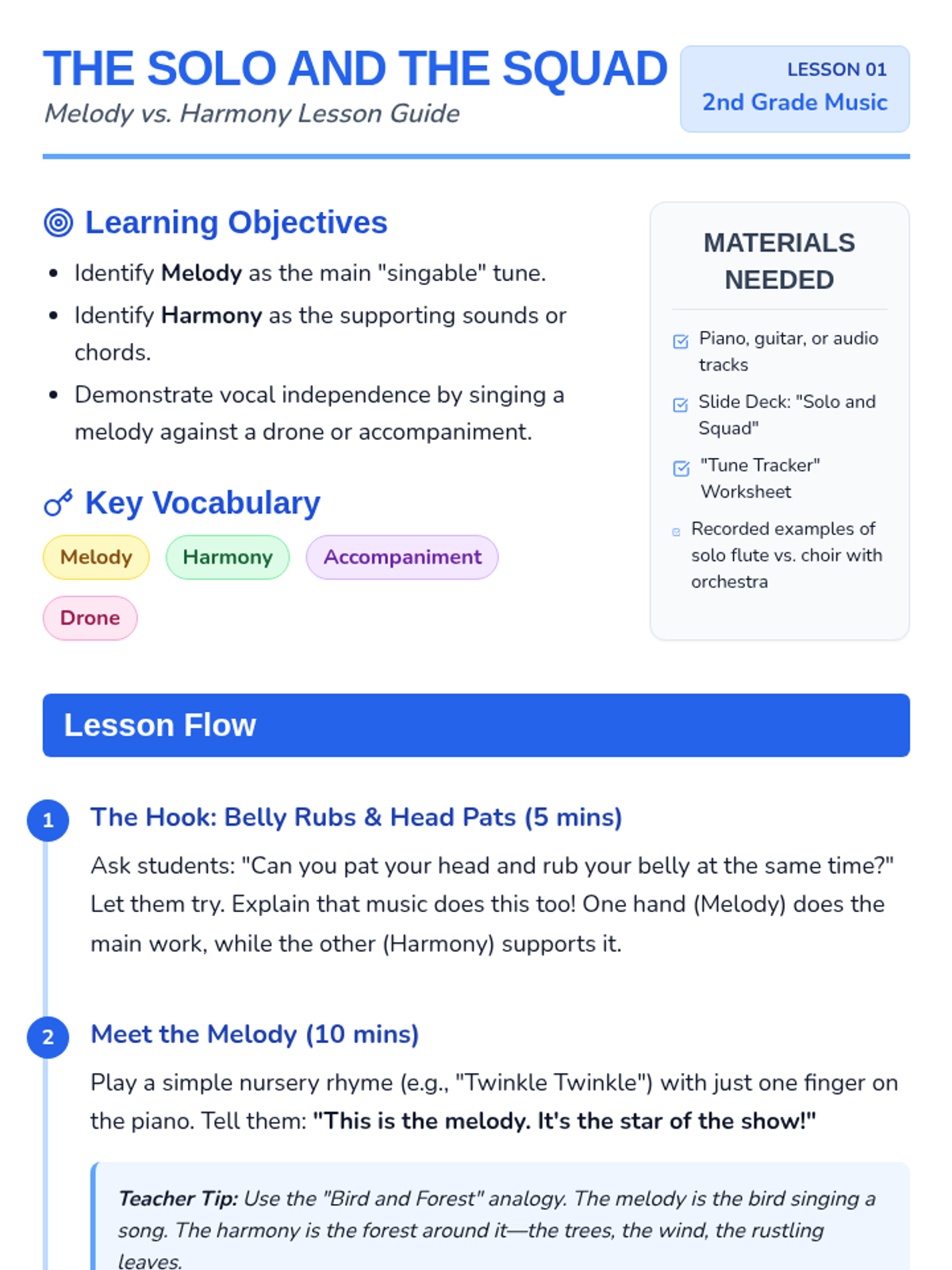
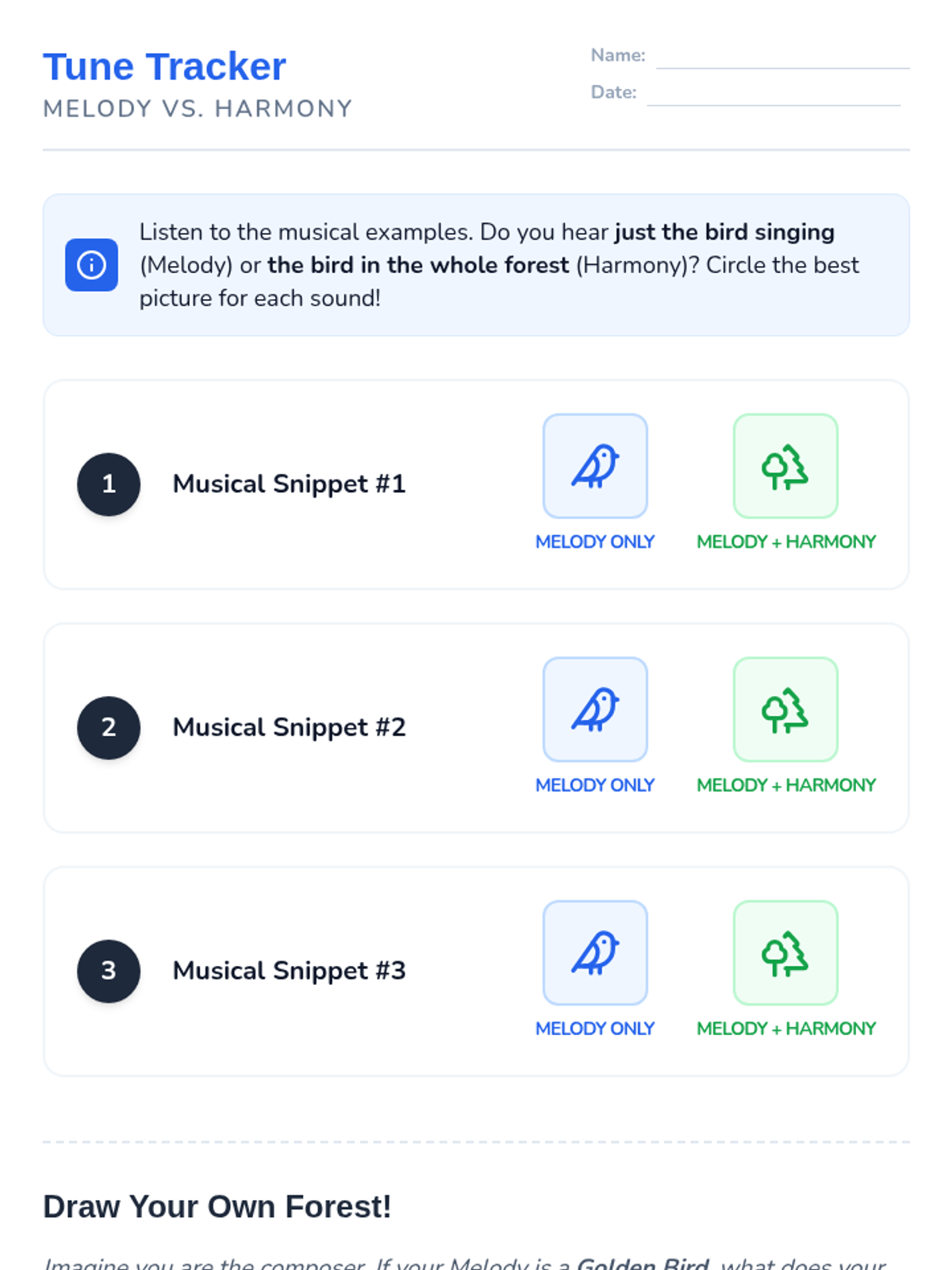
A 5-lesson unit for 2nd graders exploring the building blocks of music, including melody, harmony, ostinato, musical phrasing, and song form (AB/ABA), culminating in a classroom composition project.
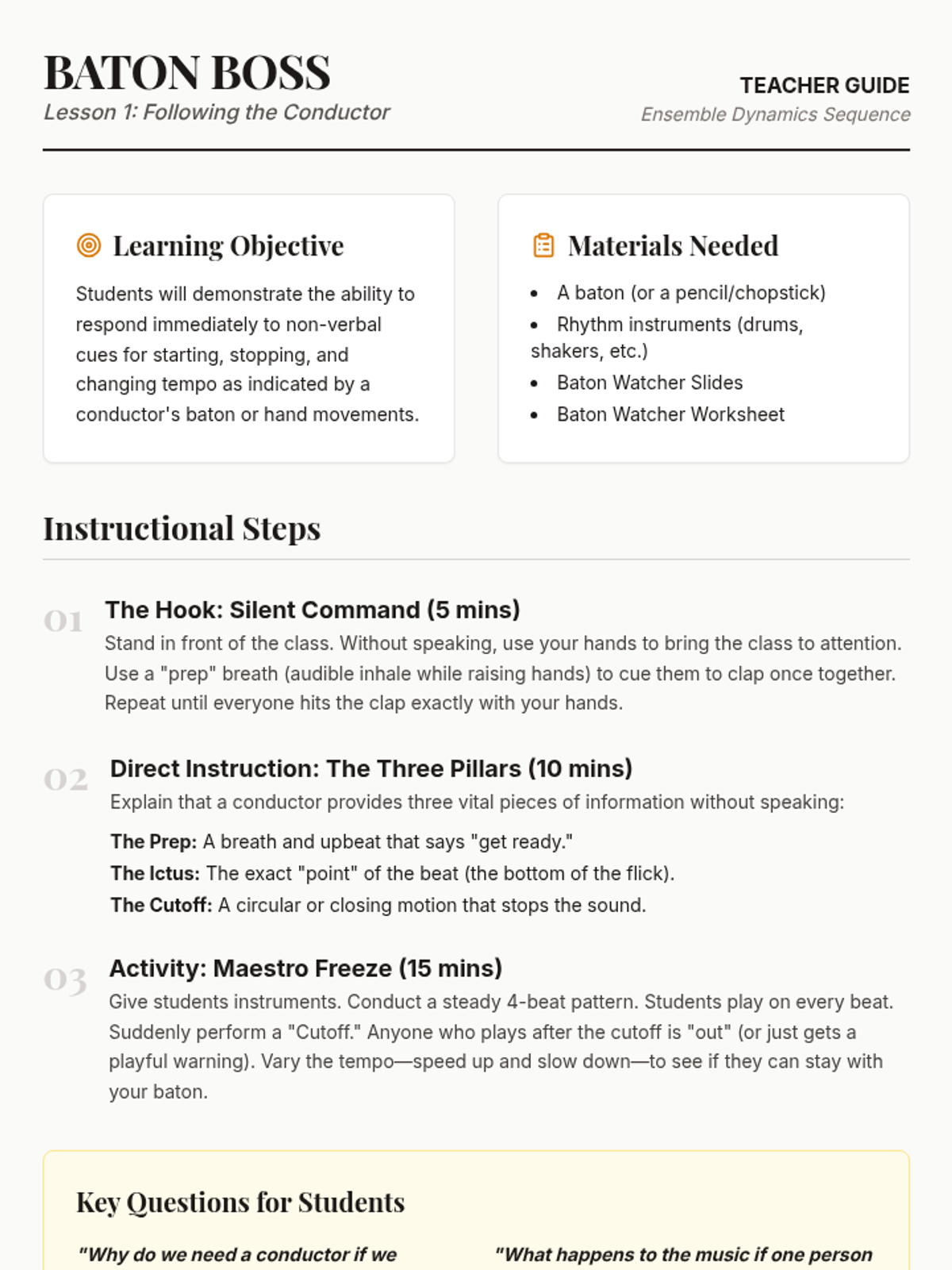
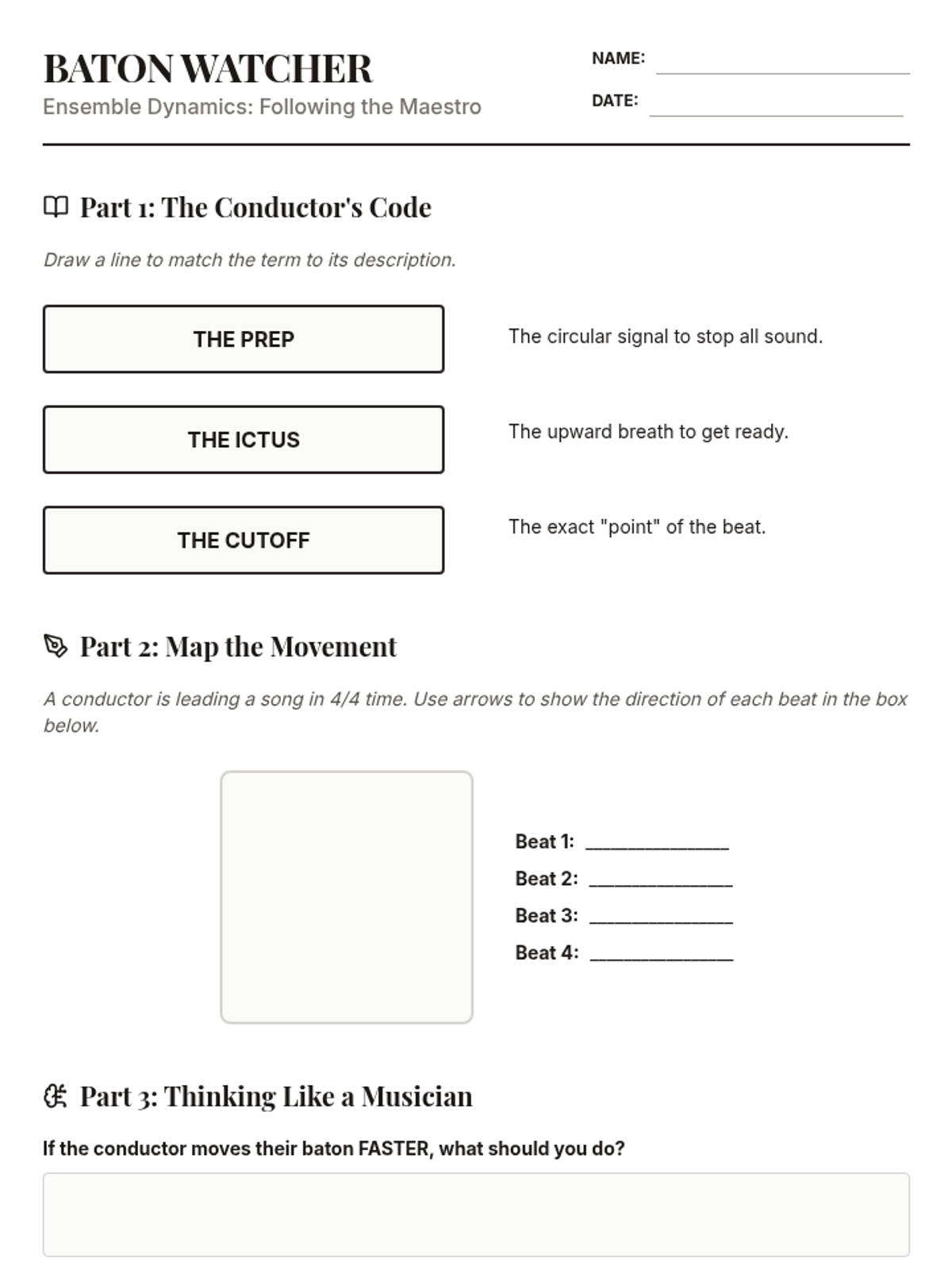
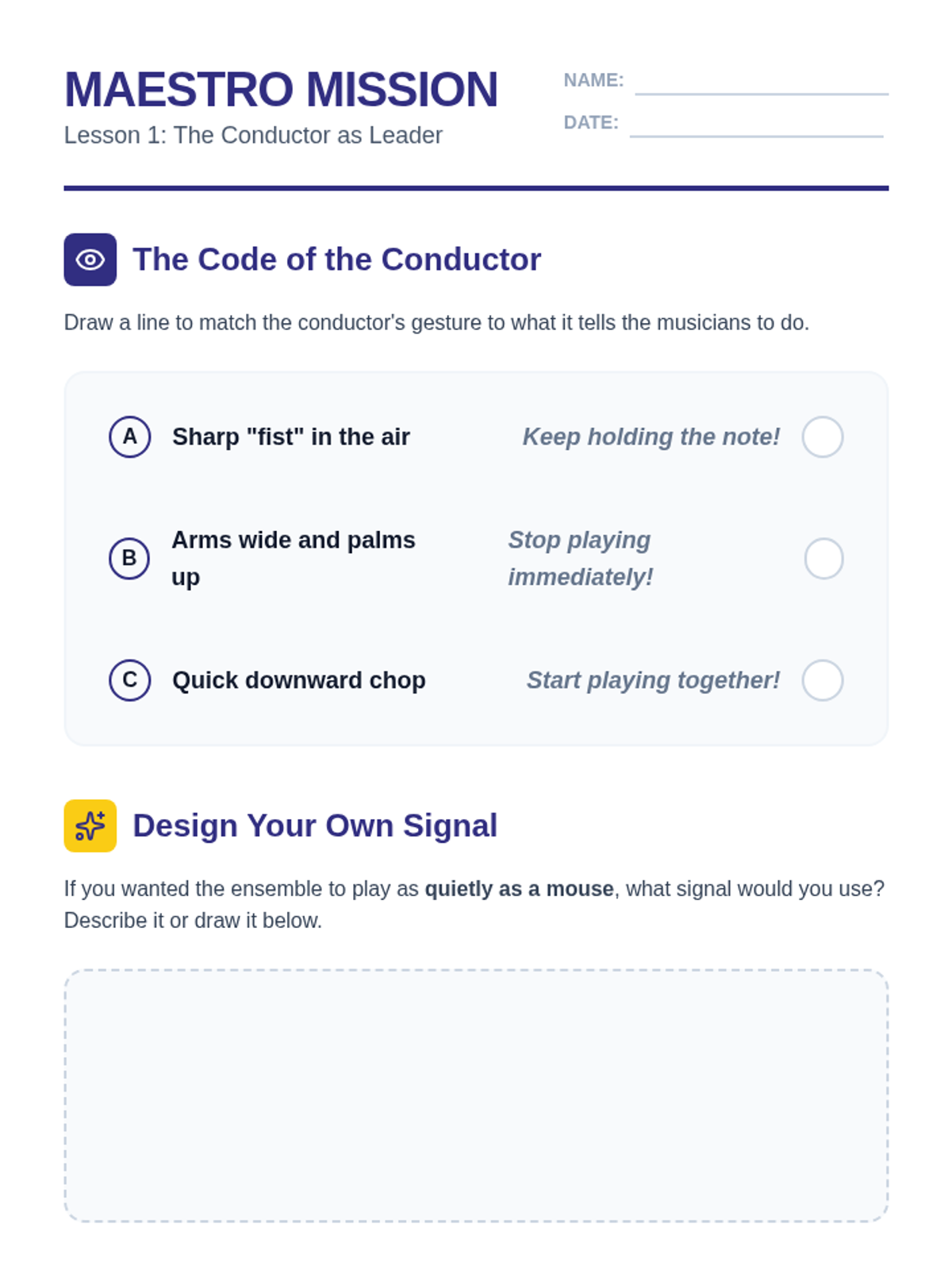
This sequence explores how musicians work together as an ensemble, focusing on conducting cues, dynamic control, balance, and tempo maintenance. Students transition from following a leader to collaborating in small independent groups.
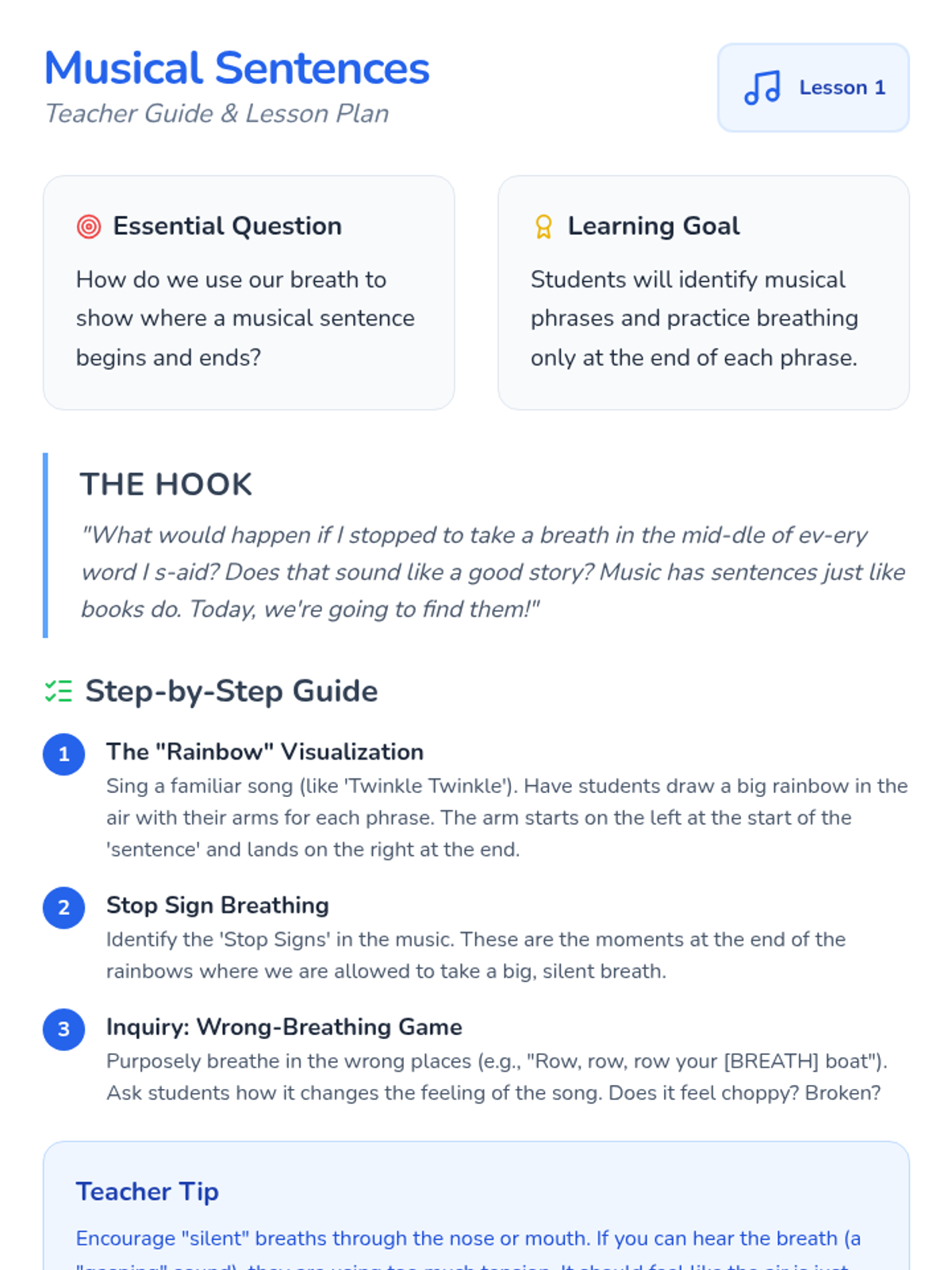
A 5-lesson unit for 2nd graders focusing on expressive singing, phrasing, and emotional connection through lyrics. Students learn to use their voices as storytelling tools by mastering musical sentences, dynamics, and tempo.
A 5-lesson journey into ensemble techniques, focusing on non-verbal communication, dynamic control, layering parts with ostinatos, and collaborative performance. Students develop the skills needed to listen, adjust, and play as a unified musical group.
This sequence introduces students to reading standard music notation on melodic instruments. Students learn to identify pitch on the treble clef staff and map it to their instrument, building from finding notes to playing stepwise melodies and managing leaps.
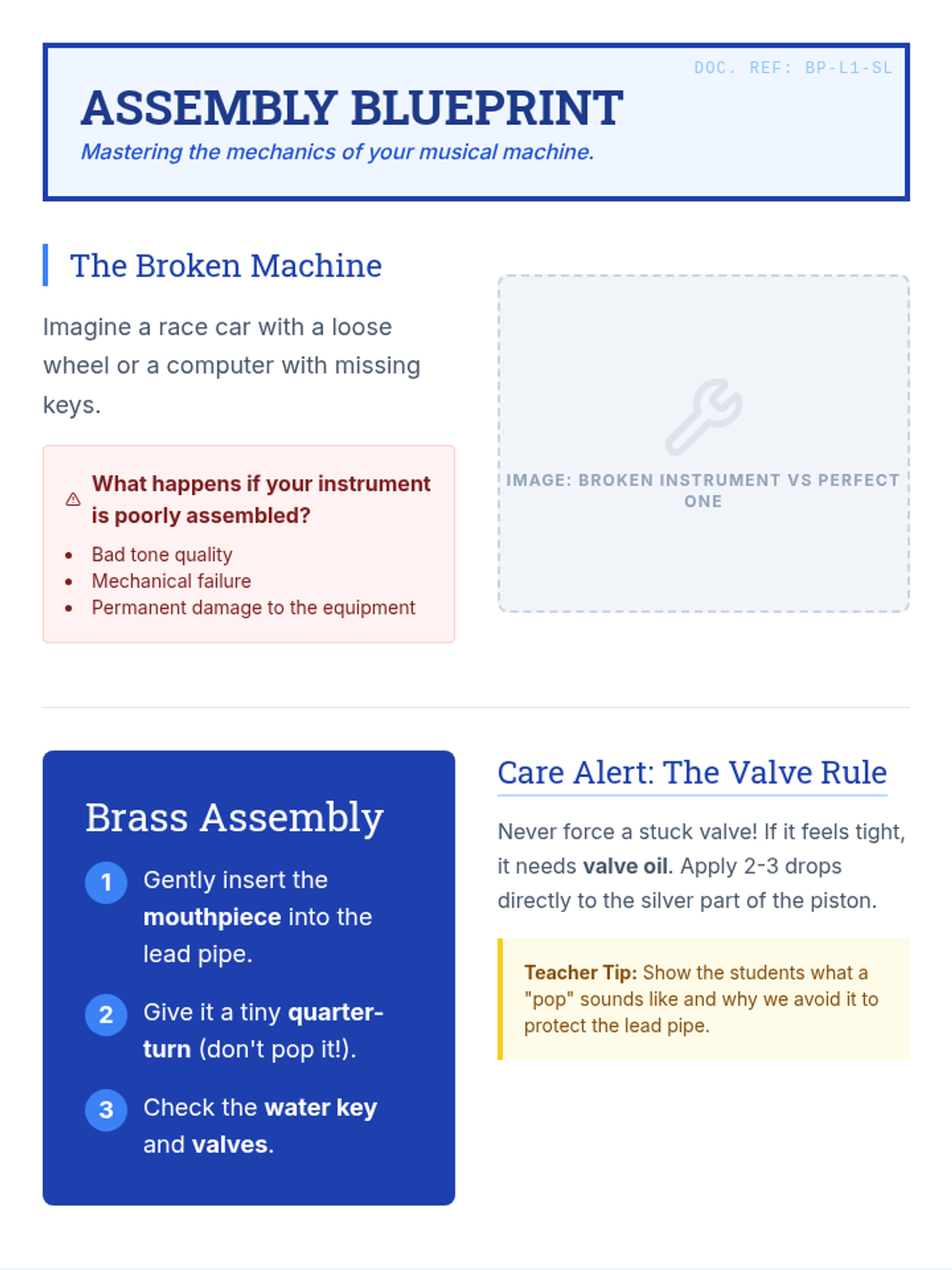
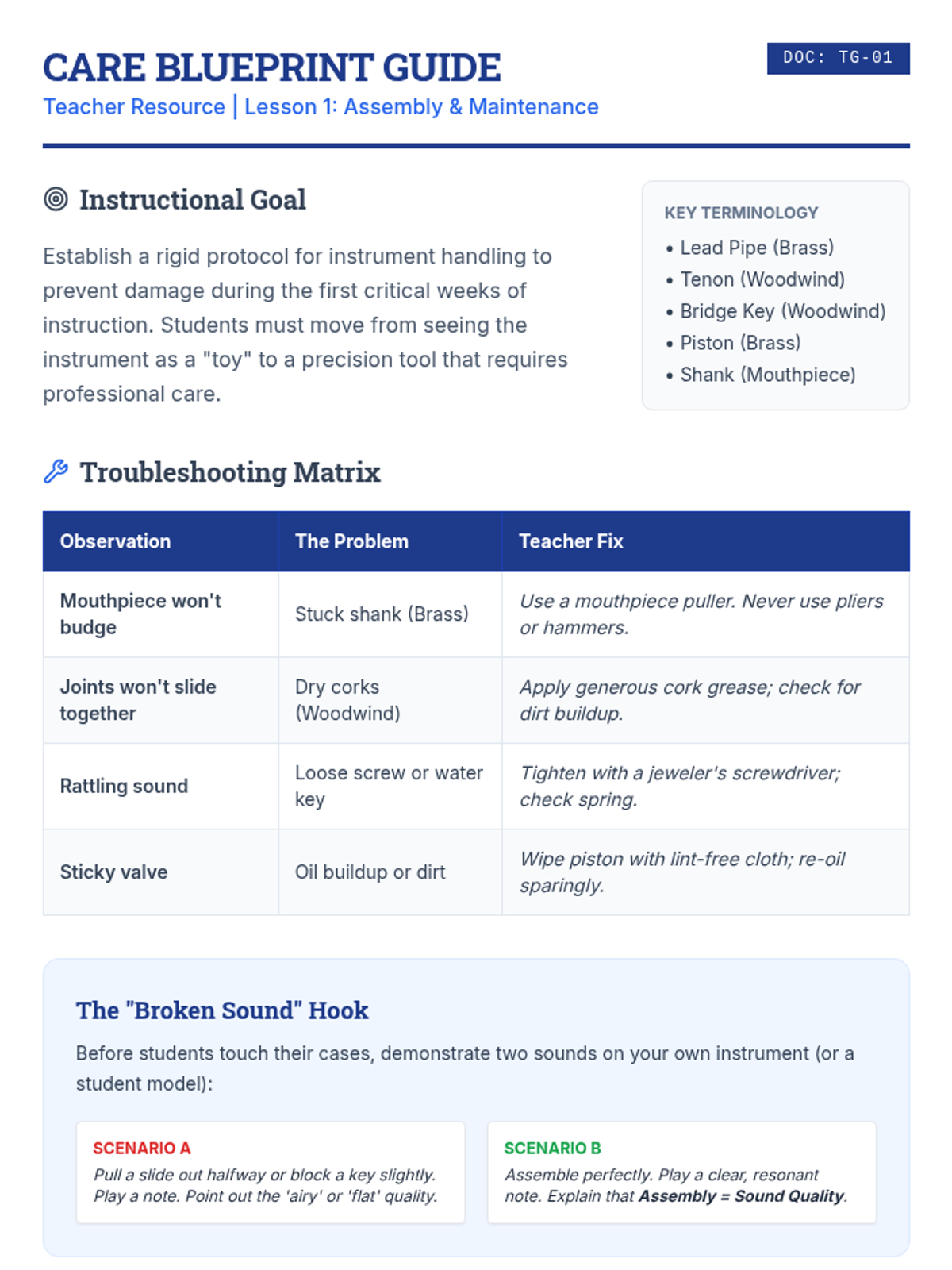
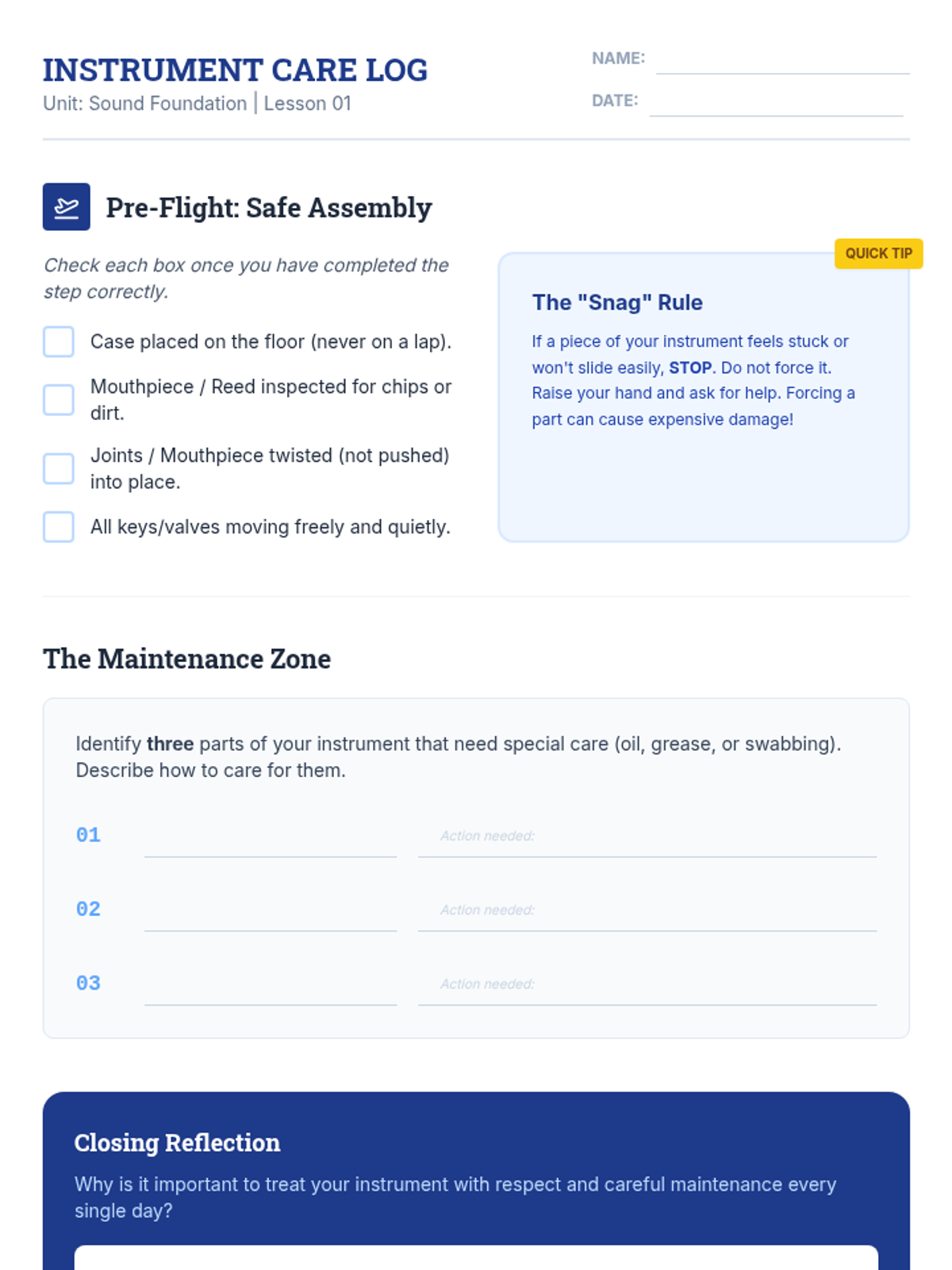
This foundational workshop for beginning instrumentalists focuses on the physical mechanics of playing, from assembly to tone production. Students master the physical techniques required to produce a characteristic sound on their specific instrument through hands-on practice and technical drills.
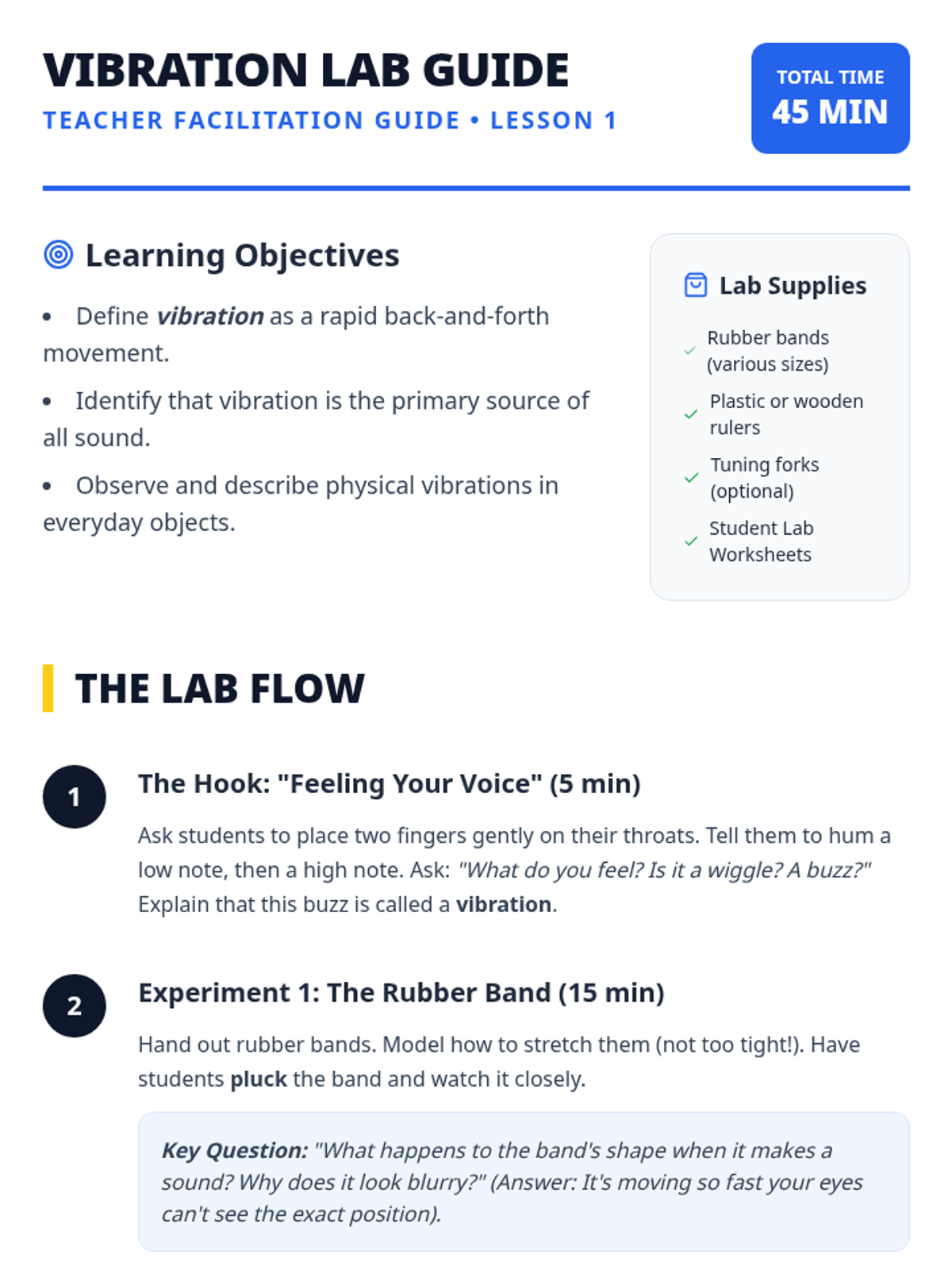
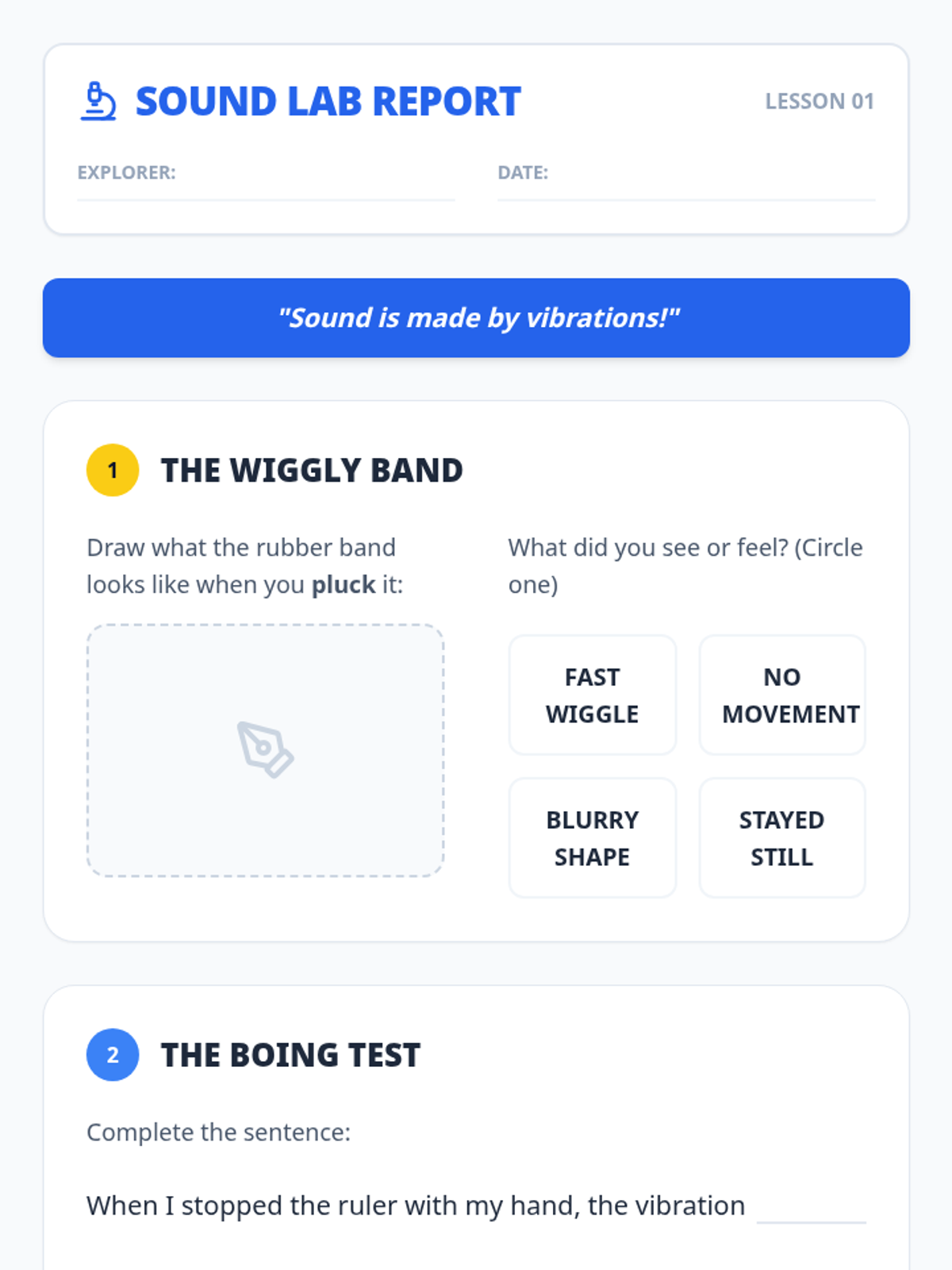
A 5-lesson inquiry-based sequence for 2nd grade students exploring how sound is produced and how instruments are classified into families based on timbre and mechanics.
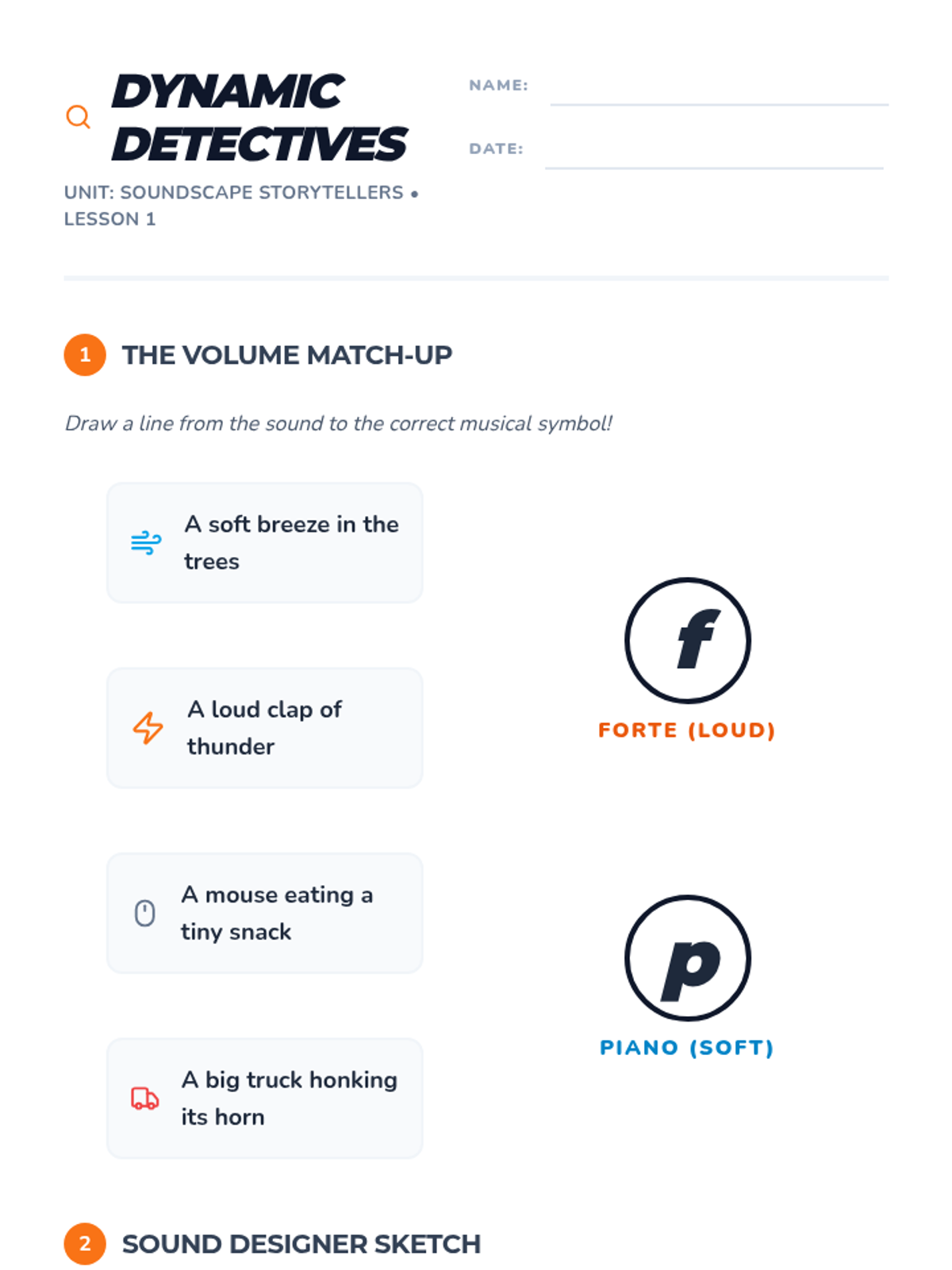
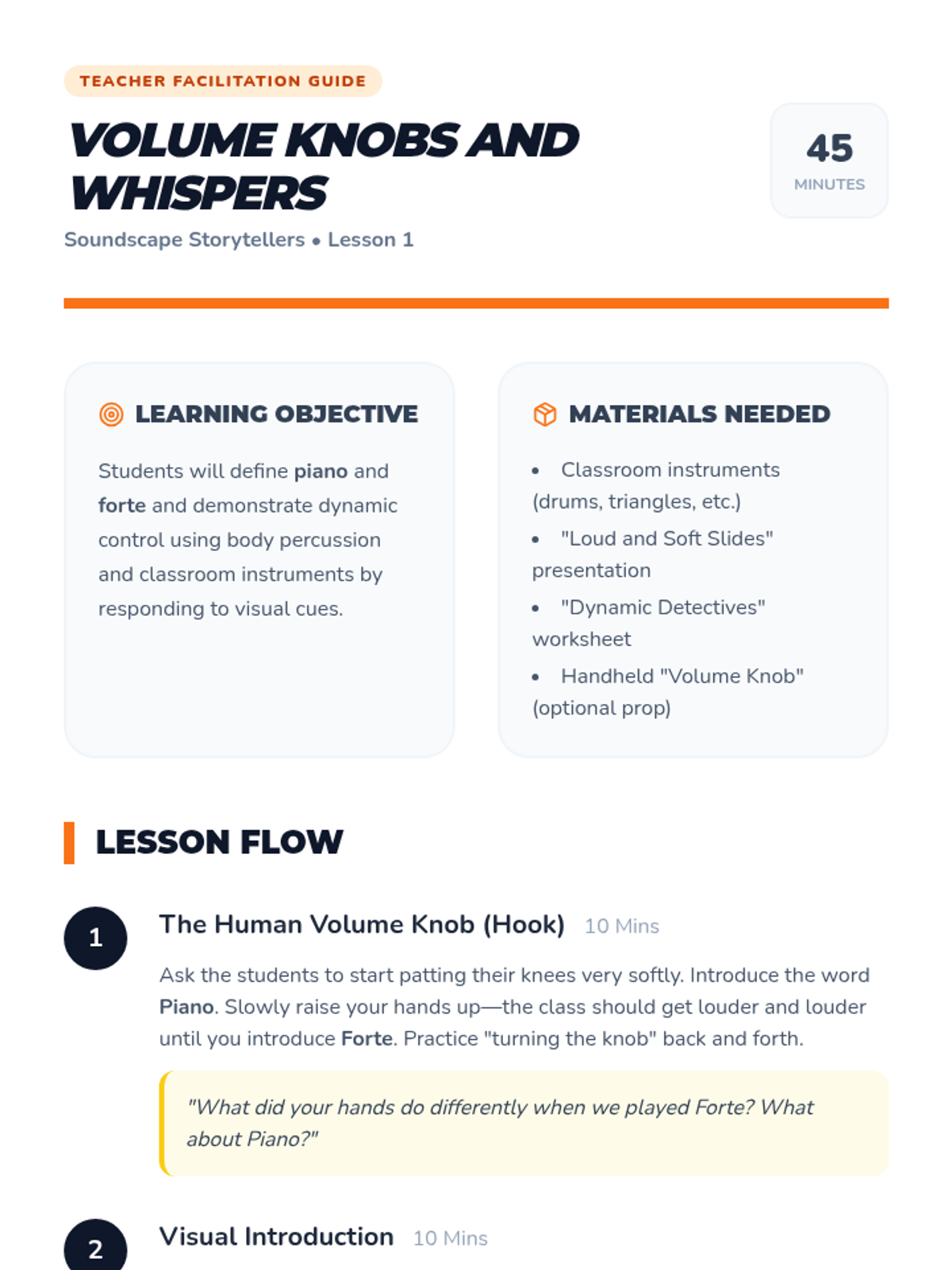
A 2nd-grade music unit where students explore dynamics, tempo, and conducting to create evocative 'soundscapes' that tell stories without words. The sequence culminates in a collaborative class performance of an instrumental narrative.
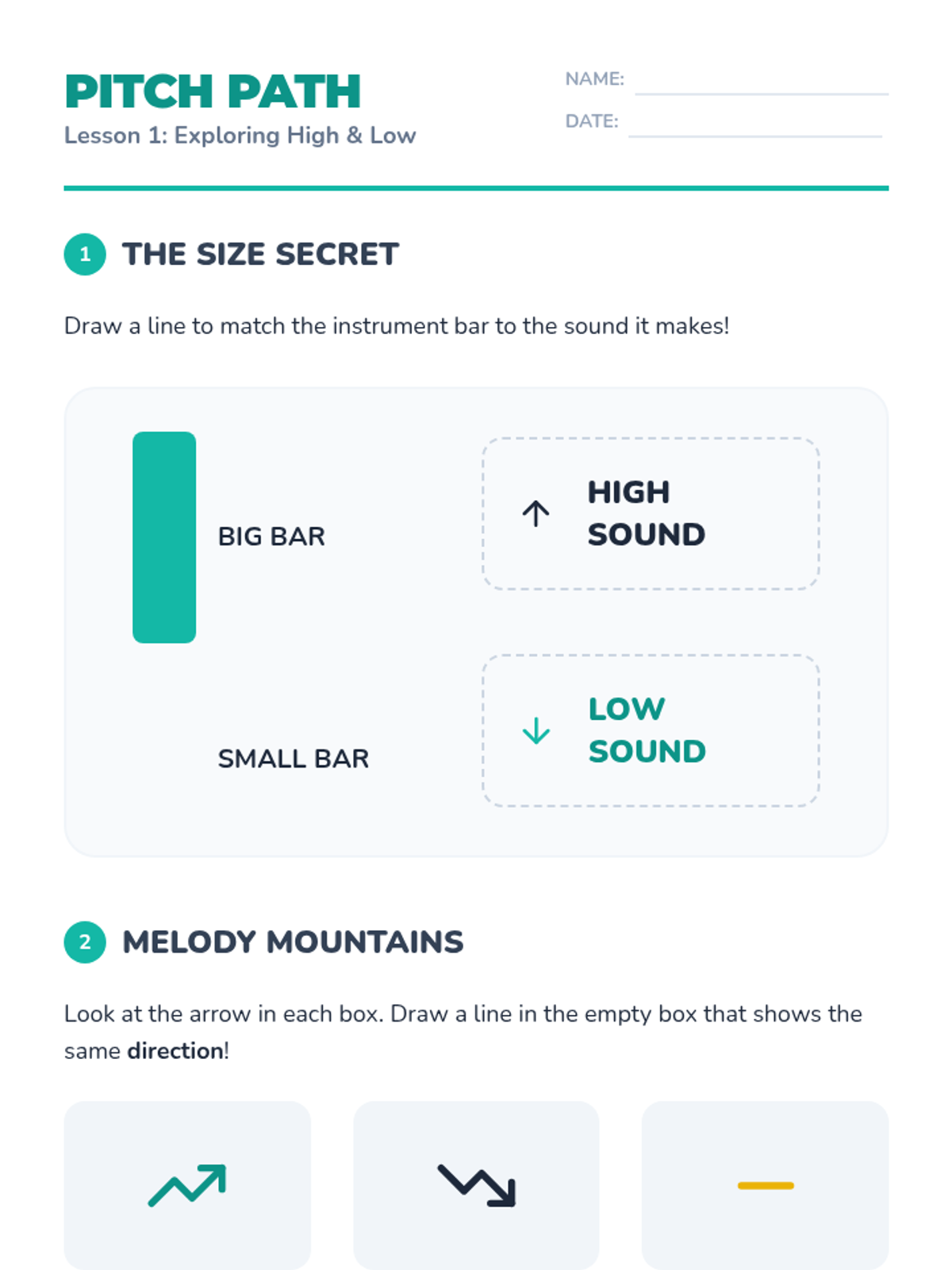
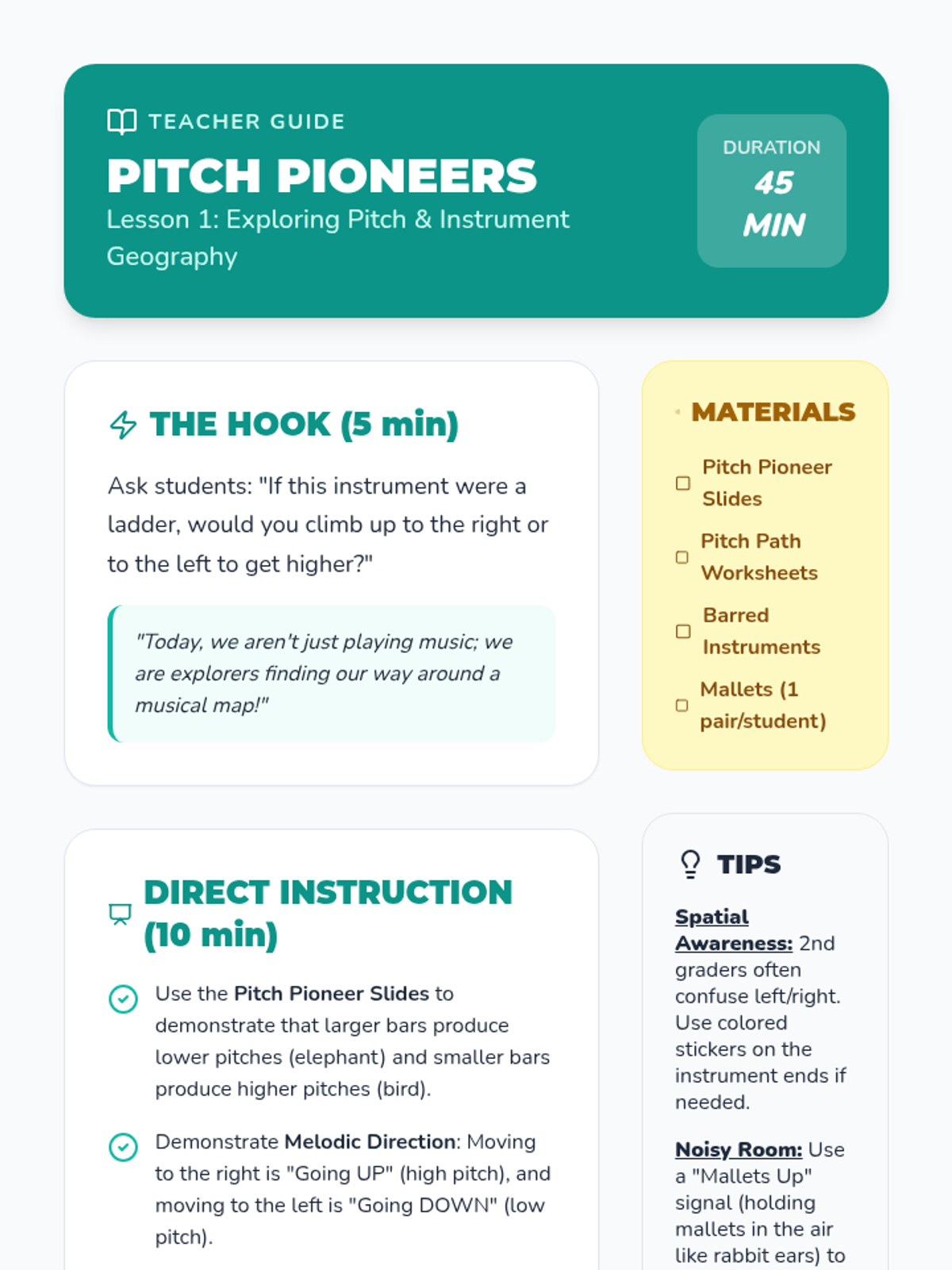
A 5-lesson unit for 2nd grade students focused on transitioning from rhythm to melodic performance on barred instruments. Students explore pitch, mallet technique, the pentatonic scale, and graphic notation, culminating in musical improvisation.
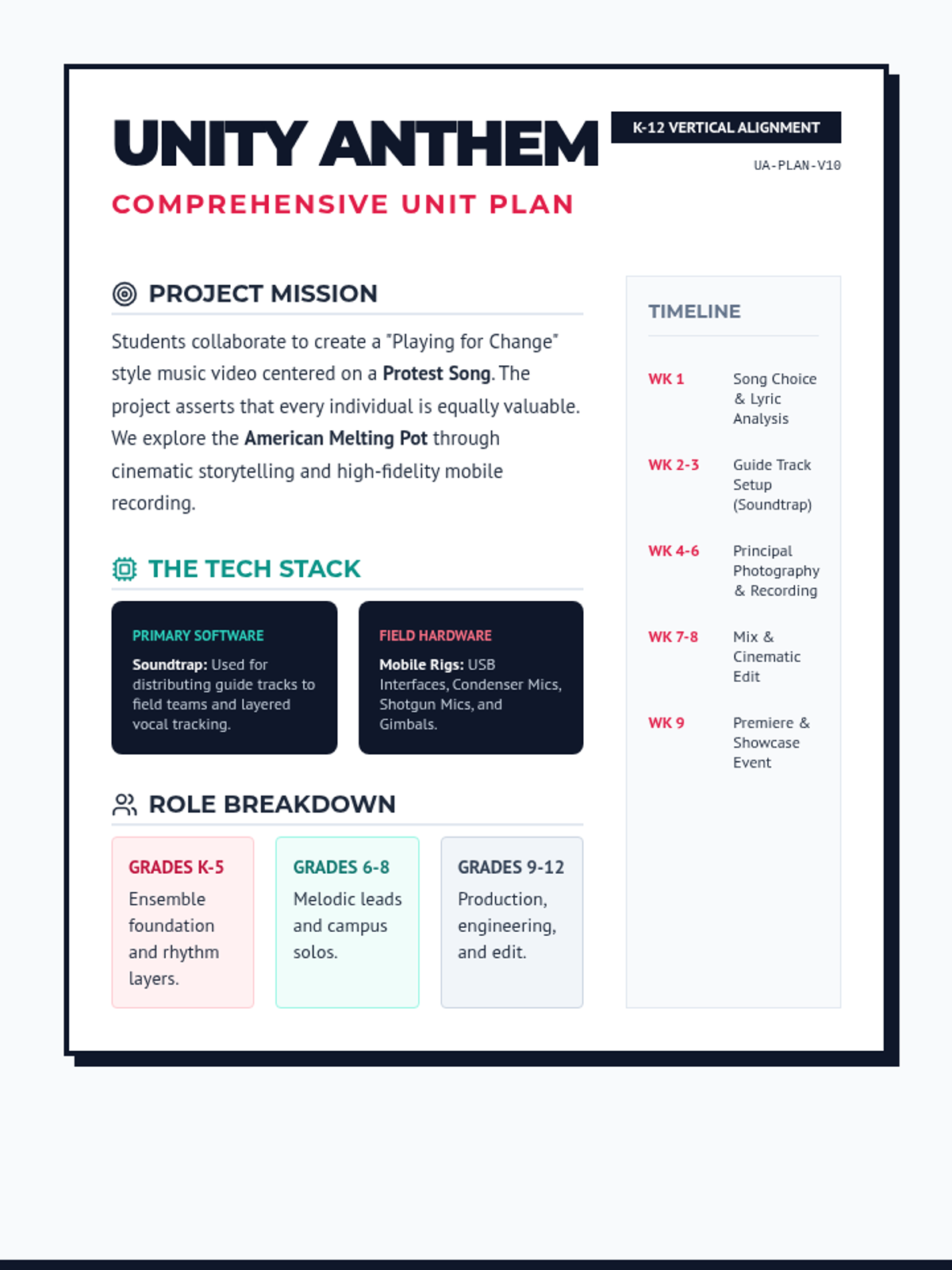
A K-12 collaborative music video project where students across all grade levels work together to produce a 'Playing for Change' style cover of a protest song centered on equality and cultural identity. High school students lead production, while K-8 students provide the musical and visual heart of the performance.
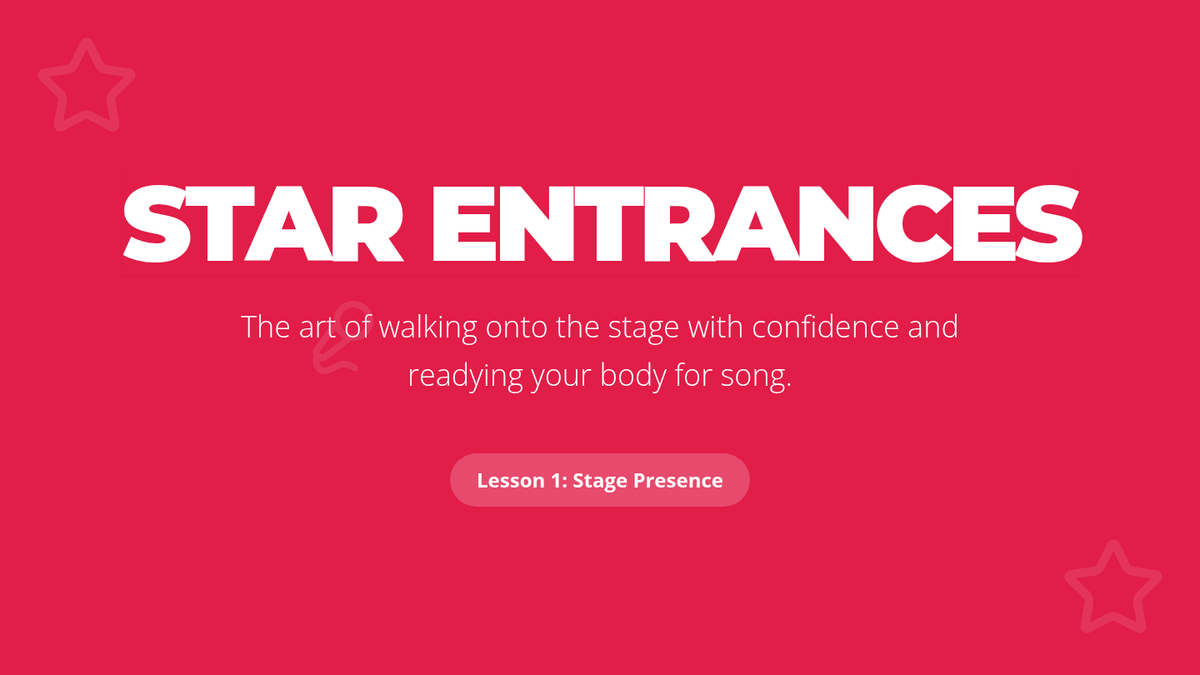
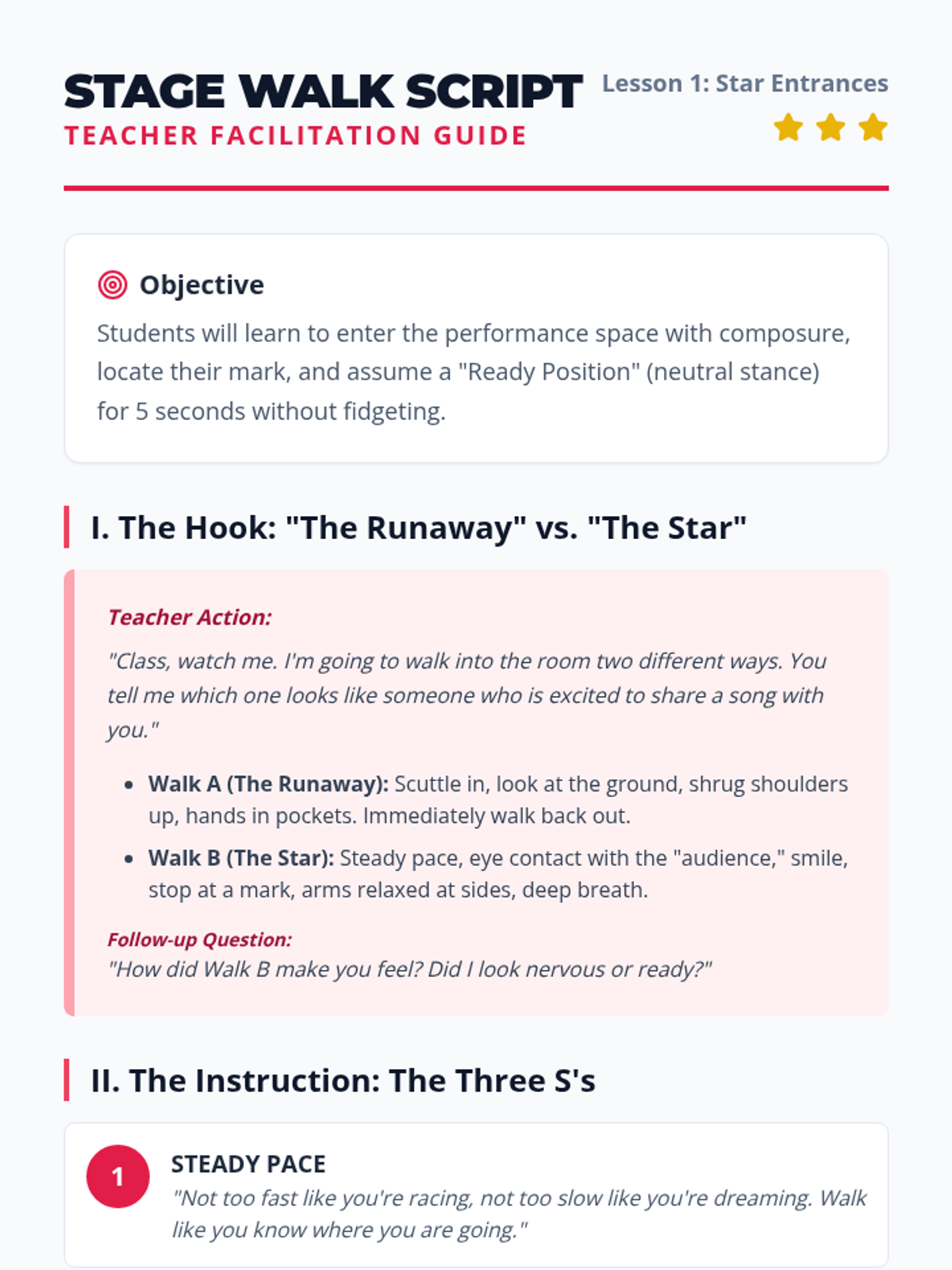
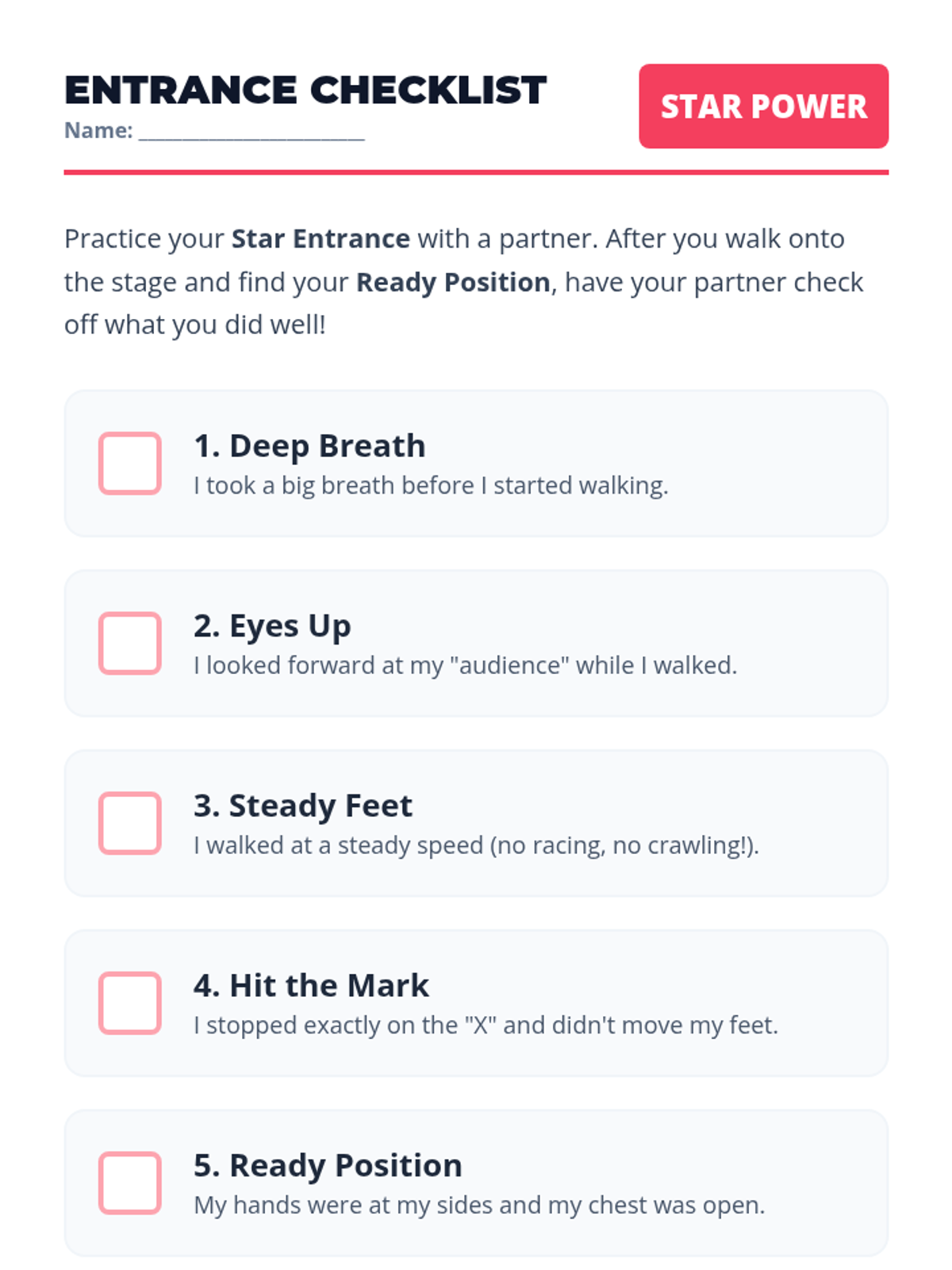
A comprehensive sequence for 2nd graders on stage presence, performance etiquette, and vocal performance confidence, moving from the initial entrance to the final bow.
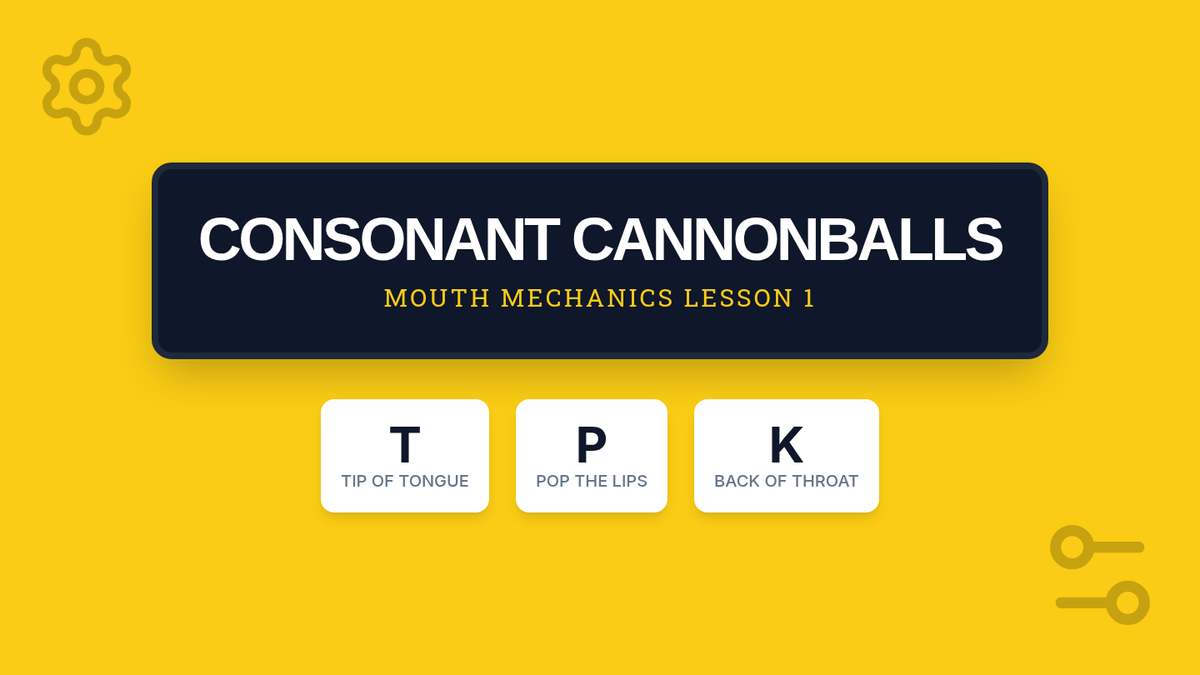
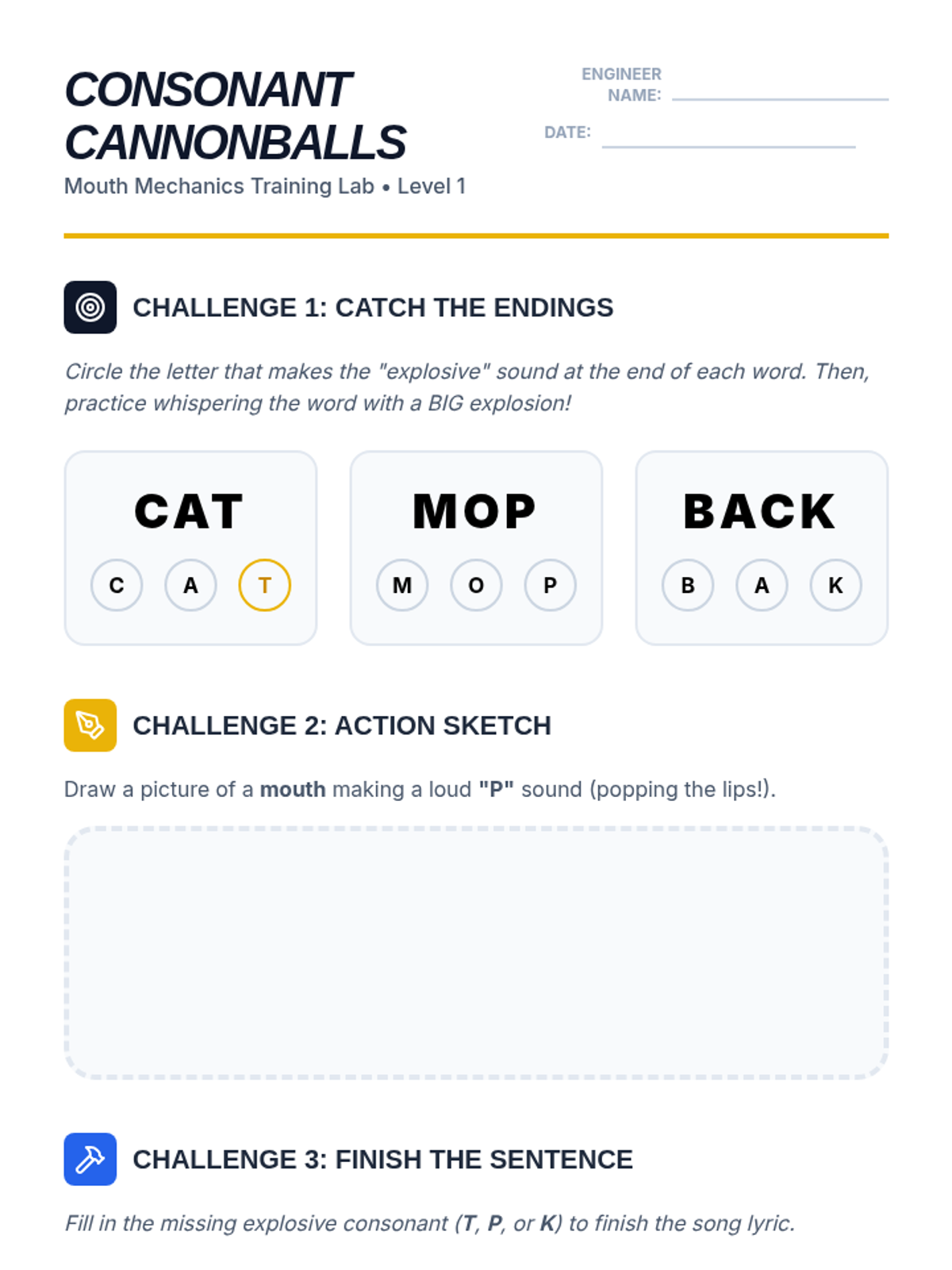
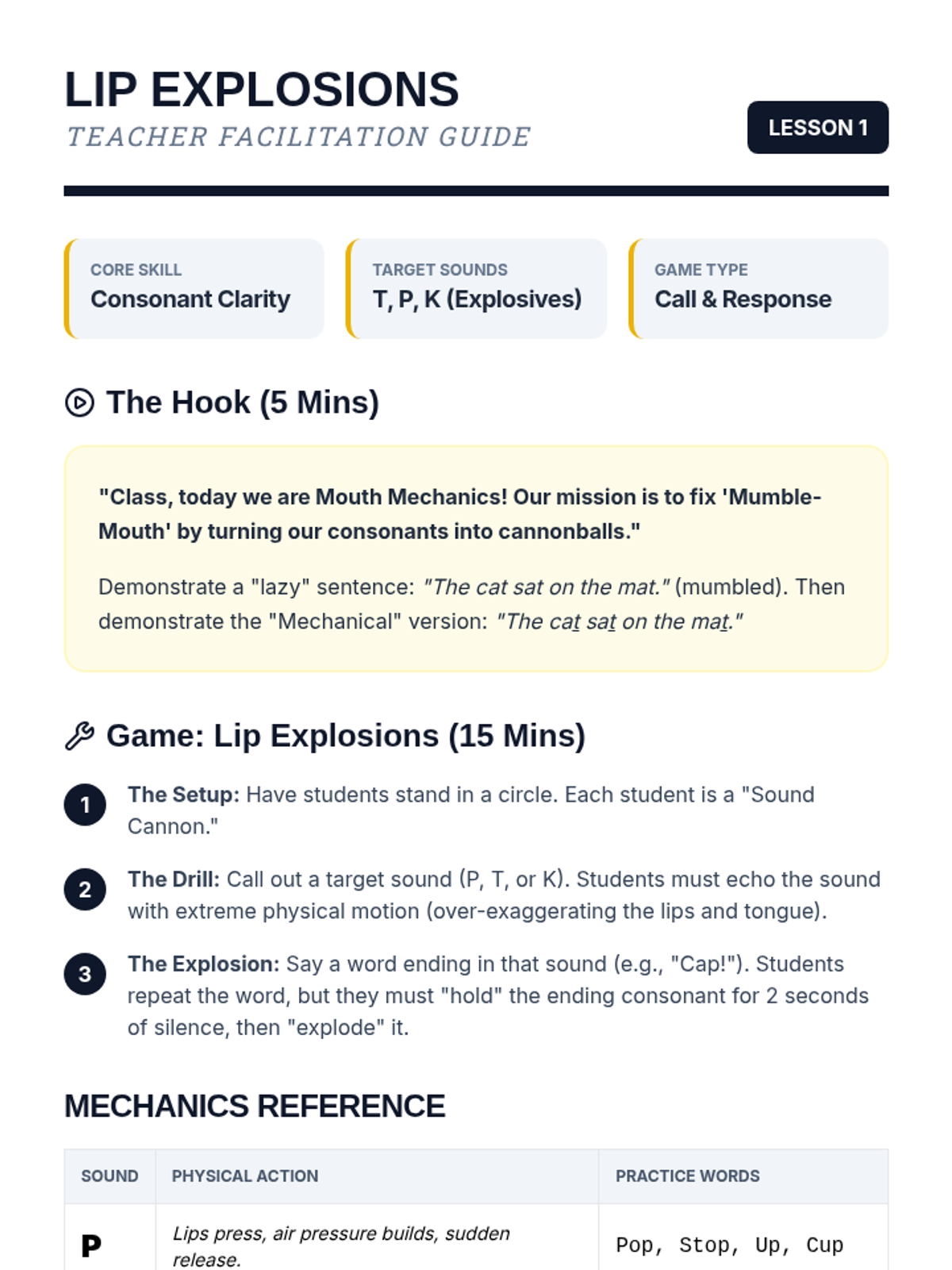
A 5-lesson sequence for 2nd graders focusing on vocal articulation, diction, and clarity. Using a 'Mouth Mechanics' theme, students turn speech drills into engaging games to improve singing quality.
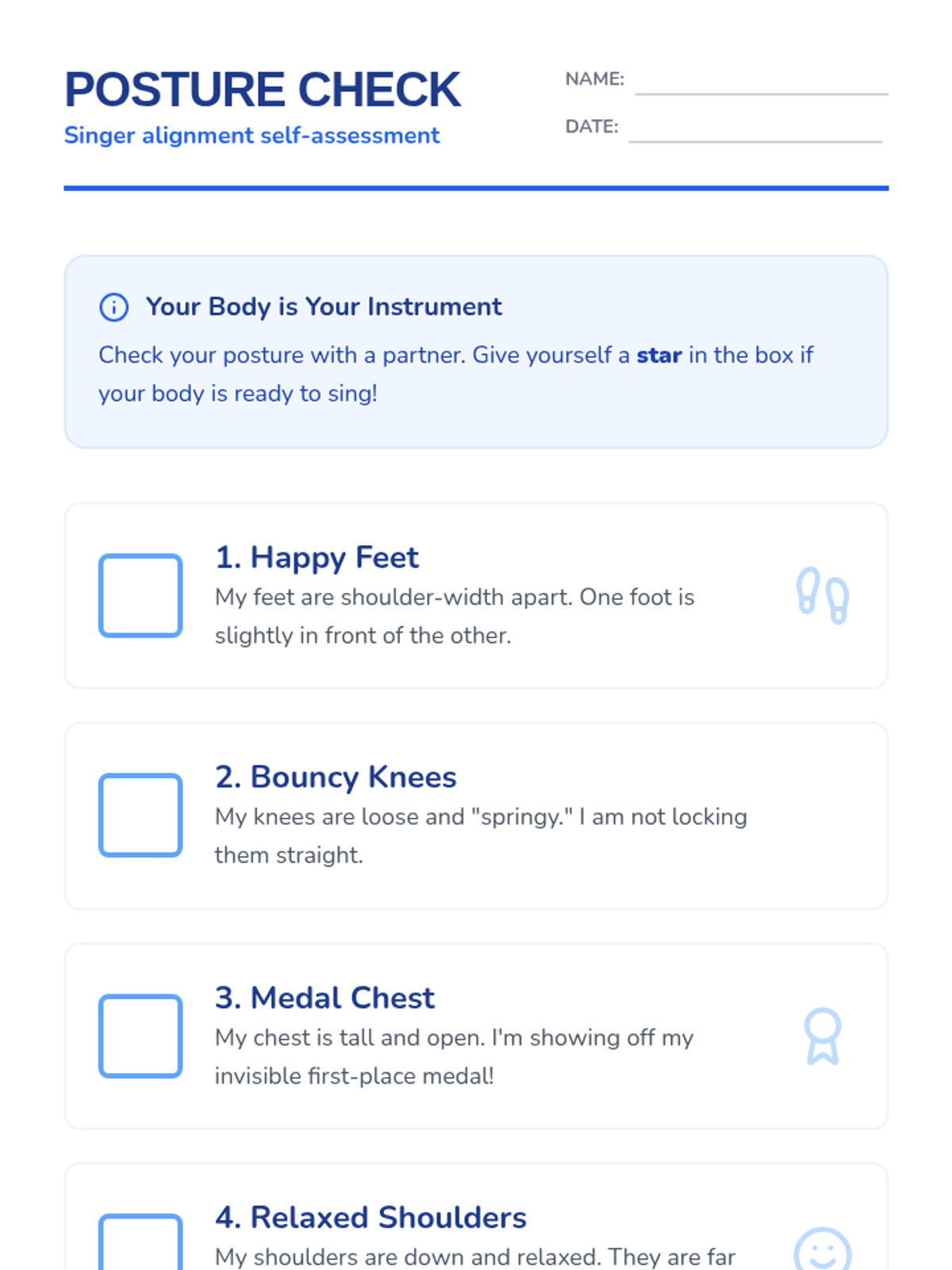
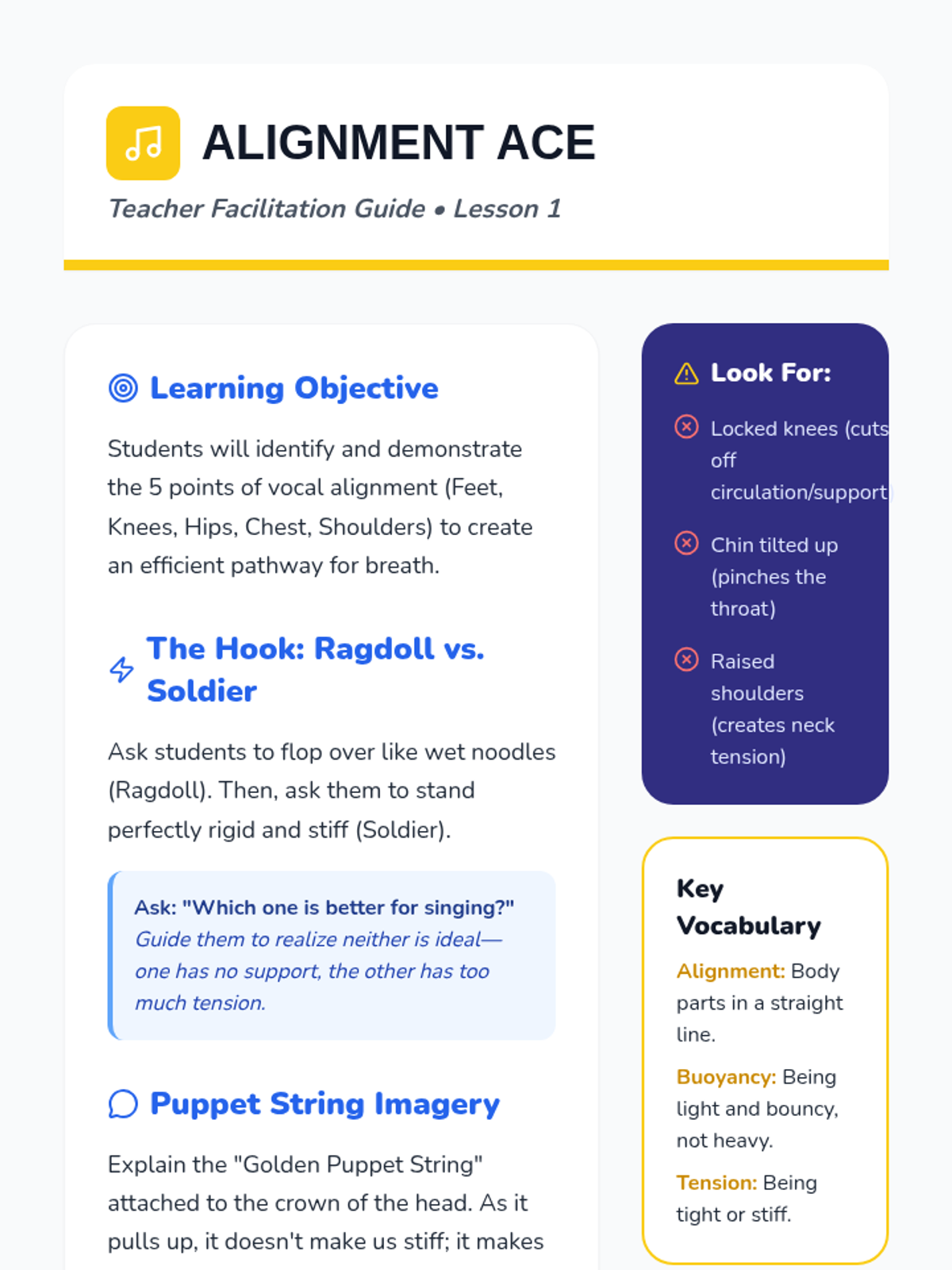
A foundational music sequence for 2nd graders focusing on the physical mechanics of singing. Students explore posture, diaphragmatic breathing, vocal registers, and vowel shapes to build a healthy 'human instrument'.
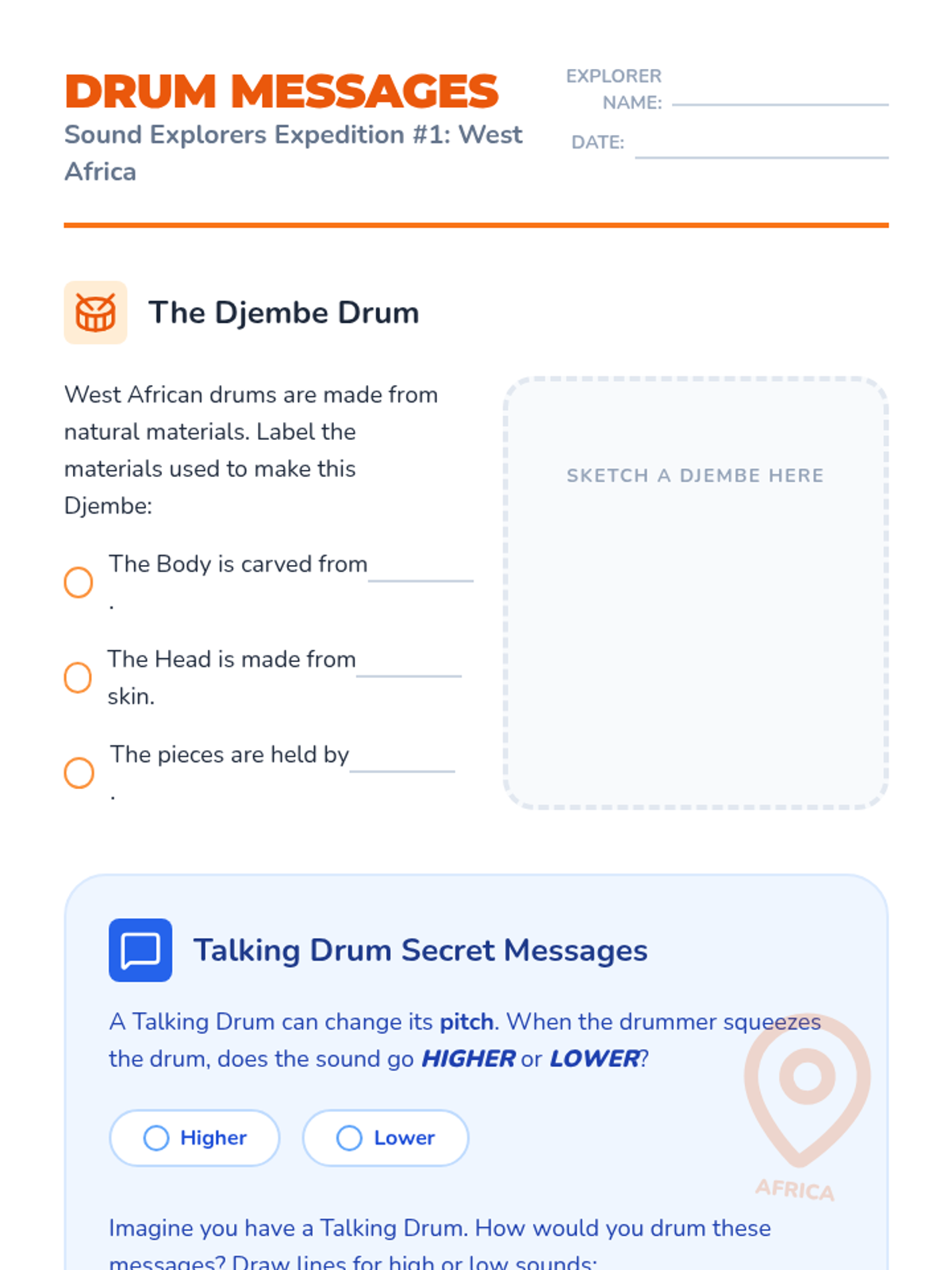
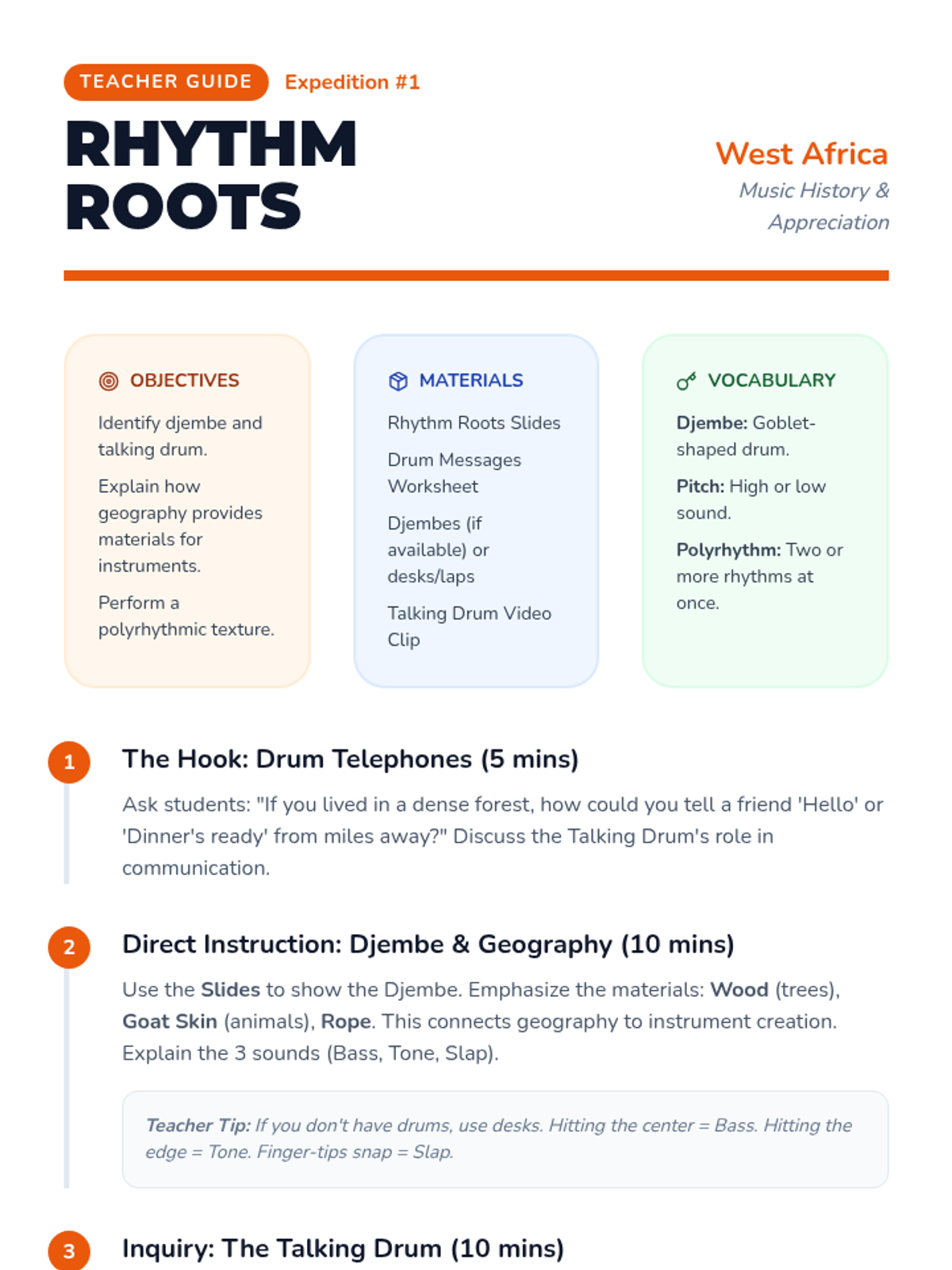
A global musical expedition for 2nd graders to discover how geography and culture shape instruments and traditions across four continents. Students explore materials, physics of sound, and the cultural roles of music through inquiry and hands-on activities.
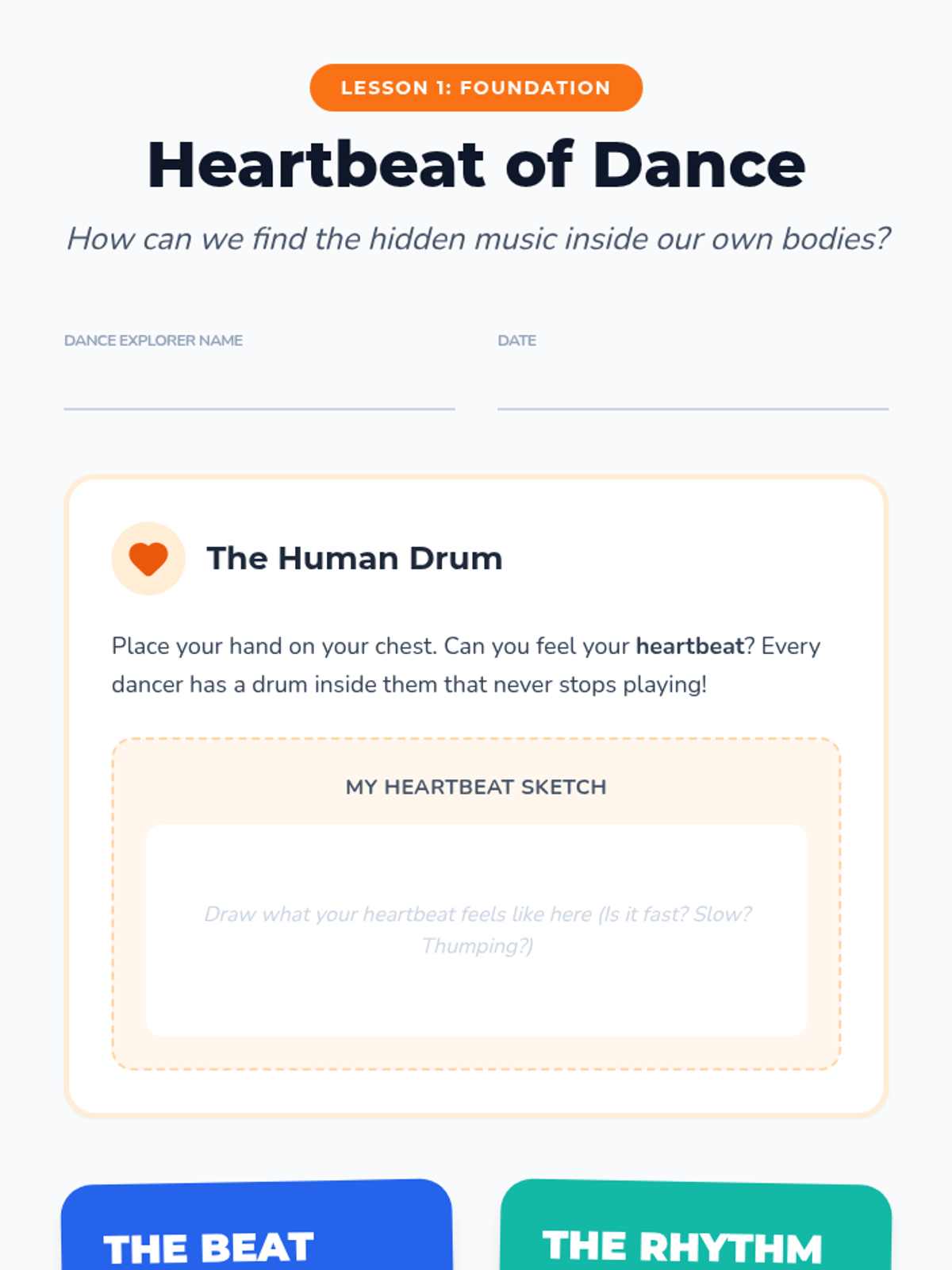
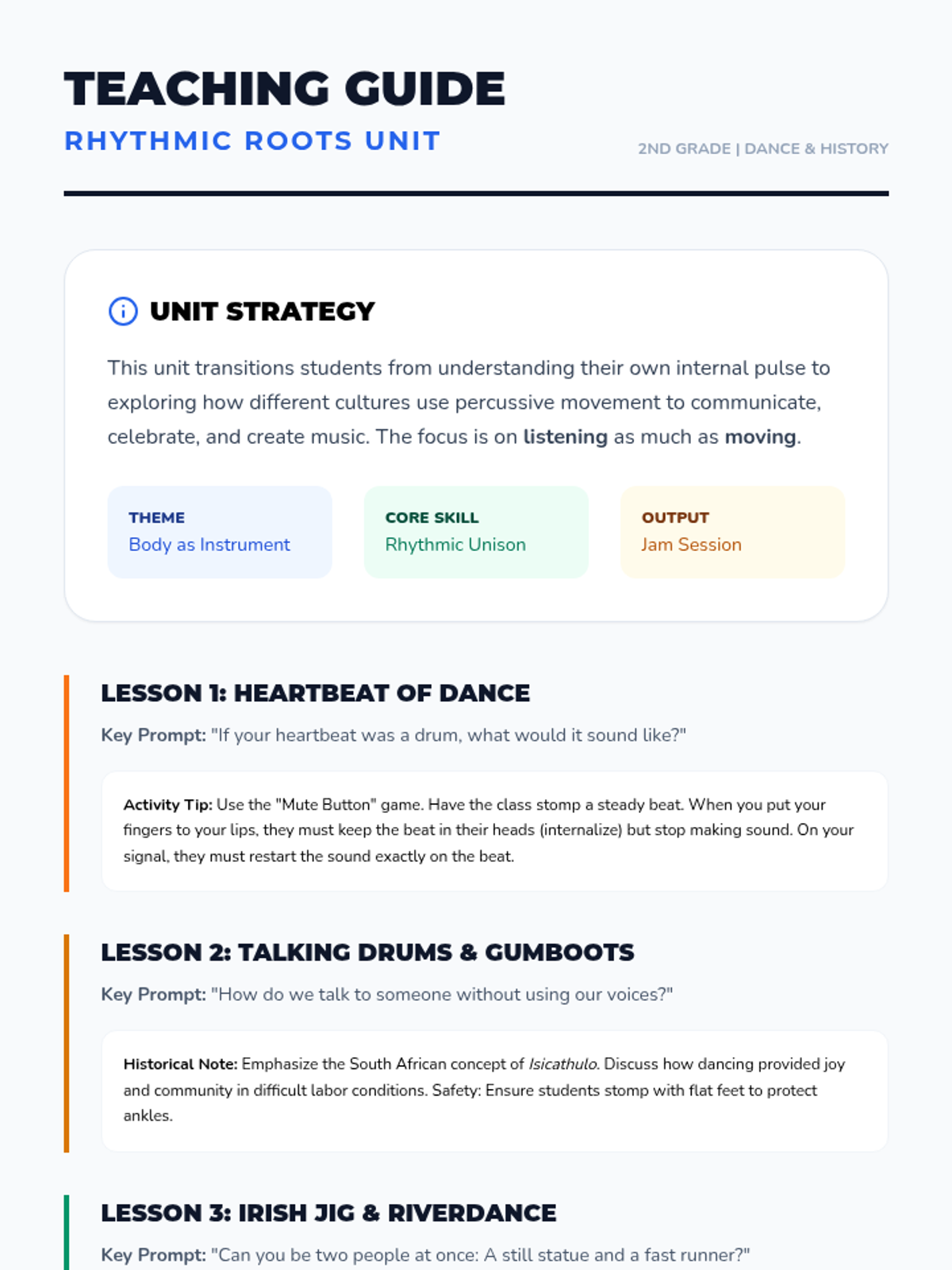
A 5-lesson unit for 2nd graders exploring the global history of percussive dance, from African and Irish roots to American Tap, focusing on how dancers use their bodies as musical instruments.
A journey through the history of dance and storytelling, from the royal courts of France to the grand stages of story ballets. Students learn how to communicate emotion and narrative through posture, gesture, and movement.
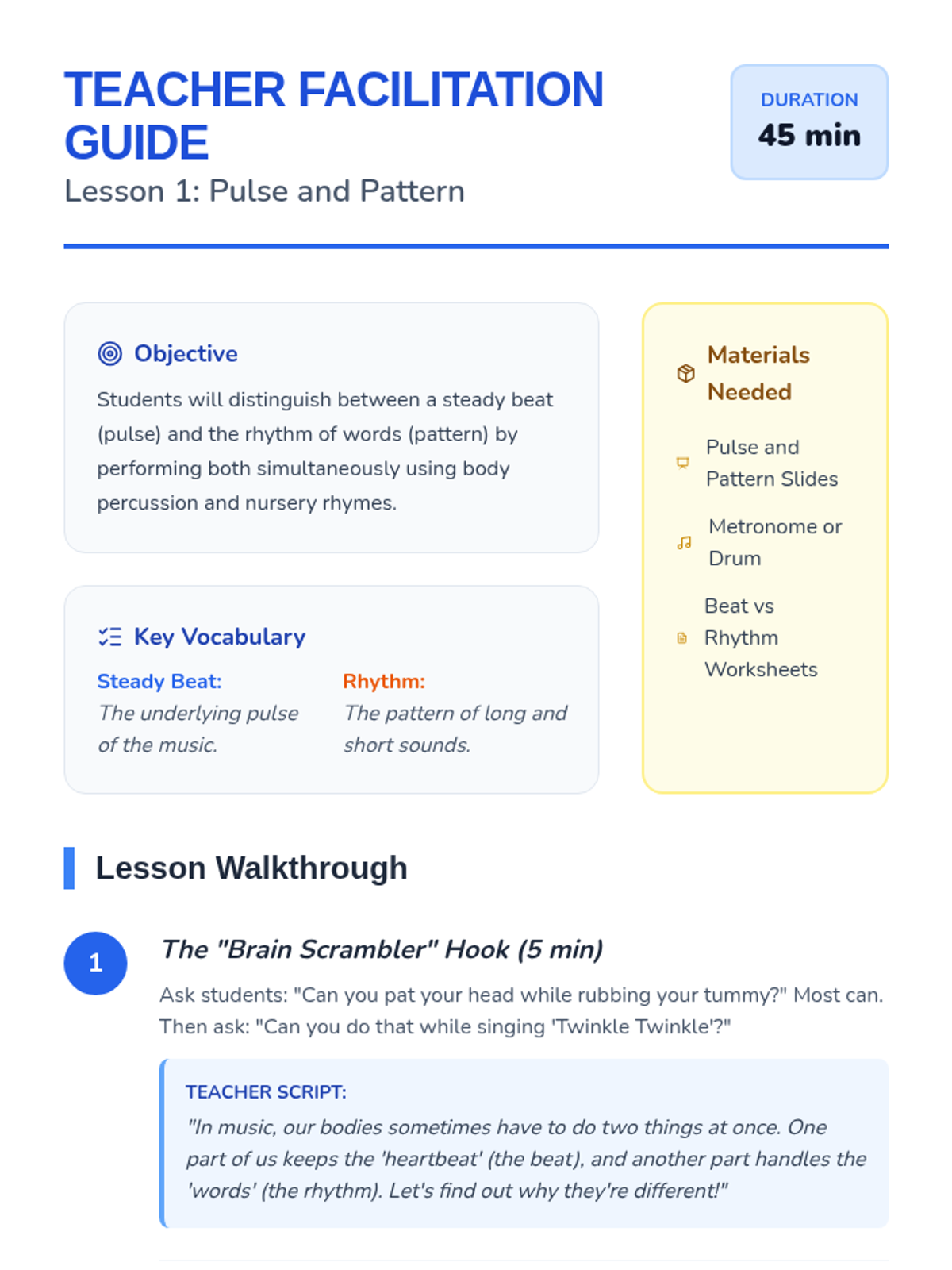
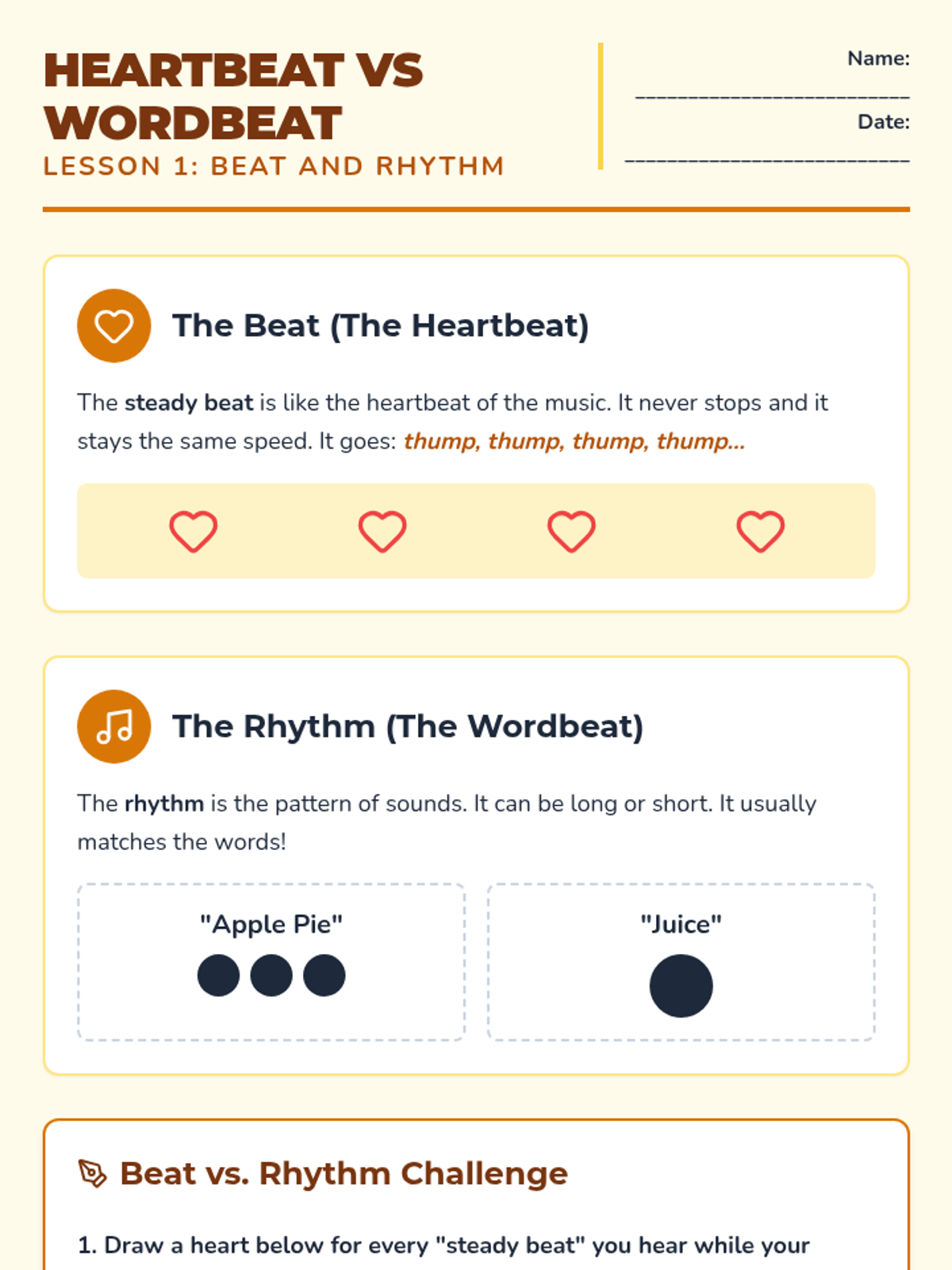
A comprehensive introduction to rhythmic notation and unpitched percussion for 2nd graders. Students progress from distinguishing beat vs. rhythm to reading quarter notes, eighth notes, and rests, culminating in an ensemble performance.
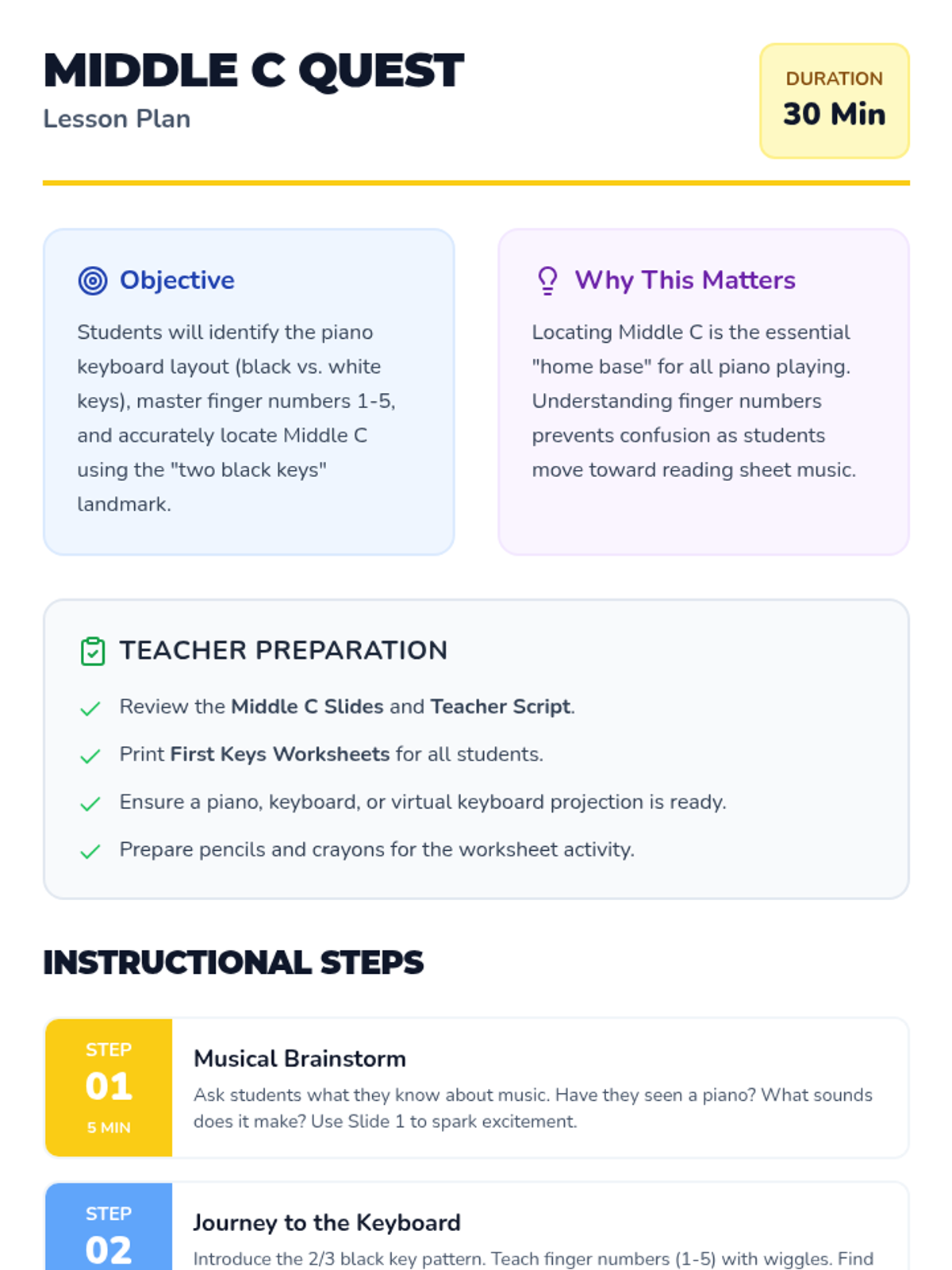
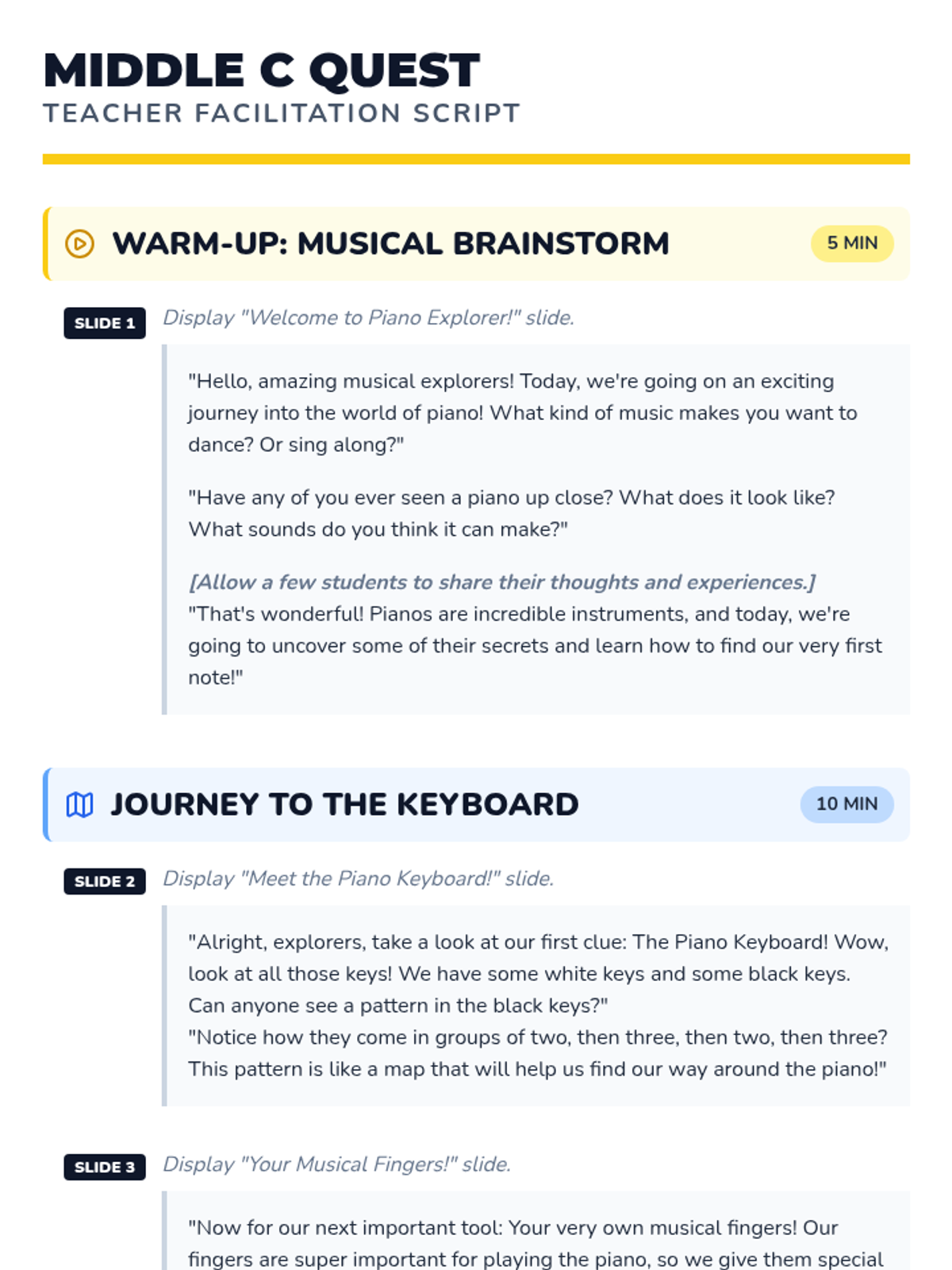
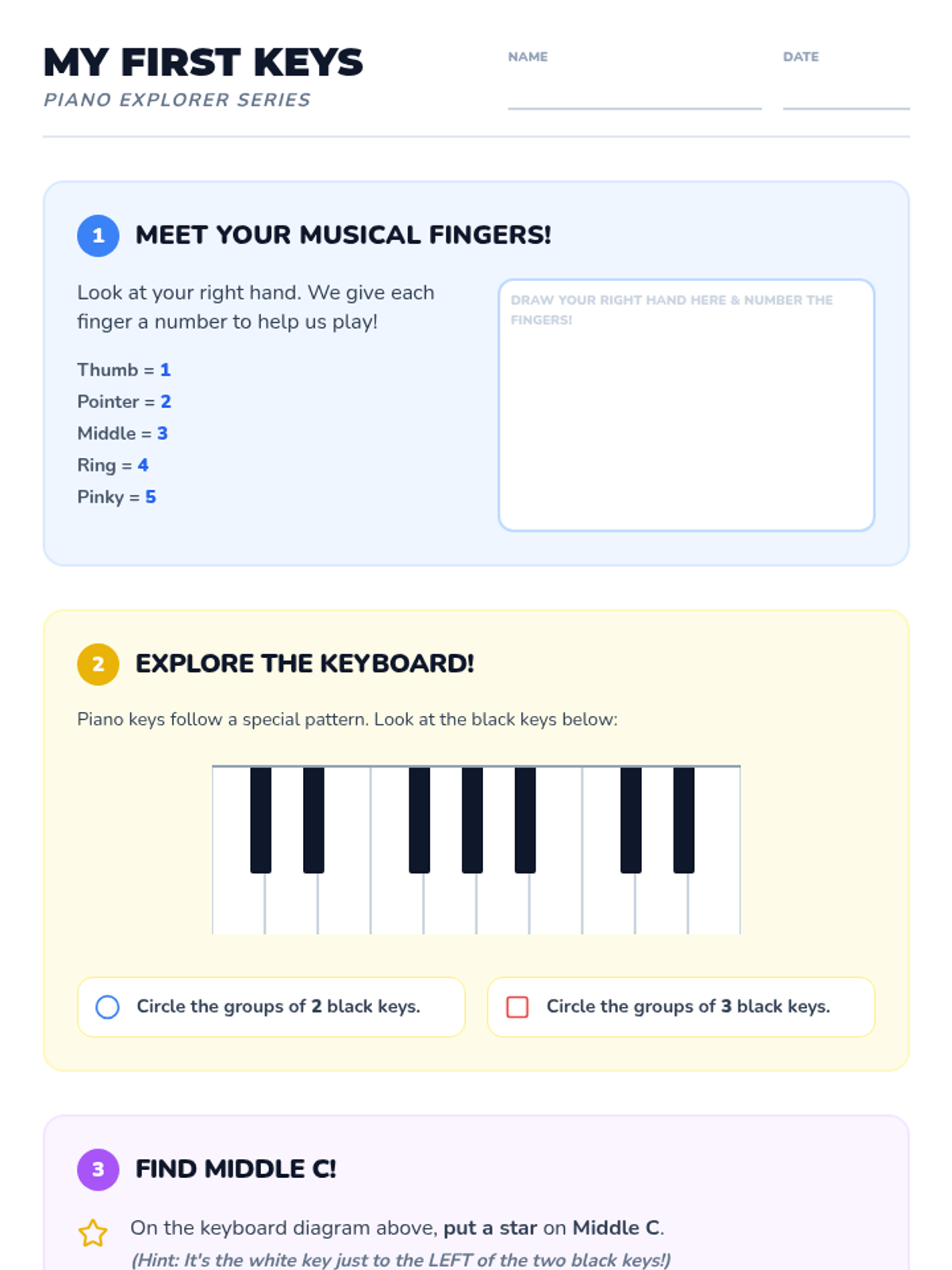
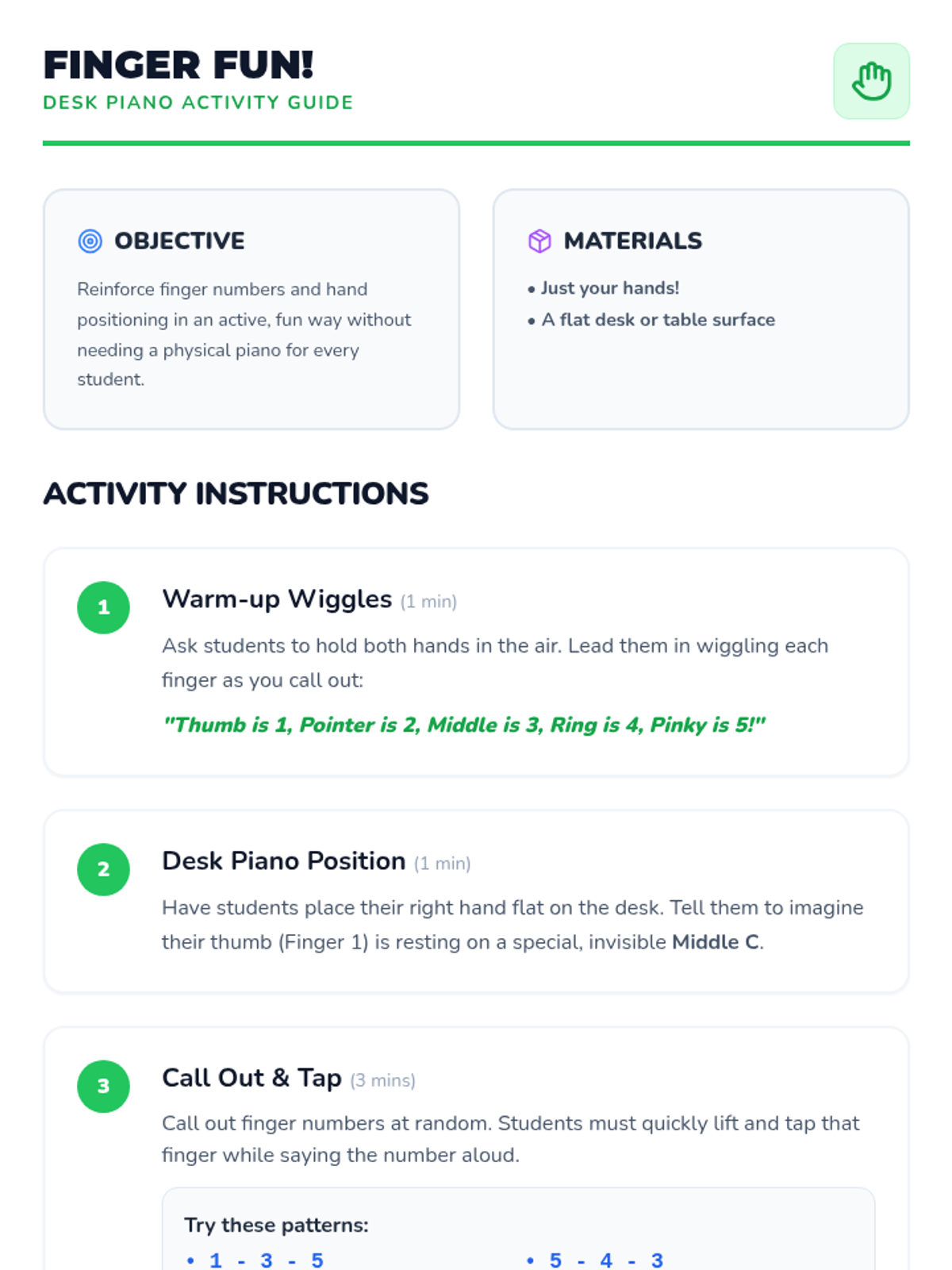
A foundational piano sequence for 1st-3rd graders, taking them from identifying Middle C to playing with a full five-finger right-hand position. Students explore keyboard layout, finger numbering, and basic melody creation.