Fundamental notation, instrumental proficiency, and vocal techniques across various genres. Connects historical analysis with original composition and creative performance skills.
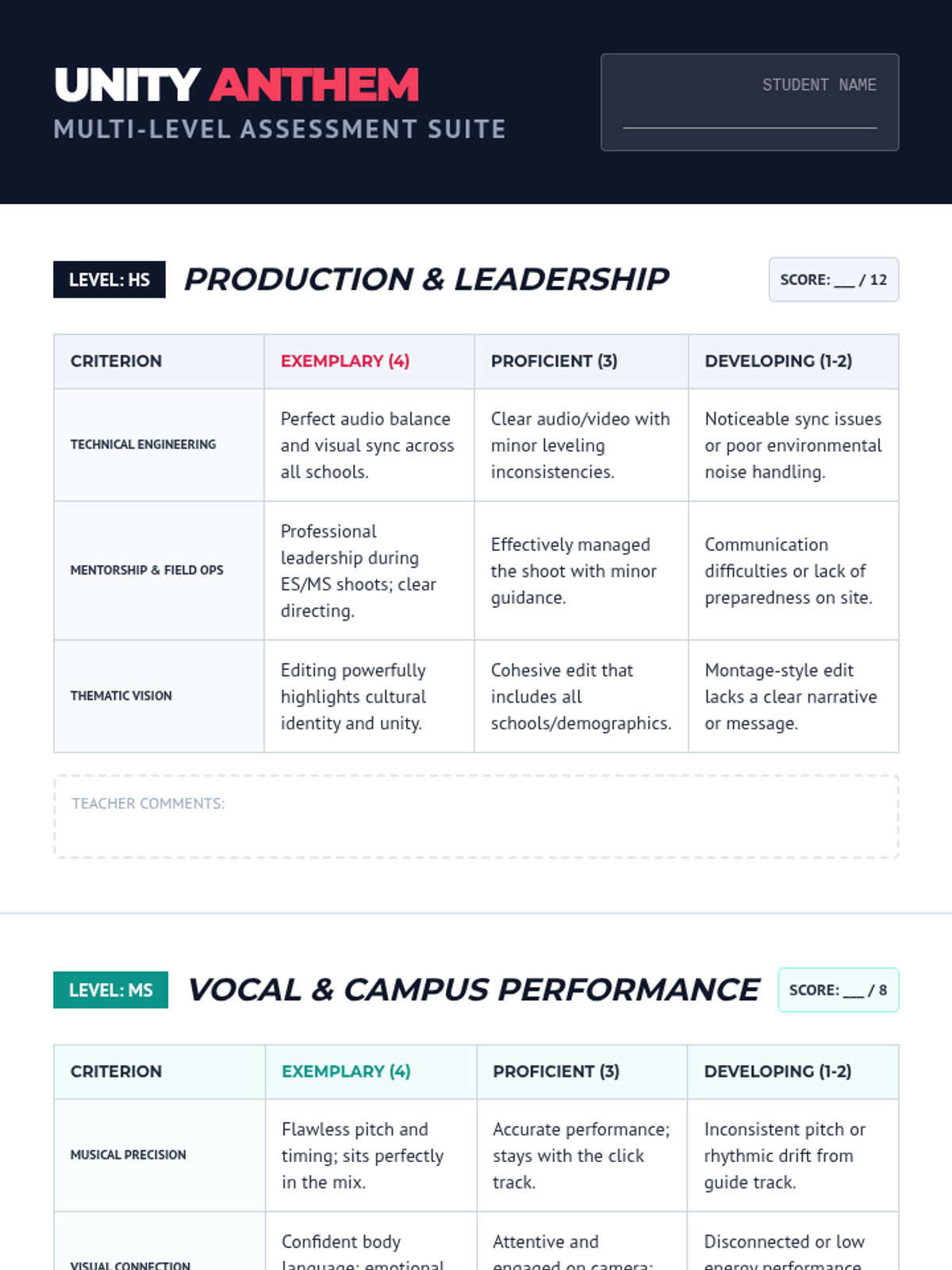
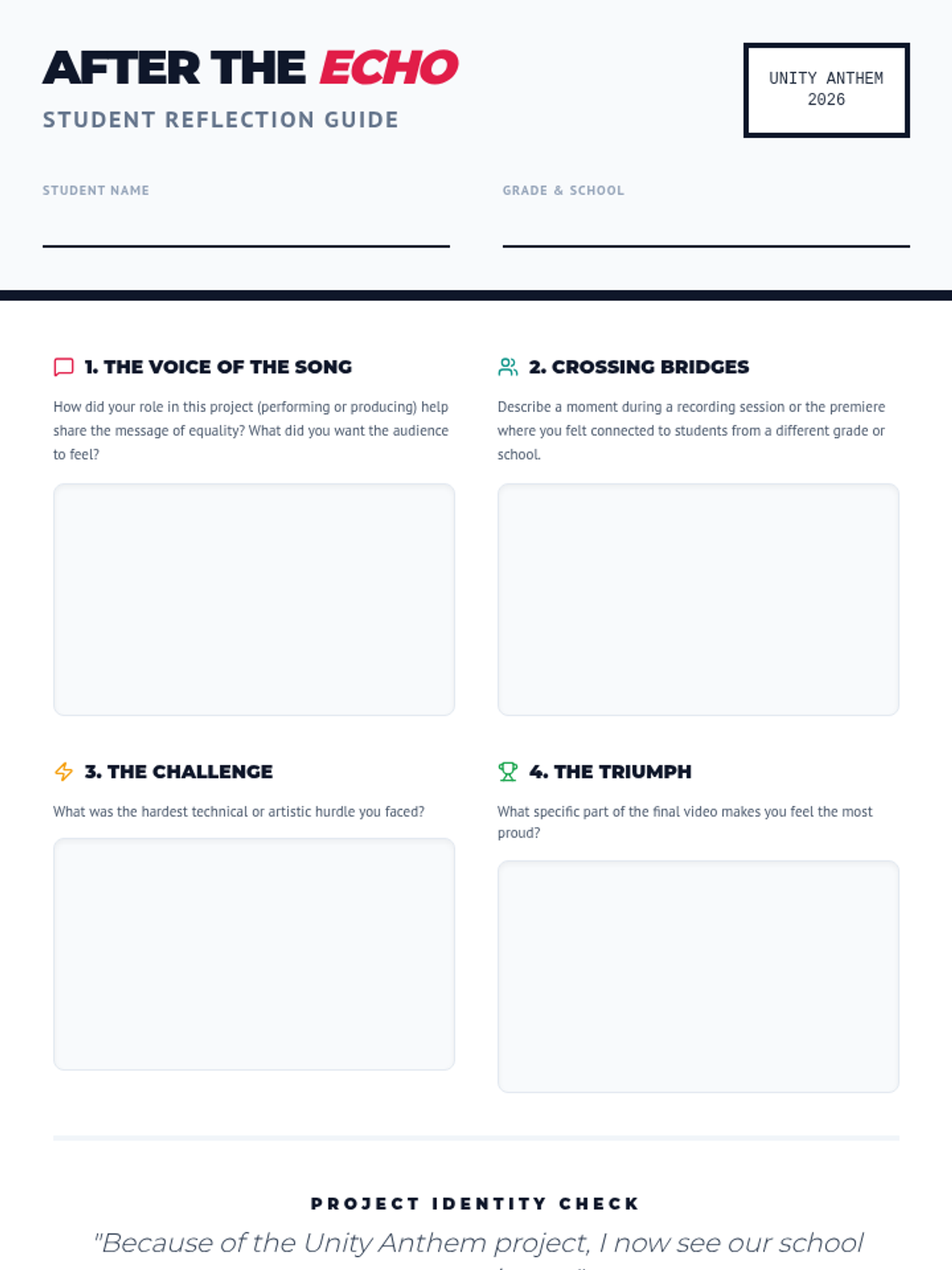
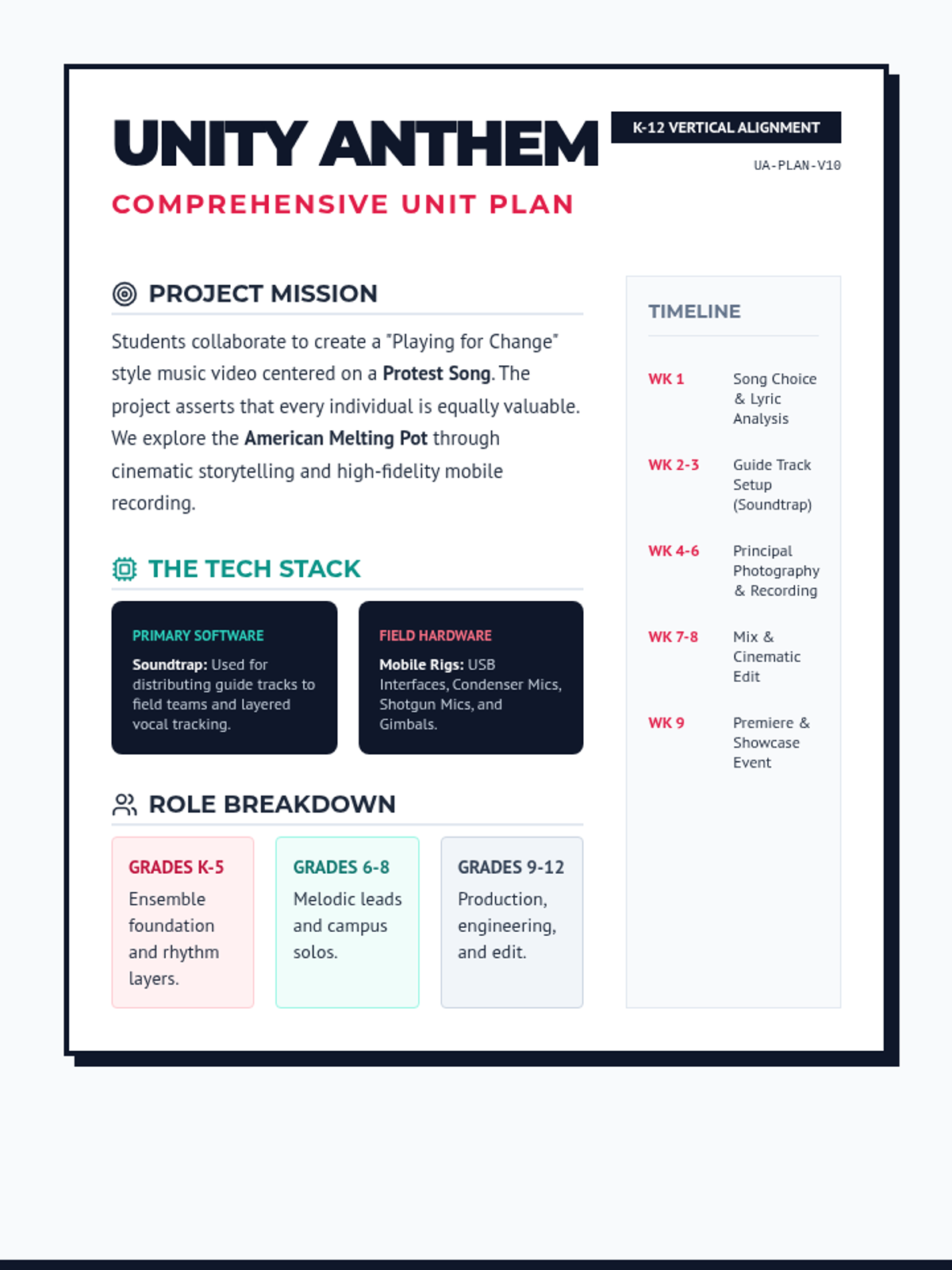
The final premiere of the music video at the All-town Music Tech Showcase, followed by a live performance and student reflection on the collaborative process.
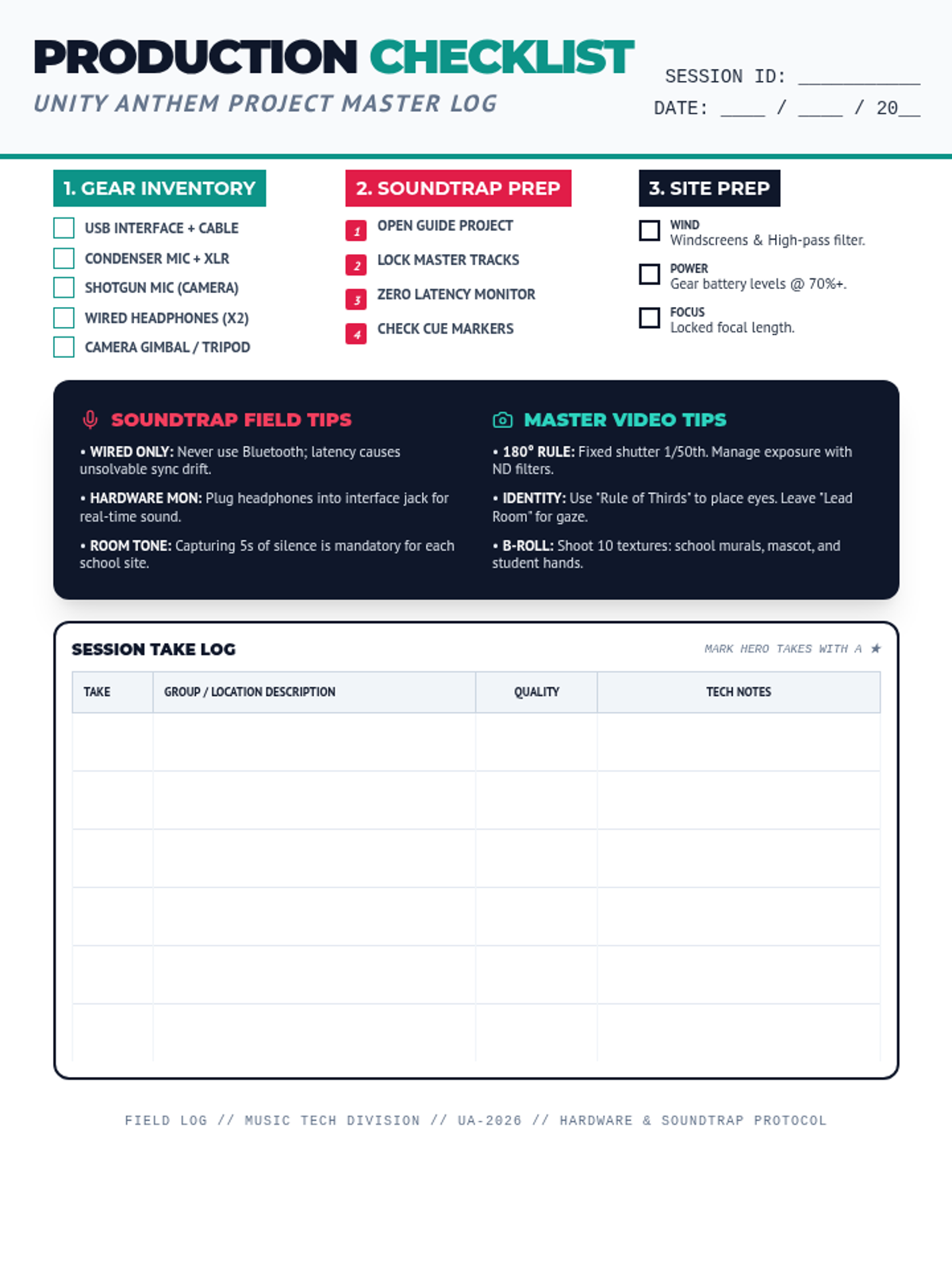
The technical phase involving on-location recordings at elementary and middle schools, followed by high school student-led mixing and video production.
Introduction to the 'Playing for Change' concept, exploring the themes of the chosen protest song, and laying the groundwork for the K-12 collaboration.
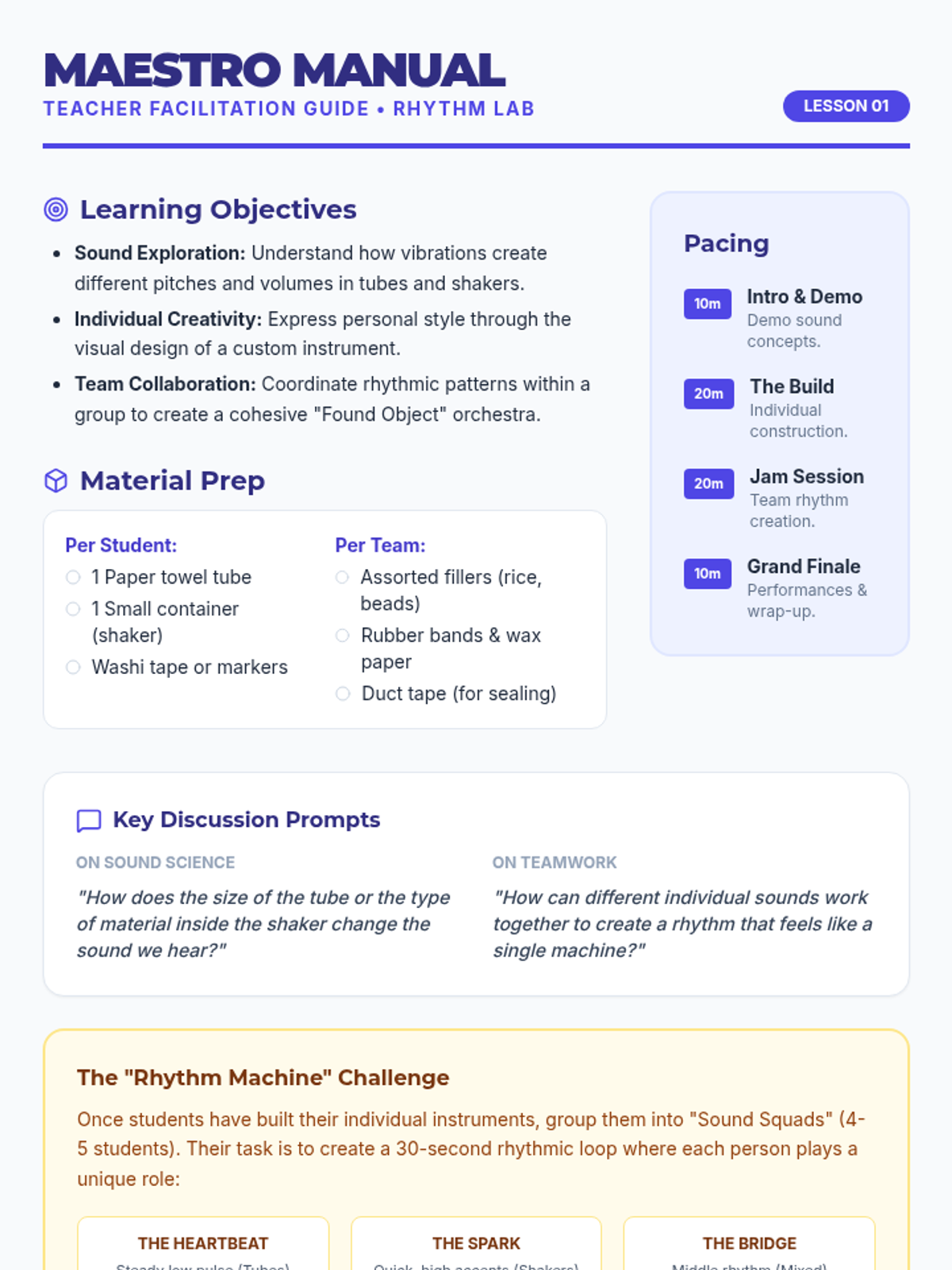
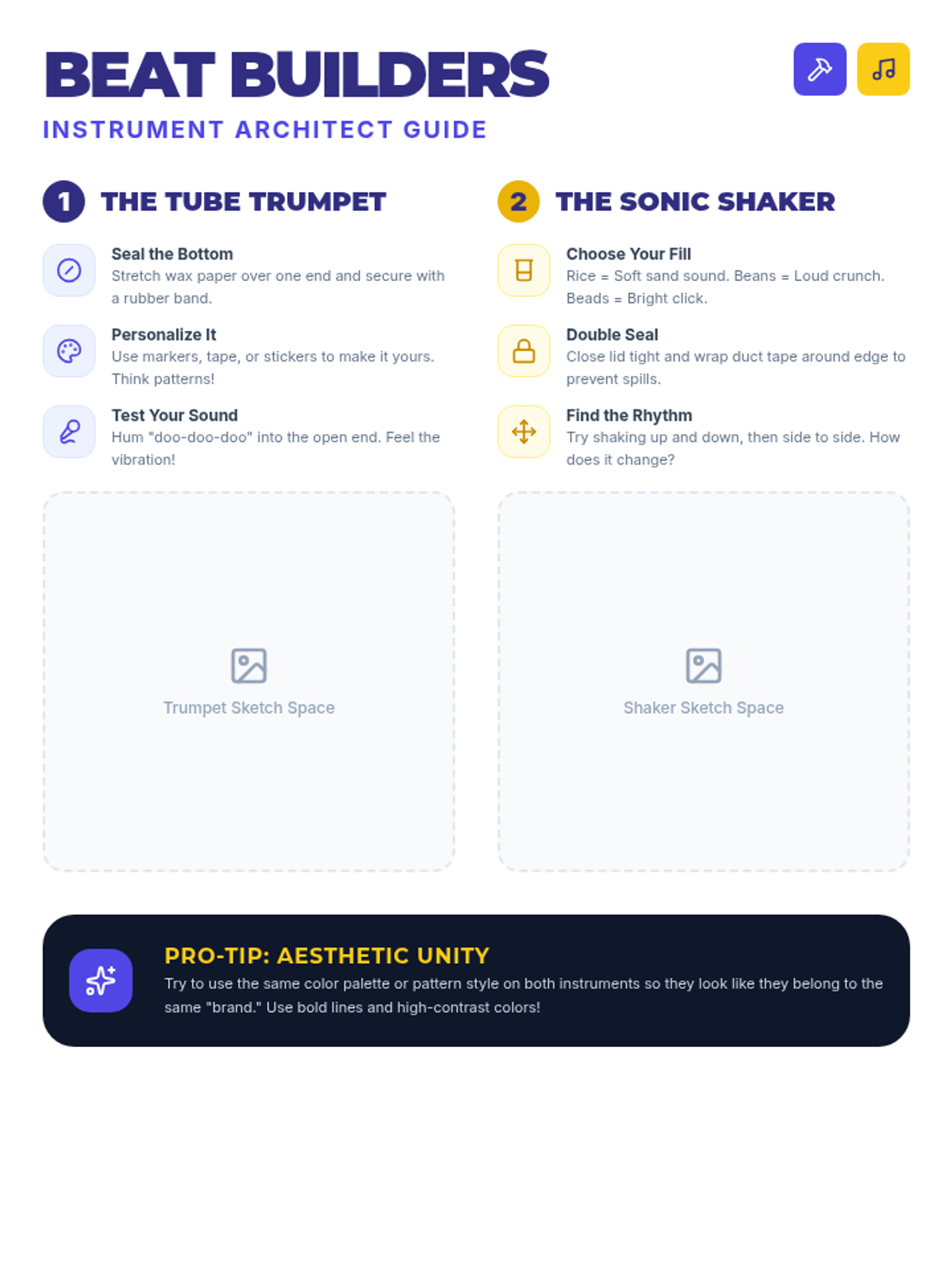
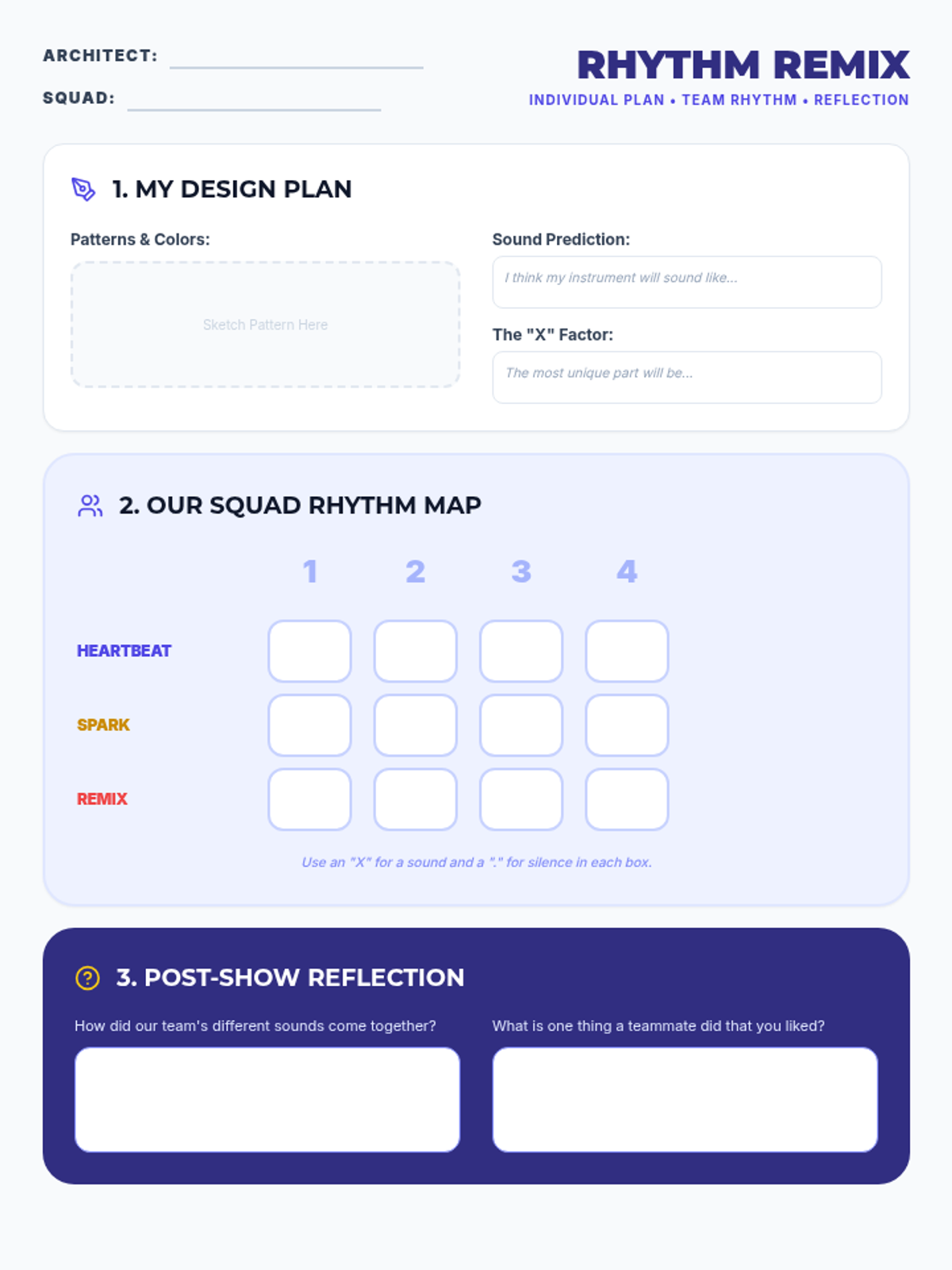
Students explore the science and art of sound by constructing DIY instruments from recycled materials. The lesson emphasizes individual creative design followed by a collaborative team performance.
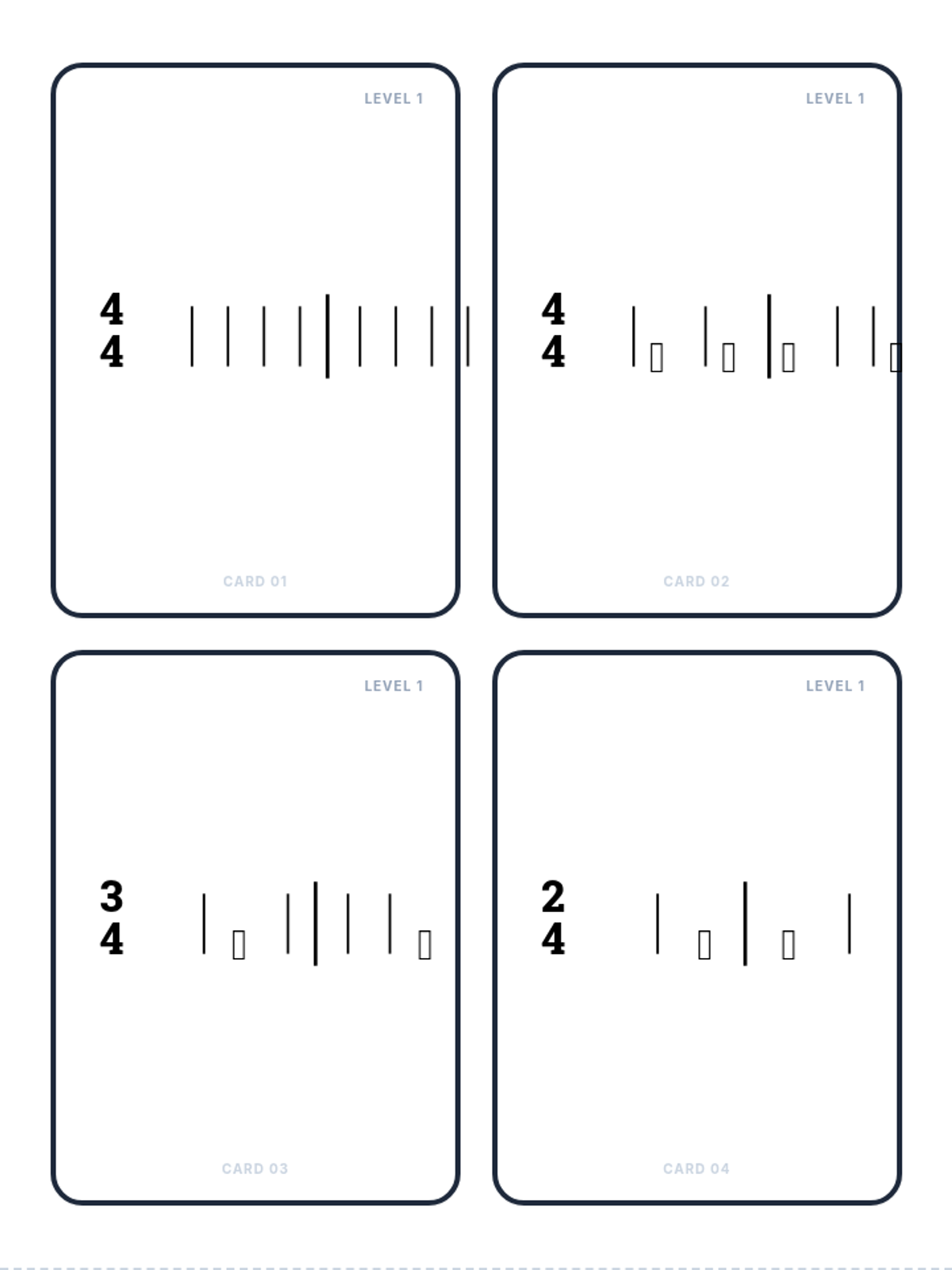
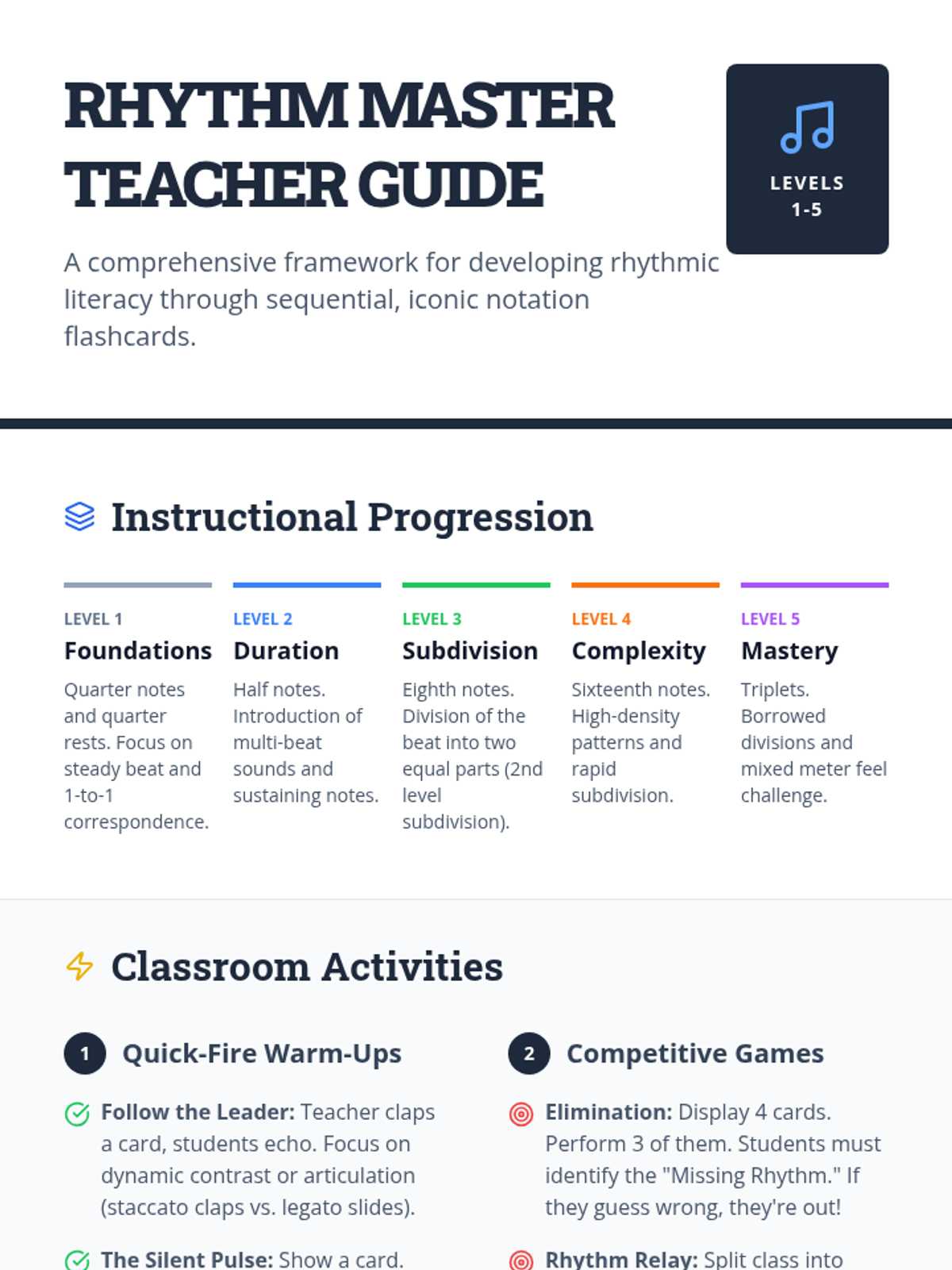
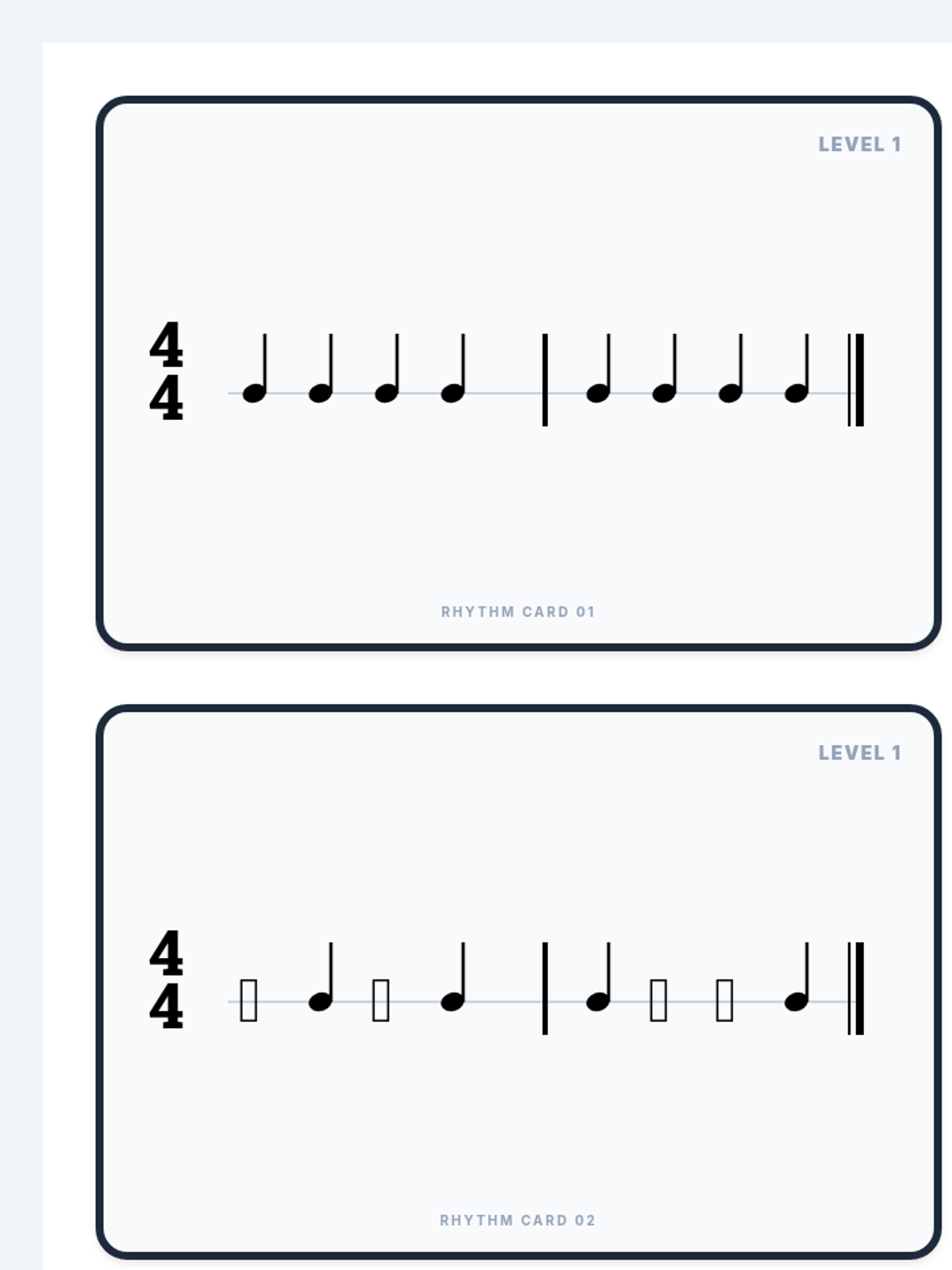
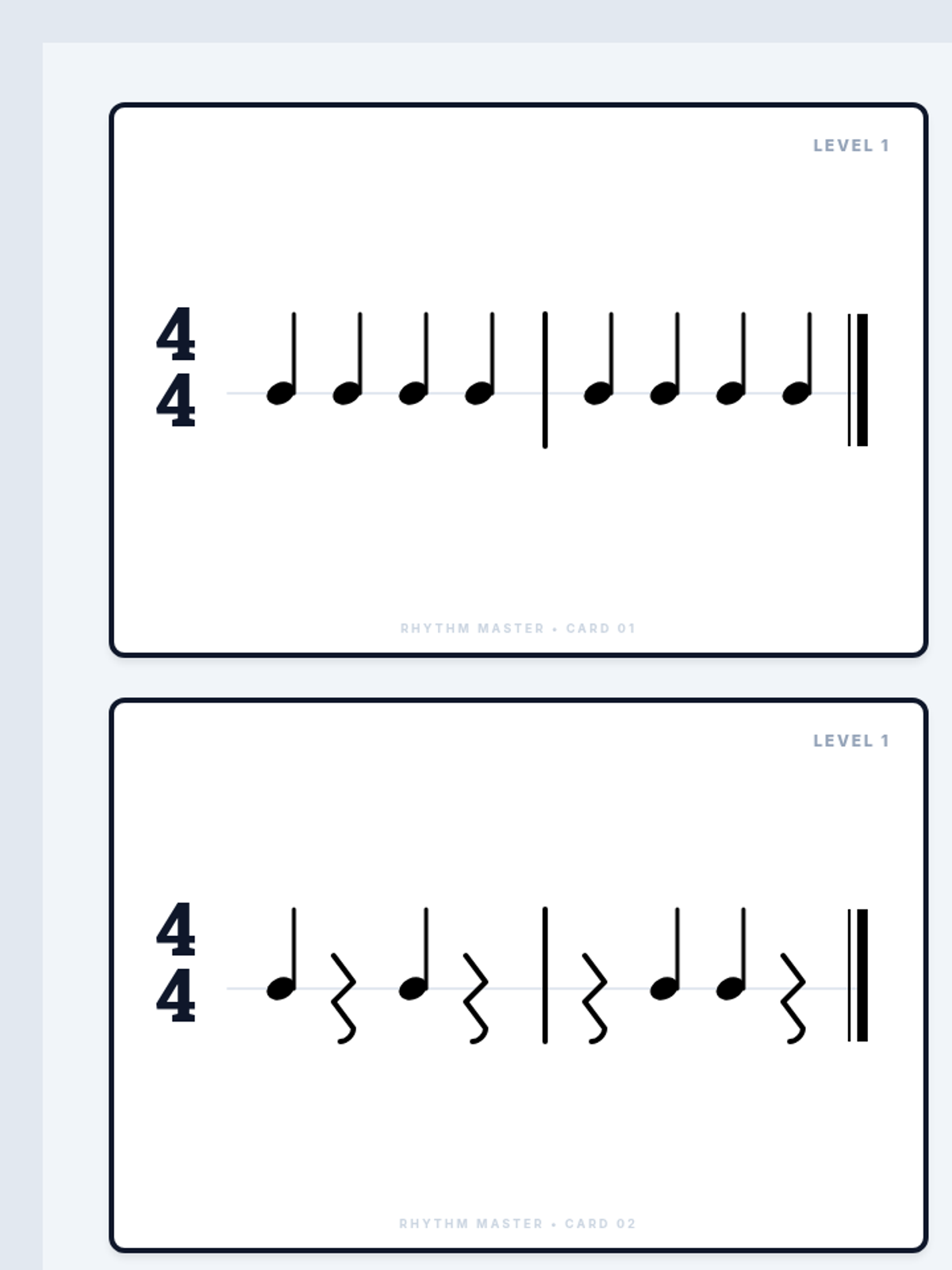
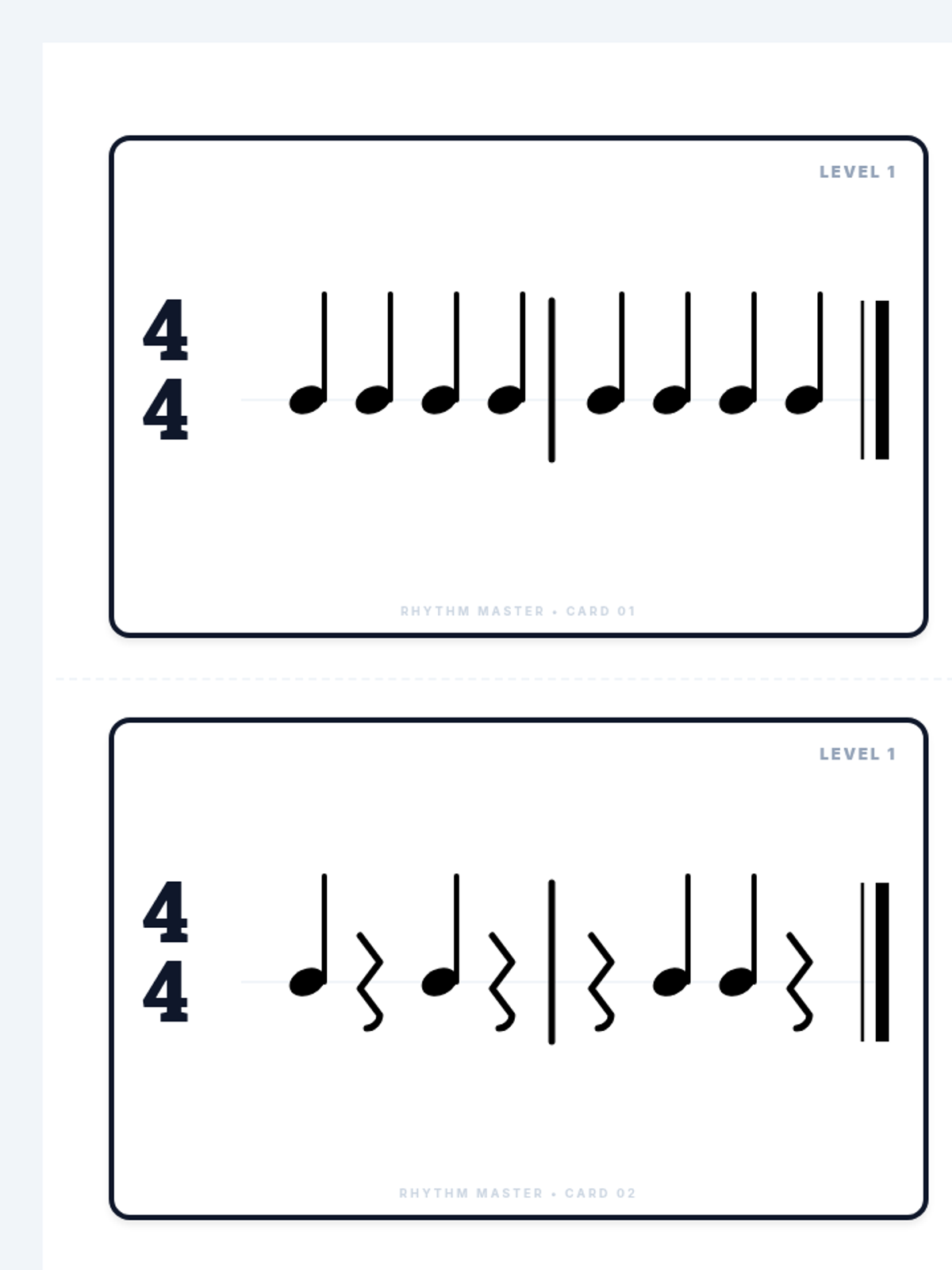
A series of rhythm reading flashcards and a teacher's guide covering basic to advanced rhythmic patterns. Activities progress from quarter notes and rests to complex sixteenth notes and triplets across multiple time signatures.
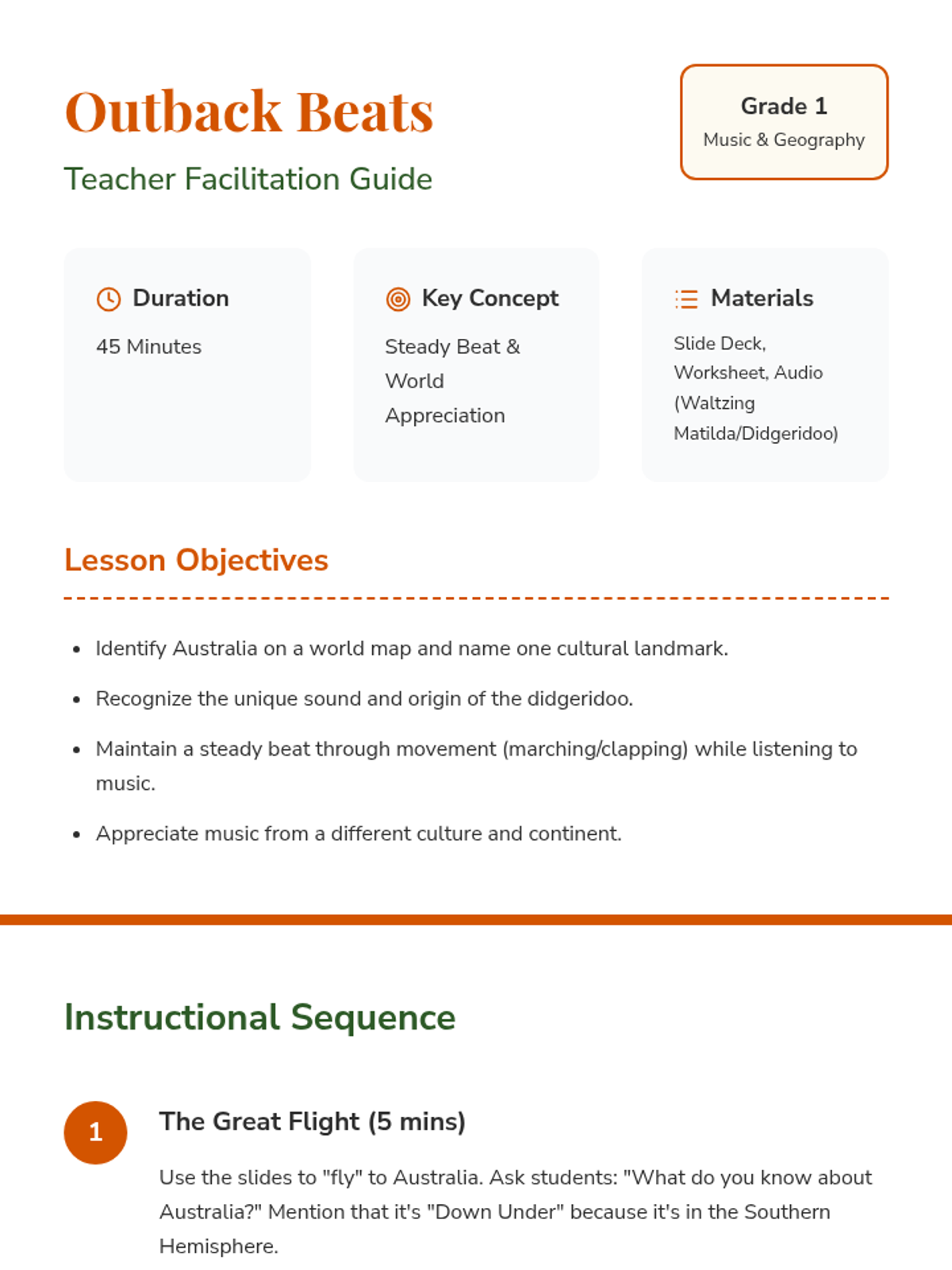
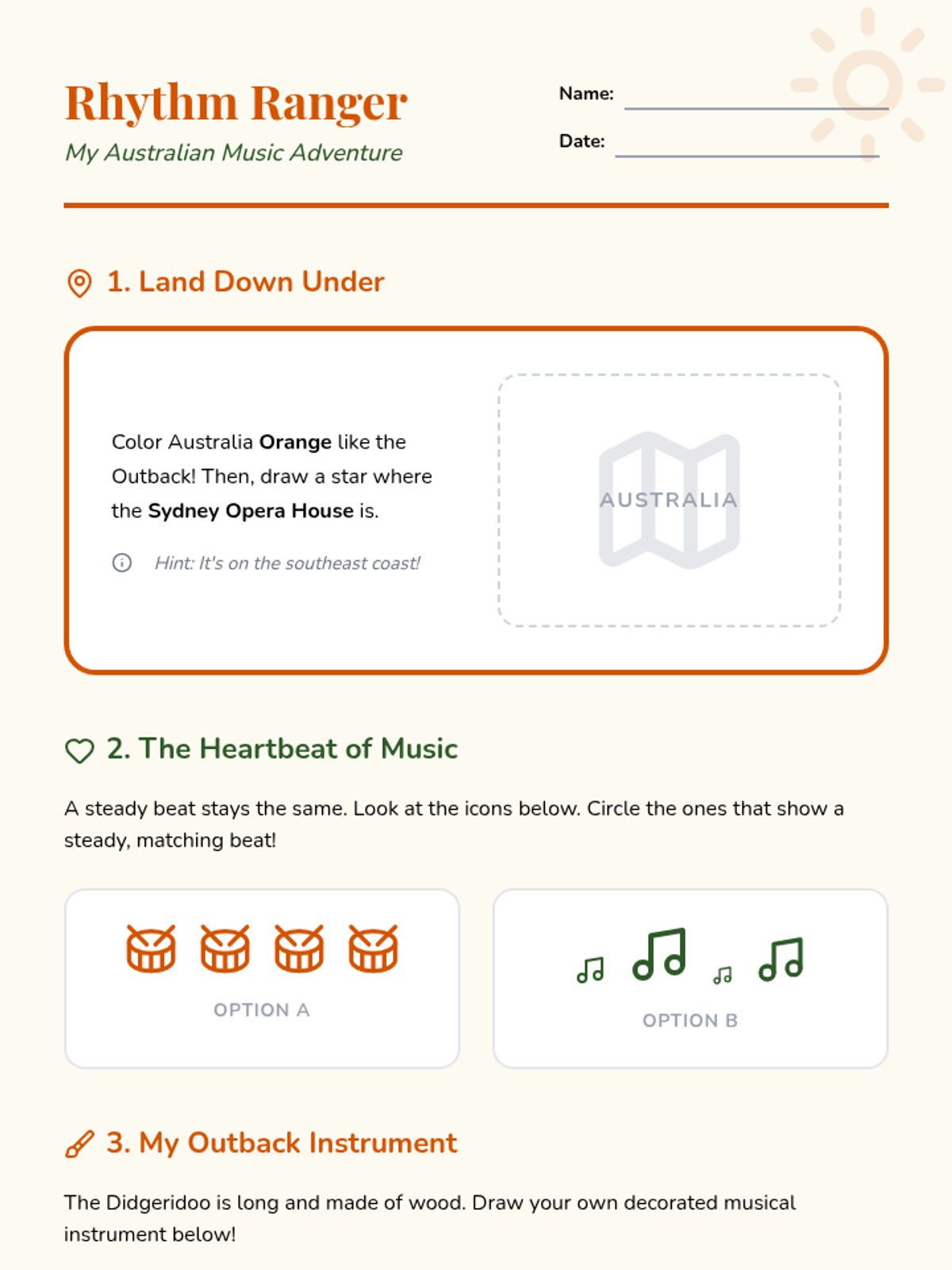
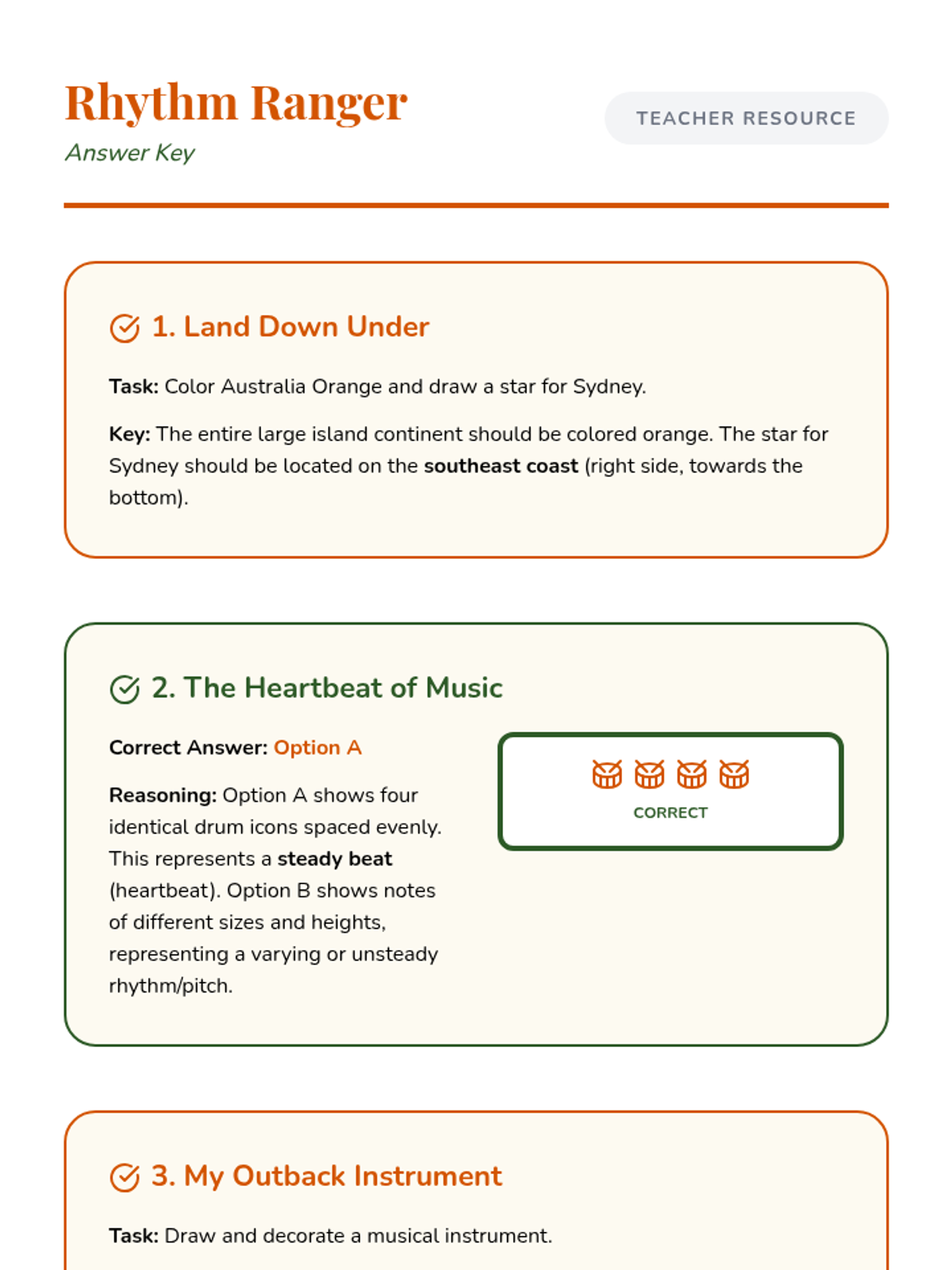
A first-grade introduction to Australian music and culture, focusing on the didgeridoo, the folk classic 'Waltzing Matilda', and maintaining a steady beat through movement and listening.
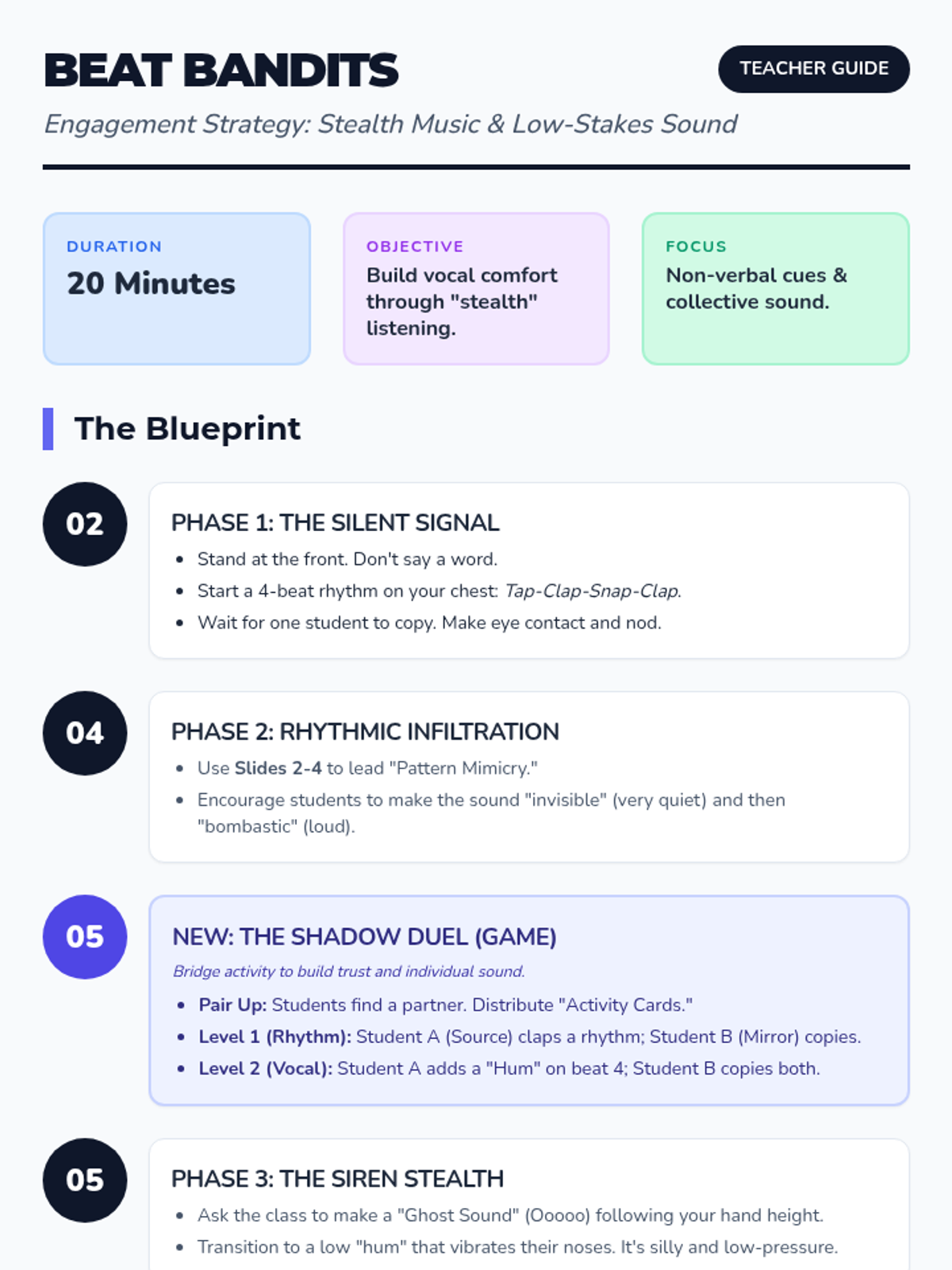
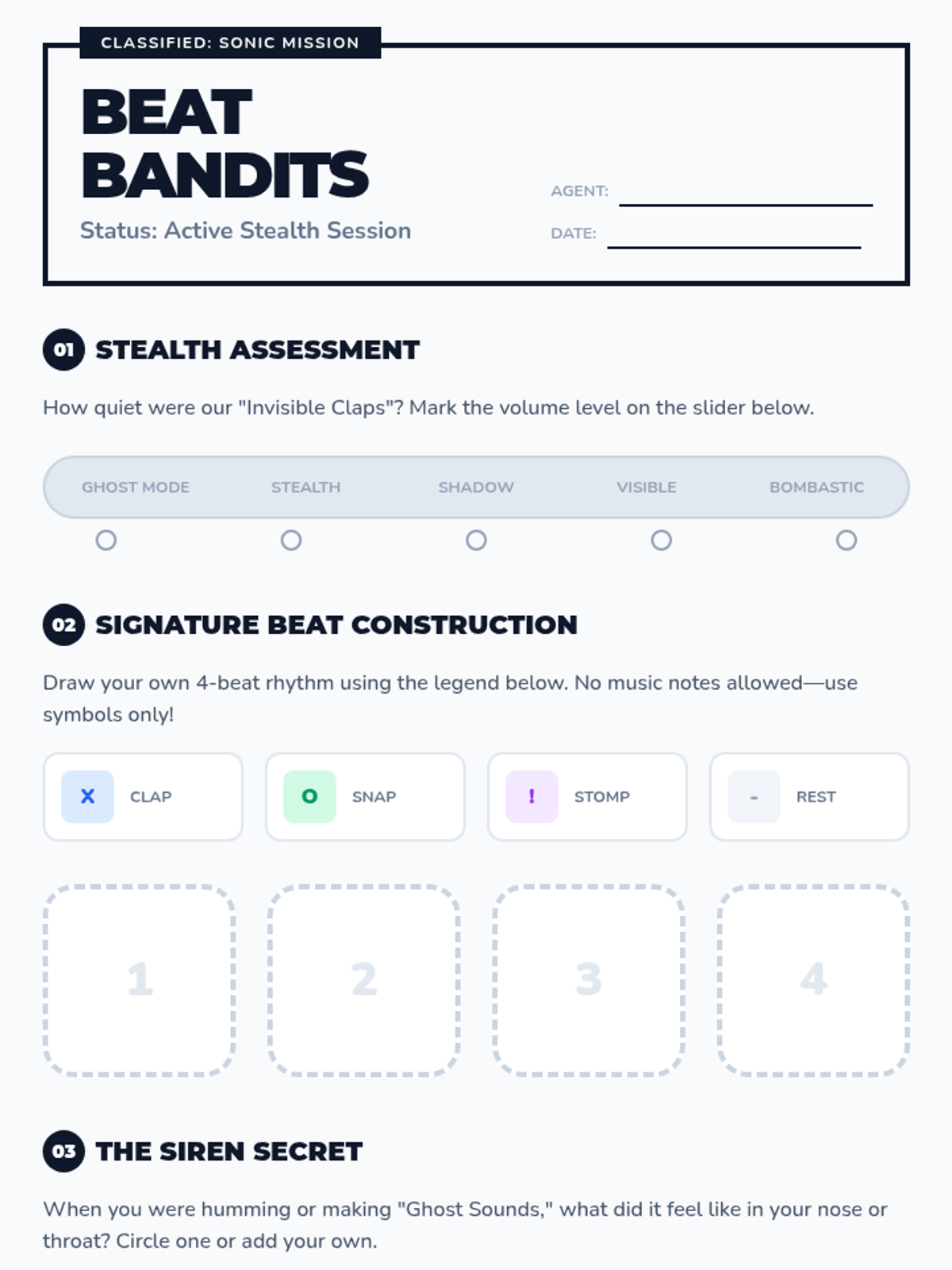
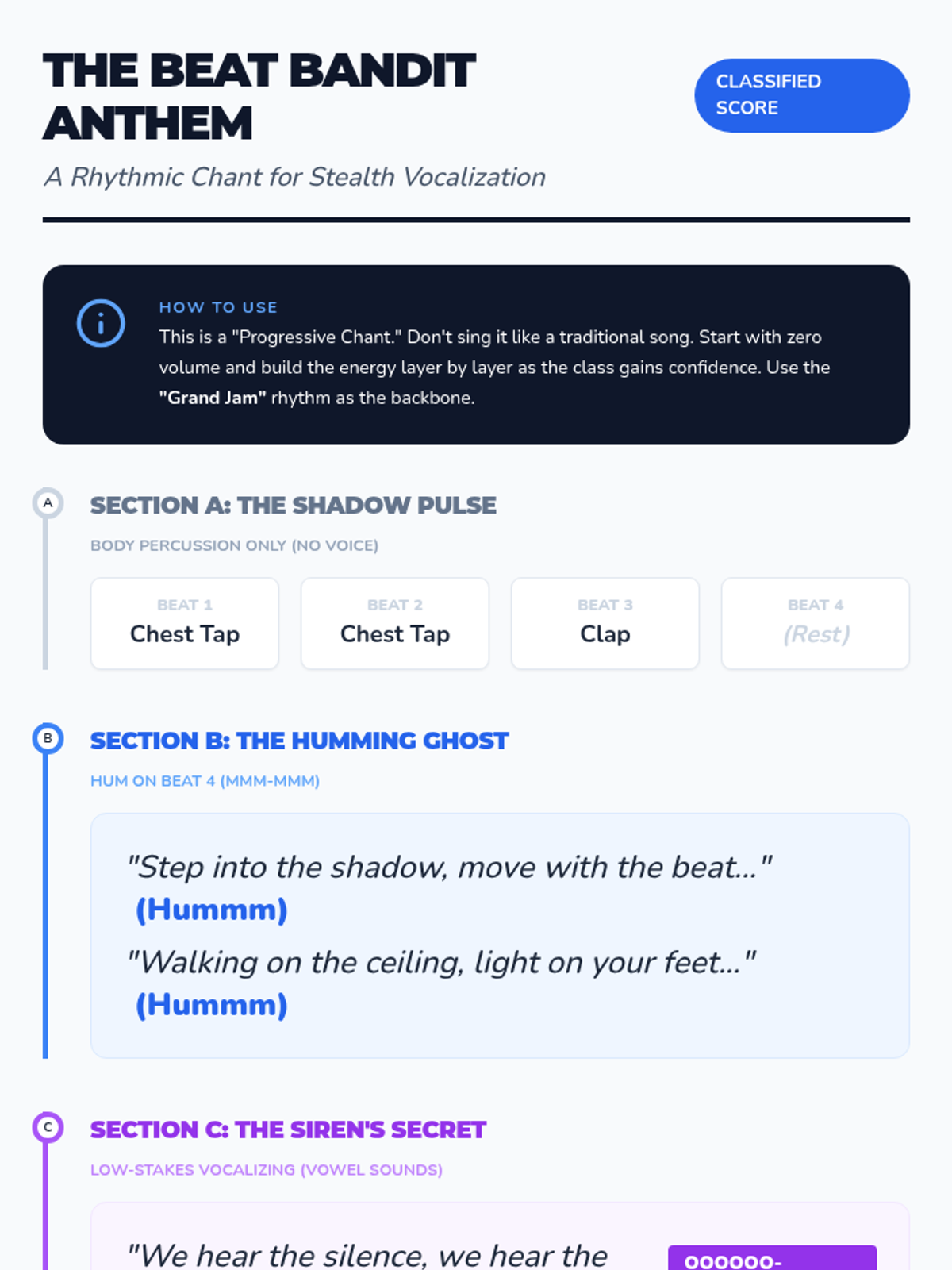
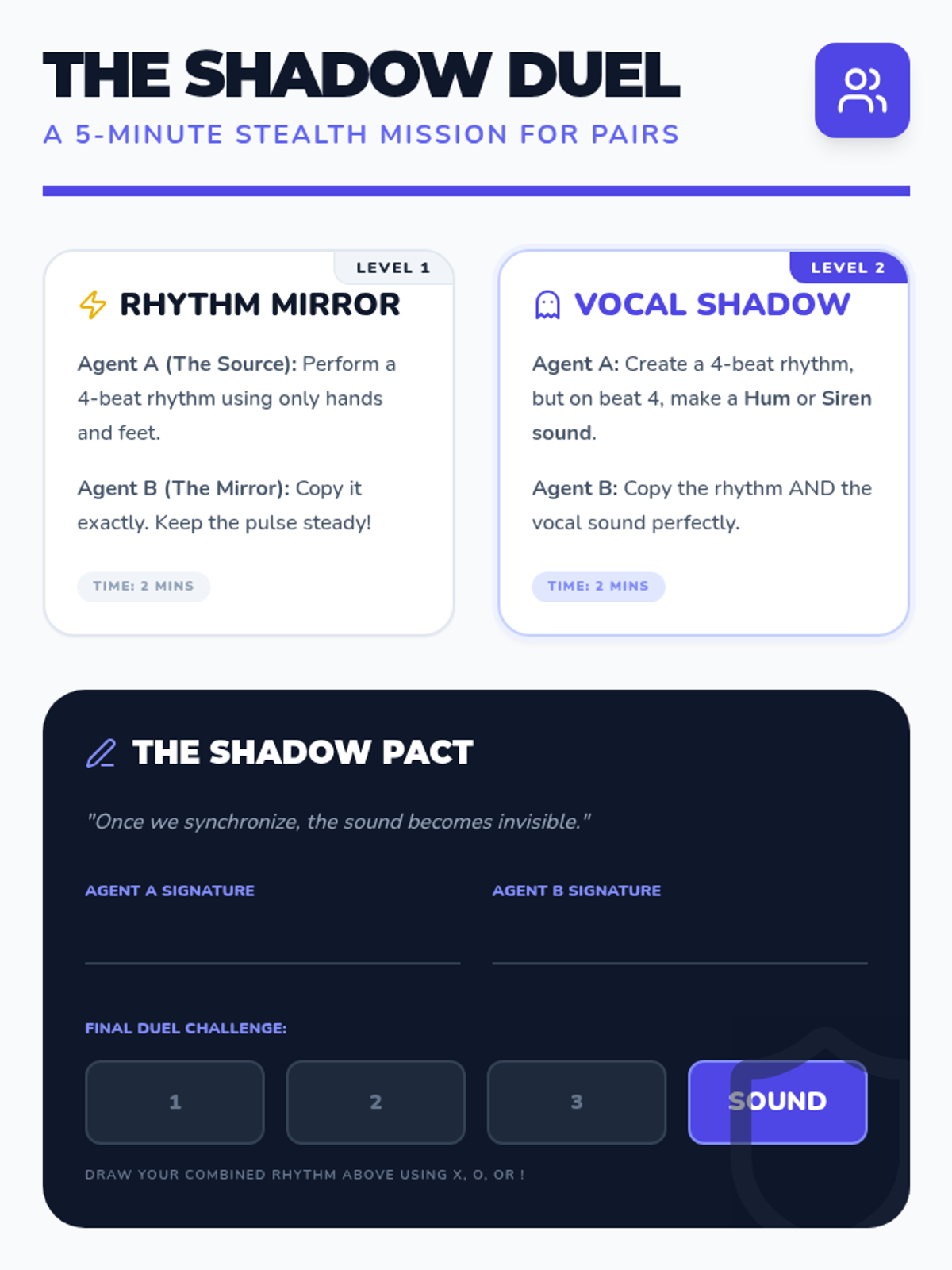
A high-energy, low-pressure 15-minute music lesson designed to engage disengaged students and build vocal confidence through rhythm and stealth games. This lesson moves from non-verbal rhythmic games to collective vocalizing to bypass the fear of singing.
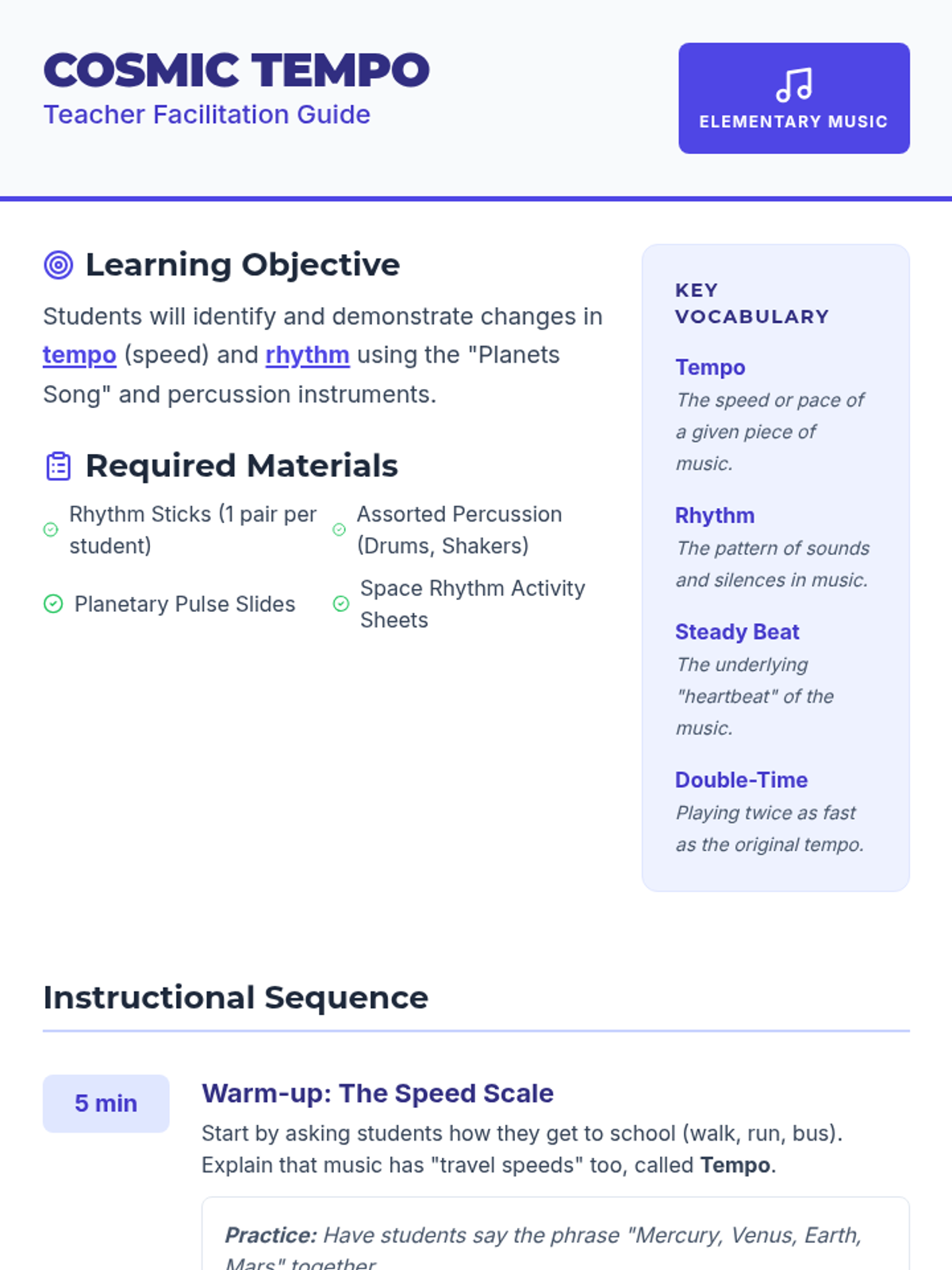
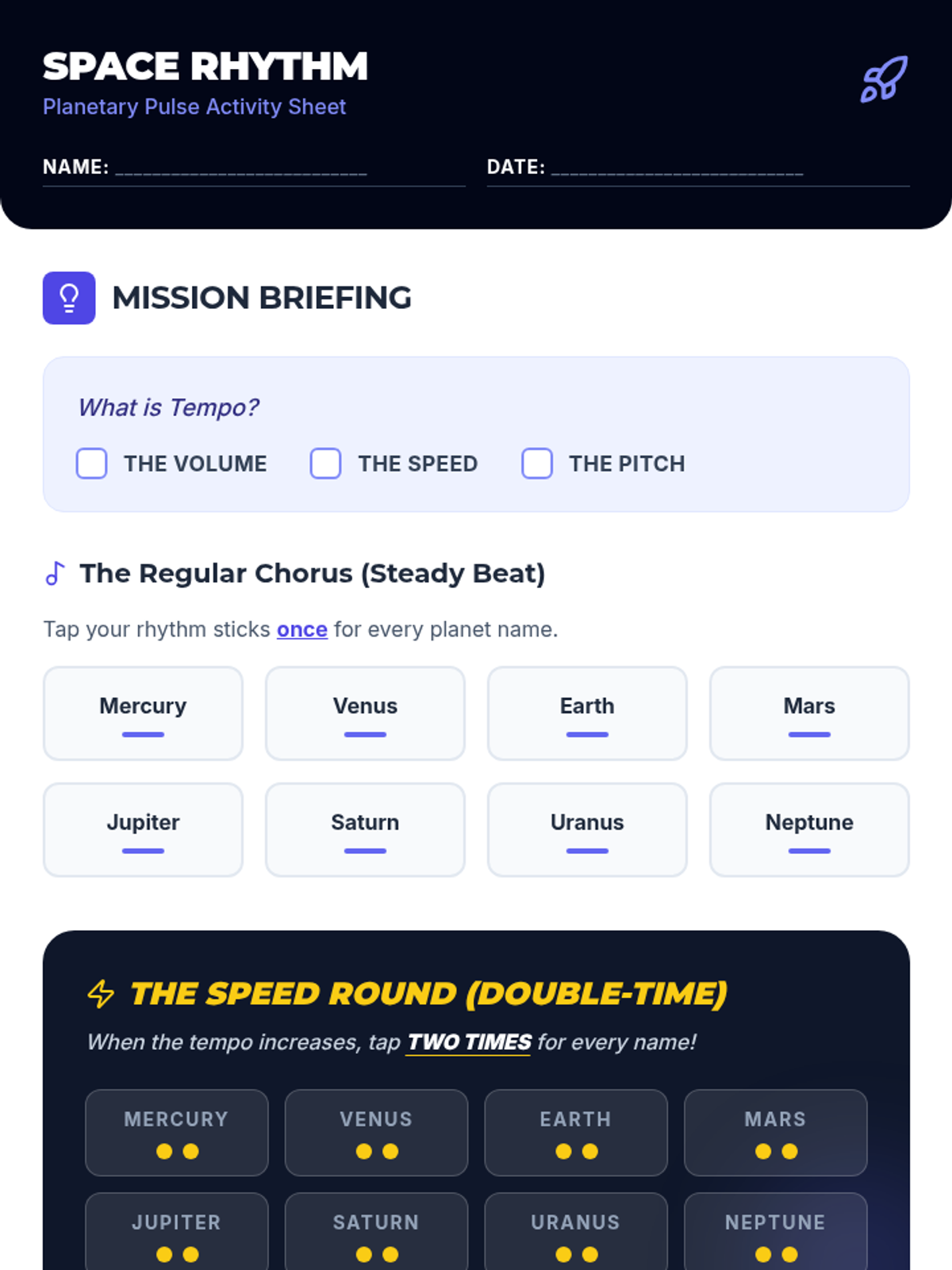
Students explore the concept of tempo and rhythm through a catchy song about the solar system, using rhythm sticks to match shifting speeds.
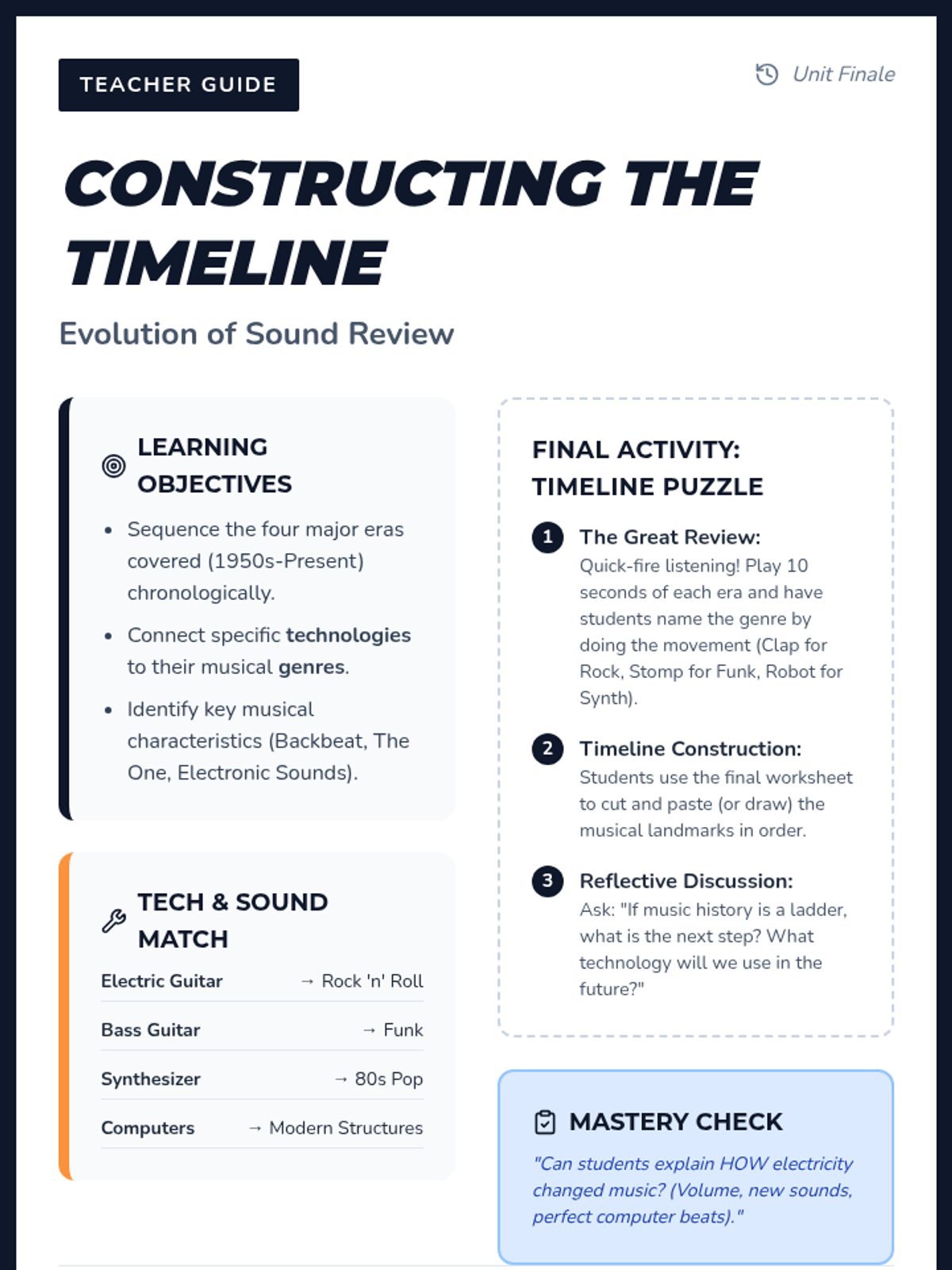
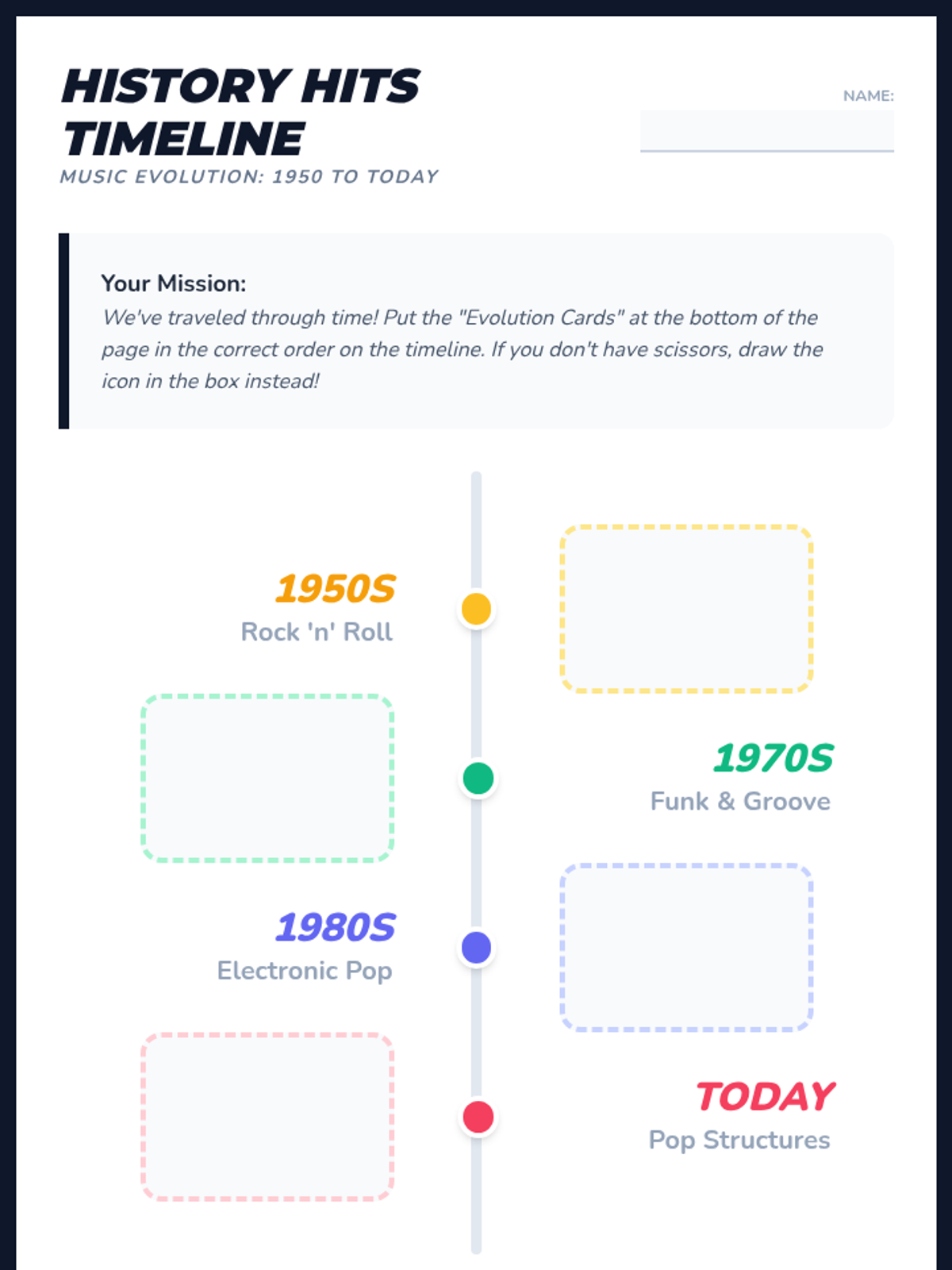
A cumulative review where students synthesize their knowledge to build a complete timeline of music history. They categorize genres by their technological and musical characteristics.
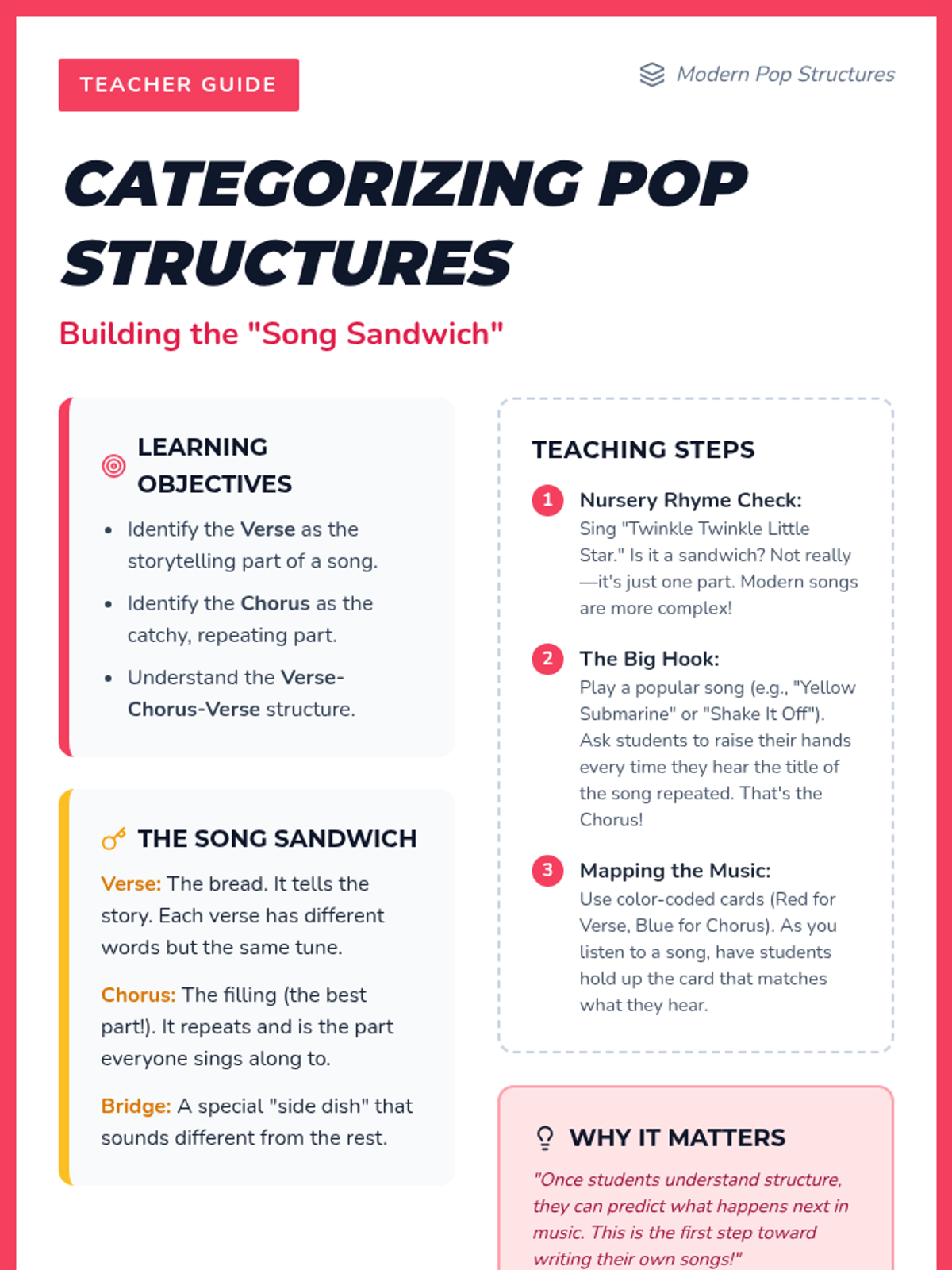
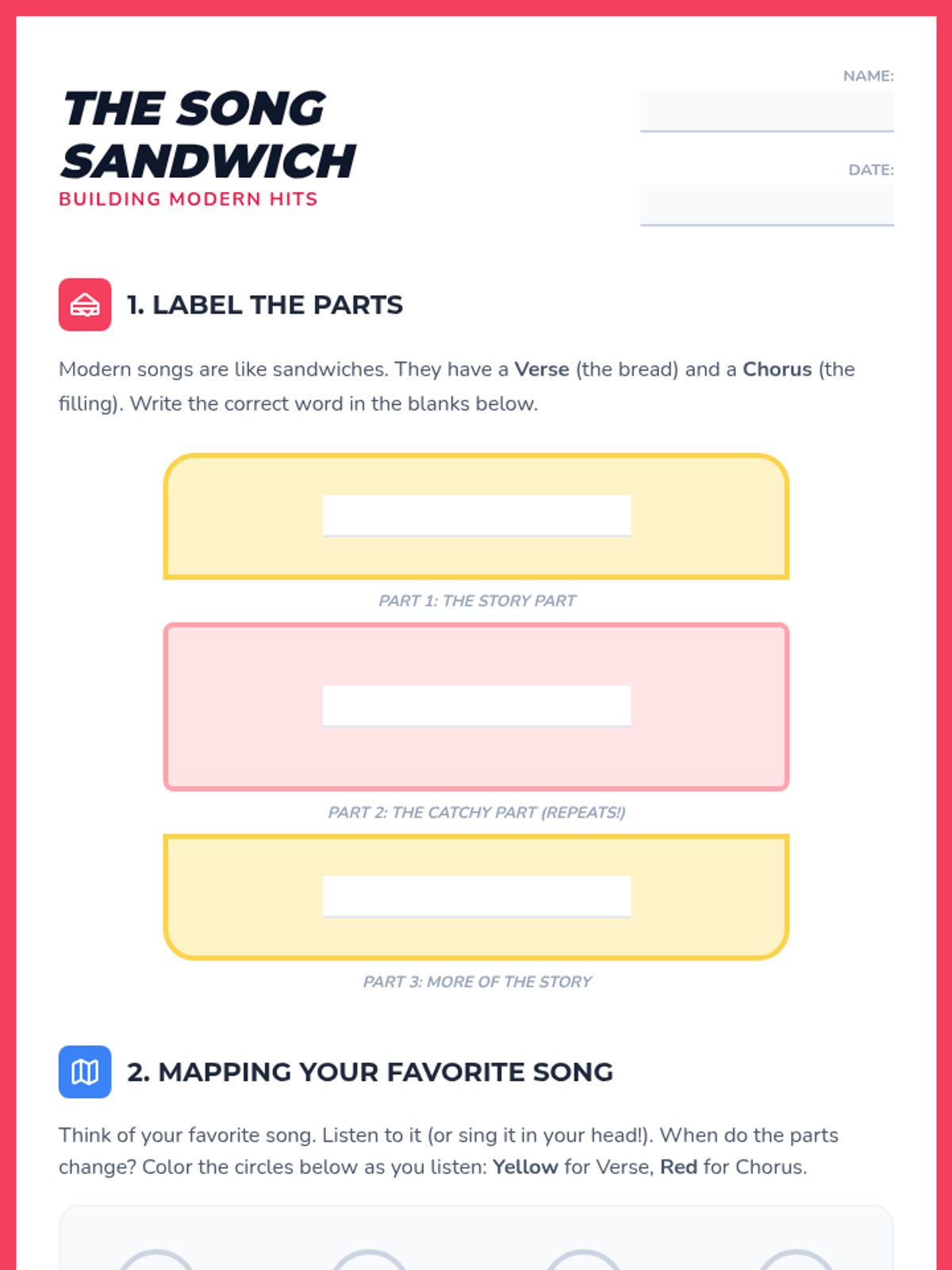
Students deconstruct modern pop songs to find the 'Verse-Chorus' pattern. They use a 'Song Sandwich' analogy to understand how most modern music is structured.
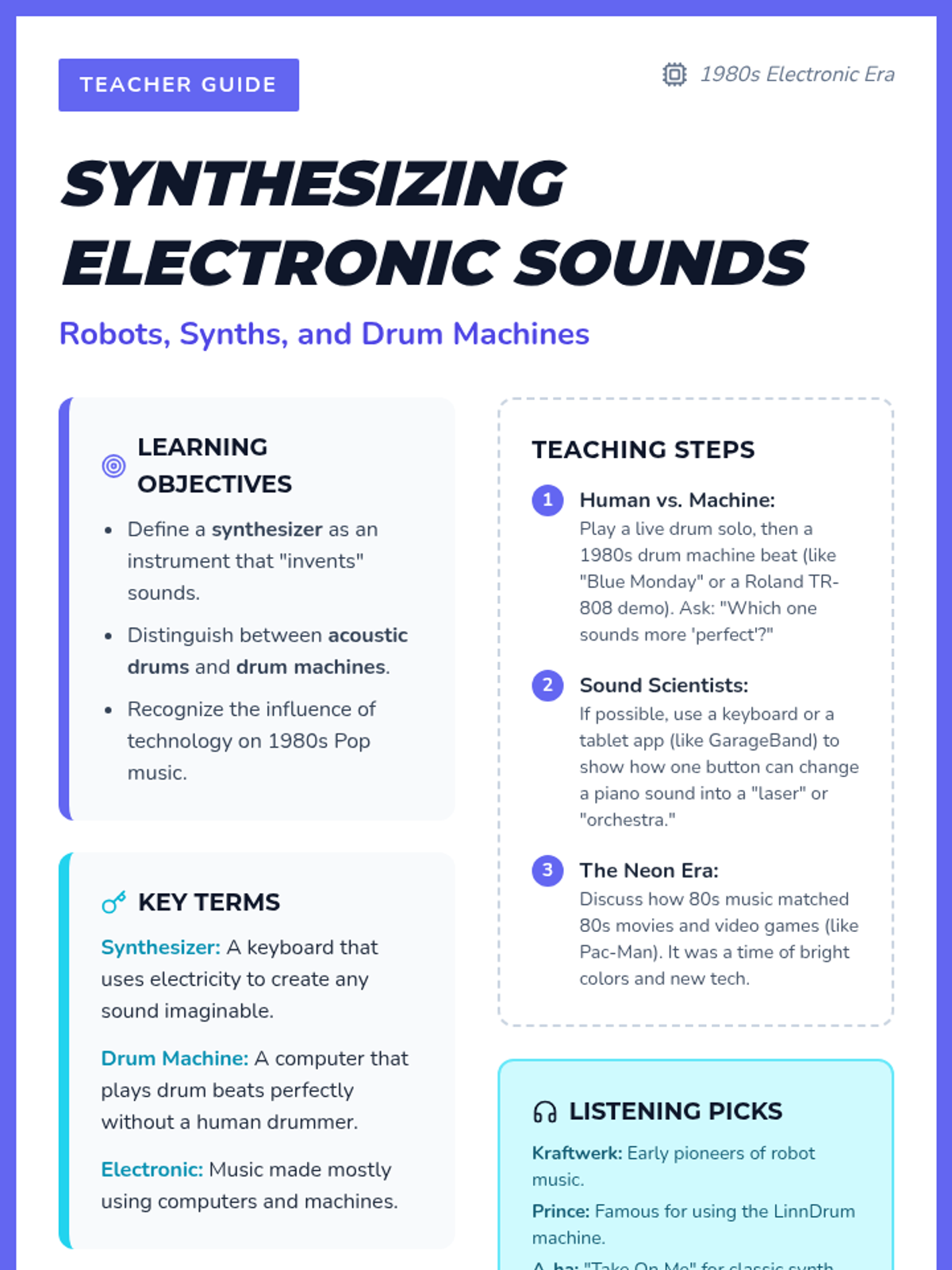
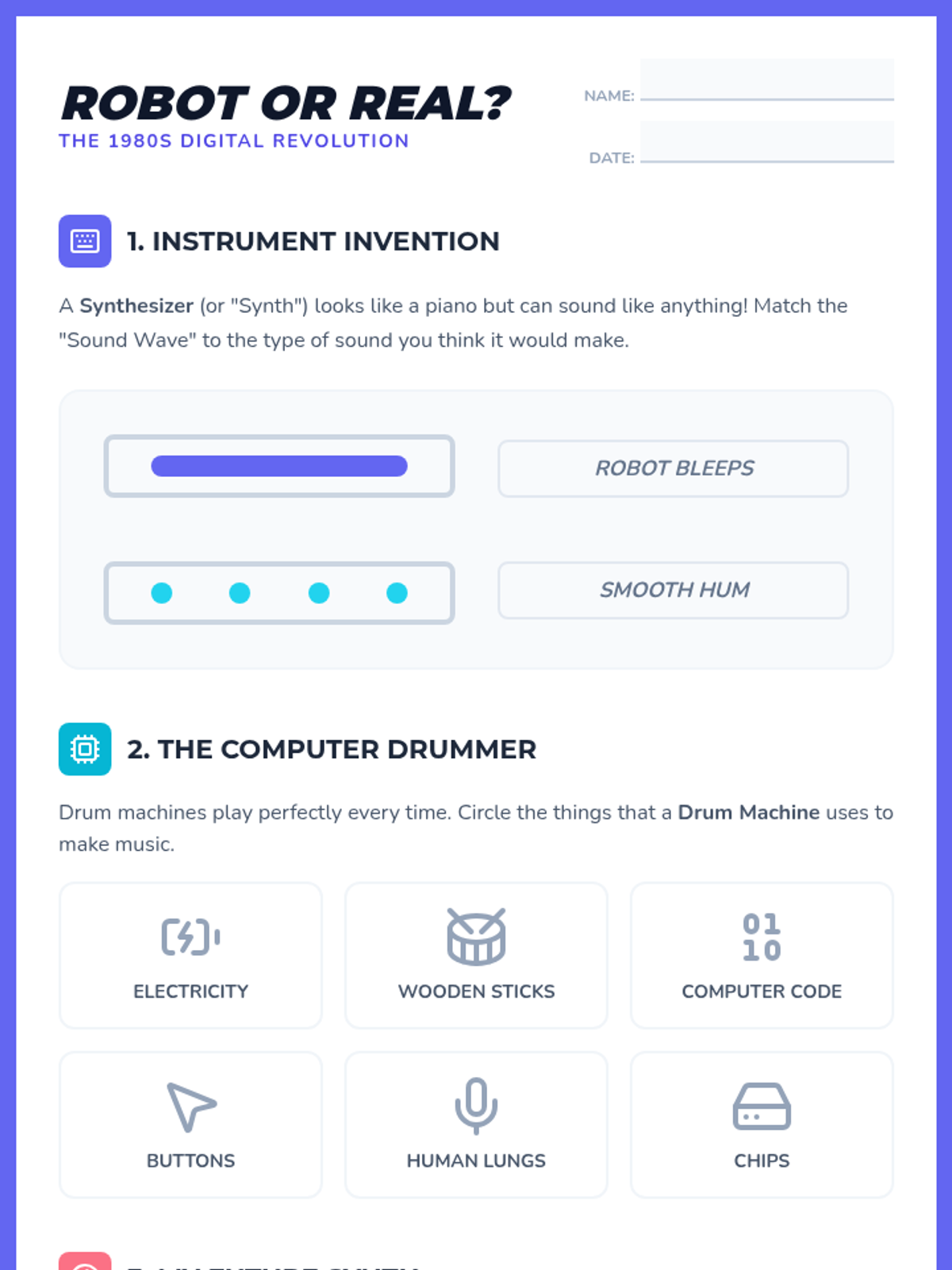
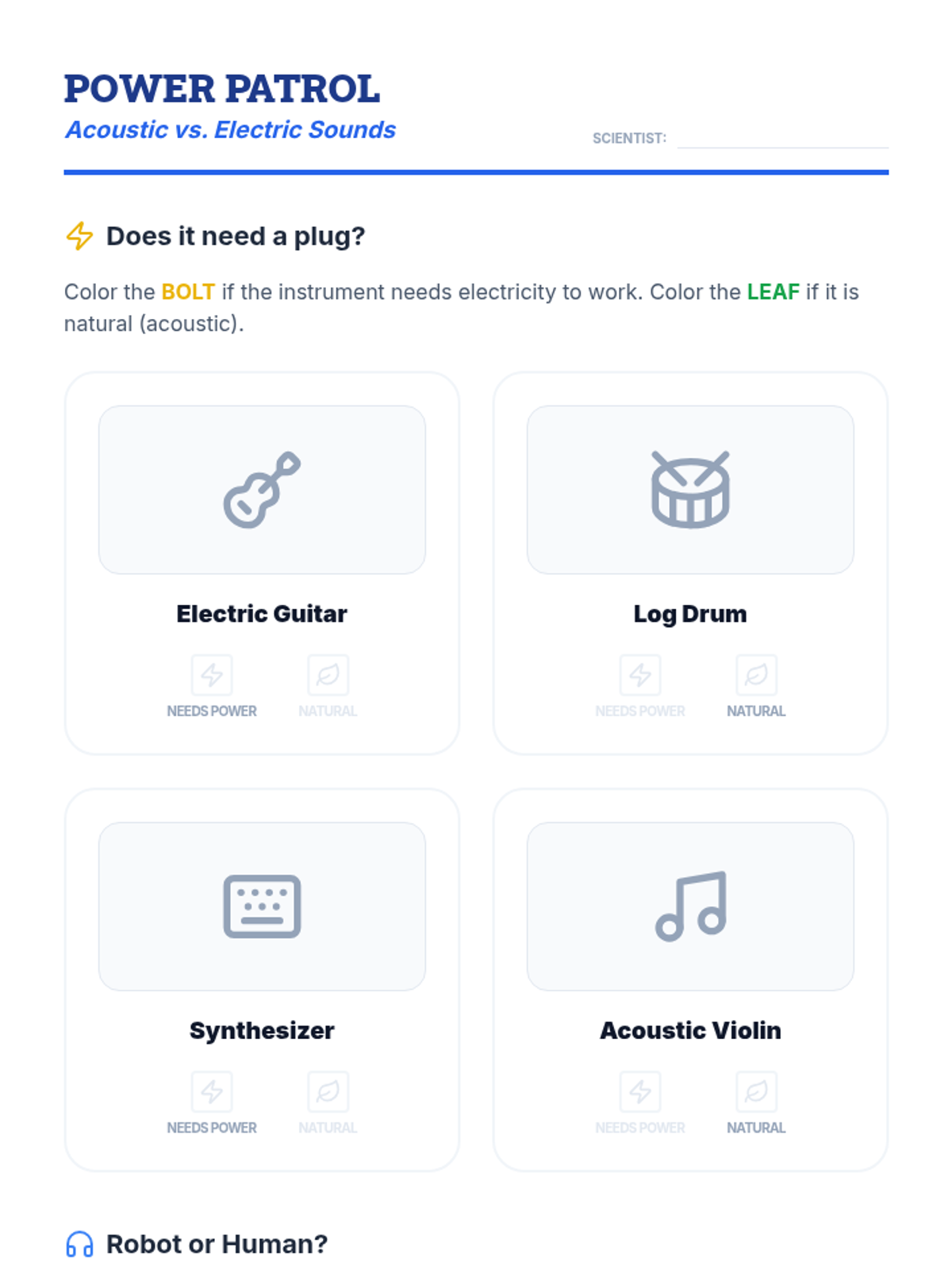
An introduction to the digital age of music, where students explore synthesizers and drum machines from the 1980s. They compare electronic sounds with traditional acoustic instruments.
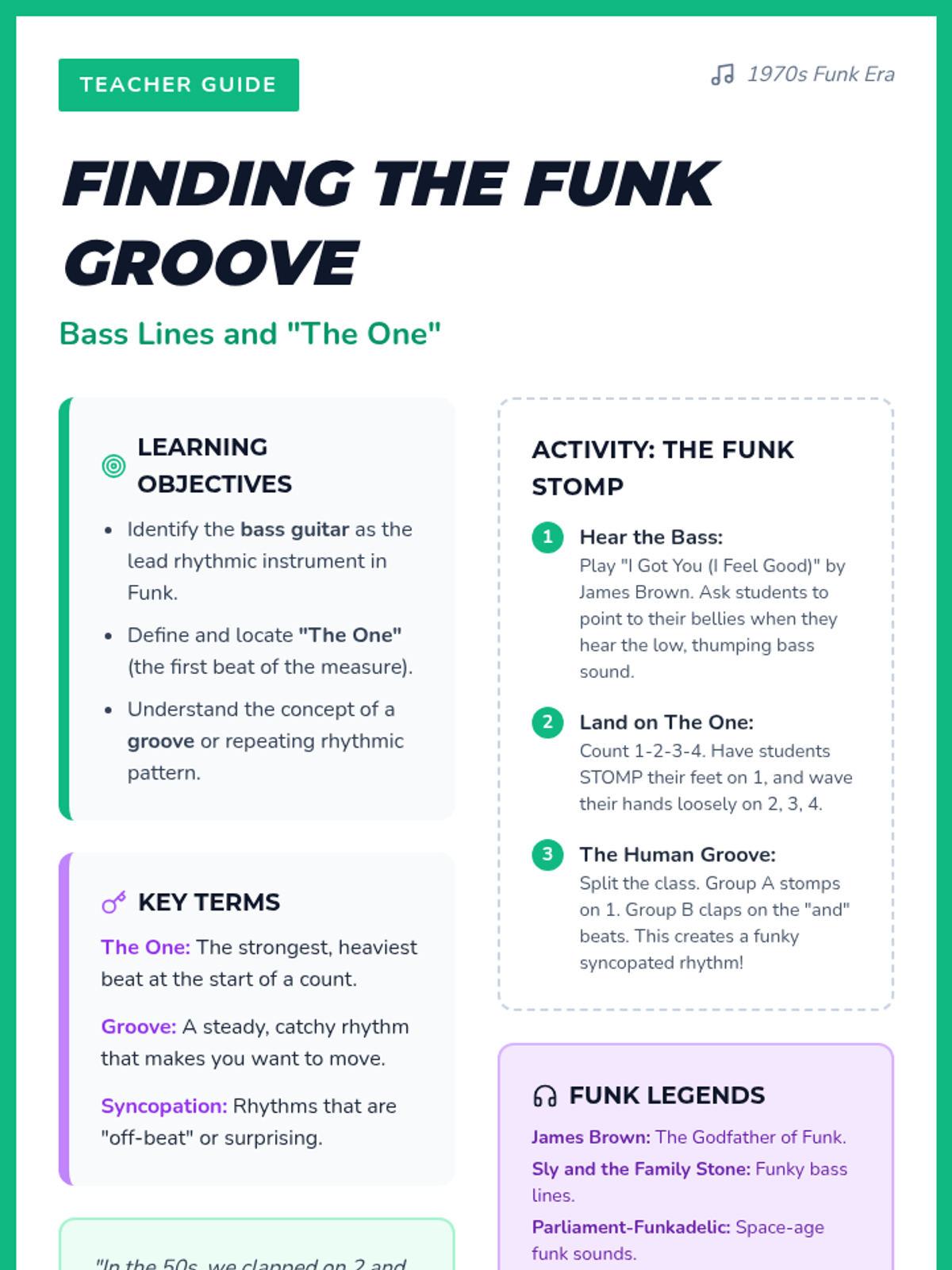
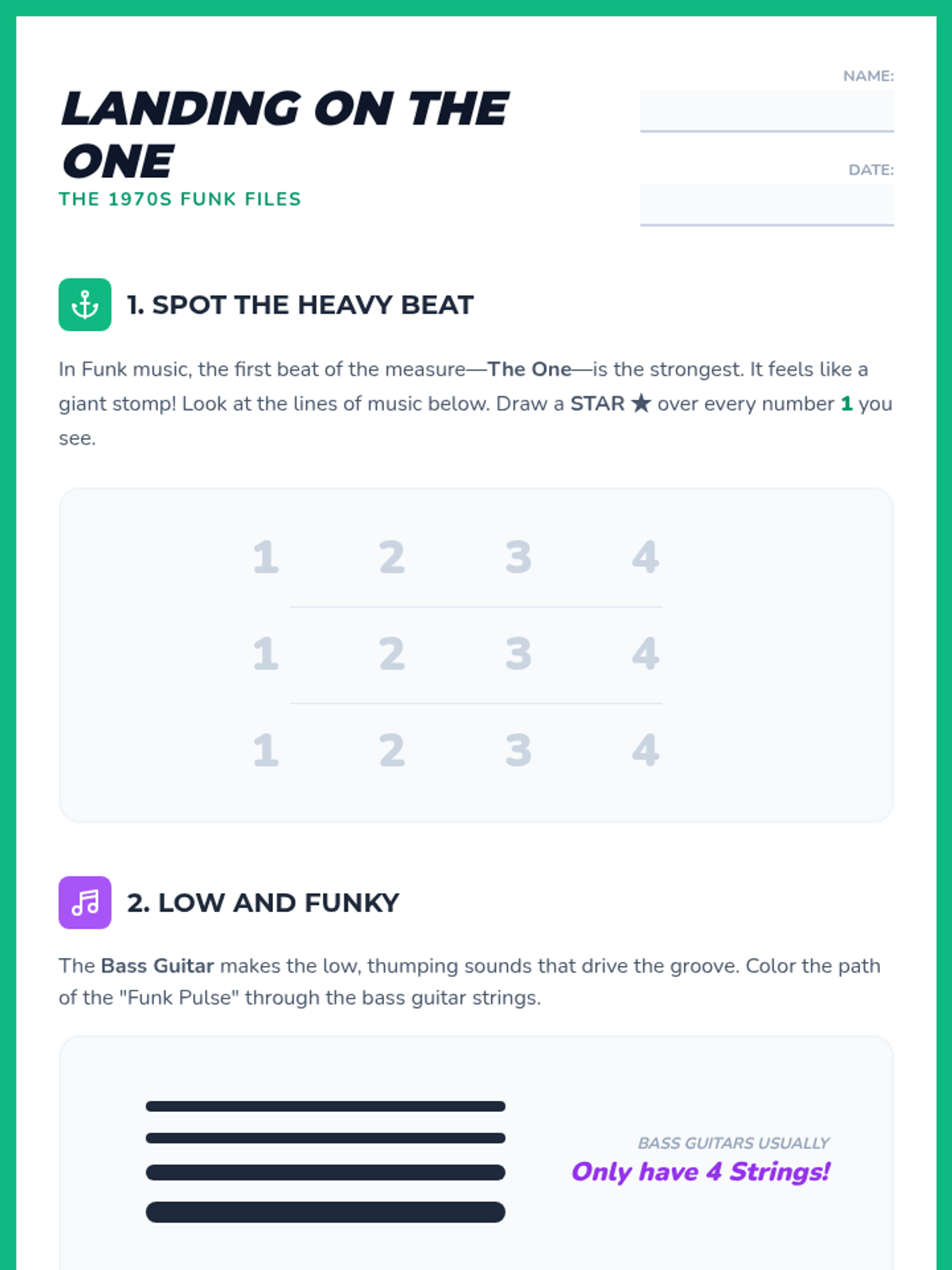
Learners dive into the 1970s Funk era, focusing on the bass guitar and the importance of 'The One.' They practice rhythmic grounding through movement and listening exercises.
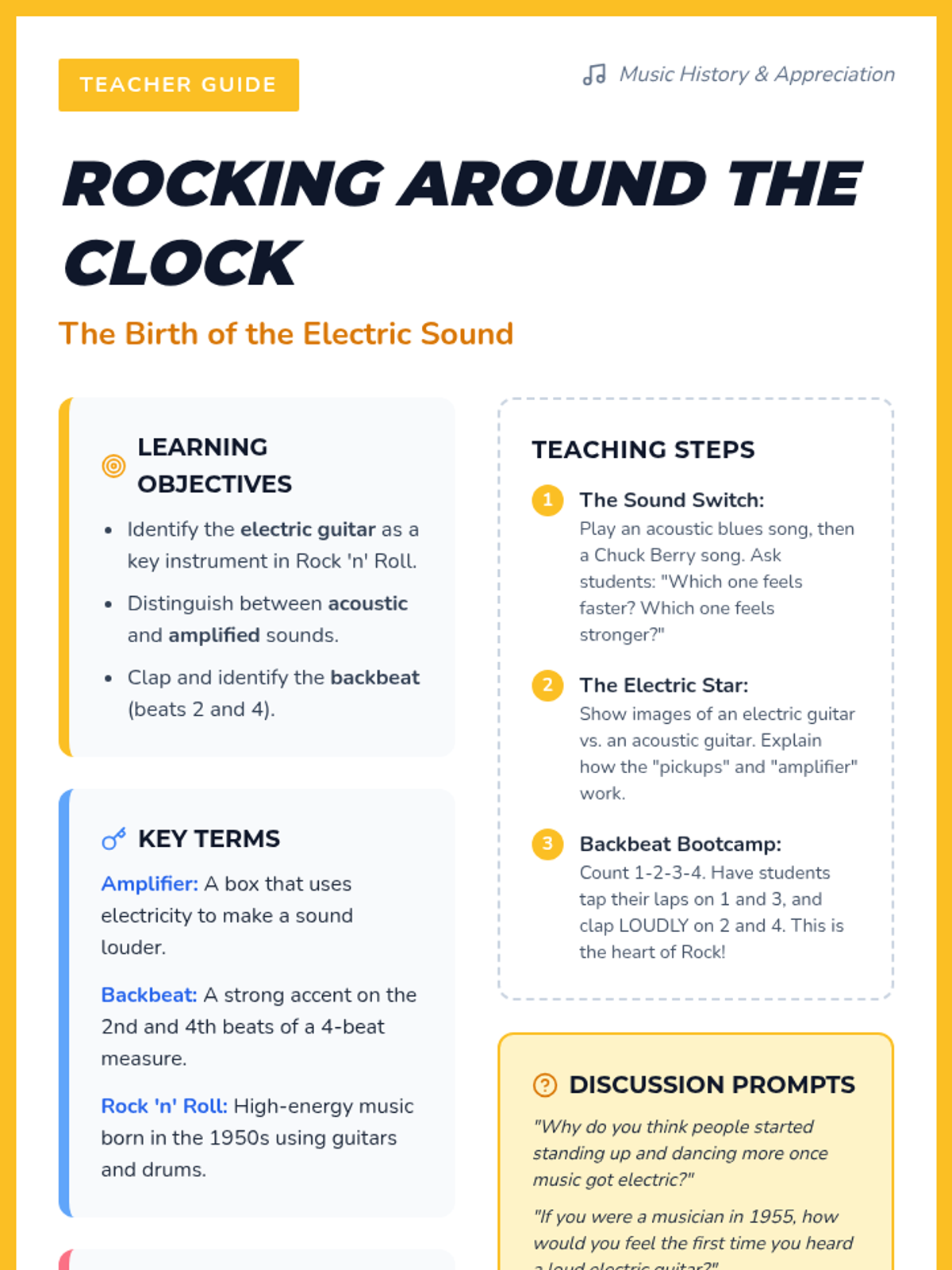
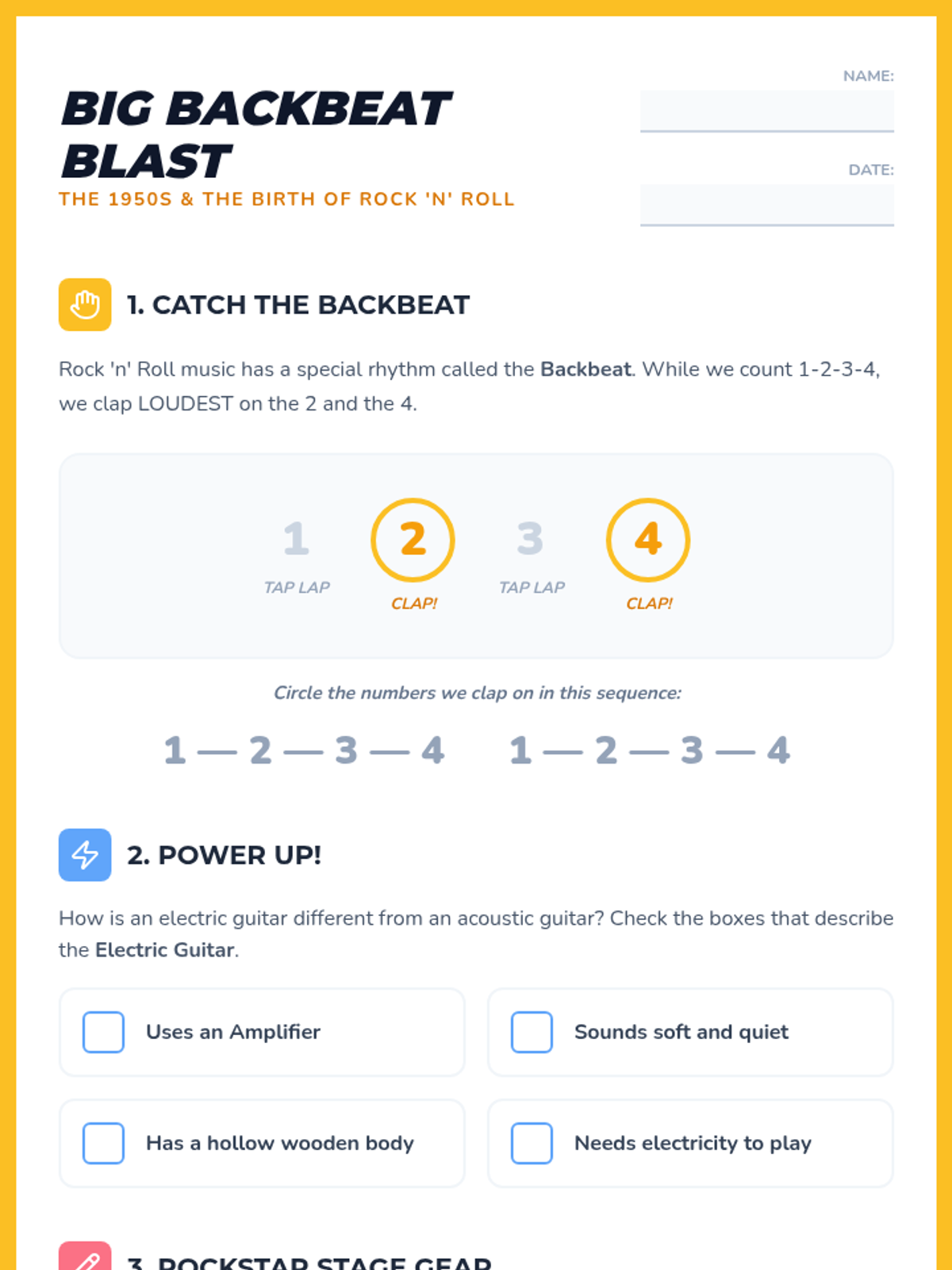
Students explore the birth of Rock 'n' Roll, focusing on the electric guitar and the shift from acoustic to amplified sound. They learn to identify the backbeat and understand how electricity changed the energy of music.
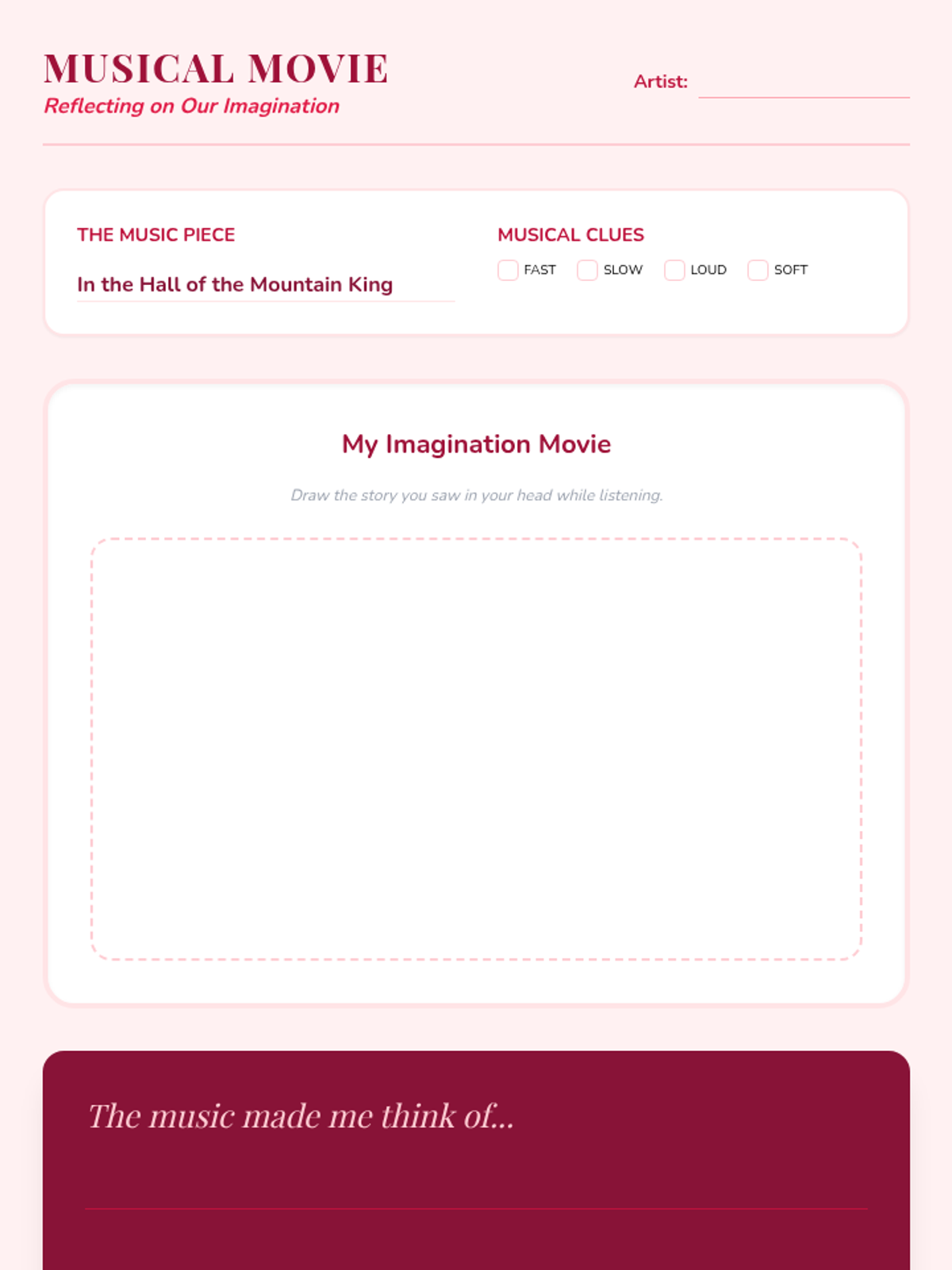
Students reflect on the programmatic music heard throughout the unit and describe the imagery it evokes in their imagination.
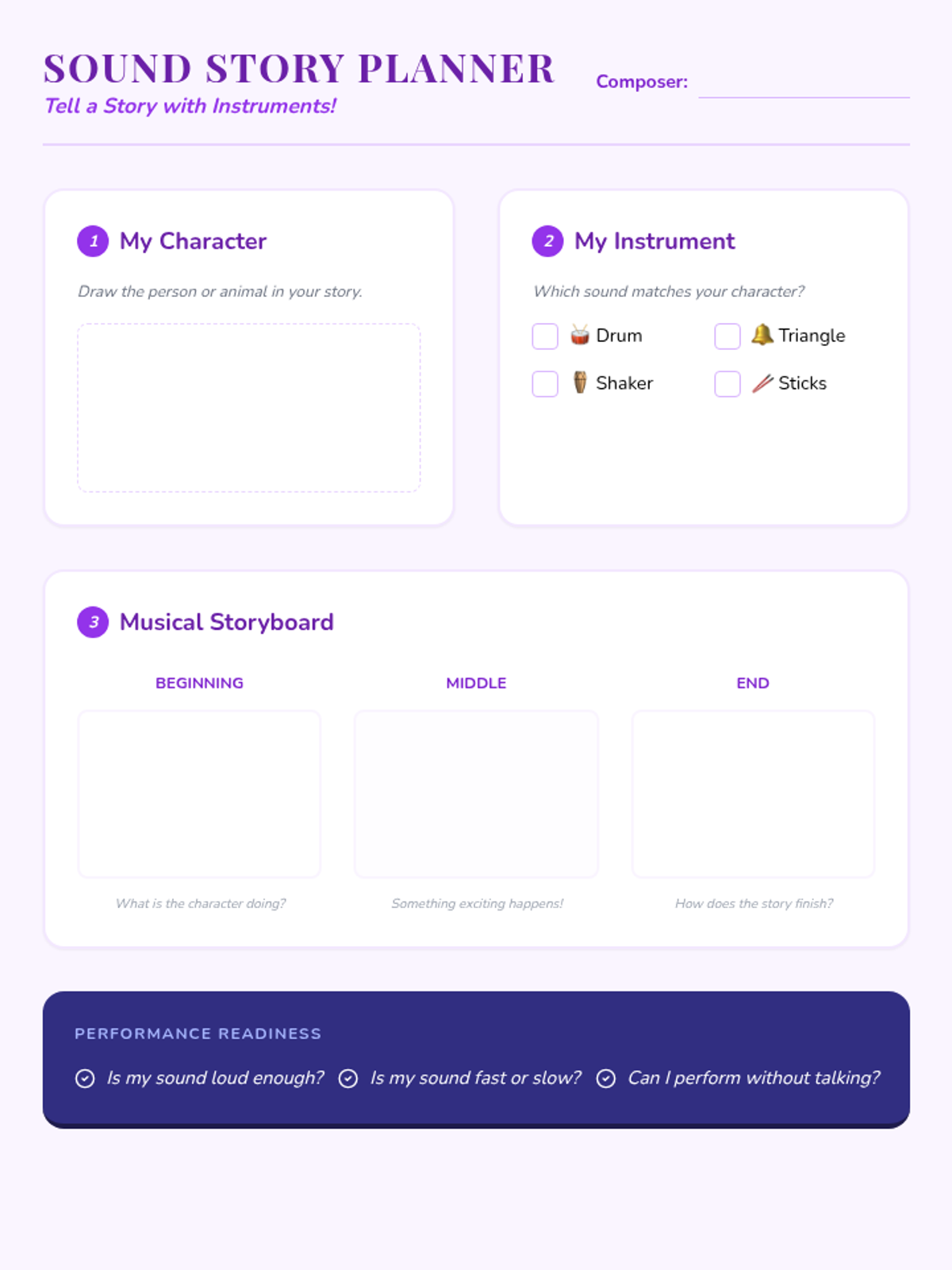
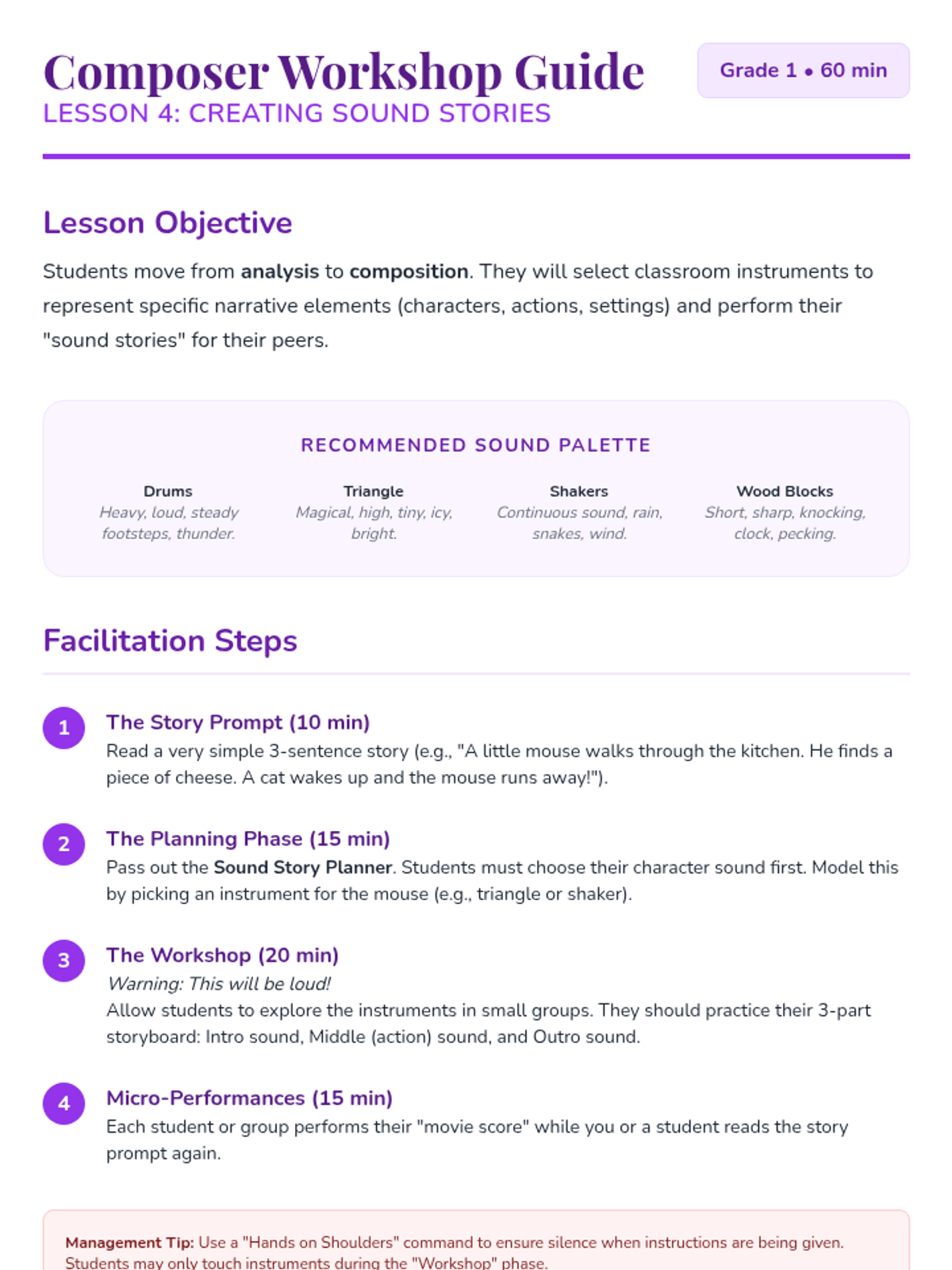
Students use classroom instruments to compose their own soundscapes for short narratives.
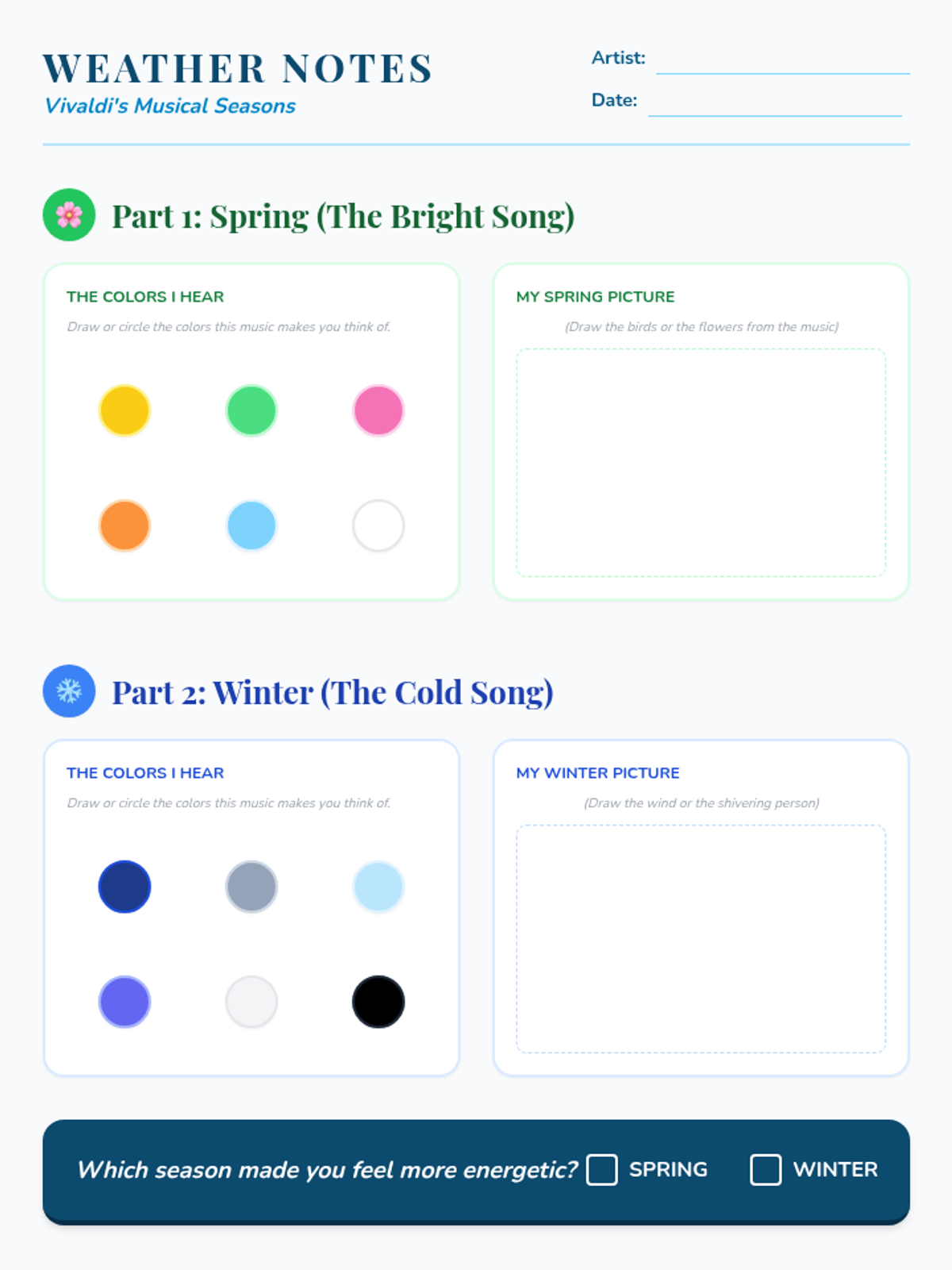
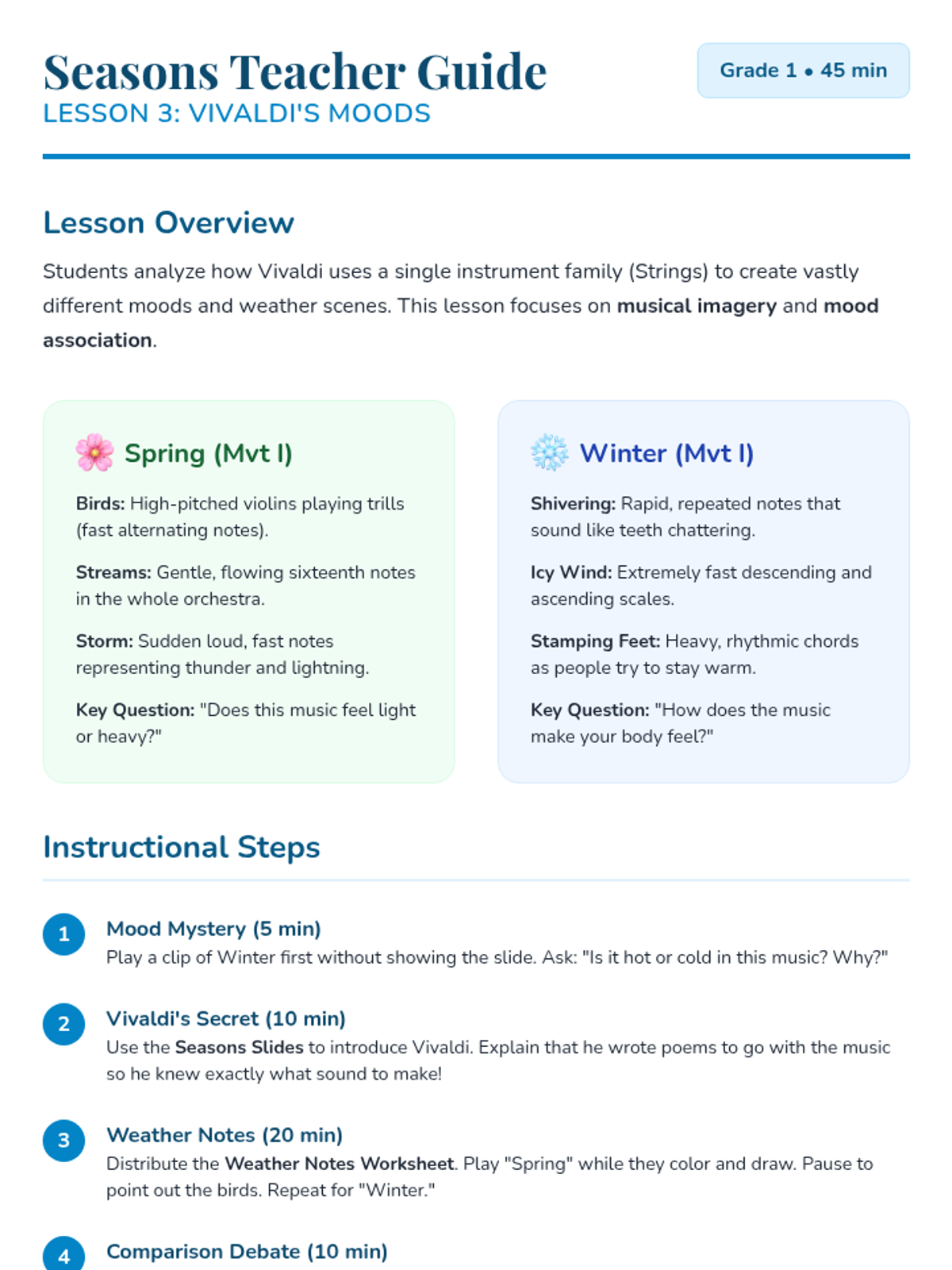
Students compare 'Spring' and 'Winter' from Vivaldi's 'Four Seasons' to see how music creates mood and depicts weather.
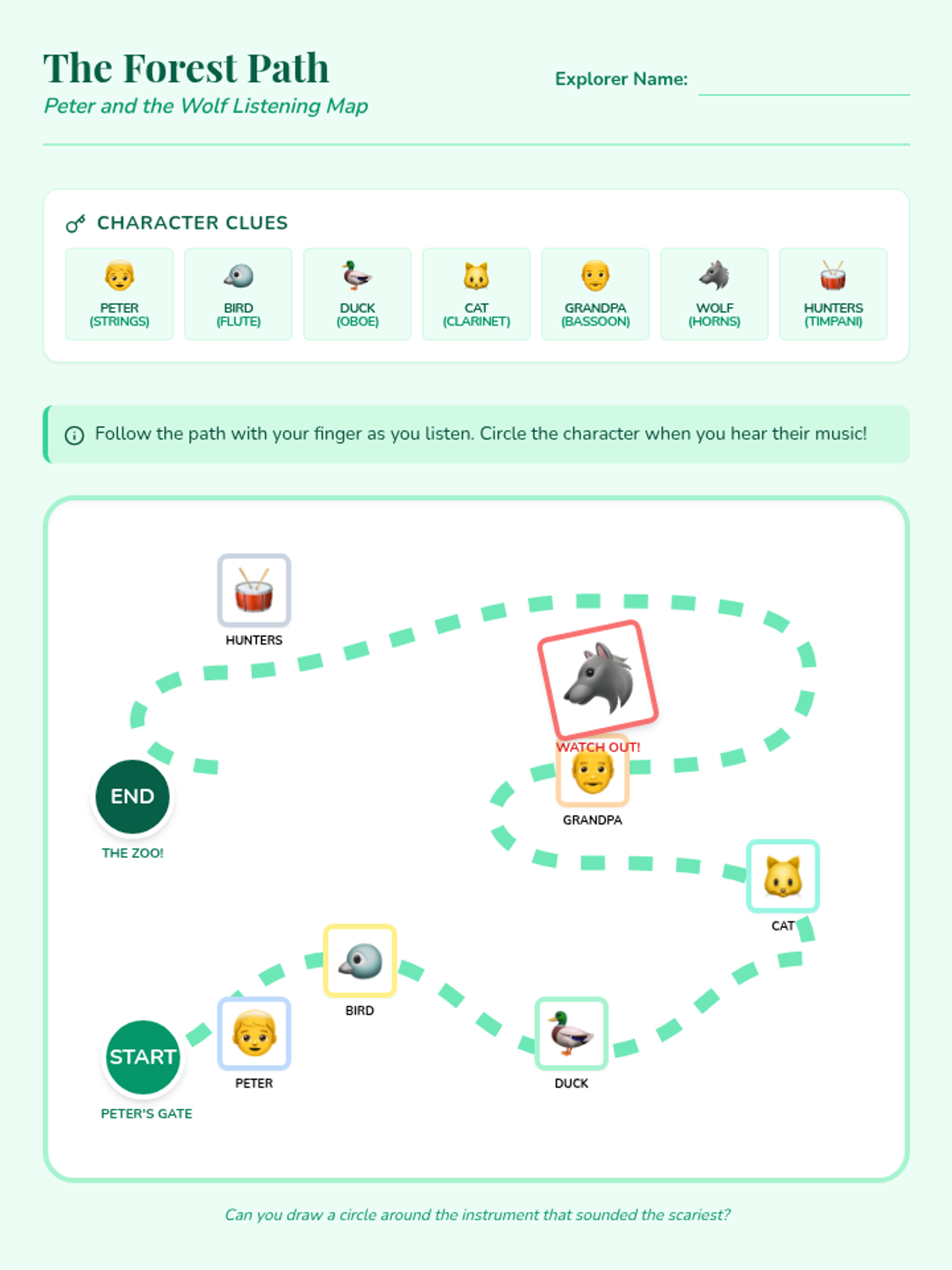
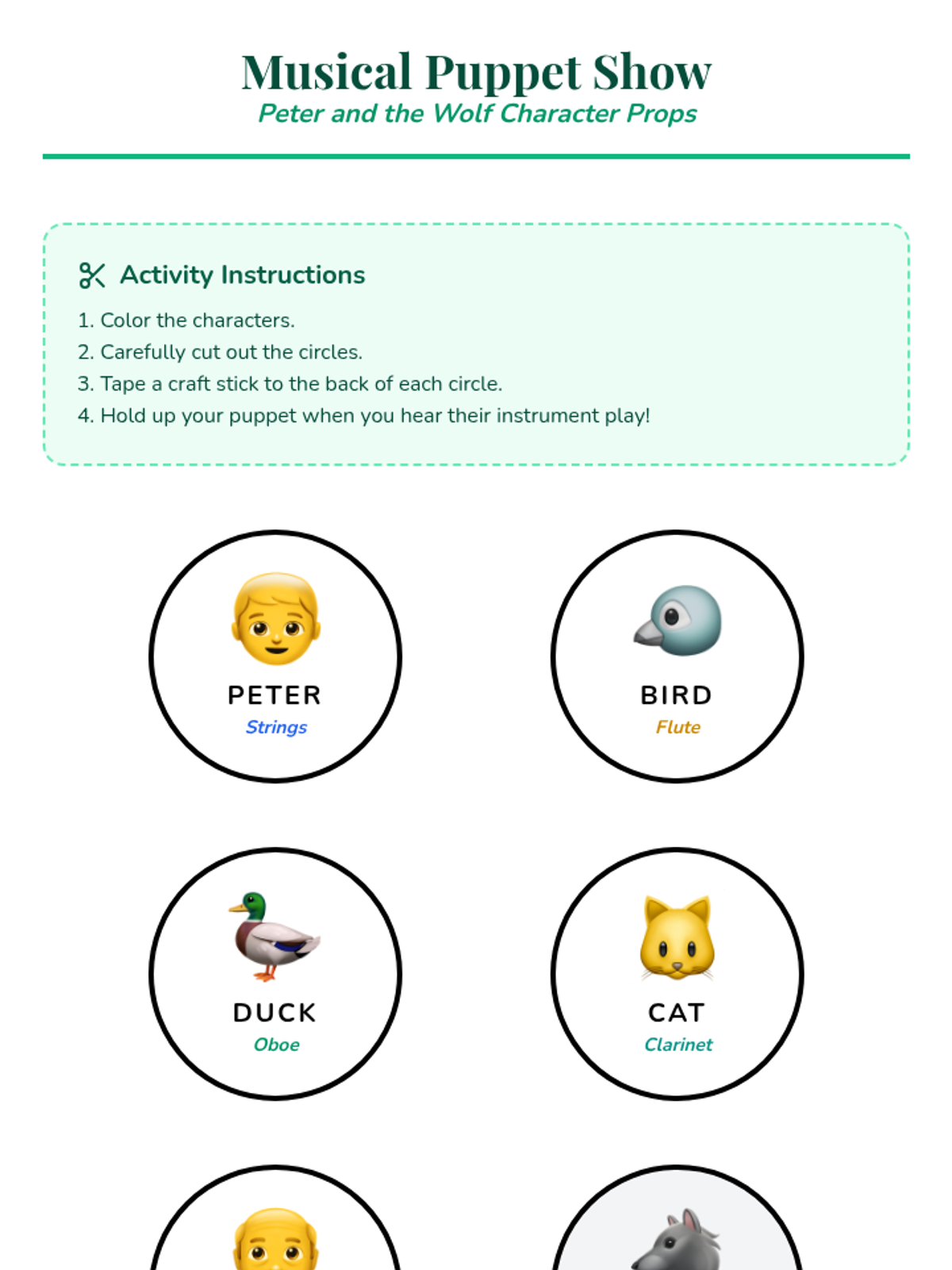
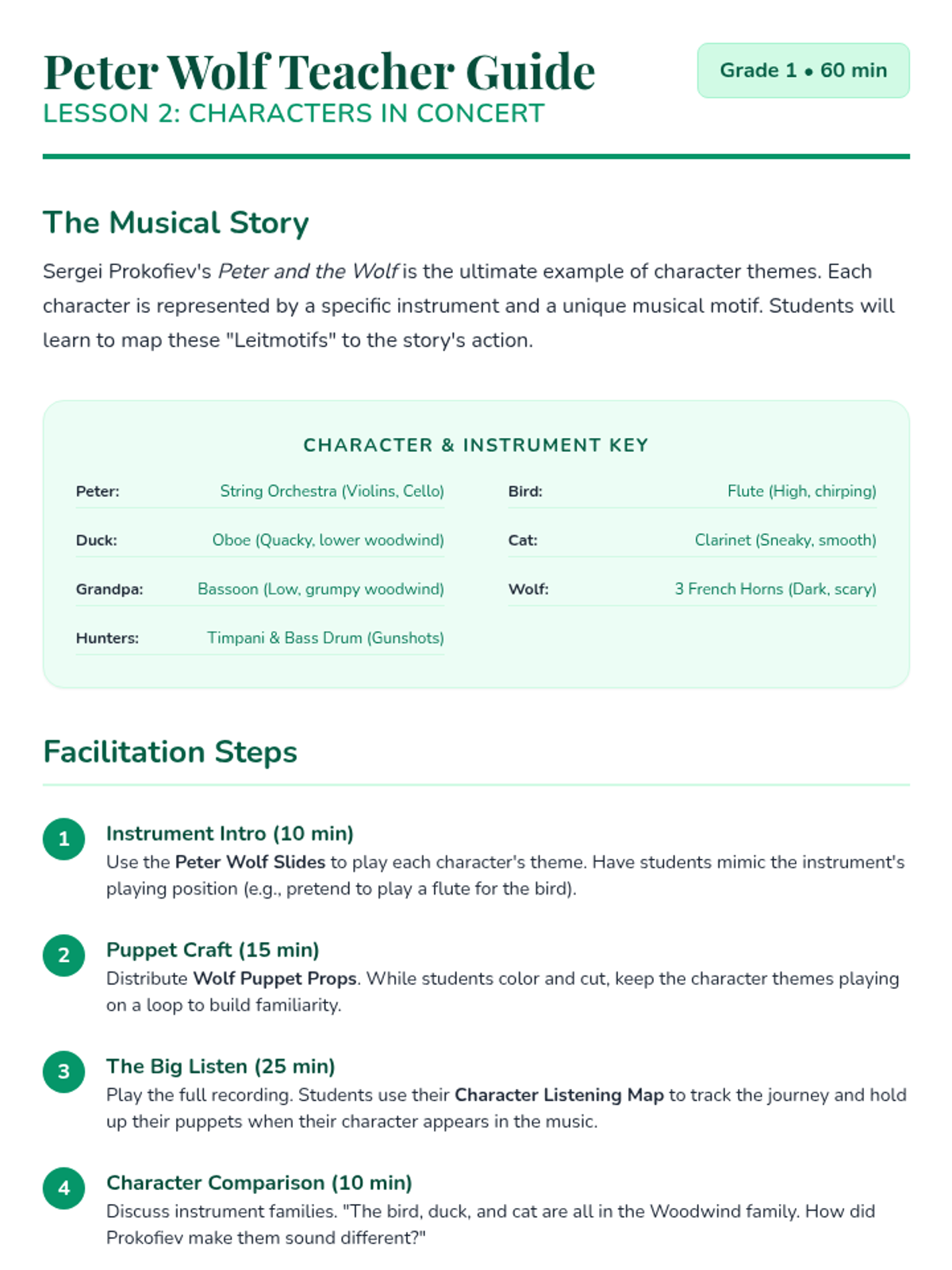
Students map characters to specific instruments in Prokofiev's 'Peter and the Wolf' and track the narrative through a visual listening map.
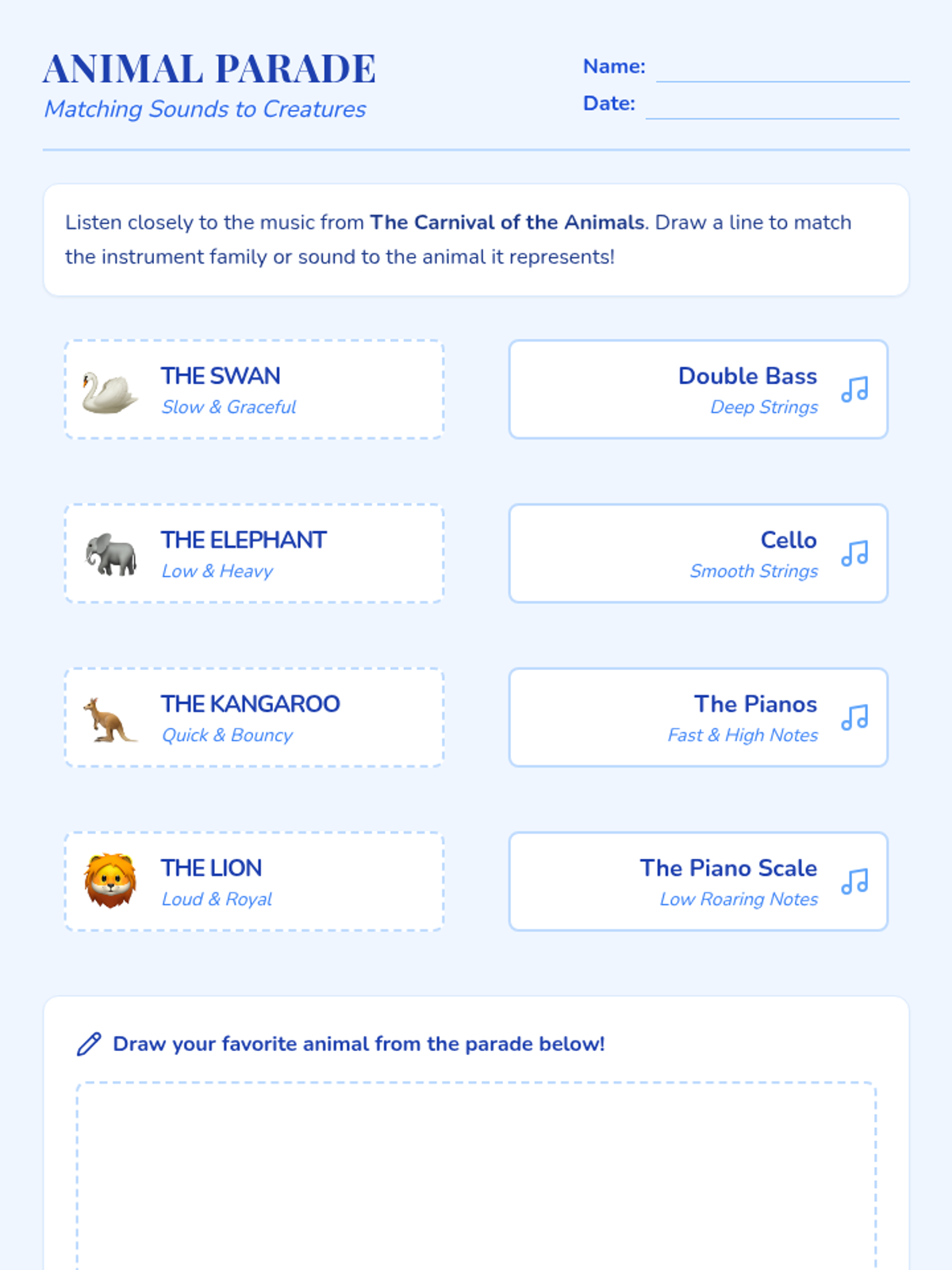
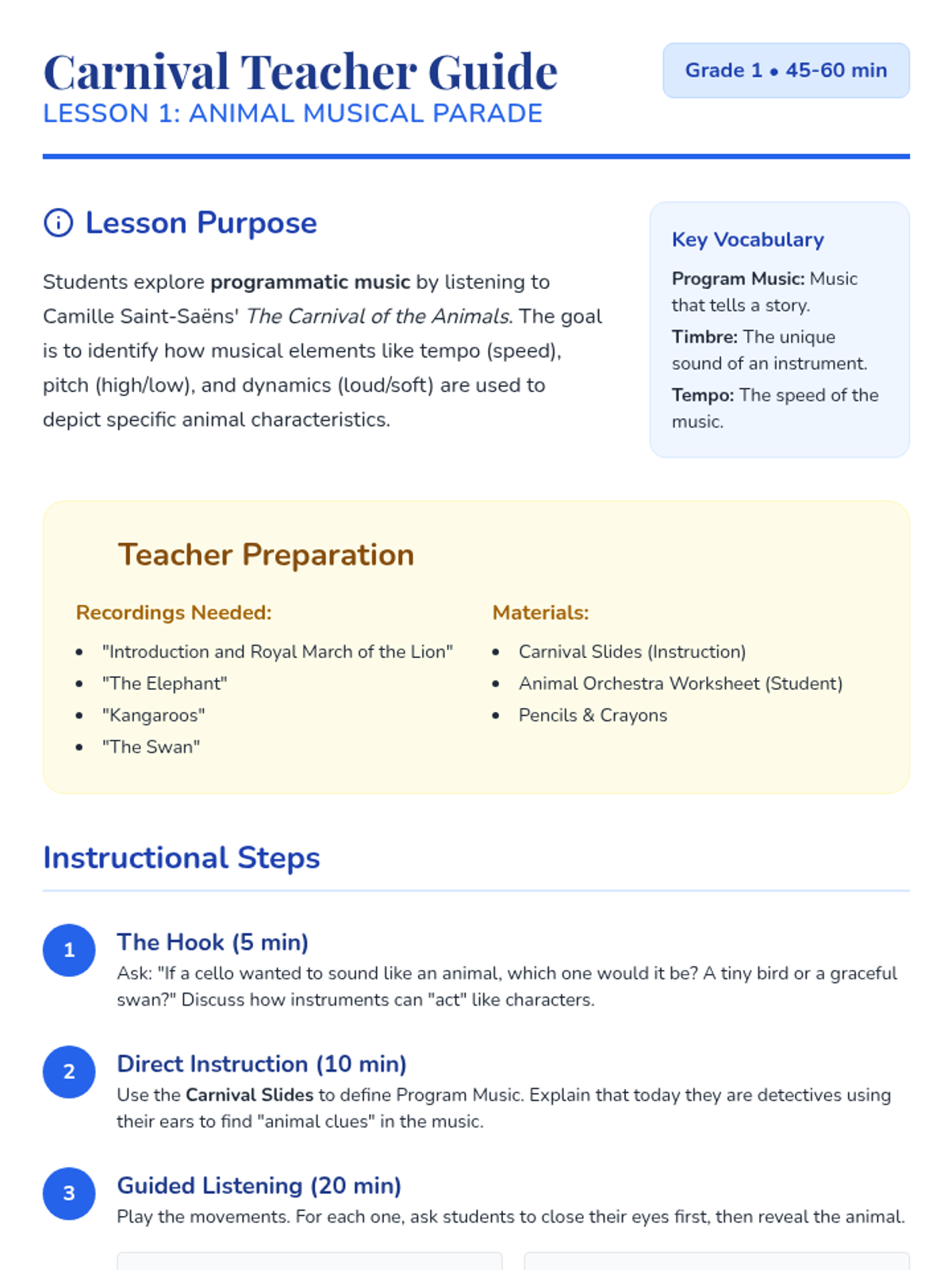
Students listen to selections from Saint-Saëns' 'Carnival of the Animals' to identify how different instruments and musical elements represent various animals.
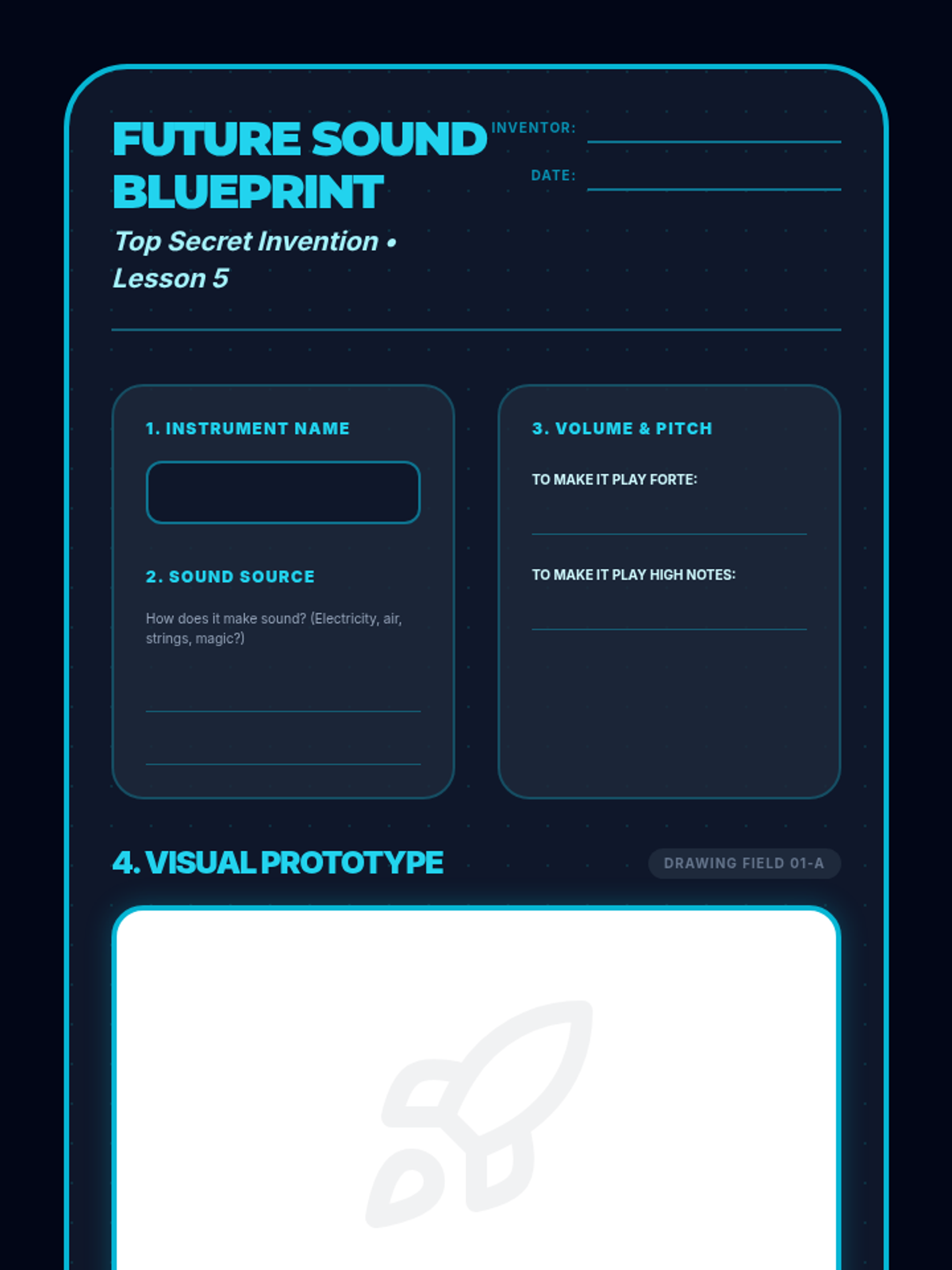
Students synthesize their learning to design a prototype of an 'instrument of the future,' explaining how it produces sound.
Students discover how electricity changed music by exploring electric guitars and synthesizers, experimenting with digital sound creation.
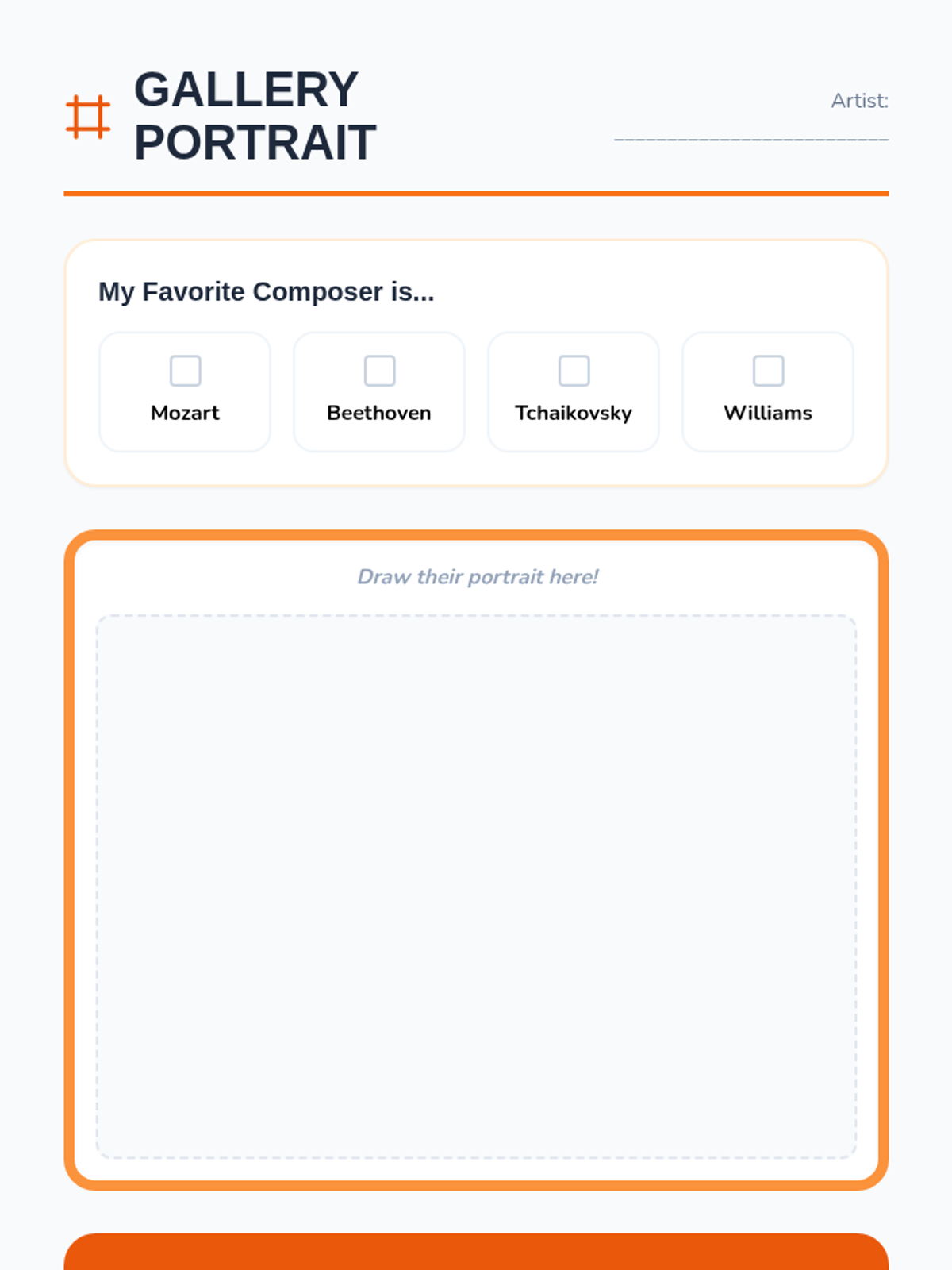
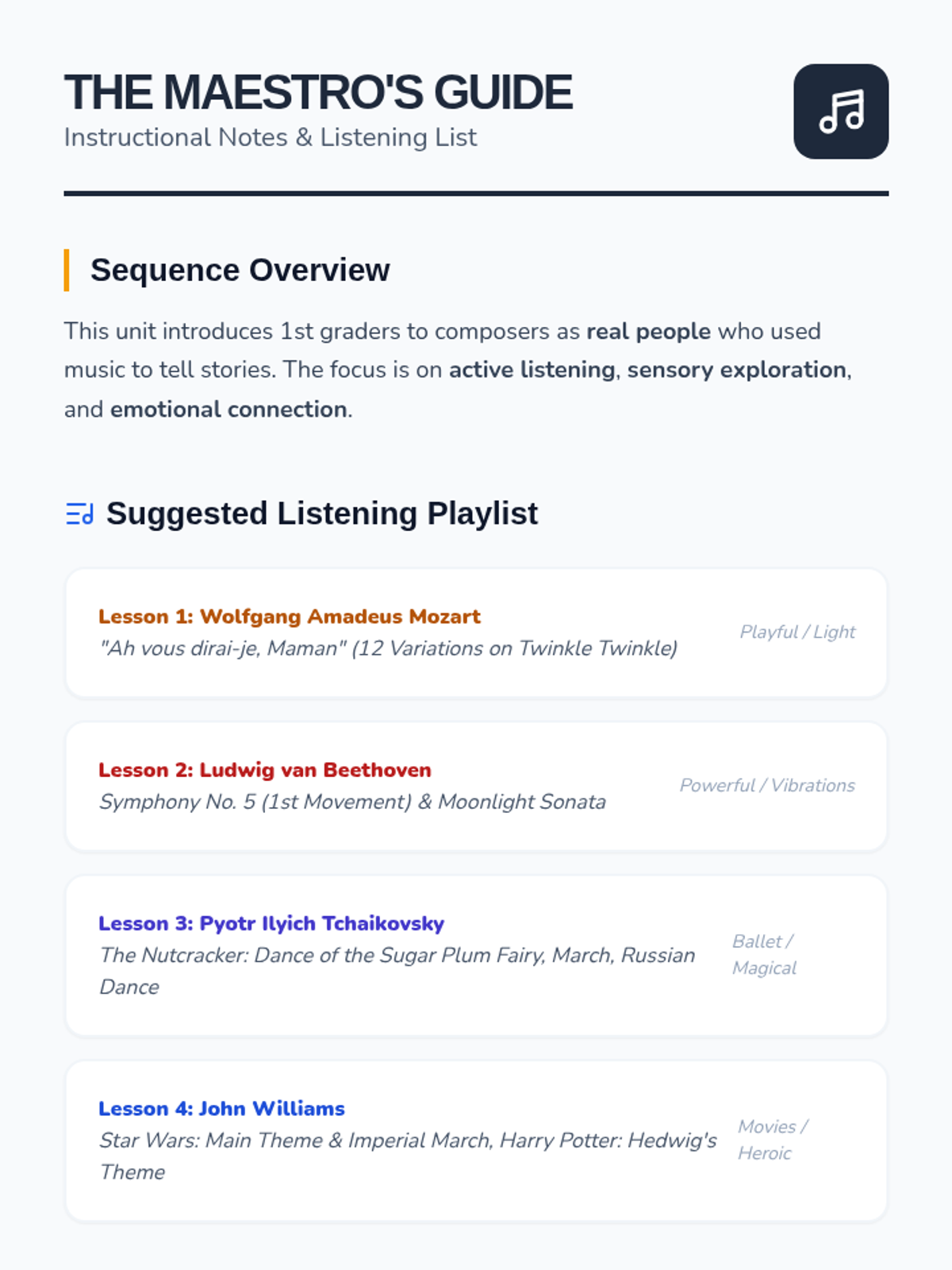
A culminating lesson where students review the composers and create a visual gallery and class playlist of their favorite melodies.
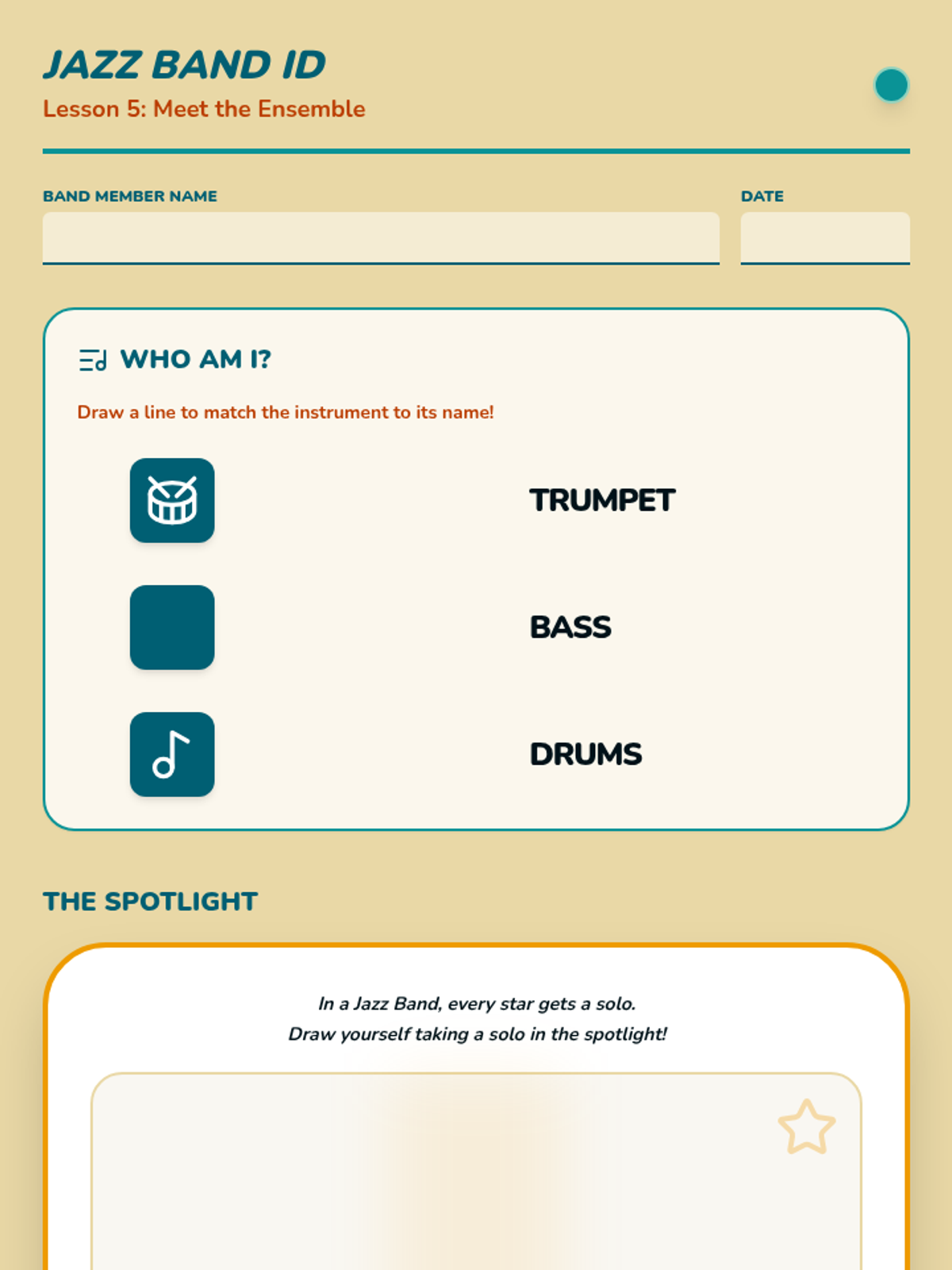
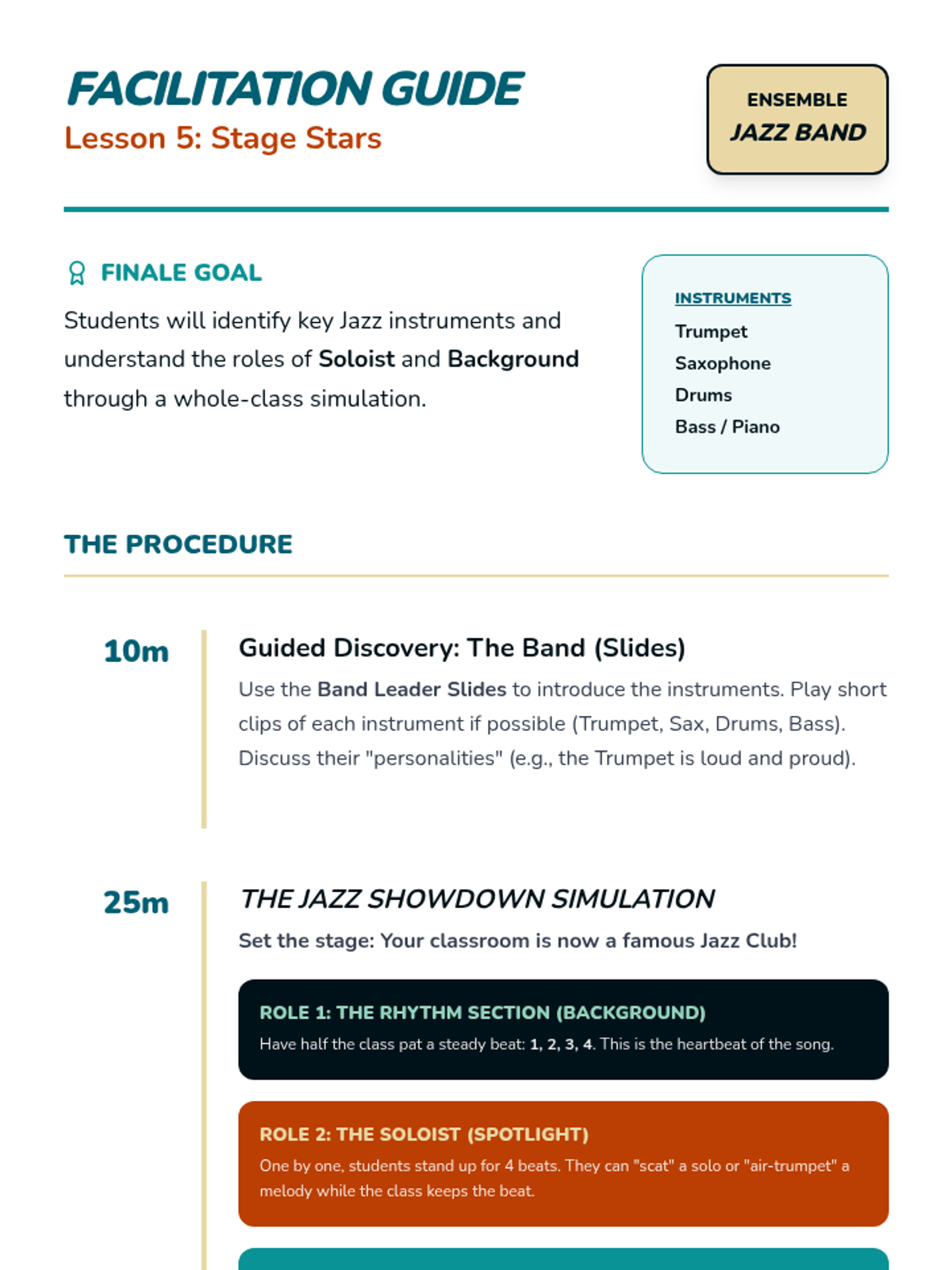
A celebration of the jazz ensemble where students identify instruments and role-play as soloists and background players.
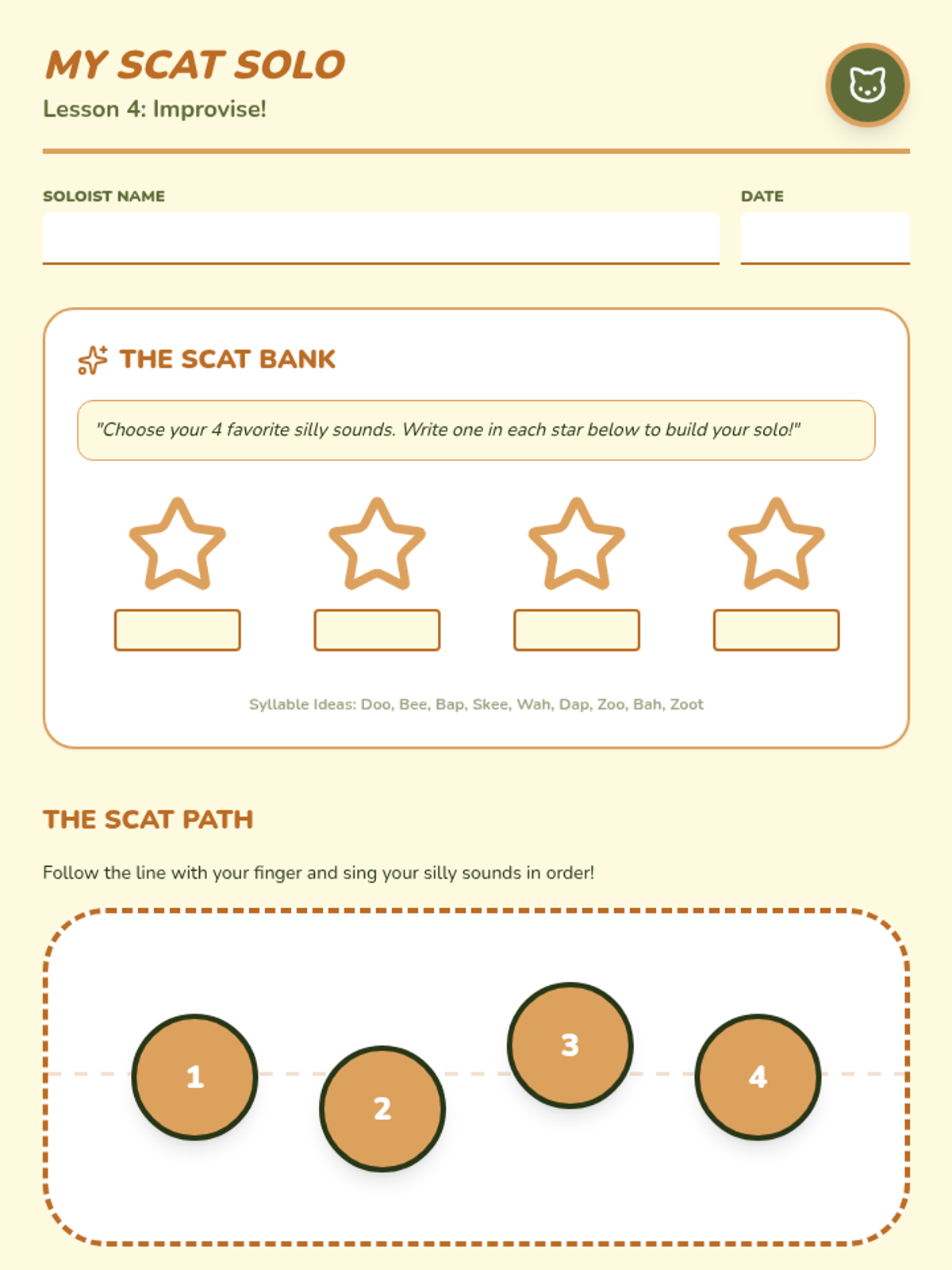
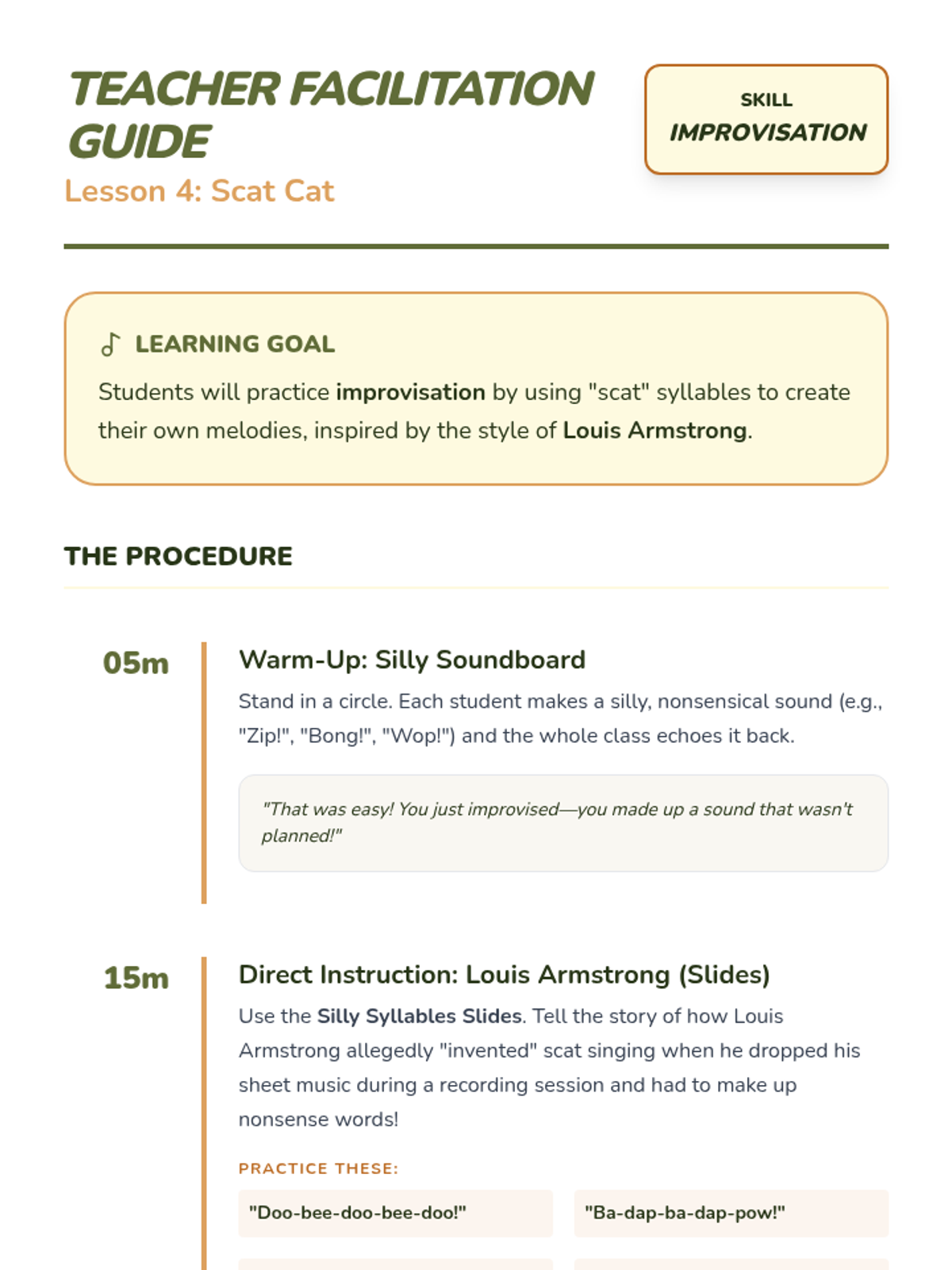
Students learn about Louis Armstrong and practice scat singing, discovering the freedom of improvisation and vocal creativity.
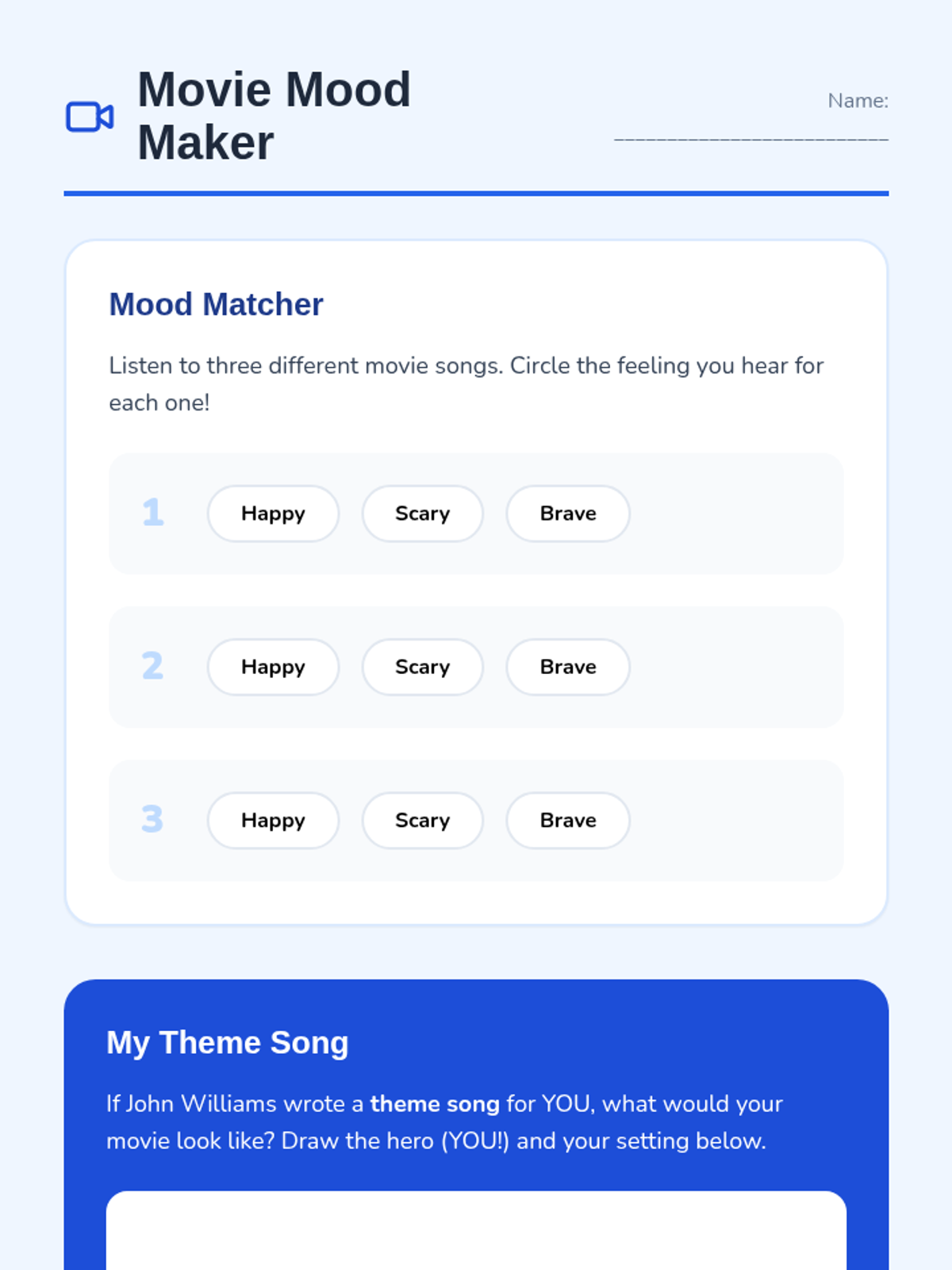
Students connect classical music concepts to modern film scores by John Williams, identifying how music creates mood and atmosphere in movies.
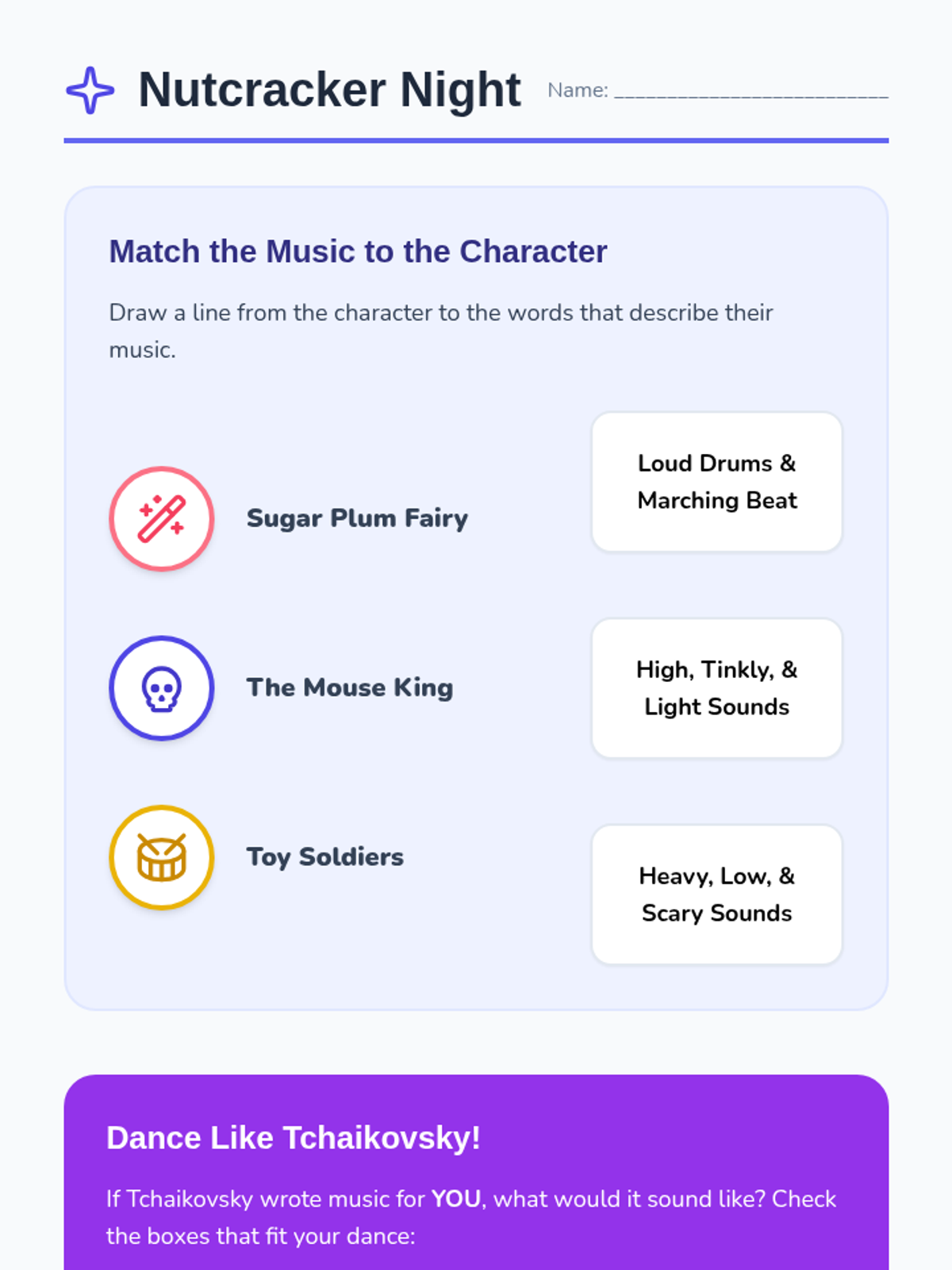
Students explore the magical world of ballet through the music of Tchaikovsky, focusing on character identification in The Nutcracker.
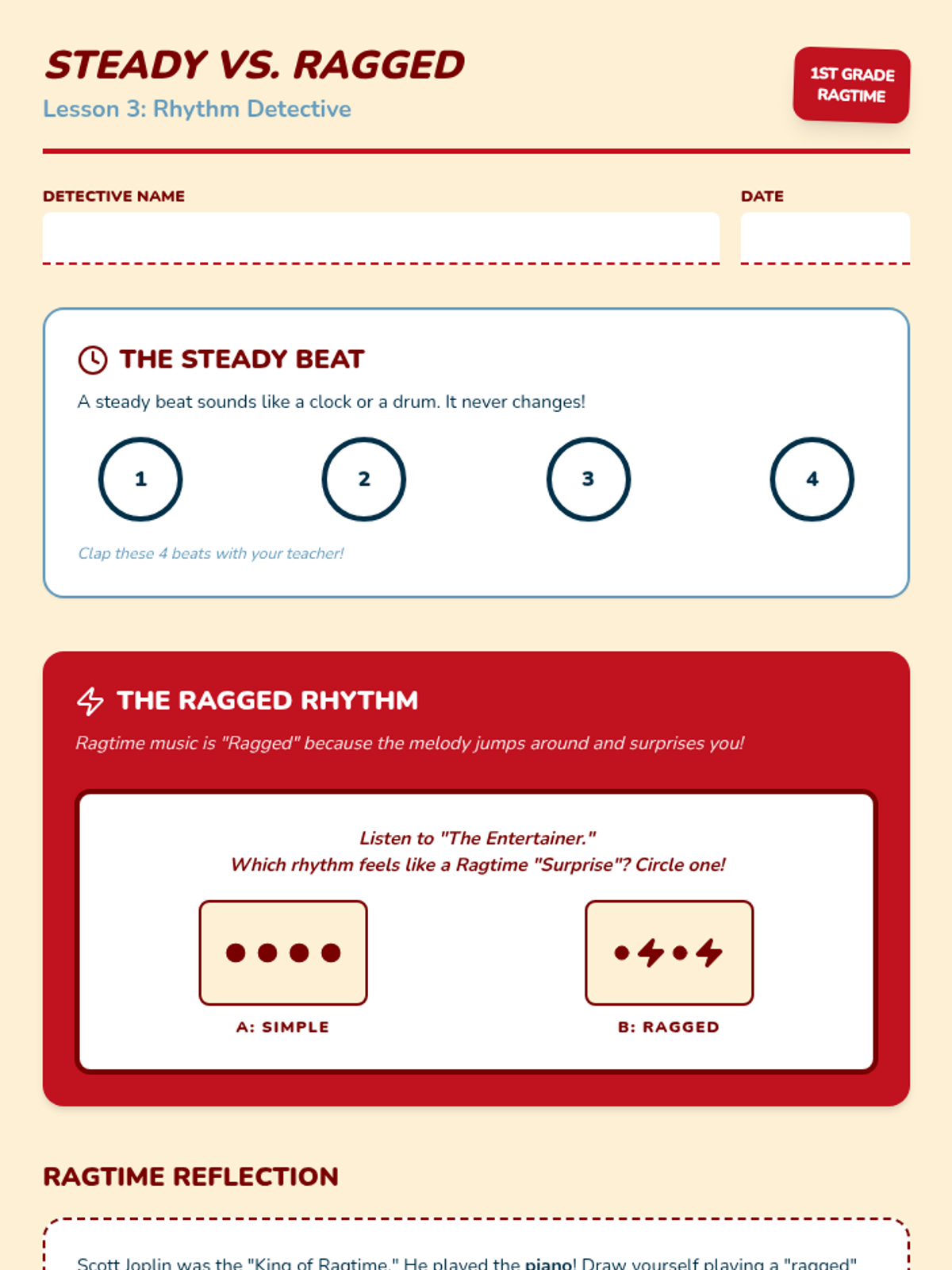
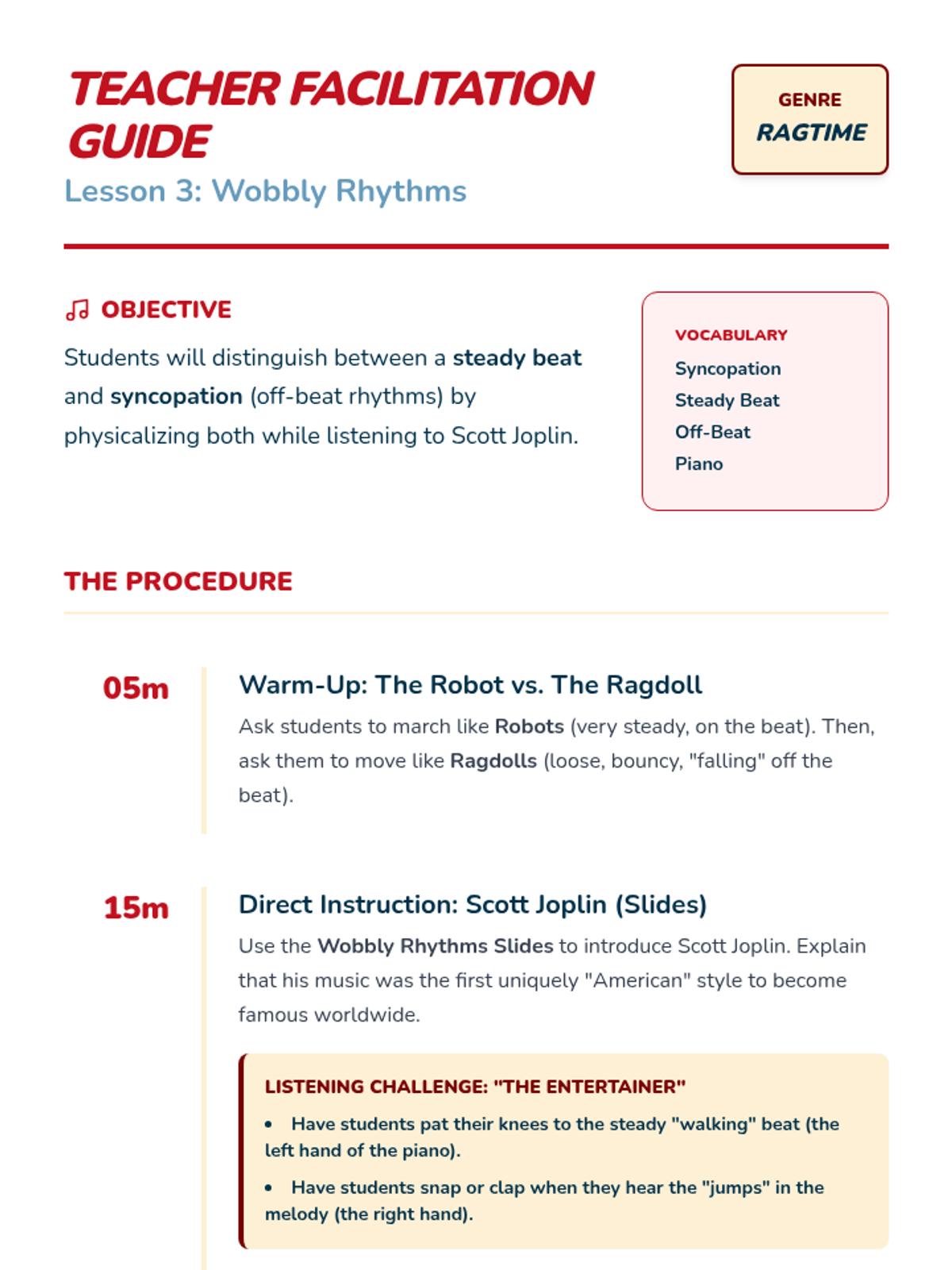
Students discover Ragtime and Scott Joplin, learning to identify 'ragged' syncopated rhythms while maintaining a steady beat.
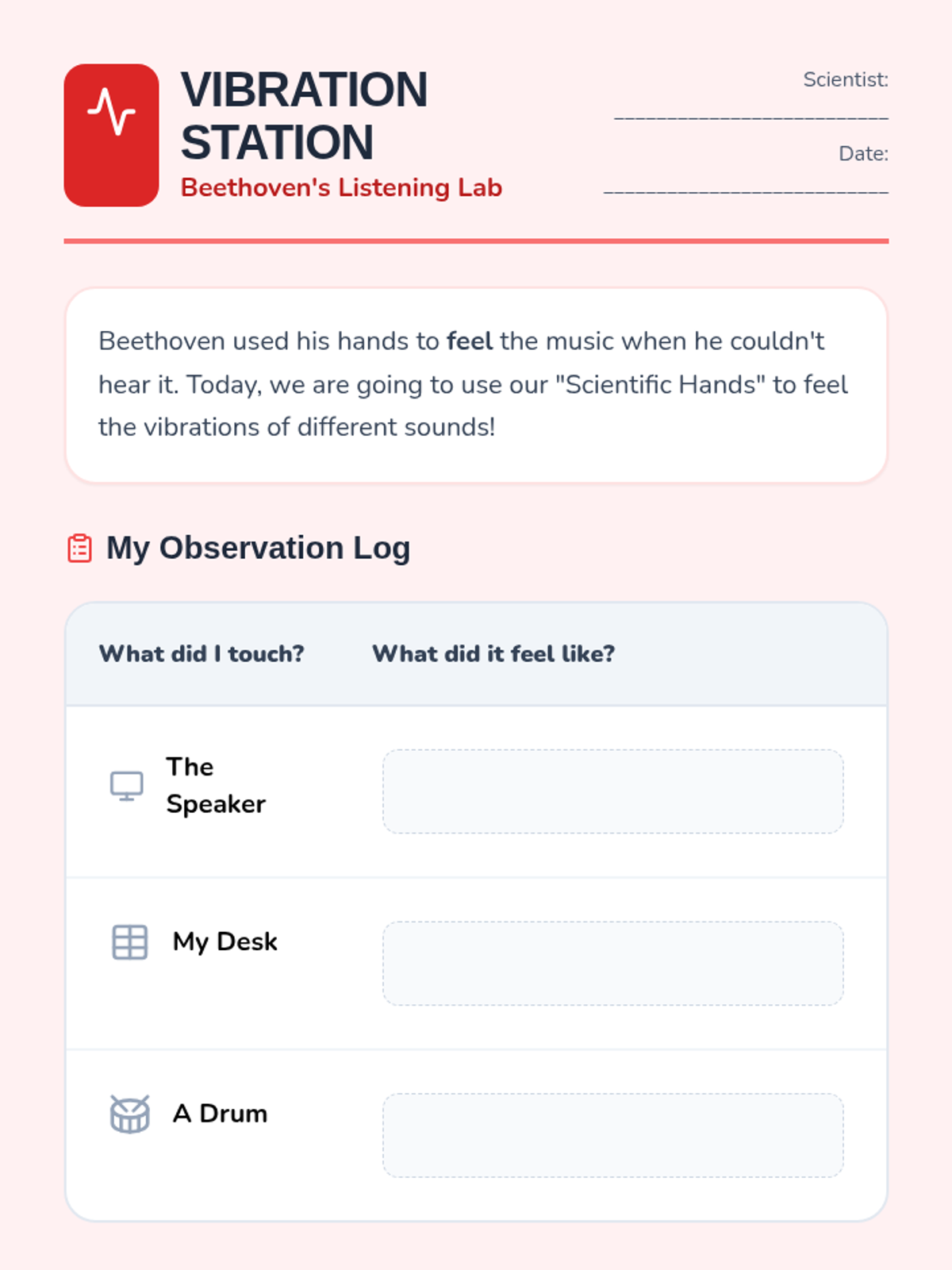
Students discover Ludwig van Beethoven's resilience, learning how he composed music through the power of vibration after losing his hearing.
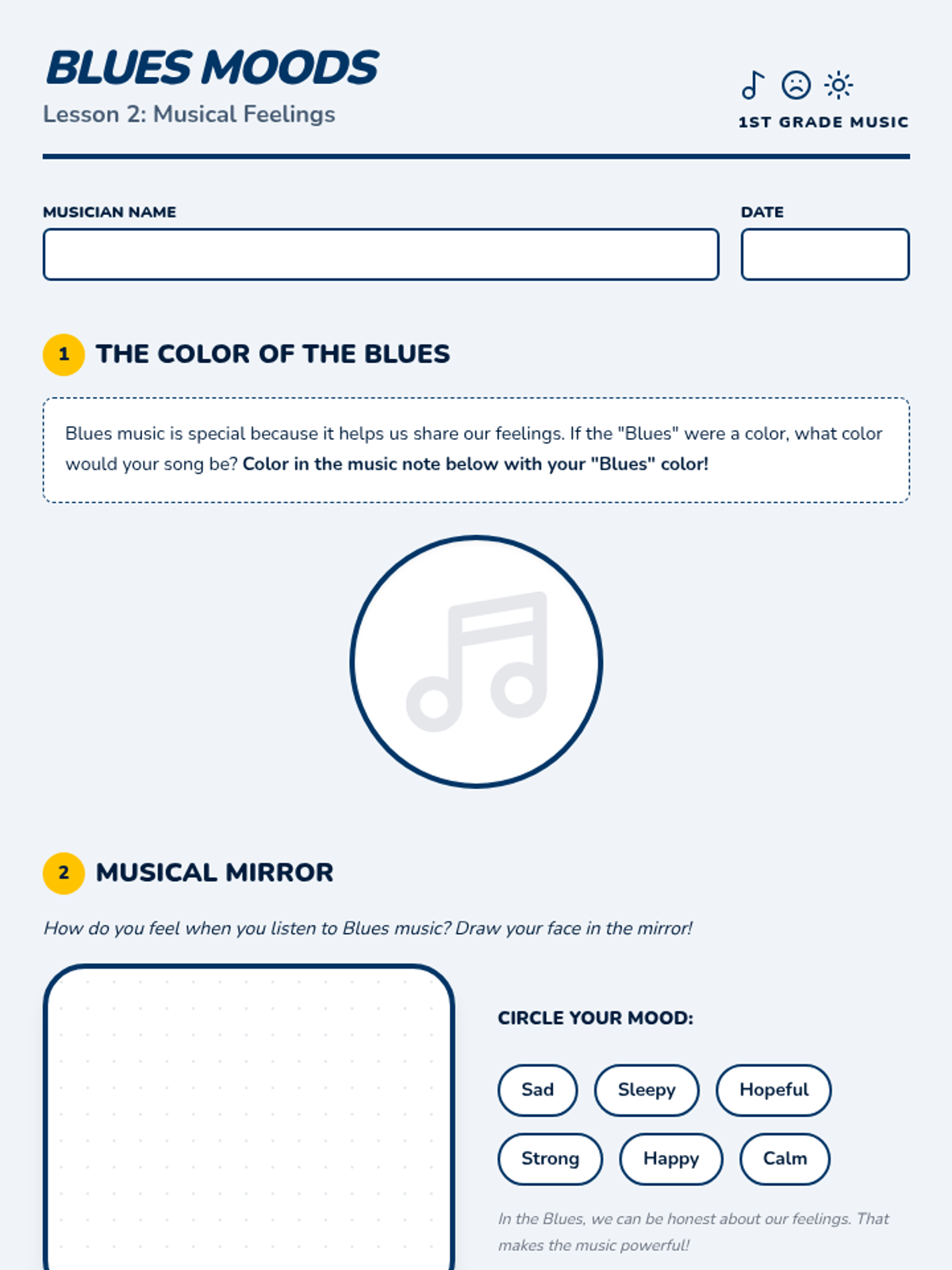
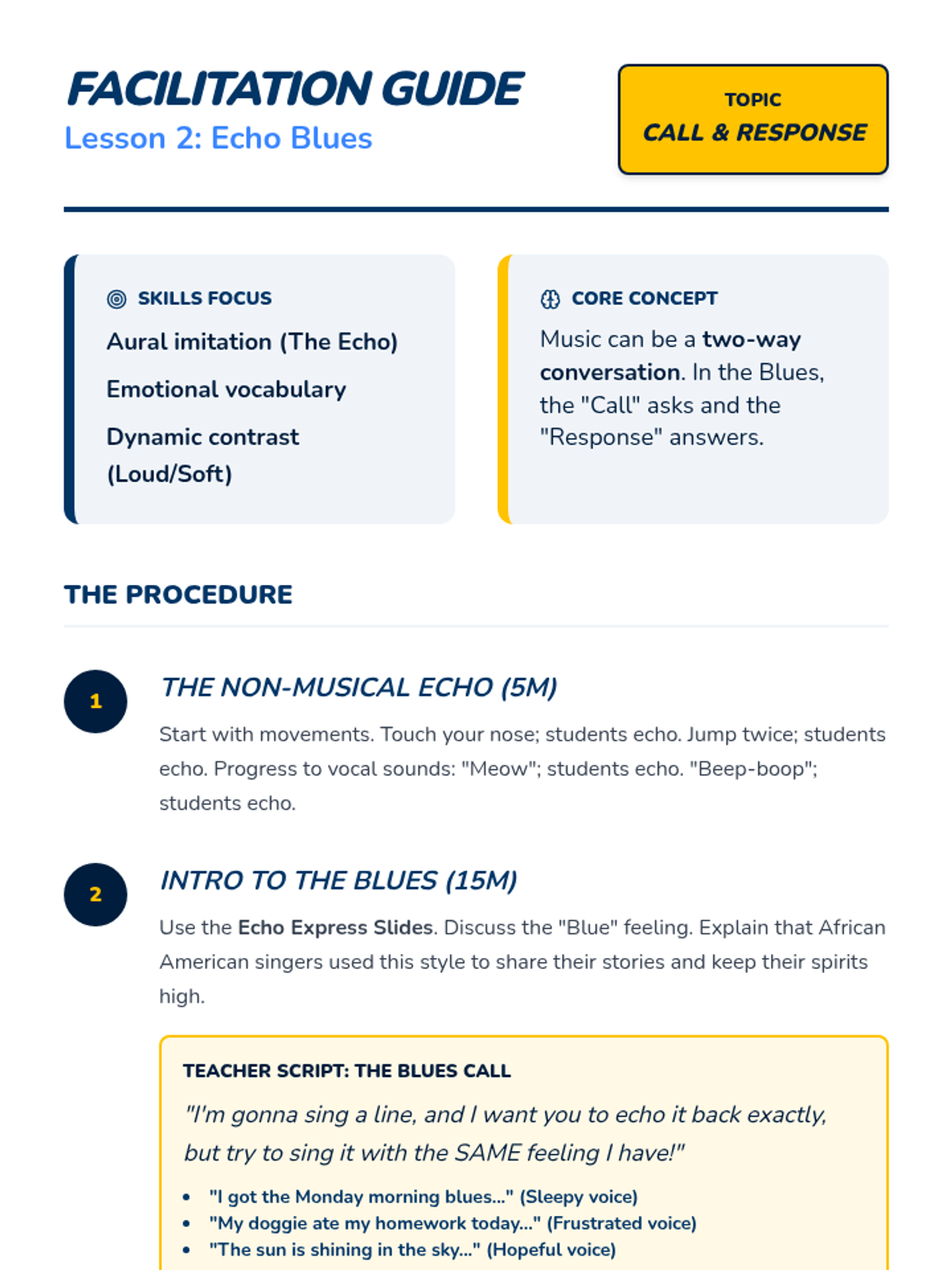
Introduction to the Blues genre and the technique of call-and-response, focusing on emotional expression and musical conversation.
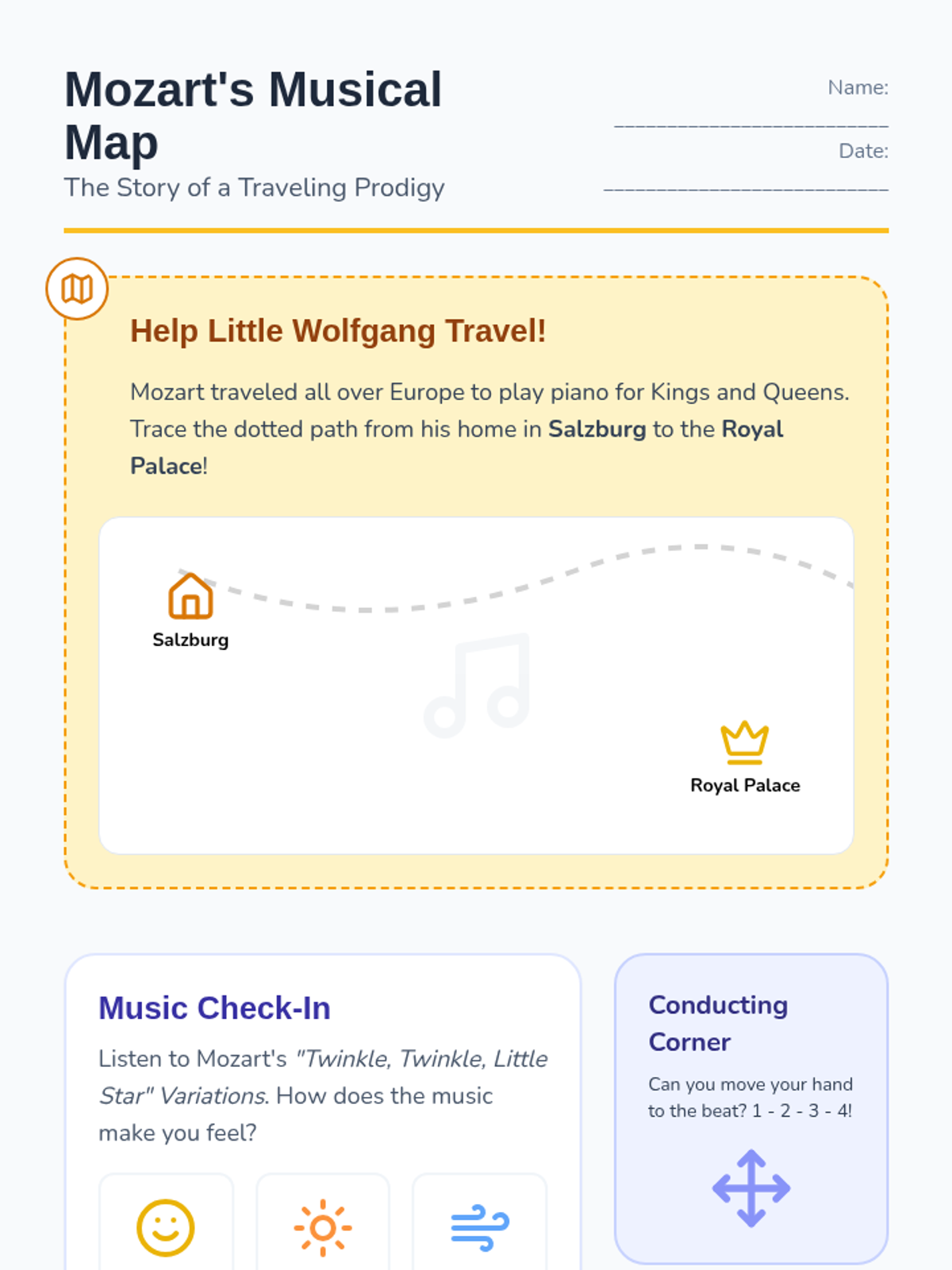
Students meet Wolfgang Amadeus Mozart, exploring his life as a child prodigy and the playful nature of his compositions.
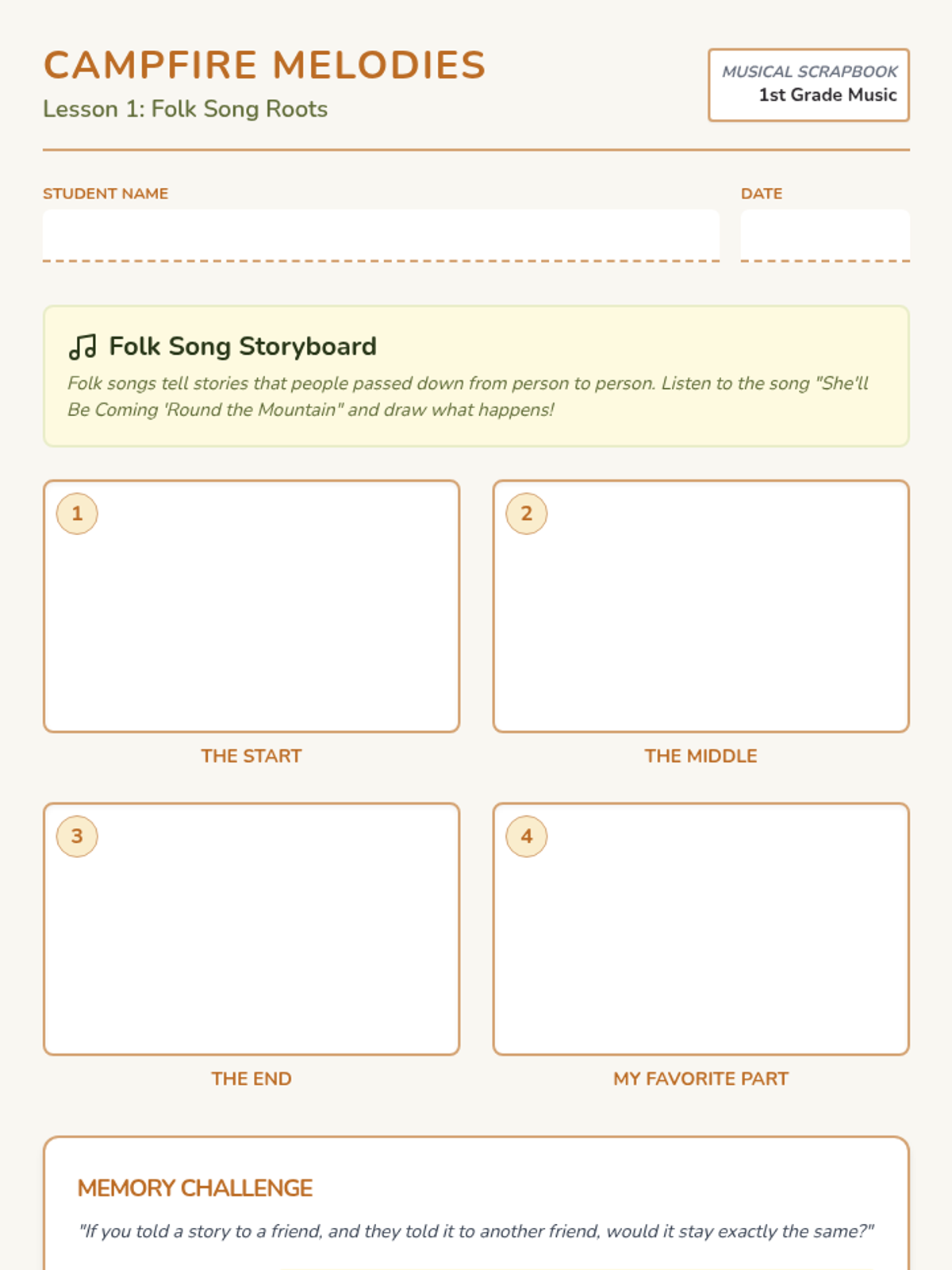
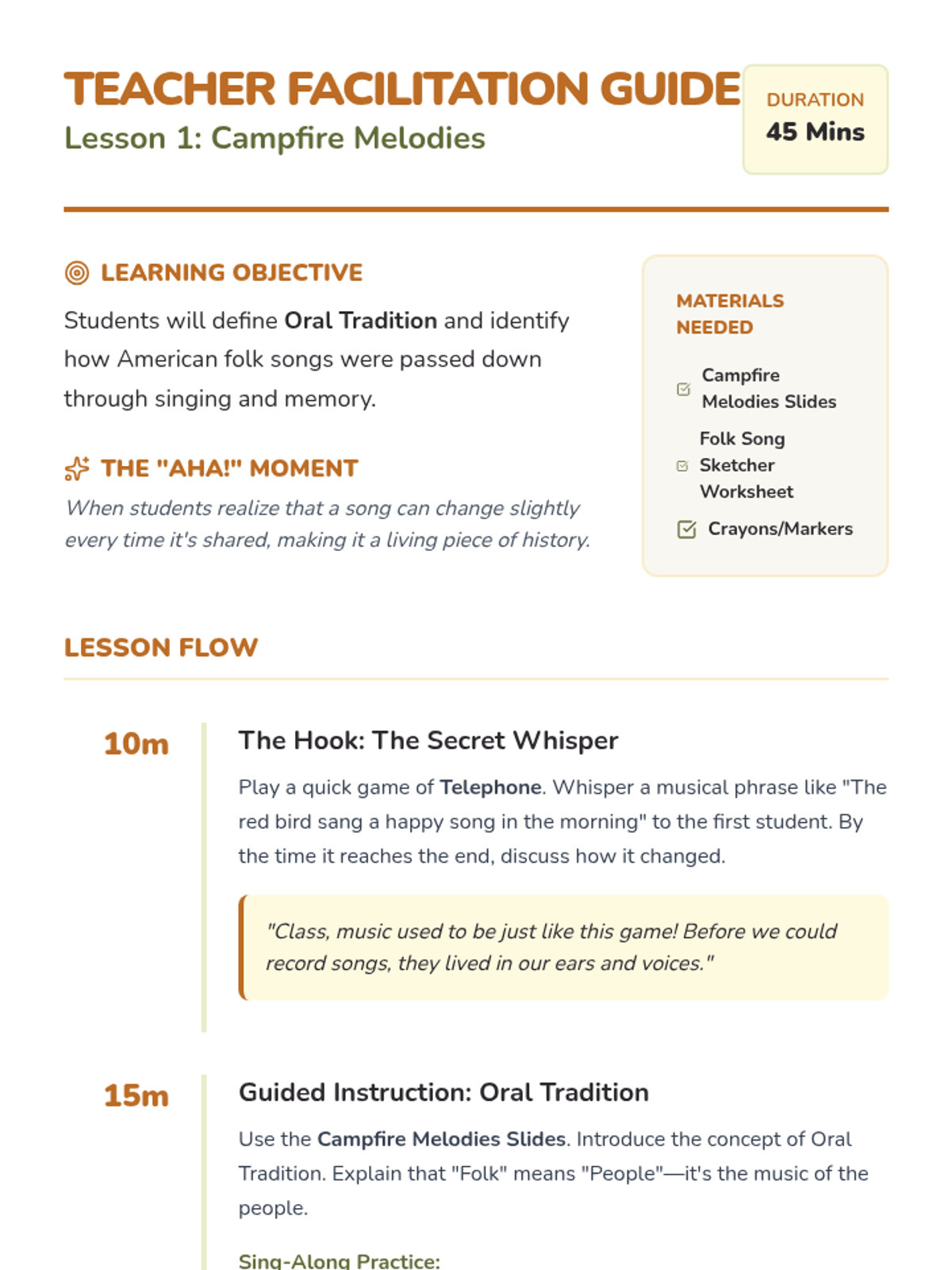
Students explore how traditional songs were passed down through singing before recording technology existed, using a 'Telephone' game analogy to understand oral tradition.
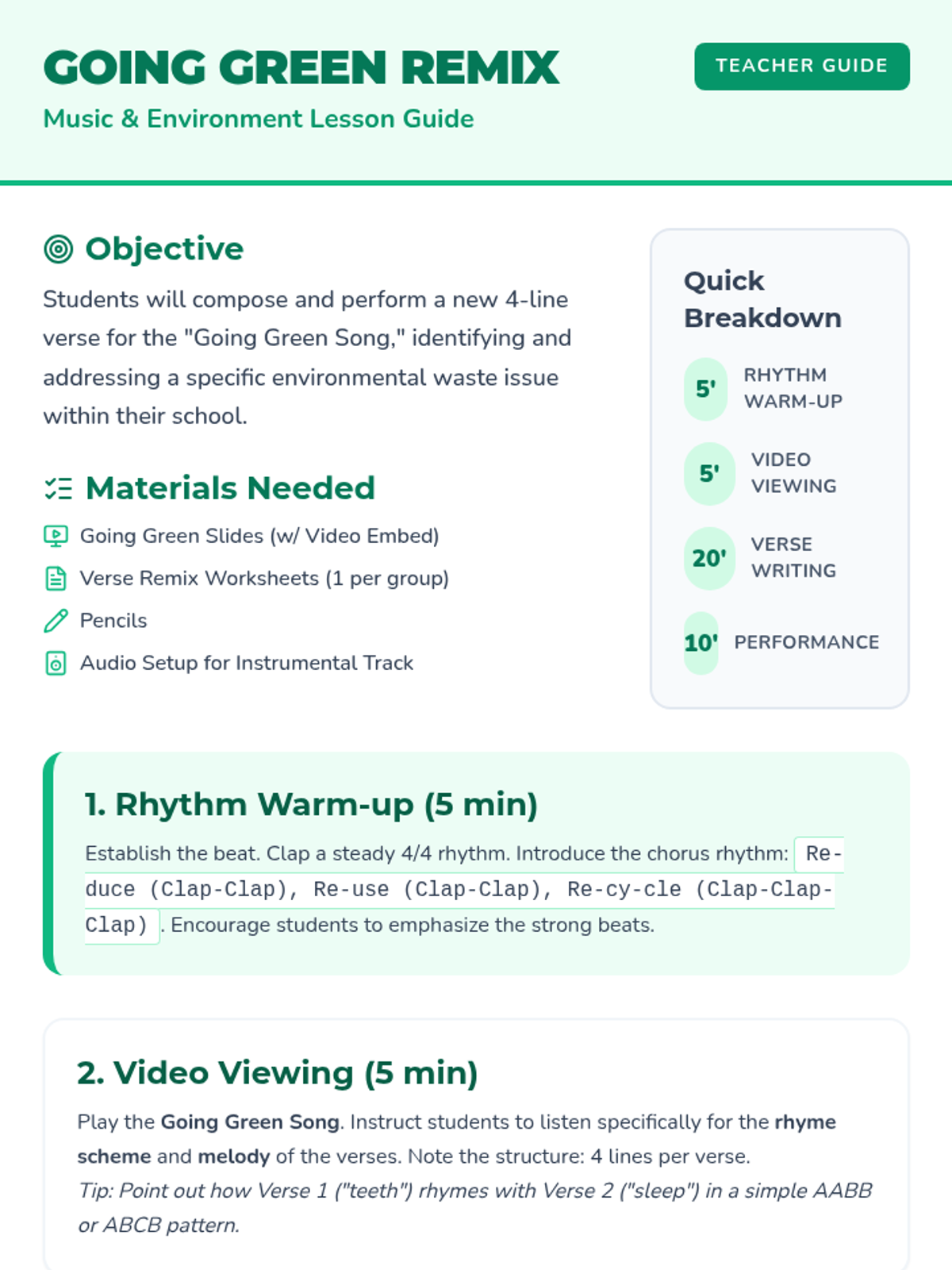
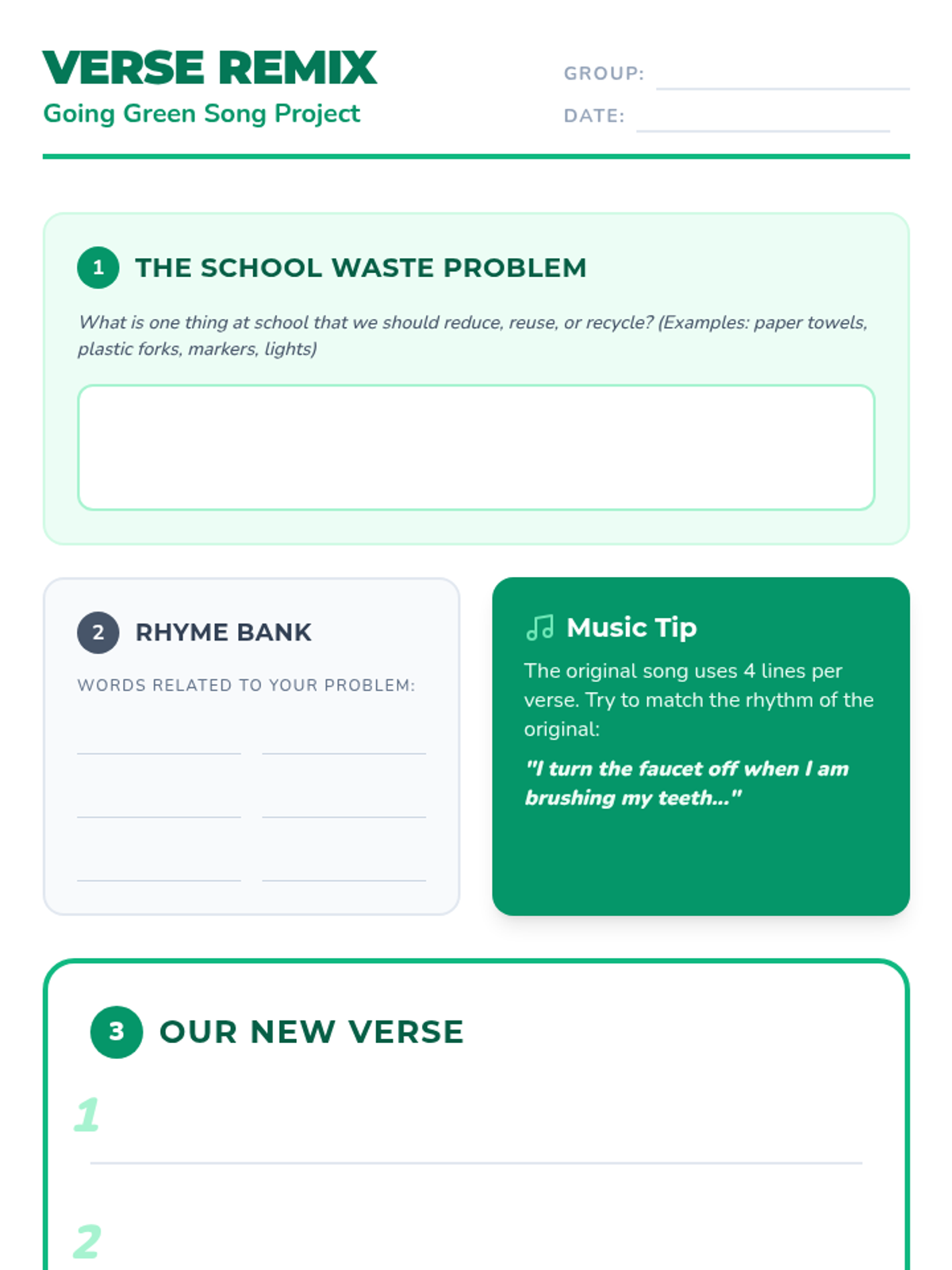
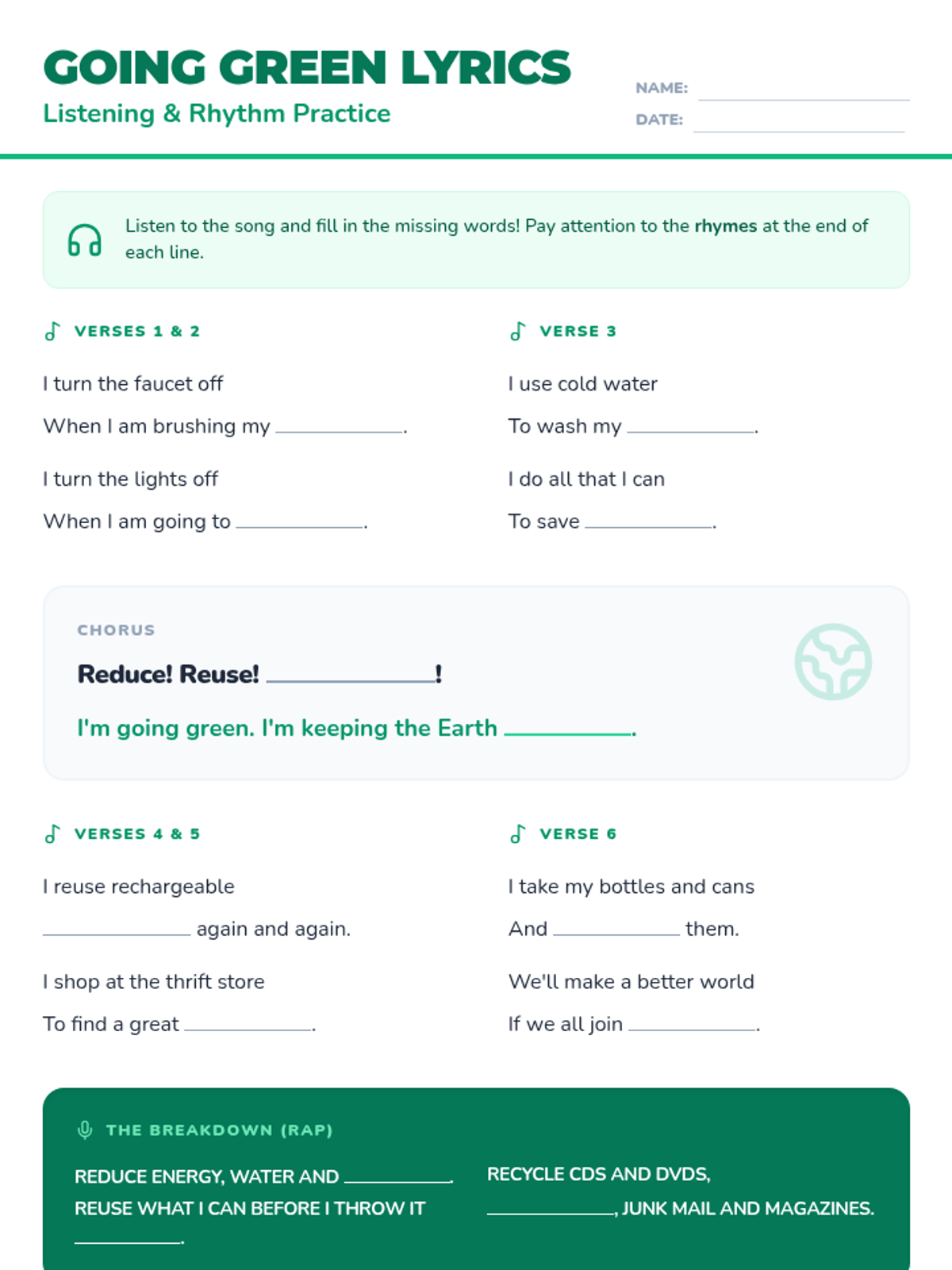
A music lesson where students compose and perform a new verse for 'Going Green Song' about environmental issues in their own school.
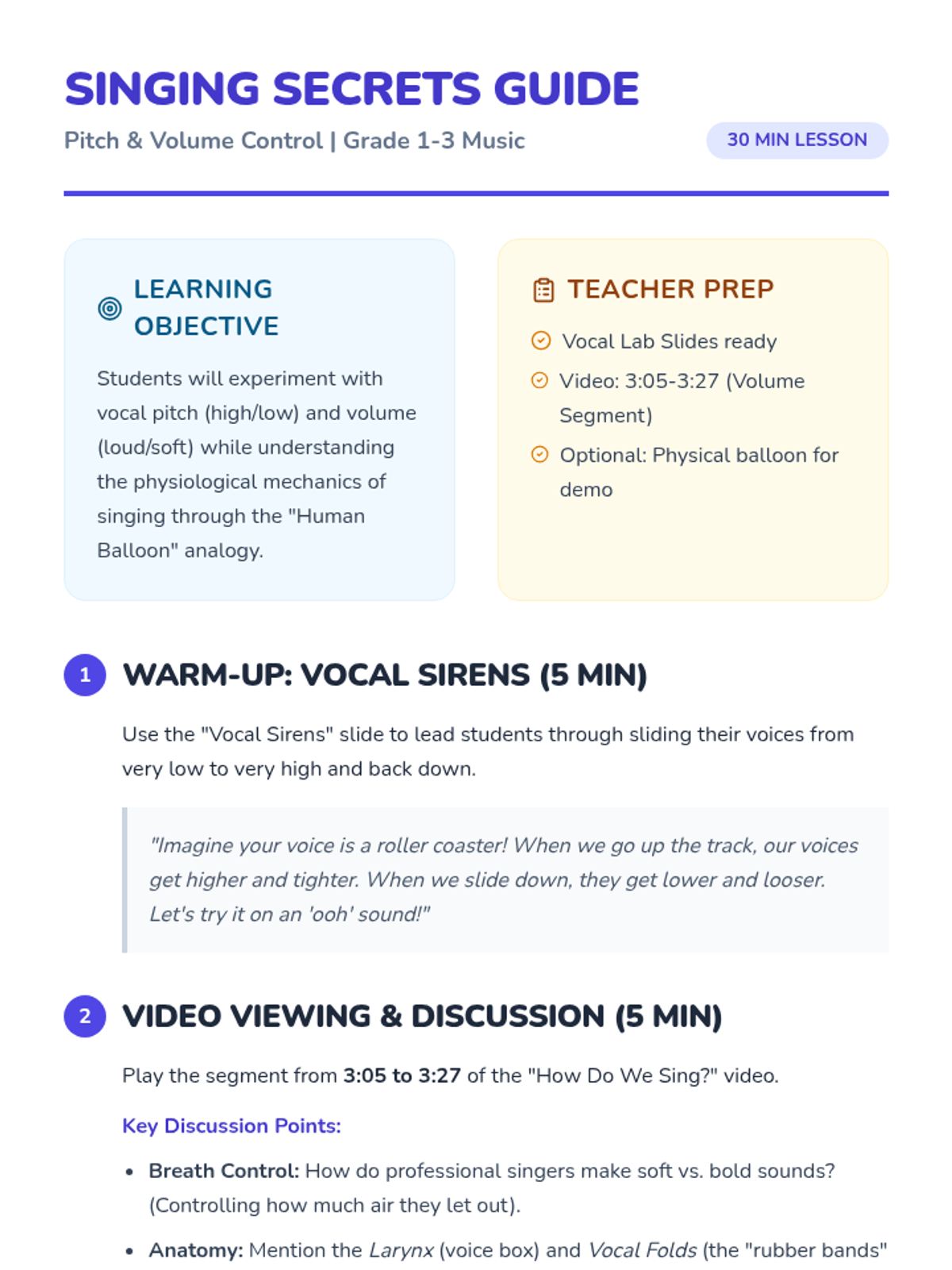
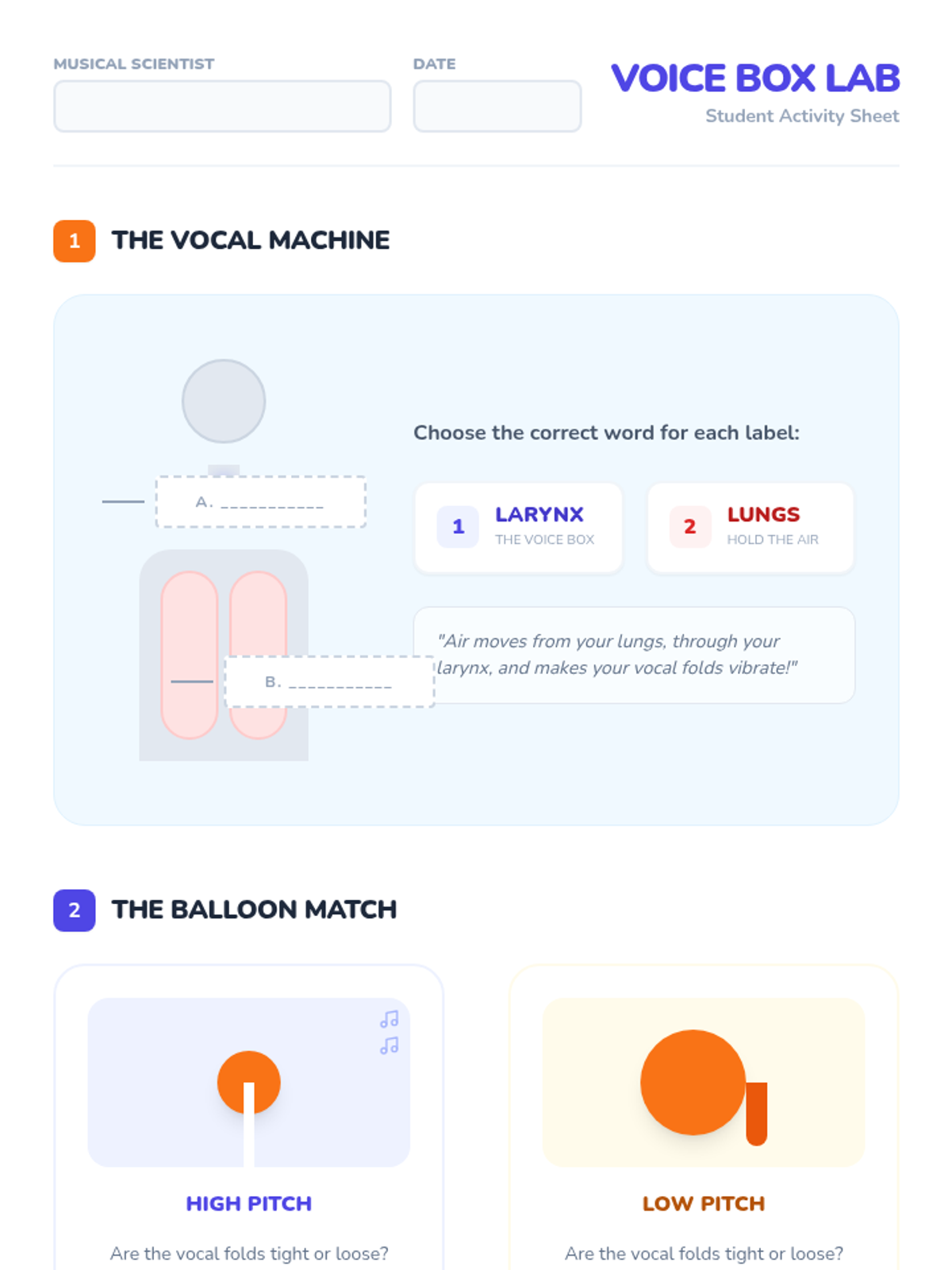
A fun, interactive music lesson where students use a balloon analogy to understand how vocal folds create different pitches and how breath control changes volume. Includes a slide presentation, a comprehensive teacher guide, and a student activity sheet.
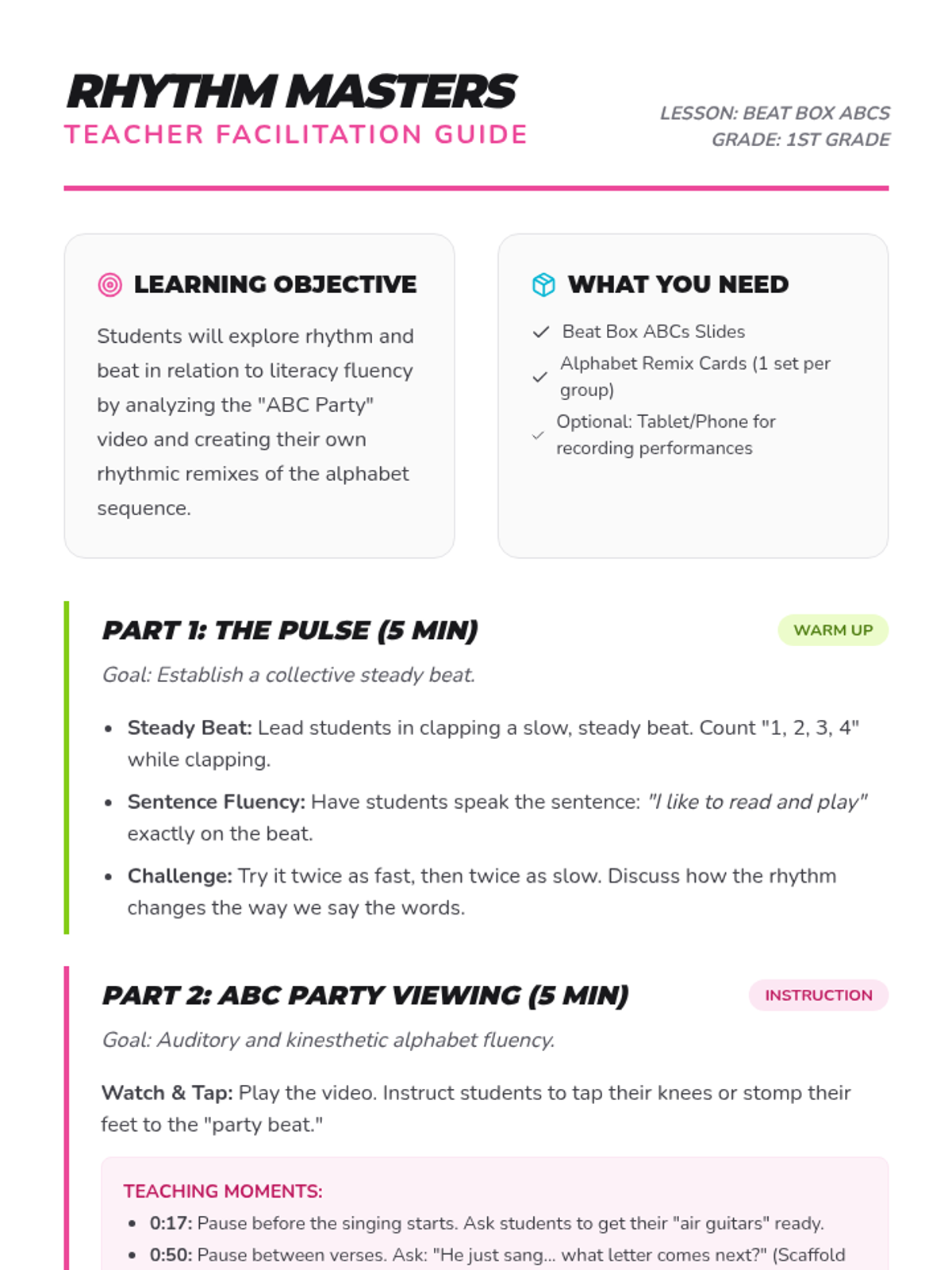
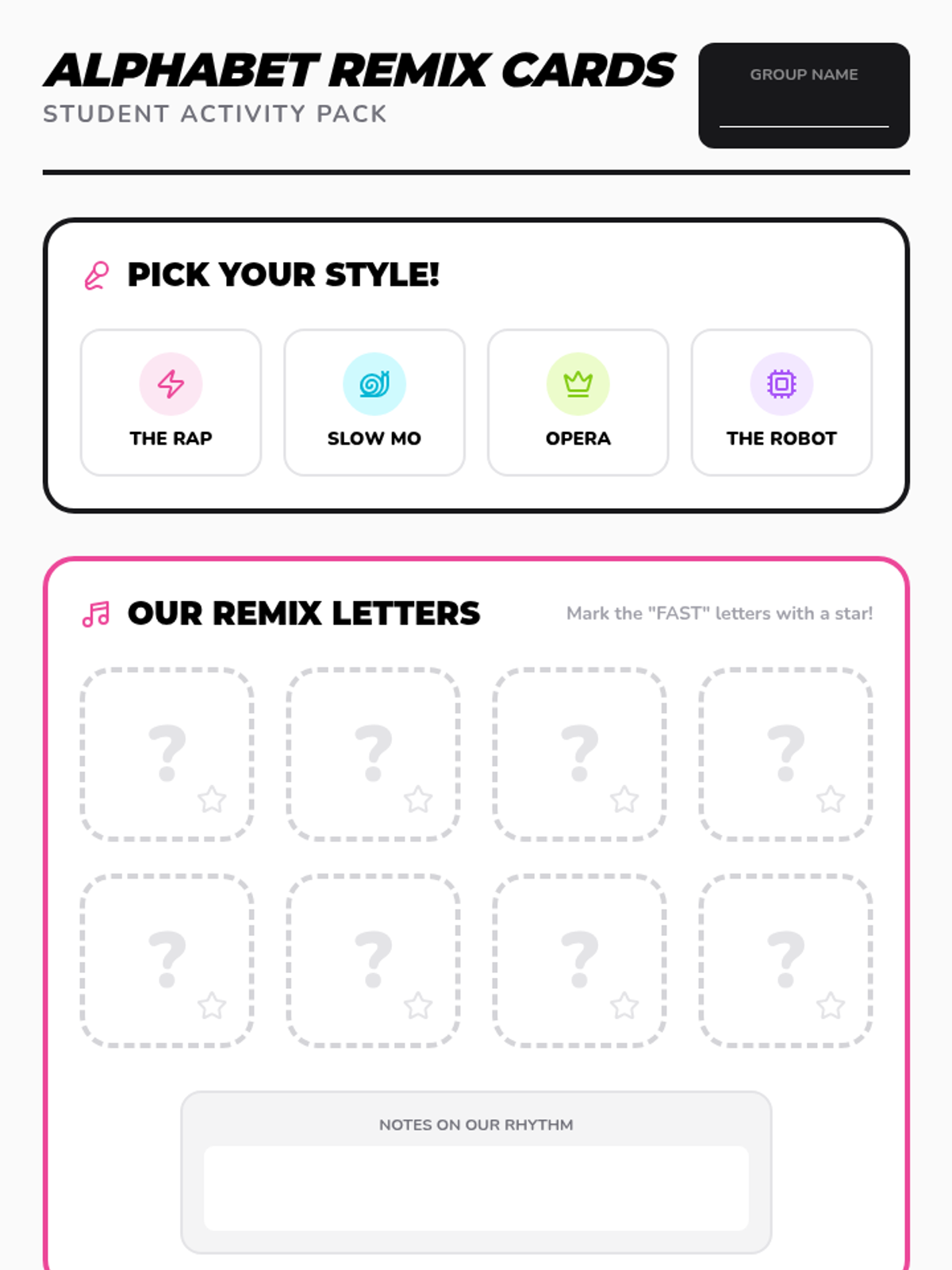
A high-energy 1st-grade lesson that uses music and rhythm to build alphabet fluency and phonological awareness. Students will analyze the 'ABC Party' video and collaborate to create their own rhythmic remixes of the alphabet.
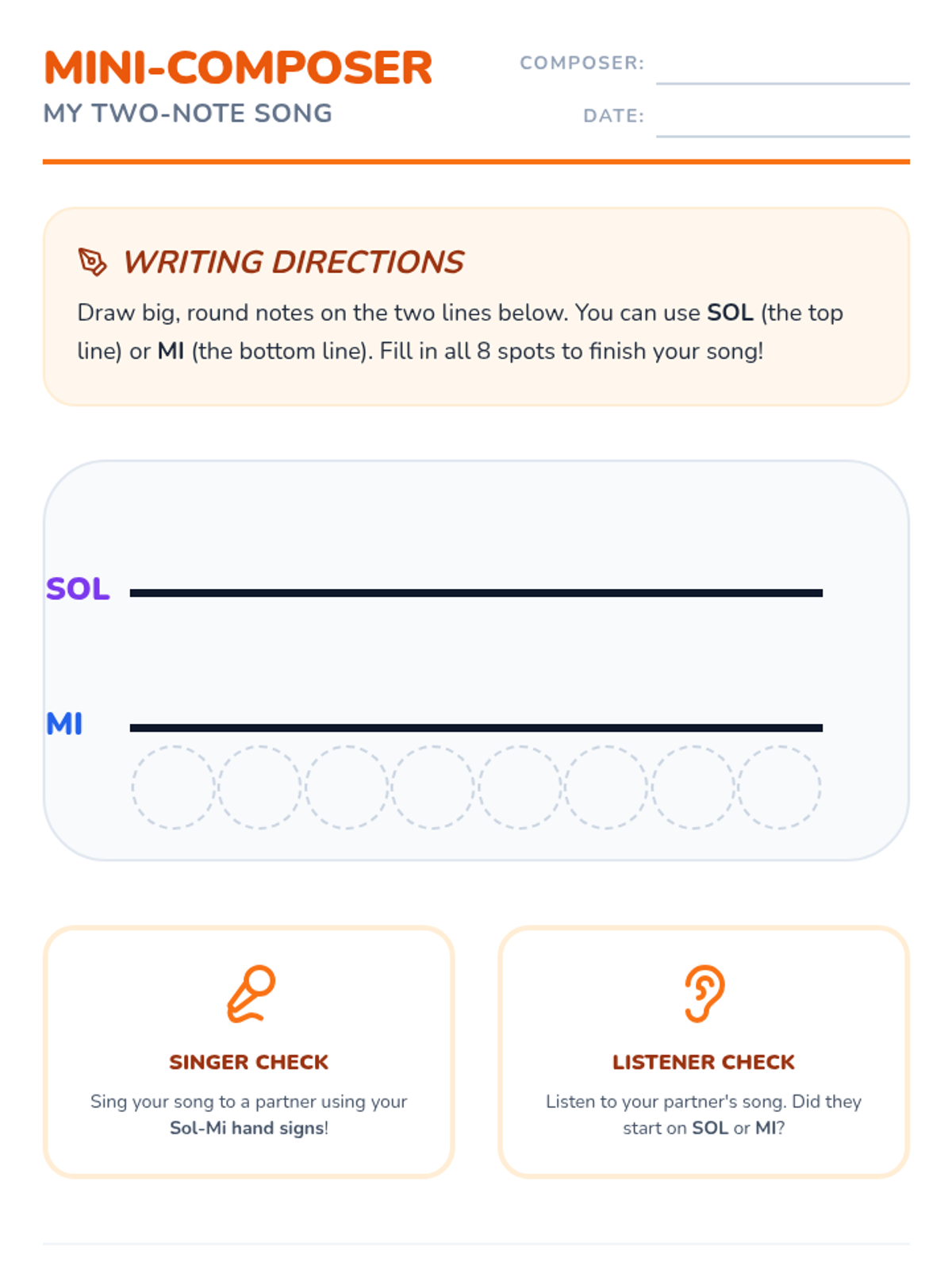
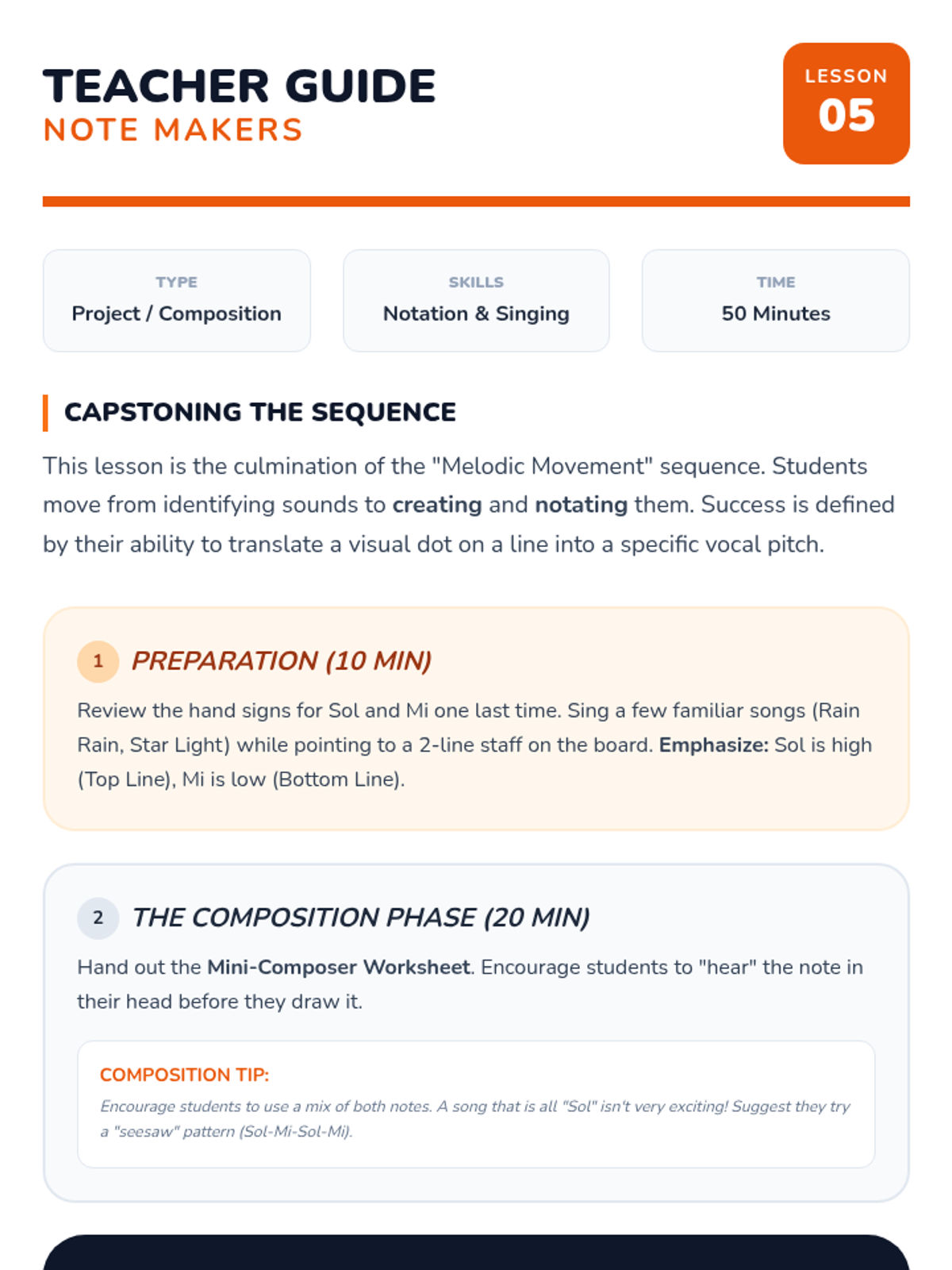
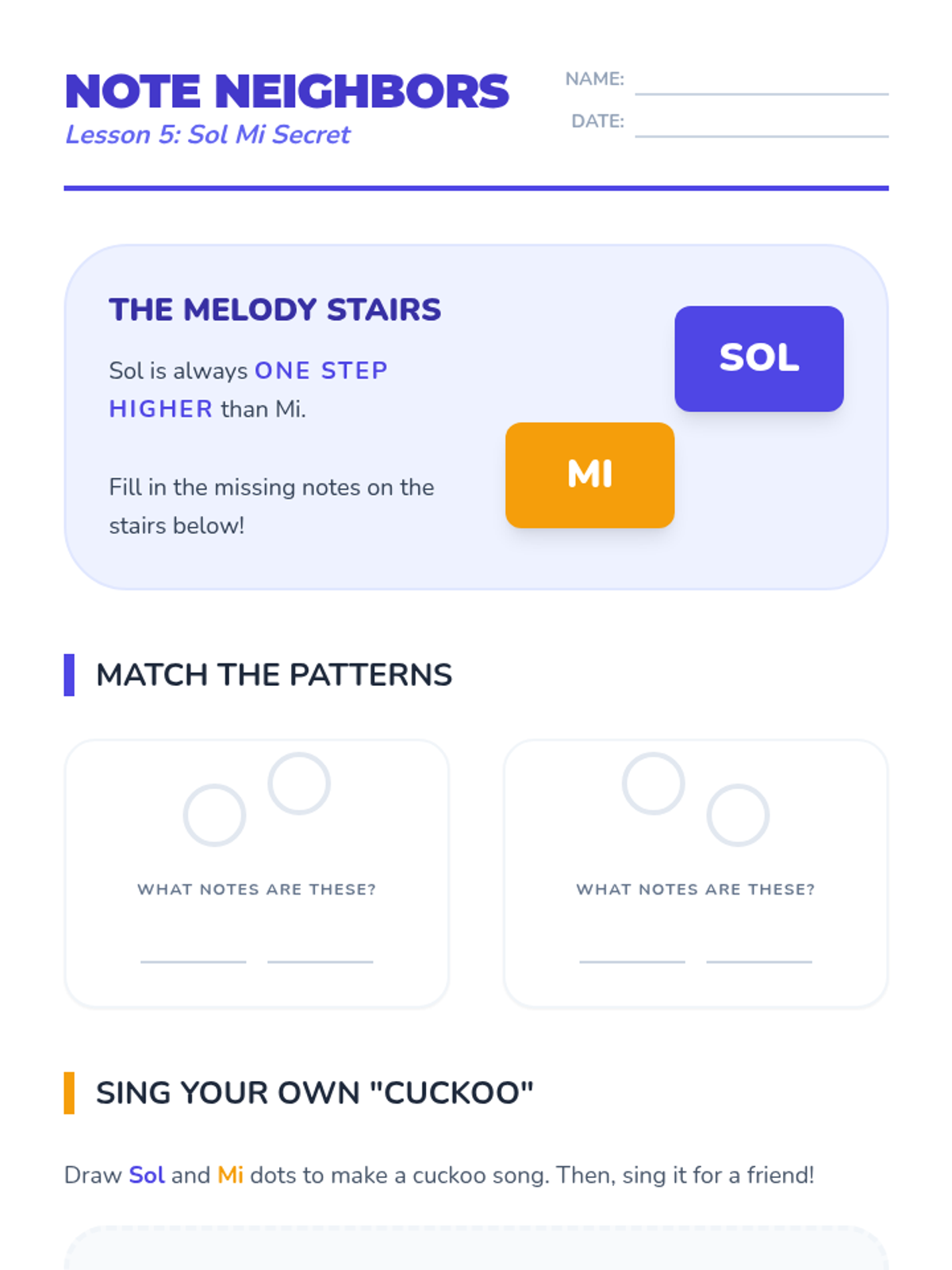
Students create their own short melodic patterns using Sol and Mi on a two-line staff.
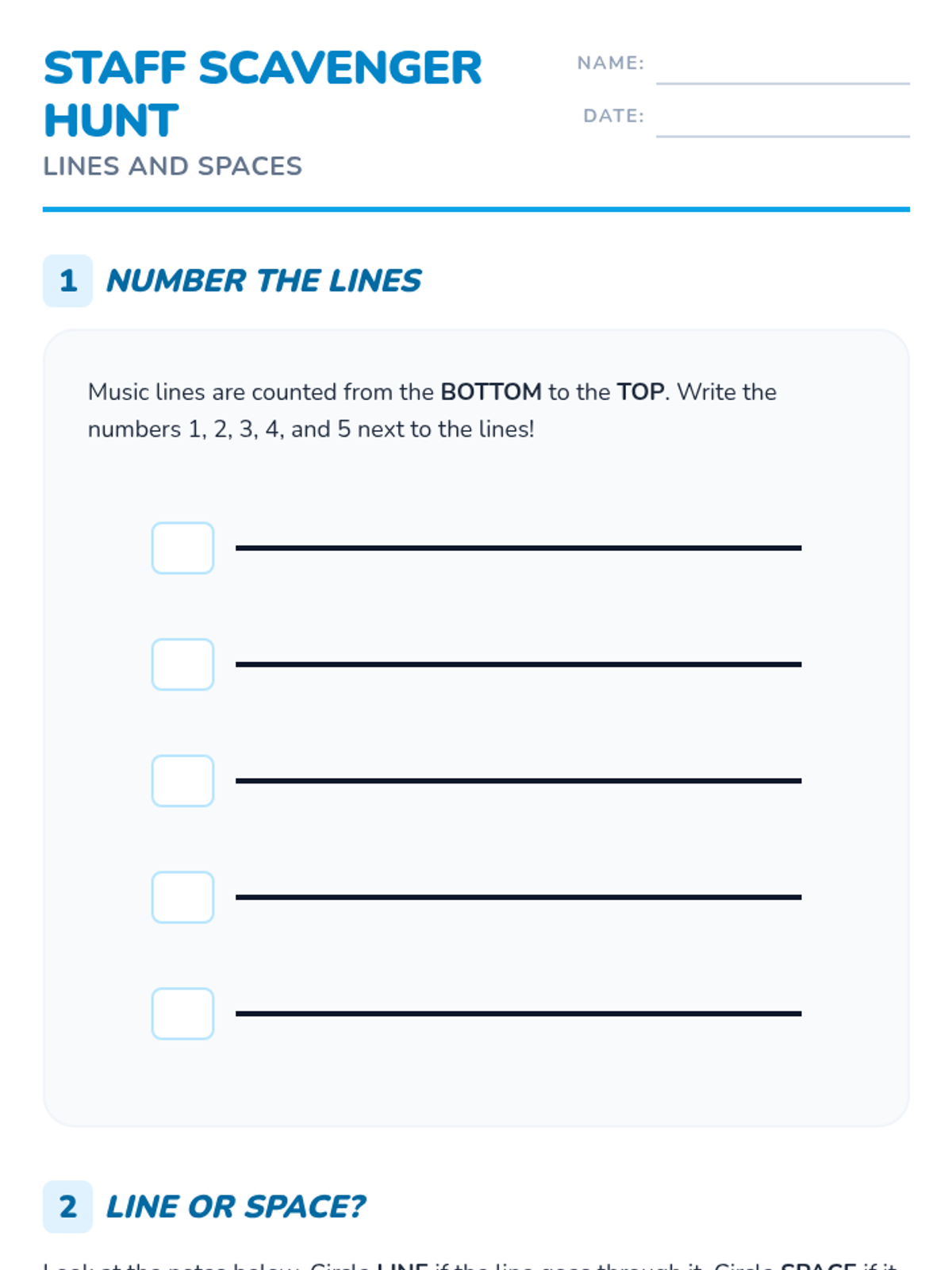
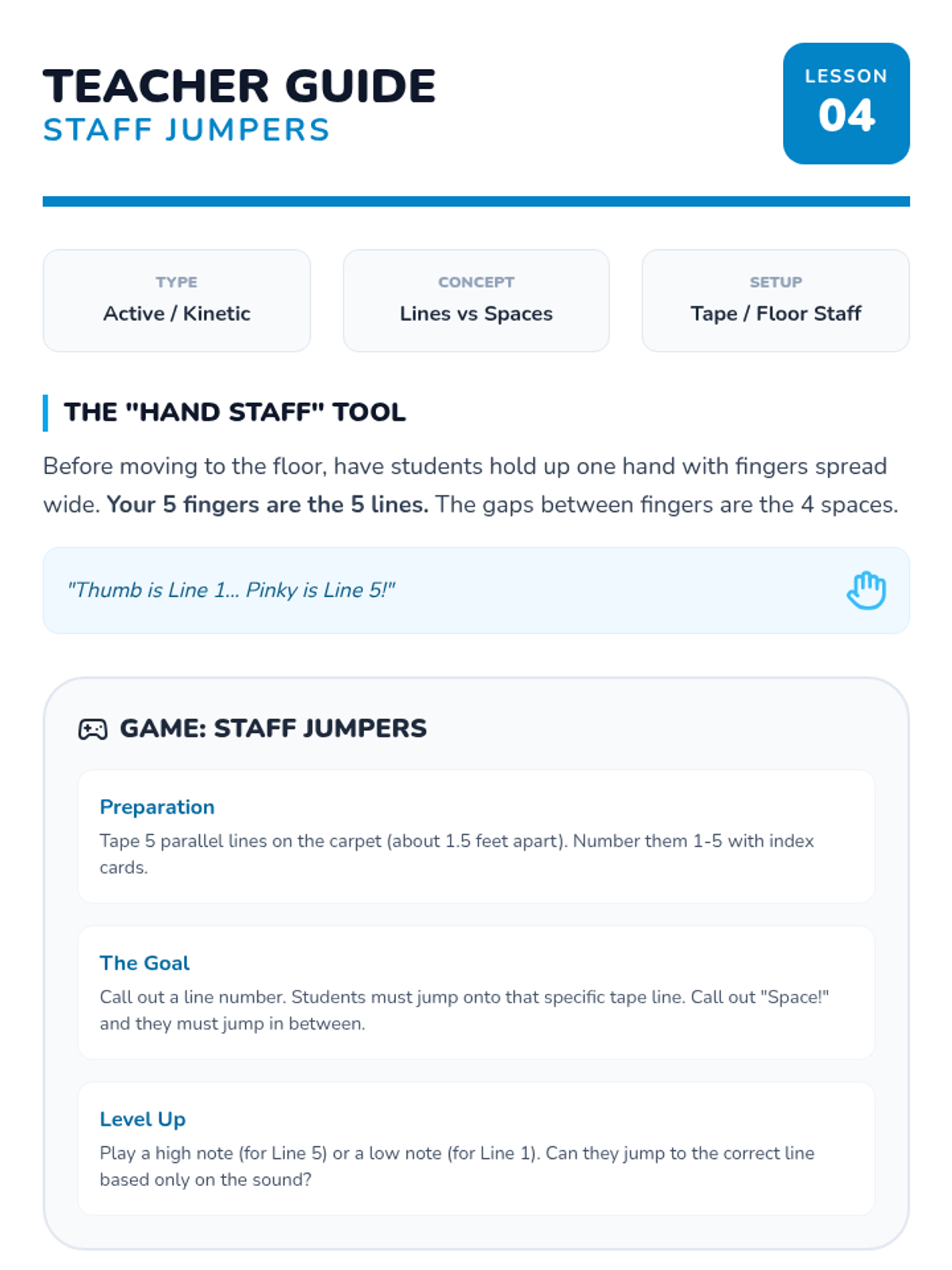
Students are introduced to the five lines and four spaces of the staff through physical movement and spatial awareness.
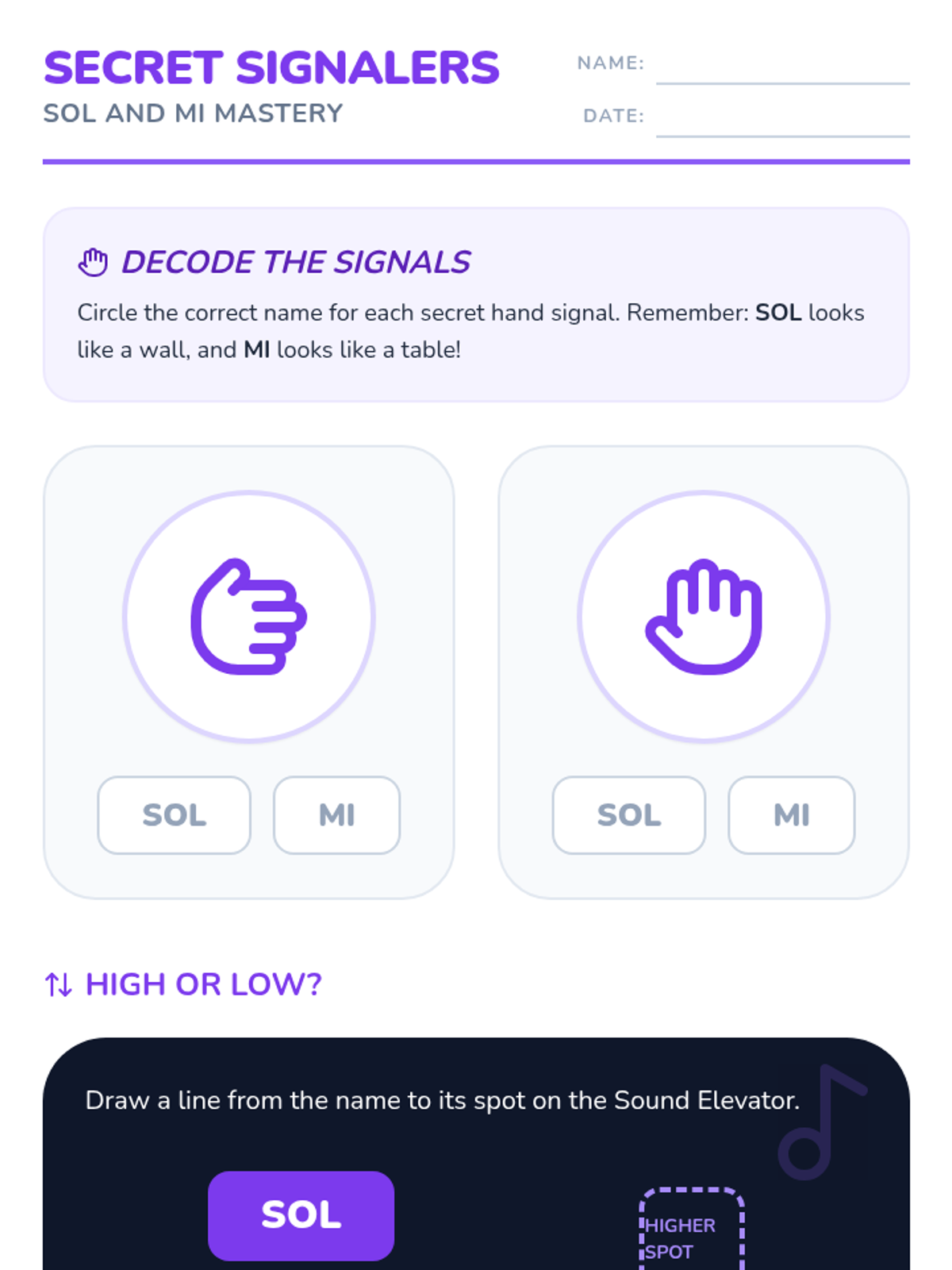
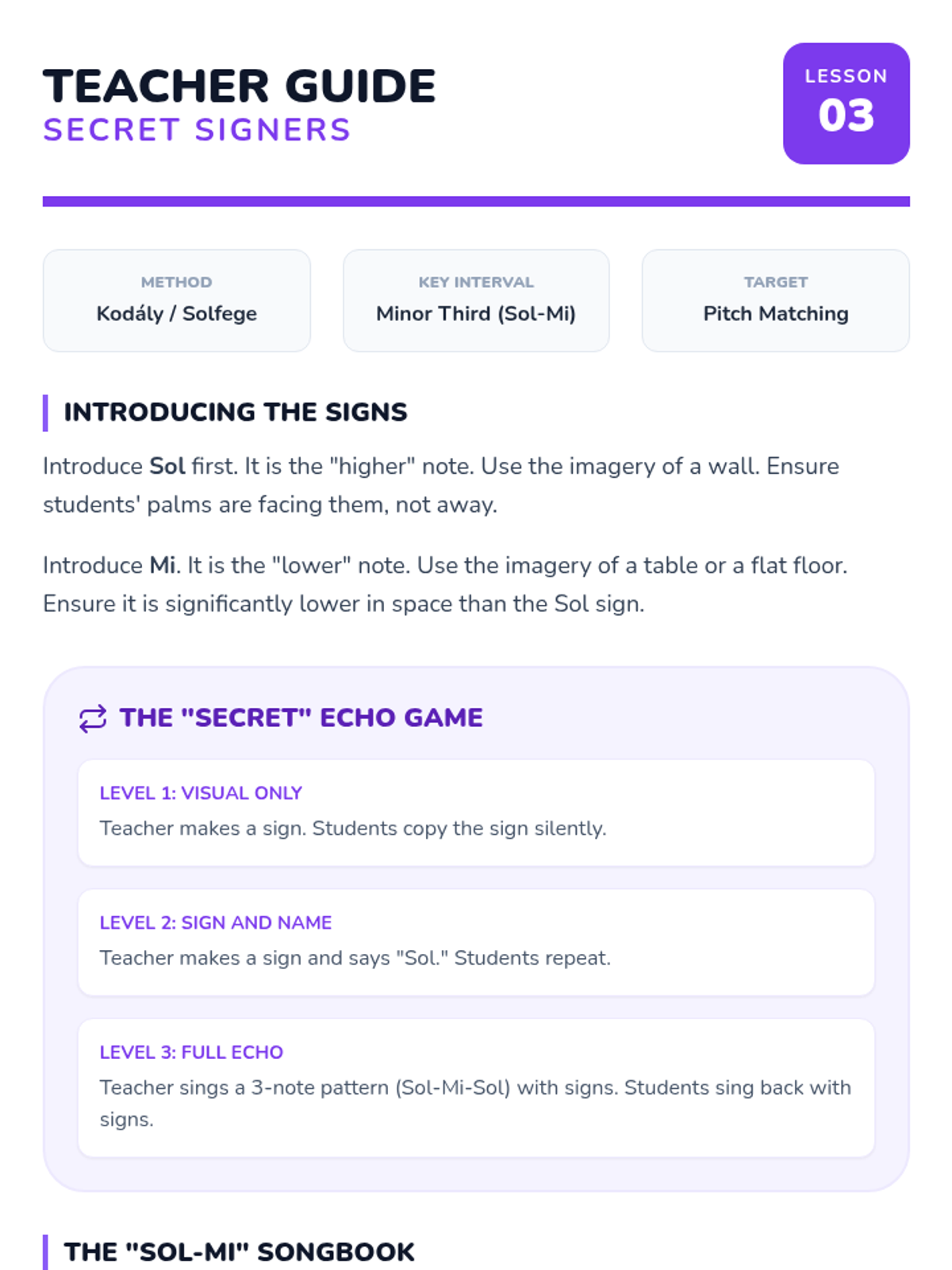
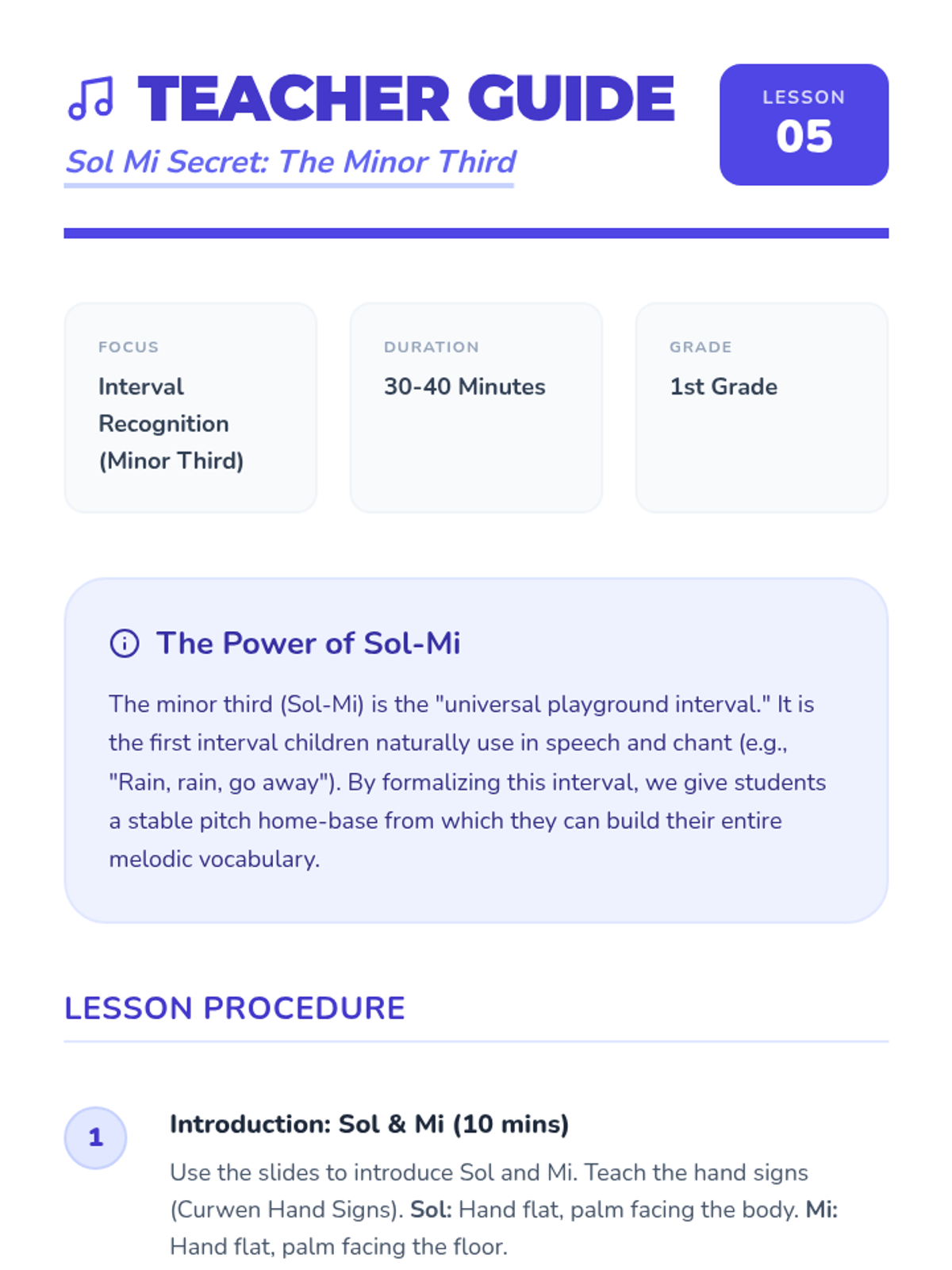
Using the Kodály approach, students are introduced to Sol and Mi and their accompanying Curwen hand signs.
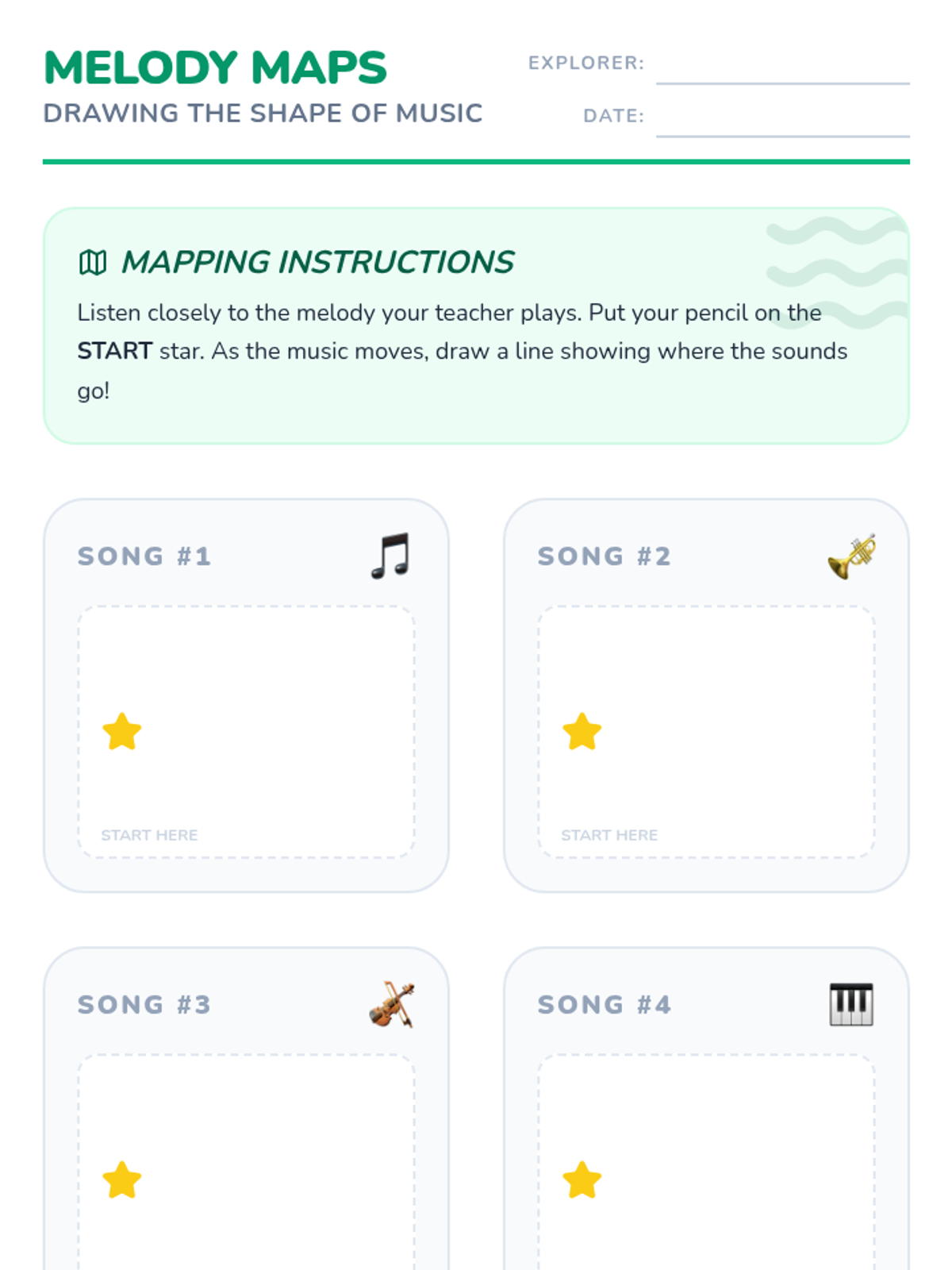
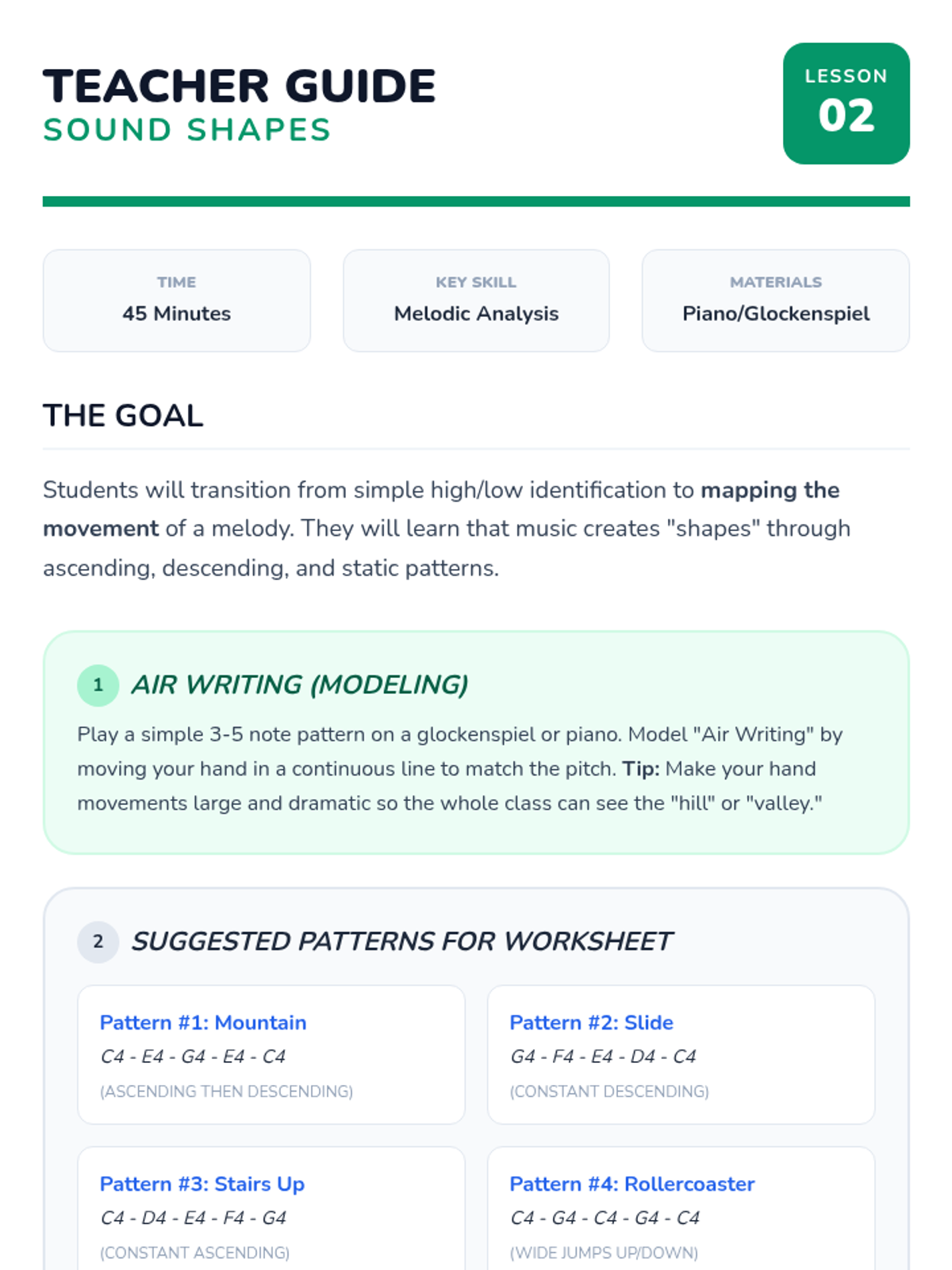
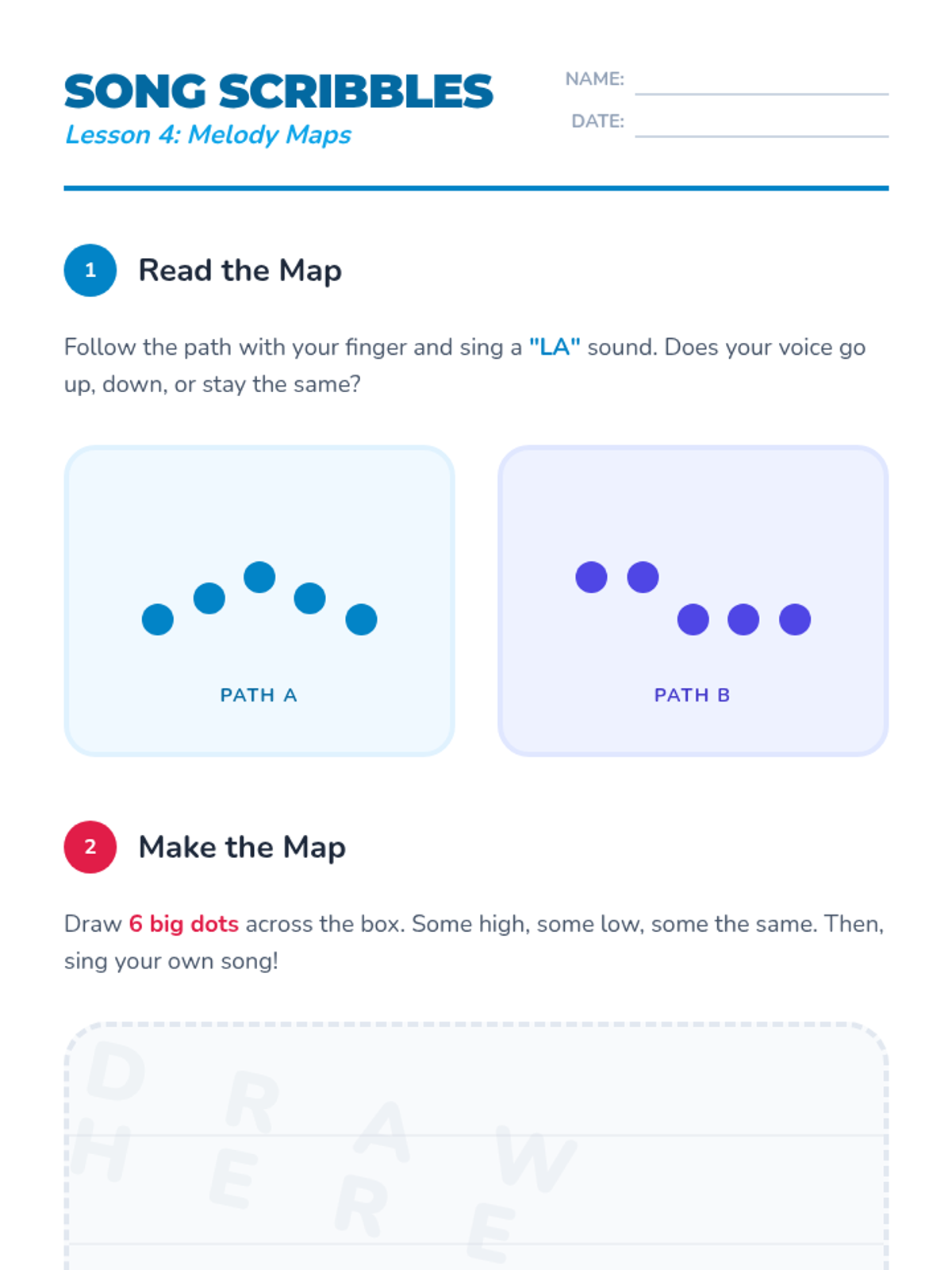
Students listen to simple melodies and draw 'sound maps' or line graphs to trace the direction of the music.
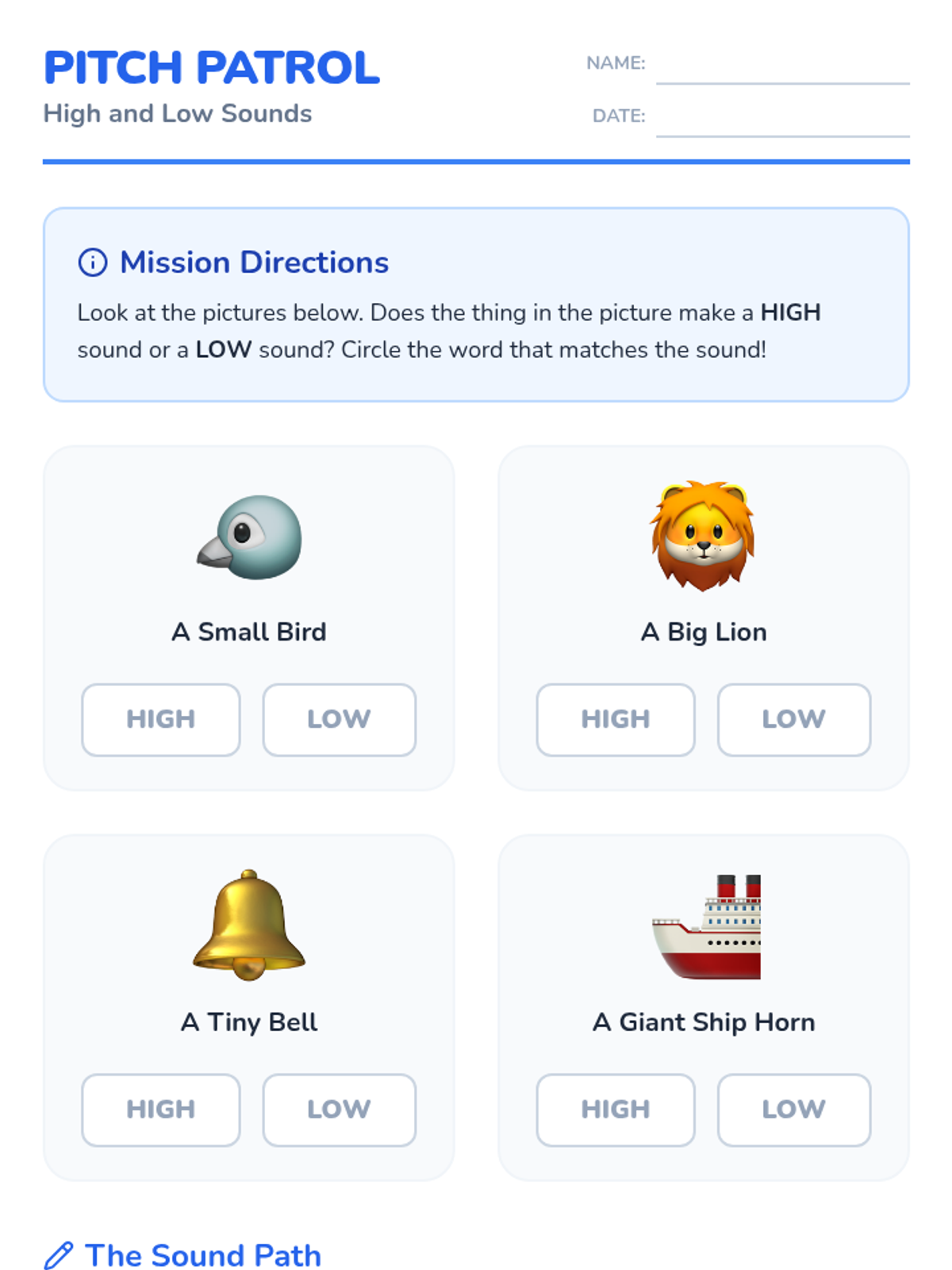
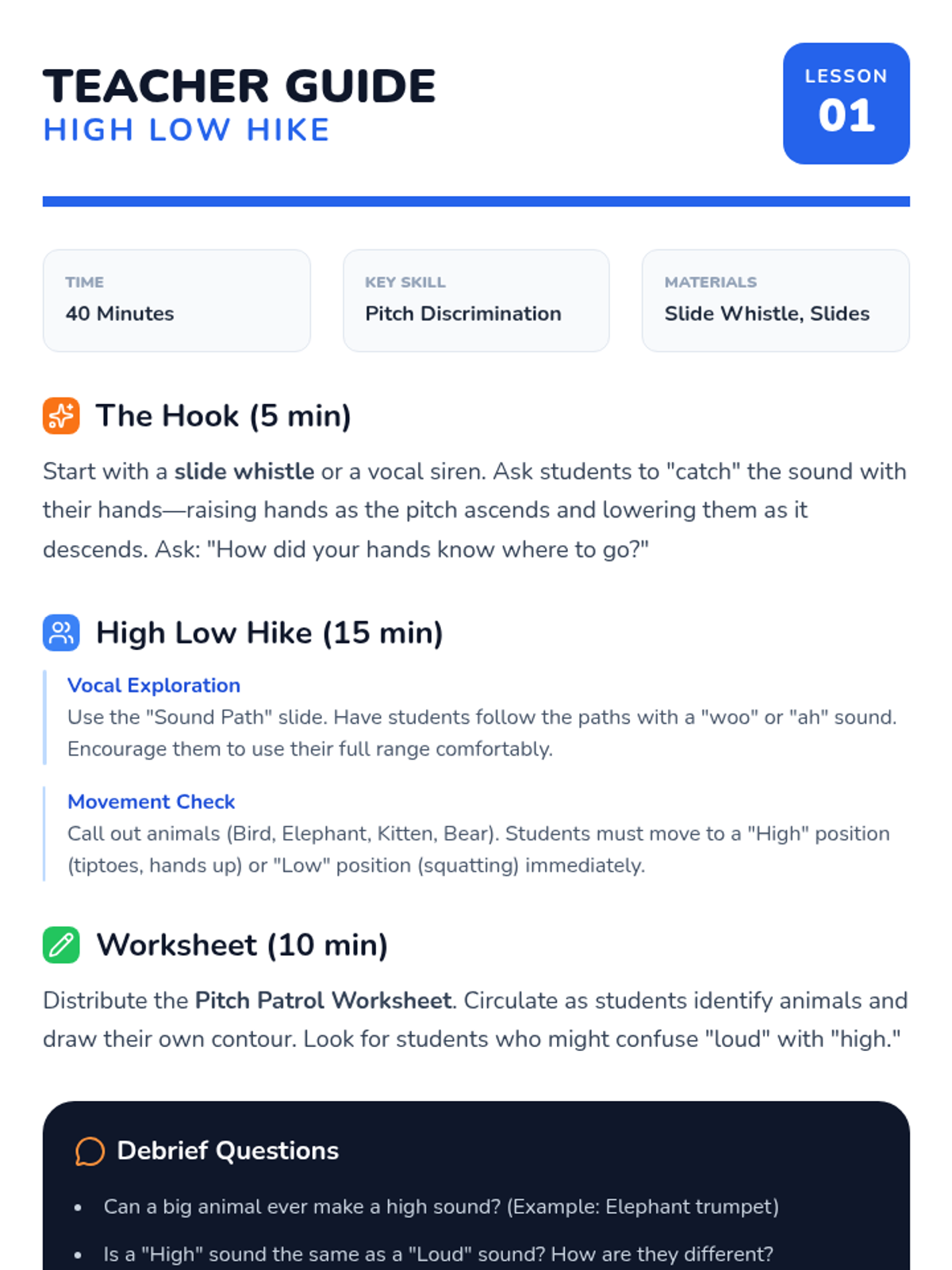
Students explore vocal range by mimicking sirens, ghosts, and animals to distinguish high sounds from low sounds.
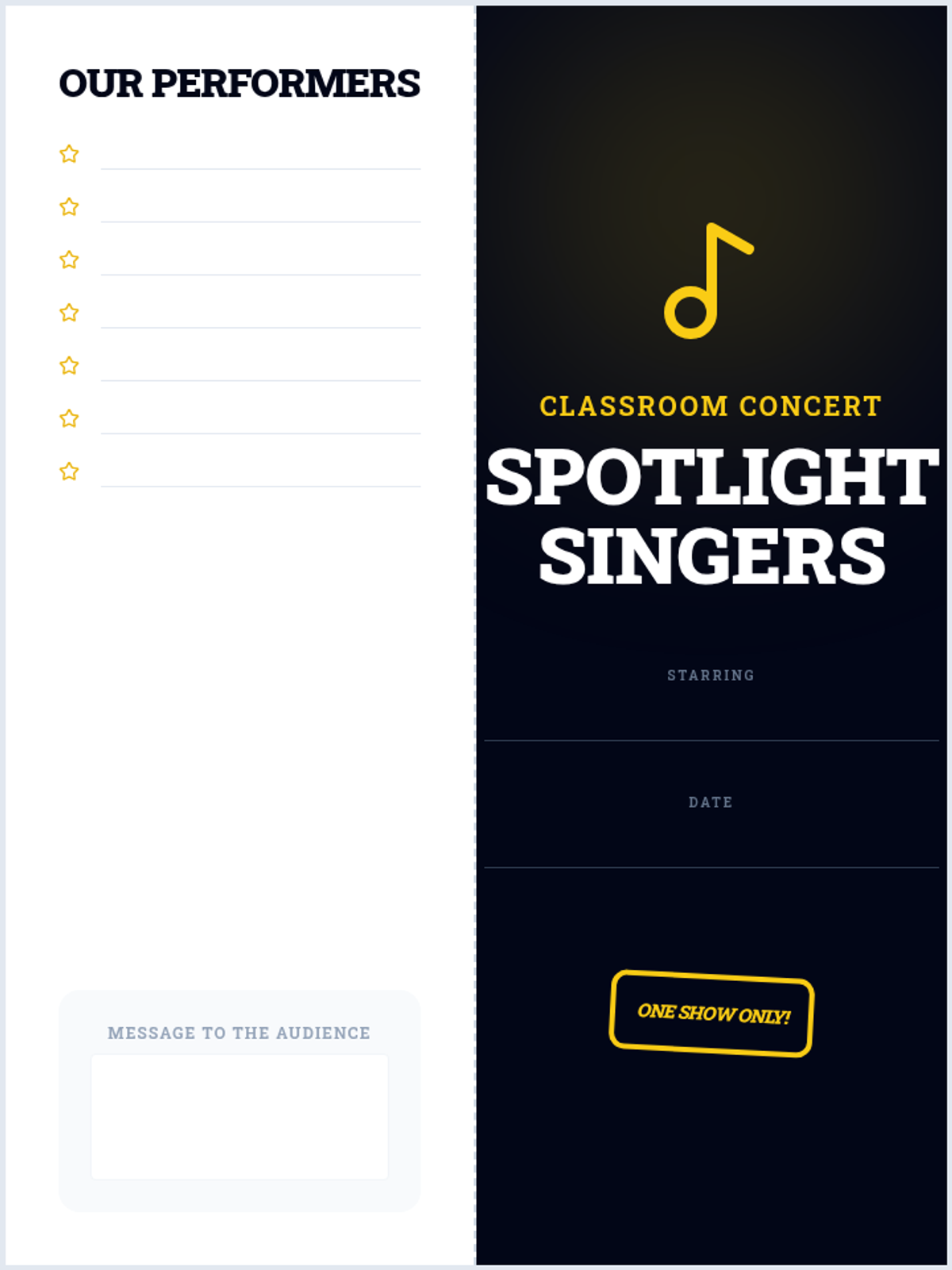
The culminating performance where students apply all their skills in a formal classroom concert for an audience or a recording.
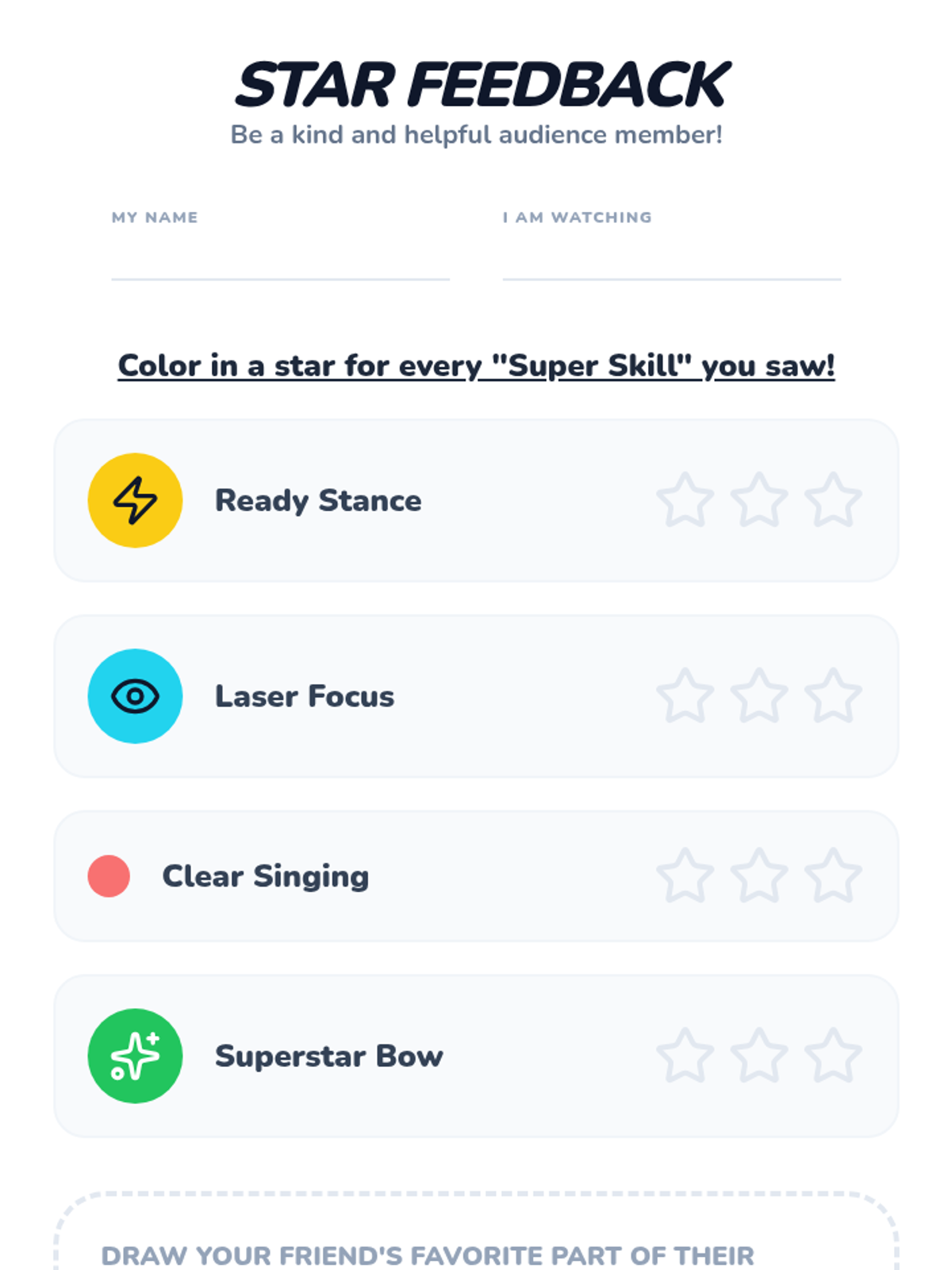
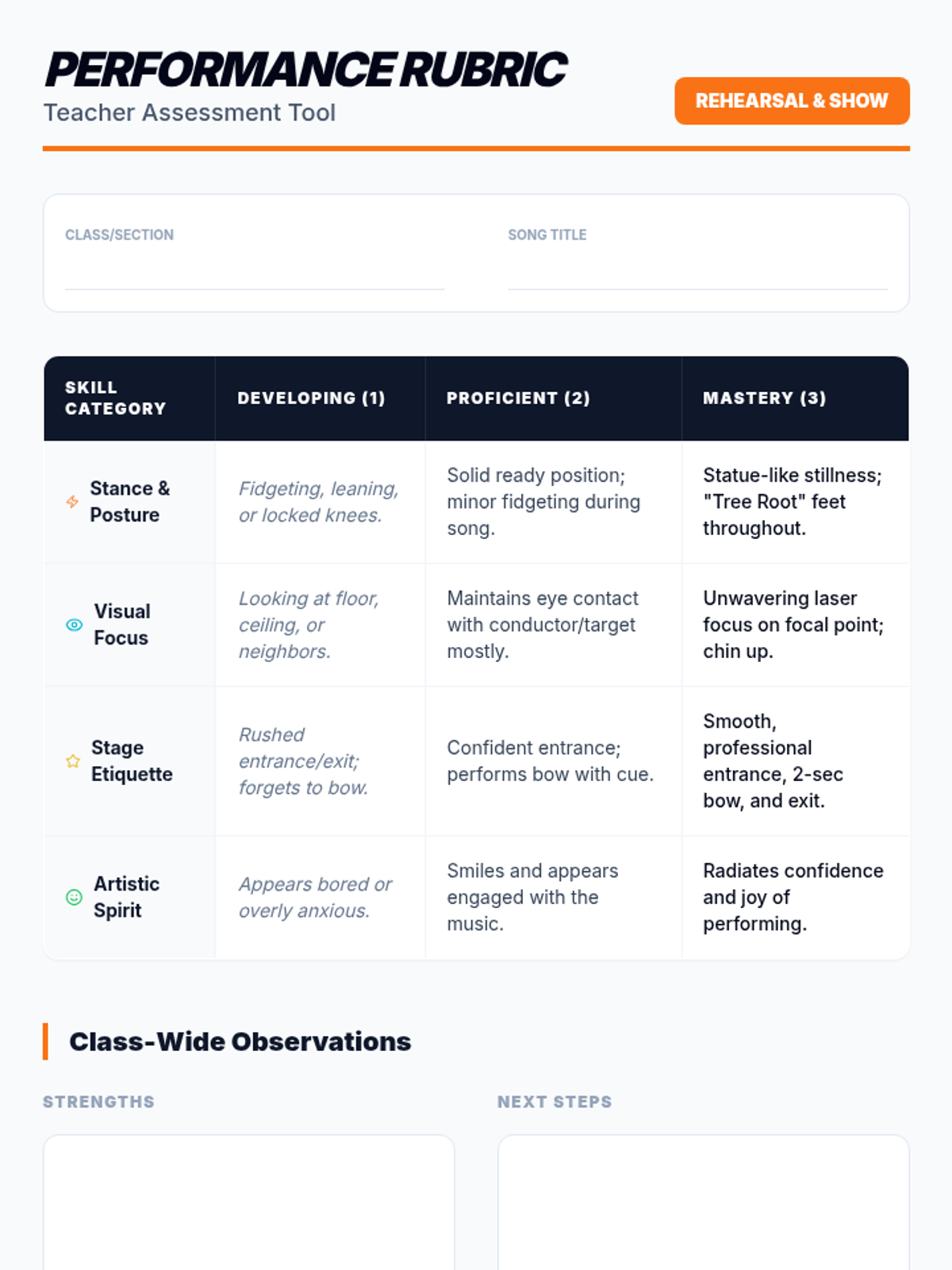
The class simulates a professional rehearsal environment. Students take turns as performers and audience members, using constructive feedback to polish their skills.
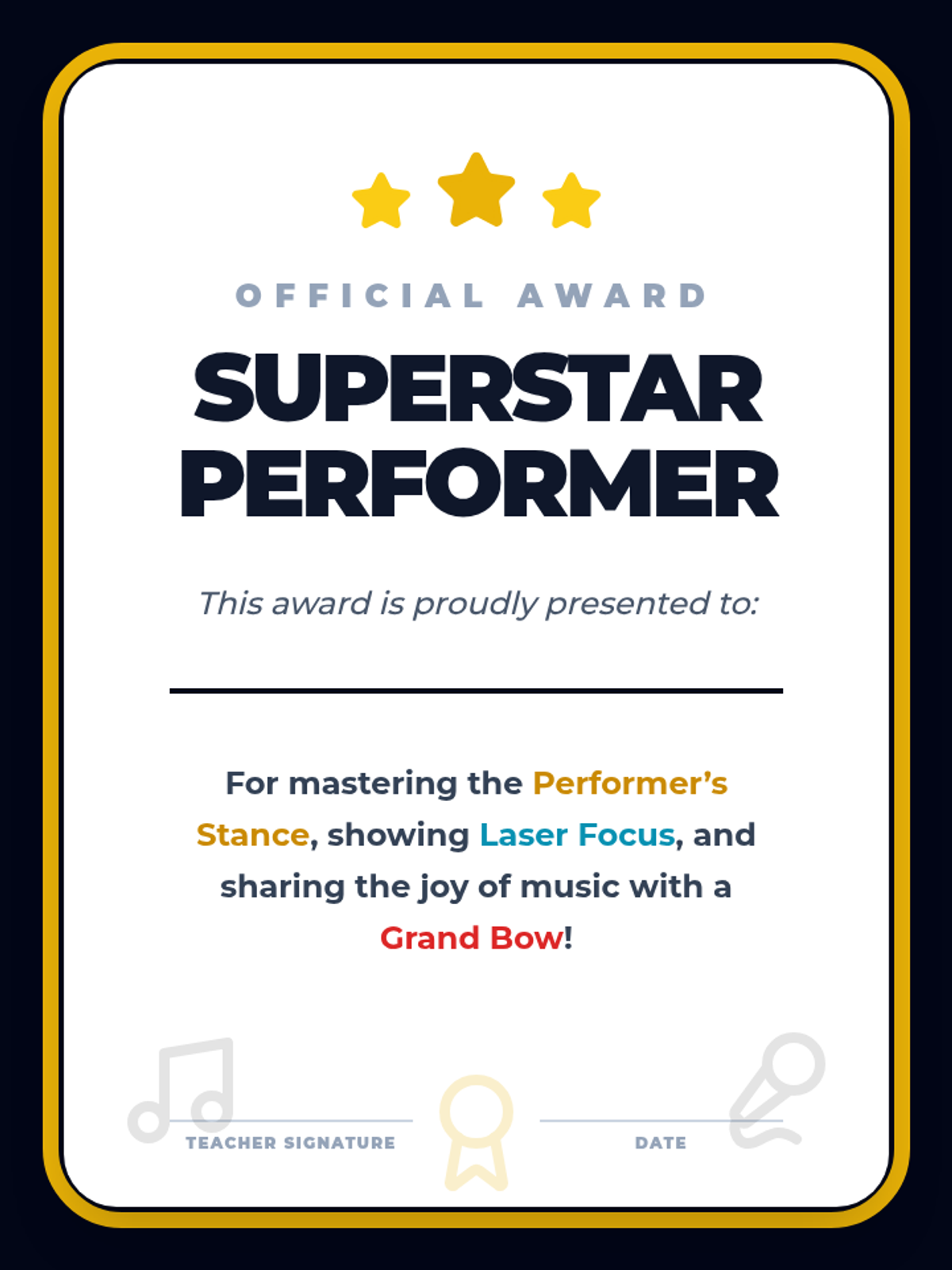
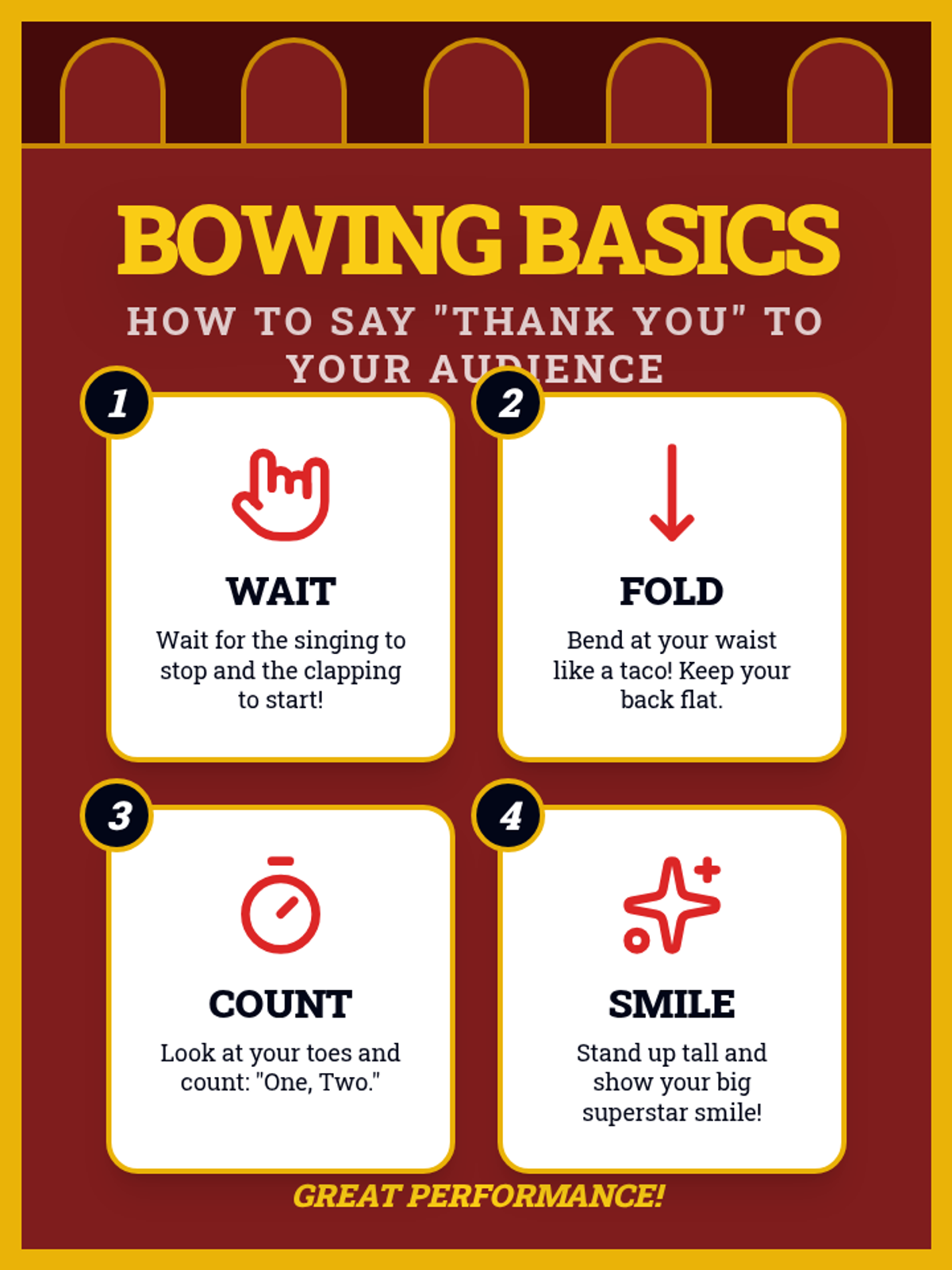
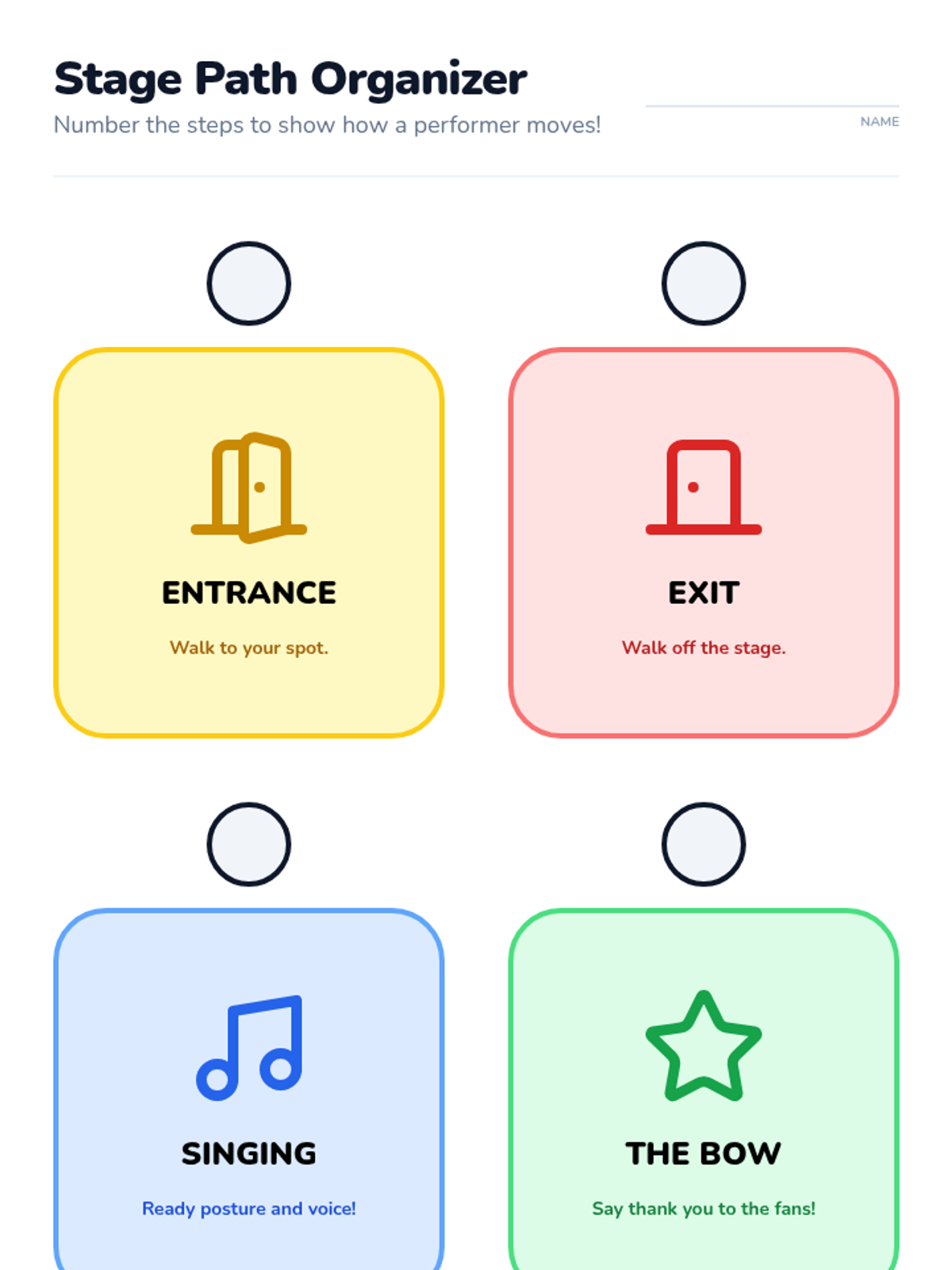
Students master the choreography of the stage: walking on with confidence, performing, acknowledging the audience with a respectful bow, and exiting calmly.
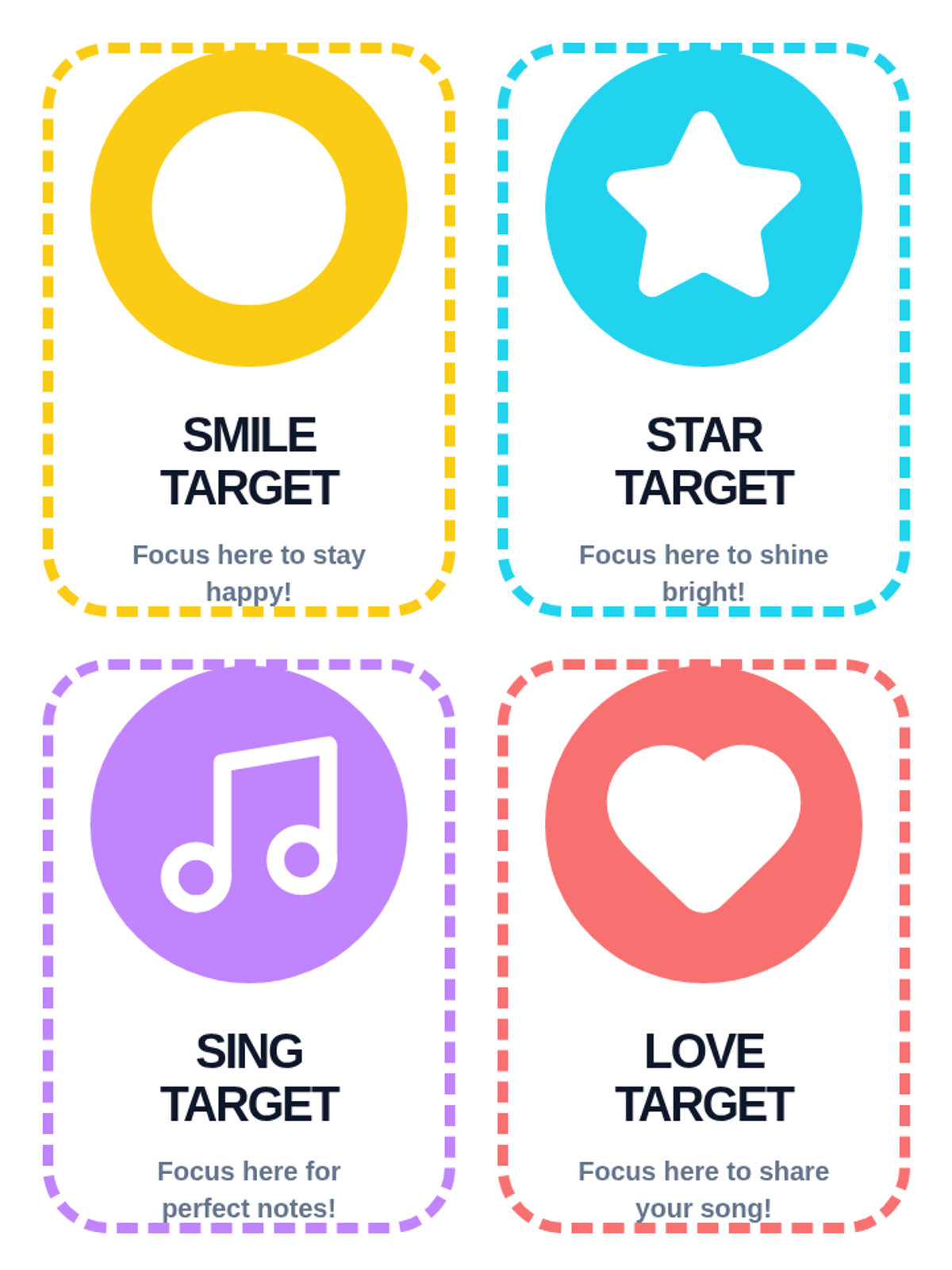
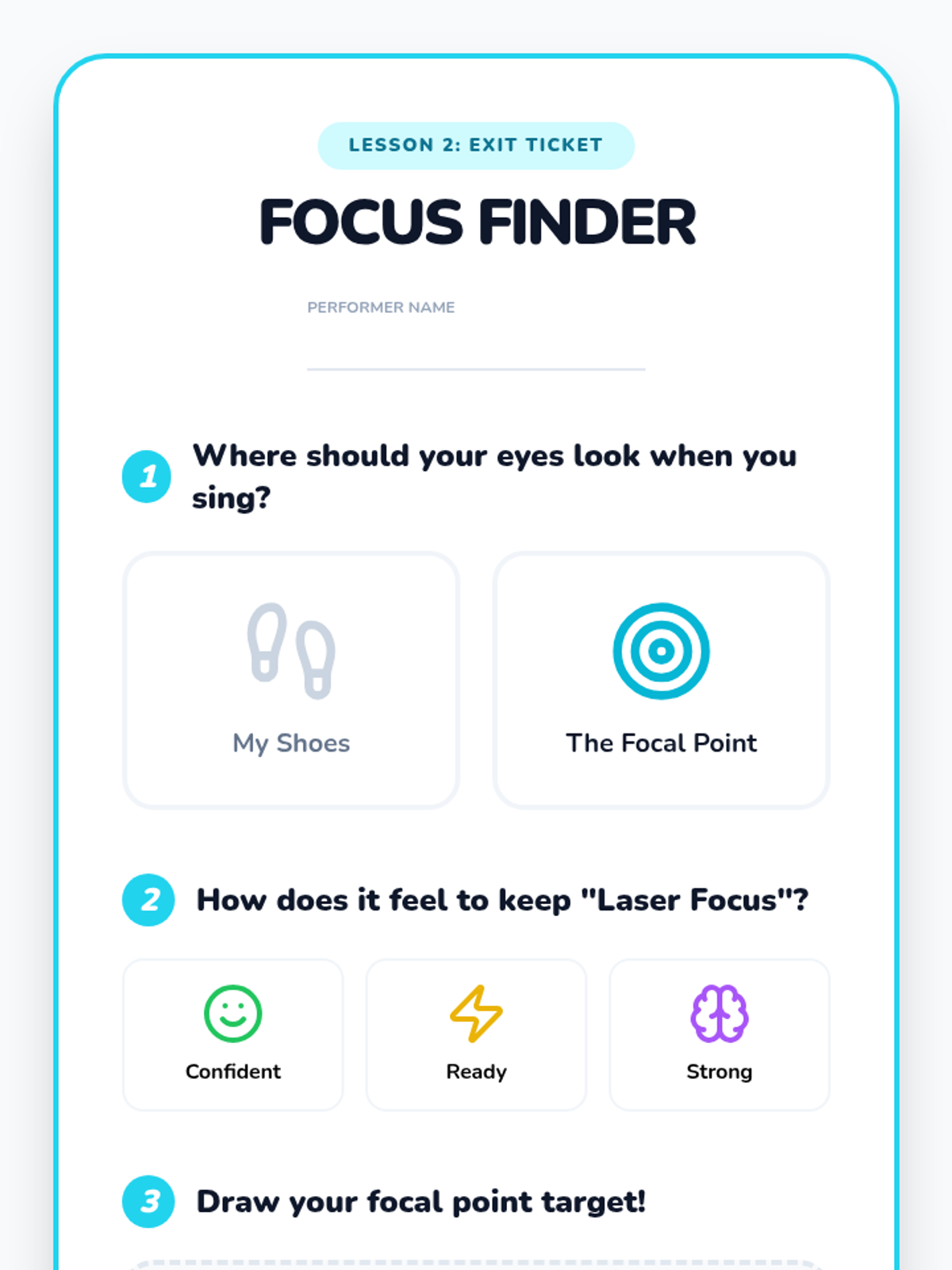
Students practice singing while maintaining focus on a specific point above the audience. This lesson builds concentration and reduces fidgeting through game-based practice.
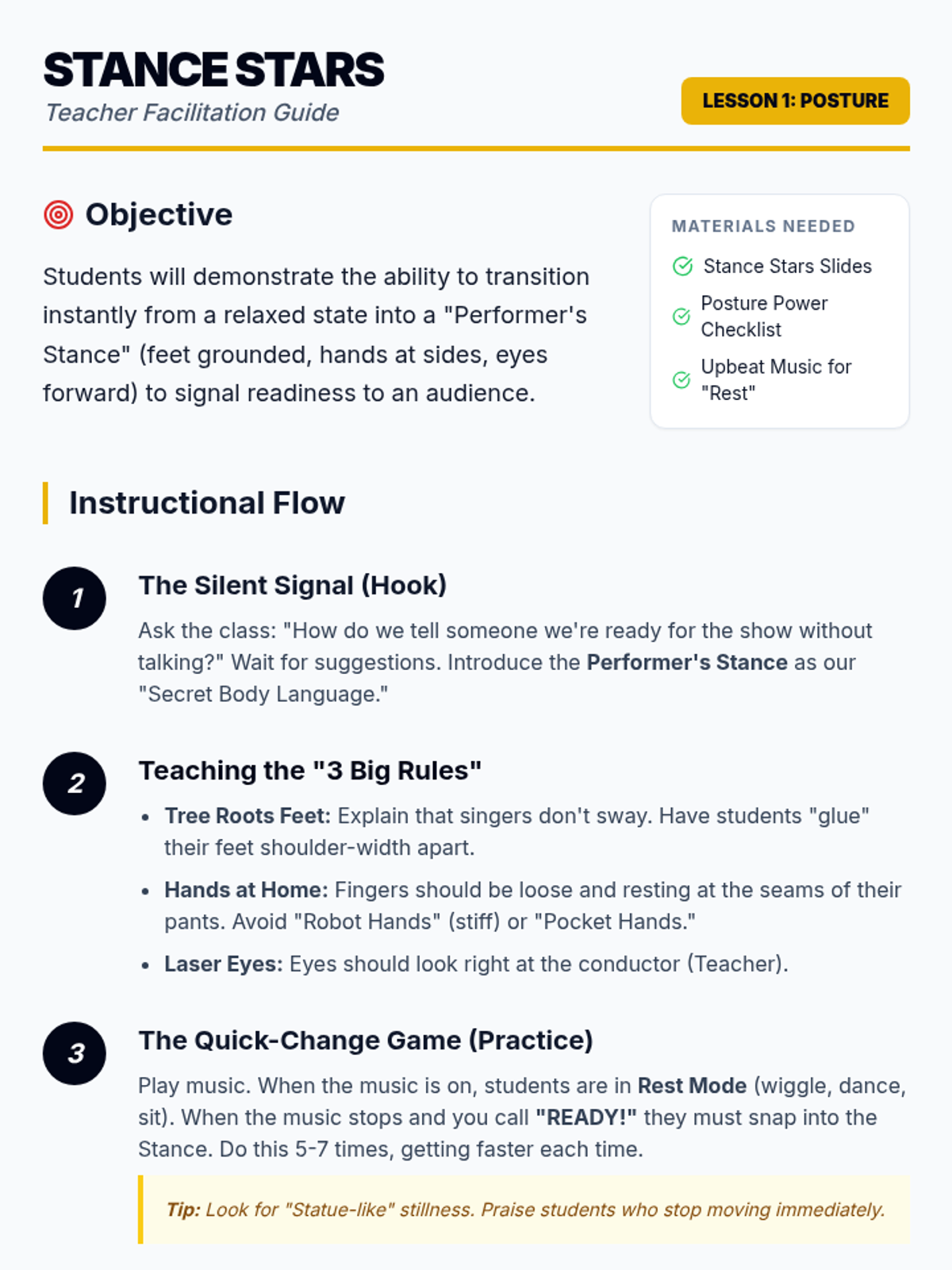
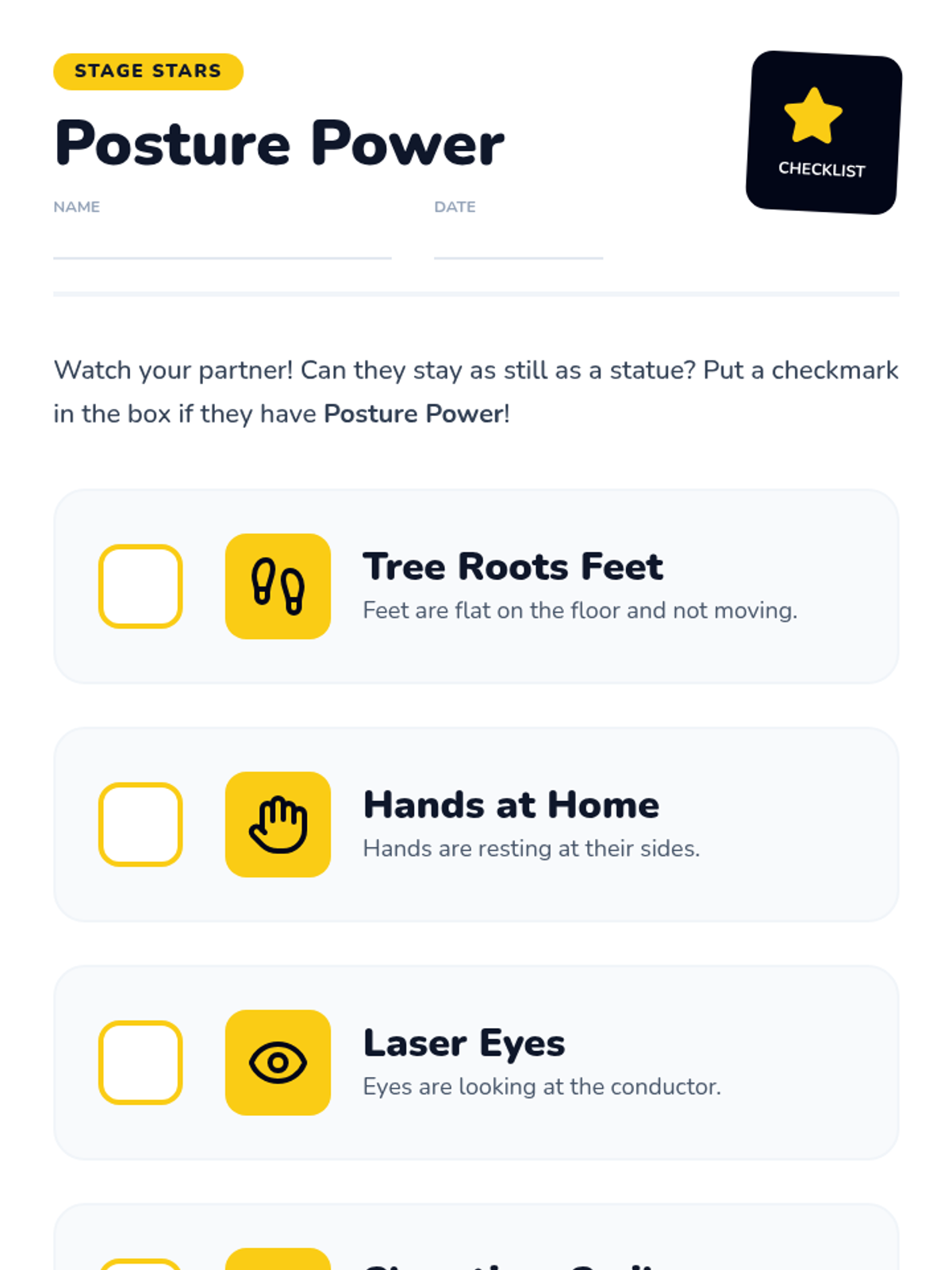
Students learn the 'ready position' for performance: feet grounded, hands at sides, and eyes forward. They practice switching instantly from relaxed 'rest mode' to 'performer mode'.
Students master the minor third interval (Sol-Mi) through name games and simple songs. This lesson builds independence in singing specific, standardized pitches.
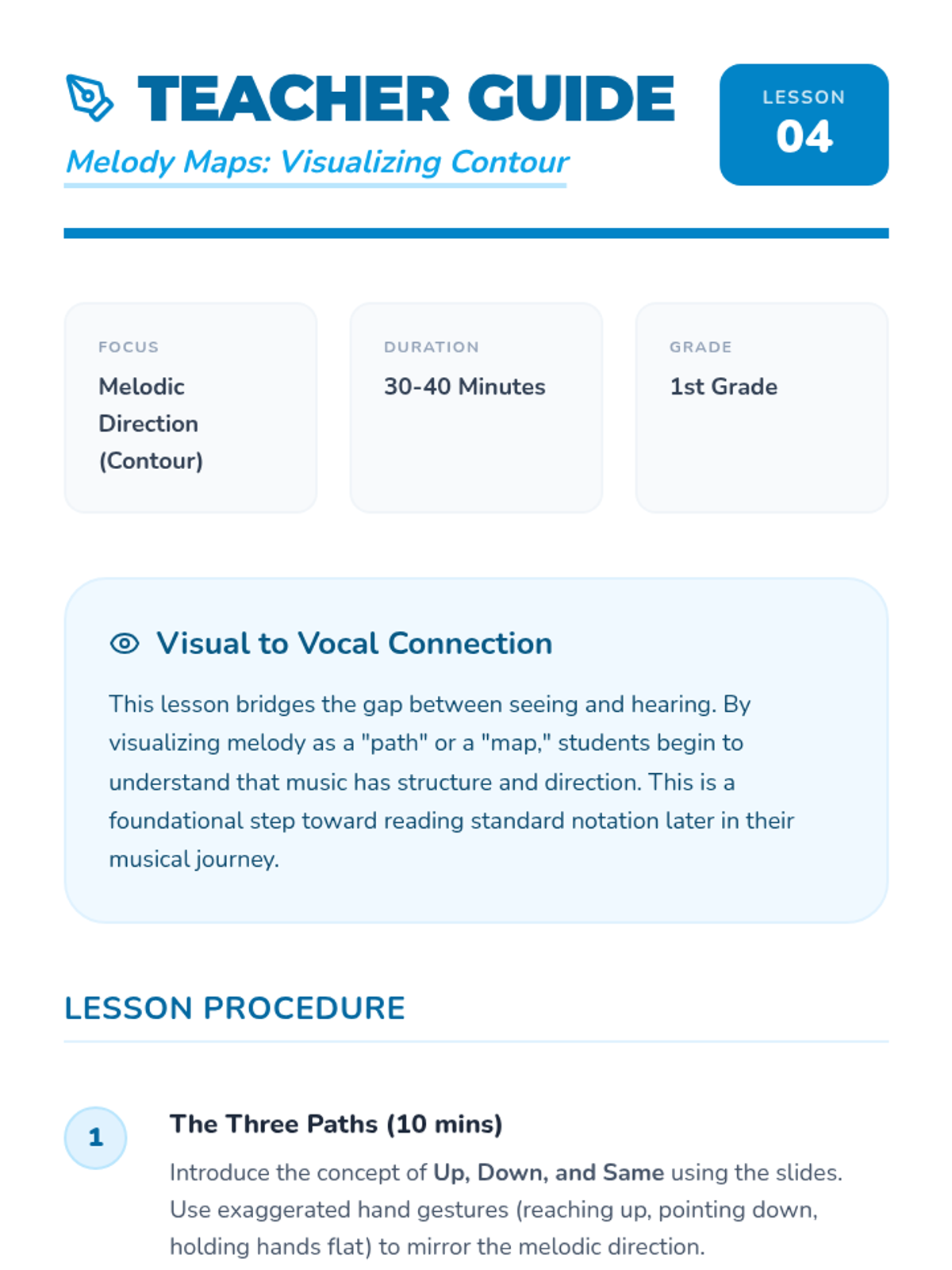
Students connect visual cues with vocal production by tracing 'melodic maps.' They learn to see pitch as a path that moves up, down, or stays the same.
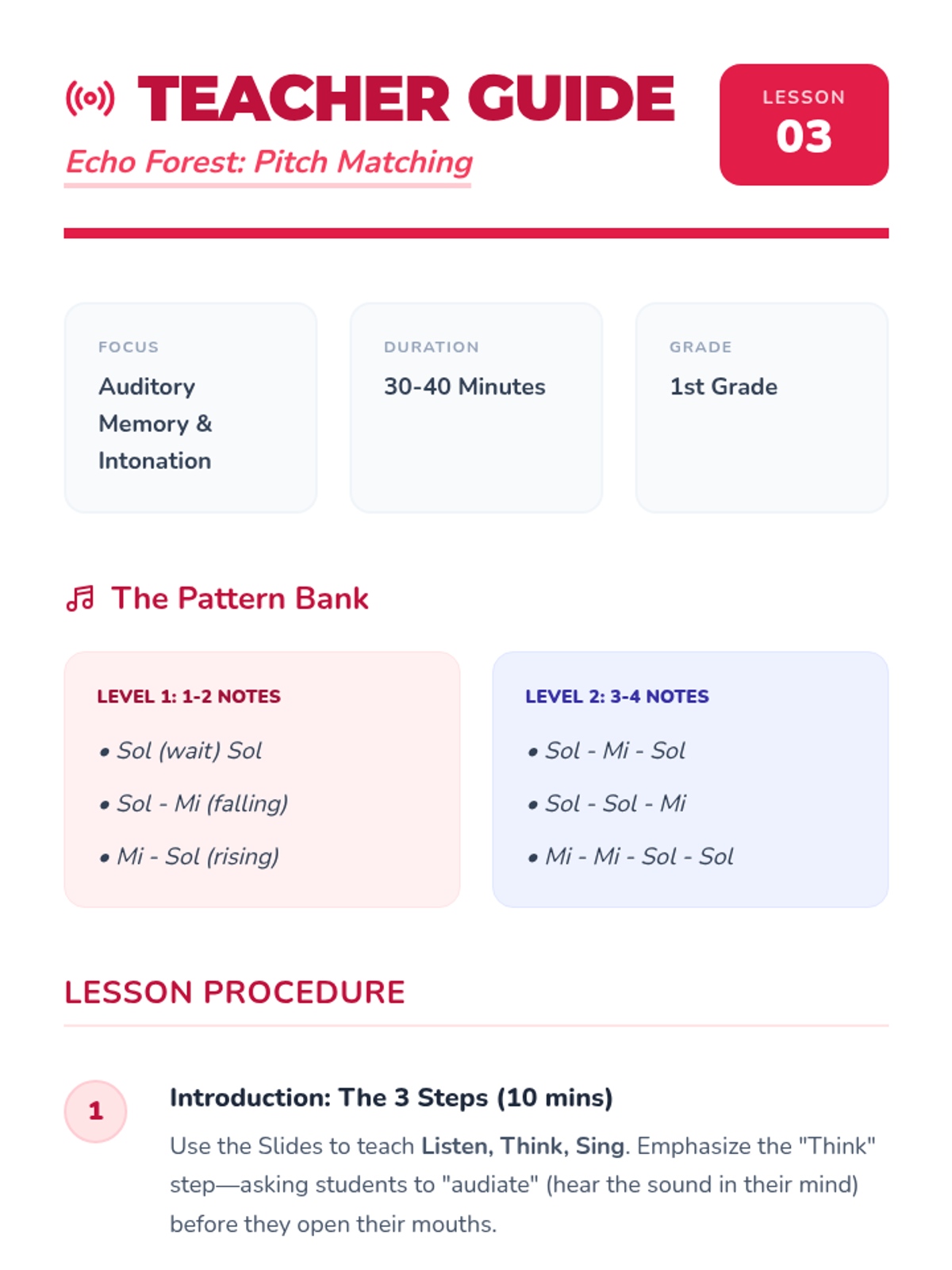
Students develop auditory memory and pitch accuracy through call-and-response games. They practice being 'echoes' of the teacher, focusing on precise pitch matching.
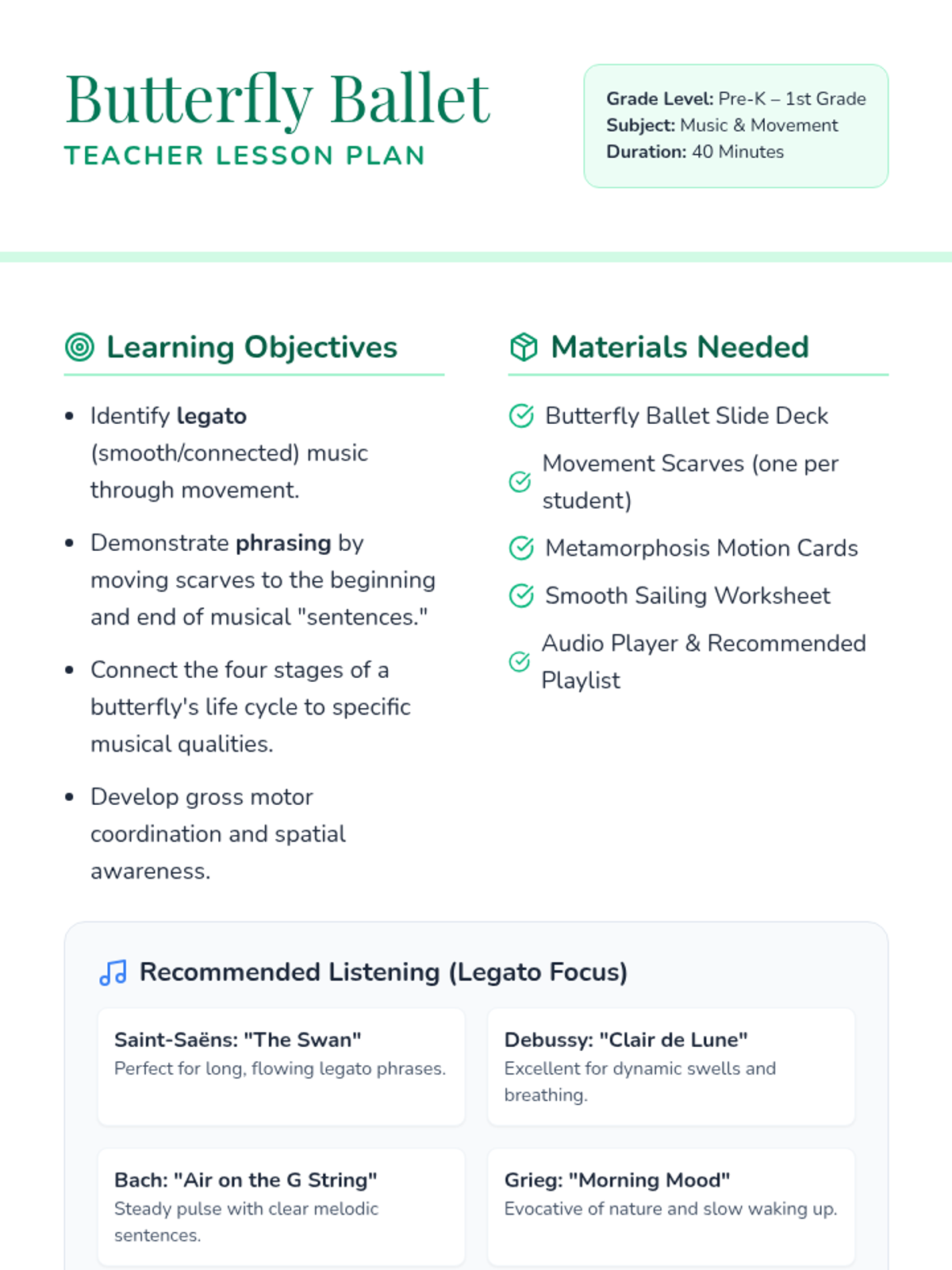
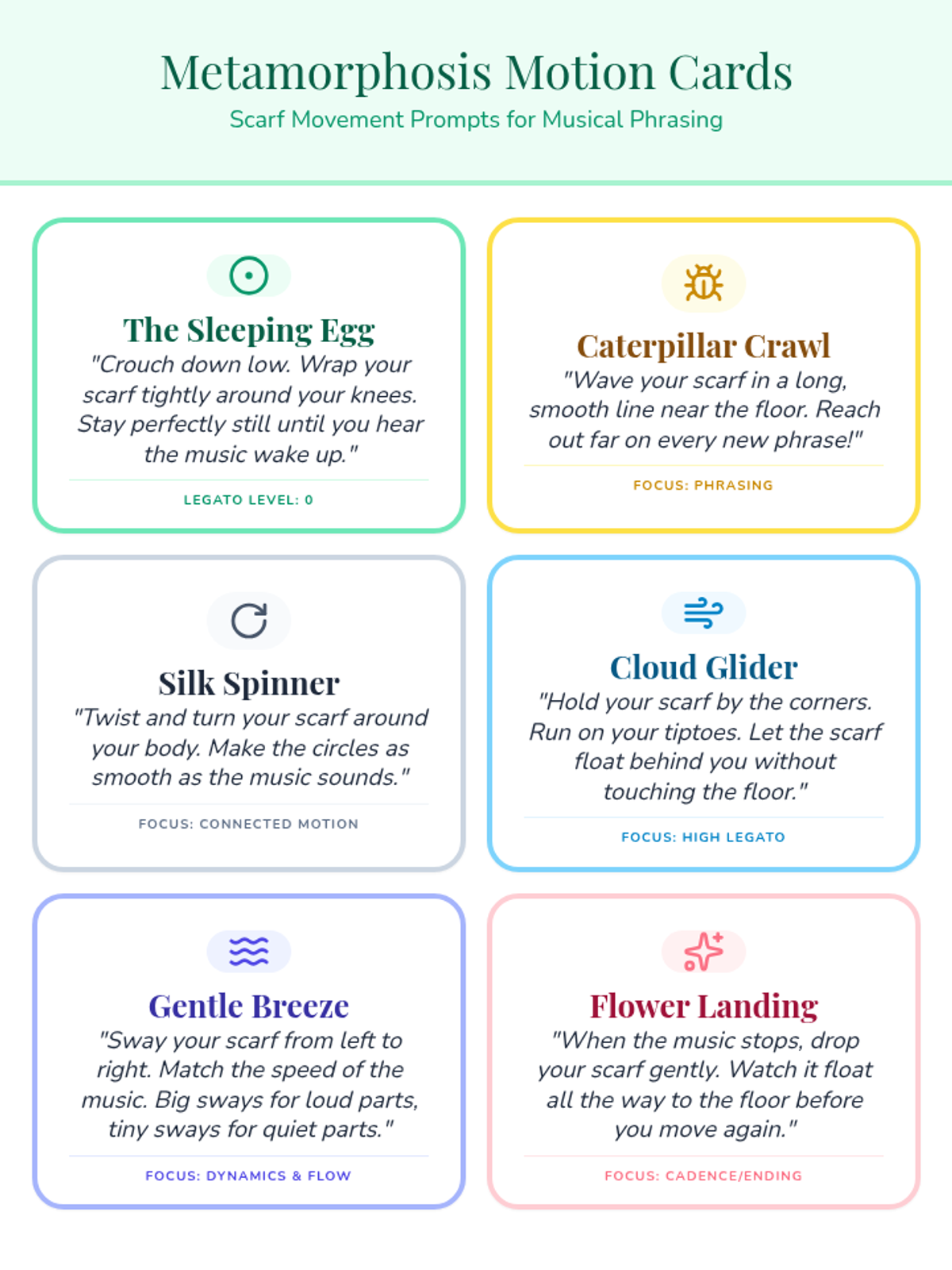
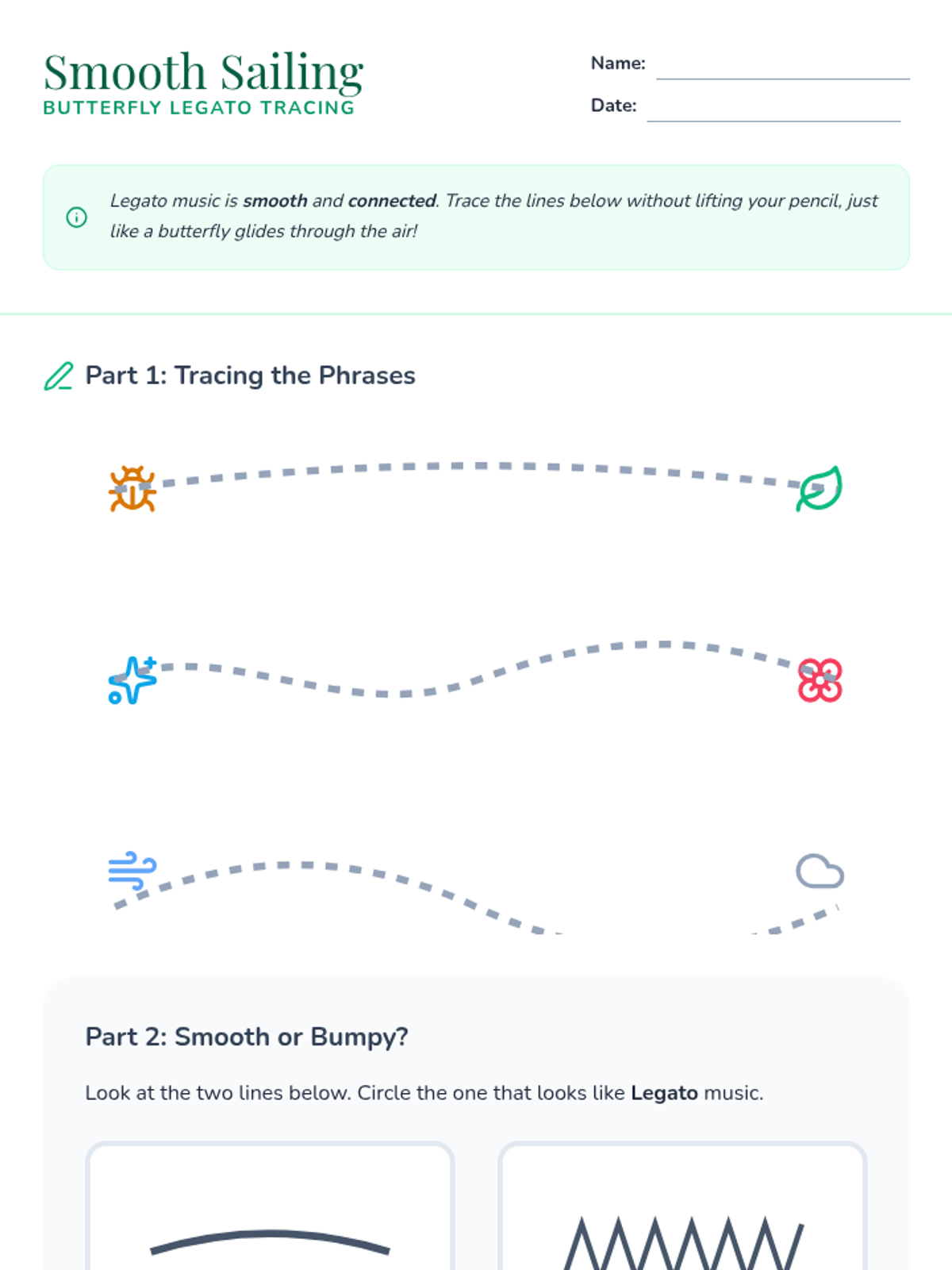
A music and movement lesson for early childhood students exploring phrasing and legato through the life cycle of a butterfly. Students use scarves to interpret smooth musical lines while learning about metamorphosis.
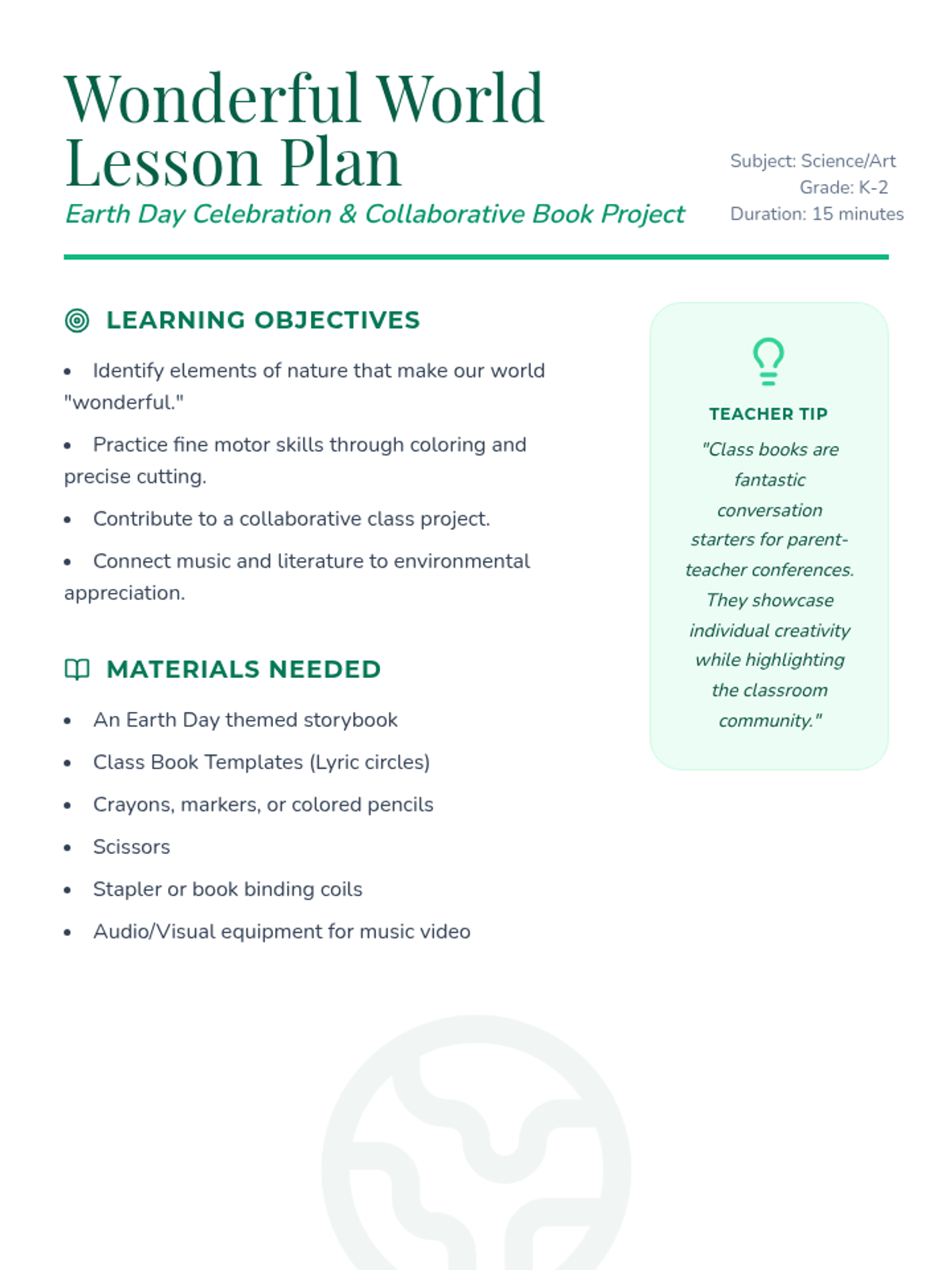
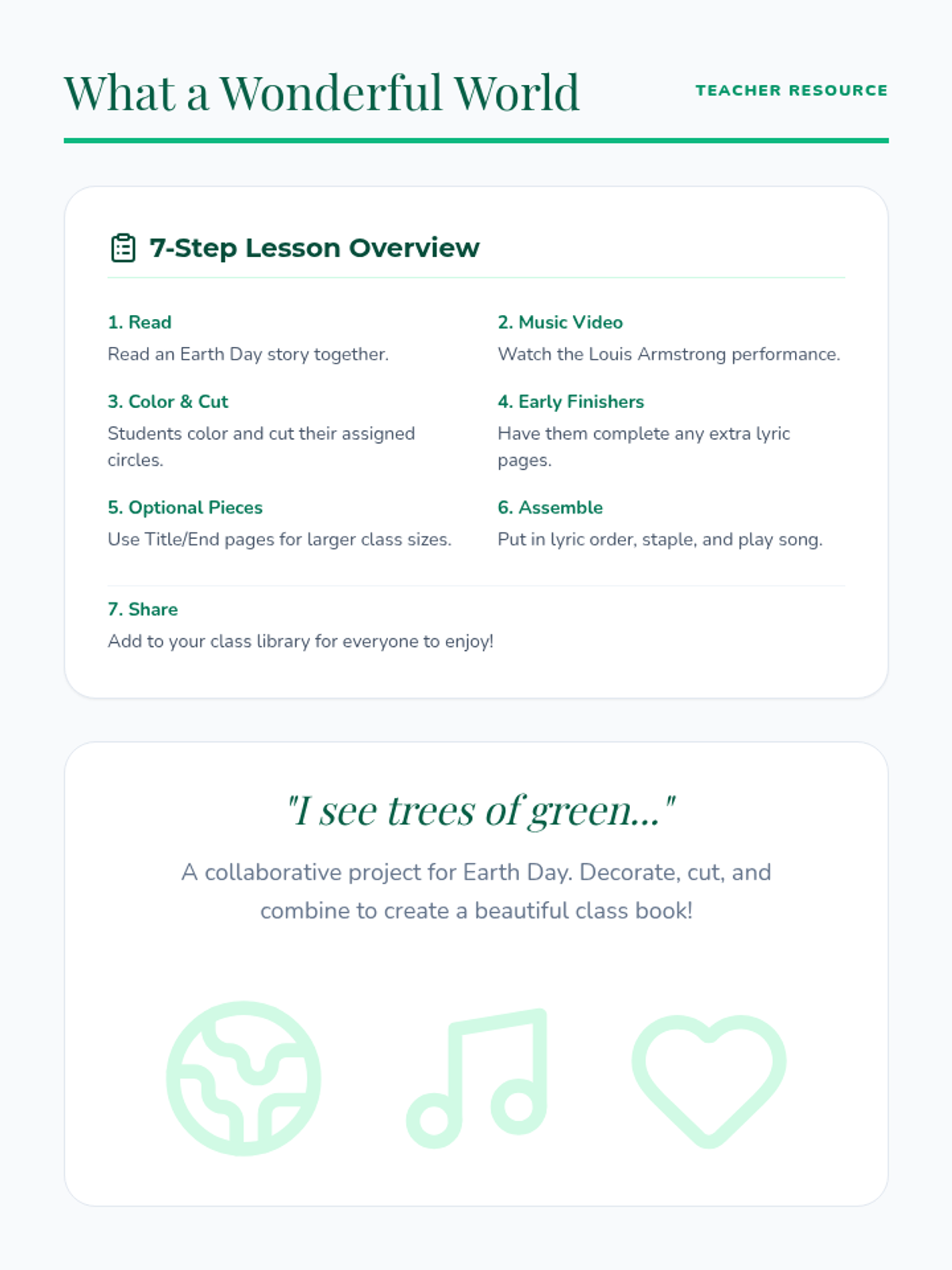
A collaborative Earth Day lesson where students create a class book inspired by Louis Armstrong's 'What a Wonderful World'. Includes a detailed teacher guide and presentation slides with a video embed.
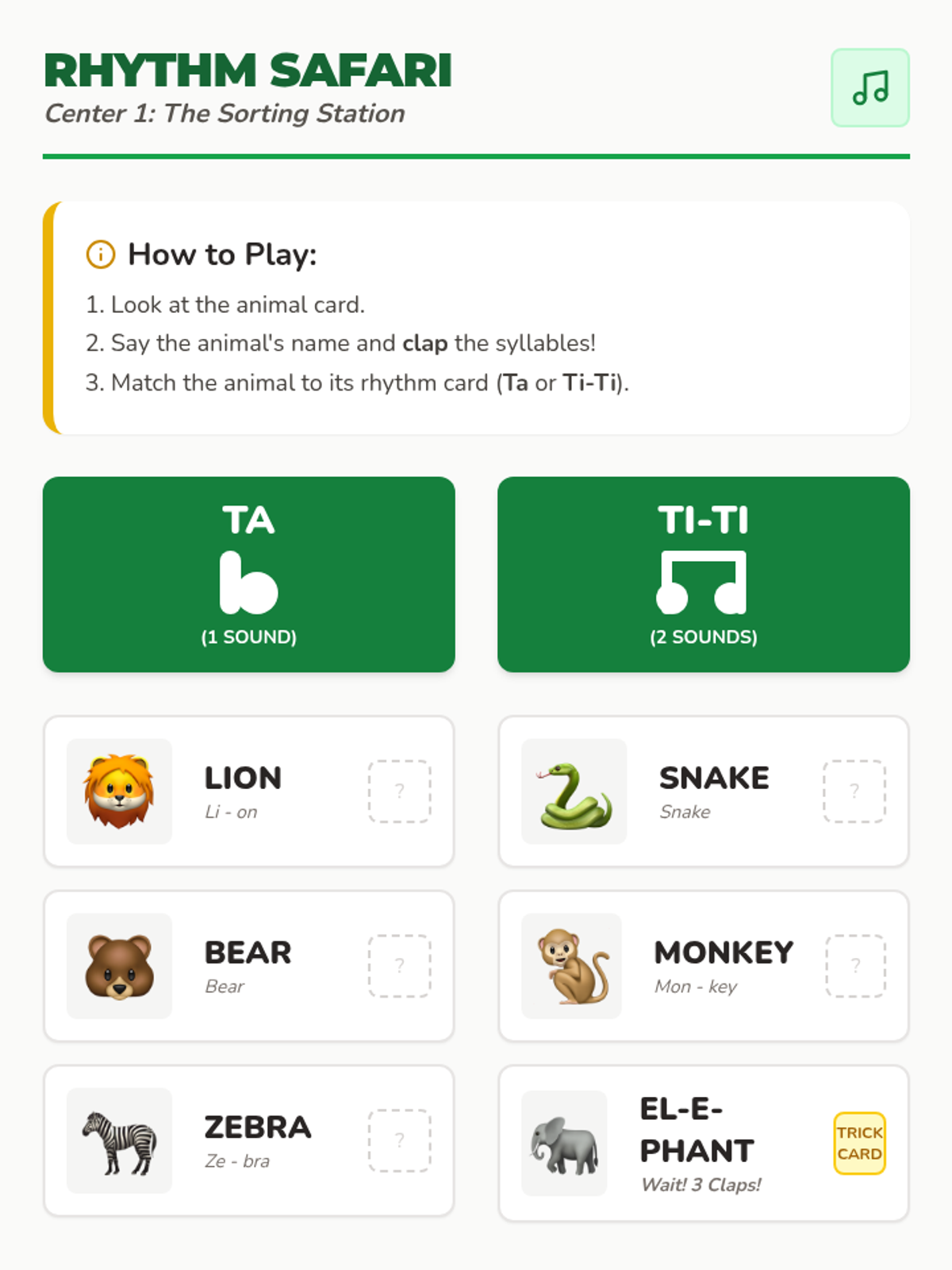
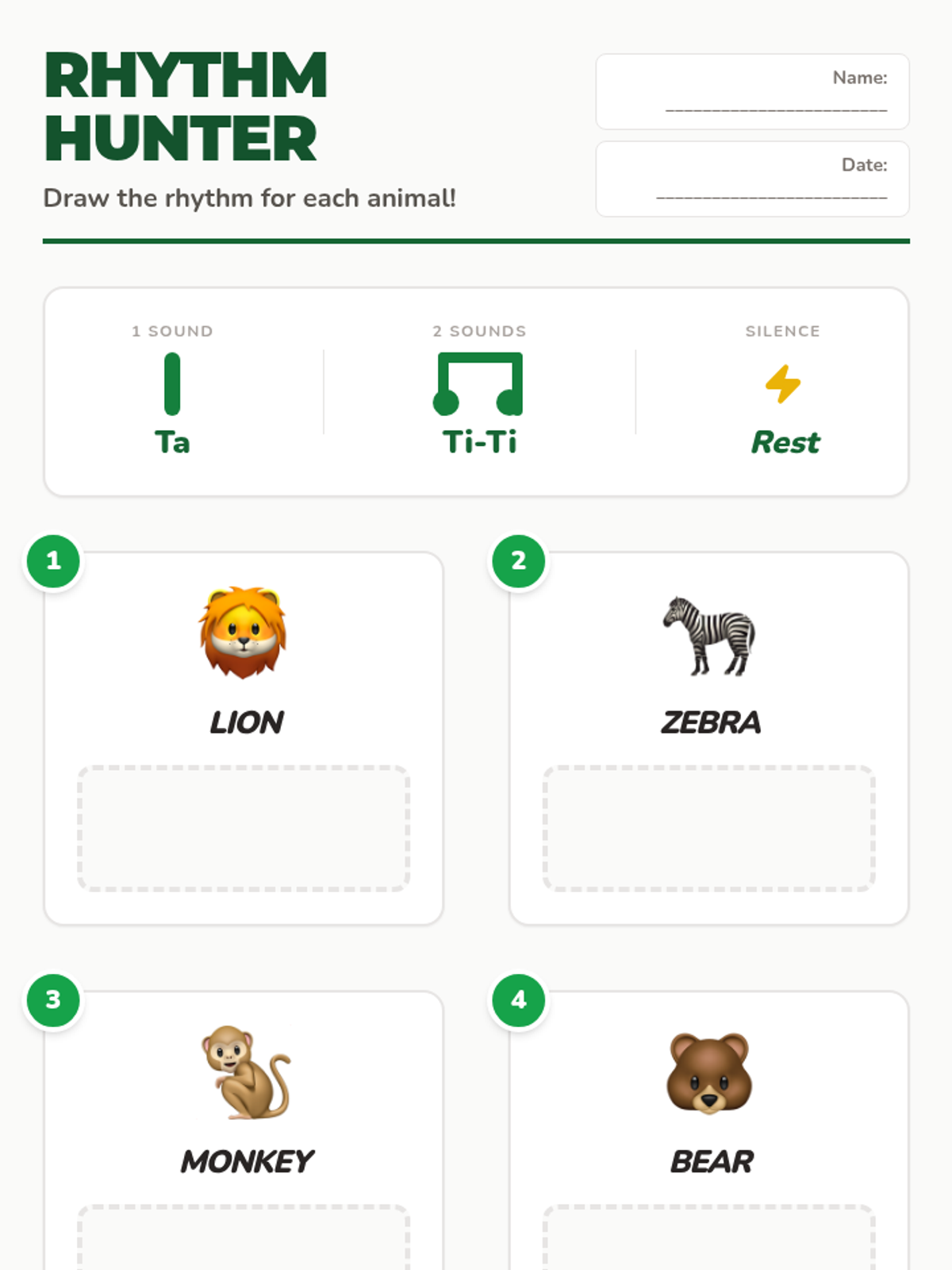
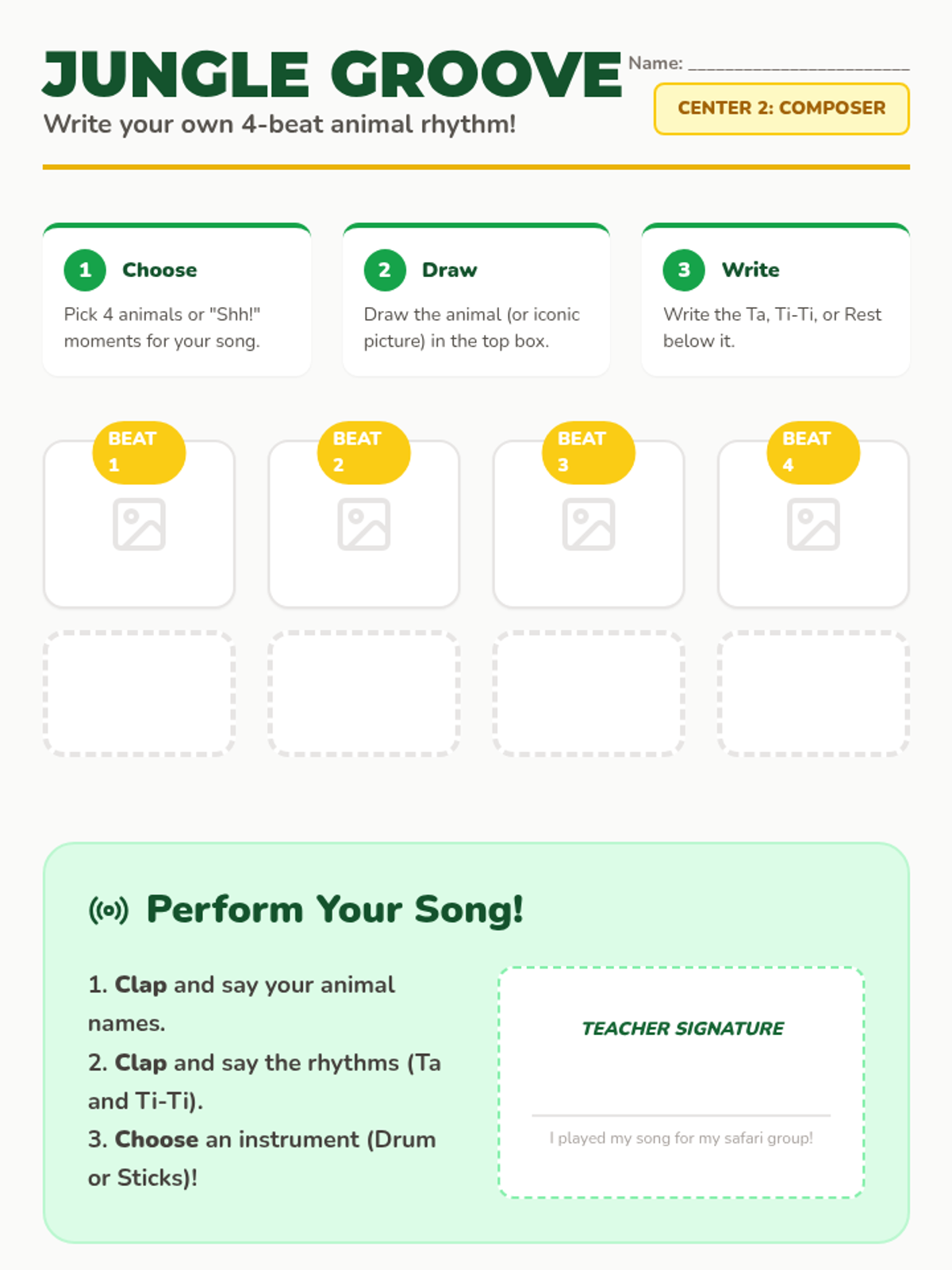
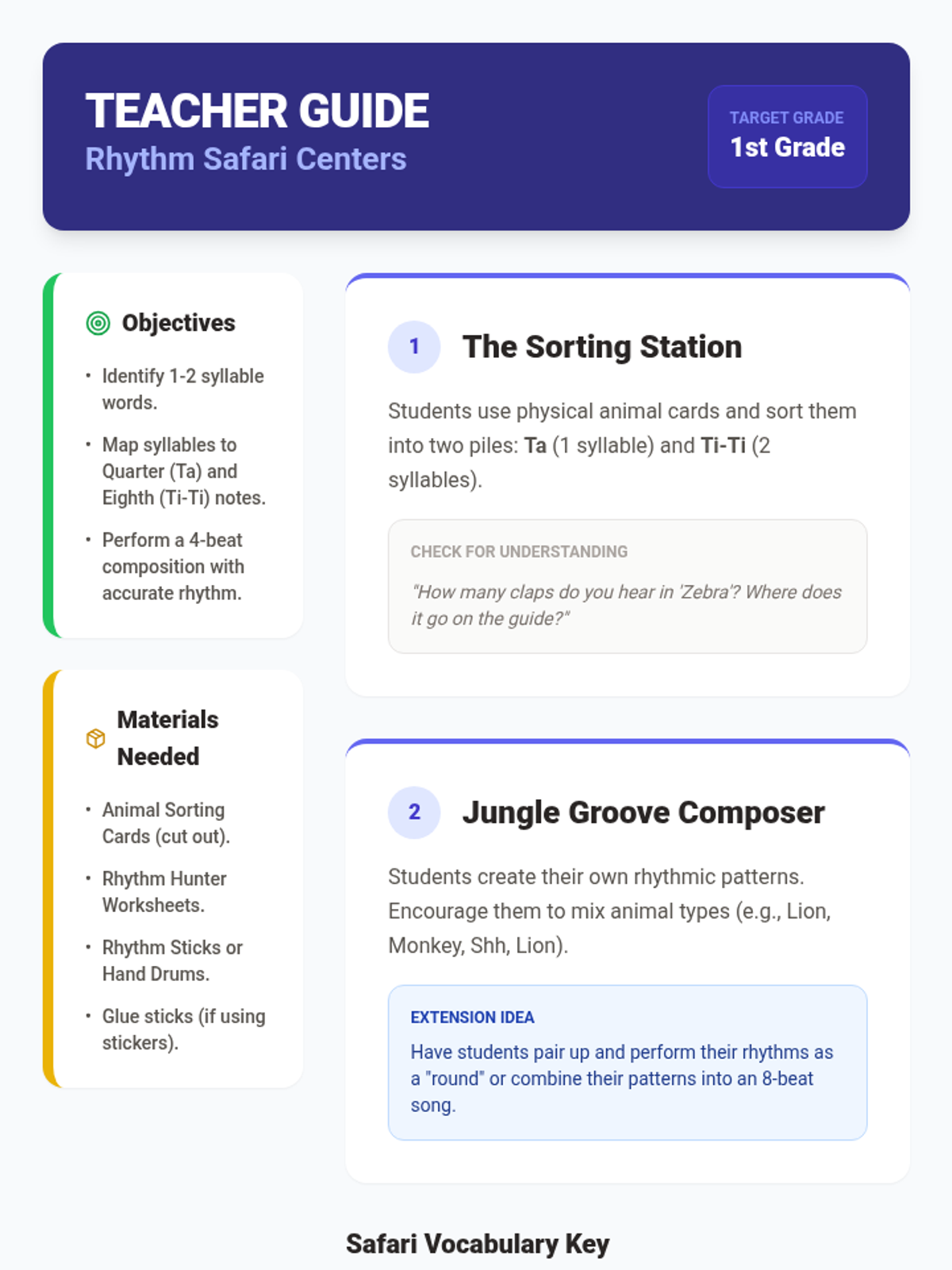
A series of music center activities for first graders to connect word syllables to rhythmic notation (Ta and Ti-Ti) through a zoo animal theme. Students will sort animal names by rhythm and create their own rhythmic patterns.
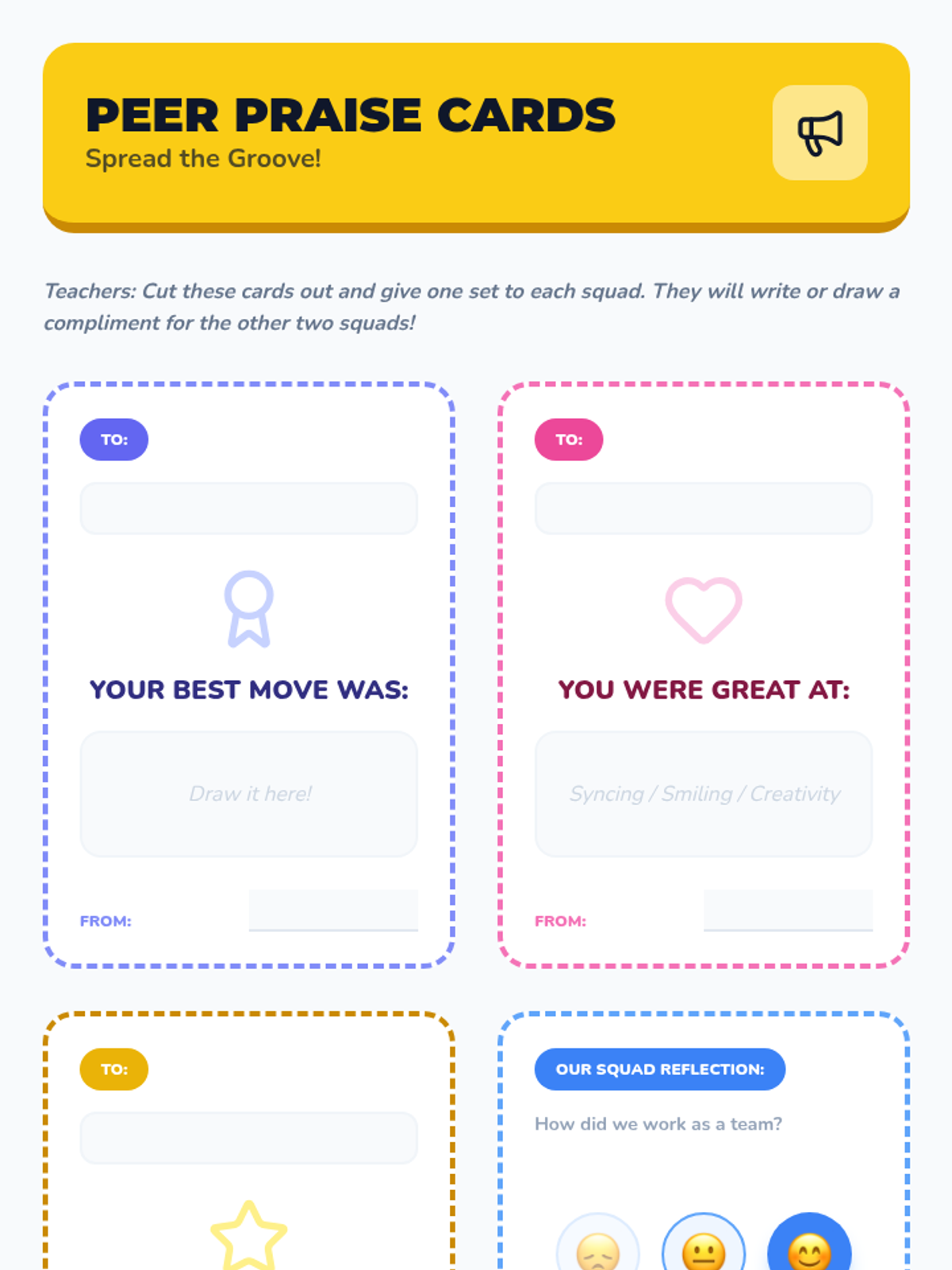
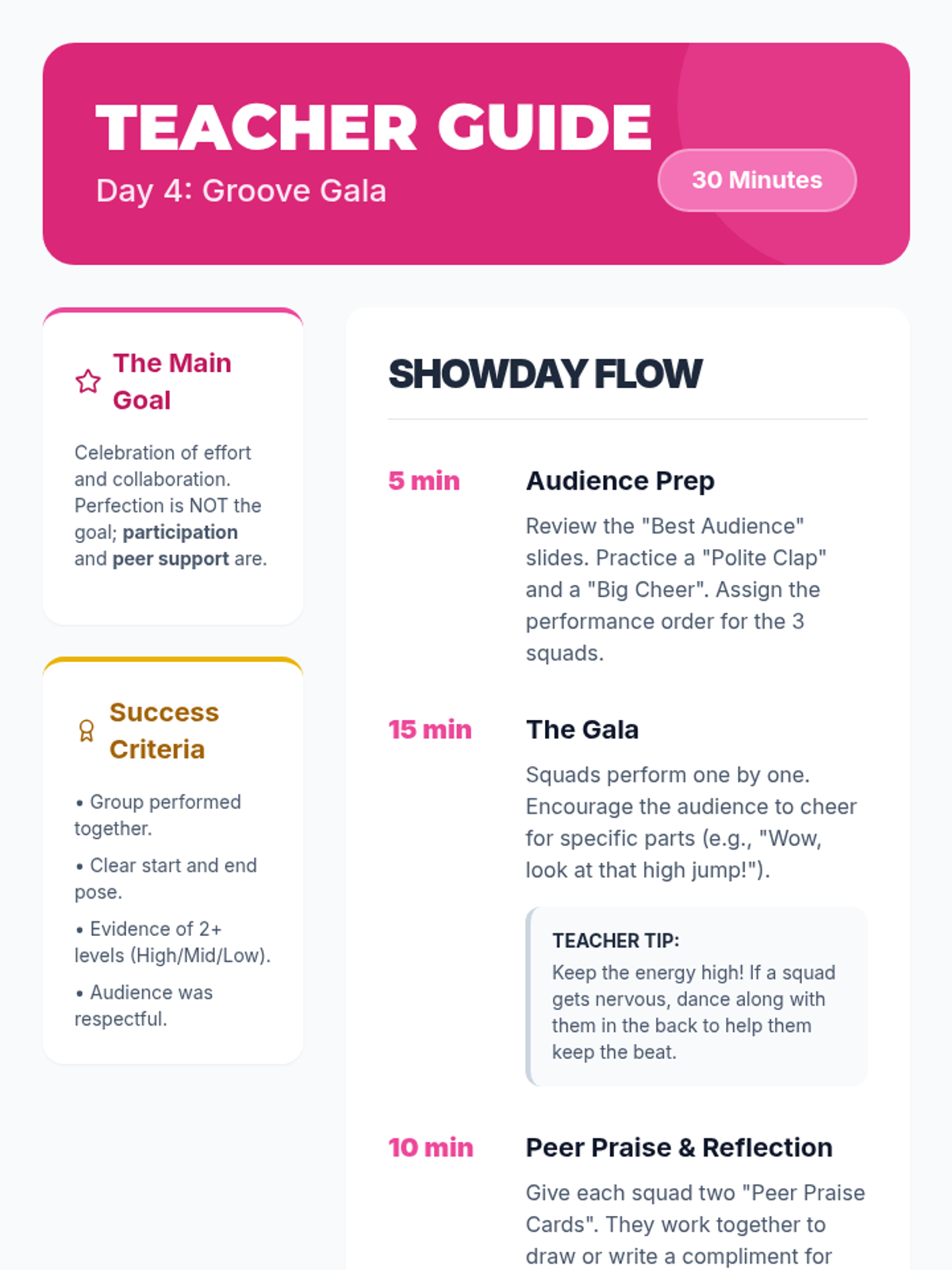
The final performance day where groups showcase their choreography and celebrate each other's creativity.
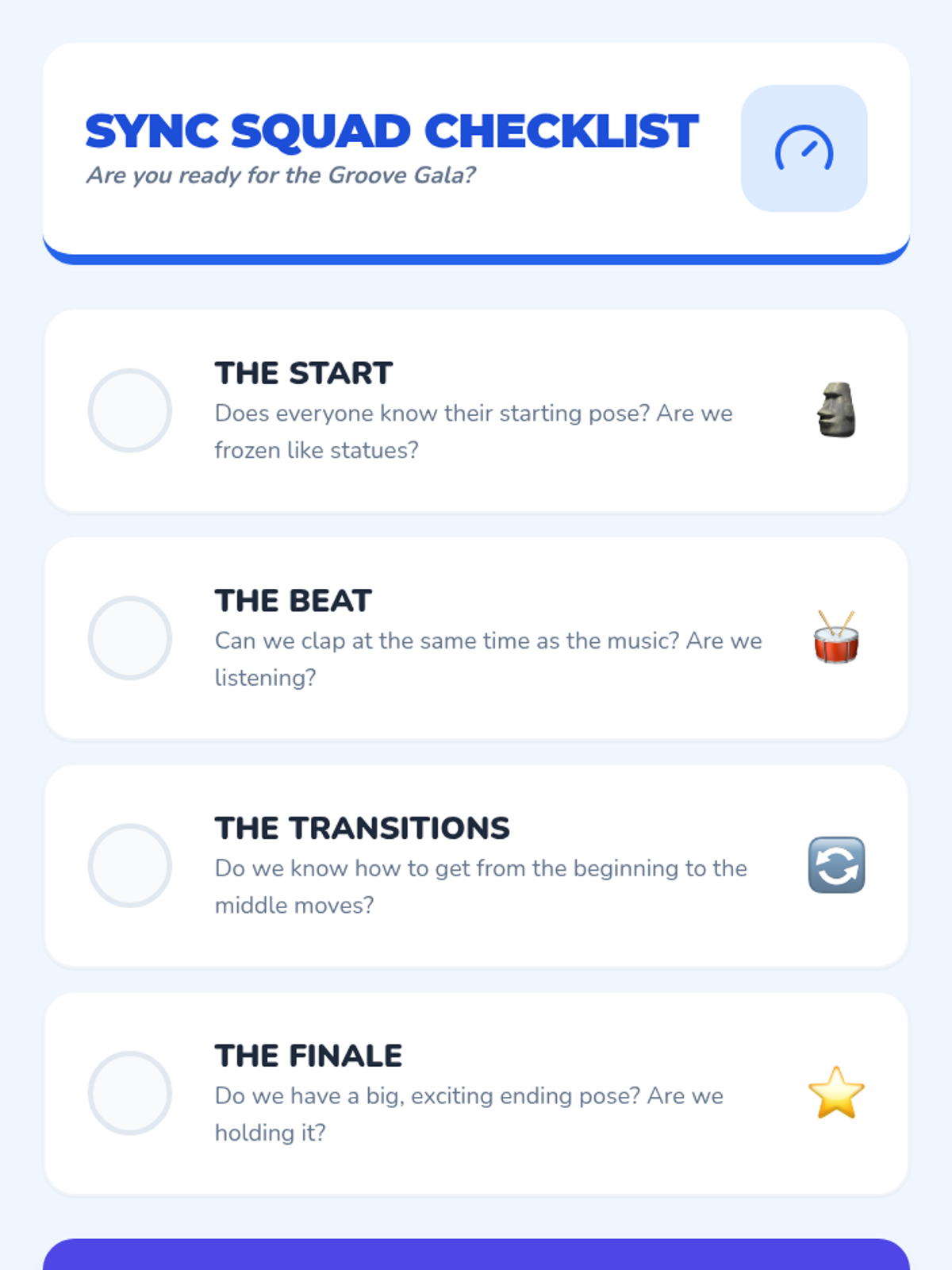
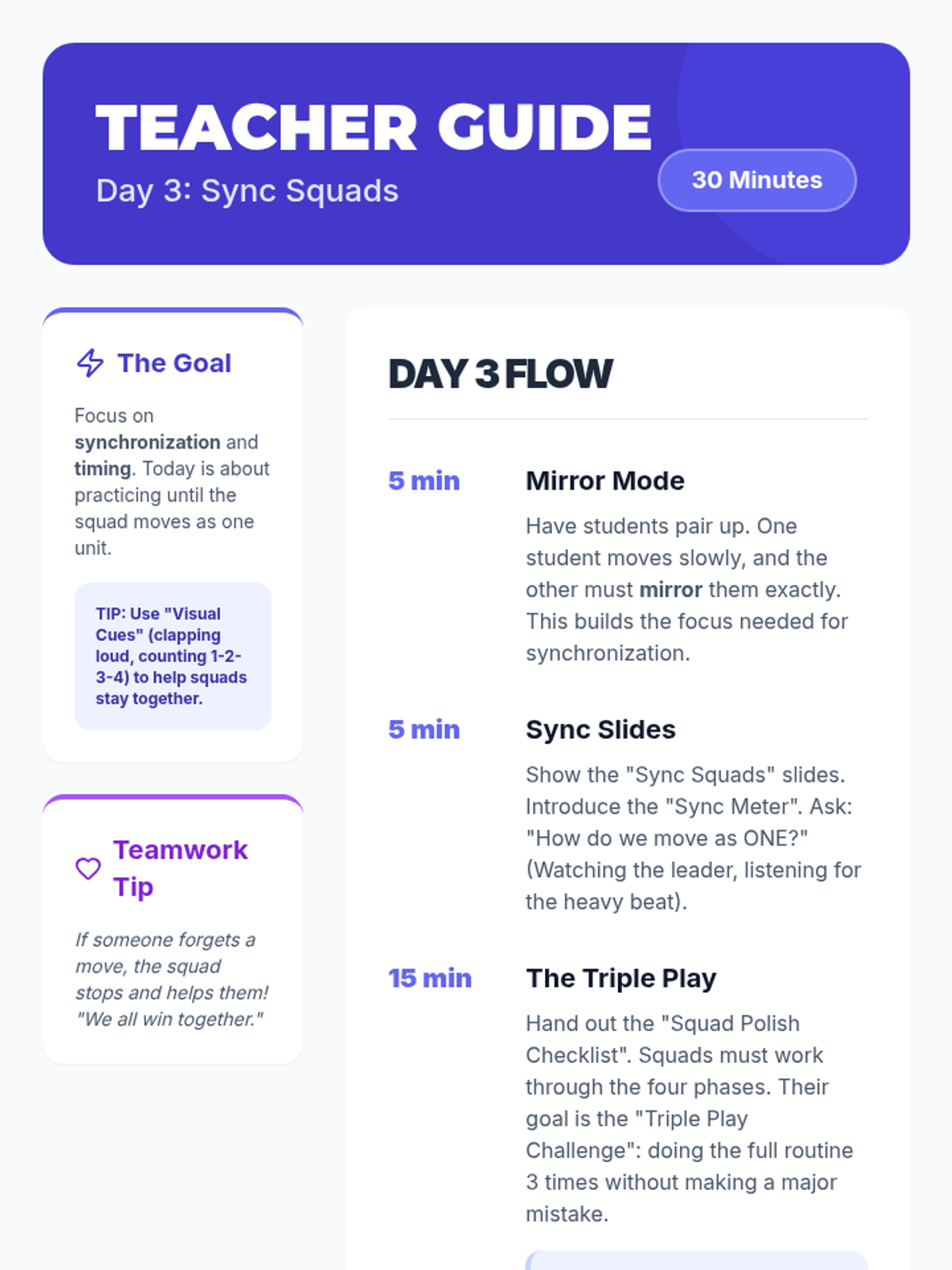
Squads practice their full routine, adding transitions and ensuring every member is in sync.
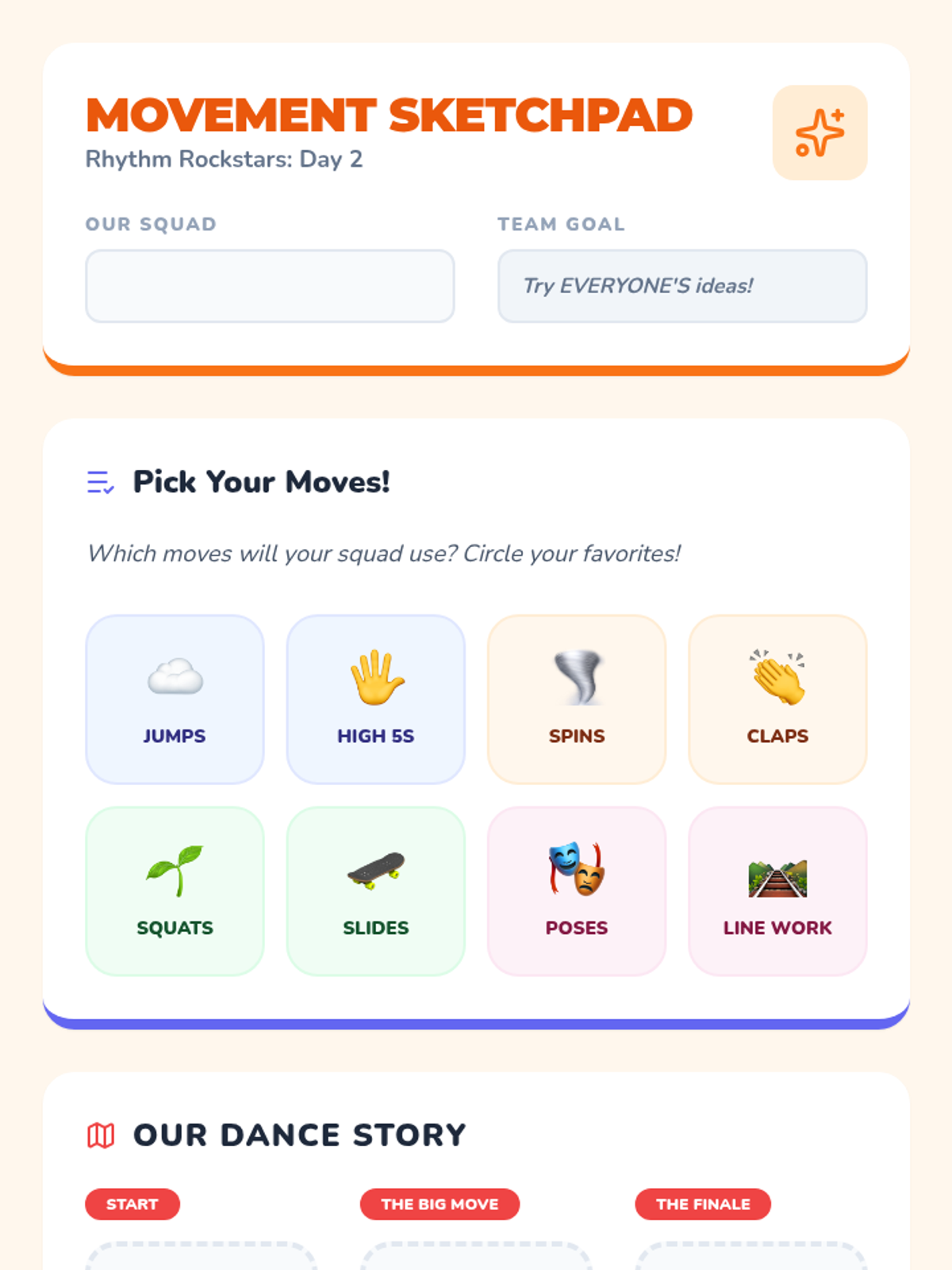
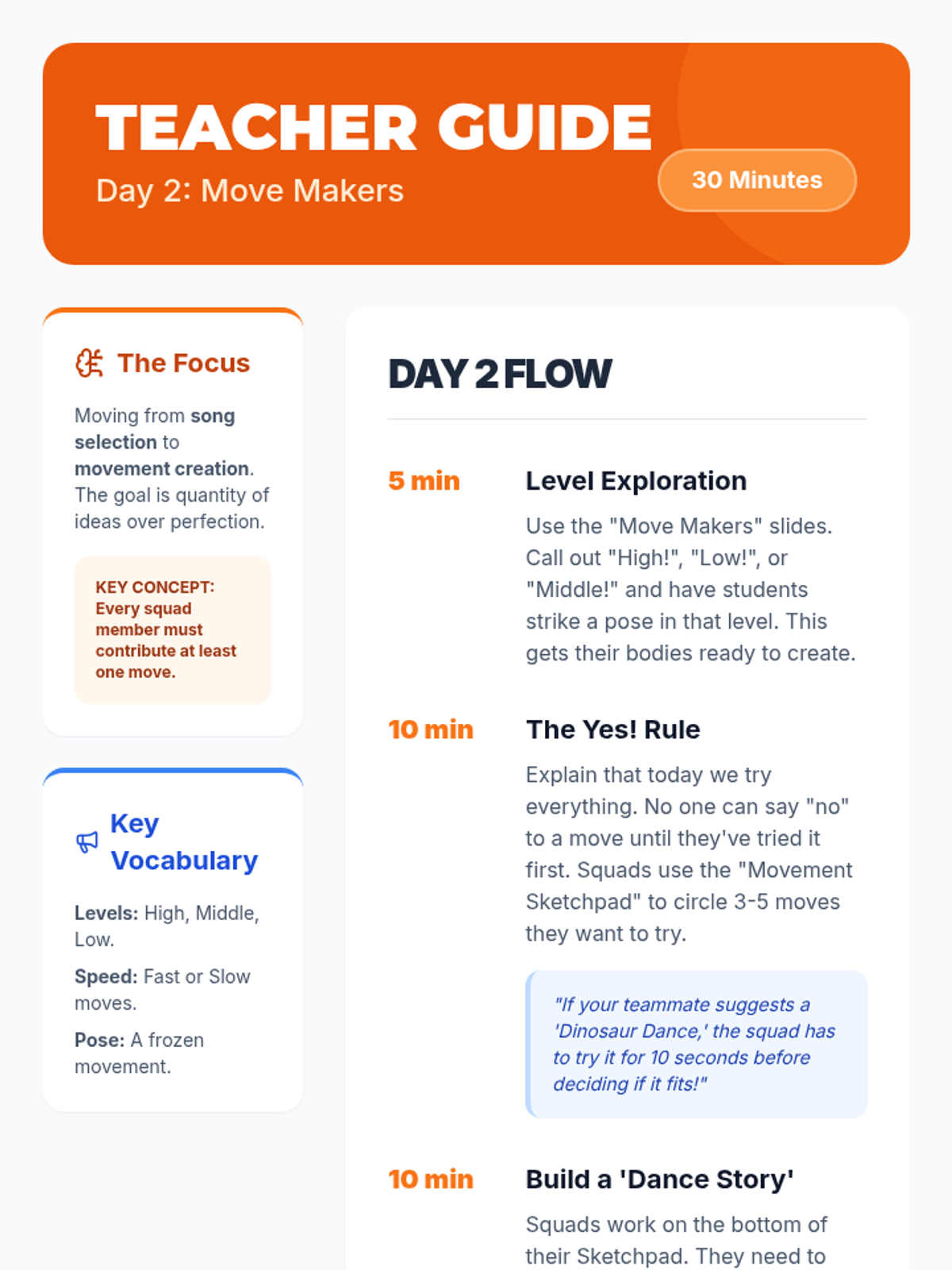
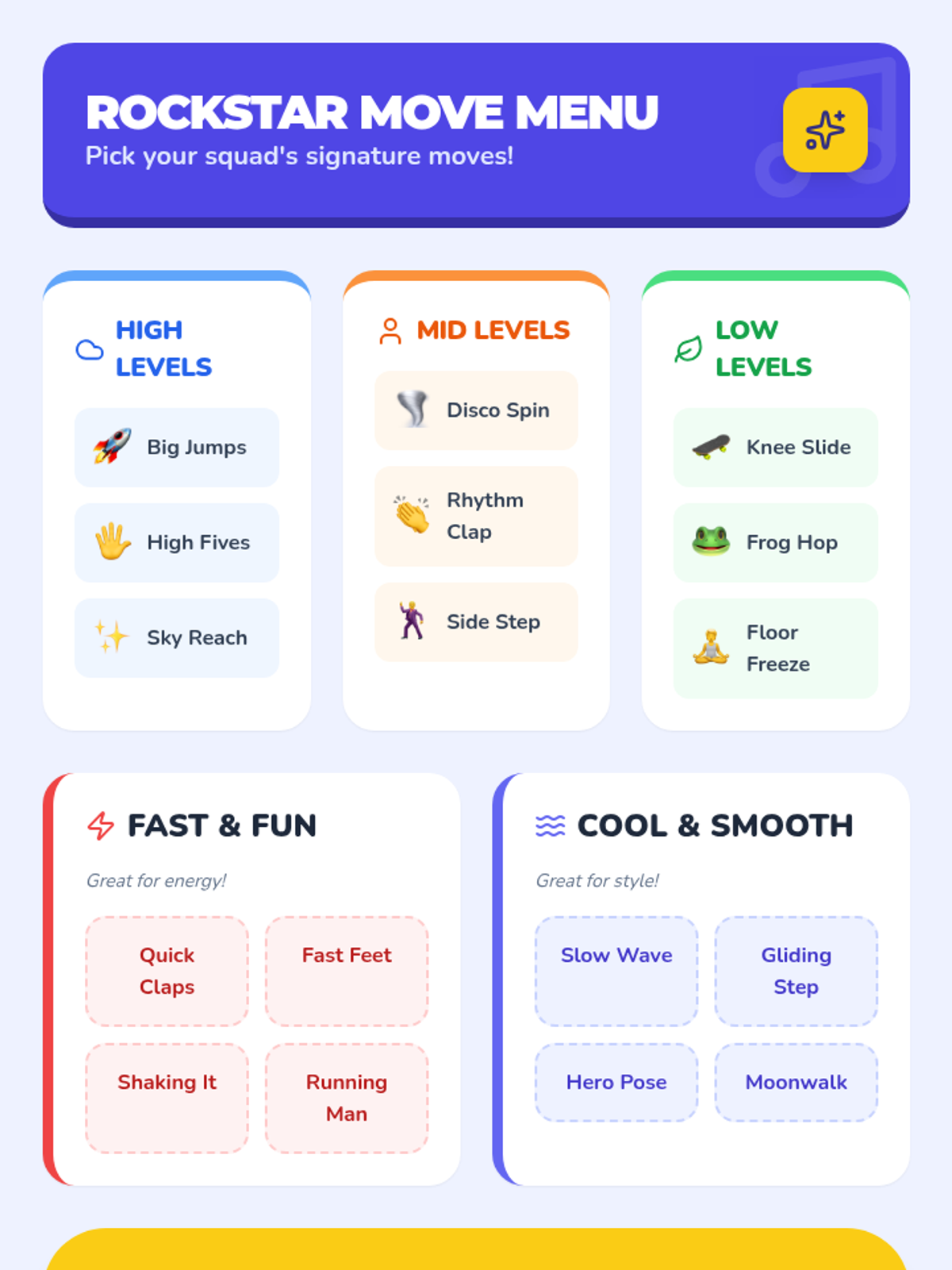
Groups brainstorm dance moves using different levels and speeds, focusing on including everyone's ideas.
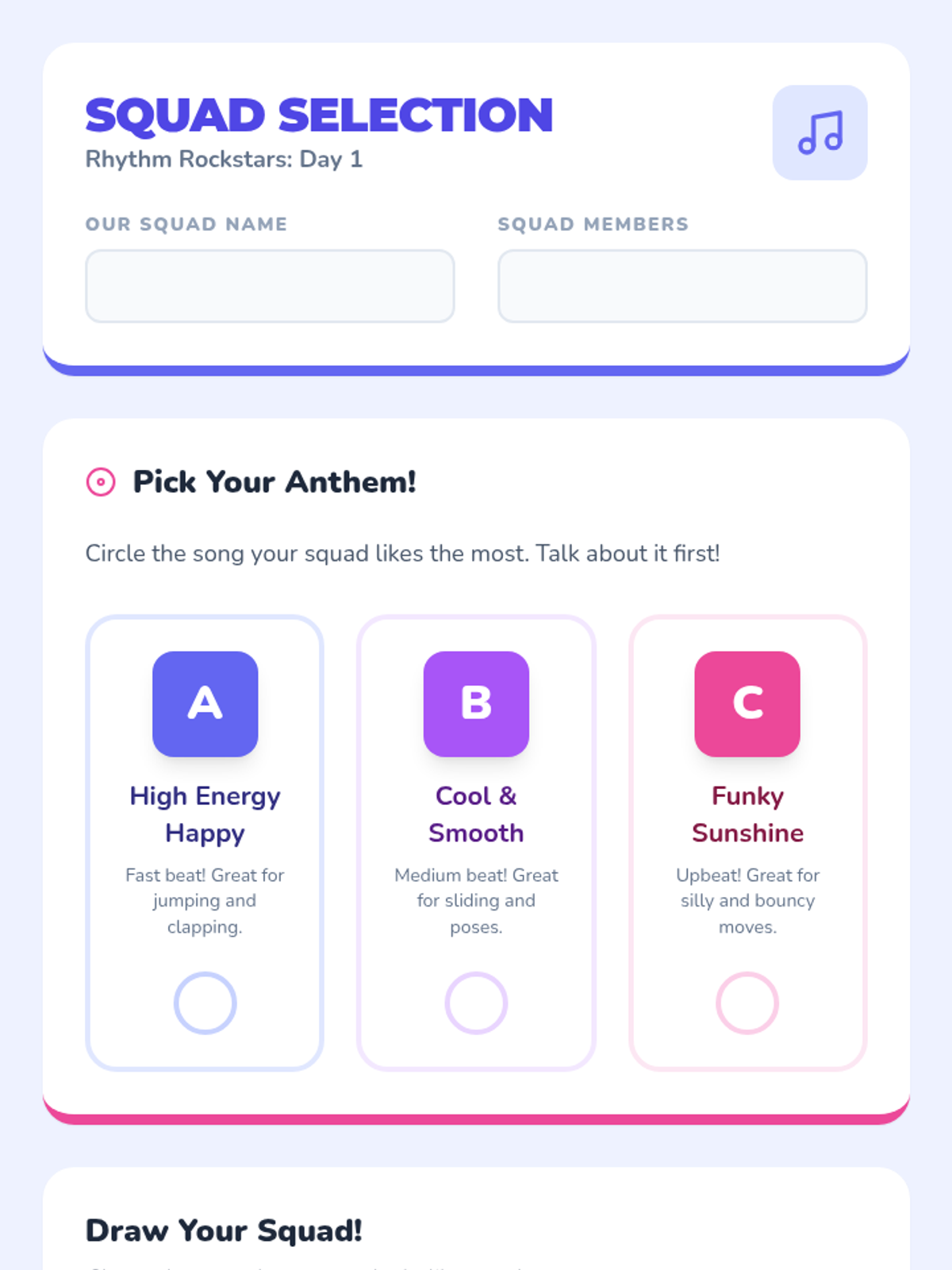
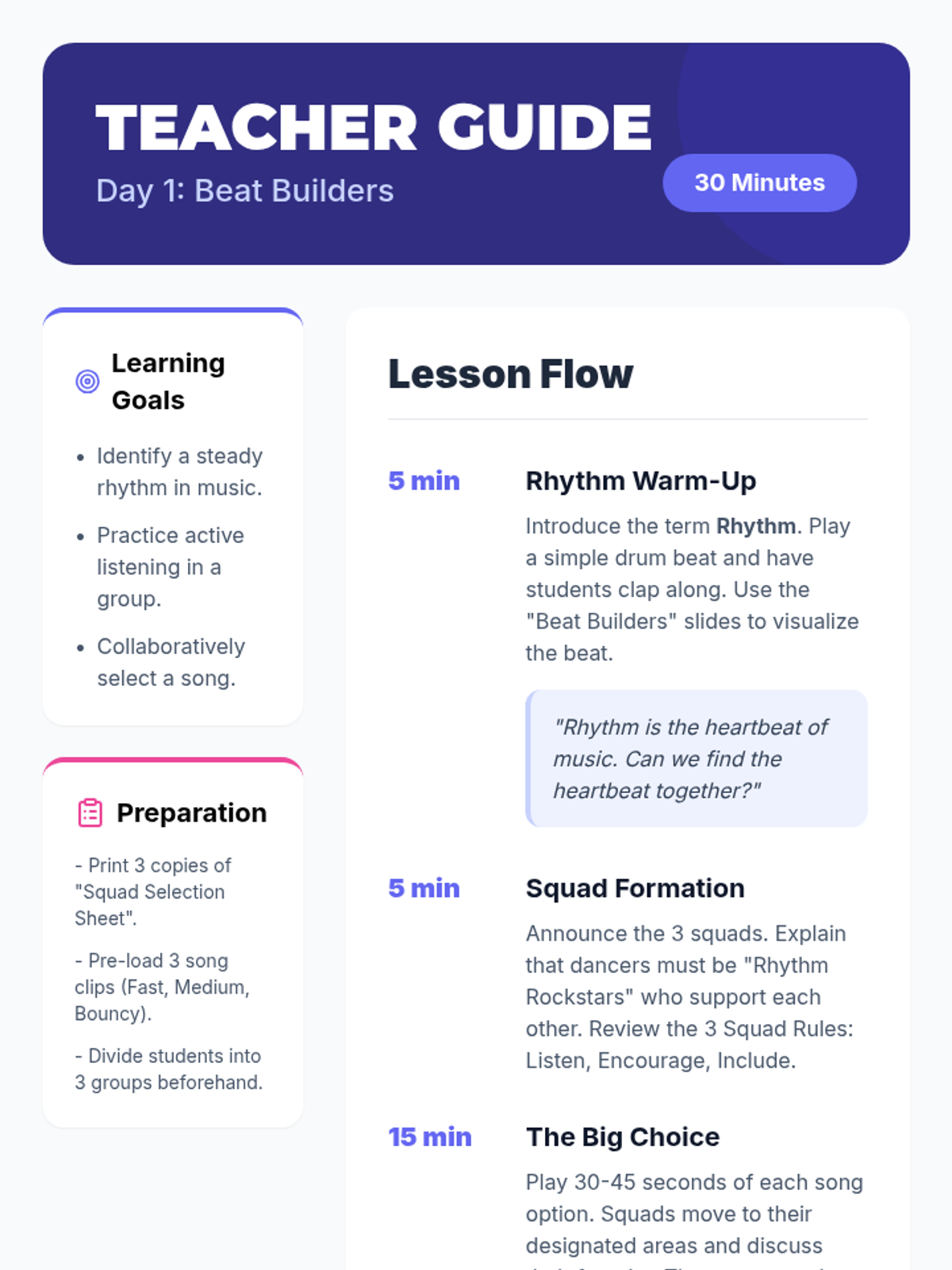
Students explore rhythm and tempo, form their dance squads, and select their group's performance song.
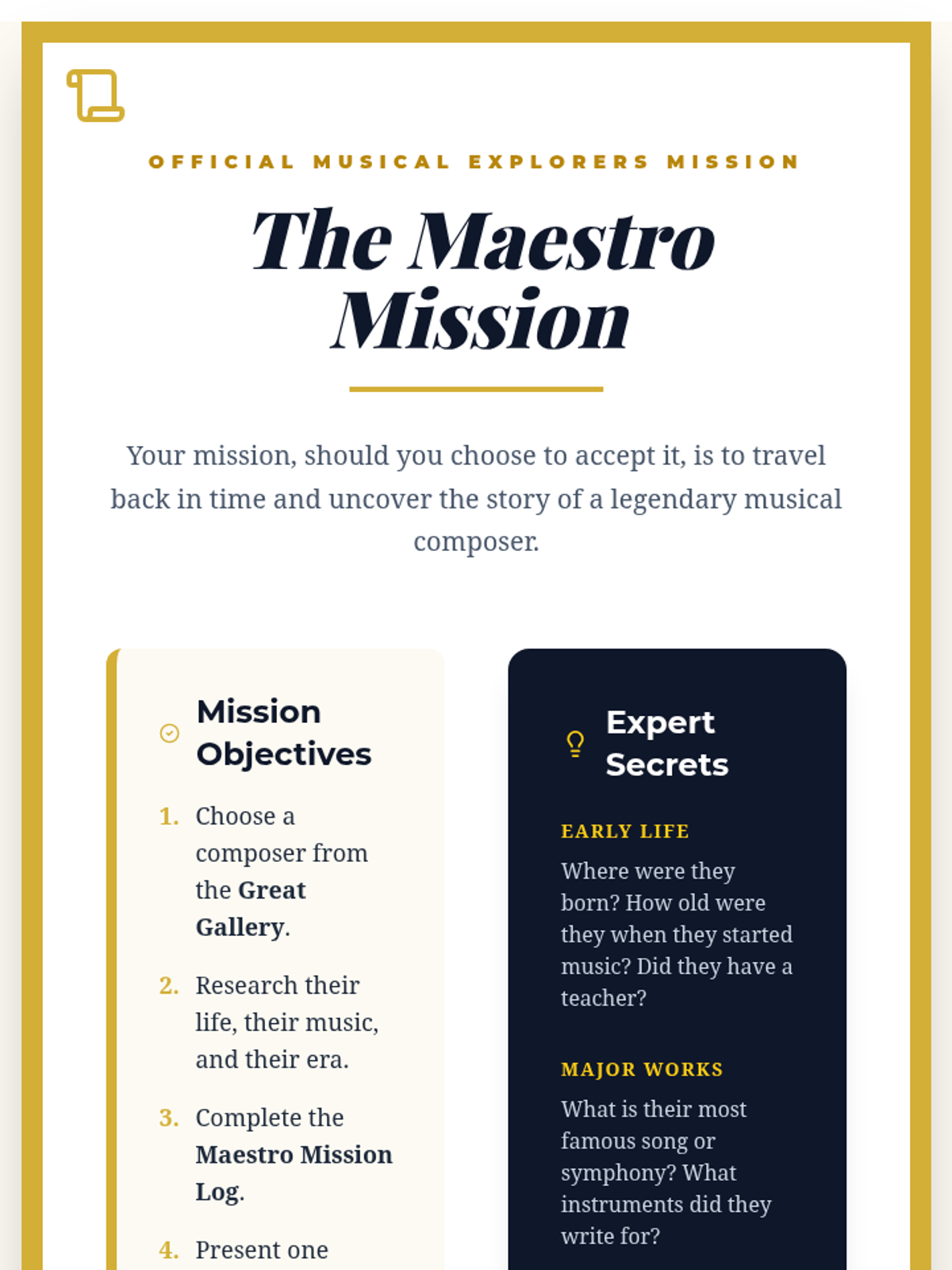
Guides students through researching and presenting a biography of a famous composer.
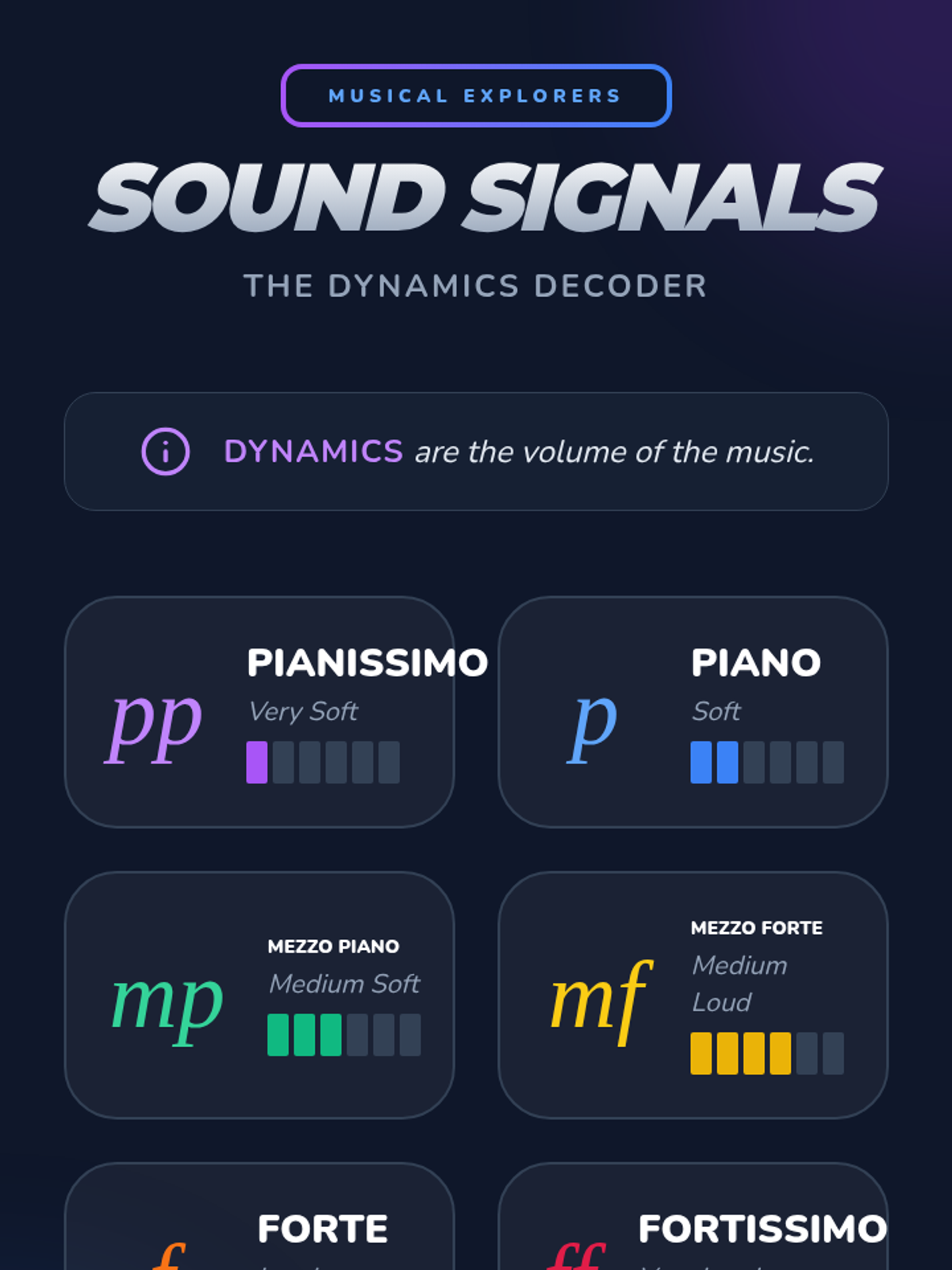
Explores the concept of dynamics through vocabulary and visual aids.
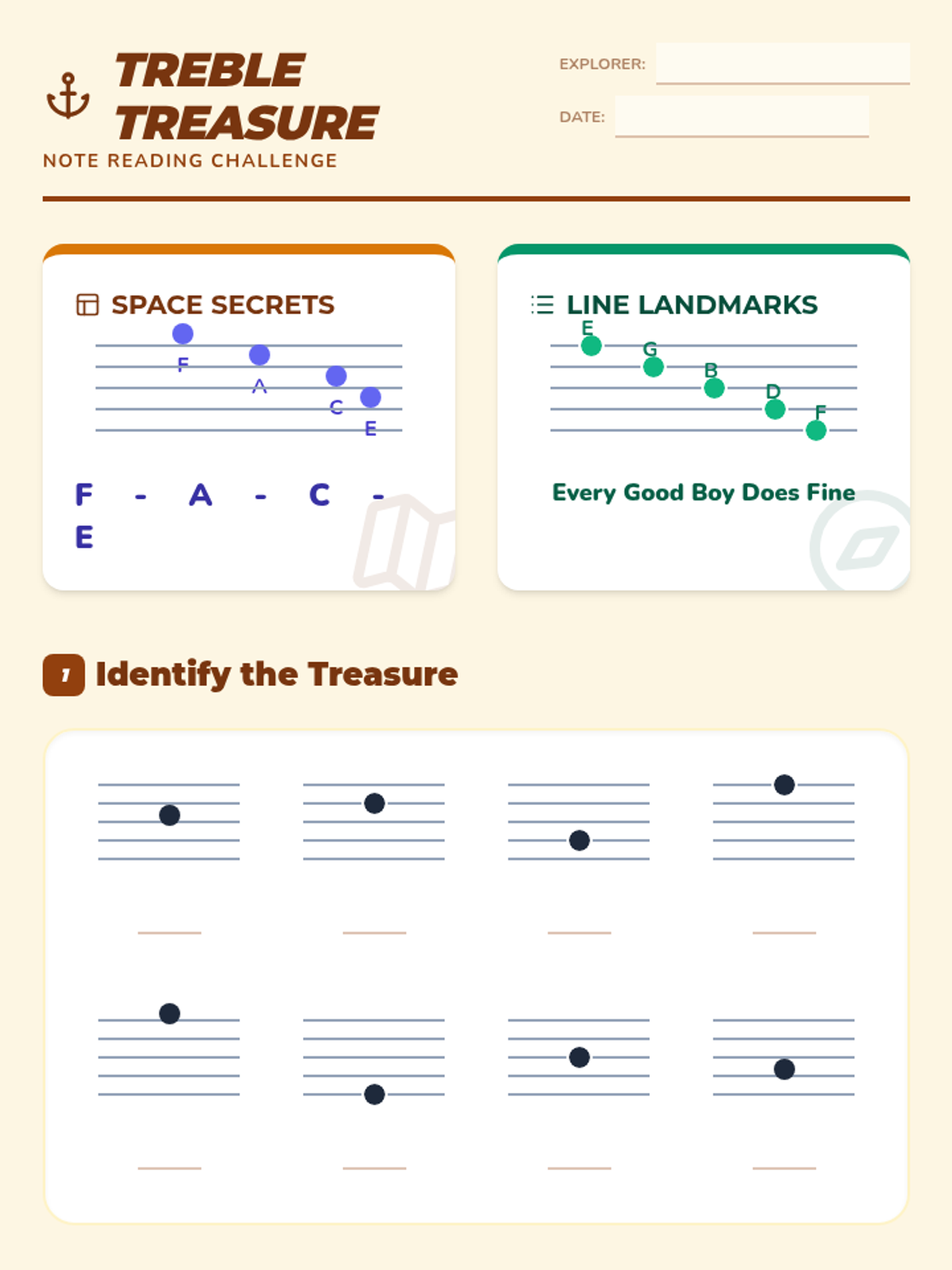
Introduces the treble clef and provides practice for identifying notes on the staff.
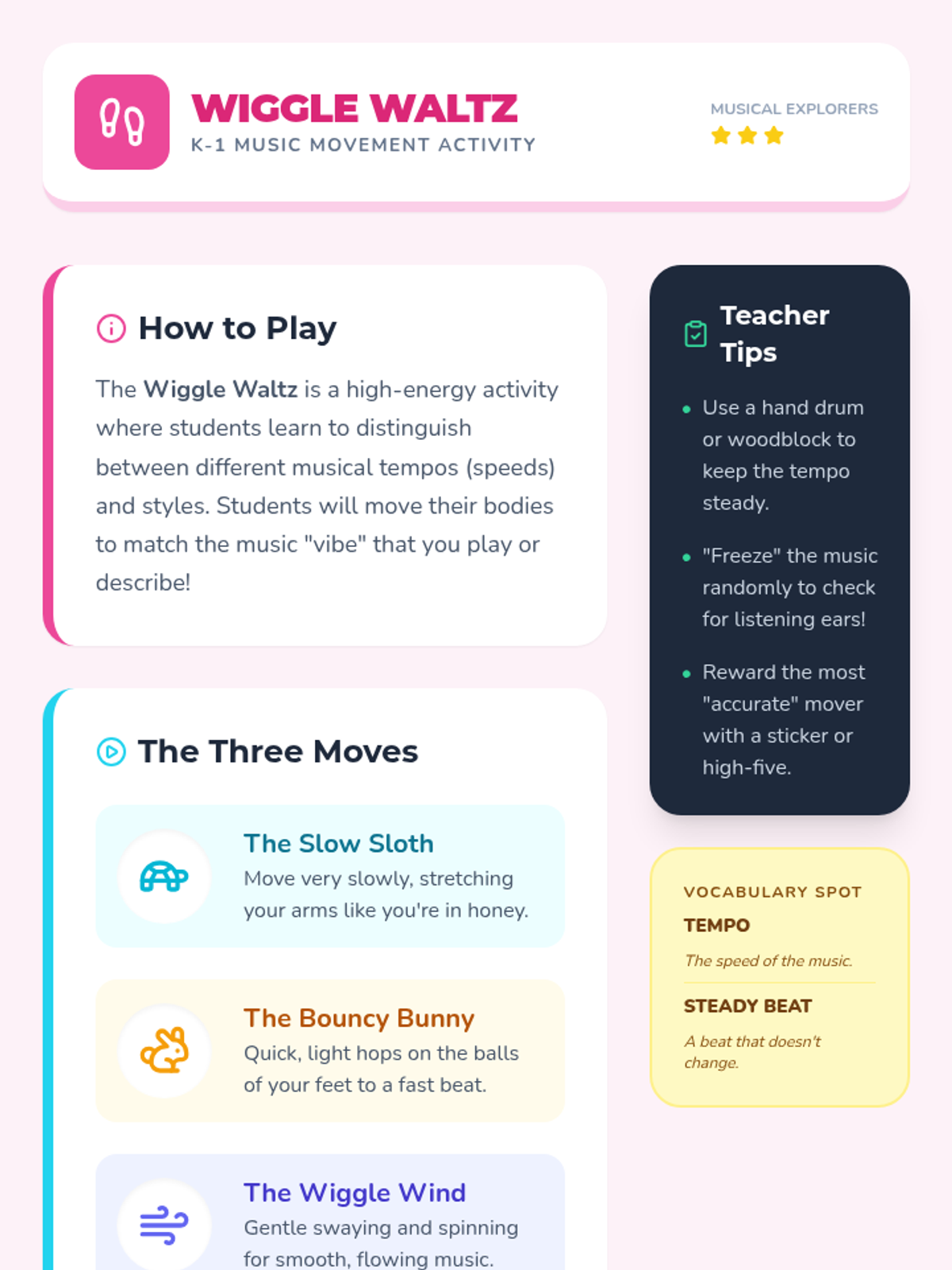
Focuses on the fundamentals of rhythm for 2nd graders and incorporates active movement activities suitable for Kindergarteners.
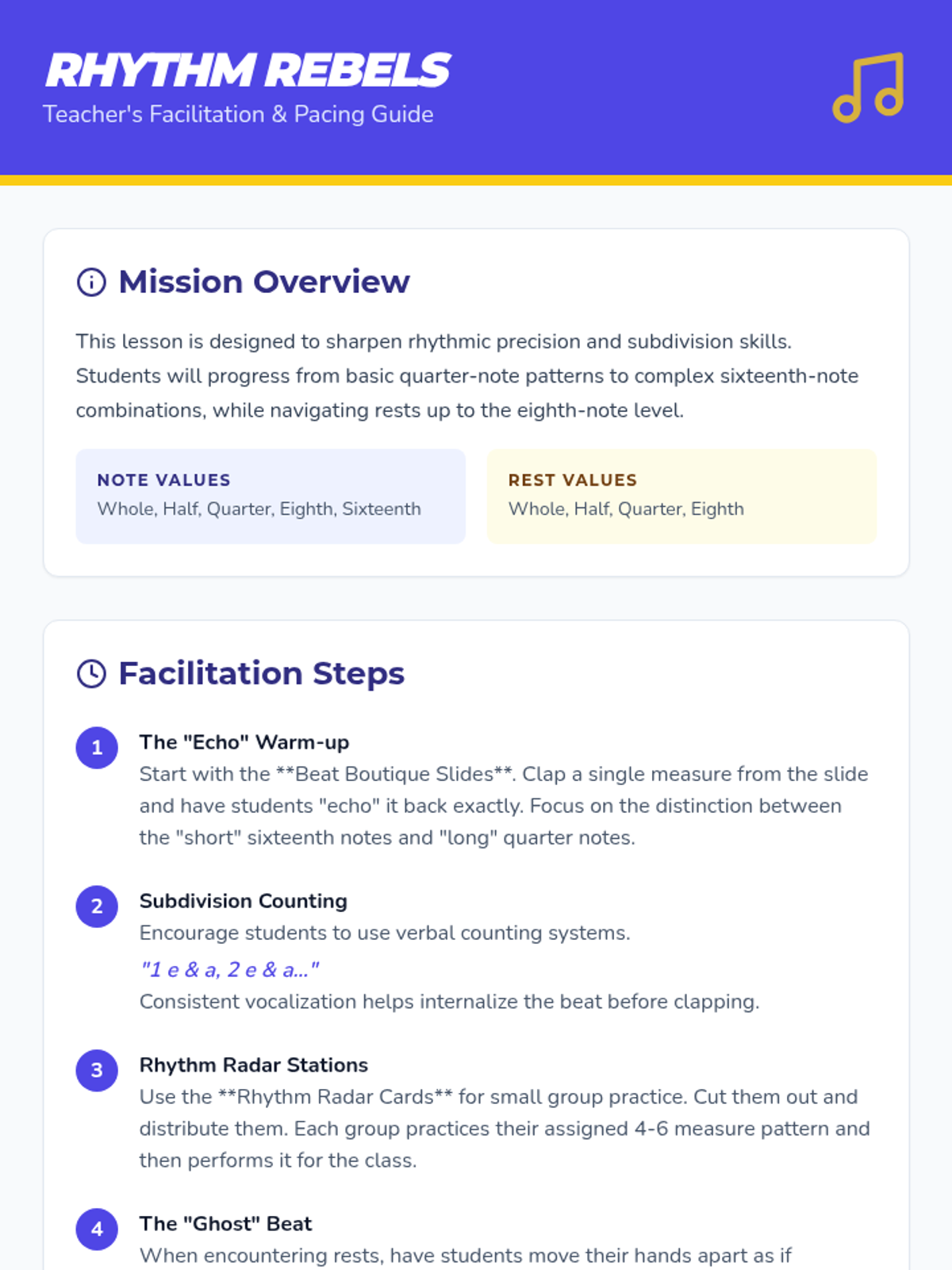
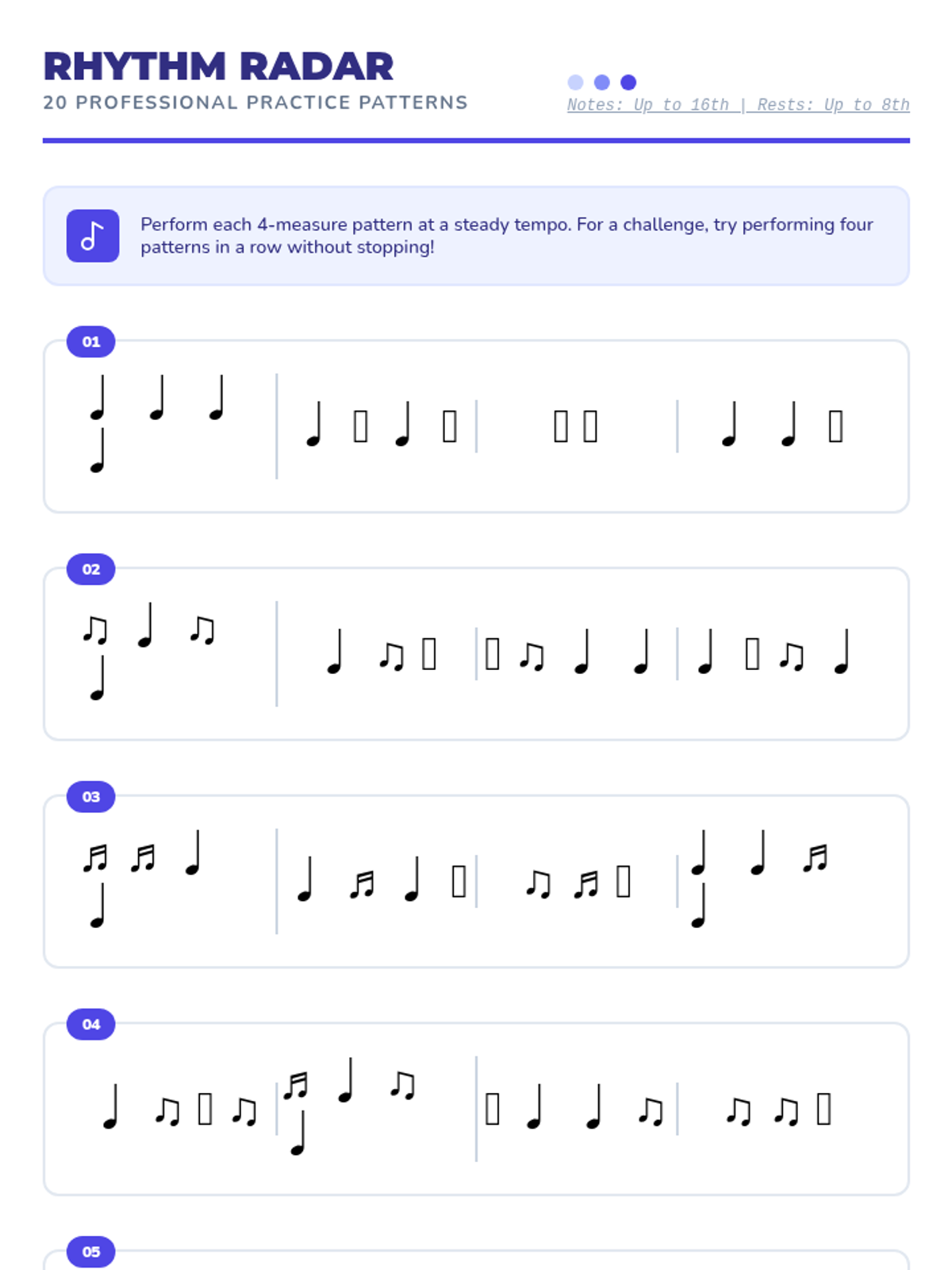
A comprehensive set of rhythm practice materials focusing on notes up to sixteenths and rests up to eighths, designed to build clapping proficiency through 20 unique patterns.
A culminating play-along experience combining rhythm and tempo in a performance-based session.
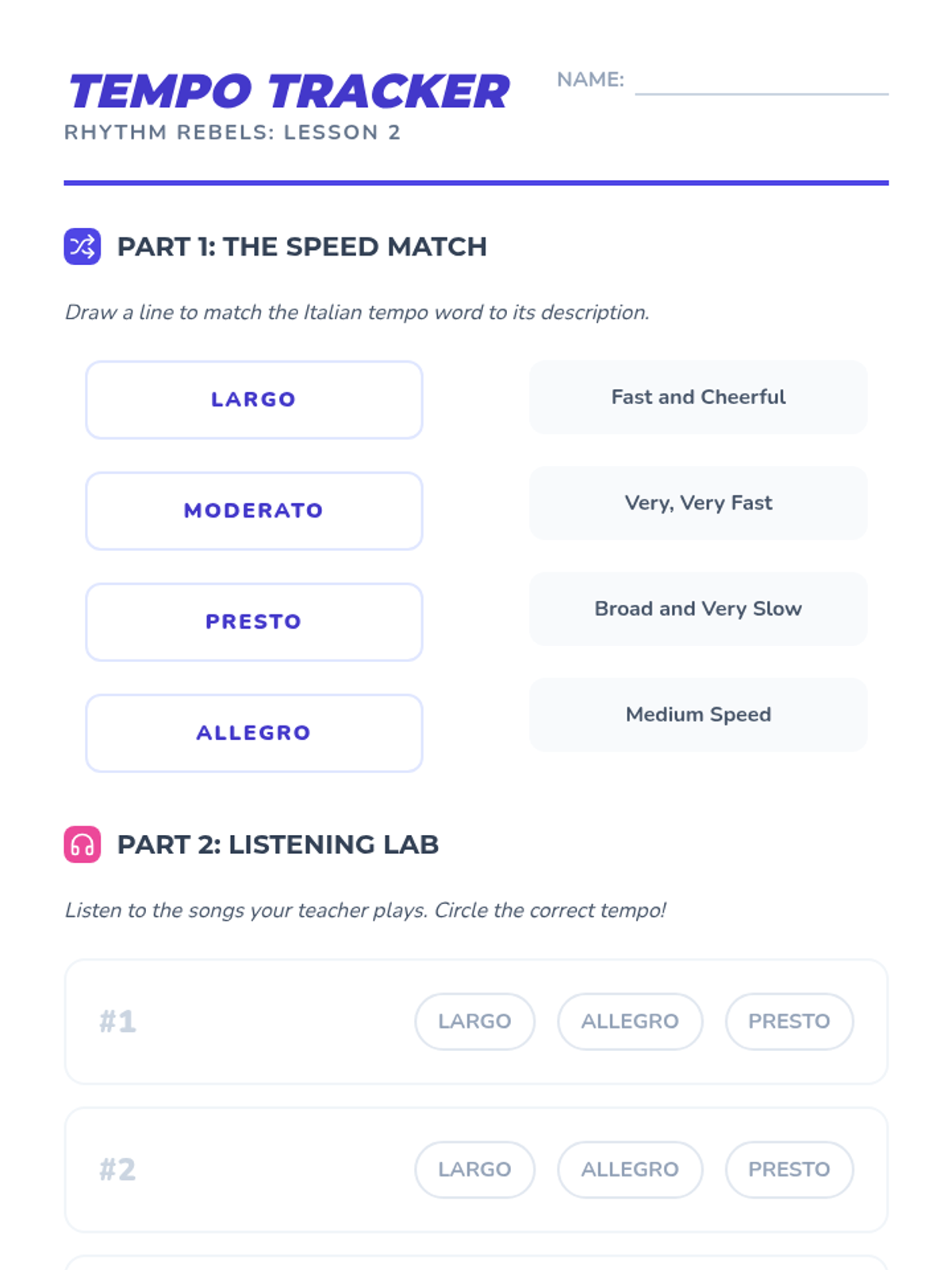
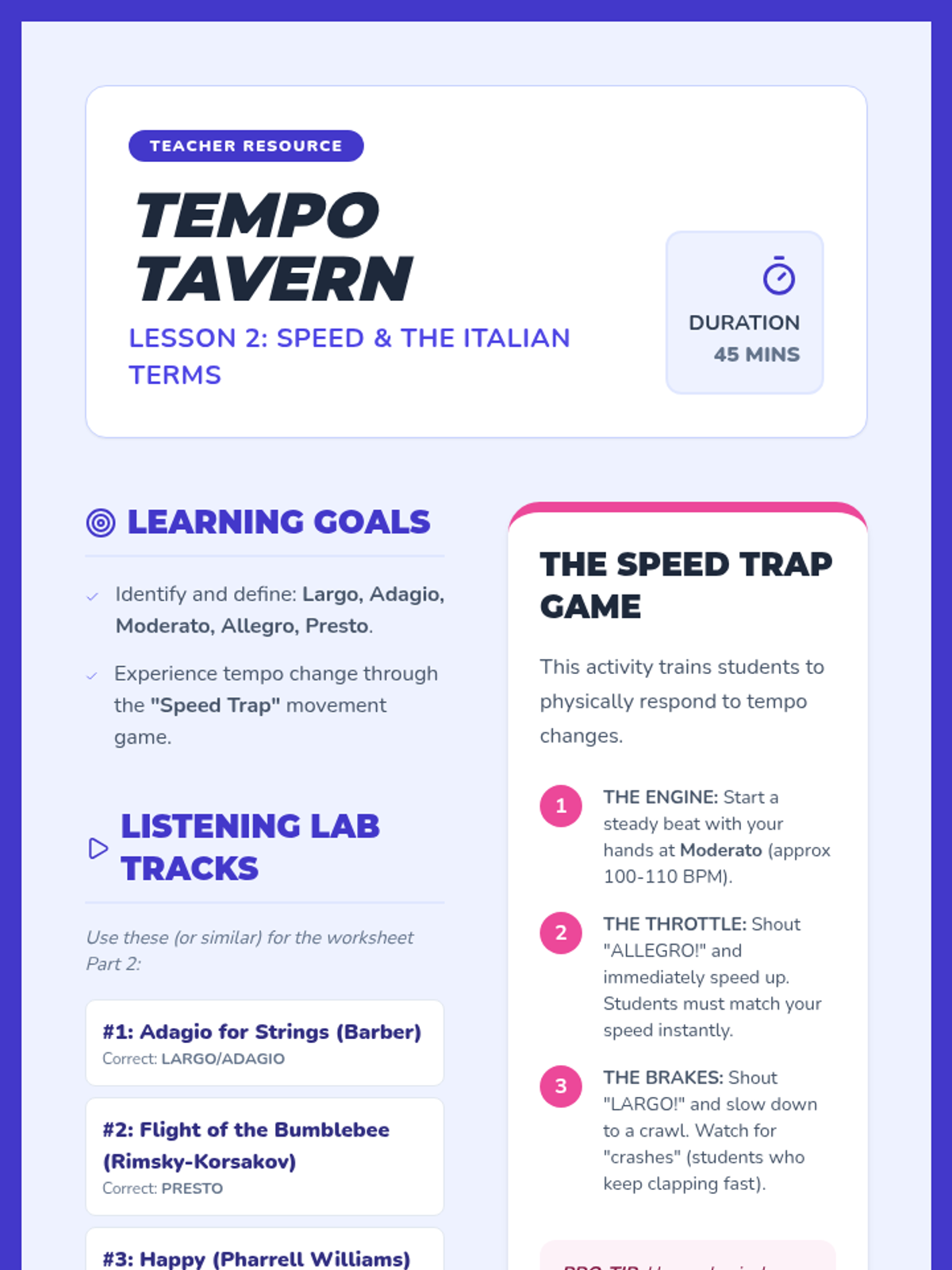
An exploration of musical speed using Italian tempo terms and movement-based play-alongs.
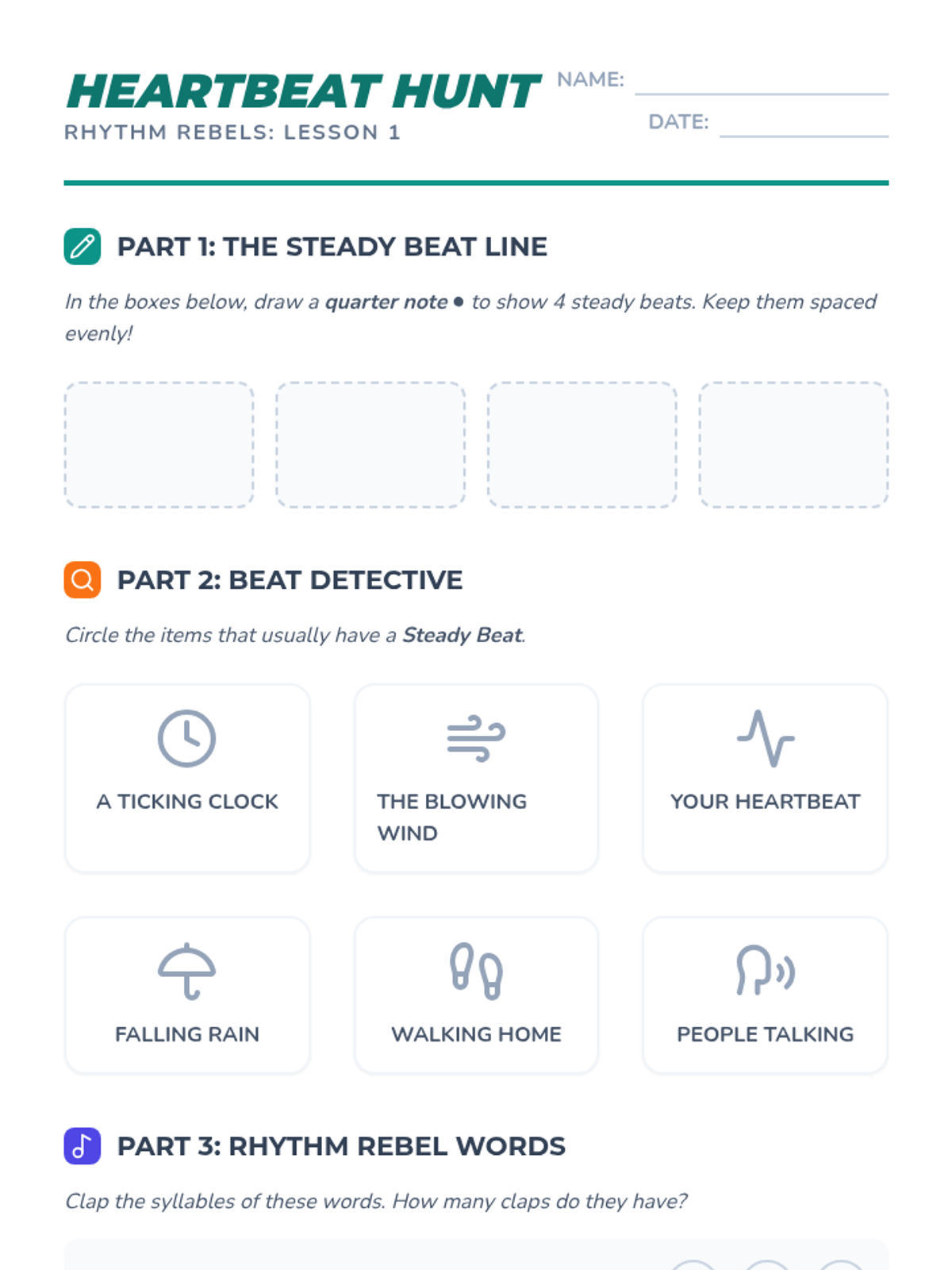
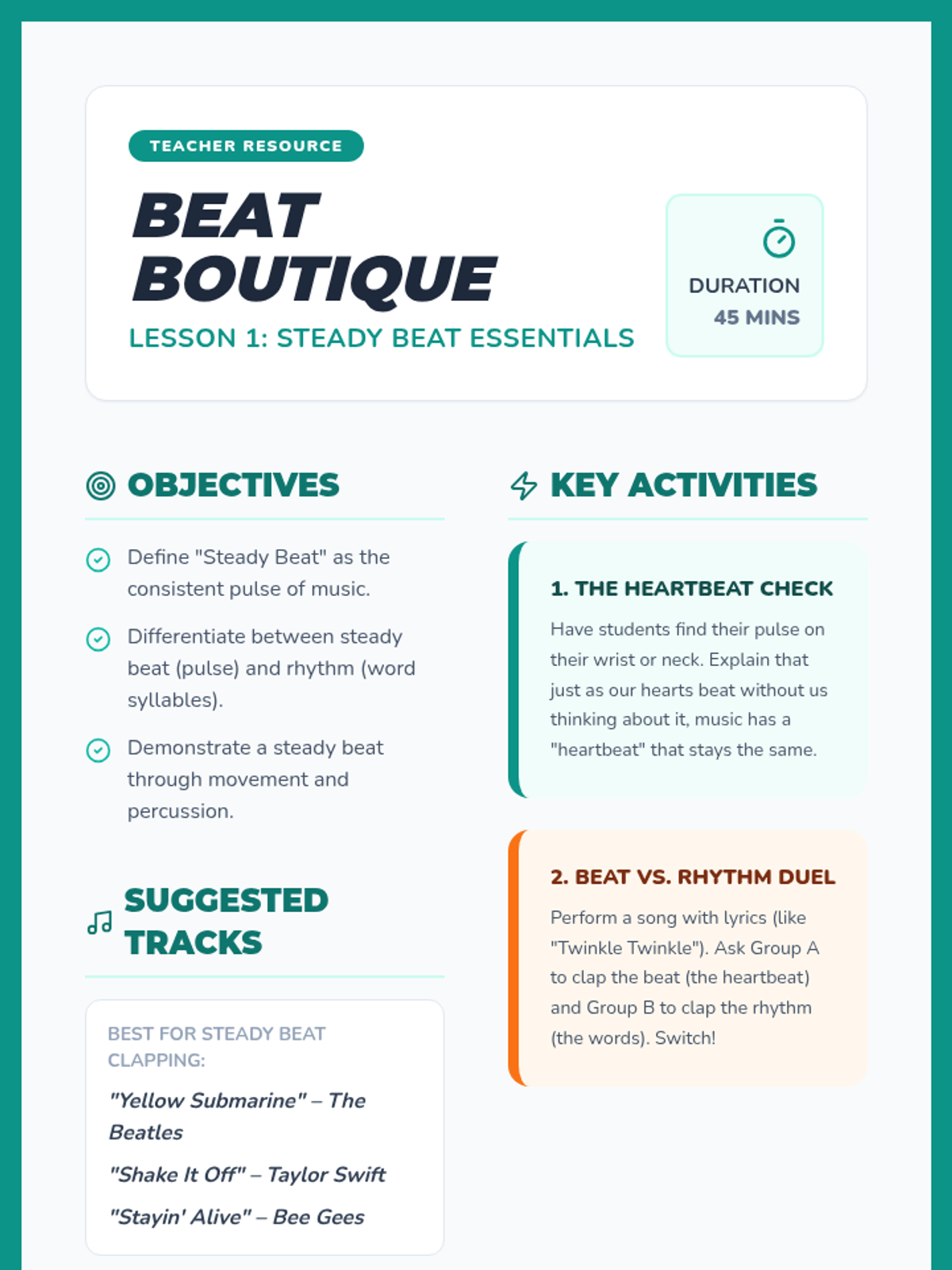
Students will differentiate between rhythm and steady beat using 'heartbeat' exercises and interactive clapping games.
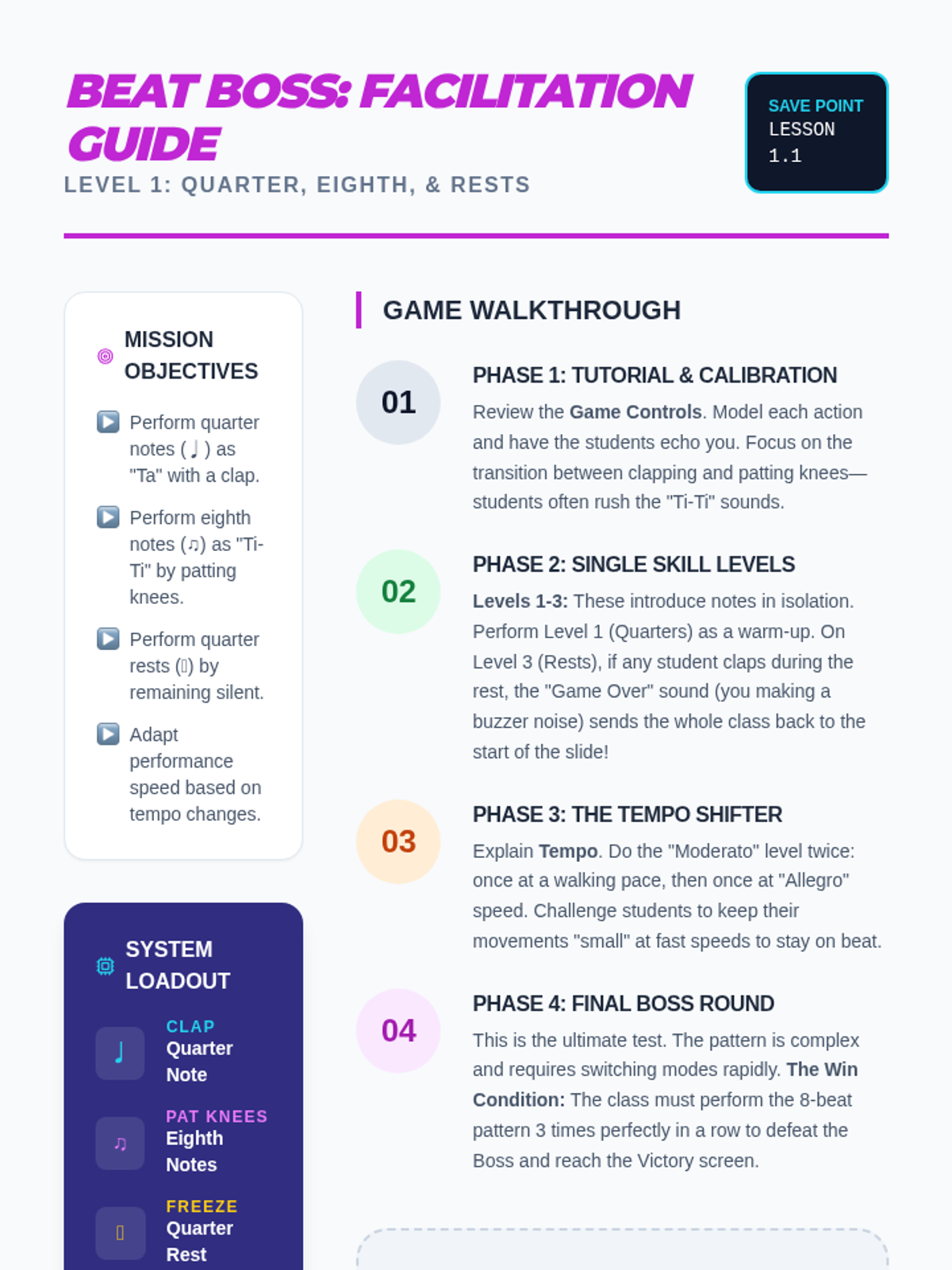
An interactive, game-based lesson where students use body percussion to perform quarter notes, eighth notes, and quarter rests at varying tempos.